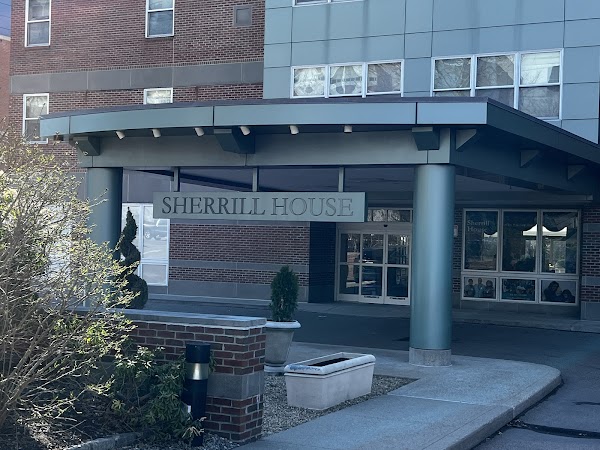
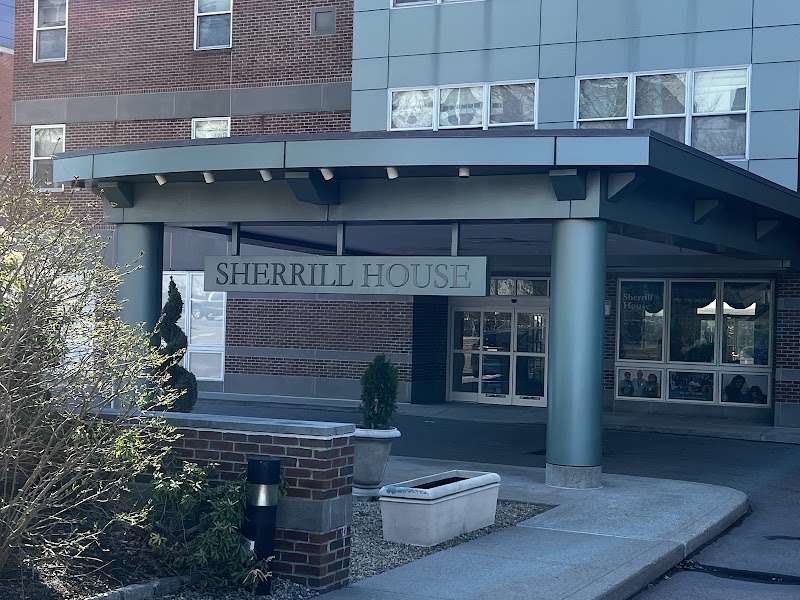
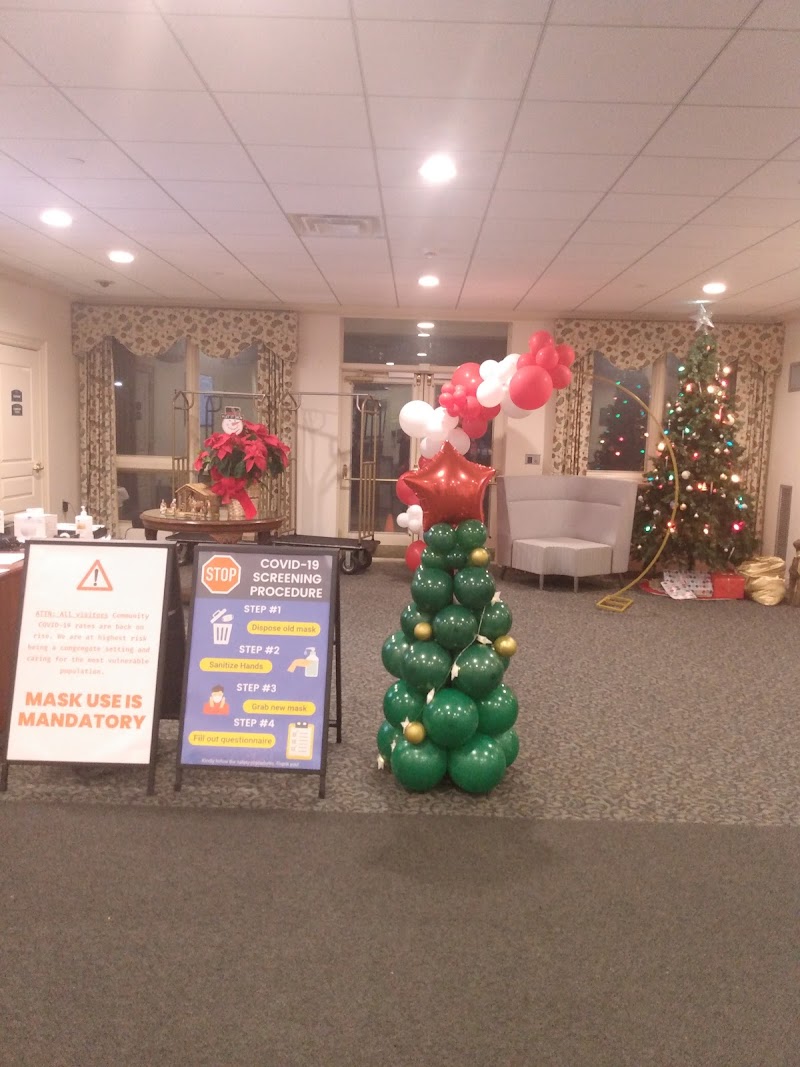
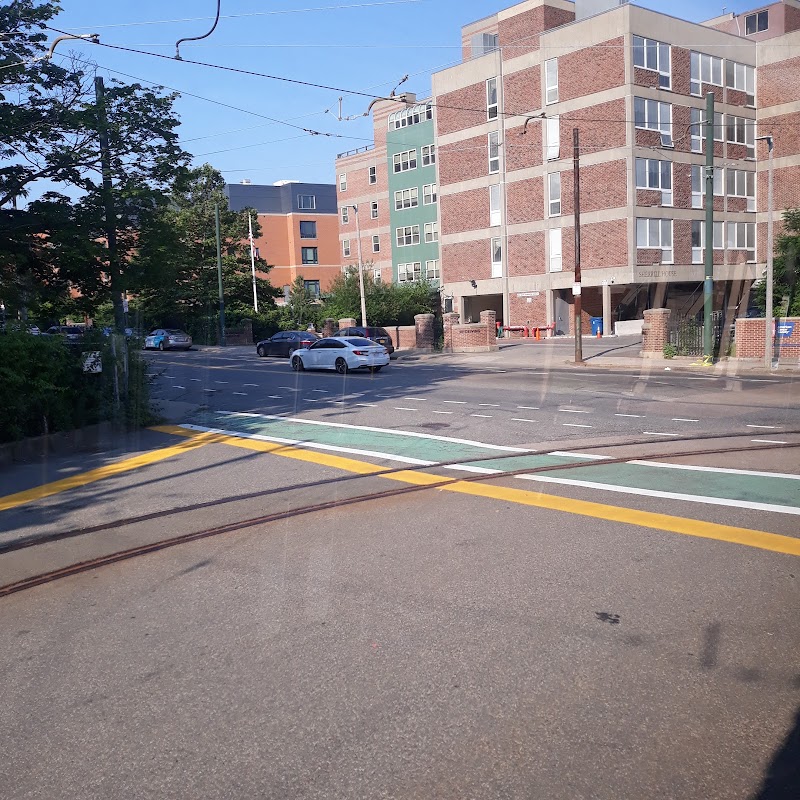
SHERRILL HOUSE

135 SOUTH HUNTINGTON AVENUE, BOSTON, MA 02130 (617) 731-2400
Non profit - Corporation 196 Beds Independent Data: November 2025
Trust Grade
65/100
#179 of 338 in MA
Last Inspection: January 2025

Within standard 12-15 month inspection cycle. Federal law requires annual inspections.

Overview

Sherrill House in Boston has a Trust Grade of C+, indicating it is slightly above average but not outstanding. It ranks #179 out of 338 nursing homes in Massachusetts, placing it in the bottom half of facilities in the state, and #11 out of 22 in Suffolk County, meaning only a few local options rank higher. The trend is concerning, as the number of reported issues has worsened significantly from 4 in 2024 to 18 in 2025, suggesting potential problems in care quality. Staffing is a strength with a rating of 4 out of 5 stars and a low turnover rate of 19%, which is well below the state average. However, there were notable incidents, such as staff members being observed using personal phones in resident rooms and medications being left unattended, which raises concerns about safety and proper care protocols. While the facility has no fines on record and good RN coverage, families should weigh these issues along with the strengths when considering Sherrill House.

Trust Score
C+
65/100
In Massachusetts
#179/338
Bottom 48%
Safety Record
Low Risk
No red flags
Inspections
Getting Worse
4 → 18 violations
Staff Stability
✓ Good
19% annual turnover. Excellent stability, 29 points below Massachusetts's 48% average. Staff who stay learn residents' needs.
Penalties
✓ Good
No fines on record. Clean compliance history, better than most Massachusetts facilities.
Skilled Nurses
✓ Good
Each resident gets 48 minutes of Registered Nurse (RN) attention daily — more than average for Massachusetts. RNs are trained to catch health problems early.
Violations
⚠ Watch
27 deficiencies on record. Higher than average. Multiple issues found across inspections.
★★★☆☆
3.0
Overall Rating
★★★★☆
4.0
Staff Levels
★★★★★
5.0
Care Quality
★★☆☆☆
2.0
Inspection Score
Stable
2024: 4 issues
2025: 18 issues

The Good

  • 4-Star Staffing Rating · Above-average nurse staffing levels
  • 5-Star Quality Measures · Strong clinical quality outcomes
  • Low Staff Turnover (19%) · Staff stability means consistent care
  • Full Sprinkler Coverage · Fire safety systems throughout facility
  • No fines on record
  • Staff turnover is low (19%)

    29 points below Massachusetts average of 48%

Facility shows strength in staffing levels, quality measures, staff retention, fire safety.

The Bad

3-Star Overall Rating

Near Massachusetts average (2.9)

Meets federal standards, typical of most facilities

The Ugly 27 deficiencies on record

Jun 2025 1 deficiency
CONCERN (D) 📢 Someone Reported This

A family member, employee, or ombudsman was alarmed enough to file a formal complaint

Potential for Harm - no one hurt, but risky conditions existed

Deficiency F0655 (Tag F0655)

Could have caused harm · This affected 1 resident

**NOTE- TERMS IN BRACKETS HAVE BEEN EDITED TO PROTECT CONFIDENTIALITY** Based on records reviewed and interviews, for one of three sampled residents, (Resident #1), the facility failed to ensure that ...

Read full inspector narrative →
**NOTE- TERMS IN BRACKETS HAVE BEEN EDITED TO PROTECT CONFIDENTIALITY** Based on records reviewed and interviews, for one of three sampled residents, (Resident #1), the facility failed to ensure that upon admission, nursing developed and implemented baseline care plans with interventions, treatments, goals and outcomes, that addressed his/her overall immediate care needs. Findings include: Review of the Facility's Policy titled Care Plans - Baseline, dated as last revised 12/2016, indicated a baseline plan of care to meet the resident's immediate needs shall be developed for each resident within forty-eight hours of admission. The Policy indicated that the Interdisciplinary Team (IDT) will review the healthcare practitioner's orders (e.g., dietary needs, medications, routine treatments, etc.) and implement a baseline care plan to meet the resident's immediate care needs including but not limited to: -Initial goals based on admission orders; -Physician Orders; -Dietary Orders; -Therapy Services; -Social Services; and -Pre-admission Screening and Resident Review (PASRR) recommendations, if applicable. The Policy further indicated that the baseline care plan will be used until the staff can conduct the comprehensive assessment and develop an IDT person-centered care plan. Resident #1 was admitted to the Facility in January 2025, diagnoses included fracture of right femur (thigh bone), history of falling, difficulty in walking, muscle weakness, pressure injury of right heel (stage 2, partial-thickness skin loss involving the epidermis and dermis), and atrial fibrillation (irregular heart rate). Review of Resident #1's Hospital Discharge summary, dated [DATE], indicated his/her immediate care needs were identified as followed: -Care of closed fracture; neck of right femur; status post right hemiarthroplasty (partial hip replacement surgery) -Activity status -Wound care of pressure injuries -Nutritional needs Review of Resident #1's Medical Record indicated there was no documentation to support that a Baseline Care Plan was developed and implemented, or that Comprehensive Care Plans that addressed these areas of concern were in place within 48 hours of his/her admission. Further review of Resident #1's Medical Record indicated that Comprehensive Care Plans for the identified care areas were not in place until five days later (on 1/23/25). During an interview on 06/24/25 at 1:39 P.M., Nurse #1 said that the nurses on the floor do not create baseline care plans for new admissions and that the Unit Manager was responsible for completing the baseline care plans. During a telephone interview on 07/01/25 at 11:06 A.M., Nursing Supervisor #1 said that completing a resident's baseline care plan was not her responsibility and that the Unit Manager would create the baseline care plans within 48 hours. During an interview on 06/24/25 at 2:23 P.M., the Unit Manager said it was her responsibility to create residents' baseline care plans within 48 hours of admission. The Unit Manager said Resident #1's baseline care plans were not completed timely because she had missed doing it. During an interview on 06/24/25 at 4:15 P.M., the Director of Nursing (DON) said she was not aware that the baseline care plan for Resident #1 had not been completed in a timely manner within 48 hours after his/her admission. The DON said it is her expectation that residents' baseline care plans are completed within 48 hours per the facility's policy. On 06/24/25, the Facility was found to be in Past Non-Compliance and presented the Surveyor with a plan of correction which addressed the area(s) of concern as evidenced by: A. Resident #1 no longer resides at the Facility. B. On 04/18/25, the Director of Nursing provided education to Unit Managers and Nursing Management on ensuring Baseline Care Plans are completed within 48 hours to meet residents' immediate needs. C. On 04/21/25, the Director of Nursing completed a full house audit on all new admissions/re-admissions for baseline care plans to ensure care needs were identified, that baseline care plans were developed and previous plans were reviewed and updated as needed. D. The Director of Nursing and/or designee will conduct audits to ensure Baseline Care Plans are completed within 48 hours and that the care plans meet the residents' immediate needs weekly for one month, then monthly for two months, the audits will continue until substantial compliance is achieved. E. The results of the audits were reviewed during the April QAPI meeting and will continue to be brought forward and reviewed at the monthly QAPI Committee meeting until substantial compliance is achieved. F. The Director of Nursing and/or designee are responsible for overall compliance.
Apr 2025 3 deficiencies
CONCERN (D) 📢 Someone Reported This

A family member, employee, or ombudsman was alarmed enough to file a formal complaint

Potential for Harm - no one hurt, but risky conditions existed

Deficiency F0552 (Tag F0552)

Could have caused harm · This affected 1 resident

Based on records reviewed and interviews for one of three sampled residents (Resident #1), who was alert, oriented and made his/her own health care decisions, the Facility failed to ensure that he/she...

Read full inspector narrative →
Based on records reviewed and interviews for one of three sampled residents (Resident #1), who was alert, oriented and made his/her own health care decisions, the Facility failed to ensure that he/she was fully informed in advance and given information including the risk and benefits of psychotropic medications prior to their use, when Resident #1 was administered nine (9) doses of an antipsychotic medication by nursing, before obtaining his/her consent to administer the medication. Findings include: Review of the Facility Policy titled, Resident Rights, undated, indicated that residents have the right to a dignified existence and to communicate with individuals and representatives of choice and the Facility will protect and promote your rights. The Policy further indicated that all residents have the right to be fully informed of their total health status in an understandable manner. Resident #1 was admitted to the Facility in February 2025 diagnoses included Respiratory Syncytial Virus (RSV, a virus that infects the lungs and respiratory tract) with pneumonia, new onset of seizures, and a nasal gastrostomy tube (tube inserted through the nose to the stomach used for temporary medical purposes) placed for nutritional purposes. Review of Resident #1's admission Minimum Data Set (MDS) Assessment, dated 02/11/25, indicated he/she was alert, oriented, was his/her own decision maker, and had scored a 14/15 on his/her Brief Interview for Mental Status (BIMS) Assessment (0-7 suggests severe cognitive impairment, 8-12 suggests moderately impaired cognition, and 12-15 suggests a resident is cognitively intact). Review of Resident #1's Physician's Order, for February 2025, indicated he/she had a new Physician's Order for nursing to administer; -Quetiapine (Seroquel, antipsychotic medication) 25 milligrams (mg), administer one tablet by mouth at bedtime for agitation; and -Quetiapine 25 mg, administer one half tablet (12.5 mg) by mouth every eight (8) hours as needed (PRN) for agitation. Review of Resident #1's Medication Administration Record (MAR), dated 02/04/25 through 02/11/25, indicated he/she received a total of 9 doses of Quetiapine, before the Facility obtained signed written consent from him/her on 2/12/25, to administer the psychotropic medication. Review of Resident #1's Informed Consent for Psychotropic Administration Form, dated 02/12/25, indicated he/she gave consent for the administration of Quetiapine eight days after admission. During an interview on 04/07/25 at 5:06 P.M., Nursing Supervisor #1 said that she was the nurse completed Resident #1's admission and does not know why his/her psychotropic medication consent form had not been signed. Nursing Supervisor #1 said that the nurse responsible for admitting the resident is responsible for obtaining all consents. During an interview on 04/07/25 at 3:49 P.M., the Unit Manager said that she was unaware that Resident #1's psychotropic medication consents were not obtained in a timely manner. The Unit Manager said that the nurse admitting the resident is responsible for obtaining consents, including residents with physicians' orders for psychotropic medications. The Unit Manager said a consent form, for administration of psychotropic medications needs to be signed by the resident, or if the residents' Health Care Proxy is invoked then the form would need to be signed by the Health Care Agent. During an interview on 04/07/25 at 4:45 P.M., the Director of Nurses (DON) said that written consent for the administration of Quetiapine was not obtained upon admission for Resident #1, or prior to it being administered to him/her. The DON said the Facility's expectation is that the nurses are to obtain written consent and have the form signed for psychotropic medication prior to administering any psychotropic medication.
CONCERN (D) 📢 Someone Reported This

A family member, employee, or ombudsman was alarmed enough to file a formal complaint

Potential for Harm - no one hurt, but risky conditions existed

Deficiency F0655 (Tag F0655)

Could have caused harm · This affected 1 resident

**NOTE- TERMS IN BRACKETS HAVE BEEN EDITED TO PROTECT CONFIDENTIALITY** Based on records reviewed and interviews, for three of three sampled residents, (Resident #1, #2, and #3), the facility failed t...

Read full inspector narrative →
**NOTE- TERMS IN BRACKETS HAVE BEEN EDITED TO PROTECT CONFIDENTIALITY** Based on records reviewed and interviews, for three of three sampled residents, (Resident #1, #2, and #3), the facility failed to ensure that upon admission, that nursing developed and implemented baseline care plans with interventions, treatments, goals, and outcomes that addressed the residents' overall immediate care needs. Findings include: Review of the Facility Policy titled Baseline Care Plans, dated as last revised 12/2016, indicated a baseline plan of care to meet the resident's immediate needs shall be developed for each resident within forty-eight hours of admission. The Policy indicated that the Interdisciplinary Team (IDT) will review the healthcare practitioner's orders (e.g., dietary needs, medications, routine treatments, etc.) and implement a baseline care plan to meet the resident's immediate care needs including but not limited to; -Initial goals based on admission orders; -Physician Orders; -Dietary Orders; -Therapy Services; -Social Services; and -Pre-admission Screening and Resident Review (PASRR) recommendations, if applicable. The Policy further indicated that the baseline care plan will be used until the staff can conduct the comprehensive assessment and develop an IDT person-centered care plan. 1) Resident #1 was admitted to the Facility in February 2025 diagnoses included Respiratory Syncytial Virus (RSV, a virus that infects the lungs and respiratory tract) with pneumonia, new onset of seizures, and a nasal gastrostomy tube (tube inserted through the nose to the stomach used for temporary medical purposes) placed for nutritional purposes. Review of Resident #1's Hospital Discharge summary, dated [DATE], indicated his/her immediate care needs were identified as followed; -New onset of seizures with new antiseizure medications; -RSV with suspected aspiration pneumonia (caused by drawing in debris into the lung) with the use of oxygen via nasal cannula at three (3) liters (l); -Nasogastric- tube in place for caloric needs; and -Agitation with new administration of antipsychotic medication. Review of Resident #1's Medical Record indicated there was no documentation to support that Baseline Care Plans were developed and implemented, or that Comprehensive Care Plans that addressed these areas of concern were in place within 48 hours of his/her admission. 2) Resident #2 was admitted to the Facility in November 2024 diagnoses include diabetes mellitus, depression, chronic pain syndrome, End Stage Renal Disease (ESRD) requiring dialysis, anemia, and Chronic Obstructive Pulmonary Disease (COPD). Review of Resident #2's Skilled Nursing Facility (SNF) Transfer paperwork, dated 11/27/24, indicated his/her immediate care needs were identified as followed; -Major Depression with psychotropic medication use; -Chronic Pain Syndrome with daily narcotic use and constipation; -Diabetes Mellitus; and -COPD with compromised respiratory status. Review of Resident #2's Medical Record indicated there was no documentation to support that Baseline Care Plans were developed and implemented, or that Comprehensive Care Plans that addressed these areas of concern were in place within 48 hours of his/her admission. 3) Resident #3 was admitted to the Facility in March 2025 diagnoses include Congestive Heart Failure (CHF), atrial fibrillation with flutter, and Myocardial Infarction (MI). Review of Resident #3's Hospital Discharge Summary , dated 03/15/25, indicated his/her immediate care needs were identified as followed; -CHF with the need for daily weights; -Risk for an alteration in nutrition, requiring a No Added Salt (NAS) diet; and -Risk for dehydration related to diuretic use. Review of Resident #3's Medical Record indicated there was no documentation to support that Baseline Care Plans were developed and implemented, or that Comprehensive Care Plans that addressed these areas of concern were in place within 48 hours of his/her admission. During a telephone interview on 04/14/25 at 10:06 A.M., Nurse #2 said that the nurses on the floor are not responsible for creating Baseline Care Plans for the residents upon admission and that the Unit Manager does them within 48 hours. During an interview on 04/07/25 at 5:06 P.M., Nursing Supervisor #1 said that completing a resident's baseline care plan was not her responsibility and that the Unit Manager will create the baseline care plans within 48 hours. During an interview on 04/07/25 at 3:49 P.M., the Unit Manager said that it was her responsibility to ensure Residents' Baseline Care Plans were in place within 48 hours of admission. The Unit Manager said for Resident #1, she only entered the basic care needs and missed some of his/her required immediate care needs. The Unit Manager said that Unit Managers and/or the Charge Nurses are responsible for ensuring baseline care plans are in place within 48 hours so that staff are aware of their major needs until the comprehensive care plan is completed. During an interview on 04/07/25 at 4:45 P.M., the Director of Nurse (DON) said that she was not aware that the baseline care plans for these residents had not been completed in a timely manner. The DON said that it is the Facility's expectation that all resident's have a complete baseline care plan in place within 48 hours after admission that allows the staff to provide care and services that each resident requires.
CONCERN (D) 📢 Someone Reported This

A family member, employee, or ombudsman was alarmed enough to file a formal complaint

Potential for Harm - no one hurt, but risky conditions existed

Deficiency F0658 (Tag F0658)

Could have caused harm · This affected 1 resident

**NOTE- TERMS IN BRACKETS HAVE BEEN EDITED TO PROTECT CONFIDENTIALITY** Based on records reviewed and interviews for one of three sampled residents (Resident #1) who had been maintained on oxygen via ...

Read full inspector narrative →
**NOTE- TERMS IN BRACKETS HAVE BEEN EDITED TO PROTECT CONFIDENTIALITY** Based on records reviewed and interviews for one of three sampled residents (Resident #1) who had been maintained on oxygen via nasal cannula while at the Hospital, the Facility failed to ensure nursing staff provided care and services that met professional standards of practice, when despite Resident #1's continued need for oxygen, there was no physician order obtained for administration. Findings include: Review of the Facility Policy titled Medication and Treatment Orders, dated as [NAME] revised 07/2016, indicated that all medication and treatment orders will be consistent with principles of safe effective order writing and shall only be administered upon the written order of a person duly licensed and authorized to prescribe such medications and treatments in this state. Review of the Facility Policy titled Oxygen Administration, dated as last revised 10/2010, indicated to first verify that there is a physician's order in place. Resident #1 was admitted to the Facility in February 2025, diagnoses included Respiratory Syncytial Virus (RSV, a virus that infects the lungs and respiratory tract) with pneumonia, new onset of seizures, and a nasal gastrostomy tube (tube inserted through the nose to the stomach used for temporary medical purposes) placed for nutritional purposes. Review of Resident #1's Hospital Discharge (DC) Summary, dated 02/04/25, indicated that he/she had been maintained on three (3) Liters (l) of oxygen via nasal cannula secondary to RSV and pneumonia. Further review of the DC summary indicated that Resident #1 had been stable on room air at the time of his/her discharge. Review of Resident #1's admission Nursing Assessment, dated 02/04/25, indicated he/she had been on oxygen via nasal cannula (however, no specific liter flow was noted). Review of Resident #1's Medication Administration Record and Treatment Administration Record, for February 2025, indicated there was no physicians order for the administration of oxygen, and parameter for liter flow. Review of Resident #1's Nurse Progress Note, dated 02/12/25, indicated he/she was being administered oxygen via nasal cannula (NC, tube that is places in the nares (nose) to provide oxygen flow) at two (2) l. Review of Resident #1's Nurse Practitioner Progress Note, dated 02/12/25, indicated to titrate (continuously measure and adjust) his/her oxygen as appropriate. During an interview on 04/07/25 at 3:49 P.M., the Unit Manager said that the nurse responsible for reconciling medications and entering the physician's orders into Point Click Care (PCC, the electronic medical record), are responsible for obtaining all medication and treatment orders upon admission. During a telephone interview on 04/14/25 at 9:53 A.M., the Assistant Director of Nurses (ADON) said that Resident #1 required the use of oxygen upon admission, but said she was unaware that nursing had not obtained a physician's order. During an interview on 04/07/25 at 4:45 P.M., the Director of Nurses (DON) said that she knew Resident #1 required the use of oxygen, however not aware that Resident #1 did not have a physician's order to administer oxygen The DON said that it is the Facility's expectation that upon admission all medication and treatments require a physician's order to administer any medication and/or treatment before providing the medication and/or treatment.
Mar 2025 1 deficiency
CONCERN (D) 📢 Someone Reported This

A family member, employee, or ombudsman was alarmed enough to file a formal complaint

Potential for Harm - no one hurt, but risky conditions existed

Medical Records (Tag F0842)

Could have caused harm · This affected 1 resident

**NOTE- TERMS IN BRACKETS HAVE BEEN EDITED TO PROTECT CONFIDENTIALITY** Based on records reviewed and interviews, for one of three sampled residents, (Resident #1), who upon admission, had Orthopedic ...

Read full inspector narrative →
**NOTE- TERMS IN BRACKETS HAVE BEEN EDITED TO PROTECT CONFIDENTIALITY** Based on records reviewed and interviews, for one of three sampled residents, (Resident #1), who upon admission, had Orthopedic recommendations for nursing to monitor his/her left wrist and cast, the Facility failed to ensure they maintained a complete and accurate medical record, when the Orthopedic recommendations were not transcribed by nursing onto his/her Treatment Administration Record (TAR), and therefore was no nursing documentation on the TAR to support nursing monitored Resident #1's left wrist/cast. Findings Include: Review of the Facility's Policy tilted Charting and Documentation, dated as last revised April 2008, indicated the following: -all services provided to the resident to the resident, or any changes in the resident's medical or mental condition, shall be documented in the resident's medical record -all observations, medications administered, services performed, etc., must be documented in the resident's clinical records Resident #1 was admitted to the Facility in February 2025, diagnoses included dementia, history of falling, fracture of lower end of left radius (bone located on the thumb side of the forearm), fracture of other parts of neck, and hypertension. Review of Resident #1's Hospital Discharge summary, dated [DATE], indicated that his/her principal diagnosis was a fall resulting in a C3 (cervical vertebra) spinous process fracture (a break in the bony projection on the back of the C3 vertebra) and a left distal radius fracture. The Summary further indicated that Resident #1's left wrist was casted and included Orthopedic discharge recommendations to monitor for the following: -cast to kept clean and dry -if he/she starts to feel pain, numbness or tingling, elevate and ice the affected extremity -if it persists, despite elevation and ice, return to the hospital or clinic, as the cast may be on too tight and may need to be changed Review of Resident #1's Physician Orders, dated February 2025, indicated there was no documentation to support that a Physician's order related to the Orthopedic recommendations to monitor the cast to his/her left wrist was obtained. Review of Resident #1's TARs, dated February 2025, indicated there was no documentation to support that his/her left wrist/cast were being monitored by nursing staff. During an interview on 03/14/25 at 8:06 A.M., the Unit Manager said if a resident has a cast, nurses always monitor the resident for circulation, sensation, and motor function (CSM), and for any pain or signs of infection every shift, which are documented on the resident's TARs. During an interview on 03/18/25 at 10:33 A.M., the Nursing Supervisor said when a resident is admitted with a cast to one of their extremities it is common nursing practice to monitor the resident's CSM, pain and signs or symptoms of infection every shift. The Nursing Supervisor said she reviewed Resident #1's Hospital Discharge Summary upon admission to the Facility, verified his/her orders with the Physician, and entered all of the orders into the Point Click Care (PCC, electronic medical record) computer system. The Nursing Supervisor said she could not recall if Resident #1 had a cast to his/her left wrist or recall if there were orthopedic recommendations on his/her discharge summary and said she must have missed it. During an in-person interview on 03/11/25 at 3:44 P.M. and a telephone interview on 3/14/25 at 10:50 A.M., the Director of Nursing (DON) said if a resident is admitted with a cast to an extremity due to a fracture, nursing should be monitoring the resident's CSM and for signs and symptoms of pain every shift. The DON said she could not recall if Resident #1 had a left radius fracture or a cast to his/her left wrist upon admission and said she was not aware that there were orthopedic recommendations on his/her Hospital Discharge Summary. The DON said it is her expectation that nurses are properly reviewing each resident's discharge summaries and that there should not be any orders or recommendation missed.
Jan 2025 2 deficiencies
CONCERN (D) 📢 Someone Reported This

A family member, employee, or ombudsman was alarmed enough to file a formal complaint

Potential for Harm - no one hurt, but risky conditions existed

Report Alleged Abuse (Tag F0609)

Could have caused harm · This affected 1 resident

Based on records reviewed and interviews, for one of three sampled residents (Resident #1), who was severely cognitively impaired, and was dependent on staff to meet his/her care needs, the Facility f...

Read full inspector narrative →
Based on records reviewed and interviews, for one of three sampled residents (Resident #1), who was severely cognitively impaired, and was dependent on staff to meet his/her care needs, the Facility failed to ensure that on 10/29/24, after Facility Administration was made aware of an allegation of physical abuse, that they reported the allegation to the Department of Public Health (DPH) within two hours as required, and was not reported to the DPH until 12/06/24 (more than a month after Administration was made aware of the allegation). Findings include: Review of the Facility Policy titled Abuse Prohibition, dated as revised 12/21/23, indicated that all alleged violations of Federal and State laws which involve mistreatment, neglect, abuse, injuries of unknown source, exploitation, and misappropriation of resident property are reported immediately to the Executive Director of the Facility. Further review of the Policy indicated that such violations will also be reported to State Agencies in accordance with existing State law. Review of the Report submitted by the Facility via the Health Care Facility Reporting System (HCFRS), dated as submitted on 12/06/24, indicated that on 10/29/24 a Certified Nurse Aide (CNA) found Resident with his/her left second and third fingers discolored and painful to touch. The Report indicated that later in the day on 10/29/24, Family Member #1 reported that Resident #1 said he/she had been struck in the head and stomach multiple times by a staff member. The Report indicated that when asked (by facility staff) if he/she had been hit, Resident #1 said he/she had not been. The Report further indicated that Family Member #1 later retracted the allegation and therefore the Facility had not reported the allegation of physical abuse to the DPH. The Facility was unable to provide any documentation to support that Family Member #1 had recanted his reporting of the allegation of physical abuse. Review of the Facility's Internal Investigation Report, dated 10/29/24, indicated that Family Member #1 said that Resident #1 alleged he/she had been punched in the head and stomach by a staff member. The Report indicated that Resident #1 did not say to Facility staff that he/she had been punched or struck by a staff member. The Report indicated that because Family Member #1 retracted his reporting of Resident #1's allegation, the Facility had not reported the allegation of physical abuse to the DPH. During an interview on 01/23/25 at 11:05 A.M. (which included review of her Written Witness Statement, dated 10/29/24), the Unit Manager said on 10/29/24, the Chief Clincal Officer notified her the Family Member #1 had reported an allegation of physical abuse involving Resident #1. The Unit Manager said Family Member #1 never told her that he recanted the allegation. During an interview on 01/23/25 at 2:54 P.M., the Director of Nurses (DON) said that on 10/29/24 sometime in the afternoon, she was notified by the Chief Clinical Officer that there was an allegation of physical abuse, which included Resident #1 being punched in the head and stomach by a staff member. The DON said she interviewed Resident #1 and he/she told her (DON) that he/she had not been punched. The DON said that Family Member #1 then recanted their reporting of the allegation of physical abuse, so she did not report the allegation of abuse to the DPH on 10/29/24. The DON said DPH called her in December (could not remember the exact date), and told her that the DPH had received report of an allegation of abuse that occurred on 10/29/24 involving Resident #1, and requested that they submit a report and their investigation. During an interview on 01/23/25 at 10:35 A.M., the Chief Clinical Officer (CCO) said that on 10/29/24, he received an allegation of abuse involving Resident #1 that he/she had alleged being punched by a staff member. The CCO said he was not in the Facility at the time, but said he immediately notified the DON and Unit Manager about the allegation of abuse. The CCO said he assumed the allegation of physical abuse had been reported to DPH on 10/29/24, but later found out, that it had not been.
CONCERN (D) 📢 Someone Reported This

A family member, employee, or ombudsman was alarmed enough to file a formal complaint

Potential for Harm - no one hurt, but risky conditions existed

Investigate Abuse (Tag F0610)

Could have caused harm · This affected 1 resident

Based on records reviewed and interviews, for one of three sampled residents (Resident #1), who had severe cognitive impairment and was dependent on staff to meet his/her care needs, the Facility fail...

Read full inspector narrative →
Based on records reviewed and interviews, for one of three sampled residents (Resident #1), who had severe cognitive impairment and was dependent on staff to meet his/her care needs, the Facility failed to ensure that on 10/29/24, after being made aware of an allegation that he/she had been physically abused by a staff member, they obtained and maintained evidence that a thorough investigation into the allegation had been completed and that a summary of their investigation findings was submitted to the Department of Public Health within five days, as required. Findings include: Review of the Facility's Policy titled, Policies and Procedures Regarding Investigation and Reporting of Alleged Violations of Federal or State Laws Involving Mistreatment, Neglect, Abuse, Injuries of Unknown Source, and Misappropriation of Resident's Property, Exploitation, Adverse Event, or Retaliation, dated as revised 12/21/23, indicated the following: -The investigation shall include interview of associates, visitors, or residents who may have knowledge of the alleged incident. Factual information should be documented, not assumptions or speculations. Written statements from involved parties should be obtained. The documentation of the investigation shall be kept in the Executive Director's office in an administrative file, and - Federal law requires the Facility to have evidence of investigation of alleged violations. The Verification of Investigation form shall be completed after the investigation is complete and provided to survey agencies when requested or required by State or Federal law. Resident #1 was admitted to the Facility in October of 2019, diagnoses included Alzheimer's Disease, bipolar disorder, and dementia. Resident #1's Quarterly Minimum Data Set (MDS) Assessment, dated 09/12/24 indicated he/she had severe cognitive impairment and was dependent on staff for care. Review of the Report submitted by the Facility via the Health Care Facility Reporting System (HCFRS), dated as submitted 12/06/24, indicated that sometime in the morning on 10/29/24, Certified Nurse Aide (CNA) #1 found Resident with his/her left second and third fingers discolored and painful to touch. The Report indicated that Resident #1 had most likely gotten his/her hand stuck in the spoke(s) of the wheelchair. The Report indicated that later in the day on 10/29/24, Family Member #1 reported that Resident #1 said he/she had been punched in the head and stomach multiple times by a staff member. The Report indicated that when asked if he/she had been hit, Resident #1 said he/she had not been, and that staff felt Resident #1 had not been abused. Review of the Facility's Internal Investigation Report, dated 10/29/24, indicated that on the morning of 10/29/24, Resident #1 was found to have bruising on his/her left second and third fingers, and the Facility had determined that he/she (Resident #1) had injured his/her fingers in his/her wheelchair spokes. The Report indicated that on 10/29/24, an allegation that Resident #1 had been punched in the head and stomach by a staff member had been reported to Facility Administration to (by a family member) sometime in the afternoon that day. Although the Investigation included Written Witness Statements from facility staff, their statements only pertained to the bruising on Resident #1's fingers. There was no documentation in the Witness Statements from staff that indicated they were even questioned or asked if they had ever witnessed a staff member physically abuse Resident #1, or if Resident #1 had ever reported to any of them that he/she had been hit by a staff member. The Investigation Report indicated that an allegation of abuse had not been reported to the DPH or investigated because Family Member #1, who initially reported the allegation of physical abuse to the Chief Clinical Officer on 10/29/24, had recanted. During an interview on 01/23/25 at 11:05 A.M. (which included review of her Written Witness Statement, dated 10/29/24), the Unit Manager said that on 10/29/24 sometime in the morning, CNA #1 told her that Resident #1 had bruising on his her left second and third fingers. The Unit Manager said she was not aware that there was an allegation of physical abuse involving Resident #1 until the Chief Clinical Officer notified her and the Director Of Nurses on 10/29/24 sometime in the afternoon. The Unit Manager said that once she was made aware of the allegation, she asked Resident #1 if anyone had punched him/her and said Resident #1 did not answer her. The Unit Manager said her written witness statement focused the bruises on Resident #1's fingers, and not the allegation of physical abuse. During an interview on 01/23/25 at 2:54 P.M., The Director of Nurses (DON) said that on 10/29/24, sometime in the morning, the Unit Manager told her that Resident #1 had bruises on his/her left second and third fingers. The DON said she investigated the injuries and determined that the bruises on Resident #1's fingers were from his/her wheelchair. The DON said later that day 10/29/24, she was made aware that there was an allegation of physical abuse by a staff member, involving Resident #1. The DON said she had not fully investigated the abuse allegation because Family Member #1 who had reported it, had recanted. The DON said she could not provide any documentation to support that Family Member #1 recanted the allegation. The DON said she also could not provide documentation of interviews to support that she or any other staff member had conducted interviews with Resident #1, Family Member #1, or staff specific to the abuse allegation. The DON said she could not provide written witness statements from staff members pertaining to the allegation of physical abuse. During an interview on 01/25/25 at 10:35 A.M., the Chief Clinical Officer (COO) said that he believed he was the first person to receive the allegation of physical abuse involving Resident #1 on 10/29/24, and that he had immediately notified the DON and the Unit Manager. The COO said the Facility should have conducted an investigation into the allegation of physical abuse, and not just Resident #1's bruised fingers, but they had not. The COO said an investigation should include staff member statements and/or interviews specifically pertaining to the allegation of abuse. The COO said the person reporting the allegation should have been interviewed but said there was no documentation to support that had been done. The COO said an attempt to identify any accused staff members should have been made via the investigation but was not.
Jan 2025 11 deficiencies
CONCERN (D)

Potential for Harm - no one hurt, but risky conditions existed

Deficiency F0554 (Tag F0554)

Could have caused harm · This affected 1 resident

**NOTE- TERMS IN BRACKETS HAVE BEEN EDITED TO PROTECT CONFIDENTIALITY** Based on observations, interviews and record review, the facility failed to ensure that one Resident (#144) did not self-adminis...

Read full inspector narrative →
**NOTE- TERMS IN BRACKETS HAVE BEEN EDITED TO PROTECT CONFIDENTIALITY** Based on observations, interviews and record review, the facility failed to ensure that one Resident (#144) did not self-administer medications out of a total sample of 34 residents. Specifically, Resident #144 was observed with a card of pills left at bedside for self-administration without being assessed for self- administration. Findings include: Review of the facility policy titled 'Self-Administration of Drugs' dated August 2006, indicated the following but not limited to: -Residents in our facility who wish to self-administer their medications may do so, if it is determined that they are capable of doing so. -As part of their overall evaluation, the staff and practitioner will assess each resident's mental and physical abilities, to determine whether a resident is capable of self-administering. -If the staff determine that a resident a resident cannot safely self-administer medications, the nursing staff will administer the resident's medication. Review of facility policy titled 'Storage of Medications' dated April 2007, indicated the following but not limited to: -The facility shall store all drugs and biologicals in a safe, secure, and orderly manner. Resident #144 was admitted to the facility in December 2024 with diagnoses including ulcerative chronic proctitis, peripheral vascular disease. Review of the most recent Minimum Data Set (MDS) assessment dated [DATE] indicated the Resident score a 15 out of a possible 15 on the Brief Interview for Mental Status (BIMS) indicating he/she was cognitively intact. On 1/14/25 at 9:04 A.M., the surveyor observed a card of medications on the Resident s bedside table, with five pills in them, the label on the card was as follows sulfasalazine 500mg give 2 tabs by mouth twice daily. On 1/15/25 at 8:05 A.M., the surveyor and Charge Nurse #3 observed the medication card on the Resident's bedside table. The Resident stated a nurse had given him/her the card a couple of days ago. The card had three pills left. Review of the medical record failed to indicate that the Resident had been assessed for self- administration. During an interview on 1/15/25 at 8:35 A.M., Charge Nurse #3 said the Resident had not been assessed for self-administration and should not have any medications left by bedside. During an interview on 1/15/25 at 12:24 P.M., the Director of Nursing said the Residents should not have medication by bedside if they have not been assessed for self-administration.
CONCERN (D)

Potential for Harm - no one hurt, but risky conditions existed

Deficiency F0561 (Tag F0561)

Could have caused harm · This affected 1 resident

Based on interviews and record review, the facility failed to ensure one Resident's (#150) personal care choices were honored, out of a total sample of 34 residents. Specifically, the facility failed ...

Read full inspector narrative →
Based on interviews and record review, the facility failed to ensure one Resident's (#150) personal care choices were honored, out of a total sample of 34 residents. Specifically, the facility failed to provide showers for Resident #150 per his/her request and preference. Findings include: Review of the facility policy titled 'Quality of Life - Self Determination and Participation', revised October 2009, indicated: - Our facility respects and promotes the right of each resident to exercise his or her autonomy regarding what the resident considers to be important facets of his or her life. - Each resident shall be allowed to choose activities, schedules, and health care that are consistent with his or her interests, assessments, and plans of care, including: Personal care needs, such as bathing methods. Resident #150 was admitted to the facility in November 2023 with diagnoses including heart failure and bilateral lower extremity lymphedema (a chronic condition that causes swelling in the body's soft tissue). Review of the most recent Minimum Data Set (MDS) assessment, dated 11/10/24, indicated Resident #150 was cognitively intact as evidenced by a Brief Interview for Mental Status (BIMS) score of 15 out of 15. This MDS also indicated Resident #150 was unable to walk and was dependent on staff for transfers and showering/bathing. On 1/14/25 at 8:02 A.M., Resident #150 told the surveyor he/she was very upset because he/she had not had a shower in four months. Resident #150 said staff told him/her they could not use the shower chair because it was too small for him/her. Resident #150 said he/she expressed concern and preference for a shower multiple times to many staff members, including the Chief Clinical Officer and Unit Manager #2. Resident #150 said staff have provided bed baths instead of showers, but that he/she never feels as clean as taking a shower. Review of Resident #150's progress note, dated 11/8/24, indicated the Resident prefers showering. Review of Resident #150's physician's order, initiated 11/26/24, indicated: - Weekly Shower Tuesday 7-3 Shift. Review of Resident #150's plan of care, revised 11/12/24, failed to indicate he/she preferred showers. During an interview on 1/15/25 at 11:52 A.M., Certified Nurse Assistant (CNA) #2 said she was consistently scheduled to provide care for Resident #150. CNA #2 said Resident #150 prefers showers. During an interview on 1/15/25 at 11:55 A.M., Nurse #1 said Resident #150 has an order for weekly showers, but has not been able to have a shower. Nurse #1 said instead of a shower, Resident #150 had been receiving bed baths, even though the physician's order was for weekly showers. Nurse #1 declines to answer any questions regarding why a shower was unable to be provided and refers the surveyor to Unit Manager #2. During an interview on 1/16/25 at 8:12 A.M., Unit Manager #2 said Resident #150 had been unable to have his/her shower preference accommodated because there was not a shower chair that could be safely used. Unit Manager #2 said the shower chair available was too small for his/her body size. Unit Manager #2 said when staff would move the shower chair, while containing Resident #150, it would buckle unsafely because of the weight. Unit Manager #2 said this put the CNAs and Resident #150 at risk for injury, so staff informed Resident #150 he/she could not have a shower until a safe shower chair was obtained. Unit Manager #2 said the shower chair was also physically too small, making the Resident unable to move within the chair and had no cushion which would cause pain in his/her buttocks. Unit Manager said a new safe shower chair was obtained on 1/14/24 (which was the first day of the recertification survey) and Resident #150 was able to have his/her first shower since at least the beginning of December 2024, maybe longer. During an interview on 1/15/25 at 2:31 P.M., the Chief Clinical Officer (CCO) said he was notified on 12/4/24 of the request for a larger shower chair for Resident #150. The CCO said he authorized the larger shower chair to be ordered on 12/4/24. The CCO said he spoke with Resident #150 who agreed to have bed baths until the larger shower chair came in, even though he/she said they did not like bed baths and preferred a shower. The CCO said there was no inventory completed to determine if another, larger shower chair was available for Resident #150 to use on 12/4/24. The CCO said last week he heard Resident #150 was upset because he/she still did not have a large enough shower chair, and at that time they completed a house inventory and located another, larger shower chair on another unit within the facility that Resident #150 could use. The CCO was unaware this newly located shower chair had not been used until 1/14/25 (the first day of the recertification survey). During a follow-up interview on 1/16/25 at 9:48 A.M., the CCO said he was just made aware the order for the shower chair was rejected by the distributer upon the initial order on 12/4/24. The CCO said there was a series of miscommunications, and the oversight should have been identified earlier but was not. The CCO said the facility did not consider this a grievance because they felt it was more a resident preference than a safety/care need. During an interview on 1/16/25 at 8:43 A.M., the Director of Nursing (DON) said if there were not a safe or comfortable shower chair she would expect that the facility would secure one to accommodate Resident #150's preference to shower.
CONCERN (D)

Potential for Harm - no one hurt, but risky conditions existed

Deficiency F0658 (Tag F0658)

Could have caused harm · This affected 1 resident

**NOTE- TERMS IN BRACKETS HAVE BEEN EDITED TO PROTECT CONFIDENTIALITY** Based on record review, observations and interviews, the facility failed to ensure a physician's order was implemented for one R...

Read full inspector narrative →
**NOTE- TERMS IN BRACKETS HAVE BEEN EDITED TO PROTECT CONFIDENTIALITY** Based on record review, observations and interviews, the facility failed to ensure a physician's order was implemented for one Resident (#71) out of a total sample of 34 residents. Findings include: Review of the Massachusetts Board of Registration in Nursing Advisory Ruling on Nursing Practice, dated as revised April 11, 2018, indicated the following: - Nurse's Responsibility and Accountability: Licensed nurses accept, verify, transcribe, and implement orders from duly authorized prescriber that are received by a variety of methods (i.e., written, verbal/telephone, standing orders/protocols, pre-printed order sets, electronic) in emergent and non-emergent situations. Licensed nurses in a management role must ensure an infrastructure is in place, consistent with current standards of care, to minimize error. Resident #71 was admitted to the facility in November 2021 with diagnoses including dementia. Review of Resident #71's most recent Minimum Data Set (MDS), dated [DATE], indicated the Resident scored a 3 out of a possible 15 on the Brief Interview for Mental Status (BIMS), indicating he/she has severe cognitive impairment. The MDS also indicated Resident #71 requires set up assistance for self-feeding tasks. Review of Resident #71's medical record indicated the following physician order initiated on 4/13/22: -Weekly weights. -Torsemide (a diuretic medication used to help treat fluid retention) Tablet 10 MG (milligrams) Give 1 tablet by mouth one time a day for edema, initiated 4/12/23 Review of Resident #71's weight log indicated his/her weights were obtained monthly not weekly. Review of Resident #71's medical record indicated he/she was first prescribed torsemide (a diuretic medication) on 3/23/22, three weeks prior to the order for weekly weights. Review of Resident #71's nutritional care plan, last revised 12/20/24, indicated the following intervention: -Obtain weights per MD/PA/NP orders. During an interview on 1/16/25 at 7:55 A.M., Unit Manager #1 said individuals with a history of edema may receive diuretic medications in addition to non-pharmacological interventions, such as increased weights. Unit Manager #1 said Resident #71 has a history of edema and believes she is ordered to have weights taken monthly. The Unit Manage and surveyor looked at the Resident's physician orders together and the Unit Manager confirmed the Resident has an order to have weights taken weekly and said this has not been done. During an interview on 1/16/25 at 9:23 A.M., the Director of Nursing said she expects all orders to be followed as written.
CONCERN (D)

Potential for Harm - no one hurt, but risky conditions existed

ADL Care (Tag F0677)

Could have caused harm · This affected 1 resident

**NOTE- TERMS IN BRACKETS HAVE BEEN EDITED TO PROTECT CONFIDENTIALITY** Based on observations, record reviews and interviews, the facility failed to provide assistance with Activities of Daily Living ...

Read full inspector narrative →
**NOTE- TERMS IN BRACKETS HAVE BEEN EDITED TO PROTECT CONFIDENTIALITY** Based on observations, record reviews and interviews, the facility failed to provide assistance with Activities of Daily Living (ADLs) for two Residents (#83 and #101) out of a total sample of 34 residents. Specifically, the facility failed to provide assistance with self-feeding tasks during mealtimes. Findings include: Review of the facility policy titled, Activities of Daily Living (ADL), Supporting, dated March 2018, indicated the following: -Residents will be provided with care, treatment, and services as appropriate to maintain or improve their ability to carry out ADL's. -Residents who are unable to carry out ADL's independently will receive the services necessary to maintain good nutrition, grooming, and personal and oral hygiene. -Appropriate care and services will be provided for residents who are unable to carry out ADL's independently, with the consent of the resident and in accordance with the plan of care, including appropriate support and assistance with: d. Dining (meals and snacks). -If residents with cognitive impairment or dementia resist care, staff will attempt to identify the underlying cause of the problem and not just assume the resident is refusing or declining care. Approaching the resident in a different way or at a different time or having another staff member speak with the resident may be appropriate. 1. Resident #83 was admitted to the facility in September 2024 with diagnoses including dementia, nutritional marasmus and gastro-esophageal reflux disease. Review of Resident #83's most recent Minimum Data Set (MDS), dated [DATE], indicated the Resident had a Brief Interview for Mental Status (BIMS) score of 3 out of a possible 15, which indicated he/she had severe cognitive impairment. The MDS also indicated Resident #83 requires supervision or touching assistance for self-feeding tasks. On 1/14/25 at 9:03 A.M., Resident #83 was observed eating breakfast alone in his/her room while sitting on the side of the bed. The Resident was observed pulling food out of his/her mouth. The privacy curtain next to Resident #83's bed was pulled forward, and the Resident was unable to be observed or supervised from the hallway. On 1/15/25 at 8:29 A.M., a Certified Nursing Assistant (CNA) was observed delivering Resident #83's meal to him/her in his/her room. The CNA set-up the meal and then left the room, leaving the Resident to eat alone. The privacy curtain next to Resident #83's bed was pulled forward, and the Resident was unable to be observed or supervised from the hallway. At 8:46 A.M., Resident #83 was still in his/her room still eating alone without any supervision. On 1/15/25 at 12:12 P.M., Resident #83 was observed eating lunch in his/her room alone. From 12:12 P.M. to 12:21 PM., Resident # 83 was not observed initiating eating and was just sitting with the meal in front of him/her. At 12:30 P.M., no staff had been observed to enter the Resident's room and he/she had not eaten any food and had covered his/her lunch tray with napkins. Review of Resident #83's Activity of Daily Living (ADL) care plan, last revised 1/14/25, indicated the following intervention: -EATING: continual supervision by staff with prompting/cues/refocusing to task. Review of Resident #83's nutritional care plan, least revised 1/14/25, indicated the following intervention: -Monitor my intake at every meal. Review of Resident #83's Kardex (a form indicating the level of care needed for each resident) failed to indicate the level of care the Resident required for self-feeding tasks. During an interview on 1/15/25 at 12:38 P.M., CNA #1 said the staff are usually told the level of assistance a resident requires by the nurses on the floor and was unaware of the Kardex form. CNA #1 said Resident #83 is a poor eater and does not require any assistance at mealtimes. During an interview on 1/16/25 at 8:03 A.M., Unit Manager #1 said the level of assistance a resident requires is told to the CNAs verbally and the CNAs also have the ability to look up to Kardex or care plan. Unit Manager #1 said continual supervision during meals means the resident would need to be supervised the entire meal. Unit Manager #1 reviewed Resident #83's care plan and confirmed the Resident was care planned to have continual supervision throughout meals. During an interview on 1/16/25 9:23 A.M., the Director of Nursing said care plans are created to the level of the resident's needs and expect them to be followed as written. 2. Resident #101 was admitted to the facility in June 2018 with diagnoses including dementia, diabetes, and bipolar disorder. Review of the Minimum Data Set (MDS) assessment, dated 11/20/24, indicated that Resident #101 had severe cognitive impairment as evidenced by the Brief Interview for Mental Status (BIMS) staff assessment. Further review of MDS indicates that Resident #101 required partial/moderate assist for eating and that he/she had highly impaired vision. On 1/14/25 at 9:06 A.M., the surveyor observed Resident #101 sitting in wheelchair in his/her room with breakfast tray on overbed table in front of his/her. Resident #101 was using hands to find food and putting the food in his/her mouth with his/her hands. There was no staff present in the room. On 1/14/25 at 12:54 P.M., the surveyor observed Resident #101 sitting in wheelchair in his/her room with lunch tray on overbed table in front of him/her. There was no staff present in the room. Resident #101 was attempting to open can of soda that was on the lunch tray and not been setup for him/her. On 1/15/25 at 9:02 A.M., the surveyor observed Resident #101 sitting in wheelchair in his/her room with breakfast tray on overbed table in front of him/her. Resident #101 was using his/her hands to find food on the tray. There was no staff present in the room. On 1/15/25 at 1:00 P.M., the surveyor observed Resident #101 in wheelchair in his/her room with lunch tray on overbed table in front of him/her. He/she was feeding him/herself. There was no staff present in the room. On 1/16/25 at 9:00 A.M., the surveyor observed Resident #101 in wheelchair in his/her room with breakfast tray on overbed table in front of him/her. He/she was feeding him/herself. There was no staff present in the room. Review of Resident #101's plan of care related to ADL's, dated 8/23/24, indicated requires assist with eating for all meals. Review of Resident #101's Kardex (a form indicating the level of care for the Resident), dated 1/16/25, indicated requires eating assist. Review of Resident #101's MDS, dated [DATE], indicated that he/she eats with partial/moderate assist. Review of Resident #101's tasks, dated 1/2/25-/15/25, indicated that he/she was supervised for all meals, but also included three episodes of requiring assist to eat and one episode of requiring dependence to eat. During an interview on 1/16/25 at 7:21 A.M., Certified Nursing Assistant (CNA) #6 said Resident #101 is set up for meals in his/her room and just needs to be checked on. CNA #6 said that Resident #101 does not like to be assisted to eat. During an interview on 1/16/25 at 9:03 A.M., CNA #5 said that she tried to assist Resident #101 to eat breakfast, but Resident #101 did not want to be assisted. During an interview on 1/16/25 at 8:33 A.M., Nurse #5 said that Resident #101 eats well, is independent. During an interview on 1/16/25 at 9:06 A.M., the Assistant Director of Nursing (ADON) said that Resident #101 needs to be fed with a large amount of encouragement. During an interview on 1/16/25 at 9:11 A.M., Nurse #6 said Resident #101 needs supervision during meals. During an interview on 1/16/25 at 9:30 A.M., the Director of Nursing (DON) said she would expect care plans to be followed as written.
CONCERN (D)

Potential for Harm - no one hurt, but risky conditions existed

Respiratory Care (Tag F0695)

Could have caused harm · This affected 1 resident

**NOTE- TERMS IN BRACKETS HAVE BEEN EDITED TO PROTECT CONFIDENTIALITY** Based on observations, interview, and record review, the facility failed to ensure that respiratory care and services, consisten...

Read full inspector narrative →
**NOTE- TERMS IN BRACKETS HAVE BEEN EDITED TO PROTECT CONFIDENTIALITY** Based on observations, interview, and record review, the facility failed to ensure that respiratory care and services, consistent with professional standards of practice, were provided for two Residents (#103 and #88), out of a total sample of 34 Residents. Specifically, Residents #103 and #88 the facility failed to ensure nursing consistently set his/her oxygen flow rate as ordered by the physician. Findings include: Review of the facility policy, titled Oxygen Administration, revised March 2004, indicated, but was not limited to, the following: - Verify that there is a physician's order for this procedure. Review the physician's orders or facility protocol for oxygen administration. - Before administering oxygen, and while the resident is receiving oxygen therapy, assess for the following: o Vital signs 1). Resident #103 was admitted to the facility in January 2024 with a diagnosis of Chronic Obstructive Pulmonary Disease (COPD). Review of the Minimum Data Set (MDS), dated [DATE], indicated that Resident #103 scored an 11 out of 15 on the Brief Interview for Mental Status (BIMS) indicating the Resident had moderate cognitive impairment. Further review of the MDS indicated Resident #103 received respiratory therapy for at least 15 minutes for seven days out of the observed seven days. Review of Resident #103's care plans indicated the following: - Resident #103 had an altered cardiovascular status due to coronary artery disease with the following intervention: Give oxygen as ordered by my MD/PA/NP, initiated 1/10/24. - Resident #103 had a diagnosis of COPD with the following intervention: Provide oxygen therapy as ordered by MD/PA/NP, initiated 1/10/24. - Resident #103 was at risk for decreased cardiac output due to coronary artery disease, with the following intervention: Provide oxygen as indicated by Resident condition and/or provider order, initiated 1/10/24. - Resident #103 was at risk for ineffective airway clearance with the following intervention: Provide oxygen as indicated by Resident condition and/or provider order, initiated 1/10/24. Review of Resident #103's active physician orders indicated the following orders: - Oxygen therapy 2L(liters)/min (minute) via nasal cannula as needed to maintain oxygen saturation level greater than 90%, initiated 12/16/24. - May increase oxygen up to 4l prn (as needed) for Sat less than 90% (sic.), initiated 1/19/24. Review of Resident #103's vitals summary indicated the following oxygen saturation readings: 1/12/25 at 1:36 P.M., 97% (oxygen via nasal cannula) 1/13/25 at 3:30 P.M., 96% (oxygen via nasal cannula) 1/13/25 at 6:13 P.M., 97% (oxygen via nasal cannula) 1/14/25 at 8:36 A.M., 93% (oxygen via nasal cannula) 1/14/25 at 2:02 P.M., 97% (oxygen via nasal cannula) 1/14/25 at 4:26 P.M., 95% (oxygen via nasal cannula) 1/15/25 at 9:12 A.M., 94% (oxygen via nasal cannula) On 1/14/25 at 12:37 P.M., the surveyor observed Resident #103 in bed receiving supplemental oxygen through a nasal cannula, the Resident's oxygen concentrator was set between three and three and a half liters per minute. On 1/14/25 at 4:51 P.M., the surveyor observed Resident #103 in bed receiving supplemental oxygen through a nasal cannula, the Resident's oxygen concentrator was set between three and three and a half liters per minute. On 1/15/25 at 8:08 A.M., the surveyor observed Resident #103 in bed receiving supplemental oxygen through a nasal cannula, the Resident's oxygen concentrator was set between three and three and a half liters per minute. On 1/15/25 at 11:35 A.M., the surveyor observed Resident #103 in bed receiving supplemental oxygen through a nasal cannula, the Resident's oxygen concentrator was set between three and three and a half liters per minute. During an interview and observation on 1/15/25 at 11:37 A.M., Nurse #1 said nurses should check Resident #103's oxygen concentrator settings daily and that it should be set to 2 L/min unless the Resident's oxygen saturation was below 90%. Nurse #1 said that every time an oxygen saturation was measured it was documented in the Resident's electronic medical record. The nurse and surveyor observed Resident #103 in bed receiving supplemental oxygen through a nasal cannula. Nurse #1 measured the Residents oxygen saturation level and it was 94%, Nurse #1 then inspected the oxygen concentrator setting and said that it should be set to two liters per minute as the Resident's oxygen saturation was above 90%. During an interview on 1/15/25 at 11:51 A.M. Physician #1 said that Resident #103's oxygen concentrator should only exceed 2 L/min if the Resident's oxygen saturation dropped below 90% and that if a nurse documented that Resident #103's oxygen saturation was above 90% that she would have expected the nurse to reduce the setting to two liters per minute. Physician #1 said that if a resident with COPD received too much oxygen that it could lead to carbon dioxide retention and a change in mental status. Review of Resident #103's most recent basic metabolic panel lab results, collected on 1/7/25, indicated the Resident's carbon dioxide levels were elevated. During an interview on 1/15/25 at 3:14 P.M., the Director of Nursing (DON) said she would expect orders for oxygen administration to be followed. The DON said Resident #103 used supplemental oxygen often and that the Resident's oxygen should not have been set higher than two liters per minute. 2). Resident #88 was admitted to the facility in February 2021 with a diagnosis of Chronic Respiratory Failure. Review of the Minimum Data Set (MDS), dated [DATE], indicated that Resident #88 scored a 15 out of 15 on the Brief Interview for Mental Status (BIMS) indicating the Resident was cognitively intact. Further review of the MDS indicated Resident #88 received oxygen therapy. Review of Resident #88's active physician orders indicated the following orders: - Oxygen therapy 4L(liters)/min (minute) via nasal cannula continuously, initiated 11/25/22. Review of Resident #88's Medication Administration Record (MAR) indicated the following: -oxygen therapy 4L/min via nasal cannula continuously every shift. Review of Resident #88's care plans indicated the following: - Resident #88 was at risk for decreased cardiac output due to heart failure, with the following intervention: Provide oxygen via nasal cannula as ordered, initiated 12/28/24. - Resident #88 was at risk for impaired gas exchange, with the following intervention: Oxygen (O2) settings: O2 via nasal cannula at 4L/min continuously, initiated 2/23/21. On 1/14/25 at 8:21 A.M., the surveyor observed Resident #88 in bed receiving supplemental oxygen through a nasal cannula, the Resident's oxygen concentrator was set between one and a half and two liters per minute. On 1/14/25 at 2:07 P.M., the surveyor observed Resident #88 sitting in chair in room receiving supplemental oxygen through a nasal cannula, the Resident's oxygen concentrator was set at two liters per minute. On 1/15/25 at 8:15 A.M., the surveyor observed Resident #88 in bed receiving supplemental oxygen through a nasal cannula, the Resident's oxygen concentrator was set at two liters per minute. On 1/15/25 at 12:43 P.M., the surveyor observed Resident #88 sitting in chair in room receiving supplemental oxygen through a nasal cannula, the Resident's oxygen concentrator was at two liters per minute. On 1/16/25 at 6:37 A.M., the surveyor observed Resident #88 in bed receiving supplemental oxygen through a nasal cannula, the Resident's oxygen concentrator was set between one and a half and two liters per minute. During an interview and observation on 1/16/25 at 7:00 A.M., Nurse #4 Resident #88's oxygen should be set on four liters per minute. The nurse and surveyor observed Resident #88 in bed receiving supplemental oxygen through a nasal cannula, the Resident's oxygen concentrator was set between one and a half and two liters per minute. Nurse #4 said that it should be set at four liters per minute according to the physician's order and then adjusted it to the correct setting. During an interview on 1/16/25 at 7:05 A.M., the Assistant Director of Nursing (ADON) said she would expect orders for oxygen administration to be followed. During an interview on 1/16/25 at 9:30 A.M., the Director of Nursing (DON) said she would expect orders for oxygen administration to be followed.
CONCERN (D)

Potential for Harm - no one hurt, but risky conditions existed

Deficiency F0698 (Tag F0698)

Could have caused harm · This affected 1 resident

**NOTE- TERMS IN BRACKETS HAVE BEEN EDITED TO PROTECT CONFIDENTIALITY** Based on observations record review and interviews, the facility failed to provide care and services consistent with professiona...

Read full inspector narrative →
**NOTE- TERMS IN BRACKETS HAVE BEEN EDITED TO PROTECT CONFIDENTIALITY** Based on observations record review and interviews, the facility failed to provide care and services consistent with professional standards for one Resident (#364) who required renal dialysis (a life sustaining treatment that helps the body remove extra fluids and waste products from the blood when the kidneys are not able to.) out of a total sample of 34 residents. Specifically, the facility failed to ensure clamps and pressure dressings were kept with the Resident in case of emergency related to a tunneled hemodialysis catheter (a plastic tube used for exchanging blood between a patient and a hemodialysis machine). Findings include Review of the facility policy titled 'Hemodialysis Access Care' dated September 2010, indicated the following but not limited to: -If there is major bleeding from site (post dialysis), apply pressure to insertion site and contact emergency services and dialysis center. Verify that clamps are closed on lumens. This is a medical emergency. Do not leave resident alone until emergency services arrive. Resident #364 was admitted to the facility in January 2025 with diagnoses including End stage renal disease, dependent on dialysis. Review of Resident #364's most recent Minimum Data Set (MDS) dated [DATE], indicated the Resident scored 15 out of a possible 15 on the Brief Interview for Mental Status (BIMS) indicating he/she was cognitively intact. The MDS further indicated the Resident was dependent on dialysis. Review of Resident #364's current physician orders indicated the following: -Monitor right chest tunneled catheter for sign and symptom of bleeding, infection every shift. On 1/14/25 at 8:09 A.M., Resident #364 was observed lying in his/her bed. The surveyor did not observe emergency clamps or pressure dressings in the Resident's room. On 1/15/25 at 8:09 A.M. Resident #364 was observed lying in his/her bed. The surveyor did not observe emergency clamps or pressure dressings in the Resident's room. During an observation and interview on 1/15/25 at 8:32 A.M., the surveyor and Charge Nurse #3 did not observe emergency clamp and pressure dressing in the Residents room. Charge Nurse #3 said emergency clamp and pressure dressings should be in the Resident's room. During an interview on 1/15/25 at 12:24 P.M., the Director of Nursing said residents with tunneled dialysis catheters should have emergency clamps and pressure dressing by bedside.
CONCERN (D)

Potential for Harm - no one hurt, but risky conditions existed

Deficiency F0761 (Tag F0761)

Could have caused harm · This affected 1 resident

Based on observations and interviews, the facility failed to ensure staff stored drugs and biologicals in accordance with State and Federal requirements. Specifically, 1.) The facility failed to ensu...

Read full inspector narrative →
Based on observations and interviews, the facility failed to ensure staff stored drugs and biologicals in accordance with State and Federal requirements. Specifically, 1.) The facility failed to ensure medications were dated once opened, according to manufacturer's guidelines, in two out of four medication carts observed. 2.) The facility failed to properly secure medication carts on two of four units. Findings include: Review of the facility policy titled 'Storage of Medications', revised April 2007, indicated: - The facility shall store all drugs and biological in a safe, secure, and orderly manner. - Compartments containing drugs and biologicals shall be locked when not in use, and trays or carts used to transport such items shall not be left unattended if open or otherwise potentially available to others. - The facility shall not use discontinued, outdated, or deteriorated drugs or biologicals. 1a.) On 1/15/25 at 8:28 A.M., the surveyor and Nurse #3 observed the following in the third floor team two medication cart: - One bottle of pro-stat (liquid protein), open and undated. The pro-stat bottle label indicated to discard 3 months after opening. - One fluticasone propionate/salmeterol diskus 100 mcg (micrograms)/50 mcg inhaler, open and undated. - One bottle of dorzolamide hydrochloride and timolol maleate 2%/0.5% eye drops, open and undated. During an interview on 1/15/25 at 8:30 A.M., Nurse #3 said the pro-stat, fluticasone propionate/salmeterol diskus inhaler, and dorzolamide hydrochloride and timolol maleate eye drops were not dated but should have been because they have a shortened expiry date once opened. During an interview on 1/16/25 at 8:38 A.M., the Director of Nursing (DON) said pro-stat, fluticasone propionate/salmeterol diskus inhaler, and dorzolamide hydrochloride and timolol maleate eye drops should be dated when opened because it has a shortened expiry date once opened. 1b.) On 1/15/25 at 12:17 P.M., the surveyor and Nurse #2 observed the following in the third floor team one medication cart: - One bottle of pro-stat (liquid protein), open and undated. The pro-stat bottle label indicated to discard 3 months after opening. During an interview on 1/15/25 at 12:19 P.M., Nurse #2 said the pro-stat was not dated but should have been because it has a shortened expiry date once opened. During an interview on 1/16/25 at 8:38 A.M., the Director of Nursing (DON) said pro-stat should be dated when opened because it has a shortened expiry date once opened. 2.) On 1/14/25 at 8:52 P.M., the surveyor observed a second floor medication cart unlocked and unattended in the hallway with one drawer partially open. The nurse was not within sight line of the medication cart. The surveyor observed multiple medications within this medication cart. During an interview on 1/14/25 at 8:57 P.M., Unit Manager #2 said she was not sure where the nurse for that medication cart was, but the medication cart should have been locked when not within her view. On 1/14/25 at 9:00 A.M., Nurse #1 returned to the second floor medication cart. Nurse #1 said the medication cart should have been locked when not within her view, but she must have left a drawer open, so it did not lock. On 1/16/25 at 7:53 A.M., the surveyor observed a first floor medication cart unlocked and unattended in the hallway. The nurse was not within sight line of the medication cart During an interview on 1/16/25 at 7:54 A.M., Unit Manager #1 said medication carts should always be locked when the nurse is not present. During an interview on 1/16/25 8:38 A.M., the Director of Nursing (DON) said medication carts should be looked when unattended and not within the nurse's view.
CONCERN (D)

Potential for Harm - no one hurt, but risky conditions existed

Deficiency F0804 (Tag F0804)

Could have caused harm · This affected 1 resident

Based on observations and interviews, the facility failed to provide a palatable meal to the residents on the first floor unit. Findings include: On 1/14/25 at 8:34 A.M., the surveyor observed a pure...

Read full inspector narrative →
Based on observations and interviews, the facility failed to provide a palatable meal to the residents on the first floor unit. Findings include: On 1/14/25 at 8:34 A.M., the surveyor observed a pureed meal on a resident's meal tray. The resident was eating eggs and the other food was indiscernible and was shaped in a long brown log form. The resident did not consume the food on the tray. During the Resident Group Interview on 1/15/25 at 1:30 P.M., all participants reported that meals are served cold and sometimes unpalatable. On 1/16/25 at 9:08 A.M., a test tray was completed on the first floor unit with the following findings: -juice was 50 degrees Fahrenheit and tastes cold -oatmeal was 130 degrees Fahrenheit, was bland with a gummy texture and was warm not hot -pureed sausage was 118 degrees Fahrenheit and tasted luke warm, not hot. The sausage was shaped oddly into a brown, long log form, had a gummy consistency and tasted bland. -french toast was 110 degrees Fahrenheit and was luke warm, not hot. The french toast had a slimey layer on the top and has a gummy consistency. During an interview on 1/16/25 at 8:07 A.M., the Food Service Director said the facility uses molds for pureed foods and the molds are delivered to the facility premade and reheated when the meals are prepared. The Foods Service Director said prefrozen molds are used to save on labor because making the pureed food inhouse was labor intensive. During an interview on 1/16/25 at 9:55 A.M., the Administrator was shown a picture of the meal and said the meal did not look appealing. During an interview on 1/16/25 at 10:05 A.M., the Director of Nursing was shown a picture of the meal and said the meal did not look palatable.
CONCERN (D)

Potential for Harm - no one hurt, but risky conditions existed

Infection Control (Tag F0880)

Could have caused harm · This affected 1 resident

**NOTE- TERMS IN BRACKETS HAVE BEEN EDITED TO PROTECT CONFIDENTIALITY** Based on observation, interview and record review, the facility failed to adhere to infection control standards of practice for ...

Read full inspector narrative →
**NOTE- TERMS IN BRACKETS HAVE BEEN EDITED TO PROTECT CONFIDENTIALITY** Based on observation, interview and record review, the facility failed to adhere to infection control standards of practice for one Resident (#23) out of a total sample of 34 residents. Specifically, for Resident #23 the facility failed to appropriately follow Enhanced Barrier Precautions (EBP: the use of protective gowns and gloves during high contact care activities that may provide opportunity for transmission of medication resistant organisms through staff hands and/or clothing), when providing high contact care for the Resident, increasing the risk of contamination and spreading infections to the Resident and other Residents within the facility. Findings include: Review of the facility policy titled Enhanced Barrier Precautions dated March 2024, indicated the following but not limited to: -EBP are indicated for residents with any of the following: Indwelling medical devices including central lines, urinary catheters, feeding tubes, and tracheostomies. -For residents for whom EBP are indicated, EBP is employed when performing the following high contact resident care activities. -Dressing, bathing/showering, transferring, hygiene, changing linens, changing briefs, device care or use of central line, urinary catheter, feeding tube, tracheostomy, wound care. Resident #23 was admitted to the facility in November 2024 with diagnoses including gastrostomy status, dysphagia oropharyngeal phase. Review of the Resident's Minimum Data Set (MDS) assessment dated [DATE] indicated that Resident #23 scored a 15 out of a possible 15 indicating he/she was cognitively intact. The MDS further indicated that the Resident had a peg tube (a feeding tube that's surgically inserted through the abdomen and into the stomach). Review of Resident #23's Nutrition care plan dated 12/4/24 indicated Resident #23 had a peg tube. On 1/14/25 at 10:33 A.M., the surveyor did not observe a signage for EBP on Resident #23's doorway. On 1/15/25 at 8:11 A.M., the surveyor did not observe a signage for EBP on Resident #23's doorway. During an interview on 1/15/25 at 11:19 A.M., Unit Manager #4 said the Resident was admitted to the facility with a peg tube and only receives flushes through the peg tube every six hours. Unit manager #4 said she was not sure if a resident with a peg tube needed to be on enhanced barrier precautions. During an interview on 1/15/25 at 12:09 P.M., Charge Nurse #3 said she was not sure if the Resident with a peg tube needed to be on enhanced barrier precautions. During an interview on 1/15/25 at 12:24 P.M., the Director of Nursing said all residents that have medical devices should be on enhanced barrier precaution and there should be a signage posted to indicate as such on the resident's doorway.
CONCERN (E)

Potential for Harm - no one hurt, but risky conditions existed

Resident Rights (Tag F0550)

Could have caused harm · This affected multiple residents

**NOTE- TERMS IN BRACKETS HAVE BEEN EDITED TO PROTECT CONFIDENTIALITY** 3. Resident #38 was admitted to the facility in August 2019 with diagnoses including dementia and mild cognitive impairment. Re...

Read full inspector narrative →
**NOTE- TERMS IN BRACKETS HAVE BEEN EDITED TO PROTECT CONFIDENTIALITY** 3. Resident #38 was admitted to the facility in August 2019 with diagnoses including dementia and mild cognitive impairment. Review of the Minimum Data Set Assessment (MDS), dated [DATE], indicated Resident #38 is severely cognitively impaired evidenced by a score of 3 out of a possible 15 on the Brief Interview for Mental Status (BIMS) exam. On 1/15/25 at 8:37 A.M., the surveyor observed Resident #38 laying in bed. A cell phone was plugged in and charging on the windowsill of his/her room. Resident #38 was unable to say if the phone belonged to him/her. On 1/15/25 at 10:16 A.M., the surveyor observed Resident #38 resting in bed. The cell phone was no longer on the windowsill and the charger was still plugged into the wall. During the Resident Group Interview on 1/15/25 at 1:30 P.M., all participants said that Certified Nursing Assistants (CNA's) frequently are on their personal phones on the unit and also charge their personal phones in resident rooms. One participant said that CNA's have asked him/her if they could borrow their outlet to charge their phones. On 1/16/25 at 7:30 A.M., the surveyor observed Resident #38 asleep in bed. There was no cell phone or charger in the room. During an interview on 1/16/25 at 7:44 A.M., Unit Coordinator #1 said that Resident #38 has a landline in his/her room to make calls to his/her family. Unit Coordinator #1 said that usually, the family will contact the facility to set up a Zoom call and then staff use a tablet to facilitate the call. During an interview on 1/16/25 at 7:57 A.M., the Director of Nursing (DON) said that staff should not be utilizing resident spaces to charge their phones. Based on observations and interviews, the facility failed to provide a dignified experience for the residents of the facility by 1) failing to provide a dignified dining experience for the residents on the first floor unit, 2) ensuring a staff member was not on the phone while providing care for one Resident (#129) and 3) ensuring staff members were not storing person items in the room of one Resident (#38), out of a total sample of 34 residents. Findings include: Review of the facility policy titled, Quality of Life - Dignity, dated 2001, indicated the following: -Each resident shall be cared for in a manner that promotes and enhances quality of life, dignity, respect and individuality. -Residents should be treated with dignity and respect at all times. -Staff shall speak respectfully to residents at all times, including addressing the resident by his or her name of choice and not labeling or referring to the resident by his or her room number, diagnosis or needs. Review of the facility's Resident Rights policy dated, August 2017, indicated: The facility is responsible to care for you in a manner and environment that enhances or promotes your quality of life. The facility is responsible to treat you with dignity and full recognition of your individuality. 1. The following was observed on the first floor unit on 1/14/25: -At 8:35 A.M., a nurse was observed standing while assisting a resident with his/her meal. The nurse was not at eye level with the resident. -At 9:07 A.M. the surveyor observed a staff member passing out breakfast trays in the hallway for the first-floor unit. The staff member said he/she is not a feeder; he/she is right there. He/She is not going to eat it while pointing at a Resident who was sitting less than five feet away from the staff member. The following was observed on the first floor unit on 1/15/25: -At 8:23 A.M., staff were referring to residents as feeders in an area where residents could hear and a staff member was observed feeding a resident while standing and not at eye level of the resident. -At 8:47 A.M., two staff members reviewing meals at the meal truck referred to residents as feeders with residents nearby and able to hear. -At 12:35 P.M., a staff member was observed standing at the side of a resident's bed while assisting the resident with his/her meal. The staff was not at eye level with the resident and was standing over him/her. -At 5:10 P.M., a staff member was feeding a resident who was sitting in a standard wheelchair while sitting in an elevated chair, not at the level of the resident. The following was observed on the first floor unit on 1/16/25: -At 8:16 A.M., a staff member was heard referring to residents as feeders in the dining room with residents present. During an interview on 1/16/25 at 8:03 A.M., Unit Manager #1 said staff should be sitting at the resident's level when assisting with meals and should not refer to residents with labels such as feeders. During an interview on 1/16/25 at 10:17 A.M., the Director of Nursing said staff should be sitting at the resident's level when assisting with meals and should not refer to residents with labels such as feeders. 2.) Resident #129 was admitted to the facility in September 2023 with diagnoses including progressive supranuclear palsy (a brain disorder that affects movement, vision, speech, and thinking ability) and dysphagia (difficulty swallowing). Review of the most recent Minimum Data Set (MDS) assessment, dated 11/23/24, indicated Resident #125 had severe cognitive impairment as evidenced by a Brief Interview for Mental Status (BIMS) score of 0 out of 15. This MDS also indicated Resident #129 required set-up/clean-up assistance with eating. During the Resident Group Interview on 1/15/25 at 1:30 P.M., all participants said that Certified Nursing Assistants (CNA's) frequently are on their personal phones on the unit. Review of Resident #129's plan of care related to activities of daily living, revised 1/14/25, indicated he/she required set-up assistance for meals. On 1/14/25 at 9:32 A.M., the surveyor entered Resident #129's room. There was a Certified Nurse Assistant (CNA) sitting in Resident #129's room who immediately put down her cellular phone. The cellular phone dropped to the ground at the surveyors' feet. The cellular phone screen clearly displayed a person's name and a length of call time of greater than 8 minutes. The CNA declined to answer any of the surveyor's questions. On 1/14/25 at 9:34 A.M., the surveyor attempted to ask Resident #129 questions about the staff member in his/her room, but Resident #129 stared blankly and did not respond to questions. During an interview on 1/15/25 at 12:09 P.M., Unit Manager #2 said staff members should never use their cell phones in any resident room. During an interview on 1/16/25 at 8:38 A.M., the Director of Nursing (DON) said the facility policy is that staff should never use their cell phones on the unit and should definitely not use their cell phones in a resident room.
CONCERN (E)

Potential for Harm - no one hurt, but risky conditions existed

Food Safety (Tag F0812)

Could have caused harm · This affected multiple residents

Based on observation and interview the facility failed to store and handle food in accordance with professional standards for food service safety. Specifically, the facility failed to ensure that staf...

Read full inspector narrative →
Based on observation and interview the facility failed to store and handle food in accordance with professional standards for food service safety. Specifically, the facility failed to ensure that staff dated food, that staff did not store personal food with resident food and ingredients, that dented cans were not accepted into storage/circulation and that staff did not directly handle ready-to-eat food with contaminated gloves. Findings include: Review of the facility's undated policy titled Food Storage indicated, but was not limited to, the following: - Food is stored, prepared, and transported at appropriate temperatures and by methods designed to prevent contamination or cross contamination. - All stock must be rotated with each new order received. Rotating stock is essential to ensure the freshness and highest quality of the foods. o Old stock is always used first (first in - first out method). o Supervise the person designated to put stock away to make sure it is rotated properly. o Food must be dated as it is placed on the shelves o Date marking to indicate the date or day which a ready-to-eat, potentially hazardous food should be consumed, or discarded will be visible on all high-risk food. Review of the facility's undated policy titled General Food Preparation and Handling indicated, but was not limited to, the following: - Food items will be prepared to conserve maximum nutritive value, develop and enhance flavor and be free of injurious organisms and substances. - Foods are received, checked and stored properly as soon as they are delivered. - Food in broken packages or swollen cans, cans with a compromised seal, or food with an abnormal appearance or odor will not be served. - Food will be prepared and served with clean tongs, scoops, forks, spoons, spatulas, or other suitable implements to avoid manual contact of prepared foods. On 1/14/25 at 7:17 A.M. the surveyor made the following observations during the initial kitchen walkthrough: - Two bottles of cranberry juice, open and undated, with a small amount of juice remaining in the walk-in refrigerator - A bottle of orange juice open but undated in the walk-in refrigerator; there was a grayish blue wispy growth on and around the cap of the bottle. - Two containers of fresh garlic, open and undated in the walk-in refrigerator. - Sliced cheese opened and placed in an undated and unlabeled plastic sealable bag in the walk-in refrigerator. - Dairy free sliced cheddar cheese, open but undated in the walk-in refrigerator. - A container labeled strawberries in sugar open and dated 11/29 in the walk-in refrigerator. - Feta cheese opened and placed in an undated plastic sealable bag in the walk-in refrigerator. - A can of pineapples and a can of butterscotch pudding with significant dents on the can rack near the dessert preparation area. - A can of beef stew with a significant dent on a separate can rack in the main kitchen. - An individually portioned container of food, undated and unlabeled, stored in the walk-in refrigerator adjacent to resident food and ingredients. - An undated and unlabeled black plastic bag containing individually portioned food in the reach in refrigerator next to resident food. During an interview on 1/14/25 at 7:18 A.M., Dietary staff #2 said the individually portioned container of food in the walk-in refrigerator was his lunch. During an interview on 1/14/25 at 7:23 A.M., Dietary staff #3 said the black plastic bag containing individually portioned food was her lunch. On 1/14/25 at 7:55 A.M., the surveyor made the following observations in the first-floor kitchenette refrigerator: - Five bottles of cranberry juice open but undated. - One bottle of orange juice open but undated. - Three nutritionally fortified supplemental shakes open but undated. On 1/14/25 at 8:00 A.M. the surveyor made the following observations in the second-floor kitchenette refrigerator: - Two bottles of cranberry juice open but undated. - One bottle of orange juice open but undated. On 1/14/25 at 8:04 A.M. the surveyor made the following observations in the third-floor kitchenette refrigerator: - One bottle of cranberry juice open but undated. - One bottle of orange juice open but undated. - One bottle of apple juice open but undated. - One nutritionally fortified supplemental shake open but undated. On 1/14/25 at 8:08 A.M. the surveyor made the following observations in the fourth-floor kitchenette refrigerator: - Three bottles of cranberry juice, open but undated. - Two bottles of orange juice open but undated. - Three bottles of apple juice open but undated. - One nutritionally fortified supplemental shake open but undated. - A half gallon of milk open but undated, the milk had a sour smell. During a continuous observation of the breakfast tray line service on 1/16/24 from 8:00 A.M. until 8:18 A.M. the surveyor made the following observations: - The server contaminated his gloves by grabbing utensils, the bottom of plates, and the bottom of four pre-portioned puree mold containers. The server then, using the same contaminated gloves, grabbed four slices of ready-to-eat french toast; he cut them in half and using the same contaminated gloves placed them on resident plates to be served. - The server then further contaminated his gloves by opening the food warming container by grabbing the containers door handle, by grabbing tongs, and by grabbing a large plastic container of utensils in order to move it. The server then, using the same contaminated gloves grabbed four slices of ready-to-eat french toast; he cut them in half and using the same contaminated gloves placed them on resident plates to be served. - The server then further contaminated his gloves by opening the food warming container by grabbing the containers door handle and with the same contaminated gloves grabbed two slices of ready-to-eat french toast; he cut them in half and using the same contaminated gloves placed them on resident plates to be served. - The server failed to change his gloves or wash his hands throughout the continuous observation. During an interview on 1/14/25 at 7:46 A.M., the Executive Chef said that the staff member who received the cans and put them away should check for dents and that dented cans should be set aside, not placed into circulation with the other cans on the can rack. The executive chef said that the beef stew, pineapple, and pudding cans should have been set aside/discarded and not placed in the can racks to be used. The executive chef said the wispy growth on the outside of the orange juice cap was mold and that containers of juice should be dated when opened. During an interview on 1/16/25 at 7:42 A.M., the Food Service Director (FSD) said that food should be labeled and dated when opened or prepared and discarded after three days. The FSD said that nursing staff should be dating bottles of juice and supplements when they open them. The FSD said the employees have a designated refrigerator for their food and that they should not be storing their personal food with resident food or ingredients. The FSD said that the strawberries in sugar should have been discarded. The FSD said that cans should be inspected when received and cans with dents should be set aside to be returned to the supplier; the FSD said that the cans with dents should not have been placed into rotation with the other cans on the can rack. The FSD said that staff should not touch ready-to-eat food with contaminated gloves. During an interview on 1/16/25 at 9:35 A.M., the Director of Nursing said that nursing should date juices and nutritionally fortified supplemental shakes when they open them.
Jan 2024 4 deficiencies
CONCERN (D)

Potential for Harm - no one hurt, but risky conditions existed

Report Alleged Abuse (Tag F0609)

Could have caused harm · This affected 1 resident

Based on record review and interview, the facility failed to investigate an allegation of potential abuse for 1 Resident (#232) out of a total sample of 32 residents. Findings include: Resident #232 w...

Read full inspector narrative →
Based on record review and interview, the facility failed to investigate an allegation of potential abuse for 1 Resident (#232) out of a total sample of 32 residents. Findings include: Resident #232 was admitted in 01/2024 with diagnoses including bipolar disorder and attention-deficit disorder. Review of the clinical record indicated that Resident #232 is able to make his/her needs known. Review of the facility policy titled Policies and Procedures Regarding Investigation and Reporting of Alleged Violations of Federal or State Laws Involving Mistreatment, Neglect, Abuse, Injuries of Unknown Source and Misappropriation of Resident's Property, Exploitation, Adverse Event or Retaliation, dated 3/21/17, indicates the following: - Reporting of suspected alleged violations will be done by all staff, contracted agents, volunteers, families and residents. Incidents of alleged violations shall be reviewed by the facility's Quality Assessment and Assurance Committee for detection of patterns or trends. - The Executive Director and Director of Nursing Services shall identify, intervene and correct in situations in which abuse, neglect, or misappropriation of resident property is more likely to occur. Review of the physician progress note, dated 1/23/24, indicated the following: - This morning the patient was revved up with a very unhappy transition. He/she said he/she was treated rudely and disrespectfully late afternoon when he/she arrived. He/she said the night staff was fine and he/she got her pain medication. He/she said he/she could not sleep all night because he/she was afraid of this place. Current pain level is controlled with hydromorphone. He/she says it feels like it is burning. He/she has been moving his/her bowels without difficulty. The patient had very rapid continue with speech. He/she appears hyperactive. During an interview on 1/25/25 at 10:22 A.M., Resident #232 said that he/she feels safe now, but did not feel safe the night of admission. Resident #232 said that he/she was scared and notified staff. Resident #232 said that the facility staff did help him/her the next day and he/she hasn't seen those staff members since. Resident #232 said there was a lot of miscommunication. During an interview on 1/24/24 at 11:01 A.M., Social Worker #1 said that she was not made aware of the patient verbalizing feeling afraid and being treated disrespectfully. During an interview on 1/24/24 at 12:28 A.M., the Director of Nursing said that she was not made aware when the Resident verbalized being afraid and would have expected the physician to tell her.
CONCERN (D)

Potential for Harm - no one hurt, but risky conditions existed

Deficiency F0658 (Tag F0658)

Could have caused harm · This affected 1 resident

Based on observation, interview and record review, the facility failed to administer medications per the physicians order for one Resident (#2) out of a total of 32 sampled Residents. Findings includ...

Read full inspector narrative →
Based on observation, interview and record review, the facility failed to administer medications per the physicians order for one Resident (#2) out of a total of 32 sampled Residents. Findings include: Review of the facility's Medication Administration Policy, dated as revised April 2010 indicated: *Medications must be administered in accordance with the orders, including any required time frame. Resident #2 was admitted to the facility in June 2021 with diagnoses including hemiplegia and hemiparesis following cerebral infarction, dependence on renal dialysis and epilepsy. On 1/23/24 at 8:20 A.M., the surveyor observed a medication cup on Resident #2's overbed table. The Medication cup contained five pills. Resident #2 was not present as he/she was at his scheduled dialysis appointment. On 1/23/24 at 9:07 A.M., the surveyor observed the medication cup with five pills was still present on Resident #2's overbed table. On 1/23/24 at 9:20 A.M., the surveyor and the Director of Nursing (DON) observed the medication cup with five tablets on Resident #2's overbed table. The DON removed the medication cup and said they should not be in Resident #2's room. Review of Resident #2's physicians orders indicated the following: Omeprazole capsule delayed release 40 MG (a medication used to treat acid reflux), give 1 capsule daily by mouth, 1/5/23; 6:00 A.M. Oxcarbazepine tablet 300 MG (a medication used to treat epilepsy), give two times a day, every Tuesday, Wednesday, Thursday, 12/6/22: 5:00 A.M. and 4:00 P.M. Lyrica capsule 25 MG (a narcotic pain medication) give by mouth three times a day every Tuesday, Thursday Saturday, 12/6/22: 5:00 A.M., 12:00 P.M., and 9:00 P.M. Renvela Tablet 800 MG (a phosphate binding medication used to decrease the absorption of phosphate from food in the digestive tract, to decrease the absorption of phosphate and frequently used for people with chronic kidney failure), give two tablets by mouth three times a day every Tuesday, Thursday Saturday. 12/6/22: 5:00 A.M., 12:00 P.M., and 9:00 P.M. During an interview on 1/24/24 at approximately 7:30 A.M., the DON confirmed that the pills left on Resident #2's bedside table were his/her prescribed Omeprazole, Oxcarbazepine, Lyrica and Renvela. The DON said that the 11:00 P.M. - 7:00 A.M. nurse administering the medications became distracted when Resident #2 was leaving for his/her dialysis appointment and thought Resident #2 had taken the medication.
CONCERN (D)

Potential for Harm - no one hurt, but risky conditions existed

Tube Feeding (Tag F0693)

Could have caused harm · This affected 1 resident

Based on observation, interview and record review, the facility failed to ensure the formula from an enteral feeding (also referred to as tube feeding, is the delivery of nutrients through a feeding t...

Read full inspector narrative →
Based on observation, interview and record review, the facility failed to ensure the formula from an enteral feeding (also referred to as tube feeding, is the delivery of nutrients through a feeding tube directly into the stomach), was infused as ordered for one Resident (#89) out of a total of 32 sampled Residents. Findings include: Resident #89 was admitted to the facility in March 2022 with diagnoses including Parkinson's and dysphagia. Review of Resident #89's most recent Minimum Data Set Assessment indicated he/she scored 3 out of a possible 15 on the Brief Interview for Mental Status Exam, which indicates he/she is severely cognitively impaired. The MDS also indicated that Resident #89 receives nutrition through an enternal feeding (TF) and is dependent on staff for bathing and dressing. On 1/23/24 at 7:49 A.M., the surveyor observed Resident #89 laying in bed. Resident #89 appeared thin and frail. Review of Resident #89's weights indicated the following: 10/2/23: 124.9 lbs (pounds) 11/1/23: 120 lbs 12/1/23: 116 lbs 1/2/24: 115 lbs (a significant loss of 7.5% of his/her total body weight since October 2023. Review of the Dietitian's note, 11/2/23, indicated: Staff report decreased po (by mouth) intake at meals during day .Recommend increasing TF (tube feeding) to 13 hours daily for an additional 337 kcal daily, total daily calories from TF 1462 Kcal and 61 gms protein. Run TF from 6pm to 7am. Continue to provide small portions of puree/nectar foods and fluids for pleasure and quality of life. Providing the tube feeding formula for 13 hours at 75 ml calculates to a total of 975 mls infused. Review of Resident #89's physicians orders indicated: Osmolite 1.5 at 75 ml/hr up at 6pm and off at 7am until Osmolite is received in the morning, 11/3/23 Check residual - hold tube feed if residual greater than 100 ml. Re-check after 1 hour, if still greater than 100 ml, notify MD label with date/time/initial, 3/17/22. Review of Medication Administration note written by Nurse #1 on 11/4/23 indicated: Osmolite 1.5 cal to be off at 6 AM. (an hour earlier than ordered) On 1/24/24 at 6:55 A.M., the surveyor observed Nurse #2 in Resident #89's room. Resident #89 was resting in bed and his/her TF pump was off. Nurse #2 said that the 11:00 P.M. - 7:00 P.M. nurse stops Resident #89's TF at 6:00 A.M. The surveyor observed the Osmolite formula container held a total of 1000 mls and was not dated, tabled or indicated the time the bottle container was hung. There was 400 mls of formula in the container, which would indicate that Resident #89 only received 575 mls instead of the ordered 975 mls of formula. During an interview on 1/24/24 at 7:11 A.M., Nurse #1 said that Resident #89's TF is stopped at 7:00 A.M. Nurse #1 said that if there is residual formula left, she would let the TF to continue to run. During an interview on 1/25/24 at 9:15 A.M., Nurse #3 said she hung a brand new container of Osmolite 1.5 (a total of 1000 mls) at 6:00 P.M. on 1/23/24. Nurse #3 said she did not change or touch the bottle and that it would be the oncoming shift nurse (Nurse #1) who would take it down at 7:00 A.M. On 1/25/24 at 6:53 A.M., the surveyor observed Resident #89's TF pump was off. The Osmolite bottle (which contains 1000 mls total of formula) indicated that it was hung at 6:00 P.M. on 1/24/24. There was 350 mls of formula left in the bottle, indicating Resident #89 only received 625 mls instead of the ordered 975 mls of formula. During an interview on 1/25/24 at 6:58 A.M., Nurse #1 said she had just cleared Resident #89's TF pump. Nurse #1 said that there is an hour window before and after the ordered time to end a TF. Nurse #1 said that she can tell how much has been infused by looking at Resident #89's TF pump. Nurse #1 was unable to say how many milliliters of formula Resident #89 should be receiving through the TF. Nurse #1 said that she did not change out the Osmolite containers during her overnight shifts on 1/23/24 - 1/24/24 and 1/24/23 - 1/25/24. During an interview on 1/25/24 at 9:13 A.M., the Dietitian said that if a TF does not run the full length of ordered time, a resident could lose weight. The Dietitian said that Resident #89 receives nutrition via a TF and does eat some pleasure foods. The Dietitian said that in response to Resident #89's recent weight loss, she recommended an increase in his/her TF for a total of 975 mls over 13 hours. During an interview on 1/25/24 at 9:26 A.M., Unit Manager #1 said that there is an hour window before an after an ordered time for staff to remove a TF. Unit Manager #1 said she was not aware that Resident #89 had not received his/her full TF on 1/24/24 and 1/25/24. During an on 1/25/24 at 9:45 A.M. the Chief Nursing Officer said that he would have to look at the policy regarding removal of TF times, but that it was important to check the volume of formula at the end of the TF to ensure that it had fully infused. The Chief Nursing Officer was not aware that Resident #89 was not receiving his/her full TF on 1/24/24 and 1/25/24 and said he would check the pump to see if there was a malfunction. Review of the facility's Gastric Feeding Tube via Continuous Pump Policy, dated as revised September 2004 indicated: *Verify there is a physicians order for this procedure *Ensure equipment and devices are working properly by performing any calibrations or checks as instructed by the manufacturer or this facility *The person performing this procedure should document: The amount and type of enternal feeding (TF). The policy failed to indicate any guidance for staff regarding the timing of the removal of a TF.
CONCERN (E)

Potential for Harm - no one hurt, but risky conditions existed

Deficiency F0761 (Tag F0761)

Could have caused harm · This affected multiple residents

3) The facility ensured medications were not left unattended on the medication carts and expired medications were not available for administration. During an inspection of the second floor medication ...

Read full inspector narrative →
3) The facility ensured medications were not left unattended on the medication carts and expired medications were not available for administration. During an inspection of the second floor medication carts on 1/24/24 at 6:58 A.M., the following were observed: -One medication cart was left open the surveyor was able to open the drawers without any nurse intervening, the 11-7 nurse was at the nurses station working on a computer. There was a medicine cup on top of the medication cart that was also unattended. During an inspection of the medication cart the following medication was available for administration: -Immodium 2 mg (Milligram) with an expiry date of 12/2023. During an interview on 1/24/24 at 7:05 A.M., Nurse #3 said medication carts should be locked when unattended and that medications should not be left on the medication carts unattended, she also said expired medications should not be available in the medications cart, they should be removed and discarded per their facility protocol. Based on observation, record review and interview, the facility failed to adequately secure medications. Specifically: 1) For Resident #2 the facility failed to ensure his/her medications were secured and not left at his/her bedside. 2) The facility failed to ensure staff secured medication carts on two of four nursing units. 3) The facility ensured medications were not left unattended on the medication carts and expired medications were not available for administration. Findings include: Review of the facility's Storage of Medications policy, dated as revised November 2020 indicated: *Drugs and biologicals used in the facility are stored in locked compartments under proper temperature, light and humidity controls. Only persons authorized to prepare and administer medications have access to locked medications. *Schedule II- V controlled medications (narcotics, stimulants and depressant drugs) are are stored in seperately locked, permanently affixed compartments. Access to controlled medications is separate from access to non-controlled medications. Review of the facility's Medication Administration Policy, dated as revised April 2010 indicated: *During administration of medications, the medication cart is kept closed and locked when out of sight of the medication nurse or aide. It may be kept in the doorway of the residents room, with open drawers facing inward and all other sides closed. No personnel administering medications, and all outward sides must be inaccessible to residents or others passing by. 1. Resident #2 was admitted to the facility in June 2021 with diagnoses including hemiplegia and hemiparesis following cerebral infarction, dependence on renal dialysis and epilepsy. On 1/23/24 at 8:20 A.M., the surveyor observed a medication cup on Resident #2's over-bed table. The Medication cup contained five pills. Resident #2 was not present as he/she was at his scheduled dialysis appointment. On 1/23/24 at 9:07 A.M., the surveyor observed the medication cup with five pills was still present on Resident #2's over-bed table. On 1/23/24 at 9:20 A.M., the surveyor and the Director of Nursing (DON) observed the medication cup with five tablets on Resident #2's over-bed table. The DON removed the medication cup and said they should not be in Resident #2's room. Review of Resident #2's physicians orders indicated the following: Omeprazole capsule delayed release 40 MG (a medication used to treat acid reflux), give 1 capsule daily by mouth, 1/5/23; 6:00 A.M. Oxcarbazepine tablet 300 MG (a medication used to treat epilepsy), give two times a day, every Tuesday, Wednesday, Thursday, 12/6/22: 5:00 A.M. and 4:00 P.M. Lyrica capsule 25 MG (a narcotic pain medication) give by mouth three times a day every Tuesday, Thursday Saturday, 12/6/22: 5:00 A.M., 12:00 P.M., and 9:00 P.M. Renvela Tablet 800 MG (a phosphate binding medication used to decrease the absorption of phosphate from food in the digestive tract, to decrease the absorption of phosphate and frequently used for people with chronic kidney failure), give two tablets by mouth three times a day every Tuesday, Thursday Saturday. 12/6/22: 5:00 A.M., 12:00 P.M., and 9:00 P.M. During an interview on 1/24/24 at approximately 7:30 A.M., the DON confirmed that the pills left on Resident #2's bedside table were his/her prescribed Omeprazole, Oxcarbazepine, Lyrica and Renvela. 2. The surveyor observed the following on the 3rd Floor Nursing Unit: On 1/25/24 at 6:55 A.M., the surveyor observed a medication cart unlocked and unattended in the hallway. Nurse #1 then exited a resident room and walked over to the cart and locked it. On 1/25/24 at 7:08 A.M., the surveyor observed a medication unlocked an unattended next to the nurses station. On 1/25/24 at 9:35 A.M., the surveyor observed a medication unlocked and unattended in the hallway across from the elevators.
Oct 2022 5 deficiencies
CONCERN (D)

Potential for Harm - no one hurt, but risky conditions existed

Deficiency F0552 (Tag F0552)

Could have caused harm · This affected 1 resident

Based on records reviewed and interviews for one Resident (#18), out of 31 sampled residents, the facility failed to ensure he/she was informed of a change in medical treatment related to the administ...

Read full inspector narrative →
Based on records reviewed and interviews for one Resident (#18), out of 31 sampled residents, the facility failed to ensure he/she was informed of a change in medical treatment related to the administration of a newly prescribed antipsychotic medication. Findings include: Review of the facility policy titled, Resident Rights, dated as revised 2/21, indicated resident rights include: -right to be informed of, and participate in, his/her treatment. Resident #18 was admitted to the facility in April 2019, diagnosis included major depression and anxiety. Review of Resident #18's Quarterly Minimum Data Set assessment, dated 7/13/22, indicated he/she had a Brief Interview of Mental Status (BIMS) score of 15 of 15, indicating he/she was cognitively intact. The MDS indicated he/she was understood and could understand others. Review of Resident #18's Medical Record, indicated he/she had a designated Health Care Agent, however there was no documentation to support that his/her Health Care Agent was invoked (determined in writing by their attending physician that the resident does not have the capacity to make their own medical decisions, and the named agent is then authorized the make decisions). Review of Psychiatry Note, dated 5/24/22, indicated Resident #18 had an increase in delusions (false belief). The note recommended starting risperidone (an antipsychotic medication). The note indicated on 5/26/22, the Health Care Agent declined the recommendation. Further review of the Psychiatry Note, dated 5/24/22, indicated on 8/15/22 the Health Care Agent accepted the recommendation to begin risperidone. There was no documentation to support that Resident #18 was informed and consented to the change in treatment plan. Review of Resident #18's Informed Consent for Psychotropic Administration From, dated as 8/14/22, indicated the form was signed by his/her Health Care Agent. Review of Resident #18's physician's order, dated 8/15/22, indicated to start risperidone. Review of the Nurse Practitioner note, dated 8/19/22, indicated that Resident #18 was having hallucinations (seeing things that aren't actually there) this included seeing children. The note indicated that he/she has seen children since he/she was a child. Review of the Nurse Practitioner note, dated 9/9/22, indicated Resident #18 was having hallucinations of children that he/she calls spirits. The note indicated that seeing spirits does not cause him/her distress and that seeing the spirits makes him/her feel special. Review of Psychiatry note, dated 9/20/22, indicated Resident #18 had an increase in delusions. The note recommended increasing his/her risperidone. Further review the note indicated Resident #18's Health Care Agent declined the recommendation. Review of the Nursing note, dated 9/21/22 indicated that Resident #18 was seen by the psychiatric physician and there was a recommendation to increase his/her risperdone. The note indicated that his/her Health Care Agent declined the recommendation. However, there was no documentation to support Resident #18 was informed of the psychiatric physician's recommendation. During an interview on 10/26/22 at 12:11 P.M., Resident #18 said that he/she has been seeing spirits since he/she was a child. Resident #18 said he/she is not afraid of the spirits and the spirits make him/her feel special. Resident #18 said she does not take any medications that would prevent him/her from seeing sprits and Residient #18 said she would not want to take a medication to stop seeing spirits. Resident #18 said he/she likes his/her Health Care Agent to be made aware of changes, however Resident #18 said he/she would like to be informed and make the decisions regarding his/her own care. During an interview on 10/26/22 at 1:31 P.M., the Director of Nursing said that if a Resident is his/her own responsible party the Resident should be informed of new medications and the Resident should sign the consent for his/her medications. During an interview on 10/27/22 at 9:04 A.M., the Unit Manager said that Resident #18 should be informed of his/her medication and should sign a consent for his/her medications.
CONCERN (D)

Potential for Harm - no one hurt, but risky conditions existed

Comprehensive Care Plan (Tag F0656)

Could have caused harm · This affected 1 resident

**NOTE- TERMS IN BRACKETS HAVE BEEN EDITED TO PROTECT CONFIDENTIALITY** 2.) Resident #54 was admitted to the facility in 2/2020, diagnosis included hemiplegia (paralysis on one side of the body) follo...

Read full inspector narrative →
**NOTE- TERMS IN BRACKETS HAVE BEEN EDITED TO PROTECT CONFIDENTIALITY** 2.) Resident #54 was admitted to the facility in 2/2020, diagnosis included hemiplegia (paralysis on one side of the body) following a cerebral infraction (stroke). Review of Resident #54's Quarterly Minimum Data Set assessment, dated 8/26/22, indicated he/she was rarely understood and he/she did not refuse care. Review of the physician's order, dated 3/16/21, indicated he/she required a right hand splint to be worn as tolerated, applied by nursing after morning care and removed by nursing before bedtime care. Review of Resident #54's plan of care, dated as revised 10/4/22, indicated that he/she required a right hand splint to be worn as tolerated, applied by nursing after morning care and off before bedtime care and required a right upper extremity sling applied in the morning and removed at bedtime. During an observation on 10/25/22 at 09:44 A.M., Resident #54 was in his/her room in room sitting up in his/her wheel chair and dressed in clothing. Resident #54 did not have his/her right hand splint on and there was no splint observed in the room. Resident #54 did not have his/her sling on his/her right upper extremity and the sling was observed on the windowsill. During an observation on 10/26/22 at 2:59 P.M., Resident #54 was in his/her room in room sitting up in his/her wheel chair and dressed in clothing. Resident #54 did not have his/her right hand splint on, and there was no splint observed in the room. Resident #54 did not have his/her sling on his/her right upper extremity and the sling was observed on the windowsill. During an observation on 10/26/22 at 3:57 P.M., Resident #54 was in his/her room in room sitting in his/her wheel chair and dressed in clothing. Resident #54 did not have his/her right hand splint on, and there was no splint observed in the room. Resident #54 did not have his/her sling on his/her right upper extremity and the sling was observed on the windowsill. During an observation on 10/27/22 at 08:04 A.M., Resident #54 was in his/her room in room sitting in his/her wheel chair and dressed in clothing. Resident #54 did not have his/her right hand splint on, and there was no splint observed in the room. Resident #54 did not have his/her sling on his/her right upper extremity and the sling was observed on the windowsill. During an interview on 10/27/22 at 8:45 A.M., the Unit Manager said that Resident #54 does not wear a right hand splint. The Unit Manager said that Resident #54 does not wear a sling on his/her right upper extremity. The surveyor and the Unit Manager then reviewed Resident #54's physician's orders and care plan. During an observation with the Unit Manager on 10/27/22 at 8:48 A.M., Resident #54 was in his/her room in room sitting up in his/her wheel chair and dressed in clothing. Resident #54 did not have a right hand splint on and was not wearing the right upper extremity sling. The Unit Manager searched the room and was unable to find a right hand splint. The Unit Manager said she was responsible for updating care plans and would look into the right hand splint and the right upper extremity sling. During an interview on 10/27/22 at 11:00 A.M the Occupational Therapist (OT) said Resident #54 required his/her hand splint and that the Unit Manager had called him to see if there was a hand splint available. 3.) For Resident #78 the facility failed to develop a comprehensive care plan for his/her current dialysis (blood treatment for kidney disease) schedule. Review of the facility policy titled, End Stage Renal Disease, dated as revised 9/2010, indicated the resident's comprehensive care plan will reflect the resident's needs related to dialysis. Resident #78 was admitted to the facility in September 2022, diagnosis included chronic kidney disease. Review of Resident #78's admission Minimum Data Set assessment, dated 9/15/22 indicated he/she was usually understood and usually understands others. The assessment indicated he/she receives dialysis. Review of the physician's order dated, 9/12/22, indicated Resident #78 required dialysis on Monday, Wednesday, and Friday. Review of the Medication Administration Record (MAR), dated October 2022, indicated Resident #78 required dialysis on Monday, Wednesday, and Friday. Review of Resident #78's plan of care on 10/26/22, indicated there was no documentation to support the facility had developed an individualized plan of care with objective, goals, and interventions. During an interview on 10/26/22 at 4:07 P.M., the Assistant Director of Nursing and the Unit Manager reviewed with the surveyor the physician's order for dialysis on Monday, Wednesday, and Friday. The Unit Manager said that Resident #78 requires dialysis on Tuesday, Thursday, and Saturday and said she would update his/her record. Based on observation, record review and interview the facility failed to 1. ensure supervision and assistance with meals was provided to one Resident (#30), 2. failed to implement physician's orders and an individual care plan for a splint and sling for 1 Resident (#54), and 3. failed to develop a comprehensive care plan for a dialysis schedule for 1 Resident (#78), out of a total 31 sampled residents. Findings include: 1. The facility policy titled Activities of Daily Living (ADLs), Supporting, revised March 2018, indicated the following: * Residents will be provided with care, treatment and services as appropriate to maintain or improve their ability to carry out activities of daily living (ADLs). Resident #30 was admitted to the facility in August 2017, and had diagnoses that included dysphagia (difficulty chewing and swallowing) and hemiplegia/hemiparesis following a cerebrovascular incident (stroke). Review of the most recent Minimum Data Set (MDS) assessment, dated 7/31/22, revealed that on the Brief Interview for Mental Status (BIMS) exam Resident #30 scored a 15 out of a possible 15, indicating intact cognition. The MDS further indicated Resident #30 had no behaviors and required supervision with eating. During an observation on 10/26/22 at 12:27 P.M., Resident #30 was observed seated in a wheelchair in his/her room. The surveyor continued to make the following observations: * At 12:30 P.M., the lunch truck was delivered to the 2nd floor. * At 12:35 P.M., a staff person delivered a lunch tray to Resident #30, then exited the room, leaving Resident #30 alone without supervision or assistance with the meal. * At 12:41 P.M., Resident #30 remained alone, unsupervised and unassisted. The surveyor observed a plate of kielbasa on the tray table directly in front of Resident #30 and Resident #30 was not eating and did not have in upper dentures and indicates too tough to chew, but usually she could gum the food. * At 12:44 pm a staff person briefly entered the room, said how's lunch, the n immediately the room. no assist or sup provided During a record review the following was indicated: * The most recent Licensed Nursing Summary, dated 9/22, indicated Resident #30 required physical assistance with eating due to -being easily distracted -needing continual cues for swallow strategies --decreased motivation -dysphagia -hemiparesis * The ADL care plan, revised 104/22, indicated Resident #30 requires continual supervision for meals and at times may requires 1 staff member to physically assist him/her to eat at all meals d/t dysphagia, fatigues and may stop eating/fall asleep. * The [NAME] (written instructions for the staff regarding resident specific care needs), dated 10/27/22, indicated Resident #30 requires continual supervision/cueing ratio 1:8 for all meals d/t dysphagia, altered diet/dental soft and history of weight loss. At times he/she may requires 1 staff member to physically assist him/her to eat at all meals d/t dysphagia, fatigues and may stop eating/fall asleep. During an observation on 10/27/22 at 8:26 A.M., the surveyor observed the breakfast truck delivered to the unit. The surveyor continued to make the following observations: * At 8:28 A.M., a Certified Nursing Assistant (CNA) briefly entered Resident #30's room and delivered breakfast to #30 (1st tray passed, even though she needs assist), then exited leaving the Resident #30 alone in the room unsupervised and unassisted; * At 8:34 A.M., Resident #30 remained alone in his/her room and the surveyor could hear Resident #30 coughing from the hallway. There were no staff present, all in other rooms, no one responded; * At 8:37 A.M., a staff person briefly entered the room, asked Resident #30 how he/she was doing then exited the room; * At 8:44 A.M., Resident #30 remained without assist or supervision, since the breakfast tray had been delivered 18 minutes earlier, and was observed alone in his/her room in bed in with muffin pieces all over his/her chest. During an interview on 10/27/22 at 9:01 A.M., CNA #1 said Resident #30 required total assistance with her care and could feed him/her self if the food was cut up real good and never refused care. CNA #1 said that she does not refer to the [NAME] because Resident #30 is on her permanent assignment. During an interview on 10/27/22 at 9:10 A.M., Nurse Unit Manager #1 said that she was responsible to make the resident care plans and update them as needed. Nurse Unit Manager #1 said that the care plans auto-populated the [NAME], which the CNAs have access to, and the expectation was that the CNAs look at the [NAME] each day prior to providing care. Further, she said that Resident #30 was probably coughing today because the muffin was too [NAME] and Resident #30 was missing his/her upper dentures. During an interview with the facility's Corporate Nurse on 10/27/22 at 11:23 A.M., he said it was his expectation that if a resident's care plan and [NAME] indicated that supervision be provided with meals that staff provide the supervision throughout the meal.
CONCERN (D)

Potential for Harm - no one hurt, but risky conditions existed

Deficiency F0692 (Tag F0692)

Could have caused harm · This affected 1 resident

**NOTE- TERMS IN BRACKETS HAVE BEEN EDITED TO PROTECT CONFIDENTIALITY** Based on record review and interview, the facility failed to identify a significant weight loss in a timely manner for 1 Residen...

Read full inspector narrative →
**NOTE- TERMS IN BRACKETS HAVE BEEN EDITED TO PROTECT CONFIDENTIALITY** Based on record review and interview, the facility failed to identify a significant weight loss in a timely manner for 1 Resident (#153) out of a total sample of 31 residents. Findings include: Resident #153 was admitted in 12/2020 with diagnoses including dysphagia and protein calorie malnutrition. Review of the Minimum Data Set (MDS), dated [DATE], indicated that Resident #153 scored a 9 out of 15 on the Brief Interview for Mental Status (BIMS), indicating moderate cognitive impairment. Review of the current Nutritional Status care plan indicated that Resident #153 is at risk for inadequate po (by mouth) intake and weight loss. Review of the Weight and Vitals summary indicated the following: - 6/1/22: 150.4 lbs (pounds) - 7/1/22: 149.6 lbs - 8/1/22: 140.4 lbs - 9/1/22: 138.4 lbs Review of the weights indicated that between 7/1/22 and 8/1/22, Resident #153 lost a total of 9.2 lbs, which is a 6% clinically significant weight loss. Review of the clinical record did not indicate that, on 8/1/22, Resident #153 had been assessed or that the weight loss had been reviewed. Review of the nutrition progress note, dated 9/12/22, indicated that Resident #153 had a significant weight loss and Glucerna (a supplement) was recommended once daily. During an interview on 10/26/22 at 1:44 P.M., the dietitian said that she looks at the weights weekly and that the facility has a weekly risk meeting where they discuss weights. The dietitian said that she likely asked for a re-weigh on Resident #153 around 8/1/22, but had not followed up on it. The dietitian said that she had asked staff about Resident #153 and staff said he/she was eating fine.
CONCERN (D)

Potential for Harm - no one hurt, but risky conditions existed

Food Safety (Tag F0812)

Could have caused harm · This affected 1 resident

Based on observation, record review, and interview, the facility failed to maintain proper food storage practices. Findings include: Review of the undated facility policy titled, Food Storage, indica...

Read full inspector narrative →
Based on observation, record review, and interview, the facility failed to maintain proper food storage practices. Findings include: Review of the undated facility policy titled, Food Storage, indicated the following: * All foods should be covered, labeled, and dated. * Careful rotation procedures should be followed. During an initial walkthrough of the kitchen on 10/25/22 at 7:30 A.M., the following observations were made: * Cut up onions and peppers in the reach-in refrigerator covered, unlabeled. * Open Cheddar cheese in the walk-in refrigerator covered, unlabeled. * Open Mozzarella cheese in the walk-in refrigerator covered, unlabeled. * Mold was observed on sweet potatoes, full-sized tomatoes, grape tomatoes, and onions. During an interview on 10/25/22 at 7:56 A.M. the Food Service Director said that all food items should be labeled, and that the moldy produce should be discarded.
CONCERN (E)

Potential for Harm - no one hurt, but risky conditions existed

Safe Environment (Tag F0921)

Could have caused harm · This affected multiple residents

**NOTE- TERMS IN BRACKETS HAVE BEEN EDITED TO PROTECT CONFIDENTIALITY** Based on observation, interview, and policy review the facility failed to maintain proper safe/sanitary conditions by maintainin...

Read full inspector narrative →
**NOTE- TERMS IN BRACKETS HAVE BEEN EDITED TO PROTECT CONFIDENTIALITY** Based on observation, interview, and policy review the facility failed to maintain proper safe/sanitary conditions by maintaining dryer cleanliness. Findings include: Review of facility policy titled, Laundry and Bedding, soiled, revision date 2018, indicated: -Soiled laundry/bedding shall be handled, transported, and processed according to best practice for infection prevention and control. During an initial observation on 10/27/22 at 7:46 A.M., three out of the four commercial dryer drums were observed to be coated in melted white material and a dried thick brown substance on the inside of the dryer where clean clothes are dried. During an interview on 10/27/22 at 7:52 A.M., Laundry Staff #1 said that the dryers were [AGE] years old and management was aware of the condition of the dryers. During interviews on 10/27/22 at 10:03 A.M. and 11:18 A.M., The Director of Nursing was shown a photograph of the dryer. The Director of Nursing was unsure of what occurred but the expectation was for the dryers to be in a clean condition.
Understanding Severity Codes (click to expand)
Life-Threatening (Immediate Jeopardy)
J - Isolated K - Pattern L - Widespread
Actual Harm
G - Isolated H - Pattern I - Widespread
Potential for Harm
D - Isolated E - Pattern F - Widespread
No Harm (Minor)
A - Isolated B - Pattern C - Widespread

Questions to Ask on Your Visit

  • "Can I speak with families of current residents?"
  • "What's your RN coverage like on weekends and overnight?"

Our Honest Assessment

Strengths
  • • No major safety red flags. No abuse findings, life-threatening violations, or SFF status.
  • • No fines on record. Clean compliance history, better than most Massachusetts facilities.
  • • 19% annual turnover. Excellent stability, 29 points below Massachusetts's 48% average. Staff who stay learn residents' needs.
Concerns
  • • 27 deficiencies on record. Higher than average. Multiple issues found across inspections.
Bottom line: Mixed indicators with Trust Score of 65/100. Visit in person and ask pointed questions.

About This Facility

What is Sherrill House's CMS Rating?

CMS assigns SHERRILL HOUSE an overall rating of 3 out of 5 stars, which is considered average nationally. Within Massachusetts, this rating places the facility higher than 99% of the state's 100 nursing homes. This mid-range rating indicates the facility meets federal standards but may have areas for improvement.

How is Sherrill House Staffed?

CMS rates SHERRILL HOUSE's staffing level at 4 out of 5 stars, which is above average compared to other nursing homes. Staff turnover is 19%, compared to the Massachusetts average of 46%. This relatively stable workforce can support continuity of care.

What Have Inspectors Found at Sherrill House?

State health inspectors documented 27 deficiencies at SHERRILL HOUSE during 2022 to 2025. These included: 27 with potential for harm.

Who Owns and Operates Sherrill House?

SHERRILL HOUSE is owned by a non-profit organization. Non-profit facilities reinvest revenue into operations rather than distributing to shareholders. The facility operates independently rather than as part of a larger chain. With 196 certified beds and approximately 160 residents (about 82% occupancy), it is a mid-sized facility located in BOSTON, Massachusetts.

How Does Sherrill House Compare to Other Massachusetts Nursing Homes?

Compared to the 100 nursing homes in Massachusetts, SHERRILL HOUSE's overall rating (3 stars) is above the state average of 2.9, staff turnover (19%) is significantly lower than the state average of 46%, and health inspection rating (2 stars) is below the national benchmark.

What Should Families Ask When Visiting Sherrill House?

Based on this facility's data, families visiting should ask: "Can I visit during a mealtime to observe dining assistance and food quality?" "How do you handle medical emergencies, and what is your hospital transfer rate?" "Can I speak with family members of current residents about their experience?"

Is Sherrill House Safe?

Based on CMS inspection data, SHERRILL HOUSE has a clean safety record: no substantiated abuse findings (meaning no confirmed cases of resident harm), no Immediate Jeopardy citations (the most serious violation level indicating risk of serious injury or death), and is not on the Special Focus Facility watch list (a federal program monitoring the lowest-performing 1% of nursing homes). The facility has a 3-star overall rating and ranks #1 of 100 nursing homes in Massachusetts. While no facility is perfect, families should still ask about staff-to-resident ratios and recent inspection results during their visit.

Do Nurses at Sherrill House Stick Around?

Staff at SHERRILL HOUSE tend to stick around. With a turnover rate of 19%, the facility is 27 percentage points below the Massachusetts average of 46%. Low turnover is a positive sign. It means caregivers have time to learn each resident's needs, medications, and personal preferences. Consistent staff also notice subtle changes in a resident's condition more quickly.

Was Sherrill House Ever Fined?

SHERRILL HOUSE has no federal fines on record. CMS issues fines when nursing homes fail to meet care standards or don't correct problems found during inspections. The absence of fines suggests the facility has either maintained compliance or corrected any issues before penalties were assessed. This is a positive indicator, though families should still review recent inspection reports for the full picture.

Is Sherrill House on Any Federal Watch List?

SHERRILL HOUSE is not on any federal watch list. The most significant is the Special Focus Facility (SFF) program, which identifies the bottom 1% of nursing homes nationally based on persistent, serious quality problems. Not being on this list means the facility has avoided the pattern of deficiencies that triggers enhanced federal oversight. This is a positive indicator, though families should still review the facility's inspection history directly.