ALLIANCE HEALTH AT BRAINTREE
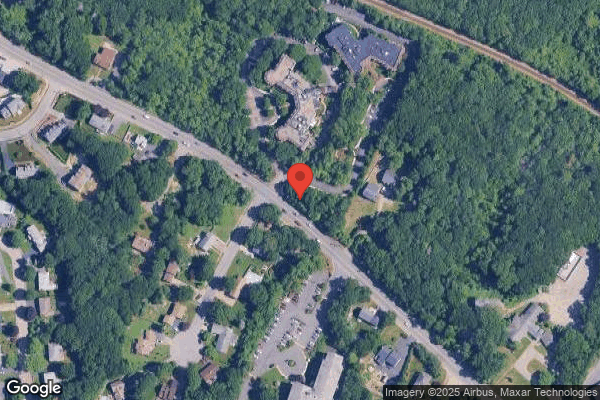

175 GROVE STREET, BRAINTREE, MA 02184 (781) 848-2050
Non profit - Corporation 101 Beds ALLIANCE HEALTH & HUMAN SERVICES Data: November 2025
Trust Grade
90/100
#2 of 338 in MA
Last Inspection: July 2025

Inspected within the last 6 months. Data reflects current conditions.

Overview

Alliance Health at Braintree has received a Trust Grade of A, which indicates it is highly recommended for its quality of care. It ranks #2 out of 338 nursing homes in Massachusetts, placing it in the top tier of facilities in the state, and is the best option among 33 facilities in Norfolk County. The facility is on an improving trend, having reduced its issues from 2 in 2024 to none in 2025. Staffing is a relative strength with a 4 out of 5-star rating and a turnover rate of 34%, which is below the state average, indicating that staff are likely to remain and build relationships with residents. However, there are some concerns, including issues with food safety practices that could potentially risk residents' health and a lack of individualized care planning for a resident who had a previous suicide attempt. Additionally, the facility failed to adequately inform a resident about the risks of psychotropic medications before their use. While the nursing home has no fines on record, which is a positive sign, the presence of these specific incidents suggests there are areas that need attention.

Trust Score
A
90/100
In Massachusetts
#2/338
Top 1%
Safety Record
Low Risk
No red flags
Inspections
Getting Better
2 → 0 violations
Staff Stability
○ Average
34% turnover. Near Massachusetts's 48% average. Typical for the industry.
Penalties
✓ Good
No fines on record. Clean compliance history, better than most Massachusetts facilities.
Skilled Nurses
✓ Good
Each resident gets 46 minutes of Registered Nurse (RN) attention daily — more than average for Massachusetts. RNs are trained to catch health problems early.
Violations
✓ Good
Only 5 deficiencies on record. Cleaner than most facilities. Minor issues only.
★★★★★
5.0
Overall Rating
★★★★☆
4.0
Staff Levels
★★★☆☆
3.0
Care Quality
★★★★★
5.0
Inspection Score
Stable
2024: 2 issues
2025: 0 issues

The Good

  • 4-Star Staffing Rating · Above-average nurse staffing levels
  • Full Sprinkler Coverage · Fire safety systems throughout facility
  • No fines on record
  • Staff turnover below average (34%)

    14 points below Massachusetts average of 48%

Facility shows strength in staffing levels, fire safety.

The Bad

Staff Turnover: 34%

12pts below Massachusetts avg (46%)

Typical for the industry

Chain: ALLIANCE HEALTH & HUMAN SERVICES

Part of a multi-facility chain

Ask about local staffing decisions and management

The Ugly 5 deficiencies on record

Jul 2024 2 deficiencies
CONCERN (D)

Potential for Harm - no one hurt, but risky conditions existed

Comprehensive Care Plan (Tag F0656)

Could have caused harm · This affected 1 resident

Based on observations, interviews, and record review, the facility failed to ensure that individualized, comprehensive care plans were developed and consistently implemented for one Resident (#38), ou...

Read full inspector narrative →
Based on observations, interviews, and record review, the facility failed to ensure that individualized, comprehensive care plans were developed and consistently implemented for one Resident (#38), out of a total sample of 18 residents. Specifically, the facility failed to ensure a resident specific care plan was developed to address the resident's medical, physical, mental and psychosocial needs following the Resident's recent suicide attempt at the facility. Findings include: Resident #38 was admitted to the facility in June 2024 with diagnoses including non-Alzheimer's dementia and had an activated Health Care Proxy (someone designated by the resident when competent who has the authority to consent for health care decisions when a resident has been declared, by a physician, not to be competent to make his/her own health care decisions). Review of the Minimum Data Set assessment, dated 6/10/24, indicated Resident #38 had moderate cognitive impairment as evidenced by a Brief Interview for Mental Status score of 11 out of 15, and had no behaviors. Review of a Nursing Note, dated 7/10/24, indicated at around 10:45 P.M., Resident #38 was very agitated and hit his/her right leg and right hand against the side rails. A lot of blood was noted on the floor and bed. The Nurse applied dressings to the injury, and 10 minutes later, while the Certified Nursing Assistant (CNA) was trying to change the linen and put a clean johnny (a gown usually made of cotton, with an open back that fastens with ties around the back and neck) on him/her, the CNA observed the Resident trying to choke him/herself with the johnny and stated he/she wanted to kill him/herself. 911 was called immediately, and the Resident was sent to the emergency room for evaluation. Review of the Health Care Facility Reporting System (web-based system that health care facilities must use to report incidents and allegations of abuse, neglect, and misappropriation) and a Accident/Incident Report and Investigation Form indicated Resident #38 had a suicide attempt in the facility on 7/10/24. Further review of the report indicated the Resident presented with an acute change in mental status and delirium on the 7:00 A.M. to 3:00 P.M. shift. When the Resident's family member was preparing to leave, the Resident began to cry and was repeatedly saying I want to go home with you, get me out of here. At approximately 10:45 PM, when a CNA was assisting the Resident to change his/her johnny the Resident pulled the johnny out of the CNA's hands and twisted the johnny around his/her neck. As the Resident was doing this, he/she stated, I'm going to kill myself. The Nurse called 911. The CNA's statement indicated she was sitting with the Resident and noted that the johnny was tied and knotted so badly, the police officer had to cut it off. The Resident was transferred to the hospital for evaluation. Review of the Emergency Department Encounter note, dated 7/11/24, indicated Resident #38 presented to the emergency department following a reported suicide attempt by tying a johnny around his/her neck. The Resident was admitted for attempted suicide, altered mentation, and a urinary tract infection. The discharge notes indicated in the Assessment/Plan: Principal Problem: Acute encephalopathy Active Problems: Hypotension, UTI, COVID, Suicidal Ideation Resident #38 was discharged back to the facility on 7/18/24. Review of comprehensive care plans indicated, but was not limited to: -Problem: Mood State (6/19/24) -Approaches identified include: Encourage Resident to participate in activities of choice; encourage Resident to talk about recent life changes; monitor for mood or behavior changes; provide 1:1 visits as needed to provide support; refer to Psych as needed. -Problem: Behavioral symptoms (6/19/24) -Approaches identified include: Always approach Resident in a calm manner; involve psych services prn (as needed); labs/urine as ordered by MD to rule out medical cause -Problem: Resident has a urinary tract infection (7/18/24) -Approaches identified include: administer antibiotic therapy as ordered, monitor/document for side effects and efficacy; encourage adequate fluids; monitor/document/report to MD as needed for signs/symptoms of UTI: frequency, urgency, malaise, foul smelling urine, dysuria, fever, nausea and vomiting, flank pain, supra-pubic pain, hematuria, cloudy urine, altered mental status, loss of appetite, behavioral changes; obtain and document vital signs per MD order. Further review of comprehensive care plans failed to indicate an individualized care plan was developed that identified and addressed the Resident's new diagnosis of suicidal ideation. On 7/23/24 at 9:10 A.M., the surveyor observed Resident #38 lying on his/her left side in bed awake. The Resident wore a hospital johnny that was secured around his/her neck only. No other ties were secured in the back of the johnny. The Resident repeatedly pulled the johnny away from his/her body in an upward direction as if trying to pull it off his/her body. During an interview on 7/24/24 at 12:35 P.M., Social Worker (SW) #1 said Resident #38 had a suicide attempt at the facility on 7/10/24. She said the Resident has a history of delusions that he/she is pregnant but has never had suicidal ideation before. She said when a resident returns from the hospital for a psychiatric issue, she contracts for safety, makes a referral to psychiatric services, and updates the care plan upon their return. She said she did not develop a Resident centered care plan to reflect the Resident's suicide attempt and suicidal ideation. The Social Worker said the Resident's name was placed in the consultant psychiatric Nurse Practitioner's (NP) book to alert them that the Resident needed to be seen on their next visit. She said the NP was out of the country and did not see the Resident and they do not have another provider to come in. During an interview on 7/25/24 at 7:36 A.M., the Director of Nursing (DON) said a care plan was not developed to address the Resident's suicidal ideation and attempt because they believe it was due to delirium from a UTI. During an interview on 7/25/24 at 4:05 P.M., Resident Representative #1 said Resident #38 has a history of frequent urinary tract infections with delirium, and he/she has never had suicidal ideations or a suicide attempt prior to 7/10/24.
CONCERN (E)

Potential for Harm - no one hurt, but risky conditions existed

Food Safety (Tag F0812)

Could have caused harm · This affected multiple residents

Based on observations, record review, and interview, the facility failed to follow professional standards of practice for food safety and sanitation to prevent the potential spread of foodborne illnes...

Read full inspector narrative →
Based on observations, record review, and interview, the facility failed to follow professional standards of practice for food safety and sanitation to prevent the potential spread of foodborne illness to residents who are at high risk. Specifically, the facility failed to: 1. Maintain the ice machine in a clean and sanitary manner in one out of three kitchenettes; and 2. Ensure staff implemented and followed their policy related to safe and sanitary storage, handling, and consumption of foods items stored in the Resident's personal refrigerator/freezer. Findings include: 1. Review of the facility's policy titled Ice Machine, last revised 4/11/22, indicated but was not limited to: - Policy: it is the policy of this Facility that the ice machine be maintained in a clean and sanitary manner. - Process: - Monthly 1. Empty ice from storage bin 2. Clean outside and inside with solution of 1 part bleach to 9 parts water 3. Discard the first batch of ice after cleaning 4. Check machine to ensure that ice is being made normally 5. The ice machine should be emptied and sanitized at least quarterly - Bi-annually 1. The ice machine vendor is responsible for cleaning the ice making components of the machine twice a year. 2. This preventative maintenance cleaning involves cleaning the water filters, checking components, making necessary repairs and ensuring the machine is functioning properly. 3. Maintenance is responsible for the documentation that shows the machine has been cleaned by the vendor on a timely basis. On 7/23/24 at 12:53 P.M., the surveyor observed the following in the Third-Floor kitchenette: - A large ice machine. Inside the ice machine on one of the plastic components there was pink and black discoloration. The discolored component had condensation dripping down into the ice cubes. - A sticker affixed to the front of the ice machine indicated but was not limited to: - Name of the company and their phone number that last serviced the ice machine. - Ice Machine Cleaned and Sanitized Date: 1/24; By: Consultant #1. - Ice Chest Cleaning Sheet indicated the ice machine was last cleaned on 7/15/24. On 7/24/24 at 8:39 A.M., the surveyor observed the following in the Third-Floor kitchenette: - A large ice machine. Inside the ice machine on one of the plastic components there was pink and black discoloration. The discolored component had condensation dripping down into the ice cubes. During an interview with observation on 7/24/24 at 8:58 A.M., the Director of Maintenance (DOM) said he cleans the ice machine himself once a month by removing the ice from the ice machine and wiping down the ice machine. The DOM and surveyor observed pink and black discoloration on the plastic components and there were water droplets sliding down the pink and black discoloration dripping into the ice. The DOM reviewed the Ice Chest Cleaning sheet and said the ice machine was last cleaned on 7/15/24. During an interview with observation on 7/24/24 at 9:26 A.M., the DOM said the pink and black mold comes back quickly, and that maybe the ice machine needed to be cleaned more frequently. The surveyor observed the DOM wipe the pink and black substance with a disposable cloth and close the cover to the ice machine. The pink and black substance was able to be wiped off and was not a permanent stain. The surveyor and the DOM observed water droplets touching the pink and black substance dripping into the ice and potentially contaminating it. During an interview with observation on 7/25/24 at 9:44 A.M., Consultant #1 said he worked for the company that last serviced the ice machine in January 2024. Consultant #1 said his company recommended the ice machine be serviced and sanitized quarterly, but the facility preferred to have it done every six months. Consultant #1 and the surveyor observed the inside of the ice machine and saw a pink and black substance on one of the plastic components, a black substance on the inside of the upper front panel, and a black substance on a sensor. Consultant #1 said the black and pink residue was mold. Consultant #1 said the DOM was responsible for contacting the company and setting up the cleaning. During an interview on 7/25/24 at 10:57 A.M., the Administrator said the Facility does not have a contract with the company that comes in to service the ice machine, but schedules service every six months. The Administrator reviewed the last two invoices for ice machine cleaning which indicated that the ice machine was last serviced on 1/11/24 and 4/19/23, indicating eight months between cleanings. The Administrator said the Facility had been late in cleaning the ice machine. During an interview on 7/25/24 at 12:37 P.M., Consultant #1 said if the ice machine has mold, then it should not be used. Consultant #1 said when there is mold, it is not good. During an interview on 7/25/24 at 12:53 P.M., the DOM said when he cleaned the ice machine, he would use a nine to one ratio of water to bleach. The DOM said he usually emptied the ice out of the ice machine, and he would only clean the ice bucket. The DOM said if he saw something on the top component then he would clean it but did not clean it regularly. The DOM said he did not remember if he saw any pink and black discoloration on the plastic components. The DOM said he probably did not check it right. 2. Review of the dietary policy titled Food Storage, last revised 2/28/23, indicated but was not limited to the following: -Individual Resident refrigerators a. If the resident chooses to have their own individual refrigerators in their room, the following requirements must be met for sanitation and safety purposes: -The resident/family will assume sole responsibility to clean the refrigerator and keep it in a sanitary manner. -The resident/family will be responsible for ensuring any perishable food is stored at less than or equal to 41 degrees. -Open food must be dated and should not be kept in the refrigerator any longer than 48 hours. The resident/family will be responsible for discarding appropriately. -The facility reserves the right to ask for the refrigerator to be removed if practices on maintaining it are not sanitary and do not meet with industry standards. Resident #27 was admitted to the facility in October 2022 and had diagnoses including dementia and Parkinson's disease. Review of the Minimum Data Set assessment, dated 5/30/24, indicated Resident #27 had severe cognitive impairment as evidenced by a Brief Interview for Mental Status score of 6 out of 15. During an interview with observation on 7/23/24 at 9:12 A.M., with the Resident's permission, the surveyor inspected the Resident's personal refrigerator/freezer located in the corner of his/her room. The Resident opened the refrigerator/freezer and said he/she keeps food in it and takes care of it him/herself. The Resident said he/she could not remember when he/she put the food items in there. The surveyor observed the following in the Resident's personal Refrigerator/freezer: -there was no thermometer inside either the refrigerator or freezer; -the top shelf of the refrigerator was glass and had condensation dripping onto items on the glass shelf below; -the second shelf of the refrigerator was glass and had brown/yellow stains on the surface as well as pieces of cardboard stuck to the shelf; -the inside edges, gasket and floor of the refrigerator were covered in large spills and splatters of a brown/yellow sticky substance; and -the freezer had a thick build-up of ice on all surfaces including the floor which was also covered in a light pink substance. The surveyor observed the following food items in the refrigerator/freezer: -uncovered thermal cup of soup, undated; -a sandwich wrapped in cellophane, undated; -a small individually wrapped (clear cellophane original packaging), cheese pizza with black and dark green fuzzy material visible on the edges of the pizza, undated -a red plastic plate of partially eaten food (unidentifiable contents); and -a covered thermal cup, undated and unidentifiable contents. During an interview on 7/24/24 at 9:17 A.M., the Maintenance Director said for refrigerators that are brought into the facility by families, it is the family's responsibility to clean and maintain them. Review of the medical record indicated following surveyor inquiry on 7/24/24, the facility contacted Resident #27's Health Care Proxy (HCP) regarding maintenance of the refrigerator/freezer. The HCP said they are unable to maintain the refrigerator/freezer and requested it be removed. During an interview on 7/25/24 at 7:36 A.M., the Director of Nursing (DON) said it is the facility's policy that either residents or their families are responsible for maintaining personal refrigerators. The DON said she didn't know how the facility ensures that families are maintaining safe and sanitary storage of food and proper functioning of the refrigerator but the facility should ensure safe storage.
May 2023 2 deficiencies
CONCERN (D)

Potential for Harm - no one hurt, but risky conditions existed

Deficiency F0552 (Tag F0552)

Could have caused harm · This affected 1 resident

Based on record review, interview, and policy review, the facility failed to ensure residents and/or their representatives were informed and given necessary information to make health care decisions i...

Read full inspector narrative →
Based on record review, interview, and policy review, the facility failed to ensure residents and/or their representatives were informed and given necessary information to make health care decisions including the risks and benefits of psychotropic medications prior to their use for one Resident (#69), out of a total sample of 19 residents. Findings include: Review of the facility's policy titled Psychotropic Medication Management, last revised on February 12, 2022, indicated but was not limited to: - Notify resident or responsible party of initiation of psychoactive medications, and with any changes to dose, and document in record. Resident #69 was admitted to the facility in August 2020, with diagnoses which included Parkinson's disease, bipolar disorder, adjustment disorder with mixed anxiety and depressed mood. Review of the clinical record indicated the Physician invoked Resident #69's Health Care Proxy on 8/5/2020. Review of Resident #69's current Physician's Orders, dated 3/31/2023 through review on 5/5/2023, indicated an order for: - Ativan (anti-anxiety) 1 milligram (mg) twice daily, started on 3/31/2023. - Ativan 1 mg every four hours as needed, started on 4/1/2023. Review of the Medication Administration Record indicated Resident #69 received medication as ordered from 3/31/2023 through review on 5/5/2023. Initial review of the clinical record indicated a signed Informed Consent Form completed by the facility and Health Care Proxy for a one-time dose of Ativan on 7/13/2021 prior to a medical procedure. Further review of the clinical record failed to show a signed Informed Consent Form was obtained from the Health Care Proxy for administration of the current physician's orders for the anti-anxiety medication. During an interview on 5/5/2023 at 8:49 A.M., the Infection Preventionist Nurse and surveyor reviewed the clinical record and were unable to locate the signed Informed Consent for the administration of Ativan medication. The Infection Preventionist Nurse said the previous Informed Consent Form was obtained for one-time usage prior to a medical procedure. The Infection Preventionist Nurse said all residents should have completed Informed Consents for psychotropic medications prior to initiation of current treatment orders.
MINOR (B)

Minor Issue - procedural, no safety impact

Assessment Accuracy (Tag F0641)

Minor procedural issue · This affected multiple residents

Based on record review and interview, the facility failed to ensure the Resident Comprehensive Assessment accurately reflected the correct discharge status for one Resident (#86), out of a total of th...

Read full inspector narrative →
Based on record review and interview, the facility failed to ensure the Resident Comprehensive Assessment accurately reflected the correct discharge status for one Resident (#86), out of a total of three closed sample residents' records. Findings include: Resident #86 was admitted to the facility in February 2023 with diagnoses which included abdominal pain, adult failure to thrive, and dementia with behavior disturbance. Review of Resident #86's clinical record indicated a Physician's Order, dated 3/6/2023, to transfer the Resident to the hospital for further evaluation. Review of the Discharge Minimum Data Set (MDS) assessment section A, dated 3/6/2023, indicated Resident #86 was discharged to the community. During an interview on 5/9/2023 at 11:32 A.M., the MDS Coordinator said the discharge status of Resident #86 was incorrectly coded and should have been coded as discharged to acute care hospital.
Nov 2022 1 deficiency
CONCERN (D) 📢 Someone Reported This

A family member, employee, or ombudsman was alarmed enough to file a formal complaint

Potential for Harm - no one hurt, but risky conditions existed

Quality of Care (Tag F0684)

Could have caused harm · This affected 1 resident

Based on records reviewed and interviews, for one of three sampled residents (Resident #1), who required total physical assistance from two staff members to meet his/her toileting needs, the Facility ...

Read full inspector narrative →
Based on records reviewed and interviews, for one of three sampled residents (Resident #1), who required total physical assistance from two staff members to meet his/her toileting needs, the Facility failed to ensure that based on his/her comprehensive assessment that his/her toileting care needs were met as needed. On 09/18/22 at the start of the day (7:00 A.M. to 3:00 P.M.) shift, Resident #1 informed nursing that he/she had not received incontinence care at all during the overnight shift. Resident #1 was assessed by nursing and his/her adult brief was noted to be saturated in urine and soiled with feces. It was determined by the facility that Resident #1 had not been provided with incontinence care by staff during the previous shift. Findings include: Review of Facility Policy titled, Activities of Daily Living (ADL'S), dated 1/01/21, indicated that a program of ADL'S are provided to each resident in order to prevent disability and to maintain or return each resident to their maximum level of independence. The Policy further indicated, for toileting and elimination, a schedule is maintained for regularity. Resident #1 was admitted to the Facility in February 2022, diagnoses included, arthritis, congestive heart failure, anemia, hypertension, and chronic obstructive pulmonary disease. Review of Resident #1's Care Plan tilted, Urinary Incontinence, dated 2/15/22, indicated that he/she required staff to physically toilet him/her, provide incontinence care and change his/her adult brief every two hours and as needed (PRN). Review of Resident #1's Quarterly Minimum Data Set (MDS) Assessment, dated 7/28/22, indicated he/she was cognitively intact, able to make his/her needs known, and was able to understand others. The MDS indicated Resident #1 required total physical assistance of two staff members for toileting needs, was always incontinent of bowel and bladder, and had a stage two (partial thickness loss of dermis) pressure injury to his/her buttocks. Review of Resident #1's Certified Nurse Aide (CNA) Care Card, last updated 9/07/22, indicated he/she required the physical assist of two staff members every two hours to reposition him/herself, required the use of a mechanical lift for transfers in/out of bed, and required staff assistance with toileting care needs. Review of the 11:00 P.M. to 7:00 A.M. Assignment Sheet, dated 09/17/22, indicated CNA #1 and Nurse #2 were assigned to Resident #1 to meet his/her care needs. During an interview on 11/28/22 at 10:24 A.M., Resident #1 said sometime during the month of September (exact date overnight shift 9/17/22 into 9/18/22) he/she had waited a very long time to have his/her saturated and soiled brief changed by a staff member. Resident #1 said he/she had been last changed on the evening of 9/17/22 at approximately 10:00 P.M., and said on 9/18/22 at approximately 8:30 A.M. was the next time a CNA provided him/her with incontinent care after having being left in his/her urine saturated and feces soiled adult brief for approximately eight hours. During an interview on 12/01/22 at 10:48 A.M., Certified Nurse Aide (CNA) #1 said Resident #1 was on her assignment for her shift that started on 9/17/22 at 11:00 P.M. and ended on 9/18/22 at 7:00 A.M. CNA #1 said that day was the first time she cared for Resident #1, and that during change of shift report another staff member informed her that Resident #1 would ring the call light when he/she needed assistance. CNA #1 said toward the end of her shift that night, she knew she had yet to provide care to Resident #1, and meant to go check on his/her. CNA #1 said she before going to check on Resident #1, she asked Nurse #2 to sign a missed punch form for her, so she went into her purse to get the form, noticed that her wallet was missing and said she panicked. CNA #1 said she had started looking everywhere and could not find her wallet anywhere. CNA #1 said she left the building to look in her car, still could not find her wallet, and said she drove to her house to look for it. CNA #1 said she returned to work a short time later, but did not realize that she had not provided care to Resident #1. During an interview on 12/01/22 at 1:32 P.M., Nurse #1 said on 9/18/22 at 7:00 A.M., after she arrived for her shift, as she was doing her morning rounds, Resident #1's call light was on so she went in to see what he/she needed. Nurse #1 said Resident #1 informed her that he/she had not been changed since the night before. During an interview on 11/30/22 at 1:03 P.M., Nurse Supervisor #1 said on 9/18/22 at approximately 11:45 A.M. he received a call from an upset family member stating Resident #1 had not received care the night before. Nurse Supervisor #1 said he went directly upstairs to investigate the concern and spoke with both Resident #1 and his/her family member. Nurse Supervisor #1 said he was informed by both of them that Resident #1 had not been provided incontinence care from the previous overnight shift and had remained in a soiled adult brief for approximately eight to ten hours. During an interview on 11/28/22 at 3:44 P.M., Nurse #2 said on 9/18/22 at 3:00 P.M.,when she came into work she was informed by Nurse Supervisor #1 that Resident #1 and his/her family member were very upset that Resident #1 had not received incontinent care throughout the previous overnight shift. Nurse #2 said she then called CNA #1 to speak to her about the concern. Nurse #2 said after speaking to CNA #1, she determined that CNA #1 had not attended to or changed Resident #1's incontinent brief at all on the previous overnight shift. Nurse #2 said she did recall that CNA #1 had lost her wallet that night and had gotten preoccupied trying to find it. During an interview on 11/28/22 at 3:44 P.M., the Director of Nurses (DON) said on 9/18/22 at 1:30 P.M., Nurse Supervisor #1 had called her and informed her of the concerns expressed by Resident #1 and his/her family member. The DON said she called Nurse #2 to investigate the reported concern. The DON said Nurse #2 informed her that CNA #1 had lost her wallet and instead of finishing his/her assignment, CNA #1 left the floor, and CNA #1 had not attended to or provided incontinent care to Resident #1 at all on the overnight shift.
Understanding Severity Codes (click to expand)
Life-Threatening (Immediate Jeopardy)
J - Isolated K - Pattern L - Widespread
Actual Harm
G - Isolated H - Pattern I - Widespread
Potential for Harm
D - Isolated E - Pattern F - Widespread
No Harm (Minor)
A - Isolated B - Pattern C - Widespread

Questions to Ask on Your Visit

  • "Can I speak with families of current residents?"
  • "What's your RN coverage like on weekends and overnight?"

Our Honest Assessment

Strengths
  • • Grade A (90/100). Above average facility, better than most options in Massachusetts.
  • • No major safety red flags. No abuse findings, life-threatening violations, or SFF status.
  • • No fines on record. Clean compliance history, better than most Massachusetts facilities.
  • • Only 5 deficiencies on record. Cleaner than most facilities. Minor issues only.
Concerns
  • • No significant concerns identified. This facility shows no red flags across CMS ratings, staff turnover, or federal penalties.
Bottom line: Generally positive indicators. Standard due diligence and a personal visit recommended.

About This Facility

What is Alliance Health At Braintree's CMS Rating?

CMS assigns ALLIANCE HEALTH AT BRAINTREE an overall rating of 5 out of 5 stars, which is considered much above average nationally. Within Massachusetts, this rating places the facility higher than 99% of the state's 100 nursing homes. This rating reflects solid performance across the metrics CMS uses to evaluate nursing home quality.

How is Alliance Health At Braintree Staffed?

CMS rates ALLIANCE HEALTH AT BRAINTREE's staffing level at 4 out of 5 stars, which is above average compared to other nursing homes. Staff turnover is 34%, compared to the Massachusetts average of 46%. This relatively stable workforce can support continuity of care.

What Have Inspectors Found at Alliance Health At Braintree?

State health inspectors documented 5 deficiencies at ALLIANCE HEALTH AT BRAINTREE during 2022 to 2024. These included: 4 with potential for harm and 1 minor or isolated issues.

Who Owns and Operates Alliance Health At Braintree?

ALLIANCE HEALTH AT BRAINTREE is owned by a non-profit organization. Non-profit facilities reinvest revenue into operations rather than distributing to shareholders. The facility is operated by ALLIANCE HEALTH & HUMAN SERVICES, a chain that manages multiple nursing homes. With 101 certified beds and approximately 90 residents (about 89% occupancy), it is a mid-sized facility located in BRAINTREE, Massachusetts.

How Does Alliance Health At Braintree Compare to Other Massachusetts Nursing Homes?

Compared to the 100 nursing homes in Massachusetts, ALLIANCE HEALTH AT BRAINTREE's overall rating (5 stars) is above the state average of 2.9, staff turnover (34%) is significantly lower than the state average of 46%, and health inspection rating (5 stars) is much above the national benchmark.

What Should Families Ask When Visiting Alliance Health At Braintree?

Based on this facility's data, families visiting should ask: "Can I visit during a mealtime to observe dining assistance and food quality?" "How do you handle medical emergencies, and what is your hospital transfer rate?" "Can I speak with family members of current residents about their experience?"

Is Alliance Health At Braintree Safe?

Based on CMS inspection data, ALLIANCE HEALTH AT BRAINTREE has a clean safety record: no substantiated abuse findings (meaning no confirmed cases of resident harm), no Immediate Jeopardy citations (the most serious violation level indicating risk of serious injury or death), and is not on the Special Focus Facility watch list (a federal program monitoring the lowest-performing 1% of nursing homes). The facility has a 5-star overall rating and ranks #1 of 100 nursing homes in Massachusetts. While no facility is perfect, families should still ask about staff-to-resident ratios and recent inspection results during their visit.

Do Nurses at Alliance Health At Braintree Stick Around?

ALLIANCE HEALTH AT BRAINTREE has a staff turnover rate of 34%, which is about average for Massachusetts nursing homes (state average: 46%). Moderate turnover is common in nursing homes, but families should still ask about staff tenure and how the facility maintains care continuity when employees leave.

Was Alliance Health At Braintree Ever Fined?

ALLIANCE HEALTH AT BRAINTREE has no federal fines on record. CMS issues fines when nursing homes fail to meet care standards or don't correct problems found during inspections. The absence of fines suggests the facility has either maintained compliance or corrected any issues before penalties were assessed. This is a positive indicator, though families should still review recent inspection reports for the full picture.

Is Alliance Health At Braintree on Any Federal Watch List?

ALLIANCE HEALTH AT BRAINTREE is not on any federal watch list. The most significant is the Special Focus Facility (SFF) program, which identifies the bottom 1% of nursing homes nationally based on persistent, serious quality problems. Not being on this list means the facility has avoided the pattern of deficiencies that triggers enhanced federal oversight. This is a positive indicator, though families should still review the facility's inspection history directly.