SOUTH COVE MANOR NURSING & REHABILITATION CENTER

288 WASHINGTON STREET, QUINCY, MA 02169 (617) 423-0590
Non profit - Corporation 141 Beds Independent Data: November 2025
Trust Grade
85/100
#52 of 338 in MA
Last Inspection: July 2024

Within standard 12-15 month inspection cycle. Federal law requires annual inspections.

Overview

South Cove Manor Nursing & Rehabilitation Center has received a Trust Grade of B+, which means it is above average and recommended for families considering care options. It ranks #52 out of 338 facilities in Massachusetts, placing it in the top half, and #6 out of 33 in Norfolk County, indicating only five local options are better. The facility is improving, as the number of issues reported decreased from 9 in 2023 to 7 in 2024. Staffing is a strength with a 4 out of 5-star rating and a low turnover rate of 13%, much better than the state average. On the downside, there were 30 issues found during inspections, including concerns around medication reviews and supervision for residents, which could pose a risk for potential accidents or injuries. Fortunately, there have been no fines reported, which is a positive sign for compliance. While RN coverage is average, the overall care quality is rated highly, with excellent ratings in quality measures.

Trust Score
B+
85/100
In Massachusetts
#52/338
Top 15%
Safety Record
Low Risk
No red flags
Inspections
Getting Better
9 → 7 violations
Staff Stability
✓ Good
13% annual turnover. Excellent stability, 35 points below Massachusetts's 48% average. Staff who stay learn residents' needs.
Penalties
✓ Good
No fines on record. Clean compliance history, better than most Massachusetts facilities.
Skilled Nurses
○ Average
Each resident gets 32 minutes of Registered Nurse (RN) attention daily — about average for Massachusetts. RNs are the most trained staff who monitor for health changes.
Violations
⚠ Watch
30 deficiencies on record. Higher than average. Multiple issues found across inspections.
★★★★★
5.0
Overall Rating
★★★★☆
4.0
Staff Levels
★★★★★
5.0
Care Quality
★★★★☆
4.0
Inspection Score
Stable
2023: 9 issues
2024: 7 issues

The Good

  • 4-Star Staffing Rating · Above-average nurse staffing levels
  • 5-Star Quality Measures · Strong clinical quality outcomes
  • Low Staff Turnover (13%) · Staff stability means consistent care
  • Full Sprinkler Coverage · Fire safety systems throughout facility
  • No fines on record
  • Staff turnover is low (13%)

    35 points below Massachusetts average of 48%

Facility shows strength in staffing levels, quality measures, staff retention, fire safety.

The Bad

No Significant Concerns Identified

This facility shows no red flags. Among Massachusetts's 100 nursing homes, only 1% achieve this.

The Ugly 30 deficiencies on record

Jul 2024 7 deficiencies
CONCERN (D)

Potential for Harm - no one hurt, but risky conditions existed

Comprehensive Care Plan (Tag F0656)

Could have caused harm · This affected 1 resident

Based on interview and record review, the facility failed to implement a person-centered care plan intervention of monitoring the behavior of visual hallucinations for Resident #71, out of a total sam...

Read full inspector narrative →
Based on interview and record review, the facility failed to implement a person-centered care plan intervention of monitoring the behavior of visual hallucinations for Resident #71, out of a total sample of 27 residents. Findings include: Review of the facility's policy titled Care Plans Comprehensive Person Centered, dated 12/1/17, indicated but was not limited to the following: - a comprehensive person-centered care plan that includes measurable objectives and timetables to meet resident's physical, psychosocial and functional needs is developed and implemented - the care plan will: reflect recognized standards of practice, develop interventions that are targeted and meaningful - care plan interventions are chosen with consideration of relationship between problem areas and their causes and relevant clinical decision making Review of the facility's policy titled Behavioral Assessment, Intervention and Monitoring, dated 12/2018, indicated but was not limited to the following: - the facility will comply with regulatory requirements related to the use of medication to manage behaviors - as part of the assessment the nursing staff and MD will identify individuals with a history of impaired cognition, altered behavior or mental illness - the care plan will incorporate findings from the assessments and be consistent with current standards of practice - interventions will be individualized and a part of an overall care environment that supports physical, functional, and psychosocial needs and strives to understand, prevent, or relieve the resident's distress - when medications are prescribed for behavioral symptoms, documentation will include: rational, dosage, duration, monitoring for efficacy and adverse consequences, plans (if applicable) for gradual dose reduction Resident #71 was admitted to the facility in August 2023 with diagnoses including: Severe dementia with mood disturbance, visual hallucinations and adjustment disorder with depressed mood. Review of the Minimum Data Set (MDS) assessment, dated 7/3/24, indicated Resident #71 has severely impaired cognitive skills and his/her healthcare proxy (HCP) was activated. Review of the current active MD orders indicated the Resident was receiving Seroquel (an antipsychotic medication) for the indication of visual hallucinations. Review of the current active care plans for Resident #71 included but were not limited to the following: PROBLEM: Resident is prescribed the following psychotropic medication: Seroquel related to dementia with behavior/visual hallucinations (last revised: 4/3/24) INTERVENTIONS: track target behaviors in order to assess the effect and benefit of the drug use (8/16/23) During an interview on 7/30/24 at 12:57 P.M., Nurse #2 said she was unaware the Resident had visual hallucinations and she does not track, monitor or document that anywhere. She said the Resident does have behaviors of spitting food, yelling, cursing, and resisting care and those are infrequent but monitored on the medication administration record (MAR). Review of the medical record, including nursing progress notes, MAR, and behavior monitoring sheets, failed to indicate the Resident's behavior of visual hallucinations were being tracked or monitored. During an interview on 7/30/24 at 4:51 P.M., Consultant #1 said as part of her job she reviews the medication and behavior monitoring for the residents and the behaviors are monitored and tracked on the facility MAR. She said Resident #71 is taking Seroquel for the targeted behavior of visual hallucinations, per the physician's order, but she could not locate any monitoring of that behavior on the MAR or in the medical record during her most recent review in July. During an interview on 7/31/24 at 7:12 A.M., the Assistant Director of Nurses (ADON) said the Resident was not being monitored for the behavior of visual hallucinations. During an interview on 7/31/24 at 8:38 A.M., Family Member #1 said the Resident does have visual hallucinations very frequently and they are memories of early life, their home country, children playing and seeing friends and family from their past and the memories are happy and positive. He said the Resident is not frightened by the hallucinations and finds joy in them. He said the family does not report these episodes to the facility because they are not bothersome to the Resident or a problem. During an interview on 7/31/24 at 10:04 A.M., Unit Manager #1 said, on review of the care plan, that the Resident was supposed to be monitored and have their behavior of visual hallucinations tracked related to the use of the Seroquel but that was not occurring. Refer to F758
CONCERN (D)

Potential for Harm - no one hurt, but risky conditions existed

Deficiency F0658 (Tag F0658)

Could have caused harm · This affected 1 resident

Based on observation, interview, and record review, the facility failed to ensure residents were provided care in accordance with professional standards of practice for one Resident (#64), out of a to...

Read full inspector narrative →
Based on observation, interview, and record review, the facility failed to ensure residents were provided care in accordance with professional standards of practice for one Resident (#64), out of a total sample of 27 residents. Specifically, the facility failed to ensure the Resident's Geri-sleeves (sleeves that provide protection to sensitive skin) were consistently applied per physician's orders. Findings include: Resident #64 was admitted to the facility in April 2023 and had diagnoses including type 2 diabetes mellitus. Review of the Minimum Data Set (MDS) assessment, dated 5/8/24, indicated Resident #64 was cognitively intact as evidenced by a Brief Interview for Mental Status (BIMS) score of 15 out of 15, had no current skin tears, but had an open lesion other than ulcers, rashes, or cuts. The MDS also indicated Resident #64 required partial to moderate assistance for upper body dressing, showering, and bathing. Review of current Physician's Orders indicated the following: -Geri-sleeves on at bilateral upper extremities every shift for skin protection, 5/19/24 Review of the Weekly Skin Assessments indicated but were not limited to the following: 5/30/24 - bruise left forearm, open lesion, cut, laceration, or skin tear on right forearm 6/6/24 - forearm scab 6/13/24 - bruises bilateral upper extremities, open lesion, cut, laceration, or skin tear on right forearm 6/20/24 - bruises bilateral upper extremities, open lesion, cut, laceration, or skin tear on right forearm scabby 6/27/24 - bruises bilateral upper extremities, open lesion, cut, laceration, or skin tear on right forearm, scabbing 7/4/24 and 7/11/24 - excessively dry or flaky skin bilateral upper extremities 7/25/24 - no areas of concern During an observation with interview on 7/25/24 at 9:49 A.M., the surveyor observed Resident #64 lying in bed with bilateral upper extremity Geri-sleeves applied. Resident #64 said staff recommended the arm sleeves because his/her skin was fragile and got skin tears. The Resident said he/she didn't mind wearing them then pulled the sleeves down from the elbows to the wrists revealing the skin's surface. The surveyor observed an ecchymotic (bruised) area approximately 1.5 centimeters (cm) width x 1.5 cm length x 0.0 cm depth on the right forearm. The Resident's skin was thin, and paper-like with dry flakes of skin. Resident #64 said he/she had a skin tear there that had been bleeding and hurt when it happened but was now healing. During an observation with interview on 7/29/24 at 8:26 A.M., the surveyor observed Resident #64 lying in bed. The Geri-sleeves were not applied. The Resident's skin on the bilateral upper extremities was thin, and paper-like with dry flakes of skin. The Resident said his/her skin tear healed so he/she didn't need the sleeves anymore. During an observation with interview on 7/29/24 at 1:54 P.M. and 7/30/24 at 7:49 A.M., the surveyor observed Resident #64 lying in bed. The Resident's sleeves were not applied and observed resting on top of the dresser out of reach of the Resident. The Resident's skin on the bilateral upper extremities was thin, and paper-like with dry flakes of skin. Resident #64 said his/her skin was very fragile and dry and he/she was supposed to be wearing the sleeves. During an observation with interview on 7/30/24 at 2:28 P.M., Nurse #4 entered the Resident's room with the surveyor. The Resident's Geri-sleeves were not applied and observed resting on top of the dresser out of reach of the Resident. Nurse #4 said the Resident's skin was fragile and bruised easily and that's why the sleeves had been on him/her. Nurse #4 said the Resident refused to wear them sometimes and did not put them on that day. During an interview on 7/30/24 at 2:36 P.M. with Nurse #4 and the Assistant Director of Nursing (ADON), Nurse #4 said there was no documented evidence of the Resident's refusal to wear the Geri-sleeves and was not care planned for it. The ADON said the sleeves should be applied per physician's orders or care planned if the Resident refused them but was not. During an interview on 7/31/24 at 12:03 P.M., the Director of Nursing (DON) said the Resident got skin tears because his/her skin was fragile and was susceptible to bruising. He said physician's orders should have been consistently followed for the Resident's use of the Geri-sleeves unless there was a rationale for them to not be that is documented in the medical record. He said he couldn't find any evidence of this or a care plan for the Resident's refusal to wear them.
CONCERN (D)

Potential for Harm - no one hurt, but risky conditions existed

Accident Prevention (Tag F0689)

Could have caused harm · This affected 1 resident

Based on observation, interview, and record review, the facility failed to ensure an assessment for wander risk was completed for one Resident (#100), out of a total sample of 27 residents. Findings ...

Read full inspector narrative →
Based on observation, interview, and record review, the facility failed to ensure an assessment for wander risk was completed for one Resident (#100), out of a total sample of 27 residents. Findings include: Review of the facility's policy titled Wandering/Missing Resident, dated as revised 6/24/23, indicated but was not limited to: - Purpose: to provide a safe and secure environment to protect residents from elopement. - It is the policy of the facility that the safety and well-being of all residents with the potential for wandering are ensured. - If it is determined, through assessment, that a resident has a potential for wandering, the Resident Care Plan will reflect this behavior with all disciplines aware of the need for his/her monitoring - Residents will be assessed quarterly, annually, and with significant changes. Resident #100 was admitted to the facility in May 2022 with diagnoses which included dementia. Review of the Minimum Data Set (MDS) assessment, dated 5/22/24, indicated Resident #100 had severe cognitive impairment, and had wandering behaviors which occurred daily. Review of the care plan for behaviors, initiated 5/25/23, indicated but was not limited to: - Resident #100 displays the following behavioral symptoms: wandering/intrusive behaviors disrupting others. Goal: Resident's safety will be maintained through next survey, dated as revised, 6/3/24. Interventions: Apply wanderguard. Review of current Physician's Orders indicated the following: - Check wanderguard placement every shift to left ankle. - Document the number of episodes Resident exhibited wandering along with interventions used. Review of the current Medication Administration Record, dated 7/1/24 through 7/31/24 indicated documented daily episodes of Resident wandering. On 7/25/24 at 1:38 P.M., and 7/30/24 at 12:10 P.M., the surveyor observed Resident #100 wandering throughout the unit with a wanderguard on his/her left ankle. Subsequent review of the clinical record indicated the last Wander Risk Assessment for Resident #100 was completed on 2/22/24 and indicated the Resident exhibited wandering behavior and had a wanderguard in place. During an interview on 7/31/24 at 10:52 A.M., Unit Manager #2 said Resident #100 had behaviors which included wandering and had a wanderguard in place. Unit Manager #2 reviewed the clinical record and was unable to locate the most current quarterly assessment. Unit Manager #2 said an elopement assessment needed to be completed quarterly and was not completed this quarter for the Resident. During an interview on 7/31/24 at 11:51 A.M., the Director of Nurses said it was the expectation that all residents at risk for elopement be assessed quarterly.
CONCERN (D)

Potential for Harm - no one hurt, but risky conditions existed

Respiratory Care (Tag F0695)

Could have caused harm · This affected 1 resident

Based on observation, interview, and record review, the facility failed to provide the necessary respiratory care and services for one Resident (#64), out of a total sample of 27 residents. Specifical...

Read full inspector narrative →
Based on observation, interview, and record review, the facility failed to provide the necessary respiratory care and services for one Resident (#64), out of a total sample of 27 residents. Specifically, the facility failed to ensure oxygen (O2) equipment was maintained to ensure sanitary conditions to help decrease the risk of potential contamination and infection. Findings include: 1. Review of the facility's policy titled Equipment Change/Disinfection, undated, indicated but was not limited to the following: -Thoroughly clean all exterior surfaces of equipment. -In addition to disinfecting the surfaces, please maintain the following: Oxygen Concentrators: -Rinse and dry the external filter weekly and prn (as needed) when visibly dusty. Wipe down concentrator prn when visibly dusty or soiled. Resident #64 was admitted to the facility in April 2023 with diagnoses including chronic obstructive pulmonary disease (COPD) (group of lung diseases that block airflow and make it difficult to breathe), pulmonary hypertension, and chronic congestive heart failure. Review of the Minimum Data Set (MDS) assessment, dated 5/8/24, indicated Resident #64 was receiving oxygen therapy. Review of current Physician's Orders indicated the following: -may give Oxygen up to 3 liters/minute via nasal cannula continuously for O2 saturation level of 89% or less and for shortness of breath every shift, 1/26/24 On 7/25/24 at 9:47 A.M., 7/29/24 at 8:21 A.M., and 7/30/24 at 7:47 A.M., the surveyor observed Resident #64 lying in bed with a nasal cannula (NC) (lightweight tube which one end splits into two prongs which are placed in the nostrils from which a mixture of oxygen (O2) and air flows) in place attached to an O2 concentrator delivering 2 Liters (L) of Oxygen. The exterior of the concentrator was laden with dust. The external filter (sponge-like filter that captures dust and other airborne pollutants that can clog the machine and get transferred into the oxygen supply you breathe) was 100% laden with dusty gray matter. Resident #64 said he/she used Oxygen continuously for his/her COPD. During an observation with interview on 7/30/24 at 2:10 P.M., Nurse #4 entered Resident #64's room with the surveyor and observed Resident #64 lying in bed with a NC in place attached to an O2 concentrator delivering 2 L of Oxygen. The exterior of the concentrator was laden with dust. The external filter was 100% laden with dusty gray matter. Nurse #4 said the Resident used Oxygen continuously for shortness of breath and had a history of congestive heart failure. She said the O2 concentrator and filter are cleaned every week by the night nurse but there was no order for that and no documentation of it being done. Nurse #4 said she could not determine when the concentrator and filter were last cleaned if it wasn't documented anywhere. She said the filter needed to be clean for air purity. During an interview on 7/30/24 at 2:37 P.M., the Assistant Director of Nursing said she wasn't sure if there was a specific order set to clean the concentrator and filter, but they should be clean. During an interview on 7/31/24 at 12:05 P.M., the Director of Nursing (DON) said he didn't have a policy for maintenance of respiratory equipment and there was no order set for it that he knew of. He said the second and third floor units had a written schedule where staff documented wiping down respiratory equipment and cleaning of the filters but the first floor unit where Resident #64 resided did not do this. He said there is no process to clean respiratory equipment on that floor. The DON said if the filter is laden with dust the Resident could be breathing it in. He further said he wasn't sure how often the concentrators and filters should be cleaned but should be cleaned per the manufacturer and on an as needed basis.
CONCERN (D)

Potential for Harm - no one hurt, but risky conditions existed

Medication Errors (Tag F0758)

Could have caused harm · This affected 1 resident

Based on observation, interview, and record review, the facility failed to monitor the targeted behavior of an antipsychotic medication and attempt two antipsychotic gradual dose reduction (GDR) for o...

Read full inspector narrative →
Based on observation, interview, and record review, the facility failed to monitor the targeted behavior of an antipsychotic medication and attempt two antipsychotic gradual dose reduction (GDR) for one Resident (#71) who had a new antipsychotic medication initiated within the last year, out of a total sample of 27 residents. Findings include: Review of the facility's policy titled: Behavioral Assessment, Intervention and Monitoring, dated 12/2018, indicated but was not limited to the following: - the facility will comply with regulatory requirements related to the use of medication to manage behaviors - the care plan will incorporate findings from the assessments and be consistent with current standards of practice - interventions will be individualized and a part of an overall care environment that supports physical, functional, and psychosocial needs and strives to understand, prevent, or relieve the residents distress - when medications are prescribed for behavioral symptoms, documentation will include: rational, dosage, duration, monitoring for efficacy and adverse consequences, plans (if applicable) for gradual dose reduction Monitoring: - document any improvements or worsening of the individual's mood, behavior, and function - the interdisciplinary team (IDT) will monitor the progress of the individual with impaired cognition and behavior until stable - if antipsychotic medication is used to treat behavioral symptoms the IDT will monitor their indication and implement gradual dose reduction or document why this cannot or should not be done Review of the facility's policy titled Psychoactive Drug Monitoring, dated 7/2020, indicated but was not limited to the following: - residents who receive antipsychotic medications are monitored to evaluate the effectiveness of the medication - need for psychoactive medications are reassessed regularly by the prescriber and care planning team; effects of the medication are documented as part of the care planning process - the need for and response to the psychoactive medication therapy is monitored and documented in the medical record - for deviation from the dosage reduction criteria, the clinical record contains evidence to support justification for the use of the drug including: medical or psychiatric consultations, health care professional documentation that previous dose reductions have been unsuccessful, documentation of residents improvement or maintenance of function - psychoactive drug therapy guidelines include: residents receive antipsychotic medications only for behaviors that are qualitatively and objectively documented through the behavior monitoring chart or similar mechanism - residents receive gradual dose reductions of the antipsychotic medications unless clinically contraindicated, in an effort to reduce these drugs; a clinical contraindication means: (a) resident has a specific condition and history of recurrent psychotic symptoms that are stabilized on a maintenance dose, the resident has an organic mental syndrome (dementia, delirium and other cognitive disorders with associated psychotic or agitated symptoms) and has had a GDR attempted twice in one year that resulted in the return of symptoms for which the drug was prescribed and a return to the previous dose or an increase of the current dose was required; (b) resident's physician has provided justification for the continued drug use and dose in the medical record that includes: a diagnosis with description of symptoms, discussion with psychiatric and medical differential diagnosis, description of the rationale for the choice of the particular treatment, a discussion as to why the present dose is necessary to manage the symptoms - residents who are receiving antipsychotic drug therapy are evaluated by the consultant pharmacist and medical doctor (MD) for a possible GDR minimally quarterly Resident #71 was admitted to the facility in August 2023 with diagnoses including: severe dementia with mood disturbance, visual hallucinations and adjustment disorder with depressed mood. Review of the Minimum Data Set (MDS) assessment, dated 7/3/24, indicated Resident #71 has severely impaired cognitive skills. Further record review indicated the Resident's healthcare proxy (HCP) was activated. Review of the current Physician's Orders for Resident #71, as of 7/30/24, indicated but were not limited to the following: - Seroquel (an antipsychotic) give 25 milligrams (mg) by mouth one time a day related to visual hallucinations (9/28/23) Review of the Psych Nurse Practitioner's (NP) behavioral health progress notes from 8/2023 through 7/29/24 indicated but were not limited to the following: - the Resident was seen for an initial evaluation and assessed as irritable with behaviors of hitting staff, cursing and spitting out meds and targeted behaviors of agitation, confusion and hallucinations and Seroquel was initiated 8/15/23 - behaviors of yelling, cursing, combative with care, yelling out and refusing medications were worse and could not be consistently redirected and Seroquel was increased; the targeted behaviors were agitation, confusion, yelling out, combativeness and hallucinations (9/26/23) - psych progress notes fail to indicate the Resident's behavior of visual hallucinations, which is the indication for the Seroquel per the physician's order, was being monitored or reported as a concern by the nursing staff during visits/evaluations - Resident #71 was seen and evaluated by psych services four additional times since the Seroquel increase in September 2023; those psych progress notes failed to indicate the Resident was offered a GDR of the antipsychotic or that one was considered or recommended During an interview on 7/30/24 at 12:57 P.M., Nurse #2 said she is the regular nurse for the Resident and she was unaware the Resident had visual hallucinations and she does not track, monitor or document those anywhere. She said the Resident does have behaviors of spitting food, yelling, cursing and resisting care and those are rare, occurring only probably a few times a month and are monitored on the medication administration record (MAR) by the nurses. She said she does not know anything about a GDR for the Resident's Seroquel. Review of the Certified Nurse Assistant care card, last updated 7/24/24, indicated behaviors of spitting and cursing at staff. The document failed to indicate the Resident had behaviors of visual hallucinations. Review of the current active care plans for Resident #71 included but were not limited to the following: PROBLEM: Resident is prescribed the following psychotropic medication: Seroquel related to dementia with behavior/visual hallucinations (last revised: 4/3/24) INTERVENTIONS: track target behaviors in order to assess the effect and benefit of the drug use (8/16/23) Review of the MARs for Resident #71 from 8/2023 through 7/30/24 failed to indicate the Resident's behavior of visual hallucinations was being tracked or monitored for the use of Seroquel. Review of the monthly medication regimen reviews (MRR) conducted by the pharmacist from October 2023 through June 2024 failed to indicate a recommendation for the potential GDR of the Seroquel. During an interview on 7/30/24 at 4:51 P.M., Consultant #1 said the guideline the pharmacy follows is in line with the regulation and indicated a recommendation be left for a GDR of a newly initiated antipsychotic medication twice within the first year after its initiation if there is no documented evidence of it being clinically contraindicated. She said as part of her job she reviews the medication and behavior monitoring for the Resident and verifies the target behaviors are monitored and tracked on the facility MAR. She said this will provide documented evidence of whether or not a medication is effective for its targeted behavior and if a GDR could be attempted and recommended. She said Resident #71 is taking Seroquel for the targeted behavior of visual hallucinations, per the physician order, and she could not locate any monitoring of that behavior on the MAR or in the medical record during her most recent review in July. She said upon reviewing Resident #71's medical record that she should have previously left a recommendation for the facility to monitor the targeted behavior of visual hallucinations and also for a GDR of the Seroquel, since it is unmonitored and new within the last year. She said she did leave a recommendation for a GDR of the Seroquel this month but had missed doing so previously in error. Review of the MRR, dated 7/3/24, in Resident #71's medical record indicated but was not limited to the following: This Resident is currently receiving Seroquel 25 mg daily since 9/2023 Within the first year a patient is admitted on an antipsychotic or after an antipsychotic medication has been initiated in the facility, a GDR must be attempted in two separate quarters (with at least one month between attempts), unless clinically contraindicated. RECOMMENDATION: Please consider a trial dose reduction If a GDR is clinically contraindicated at this time, please document the clinical rationale below. This must address the reason(s) why an attempted dose reduction would likely impair the patient's function or cause psychiatric instability by exacerbating an underlying medical or psychiatric disorder. During an interview on 7/31/24 at 8:38 A.M., Family member #1 said the Resident does have visual hallucinations very frequently and they are memories of early life, their home country, children playing and seeing friends and family from their past and the memories are happy and positive. He said the Resident is not frightened by the hallucinations and finds joy in them. He said the family does not report these episodes to the facility because they are not bothersome to the Resident or a problem. He said he was unaware that the Seroquel was to prevent the hallucinations and he would be agreeable to a dose reduction, but one has not been offered. Further review of the MRR left for the physician by the pharmacist on 7/3/24 was found completed by the MD on 7/25/24 and indicated the following: Two prepopulated boxes were checked off by the physician and the physician signed the recommendation 1. Disagree with recommendation 2. Condition is not well controlled/stable and a reduction is likely to impair the patient's function and/or cause psychiatric instability. No other information was documented During an interview on 7/31/24 at 9:08 A.M., Physician #1 said he recently saw the Resident and addressed the GDR recommendation left by the pharmacist. He said this was the first time the pharmacy had recommended a GDR of this Resident's Seroquel. He said he did not review the record when making the decision to not complete the GDR and that he received report from the nursing staff that the behaviors had continued and they felt the Resident needed the medication and based on that conversation he declined the recommendation. He said he was not aware the Resident was not being monitored for the behavior of hallucinations, which was the indication on the order for the Seroquel. During an interview on 7/31/24 at 10:04 A.M., Unit Manager #1 said she was the one who gave report to the physician when they were discussing the GDR for the Resident. She said the staff had told her they felt the Resident still had behaviors of yelling, cursing and being resistive to care at times and they did not want the medication taken away so she told the physician the Resident was still behavioral and needed the Seroquel. She said she did not think to review the medical record to see if the Resident was having any behaviors of visual hallucinations, which is what the medication is ordered for. She said that the facility was not monitoring Resident #71 for visual hallucinations until yesterday (7/30/24) after it was brought to the facility's attention by the surveyor. She said the Resident should have been monitored for visual hallucinations the entire time he/she was on the drug to determine if it was effective, but they have not been. During an interview on 7/31/24 at 12:36 P.M., the Director of Nurses said the expectation and process is for the staff to document and monitor the targeted behavior for the use of the antipsychotic to determine whether or not it is effective and a GDR could be completed. He said he is aware that the Resident has not had a GDR as required and had not had their target behavior monitored. During an interview on 7/31/24 at 3:06 P.M., Consultant #2 said she evaluated Resident #71 in the last few days for psych stability and medication management follow up. She said in general, once a resident is stable on their medication regimen, they are seen every one to three months and not every few weeks and one to three months is for routine monitoring and care. She said when she saw the Resident they appeared stable and the staff informed her the Resident's behaviors were stable at baseline and the Resident was compliant with all medications and care at that time. She said she was not aware the facility had recently received a recommendation from the pharmacy for a GDR of the Seroquel or that a GDR had not previously been attempted on the Resident. She said, had she been informed of that, she would have recommended a GDR for the Resident at the time of her visit since the Resident appears to have been stable for visual hallucinations long term and should have one attempted twice in the first year. She said the progress notes in use by the psych team are a template note and the sections of the progress notes for psych that say No GDR required at this time, follow up in one to three months, continue to monitor for changes and concerns and notify healthdrive behavioral health, continue with current treatment plan and encourage compliance, continue with supportive care/redirection, continue to monitor and document behaviors every shift to guide treatment (tx) plan is part of the template and is only changed if the psych provider is alerted to the need for a GDR once they are stabilized or goes in and physically makes changes to those sections. She said Resident #71 should be monitored for their targeted behavior of visual hallucinations to determine if the Seroquel is effective and should have already had an attempted GDR as they are required to have two attempts in the first year and that had not occurred.
CONCERN (D)

Potential for Harm - no one hurt, but risky conditions existed

Deficiency F0883 (Tag F0883)

Could have caused harm · This affected 1 resident

**NOTE- TERMS IN BRACKETS HAVE BEEN EDITED TO PROTECT CONFIDENTIALITY** Based on document review and interview, the facility failed to ensure residents who were eligible to receive the recommended pne...

Read full inspector narrative →
**NOTE- TERMS IN BRACKETS HAVE BEEN EDITED TO PROTECT CONFIDENTIALITY** Based on document review and interview, the facility failed to ensure residents who were eligible to receive the recommended pneumococcal vaccine (PCV-20), were offered the vaccination and they or their legal representatives were educated on the benefits and potential side effects of the vaccine in a timely manner for one Resident (#36), out of a total sample of five residents reviewed for immunizations. Findings include: Review of the Centers for Disease Control and Prevention (CDC) document titled Pneumococcal Vaccine Timing for Adults, dated March 2023, indicated the following: Make sure your patients are up to date with pneumococcal vaccination. Adults >= [AGE] years old, Complete Pneumococcal Vaccine Schedules: -PPSV23 only at any age - give PCV20 or PCV15 (pneumococcal 15-valent conjugate) >= 1 year later Review of the facility's policy titled Immunizations and Vaccines - Residents, dated as revised 1/2024, indicated but was not limited to the following: - each resident is offered pneumococcal vaccine as soon as possible, unless the immunization is medically contraindicated, or the resident has already been immunized according to the CDC - CDC recommends pneumococcal vaccination for all adults 65 years or older, in accordance with the vaccine timing table Resident #36 was re-admitted to the facility January 2021 and is currently [AGE] years old. During an interview on 7/25/24 at 10:36 A.M., the Infection Preventionist (IP) said the process for pneumococcal vaccination is the facility addresses it with residents and their families at the time of admission to ensure the residents will receive the completed series of pneumococcal vaccinations in accordance with CDC recommendations. She said if residents have not received the complete series, they have their immunizations tracked to ensure they receive all required pneumococcal vaccines once they consent and receive the vaccine information sheet in their primary language to ensure they are up to date with their vaccines in accordance with the CDC pneumococcal vaccine timing guidelines. Review of the immunization history for Resident #36 indicated, but was not limited to the following: - PPSV23 pneumococcal vaccination received 5/11/2010 - PCV 13 pneumococcal vaccination declined 5/8/2019 Review of the medical record for Resident #36 indicated but was not limited to the following: - MD order that reads: May have annual flu vaccine. May have Mantoux 2-step. May have Pneumovax (pneumococcal vaccinations) (9/25/2019) - Flu/Pneumococcal vaccine consent form, dated and signed by Resident 10/5/23, with no decision documented for pneumococcal vaccinations The record failed to indicate the Resident was ever offered the PCV20 pneumococcal vaccination in accordance with CDC guidance. During an interview on 7/26/24 at 8:46 A.M., the IP said the Resident had declined the PCV 13 vaccination in 2019 and had not been offered the PCV20 vaccination as of this time, even though it had been 14 years since his/her last pneumococcal vaccination. The Resident had not completed the pneumococcal series in accordance with the CDC guidance. She said the Resident should have been offered the PCV20 vaccination and was not. It was an error.
CONCERN (E)

Potential for Harm - no one hurt, but risky conditions existed

Drug Regimen Review (Tag F0756)

Could have caused harm · This affected multiple residents

Based on interview and document review the facility failed to develop and maintain a policy and procedure for monthly drug regimen review. Findings include: On 7/30/24 at 12:21 P.M., the survey team...

Read full inspector narrative →
Based on interview and document review the facility failed to develop and maintain a policy and procedure for monthly drug regimen review. Findings include: On 7/30/24 at 12:21 P.M., the survey team requested a copy of the monthly medication regimen review (MRR) policy from the Director of Nurses (DON) for review. During an interview on 7/30/24 at 1:37 P.M., the DON said the facility does not have a MRR policy. Since MRR's are completed by consultants, they use the facility's policy titled: Follow Up on Recommendations of Consulting Physicians or Other Practitioners. He said he did not have any policies that outlined the steps or the process the pharmacist should use when completing a MRR or the timeline in which the MRR should be completed or followed up on but thought by the next pharmacy review seemed reasonable. Review of the policy in use by the facility titled: Follow Up on Recommendations of Consulting Physicians or Other Practitioners, dated as revised 7/2022, indicated but was not limited to the following: POLICY: - To ensure that consulting physician's or practitioner orders are followed through in and [sic] accurate and timely manner PROCEDURE: - Review the recommendation of the consultation for any new orders or follow up appointment - Notify resident's attending physician for all new recommendations - Document in resident's chart, physician notification and response The policy failed to identify any process for pharmacy to complete required monthly drug regimen reviews or a timeline for recommendations to be reviewed. During a follow up interview on 7/31/24 at 12:36 P.M., the DON confirmed the facility did not have a policy or procedure for the completion of monthly drug regimen reviews and said he understood that it was a concern since there was no process for the pharmacist or facility to follow and said he would have to contact the pharmacy consultant to make one for the facility. At the time of survey exit, a monthly medication regimen review policy was not provided to the survey team. On 8/2/24, the Assistant Director of Nurses emailed the survey team a policy titled Medication Monitoring and Management and indicated it was from the facility's pharmacy policy book. Review of the policy failed to identify any process for pharmacy to complete required monthly drug regimen reviews or a timeline for recommendations to be reviewed. Refer to F758
May 2023 9 deficiencies
CONCERN (D)

Potential for Harm - no one hurt, but risky conditions existed

Notification of Changes (Tag F0580)

Could have caused harm · This affected 1 resident

Based on interviews, policy review, and record review, the facility failed to consult with the resident's physician for one Resident (#49), out of 26 sampled residents. Specifically, the facility fail...

Read full inspector narrative →
Based on interviews, policy review, and record review, the facility failed to consult with the resident's physician for one Resident (#49), out of 26 sampled residents. Specifically, the facility failed to notify the physician of a recommended prescription of a new psychotropic medication to address the Resident's psychiatric symptoms and a recommendation for laboratory testing. Findings include: Review of the facility's policy titled Follow up of Recommendations of Physicians, last revised 7/2022, included but was not limited to: -When a resident was seen by a specialist in house: -Check the specialist's note for any new recommendations. -Notify the attending physician for all the new recommendations (sic) -Document in the resident's chart for resident has been seen by whom, any recommendation, physician notification and response (sic). Resident #49 was admitted to the facility in January 2023 with diagnoses including generalized anxiety disorder and unspecified dementia with other behavioral disturbance. Review of the medical record indicated Resident #49 was seen by the consultant Psychiatric Nurse Practitioner (NP) on 5/2/23. The Psychiatric NP progress note indicated Resident #49 exhibited behaviors including combativeness with care, agitation, paranoid delusions and calling the police. Nursing staff reported to the NP that Resident #49 appeared to be stable with breakthrough episodes of paranoia and labile mood. The Psychiatric NP made a recommendation to trial a gradual dose reduction of Ativan (antianxiety) and start Depakote (an anticonvulsant medication used for people with some psychiatric disorders) 125 milligrams (mg) every day and lab tests: Complete Blood Count (CBC) with differential, Complete Metabolic Panel (CMP), Thyroid Stimulating Hormone (TSH), and Valproic Acid (VPA) level in two weeks for medication monitoring. Review of the medical record failed to indicate Resident #49's physician was notified of and addressed the recommendations made by the consultant Psychiatric NP on 5/2/23 for a trial dose reduction of Ativan, initiation of Depakote to manage breakthrough symptoms, and laboratory tests.
CONCERN (D)

Potential for Harm - no one hurt, but risky conditions existed

Comprehensive Care Plan (Tag F0656)

Could have caused harm · This affected 1 resident

Based on observation, record review, and interview, the facility failed to ensure that individualized, comprehensive care plans were developed and consistently implemented for one Resident (#74), out ...

Read full inspector narrative →
Based on observation, record review, and interview, the facility failed to ensure that individualized, comprehensive care plans were developed and consistently implemented for one Resident (#74), out of 26 sampled residents. Specifically, the facility failed for Resident #74, a. to develop a care plan to address the Resident's use of continuous Oxygen, and b. to ensure the care plan for end stage renal disease (ESRD) was individualized and reflected current treatment interventions (discontinuation of dialysis). Findings include: Resident #74 was admitted to the facility in April 2023 with diagnoses including chronic obstructive pulmonary disease (lung disease that blocks airflow and makes it difficult to breathe). Review of the most recent Minimum Data Set (MDS) assessment, dated 4/12/23, indicated Resident #74 received oxygen therapy and received dialysis. a. Review of the May 2023 Physician's Orders indicated an order for Oxygen at 3 liters/minute continuously for oxygen saturation level of 89% or less and for shortness of breath (4/5/23) Review of comprehensive care plans failed to indicate a care plan had been developed for the use of oxygen. b. Review of the May 2023 Physician's Orders indicated: Dialysis schedule: No current dialysis visits (5/15/23) Review of comprehensive care plans included but was not limited to: -Focus: Resident diagnosed with ESRD requiring dialysis (4/5/23) -Interventions: Encourage resident to go for the scheduled dialysis appointments. Resident receives dialysis Monday, Wednesday, and Friday (4/5/23) -Goal: The resident will have no signs/symptoms of complications from dialysis through the review date (target date 7/4/23) During an interview on 5/26/23 at 9:37 A.M., Nurse #9 reviewed Resident #74's medical record and said there was no care plan for the Resident's oxygen use, and the care plan for ESRD should have been updated when dialysis treatment was discontinued to reflect services provided as part of his/her current plan of care. During an interview on 5/26/23 at 10:20 A.M., the Director of Nursing said a care plan for oxygen use should have been developed for Resident #74, and the care plan for ESRD should reflect the discontinuation of dialysis treatment.
CONCERN (D)

Potential for Harm - no one hurt, but risky conditions existed

Respiratory Care (Tag F0695)

Could have caused harm · This affected 1 resident

Based on observation, interview, record review, and policy review, the facility failed to ensure residents were provided respiratory care in accordance with professional standards of practice by ensur...

Read full inspector narrative →
Based on observation, interview, record review, and policy review, the facility failed to ensure residents were provided respiratory care in accordance with professional standards of practice by ensuring residents were administered Oxygen according to physician's orders for one Resident (#74) of five residents receiving Oxygen, out of a sample of 26 residents. Findings include: Review of the facility's policy, Administration O2 (oxygen) via Nasal Cannula, dated 7/2020, included but was not limited to: -Oxygen administered to a resident will be performed in a safe manner and per professional standards. -Procedure: Set the flow meter per the physician's order. -Document: Date and time; Oxygen flow rate Resident #74 was admitted to the facility in April 2023 with diagnoses including chronic obstructive pulmonary disease (COPD- lung disease that blocks airflow and makes it difficult to breathe). Review of the medical record indicated the following Physician's Order: -May give Oxygen at 3 liters/minute via nasal cannula (small, flexible tube with two open prongs intended to sit just inside the nostrils to deliver oxygen), continuously for oxygen saturation level of 89% or less and for shortness of breath (4/5/23). During an interview on 5/23/23 at 1:00 P.M., the surveyor observed Resident #74 lying in bed awake. Oxygen tubing was noted to be connected directly to a humidifier cup and the concentrator, and a nasal cannula was in place in the Resident's nostrils. The concentrator was on and set to a flow rate of 1.5 liters/minute. The Resident said he/she uses Oxygen continuously and was experiencing shortness of breath. He/she said the Oxygen is supposed to be set at 2 liters/minute and not 1.5 liters/minute. At 1:05 P.M., the surveyor informed Nurse #9 of Resident #14's complaint of shortness of breath. Nurse #9 came into the room and said the Resident is on as needed (prn) Oxygen at 2-3 liters/minute and turned the liter flow from 1.5 liters/minute to 2.5 liters/minute. She said the Resident must have turned the dial his/herself. The Resident said that he/she cannot get out of bed and it is not possible for him/her to change it. The surveyor and Nurse #9 reviewed the physician's order for Oxygen. Nurse #9 said that she thought the order was for Oxygen prn between 2 and 3 liters/minute, and said the order is actually for 3 liters/minute continuously and the Resident's Oxygen was not set according to the physician's order. Nurse #9 said she was going to change the physician's order for Oxygen from 3 liters/minute to a range of up to 3 liters/minute. The surveyor observed Nurse #9 change the physician's order in the electronic medical record without first contacting the physician to obtain the new order. On 5/25/23 at 9:29 A.M., the surveyor observed Resident #74 lying in bed awake. Oxygen tubing was noted to be connected directly to a humidifier cup and the concentrator, and a nasal cannula was in place in the Resident's nostrils. The concentrator was on and set to a flow rate of 2.0 liters/minute. On 5/26/23 at 9:22 A.M., the surveyor observed Resident #74 lying in bed awake. Oxygen tubing was noted to be connected directly to a humidifier cup and the concentrator, and a nasal cannula was in place in the Resident's nostrils. The concentrator was on and set to a flow rate of 2.0 liters/minute. Review of the May 2023 Medication/Treatment Administration Record (MAR/TAR) and Oxygen Administration Flow Sheet documentation indicated that nursing signed off that Resident #74 received Oxygen at 2 liters/minute every shift, every day from 5/1/23 through 5/25/23 and not 3 liters/minute as ordered by the physician. During an interview on 5/26/23 at 9:37 A.M., Nurse #9 and the surveyor reviewed the May 2023 MAR/TAR and oxygen administration flow sheet documentation. Nurse #9 confirmed the documentation indicated Resident #74 received Oxygen at 2 liters/minute and not 3 liters/minute as ordered by the physician. During an interview on 5/26/23 at 10:20 A.M., the Director of Nursing said nursing needs to administer Oxygen according to physician's orders and cannot change the physician's order without an order from the physician/physician extender.
CONCERN (D)

Potential for Harm - no one hurt, but risky conditions existed

Medication Errors (Tag F0758)

Could have caused harm · This affected 1 resident

Based on record review, interview, and policy review, the facility failed for one Resident (#110), to monitor the medical necessity of antipsychotic medication and attempt a gradual dose reduction of ...

Read full inspector narrative →
Based on record review, interview, and policy review, the facility failed for one Resident (#110), to monitor the medical necessity of antipsychotic medication and attempt a gradual dose reduction of an antipsychotic medication as required unless clinically contraindicated, out of a total sample of 26 residents. Findings include: Review of the facility's policy titled Psychoactive Drug Monitoring, dated as revised 7/2020, indicated but was not limited to the following: - Residents receive psychoactive medications only if designated medically necessary by the prescriber and the medical necessity is documented in the resident's medical record. - Continued need for psychoactive medications is reassessed regularly by the prescriber and unless medically contraindicated periodic dose reductions are attempted and the results documented. - All of the following conditions are satisfied prior to the initiation and/or continuation of therapy: possible reversible causes have been ruled out, use results in maintenance or improvement in the resident's functional status, long term daily use is accompanied by unsuccessful gradual dose reduction, the need for and response to therapy are monitored and documented in the resident's medical record. - Antipsychotics are given only if the resident has been diagnosed with one of the following indications, or if the resident is under psychiatric care for a diagnosis not included on the list: a. schizophrenia b. schizo-affective disorder c. delusional disorder d. psychotic mood disorder e. acute psychotic episodes f. brief reactive psychoses g. schizophreniform disorder h. atypical psychosis i. Tourette's syndrome j. Huntington's disease k. organic mental syndromes with associated psychotic and/or agitated behaviors - Residents receive antipsychotic medications only for behaviors that are quantitatively and objectively documented through the use of behavioral monitoring charts - Residents receive antipsychotic medications only for behaviors that are persistent, that are not caused by a preventable reason, and are causing the resident to present a danger to self or others, continuous screaming or yelling, or pacing, experiencing psychotic symptoms that create distress in the resident. - Antipsychotics are not used solely for the following conditions a. wandering - The resident's physician provides justification for the continued use of the drug and dose as clinically appropriate in the medical record that includes: a. diagnosis with description of symptoms b. a discussion of the psychiatric and medical differential diagnosis c. a description of the rationale for the choice of a particular treatment d. a discussion of why the present dose is necessary to manage the resident's symptoms - Residents who receive antipsychotic medications will be evaluated by the consultant pharmacist and medical doctor for a possible GDR. Resident #110 was admitted to the facility in May 2022 with diagnoses including dementia with behavioral disturbance, anxiety, and insomnia. Review of the most recent Minimum Data Set (MDS) assessment indicated Resident #110 had a Brief Interview for Mental Status (BIMs) score of zero, indicating severe cognitive impairment. Review of the current Physician's Orders for May 2023 for Resident #110, indicated but were not limited to the following: - Zyprexa (an antipsychotic) 5 milligrams (mg) one tab daily at bedtime for dementia with behavioral disturbances (started: 5/23/22) Review of the Nursing Progress Notes from 8/6/22 to current indicated the Resident wanders with supervision, has a wander guard in place, is pleasant and easily redirectable. No other behaviors were documented throughout this time frame by the licensed nurses. During an interview on 5/24/23 at 2:13 P.M., Nurse #5 said the nurses do not document behaviors for the residents on the unit and that task is left to the certified nurse assistants (CNA). She said the nurses review the behaviors once a month to complete monthly summaries. During an interview on 5/24/23 at 2:31 P.M., Unit Manager (UM) #2 said she does not document on the targeted behaviors of residents, but the CNAs document the behaviors on a behavior monitoring sheet. She said Resident #110 is monitored for wandering, uses a wander guard device and is stable. She said the nurses document signs and symptoms of potential psychotropic medication side effects and reviewed the pharmacy sheets for Resident #110 which indicated no side effects to the Resident's Zyprexa. She said the forms used to be used for the nurses to document behavior, interventions, outcome and potential side effects but they do not monitor them in that way any longer and the CNAs maintain the behavior documentation and the nurses review it monthly to complete monthly summaries. She said she does not know how the nurses determine if a psychotropic medication is necessary and effective for the Resident's target behaviors. Review of the current care plans for Resident #110 indicated, but were not limited to the following: 1. Resident is on Zyprexa related to (r/t) dementing illness with associated behavioral symptoms (initiated 5/23/22) Goal: Resident's target behavior will be reduced by next review date or maintained at a minimal level (initiated: 5/23/22) Interventions (all initiated 5/23/22): Educate responsible party to risks and benefits; non-pharmacological interventions: diversional activity, removal to a calm space, minimize external noise and chaos in resident's environment, notify MD if negative effects are identified, Resident will be assessed by MD for GDR minimally twice in two quarters (for a new drug) or annually for a current drug. 2. Resident has a wander guard device on left ankle elopement risk/wandering r/t dementia with behaviors (initiated: 5/27/22) Goal: The Resident's safety will be maintained through review date (initiated: 5/27/22) Interventions: (all initiated: 5/27/22): assess Resident's understanding of situation/behavior, check wander guard placement every shift, check wander guard placement every month, distract resident from wandering by offering pleasant diversional activities, log behaviors. Review of Resident #110's Behavior/intervention Flow Records from December 2022 through May 2023 indicated the only monitored targeted behavior for the Resident was wandering, which the Resident exhibits numerous times daily. Review of the pharmacist recommendations included but was not limited to the following: - 10/5/22: The patient is currently receiving Zyprexa 5 mg daily. Within the first year a resident is admitted on an antipsychotic a gradual dose reduction (GDR) must be attempted. If a GDR is clinically contraindicated at this time, please document a clinical rationale below. This must address the reason why an attempted dose reduction would likely impair the patient's function or cause psychiatric instability by exacerbating an underlying medical or psychiatric disorder. The Nurse Practitioner (NP) for Resident #110 indicated on the pharmacy GDR recommendation form that she would document a response in a note. The recommendation form was signed on 10/13/22. The record failed to indicate the NP or physician saw the Resident on 10/13/22. Review of NP notes indicated, but were not limited to the following: - 10/28/22: Seen for routine visit, dementia is chronic, adjusting to long term care well, no reported increase in behavior issues. Psychological: Socially appropriate: positive; Cooperative: positive. Chronic unspecified dementia with other behavioral disturbance. Related Medications: Zyprexa. Plan: Dementia advanced, baseline wandering, required wander guard for safety, adjusting well to facility, supportive care in facility, monitor for signs and symptoms of change from baseline mental or functional status. - 12/28/22: Seen for routine visit, baseline wandering in unit no acute distress observed. - 2/1/23: Seen for respiratory infection, Resident remains asymptomatic. - 4/21/23: Seen for routine visit, dementia advanced with baseline behavior issues, chronic and stable. Psychological: Socially appropriate: positive; Cooperative: positive; wandering: positive. Chronic unspecified dementia with other behavioral disturbance. Related Medications: Zyprexa. Plan: Dementia advanced, baseline wandering, required wander guard for safety, adjusting well to facility, supportive care in facility, monitor for signs and symptoms of change from baseline mental or functional status. All four of the available notes by the NP since the GDR recommendation by the pharmacist fail to indicate a clinical rationale for the antipsychotic medication use (Zyprexa) or why an attempted dose reduction would likely impair the patient's function or cause psychiatric instability. Review of the Physician progress notes indicated, but were not limited to the following: - 11/3/22: Primary diagnosis of Dementia with behavioral disturbance. Resident is alert and confused due to dementia, able to make simple needs known, ambulates with supervision. Unable to recognize physician but follows simple commands. Stable on current meds. - 12/1/22: Primary diagnosis of Dementia with behavioral disturbance. Resident is alert and confused due to dementia, able to make simple needs known, ambulates with supervision. Unable to recognize physician but follows simple commands. Stable on current meds. - 1/12/23: Primary diagnosis of Dementia with behavioral disturbance. Resident is alert and confused due to dementia, able to make simple needs known, ambulates with supervision. Unable to recognize physician but follows simple commands. Stable on current meds. - 2/19/23: Primary diagnosis of Dementia with behavioral disturbance. Resident is alert and confused due to dementia, able to make simple needs known, ambulates with supervision. Unable to recognize physician but follows simple commands. Stable on current meds. - 3/9/23: Primary diagnosis of Dementia with behavioral disturbance. Resident is alert and confused due to dementia, able to make simple needs known, ambulates with supervision. Unable to recognize physician but follows simple commands. Stable on current meds. - 4/13/23: Primary diagnosis of Dementia with behavioral disturbance. Resident is alert and confused due to dementia, able to make simple needs known, ambulates with supervision. Unable to recognize physician but follows simple commands. Stable on current meds. - 5/14/23: Primary diagnosis of Dementia with behavioral disturbance. Resident is alert and confused due to dementia, able to make simple needs known, ambulates with supervision. Unable to recognize physician but follows simple commands. Stable on current meds. All seven available physician progress notes in the medical record failed to indicate a clinical rationale for the use of the antipsychotic medication (Zyprexa) or why an attempted dose reduction would likely impair the Resident's function or cause psychiatric instability. During an interview on 5/24/23 at 4:21 P.M., the Director of Nurses (DON) reviewed the Resident's record and said the Zyprexa use appears to be for dementia with the behavior of wandering. He said he could not find any documentation to justify why the GDR was not attempted or any clinical rationale for the reasonable use of the Zyprexa for wandering in this Resident. He said he would look into this further. He also verified the Resident does not have any involvement with psychiatric services and does not have his/her medications monitored by a psychiatric consultant at this time. During a follow up interview on 5/25/23 at 12:37 P.M., the DON said that he reviewed the facility policy for use of psychoactive medications, including the use of the antipsychotic Zyprexa for Resident #110. He said the behavior of wandering is not an appropriate reason in line with the facility policy for antipsychotic use and he could not find any further documentation in the medical record that indicated a different targeted behavior, a clinical rationale for the ongoing use of the antipsychotic, or a clinical rationale as to why the antipsychotic was denied for a GDR by the NP. He said the policy does not appear to have been followed in ensuring this Resident was free from an unnecessary antipsychotic medication and the MD would need to review the plan of care and update the medical record.
CONCERN (D)

Potential for Harm - no one hurt, but risky conditions existed

Deficiency F0808 (Tag F0808)

Could have caused harm · This affected 1 resident

Based on observation, interview, and record review, the facility failed to ensure one Resident (#377) was provided their prescribed therapeutic diet, from a total sample of 26 residents. Findings incl...

Read full inspector narrative →
Based on observation, interview, and record review, the facility failed to ensure one Resident (#377) was provided their prescribed therapeutic diet, from a total sample of 26 residents. Findings include: Resident #377 was admitted to the facility in May 2023 with diagnoses including pneumonia, diabetes mellitus, and dementia. Review of the current Physician's Orders, dated 5/25/23 at 8:50 A.M., indicated the Resident's prescribed therapeutic diet as: House no salt packet (HNSP) and house consistent carbohydrate (HCC) diet, pureed texture, nectar thick liquids (NTL). On 5/25/23 at 8:56 A.M., the surveyor observed Resident #377 in the common dining area eating his/her breakfast consisting of pancakes, toast, warm cereal, nectar thickened milk and nectar thickened orange juice. The meal ticket on the Resident's tray was labeled with Resident #377's name and indicated the provided diet from the kitchen was HNSP, HCC, Regular ground, NTL. Review of the Certified Nurse Assistant (CNA) Care Card on 5/25/23 at 9:00 A.M., indicated Resident #377 was to receive NTL, but there was no indication of what the food texture should be for breakfast, lunch, or dinner. Review of the current Care Plans for the Resident indicated but was not limited to: -The Resident has a potential nutritional problem related to diagnosis of pneumonia (5/17/23) -Interventions: Provide, serve diet as ordered. Monitor intake and record every meal (5/17/23) During an interview on 5/25/23 at 10:39 A.M., the Speech Language Pathologist (SLP) said Resident #377 was currently on SLP skilled services for a requested diet upgrade and on 5/23/23 she recommended, in writing, to the physician that the Resident's diet be upgraded to ground. She said once she puts the recommendation into the physician's book, the nurses are to obtain the order from the physician and she will send a slip to the kitchen alerting them of the new diet to be provided. She said she did send a slip to the kitchen after making the recommendation and informing the nurse on duty of her recommendation. She said she was not aware the physician order had not been received and the Resident was currently receiving the wrong therapeutic diet. Review of the facility's policy titled Follow up of recommendations of physicians, dated as revised: 7/2022, indicated but was not limited to the following: - purpose of policy is to ensure physician's orders are followed through in an accurate and expedient manner - When a resident was seen by a specialist in house: check the specialist's note for any new recommendations - notify the attending physician for all the new recommendations - document in the resident's chart: resident has been seen by whom, any recommendations, physician notification and response Review of the Nurse progress notes for Resident #377 indicated the following: - 5/21/23: Resident out of bed at 4:00 A.M., asking for noodles, ate a bowl of noodles and returned to bed at 5:00 A.M. - 5/23/23: Good intake at dinner diet changed to ground texture. There was no indication that the Resident's physician was notified or agreed with recommendations documented. Review of SLP progress and treatment notes indicated the following: - 5/23/23: Patient tolerated a trial of ground texture noodles with excellent oral acceptance. Patient reported a dislike for puree texture. Diet advanced to ground texture given the good tolerance, nursing and dietary notified. Review of the medical record failed to indicate that the Resident's physician was notified or agreed with recommendations or an order was obtained for the recommended diet change as documented. Review of the Therapy Evaluation and Treatment Orders, dated 5/23/23, indicated the following: - diet order change to ground texture There was no nursing or physician signature on the form indicating the new order had been received by the physician. Review of the Dietary Communication Slips for Resident #377 indicated the following: - 5/12/23: HNSP pureed, nectar thick liquids, no known allergies (NKA) - 5/17/23: HNSP, HCC puree with nectar thick liquids - 5/19/23: Add bowl of noodles every meal, NKA - 5/20/23: Breakfast add one noodles (sic) - 5/23/23: Diet change to ground, okay with noodles Review of all discontinued and struck out diet orders for Resident #377 indicated the following: - 5/13/23 start: HNSP diet, Pureed texture, nectar consistency, discontinued 5/17/23 - 5/17/23 start: HNSP HCC diet, pureed texture, nectar consistency, discontinued 5/23/23 - 5/25/23 start: HNSP HCC diet, ground texture, nectar consistency, struck out: 5/25/23 - 5/23/23 start: HNSP HCC diet, ground texture, nectar consistency, revision date: 5/25/23 Review of the current Physician's Orders, dated 5/25/23 at 12:12 P.M., indicated the Resident's prescribed therapeutic diet as: HNSP and HCC diet, ground texture, NTL. During an interview on 5/25/23 at 1:01 P.M., UM #2 said she received the verbal order to update Resident #377 diet to ground texture today (5/25/23) and backdated the order to 5/23/23 to match the SLP recommendation. She said only the physician order can change a therapeutic diet for the Resident and the nurse who was on duty on 5/23/23 wrote a note but did not get an order from the physician. She said she received the order today (5/25/23) and should not have backdated the order to 5/23/23. She said a pink dietary communication slip should not be going to the kitchen until the new diet order is received by the physician. She said the process has always been that a recommendation is made and the physician is notified by the nurse for a new order, and that is documented as either received or declined and then the dietary communication slip should go to the office. She said the process was not followed for Resident #377. During an interview on 5/25/23 at 2:41 P.M., the Director of Nurses said there is no specific policy for following therapeutic diet orders, but the expectation is that the staff are not sending communication diet change slips to the kitchen prior to the order being received by a physician. He said there would be no way for the kitchen staff to know when an order is received for a diet change other than the use of the dietary communication slips. He said for Resident #377 the process for obtaining an order to change a therapeutic diet and notifying the kitchen was not followed as it should have been.
CONCERN (D)

Potential for Harm - no one hurt, but risky conditions existed

Infection Control (Tag F0880)

Could have caused harm · This affected 1 resident

Based on observation, record review, policy review, and staff interview, the facility failed to ensure that acceptable infection control and prevention measures were implemented during a dressing chan...

Read full inspector narrative →
Based on observation, record review, policy review, and staff interview, the facility failed to ensure that acceptable infection control and prevention measures were implemented during a dressing change, for one Resident (#2), of a total sample of 26 residents. Findings include: Review of the facility's Wound Care Policy, provided by the DON, and revised 7/2020, indicated that gloves should be changed and hand hygiene performed when moving from dirty tasks to clean tasks. Resident #2 was admitted in April 2023 with diagnoses which included Type 2 diabetes mellitus, a Stage 3 pressure injury of the sacrum, and a blister to the right heel. Record review on 5/25/23, indicated that the Resident was being treated by the wound consultant with the following treatment orders in place for the right heel wound, as of 5/3/23: Right heel wound: Clean with NS (normal saline), apply xeroform gauze followed by ABD (abdominal pad), then wrap with Kerlix (roller gauze) every day shift. During an interview on 5/25/23 at 3:54 P.M., Nurse #8 said that she had not performed the right heel dressing at that time, as the Resident had just returned from a medical appointment. The surveyor requested to observe the treatment. Nurse #8 prepared to perform the treatment, gathered the dressing materials, and positioned them on the Resident's bedside table. Nurse #8 removed the old dressing from the right heel and discarded it in a plastic bag. She then proceeded to cleanse the heel wound with gauze-soaked normal saline without performing hand hygiene or donning (putting on) clean gloves. After cleansing the right heel wound, Nurse #8 donned a clean pair of gloves, without performing hand hygiene, and applied the xeroform gauze to the wound, followed by the ABD pad, and Kerlix bandage. During an interview at this time, Nurse #8 said, That's how I was taught in school. During an interview on 5/25/23 at 4:16 P.M., the Director of Nursing (DON) said that Nurse #8 should have removed and discarded her gloves after disposing of the soiled dressing, and performed hand hygiene before donning clean gloves and proceeding with dressing the wound. He indicated that Nurse #8 did not follow the facility policy.
CONCERN (E)

Potential for Harm - no one hurt, but risky conditions existed

Deficiency F0658 (Tag F0658)

Could have caused harm · This affected multiple residents

**NOTE- TERMS IN BRACKETS HAVE BEEN EDITED TO PROTECT CONFIDENTIALITY** Based on observation, record review, and interview, the facility failed to ensure that staff applied a left palm guard as ordere...

Read full inspector narrative →
**NOTE- TERMS IN BRACKETS HAVE BEEN EDITED TO PROTECT CONFIDENTIALITY** Based on observation, record review, and interview, the facility failed to ensure that staff applied a left palm guard as ordered by the physician, accurately documented in the medical record, and replaced timely when the palm guard went missing for one Resident (#32), out of a total sample of 26 residents. Findings include: Resident #32 was admitted to the facility in September 2021 with diagnoses which included hemiparesis (partial paralysis on one side of the body) following a cerebral infarction (stroke) affecting the non-dominant left side. Review of the medical record for Resident #32 indicated he/she was hospitalized on [DATE] and returned to the facility on 4/27/23. Review of Resident #32's current May 2023 Physician's Orders indicated but were not limited to the following: - Palm guard on left hand at all times. Can be off for hygiene, monitor for signs and symptoms (s/s) of redness or skin breakdown every shift. (7/13/22) Throughout the survey the surveyor made the following observations: - 5/23/23 at 7:59 A.M., no left palm guard or device in place to the left hand - 5/23/23 at 3:58 P.M., no left palm guard or device in place to the left hand - 5/24/23 at 10:03 A.M., no left palm guard or device in place to the left hand - 5/24/23 at 12:13 P.M., no left palm guard or device in place to the left hand - 5/24/23 at 12:32 P.M., no left palm guard or device in place to the left hand Review of the Certified Nurse Assistant (CNA) Care Card, last updated 5/2/23, failed to indicate Resident #32 required a palm guard to the left hand at all times. During an interview on 5/24/23 at 12:27 P.M., CNA #1 said she has provided daily care to Resident #32 for the last week and she is not aware of any device that belongs in the Resident's left palm or hand and has not seen one or placed one on the Resident. During an interview on 5/24/23 at 12:32 P.M., Family Member #1 said Resident #32 does wear a palm guard on his/her left hand. She said her understanding is that the Resident had it in place when he/she went to the hospital on 4/22/23 and it did not return with them from the hospital on 4/27/23. She said she requested the facility order a new one and is waiting for it to arrive. During an interview on 5/25/23 at 9:14 A.M., Unit Manager (UM) #2 said the Resident had his/her palm guard in place when they left for the hospital on 4/22/23 and did not return with it on 4/27/23. She said she placed a call to the rehab department at the time of the Resident's return from the hospital to request another one and was told one would need to be ordered. She said the Resident has been without the palm guard since 4/27/23 and she did not complete a rehab screen or document anywhere the missing device or request for a new device and she should have when the Resident returned from the hospital. She said she is not aware of any alternative device that is to be used for the Resident in place of the missing left palm guard. Review of the April and May 2023 Nurse Progress Notes failed to indicate the Resident's left palm guard was missing or if any alternative device was in use. Review of the May 2023 Treatment Administration Record (TAR) for Resident #32 indicated the following: - Every shift every day of May 2023 the palm guard to the left hand was signed off by the licensed nurses. During an interview on 5/25/23 at 10:12 A.M., Nurse #4 said he is the consistent nurse for Resident #32 on the day shift. He said the Resident has not had his/her palm guard since he/she returned from the hospital at the end of April 2023. He said he had been signing off the TAR out of habit to make sure there were no holes in the documentation. He said the treatment notes he had documented indicating left posey pillow and hand splint on/off, meant to him that the pillow was on and the splint to the palm was off. He said he has not seen the Resident with any device in his/her left hand since he/she returned from the hospital and should not have been signing off the TAR as if the device was in place. He said he does not know when a new device will be available and is unaware of any alternative device that is to be used in the interim. He said he placed a cloth roll in the Resident's left hand today following the surveyor speaking with the UM. He said the left hand/palm is without signs or symptoms of redness or skin breakdown and the skin appears clean and intact. Review of the weekly skin assessments for Resident #32 for May 2023 indicated the Resident had intact skin. During an interview on 5/25/23 at 10:26 A.M., the Director of Rehabilitative services (DOR) said the UM made him aware that a palm guard was missing for Resident #32 in either late April or early May of this year following the Resident's return from a hospitalization. He said the communication was verbal and he relayed to the UM that the device was ordered but on backorder and was not available at this time. He said while the staff waits for the palm guard to be available, they should be providing the Resident with some type of alternative device, such as a cloth roll to protect the left palm, but he communicated that to the staff verbally and did not document it anywhere or verify that it was being completed. He said a screen for rehab services should have been completed when the Resident returned from the hospital but it was not and all communication regarding the device and lack of device was verbal. He was made aware of the surveyor's observations and lack of device being placed in the Resident's left hand and said something should be placed in the Resident's hand to protect the palm from the contracture and maintain the current level of function. He said the Resident was not screened or evaluated by OT upon return from the hospital but would be once a new palm guard was available. He said he would supply the surveyor with a copy of the ordered palm guard and expected date of arrival and place a copy in the medical record. Review of the Direct supply invoice provided to the surveyor indicated the DOR ordered both left and right palm guards on 5/25/23 at 10:14 A.M., after the surveyor had inquired about the palm guards with the nursing staff. During a follow up interview on 5/25/23 at 10:46 A.M., the DOR said he placed the original order for the palm guards at the time the Resident returned from the hospital, but he never received an order confirmation. He said Direct supply informed him today they did not have an order for that device and he placed the order again this morning after speaking with the UM. He said the palm guards are in stock at the supply company and they should be available for the Resident to use within the next two days or thereabouts. During an interview on 5/25/23 at 12:37 P.M., the Director of Nurses (DON) and Assistant Director of Nurses (ADON) were made aware of the surveyor's observations and concerns and said the plan of care should have been updated to reflect the missing device and what alternative device should have been used. The DON said the process is that a rehab screen should have been completed upon the Resident's return to the facility for evaluation of the missing device and to ensure documentation and communication was available in the medical record. He said the nurses should not be signing off that the device is in place on the TAR, when it was unavailable as it was misleading information. He said the expectation for the staff to report the missing device and notify rehab through the rehab screen process was not followed. During a follow up interview on 5/25/23 at 3:12 P.M., the DON said there is no facility policy for the completion of rehab screens, but the practice of the facility and the expectation remains that they are completed upon admission or return from a hospitalization, with any fall or change in condition and that facility practice and expectation was not met for Resident #32.
CONCERN (E)

Potential for Harm - no one hurt, but risky conditions existed

Accident Prevention (Tag F0689)

Could have caused harm · This affected multiple residents

**NOTE- TERMS IN BRACKETS HAVE BEEN EDITED TO PROTECT CONFIDENTIALITY** Based on observation, interview, record review, and policy review, the facility failed for three Residents (#110, #69, and #14) ...

Read full inspector narrative →
**NOTE- TERMS IN BRACKETS HAVE BEEN EDITED TO PROTECT CONFIDENTIALITY** Based on observation, interview, record review, and policy review, the facility failed for three Residents (#110, #69, and #14) to ensure each Resident received the assessed supervision required to prevent any potential accidents or injuries, out of a total sample of 26 residents. Specifically, the facility failed: 1. For Resident #110, to ensure the Resident had a functioning wander guard device in place that was not past the manufacturer's expiration date, and was assessed for wander risk routinely according to the facility policy; 2. For Resident #69, to assess the Resident for wander risk according to the facility policy; and 3. For Resident #14, to ensure fall prevention interventions were implemented to prevent two falls. Findings include: Review of the facility's policy titled Wandering/Missing Resident, dated as revised on 7/2020, indicated but was not limited to the following: - It is the policy that the safety and well-being of all residents with a potential for wandering is ensured. - If it is determined through assessment that a resident has a potential for wandering the resident care plan will reflect this behavior with the need for monitoring - All residents who are identified with a high potential for elopement are issued wander guard bracelets - Residents will be assessed quarterly, annually and with significant changes. 1. Resident #110 was admitted to the facility in [DATE] with diagnoses including dementia with behavioral disturbance, anxiety, and insomnia. Review of the most recent Minimum Data Set (MDS) assessment, dated [DATE], indicated Resident #110 had a Brief Interview for Mental Status (BIMS) score of zero, indicating severe cognitive impairment. On [DATE] at 4:19 P.M., the surveyor observed a wander guard bracelet on the right ankle of Resident #110. The Resident was calm, pleasant and cooperative with a smiling affect. The surveyor could not observe the serial number of the wander guard bracelet or the expiration date. Review of the Resident record indicated Resident #110 had his/her last wander risk assessment completed on [DATE] with a score of 12, indicating high risk. Review of the current Physician's Orders for Resident #110 on [DATE] indicated, but were not limited to the following: - Check wander guard function once a month every four weeks on Saturday, Serial # F027CC, Expiration date: 01/23 - Check wander guard placement every shift Review of the current care plans for Resident #110 indicated but were not limited to the following: Resident has a wander guard device on left ankle due to elopement risk/wandering related to dementia with behaviors (initiated: [DATE]) Goal: The Resident's safety will be maintained through review date (initiated: [DATE]) Interventions: (all initiated: [DATE]): assess Resident's understanding of situation/behavior, check wander guard placement every shift, check wander guard function every month: serial # F027CC; expires: 01/2023, distract resident from wandering by offering pleasant diversional activities, log behaviors. Review of the Resident Behavior/intervention Flow Records from [DATE] through [DATE] indicated he/she is monitored for wandering, which the Resident exhibited numerous times daily. Review of the Nurse Practitioner's progress notes indicated but were not limited to the following: - [DATE]: Seen for routine visit, dementia is chronic, adjusting to long term care well, no reported increase in behavior issues. Psychological: Socially appropriate: positive; Cooperative: positive. Plan: Dementia advanced, baseline wandering, required wander guard for safety, adjusting well to facility, supportive care in facility, monitor for signs and symptoms of change from baseline mental or functional status. - [DATE]: Seen for routine visit, dementia advanced with baseline behavior issues, chronic and stable. Psychological: Socially appropriate: positive; Cooperative: positive; wandering: positive. Plan: Dementia advanced, baseline wandering, required wander guard for safety, adjusting well to facility, supportive care in facility, monitor for signs and symptoms of change from baseline mental or functional status. During an interview on [DATE] at 2:52 P.M., Unit Manager (UM) #2 said the Resident has a wander guard in place for wandering and the function is checked by the weekend supervisor about monthly. She said staff ensure every shift that the wander guard remains in place. She said the assessment for wander risk is completed initially and should be completed quarterly but she does not see any assessments for this Resident beyond [DATE]. She said according to the orders and care plan the Resident's wander guard device is expired and should have been replaced and she could not find any evidence that this was completed in January as it should have been. During an observation with interview on [DATE] at 3:13 P.M., the Director of Nurses (DON) came to the unit to evaluate the wander guard device on Resident #110's right ankle. He observed that the serial number and expiration date could not be visualized while the Resident was wearing the device and decided to remove the device to verify whether or not it was a valid device. Upon removal of the device on the Resident's right ankle, the DON and UM #2 confirmed the device the Resident was wearing had expired in [DATE]. The surveyor also observed the serial number and expiration date on the device to match that of the current physician's orders and plan of care. The DON said an expired device should not be in use and he could not ensure that an expired wander guard would consistently function in a manner that would alert the alarm system of a potential elopement. He said the device should have been replaced when expired. 2. Resident #69 was admitted to the facility in [DATE] and has diagnoses including dementia without behavioral disturbance and insomnia. Review of the most recent MDS assessment, dated [DATE], indicated Resident #69 suffered from moderately impaired cognition. Review of the resident record indicated Resident #69 had his/her last wander risk assessment completed on [DATE] with a score of 7, indicating low risk. Review of the care plans for Resident #69 indicated but were not limited to the following: -Resident has verbally abusive behaviors and is socially inappropriate related to diagnosis of dementia; screaming and yelling to refuse care and wandering and searching belongings. (Initiated: [DATE]) Goal: Resident will demonstrate effective coping behaviors through next review; Resident will accept diversional activities by next review; Resident will show reduction in behaviors by next review. (All initiated: [DATE]) Interventions: Allow resident to talk about feelings; attempt to redirect resident with a diversional activity; redirect by asking benign questions; log behaviors; educate resident/family on risk of behaviors and benefits of resolution; psychiatric evaluation if indicated. (All initiated: [DATE]) Review of the current Certified Nurse Aide (CNA) Care Card indicated: -Behaviors: intrusive wandering and searching belongings; screaming; refusal of care. (last updated: [DATE]) Review of the behavioral health notes for Resident #69, indicated but were not limited to the following: - [DATE]: Resident has a history of behaviors, including wandering. Resident appears stable with breakthrough episodes of wandering at night, however currently manageable and being monitored. Review of the Resident behavior/intervention Flow Records from [DATE] indicated he/she is monitored for wandering, which the Resident exhibited numerous times daily. During an interview on [DATE] at 9:50 A.M., Nurse #5 said Resident #69 wanders from his/her room across the hall or into the common area on one side of the unit only, is easily redirectable and is not exit seeking. She said a wander risk assessment should be done quarterly, but upon reviewing the medical record said one has not been completed since [DATE] and could not explain why that would be the case. During an interview on [DATE] at 10:03 A.M., UM #2 reviewed the medical record for Resident #69 and said the Resident has had an increase in his/her wandering since about March when he/she had some medications discontinued because of side effects. She said a wander risk assessment has not been completed since [DATE], but the Resident should have a more recent one since his/her wandering behaviors have changed. During an interview on [DATE] at 12:37 P.M., the DON and Assistant Director of Nurses (ADON) were made aware of the lack of wandering assessments for both Resident #110 and Resident #69 and said the process that is supposed to be in place for wander assessments is not being followed and a wander risk assessment should be completed quarterly. They said the policy for wander assessment is not being followed as it should be. 3. Review of the facility's policy titled Falls, last revised 11/2021, included but was not limited to: -It is the policy to make every effort possible to identify any resident at risk for a fall, prevent a fall and if a fall occurs to fully investigate the incident to identify any practices that need to be revised to further support the goal of fall prevention and resident safety. -Residents considered at high risk for potential falls (scoring 9 or higher), prevention should be initiated immediately and documented on the care plan. -If a fall occurs, a fall prevention plan will be implemented immediately to prevent any future occurrences and documented on the resident care plan and Certified Nursing Assistant (CNA) care card. Resident #14 was admitted to the facility in February 2019 with diagnoses including orthostatic hypotension (a condition in which your blood pressure suddenly drops when you stand up from a seated or lying position). Review of the [DATE] MDS assessment indicated Resident #14 had severe cognitive impairment as evidenced by a Brief Interview for Mental Status (BIMS) score of 6 out of 15, was dependent on one staff for toileting, and one fall during the review period. Review of the [DATE] Fall Risk Assessment (Morse Fall Scale) indicated Resident #14 was at high risk (score of 45 and higher) for falling as indicated by a score of 75. Review of the Fall Incident Report, dated [DATE], indicated Resident #14 had an unwitnessed fall in his/her bathroom while using the toilet. Following this fall, the nursing staff added an intervention to Resident #14's falls care plan for staff to not leave the Resident unattended while toileting. The intervention was written on [DATE]. Review of the [DATE] Fall Risk Assessment indicated Resident #14 was at high risk for falling as indicated by a score of 50. Review of the Fall Incident Report, dated [DATE], indicated Resident #14 had an unwitnessed fall in his/her bathroom. The report indicated the care plan was not followed at the time of the fall (Resident was left alone in the bathroom) and the wheel locks on the Resident's Geri Chair (positioning chair) were not secure. Immediate action taken was staff education to not leave the Resident unattended in the bathroom and maintenance staff to repair the chair. Review of the [DATE] Fall Risk Assessment indicated Resident #14 was at moderate risk for falling as indicated by a score of 40. Review of the [DATE] MDS assessment indicated Resident #14 had severe cognitive impairment as evidenced by a BIMS score of 5 out of 15, and was dependent on 2 or more staff for toileting. Review of the Fall Incident Report, dated [DATE], indicated Resident #14 had an unwitnessed fall in his/her bathroom while using the toilet unsupervised. The report indicated the care plan was not followed at the time of the fall (Resident was left alone in the bathroom). During an interview on [DATE] at 2:15 P.M., Nurse #7 said Resident #14 has behaviors of wanting to stay on the toilet for a long time and needs assistance of two staff for toileting and supervision. During an interview on [DATE] at 10:20 A.M., the Director of Nursing said for the [DATE] and [DATE] falls in the bathroom, staff left the Resident alone and did not implement fall interventions identified on the care plan. He said the Resident spends a lot of time in the bathroom and he provides continuous staff education to not leave Resident #14 in the bathroom alone.
MINOR (B)

Minor Issue - procedural, no safety impact

Assessment Accuracy (Tag F0641)

Minor procedural issue · This affected multiple residents

Based on observations, interviews, and record review, the facility failed to ensure a Minimum Data Set (MDS) assessment was accurately completed for one Resident (#73) with a significant weight loss, ...

Read full inspector narrative →
Based on observations, interviews, and record review, the facility failed to ensure a Minimum Data Set (MDS) assessment was accurately completed for one Resident (#73) with a significant weight loss, in a total sample of 26 residents. Findings include: Review of the Resident Assessment Instrument (RAI) manual indicates the definition of 10% weight loss in 180 days is start with the resident's weight closest to 180 days ago and multiply it by .90 (or 90%). The resulting figure represents a 10% loss from the weight 180 days ago. If the resident's current weight is equal to or less than the resulting figure, the resident has lost 10% or more body weight. Resident #73 was admitted to the facility in October 2021. Review of the medical record for Resident #73 indicated on 10/2/22, the Resident weighed 119.4 pounds (lbs.) and on 4/2/23, the resident weighed 103.0 lbs. which is a -13.74 % loss. (119.4 (weight from 180 days prior) x 0.9 (90%) = 107.46 (baseline for 10% loss)). Review of the Minimum Data Set (MDS) assessment, dated 4/5/23, indicated Resident #73 did not have a weight loss of 5% or more in the last month or loss of 10% or more in six months. During an interview on 5/25/23 at 11:12 A.M., the Registered Dietitian said Resident #73 did have weight loss but felt the assessment reference date (ARD) for the MDS was for 4/5/23, therefore the date of 10/2/22 was outside of the 180-day parameter for the look back period so she had not indicated the weight loss on the MDS. During an interview on 5/25/23 at 12:15 P.M., the Registered Dietitian said she reviewed the RAI manual and she had not coded the MDS assessment accurately.
Nov 2019 14 deficiencies
CONCERN (D)

Potential for Harm - no one hurt, but risky conditions existed

Deficiency F0604 (Tag F0604)

Could have caused harm · This affected 1 resident

Based on observation, record review and interview, the facility failed to engage in a systematic process of assessment, evaluation and a gradual process toward the reduction of a physical restraint (a...

Read full inspector narrative →
Based on observation, record review and interview, the facility failed to engage in a systematic process of assessment, evaluation and a gradual process toward the reduction of a physical restraint (abdominal binder) for 1 Resident (#54) in a total sample of 27 residents. Findings include: For Resident #54 the facility failed to conduct a restraint assessment, failed to obtain informed consent from the Resident's health care proxy, failed to develop an individualized care plan, and failed to monitor and evaluate the use of an abdominal binder. Physical restraints are defined as any manual method of physical or mechanical device, material, or equipment attached or adjacent to the Resident's body that the individual cannot remove easily which restricts freedom of movement or normal access to one's body. Review of the facility policy, indicated upon the clinical team's identification that a resident may benefit from the use of a restraint, a full restraint assessment must be initiated. The Resident is to be evaluated for alternatives that have been attempted and failed to meet the resident's needs. Once the restraint assessment is completed and it is determined that a restraint is recommended the following steps are to occur: *Physician's order *Informed consent *Record of discussion with the resident's legal representative in the resident's medical record *Care plan for the restraint *Certified Nursing Assistant (CNA) update identifying the device and interventions *The resident is to be reassessed for the continued use or removal of the device no more than quarterly or more often if there is a change in the resident's status *The resident will be monitored while the restraint is in use to ensure that all the resident's needs are being met and no negative effects are occurring. Resident #54 was admitted to the facility in 8/2019 with diagnoses which included cerebral vascular accident, hemiparesis of the right side, contusion and laceration of the cerebrum with loss of consciousness of an unspecified duration, hypertension and diabetes. The Resident had a gastronomy tube (G-Tube-a tube inserted through the abdomen into the stomach to provide nutrition) in place and was admitted to the facility from the hospital with an abdominal binder in place to prevent Resident #54 from pulling out the G-Tube. Review of the clinical record indicated a Physician's order for Resident #54 to have an abdominal binder on every shift. Further review of the clinical record indicated there was no restraint assessment, no informed consent from the Resident's health care proxy, no individualized care plan addressing the abdominal binder as a restraint and no monitoring and evaluation for the use of the abdominal binder. On 11/06/19 at 11:26 A.M., during an interview with Unit Manager #2 regarding the abdominal binder, she said Resident #54 was admitted from the hospital with the abdominal binder on and she did not think the abdominal binder was considered a restraint. She stated the hospital did not identify the abdominal binder as a restraint so that is why she did not think it was considered a restraint. On 11/07/19 at 2:33 P.M., the Director of Nursing was made aware of the surveyor's concerns and that the facility failed to see the abdominal binder as a restraint, but realized that is was when it was brought to their attention by the surveyor. Because the facility failed to see the abdominal binder as a restraint, none of the required assessments, consents and care plans were completed.
CONCERN (D)

Potential for Harm - no one hurt, but risky conditions existed

Abuse Prevention Policies (Tag F0607)

Could have caused harm · This affected 1 resident

Based on policy review and interview, the facility failed to develop and implement written policies and procedures in accordance with federal guidelines for reporting all alleged violations related to...

Read full inspector narrative →
Based on policy review and interview, the facility failed to develop and implement written policies and procedures in accordance with federal guidelines for reporting all alleged violations related to abuse, neglect, exploitation or mistreatment, including injuries of unknown source to the State Agency (Department of Public Health) no later than two hours after the allegation is made, if the events that cause the allegation involve abuse or result in serious bodily injury. Findings include: Review of the facility's policy and procedure, titled, Abuse Program Policies and Procedures, dated as revised 2/2019, indicated any suspected or confirmed allegation of abuse would be reported to the Department of Public Health within 24 hours. During an interview with the Director of Nursing at 9:09 A.M., on 11/8/19, the facility policy was reviewed. Although the Director of Nursing said her personal guideline for the reporting of suspected or confirmed allegations of abuse was within two hours, she believed the federal regulation for reporting of suspected or confirmed abuse allegations to the Department of Public Health was within 24 hours as indicated in the facility policy and procedure. The Director of Nursing said she was not aware the federal regulations stipulated the report must be made within two hours.
CONCERN (D)

Potential for Harm - no one hurt, but risky conditions existed

Report Alleged Abuse (Tag F0609)

Could have caused harm · This affected 1 resident

Based on record review and interview, the facility failed to ensure an allegation of abuse was immediately reported to the facility administration and reported to the Department of Public Health withi...

Read full inspector narrative →
Based on record review and interview, the facility failed to ensure an allegation of abuse was immediately reported to the facility administration and reported to the Department of Public Health within two hours in accordance with federal guidelines for one Resident (#93) out of a total sample of 27 residents. Findings include: Review of the facility's policy and procedure, titled, Abuse Program Policies and Procedures, dated as revised 2/2019, indicated: -when abuse, neglect, mistreatment, exploitation or misappropriation of resident property is observed, suspected or reported to any facility employee, the employee will immediately notify the Unit Manager/Supervisor. -the Unit Manager/Supervisor will notify the Director of Nursing and the Administrator within two hours, or sooner, after the allegation if there is abuse or bodily harm and within 24 hours if the allegation does not include abuse and does not result in bodily injury. Resident #93 was admitted to the facility in 12/2015 with diagnoses which included dementia with behavioral disturbance, major depressive disorder and muscle weakness, was moderately cognitively impaired and required extensive assistance for activities of daily living, including bathing and toileting. Review of Resident #93's clinical record indicated an allegation was reported to nursing staff related to care provided to Resident #93. Review of the facility Incident Report Form, date submitted 11/1/19, which included statements and interviews, indicated on 10/31/19, at approximately 1:50 P.M., the Licensed Physical Therapy Aide (LPTA) provided shower care following an incident of incontinence to Resident #93 with the assistance of a Certified Nurse Aide (CNA). The report indicated the LPTA observed the CNA provide care to Resident #93 in a manner which was described as rough and brusque. The report indicated the LPTA reported the incident to the Director of Rehabilitation on 10/31/19 at 2:00 P.M., and to the Unit Manager at 3:30 P.M. Further review of the Incident Report Form indicated at 9:00 A.M., on 11/1/19, the Director of Nursing was notified via telephone on her way to work by facility administration of the allegation and immediately requested the facility Chief Executive Officer initiate an investigation of the allegation. During an interview with the Director of Nursing at 9:09 A.M., on 11/8/19, she said although the LPTA, Unit Manager, Rehabilitation Supervisor and the Director of Rehabilitation were made aware of the allegation on 10/31/19, neither she nor the Administrator were made aware of the allegation until 11/1/19. The Director of Nursing said it was her expectation that all abuse allegations be immediately reported and investigated per the facility policy and procedure. Review of the Health Care Facility Reporting System (HCFRS), on 11/8/19, which is the reporting system utilized by the Department of Public Health, indicated the facility did not report the allegation of abuse which was alleged to occur on 10/31/19, to the Department of Public Health until 11/1/19.
CONCERN (D)

Potential for Harm - no one hurt, but risky conditions existed

Transfer Notice (Tag F0623)

Could have caused harm · This affected 1 resident

**NOTE- TERMS IN BRACKETS HAVE BEEN EDITED TO PROTECT CONFIDENTIALITY** Based on record review and interview, the facility failed to ensure residents and/or their representatives were provided with tr...

Read full inspector narrative →
**NOTE- TERMS IN BRACKETS HAVE BEEN EDITED TO PROTECT CONFIDENTIALITY** Based on record review and interview, the facility failed to ensure residents and/or their representatives were provided with transfer/discharge notices prior to hospital transfers for two Residents (#25 and #115) out of a total sample of 27 residents. Findings include: 1. Resident #25 was admitted to the facility in July/2019 with diagnoses which included dementia without behavioral disturbance. Review of the quarterly Minimum Data Set (MDS), dated [DATE], indicated Resident #25 had a Brief Interview for Mental Status (BIMS) score of 5/15, which indicated severe cognitive impairment. Review of the clinical record indicated Resident #25 was transferred to the hospital on [DATE] for assessment. Further review of the clinical record failed to indicate a transfer/discharge notice was provided to Resident #25 or Resident Representative before/upon transfer to the hospital. During an interview with Unit Manager #3 at 11:28 A.M., on 11/8/19, he reviewed the clinical record with the surveyor, and was unable to locate the transfer/discharge paperwork. Unit Manager #3 said he believed the paperwork was part of a packet completed by nursing staff prior to transfer/discharge during off hours and weekends. Unit Manager #3 said he believed the social worker completed the paperwork during all other times. During an interview with Social Worker #1 at 10:49 A.M., on 11/12/19, she said the social service department usually completed the transfer/discharge paperwork during the week. Social Worker #1 said she sends a copy with the resident to the hospital and sends a copy to the resident representative in the mail. Social Worker #1 was unable to locate or provide the surveyor with the transfer/discharge notice for Resident #25. 2. Resident #115 was admitted to the facility in 10/2019 with diagnoses which included atrial fibrillation and anemia. Review of the most recent MDS, dated [DATE], indicated Resident #115 had a BIMS score of 15/15, which indicated intact cognition. Review of the clinical record indicated Resident #115 was transferred to the hospital on [DATE] for assessment. Further review of the clinical record failed to indicate a transfer/discharge notice was provided to Resident #115 before/upon transfer to the hospital. During an interview with Nurse #1 at 10:30 A.M., on 11/6/19, she reviewed the clinical record with the surveyor, and was unable to locate the transfer/discharge paperwork.
CONCERN (D)

Potential for Harm - no one hurt, but risky conditions existed

Deficiency F0625 (Tag F0625)

Could have caused harm · This affected 1 resident

**NOTE- TERMS IN BRACKETS HAVE BEEN EDITED TO PROTECT CONFIDENTIALITY** Based on record review and interview, the facility failed to ensure residents and/or their representatives were made aware of th...

Read full inspector narrative →
**NOTE- TERMS IN BRACKETS HAVE BEEN EDITED TO PROTECT CONFIDENTIALITY** Based on record review and interview, the facility failed to ensure residents and/or their representatives were made aware of the facility's bed hold and reserve bed payment policy before/upon transfer to the hospital for two Residents (#25 and #115) in a total sample of 27 residents. Findings include: 1. Resident #25 was admitted to the facility in July/2019 with diagnoses which included dementia without behavioral disturbance. Review of the quarterly Minimum Data Set (MDS), dated [DATE], indicated Resident #25 had a Brief Interview for Mental Status (BIMS) score of 5/15, which indicated severe cognitive impairment. Review of the clinical record indicated Resident #25 was transferred to the hospital on [DATE] for assessment. Further review of the clinical record failed to indicate the bed hold and reserve bed payment policy were provided to Resident #25 or the Resident Representative before/upon transfer to the hospital. During an interview with Unit Manager #3 at 11:28 A.M., on 11/8/19, he reviewed the clinical record with the surveyor, and was unable to locate the bed hold and reserve bed payment policy. Unit Manager #3 said he believed the paperwork was part of a packet completed by nursing staff prior to transfer/discharge during off hours and weekends. Unit Manager #3 said he believed the social worker completed the paperwork during all other times. During an interview with Social Worker #1 at 10:49 A.M., on 11/12/19, she said the social service department usually provided the bed hold/bed reserve policy to residents during the week. Social Worker #1 said she sends a copy with the resident to the hospital and sends a copy in the mail to resident representative. Social Worker #1 was unable to locate or provide the surveyor with the bed hold/bed reserve paperwork for Resident #25. 2. Resident #115 was admitted to the facility in 10/2019 with diagnoses which included atrial fibrillation and anemia. Review of the most recent MDS, dated [DATE], indicated Resident #115 had a BIMS score of 15/15, which indicated intact cognition. Review of the clinical record indicated Resident #115 was transferred to the hospital on [DATE] for assessment. Further review of the clinical record failed to indicate the bed hold and reserve bed payment policy was provided to Resident #115 before/upon transfer to the hospital. During an interview with Nurse #1 at 10:30 A.M., on 11/6/19, she reviewed the clinical record with the surveyor, and was unable to locate the bed hold and reserve bed payment paperwork.
CONCERN (D)

Potential for Harm - no one hurt, but risky conditions existed

Deficiency F0658 (Tag F0658)

Could have caused harm · This affected 1 resident

Based on interview, observation and record review, the facility failed to ensure the facility provided care and services according to accepted standards of clinical practice for 2 Residents (#9 and #5...

Read full inspector narrative →
Based on interview, observation and record review, the facility failed to ensure the facility provided care and services according to accepted standards of clinical practice for 2 Residents (#9 and #54 ) in a total sample of 27 residents. Standard of Practice Reference: Pursuant to Massachusetts General Law (M.G.L.), chapter 112, individuals are given the designation of registered nurse and practical nurse which includes the responsibility to provide nursing care. Pursuant to the Code of Massachusetts Regulation (CMR) 244, Rules and Regulations 3.02 and 3.04 define the responsibilities and functions of a registered nurse and practical nurse respectively. The regulations stipulate that both the registered nurse and practical nurse bear full responsibility for systematically assessing health status and recording the related health data. They also stipulate that both the registered nurse and practical nurse incorporate into the plan of care, and implement prescribed medical regimens. The rules and regulations 9.03 define standards of Conduct for Nurses where it is stipulated that a nurse licensed by the Board shall engage in the practice of nursing in accordance with accepted standards of practice. Findings include: 1. For Resident #9 the facility failed to have hypoglycemic (low blood sugar) policies/protocols in place. Resident #9 was admitted to the facility in 6/2013 with diagnoses which included diabetes, hypertension and cerebral vascular accident. Review of the clinical record indicated Resident #9 was receiving Lantus Insulin 16 units at bedtime and was also on a sliding scale insulin with Humulin R Insulin with an intervention and a parameter for calling the physician (MD) for a high blood sugar. Review of the Resident's care plan indicated an intervention to monitor/document/report any signs and symptoms of hypoglycemia but did not indicate any interventions for the Resident if she/he had a low blood sugar and did not indicate any parameter for the low blood sugar. Review of the physician's orders did not indicate a protocol/procedure for hypoglycemia. 2. For Resident #54, the facility failed to have hypoglycemic (low blood sugar) policies/protocols in place. Resident #54 was admitted to the facility in August/2019 with diagnoses which included diabetes. Review of the clinical record indicated Resident #54 was receiving Metformin (oral antidiabetic medication) and was on a sliding scale insulin with Novolin R Insulin, (This Resident did not have an intervention or a parameter for calling the Physician for a high blood sugar). Review of the Resident #54's care plan indicated a goal the Resident would be free of all signs and and symptoms of hyper/hypoglycemia but did not indicate any interventions for the Resident if he/she had a low blood sugar and did not indicate any parameter for low blood sugar. Review of the physician's orders did not indicate a protocol/procedure for hypoglycemia. On 11/07/19 at 1:35 P.M., the surveyor met with the Director of Nurses and requested the facility's policy for hypoglycemia. She stated although there is a protocol at this time, the residents do not have individual physician orders for the protocol (the protocol includes giving a Resident Intramuscularly (IM) Glucagon (sugar) for which a physician's order is necessary). The Director of Nurses said she was aware the residents should have a Physician's order for treating a resident with hypoglycemia. On 11/8/19 at 3:20 P.M., the Director of Nurses, Director of Quality Assurance and Unit Managers #1 and #2 met with the surveyor and indicated they would follow the facility protocol, but that each resident did not have individual orders.
CONCERN (D)

Potential for Harm - no one hurt, but risky conditions existed

Accident Prevention (Tag F0689)

Could have caused harm · This affected 1 resident

**NOTE- TERMS IN BRACKETS HAVE BEEN EDITED TO PROTECT CONFIDENTIALITY** Based on observation and interview, the facility failed to follow policies/protocols when using an assistive device to transferr...

Read full inspector narrative →
**NOTE- TERMS IN BRACKETS HAVE BEEN EDITED TO PROTECT CONFIDENTIALITY** Based on observation and interview, the facility failed to follow policies/protocols when using an assistive device to transferring a resident. Findings include: Certified Nursing Assistant (CNA) #1 failed to follow the facility policy when transferring a resident in a hoyer lift. The facility hoyer lift policy indicated at least 2 staff are necessary at all times to ensure resident safety. The nursing assistant should report to the nurse when other nursing staff are not available. Failure to follow this policy can result in termination from the job. On 11/12/19 at 7:26 A.M., the surveyor entered room [ROOM NUMBER]. At this time the surveyor observed CNA #1 behind the privacy curtain with the resident in Bed B. Upon observation, it was noted by the surveyor the resident was in the hoyer lift and CNA #1 was transferring the resident from the bed to the chair by herself. The surveyor stayed in the door way of the room and was able to alert the medication Nurse to have the Unit Manager come to room [ROOM NUMBER]. CNA #1 proceeded with the transfer. When Unit Manager #2 arrived, she told CNA #1 she should not be transferring the resident without the assistance from another staff member, and she should absolutely never transfer a resident in a hoyer lift by herself.
CONCERN (D)

Potential for Harm - no one hurt, but risky conditions existed

Deficiency F0694 (Tag F0694)

Could have caused harm · This affected 1 resident

Based on record review and staff interviews, the facility failed to ensure the appropriate care and treatment for a midline catheter was provided when the resident received intravenous antibiotic for ...

Read full inspector narrative →
Based on record review and staff interviews, the facility failed to ensure the appropriate care and treatment for a midline catheter was provided when the resident received intravenous antibiotic for one Resident (#115) out of a total sample of 27 residents. Findings include: For Resident #115, the facility failed to provide the appropriate care when he/she had a midline catheter for antibiotics by not having any hospital information for the total length of the central access line. When the central line was removed there was no documentation of having measured the length of the catheter or a description of the access device to ensure the catheter was intact. Resident #115 was admitted 10/2019 for short term rehabilitative services, with diagnoses which included acute kidney injury, and had an indwelling catheter (a thin tube inserted into the bladder to drain urine). Review of the clinical record indicated, on 10/13/19, Resident #115 developed a temperature, was shaking and getting worse and the Physician ordered the Resident be sent to the hospital. The Resident returned on 10/18/19 to the facility, and was readmitted with a central catheter (Midline) and was to receive antibiotics for a complicated urinary tract infection (UTI). Further review of the clincal record failed to include any information to review sent from the hospital regarding the length of the midline catheter. The 10/2019 Medication Administration Record had no information of the midline catheter catheter length. A nurse's note, dated 10/29/19, indicated the Physician ordered the midline to be removed. There was no documentation that the midline catheter was removed and no information in the record of any measurements of the length of the catheter when removed. During an interview on 11/7/19 at 10:30 A.M., Nurse Manager #1 said after reviewing the medical record when the catheter was removed removed the nurse had not documented the removal. Nurse Manager #1 said he didn't have any knowledge of the line and the nurse should have written a note.
CONCERN (D)

Potential for Harm - no one hurt, but risky conditions existed

Respiratory Care (Tag F0695)

Could have caused harm · This affected 1 resident

Based on observation, interview and record review, the facility failed to provide the necessary respiratory care and services in accordance with professional standards of practice and the medical plan...

Read full inspector narrative →
Based on observation, interview and record review, the facility failed to provide the necessary respiratory care and services in accordance with professional standards of practice and the medical plan of care for one Resident (#377) out of a total sample of 27 residents. Findings include: For Resident #377 the facility failed to administer oxygen therapy (O2) according to the Physician's orders. The facility policy for O2 therapy indicated: the administration of supplemental oxygen per physician's orders, or as an emergency measure, to treat or prevent the manifesting and symptoms of hypoxia. The physician's order will specify the rate of the flow of O2. ALERT Caution should be used in administration of O2 in residents with Chronic Obstructive Pulmonary Disease and history of Carbon Dioxide retention. Make sure oxygen flow rate and concentration remain as ordered by the physician. Resident #377 was admitted to the facility in 10/2019 with diagnoses which included sleep apnea, congestive heart failure, acute and chronic respiratory failure with hypoxia and hypertension. The Resident required Bi-pap (This is an electronic breathing device used in the treatment of sleep apnea, lung disease and used to treat respiratory weakness. Use of the device overnight improves quality of sleep, daytime sleepiness and may improve thinking ability). Review of Resident #377's clinical record indicated a Physician's order for oxygen at 2 liters/minutes (LPM) via nasal cannula (NC) continuously when not on Bi-Pap-may titrate to 5 LPM to maintain an oxygen saturation greater than 89%. On 11/05/19 at 8:30 A.M., Resident #377 was observed in bed with the O2 liter flow at 3 LPM. On 11/06/19 at 9:07 A.M., Resident #377 was observed to be eating breakfast in the 2nd floor North Day room and the O2 liter flow was 3 LPM. On 11/07/19 at 12:22 P.M., Resident #377 was observed seated in the main lobby on the first floor and the O2 liter flow was 3 LPM. During interview on 11/07/19 at 12:40 P.M., Unit Manager #2 said Resident #377 had a Physician's order that the O2 may be titrated up to 5 LPM if needed to maintain the O2 saturations at 89% Further review of the clinical record indicated there had been no documentation for the need of titrating the Resident up to 3 LPM. Resident #377 had remained on 3 LPM without any documentation that the O2 saturations were not maintaining at 89% on 2 LPM. On 11/7/19 at 1:00 P.M., Unit Manager #2 said Resident #377 should have been at 2 LPM and that if a higher O2 liter flow was needed, there should have been documentation to support the the increase of O2 to 3 LPM.
CONCERN (D)

Potential for Harm - no one hurt, but risky conditions existed

Deficiency F0744 (Tag F0744)

Could have caused harm · This affected 1 resident

Based on record review and interview, the facility failed to monitor behaviors for one Resident (#118), who was on an antipsychotic medication, out of a total sample of 27 residents. Findings include:...

Read full inspector narrative →
Based on record review and interview, the facility failed to monitor behaviors for one Resident (#118), who was on an antipsychotic medication, out of a total sample of 27 residents. Findings include: For Resident #118 the facility failed to document and monitor behaviors of delusional thoughts causing agitation for which the Resident was receiving Risperdal (antipsychotic). Resident #118 was admitted to the facility in March/2015 with diagnoses which included including dementia, and psychosis. Review of the clinical record indicated Resident #118 was receiving Risperdal 0.125 milligrams (mg) once a day in the morning and Risperdal 0,25 mg by mouth in the afternoon. Resident #118's care plan indicated the Resident had a behavior problem; delusional thoughts causing agitation related to dementia delusional features, The interventions included; administration of medications as ordered and monitor for effectiveness/side effects. Further review of the clinical record indicated the facility was monitoring the Resident for untoward side effects that may be associated with the antipsychotic Risperdal, However there was no documentation in the clinical record addressing the behavior of delusional thinking causing agitation for which the Resident was receiving the antipsychotic. On 11/12/19 at 10:40 A.M., the surveyor asked Unit Manager #2 where the documentation was located for the monitoring of the Resident's behavior. Unit Manager #2 indicated to the surveyor the Certified Nursing Assistants (CNAs) were responsible for the documentation of the Resident's behavior. Unit Manager #2 then reviewed the CNA flow sheets and found that there was no documentation regarding Resident #118's behavior. Unit Manager #2 said the behavior monitoring flow sheets should have been completed.
CONCERN (D)

Potential for Harm - no one hurt, but risky conditions existed

Deficiency F0773 (Tag F0773)

Could have caused harm · This affected 1 resident

Based on record review and interview, the facility failed to obtain diagnostic tests as ordered by the Physician for one Resident (#9) in a total sample of 27 residents. Findings include: For Resident...

Read full inspector narrative →
Based on record review and interview, the facility failed to obtain diagnostic tests as ordered by the Physician for one Resident (#9) in a total sample of 27 residents. Findings include: For Resident #9, the facility failed to obtain an A1C (this is a blood test that reflects a person's average blood glucose levels over the past 3 months) every 6 months as per the Physician's order. Resident #9 was admitted to the facility in 6/2013 with diagnoses which included diabetes, hypertension and cerebral vascular accident. Review of Resident #9's clinical record indicated a Physician's order to obtain numerous laboratory tests one of which was the A1C every 6 months, to start in April 2019. Further record review indicated the A1C had not been obtained as per the Physician's order in April 2019 and every 6 months (October 2019). On 11/07/19 at 2:24 P.M., the surveyor requested the A1C results in the Resident's clinical record. Unit Manager #2 said she would try to locate the results and get back to the surveyor. On 11/12/19 at 8:25 A.M., Unit Manager #2 said the A1C was not done or obtained as ordered by the Physician in April and October.
CONCERN (D)

Potential for Harm - no one hurt, but risky conditions existed

Deficiency F0849 (Tag F0849)

Could have caused harm · This affected 1 resident

Based on record review and interview, the facility failed to develop a coordinated plan of care for hospice for one Resident (#71) from a total of 27 sampled Residents. Findings include: Review of the...

Read full inspector narrative →
Based on record review and interview, the facility failed to develop a coordinated plan of care for hospice for one Resident (#71) from a total of 27 sampled Residents. Findings include: Review of the Record of admission indicated Resident #71 was admitted to the facility in 12/2018. Resident #71 medical diagnoses included leiomyoma (known as fibroids, is a benign smooth muscle tumor that very rarely becomes cancer) of the uterus, malignant primary neoplasm unspecified, unspecified ovarian cancer, left side and benign neoplasm of connective and other soft tissue. Review of the clinical record indicated that on 12/17/18, Resident #71 was assessed for end of life care and admitted to hospice due to malignant neoplasm of unspecified ovary, other disorders of the lung, wedge compression fracture, essential primary hypertension and gastro-esophageal reflux disease without esophagitis. Review of the clinical record indicated the facility failed to integrate the hospice plan of care into the Resident's formulated Palliative Care and End of Life Care Plan initiated 12/19/18. Review of the Facility Services Agreement between Hospice includes: Hospice and facility will jointly develop and agree upon a coordinated Plan of Care, which would be consistent with the hospice philosophy and is responsive to the unique needs of Hospice Patient and his or her expressed desire for hospice care. The Plan of Care will identify which provider is responsible for performing the respective functions that have been included in the plan of care. On 11/12/19 at 10:15 A.M., during an interview with Unit Manager #3, he said, he did not know to include the Hospice providers that were responsible for respective functions in the care plan. The unit manager confirmed that the Resident's Hospice Care Plan did not include which provider, hospice or the facility, was responsible for performing the respective functions that have been agreed upon and included in the plan of care.
CONCERN (E)

Potential for Harm - no one hurt, but risky conditions existed

Deficiency F0838 (Tag F0838)

Could have caused harm · This affected multiple residents

Based on documentation review and interview, the facility failed to accurately assess and identify facility resources needed to ensure infection control practices and the Antibiotic Stewardship progra...

Read full inspector narrative →
Based on documentation review and interview, the facility failed to accurately assess and identify facility resources needed to ensure infection control practices and the Antibiotic Stewardship program. The facility assessment also failed to address the resources and time needed by staff to assess side rails and the maintenance of the devices for resident safety. Additionally, the report had no information of how the facility provided oversight to contracted services. Findings include: The facility is certified for 141 beds and the facility failed to accurately conduct and document a facility-wide assessment to determine the resources necessary to properly care for its residents. The facility did not provide the resources needed for: an effective Infection Control program, specific resident equipment (side rails) and for the contracted services. A review of the Facility Assessment Tool indicated that the facility had not assessed resources needed for the following: A. The Infection Control program which included the Antibiotic Stewardship program was not listed in the Assessment Tool and there was no information on resources needed for the program to assess residents with infections, surveillance and analysis of infections in the facility. The assessment did not consider the employee and resident influenza program and the need to provide education prior to administer of the vaccines. B. The Assessment Tool had no information of the maintenance department responsibility for maintaining the side rails on residents beds and the need to maintain the safety of these devices. There was no information on the Assessment Tool on how this department was to perform these tasks to maintain the safety of the equipment. C. The Assessment Tool listed the contracted providers that are in the facility but the assessment had no information of how the facility oversees the contracted services. During interview on 11/6/19 at 11:34 A.M., the Administrator said the Director of Quality Assurance completed the Assessment Tool and was not aware of the missing information in the Facility Assessment Tool.
CONCERN (E)

Potential for Harm - no one hurt, but risky conditions existed

Deficiency F0883 (Tag F0883)

Could have caused harm · This affected multiple residents

Based on document review and interviews, the facility failed to provide education regarding the benefits and side effects of the vaccination prior to offering and administrating the Influenza vaccinat...

Read full inspector narrative →
Based on document review and interviews, the facility failed to provide education regarding the benefits and side effects of the vaccination prior to offering and administrating the Influenza vaccination to residents and/or responsible person. Findings include: A review of the facility's Immunization and Vaccination Program documents indicated before offering the influenza immunization, each resident, or the resident's legal representative, receive education regarding the benefits and potential side effects of the immunization. The Center for Disease Control and Prevention (CDC) issues a Vaccine Information Statement that explains the Influenza Vaccine. The information education describes why to receive the vaccine, risks of the vaccine, inactivated and recombinant flu vaccines, why some people should not receive the vaccine, reactions to the vaccine, injury and CDC's phone number and website. During an interview on 11/7/19 at 11:19 A.M., the Staff Development Coordinator (SDC) said the residents had received the influenza vaccination for this year, 2019. The SDC was asked to explain the process for administering the influenza vaccination. She explained on admission, the facility obtains consents for the influenza vaccination from each resident and than has standing physician's orders for the yearly vaccinations, which stays in the residents medical records. The SDC never spoke of having given education to the residents and/or legal representatives. When asked about the information statement, the SDC said, no we haven't been giving that to the residents/families. She added we talk to them about it but had no information/documentation of reviewing the education sheet with residents.
Understanding Severity Codes (click to expand)
Life-Threatening (Immediate Jeopardy)
J - Isolated K - Pattern L - Widespread
Actual Harm
G - Isolated H - Pattern I - Widespread
Potential for Harm
D - Isolated E - Pattern F - Widespread
No Harm (Minor)
A - Isolated B - Pattern C - Widespread

Questions to Ask on Your Visit

  • "Can I speak with families of current residents?"
  • "What's your RN coverage like on weekends and overnight?"

Our Honest Assessment

Strengths
  • • Grade B+ (85/100). Above average facility, better than most options in Massachusetts.
  • • No major safety red flags. No abuse findings, life-threatening violations, or SFF status.
  • • No fines on record. Clean compliance history, better than most Massachusetts facilities.
  • • 13% annual turnover. Excellent stability, 35 points below Massachusetts's 48% average. Staff who stay learn residents' needs.
Concerns
  • • 30 deficiencies on record. Higher than average. Multiple issues found across inspections.
Bottom line: Generally positive indicators. Standard due diligence and a personal visit recommended.

About This Facility

What is South Cove Manor Nursing & Rehabilitation Center's CMS Rating?

CMS assigns SOUTH COVE MANOR NURSING & REHABILITATION CENTER an overall rating of 5 out of 5 stars, which is considered much above average nationally. Within Massachusetts, this rating places the facility higher than 99% of the state's 100 nursing homes. This rating reflects solid performance across the metrics CMS uses to evaluate nursing home quality.
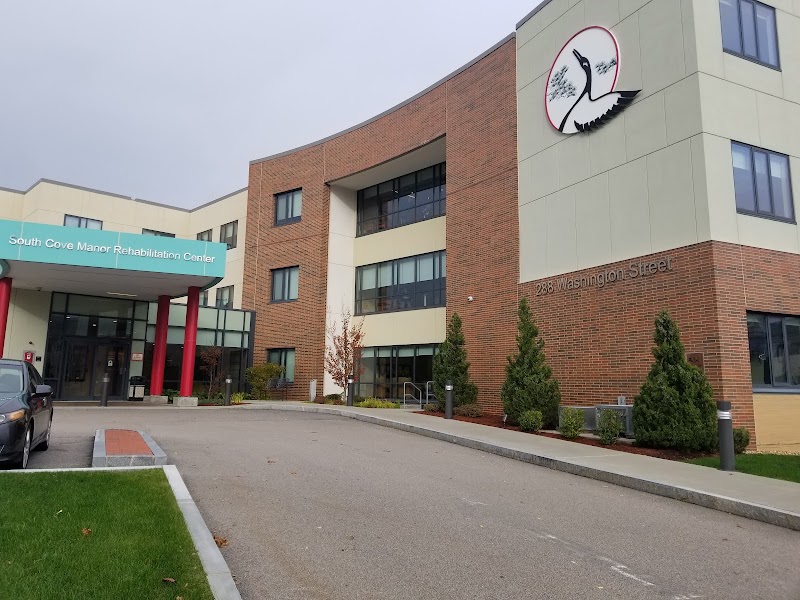
How is South Cove Manor Nursing & Rehabilitation Center Staffed?

CMS rates SOUTH COVE MANOR NURSING & REHABILITATION CENTER's staffing level at 4 out of 5 stars, which is above average compared to other nursing homes. Staff turnover is 13%, compared to the Massachusetts average of 46%. This relatively stable workforce can support continuity of care.

What Have Inspectors Found at South Cove Manor Nursing & Rehabilitation Center?

State health inspectors documented 30 deficiencies at SOUTH COVE MANOR NURSING & REHABILITATION CENTER during 2019 to 2024. These included: 29 with potential for harm and 1 minor or isolated issues.

Who Owns and Operates South Cove Manor Nursing & Rehabilitation Center?

SOUTH COVE MANOR NURSING & REHABILITATION CENTER is owned by a non-profit organization. Non-profit facilities reinvest revenue into operations rather than distributing to shareholders. The facility operates independently rather than as part of a larger chain. With 141 certified beds and approximately 137 residents (about 97% occupancy), it is a mid-sized facility located in QUINCY, Massachusetts.
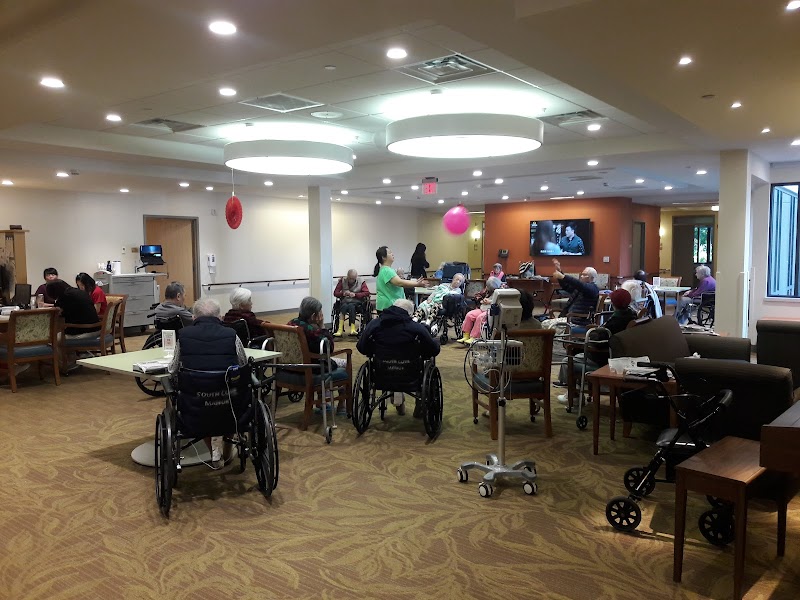
How Does South Cove Manor Nursing & Rehabilitation Center Compare to Other Massachusetts Nursing Homes?

Compared to the 100 nursing homes in Massachusetts, SOUTH COVE MANOR NURSING & REHABILITATION CENTER's overall rating (5 stars) is above the state average of 2.9, staff turnover (13%) is significantly lower than the state average of 46%, and health inspection rating (4 stars) is above the national benchmark.

What Should Families Ask When Visiting South Cove Manor Nursing & Rehabilitation Center?

Based on this facility's data, families visiting should ask: "Can I visit during a mealtime to observe dining assistance and food quality?" "How do you handle medical emergencies, and what is your hospital transfer rate?" "Can I speak with family members of current residents about their experience?"

Is South Cove Manor Nursing & Rehabilitation Center Safe?

Based on CMS inspection data, SOUTH COVE MANOR NURSING & REHABILITATION CENTER has a clean safety record: no substantiated abuse findings (meaning no confirmed cases of resident harm), no Immediate Jeopardy citations (the most serious violation level indicating risk of serious injury or death), and is not on the Special Focus Facility watch list (a federal program monitoring the lowest-performing 1% of nursing homes). The facility has a 5-star overall rating and ranks #1 of 100 nursing homes in Massachusetts. While no facility is perfect, families should still ask about staff-to-resident ratios and recent inspection results during their visit.

Do Nurses at South Cove Manor Nursing & Rehabilitation Center Stick Around?

Staff at SOUTH COVE MANOR NURSING & REHABILITATION CENTER tend to stick around. With a turnover rate of 13%, the facility is 33 percentage points below the Massachusetts average of 46%. Low turnover is a positive sign. It means caregivers have time to learn each resident's needs, medications, and personal preferences. Consistent staff also notice subtle changes in a resident's condition more quickly. Registered Nurse turnover is also low at 6%, meaning experienced RNs are available to handle complex medical needs.

Was South Cove Manor Nursing & Rehabilitation Center Ever Fined?

SOUTH COVE MANOR NURSING & REHABILITATION CENTER has no federal fines on record. CMS issues fines when nursing homes fail to meet care standards or don't correct problems found during inspections. The absence of fines suggests the facility has either maintained compliance or corrected any issues before penalties were assessed. This is a positive indicator, though families should still review recent inspection reports for the full picture.

Is South Cove Manor Nursing & Rehabilitation Center on Any Federal Watch List?

SOUTH COVE MANOR NURSING & REHABILITATION CENTER is not on any federal watch list. The most significant is the Special Focus Facility (SFF) program, which identifies the bottom 1% of nursing homes nationally based on persistent, serious quality problems. Not being on this list means the facility has avoided the pattern of deficiencies that triggers enhanced federal oversight. This is a positive indicator, though families should still review the facility's inspection history directly.