BROCKTON POST ACUTE CARE
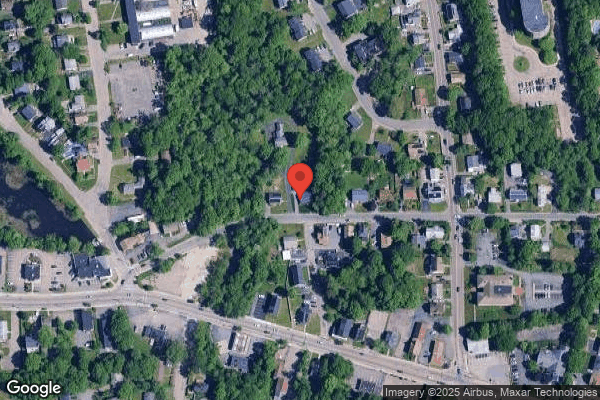

50 CHRISTY PLACE, BROCKTON, MA 02301 (508) 580-6800
For profit - Limited Liability company 169 Beds MARQUIS HEALTH SERVICES Data: November 2025
Trust Grade
50/100
#204 of 338 in MA
Last Inspection: April 2025

Within standard 12-15 month inspection cycle. Federal law requires annual inspections.

Overview

Brockton Post Acute Care has a Trust Grade of C, which means it is average-middle of the pack but not necessarily a top choice. It ranks #204 out of 338 facilities in Massachusetts, placing it in the bottom half, and #19 out of 27 in Plymouth County, indicating there are better options nearby. The facility is improving, with issues decreasing from 16 in 2024 to 7 in 2025, which is a positive sign. However, staffing is a concern here, with a poor rating of 1 out of 5 stars, but turnover is low at 0%, suggesting that staff are stable even if there are not enough of them. On the downside, specific incidents have been noted, including failure to maintain food safety standards, lack of privacy during medical treatments, and unsecured hazardous items that could pose risks to residents. Overall, while there are some strengths, families should weigh these concerns carefully.

Trust Score
C
50/100
In Massachusetts
#204/338
Bottom 40%
Safety Record
Low Risk
No red flags
Inspections
Getting Better
16 → 7 violations
Staff Stability
○ Average
Turnover data not reported for this facility.
Penalties
✓ Good
No fines on record. Clean compliance history, better than most Massachusetts facilities.
Skilled Nurses
○ Average
Each resident gets 34 minutes of Registered Nurse (RN) attention daily — about average for Massachusetts. RNs are the most trained staff who monitor for health changes.
Violations
⚠ Watch
36 deficiencies on record. Higher than average. Multiple issues found across inspections.
★★☆☆☆
2.0
Overall Rating
★☆☆☆☆
1.0
Staff Levels
★★★☆☆
3.0
Care Quality
★★★☆☆
3.0
Inspection Score
Stable
2024: 16 issues
2025: 7 issues

The Good

  • Full Sprinkler Coverage · Fire safety systems throughout facility
  • No fines on record

Facility shows strength in fire safety.

The Bad

2-Star Overall Rating

Below Massachusetts average (2.9)

Below average - review inspection findings carefully

Chain: MARQUIS HEALTH SERVICES

Part of a multi-facility chain

Ask about local staffing decisions and management

The Ugly 36 deficiencies on record

Jul 2025 1 deficiency
CONCERN (D) 📢 Someone Reported This

A family member, employee, or ombudsman was alarmed enough to file a formal complaint

Potential for Harm - no one hurt, but risky conditions existed

Deficiency F0658 (Tag F0658)

Could have caused harm · This affected 1 resident

Based on record reviews and interviews for one of three sampled residents (Resident #1), the Facility failed to ensure nursing provided care and services that met professional standards of practice, w...

Read full inspector narrative →
Based on record reviews and interviews for one of three sampled residents (Resident #1), the Facility failed to ensure nursing provided care and services that met professional standards of practice, when upon admission his/her medications were not reconciled accurately, and medications were administered at doses and intervals that were not consistent with Physicians Orders.Findings include:Review of the Facility Policy titled Reconciliation of Medication on Admission, dated as last revised 07/2017, indicated that the purpose of medication reconciliation is to ensure medication safety by accurately accounting for the resident's medications, routes and dosages upon admission or readmission to the Facility.The Policy indicated that all prescription medications, including those taken only as needed are obtained from all sources prior to reconciliation as well as dose, route, frequency and last doses taken.Resident #1 was admitted with Hospice Services from the community to the Facility in April 2025 for a five (5) day respite stay, diagnoses include Chronic Obstructive Pulmonary Disease (COPD), Congestive Heart Failure (CHF), and dementia.Review of Resident #1's Physician's Orders, dated 04/30/25, indicated that his/her Health Care Proxy (HCP) had been invoked upon admission.During a telephone interview on 07/29/25 at 2:27 P.M., Resident #1's Family Member said that the Facility had administered a medication that was not on his/her list of scheduled medications and that his/her antipsychotic medication was administered by nursing at the wrong time of day for two (2) days. During a telephone interview on 08/06/25 at 11:52 A.M., the Director of Hospice Admissions said that on 04/28/25, the original clinical information, including the medication list for Resident #1 had been faxed to the Facility.The Director said that as of 04/29/25, certain medications, including his/her Scopolamine (anticholinergic used to treat motion sickness and to decrease saliva) Transdermal Patch, had been discontinued which was prior to being admitted to the Facility for a respite stay.The Director said that the call log between the Facility and Hospice, indicated that a nurse from the Facility called to obtain a current medication list for Resident #1 and it had been faxed to the Facility as requested.Review of Resident #1's Hospice Physician's Orders/Plan of Care, dated 04/14/25-06/12/25, indicated that on 04/28/25, Hospice faxed his/her referral to the Facility to see if they were able to accommodate his/her needs.The Hospice Physician's Orders indicated to administer;-Risperidone (antipsychotic) 0.25 milligrams (mg) one table by mouth every P.M. (evening) and-Scopolamine Transdermal Patch 72 hours one (1) mg per three (3) days, one patch every 72 hours.Review of Resident #1 Hospice Medication list (faxed upon request of the Facility), dated 04/30/25, indicated to administer;-Risperidone 0.25 mg one table by mouth every P.M. (evening).Further review of the Hospice Medication list indicated that there was no documentation to support he/she was to be administered scopolamine via transdermal patch.Review of Resident #1's Facility Physician's Orders, dated 04/30/25, indicated to administer;-Risperidone 0.25 mg one table by mouth every A.M. (morning) and-Scopolamine Transdermal Patch 72 hours 1 mg per 3 days, 1 patch every 72 hours.Review of Resident #1's Medication Administration Record, dated 05/01/25 and 05/02/25, indicated that he/she had been administered daily dose of Risperidone at 9:00 A.M. and a transdermal scopolamine patch had been placed behind his/her left ear on 05/01/25 at 9:00 A.M.During an interview on 07/30/25 at 12:07 P.M., Nurse #1 said that she had been the second nurse to review and cosign Resident #1's medication for reconciliation. Nurse #1 said she did see that there were 2 separate medications list but said she did not know which list the Unit Manager used to reconcile Resident #1's medication.Nurse #1 said that there was an error with the timing of Resident #1's Risperidone and the medication should have been administered at 9:00 P.M. instead of 9:00 A.M. per the medication list.During an interview on 07/30/25 at 12:25 P.M., the Unit Manager said that she remembered that someone from the Facility called Hospice for an updated medication list because Resident #1 was coming from home and under Hospice care.The Unit Manager said that she missed transcribing the correct time for Resident #1's Risperidone, that it had been scheduled to be administered at 9:00 A.M. dose instead of 9:00 P.M. The Unit Manager said that she does not know why there were 2 medication lists in Resident #1's record and said she used the original list dated 04/28/25 to reconcile his/her medications with the Physician.During an interview on 07/30/25 at 2:22 P.M., the Director of Nurses (DON) said she was unaware of the errors found in Resident #1's medication reconciliation upon admission and that there were two different medication lists for Resident #1.The DON said it is the Facility's expectation that nursing staff admitting a resident reconcile all medications with the Physician accurately and according to the Facility Policy.
Apr 2025 6 deficiencies
CONCERN (D)

Potential for Harm - no one hurt, but risky conditions existed

Deficiency F0676 (Tag F0676)

Could have caused harm · This affected 1 resident

**NOTE- TERMS IN BRACKETS HAVE BEEN EDITED TO PROTECT CONFIDENTIALITY** Based on observations, record review, and interviews, the facility failed to ensure appropriate treatment and services were prov...

Read full inspector narrative →
**NOTE- TERMS IN BRACKETS HAVE BEEN EDITED TO PROTECT CONFIDENTIALITY** Based on observations, record review, and interviews, the facility failed to ensure appropriate treatment and services were provided to maintain or improve his or her ability to carry out the activities of daily living and attain or maintain the highest practical physical, mental, and psychosocial well-being for two Residents (#37 and #38 out of a sample of 27 residents. Specifically, the facility failed to ensure: 1. For Resident #37 with a diagnosis of Aphasia (communication disorder that affects speech, writing and language understanding) was assessed for communication 2. For Resident #12 to ensure Speech Therapy (SLP) evaluation was completed timely after admission and to ensure Physical Therapy (PT) visits were completed per physician order/plan of care. Review of the facility policy titled Scheduling of Therapy Services dated as last revised July 2013 indicated but was not limited to the following: -Therapy Services shall be scheduled in accordance with the residents treatment plan. -A listing of residents receiving therapy is posted at each nurses station. The list contains the name of the resident, the time of therapy scheduled, and the time therapy is scheduled. Findings include: Resident #37 was admitted to the facility in February 2025 with diagnoses which included: Aphasia (communication disorder that affects speech, writing and language understanding). following cerebral infarction (Stroke), dysphagia, oropharyngeal phase (condition involving difficulty swallowing moving food from the mouth to the throat). Review of the Minimum Data Set (MDS) assessment, dated 2/19/2025, indicated for Resident #37 but was not limited to the following: -Section B-Hearing, speech, and Vision. B0600 Speech Clarity- unclear speech-slurred or mumbled words. B0700 Makes Self Understood- Sometimes understands-difficulty communicating some words or finishing thoughts but is able if prompted or given time. -Section C- Cognitive Patterns for Resident #37 indicated C0100- Should Brief Interview for Mental Status be Conducted? Answer was No (resident is rarely/never understood). Review of Resident #37's Care Plan indicated but was not limited to the following: -Resident #37 has impaired thought process related to stroke and aphasia. -Resident will be able to communicate basic needs on a daily basis through the review date. -Ask yes/no questions in order to determine the resident needs. -Communication: use the residents' preferred name. Identify yourself at each interaction face the resident when speaking and make eye contact reduce any distractions-turn off TV, radio, closed door etc. The residents understand consistent, simple, directive sentences. Provide the resident with necessary cues-stop and return if agitated. -Cue, reorient and supervise as needed. -Present just one thought, idea, question, or command at a time. During an interview on 4/09/25 at 9:36 A.M., Resident #37 answered questions with the surveyor by nodding head yes and no to questions. Resident #37 indicated he/she was having trouble communicating with the staff because he/she could not speak well. Resident #37 indicated he/she was not receiving any rehab services, and he/she was never given a communication board or book (picture book used to facilitate communication with non-verbal people). Resident #37 became very excited with getting help from rehab by expressing yes, yes and putting his/her thumbs up. During an interview on 4/09/25 at 3:25 P.M., Resident #37's longtime friend (FM #1) was visiting and said Resident #37 has used a communication book at his/her Assisted Living especially for simple things like food and drink requests. Resident #37 expressed yes to that idea by expressing excitement and putting his/her thumbs up. During an interview on 4/16/25 at 2:19 P.M., Nurse #9 said the regular staff can figure out what Resident #37 wants because they know him/her so well. Nurse #9 said you ask a lot of yes/no questions until you figure out what he/she wants. Review of Resident #37 Physical, Occupational and Speech documentation indicated Resident #37's ability to communicate his/her wants or needs was not evaluated or assessed for adaptive strategies to assist Resident #37 to communication with all facility staff. During an interview on 4/16/25 at 4:55 P.M., the Speech Therapist (SP) #1 said Resident #37 had his/her stroke a few years ago and his/her speech deficit was not new. She said she did work with Resident #37 on swallowing issues which were documented. SP #1 said she did trial forms of communication unsuccessfully with Resident #37, but did not document any of it. She said she was not aware Resident #37 had used a communication book with food choices in the past. She found it difficult to find a place for the billing for communication.2. Resident #12 was admitted to the facility in March 2025 for short term rehab, with diagnoses which included dysphagia (difficulty swallowing), Parkinson's Disease, Pneumonitis due to inhalation of food and vomit, and dementia. Review of the Minimum Data Set, dated [DATE] indicated he/she scored a 15 out of 15 on the Brief Interview for Mental Status (BIMS) indicating he/she was cognitively intact, needed assistance with eating, mobility, and transfers, and was on a mechanically altered diet. Additionally, he/she had not been seen by Speech Therapy (SLP) since admission, had been seen three times by Occupational Therapy (OT), and one time by Physical Therapy (PT). Review of the Hospital Discharge summary dated [DATE] indicated but was not limited to the following: -Discharge Diagnosis: Aspiration Pneumonia -Recurrent Aspiration Pneumonia with hypoxia (absence of adequate oxygen) -PT eval upon discharge -SLP eval concern for aspiration. Review of the physician orders indicated but were not limited to the following: -May have activities not in conflict with medical care plan. Dentist, Podiatrist, Optometrist, Audiologist, Physiatrist, and Psych Eval as needed. PT eval and treatment as indicated, OT eval and treatment as indicated, SLP and treatment as indicated. May have Consult with Wound MD if indicated. (3/21/25) -Patient referred for skilled OT eval and treat to address therapeutic activities, therapeutic exercises, neuro rehab, ADLs, Wheelchair management and group therapy 4-6x/week. (3/22/25) -PT 3 -5x/week for 4 weeks for therapeutic exercise, gait training, group therapy, neuro re -education, therapeutic activities and patient care giver education. (3/23/25) -Effective 3/27/25: Skilled speech therapy evaluate and treat 2-4x/week for 4 weeks for management of dysphagia. (3/27/25) Review of the Comprehensive Care Plan indicated but was not limited to the following: -Resident #12 is at risk for Falls: Intervention: PT eval and treat as ordered. -Resident #12 has oral/dental health problems: Intervention: SLP as ordered. Review of the nursing progress note dated 3/25/25 indicated he/she was noted to be coughing on nectar thick liquids and was downgraded to honey thick liquids. Review of the SLP evaluation dated 3/27/25 indicated but was not limited to the following: -He/she had pneumonitis due to inhalation of food and vomit, and dysphagia. -Treatment approach: Evaluate oral and pharyngeal function 2-4x/week for 4 weeks. -Status post hospitalization for aspiration pneumonia in the setting of Parkinsons. -Without intervention patient is at risk for aspiration and pneumonia. -Prior therapy at hospital on 3/18/25; Recommend rehab. -Patient presents exhibits difficulty with oral containment/secretions 76-90% of the time. SLP evaluation was not completed and treatment initiated until six days after admission with known aspiration pneumonia. The progress notes failed to indicate the physician was notified Resident #12 had not been evaluated timely after admission. Review of the PT evaluation dated 3/23/25 indicated but was not limited to the following: -He/she had Parkinson's Disease and difficulty walking. -Treatment approach: therapeutic exercise, neuromuscular re-education, gait training, group therapeutic exercises, PT evaluation, and therapeutic exercises 3-5x/week. -Prior therapy at hospital: Recommend rehab. -Patient presents with decreased balance, decreased functional capacity, decreased range of motion, decreased safety awareness, muscle tone limitations and strength impairments. Patient requires skilled PT to return home safely. Review of the PT visit notes indicated he/she was seen for therapy on 3/26/25, 3/27/25, 3/28/25, 3/31/24, 4/1/25, 4/2/25, and 4/3/25. The facility failed to provide any PT visits from 4/4/25 through 4/9/25 (six days) and indicated he/she was not seen after 4/3/25. Additionally, he/she was discharged back to the Assisted Living Facility on 4/10/25 and the facility failed to complete a Discharge Summary of services provided and current level of function for Resident #12. Review of the nursing progress notes failed to indicate he/she had refused treatment. Additionally, they failed to indicate the physician was notified Resident #12 did not receive therapy or that the discharge visit and summary were not completed. During an interview on 4/9/25 at 9:40 A.M., Resident #12 said they guess the facility was taking care of them, but they have not really provided much therapy for me. During an interview on 4/16/25 at 2:38 P.M., the Director of Rehab said the first evaluation after admission should occur within 24 hours, and the others should be completed within 48 hours. She said the order of the disciplines does not matter as long as they are seen. She said she did not know why the SLP evaluation took six days to complete as it should have been done within the 48 hours window. Additionally, she said he/she should have been seen by PT between 4/4 and 4/9, and they were not, and the discharge visit should have been done, and it was not. She said if a resident goes days without a visit and they won't meet the visits ordered/treatment plan, the physician should have been notified. She said she did not know why the visits didn't occur or why the Discharge Summary was not completed. She said it has been difficult getting all the visits done as ordered. During an interview on 4/16/25 at 3:39 P.M., the Director of Nurses said all new admission evaluations should be completed within 24-48 hours. She said the SLP evaluation should have been completed sooner than 3/27/25 and the resident should have been seen by PT between 4/4 and 4/9, and a Discharge Summary should have been completed, and it was not. During an interview on 4/16/25 at 4:45 P.M., the Regional Therapy Manager said the Evaluation/start of care is when the seven-day cycle starts. She said all the orders and evals had to be changed when the company transitioned, however the visits should match the orders and discharge visit should have been completed and it was not. During an interview on 4:46 P.M., the Rehab Staff/SLP #2 said she thinks the eval was not done timely because she was out sick or something with her schedule. She said they have a per diem SLP that can be called for evals, but was not sure why that did not occur as it should have.
CONCERN (D)

Potential for Harm - no one hurt, but risky conditions existed

Accident Prevention (Tag F0689)

Could have caused harm · This affected 1 resident

Based on observation, record review, and interviews, the facility failed to provide residents with adequate supervision and effective interventions to prevent avoidable accidents. Specifically, the fa...

Read full inspector narrative →
Based on observation, record review, and interviews, the facility failed to provide residents with adequate supervision and effective interventions to prevent avoidable accidents. Specifically, the facility failed to develop and consistently implement effective interventions to prevent four unwitnessed falls, resulting in three injuries on 11/2/24, 11/30/24 and 1/26/25, for one Resident (#16), out of a total sample of 27 residents. Findings include: Review of the facility's policies titled Fall and Fall Risk Managing last revised March 2018, indicated but was not limited to the following: Based on previous evaluations and current data, the staff will identify interventions related to the resident specific risks and causes to try to prevent the resident from falling -The staff, with the input of the attending physician, will implement a resident-centered fall prevention plan to reduce the specific risk factor(s) of falls for each resident at risk or with a history of falls. -If falling recurs despite initial interventions, staff will implement additional or different interventions -The staff will monitor and document each resident's response to interventions intended to reduce falling or the risks of falling. Review of the facility's policy titled Assessing Falls and Their Causes, last revised March 2018, indicated but was not limited to the following: After a fall: -Review the resident's care plan to assess any special needs of the resident. Review of the facility's policy titled Accidents and incidents - Investigating and Reporting, last revised July 2017, indicated but was not limited to the following: -The nurse supervisor/charge nurse and/or department director shall promptly initiate and document investigation of the accident or incident. Resident #16 was admitted to the facility in June 2024 and had diagnoses including ataxia (impaired balance or coordination) and falls. Review of the Minimum Data Set (MDS) assessment, dated 12/30/24, indicated Resident #16 had moderate cognitive impairment as evidenced by a Brief Interview for Mental Status score of 12 out of 15, and his/her health care proxy was invoked. Resident #16 was dependent on staff for transfers and toileting and had sustained multiple falls since admission to the facility. Review of comprehensive care plans indicated but was not limited to: -Focus: Falls-Resident is a high risk for falls related to history of falls (6/25/24) -Interventions: anticipate and meet the resident's needs; ensure the resident's call light is within reach and encourage the resident to use it for assistance as needed. The resident needs prompt response to all requests for assistance; Educate the resident/family/caregivers about safety reminders and what to do if a fall occurs; Encourage the resident to participate in activities the promote exercise, physical activity for strengthening and improved mobility; Ensure that the resident is wearing appropriate footwear when ambulating or mobilizing in wheelchair; Follow facility fall protocol; (6/25/24). -Staff to encourage Resident to spend time in common areas and/or in activities (7/10/24) -Status post fall 11/3/24 urine obtained to rule out UTI (urinary tract infection) (11/4/24) -Goal: Resident will not sustain serious injury through next review date (6/25/24; target date: 3/30/25) Review of the medical record indicated Resident #16 had four unwitnessed falls from November 2024 to January 2025. During an interview on 3/5/25 at 10:03 A.M., Counsulting staff #4 said the Resident has had four falls in the past six months while at the facility. She provided the surveyor with copies of four fall incident reports. Counsulting staff #4 said she is unable to locate the investigation documents or any staff statements for three of the four falls for Resident #16, therefore the incident reports are incomplete. Review of the fall incident reports indicated: -11/2/24 at 1:30 P.M., Resident #16 had an unwitnessed fall and was found sitting on his/her buttock with a small bump on his/her forehead. The Resident reported he/she was trying to go back to bed by himself/herself and slid from the wheelchair and hit his/her forehead. Precipitating and/or contributing factors identified: Tries to stand, transfer, or walk alone unsafely. The incident report failed to include staff statements. Interventions to prevent further falls: call light within reach (already in place), moved personal items closer, resident toileted, nonskid footwear provided and bed in lowest position (not relevant to the fall as the Resident fell out of a wheelchair). No new interventions were added to the care plan to prevent future falls. -11/3/24 at 3:19 P.M., Resident #16 had an unwitnessed fall and was found on the floor in their room near the bathroom door. Precipitating and/or contributing factors identified: Resistive to care, tries to stand, transfer, or walk alone unsafely, forgets to use call light. The incident report failed to include staff statements. Interventions to prevent further falls: call light within reach (already in place), resident toileted, bed placed in low position and obtain urinalysis with culture and sensitivity (U/A C+S) (laboratory test of urine to determine if infection is present). The U/A C+S was added to the care plan on 11/4/24. No other interventions were added to the care plan to prevent further falls. -11/30/24 at 12:50 P.M., Resident #16 had an unwitnessed fall and was found on the floor in front of his/her bed. The Resident sustained small bumps on his/her forehead. The Resident stated he/she was trying to get up by himself/herself and fell off bed. The investigation failed to include staff statements. Precipitating and/or contributing factors identified: tries to stand, transfer, or walk alone unsafely, forgets to use call light, behaviors agitation, restlessness, resistive to care. New interventions to prevent further falls: call light within reach (already in place), moved personal items closer, residents toileted, nonskid footwear provided and bed in lowest position. No new interventions were added to the care plan to prevent further falls. -1/26/25 at 5:20 P.M., Resident #16 had an unwitnessed fall and was found sitting on the floor in his/her room. The Resident sustained a small abrasion on his/her forehead. Staff statements reflect the Resident was last seen at 5;00 P.M. sitting in his/her chair in their room watching TV. New interventions to prevent further falls: offer toileting between 10:00-11:00 P.M. (not relevant to the fall as the Resident fell at 5:20 P.M.) and rehabilitation referral screen to be completed for safety awareness. No new interventions were added to the care plan to prevent further falls. Review of the medical record failed to indicate Resident #16 was seen by rehabilitation services after the fall sustained on 1/26/25. During an interview on 4/16/25 at 10:12 A.M., Certified Nursing Assistant #2 said she learns what a resident needs for care by listening to morning report and reviewing the care plan in the electronic medical record. She said Resident #16 is considered a high fall risk and needs a staff member with him/her for ambulation and toileting. During an interview on 4/16/25 at 10:30 A.M., Director of Rehab (DOR) said the nursing department provides her with a referral for a therapy screen after a resident has a fall. She assigns the screen to a therapist to see if an evaluation is warranted or not. DOR said once the screen is completed, she files them in the therapy office and documents the outcome in the resident's medical record. DOR searched for Resident #16's from 1/26/25 and was unable to locate it. She said she is new to this position, and not all screens have been documented in the medical record as they should have been. DOR said she would continue to look for the screen after she attends a meeting and provide a copy with the outcome to the surveyor. DOR never provided any documentation to the surveyor, for the remainder of the survey. During an interview on 4/16/25 at 10:42 A.M., Nurse #9 said if a resident sustains a fall the nurse is required to complete a fall packet including staff statements. She said the nurse also completes an incident report on the computer. Nurse #9 said any resident who falls has a therapy referral for a screen. She gives the fall packet with the staff statements to the unit manager, and gives the therapy screen to the DOR. She said the Unit Manager (UM) is responsible for updating safety interventions and updating the resident's care plan. During an interview on 4/16/25 at 11:46 A.M., UM #2 said when a resident has a fall, the nurse completes a fall packet which includes staff statements and a therapy screen. She said the nurse leaves the fall packet for her and provides the therapy screen to the DOR. UM #2 said she reviews the fall packet, updates the interventions and updates the resident's care plan. UM#2 said she then gives the fall packet to the Director of Nursing (DON). UM#2 said she also attends a weekly Risk management meeting with the Interdisciplinary Team (IDT). She said a representative from therapy used to attend but has not attended for quite some time. UM#2 and the surveyor reviewed the four fall incident reports, interventions and care plan together for Resident #16. She said the interventions were never implemented, and the care plan was not updated as it should have been. She said three out of the four incident reports were missing the fall packets and staff statements. UM#2 said she was unable to locate documentation if therapy completed a screen for Resident #16 in the medical record. During an interview on 4/16/25 at 2:50 P.M., DON said her expectation is for the fall packets to be completed, including staff statements for all falls. She said the interventions in place are to be reviewed and new ones initiated relevant to the fall and documented on the care plan. DON and the surveyor reviewed Resident #16's four fall incident reports and medical record together. She said they should have identified relative interventions after each fall and documented them on the care plan.
CONCERN (D)

Potential for Harm - no one hurt, but risky conditions existed

Deficiency F0699 (Tag F0699)

Could have caused harm · This affected 1 resident

**NOTE- TERMS IN BRACKETS HAVE BEEN EDITED TO PROTECT CONFIDENTIALITY** Based on interview and record review, the facility failed to develop a person-centered plan of care which included trauma inform...

Read full inspector narrative →
**NOTE- TERMS IN BRACKETS HAVE BEEN EDITED TO PROTECT CONFIDENTIALITY** Based on interview and record review, the facility failed to develop a person-centered plan of care which included trauma informed approaches and identified triggers to avoid potential re-traumatization for one Residents (#29) with a history of trauma, out of a total sample of 27 residents. Findings include: Review of the facility policy titled Trauma Informed Care and Culturally Competent Care dated as last revised 8/2022 indicated but was not limited to the following: -Trauma results from an event, series of events, or set of circumstances that is experiences by an individual as physically or emotionally harmful or life threatening and that has lasting adverse effects on the individual's functioning and mental, physical, social, emotional, or spiritual well-being. -Trauma-informed care is an approach to delivering care that involves understanding, recognizing, and responding to the effects of trauma. A trauma-informed approach to cate delivery recognizes the widespread impact and signs and symptoms of trauma in residents, and incorporates knowledge about trauma into care plans, policies, procedures, and practices to avoid re-traumatization. -Trigger is a psychological stimulus that prompts recall of a previous traumatic event, even if the stimulus itself is not traumatic or frightening. -Triggers are highly individualized. -Resident Screening: Perform universal screening of residents, which includes a brief, non-specialized identification do possible exposure to traumatic events. Screening may include trauma history, including type, severity, and duration, concerns with sleep of intrusive experiences, and historical health diagnosis. Utilize the initial screen to identify the need for further assessment and care. -Resident Assessment: Assessment involves an in-depth process of evaluating the presence of symptoms, their relationship to trauma, as well as the identification of triggers. -Resident Care Planning: Develop individualized care plans that address past trauma in collaboration with the resident and family, as appropriate. Identify and decrease exposure to triggers that may re-traumatize the resident. Recognize the relationship between past trauma and current health concerns. -Recognize that trust is earned over time. Individuals may not disclose information until a relationship has been established. Resident #29 was admitted to the facility in July 2023 with diagnoses which include Post-Traumatic Stress Disorder (PTSD- a mental health condition that is triggered by an event, series of events, or set of circumstances that is experienced by an individual as physically or emotionally harmful or life threatening and that has lasting adverse effects on the individual's functioning and mental, physical, social, emotional, or spiritual well-being), Major Depressive Disorder, Delusional Disorder, Bi-Polar (manic depression), and Anxiety. Review of the Minimum Data Set (MDS) assessment dated [DATE] indicated he/she had scored a 6 out of 15 on the Brief Interview for Mental Status (BIMS) indicating they had severe cognitive impairment. Additionally, he/she had a diagnosis of PTSD, Anxiety, Depression, and Bi-Polar. Further review of Section D0150, Resident Mood, indicated the following: -Feeling down, depressed, or hopeless occurred on 7-11 days (half or more of the days) -Trouble falling or staying asleep occurred on 12-14 days (nearly every day) -Feeling tired or having little energy occurred on 7-11 days (half or more of the days) -Poor appetite or overeating occurred on 7-11 days (half or more of the days) -Trouble concentrating on things, such as reading the newspaper, or watching TV occurred on 2-6 days (several of the days). Review of the Physician admission note dated 7/13/23 indicated Resident #29's anxiety started after the loss of their daughter. Review of the Trauma assessment dated [DATE] indicated he/she experienced an unexpected death of someone close to them and another very stressful event or experience. The effects now/comments section was left blank, and the notes section was left blank. The facility failed to provide any additional information, follow up assessment, or progress note related to this Trauma Assessment. Review of the Nursing admission (re-admission) assessment dated [DATE] Section S15: Screening: Trauma Informed Care indicated the following: -Have you faced a traumatic event or experience in the past? Response options were Yes, No, or N/A. The response coded was N/A. -Recently, have you thought about the event (s) or experience when you did not want to? -Have you had poor sleep, poor concentration, jumpiness, irritability, or feeling watchful because of the event or experience? -Have you felt numb or detached? -Have you felt guilty or unable to stop blaming yourself or others? None of the last four questions were answered (they were all left blank). Review of the Social Service progress notes for 2024 and 2025 failed to indicate the facility attempted to identify triggers related to the diagnosis of PTSD. Additionally, the progress notes on 4/17/24, 7/15/24, 8/21/24, 10/30/24, and 1/27/25 indicated a review of the care plans was completed. Review of the Psychosocial progress note dated 6/12/24 indicated he/she had a diagnosis of PTSD and presented with symptoms of anxiety. The note failed to indicate the provider attempted to identify triggers related to the diagnosis of PTSD. Review of the Psychotherapy progress notes indicated but were not limited to the following: -2/2/24: Resident #29 was feeling sad, it was the anniversary of their daughters death. Discussed grief and how to handle it versus others. A lot of support needed. Diagnoses include PTSD. -2/9/24: Resident #29 shared they were still struggling with the anniversary of her death and felt anxious. Diagnoses include PTSD. -5/24/24: Session spent looking at triggers for his/her anxiety and what thoughts emerge when it is activated. He/she often awakens with significant anxiety. Diagnoses include PTSD. -10/31/24: Resident #29 reports periods of anxiety and difficulty sleeping. -12/4/24: Resident #29 talked about grieving their daughters passing. -12/23/24: Resident #29 said they were sad around the holidays. -2/3/25: Resident #29 said tomorrow was the anniversary of his/her daughters death, they were sad and did not know what to do and was anxious about what the day would be like. Review of the Psych Treatment Plan note dated 2/23/24 indicated Resident #29 has Panic Attacks related to a specific situational trigger. Diagnoses include PTSD. The note failed to indicate the provider attempted to identify the triggers. Review of the Psychiatry Evaluation notes dated 12/5/24, 12/26/24, 1/7/25, and 2/3/25 indicated he/she had a diagnosis of PTSD. The notes failed to indicate the provider attempted to identify the triggers. Review of Resident #29's active comprehensive care plan failed to indicate a plan of care for Trauma Informed Care related to his/her documented diagnosis of PTSD. During an interview on 4/16/25 at 10:30 A.M., Unit Manager #1 said the Social Worker does the Trauma Assessment on admission and then quarterly. She said they also create and update the care plan. She was unable to locate the Trauma Assessment for Resident #29 in the medical record and said he/she did not have a Care Plan, but there should be one. During an interview on 4/16/25 at 10:52 A.M., Social Worker #1 said she was not employed at the facility at the time of Resident #29's admission, she said she had only been at the facility for about seven months. She located a folder in the Social Service office with the single page Trauma assessment dated [DATE] and provided that to the surveyor. The Assessment was not kept as part of the medical record. She said the Assessment should have had more detail related to the triggers or a follow up and there was not one. She said there were notes indicating the holidays and the month of February were triggers due to the death of his/her daughter and that should be part of the care plan, and it was not and there was not a Trauma/PTSD care plan in the medical record. She said there were Anxiety Medication and Depression Medication Care plans, but they were generic and did not have information related to the Trauma/PTSD either. During an interview on 4/16/25 at 11:15 A.M., Social Worker #2 said the new evaluations trigger the care plan to be developed but the old system did not. She said the initial Assessment was incomplete and a care plan should have been developed with noted triggers for the PTSD. During an interview on 4/16/25 at 3:45 P.M., the Director of Nurses (DON) said Resident #29 should have a care plan for PTSD and they did not. She said the Assessment should identify the triggers and care plan should be updated quarterly and/or as needed and that was not done.
CONCERN (D)

Potential for Harm - no one hurt, but risky conditions existed

Pharmacy Services (Tag F0755)

Could have caused harm · This affected 1 resident

Based on observation, and interview, the facility failed to ensure that pharmaceutical services (including procedures that assure the accurate acquiring, receiving, dispensing, and administering of al...

Read full inspector narrative →
Based on observation, and interview, the facility failed to ensure that pharmaceutical services (including procedures that assure the accurate acquiring, receiving, dispensing, and administering of all drugs and biologicals) were implemented to ensure that emergency Kits were replaced timely. Five out of five drawers of Supper Kit #51001 were impacted and 1of 1 Cubex Kit was also impacted. Specifically, the facility failed to ensure that emergency medication kits (E-Kits) were re-ordered and replaced timely by the Pharmacy after being opened. Findings Include: Review of the facility Pharmacy policy titled Emergency Medication dated April 2025, indicated but was not limited to the following: - The facility shall maintain a supply of medications typically used in emergencies - The pharmaceutical services/quality assurance and performance improvement committee, with the input of the consultant pharmacist, director of nursing services, and medical director, shall approve the contents of the emergency medication kit, and the dispensing pharmacy will stock it. - The emergency medication kit will include medications and biologicals that are essential in providing emergency treatment. - The contents of each emergency medication kit will be clearly listed. - The consultant pharmacist shall inspect the emergency medications monthly and record the findings on the record maintained with each kit. - A physician's order is required to administer medications and biologicals. - Required documentation after dispensing an emergency medication is the same as for any other medication. - Any medication that is removed from the emergency kit must be documented on the emergency medication administration log. - Medications and supplies used from the emergency medication kit must be replaced upon the next routine drug order. - Records of monthly inspections are maintained for at least one (1) year or as required by applicable laws and regulations. During an observation on 4/11/25 at 10:46 A.M., with Nurse #7 on the Arborwood unit, the surveyor observed the Super Kit (emergency medications) and the Cubex Kit (Intravenous fluids and tubing) were both opened. Nurse 7 said that she was not aware that both kits were open. Five out of five drawers of the Super Kit #51001 were opened there was no documentation available to verify what was removed from each drawer. Review of Super Kit #51001 Drawer #2 indicated Atorvastatin 10 MG tablet (used to treat high cholesterol) 4 out 4 were used, Furosemide 20 MG tablet used to treat (high blood pressure (hypertension), heart failure and excess body fluid). There was no documentation that they were taken or reordered. Review of the contents in Supper Kit #51001 Drawer #3 indicated Metoprolol Succinate 25 MG (used to treat high blood pressure) 4 out 4 were used and were not documented on the emergency medication administration log. During an interview on 4/11/23 at 11:30 A.M. with Nurse # 7, she said she did not know who opened the kits since there was no documentation to verify that a fax was sent to the pharmacy. The form that should have been faxed was blank, there was no indication of what medication was used. During an interview on 04/16/25 at 12:55 P.M. Unit Manager #2 said once an emergency kit is opened nursing staff must fill out the form provided by pharmacy in the kit (Resident name, Room #, Medication taking, reason why then fax the form to the Pharmacy for a replenish). During an interview at 2:05 P.M., Nurse #1 said, Emergency Kit once you break the seal you must fill out the form with the Resident information reason for taking the meds then fax to pharmacy. She said she opened a kit on 4/15/25 during the day shift she faxed the completed form to pharmacy within three hours a fresh was delivered.
CONCERN (D)

Potential for Harm - no one hurt, but risky conditions existed

Deficiency F0804 (Tag F0804)

Could have caused harm · This affected 1 resident

Based on observation, interview, and test tray results, the facility failed to provide food to residents that was served at appetizing temperatures for one of two test trays. Findings include: On 4/1...

Read full inspector narrative →
Based on observation, interview, and test tray results, the facility failed to provide food to residents that was served at appetizing temperatures for one of two test trays. Findings include: On 4/14/25 at 2:20 P.M., the Resident Council meeting was conducted with 17 residents in attendance. During the meeting the residents collectively expressed the kitchen continues to be problematic, with specific complaints that the food is cold, especially eggs in the morning and the plates are cold not heated. On 4/16/25 at 7:55 A.M., the surveyor observed breakfast tray line service and made the following observations: -The surveyor felt the dishes in the plate warmer to be slightly warm, not hot. -Food Service Manager measured the temperature at the bottom of the plates to be 130 degrees Fahrenheit (F). He then turned up the temperature of the plate warming unit. During an interview on 4/11/25 at 8:00 A.M., the [NAME] #1 said she turned on the plate warmer when she first came in in the morning. She said the plates were not hot. On 4/16/25 at 7:59 A.M., the surveyor requested a test tray, which left the kitchen at 8:12 A.M. The last tray was served off the meal cart at 8:23 A.M. The surveyor tested the tray with the Food Service Manager (FSM) observing but not tasting the food with the following results: -Scrambled eggs were 119.9 degrees Fahrenheit (F), the eggs were tepid. -Biscuit with sausage gravy was 127.1 F, and the temperature was tepid. -Oatmeal was 146.4 F. -Plastic cup of orange juice, which was served from the kitchen was 45.7 F. -Milk 40.3 F. It was cold and palatable. During interviews with Residents after the completion of the breakfast meal pass on 4/16/25, the Residents made the following comments: -Resident #3 said breakfast was good, but not hot. -Resident #75 said it was flavorful, but not hot -Resident #22 said the eggs were at least warm today, sometimes they are cold. On 4/16/25 at 5:25 P.M., the surveyor observed the plates to be hot in the plate warmer for the dinner service. The results of the test tray validated the residents' complaints of cold food.
MINOR (B)

Minor Issue - procedural, no safety impact

Assessment Accuracy (Tag F0641)

Minor procedural issue · This affected multiple residents

Based on record review and interview, the facility failed to ensure the Minimum Data Set (MDS) assessment was complete and accurate to reflect the status of one Resident (#16), out of a sample of 27 r...

Read full inspector narrative →
Based on record review and interview, the facility failed to ensure the Minimum Data Set (MDS) assessment was complete and accurate to reflect the status of one Resident (#16), out of a sample of 27 residents. Specifically, the facility failed to ensure an MDS was accurately coded for a fall with injury. Findings include: Review of the Centers for Medicare & Medicaid Services (CMS) Long-Term Care Facility Resident Assessment Instrument 3.0 User's Manual, dated 10/2024, indicated but was not limited to the following: 1) J1800: Any Falls Since Admission/Entry or Reentry or Prior Assessment OBRA (Omnibus Budget Reconciliation Act) or Scheduled PPS (Prospective Payment System), whichever is more recent -If this is not the first assessment/entry or reentry, the review period is from the day after the ARD (Assessment Reference Date) of the last MDS assessment to the ARD of the current assessment. -Code 0, no: if the resident has not had any fall since the last assessment. -Code 1, yes: if the resident has fallen since the last assessment. Continue to Number of Falls Since Admission/Entry or Reentry or Prior Assessment (OBRA or Scheduled PPS) item (J1900), whichever is more recent. Resident #16 was admitted to the facility in June 2024 with diagnoses including ataxia and falls. Review of Resident #16's medical record indicated that the Resident sustained a fall on 1/26/25. Resident #16 was found sitting on the floor, beside his/her bed with an abrasion noted to his/her forehead. Review of the most recent MDS assessment, dated 4/1/25, indicated but was not limited to the following: -Section J - Health Conditions J1800. Has the resident had any falls since admission or the prior assessment (OBRA or PPS), whichever is more recent? No During an interview on 4/16/25 at 12:46 P.M., the MDS Coordinator said that Resident #16's medical record did indicate the Resident sustained a fall on 1/26/25. The MDS Nurse said that the fall with injury should have been coded on the Resident's 4/1/25 MDS assessment but was not.
Aug 2024 3 deficiencies
CONCERN (D) 📢 Someone Reported This

A family member, employee, or ombudsman was alarmed enough to file a formal complaint

Potential for Harm - no one hurt, but risky conditions existed

Deficiency F0553 (Tag F0553)

Could have caused harm · This affected 1 resident

Based on records reviewed and interviews for one of three sampled resident (Resident #1), the Facility failed to ensure that the resident and/or his/her family member or legal representative participa...

Read full inspector narrative →
Based on records reviewed and interviews for one of three sampled resident (Resident #1), the Facility failed to ensure that the resident and/or his/her family member or legal representative participated in the development and implementation of their person-center care plans, which included conducting and inviting the resident and/or their legal representative to an interdisciplinary care plan meeting following the completion of any Comprehensive Minimum Data Set (MDS) Assessment, including the Admission, Quarterly, and Annual MDS. Findings include: Review of the Facility Policy titled, Care Plans, dated as last revised 02/2022, indicated that each resident in the facility shall be involved in the development and review of his/her plan of care along with his/her family member. The Policy further indicated that the Interdisciplinary Team (IDT) conferences shall be held for each resident at 90-day intervals and the IDT shall; -Evaluate the resident's progress toward meeting the goals outlined in the care plan; -Revise the plan of care, and services; -Collaborate with the resident and family in revising the plan of care; -Resident, family members, or other responsible persons shall be invited to attend the IDT conference; and -Dates of each IDT care conference and the participants in each conference shall be documented in the resident's medical record. Resident #1 was admitted to the facility in April 2024, diagnoses included both lower extremity necrotizing cellulitis (infection causing skin tissue to die), diabetes mellitus, peripheral vascular disease, and fibromyalgia (long-term condition causing body pain and tiredness). Review of Resident #1's Face Sheet, dated 03/01/24, indicated his/her Responsible Party (Family Member #1) was listed as his/her first contact. During an interview on 08/07/24 at 2:48 P.M., Family Member #1 said that the facility had been aware that Resident #1's Health Care Proxy had been activated while he/she was in the Hospital, but that the Facility had not activated his/her HCP upon his/her admission there. Family Member #1 said that she had been quite involved in Resident #1's care and had asked the nursing staff to keep her informed of his/her progress, health status, and any changes. Family Member #1 said the Facility had not had a meeting with her or Resident #1 to review his/her progress and plan of care since admission. Review of Resident #1's Quarterly MDS Assessment, dated 07/04/24, indicated that he/she was alert and had a Brief Interview Mental Status (BIMS) score of 13 (score of 13-15 indicated cognitively intact). Review of Resident #1's Medical Record indicated that there was no documentation to support he/she had a comprehensive care plan meeting after the completion of his/her latest MDS. During an interview on 08/08/24 at 2:23 P.M., the Unit Manager said that she was unaware that Resident #1 had not had a care plan meeting in July as per the Care Plan schedule generated from the social service department. The Unit Manager said that care plan meetings are run by the Social Service Department, and they are responsible for inviting the resident and their family members to attend the meetings. During an interview on 08/08/24 at 3:08 P.M., Social Worker (SW) #1 said that the Former Director of Social Services had been doing the Care Plan meeting schedule, but said the Director had resigned earlier that month. SW #1 said she does not know why the care plan meeting for Resident #1 had been missed. During an interview on 08/08/24 at 2:44 P.M., Social Worker #2 said that Care Plan meetings are set according to the resident's MDS schedule and said that even if the resident is responsible for themselves, the facility still invites their family members to attend the meetings. SW #2 said between 07/11/24 and 07/17/24, care plan meetings on her unit (Baywood) had been missed. During an interview on 08/08/24 at 4:13 P.M., the Assistant Director of Nurses (ADON) said that she was not aware that Care Plan meetings (for Resident #1's unit) were not being completed in a timely manner. The ADON said that it is the Facility's expectation that care plan meeting be completed in a timely manner and in accordance with the completion of a residents' MDS.
CONCERN (D) 📢 Someone Reported This

A family member, employee, or ombudsman was alarmed enough to file a formal complaint

Potential for Harm - no one hurt, but risky conditions existed

Deficiency F0559 (Tag F0559)

Could have caused harm · This affected 1 resident

Based on records reviewed and interviews for one of three sampled residents (Resident #1), who was alert, oriented and his/her own decision maker, the facility failed to ensure Resident #1 and/or his/...

Read full inspector narrative →
Based on records reviewed and interviews for one of three sampled residents (Resident #1), who was alert, oriented and his/her own decision maker, the facility failed to ensure Resident #1 and/or his/her Representative were provided with a written explanation of the need to change his/her room, when on 06/26/24 Resident #1's was moved to a new room despite his/her wishes to remain in his/her original room. Findings include: Review of the Facility Policy tilted, Room Change, dated as last revised 10/2022, indicated that a room change or change in roommate shall be made when the resident or their representative requests the change or the facility deems it necessary. The Policy further indicated the following; -When a resident room change is occurring, the resident being moved or their representative, will be informed of the room change; and -The notice of change in a room or roommate assignment will be both verbal and in writing and will include the reason(s) for the change. Resident #1 was admitted to the facility in April 2024, diagnoses included both lower extremity necrotizing cellulitis (infection causing skin tissue to die), diabetes mellitus, peripheral vascular disease, and fibromyalgia (long-term condition causing body pain and tiredness). Review of Resident #1's Face Sheet, dated 03/01/24, indicated his/her Responsible Party (Family Member #1) was listed as his/her first contact. During an interview on 08/07/24 at 2:48 P.M., Family Member #1 said that the facility had been aware that Resident #1's Health Care Proxy had been activated while at the Hospital, but said the Facility had not activated his/her HCP upon his/her admission there. Family Member #1 said that she had been quite involved in Resident #1's care and had asked nursing staff to keep her informed of his/her condition and any change to his/her plan of care. Family Member #1 said that Resident #1 had not wanted his/her room changed and said that the facility had not given him/her a choice, they just moved him/her to different room. During an interview on 08/08/24 at 10:57 A.M., Resident #1 said that he/she had not been asked to change his/her room, that staff just told him/her that he/she was changing rooms and did not give him/her an explanation as to why his/her room needed to be changed. Resident #1 said that someone just came into his/her room and said have all your things packed by tomorrow because you are changing rooms. Resident #1 said he/she never saw the new room prior to the move, had not met with the roommate, did not know the reason for the room change, never signed anything saying he/she agreed to the move and was never informed that he/she could appeal the room change. Review of Resident #1's Medical Record, indicated that there was no documentation to support he/she had agreed to a room change, met with the new roommate prior to the move, or was aware of the reason for the room change. During an interview on 08/08/24 at 3:08 P.M., Social Worker (SW) #1 said that she was aware that Resident #1's Family Member was very involved and had requested that the facility inform her of his/her changes. SW #1 said that prior to moving Resident #1 to a new room, the facility must notify the resident and responsible party, explain the reason for the move, show the resident the room in advance, introduce the resident to the potential new roommate, and must issue them a Notice of Room Change 48 hours prior to the move. Social Worker #1 said that no one informed Family Member #1 of Resident #1's room change and said she did not think anyone showed Resident #1 the new room or introduced him/her to his/her new roommate prior to the room change. During an interview on 08/08/24 at 2:44 P.M., Social Worker #2 said that the Room Change Form does not have a spot for the resident to sign indicating they agree to the change and that the form only states the resident will be moved. Social Worker #2 said that documentation of receiving permission from a resident of a room change and the reason why a room change occurred should be documented in a progress note. During an interview on 08/08/24 at 4:37 P.M., the Director of Nurses said the Social Worker that had been involved with Resident #1's room change no longer works at the facility. The DON said that she does not think that Resident #1 saw the room or had been introduced to the new room mate prior to his/her room change. The DON said that it is the Facility's expectation that staff follow the Room Change Policy with all room changes, including that the Resident and/or their responsible party be informed of the reason for a room change, resident views the room and is able to meet the possible new roommate prior to the move.
CONCERN (D) 📢 Someone Reported This

A family member, employee, or ombudsman was alarmed enough to file a formal complaint

Potential for Harm - no one hurt, but risky conditions existed

Medical Records (Tag F0842)

Could have caused harm · This affected 1 resident

**NOTE- TERMS IN BRACKETS HAVE BEEN EDITED TO PROTECT CONFIDENTIALITY** Based on records reviewed and interviews for one of three sampled residents (Resident #1) who had been admitted with three press...

Read full inspector narrative →
**NOTE- TERMS IN BRACKETS HAVE BEEN EDITED TO PROTECT CONFIDENTIALITY** Based on records reviewed and interviews for one of three sampled residents (Resident #1) who had been admitted with three pressure injuries, the Facility failed to ensure they maintained complete and accurate medical/clinical records including but not limited to documentation related to the completion and accuracy of skin assessments. Findings include: Review of the Facility Policy titled, Charting and Documentation, dated as last revised 01/2023, indicated that all services provided to the resident, progress toward the care plan goals, or any changes in the resident's condition medical, physical, functional or psychosocial condition, shall be documented in the resident's medical records. The Policy indicated that the medical record should facilitate communication between the interdisciplinary team regarding the resident's condition and response to care. Review of the Facility Policy titled, admission Assessment, dated 10/2022, indicated the purpose of the admission procedure is to gather information about the resident's physical, emotional, cognitive and psychosocial conditions upon admission. The Policy indicated that the Nurse shall perform a complete skin assessment and document the findings accordingly . Resident #1 was admitted to the facility in April 2024, diagnoses included both lower extremity necrotizing cellulitis (infection causing skin tissue to die), diabetes mellitus, peripheral vascular disease, and fibromyalgia (long-term condition causing body pain and tiredness). Review of Resident #1's Hospital Discharge summary, dated [DATE], indicated he/she had multiple pressure injuries present on admission and upon discharge to the Facility. The Discharge Summary indicated Resident #1 had a Stage 3 (full thickness tissue loss) pressure injury to his/her coccyx, an unstageable (stage is not clear because the wound base is covered by a layer of dead tissue) pressure injury to his/her right ischium (lower and back region of the hip bone), and a stage two (partial thickness loss of tissue) to his/her left ischium. Review of Resident #1's admission Skin Assessments, dated 04/01/24, indicated he/she had no pressure injuries present upon admission. Review of Resident #1's Weekly Skin Assessment, dated 04/05/24, 04/12/24, 04/19/24, and 05/03/24 indicated there were no pressure injuries present. Review of Resident #1's Care Plan titled, Actual Pressure Injury, dated 04/05/24, indicated he/she had been admitted with three pressure injuries located on his/her coccyx, left ischium, and right ischium. Review of Resident #1's Physician's Orders, dated 04/01/24, indicated he/she required a skin check every evening shift on Fridays. Review of Resident #1's Physician's Orders, dated 04/01/24 through 05/06/24 indicated the following; -Left ischium wash with normal saline, apply Aquacel (antimicrobial dressing, reduces bacteria in the dressing) foam adhesive dressing to area and change every 2 days and as needed (PRN); -Right ischium wash with normal saline, apply Santyl (removes damaged tissue to wounds) to edge, cover with Aquacel AG, change every 2 days and PRN; and -Coccyx wash with normal saline, apply Santyl ointment, cover with aqualcel ag moistened cover with Aquacel foam adhesive dressing, change every other day and PRN. Review of Resident #1's Wound Clinic Progress Note (written by the Wound Physician), dated 04/10/24, indicated he/she had an unstageable pressure injury to his/her right ischium/coccyx and the wound measured 2.9 centimeters (cm) by 1.0 cm by 0.1 cm with partial granulation/slough and a scant amount of serosanguinous drainage and his/her coccyx pressure injury measured 3.0 cm by 0.3 cm x 0.2 cm with partial granulation/slough and no drainage noted. Review of Resident #1's follow-up Wound Clinic Progress Note (written by the Wound Physician), dated 05/08/24, indicated that the Facility staff reported he/she was refusing dressing changes to his/her right ischium and coccyx, and that the previous dressing orders for both areas were discontinued. Review of Resident #1's Treatment Administration Record (TAR), dated 04/01/24 through 04/30/24, indicated the skin checks on 04/05/24, 04/12/24, 04/19/24, and 04/26/24 were initialed by nursing as being completed, however, there was no documentation to support that the existing pressure injuries had been present on Resident #1. Review of Resident #1's Treatment Administration Record (TAR), dated 05/01/24 through 05/06/24, indicated the skin check on 05/03/24 had been initialed by nursing as being completed, however, there was no documentation to support that the existing pressure injuries had been present on Resident #1. During a telephone interview on 08/21/24 at 10:58 P.M., Nurse #1 said he could not recall completing Resident #1's skin assessment upon his/her admission. Nurse #1 said Resident #1 had multiple ulcers to both lower extremities but could not recall any pressure injuries. During a telephone interview on 08/12/24 at 2:05 P.M., the Registered Dietician said she recalled an area to Resident #1's coccyx upon admission and said she reviews the Wound Physician's Notes for changes and recommendations. During an interview on 08/08/24 at 3:45 P.M., Nurse #2 said she could not recall Resident #1's skin conditions upon admission however, but said he/she did have an area on his/her bottom. Nurse #2 (who had completed all weekly skin assessment from 04/05/24 through 05/03/24 for Resident #1), said she had no idea why his/her skin assessments had not included any of Resident #1's pressure injuries. During an interview on 08/08/24 at 2:03 P.M., the Staff Development Coordinator (SDC) said that it is the responsibility of the admitting nurse for any resident to complete a full head to toe skin assessment upon admission and accurately document the findings on the skin assessment form. During an interview on 08/08/24 at 4:37 P.M., the Director of Nurses said that she was unaware that Resident #1 had been admitted with pressure injuries. The DON said it is the Facility's expectation for all nurses to perform a thorough head to toe assessment upon admission, weekly and PRN, documenting all abnormal skin findings on the Skin Assessment found in Point Click Care (PCC, the Facility's electronic medical record).
Feb 2024 13 deficiencies
CONCERN (D)

Potential for Harm - no one hurt, but risky conditions existed

Deficiency F0552 (Tag F0552)

Could have caused harm · This affected 1 resident

Based on interview, record review, and policy review, the facility failed to ensure the residents and/or their representatives were informed and given necessary information to make health care decisio...

Read full inspector narrative →
Based on interview, record review, and policy review, the facility failed to ensure the residents and/or their representatives were informed and given necessary information to make health care decisions, including the risks and benefits of psychotropic medications and obtain consent for their use, prior to administration for one Resident (#57), out of total sample of 24 residents. Findings include: Review of the facility's policy titled Psychotropic Med Consents, last revised 1/2023, indicated but was not limited to: - Psychotropic medications will be prescribed at the lowest possible dosage for the shortest period of time and are subject to gradual dose reduction and re-review. Prior to administering psychotropic medications, consent should be obtained for their use. - Facility should obtain informed consent prior to administering psychotropic medication. - Informed consent shall include the prescribed medication, dosage, range if needed and frequency; and any known effect or side effect of the psychotropic medication. Resident #57 was admitted to the facility in December 2023 with diagnoses which included dementia, anxiety, depression, and insomnia. Review of the most recent Minimum Data Set assessment, dated 12/21/23, indicated Resident #57 was cognitively intact as evidenced by a Brief Interview for Mental Status score of 15 out of 15. Review of the current Physician's Orders, dated 1/1/24 through 1/31/24, indicated an order for Remeron (antidepressant) 15 milligrams (mg): give 0.5 tablet by mouth at bedtime for insomnia. Administer 0.5 tab to equal (7.5 mg) every hour of sleep with start date of 1/13/24. Review of the Medication Administration Records indicated Resident #57 received the Remeron as ordered from 1/13/24 through review on 2/20/24. Further review of the clinical record failed to include any documentation which indicated informed consent for administration of the psychotropic medication was provided to or received from Resident #57. During an interview on 2/20/24 at 12:45 P.M., Unit Manager #1 and the surveyor reviewed the electronic medical record and paper medical record and were unable to locate any documentation which indicated informed consent was provided to or received from Resident #57 prior to the administration of the psychotropic medication, Remeron. Unit Manager #1 said Resident #57 was his/her own decision maker and should be informed of administered medications. During an interview on 2/20/24 at 12:59 P.M., the Director of Nurses said all residents should be informed and consent to administration of psychotropic medications prior to administration.
CONCERN (D)

Potential for Harm - no one hurt, but risky conditions existed

Deficiency F0655 (Tag F0655)

Could have caused harm · This affected 1 resident

**NOTE- TERMS IN BRACKETS HAVE BEEN EDITED TO PROTECT CONFIDENTIALITY** Based on record review, policy review, and interview, the facility failed to ensure staff developed and implemented a baseline c...

Read full inspector narrative →
**NOTE- TERMS IN BRACKETS HAVE BEEN EDITED TO PROTECT CONFIDENTIALITY** Based on record review, policy review, and interview, the facility failed to ensure staff developed and implemented a baseline care plan within 48 hours of the resident's admission, which included the instructions needed to provide effective and person-centered care to the resident which meet professional standards of quality care for two Residents (#100 and #235), in a total sample of 24 residents. Specifically, the facility failed to ensure: 1. For Resident #100, a baseline care plan was developed for the Resident's dialysis treatment; and 2. For Resident #235, a baseline care plan was developed for the Resident's cardiac pacemaker (an implanted medical device used to control an irregular heart rhythm). Findings include: Review of the facility's policies titled Care Plans-Baseline, last revised 10/2022, and Comprehensive Care Plan, last revised 10/22/22, included but was not limited to: - A baseline plan of care to meet the resident's immediate needs shall be developed for each resident within forty-eight hours of admission. - The Interdisciplinary Team will review the healthcare practitioner's orders (e.g. dietary needs, medications, routine treatments, etc.) and implement a baseline care plan to meet the resident's immediate care needs including but not limited to: a. Initial goals based on admission orders. b. Physician orders. c. Dietary orders. d. Therapy services. e. Social services; and f. PASARR (Preadmission Screening and Resident Review) recommendations, if applicable. -The baseline care plan will be used until staff can conduct the comprehensive assessment and develop an interdisciplinary person-centered care plan. -The comprehensive, person-centered care plan should be developed within seven days of completion of the required comprehensive assessment (Minimum Data Set). 1. Resident #100 was admitted to the facility in January 2024 with diagnoses which included end stage renal disease. Review of the medical record indicated a Hospitalist Discharge summary, dated [DATE], which indicated Resident #100 had end stage renal disease and received hemodialysis three days a week. Review of physician's orders included, but was not limited to: -Resident to attend dialysis three times a week on Tuesday, Thursday, Saturday (initiated 1/30/24) Review of the medical record indicated an undated and unsigned, eleven-page Baseline Care Plan -V2 document. The document indicated the Resident's primary language was English and Allergies: to be determined. There was no other information documented on any of the eleven pages. Review of comprehensive care plans failed to indicate a care plan had been developed for the Resident's dialysis treatments within 48 hours. During an interview on 2/16/24 at 11:36 A.M., Minimum Data Set (MDS) Nurse #1 said she was responsible for initiating care plans after completing admission MDS assessments for residents on the Cedar unit because there was no unit manager. She said she reviewed hospital discharge documentation, physician and nurse practitioner notes and was aware Resident #100 went to dialysis three days per week. She said she should have developed a care plan for dialysis but had not. 2. Resident #235 was admitted to the facility from the hospital in August 2023 and had diagnoses which included the presence of a cardiac pacemaker. Review of the MDS assessment, dated 11/9/23, indicated Resident #235 was cognitively intact as evidenced by a Brief Interview for Mental Status score of 14 out of 15, and was dependent on staff for bathing and dressing. Review of a Physician's note, dated 8/7/23, indicated Resident #235 had a complete heart block (status post permanent pacemaker), and was followed by outpatient cardiology. Review of the medical record indicated an undated, eight-page Baseline Care Plan -V2 document. The document failed to indicate Resident #235 had a pacemaker. Review of comprehensive care plans failed to indicate a care plan had been developed for the Resident's pacemaker within 48 hours. During an interview on 2/20/24 at 11:58 A.M., Unit Manager #2 said she was aware Resident #235 had a pacemaker. She reviewed the medical record and said neither a baseline nor a comprehensive care plan had been developed for the Resident's pacemaker. During an interview on 2/21/24 at 11:18 A.M., the Director of Nursing said baseline and comprehensive care plans should have been developed for Resident #100's dialysis treatment and Resident #235's pacemaker.
CONCERN (D)

Potential for Harm - no one hurt, but risky conditions existed

Deficiency F0658 (Tag F0658)

Could have caused harm · This affected 1 resident

**NOTE- TERMS IN BRACKETS HAVE BEEN EDITED TO PROTECT CONFIDENTIALITY** Based on interview and record review, the facility failed to follow professional standards of practice for two Residents (#48, #...

Read full inspector narrative →
**NOTE- TERMS IN BRACKETS HAVE BEEN EDITED TO PROTECT CONFIDENTIALITY** Based on interview and record review, the facility failed to follow professional standards of practice for two Residents (#48, #235), out of a total sample of 24 residents. Specifically, the facility failed: 1. For Resident #48, a. To ensure a physician's order was obtained prior to collecting a urine sample via straight catheterization (removing urine from the bladder by placing a tube into the bladder), and b. To notify a physician or nurse practitioner (NP) of an abnormal urinalysis result in a timely manner to avoid a three-day delay in administering antibiotics for a urinary tract infection (UTI); and 2. For Resident #235, to monitor for signs/symptoms for pacemaker complications, monitor the function of the pacemaker, and document the model, make, and date of insertion per facility policy from admission until 12/23/23. Findings include: 1. Resident #48 was admitted to the facility in May 2014 with the following diagnoses: retention of urine, frequency of micturition (urinary frequency), and cognitive communication disorder. Review of the final urinalysis lab report, dated 2/13/24, indicated a urine sample was collected on 2/10/24. The reported urinalysis was positive for a UTI for Escherichia Coli (E-Coli) infection of greater than 100,000 colony-forming units per milliliter (CFU/ML). The infection was sensitive to Nitrofurantoin (antibiotic, also known as Macrobid). a. Review of the facility's policy titled Infection Control Policy and Procedure: (Multi-Drug Resistant Organisms (MDROs), undated and not signed by the Medical Director, indicated but was not limited to the following: -Discontinuing contact precautions for Extended-spectrum Beta lactamase (ESBL): -The Medical Director has signed off on the process to obtain a follow up urinalysis and culture and sensitivity to rule out MDRO ESBL urine at least seven days after treatment of ESBL. On 2/16/24 at 11:00 A.M., review of Resident #48's medical record indicated there were no orders in place to obtain a urine, may straight catheterization (invasive procedure to obtain urine sample). During a telephonic interview on 2/21/24 at 9:15 A.M., Nurse Practitioner (NP) #2 said she was not aware a urinalysis was ordered and obtained for Resident #48 because the Resident was not symptomatic. NP #2 said, because the urinalysis was obtained by a straight catheterization and was positive for E-Coli, she contacted Physician #1 for consultation. NP #2 said the normal procedure is for the nurses to get an order from the physician or NP before obtaining a urine specimen for urinalysis. During an interview on 2/21/24 at 9:36 A.M., Unit Manager #2 said the normal procedure for a resident to have a urinalysis performed was to call the physician or NP and obtain the orders prior to collecting the urine. During an interview on 2/21/24 at 9:41 A.M., Infection Control (IC) Nurse said she did not obtain orders from the physician or NP prior to obtaining the urine sample from Resident #48. She provided the surveyor a written telephone order, dated 2/9/24, that was on her desk which indicated the following: May obtain urine to rule out ESBL, may straight cath. The telephone order was not signed by a nurse, physician, or NP. The IC Nurse said she should have obtained physician orders prior to collecting Resident #48's urine sample. During an interview on 2/21/24 at 9:45 A.M., the Director of Nurses (DON) said the Medical Director signed off on a policy which indicated to obtain a follow-up urine seven days after a resident completed antibiotics for a multidrug-resistant organism (MDRO). The DON said it was a policy, not an order. b. Review of the facility's policy titled Notifications, revised 1/2023, indicated but was not limited to the following: -Except in a medical emergency, the facility must consult with the resident immediately if the resident is competent, and notify the resident's physician and designated representative when there is: -A need to alter treatment significantly (i.e., a need to discontinue an existing form of treatment due to adverse consequences, or to commence a new form of treatment) - Immediately shall mean as soon as possible. On 2/16/24 at 11:00 A.M., review of Resident #48's medical record indicated there was no documentation that the physician or Nurse Practitioner (NP) was notified of the abnormal urinalysis (UA), and the Resident #48 was not prescribed antibiotics. Review of a Nursing Note, dated 2/12/24 at 9:12 P.M., indicated UA results, Nurse Practitioner (NP) updated, pending culture and sensitivity (C&S). Review of Nursing Note, dated 2/16/24 at 11:28 A.M., indicated spoke with NP #2, updated her on Resident #48's UA and C&S. No new orders at this time. Resident #48 is asymptomatic, and urine was a follow-up to rule out ESBL. Note written by IC Nurse. Review of Nursing Note, dated 2/16/24 at 7:21 P.M., indicated UA and C&S was reviewed by NP this evening and new order to begin Macrobid 100 milligrams (mg) orally twice a day for seven days. Note written by Unit Manager #2. During an interview on 2/16/24 at 11:02 A.M., Unit Manager #2 called Physician #1 and said Physician #1 was in the building yesterday and did not see Resident #48 or see the urinalysis report and deferred to Nurse Practitioner #2. Unit Manager #2 and the surveyor reviewed the medical record and there was no documentation NP #2 was notified of the positive culture or NP #2 was not going to treat the UTI with antibiotics. During a telephonic interview on 2/16/24 at 11:05 A.M., the IC Nurse said the last time she checked the UA results, the C&S was pending. The surveyor informed the IC Nurse the C&S was in the electronic medical record on 2/13/24. The IC Nurse said when the nurse received the C&S, the nurse should have reported the results to the physician or NP for further instructions on treatment. During a telephonic interview on 2/21/24 at 9:15 A.M., NP #2 said she was notified by Unit Manager #2 late on 2/16/24 that Resident #48 had an abnormal UA report. NP #2 said because the UA was obtained by a straight catheterization and was positive for E-Coli, she contacted Physician #1 for consultation. She said Physician #1 wanted the UTI treated and ordered Macrobid (antibiotic) for seven days. Review of the current Physician's Orders for Resident #48 indicated the following: -Macrobid 100 mg, give one capsule by mouth two times a day for UTI (E-Coli). Order date 2/16/24, with a start date of 2/17/24. Review of the Medication Administration Record indicated Resident #48 was first administered Macrobid on 2/17/24 as ordered, three days after the abnormal lab was reported to the facility on 2/13/24. 2. Review of the facility's policy titled Pacemaker-ICD (implantable cardioverter-defibrillator) Management, last revised 1/2023, indicated but was not limited to: - It is the policy of this facility that residents with a pacemaker or an ICD be managed for safe operation and equipment functionality. - Any resident with a pacemaker will have their pacemaker checked in accordance with standard practice as outlined below or sooner if symptoms develop. -Upon admission and readmission, residents should be observed for the presence of a pacemaker. a. This can be obtained through resident history interview, family interview or hospital referral paperwork. b. If a pacemaker is present, it should be documented in the resident's medical record. - A photocopy of the ID card or obtain information regarding the pacemaker/ICD identification information such as model, make, and date of insertion and special precautions should be placed in resident's record and subsequent physician orders. - Obtain orders for pacemaker management and telephonic/office monitoring as applicable. - Orders may include, but are not limited to: a. Contact number. b. Dressing change if applicable. c. Frequency of trans telephonic checks. d. Instructions on how to use the transmitter. e. Schedule of planned phone checks f. Physician order for consult with Cardiologist for device checks at office. Monitoring -Monitor the resident for pacemaker failure by monitoring for signs and symptoms of [NAME] (an abnormally slow resting heart rate, typically below 60 beats per minute). -Symptoms associated with [NAME] may include: a. Syncope (fainting). b. Shortness of breath. c. Dizziness. d. Fatigue; and/or e. Confusion - The pacemaker battery should be monitored remotely through the telephone or an internet connection. The resident's cardiologist will provide instructions on how and when to do this. - Make sure the resident has a medical identification card that indicates he or she has a pacemaker. The medical record must contain this information as well. - If the pulse generator or battery fails, the pacemaker may not work properly leading to [NAME]. Checks - Check for presence of physician's orders for pacemaker checks Resident #235 was admitted to the facility from the hospital in August 2023 with diagnoses which included the presence of a cardiac pacemaker. Review of the Minimum Data Set (MDS) assessment, dated 11/9/23, indicated Resident #235 was cognitively intact as evidenced by a Brief Interview for Mental Status score of 14 out of 15, and was dependent on staff for bathing and dressing. Review of a physician's note, dated 8/7/23, indicated Resident #235 had a complete heart block (status post permanent pacemaker (PPM)), and is followed by outpatient cardiology. Review of a Pacemaker Implant Report, dated 11/12/21, indicated the report was faxed to the facility on [DATE] at 8:59 A.M. (more than four months after admission to the facility) as evidenced by fax transmission confirmation data printed at the top of the report. The report indicated Resident #235 had a Medtronic Micra AV Dual Chamber Transcatheter implanted on 11/12/21. Review of the medical record indicated one cardiology progress note, dated 11/24/23, indicated Resident #235 was seen by the Cardiologist. The note indicated the cardiologist had no reports of recent pacemaker checks and failed to include orders or instructions for pacemaker management. Further review of the medical record failed to indicate the facility staff monitored the Resident for signs/symptoms of pacemaker complications and bradyarrhythmia: syncope (fainting), shortness of breath, dizziness, fatigue and/or confusion, and failed to indicate the functioning of the pacemaker was monitored according to facility policy. Additionally, the facility failed to document any information related to the cardiac pacemaker according to facility policy such as: -a photocopy of the ID card or information regarding the pacemaker such as model, make, and date of insertion until 12/12/23. -special precautions identified and placed in residents record, and no subsequent physician orders. -orders for pacemaker management and telephonic/office monitoring. -orders that may include, but are not limited to contact number, frequency of telephonic checks, schedule of planned phone checks. Continued review of the medical record failed to indicate a care plan had been developed for the Resident's cardiac pacemaker. During an interview on 2/20/24 at 11:58 A.M., Unit Manager #2 said she was aware Resident #235 had a pacemaker but did not know anything about the monitoring of the device. She said she left a message for the cardiology office to get information but had not received a return call yet. Unit Manager #2 reviewed the medical record and said a care plan had not been developed for the Resident's pacemaker.
CONCERN (D)

Potential for Harm - no one hurt, but risky conditions existed

Medical Records (Tag F0842)

Could have caused harm · This affected 1 resident

Based on records reviewed and interviews, for two Residents (#100 and #336), from a sample of 24 residents, the facility failed to ensure complete and accurate medical records were maintained accordin...

Read full inspector narrative →
Based on records reviewed and interviews, for two Residents (#100 and #336), from a sample of 24 residents, the facility failed to ensure complete and accurate medical records were maintained according to professional standards of practice related to documentation of critically high laboratory testing results. Findings include: Review of the facility's policy titled Lab Services, last revised 1/2023, indicated but was not limited to: - Licensed staff will document in the resident's chart and on the 24-hour report that the results were sent to the physician. - When the physician responds, document the response in the resident's chart. -The nurse receiving the lab result is responsible for ensuring the nursing supervisor and MD (physician) are made aware promptly and must document same in the medical record. 1. Resident #100 was admitted to the facility in January 2024 with diagnoses which included bacteremia and end stage renal disease. Review of the medical record indicated a physician's order for laboratory testing as follows: -Weekly Complete Blood Count (CBC) with differential, Basic Metabolic Panel (BMP), and Liver Function Test (LFT) while on Cefazolin (antibiotic) (1/30/24) Review of laboratory results from the facility's contracted provider, dated 2/14/24, indicated Resident #100's creatinine level was flagged as critically high (CH) with a value of 8.18 milligrams (mg)/deciliter (dL). The reference range: 0.60 - 1.30. Review of the medical record and 24-hour report failed to indicate documentation from the licensed nurse that the critically high result was sent to the physician/nurse practitioner or were notified of the lab results promptly, the nursing supervisor was made aware, and what the physician/nurse practitioner's response was according to facility policy. 2. Resident #336 was admitted to the facility in February 2024 with diagnoses which included congestive heart failure. Review of the medical record indicated a physician's order for laboratory testing as follows: -CBC, BMP, prealbumin, B-type natriuretic peptide (BNP) (2/14/24) Review of laboratory results from the facility's contracted provider, dated 2/14/24, indicated Resident #336's BNP level was flagged as critically high with a value of 2418.30 picograms(pg)/mL. The reference range: 0.0 - 100.0 Review of the medical record and 24-hour report failed to indicate documentation from the licensed nurse that the critically high result was sent to the physician/nurse practitioner or were notified of the lab results promptly, the nursing supervisor was made aware, and what the physician/nurse practitioner's response was according to facility policy. During an interview with Nurse Practitioner #1 (NP #1), Unit Secretary #1, Nurse #4 and Nurse #5 (3:00 P.M. to 11:00 P.M. supervisor) on 2/15/24 at 2:15 P.M., NP #1 said she was notified of Resident #100 and #36's critically high lab results on 2/14/24 by Unit Secretary #1. Unit Secretary #1 said after informing the NP of the lab results, she told Nurse #4 and Nurse #5. Nurse #5 said she ensured the NP was aware of the lab results, but did not document notification abnormal labs, notification of the NP, and the NP's response in the medical record. During an interview on 2/21/24 at 11:18 A.M., the Director of Nursing said she reviewed the 24-hour report and nursing documentation and said there was no documentation by nursing that the physician/nurse practitioner was notified of the critically high lab results, that the nursing supervisor was made aware and what the physician/nurse practitioner's response was to the labs according to facility policy.
CONCERN (E)

Potential for Harm - no one hurt, but risky conditions existed

Deficiency F0583 (Tag F0583)

Could have caused harm · This affected multiple residents

Based on observation and staff interview, the facility failed to ensure, for four Residents (#336, #110, #25, and #100), out of a total sample of 24 residents, the right to personal privacy of his/her...

Read full inspector narrative →
Based on observation and staff interview, the facility failed to ensure, for four Residents (#336, #110, #25, and #100), out of a total sample of 24 residents, the right to personal privacy of his/her own physical body during medical treatment was maintained. Findings include: On 2/14/24 at 9:18 A.M., the surveyor observed a lab technician enter Resident #336's room with a rolling cart and begin to prepare supplies to draw blood. The surveyor observed the technician cleanse the Resident's right arm, apply a tourniquet, and draw blood from the Resident's arm. The Resident was in full view of his/her roommate and any passerby in the hallway. On 2/14/24 at 9:45 A.M., the surveyor observed a lab technician enter Resident #110's room with a rolling cart and begin to prepare supplies to draw blood. The surveyor observed the technician cleanse the Resident's arm, apply a tourniquet, and draw blood from the Resident's arm. The Resident was in full view of his/her roommate and any passerby in the hallway. On 2/14/24 at 9:49 A.M., the surveyor observed a lab technician enter Resident #25's room with a rolling cart and begin to prepare supplies to draw blood. The surveyor observed the technician cleanse the Resident's arm, apply a tourniquet, and draw blood from the Resident's arm. The Resident was in full view of his/her roommate and any passerby in the hallway. On 2/14/24 at 9:54 A.M., the surveyor observed a lab technician enter Resident #100's room with a rolling cart and begin to prepare supplies to draw blood. The surveyor observed the technician cleanse the Resident's arm, apply a tourniquet, and draw blood from the Resident's arm. The Resident was in full view of his/her roommate and any passerby in the hallway. Nurse #6 was standing at the medication cart outside Resident #100's room with the surveyor. During an interview on 2/14/24 at 9:54 A.M., Nurse #6 said the lab tech should have either closed the door to the Resident's room or pulled the curtain around the Resident's bed for privacy. During an interview on 2/21/24 at 11:18 A.M., the Director of Nursing said the lab technician should have either pulled the privacy curtain or closed the doors to the residents' rooms to provide privacy when drawing blood.
CONCERN (E)

Potential for Harm - no one hurt, but risky conditions existed

Accident Prevention (Tag F0689)

Could have caused harm · This affected multiple residents

Based on observation and interview, the facility failed to ensure residents were provided with an environment which was free from accident hazards on two (Arborwood and Cedarwood) of three units in th...

Read full inspector narrative →
Based on observation and interview, the facility failed to ensure residents were provided with an environment which was free from accident hazards on two (Arborwood and Cedarwood) of three units in the facility. Specifically, the facility failed to ensure potentially hazardous items were not left unsecured and easily accessible to residents. Findings include: Review of the Matrix for Providers completed by the Director of Nursing and provided to the survey team on 2/14/24 indicated: - 25 out of 53 residents residing on the Arborwood Unit had a diagnosis of Alzheimer's dementia/dementia Residents of the Arborwood and Cedarwood units were observed independently ambulating or self-propelling in wheelchairs at various times and dates of the survey. On the following dates the surveyor observed: -2/14/24 at 11:52 A.M., the Arborwood treatment cart was unlocked and unattended at the nurses' station with two caddies on top of the treatment cart. The contents of the caddies included alcohol swabs and lancets (a device that contains a small needle to poke a small hold in the skin of a finger to obtain a blood sample). -2/14/24 at 3:50 P.M., the Arborwood treatment cart was unlocked and unattended at the nurses' station with one caddy on top of the treatment cart. The contents of the caddy included alcohol swabs and lancets. -2/14/24 at 4:08 P.M., the Arborwood treatment cart was unlocked and unattended at the nurses' station with one caddy on top of the treatment cart. The contents of the caddy included alcohol swabs and lancets. -2/15/24 at 7:58 A.M., the Arborwood treatment cart was unlocked and unattended at the nurses' station with two caddies on top of the treatment cart. The contents of the caddies included alcohol swabs and lancets. -2/15/24 at 11:34 A.M., the Arborwood treatment cart was unlocked and unattended at the nurses' station with two caddies on top of the treatment cart. The contents of the caddies included alcohol swabs and lancets. -2/16/24 at 9:07 A.M., the Arborwood treatment cart was unlocked and unattended at the nurses' station with two caddies on top of the treatment cart. The contents of the caddies included alcohol swabs and lancets. -2/16/24 at 9:37 A.M., the Arborwood treatment cart was unattended at the nurses' station with two caddies on top of the treatment cart. The contents of the caddies included alcohol swabs and lancets. -2/20/24 at 8:59 A.M., the Cedarwood Treatment cart was unattended at the nurses' station with one caddy on top of the treatment cart. The contents of the caddy included alcohol swabs and lancets. -2/20/24 at 11:10 A.M., the Arborwood treatment cart was unlocked and unattended at the nurses' station with two caddies on top of the treatment cart. The contents of the caddies included alcohol swabs and lancets. -2/20/24 at 11:10 A.M., the Arborwood treatment cart was unlocked and unattended at the nurses' station with one caddy on top of the treatment cart. The contents of the caddy included alcohol swabs and lancets. A pair of scissors was noted on top of the treatment cart as well. During an interview on 2/20/24 at 12:19 P.M., Nurse #8 said the caddies should be stored inside a cart or in the medication room. Nurse #8 said scissors and lancets should not be left on top of the treatment cart and easily accessible to residents. During an interview on 2/20/24 at 5:02 P.M., the Director of Nurses (DON) said potentially hazardous objects should be locked in a cart in a medication room. The DON said the caddies should not have been unattended on top of the treatment carts and within reach of residents.
CONCERN (E)

Potential for Harm - no one hurt, but risky conditions existed

Deficiency F0761 (Tag F0761)

Could have caused harm · This affected multiple residents

**NOTE- TERMS IN BRACKETS HAVE BEEN EDITED TO PROTECT CONFIDENTIALITY** Based on observation, interview, and policy review, the facility failed to ensure all drugs and biologicals were stored in a saf...

Read full inspector narrative →
**NOTE- TERMS IN BRACKETS HAVE BEEN EDITED TO PROTECT CONFIDENTIALITY** Based on observation, interview, and policy review, the facility failed to ensure all drugs and biologicals were stored in a safe and secure manner as required on three of three units in the facility. Specifically, the facility failed to: 1. Ensure all medication and treatment carts were locked when unattended and unsupervised; and 2. Provide separately locked, permanently affixed compartments for storage of controlled substances. Findings include: Review of the facility's policy titled Medication Storage, dated 10/2022, indicated but was not limited to: -all medications will be stored in a locked cabinet, cart or medication room that is accessible only to authorized personnel, as defined by facility policy. 1. On the following dates/times of survey the surveyor observed the following medication/treatment carts to be unlocked and unattended: -2/14/24 at 9:44 A.M. through 9:51 A.M., a Cedarwood medication cart was unlocked and unattended in the hallway. At 9:51 A.M., Nurse #3 emerged from a resident room and went to the cart. The cart was positioned in the hallway with enough space between the cart and the wall for a person to walk through. Three employees and one consultant were observed walking by the unlocked and unattended cart. -2/14/24 at 9:55 at A.M., on the Cedarwood Unit, the surveyor observed Nurse#3 walk away from the medication cart, enter a resident room, and close the door. The medication cart was left unlocked and unattended. -2/14/24 at 10:01 A.M., on the Cedarwood Unit, the surveyor observed Nurse #3 walk by the unlocked and unattended medication cart and enter a resident room. One resident and two staff members were observed walking past the unlocked and unattended medication cart. The cart was positioned in the hallway with enough space between the cart and the wall for a person to walk through. Nurse #3 returned to the medication cart at 10:06 A.M. At 10:08 A.M., Nurse #3 left the medication cart unlocked and entered a resident room, the medication cart was not visible to the Nurse. -2/14/24 at 10:03 A.M., the Arborwood Team 1 medication cart was unlocked and unattended in the hallway between rooms [ROOM NUMBERS]. The surveyor observed Nurse #1 enter room [ROOM NUMBER]. Nurse #1 exited room [ROOM NUMBER] and entered room [ROOM NUMBER]. At 10:05 A.M., Nurse #1 exited room [ROOM NUMBER] took something from the medication cart and re-entered room [ROOM NUMBER] and did not return to the unlocked medication cart until 10:10 A.M. -2/14/24 at 10:31 A.M., the Arborwood team 1 medication cart was unlocked and unattended between room [ROOM NUMBER] and 113. -2/14/24 at 11:52 A.M., the Arborwood treatment cart was unlocked and unattended at the nurses' station. -2/14/24 at 3:50 P.M., the Arborwood treatment cart was unlocked and unattended at the nurses' station. -2/14/24 at 4:08 P.M., the Arborwood team 1 medication cart was unlocked and unattended at the nurses' station. -2/14/24 at 4:08 P.M., the Arborwood treatment cart was unlocked and unattended at the nurses' station. -2/15/24 at 7:58 A.M., the Arborwood team 1 medication cart, Team 2 medication cart and the treatment cart were unlocked and unattended at the nurses' station. -2/15/24 at 11:34 A.M., the Arborwood treatment cart was unlocked and unattended at the nurses' station. -2/16/24 at 9:07 A.M., the Arborwood treatment cart was unlocked and unattended at the nurses' station. -2/16/24 at 12:00 P.M., the Arborwood treatment cart was unlocked and unattended at the nurses' station. -2/20/24 at 11:10 A.M., the Arborwood treatment cart was unlocked and unattended at the nurses' station. -2/20/24 at 12:16 P.M., the Arborwood treatment cart was unlocked and unattended at the nurses' station. On 2/20/24 at 12:16 P.M., the surveyor observed the unlocked Arborwood treatment cart. Contents of treatment cart included but were not limited to: - one tube of hemorrhoidal ointment (used to temporarily relieve swelling, burning, pain, and itching) - two tubes of derma [NAME] (an external analgesic used to temporarily relieve swelling, burning, pain, and itching) - two tubes of nyamyc (antifungal) - one tube of silver sulfadiazine cream 1% (an antibiotic) - one tube of metronidazole gel (an antibiotic) - one tube of Santyl ointment (used to remove dead tissue from wounds) - two tubes of triamcinolone 0.1% cream (corticosteroid) - one tube of mometasone furoate 0.1% (corticosteroid) - two tubes of diclofenac 1% (used to reduce pain, swelling and joint stiffness) - one tube of hydrocortisone 2.5% (corticosteroid) During an interview on 2/20/24 at 12:19 P.M., Nurse #8 said the expectation was for medication carts and treatment carts to be locked when unattended and not within the nurses' line of vision. During an interview on 2/20/24 at 5:02 P.M., the Director of Nurses (DON) said medication and treatment carts should be locked when they are unattended and not visible to the nurse. 2. On 2/20/24 at 3:39 P.M., the surveyor observed the Baywood Unit medication refrigerator with Nurse #10. The surveyor observed one box of lorazepam (antianxiety medication) in a locked box that was not permanently affixed to the refrigerator. During an interview on 2/20/24 at 3:41 P.M., Nurse #10 said she did not know if the locked compartment needed to be secured to the refrigerator or not. During an interview on 2/20/24 at 3:43 P.M., Unit Manager #2 said she was aware the storage compartment was not secured to the fridge and maintenance was working on it. During an interview on 2/20/24 at 5:02 P.M., the Director of Nurses (DON) said the storage compartments for refrigerated controlled substances should be permanently secured to the refrigerator.
CONCERN (E)

Potential for Harm - no one hurt, but risky conditions existed

Deficiency F0804 (Tag F0804)

Could have caused harm · This affected multiple residents

Based on observation and interviews, the facility failed to ensure each resident received food prepared by methods that conserve nutritive value, flavor, and appearance, and was palatable, attractive,...

Read full inspector narrative →
Based on observation and interviews, the facility failed to ensure each resident received food prepared by methods that conserve nutritive value, flavor, and appearance, and was palatable, attractive, and at a safe and appetizing temperature for one of two test trays. Findings include: During the initial tour of the facility, residents on all three units made the following statements to the surveyors: -Smaller portions, sometimes the food is cold. -The food could be served faster, and it can be lukewarm, not hot. -Food is cold. -Hot foods are lukewarm, oatmeal is always hot. -Cold food. -Food is awful, mostly dinner, cold at times. -A family member reports food is awful. -Today the chicken was so tough I could not bite it. -Food is usually cold. -Concerned with food temperatures. -Food could be better. -Cold at times. -Two residents eating breakfast complained the food was cold. On 2/15/24 at 1:20 P.M., the surveyor conducted a Resident Council Meeting with nine residents in attendance, who voiced concerns regarding the quality and palatability of the meals provided to them. Nine of nine residents said the food was cold, especially breakfast. One resident said breakfast was the worst, and he/she believed the plates are stored in the freezer overnight. On 2/16/24 at 7:15 A.M., the surveyor observed breakfast meal service and requested a test tray. The test tray left the kitchen at 7:34 A.M., and arrived at the Cedarwood Unit at 7:35 A.M. The last tray on the truck was served to a resident at 7:44 A.M. The test tray was then conducted in the presence of Nurse #4 with the following results: -Scrambled eggs registered at 106.7 degrees Fahrenheit (F), cold, the taste was adequate. -The sausage registered at 99.8 degrees F, cold, flavor was good. -The oatmeal registered at 134.8 degrees F, hot, good flavor. -Milk registered at 43.6 degrees F, cold, good flavor. -Orange Juice registered at 49.5 degrees F, cool, good flavor. -Coffee registered at 151.5 degrees F, hot, good flavor. Nurse #4 sampled the scrambled eggs and sausage and said the flavor was good, but they were both cold. During an interview on 2/16/24 at 8:16 A.M., [NAME] #2 said they do heat the dishes before service. The surveyor and [NAME] #2 observed the plate warmers. The surveyor handled the plates, and they were felt to be slightly warm, not hot. [NAME] #2 said they use plastic tops and bottoms (purple in color), but they are not heated. On 2/16/24 at 12:15 P.M., the surveyor observed the plate warmer during lunch service. The surveyor handled the plates, and they were hot to touch, limiting the surveyor's ability to handle them. During an interview on 2/16/24 at 12:15 P.M., the Food Service Manager (FSM) was informed of the temperatures of the morning breakfast service, specifically the eggs and sausage being cold and the orange juice being cool, not cold. He said they use plate warmers and was not sure why the hot food was cold. The surveyor informed the FSM of the breakfast plates only being slightly warm in the plate warmer unit during breakfast service and hot during the lunch service. He said the dietary staff are supposed to turn on the plate warmer in the morning; maybe it's not enough time to get the plates hot enough.
CONCERN (E)

Potential for Harm - no one hurt, but risky conditions existed

Food Safety (Tag F0812)

Could have caused harm · This affected multiple residents

Based on observation, policy review, and interview, the facility failed to follow their policy and professional standards of practice for food safety and sanitation to prevent the potential spread of ...

Read full inspector narrative →
Based on observation, policy review, and interview, the facility failed to follow their policy and professional standards of practice for food safety and sanitation to prevent the potential spread of foodborne illness to residents who are at high risk. Specifically, the facility failed to: 1. Ensure the main kitchen was maintained in a sanitary condition; 2. Ensure all food items were properly labeled and dated in the main kitchen refrigerators; 3. Ensure the food/drinks stored in the reach-in single door refrigerator maintained a safe temperature of below 41 degrees Fahrenheit (F); 4. Handle ready-to-eat food (food which does not require cooking or further preparation prior to consumption) utilizing proper hand hygiene to prevent cross contamination (transfer of pathogens from one surface to another). In addition, to ensure the use of gloves was limited to a single use task; 5. Ensure the concentration of the sanitizer in the third bay (of the three-bay sink) was at the correct concentration to properly sanitize pots, pans and utensils to reduce potential pathogens; 6. Ensure food was properly stored, labeled and dated in one of three kitchenettes reviewed; and 7. Ensure the ice scoop was stored in a clean holder, free from visibly standing contaminated water. Findings include: Review of the 2022 Food Code by the U.S. Food and Drug Administration (FDA), revised 1/2023, indicated but was not limited to the following: 3-501.12 Time/Temperature Control for Safety Food, Slacking. Frozen TIME/TEMPERATURE CONTROL FOR SAFETY FOOD that is slacked to moderate the temperature shall be held: (A) Under refrigeration that maintains the FOOD temperature at 5 degrees C (41degrees F) or less; or (B) At any temperature if the FOOD remains frozen. 3-301.11 Preventing Contamination from Hands. (A) FOOD EMPLOYEES shall wash their hands as specified under § 2-301.12. (B) Except when washing fruits and vegetables as specified under §3-302.15 or as specified in (D) and (E) of this section, FOOD EMPLOYEES may not contact exposed, READY-TO-EAT FOOD with their bare hands and shall use suitable UTENSILS such as deli tissue, spatulas, tongs, single-use gloves, or dispensing EQUIPMENT. 3-304.15 Gloves, Use Limitation. (A) If used, single-use gloves shall be used for only one task such as working with ready-to-eat food or with raw animal food, used for no other purpose, and discarded when damaged or soiled, or when interruptions occur in the operation. Review of the facility's policy titled Proper Hand Washing and Glove Use, dated 2020, indicated but was not limited to the following: -All employees will use proper hand washing procedures and glove usage in accordance with state and federal sanitation guidelines. -Gloves are changed anytime hand washing would be required. -If the gloves become contaminated by touching the face, hair, uniform, or other non-food contact surfaces such as door handles and equipment. Review of the facility's policy titled HACCP and Food Safety, dated 2013, indicated but was not limited to the following: -The US Department of Health and Human Services food code uses 41°F for cold foods and 135°F for hot foods. Review of the facility's policy titled Cleaning Rotation, dated 2020, indicated but was not limited to the following: -Items cleaned daily: stove top, kitchen, and dining room floors. -Items cleaned weekly: hoods and filters Review of the facility's policy titled 8 Guidelines for Quality Food, undated, indicated but was not limited to the following: -label and they must be on all open/prepped/pulled product. -Safe handling of food. Use gloves and clean/sanitized equipment. -Temperature danger zone is 41 to 135°F. Anything above 41 or under 135 must be thrown out after four hours. 1. On 2/14/24 at 8:02 A.M., the surveyor made the following sanitation observations in the main kitchen: -The main kitchen floor was visibly dirty with small food particles and dried liquid stains, a buildup of food particles under the prep sink, under the prep tables, especially around the legs of the tables and corners. Behind the main stove there was a small collection of trash in the middle of two rodent traps. - The grout of the main kitchen floor had a buildup of debris and was black in color. There was missing grout in multiple areas around the main kitchen including the food prep area, in front of the sink, and in the dish room, all with food buildup in the crevices. -Plate warmer unit with four tops was sticky with grease buildup. On the top plate warmer unit were small bags of chips, an open package of white plates, and a sleeve of crackers. -The screens/filters in the main hood had significant grease buildup and was covered with visible dust buildup. -The stove, with a flat grill on the right side, had a large amount of grease dripping down the side of the stove, and on the abutting steamer unit. Review of the kitchen deep cleaning schedule indicated the following: -Power wash the floors and walls 4 feet down every month. -Clean two fans and hood screens every two months (due January 2024) -Clean range and bottom ovens every three months (due January) Review of the kitchen deep cleaning log for 2023 indicated no deep cleaning was performed for December 2023. There was no deep cleaning log for January 2024. During an interview on 2/14/24 at 8:10 A.M., [NAME] #1 said they wash it every night but there was a problem with the porous grout. During an interview on 2/15/24 at 2:07 P.M., the Food Service Manager (FSM) said they are behind in cleaning and have not had a chance to perform the deep cleaning for the past couple months. He said he was responsible for cleaning the hood filters in-between service, and staff should be cleaning the surfaces every day. 2. On 2/14/23 at 8:02 A.M., the surveyor made the following observations of food stored in main kitchen refrigerators: Walk-in refrigerator: -Metal tin of muffins and danish piled on top of each other, not labeled or dated. -Three sandwiches wrapped in plastic wrap, not labeled or dated. -Unidentified meat product in a small metal container covered with plastic, not labeled, or dated. -Two round metal containers of soup (yellow and red), not labeled or dated. -Metal container of cooked macaroni, not labeled or dated. -Small metal container of an unidentified pale-yellow food, not labeled and dated 2/12. -Plastic container of hard-boiled eggs, dated 2/10. -Unidentified meat wrapped in plastic wrap, not labeled and dated 2/7. -A second open unidentified meat partially wrapped in plastic, not labeled or dated. -Opened box of uncooked bacon, unwrapped and open to air, not dated. -Opened box of ground hamburger with one tube of hamburger opened wrapped in plastic, not dated. -Opened box of danishes, unwrapped opened to air, not dated. -Small metal container of a yellow to pale white food, not labeled or dated. Reach-in double door refrigerator: -Plastic cup of iced coffee from a local retailer. -Large pink and white water bottle. -Large plastic container of fruit salad, not dated. -Small metal pan with an unidentified food, not labeled or undated. -Large plastic container of vanilla super pudding, dated 2/9. During an interview on 2/15/24 at 2:07 PM., the FSM said all food in the kitchen refrigerators should be labeled and dated and discarded after three days. He said no personal food items should be in any of the refrigerators. 3. On 2/14/23 at 8:02 A.M., the surveyor observed the reach-in single door refrigerator in the kitchen to be maintaining an internal temperature of 50 degrees F. The outside temperature was 37.8 degrees F. On 2/15/24 at 2:25 P.M., the surveyor observed the main kitchen reach-in single door refrigerator to have a temperature of 50 degrees F. The FSM temped a glass of milk covered with plastic wrap and it registered 47.2 degrees F. He then temped a glass of juice covered with plastic wrap and it registered 52.2 degrees F. During an interview on 2/15/24 at 2:30 P.M., the FSM said the milk was just poured from the walk-in refrigerator and the juice was just poured from the juice machine. The surveyor asked the FSM to temp a container of yogurt located on the second shelf in the middle. The FSM temped yogurt and it registered 46.2 degrees F. The FSM said he would remove all the products from the reach-in refrigerator single door until he figured out what was going on with the refrigerator. On 2/15/24 at 5:05 P.M., the surveyor observed the reach-in refrigerator single door unit and found it to contain the same milk, juice, yogurt products as earlier in the day. The surveyor requested a glass of milk from the refrigerator be temped and it registered 48.5 degrees F. The temperature was confirmed by [NAME] #1. During an interview on 2/15/24 at 5:15 P.M., the FSM said he did not remove the products from the reach-in refrigerator single door to the reach-in double door unit because the refrigerator was full. He said he was going to wait until the reach-in single door unit was empty tonight to figure out what was going on with the refrigerator. The FSM said products could be kept outside the critical temperature zone (above 41 degrees) for four hours before the food began to spoil. The FSM said he believed all the products in the refrigerator were above 41 degrees for less than four hours, so all the products were good. The FSM said milk was palatable up to 58 degrees F. On 2/16/24 at 7:25 A.M., the surveyor observed the reach-in single door refrigerator and the internal thermometer registered a temperature of 45 F. The unit's external temperature reading was 37.2 F. The temperatures were confirmed by Dietary Aide #3. There were no products in the refrigerator. During an interview on 2/20/24 at 2:35 P.M., the Maintenance Director said the refrigerator was now empty and he turned down the temperature and it was currently holding temperature. He said if the refrigerator continued not to hold the product at the correct temperature he would initiate a service call. During an interview on 2/20/24 at 2:40 P.M., the Regional Food Service Director said the refrigerator should be holding the products under 41 degrees F. 4. On 2/15/24 at 5:05 P.M., the surveyor observed [NAME] #1, wearing the same pair of gloves, reach into a metal pan with both gloved hands and plate a club sandwich. Then, using his right gloved hand, he scooped a serving of green bean salad using a plastic cup. The surveyor observed that his right hand came in contact with the green bean salad in the pan. In between plating the sandwich and the green bean salad, the surveyor observed [NAME] #1's gloved hands coming in contact with multiple surfaces including: the plate warmer unit, the front of his clothing, outside of two boxes that contained bagged chips for dinner and surfaces around the serving table. [NAME] #1 was not observed to change his gloves after touching multiple surfaces and then the ready to eat food. During an interview on 2/15/24 at 5:05 P.M., the FSM said [NAME] #1 should use utensils to serve the food and if Cook#1 touched the sandwiches or green bean salad, the gloves have to be clean. On 2/16/24 at 7:25 A.M., the surveyor observed [NAME] #2 plating French toast with gloved hands. When she saw the surveyor, she stopped and got a pair of tongs and continued serving the French toast using tongs. During an interview on 2/16/24 at 7:25 A.M., [NAME] #2 said she should have been serving the French toast with tongs, not using her hands (gloved). 5. Review of the posted three bay sanitizer sink instructions indicated but was not limited to the following: -Sanitizer range is 200 to 400 parts per million (PPM). -Apply sanitizer to the proper use solution. Expose all surfaces of equipment, ware or utensils to sanitizing solution for a period of no less than one minute. On 2/20/24 at 3:02 P.M., the surveyor observed Dietary Aide #2 washing pans and utensils in the multi bay sanitizer sink (three bay sink). Dietary Aide #2 was observed to wash the pan in bay one, move the pan to bay two and splash water up on the pan to rinse the pan (water level was to submerge the pan), and then move the pan to the third sanitizing bay, dipping the pan in the sink, and removing it immediately (Did not leave submerged for one minute). Dietary Aide #2 was unable to place the pan on the right-side countertop because there were dirty pans, utensils and a large amount of soaked food particles on the surface area. During an observation and interview on 2/20/24 at 3:25 P.M., Dietary Aide #2 was asked to test the sanitation solution level in the third bay. Dietary Aide #2 dipped a test strip in the third bay and read it against the scale and said the sanitation level was 150 to 200. The surveyor observed the test strip to remain orange, not turning green as required to meet the minimum 150 PPM sanitation level. During an interview on 2/20/24 at 2:35 P.M., the Regional Food Manager (RFM) looked at the test strip and said the sanitation level was zero. The surveyor observed the test strip to remain orange color. The RFM observed the three Bay sink water levels and said the water should be up to the lines on the front of the sink so the pans could be submerged in the water while washing and sanitizing. He said the three bay sink was not set up properly. 6. On 2/15/24 at 12:44 P.M., the surveyor observed the Cedarwood Unit kitchenette and made the following observations: -On the refrigerator door there were three plastic bags of ham, not labeled or dated. A large plastic ice drink from a local retailer not labeled or dated. -On the top shelf was a bag of apples, not labeled or dated. -Also, on the top shelf in the back was a personal travel mug which was visibly dirty, not labeled or dated. -On the middle shelf were two platters of fruit/desserts, not labeled or dated. -In the cabinet was a large open bag of pita chips, not labeled or dated. -In the cabinet over the sink, were individually wrapped packages of cookies on the shelf with other paper trash, plastic shopping bags and the floor of the cabinet was found to be dirty. During an interview on 2/15/24 at 3:20 P.M., the FSM observed Cedarwood Kitchenette and he said the staff know they are supposed to label and date all food in the refrigerators and staff were not supposed to keep their food in the refrigerators. 7. On 2/14/24 at 9:12 A.M., the surveyor observed an ice scoop on the nourishment cart on Arborwood Unit, sitting in approximately two inches of water at the base of the ice scoop holder. On 2/14/24 at 3:50 P.M., the surveyor observed an ice scoop on the nourishment cart on Arborwood Unit, sitting in approximately two inches of water at the base of the ice scoop holder. On 2/15/24 at 8:45 A.M., the surveyor observed an ice scoop on the nourishment cart on Arborwood Unit, sitting in approximately two inches of water at the base of the ice scoop holder. On 2/15/24 at 1:14 P.M., the surveyor observed an ice scoop on the nourishment cart on Arborwood Unit, sitting in approximately two inches of water at the base of the ice scoop holder. During an interview on 2/15/24 at 3:30 P.M., the FSM and the surveyor observed the ice scoop on the nourishment cart on Arborwood Unit. The FSM said he was unsure why there was water in the ice scoop holder. He removed the ice scoop holder from the cart and the surveyor observed the water to be dirty with black debris floating in the water. The FSM said the water was dirty.
MINOR (B)

Minor Issue - procedural, no safety impact

Deficiency F0637 (Tag F0637)

Minor procedural issue · This affected multiple residents

Based on interviews and records reviewed, for two Residents (#89 and #107), of six residents reviewed, the facility failed to conduct significant change comprehensive assessments through completion of...

Read full inspector narrative →
Based on interviews and records reviewed, for two Residents (#89 and #107), of six residents reviewed, the facility failed to conduct significant change comprehensive assessments through completion of Minimum Data Set (MDS) assessments as required. Findings include: Review of the MDS 3.0 Resident Assessment Instrument (RAI) Manual, dated October 2019, indicated a Significant Change in Status Assessment (SCSA) comprehensive assessment must be completed by the end of the 14th calendar day following determination that a significant change has occurred. Review of the facility's policy titled Resident Assessment Instrument (RAI) Process, 6/2021, indicated but was not limited to: -The RAI process has multiple regulatory requirements -Staff will follow the rules and regulations of the RAI process per the RAI manual Review of the medical record for Resident #89 indicated the SCSA MDS assessment had an Assessment Reference Date (ARD) of 1/25/24. Review of the electronic medical record indicated as of 2/20/24 the SCSA MDS had not been completed, 26 days after the ARD. Review of the medical record for Resident #107 indicated the SCSA MDS assessment had an ARD of 1/25/24. Review of the electronic medical record indicated that as of 2/20/24 the SCSA MDS had not been completed, 26 days after the ARD. During an interview on 2/20/24 at 4:40 P.M., MDS Nurse #1 said the facility was behind in completing assessments. MDS Nurse #1 and the surveyor reviewed Resident #89 and Resident #102's medical records and MDS Nurse #1 said the significant change assessments were in progress but had not been completed and would be late. During an interview on 2/20/24 at 5:02 P.M., the Director of Nurses said the MDS assessments should be completed and submitted timely.
MINOR (B)

Minor Issue - procedural, no safety impact

Deficiency F0638 (Tag F0638)

Minor procedural issue · This affected multiple residents

Based on interviews and records reviewed, for two Residents (#86 and #235), of six residents reviewed and 24 sampled residents, the facility failed to conduct quarterly assessments through completion ...

Read full inspector narrative →
Based on interviews and records reviewed, for two Residents (#86 and #235), of six residents reviewed and 24 sampled residents, the facility failed to conduct quarterly assessments through completion of Minimum Data Set (MDS) assessments as required. Findings include: Review of the Centers for Medicare and Medicaid Services (CMS) Long-Term Care Facility Resident Assessment Instrument 3.0 User's Manual indicated for Quarterly Assessments: The MDS completion date (item Z0500B) must be no later than 14 days after the Assessment Reference Date (ARD + 14 calendar days). Review of the facility's policy titled Resident Assessment Instrument (RAI) Process, 6/2021, indicated but was not limited to: -The RAI process has multiple regulatory requirements -Staff will follow the rules and regulations of the RAI process per the RAI manual 1.Review of the medical record for Resident #86 indicated the quarterly MDS assessment had an ARD of 1/11/24. Review of the electronic medical record indicated that as of 2/20/24 the quarterly MDS had not been completed, 40 days after the ARD. During an interview on 2/20/24 at 4:40 P.M., MDS Nurse #1 said the facility was behind in completing assessments. MDS Nurse #1 and the surveyor reviewed Resident #86's medical record and MDS Nurse #1 said the quarterly assessment was in progress but had not been completed and would be late. 2. Review of the medical record for Resident #235 indicated the quarterly MDS assessment had an ARD of 11/9/23, and a completion date of 12/13/23. The assessment was completed 34 days after the ARD and not within 14 days as required. During an interview on 2/20/24 at 2:18 P.M., MDS Nurse #1 said Resident #235's 11/9/23 quarterly MDS should have been completed within 14 days of the ARD date and was not. During an interview on 2/20/24 at 5:02 P.M., the Director of Nurses said the MDS assessments should be completed and submitted timely.
MINOR (B)

Minor Issue - procedural, no safety impact

MDS Data Transmission (Tag F0640)

Minor procedural issue · This affected multiple residents

Based on Minimum Data Set (MDS) assessment review and staff interview, the facility failed to ensure an MDS assessment was completed timely as required for three Residents (#77, #5, and #78), out of s...

Read full inspector narrative →
Based on Minimum Data Set (MDS) assessment review and staff interview, the facility failed to ensure an MDS assessment was completed timely as required for three Residents (#77, #5, and #78), out of six records reviewed and 24 sampled residents. Specifically, the facility failed to ensure completion of an MDS discharge assessment within the required timeframe. Findings include: Review of the Centers for Medicare and Medicaid Services (CMS) Resident Assessment Instrument (RAI) 3.0 Manual Chapter 2: Assessments for the RAI, dated October 2023, indicated but was not limited to: -a Discharge Assessment when return is anticipated must be completed no later than 14 calendar days after the discharge date . 1. Record review for Resident #77 indicated the Resident was discharged on 1/31/24. Review of Resident #77's MDS Discharge Return Anticipated encounter, dated 1/31/24, indicated section K was completed and signed; all other sections were incomplete or not completed. Further review of Resident #77's record indicated the MDS Discharge Return Anticipated encounter, dated 1/31/24, had a status of In Progress. 2. Record review for Resident #5 indicated the Resident was discharged on 2/1/24. Review of Resident #5's MDS Discharge Return Anticipated encounter, dated 2/1/24, indicated section K was completed and signed; all other sections were incomplete or not completed. Further review of Resident #5's record indicated the MDS Discharge Return Anticipated encounter, dated 2/1/24, had a status of In Progress. During an interview on 2/20/24 at 2:13 P.M., MDS Nurse #1 said the MDS Discharge Return Anticipated encounters for Residents #77 and #5 were incomplete and past their required completion dates. MDS Nurse #1 said lack of MDS staffing in recent months had caused a delay in completing MDS assessments. 3. Review of the medical record for Resident #78 indicated the discharge MDS assessment had an assessment reference date (ARD) of 2/2/24. Review of the electronic medical record indicated that as of 2/20/24, the quarterly MDS had not been completed, 18 days after the ARD. During an interview on 2/20/24 at 4:40 P.M., MDS Nurse #1 said the facility was behind in completing assessments. MDS Nurse #1 and the surveyor reviewed Resident #78's medical record and MDS Nurse #1 said the discharge assessment was in progress but had not been completed and would be late. During an interview on 2/20/24 at 5:02 P.M., the Director of Nurses said the MDS assessments should be completed and submitted timely.
MINOR (B)

Minor Issue - procedural, no safety impact

Assessment Accuracy (Tag F0641)

Minor procedural issue · This affected multiple residents

**NOTE- TERMS IN BRACKETS HAVE BEEN EDITED TO PROTECT CONFIDENTIALITY** Based on interviews and record review, the facility failed to ensure a Minimum Data Set (MDS) assessment was accurately complete...

Read full inspector narrative →
**NOTE- TERMS IN BRACKETS HAVE BEEN EDITED TO PROTECT CONFIDENTIALITY** Based on interviews and record review, the facility failed to ensure a Minimum Data Set (MDS) assessment was accurately completed to reflect the status for two Residents (#4 and #100), in a total sample of 24 residents. Specifically, the facility failed: 1. For Resident #4, to ensure the MDS accurately reflected his/her preferences for customary routine and activities; and 2. For Resident #100, to ensure the MDS accurately reflected his/her dialysis status. Findings include: 1. Resident #4 was admitted to the facility in January 2013 with diagnoses including generalized weakness. Review of section F-preferences for customary routine and activities of the MDS assessment, dated 12/7/23, indicated sections F0300 through F0800 were blank and did not reflect the Resident's preferences for customary routine and activities. During an interview on 2/15/24 at 2:00 P.M., MDS Nurse #2 reviewed the 2/16/24 MDS and said section F was incomplete and did not reflect the Resident's activity preferences. 2. Resident #100 was admitted to the facility in January 2024 with diagnoses including end stage renal failure. Review of a Hospitalist Discharge summary, dated [DATE], indicated Resident #100 had end stage renal disease and received hemodialysis three days a week. Review of section O-special treatments and programs of the MDS assessment, dated 2/5/24, indicated lines J1 (dialysis) and J2 (hemodialysis) were blank and did not reflect that the Resident received dialysis prior to admission and while a resident at the facility. During an interview on 2/16/24 at 11:36 A.M., MDS Nurse #1 reviewed the 2/5/24 MDS assessment and said she completed it herself. She said she made an error and did not complete section O to reflect that the Resident received dialysis prior to admission and also received dialysis while a resident at the facility.
Jun 2023 3 deficiencies
CONCERN (D) 📢 Someone Reported This

A family member, employee, or ombudsman was alarmed enough to file a formal complaint

Potential for Harm - no one hurt, but risky conditions existed

Notification of Changes (Tag F0580)

Could have caused harm · This affected 1 resident

**NOTE- TERMS IN BRACKETS HAVE BEEN EDITED TO PROTECT CONFIDENTIALITY** Based on records reviewed and interviews for one of four sampled residents (Resident #1), who required an indwelling catheter fo...

Read full inspector narrative →
**NOTE- TERMS IN BRACKETS HAVE BEEN EDITED TO PROTECT CONFIDENTIALITY** Based on records reviewed and interviews for one of four sampled residents (Resident #1), who required an indwelling catheter for urinary retention and whose average total daily output (24 hour total) was more than 1,000 cubic centimeters (cc's) the Facility failed to ensure nursing notified the physician of a change in condition related to his/her total urinary output, when on 11/04/22, Resident #1, only had a total urinary output of 150 cc's, in a 24 hour period. Findings include: Review of the Facility Policy, titled, Notification of Change in Resident's Condition, dated as reviewed 2/03/22, indicated the following: -the Nurse on duty shall be responsible for notifying the attending physician and resident's responsible family member when a change occurs in the resident's condition; -these changes shall include significant changes in physical, mental, or psychosocial status; -the Nurse on duty shall document this notification in the resident's medical record; -the Nurse on duty shall document the attempts made to notify in the medical record; -the Nurse Manager shall follow through with attempts to contact responsible parties and to document the changes/notification accordingly. Review of the Facility Policy, titled, Residents with indwelling catheters, dated as reviewed 2/03/2022, indicated that urinary output shall be measured and recorded, and the physician should be notified of any change in urinary output. Review of the Facility Policy, titled, Intake and Output, undated, indicated the following: -output documentation will be recorded for residents with a Foley catheter whereas urinary retention is a diagnosis; -urinary output must be monitored and documented periodically throughout the shift by the Certified Nurse Aide (CNA) assigned to the resident and also anyone who toilets the resident and empties the continuous drainage bag; -outputs of less than 50 cc's per shift are to be reported to the Team Nurses immediately for intervention; -the fluid output (reported and documented by the CNA) must be assessed by the Team Nurse; -Any follow up, intervention, MD notification necessary will be completed and documented in the nurses notes as such prior to end of shift; -every 24 hours on the 11:00 P.M. through 7:00 A.M. shift, the Team Nurse will review the intake and output documentation and address any further follow up or changes to the care plan as needed; -CNA's and Team Nurses will be held accountable for completion and accuracy of documentation; -11:00 P.M. through 7:00 A.M. shift charge nurse is responsible to evaluate the documentation of each resident on intake and output monitoring on a daily basis. Review of the Facility Policy, titled, Medical Record Documentation-Nursing Care, dated as revised 2/04/23, indicated that the nurse overseeing documentation and nursing aide assignments is responsible to validate the completion of daily documentation at the end of the shift. Resident #1 was admitted to the Facility in October 2022, diagnoses included retention of urine requiring an indwelling Foley catheter, acute kidney failure, atrioventricular block and Type 2 Diabetes Mellitus. Review of Resident #1's Physicians Orders, dated 10/24/22, indicated to provide catheter care every shift and check drainage bag to ensure that it is not compromised. Review of a Nurse Practitioner Visit Note, electronically signed and dated 10/30/22, indicated Resident #1 had urinary retention with chronic indwelling Foley catheter and to ensure proper placement of catheter, monitor for patency, monitor for signs and symptoms of hematuria and notify provider with concerns. Review of Resident #1's 24 Hour I & O Record indicated the following: -10/24/22 - 1200 cc's -10/25/22 - 1400 cc's -10/26/22 - 1360 cc's -10/27/22 - 1160 cc's -10/28/22 - 1150 cc's -10/29/22 - 1450 cc's -10/30/22 - 1600 cc's -10/31/22 - 1360 cc's -11/01/22 - 1260 cc's -11/02/22 - 1300 cc's -11/03/22 - 1260 cc's -11/04/22 - 150 cc's Review of New Health Advisor. Org Article, dated as last updated 7/03/23, indicated that normal urine output per hour is between 33.3 cc's (for a minimum of just under a total output of 800 cc's in 24 hours) and 83.3 cc's (up to approximately a total output of 2000 cc's in 24 hours) The Article indicated that if it is not within this range, something is wrong, and the cause may be due to urinary tract infection or obstruction. During an interview on 6/28/23 at 12:15 P.M., Certified Nurse Aide (CNA) #1, who was Resident #1's CNA from 7:00 A.M. through 7:00 P.M. (12 hour shift) on 11/04/22, said that she emptied Resident #1's urinary catheter leg bag and that she reported his/her urinary output to the Nurse. CNA #1 said the Nurse is the one who records the output and documents it on the Intake and Output (I & O) form in the I & O book. CNA #1 said she could not recall Resident #1's urinary output on 11/04/22 but said she had reported his/her urinary output to the Nurse. During an interview on 6/29/23 at 11:14 A.M., Nurse #1, who was Resident #1's nurse from 7:00 A.M. through 7:00 P.M. (12 hour shift) on 11/04/22, said that she checked Resident #1's urinary catheter leg bag first thing in the morning, in the beginning of her shift to ensure it was in the correct position. Nurse #1 said that she did not check Resident #1's catheter, leg bag or urinary output again during the rest of her shift. Nurse #1 said she did not empty the catheter bag that day, did not know what Resident #1's urinary output was for the shift (12 hours) and said the CNA is the one who empties the catheter bag and records the urinary output in the computer. Nurse #1 said that she was not aware of an Intake and Output book. Nurse #1 said she assumed Resident #1's output was okay and said she assumed the CNA would report to her if there was an issue with Resident #1's urinary output. Nurse #1 said she was not aware of Resident #1's low urinary output that day, did not do an assessment and said she did not notify the physician of his/her low urinary output. During an interview on 6/28/23 at 2:20 P.M., Unit Manager #1 said that the CNA's empty the Foley catheter bags, measure the urine output and then report the output to the Nurse. Unit Manager #1 said the Nurses then record the resident's intake and output for each shift on the Intake/Output Daily Worksheet. Unit Manager #1 said that the next day, she totals the Intake/Output Daily Worksheet and records the information on the residents Monthly 24 Hour I & O Record. Unit Manager #1 said that after she records the previous days intake and output on the Monthly 24 Hour I & O, she throws out the Daily I & O worksheet. Unit Manager #1 said that the residents daily shift totals are not part of the medical record. Unit Manager #1 said she was the one that recorded Resident #1's total urinary output for 11/04/22 as 150 cc's (Unit Manager #1's initials were indicated on the form). Unit Manager #1 said that she does not recall documenting Resident #1's output as 150 cc's, said she must have been interrupted or distracted and said that if she had noticed that he/she had such a low urinary output, she would have done an assessment and notified the physician. Unit Manager #1 said she was not notified by nursing that Resident #1 had a low urinary output on 11/04/22. Review of Resident #1's Medical Record indicated on 11/04/22, there was no documentation to support nursing assessed him/her related to his/her decreased urinary output or notified the physician of a change in his/her condition. Review of a Nurse Progress Note, dated 11/05/22, indicated that Resident #1 had a change in mental status, no urine output in Foley catheter bag, abdomen was tight, and he/she was transferred to the Hospital. Review of a Hospital Emergency Department Document and Hospital Discharge summary, dated [DATE], indicated that Resident #1 had a Coude (specifically designed to maneuver around obstructions or blockages in the urethra) catheter placed in the emergency room with removal of one liter (which is equivalent to 1,000 cc's) of bloody urine. The Summary indicated that a CT scan of his/her abdomen and pelvis was obtained which revealed a partially distended urinary bladder with intraluminal intramural air locule and possible cystitis. The Summary further indicated that Resident #1 was admitted to the hospital on [DATE] with severe sepsis secondary to emphysematous cystitis (potentially life-threatening infection characterized by gas within the bladder wall and lumen due to gas-forming bacteria). During an interview on 6/28/23 at 4:10 P.M., the Director of Nurses (DON) said that it is her expectation that for any resident requiring intake and output to be monitored, that the nurse assigned to the resident monitors their I & O during their shift. The DON said that at the end of their shift, the Nurse totals the intake and output and if there is an issue, the Nurse should do an assessment and notify the Physician of any abnormal findings. The DON said that the Nurse assigned to Resident #1 should have reviewed his/her urinary output on 11/04/22, done an assessment and notified the physician of his/her low urinary output.
CONCERN (D) 📢 Someone Reported This

A family member, employee, or ombudsman was alarmed enough to file a formal complaint

Potential for Harm - no one hurt, but risky conditions existed

Deficiency F0658 (Tag F0658)

Could have caused harm · This affected 1 resident

**NOTE- TERMS IN BRACKETS HAVE BEEN EDITED TO PROTECT CONFIDENTIALITY** Based on records reviewed and interviews for one of four sampled residents (Resident #1), who had an indwelling catheter related...

Read full inspector narrative →
**NOTE- TERMS IN BRACKETS HAVE BEEN EDITED TO PROTECT CONFIDENTIALITY** Based on records reviewed and interviews for one of four sampled residents (Resident #1), who had an indwelling catheter related to a history of urinary retention, and who required monitoring by nursing each shift regarding his/her urinary output, the Facility failed to ensure nursing provided care and services that met professional standards of practice related to monitoring and assessment of his/her urinary output, when after he/she was noted to have extremely low urinary output in a 24 hour period, which was a significant change in status for him/her, Resident #1 was not appropriately assessed or provided the necessary services and treatment by nursing. Findings include: Standard Reference: Standard of Practice Reference: Pursuant to Massachusetts General Law (M.G.L), chapter 112, individuals are given the designation of registered nurse and practical nurse which includes the responsibility to provide nursing care. Pursuant to the Code of Massachusetts Regulation (CMR) 244, Rules and Regulations 3.02 and 3.04 define the responsibilities and functions of a registered nurse and practical nurse respectively. The regulations stipulate that both the registered nurse and practical nurse bear full responsibility for systematically assessing health status and recording the related health data. They also stipulate that both the registered and practical nurse incorporated into the plan of care and implement prescribed medical regimens. The rules and regulations 9.03 defined standards of Conduct for Nurses where it is stipulated that a nurse licensed by the Board shall engage in the practice of nursing in accordance with accepted standards of practice. Review of the Facility Policy, titled, Residents with indwelling catheters, dated as reviewed 2/03/2022, indicated that urinary output shall be measured and recorded, and the physician should be notified of any change in urinary output. Review of the Facility Policy, titled, Indwelling Catheter Guidance Catheter-Associated Urinary Tract Infection Prevention Program, dated as revised 2/03/2022, indicated that evidence-based best practices included accurate measurements of urinary output. Review of the Facility Policy, titled, Intake and Output, undated, indicated the following: -output documentation will be recorded for residents with a Foley catheter whereas urinary retention is a diagnosis; -urinary output must be monitored and documented periodically throughout the shift by the Certified Nurse Aide (CNA) assigned to the resident and also anyone who toilets the resident and empties the continuous drainage bag; -outputs of less than 50 cc's per shift are to be reported to the Team Nurses immediately for intervention; -the fluid output (reported and documented by the CNA) must be assessed by the Team Nurse; -Any follow up, intervention, MD notification necessary will be completed and documented in the nurses notes as such prior to end of shift; -every 24 hours on the 11:00 P.M. through 7:00 A.M. shift, the Team Nurse will review the intake and output documentation and address any further follow up or changes to the care plan as needed; -CNA's and Team Nurses will be held accountable for completion and accuracy of documentation; -11:00 P.M. through 7:00 A.M. shift charge nurse is responsible to evaluate the documentation of each resident on intake and output monitoring on a daily basis. Review of the Facility Policy, titled, Medical Record Documentation-Nursing Care, dated as revised 2/04/23, indicated that the nurse overseeing documentation and nursing aide assignments is responsible to validate the completion of daily documentation at the end of the shift. Resident #1 was admitted to the Facility in October 2022, diagnoses included retention of urine requiring an indwelling Foley catheter, acute kidney failure, atrioventricular block and Type 2 Diabetes Mellitus. Review of Resident #1's Physicians Orders, dated 10/24/22, indicated to provide catheter care every shift and check drainage bag to ensure that it is not compromised. Review of a Nurse Practitioner Visit Note, electronically signed and dated 10/30/22, indicated Resident #1 had urinary retention with chronic indwelling Foley catheter and to ensure proper placement of catheter, monitor for patency, monitor for signs and symptoms of hematuria and notify provider with concerns. Review of Resident #1's 24 Hour I & O Record indicated the following: -10/24/22 - 1200 cubic centimeters (cc's) -10/25/22 - 1400 cc's -10/26/22 - 1360 cc's -10/27/22 - 1160 cc's -10/28/22 - 1150 cc's -10/29/22 - 1450 cc's -10/30/22 - 1600 cc's -10/31/22 - 1360 cc's -11/01/22 - 1260 cc's -11/02/22 - 1300 cc's -11/03/22 - 1260 cc's -11/04/22 - 150 cc's Review of New Health Advisor. Org Article, dated as last updated 7/03/23, indicated that normal urine output per hour is between 33.3 cc's (for a minimum of just under a total output of 800 cc's in 24 hours) and 83.3 cc's (up to approximately a total output of 2000 cc's in 24 hours). The Article indicated that if it is not within this range, something is wrong, and the cause may be due to urinary tract infection or obstruction. During an interview on 6/28/23 at 12:15 P.M., Certified Nurse Aide (CNA) #1, who was Resident #1's CNA from 7:00 A.M. through 7:00 P.M. (12 hour shift) on 11/04/22, said that she emptied Resident #1's leg bag, said she reported his/her urinary output to the Nurse and said the Nurse is the one who records the output and documents it on the Intake and Output (I & O) form in the I & O book. CNA #1 said she could not recall Resident #1's urinary output on 11/04/22 but said she reported his/her urinary output to the Nurse. During an interview on 6/29/23 at 11:14 A.M., Nurse #1, who was Resident #1's nurse from 7:00 A.M. through 7:00 P.M. (12 hour shift) on 11/04/22, said that she checked Resident #1's leg bag first thing in the morning, at the beginning of her shift to ensure it was in the correct position. Nurse #1 said that she did not check Resident #1's catheter, leg bag or urinary output again during the rest of her shift. Nurse #1 said she did not empty the catheter bag, said she did not know what Resident #1's urinary output was for the shift (12 hours) and said the CNA is the one who empties the catheter bag and records the urinary output in the computer. Nurse #1 said that she was not aware of an Intake and Output book. Nurse #1 said she assumed Resident #1's output was okay and said she assumed the CNA would report to her if there was an issue with Resident #1's urinary output. During an interview on 6/28/23 at 2:20 P.M., Unit Manager #1 said that the CNA's empty the Foley catheter bags, measure the urine output and then report the output to the Nurse. Unit Manager #1 said the Nurses then record the resident's intake and output for each shift on the Intake/Output Daily Worksheet. Unit Manager #1 said that the next day, she totals the Intake/Output Daily Worksheet and records the information on the residents Monthly 24 Hour I & O Record. Unit Manager #1 said that after she records the previous days intake and output on the Monthly 24 Hour I & O, she throws out the Daily I & O worksheet. Unit Manager #1 said that the residents daily shift totals are not part of the medical record. Unit Manager #1 said she was the one that recorded Resident #1's total urinary output for 11/04/22 as 150 cc's (Unit Manager #1's initials were indicated on the form). Unit Manager #1 said that she does not recall documenting Resident #1's output as 150 cc's, said she must have been interrupted or distracted and said that if she had noticed that he/she had such a low urinary output, she would have done an assessment and notified the physician. Unit Manager #1 said she was not notified by nursing that Resident #1 had a low urinary output on 11/04/22. Review of Resident #1's medical record indicated there was no documentation related to what nursing recorded from 10/24/23 through 11/04/23 regarding his/her urinary output per shift. Per the Unit Manager #1, documentation specifically daily shift totals for I & O, is discarded once it is totaled and added to the monthly record. Review of Resident #1's Medical Record indicated on 11/04/22, there was no documentation to support nursing assessed him/her related to his/her decreased urinary output. Review of a Nurse Progress Note, dated 11/05/22, indicated that Resident #1 had a change in mental status, no urine output in Foley catheter bag, abdomen was tight, and he/she was transferred to the Hospital. During an interview on 6/28/23 at 4:10 P.M., the Director of Nurses (DON) said that it is her expectation that for any resident requiring intake and output to be monitored, that the nurse assigned to the resident monitors their I & O during their shift. The DON said that at the end of their shift, the Nurse totals the intake and output and if there is an issue, the Nurse should do an assessment and notify the Physician of any abnormal findings. The DON said that the Nurse assigned to Resident #1 should have reviewed his/her urinary output on 11/04/22, done an assessment and notified the physician of his/her low urinary output. Review of a Hospital Emergency Department Document and Hospital Discharge summary, dated [DATE], indicated that Resident #1 had a Coude (specifically designed to maneuver around obstructions or blockages in the urethra) catheter placed in the emergency room with removal of one liter (equivalent to 1,000 cc's) of bloody urine. The Summary indicated that a CT scan of his/her abdomen and pelvis was obtained which revealed a partially distended urinary bladder with intraluminal intramural air locule and possible cystitis. The Summary further indicated that Resident #1 was admitted to the hospital on [DATE] with severe sepsis secondary to emphysematous cystitis (potentially life-threatening infection characterized by gas within the bladder wall and lumen due to gas-forming bacteria).
CONCERN (D) 📢 Someone Reported This

A family member, employee, or ombudsman was alarmed enough to file a formal complaint

Potential for Harm - no one hurt, but risky conditions existed

Medical Records (Tag F0842)

Could have caused harm · This affected 1 resident

Based on records reviewed and interviews, for two of four sampled residents (Resident #2 and Resident #3), and three non-sampled residents, who required daily monitoring and documentation of Intake an...

Read full inspector narrative →
Based on records reviewed and interviews, for two of four sampled residents (Resident #2 and Resident #3), and three non-sampled residents, who required daily monitoring and documentation of Intake and/or Output (I & O), the Facility failed to ensure they maintained complete and accurate medical records related to documentation of their daily intake and/or output, when 1) documentation of Resident #2's, Resident #3's, non-sampled Resident A, non-sampled Resident B and non-sampled Resident C's daily output for 6/28/23 were incomplete and left blank, and 2) for Resident #4's whose June 2023 (up to the date of the survey), 24 Hour I & O Record, was documented incorrectly. Findings Include: Review of the Facility's Policy tilted, Medical Record Content, dated as reviewed 2/04/2022, indicated that the Facility shall maintain medical records on each resident that are complete and accurately documented. The Policy indicated that all entries in the medical record shall be dated, timed, and authenticated, in written or electronic form, by the person responsible for providing or evaluating the service provided and additionally, the time and date of each entry (orders, reports, notes, etc.) must be accurately documented. Review of the Facility Policy, titled, Medical Record Documentation-Nursing Care, dated as revised 2/04/23, indicated that the nurse overseeing documentation and nursing aide assignments is responsible to validate the completion of daily documentation at the end of the shift. 1) Resident #2 was admitted to the Facility in February 2023, diagnoses included: retention of urine requiring an indwelling Foley catheter, atrial fibrillation, and cerebral infarction. Resident #3 was admitted to the Facility in July 2022, diagnoses included: retention of urine requiring an indwelling Foley catheter, hemiplegia and hemiparesis following cerebral infarction affecting right dominant side, and Type 2 Diabetes Mellitus. Non-sampled Resident A was admitted to the Facility in February 2022, diagnoses included: retention of urine requiring an indwelling Foley catheter, Type 2 Diabetes Mellitus, and chronic kidney disease stage 3. Non-sampled Resident B was admitted to the Facility in March 2023, diagnoses included: acute embolism and thrombosis of left femoral vein, transient ischemic attack, Type 2 Diabetes Mellitus and unstageable pressure ulcer of sacral region. Non-sampled Resident C was admitted to the Facility in January 2023, diagnoses included: anoxic brain damage, quadriplegia and unconscious state coma. Review of Resident #2's, Resident #3's, non-sampled Resident A's, non-sampled Resident B's and non-sampled Resident C's, Intake/Output Daily Worksheet, dated 6/28/23 for the 11:00 P.M. through 7:00 A.M. shift indicated that the intake and output columns were left blank. During an interview on 6/28/23 at 2:50 P.M., Unit Manager #1 said that she was not aware that Resident #2's, Resident #3's, non-sampled Resident A's, non-sampled Resident B's and non-sampled Resident C's Intake/Output Daily Worksheets were left blank for the 11:00 P.M. through 7:00 A.M. shift. Unit Manager #1 said that it was her expectation that the Nurse completes the intake and output documentation prior to the end of their shift and said that the 11:00 P.M. through 7:00 A.M. Nurse had not documented the intake and output information for her residents. 2) Resident #4 was admitted to the Facility in May 2023, diagnoses included: retention of urine requiring an indwelling Foley catheter, atrial fibrillation, end stage chronic obstructive pulmonary disease and he/she required monitoring by nursing for daily output totals only. Review of Resident #4's 24 Hour I & O Record, dated June 2023, indicated that in the column titled total input nursing had actually documented his/her total output, and that it had been consistently documented in the incorrect place on the record for the entire month of June 2023, up through to the date of then survey. Further review of the I & O Record indicated that the column titled total output was left blank. During an interview on 6/28/23 at 2:55 P.M., Unit Manager #2 said that Resident #4 has an indwelling Foley catheter and was on daily output monitoring. Unit Manager #2 said that Resident #4's 24 Hour I & O Record for the month of June 2023 from the 1st through the 27th, was inaccurate and that his/her total output was entered into the total intake column in error. During an interview on 6/28/23 at 4:10 P.M., the Director of Nursing (DON) said that it was her expectation that nurses record the Intake and Output on the daily sheet prior to the end of their shift, that it be recorded in the appropriate place on the sheet and that the sheet should not be left blank. The DON said it was her expectation that each resident's medical record have timely and accurate documentation.
May 2022 10 deficiencies
CONCERN (D)

Potential for Harm - no one hurt, but risky conditions existed

Deficiency F0554 (Tag F0554)

Could have caused harm · This affected 1 resident

Based on interview, record review and policy review the facility failed to determine the competency of the Resident to self administer medication, for 1 Resident (#93) out of a total sample of 25 Resi...

Read full inspector narrative →
Based on interview, record review and policy review the facility failed to determine the competency of the Resident to self administer medication, for 1 Resident (#93) out of a total sample of 25 Residents. Findings include: Resident #93 was admitted to the facility in April 2022 with osteomyelitis of the vertebra, discitis and lower back pain. On 5/11/22 at 10:23 A.M., the surveyor observed a roll on bottle of Biofreeze (a menthol muscle cream) on the Resident's over bed table. During an interview on 5/11/22 at 10:23 A.M., Resident #93 said he/she had their spouse bring in the muscle cream and it had been on the over the bed table. He/she said no one has asked him/her about the medication or discussed with him/her the need for a physician order or how often it should be used. On 5/12/22 at 7:41 A.M., the surveyor observed a roll on bottle of Biofreeze on the over the bed table of Resident #93. During an interview with observation on 5/12/22 ay 10:48 A.M., the surveyor observed a roll on of Biofreeze on the over the bed table of Resident #93. Resident #93 said he/she uses it for discomfort on his/her right shoulder and when he/she needed it he/she shakes the bottle and rolls it all over the upper arm and shoulder. Review of the Self Administration of Medications Informed Consent and Assessment for Resident #93, dated in April 2022, indicated the Resident was having the medication nurse administering his/her medications and the Resident was not going to self administer any medications. The assessment section on the form was left blank, indicating no medications were being self administered. Review of the current physician's orders dated 5/12/22 failed to indicate an order for the use of Biofreeze muscle cream. During an interview on 5/12/22 at 2:01 A.M., Resident #93's spouse said he/she brought the muscle cream in a while ago and the Resident said he/she uses it about once a day. Resident #93 said no one has provided him/her any information on the use of the muscle cream or acknowledged that it sits on the over the bed table at all. Review of the facility policy titled: Medication storage, dated as revised 2/4/22, indicated but was not limited to: medications and biologicals are to be stored and maintained according to regulatory guidelines. Review of the facility policy titled: Self administration of medications, dated as reviewed 2/18/22, indicated, but was not limited to the following: - It is the responsibility of the interdisciplinary team to determine that it is safe for the resident to self administer drugs before the resident may exercise that right - Self administration includes but is not limited to: having medications kept at the bedside at all times and administering independently - a medication self administration assessment must be completed - the nurse must provide and document education - the nurse is responsible for affirming and documenting the medications have been taken During an interview with observation on 5/12/22 at 2:10 P.M., Unit Manager #3 observed the Biofreeze at the bedside of Resident #93 with the surveyor. She said the Resident would require an observation, an order to self administer, a consent to self administer and a determination of how the medication would be stored to keep it at the bedside. She reviewed the current physician's orders with the surveyor and said the Resident did not have an order for the use of Biofreeze and the process for self administration had not been completed for the Resident.
CONCERN (D)

Potential for Harm - no one hurt, but risky conditions existed

Comprehensive Assessments (Tag F0636)

Could have caused harm · This affected 1 resident

**NOTE- TERMS IN BRACKETS HAVE BEEN EDITED TO PROTECT CONFIDENTIALITY** Based on record review and interview, the facility failed to conduct an interview with the responsible party to ensure that a ti...

Read full inspector narrative →
**NOTE- TERMS IN BRACKETS HAVE BEEN EDITED TO PROTECT CONFIDENTIALITY** Based on record review and interview, the facility failed to conduct an interview with the responsible party to ensure that a timely activity comprehensive assessment was completed for one Resident (# 86) out of a total of 25 sampled residents. Findings include: 1. Resident # 86 was admitted to the facility in July 2021 with medical diagnoses including anoxic brain damage, functional quadriplegia, dysphagia, cortical blindness, cognitive communication deficit, contracture left elbow. Review of the Minimum Data Set (MDS), assessment dated [DATE], indicated Resident # 86 had a Brief Interview for Mental Status (BIMS) score of 04 out of a possible 15, which indicated he/she is severely cognitively impaired. The MDS indicated that Resident #86 is totally dependent on staff for all functional tasks. The MDS indicated no daily and activity preferences from Resident, family or significant other, as no interview was completed. During an interview on 05/16/22 at 12:27 A.M., the Activities Director said the social worker has started an assessment, she said the social worker had told her to contact the family, she did not. She added that was an oversight. The social worker was not available for an interview.
CONCERN (D)

Potential for Harm - no one hurt, but risky conditions existed

Deficiency F0694 (Tag F0694)

Could have caused harm · This affected 1 resident

Based on observation, interview, and record review the facility failed to ensure a PICC line dressing was dated and maintained in accordance with the current physician orders for one Resident (#93), o...

Read full inspector narrative →
Based on observation, interview, and record review the facility failed to ensure a PICC line dressing was dated and maintained in accordance with the current physician orders for one Resident (#93), out of a total sample of 25 Residents. Findings include: Resident #93 was admitted to the facility in April 2022 with osteomyelitis of the vertebra, discitis and lower back pain. On 5/11/22 the surveyor observed a single lumen peripherally inserted central line (PICC) in the right arm of Resident #93. There was no date on the dressing indicating the last time the dressing was changed. Review of the current physician orders dated indicated the following order: - PICC Line dressing change: Change dressing 24 hours after insertion of the line and then weekly and as needed if compromised. Label with date and time. During an interview with observation on 5/12/22 Unit Manager (UM) #3 said PICC line dressings are to be changed initially upon admission and then weekly and as needed. She said the dressing should be dated at the time of the dressing change. UM #3 observed the PICC line dressing with the surveyor and said the dressing was not dated as it should be to indicate the last time it was changed. Resident # 93 then said it had only been changed once since he/she had been admitted . The UM said that should not be and since the dressing was not labeled the process and orders for changing the PICC line dressing had not been followed.
CONCERN (D)

Potential for Harm - no one hurt, but risky conditions existed

Respiratory Care (Tag F0695)

Could have caused harm · This affected 1 resident

Based on observation and interview the facility failed to maintain the nebulizer tubing and set up for one Resident (#58) out of a total sample of 25 residents. Findings include: Resident #58 was ad...

Read full inspector narrative →
Based on observation and interview the facility failed to maintain the nebulizer tubing and set up for one Resident (#58) out of a total sample of 25 residents. Findings include: Resident #58 was admitted to the facility in March 2022 with diagnoses that include: Chronic obstructive pulmonary disease (COPD) with acute exacerbation and shortness of breath on exertion. Review of the current physician orders dated 5/13/22 indicated Resident #53 had an order for albuterol sulfate (a respiratory medication used to treat wheezing or shortness of breath) nebulizer treatment every four hours as needed for wheezing or shortness of breath since 3/16/22 and a second order for Nebulizer change device and tubing weekly on Thursday. On 5/11/22 the surveyor observed Resident #58 to have two nebulizer tubing and set up devices (small cup and mouth piece or mask) in his/her room dated March 2022. On 5/12/22 the surveyor observed the hand held mouth piece nebulizer tubing and set up at the Resident's bedside to be dated 3/24/22 and the mask nebulizer tubing and set up at the Resident's bedside to be dated 3/31/22. During an interview with observation on 5/13/22 at 9:39 A.M., Nurse #2 observed the two nebulizer set ups with the surveyor and confirmed they were both dated in March of 2022 and said the tubings and set ups should have been changed weekly as per the order. During an interview with observation on 5/13/22 at 9:42 A.M., Unit manager #3 observed the two nebulizer tubing and set ups at the Resident bedside and said they are old and should not be in use. She said they appeared to be dated 3/24/22 and 3/31/22 respectively and that the policy and order for changing the tubing and nebulizer set up was not followed as it should have been. She said the practice at the facility is to change all respiratory tubing weekly. During an interview on 5/13/22 at 1:17 P.M., Director of Nurses was made aware of the surveyors observations and said there is no policy specific to changing nebulizer tubing and set up, however the practice and expectation at the facility is to change all respiratory tubing weekly and it was evident it was not done as it should have been.
CONCERN (D)

Potential for Harm - no one hurt, but risky conditions existed

Room Equipment (Tag F0908)

Could have caused harm · This affected 1 resident

Based on observation, document review, and interview, the facility failed to ensure that all electrical equipment on one of three unit nourishment kitchens were maintained and in safe operating condit...

Read full inspector narrative →
Based on observation, document review, and interview, the facility failed to ensure that all electrical equipment on one of three unit nourishment kitchens were maintained and in safe operating condition. Findings include: On 5/11/22 at 3:01 P.M., the surveyor reviewed the Baywood Unit nourishment kitchen and observed the inner coating of the microwave to be stained brown on the bottom and sides. The upper right top coating, approximately three to four inches in length, was actively peeling and no longer intact, exposing the microwave's cavity wall underneath. The bottom outer panel of the microwave was rusted. Review of the unit maintenance log, dated January through May 2022, failed to indicate staff had identified a problem with the unit microwave for maintenance review. During an interview on 5/12/22 at 11:40 A.M., the Dietary Manager reviewed the unit kitchen with the surveyor and said the microwave needed to be taken out of service. During an interview on 5/16/22 at 9:03 A.M., the Maintenance Director said the microwave was disgusting and dirty, and there was potential for pieces of the peeled inner coating to land in food while in use. He said staff should have documented the condition of the microwave in the maintenance log book located on the unit so he or his staff could have addressed it, but they did not. He was not sure when the microwave was serviced last and was not aware of its condition. During an interview on 5/17/22 at 12:46 P.M., Unit Manager #2 said the microwave was dirty and the bottom outer panel had been rusted for about three months, but was not aware that the upper right coating was actively peeling and worn away. She said they were supposed to log their concerns in the book on the unit, but she did not.
CONCERN (E)

Potential for Harm - no one hurt, but risky conditions existed

Deficiency F0565 (Tag F0565)

Could have caused harm · This affected multiple residents

Based on a resident group meeting, staff interviews and document review, the facility failed to ensure grievances and concerns from the Resident Council regarding residents feeling they were not being...

Read full inspector narrative →
Based on a resident group meeting, staff interviews and document review, the facility failed to ensure grievances and concerns from the Resident Council regarding residents feeling they were not being treated respectfully, were acted upon timely. Findings include: Review of the Resident Council minutes dated 2/22/22 indicated residents had the following concerns: - residents don't feel they are being treated respectfully on the Baywood unit Residents were encouraged to meet with their unit manager to address their concerns. Review of the Resident Council minutes dated 3/22/22 indicated residents had the following concerns: - residents don't feel they are being treated respectfully on the Baywood unit Residents met with their unit manager to discuss their concerns and are still awaiting resolution. Review of the Resident Council minutes dated 4/19/22 indicated under the section of old business residents had not received resolution on their concerns from their meeting with the unit manager on the Baywood unit. A group meeting was held on 4/12/22 at 11:00 A.M., with the Resident Council and the concern of mistreatment was brought forward by residents. During an interview on 5/17/22 at 8:07 A.M., the Activity Director (AD) said the process for addressing Resident Council issues used to include a written departmental response form, but she has not used them in the last 3 months and instead the residents have been encouraged to take their concerns directly to the unit managers or Department Head the issue involves. She reviewed the Resident Council notes with the surveyor from February to April of 2022 and said the notes reflect the original issue had not been resolved. She said she is aware that the residents do not have resolution to their concerns about feeling mistreated. She said she did not provide a written copy of the Resident Council minutes or any documentation to the nursing department following February's meeting, but believes she relayed the information in morning meeting the next day. She said the expectation for resolution or reply by a department for Resident Council concerns is usually by 2 weeks and then she communicates that information to the Resident Council the next month. During an interview on 5/17/22 at 8:33 A.M., Unit manager #3 said she was approached by the Resident Council president in February and a meeting was requested to review the concerns on the unit from Resident Council. She said she did not know what the Resident Council had discussed, had not been given the opportunity to review those meeting minutes from February Resident Council and did not receive any communication from the AD to make her aware of any resident concerns. She said she held a meeting with the resident and social worker (SW) #2 on 3/3/22, 9 days after the Resident Council meeting. She said during the meeting the 7 residents in attendance made her aware of some concerns regarding the customer service the staff were providing. She said she made a plan to address their concerns and shared that plan with SW #2 and the Director of Nurses (DON). She said she did not know that this meeting was related to any Resident Council issues and therefore she did not provide any follow up or resolution to the Resident Council. She reviewed the Resident Council meeting minutes with the surveyor and said she was never made aware of those minutes, the need for a formal resolution or the residents stating they felt they weren't being treated respectfully. She said the process in place for Resident Council concerns to be resolved is she receives a form from the AD and then typically responds in 3 business days. She said she wasn't aware the process had changed. During an interview on 5/17/22 at 9:07 A.M., SW #2 said she was made aware by UM #3 and then the Resident Council president that a meeting was requested. She said she was not notified by the AD that the Resident Council had any concerns about mistreatment or feeling disrespected and did not review any Resident Council minutes to be aware that the unit meeting was related to Resident Council concerns. She said in her experience Resident Council concerns are usually resolved or receive a reply by the next meeting but sometimes issues can take up to 6 weeks for resolution. She said during the meeting with the residents on Baywood, the residents were made aware the DON and Administrator would be notified and a plan would be put in place. She said she is not aware if anyone ever followed up with the residents or gave them any sense of resolution to the concerns. SW #2 reviewed the Resident Council meeting minutes with the surveyor from February to April of 2022 and said she felt the concern of the residents feeling disrespected should have been communicated to the team immediately for resolution, but she was never made aware. She said in her opinion the concern of disrespect would rise to the level of an official grievance and that process was not followed. During an interview on 5/17/22 at 11:02 A.M., the DON reviewed the Resident Council meeting minutes from February to April 2022 with the surveyor and said she was not aware of the residents concerns of feeling disrespected that time. She said since she did not receive a Resident Council response form she was unaware the concerns existed and had she known they would have been addressed timely. She said she was made aware of the resident meeting that took place on Baywood on March 17, 2022 and responded to the team that a plan needed to be enacted at that time by email. She said she believes the concerns voiced in Resident Council in February should have been addressed immediately and she was not aware the residents were still awaiting a resolution response. She said the information was not properly communicated using the response form or the concerns would have already been addressed. During an interview on 5/17/22 at 11:08 A.M., the Administrator said he was unaware the process for communicating Resident Council concerns had changed and that the response form was no longer being used.
CONCERN (E)

Potential for Harm - no one hurt, but risky conditions existed

Comprehensive Care Plan (Tag F0656)

Could have caused harm · This affected multiple residents

**NOTE- TERMS IN BRACKETS HAVE BEEN EDITED TO PROTECT CONFIDENTIALITY** 2. Resident #58 was admitted to the facility in March 2022 with diagnoses that include: Chronic obstructive pulmonary disease (C...

Read full inspector narrative →
**NOTE- TERMS IN BRACKETS HAVE BEEN EDITED TO PROTECT CONFIDENTIALITY** 2. Resident #58 was admitted to the facility in March 2022 with diagnoses that include: Chronic obstructive pulmonary disease (COPD) with acute exacerbation and shortness of breath on exertion. Review of the current physician's orders dated 5/13/22 indicated Resident #58 had an order for albuterol sulfate (a respiratory medication used to treat wheezing or shortness of breath) nebulizer treatment every four hours as needed for wheezing or shortness of breath since 3/16/22. Review of the Nurse practitioner notes from 3/21/22 and 4/20/22 indicated Resident #58 had severe COPD. During an observation with interview on 5/13/22 at 10:04 A.M., Unit Manager #3 reviewed the care plans for Resident #58 and said there was not a care plan for management of the Residents COPD or nebulizer medication use. She said it must have been missed but the expectation is the Resident would have a care plan for his/her chronic COPD and nebulizer treatments. Based on observation, interview, policy and record review, the facility failed to ensure staff developed an individualized comprehensive care plan 3 Residents (#43, #58, #30), out of a total sample of 25 Residents. Specifically, the facility failed to: 1. for Resident #43, develop a care plan for a midline catheter and transmission-based precautions (TBP), 2. for Resident #58, develop a care plan for the management of the Resident's chronic obstructive pulmonary disease (COPD), including the use of nebulizer treatments, and 3. for Resident #30, develop a care plan for mobility care needs. Findings include: Review of the facility's policy titled, Comprehensive Care Plan, reviewed 1/28/22, indicated, but was not limited to the following: -Point Group Care shall provide an individualized, interdisciplinary plan of care for all residents that shall be appropriate to the resident's needs, strengths, results of diagnostic testing limitations and goals. -Results of assessments shall be used to develop, review, and revise the resident's comprehensive plan of care. -The services provided or arranged by this facility, as outlined by the comprehensive care plan shall meet professional standards of quality. -The planning for care shall include regularly reviewing and revising the plan for care, treatment, and services. 1. Resident #43 was admitted to the facility in November 2021 and had diagnoses including vancomycin-resistant enterococci (VRE) (drug resistant infection) in the urine, extended spectrum beta lactamase (ESBL) (bacterial infection resistant to many antibiotics) in the urine, urinary tract infection, and dementia. A. Review of the Infusion Therapy Consult Documentation report, dated 4/21/22, indicated Resident #43 had a midline catheter (catheter inserted in the upper arm with the tip located just below the axilla for intravenous therapy) placed into the right basilic vein on 4/21/22 to receive an intravenous antibiotic for seven days. Review of current Physician's Orders, indicated an order for ertapenem (medication to treat bacterial infections) 1 gram/milliliter via right midline over 30 minutes daily x 10 days, initiated 5/12/22. Review of Resident #43's comprehensive care plan failed to indicate a care plan was developed for a midline catheter which was placed on 4/21/22. During an interview on 5/16/22 at 12:38 P.M., Unit Manager #2 said Resident #43 had a right midline catheter which was previously placed to treat a UTI/VRE in his/her urine. She said Resident #43 had resulted positive last week for ESBL in his/her urine and required intravenous antibiotics daily through the midline, starting 5/12/22 through 5/22/22. She said Resident #43 did not have a care plan developed for the midline catheter, but should have. The Director of Nurses (DON) entered the nurse's station and said a care plan should have been developed for the midline catheter, but was not. B. On 5/11/22 at 12:28 P.M., the surveyor observed a contact precaution sign posted outside Resident #43's door. Resident #43 was sitting in his/her wheelchair next to the bed. He/she had a roommate. The privacy curtain was not pulled. Review of current Physician's Orders, indicated an order to maintain contact precautions due to ESBL every shift, initiated 4/19/22, and ertapenem (medication to treat bacterial infections) 1 gram/milliliter via right midline over 30 minutes daily x 10 days, initiated 5/12/22. On 5/11/22 at 2:39 P.M., the surveyor observed Resident #43 self-propelling in his/her wheelchair up and down the unit hallway. He/she started to enter another resident's room then turned around and asked the surveyor What room did I just come out of?. Resident #43 returned to his/her room then touched his/her roommate's bed frame and linens, picked up the roommate's television remote, then placed in on top of the roommate's dresser. No staff were present in the immediate vicinity to redirect the Resident to his/her room secondary to contact precautions, sanitize the Resident's hands, or clean and disinfect the roommate's environmental surfaces that were touched by Resident #43. During an interview on 5/16/22 at 12:38 P.M., Unit Manager #2 said Resident #43 previously had VRE in his/her urine then resulted positive last week for ESBL in his/her urine. Review of Resident #43's comprehensive care plan failed to indicate a care plan for transmission-based precautions (precautions used in addition to standard precautions for patients who may be infected or colonized with certain infectious agents for which additional precautions are needed to prevent infection transmission). During an interview on 5/16/22 at 12:50 P.M., the surveyor discussed concerns regarding the Resident's frequent wandering on the unit while on contact precautions for ESBL with Unit Manager #2 and the DON. The DON said the Resident was not care planned for that and there was no plan in place to address the infection control concerns to ensure the safety of the other residents and staff from cross-contamination, but there should have been. 3. For Resident #30, the facility failed to follow the care plan for Activities. Review of the clinical record indicated Resident #30 was admitted to the facility in February 2020, with diagnoses including dementia without behavioral disturbance, anxiety disorder, abnormal posture, major depressive disorder, cognitive communication, and other specified depressive disorder. Review of the Minimum Data Set (MDS), assessment dated [DATE], indicated Resident #30 had a Brief Interview for Mental Status (BIMS) score of 04 out of a possible 15, which indicated he/she is severely cognitively impaired. The MDS indicated that Resident #30 is totally dependent on staff for all functional tasks. Review of Resident # 30's current care plan indicated the following: Focus: Preference for independent leisure pursuits of watching television, playing cards, listening to music, but also enjoys some group activities. Goal: Resident will express satisfaction with levels of recreation and leisure activity participation through inquiries by staff. Interventions: Invite Resident to activity programs and transport to/from activity areas. Resident #30 was observed in his/her room lying in bed throughout the survey duration from 05/11/22 through 5/17/22 as followed: 05/11/22 09:00 A.M. observed lying in bed. 05/12/22 08:45 A.M. observed in bed appeared confused 05/12/22 10:30 A.M. Resident observed alone in his/her room, appeared confused 05/16/22 07:47 A.M. Resident observed in bed appeared withdrawn 05/16/22 10:05 A.M. observed in bed appeared confused, Resident said why do you open the door for my mother? During an interview on 05/16/22 at 10:45 A.M., Certified Nursing Assistant (CNA #3) said Resident # 30 talked alone frequently. CNA #3 said Resident #30 does not attend activities as he/she should. During an interview on 05/17/22 at 04:45 P.M., the Activities Director said activities staff were to provide one to one visits to the Resident. The Activities Director said the activities staff's interactions with the Resident were not documented in the activities book. The Activities Director said Resident #30's Care plan was not being followed as the Resident would have expressed satisfaction with levels of recreation and leisure activity participation through assistance by staff.
CONCERN (E)

Potential for Harm - no one hurt, but risky conditions existed

Deficiency F0761 (Tag F0761)

Could have caused harm · This affected multiple residents

**NOTE- TERMS IN BRACKETS HAVE BEEN EDITED TO PROTECT CONFIDENTIALITY** Based on observations and staff interview, the facility failed to ensure all drugs and biologicals were labeled and stored in ac...

Read full inspector narrative →
**NOTE- TERMS IN BRACKETS HAVE BEEN EDITED TO PROTECT CONFIDENTIALITY** Based on observations and staff interview, the facility failed to ensure all drugs and biologicals were labeled and stored in accordance with currently accepted professional principles and the facility policy. Findings include: On [DATE] at 1:39 P.M., the Arborwood Unit medication storage areas were inspected with Nurse #1 and Unit Manager #1. -The bottom shelf of the medication refrigerator was observed to be stained and dirty. -A vial of Vitamin B-12 was observed in the medication refrigerator, open and not dated. -The side 2 medication cart was observed to have a significant amount of scattered, dried spills and a sticky substance in the third drawer. -A bottle of timolol maleate, ophthalmic drops were observed to be not dated. -Another bottle of fluticasone nasal spray was observed to be dated [DATE]. (discard one month after removal from protective overwrap or when indicator reads 0 whichever comes first). Insulin Vials in Medication Cart -A vial of Novolog insulin was observed to be dated [DATE] when opened (should be discarded 28 days after opening) -A vial of Humalog was observed not dated when opened. (should be discarded 28 days after opening) -A vial of Lispro insulin was observed to be dated on [DATE]. (should be discarded 10-28 days after opening, depending on mixture) -A vial of Novolog Insulin was observed to be dated [DATE]. (should have been discarded 28 days after opening). - Three vials of Levemir insulin were not dated when opened. (should be discarded 42 days after opening). -A vial of Lantus insulin was not dated when opened. (should be discarded 28 days after opening). Both, Nurse #1 and Unit Manager#1 said the eye medications, nasal medications, and insulins should have been discarded in accordance with the facility policy. They said they understood that without labeling medication vials/bottles with the date opened, there was a risk for bacterial contamination. On [DATE] at 2:43 P.M. the Cedarwood Unit medication storage areas were inspected with Nurse #2. The side 2 medication cart was observed to have a bottle of acidophilus stored in the top drawer. The bottle of acidophilus clearly indicated, refrigerate after opening. On [DATE] at 3:20 the Baywood Unit side 2 medication was inspected with Nurse #3 and the SDC (Staff Development Coordinator). -Two bottles of Latanoprost ophthalmic Solution, 0.005% were observed in the medication cart and were not dated when opened. (expire 6 weeks after opening). -A bottle of Brinzolamide ophthalmic suspension 1%, was observed not dated when opened. (discard 60 days after opening). -A bottle of Ofloxacin otic (ear) solution, 0.3 % was observed undated when opened. (good for up to four months at least) -Timolol maleate ophthalmic solution 0.5 %, was observed undated when opened. (discard four weeks after opening. -A bottle of Levemir insulin, was observed not dated when opened (should be discarded 42 days after opening according to the facility policy). Nurse #3 and the SDC were interviewed on [DATE] at 3:30 P.M. regarding the medication, including insulin, eye and ear medications not being dated when opened. Both, Nurse #3 and the SDC said, that all medications should be labeled when opened. Neither knew when the eye or ear medications were opened or when they should be discarded. They said they understood the surveyor's concern that medications such as insulin, eye/ear drops should be discarded after a certain period of time due to a risk for bacterial contamination. They also said that they weren't positive but they thought insulin should be discarded 28 days after being opened. The facility's policy for Medication Storage, revised on [DATE], indicated the following: Medications and Biologicals are to be stored and maintained according to regulatory guidelines. Medications and biologicals in medication rooms, carts, boxes, and refrigerators will be maintained within: -Secured (locked) locations, accessible only to designated staff -Clean and sanitary conditions -Maintain temperatures in accordance with manufacturer specifications and monitor according to regulatory guidelines -Medications and biologicals labeled in accordance with currently accepted professional principles and include. -appropriate accessory and cautionary instructions -Expiration date, when applicable Multi-dose vials which have been opened or accessed (e.g. needle punctured) should be dated and discarded within 28 days unless the manufacturer specifies a different (shorter or longer) date for that opened vial. Multi-dose vials which have not been opened or accessed (e.g. needle-punctured) should be discarded according to the manufacturer's expiration date. The DON was interviewed on [DATE] at 4:00 P.M. regarding the expired, and/or, undated insulins, and eye medications. She acknowledged the surveyor's concerns regarding the multiple expired and/or undated medications found in various medication storage areas in the facility. The DON said that she would consult with the facility's consultant pharmacy to get literature on the expiration date for the various types of insulin and eye medications commonly used at the facility, and ensure staff are educated on the same.
CONCERN (E)

Potential for Harm - no one hurt, but risky conditions existed

Infection Control (Tag F0880)

Could have caused harm · This affected multiple residents

Based on observation, interview, policy and record review, the facility failed to ensure standards of practice were followed for infection control practices. Specifically, the facility failed to: 1. l...

Read full inspector narrative →
Based on observation, interview, policy and record review, the facility failed to ensure standards of practice were followed for infection control practices. Specifically, the facility failed to: 1. limit the movement and prioritize cleaning and disinfection for a Resident (#43) on contact precautions for extended spectrum beta lactamase (ESBL) (bacterial infection resistant to many antibiotics), 2. ensure staff wore the appropriate personal protective equipment (PPE) in the facility kitchen and in patient care areas, and 3. perform proper hand hygiene during a Resident's (#30) dressing change. Findings include: 1. Review of the facility's policy titled, Transmission-Based Precautions (Isolation Precautions) indicated, but is not limited to the following: -Transmission-based precautions are to be used in addition to standard precautions for residents with documented or suspected infection or colonization with highly transmissible or epidemiologically important pathogens for which additional precautions are needed to prevent transmission. -Contact precautions shall be used for residents with known or suspected infections or evidence of syndromes that represent an increased risk for contact transmission. -Residents who require contact precautions shall be placed in a single-resident room when available -ensure that residents are physically separated (greater than three feet apart) from each other. Draw the privacy curtain between beds to minimize opportunities for direct contact. -Resident transport shall be limited to the movement of residents outside of the room for medically necessary purposes. -Rooms for residents on contact precautions shall be prioritized for frequent cleaning and disinfection with a focus on frequently touched surfaces and equipment in the immediate vicinity of the resident. Resident #43 was admitted to the facility in November 2021 and had diagnoses including vancomycin-resistant enterococci (VRE) (drug resistant infection) in the urine, ESBL in the urine, urinary tract infection, and dementia. On 5/11/22 at 12:28 P.M., the surveyor observed a contact precaution sign posted outside Resident #43's door. Resident #43 was sitting in his/her wheelchair next to the bed. He/she had a roommate, and not isolated. The privacy curtain was not pulled. During an interview on 5/11/22 at 12:28 P.M., Nurse #8 said Resident #43 was on transmission-based precautions (precautions used in addition to standard precautions for patients who may be infected or colonized with certain infectious agents for which additional precautions are needed to prevent infection transmission) while awaiting lab confirmation for ESBL in the urine. On 5/11/22 at 2:39 P.M., the surveyor observed Resident #43 self-propelling in his/her wheelchair up and down the unit hallway. He/she started to enter another resident's room then turned around and asked the surveyor What room did I just come out of?. Resident #43 returned to his/her room then touched his/her roommate's bed frame and linens, picked up the roommate's television remote, then placed in on top of the roommate's dresser. No staff were present in the immediate vicinity to redirect the Resident to his/her room secondary to contact precautions, sanitize the Resident's hands, or clean and disinfect environmental surfaces that were touched by Resident #43. On 5/11/22 at 2:59 P.M., the surveyor observed Resident #43 in his/her wheelchair at the nurse's station speaking to another Resident. Unit Manager #2 said Resident #43 had resulted positive for ESBL in his/her urine. The Resident was not prompted or assisted in sanitizing his/her hands. On 5/17/22 at 12:29 P.M., the surveyor observed Resident #43 sitting at a table in the dining room eating lunch. He/she pushed a small plate towards the resident sitting directly across from him/her who then pulled the plate towards him/her. The surveyor did not observe the resident's hands being sanitized just prior to the meal. Review of current Physician's Orders, indicated an order to maintain contact precautions due to extended spectrum beta lactamase (ESBL) (bacterial infection resistant to many antibiotics) every shift, initiated 4/19/22. Review of laboratory testing, dated 5/12/22, indicated ESBL Positive: extended spectrum beta lactamase detected. During an interview on 5/16/22 at 12:38 P.M., Unit Manager #2 said Resident #43 previously had vancomycin-resistant enterococci (VRE) (drug resistant infection) in the urine, then resulted positive last week for ESBL in the urine. During an interview on 5/16/22 at 12:50 P.M., the surveyor discussed concerns regarding the Resident's frequent wandering on the unit and contact with environmental surfaces while in and out of his/her room while on TBP for ESBL with Unit Manager #2 and the DON. The DON said there was no plan in place to address the infection control concerns to ensure the safety of the other residents and staff from cross-contamination, but there should have been. During an interview on 5/17/22 at 4:10 P.M., the Maintenance Director said he was not aware Resident #43 left his/her room frequently. He said staff normally clean/disinfect the rooms daily, the handrails every other day, and the dining room before and after meals, but said housekeeping did not sign off on it. He said had he known Resident #43 frequently left his/her room, he would have increased the cleaning and disinfecting schedule on the unit where the Resident goes. 2. Review of the facility's policy titled, Covid-19 Use of PPE, reviewed 4/14/22, indicated, but is not limited to the following: -All healthcare personnel should don a facemask upon entry to the facility or care area -Face mask use as source control to cover one's mouth and nose to prevent spread of respiratory secretions when they are talking, sneezing, or coughing. a. During an observation with interview on 5/11/22 at 8:00 A.M., during a tour of the facility kitchen, the surveyor observed Dietary Staff #1's beard exposed on both sides of his facemask and hanging below his facemask. Dietary Staff #1 was labeling and putting plastic lids on a tray of plastic cups filled with water, apple juice, and cola to be served to residents. He said his beard should have been fully covered, but was not. During an interview on 5/12/22 at 10:55 A.M., the Dietary Manager said Dietary Staff #1 should have had his beard covered in the kitchen while preparing liquids. b. During an observation with interview on 5/11/22 at 11:54 A.M., the surveyor observed Certified Nursing Assistant (CNA) #2 on the Baywood Unit delivering lunch trays to residents in the dining room. He entered and exited the dining room repeatedly wearing his mask below his nose. CNA #2 said his facemask should have been covering his nose, but was not. During an interview on 5/17/22 at 2:55 P.M., the DON said she was also acting as an Infection Preventionist and CNA #2 should have worn his facemask to cover his mouth and nose.3. On 5/17/22, during a dressing change observation, the following observations regarding lack of infection control practices were made: On 5/17/22 at 10:06 A.M., Nurse #9 was observed changing Resident # 30's dressing, as ordered. Nurse #9 was observed not performing hand hygiene before applying and removing her gloves multiple times during the dressing change procedures. Review of the facility's policy titled Assessment undated indicated the following prior and during a dressing change: - Verify the Physician's order - Check for precautions - Gather necessary equipment - Performs Hand Hygiene - Introduce self to the Resident - Explain procedure to Resident - Place Resident in a comfortable position - Apply clean gloves and remove all dressing; assess the wound - Remove gloves and perform hand hygiene - Assemble all necessary equipment - Cleanse wound as ordered - Apply ointments/packing if ordered - Apply dressing - Discard gloves - Perform hand hygiene - Position Resident for comfort - Discard equipment used - Perform hand hygiene - Document procedure, condition of wound and resident tolerance change Nurse #9 was observed not performing hand hygiene prior to leaving the Resident's room. During an interview on 5/17/22 at 3:40 P.M., the assistant director of nursing said hand washing should be performed before applying and after removing gloves, during dressing change. During an interview on 5/17/22 at 4:20 P.M., the surveyor shared her observation with the Director of Nursing (DON) she said it is infection control breeches. On 5/17/22 at 04:35 P.M., during an interview the surveyor shared her observation with Nurse #9. Nurse #9 said she did not realize that she made infection control breeches, during the dressing change.
CONCERN (F)

Potential for Harm - no one hurt, but risky conditions existed

Food Safety (Tag F0812)

Could have caused harm · This affected most or all residents

**NOTE- TERMS IN BRACKETS HAVE BEEN EDITED TO PROTECT CONFIDENTIALITY** Based on observation, policy review, and interview, the facility failed to properly store and label food in the facility kitchen...

Read full inspector narrative →
**NOTE- TERMS IN BRACKETS HAVE BEEN EDITED TO PROTECT CONFIDENTIALITY** Based on observation, policy review, and interview, the facility failed to properly store and label food in the facility kitchen and on two out of three unit nourishment kitchens in accordance with professional standards of practice to ensure food safety. Specifically, the facility failed to: 1. properly label and store food items in the dry storage room and kitchen refrigerators, 2. ensure food was properly stored in the kitchen freezer to allow for circulation, 3. properly label resident food in two out of three unit nourishment kitchens, and 4. ensure staff followed the facility's policy for storage of personal food items. Finding include: 1. Review of a facility document provided to the surveyor by the Dietary Manager titled, Eight Guidelines for Quality Food, undated, indicated, but is not limited to the following: -3 days or older, throw it out -A label and a date must be on all open/prepped/pulled product -Never use food that has expired On 5/11/22 at 8:02 A.M., the surveyor reviewed the kitchen dry storage room and observed the following: -large metal rectangular pan filled with a baked cookie cake on the second food storage shelf resting on top of plastic bags of cake mix, unlabeled, undated -medium sized metal rectangular pan filled with a baked brownie on the fourth food storage shelf resting on top of a white plastic bucket of chicken flavored base, unlabeled, undated, not securely wrapped exposing the brownie -small deep metal square pan filled with bread crumbs on the second food storage shelf, unlabeled, undated -small plastic container filled with cookies on the second food storage shelf, unlabeled, undated During an interview on 5/11/22 at 8:11 A.M., Dietary Staff #2 said she was the supervisor and the Dietary Manager was not in yet. She said the cookie cake, brownie, breadcrumbs, and cookies should have been labeled and dated, but were not. She was unsure of the policy, but said prepared foods were good for 5-7 days. She said staff do not usually place prepared foods on the dry storage shelves and they should have been placed on the rolling rack that was in the room, but were not. She further said staff would not know how old the prepared foods were if they were not labeled and could not be certain when they were prepared, but thought maybe the day prior. On 5/11/22 at 8:15 A.M., the surveyor reviewed the facility kitchen refrigerators with Dietary Staff #2. The following observations were made: Walk-in refrigerator -four clear plastic containers filled with, per Dietary Staff #2, egg salad, tuna salad, chicken salad, and seafood salad, all unlabeled, all undated, lids not secured -one clear plastic container of baked beans, dated 4/25 (16 days old) -one clear plastic container of corn, dated 5/2 (9 days old) -one clear plastic container of bean sprouts, unlabeled, undated, with a pungent odor During an interview on 5/11/22 at 8:21 A.M., Dietary Staff #2 said the egg salad, tuna salad, chicken salad, and seafood salad should have been labeled and dated with the lids securely placed, but were not. She said the baked beans and corn were expired and should have been discarded, but were not. She further said the bean sprouts were not dated, had an odor, and disposed of them. During an observation with interview on 5/11/22 at 8:11 A.M., the surveyor reviewed the free-standing refrigerator with Dietary Staff #2 and observed a plastic container of super pudding, per Dietary Staff #2, and fruit cocktail both unlabeled and undated. Dietary Staff #2 said the stored food items should have been labeled and dated, but were not. She was not sure when they were prepared. 2. On 5/11/22 at 8:15 A.M., the surveyor reviewed the facility kitchen walk-in freezer with Dietary Staff #2. The following observations were made: -box of Tiramisu pressed up against the ceiling -box of vegetable fried rice pressed up against the bottom of the freezer unit -box of cheese ravioli in upper back corner near ceiling with ice shavings above -box of Italian sausage pressed up against the ceiling During an interview on 5/12/22 at 10:55 A.M., the Dietary Manager said the cookie cake, brownie, and breadcrumbs should have been stored on the rolling rack in the dry storage room, securely wrapped, and labeled. He said the walk-in refrigerator food containers should have been securely wrapped and labeled and expired food items discarded after three days, per facility policy. He further said the boxes of frozen food should not have been up against the ceiling to allow for circulation and the foods in the free-standing refrigerator labeled. 3. Review of the facility's policy titled, Family and Resident Food Storage and Food Heating Policy, updated 12/30/18, indicated, but is not limited to the following: -Facility nursing staff and family members are responsible for the following procedural practices to meet safe food handling regulations to prevent food borne illness. -If a food item supplied by the family or resident is three days old or more, it must be discarded immediately. -The kitchenette fridges are for resident food items only. No staff items are to be stored in the kitchenette resident fridge. Review of the facility's policy titled, Food from Non-Facility Sources, reviewed 1/28/22, indicated, but is not limited to the following: -Food and nutrition products brought in by residents and families shall be clearly labeled with the resident's name, date, and room number, and held in a unit refrigerator specifically designated for resident food, for 24-hours only. On 5/11/22 at 4:45 P.M., the surveyor reviewed the Arborwood Unit nourishment kitchen and observed the following in the freezer: -2 popsicles in the freezer with open wrappers, unlabeled -a 14.2-liter container of Friendly's coffee ice cream, approximately ¼ full, BH written on the lid, no resident name, room number, or date On 5/16/22 at 7:25 A.M., the surveyor reviewed the Cedarwood Unit nourishment kitchen and observed the following: -a white paper bag in the freezer with a resident's name written on it, no room number, undated -a brown paper bag in the refrigerator with a resident's name on it and room number, undated On 5/16/22 at 10:50 A.M., the surveyor observed a popsicle in the Cedarwood Unit freezer with an open wrapper, unlabeled. During an interview on 5/12/22 at 2:40 P.M., the surveyor reviewed the Arborwood and Cedarwood Unit nourishment kitchens with the Dietary Manager who said the resident food items should have been labeled and dated per facility policy, but were not. 4. On 5/11/22 at 8:15 A.M., the surveyor observed, with Dietary Staff #2, a [NAME] Donuts cup stored in the facility walk-in refrigerator, approximately half full, stored on the second shelf. Dietary Staff #2 said it belonged to a staff member and should not have been in there. During an interview on 5/12/22 at 10:55 A.M., the Dietary Manager said the cup should not have been stored in the refrigerator as the straw could contain saliva and was stored next to facility food. On 5/11/22 at 3:01 P.M., the surveyor observed a brown cardboard container in the Baywood Unit nourishment kitchen refrigerator with the letter S written on the lid. There was no resident name, room number, or date written on the container. Nurse #7 and Dietary Staff #3 entered the kitchen. Nurse #7 said she did not know who the food belonged to and it should have been labeled with the resident's name and dated, but was not. Dietary Staff #3 said the food was a double steak from the restaurant Chipotle because he used to work there and recognized the container and the letter S written on it, meaning double steak. He said it should have been labeled, but was not. On 5/11/22 at 4:30 P.M., the surveyor observed a 16.9-ounce water bottle approximately ¼ full stored in the upper cabinet of the Cedarwood Unit nourishment kitchen. During an interview on 5/12/22 at 11:40 A.M., the Dietary Manager said the container belonged to a staff member who had returned from lunch. He said personal food, including water bottles, should have been stored in the staff breakroom, not the unit refrigerators or cabinet storage space.
Understanding Severity Codes (click to expand)
Life-Threatening (Immediate Jeopardy)
J - Isolated K - Pattern L - Widespread
Actual Harm
G - Isolated H - Pattern I - Widespread
Potential for Harm
D - Isolated E - Pattern F - Widespread
No Harm (Minor)
A - Isolated B - Pattern C - Widespread

Questions to Ask on Your Visit

  • "Can I speak with families of current residents?"
  • "What's your RN coverage like on weekends and overnight?"

Our Honest Assessment

Strengths
  • • No major safety red flags. No abuse findings, life-threatening violations, or SFF status.
  • • No fines on record. Clean compliance history, better than most Massachusetts facilities.
Concerns
  • • 36 deficiencies on record. Higher than average. Multiple issues found across inspections.
  • • Grade C (50/100). Below average facility with significant concerns.
Bottom line: Mixed indicators with Trust Score of 50/100. Visit in person and ask pointed questions.

About This Facility

What is Brockton Post Acute Care's CMS Rating?

CMS assigns BROCKTON POST ACUTE CARE an overall rating of 2 out of 5 stars, which is considered below average nationally. Within Massachusetts, this rating places the facility higher than 0% of the state's 100 nursing homes. A rating at this level reflects concerns identified through health inspections, staffing assessments, or quality measures that families should carefully consider.

How is Brockton Post Acute Care Staffed?

CMS rates BROCKTON POST ACUTE CARE's staffing level at 1 out of 5 stars, which is much below average compared to other nursing homes.

What Have Inspectors Found at Brockton Post Acute Care?

State health inspectors documented 36 deficiencies at BROCKTON POST ACUTE CARE during 2022 to 2025. These included: 31 with potential for harm and 5 minor or isolated issues.

Who Owns and Operates Brockton Post Acute Care?

BROCKTON POST ACUTE CARE is owned by a for-profit company. For-profit facilities operate as businesses with obligations to shareholders or private owners. The facility is operated by MARQUIS HEALTH SERVICES, a chain that manages multiple nursing homes. With 169 certified beds and approximately 143 residents (about 85% occupancy), it is a mid-sized facility located in BROCKTON, Massachusetts.

How Does Brockton Post Acute Care Compare to Other Massachusetts Nursing Homes?

Compared to the 100 nursing homes in Massachusetts, BROCKTON POST ACUTE CARE's overall rating (2 stars) is below the state average of 2.9 and health inspection rating (3 stars) is at the national benchmark.

What Should Families Ask When Visiting Brockton Post Acute Care?

Based on this facility's data, families visiting should ask: "Can you walk me through typical staffing levels on day, evening, and night shifts?" "Can I visit during a mealtime to observe dining assistance and food quality?" "How do you handle medical emergencies, and what is your hospital transfer rate?" "Can I speak with family members of current residents about their experience?" These questions are particularly relevant given the below-average staffing rating.

Is Brockton Post Acute Care Safe?

Based on CMS inspection data, BROCKTON POST ACUTE CARE has a clean safety record: no substantiated abuse findings (meaning no confirmed cases of resident harm), no Immediate Jeopardy citations (the most serious violation level indicating risk of serious injury or death), and is not on the Special Focus Facility watch list (a federal program monitoring the lowest-performing 1% of nursing homes). The facility has a 2-star overall rating and ranks #100 of 100 nursing homes in Massachusetts. While no facility is perfect, families should still ask about staff-to-resident ratios and recent inspection results during their visit.

Do Nurses at Brockton Post Acute Care Stick Around?

BROCKTON POST ACUTE CARE has not reported staff turnover data to CMS. Staff turnover matters because consistent caregivers learn residents' individual needs, medications, and preferences. When staff frequently change, this institutional knowledge is lost. Families should ask the facility directly about their staff retention rates and average employee tenure.

Was Brockton Post Acute Care Ever Fined?

BROCKTON POST ACUTE CARE has no federal fines on record. CMS issues fines when nursing homes fail to meet care standards or don't correct problems found during inspections. The absence of fines suggests the facility has either maintained compliance or corrected any issues before penalties were assessed. This is a positive indicator, though families should still review recent inspection reports for the full picture.

Is Brockton Post Acute Care on Any Federal Watch List?

BROCKTON POST ACUTE CARE is not on any federal watch list. The most significant is the Special Focus Facility (SFF) program, which identifies the bottom 1% of nursing homes nationally based on persistent, serious quality problems. Not being on this list means the facility has avoided the pattern of deficiencies that triggers enhanced federal oversight. This is a positive indicator, though families should still review the facility's inspection history directly.