HIGHLAND PARK REHABILITATION AND HEALTHCARE CENTER
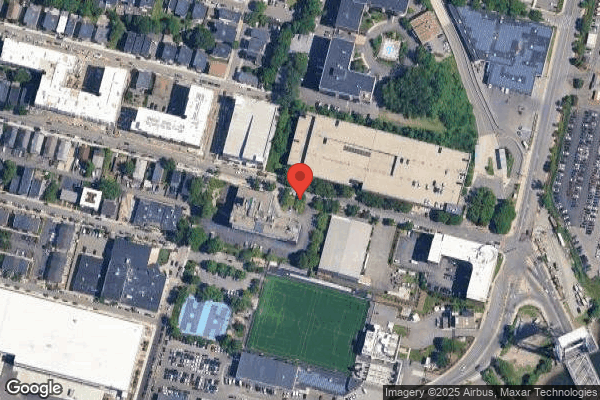

255 CENTRAL AVENUE, CHELSEA, MA 02150 (617) 884-5700
For profit - Limited Liability company 195 Beds MARQUIS HEALTH SERVICES Data: November 2025
Trust Grade
38/100
#290 of 338 in MA
Last Inspection: April 2025

Within standard 12-15 month inspection cycle. Federal law requires annual inspections.

Overview

Highland Park Rehabilitation and Healthcare Center has received a Trust Grade of F, indicating significant concerns about the quality of care provided at this facility. Ranked #290 out of 338 nursing homes in Massachusetts, it falls in the bottom half, and #19 out of 22 in Suffolk County, suggesting that only a few local options are better. While the facility is trending toward improvement, having reduced issues from 38 in 2024 to 18 in 2025, it still reports a concerning total of 83 issues, primarily related to potential harm. Staffing appears to be a strength, with a 0% turnover rate, but the facility has faced criticism for inadequate staffing levels and for having a Director of Nurses who regularly took on charge nurse responsibilities, which may compromise oversight. Specific incidents include a failure to maintain sufficient staffing to meet residents' personal care needs and violations of regulations regarding nurse working hours, where one nurse was found working excessively long shifts, raising concerns about staff fatigue and resident safety.

Trust Score
F
38/100
In Massachusetts
#290/338
Bottom 15%
Safety Record
Low Risk
No red flags
Inspections
Getting Better
38 → 18 violations
Staff Stability
○ Average
Turnover data not reported for this facility.
Penalties
○ Average
$16,543 in fines. Higher than 73% of Massachusetts facilities. Some compliance issues.
Skilled Nurses
⚠ Watch
Each resident gets only 29 minutes of Registered Nurse (RN) attention daily — below average for Massachusetts. Fewer RN minutes means fewer trained eyes watching for problems.
Violations
⚠ Watch
83 deficiencies on record. Higher than average. Multiple issues found across inspections.
★☆☆☆☆
1.0
Overall Rating
★☆☆☆☆
1.0
Staff Levels
★★★☆☆
3.0
Care Quality
★☆☆☆☆
1.0
Inspection Score
Stable
2024: 38 issues
2025: 18 issues

The Good

  • Full Sprinkler Coverage · Fire safety systems throughout facility
  • No fines on record

Facility shows strength in fire safety.

The Bad

1-Star Overall Rating

Below Massachusetts average (2.9)

Significant quality concerns identified by CMS

Federal Fines: $16,543

Below median ($33,413)

Minor penalties assessed

Chain: MARQUIS HEALTH SERVICES

Part of a multi-facility chain

Ask about local staffing decisions and management

The Ugly 83 deficiencies on record

Apr 2025 18 deficiencies
CONCERN (D)

Potential for Harm - no one hurt, but risky conditions existed

Resident Rights (Tag F0550)

Could have caused harm · This affected 1 resident

**NOTE- TERMS IN BRACKETS HAVE BEEN EDITED TO PROTECT CONFIDENTIALITY** Based on observation, record review and interview, the facility failed to ensure staff provided care for each resident in a mann...

Read full inspector narrative →
**NOTE- TERMS IN BRACKETS HAVE BEEN EDITED TO PROTECT CONFIDENTIALITY** Based on observation, record review and interview, the facility failed to ensure staff provided care for each resident in a manner and in an environment that promotes maintenance or enhancement of his or her quality of life and recognizing resident individuality for two sampled Residents (#68 and #119) out of a total of 33 sampled residents. Specifically, the facility failed to ensure staff regularly communicated with Resident #68 and Resident #119 in a language they understand. Findings include: Review of the facility's Interpreter Services policy dated February 2022 indicated: -The facility shall ensure that Limited English Proficient (LEP) residents and their families are able to effectively provide facility staff with a clear statement of their medical condition and history and understand the healthcare provider's assessment of their medical condition and treatment options. This is essential to the provision of quality resident care. -The facility shall provide language assistance services, including bilingual staff and interpreter services as no cost to each resident/consumer with limited English proficiency at all points of contact in a timely manner during al hours of operations, thus ensuring that LEP residents have available translators to assist in understanding the activities of staff members on their behalf and ensure the residents'/families' involvement in planning care, treatment and services. -LEP residents hall have services provided to them in their primary language or have interpreter services provided to them during the delivery of all significant healthcare services. 1. Resident #68 was admitted to the facility in October 2018 with diagnoses including dementia, aphasia and anxiety disorder. Review of the Minimum Data Set Assessment (MDS), dated [DATE], indicated Resident #68 required a translater to communicate as his/her primary language was Korean. On 3/31/25 8:36 A.M., the surveyor observed Resident #68 resting in bed. Resident #68 could not engage in an interview or respond to questions. Review of Resident #68's care plans indicated: Focus: Risk for impaired communication secondary to Resident being non-English speaking. Primary language is Korean, dated 12/4/23. Interventions: Provide resident with communication/picture board if available. Use gestures i.e. pointing to items whenever possible. Utilize language translating hotline or interpreter as needed. Focus: Resident is at risk for social isolation secondary to being Korean speaking only (understands some English). Resident attends activity programs in day room daily. He/she needs encouragement to initiate participation, dated 1/14/2025. Interventions: Korean communication card Utilize Korean speaking translators, family members and staff to obtain interests and support daily routine. Assist and support communication with family and friends via social media. During observations of Resident #68's room on 3/31/25 and 4/1/25, the surveyor was unable to locate communication cards or picture boards. Review of the progress notes indicated: 3/10/2025: Met with Resident #68 for a wellness check after the incident with another resident who became inappropriate with him/her. Resident #68 has a dementia diagnosis, is aphasia and is Korean, he/she does understand basic questions, but during this interview he/she was unable to respond. When asked if he/she is okay and feels safe, he/she nodded yes and grabbed my hand. That was his/her only response to any of the questions. SS (Social Service) department will continue to follow up with Resident #68 and a referral to be seen by psych services has been completed. 3/11/2025: This writer met with resident in his/her room. No observable signs of trauma or stress. Limited English, but able to say he/she is doing ok. Due to cognitive deficits he/she is unable to relate to this writer the events of the previous day. Social service will continue to monitor. The progress notes failed to indicate staff utilized a translator to meet with Resident #68. On 4/1/25 at 7:33 A.M., the surveyor observed Certified Nursing Aid (CNA) #8 serve Resident #68 his/her breakfast. The CNA did not speak to or attempt to engage with Resident #68 as she arranged the breakfast tray. CNA #8 said that Resident #68 can speak some English but that he/she needs an interpreter. When asked how to obtain an interpreter, CNA #8 said that she would tell the activities lady. During an interview on 4/1/25 at 7:54 A.M., Nurse #4 said no residents on the unit speak Korean. On 4/1/25 at 7:58 A.M., the surveyor observed Resident #68 calling out and reaching his/her arms up and wave to staff passing by his/her room. Resident #68 became increasingly upset and threw his/her bed control off the bed. Nurse #6 entered the room to assist. Nurse #6 said that Resident #68 is unable to explain to staff in English what he/she wants. Nurse #6 said that staff could call an interpreter service. Nurse #6 continued to remain the room and adjust Resident #68 in bed without attempting to speak with the Resident. During an interview on 4/1/25 at 8:02 A.M., CNA #4 said that she was not sure how he/she would obtain an interpreter and she would ask the nurse. On 4/1/25 at 8:09 A.M., the surveyor observed an interpreter hotline number posted at the nurses station. Three staff members were in Resident #68's room discussing what he/she could possibly want (i.e. get up, get dressed, etc) as he/she continued to call out from the bed. During an interview on 4/1/25 at 12:25 P.M., Social Worker #1 said that Resident #68's family member can assist with translating and that staff can also use an interpreter hotline. During an interview on 4/2/25 at 9:07 A.M. the Director of Nursing (DON) said that she would expect staff to communicate with residents whose primary language is not English through an interpreter service. 2. Resident #119 was admitted to the facility in October 2024 with diagnoses including dementia and diabetes. Review of the Minimum Data Set Assessment (MDS) dated [DATE] indicated Resident #119 required the use of a translator to communicate as his/her primary language was Vietnamese. During an interview on 3/31/25 at 8:15 A.M., Resident #119 was smiling but unable to engage in a conversation with the surveyor. The surveyor observed a worn communication sheet on the wall with pictures for water, pain, medication and other basic needs. Review of Resident #119's care plans indicated: Focus: Resident has impaired communication due to language barrier. Preferred language is Vietnamese, dated 1/28/25. Interventions: Enlist use of communication devices as needed communication board, sign language. Utilize language translating hotline or interpreter as needed. Focus: Resident is at risk for social isolation secondary to being Vietnamese speaking only, understands some English, dated 11/8/24. Interventions: Utilize Vietnamese speaking translators, family members and staff to obtain interests and support daily routine. Assist and support communication with family and friends via social media. During an interview on 4/1/25 at 7:41 A.M., Resident #119 was observed eating breakfast in his/her room. When asked in English how the food tasted, Resident #119 responded thank you. Review of the nurse progress notes indicated: 3/13/2025: Resident was found by CNA on the right side of the bed. Resident had difficulty to give the description of the fall due to language barrier. Resident c/o (complained of) pain prn (as needed) Tylenol given with effect, new order from on call clean area with ns bacitracin daily until Healed, Neuro checks. Safety maintained. 3/10/2025: Resident was found on the floor by CNA after dinner. Due to language barrier resident was unable to give a description of the fall. Resident sustained a small cut on the right side of his forehead, assessment completed resident was able to move all upper and lower extremities PRN Tylenol 650mg was given for discomfort with + effect. The fall was immediately reported to the On call, new order to clean area with normal saline apply bacitracin daily until healed, Neuro checks. Healthcare proxy son also notified of the fall. Safety maintained. The progress notes failed to indicate staff utilized a translator when speaking with Resident #119 after his/her falls to determine the possible cause. During an interview on 4/1/25 at 7:44 A.M., Certified Nursing Aid (CNA) #3 said Resident #119 doesn't speak English but he/she could follow directions when staff speak with him/her. CNA #3 said that Resident #119 cannot express his/her needs in English and he did not know how to get an interpreter to communicate with Resident #119. CNA #3 said he did not know what Resident #119's primary language is. During an interview on 4/1/25 at 7:54 A.M., Nurse #4 said Resident #119 can understand English and follow directions, but could not speak English. Nurse #4 was unable to articulate how to locate an interpreter to speak with residents whose primary language is not English. During an interview on 4/1/25 at 8:02 A.M., CNA #4 said that she was unsure how to get obtain an interpreter and would ask the nurse. During an interview on 4/1/25 at 12:25 P.M., Social Worker #1 said that staff can interpret for Resident #119 and staff could also utilize an interpreter hotline. During an interview on 4/2/25 at 9:07 A.M., the Director of Nursing said she would expect staff to be aware of the primary language of Resident's and utilize an interpreter service to communicate with them.
CONCERN (D)

Potential for Harm - no one hurt, but risky conditions existed

Deficiency F0561 (Tag F0561)

Could have caused harm · This affected 1 resident

**NOTE- TERMS IN BRACKETS HAVE BEEN EDITED TO PROTECT CONFIDENTIALITY** Based on interviews and observations, the facility failed to provide three Residents (#84, #7 and #67) of 33 sampled residents w...

Read full inspector narrative →
**NOTE- TERMS IN BRACKETS HAVE BEEN EDITED TO PROTECT CONFIDENTIALITY** Based on interviews and observations, the facility failed to provide three Residents (#84, #7 and #67) of 33 sampled residents with the choice of an alternate meal. Findings include: Resident #84 was admitted to the facility in February 2024 and had diagnoses which included depression. Review of his/her Minimum Data Set assessment dated [DATE], indicated a Brief Interview for Mental Status score of 11, signifying moderate cognitive impairment. During an interview on 3/31/25 at 8:00 A.M., Resident #84 said the facility does not provide an alternative meal to what is listed on the daily menu. Resident #84 said the printed menu, located on the wall by the elevators, lists an alternative, but when he/she has asked for the alternative staff always say it is unavailable. Resident #84 said staff do not hand out the menus or ask residents if they would like an alternate meal. Resident #84 said that you get what staff serve you, whether you like it or not. Resident #84 said he/she no longer asks for an alternate meal because it does not seem to exist. Resident #7 was admitted to the facility in November 2024 and has diagnoses which include heart disease. Review of the Resident's Minimum Data Set assessment dated [DATE], indicated a Brief Interview for Mental Status exam score of 15, signifying intact cognition. During an interview on 4/1/25 at 8:08 A.M., Resident #7 said he/she never sees the meal menus because staff do not hand them out. Resident #67 said he/she was unaware the menu was posted by the elevator. Resident #7 said he/she left the bedroom infrequently. Resident #7 said he/she never knows what will be served to him/her, other than for breakfast. Resident #7 said that for breakfast staff serve him/her bagels because the kitchen knows this is his/her preference. Resident #7 said that if he/she does not like lunch or dinner he/she does not eat them and goes without a meal. Resident #7 said that, in the past, when he/she asked staff for an alternate meal they had told him/her it was too late to order. Resident #7 said he/she would like to know in advance what is being served and to be able to order an alternate meal. Resident #67 was admitted to the facility in January 2014 and had diagnoses which included depression. Review of his/her Minimum Data Set assessment dated [DATE], indicated a Brief Interview for Mental Status exam score of 15, signifying intact cognition. During an interview on 3/31/25 at 9:54 A.M., Resident #67 said the staff do not hand out meal menus, so he/she does not know what is being served until the meal is dropped off at his/her room. Resident #67 said that if he/she does not like the meal staff have told him/her to call the kitchen to request another meal. Resident #67 said that staff refuse to take his/her meal order. Resident #67 said he/she used to call the kitchen but because no one ever answers he/she no longer calls. Resident #67 said that sometimes the meal menu is kept by the elevator, but that not all residents leave their bedroom. During an interview on 4/1/25 at 8:24 A.M., Certified Nurse Aide (CNA) #6 said residents typically find out what is served for their meal when staff give the tray to them. CNA #6 said menus are not handed out. CNA #6 said a menu is sometimes kept at the elevators. CNA #6 said that if a resident does not like the food served to them, they can ask the aide for an alternative and this is sometimes provided. CNA #6 said sometimes residents do not receive an alternate meal because sometimes the kitchen does not answer the phone. During an interview on 4/1/25 at 8:37 A.M., Unit Manager #2 said meal menus are not handed out to residents. Unit Manager #2 said menus are posted by the elevators. Unit Manager #2 said residents should be able to request meal alternatives from nursing staff. Unit Manager #2 said staff should attempt to call the kitchen, and if there is no answer staff should walk to the kitchen to place the order for the alternative meal. During an interview on 4/1/25 at 8:56 A.M., the Food Services Director said the meal menu is located on a wall by the elevator. The Food Service Director said residents who do not leave their bedrooms do not see the menu. The Food Services Director said staff should be able to tell residents what is being served prior to the meal and the alternatives available. The Food Services Director said that either the residents or nursing staff should be able to call the kitchen to place an order. The Food Services Director said she was unaware the kitchen sometimes did not answer the phone. The Food Services Director said the facility does not have a policy regarding the offering of meal alternatives.
CONCERN (D)

Potential for Harm - no one hurt, but risky conditions existed

Deficiency F0578 (Tag F0578)

Could have caused harm · This affected 1 resident

**NOTE- TERMS IN BRACKETS HAVE BEEN EDITED TO PROTECT CONFIDENTIALITY** Based on record review and interview, the facility failed to ensure Advance Directives (written documents that instruct health c...

Read full inspector narrative →
**NOTE- TERMS IN BRACKETS HAVE BEEN EDITED TO PROTECT CONFIDENTIALITY** Based on record review and interview, the facility failed to ensure Advance Directives (written documents that instruct health care providers of the decisions for specific medical treatment if a person was unable to speak or lacked the capacity to make decisions for themselves) were consistently documented in the medical record for one Resident (#155) out of a total sample of 33 residents. Findings include: Review of the facility policy titled Advanced Directives, dated [DATE], indicated All residents have the right to formulate an advance directive and to request, refuse, and discontinue treatments. Advance directives will be respected in accordance with state law and facility policy. Residents shall be encouraged to communicate their desires in regard to advance directives to their significant others, to allow for guidance by significant others and healthcare providers in following the resident's wishes should the resident become incapacitated, rendering them unable to make decisions. A request of the resident/significant other to provide a copy of the advance directive for medical record entry shall be made by the Admitting Department during the admission process. Resident #155 was admitted to the facility in [DATE] with diagnoses that include cerebral infarction, aphasia, dysphagia and depression. Review of Resident #155's most recent Minimum Date Set (MDS), dated [DATE], indicated he/she was assessed by nursing staff to have moderate cognitive impairments. The MDS indicated the resident was a full code status. Review of Resident #155's Medical Doctor (MD) and Nurse Practitioner (NP) progress notes dated [DATE], [DATE], [DATE], [DATE], and [DATE], indicated Code Status: DNR/DNI (Do Not Resuscitate/ Do Not Intubate). Review of Resident #155's discharge hospital paperwork, dated [DATE], indicated Advanced Care Planning: Code Status at discharge: DNR/DNI (No CPR/No Intubation). Review of Resident #155's advanced directives care plan, dated [DATE], indicated CODE STATUS: Presumed FULL CODE. Review of Resident #155's social services assessment, dated [DATE], indicated Code Status in Hospital: DNR DNI (No CPR/No intubation). Facility will follow up with verifying that this is still the case with the resident. Review of Resident #155's social services quarterly assessment, dated [DATE] and [DATE], indicated Advanced Directives Reviewed with Resident or Responsible Person? No. Review of Resident #155's medical record indicated a blank MOLST (Medical Orders for Life-Sustaining Treatment) form. During an interview on [DATE] 7:27 A.M., Nurse #4 said the Resident is a full code and is not sure why the MD/NP is documenting that. During an interview on [DATE] at 9:15 A.M., the Director of Nurses (DON) said advanced directives should be discussed upon admission and quarterly during his/her assessment period. The DON said she is not sure why the MD/NP documents the code status as DNR/DNI for Resident #155. The DON said social services should be discussing advanced directives with the responsible party at least on admission and quarterly. During an interview on [DATE] at 10:03 A.M., the Social Worker said Resident #155 is a full code because they have a guardian and are not allowed to be a DNR. The Social Worker said she has not discussed advanced directives with his/her gaurdian.
CONCERN (D)

Potential for Harm - no one hurt, but risky conditions existed

Assessment Accuracy (Tag F0641)

Could have caused harm · This affected 1 resident

**NOTE- TERMS IN BRACKETS HAVE BEEN EDITED TO PROTECT CONFIDENTIALITY** Based on observation, record review and interview, the facility failed accurately complete the Minimum Data Set Assessments (MDS...

Read full inspector narrative →
**NOTE- TERMS IN BRACKETS HAVE BEEN EDITED TO PROTECT CONFIDENTIALITY** Based on observation, record review and interview, the facility failed accurately complete the Minimum Data Set Assessments (MDS) for two Residents (#68 and #119) out of a total of 33 sampled residents. Specifically, the facility failed to attempt to utilize interpreter services to complete interviews for Resident #68 and Resident #119 to assess for cognition in section C of the MDS. Findings include: Review of the Long-Term Care Facility Resident Assessment Instrument (RAI) 3.0 User's Manual, revised October 2024, indicated the following instructions for Section B0700: Makes Self Understood - DEFINITION: MAKES SELF UNDERSTOOD Able to express or communicate requests, needs, opinions, and to conduct social conversation in their primary language, whether in speech, writing, sign language, gestures, or a combination of these. - Steps for Assessment 1. Assess using the resident's preferred language or method of communication. - Code 0, understood: if the resident expresses requests and ideas clearly. - Code 1, usually understood: if the resident has difficulty communicating some words or finishing thoughts but is able if prompted or given time. They may have delayed responses or may require some prompting to make self understood. - Code 2, sometimes understood: if the resident has limited ability but is able to express concrete requests regarding at least basic needs (e.g., food, drink, sleep, toilet). - Code 3, rarely or never understood: if, at best, the resident's understanding is limited to staff interpretation of highly individual, resident-specific sounds or body language (e.g., indicated presence of pain or need to toilet) Review of the Long-Term Care Facility Resident Assessment Instrument (RAI) 3.0 User's Manual, revised October 2024, indicated the following instructions for Section B0800: Ability to Understand Others - DEFINITION: ABILITY TO UNDERSTAND OTHERS Comprehension of direct person-to-person communication whether spoken, written, or in sign language or Braille. Includes the resident's ability to process and understand language. - Steps for Assessment 1. Assess in the resident's preferred language or preferred method of communication. - Code 0, understands: if the resident clearly comprehends the message(s) and demonstrates comprehension by words or actions/behaviors. - Code 1, usually understands: if the resident misses some part or intent of the message but comprehends most of it. The resident may have periodic difficulties integrating information but generally demonstrates comprehension by responding in words or actions. - Code 2, sometimes understands: if the resident demonstrates frequent difficulties integrating information, and responds adequately only to simple and direct questions or instructions. When staff rephrase or simplify the message(s) and/or use gestures, the resident's comprehension is enhanced. - Code 3, rarely/never understands: if the resident demonstrates very limited ability to understand communication. Or, if staff have difficulty determining whether or not the resident comprehends messages, based on verbal and nonverbal responses. Or, the resident can hear sounds but does not understand messages. Review of the Long-Term Care Facility Resident Assessment Instrument (RAI) 3.0 User's Manual, revised October 2024, indicated the following instructions for Section C (Cognitive Patterns): - Steps for Assessment 1. Interact with the resident using their preferred language. Be sure they can hear you and/or have access to their preferred method for communication. If the resident needs or requires an interpreter, complete the interview with an interpreter. If the resident appears unable to communicate, offer alternatives such as writing, pointing, sign language, or cue cards. - C0100: Should Brief Interview for Mental Status Be Conducted? Coding Instructions - Code 0, no: if the interview should not be conducted because the resident is rarely/never understood; cannot respond verbally, in writing, or using another method; or an interpreter is needed but not available. - Code 1, yes: if the interview should be conducted because the resident is at least sometimes understood verbally, in writing, or using another method, and if an interpreter is needed, one is available. Review of the facility's Interpreter Services policy dated February 2022 indicated: The facility shall ensure that Limited English Proficient (LEP) residents and their families are able to effectively provide facility staff with a clear statement of their medical condition and history and understand the healthcare provider's assessment of their medical condition and treatment options. This is essential to the provision of quality resident care. The facility shall provide language assistance services, including bilingual staff and interpreter services as no cost to each resident/consumer with limited English proficiency at all points of contact in a timely manner during al hours of operations, thus ensuring that LEP residents have available translators to assist in understanding the activities of staff members on their behalf and ensure the residents'/families' involvement in planning care, treatment and services. LEP residents hall have services provided to them in their primary language or have interpreter services provided to them during the delivery of all significant healthcare services. 1. Resident #68 was admitted to the facility in October 2018 with diagnoses including dementia, aphasia and anxiety disorder. Review of the Minimum Data Set Assessment (MDS), dated [DATE], indicated Resident #68 required a translator to communicate as his/her primary language was Korean. Additional review of Section C of the MDS indicated that the Brief Interview for Mental Status Exam (BIMS) was not completed because Resident #68 was documented as being rarely/never understood. On 3/31/25 at 8:36 A.M., the surveyor observed Resident #68 resting in bed. Resident #68 could not engage in an interview or respond to questions. On 4/1/25 at 7:33 A.M., the surveyor observed Certified Nursing Aide (CNA) #8 serve Resident #68 his/her breakfast. The CNA did not speak to or attempt to engage with Resident #68 as she arranged the breakfast tray. CNA #8 said that Resident #68 can speak some English but that he/she needs an interpreter. When asked how to obtain an interpreter, CNA #8 said that she would tell the activities lady. During an interview on 4/1/25 at 12:25 P.M., the Social Worker said that she completes section C on the MDS in the facility and she did not utilize an interpreter or attempt to interview Resident #68. The Social Worker said that she did not interview Resident #68 with an interpreter because Resident #68 is cognitively confused and would answer the questions wrong even in his/her own language. The Social Worker said she follows RAI guidelines for the interview process for Section C. 2. Resident #119 was admitted to the facility in October 2024 with diagnoses including dementia and diabetes. Review of the Minimum Data Set Assessment (MDS), dated [DATE], indicated Resident #119 required the use of a translator to communicate as his/her primary language was Vietnamese. Additional review of Section C of the MDS indicated that the Brief Interview for Mental Status Exam (BIMS) was not completed because Resident #119 was documented as being rarely/never understood. During an interview on 3/31/25 at 8:15 A.M., Resident #119 was smiling but unable to engage in a conversation with the surveyor. During an interview on 4/1/25 at 7:44 A.M., Certified Nursing Aide (CNA) #3 said Resident #119 doesn't speak English but he/she could follow directions when staff speak with him/her. CNA #3 said that Resident #119 cannot express his/her needs in English and he did not know how to get an interpreter to communicate with Resident #119. CNA #3 said he did not know what Resident #119's primary language is. During an interview on 4/1/25 at 12:25 P.M., the Social Worker said that she completes section C on the MDS in the facility and she did not utilize an interpreter or attempt to interview Resident #119. The Social Worker said that she did not interview Resident #68 with an interpreter because Resident #119 is cognitively confused and would answer the questions wrong even in his/her own language. The Social Worker said she follows RAI guidelines for the interview process for Section C.
CONCERN (D)

Potential for Harm - no one hurt, but risky conditions existed

ADL Care (Tag F0677)

Could have caused harm · This affected 1 resident

**NOTE- TERMS IN BRACKETS HAVE BEEN EDITED TO PROTECT CONFIDENTIALITY** Based on observations, interviews, and record review, the facility failed to provide necessary assistance with activities of dai...

Read full inspector narrative →
**NOTE- TERMS IN BRACKETS HAVE BEEN EDITED TO PROTECT CONFIDENTIALITY** Based on observations, interviews, and record review, the facility failed to provide necessary assistance with activities of daily living (ADLs) for two Residents (#21 and #160) out of a total sample of 33 residents. Specifically, 1. For Resident #21, the facility failed to provide necessary nail care. 2. For Resident #160, the facility failed to ensure the Resident maintained good oral hygiene when staff did not ensure supervision with oral hygiene was provided, as indicated in the care plan, and the Resident was not provided with a toothbrush. Findings include: 1. Resident #21 was admitted to the facility in June 2017 with diagnoses including unspecified dementia and hypercholesterolemia. Review of the Minimum Data Set Assessment (MDS), dated [DATE], indicated Resident was severely cognitively impaired and required assistance with bathing and transfers. The MDS also indicated Resident #21 had no behaviors of rejecting care. On 3/31/25 at 8:22 A.M., the surveyor observed Resident #21 resting in bed. His/her fingernails were visibly long (approximately 1/2 inch) and crusted with a brownish-blackish substance. Resident #21 was unable to engage in the interview process due to his/her cognition. Review of Resident #21's care plans indicated: Focus: Self care deficit r/t (related to) decreased functionality, generalized muscle weakness, dx of Dementia and COPD, 11/29/23. Interventions: Dependent with ADL's (hygiene, bathing, grooming, dressing, toileting) Indep/Assist PRN (as needed) with meals. Focus: Resident has a history of the following behaviors: screaming, scratching, and refusing care, revised 2/18/25. Interventions: Do not argue with resident - reporach (sic) as necessary. Monitor/Assess resident's episodes of inappropriate behaviors, document on the behavior flow sheet including interventions used and its effectiveness, (9/22/23). On 4/1/25 at 7:52 A.M., the surveyor observed Resident #21 resting in bed. His/her fingernails were long, visibly dirty and crusted with a brownish-black unknown substance. Review of Resident #21's progress notes and activites of daily living documentation failed to indicate Resident #21 had refused care on 3/30/25 and 3/31/25. On 4/1/25 at 1:14 P.M., the surveyor observed Resident #21 sitting in the activity room eating his/her lunch. Resident #21's nails were long and visibly dirty. During an interview on 4/1/25 at 1:16 P.M., Certified Nursing Aide (CNA) #5 said she provided morning care for Resident #21 earlier in the morning and he/she did not refuse any care. Resident #21 does not like to get his/her nails cut. CNA #5 said she did not attempt to cut Resident #5's nails. On 4/1/25 at approximately 1:20 P.M., the surveyor observed CNA #5 and another CNA remove Resident #21 from the activity room and say to another staff person that they were going to cut his/her nails, (after the surveyor inquired about Resident #21's nail care). During an interview on 4/2/25 at 7:20 A.M., Nurse #4 said CNA's provide resident with nail care. Nurse #4 said that Resident #21 does not usually refuse care. During an interview on 4/2/25 at 9:06 A.M., the Director of Nursing (DON) said that CNA's should provide residents nail care. 2. Review of the facility policy titled 'ADL - Personal Hygiene', revised October 2022, indicated: - Policy: Mouth care and teeth brushing will be given with AM/PM care and prn to ensure mouth is free of debris and the oral cavity is moist. - Procedure: Review the resident's care plan and Kardex for any special care or needs of the individual resident. Resident #160 was admitted to the facility in February 2025 with diagnoses including sepsis and diabetes. Review of the most recent Minimum Data Set (MDS) assessment, dated 2/14/25, indicated Resident #160 was cognitively intact as evidenced by a Brief Interview for Mental Status (BIMS) score of 13 out of 15. This MDS also indicated Resident #16 required supervision/touching assistance with oral hygiene. On 3/31/25 at 8:34 A.M., the surveyor observed Resident #160 in his/her room. Resident #160 said he/she was upset because they were never given a toothbrush and had been unable to brush his/her teeth in a month and a half. They surveyor observed Resident's teeth which were covered in a thick layer of a yellowish-white substance. There was no toothbrush in his/her room. Review of Resident #160's care plan related to self-care activities of daily living, revised 2/26/25, indicated: - Oral hygiene: Supervision/Touching. Review of Resident #160's Kardex (a summary of patient care needs used by certified nurse assistants), dated 3/31/25, indicated: - Oral hygiene: Supervision/Touching. Review of Resident #160's report titled 'Documentation Survey Report' (a report including certified nurse assistant (CNA) documentation), dated 3/1/25 to 3/31/25, failed to indicate Resident refused oral hygiene. This 'Documentation Survey Report' indicated oral hygiene was documented as completed with set-up assistance or independently 58 out of 62 times, instead of with supervision or touching assistance, as indicated was required in his/her care plan and Kardex. During an interview on 4/1/25 at 9:13 A.M., Certified Nurse Assistant (CNA) #1 said oral hygiene should be performed as directed on the Kardex and care plan. CNA #1 could not locate a toothbrush in Resident #160's room and said he/she should have one stored in his/her room. During this observation, Resident #160 said he/she does not have a toothbrush and would like to brush his/her teeth this morning. Review of Resident #160's report titled 'Documentation Survey Report' indicated: - On 3/28/25: CNA #1 documented set-up assistance provided for oral hygiene. - On 3/31/25: CNA #1 documented the Resident performed oral hygiene independently. During a follow-up interview on 4/1/25 at 9:22 A.M., CNA #1 said he was assigned to Resident #160 on 3/28/25 and 3/31/25. CNA #1 said he never set-up or checked that Resident #160 had performed oral hygiene or had a toothbrush those days but should have. CNA #1 said since there wasn't a toothbrush in the room, he/she hasn't had one. CNA #1 said Resident #160 doesn't refuse personal care and he should have provided him/her with a toothbrush and supervision with oral hygiene but did not. During an interview on 4/1/25 at 9:32 A.M., Nurse #2 said CNAs should always follow the Kardex and care plan interventions for the assistance needed for oral hygiene and to ensure it is completed. Nurse #2 said the CNAs should have ensured Resident #160 had a toothbrush. Nurse #2 said CNAs should report to the nurse if a Resident refuses oral hygiene. Nurse #2 said sometimes Resident #160 refuses medical care, like insulin or blood sugar checks, but never refuses personal care because hygiene is very important to him/her. During an interview on 4/1/25 at 11:28 A.M., the Director of Nursing (DON) said each resident's toothbrush should be stored in their room. The DON said CNAs should always follow the Kardex and care plan interventions for the assistance needed for oral hygiene and to ensure it is completed. The DON said CNAs should report to the nurse if a Resident refuses oral hygiene and document any refusals that occur.
CONCERN (D)

Potential for Harm - no one hurt, but risky conditions existed

Quality of Care (Tag F0684)

Could have caused harm · This affected 1 resident

**NOTE- TERMS IN BRACKETS HAVE BEEN EDITED TO PROTECT CONFIDENTIALITY** Based on observation, record review and interview, the facility failed to provide the necessary care and treatment for one Resid...

Read full inspector narrative →
**NOTE- TERMS IN BRACKETS HAVE BEEN EDITED TO PROTECT CONFIDENTIALITY** Based on observation, record review and interview, the facility failed to provide the necessary care and treatment for one Resident (#141) out of a total of 33 sampled residents. Specifically, the facility failed to notify the physician and implement recommendations made by the orthopaedic (a branch of medicine specializing in diagnosing and treating conditions related to the musculoskeletal system, which includes bones, joints, ligaments, tendons, and muscles) specialist for pain management, the use of splints and occupational therapy services. Findings include: Resident #141 was admitted to the facility in April 2023 with diagnoses including chronic pain, cerebrovascular disease and osteoarthritis. Review of the Minimum Data Set Assessment (MDS), dated [DATE], indicated Resident #141 was cognitively intact evidenced by a score of 13 out of a possible 15 on the Brief Interview for Mental Status Exam (BIMS). The MDS also indicated Resident #141 required assistance with bathing and transfers. During an interview on 3/31/25 at 11:02 A.M., Resident #141 reported he/she has pain in his/her hand regularly. Resident #141 said that he/she receives medication for the pain but it does not help. Review of the clinical record indicated Resident #141 had an orthopedic physician on 9/19/24. The visit summary indicated: On exam he/she has tenderness and decreased range of motion of the thumbs as well as the index and middle fingers bilaterally. We reviewed imaging which suggests possible underlying inflammatory arthorpathy. Likely components of osteoarthritis as well. We will have him/her see OT (occupational therapy) for new splints to be made for bilateral hands. Also recommend Volatren gel (a topical pain medication) to be used as needed up to four times daily. Recommend follow-up with rheumatology for further evaluation and consideration of medical management. He/she will follow up with us if symptoms do not improve or worsen. Review of Resident #141's progress notes, physicians orders and care plans failed to indicate the recommendations made regarding OT, bilateral splints, Voltaren Gel or a referral to rheumatology were implemented. Review of the Nurse Practitioner and Physician notes, dated 11/26/24, 1/31/25, and 2/8/25, failed to indicate the attending physician reviewed or were made aware of the recommendations made by the orthopedic physician. During an interview on 4/1/25 at 10:18 A.M., Nurse #4 said that when residents return from appointments, their paperwork is reviewed and recommendations for treatments are communicated with the physician. During an interview on 4/1/25 at 10:47 A.M., Resident #141 said that he/she had been told six months ago he/she would be given splints for his/her hands but he/she hasn't heard anything about it since. Resident #141 could not recall if he/she had been told at an outside appointment or in the facility. During an interview on 4/1/25 at 1:00 P.M., the [NAME] President of Case Management said that Resident #141 had not been on OT services in the past six months. During an interview on 4/2/25 at 7:23 A.M., the Medical Records Staff member said she is responsible for managing resident appointments. She said on 2/3/25 (approximately 127 days after Resident #141's ortho appointment) she was in the hospital's electronic health care system (which differs from the facility's electronic records) arranging for Resident #141 to have a follow up appointment with ortho. She said that she then saw Resident #141 had a referral in that system for rheumatology. She said she then alerted Nurse Practitioner (NP) #1 and set up an appointment for Resident #141 to be seen, but there was no availability until April 2025. During an interview on 4/2/25 8:50 A.M., NP #1 said that recommendations from specialists are communicated via phone call, or a communication book to either her or the physician and then implemented in the Resident record. NP #1 said that if the recommendations are not indicated in the electronic health records, they were most likely not communicated to the team. NP #1 said she reviewed Resident #141's notes and it did not appear as though the recommendations were relayed to the team. During an interview on 4/2/25 at 9:11 A.M., the Director of Nursing said that recommendations made by specialists during appointments are supposed to be communicated by nursing staff to the NP or on-call provider to ensure the interventions are implemented.
CONCERN (D)

Potential for Harm - no one hurt, but risky conditions existed

Pressure Ulcer Prevention (Tag F0686)

Could have caused harm · This affected 1 resident

**NOTE- TERMS IN BRACKETS HAVE BEEN EDITED TO PROTECT CONFIDENTIALITY** Based on observation, record review and interview, the facility failed to ensure treatments related to pressure ulcers were impl...

Read full inspector narrative →
**NOTE- TERMS IN BRACKETS HAVE BEEN EDITED TO PROTECT CONFIDENTIALITY** Based on observation, record review and interview, the facility failed to ensure treatments related to pressure ulcers were implemented per the physicians orders for one Resident (#21) out of a total of 33 sampled residents. Specifically, the facility failed to a.) ensure Resident #21's air mattress was at the correct setting and b.) ensure the Wound Physician's treatment orders were implemented. Findings include: Review of the Monitoring and Staging policy dated January 2023 indicated: Residents will receive appropriate treatment for pressure ulcers until healed. The Wound Care Coordinator or licensed nurse that is responsible for the wound care will examine wounds weekly to assess and document findings. Resident #21 was admitted to the facility in June 2017 with diagnoses including unspecified dementia and hypercholesterolemia. Review of the Minimum Data Set Assessment (MDS), dated [DATE] indicated Resident was severely cognitively impaired and required assistance with bathing and transfers. The MDS also indicated Resident #21 had two Stage III pressure injuries. a. On 3/31/25 at 8:22 A.M. the surveyor observed Resident #21 resting in bed on an air mattress set at 350 lbs. Resident #21 was unable to participate in the interview process due to his/her cognition. Review of Resident #21's physicians orders indicated: Low air loss mattress: check setting closest to resident's current weight and mattress functionality every shift for monitoring setting 150, initiated 8/31/23. On 4/1/25 at 7:17 A.M., the surveyor observed Resident #21 resting in bed on an air mattress set at 210 lbs. Review of Resident #21's most recent weight documented on 3/28/25 indicated he/she weighed 144 lbs. Review of Resident #21's care plans indicated: Focus: Resident is at risk for skin breakdown due to decreased mobility, incontinence and diabetes. Air Mattress in use, initiated 11/29/23. Interventions: Low air mattress as ordered. Check settings and function every shift. Skin checks with am/pm care - CNA's to report any red or open areas promptly to nurse. Focus: Resident has stage 3 pressure ulcers on the sacrum, initiated 1/31/25. Interventions: Administer treatments as ordered and monitor for effectiveness. Low air loss mattress: check setting closest to resident's current weight and mattress functionality, (2/18/25) During an interview on 4/2/25 at 9:04 A.M., The Director of Nursing (DON) said that air mattress settings should be followed as ordered by the physician. b. Review of the Wound Physician Note dated 2/5/25 indicated the following treatment recommendations: Alginate calcium apply every two days for 16 days; Skin sub application (complete) apply once weekly for: DO NOT REMOVE or disturb the wound bed. Change the secondary dressing(s) with care as per the recommendations. The skin substitute graft will be re-evaluated by the wound physician during the indicated next visit.; Oil emulsion apply once weekly for. Gauze sponge non-sterile apply every two days; Gauze island w/ bdr apply every two days. Review of Resident #21's Treatment Administration Record (TAR), dated 2/5/25 to 2/10/25, indicated the following treatment was documented as implemented: - Wash Sacrum wound with NS (normal saline) Pat dry, apply Alginate Calcium and cover with border gauze dressing. every day shift for wound care, (initiated 1/25/25 and discontinued 2/10/25). Review of Resident #21's medical record failed to indicate that the Wound Physician's treatment recommendation made on 2/5/25 was ever addressed or implemented. Review of the Wound Physician notes dated 2/12/25, 2/19/25, and 2/26/25 indicated the following treatment recommendations: Alginate calcium apply every two days; Oil emulsion apply once weekly; Skin sub application apply once weekly: DO NOT REMOVE or disturb the wound bed. Change the secondary dressing(s) with care as per the recommendations. The skin substitute graft will be re-evaluated by the wound physician during the indicated next visit. Gauze sponge non-sterile apply every two days; Gauze island w/ bdr apply every two days. Review of Resident #21's TAR's, dated 2/12/25 to 3/4/25, indicated the following treatment was documented as implemented: - Wash Sacrum wound with NS Pat dry, apply Alginate Calcium and skin sub application and oil emulsion, gauze sponge, and cover with border gauze dressing. every day shift for wound care, (initiated 2/10/25 and discontinued 3/18/25). Review of Resident #21's medical record failed to indicate that the Wound Physician's treatment recommendations made on 2/12/25, 2/19/25, and 2/26/25 were ever addressed or implemented. Review of the Wound Physician's notes dated 3/5/25 and 3/12/25 indicated the following treatment recommendations: Hydrogel gel apply once daily. Gauze sponge non-sterile apply once daily; Gauze island w/ bdr apply once daily. Review of Resident #21's TAR dated 3/5/25 to 3/18/25, indicated the following treatment was documented as implemented: - Wash Sacrum wound with NS Pat dry, apply Alginate Calcium and skin sub application and oil emulsion, gauze sponge, and cover with border gauze dressing. every day shift for wound care, (initiated 2/10/25 and discontinued 3/18/25). Review of Resident #21's medical record indicated that the Wound Physician's treatment recommendations made on 3/5/25 and 3/12/25 were not implemented until 3/18/25. During an interview on 4/1/25 at 1:17 P.M., Nurse #4 said that the Wound Physician rounds with nursing staff and will alert the nurse about treatment recommendations. Nurse #4 said the nurse then alerts the attending physician, and then will update the treatment orders in the record. Nurse #4 did not say that attending physicians declined. During an interviews on 4/2/25 at 9:04 A.M., and 4/3/25 at 10:17 A.M. The DON said that attending physicians defer to the Wound Physician have not disagreed with the treatment orders indicated in the Wound Physician notes. The DON said that the Wound Physician completes her rounds and then will alert nursing about treatment changes. The DON said that nurses are then responsible to update the clinical record of the orders.
CONCERN (D)

Potential for Harm - no one hurt, but risky conditions existed

Deficiency F0688 (Tag F0688)

Could have caused harm · This affected 1 resident

**NOTE- TERMS IN BRACKETS HAVE BEEN EDITED TO PROTECT CONFIDENTIALITY** Based on record review and interviews, the facility failed to implement OT (Occupational Therapy) recommendations for one Reside...

Read full inspector narrative →
**NOTE- TERMS IN BRACKETS HAVE BEEN EDITED TO PROTECT CONFIDENTIALITY** Based on record review and interviews, the facility failed to implement OT (Occupational Therapy) recommendations for one Resident (#77) out of a sample of 33 Residents. Specifically, the facility failed to implement a functional maintenance program after the Resident was discharged from OT. Findings include: Resident #77 was admitted to the facility in July 2020 with diagnoses including hemiplegia and hemiparesis. A review of the most recent Minimum Data Set (MDS), dated [DATE], indicated a Brief Interview for Mental Status (BIMS) score of 4 out of a possible 15 indicating severe cognitive impairment. Further review of the MDS indicated impairment on both sides of the upper extremities. On 3/31/25 at 8:45 A.M., and 1:27 P.M., the Surveyor observed Resident #77 lying in bed. The right-hand fingers were in a balled fist. Resident #77 did not have any orthotic device in the right hand. On 4/1/25 at 7:54 A.M., the Surveyor observed Resident #77 lying in bed. The right-hand fingers were in a balled fist. Resident #77 did not have any orthotic device in the right hand. On 4/1/25 at 5:28 P.M., the Surveyor observed Resident #77 lying in bed. The right-hand fingers were in a balled fist. Resident #77 did not have any orthotic device in the right hand. Review of the OT discharge summary with dates of service 6/18/24-9/6/24 indicated the following: - Diagnosis-contracture of muscle, right hand. - Discharge recommendations and status: - Restorative program established/trained = restorative splint and brace program. Splint and brace program established/trained: wear right hand roll as tolerated, remove for hygiene and care. - Functional maintenance program established/trained = Splint and Brace Program. Splint and brace program=Established/trained: wear right hand roll as tolerated, remove for hygiene and care. - Prognosis-to maintain current level of function = good with staff follow through. During an interview and record review on 4/2/25 at 10:53 A.M., Unit Manager #1 said when Residents are discharged from OT with recommendations, the staff from OT meet with the Nurse to communicate the recommendations. Unit Manager #1 reviewed the physician's orders. The physician's orders failed to indicate that the recommendations from OT were transcribed after the resident was discharged from therapy. During an interview on 4/2/25 at 10:53 A.M., the Director of Nurses said after discharge from OT, the OT staff are supposed to communicate any recommendations made for residents from therapy so that the Nurses and Certified Nurse's Assistants can continue the functional maintenance program. During a telephone interview on 4/2/25 at 11:13 A.M., the Director of Rehabilitation (DOR) services said that Resident # 77's functional maintenance program should have continued after the Resident discharged from OT. The DOR said that OT staff should communicate recommendations to Nursing staff after residents are discharged from OT. The DOR said the facility does not keep a record of residents on a functional maintenance program on the units. The DOR said after a resident is discharged from OT, the discharging therapist documents training a Nurse in the discharge recommendations. The DOR said the Nurse is then expected to add a physician's order in the medical record so that the recommendations can be implemented on the Unit.
CONCERN (D)

Potential for Harm - no one hurt, but risky conditions existed

Accident Prevention (Tag F0689)

Could have caused harm · This affected 1 resident

**NOTE- TERMS IN BRACKETS HAVE BEEN EDITED TO PROTECT CONFIDENTIALITY** 2. Review of the facility policy titled Elopement Prevention, dated 10/22, indicated The facility maintains a process to assess ...

Read full inspector narrative →
**NOTE- TERMS IN BRACKETS HAVE BEEN EDITED TO PROTECT CONFIDENTIALITY** 2. Review of the facility policy titled Elopement Prevention, dated 10/22, indicated The facility maintains a process to assess all residents for risk for elopement, implement prevention strategies for those identified as an elopement risk, institute measures for resident identification at the time of admission, and conduct a missing resident procedure. Elopement is the ability of a resident who is not capable of protecting himself and herself from harm to successfully leave the facility unsupervised and unnoticed an who may enter into harm's way. Wandering refers to a cognitively-impaired resident's ability to move about inside the facility aimlessly and without an appreciation of personal safety needs and who may enter into a dangerous situation. a. Wander Bracelet - i. Initiate wander bracelet for resident that is deemed at risk for elopement iv. Resident who refuses to wear a bracelet will be assessed by the interdisciplinary team and determine alternate placement site options. v. Wander bracelet should be checked frequently for proper placement and document on MAR/EMAR. vii. Facility should check wander bracelet on resident's wrist or ankle, obtain another wander bracelet and reapply as applicable. Resident #155 was admitted to the facility in June 2024 with diagnoses that include cerebral infarction, aphasia, dysphagia and depression. Review of Resident #155's most recent Minimum Date Set (MDS), dated [DATE], indicated he/she was assessed by nursing staff to have moderate cognitive impairments. On 4/1/25 from 8:01 A.M. to 8:08 A.M., the surveyor observed Resident #155 wandering the unit up and down halls and by the elevator multiple times. Staff were observed to be passing meal trays. The units wanderguard system was not triggered when the Resident walked by the elevator. On 4/2/25 at 7:27 A.M., the surveyor observed Resident #155 wandering the unit and walking by the unit elevator. The units wanderguard system was not triggered when the Resident walked by the elevator. Nursing staff were giving other residents care and the unit nurses were preparing medications. Review of Resident #155's elopement care plan, dated 8/7/24, indicated Wanderguard was placed on residents lower left ankle. Resident continues to remove his/her wanderguard. Review of Resident #155's nursing progress notes, dated 3/18/25, 3/19/25, 3/22/25, 3/23/25, 3/25/25, 3/26/25, 3/28/25, 3/31/25, indicated Note Text: Wandergaurd off. Review of Resident #155's Nurse Practitioner progress note, dated 3/24/25, indicated he/she lacks safety awareness and remains an elopement risk. Review of Resident #155's Elopement Evaluation, dated 2/6/25, indicated he/she scored a 5 indicating the Resident is an elopement risk. Review of Resident #155's physician order dated 7/19/24, indicated check placement and function for wanderguard to LLE (left lower extremity) every shift for elopement risk. Review of Resident #155's nursing progress notes from 3/5/25 through 4/1/25 failed to indicate any attempts were made to replace the wanderguard on the Resident. During an interview on 4/2/25 at 7:21 A.M., Nurse #4 said nursing staff should attempt to replace the wanderguard every shift and document the outcome in a nursing progress note. Nurse #4 said she is not sure when the last time staff attempted to replace the wanderguard on Resident #155. Nurse #4 said the wanderguard has not been on the Resident for a long time and the Resident does wander about the unit. During an interview on 4/2/25 at 9:16 A.M., the Director of Nursing (DON) said the Resident is known to remove his/her wandergaurd all the time and does not have another intervention in place if he/she does remove it. The DON said staff should be attempting to re-apply the wanderguard and document the results in a progress note. The DON said the facility staff should reassess the resident for new interventions but has not. Based on observation, record review, and interview, the facility failed to ensure it provided an environment free of potential safety hazards for two Residents (#3 and #155) out of a total sample of 33 residents. Specifically, 1. For Resident #3, the facility failed to investigate and assess the Resident after sustaining a fall resulting in a left ankle fracture. 2. For Resident #155, the facility failed to attempt to reapply his/her wandergaurd bracelet after multiple days of it not being on the Resident. Findings include: Review of the facility policy titled Accident and Incidents dated and revised October 2022, indicated the following: Process- The following data, as applicable, shall be included on the Incident/Accident report form: a. The date and time the incident/accident took place; b. The nature of the injury/accident (bruise, fall, skin tear, new pressure ulcer); c. The circumstances surrounding the incident/accident; d. Where the accident/ incident took place; e. The name (s) of witnesses if incident/accident observed; f. The resident or victim's account if applicable; g. Exactly what was observed or heard regarding the accident/incident; h. The time the resident's Attending Physician was notified, as well as the time the physician responded and his or her instructions; i. The date/time the resident's family was notified and by whom; j. The condition of the resident and his/her vital signs; k. Type of injury; diagram location of injury; l. If first aid was administered; m. The disposition of the resident (transferred to hospital, put in bed). If employee (sent home, sent to physician, returned to work, etc.); n. Any corrective actions taken or interventions immediately put in place to prevent further incident; o. Other pertinent data, to include health status information. p. Follow-up information; q. The signature and title of the person completing the report Incident/Accident Statement Form, by RN Supervisor, Charge Nurse, Manager; a. How did you learn of incident/accident; Actions taken; c. List of nursing staff caring for the resident at the time of the incident and one shift prior d. Resident statement of incident/accident if applicable e. Was the physician and family notified f. Any witnesses (list the names) and was statement completed on the Incident/Accident Form Involved Party Statement Reporting: 1. If the resident has sustained any suspected or actual significant injury, is sent to the hospital or abuse is suspected, the supervisor/manager must notify immediately the Administrator/Director of Nurses 2. The nurse Supervisor shall ensure that incident and accident packet is complete and submit the original to the Director of Nursing 5. DON and Admin are responsible to review incident/investigation and conclusion to determine if incident requires reporting to outside agencies 1. Resident #3 was admitted to the facility in April 2023 with diagnoses including schizoaffective disorder and cerebral palsy. Review of Resident #3's most recent Minimum Data Set Assessment (MDS), dated [DATE], indicated that the Resident has a Brief Interview for Mental Status score of 12 out of 15 indicating moderate cognitive impairment. Further review of the MDS indicated that the Resident requires assistance from staff with activities of daily living and transfers. Review of nursing progress notes indicated the following: - Dated 7/5/24 at 10:23 A.M.: Patient found on the floor with suspected left ankle fracture, he/she is on blood thinners. Called and sent patient to ED (emergency department), NP (nurse practitioner) made aware, family member contacted. - Dated 7/6/25 at 6:04 A.M.: Pt. (patient) transferred back to facility at 2:00 am with left ankle Trimalleolar fracture. During a telephone interview on 4/1/25 at 9:08 A.M., Resident #3's Health Care Proxy (HCP) said the Resident had a fall in July and broke his/her ankle. The HCP said staff just found him/her on the floor and called her. Review of Resident #3's hospital discharge paperwork, dated 7/5/24, indicated the following: - Reason for visit: fall - Diagnoses: Trimalleolar fracture of ankle, closed, left, initial encounter. - XR (X-ray) ankle (left): Ankle: Trimalleolar fracture with lateral displacement of the distal fracture fragment. Review of Resident #3's care plans indicated the following: - Focus: Resident is at risk for injuries related to hx (history) of falls, impaired mobility - dated 1/14/24 - Interventions: Patient sent out to emergency department for evaluation - dated 7/5/24, Re-educated patient to ask for assistance before any ambulation or transfers - dated 7/12/24. Review of Resident #3's medical record failed to indicate that a post-fall evaluation was completed. The surveyor asked for the full investigation/incident report for the fall and the facility was unable to provide one. During an interview on 4/1/25 at 11:08 A.M., Nurse #6 said she remembers that Resident #3 had a fall and fractured his/her ankle in July but she does not remember what happened. During an interview on 4/1/25 at 11:12 A.M., Unit Manager #2 said he was not working in the facility when Resident #3 fell but he heard that the Resident fractured his/her ankle. During an interview on 4/1/25 at 12:05 P.M., the Director of Nursing (DON) said when a resident has any incident it must be reported to the Medical Doctor or Nurse Practitioner and the Resident's HCP. The DON said a fall evaluation should be done after a resident has a fall and a full investigation including staff witness statements should be done. The DON said she was not aware an investigation or post-fall evaluation was completed.
CONCERN (D)

Potential for Harm - no one hurt, but risky conditions existed

Deficiency F0698 (Tag F0698)

Could have caused harm · This affected 1 resident

**NOTE- TERMS IN BRACKETS HAVE BEEN EDITED TO PROTECT CONFIDENTIALITY** Based on record review, and interviews, the facility failed to provide care and services consistent with professional standards ...

Read full inspector narrative →
**NOTE- TERMS IN BRACKETS HAVE BEEN EDITED TO PROTECT CONFIDENTIALITY** Based on record review, and interviews, the facility failed to provide care and services consistent with professional standards of practice for two Residents (#17 and #122) who required renal dialysis (a life sustaining treatment that helps the body remove extra fluids and waste products from the blood when the kidneys are not able to) out of a total sample of 33 residents. Specifically, 1. For Resident #17, the facility failed to ensure nursing staff documented they obtained blood pressures from his/her arm with the AV (arteriovenous fistula, is when an artery and vein connect directly, allowing blood to flow) fistula. 2. For Resident #122, the facility failed to a. ensure nursing staff documented they obtained blood pressures from his/her arm with the AV (arteriovenous fistula, is when an artery and vein connect directly, allowing blood to flow) fistula and b. maintain an updated dialysis communication book between the facility and the dialysis clinic. Findings include: Review of the facility policy titled Dialysis Management dated and revised October 2022, indicated the following: - Residents receiving Hemodialysis treatments will be assessed and monitored to ensure quality of life and well-being. - Facility will establish open communication with the Resident's Dialysis Center utilizing a Dialysis Communication Book completing the Dialysis Communication Form. - On return from the Dialysis Center, the nurse will review the communication returning from the Dialysis Center. The Nurse should review specifically, pre and post vital signs, treatment tolerance, any meds given and any new orders for resident care. 1. Resident #17 was admitted to the facility in November 2023 with diagnoses that included end stage renal disease, dependence on renal dialysis, mood disorder, and insomnia. Review of Resident #17's most recent Minimum Data Set (MDS), dated [DATE], indicated he/she scored a 10 out of a possible 15 on the Brief Interview for Mental Status (BIMS) indicating moderate cognitive impairments. Further review of the MDS indicated he/she is dependent on dialysis. Review of Resident #17's physician order, dated 2/20/25, indicated No blood pressures or blood draws in left arm every shift for Left Arm AV Fistula. Review of Resident #17's most recent documented blood pressures (BPs) indicated : - 11/7/24 132 / 72 mmHg (millimeters of mercury) Sitting l/arm (left/arm) - 10/20/24 137 / 68 mmHg Sitting l/arm - 10/18/24 130 / 70 mmHg Standing l/arm - 10/18/24 136 / 73 mmHg Sitting l/arm - 10/17/24 130 / 76 mmHg Standing l/arm - 10/17/24 130 / 76 mmHg Standing l/arm - 10/15/24 134 / 76 mmHg Standing l/arm - 10/15/24 132 / 82 mmHg Lying l/arm - 10/14/24 134 / 76 mmHg Sitting l/arm - 10/12/24 123 / 75 mmHg Standing l/arm - 10/12/24 123 / 76 mmHg Sitting l/arm - 10/12/24 133 / 78 mmHg Sitting l/arm - 10/9/24 138 / 74 mmHg Sitting l/arm - 10/9/24 130 / 70 mmHg Lying l/arm Review of the Nurse Practitioner's progress note, dated 8/31/24, indicated: Patient with past medical history significant for end-stage renal disease on dialysis with LUE AV fistula. Review of Resident #17's skin check, dated 9/2/24, indicated Skin note: dialysis port on left arm. Both sites are clean and dry. Review of Resident #17's dialysis care plan, dated 4/8/24, indicated Protect access site from injury. Site: Left AV fistula Avoid constriction on affected arm, such as carrying purse and constrictive clothing No BP on limb with shunt/ CV dialysis catheter. During an interview on 4/2/25 at 7:27 A.M., Nurse #4 said nurses should not be documenting the left arm, staff only take the BP on the right arm for Resident #17. During an interview on 4/2/25 at 9:14 A.M., the Director of Nurses (DON) said the expectation is that nursing staff document the BP in the right arm for Resident #17 2. Review of Resident #122's most recent Minimum Data Set Assessment (MDS), dated [DATE], indicated that the Resident had a Brief Interview for Mental Status score of 15 out of 15 indicating intact cognition. Further review of the MDS indicated that the Resident receives dialysis. a. Review of Resident #122's physician's orders indicated the following: - Dated 8/31/23: Monitor shunt functions. Site: left arm - Dated 1/28/25: ***AV Fistula located in L (left) arm. NO BP (blood pressure) in left arm*** every shift related to chronic kidney disease. Review of Resident #122's hemodialysis care plan, dated and revised 1/31/25, indicated the following interventions: - Dated 10/23/23: Do not draw blood or tale BP in left arm - Dated 3/7/25: AV fistula L arm, No Blood pressures/blood draws to L arm. Review of Resident #122's Kardex (a document describing the type of a care a resident requires) indicated the following: Resident Care - AV fistula L arm, No blood pressures/blood draws to L (left) arm Review of Resident #122's Blood Pressure vitals indicated that the Resident had his/her blood pressure taken on his/her left arm (where the dialysis fistula is located) 45 times since the 1/28/25 physician's order was implemented. During an interview on 4/2/25 at 12:03 P.M., Unit Manager #2 said staff should not be taking Resident #122's blood pressure on his/her left arm where his/her dialysis fistula is located. During an interview on 4/2/25 at approximately 12:30 P.M., the Director of Nursing (DON) said staff should not be taking Resident #122's blood pressure in his/her left arm. b. Review of Resident #122's physician's order dated 9/23/24 indicated the following: Resident to attend dialysis 3 times a week on M-W-F (Monday, Wednesday, Friday). Pick up time at 11:45am in lobby. During an interview on 3/31/25 at 10:03 A.M., Resident #122 said he/she stopped taking his/her communication book because staff do not give it to him/her when he/she leaves. Review of Resident #122's Dialysis Communication book indicated 11 documentations of the Resident going to dialysis treatment since 8/2/24. Review of Resident #122's hemodialysis care plan, dated and revised 1/31/25, failed to indicate that the Resident refuses to take his/her dialysis communication book with him/her. Review of Resident #122's nursing progress note, dated 3/31/25 at 2:42 P.M., indicated the following: Resident refused dialysis book prior to leaving for dialysis today. Nurse Practitioner aware-No new orders at this time. Review of Resident #122's medical record failed to indicate any other documentation that the Resident refuses to take his/her communication book with him/her to dialysis. During an interview on 4/2/25 at 12:03 P.M., Unit Manager #2 said the facility uses a dialysis book to communicate between the facility and the dialysis center. Unit Manager #2 said Resident #122 refuses to take his/her book with him. Unit Manager #2 said he should be documenting that Resident #122 refuses to take the book with him/her and it should be in his/her care plan. During an interview on 4/2/25 at approximately 12:30 P.M., the Director of Nursing (DON) said staff should be documenting that Resident #122 refuses to take his/her dialysis communication book to dialysis and the facility should be communicating in some way with the dialysis facility.
CONCERN (D)

Potential for Harm - no one hurt, but risky conditions existed

Deficiency F0761 (Tag F0761)

Could have caused harm · This affected 1 resident

Based on observations and interviews, the facility failed to ensure staff stored drugs and biologicals in accordance with State and Federal laws. Specifically, the facility failed to ensure treatment ...

Read full inspector narrative →
Based on observations and interviews, the facility failed to ensure staff stored drugs and biologicals in accordance with State and Federal laws. Specifically, the facility failed to ensure treatment carts were locked when unattended. Findings include: Review of the facility policy titled 'Medication Storeage [sic]', revised October 2022, indicated: - With the exception of Emergency Drug Kits, all medications will be stored in a locked cabinet, cart or medication room that is accessible only to authorized personnel, as defined in the facility policy. On 3/31/25 at 8:48 A.M., the surveyor observed the sixth floor treatment cart was unlocked without any staff within view of the treatment cart. The surveyor opened the treatment cart and observed multiple prescription ointments and biologicals within this treatment cart. During an interview on 3/31/25 at 8:50 A.M., Nurse #1 said the treatment cart should be have been locked when unattended but was not. On 4/1/25 at 7:04 A.M., the surveyor observed the sixth floor treatment cart was unlocked without any staff within view of the treatment cart. The surveyor opened the treatment cart and observed multiple prescription ointments and biologicals within this treatment cart. During an interview on 4/1/25 at 7:06 A.M., Nurse #2 said the treatment cart should be have been locked when unattended but was not. During an interview on 4/1/25 at 11:28 A.M., the Director of Nursing (DON) said treatment carts should be locked when unattended by the nurse.
CONCERN (D)

Potential for Harm - no one hurt, but risky conditions existed

Medical Records (Tag F0842)

Could have caused harm · This affected 1 resident

**NOTE- TERMS IN BRACKETS HAVE BEEN EDITED TO PROTECT CONFIDENTIALITY** Based on observations, record review and interview, the facility failed to ensure staff maintained an accurate medical record fo...

Read full inspector narrative →
**NOTE- TERMS IN BRACKETS HAVE BEEN EDITED TO PROTECT CONFIDENTIALITY** Based on observations, record review and interview, the facility failed to ensure staff maintained an accurate medical record for three Residents (#77, #146, and #122) out of a sample of 33 residents. Specifically: 1. For Resident #77, the facility inaccurately documented that a left palm guard was applied. 2. For Resident #146, the facility documented that staff unwrapped ace wraps on the Resident's legs on days they did not wrap the Resident's legs. 3. For Resident #122, the facility failed to provide an appropriate and accurate diagnosis for the use of a psychotropic medication. Findings include: 1. Resident #77 was admitted to the facility in July 2020 with diagnoses including hemiplegia and hemiparesis. A review of the most recent Minimum Data Set (MDS), dated [DATE], indicated a Brief Interview for Mental Status (BIMS) score of 4 out of a possible 15 indicating severe cognitive impairment. Further review of the MDS indicated impairment on both sides of the upper extremities. On 3/31/25 at 8:45 A.M., and 1:27 P.M., the Surveyor observed Resident #77 lying in bed. The left-hand fingers were in a balled fist. Resident #77 did not have a palm guard in his/her left hand. On 4/1/25 at 7:54 A.M., the Surveyor observed Resident #77 lying in bed. The left-hand fingers were in a balled fist. Resident #77 did not have a palm guard in his/her left hand. On 4/1/25 at 5:28 P.M., the Surveyor observed Resident #77 lying in bed. The left-hand fingers were in a balled fist. Resident #77 did not have a palm guard in his/her left hand. A review of Resident #77's April 2024 physician's orders indicated the following: - Left palm guard: DON during AM care, DOFF for hygiene and skin assessment as tolerated every shift. Order date, 8/31/23. A review of Resident #77's March 2025 Treatment Administration Record (TAR) indicated that staff signed off that they applied the left palm guard on the following shift: - Day shift on 3/31/25. A review of Resident #77's April 2025 TAR indicated that staff signed off that they applied the left palm guard on the following shift: - Day and evening shift on 4/1/25. During an interview on 4/2/25 at 7:19 A.M., Resident #77 said he/she has not worn the palm guard in a few weeks. He/she said he/she needs help from staff to put on the palm guard. During an interview and observation on 4/2/25 at 7:24 A.M., Unit Manager #1 said Resident #77's palm guard got lost when it was sent to the laundry room. She said staff should document accurately in the medical record. During an interview on 4/2/25 at 8:39 A.M., the Director of Nurses said staff should not be documenting that the Resident is wearing a palm guard when he/she is not. She said staff should document in the medical record accurately. 2. Resident #146 was admitted to the facility in August 2024 with diagnoses including edema. A review of the most recent Minimum Data Set (MDS), dated [DATE], indicated a Brief Interview for Mental Status (BIMS) score of 13 out of a possible 15 indicating intact cognition. During an interview of 3/31/25 at 8:18 A.M., Resident #146 said he/she has edema in his/her legs. He/she said both his/her legs should be wrapped daily in the morning and unwrapped in the evening. Resident #146 said his/legs are not wrapped daily. A review of Resident #146's April 2025 physician's orders indicated the following: -Ace wrap to BLE (Bilateral Lower Extremity) apply daily in AM (morning), off at HS (at bedtime) one time a day. Apply Ace wrap daily and remove at bedtime. Order date, 9/18/24. Review of Resident #146's March 2025 Treatment Administration Record (TAR) failed to indicate nursing documented the physician's order to Ace wrap daily and remove at bedtime as completed on the following time and dates: - At 6:00 AM: on 3/2/25, 3/4/25, 3/5/25, 3/7/25, 3/9/25, 3/10/25, 3/12/25, 3/19/25, 3/21/25, 3/23/25, 3/24/25, 3/26/25, and 3/28/25. Review of Resident #146's March 2025 TAR indicated that the ace wraps were unwrapped on the following time and dates: - At 8:00PM: on 3/2/25, 3/4/25, 3/5/25, 3/9/25, 3/10/25, 3/12/25, 3/19/25, 3/21/25, 3/23/25, 3/24/25, 3/26/25, and 3/28/25. During an interview and record review on 4/2/25 at 7:12A.M., Unit Manager #1 said since the Nurse did not wrap the Resident's legs in the morning, there would be no ace wraps to unwrap in the evening. She said Nurses should document accurately in the medical record. During an interview and record review on 4/2/25 at 8:29 A.M., the Director of Nursing said nurses should document accurately in the medical record. She said nurses should not document unwrapping ace wraps at night when they did not wrap them in the morning. 3. Resident #3 was admitted to the facility in April 2023 with diagnoses including schizoaffective disorder and cerebral palsy. Review of Resident #3's most recent Minimum Data Set Assessment (MDS), dated [DATE], indicated that the Resident has a Brief Interview for Mental Status score of 12 out of 15 indicating moderate cognitive impairment. Review of Resident #3's physician's orders indicated the following: - Dated 8/16/24: Olanzapine (a psychotropic medication used for schizophrenia) Oral Tablet 5 MG (milligrams) Give 5 mg by mouth two times a day for psych. - Dated 2/13/25: Olanzapine Oral Tablet 5 MG (milligrams) Give 1 tablet by mouth at bedtime for psych. Review of Resident #3's care plan, dated and revised 2/11/25, indicated the following: - Focus: Psychotropic: Psychotropic drug use related to diagnosis of: schizoaffective disorder. During an interview on 4/1/25 at 11:19 A.M., Unit Manager #2 said he was the one who put the order in with a diagnosis of psych. He continued to say Resident #3 has psych symptoms and diagnoses, so he just put it in like that. During an interview on 4/1/25 at 12:05 P.M., the Director of Nursing (DON) said all physician's orders should have an accurate diagnosis. The DON said Resident #3's order for Olanzapine should not say it is used for psych.
CONCERN (D)

Potential for Harm - no one hurt, but risky conditions existed

Deficiency F0883 (Tag F0883)

Could have caused harm · This affected 1 resident

**NOTE- TERMS IN BRACKETS HAVE BEEN EDITED TO PROTECT CONFIDENTIALITY** Based on record review and interview, the facility failed to provide the pneumococcal and influenza vaccinations to two Resident...

Read full inspector narrative →
**NOTE- TERMS IN BRACKETS HAVE BEEN EDITED TO PROTECT CONFIDENTIALITY** Based on record review and interview, the facility failed to provide the pneumococcal and influenza vaccinations to two Residents (#121 and #4) out of five sampled residents. Findings include: Review of the policy titled Pneumococcal Vaccination, revised and dated February 2023, indicated the following: - All residents will be offered pneumococcal vccines to aid in preventing pneumonia/pneumococcal infections. - This facility will offer pneumococcal to all admitted residdnts [AGE] years of age and older unless such resident has already received the vaccination, is not in need of a booster, or is a person for whom is it medically contraindicated. - The ACIP standard of care for pneumococcal vaccination of adults is that both pneumococcal conjugate vaccine (PCV13) and pneumococcal polysaccharide vaccine (PPSV23) be routinely administered to all adults aged 65 years and older, according to the schedule described below. - Adults aged 65 years or older should first be vaccinated with PACV14 and then be vaccinated with PPSV23 at least 1 year later. - Adults [AGE] years of age of older who had previously received PPSV23, should receive a dose of PCV13 at least 1 year after the first dose. - If a patient has previously received PPSV23 is one year. Review of the facility policy titled Influenza Vaccination, revised and dated August 2020, indicuated the following: - Influenza vaccination is the primary method for preventing influenza and its severe complications. Therefore, vaccination against influenza will be offered to residents of this facility. - All persons, upon admission to long term care programs, shall be assessed for recent and past flu vaccinations. - The influenza vaccine shall be administered to residents annually, October 1st through March 31st. - The resident or resident's representative may refuse immunization. - The influenza vaccine may be given at the same time as the pneumococcal vaccine. - The healthcare professional administering the vaccine shall obtain a consent form for the influenza vaccination (if required by state law and regulation) from the resident or guardian at the time of admission or anytime afterward before the next influenza season. - All residents shall be routinely vaccinated, except those with medical contraindication(s) to receipt of influenza vaccine (under Standards of Practice or with concurrence of the residents' respective attending physicians), at one time, annually, before the influenza season. Those residents who are admitted during the winter months after completion of the program's vaccination program, will be offered the vaccine at the time of their admission. 1. Resident #121 was admitted to the facility in September 2023 with a diagnosis of dementia. Review of Resident #121's most recent Minimum Data Set Assessment (MDS), dated [DATE], indicated that the Resident did not receive the Influenza vaccine and was not offered it. Review of Resident #121's immunization history in the electronic medical record indicated that the Resident last received his/her Influenza vaccination on 12/14/23 and his/her Pneumococcal PPSV23 vaccination on 8/28/15. Review of Resident #121's Consent form for Pneumococcal and Influenza vaccinations dated 8/27/24 indicated that the Resident consented to receiving both vaccinations. During an interview on 4/2/25 at 9:21 A.M., the Director of Nursing, who is also the Infection Preventionist (IP), said residents should be offered the influenza vaccination each year and the pneumococcal vaccination if they are aged 65 and older and eligible. The IP said she was not sure why Resident #121 did not receive the Influenza and Pneumococcal vaccinations. 2. Resident #4 was admitted to the facility in August 2024 with a diagnosis of dementia and psychosis. Review of Resident #4's most recent Minimum Data Set Assessment (MDS), dated [DATE], indicated that the Resident did not receive his/her Influenza vaccination with no reason indicated. The MDS further indicated that Resident #4's Pneumococcal vaccination is not up to date and he/she was not offered it. Review of Resident #4's immunization history in the electronic medical record indicated that the Resident last received his/her Influenza vaccination on 10/30/23 and did not indicate that he/she received a Pneumococcal vaccination. During an interview on 4/2/25 at 9:21 A.M., the Director of Nursing, who is also the Infection Preventionist (IP), said residents should be offered the influenza vaccination each year and the pneumococcal vaccination if they are aged 65 and older and eligible. The IP said she was not sure why Resident #4 did not receive the Influenza and Pneumococcal vaccinations.
CONCERN (D)

Potential for Harm - no one hurt, but risky conditions existed

Deficiency F0887 (Tag F0887)

Could have caused harm · This affected 1 resident

**NOTE- TERMS IN BRACKETS HAVE BEEN EDITED TO PROTECT CONFIDENTIALITY** Based on record review and interview, the facility failed to provide the COVID-19 vaccination to one Resident (#121) out of five...

Read full inspector narrative →
**NOTE- TERMS IN BRACKETS HAVE BEEN EDITED TO PROTECT CONFIDENTIALITY** Based on record review and interview, the facility failed to provide the COVID-19 vaccination to one Resident (#121) out of five sampled residents. Findings include: Review of the facility policy titled Vaccine Administration, revised and dated September 2022, indicatd the following: - It is the goal of the facility to provide the COVID-19 vaccine to all residents and employees in a timely manner. - The facility must offer residents, visitors, and staff vaccination against COVID-19 when vaccine supplies are available to the facility. Resident #121 was admitted to the facility in September 2023 with a diagnosis of dementia. Review of Resident #121's most recent Minimum Data Set Assessment (MDS), dated [DATE], indicated that the Resident is not up to date with his/her COVID-19 vaccination. Review of Resident #121's immunization history in the electronic medical record indicated that the Resident last received his/her COVID -19 booster vaccination on 12/14/22. Review of Resident #121's COVID-19 Vaccination consent form indicated that the Resident consented to receiving the 2023/2024 COVID-19 vaccination on 4/30/24. During an interview on 4/2/25 at 9:21 A.M., the Director of Nursing, who is also the Infection Preventionist (IP), said residents should be offered the COVID-19 vaccination yearly if the Resident consents to receiving it. The IP said she was not sure why Resident #121 did not receive the COVID-19 vaccination for the 2023/2024 year.
CONCERN (E)

Potential for Harm - no one hurt, but risky conditions existed

Deficiency F0658 (Tag F0658)

Could have caused harm · This affected multiple residents

**NOTE- TERMS IN BRACKETS HAVE BEEN EDITED TO PROTECT CONFIDENTIALITY** 4. Resident #146 was admitted to the facility in August 2024 with diagnoses including edema. A review of the most recent Minimum...

Read full inspector narrative →
**NOTE- TERMS IN BRACKETS HAVE BEEN EDITED TO PROTECT CONFIDENTIALITY** 4. Resident #146 was admitted to the facility in August 2024 with diagnoses including edema. A review of the most recent Minimum Data Set (MDS), dated [DATE], indicated a Brief Interview for Mental Status (BIMS) score of 13 out of a possible 15 indicating intact cognition. During an interview on 3/31/25 at 8:18 A.M., Resident #146 said he/she has edema in his/her legs. He/she said both his/her legs should be wrapped daily in the morning and unwrapped in the evening. Resident #146 said his/her legs are not wrapped daily. A review of Resident #146's April 2025 physician's orders indicated the following: - Ace wrap to BLE (Bilateral Lower Extremity) apply daily in AM (morning), off at HS (at bedtime) one time a day. Apply Ace wrap daily and remove at bedtime. Order date, 9/18/24. Review of Resident #146's March 2025 Treatment Administration Record (TAR) failed to indicate nursing documented the physician's order to Ace wrap daily and remove at bedtime as completed on the following time and dates: - At 6:00 A.M., on 3/2/25, 3/4/25, 3/5/25, 3/7/25, 3/9/25, 3/10/25, 3/12/25, 3/19/25, 3/21/25, 3/23/25, 3/24/25, 3/26/25, and 3/28/25. During an interview and record review on 4/2/25 at 7:12A.M., Unit Manager #1 said Nurses are expected to document in the TAR after wrapping Resident #146's legs. She said if the treatment was not documented as completed, that means the physician's order was not implemented. During an interview and record review on 4/2/25 at 8:29 A.M., the Director of Nurses (DON) said Nurses should always follow the physician's orders. The DON said if the treatment was not documented as completed, that means the physician's order was not implemented. 5. Resident #77 was admitted to the facility in July 2020 with diagnoses including hemiplegia and hemiparesis. A review of the most recent Minimum Data Set Assessment (MDS), dated [DATE], indicated a Brief Interview for Mental Status (BIMS) score of 4 out of a possible 15 indicating severe cognitive impairment. Further review of the MDS indicated impairment on both sides of the upper extremities. On 3/31/25 at 8:45 A.M., and 1:27 P.M., the Surveyor observed Resident #77 lying in bed. The left-hand fingers were in a balled fist. Resident #77 did not have a palm guard in his/her left hand. On 4/1/25 at 7:54 A.M., the Surveyor observed Resident #77 lying in bed. The left-hand fingers were in a balled fist. Resident #77 did not have a palm guard in his/her left hand. On 4/1/25 at 5:28 P.M., the Surveyor observed Resident #77 lying in bed. The left-hand fingers were in a balled fist. Resident #77 did not have a palm guard in his/her left hand. A review of Resident #77's April 2025 physician's orders indicated the following: - Left palm guard: DON during AM care, DOFF for hygiene and skin assessment as tolerated every shift. Order date, 8/31/23. During an interview and observation on 4/2/25 at 7:18 A.M., Certified Nurse's Assistant (CNA) #7 said Resident #77 should have a left palm guard on. CNA #7 looked around in the Resident's room and could not find the palm guard. She said the palm guard was in the laundry room. During an interview on 4/2/25 at 7:19 A.M., Resident #77 said he/she has not worn the palm guard in a few weeks. He/she said he/she needs help from staff to put on the palm guard. During an interview and observation on 4/2/25 at 7:24 A.M., Unit Manager #1 said staff should always follow the physician's orders. Unit Manager #1 said Resident #77 should have a palm guard on his/her left hand. She said the palm guard was taken to the laundry room and got lost. During an interview on 4/2/25 at 8:39 A.M., the Director of Nurses said Resident #77 should wear a left hand palm guard as ordered by the physician. 6. Resident #94 was admitted to the facility in February 2025 with diagnoses including dysphagia. A review of the most recent Minimum Data Set (MDS), dated [DATE], did not indicate a Brief Interview for Mental Status (BIMS) score because the Resident is rarely/never understood. Further review of the MDS indicated that the Resident has a feeding tube. A review of Resident #94's April physician's orders indicated the following: - Resident is NPO (nothing by mouth) every shift. Order date, 2/12/25. - Hydralazine HCI oral tablet 10 milligrams, give 1 tablet by mouth two times a day related to hypertension. - Metoprolol Tartarate Tablet 25 milligrams, give 0.5 tablet by mouth one time a day for hypertension. During an interview and record review on 4/2/25 at 7:40 A.M., Unit Manager #1 said Resident #94's medications in the physician's orders should not be transcribed by mouth because the Resident is NPO. During an interview and record review on 4/2/25 at 8:36 A.M., the Director of Nursing said Resident #94's physician's orders should not read by mouth because the Resident is NPO. Based on observation, record review and interview, the facility failed to ensure six Residents (#12, #70, #88, #146, #77 and #94) received care in accordance with professional standards of practice, out of a total sample of 33 residents. Specifically, 1. For Resident #12, the facility failed to ensure nursing completed weekly skin assessment per the physician order. 2. For Resident #70, the facility failed to ensure nursing completed weekly skin assessment per the physician order. 3. For Resident #88, the facility failed to ensure nursing obtained a physician order for the use of his/her air mattress. 4. For Resident #146, the facility failed to ensure nursing applied ace wraps as per the physician's order. 5. For Resident #77, the facility failed to ensure staff applied a palm guard as per the physician's order. 6. For Resident #94, the facility failed to ensure physician's orders were transcribed correctly. Findings include: Review of the Massachusetts Board of Registration in Nursing Advisory Ruling on Nursing Practice, dated as revised April 11, 2018, indicated the following: - Nurse's Responsibility and Accountability: Licensed nurses accept, verify, transcribe, and implement orders from duly authorized prescriber that are received by a variety of methods (i.e., written, verbal/telephone, standing orders/protocols, pre-printed order sets, electronic) in emergent and non-emergent situations. Licensed nurses in a management role must ensure an infrastructure is in place, consistent with current standards of care, to minimize error. 1. Resident #12 was admitted to the facility in December 2021 with diagnoses that included Parkinson's disease, dementia, major depressive disorder, and adult failure to thrive. Review of Resident #12's most recent Minimum Data Set (MDS), dated [DATE], indicated he/she was assessed by staff to have moderate cognitive impairments. Further review of the MDS indicated he/she is at risk for developing pressure ulcers. Review of Resident #12's physician order, dated 9/1/23, indicated Weekly Skin Check every day shift every Fri (Friday). Review of Resident #12's evaluation tab in the electronic medical record (EMR) indicated the last skin check that was completed was 3/14/25. Review of Resident #12's March 2025 Treatment Administration Record (TAR) indicated on 3/21/25 and 3/28/25 nursing staff marked on the TAR as the weekly skin check was completed. Review of Resident #12's skin care plan, dated 1/16/24, indicated Weekly skin evaluations. Review of Resident #12's Norton Scale for Predicting Risk of Pressure Ulcer, dated 3/3/25, indicated he/she scored an 11 indicating moderate risk. Review of Resident #12's March 2025 nursing progress notes failed to indicate the Resident refused or that nursing completed the weekly skin check on 3/21/25 and 3/28/25. During an interview on 4/2/25 at 7:27 A.M., Nurse #4 said nursing should be filling out a skin check weekly as ordered in the EMR and documenting that on a skin check assessment in the evaluations tab in the EMR. During an interview on 4/2/25 at 9:14 A.M., the Director of Nursing (DON) said nursing staff should follow the doctors order and complete the skin check under the evaluations tab in the electronic medical record. 2. Resident #70 was admitted to the facility in July 2014 with diagnoses that included dementia, delusional disorders, heart failure, and major depressive disorder. Review of Resident #70's most recent Minimum Data Set Assessment (MDS), dated [DATE], indicated he/she was assessed by nursing staff to have severe cognitive impairments. Further review of the MDS indicated he/she is at risk for developing pressure ulcers. Review of Resident #70's physician order, dated 9/4/23, indicated Weekly Skin Check every day shift every Mon (Monday). Review of Resident #70's evaluation tab in the electronic medical record (EMR) indicated the last skin check that was completed was 3/14/25. Review of Resident #70's March 2025 Treatment Administration Record (TAR) indicated on 3/24/25 and 3/31/25 nursing staff marked on the TAR as the weekly skin check was completed. Review of Resident #70's skin care plan, dated 1/15/24, indicated Weekly skin evaluations. Review of Resident #70's Norton Scale for Predicting Risk of Pressure Ulcer, dated 3/24/25, indicated he/she scored a 6 indicating high risk. During an interview on 4/2/25 at 7:27 A.M., Nurse #4 said nursing should be filling out a skin check weekly as ordered in the EMR and documenting that on a skin check assessment in the evaluations tab in the EMR. During an interview on 4/2/25 at 9:14 A.M., the Director of Nursing (DON) said nursing staff should follow the doctors order and complete the skin check under the evaluations tab in the electronic medical record. 3. Review of the facility policy titled Pressure Relieving Devices, dated January 2023, indicated Appropriate Pressure Reduction devices will be available in each facility. Standard for proper inflation of specialty surfaces - a. Follow manufacturer's instruction for proper inflation of surfaces. b. Staff must be trained to monitor for proper setting on inflation devices. The proper setting may be attached to the actual monitor at each bed. Resident #88 was admitted to the facility in September 2023 with diagnoses that included dementia, adult failure to thrive, cognitive communication deficit, and pain disorder. Review of Resident #88's most recent Minimum Data Set Assessment (MDS), dated [DATE], indicated he/she was assessed by nursing staff to have moderate cognitive impairments. Further review of the MDS indicated he/she is at risk for developing pressure ulcers. On 3/31/25 at 7:58 A.M. and 4/1/25 at 7:28 A.M., the surveyor observed Resident #88 in bed on an air mattress. The air mattress was set to the highest setting. Review of Resident #88's active physician orders failed to indicate an order for the use of his/her air mattress. During an interview on 4/2/25 at 7:19 A.M., Nurse #4 said the Resident has been on an air mattress for so long and said the air mattress should have a doctors order in place. During an interview on 4/2/25 at 9:18 A.M., the Director of Nursing said a Resident who has an air mattress on their bed should have a doctors order in place with settings.
CONCERN (E)

Potential for Harm - no one hurt, but risky conditions existed

Drug Regimen Review (Tag F0756)

Could have caused harm · This affected multiple residents

**NOTE- TERMS IN BRACKETS HAVE BEEN EDITED TO PROTECT CONFIDENTIALITY** Based on record review and interview the facility failed to ensure monthly Medication Regimen Review (MRR) recommendations made ...

Read full inspector narrative →
**NOTE- TERMS IN BRACKETS HAVE BEEN EDITED TO PROTECT CONFIDENTIALITY** Based on record review and interview the facility failed to ensure monthly Medication Regimen Review (MRR) recommendations made by the consulting pharmacist were addressed timely for three Residents (#21, #68, and #3) out of five residents reviewed, out of a total sample of 33 residents. Findings include: 1. Resident #21 was admitted to the facility in June 2017 and has diagnoses that include, but are not limited to, unspecified dementia with other behavioral disturbance, and Type 2 Diabetes Mellitus with diabetic neuropathy. Review of the most recent Minimum Data Set (MDS) assessment, dated 2/5/25, indicated Resident #21 had a staff assessment for mental status completed indicating he/she as having a moderately impaired cognition and is dependent for daily care activities. Further review of the MDS indicated Resident #21 is administered medications in the high-risk drug classes. Review of Resident #21's medical record indicated the consulting pharmacist monthly MRR, dated 8/27/24, 9/23/24, and 10/28/24, recommended an A1C f/u. (An A1C is a blood test that measures the average blood glucose levels. It is used to monitor how well diabetes plans are working). Record review indicated a laboratory report, dated 10/28/25, with an A1C of 7.5 (high) was obtained 63 days after the pharmacist made the recommendation to follow up with an A1C. During an interview on 4/1/25 at 2:19 P.M., Nurse #4 said the pharmacy recommendations are sent to the Director of Nursing, reviewed with the doctor, and then followed through or a reason is given by the doctor if they do not agree with the recommendation. Nurse #4 said the recommendation to get an A1C for Resident #21 is because he/she is diabetic. Nurse #4 reviewed the record and said the only lab result was dated 10/28/25 and she did not know why the recommendation was not followed up on. 2. Resident #68 was admitted to the facility in October 2018 and has diagnoses that include, but are not limited to, unspecified dementia, type 2 diabetes mellitus, acute kidney failure, unspecified protein calorie malnutrition and hyperlipidemia. Review of Resident #68's MDS, dated [DATE], indicated Resident #68 as having severe cognitive impairment and as dependent on staff for most daily care activities. Review of Resident #68's medical record indicated the consulting pharmacist monthly MRR, dated 10/28/24, 11/25/24, 12/23/24 1/27/25 and 2/24/25, indicated 'nursing rec for BMP CBC f/u'. (A BMP CBC is a blood test that measures amounts and sizes of red blood cells, hemoglobin, white blood cells, and platelets. Providers use it to diagnose and monitor medial conditions). Further review of Resident #68's medical record indicated results of a BMP CBC, dated 2/28/25, which was completed four months after the pharmacist made the first recommendation for a BMP CBC. During an interview on 4/1/25 at 2:19 P.M., Nurse #4 said the pharmacy recommendations are sent to the Director of Nursing, reviewed with the doctor, and then followed through or a reason is given by the doctor if they do not agree with the recommendation. Nurse #4 said Resident #68 had been on hospice care and that she did not know if that was why the recommendation for labs were not followed. During an interview on 4/2/25 at 8:31 A.M., and 11:10 A.M., Regional Nurse #1 said her review of the medical record and pharmacy binder in the DON's office did not indicate why the recommendations for obtaining laboratory values for Resident #21 and Resident #68 were not completed. Regional Nurse #1 said the pharmacy recommendations should be followed up timely and/or include why they may not have been implemented. 3. Resident #3 was admitted to the facility in April 2023 with diagnoses including schizoaffective disorder and cerebral palsy. Review of Resident #3's most recent Minimum Data Set Assessment (MDS), dated [DATE], indicated that the Resident has a Brief Interview for Mental Status score of 12 out of 15 indicating moderate cognitive impairment. Review of Resident #3's medical record indicated the consulting pharmacist monthly MRR, dated 11/26/24, 12/23/24, 1/27/25 and 2/24/25, indicated the following: Rec (Recommend) Nursing: lipids, A1C (An A1C is a blood test that measures the average blood glucose levels. It is used to monitor how well diabetes plans are working). Review of Resident #3's lab results history indicated that the Resident had his/her lipid panel and A1C values obtained on 3/5/25, over three months after the pharmacist made the initial recommendation. During an interview on 4/1/25 at 2:19 P.M., Nurse #4 said the pharmacy recommendations are sent to the Director of Nursing, reviewed with the doctor, and then followed through or a reason is given by the doctor if they do not agree with the recommendation. During an interview on 4/1/25 at 12:05 A.M., the Director of Nursing (DON) said when the pharmacist makes recommendations they should be acknowledged immediately and then sent to the physician for approval/disapproval and then get implemented right away. The DON said Resident #3's pharmacy recommendations should have been done sooner.
CONCERN (E)

Potential for Harm - no one hurt, but risky conditions existed

Infection Control (Tag F0880)

Could have caused harm · This affected multiple residents

Based on observations, record review, and interviews the facility failed to implement the infection prevention and control program. Specifically: 1. The facility failed to implement an infection cont...

Read full inspector narrative →
Based on observations, record review, and interviews the facility failed to implement the infection prevention and control program. Specifically: 1. The facility failed to implement an infection control surveillance plan for identifying, tracking, monitoring and/or reporting of infections, communicable diseases and outbreaks among residents and staff. 2. The facility failed to ensure staff appropriately donned (put on) a precaution gown while performing wound care for a Resident on enhanced barrier precautions (EBP). 3. The facility failed to ensure staff performed appropriate hand hygiene after removing gloves during wound care. Findings include: 1. Review of the facility policy titled Infection Control - surveillance, revised and dated February 2023, indicated the following: - The purpose of the surveillance of infections is to identify both individual cases and trends of epidemiologically significant organisms and Healthcare-Associated Infections, to guide appropriate interventions, and to prevent future infections. - Infections that will be included in routine surveillance include those with: a. Evidence of transmissibility in a healthcare environment b. Available processes and procedures that prevent or reduce the spread of infection c. clinically significant morbidity or mortality associated with infection d. Pathogens associated with serious outbreaks Data Collection and Recording: - For Residents with infections that meet the criteria for definition of infection for surveillance, collect the following data as appropriate: a. Identifying information b. diagnoses c. admission date, date of onset of infection (may list onset symptoms) d. Infection site e. Pathogens f. Invasive procedures or risk factors g. Pertinent remarks h. Treatment measures and precautions Review of the facility's Facility Assessment, dated 3/20/25, indicated the following: - The IP will gather data for infection tracking & reporting and provide consultation and education as needed. - The IP or designee will monitor the residents with infections and/or potential infections by completing the Monthly Infection Report by Unit. - The IP will review the infection report monthly for trends and new bacteria in the facility. Review of the facility's binder titled Infection Control Line Listings provided by the Director of Nursing who is also the Infection Preventionist (IP) indicated documents titled Monthly Infection Control Log (Line List) for the months of December 2023, January 2024, February 2024 and March 2024. Each Monthly Line Listing indicated Residents with infections, Resident location, type of infection, body site, date of infection onset, the type of organism, antibiotic information with start/stop dates, classification and resolved date - of which, some sections were completed and others were left blank. The Infection Control Line Listing Binder did not contain any Infection Control Surveillance information after March 2024. During an interview on 4/2/25 at 10:57 A.M., the Director of Nursing (DON), who is also the IP, said there is another IP in the facility who should be competing monthly surveillance, but they are not in the building today. The DON said she was unable to find any updated surveillance information relating to infection control, but it should have been completed to track the infections in the building. When the surveyor asked about the infection control surveillance binder the DON said she doesn't know much about it and she found it in the facility's former Administrator's office and does not know who completed it back in March 2024. 2. Review of the facility policy titled Enhanced Barrier Precautions, dated 4/1/2024, indicated, but was not limited to the following: - Enhanced Barrier Precautions is applicable for residents with any of the following: Wounds. - EBP requires wearing disposable gloves and an isolation gown prior to high contact activity. - High contact resident care activities include: wound care: any skin opening requiring a dressing. Review of sign titled 'Enhanced Barrier Precautions', which is posted at the room entrance door for residents on enhanced barrier precautions, indicated, but was not limited to: - Providers and staff must also: Wear gloves and a gown for the following high-contact resident care activities: wound care: any skin opening requiring a dressing. On 4/1/25 at 9:43 A.M., the surveyor observed Nurse #3 and Unit Manager #1 perform wound dressing change for a Resident with one unstageable pressure ulcer and one stage two pressure ulcer. Certified Nurse Assistant (CNA) #2 assisted with repositioning during this wound care. There was a sign at the Resident's doorway indicating the Resident titled 'Enhanced Barrier Precautions' indicating staff must wear gloves and precaution gowns during wound care. Nurse #3, Unit Manager #1, and CNA #2 all wore gloves, but did not wear precaution gowns during the entire duration of both wound dressing changes. During an interview on 4/1/25 at 9:56 A.M., Nurse #3 and Unit Manager #1 said the Resident required enhanced barrier precautions because of his/her pressure ulcers. Nurse #3 and Unit Manager #1 said they should have worn precaution gowns in addition to the gloves but did not. During an interview on 4/1/25 at 11:28 A.M., the Director of Nursing (DON) said precaution gowns, in addition to gloves, are required during wound care for any resident on enhanced barrier precautions. 3. Review of the facility policy titled 'Hand Washing', revised December 2019, indicated, but was not limited to the following: 6. Use an alcohol-based hand rub, or, alternatively, soap (antimicrobial or non-antimicrobial) and water for the following situations: after removing gloves. 9. The use of gloves does not replace hand washing/hand hygiene. Integration of glove use along with routine hand hygiene is recognized as the best practice for preventing healthcare-associated infections. a. Perform hand hygiene before and after glove use. Review of the facility policy titled 'Non-sterile Dressing Change', revised January 2023, indicated, but was not limited to the following: - Procedure: Remove soiled dressing: place it in the trash bag. Remove gloves, wash hands, apply new gloves. - Procedure: Clean wound with normal saline or prescribed cleanser. Pat the tissue surrounding the wound dry with 4x4. Remove gloves, wash hands, apply new gloves. On 4/1/25 at 9:43 A.M., the surveyor observed Nurse #3 and Unit Manager #1 perform wound dressing change for a Resident with one unstageable pressure ulcer on right ischium (the lower, back part of your hip bone) and one stage two pressure ulcer on mid back. Nurse #3 wore gloves to cleanse the right ischium pressure ulcer with normal saline. Nurse #3 removed her gloves and did not perform hand hygiene prior to applying a new pair of gloves. Nurse #3 applied hydrogel (a gel used to treat wounds) to right ischium wound bed. Nurse #3 removed her gloves and did not perform hand hygiene prior to applying a new pair of gloves. Nurse #3 applied new dressing to right ischium. Nurse #3 removed her gloves, sanitized her hands, and applied a new pair of gloves and cleansed the mid back pressure ulcer with normal saline. Nurse #3 removed her gloves and did not perform hand hygiene prior to applying a new pair of gloves. Nurse #3 applied hydrogel to mid back wound bed. Nurse #3 removed her gloves and did not perform hand hygiene prior to applying a new pair of gloves. Nurse #3 then applied dressing to mid back. Nurse #3 did not wash or sanitize her hands after removing her gloves four out of five times during this Resident's wound care. During an interview on 4/1/25 at 9:56 A.M., Nurse #3 and Unit Manager #1 said Nurse #3 should have sanitized or washed her hands each time she removed her gloves before applying new gloves but did not. During an interview on 4/1/25 at 11:28 A.M., the Director of Nursing (DON) said the nurse's hands should have been washed or sanitized every time gloves were removed during wound care.
MINOR (B)

Minor Issue - procedural, no safety impact

Deficiency F0582 (Tag F0582)

Minor procedural issue · This affected multiple residents

Based on interview, and record review, the facility failed to ensure the Skilled Nursing Facility Advanced Beneficiary Notice of Non-coverage (SNF ABN: notice issued to a resident when a facility dete...

Read full inspector narrative →
Based on interview, and record review, the facility failed to ensure the Skilled Nursing Facility Advanced Beneficiary Notice of Non-coverage (SNF ABN: notice issued to a resident when a facility determines the beneficiary no longer qualifies for Medicare Part A skilled services and the resident has not used all his/her Medicare benefit days) were issued with the required information for three out of three applicable residents reviewed. Specifically, the facility failed to issue the SNF ABN notice, so the Resident/Resident Representative could decide if they wished to continue receiving skilled services that may not be paid for by Medicare, and were aware of the financial responsibility they may have to assume. Findings include: The SNF ABN (CMS-10055) notice is administered to a Medicare recipient when the facility determines that the beneficiary no longer qualifies for Medicare Part A skilled services and the resident has not used all of the Medicare benefit days for that episode. The SNF ABN provides information to residents/beneficiaries so that they can decide if they wish to continue receiving the skilled services that may not be paid for by Medicare and assume financial responsibility. The facility was unable to provide three of three requested SNF ABNs. During an interview on 4/1/24 at 8:38 A.M., the Regional Minimum Data Set (MDS) Nurse said the facility has not been providing ABN notices appropriately and they should have been provided.
Apr 2024 34 deficiencies
CONCERN (D)

Potential for Harm - no one hurt, but risky conditions existed

Resident Rights (Tag F0550)

Could have caused harm · This affected 1 resident

Based on interviews and observations, the facility failed to ensure staff treated residents in a dignified manner during the dining experience. Specifically, for residents who were dependent on staff ...

Read full inspector narrative →
Based on interviews and observations, the facility failed to ensure staff treated residents in a dignified manner during the dining experience. Specifically, for residents who were dependent on staff for assistance with meals, staff were standing over the residents while providing assistance, on the third floor unit. Findings include: Review of the facility policy titled Dignity, dated 10/22, indicated each resident shall be cared for in a manner that promotes and enhances quality of life, dignity, respect and individuality. Residents shall be treated with dignity and respect at all times. 1. On 4/17/24 from 7:28 A.M. to 7:32 A.M., the surveyor observed a Certified Nurses Assistant (CNA) standing, not at eye level while assisting a Resident with his/her meal. On 4/17/24 from 7:37 A.M. to 7:43 A.M., the surveyor observed a CNA standing, not at eye level while assisting a Resident with his/her meal. On 4/17/24 7:39 A.M. to 7:44 A.M., the surveyor observed a CNA standing, not at eye level while assisting a Resident with his/her meal. During an interview on 4/19/24 at 9:44 A.M., the Director of Nurses (DON) said CNA's should never stand while feeding a resident. The DON said staff should be seated and at eye level with the resident while assisting them with their meal.
CONCERN (D)

Potential for Harm - no one hurt, but risky conditions existed

Deficiency F0559 (Tag F0559)

Could have caused harm · This affected 1 resident

**NOTE- TERMS IN BRACKETS HAVE BEEN EDITED TO PROTECT CONFIDENTIALITY** Based on observation, record review and interview, the facility failed to notify a resident of a room change, including the reas...

Read full inspector narrative →
**NOTE- TERMS IN BRACKETS HAVE BEEN EDITED TO PROTECT CONFIDENTIALITY** Based on observation, record review and interview, the facility failed to notify a resident of a room change, including the reason for the change, for one Resident (#108) out of a total sample of 39 residents. Specifically, the facility failed to provide a written notice explaining the reason for a room change for Resident #108 resulting in the Resident being moved to a new room against their wishes. Findings include: Review of the facility policy titled Room Change, dated and revised October 2022, indicated the following: -The resident has the right to refuse transfer to another room in the facility if the purpose of the transfer is: Solely for the convenience of the staff -When a resident room change is occurring, the resident being moved or their representative, will be informed of the change. The resident receiving a new roommate will also be notified. -The notice of a change in room or roommate assignment will be both verbal and in writing and will include the reason(s) for the change. Staff should complete a Room Change Notice and provide to the resident or their representative and placed in the resident's medical record. -Information regarding a resident's room change will be documented in the resident's medical record. Resident #108 was admitted to the facility in January 2023 with diagnoses including cerebral infarction, osteomyelitis, and insomnia. Review of Resident #108's most recent Minimum Data Set (MDS) assessment dated [DATE], indicated that Resident #108 had a Brief Interview for Mental Status score of 15 out of a possible 15 indicating intact cognition. During an interview on 4/16/24 at 9:47 A.M., Resident #108 said he/she recently had a room change without any warning and against his/her wishes. The Resident continued to say that nursing aides and the Administrator came into his/her room, threw his/her belongings in bags and moved him/her downstairs within five minutes. He/she continued to say he/she was and still is very upset by how it was handled. Resident #108 said he/she has had numerous problems with his/her current roommate since he/she moved rooms, and it can be very hard at times. During an interview on 4/17/24 at 10:14 A.M., Resident #108 said after he/she returned from the hospital on 8/2/23, he/she was provided a private room on the sixth floor. He/she continued to say that he/she made a complaint to the Director of Nursing (DON) about the care he/she was receiving by a nurse on the sixth floor and the next day the facility made him/her move rooms with five minutes notice. During a telephone interview on 4/17/24 at 12:08 P.M., with the permission of Resident #108, Resident #108's family member (#1) said Resident #108's room change appeared to happen after he/she complained about a nurse to the DON. Family Member #1 said the room change was very abrupt and Resident #108 had no notice, they put all of his/her belongings in green trash bags and brought him/her downstairs to a different unit. Family Member #1 continued to say the Resident did not know where any of his/her belongings were in the trash bags and the Resident was unable to unpack the bags by him/herself. Family Member #1 said when he/she came in to visit Resident #108 two days later, his/her belongings were still in the green trash bags. Family Member #1 said the new room was not move-in ready, the dresser was missing a drawer and there was no chair for Resident #108 to sit in. Family Member #1 continued to say that maintenance was scrambling the next day to find equipment for the room and he/she had to demand a chair so Resident #108 was not stuck in bed all day. Review of Resident #108's room history indicated that he/she moved rooms from the sixth floor to the fourth floor on 3/27/24. Review of the document titled Room Change dated, 3/28/24 indicated that Resident #108 moved rooms to the fourth floor. The document stated: - Reason room transfer as initiated: Resident does not require private room. - Transfer occurred on: 3/27/24. The Room Change document was completed after Resident #108 moved rooms, not prior. Review of the document titled Grievance/Concern & Comment Form dated 4/1/24 completed by the Social Worker with Resident #108's Family Member #1 indicated the following: - Description of what happened: Room change was unsatisfactory. - Please state the nature of your concern: Resident #108's Family Member #1 called to voice complaint that the room Resident #108 was moved to was not set up for his/her arrival. Review of Resident #108's impaired communication care plan dated 1/18/24, indicated the following interventions: - Allow time to process information. - Anticipate resident's needs if resident is unable to express needs. - Reduce distractions in resident's environment. Review of Resident #108's behavior care plan dated 1/18/24, indicated the following intervention: - Provide non-confrontational environment for care. Review of a progress note written by Social Worker #1 on 3/28/24 at 2:33 P.M., indicated the following: - Resident and his/her Family Member #1 to this writer's office to voice the short notice the Resident was given prior to his/her move from 610p to 414D. They both are stating the Resident has a recent cancer diagnosis and should have been allowed to stay in a private room. Resident and Family Member #1 say they have reached out to the administrator for a meeting to discuss the move and their wish for the Resident to be returned to the Dockside unit. Review of Resident #108's physician's visit on 3/29/24 at 9:58 A.M., indicated the following: -Patient seen today for follow up. Recently moved rooms and notes feeling more depressed due to new roommate; will have psych reevaluate. Review of Resident #108's psychiatric visit history indicated the last time he/she was seen by psychiatric services was on 3/27/24. Resident #108 has not been seen since the physician's visit on 3/29/24. During an interview on 4/18/24 at 9:53 A.M., Social Worker #1 said when a room change happens, she gets room change form and has the resident sign it and the form gets put in the resident's chart. Social Worker #1 said a room change might happen due to not getting along with a roommate or admissions and the resident is allowed to refuse a room change. Social worker #1 said the resident should be taken to the new room to make sure it fits the resident's needs, and the room is expected to be move-in ready. Social Worker #1 said Resident #108 was told a new admission was coming in and the facility needed his/her room and he/she refused. Resident #108 was reapproached by the Assistant Director of Nursing and he/she still refused to move rooms. Social Worker #1 said shortly after the second refusal, two Certified Nursing Assistants (CNAs) and the Administrator came into Resident #108's room and said we really need the room, again Resident #108 refused. Social Worker #1 said the CNAs and Administrator came back 30 minutes later and moved Resident #108's belongings and him/herself to a new room. Social Worker #1 said the Administrator moved Resident #108 to a new room against his/her wishes. Social Worker #1 said there were other empty rooms on the unit, and she was not sure why the Administrator did not put the new admission in that room and allowed Resident #108 to stay in his/her current room. The surveyor asked if a room change form with done for Resident #108 as it was not observed in his/her medical record and Social Worker #1 said if the room change form is not in Resident #108's chart then it was not completed. During an interview on 4/18/24 at 10:19 A.M., the DON said a room change should never be for convenience and the resident is allowed to say no to changing rooms, they cannot be forced to move rooms. The DON continued to say she would expect the resident to see the new room before they move in and sign a room change form. The DON said the Administrator wanted to move Resident #108 off the sixth floor. During an interview on 4/18/24 at 11:03 A.M., the Maintenance Director said she received a call from the Administrator that she needed to move Resident #108's belongings very abruptly. During an interview on 4/18/24 at 12:07 P.M., CNA #6 said Resident #108 told him that he/she did not want to move rooms, but the facility made him/her. CNA #6 said he was not sure why they made the resident move rooms if he/she did not want to. During an interview on 4/18/24 at 12:37 P.M., Resident #108 said it has been really hard in the new room, his/her current room disturbs him/her often. During an interview on 4/19/24 at 8:25 A.M., Nurse #1 said the Administrator and CNAs came to Resident #108's room and moved him/her out of it even though he/she was refusing to leave. During an observation on 4/19/24 at 1:04 P.M., the surveyor was on the other side of the fourth-floor unit from Resident #108's room. The surveyor heard someone yelling loudly Go to hell!, as the surveyor approached Resident #108's room, it was Resident #108's roommate yelling at Resident #108. During an interview on 4/22/24 at 10:59 A.M., the Administrator said all residents should have reasonable notice for a room change, he continued to say residents should get a 30-day notice for a room change. The Administrator said a resident has the right to refuse a room change and Resident #108's room change process was not appropriate and not done properly. Review of a progress note written by Social Worker #1 on 4/19/24 at 10:55 A.M., indicated the following: - Resident #108 verbally consented to move to a new room. He/she said he/she will not be rushed and will use the weekend to unpack his/her personal belongings.
CONCERN (D)

Potential for Harm - no one hurt, but risky conditions existed

Deficiency F0567 (Tag F0567)

Could have caused harm · This affected 1 resident

Based on interview and record review, the facility failed to ensure requests to access personal funds for less than $100.00 ($50.00 for Medicaid residents) were honored within the same day for one Res...

Read full inspector narrative →
Based on interview and record review, the facility failed to ensure requests to access personal funds for less than $100.00 ($50.00 for Medicaid residents) were honored within the same day for one Resident (#6), out of 39 total sampled residents. Specifically, the facility required 48 hours notice for a Resident to gain access to $25.00 of personal funds. Findings include: Resident #6 was admitted to the facility in February 2007 with diagnoses including adult failure to thrive. Review of the most recent Minimum Data Set (MDS) assessment, dated 2/1/24, indicated that Resident #6 was cognitively intact as evidenced by a Brief Interview for Mental Status (BIMS) score of 15 out of 15. During an interview on 4/16/24 at 8:35 A.M., Resident #6 said the facility manages his/her money. Resident #6 said he/she was upset because he/she needs to make an appointment in advance to get access to money. Resident #6 said when he/she wants $25.00 from his/her personal funds he/she has had to wait up to a week. Resident #6 said he/she went down yesterday at 1:00 P.M. to request $25.00 for today and she will be able to go get it at 11:00 A.M. today. He/she says it's very frustrating because he/she wants to be able to go out to buy things when he/she wants to, but always has to plan and wait for access to his/her money. During an interview on 4/17/24 at 11:40 A.M., the Business Office Assistant said she is in charge of personal fund requests for all residents. The Business Office Assistant said when any residents request $25.00 or more of personal funds it requires 48 hours notice because the check request takes 24 hours and then a staff member has to go cash the check at the bank. The Business Office Assistant said it is not possible for resident's to get $25.00 the same day, but if they wanted less than $25.00 they can use the petty cash on hand, but anything over $25.00 requires advanced notice at least 24 hours notice, but usually 48 hours. During an interview on 4/17/24 at 1:25 P.M., the Administrator said all residents should have access to a realistic amount of their funds daily. The Administrator said Resident #6 should have been able to get $25.00 the same day.
CONCERN (D)

Potential for Harm - no one hurt, but risky conditions existed

Free from Abuse/Neglect (Tag F0600)

Could have caused harm · This affected 1 resident

Based on record review, observation and interviews, the facility staff failed to ensure one Resident (#19) was free from verbal and mental abuse, out of a total of 39 sampled residents. Specifically, ...

Read full inspector narrative →
Based on record review, observation and interviews, the facility staff failed to ensure one Resident (#19) was free from verbal and mental abuse, out of a total of 39 sampled residents. Specifically, Resident #19 was told to wear a bra in a common area by the Administrator and it resulted in mental anguish and psychological distress. Findings include: Review of the facility policy titled Abuse, last revised 10/23/22, indicated, but was not limited to the following: -The facility prohibits the mistreatment, neglect, and abuse of residents/patients. -The facility has designed and implemented processes, which strive to ensure the prevention and reporting of suspected or alleged resident/patient abuse. -Definition: Mental abuse: Includes, but is not limited to, humiliation, harassment, threats of punishment or deprivation. -Definition: Verbal abuse: The use of oral, written, or gestured language that willfully includes disparaging and derogatory terms to residents or their families, or within hearing distance, regardless of their age, ability to comprehend, or disability. Review of the facility policy titled Quality of Life - Dignity, dated 10/2022, indicated, but was not limited to the following: -Resident has the right to refuse any portions of care or assistance provided to them. It is the responsibility of the facility to honor this choice and to ensure resident remains safe. -Staff shall speak respectfully to the residents at all times. -Verbal staff-to-staff communication shall be conducted outside the hearing range of residents and the public. Resident #19 was admitted to the facility in September 2022 with diagnoses including asthma and heart failure. Review of the most recent Minimum Data Set (MDS) assessment, dated 1/18/24, indicated that Resident #19 was cognitively intact as evidenced by a Brief Interview for Mental Status (BIMS) score of 15 out of 15. During an interview on 4/18/24 at 8:04 A.M., Resident #19 said when he/she was in the day room a few months ago, with other residents and staff present, the Administrator approached him/her and said he/she needed to go back to his/her room and put on a bra because he/she was dressed inappropriately. Resident #19 said he/she told the Administrator he/she did not want to wear a bra because it is uncomfortable and the Administrator responded saying he/she needed to buy comfortable bras. Resident #19 said the Administrator said he/she needed to be wearing a bra when in common areas. Resident #19 said the Administrator left the day room and yelled at all the staff members sitting at the desk, which is next to the day room, to make sure he/she wears a bra because he/she is dressed inappropriately. Resident #19 said he/she felt humiliated by this, still feels humiliated by it, and doesn't feel comfortable when the Administrator is near him/her because he/she fears humiliation again. Resident #19 said sometimes when he/she goes out for special events he/she will wear a bra, but does not usually wish to wear a bra in the common areas because it's his/her home. During the Resident Council meeting held on 4/17/24 at 11:29 A.M, Resident #19 said the Administrator is very rude and disrespectful. Resident #19 said that he/she felt humiliated and embarrassed when the Administrator addressed him/her not wearing a bra in public, where everyone, including other residents and nurses could overhear. During an interview on 4/17/24 at 12:23 P.M., Certified Nurse Assistant (CNA) #1 said about two months ago the Administrator told Resident #19 that he/she needed to wear a bra, while he/she was with other residents. CNA #1 said after the Administrator went to the desk and told all the CNA's and nurses that they needed to make sure Resident #19 was wearing a bra when other people are around. CNA #1 said the way the Administrator discussed this was inappropriate and embarrassed the Resident. CNA #1 said Resident #19 does not usually want to wear a bra. CNA #1 said Resident #19's breasts were covered, but the shirt was low cut. During an interview on 4/17/24 at 12:50 P.M., the Activities Director said she was asked to help Resident #19 shop for bras by the Administrator because Resident #19 should be wearing one. The Activities director said Resident #19 had never wanted to wear one before, but agreed to order one and when it came Resident #19 wore it for only a day or two. During an interview on 4/17/24 at 1:08 P.M., CNA #2 said she was at the nurses' station when the Administrator told the staff that Resident #19 had to wear a bra because he/she was dressed inappropriately. CNA #2 said Resident #19 has a larger bust and the shirt was a little low cut, but the shirt was not inappropriate. During an interview on 4/17/24 at 1:09 P.M., CNA #3 said she was at the nurses' station when the Administrator told the staff Resident #19 had to wear a bra because he/she was dressed inappropriately. CNA #3 said staff needs to respect Resident #19 wishes to not wear a bra because it is his/her right to decide what he/she wants to wear, so the Administrator should not have told staff he/she needed to wear one. During an interview on 4/18/24 at 8:15 A.M., CNA #4 said it is Resident #19's choice to not wear a bra. CNA #4 said Resident #19 told her he/she was embarrassed that the Administrator told him/her that he/she needed to wear a bra when in common areas after the encounter that day. CNA #4 said the Administrator was yelling when informing staff that Resident #19 needed to wear a bra and it was inappropriate because other residents and people nearby could hear him yelling. CNA #4 said she heard Resident #19 tell the Administrator that he/she was upset and felt disrespected, and heard the Administrator respond by saying here's the phone, why don't you call and report me? During an interview on 4/18/24 at 8:18 A.M., CNA #5 said after the Administrator told Resident #19 that he/she needed to wear a bra he came out to the nurses' station, which is next to the day room, and was yelling at the staff that they needed to help Resident #19 put a bra on because he/she was not dressed appropriately. CNA #5 said the Administrator was yelling and people around could hear him telling all the staff that Resident #19 was dressed inappropriately and needed to wear a bra. CNA #5 said Resident #19 said he/she was humiliated and only agreed to buy a bra because he/she did not want to be humiliated again. CNA #5 said it is Resident #19's right to choose not to wear a bra and Resident #19 does not wish to wear a bra most times because its more comfortable and it's his/her home. During an interview on 4/18/24 at 8:50 A.M., CNA #4 and CNA #5 said they did not report the incident. Both CNA #4 and CNA #5 said the Administrator was inappropriate but did not report abuse. CNA #4 and CNA #5 said they would have reported it but did not because it was their boss and feared they would be fired. CNA #5 said she did not know where else she could report, and that the sign on the unit with the abuse reporting hotline was just placed on the wall two days ago when the survey began. During this interview, CNA #4 and CNA #5 showed the surveyor a form titled Nurses and C.N.A. Inservice [sic] Continued, dated 4/15/24, indicating: -Conversations regarding dignity need to be had in private at all times. If you notice a resident exposed or dress [sic] inappropriately, please calmly and discreetly remove them from the situation, and speak with them in private as well as get assistance to help you. Conversations like this should never occur in a public area as they can embarrass the resident. CNA #4 and CNA #5 said the administration gave this form to them on Tuesday (4/16/24) and told them they needed to sign it. During an interview on 4/18/24 at 1:53 P.M., the Director of Nursing (DON) said the inservice form referenced by the CNAs was written by her and was dispersed to all staff because she observed staff needing education on resident privacy. The DON said she gave this inservice to the Administrator, who had begun dispersing this education Monday 4/15/24. Review of Investigation Statement from Administrator, dated 4/18/24, indicated, but was not limited to: -I was conducting my unit rounds and I noticed Resident #19 was not dressed appropriately. -The patients' breasts were hanging out. -I went to the nurse's station and spoke to aide as discreetly as possible to alert her of this dignity concern. I anticipated the aid would remove him/her from the day room and speak with her in private about this concern. -I did notify the Activities Director to assist with offering to get her appropriate attire. During an interview on 4/22/24 at 10:54 A.M., the Administrator said two months ago, he had just rounded the floor and noticed the resident was not dressed appropriately. The administrator could not define appropriately dressed to the surveyor. The Administrator said he told a CNA to address the inappropriate dressing. The Administrator said he emailed the Activities Director to follow up on assisting Resident #19 in ordering any clothing he/she needs. The Administrator said residents have the right to preference and choice on how they dress. Review of Investigation Statement from Activities Assistant #1, undated, indicated, but was not limited to: -The Administrator came to the day room a couple months ago and asked me why is Resident #19 not wearing a bra, then I went and asked CNA #5 and the Administrator was screaming at CNA #5 and she told him to calm down because he was screaming at her. On 4/18/24 at 8:59 A.M., the surveyor reported allegation to the Director of Nursing (DON). The DON said this is a report of abuse and needs to be reported and investigated. The Director of Nursing said she and the governing body were not aware of this allegation and should have been notified when it occurred. During an interview on 4/18/24 at 8:59 A.M., Corporate Nurse #1 said Resident #19 does not have to wear a bra if he/she does not want to and the Administrator should never have done that and will be suspended immediately. Refer to F607, F609, F610.
CONCERN (D)

Potential for Harm - no one hurt, but risky conditions existed

Abuse Prevention Policies (Tag F0607)

Could have caused harm · This affected 1 resident

**NOTE- TERMS IN BRACKETS HAVE BEEN EDITED TO PROTECT CONFIDENTIALITY** 2. Resident #19 was admitted to the facility in September 2022 with diagnoses including asthma and heart failure. Review of the...

Read full inspector narrative →
**NOTE- TERMS IN BRACKETS HAVE BEEN EDITED TO PROTECT CONFIDENTIALITY** 2. Resident #19 was admitted to the facility in September 2022 with diagnoses including asthma and heart failure. Review of the most recent Minimum Data Set (MDS) assessment, dated 1/18/24, indicated that Resident #19 was cognitively intact as evidenced by a Brief Interview for Mental Status (BIMS) score of 15 out of 15. During an interview on 4/18/24 at 8:04 A.M., Resident #19 said when he/she was in the day room, with other residents and staff present, a few months ago the Administrator approached him/her and said he/she needed to go back to his/her room and put on a bra because he/she was dressed inappropriately. Resident #19 said he/she told the Administrator he/she did not want to wear a bra because it is uncomfortable and the Administrator responded saying he/she needed to buy comfortable bras. Resident #19 said the Administrator said he/she needed to be wearing a bra when in common areas. Resident #19 said the Administrator left the day room and yelled at all the staff members sitting at the desk, which is next to the day room, to make sure he/she wears a bra because he/she is dressed inappropriately. Resident #19 said he/she felt humiliated by this, still feels humiliated by it, and doesn't feel comfortable when the Administrator is near her because she fears humiliation again. Resident #19 said sometimes when he/she goes out for special events he/she will wear a bra, but does not usually wish to wear a bra in the common areas because it's his/her home. During an interview on 4/18/24 at 8:15 A.M., CNA #4 said it is Resident #19's choice to not wear a bra. CNA #4 said Resident #19 told her he/she was embarrassed that the Administrator told him/her that he/she needed to wear a bra when in common areas after the encounter that day. CNA #4 said the Administrator was yelling when informing staff that Resident #19 needed to wear a bra and it was inappropriate because other residents and people nearby could hear him yelling. CNA #4 said she heard Resident #19 tell the Administrator that he/she was upset and felt disrespected, and heard the Administrator respond by saying here's the phone, why don't you call and report me? During an interview on 4/18/24 at 8:18 A.M., CNA #5 said after the Administrator told Resident #19 that he/she needed to wear a bra, he came out to the nurses' station, which is next to the day room, and was yelling at the staff that they needed to help Resident #19 put a bra on because he/she was not dressed appropriately. CNA #5 said the Administrator was yelling and people around could hear him telling all the staff that Resident #19 was dressed inappropriately and needed to wear a bra. CNA #5 said Resident #19 said he/she was humiliated and only agreed to buy a bra because he/she did not want to be humiliated again. CNA #5 said it is Resident #19's right to choose not to wear a bra and Resident #19 does not wish to wear a bra most times because its more comfortable and it's his/her home. During an interview on 4/18/24 at 8:50 A.M., CNA #4 and CNA #5 said they did not report the incident. Both CNA #4 and CNA #5 said the Administrator was inappropriate but did not report abuse. CNA #4 and CNA #5 said they would have reported it but did not because it was their boss and feared they would be fired. CNA #5 said she did not know where else she could report, and that the sign on the unit with the abuse reporting hotline was just placed on the wall two days ago when the survey began. During this interview, CNA #4 and CNA #5 showed the surveyor a form titled Nurses and C.N.A. Inservice [sic] Continued, dated 4/15/24, indicating: -Conversations regarding dignity need to be had in private at all times. If you notice a resident exposed or dress [sic] inappropriately, please calmly and discreetly remove them from the situation, and speak with them in private as well as get assistance to help you. Conversations like this should never occur in a public area as they can embarrass the resident. CNA #4 and CNA #5 said the administration gave this form to them on Tuesday (4/16/24) and told them they needed to sign it. During an interview on 4/18/24 at 1:53 P.M., the Director of Nursing (DON) said the in-service form referenced by the CNAs was written by her and was dispersed to all staff because she observed staff needing education on resident privacy. The DON said she gave this in-service to the Administrator, who had begun dispersing this education Monday 4/15/24. During an interview on 4/22/24 at 10:54 A.M., the Administrator said two months ago, he had just rounded the floor and noticed the resident was not dressed appropriately. The administrator could not define what appropriately dressed means to the surveyor. The Administrator said he told a CNA to address the inappropriate dressing. The Administrator said he emailed the Activities Director to follow up on assisting Resident #19 in ordering any clothing he/she needs. The Administrator said residents have the right to preference and choice on how they dress. During an interview on 4/18/24 at 8:59 A.M., Corporate Nurse #1 said Resident #19 does not have to wear a bra if he/she does not want to and the Administrator should never have done that and will be suspended immediately. On 4/18/24 at 8:59 A.M., the surveyor reported allegation to the Director of Nursing (DON). The DON said this is a report of abuse and needs to be reported and investigated. The Director of Nursing said she and the governing body were not aware of this allegation and should have been notified when it occurred. Based on observation, record review and interviews, the facility failed to ensure staff implemented their abuse policy for two Residents (#108, and #19), out of a total sample of 39 residents. Specifically, the facility failed to 1. ensure the accused staff member was not employed in the building while an abuse investigation was still pending for Resident #108 and 2. identify, report, and investigate Resident #19's abuse allegation. Findings include: Review of the facility policy titled Abuse, dated 10/23/22, indicated the following: - Abuse: The willful infliction of injury, unreasonable confinement, intimidation, or punishment with resulting physical harm, pain, or mental anguish. Instances of abuse of all residents, irrespective of any mental or physical condition, cause physical harm, pain, or mental anguish. - Mental Abuse: Include, but it not limited to, humiliation, harassment, threats of punishment or deprivation. - Exploitation: Taking advantage of a resident for personal gain through the use of manipulation, intimidations, threats or coercion. - The facility has designed and implemented processes, which strive to ensure the prevention and reporting of suspected or alleged resident/patient abuse. - Prevention: Reinforce staff education, with emphasis on required reporting of concerns, incidents, and grievances. - Facility will post signage in an easily accessible location for staff alerting them of their rights to report suspicions of abuse without fear of retaliation. Sign to include the right to file a complaint to their State Agency if they feel they have been retaliated against. - Identification: Instruct staff, resident/patient, family, visitor, etc. to report immediately, without fear of reprisal, any knowledge or suspicion of suspected abuse, neglect, mistreatment, and/or misappropriation of property. - Investigation: All alleged violations involving abuse, neglect, exploitation, and/or misappropriation of resident property will be thoroughly investigated by the facility under the direction of the Administrator and in accordance with state and federal law. Employee Suspension: -1. Any time an allegation is made involving abuse, neglect, or mistreatment of a resident, which names a specific employee, the employee is suspended until the completion of the investigation. -2. The employee is not to remain on duty, and is not to be assigned to any other area of the facility. -3. The employee is relieved if his/her duties until the investigation is complete. -Reporting: Once an allegation of abuse has been made, the supervisor who initially received the report must inform the Administrator/Director of Nursing immediately and initiate gathering requested information. An investigation MUST bye directed by the Administrator or designee immediately. -Reporting: Facility maintain policy encouraging staff to report all allegations/suspicions of abuse without fear of retaliation. 1. Resident #108 was admitted to the facility in January 2023 with diagnoses including cerebral infarction, osteomyelitis, and insomnia. Review of Resident #108's most recent Minimum Data Set (MDS) assessment dated [DATE], indicated that the Resident #108 had a Brief Interview for Mental Status score of 15 out of a possible 15 indicating intact cognition. During an interview on 4/17/24 at 10:14 A.M., Resident #108 said after he/she returned from the hospital on 8/2/23, he/she was provided a private room on the sixth floor. Resident #108 continued to say that he/she made a complaint to the Director of Nursing (DON) about the care he/she was receiving by Nurse #1 on the sixth floor and the next day the facility made him/her move rooms with five minutes notice. The Resident continued to say that he/she is afraid to speak up about things now with the fear of retaliation. During a telephone interview on 4/17/24 at 12:08 P.M., with the permission of Resident #108, Resident #108's family member (#1) said Resident #108's room change appeared to happen after he/she complained about Nurse #1 to the DON. Family Member #1 said the room change was very abrupt and Resident #108 had no notice, they put all of his/her belongings in green trash bags and brought him/her downstairs to a different unit. Family Member #1 continued to say the Resident did not know where any of his/her belongings were in the trash bags and the Resident was unable to unpack the bags by him/herself. Family Member #1 said when he/she came in to visit Resident #108 two days later, Resident #108's belongings were still in the green trash bags. Family Member #1 said the new room was not move-in ready, the dresser was missing a drawer and there was no chair for Resident #108 to sit in. Family Member #1 continued to say that maintenance was scrambling the next day to find equipment for the room and he/she had to demand a chair so Resident #108 was not stuck in bed all day. Review of Resident #108's room history indicated that he/she moved rooms from the sixth floor to the fourth floor on 3/27/24. Review of the document titled Room Change dated 3/28/24, indicated that Resident #108 moved rooms to the fourth floor. The document stated: - Reason room transfer as initiated: Resident does not require private room. - Transfer occurred on: 3/27/24. During an interview on 4/18/24 at 10:19 A.M., the surveyor told the Director of Nursing (DON) of an allegation of abuse stating that Resident #108 felt as if his/her room was changed against his/her wishes out of retaliation due to him/her making a complaint about the care that Nurse #1 provided the day prior to his/her room change. Review of the intake report on the Health Care Facility Reporting System (HCFRS), dated 4/19/24 at 9:20 A.M. reported by the DON indicated the following: - Select Incident/Allegation/Report Type: Resident/Patient Rights - Incident Narrative: This morning resident reported to the DPH surveyor that he/she feels as follows: :You know that I feel my room was changed after I went to the LNHA with my concerns with my nurse [Nurse #1] is the reason my room was changed. Review of the facility's nursing schedule for 4/22/24 indicated that Nurse #1 was working on the sixth floor, Dockside unit. During an observation on 4/22/24 at 10:31 A.M., the surveyor observed Nurse #1 working on a medication cart on the sixth-floor unit. During an interview on 4/22/24 at 12:06 P.M., the DON said Resident #108's investigation is still pending and not completed yet. When asked why Nurse #1 was working in the facility while the investigation against her was still pending, the DON was not sure. The surveyor and DON reviewed what the DON reported on HCFRS she said she misinterpreted what the surveyor originally reported to her about Nurse #1 despite mentioning Nurse #1 in the report. The DON continued to say Nurse #1 should not be working in the facility while Resident #108 resides there and while the investigation is still pending.
CONCERN (D)

Potential for Harm - no one hurt, but risky conditions existed

Transfer Notice (Tag F0623)

Could have caused harm · This affected 1 resident

**NOTE- TERMS IN BRACKETS HAVE BEEN EDITED TO PROTECT CONFIDENTIALITY** 2. Resident #118 was admitted to the facility in January 2024 with diagnoses including Type 2 diabetes mellitus, depression, and...

Read full inspector narrative →
**NOTE- TERMS IN BRACKETS HAVE BEEN EDITED TO PROTECT CONFIDENTIALITY** 2. Resident #118 was admitted to the facility in January 2024 with diagnoses including Type 2 diabetes mellitus, depression, and anxiety disorder. Review of the Minimum Data Set assessment dated [DATE] indicated Resident #118 is cognitively intact. Review of Resident #118's clinical record indicated he/she was transferred to the hospital on 4/14/24. During an interview on 4/18/24 at 11:03 A.M., Resident #118 said he/she did not receive any paperwork prior to being discharged to the hospital. Additional review of the clinical record failed to indicate the facility provided Resident #118 with a transfer/discharge notice as required. During an interview on 4/19/24 at 12:00 P.M., the Social Worker said notice of transfer should be provided by Social Services each time the resident leaves the building to go to the hospital. And a copy should be filed in the resident's chart and faxed to the Ombudsman. During an interview on 4/19/24 at 1:30 P.M., the Director of Nursing said nursing staff are responsible for completing the discharge/transfer notice and providing it to the resident. Based on record review, policy review, and interview for two Residents (#64 and #118) out of 39 sampled residents, the facility failed to complete a notice of intent to transfer/discharge to the hospital. Specifically, the facility failed to notify the residents in writing for the reason of transfer and send a copy to the ombudsman. Findings Include: Review of the facility policy titled Bed Hold, last revised October 2022, indicated the following but not limited to: Policy: -It is the policy of the facility to provide the resident, responsible party or legal representative with notice of the facilities bed-hold policy upon admission and at the time of transfer or therapeutic leave from the facility to ensure continuity of care and residents post therapeutic leave or hospitalization. Procedure: -Prior to transfer, therapeutic leave or acute transfer(or as soon as practicable), the facility will provide the resident and/or their representative a written notice that includes: a. The duration of the State bed hold policy (Medicaid Residents), is any, which the resident is permitted to return to the facility to their bed and room if applicable. b. The reserve bed payment policy of the state if any. c. Facility policy regarding bed-hold periods permitting residents to return. 1. Resident #64 was admitted to the facility in October 2023 with diagnoses including diabetes mellitus and severe obesity. A review of the Minimum Data Set (MDS) assessments dated 3/1/24, and 3/8/24 and 2/14/24 did not indicate a completed Brief Interview for Mental Status (BIMS) score. A review of the MDS dated [DATE] indicated a Brief Interview for Mental Status (BIMS) score of 15 out of a possible 15 indicating intact cognition. A review of the census list indicated the following: *Resident was transferred out to the hospital on 3/1/24 and returned on 3/8/24. *Resident was transferred out to the hospital on 4/7/24 and returned on 4/8/24. A review of the electronic medical record did not indicate any progress notes indicating that written notices of transfer were provided to the Resident and a copy mailed out to the ombudsman on 3/1/24 and 4/7/24. Further review of the chart did not indicate any filed copies of written notices of transfers dated 3/1/24 and 4/7/24. During an interview on 4/19/24 at 12:00 P.M., the Social Worker said all the written notices of transfers are supposed to be filed in the chart after they are given to the Resident and mailed out to the ombudsman. She said if the notices are not filed in the chart, they were not provided to the Resident.
CONCERN (D)

Potential for Harm - no one hurt, but risky conditions existed

Deficiency F0637 (Tag F0637)

Could have caused harm · This affected 1 resident

Based on observation, record review, and interview, the facility failed to identify and complete a Significant Change in Status (SCSA) Minimum Data Set assessment (MDS) for one Resident (#144), who el...

Read full inspector narrative →
Based on observation, record review, and interview, the facility failed to identify and complete a Significant Change in Status (SCSA) Minimum Data Set assessment (MDS) for one Resident (#144), who elected to receive hospice care services, out of a total sample of 39 residents. Findings include: Review of the MDS 3.0 Resident Assessment Instrument (RAI) Manual, dated October 2019, indicated a SCSA comprehensive assessment must be completed by the end of the 14th calendar day following determination that a significant change has occurred. Resident #144 was admitted to the facility in July 2023 with diagnoses including dementia and adult failure to thrive. Review of the most recent Minimum Data Set (MDS) assessment, dated 3/1/24, indicated that Resident #144 was rarely/never understood and that his/her cognitive skills were severely impaired. Review of the active physician's orders indicated Resident #144 initiated Hospice Services as of March 6, 2024. Review of the nursing progress note, dated 3/6/24, indicated Resident #144 had been admitted to hospice effective today 3/6/2024. During an interview on 4/17/24 at 7:39 A.M., the MDS Nurse said when a resident is admitted to hospice services a significant change in status MDS assessment is required to be completed within 14 days. The MDS nurse said Resident #144 was not on hospice during the previous MDS assessment and a significant change in status MDS assessment should have been completed after he/she was admitted to hospice services on 3/6/24, but it was not done.
CONCERN (D)

Potential for Harm - no one hurt, but risky conditions existed

Deficiency F0657 (Tag F0657)

Could have caused harm · This affected 1 resident

**NOTE- TERMS IN BRACKETS HAVE BEEN EDITED TO PROTECT CONFIDENTIALITY** Based on observations, interviews and record reviews, the facility failed to revise a care plan for one Resident (#107) out of a...

Read full inspector narrative →
**NOTE- TERMS IN BRACKETS HAVE BEEN EDITED TO PROTECT CONFIDENTIALITY** Based on observations, interviews and record reviews, the facility failed to revise a care plan for one Resident (#107) out of a sample of 39 Residents. Specifically, the facility failed to update and revise Resident #107's behavior care plan. Findings include: Review of the facility policy titled 'Care Plan Comprehensive' with a revision date of October 2022 indicated the following: -11. Assessments of residents are ongoing and care plans are revised as information about the residents and the residents' conditions change. Resident #107 was admitted to the facility in May 2020 with diagnoses including Dementia with behavioral disturbance and a history of falls. Review of the most recent Minimum Data Set (MDS) assessment dated [DATE] did not indicate a Brief Interview for Mental Status (BIMS) score because the Resident is rarely understood. On 4/16/24 at 8:59 A.M., the surveyor observed the Resident #107 fully dressed, sitting out of bed on a chair beside the bed. The Resident's room was pitch black and the curtains were drawn. The surveyor could not see the Resident from the hallway. A review of the behavior care plan dated 1/17/24 and revised on 2/8/24 did not indicate that the Resident prefers to sit in a pitch black room with curtains drawn. During an interview on 4/16/24 at 9:05 A.M., Certified Nurse's Assistant (CNA) #11 told the surveyor the Resident likes to sit in a pitch-black room, with the curtains drawn, she said the Resident gets very upset if staff turn the light on or try to draw the curtains. During an interview on 4/22/24 at 8:46 A.M., Nurse #3 said the Resident likes to sit in a pitch-black room with the curtains drawn, he said it is very hard to keep an eye on him/her because he/she gets upset when staff turn the lights on or draw the curtains. Nurse #3 said the Resident is currently on antipsychotic medications and his/her careplan indicates a history of falls. He said there should be a care plan developed with interventions on how to work with the Resident when he/she has the lights off and curtains drawn. During an interview on 4/18/24 at 11:40 A.M., the Social Worker said the Resident likes to sit in a pitch-black room, with the curtains drawn, she said the Resident gets upset when staff turn the lights on or draw the curtains. The Social Worker said she needs to revise and update the behavior care plan and add this specific behavior with personalized interventions.
CONCERN (D)

Potential for Harm - no one hurt, but risky conditions existed

ADL Care (Tag F0677)

Could have caused harm · This affected 1 resident

**NOTE- TERMS IN BRACKETS HAVE BEEN EDITED TO PROTECT CONFIDENTIALITY** Based on observations, record review, interviews and policy review the facility failed to provide assistance with Activities of ...

Read full inspector narrative →
**NOTE- TERMS IN BRACKETS HAVE BEEN EDITED TO PROTECT CONFIDENTIALITY** Based on observations, record review, interviews and policy review the facility failed to provide assistance with Activities of Daily Living (ADLs), specifically, the facility failed to provide assistance with showers, for one Resident (#102), out of a total sample of 39 residents. Findings Include: Review of the facility policy titled Activities of Daily Living (ADL's), Supporting, revised October 2022, indicated the following: Policy Statement: -Residents will be provided with care, treatment and services as appropriate to maintain or improve their ability to carry out activities of daily living (ADL's). -Residents who are unable to carry out activities of daily living independently will receive the services necessary to maintain good nutrition, grooming and personal hygiene. Policy Interpretation and Implementation: -2. Appropriate care and services will be provided for residents who are unable to carry out ADLs independently, with the consent of the resident and in accordance with the plan of care, including appropriate support and assistance with: a. hygiene (bathing, dressing, grooming, and oral care). Resident #102 was admitted to the facility in March 2021 with diagnoses including Alzheimer's disease, bipolar, obsessive-compulsive disorder, chronic respiratory failure with hypoxia, and repeated falls. Review of Resident #102's most recent Minimum Data Set (MDS) assessment dated [DATE], indicated the Resident had Brief Interview for Mental Status score of 11 out of a possible 15 indicating that he/she has moderate cognitive impairments. Further review of the MDS indicated that Resident #102 requires supervision/touch assistance of one staff member for bathing. During an interview on 4/16/24 at 9:24 A.M., Resident #102 said he/she has not received a shower in two weeks. Resident #102 said his/her shower days are Mondays and Thursdays but he/she has not been assisted with a shower. Review of Resident #102's active Certified Nursing Assistant (CNA) [NAME] (a form that shows all resident care needs) indicated Resident #102 required supervision from staff for bathing tasks. Review of the shower schedule for the unit indicated Resident #102 was scheduled to have a shower weekly on Mondays and Thursdays on the 2:45 P.M. to 11:15 P.M. shift. During an interview on 4/19/24 at 10:44 A.M., CNA #5 showed the surveyor the showering schedule that indicated Resident #102 is scheduled for a shower on Mondays and Thursdays. CNA #5 said if a resident refuses care she will let the nurse know and the nurse will document the refusal. CNA #5 was asked if she offered Resident #102 a shower today and she said no. During an interview on 4/19/24 at 1:43 P.M., Unit Manager #1 said if a resident refuses care the CNA should document the refusal and said if she is notified she will document the refusal in a nursing note. During an interview on 4/22/24 at 6:41 A.M., The Director of Nursing (DON) said weekly showers should be provided to all residents Monday through Friday on the residents scheduled shower day. The DON said if the resident refuses care the nurse should be notified and it should be documented in the nurses note and on the activities of daily living (ADL) flow sheet. Review of Resident #102's medical record failed to indicate Resident #102 refused care.
CONCERN (D)

Potential for Harm - no one hurt, but risky conditions existed

Quality of Care (Tag F0684)

Could have caused harm · This affected 1 resident

Based on observations, record reviews and interviews, the facility failed to ensure that one Resident (#115) received treatment and care in accordance with professional standards of practice out of a ...

Read full inspector narrative →
Based on observations, record reviews and interviews, the facility failed to ensure that one Resident (#115) received treatment and care in accordance with professional standards of practice out of a total sample of 39 residents. Specifically, for Resident #115, the facility failed to complete a dressing change in accordance with physician's orders. Findings Include: Resident #115 was admitted to the facility in January 2024 with diagnoses that included dementia, edema, chronic pain, and lack of coordination. Review of Resident #115's most recent annual Minimum Data Set (MDS) Assessment, dated 2/27/24, indicated that he/she was unable to participate in the Brief Interview for Mental Status Exam and was assessed by staff as having moderate cognitive impairment. On 4/16/24 at 8:01 A.M., the surveyor observed Resident #115 in the dining room. Resident #115 had a dressing on his/her left hand that had red, dry stains on the dressing consistent with blood. The dressing was dated 4/15/24. On 4/17/24 at 7:15 A.M., the surveyor observed Resident #115 to have a dressing on his/her left hand that had red, dry stains on the dressing consistent with blood. The dressing was dated 4/15/24. Review of Resident #115's physician's order, dated 4/15/24, indicated skin tear to left hand cleanse with normal saline, apply bacitracin and cover with DPD [dry protective dressing] every day. Monitor for signs and symptoms of infection for 14 days. Review of Resident #115's nurses notes failed to indicate that Resident #115 refused any care or dressing changes on 4/16/24. Review of the April 2024 Treatment Administration Record (TAR) indicated that the dressing was changed on 4/16/24. Review of Resident #115's active skin care plan, dated 4/15/24, indicated that Resident #115 has a skin tear to the left dorsal hand. Review of skin check dated 4/16/24, indicated that Resident #115 has a 5.0 x 7.0-centimeter skin tear on the left dorsal hand. During an interview on 4/17/24 at 11:32 A.M., Nurse #6 said that Resident #115's dressing was not changed on 4/16/24. During an interview on 4/18/24 at 11:25 A.M., the Director of Nurses (DON) said that if there is a daily dressing change order, the expectation is that it is changed. The DON said that if there was a dried red substance on the dressing, consistent with blood, it should have been changed at that time. The DON said if a resident refuses the dressing change, it should be documented on the TAR and in the nurse's progress notes.
CONCERN (D)

Potential for Harm - no one hurt, but risky conditions existed

Pressure Ulcer Prevention (Tag F0686)

Could have caused harm · This affected 1 resident

Based on observation, record review and interview for one Resident (#136) the facility failed to implement interventions for the prevention and treatment of pressure ulcers out of a total of 39 sample...

Read full inspector narrative →
Based on observation, record review and interview for one Resident (#136) the facility failed to implement interventions for the prevention and treatment of pressure ulcers out of a total of 39 sampled Residents. Specifically, for Resident #136 the facility failed to set his/her air mattress to the correct setting. Findings include: Resident #136 was admitted to the facility in September 2023 with diagnoses that included dementia, pressure ulcer of sacral region stage 4 and pain. Review of Resident #126's most recent Minimum Data Set (MDS) assessment, dated 1/11/24, indicated he/she scored a 6 out of a possible 15 on the Brief Interview for Mental Status (BIMS) indicated the Resident has severe cognitive impairments. Further review of the MDS indicated he/she has one stage 4 pressure ulcer and is at risk for developing pressure ulcers. On 4/16/24 at 9:55 A.M., the surveyor observed Resident #136 in bed, his/her air mattress was set to 90 lbs. On 4/17/24 at 8:47 A.M., the surveyor observed Resident #136 in bed, his/her air mattress was set to 90 lbs. On 4/18/24 at 7:07 A.M., the surveyor observed Resident #136 in bed, his/her air mattress was set to 90 lbs. On 4/19/24 at 8:55 A.M., the surveyor observed Resident #136 in bed, his/her air mattress was set to 90 lbs. Review of Resident #126's physician orders, dated 8/29/23, indicated low air loss mattress: check setting closest to resident's current weight and mattress functionality. Review of Resident #126's stage 4 pressure ulcer care plan, dated 11/6/23, indicated low air loss mattress: check setting closest to resident's current weight and mattress functionality. Review of Resident #126's medical record indicated on 4/6/24 his/her weight was 128.6 pounds (lbs). During an interview on 4/19/24 at 8:55 A.M., Nurse #4 said Resident #136 has an air mattress and said the mattress should be set to weight per the doctors order. Nurse #4 said Resident #136 has a stage 4 pressure ulcer on his/her sacral region and the air mattress is an intervention for wound management. During an interview on 4/19/24 at 9:46 A.M., the Director of Nurses (DON) said Resident #136 has a chronic pressure ulcer on his/her sacrum and said the air mattress should be set to weight per the doctors order.
CONCERN (D)

Potential for Harm - no one hurt, but risky conditions existed

Accident Prevention (Tag F0689)

Could have caused harm · This affected 1 resident

**NOTE- TERMS IN BRACKETS HAVE BEEN EDITED TO PROTECT CONFIDENTIALITY** 2. Resident #74 was admitted to the facility in April 2023 with diagnoses including epilepsy, insomnia and alcoholic cirrhosis. ...

Read full inspector narrative →
**NOTE- TERMS IN BRACKETS HAVE BEEN EDITED TO PROTECT CONFIDENTIALITY** 2. Resident #74 was admitted to the facility in April 2023 with diagnoses including epilepsy, insomnia and alcoholic cirrhosis. Review of Resident #74's most recent Minimum Data Set (MDS) assessment dated [DATE], indicated Resident #74 had a Brief Interview for Mental Status score of 9 out of a possible 15 indicating moderate cognitive impairment. Further review of the MDS indicated the Resident requires assistance with Activities of Daily Living. Review of Resident #74's nursing progress notes indicated the following: - Dated 4/11/24 at 3:05 P.M.: Resident is being sent out to the hospital. He/she was found on the floor next to his/her bed with ½ pint of vodka. NP (nurse practitioner) has been notified. - Dated 4/11/24 at 3:48 P.M.: Resident alert and oriented x 3. Resident found by aide on ground of room, near resident's bed. Resident reported feeling no pain/discomfort, resident reported not hitting head. Upon assessment, resident also found with with bottle of unopened alcohol in hand. Neuro checks performed. Resident sent to hospital for further evaluation. Family notified. Review of Resident #74's behavior care plan dated 4/11/24 indicated the following intervention: - Monitor resident for target behaviors: ETOH (alcohol) abuse Review of Resident #74's medical record failed to indicate that a fall assessment was completed after the reported fall. Review of Resident #74's incident report for the fall on 4/11/24 indicated that the resident did not go to the hospital when in fact the resident did. The remainder of the report was blank. During an interview on 4/17/24 at 10:46 A.M., Resident #74 said he/she does not remember what happened when he/she fell. During an interview on 4/17/24 at 11:45 A.M., the Director of Nursing (DON) said Resident #74 was inebriated when he/she fell. During an interview on 4/18/24 at 12:24 P.M., the Behavioral Program Director said Resident #74 left the facility to get potato chips, when he/she came back the Resident was inebriated and fell in his/her room. During an interview on 4/19/24 at 10:22 A.M., the DON said an investigation for Resident #74's fall should have been completed. The DON continued to say a fall assessment should have been completed after Resident #74 fell but was not. Based on observation, record review and interview, the facility failed to ensure the environment was free from accident hazards. Specifically, the facility failed to: 1) store smoking materials safely for one Resident (#85) and 2) properly investigate and assess a resident after sustaining a fall resulting in hospitalization for one Resident (#74) out of a total sample of 39 residents. Findings include: A review of the facility policy titled 'Smoking' with a revision date of October 2022 indicate the following: -The facility is smoke free, therefore, residents, employees, family members, visitors and others shall not be permitted to smoke inside the building. -Residents are not permitted to hold their smoking materials e.g., cigarettes. Review of the document titled 'Smoking Rules and safety Agreement' with no revision date indicated the following: - All smoking is supervised in this facility. - Smoking is permitted in the designated smoking areas and at designated smoking times. - You may not retain your cigarettes, or other smoking materials. Review of the facility policy titled Fall Prevention and Management revised January 2023, indicated the following: - Assessment and Procedure: - Fall risk assessments will be completed for all residents; initially on admission/readmission, quarterly, significant change and after an identified fall. - As part of the assessment, the nurse will help identify individuals with a history of falls and risk factors for subsequent falling. The staff will record a history of one of more recent falls (for example, within 90 days). Root causes for fall history will be identified. - The staff will: - document risk factors for falling in the resident's record and discuss the resident's fall risk - implement goals and interventions with resident/patient/family - Post Fall: - Obtain vital signs - obtain neurological checks per policy for any unwitnessed falls or any fall with evidence of injury to head - The nurse will complete an incident report - Resident fall will be evaluated for 72 hours post fall, including vital signs every shift 1. Resident #85 was admitted to the facility in April 2023 with diagnoses including a traumatic brain injury, and tobacco abuse and dependence. Review of Resident #85's most recent Minimum Data Set (MDS) assessment dated [DATE], indicated a Brief Interview for Mental Status (BIMS) score of 10 out of a possible 15 which indicated moderate cognitive impairment. On 4/16/24 at 9:05 A.M., the surveyor observed the Resident in bed, a pack of cigarettes was observed in the Resident's bedside drawer. The Resident removed them and showed them to the surveyor. On 4/17/24 at 8:04 A.M., the surveyor observed the Resident in bed, he/she immediately pulled a pack of cigarettes from his/her bedside drawer and showed them to the surveyor. Review of the Resident's smoking care plan initiated on 10/30/2023 indicated the following: - Smoking materials to be held by nursing staff. Review of the facility smoking rules and safety agreement signed by the Resident on 1/29/24 indicated the following: - You may not retain your cigarettes or other smoking materials. During an interview and observation on 4/22/24 at 8:46 A.M., both the surveyor and Nurse #3 observed the Resident in bed. The Resident took out a pack of cigarettes from his/her bedside drawer to show both the Nurse and Surveyor. Nurse #3 said Residents should not have cigarettes in their rooms, he said smoking materials should be locked away by staff for safety purposes. During an interview on 4/18/23 at 10:23 A.M., the Social Worker said residents are not supposed to have cigarettes in their rooms. She said smoking materials should be stored and locked by staff for safety purposes. During an interview on 4/18/24 at 10:37 A.M., the Director of Nurses said residents should not have smoking materials in their rooms, all smoking materials should be locked away by staff to provide a safe environment for all residents and staff.
CONCERN (D)

Potential for Harm - no one hurt, but risky conditions existed

Deficiency F0699 (Tag F0699)

Could have caused harm · This affected 1 resident

**NOTE- TERMS IN BRACKETS HAVE BEEN EDITED TO PROTECT CONFIDENTIALITY** Based on record review and interviews, the facility failed to develop and implement trauma informed care plans for two Residents...

Read full inspector narrative →
**NOTE- TERMS IN BRACKETS HAVE BEEN EDITED TO PROTECT CONFIDENTIALITY** Based on record review and interviews, the facility failed to develop and implement trauma informed care plans for two Residents (#155 and # 84) out of a sample of 39 Residents. Specifically, the facility failed to develop a personalized post-traumatic stress disorder (PTSD) care plan for the Residents. Findings include: A review of the facility policy titled Trauma Informed Care with a revision date of October 2022 indicated the following: -Trauma informed care is an approach to delivering care that involves understanding and recognizing and responding to the effects of all types of trauma. -Procedure (i) Each Resident should be screened for a history of trauma upon admission (ii) The facility social worker or designee should conduct the screening in a private setting (iii) If the screening indicates that the resident has a history of trauma and/or trauma related symptoms, the resident's physician will be notified, and a physician's order will be requested from the resident to be evaluated by a mental health professional who is experienced in working with those exposed to trauma. -Care planning (i) The facility should collaborate with resident trauma survivors, and as appropriate, the resident's family, friends, and any other health care professionals (such as psychologists, mental health professionals) to develop and implement individualized interventions. 1. Resident #155 was admitted to the facility in March 2024 with diagnoses including anxiety and post-traumatic stress disorder (PTSD). A review of the most recent Minimum Data Set (MDS) assessment dated [DATE] indicated a Brief Interview for Mental Status (BIMS) score of 15 out of a possible 15 indicating intact cognition. Further review of the Minimum Data Set (MDS) assessment indicated a diagnosis of PTSD. A review of the April physician's orders indicated the following: -Fluoxetine HCI oral capsule 20 MG, give 3 capsules by mouth in the morning for PTSD. A review of a psychiatric evaluation dated 4/10/24 indicated the following: -Resident has a psychiatric history of PTSD and anxiety disorder. A review of the Resident's careplan did not indicate a PTSD careplan. During an interview on 4/18/24 at 10:16 A.M., the Social Worker said, in addition to the mood care plan, a personalized PTSD care plan should be developed. 2. Resident #84 was admitted to the facility in February 2024 with diagnoses including major depressive disorder and post-traumatic stress disorder (PTSD). A review of the most recent Minimum Data Set (MDS) assessment dated [DATE] indicated a Brief Interview for Mental Status (BIMS) score of 15 out of a possible 15 indicating intact cognition. Further review of the Minimum Data Set (MDS) assessment indicated a diagnosis of PTSD. A review of a psychiatric evaluation dated 4/10/24 indicated the following: -Resident has a history of PTSD and major depressive disorder. A review of the Resident's careplan did not indicate a PTSD careplan. During an interview on 4/18/24 at 10:16 A.M., the Social Worker said, in addition to the mood care plan, a personalized PTSD care plan should be developed.
CONCERN (D)

Potential for Harm - no one hurt, but risky conditions existed

Medication Errors (Tag F0758)

Could have caused harm · This affected 1 resident

**NOTE- TERMS IN BRACKETS HAVE BEEN EDITED TO PROTECT CONFIDENTIALITY** Based on record review, policy review and interviews, the facility failed to ensure psychotropic medications were re-evaluated a...

Read full inspector narrative →
**NOTE- TERMS IN BRACKETS HAVE BEEN EDITED TO PROTECT CONFIDENTIALITY** Based on record review, policy review and interviews, the facility failed to ensure psychotropic medications were re-evaluated after 14 days of use for one Resident (#40) out of a total sample of 39 Residents. Findings include: Review of the facility policy titled Psychotropic Medication, 10/22, indicated the following: Policy: Physicians and mid-level providers will use psychotropic medications appropriately working with the interdisciplinary team to ensure appropriate use, evaluation and monitoring. Procedure: 12. Residents should not receive PRN (as needed) doses of psychotropic medications unless that medication is necessary to treat a specific condition that is documented in the clinical record. 13. The need to continue PRN orders for psychotropic medications beyond 14 days requires that the practitioner document the rationale for the extended order. The duration of the PRN order will be indicated in the order. 14. PRN orders for antipsychotic medications will not be renewed beyond 14 days unless the healthcare practitioner has evaluated the resident for the appropriateness of that medication. Resident #40 was admitted to the facility in February 2024 with diagnoses that included pneumonia, anxiety disorder and depression. Review of Resident #40's most recent Minimum Data Set (MDS), dated [DATE], indicated the Resident had a Brief Interview for Mental Status (BIMS) assessment score of 14 out of a possible 15, which indicated he/she is cognitively intact. Review of Resident #40's physician orders indicated the following: -Ativan (Lorazepam) (an anti-anxiety medication) oral tablet 0.5 MG (milligrams) *Controlled Drug*. Give 1 tablet by mouth as needed for anxiety, may give 1 PRN nightly (past 6 P.M.) The Lorazepam order failed to indicate an end date. During an interview on 4/19/24 at 9:42 A.M., The Director of Nursing said if a resident has an as needed (PRN) psychotropic medication order there needs to be a stop date and continued use of the medication needs to be re-evaluated by a physician every 14 days to continue.
CONCERN (D)

Potential for Harm - no one hurt, but risky conditions existed

Infection Control (Tag F0880)

Could have caused harm · This affected 1 resident

Based on observation, interview, record review, and policy review, the facility failed to adhere to infection control practices to reduce potential transmission of infection for one Resident (#136), o...

Read full inspector narrative →
Based on observation, interview, record review, and policy review, the facility failed to adhere to infection control practices to reduce potential transmission of infection for one Resident (#136), out of 39 sampled Residents. Specifically, for Resident #136, the facility failed to implement enhanced barrier precautions. Findings include: Review of the facility policy titled Enhanced Barrier Precautions, dated 4/1/24, indicated enhanced barrier precautions (EBP) will be initiated for residents as applicable in accordance with CMS and/or state regulations and/or in accordance with CDC guidance to reduce the risks of transmission of Multiple Drug Resistant Organisms (MDROs). Enhanced Barrier Precautions is applicable for residents with any of the following: - Wounds and/or indwelling medical devices regardless of the MDRO colonization status. Resident #136 was admitted to the facility in September 2023 with diagnoses that included dementia, pressure ulcer of sacral region stage 4 and pain. Review of Resident #126's most recent Minimum Data Set (MDS) assessment, dated 1/11/24, indicated he/she scored a 6 out of a possible 15 on the Brief Interview for Mental Status (BIMS) indicating the Resident has severe cognitive impairments. Further review of the MDS indicated he/she has one stage 4 pressure ulcer. On 4/16/24 at 9:55 A.M., the surveyor observed Resident #136 in his/her room, the room had no indication that the Resident is on enhanced barrier precautions. No PPE (personal protective equipment) was observed outside or in the Resident room. On 4/17/24 at 8:47 A.M. and 1:11 P.M., the surveyor observed Resident #136 in his/her room, the room had no indication that the Resident is on enhanced barrier precautions. No PPE was observed outside or in the Resident room. On 4/18/24 at 7:07 A.M., the surveyor observed Resident #136 in his/her room, the room had no indication that the Resident is on enhanced barrier precautions. No PPE was observed outside or in the Resident room. During an interview on 4/18/24 at 7:20 A.M., Nurse #1 and Certified Nursing Assistant (CNA) #6 said they have not received any education on EBP and said they have residents with foley catheters, chronic wounds and a g-tube (feeding tube) Resident on this floor that are not on EBP. During an interview on 4/18/24 at 7:24 A.M., Nurse #2 and Nurse #4 said Resident #136 does have a chronic pressure ulcer that requires a daily dressing. Both Nurses said there is no PPE in place for the Resident and said they were not aware that it was needed. During an interview on 4/18/24 at 7:32 A.M., the Director of Nurses (DON) said there are many residents with pressure ulcers and foley catheters in the facility. The DON said she is aware of the EBP regulation and said that EBP should be in place for Resident #136 but are not.
CONCERN (D)

Potential for Harm - no one hurt, but risky conditions existed

Deficiency F0883 (Tag F0883)

Could have caused harm · This affected 1 resident

Based on record reviews, policy review, and interviews, the facility failed to offer influenza vaccinations per the Centers for Disease Control and Prevention (CDC) recommendations and facility policy...

Read full inspector narrative →
Based on record reviews, policy review, and interviews, the facility failed to offer influenza vaccinations per the Centers for Disease Control and Prevention (CDC) recommendations and facility policy for two Residents (#83 and #125) out of a total of five residents reviewed. Findings Include: Review of the facility policy, titled Resident Vaccination revised February 2023, indicated the following: - Residents should be offered vaccines that aid in preventing infectious diseases unless the vaccine is medically contraindicated or the resident has already been vaccinated. - Prior to receiving vaccinations, the resident or legal representative will be provided information and education regarding the benefits and potential side effects of the vaccinations. - Provision of such education shall be documented in the resident's medical record. - The resident or the resident's legal representative may refuse the vaccine for any reasons. - If vaccines are refused, the refusal should be documented in the resident's medical record. - If the resident receives a vaccine, at least the following information should be documented in the resident's medical record: a. Site of administration; b. Date of administration; c. Lot number of the vaccine (located on the vial); d. Expiration date (located on the vial); and e. Name of the person administering the vaccine. Review of the current CDC recommendations, last reviewed 03/12/24, indicated that everyone 6 months and older in the United States, with rare exception, should get an influenza (flu) vaccine every season (peaking between December and February). Further review of current CDC recommendations indicated that vaccination to prevent influenza and its potentially serious complications is particularly important for people who are at higher risk of developing serious influenza complications such as those over the age of 65, and/or those who have certain chronic health conditions. Resident #108 was admitted to the facility in January 2023 with diagnosis including diabetes. During an interview on 4/17/24 at 12:08 P.M., Resident #108's family member said Resident #108 had to receive the influenza vaccine while admitted to the hospital because the facility would not provide it. The family member said that when he/she asked the facility why vaccines weren't offered that the facility told him/her that we'd have to open a new vial and we don't have enough residents to use a new vaccine vile. Resident #83 was admitted to the facility in December 2021 with diagnosis including chronic obstructive pulmonary disease. During an interview on 4/22/24 at 12:15 P.M., Resident #83 said he/she had not been offered, or educated on the risks and benefits of, the influenza vaccine. Review of Resident #83's medical record indicated Resident #83 had not received an influenza vaccine since 10/30/21 and failed to indicate an allergy to the influenza vaccine. Resident #83's medical record failed to indicate that Resident #83 had refused, been offered, or educated on the risks and benefits of, the influenza vaccine. Resident #125 was admitted to the facility in January 2023 with a diagnosis including heart failure. Review of Resident #125's medical record indicated Resident #125 had not received an influenza vaccine since 10/7/22 and failed to indicate an allergy to the influenza vaccine. Resident #125's medical record failed to indicate that Resident #125 had refused, been offered, or educated on the risks and benefits of, the influenza vaccine. During an interview on 4/22/24 at 9:18 A.M., the Regional Infection Control Nurse said there had been recent turnover regarding the infection control role in the facility, and that the Assistant Director of Nursing (ADON) was currently transitioning into the role. The Regional Infection Control Nurse said that the facility should have begun obtaining influenza vaccine consents in August of 2023, and offering, as well as providing education of the risks and benefits of, the vaccine to residents throughout influenza season. The Regional Infection Control Nurse said when the vaccine is offered and education provided that this would be documented, and that refusals would also be documented. The Regional Infection Control Nurse said all residents are eligible for the influenza vaccine unless they have a listed allergy specific to the vaccine. The Regional Infection Control Nurse said she was unable to locate any documentation that Residents #83, #125 had refused, or were ever offered or educated on the risks and benefits of the influenza vaccine this influenza season.
CONCERN (D)

Potential for Harm - no one hurt, but risky conditions existed

Deficiency F0919 (Tag F0919)

Could have caused harm · This affected 1 resident

Based on observation and interview, the facility failed to ensure the call light system was functioning properly in one Resident's (#38) room on the 5th floor unit. Findings include: Review of the fa...

Read full inspector narrative →
Based on observation and interview, the facility failed to ensure the call light system was functioning properly in one Resident's (#38) room on the 5th floor unit. Findings include: Review of the facility policy titled call bell policy, revised January 2023, indicated the following: - If call bell appears to be non-functioning: a. Inform maintenance immediately for repair b. Based on duration of outage residents should be provided with a held bell, and c. Monitor the resident frequently until repair is complete. Resident #38 was admitted to the facility in May 2014 with diagnoses including dementia, paraplegia, and Parkinson's Disease. Review of the Minimum Data Set (MDS) assessment, dated 2/22/24, indicated that Resident #38 scored an 8 out of 15 on the Brief Interview for Mental Status (BIMS) indicating the Resident had moderate cognitive impairment. Further review of the MDS indicated that Resident #38 was dependent on staff assistance for eating, oral hygiene, toileting hygiene, showering/bathing, dressing, personal hygiene, and bed mobility. On 4/18/24 at 8:54 A.M., the surveyor tested Resident #38's call bell. When activated a buzzing sound could be heard in the hallway, but the light above Resident #38's room did not light up. During an interview on 4/18/24 at 9:09 A.M., Nurse #7 said that the buzzing sound in the hallway meant that a resident had pushed on one of the exit doors. On 4/19/24 at 10:38 A.M., the surveyor overheard Resident #38 talking to his/her nurse. Resident #38 told his/her nurse that he/she was having issues with his/her call bell, Resident #38 then said, maybe you should report this to maintenance, to which his/her nurse responded okay. On 4/22/24 at 8:14 A.M., the surveyor tested Resident #38's call bell. When activated, a buzzing sound could be heard in the hallway, but the light above Resident #38's room did not light up. During an interview on 4/22/24 at 8:15 A.M., Nurse #3 said if a resident's call bell was malfunctioning the expectation is that staff communicate this in the maintenance log, and call the maintenance department. Nurse #3 said that staff should periodically check back to ensure that the problem was fixed. During an interview and observation on 4/22/24 at 8:17 A.M., Maintenance staff #1 said the expectation was that if something was broken that staff communicate this by writing it in the maintenance log which is reviewed by maintenance staff daily. Maintenance staff #1 said that when the problem is addressed maintenance staff will then sign off in the maintenance log that the problem was resolved. Maintenance staff #1 said the maintenance staff do daily rounds but do not check the call bell lights every day. The surveyor reviewed the 5th floor maintenance log with maintenance staff #1, the maintenance log failed to indicate that Resident #38's nurse logged Resident #38's concern regarding his/her call bell. Maintenance staff #1 said he was unaware that Resident #38's call bell was not functioning properly, and that he would have expected to be notified of the issue.
CONCERN (E)

Potential for Harm - no one hurt, but risky conditions existed

Deficiency F0552 (Tag F0552)

Could have caused harm · This affected multiple residents

**NOTE- TERMS IN BRACKETS HAVE BEEN EDITED TO PROTECT CONFIDENTIALITY** 3. Resident #146 was admitted to the facility in December 2023 with diagnoses including hypertension and chronic kidney disease....

Read full inspector narrative →
**NOTE- TERMS IN BRACKETS HAVE BEEN EDITED TO PROTECT CONFIDENTIALITY** 3. Resident #146 was admitted to the facility in December 2023 with diagnoses including hypertension and chronic kidney disease. Review of the most recent Minimum Data Set (MDS) assessment, dated 3/28/24, indicated that Resident #146 had severe cognitive impairment as evidenced by a Brief Interview for Mental Status (BIMS) score of 0 out of 15. This MDS also indicated Resident #146 received antipsychotic medication. Review of the Medication Administration Record (MAR) indicated the following physician's orders documented as implemented 4/7/24 to 4/17/24: -Trazodone HCl (a psychotropic medication) oral tablet 100 MG, Give 1 tablet by mouth at bedtime, initiated 2/9/24. -Seroquel (a psychotropic medication) oral tablet, give 12.5 mg by mouth in the morning, initiated 2/9/24. -Seroquel Oral Tablet 25 MG, give 0.5 tablet by mouth one time a day, initiated 2/9/24. -Seroquel Oral Tablet 50 MG, give 1 tablet by mouth at bedtime, initiated 2/9/24. Review of the medical record did not indicate a signed and dated psychotropic consent form by the responsible party. During an interview and medical record review on 4/18/24 at 1:26 P.M., Nurse #4 said that the psychotropic consent forms should be obtained before psychotropic medications are administered. During an interview on 4/18/24 at 7:08 A.M., the Director of Nursing (DON) said psychotropic medications require a signed consent. The DON said nurses are responsible for obtaining consent prior to administration of psychotropic medications. Based on record review and interviews, the facility failed to obtain informed consent for three Residents, (#155, #84 and #146) out of a total sample of 39 residents. Specifically, 1. For Resident #155, the facility failed to obtain a psychotropic medication consent prior to administering a psychotropic medication. 2. For Resident #84, the facility failed to obtain a psychotropic medication consent prior to administering a psychotropic medication. 3. For Resident #146, the facility failed to obtain a psychotropic medication consent prior to administering a psychotropic medication. Findings include: A review of the facility policy titled 'Psychotropic Consents' with a revision date of January 2023 indicated the following: -Prior to administering psychotropic medications, consents should be obtained for their use. 1.Resident #155 was admitted to the facility in March 2024 with diagnoses including anxiety and post-traumatic stress disorder (PTSD). Review of the most recent Minimum Data Set (MDS) assessment dated [DATE], indicated a Brief Interview for Mental Status (BIMS) score of 15 out of a possible 15 indicating intact cognition. Review of the Resident's April physician's orders indicated the following: - Fluoxetine (antidepressant medication) Oral Capsule 20 MG (milligrams), give 3 capsules by mouth in the morning for PTSD. Review of the medical record did not indicate a signed and dated psychotropic consent form by the responsible party. Review of the Resident's April medication administration record (MAR) indicated the following: - Fluoxetine 20 MG was administered as ordered. During an interview and medical record review on 4/18/24 at 1:26 P.M., Nurse #4 said that the psychotropic consent forms should be obtained before psychotropic medications are administered. During an interview and medical record review on 4/23/24 at 2:22 P.M., Social Worker #1 said that a Fluoxetine psychotropic consent was not obtained prior to administering the medication. She said that psychotropic consents should be obtained prior to the administration of psychotropic medications. During an interview on 4/18/24 at 1:58 P.M., the Director of Nursing said psychotropic consent forms should be obtained prior to the administration of psychotropic medications. 2. Resident #84 was admitted to the facility in February 2024 with diagnoses including major depressive disorder and post-traumatic stress disorder (PTSD). Review of the most recent Minimum Data Set (MDS) assessment dated [DATE], indicated a Brief Interview for Mental Status (BIMS) score of 15 out of a possible 15 indicating intact cognition. Review of the April physician's orders indicated the following: - Mirtazapine (antidepressant medication) oral tablet 15MG, give one tablet by mouth in the evening for mood. Review of the April medication administration record (MAR) indicated the following: - Mirtazapine oral tablet 15 MG was being administered as ordered. Further review of the medical record did not indicate a signed and dated psychotropic consent from the responsible party. During an interview and medical record review on 4/18/24 at 1:26 P.M., Nurse #4 said that the psychotropic consent forms should be obtained before psychotropic medications are administered. During an interview and medical record review on 4/23/24 at 2:22 P.M., the Social Worker said that a Mirtazapine psychotropic consent was not obtained prior to administering the medication. She said that psychotropic consents should be obtained prior to the administration of psychotropic medications. During an interview on 4/18/24 at 1:58 P.M., the Director of Nursing said psychotropic consent forms should be obtained prior to the administration of psychotropic medications.
CONCERN (E)

Potential for Harm - no one hurt, but risky conditions existed

Deficiency F0583 (Tag F0583)

Could have caused harm · This affected multiple residents

Based on observations and interviews, the facility failed to ensure resident Protected Health Information (PHI) was secure and not visible to others on one of three nursing units. Findings include: Re...

Read full inspector narrative →
Based on observations and interviews, the facility failed to ensure resident Protected Health Information (PHI) was secure and not visible to others on one of three nursing units. Findings include: Review of the facility policy titled HIPAA Policy & Procedure, dated November 17, 2017, indicated, but was not limited to, the following: -The facility considers maintaining the security and confidentiality of protected health information (PHI) a matter of its highest priority. The following conditions apply to all those having access to protected health information: -Prevent unauthorized use of any information in files maintained, stores, or processed by Eastpointe Rehab Center. On 4/18/24 at 8:51 A.M., the surveyor observed resident information displayed on an unattended nursing cart computer in the hallway of the cityside unit, the nurse was in a resident room administering medication. The computer displayed a resident's name, date of birth , allergies, medications, vital signs, code status, and special instructions for treatment; this information was visible to any passerby. On 4/18/24 at 9:04 A.M., the surveyor observed resident information displayed on an unattended nursing cart computer in the hallway of the cityside unit, the nurse was in a resident room administering medication. The computer displayed a resident's name, date of birth , allergies, medications, vital signs, code status, and special instructions for treatment; this information was visible to any passerby. On 4/18/24 at 9:10 A.M., the surveyor observed resident information displayed on an unattended nursing cart computer in the hallway of the cityside unit, the nurse was in a resident room administering medication. The computer displayed a resident's name, date of birth , allergies, medications, vital signs, code status, and special instructions for treatment; this information was visible to any passerby. On 4/18/24 at 11:26 A.M., the surveyor observed resident information displayed on an unattended nursing cart computer in the common area near the nursing station of the cityside unit, the nurse was in a resident room administering medication. The computer displayed a resident's name, date of birth , allergies, medications, vital signs, code status, and special instructions for treatment; this information was visible to any passerby and there was a resident standing within a foot of the screen displaying HPI. On 4/18/24 at 11:39 A.M., the surveyor observed resident information displayed on an unattended nursing cart computer in the common area near the nursing station of the cityside unit, the nurse was in a resident room administering medication. The computer displayed a resident's name, date of birth , allergies, medications, vital signs, code status, and special instructions for treatment; this information was visible to any passerby. On 4/18/24 at 11:43 A.M., the surveyor observed resident information displayed on an unattended nursing cart computer in the common area near the nursing station of the cityside unit, the nurse was in a resident room administering medication. The computer displayed a resident's name, date of birth , allergies, medications, vital signs, code status, and special instructions for treatment; this information was visible to any passerby. On 4/18/24 at 11:46 A.M., the surveyor observed resident information displayed on an unattended nursing cart computer in the hallway of the cityside unit, the nurse was in a resident room administering medication. The computer displayed a resident's name, date of birth , allergies, medications, vital signs, code status, and special instructions for treatment; this information was visible to any passerby. On 4/18/24 at 1:19 P.M., the surveyor observed resident information displayed on an unattended nursing cart computer in the common area near the nursing station of the cityside unit, the nurse was in a resident room administering medication. The computer displayed a resident's name, date of birth , allergies, medications, vital signs, code status, and special instructions for treatment; this information was visible to any passerby. On 4/18/24 at 1:30 P.M., the surveyor observed resident information displayed on an unattended nursing cart computer in the common area near the nursing station of the cityside unit, the nurse was in a resident room administering medication. The computer displayed a resident's name, date of birth , allergies, medications, vital signs, code status, and special instructions for treatment; this information was visible to any passerby and there was a resident standing within a foot of the screen. During an interview on 4/18/24 at 1:44 P.M., the Director of Nursing said private resident information such as date of birth , allergies, and medication should not be exposed or visible to other residents while the nursing cart is not attended.
CONCERN (E)

Potential for Harm - no one hurt, but risky conditions existed

Safe Environment (Tag F0584)

Could have caused harm · This affected multiple residents

**NOTE- TERMS IN BRACKETS HAVE BEEN EDITED TO PROTECT CONFIDENTIALITY** 1b. During Environmental rounds on 4/17/24 at 12:16 P.M. on the third floor Arborside unit the surveyor observed the following: ...

Read full inspector narrative →
**NOTE- TERMS IN BRACKETS HAVE BEEN EDITED TO PROTECT CONFIDENTIALITY** 1b. During Environmental rounds on 4/17/24 at 12:16 P.M. on the third floor Arborside unit the surveyor observed the following: -room [ROOM NUMBER]: Marked up walls in resident room, plaster broken along the wall near the bathroom. -room [ROOM NUMBER]: Paint was peeling behind the toilet in resident bathroom. Paint on the walls was very marked up/scuffed in resident room along the wall where the bureaus are. -room [ROOM NUMBER]: Walls throughout resident room were dirty. -room [ROOM NUMBER]: The shared bathroom between rooms [ROOM NUMBERS] had a strong odor. The floor was very dirty around the toilet and there were holes in the wall under the soap dispenser. The floors in the bathroom were scuffed up. -room [ROOM NUMBER]: A strong odor was noted from the room. During initial rounding on 4/16/24 at 8:08 A.M., a dried brown, odorous substance was observed on the nightstand and bureau, consistent with feces. -room [ROOM NUMBER]: There were holes in the wall under where the sanitizer was hanging in the room. The bathroom wall was marked up and has broken plaster behind the trash can. room [ROOM NUMBER]: The night stand of the window bed was missing the top drawer. The wall behind the bed was marked up and plaster was broken. -room [ROOM NUMBER]: The window side night stand was missing the bottom door. There was a brown substance on ceiling in bathroom. Holes in the wall behind the door bed. room [ROOM NUMBER]: On the corner of the wall near the closet, plaster was missing and metal was exposed. In the shared bathroom with room [ROOM NUMBER] there were holes in the wall under the soap dispenser and the walls were scuffed and plaster was broken behind the trash barrel. -room [ROOM NUMBER]: The bathroom baseboard was lifting away from the wall, walls are scuffed and plaster was broken behind the trash barrel. - The resident bathroom (male) in the hallway was missing baseboard around the toilet, there was no mirror over the sink, baseboard was peeling off under the sink. There was a strong odor in the bathroom. -In the resident bathroom (female) in the hallway, the baseboard is peeling off the wall, there was a hole in the wall behind the door - Unpainted patched paint on the wall outside the elevator 2. During environmental rounds on 4/22/24 at 8:36 A.M. on the 4th floor Bayside unit, the surveyor observed the following: - room [ROOM NUMBER]: The ceiling tiles were stained brown - room [ROOM NUMBER]: The bathroom walls were gouged with plaster exposed and missing paint - room [ROOM NUMBER]: The ceiling tiles were stained brown - room [ROOM NUMBER]: The ceiling tiles were stained brown - room [ROOM NUMBER]: The corner of the wall next to the bathroom door was broken off - room [ROOM NUMBER]: The floor molding behind the entry door was peeling off the wall - room [ROOM NUMBER]: There was exposed plaster where the wall meets the ceiling next to the bathroom door. The wall was gauged next to the bathroom door. - room [ROOM NUMBER]: The wall was gauged next to bathroom door and there was bubbling paint on the wall across from the window bed. - Hallway: Next to nursing station and behind the set of double doors next to the nursing station there was exposed plaster on the wall needing paint. - Dining room: There was a stained, bowed ceiling tile next to the window and exposed plaster on the walls which was missing paint. 3. During environmental rounds on 4/22/24 at 9:10 A.M., on the 6th floor Dockside unit, the surveyor observed the following: - Hallway: The handrails across from room [ROOM NUMBER] and next to the nursing station were loose and not completely secured to the wall. During an interview on 4/19/24 at 10:42 A.M., the Maintenance Director said her staff check log books on every floor twice a day. The Maintenance Director said nurses will call for other issues that are more important for something like a broken call light and toilet issues. The Maintenance Director said her and her staff do daily rounds and said she needs to order ceiling tiles and other supplies to complete the multiple issues the building has on the resident units. The Maintenance Director said she is aware of all the environment issues the building has but needs to order supplies and make a plan on how to fix them all because it is a very large building. During an interview on 4/22/24 at 8:10 A.M., the Director of Nurses (DON) said she is aware that the environment on the resident care units is an issue and is not aware of any plans at the moment to fix the issues. The DON said the third floor environment issues make it not homelike as she would like. Based on observation, interview and policy review, the facility failed to maintain a homelike environment on three of four resident care units. Findings include: 1a. During environmental rounds on 4/17/24 at 12:08 P.M., on the 3rd floor Arborside unit, the surveyor observed the following: - room [ROOM NUMBER]: in the resident bedroom paint was lifting above the ac/heat unit under the window and the bedroom door was scuffed. The resident bathroom was missing paint on the walls, two brown stained ceiling tiles and a bare wall under the mirror. - room [ROOM NUMBER]: in the resident bedroom, multiple paint chips were observed on three walls. - room [ROOM NUMBER]: in the resident bedroom, a scuffed bedroom door and paint was missing on one wall. - room [ROOM NUMBER]: in the resident bedroom, paint chips were observed on one wall and scuffed closet doors were observed. - room [ROOM NUMBER]: in the resident room, a scuffed door and missing paint on three walls. - room [ROOM NUMBER]: in the resident room, one broken floor tile and plaster lifting under the window. - Throughout the unit, the resident hand rails were scuffed.
CONCERN (E)

Potential for Harm - no one hurt, but risky conditions existed

Report Alleged Abuse (Tag F0609)

Could have caused harm · This affected multiple residents

**NOTE- TERMS IN BRACKETS HAVE BEEN EDITED TO PROTECT CONFIDENTIALITY** 2. Resident #19 was admitted to the facility in September 2022 with diagnoses including asthma and heart failure. Review of the...

Read full inspector narrative →
**NOTE- TERMS IN BRACKETS HAVE BEEN EDITED TO PROTECT CONFIDENTIALITY** 2. Resident #19 was admitted to the facility in September 2022 with diagnoses including asthma and heart failure. Review of the most recent Minimum Data Set (MDS) assessment, dated 1/18/24, indicated that Resident #19 was cognitively intact as evidenced by a Brief Interview for Mental Status (BIMS) score of 15 out of 15. During an interview on 4/18/24 at 8:04 A.M., Resident #19 said when he/she was in the day room, with other residents and staff present, a few months ago the Administrator approached him/her and said he/she needed to go back to his/her room and put on a bra because he/she was dressed inappropriately. Resident #19 said he/she told the Administrator he/she did not want to wear a bra because it is uncomfortable and the Administrator responded saying he/she needed to buy comfortable bras. Resident #19 said the Administrator said he/she needed to be wearing a bra when in common areas. Resident #19 said the Administrator left the day room and yelled at all the staff members sitting at the desk, which is next to the day room, to make sure he/she wears a bra because he/she is dressed inappropriately. Resident #19 said he/she felt humiliated by this, still feels humiliated by it, and doesn't feel comfortable when the Administrator is near her because she fears humiliation again. Resident #19 said sometimes when he/she goes out for special events he/she will wear a bra, but does not usually wish to wear a bra in the common areas because it's his/her home. During an interview on 4/18/24 at 8:15 A.M., CNA #4 said it is Resident #19's choice to not wear a bra. CNA #4 said Resident #19 told her he/she was embarrassed that the Administrator told him/her that he/she needed to wear a bra when in common areas after the encounter that day. CNA #4 said the Administrator was yelling when informing staff that Resident #19 needed to wear a bra and it was inappropriate because other residents and people nearby could hear him yelling. CNA #4 said she heard Resident #19 tell the Administrator that he/she was upset and felt disrespected, and heard the Administrator respond by saying here's the phone, why don't you call and report me? During an interview on 4/18/24 at 8:18 A.M., CNA #5 said after the Administrator told Resident #19 that he/she needed to wear a bra he came out to the nurses' station, which is next to the day room, and was yelling at the staff that they needed to help Resident #19 put a bra on because he/she was not dressed appropriately. CNA #5 said the Administrator was yelling and people around could hear him telling all the staff that Resident #19 was dressed inappropriately and needed to wear a bra. CNA #5 said Resident #19 said he/she was humiliated and only agreed to buy a bra because he/she did not want to be humiliated again. CNA #5 said it is Resident #19's right to choose not to wear a bra and Resident #19 does not wish to wear a bra most times because its more comfortable and it's his/her home. During an interview on 4/18/24 at 8:50 A.M., CNA #4 and CNA #5 said they did not report the incident. Both CNA #4 and CNA #5 said the Administrator was inappropriate but did not report abuse. CNA #4 and CNA #5 said they would have reported it but did not because it was their boss and feared they would be fired. CNA #5 said she did not know where else she could report, and that the sign on the unit with the abuse reporting hotline was just placed on the wall two days ago when the survey began. During this interview, CNA #4 and CNA #5 showed the surveyor a form titled Nurses and C.N.A. Inservice [sic] Continued, dated 4/15/24, indicating: -Conversations regarding dignity need to be had in private at all times. If you notice a resident exposed or dress [sic] inappropriately, please calmly and discreetly remove them from the situation, and speak with them in private as well as get assistance to help you. Conversations like this should never occur in a public area as they can embarrass the resident. CNA #4 and CNA #5 said the administration gave this form to them on Tuesday (4/16/24) and told them they needed to sign it. During an interview on 4/18/24 at 1:53 P.M., the Director of Nursing (DON) said the in-service form referenced by the CNAs was written by her and was dispersed to all staff because she observed staff needing education on resident privacy. The DON said she gave this in-service to the Administrator, who had begun dispersing this education Monday 4/15/24. During an interview on 4/22/24 at 10:54 A.M., the Administrator said two months ago, he had just rounded the floor and noticed the resident was not dressed appropriately. The administrator could not define appropriately dressed to the surveyor. The Administrator said he told a CNA to address the inappropriate dressing. The Administrator said he emailed the Activities Director to follow up on assisting Resident #19 in ordering any clothing he/she needs. The Administrator said residents have the right to preference and choice on how they dress. On 4/18/24 at 8:59 A.M., the surveyor reported allegation to the Director of Nursing (DON). The DON said this is a report of abuse and needs to be reported and investigated. The Director of Nursing said she and the governing body were not aware of this allegation and should have been notified when it occurred. Based on record review and interviews, the facility failed to report an altercation between Residents (#68 and #96) and failed to report an allegation of abuse for one Resident (#19) out of a sample of 39 Residents. Specifically, 1. For Residents #68 and #96, the facility failed to report a verbal altercation to the State Agency (SA) within two hours. 2. failed to report an allegation of abuse for one Resident (#19). Findings include: A review of the facility policy titled 'Abuse' with a revision date of October 2022 indicate the following: -Prevention: Reinforce staff education, with emphasis on required reporting of concerns, incidents, and grievances. -Facility will post signage in an easily accessible location for staff alerting them of their rights to report suspicions of abuse without fear of retaliation. Sign to include the right to file a complaint to their State Agency if they feel they have been retaliated against. -Identification: Instruct staff, resident/patient, family, visitor, etc. to report immediately, without fear of reprisal, any knowledge or suspicion of suspected abuse, neglect, mistreatment, and/or misappropriation of property. -Reporting: Once an allegation of abuse has been made, the supervisor who initially received the report must inform the Administrator/Director of Nursing immediately and initiate gathering requested information. An investigation MUST be directed by the Administrator or designee immediately. -Reporting: Facility maintain policy encouraging staff to report all allegations/suspicions of abuse without fear of retaliation. -Staff should notify the shift supervisor, charge nurse, manager immediately if suspected abuse, neglect, mistreatment, or misappropriation occurs. -Once an allegation of abuse has been made, the supervisor who initially received the report must inform the Administrator, Director of Nursing immediately and initiate gathering requested information. An investigation must be directed by the Administrator or designee immediately. -Notify the local law enforcement and appropriate State Agency (SA) immediately no later that two hours after the allegation/suspected incident. 1. Resident #68 was admitted to the facility in January 2014 with diagnoses including bipolar disorder. A review of the most recent Minimum Data Set (MDS) assessment dated [DATE] indicated a Brief Interview for Mental Status (BIMS) score of 15 out of a possible 15, indicating intact cognition. Resident #96 was admitted to the facility in April 2021 with diagnoses including bipolar disorder. A review of the most recent Minimum Data Set (MDS) assessment dated [DATE] indicated a Brief Interview for Mental Status (BIMS) score of 11 out of a possible 15 indicating moderate cognitive impairment. During an interview on 4/16/24 at 8:43 A.M., Resident # 68 told the surveyor he/she got into an altercation on 11/23/23, with Resident #96. He/she said the police were called to manage the incident. The Resident said he/she was offered a room transfer but he/she refused. During an interview on 4/19/24 at 10:10 A.M., Resident #96 told the surveyor he/she could not remember any altercations between him/her and Resident #68 on 11/23/23. A review of Resident #96's Nurse's progress note dated 11/23/23 indicated the following: Patient noted to b3 fightnor with other resedent patients redirected, not easily redirected. In rhe mean time; another resident called 911 which responded. [Sic]. During an interview on 4/19/24 at 9:55 A.M., Nurse#4 said she worked on 11/23/23, she said there was an incident between Resident #68 and #96, she could not remember the details, but she remembers the police were called. During an interview on 4/19/24 at 10:00A.M., the Social Worker said she returned to work on 11/27/23. She was informed by staff that Residents #68 and #96 had a verbal altercation on 11/23/23, and the police were called. She told the surveyor that she immediately offered them both room transfers and both Residents refused. She said she informed the Director of Nurses about the incident. The Social Worker said that the altercation should have been reported to the Director of Nurses by staff on 11/23/23 so that a report could be filed to the state agency within two hours. During an interview on 4/19/24 at 1:10 P.M., the Director of Nurses said that if an incident happens between two residents, she expects to be called on her personal phone at whatever hour and day by staff. The Director of Nurses said the altercation should have been reported within two hours to the State Agency. A review of the Health Care Facility Reporting System (HCFRS) did not indicate that the facility reported the incident to the State Agency on 11/23/23.
CONCERN (E)

Potential for Harm - no one hurt, but risky conditions existed

Investigate Abuse (Tag F0610)

Could have caused harm · This affected multiple residents

**NOTE- TERMS IN BRACKETS HAVE BEEN EDITED TO PROTECT CONFIDENTIALITY** 2. Resident #19 was admitted to the facility in September 2022 with diagnoses including asthma and heart failure. Review of the...

Read full inspector narrative →
**NOTE- TERMS IN BRACKETS HAVE BEEN EDITED TO PROTECT CONFIDENTIALITY** 2. Resident #19 was admitted to the facility in September 2022 with diagnoses including asthma and heart failure. Review of the most recent Minimum Data Set (MDS) assessment, dated 1/18/24, indicated that Resident #19 was cognitively intact as evidenced by a Brief Interview for Mental Status (BIMS) score of 15 out of 15. During an interview on 4/18/24 at 8:04 A.M., Resident #19 said when he/she was in the day room, with other residents and staff present, a few months ago the Administrator approached him/her and said he/she needed to go back to his/her room and put on a bra because he/she was dressed inappropriately. Resident #19 said he/she told the Administrator he/she did not want to wear a bra because it is uncomfortable and the Administrator responded saying he/she needed to buy comfortable bras. Resident #19 said the Administrator said he/she needed to be wearing a bra when in common areas. Resident #19 said the Administrator left the day room and yelled at all the staff members sitting at the desk, which is next to the day room, to make sure he/she wears a bra because he/she is dressed inappropriately. Resident #19 said he/she felt humiliated by this, still feels humiliated by it, and doesn't feel comfortable when the Administrator is near her because she fears humiliation again. Resident #19 said sometimes when he/she goes out for special events he/she will wear a bra, but does not usually wish to wear a bra in the common areas because it's his/her home. During an interview on 4/18/24 at 8:15 A.M., CNA #4 said it is Resident #19's choice to not wear a bra. CNA #4 said Resident #19 told her he/she was embarrassed that the Administrator told him/her that he/she needed to wear a bra when in common areas after the encounter that day. CNA #4 said the Administrator was yelling when informing staff that Resident #19 needed to wear a bra and it was inappropriate because other residents and people nearby could hear him yelling. CNA #4 said she heard Resident #19 tell the Administrator that he/she was upset and felt disrespected, and heard the Administrator respond by saying here's the phone, why don't you call and report me? During an interview on 4/18/24 at 8:18 A.M., CNA #5 said after the Administrator told Resident #19 that he/she needed to wear a bra he came out to the nurses' station, which is next to the day room, and was yelling at the staff that they needed to help Resident #19 put a bra on because he/she was not dressed appropriately. CNA #5 said the Administrator was yelling and people around could hear him telling all the staff that Resident #19 was dressed inappropriately and needed to wear a bra. CNA #5 said Resident #19 said he/she was humiliated and only agreed to buy a bra because he/she did not want to be humiliated again. CNA #5 said it is Resident #19's right to choose not to wear a bra and Resident #19 does not wish to wear a bra most times because its more comfortable and it's his/her home. During an interview on 4/18/24 at 8:50 A.M., CNA #4 and CNA #5 said they did not report the incident. Both CNA #4 and CNA #5 said the Administrator was inappropriate but did not report abuse. CNA #4 and CNA #5 said they would have reported it but did not because it was their boss and feared they would be fired. CNA #5 said she did not know where else she could report, and that the sign on the unit with the abuse reporting hotline was just placed on the wall two days ago when the survey began. During this interview, CNA #4 and CNA #5 showed the surveyor a form titled Nurses and C.N.A. Inservice [sic] Continued, dated 4/15/24, indicating: -Conversations regarding dignity need to be had in private at all times. If you notice a resident exposed or dress [sic] inappropriately, please calmly and discreetly remove them from the situation, and speak with them in private as well as get assistance to help you. Conversations like this should never occur in a public area as they can embarrass the resident. CNA #4 and CNA #5 said the administration gave this form to them on Tuesday (4/16/24) and told them they needed to sign it. During an interview on 4/18/24 at 1:53 P.M., the Director of Nursing (DON) said the in-service form referenced by the CNAs was written by her and was dispersed to all staff because she observed staff needing education on resident privacy. The DON said she gave this in-service to the Administrator, who had begun dispersing this education Monday 4/15/24. During an interview on 4/22/24 at 10:54 A.M., the Administrator said two months ago, he had just rounded the floor and noticed the resident was not dressed appropriately. The administrator could not define appropriately dressed to the surveyor. The Administrator said he told a CNA to address the inappropriate dressing. The Administrator said he emailed the Activities Director to follow up on assisting Resident #19 in ordering any clothing he/she needs. The Administrator said residents have the right to preference and choice on how they dress. During an interview on 4/18/24 at 8:59 A.M., Corporate Nurse #1 said Resident #19 does not have to wear a bra if he/she does not want to and the Administrator should never have done that and will be suspended immediately. On 4/18/24 at 8:59 A.M., the surveyor reported allegation to the Director of Nursing (DON). The DON said this is a report of abuse and needs to be reported and investigated. The Director of Nursing said she and the governing body were not aware of this allegation and should have been notified when it occurred. Based on record review and interviews, the facility failed to investigate an altercation between Residents (#68 and #96) and failed to investigate an allegation of abuse for one Resident (#19) out of a sample of 39 Residents. Specifically, 1. For Residents #68 and #96, the facility failed to investigate a verbal altercation and 2. For Resident 19, the facility failed to investigate an allegation of abuse. Findings include: Review of the facility policy titled Abuse, last revised 10/23/22, indicated, but was not limited to the following: -All alleged violations involving abuse will be thoroughly investigated by the facility under the direction of the Administrator and in accordance with state and federal law. -Staff should notify the shift supervisor, charge nurse, manager immediately if suspected abuse, neglect, mistreatment, or misappropriation occurs. -Once an allegation of abuse has been made, the supervisor who initially received the report must inform the Administrator/Director of Nursing immediately and initiate gathering requested information. An investigation MUST bye directed by the Administrator or designee immediately. -Facility maintain policy encouraging staff to report all allegations/suspicions of abuse without fear of retaliation. 1. Resident #68 was admitted to the facility in January 2014 with diagnoses including bipolar disorder. A review of the most recent Minimum Data Set (MDS) assessment dated [DATE] indicated a Brief Interview for Mental Status (BIMS) score of 15/15 indicating intact cognition. Resident #96 was admitted to the facility in April 2021 with diagnoses including bipolar disorder. A review of the most recent Minimum Data Set (MDS) assessment dated [DATE] indicated a Brief Interview for Mental Status (BIMS) score of 11 out of a possible 15 indicating moderate cognitive impairment. During an interview on 4/16/24 at 8:43 A.M., Resident # 68 told the surveyor he/she got into an altercation on 11/23/23, with Resident #96. He/she said the police were called to manage the incident. The Resident said he/she was offered a room transfer but he/she refused. During an interview on 4/19/24 at 10:10 A.M., Resident #96 told the surveyor he/she could not remember any altercations between him/her and Resident #68 on 11/23/23. A review of Resident #96's Nurse's progress note dated 11/23/23 indicated the following: -Patient noted to b3 fightnor with other resedent patients redirected, not easily redirected. In rhe mean time; another resident called 911 which responded. [Sic]. During an interview on 4/19/24 at 9:55 A.M., Nurse#4 said she worked on 11/23/23, she said there was an incident between Resident #68 and #96, she could not remember the details, but she remembers the police were called. During an interview on 4/19/24 at 10:00A.M., the Social Worker said she returned to work on 11/27/23. She was informed by staff that Residents #68 and #96 had a verbal altercation on 11/23/23, and the police were called. She told the surveyor that she immediately offered them both room transfers and both Residents refused. She said she informed the Director of Nurses about the incident. The Social Worker said that the altercation should have been reported to the Director of Nurses by staff on 11/23/23 so that an investigation could be initiated. During an interview on 4/19/24 at 1:10 P.M., the Director of Nurses said that if an incident happens between two residents, she expects to be called on her personal phone at whatever hour and day by staff. The Director of Nurses said the altercation should have been reported by staff to the Director of Nurses so that an investigation could be initiated immediately. The Director of Nurses said that she could not locate a completed investigation between Resident #68 and #96.
CONCERN (E)

Potential for Harm - no one hurt, but risky conditions existed

Assessment Accuracy (Tag F0641)

Could have caused harm · This affected multiple residents

3. Review of the Long-Term Care Facility Resident Assessment Instrument (RAI) 3.0 User's Manual, updated October 2023, indicated that functional limitation in range of motion is defined as the limited...

Read full inspector narrative →
3. Review of the Long-Term Care Facility Resident Assessment Instrument (RAI) 3.0 User's Manual, updated October 2023, indicated that functional limitation in range of motion is defined as the limited ability to move a joint that interferes with daily functioning, particularly activities of daily living or places the resident at risk for injury. The RAI manual also indicated that functional limitation of the upper extremity included the shoulder, elbow, wrist, and fingers. Resident #98 was admitted to the facility in November 2019 with diagnoses that included injury at C4 level of the cervical spine, lack of coordination, neuralgia, chronic pain, repeated falls. Review of Resident #98's most recent Minimum Data Set (MDS) Assessment, dated 1/4/24, indicated a Brief Interview for Mental Status (BIMS) score of 11 out of 15 indicating that Resident #98 had moderate cognitive impairment. The MDS further indicated that Resident #98 required partial/moderate assistance for personal hygiene and substantial/ max assistance for showering/ bathing. The MDS Assessment failed to indicate that Resident #98 had functional limitations in range of motion of the upper extremity. On 4/16/24 at 8:21 A.M., the surveyor observed Resident #98's left hand. Resident #98 was unable to open his/her hand, and could not extend his/her third, fourth or fifth fingers at all. During an interview and observation on 4/18/24 at 10:55 A.M., the Director of Rehab said that Resident #98 has a contracture to his/her left hand. During an interview on 4/19/24 at 11:11 A.M., the Director of Nurses (DON) said that she would expect a contracture to be accurately coded on the MDS Assessment as Resident #98 having functional limitations in range of motion of the upper extremity. During an interview on 4/19/24 at 12:32 P.M., the MDS Nurse said that Resident #98's contracted hand should be coded as an impairment to one side of the upper extremities since it causes functional limitations in range of motion but was not. 4a. Resident #103 was admitted to the facility in July 2023 with diagnoses that included hemiplegia and hemiparesis following cerebral infarction, lack of coordination, abnormalities of gait and mobility. Review of Resident #103's most recent MDS assessment, dated 3/21/24, indicated that he/she was unable to participate in the Brief Interview for Mental Status Exam and was assessed by staff as having moderate cognitive impairment. The MDS Assessment further indicated that Resident #103 is dependent for Activities of Daily Living (ADLs). The MDS failed to indicate a functional limitation for range of motion of the upper extremities. On 4/16/24 at 10:05 A.M., the surveyor observed Resident #103 sitting in his/her wheelchair in their room. Resident #103's right hand was observed to be contracted. Resident #103 was unable to open the hand or extend fingers when asked. During an interview and observation on 4/18/24 at 11:00 A.M., the Director of Rehab said that Resident #103 has a contracture to his/her right hand which had most recently been evaluated in October 2023 by therapy services. During an interview on 4/19/24 at 10:16 A.M., Nurse #6 said that Resident #103 has impaired range of motion from a contracture in his/her right hand. During an interview on 4/19/24 at 11:11 A.M., the Director of Nurses (DON) said that she would expect a contracture to be accurately coded on the MDS Assessment as Resident #103 having functional limitations in range of motion of the upper extremity. During an interview on 4/19/24 at 12:32 P.M., the MDS Nurse said that Resident #130 ' s contracted hand should be coded as an impairment to one side of the upper extremities since it causes functional limitations in range of motion but is not. 4b. Review of the RAI Manual dated as revised October 2023 indicated coding instructions for section N0450A to code 1, yes if antipsychotics were received on a routine basis only. Review of Resident 103's most Recent MDS Assessment, dated 3/21/24, indicated he/she is prescribed an antipsychotic medication. Review of Section N0450A of the MDS failed to indicate that Resident #103 received an antipsychotic medication on a routine basis. Review of Resident #103's active physician's orders indicated an order, dated 9/6/23, for Olanzapine (an antipsychotic medication) 2.5 milligrams, give two tablets at bedtime. Review of Resident #103's March 2024 Medication Administration Record indicated that Resident #103 received antipsychotic medication every day as ordered. During an interview on 4/19/24 at 11:11 A.M., the Director of Nurses said she would expect accurate MDS coding related to a resident receiving an antipsychotic medication. During an interview on 4/19/24 at 12:32 P.M., the MDS Nurse said that Resident #103's MDS Assessment should have been marked as yes to indicate that he/she received antipsychotic medication on a daily basis, but the MDS was coded inaccurately. 2. Resident #144 was admitted to the facility in July 2023 with diagnoses including dementia and adult failure to thrive. Review of the most recent Minimum Data Set (MDS) assessment, dated 3/1/24, indicated that Resident #144 was rarely/never understood and that his/her cognitive skills were severely impaired. This MDS also indicated Resident #144 was receiving hospice services. Review of the active physician's orders indicated Resident #144 initiated Hospice Services as of March 6, 2024. Review of the nursing progress note, dated 3/6/24, indicated Resident #144 had been admitted to hospice effective today 3/6/202. During an interview on 4/17/24 at 7:39 A.M., the MDS Nurse said the 3/1/24 MDS was coded incorrectly because Resident #144 not admitted to hospice until 3/6/24, which was 5 days after. Based on observation, interview, and record review the facility failed to accurately code the Minimum Data Set (MDS) assessment for four Residents (#59, #144, #98, and #103) out of a total sample of 39 Residents. Specifically, the facility failed to: 1. Accurately code the preferred language for Resident #59 2. Accurately code hospice services for Resident #144. 3. Accurately document the presence of a contracture (an abnormal and usually permanent shortening of a muscle, resulting in distortion or deformity; stiffness of the joints that causes deformity and prevents full extension) for Resident #98. 4a. Accurately document the presence of a contracture for Resident #103. 4b. Accurately document the administration of an antipsychotic medication for Resident #103. Findings include: 1. Resident #59 was admitted to the facility in September 2013 with diagnoses including hemiplegia of the left side and cerebral infarction. Review of Resident #59's most recent Minimum Data Set Assessment (MDS) indicated that the Resident had a Brief Interview for Mental Status score of 14 out of a possible 15 indicating intact cognition. Further review of the MDS indicated that Resident #59's preferred language was coded as Italian. During an interview on 4/17/24 at 9:00 A.M., the surveyor attempted to speak with Resident #59. Resident #59 was unable to speak in English, during the interview he/she was able to say, No English, Spanish. During an interview on 4/17/24 at 10:54 A.M., the Activities Director said Resident #59 speaks Spanish and does not speak Italian. During an interview on 4/18/24 at 10:10 A.M., Social Worker #1 said Resident #59 speaks Spanish and not Italian. During an interview on 4/18/24 at 11:22 A.M., the MDS Nurse said she obtains MDS information about the residents through hospital discharge paperwork, resident, staff and family interviews, staff documentation and previous MDS assessments. When asked what language Resident #59 speaks, she said Italian. During an interview on 4/18/24 at 11:46 A.M., the MDS nurse said she made a mistake, and that Resident #59 speaks Spanish and his/her MDS was inaccurately coded.
CONCERN (E)

Potential for Harm - no one hurt, but risky conditions existed

Comprehensive Care Plan (Tag F0656)

Could have caused harm · This affected multiple residents

**NOTE- TERMS IN BRACKETS HAVE BEEN EDITED TO PROTECT CONFIDENTIALITY** 3. Resident #5 was admitted to the facility in December 2014 with diagnoses that include hemiplegia and hemiparesis, dementia an...

Read full inspector narrative →
**NOTE- TERMS IN BRACKETS HAVE BEEN EDITED TO PROTECT CONFIDENTIALITY** 3. Resident #5 was admitted to the facility in December 2014 with diagnoses that include hemiplegia and hemiparesis, dementia and chronic pain. Review of Resident #5's most recent Minimum Data Set (MDS) Assessment, dated 2/8/24, indicated a Brief Interview for Mental Status (BIMS) score of 6 out of 15 indicating that Resident #5 has severe cognitive impairment. The MDS Assessment further indicates that Resident #5 is dependent on staff for Activities of Daily Living (ADLS). On 4/16/24 at 8:13 A.M., 4/17/24 at 7:30 A.M. and 11:25 A.M., and 4/18/24 at 7:07 A.M., Resident #5 was observed lying in bed without floor mats in place. Review of Resident #5's fall risk care plan, dated 1/16/24, indicated that the following safety devices should be in place: low bed, floor mat(s), anti-roll back device on wheelchair and anti-tippers on wheelchair. During an interview on 4/18/24 at 12:57 P.M., Unit Manager #1 said she would expect that floor mats were in place per the plan of care for Resident #5. During an interview on 4/18/24 at 11:10 A.M., the Director of Nurses (DON) said that she would expect fall mats were in place per the plan of care for Resident #5. During an interview on 4/22/24 at 8:59 A.M., Certified Nursing Assistant (CNA) #8 said that he takes care of Resident #5 often. CNA #8 said that Resident #5 does not have fall mats in his/her room. 4. Resident #142 was admitted to the facility in April 2023 with diagnoses that include osteoarthritis to left and right hand, joint pain, chronic pain and cerebrovascular accident. Review of Resident #142's most recent Minimum Data Set (MDS) Assessment, dated 1/18/24, indicated a Brief Interview for Mental Status (BIMS) score of 12 out of 15 indicating that Resident #142 had moderate cognitive impairment. During an observation and interview on 4/16/24 at 8:06 A.M., Resident #142 was observed rubbing his/her hands together and moaning. Resident #142 said that he/she has a lot of pain in his/her hands from arthritis. Resident #142 said that his/her hands hurt all the time. Review of Resident #142's physician's orders indicated the following: - Gabapentin (a medication used to treat certain types of pain) 400 milligrams daily at 12:00 P.M., dated 1/31/24. - Gabapentin 600 milligrams twice daily, morning and night, dated 1/30/24. - Tylenol 650 milligrams every 6 hours as needed for pain, dated 8/29/23. Review of Resident #142's active care plans failed to indicate a plan of care for pain management. During an interview on 4/17/24 at 9:43 A.M., Nurse #6 said that Resident #142 has pain in his/her hands due to arthritis and he/she takes medication for it. During an interview on 4/18/24 at 12:49 A.M., Unit Manager #1 said that Resident #142 should have a care plan in place to address pain management. 5. Resident #103 was admitted to the facility in July 2023 with diagnoses that include hemiplegia and hemiparesis following cerebral infarction, lack of coordination, abnormalities of gait and mobility. Review of Resident #103's most recent MDS assessment, dated 3/21/24, indicated he/she was unable to participate in the Brief Interview for Mental Status Exam and was assessed by staff as having moderate cognitive impairment. The MDS Assessment further indicated that Resident #103 is dependent for Activities of Daily Living (ADLs). On 4/16/24 at 10:05 A.M., the surveyor observed Resident #103 sitting in his/her wheelchair in resident room. Resident #103's right hand was observed to be contracted. Resident #103 was unable to open his/her hand or extend fingers when asked. During an interview and observation on 4/18/24 at 11:00 A.M., the Director of Rehab said that Resident #103 has a contracture to his/her right hand. During an interview on 4/19/24 at 10:16 A.M., Nurse #6 said that Resident #103 has impaired range of motion from a contracture in his/her right hand. During an interview on 4/19/24 at 10:20 A.M., Unit Manager #1 said she would expect that a plan of care be in place for to address the management of a contracture for Resident #103. During an interview on 4/19/24 at 11:12 A.M., the Director of Nurses (DON) said that she would expect a plan of care in place for Resident #103 to address the management of a contracture. 2a. Review of the facility policy titled Activities of Daily Living, revised October 2022, indicated: - Residents will be provided with care, treatment and services as appropriate to maintain or improve their ability to carry out activities of daily living (ADL's). - Residents who are unable to carry out activities of daily living independently will receive the services necessary to maintain good nutrition, grooming and personal hygiene. Procedure: -2. Appropriate care and services will be provided for residents who are unable to carry out ADLs independently, with the consent of the resident and in accordance with the plan of care, including appropriate support and assistance with: a. hygiene (bathing, dressing, grooming, and oral care) d. dining (meals and snacks) Resident #92 was admitted to the facility in December 2022 with diagnoses including Alzheimer's disease, abnormal weight loss, atrophic wasting of tissue (disorder of the skin), and pressure induced deep tissue damage of left heel. Review of Resident #92's most recent Minimum Data Set (MDS) assessment dated [DATE], indicated he/she was assessed by nursing staff to have severe cognitive impairments. Further review of the MDS indicated that Resident #92 required supervision/touching assistance of one staff member for eating. On 4/17/24 at 7:44 A.M., 4/18/24 at 7:54 A.M., 8:06 A.M., and 1:25 P.M., and 4/19/24 at 7:53 A.M., Resident #92 was observed eating in his/her room. There were no staff present to provide supervision or assistance. During a record review on 4/17/24 at 9:46 A.M., Resident #92's care plan last updated on 4/16/24 indicated the following: Eating: Supervision/Touching. Review of Resident #92's active Certified Nursing Assistant [NAME] (a form indicating level of assistance a resident requires) indicated the following: Eating: supervision/touching assistance with eating. During an interview on 4/19/24 at 10:47 A.M., Certified Nursing Assistant (CNA) #5 said Resident #92 should be supervised with all meals. During an interview on 4/22/24 at 6:45 A.M., the Director of Nursing said a staff member should be present at all times during meals to provide supervision and assistance to Resident #92 as per their plan of care. 2b. Resident #92 was admitted to the facility in December 2022 with diagnoses including Alzheimer's disease, abnormal weight loss, atrophic wasting of tissue (disorder of the skin), and pressure induced deep tissue damage of left heel. Review of Resident #92's most recent Minimum Data Set (MDS) assessment dated [DATE], indicated he/she was assessed by nursing staff to have severe cognitive impairments. Further review of the MDS indicated that Resident #92 is dependent on staff for activities of daily living. On 4/16/24 at 9:22 A.M., 4/17/24 at 9:46 A.M., 4/18/24 at 7:14 A.M., and 10:10 A.M., and 4/19/24 at 7:24 A.M., Resident #92 was observed lying in bed without booties on his/her feet. During a record review on 4/17/24 at 7:29 A.M., Resident #92's care plan last updated on 4/18/24 indicated the following: blue booties on bilateral feet while in bed. Keep heels offloaded while in bed of chair. Review of Resident #92's active Certified Nursing Assistant [NAME] (a form indicating level of assistance a resident requires) indicated the following: Dressing: Blue booties on bilateral feet while in bed. Keep heels offloaded while in bed of chair. During an interview on 4/19/24 at 10:47 A.M., Certified Nursing Assistant (CNA) #5 said Resident #92 should have their booties on when in bed to protect his/her skin. During an interview on 4/22/24 at 6:47 A.M., the Director of Nursing said the booties should be applied to Resident #92 as ordered and documented in a nursing note if he/she is not tolerating them. Review of the medical record failed to indicate Resident #92 is not tolerating bilateral lower extremity booties. Based on record review, observations and interviews, the facility failed to ensure resident centered care plans were implemented and/or developed for seven Residents (#60, #92, #5, #142, #103, #96 and #85) out of a total sample of 39 residents. Specifically, 1. For Resident #60, the facility failed to implement his/her right hand grip splint. 2a. For Resident #92, the facility failed to implement supervision with meals. 2b. For Resident #92, the facility failed to implement booties to his/her bilateral feet while in bed. 3. For Resident #5, the facility failed to implement the plan of care for falls. 4. For Resident #142, the facility failed to develop a plan of care for pain. 5. For Resident #103, the facility failed to develop a plan of care for a contracture. 6. For Resident #96, the facility failed to develop a history of alcohol abuse care plan. 7a. For Resident #85, the facility failed to develop a history of alcohol abuse care plan. 7b. For Resident #85, the facility failed to develop a personalized foreign language communication care plan. Findings include: 1. Resident #60 was admitted to the facility in September 2021 with diagnoses that included dementia, dysphagia and anxiety. Review of Resident #60's most recent Minimum Data Set (MDS) assessment, dated 2/15/24, indicated he/she was assessed by nursing staff to have severe cognitive impairments. Further review of the MDS indicated the Resident is dependent on staff for activities of daily living. On 4/16/24 at 7:55 A.M., the surveyor observed the Resident in bed without a splint on his/her right hand. On 4/17/24 at 7:26 A.M., the surveyor observed the Resident in bed without a splint on his/her right hand. On 4/18/24 at 7:31 A.M., the surveyor observed the Resident in bed without a splint on his/her right hand. Review of Resident #60's physician orders, dated 9/7/23, indicated right hand grip splint: remove in AM with ADL care, inspect skin. Splint to be removed prior to getting in wheelchair. Review of Resident #60 at risk for pressure ulcers care plan, dated 11/28/23, indicated right hand grip splint: remove in AM with ADL (activities of daily living) care, inspect skin. Splint to be removed prior to getting in wheelchair every day. During an interview on 4/18/24 at 11:24 A.M., Certified Nurse Aide (CNA) #7 said he cares for Resident #60 a lot on the day shift and said the Resident does not receive morning ADL care until after breakfast which is normally around 9:00 A.M CNA #7 said he has not seen the Residents' hand splint in a long time. During an interview on 4/18/24 at 11:29 A.M., Unit Manager #1 said Resident #60 does have an order to have a right hand splint on and said it should be in his/her hand until he/she gets out of bed. Review of the facility policy titled 'Substance Use-Illicit' with a revision date of January 2023 indicated the following: - The facility is responsible to provide quality skilled nursing care in a safe and healthy environment. We acknowledge that residents admitted to our facility may have drug dependency and alcoholism which can cause significant concerns to our residents, visitors and employees. 6. Resident #96 was admitted to the facility in April 2021 with diagnoses including bipolar disorder and a history of alcohol abuse. Review of Resident #96's Minimum Data Set (MDS) assessment dated [DATE], indicated a Brief Interview for Mental Status (BIMS) score of 11 out of a possible 15 which indicates moderate cognitive impairment. A review of the Resident's careplan did not indicate a personalized history of an alcohol abuse care plan. During an interview on 4/18/24 at 8:09 A.M., the Social Worker said Resident #96 should have a personalized history of alcohol abuse care plan developed with personalized interventions. During an interview on 4/18/24 at 12:28 PM, the Behavioral Program Director said residents with a history of alcohol abuse should have personalized care plans and interventions because the triggers to drink alcohol are always present. 7a. Resident #85 was admitted to the facility in April 2023 with diagnoses including a traumatic brain injury, and tobacco abuse and dependence. Review of Resident #85's Minimum Data Set (MDS) assessment dated [DATE], indicated a Brief Interview for Mental Status (BIMS) score of 10 out of a possible 15 which indicated moderate cognitive impairment. Review of the most recent Nurse Practitioner note dated 4/3/24 indicated the following: - Social History- Resident has a history of ETOH (alcohol) abuse, referred to us because of homelessness to undergo rehab and placement. A review of the Resident's careplan did not indicate a personalized history of an alcohol abuse care plan. During an interview on 4/18/24 at 8:09 A.M., the Social Worker said Resident #85 should have a personalized history of alcohol abuse care plan developed with personalized interventions. During an interview on 4/18/24 at 12:28 PM, the Behavioral Program Director said residents with a history of alcohol abuse should have personalized care plans and interventions because the triggers to drink alcohol are always present. 7b. A review of the facility policy titled Interpreter Services with a revision date of January 2023 indicated the following: -The resident's primary language shall be documented in the medical record. Use of interpreter services and provision of translated vital documents or oral translation of all vital documents to residents shall be documented and placed in the resident's medical record. Resident #85 was admitted to the facility in April 2023 with diagnoses including a traumatic brain injury, and tobacco abuse and dependence. A review of the Minimum Data Set (MDS) assessment dated [DATE] indicated a Brief Interview for Mental Status (BIMS) score of 10 out of a possible 15 which indicated moderate cognitive impairment. Further review of the MDS assessments dated 1/4/24 and 10/5/23 indicated that the Resident speaks Spanish and would prefer an interpreter. On 4/16/24 at 9:05 A.M., the surveyor observed the Resident in his/her room. He/she initiated a conversation in Spanish with the surveyor. On 4/17/24 at 8:04 A.M., the surveyor observed the Resident in his/her room. He/she initiated a conversation in Spanish with the surveyor. During an interview and observation on 4/22/24 at 8:46 A.M., Nurse #3 went into the Resident's room with the surveyor, Nurse #4 told the surveyor that the Resident speaks Spanish only. Nurse #3 was observed having difficulty communicating clearly with the Resident. A review of the medical record did not indicate a personalized communication care plan with interventions. During an interview on 4/18/24 at 10:32 A.M., the Social Worker said the Resident is Spanish speaking and he/she should have a personalized communication care plan and interventions developed.
CONCERN (E)

Potential for Harm - no one hurt, but risky conditions existed

Deficiency F0658 (Tag F0658)

Could have caused harm · This affected multiple residents

**NOTE- TERMS IN BRACKETS HAVE BEEN EDITED TO PROTECT CONFIDENTIALITY** 3. Resident #142 was admitted to the facility in April 2023 with diagnoses that included osteoarthritis to left and right hand, ...

Read full inspector narrative →
**NOTE- TERMS IN BRACKETS HAVE BEEN EDITED TO PROTECT CONFIDENTIALITY** 3. Resident #142 was admitted to the facility in April 2023 with diagnoses that included osteoarthritis to left and right hand, joint pain, and cerebrovascular accident. Review of Resident #142's most recent Minimum Data Set (MDS) Assessment, dated 1/18/24, indicated a Brief Interview for Mental Status (BIMS) score of 12 out of 15 indicating that Resident #142 has moderate cognitive impairment. During an observation and interview on 4/16/24 at 8:06 A.M., Resident #142 was observed rubbing his/her hands together and moaning. Resident #142 said that he/she has a lot of pain in his/her hands from arthritis. Resident #142 said that his/her hands hurt all the time. Review of medical record indicated that a diagnosis of primary osteoarthritis to left and right hand was added on 3/11/24. Review of physician's progress note, dated 3/11/24, indicated a plan for occupational therapy consult due to bilateral hand arthritis with pain, stiffness, tenderness and stiffness. Review of Resident #142's physician's orders, dated 3/11/24, indicated Occupational therapy consult: bilateral hand arthritis with pain, tenderness and stiffness. Review of Resident #142's most recent Occupational Therapy evaluation provided to the surveyor was dated 7/12/23. During an interview on 4/18/24 at 10:55 A.M., the Director of Rehab (DOR) said that a referral was not received for an Occupational Therapy evaluation for Resident #142. The DOR said the most recent evaluation was completed in July 2023. During an interview on 4/18/24 at 12:40 P.M., Unit Manager #1 said that the order for an occupational therapy evaluation was not communicated to the Rehab department and was not done. 2. Resident #101 was admitted to the facility in June 2022 with diagnoses including cerebral infarction and type 2 Diabetes Mellitus. Review of Resident #101's most recent Minimum Data Set Assessment (MDS) dated [DATE] indicated that the Resident #101 had a Brief Interview for Mental Status score of 15 out of a possible 15 indicating intact cognition. Further review of the MDS indicated the Resident requires assistance with activities of daily living and requires insulin injections. Review of Resident #101's Blood Sugar Summary Log indicated that on 4/3/24 at 9:06 A.M., his/her blood sugar levels measured 62.0 mg/dL. Review of Resident #101's physician's order dated 9/5/23 indicated the following: - Humalog Solution 100 unit/ml (Insulin Lispro) (a medication used to help control blood sugar levels) - Inject per sliding scale, if: 0-70 = 0 (no insulin) Call MD (medical doctor) subcutaneously (beneath the skin) with meals Review of Resident #101's care plan dated 1/14/24 indicated the following: - Focus: Diabetes: potential for hyperglycemia/hypoglycemia (high blood sugar/low blood sugar): Type 2 Diabetes - Interventions: -Administer insulin according to established parameters by physician -Administer medications as ordered. See Medication administration record. Monitor effectiveness and side effects -Check blood glucose level per physician's order -If Resident #101 exhibits signs/symptoms of hypoglycemia or hyperglycemia, test blood glucose level and follow physician's orders. -Monitor for signs/symptoms of hyper/hypoglycemia Review of Resident #101's Medication Administration Record (MAR) failed to indicate that the physician was notified due to his/her blood sugar being below 70 mg/dL. Further review of Resident #101's medical record failed to indicate that the physician was notified of the Resident's blood sugar being below 70 mg/dL. During an interview on 4/19/24 at 8:46 A.M., the Director of Nursing (DON) said if a physician is notified if should be documented in the resident's chart. During an interview on 4/19/24 at 11:17 A.M., Nurse #4 said physician's orders should always be followed and if the physician needs to be notified it should be done and documented in the resident's chart. Nurse #4 and the surveyor reviewed Resident #101's electronic medical record together and Nurse #4 said there was no documentation that the physician was notified. During an interview on 4/19/24 at 12:37 P.M., the DON and the surveyor reviewed Resident #101's medical record together and she said there was no documentation that the physician was notified of Resident #101's low blood sugar level. 4. For Resident #38 the facility failed to address a malfunctioning suprapubic catheter (a surgically created connection between the urinary bladder and the skin used to drain urine from the bladder) according to professional standards of care. Review of the facility policy titled Catheter - suprapubic catheter replacement, reviewed January 2023, indicated, but was not limited to, the following: -Deflate foley balloon with 10 mL (milliliter) syringe and remove used tube. If resistance is met, stop and notify the physician. Resident #38 was admitted to the facility in May 2014 with a diagnoses including chronic suprapubic catheter, urinary retention, and paraplegia. Review of the Minimum Data Set (MDS), dated [DATE], indicated that Resident #38 scored an 8 out of 15 on the Brief Interview for Mental Status (BIMS) indicating the Resident had moderate cognitive impairment. Further review of the MDS indicated that Resident #38 was dependent on staff assistance for eating, oral hygiene, toileting hygiene, showering/bathing, dressing, personal hygiene, and bed mobility. Review of Resident #38's most recent medical practitioner progress note indicated Resident #38 had a suprapubic tube/catheter. Review of Resident #38's care plans indicated a care plan for a suprapubic catheter. Review of Resident #38's physician orders indicated the following order: -May change 16 f (French, a measure denoting the size of the catheter) suprapubic catheter when blocked per NP (Nurse Practitioner) as needed for blockage - initiated 3/4/24 Review of a nursing progress note, dated 3/4/24, indicated that Resident #38 was being sent to the hospital because his/her suprapubic catheter appeared to be leaking and did not flush well. Review of the hospital paperwork, dated 3/4/24, indicated that Resident #38 was evaluated for catheter dysfunction. Further review of the hospital paperwork indicated that Resident #38's suprapubic catheter tubing was in place, but cut and tied into a knot. During an interview on 4/22/24 at 7:37 A.M., the Director of Nursing (DON) said that on 3/4/24 Resident #38's suprapubic tube became blocked, and that Unit Manager #1 and Unit Manager #2 were assisting Resident #38's nurse in addressing the blocked catheter. The DON said that the Unit Managers called Nurse #10 for assistance, and that nurse #10 had cut Resident #38's suprapubic tube and tied it into a knot. The DON said that Nurse #10 should not have done that as this was not proper practice/procedure. The DON said that when the Unit Managers felt resistance when attempting to flush the suprapubic catheter that they should have stopped, notified the physician, and sent the Resident to the hospital. During an interview on 4/22/24 at 8:05 A.M., Unit Manager #1 said Resident #38's suprapubic catheter was blocked on 3/4/24. Unit Manager #1 said that she had called the physician who had given an order to replace the suprapubic catheter in the facility in an attempt to avoid sending the Resident to the hospital. Unit Manager #1 said she and Unit Manager #2 were unable to deflate the balloon, which was necessary in order to be able to remove the catheter for replacement, so Unit Manager #2 called Nurse #10 for assistance. Unit Manager #1 said that Nurse #10 then used scissors to cut the catheter in an attempt to deflate the balloon, and since a clamp was not available Nurse #10 tied the tube into a knot. Unit Manager #1 said that when the Unit Managers failed to deflate the balloon they should have called the physician to send the Resident to the hospital. During an interview on 4/22/24 at 8:50 A.M., Nurse #10 said he was brought into Resident #38's room to address an issue with an occluded suprapubic catheter. Nurse #10 said the catheter balloon was unable to be deflated using normal protocols, so he cut the head of the catheter off using scissors in an attempt to deflate the balloon in order to be able to remove the catheter for replacement. Nurse #10 said that after cutting the catheter he was still unable to remove it, and as a clamp was unavailable he had tied the catheter in a knot. Based on observation, record review and interview, the facility failed to meet professional standards of nursing practice for four Residents (#107, #101, #142, and #38) out of a sample of 39 residents. Specifically: 1. For Resident #107, (i) The facility failed to regularly notify the Nurse Practitioner after the Resident refused to take his/her prescribed antipsychotic medication. (ii) Notify the Psychiatric Nurse and [NAME] Monitor after the Resident refused to take his/her prescribed antipsychotic medication. 2. For Resident #101, the facility failed to follow the physician's order to contact the medical doctor when a blood sugar value went below the specific levels. 3. For Resident #142, the facility failed to follow physician's orders for an Occupational Therapy (OT) evaluation. 4. For Resident #38, the facility failed to to address a malfunctioning suprapubic catheter (a surgically created connection between the urinary bladder and the skin used to drain urine from the bladder) according to professional standards of care. Findings include: 1.Resident #107 was admitted to the facility in May 2020 with diagnoses including Dementia with behavioral disturbance and a history of falls. A review of the most recent Minimum Data Set (MDS) assessment dated [DATE] did not indicate a Brief Interview for Mental Status (BIMS) score because the Resident is rarely understood. A review of the Resident's April physician's orders indicated the following: - Quetiapine Fumarate 25 milligrams (an antipsychotic medication) give, 1 tablet orally in the evening related to unspecified Dementia, unspecified severity with behavioral disturbance. - Quetiapine Fumarate 50 milligrams, give 50 milligrams by mouth one time a day related to unspecified Dementia with behavioral disturbance. A review of the behavior careplan initiated 1/17/24 indicated the following history: -refusal of care and medications, physical abuse towards staff, throwing items at staff, yelling out, argumentative, paranoia, accusatory, wandering, and hard to redirect. A review of the behavior care plan initiated 4/18/24 indicated the following history: -Resident likes to sit in a dark room with curtains drawn. During an interview on 4/22/24 at 10:08 A.M., Nurse #3 said that he works in the facility full time and he knows the Resident very well. He said his/her behaviors have been stable. A review of the Resident's March medication administration record (MAR) indicated the following: - The Resident refused to take Quetiapine Fumarate 25 milligrams on 3/12, 3/14, 3/16, 3/17, 3/28 and 3/30. - The Resident refused to take Quetiapine Fumarate 50 milligrams on 3/1, 3/3, 3/5, 3/16, 3/18, 3/21, 3/22, 3/28, 3/29, and 3/30. A review of the Resident's April medication administration record (MAR) indicated the following: - The Resident refused to take Quetiapine Fumarate 25 milligrams on 4/4, 4/7, 4/9, 4/11, 4/13, 4/14, 4/16, and 4/18. - The Resident refused to take Quetiapine Fumarate 50 milligrams on 4/4, 4/7, 4/9, 4/11, 4/13, 4/14, 4/16, and 4/18. A review of the Resident's medical record indicated that he/she has a Legal Guardian and a [NAME] monitor. The treatment plan was initiated in July 2023. A review of the March and April electronic medical administration notes indicated that the Nurse Practitioner or the Medical Director were not notified on all the days the Resident refused the antipsychotic medication. Further review of the medical record did not indicate that the [NAME] Monitor and the Psychiatric Nurse were notified that the Resident was refusing to take his/her antipsychotic medication. During an interview on 4/22/24 at 11:50 A.M., Nurse #4 said the Nurse Practitioner should be notified when Residents who do not make their health care decisions refuse to take antipsychotic medications, she said if the Resident has a [NAME] monitor, they should be notified as well. During an interview on 4/22/24 at 11:58 A.M., the Social Worker said Nurses should let her know when residents who have a [NAME] monitor refuse to take their antipsychotics so she can notify the [NAME] monitor. During an interview on 4/19/24 at 8:44 A.M., the Director of Nurses said she expects the Nurse Practitioner or the Medical Director to be notified each time a Resident who has a [NAME] monitor and cannot make their own healthcare decisions refuse to take antipsychotic medications, she said she also expects the [NAME] monitor to be notified so he is aware of the severity of refusal so he can make a decision whether the treatment plan needs to be expanded. During an interview on 4/23/24 at 9:59 A.M., the Psychiatric Nurse said the staff have not reported to her that the Resident is refusing to take his/her antipsychotic medication, she said the Resident is not a candidate for a gradual dose reduction because he/she has a history of psychosis, and reducing the antipsychotics would reduce his/her quality of life. She said she is open to discussing with the Nurse Practitioner and [NAME] Monitor whether the antipsychotic medication needs to be changed from oral to an intramuscular antipsychotic. During an interview on 4/23/24 at 9:54 A.M, the Nurse Practitioner said she has worked in the facility for the past month and no staff member has reached out to her to inform her that the Resident is refusing his/her antipsychotic medication. She expects to be notified so she can work with the [NAME] monitor and the Psychiatric Nurse to determine whether the Resident could benefit from a liquid or intramuscular antipsychotic. During an interview on 4/22/24 at 12:04 P.M., the [NAME] Monitor said the facility has never notified him that the Resident was refusing to take his/her antipsychotic medications. He said the facility should notify him so he can make the decision with the Nurse Practitioner, and the Psychiatric Nurse, whether he needs to go back to court to expand the treatment plan for an intramuscular or liquid antipsychotic or have the Resident hospitalized on the days he/she refuses his/her antipsychotic medications to maintain his/her quality of life.
CONCERN (E)

Potential for Harm - no one hurt, but risky conditions existed

Deficiency F0692 (Tag F0692)

Could have caused harm · This affected multiple residents

**NOTE- TERMS IN BRACKETS HAVE BEEN EDITED TO PROTECT CONFIDENTIALITY** Based on observation, record review and interview, the facility failed to address the nutrition and hydration status of three Re...

Read full inspector narrative →
**NOTE- TERMS IN BRACKETS HAVE BEEN EDITED TO PROTECT CONFIDENTIALITY** Based on observation, record review and interview, the facility failed to address the nutrition and hydration status of three Residents (#74, #26 and #38) out of a total sample of 39 residents. Specifically, the facility failed to: 1) address a significant weight change in a timely manner for Resident #74, 2) address a significant weight change in a timely manner and obtain weights for Resident #26 and 3) offer sufficient fluid intake to maintain proper hydration and health for Resident #38. Findings include: Review of the facility policy titled Nutrition At Risk, dated as revised January 2023, indicated the following: - Residents who are identified at nutritional risk are placed on the nutrition risk program, which consists of weekly weights (or more frequently if indicated), daily mealtime monitoring, and evaluation for between-meal nourishments (snacks and/or supplements). The resident's plan of care is monitored weekly by the interdisciplinary care team. - Residents with any of the following conditions are considered at nutritional risk: - Weight change of 5% in 30 days or 10% in 180 days. - Insidious weight loss over a period of 2 months or more - When a resident is identified at nutritional risk, the following procedure takes place: - Weekly or more frequent resident weights are recorded in the Weight record by the nursing staff - The interdisciplinary staff performs daily mealtime monitoring. Problems are communicated to the nutrition professional for follow-up. - The nutrition professional evaluates between-meal nourishment/snacks. - Resident status is discussed at care plan meetings on a weekly basis or when a significant change in condition occurs. - The nutrition professional reviews the list of residents at nutritional risk each week, updating the identification of those residents at risk as needed, and documents this information in the medical record as appropriate. - The nutrition professional records the nutritional intake status and progress of the nutritional plan of care each in the resident's medical record. - The nutrition professional (or other applicable interdisciplinary care team member) updates the care plan with any changes as needed. 1) Resident #74 was admitted to the facility in April 2023 with diagnoses including epilepsy, insomnia, and alcoholic cirrhosis. Review of Resident #74's most recent Minimum Data Set Assessment (MDS), dated [DATE], indicated that Resident #74 had a Brief Interview for Mental Status score of 9 out of a possible 15 indicating moderate cognitive impairment. Further review of the MDS indicated the Resident requires assistance with all Activities of Daily Living. Review of Resident #74's weight log indicated the following: - 1/10/24: 159.5 lbs. (pounds) - 2/2/24: 168 lbs. - 2/6/24: 168 lbs. - 3/5/24 170 lbs. - 3/6/24: 170 lbs. - 4/2/24: 171 lbs. - 4/12/24: 173 lbs. Resident #74 had a significant weight gain of 7.21% in 23 days from 1/10/24 to 2/2/24. Resident #74 continued to have an increase in total body weight through 4/12/24 for a total body weight of 173 lbs. Review of Resident #74's care plan, dated 4/14/24, indicated the following: - Focus: The resident has a nutritional problem d/t (due to) hx (history) of significant weight gain, need for therapeutic diet. - Interventions: Provide and serve diet as ordered, Registered Dietitian (RD) to evaluate and make diet change recommendations PRN (as needed), weigh resident per MD (medical doctor) order Review of Resident #74's document titled Mini Nutritional Assessment dated 3/25/24 indicated the following: - Resident has no decrease in food intake in the last 3 months. No weight loss in the last 3 months. The Mini Nutrition Assessment failed to identify the significant weight gain from 1/10/24 to 2/2/24. Review of Resident #74's document titled Comprehensive Nutrition assessment dated [DATE] indicated the following: - Resident #74 presents for annual nutrition assessment. Noted with significant weight gain over six months. RD will follow PRN (as needed). The significant weight gain was not identified until 4/14/24, 72 days since it was documented on the Resident's weight log. During an interview on 4/18/24 at 1:15 P.M., Registered Dietitian #1 said she started working in the facility on March 5, 2024, and works roughly 16-24 hours per week. Registered Dietitian #2 said she began working as a contracted RD for the facility in April and currently works one or two days per week in the facility. RD #1 said there was a lapse in RD coverage in the building for a few weeks and there was no RD working for the facility. RD #1 and RD#2 said they are currently trying to catch up on weighing and assessing all the residents in the building due to not having an RD in the building. They continued to say they are assessing the residents with the highest risk first and will then assess the other residents in the facility as they need to catch up, they said they are starting with identifying significant weight losses in the facility first. RD #1 and RD #2 said the certified nursing assistants obtain the weights and have nursing input them in the electronic medical record. RD #2 said ideally a reweigh would be done within 24-48 hours once a significant weight change is identified and assess the resident within 72 hours. RD #1 and RD #2 said the Mini Nutritional Assessments (MNA) do not focus on significant weight gains, only significant weight losses and focuses more on malnutrition. They further said the MNA does not capture weight gain. RD #2 said she saw Resident #74 on 4/14/24 and ideally should have seen him/her sooner due to the significant weight gain identified on 2/2/24. During an interview on 4/18/24 at 2:18 P.M., the Director of Nursing (DON) said there was no RD employed in the facility from 2/12/24 through 3/4/24 with Registered Dietitian #1 starting on 3/5/24. During an interview on 4/19/24 at 8:33 A.M., the DON said it is a concern that there was no RD available for the facility from 2/12/24 through 3/4/24. She continued to say there should always be one available to assess the nutritional needs of the residents. 2) Resident #26 was admitted to the facility in May 2019 with diagnoses including vascular dementia and type 2 Diabetes Mellitus. Review of Resident #26's most recent Minimum Data Set Assessment (MDS) dated [DATE] indicated that the Resident #26 was unable to complete the Brief Interview for Mental Status exam indicating severe cognitive impairment. Further review of the MDS indicated the resident requires substantial/maximum assistance for ADLs. Review of Resident #26's weight log indicated the following: - 8/18/23: 191 lbs. (pounds) - 2/28/24: 162 lbs. - 2/28/24: 162 lbs. - 3/5/24: 160.4 lbs. - 4/2/24: 158 lbs. From 8/18/23 to 2/28/24, Resident #26 had a significant weight loss of 15.18% in 194 days. Review of Resident #26's physician's orders failed to indicate that there was an order for the Resident to be weighed. No documentation was provided that indicated Resident #26 was weighed from 8/18/23 through 2/28/24. Review of Resident #26's care plan dated 1/15/24 indicated the following: - Focus: Resident #26 is at nutritional risk related to DM (diabetes mellitus). Hx (history) of significant weight loss. - Interventions: Educate resident/representative regarding nutritional needs and requirements, modify diet as appropriate according to Resident's food tolerances and preferences, weigh as ordered, review with MD (medical doctor) or RD (registered dietitian) if 5 lbs. weight loss in 30 days, 7.5% in 90 or 10% in 180 days. Review of Resident #26's document titled Mini Nutritional Assessment dated 4/4/24 indicated the following: - No weight loss in the last 3 months. Mini Nutrition Score: 11. 8-11 points: At risk for malnutrition. Review of Resident #26's documented titled Comprehensive Nutrition Assessment dated 4/18/24 indicated the following: - Per electronic medical record history, he/she lost ~30# (pounds) between August 2023 and February 2024. Since 2/28, he/she seems to be weight stable around 160#. Rt (resident) at nutrition risk given history of significant weight loss, though seems more stable at this time. Will continue to monitor weight trends, and PO (by mouth) intakes. During an interview on 4/18/24 at 1:15 P.M., Registered Dietitian #1 said she started working in the building on March 5, 2024, and works roughly 16-24 hours per week. Registered Dietitian #2 said she began working as a contracted RD for the facility in April 2024, and currently works one or two days per week in the facility. RD #1 said there was a lapse in RD coverage in the building for a few weeks and there was no RD working for the facility. RD #1 and RD #2 said they are currently trying to catch up on weighing and assessing all the residents in the building due to not having an RD in the building. They continued to say they are assessing the residents with the highest risk first and will then assess the other residents in the facility as they need to catch up, they said they are starting with identifying significant weight losses. RD #1 and RD #2 said the certified nursing assistants obtain the weights and have nursing input them in the electronic medical record. RD #2 said ideally a reweigh would be done within 24-48 hours once a significant weight change is identified and assess the resident within 72 hours. RD #1 and RD #2 said the Mini Nutritional Assessments (MNA) only focus on significant weight loss and malnutrition risk. When asked why Resident #26's MNA did not mention the significant weight loss from 8/18/23 to 2/28/24, RD #1 and #2 said the MNA only look back three months and since the weight loss started prior to the last three months it was not addressed. RD #1 and RD #2 said Resident #26 should have been weighed at least monthly which would have allowed the significant weight loss to be identified sooner and addressed sooner. During an interview on 4/18/24 at 2:18 P.M., the Director of Nursing (DON) said there was no RD employed in the facility from 2/12/24 through 3/4/24 with Registered Dietitian #1 starting on 3/5/24. During an interview on 4/19/24 at 8:33 A.M., the DON said it is a concern that there was no RD available for the facility from 2/12/24 through 3/4/24. She continued to say there should always be one available to assess the nutritional needs of the residents. 3) Review of the facility policy, titled Hydration, revised January 2023, indicated, but was not limited to, the following: -It is the policy of this facility to ensure residents maintain optimal nutritional and hydration status through assessment and provision of food and fluids according to individual needs, preferences, and goals. Procedure: -The Registered Dietician (sic.) will assess resident's nutritional needs on admission/readmission, quarterly, upon significant change and upon physician/nursing request. - The RD (Registered Dietitian) will make nutritional recommendations including fluid needs based on individual assessment in accordance with evidence based standards of care (American Dietetic Association). -The RD will ensure that fluids provided via the diet and the meal tray meet established needs. Resident's fluid preferences will be honored as much as possible. Resident #38 was admitted to the facility in May 2014 with a diagnoses including dementia, paraplegia, and Parkinson's Disease. Review of the Minimum Data Set (MDS), dated [DATE], indicated that Resident #38 scored an 8 out of 15 on the Brief Interview for Mental Status (BIMS) indicating the Resident had moderate cognitive impairment. Further review of the MDS indicated that Resident #38 was dependent on staff assistance for eating, oral hygiene, toileting hygiene, showering/bathing, dressing, personal hygiene, and bed mobility. Review of Resident #38's incontinence care plan indicated the following intervention: -Offer fluids with and between meals Review of Resident #38's Respiratory care plan indicated the following intervention: -Encourage fluids unless contraindicated. During an interview and observation on 4/18/24 at 9:01 A.M., Resident #38 said I have to practically beg staff to bring me water, and that staff never offer water or drinks to the Resident. The surveyor observed Resident #38's water pitcher, it was on the bedside table, empty, and out of reach of the Resident. Resident #38 said he/she would not be able to reach the water pitcher. Resident #38 asked the surveyor to ask his/her nurse for water. On 4/18/24 at 9:43 A.M., the surveyor observed Resident #38's water pitcher on the bedside table, empty, and out of reach of the Resident. On 4/18/24 at 11:34 A.M., the surveyor observed Resident #38's water pitcher on the bedside table, empty, and out of reach of the Resident. On 4/18/24 at 3:06 P.M., the surveyor observed Resident #38's water pitcher on the bedside table, empty, and out of reach of the Resident. On 4/19/24 at 7:16 A.M., the surveyor observed Resident #38's water pitcher on the bedside table, empty, and out of reach of the Resident. On 4/19/24 at 8:15 A.M., the surveyor observed Resident #38 finishing breakfast. The surveyor then continuously observed Resident #38 from 8:15 A.M., until 12:42 P.M. when the Resident received his/her lunch; the surveyor joined staff when they entered Resident #38's room. Throughout the 6 hour and 27-minute observation the Resident was never offered fluids, or encouraged to consume fluids as care planned and Resident #38's water pitcher remained empty and out of reach. During an interview on 4/19/24 at 12:42 P.M., Resident #38 said he/she was thirsty. Resident #38 said most of his/her daily fluid intake consists of milk sent on his/her meal trays, the Resident says he/she rarely drinks coffee but enjoys drinking water. The Resident said although he/she is capable of asking staff for water/drinks he/she does not because in the past when he/she would ask staff for water/drinks he/she would get attitude so he/she stopped asking. Resident #38 said if staff offered water/drinks he/she would accept it. The only drink observed on Resident #38's lunch tray was four ounces of milk. During an interview on 4/19/24 at 2:26 P.M. Certified Nursing Assistant (CNA) #5 said CNA's offer every resident something to drink and fill their water pitchers after each meal, even if the resident is capable of asking for something to drink on their own. CNA #5 said if a resident needs assistance with drinking the CNA should offer something to drink and then stay with the resident to assist him/her with drinking. On 4/19/24 at 2:29 P.M., the surveyor observed CNA #5 offer water to Resident #38, after the surveyor had brought the concern to the CNA's attention. Resident #38 accepted, and the CNA provided the Resident with a new water pitcher. During an interview on 4/19/24 at 2:32 P.M., Nurse #9 said CNA's should offer water/drinks to all residents after breakfast, including residents who were capable of asking for something to drink. Nurse #9 said Resident #38's careplan interventions including offering fluids between meals and encouraging fluids should be followed. Nurse #9 said Resident #38 was at risk for dehydration as the Resident is on a diuretic, has dementia, requires assistance with activities of daily living and has a suprapubic catheter. During an interview on 4/22/24 at 9:02 A.M., the RD said she would expect all residents to be offered fluid between meals. The RD said Resident #38 was at risk for dehydration and that the Resident had no conditions to contraindicate the staff regularly offering fluids. The RD said that as the Resident was over [AGE] years old that the Resident may have a decreased thirst response, and may not know to ask for fluids. The RD said Resident #38 would not be able to meet his/her fluid needs from the liquids on meals alone, and would require additional fluids between meals. Review of Resident #38's comprehensive nutrition assessment, dated 4/15/24, estimated that in order to meet his/her fluid needs the Resident's would need to consume between 2,560 mL (milliliters) and 2990 mL of fluid per day. Review of Resident #38's physician orders indicated the following order: -House Diabetic Supplement two times a day 237 mL - initiated 3/21/24. Review of Resident #38's meal tickets from 4/15/24 to 4/22/24 indicated Resident #38 received 1,300 mL of fluid per day on his/her meal trays, 709 mL of which were coffee. Review of Resident #38's meal tickets and physician orders indicated the Resident was scheduled to receive a total of 1,774 mL/day, 786 mL less than the lower end of Resident #38's estimated fluid needs. During an interview on 4/22/24 at 11:47 A.M., the Director of Nursing (DON) said she would have expected staff to follow Resident #38's care plan regarding offering fluids between meals and encouraging fluids.
CONCERN (E)

Potential for Harm - no one hurt, but risky conditions existed

Deficiency F0726 (Tag F0726)

Could have caused harm · This affected multiple residents

**NOTE- TERMS IN BRACKETS HAVE BEEN EDITED TO PROTECT CONFIDENTIALITY** 2) Review of the facility policy, titled Competency of Nursing Staff, revised [DATE], indicated, but was not limited to, the fol...

Read full inspector narrative →
**NOTE- TERMS IN BRACKETS HAVE BEEN EDITED TO PROTECT CONFIDENTIALITY** 2) Review of the facility policy, titled Competency of Nursing Staff, revised [DATE], indicated, but was not limited to, the following: - All nursing staff must meet the specific competency requirements of their respective licensure and certification requirements defined by State Law. - In addition, licensed nurses and nursing assistants employed (or contracted) by the facility will: a. participate in a facility-specific, competency-based staff development and training program; and b. demonstrate specific competencies and skill sets deemed necessary to care for the needs of residents, as identified through resident assessments and described in the plans of care. - The staff development and training program is created by the nursing leadership, with input from the medical director, and is designed to train nursing staff to deliver individualized, safe, quality care and services for the residents. - The following factors are considered in the creation of the competency-based staff development and training program: a. An evaluation of the current program to ensure basic nursing competencies; b. Any gaps in education or training that may be contributing to poor outcomes; c. Specialized skills or training needed based on the resident population - The facility assessment includes an evaluation of the staff competencies that are necessary to provide the level and types of care specific to the resident population. - Facility and resident-specific competency evaluations will be conducted upon hire, annually and as deemed necessary based on the facility assessment. - Facility and resident-specific competency evaluations will include: a. Lecture with return demonstration for physical activities; b. a pre-and post-test for documentation issues; c. Demonstrated ability to use tools, devices, or equipment used to care for residents; d. Reviewing adverse events that occurred as an indication of gaps in competency; or e. Demonstrated ability to perform activities that are within the scope of practice an individual is licensed or certified to perform. - Competency demonstrations will be evaluated based on the staff member's ability to use and integrate knowledge and skill obtained in training, which will be evaluated by staff already deemed competent in that skill or knowledge. Review of the facility policy titled Catheter - suprapubic catheter replacement, reviewed [DATE], indicated, but was not limited to, the following: -Deflate foley balloon with 10 mL (milliliter) syringe and remove used tube. If resistance is met, stop and notify the physician. Review of the facility assessment, updated [DATE], indicated the facility offers indwelling or other urinary catheter care. Further review of the facility assessment indicated that all departments (of facility staff) have annual competencies completed by the staff development coordinator and their respective department manager. The facility assessment indicated that all licensed nursing staff should complete catheterization competency annually. Resident #38 was admitted to the facility in [DATE] with diagnoses including chronic suprapubic catheter, urinary retention, and paraplegia. Review of the Minimum Data Set (MDS), dated [DATE], indicated that Resident #38 scored an 8 out of 15 on the Brief Interview for Mental Status (BIMS) indicating the Resident had moderate cognitive impairment. Further review of the MDS indicated that Resident #38 was dependent on staff assistance for eating, oral hygiene, toileting hygiene, showering/bathing, dressing, personal hygiene, and bed mobility. Review of Resident #38's most recent medical practitioner progress note indicated Resident #38 had a suprapubic tube/catheter. Review of Resident #38's physician orders indicated the following order: -May change 16 f (French, a measure denoting the size of the catheter) suprapubic catheter when blocked per NP (Nurse Practitioner) [NAME] Low as needed for blockage - initiated [DATE] Review of Resident #38's care plans indicated a care plan for a suprapubic catheter. Review of a nursing progress note, dated [DATE], indicated that Resident #38 was being sent to the hospital because his/her suprapubic catheter appeared to be leaking and did not flush well. Review of the hospital paperwork, dated [DATE], indicated that Resident #38 was evaluated for catheter dysfunction. Further review of the hospital paperwork indicated that Resident #38's suprapubic catheter tubing was in place, but cut and tied into a knot. During an interview on [DATE] at 7:37 A.M., the Director of Nursing (DON) said that on [DATE] Resident #38's suprapubic tube became blocked, and that Unit Manager #1 and Unit Manager #2 were assisting Resident #38's nurse. The DON said that the Unit Managers called Nurse #10 for assistance, and that nurse #10 had cut Resident #38's suprapubic tube and tied it into a knot. The DON said that Nurse #10 should not have done that as that was not proper practice. The DON said that when the Unit Managers felt resistance when attempting to flush the suprapubic catheter that they should have stopped, notified the physician, and sent the Resident to the hospital. The DON said that after Resident #38 returned from the hospital the hospital called and informed the previous DON about the tied suprapubic catheter, which the DON then addressed at a clinical meeting the following day with a plan to complete suprapubic catheter competencies for all nursing staff. The DON said staff should complete competencies regarding all specific resident care needs prior to working with residents without supervision, and on an annual basis. During an interview on [DATE] at 8:05 A.M., Unit Manager #1 said Resident #38's suprapubic catheter was blocked on [DATE]. Unit Manager #1 said that she had called the physician who had given an order to replace the suprapubic catheter in the facility in an attempt to avoid sending the Resident to the hospital. Unit Manager #1 said she and Unit Manager #2 were unable to deflate the balloon, which was necessary in order to be able to remove the catheter for replacement, so Unit Manager #2 called Nurse #10 for assistance. Unit Manager #1 said that Nurse #10 then cut the catheter in an attempt to deflate the balloon, and since a clamp was not available Nurse #10 tied the tube in a knot. Unit Manager #1 said that when the Unit Managers failed to deflate the balloon they should have called the physician to send the Resident to the hospital. Unit Manager #1 said she had not received catheter care education or competency prior to the event, or after the event. During an interview on [DATE] at 8:50 A.M., Nurse #10 said he was brought into Resident #38's room to address an issue with an occluded suprapubic catheter. Nurse #10 said the catheter balloon was unable to be deflated using normal protocols, so he cut the head of the catheter off in an attempt to deflate the balloon in order to be able to remove the catheter for replacement. Nurse #10 said that after cutting the catheter he was still unable to remove it, and as a clamp was unavailable he had tied the catheter in a knot. Nurse #10 said he was still in the process of orientation at the time of the event and had not received competency or education regarding catheter care prior to the event, or after the event. The facility was unable to provide evidence that Unit Manager #1, Unit Manager #2, or Nurse #10 completed competencies regarding catheter care. Based on interview, policy review, and in-service documentation review, the facility failed to ensure that the nursing staff received the appropriate competencies and skill sets necessary for the care and treatment of residents. Specifically, the facility failed to 1) ensure annual competencies were completed and documented for three out of five certified nursing assistants (CNAs), and three out of four licensed nurses whose education records were reviewed, and 2) ensure licensed nurses received competencies regarding suprapubic catheter care prior to caring for a resident with a suprapubic catheter. Findings include: According to the Board of Registration in Nursing, 244 CMR 9.00 &10.00: Standards of Conduct, Definitions and Severability; a competency is defined as the application of knowledge and the use of affective, cognitive, and psychomotor skills required for the role of a nurse licensed by the Board and for the delivery of safe nursing care in accordance with accepted standards of practice. Competency is a measurable pattern of knowledge, skills, abilities, behaviors, and other characteristics that an individual needs to perform work roles or occupational functions successfully. Review of the facility policy titled, Competency of Nursing Staff, last revised [DATE], indicated but was not limited to the following: 1. All nursing staff must meet the specific competency requirements of their respective licensure and certification requirements defined by state law. 2. In addition, licensed nurses and nursing assistants employed (or contracted) by the facility will: a. participate in facility-specific, competency based staff development and training program; and b. demonstrate specific competencies and skill set deemed necessary to care for the needs of residents, as identified through resident assessments and described in the plan of care 5. Facility and resident-specific competency evaluations will be conducted upon hire, annually and as deemed necessary based on the facility assessment. Review of the Facility Assessment Tool, undated, indicated the following: -All departments have annual competencies completed by the SDC (Staff Development Coordinator) and their respective Department Manager. Any employee who through their actions or by management oversight is determined to require additional training will be provided the education and new competencies completed. Some examples of annual competencies include but are not limited to the following: - G-tube change/care - Clean Dressing Change - Medication Administration - Finger stick glucose monitoring - Foley catheter care -Trach care -Mechanical Lifts -CPR/Mock Code -Infection Control -Vital signs -Activities of Daily Living (ADL) The Director of Nursing provided the surveyor with the education files for the CNAs and nurses. Review of the education records for three of five CNAs, and three of four licensed nurses failed to indicate that annual competencies were completed in 2023 or thus far in 2024. During an interview on [DATE] at 11:44 A.M., The Corporate Administrator said it would be the expectation that competencies would be completed yearly to ensure all staff are competent in the care they provide.
CONCERN (E)

Potential for Harm - no one hurt, but risky conditions existed

Deficiency F0730 (Tag F0730)

Could have caused harm · This affected multiple residents

Based on record review and interview, the facility failed to complete annual Certified Nurse Aide (CNA) performance reviews for three of six sampled CNA's. Findings include: During the review of six C...

Read full inspector narrative →
Based on record review and interview, the facility failed to complete annual Certified Nurse Aide (CNA) performance reviews for three of six sampled CNA's. Findings include: During the review of six CNA employee records on 4/22/24 at 8:17 A.M., the Surveyor noted that three of six sampled CNA's did not receive annual performance reviews. During an interview with the Corporate SDC (staff development coordinator) on 4/22/24 at 11:50 A.M., the above concerns were reviewed. The SDC said performance reviews should be completed on an annual basis around the time of the employees anniversary hire date and should be kept in the employees file.
CONCERN (E)

Potential for Harm - no one hurt, but risky conditions existed

Deficiency F0761 (Tag F0761)

Could have caused harm · This affected multiple residents

**NOTE- TERMS IN BRACKETS HAVE BEEN EDITED TO PROTECT CONFIDENTIALITY** 2. On [DATE] at 8:23 A.M., in the 6th floor medication cart during a medication pass observation, the surveyor observed: -An An...

Read full inspector narrative →
**NOTE- TERMS IN BRACKETS HAVE BEEN EDITED TO PROTECT CONFIDENTIALITY** 2. On [DATE] at 8:23 A.M., in the 6th floor medication cart during a medication pass observation, the surveyor observed: -An Anuity Elipta inhaler, labeled with an open date [DATE]. Manufacturer's instructions on the inhaler read to discard after six weeks. On [DATE] at 1:18 P.M., in the 6th floor medication cart, the surveyor observed: -An opened and undated Fluticasone inhaler. -An opened and undated Advair inhaler. On [DATE] at 1:25 P.M., in the 6th floor medication room, Ativan (a narcotic medication that must be locked up) was observed in the fridge in a box that was unlocked. During an interview on [DATE] at 1:25 P.M., Nurse #1 said that all inhalers should be labeled with an open date and discarded per manufacturer's guidelines. Nurse #1 also said that the Ativan should be in a lock box in the fridge. On [DATE] at 1:35 P.M., in the 5th floor medication room the surveyor observed: -An opened and undated vial of tuberculin solution. During an interview on [DATE] at 1:35 P.M., Unit Manager #1 said that the vial should be labeled with an open date. On [DATE] at 1:50 P.M., in the 3rd floor medication cart the surveyor observed: -An unopened vial of Novolin N insulin, labeled as refrigerate until opened. -An unopened vial of Novolog insulin, labeled as refrigerate until opened. -A Trelegy Ellipta inhaler, without any resident name on it and not in its original packaging from the pharmacy. The open date is unclear on the inhaler. -An opened and dated Trilegy Ellipta inhaler, dated with an open date of [DATE]. Manufacturer's instructions listed on the inhaler are to discard after six weeks. During an interview on [DATE] at 1:55 P.M., Nurse #6 said that the insulin vials should have been stored in the fridge until opened. Nurse #6 also said that inhalers should be properly labeled with open dates and resident names. During an interview on [DATE] at 8:50 A.M., Unit Manager #1 said that she would expect inhalers to be labeled with open dates and be clearly labeled with a resident's name. During an interview on [DATE] at 2:17 P.M. The Director of Nurses (DON) said that she would expect clean medication carts and clean medication rooms and fridges. The DON also said that she would expect that unopened insulin vials are stored appropriately in the fridge and that all inhalers are labeled with the dates that they are opened. Based on observation, record review, interview and policy review the facility failed to ensure medications were stored as required for one Resident (#74), out of a total of 39 sampled residents and ensure staff stored drugs and biologicals in accordance with State and Federal laws. Specifically: 1. The facility failed to ensure that medication was not left at the bedside for Resident #74 while unsupervised by staff. 2. The facility failed to ensure medications were labeled (date opened) and stored according to manufactures guidelines (refrigerated) on two of four sampled medication carts and two of two sampled medication rooms. Findings include: Review of the facility policy titled Medication Administration revised and dated [DATE] indicated the following: - The Director of Nursing will supervise and direct all nursing personnel who administer medications and/or have related functions. - Medications must be administered in accordance with the orders, including any required timeframe. - The individual administering the medication must document in the resident's MAR/EMAR after giving each medication and before administering the next ones. - The individual administering the medication will record in the resident's medical record: reason(s) why a medication was withheld, not administered, or refused (if applicable) Review of facility policy titled, Medication Storage dated as revised 10/2022, indicated: - Medications will be stored in an orderly, organized manner in a clean area. -Medications will be stored in the original, labeled containers received from the pharmacy. -Expired, discontinued and/or contaminated medications will be removed from the medication storage areas and disposed of in accordance with facility policy. -Multi-dose vials which have been opened or accessed (e.g., needle-punctured) should be dated and discarded within 28 days unless the manufacturer specifies a different ( shorter or longer) date for that opened vial. 1. Resident #74 was admitted to the facility in [DATE] with diagnoses including epilepsy, insomnia, and alcoholic cirrhosis. Review of Resident #74's most recent Minimum Data Set Assessment (MDS) dated [DATE] indicated that the Resident #74 had a Brief Interview for Mental Status score of 9 out of a possible 15 indicating moderate cognitive impairment. Further review of the MDS indicated the Resident requires assistance with Activities of Daily Living. Review of Resident #74's physician order dated [DATE] indicated the following: - Ibuprofen 400 MG (milligrams) one tablet by mouth every eight hours as needed for pain. During an observation on [DATE] at 10:46 A.M., Resident #74 was lying in his/her bed with his/her bedside table within his/her reach. On the bedside table was a medicine cup with a white, oval shaped pill in it. There were no staff in the room. When asked what the pill was, Resident #74 was unsure. During an interview on [DATE] at 10:46 A.M., Nurse #5 said she did not give that medicine to Resident #74 and someone on the previous shift must have given it to him/her and did not stay with the resident to make sure he/she swallowed it. Nurse #5 and the surveyor reviewed Resident #74's physician's orders and the medication cart and determined the medication was Ibuprofen Tablet 400 MG. Nurse #5 said the nurse should always stay with the resident while taking medication to ensure all the medication was taken as ordered. During an interview on [DATE] at 10:46 A.M., Resident #74 said he/she must have tried to take the cup of medication and the pill did not leave the cup. Review of Resident #74's medication administration record (MAR) for [DATE], indicated that Nurse #5 administered Resident #74's medication during the 7:00 A.M. - 3:00 P.M. shift. The MAR for Ibuprofen 400 MG was left blank despite the medication being left with the resident. Review of Resident #74's medical record failed to indicate a consent form allowing him/her to self-administer medications. During an interview on [DATE] at 11:45 A.M., the Director of Nursing (DON) said medications should not be left at the bedside and the nurse administering the medication should stay with the resident to ensure they are taken. The DON continued to say if the ibuprofen was administered to Resident #74 it should have been documented on the MAR.
CONCERN (E)

Potential for Harm - no one hurt, but risky conditions existed

Food Safety (Tag F0812)

Could have caused harm · This affected multiple residents

Based on observations and interviews, the facility failed to store, prepare, distribute, and serve food in accordance with professional standards for food service safety. Specifically, during observat...

Read full inspector narrative →
Based on observations and interviews, the facility failed to store, prepare, distribute, and serve food in accordance with professional standards for food service safety. Specifically, during observation of the food line in the kitchen, the cook contaminated saran wrap with her chin and chest, then using the contaminated side, applied it over the food on the steam table. Findings Include: On 4/19/24 at 11:20 A.M., Dietary staff #1 pulled saran wrap out of the package, held it in place with her chin and rested it over her apron. The cook then covered a pan of food on the steam table with it contaminated side down. Dietary staff #1 did this a total of four times during preparation of the tray line for the lunch meal. During an interview on 4/22/24 at 8:10 A.M., the Food Service Director said that saran wrap that has been contaminated by the chin and apron of the cook should not then be applied onto food. During an interview on 4/22/24 at 8:15 A.M., Dietary Staff #2 said that saran wrap that has been contaminated by the chin and apron of the cook should not then be applied onto food.
CONCERN (E)

Potential for Harm - no one hurt, but risky conditions existed

Deficiency F0887 (Tag F0887)

Could have caused harm · This affected multiple residents

Based on interview and record review the facility failed to offer, or provide education for, the 2023-2024 Covid vaccine for five Residents (#108, #83, #125, #82, and #117) out of a total of five resi...

Read full inspector narrative →
Based on interview and record review the facility failed to offer, or provide education for, the 2023-2024 Covid vaccine for five Residents (#108, #83, #125, #82, and #117) out of a total of five residents reviewed. Findings Include: Review of the facility policy, titled Vaccine Administration, revised September 2022, indicated the following: - The facility must offer residents, visitors, and staff vaccination against COVID-19 when vaccine supplies are available to the facility. -The vaccine may be offered and provided directly by the LTC (long term care) facility or indirectly, such as through an arrangement with a pharmacy partner, local health department, or other appropriate health entity. - If a resident, visitor, or staff member requests vaccination against COVID-19 but missed earlier opportunities for any reason (including recent residency or employment, changing health status, overcoming vaccine hesitancy, or any other reason), we expect the facility to offer the vaccine to that individual as soon as possible. - The resident's medical record must include documentation that indicates, at a minimum, that the resident or resident representative was provided education regarding the benefits and potential side effects of the COVID-19 vaccine, and that the resident (or representative) either accepted and received the COVID-19 vaccine or did nor receive the vaccine due to medical contraindications, prior vaccination, or refusal. - Documentation should include the date the education and offering took place, and the name of the representative that received the education and accepted or refused the vaccine, if the resident has a representative make the decisions for them. Resident #108 was admitted to the facility in January 2023 with diagnosis including diabetes. During an interview on 4/17/24 at 12:08 P.M., Resident #108's family member said she begged the facility for a COVID-19 vaccine, and that the Resident never received an updated COVID-19 vaccine. The family member said that when he/she asked the facility why vaccines weren't offered that the facility told him/her that we'd have to open a new vile and we don't have enough residents to use a new vaccine vile. Review of Resident #108's medical record indicated that the Resident had not received a COVID-19 vaccine since 12/14/21 and failed to indicate an allergy to the COVID-19 vaccine. Resident #108's medical record failed to indicate that Resident #108 had refused, been offered, or educated on the risks and benefits of, the COVID-19 vaccine. Further review of the Resident's medical record indicated a signed consent for the 23/24 COVID-19 vaccine, dated 4/22/24. Resident #83 was admitted to the facility in December 2021 with diagnosis including chronic obstructive pulmonary disease. During an interview on 4/22/24 at 12:15 P.M., Resident #83 said he/she had not been offered, or educated on the risks and benefits of, the COVID-19 vaccine. Review of Resident #83's medical record indicated Resident #83 had not received a COVID-19 vaccine since 12/3/21 and failed to indicate an allergy to the COVID-19 vaccine. Resident #83's medical record failed to indicate that Resident #83 had refused, been offered, or educated on the risks and benefits of, the COVID-19 vaccine. Further review of the Resident's medical record indicated a signed consent for the 23/24 COVID-19 vaccine, dated 4/22/24. Resident #125 was admitted to the facility in January 2023 with diagnosis including heart failure. Review of Resident #125's medical record indicated Resident #125 had not received a COVID-19 vaccine since 10/12/2022 and failed to indicate an allergy to the COVID-19 vaccine. Resident #125's medical record failed to indicate that Resident #125 had refused, been offered, or educated on the risks and benefits of, the COVID-19 vaccine. Further review of the Resident's medical failed to indicate a consent for the COVID-19 vaccine. Resident #82 was admitted to the facility in September 2021 with diagnosis including heart failure. Review of Resident #82's medical record indicated Resident #82 had not received a COVID-19 vaccine since 11/18/22 and failed to indicate an allergy to the COVID-19 vaccine. Resident #82's medical record failed to indicate that Resident #82 had refused, been offered, or educated on the risks and benefits of, the COVID-19 vaccine. Further review of the Resident's medical record indicated a signed consent for the 23/24 COVID-19 vaccine, dated 4/22/24. Resident #117 was admitted to the facility in December 2023 with diagnosis including hypertension. Review of Resident #117's medical record indicated Resident #117 had not received a COVID-19 vaccine since 4/16/21, and failed to indicate an allergy to the COVID-19 vaccine. Resident #117's medical record failed to indicate that Resident #117 had refused, been offered, or educated on the risks and benefits of, the COVID-19 vaccine. Further review of the Resident's medical record indicated a signed consent for the 23/24 COVID-19 vaccine, dated 4/22/24. During an interview on 4/22/24 at 9:18 A.M., the Regional Infection Control Nurse said there had been recent turnover regarding the infection control role in the facility, and that the Assistant Director of Nursing (ADON) was currently transitioning into the role. The Regional Infection Control Nurse said that the facility should have been obtaining consents, educating on, and offering the COVID-19 vaccine to residents when it first became available to them around October of 2023. The Regional Infection Control Nurse said when the vaccine is offered and education provided that this would be documented, and that refusals would also be documented. The Regional Infection Control Nurse said the facility is currently working on obtaining consents, and have not yet ordered the vaccines for administration. The Regional Infection Control Nurse said all residents are eligible for the COVID-19 vaccine unless they have a listed allergy specific to the vaccine. The Regional Infection Control Nurse said she was unable to locate any documentation that Residents #108, #83, #125, #82, or #117 had refused, or were offered or educated on the risks and benefits of the 23/24 COVID-19 vaccine. During a follow-up interview on 4/22/24 at 12:23 P.M., The Regional Infection Control Nurse said that consents for Residents #108, #83, #82, and #117 were obtained today, after the concern was brought to the attention of the facility by the surveyor, and that she was unable to obtain a consent for Resident #125 as the Resident was out of the facility for dialysis. During an interview on 4/22/24 at 12:59 P.M., the ADON said she had began the process of obtaining consents for COVID-19 vaccines last week, and that she had not yet ordered the vaccines for administration.
CONCERN (E)

Potential for Harm - no one hurt, but risky conditions existed

Deficiency F0947 (Tag F0947)

Could have caused harm · This affected multiple residents

Based on record review and interview the facility failed to ensure that at least 12 hours of in-service training was completed for three of five Certified Nurse Aides (CNAs) reviewed. Findings include...

Read full inspector narrative →
Based on record review and interview the facility failed to ensure that at least 12 hours of in-service training was completed for three of five Certified Nurse Aides (CNAs) reviewed. Findings include: During the review of employee education files on 4/22/24 at 7:17 A.M., the Surveyor noted three out of the five Certified Nursing Aides reviewed did not receive 12 hours of required in-service education within 12 months. During an interview on 4/22/24 at 11:44 A.M., The Corporate Administrator said the expectation is all education would be completed yearly to ensure all nursing staff are competent in the care they provide to the residents.
CONCERN (F)

Potential for Harm - no one hurt, but risky conditions existed

Deficiency F0725 (Tag F0725)

Could have caused harm · This affected most or all residents

Based on interviews and record review, the facility failed to ensure that sufficient staffing levels were maintained to safely and adequately meet each resident's personal care needs. Finding Include...

Read full inspector narrative →
Based on interviews and record review, the facility failed to ensure that sufficient staffing levels were maintained to safely and adequately meet each resident's personal care needs. Finding Included: Review of the facility assessment indicated the following: Staffing Plan: -The grid below depicts staffing patterns when a full census of 195 residents. Nursing, however, flex staff based on census and acuity. Weekday average hours per week are as follows: Licensed registered nurses (RN)/licensed practical nurse (LPN): 7:00 A.M.-3:00 P.M.-256 hours, 3:00 P.M.-11:00 P.M.-200 hours, and 11:00 P.M.-7:00 A.M.-176 hours. Certified nursing assistants (CNA: 7:00 A.M.-3:00 P.M.-160 hours, 3:00 P.M. -11:00 P.M.-144 hours, and 11:00 P.M.-7:00 A.M.-64 hours. - Weekend average hours per week are as follows: Licensed registered nurses (RN)/licensed practical nurse (LPN): 7:00 A.M.-3:00 P.M.-144 hours, 3:00 P.M.-11:00 P.M.-144 hours, and 11:00 P.M.-7:00 A.M.-144 hours. Certified nursing assistants (CNA): 7:00 A.M.-3:00 P.M.-160 hours, 3:00 P.M.-11:00 P.M.-144 hours, and 11:00 P.M.-7:00 A.M.-64 hours. - All staffing is primarily based on the daily census on each unit. Staffing patterns are increased based on acuity and behavior, example being if a resident need one-on-one attention for a period of time or need for two staff members to handle a transfer, such as with a resident that requires A Hoyer lift. During an interview on 4/22/24 at 11:04 A.M., The Administrator said the budgeted hours per patient per day (HPPD) for the facility census is 3.77. Review of the working schedules provided to the surveyor for the first quarter (October, November, and December) as well as the past 30 days, the facility failed to meet the appropriate staffing levels for 122 of 122 days. During an interview on 4/22/24 at 11:09 A.M., the Administrator said staffing is an issue limiting facility admissions.
MINOR (B)

Minor Issue - procedural, no safety impact

Deficiency F0582 (Tag F0582)

Minor procedural issue · This affected multiple residents

Based on record review and interview, the facility failed to meet the obligation to issue to residents who received services under Medicare Part A, a Skilled Nursing Facility Advanced Beneficiary Noti...

Read full inspector narrative →
Based on record review and interview, the facility failed to meet the obligation to issue to residents who received services under Medicare Part A, a Skilled Nursing Facility Advanced Beneficiary Notice (SNFABN), which informs a resident of his/her potential liability for payment and related standard claim appeal rights, for two of three records reviewed. Findings include: The SNFABN provides information to the resident/beneficiaries so that they can decide if they wish to continue receiving the skilled services that may not be paid for by Medicare and assume financial responsibility. If the SNF provides the beneficiary with the SNFABN, the facility had met its obligation to inform the beneficiary of his/her potential liability for payment and related standard claim appear rights. Review of three records provided indicated that two of the three records reviewed failed to include the Advanced Beneficiary Notice as required. During an interview on 4/17/24 at 11:33 A.M., the Social Worker said she could only find one of the three requested appropriate Advance Beneficiary Notices. She continued to say that the former Case Manager of the facility either did not complete the appropriate Advance Beneficiary Notices or misplaced them. The social worker said she would expect the appropriate notice to have been given.
Jan 2024 4 deficiencies
CONCERN (D) 📢 Someone Reported This

A family member, employee, or ombudsman was alarmed enough to file a formal complaint

Potential for Harm - no one hurt, but risky conditions existed

Medical Records (Tag F0842)

Could have caused harm · This affected 1 resident

Based on records reviewed and interviews for two of three sampled residents (Resident #2 and Resident #3), the Facility failed to ensure they maintained complete and accurate Medical Records when Week...

Read full inspector narrative →
Based on records reviewed and interviews for two of three sampled residents (Resident #2 and Resident #3), the Facility failed to ensure they maintained complete and accurate Medical Records when Weekly Skin Evaluations were not consistently documented by nurses for the month of January 2024. Findings include: Review of the Facility Policy titled, Charting and Documentation, dated as revised 01/2023, indicated all observations and services performed would be documented in the resident's clinical records. Review of the Facility Policy titled, Risk and Skin Assessments, dated as revised 01/2023, indicated Weekly Skin Assessments would be done by a licensed nurse weekly and as needed to identify current and new skin concerns. 1) Resident #2 was admitted to the Facility in April 2023, diagnoses included cerebral infarction, dementia, diabetes, encephalopathy, and aphasia. Review of Resident #2's Physician's Order, dated 09/06/23, indicated Weekly Skin Check, every evening shift, every Wednesday. Review of Resident #2's Treatment Administration Record (TAR), for the month of January 2024, indicated there were sections on the TAR that indicated Weekly Skin Check, every Wednesday, that were initialed by nurses on 01/03/24, 01/10/24, 01/17/24, and 01/24/24. Review of Resident #2's Medical Record indicated, although nurses had initialed the TAR, there was no documentation to support that any Weekly Skin Check Evaluations had been completed for him/her in January 2024. The Facility was unable to provide the Surveyor with any documentation of Weekly Skin Check Evaluations for Resident #2 for the month of January 2024. 2) Resident #3 was admitted to the Facility in January 2020, diagnoses included dementia, osteoarthritis, psychotic disorder with hallucinations, and dysphagia. Review of Resident #3's Physician's Order, dated 09/06/23 indicated Weekly Skin Check, every day shift, every Wednesday. Review of Resident #3's Treatment Administration Record (TAR), for the month of January 2024, indicated there were sections on the TAR that indicated Weekly Skin Check, every Wednesday, that were initialed by nurses on 01/03/24, 01/10/24, 01/17/24, and 01/24/24. Review of Resident #3's Medical Record indicated, although nurses had initialed the TAR, there was no documentation to support that Weekly Skin Check Evaluations had been completed for him/her on 01/17/24 or 01/24/24. The Facility was unable to provide the Surveyor with any documentation of Weekly Skin Check Evaluations for Resident #3 for 01/17/24 or 01/24/24. During a telephone interview on 01/29/24 at 1:43 P.M., the Director of Nurses (DON) #1 said Nurses were supposed to document Weekly Skin Evaluations using the forms in the electronic medical record under the Evaluations tab, and said it was not enough for them to check off that the Skin Evaluations were completed on the TAR. During a telephone interview on 01/30/24 at 12:20 P.M., the Director of Nurses (DON) #2 said Nurses were supposed to complete the Weekly Skin Evaluation Forms every week, and said it was not enough for them to check off in the TAR that the evaluations were completed. DON #2 said she was unable to provide any documentation of consistent Weekly Skin Evaluation Forms for Resident #2 and Resident #3.
CONCERN (D) 📢 Someone Reported This

A family member, employee, or ombudsman was alarmed enough to file a formal complaint

Potential for Harm - no one hurt, but risky conditions existed

QAPI Program (Tag F0867)

Could have caused harm · This affected 1 resident

Based on records reviewed and interviews, the Facility failed to ensure that an effective Quality Assurance Program was maintained related to Nursing documentation of Weekly Skin Evaluations. Findings...

Read full inspector narrative →
Based on records reviewed and interviews, the Facility failed to ensure that an effective Quality Assurance Program was maintained related to Nursing documentation of Weekly Skin Evaluations. Findings include: The Facility Policy titled, Quality Assurance Performance Improvement (QAPI) Plan, dated 07/01/18, indicated the Facility would develop, implement, and maintain an effective, comprehensive, data-driven Performance Improvement Program that tracked the status of identified problems and action plans to assure improvement or problem resolution. Review of the Statement of Deficiencies, dated 11/29/23, indicated The Department of Public Health cited the Facility for F842 during the Survey completed on 11/29/23, and the Facility's Plan of Correction, dated as alleged compliance on 01/10/24, indicated the Director of Nurses (DON) would audit skin checks weekly for 4 weeks then monthly with the results being presented to the QAPI committee until substantial compliance has been achieved. Review of the Facility Policy titled, Charting and Documentation, dated as revised 01/2023, indicated all observations and services performed would be documented in the resident's clinical records. Review of the Facility Policy titled, Risk and Skin Assessments, dated as revised 01/2023, indicated Weekly Skin Assessments would be done by a licensed nurse weekly and as needed to identify current and new skin concerns. 1) Resident #2 was admitted to the Facility in April 2023, diagnoses included cerebral infarction, dementia, diabetes, encephalopathy, and aphasia. Review of Resident #2's Physician's Order, dated 09/06/23, indicated Weekly Skin Check, every evening shift, every Wednesday. Review of Resident #2's Treatment Administration Record (TAR), for the month of January 2024, indicated there were sections on the TAR that indicated Weekly Skin Check, every Wednesday, that had been initialed by nurses on 01/03/24, 01/10/24, 01/17/24, and 01/24/24. Review of Resident #2's Medical Record indicated, although nurses had initialed the TAR to complete the Weekly Skin Check Evaluations, there was no documentation to support that any Weekly Skin Check Evaluations had been completed for him/her in January 2024. The Facility was unable to provide the Surveyor with any documentation of Weekly Skin Check Evaluations for Resident #2 for the month of January 2024. 2) Resident #3 was admitted to the Facility in January 2020, diagnoses included dementia, osteoarthritis, psychotic disorder with hallucinations, and dysphagia. Review of Resident #3's Physician's Order, dated 09/06/23, indicated Weekly Skin Check, every day shift, every Wednesday. Review of Resident #3's TAR, for the month January 2024, indicated there were sections on the TAR that indicated Weekly Skin Check, every Wednesday, that had been initialed by nurses on 01/03/24, 01/10/24, 01/17/24, and 01/24/24. Review of Resident #3's Medical Record indicated, although nurses had initialed the TAR, there was no documentation to support that Weekly Skin Check Evaluations had been completed for him/her on 01/17/24 or 01/24/24. The Facility was unable to provide the Surveyor with any documentation of Weekly Skin Check Evaluations for Resident #3 for 01/17/24 or 01/24/24. During a telephone interview on 01/29/24 at 1:43 P.M., the Director of Nurses (DON) #1 said Nurses were supposed to document Weekly Skin Evaluations using the forms in the electronic medical record under the Evaluations tab, and said it was not enough for them to check off that the Skin Evaluations were completed on the TAR. DON #1 said he was not always able to complete the audits as scheduled, and said the missing Weekly Skin Evaluations should have been identified and completed during audits, but were not. During a telephone interview on 01/30/24 at 12:20 P.M., the Director of Nurses (DON) #2 said Nurses were supposed to complete the Weekly Skin Evaluation Forms every week, and said it was not enough for them to check off in the TAR that the evaluations were completed. DON #2 said she was unable to provide any documentation of consistent Weekly Skin Evaluation Forms for Resident #2 and Resident #3. DON #2 said she was unable to provide any documentation to support that audits of Weekly Skin Evaluations were completed. During an interview on 01/26/24 at 11:42 A.M., and throughout the survey, the Administrator said he was new to the Facility, and said he could not provide any documentation to support that audits were completed by the Facility for Weekly Skin Evaluation documentation completion.
CONCERN (F) 📢 Someone Reported This

A family member, employee, or ombudsman was alarmed enough to file a formal complaint

Potential for Harm - no one hurt, but risky conditions existed

Deficiency F0727 (Tag F0727)

Could have caused harm · This affected most or all residents

Based on records reviewed and interviews, the facility, which maintained an average daily occupancy of greater than 60 residents (averaging 164 residents per day), failed to ensure the Director of Nur...

Read full inspector narrative →
Based on records reviewed and interviews, the facility, which maintained an average daily occupancy of greater than 60 residents (averaging 164 residents per day), failed to ensure the Director of Nurses (DON #1) did not serve as a charge nurse on a unit. Findings include: Review of the Facility's Job Description for The Director of Nurses (DON), signed by DON #1 on 02/20/23, indicated the Director of Nurses reported to the Administrator, and was responsible for assuming the total responsibility for deliverance of quality resident care through the development and management of nursing personnel, fiscal resources, and maintenance of a safe environment. The DON was responsible for frequent rounds on all nursing units to evaluate resident care and provide support to nursing personnel, develop, and assist in quality assurance studies, monitor, and audit medical records, resident care plans, and ensure compliance with regulatory guidelines, management of nursing personnel including recruitment. Review of the Census Daily Detail Report, dated 12/01/23 through 01/25/24, indicated the Facility census was over 60 residents. The Facility resident capacity was 194 residents and it averaged 164 residents daily during the above referenced period. Review of the Nursing Schedules, dated 12/01/23 through 01/25/24, indicated DON #1 worked as a charge nurse, on a unit, for 13 shifts. During an interview on 01/26/24 at 2:00 P.M., the Director of Nurses (DON) #1 said he would work as a charge nurse on the unit at times and said there were tasks that he, as the DON, was responsible for that he was unable to complete because of this, including following up on audits related to Quality Assurance Performance Improvement projects, falls and skin integrity investigations, new staff applications, COVID monitoring, and some trainings. DON #1 said every time he had to work on the unit as a charge nurse, he reminded administration that he was not supposed to, but was told there were no other options.
CONCERN (F) 📢 Someone Reported This

A family member, employee, or ombudsman was alarmed enough to file a formal complaint

Potential for Harm - no one hurt, but risky conditions existed

Deficiency F0836 (Tag F0836)

Could have caused harm · This affected most or all residents

Based on records reviewed and interviews, the Facility failed to ensure they maintained compliance with Federal, State and Local Laws and Professional Standards, as it related to nursing staff working...

Read full inspector narrative →
Based on records reviewed and interviews, the Facility failed to ensure they maintained compliance with Federal, State and Local Laws and Professional Standards, as it related to nursing staff working hours in accordance with Massachusetts State General Laws Minimum Nursing Personnel Requirement, when based on the Facility's staffing schedules as-worked and the Timecard Reports for the months of December 2023 and January 2024, Nurse #1 worked 16 or more hours consecutively on a regular basis, and at times, Nurse #1 worked up to 40 hours consecutively. Findings include: MGL.150.007 S-770, indicated nursing personnel shall not serve on active duty more than 12 hours per day, or more than 48 hours per week, on a regular basis. Review of the as-worked Nursing Schedules and the Timecard Report between the dates of 12/01/23 through 01/25/24 indicated the following: -For Nurse #1, as-worked: -12/02/23 7:00 A.M. to 3:00 P.M. -12/02/23 3:00 P.M. to 11:00 P.M. -12/02/23 11:00 P.M. to (12/03/23) 7:00 A.M. -12/03/23 7:00 A.M. to 3:00 P.M. (for a total of 32 hours consecutively) -12/05/23 11:00 P.M. to (12/06/23) 7:00 A.M. -12/06/23 7:00 A.M. to 3:00 P.M. (for a total of 16 hours) -12/06/23 11:00 P.M. to (12/07/23) 7:00 A.M. -12/07/23 7:00 A.M. to 3:00 P.M. -12/07/23 3:00 P.M. to 11:00 P.M. -12/07/23 11:00 P.M. to (12/08/23) 7:00 A.M. -12/08/23 7:00 A.M. to 3:00 P.M. (for a total of 40 hours consecutively) -12/24/23 11:00 P.M. to (12/25/23) 7:00 A.M. -12/25/23 7:00 A.M. to 3:00 P.M. -12/25/23 3:00 P.M. to 11:00 P.M. (for a total of 24 hours consecutively) -01/03/24 11:00 P.M. to (01/04/24) 7:00 A.M. -01/04/24 7:00 A.M. to 3:00 P.M. -01/04/24 3:00 P.M. to 11:00 P.M. (for a total of 24 hours consecutively) -01/11/24 7:00 A.M. to 3:00 P.M. -01/11/24 3:00 P.M. to 11:00 P.M. (for a total of 16 hours) -01/12/24 7:00 A.M. to 3:00 P.M. -01/12/24 3:00 P.M. to 11:00 P.M. (for a total of 16 hours) -01/13/24 7:00 A.M. to 3:00 P.M. -01/13/24 3:00 P.M. to 11:00 P.M. (for a total of 16 hours) -01/14/24 7:00 A.M. to 3:00 P.M. -01/14/24 3:00 P.M. to 11:00 P.M. (for a total of 16 hours) -01/21/24 3:00 P.M. to 11:00 P.M. -01/21/24 11:00 P.M. to (01/22/24) 7:00 A.M. -01/22/24 7:00 A.M. to 3:00 P.M. (for a total of 24 hours consecutively) During an interview on 01/26/24 at 11:57 A.M., the Staffing Coordinator said he was aware of staff working more than 16 hours consecutively, said it was never the plan, but staff would call out or cancel shifts at the last minute, said he would try calling staff and management to help cover the shifts, however they weren't always available. The Staffing Coordinator said he knew staff weren't supposed to work more than 16 hours consecutively. During an interview on 01/26/24 at 2:00 P.M., the Director of Nurses (DON) #1 said he was aware of the times that Nurse #1 worked three or more consecutive shifts, and said he knew it was not allowed, however, the Facility was not always able to get nurses to cover the shifts. During an interview on 01/26/24 at 11:42 A.M., the Administrator said staff should never work more than 16 hours consecutively.
Nov 2023 2 deficiencies
CONCERN (D) 📢 Someone Reported This

A family member, employee, or ombudsman was alarmed enough to file a formal complaint

Potential for Harm - no one hurt, but risky conditions existed

Comprehensive Care Plan (Tag F0656)

Could have caused harm · This affected 1 resident

Based on records reviewed and interviews for one of three sampled residents (Resident #1), who was cognitively impaired, the Facility failed to ensure they developed and implemented a Comprehensive Pe...

Read full inspector narrative →
Based on records reviewed and interviews for one of three sampled residents (Resident #1), who was cognitively impaired, the Facility failed to ensure they developed and implemented a Comprehensive Person-Centered Care Plan related to his/her inappropriate behavior of frequently urinating in various places, including common areas, throughout the unit. Findings Include: Review of the Facility Policy titled Care Plan-Comprehensive, dated as revised 10/22/22, indicated a comprehensive person-centered care plan that includes measurable objectives and timetables to meet the needs of the resident's physical, psychosocial, and functional needs is developed and implemented for each resident. The Policy indicated the Facility utilized electronic health records for resident Care Plans. The Policy indicated that the comprehensive Care Plan would incorporate identified problem areas and incorporate risk factors associated with identified problems. The Policy indicated that the interdisciplinary team, in conjunction with the resident and his/her family or legal representative, develops and implements a comprehensive care plan for each resident and indicated that identifying problem areas and their causes, and developing interventions that are targeted and meaningful to the resident, are the endpoint of an interdisciplinary process. The Facility Policy titled Behavior Management, dated as last revised 10/2022, indicated it was the Policy of the Facility to provide an interdisciplinary approach for the care of residents who exhibit behavioral symptoms which could lead to negative consequences for themselves or others. Resident #1 was admitted to the Facility in March 2023, diagnoses included neurocognitive disorder with Lewy Bodies (clumps of abnormal proteins that accumulate in the brain causing a form of progressive dementia), vascular dementia, hypertension, falls, and Covid-19. Review of Resident #1's quarterly Minimum Data Set (MDS) Assessment, dated 08/31/23, indicated he/she had a behavior of wandering and indicated he/she was incontinent of urine. On 11/28/23 at approximately 7:07 A.M., the Surveyor observed a large puddle of yellow liquid on the floor in the hall right outside the doorway of Resident #1's room. During an interview on 11/28/23 at 1:51 P.M., Nurse #1 said Resident #1 was incontinent but also had a behavior of urinating all over the unit and said he/she urinated everywhere. During an interview on 11/28/23 at 2:57 P.M., Certified Nurse Aide (CNA) #1 said Resident #1 ambulated independently on the unit with supervision. CNA #1 said Resident #1 urinated on the floors on the unit. During an interview on 11/29/23 at 9:37 A.M., Nurse #2 said Resident #1 urinated on the floor and closet in his/her room and out in the halls on the unit. During an interview on 11/29/23 at 10:43 A.M., Nurse #3 said Resident #1 wandered around the unit and said he/she urinated everywhere such as on the floor in halls, on the floor in other resident's rooms and in other resident's bathrooms. Nurse #3 said although staff clean up the urine, it could be a safety issue. During a telephone interview on 12/04/23 at 8:28 A.M., CNA #3 said Resident #1 was very confused and said he/she wandered everywhere. CNA #3 said Resident #3 urinated in the halls and in other resident's rooms. Review of Resident #1's Medical Record indicated there was no documentation to support that a comprehensive person-centered Care Plan had been developed for Resident #1's behavior of urinating on the floor in his/her room, in other resident's rooms, and in the halls on the unit. During an interview on 11/29/23 at 12:20 P.M., the Director of Nursing (DON) said he was not aware that Resident #1 urinated on the floors all over the unit and said the behavior had never been reported to him. The DON said it was the responsibility of nurses to create care plans for residents. The DON said if nursing staff observed and were aware that Resident #1 was urinating on floors, as well as other inappropriate places on the unit, a care plan should have been created.
CONCERN (E) 📢 Someone Reported This

A family member, employee, or ombudsman was alarmed enough to file a formal complaint

Potential for Harm - no one hurt, but risky conditions existed

Medical Records (Tag F0842)

Could have caused harm · This affected multiple residents

Based on records reviewed and interviews for three of three sampled residents (Resident #1, Resident #2, and Resident #3) the Facility failed to ensure they maintained complete and accurate Medical Re...

Read full inspector narrative →
Based on records reviewed and interviews for three of three sampled residents (Resident #1, Resident #2, and Resident #3) the Facility failed to ensure they maintained complete and accurate Medical Records when: 1) Certified Nurse Aide (CNA) Activity of Daily Living (ADL) documentation was not consistently completed for Resident #1 for the month of 10/2023. 2) CNA ADL documentation was not consistently completed for Resident #2 for the month of 10/2023. 3) CNA ADL documentation was not consistently completed for Resident #3 for the month of 09/2023 and 10/2023, and his/her Weekly Skin Evaluations were not consistently completed by nurses for the months of 09/2023 and 10/2023. Findings Include: Review of the Facility Policy titled Charting and Documentation-CNA (Certified Nurse Aide, CNA), dated as revised January 2023, indicated that all services provided to the resident, or any changes in the resident's medical or mental condition shall be documented in the resident's medical record. The Policy indicated CNAs were encouraged to document care as close to completion of the task as possible, if not, must be documented by the end of the shift. The Policy indicated that CNAs would document all refusal of care and record all entries on flow sheets or Point of Care/Care Tracker in an informative and descriptive manner. Review of the Facility Policy titled ADL-Personal Hygiene, dated as revised 10/2022, indicated information that should be recorded in the resident's Medical Record included the name and title of the individuals (s) who provided the care, all observation data and care given will be documented in the POC system for ADLs. 1) Resident #1 was admitted to the Facility in March 2023, diagnoses included neurocognitive disorder with lewy bodies, vascular dementia, hypertension, falls, and Covid-19. Review of Resident #1's ADL Functional Status Care Plan, last reviewed/revised 07/27/23, indicated he/she required assistance of one staff member for hygiene, bathing, grooming, dressing, and toileting. Review of Resident #1's Documentation Survey Report, also known as the CNA Flow Sheets, for the month of October 2023, indicated that CNAs did not consistently document ADL care provided to him/her which included personal hygiene, dressing, bladder elimination, bowel elimination, toilet use, mobility, skin monitoring and observation, and amount eaten (meal percent consumed). Resident #1's CNA ADL Flow Sheets for personal hygiene, dressing, bladder elimination, bowel elimination, toilet use, and transfers were left blank on the following dates and shifts: -10/01/23, 3:00 P.M.-11:00 P.M. and 11:00 P.M.-7:00 A.M. -10/02/23, 3:00 P.M.-11:00 P.M. and 11:00 P.M.-7:00 A.M. -10/03/23, 3:00 P.M.-11:00 P.M. and 11:00 P.M.-7:00 A.M. -10/04/23, 7:00 A.M.-3:00 P.M., 3:00 P.M.-11:00 P.M. and 11:00 P.M.-7:00 A.M. -10/05/23, 3:00 P.M.-11:00 P.M. and 11:00 P.M.-7:00 A.M. -10/06/23, 3:00 P.M.-11:00 P.M. -10/07/23, 7:00 A.M.-3:00 P.M., 3:00 P.M.-11:00 P.M. and 11:00 P.M.-7:00 A.M. -10/08/23, 7:00 A.M.-3:00 P.M., 3:00 P.M.-11:00 P.M. and 11:00 P.M.-7:00 A.M. -10/09/23, 3:00 P.M.-11:00 P.M. and 11:00 P.M.-7:00 A.M. -10/10/23, 3:00 P.M.-11:00 P.M. and 11:00 P.M.-7:00 A.M. -10/11/12, 3:00 P.M.-11:00 P.M. and 11:00 P.M.-7:00 A.M. -10/12/23, 3:00 P.M.-11:00 P.M. and 11:00 P.M.-7:00 A.M. -10/15/23, 3:00 P.M.-11:00 P.M. -10/16/23, 7:00 A.M.-3:00 P.M., 3:00 P.M.-11:00 P.M. and 11:00 P.M.-7:00 A.M. -10/17/23, 3:00 P.M.-11:00 P.M. and 11:00 P.M.-7:00 A.M. -10/18/23, 3:00 P.M.-11:00 P.M. -10/19/23, 3:00 P.M.-11:00 P.M. -10/20/23, 3:00 P.M.-11:00 P.M. and 11:00 P.M.-7:00 A.M. -10/21/23, 3:00 P.M.-11:00 P.M. and 11:00 P.M.-7:00 A.M. -10/22/23, 7:00 A.M.-3:00 P.M., 3:00 P.M.-11:00 P.M. and 11:00 P.M.-7:00 A.M. -10/23/23, 3:00 P.M.-11:00 P.M. and 11:00 P.M.-7:00 A.M. -10/25/23, 3:00 P.M.-11:00 P.M. -10/26/23, 7:00 A.M.-3:00 P.M., 3:00 P.M.-11:00 P.M. and 11:00 P.M.-7:00 A.M. -10/27/23, 3:00 P.M.-11:00 P.M. -10/28/23, 3:00 P.M.-11:00 P.M. and 11:00 P.M.-7:00 A.M. -10/29/23, 11:00 P.M.-7:00 A.M. -10/30/23, 3:00 P.M.-11:00 P.M. and 11:00 P.M.-7:00 A.M. -10/31/23, 3:00 P.M.-11:00 P.M. Resident #1's CNA Flow Sheets for Skin Observation, were left blank on the following dates and shifts: -10/01/23, 7:00 A.M.-3:00 P.M., 3:00 P.M.-11:00 P.M. and 11:00 P.M.-7:00 A.M. -10/02/23, 7:00 A.M.-3:00 P.M., 3:00 P.M.-11:00 P.M. and 11:00 P.M.-7:00 A.M. -10/03/23, 7:00 A.M.-3:00 P.M., 3:00 P.M.-11:00 P.M. and 11:00 P.M.-7:00 A.M. -10/04/23, 7:00 A.M.-3:00 P.M., 3:00 P.M.-11:00 P.M. and 11:00 P.M.-7:00 A.M. -10/05/23, 7:00 A.M.-3:00 P.M., 3:00 P.M.-11:00 P.M. and 11:00 P.M.-7:00 A.M. -10/06/23, 7:00 A.M.-3:00 P.M. and 3:00 P.M.-11:00 P.M. -10/07/23, 7:00 A.M.-3:00 P.M., 3:00 P.M.-11:00 P.M. and 11:00 P.M.-7:00 A.M. -10/08/23, 7:00 A.M.-3:00 P.M., 3:00 P.M.-11:00 P.M. and 11:00 P.M.-7:00 A.M. -10/09/23, 7:00 A.M.-3:00 P.M., 3:00 P.M.-11:00 P.M. and 11:00 P.M.-7:00 A.M. -10/10/23, 3:00 P.M.-11:00 P.M. and 11:00 P.M.-7:00 A.M. -10/11/23, 7:00 A.M.-3:00 P.M., 3:00 P.M.-11:00 P.M. and 11:00 P.M.-7:00 A.M. -10/12/23, 3:00 P.M.-11:00 P.M. and 11:00 P.M.-7:00 A.M. -10/13/23, 7:00 A.M.-3:00 P.M. and 3:00 P.M.-11:00 P.M. -10/14/23, 7:00 A.M.-3:00 P.M. -10/15/23, 7:00 A.M.-3:00 P.M. and 3:00 P.M.-11:00 P.M. -10/16/23, 7:00 A.M.-3:00 P.M., 3:00 P.M.-11:00 P.M. and 11:00 P.M.-7:00 A.M. -10/17/23, 7:00 A.M.-3:00 P.M., 3:00 P.M.-11:00 P.M. and 11:00 P.M.-7:00 A.M. -10/18/23, 7:00 A.M.-3:00 P.M. and 3:00 P.M.-11:00 P.M. -10/19/23, 7:00 A.M.-3:00 P.M. and 3:00 P.M.-11:00 P.M. -10/20/23, 7:00 A.M.-3:00 P.M., 3:00 P.M.-11:00 P.M. and 11:00 P.M.-7:00 A.M. -10/21/23, 7:00 A.M.-3:00 P.M., 3:00 P.M.-11:00 P.M. and 11:00 P.M.-7:00 A.M. -10/22/23, 7:00 A.M.-3:00 P.M., 3:00 P.M.-11:00 P.M. and 11:00 P.M.-7:00 A.M. -10/23/23, 7:00 A.M.-3:00 P.M., 3:00 P.M.-11:00 P.M. and 11:00 P.M.-7:00 A.M. -10/24/23, 7:00 A.M.-3:00 P.M. -10/25/23, 7:00 A.M.-3:00 P.M. and 3:00 P.M.-11:00 P.M. -10/26/23, 7:00 A.M.-3:00 P.M., 3:00 P.M.-11:00 P.M. and 11:00 P.M.-7:00 A.M. -10/27/23, 7:00 A.M.-3:00 P.M. and 3:00 P.M.-11:00 P.M. -10/28/23, 7:00 A.M.-3:00 P.M., 3:00 P.M.-11:00 P.M. and 11:00 P.M.-7:00 A.M. -10/29/23, 7:00 A.M.-3:00 P.M. and 11:00 P.M.-7:00 A.M. -10/30/23, 7:00 A.M.-3:00 P.M., 3:00 P.M.-11:00 P.M. and 11:00 P.M.-7:00 A.M. -10/31/23, 7:00 A.M.-3:00 P.M. and 3:00 P.M.-11:00 P.M. Resident #1's CNA Flow Sheets for the amount eaten (meal percentage consumed) were left blank on the following dates and mealtimes: -10/01/23, 5:00 P.M. -10/02/23, 5:00 P.M. -10/03/23, 5:00 P.M -10/04/23, 8:00 A.M., 12:00 P.M., and 5:00 P.M. -10/05/23, 5:00 P.M. -10/06/23, 5:00 P.M. -10/07/23, 8:00 A.M., 12:00 P.M., and 5:00 P.M. -10/08/23, 8:00 A.M., 12:00 P.M., and 5:00 P.M. -10/09/23, 5:00 P.M. -10/10/23, 5:00 P.M. -10/11/23, 5:00 P.M. -10/12/23, 5:00 P.M. -10/15/23, 5:00 P.M. -10/16/23, 8:00 A.M., 12:00 P.M., and 5:00 P.M. -10/17/23, 5:00 P.M. -10/18/23, 5:00 P.M. -10/19/23, 5:00 P.M. -10/20/23, 5:00 P.M. -10/21/23, 5:00 P.M. -10/22/23, 8:00 A.M., 12:00 P.M., and 5:00 P.M. -10/23/23, 5:00 P.M. -10/25/23, 5:00 P.M. -10/26/23, 8:00 A.M., 12:00 P.M., and 5:00 P.M. -10/27/23, 5:00 P.M. -10/28/23, 5:00 P.M. -10/30/23, 5:00 P.M. -10/31/23, 5:00 P.M. 2) Resident #2 was admitted to the Facility in October 2019, diagnoses included Alzheimer's disease, diabetes mellitus, delusional disorders, psychosis, major depressive disorder, bipolar disorder, constipation, anxiety, left leg pain, unsteadiness on feet, and cognitive communication disorder. Review of Resident #1's ADL Functional Status Care Plan, dated as last reviewed/revised 07/29/23, indicated he/she required extensive assistance and was dependent on staff for hygiene, bathing, grooming, dressing, and toileting. Resident #2's CNA ADL Flow Sheets for personal hygiene, dressing, toilet use, and transfers were left blank on the following dates and shifts: -10/01/23, 3:00 P.M.-11:00 P.M. and 11:00 P.M.-7:00 A.M. -10/02/23, 3:00 P.M.-11:00 P.M. and 11:00 P.M.-7:00 A.M. -10/03/23, 3:00 P.M.-11:00 P.M. and 11:00 P.M.-7:00 A.M. -10/04/23, 7:00 A.M.-3:00 P.M., 3:00 P.M.-11:00 P.M. and 11:00 P.M.-7:00 A.M. -10/05/23, 3:00 P.M.-11:00 P.M. and 11:00 P.M.-7:00 A.M. -10/06/23, 3:00 P.M.-11:00 P.M. and 11:00 P.M.-7:00 A.M. -10/07/23, 3:00 P.M.-11:00 P.M. and 11:00 P.M.-7:00 A.M. -10/08/23, 3:00 P.M.-11:00 P.M. and 11:00 P.M.-7:00 A.M. -10/09/23, 3:00 P.M.-11:00 P.M. and 11:00 P.M.-7:00 A.M. -10/10/23, 3:00 P.M.-11:00 P.M. and 11:00 P.M.-7:00 A.M. -10/11/23, 3:00 P.M.-11:00 P.M. and 11:00 P.M.-7:00 A.M. -10/12/23, 3:00 P.M.-11:00 P.M. and 11:00 P.M.-7:00 A.M. -10/14/23, 7:00 A.M.-3:00 P.M. and 3:00 P.M.-11:00 P.M. -10/15/23, 3:00 P.M.-11:00 P.M. and 11:00 P.M.-7:00 A.M. -10/16/23, 3:00 P.M.-11:00 P.M. and 11:00 P.M.-7:00 A.M. -10/17/23, 3:00 P.M.-11:00 P.M. and 11:00 P.M.-7:00 A.M. -10/19/23, 3:00 P.M.-11:00 P.M. -10/20/23, 3:00 P.M.-11:00 P.M. and 11:00 P.M.-7:00 A.M. -10/21/23, 7:00 A.M.-3:00 P.M., 3:00 P.M.-11:00 P.M. and 11:00 P.M.-7:00 A.M. -10/22/23, 7:00 A.M.-3:00 P.M., 3:00 P.M.-11:00 P.M. and 11:00 P.M.-7:00 A.M. -10/23/23, 3:00 P.M.-11:00 P.M. and 11:00 P.M.-7:00 A.M. -10/24/23, 3:00 P.M.-11:00 P.M. -10/26/23, 7:00 A.M.-3:00 P.M., 3:00 P.M.-11:00 P.M. and 11:00 P.M.-7:00 A.M. -10/27/23, 3:00 P.M.-11:00 P.M. -10/28/23, 7:00 A.M.-3:00 P.M., 3:00 P.M.-11:00 P.M. and 11:00 P.M.-7:00 A.M. -10/29/23, 7:00 A.M.-3:00 P.M., 3:00 P.M.-11:00 P.M. and 11:00 P.M.-7:00 A.M. -10/30/23, 7:00 A.M.-3:00 P.M., 3:00 P.M.-11:00 P.M. and 11:00 P.M.-7:00 A.M. -10/31/23, 7:00 A.M.-3:00 P.M., 3:00 P.M.-11:00 P.M. and 11:00 P.M.-7:00 A.M. Resident #2's CNA Flow Sheets for bladder elimination and bowel elimination were left blank on the following dates and shifts: -10/01/23, 3:00 P.M.-11:00 P.M. and 11:00 P.M.-7:00 A.M. -10/02/23, 7:00 A.M.-3:00 P.M., 3:00 P.M.-11:00 P.M. and 11:00 P.M.-7:00 A.M. -10/03/23, 3:00 P.M.-11:00 P.M. and 11:00 P.M.-7:00 A.M. -10/04/23, 7:00 A.M.-3:00 P.M., 3:00 P.M.-11:00 P.M. and 11:00 P.M.-7:00 A.M. -10/05/23, 3:00 P.M.-11:00 P.M. and 11:00 P.M.-7:00 A.M. -10/06/23, 7:00 A.M.-3:00 P.M., 3:00 P.M.-11:00 P.M. and 11:00 P.M.-7:00 A.M. -10/07/23, 7:00 A.M.-3:00 P.M., 3:00 P.M.-11:00 P.M. and 11:00 P.M.-7:00 A.M. -10/08/23, 3:00 P.M.-11:00 P.M. and 11:00 P.M.-7:00 A.M. -10/09/23, 7:00 A.M.-3:00 P.M., 3:00 P.M.-11:00 P.M. and 11:00 P.M.-7:00 A.M. -10/10/23, 7:00 A.M.-3:00 P.M., 3:00 P.M.-11:00 P.M. and 11:00 P.M.-7:00 A.M. -10/11/23, 7:00 A.M.-3:00 P.M., 3:00 P.M.-11:00 P.M. and 11:00 P.M.-7:00 A.M. -10/12/23, 3:00 P.M.-11:00 P.M. and 11:00 P.M.-7:00 A.M. -10/14/23, 7:00 A.M.-3:00 P.M. and 3:00 P.M.-11:00 P.M. -10/15/23, 3:00 P.M.-11:00 P.M. and 11:00 P.M.-7:00 A.M. -10/16/23, 3:00 P.M.-11:00 P.M. and 11:00 P.M.-7:00 A.M. -10/17/23, 3:00 P.M.-11:00 P.M. and 11:00 P.M.-7:00 A.M. -10/19/23, 3:00 P.M.-11:00 P.M. -10/20/23, 7:00 A.M.-3:00 P.M., 3:00 P.M.-11:00 P.M. and 11:00 P.M.-7:00 A.M. -10/21/23, 7:00 A.M.-3:00 P.M., 3:00 P.M.-11:00 P.M. and 11:00 P.M.-7:00 A.M. -10/22/23, 7:00 A.M.-3:00 P.M., 3:00 P.M.-11:00 P.M. and 11:00 P.M.-7:00 A.M. -10/23/23, 3:00 P.M.-11:00 P.M. and 11:00 P.M.-7:00 A.M. -10/24/23, 3:00 P.M.-11:00 P.M. -10/25/23, 7:00 A.M.-3:00 P.M. -10/26/23, 7:00 A.M.-3:00 P.M., 3:00 P.M.-11:00 P.M. and 11:00 P.M.-7:00 A.M. -10/27/23, 3:00 P.M.-11:00 P.M. -10/28/23, 7:00 A.M.-3:00 P.M., 3:00 P.M.-11:00 P.M. and 11:00 P.M.-7:00 A.M. -10/29/23, 7:00 A.M.-3:00 P.M., 3:00 P.M.-11:00 P.M. and 11:00 P.M.-7:00 A.M. -10/30/23, 7:00 A.M.-3:00 P.M., 3:00 P.M.-11:00 P.M. and 11:00 P.M.-7:00 A.M. -10/31/23, 7:00 A.M.-3:00 P.M., 3:00 P.M.-11:00 P.M. and 11:00 P.M.-7:00 A.M. Resident #2's CNA Flow Sheets for Skin Observation were left blank on the following dates and shifts: -10/01/23, 7:00 A.M.-3:00 P.M., 3:00 P.M.-11:00 P.M. and 11:00 P.M.-7:00 A.M. -10/02/23, 7:00 A.M.-3:00 P.M., 3:00 P.M.-11:00 P.M. and 11:00 P.M.-7:00 A.M. -10/03/23, 3:00 P.M.-11:00 P.M. and 11:00 P.M.-7:00 A.M. -10/04/23, 7:00 A.M.-3:00 P.M., 3:00 P.M.-11:00 P.M. and 11:00 P.M.-7:00 A.M. -10/05/23, 7:00 A.M.-3:00 P.M., 3:00 P.M.-11:00 P.M. and 11:00 P.M.-7:00 A.M. -10/06/23, 7:00 A.M.-3:00 P.M., 3:00 P.M.-11:00 P.M. and 11:00 P.M.-7:00 A.M. -10/07/23, 7:00 A.M.-3:00 P.M., 3:00 P.M.-11:00 P.M. and 11:00 P.M.-7:00 A.M. -10/08/23, 7:00 A.M.-3:00 P.M., 3:00 P.M.-11:00 P.M. and 11:00 P.M.-7:00 A.M. -10/09/23, 7:00 A.M.-3:00 P.M., 3:00 P.M.-11:00 P.M. and 11:00 P.M.-7:00 A.M. -10/10/23, 7:00 A.M.-3:00 P.M., 3:00 P.M.-11:00 P.M. and 11:00 P.M.-7:00 A.M. -10/11/23, 7:00 A.M.-3:00 P.M., 3:00 P.M.-11:00 P.M. and 11:00 P.M.-7:00 A.M. -10/12/23, 3:00 P.M.-11:00 P.M. and 11:00 P.M.-7:00 A.M. -10/13/23, 7:00 A.M.-3:00 P.M. and 3:00 P.M.-11:00 P.M. -10/14/23, 7:00 A.M.-3:00 P.M. and 3:00 P.M.-11:00 P.M. -10/15/23, 7:00 A.M.-3:00 P.M., 3:00 P.M.-11:00 P.M. and 11:00 P.M.-7:00 A.M. -10/16/23, 7:00 A.M.-3:00 P.M., 3:00 P.M.-11:00 P.M. and 11:00 P.M.-7:00 A.M. -10/17/23, 7:00 A.M.-3:00 P.M., 3:00 P.M.-11:00 P.M. and 11:00 P.M.-7:00 A.M. -10/18/23, 7:00 A.M.-3:00 P.M. and 3:00 P.M.-11:00 P.M. -10/19/23, 7:00 A.M.-3:00 P.M. and 3:00 P.M.-11:00 P.M. -10/20/23, 7:00 A.M.-3:00 P.M., 3:00 P.M.-11:00 P.M. and 11:00 P.M.-7:00 A.M. -10/21/23, 7:00 A.M.-3:00 P.M., 3:00 P.M.-11:00 P.M. and 11:00 P.M.-7:00 A.M. -10/22/23, 7:00 A.M.-3:00 P.M., 3:00 P.M.-11:00 P.M. and 11:00 P.M.-7:00 A.M. -10/23/23, 7:00 A.M.-3:00 P.M., 3:00 P.M.-11:00 P.M. and 11:00 P.M.-7:00 A.M. -10/24/23, 7:00 A.M.-3:00 P.M. and 3:00 P.M.-11:00 P.M. -10/25/23, 7:00 A.M.-3:00 P.M. and 3:00 P.M.-11:00 P.M. -10/26/23, 7:00 A.M.-3:00 P.M., 3:00 P.M.-11:00 P.M. and 11:00 P.M.-7:00 A.M. -10/27/23, 7:00 A.M.-3:00 P.M. and 3:00 P.M.-11:00 P.M. -10/28/23, 7:00 A.M.-3:00 P.M., 3:00 P.M.-11:00 P.M. and 11:00 P.M.-7:00 A.M. -10/29/23, 7:00 A.M.-3:00 P.M., 3:00 P.M.-11:00 P.M. and 11:00 P.M.-7:00 A.M. -10/30/23, 7:00 A.M.-3:00 P.M., 3:00 P.M.-11:00 P.M. and 11:00 P.M.-7:00 A.M. -10/31/23, 7:00 A.M.-3:00 P.M., 3:00 P.M.-11:00 P.M. and 11:00 P.M.-7:00 A.M. Resident #2's CNA Flow Sheets for amount eaten (meal percentage consumed) were left blank on the following dates and mealtimes: -10/01/23, 5:00 P.M. -10/02/23, 5:00 P.M. -10/03/23, 5:00 P.M. -10/04/23, 8:00 A.M., 12:00 P.M., and 5:00 P.M. -10/05/23, 5:00 P.M. -10/06/23, 5:00 P.M. -10/07/23, 5:00 P.M. -10/08/23, 5:00 P.M. -10/09/23, 5:00 P.M. -10/10/23, 5:00 P.M. -10/11/23, 5:00 P.M. -10/12/23, 5:00 P.M. -10/14/23, 8:00 A.M., 12:00 P.M., and 5:00 P.M. -10/15/23, 5:00 P.M. -10/16/23, 5:00 P.M. -10/17/23, 5:00 P.M. -10/19/23, 5:00 P.M. -10/20/23, 5:00 P.M. -10/21/23, 8:00 A.M., 12:00 P.M., and 5:00 P.M. -10/22/23, 8:00 A.M., 12:00 P.M., and 5:00 P.M. -10/23/23, 5:00 P.M. -10/24/23, 5:00 P.M. -10/26/23, 8:00 A.M., 12:00 P.M., and 5:00 P.M. -10/27/23, 12:00 P.M., and 5:00 P.M. -10/28/23, 8:00 A.M., 12:00 P.M., and 5:00 P.M. -10/29/23, 8:00 A.M., 12:00 P.M., and 5:00 P.M. -10/30/23, 8:00 A.M., 12:00 P.M., and 5:00 P.M. -10/31/23, 8:00 A.M., 12:00 P.M., and 5:00 P.M. 3A) Resident #3 was admitted to the Facility in August 2023, diagnoses included dementia, schizophrenia, and diabetes mellitus. Review of Resident #1's ADL Functional Status Care Plan, dated 08/15/23, indicated he/she required assistance with hygiene, bathing, grooming, and dressing. Resident #3's CNA Flow Sheets for personal hygiene, dressing, bladder elimination, bowel elimination, toilet use, and transfers were left blank on the following dates and shifts: -09/18/23, 3:00 P.M.-11:00 P.M. and 11:00 P.M.-7:00 A.M. -09/19/23, 7:00 A.M.-3:00 P.M., 3:00 P.M.-11:00 P.M. and 11:00 P.M.-7:00 A.M. 09/20/23, 3:00 P.M.-11:00 P.M. and 11:00 P.M.-7:00 A.M. -09/21/23, 3:00 P.M.-11:00 P.M. -09/22/23, 7:00 A.M.-3:00 P.M. and 3:00 P.M.-11:00 P.M. -09/23/23, 3:00 P.M.-11:00 P.M. and 11:00 P.M.-7:00 A.M. -09/24/23, 7:00 A.M.-3:00 P.M. and 3:00 P.M.-11:00 P.M. -09/25/23, 3:00 P.M.-11:00 P.M. -09/26/23, 3:00 P.M.-11:00 P.M. -09/27/23, 3:00 P.M.-11:00 P.M. and 11:00 P.M.-7:00 A.M. -09/28/23, 3:00 P.M.-11:00 P.M. and 11:00 P.M.-7:00 A.M. -09/29/23, 7:00 A.M.-3:00 P.M., 3:00 P.M.-11:00 P.M. and 11:00 P.M.-7:00 A.M. -09/30/23, 3:00 P.M.-11:00 P.M. and 3:00 P.M.-11:00 P.M. -10/01/23, 7:00 A.M.-3:00 P.M., 3:00 P.M.-11:00 P.M. and 11:00 P.M.-7:00 A.M. -10/02/23, 3:00 P.M.-11:00 P.M. and 11:00 P.M.-7:00 A.M. -10/03/23, 3:00 P.M.-11:00 P.M. and 11:00 P.M.-7:00 A.M. -10/04/23, 7:00 A.M.-3:00 P.M., 3:00 P.M.-11:00 P.M. and 11:00 P.M.-7:00 A.M. -10/05/23, 7:00 A.M.-3:00 P.M., 3:00 P.M.-11:00 P.M. and 11:00 P.M.-7:00 A.M. -10/06/23, 7:00 A.M.-3:00 P.M., 3:00 P.M.-11:00 P.M. and 11:00 P.M.-7:00 A.M. -10/07/23, 3:00 P.M.-11:00 P.M. and 11:00 P.M.-7:00 A.M. -10/08/23, 7:00 A.M.-3:00 P.M., 3:00 P.M.-11:00 P.M. and 11:00 P.M.-7:00 A.M. -10/09/23, 11:00 P.M.-7:00 A.M. -10/10/23, 3:00 P.M.-11:00 P.M. and 11:00 P.M.-7:00 A.M. Resident #3's CNA ADL Flow Sheets for Skin Observation were left blank on the following dates and shifts: -09/18/23, 7:00 A.M.-3:00 P.M., 3:00 P.M.-11:00 P.M. and 11:00 P.M.-7:00 A.M. -09/19/23, 7:00 A.M.-3:00 P.M., 3:00 P.M.-11:00 P.M. and 11:00 P.M.-7:00 A.M. -09/20/23, 7:00 A.M.-3:00 P.M., 3:00 P.M.-11:00 P.M. and 11:00 P.M.-7:00 A.M. -09/21/23, 3:00 P.M.-11:00 P.M. -09/22/23, 3:00 P.M.-11:00 P.M. -09/23/23, 7:00 A.M.-3:00 P.M., 3:00 P.M.-11:00 P.M. and 11:00 P.M.-7:00 A.M. -09/24/23, 7:00 A.M.-3:00 P.M. and 3:00 P.M.-11:00 P.M. -09/25/23, 7:00 A.M.-3:00 P.M. and 3:00 P.M.-11:00 P.M. -09/26/23, 3:00 P.M.-11:00 P.M. -09/27/23, 7:00 A.M.-3:00 P.M., 3:00 P.M.-11:00 P.M. and 11:00 P.M.-7:00 A.M. -09/28/23, 7:00 A.M.-3:00 P.M., 3:00 P.M.-11:00 P.M. and 11:00 P.M.-7:00 A.M. -09/30/23, 7:00 A.M.-3:00 P.M., 3:00 P.M.-11:00 P.M. and 11:00 P.M.-7:00 A.M. -10/01/23, 7:00 A.M.-3:00 P.M., 3:00 P.M.-11:00 P.M. and 11:00 P.M.-7:00 A.M. -10/02/23, 7:00 A.M.-3:00 P.M., 3:00 P.M.-11:00 P.M. and 11:00 P.M.-7:00 A.M. -10/03/23, 3:00 P.M.-11:00 P.M. and 11:00 P.M.-7:00 A.M. -10/04/23, 7:00 A.M.-3:00 P.M., 3:00 P.M.-11:00 P.M. and 11:00 P.M.-7:00 A.M. -10/05/23, 7:00 A.M.-3:00 P.M., 3:00 P.M.-11:00 P.M. and 11:00 P.M.-7:00 A.M. -10/06/23, 7:00 A.M.-3:00 P.M., 3:00 P.M.-11:00 P.M. and 11:00 P.M.-7:00 A.M. -10/07/23, 7:00 A.M.-3:00 P.M., 3:00 P.M.-11:00 P.M. and 11:00 P.M.-7:00 A.M. -10/08/23, 7:00 A.M.-3:00 P.M., 3:00 P.M.-11:00 P.M. and 11:00 P.M.-7:00 A.M. -10/09/23, 7:00 A.M.-3:00 P.M., 3:00 P.M.-11:00 P.M. and 11:00 P.M.-7:00 A.M. -10/10/12, 7:00 A.M.-3:00 P.M.-11:00 P.M. and 11:00 P.M.-7:00 A.M. Resident #3's CNA ADL Flow Sheets for amount eaten (meal percentage consumed) were left blank on the following dates and meal times: -09/18/23, 5:00 P.M. -09/19/23, 8:00 A.M., 12:00 P.M., and 5:00 P.M. -09/20/23, 5:00 P.M. -09/21/23, 5:00 P.M. -09/22/23, 5:00 P.M. -09/23/23, 5:00 P.M. -09/24/23, 8:00 A.M., 12:00 P.M., and 5:00 P.M. -09/25/23, 5:00 P.M. -09/26/23, 5:00 P.M. -09/27/23, 5:00 P.M. -09/28/23, 5:00 P.M. -09/29/23, 8:00 A.M., 12:00 P.M., and 5:00 P.M. -09/30/23, 5:00 P.M. -10/01/23, 8:00 A.M., 12:00 P.M., and 5:00 P.M. -10/02/23, 5:00 P.M. -10/03/23, 5:00 P.M. -10/04/23, 8:00 A.M., 12:00 P.M., and 5:00 P.M. -10/05/23, 8:00 A.M., 12:00 P.M., and 5:00 P.M. -10/06/23, 8:00 A.M., 12:00 P.M., and 5:00 P.M. -10/07/23, 5:00 P.M. -10/08/23, 8:00 A.M., 12:00 P.M., and 5:00 P.M. -10/10/23, 5:00 P.M. During a phone interview on 12/04/23 at 8:28 A.M., CNA #3 said sometimes she did not complete ADL documentation because she does not have enough time to do it. During an interview on 11/29/23 at 12:20 P.M., the Director of Nursing (DON) said CNAs were supposed to complete ADL documentation (in the resident's Medical Record) for each resident they had provided care for and said the documentation was supposed to be completed on each shift after the care had been provided. The DON said CNA Flow Sheets were not supposed to be left blank and said if certain care was not provided CNAs were supposed to document why, such as if a resident refused or was unavailable. The DON said even if certain care is not typically provided on a particular shift, CNAs should document not applicable. The DON said CNAs were not documenting the care that had been provided. 3B) Review of Resident #3's Treatment Administration Record (TAR), for the months of 09/2023 and 10/2023, indicated there were sections on the TAR for both months that indicated: -Skin Integrity check reminder-complete, NSG (nursing): Weekly Skin Check Evaluation every night shift every Friday for prophylaxis. You MUST document skin check in the NSG: Weekly Skin Check Evaluation. Further review of Resident #3's 09/2023 and 10/2023 TAR indicated that the Skin Integrity Check documentation reminder section had been initialed by nurses on 09/08/23, 09/22/23, 09/29/23, 10/06/23, and had been left blank on 09/15/23. Review of Resident #3's Medical Record indicated, although nurses had initialed the TAR reminder to document a skin check in the Weekly Skin Check Evaluation, there was no documentation to support that any Weekly Skin Check Evaluations had been completed for him/her in 09/2023 or 10/2023. The Facility was unable to provide the Surveyor with any documentation of Weekly Skin Check Evaluations for Resident #3 for the months of 09/2023 and 10/2023. During an interview on 11/28/23 at 8:30 A.M. and at 1:45 P.M. the Infection Control Preventionist said she covered three Facilities in her role and was sent to the facility on the day of the Survey because she was familiar with the survey process and said that she would be assisting the Surveyor during the Survey. The Infection Control Preventionist said although there were Weekly Skin Evaluations completed for Resident #3 during the month of 08/2023, there were none documented for the months of 09/2023 or 10/2023, but said she would look again. During an interview on and on 11/29/23 at 9:24 A.M., the Infection Preventionist said that after 08/2023, there were no other Weekly Skin Evaluations documented in Resident #3's Medical Record. During an interview on 11/29/23 at 12:20 P.M. and a phone interview on 12/06/23 at 8:40 A.M., the DON said Weekly Skin Evaluations were supposed to be documented in the resident's Electronic Medical Record. The DON said the section in Resident #3's TAR that indicated nurses were supposed to document skin checks in the Weekly Skin Evaluation was a reminder for nurses to complete the actual Weekly Skin Evaluations and said that although nurses signed the TAR reminder when they did his/her skin check, they did not complete the Weekly Skin Evaluations documentation.
Aug 2023 3 deficiencies
CONCERN (D)

Potential for Harm - no one hurt, but risky conditions existed

Deficiency F0883 (Tag F0883)

Could have caused harm · This affected 1 resident

Based on record review and interview the facility failed to ensure the medical record indicated the education on the influenza vaccine was provided, that the informed consent or informed refusal of th...

Read full inspector narrative →
Based on record review and interview the facility failed to ensure the medical record indicated the education on the influenza vaccine was provided, that the informed consent or informed refusal of the influenza vaccine was completed for 1 resident (#1) out of 5 resident records reviewed, resulting in resident #1 not being administered the influenza vaccine if eligible. Findings include: Review of the facility policy titled Influenza-Vaccination/Control, last revised date 2/2023 indicated the following: Policy: This facility follows current guidelines and recommendations for the prevention and control of seasonal influenza. Flu vaccination will be available to all employees/residents during the entire influenza season. Unless contraindicated, all resident and staff will be offered the vaccine. Residents who decline the influenza vaccine will have this documented. The resident's physician will be notified of the resident declining the vaccine. Residents/family members and significant others will be provided with education prior to the influenza season regarding the facility policy or the usage of protective masks. Resident #1 was admitted to the facility in April 2022 with diagnoses that include but are not limited to neuropathy, heart disease, and age-related cognitive decline. Review of Resident #1's medical record indicated he/she was resident in the facility during the last influenza season. Review of Resident #1's Minimum Data Set Assessment with an Assessment Reference Date of 7/13/23 indicated Resident #1 scored a 10 out of 15 on the Brief Interview for Mental Status Exam indicating moderately intact cognition and was not vaccinated for this year's influenza season, and the reason why was checked as none of the above. Review of Resident #1's preventative health tab on the electronic medical record failed to indicate documentation of the influenza vaccine. During an interview on 8/1/23 at approximately 11:15 A.M., the Infection Preventionist Nurse (IP nurse) said residents are assessed each flu season for the influenza vaccine. The IP nurse said residents and resident representatives are educated on the influenza vaccine and sign a consent or declination for the influenza vaccine. The IP reviewed Resident #1's vaccine list and said she would need to look into whether the Resident was vaccinated for the flu or if it was declined. During a subsequent interview on 8/1/23 at 1:59 P.M. the IP nurse said Resident #1 did not have a consent or declination consent on file and that the medical record did not have supporting documentation to indicate why or why not the influenza vaccination was not provided to the Resident.
CONCERN (E)

Potential for Harm - no one hurt, but risky conditions existed

Infection Control (Tag F0880)

Could have caused harm · This affected multiple residents

Based on observation, record review and interview the facility failed to ensure standards of practice were implemented to prevent the spread of potential infection on two out of four resident care uni...

Read full inspector narrative →
Based on observation, record review and interview the facility failed to ensure standards of practice were implemented to prevent the spread of potential infection on two out of four resident care units. Specifically, Certified Nursing Assistants, Housekeepers and Nursing Staff failed to perform hand hygiene, which can increase the risk of transmission of infections within the facility potentially affecting the residents. Findings include: Review of the facility's policy tilted Hand Washing Infection Control, dated as last revised 12/2019 indicated the following: This facility considers hand hygiene the primary means to prevent the spread of infections and provide a high quality of care to its residents. Use an alcohol-based hand rub, or, alternately, soap (antimicrobial or non-antimicrobial) and water for the following situations: b. Before and after direct contact with residents; c. Before preparing or handling medications; d. Before performing non-invasive surgical procedures; f. Before donning sterile gloves; j. After contact with blood or bodily fluids; l. After contact with objects (e.g., medical equipment) in the immediate vicinity of the resident; and m. After removing gloves; During the entrance conference on 8/1/23 at 8:47 A.M., the Administrator said the facility had residents who tested positive for the Covid-19 infection in July and currently have two residents with Covid-19 infection and that all the Covid-19 positive residents resided on the fifth floor. On 8/1/23 the surveyor made the following observations on the third floor Arborside Unit: At 7:56 A.M., during the breakfast meal distribution, a Certified Nursing Assistant (CNA) touched a trash container, then picked up a tray with unopened milk cartons placed the tray on the top of the meal cart, then picked up a tray for delivery, entered a resident room placed down the breakfast tray. The CNA proceeded to deliver trays, entering two additional rooms, assisted in setting up the breakfast trays and exiting the resident rooms. At no point did the CNA perform hand hygiene. At 8:10 A.M., A CNA exited a resident room with a breakfast tray placed it on the meal truck and without performing hand hygiene then entered another resident room, assisted the resident in opening a drink then exited the room without performing hand hygiene. At 8:20 A.M., A CNA exited a resident room without performing hand hygiene. The same CNA, then entered a resident room, donned gloves and assisted another CNA in positioning a resident who was in bed. At no time did the CNA perform hand hygiene going in out of rooms, before placing on gloves, after removing the gloves and after being in contact with a resident's environment. At 11:23 A.M, a housekeeper doffed her gloved hands and without hand hygiene donned gloves and picked up the wet floor sign and moved it from one doorway to another. The housekeeper removed her gloves, placed new gloves without hand hygiene and began cleaning the resident room. The housekeeper doffed and donned gloves between tasks and between cleaning two different resident rooms failing to perform hand hygiene between. The housekeeper touched door handles, the resident room doors, picked up used drinking cups, removed trash, touched the mop, broom and housekeeping cart between cleaning two rooms without performing hand hygiene potentially contaminating surfaces in resident's environment. At 11:39 a CNA was observed walking hand in hand with a resident, and then used her hands to guide the resident by touching her back, while walking in the hall. The CNA then left the resident, moved the clean linen cart in the hall towards a room, entered a resident room, placed on gloves provided assistance, then removed the gloves and without performing hand hygiene exited the room. The CNA failed to perform hand hygiene after direct contact with a resident in the hall, entering a resident room, before donning and after removing gloves and when exiting a resident room, thus potentially contaminating surfaces and increasing the risk for spreading infections. At approximately 11:50 A.M. Nurse #1 approached the medication cart placed a medication cup into the trash receptacle affixed to the cart, then without performing hand hygiene took the glucometer (a device used to determine a resident's blood glucose status by using a sharp lancet to prick the skin to obtain a small blood sample) and entered a resident room donned gloves and performed a blood glucose check on a resident. Nurse #1 then exited the room without performing hand hygiene and returned to the medication cart and cleaned the glucometer then removed her gloves. Without performing hand hygiene, Nurse #1 moved the medication cart to the nursing desk area. At 12:00 Nurse #1 removed the glucometer from the top of the medication cart and without performing hand hygiene entered a resident room and donned gloves. Nurse #1 performed the blood glucose check on the resident, removed the gloves deposited them in the bathroom trash and exited the room without performing hand hygiene. The resident bathroom did not have paper towels in the dispenser. The nurse used the glucometer for two residents without performing hand hygiene before and after use and before entering and exiting resident rooms. During an interview on 8/1/23 at 12:28 P.M., Nurse #1 said the nurses are to perform hand hygiene between medication passes and upon entering and exiting resident rooms. It was observed and Nurse #1 said she did not have hand sanitizer on her medication cart. Nurse #1 said she did not perform hand hygiene and acknowledged it was missed. On 8/1/23 the surveyor made the following observations on the fourth floor Bayside Unit: At 9:10 A.M., A housekeeper was observed in the doorway of a resident room removing his gloves. Without performing hand hygiene, the housekeeper picked up the mop and entered the room and mopped the floor. The housekeeper then exited the room without performing hand hygiene and removed the trash from the housekeeping cart, used his hands to enter the code to the dirty utility room and entered. During an interview on 8/1/23 at 1:59 P.M., the Infection Preventionist Nurse said hand hygiene is required upon entering and exiting resident room and between glove use. The IP nurse said staff know what to do and did not put it into practice.
CONCERN (E)

Potential for Harm - no one hurt, but risky conditions existed

Safe Environment (Tag F0921)

Could have caused harm · This affected multiple residents

**NOTE- TERMS IN BRACKETS HAVE BEEN EDITED TO PROTECT CONFIDENTIALITY** Based on observation and interview the facility failed to maintain an adequate supply of paper towels for staff and residents to...

Read full inspector narrative →
**NOTE- TERMS IN BRACKETS HAVE BEEN EDITED TO PROTECT CONFIDENTIALITY** Based on observation and interview the facility failed to maintain an adequate supply of paper towels for staff and residents to dry their hands in bathrooms on 2 out of 4 resident care units. Findings include: On 8/1/23 the surveyor observed in a non-resident area that paper towels were not available nor an alternative for drying hands after hand washing. During an interview on 8/1/23 at 11:23 A.M., a staff member said there are no paper towels available anywhere and gestured with his hands up and down, indicating the facility at large. During an observation on the third floor Arborside Unit, a resident approached the surveyor and said he/she was concerned because they do not have enough paper towels. Observation on the Arborside Unit indicated the following: *The bathroom in room [ROOM NUMBER] did not have paper towels in the paper towel dispenser. *The bathroom between room [ROOM NUMBER] and room [ROOM NUMBER] did not have paper towels available in the dispenser. A resident in room [ROOM NUMBER] said it's been that way for a few days and that he/she used his/her shirt to dry his/her hands. *The bathroom in room [ROOM NUMBER] did not have paper towels. *The bathroom in room [ROOM NUMBER] did not have paper towels available in the dispenser. *The hall restroom did not have paper towels in the dispenser. *The bathroom between room [ROOM NUMBER] and 316 did not have paper towels in the dispenser. *The bathroom between room [ROOM NUMBER] and 318 did not have paper towels in the dispenser. During observation on 8/1/23 at 12:33 P.M., the fourth floor Bayside Unit the surveyor made the following observations: *The hall men's and women's bathrooms did not have paper towels in the dispenser. The women's room had a few hand towels folded and on top of the paper towel dispenser. A resident was observed approaching the open housekeeping closet and began asking the housekeeper for paper towels and said he/she has been waiting three weeks for paper towels. During an observation of the housekeeping closet there were no paper towels present. The Resident said he/she only uses the hallway bathroom and not the bathroom in his/her room. The surveyor and the assistance maintenance staff member observed the storage supply closet for the facility located on the third floor, which revealed that no paper towels were in stock and available to fill the dispensers so staff and residents would have access to drying their hands after hand washing. During an interview on 8/1/23 at 12:40 P.M., the Director of Maintenance said an order of supplies came in today without paper towels that she ordered paper towels the day before. The Director of Maintenance said she was aware on Friday (five days prior) that the paper towel stock was low and did not know what inventory was available in the rooms or if rooms were already out of paper towels. The Maintenance Director said apparently, they ran out of paper towels over the weekend. Review of the invoice provided by the Maintenance Director indicated 30 cases of paper towels were ordered on 5/31/23. During an interview on 8/1/23 at 1:59 P.M., the Infection Preventionist Nurse said having hand washing supplies including paper towels is important for infection control.
Apr 2023 5 deficiencies
CONCERN (D) 📢 Someone Reported This

A family member, employee, or ombudsman was alarmed enough to file a formal complaint

Potential for Harm - no one hurt, but risky conditions existed

Quality of Care (Tag F0684)

Could have caused harm · This affected 1 resident

Based on observations, records reviewed, and interviews, for two non-sampled residents (Non-Sampled Resident #5 and Non-Sampled Resident #6), the Facility failed to ensure medications were administere...

Read full inspector narrative →
Based on observations, records reviewed, and interviews, for two non-sampled residents (Non-Sampled Resident #5 and Non-Sampled Resident #6), the Facility failed to ensure medications were administered in accordance with the acceptable standards of nursing practice, when scheduled medications were administered late. Findings include: The Facility Policy, titled, Medication Administration, dated 10/2022, indicated: -Medication would be administered in accordance with the orders, including any required time frame. -Medication would be administered within one hour of their prescribed time. 1. Non-Sampled Resident #5 was admitted to the Facility in April 2022, diagnoses included dementia, bipolar disorder, and depression. Review of Non-Sampled Resident #5's Physician Order Report, dated April 2023, indicated physician's orders included the following: -Seroquel (antipsychotic) 12.5 milligrams (mg) by mouth, twice daily at 8:00 A.M., and 12:00 P.M.; -Seroquel 25 mg daily at 8:00 P.M. During a medication pass observation on 4/26/23, the Surveyor observed Nurse #1 administer Non-Sampled Resident #5's 8:00 A.M. dose of Seroquel 12.5 mg at 9:58 A.M. Nurse #1 said Non-Sampled Resident #5's morning dose of Seroquel was administered late. 2. Non-Sampled Resident #6 was admitted to the Facility in September 2018, diagnoses included dementia, anxiety, diabetes, and hypertension. Review of Non-Sampled Resident #6's Physician Order Report, dated April 2023, indicated physician's orders included the following: -Memantine (for dementia) 5 mg, by mouth, twice daily at 8:00 A.M., and 8:00 P.M. -Metformin (insulin response enhancer) 500 mg, by mouth, twice daily at 9:00 A.M., and 5:00 P.M. -Potassium Chloride (supplement) 20 milliequivalents (mEq) by mouth, twice daily, at 9:00 A.M., and 5:00 P.M. -Zoloft (antidepressant) 25 mg, by mouth, daily at 9:00 A.M. During a medication pass observation on 04/26/23, the Surveyor observed Nurse #4 administer Non-Sampled Resident #6's 8:00 A.M. dose of Memantine, and 9:00 A.M. doses of Metformin, Potassium Chloride, and Zoloft at 10:36 A.M. Nurse #4 said all of these morning medications were administered to Non-Sampled Resident #6 late. During interview on 04/27/23 at 10:10 A.M., and throughout the day of the survey, the Director of Nurses (DON) said medications should be administered within one hour of their scheduled times.
CONCERN (E) 📢 Someone Reported This

A family member, employee, or ombudsman was alarmed enough to file a formal complaint

Potential for Harm - no one hurt, but risky conditions existed

Deficiency F0761 (Tag F0761)

Could have caused harm · This affected multiple residents

Based on observations, records reviewed, and interviews, the Facility failed to ensure nursing staff secured medications and medication carts on two of three units. Findings include: The Facility Poli...

Read full inspector narrative →
Based on observations, records reviewed, and interviews, the Facility failed to ensure nursing staff secured medications and medication carts on two of three units. Findings include: The Facility Policy, titled, Medication Administration, dated 10/2022, indicated: -The Medication cart would be kept closed and locked when out of sight of the medication nurse. -No medications would be kept on top of the cart. On 04/26/23 at 12:17 P.M., on the Bayside-2 unit, the Surveyor observed a medication cart that was positioned halfway down the hall, there was a medication cup with two white circular tablets in it. However, there was no nurse in sight, therefore leaving the medication unattended. At 12:19 P.M., Nurse #5 exited a resident room, approached the medication cart, and said he was the nurse assigned to that medication cart, and said the tablets were Tylenol (for pain) that he had prepared for a resident who did not want them. Nurse #5 said he was called away, had left the tablets on the medication cart and said medications should never be left unattended. On 04/26/23 at 12:29 P.M., on the Cityside Unit, the Surveyor observed a medication cart located in front of the Nurses' station, which was unlocked, however, there were no nurses within sight of the unlocked cart, therefore leaving medications accessible to anyone. At 12:32 P.M., Nurse #6 approached the medication cart and said he was the nurse assigned to that medication cart and said the medication carts should be locked at all times. During interview on 04/27/23 at 10:10 A.M., and throughout the day of the survey, the Director of Nurses (DON) said medication carts should be locked at all times when the assigned nurse leaves the cart.
CONCERN (F) 📢 Someone Reported This

A family member, employee, or ombudsman was alarmed enough to file a formal complaint

Potential for Harm - no one hurt, but risky conditions existed

Deficiency F0727 (Tag F0727)

Could have caused harm · This affected most or all residents

Based on records reviewed and interviews, the facility which maintained an average daily occupancy of greater than 60 residents (averaging 142 resident per day), failed to ensure the Director of Nurse...

Read full inspector narrative →
Based on records reviewed and interviews, the facility which maintained an average daily occupancy of greater than 60 residents (averaging 142 resident per day), failed to ensure the Director of Nurses (DON) did not serve as a charge nurse on a unit. Findings include: Review of the Facility's Job Description for The Director of Nurses (DON), signed by the Director of Nurses on 02/20/23, indicated the Director of Nurses reported to the Administrator, and was responsible for assuming the total responsibility for deliverance of quality resident care through the development and management of nursing personnel, fiscal resources, and maintenance of a safe environment. The DON was responsible for frequent rounds on all nursing units to evaluate resident care and provide support to nursing personnel, develop, and assist in quality assurance studies, monitor, and audit medical records, resident care plans, and ensure compliance with regulatory guidelines, management of nursing personnel including recruitment. Review of the Census Daily Detail Report, dated 3/13/23 through 4/26/23, indicated the Facility census was over 60 residents. The Facility resident capacity was 152 residents and it averaged 142 residents daily during the above referenced period. During interview on 04/26/23 at 8:45 A.M., and throughout the day of the survey, the Director of Nurses (DON) said he would work as a charge nurse on the unit at times and said there were tasks that he as the DON was responsible for that he was unable to complete because of this, including following up on falls and skin integrity investigations, new staff applications, and some trainings. The DON said at times he worked double shifts and overnight shifts. Review of the Nursing Schedules, dated 3/13/23 through 4/26/23, indicated the DON worked as a charge nurse on a unit for 18 shifts. However, the DON said that the staffing schedules were not accurate and had not been consistently updated with staffing changes to reflect all the times he was assigned to work as charge nurse on a unit. Review of the Narcotic Book sign in pages for four out of four units, dated 3/13/23 through 4/26/23, indicated the Director of Nurses worked as a charge nurse 19 out of 45 days, and a total of 24 shifts in that same referenced period. During interview on 04/27/23 at 2:15 P.M., the Ombudsman said she visited the Facility weekly, and said the DON was often unavailable because he was working as a charge nurse on the unit.
CONCERN (F) 📢 Someone Reported This

A family member, employee, or ombudsman was alarmed enough to file a formal complaint

Potential for Harm - no one hurt, but risky conditions existed

Deficiency F0836 (Tag F0836)

Could have caused harm · This affected most or all residents

Based on records reviewed and interviews, the Facility failed to ensure they maintained compliance with Federal, State and Local Laws and Professional Standards, as it related to nursing staff working...

Read full inspector narrative →
Based on records reviewed and interviews, the Facility failed to ensure they maintained compliance with Federal, State and Local Laws and Professional Standards, as it related to nursing staff working hours in accordance with Massachusetts State General Laws Minimum Nursing Personnel Requirement, when based on the Facility's staffing schedules as worked, review of the controlled substances log sign in sheets, and the Timecard Reports for the months of March and April 2023, Nurse #1 worked 16 or more hours consecutively on a regular basis, and at times Nurse #1 worked up to 40 hours consecutively, and Nurse #2 worked 24 hours consecutively on at least on occasion. Findings include: MGL.150.007 S-770, indicates nursing personnel shall not serve on active duty more than 12 hours per day, or more than 48 hours per week, on a regular basis. Review of the as-worked Nursing Schedules, controlled substances log sign in sheets, and the Timecard Report between the dates of 03/12/23 through 04/26/23 indicated the following: -For Nurse #1, as worked: 03/12/23 11:00 P.M., to (03/13/23) 7:00 A.M., 03/13/23 7:00 A.M., to 3:00 P.M. (for a total of 16 hours) 03/17/23 7:00 A.M., to 3:00 P.M. 03/17/23 3:00 P.M., to 11:00 P.M. (for a total of 16 hours) 03/23/23 7:00 A.M., to 3:00 P.M. 03/23/23 3:00 P.M., to 11:00 P.M. 03/23/23 11:00 P.M., to (03/24/23) 7:00 A.M. 03/24/23 7:00 A.M., to 3:00 P.M. 03/24/23 3:00 P.M., to 11:00 P.M. (for a total of 40 hours consecutively) 03/25/23 7:00 A.M., to 3:00 P.M. 03/25/23 3:00 P.M., to 11:00 P.M. 03/25/23 11:00 P.M., to (03/26/23) 7:00 A.M. (for a total of 24 hours consecutively) Nurse #1 then had only four hours off, and returned to work: 03/26/23 11:00 P.M., to (03/27/23) 3:00 P.M. 03/30/23 7:00 A.M., to 3:00 P.M. 03/30/23 3:00 P.M., to 11:00 P.M. 03/30/23 11:00 P.M,. to (03/31/23) 7:00 A.M. (for a total of 24 hours consecutively) 03/31/23 3:00 P.M., to 11:00 P.M. 03/31/23 11:00 P.M., to (04/01/23) 7:00 A.M. (for a total of 16 hours) 04/01/23 3:00 P.M., to 11:00 P.M. 04/01/23 11:00 P.M to (04/02/23) 7:00 A.M. (for a total of 16 hours) 04/06/23 7:00 A.M., to 3:00 P.M. 04/06/23 3:00 P.M., to 11:00 P.M. 04/06/23 11:00 P.M., to (04/07/23) 7:00 A.M. (for a total of 24 hours consecutively) 04/08/23 3:00 P.M., to 11:00 P.M. 04/08/23 11:00 P.M., to (04/09/23) 7:00 A.M. 04/09/23 7:00 A.M., to 3:00 P.M. (for a total of 24 hours consecutively) 04/09/23 11:00 P.M., to (04/10/23) 7:00 A.M. 04/10/23 7:00 A.M., to 3:00 P.M. (for a total of 16 hours) 04/16/23 11:00 P.M., to (04/17/23) 7:00 A.M. 04/17/23 7:00 A.M., to 3:00 P.M. 04/17/23 3:00 P.M., to 11:00 P.M. (for a total of 24 hours consecutively) 04/23/23 11:00 P.M., to (04/24/23) 7:00 A.M. 04/24/23 7:00 A.M., to 3:00 P.M. 04/24/23 3:00 P.M., to 11:00 P.M. (for a total of 24 hours consecutively) For Nurse #2, as worked: 03/23/23 7:00 A.M., to 3:00 P.M. 03/23/23 3:00 P.M., to 11:00 P.M. 03/23/23 11:00 P.M., to (03/24/23) 7:00 A.M. (for a total of 24 hours consecutively) During interview on 04/26/23 at 2:40 P.M., Nurse #1 said at times there was no nurse to relieve her after she had worked three or more shifts in a row. Nurse #1 said she would call the scheduler, Administrator, and Director of Nurses; however, they weren't always able to find someone to relieve her. Nurse #1 said that after working more than 16 hours, she would feel too tired to drive home, and her family would pick her up or she would take a taxi or UBER. During interview on 04/26/23 at 11:29 A.M., the Scheduling Coordinator said he was aware of nurses working more than 16 hours consecutively, but said however there were times when the Facility could not find someone to relieve them. During interview on 04/26/23 at 11:20 A.M., the Director of Nurses (DON) said he was aware that at times Nurse #1 would work over 16 hours consecutively, and at times over 24 hours consecutively. The DON said that if Nurse #1 agreed to stay and work over 16 hours, he did not call the Administrator or corporate. The DON said he was not aware of any other nurse working more than 16 consecutive hours. During interview on 04/26/23 at 1:51 P.M., the Administrator said staff should not work more than 16 hours consecutively.
CONCERN (F) 📢 Someone Reported This

A family member, employee, or ombudsman was alarmed enough to file a formal complaint

Potential for Harm - no one hurt, but risky conditions existed

QAPI Program (Tag F0867)

Could have caused harm · This affected most or all residents

Based on records reviewed and interviews, the Facility failed to ensure that an effective Quality Assurance Program was maintained related to compliance with Federal, State and Local Laws and Professi...

Read full inspector narrative →
Based on records reviewed and interviews, the Facility failed to ensure that an effective Quality Assurance Program was maintained related to compliance with Federal, State and Local Laws and Professional Standards, as it related to nursing staff working hours in accordance with Massachusetts State General Laws Minimum Nursing Personnel Requirement, when nurses worked 16 or more hours consecutively on a regular basis, and at times nurses worked up to 40 hours consecutively. Findings include: The Facility Policy, titled, Quality Assurance, undated, indicated the Facility would implement and maintain an effective, ongoing, and data driven quality assurance and performance improvement (QAPI) program that reflected the organization and services provided. The QAPI program would include processes for measuring, tracking, and analyzing quality indicators that enable the center to assess processes of care, service, and operations. The documentation of the QAPI program included evidence that demonstrated the operation of the Facility's QAPI program, including all performance improvement projects conducted. Review of the Statement of Deficiencies, dated 09/14/22, indicated The Department of Public Health cited the Facility for F-836 during the Survey completed 09/14/22, and the Facility's Plan of Correction, dated as alleged compliance on 10/24/22, indicated the Administrator would audit staffing daily to ensure adequate staffing for three months, the results of the audits would be presented to the Quality Assurance Performance Improvement Committee monthly for three months, or until the committee determined compliance. Review of the as-worked Nursing Schedules, controlled substances log sign in sheets, and the Timecard Report between the dates of 12/17/22 through 12/31/22 indicated the following: -For Nurse #1, as worked: 12/17/22 7:00 A.M., to 3:00 P.M. 12/17/22 3:00 P.M., to 11:00 P.M. 12/17/22 11:00 P.M., to (12/18/22) 8:22 A.M. (for a total of over 25 hours consecutively) Review of the as-worked Nursing Schedules, controlled substances log sign in sheets, and the Timecard Reports, dated 01/14/22 through 01/28/22, indicated the following: -For Nurse #1, as worked: 01/21/23 7:00 A.M., to 3:00 P.M. 01/21/23 3:00 P.M., to 11:00 P.M. 01/21/23 11:00 P.M., to (01/22/23) 7:00 A.M. (for a total of 24 hours consecutively) 01/22/23 11:00 P.M., to (01/23/23) 7:00 A.M. 01/23/23 7:00 A.M., to 3:00 P.M. 01/23/23 3:00 P.M., to 11:00 P.M. (for a total of 24 hours consecutively) Review of the Facility's Audit Record for staff compliance indicated audits were conducted from 10/12/22 through 10/24/22. There was no documentation to support that audits were conducted after 10/24/22. Review of the Facility's monthly QAPI minutes indicated there was no documentation to support that staffing audits were conducted, reviewed, or that there were measures in place to prevent staff from working more than 12 hours consecutively, on a regular basis. During interview on 04/26/23 at 1:51 P.M., the Administrator said she was not aware of any other facility audits for staffing completed after the 10/24/22 audit. The Facility was unable to provide any documentation to support that staffing audits were conducted after 10/24/22, and although QAPI meetings were conducted monthly, there was no evidence to support that the Facility was able to establish they had maintained substantial compliance with staffing requirements, as evidenced by nurses still being scheduled and permitted to work greater than 16 hours consecutively.
Feb 2023 17 deficiencies
CONCERN (D)

Potential for Harm - no one hurt, but risky conditions existed

Deficiency F0578 (Tag F0578)

Could have caused harm · This affected 1 resident

Based on record review and interview, the facility failed to follow the advanced directive for 1 (Resident #4) of 36 sampled residents. Findings include: Resident #4 was admitted to the facility in J...

Read full inspector narrative →
Based on record review and interview, the facility failed to follow the advanced directive for 1 (Resident #4) of 36 sampled residents. Findings include: Resident #4 was admitted to the facility in July 2021, and had diagnoses which included mental retardation and schizophrenia. Resident #4's Minimum Data Set assessment, dated 12/15/22, indicated he/she had moderately impaired decision-making abilities (poor decisions and required cues/supervision). Review of Resident #4's Progress Note to Activate the Health Care Proxy, signed in August 2019, indicated the physician activated the proxy in August 2019, due to severe developmental disability and inability to make informed decisions, a lack of insight and judgement. Review of Resident #4's physician order dated August 2019, activated his/her health care proxy. Review of Resident #4's Consent for Administration of Pfizer COVID-19 Vaccine indicated Resident #4 signed the document to decline the vaccine, despite having an activated health care proxy. During an interview with the Administrator on 2/2/2023 at 10:09 A.M., she said Resident #4 should not have signed the declination for the COVID-19 vaccine because he/she had an activated health care proxy.
CONCERN (D)

Potential for Harm - no one hurt, but risky conditions existed

Report Alleged Abuse (Tag F0609)

Could have caused harm · This affected 1 resident

**NOTE- TERMS IN BRACKETS HAVE BEEN EDITED TO PROTECT CONFIDENTIALITY** Based on observations, record review and interviews, the facility failed to report a potential incident of abuse for 1 Resident ...

Read full inspector narrative →
**NOTE- TERMS IN BRACKETS HAVE BEEN EDITED TO PROTECT CONFIDENTIALITY** Based on observations, record review and interviews, the facility failed to report a potential incident of abuse for 1 Resident (#60) out of 36 sampled residents. Findings include: Review of the facility policy titled Abuse, Neglect, Misappropriation Policy, dated and review 1/28/22 indicates the following: *Each resident of this facility has the right to be free from abuse, mistreatment, neglect, exploitation, and misappropriation of property. *Definitions: Mental abuse includes, but is not limited to, humiliation, harassment, threats of punishment or deprivation. *The facility will identify and investigate all suspicions of or allegations of abuse (such as suspicious bruising of residents). *All alleged violations involving abuse will be thoroughly investigated by the facility under the direction of the Administrator and in accordance with state and federal law. *Reporting/Response: *The Facility will report all alleged violations and all substantiated incidents to Massachusetts Department of Public Health via Health Care Facility Reporting System (HCFRS) within 5 working days of the alleged incident. *Report within 2 hours through HCFRS/local police department: *Allegation of abuse or knowledge of serious bodily injury of unknown source and no longer than 2 hours after becoming aware of the allegation. Resident #60 was admitted to the facility in January 2014 with diagnoses including age related osteoporosis, bipolar II disorder and major depressive disorder. Review of the Resident's most recent Minimum Data Set (MDS) dated [DATE] indicated that the Resident has a Brief Interview for Mental Status score of 15 of a possible 15 indicating that he/she is cognitively intact. Further review of the MDS revealed that Resident #60 displays no behaviors. During an interview on 1/31/23 at 12:25 P.M., Resident #60 said that he/she feels unsafe and another resident is aggressive and loud towards him/her. Resident #60 continued to say that he/she is afraid of the resident who said to Resident #60 do you want me to punch you out? resulting in the Resident barricading his/her door at night time. Resident #60 further said that he/she told the nurse on duty and the social worker two weeks ago. Review of the Resident #60's medical record and the state agency reporting system failed to indicate that the incident of verbal abuse was reported to the facility or state agency. Review of the facility document titled Investigation Statement, dated 1/24/23, signed by Social Worker #1 contains two written statements by Social Workers #1 and #2. The statement written by Social Worker #1 indicates the following: *After meeting with Resident #60, Social Worker #1 stated she was told the following: Resident threatened to punch Resident #60 in the face. The statement written by Social Worker #2 indicates the following: *Assistant Director of Nursing stated she would notify the clinical team on the fourth floor to be aware of the situation and continue to monitor the situation. Based on the written statement from Social Worker #2, it is indicated that staff were aware of the alleged abuse on 1/24/23. During an interview on 2/1/23 at 1:09 P.M., Social Worker #1 said she would report and document an incident of verbal threats or altercations within the facility. She confirmed that if another resident said do you want me to punch you out? to another resident that would be considered verbal abuse and threatening and would warrant the incident to be reported. During an interview on 2/1/23 at 1:49 P.M., the Assistant Director of Nursing (ADON) said any allegation of abuse, neglect, threats, and resident-to-resident altercations should be reported within 2 hours of staff being notified. When the ADON was informed, the incident was not reported to HCFRS she said it should have been. The incident occurring on 1/24/23 was reported to HCFRS on 2/2/23, 9 days after the incident occurred.
CONCERN (D)

Potential for Harm - no one hurt, but risky conditions existed

Investigate Abuse (Tag F0610)

Could have caused harm · This affected 1 resident

**NOTE- TERMS IN BRACKETS HAVE BEEN EDITED TO PROTECT CONFIDENTIALITY** Based on observations, record review, policy review and interviews, the facility failed to complete thorough investigations for ...

Read full inspector narrative →
**NOTE- TERMS IN BRACKETS HAVE BEEN EDITED TO PROTECT CONFIDENTIALITY** Based on observations, record review, policy review and interviews, the facility failed to complete thorough investigations for an abuse allegation for one resident (#60) out of a total sample of 36 residents. Findings include: Review of the facility policy titled Abuse, Neglect, Misappropriation Policy, dated and review 1/28/22 indicates the following: *Each resident of this facility has the right to be free from abuse, mistreatment, neglect, exploitation, and misappropriation of property. *Definitions: Mental abuse includes, but it not limited to, humiliation, harassment, threats of punishment or deprivation. *The facility will identify and investigate all suspicions of or allegations of abuse (such as suspicious bruising of residents). *All alleged violations involving abuse will be thoroughly investigated by the facility under the direction of the Administrator and in accordance with state and federal law. Resident #60 was admitted to the facility in January 2014 with diagnoses including age related osteoporosis, bipolar II disorder and major depressive disorder. Review of the Resident's most recent Minimum Data Set (MDS) dated [DATE] indicated that the Resident has a Brief Interview for Mental Status score of 15 of a possible 15 indicating that he/she is cognitively intact. Further review of the MDS revealed that Resident #60 displays no behaviors. Review of the facility document titled Investigation Statement, dated 1/24/23, signed by Social Worker #1 contains two written statements by Social Workers #1 and #2. The statement written by Social Worker #1 indicates the following: *After meeting with Resident #60, Social Worker #1 stated she was told the following: Resident threatened to punch Resident #60 in the face. The statement written by Social Worker #2 indicates the following: *Assistant Director of Nursing stated she would notify the clinical team on the fourth floor to be aware of the situation and continue to monitor the situation. Based on the written statement from Social Worker #2, it is indicated that staff were aware of the alleged abuse on 1/24/23. During an interview on 2/1/23 at 1:09 P.M., Social Worker #1 said she would report and document an incident of verbal threats or altercations within the facility. She confirmed that if another resident said, do you want me to punch you out? to another resident that would be considered verbal abuse and threatening and would warrant the incident to be reported and investigated. During an interview on 2/1/23 at 1:49 P.M., the assistant Director of Nursing (ADON) said any allegation of abuse, neglect, threats, and resident-to-resident altercations should be reported within 2 hours of staff being notified and a full investigation should occur. The facility provided witness statements from two social workers but failed to provide a thorough and complete investigative report of the alleged incident.
CONCERN (D)

Potential for Harm - no one hurt, but risky conditions existed

Quality of Care (Tag F0684)

Could have caused harm · This affected 1 resident

Based on observations, interviews and record review, the facility failed to identify and treat an abrasion for one Resident (#81) out of a sample of 36 Residents. Findings include: Review of the facil...

Read full inspector narrative →
Based on observations, interviews and record review, the facility failed to identify and treat an abrasion for one Resident (#81) out of a sample of 36 Residents. Findings include: Review of the facility's policy titled Skin Tears revised in April 2022 indicated the following: An abrasion is an area on the skin that has been damaged by shearing, scraping, rubbing or trauma. A skin tear is the disruption of the epidermis resulting in a lifting or shearing of the skin. Record the following information in the resident's medical record: *The site and description of the abrasion or wound. *The date and time the abrasion was discovered. *The date and time the injury occurred, if known. *The date and time the wound care was given. *All assessment data (i.e., bleeding, size of the wound, tissue loss, etc.) obtained when inspecting the wound. When an abrasion is discovered, whoever is assigned to complete an incident report should record the following information in the incident report: *the site and description of the abrasion *the date and time the abrasion was discovered *the date and time of the injury if known *site care rendered and evaluation of the incident *the date and time the physician and sponsor (representative) were notified Resident #81 was admitted to the facility in December 2021 with diagnoses including vascular Dementia, benign paroxysmal vertigo and repeated falls. A review of the most recent Minimum Data Set (MDS) completed in November 2022 did not indicate a Brief Interview for Mental Status (BIMS) score because the Resident is rarely or never understood. During an observation on 1/31/23 at 8:37 A.M., the surveyor observed a bruised area covered with brown scab on Resident #81's upper right arm. The surveyor also observed blood on the Resident's bed sheets close to the right arm. Resident #81 was not able to tell the surveyor how he/she acquired the bruise. During an observation on 2/1/23 at 7:57 A.M., the surveyor observed an open wound filled with blisters, with a beefy center surrounded by a dark brown area on Resident #81's upper right arm, the wound was not dressed. Review of Resident #81's physicians orders dated 12/1/22-12/31/22 and 1/1/23-2/1/23 indicated the following: *Skin check once a day on Monday, 3P-11P. *Did not indicate any treatment orders for an upper right arm bruise or wound. Review of the skin check assessments dated October 2022, November 2022, December 2022 and January 2023 did not indicate that a bruise or wound was identified by staff. Review of the nursing progress notes dated 10/3/22-1/31/23 did not indicate an upper right arm bruise or wound identification and treatment. Review of the physician's progress notes dated from October 2022-January 2023 did not indicate that an upper right arm bruise or wound was identified and treated. During an interview with the Certified Nursing Assistant (CNA #1) on 2/1/23 at 9:42 A.M., she said new bruises or wounds identified during care should be reported to the nurse. During an interview with Nurse # 8 on 2/1/23 at 12:16 P.M., she said the CNAs have not reported any bruises or wounds on Resident #81 to her. She said when CNAs identify new bruises or wounds on residents, they are supposed to report them to the nurse, the nurse then initiates an investigation, completes an incident report, notifies the physician, notifies the responsible party, initiates any treatment orders issued by the physician. During an interview with the corporate nurse (CN#1) on 2/1/23 at 12:36 P.M., she said that CNAs are expected to report any new bruises or wounds they identify during care to the nurse, the nurse then notifies the doctor, the responsible party, initiates an investigation, a change in condition and starts any treatment ordered by the physician. The nurse is then supposed to document the investigation findings in the incident report, reflect any changes in the weekly skin checks, write progress notes daily on the status of the Resident.
CONCERN (D)

Potential for Harm - no one hurt, but risky conditions existed

Pressure Ulcer Prevention (Tag F0686)

Could have caused harm · This affected 1 resident

Based on record review, interview and observation, the facility failed to ensure it used a functioning air mattress for the prevention of pressure injuries for 1 (Resident #27) of 36 sampled residents...

Read full inspector narrative →
Based on record review, interview and observation, the facility failed to ensure it used a functioning air mattress for the prevention of pressure injuries for 1 (Resident #27) of 36 sampled residents. Findings include: Resident #27 was admitted to the facility in May 2014, and his/her active diagnoses included paraplegia, Parkinson's disease, diabetes and malnutrition. Resident #27's Minimum Data Set (MDS) assessment, dated 11/23/22, indicated a Brief Interview of Mental Status examination score of '8, signifying moderately impaired cognition. Resident #27 was at risk for the development of pressure ulcers and required the use of a pressure reducing device for the bed. In addition, the MDS indicated he/she required extensive staff assistance for bed mobility, and was not resistant to care. Resident #27 currently had an unstageable pressure ulcer (located on upper back). Review of Resident #27's physician orders, dated 11/8/22, indicated he/she required a low air mattress, set to 250 pounds. Staff were required to monitor and document the functioning and setting every shift. Review of Resident #27's skin assessment, dated 1/3/23, indicated a score of 11, signifying he/she was at risk for skin breakdown. Review of Resident #27's Medication Administration Record, dated 1/31/23 indicated staff documented that during the day, evening and night shifts, and on 2/1/23 during the day shift, his/her air mattress was set to the proper weight and functioning. During observations on 1/31/23 at 11:46 A.M. and on 2/1/23 at 7:29 A.M., the surveyor noted that Resident #27 was lying in bed on top of a fully deflated air mattress. The air mattress pump was not on and functioning on both occasions. During an interview with Resident #27 on 1/31/23 at 11:46 A.M., he/she said the air mattress on the bed had been deflated and not functioning for a number of days. During an interview with Nurse #4 on 2/1/2023 at 7:36 A.M., she said she did not understand why the pump was off and that she had observed it working a few days ago. Nurse #4 attempted to turn the air pump on but it appeared to be broken and would not turn on. Nurse #4 said staff are required to check the air mattress for proper functioning and pressure setting at least every day. Resident #27, who was lying in bed, told Nurse #4 the air pump was broken and had not worked for a number of days. During an interview with the Administrator and Infection Control Nurse on 2/1/23 at 8:45 A.M., they said Resident #27's air mattress should be inflated to the proper weight and staff should monitor and document the status at least daily.
CONCERN (D)

Potential for Harm - no one hurt, but risky conditions existed

Accident Prevention (Tag F0689)

Could have caused harm · This affected 1 resident

**NOTE- TERMS IN BRACKETS HAVE BEEN EDITED TO PROTECT CONFIDENTIALITY** Based on observations, record review, policy review and interviews, the facility failed to investigate a resident reported fall ...

Read full inspector narrative →
**NOTE- TERMS IN BRACKETS HAVE BEEN EDITED TO PROTECT CONFIDENTIALITY** Based on observations, record review, policy review and interviews, the facility failed to investigate a resident reported fall for one resident (#29) out of a total sample of 36 residents. Findings include: 1. For Resident #29 the facility failed to investigate a Resident reported fall. Resident #29 was admitted to the facility in February 2022 with diagnoses including falls, abnormality of gait and mobility, and parkinsons disease. Review of the Minimum Data Set assessment dated [DATE], indicated a Brief Interview for Mental Status assessment (BIMS) score of 15 out of a possible 15 indicating intact cognition. During an interview on 01/31/23 at 10:51 A.M., Resident #29 said he/she did not get out of bed due to falls during his/her stay at the facility. Resident #29 said he/she did not trust staff to assist with transferring out of bed. Review of Resident #29's medical record indicated the following: -A nurses progress note dated/timed 4/17/22 at 7:54 A.M. indicated Resident #29 was scared to turn due to a fall from the previous shift. The nursing note indicated the nurse had no report for the incident. -A nurses progress note dated/timed 4/17/22 at 1:56 P.M., indicated Resident #29 stated I had a fall yesterday morning around 10:00 A.M. During an interview on 2/01/23 at 1:50 P.M., Nurse #1 said she was unsure if Resident #29 had fallen while at the facility. Nurse #1 said the expectation if a Resident reported a fall would be to complete the fall protocol and assess the resident. During an interview on 2/01/23 at 2:04 P.M., the Assistant Director of Nursing said the expectation is that any fall reported be investigated. Surveyor requested incident and accident reports/investigations for Resident #29 and was told Resident #29 did not have any within the past year.
CONCERN (D)

Potential for Harm - no one hurt, but risky conditions existed

Deficiency F0692 (Tag F0692)

Could have caused harm · This affected 1 resident

**NOTE- TERMS IN BRACKETS HAVE BEEN EDITED TO PROTECT CONFIDENTIALITY** Based on record review, policy review and interview, the facility failed to identify a significant weight loss in a timely manne...

Read full inspector narrative →
**NOTE- TERMS IN BRACKETS HAVE BEEN EDITED TO PROTECT CONFIDENTIALITY** Based on record review, policy review and interview, the facility failed to identify a significant weight loss in a timely manner for 1 Resident (#32) out of a total sample of 36 residents. Findings include: Review of facility policy titled, Weight Policy review date 2/15/22 included: -Each resident should be weighed on admission or readmission (to establish a baseline weight), weekly for the first 4 weeks after admission and at least monthly thereafter to help identify and document trends such as insidious weight loss. -Monthly weights should be obtained by the 10th day of the month, or a date set by the Director of Nursing Services. -Any significant weight change in weight compared to the previous weight should be rechecked and visually verified for accuracy by the nurse on duty before being documented in the medical record. -The dietician, physician and responsible party should be notified of significant weight changes. Resident # 32 was admitted to the facility in June 2018 with diagnoses including muscle weakness, type 2 diabetes mellitus, dementia, and cerebral infarction. Review of the Minimum Data Set (MDS), dated [DATE], indicated Cognitive Skills for Daily Decision Making were severely impaired and the Brief Interview for Mental Status (BIMS) was not completed. Further review of the MDS indicated no resistance in refusing care and a most recent weight of 154 Lbs. Review of the current Nutritional Status care plan indicated that Resident #32 is at risk for nutritional decline related to dementia and bedbound status. Interventions include notify the Physician or Dietician if there is a weight change of 5% in 30 days, 7.5% in 90 days and 10% in 180 days. Review of Resident #32's Vitals Report indicated the following: -6/10/22: 159.8 Lbs. -11/9/22: 154.6 Lbs. Further review of The Monthly Weight Sheet indicated the following: -January 2023: 142.0 Lbs. Review of Resident #32's weights indicated that between 11/9/22 and 1/2023, Resident #32 lost of total of 12.6 Lbs., which is an 8.15% clinically significant weight loss. Review of the clinical record did not indicate that Resident #32 had been assessed or the weight loss had been reviewed prior to the surveyor's identification of the weight loss. During an interview on 2/01/23 at 1:51 P.M. and 2/02/23 at 8:56 A.M., Nurse #1 said all residents get weighed monthly unless they have an order for more frequent weights. Nurse #1 said that nursing does not track the weights and the Unit Secretary is responsible for documenting the weights from the paper monthly weight sheet into the electronic medical record. Nurse #1 said the expectation for weights is a reweigh be done as soon as possible if a gain or loss of 3 or more pounds is identified. Nurse #1 said she was not notified of Resident #32's weight loss. During an interview on 2/02/23 at 9:02 A.M., Unit Secretary #2 said she manually puts the weights into the computer and typically get put in when she sees them. Unit Secretary #2 said she notifies the nurse if she sees a weight change of 5 Lbs. increase or decrease. Unit Secretary #2 said she is unsure when the monthly weights are expected to be obtained and things do get missed. During an interview on 2/02/23 at 9:43 A.M. the Dietician said she only works 10 hours a week and focuses on admissions and consults. The Dietician said she relies on communication with the Nursing staff regarding weights as she runs the weight report every 6-8 weeks. The Dietician said the expectation would be for her to be notified of any significant weight loss and a reweigh to be completed as soon as possible. The Dietician said she was not notified of Resident #32's significant weight loss and would have expected a reweigh to have been completed.
CONCERN (D)

Potential for Harm - no one hurt, but risky conditions existed

Deficiency F0698 (Tag F0698)

Could have caused harm · This affected 1 resident

Based on record review and interview, the facility failed to ensure services consistent with professional standards were provided for one Resident (#128) who required dialysis ( a procedure to remove ...

Read full inspector narrative →
Based on record review and interview, the facility failed to ensure services consistent with professional standards were provided for one Resident (#128) who required dialysis ( a procedure to remove waste products and excess fluids from the body when the kidneys fail to properly work), out of a total sample of 36 residents. 1)The facility failed to ensure Resident #128's scheduled medications were administered in coordination with his/her schedule. 2) The facility also failed to ensure that Resident #128's post dialysis weights were documented as ordered. Findings Include: Review of facility policy titled 'Dialysis Care' reviewed 1/28/2022 indicated the following: Procedure: * The care of the resident receiving dialysis services must be reflected ongoing communication, coordination and collaboration between the nursing home and the dialysis staff. * The communication should include but is not limited to: *Information regarding medication administration (initiate, administered,held,or discontinued) by the nursing home and /or dialysis. *Nutritional/ fluid management including documentation of weights, resident compliance with food/fluid restrictions or the provision of meals before, during and/or after dialysis and monitoring intake and output measurements as ordered. *The development and implementation of intervention based upon current standards of practice including, but not limited to documentation and monitoring of complications, pre and post dialysis weights, access sites, nutrition and hydration, lab tests, vital signs, including blood pressure and medications. 1)The facility failed to ensure Resident #128's scheduled medications were administered in coordination with his/her schedule. Resident #128 was admitted to the facility in November 2022 with diagnoses including: end stage renal disease, dependence on renal dialysis, and diabetes mellitus with with diabetic chronic kidney disease. Review of Resident #128's Minimum Data Set (MDS) assessment, dated 11/23/2022 indicated the Resident was cognitively intact and scored a 15 out of 15 on Brief Interview for Mental Status (BIMS) exam. Further review of MDS indicated Resident #128 was receiving dialysis. Review of the physician's order dated, 11/19/2022 indicated Resident #128 required dialysis every Monday, Wednesday and Friday in the morning. Review of Resident #128's dialysis communication book note dated 1/23/23 indicated the following: Hold lasix 80 mg and metoprolol (medications to remove excess fluids and lower blood pressure) the A.M. (morning) of dialysis days and hold doxazosin (medication used to control blood pressure) on Tuesday, Thursday and Sunday night reason low blood pressure on hemodialysis. Review of Resident #128 Medication Administration Record (MAR), dated January 2023 and February 2023, indicated Resident #128 continued to received the medications that dialysis requested to be held on the following days 1/24/23,1/25/23,1/26/23,1/27/23,1/28/23,1/29/23,1/30/23,1/31/23, 2/1/23. During an interview on 2/2/23 at 8:24 A.M., Nurse #8 said that Resident #128's dialysis communication binder should have been checked and the recommendations should have been reported to the physician and followed per dialysis. During an interview on 2/2/23 at 8:35 A.M., the Assistant Director of Nursing said, the nurses should have checked the dialysis recommendations and reported to the physician. 2) The facility failed to ensure that Resident #128's post dialysis weights were documented as ordered. Review of Resident #128's physician's order dated 11/19/2022 indicated the following: Dialysis communication book, check dialysis book after each treatment, note post dialysis weights on Monday, Wednesday, and Friday 3:00 P.M.- 11:00 P.M. Further review of Resident #128's MAR dated January 2023, indicate Resident #128's post dialysis weights were not documented on the following dates, 1/2/23, 1/6/23, 1/13/23, 1/16/23, 1/18/23, 1/20/23, 1/23/23, 1/25/23, 1/27/23, 1/30/23. During an interview on 2/2/23 at 8:16 A.M., Nurse #8 acknowledged the missing recorded weights and said dialysis should send the post dialysis weights and the nurses should be documenting in the MAR. During an interview on 2/2/23 at 8:35 A.M., the Assistant Director of Nursing said the nurses should be following the physician's order and document the post dialysis weights as ordered.
CONCERN (D)

Potential for Harm - no one hurt, but risky conditions existed

Staffing Information (Tag F0732)

Could have caused harm · This affected 1 resident

Based on observation and interview, the facility failed to post nurse staffing data in a prominent place readily accessible to Residents and visitors. Findings include: During an observation on 2/2/23...

Read full inspector narrative →
Based on observation and interview, the facility failed to post nurse staffing data in a prominent place readily accessible to Residents and visitors. Findings include: During an observation on 2/2/23 at 8:17 A.M., the surveyor could not locate staffing data posted in the facility. During an interview with the administrator on 2/2/23 at 8:25 A.M., she said Residents and visitors do not have access to the staffing data because it has not been posted. She said the data should be posted in the facility so the Residents and visitors have access to it.
CONCERN (D)

Potential for Harm - no one hurt, but risky conditions existed

Medication Errors (Tag F0758)

Could have caused harm · This affected 1 resident

**NOTE- TERMS IN BRACKETS HAVE BEEN EDITED TO PROTECT CONFIDENTIALITY** Based on record review and interview, the facility failed to ensure for two Residents (#55 and #115) out of a total sample of 36...

Read full inspector narrative →
**NOTE- TERMS IN BRACKETS HAVE BEEN EDITED TO PROTECT CONFIDENTIALITY** Based on record review and interview, the facility failed to ensure for two Residents (#55 and #115) out of a total sample of 36 residents, that an as needed (PRN) psychotropic medication did not exceed 14 days unless the prescriber documented the rational and duration of use of the medication. Findings include: Review of the facility's policy titled 'Psychotropic Medication', dated 10/2022 indicated the following under procedure: - The need to continue PRN orders for psychotropic medications beyond 14 days requires that the practitioner document that rationale for the extended order. The duration of the PRN order will be indicated in the order. 1. Resident #55 was admitted to the facility in October 2022 with diagnoses including anxiety disorder, mood disorder and bipolar disorder. Review of Resident #55's Minimum Data Set (MDS) assessment dated [DATE] indicated that Resident #55 scored a 15 out of 15 in the Brief Interview for Mental Status (BIMS) exam, indicating intact cognition. Review of Resident #55's physician orders dated 10/21/22 indicated: Lorazepam (medication to treat anxiety) 1 mg (Milligram) amount 1 tablet by mouth three times a day as needed for anxiety, with no end date. During an interview on 2/2/23 at 8:52 A.M., the Assistant Director of Nursing said, PRN psychotropic medications should be prescribed for 14 days unless otherwise documented by the physician. 2. Resident #115 was admitted to the facility in December 2022 with diagnoses including, anxiety, depression. Review of Resident #115's Minimum Data Set (MDS) assessment indicated that Resident #115 scored a 13 out of 15 on the Brief Interview for Mental Status (BIMS) exam, indicating intact cognition. Review of Resident #115's physician orders dated 12/31/22 indicated: Lorazepam (medication to treat anxiety) 0.5 mg (Milligram) amount 1 tablet by mouth two times a day as needed for anxiety. No end date During an interview on 2/2/23 at 8:52 A.M., the Assistant Director of Nursing said, PRN psychotropic medications should be prescribed for 14 days unless otherwise documented by the physician.
CONCERN (D)

Potential for Harm - no one hurt, but risky conditions existed

Medical Records (Tag F0842)

Could have caused harm · This affected 1 resident

Based on record review, interview and observation, the facility failed to accurately document the setting and functioning of an air mattress for the prevention of pressure injuries for 1 (Resident #27...

Read full inspector narrative →
Based on record review, interview and observation, the facility failed to accurately document the setting and functioning of an air mattress for the prevention of pressure injuries for 1 (Resident #27) of 36 sampled residents. Findings include: Resident #27 was admitted to the facility in May 2014, and his/her active diagnoses included paraplegia, Parkinson's disease, diabetes and malnutrition. Resident #27's Minimum Data Set (MDS) assessment, dated 11/23/22, indicated a Brief Interview of Mental Status examination score of '8, signifying moderately impaired cognition. The MDS indicated Resident #27 was at risk for the development of pressure ulcers and required the use of a pressure reducing device for the bed. Review of Resident #27's physician orders, dated 11/8/22, indicated he/she required a low air mattress, set to 250 pounds. The orders indicated staff were required to monitor and document the functioning and setting every shift. Review of Resident #27's Medication Administration Record, dated 1/31/23 indicated staff documented that during the day, evening and night shifts, and on 2/1/23 during the day shift, his/her air mattress was set to the proper weight and functioning. During observations on 1/31/23 at 11:46 A.M. and on 2/1/23 at 7:29 A.M., the surveyor noted that Resident #27 was lying in bed on top of a fully deflated air mattress. The air mattress pump was not on and functioning on both occasions. During an interview with Resident #27 on 1/31/23 at 11:46 A.M., he/she said the air mattress on the bed had been deflated and not functioning for a number of days. During an interview with Nurse #4 on 2/1/2023 at 7:36 A.M., she said she did not understand why the pump was off and that she had observed it working a few days ago. Nurse #4 said staff are required to check the air mattress for proper functioning and pressure setting at least every day. During an interview with the Administrator and Infection Control Nurse on 2/1/23 at 8:45 A.M., they said Resident #27's air mattress functioning and weight setting should be documented according to the physician's orders.
CONCERN (D)

Potential for Harm - no one hurt, but risky conditions existed

Infection Control (Tag F0880)

Could have caused harm · This affected 1 resident

Based on observation, interview and policy review the facility failed to follow appropriate infection control practices, specifically pertaining to 1) the use of personal protective equipment (PPE) to...

Read full inspector narrative →
Based on observation, interview and policy review the facility failed to follow appropriate infection control practices, specifically pertaining to 1) the use of personal protective equipment (PPE) to prevent the spread of Covid -19. 2) Using appropriate infection control practices during a medication pass. Findings Include: 1) Review of the current Department of Public Health (DPH) and Centers of Disease Control (CDC) guidelines indicated that masks should be worn covering the nose and mouth in the resident care areas. On 2/1/23 at 8:52 A.M., the surveyor observed Nurse #5 lower her mask below nose and mouth to speak to another staff while in resident care area. During an interview on 2/1/23 at 8:54 A.M., Nurse #5 said she should not have lowered her mask and that masks are supposed to be worn at all times while in the resident care area. During an interview on 2/1/23 at 1:34 P.M., the Infection Preventionist Nurse said all staff are required to properly wear masks covering their nose and mouth at all times while in the resident care area. 2) The facility failed to use appropriate infection control practices during a medication pass. Review of the facility policy titled ' Medication Administration' revised 10/2022 indicated the following: Procedure: *14. Staff shall follow established facility infection control procedures (e.g.,. handwashing, aseptic technique, gloves, isolation precautions, etc.) when these apply to the administration of medications. During a medication pass on 2/1/23 at 8:49 A.M., the surveyor observed Nurse #5 use a blood pressure cuff and stethoscope on one resident and failed to sanitize (disinfect) before moving to the next resident. During an interview on 2/1/23 at 9:14 A.M., Nurse #5 said she is supposed to sanitize shared equipment between residents. During an interview on 2/1/23 at 1:34 P.M., the Infection Preventionist Nurse said shared medical equipments should be sanitized immediately after use.
CONCERN (E)

Potential for Harm - no one hurt, but risky conditions existed

Comprehensive Care Plan (Tag F0656)

Could have caused harm · This affected multiple residents

**NOTE- TERMS IN BRACKETS HAVE BEEN EDITED TO PROTECT CONFIDENTIALITY** 5.) For Resident #99 the facility failed to follow weight policy. Resident #99 was admitted to the facility in January 2023 with...

Read full inspector narrative →
**NOTE- TERMS IN BRACKETS HAVE BEEN EDITED TO PROTECT CONFIDENTIALITY** 5.) For Resident #99 the facility failed to follow weight policy. Resident #99 was admitted to the facility in January 2023 with diagnoses including osteomyelitis (bone infection), diabetes and cerebral infarction (stroke). Review of Resident #99`s Minimum Data Set (MDS) assessment dated [DATE] indicated the Resident was cognitively intact and scored a 15 out of 15 on the Brief Interview of Mental Status (BIMS) exam. Review of facility policy titled 'weight policy' dated 2/15/2022 indicated each resident would be weighed on admission to establish baseline weight and then weekly for the first four weeks after admission. Review of Resident #99`s medical record indicated a recorded weight of 184 lbs (pounds) in January 2023 and no further weights documented. Further review of Resident #99`s medical record did not indicate refusal for weights to be obtained. During an interview on 2/2/23 at 8:40 A.M., the Assistant Director of Nursing said all residents should be weighed on admission and weekly for four weeks then monthly unless otherwise indicated by the physician. 4.) For Resident #5, the facility failed to follow a physician's order for a dry dressing to be applied daily. Resident #5 was admitted to the facility in October 2015 with diagnoses that include cellulitis of the lower right limb, congestive heart failure and sepsis. Review of the Resident's most recent Minimum Data Set (MDS) dated [DATE] indicated that Resident #5 had a Brief Interview for Mental Status score of 6 out of a possible 15 indicating severe cognitive impairment. The surveyor made the following observations: *On 1/31/23 at 1:09 P.M., 2/1/23 at 9:11 A.M., and 2/2/23 at 8:41 A.M., Resident #5 was observed not wearing a dressing on his/her recently amputated lower right limb. Staples from the incision were exposed. Review of Resident #5's physician's orders dated 1/18/23 indicated the following: *Right above the knee amputation; apply dry dressing daily, once a day 7:00AM - 3:00PM. Review of Resident #5's care plan for complications dated 1/18/23 indicated the following: *Keep wound clean/dry - treatment as ordered/monitor healing process *Maintain proper technique during dressing changes/ordered treatments During an interview on 2/2/23 at 8:41 A.M., CNA #2 showed the surveyor Resident #5's leg revealing it did not have a dry dressing on it, she said it should be wrapped because of the staples and nursing should be checking it. During an interview on 2/2/23 at 8:52 A.M., Nurse #2 said Resident #5 should have a dry dressing on his/her leg and physician's orders should be followed. He further said the dressing sometimes falls off and he should be documenting when that happens. Based on observation, record review and interview, the facility failed to ensure the plan of care was implemented for 5 Residents (#44, 39, #61, #5 and #99) out of a total sample of 36 residents. Specifically, the facility 1.) failed to apply a palm guard as ordered 2.) failed to apply a soft shell helmet as ordered 3.) failed to maintain air mattress settings as ordered 4) failed to implement orders for a dry dressing and 5.) failed to follow a weight policy. Findings include: 1.) For Resident #44 the facility failed a palm guard as ordered. Resident #44 was admitted to the facility in March 2019 with diagnoses including contracture of right and left hand. Review of the most recent Minimum Data Set (MDS) completed in December 2022 indicated a Brief Interview for Mental Status (BIMS) score of 14 out of 15 indicating intact cognition. On 1/31/23 at 9:38 A.M., and 1:10 P.M., Resident #44 was observed in bed without a left palm guard. On 2/1/23 at 7:45 A.M., Resident #44 was observed in bed without a left palm guard. Resident #44 told the surveyor that she/he has to remind certified nurse's assistants (CNAs) to put the palm guard on her left hand after morning activities of daily living (ADL) care, she/he said they always forget to put it on. Review of Resident #44's physician's orders dated 1/10/2023-2/1/2023 indicated the following order: *Left hand, apply left palm guard during morning ADL (activities of daily living) routine, remove left palm guard at night. Review of Resident #44's care plan initiated in 12/19/2022 indicated the following: *Resident has a history of CVA (cerebral vascular accident) with left hemiparesis. Resident has left hand contracture per documentation resident frequently refuses to wear the palm guard. Document refusals to wear palm guard. Review of the treatment administration record (TAR) dated 1/1/23-1/31/23 did not indicate documented refusals on 1/31/23 and 2/1/23. During an interview with CNA #6 on 2/1/23 at 9:55 A.M., she said the palm guard should be put on the Resident after ADL care in the morning. During an interview with Nurse #7 on 2/1/23 at 10:58 A.M., she said Resident #44's palm guard should be put on as ordered and all refusals should be documented. Nurse #7 reviewed the progress notes on 1/31/23 and 2/1/23, she could not identify any documented refusals on those two specific dates. During an interview with the corporate nurse (CN#1) on 2/1/23 at 12:51 P.M., she said Resident #44 should have the palm guard on as ordered and any refusals should be documented. 2.) For Resident #39, the facility failed to apply a soft shell helmet as ordered. Resident #39 was admitted to the facility in January 2022 with diagnoses including Dementia with behavior, seizures, repeated falls and a history of traumatic brain injury. Review of the most recent minimum data set (MDS) completed in January 2023 indicated a Brief Interview for Mental Status score of 10 out of possible 15 indicating moderate impairment. During an observation on 1/31/23 at 9:27 A.M., Resident #39 was observed awake in bed without a soft-shell helmet on. During an observation on 2/1/23 at 7:41 A.M., Resident #39 was observed awake in bed without a soft-shell helmet on. Review of Resident #39's physician's orders dated 1/1/23-2/1/23 indicated the following: * [NAME] soft shell helmet at all times while the patient is awake, can doff when patient is sleeping and for hygiene/skin checks. Review of Resident #39's care plan initiated 12/16/22 indicated the following: *Encourage shell helmet use as Resident often refuses Review of the treatment administration record (TAR) dated 12/1/22-12/31/22 and 1/1/23-1/31/23 did not indicate an order for donning Resident #39's soft shell as indicated in the physician's order. During an interview with Certified Nurse's Assistant (CNA #5) on 2/1/23 at 8:47 A.M., he said the Resident should always wear the soft-shell helmet while he/she is awake. During an interview with Nurse #7 on 2/1/23 at 11:11 A.M., she said Resident #39 has a history of seizures and frequent falls, he/she should have a soft shell on while he/she is awake. During an interview with the corporate nurse (CN#1) on 2/1/23 at 12:48 P.M., she said Resident #39 should wear a soft-shell helmet as ordered. 3.) For Resident #61, the facility failed to maintain air mattress settings. Resident #61 was admitted to the facility in October 2018 with a diagnosis including vascular Dementia. Review of the most recent Minimum Data Set (MDS) completed in October 2022 did not indicate a Brief Interview for Mental Status (BIMS) score because Resident #61 is never or rarely understood. During an observation on 1/31/23 at 9:25 A.M. and 12:29 P.M., Resident #61 was observed in bed with his/her air mattress setting at 4 for 175 pounds. During an observation on 2/1/23 at 7:49 A.M., Resident #61 was observed in bed with the air mattress setting at 4 for 175 pounds. Review of Resident #61's last weight taken on 12/21/22 indicated he/she weighed 103 pounds. Review of Resident #61's physicians orders dated 1/1/23-2/1/23 indicated the following: *Low air loss mattress setting: 3 check setting and function each shift. During an interview with Nurse #7 on 2/1/23 at 11:07 A.M., she said the air mattress setting should be set at 3. During an interview with the corporate nurse (CN#1) on 2/1/23 at 1:32 P.M., she said air mattress settings should be followed as ordered by the physician.
CONCERN (E)

Potential for Harm - no one hurt, but risky conditions existed

Deficiency F0658 (Tag F0658)

Could have caused harm · This affected multiple residents

3) On 2/1/23 at 9:10 A.M., the surveyor observed Nurse #5 administer a Lovenox injection (medication given by a syringe through the skin to prevent blood clots) to a resident. Nurse #5 was observed re...

Read full inspector narrative →
3) On 2/1/23 at 9:10 A.M., the surveyor observed Nurse #5 administer a Lovenox injection (medication given by a syringe through the skin to prevent blood clots) to a resident. Nurse #5 was observed recapping the needle and did not engage the needle safety feature. During an interview on 2/1/23 at 9:14 A.M., Nurse #4 said she was not supposed to recap the needle after use. During an interview 02/01/23 at 1:49 P.M., the Assistant Director of Nursing said used needles should never be recapped to prevent accidental needle sticks. Based on observations, record review and interviews, the facility failed to follow professional standards for: 1) providing Resident supervision 2) timely administration of medications and 3) proper and safe handling of needles; for one Resident (Resident #39) and 9 additional Residents (#27, #74, #22, #117, #54, #69, #100, #85 and #7). Findings include: Review of the facility's employee personnel manual revised in August 2021 indicated the following: *General code of conduct-At Advinia Care, we expect that the high degree of skill and dedication shown by our staff and will make disciplinary actions necessary only on rare occasions, however in fairness to other employees and for the protection of our residents, there are instances in which we must discipline or discharge an employee. Advinia Care may issue discipline up to and including immediate termination for misconduct of any kind, regardless of whether the misconduct appears on the following list: *Sleeping on the job 1) Resident #39 was admitted to the facility in January 2022 with diagnoses including dementia with behavior, seizures, repeated falls and a history of traumatic brain injury. Review of the most recent Minimum Data Set (MDS) assessment completed in January 2023 indicated a Brief Interview for Mental Status (BIMS) score of 10 out of possible 15, indicating moderate cognitive impairment. During an observation on 2/2/23 at 4:12 A.M., Certified Nurse Assistant (CNA #3) was observed sleeping while providing one-to-one supervision for Resident #39's in his/her room. After CNA #3 woke up, she said she should not have fallen asleep while providing one-to-one supervision for Resident #39. Review of the care plan initiated on 11/9/22 indicated the following: *1:1 staff supervision for safety due to increased falls, poor safety awareness. During an interview with Nurse #6 on 2/2/23 at 4:15 A.M., she said CNA #3 should not be asleep while providing one-to-one supervision for Resident #39, especially since he/she has a history of repeated falls and seizures. During an interview with Corporate Nurse #1 on 2/2/23 at 7:19 A.M., she said staff should not be sleeping while working, especially while providing one-to-one supervision for a high fall risk Resident. 2) Review of the facility's policy for Medication Administration, dated October 2022, indicated medications must be administered within one hour of their prescribed time, unless otherwise specified. During observations made on the 5th floor, Unit 1, on 1/31/23 at approximately 8:42 A.M., the surveyor noted that staff were not administering medication to residents. During an interview with the 11 P.M. to 7:00 A.M. Night Shift Nurse on 1/31/23 at 8:42 A.M., she said she had finished her shift and was waiting for the Day Shift Nurse to arrive to work. The Night Shift Nurse said she did not know when the Day Shift Nurse would arrive to work. Review of the Medication Administration Records (MARs) for Residents #27, #74, #22, #117, #54, #69, #100, #85 and #7, indicated their morning medications were administered late. For Resident #27: * Zyprexa (an antipsychotic) 2.5 milligrams (mg) twice a day (BID) at 9:00 A.M., given at 10:29 A.M. * Salonpas (pain relief) BID at 9:00 A.M., given at 10:29 A.M. * Glucerna (glucose control) 240 milliliters (ml) BID at 10:00 A.M., given at 11:43 A.M. * Gabapentin (pain relief) 300 mg BID at 9:00 A.M., given at 10:29 A.M. * Depakote (mood stabilizer) 500 mg BID at 9:00 A.M., given at 10:29 A.M. * Cefpodoxime (antibiotic) 200 mg BID at 9:00 A.M., given at 10:29 A.M. * Benztropine (Parkinson's disease) 1 mg BID at 9:00 A.M., given at 10:29 A.M. For Resident #74: * Symbicort (chronic obstructive pulmonary disease) inhaler BID at 9:00 A.M., given at 10:59 A.M. * Labetol (blood pressure) 200 mg BID at 9:00 A.M., given at 10:59 A.M. For Resident #22: * Severent Diskus (chronic obstructive pulmonary disease) 50 micrograms (mcg) BID at 9:00 A.M., given at 11:19 A.M. * Metoprolol (blood pressure) 100 mg BID at 9:00 A.M., given at 11:19 A.M. * Eloquis (blood thinner) 5 mg BID at 9:00 A.M., given at 11:19 A.M. * Divalproex (mood stabilizer) 500 mg BID at 9:00 A.M., given at 11:19 A.M. * Bupropion (antidepressant) 150 mg BID at 9:00 A.M., given at 11:19 A.M. For Resident #117: * Valsartan (blood pressure) 40 mg BID at 9:00 A.M., given at 10:48 A.M. For Resident #54: * Metformin (diabetes) 1,000 mg BID at 9:00 A.M., given at 11:29 A.M. * Eloquis (blood thinner) 5 mg BID at 9:00 A.M., given at 11:29 A.M. * Diclofenac (pain) 1% three times per day (TID) at 9:00 A.M., given at 11:29 A.M. For Resident #69: * Prednisolone (dry eyes) BID at 10:00 A.M., given at 11:41 A.M. * Famotidine (acid reflux) 40 mg BID at 10:00 A.M., given at 11:40 A.M. * Dorzolamide (glaucoma) 2% TID at 10:00 A.M., given at 11:40 A.M. * Advair Diskus (chronic obstructive pulmonary disease) BID at 10:00 A.M., given at 11:40 A.M. For Resident #100: * Metformin (diabetes) 1000 mg BID at 9:00 A.M., given at 10:21 A.M. * Levetiracetam (antiseizure) 1,500 mg BID at 9:00 A.M., given at 10:21 A.M. For Resident #185: * Symbicort inhaler (chronic obstructive pulmonary disease) BID at 9:00 A.M., given at 11:52 A.M. * Diclofenac (pain) 3% BID at 9:00 A.M., given at 11:52 A.M. For Resident #7: * Advair Diskus (chronic obstructive pulmonary disease) BID at 9:00 A.M., given at 11:45 A.M. During an interview with Corporate Nurse #1 on 2/1/23 at 10:05 A.M., she said it was facility policy and a professional licensed nursing standard to administer medication between one hour before and one hour after the scheduled time ordered by the physician.
CONCERN (E)

Potential for Harm - no one hurt, but risky conditions existed

Respiratory Care (Tag F0695)

Could have caused harm · This affected multiple residents

**NOTE- TERMS IN BRACKETS HAVE BEEN EDITED TO PROTECT CONFIDENTIALITY** 4. Resident #128 was admitted to the facility in November 2022 with diagnoses including chronic obstructive pulmonary disease (C...

Read full inspector narrative →
**NOTE- TERMS IN BRACKETS HAVE BEEN EDITED TO PROTECT CONFIDENTIALITY** 4. Resident #128 was admitted to the facility in November 2022 with diagnoses including chronic obstructive pulmonary disease (COPD) and wheezing. Review of Resident #128`s Minimum Data Set (MDS) assessment dated [DATE], indicated Resident #128 was cognitively intact and scored a 15 out of 15 on the Brief Interview for Mental Status (BIMS) exam. During an observation on 1/31/23 at 1:19 P.M., the surveyor observed Resident #128's nebulizer equipment on the nightstand undated and unbagged. Review of Resident #128`s medical record indicated , a physician`s order: dated 11/18/2022, ipratropium bromide solution 0.02 % amount 2.5 ml (Milliliter), inhalation (diagnosis of COPD) four times a day 6:00 A.M, 12:00 P.M., 4:00 P.M., 8:00 P.M. Review of of Resident #128`s Medication Administration Record (MAR) indicated, on 1/31/22 at 12:00 A.M., 6:00 A.M. and 12:00 P.M., that ipratropium bromide solution 0.02 % amount 2.5 ml (Milliliter) was administered via nebulizer to Resident #128. During an interview on 2/1/23 at 2:17 P.M., the Assistant Director of Nursing said nebulizer equipment should be labeled with a date and stored in plastic bag when not in use. Based on observations, record review and interview, the facility failed to ensure Residents received oxygen according to professional standards of practice and in accordance with physician's orders for 5 Residents ( #335, #65, #185, #129, and #128) out of a total sample of 36 Residents. Findings include: Review of the facility document titled Oxygen Therapy, last revised October 2022, indicated the following: *Failure to administer oxygen appropriately can result in serious harm to the patient. The safe implementation of oxygen therapy with appropriate monitoring is an integral component of the Healthcare Professional's role. *Oxygen is administered according to physician's order. *Flow rate must be adjusted by a Licensed Nurse. *Tubing change - Oxygen cannula tubing, without humidification, is changed weekly and PRN (as needed). Review of the facility document titled Oxygen Administration, last revised October 2022, indicated the following: *Oxygen is administered by Licensed Nurses with a Physician's order in order to provide a resident with sufficient oxygen to their blood and tissues. Orders should specific the oxygen equipment and flow rate or concentration required as routine or PRN. *Oxygen equipment will be checked daily for correct flow and concentration. 1) For Resident #335, the facility failed to date oxygen tubing. Resident #335 was admitted to the facility in January 2023 with diagnoses that included end stage renal disease, acute respiratory failure with hypoxia and vascular dementia. Review of the Resident's most recent Minimum Data Set (MDS) dated [DATE] revealed that the resident did not complete the Brief Interview for Mental Status assessment as a result of being a recent admission to the facility, the MDS further indicated that Resident #335 requires extensive assistance with all activities of daily living. On 1/31/23 at 11:56 A.M., the surveyor observed Resident #335 lying in bed and receiving 1.5 liters of oxygen (O2) via nasal cannula, the surveyor observed that the O2 tubing was not dated. Review of Resident #335's physician orders dated 1/24/23 indicated the following: *O2 at 1.5 liters per minute via nasal cannula continuously *Oxygen - tubing change and concentrator filter cleaning, change O2 tubing weekly and clean concentrator filter on Tuesday on the 11-7 shift. During an interview on 2/1/23 at 10:41 A.M., Nurse # 2 said oxygen settings are determined by the physician's order and oxygen tubing should be changed and dated weekly by the 11-7 shift. 2) For Resident #65, the facility failed to date oxygen tubing and follow physician's orders for the correct oxygen flow rate. Resident #65 was admitted to the facility in April 2022 with diagnoses that include chronic obstructive pulmonary disease, esophagitis, history of wheezing and anxiety disorder. Review of his/her most recent Minimum Data Set (MDS) assessment indicated that Resident #65 had a Brief Interview for Mental Status score of 15 out of a possible 15 indicating that he/she is cognitively intact. The surveyor made the following observations: *On 1/31/23 at 10:15 A.M., Resident #65 was lying in bed and receiving between 3.5 and 4 liters of oxygen (O2) via nasal cannula, the O2 tubing was not dated. *On 2/1/23 at 7:20 A.M. and 8:53 A.M., the resident was lying in bed and receiving between 3.5 and 4 liters of O2 via nasal cannula. Review of Resident #65's physician's orders indicate the following: *Dated 4/7/22: Oxygen - PRN: O2 at 1 liter via N/C (nasal cannula) as needed to maintain O2 saturation greater or equal to 90%. *Dated 4/9/22: Oxygen at night: O2 at 1 liter per minute via nasal cannula at night. During an interview on 2/1/23 at 8:53 A.M., Resident #65 said he/she does not touch the O2 machine, only nursing does. During an interview on 2/1/23 at 10:41 A.M., Nurse #2 said oxygen settings are determined by the physician's order and oxygen tubing should be changed and dated weekly by the 11-7 shift. Nurse #2 continued to say if a resident is receiving too much oxygen they will have a building of carbon monoxide in their lungs which is especially not good for residents with COPD. The surveyor and Nurse #2 looked at Resident #65's oxygen machine and observed it to be administering between 3.5 and 4 liters while the Resident was receiving it via nasal cannula. Nurse #2 said someone must have changed the setting. 3) Resident #129 was admitted in September 2022 with diagnoses including heart failure and hypertension . Review of the most recent Minimum Data Set Assessment indicated a Brief Interview for Mental Status score of 12 out of possible 15 indicating intact cognition. During an observation on 1/31/23 at 10:02 A.M., Resident #129 was observed with a nasal cannula (thin tubing applied to the nose that allows oxygen to flow through) applied to his/her face administering oxygen. Additional observations were made on 2/01/23 at 9:21 A.M. and 2/1/23 at 11:59 A.M., and the oxygen was observed on Resident #129. Review of Resident #129's medical record failed to indicate an active physician order for the administration of oxygen. During an interview on 2/01/23 at 1:36 P.M., Nurse #1 said Resident #129 was on continuous oxygen. Nurse #1 said the expectation for oxygen would be for the resident to have a physician order. Nurse #1 was unable to find an active physician order for oxygen for Resident #129. During an interview on 2/01/23 at 2:07 P.M., the Assistant Director of Nursing (ADON) said the expectation is for residents to have an active physician order for oxygen use. 5. Resident #185 was admitted to the facility in January 2023, and his/her active diagnoses included respiratory failure, asthma, and oxygen dependence. Resident #185's Minimum Data Set assessment, dated 1/25/23, indicated intact cognition, required extensive staff assistance for bed mobility and transfers, and oxygen therapy. Review of Resident #185's physician order, dated 1/19/23, indicated continuous oxygen set to 3 liters. Review of Resident #185's Treatment Administration Record, dated January 2023, indicated there was no reference to changing the oxygen tubing. Review of Resident #185's care plan for respiratory care, dated 1/30/23 indicated staff will monitor his/her respiratory status. The care plan did not reference changing the oxygen tubing. During an observation on 1/31/23 at 12:17 P.M., Resident #185 wore a nasal cannula and the oxygen flowed at 3 liters (without humidification). The oxygen tubing was undated. During an interview with Resident #185 on 1/31/23 at 12:17 P.M., she said she was unable to remember the last time the tubing was changed. During an interview with Nurse #4 on 2/1/23 at approximately 8:00 A.M., she said it was facility policy to date oxygen tubing and to change the tubing weekly.
CONCERN (E)

Potential for Harm - no one hurt, but risky conditions existed

Drug Regimen Review (Tag F0756)

Could have caused harm · This affected multiple residents

**NOTE- TERMS IN BRACKETS HAVE BEEN EDITED TO PROTECT CONFIDENTIALITY** 2. Resident #55 was admitted to the facility in October 2022 with diagnoses including anxiety disorder, mood disorder and bipola...

Read full inspector narrative →
**NOTE- TERMS IN BRACKETS HAVE BEEN EDITED TO PROTECT CONFIDENTIALITY** 2. Resident #55 was admitted to the facility in October 2022 with diagnoses including anxiety disorder, mood disorder and bipolar disorder. Review of Resident #55's Minimum Data Set (MDS) assessment dated [DATE] indicated that Resident #55 scored a 15 out of 15 in the Brief Interview of Mental Status (BIMS) exam, indicating intact cognition. Review of a progress note by the pharmacist dated 1/10/23 indicated: Recommendation for nursing; PRN (as needed) Ativan order needs 14 day stop date. Further review of Resident #55's medical record failed to indicate the pharmacy consultant reports, or any progress notes acknowledging the pharmacist recommendations. Review of Resident #55's physician orders dated 10/21/22 indicated: Lorazepam (medication to treat anxiety) 1 mg (Milligram) amount 1 tablet by mouth three times a day as needed for anxiety. The order failed to indicate a 14 day stop date as recommended by the pharmacist. During an interview on 2/2/23 at 8:52 A.M., the Assistant Director of Nursing said, pharmacy recommendations should be followed as recommended and was not able to locate the recommendations from 1/10/23. 3. Resident #115 was admitted to the facility in December 2022 with diagnoses including, anxiety, depression. Review of Resident #115's Minimum Data Set (MDS) assessment indicated that Resident #115 scored a 13 out of 15 on the Brief Interview of Mental Status (BIMS) exam, indicating intact cognition. Review of a progress note by the pharmacist dated 1/10/23 indicated: Recommendation for nursing; PRN (as needed) lorazepam order needs a 14 day stop date. Further review of Resident #115's medical record failed to indicate pharmacy consultant reports, or any progress notes acknowledging the pharmacist recommendations. Review of Resident #115's physician orders dated 12/31/22 indicated: Lorazepam (medication to treat anxiety) 0.5 mg (Milligram) amount 1 tablet by mouth two times a day as needed for anxiety. The order failed to indicate a 14 day stop date as recommended by the pharmacist. During an interview on 2/2/23 at 8:52 A.M., the Assistant Director of Nursing said, pharmacy recommendations should be followed as recommended and was not able to locate the recommendations from 1/10/23. Based on interview, record review and policy review the facility failed to address pharmacy recommendations for 3 resident (#72,#55, and #115) out of a total sample 36 Residents. Findings include: Review of the facility policy titled, Drug Regimen Review, review date 2/4/22 included the following: - The consultant Pharmacist shall obtain and review the resident's medical record when preparing and dispensing medications, to allow for the safe and effective administration of medications. - Findings and recommendations shall be reported to the Administrator, Director of Nursing, the responsible physician and the Medical Director when appropriate. -The responses from the physician regarding any recommendations should be recorded with one week of receipt of the consultant pharmacist recommendations. Resident #72 was admitted to the facility in February 2018 with diagnoses including type 2 diabetes mellitus, iron deficiency anemia, and adult failure to thrive. Review of the Minimum Data Set assessment (MDS), dated [DATE], indicated a Brief Interview for Mental Status score of 1 out of a possible 15 indicating severe cognitive impairment. Review of Resident #72's medical record indicated the pharmacist completed a medication review on 1/10/23 with MD recommendations for a CBC (lab test for complete blood count) and a TSH (lab test for thyroid levels). Further review of the Resident #72's medical record failed to indicate the pharmacist recommendations were addressed or followed. During an interview on 2/01/23 at 2:00 P.M., the Assistant Director of Nursing (ADON) said she receives the recommendations from the pharmacy. The ADON said the expectation would be to see the recommendations addressed by the physician by this time.
CONCERN (E)

Potential for Harm - no one hurt, but risky conditions existed

Deficiency F0761 (Tag F0761)

Could have caused harm · This affected multiple residents

Based on observations, interview and policy review the facility failed to 1) ensure medications with shortened expirations dates after being opened were labeled with open dates, which indicate the dat...

Read full inspector narrative →
Based on observations, interview and policy review the facility failed to 1) ensure medications with shortened expirations dates after being opened were labeled with open dates, which indicate the date they would expire, in 3 out of 3 medication carts and 1 out of 2 medication rooms and 2) failed to ensure medications were stored securely on 1 out of 3 resident care units. Findings include: Review of facility policy titled 'Medication Storage' revised 10/2022, indicated the following: Policy: To provide guidelines for proper storage of medications within the facility. This center will have medications stored in a manner that maintains the integrity of the product, ensures the safety of the residents, and is in accordance with department of health guidelines. Procedure: 1. With exception of emergency drug kits, all medications will be stored in a locked cabinet, cart or medication room that is accessible only to authorized personnel, as defined by the facility policy. 6. Expired, discontinued and/ or contaminated medications will be removed from the medication storage areas and disposed of in accordance with facility policy. 7. *b. Multi-dose vials which have been opened or accessed (e.g., needle punctured) should be dated and discarded within 28 days unless the manufacturer specifies a different (shorter or longer) date for that opened vial. 9. Medications requiring refrigeration will be stored in a refrigerator that is maintained between 2 to 8 degrees Celsius (36 to 62 degrees (F) Fahrenheit). If a medication label indicates to sore in a Cool place, the medication may be stored in the refrigerator unless specifically noted otherwise. 1. The facility failed to ensure medications were labeled with open dates and failed to ensure outdated medications were not available for administration. During an observation of the 3rd floor (Arborside) team 2 medication cart on 2/1/23 at 11:50 A.M., the following medications were observed without open date: - 2 inhalers fluticasone- salmeterol (an inhaled medication to treat breathing conditions) 250/50 mcg (micrograms) opened and undated therefore unable to determine an expiration date. Manufacture instructions to discard 30 days after the foil pouch is opened. -Spiriva (an inhaled medication to treat breathing conditions) 18 mcg (micrograms) opened and undated therefore unable to determine an expiration date. Manufacture instructions to discard 3 months after opening the foil pouch. During an observation of the 4th floor (Bayside) team 1 medication cart on 2/1/23 at 11:34 A.M., the following medications were observed without open date: - 3 inhalers fluticasone- salmeterol (an inhaled medication to treat breathing conditions) 100/50 mcg (micrograms) opened and undated therefore unable to determine an expiration date. Manufacture instructions to discard 30 days after the foil pouch is opened. - Insulin lispro (medication to treat diabetes) 100 units/ml (milliliter) unopened with directions of store in refrigerator until ready to use discard in 28 days. -Omeprazole suspension 2 mg/ ml (milligram/ milliliter) with directions of keep refrigerated and expired 1/21/23. - 1 bottle of fluticasone nasal spray (nasal spray containing steroid used to treat allergies) 50 mcg (micrograms) open and undated, therefore unable to determine an expiration date. Manufacture instructions to discard after using 120 sprays. -2 bottles of artificial tears ( medication used to treat dry eyes) opened and undated, therefore unable to determine an expiration date. Manufacture instructions to discard 3 months after opening the bottle. -2 bottles of cosopt (medication used to treat eye conditions) 22.3 mg-6.8mg/ml opened and undated, therefore unable to determine an expiration date. Manufacture instructions to discard after 4 weeks of opening the bottle. -3 bottles of latanoprost ophthalmic solution (medication used to treat eye conditions) 0.005%, opened and undated therefore unable to determine an expiration date. Manufacture instructions to discard after 4 weeks of opening the bottle. - 1 bottle of alphagan (medication used to treat eye conditions) 0.1% with an expired date of 1//11/23. During an observation of the 4th floor (Bayside) team 2 medication cart on 2/1/23 at 11:00 A.M., the following medications were observed without open date: -Insulin lispro (medication to treat diabetes) 100 units/ml (milliliter) unopened with directions of store in refrigerator until ready to use discard in 28 days. -Insulin Novolin N (medication to treat diabetes) 100 units/ml (milliliter) with a not to use by date 1/8/23. -1 bottle of fluticasone nasal spray (nasal spray containing steroid used to treat allergies) 50 mcg (micrograms) open and undated, therefore unable to determine an expiration date. Manufacture instructions to discard after using 120 sprays. - 1 bottle of ibuprofen 200 mg (milligram) expired 11/22 During an observation of the 4th floor (Bayside) medication room refrigerator on 2/1/23 at 11:00 A.M., the following medication were expired: - Bisacodyl suppository (medication used to treat constipation) with an expired date of 1/23. During an interview on 2/1/23 at 11:50 A.M., Nurse #7 acknowledged the unlabeled / undated and expired medications. During an interview on 2/1/23 at 11:34 A.M., Nurse #8 acknowledged the unlabeled / undated and expired medications. During an interview on 2/1/23 at 11:00 A.M., Nurse #2 acknowledged the unlabeled / undated and expired medications. During an interview on 2/1/23 at 1:49 P.M., the Assistant Director of Nursing said there should be no expired medications in the medication carts or the refrigerator, and that medications requiring dates when opened should be labeled and dated.
Understanding Severity Codes (click to expand)
Life-Threatening (Immediate Jeopardy)
J - Isolated K - Pattern L - Widespread
Actual Harm
G - Isolated H - Pattern I - Widespread
Potential for Harm
D - Isolated E - Pattern F - Widespread
No Harm (Minor)
A - Isolated B - Pattern C - Widespread

Questions to Ask on Your Visit

  • "Can I speak with families of current residents?"
  • "What's your RN coverage like on weekends and overnight?"

Our Honest Assessment

Strengths
  • • No major safety red flags. No abuse findings, life-threatening violations, or SFF status.
Concerns
  • • 83 deficiencies on record. Higher than average. Multiple issues found across inspections.
  • • $16,543 in fines. Above average for Massachusetts. Some compliance problems on record.
  • • Grade F (38/100). Below average facility with significant concerns.
Bottom line: Trust Score of 38/100 indicates significant concerns. Thoroughly evaluate alternatives.

About This Facility

What is Highland Park Rehabilitation And Healthcare Center's CMS Rating?

CMS assigns HIGHLAND PARK REHABILITATION AND HEALTHCARE CENTER an overall rating of 1 out of 5 stars, which is considered much below average nationally. Within Massachusetts, this rating places the facility higher than 0% of the state's 100 nursing homes. A rating at this level reflects concerns identified through health inspections, staffing assessments, or quality measures that families should carefully consider.

How is Highland Park Rehabilitation And Healthcare Center Staffed?

CMS rates HIGHLAND PARK REHABILITATION AND HEALTHCARE CENTER's staffing level at 1 out of 5 stars, which is much below average compared to other nursing homes.

What Have Inspectors Found at Highland Park Rehabilitation And Healthcare Center?

State health inspectors documented 83 deficiencies at HIGHLAND PARK REHABILITATION AND HEALTHCARE CENTER during 2023 to 2025. These included: 81 with potential for harm and 2 minor or isolated issues. While no single deficiency reached the most serious levels, the total volume warrants attention from prospective families.

Who Owns and Operates Highland Park Rehabilitation And Healthcare Center?

HIGHLAND PARK REHABILITATION AND HEALTHCARE CENTER is owned by a for-profit company. For-profit facilities operate as businesses with obligations to shareholders or private owners. The facility is operated by MARQUIS HEALTH SERVICES, a chain that manages multiple nursing homes. With 195 certified beds and approximately 164 residents (about 84% occupancy), it is a mid-sized facility located in CHELSEA, Massachusetts.
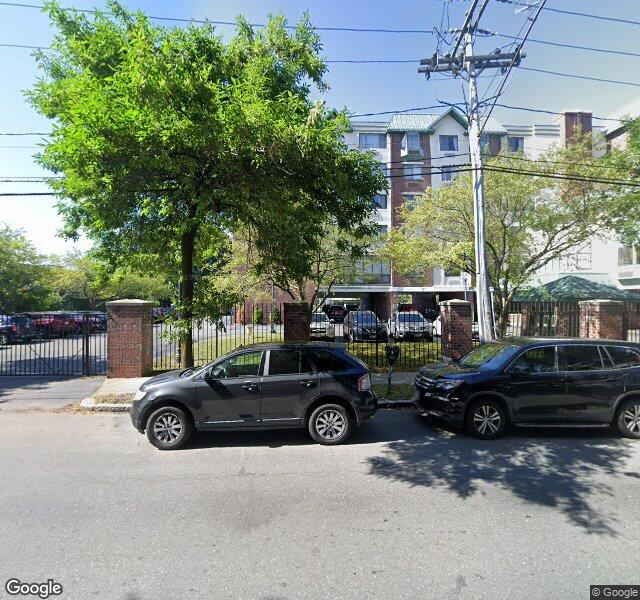
How Does Highland Park Rehabilitation And Healthcare Center Compare to Other Massachusetts Nursing Homes?

Compared to the 100 nursing homes in Massachusetts, HIGHLAND PARK REHABILITATION AND HEALTHCARE CENTER's overall rating (1 stars) is below the state average of 2.9 and health inspection rating (1 stars) is much below the national benchmark.

What Should Families Ask When Visiting Highland Park Rehabilitation And Healthcare Center?

Based on this facility's data, families visiting should ask: "Can you walk me through typical staffing levels on day, evening, and night shifts?" "Can I visit during a mealtime to observe dining assistance and food quality?" "How do you handle medical emergencies, and what is your hospital transfer rate?" "Can I speak with family members of current residents about their experience?" These questions are particularly relevant given the below-average staffing rating.

Is Highland Park Rehabilitation And Healthcare Center Safe?

Based on CMS inspection data, HIGHLAND PARK REHABILITATION AND HEALTHCARE CENTER has a clean safety record: no substantiated abuse findings (meaning no confirmed cases of resident harm), no Immediate Jeopardy citations (the most serious violation level indicating risk of serious injury or death), and is not on the Special Focus Facility watch list (a federal program monitoring the lowest-performing 1% of nursing homes). The facility has a 1-star overall rating and ranks #100 of 100 nursing homes in Massachusetts. While no facility is perfect, families should still ask about staff-to-resident ratios and recent inspection results during their visit.

Do Nurses at Highland Park Rehabilitation And Healthcare Center Stick Around?

HIGHLAND PARK REHABILITATION AND HEALTHCARE CENTER has not reported staff turnover data to CMS. Staff turnover matters because consistent caregivers learn residents' individual needs, medications, and preferences. When staff frequently change, this institutional knowledge is lost. Families should ask the facility directly about their staff retention rates and average employee tenure.

Was Highland Park Rehabilitation And Healthcare Center Ever Fined?

HIGHLAND PARK REHABILITATION AND HEALTHCARE CENTER has been fined $16,543 across 1 penalty action. This is below the Massachusetts average of $33,244. While any fine indicates a compliance issue, fines under $50,000 are relatively common and typically reflect isolated problems that were subsequently corrected. Families should ask what specific issues led to these fines and confirm they've been resolved.

Is Highland Park Rehabilitation And Healthcare Center on Any Federal Watch List?

HIGHLAND PARK REHABILITATION AND HEALTHCARE CENTER is not on any federal watch list. The most significant is the Special Focus Facility (SFF) program, which identifies the bottom 1% of nursing homes nationally based on persistent, serious quality problems. Not being on this list means the facility has avoided the pattern of deficiencies that triggers enhanced federal oversight. This is a positive indicator, though families should still review the facility's inspection history directly.