Hadley Pointe Nursing Rehab & Care
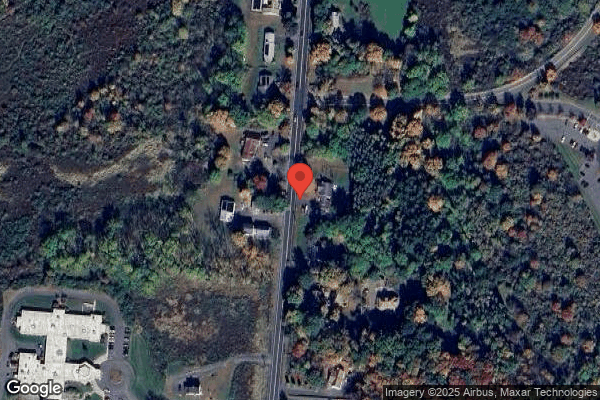
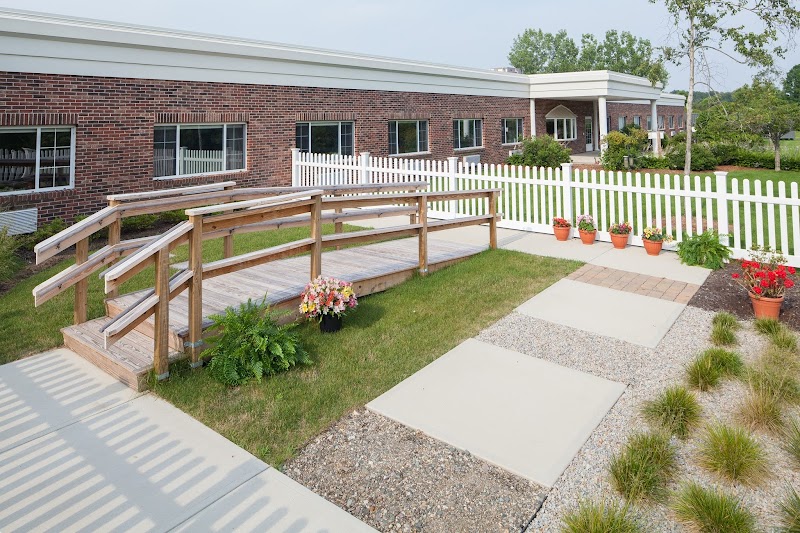
20 NORTH MAPLE STREET, HADLEY, MA 01035 (413) 584-5057
For profit - Corporation 154 Beds GENESIS HEALTHCARE Data: November 2025
Trust Grade
0/100
#291 of 338 in MA
Last Inspection: January 2025

Within standard 12-15 month inspection cycle. Federal law requires annual inspections.

Overview

Hadley Pointe Nursing Rehab & Care has received a Trust Grade of F, indicating significant concerns about the quality of care provided, which places it among the lowest-rated facilities. It ranks #291 out of 338 in Massachusetts, meaning it is in the bottom half of nursing homes in the state, and #4 out of 5 in Hampshire County, suggesting there is only one local option that is better. The facility is worsening, with the number of issues increasing dramatically from 2 in 2024 to 27 in 2025. Staffing is a concern, with a 55% turnover rate, significantly above the Massachusetts average, indicating instability among caregivers. Additionally, the facility faces serious issues, such as reports of inappropriate physical contact by a podiatrist and failures to notify healthcare providers about residents' significant weight loss, which could lead to inadequate treatment. While there is average RN coverage, the overall picture suggests families should carefully consider these factors when researching this nursing home.
Trust Score
F
0/100
In Massachusetts
#291/338
Bottom 14%
Safety Record
High Risk
Review needed
Inspections
Getting Worse
2 → 27 violations
Staff Stability
⚠ Watch
55% turnover. Above average. Higher turnover means staff may not know residents' routines.
Penalties
⚠ Watch
$85,596 in fines. Higher than 87% of Massachusetts facilities, suggesting repeated compliance issues.
Skilled Nurses
⚠ Watch
Each resident gets only 27 minutes of Registered Nurse (RN) attention daily — below average for Massachusetts. Fewer RN minutes means fewer trained eyes watching for problems.
Violations
⚠ Watch
47 deficiencies on record. Higher than average. Multiple issues found across inspections.
★☆☆☆☆
1.0
Overall Rating
★★☆☆☆
2.0
Staff Levels
★★★☆☆
3.0
Care Quality
★☆☆☆☆
1.0
Inspection Score
Stable
2024: 2 issues
2025: 27 issues

The Good

  • Full Sprinkler Coverage · Fire safety systems throughout facility
  • No fines on record

Facility shows strength in fire safety.

The Bad

1-Star Overall Rating

Below Massachusetts average (2.9)

Significant quality concerns identified by CMS

Staff Turnover: 55%

Near Massachusetts avg (46%)

Higher turnover may affect care consistency

Federal Fines: $85,596

Well above median ($33,413)

Moderate penalties - review what triggered them

Chain: GENESIS HEALTHCARE

Part of a multi-facility chain

Ask about local staffing decisions and management

The Ugly 47 deficiencies on record

4 actual harm
Sept 2025 6 deficiencies
CONCERN (D) 📢 Someone Reported This

A family member, employee, or ombudsman was alarmed enough to file a formal complaint

Potential for Harm - no one hurt, but risky conditions existed

Deficiency F0557 (Tag F0557)

Could have caused harm · This affected 1 resident

Based on records reviewed and interviews, for two of four sampled residents (Resident #1 and Resident #2) who were both alert and oriented and dependent on staff for care, the Facility failed to ensur...

Read full inspector narrative →
Based on records reviewed and interviews, for two of four sampled residents (Resident #1 and Resident #2) who were both alert and oriented and dependent on staff for care, the Facility failed to ensure they were both treated in a dignified and respectful manner, when both residents reported that during the overnight shift on 08/17/25, that Certified Nurse Aide (CNA) #1 was abrupt, rude, did not respect their wishes and treated them in an undignified and disrespectful manner. Findings include:Review of the Facility Policy titled Resident Rights, dated as revised 11/28/16, indicated the facility must treat each resident with respect and dignity and care in a manner and in an environment that promotes maintenance or enhancement of his/her quality of life, recognizing each resident's individuality. The Policy indicated the resident has the right to be treated with respect and dignity.1) Resident #2 was admitted to the Facility in August 2025, diagnoses included acute bronchitis, moderate dementia with mood disturbance, and osteoarthritis, multiple sites.Review of Resident #2's Medical Record indicated he/she was responsible for making his/her own medical decisions.Review of Resident #2's Activities of Daily Living (ADL) Baseline Care Plan, dated 08/15/25, indicated he/she was dependent on staff for bathing, bed mobility and transfers due to weakness. Review of the Report submitted by the Facility via the Health Care Facility Reporting System (HCFRS), dated 08/18/25, indicated that on 08/17/25 at 5:45 A.M., Resident #2 alleged that Certified Nurse Aide (CNA) #1 was directing profanity at him/her during care and that his/her roommate witnessed the incident. Review of the Facility's Investigation Summary, dated 08/23/25, indicated that CNA #1 entered Resident #2's room, whipped off the sheets and started providing care without explaining what she was doing. The Summary indicated that Resident #2 alleged that CNA #1 was rude and rough during care. The Summary further indicated Resident #4, the roommate of Resident #2, said that he/she heard CNA #1 use profanity when providing care to Resident #2.Resident #4 was admitted to the Facility in July 2025. Resident #4's most recent Minimum Data Set (MDS) Assessment, dated 08/11/25, indicated Resident #4 was cognitively intact with a score of 15 out of 15 on the Brief Interview for Mental Status (BIMS, scores indicate: 0-7 severe cognitive impairment, 8-12 moderate cognitive impairment, and 13-15 cognitively intact). During a telephone interview on 09/16/25 at 11:12 AM, Resident #2 said that during his/her short term stay at the Facility in August of 2025, CNA #1 provided him/her care on two occasions and was rude and abrupt both times. Resident #2 said that early one morning (unable to recall exact date/time), when it was still dark outside, CNA #1 entered his/her room and without explaining what she was going to do, she abruptly pulled back the bed sheet and started washing the front of his/her body. Resident #2 said that when he/she did not move fast enough, CNA #1 got frustrated and directed profanity at him/her, saying What the fuck, I don't have time for this. and Move your fucking ass, I don't have all day. Resident #2 said that CNA #1 acted extremely unprofessional and that her attitude and demeaning language made him/her feel upset and very agitated. Resident #2 further said that his/her roommate overheard the entire exchange and that they both reported the incident to Nurse #1 the morning of the incident. During an interview on 09/16/25 at 11:00 A.M., Resident #4 said that he/she heard CNA #1 speaking disrespectfully and directing profanity towards Resident #2. Resident #4 said that he/she was in bed, and that CNA #1 and Resident #2 were on the other side of the privacy curtain. Although Resident #4 could not recall the exact date, he/she said the incident occurred very early one morning in August 2025, and that he/she reported the incident to Nurse #1 that same morning. Resident #4 further said that CNA #1 entered the room with a chip on her shoulder and while assisting Resident #2 with his/her care she used harsh language, telling Resident #2 move your fucking ass, I haven't got all day.During a telephone interview on 09/18/25 at 4:23 P.M., Certified Nurse Aide (CNA) #1 said that on 08/16/25 while she was working the evening shift, her boss at the staffing agency pressured her to stay for the overnight shift, into 08/17/25. CNA #1 said that she agreed to stay but said she told her boss that she was very tired and could only work until 5:00 A.M., that day.CNA #1 said that she made a second set of rounds on her residents at 4:00 A.M. so she could leave work by 5:00 A.M. CNA #1 said that Resident #2 was awake when she entered his/her room, and she helped him/her get washed. CNA #1 said she did not use profanity but acknowledged that she got agitated with Resident #2, and told him/her that he/she was aggravating her and that she had wanted to leave by 5:00 A.M. CNA #2 further said, I know I should not have said those things to Resident #2 and that I should have left and got the Nurse instead. During an interview on 09/16/25 at 08:20 A.M., Nurse #1 (which also included a review of her written witness statement dated 08/17/25) said that at 5:45 A.M. on 08/17/25, Resident #2 told her that CNA #1 had come into his/her room that morning to wash him/her up in bed and used profane language while providing care. Nurse #1 said that Resident #2 reported that CNA #1 told him/her You need to fucking move faster, and repeatedly used profanity. Nurse #1 said that Resident #4 was also present and corroborated Resident #2's account of the incident. 2) Resident #1 was admitted to the Facility in August 2019, diagnoses included osteoarthritis, multiple sites, chronic pain syndrome, diabetes mellitus and major depressive disorder, recurrent.Resident #1's Quarterly MDS Assessment, dated 06/19/25, indicated Resident #1 was cognitively intact with a score of 15 out of 15 on the BIMS. Further review of the Assessment indicated Resident #1's range of motion was limited in both lower extremities, and that he/she was totally dependent on staff for ADLs and mobility.Review of Resident #1's ADL Care Plan, dated as reviewed 07/10/25, indicated he/she had limited range of motion in the left leg. The Care Plan identified that Resident #1 required the assistance of two staff members for bed mobility and positioning in bed. The Care Plan further indicated that Resident #1 required a mechanical lift for transfer with assistance from two staff members.Review of the Facility's Investigation Summary, dated 08/22/25, indicated that on 08/17/25, CNA #1 entered Resident #1's room, did not explain what she was going to do, and began rolling him/her over in bed. The Summary indicated that when Resident #1 told CNA #1 to stop because he/she was in pain, CNA #1 did not stop the movement, and yelled at him/her. During an interview on 09/16/25 at 11:12 AM, Resident #1 said that the first time CNA #1 had provided his/her care was during the incident on 08/17/25 just before 5:00 A.M. Resident #1 said that staff usually crossed his/her legs at the ankles when they rolled him/her and that he/she did not have a chance to explain that before CNA #1 suddenly grabbed his/her left leg without warning, bent it upward, and pulled on it to roll him/her over. Resident #1 said he/she told CNA #1, You're hurting me, let go of my leg, but CNA #1 continued moving him/her until he/she was on his/her side, ignoring his/her complaint of pain. Resident #1 said that since he/she was already positioned on his/her side, he/she allowed CNA #1 to provide incontinence care and that CNA #1 was not gentle during the process.CNA #1 said she was aware that Resident #1's Care Plan indicated that he/she required assistance from two staff members with bed mobility. CNA #1 further said that she believed she could move Resident #1 on her own if he/she helped. CNA #1 said that during rounds on 08/17/25, before 5:00 A.M. (exact time unknow), she rolled Resident #1 in bed, without assistance from another staff member because she was too busy to get help. CNA #1 said that Resident #1 stopped helping while she was rolling him/her and that she (CNA #1) would have stopped rolling him/her when asked but continued because she did not want to hurt her own back. CNA #1 said she did not mean to hurt Resident #1 during care.Nurse #1 said that when she administered a medication to Resident #1, on 08/17/25 at 5:30 A.M., Resident #1 told her that CNA #1 hurt his/her left leg during care that morning. Nurse #1 said there were no visible injuries, and that Resident #1 complained of mild pain in the left leg. Nurse #1 said she administered acetaminophen to Resident #1 with good effect.During an interview on 09/16/25 at 4:30 P.M., the Administrator said that in response to the incidents involving Resident #1 and Resident #2, the Staffing Agency was informed that CNA #1 should no longer be assigned to their Facility. The Administrator further said that all residents deserved to be treated with dignity and respect.
CONCERN (D) 📢 Someone Reported This

A family member, employee, or ombudsman was alarmed enough to file a formal complaint

Potential for Harm - no one hurt, but risky conditions existed

Abuse Prevention Policies (Tag F0607)

Could have caused harm · This affected 1 resident

Based on records reviewed and interviews, for one of four residents (Resident #3) who reported a complaint about being neglected to staff member and requested that the staff member write and submit a ...

Read full inspector narrative →
Based on records reviewed and interviews, for one of four residents (Resident #3) who reported a complaint about being neglected to staff member and requested that the staff member write and submit a written complaint on his/her behalf, the Facility failed to ensure that staff implemented and followed their abuse policy, 1) related to the need to immediately report an allegation of abuse to the Administrator and/or Director of Nurses, and 2) for one of four sampled employee files (Activity Assistant #1), the Facility failed to ensure that a Massachusetts Nurse Aide Registry (NAR) background check was conducted upon hire. Findings include:Review of the Facility Policy titled Abuse Prohibition, dated as revised 10/24/22, indicated that anyone who witnesses an incident of suspected abuse, neglect, involuntary seclusion, injuries of unknown origin, or misappropriation of patient property is to tell the abuser to stop immediately and report the incident to his/her supervisor immediately, regardless of what shift worked.Further review of the Policy indicated that potential employees would be screened for a history of abuse, neglect or misappropriation, including checking with the appropriate licensing boards and registries.1) Review of the Report submitted by the Facility via the Health Care Facility Reporting System (HCFRS), dated 08/18/25, indicated that Resident #3 accused Certified Nurse Aide (CNA )#2 of neglect. The Report indicated that Resident #1 alleged that after he/she asked CNA #2 for incontinence care, he/she waited three hours for assistance.Review of a Handwritten Statement, (written by an unidentified staff member at Resident #3's request) signed and dated by Resident #3 on 08/15/25, indicated that he/she sat in an incontinence brief that was soiled with feces for three hours, despite asking CNA #2 for assistance.Resident #3 was admitted to the Facility in June 2025, diagnoses included depression and unsteadiness on feet. Review of Resident #3's admission Minimum Data Set (MDS) Assessment, dated 07/04/25, indicated Resident #3 was cognitively intact with a score of 15 out of 15 on the Brief Interview for Mental Status. (BIMS, scores indicate: 0-7 severe cognitive impairment, 8-12 moderate cognitive impairment, and 13-15 cognitively intact). Further review of the Assessment indicated Resident #3 required substantial assistance from staff with Activities of Daily Living (ADLs) and mobility.During an interview on 09/16/25 at 11:23 A.M., Resident #3 said he/she did not remember all the details of the incident involving CNA #2 but said he/she asked a CNA (exact name unknown) to write a complaint describing the incident and to give it to the Administrator. Resident #3 said he/she had the CNA write the statement because his/her own handwriting was atrocious. During an interview on 09/16/25 at 4:30 P.M., the Administrator said that he was not aware of Resident #3's allegation of neglect involving CNA #2, until he found a Handwritten Statement (that was signed and dated 8/15/25) under his door on 08/18/25 (three days later). The Administrator said the incident was reported to DPH on 08/18/25 when he discovered Resident #3's Statement. The Administrator said he was unable to identify who completed the statement for Resident #3 and left it for him. The Administrator said the expectation was for staff to report any allegations of abuse immediately to their supervisor and/or administration. 2) Review of Activity Assistant #1's personnel file indicated that he was hired on 08/04/25. Further review of the File indicated that there was no documentation to support that a Massachusetts NAR background check was conducted upon hire.During an interview on 09/16/25 at 4:00 P.M., the Human Resource (HR) Representative said that he was new to his HR role, having started in May 2025. The HR Representative said he had only performed NAR checks on nurses and CNAs upon hire and did not realize they were required for all potential employees. During an interview on 09/16/25 at 4:30 P.M., the Administrator said there was no documentation to support that an NAR check was conducted on Activity Assistant #1.
CONCERN (D) 📢 Someone Reported This

A family member, employee, or ombudsman was alarmed enough to file a formal complaint

Potential for Harm - no one hurt, but risky conditions existed

Report Alleged Abuse (Tag F0609)

Could have caused harm · This affected 1 resident

Based on records reviewed and interviews, for two of three sampled residents (Resident #1 and Resident #2), the Facility failed to ensure that after the Director of Nurses (DON) #1 was made aware on 0...

Read full inspector narrative →
Based on records reviewed and interviews, for two of three sampled residents (Resident #1 and Resident #2), the Facility failed to ensure that after the Director of Nurses (DON) #1 was made aware on 08/17/25 at 5:50 A.M., of allegations of abuse made by both of these residents, against Certified Nurse Aide #1, that the allegations were reported to the Department of Public Health (DPH) within two hours as required.Findings include:Review of the Facility Policy titled Abuse Prohibition, dated as revised 10/24/22, indicated that immediately upon receiving information concerning a report of suspected or alleged abuse, mistreatment or neglect, the Administrator or designee will Report allegations [to the appropriate state and local authorities] involving abuse (physical, verbal, sexual, mental) not later than two hours after the allegation is made.Review of the Report submitted by the Facility via the Health Care Facility Reporting System (HCFRS), dated as submitted on 08/17/25 at 10:08 A.M., indicated that Resident #1 alleged that Certified Nurse Aide, (CNA) #1 was rough while providing incontinence care. The Report indicated that CNA #1 took hold of Resident #1's left leg and rolled him/her onto his/her side, which caused pain in his/her left hip. The Report further indicated that when Resident #1 asked CNA #1 to stop, CNA #1 began yelling at him/her. Review of HCFRS indicated a second abuse allegation, involving CNA #1 and Resident #2, was included in the Report submitted on 8/17/25 at 10:08 A.M., and the Department of Public Health (DPH) directed the Facility to resubmit the second incident separately as required. Review of the Report submitted by the Facility via HCFRS, dated as submitted on 08/18/25 at 6:54 P.M., indicated that on 08/17/25 at 5:45 A.M., Resident #2 alleged that Certified Nurse Aide (CNA) #1 directed profanity at him/her during care and that his/her roommate witnessed the incident. Review of a Facility Investigation Summary, dated 08/22/25, indicated the Former DON #1 (hereby referred to as DON #1) received a call at 5:50 A.M., about the incident involving CNA #1 and Resident #1.Review of a Facility Investigation Summary, dated 08/23/25, indicated DON #1 received a call at 7:30 A.M., about the incident involving CNA #1 and Resident #2.During a telephone interview on 09/17/25 at 12:20 P.M., the Director of Nurses (DON) #1 said that he did not recall the exact time he was notified of both abuse allegations.During an interview on 09/16/25 at 4:30 P.M., the Administrator said that staff are expected report any allegations of abuse to Administration immediately, and that administration, in turn, must report those allegations to DPH within two hours as required.
CONCERN (D) 📢 Someone Reported This

A family member, employee, or ombudsman was alarmed enough to file a formal complaint

Potential for Harm - no one hurt, but risky conditions existed

Investigate Abuse (Tag F0610)

Could have caused harm · This affected 1 resident

Based on records reviewed and interviews, after being made aware on 8/17/25, of two separate allegations of resident abuse (the first by Resident #2 and the second a little later that same morning by ...

Read full inspector narrative →
Based on records reviewed and interviews, after being made aware on 8/17/25, of two separate allegations of resident abuse (the first by Resident #2 and the second a little later that same morning by Resident #1) by the same accused staff member (Certified Nurse Aide #1), the Facility failed to ensure that after being made aware of the second allegation, that they obtained and maintained evidence that a thorough investigation was completed, including but not limited to obtaining the accused staff member witness statement and/or an interview about the second allegation. Findings include:Review of the Facility Policy titled Abuse Prohibition, dated as revised 10/24/22, indicated that anyone who witnesses an incident of suspected abuse, neglect, involuntary seclusion, injuries of unknown origin, or misappropriation of patient property is to tell the abuser to stop immediately and report the incident to his/her supervisor immediately, regardless of what shift worked.The Policy indicated that an initial investigation would be initiated within 24 hours and would be thoroughly documented within the risk management portal and would ensure that documentation of witness interviews is included.Review of the Report submitted by the Facility via the Health Care Facility Reporting System (HCFRS), dated 08/18/25, indicated that on 08/17/25 at 5:45 A.M., Resident #2 alleged that Certified Nurse Aide (CNA) #1 was directing profanity at him/her during care and that his/her roommate witnessed the incident. Review of the Facility Investigation file indicated there was no documentation to show that the accused CNA (#1) was interviewed about the incident involving Resident #2 on 08/17/25, and/or that a written witness statement was obtained and maintained by the Facility. During a telephone interview on 09/08/25 at 4:23 P.M., Certified Nurse Aide (CNA) #1 said she worked a double shift at the Facility through a Staffing Agency, beginning on 08/16/25 at 3:00 P.M. and ending on 08/17/25 at 5:30 A.M. CNA #1 said that said that around 5:30 A.M. on 08/17/25, Nurse #1 asked her to complete a written statement regarding an allegation of abuse that had been made by a resident she had on her assignment, and she was directed to leave the Facility. CNA #1 said that later that morning the Agency informed her of a second abuse allegation involving another resident on her assignment. CNA #1 said that although a Police Sergeant contacted her about the second allegation, no one from the Facility reached out for a statement regarding the second allegation.During an interview on 09/16/25 at 08:20 A.M., Nurse #1 said an allegation of abuse involving Resident #1 and CNA #1 was reported to her around 5:30 A.M. on 08/17/25. Nurse #1 said she instructed CNA #1 to complete a witness statement and to leave the Facility, pending investigation. Nurse #1 said that a second allegation of abuse involving CNA #1 was reported at 5:45 A.M., after she (CNA #1) had left the Facility therefore, she was unable to obtain a written statement from CNA #1, about the second allegation. During a telephone interview on 09/17/25 at 12:20 P.M., the Former Director of Nurses (hereby referred to as DON #1) said that he notified the Staffing Agency of the second allegation of abuse involving CNA #1 and asked that she no longer be assigned to the Facility. DON #1 said he did not reach out to CNA #1 for a statement as part of his investigation. During an interview on 09/16/25 at 3:50 P.M., the Current Director of Nurses (DON #2) said there was no documented evidence that a statement was obtained from the accused CNA (CNA #1) regarding the verbal abuse allegation, or that she was interviewed, as required.
CONCERN (D) 📢 Someone Reported This

A family member, employee, or ombudsman was alarmed enough to file a formal complaint

Potential for Harm - no one hurt, but risky conditions existed

Comprehensive Care Plan (Tag F0656)

Could have caused harm · This affected 1 resident

Based on records reviewed and interviews, for one of four sampled residents (Resident #1), who had limited movement in his/her left leg and required assistance from two staff members when turning and ...

Read full inspector narrative →
Based on records reviewed and interviews, for one of four sampled residents (Resident #1), who had limited movement in his/her left leg and required assistance from two staff members when turning and repositioning in bed, the Facility failed to ensure staff consistently implemented and followed his/her care plan interventions related to bed mobility, when on 08/17/25, during the overnight shift, Certified Nurse Aide (CNA) #1 turned and repositioned Resident #1 without another staff member present to assist her, which caused him/her to experience pain. Findings include:Review of the Facility Policy titled: Person-Centered Care Plan, dated as revised 10/24/22, indicated the Facility must develop and implement a person-centered care plan for each patient that includes measurable objectives and timetables to meet a patient's medical, nursing, nutrition, mental and psychosocial needs that are identified in the comprehensive assessments. Further review of the Policy indicated the Care Plan must be customized to each patient's needs and describe services to be furnished. The Policy indicated that the Care Plan will be communicated to appropriate staff, patient, patient representative and family.Resident #1 was admitted to the Facility in August 2019, diagnoses included osteoarthritis, multiple sites, chronic pain syndrome, diabetes mellitus and major depressive disorder, recurrent.Resident #1's Quarterly Minimum Data Set (MDS) Assessment, dated 06/19/25, indicated Resident #1 was cognitively intact with a score of 15 out of 15 on the Brief Interview for Mental Status. (BIMS, scores indicate: 0-7 severe cognitive impairment, 8-12 moderate cognitive impairment, and 13-15 cognitively intact)Further review of the Assessment indicated Resident #1's range of motion in the lower extremities was limited on both sides, and that he/she was totally dependent on staff for Activities of Daily Living (ADLs) and mobility.Review of Resident #1's Activities of Daily Living (ADL) Care Plan, dated as reviewed 07/10/25, indicated he/she had limited range of motion in the left leg. The Care Plan identified that Resident #1 required assistance from two staff members for bed mobility and positioning in bed. The Care Plan further indicated that Resident #1 required a mechanical lift for transfer with assistance from two staff members Review of the Report submitted by the Facility via the Health Care Facility Reporting System (HCFRS), dated 08/17/25, indicated at 5:30 A.M., Resident #1 alleged that Certified Nurse Aide, (CNA) #1 was rough while providing incontinence care. The Report indicated that CNA #1 took hold of Resident #1's left leg and rolled him/her onto his/her side, which caused pain in his/her left hip. The Report further indicated that when Resident #1 asked CNA #1 to stop, CNA #1 continued with the movement. During an interview on 09/16/25 at 11:12 AM, Resident #1 said that the first time CNA #1 provided his/her care was during the incident on 08/17/25 just before 5:00 A.M. Resident #1 said that staff usually crossed his/her legs at the ankles when they rolled him/her and that he/she did not have a chance to explain that before CNA #1 suddenly grabbed his/her left leg without any warning, bent it upward, and pulled on it to roll him/her over. Resident #1 said he/she told CNA #1, You're hurting me, let go of my leg, but CNA #1 continued moving him/her until he/she was on his/her side, ignoring his/her complaint of pain. Resident #1 said that since he/she was already positioned on his/her side, he/she allowed CNA #1 to provide incontinence care and that CNA #1 was not gentle during the process. Resident #1 further said that the Facility staff did not consistently provide assistance from two staff members when assisting him/her with bed mobility.During a telephone interview on 09/18/25 at 4:23 P.M., Certified Nurse Aide (CNA) #1 said she was aware that Resident #1's Care Plan indicated that he/she required assistance from two staff members with bed mobility. CNA #1 further said that she believed she could move Resident #1 on her own if he/she helped. CNA #1 said that during rounds on 08/17/25, before 5:00 A.M. (exact time unknow), she rolled Resident #1 in bed, without assistance from another staff member because she was too busy to get help. CNA #1 said that Resident #1 stopped helping while she was rolling him/her and that she (CNA #1) would have stopped rolling him/her when asked but continued because she did not want to hurt her own back. CNA #1 said she did not mean to hurt Resident #1 during care.During an interview on 09/16/25 at 4:30 P.M., the current Director of Nurses (DON) #2 said that CNAs have access to reference the care plan interventions in the electronic medical record where they document.DON #2 said that Resident #1's Care Plan indicated that he/she required assistance from two staff members for bed mobility, and that CNA #1 should not have rolled Resident #1 without assistance from a second staff member.
CONCERN (D) 📢 Someone Reported This

A family member, employee, or ombudsman was alarmed enough to file a formal complaint

Potential for Harm - no one hurt, but risky conditions existed

Deficiency F0943 (Tag F0943)

Could have caused harm · This affected 1 resident

Based on records reviewed and interviews, for two of four sampled employee personnel files (Certified Nurse Aide, (CNA) #2 and CNA #4), the Facility failed to ensure CNA #2 and CNA #4 received trainin...

Read full inspector narrative →
Based on records reviewed and interviews, for two of four sampled employee personnel files (Certified Nurse Aide, (CNA) #2 and CNA #4), the Facility failed to ensure CNA #2 and CNA #4 received training upon orientation that included the prohibition of all forms of abuse, neglect, exploitation and misappropriation of resident property as required by Federal Regulations, and in accordance with Facility Policy.Findings include: Review of the Facility Policy titled Abuse Prohibition, dated as revised 10/24/22, indicated that abuse prohibition training and reporting obligations would be provided to all employees at orientation and a minimum of annually.Review of Certified Nurse Aide (CNA) #2's personnel file indicated that she was hired on 07/07/24. Further review of the File indicated that there was no documentation to support CNA #2 had received education on abuse during orientation, in accordance with the Facility's Abuse Prohibition Policy.Review of Certified Nurse Aide (CNA) #4's personnel file indicated that she was hired on 08/12/25. Further review of the File indicated that there was no documentation to support CNA #2 had received education on abuse during orientation, in accordance with the Facility's Abuse Prohibition PolicyDuring an interview on 09/16/25 at 4:30 P.M., the Administrator said that he had no documentation to support that CNA #2 and CNA #4 had received education on Abuse Prohibition, in accordance with the Facility's Policy.
Jun 2025 1 deficiency
CONCERN (E) 📢 Someone Reported This

A family member, employee, or ombudsman was alarmed enough to file a formal complaint

Potential for Harm - no one hurt, but risky conditions existed

Deficiency F0760 (Tag F0760)

Could have caused harm · This affected multiple residents

Based on record review and interviews, for one of three sampled residents (Resident #3), who required medication to treat hypotension (low blood pressure) and had a Physician's order to hold (not admi...

Read full inspector narrative →
Based on record review and interviews, for one of three sampled residents (Resident #3), who required medication to treat hypotension (low blood pressure) and had a Physician's order to hold (not administer) the medication for a systolic blood pressure (SBP-top number, represents the pressure in arteries when the heart contracts) greater than 115, the Facility failed to ensure the resident was free from significant medication errors when he/she was administered the medication outside of the prescribed parameter, placing him/her at risk for high blood pressure. Findings include: Review of the Facility policy titled, General Dose Preparation and Medication Administration, revised 01/01/22, indicated facility staff should: -comply with Facility policy, applicable law and the State Operations Manual when administering medications, -verify each time a medication is administered that it is the correct medication, at the correct dose, at the correct route, at the correct rate, at the correct time, for the correct resident, as set forth in the facility's medication administration schedule, -confirm that the MAR reflects the most recent medication order, -if necessary, obtain vital signs. Resident #3 was admitted to the Facility in October 2023, diagnoses included Parkinson's Disease (a nervous system disorder that affects movements, often including tremors) and dementia. Review of Resident #3's Physicians' Order for May 2025, indicated it included orders for, but not limited to the following: Midodrine HCL (medication used to treat low blood pressure) oral tablet 5 milligrams (mg), give one tablet by mouth three times a day for hypotension (low blood pressure). Hold (do not give) for blood pressure with systolic (pressure) greater than 115 or diastolic (pressure) greater than 80, start date 08/21/24. Review of Resident #3's Medication Administration Record (MAR) for May 2025, indicated he/she was administered Midodrine HCL 5 mg by nursing, despite having (per nursing documentation) a systolic pressure reading that was greater than 115, (and therefore per MD orders it should have been held) on the following dates/times: 05/01/25 at 8:00 A.M., BP-126/75 05/10/25 at 2:00 P.M.-BP-116/74 05/11/25 at 8:00 A.M.-BP-157/67 05/11/25 at 2:00 P.M.-BP-122/70 05/12/25 at 8:00 A.M.-BP-122/52 05/14/24 at 5:00 P.M.-BP-124/70 05/17/25 at 8:00 A.M.-BP-125/67 05/17/25 at 2:00 P.M.-BP 116/75 05/17/25 at 5:00 P.M.-BP-118/70 05/18/25 at 2:00 P.M.-BP-116/70 05/31/25 at 2:00 P.M.-BP-118/64 During an interview on 06/11/25 at 3:30 P.M., Nurse #1 said she should not have administered Midodrine to Resident #3 on 05/01/25 and 5/12/25 at 8:00 A.M. when his/her systolic blood pressure was above 115. During an interview on 06/11/25 at 3:30 P.M., the Director of Nurses (DON) said it is the Nurses' responsibility to follow the Physician's orders on the medication administration record (MAR). The DON and the surveyor reviewed Resident #3's MAR for May 2025 and the DON said Resident #3 should not have received Midodrine on the eleven instances when his/her systolic blood pressure was documented above 115, by nursing.
Jan 2025 3 deficiencies 1 Harm
SERIOUS (G) 📢 Someone Reported This

A family member, employee, or ombudsman was alarmed enough to file a formal complaint

Actual Harm - a resident was hurt due to facility failures

Free from Abuse/Neglect (Tag F0600)

A resident was harmed · This affected 1 resident

Based on records reviewed and interviews for two of three sampled residents (Resident #1 and Resident #2) who although they were cognitively impaired, were able to make themselves understood by staff,...

Read full inspector narrative →
Based on records reviewed and interviews for two of three sampled residents (Resident #1 and Resident #2) who although they were cognitively impaired, were able to make themselves understood by staff, the Facility failed to ensure they were free from physical abuse, in the form of unwanted and inappropriate physical contact by a contracted employee (consulting Podiatrist). On 01/02/25, both residents reported that the Podiatrist had touched them in a sexually inappropriate manner and their recounting of the incidents to facility administrative staff and the police remained consistent. Both Resident #1 and Resident #2 reported being shocked after the incidents occurred. Based on the reasonable person concept, it would be more likely than not, that Resident #1 and Resident #2 would have experienced psychosocial harm, recurrent fear, anxiety or anger as a result of the sexual abuse since there is an expectation that they would not be touched inappropriately by a provider that had been entrusted to care for him/her. Findings include: Review of the Facility Policy titled Abuse Prohibition, dated revised 10/24/22, indicated the following: -Centers prohibit abuse, mistreatment, neglect, misappropriation of resident/patient (hereinafter patient) property, and exploitation for all patients. This includes, but is not limited to, freedom from corporal punishment, involuntary seclusion, and any physical or chemical restraint not required to treat the patient's medical symptoms. -Sexual abuse is nonconsensual sexual contact of any type with a patient. It includes but is not limited to sexual harassment, sexual coercion, or sexual assault. 1. Review of the Report submitted by the Facility via the Health Care Facility Reporting System (HCFRS), dated 01/02/25, indicated that Resident #2 reported to a Certified Nurse Aide (CNA) at 1:00 P.M., that when the Podiatrist had finished cutting his/her toenails, he grabbed his/her breasts. Resident #2 was admitted to the Facility in May 2023, diagnoses included dementia and anxiety disorder, and he/she resided on the Memory Care Unit. Review of Resident #2's Quarterly Minimum Data Set (MDS) Assessment, dated 11/21/24, indicated that Resident #2 was severely cognitively impaired, with a score of 4 out of 15 on his/her Brief Interview for Mental Status (BIMS, scores indicate: 0-7 severe cognitive impairment, 8-12 moderate cognitive impairment, and 13-15 cognitively intact). Review of Resident #2's Podiatry Note, dated 01/02/25, indicated the Podiatrist trimmed his/her calluses. During an interview on 01/22/25 at 2:10 P.M., Certified Nurse Aide (CNA) #2 said that on 01/02/25 at approximately 10:30 A.M. she brought Resident #2 to the shower room, where the Podiatrist was seeing residents. CNA #2 said she left the Resident #2 alone with the Podiatrist, once he/she was seated. During an interview on 01/24/25 at 1:52 P.M., Certified Nurse Aide (CNA) #1, described the Podiatrist as average height and weight with salt and pepper hair (mixed dark and gray hair). CNA #1 said the Podiatrist often used the shower room when treating residents on the Memory Care Unit, and that the shower room door closed automatically. CNA #1 said that on 01/02/25 at approximately 1:00 P.M., Resident #2 was walking in the hallway with a strange expression on his/her face, and that she stopped him/her and asked, Are you ok? CNA #1 said that Resident #2 told her that the foot doctor touched his/her breasts and that he/she was surprised and shocked when he did that. CNA #1 said that Resident #2 told her I can't believe that happened! Review of Resident #2's Witness Statement, dated 01/02/25, as told to and documented by the Director of Social Services, indicated that Resident #2 said that the Podiatrist grabbed his/her breasts. The Statement indicated that Resident #2 said the incident occurred in the Podiatrist's room and that he/she described the Podiatrist as heavy, older, and with white hair. The Statement indicated that while the Podiatrist was touching Resident #2's breasts he/she asked the Podiatrist, What are you doing?, and that the Podiatrist responded, I am touching you. The Statement indicated that Resident #2 then told the Podiatrist Keep it to yourself buddy! Review of the Police Report, dated 01/02/25 and timed 3:28 P.M., indicated that when the Officer asked Resident #2 how his/her day had been, he/she began to talk about the Podiatrist without prompting. The Report indicated Resident #2 told the officer, He grabbed my breasts while he/she put his/her hands on his/her breasts to demonstrate. The Report indicated that Resident #2 told the Officer that the incident happened in the show room. The Report indicated that the Officer observed that Resident #2 was clearly upset about the incident. During an interview on 01/22/25 at 3:17 P.M., the Director of Social Services said that despite Resident #2's dementia, he/she was consistent with the details of his/her account of the incident on 01/02/25, when he/she was interviewed by several staff members and the police later that day. 2. Review of the Report submitted by the Facility via the HCFRS, dated 01/02/25, indicated that Resident #1 reported to staff, that when the Podiatrist had finished treating his/her feet, he put his hands down his/her shirt and felt his/her breasts. Resident #1 was admitted to the Facility in March 2021, diagnoses included dementia with mild behavioral disturbance, anxiety disorder and he/she resided on the Memory Care Unit. Review of Resident #1's Quarterly MDS Assessment, dated 11/08/24, indicated that Resident #1 was moderately cognitively impaired, with a score of 7 out of 15 on the BIMS. Review of Resident #1's Podiatry Note, dated 01/02/25, indicated the Podiatrist trimmed his/her calluses. During an interview on 01/22/25 at 1:52 P.M., the Director of Rehabilitation (DOR, which also included a review of her Written Witness Statement dated 01/02/25) said that during an Occupational Therapy session on 01/02/25 just before 1:30 P.M., Resident #1 told her that he/she was inappropriately touched earlier that morning. The DOR said that when she asked Resident #1 who had touched him/her, he/she responded, the man who came to cut my toenails, touched my breast area. Review of Resident #2's Witness Statement, dated 01/02/25, as told to and documented by the Director of Social Services, indicated that Resident #2 said I was feeling OK, until I got my toenails cut. The Statement indicated that Resident #1 reported that after the man (later identified as the Podiatrist) finished cutting his/her toenails, in his/her room, the Podiatrist put his hand down the top of his/her shirt and grabbed his/her breasts. The Statement indicated that Resident #1 described the Podiatrist as medium height with hair that was going gray. The Statement indicated that when Resident #1 told the Podiatrist What do you think you are doing? and stated You don't do this to me!, he answered I want to. The Statement indicated the Podiatrist left Resident #1's room after he/she told him to leave. The Statement indicated the incident occurred before lunch, and that Resident #1 couldn't recall the exact time. The Statement also indicated that Resident #1 was shocked by the Podiatrist's behavior and that he/she said, he was always nice to me before. During an interview on 01/22/25 at 11:20 A.M., Resident #1 told the Surveyor that some of the staff are not nice. When the Surveyor asked Resident #1 for an example, he/she responded, a doctor put his hand down my shirt. Resident #1 said The doctor for my toes put his hand down my shirt and grabbed my breasts. Resident #1 described the doctor as having dark hair that was going gray. Review of the Police Report, dated 01/02/25 and timed 3:28 P.M., indicated that Resident #1 told the Officer that the Podiatrist put his hands down the top of his/her shirt, moved them around, and touched his/her breasts. The Report indicated that Resident #1 had seen the Podiatrist before without incident. The Director of Social Services said that despite Resident #1's dementia, he/she generally had a good grasp on his/her circumstances, recognized staff and often remembered their names. The Director of Social Services said that Resident #1 tended to stay in his/her room and rarely socialized with other residents. The Director of Social Services said that despite the similarities between Resident #1 and Resident #2's allegations, she ruled out the possibility that they may have learned of each other's allegations, because both residents lived on opposite ends of the unit, were on different staffing assignments, did not generally socialize with each other, and did not seek each other out for conversation. During a telephone interview on 01/23/25 at 9:14 A.M., the Podiatrist said that he started covering podiatry services at the Facility last year and that he had been to the Facility a few times. The Podiatrist said he was at the Facility on 01/02/25 for approximately 4 hours, between breakfast and lunch, and that he saw close to 40 residents during that time. The Podiatrist said that he used the shower room to see residents when he provided services on the Memory Care Unit, and that he sometimes treated residents in their rooms as well. The Podiatrist said that the CNAs on the unit helped to transport residents to the shower room, but only assisted him during treatment if a resident was being resistant to care and needed reassurance. The Podiatrist said he was aware of the allegations against him and that he only provided the residents with routine foot checkups. The Podiatrist said that he did not act inappropriately. During an interview on 01/22/25 at 5:15 P.M., the Director of Nurses (DON) said it was alarming that two residents (Residents #1 and #2) that didn't interact with each other had the same allegation on the same day, involving the Podiatrist. During an interview on 01/22/25 at 5:30 P.M., the Administrator said the Company that provided the Podiatrist had been contacted, and that the Podiatrist was no longer allowed at the Facility.
CONCERN (D) 📢 Someone Reported This

A family member, employee, or ombudsman was alarmed enough to file a formal complaint

Potential for Harm - no one hurt, but risky conditions existed

Report Alleged Abuse (Tag F0609)

Could have caused harm · This affected 1 resident

Based on records reviewed and interviews, for two of three sampled residents (Resident #1 and Resident #2), the Facility failed to ensure that after the Director of Nurses (DON) was made aware on 01/0...

Read full inspector narrative →
Based on records reviewed and interviews, for two of three sampled residents (Resident #1 and Resident #2), the Facility failed to ensure that after the Director of Nurses (DON) was made aware on 01/02/25, of allegations of sexual abuse made by both of these residents, against the Podiatrist, that the allegations were reported to the Department of Public Health (DPH) within two hours as required, when they were reported to DPH over four hours later. Findings include: Review of the Facility Policy titled Abuse Prohibition, dated as revised 10/24/22, indicated that immediately upon receiving information concerning a report of suspected or alleged abuse, mistreatment or neglect, the Administrator or designee will perform the following: -Report allegations [to the appropriate state and local authorities] involving abuse (physical, verbal, sexual, mental) not later than two hours after the allegation is made. Review of the Report submitted by the Facility via the Health Care Facility Reporting System (HCFRS), dated as submitted on 01/02/25 at 5:49 P.M., indicated that Resident #1 reported to staff that when the Podiatrist had finished cutting his/her toe nails, he put his hand down his/her shirt and felt his/her breasts. Review of the Report submitted by the Facility via HCFRS dated as submitted on 01/02/25 at 5:52 P.M., indicated that Resident #2 reported to staff that when the Podiatrist had finished treating his/her feet, he grabbed his/her breasts. During an interview on 01/22/25 at 1:00 P.M., the Director of Social Services said that on 01/02/25 at approximately 1:00 P.M., she was notified that Resident #2 alleged that he/she was inappropriately touched by the Podiatrist that morning, after getting his/her toenails cut. The Director of Social Services said that she immediately reported Resident #2's allegation to the DON. The Director of Social Services said that approximately 30 minutes later (around 1:30 P.M.), she was notified that Resident #1 had reported to staff that he/she was inappropriately touched by the Podiatrist, and that she immediately reported that allegation to the DON. During an interview on 01/22/25 P.M. at 5:15 P.M., the Director of Nurses (DON) said that she did not recall the exact times when the sexual abuse allegations were reported to her, but said that by approximately 1:45 P.M., she was aware of both Resident #1 and Resident 2's allegations. The DON further said that she did not report the allegations to DPH within the required two hour time frame because of the extended time it took to summarize and review the allegations with her Corporate Clinical Supervisor.
CONCERN (E) 📢 Someone Reported This

A family member, employee, or ombudsman was alarmed enough to file a formal complaint

Potential for Harm - no one hurt, but risky conditions existed

Abuse Prevention Policies (Tag F0607)

Could have caused harm · This affected multiple residents

Based on records reviewed and interviews, for one of one sampled employee/contracted employee files (consultant Podiatrist) the Facility failed to ensure they developed and implemented Abuse policies ...

Read full inspector narrative →
Based on records reviewed and interviews, for one of one sampled employee/contracted employee files (consultant Podiatrist) the Facility failed to ensure they developed and implemented Abuse policies that included prescreening and training for prospective consultants, contractors, volunteers, caregivers and students, When a Massachusetts Nurse Aide Registry (NAR) check was not conducted on the Podiatrist as required, prior to providing services at the Facility, and there was no evidence he received annual abuse prohibition training. Findings include: Review of the Facility Policy titled Abuse Prohibition, dated as revised 10/24/22, indicated that although the policy outlined how potential employees would be screened for a history of abuse, neglect or misappropriation, including checking with the appropriate licensing boards and registries. Further review of the Policy indicated there was no documentation to address how prospective consultants, contractors, volunteers, caregivers and students would be subject to the same screening, prior to providing services to residents at the Facility. Further review of the Policy indicated that abuse prohibition training and reporting obligations would be provided to all employees at orientation and a minimum of annually. However, the Policy did not address how the training would be provided to consultants, contractors, volunteers, caregivers and students. Review of the Facility Policy titled Consultant Agreements and Responsibilities, dated as revised 03/01/22, indicated there was no documentation to support it addressed how screening for a history of abuse and abuse prohibition training occurs for prospective consultants, contractors, volunteers, caregivers and students. Review of the Podiatrist's Training Transcript, that included training completed between 05/22/22 and 01/22/25, indicated there was no documentation to support that he received training on abuse prohibition and reporting obligations at least annually. During an interview on 01/22/25 at 5:30 P.M., the Administrator said there was no documentation to support that a NAR check was performed on the Podiatrist and that there was no evidence he had been trained on abuse prohibition and reporting obligations at least annually.
Jan 2025 17 deficiencies 2 Harm
SERIOUS (G)

Actual Harm - a resident was hurt due to facility failures

Notification of Changes (Tag F0580)

A resident was harmed · This affected 1 resident

**NOTE- TERMS IN BRACKETS HAVE BEEN EDITED TO PROTECT CONFIDENTIALITY** Based on observation, interview, and record review, the facility failed to notify the Physician/Nurse Practitioner (NP) of chang...

Read full inspector narrative →
**NOTE- TERMS IN BRACKETS HAVE BEEN EDITED TO PROTECT CONFIDENTIALITY** Based on observation, interview, and record review, the facility failed to notify the Physician/Nurse Practitioner (NP) of changes in condition for two Residents (#65 and #85) out of a total sample of 19 residents. Specifically: 1. For Resident #65, facility staff failed to: -notify the Physician/NP timely of significant weight loss which resulted in delayed treatment and monitoring of the Resident, and continued significant weight loss. -notify the Resident's Legal Guardian of a change in treatment relative to significant weight loss prior to initiating medication treatment which required the Guardian's consent. 2. For Resident #85, facility staff failed to: -notify the Physician/NP of significant weight loss identified with weekly weights, resulting in inadequate treatment and monitoring of the Resident's nutritional status. Findings include: Review of the facility's policy titled Weights and Heights, dated 6/1/01 and revised 6/15/22, indicated the following: -Patients are weighed upon admission and re-admission, then weekly for four weeks, and monthly thereafter. -Additional weights may be obtained at the discretion of the interdisciplinary team (IDT). -The purpose was to obtain baseline weight, identify significant weight change, and to determine possible causes of significant weight change. -Refer to Weights and Heights procedure. Review of the facility's procedure titled Weights and Heights, dated 6/1/01 and revised 2/1/23, indicated but was not limited to the following: -A licensed nurse or designee will weigh the patient. -admission and re-admission weights will be obtained within 24 hours of admission. -If the body weight is not as expected, re-weigh the patient. -Significant weight change is defined as >5% in one month >10% in six months -The licensed nurse will: >Notify the physician/APP and Dietician of significant changes. >Document notification of physician/APP and Dietician in the PCC Weight Change Progress Note. Review of the facility's Notification of Change in Condition policy, dated 11/28/16 and revised 7/1/24, indicated the following: -The purpose is to provide appropriate and timely information about changes relevant to the patient's condition. -A center must immediately inform the patient, consult with the patient's physician, and notify, consistent with their authority, the patient's representative, where there is: >a significant change in the patient's physical, mental, or psychosocial status (that is, a deterioration in health, mental or psychosocial status in either life-threatening conditions or clinical complications). >a need to alter treatment significantly (that is, a need to discontinue or change an existing form of treatment due to adverse consequences, or to commence a new form of treatment). 1. Resident #65 was admitted to the facility in July 2022 with diagnoses including Dementia, Hypothyroidism, and Non-toxic Single Thyroid Nodule. Review of Resident #65's Advance Directive Care Plan, initiated 7/19/22 and revised 11/10/23, indicated: -The goal was for the Resident and Guardian to participate in decisions related to medical care and treatment. -The Resident was a full code and had a Legal Guardian. -Staff were to inform the Resident's Guardian of any changes in status or care needs. Review of Resident #65's Nutrition Care Plan, initiated 3/18/24 and revised 10/24/24, indicated: -The Resident was at nutritional risk related to gradual weight loss trend (3/18/24). -Weigh as ordered and alert Dietician and Physician to any significant loss or gain (3/18/24) -Monitor for changes in nutritional status and report to food and nutrition/Physician as indicated (3/18/24). -Monitor intake at all meals, offer alternate choices as needed, alert Dietician and Physician to any decline in intake (3/18/24). -The Resident's goal was to maintain stabilized weight of current body weight (CBW- 120 lbs ) +/- three lbs x 90 days (10/24/24 with a target goal date of 1/21/25). Review of Resident #65's Physician orders, dated 6/15/23 with a start date of 7/1/23 indicated: -weigh monthly. Review of Resident #65's Weights and Vitals Summary indicated the following weights: -7/1/24 -141.7 pounds (lbs) -8/1/24 - 136.4 lbs -9/3/24 -132.2 lbs -10/1/24 - 130.6 lbs (weight change of 7.8% over three months) -10/14/24 - 120 lbs -No weight was documented for November 2024 and December 2024 in the Weights and Vitals Summary -1/1/25 - 90.6 lbs Review of Resident #65's Nurse Practitioner (NP) Note, dated 8/9/24, indicated: -The Resident had experienced a 15 lb weight loss over the last year. -The Resident had unintended weight loss. -The Resident's body mass index (BMI) was still healthy at 23.4. -Consider caloric supplementation if needed. Review of Resident #65's Quarterly Nutrition Assessment, dated 9/16/24, indicated the following: -The Resident's usual body weight (UBW) was 145 lbs. and BMI was within normal limits (WNL) though low for age. -The Resident's diet was appropriate. -The Resident had a gradual weight loss over 180 days. -Continue to follow. Review of Resident #65's Minimum Data Set (MDS) Assessment, dated 9/16/24, indicated: -The Resident was severely cognitively impaired as evidenced by a Brief Interview for Mental Status (BIMS) score of three out of 15 total possible points. -The Resident was independent for eating. -The Resident weighed 132 lbs -Weight loss of greater than five percent in one month or greater than 10% in six months had not been identified. Review of Resident #65's clinical record indicated: -The Resident was discharged to the hospital on [DATE] related to fall with injury and re-admitted to the facility on [DATE] with diagnosis of left hip fracture. -The Resident's re-admission weight obtained 10/14/24, was 120 lbs (15% weight loss over a 90-day period). Review of Resident #65's Physician orders dated 10/24/24, indicated: -House supplements with meals. Review of Resident #65's General Progress Note, dated 10/24/24, and written by the Certified Dementia Practitioner (CDP) indicated: -The Resident's Guardian had been contacted via email that same day with consent forms for medications . -An update was provided on the Resident's medical status. Further review of the General Progress Note did not include information relative to what medications required consent and what update was provided pertinent to the Resident's medical status. Review of Resident #65's November 2024 Medication Administration Record (MAR) indicated: -The Resident's weight was 120 lbs on 11/1/24. -Mirtazapine (Remeron: antidepressant medication that can be used to stimulate one's appetite and requires consent for administration) Tablet 7.5 milligrams (mg), one tablet at bedtime for Dementia was ordered for the Resident on 11/15/24. -Mirtazapine Tablet 7.5 milligrams (mg) was administered to the Resident: >11/15/24 through 11/18/24 >11/21/24 through 11/30/24 -Mirtazapine Tablet 7.5 mg was held on 11/19/24 and 11/20/24, due to no consent to administer the medication. Review of an email communication, dated 11/18/24 (three days after Mirtazapine medication was ordered and administered), from the CDP to Resident #65's Guardian indicated: -A consent for Mirtazapine was attached to the email. -The Resident was not eating well and had experienced a 10% weight loss over the last 180 days. -The Resident was often refusing to eat and often refusing to drink health shakes. -The Resident reports he/she is not hungry. -Consent to administer Mirtazapine was requested in attempt to stimulate the Resident's appetite so that he/she would begin to eat more. Review of Resident #65's clinical record included no evidence the Resident's Guardian was notified of the change in medication to administer Mirtazapine on 11/15/24 and the medication was discontinued on 12/3/24. Review of a Physician order, dated 11/20/24, indicated: -liquid protein daily, 30 cc (unit of measure) one time a day. Review of Resident #65's clinical record included no evidence the Resident was weighed in December 2024. Review of Resident #65's Weights and Vitals Summary indicated the Resident weighed 90.6 lbs on 1/1/25 (24.5% loss in three months: significant weight loss). Review of Resident #65's Quarterly Nutrition Consult, dated 1/13/25, indicated: -The Resident weighed 90.6 lbs and the Resident's BMI was 15.5 (underweight), low. -Current weight shows significant loss, 24.5% x 90 days. -Add nourishment BID (two times daily[the type of nourishment or the amount of nourishment to be provided was not indicated]). -Order weekly weights for four weeks to monitor. -No further assessment needed. Review of Resident #65's clinical record did not include any evidence that the Physician/NP was notified of: -The Resident's significant weight loss on 10/1/24 (130.6 lbs). -The Resident's continued significant weight loss on 10/14/24 (120 lbs) and 1/1/25 (90.6 lbs). -The Dietician's recommendations to add nourishment BID and order weekly weights for four weeks on 1/13/25. On 1/15/25 at 1:10 P.M., the surveyor observed Resident #65 sitting in a wheelchair in the Unit Dining Room wearing a hospital gown that was tied loosely around his/her neck, and forearms and lower legs were exposed. The surveyor observed that the Resident was very thin, both sides of the Resident's neck were sunken in behind his/her collar bone, and the Resident's exposed lower legs and forearms were thin and bony. During an interview on 1/15/25 at 1:23 P.M., CNA #1 said that staff weighed residents monthly, weekly, or daily, and that the Nurse alerted the CNAs relative to when to obtain weights. CNA #1 also said that the Nurses entered the residents' weights into the computer. During an interview on 1/15/25 at 2:04 P.M., the NP said she started providing routine coverage at the facility in October 2024 and saw Resident #65 for the first time on 10/16/24, after the Resident returned from the hospital on [DATE]. The NP said she did not have access to any of the residents' electronic health records for about one month after she began providing routine coverage at the facility and was dependent on staff reports and a written communication log for any changes in residents' conditions during that time. The NP said she had not been alerted that Resident #65 had experienced weight loss and the facility staff did not notify her of Resident #65 having had severe weight loss. The NP said if the facility identified significant weight changes for a resident, the staff would notify her so that she could evaluate the weight loss and implement appropriate treatment interventions. The NP said if the facility had notified her of the Resident's severe weight loss, she would have ordered a chest x-ray and blood work to evaluate for malignancy. The NP said she was not notified that Resident #65's weight was 90.6 lbs on 1/1/25. The NP also said she had not yet been notified of the Dietician's recommendations from 1/13/25 to implement nourishment BID and to order weekly weights. The NP said she wished the facility had notified her of the Resident's weight loss a couple of months ago. During an interview on 1/15/25 at 3:37 P.M., the Dietician said she worked part time at the facility and she did have opportunities where she observed residents eating, but that she was only in the facility approximately one to two times per week, so she depended on staff reports and documentation for monitoring residents for nutrition. The Dietician said the facility held a Risk Meeting weekly and that Resident #65 was discussed weekly at that meeting. The Dietician also said Resident #65 was on her radar for weight loss. The Dietician said that the facility identified Resident #65 as having had a significant weight loss on 10/1/24 and the Resident's weight loss was discussed at the Risk Meeting on 10/3/24. The Dietician said that she assessed Resident #65 on 10/18/24, following the Resident's return to the facility from the hospital on [DATE]. The Dietician said that the re-assessment she completed on 10/18/24 was due to the Resident having had a change in condition relative to a hip fracture. The Dietician said when she re-assessed the Resident on 10/18/24, she recommended house supplements. The Dietician said when she recommends house supplements for residents, either a Nurse or she will enter the order into the computer for the Physician to review within one day of the recommendation. The Dietician further said that she did not enter the order into the computer until 10/24/24 for Resident #65 to be provided with house supplements and that she was unsure why obtaining the order for the house supplements was delayed. During an interview on 1/15/25 at 4:04 P.M., with Unit Manager (UM) #1 and UM #2, UM #1 said that Resident #65 was not eating well and was losing weight when he/she returned from the hospital. UM #2 said that the Resident's Guardian had been contacted regarding initiating Remeron as an appetite stimulant, and the Guardian did not consent to Remeron being administered. UM #1 said that the facility held weekly Risk Meetings where residents with weight loss were discussed. UM #1 said that the Dietician was not always present at the meetings and would send the Risk Team an email with her recommendations for residents with weight loss if she could not be at the meeting. UM #1 said that the Dietician sent an update to the Risk Team for the meeting that was scheduled for 1/9/25 and the Dietician's recommendations included adding nourishment BID and weekly weight monitoring for Resident #65. UM #1 further said that the meeting scheduled for 1/9/25 did not occur and the recommendations made by the Dietician for Resident #65 had not yet been implemented. UM #1 said that the Risk Meeting did not have to occur in order for recommendations to be implemented. During an interview on 1/15/25 5:00 P.M., the Physician said that he had no recall of having been notified of Resident #65's significant weight loss. During an interview on 1/17/25 at 8:05 A.M., Resident #65's Guardian said the facility contacted her via email regarding the Resident's weight loss and requested consent to administer Remeron to the Resident to stimulate his/her appetite. The Guardian said that she read the email on 11/20/24 and spoke with facility staff on 11/20/24 and that staff reported wanting to initiate the use of Remeron in order to try and stimulate the Resident's appetite. The Guardian said that no other interventions had been discussed with her other than use of Remeron on 11/20/24. The Guardian said that she did not provide consent for the Remeron to be administered and she did not understand why the facility staff were recommending Remeron when other non-pharmacological interventions had not been implemented. During a follow-up interview on 1/17/25 at 10:15 A.M., the NP said she ordered 30 cc of liquid protein for Resident #65 on 11/20/24. The NP said she ordered the liquid protein specifically for bone healing due to the Resident having had a hip fracture. The NP said that the liquid protein could have some nutrition supplementation benefit, but she did not order it specific for the Resident's nutrition because she did not know the Resident had significant weight loss. 2. Resident # 85 was admitted to the facility in October 2024, with diagnoses including Alzheimer's Disease, Malignant Neoplasm of Unspecified site of right breast, Major Depressive Disorder, Urinary Tract Infection, Abnormalities of gait and mobility, Generalized muscle weakness. Review of the Minimum Data Set (MDS) Assessment, dated 10/30/24, indicated Resident #85: -had severe cognitive impairment as evidenced by a Brief Interview of Mental Status (BIMS) score of 3 out of 15. -required setup assistance from staff for eating and required moderate assistance from staff for Activities of daily living (ADL) areas (dressing, bathing, positioning, transfers, ambulation). -had a weight of 150 lbs and height of 60 inches. -had no therapeutic weight approaches. -had no known weight loss or gain in the past 6 months. Review of the Medication Administration Record (MAR) for November 2024, indicated a Physician order initiated on 10/28/24, for weights to be obtained every Monday for 4 weeks. Review of Physician orders from October 2024 through January 2025, did not include any orders for ongoing weights, after the initial 4 weeks of weights were completed. Review of the Electronic Record Weights & Vital Signs Module, and MARs for October 2024 and November 2024 indicated: -No record of a weight for the 4th week after admission [DATE] through 11/30/24). Review of the Electronic Record Weights & Vitals indicated the following weights: -10/28/24: 150.4 lbs. -11/4/24: 139.4 lbs. (7.3% loss) -11/11/24: 139.5 lbs. -11/18/24: 144.4 lbs. -12/11/24: 140.8 lbs. -1/16/25: 130.4 lbs. (13% loss) Review of Resident #85's Nutrition Care Plan, initiated 11/14/24, indicated: -Resident was at nutritional risk related to hypercholesterolemia, Hypertension, Alzheimer's Disease, Breast Cancer, UTI, Depression, and poor intake. -Interventions included: >Weigh, as ordered. >alert Dietician and Physician of any significant weight loss or gain. During an interview on 1/15/25 at 9:11 A.M., Certified Nurses Aide (CNA) #5 said that if a resident needs to be weighed, the Nurses let the CNAs know. During an interview on 1/15/25 at 4:05 P.M., Nurse #5 said that residents are weighed upon admission, weekly for 4 weeks, then monthly or per order and the weights are documented on the MAR. Nurse #5 said if a weight loss occurs, the MD[Physician]/NP/Dietician and family are updated right away. Nurse #5 said if staff notice there is a change from the previous weight, then the Resident should be re-weighed to verify the weight is accurate. The surveyor and Nurse #5 reviewed Resident #85's medical record and Nurse #5 said there was no active Physician orders for weights and weights have not been completed since 12/12/24. During an interview on 1/16/25 at 8:14 A.M., UM #2 said Resident #85 had no active weight order and the Physician, NP, Dietician, and family had not been notified of the weight change that occurred between 10/28/24 and 11/4/24, or any other weight loss since admission, but those individuals should have been notified. UM #2 said Nurses ask the CNAs to obtain a weight, when the MAR indicates a weight is due. UM #2 said if there is a discrepancy from the previous weight, then the resident is reweighed. If the resident has a weight loss or gain, the Nurse needs to notify the MD/Family/ Dietician right away. During an interview on 1/16/25 at 12:55 PM, Dietician #1 said that every resident is weighed upon admission, weekly for four weeks then monthly. Dietician #1 said a Physician order should be in the medical record indicating how often a weight is needed. Dietician #1 said that a Nurse should have notified her and the Physician/NP of Resident #85's significant weight loss (-7.3%) on 11/4/24, but they were not notified until 1/16/25. Dietician #1 said the last time she had seen Resident #85 was for his/her admission review on 10/30/24. On 1/16/25 at 1:45 P.M., the surveyor observed staff weighing Resident #85 for a weight of 130.4 lbs. via Hoyer lift scale (lifting device used to assist caregivers). During an interview at the time, UM #1 said that this weight further indicates significant weight loss which would be reported to the Dietician and MD/NP. During an interview on 1/17/25 at 10:49 A.M., the NP said that she was not updated about Resident #85's weight loss prior to 1/16/25, and had she been updated on 11/4/24 that a weight loss had occurred, she would have put interventions into place right away to prevent further weight loss. The NP said she expected that the facility follows their weight policy, and that weights are standard orders upon admission. During an interview on 1/17/25 at 11:37 A.M., Dietician #1 said that the facility should be following their weight policy and said that had she been notified of the weight loss on 11/4/24, she would have completed another Nutrition Consult and potentially initiated nutritional interventions at that time. During an interview on 1/17/25 at 2:16 P.M., CNA #1 said that Nurses alert the CNA's when a weight needs to be obtained, either verbally or write the weight request on the assignment sheets. CNA #1 said some residents receive daily, weekly, or monthly weights depending on what the need is. CNA #1 said that if a weight discrepancy is noticed, the CNA should reweigh the resident right away or the Nurse will tell them to reweigh. CNA #1 said if the resident loses or gains over 5 lbs, they should reweigh and then the Nurse will call the Physician. CNA #1 said staff has a sitting scale, a wheelchair scale, and a Hoyer scale, and all the scales are in good working condition. Please Refer to F657, F692, and F712.
SERIOUS (G)

Actual Harm - a resident was hurt due to facility failures

Deficiency F0692 (Tag F0692)

A resident was harmed · This affected 1 resident

**NOTE- TERMS IN BRACKETS HAVE BEEN EDITED TO PROTECT CONFIDENTIALITY** Based on observation, interview, and record review, the facility failed to maintain acceptable parameters of nutritional status ...

Read full inspector narrative →
**NOTE- TERMS IN BRACKETS HAVE BEEN EDITED TO PROTECT CONFIDENTIALITY** Based on observation, interview, and record review, the facility failed to maintain acceptable parameters of nutritional status for two Residents (#65 and #85) out of a total sample of 19 total residents. Specifically, the facility failed to: 1. For Resident #65, A.-address significant weight loss and implement effective interventions when the Resident was identified to have greater than 7.5 percent (%) weight loss prior to a hospitalization. -adhere to Physician orders for monthly weight monitoring. B.-implement and monitor weekly weights as required after the Resident was hospitalized and re-admitted to the facility. -implement and monitor dietary interventions timely when dietary supplements, additional nourishment, and weekly weights were recommended. -adequately monitor meal and dietary supplement intakes after significant weight loss was identified by facility staff. 2. For Resident #85, -adequately monitor the Resident's weights after admission to the facility, resulting in failure to assess the Resident's significant weight loss in a timely manner. Findings include: Review of the facility's policy titled Weights and Heights, dated 6/1/01 and revised 6/15/22, indicated the following: -Patients are weighed upon admission and re-admission, then weekly for four weeks, and monthly thereafter. -Additional weights may be obtained at the discretion of the interdisciplinary team (IDT). -Hospital weight will not serve as admission or re-admission weight. -The purpose was to obtain baseline weight, identify significant weight change, and to determine possible causes of significant weight change. -Refer to Weights and Heights Procedure. Review of the facility's Weights and Heights Procedure, dated 6/1/01 and revised 2/1/23, indicated the following: -A licensed nurse or designee will weigh the patient. -admission and re-admission weights will be obtained within 24 hours of admission. -If the body weight is not as expected, re-weigh the patient. -The weight will be entered into the Point Click Care (PCC: electronic health record) Weights/Vitals Signs module on that shift. -The Weights Exception Report will be reviewed by a licensed nurse with follow-up as indicated. -Significant weight change is defined as >5% in one month >10% in six months -The licensed nurse will: >Notify the Physician/APP and Dietician of significant changes. >Document notification of Physician/APP and Dietician in the PCC Weight Change Progress Note. Review of the facility's policy titled Food and Nutrition Goals and Objectives, dated 5/1/23, indicated: -The purpose was to provide food and nutrition services to meet the physiological and psychosocial needs of patients/residents. -Resident's nutritional status is assessed, and individualized plan of care is implemented, and outcomes are monitored and evaluated to promote optimal nutritional status. Review of the Centers for Disease Control and Prevention (CDC) guidelines titled Adult BMI (Body Mass Index: calculation used as a potential health indicator) Categories dated 3/19/24, indicated the following relative to BMI for adults [AGE] years of age and older: -BMI of less than 18.5 = underweight -BMI of 18.5 to less than 25 = healthy weight -BMI of 25 to less than 30 = overweight -BMI of 30 or greater = obesity 1A. Resident #65 was admitted to the facility in July 2022 with diagnoses including Dementia, Hypothyroidism, and Non-toxic Single Thyroid Nodule. Review of Resident #65's Dietary Activity Log indicated the Resident had been receiving large portions of food for meals and fortified oatmeal for breakfast since 3/18/24. Review of Resident #65's Physician orders, dated 6/15/23 with a start date of 7/1/23, indicated: -weigh monthly. Review of Resident #65's Weights and Vitals Summary indicated the Resident weights as follows: -7/1/24: 141.7 pounds (lbs) -8/1/24: 136.4 lbs -9/3/24: 132.2 lbs -10/1/24: 130.6 lbs (weight change of 7.8% over three months) -10/14/24: 120 lbs -No weight was documented for November 2024 and December 2024 in the Weights and Vitals Summary -1/1/25: 90.6 lbs Review of Resident #65's Nurse Practitioner (NP) Note, dated 8/9/24, indicated the Resident: -was seen for an annual exam. -experienced a 15 lb weight loss over the last year. -had unintended weight loss. -body mass index (BMI) was still healthy at 23.4. -appeared well-nourished. -had no edema. -should be considered for caloric supplementation if needed. -Nursing reported good PO (per os: by mouth) intake. Review of Resident #65's Quarterly Nutrition Assessment, dated 9/16/24, indicated: -The Resident's usual body weight (UBW) was 145 lbs. -The Resident's BMI was within normal limits (WNL) though low for age. -The Resident's diet was appropriate. -The Resident had a gradual weight loss over 180 days. -Continue to follow. Further Review of the Quarterly Nutrition assessment dated [DATE], did not indicate that the Resident's weight loss from the 7/1/24 weight was addressed. Review of Resident #65's Minimum Data Set (MDS) Assessment, dated 9/16/24, indicated: -The Resident was severely cognitively impaired as evidenced by a Brief Interview for Mental Status (BIMS) score of three out of 15 total possible points. -The Resident was independent for eating. -The Resident weighed 132 lbs. -Weight loss of greater than five percent in one month or greater than 10% in six months had not been identified. Review of Resident #65's Weights and Vitals Summary indicated: -the Resident weighed 130.6 lbs on 10/1/24 -decreased weight from 141.7 lbs on 7/1/24 -with significant loss of 7.8% over three months (7/1/24 - 10/1/24). Further Review of the medical record did not indicate that Resident #65 has been assessed for the 7.8% weight loss identified on 10/1/24. 1B. Review of Resident #65's clinical record indicated: -The Resident was discharged to the hospital on [DATE], related to a fall with injury. -The Resident was re-admitted to the facility on [DATE], with a diagnosis of left hip fracture. -no evidence the Resident was re-assessed by the Dietician between 10/1/24 (when the significant weight loss was identified) and 10/10/24 (when the Resident was discharged to the hospital). -no evidence the facility had implemented any new interventions to address the Resident's significant weight loss between 10/1/24 and 10/10/24, prior to the Resident being hospitalized . -The Resident's re-admission weight obtained 10/14/24, was 120 lbs. Further Review of the clinical record did not indicate that weekly weight monitoring had been implemented as required after Resident #65 was re-admitted to the facility. Review of Resident #65's Nutrition Care Plan, initiated 3/18/24 and revised 10/24/24, indicated: -The Resident was at nutritional risk related to gradual weight loss trend (3/18/24). -Weigh as ordered and alert Dietician and Physician to any significant loss or gain (3/18/24). -Monitor for changes in nutritional status and report to food and nutrition/Physician as indicated (3/18/24). -Monitor intake at all meals, offer alternate choices as needed, alert Dietician and Physician to any decline in intake (3/18/24). -Offer alternate food choices if less than 50% consumed at mealtime (3/18/24). -Provide large entree portions and fortified oatmeal with breakfast (3/18/24). -The Resident's goal was to maintain stabilized weight of current body weight (CBW: 120 lbs ) +/- three lbs x 90 days (10/24/24 with a target goal date of 1/21/25). Review of Resident #65's October 2024 Physician orders indicated: -An order, initiated on 7/21/22 and discontinued on 10/31/24, for regular diet texture. -An active order, initiated 10/31/24 with no stop date, for regular liberalized diet, regular texture, standard thin liquids consistency. -An active order, initiated 10/24/24 with no stop date, for House Supplement with meals. Review of Resident #65's Nurse Practitioner (NP) Note, dated 10/16/24, indicated: -The Resident was seen for a routine visit following hospitalization. -The Resident had Dementia and decline was expected. -Continue supportive care. Further review of the NP Note did not include any evidence the Resident had been evaluated for significant weight loss. Review of Resident #65's Activities of Daily Living Care Plan, initiated 7/19/22 and last revised 10/14/24, indicated: -May require assistance for eating due to Dementia and new hip fracture 10/10/24, which is not being surgically repaired. -Provide assist of one for eating. Review of Resident #65's clinical record indicated the Dietician did not assess the Resident after re-admission to the facility on [DATE] until 10/18/24. Review of the Resident's Nutrition Consult, dated 10/18/24, indicated: -The Consult was being completed due to the Resident having had a significant change in status due to a fall and subsequent injury. -The Resident's current weight was 120 lbs, and was significant for weight loss of 13% over 180 days. -The Resident's BMI was 20.6, within normal limits, low for age. -Will add House Supplement BID (twice daily) with lunch and dinner. -Will continue to follow with changes. Review of Resident #65's Nutrition Progress Note, dated 10/18/24, indicated: -A Nutrition Assessment was completed that same day. -The Resident's Nutrition Concern(s) Category: No concern(s) identified. Review of Resident #65's Significant Change in Status MDS, dated [DATE], indicated: -The Resident was severely cognitively impaired as evidenced by a BIMS score of one out of 15 total possible points. -The Resident had no episodes of rejection of care. -The Resident required substantial/maximal assistance (helper does more than half the effort) for eating. -The Resident weighed 120 lbs. -The Resident had experienced significant weight loss and was not on a Physician prescribed weight loss regimen. Review of Resident #65's NP Notes, dated 10/19/24 and 10/21/24, indicated the Resident was seen for acute rounding visits. Neither NP Note indicated that the Resident was evaluated for significant weight loss. Review of Resident #65's Physician orders dated 10/24/24, indicated that House Supplements were not ordered for the Resident until 10/24/24 (six days after the Dietician's recommendation on 10/18/24). Further review of the Physician's orders failed to indicate: -ordered amounts for the supplement that was to be provided. -instructions for monitoring the amount of the supplements consumed by the Resident. Review of Resident #65's NP Note, dated 10/25/24, indicated: -The Resident was seen for acute rounding relative to persistent pain. -The Resident had been progressively declining since his/her hip fracture and was expected to decline. -The Resident's Guardian was in agreement to expand guardianship to change code status. -Continue supportive care. Further review of the NP Note did not include any evidence the Resident was evaluated for significant weight loss. Review of Resident #65's NP Notes, dated 10/31/24, 11/5/24, 11/8/24, and 11/13/24 indicated: -The Resident was progressively declining since his/her hip fracture and was expected to decline. Review of the 11/13/24 NP Note indicated that the Resident's current Advanced Directive was for full code (all medical measures will be taken to maintain life) status. Further review of each NP Note included no evidence that the Resident's significant weight loss had been evaluated by the NP. Further Review of the medical record did not indicate that weekly weights for Resident #65 had been obtained since re-admission to the facility. Review of Resident #65's October 2024 Medication Administration Record (MAR) indicated the following: -No house supplements were administered to the Resident on 10/24/24 and 10/25/24 (ordered by the Physician on 10/24/24). -House supplements were administered to the Resident with meals from 10/26/24 through 10/31/24. Further Review of the October 2024 MAR did not indicate the quantity of the House Supplements consumed by the Resident. Review of Resident #65's Certified Nurses Aide Documentation Survey Report (flow sheet) for eating indicated: -Meal percentages consumed for 30 of 56 meals provided on the day (7:00 A.M. through 3:00 P.M.) shift to the Resident were not recorded in October 2024. -Meal percentages consumed for 17 of 27 meals provided on the evening (3:00 P.M. through 11:00 P.M.) shift to the Resident were not recorded in October 2024. Review of Resident #65's November 2024 Medication Administration Record (MAR) indicated: -The Resident's weight was 120 lbs on 11/1/24. -The house supplement was administered to the Resident with meals between 11/1/24 and 11/30/24. -The Resident refused the house supplement five times. Further review of the November 2024 MARs did not include any information relative to the amounts of the house supplements the Resident consumed. Review of Resident #65's Certified Nurses Aide Documentation Survey Report (flow sheet) for November 2024 for eating indicated: -Meal percentages consumed for 16 of 58 meals provided on the day shift to the Resident were not recorded in November 2024. -Meal percentages consumed for four of 26 meals provided on the evening shift to the Resident were not recorded in November 2024. Review of a Physician order dated 11/20/24, indicated: -liquid protein daily, 30 cc (unit of measure) one time a day. Review of Resident #65's clinical record included no evidence that the Resident was weighed in December 2024. Review of Resident #65's NP Note, dated 12/16/24, indicated: -The Resident had trace (minimal) edema in both lower extremities. -The Resident remained a full code status. Further review of the NP Note included no evidence the Resident's significant weight loss had been evaluated by the NP. Review of Resident #65's Weights and Vitals Summary indicated the Resident weighed 90.6 lbs on 1/1/25 (24.5% loss in three months: significant weight loss). Further review of the Resident's Weights and Vitals Summary included no evidence that the Resident was re-weighed when the weight of 90.6 lbs was obtained (which indicated a loss of 29.4 lbs since the previously obtained weight in November 2024). Review of Resident #65's December 2024 Medication Administration Record (MAR) indicated: -The house supplement was administered to the Resident with meals between 12/1/24 and 12/31/24. Review of Resident #65's Certified Nurses Aide Documentation Survey Report (flow sheet) for December 2024 for eating indicated: -Meal percentages consumed for 16 of 56 meals provided on the day shift to the Resident were not recorded in December 2024. -Meal percentages consumed for 10 of 29 meals provided on the evening shift to the Resident were not recorded in December 2024. Review of Resident #65's January 2025 Medication Administration Record (MAR) indicated: -The house supplement was administered to the Resident with meals between 1/1/25 and 1/15/25. Further review of Resident #65's January 2025 MAR included no information to indicate the percentage of the house supplements the Resident consumed. Review of Resident #65's Certified Nurses Aide Documentation Survey Report (flow sheet) for January 2025 for eating indicated: -Meal percentages consumed for eight of 32 meals provided on the day shift to the Resident were not recorded between 1/1/25 and 1/15/25. -Meal percentages consumed for six of 14 meals provided on the evening shift to the Resident were not recorded between 1/1/25 and 1/15/25. On 1/10/25 at 9:21 A.M., the surveyor observed Resident #65 lying in his/her bed, wearing a hospital gown. The Resident was observed to have a small amount of oatmeal on the front of his/her hospital gown and was pulling the front of the hospital gown away from his/her body. Review of Resident #65's Quarterly Nutrition Consult, dated 1/13/25, indicated: -The Resident weighed 90.6 lbs and the Resident's BMI was 15.5 (underweight), low. -The Resident ate independently, supervision as needed. -Regular liberalized diet remained appropriate for promoting adequate intake to meet the Resident's estimated needs. -Meal intakes are 75-100% most meals. -Intake observation for meals was obtained via meal intake records. -Excellent appetite. -Current weight shows significant loss: 24.5% x 90 days. -Add nourishment BID (the type of nourishment or the amount of nourishment to be provided was not indicated). -Order weekly weights for four weeks to monitor. -No further assessment needed. On 1/15/25 at 1:10 P.M., the surveyor observed Resident #65 sitting in a wheelchair in the Unit Dining Room. The Resident was wearing a hospital gown that was tied loosely around his/her neck and his/her forearms and lower legs from the calf down to his/her ankles were exposed. The surveyor observed that the Resident was very thin and both sides of the Resident's neck were sunken in behind his/her collar bone, and the Resident's exposed lower legs and forearms were thin and boney. During an interview on 1/15/25 at 1:23 P.M., CNA #1 said that house supplements were delivered to the Unit by the kitchen staff and that House supplements were not stocked on the Unit. CNA #1 said that the kitchen staff sent one House supplement for each meal on Resident #65's meal trays. CNA #1 said that Resident #65 often consumed the house shakes and that the Resident enjoyed food items that were sweet tasting. CNA #1 also said that meal percentages consumed for every meal provided were to be recorded in the computer for all residents. CNA #1 said that not all meals got recorded at times when there was too much going on the Unit and if there were staff call-outs. CNA #1 said that residents are weighed monthly, weekly, or daily, depending on what the residents need and that the Nurse alerts the CNAs to weights needing to be obtained. CNA #1 said that the Nurse was responsible to enter the residents' weights into the computer as the CNAs were not allowed to enter the weights. During an interview on 1/15/25 at 2:04 P.M., the NP said she had started providing routine coverage at the facility in October 2024 and that she had seen Resident #65 for the first time on 10/16/24, after the Resident returned from the hospital on [DATE]. The NP said she did not have access to any of the residents' electronic health records for about one month after she began providing routine coverage at the facility and that she was dependent upon staff reports and a written communication log for any changes residents may have experienced during that time. The NP said she had not been alerted that Resident #65 had experienced weight loss. The NP said if the facility identified a significant weight change, she should have been notified in order to implement effective dietary interventions, and if necessary, testing to rule out any medical causes for the significant weight change. The NP said if she had been alerted to Resident #65 having a significant weight change, she would have ordered dietary supplementation, such as health shakes, and if weight loss continued, she would have ordered a chest x-ray and additional blood work to evaluate for malignancy. The NP said that she was not notified that the Resident experienced significant weight loss in October 2024 and that the Resident's weight was down to 90.6 lbs as of 1/1/25. The NP also said she had not yet been informed of the Dietician's recommendations to implement weekly weights and nourishment BID following the Dietician's assessment on 1/13/25. The NP said she wished the facility had notified her a couple of months ago that the Resident's weight was trending down and that the Resident had significant weight loss. During an interview on 1/15/25 at 3:37 P.M., the Dietician said she worked part time at the facility. The Dietician said that she did have opportunities where she observed residents eating, but that she was only in the facility approximately one time per week, so she depended on staff reports and documentation for monitoring residents for nutrition. The Dietician said the facility held a Risk Meeting weekly and that Resident #65 was discussed weekly at that meeting. The Dietician also said Resident #65 was on her radar for weight loss. The Dietician said the facility identified Resident #65 as having had a significant weight loss on 10/1/24 and that the Resident's weight loss was discussed at the Risk Meeting on 10/3/24. The Dietician said although the Resident had a gradual weight loss over the previous year that was identified in August 2024, and a significant weight loss identified on 10/1/24, no new interventions were implemented for the Resident following the Risk Meeting held on 10/3/24. The Dietician said that she was continuing to monitor the Resident for dietary supplementation need. The Dietician said that Resident #65's meal intake percentages were not bad and that she monitored meal intake percentages based off of the meal percentage intakes that were entered into the computer. The Dietician also said the facility was good about entering meal percentage intakes. When the surveyor asked about the meal percentage monitoring when several meals were not entered into Resident #65's record, the Dietician said she did not think meal intake percentage recording had been a problem and she would have to look into it. The Dietician said that she did not see Resident #65 between 10/1/24 and 10/10/24, when the Resident was discharged to the hospital, and that she did not re-assess the Resident until 10/18/24, following the Resident's return to the facility on [DATE]. The Dietician said that the re-assessment she completed on 10/18/24 was due to the Resident having had a change in condition relative to a hip fracture and that the change in condition assessment was not triggered due to weight loss. The Dietician said that when she re-assessed the Resident on 10/18/24, she recommended house supplements. The Dietician further said she did not enter the order into the computer until 10/24/24 for the Resident to be provided with house supplements and that she was unsure why obtaining the order for the house supplements was delayed. During an interview on 1/15/25 at 4:04 P.M., with Unit Manager (UM) #1 and UM #2, UM #1 said that Resident #65 was not eating well and was losing weight when he/she returned from the hospital. UM #2 said no interventions were implemented relative to the Resident's weight loss. UM #1 said that Resident #65's weight was down to 90.6 lbs on 1/1/25, the weight was discussed at the facility's weekly Risk Meeting and no re-weight was requested by the Dietician. UM #2 said she did not think the Resident's weight of 90.6 lbs was accurate and that she had requested CNAs re-weigh the Resident. UM #2 asked the surveyor if the re-weight was in the Resident's clinical record. UM #1 was observed to review the Resident's clinical record and said that the record included no information relative to a re-weigh after the weight that was obtained on 1/1/25. UM #1 also said the Dietician did not always attend the weekly Risk Meeting and that the Dietician would provide an email to the facility with recommendations for residents. UM #1 said that the Dietician sent an update to the Risk Team for the meeting that was scheduled for 1/9/25 and the Dietician's recommendations included adding nourishment BID and weekly weight monitoring for Resident #65. UM #1 further said that the meeting scheduled for 1/9/25 did not occur and the recommendations made by the Dietician for Resident #65 had not yet been implemented. UM #1 said that the Risk Meeting did not have to occur in order for recommendations to be implemented. UM #1 also said that Resident #65 received house supplements and the amount consumed by the Resident should be monitored in the Resident's clinical record. UM #2 said she did not know why Resident #65's re-weight from 1/1/25 was not in the Resident's record and that she was going to re-weigh the Resident. On 1/15/25 at 5:15 P.M., the surveyor observed UM #2 request that CNA #6 assist her to weigh Resident #65. CNA #6 assisted the Resident to his/her room and UM #2 transported the chair scale to the Resident's room for weighing. UM #2 said the Resident's weight was 101.2 lbs. UM #2 said that the Resident's current weight still indicated a significant weight loss over the last three months. UM #2 further said, the process is broken. Let's just say that. On 1/16/25 at 8:40 A.M., during an observation and interview, the surveyor observed Resident #65 lying in bed. There were two meal carts observed on the Unit at the time and the surveyor observed CNA #2 passing meal trays from the meal carts to residents in their rooms. CNA #2 said that she was passing meal trays to residents who ate in their rooms and that she would be assisting Resident #65 to eat. The surveyor observed UM #2 in the hallway and asked UM #2 if the surveyor could observe Resident #65's breakfast meal tray. UM #2 removed the tray from the meal cart and picked up the meal ticket which indicated special request for House supplement. The surveyor observed the Resident's breakfast tray contained a covered plate and a covered bowl that UM #2 said was fortified oatmeal. The breakfast tray did not contain a house supplement. UM #2 said that the house supplement was a health shake that was to be sent to the Unit on the Resident's meal tray from the kitchen. UM #2 said that House supplements were not stocked on the Units and it was the kitchen staffs' responsibility to send the house supplements on the meal trays. UM #2 said she needed to go to the kitchen to obtain a house supplement to give to Resident #65. On 1/16/25 at 8:47 A.M., the surveyor observed Resident #65 holding a house supplement while sitting up in bed. The Resident took two sips of the house supplement through a straw, then held the supplement in front of him/herself. During an interview on 1/16/25 at 8:50 A.M., CNA #2 said that she normally assisted Resident #65 to eat breakfast. CNA #2 said that it was hit or miss relative to the Resident accepting the house supplement. CNA #2 said that she found that the Resident more frequently did not accept the house supplement than accept the house supplement at breakfast. CNA #2 also said that Resident #65 required physical assistance from staff to eat. On 1/16/25 at 9:10 A.M., the surveyor observed Resident #65 positioned upright in bed. CNA #2 was seated next to the Resident's bed assisting the Resident to eat. The Resident was eating slowly and accepting small bites of french toast. The surveyor observed the bowl of fortified oatmeal was uncovered, and the bowl was still full. During an interview on 1/17/25 at 7:55 A.M., the Regional Nurse said Nurses are triggered to obtain residents' weights when they view the administration records in the electronic health records. The Regional Nurse said that when the Nurse records the weights into the administration record, that record of weight does not automatically transfer into the Weights and Vitals module in PCC and the Nurse would then have to also enter the weight into the Weights and Vitals module. The Regional Nurse said that he would not expect the Nurses to have to record the weight twice because the weight was already recorded in the clinical record. The Regional Nurse also said that the Weights Exception Report was generated by the weights entered into the Weights and Vitals module in PCC, so if only the Weights Exception Report was being reviewed, staff would miss identifying significant weight changes if not reviewing all of the weight information in the clinical record. The Regional Nurse said that the Nurses were responsible to determine whether a weight obtained was accurate, whether a re-weigh was required, and obtain a re-weight. During a follow-up interview on 1/17/25 at 10:15 A.M., the NP said she ordered 30 cc of liquid protein for Resident #65 on 11/20/24. The NP said she ordered the liquid protein specifically for bone healing due to the Resident having had a hip fracture. The NP said that the liquid protein could have some nutrition supplementation benefit, but that she did not order it specific for the Resident's nutrition because she did not know the Resident had significant weight loss. 2. Resident #85 was admitted to the facility in October 2024, with diagnoses including Alzheimer's Disease, Malignant Neoplasm of Unspecified site of right breast, Major Depressive Disorder, and Urinary Tract Infection. Review of the Minimum Data Set (MDS) Assessment, dated 10/30/24, indicated Resident #85: -had severe cognitive impairment as evidenced by a Brief Interview of Mental Status (BIMS) score of 3 out of 15. -required setup assistance from staff for eating and required moderate assistance from staff for Activities of Daily Living (ADL) areas (dressing, bathing, positioning, transfers, ambulation). -had a weight of 150 lbs and height of 60 inches. -had no therapeutic weight approaches. -had no known weight loss or gain in the past 6 months. -was at risk for developing pressure ulcers. Review of the Electronic Record Weights & Vital Signs Module, and Medication Administration Records for October 2024, November 2024, and December 2024, indicated the following weights were obtained: -10/28/24: 150.4 lbs (three individual weight entries of 150.4 lbs were documented on this date) -11/4/24: 139.4 lbs (decrease of 7.3 % in less than 30 days) -11/11/24: 139.5 lbs. -11/18/24: 144.4 lbs. -No evidence of weight obtained on the fourth week after admission. (11/24/24 through 11/30/24) -12/11/24: 140.8 lbs. -No evidence of the Resident having been weighed between 1/1/25 and 1/15/25 (prior to the surveyor's inquiry on 1/16/25). -1/16/25: 130.4 lbs (20 lbs. weight decline since admission and 13% weight decline over three months/ 90 days). Further review of the Weights & Vitals Record indicated the Resident experienced a 7.3 % weight loss (significant) from 10/28/24 to 11/4/24. There was no evidence that a re-weigh was obtained after the weight obtained on 11/4/24, that validated the accuracy of the Resident's weight. Review of Resident #85's clinical record did not include evidence that the facility assessed the Resident to determine if interventions should be implemented to address the weight loss. Review of the Nutrition Care Plan initiated 11/18/24, for Nutritional Risk, indicated Resident #85: -was at nutritional risk related to Alzheimer's disease, breast cancer, Depression and poor intake. -Weigh as ordered, and alert Dietician and Physician of any significant weight loss or gain. -Honor food preferences within meal plan. -Monitor for changes in Nutritional status (changes in intake, ability to feed self, unplanned weight loss/gain, abnormal labs) and report to food and nutrition/physician as indicated. -Monitor intake at all meals, offer alternative choices as needed, alert Dietician and Physician to any decline in intake. During an interview on 1/15/25 at 9:11 A.M., CNA #5 said that if a resident needed to be weighed, the Nurses let the CNAs know. During an interview on 1/15/25 at 4:05 P.M., Nurse #5 said that residents are weighed upon admission, weekly for 4 weeks, then monthly or per order and the weights are documented on the MAR. Nurse #5 said if a weight loss occurs, the MD[Physician]/NP/Dietician and family are updated right away. Nurse #5 said if staff notice there is a change from the previous weight, then the resident should be re-weighed to ensure the weight was accurate. The surveyor and Nurse #5 reviewed Res
CONCERN (D)

Potential for Harm - no one hurt, but risky conditions existed

Resident Rights (Tag F0550)

Could have caused harm · This affected 1 resident

**NOTE- TERMS IN BRACKETS HAVE BEEN EDITED TO PROTECT CONFIDENTIALITY** Based on observation, interview, and record review, the facility failed to ensure two Residents (#59 and #85), out of a total sa...

Read full inspector narrative →
**NOTE- TERMS IN BRACKETS HAVE BEEN EDITED TO PROTECT CONFIDENTIALITY** Based on observation, interview, and record review, the facility failed to ensure two Residents (#59 and #85), out of a total sample of 19 residents, were provided with a dignified dining experience. Specifically, the facility failed to: 1. Provide Resident #85 timely assistance with feeding, after leaving a tray of food in front of the Resident and out of reach of the Resident, which resulted in an undignified dining experience. 2. Provide Resident #59 with an uninterrupted meal, when staff removed the Resident from the meal to provide wound care and treatment, which resulted in the Resident missing a meal. Findings include: Review of facility Resident Rights dated 11/26/16 indicated: -The resident has the right to be treated with respect and dignity, including: >the right to reside and receive services in the facility with reasonable accommodation of resident needs and preferences except when to do so would endanger the health and safety of the resident or other residents. -The resident has the right to a safe, clean, comfortable, and homelike environment, including but not limited to receiving treatment and supports for daily living safety. Review of the facility policy titled Resident Rights, revised 2/1/23, indicated the following: -Patients/Residents (herein after resident) have the fundamental right to considerate care that safeguards their personal dignity along with respecting cultural, social and spiritual values. -Purpose: >to treat each resident with respect and dignity and care for each resident in a manner and in an environment that promotes maintenance or enhancement of his/her self-esteem and self-worth. >to incorporate the resident's goals, preferences, and choices into care. 1. Resident # 85 was admitted to the facility in October 2024, with diagnoses including Alzheimer's Disease, Major Depressive Disorder, and Urinary Tract Infection. Review of the Minimum Data Set (MDS) Assessment, dated 10/30/24, indicated Resident #85: -had severe cognitive impairment as evidenced by a Brief Interview of Mental Status (BIMS) score of 3 out of 15. -required setup assistance from staff for eating and required moderate assistance from staff for Activities of Daily Living (ADL) areas (dressing, bathing, positioning, transfers, ambulation). -had a weight of 150 lbs and height of 60 inches. -had no therapeutic weight approaches. -had no known weight loss or gain in the past 6 months. -was at risk for developing pressure ulcers. On 1/16/25 at 8:18 A.M., the surveyor observed Resident #85 seated at the dining table with two residents, one of whom was being assisted to eat by a staff member, and one was eating independently. Resident #85 had not been provided with food or drinks. On 1/16/25 at 8:20 A.M., the surveyor observed staff placing Resident #85's breakfast tray on the table in front of him/her, and the food remained covered with a lid over the plate, and not within reach of the Resident. On 1/16/25 at 8:27 A.M., the surveyor observed Resident #85 seated at the table watching his/her tablemates eat their breakfast while his/her tray remained covered and out of reach on the table in front of him/her. On 1/16/25 at 8:42 A.M., the surveyor observed CNA #1 sit beside Resident #85, uncover the food and began assisting Resident #85 to eat. During an interview on 1/16/25 at 9:20 A.M., CNA #1 said that Resident #85 ate 75% of his/her meal with assistance. CNA #1 said Resident #85 sat for an extended amount of time at the table, watching tablemates eat, with food in front of him/her but out of reach. CNA #1 said the food tray should not have been put in front of Resident #85 until staff were ready to assist in feeding. CNA #1 said that the Resident could not reach the food and did not have the ability to feed him/herself. CNA #1 said Resident #85 should not have to sit and watch other people eat, while he/she could not feed him/herself. CNA #1 said the staff have been struggling with meal trays coming from the kitchen on different food carts and is not always consistent causing residents sitting at the same table to eat at different times. During an interview on 1/16/25 at 12:15 P.M., the Certified Dementia Practitioner (CDP) and Unit Manager (UM) #2 said Resident #85 should not have waited twenty-two minutes with the tray in front of him/her, without being assisted to eat. The CDP and UM #2 said that Residents sitting at the same table should receive meal trays at the same time, to promote a dignified meal experience. Both staff members further said that Resident #85's food should have been reheated, or a new tray obtained and that staff have been struggling with meal pass and tray service in relation to where people are sitting, and which meal truck the tray arrives on. 2. Resident #59 was admitted to the facility in February 2024 with diagnoses including Unspecified Dementia, Type 2 Diabetes, Dysphagia, and history of Cerebral Infarction. Review of Resident #59's MDS assessment dated [DATE], indicated the Resident: -Scored one out of 15 possible points on the Brief Interview of Mental Status (BIMS), indicating severe cognitive impairment. -Required supervision for eating. -Was dependent on staff for personal hygiene. -Required Maximum assistance from staff for dressing, bed mobility and standing. -Had an unstageable pressure injury (type of pressure injury that has full-thickness skin and tissue loss in which the extent of tissue damage within the ulcer cannot be confirmed because it is obscured). Review of Resident #59's Activities of Daily Living (ADL) Care plan, initiated 2/27/24, indicated: -Resident was dependent on staff for eating, transfers, and locomotion related to impaired cognition and weakness. -Eat in a supervised area. -Provide set-up and supervision for eating. -Encourage Resident to attend meals in the dining room. On 1/15/25 at 8:21 A.M., the surveyor observed Resident #59 seated in the dining area with his/her breakfast tray set up in front of him/her. Unit Manager (UM) #2 was observed prompting Resident #59 to eat by placing a utensil in his/her hand, followed by the Resident taking one bite then putting his/her utensil down. On 1/15/25 at 8:27 A.M., the surveyor observed the Wound Nurse remove Resident #59 from the dining room, leaving his/her breakfast uncovered on the table. Resident #59 was observed to be brought to his/her room to be seen by the facility Wound Nurse and the contracted Wound Specialist. On 1/15/25 at 8:57 A.M., the surveyor observed CNA #4 remove Resident #59's partially eaten breakfast tray from the dining table and place it in the food cart. During an interview at the time, CNA #4 said the Resident ate 25% of his/her meal. On 1/15/25 at 9:06 A.M., the surveyor observed Resident #59 remain in his/her room after the Wound Nurse left the room. CNA #1 returned the Resident to the dining area and no food items or drinks were offered to Resident #59 upon return to the dining room. During an interview on 1/15/25 at 9:40 A.M., CNA #4 said the Resident was not sitting at the table when she removed the breakfast tray, because he/she was being seen by the Wound Nurse. CNA #4 said she did not offer Resident #59 additional food items and did not offer to reheat his/her food when he/she returned to the dining room but should have. CNA #4 said the Resident should not have been removed while eating a meal but said this consistently happens every week with wound rounds interrupting mealtime. During an interview on 1/15/25 at 9:41 A.M., CNA #1 said that resident mealtimes are consistently interrupted every week from wound rounds and staff have informed the Nurses that this has been a problem. During an interview on 1/15/25 at 9:45 A.M., Unit Manager (UM) #2 said that it is an ongoing issue that wound rounds happen at 8:00 A.M. and meals are interrupted. UM #2 said that staff did not recognize Resident #59's breakfast had not been eaten, until the surveyor brought it to their attention. UM #2 said the Resident's mealtime should not have been interrupted, staff should have offered him/her a new tray or reheated his/her food. UM #2 then gave Resident #59 a supplement shake (nutritional shake to help supplement caloric needs) and said that meal consumption can impact wound healing and was very important. During an interview on 1/15/25 at 10:38 A.M., the Wound Nurse said she did remove the Resident during breakfast by telling him/her it was time to be seen by the Wound Consultant and the Resident was returned to the dining room, but after his/her food was removed.
CONCERN (D)

Potential for Harm - no one hurt, but risky conditions existed

Deficiency F0551 (Tag F0551)

Could have caused harm · This affected 1 resident

Based on interview, and record review, the facility failed to uphold resident rights for one Resident (#65), out of a total sample of 19 residents, relative to rights exercised by the Resident's Repre...

Read full inspector narrative →
Based on interview, and record review, the facility failed to uphold resident rights for one Resident (#65), out of a total sample of 19 residents, relative to rights exercised by the Resident's Representative. Specifically, the facility failed to provide Resident #65's Representative with the right to make an informed decision relative to the administration of a new medication (Remeron [Mirtazapine]- antidepressant medication requiring informed consent for administration) when: -The Resident had been deemed incapacitated by the Court. -The Resident had a court appointed Legal Guardian. -The facility initiated administration of Mirtazapine to the Resident without consent from the Resident's Legal Guardian. Findings include: Review of the facility's policy titled Resident Rights Under Federal Law, dated 6/1/96 and revised 2/1/23, indicated the following: -The purpose included to protect and promote the rights of residents. -Practice standards included helping the resident/representative understand and exercise their rights. Resident #65 was admitted to the facility in July 2022 with diagnoses including Dementia. Review of Resident #65's Minimum Data Set (MDS) Assessment, dated 10/19/24, indicated: -The Resident was severely cognitively impaired as evidenced by a BIMS score of one out of 15 total possible points. -The Resident had no episodes of rejection of care. -The Resident exhibited behavioral symptoms not directed toward others on one to three days during the observation period for the Assessment. -The mood interview was completed with the Resident and the Resident reported no mood issues. -The Resident required substantial/maximal assistance (helper does more than half the effort) for eating. -The Resident weighed 120 lbs. -The Resident had experienced significant weight loss and was not on a Physician prescribed weight loss regimen. -The Resident was not taking any antidepressant medication. Review of Resident #65's November 2024 Physician orders indicated: -Mirtazapine 7.5 milligram (mg) Tablet, give one tablet by mouth at bedtime for Dementia, initiated 11/15/24 Review of Resident #65's November 2024 Medication Administration Record (MAR) indicated: -Mirtazapine was administered to the Resident, as ordered by the Physician, on 11/15/24 through 11/18/24 (four consecutive days). -Mirtazapine was held on 11/19/24 and 11/20/24. -Mirtazapine was administered to the Resident, as ordered by the Physician on 11/21/24 through 11/30/24. Review of Resident #65's Nursing Notes, dated 11/19/24 and 11/20/24, indicated Mirtazapine was held due to no consent to administer the medication. Review of an email communication sent from the Certified Dementia Practitioner (CDP) to Resident #65's Legal Guardian, dated 11/18/24 (three days after Mirtazapine medication was ordered and administered to the Resident), indicated: -A consent for Mirtazapine was attached to the email. -The Resident was not eating well and had experienced a 10% weight loss over the last 180 days. -The Resident was often refusing to eat and often refusing to drink health shakes. -The Resident reports he/she is not hungry. -Consent to administer Mirtazapine was requested in attempt to stimulate the Resident's appetite so that he/she would begin to eat more. Review of Resident #65's December 2024 MAR indicated: -Mirtazapine was administered to the Resident on 12/1/24 and 12/2/24. -Mirtazapine was discontinued on 12/3/24. Review of Resident #65's clinical record did not include any evidence the Resident's Legal Guardian consented to the administration of Mirtazapine for the Resident. During an interview on 1/15/24 at 4:04 P.M., with Unit Manager (UM) #2 and the CDP, UM #2 said that the Resident had experienced weight loss and the facility had discussed initiating Mirtazapine as an appetite stimulant for the Resident. The CDP said that she sent an email communication to the Resident's Legal Guardian and that the Legal Guardian did not consent to the administration of Mirtazapine for the Resident, so the Mirtazapine/Remeron could not be administered. During an interview on 1/17/25 at 8:05 A.M., Resident #65's Legal Guardian said she had been contacted by the facility via email, which she read on 11/20/24, relative to the Resident losing weight and the facility's request to obtain consent for the administration of Mirtazapine to the Resident. The Legal Guardian said she did not provide consent for the administration of Mirtazapine and she did not understand why the Mirtazapine needed to be implemented when other non-pharmacological interventions had not been discussed with her first. Please Refer to F580, F657, F692, and F712.
CONCERN (D)

Potential for Harm - no one hurt, but risky conditions existed

Safe Environment (Tag F0584)

Could have caused harm · This affected 1 resident

**NOTE- TERMS IN BRACKETS HAVE BEEN EDITED TO PROTECT CONFIDENTIALITY** Based on observation, and interview, the facility failed to provide a clean and homelike environment for two Residents (#3, and ...

Read full inspector narrative →
**NOTE- TERMS IN BRACKETS HAVE BEEN EDITED TO PROTECT CONFIDENTIALITY** Based on observation, and interview, the facility failed to provide a clean and homelike environment for two Residents (#3, and #32) out of a total sample of 19 residents. Specifically, the facility failed to: 1. for Resident #3, ensure that personal clothing was kept safe from loss when clothing items was consistently lost and/or not delivered from laundry services back to the Resident. 2. for Resident #32, ensure that personal clothing was returned to the Resident after being laundered by a facility contractor to mitigate the Resident's family needing to frequently purchase and replace his/her clothing. Findings include: Review of the facility policy, titled Personal Property, revised 8/15/23, indicated: -Personnel will identify and record the patient's/resident's belongings upon admission to the Center. -The facility staff will protect the patient's right to retain their personal belongings and preserve the patient's individuality and dignity. Review of the facility policy, titled Resident Rights, revised 2/1/23, indicated that the facility will exercise reasonable care for the protection of the resident's property from loss or theft. 1. Resident #3 was admitted to the facility in August 2023 with diagnoses of Dementia and Depression. Review of the Minimum Data Set (MDS) assessment dated [DATE], indicated Resident #3 was cognitively impaired as evidenced by a Brief Interview for Mental Status (BIMS) score of seven out of 15 total possible points. During an interview and observation on 1/10/24 at 10:29 A.M., Resident #3 was observed watching TV seated in a wheelchair next to his/her bed. Resident #3 said his/her only concern was many of his/her clothes were missing. Resident #3 said sometimes facility staff are able to locate the missing items, but most of the time the facility staff borrow other residents' clothes to dress him/her. The Resident further said he/she would always find other residents' clothing in his/her closet. 2. Resident #32 was admitted to the facility in July 2021 with diagnoses of Anxiety Disorder, Dementia, and Depression. Review of the MDS assessment dated [DATE], indicated Resident #32 was severely cognitively impaired as evidenced by a BIMS score of three out of 15 total possible points. During an interview on 1/10/25 at 10:41 A.M., Family Member #1 said Resident #32's clothing had persistently gone missing. Family Member #1 said each time he/she would bring this concern up, the facility staff would inform him/her that it was because the Resident's clothing was laundered outside the facility by a contracted company, and it was difficult for the facility to trace the Resident's clothing. Family Member #1 said he/she was tired of buying new clothing every week for Resident #32. During the Resident Council Group Meeting held on 1/14/25 from 2:00 P.M., through 2:45 P.M., 14 out of the 14 residents in attendance said their major concern was having their personal clothing returned to them after it was sent out to be laundered. One resident said his/her family member had to repeatedly purchase socks for him/her. All of the 14 residents said they had discussed these concerns with staff, but the missing clothing concern had not been resolved. During an interview on 1/15/25 at 10:12 A.M., the Activity Director (AD) said the facility had an outside company which laundered residents clothing, and the missing personal belongings had been an on-going concern for the residents and their families. During an interview on 1/15/24 at 2:46 P.M., the facility Administrator said the facility had an outside company that laundered the residents clothing. The Administrator said the laundry company would pick up the soiled residents clothing three times a week and would return the laundered residents clothing three times a week. The Administrator said the residents missing clothing had been a concern for a period of time. The Administrator further said she had no system for tracking which clothing items were sent to be laundered and which items were returned. During an interview on 1/17/25 at 1:01 P.M., Certified Nurses Aide (CNA) #1 said he would return the residents clothing to their closet when the laundry was brought back, but most of the time it would take about six months before some of the residents missing clothing would be returned from the laundry company. CNA #1 said the residents personal clothing items are picked up and returned by an outside company three times a week. Please Refer to F585
CONCERN (D)

Potential for Harm - no one hurt, but risky conditions existed

Deficiency F0637 (Tag F0637)

Could have caused harm · This affected 1 resident

**NOTE- TERMS IN BRACKETS HAVE BEEN EDITED TO PROTECT CONFIDENTIALITY** Based on interview, and record review, the facility failed to ensure that Significant Change in Minimum Data Set (MDS) Assessmen...

Read full inspector narrative →
**NOTE- TERMS IN BRACKETS HAVE BEEN EDITED TO PROTECT CONFIDENTIALITY** Based on interview, and record review, the facility failed to ensure that Significant Change in Minimum Data Set (MDS) Assessments (SCSA) were completed for one Resident (#59), out of a total sample of 19 residents. Specifically, the facility failed to ensure a SCSA was completed when the Resident #59 experienced a decline in activities of daily living (ADLs) and skin condition. Findings include: Review of the Long-Term Care Facility Resident Assessment Instrument 3.0 User's Manual, Version 1.18.11, dated October 2023, indicated the following: -The SCSA is a comprehensive assessment for a resident that must be completed when the Interdisciplinary Team (IDT) has determined that a resident meets the significant change guidelines for either a major improvement or decline. -A significant change is a major decline or improvement in a resident's status that: >Will not normally resolve itself without intervention by staff or by implementing standard disease-related clinical interventions, the decline is not considered self-limiting. >Impacts more than one area of the resident's health status. >Requires interdisciplinary review and/or revision of the care plan. -An SCSA is appropriate when: >There is determination that a significant change (either improvement or decline) in a resident's condition from their baseline has occurred as indicated by comparison of the resident's current status to the most recent comprehensive assessment and any subsequent quarterly assessments. Resident #59 was admitted to the facility in February 2024, with diagnoses including Unspecified Dementia, Type 2 Diabetes, Difficulty in walking, Lack of Coordination, Dysphagia, History of Cerebral Infarction. Review of Resident #59's quarterly MDS assessment dated [DATE], indicated the Resident: -Required maximum assistance from staff for upper body dressing. -Was dependent on staff for personal hygiene. -Required maximum assistance from staff for bed mobility. -Required maximum assistance from staff for sit to stand ability. -Did not ambulate -Had an unstageable pressure injury (type of pressure injury that has Full-thickness skin and tissue loss in which the extent of tissue damage within the ulcer cannot be confirmed because it is obscured). Review of the Resident #59's prior quarterly MDS assessment dated [DATE], indicated the Resident: -Required moderate assistance from staff for upper body dressing. -Required maximum assistance from staff for personal hygiene. -Required supervision from staff for bed mobility. -Required supervision from staff to ambulate up to 50 feet. -Required moderate assistance from staff to ambulate up to 150 ft. -Did not have any pressure injury. During an interview on 1/17/25 at 11:19 A.M., MDS Nurse #1 said she refers to the Long-Term Care Facility Resident Assessment Instrument (RAI) Manual to decide whether a SCSA is needed. The surveyor and the MDS Nurse reviewed Resident #59's most recent quarterly MDS assessment dated [DATE], and Resident #59's prior quarterly MDS assessment dated [DATE]. The MDS Nurse said Resident #59 had multiple declines in his/her status and his/her last quarterly MDS Assessment should have been completed as a SCSA, and but had not been. The MDS Nurse said Resident #59's decline did not appear to be self-limiting or that the decline would resolve without staff intervention.
CONCERN (D)

Potential for Harm - no one hurt, but risky conditions existed

Deficiency F0645 (Tag F0645)

Could have caused harm · This affected 1 resident

Based on interview and record review, the facility failed to complete a Level I Preadmission Screening and Resident Review (PASRR) for one Resident (#58) out of a total sample of 19 residents. Specifi...

Read full inspector narrative →
Based on interview and record review, the facility failed to complete a Level I Preadmission Screening and Resident Review (PASRR) for one Resident (#58) out of a total sample of 19 residents. Specifically, the facility failed to completed a Level I PASRR Screening for Resident #58 in a timely manner which resulted in the Resident's admission to the facility without determination whether the Resident screened positive for intellectual disability (ID)/developmental disability (DD) or serious mental illness (SMI) requiring further evaluation. Findings include: Review of the facility's policy titled Preadmission Screening for Mental Disorder and/or Intellectual Disability Patients, dated 6/1/01 and revised 2/16/24, indicated the following: -All individuals are screened for mental disorders (MD) and/or ID prior to admission. -The PASRR will be placed in the patient's medical record. Resident #58 was admitted to the facility in December 2024, with diagnoses including Bipolar Disorder, Depression, Anxiety Disorder, and Dementia. Review of the Resident's clinical record did not include any evidence that a Level I PASRR had been completed. During an interview on 1/16/25 at 10:57 A.M., Social Worker (SW) #2 said that she, SW #1, and the Certified Dementia Practitioner (CDP) all had the ability to complete Level I PASRR screenings for residents prior to their admission to the facility. SW #2 said she usually completed the Level I PASRRs and that when she was not available, either SW #1, or the CDP would complete the screenings. SW #2 said that she would have to review the Resident's clinical record and the electronic PASRR portal to locate the Level I PASRR screening for Resident #58. During a follow-up interview on 1/16/25 at 11:30 A.M., SW #2 provided a copy of Resident #58's Level I PASRR screening dated 12/26/24 (completed after the Resident was admitted to the facility). SW #2 said that she did not work from when the facility received notification the Resident would be admitted until 12/26/24. SW #2 said when she came into work on 12/26/24, she noticed that Resident #58's Level I PASRR screening had not been completed, and she completed it at that time. SW #2 further said that this was not the first time a resident was admitted to the facility when she has been unavailable and a Level I PASRR Screening has not been completed timely. SW #2 said that she has reminded other staff of the requirement for Preadmission Screening.
CONCERN (D)

Potential for Harm - no one hurt, but risky conditions existed

Deficiency F0657 (Tag F0657)

Could have caused harm · This affected 1 resident

**NOTE- TERMS IN BRACKETS HAVE BEEN EDITED TO PROTECT CONFIDENTIALITY** Based on observation, interview, and record review, the facility failed to review and revise the care plan for one Resident (#65...

Read full inspector narrative →
**NOTE- TERMS IN BRACKETS HAVE BEEN EDITED TO PROTECT CONFIDENTIALITY** Based on observation, interview, and record review, the facility failed to review and revise the care plan for one Resident (#65), with the participation of the Resident's Representative, following the completion of one comprehensive assessment. Specifically, facility staff failed to review and revise the care plan when Resident #65 sustained a fall with fracture, experienced a significant change in condition, and a comprehensive assessment for significant change in status (SCSA) was completed. Findings include: Review of the facility's policy titled Person-Centered Care Plan, dated 11/28/16 and revised 10/24/22, indicated the following: -Care plans will be reviewed and revised by the interdisciplinary team (IDT) after each assessment, including both the comprehensive and quarterly review assessments, and as needed to reflect the response to care and changing needs and goals. -A comprehensive, individualized care plan will be developed within seven days after completion of the comprehensive assessment (admission, annual, or SCSA) and review and revise the care plan after each assessment. -Care plan meetings will be documented on the Care Plan Evaluation Note. Resident #65 was admitted to the facility in July 2022, with diagnoses including Dementia, Hypothyroidism, and Non-toxic Single Thyroid Nodule. Review of Resident #65's Advance Directive Care Plan, initiated 7/19/22 and revised 11/10/23, indicated: -The goal was for the Resident and Guardian to participate in decisions related to medical care and treatment. -The Resident was a full code and had a Legal Guardian. Review of Resident #65's Minimum Data Set (MDS) Assessment, dated 9/16/24, indicated: -The Resident was severely cognitively impaired as evidenced by a Brief Interview for Mental Status (BIMS) score of three out of 15 total possible points. -The Resident was independent for eating, transfers, walking, and bed mobility. -The Resident had no pain. -The Resident weighed 132 pounds (lbs) and weight loss of greater than five percent in one month or 10 percent in six months had not occurred or was unknown. Review of Resident #65's Care Plan Meeting Note, dated 10/10/24, indicated the following: -An IDT Care Plan Meeting was held on 10/10/24. -The Resident ambulated (walked) independently. -The Resident ate with set-up. -The Resident's Guardian did not attend the Care Plan Meeting. Review of Resident #65's clinical record indicated: -The Resident was discharged to the hospital on [DATE], related to a fall with injury. -The Resident was re-admitted to the facility on [DATE], with a diagnosis of left hip fracture. Review of Resident #65's SCSA MDS, dated [DATE], indicated: -The Resident was severely cognitively impaired as evidenced by a BIMS score of one out of 15 total possible points. -The Resident required substantial/maximal assistance to eat. -The Resident was dependent on staff to roll left to right. -Transfers and walking were not attempted due to medical condition or safety concern. -The Resident expressed vocal complaints of pain. -Indications of pain or possible pain were observed daily. -The Resident experienced weight loss of greater than five percent on one month or 10 percent in six months. -The Resident was not on a Physician prescribed weight loss regimen. -The Resident weighed 120 lbs. Review of Resident #65's clinical record did not include any evidence that an IDT Care Plan Meeting was held following completion of the Resident's SCSA. On 1/15/25 at 1:10 P.M., the surveyor observed Resident #65 sitting in a wheelchair in the Dining Room, was wearing a hospital gown that was tied loosely around his/her neck, and his/her lower legs were exposed from the calf down to his/her ankles and his/her forearms were also exposed. The surveyor observed that the Resident was very thin and both sides of his/her neck were sunken in behind his/her collar bone, and the Resident's exposed forearms and lower legs were thin and bony. On 1/15/25 at 5:15 P.M., the surveyor observed Resident #65 seated in a wheelchair in the Dining Room. The surveyor observed Certified Nurses Aide (CNA) #6 approach the Resident and ask if he could assist the Resident back to his/her room. The Resident was observed to agree and CNA #6 transported the Resident back to his/her room by means of pushing the wheelchair. On 1/16/25 at 9:10 A.M., the surveyor observed Resident #65 positioned upright in bed. CNA #2 was seated next to the Resident's bed assisting the Resident to eat by loading the Resident's fork with pieces of french toast and bringing the french toast to the Resident's mouth. The Resident was observed eating slowly and accepting small bites of food. During an interview on 1/17/25 at 8:05 A.M., Resident #65's Legal Guardian said the facility always invited her to IDT Care Plan Meetings for Resident #65 and that if she was unable to attend in person, she would try to attend by phone. Resident #65's Legal Guardian said she could not recall the date of the last IDT Care Plan Meeting she was invited to. During an interview on 1/17/25 at 10:48 A.M., Social Worker (SW) #2 said the IDT did not hold a Care Plan Meeting for Resident #65 to review and revise his/her care plan after the SCSA was completed because the IDT had just held a meeting on 10/10/24. SW #2 said that since the IDT had met just prior to the SCSA, the Team did not need to meet. When the surveyor asked whether the Resident's status had changed between the time the IDT met on 10/10/24 and when the SCSA was completed, SW #2 said she did not know. Please Refer to F692 and F712.
CONCERN (D)

Potential for Harm - no one hurt, but risky conditions existed

Deficiency F0698 (Tag F0698)

Could have caused harm · This affected 1 resident

Based on record review, and interview, the facility failed to provide care and services consistent with professional standards of practice for one Resident (#49) for one applicable resident, out of a ...

Read full inspector narrative →
Based on record review, and interview, the facility failed to provide care and services consistent with professional standards of practice for one Resident (#49) for one applicable resident, out of a total sample of 19 residents, who required renal dialysis (a procedure to remove waste products and excess fluid from the body when the kidneys stop functioning properly). Specifically, the facility failed to communicate and maintain ongoing documentation with the dialysis center to ensure that the dialysis center and facility received the most current information pertaining to Resident #49. Findings include: Review of the facility policy titled, Dialysis, revised 6/1/21, indicated: -Patients who required HD (hemodialysis) services receive care consistent with professional standards of practice, the comprehensive person-centered care plan, and the patient's goals and preferences. Professional standards of practice include: >Ongoing assessment of the patient's condition and monitoring for complications before and after HD treatments received at a certified dialysis facility. >Ongoing assessment and oversight of the patient before and after HD treatments, including monitoring for complications, implementing appropriate interventions, and using appropriate infection control practices. >Ongoing communication and collaboration with the certified dialysis facility regarding HD care and services. Resident #49 was admitted to the facility in January 2022 with diagnoses including Repeated Falls, Vascular Dementia, and Chronic Kidney Disease (CKD) Stage 4. Review of Resident #49's January 2025 Physician's orders indicated: -Resident goes to Dialysis Mondays, Wednesdays and Fridays at 4:55 A.M., dated 12/3/24 -Please include most recent labs in dialysis binder and also Physician Consult sheet for dialysis visits to enhance communication every Monday, Wednesdays and Friday, dated 7/8/24. -Please request that Dialysis Center send a copy of any lab draws they perform back with Resident in his/her communication binder, dated 7/8/24. Review of Resident #49's communication binder indicated that the facility did not communicate any information from the facility to the dialysis center on the following dates: -10/3/24, 10/11/24 -11/4/24, 11/22/24,11/29/24 -12/2/24, 12/6/24,12/11/24,12/16/24,12/22/24,12/27/24,12/29/24 -1/3/25, 1/8/25 During an interview on 1/16/25 at 9:11 A.M., the surveyor and Nurse #3 reviewed the dialysis communication sheet. Nurse #3 said there was no communication from the facility to the dialysis center on the dates listed here. During an interview on 1/16/25 at 11:00 A.M., Unit Manager (UM) #1 said the facility was responsible for sending updated information to the dialysis center on Mondays, Wednesdays, and Fridays, but the facility had not completed the dialysis communication sheet as required, and they should have.
CONCERN (D)

Potential for Harm - no one hurt, but risky conditions existed

Deficiency F0883 (Tag F0883)

Could have caused harm · This affected 1 resident

Based on interview, and record review, the facility failed to ensure that an Influenza (Flu) vaccine was administered to one Resident (#49), out of five applicable residents, out of a total sample of ...

Read full inspector narrative →
Based on interview, and record review, the facility failed to ensure that an Influenza (Flu) vaccine was administered to one Resident (#49), out of five applicable residents, out of a total sample of 19 residents. Specifically, the facility failed to obtain consent and/or provide education to Resident #49's Health Care Proxy (HCP), when the Resident's HCP was invoked (evaluation of capacity by a Physician that a resident is unable to make medical decisions). Findings include: Review of the facility's policy titled, Influenza Immunization, revised 9/18/24, indicated: -A licensed nurse will provide the appropriate influenza immunizations to patients with patient/health care decision maker consent. -In adherence with the current recommendations of the Advisory Committee on Immunizations Practices (ACIP) as set forth by the Centers for Disease Control and Prevention (CDC). -Facility staff will obtain immunization consent using Patient Informed Consent or Declination form. -If patient/representative refuses influenza immunization, provide information and counseling regarding the benefit of immunization. -If patient/representative refused immunization, document patient's and/or representative's refusal of immunization and education and counseling given regarding the benefit of immunization in the medical record. -Notify attending physician/provider of patient's and/or representative's refusal and document. Review of the CDC guidelines titled Who Needs a Flu Vaccine, dated 10/3/24, indicated the following: -Everyone 6 months and older should get a flu vaccine every season with rare exceptions. Vaccination is particularly important for people who are at higher risk for serious complications from influenza. -Flu vaccination has important benefits. It can reduce flu illnesses, visits to doctor's office's .as well as make symptoms less severe and reduce flu-related hospitalizations and deaths in people who get vaccinated, but still get sick. Review of the CDC guidelines titled People at Increased Risk for Flu Complications, dated 9/11/24, indicated individuals at increased risk for complications of the flu are: -Adults aged 65 and older -People with chronic lung disease -People with blood disorders -People with heart disease -People with a Body Mass Index (BMI) of 40 kg (kilograms)/M (meters) 2 or higher, -People with a weakened immune system due to .chronic conditions requiring chronic corticosteroids or other drugs that suppress the immune system. Resident #49 was admitted to the facility in January 2022 with diagnoses including Repeated Falls, Vascular Dementia, and Chronic Kidney Disease (CKD) Stage 4. Review of Resident #49's Minimum Data Set (MDS) assessment, dated 1/6/25, indicated the Resident was severely cognitively impaired as evidenced by a Brief Interview for Mental Status (BIMS) score of five out of a total possible 15. Review of Resident #49's medical record indicated: -Resident #49 lacked capacity to make and/or to communicate health care decisions. -Physician Documentation of Resident Incapacity was signed by the Physician on 1/12/22, invoking the HCP as the decision maker. -The Physician determined the Resident lacked capacity due to Vascular Dementia, and the duration was unknown. Review of Resident #49's Immunization record in the Resident's electronic medical record indicated that the family declined an Influenza vaccine on 10/10/23, and that education was not provided. Review of an undated and an incomplete Vaccine Consent Form in Resident 49's medical record did not indicate whether the HCP consented to or declined the Influenza vaccination. The Vaccine Consent Form did not indicate whether education had been provided. Further review of Resident #49's medical record did not provide evidence of education to the Resident or their Representative on the risks and benefits or potential side effects associated with the Influenza vaccination. Review of Resident #49's January 2025 Physician orders did not indicate an order for the Resident to receive an Influenza vaccination. During an interview on 1/16/25 at 12:14 P.M., the surveyor and Unit Manager (UM) #1 reviewed Resident #49's clinical record. UM #1 said she was unable to provide evidence that written consent or declination for Influenza vaccination had been obtained since Resident #49's admission, nor could she provide evidence that education on the risks and benefits of the vaccination had been provided to the Resident's invoked HCP. UM #1 further said the facility should have obtained a written consent and educated the HCP, but they had not. UM #1 said the undated and incomplete Vaccine Consent Form was invalid.
CONCERN (D)

Potential for Harm - no one hurt, but risky conditions existed

Deficiency F0909 (Tag F0909)

Could have caused harm · This affected 1 resident

Based on observation, record review, and interview, the facility failed to complete an inspection of the bed rails, to identify areas of possible entrapment for one Resident (#292) out of a total samp...

Read full inspector narrative →
Based on observation, record review, and interview, the facility failed to complete an inspection of the bed rails, to identify areas of possible entrapment for one Resident (#292) out of a total sample of 19 residents. Specifically, for Resident #292, the facility failed to complete a new assessment of the bed, side rails and mattress in active use for potential entrapment when the bed mattress was changed from the previously assessed mattress, placing the Resident who had limited mobility and utilized bilateral side rails, at risk for possible entrapment. Findings include: Review of the facility policy titled Bed Safety, effective 11/28/26 and revised 11/15/24, indicated: -Center Maintenance Director, Administrator, and Director of Nursing will conduct an inspection of all bed frames, mattresses and bed rails, as applicable, as part of a regular maintenance program to identify areas of possible entrapment. -Inspections (audits) will occur at a minimum of annually and with any change in bed frame, mattress, or bed rail. -Audit components include: >Bed entrapment zones >Mattress inspection for integrity and viability >Specialty mattress inflation functionality, if applicable >Bed rail installation, bed rail integrity, if applicable -If at any time it is determined by Nursing that bed rails are needed for a patient: >Maintenance will ensure correct installation of bed rails, including adherence to manufacturer's recommendations and/or specifications >Nursing and Maintenance will complete the Bed Safety Action Grid [Bed System Measurement Device Test Results]. Resident #292 was admitted to the facility in January 2025 with diagnoses including Fracture of the Left Radius (forearm), Fracture of the Left Ulna (forearm), and Dementia. On 1/10/25 at 9:37 A.M., the surveyor observed Resident #292 lying in bed with the head of the bed elevated, the bed was in a low position to the floor, the mattress was a foam material, floor mats were on both sides of the bed, and bilateral quarter side rails were in use. Resident #292 was observed to have his/her left arm in a bandage and held in a sling. During an interview at the time, Resident #292 was unable to tell the surveyor why he/she was admitted to the facility, how long he/she had been there, or what happened to his/her arm. Review of the Physical Therapy Evaluation dated 1/9/25, indicated Resident #292: -Was hospitalized with diagnosis of fall and left wrist fracture resulting in impaired mobility. -Required a splint and sling for comfort. -Was NWB (Non-weight bearing- withholding pressure from a limb or extremity post-surgery or injury to allow healing) to the left wrist. -Was legally blind with severely impaired vision. -Was hard of hearing, and he/she was able to hear with moderate difficulty (speaker has to increase volume and speak distinctly). Review of the Occupational Therapy Evaluation dated 1/9/25, indicated Resident #292: -Had impaired safety awareness and diagnosis of Dementia. -Exhibited behaviors impacting function including unsafe mobility attempts with fall risk hx (history). -Required Partial/Moderate assist by staff to reposition self in bed. -Overall upper extremity positioning was impaired Review of Resident #292's January 2025 Physician orders indicated: -May have bil (bilateral) ¼ rails for support dx (diagnosis) wrist fx (fracture) consent in place, initiated 1/8/25 -NWB LUE (left upper extremity - arm), every shift, initiated 1/10/25 -Pressure redistribution mattress to bed, initiated 1/8/25 Review of Resident #292 ADL (Activities of Daily living- bathing, dressing, mobility, hygiene) Care Plan, initiated 1/10/25 indicated: -Resident was at risk for decreased ability to perform ADLs in bathing, grooming, personal hygiene, dressing, eating, bed mobility, transfer, locomotion, toileting related to wrist fx and limited mobility. -Interventions included: >¼ side rails for positioning, initiated 1/10/25 >Transfers limited assist of 1, initiated 1/10/25 >Sit to stand limited assist of 1, initiated 1/10/25 >Contact Guard for bed mobility, initiated 1/10/25 >NWB Upper extremity, sling for comfort left arm, initiated 1/10/25 Review of Resident #292 Bed Safety Evaluation dated 1/8/25, indicated: -Resident #292 was unable to enter/exit bed safely (including for toileting). Review of the Bed System Measurement Device Test Results Form dated 5/13/24, indicated: -Measurement was Room ---, Bed B -Bed was a Joerns Make and UCXT Model -Mattress was a rented Air Mattress During an interview on 1/16/25 at 10:30 A.M., the Maintenance Director (MD) said that bed entrapment assessments were documented on the Bed System Measurement Device Test Result Worksheets. The MD said that the purpose of the Bed Device Test was to evaluate the safety of bed rails and to make sure mattresses and beds align to prevent harm or injury to the residents. The MD said that reviewing bed safety is important to prevent entrapment and evaluate the risk for pinched limbs or potential injury. The surveyor and the MD reviewed the Bed Device Test Result dated 5/13/24, and the MD said the assessment evaluated an Air Mattress. The MD said that on 1/10/25, there was a foam mattress on Bed B of the Room and would confirm if that was correct. The MD said that when an air mattress is removed from a bed, and a foam mattress is installed, he would re-assess for entrapment and complete a new Bed Device Test. During a follow-up interview on 1/16/25 at 11:28 A.M., the MD said that on 1/10/25 the bed frame was a Joerns Make, B330 Model and a foam mattress was on the bed. The MD said that he did not have any documentation or evaluation of the B330 frame with a foam mattress for Room ---, Bed B after the 5/13/24 Bed Device Test. The MD said that a Bed Device Test should have been completed to evaluate the different bed frame and had not been.
CONCERN (E)

Potential for Harm - no one hurt, but risky conditions existed

Grievances (Tag F0585)

Could have caused harm · This affected multiple residents

**NOTE- TERMS IN BRACKETS HAVE BEEN EDITED TO PROTECT CONFIDENTIALITY** Based on record review and interview, the facility failed to resolve a grievance timely for one Resident (#32) out of a total sa...

Read full inspector narrative →
**NOTE- TERMS IN BRACKETS HAVE BEEN EDITED TO PROTECT CONFIDENTIALITY** Based on record review and interview, the facility failed to resolve a grievance timely for one Resident (#32) out of a total sample of 19 residents. Specifically, for Resident #32, the facility failed to ensure that reported grievances by the Resident's family regarding missing clothing was documented and the grievance process intiatied to resolve the grievance within a reasonable time period. Findings include: Review of the facility policy, titled Resident Rights, revised 2/1/23, indicated: -The facility will exercise reasonable care for the protection of the resident's property from loss or theft. -The facility must consider the views of a resident or family group and act promptly upon the grievances and recommendations of such groups concerning issue of resident care and life in the facility. -The facility must be able to demonstrate their response and rationale for such response. Resident #32 was admitted to the facility in July 2021 with diagnoses of Anxiety Disorder, Dementia, and Depression. Review of the Minimum Data Set (MDS) assessment dated [DATE], indicated Resident #32 was severely cognitively impaired as evidenced by a BIMS score of three out of 15 total possible points. During an interview on 1/10/25 at 10:41 A.M., Family Member #1 said Resident #32's clothing had persistently gone missing, each time he/she would bring this concern up, the facility staff would inform him/her that it was because the Resident's clothing was laundered outside the facility by a contracted company, and it was difficult for the facility to trace the Resident's clothing. Family Member #1 said he/she was tired of buying new clothing every week for Resident #32. Review of the Grievance Binder did not indicate a record of Family Member #1's grievance regarding Resident #32's missing clothing items. During an interview on 1/15/25 at 1:51 PM., Social Worker (SW) #1 said he was aware of Family Member #1's concerns but had not documented a formal grievance and had not been able to resolve the grievance. SW #1 said Family Member #1 had reported to him on numerous occasions about Resident #32's missing clothing but he had not formally written these as grievances. SW #1 further said he should have documented the missing clothing as formal grievances, investigated the concerns, and followed-up for resolution, but he had not. During an interview on 1/15/25 at 2:46 P.M., the Administrator said she would review the grievance log with her team every morning and discuss if any grievances had been reported. The Administrator said if Family Member #1's grievances was documented on a grievance log, it would have been reviewed, but Family Member #1's concerns had not been documented.
CONCERN (E)

Potential for Harm - no one hurt, but risky conditions existed

ADL Care (Tag F0677)

Could have caused harm · This affected multiple residents

**NOTE- TERMS IN BRACKETS HAVE BEEN EDITED TO PROTECT CONFIDENTIALITY** 2. Resident #33 was admitted to the facility in April 2023 with diagnoses including Dementia. Review of Resident #33's Activitie...

Read full inspector narrative →
**NOTE- TERMS IN BRACKETS HAVE BEEN EDITED TO PROTECT CONFIDENTIALITY** 2. Resident #33 was admitted to the facility in April 2023 with diagnoses including Dementia. Review of Resident #33's Activities of Daily Living (ADL) Care Plan, initiated 4/26/23 and revised 1/3/24, indicated the following: -The Resident was at risk for decreased ability to perform ADLs . grooming . -The Resident had a history of refusing care at times, i.e. showers or ADL assist. -Provide Resident with stand by assist/contact guard assist with cues for . grooming .cue thoroughness. Review of Resident #33's Advance Directive Care Plan, initiated 4/27/23 and revised 11/10/23, indicated the Resident's healthcare proxy (HCP: individual designated to make healthcare decisions for another person) was invoked on 4/28/23 by the Physician. Review of Resident #33's Physician order, dated 4/28/23 indicated: HCP invoked. Review of Resident #33's Minimum Data Set (MDS) Assessment, dated 11/7/24, indicated: -The Resident was moderately cognitively impaired as evidenced by a Brief Interview for Mental Status (BIMS) score of eight out of 15 total possible points. -The mood interview was conducted with the Resident and the Resident reported no mood issues. -The interview for resident preferences was conducted with the Resident and the Resident reported it was very important for him/her to have family or a close friend involved in discussions about his/her care. -The Resident exhibited impaired range of motion in one upper extremity. -The Resident required set up/clean up assistance for personal hygiene (grooming). -The Resident did not exhibit any refusal of care during the observation period for the MDS Assessment. Review of Resident #33's January 2025 Certified Nurses Aide Documentation Survey Report for Personal Hygiene indicated: -The Resident required varied levels of assistance, from dependence on staff to supervision, for personal hygiene, including grooming. -The Resident did not exhibit any refusal of care relative to personal hygiene. During an interview on 1/10/25 at 1:14 P.M., Resident #33's HCP said that Resident #33 did not always receive assistance for shaving and that the Resident preferred not to have facial hair. Resident #33's HCP said that he/she had contacted the facility the week of Christmas in December 2024 to request that the Resident be shaved for the day after Christmas (12/26/24) because the Resident would be having visitors that day. Resident #33's HCP said he/she was upset because the Resident had not been shaved prior to visitors arriving on 12/26/24. Resident #33's HCP said that the Resident took photos with his/her visitors on 12/26/24, and that the Resident had facial hair in the photos. During an observation and interview on 1/14/25 at 1:15 P.M., the surveyor observed Resident #33 in his/her room sitting on the edge of the bed and facing the hallway. The surveyor observed Resident #33 to have visible facial hair, approximately one quarter inch long along his/her upper lip, chin, and both sides of the face. During an interview at the time, the Resident said that he/she never kept facial hair, then took his/her hand and ran it over his/her chin and cheeks and said he/she had more facial hair lately. Resident #33 said it was not his/her preference to have facial hair and that he/she liked to have no facial hair. Resident #33 said that he/she used to use an electric razor and that he/she did not know where it was. Resident #33 also said staff would sometimes assist him/her to remove the facial hair, but only when staff noticed it. On 1/15/25 at 8:48 A.M., the surveyor observed Resident #33 sitting at a table in the Dining Room. The surveyor observed that the Resident was dressed and remained with facial hair over his/her chin, upper lip, and on the sides of his/her face. On 1/16/25 at 8:20 A.M., the surveyor observed Resident #33 sitting at a table in the Dining Room, eating breakfast. The Resident remained with facial hair which now appeared thicker and slightly longer than when initially observed on 1/14/25. During an interview at the time, Resident #33 said that he/she wanted the facial hair removed. During an interview on 1/16/25 at 9:09 A.M., Certified Nurses Aide (CNA) #1 said that all residents should be groomed daily and that residents with facial hair should be shaved daily, especially if they had a preference to be shaved. CNA #1 said it was a regular occurrence that residents with facial hair remained unshaven for several days. CNA #1 said that Resident #33's HCP had brought in an electric razor for the staff to use with the Resident and that Resident #33 preferred to have no facial hair. CNA #1 also said that staff needed to offer removal of facial hair for Resident #33 because the Resident did not always ask to be shaved. CNA #1 further said when staff offered to shave the Resident, the Resident agreed and wanted to be shaved. During an interview on 1/16/25 at 11:21 A.M., Unit Manager (UM) #2 said Resident #59 and all other residents should be shaved daily and the staff are provided with electric razors and hand razors to shave them properly. UM #2 said that Resident #59 does not have behaviors or enough agitation to prohibit CNA's from properly grooming him/her. UM #2 also said that she recalled Resident #33's HCP requesting that Resident #33 be shaved to see visitors on 12/26/24 and that the Resident was not shaved. UM #2 said grooming and shaving had been an ongoing issue with not only Resident #59 and #33, but many other residents who also requiring assistance with shaving. Based on observation, interview, and record review, the facility failed to ensure two Residents (#59 and #33) out of a total sample of 19 residents, were provided assistance with personal hygiene. Specifically, the facility failed to ensure Resident #59 and Resident #33 were offered and/or provided with grooming assistance when the Resident required the assistance of staff for grooming activities. Finding includes: Resident #59 was admitted to the facility in February 2024, with diagnoses including Unspecified Dementia, Type 2 Diabetes, Difficulty in walking, Lack of Coordination, Dysphagia, and History of Cerebral Infarction. Review of the Care Plan for Activities of Daily Living (ADL: refers to an individual's daily self-care activities and includes bathing, dressing and grooming), initiated 2/27/24, indicated: -Resident #59 required assistance/ dependent on staff for ADL care related to impaired cognition and weakness. -Intervention to provide Resident with extensive to total assist of 1 for bed mobility, personal hygiene (the ability to maintain personal hygiene, including combing hair, shaving), initiated 2/27/24. Review of Minimum Data Set (MDS) assessment dated [DATE], indicated the Resident: -Scored one out of 15 on the Brief Interview for Mental Status (BIMS) and had severe cognitive impairment. -Required maximum assistance from staff for upper body dressing. -Was dependent on staff for personal hygiene including grooming needs. -Required maximum assistance from staff for bed mobility. -Required maximum assistance from staff for sit to stand ability. -Did not ambulate. -Did not exhibiti any behaviors or rejection of care. On 1/14/25 at 8:36 A.M., the surveyor observed Resident #59 seated in the dining area for the breakfast meal. He/she was fully dressed and was unshaven with facial hair on his/her chin, upper lip, and bilateral cheeks. On 1/14/25 at 1:09 P.M., the surveyor observed Resident #59 seated in his/her bedroom with visitors. Resident #59 remained unshaven with facial hair on his/her chin, upper lip, and bilateral cheeks. During an interview on 1/14/25 at 1:34 P.M., Family Member #3 said Resident #59 has always preferred not to have facial hair. Family Member #3 said it appeared that the Resident had not had facial hair removed for several days because of the long whiskers on his/her chin, and cheeks. Family Member #3 said Resident #59 is unable to shave himself/herself and requires staff to perform this task and shaving has not been getting done as often as it should be. On 1/15/25 at 8:21 A.M., the surveyor observed Resident #59 seated in dining room. Resident #59 was fully dressed and remained with facial hair on his/her chin, upper lip, and bilateral cheeks. During an interview on 1/15/25 at 9:33 A.M., CNA #1 said Resident #59 is dependent for grooming needs and he/she cannot shave himself/herself without assistance. On 1/15/25 at 1:58 P.M., the surveyor observed that Resident #59 remained with facial hair on his/her chin, upper lip, and bilateral cheeks. On 1/16/25 at 8:04 A.M., the surveyor observed Resident #59 seated in the dining room. The Resident was fully dressed, and hair on his/her chin, upper lip, and bilateral cheeks were no longer present. During an interview on 1/16/25 at 9:30 A.M., CNA #2 said that she provides grooming/shaving for residents about once a week. CNA #2 said that staff should know when a Resident needs to be shaved by looking to see if facial hair or whiskers have started to grow. CNA #2 said she shaved Resident #59 on 1/15/25 evening shift, because he/she had some agitation on the day shift. CNA #2 said Resident #59 does not normally have behaviors and was agreeable when re-approached later in the day. CNA #2 said Resident #59 should have been shaved days prior because he/she had significant hair growth on the face, and it appeared he/she had not been shaved for several days.
CONCERN (E)

Potential for Harm - no one hurt, but risky conditions existed

Deficiency F0712 (Tag F0712)

Could have caused harm · This affected multiple residents

**NOTE- TERMS IN BRACKETS HAVE BEEN EDITED TO PROTECT CONFIDENTIALITY** Based on interview, and record review, the facility failed to provide Physician visits at the required frequency for two Residen...

Read full inspector narrative →
**NOTE- TERMS IN BRACKETS HAVE BEEN EDITED TO PROTECT CONFIDENTIALITY** Based on interview, and record review, the facility failed to provide Physician visits at the required frequency for two Residents (#65 and #79) for an applicable sample of four residents, out of a total sample of 19 residents. Specifically, the facility failed to provide alternating routine 60-day visits between the Physician and the Nurse Practitioner (NP) for Resident's #65 and #79, resulting in both Residents not being seen by the Physician since July 2024. Findings include: 1. Resident #65 was admitted to the facility in July 2022 with diagnoses including Dementia. Review of Resident #65's clinical record indicated: -The Resident was seen by the Physician for a routine visit on 7/17/24. -The Resident was seen by the NP for routine rounding visits on: >8/9/24 (Annual exam) >8/15/24 (routine rounding) >9/1/24 (routine rounding) -The Resident was transferred to the hospital on [DATE] and re-admitted to the facility on [DATE]. -The Resident was seen by the NP on: >10/16/24 (routine rounding) >12/16/24 (routine rounding) Further review of the clinical record included no evidence Resident #65 had been seen by the Physician for an alternating 60-day visit since 7/17/24. 2. Resident #79 was admitted to the facility in February 2024 with diagnoses including Alzheimer's disease. Review of Resident #79's clinical record indicated the following: -The Resident was seen by the Physician for a routine visit on 7/17/24. -The Resident had remained in the facility since 7/17/24. -The Resident has been seen by the NP for subsequent routine visits since the Resident was last seen by the Physician on 7/17/24. Further review of the clinical record included no evidence Resident #79 had been seen by the Physician for an alternating 60-day visit since 7/17/24. During an interview on 1/17/25 at 10:30 A.M., the NP said that all of her routine visits for residents were scheduled through the Physician's office. The NP said that she had received a notification in October 2024 through her office's Human Resource Department that NPs could now complete all of the routine rounding visits for residents. The NP said that each resident she provided care for was coded in the computer system to indicate all routine visits could be completed by the NP and that the visit were set up by the Physician's office. The NP further said that since this change, she had completed routine rounding on all residents she is responsible for. During an interview on 1/17/24 at 12:37 P.M. the Corporate Nurse said that the Physician was at the facility two to three days per week and the NP was at the facility four to five days per week. The Corporate Nurse said that the facility followed the regulation relative to Physician visits. The Corporate Nurse said that Physician visits were required every 60 days and that those visits could alternate between the Physician and the NP.
CONCERN (E)

Potential for Harm - no one hurt, but risky conditions existed

QAPI Program (Tag F0867)

Could have caused harm · This affected multiple residents

Based on interview, and record review, the facility failed to evaluate and revise performance activities for a Quality Improvement Project (QAPI) and Performance Improvement Plan (PIP) when it was ide...

Read full inspector narrative →
Based on interview, and record review, the facility failed to evaluate and revise performance activities for a Quality Improvement Project (QAPI) and Performance Improvement Plan (PIP) when it was identified that residents were consistently missing clothing items after clothing was sent to an outside contracted company to be laundered. Specifically, the facility failed to ensure that an effective QAPI system was maintained to analyze the cause for the identified concern, demonstrate changes implemented as part of the PIP, monitor performance, and obtain feedback from residents and representatives relative to the residents concerns of frequently missing clothing items from the contracted laundry company. Findings include: Review of the facility policy titled, Center Quality Assurance Performance Improvement Process, revised 10/24/22, indicated: -QAPI process will drive the decision-making within each Center. -QAPI process and improvements are based on evidence, drawing data from multiple sources, prioritizing improvement opportunities and benchmarking results against developed targets. -Improvement activities and Performance Improvement Projects are the structure and means through which identified problems areas are addressed with data analysis, process improvements and ongoing monitoring whenever necessary using an interdisciplinary team (IDT). -The facility staff has responsibility for reviewing data, suggestions and input from patients, staff, family members and other stakeholders. -Potential grievance/concern issues such as, but limited to; family comments, patient requests, staff suggestions, grievances. Review of Performance Improvement Project (PIP), undated, received from the Administrator, indicated the following problem had been identified: Grievances - Missing clothing - laundry. The facility QAPI PIP indicated: >Quarter 1: January to March -13 Missing clothing/items - laundry -Families primary concerns lately have been missing clothing which generally just need to be returned from laundry. >Quarter 2: April to June -17 Missing clothing/items -Family/resident primary concerns continue to be missing. -Only four items have been located of the 17 missing despite searches of rooms, units and laundry. -Family/residents are understanding, but frustrated. >Quarter 3: July to September -13 Missing clothing/items -Missing items are rarely able to be located. -Social Service department routinely searches laundry -Families were invited to come and claim unlabeled items, but very few did. >Quarter 4: October to December -17 Missing clothing/items -While grievances were resolved, much of that was based on discussion with residents and family members about the reimbursement process of missing items. Further review of the PIP failed to contain evidence of the following: -An analysis of the cause for the missing clothing items or lack of return from the contracted laundry services company. -Any actions taken by the facility to prevent re-occurrence of missing laundry items. -Mechanism for feedback from staff or residents regarding missing laundry items. -Education or learning provided to facility staff or residents regarding missing laundry items. During an interview on 1/10/25 at 10:41 A.M., Family Member #1 said Resident #32's clothing was consistently missing. Family Member #1 said each time he/she would bring this concern up, the facility staff would inform him/her that it was because the Resident's clothing was laundered outside the facility by a contracted company, and it was difficult for the facility to trace the Resident's clothing. Family Member #1 said he/she was tired of buying new clothing every week for Resident #32. During the Resident Council Group Meeting held on 1/14/25 from 2:00 P.M., through 2:45 P.M., 14 out of 14 total residents in attendance said their major concern was having their personal clothing returned to them after it was sent out to be laundered. One Resident said his/her family member had to repeatedly purchase socks for him/her. All 14 Residents said they had discussed these concerns with staff, but the missing clothing concern had not been resolved. During an interview on 1/15/25 at 10:12 A.M., the Activity Director (AD) said the facility has an outside company which laundered residents' clothing, and the missing personal belongings had been an on-going concern for the residents and their families. During an interview on 1/15/25 at 1:51 PM., Social Worker (SW) #1 said he was aware of Family Member #1's concerns but had not documented a formal grievance and had not been able to resolve Family Member #1's grievance. SW #1 said Family Member #1 had reported to him on numerous occasions about Resident #32's missing clothing but had not formally written these as grievances. SW #1 further said he should have documented the missing clothing as formal grievances, investigated the concerns, and followed-up for resolution but had not. During an interview on 1/15/25 at 2:46 P.M., the facility Administrator she had initiated a QAPI on missing residents personal clothing due to growing concern of the laundry company not returning the residents personal items in a timely fashion. The Administrator said when residents and/or their families would report a missing item, staff would document the concern on a grievance form, and she would use the grievance form to create a QAPI project. The Administrator said she was unaware SW #1 had not documented resident/family concerns about missing personal items on a grievance form. During a follow-up interview on 1/16/25 at 10:55 A.M., the Administrator said she was unable to evaluate the PIP about missing resident personal items to see if the missing personal items issue had improved. The Administrator said the current feedback was obtained only from the facility's number of documented grievances on the grievance documentation form, documented by staff. The Administrator said there have not been any formal education or system to track the personal laundry items that was removed from the facility to be laundered and what was received by facility after the laundered personal items were returned.
CONCERN (E)

Potential for Harm - no one hurt, but risky conditions existed

Infection Control (Tag F0880)

Could have caused harm · This affected multiple residents

**NOTE- TERMS IN BRACKETS HAVE BEEN EDITED TO PROTECT CONFIDENTIALITY** Based on observation, and interview, the facility failed to adhere to infection control practices and standards increasing the r...

Read full inspector narrative →
**NOTE- TERMS IN BRACKETS HAVE BEEN EDITED TO PROTECT CONFIDENTIALITY** Based on observation, and interview, the facility failed to adhere to infection control practices and standards increasing the risk of contamination and spread of infection for residents in the facility. Specifically, the facility failed to: 1. conduct testing of residents for COVID-19 infection, every forty-eight hours as required, when the [NAME] Nursing Unit was experiencing an outbreak of COVID-19 infections. 2. maintain the facility code carts (mobile carts containing life saving equipment used during an emergency) in a clean and sanitary manner. Findings include: Review of the Massachusetts Department of Public Health Update to Infection Prevention and Control Considerations When Caring for Long-Term Care Residents dated 5/10/23, indicated the following: -Long-term care facilities are required to perform outbreak testing of residents and staff as soon as possible when a case is identified. -Once a new case is identified in a facility, following outbreak testing, long-term care facilities should test exposed residents and staff at least every 48 hours on the affected unit until the facility goes seven days without a new case, unless a DPH Epidemiologist directs otherwise. 1. During an interview on 1/13/25 at 7:33 A.M., the Administrator said that one staff member who worked on the [NAME] Nursing Unit had tested positive for COVID-19 infection on 1/10/24. The Administrator said all residents on the [NAME] Nursing Unit had been tested for COVID-19 on 1/11/24 and no additional cases of COVID-19 infection had been identified. During an interview on 1/16/25 at 8:16 A.M., the Infection Preventionist (IP) said that all residents on the [NAME] Nursing Unit had been tested again on 1/13/24 and no additional resident COVID-19 infections had been identified. The IP said that no resident COVID-19 testing had taken place on 1/15/25 because the Corporate Nurse had said that testing on 1/15/25 was not necessary. The IP further said that an additional staff member had tested positive for COVID-19 infection on 1/15/25. During an interview on 1/16/25 at 11:57 A.M., the Corporate Nurse and the IP said that the residents on the [NAME] Nursing unit had been tested for COVID-19 infections on 1/11/25 and 1/13/25 but had not been tested on [DATE]. During a review of the Massachusetts Department of Public Health Update to Infection Prevention and Control Considerations When Caring for Long-Term Care Residents dated 5/10/23, the Corporate Nurse and the IP said that the residents on the [NAME] Nursing Unit should have been tested for COVID-19 infection on 1/15/24 as required. 2. On 1/15/24 at 10:00 A.M., the surveyor and Nurse #1 observed the AED (Automatic External Defibrillator- a portable device used to treat a person when their heart has stopped suddenly) on the [NAME] Nursing Unit to be located on top of the unit code cart along with other emergency equipment. The surveyor and Nurse #1 observed the emergency equipment and the surface of the code cart to be covered with a thick coating of gray dust. Nurse #1 said that the code cart equipment was used in emergency situations and should not be covered in gray dust. Nurse #1 said that the code cart and the emergency equipment on the cart needed to be cleaned. On 1/15/25 at 10:14 A.M., the surveyor and Nurse #2 observed the AED on the [NAME] Nursing Unit to be located on top of the unit code cart along with other emergency equipment. The surveyor and Nurse #2 observed the emergency equipment and the surface of the code cart was covered with a thick coating of gray dust. Nurse #2 said that the equipment and the surface of the code cart should not be covered in gray dust. Nurse #2 said that the code cart is checked every night shift and should have been cleaned by whoever checked it on the night shift.
CONCERN (F)

Potential for Harm - no one hurt, but risky conditions existed

Deficiency F0843 (Tag F0843)

Could have caused harm · This affected most or all residents

Based on observation, interview, and record review, the facility failed to provide evidence of a written transfer agreement in effect with a hospital approved for participation under the Medicare and ...

Read full inspector narrative →
Based on observation, interview, and record review, the facility failed to provide evidence of a written transfer agreement in effect with a hospital approved for participation under the Medicare and Medicaid Programs. Specifically, the facility failed to provide a written transfer agreement between the facility and the identified area hospital that would ensure timely and appropriate hospital admissions and appropriate care and services for the facility residents. Findings include: During an interview on 1/17/24 at 12:37 P.M., the Administrator said the facility had a written transfer agreement with one area hospital and that she was trying to locate a copy of the agreement. The Administrator said she would provide a copy of the written transfer agreement when she located it. On 1/17/24 at 4:00 P.M., the Corporate Nurse provided a copy of a written transfer agreement with the area hospital previously indicated by the Administrator. The surveyor observed that the effective date of the written transfer agreement was 1/1/25. At this time, the Corporate Nurse said that the facility had been unable to locate a written transfer agreement between them and the hospital, and that the hospital was also unable to locate a written transfer agreement between them and the facility. The Corporate Nurse said that because neither facility had evidence of a written transfer agreement, one was completed on 1/17/25, after the surveyor's inquiry, and was effective from 1/1/25.
Dec 2024 1 deficiency
CONCERN (D) 📢 Someone Reported This

A family member, employee, or ombudsman was alarmed enough to file a formal complaint

Potential for Harm - no one hurt, but risky conditions existed

Deficiency F0658 (Tag F0658)

Could have caused harm · This affected 1 resident

Based on records reviewed and interviews, for one of three sampled residents (Resident #1), who on 11/14/24, was found with a dressing on his/her right heel, dated 11/12/24, which concealed a suspecte...

Read full inspector narrative →
Based on records reviewed and interviews, for one of three sampled residents (Resident #1), who on 11/14/24, was found with a dressing on his/her right heel, dated 11/12/24, which concealed a suspected deep tissue injury (DTI) , the Facility failed to ensure he/she was provided with nursing care and treatment that met professional standards of quality, when there was no nursing documentation to support when the wound was initially found, who applied the dressing on 11/12/24, and what if any, treatment orders were obtained from the provider. Findings include: Standard Reference: Standard of Practice Reference: Pursuant to Massachusetts General Law (M.G.L), chapter 112, individuals are given the designation of registered nurse and practical nurse which includes the responsibility to provide nursing care. Pursuant to the Code of Massachusetts Regulation (CMR) 244, Rules and Regulations 3.02 and 3.04 define the responsibilities and functions of a registered nurse and practical nurse bear full responsibility for systematically assessing health status and recording the related health status and recording the related health data. They also stipulate that both the registered and practical nurse incorporated into the plan of care and implement prescribed medical regimens. The rules and regulations 9.03 define standards of Conduct for Nurses where it is stipulated that a nurse licensed by the Board shall engage in the practice of nursing in accordance with accepted standards of practice. Review of the Facility's policy, titled Skin Integrity and Wound Management, dated 10/15/24, indicated the following: - the staff shall promptly notify the resident and representatives, his/her attending Physician and interdisciplinary team of changes in the resident's skin condition and/or status. - Complete wound evaluation upon new in-house acquired wound. - Staff to observe skin daily and report any changes or concerns. - Obtain wound care orders. - Review and revise care plan. Resident #1 was admitted to the Facility in February 2024, diagnoses included Parkinson's disease, type II diabetes, dementia, and history of falls. Review of the Report submitted by the Facility via the Health Care Facility Reporting System (HCFRS), dated 11/15/24, indicated that on 11/14/24, Resident #1 was found with a dressing on his/her right heel, dated 11/12/24, and when the Wound Care Nurse removed the dressing, she found a Deep Tissue Injury (DTI) to the right heel. The Report further indicated that Facility staff who worked on 11/12/24 were interviewed and all said they were not aware of a pressure area, or of a dressing being applied. During an interview on 12/12/24 at 12:20 P.M., the Wound Care Nurse said she found the DTI to Resident #1's right heel on 11/14/24 when she was providing wound care and assessing Resident #1's other known wounds. The Wound Care Nurse said the dressing found on Resident #1's right heel was dated 11/12/24 from the day shift, but had no nursing initials and there was no report or documentation of the DTI in his/her medical record. The Wound Care Nurse said whoever the the nurse was that applied the dressing to Resident #1, did not report the new area or document it, or obtain treatment orders, per facility policy. During an interview on 12/12/24 at 12:50 P.M., Nurse #1 said she was one of the nurses working on Resident #1's unit on 11/12/24 on the day shift. Nurse #1 said she did not put a dressing on Resident #1's right heel and was not aware that he/she had any new skin breakdown areas being. During an interview on 12/12/24 at 1:09 P.M., Nurse #2 said he completed Resident #1's skin assessment on 11/13/24 and could not recall if there was a dressing in place on Resident #1's right heel. Further review of the HCFRS Report, dated 11/15/24, indicated the Director of Nursing interviewed Nurse #2 who said he had completed a skin assessment on 11/13/24, but that Nurse #2 did not check off on the assessment that a foot evaluation was completed. During an interview on 12/12/24 at 12:40 P.M., the Staff Development Coordinator (SDC) said the outcome of the Facility's investigation was that they were unable to determine which staff member placed the dressing on Resident #1's right heel. The SDC said a facility wide assessment of all Resident's skin was conducted on 11/14/24 and all Nursing staff were educated on change in condition, risk management, notification and documentation. During an interview on 12/12/24 at 1:23 P.M., the Director of Nurses said she could not find any documentation in Resident #1's Medical Record regarding his/her right heel pressure injury, including any assessments or an Incident Report. The DON said it was her expectation that nursing staff should have assessed Resident #1, initiated and completed a full body skin assessment, and should have followed the process identified in their Skin Integrity and Wound Management Policy, but they did not. On 12/12/24, the Facility presented the Surveyor with a Plan of Correction that addressed the areas of concern identified in this survey (with an effective date of 11/30/24) the Plan of Correction provided is as follows: A. On 11/14/24, Resident #1 was assessed and found to have the right heel pressure injury and treatment was initiated per Facility Policy. B. On 11/14/24, treatment orders were obtained for Resident #1's right heel deep tissue injury. C. On 11/14/24, a Facility wide audit was completed on resident skin assessments by the Director of Nursing to ensure all Residents were identified who are at risk for skin breakdown. D. 11/14/24, staff identified as working and potentially involved in the deficient practice of 11/12/24, were required to complete education prior to starting their next shift regarding the wound care treatment protocol. E. 11/14/24, Weekly Skin Audits were initiated, and will be completed weekly for 4 weeks, then monthly for 2 months by the Director of Nursing and/or Designee to ensure residents with skin impairment have been adequately assessed and findings documented. F. 11/20/24 Ad-Hoc Quality Assurance and Performance Improvement (QAPI) was conducted, and results of audits will continue to be presented at the next monthly QAPI meeting. G. Effective 11/14/24, the Staff Development Coordinator initiated mandatory education for all nursing staff on Skin and Wound Care and the Policy Requirements. H. The Director of Nursing and/or Designee are responsible for overall compliance.
Aug 2024 1 deficiency 1 Harm
SERIOUS (G) 📢 Someone Reported This

A family member, employee, or ombudsman was alarmed enough to file a formal complaint

Actual Harm - a resident was hurt due to facility failures

Accident Prevention (Tag F0689)

A resident was harmed · This affected 1 resident

**NOTE- TERMS IN BRACKETS HAVE BEEN EDITED TO PROTECT CONFIDENTIALITY** Based on records reviewed and interviews, for one of three sampled residents (Resident #1), who was assessed by nursing as being...

Read full inspector narrative →
**NOTE- TERMS IN BRACKETS HAVE BEEN EDITED TO PROTECT CONFIDENTIALITY** Based on records reviewed and interviews, for one of three sampled residents (Resident #1), who was assessed by nursing as being at risk for falls, with interventions for safety that included the assistance of one staff member with toileting, transfers and mobility, the Facility failed to ensure he/she was provided with an adequate level of staff supervision to maintain his/her safety, when on 06/26/24, Certified Nurse Aide (CNA) #1 left Resident #1 unsupervised and unattended standing with his/her walker in the bathroom, Resident #1 fell backwards to the floor, complained of pain, and was transferred to the Hospital Emergency Department where he/she was diagnosed with a fractured left scapula (shoulder blade), and was also noted to have a right elbow skin tear. Findings include: The Facility's Policy, titled Falls Management, dated 03/15/24, indicated residents would be assessed for risk for falls and interventions would be implemented as appropriate, including staff providing strategies to minimize risk for falls. Review of the Report submitted by the facility via the Health Care Facility Reporting System (HCFRS), dated 06/27/24, indicated Resident#1 fell backwards in his/her bathroom while standing with his/her walker. The Report indicated, Resident #1 was left unattended while CNA #1 went to get his/her recliner chair that was out in the hallway. The Report indicated Resident #1 sustained a fractured left scapula and right elbow skin tear and a small cut on his/her right eyebrow. Resident #1 was admitted to the Facility in December 2023, diagnoses included history of falls, abnormalities of gait and mobility, muscle weakness and dementia. Review of Resident #1's Minimum Data Set (MDS) Quarterly Assessment, dated 05/24/24, indicated he/she required maximum assistance with care and required partial to moderate assistance from one staff member for ambulation. Review of Resident #1's Falls Care Plan, reviewed and renewed with his/her May MDS, indicated intervention (dated as initiated on 12/11/23) included for staff to provide extensive assistance of one for transfers and minimum to moderate assistance of one for toileting. Review of Resident #1's Care [NAME] Report (utilized by Certified Nurse Aides, provides direct care staff with a brief overview of each resident's needs), indicated he/she required limited assistance of one staff member to stand and transfer with his/her walker. Review of Resident #1's Lift Transfer Evaluation, dated 06/01/24, indicated he/she was assessed by the Rehabilitation Department as requiring limited to minimal assist to stand, pivot, and transfer. Review of Resident #1's Occupational Therapy Discharge summary, dated [DATE] indicated he/she was unable to stand without upper extremity support and an assistive device for 10 seconds. Review of Resident #1's Nurse Progress Note, dated 06/27/24, indicated that CNA #1 left Resident #1 standing alone with his/her walker in the bathroom doorway, then a few seconds later Nurse #1 heard a bang and found Resident #1 on the floor in his/her bathroom after he/she had fallen backwards. The Note indicated Resident #1 sustained injuries on his/her left humerus (upper arm bone), right elbow and right forehead and was transferred to the Hospital Emergency Department. Review of Resident #1's Hospital X-ray Report of his/her left shoulder, dated 06/27/24, indicated he/she had a fracture of the left scapula. Review of Resident #1's Hospital Discharge summary, dated [DATE], indicated he/she was admitted to the Hospital 06/27/24, diagnosed with a left scapular fracture requiring an orthotic sling and found to have a chronic pulmonary embolism. During an interview on 08/22/24 at 3:23 P.M., Nurse #1 said on 6/26/24 at approximately 9:05 P.M., she had administered medication to Resident #1's roommate, and as she was exiting the room to return to her medication cart (located just outside the room) she saw Resident #1 and CNA #1 on their way out of the bathroom. Nurse #1 said she heard CNA #1 trying to talk Resident #1 into going into bed instead of sleeping in his/her recliner chair that was in the hallway (and needed to be brought into the room) and he/she declined. Nurse #1 said she heard CNA #1 pulling the recliner chair into the room. Nurse #1 said while she was outside the door to Resident #1's room, at her medication cart, she heard a bang, went back into Resident #1's room and found Resident #1 lying on the floor in the bathroom after falling backwards. Nurse #1 said CNA #1 had left Resident #1 standing in the bathroom doorway, unattended, to bring the recliner chair into the room. Nurse #1 said Resident #1 complained of pain and said my shoulder is broken. Nurse #1 said after assessing Resident #1 for injuries, she and CNA #1 lifted him/her up off the floor, placed him/her in the recliner, and she obtained an order to transfer Resident #1 to the Hospital Emergency Department. During an interview on 08/23/24 at 9:46 A.M., CNA #1 said she knew Resident #1 had a history of falls and that he/she should not have been left standing in the bathroom unsupervised. CNA #1 said she left Resident #1 standing with his/her walker in front of the toilet and left the bathroom to bring a linen bag and a trash bag out in the hall to clear the clutter and said she had asked Nurse #1 to watch Resident #1 and then heard him/her fall. During an interview on 08/22/24 at 2:08 P.M., CNA #2 said Resident #1 required assistance with all Activities of Daily Living (ADL's) and that she would not leave him/her unattended or alone standing in the bathroom. During an interview on 08/22/24 at 2:15 P.M., The Administrator said that when she completed the facility's investigation that there were inconsistencies with CNA #1's statement, related to the details of where she was at the time of the fall and what she was doing. The Administrator said Resident #1 was left unattended by staff standing with his/her walker, but should not have, fell in the bathroom and sustained injuries requiring a hospital stay.
Nov 2023 6 deficiencies
CONCERN (D)

Potential for Harm - no one hurt, but risky conditions existed

Deficiency F0582 (Tag F0582)

Could have caused harm · This affected 1 resident

Based on interview and records reviewed for one Resident (#52) out of a total sample of three residents, the facility failed to ensure that a Skilled Nursing Facility Advanced Beneficiary Notice of No...

Read full inspector narrative →
Based on interview and records reviewed for one Resident (#52) out of a total sample of three residents, the facility failed to ensure that a Skilled Nursing Facility Advanced Beneficiary Notice of Non-Coverage (SNFABN - notice issued to inform a resident and/or resident representative of his/her financial liability to the facility when he/she transitioned off Medicare benefits and remains in the facility) was issued to Resident #52 . Findings include: Resident #52 was admitted to the facility in April 2023. Review of the SNF Beneficiary Protection Notification Review completed by the facility indicated Resident #52 transitioned off his/her Medicare benefits on 5/11/23 and remained in the facility. During an interview on 11/1/23 at 2:34 P.M., the Business Office Manager said a SNFABN should have been issued to Resident #52 and/or his/her Representative since he/she remained in the facility for long term care after his/her Medicare benefits ended, but she could find no evidence that a SNFABN was issued to the Resident and/or Resident Representative as required.
CONCERN (D)

Potential for Harm - no one hurt, but risky conditions existed

Deficiency F0655 (Tag F0655)

Could have caused harm · This affected 1 resident

Based on record review and interviews, the facility failed to develop a baseline care plan relative to falls within 48 hours of admission for one Resident (#75) out of a total sample of 19 residents. ...

Read full inspector narrative →
Based on record review and interviews, the facility failed to develop a baseline care plan relative to falls within 48 hours of admission for one Resident (#75) out of a total sample of 19 residents. Findings include: Review of the facility policy titled Person-Centered Care Plan, revised on 10/24/22 indicated that the Center must develop and implement a baseline person-centered care plan within 48 hours of admission/readmission . Resident #75 was admitted to the facility in June 2023 with a diagnosis of Dementia. Review of the Nursing Documentation -V11 form completed on 6/6/23 indicated that the Resident sustained a fall in the last two to six months. Review of the Fall Care Plan indicated the following: -At risk for falls initiated on 8/29/23 (greater than 60 days after admission). Review of the medical record indicated no documented evidence that a baseline care plan relative to falls had been developed within 48 hours of admission for Resident #75. During an interview on 11/2/23 at 1:25 P.M., the Regional Clinical Nurse provided a copy of the Falls Care Plan. The Regional Clinical Nurse said that the care plan was initiated on 8/29/23 and she was unable to find evidence that a baseline care plan had been developed relative to falls and safety. She additionally said that a baseline care plan should have been developed upon admission as the resident had a history of falls in the last 2-6 months prior to his/her admission to the facility.
CONCERN (D)

Potential for Harm - no one hurt, but risky conditions existed

Food Safety (Tag F0812)

Could have caused harm · This affected 1 resident

**NOTE- TERMS IN BRACKETS HAVE BEEN EDITED TO PROTECT CONFIDENTIALITY** Based on observation, interview, and policy review, the facility failed to ensure that staff stored, labeled and dated food used...

Read full inspector narrative →
**NOTE- TERMS IN BRACKETS HAVE BEEN EDITED TO PROTECT CONFIDENTIALITY** Based on observation, interview, and policy review, the facility failed to ensure that staff stored, labeled and dated food used for resident consumption, in accordance with professional standards for food safety within the main kitchen and on one unit kitchenette ([NAME] Unit) out of two unit kitchenettes observed. Findings include: Review of the facility policy titled Equipment, revised 9/2017, indicated the following: -All food contact equipment will be cleaned and sanitized after every use. -All non-food contact equipment will be clean and free of debris. Review of the facility policy titled Food Brought in for Patients/Residents, effective date 5/1/23, indicated the following: -Food items that require refrigeration must be labeled with the resident's name and date the food was brought in. -Food will be held in refrigerator for three (3) days following date on label and will be discarded by staff upon notification to the resident. 1. During an initial tour of the kitchen on 10/31/23 from 7:15 A.M. to 7:35 A.M., the following was observed: -In the dry storage room, three glass containers of mustard were stored on the shelf, with an expiration date of 5/8/23. -In the dry storage room, a container of strawberry sauce with a thick, sticky layer of strawberry sauce around the outside top of the container. -In the walk-in refrigerator there was a tray on the shelf with an open jar of pickles, a plastic yogurt container, and a bottle of lemon juice. A layer of liquid which coated the bottom of the containers was observed on the bottom of the tray. The open jar of pickles had black spots on the outside of the container, and the plastic yogurt container had an expiration date of 10/26/23. During an interview immediately following the initial tour of the kitchen, Dietary Staff #1 said the expired mustard should be thrown away, the top of the strawberry sauce container should have been cleaned off as it could attract pests, the tray where the pickles, yogurt, and lemon juice were stored should not have any leaked liquids on it, and anything stored on the tray should be wiped dry. Dietary Staff #1 further said that the yogurt and the open jar of pickles should have been thrown away. 2. On 11/1/23 at 3:19 A.M., during a tour of the [NAME] Unit day room with Nurse #1, that housed the unit refrigerator in the [NAME] Unit kitchenette, the following was observed: -In the refrigerator, an open bottle of protein drink with a date that was difficult to read (illegible). -In the refrigerator, an open bag of peanut butter candy, undated and unlabeled -In the kitchenette, the toaster crumb tray was observed to be full with crumbs. During an interview immediately following the tour, Nurse #1 said all resident items in the refrigerator should be labeled with a name and dated with a date of when the item was opened or brought in, and that food items were to be thrown away after three days. She further said the protein drink should have been disposed of after three days and the peanut butter candy should have been labeled with a resident name and dated. Nurse #1 said it was the kitchen staff responsibility to clean out the refrigerator. She further said the toaster should be cleaned regularly and that the toaster had not been cleaned in some time and the thick layer of crumbs was a fire risk. Nurse #1 further said she was unsure whose responsibility it was to clean the toaster. During an interview on 11/2/23 at 9 A.M., the Food Service Director (FSD) said he was unsure whose responsibility it was to clean the toaster on the unit. He further said it was the kitchen staff's responsibility to clean out the refrigerator of any food older than three days or food that was undated and unlabeled.
CONCERN (D)

Potential for Harm - no one hurt, but risky conditions existed

Medical Records (Tag F0842)

Could have caused harm · This affected 1 resident

**NOTE- TERMS IN BRACKETS HAVE BEEN EDITED TO PROTECT CONFIDENTIALITY** Based on record review and interviews, the facility failed to maintain accurate medical records for one Resident (#10) out of a ...

Read full inspector narrative →
**NOTE- TERMS IN BRACKETS HAVE BEEN EDITED TO PROTECT CONFIDENTIALITY** Based on record review and interviews, the facility failed to maintain accurate medical records for one Resident (#10) out of a total sample of 19 residents. Specifically, the facility failed to ensure that accurate information relative to Advanced Directives were documented and consistent across all active medical records for the Resident. Findings include: Resident #10 was admitted to the facility in [DATE]. Review of the Resident's Massachusetts Medical Orders for Life Sustaining Treatment (MOLST- legal Physician's order that indicates what types of emergent treatment a person would or would not receive), signed by both the Resident and the Physician on [DATE], indicated the following: -Do Not Resuscitate (DNR-a medical order issued by a Physician or other authorized non-Physician Practitioner that directs healthcare providers not to administer CPR [cardiopulmonary resuscitation] in the event of cardiac or respiratory arrest). -Do Not Intubate (DNI- a medical order directing the healthcare team of a resident's wish to not to have an artificial airway [breathing tube] placed in the event of a life-threatening situation). Review of the Resident's electronic medical record (EMR) special instructions, located in the top section of the Physician orders, indicated the Resident was a full code (where all resuscitation procedures will be provided if a person's heart stopped beating and/or they stopped breathing). During an interview on [DATE] at 10:10 A.M., Unit Manager (UM) #2 said that if the facility staff were to find Resident #10 unresponsive they would honor his/her MOLST. The surveyor and UM #2 reviewed both the Resident's MOLST and the special instruction section of the EMR Physician orders. UM #2 said that the two Advanced Directives did not match and she would need time to research why there was a discrepancy between the two directives. During a follow-up interview on [DATE] at 11:14 A.M., UM #2 said that the MOLST located in the Resident's chart was the correct form to which the staff should refer in the event the Resident was found unresponsive. She said that the EMR special instruction section was inaccurate and should have reflected the MOLST, however it did not as required.
CONCERN (D)

Potential for Harm - no one hurt, but risky conditions existed

Deficiency F0849 (Tag F0849)

Could have caused harm · This affected 1 resident

Based on record review and interviews, the facility failed to maintain a communication process relative to Hospice services for one Resident (#44) out of a total sample of 19 residents. Specifically,...

Read full inspector narrative →
Based on record review and interviews, the facility failed to maintain a communication process relative to Hospice services for one Resident (#44) out of a total sample of 19 residents. Specifically, for Resident #44 the facility failed to maintain documented communication that was readily accessible to all staff and providers, between the Hospice agency and the facility. Findings include: Review of the facility policy titled Hospice, reviewed on 1/13/22 indicated the following: -A communication process, including the method for documenting the communication between the center and the Hospice provider to ensure that the patients needs are met 24 hours per day Resident #44 was admitted to the facility in July 2019. Review of the Hospice Care Plan indicated the Resident was admitted to hospice services in November 2021. During an interview on 11/2/23 at 9:54 A.M., the surveyor asked Unit Manager (UM) #2 where the Hospice information for Resident #44 could be found. UM #2 said the Resident was currently receiving Hospice services and that a communication log was kept on the chart shelf located at the nurses station. UM #2 reviewed the communication book with the surveyor and displayed only one page that included the date of 10/30/23, with multiple resident names (including one line for Resident #44) and brief notes. There were no additional pages documented in the communication log that the surveyor could review. During an interview on 11/2/23 at 1:16 P.M., the Regional Clinical Nurse said that it was the facilities process to upload the hospice visit notes to the resident's electronic medical record (EMR). She further said that the facility would have to reach out to the hospice agency to obtain the visit notes from August until the present date as they were not currently located or accessible in the Resident's medical record.
CONCERN (F)

Potential for Harm - no one hurt, but risky conditions existed

Infection Control (Tag F0880)

Could have caused harm · This affected most or all residents

Based on interview, policy review, and record review the facility failed to ensure a flow diagram was created identifying the areas at risk for Legionella (a bacteria that can cause a serious type of ...

Read full inspector narrative →
Based on interview, policy review, and record review the facility failed to ensure a flow diagram was created identifying the areas at risk for Legionella (a bacteria that can cause a serious type of Pneumonia called Legionnaires' Disease that is often found growing in building water systems and other areas that remain continually wet) growth and demonstrate controls measures identified by the facility were checked per facility policy to reduce the risk of Legionella growth. Finding include: Review of the facility policy titled Water Management Plan, reviewed October 2023, indicated the following: -The center's water system will be described including such details as where the building connects to the municipal water supply, how water is distributed, and where pools, hot tubs, water heaters, cooling towers, boilers are located. In addition to the description, a process flow diagram shall also be included. -Less frequently used areas: These areas include soiled linen rooms, Med rooms, shower stalls, private room showers and empty resident rooms. Also, this includes eye wash stations .We currently have a weekly task for this in our TELS Preventive Maintenance Program (an online computer system used to monitor and track daily maintenance operation in a facility) in which we go to all these areas and run both hot and cold water for 8 minutes. Only areas that can change weekly are empty resident rooms. -Corrective Actions: .For plumbed units, sterilize (if station is tied to a hot water line) via heat and flush using water at temperatures at or above 158 degrees Fahrenheit for 5-30 minutes. During an interview on 10/31/23 at 11:56 A.M., with the Administrator, the Director of Nursing (DON), Maintenance Staff #1, and Infection Preventionist (IP), the Administrator said the areas in the building where Legionella could grow had been identified but no flow diagram had been created to show water flow throughout the building. Maintenance Staff #1 said water temperatures from around the building should be checked weekly and this information is put into the TELS system. He further said areas that are not being used regularly such as eye wash stations and faucets and shower heads on the closed unit should be flushed regularly to prevent standing water. During a follow-up interview and record review on 11/2/23 at 9:44 A.M., the Administrator provided the surveyor with information from the facility's TELS program that indicated the following: -Water temperatures were last checked on 7/29/23 (should be done weekly per facility policy). -Eye wash stations were last checked on 10/10/23 and two of the five eye wash stations had failed the check. During the interview the Administrator said hot water temperatures should be checked weekly and recorded in TELS and this did not appear to have been done since 7/29/23. She further said eye wash stations should be checked weekly and this had not been since 10/10/23. Additionally, she said corrective action should have occurred to ensure the eye wash stations that failed the check were fixed and she could not be sure this was done. Lastly, she said that all documentation about water maintenance to protect the residents from Legionella should be documented in the facility's TELS system and there was limited documentation in the TELS system that she was able to find to show the areas identified as concerns were being monitored per the facility water policy.
Nov 2022 2 deficiencies
CONCERN (E)

Potential for Harm - no one hurt, but risky conditions existed

Infection Control (Tag F0880)

Could have caused harm · This affected multiple residents

**NOTE- TERMS IN BRACKETS HAVE BEEN EDITED TO PROTECT CONFIDENTIALITY** Based on observation, interview, record review, and policy review, the facility failed to ensure its staff 1.) performed proper ...

Read full inspector narrative →
**NOTE- TERMS IN BRACKETS HAVE BEEN EDITED TO PROTECT CONFIDENTIALITY** Based on observation, interview, record review, and policy review, the facility failed to ensure its staff 1.) performed proper disinfecting of a mechanical lift (a multi resident use device that assists in lifting a person from one surface to another) on one unit ([NAME] Unit) out of two units observed to prevent the spread of infection on surfaces and 2.) to screen three Residents (#1, #2, and #3) out of three residents sampled for signs and symptoms of COVID-19 during an outbreak within the facility to assist with early identification of COVID-19. Findings Include: 1. On the [NAME] Unit the facility staff failed to properly disinfect a mechanical lift between residents. Review of the facility policy titled Cleaning and Disinfection, revised 10/24/22, indicated the following: -Non-critical items are objects that do not come into contact with mucus membranes, but do come into contact with intact skin .These items required cleaning between patient use. -Multi-patient equipment must also be cleaned/disinfected after patient use. On 11/9/22 between 8:04 A.M., and 8:21 A.M. on the [NAME] Unit, the surveyor observed the following: At 8:04 A.M., two Certified Nurses Aides (CNA) brought a mechanical lift out of one resident room and into room [ROOM NUMBER]. The surveyor did not see the CNAs clean the lift between leaving the first room and entering room [ROOM NUMBER]. At 8:18 A.M., the CNAs exited room [ROOM NUMBER] with the mechanical lift and stopped in in front of room [ROOM NUMBER]. The surveyor did not observe the CNAs clean the mechanical lift after leaving room [ROOM NUMBER]. At 8:21 A.M., the CNAs began to push the mechanical lift into room [ROOM NUMBER] at which point they were stopped by the surveyor. During a subsequent interview CNA #1 said they had just used the lift to get a resident from room [ROOM NUMBER] out of bed and into his/her wheelchair and they were now going to get a resident in room [ROOM NUMBER] out of bed and up for the day. She further said they had not cleaned the mechanical lift between residents and that she was not aware if the mechanical lift should disinfected between residents. CNA #1 and another CNA proceeded to enter room [ROOM NUMBER] with the mechanical lift. During an interview at 2:21 P.M., the Infection Preventionist (IP) said a mechanical lift is considered a non-critical item and should be disinfected between resident use. She said the CNAs should have utilized the facility disinfecting wipes to wipe down high touch surveys on the mechanical lift to reduce the spread of infection, and they had not, as required. 2. For three Residents (#1, #2, and #3) the facility staff failed to monitor each shift for signs and symptoms of COVID-19 while they were conducting outbreak testing in the building. Review of the facility policy titled COVID-19, revised 10/12/22, indicated the following: -Complete the COVID-19 Screen UDA (a form utilized by the facility to screen for signs and symptoms of COVID-19) .to monitor patients each shift. -During an outbreak, the COVID-19 UDA screen will be completed each shift. a.) Resident #1 was admitted to the facility in September 2009. Review of the Resident's COVID-19 Screens from 11/7/22 indicated the Resident had only been screened for signs and symptoms of COVID-19 on two of three shifts. b.) Resident #2 was admitted to the facility March 2022. Review of the Resident's COVID-19 Screens on the following dates indicated: 11/1/22 the Resident had only been screened for signs and symptoms of COVID-19 one of three shifts. 11/2/22 the Resident had only been screened for signs and symptoms of COVID-19 two of three shifts. 11/3/22 the Resident had only been screened for signs and symptoms of COVID-19 two of three shifts. 11/5/22 the Resident had only been screened for signs and symptoms of COVID-19 two of three shifts. c.) Resident #3 was admitted to the facility in January 2022. Review of the Resident's COVID-19 Screens on the following dates indicated: 11/1/22 the Resident had not been screened for signs and symptoms of COVID-19 on any shifts. 11/2/22 the Resident had only been screened for signs and symptoms of COVID-19 one of three shifts 11/3/22 the Resident had only been screened for signs and symptoms of COVID-19 two of three shifts. 11/4/22 the Resident had only been screened for signs and symptoms of COVID-19 two of three shifts. 11/6/22 the Resident had only been screened for signs and symptoms of COVID-19 two of three shifts. 11/7/22 the Resident had only been screened for signs and symptoms of COVID-19 two of three shifts. 11/8/22 the Resident had only been screened for signs and symptoms of COVID-19 two of three shifts. During an interview on 11/9/22 at 1:05 P.M., Nurse #1 said all residents should be monitored each shift for signs and symptoms of COVID-19 and it should be documented in the medical record using the COVID-19 UDA Screen. During an interview on 11/9/22 at 1:50 P.M., the Director of Nursing (DON) said the entire building was conducting outbreak testing which began 10/14/22 and ended 11/9/22 and that all residents should be screened each shift for signs and symptoms of COVID-19 and the information should be documented in the residents medical record on the COVID-19 UDA Screen. She further said there was no documentation that Resident's in question were screened every shift on the days in question and that staff should complete a COVID-19 Screen each shift and documented it in the Resident's medical record, and this was not done, as required.
CONCERN (E)

Potential for Harm - no one hurt, but risky conditions existed

Deficiency F0886 (Tag F0886)

Could have caused harm · This affected multiple residents

Based on interview and record review, the facility failed to ensure its staff conducted COVID-19 testing in a manner consistent with current standards of practice when the facility was experiencing an...

Read full inspector narrative →
Based on interview and record review, the facility failed to ensure its staff conducted COVID-19 testing in a manner consistent with current standards of practice when the facility was experiencing an outbreak of COVID-19. Specifically, the facility staff failed to ensure its staff implemented the facility's policy for adhering to local health department guidelines to perform COVID-19 testing for all staff at least every 48 hours for a total of two staff members (#1 and #2) out of three staff sampled, putting residents and staff members at risk for continued spread of the virus. Review of the facility policy, titled Covid-19, revised 10/12/22 indicated the following: -In addition to Standard Precautions, Contact and Airborne Precautions will be implemented for patients suspected or confirmed to have COVID-19 based on the Centers for Disease Prevention and Control (CDC) guidance .Follow local and public health and state regulations when applicable. Review of the Commonwealth of Massachusetts Department of Public Health (DPH) Memorandum, dated 10/13/22 indicated the following: -Once a new case is identified in a facility, following the requisite outbreak testing, long term care facilities should test residents and staff at least every 48 hours on the affected unit until the facility goes seven days without a new case. Review of Staff Member #1's work and testing schedule indicated she worked during the outbreak in the facility on 10/14, 10/16, 10/17, and 10/19 and was tested for COVID-19 on 10/14, 10/17, and 10/21. It was noted that Employee #1's COVID-19 test on 10/21 was positive. Review of Staff Member #2's work and test schedule indicated she worked during the outbreak in the facility on 10/18, 10/19, 10/20, 10/22, 10/25, 10/26, 10/27, 11/1, and 11/3 and was tested for COVID-19 on 10/18, 10/20, 10/25, 10/27, and 11/3. During an interview on 11/9/22 at 7:25 A.M., the Director of Nursing (DON) said the facility was presently under an admission freeze due to a continued COVID-19 outbreak that began on 10/14/22, the entire building was affected, and all staff where being tested under their outbreak protocol. During an interview on 11/9/22 at 8:30 A.M., the DON said the surveillance and testing plan was to test staff for COVID-19 every 48 hours during an outbreak. During an interview on 11/9/22 at 1:19 P.M., the Lab Technician primarily responsible for conducting staff COVID-19 testing, said that during an outbreak, staff should be tested every 48 hours. He further said that Staff Member #1 should have been tested when she worked on 10/16 and 10/19, and Staff Member #2 should have been tested on 10/22, 11/1, and 11/5 and they were not, as required.
Apr 2022 10 deficiencies
CONCERN (D)

Potential for Harm - no one hurt, but risky conditions existed

Resident Rights (Tag F0550)

Could have caused harm · This affected 1 resident

**NOTE- TERMS IN BRACKETS HAVE BEEN EDITED TO PROTECT CONFIDENTIALITY** Based on observation and interview, the facility failed to provide dignity during dining for two Residents (#40 and #91) out of ...

Read full inspector narrative →
**NOTE- TERMS IN BRACKETS HAVE BEEN EDITED TO PROTECT CONFIDENTIALITY** Based on observation and interview, the facility failed to provide dignity during dining for two Residents (#40 and #91) out of a total sample of 21 residents. Specifically Resident #0 had interruptions by physical therapy and nursing while the Resident was eating breakfast and Resident #91 did not receive his/her breakfast meal until other residents at the table were finished with their breakfast. Findings include: Review of the facility's policy titled Dining Service Standards, dated 6/15/18, indicated that residents would be provided with a positive meal experience, and included the following relative to meal distribution: - Meals are served by table. - Restaurant style dining is encouraged in the primary dining locations. 1. Resident #40 was admitted to the facility in October 2021 with diagnoses of dementia and Parkinson's disease (a disease causing progressive loss of muscle control which leads to slowness and difficulty completing tasks). On 3/30/22, between 9:14 A.M. and 9:54 A.M., the surveyor observed the following in the [NAME] Unit dining room: - At 9:14 A.M., Resident #40 was in his/her wheelchair, was assisted into the dining room by a staff member and positioned at a dining room table. The staff member then provided Resident #40 with his/her breakfast meal. Resident #40 began to eat. - At 9:45 A.M., Therapist #1 approached Resident #40 while he/she was still eating and said that when the Resident was done taking a bite of food, they would take a break from eating to work on standing. At this time, Therapist #1 began to place a gait belt around the Resident's waist while the Nurse also approached and told the Resident that she had his/her medications. The Nurse proceeded to administer Resident #40's medications while Therapist #1 applied the gait belt. - At 9:51 A.M., Therapist #1 told Resident #40 that they would take a break from eating to work on standing, then would return to the table to finish breakfast. Therapist #1 did not wait for Resident #40 to respond before removing him/her from the breakfast table. - At 9:52 A.M., while the Resident was standing, Therapist #1 said, we will do a little more, then I'll bring you to the table to finish your food. - At 9:54 A.M., Resident #40 sat back into his/her wheelchair and was provided the rest of his/her breakfast on a rolling bedside table. During an interview on 3/30/22 at 11:30 A.M., Therapist #1 said that he thought he had developed enough of a rapport with Resident #40 to know whether or not taking him/her from his meal for some therapy treatment was okay. 2. Resident #91 was admitted to the facility in June 2021 with a diagnosis of dementia. On 3/31/22, between 8:11 A.M. and 8:49 A.M., the surveyor observed the following in the [NAME] Unit dining room: - At 8:11 A.M., Resident #91 was assisted into the dining room and positioned at the breakfast table. No breakfast meal was provided for Resident #91 at this time. - At 8:27 A.M., Resident #74 was assisted to the table where Resident #91 sat and was provided with his/her breakfast meal immediately. Resident #91 was not provided with a breakfast meal at this time. - At 8:32 A.M., Resident #28 was assisted to the table where Resident #91 sat and was provided with his/her breakfast meal immediately. Resident #91 was not provided with a breakfast meal at this time. - At 8:45 A.M., Resident #74 finished eating breakfast and a staff member removed his/her dishes. Resident #91 still did not have a breakfast meal. - At 8:49 A.M., a staff member served Resident #91 his/her breakfast. During an interview on 3/31/22 at 9:45 A.M., the Nurse Educator said that all residents should be provided with dignity during dining. She said that Resident #40's breakfast meal should not have been interrupted on 3/30/22 and that Resident #91 should have been served breakfast at the same time as the other residents at his/her table on 3/31/22.
CONCERN (D)

Potential for Harm - no one hurt, but risky conditions existed

Comprehensive Care Plan (Tag F0656)

Could have caused harm · This affected 1 resident

**NOTE- TERMS IN BRACKETS HAVE BEEN EDITED TO PROTECT CONFIDENTIALITY** Based on observation, record review, and interview, the facility failed to ensure that staff implemented the plan of care for tw...

Read full inspector narrative →
**NOTE- TERMS IN BRACKETS HAVE BEEN EDITED TO PROTECT CONFIDENTIALITY** Based on observation, record review, and interview, the facility failed to ensure that staff implemented the plan of care for two Residents (#30 and #40) out of a total sample of 21 residents. Specifically the staff failed to apply an upper extremity splint to Resident #30's arm and failed to obtain monthly weights of Resident #40 as ordered. Findings include: 1. For Resident #30, the facility failed to provide an upper extremity splint and a fall mat, as care planned and ordered by the physician. Resident #30 was admitted to the facility in December 2018 with diagnoses of contracture of an unspecified joint and muscle weakness. Review of the Activity of Daily Living Care Plan, revised 11/15/21, included: apply splint to left wrist upon arising from bed and remove when back into bed. Review of the Fall Care Plan, revised 11/15/21, included: fall mat to the left side of the bed. On 3/30/22 at 8:27 A.M., the surveyor observed Resident #30 positioned in bed. There was a mat on the floor to the right side of the bed, between the bed and the window. There was no mat on the floor on the left side of the bed. There was a wrist hand finger orthotic (WHFO) on the nightstand next to the bed. The Resident's left upper extremity was positioned outside of the covers; his/her left wrist was flexed slightly and his/her hand in a fisted position. On 3/31/22 at 1:56 P.M., the surveyor observed Resident #30 out of bed in his/her wheelchair, in the hallway outside of his/her room. The Resident's left wrist was slightly flexed and his/her hand was in a fisted position. The surveyor observed the WHFO resting on the nightstand in the Resident's room. On 4/4/22 at 9:06 A.M., the surveyor observed Resident #30 out of bed in his/her wheelchair. The Resident's left wrist was slightly flexed and his/her hand was in a fisted position. The surveyor observed the WHFO resting on the nightstand in the Resident's room. On 4/4/22 at 10:00 A.M., the surveyor observed Resident #30 out of bed in his/her wheelchair. The Resident's left hand was in a fisted position and there was no splint applied to the left upper extremity. Review of the April 2022 Physician Orders included the following: - An order, initiated 1/23/19, for a hand splint to the left hand while out of bed. - An order, initiated 4/6/20, for fall mats to the door side of the bed while the Resident was in bed. During an interview on 4/4/22 at 10:07 A.M., Certified Nurse Aide (CNA) #2 said that she had worked at the facility for a couple of months and that she provided care for Resident #30 that day. CNA #2 said that she did not know whether Resident #30 required a splint for the left upper extremity and that since she had worked at the facility she had not seen a mat on the floor to the door side of the bed when the Resident was in bed. The CNA then reviewed Resident #30's care [NAME] and said that the Resident should have had a splint applied to his/her left upper extremity when out of bed. During an interview on 4/4/22 at 10:30 A.M., Nurse #3 reviewed the Physician Orders and said that Resident #30 should have had a splint on his/her left upper extremity when out of bed. She also said that Resident #30 had a history of rolling out of bed and that the fall mat should have been positioned to the door side of the bed while the Resident was in bed, not on the window side of the bed. 2. For Resident #40, the facility failed to obtain monthly weights, as ordered by the physician. Review of the facility's policy titled Weights and Heights, revised 6/1/21, included that residents would be weighed upon admission/re-admission, then weekly for four weeks and monthly thereafter. Resident #40 was admitted to the facility in October 2021. Review of Resident #40's clinical record indicated that the most recent weight recorded was 11/24/21 and that the Resident had refused having his/her weight obtained on 12/20/21, 1/12/22, 1/19/22, and 1/28/22. Further review of the record included no evidence that the facility attempted to obtain the Resident's weight after 1/28/22. Review of the April 2022 Physician Orders included an order, initiated 12/9/21, to weigh the Resident monthly for weight management. During an interview on 4/4/22 at 10:30 A.M., Nurse #3 said that she reviewed Resident #40's record and that she located no evidence that attempts were made to obtain the Resident's weight after 1/28/22, as ordered by the physician.
CONCERN (D)

Potential for Harm - no one hurt, but risky conditions existed

ADL Care (Tag F0677)

Could have caused harm · This affected 1 resident

**NOTE- TERMS IN BRACKETS HAVE BEEN EDITED TO PROTECT CONFIDENTIALITY** Based on observations, record reviews, and interviews, the facility failed ensure that staff provided necessary services to carr...

Read full inspector narrative →
**NOTE- TERMS IN BRACKETS HAVE BEEN EDITED TO PROTECT CONFIDENTIALITY** Based on observations, record reviews, and interviews, the facility failed ensure that staff provided necessary services to carry out Activities of Daily Living (ADL), relative to assistance with eating, for two Residents (#28 and #74) out of a total sample of 21 residents. Findings include: 1. Resident #74 was admitted to the facility in February 2020 with diagnoses including dementia and osteoarthritis (OA; a condition causing flexible tissues (cartilage) at the ends of bones to wear down, resulting in stiffness of joints). Review of Resident #74's ADL Care Plan, revised 3/8/22, included the following: - Provide cup with lid at all meals. - Cut food into bite size pieces .simple presentation of one food item at a time. - Supervision is needed. Review of Resident #74's Cognition Care Plan, revised 3/8/22, included the following: - Break down ADL tasks .and provide cueing/assistance as needed. 2. Resident #28 was admitted to the facility in October 2021 with diagnoses including dementia and muscle weakness. Review of a Minimum Data Set (MDS) Assessment, dated 1/17/22, indicated that Resident #28 required supervision of one person for eating. Review of the ADL care plan, revised 12/6/21, included to provide cueing for safety and sequencing to maximize current level of function. On 3/31/22, between 8:15 A.M. and 8:56 A.M., the surveyor observed the following in the [NAME] Unit dining room: - At 8:15 A.M., Certified Nurse Aide (CNA #4) provided a breakfast meal to Resident #74 that included french toast, scrambled eggs, an orange slice with peel intact, a mug of coffee, a cup of juice, and a cup of milk. The surveyor also observed an empty, two-handled cup with a cover on the Resident's meal tray. CNA #4 cut the french toast into large pieces and placed all food and drink items in front of the Resident. CNA #4 then went to another table to assist a different resident with eating. - At 8:17 A.M., Resident #74 placed the entire orange slice with the peel intact into his/her mouth and attempted to chew it. CNA #4 immediately removed the orange slice from the Resident's mouth and discarded it, then returned to the other table where she was assisting another resident. Resident #74 then put a large piece of french toast into his/her mouth. - At 8:28 A.M., Resident #28 sat at the table, looking at his/her breakfast, but was not eating. Resident #74 was scooping the scrambled eggs from his/her plate into a cup and attempted to drink them. There were three staff members in the room at this time, all assisted residents with eating at other tables, and no one was observed to assist Resident #28 or #74. - At 8:32 A.M., Resident #74 dipped his/her fork into his/her coffee then placed the fork in his/her mouth repeatedly. Resident #74 then looked at the fork and the mug of coffee and shook his/her head. At this time, Resident #28 made multiple attempts to open his/her banana using a butter knife, but was unable. Resident #28 then hit the banana against the edge of the table three times, then placed the banana back on the table. There were still three staff members in the room and no one was observed to assist Resident #28 or #74. - At 8:38 A.M., Resident #74 placed his/her fork, handle side up, in the coffee mug, then stacked the cups used for his/her milk and juice together and attempted to place them on top of the fork handle. Resident #74 pushed down on the cups, knocked over the mug of coffee, and spilled the coffee across the table. CNA #3 approached the table, cleaned up the coffee, and removed Resident #74's dishes. - Between 8:38 A.M. and 8:56 A.M., Resident #28 had taken four bites of food. No staff members were observed to provide assistance to Resident #28 until 8:56 A.M., when a staff member cued him/her verbally, with repetition, to eat. The Resident responded and ate when cued. During an interview on 3/31/22 at 9:45 A.M., the Nurse Educator said that Resident #28 and #74 required more assistance for eating than what was observed by the surveyor to be provided and that staff in the dining room should have provided cues and assistance to both Residents as needed throughout the breakfast meal. Please refer to F810 and F880.
CONCERN (D)

Potential for Harm - no one hurt, but risky conditions existed

Incontinence Care (Tag F0690)

Could have caused harm · This affected 1 resident

**NOTE- TERMS IN BRACKETS HAVE BEEN EDITED TO PROTECT CONFIDENTIALITY** Based on observation, interview and record review, the facility failed ensure that staff provided appropriate treatment and serv...

Read full inspector narrative →
**NOTE- TERMS IN BRACKETS HAVE BEEN EDITED TO PROTECT CONFIDENTIALITY** Based on observation, interview and record review, the facility failed ensure that staff provided appropriate treatment and services for the care of an indwelling catheter (a tubing inserted into the bladder to drain urine directly into a drainage bag) for one Resident (#85) out of a total sample of 21 residents. Findings include: Review of a facility policy titled Catheter: Indwelling Urinary-Care of, dated 6/1/21, indicated that the catheter tubing was to be secured to keep the drainage bag below the level of the bladder and off the floor. Resident #85 was admitted to the facility in February 2022 with diagnoses of neurogenic bladder (lack of bladder control related to brain, spinal cord, or nerve conditions) and dementia. Review of the Minimum Data Set assessment dated [DATE] indicated Resident #85 had severe cognitive impairment as evidenced by a score of 2 out of 15 on the Brief Interview of Mental Status, had a urinary catheter, and required assistance with all activities of daily living. On 03/30/22 at 11:04 A.M., the surveyor observed Resident #85 seated in a wheelchair in the dining/activities room watching a movie. The Resident had a catheter drainage bag hanging off the bottom of the wheelchair frame and the tubing was looped and was in contact with the floor. On 03/31/22 at 9:17 A.M., the surveyor observed Resident #85 seated in the dining/activities room at a table eating breakfast with two other residents. The Resident's catheter drainage bag was hanging off the bottom of the wheelchair frame. There was no privacy cover on the drainage bag, there was urine visible in the bag and the catheter tubing was resting directly on the floor. Review of the Nursing Care Plan initiated 2/21/22 indicated Resident #85 had an Indwelling catheter related to neurogenic bladder and interventions included: - keep the catheter off the floor, and -provide privacy bag. Review of the April 2022 [NAME] indicated to keep catheter tubing off the floor. During an interview on 3/31/22 at 9:22 A.M., Unit Manager #1 said the catheter tubing was on the floor but should not have touched the floor and the drainage bag should have had a privacy bag over it, as required. During an interview on 3/31/22 at 1:35 P.M., the Director of Nurses said that the catheter bag was expected to be covered and the tubing should not have been in contact with the floor.
CONCERN (D)

Potential for Harm - no one hurt, but risky conditions existed

Deficiency F0698 (Tag F0698)

Could have caused harm · This affected 1 resident

Based on observation, record review and interview the facility failed to monitor an Arteriovenous Fistula (AV fistula, a surgical connection made between an artery and a vein used to access the blood ...

Read full inspector narrative →
Based on observation, record review and interview the facility failed to monitor an Arteriovenous Fistula (AV fistula, a surgical connection made between an artery and a vein used to access the blood for hemodialysis treatment) for one Resident (#31) out of one resident on dialysis. Findings include: Resident #31 was admitted to the facility in July 2021 with diagnoses including chronic kidney disease, stage 4. Review of the facility policy titled Dialysis: Hemodialysis-Graft and Fistula Care, revised 6/1/21, included but was not limited to the following: *Evaluate access site daily and on completion of hemodialysis . Observe for any signs of complications. *Notify physician/advanced practice provider and hemodialysis facility staff for: absence of bruit and thrill. *Document: status of bruit and thrill. Review of the April 2022 physician's orders, indicated an order initiated 10/12/21, for dialysis on Tuesday, Thursday and Saturday. Further review indicated an order initiated 11/10/21, to remove the dialysis pressure dressing every Wednesday, Friday and Sunday. During an interview on 4/1/22 at 8:46 A.M. Resident #31 said he/she received dialysis treatments on Tuesday, Thursday and Saturday. The Resident showed the surveyor the dialysis access point, an AV fistula, in his/her right arm. Review of the March and April 2022 Treatment Administration Records (TAR) indicated a transcription of an order (initiated 8/19/21) to auscultate for a bruit and palpate for the thrill (A bruit is an audible vascular sound associated with turbulent blood flow, and may also be palpated as a thrill) every shift and document findings. If unable to locate, contact physician for concerns. The order was discontinued on 3/5/22. Further review of the TARs indicated there was no documented evidence that the bruit and thrill were monitored every shift from 3/6/22 through 4/1/22. During an interview on 4/1/22 at 10:56 A.M., Nurse #1 said they used to check the bruit and thrill but the orders changed recently and they were not currently checking it. She said she was not sure why the directive had changed. The nurse reviewed the March and April 2022 TARs with the surveyor and said it looked like the orders to monitor the bruit and thrill had been discontinued but she was not sure why that had happened. During an interview on 4/1/22 at 11:26 A.M., the Director of Nurses (DON) said when a resident had an AV fistula the expectation was to monitor for bruit and thrill each shift and document it on the TAR. She said if there was a problem, the physician and dialysis were to be notified. The DON reviewed the current physician's orders and the March and April 2022 TARs with the surveyor and said the order to check for bruit and thrill was discontinued in error on 3/5/22 and there was no documented evidence it had been checked every shift since that date.
CONCERN (D)

Potential for Harm - no one hurt, but risky conditions existed

Deficiency F0740 (Tag F0740)

Could have caused harm · This affected 1 resident

Based on observation, record review and interview the facility failed to provide necessary behavioral health care services to attain the highest practicable psychosocial well-being for one Resident (#...

Read full inspector narrative →
Based on observation, record review and interview the facility failed to provide necessary behavioral health care services to attain the highest practicable psychosocial well-being for one Resident (#77) out of a total sample of 21 residents. Findings include: Resident #77 was admitted to the facility in August 2020 with diagnoses that included dementia and anxiety. Review of the resident at risk care plan for distressed/fluctuating mood symptoms, revised on 12/3/21, indicated the goal was for the resident's mood to remain stable. The interventions included; - Observe for signs and symptoms of worsening sadness, depression, anxiety, fear, anger and agitation. - Determine the psychosocial cause for the resident's sadness or depression, and - Social services to provide support as needed. Review of the contracted behavioral services note, dated 2/16/22, indicated the service was requested to see the resident because the Certified Nurse Aide (CNA) reported the resident had increased weeping. The note indicated the nurse confirmed the resident had a sad affect especially since his/her roommate had passed away. The behavioral services recommended to discontinue the Trazodone (an antidepressant), and begin Remeron (an antidepressant) and monitor the resident's mood and anxiety. Review of the Social Services Assessment, dated 2/22/22, indicated the following: - The resident was sometimes understood and sometimes understands, - The resident did not have any recent experiences that would affect his/her mood, - The resident does not have any fears, - The resident had some periods of anxiety but overall mood was stable, and - The resident did not display any sadness, tearfulness or anxiety. The plan was for social services to provide support as needed. Review of the physician orders, dated February 2022, indicated the Trazodone was discontinued, Remeron 15 milligrams (mg) was started. There was no order put into place to monitor the resident's mood or anxiety. Review of the physician orders, dated March 2022, indicated the Resident was re-started on Trazodone 12.5 mg on 3/7/22. On 3/30/22 at 8:21 A.M., the surveyor observed the Resident in his/her room, the resident was crying. The surveyor approached the resident and he/she continued to cry and said, I want to go home. On 3/30/22 at 1:20 P.M. the surveyor observed the Resident in his/her room. The resident was seated in a wheelchair, crying. There was no staff around to speak with him/her. On 3/31/22 at 10:30 A.M., the surveyor observed the Resident, crying in his/her room. There was no staff around to speak to or comfort Resident #77. During an interview on 3/31/22 at 11:00 A.M., Nurse #1 said Resident #77 does not come out of his/her room and was always crying. The surveyor reviewed the mood care plan with Nurse #1 and asked how the staff are monitoring for signs and symptoms of worsening sadness, depression, anxiety, fear, anger and agitation. Nurse #1 was not able to answer. During an interview on 3/31/22 at 11:07 A.M., CNA #1 said she had worked at the facility for three years. She said that the Resident was always crying. CNA #1 said there was an area in the CNA documentation that was used to monitor behaviors, but they had not been asked to monitor Resident #77. During an interview on 3/31/22 at 12:59 P.M. the Director of Social Services said Resident #77 has had a difficult time since his/her roommate passed away in January 2022, and had become more tearful. She said the Resident isolated in his/her room and used to watch out for the roommate, so when his/her roommate passed away it was very difficult. The surveyor asked the Director of Social Services what support was provided to the Resident when he/she became more tearful. The Director of Social Services was not able to answer the question. The surveyor asked if she or any other social work staff had visited the Resident to provide emotional support and she said she did not know. The surveyor reviewed the Social Service Assessment, dated 2/22/22 and asked if it accurately reflected the Resident's mood, she said the assessment was not accurate because the resident's crying and increased sadness were not reflected on the assessment. In addition, the Resident #77 did have a recent experience, of his/her roommate passing away that did in fact affect the Resident's mood. The surveyor asked how was the Resident's mood was monitored, she did not know because she said she was not responsible to monitor for behaviors. The Director of Social Services said she was not the social worker on that specific floor. But, the assessment process had broken down because the assessment was not accurate, the care plan was not person centered and individualized, the resident's mood was not monitored, and she could not speak to the support the resident was given.
CONCERN (D)

Potential for Harm - no one hurt, but risky conditions existed

Drug Regimen Review (Tag F0756)

Could have caused harm · This affected 1 resident

Based on record review and interview, the facility failed to provide evidence that a pharmacy recommendation was reviewed for one Resident (#23) out of a total sample of 21 residents. Findings include...

Read full inspector narrative →
Based on record review and interview, the facility failed to provide evidence that a pharmacy recommendation was reviewed for one Resident (#23) out of a total sample of 21 residents. Findings include: Review of the facility's policy titled Medication Regimen Review (MRR), revised 6/11/21, included the following: - Facility staff should ensure that the attending physician .is provided with copies of the MRRs. - The attending physician should document in the resident's health record that the identified irregularity has been reviewed, and what, if any, action has been taken to address it. - If the attending physician has decided to make no change in the medication, the attending physician should document the rationale in the resident's health record. Resident #23 was admitted to the facility in October 2021. Review of the April 2022 Physician Orders included an order, start date 11/3/21, for Megestrol Acetate Suspension (medication used mainly as an appetite stimulant) 40 milligrams (mg) per milliliter (ml): give 20 ml by mouth one time a day for appetite enhancer, total dose of 800 mg. Review of the Consultant Pharmacist MRR, dated 11/19/21, indicated the following: - Resident #23 receives Megestrol for unintentional weight loss. - Please discontinue Megestrol. - Megestrol has minimal effect on weight and is associated with adverse consequences in older adults and should be avoided. Review of the Medication Administration Records for November 2021 through January, 2022 indicated that Resident #23 received Megestrol Acetate Solution daily, as initially ordered on 11/3/21. Review of the Consultant Pharmacist MRR, dated 1/18/22, indicated the following: - Repeated recommendations from 11/19/21: please respond promptly to assure facility compliance with Federal regulations. - Resident #23 receives Megestrol for unintentional weight loss. - Please discontinue Megestrol. - Megestrol has minimal effect on weight and is associated with adverse consequences in older adults and should be avoided. Review of the clinical record indicated no documented evidence that the attending physician reviewed the medication irregularity identified through the MRR, as required. During an interview on 4/5/22 at 10:57 A.M., the Director of Nursing said that Resident #23 received Megestrol Acetate Suspension to treat weight loss. She said that she located no documented evidence that the attending physician reviewed the recommendations to discontinue the medication following the MRRs completed on 11/19/21 or 1/18/22.
CONCERN (D)

Potential for Harm - no one hurt, but risky conditions existed

Deficiency F0810 (Tag F0810)

Could have caused harm · This affected 1 resident

**NOTE- TERMS IN BRACKETS HAVE BEEN EDITED TO PROTECT CONFIDENTIALITY** Based on observation, interview, and record review, the facility failed to provide specialized eating equipment as needed for on...

Read full inspector narrative →
**NOTE- TERMS IN BRACKETS HAVE BEEN EDITED TO PROTECT CONFIDENTIALITY** Based on observation, interview, and record review, the facility failed to provide specialized eating equipment as needed for one Resident (#74) out of a total sample of 21 residents. Findings include: Review of the facility's policy titled Dining Service Standards, revised 6/15/18, indicated that adaptive devices would be provided to residents as indicated on their care plans. Resident #74 was admitted to the facility in February 2020 with a diagnosis of osteoarthritis (OA; a condition causing flexible tissues at the ends of bones to wear down, resulting in stiffness of joints). Review of Resident #74's Activities of Daily Living Care Plan, revised 3/8/22, included to provide a cup with a lid at all meals. On 3/31/22, between 8:15 A.M. and 8:49 A.M., the surveyor observed the following during the breakfast meal: - Resident #74 was seated at a table in the dining room on the [NAME] Unit. - At 8:15 A.M. Certified Nurse Aide (CNA) #4 provided Resident #74 with his/her breakfast that included one uncovered mug of coffee, one uncovered cup of milk, and one uncovered cup of juice. One empty two-handled cup with a cover was also placed on the table in front of the Resident. - At 8:20 A.M., Resident #74 picked up the uncovered cup of milk by grasping the top of the cup, placed the lip of the cup in his/her mouth and held it in place with his/her teeth while moving his/her hand around the outside of the cup to hold it while he/she drank. - At 8:38 A.M., Resident #74 knocked over his/her coffee mug and the coffee spilled across the table. During an interview on 3/31/22 at 8:45 A.M., Certified Nurse Aide (CNA) #3 said that Resident #74 had difficulty picking up and holding items. CNA #3 said that the two-handled covered cup was required because it was easier for the Resident to hold it when he/she drank and that it was also used to reduce the risk for the Resident spilling his/her drinks. She said that the Resident should have been provided with the use of the two-handled covered cup during breakfast that morning, but he/she was not.
CONCERN (D)

Potential for Harm - no one hurt, but risky conditions existed

Infection Control (Tag F0880)

Could have caused harm · This affected 1 resident

**NOTE- TERMS IN BRACKETS HAVE BEEN EDITED TO PROTECT CONFIDENTIALITY** Based on observation, interview, and record review, the facility failed to implement infection control requirements relative to ...

Read full inspector narrative →
**NOTE- TERMS IN BRACKETS HAVE BEEN EDITED TO PROTECT CONFIDENTIALITY** Based on observation, interview, and record review, the facility failed to implement infection control requirements relative to hand hygiene on the [NAME] Unit. Findings include: The facility failed to implement infection control requirements relative to hand hygiene on the [NAME] Unit. Review of the facility's policy titled Hand Hygiene, revised 11/15/20, included the following: - The purpose was to improve hand hygiene practices and reduce the transmission of pathogenic microorganisms. - Hand hygiene was to be performed before resident care, after resident care, and after any contact with blood or body fluids. On 3/31/22 at 8:17 A.M., the surveyor observed Resident #74 seated at a table in the dining room eating his/her breakfast. He/she placed a whole orange slice, peel intact, into his/her mouth and attempted to chew it. CNA #4 immediately approached Resident #74, removed the orange slice from his/her mouth using a bare hand, then discarded the orange slice. CNA #4 then approached another resident who was seated with his/her breakfast in front of him/her, picked up his/her utensil, and began assisting him/her to eat. CNA #4 did not perform hand hygiene at any time during this observation. During an interview on 3/31/22 at 8:18 A.M., CNA #4 said that she did not perform any hand hygiene during the observation made by the surveyor, but that she should have. During an interview on 3/31/22 at 9:45 A.M., the Infection Preventionist said that hand hygiene was a basic infection control practice and that CNA #4 should have performed hand hygiene after she removed the orange slice from Resident #74's mouth, before she began to assist any other residents with eating.
CONCERN (E)

Potential for Harm - no one hurt, but risky conditions existed

Food Safety (Tag F0812)

Could have caused harm · This affected multiple residents

**NOTE- TERMS IN BRACKETS HAVE BEEN EDITED TO PROTECT CONFIDENTIALITY** Based on observations, interviews, and record reviews, the facility failed to implement requirements for storing, preparing, and...

Read full inspector narrative →
**NOTE- TERMS IN BRACKETS HAVE BEEN EDITED TO PROTECT CONFIDENTIALITY** Based on observations, interviews, and record reviews, the facility failed to implement requirements for storing, preparing, and distributing food under sanitary conditions in the kitchen and storing food in one out of three unit kitchenettes. Findings include: Review of the facility's policy titled Food Storage: Cold Foods, dated April 2018, indicated that all foods would be stored wrapped or covered in containers, labeled and dated, and arranged in a manner to prevent cross-contamination. Review of the facility's policy titled Equipment, dated September 2017, included that all food service equipment would be clean and sanitary, and that all food contact equipment would be cleaned and sanitized after every use. Review of the facility's policy titled Food Preparation, dated September 2017, included the following: - All foods will be held at appropriate temperatures, greater than 135 degrees Fahrenheit (or as State regulation requires) for hot holding, and less than 41 degrees Fahrenheit for cold food holding. - Temperature for time/temperature control for safety (TCS) foods will be recorded at time of service and monitored periodically during meal service periods. 1. The facility failed to implement requirements for food storage during the initial tour of the kitchen. On 3/30/22 at 7:16 A.M., the surveyor observed the following during the initial kitchen tour: - A bag of celery, dated 2/3/22, on a shelf in the walk-in refrigerator, open to air, containing multiple stalks of celery that were brown - A box of green peppers, open and undated, that contained two peppers that had brown spots surrounded by white on top of them. - A bag of sliced ham resting against an open block of Swiss cheese inside of a covered container. - A small plastic bin containing two sandwich style bags of cookies, open to air, and were not labeled or dated. During an interview on 3/30/22 at 7:31 A.M., Dietary Staff #1 said that the celery should have been discarded, but it was not. She said that the pepper should have been dated when they were opened and that the peppers with brown and white areas on them should also have been discarded, and that the bag of ham should not have been stored inside of a bin with the open block of Swiss cheeses. Dietary Staff #1 also said that the bagged cookies should have been sealed, labeled, and dated, but they were not. 2. The facility failed to implement requirements for storing, preparing, and distributing food under sanitary conditions during the follow-up visit to the kitchen. On 4/5/22 between 11:25 A.M. and 12:15 P.M., the surveyor observed the following during the follow-up visit to the kitchen: - A bag of celery on a shelf in the walk-in refrigerator, open to air. - Two tomatoes, cut in half and wrapped in plastic wrap, not labeled or dated, inside a box of tomatoes in the walk-in refrigerator. - A pan of peach cobbler partially uncovered on a shelf in the walk-in refrigerator. - One box of frozen peas, one box of cookie dough, and one box of bread dough, all open to air in the walk-in freezer. - Three meal delivery carts with dried white, tan, and red debris on the inside and outside surfaces; two of the carts contained meal trays prepared for service with placemats and napkins on them. - The tray line was in progress; meals including food and beverages were being placed into the meal carts. Review of the food temperature record book indicated that no food or beverage temperatures were recorded for the supper meal served on 4/2/22 or for beverages served at the lunch meal on 4/5/22. During an interview on 4/5/22 at 11:45 A.M., Food Service Manager (FSM) #1 said that the facility required that all meal delivery carts be sprayed and wiped down after each use. She observed the three meal carts that had dried white, tan, and red debris on the inside and outside surfaces with the surveyor. She said that the carts should have been cleaned after their last use and that they should have been cleaned prior to being used for the lunch meal. During an interview on 4/5/22 at 11:58 A.M., FSM #2 observed the walk-in refrigerator and freezer with the surveyor. He said that the bag of celery should not have been left open to air, that the two cut tomatoes wrapped in plastic wrap should have been labeled and dated, and that the pan of peach cobbler should have been covered completely. He also said that the boxes of frozen peas, frozen bread dough, and frozen cookie dough stored in the walk-in freezer should have been sealed, but they were not. FSM #2 said that food and beverages temperatures should have been recorded in the food temperature record book for the supper meal on 4/2/22 and that beverage temperatures should have been recorded for the lunch meal prior to serving them on 4/5/22. 3. The facility failed to implement requirements for food storage on the [NAME] Unit. On 4/5/22 at 2:20 P.M., the surveyor observed one loaf of bread on a shelf in the unit kitchenette, dated fresh through 3/27/22. There was green mold that was visible on two pieces of the bread in the middle of the loaf. During an interview on 4/5/22 at 2:24 P.M., Nurse #5 said that the loaf of bread was dated fresh through 3/27/22, that it had mold on it, and that it should have been discarded.
Understanding Severity Codes (click to expand)
Life-Threatening (Immediate Jeopardy)
J - Isolated K - Pattern L - Widespread
Actual Harm
G - Isolated H - Pattern I - Widespread
Potential for Harm
D - Isolated E - Pattern F - Widespread
No Harm (Minor)
A - Isolated B - Pattern C - Widespread

Questions to Ask on Your Visit

  • "What safeguards are in place to prevent abuse and neglect?"
  • "Can I speak with families of current residents?"
  • "What's your RN coverage like on weekends and overnight?"

Our Honest Assessment

Strengths
  • • Licensed and certified facility. Meets minimum state requirements.
Concerns
  • • Multiple safety concerns identified: Federal abuse finding, 4 harm violation(s), $85,596 in fines. Review inspection reports carefully.
  • • 47 deficiencies on record, including 4 serious (caused harm) violations. Ask about corrective actions taken.
  • • $85,596 in fines. Extremely high, among the most fined facilities in Massachusetts. Major compliance failures.
  • • Grade F (0/100). Below average facility with significant concerns.
Bottom line: This facility has a substantiated abuse finding. Extreme caution advised. Explore alternatives.

About This Facility

What is Hadley Pointe Nursing Rehab & Care's CMS Rating?

CMS assigns Hadley Pointe Nursing Rehab & Care an overall rating of 1 out of 5 stars, which is considered much below average nationally. Within Massachusetts, this rating places the facility higher than 0% of the state's 100 nursing homes. A rating at this level reflects concerns identified through health inspections, staffing assessments, or quality measures that families should carefully consider.
How is Hadley Pointe Nursing Rehab & Care Staffed?
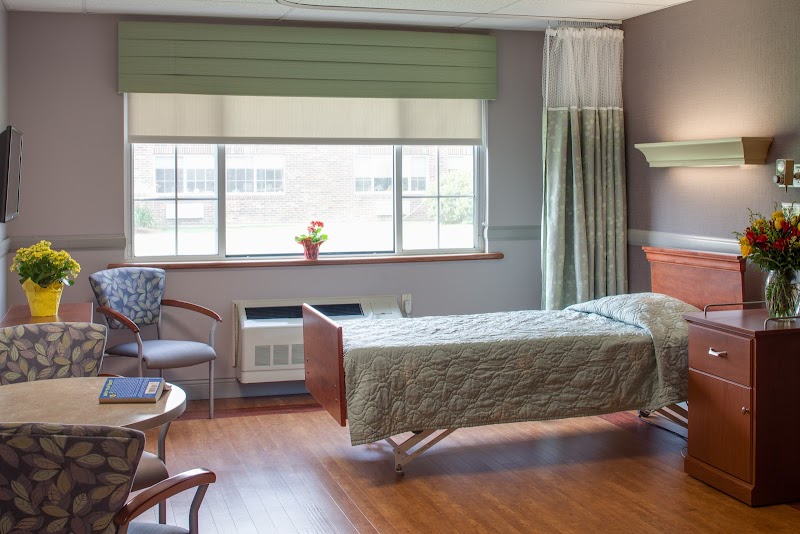
CMS rates Hadley Pointe Nursing Rehab & Care's staffing level at 2 out of 5 stars, which is below average compared to other nursing homes. Staff turnover is 55%, compared to the Massachusetts average of 46%. RN turnover specifically is 63%, which is notably high. RNs provide skilled clinical oversight, so turnover in this role can affect medical care quality.

What Have Inspectors Found at Hadley Pointe Nursing Rehab & Care?

State health inspectors documented 47 deficiencies at Hadley Pointe Nursing Rehab & Care during 2022 to 2025. These included: 4 that caused actual resident harm and 43 with potential for harm. Deficiencies causing actual harm indicate documented cases where residents experienced negative health consequences.

Who Owns and Operates Hadley Pointe Nursing Rehab & Care?

Hadley Pointe Nursing Rehab & Care is owned by a for-profit company. For-profit facilities operate as businesses with obligations to shareholders or private owners. The facility is operated by GENESIS HEALTHCARE, a chain that manages multiple nursing homes. With 154 certified beds and approximately 88 residents (about 57% occupancy), it is a mid-sized facility located in HADLEY, Massachusetts.

How Does Hadley Pointe Nursing Rehab & Care Compare to Other Massachusetts Nursing Homes?

Compared to the 100 nursing homes in Massachusetts, Hadley Pointe Nursing Rehab & Care's overall rating (1 stars) is below the state average of 2.9, staff turnover (55%) is near the state average of 46%, and health inspection rating (1 stars) is much below the national benchmark.

What Should Families Ask When Visiting Hadley Pointe Nursing Rehab & Care?

Based on this facility's data, families visiting should ask: "What safeguards and monitoring systems are in place to protect residents from abuse or neglect?" "Can you walk me through typical staffing levels on day, evening, and night shifts?" "Can I visit during a mealtime to observe dining assistance and food quality?" "How do you handle medical emergencies, and what is your hospital transfer rate?" These questions are particularly relevant given the substantiated abuse finding on record and the below-average staffing rating.

Is Hadley Pointe Nursing Rehab & Care Safe?

Based on CMS inspection data, Hadley Pointe Nursing Rehab & Care has documented safety concerns. The facility has 1 substantiated abuse finding (meaning confirmed case of resident harm by staff or other residents). The facility has a 1-star overall rating and ranks #100 of 100 nursing homes in Massachusetts. Families considering this facility should ask detailed questions about what corrective actions have been taken since these incidents.

Do Nurses at Hadley Pointe Nursing Rehab & Care Stick Around?

Hadley Pointe Nursing Rehab & Care has a staff turnover rate of 55%, which is 9 percentage points above the Massachusetts average of 46%. Moderate turnover is common in nursing homes, but families should still ask about staff tenure and how the facility maintains care continuity when employees leave.

Was Hadley Pointe Nursing Rehab & Care Ever Fined?

Hadley Pointe Nursing Rehab & Care has been fined $85,596 across 2 penalty actions. This is above the Massachusetts average of $33,935. Fines in this range indicate compliance issues significant enough for CMS to impose meaningful financial consequences. Common causes include delayed correction of deficiencies, repeat violations, or care failures affecting resident safety. Families should ask facility leadership what changes have been made since these penalties.

Is Hadley Pointe Nursing Rehab & Care on Any Federal Watch List?

Hadley Pointe Nursing Rehab & Care is not on any federal watch list. The most significant is the Special Focus Facility (SFF) program, which identifies the bottom 1% of nursing homes nationally based on persistent, serious quality problems. Not being on this list means the facility has avoided the pattern of deficiencies that triggers enhanced federal oversight. This is a positive indicator, though families should still review the facility's inspection history directly.