MEDWAY COUNTRY MANOR SKILLED NURSING & REHABILITAT

115 HOLLISTON STREET, MEDWAY, MA 02053 (508) 533-6634
For profit - Individual 123 Beds SHIMON LEFKOWITZ Data: November 2025 4 Immediate Jeopardy citations
Trust Grade
0/100
#299 of 338 in MA
Last Inspection: November 2024

Within standard 12-15 month inspection cycle. Federal law requires annual inspections.

Overview

Medway Country Manor Skilled Nursing & Rehabilitation has received a Trust Grade of F, indicating significant concerns about the facility's quality of care. It ranks #299 out of 338 nursing homes in Massachusetts, placing it in the bottom half of facilities statewide, and #30 out of 33 in Norfolk County, meaning there are only two options in the county that are worse. The facility has shown some improvement, reducing its reported issues from 24 in 2024 to 6 in 2025, but it still suffers from a concerning staffing turnover rate of 61%, which is much higher than the state average of 39%. Additionally, the home has incurred $242,885 in fines, suggesting repeated compliance issues, and has less registered nurse coverage than 87% of facilities in the state, which limits the quality of care. Specific incidents include staff not using proper personal protective equipment for residents requiring special precautions, and delays in notifying physicians about critical lab results regarding infectious diseases, which potentially put other residents at risk. While there are some signs of improvement, the facility has serious weaknesses that families should carefully consider.

Trust Score
F
0/100
In Massachusetts
#299/338
Bottom 12%
Safety Record
High Risk
Review needed
Inspections
Getting Better
24 → 6 violations
Staff Stability
⚠ Watch
61% turnover. Above average. Higher turnover means staff may not know residents' routines.
Penalties
✓ Good
$242,885 in fines. Lower than most Massachusetts facilities. Relatively clean record.
Skilled Nurses
⚠ Watch
Each resident gets only 21 minutes of Registered Nurse (RN) attention daily — below average for Massachusetts. Fewer RN minutes means fewer trained eyes watching for problems.
Violations
⚠ Watch
89 deficiencies on record. Higher than average. Multiple issues found across inspections.
★☆☆☆☆
1.0
Overall Rating
★★☆☆☆
2.0
Staff Levels
★☆☆☆☆
1.0
Care Quality
★☆☆☆☆
1.0
Inspection Score
Stable
2024: 24 issues
2025: 6 issues

The Good

  • Licensed Facility · Meets state certification requirements
  • No fines on record

This facility meets basic licensing requirements.

The Bad

1-Star Overall Rating

Below Massachusetts average (2.9)

Significant quality concerns identified by CMS

Staff Turnover: 61%

15pts above Massachusetts avg (46%)

Frequent staff changes - ask about care continuity

Federal Fines: $242,885

Well above median ($33,413)

Significant penalties indicating serious issues

Chain: SHIMON LEFKOWITZ

Part of a multi-facility chain

Ask about local staffing decisions and management

Staff turnover is elevated (61%)

13 points above Massachusetts average of 48%

The Ugly 89 deficiencies on record

4 life-threatening 3 actual harm
Feb 2025 2 deficiencies
CONCERN (D) 📢 Someone Reported This

A family member, employee, or ombudsman was alarmed enough to file a formal complaint

Potential for Harm - no one hurt, but risky conditions existed

Abuse Prevention Policies (Tag F0607)

Could have caused harm · This affected 1 resident

**NOTE- TERMS IN BRACKETS HAVE BEEN EDITED TO PROTECT CONFIDENTIALITY** Based on records reviewed and interviews, for one of three sampled residents (Resident #1), who had moderate cognitive impairmen...

Read full inspector narrative →
**NOTE- TERMS IN BRACKETS HAVE BEEN EDITED TO PROTECT CONFIDENTIALITY** Based on records reviewed and interviews, for one of three sampled residents (Resident #1), who had moderate cognitive impairment and was dependent on staff to meet his/her care needs, the Facility failed to ensure staff implemented and followed their Abuse Policy when on 01/18/25, after being notified of an allegation of verbal abuse by staff, the Activity's Director did not immediately report the allegation of verbal abuse to Administration, and did not do so until two days later. Findings include: Review of the Facility's Abuse Policy, untitled and undated, indicated the following: - verbal abuse includes, but is not limited to, threats of harm and/or making statements to frighten a resident, and - upon receiving an allegation of abuse, covered individuals will take necessary steps to protect all residents and then immediately notify the Administrator. Review of the Report submitted by the Facility via the Health Care Facility Reporting System (HCFRS), dated 01/23/25, indicated that on 1/18/25 at approximately 11:30 A.M., Activity Assistant (AA) #1 was pushing her activity cart down the hallway when Resident #1 moved in front of the activity cart. The Report indicated that a CNA (later identified as CNA #1) was beside Activity Assistant #1 and told her (AA #1) to run Resident #1 over with the activity cart and kill him/her because she (CNA #1) hated him/her (Resident #1). Review of the Facility's Internal Investigation Summary Report, undated, indicated that on 01/18/25 at approximately 11:30 A.M., Activity Assistant #1 had stopped the activity cart she was pushing because Resident #1 had moved in front of it with his/her wheelchair. The Report indicated that CNA #1 was standing next to Activity Assistant #1 when she (CNA #1) told her to run Resident #1 over with the activity cart and kill him/her because she (CNA #1) hated him/her (Resident #1). During an interview on 02/05/25 at 10:01 A.M., Activity Assistant #1 said that on 01/18/25 at approximately 11:20 A.M., she was wheeling her cart down the hall and stopped because Resident #1 had moved his/her wheelchair in front of the cart. Activity Assistant #1 said that when she stopped and waited for Resident #1 to move, CNA #1 told her to just run Resident #1 over with the cart, murder him/her, and [NAME] him/her somewhere because she (CNA #1) could not stand him/her. Activity Assistant #1 said she immediately called the Activity Director and reported the incident. During an interview on 02/05/25 at 10:21 A.M., the Activity's Director said that Activity Assistant #1 called her on 01/18/25 to report that while she had been waiting for Resident #1 to move out of her way, CNA #1 told her to get him/her (Resident #1) out of there, kill him/her, and get rid of him/her because she (CNA #1) did not like him/her (Resident #1). The Activity's Director said she did not report the allegation of verbal abuse to Administration until 01/20/25 (two days later), but said she should have reported it immediately. During an interview on 02/05/25 at 2:17 P.M., the Director of Nurses (DON) said she was not notified of the allegation of verbal abuse by staff that occurred on 01/18/25 involving Resident #1, until 01/20/25. The DON said that the allegation should have been reported to her immediately, but it was not. During an interview on 02/05/25 at 2:40 P.M., the Administrator said she was not notified of the allegation of verbal abuse by staff that occurred on 01/18/24 involving Resident #1 until 01/20/25. The Administrator said the Activity's Director should have reported the allegation of verbal abuse to her immediately, but she had not.
CONCERN (D) 📢 Someone Reported This

A family member, employee, or ombudsman was alarmed enough to file a formal complaint

Potential for Harm - no one hurt, but risky conditions existed

Report Alleged Abuse (Tag F0609)

Could have caused harm · This affected 1 resident

Based on records reviewed and interviews, for one of three sampled residents (Resident #1), who had moderate cognitive impairment and was dependent on staff to meet his/her care needs, the Facility fa...

Read full inspector narrative →
Based on records reviewed and interviews, for one of three sampled residents (Resident #1), who had moderate cognitive impairment and was dependent on staff to meet his/her care needs, the Facility failed to ensure that on 01/20/25, after Facility Administration was made aware of an allegation of verbal abuse of a resident (Resident #1)by a staff member (Certified Nurse Aide #1), that they reported the allegation to the Department of Public Health (DPH) within two hours as required, when it was not reported to DPH until 01/23/25, (three days later). Findings include: Review of the Facility's Abuse Policy, untitled and undated, indicated the following: -verbal abuse includes, but is not limited to, threats of harm and/or making statements to frighten a resident, and -the Facility must report an allegation of abuse to the Department of Public Health within two hours of becoming aware of the allegation. Review of the Report submitted by the Facility via the Health Care Facility Reporting System (HCFRS), dated as submitted on 01/23/25, indicated that on 1/18/25 at approximately 11:30 A.M., Activity Assistant (AA) #1 was pushing her activity cart down the hallway when Resident #1 moved in front of the activity cart. The Report indicated that a CNA (later identified as CNA #1) was beside Activity Assistant #1 and told her (AA #1) to run Resident #1 over with the activity cart and kill him/her because she (CNA #1) hated him/her (Resident #1). Review of the Facility's Internal Investigation Summary Report, undated, indicated that on 01/18/25 at approximately 11:30 A.M., Activity Assistant #1 had stopped the activity cart she was pushing because Resident #1 had moved in front of it with his/her wheelchair. The Report indicated that CNA #1 was standing next to Activity Assistant #1 when she (CNA #1) told her to run Resident #1 over with the activity cart and kill him/her because she (CNA #1) hated him/her (Resident #1). During an interview on 02/05/25 at 10:21 A.M., the Activity's Director said that Activity Assistant #1 called her on 01/18/25 to report that while she had been waiting for Resident #1 to move out of her way, CNA #1 told her to get him/her (Resident #1) out of there, kill him/her, and get rid of him/her because she (CNA #1) did not like him/her (Resident #1). The Activity's Director said she did not report the allegation of verbal abuse to Administration until 01/20/25, but said she should have reported it immediately. During an interview on 02/13/25 at 1:23 P.M., the Administrator said that sometime in the morning, on 01/20/25, she was notified of an allegation of verbal abuse by a staff member (CNA #1) that occurred on 01/18/25 and involved Resident #1. The Administrator said she thought the allegation had been reported timely, but said she had misunderstood the timing and the process of reporting to DPH via the HCFRS. The Administrator said after being made aware of an allegation of abuse, it should be reported to DPH within two hours, but for alleged incident it had not been.
Jan 2025 4 deficiencies 4 IJ (4 facility-wide)
CRITICAL (L) 📢 Someone Reported This

A family member, employee, or ombudsman was alarmed enough to file a formal complaint

Immediate Jeopardy (IJ) - the most serious Medicare violation

Deficiency F0726 (Tag F0726)

Someone could have died · This affected most or all residents

⚠️ Facility-wide issue

Based on observations, records reviewed and interviews, for three of seven sampled residents (Resident #3, Resident #5, Resident #6), who required transmission based precautions to be utilized by nurs...

Read full inspector narrative →
Based on observations, records reviewed and interviews, for three of seven sampled residents (Resident #3, Resident #5, Resident #6), who required transmission based precautions to be utilized by nursing staff during the provision of care, the Facility failed to ensure, 1) that nursing staff were competent and had the necessary skill set to appropriately care for residents by donning the correct Personal Protective Equipment (PPE) when a resident was on Contact Precautions (CP) or Enhanced Barrier Precautions (EBP), when nursing staff members were observed not following precautions while caring for these residents and 2) that after a nursing staff member responsible for providing direct care to residents tested positive for Group A streptococcal Infection, (GAS, a bacterium that can cause many different infections, including strep throat and also cause severe, life-threatening invasive disease, and spread person to person through respiratory droplets or direct contact with an infected person's skin sores, nose, throat or wound secretions) that the staff member was removed from the schedule and not allowed to return to work until after being on an antibiotic for 24 hours, which increased the risk for the spread of an infectious disease to other residents in the facility. Findings include: Review of the Facility Policy, titled Isolation - Categories of Transmission-Based Precautions, dated as revised September 2022, indicated that transmission-based precautions are initiated when a resident develops signs and symptoms of a transmissible infection or has a laboratory confirmed infections and is at risk of transmitting the infection to other residents. The Policy indicated the following: -standard precautions are used when caring for residents at all times regardless of their suspected or confirmed infection status; -transmission-based precautions are additional measures that protect staff, visitors and other residents from becoming infected; -these measures are determined by the specific pathogen and how it is spread from person to person; -transmission-based precautions are used only when the spread of infection cannot be reasonably prevented by less restrictive measures; -when a resident is placed on transmission based precautions, appropriate notification is placed on the room entrance door so that personnel and visitors are aware of the need and type of precaution; -the signage informs the staff of the type of CDC precaution, instructions for use of PPE, and/or instructions to see a nurse before entering the room; -Contact Precautions are implemented for residents known or suspected to be infected with microorganisms that can be transmitted by direct contact with the resident or indirect contact with environmental surfaces or resident-care items in the resident's environment; -Contact Precautions are also used in situations when a resident is experiencing wound drainage, fecal incontinence or diarrhea, or other discharges from the body that cannot be contained and suggest an increased potential for extensive environmental contamination and risk of transmission of a pathogen, even before a specific organism has been identified; -Contact Precautions are used for residents infected or colonized with Multi Drug Resistant Organisms (MDRO) when a resident has wounds, secretions, or excretions that are unable to be covered or contained and on units where, despite attempts to control the spread of MDRO, ongoing transmission is occurring; -Enhanced Barrier Precautions (EBP) additional usage of PPE may be used for residents who do not meet criteria for contact precautions but are infected or colonized with MDRO's; -staff wear gloves, when entering the room, while caring for a resident, staff will change gloves after having contact with infective material, gloves are removed and hand hygiene performed before leaving room, staff avoid touching potentially contaminated environmental surfaces or items in the resident's room after gloves are removed; -staff wear a disposable gown upon entering the room and remove gown before leaving the room and avoid touching potentially contaminated surfaces with clothing after gown is removed; Review of the CDC Recommendations for GAS, Transmission Based Precautions, dated 04/03/24 indicated to use Contact Precautions for patients with known or suspected infections that represent an increased risk for contact transmission. During an in-person interview on 1/22/25 at 3:20 P.M. with Surveyor #1 and Surveyor #2 and subsequent telephone interview on 1/23/25 at 8:39 A.M. with Surveyor #1, the Director of Nurses (DON) said that the Facility does not have a separate policy for staff competencies. The DON said that each staff member has a Job Description which includes a competency evaluation column that is used for competencies. The DON said that the competencies are completed with each newly hired employee within 90 days of employment and then annually with their review. Review of the Facility's Nurse Supervisor Job Description, indicated it included but was not limited to the following: -ensure that personnel follow established procedures for the use and disposal of PPE; -participate in the development, implementation, and maintenance of the infection control program for monitoring communicable and/or infectious diseases among the residents and personnel; -ensure that nursing service personnel follow established infection control procedures when isolations precautions become necessary; Review of the Facility's Unit Manager (Registered Nurse) Job Descriptions, indicated it included but was not limited to the following: -is responsible for overseeing direct nursing care to assigned residents and assumes responsibility and accountability for the nursing care and services provided on the assigned unit; -is responsible for and adheres to the standards of care for assigned residents; -makes daily rounds on unit to ensure resident care needs and environmental standards are met; -makes frequent rounds to ensure nursing personnel are performing their work assignments in accordance with acceptable nursing standards; Review of the Unit Manager's personnel file, indicated that she had received and reviewed a copy of the Unit Manager Job Description which was a five page packet of information specific to the Unit Manager, and that she signed and dated the Job Descriptions on 12/11/24. Review of the Facility's Charge Nurse (Registered Nurse RN/Licensed Practical Nurse LPN) Job Description, indicated it included but was not limited to the following: -ensure that all nursing personnel assigned to you comply with the written policies and procedures established by this facility; -primary purpose of your job description is to provide direct nursing care to residents; -to supervise the day-to-day nursing activities performed by nursing assistants; -participate in the development, implementation, and maintenance of the infection control program for monitoring communicable and/or infectious diseases among the residents and personnel; -follow established infection control procedures when isolation precautions become necessary. Review of Nurse #1's personnel file, indicated he had received and reviewed a copy of the Charge Nurse RN/LPN Job Description which was a sixteen page packet of information specific to nurses, including a Competency Evaluation Section and that he signed and dated the Job Description on 12/26/24. Review of the Facility's Certified Nursing Assistant Job Description, indicated it included but was not limited to the following: -perform all assigned tasks in accordance with our established policies and procedures; -follow established isolation precautions and procedures; -wash hands before entering and after leaving an isolation room; -follow established procedures in the use and disposal of personal protective equipment; Review of Certified Nurse Aide (CNA) #2's and CNA #3's personnel files, indicated they had received and reviewed a copy of the Certified Nursing Assistant Job Description which was a nine page packet of information specific to certified nursing assistants, and included Competency Evaluation Sections and that CNA #2 signed and dated the Job Description on 12/27/24 as having been completed, and CNA #3 signed and dated the Job Description on 12/19/24 as having been completed. 1. On 1/22/25, Surveyor #1 observed an EBP sign posted on the door outside the room occupied by Resident #3 and Resident #7 and there was a bin with Personal Protective Equipment (PPE) outside the room by the door. The EBP sign indicated that Resident #3 was on EBP and everyone must clean their hands, including before entering and when leaving the room. The EBP sign indicated that staff must also wear gloves and a gown for the following high-contact resident care activities: dressing, bathing/showering, transferring, changing linens, providing hygiene, changing briefs or assisting with toileting, device care or use of urinary catheter. Resident #3 was admitted to the Facility in November 2024, medical diagnoses included, urinary tract infection, sepsis, Chronic Obstructive Pulmonary Disease (COPD) , Extended Spectrum Beta Lactamase (ESBL) Resistance, bacteremia, and Diabetes Mellitus. Review of Resident #3's Physician Orders, dated 11/24/24, indicated he/she required Enhanced Barrier Precautions (EBP) related to an indwelling Foley catheter and wound care treatment. Review of the Residents on Precautions List, updated 01/17/25, indicated that Resident #3 was on EBP related to use of a Foley catheter. Review of Resident #3's most current Care Plan related to Enhanced Barrier Precautions for the care of Foley catheter, indicated to wear gloves and gown for the following high-contact resident care: dressing, bathing, showering, transferring, changing linens, providing hygiene, changing briefs or assisting with toileting, for device care or use of urinary catheter and wound care, and any skin opening requiring a dressing. Resident #7 was admitted to the Facility in August 2024, medical diagnoses included chest pain, cirrhosis of liver, malignant neoplasm of prostate, dementia, traumatic brain injury and urinary tract infection. Review of Resident #7's Current Care Plans and Current Physician Orders indicated that he/she was not on any Infection Control Precautions. On 1/22/25 at 8:52 A.M., Surveyor #1 observed Certified Nurse Aide (CNA) #3 enter Resident #3's room wearing gloves, a mask, but not a gown. CNA #3 assisted Resident #3 with dressing, touched the bed linens and then set-up his/her meal tray. CNA #3 then removed her gloves, performed hand hygiene, donned on a new pair of gloves and proceeded to reposition Resident #7's upper body and legs in bed. During an interview on 1/22/25 at 9:00 A.M. with Surveyor #1, CNA #3 said that Resident #7 was on precautions and that she did not believe Resident #3 was on any precautions. CNA #3 said that she put on gloves and not a gown when she entered Resident #3 and Resident #7's room, because she was only delivering breakfast trays. CNA #3 said that she dressed Resident #3, touched his/her bed linens without wearing a gown and said she was unaware that she was supposed to wear a gown when performing those activities for residents on EBP. CNA #3 said that she had seen the EBP sign at the door and said that she believed that Resident #7 was the one on EBP. CNA #3 said that if she was unsure if a resident was on precautions, she would ask the nurse. On 1/22/25 at 9:00 A.M., Surveyor #1 observed CNA #2 enter Resident #7's room wearing gloves, a mask and set up his/her breakfast tray. CNA #2 then removed her gloves, performed hand hygiene and exited the room. During an interview on 1/22/25 at 9:05 A.M. with Surveyor #1, CNA #2 said that she had seen the EBP sign at the door (to Resident #3 and #7's room) but said she did not know which resident in the room was on EBP. CNA #2 said that sometimes the signs are not accurate as to which resident in the room is on precautions or if any of the residents in the room are on precautions at all. CNA #2 said that sometimes the precaution signs posted outside a residents door belonged to a previous resident who was discharged but the sign was not taken down. CNA #2 said that if she was unsure if a resident was on precautions, she would ask the nurse. Although CNA #2 and CNA #3 received education, training and were required to complete competencies in the areas of isolation precautions and the use of PPE, they were unable to apply their training into practice when they were both observed entering resident rooms without putting on gowns and then caring for a resident on EBP, which required the use of full PPE. CNA #3 was unaware of Resident #3's specific clinical condition which necessitated the need for EBP, and CNA #2 had no idea which resident (#3 or #7) required EBP, yet both proceeded into the room to provided care without checking with nursing. Resident #5 was admitted to the Facility in November 2024, diagnoses included hemiplegia and hemiparesis following cerebral infarction affecting right dominant side, bipolar disorder, chronic myeloid leukemia in remission, malignant neoplasm of cervix, and type 2 diabetes mellitus. Review of Resident #5's Care Plan related to chemotherapy due to cancer, dated 11/15/24, indicated he/she required contact isolation precautions due to chemotherapy, to dedicate equipment to resident, no sharing, wear gown/gloves during care if risk of exposure to body fluids. Review of Resident #5's Physician Orders, dated 12/31/24, indicated he/she required Contact Precautions for chemotherapy drug treatments. Review of Resident #5's Treatment Administration Record (TAR), dated 01/01/25 through 1/22/25, indicated he/she required Contact Precautions due to Chemotherapy drug administration and to see directions posted outside of room. Review of the Residents on Precautions List, updated 01/17/25, indicated that Resident #5 was on Contact Precautions related to chemotherapy. Review of the Contact Precaution sign posted outside Resident #5's room indicated staff to put on gloves before room entry and discard gloves before room exit, put on gown before room entry and discard gown before room exit, and there was a bin with Personal Protective Equipment (PPE) just outside the room by the door. On 1/22/25 at 8:40 A.M., Surveyor #2 observed Certified Nurse Aide (CNA) #2 enter Resident #5's room without putting on and using a gown or gloves and assist Resident #5 with the set-up of a meal tray. CNA #2 then exited the room and performed hand hygiene. On 1/22/25 at 8:42 A.M., Surveyor #2 observed Nurse #1 enter Resident #5's room without putting on a gown or gloves. Nurse #1 asked Resident #5 about his/her medications, performed hand hygiene and exited the room. During an interview on 1/22/25 at 8:43 A.M., with Surveyor #2, CNA #2 said that she delivered Resident #5's breakfast tray and did not wear any PPE as indicated on the Contact Precaution sign outside his/her room. CNA #2 said that she asked the nurse (exact name unknown) about the Contact Precautions for Resident #5 and was told by the nurse that Resident #5 was no longer on Contact Precautions. Although Nurse #1 and CNA #2 had received education, training and had been required to complete competencies related to isolation precautions and the use of PPE, they were unable to apply their training into practice when they were observed entering Resident #5's room, which had a Contact Precaution sign clearly posted outside of it with instructions for PPE, yet both of them were observed going into the room without putting on gowns or gloves. Resident #6 was admitted to the Facility in June 2020, diagnoses included vascular dementia with behavioral disturbance, dysphagia, aphasia, cerebral infarction, atrial flutter, cardiac pacemaker, benign prostatic hyperplasia and anxiety disorder. Review of Resident #6's Physician Orders, dated 12/26/24, indicated that he/she was on Contact Precautions for a rash. Review of Resident #6's Treatment Administration Record (TAR), dated 12/26/24 through 12/31/24 indicated that he/she was on Contact Precautions for a rash. Review of Resident #6's Weekly Skin Assessment, dated 12/26/24, indicated that he/she had a rash to his/her left front thigh. Review of December 2024 Infection Control Line Listing, indicated that on 12/27/24 Resident #6 developed itch and redness to his/her bilateral lower extremities, had a rash to his/her skin and was started on an antibiotic. Review of Resident #6's Care Plan related to suspected scabies, dated 12/26/24, indicated to educate caregivers that anyone in close contact with an infected person should seek medical treatment, that infestation may occur by direct skin to skin contact with an infected person and to wash all clothing, bedding and towels in hot water and dry in a hot dryer. The Care Plan indicated that Scabies is spread by sharing towels, clothing and bedding. Review of the Residents on Precautions List, updated 01/17/25, indicated that Resident #6 was not on any Infection Control Precautions. During the Survey, the Surveyors observed that Resident #6 had a Contact Precaution sign posted outside his/her room. The Sign indicated staff to put on gloves before room entry and discard gloves before room exit, put on gown before room entry and discard gown before room exit. There was also a bin with Personal Protective Equipment (PPE) outside the room by the door. On 1/22/25 at 8:47 A.M., Surveyor #2 observed Certified Nurse Aide (CNA) #2 enter Resident #6's room without the use of a gown or gloves, assist Resident #6 with the set-up of a meal tray and placed a blanket on his/her shoulders. CNA #2 stood in the room chatting with Resident #6, then rubbed his/her (Resident #6's) arm prior to exiting the room and then then performed hand hygiene. During an interview on 1/22/25 at 8:55 A.M. with Surveyor #2, CNA #2 said that she did not know why Resident #6 was on Contact Precautions and said she would have to ask the nurse. CNA #2 said she was not wearing any PPE when she entered Resident #6's room as the sign indicated. On 1/22/25 at 9:12 A.M., Surveyor #2 observed Nurse #1 enter Resident #6's room without the use of a gown or gloves. Nurse #1 repositioned Resident #6 from a sitting position on the side of the bed to a lying position. Nurse #1 was observed adjusting Resident #6's blankets, handing Resident #6 the call light and then performed hand hygiene and exited the room. During an interview on 1/22/25 at 9:15 A.M. with Surveyor #2, Nurse #1 said that Resident #6 was previously on Contact Precautions because he/she had a urinary catheter and said he did not believe Resident #6 was still on Contact Precautions. Nurse #1 said that he would have to ask the Unit Manager about the status of Resident #6's precautions and said he could not explain why Resident #6 had a Contact Precaution sign posted outside the door of his/her room. During an interview on 01/22/25 at 9:24 A.M. with Surveyor #2, the Unit Manager said that after reviewing Resident #6's Medical Record, that he/she was no longer on Contact Precautions. The Unit Manager said that Resident #6's urinary catheter was removed and he/she was on comfort measures only. The Unit Manager said that she would speak with the Infection Preventionist (IP) to confirm Resident #6's status related to need for precautions. Although Nurse #1 and CNA #2 received education, training and were required to complete competencies in the areas of isolation precautions and the use of PPE, they were unable to apply their training into practice when they were observed entering Resident #6's room, that had a Contact Precaution sign posted outside of it, which clearly indicated what PPE staff were to use, yet both of them went into the room without using any PPE. As Resident #6's nurse, Nurse #1 was unsure and unaware if the resident was on precautions and CNA #2 did not check with nursing to see if Precautions were necessary. The Unit Manager was unable to demonstrate that she was competent in identifying residents on her assigned unit who required EBP or Contact Precautions and when the surveyors pointed the residents/rooms out to her, the Unit Manager was unable to identify why those residents' required precautions. During an interview on 01/22/25 at 11:15 A.M. and throughout the survey with Surveyor #1 and Surveyor #2, the Infection Preventionist (IP) said staff were trained and required to complete competencies on EBP and Contact Precautions and were aware that there were signs posted outside room doors indicating which resident(s) was on precautions. The IP said that the signs clearly indicate what type of PPE to wear when performing resident care activities. The IP said that staff are supposed to wear gloves and a gown when performing dressing activities, repositioning residents, and touching linens. The IP said it was her expectation that staff follow the directives that are posted on the precaution signs. The IP said she did not know the status of Resident #6's infection control needs and said she would have to look into it. During an in-person interview on 01/22/25 at 3:20 P.M. with Surveyor #1 and Surveyor #2 and a subsequent telephone interview on 01/23/25 at 8:39 A.M. with Surveyor #1, the Director of Nurses (DON) said that staff were required to complete competencies, have been trained on EBP and Contact Precautions, and were aware that there are signs posted outside the resident room door indicating which resident or residents was on precautions. The DON said that it was her expectation that staff follow the directives that are posted on the precaution signs and wear the appropriate PPE when providing resident care according to the directives on the signs. The DON said that it was her expectation that nursing staff are aware of the residents who are on precautions and why they are on precautions. The DON said that as the DON, she was ultimately responsible for the Facility's Infection Control Program and ensuring that all of the policies and procedures were followed. 2. Review of the Facility Policy, titled Staff Compliance During Group A Streptococcus (GAS) Outbreaks, dated 06/21/2024, indicated that during an outbreak of GAS in the nursing home, staff are encouraged to undergo testing for GAS. The Policy indicated that staff who test positive must follow medical advice for treatment and may not return to work until cleared by a healthcare professional. The Policy further indicated that CDC recommendations are used as a reference. Review of CDC Recommendations for GAS, dated 03/25/2024 indicated that for healthcare personnel with known or suspected Group A Streptococcus infection, obtain a sample from the infected site, and exclude from work until 24 hours after the start of effective antimicrobial therapy. The DON said on 1/18/25, CNA #1 tested positive for GAS. The DON said that the Laboratory reported CNA #1's positive test results for GAS to the facility on 1/18/25. The DON said that on 1/18/25, someone from the facility notified her that CNA #1 was positive for GAS and that she called CNA #1 to tell her that her results were positive for GAS, and to go see a doctor to get treatment for herself and her family. The DON said on 1/18/25 when she called and notified CNA #1 that her test results were positive, she assumed that CNA #1 was home and not at work. The DON said that she did not tell CNA #1 to go home because she was not aware that CNA #1 was working at the facility that day. Review of the Daily Schedules, dated 1/18/25 and 1/19/25, indicated that CNA #1 worked on the [NAME] Unit starting at 7:00 A.M. and worked through to 11:00 P.M. (working a double, day and evening shifts). Review of the Daily Schedule, dated 1/20/25, indicated that CNA #1 worked on the Second Unit from 7:00 A.M. through 3:00 P.M. shift and on the [NAME] Unit from 3:00 P.M. through 11:00 P.M. shift. Review of CNA #1's Timecards, indicated that she worked the following: -on 1/18/25 from 7:07 A.M. to 10:53 P.M.; -on 1/19/25 from 7:06 A.M. to 10:53 P.M.; -on 1/20/25 from 7:09 A.M. to 10:53 P.M. West Unit had a total number of 31 residents residing on it. Second Unit had a total number of 35 residents residing on it. Therefore all residents residing on the [NAME] and Second units, as well as other staff member, were put at risk for contracting and spreading GAS. During an in-person interview on 1/22/25 at 2:20 P.M. with Surveyor #1 and Surveyor #2 and a subsequent telephone interview on 1/23/25 at 8:52 A.M. with Surveyor #1, CNA #1 said that on 1/18/25 the DON called her, (exact time unknown) and informed her that she was positive for GAS. CNA #1 said the DON told her that she needed to go home and see a doctor. CNA #1 said that she was at work when the DON called her and said sometime after supper (exact time unknown) she went home. CNA #1 said that on 1/19/25, she went to see her doctor (exact time unknown) and she was prescribed antibiotics. CNA #1 said that her doctor did not discuss anything with her regarding when she could return to work. CNA #1 said that she took her first dose of antibiotics at 3:00 P.M. on 1/19/25 and said she came into work the 3:00 P.M. through 11:00 P.M. shift that night on the [NAME] Unit. CNA #1 said that on 1/20/25, she worked from 7:00 A.M. through 3:00 P.M. shift on the Second Floor and from 3:00 P.M. through 11:00 P.M. shift on the [NAME] Unit. CNA #1 said that sometime during the day on 1/20/25, (exact time unknown) she went to the DON's office, gave the DON her doctor's note and told the DON she was on antibiotics. CNA #1 said that the DON never asked her if she was working and never told her that she could not work until after she was on antibiotics for 24 hours. CNA #1 said after speaking with the DON on 1/20/25 she went back to work her scheduled shift. The DON said that on 1/20/25 she noticed that the schedule for 1/19/25 indicated that CNA #1 worked the 3:00 P.M. to 11:00 P.M. shift. The DON said that she had not previously informed CNA #1 or the Scheduler that CNA #1 could not return to work prior to being on antibiotics for 24 hours. The DON said she was unsure if CNA #1 had worked on 1/19/25 and was unaware if CNA #1 had worked on 1/20/25. The DON said that on 1/20/25 (exact time unknown) CNA #1 gave her a doctor's note and told her that she took her first dose of antibiotics on the evening of 1/19/25 and took the next dose of antibiotics in the morning of 1/20/25. The DON said that after reviewing the schedules and timecards, that CNA #1 had returned to work prior to being on antibiotics for 24 hours. The DON said facility policy indicates that staff who are positive for GAS cannot return to work prior to being on antibiotics for 24 hours and said her expectation was that they all follow facility policy. The DON said it was her responsibility to let CNA #1 and the Scheduler know that CNA #1 could not return to work prior to being on antibiotics for 24 hours and said it was a miscommunication.
CRITICAL (L) 📢 Someone Reported This

A family member, employee, or ombudsman was alarmed enough to file a formal complaint

Immediate Jeopardy (IJ) - the most serious Medicare violation

Deficiency F0773 (Tag F0773)

Someone could have died · This affected most or all residents

⚠️ Facility-wide issue

**NOTE- TERMS IN BRACKETS HAVE BEEN EDITED TO PROTECT CONFIDENTIALITY** Based on records reviewed and interviews for one of seven sampled residents (Resident #1), who per Laboratory test results repor...

Read full inspector narrative →
**NOTE- TERMS IN BRACKETS HAVE BEEN EDITED TO PROTECT CONFIDENTIALITY** Based on records reviewed and interviews for one of seven sampled residents (Resident #1), who per Laboratory test results reported to the facility on 1/19/25 indicated he/she tested positive for Group A Streptococcal (GAS, a bacterium that can cause many different infections, including strep throat and also cause severe, life-threatening invasive disease, spread person to person through respiratory droplets or direct contact with an infected person's skin sores, nose, throat or wound secretions), the Facility failed to ensure Nursing promptly notified the physician of the results, who was not informed until four days later (1/22/25), as a result Contact Precautions were not initiated timely, therefore placing other residents and staff at risk for potentially contracting and spreading the infectious disease. Findings include: Review of the Facility Policy, titled Lab and Diagnostic Test Results - Clinical Protocol, dated as revised November 2018, indicated the following: -the physician will identify and order diagnostic and lab testing on the resident's diagnostic and monitoring needs; -staff will process test requisitions and arrange for test; -the lab will report test results to the facility; -a nurse will identify the urgency of communicating with the physician the seriousness of any abnormality and the individuals current condition; -nursing staff will consider the following factors to help identify situations requiring prompt physician notification concerning lab result: -whether the result should be conveyed to the physician regardless of other circumstances that is, the abnormal result is problematic regardless of other factors; -direct voice communication with the physician is the preferred means for presenting any results requiring immediate notification, especially when the current treatment needs review or clarification; -staff should document information about when, how, and to whom the information was provided and the response in the progress notes; -a physician will respond with an appropriate time frame based on the clinical significance of the information; -a physician should respond within one hour regarding a lab test result requiring immediate notification; -when responding to notification of test results, the physician and staff will discuss the implications of the test results for the resident, as well as subsequent actions; for example, new or modified medication orders, additional monitoring, etc. Review of the CDC Recommendations for GAS, Transmission Based Precautions, dated 04/03/24 indicated to use Contact Precautions for patients with known or suspected infections that represent an increased risk for contact transmission. Resident #1 was admitted to the Facility in September 2023, medical diagnoses included stage 4 pressure ulcer (full thickness skin and tissue loss) of sacral region, unspecified dementia with agitation, local infection of the skin and subcutaneous tissue, hyperlipidemia and hypertension. Review of the Laboratory Results Report, sent to the facility on [DATE], indicated that Resident #1 tested positive for GAS isolated in his/her left shoulder. Review of Resident #1's Medical Record indicated there was no documentation to support that after the facility was made aware he/she tested positive for GAS in his/her left shoulder on 1/19/25, that Contact Precautions were initiated per CDC recommendations. Review of Resident #1's Medical Record indicated there was no documentation to support that the physician was notified that he/she had a positive GAS culture of his/her left shoulder until 01/22/25, four days after the positive result had been reported to the facility. Review of Resident #1's Physician Orders, dated 01/22/25, indicated administer Penicillin V(antibiotic) Oral Tablet 500 milligrams (mg) by mouth twice daily for ten days for GAS in wound. Review of Resident #1's Care Plan related to GAS in the wound, dated 01/22/25, indicated to administer antibiotics per Physician orders and Resident to be placed on Enhanced Barrier Precautions (EBP) due to wound infection. During an interview on 01/22/25 at 11:15 A.M. and throughout the survey with Surveyor #1 and Surveyor #2, the Infection Preventionist (IP) said that Resident #1 was tested for GAS on 1/17/25 and said that on 01/19/25, the lab sent Resident #1's result to the facility which indicated he/she tested positive for GAS. The IP said that typically the nurses on the Units get the results of the labs, then notify the provider and nursing management of any positive GAS results. The IP said that she was not notified that Resident #1 tested positive for GAS until 1/22/25 (the date of the survey) when the DON notified her that Resident #1 had tested positive for GAS (on 1/19/25). The IP said she could not explain why the nurses had not notified the provider and nursing management of Resident #1's positive GAS result on 01/19/25. The IP said that it was her expectation that nurses notify the provider and nursing management of any positive GAS results so that appropriate precautions and treatments can be implemented. During an in-person interview on 01/22/25 at 3:20 P.M. with Surveyor #1 and Surveyor #2 and a subsequent telephone interview on 01/23/25 at 8:39 A.M. with Surveyor #1, the Director of Nurses (DON) said that she found out the morning of the survey (01/22/25) that Resident #1 tested positive for GAS (on 1/19/25) in his/her wound, and said the physician was also notified that morning and he/she was started on antibiotics. The DON said she could not explain why the physician was not notified of Resident #1's positive GAS results on 01/19/25 and said it was her expectation that staff notify the physician, IP, and her of any positive GAS results immediately so that appropriate precautions and treatments can be implemented. During a telephone interview on 1/23/25 at 2:23 P.M., the Medical Director said he became the Medical Director for the Facility in December 2024. The Medical Director said that he was aware that the Facility had several cases of GAS and said he has spoken to an Epidemiologist with the DPH regarding the cases. The Medical Director said that he was aware that Resident #1 tested positive for GAS, but could not recall exactly when he was notified. The Medical Director said that he was not aware that the Facility waited four days before reporting Resident #1's positive GAS results and said it was his expectation that the staff immediately report any positive GAS results to the physician so that treatment can be implemented.
CRITICAL (L) 📢 Someone Reported This

A family member, employee, or ombudsman was alarmed enough to file a formal complaint

Immediate Jeopardy (IJ) - the most serious Medicare violation

Administration (Tag F0835)

Someone could have died · This affected most or all residents

⚠️ Facility-wide issue

Based on records reviewed and interviews, for two of three nursing units (West and Second) after a staff member Certified Nurse Aide (CNA) #1 tested positive for Group A Streptococcal (GAS, a bacteriu...

Read full inspector narrative →
Based on records reviewed and interviews, for two of three nursing units (West and Second) after a staff member Certified Nurse Aide (CNA) #1 tested positive for Group A Streptococcal (GAS, a bacterium that can cause many different infections, including strep throat and also cause severe, life-threatening invasive disease, spread person to person through respiratory droplets or direct contact with an infected person's skin sores, nose, throat or wound secretions) on 1/18/25, facility administration failed to ensure it provided appropriate administrative oversight of Infection Control Practices when CNA #1 was not removed from the schedule until being on antibiotic therapy for 24 hours. Facility Administration was aware there were issues with GAS infections and transmission within the facility, however CNA #1 was scheduled and worked on two different resident care units between 1/19/25 and 1/20/25, placing the residents and staff at risk for contracting and/or spreading the infectious disease that could cause adverse harm up to and including death. Findings include: Review of the Facility Policy, titled Staff Compliance During Group A Streptococcus (GAS) Outbreaks, dated 06/21/2024, indicated that during an outbreak of GAS in the nursing home, staff are encouraged to undergo testing for GAS. The Policy indicated that staff who test positive must follow medical advice for treatment and may not return to work until cleared by a healthcare professional. The Policy further indicated that CDC recommendations are used as a reference. Review of CDC Recommendations for GAS, dated 03/25/2024 indicated that for healthcare personnel with known or suspected group A Streptococcus infection, obtain a sample from the infected site, and exclude from work until 24 hours after the start of effective antimicrobial therapy. During the Entrance Conference on 1/22/25 at 10:40 A.M., with Surveyor #1 and Surveyor #2, the Administrator acknowledged that the Facility has had outbreaks of GAS infections amongst residents and staff. The Administrator said that when an outbreak was identified on a particular unit, the residents on the unit and staff who worked on that unit were tested for GAS. The Administrator said that for residents who test positive, isolation precautions were instituted. During an interview on 01/22/25 at 11:15 A.M. and throughout the survey with Surveyor #1 and Surveyor #2, the Infection Preventionist (IP) said that she was new to the Infection Preventionist role and has only been in the role for three months. The IP said that she was the one responsible for the Facility's Infection Control Program, which included tracking, monitoring and surveillance of all infections for the Facility. The IP said that on 01/15/25 an Epidemiologist from the Department of Public Health (DPH) recommended that the Facility test the residents and staff that work on the [NAME] Unit for GAS because one of their residents' that had passed away was positive for GAS. The IP said that on 01/16/25, residents and staff on the [NAME] Unit were tested for GAS and the samples were picked up by the laboratory on 01/17/25. The IP said that on 01/18/25, the lab reported CNA #1's positive GAS result to the Facility. The IP said that she was not notified of CNA #1's positive GAS result and said the Director of Nurses (DON) was the person that had been notified. The IP said that although she was aware that the residents and staff on the [NAME] Unit were tested for GAS on 01/16/25, said that she had not followed up with the results of those tests when she returned to work on 01/20/25, 01/21/25, or 01/22/25, but said she should have followed up. The IP said that the DON was the one who followed up with the staff member (CNA #1) who tested positive for GAS. The IP said that the Facility Policy for a staff member with a positive GAS result was that they needed to be on antibiotics for 24 hours before returning to work. The IP said that she thought that CNA #1 had not returned to work until she had been on antibiotics for 24 hours, but would have to check with the DON. During an in-person interview on 01/22/25 at 3:20 P.M. with Surveyor #1 and Surveyor #2 and a subsequent telephone interview on 01/23/24 at 8:39 A.M. with Surveyor #1, the Director of Nurses (DON) said that she, as the DON, was the one ultimately responsible for the Facility's Infection Control Program and ensuring that all of the policies and procedures were followed. The DON said on 1/18/25, CNA #1 tested positive for GAS. The DON said that the Laboratory reported CNA #1's positive test results for GAS to the facility on 1/18/25. The DON said that on 1/18/25, someone from the facility notified her that CNA #1 was positive for GAS, that she called CNA #1 to tell her her results, told her to go see a doctor to get treatment for herself and her family. The DON said that she was not aware that CNA #1 was working at the facility when she notified her of the test results and that she assumed when she called CNA #1, she was home. The DON said that she had not informed CNA #1 or the Scheduler that CNA #1 could not return to work prior to being on antibiotics for 24 hours, but said she should have told them. Review of the Daily Schedule, dated 1/18/25 and 1/19/25, indicated that CNA #1 worked on the [NAME] Unit starting at 7:00 A.M. through to 11:00 P. M. (double shift). Review of the Daily Schedule, dated 1/20/25, indicated that CNA #1 worked on the Second Unit from 7:00 A.M. through 3:00 P.M. shift and on the [NAME] Unit from 3:00 P.M. through 11:00 P.M. shift. Review of CNA #1's Timecards, indicated that she worked the following: -on 1/18/25 from 7:07 A.M. to 10:53 P.M.; -on 1/19/25 from 7:06 A.M. to 10:53 P.M.; -on 1/20/25 from 7:09 A.M. to 10:53 P.M. West Unit had a total number of 31 residents residing on it. Second Unit had a total number of 35 residents residing on it. During an in-person interview on 1/22/25 at 2:20 P.M. with Surveyor #1 and Surveyor #2 and a subsequent telephone interview on 1/23/25 at 8:52 A.M. with Surveyor #1, CNA #1 said that on 1/18/25 the DON called her (exact time unknown) and informed her that she was positive for GAS. CNA #1 said that the DON told her she needed to go home and see a doctor. CNA #1 said that she was at work when the DON called and said sometime after supper (exact time unknown) she went home. CNA #1 said that on 1/19/25, she went to see her doctor (exact time unknown) and she was prescribed antibiotics. CNA #1 said the DON never told her she could not work until after being on antibiotics for 24 hours and that her doctor did not discuss anything with her about work. CNA #1 said that she took her first dose of antibiotics at 3:00 P.M. on 1/19/25 and said she came to work that night at the facility for the 3:00 P.M. through 11:00 P.M. shift on the [NAME] Unit. CNA #1 said that on 1/20/25, she worked the 7:00 A.M. through 3:00 P.M. shift on the Second Floor and the 3:00 P.M. through 11:00 P.M. shift on the [NAME] Unit. The DON said that on 1/20/25, CNA #1 gave her a doctor's note and told her that she took her first dose of antibiotics on the evening of 1/19/25 and took another dose of antibiotics in the morning of 1/20/25. The DON said that CNA #1 had returned to work prior to being on antibiotics for 24 hours, which was not consistent with facility policy. During a telephone interview on 1/23/25 at 2:23 P.M., the Medical Director said he became the Medical Director for the Facility in December 2024. The Medical Director said that he was aware that the Facility had several cases of GAS and said he had spoken to one of the DPH Epidemiologists regarding the cases. The Medical Director said that he was going to have a meeting with the Facility on 1/24/25 to discuss the GAS cases, review Infection Control Policies and Procedures for GAS to mitigate the spread of GAS amongst residents and staff. The Medical Director said that it was his expectation that the staff follow the Facility's policies and procedures for Infection Control.
CRITICAL (L) 📢 Someone Reported This

A family member, employee, or ombudsman was alarmed enough to file a formal complaint

Immediate Jeopardy (IJ) - the most serious Medicare violation

Infection Control (Tag F0880)

Someone could have died · This affected most or all residents

⚠️ Facility-wide issue

**NOTE- TERMS IN BRACKETS HAVE BEEN EDITED TO PROTECT CONFIDENTIALITY** Based on observations, records reviewed and interviews for five of seven sampled residents (Resident #1, Resident #2, Resident #...

Read full inspector narrative →
**NOTE- TERMS IN BRACKETS HAVE BEEN EDITED TO PROTECT CONFIDENTIALITY** Based on observations, records reviewed and interviews for five of seven sampled residents (Resident #1, Resident #2, Resident #3, Resident #5 and Resident #6), all of which required the need for staff to use Personal Protective Equipment (PPE) during the provision of care due to an active infection, the Facility failed to ensure they implemented and maintained an infection control program that helped prevent the development and spread of infections, including Group A Streptococcal (GAS, a bacterium that can cause many different infections, including strep throat and also cause severe, life-threatening invasive disease, spread person to person through respiratory droplets or direct contact with an infected person's skin sores, nose, throat or wound secretions), that required treatment with antibiotics, when 1) 1/19/25 laboratory results for a resident who tested positive for GAS was not reported to the physician until 1/22/25, resulting in a delay in the implementation of appropriate precautions, 2) Nursing staff were observed going in/out of resident rooms with precaution signs posted outside of them, but were not compliant with the use of PPE, and/or were unaware of why or which residents required precautions, and 3) and a staff member who tested positive for GAS was not removed from the schedule and worked on two different units, all of which increased the potential for additional residents and staff to be exposed and at risk for developing GAS. Findings include: Review of the Facility Policy, titled Isolation - Categories of Transmission-Based Precautions, dated as revised September 2022, indicated that transmission-based precautions are initiated when a resident develops signs and symptoms of a transmissible infection or has a laboratory confirmed infections and is at risk of transmitting the infection to other residents. The Policy indicated the following: -standard precautions are used when caring for residents at all times regardless of their suspected or confirmed infection status; -transmission-based precautions are additional measures that protect staff, visitors and other residents from becoming infected; -these measures are determined by the specific pathogen and how it is spread from person to person; -the CDC maintains a list of diseases, modes of transmission and recommended precautions; -transmission-based precautions are used only when the spread of infection cannot be reasonably prevented by less restrictive measures; -when a resident is placed on transmission based precautions, appropriate notification is placed on the room entrance door so that personnel and visitors are aware of the need and type of precaution; -the signage informs the staff of the type of CDC precaution, instructions for use of PPE, and/or instructions to see a nurse before entering the room; -Contact Precautions are implemented for residents known or suspected to be infected with microorganisms that can be transmitted by direct contact with the resident or indirect contact with environmental surfaces or resident-care items in the resident's environment; -Contact Precautions are also used in situations when a resident is experiencing wound drainage, fecal incontinence or diarrhea, or other discharges from the body that cannot be contained and suggest an increased potential for extensive environmental contamination and risk of transmission of a pathogen, even before a specific organism has been identified; -Contact Precautions are used for residents infected or colonized with Multi Drug Resistant Organisms (MDRO) when a resident has wounds, secretions, or excretions that are unable to be covered or contained and on units where, despite attempts to control the spread of MDRO, ongoing transmission is occurring; -Enhanced Barrier Precautions (EBP) additional usage of PPE may be used for residents who do not meet criteria for contact precautions but are infected or colonized with MDRO's; -the decision on whether contact precautions are necessary are evaluated on a case by case basis; -staff wear gloves, when entering the room, while caring for a resident, staff will change gloves after having contact with infective material, gloves are removed and hand hygiene performed before leaving room, staff avoid touching potentially contaminated environmental surfaces or items in the resident's room after gloves are removed; -staff wear a disposable gown upon entering the room and remove gown before leaving the room and avoid touching potentially contaminated surfaces with clothing after gown is removed; Review of the CDC Recommendations for GAS, Transmission Based Precautions, dated 04/03/24 indicated to use Contact Precautions for patients with known or suspected infections that represent an increased risk for contact transmission. Review of the Facility Policy, titled Enhanced Barrier Precautions (EBP), dated as revised August 2022, indicated the following: -EBP are used as an infection prevention and control intervention to reduce the spread of Multi Drug Resistant Organisms (MDRO's) to residents; -EBP employ targeted gown and glove use during high contact resident care activities when contact precautions do not otherwise apply; -gloves and gown are applied prior to performing the high contact resident care activity (as opposed to before entering the room); -PPE is changed before caring for another resident; -Examples of high-contact resident care activities requiring the use of gown and gloves for EBP's include: dressing, bathing, showering, transferring, providing hygiene, changing linens, changing briefs or assisting with toileting, device care or use (urinary catheter, feeding tube); -EBP are indicated (when contact precautions do not otherwise apply) for residents infected or colonized with Extended Spectrum Beta Lactamase (ESBL); -EBP are indicated (when contact precautions do not otherwise apply) for residents with wounds and/or indwelling medical devices regardless of MDRO colonization; -EBP remain in place for the duration of the resident's stay or until the resolution of the wound or discontinuation of the indwelling medical device that places them at increased risk; -staff are trained prior to caring for residents on EBP's; -signs are posted in the door or wall outside the resident room indicating the type of precautions and PPE required; -PPE is available outside of the resident rooms. Review of the Facility Policy, titled Lab and Diagnostic Test Results - Clinical Protocol, dated as revised November 2018, indicated the following: -the physician will identify and order diagnostic and lab testing on the resident's diagnostic and monitoring needs; -staff will process test requisitions and arrange for test; -the lab will report test results to the facility; -a nurse will identify the urgency of communicating with the physician the seriousness of any abnormality and the individuals current condition; -nursing staff will consider the following factors to help identify situations requiring prompt physician notification concerning lab result: whether the result should be conveyed to the physician regardless of other circumstances that is, the abnormal result is problematic regardless of other factors; -direct voice communication with the physician is the preferred means for presenting any results requiring immediate notification, especially when the current treatment needs review or clarification; -a physician will respond with an appropriate time frame based on the clinical significance of the information; -a physician should respond within one hour regarding a lab test result requiring immediate notification; 1. Resident #1 was admitted to the Facility in September 2023, diagnoses included stage 4 pressure ulcer (full thickness skin and tissue loss) of sacral region, unspecified dementia with agitation, local infection of the skin and subcutaneous tissue, hyperlipidemia and hypertension. Review of the Residents on Precautions List, updated 01/17/25, indicated that Resident #1 was on EBP for wound care. Review of Resident #1's Laboratory Results Report, reported to facility on 01/19/25, indicated that he/she had GAS infection isolated in his/her left shoulder. Review of Resident #1's Medical Record indicated there was no documentation to support that the physician was notified that he/she had a positive GAS culture of his/her left shoulder or that Contact Precautions were initiated per facility policy and CDC recommendations until 01/22/25, four days after the positive result were reported to the facility. Review of Resident #1's Physician Orders, dated 01/22/25, indicated administer Penicillin V (antibiotic) Oral Tablet 500 milligrams (mg) by mouth twice daily for ten days for GAS in wound. Review of Resident #1's Care Plan related to GAS in the wound, dated 01/22/25, indicated to administer antibiotics per Physician orders and he/she required EBP due to wound infection. During an interview on 01/22/25 at 11:15 A.M. and throughout the survey with Surveyor #1 and Surveyor #2, the Infection Preventionist (IP) said that she was the one responsible for the Facility's Infection Control Program, which included tracking, monitoring and surveillance of all infections for the Facility. The IP said that on 01/15/25 an Epidemiologist from the Department of Public Health (DPH) recommended that the Facility test the residents and staff that work on the [NAME] Unit for GAS because one of their previous residents had passed away and was positive for GAS. The IP said that on 01/16/25, residents and staff on the [NAME] Unit were tested for GAS and the samples were picked up by the laboratory on 01/17/25. The IP said that on 01/19/25, the lab reported Resident #1's positive GAS results to the facility. The IP said that typically the nurses get the results of the labs, then notify the provider and nursing management of any positive GAS results. The IP said she could not explain why the nurses did not notify the provider and nursing management of Resident #1's positive GAS result on 01/19/25, but said they should have so that appropriate precautions could have been implemented. The IP said although she was aware that the residents and staff on the [NAME] Unit were tested for GAS on 01/16/25, said that she had not followed up on the results of those tests when she returned to work on 01/20/25, 01/21/25 or 01/22/25, but said she should have. The IP said that on 01/22/25 (during the survey), the Director of Nurses (DON) notified her that Resident #1 had tested positive for GAS. The IP said that Resident #1 was already on EBP and should be placed on Contact Precautions due to positive GAS in his/her wound. The IP said she was responsible for initiating precautions and ensuring all of the precaution signs were accurate. During an in-person interview on 01/22/25 at 3:20 P.M. with Surveyor #1 and Surveyor #2 and a subsequent telephone interview on 01/23/25 at 8:39 A.M. with Surveyor #1, the Director of Nurses (DON) said that on 01/16/25, the [NAME] Unit Residents and Staff were tested for GAS. The DON said that the lab picked up the specimens on 01/17/25 and the lab reported the results to the facility on [DATE] and 01/19/25. The DON said that she found out the day of the survey (1/22/25) that Resident #1 tested positive for GAS in his/her wound. The DON said the physician should have been notified of Resident #1's positive GAS results on 01/19/25 and said it was her expectation that staff notify the physician, IP, and her of any positive GAS results immediately. The DON said that Resident #1 was already on precautions, that she was not sure what level of precautions Resident #1 was on, but said that Resident #1 should be on Contact Precautions. 2. Resident #2 was admitted to the Facility in December 2023, medical diagnoses included, urinary tract infection, severe sepsis, cirrhosis, dementia, and rheumatoid arthritis. Review of Resident #2's Hospital Discharge summary, dated [DATE], indicated that he/she had sepsis secondary to UTI with toxic metabolic encephalopathy (condition where brain function is impaired due to accumulation of toxins), had a positive blood culture, and left lower extremity cellulitis. The Summary indicated that on 12/17/24, Resident #2 was on precautions, had GAS bacteremia (presence of bacteria in the bloodstream) and the Massachusetts Department of Public Health (MDPH) was notified. Review of Resident #2's Physician Orders, dated 12/19/24, indicated he/she required Enhanced Barrier Precautions (EBP) for an infection. Review of the December 2024 Infection Control Line Listing, indicated that on 12/18/24, Resident #2 was on Augmentin (antibiotic) for sepsis, however the line listing was incomplete and did not include site of infection, signs, symptoms or culture site. The Line Listing indicated that on 12/19/24, Resident #2 presented with confusion and behaviors, was identified as having a urinary tract infection (UTI) and Levofloxacin (antibiotic) was started. Review of Resident #2's Physician Orders, dated 12/19/24, indicated administer Levofloxacin (antibiotic) oral tablet 500 mg. by mouth once daily for 14 days for sepsis UTI. Review of Resident #2's Care Plan related to Infection Cellulitis/Strep, dated 12/19/24, indicated to administer antibiotics per Physician orders, follow facility policy and procedures for line listing, summarizing and reporting infections and maintain universal precautions (avoiding contact with patients bodily fluids by means of wearing of nonporous articles such as gloves, goggles and face shields) when providing resident care. Review of a Nurse Practitioner (NP) Progress Note, dated 12/21/24, indicated that Resident #2 was admitted to the hospital on [DATE] and was found to have bacteremia and cellulitis leading to sepsis and UTI. The Note indicated that Resident #2's lab results came back today (12/19/24) and urine was positive for GAS, E-Coli (type of urinary tract bacterial infection) and Group B strep (GBS - an infection cause by bacteria streptococcus agalactiae which can cause serious illness and death in the elderly) and blood culture was also positive for GAS. The Note indicated that Resident #2 was discharged to the facility on Augmentin however both organisms are resistant to Augmentin. The Note indicated that Augmentin will be discontinued and Levofloxacin will be started as it is susceptible to both organisms. Review of the Residents on Precautions List, updated 01/17/25, indicated that Resident #2 was on EBP for a wound infection Resident #2 had an EBP sign outside his/her room on the day of the survey. During an interview on 01/22/25 at 11:15 A.M. and throughout the survey with Surveyor #1 and Surveyor #2, the Infection Preventionist (IP) said that Resident #2 returned from the hospital on [DATE] with sepsis, was on antibiotics and was on EBP. The IP said that she could not find any information in Resident #2's Hospital paperwork about what microorganism caused the sepsis. The IP said she was the person responsible for the Infection Control Line Listing and said she could not explain why the December 2024 documentation related to Resident #2's infection was incomplete. The IP said she was unaware that Resident #2 returned from the hospital with GAS in his/her urine and blood. The IP said that if a resident is positive for GAS in the urine and blood they should be on Contact Precautions. The IP said she was responsible for initiating precautions and ensuring all of the precaution signs posted outside the resident rooms were accurate. During an in-person interview on 01/22/25 at 3:20 P.M. with Surveyor #1 and Surveyor #2 and a subsequent telephone interview on 01/23/25 at 8:39 A.M. with Surveyor #1, the Director of Nurses (DON) said that Resident #2 was on EBP for wounds. The DON said that when a resident returns from the hospital, the medical record is reviewed, the IP adds all the pertinent infection information into the Infection Control Line Listing, obtains orders for necessary precautions and puts signage at the entrance to the resident's room. The DON said she could not explain why the December 2024 Infection Control Line Listing was incomplete for Resident #2 and said that the hospital does not always send the facility all of the information that they need. The DON said that it was her expectation that when a resident returns from the hospital with GAS in their urine and blood, that Contact Precautions be initiated and that the Infection Control Line Listing include all of the information related to the infection. Resident #3 was admitted to the Facility in November 2024, diagnoses included, urinary tract infection, sepsis, Chronic Obstructive Pulmonary Disease, Extended Spectrum Beta Lactamase (ESBL) Resistance, bacteremia, and Diabetes Mellitus. Review of Resident #3's Physician Orders, dated 11/24/24, indicated he/she required Enhanced Barrier Precautions (EBP) related to Foley Catheter and wound infection. Review of the Residents on Precautions List, updated 01/17/25, indicated that Resident #3 was on EBP for Foley catheter only. Review of Resident #3's current Care Plan related to Enhanced Barrier Precautions for the care of Foley catheter, indicated nursing staff to wear gloves and gown for the following high-contact resident care, dressing, bathing, showering, transferring, changing linens, providing hygiene, changing briefs or assisting with toileting, for device care or use of urinary catheter and wound care, and any skin opening requiring a dressing. Resident #7 (who shared a room with Resident #3) was admitted to the Facility in August 2024, diagnoses included chest pain, cirrhosis of liver, malignant neoplasm of prostate, dementia, traumatic brain injury and urinary tract infection. Review of Resident #7's Current Care Plans and Current Physician Orders indicated that he/she was not on any Infection Control Precautions. On 1/22/25, Surveyor #1 observed an EBP sign posted on the outside of Resident #3 and Resident #7's door and a bin with Personal Protective Equipment (PPE) just outside the door. The sign indicated that Resident #3 was on EBP and everyone must clean their hands, including before entering and when leaving the room. The EBP sign indicated that staff must also wear gloves and a gown for the following high-contact resident care activities: dressing, bathing, showering, transferring, changing linens, providing hygiene, changing briefs or assisting with toileting, device care or use of urinary catheter. On 1/22/25 at 8:52 A.M., Surveyor #1 observed Certified Nurse Aide (CNA) #3 enter Resident #3's room wearing gloves, without putting on a gown, she assisted Resident #3 with dressing, touched the bed linens and set-up of his/her meal tray. CNA #3 then removed her gloves, performed hand hygiene, donned on a new pair of gloves and proceeded to reposition Resident #7's upper body and legs in bed. During an interview on 1/22/25 at 9:00 A.M. with Surveyor #1, CNA #3 said that Resident #7 was on EBP precautions and said that she did not believe Resident #3 was on any precautions. CNA #3 said that she just put on gloves when she entered Resident #3 and Resident #7's room, because she was only delivering breakfast trays. CNA #3 said that she dressed Resident #3, touched his/her bed linens without wearing a gown and said she was unaware that she was supposed to wear a gown when performing those activities for residents on EBP. CNA #3 said that she did see the EBP sign at the door. CNA #3 said that if she was unsure if a resident was on precautions, she would ask the nurse. On 1/22/25 at 9:00 A.M., Surveyor #1 observed CNA #2 enter Resident #7's room wearing gloves and set up his/her breakfast tray. CNA #2 then removed her gloves, performed hand hygiene and exited the room. During an interview on 1/22/25 at 9:05 A.M. with Surveyor #1, CNA #2 said that she did see the EBP sign at the door, but did not know which resident (#3 or #7) in the room was on EBP. CNA #2 said that sometimes the signs are not accurate as to which resident in the room is on precautions or if any of the residents in the room are on precautions at all. CNA #2 said that if she was unsure if a resident was on precautions, she would ask the nurse. Resident #5 was admitted to the Facility in November 2024, diagnoses included hemiplegia and hemiparesis following cerebral infarction affecting right dominant side, bipolar disorder, chronic myeloid leukemia in remission, malignant neoplasm of cervix, and type 2 diabetes mellitus. Review of Resident #5's Care Plan related to chemotherapy due to cancer of the cervix, dated 11/15/24, indicated he/she required contact precautions due to chemotherapy, dedicate equipment to resident, no sharing, wear gown/gloves during care if risk of exposure to body fluids. Review of Resident #5's Physician Orders, dated 12/31/24, indicated he/she required Contact Precautions due to chemotherapy drug treatment. Review of Resident #5's Treatment Administration Record (TAR), dated 01/01/25 through 1/22/25, indicated he/she required Contact Precautions for Chemotherapy drug, and to see directions posted outside of room. Review of the Residents on Precautions List, updated 01/17/25, indicated that Resident #5 was on Contact Precautions for chemotherapy. On 1/22/25, Surveyor #2 observed a Contact Precautions sign posted on the outside of Resident #5's door and a bin with Personal Protective Equipment (PPE) just outside the room by the door. The Sign indicated staff to put on gloves before room entry and discard gloves before room exit, put on gown before room entry and discard gown before room exit. On 1/22/25 at 8:40 A.M., Surveyor #2 observed Certified Nurse Aide (CNA) #2 enter Resident #5's room without the use of a gown or gloves and assist Resident #5 with the set-up of a meal tray. CNA #2 then exited the room and performed hand hygiene. On 1/22/25 at 8:42 A.M., Surveyor #2 observed Nurse #1 enter Resident #5's room without the use of a gown or gloves. Nurse #1 asked Resident #5 about his/her medications, performed hand hygiene and exited the room. During an interview on 1/22/25 at 8:43 A.M., with Surveyor #2, CNA #2 said that she delivered Resident #5 his/her breakfast tray but did not wear any PPE as indicated on the Contact Precaution sign. CNA #2 said that she had asked the nurse (exact name unknown) this morning about the Contact Precautions for Resident #5 and said she was told by the nurse that Resident #5 was no longer on Contact Precautions. Resident #6 was admitted to the Facility in June 2020, diagnoses included vascular dementia with behavioral disturbance, dysphagia, aphasia, cerebral infarction, atrial flutter, cardiac pacemaker, benign prostatic hyperplasia and anxiety disorder. Review of Resident #6's Physician Orders, dated 12/26/24, indicated that he/she was on Contact Precautions for a rash. Review of Resident #6's Weekly Skin Assessment, dated 12/26/24, indicated that he/she had a rash to his/her left front thigh. Review of Resident #6's Treatment Administration Record (TAR), dated 12/26/24 through 12/31/24 indicated that he/she was on Contact Precautions for a rash. Review of December 2024 Infection Control Line Listing, indicated that on 12/27/24, Resident #6 developed itch and redness to his/her bilateral lower extremities, had a rash to his/her skin and was started on an antibiotic. Review of Resident #6's Care Plan related to suspected scabies, dated 12/26/24, indicated to educate caregivers that anyone in close contact with an infected person should seek medical treatment, that infestation may occur by direct skin to skin contact with an infected person and to wash all clothing, bedding and towels in hot water and dry in a hot dryer. The Care Plan indicated Scabies is spread by sharing towels, clothing and bedding. On 1/22/25, Surveyor #2 observed a Contact Precautions sign posted on the outside of Resident #6's door and a bin with Personal Protective Equipment (PPE) just outside the room by the door. The Sign indicated staff to put on gloves before room entry and discard gloves before room exit, put on gown before room entry and discard gown before room exit. Review of the Residents on Precautions List, updated 01/17/25, indicated that Resident #6 was not listed as being on any Infection Control Precautions. On 1/22/25 at 8:47 A.M., Surveyor #2 observed Certified Nurse Aide (CNA) #2 enter Resident #6's room without the use of a gown or gloves and assist Resident #6 with the set-up of a meal tray and place a blanket on the shoulders of the resident. CNA #2 stood in the room chatting with Resident #6 and then rubbed his/her (Resident #6's) arm prior to exiting the room. During an interview on 1/22/25 at 8:55 A.M. with Surveyor #2, CNA #2 said that she did not know why Resident #6 was on Contact Precautions and said she would have to ask the nurse. CNA #2 said she was not wearing any PPE when she entered Resident #6's room, as the sign indicated. On 1/22/25 at 9:12 A.M., Surveyor #2 observed Nurse #1 enter Resident #6's room without the use of a gown or gloves. Nurse #1 repositioned Resident #6 from a sitting position on the side of the bed to a lying position. Nurse #1 was observed adjusting Resident #6's blankets, and handing Resident #6 the call light. During an interview on 1/22/25 at 9:15 A.M. with Surveyor #2, Nurse #1 said that Resident #6 was previously on Contact Precautions because he/she had a urinary catheter and said he did not believe Resident #6 was still on Contact Precautions. Nurse #1 said that he would have to ask the Unit Manager about the status of Resident #6's precautions and said he could not explain why Resident #6 still had a Contact Precaution sign posted outside the door of his/her room. During an interview on 01/22/25 at 9:24 A.M. with Surveyor #2, the Unit Manager said that after reviewing Resident #6's Medical Record, that he/she was no longer on Contact Precautions. The Unit Manager said that Resident #6's urinary catheter had been removed. The Unit Manager said that she would speak with the IP to confirm Resident #6's status related to the need for precautions. During an interview on 01/22/25 at 11:15 A.M. and throughout the survey with Surveyor #1 and Surveyor #2, the Infection Preventionist (IP) said staff are trained on EBP and Contact Precautions and are aware that there are signs posted outside the door indicating which resident or residents in the room are on precautions. The IP said that the signs clearly indicate what type of PPE to wear when performing resident care activities. The IP said that staff are supposed to wear a gown when performing dressing activities, repositioning residents, and touching linens. The IP said it is her expectation that staff follow the directives that are posted on the precaution signs. The IP said she did not know Resident #6's infection control status and said she would look into it. During an in-person interview on 01/22/25 at 3:20 P.M. with Surveyor #1 and Surveyor #2 and a subsequent telephone interview on 01/23/25 at 8:39 A.M. with Surveyor #1, the Director of Nurses (DON) said that staff have been trained on EBP and Contact Precautions and are aware that there are signs posted outside the resident rooms door indicating which resident or residents are on precautions. The DON said that it is her expectation that staff follow the directives that are posted on the precaution signs and wear the appropriate PPE when providing resident care according to the directives on the signs. The DON said that it was her expectation that staff are aware of the residents who are on precautions and why they are on precautions. 3. Review of the Facility Policy, titled Staff Compliance During Group A Streptococcus (GAS) Outbreaks, dated 06/21/2024, indicated that during an outbreak of GAS in the nursing home, staff are encouraged to undergo testing for GAS. The Policy indicated that staff who test positive must follow medical advice for treatment and may not return to work until cleared by a healthcare professional. The Policy further indicated that CDC recommendations are used as a reference. Review of CDC Recommendations for GAS, dated 03/25/2024 indicated that for healthcare personnel with known or suspected group A Streptococcus infection, obtain a sample from the infected site, and exclude from work until 24 hours after the start of effective antimicrobial therapy. During an in-person interview on 01/22/25 at 3:20 P.M. with Surveyor #1 and Surveyor #2 and a subsequent telephone interview on 01/23/24 at 8:39 A.M. with Surveyor #1, the Director of Nurses (DON) said that the residents and staff on the [NAME] Unit were tested for GAS on 1/17/25. The DON said that the Laboratory reported CNA #1's positive test results for GAS to the facility on 1/18/25. The DON said that on 1/18/25 someone from the facility notified her that CNA #1 was positive for GAS and said she called CNA #1 to tell her results, that she needed to go see a doctor and get treatment for herself and her family. The DON said that she was not aware that CNA #1 was working at the facility at the time she was notified that her test results were positive and assumed that when she called CNA #1 that she was home. The DON said that on 1/18/25 she had not informed CNA #1 or the Scheduler that CNA #1 could not return to work prior to being on antibiotics for 24 hours. The DON said that on 1/20/25, (exact time unknown), CNA #1 gave her the doctor's note and told her that she took her first dose of antibiotics on the evening of 1/19/25 and took another dose of antibiotics in the morning of 1/20/25. The DON said that CNA #1 returned to work prior to being on antibiotics for 24 hours. The DON said facility policy indicates that staff who are positive for GAS cannot return to work prior to being on antibiotics for 24 hours and said her expectation is that they follow the facility policy. Review of the Daily Schedule, dated 1/18/25 and 1/19/25, indicated that CNA #1 worked on the [NAME] Unit starting at 7:00 A.M. through to 11:00 P. M. (double shift). Review of the Daily Schedule, dated 1/20/25, indicated that CNA #1 worked on the Second Unit from 7:00 A.M. through 3:00 P.M. shift and on the [NAME] Unit from 3:00 P.M. through 11:00 P.M. shift. Review of CNA #1's Timecards, indicated that she worked the following: -on 1/18/25 from 7:07 A.M. to 10:53 P.M.; -on 1/19/25 from 7:06 A.M. to 10:53 P.M.; -on 1/20/25 from 7:09 A.M. to 10:53 P.M. West Unit had a total number of 31 residents residing on it. Second Unit had a total number of 35 residents residing on it. During an in-person interview on 1/22/25 at 2:20 P.M. with Surveyor #1 and Surveyor #2 and a subsequent telephone interview on 1/23/25 at 8:52 A.M. with Surveyor #1, CNA #1 said that on 1/18/25 the DON called her (exact time unknown) and informed her that she was positive for GAS, told her that she needed to go home and see a doctor. CNA #1 said that she was at work when the DON called and said sometime after supper (exact time unknown), she went home. CNA #1 said that she took her first dose of antibiotics at 3:00 P.M. on 1/19/25 and said she came into work that night for the 3:00 P.M. through 11:00 P.M. shift on the [NAME] Unit. CNA #1 said that on 1/20/25, she worked from 7:00 A.M. through 3:00 P.M. shift on the Second Floor Unit and from 3:00 P.M. through 11:00 P.M. shift on the [NAME] Unit. CNA #1 said that sometime during the day, (on 1/20/25, exact time unknown), she went to the DON's office, gave the DON her doctor's note and told the DON she was on antibiotics. CNA #1 said that the DON never asked her if she was working and never told her that she could not work until after she was on antibiotics for 24 hours, CNA #1 said she went back and work her scheduled shifts. During a telephone interview on 1/23/25 at 2:23 P.M., the Medical Director said he became the Medical Director for the Facility in December 2024. The Medical Director said that he was aware that the Facility had sev[TRUNCATED]
Nov 2024 20 deficiencies
CONCERN (D)

Potential for Harm - no one hurt, but risky conditions existed

Comprehensive Care Plan (Tag F0656)

Could have caused harm · This affected 1 resident

Based on observation, interview, and record review, the facility failed to develop and implement an individualized, person-centered care plan to meet the physical, psychosocial, and functional needs f...

Read full inspector narrative →
Based on observation, interview, and record review, the facility failed to develop and implement an individualized, person-centered care plan to meet the physical, psychosocial, and functional needs for one Resident (#15), out of 22 sampled residents. Specifically, the facility failed to ensure a comprehensive care plan was developed and implemented to address Resident #15's pain. Findings include: Review of the facility's policy titled Care Plans Comprehensive Person-Centered, revised March 2022, indicated but was not limited to: -The comprehensive, person-centered care plan includes measurable objectives and timeframes. -Reflects currently recognized standards of practice for problem areas and conditions. Resident #15 was admitted to the facility in October 2024 with diagnoses including spinal stenosis (a condition where the spaces in the spine narrow, putting pressure on the spinal cord and nerves.), pain, and abnormal posture. Review of the Minimum Data Set (MDS) assessment, dated 10/9/24, indicated Resident #15 was cognitively intact as evidenced by a Brief Interview for Mental Status (BIMS) score of 15 out of 15. Review of the MDS assessment, dated 10/9/24, indicated the following: -Resident received scheduled pain medication regimen. -Resident received non-medication intervention for pain. -Resident had pain present in the last 5 days occasionally. -Resident's pain limited day to day activities occasionally. Review of Resident #33's care plan failed to indicate a care plan for his/her pain had been developed. During an interview on 11/19/24 at 11:49 A.M., Resident #15 said he/she has pain that radiates from their neck down their back. Resident #15 said he/she knew he/she took medications to help with the pain but didn't know what his/her pain care plan indicated or interventions available to alleviate pain. During an interview on 11/20/24 at 12:11 P.M., Unit Manager #3 said he was aware the Resident had pain and the goal was to refer them to a pain clinic. He said therapy was working with the Resident and they had medications to manage the Resident's pain. He said there should be a pain care plan in place for the Resident. During an interview on 11/25/24 at 11:05 A.M., the MDS Coordinator said the Resident triggered for pain on the Resident's assessment and a care plan should have been developed and implemented and it was not. During an interview on 11/20/24 at 12:59 P.M., the Director of Nursing (DON) said she would expect that a pain care plan would be developed and implemented due to the Resident's diagnoses. She said she knows there have been interventions attempted to reduce Resident#15's pain, but they were not documented in a care plan.
CONCERN (D)

Potential for Harm - no one hurt, but risky conditions existed

Deficiency F0658 (Tag F0658)

Could have caused harm · This affected 1 resident

**NOTE- TERMS IN BRACKETS HAVE BEEN EDITED TO PROTECT CONFIDENTIALITY** Based on observations, interviews, and records reviewed for one Resident (#42) of 22 sampled residents, the facility failed to e...

Read full inspector narrative →
**NOTE- TERMS IN BRACKETS HAVE BEEN EDITED TO PROTECT CONFIDENTIALITY** Based on observations, interviews, and records reviewed for one Resident (#42) of 22 sampled residents, the facility failed to ensure a resident was provided care in accordance with professional standards of practice. Specifically, for Resident #42, the facility failed to accurately transcribe his/her orders for levofloxacin (antibiotic) resulting in 14 additional doses. Findings include: Review of [NAME], Manual of Nursing Practice 11th edition, dated 2019 indicated the following: -The professional nurse's scope of practice is defined and outlined by the State Board of Nursing that governs practice. Review of the Massachusetts Board of Registration in Nursing Advisory Ruling on Nursing Practice, dated as revised April 11, 2018, indicated the following: -Nurse's Responsibility and Accountability: Licensed nurses accept, verify, transcribe, and implement orders from duly authorized prescriber that are received by a variety of methods (i.e., written, verbal/telephone, standing orders/protocols, pre-printed order sets, electronic) in emergent and non-emergent situations. Licensed nurses in a management role must ensure an infrastructure is in place, consistent with current standards of care, to minimize error. Resident #42 was admitted to the facility in July 2018 with the following diagnoses: diabetes mellitus and end stage renal disease. Review of the Minimum Data Set (MDS) assessment, dated 11/5/24, indicted Resident #42 was cognitively intact as evidenced by a Brief Interview for Mental Status (BIMS) score of 14 out of 15. Further review of the MDS indicated he/she had received antibiotics. Review of Resident #42's Care Plan, initiated on 11/4/24, indicated he/she had pneumonia and should receive antibiotic therapy as ordered by the physician. Review of Resident #42's Physician's Orders indicated but was not limited to: -levofloxacin alternating dose give 500 milligrams (mg) by mouth one time a day for pneumonia, then give levofloxacin 750 mg by mouth one time and then 500 mg every 48 hours for 3 doses, dated 10/31/24 Review of Resident #42's October and November 2024 Medication Administration Record indicated Resident #42 received a total of 17 doses of levofloxacin between 10/31/24 and 11/18/24. During an interview on 11/21/24 at 1:34 P.M., Unit Manager #2 said Resident #42 should only have received three doses of levofloxacin and the order was transcribed incorrectly resulting in the administration of additional doses. During an interview on 11/25/24 at 12:26 P.M., the Director of Nurses (DON) said physician's orders should be followed and accurate stop dates should be implemented when the order is transcribed. Refer to F757
CONCERN (D)

Potential for Harm - no one hurt, but risky conditions existed

Quality of Care (Tag F0684)

Could have caused harm · This affected 1 resident

Based on observations, interviews, and record review, the facility failed to ensure wound treatments were conducted for one Resident (#353), in a total sample of 22 residents. Specifically, for Reside...

Read full inspector narrative →
Based on observations, interviews, and record review, the facility failed to ensure wound treatments were conducted for one Resident (#353), in a total sample of 22 residents. Specifically, for Resident #353, the facility failed to perform treatments to two wounds on the right foot, per physician's orders. Findings include: Resident #353 was admitted to the facility in October 2024 with a diagnosis of peripheral vascular disease with arterial wounds (ulceration that occurs when non-pressure related disruption or blockage of the arterial blood flow to an area causes tissue necrosis). Review of the care plans indicated Resident #353 had wounds to the right foot and treatments would be provided as ordered. Review of the wound physician consultant progress note, dated 11/6/24, indicated Resident #353 had a wound to the right dorsal (back or upper side) foot and a wound to the right lateral (side) foot. Review of the medical record indicated Resident #353 went out to the hospital and returned following a left above the knee amputation. Review of the admission Nursing Assessment, dated 11/18/24, indicated Resident #353 had wounds including a left above the knee amputation with 30 staples and a right dorsal foot wound, the right lateral foot wound was not mentioned. Review of the Physician's Orders indicated the following treatment orders: Right dorsal foot: apply skin prep daily (effective 10/25/24) Right dorsal foot: cleanse with normal saline, pat dry, apply Santyl (topical enzyme medication used to remove damaged skin), Calcium Alginate (a gel which helps to create a moist environment for healing), ABD pad (a highly absorbent sterile dressing) and wrap with Kerlix (gauze) (effective 11/1/24) Right lateral foot: cleanse with normal saline, pat dry, apply Santyl, Calcium Alginate, ABD and wrap in Kerlix (effective 11/1/24) On 11/20/24 at 4:26 P.M., the surveyor observed Resident #353 lying in bed. The surveyor observed the Resident's right foot to not have any dressing (ABD, Kerlix) covering the two wounds on the right foot. On 11/21/24 at 8:35 A.M., the surveyor observed Resident #353 lying in bed. The surveyor observed the Resident's right foot to not have any dressing (ABD, Kerlix) covering the two wounds on the right foot. On 11/21/24 at 11:29 A.M., the surveyor observed Resident #353 lying in bed. The surveyor observed the Resident's right foot to not have any dressing (ABD, Kerlix) covering the two wounds on the foot. Review of the Treatment Administration Record (TAR) indicated the treatments to the right dorsal and right lateral foot were completed on 11/19/24 and 11/20/24. During an interview with observation on 11/21/24 at 1:10 P.M., Nurse #4 said he had worked on 11/19/24, 11/20/24 and was working on this day 11/21/24. He said he had provided skin prep to the right foot and reviewed the skin prep order for the right dorsal foot. The surveyor inquired about the treatments of Santyl and Calcium Alginate to the dorsal and lateral right foot. The nurse said he did not know about these treatments and was not sure why he had indicated they were completed on 11/19/24 and 11/20/24. The nurse and the surveyor observed Resident #353 up in a wheelchair with the right foot wounds open to air (no dressings were observed.) During an interview on 11/22/24 at 8:10 A.M., the Director of Nurses said the nurse should be completing treatments as ordered and should not be documenting the treatments were completed unless they were.
CONCERN (D)

Potential for Harm - no one hurt, but risky conditions existed

Deficiency F0697 (Tag F0697)

Could have caused harm · This affected 1 resident

Based on observations, interviews, and records reviewed for one Resident (#66) of 22 sampled residents, the facility failed to ensure that pain management was provided to the Resident consistent with ...

Read full inspector narrative →
Based on observations, interviews, and records reviewed for one Resident (#66) of 22 sampled residents, the facility failed to ensure that pain management was provided to the Resident consistent with professional standards of practice, the comprehensive person-centered care plan, and the Resident's goals and preferences. Specifically, the facility failed to implement recommendations made by the consulting physiatrist (medical doctor who specializes in physical medicine and rehabilitation who diagnose the cause of the pain and aid in developing a comprehensive treatment plan). Findings include: Resident #66 was admitted to the facility in August 2024 with diagnoses which included chronic low back pain. Review of the Minimum Data Set (MDS) assessment, dated 8/12/24, indicated Resident #66 had moderate cognitive impairment as evidenced by a Brief Interview for Mental Status (BIMS) score of 9 out of 15 and had received both scheduled and as needed pain medication. Further review of the MDS indicated his/her pain occasionally affected sleep and occasionally interfered with therapy and/or activities of daily living. During an interview on 11/19/24 at 9:19 A.M., Resident #66 said he/she woke up with pain every day. During an interview on 11/20/24 at 3:11 P.M., Resident #66 said there had been no changes to his/her pain regimen since he/she arrived at the facility. During an interview on 11/21/24 at 1:10 P.M., Resident #66 said his/her pain occurred daily and started in his/her back and spread down his/her legs. Review of Resident #66's Physician's Orders indicated but was not limited to: -gabapentin (can be used to treat nerve pain) 100 milligrams (mg) by mouth at bedtime for pain, dated 8/7/24 Review of Resident #66's November Medication Administration Record (MAR) indicated he/she had received gabapentin 100 mg daily as ordered. Review of the Consulting Physiatrist progress note, dated 11/11/24, indicated but was not limited to: -Resident #66 had a past medical history of chronic low back pain and due to his/her pain had been, long term care resident at this facility. Asked to consult on patient from nursing secondary to chronic low back pain. Given the patient's back pain, according to nursing, patient has been relegated to bed for some time and as a result, his/her quality of life had been negatively impacted. -Patient endorsed chronic low back pain that radiated down the back of both legs, and his/her pain was constant and worse with movement. -With regards to the patient's pain and radicular (affecting or relating to the root of a spinal nerve) symptoms, he/she was on gabapentin 100 mg at bedtime, could consider increase to 300 mg at bedtime - Patient's rehab and medical needs were discussed with nursing staff and therapy. On 11/20/24 at 3:42 P.M., the surveyor called the Consulting Physiatrist with no return call. During an interview on 11/21/24 at 1:14 P.M., Nurse #5 said Resident #66 was seen by the Consulting Physiatrist. Nurse #5 said when the Consulting Physiatrist has recommendations, they write the recommendation in the communication book for the provider to review. Nurse #5 said after the provider has reviewed the recommendations, they sign the log to indicate their approval and then the facility staff should implement the recommendation. Review of the facility's Physician/Nurse Practitioner Communication Log indicated on 11/11/24 the Consulting Physiatrist left a recommendation to increase Resident #66's gabapentin to 300 mg at bedtime. Further review of the Communication Log indicated Nurse Practitioner #1 had written Ok and initialed the recommendation. During an interview on 11/21/24 at 1:28 P.M., Nurse Practitioner #1 said the physiatrist leaves a note in the communication book and then when she comes in, she initials the recommendation with approval. Nurse Practitioner #1 reviewed the Physician/Nurse Practitioner Communication Log and said she had approved the recommendation on 11/12/24 or 11/13/24 (8 or 9 days earlier) and the order to increase Resident #66's gabapentin should have been implemented. During an interview on 11/21/24 at 1:34 P.M., Unit Manager #2 reviewed the Physician/Nurse Practitioner Communication Log and said the gabapentin should have been increased to 300 milligrams the previous week. Unit Manager #2 reviewed Resident #66's orders and said he/she was still ordered for 100 mg at bedtime. During an interview on 11/25/24 at 12:26 P.M., the Director of Nurses (DON) said once a consultant's recommendations were approved by a physician they should be implemented.
CONCERN (D)

Potential for Harm - no one hurt, but risky conditions existed

Deficiency F0698 (Tag F0698)

Could have caused harm · This affected 1 resident

Based on observation, record review, and interviews, the facility failed for one Resident (#48), out of a total sample of 22 residents, to ensure professional standards of care and treatment for hemod...

Read full inspector narrative →
Based on observation, record review, and interviews, the facility failed for one Resident (#48), out of a total sample of 22 residents, to ensure professional standards of care and treatment for hemodialysis (a treatment where a machine removes blood from your body, filters it through a dialyzer (artificial kidney) and returns the cleaned blood to your body). Specifically, the facility failed to have a person-centered care plan with individualized interventions, failed to monitor and care for the access site, and failed to ensure communication including labs, changes in condition, medications, and advanced directives between the facility and dialysis treatment center was ongoing and collaborative. Findings include: Review of the facility's policy titled Policy and Procedure for Post-Dialysis Patients, updated 9/5/24, indicated but was not limited to: -Following dialysis nursing home staff should routinely monitor the resident's vital signs, including blood pressure, heart rate, temperature, and respiratory rate, to detect any signs of complications as ordered by the physician. -For residents with dialysis access (e.g., a fistula, graft, or catheter), nursing staff must provide proper care to reduce the risk of infection. This includes cleaning and dressing the access site per facility protocols and monitoring for signs of infection (e.g., redness, swelling, pain, or drainage). -Regular communication between the nursing home and the dialysis center is essential to ensure continuity of care. This includes sharing information about the resident's dialysis schedule, any complications, and post-dialysis needs. -The interdisciplinary care team in place will collaborate on the care plan for residents receiving dialysis. Resident #48 was admitted to the facility in November 2024 with diagnoses including end stage renal disease and dependence on renal dialysis. Review of the Resident's record indicated the facility failed to develop and implement a comprehensive dialysis plan of care. The facility failed to provide evidence of communication with the contracted dialysis facility for seven treatments, failed to obtain physician's orders for monitoring, cleaning, and dressing of the access site. Review of the Resident's record indicated that physician's orders for monitoring for the arteriovenous (AV) fistula including checking for drainage, signs of infection, presence of bruit and thrill, and bleeding were entered on 11/20/24 which was 19 days after Resident #48 was admitted to the facility. During an interview on 11/20/24 at 7:55 A.M., Resident #48 said there is no documentation that he/she brings to the dialysis center and nothing brought back after the treatment for the facility. The Resident said he/she isn't sure how the facility communicates changes, medications, labs, and any other medical information with the dialysis center, if at all. The Resident said today someone came in his/her room and hung the emergency kit above their bed, but he/she does not know what it is for. During an interview on 11/20/24 at 8:53 A.M., Unit Manager #3 said the Resident has been to dialysis seven times with no written communication to and from the facility. He said there has been no record of pre- and post-dialysis weights. He said there should have been orders for an emergency kit at the bedside, orders to monitor the access site, and there should have been communication with the dialysis center. He said today was the first day the facility was sending documentation with the Resident to dialysis to communicate his medications, advanced directives, and relevant nursing notes. He said clinical information was not communicated to the dialysis center. He said there should have been a care plan initiated with interventions related to the resident's dialysis treatment and needs. During an interview on 11/21/24 at 1:38 P.M., the Director of Nurses (DON) said she expects that the facility is communicating and coordinating care for the Resident with the dialysis center. She said the facility process is to have a binder that goes to and from treatments with the Resident. She said there should be communication and collaboration of patient care before and after dialysis. She said there should be a dialysis care plan in place along with physician's orders for monitoring the access site.
CONCERN (D)

Potential for Harm - no one hurt, but risky conditions existed

Deficiency F0699 (Tag F0699)

Could have caused harm · This affected 1 resident

Based on interview and record review, the facility failed to assess and eliminate triggers for a Resident (#99) with a history of trauma, to avoid potential re-traumatization, out of a total sample of...

Read full inspector narrative →
Based on interview and record review, the facility failed to assess and eliminate triggers for a Resident (#99) with a history of trauma, to avoid potential re-traumatization, out of a total sample of 22 residents. Findings include: Review of the facility's policy titled Policy and Procedure Trauma Informed Care, dated 9/28/24, indicated the following: -Trauma History Screening: During the admission process, staff should assess each resident for potential history of trauma through sensitive and respectful questioning. -Individualized Care Plans: Care plans should integrate trauma histories (when known) to personalize care approaches that are mindful of past trauma. This includes considerations for triggers, preferred routines, and coping strategies. -Family involvement: Family members or significant others should be included in care planning and decision-making processes when appropriate, provided the resident consents. Resident #99 was admitted to the facility in October 2024. Review of the Minimum Data Set (MDS) assessment, dated 10/9/24, indicated the resident was moderately cognitively impaired as evidenced by a Brief Interview for Mental Status (BIMS) score of 9 out of 15. Further review of the MDS assessment indicated the Resident had a diagnosis of post-traumatic stress disorder (PTSD- a mental health condition that is triggered by an event, series of events, or set of circumstances that is experienced by an individual as physically or emotionally harmful or life threatening and that has lasting adverse effects on the individual's functioning and mental, physical, social, emotional, or spiritual well-being). Review of Resident #99's care plans indicated but was not limited to the following: Focus: Resident struggles with Post-Traumatic Stress Disorder from history of marital abuse from previous marriage and childhood abuse. Interventions: -Allow [Resident #99] time to become accustomed to new environment -Discuss coping strategies and implement if possible -Offer a calm and safe environment -Offer coping strategies such as positive self-talk, music, relaxation techniques -Provide a comforting environment (photos, music, articles from home, etc.) Review of the social service note, dated 11/6/24, indicated that Social Worker #1 had spoken to Resident #99 and his/her representative regarding concerns with neighbors wandering into the Resident's room. The note indicated that a room change was offered and the Resident and his/her representative declined the change. Review of the Trauma/PTSD section of the Social Service Assessment for Resident #99, dated 10/3/24, indicated the following responses: Do you ever have memories, thoughts, or images of a stressful experience from the past? No Do you ever have disturbing dreams of a stressful experience from the past? No Do you ever avoid activities or situations because they remind you of a stressful experience from the past? No Do you ever suddenly have a feeling that these stressful experiences are happening again (as if you are reliving it)? Yes Have you ever experienced having physical reactions (e.g. heart pounding, trouble breathing, or sweating) or feeling very upset when something reminded you of a stressful experience from the past? No Resident #99's medical record failed to indicate any identified potential PTSD triggers. During an interview on 11/19/24 at 9:20 A.M., Resident #99 said that there was another resident on the unit who would wander into his/her room and it would scare him/her. During an interview on 11/20/24 at 1:50 P.M., Social Worker #1 said that PTSD screening is done when completing the Social Service Assessment upon admission. Social Worker #1 said that if the screening is positive for PTSD, a referral is made to psychiatric services for evaluation. Social Worker #1 said that she is responsible for identifying and care planning potential PTSD triggers. Social Worker #1 said that no PTSD triggers had been identified for Resident #99, but, if they were identified, the triggers would be identified in the Resident's care plan to help mitigate them and the Unit Manager would be informed. During an interview on 11/20/24 at 3:23 P.M., Social Worker #1 said that she had not discussed potential triggers for Resident #99's PTSD with his/her resident representative because the representative prefers not to discuss the Resident's care without the Resident present. During an interview on 11/21/24 at 8:40 A.M., Unit Manager #1 said that she was aware that Resident #99 had a diagnosis of PTSD but that no specific triggers had been identified. Unit Manager #1 said that there is one resident on the unit that would wander into Resident #99's room and make him/her uncomfortable. During an interview on 11/21/24 at 2:24 P.M., the Director of Nurses (DON) said that it is her expectation that any potential triggers for PTSD identified for a resident would be identified in the resident's care plan. During an interview on 11/21/24 at 3:12 P.M., Resident Representative #1 said that Resident #99's diagnosis of PTSD was discussed with the facility's staff at a meeting held shortly after the Resident was admitted . Resident Representative #1 said that the facility acknowledged that the Resident had the diagnosis but did not ask for any information regarding potential triggers. Resident Representative #1 said that he was aware that there was another resident on the unit who would wander into Resident #99's room regularly, making him/her upset as he/she was terrified of being hurt due to his/her PTSD and constant fear.
CONCERN (D)

Potential for Harm - no one hurt, but risky conditions existed

Drug Regimen Review (Tag F0756)

Could have caused harm · This affected 1 resident

Based on document review and interview, the facility failed to ensure the monthly medication regimen review (MRR) reports for two Residents (#51 and #68), out of a total sample of 22 residents, were i...

Read full inspector narrative →
Based on document review and interview, the facility failed to ensure the monthly medication regimen review (MRR) reports for two Residents (#51 and #68), out of a total sample of 22 residents, were included in the medical record or readily available for review to indicate the Physician's response to the recommendations made by the Consultant Pharmacist. Findings include: 1. Resident #51 was admitted to the facility in March 2023 with diagnoses including depression, heart failure, and dementia with behavioral disturbance. Review of the medical record for Resident #51 indicated the Consultant Pharmacist had completed a MRR and indicated but was not limited to the following: -9/13/23: Medications reviewed. Please see the Consultant Pharmacist report for the recommendations. -8/29/24: Medications reviewed. Please see the Consultant Pharmacist report for the recommendations. -10/30/24: Medications reviewed. Please see the Consultant Pharmacist report for the recommendations. The Resident's medical record failed to include the Consultant Pharmacist reports indicating the recommendations made and the Physician's response to the recommendations. During an interview on 11/21/24 at 8:36 A.M., Unit Manager #1 said that the pharmacy recommendation reports are not kept in the charts on the unit but are stored in the Director of Nurses' (DON) office. During an interview on 11/21/24 at 2:24 P.M., the DON said the process for MRR is that they are completed by the Consultant Pharmacist monthly and then sent to her via email and she distributes the reports to each unit for them to be addressed by the physician or their designee. The DON said after the reports are addressed, they are returned to her and she keeps them in her office. The DON said she did not have the 9/13/23, 8/29/24, and 10/30/24 recommendation reports for Resident #51. 2. Resident #68 was admitted to the facility in March 2024 with diagnoses including depression and heart failure. Review of the medical record for Resident #68 indicated the Consultant Pharmacist had completed a MRR and indicated but was not limited to the following: -2/29/24: Medications reviewed. Please see the Consultant Pharmacist report for the recommendations. The Resident's medical record failed to include the Consultant Pharmacist report indicating the recommendations made and the Physician's response to the recommendations. During an interview on 11/21/24 at 8:36 A.M., Unit Manager #1 said that the pharmacy recommendation reports are not kept in the charts on the unit but are stored in the DON's office. During an interview on 11/21/24 at 2:24 P.M., the DON said the process for MRR is that they are completed by the Consultant Pharmacist monthly and then the reports are sent to her via email and she distributes the reports to each unit for them to be addressed by the physician or their designee. The DON said after the reports are addressed, they are returned to her and she keeps them in her office. During an interview on 11/25/24 at 1:42 P.M., the DON said that she was unable to find the Consultant Pharmacist report from 2/29/24 for Resident #68.
CONCERN (D)

Potential for Harm - no one hurt, but risky conditions existed

Deficiency F0757 (Tag F0757)

Could have caused harm · This affected 1 resident

Based on observations, interviews, and records reviewed for one Resident (#42) of 22 sampled residents, the facility failed to ensure the Resident's drug regimen was free from unnecessary drugs and wa...

Read full inspector narrative →
Based on observations, interviews, and records reviewed for one Resident (#42) of 22 sampled residents, the facility failed to ensure the Resident's drug regimen was free from unnecessary drugs and was not used for an excessive duration. Specifically, the facility failed to ensure Resident #42's levofloxacin (antibiotic) was administered for only three doses as ordered by the physician, resulting in an additional 14 administrations. Findings include: Resident #42 was admitted to the facility in July 2018 with the following diagnoses: diabetes mellitus and end stage renal disease. Review of the Minimum Data Set (MDS) assessment, dated 11/5/24, indicted Resident #42 was cognitively intact as evidenced by a Brief Interview for Mental Status (BIMS) score of 14 out of 15 and had received antibiotics. Review of Resident #42's Care Plan, initiated on 11/4/24, indicated he/she had pneumonia and should receive antibiotic therapy as ordered by the physician. Review of Resident #42's Physician's Orders indicated but was not limited to: -levofloxacin, alternating dose give 500 milligrams (mg) by mouth one time a day for pneumonia, give levofloxacin 750 mg by mouth one time and then 500 mg every 48 hours for 3 doses, dated 10/31/24 Review of Resident #42's October and November 2024 Medication Administration Record indicated Resident #42 received a total of 17 doses of levofloxacin between 10/31/24 and 11/18/24, resulting in an additional 14 administrations. During an interview on 11/21/24 at 1:34 P.M., Unit Manager #2 said Resident #42 should only have received three doses of levofloxacin and the order was transcribed incorrectly. During an interview on 11/25/24 at 12:26 P.M., the Director of Nurses (DON) said physician's orders should be followed and accurate stop dates should be implemented when the order is transcribed.
CONCERN (D)

Potential for Harm - no one hurt, but risky conditions existed

Medication Errors (Tag F0758)

Could have caused harm · This affected 1 resident

Based on record review and interview, the facility failed to ensure one Resident's (#51) drug regimen was free from unnecessary psychotropic medications, out of a total sample of 22 residents. Specifi...

Read full inspector narrative →
Based on record review and interview, the facility failed to ensure one Resident's (#51) drug regimen was free from unnecessary psychotropic medications, out of a total sample of 22 residents. Specifically, the facility failed to ensure an as needed antipsychotic medication was limited to 14 days or extended beyond 14 days with a documented clinical rationale and duration. Findings include: Review of the facility's policy titled Antipsychotic Medication Use, dated July 2022, indicated but was not limited to the following: 15. PRN (as needed) orders for antipsychotic medications will not be renewed beyond 14 days unless the healthcare practitioner has evaluated the resident for the appropriateness of that medication. Resident #51 was admitted to the facility in March 2023 with diagnoses including depression and dementia with behavioral disturbance. Review of the Minimum Data Set (MDS) assessment for Resident #51, dated 8/28/24, indicated that Resident #51 was moderately cognitively impaired, as evidenced by a Brief Interview for Mental Status (BIMS) score of 8 out of 15. The MDS also indicated that Resident #51 was taking an antipsychotic medication on a routine and as needed basis. Review of Resident #51's Physician's Orders indicated but was not limited to the following: -Risperdal (an antipsychotic medication) Give 0.5 milligrams (mg) by mouth every 24 hours as needed for agitation (8/9/24-9/17/24) Review of Resident #51's medical record failed to indicate that Risperdal 0.5 mg as needed was re-evaluated after 14 days. The Resident received the medication on 9/13/24. During an interview on 11/21/24 at 2:24 P.M., the Director of Nursing said that it is her expectation that as needed antipsychotic orders are written for a 14-day duration and reevaluated by the prescriber.
CONCERN (D)

Potential for Harm - no one hurt, but risky conditions existed

Unnecessary Medications (Tag F0759)

Could have caused harm · This affected 1 resident

Based on observation, interview, and record review, the facility failed to ensure it was free from a medication error rate of greater than five percent when one of two nurses made three errors out of ...

Read full inspector narrative →
Based on observation, interview, and record review, the facility failed to ensure it was free from a medication error rate of greater than five percent when one of two nurses made three errors out of 27 opportunities, totaling a medication error rate of 11.11%. These errors impacted two Residents (#97, #256), out of five residents observed. Specifically, 1. For Resident #97, Nurse #3 omitted medications and did not notify the provider; and 2. For Resident #256, Nurse #3 administered a normal saline flush to his/her intravenous device (a catheter inserted into a blood vessel) without an order. Findings include: Review of Lippincott Nursing Procedures, Ninth Edition, Safe Medication Administration Practices, General, indicated that nurses must adhere to the five rights of medication administration: identify the right patient by using at least two patient-specific identifiers; select the right medication; administer the right dose; administer the medication at the right time; and administer the medication by the right route. Review of the facility's policy titled Administering Medication, dated as revised April 2019, indicated but was not limited to: -Medications are administered in accordance with prescriber orders 1. On 11/20/24 at 10:08 A.M., the surveyor observed Nurse #3 prepare and administer medication to Resident #97. Nurse #3 prepared and administered Resident #97 the following medication: -Vitamin B12 (supplement) 1,000 micrograms (mcg) by mouth -Senna (laxative) 8.6 milligrams (mg) by mouth Review of Resident #97's Physician's Orders indicated he/she was due to be administered: -Vitamin B12 1,000 mcg by mouth -Senna 8.6 mg by mouth -famotidine (acid reducer) 20 mg by mouth -folic acid (supplement) 1 mg by mouth Review of Resident #97's November 2024 Medication Administration Record (MAR) indicated Nurse #3 marked the famotidine 20 mg and folic acid 1mg as not available on 11/20/24. During an interview on 11/20/24 at 10:26 A.M., Nurse #3 said she did not administer the famotidine or folic acid to Resident #97 as ordered because they were not available to her in the medication cart. Nurse #3 said when a medication was not available if it is a vitamin or something like that, she just marks it unavailable and reorders it then moves on to the next resident. During an interview on 11/21/24 at 1:34 P.M., Unit Manager #2 said when a medication was omitted, the doctor should be notified to alter the plan if needed. During an interview on 11/21/24 at 2:00 P.M., the Director of Nurses (DON) said if a medication is omitted, the nurse should be checking the medication room and/or the pyxis (a medication storage device to increase medication inventory). The DON said if the medication was still unavailable, the physician should be notified so that an alternative could be ordered. The DON said the physician notification should be documented. 2. On 11/20/24 at 9:39 A.M., the surveyor observed Nurse #3 prepare and administer medication to Resident #256. In addition to administering the prepared oral medication, Nurse #3 administered 10 milliliters (ml) of normal saline into his/her right upper extremity intravenous catheter. Review of Resident #256's MAR failed to indicate the normal saline had been documented with further review indicating there was no order to administer the normal saline through the intravenous device. During an interview on 11/20/24 at 10:27 A.M., Nurse # 3 said she had not noticed there was no order for the normal saline flush and just did it because that is what she was used to doing. During an interview on 11/21/24 at 2:00P.M., the DON said all medications and treatments should have an order. The DON said Nurse #3 should have obtained a physician's order prior to flushing the intravenous device.
CONCERN (D)

Potential for Harm - no one hurt, but risky conditions existed

Deficiency F0761 (Tag F0761)

Could have caused harm · This affected 1 resident

Based on observation, interview, and policy review, the facility failed to ensure drugs and biologicals were stored in accordance with accepted professional principles of practice. Specifically, the f...

Read full inspector narrative →
Based on observation, interview, and policy review, the facility failed to ensure drugs and biologicals were stored in accordance with accepted professional principles of practice. Specifically, the facility failed to: 1. Store all drugs and biologicals in locked compartments under proper temperature controls, and permit only authorized personnel to have access to the key; and 2. Provide separately locked, permanently affixed compartments for storage of controlled drugs listed in Schedule II of the Comprehensive Drug Abuse Prevention and Control Act of 1976 and other drugs subject to abuse, except when the facility uses single unit package drug distribution systems in which the quantity stored is minimal and a missing dose can be readily detected. Findings include: Review of the facility's policy titled Medication Storage in the Facility, dated as revised December 2019, indicated but was not limited to: -The facility should check the refrigerator or freezer in which vaccinations are stored, at least two times a day, per CDC Guidelines, -Controlled-substances that require refrigeration are stored within a locked box with the refrigerator, this box must be attached to the inside of the refrigerator, -Schedule [II-V] medications and other medications subject to abuse or diversion are stored in a permanently affixed, [double locked] compartment separate from all other medications, and -Only licensed nurses, pharmacy personnel, and those lawfully authorized to administer medication are permitted access to medication, medication rooms, carts, and medication supplies are locked when not attended by the persons with authorized access. Review of the Centers for Disease Control and Prevention (CDC) Vaccine Storage and Handling Toolkit, dated as revised 3/29/24, indicated but was not limited to: - If the temperature monitoring device does not read minimum/maximum temperatures, then check and record the current temperature a minimum of two times per workday. 1. On 11/21/24 at 11:58 A.M., the surveyor and Nurse #5 observed the East Unit medication refrigerator. The surveyor observed: -Two single dose vials of Afluria (Influenza Vaccine) Injectable Suspension 2024-2025 Formula, and -One Spikevax (COVID-19 Vaccine) 2024-2025 Formula Review of the East Unit Refrigerator Temperature Log indicated the refrigerator temperature was only recorded once per day from October 1, 2024 to November 20, 2024. During an interview on 11/21/24 at 12:00 P.M., Nurse #5 said the night shift was responsible for checking the temperature of the refrigerator. During an interview on 11/21/24 at 12:01 P.M., Unit Manager #2 said the refrigerator temperature was checked daily. Unit Manager #2 said the 11:00 P.M. -7:00 A.M. shift was responsible for checking and recording the temperature of the medication room refrigerator every night. During an interview on 11/21/24 at 2:00 P.M., the Director of Nurses (DON) said the temperature of refrigerators should be monitored twice per day when vaccines were being stored inside the refrigerator. 2. On 11/21/24 at 11:44 A.M., the Surveyor and Nurse #6 observed the [NAME] Unit medication room, in the medication room the refrigerator was observed to contain a plastic container on the shelf of the refrigerator. The plastic container had two bottles of Lorazepam intensol (schedule IV-controlled substance, a benzodiazepine with potential for abuse and addiction) and two vials of injectable Lorazepam. The container was not permanently affixed and the surveyor was able to remove the container from the refrigerator and place it on the counter. Further review of the medication refrigerator and Lorazepam (Ativan) storage indicated both nurses on the unit had the same access to schedule IV medications despite the medication bottles being assigned to only one nurse. During an interview on 11/21/24 at 11:51 A.M., Nurse #6 said she was only permitted to administer one of the liquid Lorazepam bottles and the other bottle belonged to the other nurse's patient. Nurse #6 said there was no way to separate the storage of controlled substances and both nurses on the unit had access to the controlled substances. During an interview on 11/21/24 at 2:00 P.M., the DON said the controlled substance containers should be permanently affixed inside the refrigerator. The DON said only the nurse responsible for the patient should have access to their controlled substances, and both nurses should not have the same access.
CONCERN (D)

Potential for Harm - no one hurt, but risky conditions existed

Deficiency F0924 (Tag F0924)

Could have caused harm · This affected 1 resident

**NOTE- TERMS IN BRACKETS HAVE BEEN EDITED TO PROTECT CONFIDENTIALITY** Based on observations and interviews, the facility failed to ensure the handrail in the corridor of the [NAME] Unit was secured ...

Read full inspector narrative →
**NOTE- TERMS IN BRACKETS HAVE BEEN EDITED TO PROTECT CONFIDENTIALITY** Based on observations and interviews, the facility failed to ensure the handrail in the corridor of the [NAME] Unit was secured to the wall for one of three resident units. Findings include: Review of the facility's policy titled Maintenance Service, revised December 2009, indicated but was not limited to: -The maintenance department is responsible for maintaining the buildings, grounds, and equipment in a safe and operable manner always. -Functions of the maintenance personnel include maintaining the building in good repair and free from hazards; -Providing routinely scheduled maintenance service to all areas. Review of the [NAME] Unit Maintenance log indicated that between the dates 10/16/24 and 10/25/24 an entry was written stating the hallway handrail outside of room [ROOM NUMBER] was broken with no indication of completion or acknowledgement. The entries after and before this were crossed out. During an initial tour on 11/19/24 at 8:40 A.M., the surveyor observed the handrail in the corridor on the [NAME] unit was loose and was not securely attached to the wall with areas of broken plaster with holes, posing a potential safety hazard to residents. During an environmental tour on 11/20/24 at 1:27 P.M., the surveyor observed the handrail remained broken; multiple residents were sitting at the end of the hallway adjacent to the broken handrail. During an interview on 11/20/24 at 1:13 P.M., the Maintenance Director said he is by himself in his department, and it is a big building. He said he doesn't round frequently because he is very busy fixing concerns reported to him. He said all resident areas should be safe for residents and in good repair. During an interview on 11/20/24 at 1:18 P.M., Resident #94 said the handrail has been broken since he/she moved into their new room on the unit which he/she said was weeks ago. Resident #94 said the other side of the handrail is broken as well and no pressure can be applied or it will fall out of the wall completely. During an interview with observation on 11/20/24 at 1:40 P.M., the Administrator said she would expect this would be identified and repaired. She said all the handrails should be secured and residents should not be using this since it is not properly secured and could pose a risk of falling out of the wall if any weight was put on the handrail.
CONCERN (E)

Potential for Harm - no one hurt, but risky conditions existed

Deficiency F0712 (Tag F0712)

Could have caused harm · This affected multiple residents

2. Resident #66 was admitted to the facility in August 2024. Review of the Physician's Progress Notes indicated Resident #66 was seen by the MD on 8/7/24. The next visit was conducted on 8/26/24. The...

Read full inspector narrative →
2. Resident #66 was admitted to the facility in August 2024. Review of the Physician's Progress Notes indicated Resident #66 was seen by the MD on 8/7/24. The next visit was conducted on 8/26/24. There were no further provider visits, as of 11/25/24 the Resident had gone 91 days without a visit. During an interview on 11/20/24 at 3:11 P.M., Resident #66 said he/she was seen by the doctor when he/she was first admitted but had not been seen since. During an interview on 11/25/24 at 12:26 P.M., the DON said Resident #66 should have been seen every 30 days for the first 90 days of his/her admission then every 60 days. The DON said Resident #66 should not have gone 91 days without a visit. As of the end of survey, on 11/25/24, the survey team did not receive any additional documented evidence of provider visits for Resident #66. 3. Resident #43 was admitted to the facility in May 2024. Review of the Physician's Progress Notes indicated Resident #43 was seen by the MD on 5/10/24 and then again on 7/10/24. The next visit was conducted by the NP on 10/22/24, 104 days since the previous visit. Further review of the Provider Progress Notes indicated Resident #43 was seen by the NP on 10/23/24, 10/29/24, 11/5/24, 11/12/24, 11/13/24, 11/14/24, and 11/19/24. There were no additional MD visits. As of 11/25/24, there was 138 days since his/her last MD visit. During an interview on 11/25/24 at 12:26 P.M., the DON said Resident #43 should have been seen every 30 days for the first 90 days of his/her admission then every 60 days. The DON said the MD and NP could alternate visits but at a minimum the MD should see the residents every 120 days. The DON said Resident #43 should have been seen by a provider prior to 10/22/24 and should not have gone 138 days without an MD visit. As of the end of survey, on 11/25/24, the survey team did not receive any additional documented evidence of provider visits for Resident #43. Based on interviews and record reviews, the facility failed to ensure three Residents (#78, #66, and #43), in a sample of 22 residents, had been seen by a physician every every 60 days and that required visits alternated between the Physician and the Nurse Practitioner (NP). Specifically, the facility failed to ensure for: 1. Resident #78, required visits alternating between the Physician and the NP occurred every 60 days; and 2. Resident #66, required visits alternated between the Physician and the NP occurred every 30 days for the first 90 days then every 60 days; and 3. Resident #43, required visits alternated between the Physician and the NP occurred every 30 days for the first 90 days then every 60 days. Findings include: Review of the facility's policy titled Physician Services, dated as revised February 2021, indicated but was not limited to: -Physician visits, frequency of visits, emergency care of residents, etc., are provided in accordance with current OBRA (Omnibus Budget Reconciliation Act) regulations and facility policy. 1. Resident #78 was admitted to the facility in October 2023. Review of the Physician's Progress Notes indicated Resident #78 was seen by the MD (Doctor of Medicine) on 6/5/24. The next visit was conducted by the NP on 9/19/24, 106 days since the previous visit. The proceeding visits from the NP occurred on 9/24/24, 10/22/24, 10/29/24, and 10/30/24. The next visit from the MD occurred on 11/3/24, 151 days since the previous MD visit. During an interview on 11/21/24 at 2:14 P.M., the Director of Nurses (DON) said these were all of the physician visits for Resident #78 and the physicians should be alternating visits with the NP to see residents every 60 days. During an interview on 11/22/24 at 10:47 A.M., the Administrator said there were no additional physician visits for the Resident and said there had been an issue with physicians conducting and documenting timely visits.
CONCERN (E)

Potential for Harm - no one hurt, but risky conditions existed

Deficiency F0802 (Tag F0802)

Could have caused harm · This affected multiple residents

Based on observation, record review, interviews, and review of the facility assessment, the facility failed to provide sufficient support personnel with appropriate competencies and skills to safely a...

Read full inspector narrative →
Based on observation, record review, interviews, and review of the facility assessment, the facility failed to provide sufficient support personnel with appropriate competencies and skills to safely and effectively carry out the functions of food and nutrition services. Specifically, the facility failed to: 1. Ensure support staff with appropriate competencies and skills were available to provide meals that meet the residents' needs; and, 2. Provide documentation that dietary competencies were conducted on all dietary personnel. Findings include: Review of the Facility Assessment, dated 8/7/24, included but was not limited to: -This facility assessment will be used to inform staffing decisions to ensure that there are a sufficient number of staff with the appropriate competencies and skill sets necessary to care for its residents' needs as identified through resident assessment and plans of care; -Information about our residents: Skilled acuity (Time Period: Quarter 2 April 1 - June 30), Mechanically Altered Diet or Swallowing Disorder-15.3 residents; -Policies and Procedures: Staff are trained on policies and procedures consistent with their roles. Review of the facility's Diet Order Tally Report, dated 11/20/24, indicated but was not limited to the resident tally for the following diet orders: -Double portions = 2 residents -Small portions = 1 resident -Chopped texture = 20 residents -Ground texture= 19 residents Review of the facility's policy titled Food and Nutrition Services, revised October 2017, included but was not limited to: -Food and nutrition services staff will inspect food trays to ensure that the correct meal is provided to each resident, the food appears palatable and attractive, and it is served at a safe and appetizing temperature. Review of the facility's policy titled Tray Identification, revised April 2017, included but was not limited to: Policy Statement: Appropriate identification/coding shall be used to identify various diets. Policy Interpretation and Implementation: -The food services manager or supervisor will check trays for correct diets before the food carts are transported to their designated areas. Review of the facility's policy titled Kitchen Weights and Measures, revised April 2017, included but was not limited to: Policy Statement: Food service staff will be trained in proper use of cooking and serving measurements to maintain portion control. Policy Interpretation and Implementation: -Cooks and food services staff will be trained in weights and measures, volume and weights, appropriate utensil use, and food can sizes. Review of the facility's document titled {Facility} Dysphagia Diets, undated, included but was not limited to the following: -Regular Texture Diet: Description: Unaltered meals Soft tender meat Soft vegetables Soft fruit Moist soft bread/pie and cakes allowed Rice with sauce, gravy allowed -Dysphagia Chopped Soft tender meat cut into bite sized pieces Soft diced cooked vegetables Soft diced fruit Moist bread/pie and cake Pancakes/waffles cut at service -Dysphagia Ground Moist ground meat with gravy Soft diced vegetables Soft diced fruit May have soft bread (no rolls, muffins, English muffins, or bagels) Desserts (soft cookie/pudding/ice cream/fruit) 1. On 11/20/24 at 11:30 A.M., the surveyor observed a portion of the lunch tray line in the main kitchen. The Food Service Director (FSD) was not present during tray line observation. Dietary Staff #2 was the cook. The following observations were made: -Ground-textured meals, chopped meals, and regular-textured meals contained whole foods such as a square of eggplant parmesan (layers of breaded eggplant, tomato sauce, and mozzarella cheese), whole penne pasta, and steamed broccoli and cauliflower of various sizes, including whole florets and large chunks of stalks. There was no observed distinguishable difference between a regular diet, a chopped diet, or a ground diet; -One meal ticket indicated ground texture, pureed vegetables, dislikes bread. The resident received one scoop of whole penne pasta and one scoop of pureed vegetable; no entrée or protein; -One meal ticket indicated double portions. A single scoop of penne pasta, double serving of eggplant parmesan, and one scoop of vegetables was plated. During an interview on 11/20/24 at 11:32 A.M., Dietary Staff #2 said the ground and chopped meals were plated correctly and followed the facility's guidance on food textures. Dietary Staff #2 said breadcrumbs are considered bread; if she is told no bread then she will not plate any food items containing bread such as eggplant parmesan or the meatloaf alternate. During an interview on 11/20/24 at 11:46 A.M., the Dietitian said she expected double portions to be double of each food item. The Dietitian said for anyone with a dislike of bread, they should still be offered food items that are breaded such as eggplant parmesan and meatloaf or a different entree option per their food preferences. On 11/21/24 at 7:40 A.M., the surveyor observed a portion of the breakfast tray line in the main kitchen. The FSD was not present during the beginning of the tray line observation. Dietary Staff #7 was the cook. The following observations were made: -ground-textured meals were given a muffin; -chopped-textured meals were served a slice of French toast sliced once diagonally and chopped sausage links chopped into various sizes; -a double portioned meal was plated as a double portion of scrambled eggs, one sausage, and one muffin. During an interview on 11/21/24 at 12:15 P.M., the Speech Language Pathologist (SLP) said she, the FSD, and the Dietitian have been collaborating on diets and food textures in recent months to better meet the residents' needs. She said the kitchen has been slowly implementing any diet and food texture changes, but the kitchen had not been performing consistently or changes did not last long. During an interview on 11/25/24 at 1:31 P.M., the FSD said he had not been aware of the kitchen's inconsistency in preparing and serving diets and food textures consistent with facility policy, physician's orders, and the Dietitian's and SLP's orders/recommendations. The FSD said the dietary staff needed extensive education to increase competencies and skills in order to provide meals that meet the residents' needs. 2. During an interview on 11/24/24 at 12:15 P.M., the SLP said she had never provided written or verbal diet education for the orientation program and does not believe that therapeutic diets or diet textures are included in orientation. She said diet textures are a part of providing safe care to residents and should be addressed to all employees during orientation and on an ongoing basis. She said staff were educated on the {Facility} Dysphagia Diets in June 2024. Review of the in-service documentation, dated 6/19/24, included signatures of staff who were educated. There were 20 signatures on the Staff Attendance sheet, two of which were Food Service staff: Dietary Staff #4 and Dietary Staff #6. During an interview on 11/25/24 at 1:31 P.M., the FSD said he had no documentation of job-related competencies for dietary staff. The FSD said diets and textures are on the job training and not documented. The FSD said any education or in-service he provided to dietary staff was verbal and he did not maintain documentation. The FSD also said he did not obtain signatures from dietary staff when he educated or provided in-services. During an interview on 11/25/24 at 2:08 P.M., the Administrator said any orientation and competency documentation specific to food and nutrition services would be in the employee files. The surveyor reviewed five random Dietary employee files and did not observe competency documentation in five out of five sampled files. Refer to F805
CONCERN (E)

Potential for Harm - no one hurt, but risky conditions existed

Deficiency F0805 (Tag F0805)

Could have caused harm · This affected multiple residents

C. Resident #19 was admitted to the facility in December 2023 with diagnoses including dementia and dysphagia. Review of the M assessment, dated 9/17/24, indicated Resident #19 was severely cognitive...

Read full inspector narrative →
C. Resident #19 was admitted to the facility in December 2023 with diagnoses including dementia and dysphagia. Review of the M assessment, dated 9/17/24, indicated Resident #19 was severely cognitively impaired as evidenced by a BIMS score of 3 out of 15 and required a mechanically altered diet. Review of Resident #19's Physician's Order, dated 9/12/24, indicated his/her diet required a chopped texture. Review of Resident #19's care plan for potential nutritional problem, dated 9/17/24, indicated he/she required an altered texture. On 11/20/24 at 8:50 A.M., the surveyor observed Resident #19 sitting on the edge of his/her bed unattended with his/her breakfast tray in front of him/her on the tray table. He/she was eating a cheese omelet that had not been chopped/cut up prior to being served. Review of the meal ticket indicated his/her diet should consist of a chopped texture. On 11/20/24 at 12:34 P.M., the surveyor observed Resident #19 sitting at a table in the main dining room for lunch. The Resident was eating a grilled cheese sandwich, which was cut in half. Review of the meal ticket indicated his/her diet should consist of a chopped texture. During an interview on 11/20/24 at 12:07 P.M., the SLP said there was a list of diet texture information the facility followed posted on the units (she then grabbed the sheet from behind the nurses' station on the [NAME] unit). She said meat on a chopped diet should be cut into pieces before it gets to the resident. She said the ground texture needed to be smaller than the chopped diet. She said for modified textures the eggplant should be served in small pieces for chopped texture or ground into small pieces for the ground texture. She said the egg strata and the omelet should be cut into pieces for the chopped texture and she would prefer scrambled eggs for the ground texture. During an interview on 11/20/24 at 12:10 P.M., the Registered Dietitian said the kitchen was not cutting the food into pieces for residents with a chopped texture. During an interview on 11/22/24 at 9:10 A.M., the SLP said residents who have difficulty swallowing were on modified texture diets. She said these residents were at risk for choking if they were not provided the correct diet texture. She said if a Resident was on a ground diet and provided whole penne pasta or unchopped eggplant with a hard cheese on top it is a safety concern. Based on observation, interview, and record review, the facility failed to ensure the appropriate modified texture diet was prepared and served for one test tray. Additionally, the facility failed to ensure food was prepared and served in a form designed to meet the individual needs of five Residents (#98, #353, #67, #39, and #19), out of a total of 22 sampled residents. Specifically, the facility failed: 1. To prepare and serve a test tray with a ground-textured diet; 2. For Residents #98 and #353, to prepare and serve a ground diet per the physician's order; and 3. For Residents #67, #39, and #19, to prepare and serve a chopped diet per the physician's orders. Findings include: Review of the facility's policy titled Therapeutic Diets, revised October 2017, included but was not limited to: Policy Statement: Therapeutic diets are prescribed by the attending physician to support the resident's treatment and plan of care and in accordance with his or her goals and preferences. Policy Interpretation and Implementation: -Diet will be determined in accordance with the resident's informed choice, preferences, treatment goals, and wishes. Diagnosis alone will not determine whether the resident is prescribed a therapeutic diet. -Diet order should match the terminology used by the food and nutrition services department. -A therapeutic diet is considered a diet ordered by a physician, practitioner, or dietitian as part of a treatment for disease or clinical condition, to modify specific nutrients in the diet, or to alter the texture of a diet. For example: a. Diabetic/calorie controlled diet; b. Low sodium diet; c. Cardiac diet; and d. Altered consistency diet. -If a mechanically altered diet is ordered, the provider will specify the texture modification. -The dietitian, nursing staff, and attending physician will regularly review the need for, and resident acceptance of, prescribed therapeutic diets. -The dietitian and nursing staff will document significant information relating to the resident's response to his/her therapeutic diet in the resident's medical record. Review of the facility's policy titled Food and Nutrition Services, revised October 2017, included but was not limited to: -Food and nutrition services staff will inspect food trays to ensure that the correct meal is provided to each resident, the food appears palatable and attractive, and it is served at a safe and appetizing temperature. a. If an incorrect meal is provided to a resident, nursing staff will report it to the food service manager so that a new food tray can be issued. Review of the facility's policy titled Tray Identification, revised April 2017, included but was not limited to: Policy Statement: Appropriate identification/coding shall be used to identify various diets. Policy Interpretation and Implementation: -The food services manager or supervisor will check trays for correct diets before the food carts are transported to their designated areas. -Nursing staff shall check each food tray for the correct diet before serving to residents. Review of the facility's document titled {Facility} Dysphagia Diets, undated, included but was not limited to the following: -Regular Texture Diet: Description: Unaltered meals Soft tender meat Soft vegetables Soft fruit Moist soft bread/pie and cakes allowed Rice with sauce, gravy allowed -Dysphagia Chopped Soft tender meat cut into bite sized pieces Soft diced cooked vegetables Soft diced fruit Moist bread/pie and cake Pancakes/waffles cut at service -Dysphagia Ground Moist ground meat with gravy Soft diced vegetables Soft diced fruit May have soft bread (no rolls, muffins, English muffins, or bagels) Desserts (soft cookie/pudding/ice cream/fruit) 1. On 11/20/24 at 11:30 A.M., the surveyor observed the lunch tray line in the main kitchen. The Food Service Director (FSD) was not present for the observation. The lunch meal was eggplant parmesan in a casserole form (layers of breaded eggplant, tomato sauce, and mozzarella cheese), penne pasta, and steamed broccoli and cauliflower, consisting of whole cauliflower and broccoli florets and different sized pieces of cauliflower and broccoli stems with a large portion of the broccoli consisting of broccoli stems. On 11/20/24 at 11:32 A.M., the surveyor observed that ground-textured meals were identical to regular-textured meals: one square of eggplant parmesan, whole penne pasta, and steamed broccoli and cauliflower of various shapes and sizes. On 11/20/24 at 11:32 A.M., Dietary Staff #2 said one square of eggplant parmesan, whole penne pasta, and the steamed broccoli and cauliflower (not ground or diced) was appropriate for a ground-textured diet. On 11/20/24 at 11:47 A.M., Unit Manager (UM) #1 and the surveyor observed on the [NAME] Unit a plated meal with the meal ticket indicating ground-texture diet, pureed vegetables. UM #1 and the surveyor observed the meal to be whole penne pasta and pureed vegetables. UM #1 said the pasta did not appear to be appropriate for a ground-textured diet. On 11/20/24 at 11:50 A.M., the surveyor observed UM #2 checking lunch trays for the East Unit. UM #2 reviewed a meal that indicated ground texture and said the square of eggplant parmesan, whole penne pasta, and steamed vegetables of various sizes was appropriate for a ground-textured diet. The surveyor observed staff take the tray into the Resident's room. On 11/20/24 at 12:19 P.M., the surveyor and the FSD conducted a test tray. The surveyor requested a regular diet with ground texture. The test tray consisted of one square of eggplant parmesan, whole penne pasta, and steamed broccoli and cauliflower (floret and stem pieces of various sizes). The FSD said for a ground-textured meal he would expect the test tray to have mashed potatoes instead of pasta and ground vegetables. The FSD said the square of eggplant parmesan (including the eggplant skin and mozzarella cheese) was appropriate for a ground diet since it was very soft. On 11/21/24 at 12:15 P.M., the Speech Language Pathologist (SLP- a health professional who evaluates, diagnoses, and treats speech, language, and swallowing disorders) said of the test tray, for a ground-textured diet, she had particular concern for the eggplant skin and mozzarella cheese and expected the eggplant parmesan to be cut into small pieces or ground. She said she expected the penne pasta to be cut into small pieces or a smaller sized pasta to be used, and the vegetables to be cooked soft and served in small pieces. She said the ground-textured test tray meal was not the appropriate ground texture. B. Resident #39 was admitted to the facility in September 2021 with diagnoses which included dysphagia. Review of the Minimum Data Set (MDS) assessment, dated 9/4/24, indicated Resident #39 was cognitively intact as evidenced by a Brief Interview for Mental Status (BIMS) score of 15 out of 15 and required a mechanically altered diet. Review of Resident #39's Physician's Order, dated 6/19/24, indicated his/her diet required a chopped texture. Review of Resident #39's care plan for potential nutritional problem, dated 9/3/24, indicated he/she required an altered texture. On 11/19/24 at 9:12 A.M., the surveyor observed Resident #39 sitting on the edge of his/her bed unattended (no staff present) with his/her breakfast tray in front of him/her on the tray table. He/she was eating a cheese omelet that had not been chopped or cut up prior to being served. His/her tray contained a whole banana that had not been diced. Review of the meal ticket indicated his/her diet should consist of a chopped texture. During an interview with observation on 11/20/24 at 8:26 at A.M., the surveyor observed Resident #39 sitting on the edge of his/her bed unattended with his/her breakfast tray in front of him/her on the tray table. He/she had been served a slice of egg strata and home fries. The home fries were cut at varying sizes. Resident #39 said his/her meals always came with this presentation and were not chopped or cut up by the staff. Review of the meal ticket indicated his/her diet should consist of a chopped texture. On 11/20/24 at 12:17 P.M., the surveyor observed Resident #39 was sitting on the edge of his/her bed unattended with his/her lunch tray on the tray table. He/she was eating penne with eggplant and large pieces of broccoli. The penne were whole and had not been chopped. Resident #39 said some of the broccoli pieces were softer than others, but some were a little bit hard. Review of the meal ticket indicated his/her diet should consist of a chopped texture. During an interview on 11/20/24 at 12:20 P.M., Unit Manager #2 and the surveyor reviewed Resident #39's meal and Unit Manager #2 said the facility considers whole penne pasta with slices of eggplant and large pieces of broccoli adequate for a chopped diet. On 11/21/24 at 8:45 A.M., the surveyor observed facility staff exiting the room, Resident #39 was sitting on the edge of his/her bed unattended with his/her breakfast tray on the tray table. He/she had been served French toast and sausage. The French toast had not been cut and the sausage had been served in varying sizes. Review of the meal ticket indicated his/her diet should consist of a chopped texture. During an interview on 11/21/24 at 8:55 A.M., the SLP reviewed Resident #39's meals. She said if the food was not prepared in a chopped form, the staff should be cutting it at the time of service, prior to leaving the room. She said the penne pieces should have been smaller; the French toast should have been cut up; and the sausage and broccoli pieces should have been cut into smaller pieces. B. Resident #353 was admitted to the facility in October 2024 with a diagnosis of dysphagia. Review of the care plan indicated the Resident had a Focus of altered textured food with a Goal of tolerating the current texture with Interventions to monitor and document any signs or symptoms of dysphagia and to provide the diet as ordered. Review of the Physician's Orders indicated that as of 10/21/24 Resident #353 was to have a ground texture with nectar thick liquids. Review of the Speech Therapy Evaluation, dated 10/21/24, indicated Resident #353 was rejecting a puree diet and the diet texture was increased to ground texture. On 11/20/24 at 8:37 A.M., the surveyor observed Resident #353 in bed, self-feeding. The Resident's meal was an egg strata (baked casserole dish made with layers of bread, eggs, cheese). The Resident's meal ticket indicated the Resident was to have a ground diet. The egg strata was whole and not observed to be in ground form. On 11/20/24 at 12:20 P.M., the surveyor observed Resident #353 in bed, self-feeding lunch. The meal was penne pasta and eggplant parmesan. The Resident's meal ticket indicated the Resident was to have a ground diet. The penne were whole and not ground and the eggplant parmesan was in a large square piece and not in small pieces. On 11/21/24 at 8:37 A.M., the surveyor observed Resident #353 in bed having breakfast. The meal was scrambled eggs, ground sausage and a muffin cut into fourths. The muffin was not observed to have any butter (or moistened). 3A. Resident #67 was admitted to the facility in September 2022 with a diagnosis of dysphagia related to a history of a stroke. Review of the care plan indicated the Resident had a Focus of altered textured food with a Goal of tolerating the current texture with Interventions to monitor and document any signs or symptoms of dysphagia and to provide the diet as ordered. Review of the Physician's Orders indicated that as of 8/30/24 Resident #67 was to have a chopped texture with thin liquids. On 11/19/24 at 8:45 A.M., the surveyor observed Resident #67 in bed. The Resident's meal was an omelet which was whole and not cut up into pieces. The Resident's meal ticket indicated the Resident was to have a chopped diet. On 11/20/24 at 8:35 A.M., the surveyor observed Resident #67 in bed having breakfast. The Resident's meal was an egg strata. The Resident's meal ticket indicated the Resident was to have a chopped diet. The egg strata was whole and not cut into pieces. On 11/20/24 at 12:15 P.M., the surveyor observed Resident #67 in bed, self-feeding lunch. The meal was penne pasta and eggplant parmesan. The Resident's meal ticket indicated the Resident was to have a chopped diet. The penne were whole, and the eggplant parmesan was in a square piece. On 11/21/24 at 8:35 A.M., the surveyor observed Resident #67 having breakfast. The meal was scrambled eggs, cut up pieces of sausage and four halves of French toast. The Resident's meal ticket indicated the Resident was to have a chopped diet. The French toast was not observed to be cut into pieces. During an interview on 11/21/24 at 9:06 A.M., Nurse #4 (the nurse for Resident #353 and Resident #67) said the nurses on the units check the meal trays prior to providing the meal to the Resident. He said the nurses check the trays for accuracy (allergies, preferences, texture). He said he was unsure of specific diet textures and did not know if there was anything available on the unit for him to reference food textures. He said he noticed chopped diets contained some food items that were in whole form and not chopped. He said he instructed Certified Nursing Aides and other nurses to chop those food items when they delivered the tray to the resident. 2A. Resident #98 was admitted in July 2024 with diagnoses which included metabolic encephalopathy, heart failure, dementia and aphasia. Review of the care plan indicated the Resident had a Focus of altered textured food with a Goal of tolerating the current texture with Interventions to monitor and document any signs or symptoms of dysphagia (difficulty swallowing) and to provide the diet as ordered. Review of the Physician's Orders indicated Resident #98 was to have a ground texture diet. On 11/20/24 at 12:30 P.M., the surveyor observed Resident #98 attempting to eat a large square piece of eggplant, which was not cut up, and a variety of sizes of pieces of broccoli stems. The eggplant and broccoli were not ground in consistency per the physician's order. The Resident was edentulous (without teeth) making it difficult for the Resident to eat the meal in the form presented to him/her.
CONCERN (E)

Potential for Harm - no one hurt, but risky conditions existed

Food Safety (Tag F0812)

Could have caused harm · This affected multiple residents

**NOTE- TERMS IN BRACKETS HAVE BEEN EDITED TO PROTECT CONFIDENTIALITY** Based on observation and interview, the facility failed to follow professional standards of practice for food safety and sanitat...

Read full inspector narrative →
**NOTE- TERMS IN BRACKETS HAVE BEEN EDITED TO PROTECT CONFIDENTIALITY** Based on observation and interview, the facility failed to follow professional standards of practice for food safety and sanitation to prevent the potential spread of foodborne illness to residents who are at high risk. Specifically, the facility failed to ensure the main kitchen was maintained in a sanitary and safe condition. Findings include: 1. Review of the 2022 Food Code by the Food and Drug Administration (FDA), revised January 2023, indicated but was not limited to the following: 3-305.11 (A) Except as specified in paragraphs (B) and (C) of this section, food shall be protected from contamination by storing the food (1) in a clean, dry location. 4-602.11 (D) Equipment is used for storage of packaged or unpackaged food such as a reach-in refrigerator and the equipment is cleaned at a frequency necessary to preclude accumulation of soil residues. 4-602.13 Nonfood-contact surfaces of equipment shall be cleaned at a frequency necessary to preclude accumulation of soil residues. 6-501.12 (A) Physical facilities shall be cleaned as often as necessary to keep them clean. Review of the facility's policy titled Sanitization, revised November 2022, indicated but was not limited to the following: -The food service area is maintained in a clean and sanitary manner. Policy Interpretation and Implementation: -All kitchen areas and dining areas are kept clean, free from garbage and debris, and protected from rodents and insects. -All utensils, counters, shelves, and equipment are kept clean, maintained in good repair and are free from breaks, corrosions, open seams, cracks, and chipped areas that may affect their use or proper cleaning. Seals, hinges, and fasteners are kept in good repair. Review of the facility's policy titled Refrigerators and Freezers, revised November 2022, indicated but was not limited to the following: -This facility will ensure safe refrigerator and freezer maintenance, temperature, and sanitation, and will observe food expiration guidelines. Policy Interpretation and Implementation: -Supervisors inspect refrigerators and freezers monthly for gasket condition, fan condition, presence of rust, excess condensation, and any other damage or maintenance needs. Necessary repairs are initiated immediately. Maintenance schedules per manufacturer guidelines are scheduled and followed. -Refrigerators and freezers are kept clean, free of debris, and disinfected with sanitizing solution on a scheduled basis and more often as necessary. Review of the Kitchen Cleaning Schedule indicated but was not limited to the following: Daily: -Floors swept and mopped at the end of each shift. Weekly: Sunday- Clean out milk fridge, move milk to walk-in. Monday- Clean baseboards around kitchen. Tuesday- Back rooms swept and mopped. Wednesday- Clean out milk fridge, move milk to walk-in. Thursday- Clean under and side walls of flat top and oven Saturday- Walk-in fridge floor swept and mopped, ensure we get under racks; fans in both walk-ins wiped down and free of dust and debris. Review of the Kitchen Cleaning Schedules for the weeks of 11/3/24-11/9/24 and 11/10/24-11/16/24 showed each day of the week was initialed by dietary staff indicating the cleaning was performed. Review on the Checker Cleaning List indicated but was not limited to the following: -Rows of kitchen tasks and columns for each day of the month those tasks are to be performed Starter (A.M.) #3: -Sweep and mop dish room Starter (P.M.) #7: -Sweep and mop dish room Checker (A.M.) #1: -Milk chest clean inside; -Mop kitchen and stock rooms. Checker (P.M.) #5: -Milk chest wipe down outside; -Mop kitchen/stock rooms. Runner (A.M.) #2: -Metal shelves top and bottom -Sweep stock rooms -Sweep kitchen Runner (P.M.) #2: -Metal shelves top and bottom -Sweep stock rooms -Sweep kitchen Cook (A.M.) -organize walk-in fridge Cook (P.M) -organize walk-in fridge Review of the October sheets for the Starter, Checker, Runner, and [NAME] showed a line down the column for each day that month, indicating the tasks had been performed. The surveyor was not provided copies of the November sheets. On 11/19/24 at 8:00 A.M., the surveyor observed the following during the initial tour of the main kitchen: -gaps between the baseboard molding and floor tile with missing baseboard molding in some areas; -buildup of crumbs and debris on the floor perimeter, including in gaps; -dust and debris buildup underneath range; -areas of black splotchy growth on walls in the dish room; -black, crumbling, and slimy grout in areas of the dish room; -crumbled drywall surrounding an electrical outlet that was located to the side and below the handwashing sink and below the paper towel dispenser; -drop ceiling tiles peeling and stained with food splatter; -drop ceiling tiles, located above prep table, not snugly placed against metal ceiling grid leaving gaps between the tile and the grid; -metal ceiling grids with chipping paint in various areas of the kitchen including above the steam table and drying rack for clean dome lids; -four of four fans used to circulate air with visible, severe dust buildup; one fan was located above clean plates and serve ware; -metal shelving holding clean plates with rust and dust; -milk chest seals with black buildup; -vent above Dry Storage room [ROOM NUMBER] door and located above potato and onion bins with peeling paint and dust and leaves between the slats; -black splotchy growth around the perimeter of Dry Storage room [ROOM NUMBER] as well as on the floor underneath the shelving; -In Dry Storage room [ROOM NUMBER], a wall with a lip, which was located above a section of shelves, with dust and a mouse dropping. On 11/19/24 at 8:45 A.M., the surveyor observed the following during the initial tour of the walk-in refrigerator: -shelves that held food and drinks, soiled with tan colored, fluffy buildup; -condenser fans with thick gray buildup and tan powdery buildup; -interior walls, located behind shelves that held food and drinks, with light colored fluffy buildup. On 11/20/24 at 8:00 A.M., the surveyor observed the main kitchen and storage areas in the same condition as stated above. Additionally, the surveyor observed the milk chest with spilled milk inside and a slight foul odor of spoiled milk. On 11/21/24 at 7:40 A.M., the surveyor observed the main kitchen and storage areas in the same condition as stated for 11/19/24 and 11/20/24 with the following exceptions: -the milk chest with spilled milk located in the same area as the previous day had a stronger odor of spoiled milk; -some, but not all, ceiling tiles and portions of metal ceiling grid had been repaired. During an interview on 11/19/24 at 8:30 A.M., the Food Service Director (FSD) said there were no active or outstanding work orders for maintenance in regard to kitchen repairs. During an interview on 11/20/24 at 8:00 A.M., Dietary Staff #4 and the surveyor observed the walk-in refrigerator shelves and floor together. Dietary Staff #4 said the shelves had buildup in several areas and needed to be cleaned. Dietary Staff #4 said for the walk-in shelves they were unsure of when the shelving was last cleaned and the floor underneath the shelves was soiled and needed cleaning. Dietary Staff #4 said they follow a cleaning schedule which includes sweeping and mopping under shelves. Dietary Staff #4 said the dietary staff sweeps and mops the floor daily and they try to get underneath the shelves when they can. During an interview on 11/20/24 at 8:00 A.M., Dietary Staff #8 and the surveyor together observed the fans in the main kitchen areas. Dietary Staff #8 said the kitchen staff take turns cleaning the fans. Dietary Staff #8 said all four fans had buildup and needed cleaning. During an interview on 11/21/24 at 7:40 A.M., the FSD said he oversees kitchen cleaning on a daily basis. During an interview on 11/21/24 at 7:40 A.M., the FSD and the surveyor together observed the milk chest. The FSD said the seal and the interior with spilled milk could use a better cleaning. During an interview on 11/21/24 at 8:50 A.M., the FSD, the Director of Maintenance (DOM), and the surveyor together observed the main kitchen and storage areas: Ceiling tile and metal grid: -The DOM said the ceiling tiles and metal grids were breached and should be replaced; the metal grids should be stripped or replaced to prevent pieces from falling; - The FSD said ceiling tiles should be in place to prevent gaps between the tile and metal grid; -The FSD said the peeling of the ceiling tiles and metal grids are a contamination hazard in the kitchen and could potentially contaminate clean dishware/serve ware and food. Kitchen floor perimeter: -Observed gaps between the drywall and the kitchen floor which included observation of crumbs and debris buildup; -The FSD said the gaps are difficult to clean and harbor crumbs and debris and potentially invite pests; -The DOM said the perimeter of the floor should be lined entirely with tile or baseboard molding. Dish room: -Observed wall areas with black splotches and areas of grout that was black, slimy, or crumbling; -The FSD said the walls should be clean of growth or buildup and the tile clean and uncompromised. Vent above Dry Storage room [ROOM NUMBER]: -The DOM said the vent needed to be sanded and cleaned of dust and leaf debris. Dry Storage room [ROOM NUMBER]: -The FSD said the black splotches around the perimeter of Dry Storage room [ROOM NUMBER] should not be there and should be cleaned; -The FSD stood on a stool and observed the dust and mouse dropping on the surface of the lip on the wall above the shelves. The FSD said he never thought of cleaning that area. Walk-in Refrigerator: -The FSD said the food shelves, walls, and floor in the walk-in refrigerator had buildup and/or were soiled and needed to be cleaned. The FSD said he thought the walk-in shelves were on the cleaning schedule. -The FSD said the condenser fans in the walk-in refrigerator had buildup and needed cleaning. The FSD said the condenser fans were not on any kitchen or maintenance department cleaning schedules. -The DOM said the condenser fans needed to be cleaned. Crumbling drywall around electrical outlet: -The FSD said the drywall around the electrical outlet posed a hazard, especially being directly adjacent to the handwashing sink. The FSD said the wall should be fixed. Fans: -The FSD said all four kitchen fans had dust buildup. The FSD said one fan could potentially contaminate the dishes and serve ware located on the shelves below it. The FSD said all four fans needed to be cleaned. During an interview on 11/25/24 at 12:48 P.M., the Director of Nursing (DON) said she expected the kitchen to operate under clean and sanitary conditions. The DON said she expected all kitchen areas to be uncompromised, specifically the ceiling tiles and metal grids, the baseboard molding, and the grout. The DON said she expected food storage areas to be clean and sanitary. The DON said she expected the kitchen to be maintained in a way to prevent contamination and foodborne illness of any kind.
CONCERN (E)

Potential for Harm - no one hurt, but risky conditions existed

Deficiency F0883 (Tag F0883)

Could have caused harm · This affected multiple residents

Based on record review and staff interviews, the facility failed to ensure that pneumonia vaccines were administered to 12 Residents (#29, #53, #8, #54, #24, #85, #91, #17, #79, #19, #353, #63) with s...

Read full inspector narrative →
Based on record review and staff interviews, the facility failed to ensure that pneumonia vaccines were administered to 12 Residents (#29, #53, #8, #54, #24, #85, #91, #17, #79, #19, #353, #63) with signed consents (by the resident or Health Care Proxy) to receive the vaccine, of a total sample of 20 residents reviewed for immunizations. Specifically, a random sample of 20 residents who consented to receive the pneumonia vaccine was reviewed. Of the 20 residents who gave consent to receive the pneumonia vaccine, 12 residents had not been given the pneumonia vaccine as of 11/25/24. Findings include: Review of the facility's policy titled Pneumococcal Vaccine, revised on 8/28/24, indicated but was not limited to the following: 1. Recommended Vaccines -Pneumococcal Conjugate Vaccine (PCV13, Prevnar 13): Recommended for all adults 65 years and older, including nursing home residents. It protects against 13 types of pneumococcal bacteria. -Pneumococcal Polysaccharide Vaccine (PPSV23, Pneumovax 23): Recommended for all adults 65 years and older, typically administered at least one year after receiving PCV 13. It covers 23 types of pneumococcal bacteria. 2. Vaccination Schedule -Initial Vaccination: Residents who have not previously received PCV13 should get it, followed by PPSV23 at least one year later. -Catch-Up Vaccination: If a resident is due for vaccination or needs a booster, healthcare providers should follow the CDC's (Centers for Disease Control and Prevention) guidelines for timing and dosing. 3. Facility Policies To ensure residents are up to date with vaccinations. -Routine Screening: Regular checking vaccination status for new admissions and existing residents. -Vaccination Programs: Implementing on-site vaccination clinics or coordinating with local health departments to provide vaccines. -Documentation: Maintaining accurate records of vaccinations and boosters administered. -Follow Massachusetts DPH and CDC Guidelines. 4. State and Federal Regulations -Massachusetts Public Health: The Massachusetts Department of Public Health (DPH) aligns with federal guidelines but may have additional recommendations requirements. -Federal Regulations: The Centers for Medicare and Medicaid Services (CMS) require nursing homes to follow CDC immunization guidelines, including those for pneumococcal vaccines, as part of infection control protocols. 5. Coordination with Healthcare Providers -Nursing homes are expected to collaborate with healthcare providers and public health officials to ensure that all eligible residents receive recommended vaccinations and that their immunization status is tracked and managed effectively. CMS updated its Medicare coverage requirements for pneumococcal vaccine on June 27, 2024, to align with recommendations from the Advisory Committee on Immunization Practices (ACIP). The coverage requirements indicated but were not limited to: Long-term care facilities must also comply with the following requirements for pneumococcal vaccines: -Assessment: Assess the vaccination status of patients and health care workers -Offer vaccination: Offer the vaccine to patients and health care workers -Ensure vaccination: Require patients and health care workers to provide proof of vaccination or immunity The Infection Preventionist (IP) provided a roster of residents who had consented and were eligible to receive the pneumonia vaccine. Review of the resident's records indicated that of the 20 residents reviewed for consent and eligibility to receive the pneumonia vaccine, the following 12 residents had not received the vaccine as of 11/25/24, despite the resident or their HCP's consent to receive it. 1. Resident #29 gave consent on 10/15/24. 2. Resident #353 gave consent on 10/28/24. 3. Resident #8 gave consent on 9/9/24. 4. Resident #54's HCP gave consent on 9/17/24. 5. Resident #24 gave consent on 9/20/24. 6. Resident #85's HCP gave consent on 10/7/24. 7. Resident #91 gave consent on 9/23/24. 8. Resident #17 gave consent on 9/19/24. 9. Resident #79's HCP gave consent in 5/2016. 10. Resident #19's HCP gave consent on 9/23/24. 11. Resident #53's HCP gave consent on 9/20/24. 12. Resident #63's HCP gave consent on 6/29/24. During an interview on 11/22/24 at 2:37 P.M., the surveyor reviewed the facility's immunization program with the IP. The IP said that the residents who had consented to receive the pneumonia vaccine had not yet received it. Additionally, the IP said that the Administrator had just ordered the pneumonia vaccine, and said the facility would be administering it once it was received. The IP said that she had only recently assumed the duty of IP and said she understood how important it was to immunize and protect residents against pneumonia, per the facility policy, especially during the cold, flu, and pneumonia season.
CONCERN (F)

Potential for Harm - no one hurt, but risky conditions existed

Deficiency F0726 (Tag F0726)

Could have caused harm · This affected most or all residents

Based on observation, interview, and documentation review, the facility failed to ensure nursing staff were able to demonstrate the appropriate competencies and skill sets for 4 out of 5 licensed nurs...

Read full inspector narrative →
Based on observation, interview, and documentation review, the facility failed to ensure nursing staff were able to demonstrate the appropriate competencies and skill sets for 4 out of 5 licensed nurses and for 4 out of 5 Certified Nursing Assistants (CNAs). Specifically, the facility failed to ensure: 1. Staff were able to identify and distribute modified diet textures to residents, as ordered; and 2. Licensed nurses (Nurse #4, #6, #9, and Unit Manager #1) and CNAs (#1, #3, #5 and #6) had demonstrated competency in skills necessary to care for residents. Findings include: Competency is a measurable pattern of knowledge, skills, abilities, behaviors, and other characteristics that an individual needs to perform work roles or occupational functions successfully. Review of the Facility Assessment, dated 8/1/24, indicated the facility's training program included an orientation process and ongoing training for all new and existing staff including managers, nursing, and other direct care staff. The facility completes an educational needs assessment and develops a curriculum and training plan based on staff need and resident characteristics. The content at a minimum included: -effective communication -resident rights and facility responsibilities -abuse, neglect and exploitation -infection control -culture change/person-centered care -dementia management and abuse prevention -special needs of residents -caring for residents who are cognitively impaired -identification of resident changes in condition -cultural competency/trauma informed care -QAPI -compliance and ethics -emergency preparedness -workplace hazards The Facility Assessment indicated staff were trained on policies and procedures consistent with their role and training and competencies were ongoing throughout the year. 1. Review of the facility's policy titled Tray Identification, revised April 2017, included but was not limited to: Policy Statement: Appropriate identification/coding shall be used to identify various diets. Policy Interpretation and Implementation: -Nursing staff shall check each food tray for the correct diet before serving to residents. Review of the facility's document titled {Facility} Dysphagia Diets, undated, included but was not limited to the following: -Dysphagia Chopped Soft tender meat cut into bite sized pieces Soft diced cooked vegetables Soft diced fruit Moist bread/pie and cake Pancakes/waffles cut at service -Dysphagia Ground Moist ground meat with gravy Soft diced vegetables Soft diced fruit May have soft bread (no rolls, muffins, English muffins, or bagels) Desserts (soft cookie/pudding/ice cream/fruit) On 11/20/24 at 11:32 A.M., the surveyor observed the lunch tray line in the main kitchen. The ground-textured meals were identical to regular-textured meals: one square of eggplant parmesan, whole penne pasta, and steamed broccoli and cauliflower of various shapes and sizes. On 11/20/24 at 11:50 A.M., the surveyor observed Unit Manager #2 checking lunch trays for the East Unit. The Unit Manager reviewed a meal that indicated ground texture and said the square of eggplant parmesan, whole penne pasta, and steamed vegetables of various sizes was appropriate for a ground-textured diet. The surveyor observed staff take the tray into the Resident's room. Resident #353 was admitted to the facility in October 2024 with a diagnosis of dysphagia (swallowing difficulties). Review of the physician's orders indicated as of 10/21/24 Resident #353 was to have a ground texture. The following meals were observed served to Resident #353: -11/20/24 at 8:37 A.M.: egg strata (baked casserole dish made with layers of bread, eggs, cheese), whole and not in ground form. -11/20/24 at 12:20 P.M.: whole penne and an intact piece of eggplant parmesan. -11/21/24 at 8:37 A.M.: a muffin cut into fourths, without any butter (or moistened). Resident #67 was admitted to the facility in September 2022 with a diagnosis of dysphagia. Review of the physician's orders indicated as of 8/30/24 Resident #67 was to have a chopped texture diet. The following meals were observed served to Resident #67: -11/19/24 at 8:45 A.M.: a whole omelet not cut up into pieces. -11/20/24 at 8:35 A.M.: an egg strata whole, not in pieces. -11/20/24 at 12:15 P.M.: whole penne pasta and a square of eggplant parmesan. -11/21/24 at 8:35 A.M.: four halves of French toast which were not cut into pieces. During an interview on 11/21/24 at 9:06 A.M., Nurse #4 (the nurse for Resident #353 and Resident #67) said the nurses on the units check the meal trays prior to providing the meal to the Resident. He said the nurses check the trays for accuracy (allergies, preferences, texture). He said he was unsure of specific diet textures and did not know if there was anything available on the unit for him to reference food textures. He said he noticed chopped diets contained some food items that were in whole form and not chopped. He said he instructed CNAs and other nurses to chop those food items when they delivered the tray to the resident. Resident #39 was admitted to the facility in September 2021 with diagnoses which included dysphagia. Review of Resident #39's physician's order, dated 6/19/24, indicated a chopped diet texture. The following meals were observed served to Resident #39: -11/19/24 at 9:12 A.M.: a cheese omelet, not cut up and a whole banana -11/20/24 8:26 at A.M.: a slice of strata and home fries (in varying sizes) -11/20/24 at 12:17 P.M., whole penne with eggplant and large pieces of broccoli During an interview on 11/20/24 at 12:20 P.M., Unit Manager #2 reviewed Resident #39's meal and said the facility considers whole penne pasta with slices of eggplant and large pieces of broccoli to be adequate for a chopped diet. On 11/21/24 at 8:45 A.M., the surveyor observed facility staff exiting the room. Resident #39 was having French toast and sausage. The French toast was served as whole slices of bread cut once diagonally, and the sausage had been cut into varying sizes. During an interview on 11/21/24 at 8:55 A.M., the Speech Language Pathologist (SLP, a health professional who evaluates, diagnoses, and treats speech, language, and swallowing disorders) and the surveyor reviewed Resident #39's meals. She said if the food was not prepared in a chopped form, the staff should be cutting it at the time of service, prior to leaving the room. She said the penne pieces should have been smaller, the French toast should have been cut into pieces and the sausage and broccoli pieces should have been cut into smaller pieces. Resident #19 was admitted to the facility in December 2023 with diagnoses including dementia and dysphagia. Review of Resident #19's physician's order, dated 9/12/24, indicated a chopped diet texture. The following meals were observed served to Resident #19: -11/20/24 at 8:50 A.M.: cheese omelet, not chopped/cut up -11/20/24 at 12:34 P.M.: a grilled cheese sandwich, cut in half During an interview on 11/20/24 at 12:07 P.M., the SLP said there was a list of diet texture information the facility followed posted on the units (she then grabbed the {Facility} Dysphagia Diets sheet from behind the nurses' station on the [NAME] unit). She said meat in a chopped diet should be cut into pieces before it gets to the resident. She said the ground texture needed to be smaller than the chopped diet texture. She said for modified textures the eggplant should be served in small pieces for chopped texture or ground into small pieces for the ground texture. She said the egg strata and the omelet should be cut into pieces for the chopped texture and she would prefer scrambled eggs for the ground texture. During an interview on 11/20/24 at 12:10 P.M., the Registered Dietitian (RD) said the kitchen was not cutting the food into pieces for residents with a chopped texture. During an interview on 11/22/24 at 9:10 A.M., the SLP said residents who have difficulty swallowing were on modified texture diets. She said these residents were at risk for choking if they were not provided the correct diet texture. She said if a resident was on a ground diet and provided whole penne pasta or unchopped eggplant with a hard cheese on top it was a safety concern. During an interview on 11/24/24 at 12:15 P.M., the SLP said staff were educated on the {Facility} Dysphagia Diets in June 2024. Review of the Diets and Textures in-service documentation, dated 6/19/24, indicated 19 staff signed as being educated. Review of the staff signatures indicated none of the three Unit Managers or Nurse #4 had been educated. The staff attendance sheet indicated the following representations: one housekeeper, seven activity staff, one Social Worker, one Business Office Manager, one Rehabilitation staff, two Dietary staff, one MDS (Minimum Data Set) coordinator, one Medicaid specialist, three nurses and one CNA. 2. Review of the facility's Charge Nurse Competency Evaluations included the following areas: -Administrative Functions -Charting and Documenting -Drug Administration Functions -Personnel Functions -Nursing Care Functions -Staff Development -Safety and Sanitation -Equipment and Supply Functions -Care Plan and Assessment Functions -Resident Rights Functions -Privacy & Security -Miscellaneous -Working Conditions Review of the facility's CNA Competency Evaluations included the following areas: -Administrative Functions -Admission, Transfer, and Discharge Functions -Personnel Functions -Personal Nursing Care Functions -Special Nursing Care Functions -Food Service Functions -Staff Development -Safety and Sanitation -Equipment and Supply Functions -Care Plan Functions -Resident Rights -Privacy & Security -Working Conditions Review of the following staff education files failed to contain any information regarding competencies (charge nurse or CNA): Nurse #6: hired 8/7/24 Nurse #9: hired 2/25/24 Unit Manager #1: hired 11/9/22 CNA #1: hired 4/5/23 CNA #3: hired 9/25/24 CNA #5: hired 10/24/19 There was no education files provided for Nurse #4 (hired 5/15/24) or CNA #6 (hired 11/21/21). During an interview on 11/22/24 at 11:40 A.M., the Human Resource Coordinator said she conducted a general orientation with staff including the Orientation Education Test Packet. She said this was a one-day lecture orientation and did not include any clinical education/training or return demonstration. During an interview on 11/22/24 at 11:45 A.M., the Director of Nurses (DON) said after the one-day orientation, the nurses and CNAs were placed on orientation with a preceptor on the units and a staff member should be signing off on competencies during this time. She said there was not a specific staff member assigned to provide clinical training as part of the new hire process. During an interview on 11/22/24 at 2:37 P.M., the Human Resource Coordinator said she could not locate any employment files including education and competencies for Nurse #4 or CNA #6. During an interview on 11/22/24 at 2:47 P.M., the Administrator said the facility did not have a system in place to assure staff were competent in their roles. She said she did not think competencies had been completed in the two years she had worked at the facility. She said the preceptors should be orienting new hires to facility policy and procedures such as codes and diet textures. Refer to F805
CONCERN (F)

Potential for Harm - no one hurt, but risky conditions existed

Deficiency F0730 (Tag F0730)

Could have caused harm · This affected most or all residents

Based on employee record review and interview, the facility failed to complete performance reviews of Certified Nursing Assistants (CNAs) at least once every 12 months and provide regular in-service e...

Read full inspector narrative →
Based on employee record review and interview, the facility failed to complete performance reviews of Certified Nursing Assistants (CNAs) at least once every 12 months and provide regular in-service education based on the outcome of these reviews for 3 out of 3 CNA employee records reviewed. Findings include: Review of the facility's policy titled In-Service Training, Nurse Aide, dated as last revised in August 2022, indicated the following: -all personnel are required to participate in regular in-service education -the facility completes a performance review of nurse aides at least every 12 months -in-service training is based on the outcome of the annual performance reviews On 11/22/24 at 12:35 P.M., the surveyor requested employee files for CNAs #1, #5, and #6. On 11/22/24 at 2:18 P.M., the surveyor was provided education files for two of the three CNAs. During an interview on 11/22/24 at 2:37 P.M., the Human Resources Coordinator said there was no file for CNA #6 who was hired in November 2021, and she was unable to locate any information regarding the staff member's education or performance evaluations. Review of the file for CNA #1 indicated the staff member was hired in April 2023. The file failed to include a performance evaluation. Review of the file for CNA #5 indicated the staff member was hired in October 2019. The file failed to include a performance evaluation. During an interview on 11/22/24 at 2:47 P.M., the Administrator said there was no process in place for annual performance reviews or for in-servicing to be based on the performance review. She said there was no one at the facility assigned to do the performance reviews at this time.
CONCERN (F)

Potential for Harm - no one hurt, but risky conditions existed

Deficiency F0947 (Tag F0947)

Could have caused harm · This affected most or all residents

Based on staff interview and record review, the facility failed to ensure the Certified Nursing Assistants (CNA) completed the required 12 hours (no less than) of annual training, which at a minimum m...

Read full inspector narrative →
Based on staff interview and record review, the facility failed to ensure the Certified Nursing Assistants (CNA) completed the required 12 hours (no less than) of annual training, which at a minimum must include dementia and abuse training for 3 out of 3 CNA education files reviewed. Findings include: Review of the facility's policy titled In-Service Training, Nurse Aide, dated as last revised in August 2022, indicated the following: -all personnel are required to participate in regular in-service education -the facility completes a performance review of nurse aides at least every 12 months -in-service training is based on the outcome of the annual performance reviews -ensures the continuing competency of nurse aides, are no less than 12 hours per employment year, address areas of weakness -nurse aide participation in training is documented by the staff development coordinator or his/her designee and includes: date and time of training, topic of training, method used for training, summary of the competency assessment and hours of training completed On 11/22/24 at 12:35 P.M., the surveyor requested employee files for CNAs #1, #5, and #6. On 11/22/24 at 2:18 P.M., the surveyor was provided education files for two of the three CNAs. During an interview on 11/22/24 at 2:18 P.M., the Human Resources Coordinator said there was no employee or education file for CNA #6 who was hired in November 2021, and she was unable to locate any information regarding the staff member's education including in-servicing, dementia training, abuse prevention training or performance evaluations. Review of the file for CNA #1 indicated the staff member was hired in April 2023. The file included six undated in-service quizzes. During an interview on 11/22/24 at 2:45 P.M., the Administrator said an education fair was held in November/December 2023 and the six undated in-service quizzes for CNA #1 were from this education fair. She said there should have been 12 and she did not know where the rest of them were. Review of the file for CNA #5 indicated the staff member was hired in October 2019. The file contained the following education: enhanced barrier precautions from March 2023 and May 2023 and a post-dialysis quiz from June 2023. There was no subsequent education in the employee file. During an interview on 11/22/24 at 2:40 P.M., the Assistant Director of Nurses said she had started working at the facility in July 2024 and had not been tracking CNA in-service hours since she arrived. During an interview on 11/22/24 at 2:42 P.M., the Director of Nurses said she had started working at the facility in May 2024 and had not been tracking CNA in-service hours since she arrived. During an interview on 11/22/24 at 2:47 P.M., the Administrator said the facility had held an education fair in November/December 2023 and she thought everyone had received their 12 hours of required in-servicing but was not sure if anyone had tracked the hours or where the documentation of education would be. She said there was no process in place for tracking the hours of in-servicing or for the in-servicing to be based on the performance review.
Jul 2024 3 deficiencies
CONCERN (D) 📢 Someone Reported This

A family member, employee, or ombudsman was alarmed enough to file a formal complaint

Potential for Harm - no one hurt, but risky conditions existed

Deficiency F0552 (Tag F0552)

Could have caused harm · This affected 1 resident

Based on records reviewed and interviews, for one of three sampled residents (Resident #1), who was diagnosed with dementia, had an activated Health Care Proxy, and had physicians orders for the admin...

Read full inspector narrative →
Based on records reviewed and interviews, for one of three sampled residents (Resident #1), who was diagnosed with dementia, had an activated Health Care Proxy, and had physicians orders for the administration of psychotropic medications, the Facility failed to ensure Resident #1's Health Care Agent and/or alternates were provided with necessary information including the risks and benefits of psychotropic medications and failed to ensure they obtained written informed consent for their use, prior to administration of an antidepressant and antipsychotic medication. Findings include: Review of the facility's policy titled, Consent to Treat, undated, indicated the following: -prior to administering any medical treatment or intervention, written or verbal consent must be obtained from the resident or their legal representative; -healthcare providers must assess the resident's capacity to provide informed consent. If a resident is deemed incapable of making decisions regarding their medical care, consent should be obtained from their legal representative as per legal guidelines; -all consent, whether from the resident or their legal representative, must be documented in the resident's medical record. This documentation should include the nature of the treatment, risks and benefits explained (if applicable), and the date and time consent was obtained. Review of the Commonwealth of Massachusetts Circular Letter 17-2-699, Revised Informed Written Consent for the Use of Psychotropic Medications in Long-Term Care Facilities, dated 02/01/17, indicated the following: -Federal law requires that long-term care facilities document informed consent to the extent provided by state law, and Massachusetts long-term care regulations, 105 CMR 150.008 (A)(4), require facilities to comply with all Federal and State laws and regulations relating to the procurement, storage, dispensing, administration, recording and disposal of drugs; - prior to the administration of psychotropic medication, the facility shall obtain the informed written consent of the resident, the resident's health care proxy or guardian; - the facility is in compliance if the facility has policies and procedures that have documentation of informed consent for psychotropic medications including drugs that treat depression, anxiety disorders and antipsychotic medications; -documentation of informed consent, prior to the administration of any psychotropic drug must be completed and the drugs prescriber must discuss the following with the resident or resident's legal representative: the purpose for administering the psychotropic drug, the prescribed dosage and any known effect or side effect of the psychotropic drug; Resident #1 was admitted to the Facility in May 2022, diagnoses included fracture of unspecified part of neck of left femur, wedge compression fracture of T7-T8 vertebra, pulmonary embolism, Dementia with psychotic disturbance, vascular dementia, mood disturbance and anxiety. Review of Resident #1's Health Care Proxy Invocation, dated 3/18/22, indicated that he/she was unable to make a rational evaluation of the risks and benefits of any proposed treatment. Review of Resident #1's Significant Change Minimum Data Set (MDS) Assessment, dated 05/08/24, indicated Resident #1 had moderate cognitive impairment. Review of Resident #1's Medication Administration Record (MAR), dated 2/17/24 through 05/10/24 indicated Resident #1 had physician's orders for and was administered Amitriptyline HCL as ordered. Review of Resident #1's Medication Administration Record (MAR), dated 2/16/24 through 03/22/24 indicated Resident #1 had physician's orders for and was administered Quetiapine Fumarate as ordered. During a telephone interview on 7/01/24 at 11:59 A.M., Resident #1's Family Member, (who was his/her Health Care Agent), said that at the time of Resident #1's admission she was not provided information about the use of psychotropic medications for Resident #1 and was not asked to provide signed informed consent for the administration of any antipsychotic and antidepressant medications. Further review of Resident #1's Medical Record indicated there was no documentation to support that written informed consents were obtained from Resident #1's Health Care Agent and/or his/her alternates for administration of Amitriptyline HCL and Quetiapine Fumarate, psychotropic medications. During an interview on 07/02/24 at 3:50 P.M., the Administrator said they were unable to locate documentation to support that the Facility had obtained written informed consent for the administration of Resident #1's psychotropic medications Amitriptyline HCL and Quetiapine Fumarate. The Administrator said it was her expectation that a written informed consent be obtained prior to the administration of any psychotropic medications.
CONCERN (D) 📢 Someone Reported This

A family member, employee, or ombudsman was alarmed enough to file a formal complaint

Potential for Harm - no one hurt, but risky conditions existed

Abuse Prevention Policies (Tag F0607)

Could have caused harm · This affected 1 resident

**NOTE- TERMS IN BRACKETS HAVE BEEN EDITED TO PROTECT CONFIDENTIALITY** Based on records reviewed and interviews, for one of three sampled residents (Resident #1), after facility staff were made aware...

Read full inspector narrative →
**NOTE- TERMS IN BRACKETS HAVE BEEN EDITED TO PROTECT CONFIDENTIALITY** Based on records reviewed and interviews, for one of three sampled residents (Resident #1), after facility staff were made aware on 05/06/24 by a Family Member of an allegation that he/she was sexually abused by a staff member, the Facility failed to ensure staff implemented and followed their abuse policy when 1) Certified Nurse Aide (CNA) #1 and CNA #2 (who fit the description of the accused staff member) were not immediately suspended pending an investigation, and 2) failed to conduct Massachusetts Nurse Aide Registry (NAR) check and Criminal Offender Record Information (CORI) checks prior to CNA #1 and CNA #2's date of employment at the Facility, in accordance with their Abuse Policy. Both of these issues placed their resident's at risk for potential abuse. Findings include: Review of the Facility Policy titled, Abuse Prevention Program, dated as revised 01/21/20, indicated the Facility assured an environment free of abuse, neglect, mistreatment and would do the following: -upon receiving an allegation of abuse, staff members implicated in a potential abuse incident will be removed immediately from all resident areas and will be suspended from work pending the results of the investigation. The Policy also indicated that the Facility would assure sound hiring practices through screening procedures which included the following: - all potential employees will be screened to rule out a history of abuse, neglect, or mistreatment of residents; - the Facility does not knowingly hire individuals who have been found guilty of abusing residents by a court of law, had a finding entered into the state nurse aid registry concerning abuse and/or had disciplinary action taken in regard to their profession license in regard to resident abuse; - check state nurse aide registries for all prospective employees; - use the CORI system to make inquiries on nation-wide criminal background information prior to hiring and orientation of direct care staff. -conduct a search of the Office of Inspector General exclusion database upon hire and monthly; -checks all professional licenses with appropriate licensing boards; -obtain a minimum of two employment references as part of the hiring process. 1) Resident #1 was admitted to the Facility in May 2022, diagnoses included fracture of unspecified part of neck of left femur, wedge compression fracture of T7-T8 vertebra, pulmonary embolism, Dementia with psychotic disturbance, vascular dementia, mood disturbance and anxiety. Review of the Report submitted by the Facility via the Health Care Facility Reporting System (HCFRS) dated as submitted on 05/07/24 at 11:01 A.M., indicated that on 05/06/24 at 1:00 P.M., Resident #1's Family Member called the Facility and spoke with the Director of Nurses (DON) and Assistant Director of Nurses (ADON) regarding concerns that Resident #1 had been sexually abused by a male staff member. The Report indicated that Resident #1 was unable to identify the male staff member [exact name unknown] but stated he was an African American male. The Report indicated that an investigation was begun, and CNA #1 and CNA #2 [who fit the description of the accused] were interviewed, and both denied the allegations. Review of the Police Department Report, dated 05/07/24, indicated a Police Officer responded to the facility on [DATE], at approximately 1:54 P.M. in response to the Assistant Director of Nursing's (ADON) report of an alleged past sexual assault of Resident #1 by a staff member. The Report indicated that the ADON stated that the Facility completed an internal investigation into the incident and closed it due to the fact that they believed that the complaint was not true. The Report indicated that the Police Officer attempted to speak to Resident #1 but he/she did not remember the incident or what happened. The Report indicated that the Police officer spoke to Resident #1's Family Member over the phone regarding the sexual assault allegation and that the Family Member stated that Resident #1 told her that a male sexually assaulted him/her but was unable to say which male. The Report indicated that someone would follow up with the allegation. Review of the Facility's Nursing Staff Schedule, dated 05/04/24, 05/06/24 and 05/07/24, indicated that CNA #1 and CNA #2 worked during the day shift (7:00 A.M. to 3:00 P.M.) and/or the evening shift (3:00 P.M. to 11:00 P.M.) and worked on Resident #1's unit providing care to the residents. Review of CNA #1's timecard indicated he worked the following dates/hours: -05/04/24, 07:09 A.M. until 03:03 P.M. -05/06/24, 07:22 A.M. until 11:00 P.M. -05/07/24, 07:15 A.M. until 10:57 P.M. Review of CNA #2's timecard indicated he worked the following dates/hours: -05/04/24, 07:09 A.M. until 10:57 P.M. -05/06/24, 07:08 A.M. until 11:00 P.M. -05/07/24, 07:08 A.M. until 10:57 P.M. During an interview on 07/02/24 at 1:50 P.M., CNA #2 said he was not suspended during the Internal Investigation and said he worked double shifts on 5/06/24 and 5/07/24. During an interview on 07/02/24 at 2:20 P.M., CNA #1 said he was not suspended during the Internal Investigation and said he worked double shifts on 5/06/24 and 5/07/24. During a telephone interview on 07/03/24 at 10:05 A.M., the Director of Nurses (DON) said that on 05/06/24 at approximately 1:00 P.M. Resident #1's Family Member called her to report an allegation of sexual abuse that occurred to Resident #1 during the past weekend [exact date unknown, weekend dates were 5/04/24 and 5/05/24]. The DON said that on 05/06/24 after the phone call, she asked the Assistant Director of Nurses (ADON) to begin an investigation into the allegation of sexual abuse. The DON said that she thought the ADON was investigating the allegation of sexual abuse and said she did not ask the ADON what the disposition of the investigation was before she went home on 5/06/24. The DON said that the next day, she was informed by the ADON that she had not investigated the allegation of sexual abuse and said the ADON thought she (the DON) was investigating the allegation. The DON said it was a miscommunication between the ADON and herself. The DON said that CNA #1 and CNA #2 were not suspended during the investigation and said that both CNA #1 and CNA #2 should have been suspended during the investigation per Facility policy. During a telephone interview on 07/03/24 at 10:30 A.M., the Assistant Director of Nurses (ADON) said that on 05/06/24 Resident #1's Family Member called to report an allegation of sexual abuse that occurred to Resident #1 over the weekend. The ADON said that she thought the DON was going to investigate the allegation of sexual abuse. The ADON said she did not investigate the allegation of sexual abuse on 05/06/24. The ADON said the next day, 05/07/24, she realized that CNA #1 and CNA #2 were on the schedule to work, and that she was unaware of the disposition of the investigation as to whether or not CNA #1 and CNA #2 were suspended. The ADON said that the DON was not working at the Facility on 05/07/24, so she called the DON and asked her what the disposition of the investigation was and that she was directed by the DON to obtain a statement from both CNA #1 and CNA #2 and begin an investigation. The ADON said she obtained statements from CNA #1 and CNA #2 on 05/07/24. The ADON said that the DON told her that both CNA #1 and CNA #2 could continue to work on 5/07/24 and therefore they were not suspended. During a telephone interview on 07/08/24 at 11:11 A.M., the Administrator said that it was her expectation that CNA #1 and CNA #2 be suspended during the investigation of the allegation of sexual abuse, as per Facility policy. 2) Review of CNA #1's Employee File indicated his first date of employment at the Facility was 09/07/21. Further review of his Employee File indicated there was no documentation to support that Nurse Aide Registry (NAR) and Criminal Offender Record Information (CORI) checks were conducted prior to his first day of employment, or at any time during employment at the Facility prior to the investigation of this complaint. Review of CNA #2's Employee File indicated his first date of employment at the Facility was 09/24/23. Further review of his Employee File indicated there was no documentation to support that Nurse Aide Registry (NAR) and Criminal Offender Record Information (CORI) checks were conducted prior to his first day of employment, or at any time during employment at the Facility prior to the investigation of this complaint. During an interview on 07/02/24 at 3:50 P.M., the Administrator said they were unable to locate documentation to support that the Facility had conducted NAR and CORI checks on CNA #1 and CNA #2 prior to their hire date. The Administrator said it was her expectation that NAR and CORI checks be obtained prior to staff being hired at the Facility. The Facility was unable to provide any documentation to support that NAR and CORI checks had been conducted on CNA #1 and CNA # 2 prior to being hired.
CONCERN (D) 📢 Someone Reported This

A family member, employee, or ombudsman was alarmed enough to file a formal complaint

Potential for Harm - no one hurt, but risky conditions existed

Report Alleged Abuse (Tag F0609)

Could have caused harm · This affected 1 resident

Based on records reviewed and interviews, for one of three sampled residents (Resident #1), the Facility failed to ensure that after an administrative staff member (Director of Nurses) was made aware ...

Read full inspector narrative →
Based on records reviewed and interviews, for one of three sampled residents (Resident #1), the Facility failed to ensure that after an administrative staff member (Director of Nurses) was made aware on 05/06/24 of an allegation of sexual abuse, that it was reported to the Department of Public Health (DPH) within two hours as required, when it was not reported to the DPH until 05/07/24, the following day. Findings include: Review of the Facility Policy titled Abuse Prevention Program, dated as revised 01/21/20, indicated the Facility assured an environment free of abuse, neglect, mistreatment and misappropriation of resident property. The Policy indicated that a thorough investigation will be completed under the direction of the Director of Nurses (DON) and Administrator and that the Administrator will provide proper notification to the state agency. The Policy further indicated that a report is to be made within two hours to the Department of Public Health immediately for suspected abuse, neglect, and misappropriation of property. Resident #1 was admitted to the Facility in May 2022, diagnoses included fracture of unspecified part of neck of left femur, wedge compression fracture of T7-T8 vertebra, pulmonary embolism, Dementia with psychotic disturbance, vascular dementia, mood disturbance and anxiety. Review of the Report submitted by the Facility via the Health Care Facility Reporting System (HCFRS) dated as submitted on 05/07/24 at 11:01 A.M., indicated that on 05/06/24 at 1:00 P.M., Resident #1's Family Member called the Facility and spoke with the Director of Nurses (DON) and Assistant Director of Nurses (ADON) regarding concerns that Resident #1 had been sexually abused by a male staff member. The Report indicated that Resident #1 was unable to identify the male staff member [exact name unknown] but stated he was an African American male. The Report indicated that an investigation was begun, and CNA #1 and CNA #2 were interviewed, and both denied the allegations. During a telephone interview on 07/03/24 at 10:05 A.M., the Director of Nurses (DON) said that on 05/06/24 at approximately 1:00 P.M. Resident #1's Family Member called her to report an allegation of sexual abuse that occurred to Resident #1 during the past weekend (dates were 5/04/24 and 5/05/24). The DON said that on 05/06/24 after the phone call, she asked the Assistant Director of Nurses (ADON) to begin an investigation into the allegation of sexual abuse. The DON said that she thought the ADON was investigating the allegation of sexual abuse and said she did not ask the ADON what the disposition of the investigation was before she went home on 5/06/24. The DON said that the next day, she was informed by the ADON that she had not investigated the allegation of sexual abuse and said the ADON thought she (the DON) was investigating the allegation of sexual abuse and said it was a miscommunication between the ADON and herself. The DON said that she reported the allegation of sexual abuse to the Department of Public Health (DPH) via the HCFRS system on 5/07/24, the next day. The DON said that the allegation of sexual abuse should have been reported to DPH on 5/06/24 within two hours of being notified of the allegation of sexual abuse. During an interview on 07/02/24 at 3:50 P.M., the Administrator said that the allegation of sexual abuse was reported to the DON on 5/06/24 and was not reported to the DPH until 5/07/24, the next day. The Administrator said it was her expectation that any allegation of abuse be reported to the DPH within two hours of the allegation being made.
Jan 2024 1 deficiency
CONCERN (D) 📢 Someone Reported This

A family member, employee, or ombudsman was alarmed enough to file a formal complaint

Potential for Harm - no one hurt, but risky conditions existed

Safe Transfer (Tag F0626)

Could have caused harm · This affected 1 resident

Based on interviews and records reviewed, for one of three sampled residents (Resident #1), who was a long-term care resident without any discharge plans, the Facility failed to permit Resident #1 to ...

Read full inspector narrative →
Based on interviews and records reviewed, for one of three sampled residents (Resident #1), who was a long-term care resident without any discharge plans, the Facility failed to permit Resident #1 to return following a hospitalization on 11/09/23, and despite an Appeal Decision on 12/01/23 in favor of Resident #1 which ordered the Facility to rescind the Notice of Intention Not to Readmit Following Hospitalization, the Facility refused to permit Resident #1's return and Resident #1 remained hospitalized for more that 60 days while the hospital sought alternate placement. Findings include: The Facility Policy, dated as revised March 2022, titled Bed-Holds and Returns, indicated residents and/or representatives are informed of the Facility and State bed-hold policies, which address holding or reserving a resident's bed during periods of absence and indicated residents will be permitted to return to an available bed in the location of the Facility that he/she previously resided. The Facility Policy, dated as Revised March 2021, titled Transfer or Discharge Notice, indicated residents and/or representative are notified in writing at least 30 days prior to a transfer or discharge unless the safety or health or individuals would be endangered, the resident's health improves sufficiently to allow a more immediate transfer or discharge, an immediate transfer or discharge is required by the resident's urgent medical needs and/or the resident has not resided in the Facility for at least thirty days. The Policy indicated the Notice included an explanation of the resident's rights to appeal the transfer or discharge to the state and indicated that if a resident chooses to appeal the discharge, the Facility would not discharge the resident while the appeal is pending. Review of Resident #1's medical record indicated he/she was admitted to the Facility during March 2022 and his/her diagnoses included Schizophrenia, Alzheimer's Disease, Dementia and Chronic Renal Insufficiency. Review of Resident #1's most recent Minimum Data Set (MDS) Assessment, completed 9/28/23, indicated his/her cognitive patterns were intact, he/she had a guardianship in place, that there was no discharge plan in place for him/her and that Resident #1 had not expressed any interest in returning to the community. During a group interview conducted on 1/09/24 at 12:00 P.M.with the Facility's Administrator, Director of Nursing and Director of Social Service, they said the following: Resident #1 was a long-term care resident of the Facility and had resided at the Facility since March 2022. They said that Resident #1's had a history of mental health issues, that he/she was unpredictable, had moments of behavioral escalation, lacked boundaries and could be intrusive to others. The Administrator, Director of Nursing, and Director of Social Services said that back in August 2023 the Facility had issued a Notice of Intent to Discharge Resident #1 to the home of his/her Guardian. They said that the Guardian and Resident #1 appealed the notice of discharge at that time and prevailed because the hearing officer determined that the Guardian's home was not an appropriate placement for Resident #1, despite the Facility having arranged for him/her to receive home health services. Review of Resident #1's Care Plans, dated as reviewed and revised with his/her September MDS Assessment, indicated there was no documentation to support that the Facility had initiated a care plan related to discharge planning for Resident #1 (despite having previously issued Resident #1 and his/her Guardian a Notice of Intent to Discharge in August 2023). The Administrator, Director of Nurses and Director of Social Services went on to say that Resident #1 had been involved in several resident-to-resident incidents while at the Facility. Review of the Facility Internal Investigation Files indicated that: - on 6/22/22 Resident #1 was punched in the face by another resident without provocation and sustained a lip laceration, - on 2/25/23, Resident #1 was involved in an unwitnessed resident to resident altercation with Resident #3, who was his/her roommate at the time, and Resident #1 and Resident #3 reported that they struck each other, and, - on 11/09/23, Resident #1 punched Resident #2 in the face. The Administrator, Director of Nurses and Director of Social Services said that after the 11/09/23 resident to resident altercation, Resident #1 was hospitalized and the Facility then issued a Notice of Intention Not to Readmit him/her following hospitalization. During a telephone interview conference call conducted on 1/08/24 at 1:00 P.M with the Hospital Social Worker (HSW) #1, HSW #2, the Psychiatrist and the Hospital's Nurse Practitioner, they said the following: That Resident #1 was admitted to the Hospital psychiatric unit on 11/10/23 after a resident to resident altercation at the Facility, that on 11/13/23 one of the Hospital nurses reported that the Facility's Social Worker notified the Hospital that the Facility had discharged Resident #1 and that the Facility would not permit Resident #1 to return. HSW #1 said that on 11/27/23, Resident #1's Guardian emailed her a copy of Resident #1's Notice of Intent Not to Readmit Following Hospitalization which was issued and dated 11/10/23. Review of the Notice of Intent Not to Readmit Resident Following Hospitalization or Other Medical Leave of Absence from the Facility with Less than 30 Days' Notice (expedited Appeal), dated 11/10/23 indicated the Facility intended not to readmit Resident #1 following the hospitalization because the health and safety of other individuals in the nursing facility would be endangered. During a telephone interview on 1/17/24 at 3:50 P.M., the Guardian said that she received a Notice of Intent Not to Readmit Resident #1 (which was dated 11/10/23) from the Facility via email on 11/10/23. Review of the email from the Facility, dated 11/10/23, to Resident #1's Guardian indicated that the Facility was informing her they had packed Resident #1's belongings, which could be picked up within the next 7 days. The Psychiatrist said that during Resident #1's hospitalization, he had increased one of Resident #1's medications and subsequently Resident #1's behaviors had been appropriate toward other patients and staff. HSW #1, HSW #2, the Psychiatrist and the Hospital's Nurse Practitioner said that they notified the Facility on 11/28/23 that Resident #1 was ready to return to the Facility, but that the Facility Administrator told them he/she could not return. HSW #1 said that the Facility Administrator told her that if the Hospital sent Resident #1 back to the Facility, the Facility would contact the police department and have Resident #1 charged with trespassing. The Administrator said that on 11/28/23, the Hospital notified her that Resident #1 was ready to return to the Facility. The Administrator said that she told the Hospital that the Facility had issued a Notice of the Intention Not to Readmit Following Hospitalization to Resident #1 and that they no longer had a bed available for him/her. The Administrator said that Resident #1 and his/her Guardian had filed an appeal of the 11/10//23 Notice of Intention Not to Readmit Following Hospitalization and on 11/30/23 the hearing was held. Review of The Appeal Decision, dated as decided on 12/01/23, indicated that on 11/15/23 Resident #1 and his/her Guardian filed an appeal of the Facility's Notice of Intention Not to Readmit (issued 11/10/23) Resident #1 following hospitalization and on 11/30/23 a hearing was held. The Appeal Decision indicated the Findings, which included Resident #1's medications were properly adjusted at the hospital, that Resident #1 was ready to return to the Facility and did not pose an imminent risk to him/herself or others. The Appeal Decision concluded that the appeal filed by Resident #1 and his/her Guardian was approved and the Facility was ordered to rescind to the Notice of Intention Not to Readmit Following Hospitalization that had been issued to Resident #1. The Administrator said that on 12/01/23 she was notified that the Appeal Decision was in favor of Resident #1 and on 12/03/23, HSW #1 called the Facility to schedule Resident #1's return. The Administrator said that she informed HSW #1 that the Facility did not have a bed available for Resident #1 and if the Hospital sent Resident #1 back to the Facility, she would have to call the police and have Resident #1 removed from the premises. The Guardian said that Resident #1 was sitting at the hospital with no place to go. The Guardian said that Resident #1's mental faculties had become much clearer with the medication changes during the hospitalization and he/she understood that the Facility would not take him/her back. The Guardian said that Resident #1 was upset that he/she had not gone back to the Facility and said he/she thought that the Facility painted an inaccurate picture of him/her and had lied about him/her. The Guardian said that Resident #1 did not want to be at the hospital and said that he/she told her he/she wanted his/her life back. The Guardian said that the Facility's refusal to readmit Resident #1 cost him/her not only the bed at the Facility where he/she had lived for more than a year, but also his/her spot at a dialysis clinic where he/she had been treated for nearly a year. The Guardian said that Resident #1 expressed a desire to go back to the Facility and resume his/her customary routine. The Administrator said that the Facility would not allow Resident #1 to return, despite the Appeal Decision, because there were residents on each of the Facility's three units who had been a victim of Resident #1. Review of the Facility's Census for 1/09/24 and the Facility's Internal Investigations for resident to resident incidents involving Resident #1 indicated that although there were residents on two of the three units where residents whom had been involved in resident to resident incidents with Resident #1 resided, there was no documentation to support that any of the residents who resided on the third unit in the Facility had been involved in resident to resident incident with Resident #1. The Administrator said that because Resident #1 had incidents with residents and staff members throughout the Facility, the Facility would not allow Resident #1 to be readmitted following his/her hospitalization.
Aug 2023 4 deficiencies 2 Harm
SERIOUS (G) 📢 Someone Reported This

A family member, employee, or ombudsman was alarmed enough to file a formal complaint

Actual Harm - a resident was hurt due to facility failures

Notification of Changes (Tag F0580)

A resident was harmed · This affected 1 resident

**NOTE- TERMS IN BRACKETS HAVE BEEN EDITED TO PROTECT CONFIDENTIALITY** Based on records reviewed and interviews, for one of three sampled residents (Resident #1), who was admitted to the Facility wit...

Read full inspector narrative →
**NOTE- TERMS IN BRACKETS HAVE BEEN EDITED TO PROTECT CONFIDENTIALITY** Based on records reviewed and interviews, for one of three sampled residents (Resident #1), who was admitted to the Facility with a wound to the small of his/her back (lower back sacral area) and a large reddened, discolored area in the medial (middle) area of his/her back, the Facility failed to ensure that the Physician was notified of Resident #1's wounds upon admission and that orders were obtained for treatment. As of result of not being treated, the wound to the small of Resident #1's back wound deteriorated to an unstageable pressure injury (full-thickness skin and tissue loss that is obscured by eschar - necrotic tissue) within one week of his/her admission, Findings Include: Review of the Facility's Policy titled, Pressure Ulcers/Skin Breakdown-Clinical Protocol, dated as revised April 2018, indicated that nursing staff will examine the skin of newly admitted residents for evidence of existing pressure injuries or other skin conditions and the physician will order pertinent wound treatments. Review of the Facility's Policy titled, Pressure Injury Risk Assessment, dated as revised March 2020, indicated to notify the attending MD if new skin alteration is noted. Resident #1 was admitted to the Facility in May 2023, diagnoses included: intertrochanteric fracture of left femur, osteoporosis, sciatica, dementia and atrial fibrillation. Review of Resident #1's Hospital Discharge summary, dated [DATE], indicated that Resident #1 had a wound on the small of his/her back (lower back sacral area) and a large reddened, discolored area in medial (middle) area of his/her back with evidence of some skin tearing. Review of a Nurse Progress Note, dated 5/24/23, indicated that Resident #1 was admitted to the facility with two large excoriated (superficial or partial thickness well defined injury) wounds one to his/her lower back and one to his/her mid/upper spine (back) areas. During an interview on 8/22/23 at 1:30 P.M., Nurse #1 said that she was the nurse who completed Resident #1's admission to the facility. Nurse #1 said that Resident #1 was admitted to the facility from the hospital with two excoriated areas, one to his/her mid back area and one to his/her lower back sacral area. Nurse #1 said she could not recall if she notified the Physician or Nurse Practitioner (NP) upon admission that Resident #1 had wounds. Nurse #1 said if Resident #1 did not have any treatment orders upon admission, then she had not notified the Physician or NP and had not obtained any treatment orders. Nurse #1 said that another nurse helped her with Resident #1's admission. Nurse #1 said she could not explain why there had not been any physicians' orders obtained upon admission for Resident #1 for treatment of his/her two wounds. During an interview on 8/24/23 at 10:37 A.M., Nurse #3 said that she helped Nurse #1 with Resident #1's admission. Nurse #3 said that she obtained Resident #1's vital signs and got him/her settled into his/her room. Nurse #3 said that she had not notified the Physician or NP of Resident #1's admission because Resident #1 was not her admission. Review of Resident #1's Medical Record, which included Physicians orders and his/her Treatment Administration Record, indicated there was no documentation to support that Physician's Orders were obtained by nursing for treatment of the wounds to his/her medial (middle) and lower back areas from 5/24/23 through 5/31/23. Review of a Nurse #4's Progress Note, dated 5/28/23, indicated that Resident #1 was noted by the day shift to have areas that were red/pink, a stage one (localized area that does not turn white when pressed, in which further pressure can cause damage to the underlying tissue) on his/her left middle back and also a stage two (partial thickness skin loss with exposed dermis) area on his/her left buttocks (sacral area). The Note indicated that he/she needs the Wound Physician to assess these areas. The Surveyor was unable to interview Nurse #4 as he did not respond to the Department of Public Health telephone request for an interview. Review of Resident #1's Medical Record, indicated there was no documentation to support the Physician was notified on 5/28/23 of the worsening of the wound to the small of his/her back (lower back sacral area) or the wound to his/her mid back area, or that treatment orders had been obtained by nursing. Review of Resident #1's Initial Wound Evaluation & Management Summary, dated 5/31/23, completed by the Wound Physician, indicated that Resident #1 presented with an unstageable deep tissue pressure injury of the left medial sacrum, partial thickness measuring 4 centimeters (cm) by 4 cm by 0.1 cm with light serous exudate (drainage). The Wound Evaluation indicated to apply leptospermum honey, cover with ABD pad and tape once daily for 30 days, off-load wound and reposition per facility policy. The Wound Evaluation also indicated that Resident #1 presented with a non-pressure wound of the upper medial back, full thickness measuring 10 cm by 3 cm by 0.1 cm with light serous exudate. The Wound Evaluation further indicated to apply leptospermum honey, cover with ABD pad and tape once daily for 30 days, off-load wound and reposition per facility policy. Review of Resident #1's Treatment Administration Record, indicated he/she had new physician's orders, dated effective 6/01/23, for treatments to be completed by nursing to his/her wounds, in accordance with recommendations provided by the wound physician. During an interview on 08/22/22 at 4:15 P.M., the Director of Nursing (DON) said that it was her expectation that if a resident is admitted with a pressure injury or any wound, that the Physician is notified, and a treatment order is obtained. The DON said she could not explain why Resident #1 did not have treatments ordered upon admission and said that she could not explain why Resident #1 waited one week for the wound physician to assess his/her wounds and for nursing to implement treatments.
SERIOUS (G) 📢 Someone Reported This

A family member, employee, or ombudsman was alarmed enough to file a formal complaint

Actual Harm - a resident was hurt due to facility failures

Pressure Ulcer Prevention (Tag F0686)

A resident was harmed · This affected 1 resident

**NOTE- TERMS IN BRACKETS HAVE BEEN EDITED TO PROTECT CONFIDENTIALITY** Based on records reviewed and interviews, for one of three sampled residents (Resident #1), who was admitted to the Facility wit...

Read full inspector narrative →
**NOTE- TERMS IN BRACKETS HAVE BEEN EDITED TO PROTECT CONFIDENTIALITY** Based on records reviewed and interviews, for one of three sampled residents (Resident #1), who was admitted to the Facility with a wound to the small of his/her back (lower back sacral area) and a large reddened, discolored area in the medial (middle) area of his/her back, and was assessed by nursing as being at risk for skin breakdown, the Facility failed to ensure Resident #1 received adequate care and services related to the promotion of healing or the prevention of worsening of his/her wounds, when treatment orders for his/her wounds were not obtained from the Physician until a week after his/her admission, at which point the wound to the small of Resident #1's back had deteriorated to an unstageable pressure injury (full-thickness skin and tissue loss that is obscured by eschar - necrotic tissue). Findings Include: Review of the Facility's Policy titled, Pressure Injury Risk Assessment, dated as revised March 2020, indicated the following: -conduct a structured pressure injury risk assessment as soon as possible after admission; -once the assessment is conducted and risk factors identified and characterized, a resident-centered care plan can be created to address the modifiable risks for pressure injuries; -once inspection of skin is completed, document the findings on a facility-approved assessment tool; -if a new skin alteration is noted, initiate a pressure form related to the type of alteration in skin; -develop a resident-centered care plan and interventions based on the risk factors identified in the assessments, the condition of the skin, the resident's overall clinical condition; -the interventions must be based on current, recognized standards of care; -the effects of the interventions must be evaluated; -the care plan must be modified as the resident's condition changes or if current interventions are deemed inadequate; -document the condition of the resident's skin, size and location of any red areas; -document in the medical record addressing MD notification if new skin alteration noted with change of plan of care; -notify attending MD if new skin alteration noted. Review of the Facility's Policy titled, Pressure Ulcers/Skin Breakdown-Clinical Protocol, dated as revised April 2018, indicated the following: -the nursing staff will assess and document an individual's significant risk factors for developing pressure ulcers' -the nurse shall describe, document, report the following: full assessment of pressure injury, including location, stage, length, width, depth and presence of exudates or necrotic tissue; -nursing staff will examine the skin of newly admitted residents for evidence of existing pressure injuries or other skin conditions; -the physician will order pertinent wound treatments; -the physician will evaluate and document the progress of wound healing during resident visits; -the physician will guide the care plan. Resident #1 was admitted to the Facility in May 2023, diagnoses included: intertrochanteric fracture of left femur, osteoporosis, sciatica, dementia and atrial fibrillation. Review of Resident #1's Hospital Discharge summary, dated [DATE], indicated that Resident #1 had a wound on the small of his/her back (lower back sacral area) and a large reddened, discolored area in medial (middle) of his/her back with evidence of some skin tearing. Review of a Nurse Progress Note, dated 5/24/23, indicated that Resident #1 was admitted to the facility with two large excoriated (superficial or partial thickness well defined injury) wounds to his/her lower and middle/upper spine (back) areas. Review of the Resident #1's Norton Scale Assessment, dated 05/25/23, indicated that he/she was assessed by nursing as being at moderate risk for potential development of pressure injuries. Review of Resident #1's Weekly Skin assessment, dated 5/25/23, indicate that it was incomplete and had been left blank. Review of Resident #1's Nutritional Progress Note, dated 05/25/23, indicated that per nursing note, he/she had two large wounds, one on his/her lower back and one on his/her mid/upper spine (back) and his/her buttocks (sacral) area was excoriated. During an interview on 8/22/23 at 1:30 P.M., Nurse #1 said that she was the nurse who completed Resident #1's admission to the facility. Nurse #1 said that Resident #1 was admitted to the facility from the hospital with two excoriated areas, one to his/her mid back and one to his/her lower back sacral area. Nurse #1 said she could not recall if she notified the Physician or Nurse Practitioner (NP) upon admission that Resident #1 had wounds. Nurse #1 said if Resident #1 did not have any treatment orders upon admission, then she did not notify the Physician or NP and did not obtain any treatment orders. Nurse #1 said that she could not recall if she completed an admission nursing assessment on Resident #1. Nurse #1 said she could not explain why there had not been any physicians' orders obtained upon admission for Resident #1 for treatments of his/her two wounds. During an interview on 8/24/23 at 10:37 A.M., Nurse #3 said that she helped Nurse #1 with Resident #1's admission. Nurse #3 said she obtained Resident #1's vital signs and got him/her settled into his/her room. Nurse #3 said that she did not notify the physician or NP of Resident #1's admission and did not complete Resident #1's admission nursing assessment because Resident #1 was not her admission. Review of Resident #1's Medical Record, Physician's Orders and Treatment Administration Record (TAR), dated 5/24/23 through 5/31/23, indicated there was no documentation to support that Physician's Orders were obtained for treatments for the wound at the small of his/her back (lower back sacral area) or for his/her medial (middle) back wounds. Review of a Nurse #4's Progress Note, dated 5/28/23, indicated that Resident #1 was noted by the day shift to have areas that were red, pink, a stage one (localized area that does not turn white when pressed, in which further pressure can cause damage to the underlying tissue) on left mid back and also stage two (partial thickness skin loss with exposed dermis) on the left buttocks (sacral area). The Note indicated that he/she needs the wound physician to assess these areas. The Surveyor was unable to interview Nurse #4 as he did not respond to the Department of Public Health telephone request for an interview. Resident #1 was seen by the Wound Physician on 5/31/23, one week after his/her admission to the Facility for evalution of his/her wounds, at which time the facility obtained orders for treatments to the areas. Review of Resident #1's Initial Wound Evaluation & Management Summary, dated 5/31/23, completed by the Wound Physician, indicated the following Resident #1 presented with an unstageable deep tissue pressure injury of the left medial sacrum, partial thickness measuring 4 centimeters (cm) by 4 cm x 0.1 cm with light serous exudate (drainage). The Wound Evaluation indicated to apply leptospermum honey, cover with ABD pad and tape once daily for 30 days, off-load wound and reposition per facility policy. The Wound Evaluation also indicated that Resident #1 presented with a non-pressure wound of the upper medial back, full thickness measuring 10 cm x 3 cm x 0.1 cm with light serous exudate. The Wound Evaluation further indicated to apply leptospermum honey, cover with ABD pad and tape once daily for 30 days, off-load wound and reposition per facility policy. Review of Resident #1's Treatment Administration Record, indicated he/she had new physician's orders, dated effective 6/01/23, for treatments to be completed by nursing to his/her wounds, in accordance with recommendations provided by the wound physician. Review of Resident #1's Pressure Ulcer Development Care Plans, dated as initiated on 06/08/23, (almost two week after his/her admission) indicated that he/she had the potential for pressure ulcer development related to immobility. The Care Plan indicated to turn and reposition at least every 2 hours, to monitor skin integrity every shift with care, and to follow facility policies/protocols for the prevention/treatment of skin breakdown. However further review of the Care Plan indicated it did not identify or address Resident #1's actual wounds. During an interview on 08/22/22 at 4:15 P.M., the Director of Nursing (DON) said that it was her expectation that if a resident is admitted with a pressure injury or any wound, that the Physician is notified, and a treatment order is obtained. The DON said she could not explain why Resident #1 did not have treatments ordered upon admission and said that she could not explain why Resident #1 waited one week for the Wound Physician to assess his/her wounds and for the facility to implement treatments. The DON said she could not explain why Resident #1's weekly skin assessment on 5/25/23 was blank. The DON said Resident #1 should have had an individualized plan of care developed upon admission related to his/her actual wounds that included interventions and goals.
CONCERN (D) 📢 Someone Reported This

A family member, employee, or ombudsman was alarmed enough to file a formal complaint

Potential for Harm - no one hurt, but risky conditions existed

Comprehensive Care Plan (Tag F0656)

Could have caused harm · This affected 1 resident

**NOTE- TERMS IN BRACKETS HAVE BEEN EDITED TO PROTECT CONFIDENTIALITY** Based on records reviewed and interviews, for one of three sampled residents (Resident #1), who upon admission was assessed to b...

Read full inspector narrative →
**NOTE- TERMS IN BRACKETS HAVE BEEN EDITED TO PROTECT CONFIDENTIALITY** Based on records reviewed and interviews, for one of three sampled residents (Resident #1), who upon admission was assessed to be at risk for skin breakdown, and was noted to have actual wounds to the small (sacral area) and medial (middle) area of his/her back, the Facility failed to ensure they developed and implemented a comprehensive plan of care that included measurable objectives, goals, and interventions related to his/her wound care needs. Findings Include: Review of the Facility's Policy titled, Comprehensive Person-Centered Care Plans, dated as revised March 2022, indicated the following: -a comprehensive, person-centered care plan that includes measurable objectives and timetables to meet the resident's physical, psychosocial and functional needs is developed and implemented for each resident; -the care plan interventions are derived from a thorough analysis of the information gathered as part of the comprehensive assessment; -the comprehensive, person-centered care plan must include measurable objectives and timeframes; -describes the services that are to be furnished to attain or maintain the resident's highest practicable physical, mental, and psychosocial well-being; -reflects currently recognized standards of practice for problem areas and conditions; -assessments of residents are ongoing and care plans are revised as information about the residents and the resident's conditions change; -the care plan will be updated when there is a significant change in the resident's condition Review of the Facility's Policy titled, Pressure Injury Risk Assessment, dated as revised March 2020, indicated the following: -conduct a structured pressure injury risk assessment as soon as possible after admission; -once the assessment is conducted and risk factors identified and characterized, a resident-centered care plan can be created to address the modifiable risks for pressure injuries; -if a new skin alteration is noted, initiate a pressure form related to the type of alteration in skin; -develop a resident-centered care plan and interventions based on the risk factors identified in the assessments, the condition of the skin, the resident's overall clinical condition; -the interventions must be based on current, recognized standards of care; -the effects of the interventions must be evaluated; -the care plan must be modified as the resident's condition changes or if current interventions are deemed inadequate; Resident #1 was admitted to the Facility in May 2023, diagnoses included: intertrochanteric fracture of left femur, osteoporosis, sciatica, dementia and atrial fibrillation. Review of Resident #1's Hospital Discharge summary, dated [DATE], indicated that Resident #1 had a wound on the small of his/her back (sacral area) and a large reddened/discolored area in medial (middle) back with evidence of some skin tearing. Review of a Nurse Progress Note, dated 5/24/23, indicated that Resident #1 was admitted to the facility with two large excoriated (superficial or partial thickness well defined injury) wounds to lower (sacral) and upper spine area. Review of Resident #1's Nutritional Progress Note, dated 05/25/23, indicated that per nursing note he/she had two large wounds on his/her lower and upper spine and excoriated buttocks area. Review of a Nurse #4's Progress Note, dated 5/28/23, indicated that Resident #1 was noted by the day shift to have areas red/pink, stage one (localized area that does not turn white when pressed, in which further pressure can cause damage to the underlying tissue) on left mid back and also stage two (partial thickness skin loss with exposed dermis)on the left buttocks. The Note indicated that he/she needs the wound doctor to assess these areas. The Surveyor was unable to interview Nurse #4 as he did not respond to the Department of Public Health telephone request for an interview. Review of Resident #1's Initial Wound Evaluation & Management Summary dated 5/31/23, completed by the Wound Physician, indicated that Resident #1 presented with an unstageable deep tissue pressure injury of the left medial sacrum, partial thickness measuring 4 centimeters (cm) by 4 cm by 0.1 cm with light serous exudate (drainage). The Wound Evaluation indicated to apply leptospermum honey, cover with ABD pad and tape once daily for 30 days, off-load wound and reposition per facility policy. The Wound Evaluation also indicated that Resident #1 presented with a non-pressure wound of the upper medial back, full thickness measuring 10 cm by 3 cm by 0.1 cm with light serous exudate. The Wound Evaluation further indicated to apply leptospermum honey, cover with ABD pad and tape once daily for 30 days, off-load wound and reposition per facility policy. Review of Resident #1's Pressure Ulcer Development Care Plans, dated as initiated on 06/08/23, indicated that he/she had the potential for pressure ulcer development related to immobility. The Care Plan indicated to turn and reposition at least every 2 hours, to monitor skin integrity every shift with care, and to follow facility policies/protocols for the prevention/treatment of skin breakdown. However further review of the Care Plan indicated it did not identify or address Resident #1's actual wounds. Review of Resident #1's plans of care indicated there was no documentation to support an individualized comprehensive care plan was developed or implemented related to Resident #1's actual pressure injury to his/her sacrum and a non-pressure wound to his/her medial back and that a treatment order was in place to promote healing of his/her actual wounds. During an interview on 8/22/23 at 1:30 P.M., Nurse #1 said that she was the Nurse who completed Resident #1's admission to the facility. Nurse #1 said that Resident #1 was admitted to the facility from the hospital with two excoriated areas, one to his/her mid back and one to his/her sacrum. Nurse #1 clarified that the lower spine area was the sacral area. Nurse #1 said that she did not know if Resident #1 had a care plan that addressed his/her wounds, said that there should have been a care plan that addressed his/her wounds and said the Unit Manager, Assistant Director of Nurses or Director of Nurses usually develops the care plans. During an interview on 8/23/23 at 10:55 A.M., the Assistant Director of Nurses (ADON) said that the Unit Managers are supposed to make sure that each resident has a care plan for wound care. The ADON said that she and the Director of Nurses (DON) assist with the development of resident care plans. The ADON said she could not explain why Resident #1 did not have a care plan that addressed his/her actual wounds. During an interview on 08/23/22 at 9:40 A.M., the Director of Nursing (DON) said that it was her expectation that Resident #1 hould have had a care plan upon admission to address his/her actual wounds with goals and interventions noted. The DON said she could not explain why Resident #1 did not have a care plan developed upon admission that addressed his/her sacral pressure injury and non-pressure wounds.
CONCERN (E) 📢 Someone Reported This

A family member, employee, or ombudsman was alarmed enough to file a formal complaint

Potential for Harm - no one hurt, but risky conditions existed

Medical Records (Tag F0842)

Could have caused harm · This affected multiple residents

**NOTE- TERMS IN BRACKETS HAVE BEEN EDITED TO PROTECT CONFIDENTIALITY** Based on records reviewed and interviews for three of three sampled residents (Resident #1, Resident #2 and Resident #3), the Fa...

Read full inspector narrative →
**NOTE- TERMS IN BRACKETS HAVE BEEN EDITED TO PROTECT CONFIDENTIALITY** Based on records reviewed and interviews for three of three sampled residents (Resident #1, Resident #2 and Resident #3), the Facility failed to ensure they maintained complete and accurate medical records related to assessments, care plans and staff identifiers within their electronic medical records system. Findings Include: Review of the Facility's Policy titled, Charting and Documentation, dated as revised July 2017, indicated the following: -all services provided to the resident shall be documented in the residents medical record; -treatments performed are to be documented in the resident's medical record; -documentation of procedures and treatments will include care-specific details including, the date and time the procedure/treatment was provided, the name and title of the individual who provided the care, and the signature and title of the individual documenting. A) Resident #1 was admitted to the Facility in May 2023, diagnoses included: intertrochanteric fracture of left femur, osteoporosis, sciatica, dementia and atrial fibrillation. Review of a Nurse Progress Note, dated 5/24/23, indicated that Resident #1 was admitted to the facility with two large excoriated (superficial or partial thickness well defined injury) wounds to lower and upper spine area. Review of Resident #1's Medical Record indicated there was no documentation to support that an admission Nursing Assessment was completed on 5/24/23. During an interview on 8/22/23 at 1:30 P.M., Nurse #1 said that she was the Nurse who admitted Resident #1 to the facility on 5/24/23. Nurse #1 said that Resident #1 was admitted to the facility from the hospital with two excoriated areas, one to his/her mid back and one to his/her sacrum. Nurse #1 said that she could not recall if she completed an admission nursing assessment on Resident #1. Nurse #1 could not explain why Resident #1 did not have an admission nursing assessment in his/her medical record. During an interview on 8/24/23 at 10:37 A.M., Nurse #3 said that she helped Nurse #1 with Resident #1's admission on [DATE]. Nurse #3 said that she obtained Resident #1's vital signs and got him/her settled into his/her room. Nurse #3 said she did not complete Resident #1's admission nursing assessment because Resident #1 was not her admission. During an interview on 8/22/23 at 4:15 P.M., the Director of Nurses (DON) confirmed that she could not find Resident #1's 5/24/23 nursing admission assessment in his/her medical record. B) Review of Resident #1's Weekly Skin Assessment, dated 5/25/23, indicated there was no documentation to support that nursing completed the assessment. The skin assessment was blank. Review of Resident #1's Treatment Administration Record (TAR) for the month of May 2023 indicated to obtain a weekly skin assessment on 5/28/23. The TAR indicated that nursing signed off the skin assessment as having been completed. Review of Resident #1's TAR for the month of June 2023 indicated to obtain a weekly skin assessment on 6/04/23 and 6/11/23. The TAR indicated that nursing signed off the skin assessment as having been completed. However, the weekly skin assessment forms for these dates were not in his/her Medical Record and the Facility was unable to provide any additional supporting documentation related to the findings by nursing. During an interview on 8/22/23 at 4:15 P.M., the DON confirmed that Resident #1's weekly skin assessment for 5/25/23 was blank and confirmed that she could not find Resident #1's weekly skin assessments for 5/28/23, 6/04/23 and 6/11/23 in his/her medical record. C) Review of Resident #1, #2, and #3's TAR indicated documentation was completed by agency nurses using cbh with the identifier as their electronic medical record username. However, the Facility was unable to provide a master agency employee signature log that could identify individual agency nurses who documented in a residents record on a specific shift or specific day. Per the Facility, Agency Nurses shared the same username. This resulted in an inability to positively identify which agency nurse worked a particular shift or day and provided care to residents. Review of Resident #1's TAR, dated 5/24/23 through 5/31/23, indicated 3 out of 7 days, treatments administered were initialed by cbh an unidentifiable agency nurse. Review of Resident #1's TAR, dated 6/01/23 through 6/12/23, indicated 7 out of 12 days, treatments administered were initialed by cbg an unidentifiable agency nurse. Review of Resident #1's TAR, dated 7/01/23 through 7/31/23, indicated that 31 days out of 31 days, treatments were initialed by cbh an unidentifiable agency nurses. Review of Resident #1's TAR, dated 8/01/23 through 8/22/23, indicated that 22 days out of 22 days, treatments were initialed by cbh an unidentifiable agency nurses. Review of Resident #1's Nurse Progress Notes, dated the following: 5/27/23, 5/29/23, 6/02/23, 6/09/23, 6/11/23, 6/12/23, 7/02/23, 7/04/23, 7/05/23, 7/07/23,7/10/23, 7/12/23, 7/13/23, 7/17/23, 7/19/23, 7/25/23, 7/26/23, 7/27/23, 7/30/23, 7/31/23, 8/01/23, 8/02/23, 8/06/23, 8/08/23, 8/09/23, 8/13/23, 8/16/23, 8/17/23, 8/18/23, 8/20/23, 8/21/23 and 8/22/23, were entered by clipboard health nursing an unknown agency nurse author. Review of Resident #2's TAR, dated 8/01/23 through 8/22/23, indicated that 15 days out of 22 days, treatments were initialed by cbh an unidentifiable agency nurses. Review of Resident #2's Norton Plus Risk Assessment, dated 7/19/23, indicated that it was signed by clipboard health nursing an unknown agency nurse author. Review of Resident #3's TAR, dated 8/01/23 through 8/22/23, indicated that 16 days out of 22 days, treatments were initialed by cbg an unidentifiable agency nurses. During an interview on 08/22/22 at 4:15 P.M., the Director of Nursing (DON) said that it was her expectation that when a resident is admitted to the facility that nursing completes an admission nursing assessment. The DON said she could not explain why Resident #1's weekly skin assessment on 5/25/23 was blank, said she could not explain why the 5/28/23, 6/04/23 and 6/11/23 weekly skin assessments were missing from his/her medical record and why there was no admission nursing assessment for Resident #1's 5/24/23 admission in his/her medical record. The DON said that she was aware that the TAR and Nurse Progress Notes were initialed and entered into the electronic medical record by unidentifiable agency nurses.
Aug 2023 24 deficiencies
CONCERN (D)

Potential for Harm - no one hurt, but risky conditions existed

Deficiency F0604 (Tag F0604)

Could have caused harm · This affected 1 resident

Based on observation, record review, and staff interview, the facility failed to identify and assess the use of locking a wheelchair and placing mobile residents at the table as a potential restraint ...

Read full inspector narrative →
Based on observation, record review, and staff interview, the facility failed to identify and assess the use of locking a wheelchair and placing mobile residents at the table as a potential restraint for one Resident (#58), out of a total sample of 28 residents. Findings include: Resident #58 was admitted to the facility in July 2020 with diagnoses including vascular dementia with behavioral disturbances and anxiety disorder. Review of the most recent Minimum Data Set (MDS) assessment, dated 5/11/23, indicated that Resident #58 scored a 6 out of 15 on the Brief Interview for Mental Status exam, indicating severe cognitive impairment. The MDS further indicated that Resident #58 is dependent on staff for daily care. On 8/7/23 at 8:25 A.M., the surveyor observed Resident #58 in his/her wheelchair in the unit dining room. The surveyor observed Resident #58's wheelchair pushed against the table. Resident #58 was making repeated attempts to wheel away from the table but was unable to do so because the wheelchair brake was locked. Resident #58 could be heard repeatedly saying, I'm stuck, help. On 8/8/23 at 10:49 A.M., the surveyor observed Resident #58 in the unit dining room. Resident #58 was sitting in a Broda chair (a wheelchair that provides supportive positioning) with his/her foot on the ground. The surveyor observed Resident #58's Broda chair pushed against the table. Resident #58 was making repeated attempts to wheel away from the table but was unable to do so because the Broda chair's brake was locked. Review of Resident #58's clinical record failed to indicate any assessments, care plans, or consents were obtained or identified for the use of any restraints for Resident #58. On 8/9/23 at 10:20 A.M., the surveyor observed Resident #58 sitting in the Broda chair in the unit dining room with the Broda chair pushed against the table. Resident #58 was repeatedly saying, Help, I can't move while attempting to wheel away from the table but was unable to do so because the Broda chair's brake was locked. During an interview on 8/9/23 at 10:27 A.M., Certified Nursing Assistant (CNA) #5 said that Resident #58 uses a wheelchair and can move a little using his/her feet but needed supervision due to safety concerns. During an interview on 8/9/23 at 2:00 P.M., Nurse Unit Manager #2 said that Resident #58 uses a wheelchair and can move self around short distances. Nurse Unit Manager #2 said that pushing the wheelchair or Broda chair against the table and locking the brakes is considered a potential restraint and that Resident #58 had not been assessed to determine if it was a restraint, as in which case a doctor's order, consent and care plan would need to be completed.
CONCERN (D)

Potential for Harm - no one hurt, but risky conditions existed

Abuse Prevention Policies (Tag F0607)

Could have caused harm · This affected 1 resident

Based on policy review, record review, and interview, the facility failed to ensure staff implemented the facility's abuse policy for one Resident (#60), of a total sample of 28 residents. Specificall...

Read full inspector narrative →
Based on policy review, record review, and interview, the facility failed to ensure staff implemented the facility's abuse policy for one Resident (#60), of a total sample of 28 residents. Specifically, the facility failed to ensure Unit Manager #1 reported an allegation of potential abuse to the Administrator as required. Findings include: Review of the facility's policy titled Abuse, Neglect, Exploitation and Misappropriation -Reporting and Investigating, revised April 2021, indicated the following: -If resident abuse, neglect, exploitation, misappropriation of resident property or injury of unknown source is suspected, the suspicion must be reported immediately to the administrator and to other officials according to state law. - Immediately is defined as: a. within two hours of an allegation involving abuse or result in serious bodily injury. Resident #60 was admitted to the facility in March 2023 with diagnoses including dementia. Review of the most recent Minimum Data Set (MDS) assessment, dated 6/22/23, indicated that Resident #60 scored 12 out of 15 on the Brief Interview for Mental Status exam, indicating moderate cognitive impairment. During an interview on 8/7/23 at 8:14 A.M., Resident #60 said that a staff member had pounded him/her on the back earlier that morning. Resident #60 said that he/she believes this happened because he/she was in the staff member's way. The surveyor immediately reported the allegation to Unit Manager #1 using direct quotes from the Resident's allegation, as the Administrator and Director of Nursing (DON) were not available. Nurse Unit Manager #1 verbalized understanding of the allegation, and the verbiage used by the Resident. Nurse Unit Manager #1 said Resident #60 has dementia, but she would look into it. During an interview with the Administrator and the DON on 8/7/23 at 10:45 A.M., the facility Administrator said that he was unaware of the allegation made by Resident #60 and would have expected Unit Manager #1 to report the allegation to himself or the DON immediately, as all allegations of abuse must be reported to state agencies within 2 hours. He verified that neither an investigation nor a report had been initiated as of the time of this interview. The DON said that Unit Manager #1 had not communicated the allegation to her, and that the allegation made by Resident #60 warrants an investigation. Review of the Health Care Facility Reporting System indicated that the allegation of abuse was reported on 8/8/23 at 2:34 P.M., 28 hours after the facility was made aware of the allegation.
CONCERN (D)

Potential for Harm - no one hurt, but risky conditions existed

Deficiency F0637 (Tag F0637)

Could have caused harm · This affected 1 resident

Based on observation, record review, and interview, the facility failed to identify and complete a Significant Change in Status Minimum Data Set assessment (MDS) assessment for one Resident (#18), who...

Read full inspector narrative →
Based on observation, record review, and interview, the facility failed to identify and complete a Significant Change in Status Minimum Data Set assessment (MDS) assessment for one Resident (#18), who elected to receive hospice care services, out of a total sample of 28 residents. Findings include: Review of the MDS 3.0 Resident Assessment Instrument (RAI) Manual, dated October 2019, indicated a SCSA comprehensive assessment must be completed by the end of the 14th calendar day following determination that a significant change has occurred. Resident #18 was admitted to the facility in November 2022 with diagnoses including edema, restlessness and agitation, and cognitive decline. Review of the most recent MDS assessment indicated that staff completed the assessment on 5/30/23. Review of the Physician's Order, dated 7/14/23, indicated: -7/14/23 Screen and admit to Hospice if appropriate. Review of the Election of Hospice Benefit and Informed Consent form, dated 7/14/23, indicated Resident #18 elected hospice services effective 7/15/23. Review of the nursing note, dated 7/16/23, indicated Resident #18 has new medication changes based on hospice recommendations. During an interview on 8/9/23 at 1:14 P.M., the MDS Coordinator said that a Significant Change in Status MDS assessment should have been completed when Resident #18 was admitted to hospice services but was not. During an interview on 8/9/23 at 1:30 P.M., the Director of Nursing said that a Significant Change in Status MDS assessment should have been completed but was not.
CONCERN (D)

Potential for Harm - no one hurt, but risky conditions existed

Deficiency F0655 (Tag F0655)

Could have caused harm · This affected 1 resident

Based on record review, policy review, and interview, the facility failed to develop and implement an effective person-centered baseline care plan within 48 hours of admission to the facility for one ...

Read full inspector narrative →
Based on record review, policy review, and interview, the facility failed to develop and implement an effective person-centered baseline care plan within 48 hours of admission to the facility for one Resident (#342), out of a total sample of 28 residents. Specifically, the facility failed to develop a baseline care plan including interventions pertaining to falls for a Resident assessed to be at a high risk for falling; the Resident subsequently fell. Findings include: Review of the facility's policy titled Care Plans - Baseline, dated as revised March 2022, indicated the following: -A baseline plan of care to meet the resident's immediate health and safety needs is developed for each resident within forty-eight (48) hours of admission. -The baseline care plan includes instructions needed to provide effective, person-centered care of the resident that meet professional standards of quality of care for the resident. -The baseline care plan is updated as needed to meet the resident's needs until the comprehensive care plan is developed. Review of the facility's policy titled Falls - Clinical Protocol, dated as revised March 2018, indicated the following: -Based on the preceding assessment, the staff and physician will identify pertinent interventions to try to prevent subsequent falls and to address the risks of clinically significant consequences of falls. Resident #342 was admitted to the facility in July 2023 with diagnoses including muscle weakness, and flaccid hemiplegia (weakness or paralysis) affecting left side. Review of the most recent Minimum Data Set (MDS) assessment, dated 7/31/23, indicated Resident #342 requires extensive assist of two persons for bed mobility and transfers. Review of Resident #342's Fall Risk Assessment, dated 7/31/23, indicated that Resident #342 scored an 85 and was determined to be a high fall risk (a score of greater than 45 classifies a resident as a high fall risk). Review of a Nursing Progress Note, dated 8/4/23, indicated the Resident had experienced a fall that day. Review of the Incident Report, dated 8/4/23, indicated the Resident experienced a fall on 8/4/23. Review of Resident #342's care plans indicated a falls care plan was initiated on 8/8/23 after the surveyor communicated the concern to the facility, 8 days after the Resident was determined to be a high fall risk, and 4 days after the Resident's actual fall. During an interview on 8/8/23 at 11:53 A.M., Nurse (#4) said if a resident was determined to be a high fall risk that a care plan, including fall-prevention interventions such as frequent checks, bed in low position, toileting at regular intervals, should be developed immediately. Nurse #4 said she considered Resident #342 a high fall risk. During an interview on 8/8/23 at 11:59 A.M., Nurse Unit Manager #1 said if a resident was determined to be a high fall risk based on the resident's initial fall risk assessment that a care plan should be developed immediately. Nurse Unit Manager #1 was not able to locate a baseline care plan addressing falls in Resident #342's electronic medical record, or paper medical chart, but said that one was developed today. The surveyor and Unit Manager #1 observed a blank baseline care plan form in the Resident's chart. Unit Manager #1 said baseline care plans are typically entered into the electronic health record but can be completed using the blank form but confirmed that neither of these methods had been utilized as the care plan was not developed. Unit Manager #1 said the admitting nurse was supposed to develop the fall care plan on admission but did not. Unit Manager #1 also said that failing to develop a care plan consisting of preventative interventions for a resident determined to be a high fall risk places the Resident at risk for major injury.
CONCERN (D)

Potential for Harm - no one hurt, but risky conditions existed

Comprehensive Care Plan (Tag F0656)

Could have caused harm · This affected 1 resident

Based on record review, policy review, and interviews, the facility failed to develop and implement care plans for two Residents (#36 and #14), out of a total sample of 28 residents. Specifically, the...

Read full inspector narrative →
Based on record review, policy review, and interviews, the facility failed to develop and implement care plans for two Residents (#36 and #14), out of a total sample of 28 residents. Specifically, the facility failed: 1. For Resident #36, to develop and implement a Suicidal Ideation (SI) care plan following a hospitalization for SI; and 2. For Resident #14, a dialysis patient, to develop and implement an individualized dialysis care plan. Findings include: 1. Review of the facility's policy titled Suicide Threats, undated, indicated the following: *Resident suicide threats shall be taken seriously and addressed appropriately. *If the resident remains in the facility, staff will monitor the resident's mood and behavior and update the care plan accordingly. Resident #36 was admitted to the facility in June 2023 with diagnoses including major depressive disorder and post-traumatic stress disorder (PTSD). Review of the most recent Minimum Data Set (MDS) assessment, dated 6/7/23, indicated that on the Brief Interview for Mental Status (BIMS) exam Resident #36 scored 10 out of 15, indicating moderate cognitive impairment. Review of Resident #36's medical record included hospital discharge paperwork, dated 5/27/23, indicating Resident #36 had made suicidal ideation statements with a plan at the hospital. During an interview on 8/9/23 at 11:00 A.M., the Social Worker said residents with a history of suicidal ideation should have individualized care plans, but that she did not feel Resident #36 required a suicidal ideation care plan. During an interview on 8/10/23 at 8:15 A.M., the Psychiatrist said he was not aware of the Resident's suicidal ideation statements made during his/her hospital stay and that he expects communication from the facility Social Worker about this. The Psychiatrist said that he is concerned because he wants to start Resident #36 on a medication that would need monitoring for suicidal ideations and said that a suicidal ideation care plan with personalized interventions should have been developed. 2. Resident #14 was admitted to the facility in March 2022 with diagnoses including end stage renal disease and dependence on renal dialysis. Review of the most recent MDS assessment, dated 6/29/23, indicated that on the BIMS exam Resident #14 scored 14 out of 15, indicating intact cognition. Review of Resident #14's care plan did not indicate a personalized dialysis care plan had been developed with the specific days the Resident goes to dialysis, where he/she goes to dialysis and interventions of his/her post-dialysis care in the facility. During an interview on 8/9/23 at 9:59 A.M., the Assistant Director of Nurses said a personalized dialysis care plan should have been developed for Resident #14. During an interview on 8/9/23 at 10:47 A.M., the Director of Nurses said a dialysis care plan with the days the Resident goes out to dialysis, where he/she goes and post-dialysis interventions should be developed and implemented.
CONCERN (D)

Potential for Harm - no one hurt, but risky conditions existed

Deficiency F0657 (Tag F0657)

Could have caused harm · This affected 1 resident

Based on observation, record review, and interview, the facility failed to ensure that the care plan for one Resident (#84) was reviewed and revised by an interdisciplinary team to include new interve...

Read full inspector narrative →
Based on observation, record review, and interview, the facility failed to ensure that the care plan for one Resident (#84) was reviewed and revised by an interdisciplinary team to include new interventions ordered by the physician, out of a total sample of 28 residents. Specifically, the facility failed to revise the care plan to include a physician's order for safety fall mats. Findings include: Review of the facility's policy titled Care Plans, Comprehensive Person-Centered, revised March 2022, indicated the following: -Assessments of residents are ongoing and care plans are revised as information about the residents and the residents' condition change. -The interdisciplinary team reviews and updates the care plan: a. when there has been a significant change in the resident's condition; b. when the desired outcome is not met; c. when the resident has been readmitted to the facility from a hospital stay; and d. at least quarterly, in conjunction with the required quarterly MDS assessment. Resident #84 was admitted to the facility in April 2023 and had diagnoses that included anoxic brain damage. Review of the most recent Minimum Data Set (MDS) assessment, dated 7/13/23, indicated that on the Brief Interview for Mental Status exam Resident #84 scored a 7 out of a15, indicating severely impaired cognition. On 8/07/23 at 7:59 A.M., the surveyor observed Resident #84 in bed with pillows positioned snugly around his/her body. There were no fall mats in place. Review of the current Physician's Order's for Resident #84 indicated an order, dated 4/17/23, Please place cushioned safety mats at both sides of bed. Every shift. Review of the care plans for Resident #84 indicated the following care plans: 1. Resident #84 has had an actual fall with no injury Poor Balance (roll over from bed to floor next to bed), dated as revised 4/24/23. 2. Resident #84 is at High risk for falls r/t Confusion, Deconditioning, Gait/balance problems, Incontinence, Psychoactive drug use, Unaware of safety needs, dated as revised 4/24/23. Neither care plan indicated the use of the safety mats as ordered by the physician. Review of the ADL Plan Care Card failed to indicate the use of the safety mats, however the card did indicate Resident #84 is at risk for falls. On 8/08/23 at 8:04 A.M., the surveyor observed Resident #84 in bed. There were no safety mats in place. On 8/08/23 at 11:37 A.M., the surveyor observed Resident #84 in bed. There were no safety mats in place. On 8/08/23 at 12:27 P.M., the surveyor observed Resident #84 in bed. There were no safety mats in place. During an interview on 8/09/23 at 11:38 A.M., Nurse Unit Manager #1 said that the care plan should have been updated with the new intervention for safety mats when they were ordered. During an interview on 8/10/23 at 9:21 A.M., the Director of Nursing said that it is her expectation that the physician's order for safety mats be added to the plan of care when they were ordered.
CONCERN (D)

Potential for Harm - no one hurt, but risky conditions existed

Deficiency F0658 (Tag F0658)

Could have caused harm · This affected 1 resident

2. Review of the facility's policy titled Administering Medications, revised 4/19, indicated the following: -The following information is checked/verified for each resident prior to administering medi...

Read full inspector narrative →
2. Review of the facility's policy titled Administering Medications, revised 4/19, indicated the following: -The following information is checked/verified for each resident prior to administering medications: (a) Allergies to medications and vital signs if necessary. Resident #14 was admitted to the facility in March 2022 with diagnoses including hypertension (high blood pressure). Review of the most recent MDS assessment, dated 6/29/23, indicated that on the BIMS exam Resident #14 scored 14 out of 15, indicating intact cognition. The MDS further indicated Resident #14 has an active diagnosis of hypertension. Review of Resident #14's August Physician's Orders indicated the following: - Start 8/3/23: Metoprolol Succinate ER tablet extended release 24-hour 50 MG (milligram), give 50 MG by mouth one time a day for hypertension, hold if HR (heart rate) is less than 60 or SBP (systolic blood pressure) is less than 100. Review of the Blood Pressure Vitals Report indicated the last blood pressure was taken on 7/29/23. Review of the August Medication Administration Record (MAR) did not indicate any blood pressures had been taken since 7/29/23. The MAR also indicated Resident #14 was administered Metoprolol every day since the order changed on 8/3/23. During an interview on 8/9/23 at 9:45 A.M., Nurse #11 said blood pressures should have been taken before administering Metoprolol since the order changed on 8/3/23 to include parameters. During an interview on 8/9/23 at 9:59 A.M., the Assistant Director of Nurses said that nurses should have taken Resident #14's blood pressure, as ordered, before administering Metoprolol. During an interview on 8/9/23 at 10:47 A.M., the Director of Nurses said that nurses should have taken Resident #14's blood pressure, as ordered, before administering Metoprolol as it would determine whether the medication needed to be held or not, as indicated by the parameters. Based on record review and interviews, the facility failed to follow professional standards of practice for two Residents (#84 and #14), out of a total sample of 28 residents. Specifically: 1. For Resident #84, the nurses documented on the Treatment Administration Record (TAR) that safety mats were in place beside the bed, as ordered by the physician, when they were not; and 2. For Resident #14, the facility failed to check the Resident's vitals and blood pressure before administering Metoprolol (a medication used to treat high blood pressure). Findings include: 1. Resident #84 was admitted to the facility in April 2023 and had diagnoses that included anoxic brain damage. Review of the most recent Minimum Data Set (MDS) assessment, dated 7/13/23, indicated that on the Brief Interview for Mental Status (BIMS) exam Resident #84 scored 7 out of 15, indicating severely impaired cognition. On 8/07/23 at 7:59 A.M., the surveyor observed Resident #84 in bed with pillows positioned snugly around his/her body. There were no safety mats in place. Review of the current Physician's Orders for Resident #84, dated 4/17/23, indicated Please place cushioned safety mats at both sides of bed. Every shift. Review of the care plans for Resident #84 indicated the following care plans: 1. Resident #84 has had an actual fall with no injury Poor Balance (roll over from bed to floor next to bed), dated as revised 4/24/23. 2. Resident #84 is at High risk for falls r/t Confusion, Deconditioning, Gait/balance problems, Incontinence, Psychoactive drug use, Unaware of safety needs, dated as revised 4/24/23. On 8/08/23 at 8:04 A.M., the surveyor observed Resident #84 in bed. There were no safety mats in place. On 8/08/23 at 11:37 A.M., the surveyor observed Resident #84 in bed. There were no safety mats in place. On 08/08/23 at 12:27 P.M., the surveyor observed Resident #84 in bed. There were no safety mats in place. Review of the TAR indicated that nursing signed off that the safety fall mats were in place, on all three shifts, on 8/7/23 and 8/8/23. During an interview on 8/09/23 at 11:35 A.M., Resident #84's Nurse (#10) said that there is an order for safety mats to both sides of Resident #84's bed and said that they should be in place. Nurse #10 then checked Resident #84's room and said that the safety mats were not in place and that there was not any available in his/her room. Nurse #10 verified that the TAR had last been signed on 8/8/23, night shift indicating that the safety mats were in place. During an interview on 8/10/23 at 9:21 A.M., the Director of Nursing said that it is unacceptable for nurses to sign off on the TAR that mats are in place, when they are not.
CONCERN (D)

Potential for Harm - no one hurt, but risky conditions existed

Deficiency F0685 (Tag F0685)

Could have caused harm · This affected 1 resident

2. Resident #18 was admitted to the facility in November 2022 with diagnoses including edema, restlessness and agitation, and cognitive decline. Review of the most recent MDS assessment, dated 5/30/2...

Read full inspector narrative →
2. Resident #18 was admitted to the facility in November 2022 with diagnoses including edema, restlessness and agitation, and cognitive decline. Review of the most recent MDS assessment, dated 5/30/23, indicated Resident #18's hearing was adequate with a hearing aid and he/she could usually make self understood and he/she can usually understand others. The MDS indicated Resident #18 required extensive assistance of dressing with one person physical assist. Review of Resident #18's active Physician's Orders, indicated: -11/22/22: give resident hearing aids at nursing station every day shift for promote hearing. -5/29/23: take out the hearing aids and put them in the nursing cart at bedtime for monitoring. Review of the audiology group Visit Summary, dated 5/19/23, indicated Resident #18 requires assistance with inserting and removal of hearing aids. Resident #18 very happy to have new hearing aids. Resident #18 was hearing well with hearing aids; staff will change batteries; staff will lock hearing aids in the medication cart every night; staff will open battery doors at night. Review of the Hospice Note, dated 7/20/23, indicated Resident #18 does not have his/her hearing aids in. Nurse needed to get the hearing aids to engage with Resident #18 more readily. Review of the Medication Administration Record and Treatment Administration Record, dated August 2023, indicated on: 8/8/23 Resident #18 was provided his/her hearing aids on the day shift and the hearing aids were removed at bedtime. 8/9/23 Resident #18 was provided his/her hearing aid on the day shift and the hearing aid was removed at bedtime. Review of Resident #18's active plan of care, dated 8/10/23, failed to include that he/she was hard of hearing and he/she required hearing aids. On 8/8/23 at 7:54 A.M., Resident #18 was in his/her bed calling out somebody help me. The Resident did not have his/her hearing aids in and the surveyor could not communicate with Resident #18. On 8/8/23 at 11:54 A.M., Resident #18 was out of his/her bed with a visitor. The surveyor attempted to speak with Resident #18 but he/she did not have his/her hearing aids in. During an interview on 8/8/23 at 12:18 P.M., Resident #18's visitor said that she comes to visit Resident #18 a few times a week. The Visitor said that Resident #18 does not usually have his/her hearing aids in and she will need to ask nursing to put the hearing aids in. During an interview on 8/9/23 at 10:44 A.M., Nurse #4, who was assigned to Resident #18 on the day shift (on 8/8/23 and 8/9/23), said that Resident #18 is hard of hearing. Nurse #4 said the Certified Nursing Assistants (CNA) will apply Resident #18's hearing aids in the morning and if she notices the hearing aids aren't in, she will apply them. On 8/9/23 at 10:45 A.M., CNA #1 said she had just finished providing care to Resident #18. CNA #1 said that Resident #18 is hard of hearing and he/she does not wear hearing aids. On 8/9/23 at 10:47 A.M., the surveyor could not engage in conversation with Resident #18. Resident #18 was not wearing his/her hearing aids. On 8/9/23 at 12:30 P.M., the surveyor observed CNA #2 speaking to Resident #18 in a loud tone. During an interview on 8/9/23 at 12:41 P.M., CNA #2 said that Resident #18 has trouble hearing. CNA #2 said he needs to speak very loudly to Resident #18 and Resident #18 should get hearing aids. On 8/10/23 at 8:30 A.M., Nurse #9 accompanied the surveyor to Resident #18's room. Resident #18 did not have his/her hearing aids in. Nurse #9 searched Resident #18's room and was unable to locate the hearing aids. Nurse #9 found Resident #18's hearing aid box in the medication cart and the box was empty. Nurse #9 said there is a physician's order for nursing to ensure the hearing aids are applied in the morning and removed at bedtime and she was not sure where the hearing aids were. During an interview on 8/10/23 at 9:31 A.M., the Director of Nursing said that nursing should have implemented the physician's order and applied the hearing aids. The DON said that Resident #18 should have a care plan that he/she is heard of hearing and the care plan should have individualized interventions for hearing including use of hearing aids. Based on record review, interview, policy review, and observation, the facility failed to ensure physician-ordered hearing aids were provided to two Residents (#88 and #18), out of a total sample of 28 residents. Findings include: Review of the facility's policy titled Hearing Aid Care, dated 2/2018, indicated: -Staff will assist hearing impaired residents to maintain effective communications with clinicians, care givers, other residents and visitors. -Staff will assist residents with the care and maintenance of hearing devices. 1. Resident #88 was admitted to the facility in July 2023 with diagnoses which included multiple sclerosis. Review of the most recent Minimum Data Set (MDS) assessment, dated 7/7/23, indicated that on the Brief Interview for Mental Status (BIMS) exam Resident #88 scored 14 out of 15, indicating intact cognition. The MDS further indicated Resident #88 was dependent on staff for activities of daily living. Review of Resident #88's Nursing Assessment, dated 7/2/23, indicated Resident #88's hearing was highly impaired, and he/she used hearing aids in both ears. During an interview on 8/7/23 at 10:31 A.M., Resident #88 had difficulty maintaining a conversation due to his/her impairment. The surveyor observed the Resident pointing to his/her ear and then pointing at the bedside drawer. The surveyor observed a pair of hearing aids inside the drawer. During an interview on 8/8/23 at 12:25 P.M., Nurse #12 said Resident #88 is hard of hearing and staff must speak loud and slow for him/her to understand. She said that she was not sure if Resident #88 had a hearing aid device. During a follow-up interview on 8/8/23 at 12:33 P.M., Resident #88 said his/her hearing aid is not functioning because the USB wire that is used to attach the hearing aid to the electrical charger is broken and the battery is dead. Resident #88 said the nurses are supposed to charge his/her hearing aid at the nurses' station but hadn't done so for a few days. During an interview on 8/8/23 at 12:37 P.M., Nurse Unit Manager (#2) said nurses are supposed to collect Resident #88's hearing aids at night and charge them at the nurses' station. She said Resident #88's hearing aids are not working because the battery has not been charged.
CONCERN (D)

Potential for Harm - no one hurt, but risky conditions existed

Incontinence Care (Tag F0690)

Could have caused harm · This affected 1 resident

**NOTE- TERMS IN BRACKETS HAVE BEEN EDITED TO PROTECT CONFIDENTIALITY** 2. Resident #64 was admitted to the facility in March 2023 with diagnoses including peripheral vascular disease, urine retention...

Read full inspector narrative →
**NOTE- TERMS IN BRACKETS HAVE BEEN EDITED TO PROTECT CONFIDENTIALITY** 2. Resident #64 was admitted to the facility in March 2023 with diagnoses including peripheral vascular disease, urine retention, diabetes, and hemiplegia. Review of the MDS assessment, dated 7/17/23, indicated Resident #64 required an indwelling catheter. Review of the Physician's Order, dated 3/28/23, indicated: -Change Drainage Bag every night shift every Sun for sanitation Review of the Treatment Administration Record, dated August 2023, indicated Resident #64's catheter drainage bag was scheduled to be changed on 8/6/23. On 8/8/23 at 8:04 A.M., Resident #64's catheter drainage bag was dated 7/31/23. The urine was cloudy and the bag had sediment at the bottom of it. Nurse #5 said the bag was not changed on 8/6/23 but should have been. During an interview on 8/9/23 at 2:05 P.M., the Director of Nursing (DON) said nursing should have implemented the physician's order to change the catheter drainage bags. The DON said that the bag is supposed to be changed weekly to decrease the risk of infection. Based on observations, record review, and interviews, the facility failed to provide care and maintenance of an indwelling catheter (a flexible tube that inserted through the urethra and into the bladder to drain urine) consistent with professional standards of practice, for two Residents (#88 and #64), out of 28 sampled residents. Specifically, the facility failed: 1. For Resident #88, to assess for and obtain physician's orders for the use of and care/management of an indwelling urinary catheter, and the potential of removal of the catheter; and 2. For Resident #64, to follow the physician's order for the maintenance of a urinary drainage bag. Findings include: 1. Resident #88 was admitted to the facility in July 2023 with the following diagnoses: multiple sclerosis and recurrent enterocolitis due to clostridium difficile. Review of the Minimum Data Set (MDS) assessment, dated 7/7/23, indicated Resident #88 was cognitively intact based on a Brief Interview for Mental Status (BIMS) score of 14 out of 15. The MDS further indicated that Resident #88 did not utilize an indwelling catheter and was incontinent of urine. Review of the hospital Discharge summary, dated [DATE], indicated Resident #88 required an indwelling urinary catheter. Review of the nursing admission assessment, dated 7/1/23, indicated Resident #88 did not have an indwelling urinary catheter. Review of the physician's notes, dated 7/2/23, 7/13/23, 7/17/23, 7/19/23, and 7/31/23, failed to include the use of an indwelling urinary catheter. Further review of the notes failed to include that the physician assessed Resident #88 for removal of the catheter. On 8/7/23 at 8:00 A.M., the surveyor observed Resident #88 in his/her room sleeping on an air mattress bed. The surveyor observed a catheter drainage bag hanging by the bed frame. Review of Resident #88's medical record, including physician's orders, care plan, and physician's progress notes, failed to indicate the use and care for Resident #88's indwelling catheter. During an interview on 8/8/23 at 8:51 A.M., Unit Manager (UM) #2 said Resident #88 was admitted to the facility with an indwelling catheter. UM #2 reviewed Resident #88's medical record including the physician's orders, treatments and progress notes, and nursing care plan. UM #2 told the surveyor there was no physician's order for catheter use and care/management. UM #2 was unable to provide the surveyor with any information regarding the type and size of the Foley catheter used by Resident #88. During an interview on 8/9/23 at 2:05 P.M., the Director of Nursing (DON) said nursing should have obtained physician's orders for indwelling urinary catheter management.
CONCERN (D)

Potential for Harm - no one hurt, but risky conditions existed

Tube Feeding (Tag F0693)

Could have caused harm · This affected 1 resident

**NOTE- TERMS IN BRACKETS HAVE BEEN EDITED TO PROTECT CONFIDENTIALITY** Based on observation, interview, and policy review, the facility failed to properly manage the enteral tube feeding for one Resi...

Read full inspector narrative →
**NOTE- TERMS IN BRACKETS HAVE BEEN EDITED TO PROTECT CONFIDENTIALITY** Based on observation, interview, and policy review, the facility failed to properly manage the enteral tube feeding for one Resident (#11), out of a total sample of 28 residents. Findings include: Review of the facility's policy titled Enteral Tube Feeding via Continuous Pump, dated as revised November 2018, indicated the following: -Ensure that the equipment and devices are working properly by performing any calibrations or checks as instructed by the manufacturer or this facility. -3. Check the enteral nutrition label against the order before administration. Check the following information: a. Resident name, ID and room number; b. Type of formula; c. Date and time formula was prepared; d. Route of delivery; e. Access site; f. Method (pump, gravity, syringe; and g. Rate of administration (mL/hour). -5. Refer to facility procedures for hang times and administration set changes. Review of the current ASPEN Safe Practices for Enteral Nutrition Therapies guidelines indicated the following: -While literature states a wide range of actual hang time recommendations, most agree that administration sets and bags used in an open system should be changed every 24 hours. Resident #11 was admitted to the facility in May 2023 and had diagnoses that included hemiplegia and hemiparesis following cerebral infarction affecting left dominant side and gastrostomy status. Review of the most recent Minimum Data Set (MDS) assessment, dated 7/30/23, indicated that on the Brief Interview for Mental Status exam Resident #11 scored a 4 out of 15, indicating severely impaired cognition. The MDS further indicated Resident #11 had no behaviors and required extensive to total assistance for all activities of daily living, including bed mobility and feeding. Review of the current Physician's Orders indicated an order for Enteral Feed Order every shift Glucerna 1.2 @ 80 ml/hr (milliliters per hour) from 7am to 5am. Review of the current tube feeding care plan for Resident #11 indicated the following intervention: -Check for tube placement and gastric contents/residual volume per facility protocol and record. -The resident is dependent with tube feeding and water flushes. See MD orders for current feeding orders. Review of the current [NAME] for Resident #11 indicated the following instructions regarding Eating/Nutrition: -Check for tube placement and gastric contents/residual volume per facility protocol and record. -The resident is dependent with tube feeding and water flushes. See MD orders for current feeding orders. On 8/07/23 at 7:52 A.M., the surveyor observed Resident #11 in bed, alert and confused and unable to be interviewed. The bag of tube feed hung was dated 8/5/23. As well, the bag of hydration fluids hung was dated 8/5/23. On 8/07/23 at 10:48 A.M., the surveyor observed the same bags of tube feed and hydration dated 8/5/23. There had been no change to the feed level in the past three hours and a tube attached to the set up was vibrating. On 8/07/23 at 1:34 P.M., the surveyor observed the same bags of feed and hydration dated 8/5/23. There had been no change to the feed level in the past six hours. During an interview on 8/07/23 at 1:38 P.M., Resident #11's Nurse (#7) said that the 11:00 P.M.-7:00 A.M. shift was responsible to change the entire set up every 24 hours and that they should date and initial the new bag. The surveyor and Nurse #7 observed the bags together, labeled 8/5/23. She said someone didn't replace the set up and probably dumped feed into the old bag. The surveyor shared the observations of the feed level not having changed in 6 hours and she said she would assess the system. During an observation and interview on 8/07/23 at 1:45 P.M., Nurse #7 said that the tube feed was not set properly and was set to intermittent, which is why it had not been running for at least the past 6 hours. Nurse Unit Manager #1 said that the entire system needed to get taken down and changed. She said that nurses are responsible to do this every 24 hours and at that time are responsible to date and initial the new bag. During an interview on 8/07/23 at 1:52 P.M., the Director of Nursing said the following: -Resident #11 obviously wasn't getting caloric intake or the water if the machine was not on properly and that she would be most worried about hydration; -The bag should be labeled and dated and for an open system; it should be changed every 24 hours on the 11:00 P.M.-7:00 A.M. shift; and -The machine should be running at the correct setting.
CONCERN (D)

Potential for Harm - no one hurt, but risky conditions existed

Deficiency F0694 (Tag F0694)

Could have caused harm · This affected 1 resident

**NOTE- TERMS IN BRACKETS HAVE BEEN EDITED TO PROTECT CONFIDENTIALITY** Based on interview, policy review, and record review, the facility failed to provide care and maintenance of a peripherally inse...

Read full inspector narrative →
**NOTE- TERMS IN BRACKETS HAVE BEEN EDITED TO PROTECT CONFIDENTIALITY** Based on interview, policy review, and record review, the facility failed to provide care and maintenance of a peripherally inserted central catheter (PICC), consistent with professional standards of practice for one Resident (#343), out of a total sample of 28 residents. Specifically, for Resident #343, the facility failed to obtain measurements and obtain physician's orders for dressing changes and flushes, as required. Findings include: Review of the facility's policy titled Central Venous Catheter Care and Dressing Changes, dated as revised March 2022, indicated the purpose of the procedure is to prevent complications associated with intravenous therapy, including catheter related infections that are associated with contaminated, loosened, soiled or wet dressings. -General Guidelines 1. Perform site care and dressing changed at established intervals. 3. Change the dressing if it becomes damp, loosened or visibly soiled and: a. at least every 7 days for a transparent dressing b. at least every 2 days for sterile gauze dressing covered by a transparent dressing. 6. Measure the length of the external central vascular access device with each dressing change. -Steps in the Procedure 7. Apply dressing e. Label with initials, date and time. -Documentation 1. The following information should be recorded in the resident's medical record: a. Date and time the dressing was changed. Review of the facility's policy titled Central Venous Catheter Flushing and Locking, dated as revised March 2022, indicated the purpose of the procedure is to maintain patency of central venous catheters. -Frequency 2. Flush after each infusion -Documentation 1. The date and time the medication was administered. 2. Total amount of flush administered. Resident #343 was admitted to the facility in August 2023 with diagnoses including diabetes, discitis (infection in the intervertebral disc space of the spine), and cellulitis. Review of the most recent Minimum Data Set assessment, dated 8/2/23, indicated that on the Brief Interview for Mental Status exam Resident #343 scored 13 out of 15, indicating intact cognition. Review of the Discharge summary, dated [DATE], indicated Resident #343 required Vancomycin (antibiotic) intravenously for six weeks, last dose 8/23/23. Resident #343 has a PICC line in the right upper arm. Review of the active Physician's Orders, dated 8/9/23, failed to include flushes, dressing assessments, or dressing changes scheduled. On 8/7/23 at 11:30 A.M., 8/8/23 at 8:42 A.M., 8/9/23 at 10:38 A.M., and on 8/10/23 at 6:51 A.M., Resident #343 had a PICC line inserted into his/her right arm. The insertion site was covered with gauze and unable to be visualized. The PICC line dressing was undated. During an interview on 8/8/23 at 8:42 A.M., Resident #343 said he/she was not sure when his/her PICC line dressing was last changed. During an interview on 8/9/23 at 10:38 A.M., Nurse #8 observed the Resident's PICC line and said she could not visualize the insertion sight because it was covered with gauze and PICC line dressings should be dated and changed weekly. Nurse #8 said flushes should be completed according to physician's orders. During an interview on 8/10/23 at 8:24 A.M., Nurse #9 observed the Resident's PICC line and said that Resident #343 does not have the correct PICC line dressing. Nurse #9 said the dressing should not have gauze and should be dated when changed. Nurse #9 said that the dressing changes and flushes should be completed according to the physician's orders. During an interview on 8/9/23 at 11:27 A.M., the Assistant Director of Nursing (ADON) said there should be a physician's order for dressing changes and flushes. The ADON said that nursing should be monitoring the insertion site every shift. The ADON said that the medical record should include measurements. During an interview on 8/9/23 at 2:08 P.M., the Director of Nursing (DON) said nursing should have obtained orders for dressing changes and flushes. The DON said nursing should have obtained PICC line measurements.
CONCERN (D)

Potential for Harm - no one hurt, but risky conditions existed

Respiratory Care (Tag F0695)

Could have caused harm · This affected 1 resident

2. Review of the facility's policy titled Oxygen Administration, dated as revised October 2010, indicated the following: -Verify that there is a physician's order for this procedure. -Review the phy...

Read full inspector narrative →
2. Review of the facility's policy titled Oxygen Administration, dated as revised October 2010, indicated the following: -Verify that there is a physician's order for this procedure. -Review the physician's orders or facility protocol for oxygen administration. -Review the resident's care plan to assess for any special needs of the resident. Resident #24 was admitted to the facility in November 2020 with diagnoses including Chronic Obstructive Pulmonary Disease (COPD). Review of the most recent MDS assessment, dated 7/6/23, indicated that Resident #24 scored a 9 out of 15 on the BIMS exam, indicating moderate cognitive impairment. The MDS further indicated Resident #24 requires extensive assist of two staff for transferring and is dependent on one staff for grooming. Review of Resident #24's current Physician's Orders indicated the following orders: -Change and date nebulizer treatment tubing every Sunday 11 to 7 shift -O2 (Oxygen) continuous via nasal cannula 0-3L/min to maintain saturation >92% Review of Resident #24's current care plans indicated the following: -Resident has COPD and resp [respiratory] failure; is dependent on O2 -OXYGEN SETTINGS: O2 via n/c (nasal cannula) 1-3L (liters per minute flow rate) to maintain O2 sat above 92% On 8/7/23 at 8:45 A.M., the surveyor observed Resident #24 in bed with Oxygen being administered via a nasal cannula. The tubing for the nasal cannula was labeled 7/31, and the oxygen concentrator was set to 3.5 Liters per minute flow rate. On 8/8/23 at 8:20 A.M., the surveyor observed Resident #24 in bed with Oxygen being administered via a nasal cannula. The tubing for the nasal cannula was labeled 7/31, and the oxygen concentrator was set to 3.5 Liters per minute flow rate. During an interview and observation on 8/8/23 at 1:24 P.M., Nurse #4 said oxygen tubing must be changed once a week or as needed, and that oxygen tubing is changed in the facility each Sunday. Nurse #4 said the oxygen flow rate should be consistent with the physician's order. Nurse #4 said the oxygen concentrators should be checked each shift, and if the flow rate is outside of the ordered range, she would adjust it. Nurse #4 also said that a resident with COPD receiving Oxygen at a higher flow rate than intended places the resident at risk for hypercapnia (partial pressure of carbon dioxide in arterial blood greater than 45 mmHg). The surveyor and Nurse #4 observed Resident #24 in bed with Oxygen being administered via a nasal cannula. The tubing for the nasal cannula was labeled 7/31, and the oxygen concentrator was set to 3.5 Liters. Nurse #4 said the nasal cannula should have been changed last Sunday, 8/6, but it was not. Nurse #4 also said the flow rate of 3.5 L/min is too high and would need to be adjusted. During an interview on 8/8/23 at 1:28 P.M., Nurse Unit Manager #1 said all oxygen tubing must be changed each week on Sunday, and the physician's orders for flow rate should not be exceeded. Nurse Unit Manager #1 said if a Resident with COPD receives too high of a flow rate that it could be dangerous. During an interview on 8/8/23 at 1:45 P.M., the Director of Nursing said oxygen tubing should be changed on a weekly basis, and the flow rate should not exceed what is ordered by the physician. On 8/9/23 at 6:49 A.M., the surveyor observed Resident #24 in bed with Oxygen being administered via a nasal cannula. The tubing for the nasal cannula was labeled 7/31, despite the interview and observation with Nurse Unit Manager #1 the previous day. Based on observation, policy review, record review, and interviews, the facility failed to ensure nursing provided respiratory care consistent with professional standards of practice for two Residents (#87 and #24), out of a total sample of 28 residents. Specifically, the facility failed: 1. For Resident #87, who required tracheostomy care and tracheal suctioning, to ensure nursing obtained physician's orders for tracheostomy care and tracheal suctioning; and 2. For Resident #24, to ensure nursing changed oxygen tubing, and provided the correct concentration of Oxygen as ordered. Findings include: 1. Review of the facility's policy titled Tracheostomy Care, dated as revised August 2013, indicated the purpose of the procedure is to guide tracheostomy care and the cleaning of reusable tracheostomy cannulas. -General Guidelines 4. Tracheostomy cannula should be changed as ordered and as needed 5. Tracheostomy care should be provided as often as needed, at least once daily for old established tracheostomies, and at least every eight hours for residents with unhealed tracheostomies. 6. A replacement tracheostomy tube must be available at the bedside at all times. 7. A suction machine, supply of suction catheters, exam and sterile gloves and ambubag (A bag valve mask (BVM), a manual resuscitator or self-inflating bag, is a hand-held device commonly used to provide positive pressure ventilation to patients who are not breathing or not breathing adequately), must be available at bedside at all times. Procedure Guidelines 1. check for physician's order Review of the facility's policy titled Suctioning the Lower Airway or Tracheal Tube, dated as revised October 2010, indicated the purpose of this procedure is to remove secretions, maintain patent airway, and prevent infection of the lower respiratory tract. -Preparation 1. Verify that there is a physician's order for this procedure. Resident #87 was admitted to the facility in May 2023 with diagnoses including malignant neoplasm of the thyroid, tracheostomy status, dysphagia, chronic obstructive pulmonary disease, and protein malnutrition. Review of the most recent Minimum Data Set (MDS) assessment, dated 6/6/23, indicated that on the Brief Interview for Mental Status (BIMS) exam Resident #87 scored 15 out of 15, indicating intact cognition. The MDS indicated Resident #87 required tracheostomy care and suctioning. Review of the plan of care related to tracheostomy, dated 6/9/23, indicated to suction as necessary. Review of the active Physician's Order on 8/9/23 failed to include: - orders for Tracheostomy cannula changes - orders for tracheostomy care at least once daily - orders for suctioning During observations on 8/8/23 at 11:22 A.M. and 8/9/23 at 6:49 A.M., Resident #87's room failed to include: - replacement tracheostomy tube at the bedside at all times. - ambubag at bedside During an interview on 8/9/23 at 6:49 A.M., Resident #87 said that staff do not provide him/her with tracheostomy care or suctioning. Resident #87 was unsure what size of cannula he/she used. During an interview on 8/9/23 at 6:56 A.M., Nurse #8 said that she would verify orders for tracheostomy care and suctioning. Nurse #8 said she would know Resident #87's size of tracheostomy cannula based on the physician's order. During an interview on 8/9/23 10:42 A.M., Nurse #4 said she would follow physician's orders for tracheostomy care and suctioning. On 8/10/23 at 8:30 A.M., Nurse #9 accompanied the surveyor to Resident #87's bedroom. She was unable to locate a backup tracheostomy at the bedside. Nurse #9 said that Resident #87 required physician's orders for tracheostomy care and suctioning but that he/she did not have the orders. During an interview on 8/9/23 at 2:09 P.M., the Director of Nursing (DON) said there should be physician's orders for tracheostomy care and suctioning. The DON said there should be information about the size of the tracheostomy cannula in the medical record.
CONCERN (D)

Potential for Harm - no one hurt, but risky conditions existed

Deficiency F0698 (Tag F0698)

Could have caused harm · This affected 1 resident

Based on record review and interviews, the facility failed to ensure there was ongoing communication and collaboration with the dialysis facility regarding dialysis care and services for one Resident ...

Read full inspector narrative →
Based on record review and interviews, the facility failed to ensure there was ongoing communication and collaboration with the dialysis facility regarding dialysis care and services for one Resident (#14), of five receiving dialysis services, out of a sample of 28 residents. Specifically, the facility failed to document weights and vitals in a dialysis communication book pre-dialysis and failed to receive communication from the dialysis center with weights and vitals post-dialysis. Findings include: Resident #14 was admitted to the facility in March 2022 with diagnoses including end stage renal disease and dependence on renal dialysis. Review of the most recent Minimum Data Set (MDS) assessment, dated 6/29/23, indicated a Brief Interview for Mental Status (BIMs) score of 14 out of 15 indicating intact cognition. Review of Resident #14's Dialysis Communication Book, that he/she takes to dialysis three times a week, did not indicate any pre-dialysis weights and post-dialysis weights. During an interview on 8/9/23 at 9:43 A.M., Nurse #11 said weights and vitals pre- and post-dialysis should be documented in the Resident's Dialysis Communication Book. The Dialysis Center should communicate back to the facility the Resident's weights and vitals. During an interview on 8/9/23 at 9:59 A.M., the Assistant Director of Nurses said she expects the Resident's weights and vitals to be done and documented in the dialysis book before dialysis; she also expects to receive weights and vitals from the dialysis center documented in the Dialysis Communication Book. During an interview on 8/10/23 at 9:16 A.M., the Dietitian said she communicates with the dietitian at the Resident's dialysis center; she communicates with her only when there are updates, she does not communicate three days a week on the days that the Resident goes to dialysis, the dietitian said she only gets communication on weights and labs, but not vitals or anything regarding the arteriovenous fistula. During an interview on 8/9/23 at 10:47 A.M., the Director of Nurses (DON) provided a handwritten note to the surveyor indicating that since the facility does not perform dialysis at the facility, they do not have a dialysis policy available. The DON provided a general hemodialysis access care policy with no specific instructions on maintaining ongoing communication with the dialysis center. The DON continued to say that the Resident's Dialysis Communication Book should have documented weights and vitals pre-dialysis and post-dialysis. The Dialysis center should communicate weights and vitals so the facility can be aware of any updates that need to be made regarding the Resident's dialysis care.
CONCERN (D)

Potential for Harm - no one hurt, but risky conditions existed

Deficiency F0699 (Tag F0699)

Could have caused harm · This affected 1 resident

Based on record review, policy review, and interviews, the facility failed to implement a trauma informed care plan for one Resident (#36), out of a sample of 28 residents. Specifically, the facility ...

Read full inspector narrative →
Based on record review, policy review, and interviews, the facility failed to implement a trauma informed care plan for one Resident (#36), out of a sample of 28 residents. Specifically, the facility failed to develop a Post-Traumatic Stress Disorder (PTSD) care plan for Resident #36 who has an active diagnosis of PTSD. Findings include: Review of the facility's policy titled 'Trauma Informed Care', with no revision date, indicated the following: *Trauma informed care is culturally sensitive, and person centered. *All staff are guided in evidence based organizational and interpersonal strategies that support trauma informed care. Resident #36 was admitted to the facility in June 2023 with diagnoses including major depressive disorder and post-traumatic stress disorder (PTSD). Review of Resident #36's Minimum Data Set (MDS) assessment, dated 6/7/23, indicated a Brief Interview for Mental Status (BIMS) score of 10 out of 15 indicating moderate impairment. Further review of the MDS indicated a diagnosis of PTSD. Review of the Resident's Hospital Discharge Record, dated 5/28/23, indicated a diagnosis of PTSD. Review of the record failed to indicate a PTSD care plan had been developed with resident-specific triggers and interventions. During an interview on 8/9/23 at 11:00 A.M., the Social Worker said residents with a history of PTSD should have an individualized trauma informed care plan, but this specific Resident did not need one. During an interview on 8/10/23 at 8:15 A.M., the Psychiatrist said he is aware of the Resident's history of PTSD from an interview with the Resident. He said the Resident told him he/she has a history of nightmares. The Psychiatrist said he is not treating the nightmares at the moment but will treat them if they reoccur. He said he wants to treat the underlying behaviors from the major depressive disorder hoping that will help if the nightmares start happening again. He said a PTSD care plan with individualized interventions should have been implemented.
CONCERN (D)

Potential for Harm - no one hurt, but risky conditions existed

Deficiency F0726 (Tag F0726)

Could have caused harm · This affected 1 resident

Based on observation, record review, policy review, and interview, the facility failed to ensure two Nurses (#2 and #3) were competent and had the required skill set to prepare and administer the corr...

Read full inspector narrative →
Based on observation, record review, policy review, and interview, the facility failed to ensure two Nurses (#2 and #3) were competent and had the required skill set to prepare and administer the correct dose of Diclofenac Sodium External Gel (topical pain medication) impacting two Residents (#28 and #46). Findings include: Review of the facility's policy titled Administering Medications, dated as revised April 2019, indicated medications are administered in a safe and timely manner and as prescribed. 4. Medications are administered in accordance with prescriber orders, including the required timeframe. 10. The individual administering the medication checks the label THREE times to verify the right medication, right dosage, right time and right route before administering the medication. Review of the facility's policy titled Administering Medications, dated as revised April 2019, indicated medications are administered in a safe and timely manner and as prescribed. 23. As required or indicated for a medication, the individual administering the medication records in the medication record. b. the dosage Review of the Diclofenac Gel instructions: -use the dosing card provided to measure the amount of Diclofenac Gel to be applied. 1. For Resident #28, the facility failed to ensure Nurse #2 administered the correct dose of Diclofenac Gel. On 8/8/23 at 8:54 A.M., the surveyor observed Nurse #2 prepare and administer medications for Resident #28 including: -Diclofenac Sodium External Gel 1%, Nurse #2 poured an unmeasured amount of the medication into her hand and applied the gel to Resident #18's hip. Nurse #2 did not measure the amount of the medication and therefore was unable to administer the correct dose. Review of the Physician's Order dated 4/21/23, indicated: -Diclofenac Sodium External Gel 1% (Diclofenac Sodium (Topical) apply to right hip topically three times a day for 4 grams (dose), 3 times a day for pain. During an interview on 8/8/23 at 9:06 A.M., Nurse #2 said she was not aware of the Diclofenac Sodium Gel dose card and said she administered the incorrect dose. 2. For Resident #46, the facility failed to ensure Nurse (#3) administered the correct dose of Diclofenac Gel. On 8/8/23 at 9:32 A.M., the surveyor observed Nurse #3 prepare and administer medications for Resident #46 including: - Diclofenac Sodium External Gel 1%, Nurse #3 poured an unmeasured amount of the medication onto a cotton tipped applicator and applied the gel to Resident #46's left foot. Nurse #3 did not measure the amount of the medication and therefore was unable to administer the correct dose. Review of the Physician's Orders indicated: -10/27/22 Voltaren Gel 1% (Diclofenac Sodium) Apply to Left foot topically three times a day for pain apply 2 grams. During an interview on 8/8/23 at 9:45 A.M., Nurse #3 said she was not aware to use the Diclofenac Sodium Gel dose card and said she administered the incorrect dose. During an interview on 8/9/23 at 1:55 P.M., the Director of Nursing said nursing should have been aware and used the dose card for the Diclofenac Sodium Gel.
CONCERN (D)

Potential for Harm - no one hurt, but risky conditions existed

Medication Errors (Tag F0758)

Could have caused harm · This affected 1 resident

Based on records reviewed, policy review, and interviews, the facility failed to ensure that as needed (PRN) orders for psychotropic medications are limited to 14 days unless the prescribing practitio...

Read full inspector narrative →
Based on records reviewed, policy review, and interviews, the facility failed to ensure that as needed (PRN) orders for psychotropic medications are limited to 14 days unless the prescribing practitioner documents a rational to extend the medication for one Resident (#18), in a total sample of 28 residents. Specifically, for Resident #18 the facility failed to ensure as needed Klonopin (psychotropic medication) had a stop date as required. Findings include: Review of the facility's policy titled Antipsychotic Medication Use, dated December 2016, indicated: 14. The need to continue as needed (PRN) doses for psychotropic medications beyond 14 days requires the practitioner document the rational for the extended order. The duration of the PRN order will be indicated in the order. Resident #18 was admitted to the facility in November 2022 with diagnoses including edema, restlessness and agitation, and cognitive decline. Review of the Physician's Order, dated 7/20/23, indicated: -7/20/23 Klonopin Oral Tablet 0.5 milligrams (mg) (Clonazepam) *Controlled Drug*, give 1 tablet by mouth every 6 hours as needed for agitation. Further review of the physician's order and medical record failed to include a 14-day stop date or a documented rational to continue the use of the Klonopin. Review of the Medication Administration Record, dated August 2023, indicated nursing administered the physician's ordered Klonopin on: 8/6/23; 17 days after the physician's order was obtained. During an interview on 8/9/23 at 1:10 P.M., Nurse #9 reviewed the physician's order for the as needed Klonopin and said the as needed Klonopin required a stop date. During an interview on 8/9/23 at 2:02 P.M., the Director of Nursing (DON) said that Resident #18's physician's order for Klonopin required a stop date. During an interview on 8/10/23 at 9:21 A.M., the Nurse Practitioner said she was not aware that Resident #18's order for as needed Klonopin required a stop date.
CONCERN (D)

Potential for Harm - no one hurt, but risky conditions existed

Deficiency F0761 (Tag F0761)

Could have caused harm · This affected 1 resident

2. On 8/8/23 at 9:48 A.M., the surveyor and Nurse #4 observed a box of Solanpas on Resident #19's bedside table. Nurse #4 said that Resident #19 likes his/her Solanpas kept at the bedside and he/she l...

Read full inspector narrative →
2. On 8/8/23 at 9:48 A.M., the surveyor and Nurse #4 observed a box of Solanpas on Resident #19's bedside table. Nurse #4 said that Resident #19 likes his/her Solanpas kept at the bedside and he/she likes to count them. On 8/9/23 at 1:20 P.M., the surveyor observed an unattended box of Solanpas on Resident #19's bedside table. On 8/10/23 at 6:53 A.M., the surveyor observed an unattended box of Solanpas on Resident #19's bedside table. During an interview on 8/10/23 at 8:26 A.M., Nurse #9 said that Resident #19 likes his/her Solanpas at his/her bedside. Nurse #9 said that medications should not be kept at the bedside. During an interview on 8/9/23 at 1:53 P.M., the Director of Nursing (DON) said that medications should not be kept at the bedside. Based on observation, interview and policy review the facility failed to: 1. Properly lock medication carts and a medication storage room, and 2. Ensure medications were securely stored at the bedside for one Resident (#19), out of total sample of 28 residents. Specifically, Resident #19's Solanpas (medicated pain patches) patches were on the bedside table, unattended. Findings include: Review of the facility's policy titled Storage of Medications, dated as revised November 2020, indicated the facility stores all drugs and biologicals in a safe, secure, and orderly manner. 1. Drugs and biologicals used in the facility are stored in locked compartments under proper temperature, light and humidity controls. Only persons authorized to prepare and administer medications have access to locked medications. 6. Compartments (including, but not limited to, drawers, cabinets, rooms, refrigerators, carts, and boxes) containing drugs and biologicals are locked when not in use. Unlocked medication carts are not left unattended. 1. On 8/07/23 at 7:02 A.M., the surveyors entered the East 1 unit and observed an unlocked and unattended medication cart. The surveyors were able to open and access the cart and the facility staff were unaware. During an interview on 8/07/23 at 7:07 A.M., Nurse #1 said that she had walked away and forgot to lock the medication cart but that it was supposed to be locked when not attended to. On 8/08/23 at 7:54 A.M., the surveyors entered the East 1 unit and observed an unlocked and unattended medication room. The surveyor walked into the room and was able to open cabinets. Staff were unaware. During an interview on 8/08/23 at 7:56 A.M., East 1 Nurse Unit Manager #1 said that the medication room was supposed to be shut and locked when unattended. On 8/08/23 at 7:57 A.M., the surveyor observed an unlocked and unattended medication treatment cart. The surveyors were able to open and access the cart and the facility staff were unaware. During an interview on 8/08/23 at 8:00 A.M., Nurse Unit Manager #1 said that the treatment cart was supposed to be locked when unattended. Nurse Unit Manager #1 said, There are like five nurses here and I don't know who unlocked it. On 8/08/23 at 1:24 P.M., the Assistant Director of Nursing said that it was the expectation that the medication cart and treatment cart be locked when unattended and that the medication storage room be closed and locked when unattended. On 8/09/23 at 8:54 A.M., the surveyor observed an unlocked and unattended medication cart on the East 1 unit. The surveyor was able to open and access the cart and the facility staff were unaware. During an interview on 8/09/23 at 8:56 A.M., Nurse Unit Manager #1 said that she did not know where the Nurse (#4) was that was responsible to lock the cart, but that she would speak to her. Nurse Unit Manager did not lock the cart. On 8/09/23 at 10:58 A.M., the surveyor observed an unlocked and unattended medication cart on the East 1 unit. The surveyor was able to open and access the cart and the facility staff were unaware. During an interview on 8/09/23 at 10:59 A.M., Nurse #4 said that she had just walked away to give medication and that the cart should be locked. On 8/09/23 at 11:00 A.M., the surveyor notified Nurse Unit Manager #1 that Nurse #4's medication cart was open again and she said, I don't know how many times you have to tell people the same thing.
CONCERN (D)

Potential for Harm - no one hurt, but risky conditions existed

Food Safety (Tag F0812)

Could have caused harm · This affected 1 resident

Based on observation, policy review, and interview, the facility failed to a) store food, and b) handle food, in accordance with professional standards for food service safety. Findings include: The...

Read full inspector narrative →
Based on observation, policy review, and interview, the facility failed to a) store food, and b) handle food, in accordance with professional standards for food service safety. Findings include: The facility was unable to provide a facility policy regarding safe food labeling and dating practices. Review of the facility's food storage reference guide titled Cold Food Storage Chart, revised September 2021, indicated the following: *Egg salad and tuna salad should be stored refrigerated for a maximum of 4 days. *Cooked meat or poultry should be stored refrigerated for a maximum of 4 days. *Raw egg whites should be stored refrigerated for a maximum of 4 days. *Hard cooked eggs should be stored refrigerated for a maximum of 1 week. Review of the 2013 Food Code (a model for safeguarding public health and ensuring food is unadulterated and honestly presented when offered to the consumer) indicated A food employee may drink from a closed BEVERAGE container if the container is handled to prevent contamination of: (1) The EMPLOYEE'S hands; (2) The container; and (3) Exposed food a) On 8/7/23 at 7:11 A.M., the surveyor made the following observations in the kitchen: *A container labeled Puree Meat in the walk-in refrigerator, dated 8/2. *A container labeled Puree Beef in the walk-in refrigerator, dated 8/3. *A container labeled Plain Chicken in the walk-in refrigerator, dated 8/1. *A container labeled Puree Egg in the walk-in refrigerator, dated 8/2. *A container labeled Egg Salad in the walk-in refrigerator, dated prepared on 8/2 and use-by 8/6. *A container labeled Tuna Salad in the walk-in refrigerator, dated prepared on 8/1 and use-by 8/5. *A container of hard-boiled eggs, opened but undated. *An unopened can of Redbull (a caffeinated soda) stored directly next to resident food ingredients *An open, half-empty bottle of water stored directly next to resident food ingredients *A cup of McDonald's Iced Tea stored directly next to resident, ready-to-eat, prepared food. During an interview on 8/7/23 at 7:20 A.M., the Food Service Director (FSD) said all food that is either prepared or opened must be dated and labeled and discarded after 5 days. The FSD said the opened hard-boiled eggs should have been dated when opened to keep track of how long they can serve them but were not. The FSD said food that was either undated, or not discarded within the appropriate timeframe poses a risk of foodborne illness. The FSD said the drinks in the walk-in refrigerators belong to employees, and they should not be stored with resident food; the FSD said the employees have a personal refrigerator for their drinks, but he occasionally finds employee drinks stored with resident food. b. Review of the facility's policy titled Preventing Foodborne Illness- Employee Hygiene and Sanitary Practices, dated as revised October 2017, indicated employees will follow appropriate hygiene and sanitary procedures to prevent the spread of foodborne illness. 8. Contact between food and bare (ungloved) hands is prohibited. On 8/8/23 at 12:20 P.M., three surveyors observed Nurse Unit Manager #1 with four pieces of white bread and peanut butter and jelly. Nurse Unit Manager #1 sat down at the nursing station, placed the four pieces of bread down directly on the nurses' station on a napkin. Two of the pieces of bread were directly touching the station countertop. Nurse Unit Manager #1 was not wearing any gloves and the surveyors did not observe hand hygiene. The surveyors continued to make the following observations: -At 12:21 P.M., the Nurse Unit Manager said to the three surveyors, Don't worry, I am not making this peanut butter and jelly sandwich for myself, it is for a resident. Nurse Unit Manager #1 then picked up the bread with her bare hands while spreading the peanut butter over the white bread. -At 12:22 P.M., Nurse Unit Manager #1 stopped making the sandwich and took a plate of cookies from a visitor, placed the plate of cookies directly in her hands and then placed the cookies on the desk. Nurse Unit Manager #1 then wiped her hands off on her scrub top and continued to make the sandwich without performing hand hygiene. On 8/8/23 at 12:24 P.M., Nurse Unit Manger #1 finished making the sandwich and folded over the napkin onto the sandwich with her hand directly touching the bread and handed the sandwiches to a Certified Nurse Aide, asking her to bring the sandwiches to a resident's room. During an interview on 8/8/23 at 12:28 P.M., Nurse Unit Manager #1 said she was not aware she needed to wear gloves while making a peanut butter and jelly sandwich. During an interview on 8/8/23 at 12:59 P.M., the Food Service Director said that gloves are required while preparing food. During an interview on 8/8/23 at 1:00 P.M., the Director of Nursing said that Unit Manager #1 should have performed hand hygiene an wore gloves while making a peanut butter and jelly sandwich.
CONCERN (D)

Potential for Harm - no one hurt, but risky conditions existed

Deficiency F0849 (Tag F0849)

Could have caused harm · This affected 1 resident

Based on record review, policy review, and interview, the facility failed to ensure the facility developed a hospice plan of care as required for one Resident (#18), out of a total sample of 28 reside...

Read full inspector narrative →
Based on record review, policy review, and interview, the facility failed to ensure the facility developed a hospice plan of care as required for one Resident (#18), out of a total sample of 28 residents. Findings include: Review of the facility's policy titled Hospice Program, dated as revised July 2017, indicated hospice services are available to residents at the end of life. 13. Coordinated care plan for residents receiving hospice services will include the most recent hospice plan of care as well as the care and services provided by our facility (including the responsible provider and discipline assigned to specific tasks). Resident #18 was admitted to the facility in November 2022 with diagnoses including edema, restlessness and agitation, and cognitive decline. Review of the most recent Minimum Data Set (MDS) assessment, dated 5/30/23, indicated Resident #18's hearing was adequate with a hearing aid and he/she could usually make self understood and he/she can usually understand others. Review of the Physician's order, dated 7/14/23, indicated: -Screen and admit to Hospice if appropriate. Review of the Election of Hospice Benefit and Informed Consent form, dated 7/14/23, indicated Resident #18 elected hospice services effective 7/15/23. Review of Resident #18's plan of care, dated 8/9/23, failed to include any information that he/she was receiving hospice services. During an interview on 8/9/23 at 1:59 P.M., the Director of Nursing (DON) said Resident #18's plan of care should include a hospice care plan.
CONCERN (E)

Potential for Harm - no one hurt, but risky conditions existed

Deficiency F0565 (Tag F0565)

Could have caused harm · This affected multiple residents

Based on record review, policy review, and interviews, the facility failed to ensure that concerns addressed by the Resident Council Group had sufficient follow-up to address and prevent recurrence. S...

Read full inspector narrative →
Based on record review, policy review, and interviews, the facility failed to ensure that concerns addressed by the Resident Council Group had sufficient follow-up to address and prevent recurrence. Specifically, the facility failed to initiate a late medication administration grievance after the residents brought up the concern in the June 2023 and July 2023 Resident Council meetings. Findings include: Review of the facility's policy titled 'Grievances/Concerns Program' with a revision date of 6/17 indicated the following: *All employees, residents and family members have a right to voice grievances and recommendations for changes, grievances will be documented and responded to in an orderly and timely manner. *The responsible department head will follow up with the employee, resident and/or family member to provide feedback on their concerns and to identify action that has been taken. This contact will occur ideally within 72 hours of the concern/grievance. Review of the 6/23/23 and 7/21/23 Resident Council Minutes indicated that the residents in attendance reported a concern for late medication administration. During the Resident Group Meeting held on 8/8/23 at 10:42 A.M., the residents said that there were ongoing concerns regarding late medication administration, despite bringing the concern up each month at the Resident Council meeting. During an interview on 8/9/23 at 9:09 A.M., the Activities Director said she reported the late medication concerns brought up by the residents in the June and July Resident Council meetings to administration. During an interview on 8/9/23 at 12:14 P.M., the Administrator said grievances should have been initiated after each Resident Council meeting when the residents reported late medication administration continued despite their complaints. He said that grievances were expected to be resolved within 72 hours, not ongoing for repeated months. As well, he said that staff education should have been provided as a resolution to the grievance.
CONCERN (E)

Potential for Harm - no one hurt, but risky conditions existed

Pressure Ulcer Prevention (Tag F0686)

Could have caused harm · This affected multiple residents

3. Resident #64 was admitted to the facility in March 2023 with diagnoses including peripheral vascular disease, urine retention, diabetes, and hemiplegia. Review of the most recent MDS assessment, d...

Read full inspector narrative →
3. Resident #64 was admitted to the facility in March 2023 with diagnoses including peripheral vascular disease, urine retention, diabetes, and hemiplegia. Review of the most recent MDS assessment, dated 7/17/23, indicated that on the BIMS exam Resident #64 scored a 14 out of 15, indicating intact cognition. The MDS further indicated Resident #64 did not have behaviors, required extensive assistance of two staff members for bed mobility and had pressure ulcers. Review of the Norton Plus Skin Risk Assessment, dated 7/28/23, indicated Resident #64 was a high risk for skin breakdown. Review of the Wound Physician's note, dated 8/1/23, indicated: -STAGE 4 PRESSURE WOUND OF THE LOWER, MEDIAL SACRUM FULL THICKNESS Roho cushion for chair; Reposition per facility protocol; Off-Load Wound; Low Air Loss Mattress -STAGE 4 PRESSURE WOUND OF THE RIGHT, POSTERIOR HEEL FULL THICKNESS Off-Load Wound; Float Heels in Bed; Prevalon boots Review of the Low Air Loss and Alternating Pressure Mattress Operators Manual, undated, indicated the mattress is indicated for the prevention and treatment of any and all stage pressure injuries when used in conjunction with a comprehensive pressure injury management program. CONTROL UNIT: 2. Pressure Adjustment Knob (Pressure Range) -Patient weight settings are available along the knob perimeter as a guide. Review of the weight record, dated 7/30/23, indicated Resident #64 weighed 200 pounds. On 8/8/23 at 7:53 A.M., the surveyor observed Resident #64 in bed and the air mattress was set to 350 pounds. On 8/8/23 at 11:54 A.M., the surveyor observed Resident #64 in bed and the air mattress was set to 350 pounds. On 8/9/23 at 6:48 A.M., the surveyor observed Resident #64 in bed and the air mattress was set to 330 pounds. On 8/9/23 at 9:18 A.M., the surveyor observed Resident #64 in bed and the air mattress was set to 330 pounds. On 8/9/23 at 1:17 P.M., the surveyor observed Resident #64 in bed and the air mattress was set to 330 pounds. During an interview on 8/9/23 at 7:00 A.M., Nurse #8 said that air mattresses should be checked each shift and set according to weight and the physician's order. During an interview on 8/9/23 at 10:41 A.M., Nurse #4 said that nursing should check to make sure the air mattress is set according to the order. During an interview on 8/9/23 at 9:38 A.M., the Assistant Director of Nursing said that Resident #64's air mattress should be set to his/her weight. During an interview on 8/9/23 at 11:10 A.M., Nurse Unit Manager #1 said air mattresses should be set to weight. Nurse Unit Manager #1 said that there should be a physician's order for air mattress use. During an interview on 8/9/23 at 1:28 P.M., the Director of Nursing (DON) said that Resident #64 uses the air mattress due to his/her pressure ulcers. The DON said that there should be a physician's order to set the air mattress to Resident #64's weight. Based on observations, record reviews, policy review, and interviews, the facility failed to follow the plan of care for treatment and prevention of a pressure ulcer for three Residents (#75, #88, and #64), out of a total sample of 28 residents. Specifically, the facility failed: 1. For Resident #75, who has multiple stage 4 pressure ulcers (full thickness skin and tissue loss with exposed or directly palpable fascia, muscle, tendon, ligament, cartilage, or bone) and a Deep Tissue Injury (DTI- pressure related injury to subcutaneous tissue under intact skin), to ensure the air mattress was at the correct setting; 2. For Resident #88, to obtain a physician's order for an air mattress, including appropriate settings, monitoring and checking for function and placement; and 3. For Resident #64, who had two pressure ulcers, to ensure nursing obtained physician's orders for the use of an air mattress. Findings include: Review of the facility's policy titled Support Surface Guidelines, dated September 2013, indicated the purpose of this procedure is to provide guidelines for the assessment of appropriate pressure reducing and relieving devices for residents at risk for skin breakdown. 1. Review the resident's care plan to assess for any special needs of the resident. 1. Resident #75 was admitted to the facility in April 2023 and had diagnoses that included spastic quadriplegic cerebral palsy and anorexia. Review of the most recent Minimum Data Set (MDS) assessment, dated 7/13/23, indicated that on the Brief Interview for Mental Status (BIMS) exam Resident #75 scored a 14 out of 15, indicating intact cognition. The MDS further indicated Resident #75 was totally dependent on two staff for bed mobility. Review of the current weight report indicated that on 8/06/23 Resident #75 weighed 132.4 pounds. Review of the current Physician's Orders included an order for Air mattress, every night shift related to PRESSURE ULCER OF SACRAL REGION, STAGE 4 (L89.154), started 7/3/23. Review of the record indicated Resident #75 was currently being followed by the wound doctor and according to the most recent report, dated 8/1/23, has the following wounds: -Unstageable DTI of the right lateral foot -Stage 4 pressure wound of the of the right, posterior heel -Stage 4 pressure wound of the of the left, posterior heel -Stage 4 pressure wound of the lower, medial sacrum On 8/07/23 at 9:03 A.M., the surveyor observed Resident #75 in bed and the air mattress was set at 220. On 8/08/23 at 8:36 A.M., the surveyor observed Resident #75 in bed and the air mattress was set at 220. On 8/08/23 at 12:12 P.M., the surveyor observed Resident #75 in bed and the air mattress was set at 220. On 8/09/23 at 8:58 A.M., the surveyor observed Resident #75 in bed and the air mattress was set at 220. Review of the Treatment Administration Record (TAR) indicated Resident #75's air mattress was set at the accurate setting on all days of survey, contrary to direct observations of the surveyor of the air mattress set 87.6 pounds greater than the Resident's documented actual weight on 8/7/23, 8/8/23, and 8/9/23. During an interview on 8/9/23 at 11:10 A.M., Nurse Unit Manager #1 said that air mattresses should be set according to a resident's weight. During an interview on 8/9/23 at 1:13 P.M., Resident #75's Nurse (#10) said that she did not know how to set an air mattress and thinks that the air mattress sets itself. During an interview on 8/9/23 at 1:23 P.M., Resident #75's Certified Nursing Assistant (CNA) #3 said that Resident #75 requires total care including bed mobility and that he/she does not have any behaviors. CNA #3 said that the nurses manage the air mattress setting. During an interview on 8/10/23 at 7:28 A.M., the Director of Nursing said that air mattresses are set according to the resident's weight. 2. Resident #88 was admitted to the facility in July 2023 with diagnoses including multiple sclerosis and recurrent enterocolitis due to clostridium difficile. Review of the most recent MDS assessment, dated 7/7/23, indicated that on the BIMS exam Resident #88 scored 14 out of 15, indicating intact cognition. The MDS further indicated Resident #88 was dependent on staff with daily care. Review of the medical record indicated Resident #88 currently has a venous wound (caused by abnormal or damaged veins) on the right posterior and left posterior leg and was receiving daily wound treatment. Further review of the medical record indicated Resident #88's documented weight on 8/3/23 was 169.5 pounds. On 8/7/23 at 8:00 A.M., the surveyor observed Resident #88 in his/her bed on an air mattress. The surveyor observed the air mattress set at normal pressure and at 220 pounds of air pressure. On 8/9/23 at 10:52 A.M., the surveyor observed Resident #88 on his/her air mattress, and it was set at normal pressure and at 220 pounds of air pressure. On 8/10/23 at 7:45 A.M., the surveyor observed Resident #88 on his/her air mattress bed and set at normal pressure and at 220 pounds of air pressure. Resident #88 told the surveyor that he/she does not touch the air mattress bed control knob. Review of the medical record, including the physician's order and progress notes, and nursing care plan, failed to indicate a medical justification or a physician's order for the use of an air mattress, or to specify pressure settings, monitoring for function, and placement. During an interview on 8/10/23 at 7:53 A.M., Nurse Unit Manager #2 said that air mattress beds are set based on the resident's weight. She reviewed Resident #88's medical chart including physician's order and progress notes, and nursing care plan. Nurse Unit Manager #2 said there is no physician's order in place for a pressure mattress, or for settings and monitoring for function and placement.
CONCERN (E)

Potential for Harm - no one hurt, but risky conditions existed

Unnecessary Medications (Tag F0759)

Could have caused harm · This affected multiple residents

Based on observations, records reviewed, policy review, and interviews, the facility failed to ensure it was free from a medication error rate of greater than 5% when 3 out of 4 nurses observed made 4...

Read full inspector narrative →
Based on observations, records reviewed, policy review, and interviews, the facility failed to ensure it was free from a medication error rate of greater than 5% when 3 out of 4 nurses observed made 4 errors out of 28 opportunities, resulting in a medication error rate of 14.29%. Those errors impacted 3 Residents (#28, #46, and #19), out of 4 residents observed. Findings include: Review of the facility's policy titled, Administering Medications, dated as revised April 2019, indicated medications are administered in a safe and timely manner and as prescribed. 4. Medications are administered in accordance with prescriber orders, including the required timeframe. 5. Medication administration times are determined by the resident need and benefit, not staff convenience. Factors that are considered include: a. enhancing optimal therapeutic effect of the medication 7. Medications are administered within one hour of their prescribed time, unless otherwise specified (for example, before and after meal orders) 10. The individual administering the medication checks the label THREE times to verify the right medication, right dosage, right time and right route before administering the medication. Review of the facility's policy titled Administering Medications, dated as revised April 2019, indicated medications are administered in a safe and timely manner and as prescribed. 23. As required or indicated for a medication, the individual administering the medication records in the medication record. b. the dosage 1. For Resident #28 the facility failed to ensure Nurse (#2) administered the correct dose of Diclofenac Gel (topical medication for pain). On 8/8/23 at 8:54 A.M., the surveyor observed Nurse #2 prepare and administer medications for Resident #28 including: - Diclofenac Sodium External Gel 1%, Nurse #2 poured an unmeasured amount of the medication into her hand and applied to gel to Resident #18's hip. Nurse #2 did not measure the amount of the medication and therefore was unable to administer the correct dose. Review of the Physician's Order, dated 4/21/23, indicated: - Diclofenac Sodium External Gel 1% (Diclofenac Sodium (Topical) apply to right hip topically three times a day for 4 grams (dose), 3 times a day for pain. During an interview on 8/8/23 at 9:06 A.M., Nurse #2 said she was not aware of the Diclofenac Sodium Gel dose card and said she administered the incorrect dose. 2. For Resident #46, the facility failed to ensure Nurse #3 administered acetaminophen on time and administered the correct dose of Diclofenac Gel. On 8/8/23 at 9:32 A.M., the surveyor observed Nurse #3 prepare and administer medications for Resident #46 including: - acetaminophen 325 milligrams (mg) two tablets at 9:32 A.M., 1 hour and 32 minutes after the scheduled time. - Diclofenac Sodium External Gel 1%, Nurse #3 poured an unmeasured amount of the medication onto a cotton tipped applicator and applied the gel to Resident #46's left foot. Nurse #3 did not measure the amount of the medication and therefore was unable to administer the correct dose. Review of the current Physician's Orders indicated: -11/7/22 Acetaminophen Tablet, give 650 mg by mouth three times a day for pain. Scheduled at 0800, 1400, 2000 -10/27/22 Voltaren Gel 1% (Diclofenac Sodium) Apply to Left foot topically three times a day for pain apply 2 grams. Scheduled at 0800, 1400 and 2000. During an interview on 8/8/23 at 9:45 A.M., Nurse #3 said she was late administering medications. Nurse #3 said she was not aware to use the Diclofenac Sodium Gel dose card and said she administered the incorrect dose. 3. For Resident #19 the facility failed to ensure that Nurse #4 administered Glipizide (medication for diabetes) according to manufacturer's guidelines and on time. On 8/8/23 at 9:48 A.M., the surveyor observed Nurse #4 prepare and administer medications for Resident #19 including: - Glipizide 5 milligrams, administered after Resident #19 ate his/her breakfast and 1 hour and 48 minutes after the scheduled time. Review of the Physician's Order, dated 6/1/21, indicated: - Glipizide Tablet 5 MG, give 5 mg by mouth two times a day for TYPE 2 DIABETES. Scheduled at 0800 and 1700. Review of the medication card indicated to administer one half hour before a meal. During an interview on 8/8/23 at 9:58 A.M., Nurse #4 said she was late administering Resident #19 his/her medications. Nurse #4 said medications are to be administered in a one hour window and said that diabetic medications should be administered before meals. During an interview on 8/9/23 at 1:55 P.M., the Director of Nursing (DON) was made aware of the medication error rate. The DON said nursing should have measured the Diclofenac Sodium Gel and administered medications on time.
CONCERN (E)

Potential for Harm - no one hurt, but risky conditions existed

Medical Records (Tag F0842)

Could have caused harm · This affected multiple residents

2. Review of the facility's policy titled Administering Medications, dated as revised April 2019, indicated medications are administered in a safe and timely manner and as prescribed. 23. As required...

Read full inspector narrative →
2. Review of the facility's policy titled Administering Medications, dated as revised April 2019, indicated medications are administered in a safe and timely manner and as prescribed. 23. As required or indicated for a medication, the individual administering the medication records in the medication record. b. the dosage Resident #18 was admitted to the facility in November 2022 with diagnoses including edema, restlessness and agitation, and cognitive decline. Review of the active Physician's Order indicated: -11/21/22 Senna-lax tablet (sennosides), give 1 tablet by mouth one time a day for constipation. Further review of the order indicated there was no dose as required. -7/14/23 Geri-kot oral tablet (sennosides), give 8.7 milligrams (mg) by mouth two times a day for constipation. Further review of the order indicated the incorrect dose. Review of the medications available in the medication cart on 8/8/23 included: - sennosides 8.6 mg tablet During an interview on 8/9/23 at 1:12 P.M., Nurse #9 said that sennosides comes in a dosage of 8.6 mg and she said both of Resident #18's orders for sennosides were not complete or accurate. During an interview on 8/9/23 at 2:01 P.M., the Director of Nursing (DON) said that sennoside comes in a dosage of 8.6 mg and both orders were not accurate. 3. Resident #64 was admitted to the facility in March 2023 with diagnoses including peripheral vascular disease, urine retention, diabetes, and hemiplegia. Review of the active Physician's Order, dated 3/27/23, indicated: -FerrouSul Oral Tablet (Ferrous Sulfate) Give 1 tablet by mouth one time a day for supplement. Further review of the order failed to contain a dosage as required. During an interview on 8/9/23 at 1:19 P.M., Nurse #9 said the physician's ordered Ferrous Sulfate was not complete and required a dosage. During an interview on 8/9/23 at 2:04 P.M., the DON said the physician's ordered Ferrous Sulfate was not complete and required a dosage. Based on observation, record review, and interview, the facility failed to ensure accurate documentation in the medical record for three Residents (#84, #18, and #64), out of a total sample of 28 residents. Specifically: 1. For Resident #84, the nurses documented in the Treatment Administration Record (TAR) that safety mats were in place, when they were not; 2. For Resident #18, the facility failed to ensure nursing maintained an accurate order for two physician's orders of sennosides (medication used to treat constipation) which did not contain a dosage as required; and 3. For Resident #64, the physician's ordered Ferrous Sulfate (medication used for anemia) did not contain a dosage as required. Findings include: 1. Resident #84 was admitted to the facility in April 2023 and had diagnoses that included anoxic brain damage. Review of the most recent Minimum Data Set (MDS) assessment, dated 7/13/23, indicated that on the Brief Interview for Mental Status (BIMS) exam Resident #84 scored a 7 out of 15, indicating severely impaired cognition. Review of the current Physician's Orders for Resident #84 indicated an order, dated as started 4/17/23, Please place cushioned safety mats at both sides of bed. Every shift. Review of the care plans for Resident #84 indicated the following care plans: 1. Resident #84 has had an actual fall with no injury Poor Balance (roll over from bed to floor next to bed), dated as revised 4/24/23. 2. Resident #84 is at High risk for falls r/t Confusion, Deconditioning, Gait/balance problems, Incontinence, Psychoactive drug use, Unaware of safety needs, dated as revised 4/24/23. Neither care plan indicated the use of the safety fall mats as ordered by the physician. Review of the ADL Plan Care Card failed to indicate the use of the fall mats; however the card did indicate Resident #84 is at risk for falls. On 8/07/23 at 7:59 A.M., the surveyor observed Resident #84 in bed with pillows positioned snugly around his/her body. There were no safety mats in place. On 8/08/23 at 8:04 A.M., the surveyor observed Resident #84 in bed. There were no safety mats in place. On 8/08/23 at 11:37 A.M., the surveyor observed Resident #84 in bed. There were no safety mats in place. On 08/08/23 at 12:27 P.M., the surveyor observed Resident #84 in bed. There were no safety mats in place. Review of the TAR indicated that the safety mats were in place on all three shifts on 8/7/23 and 8/8/23. During an interview on 8/09/23 at 11:35 A.M., Resident #84's Nurse (#10) said that there is an order for safety mats to both sides of Resident #84's bed and said that they should be in place. Nurse #10 then checked Resident #84's room and said that the safety mats were not in place and that there were not any available in his/her room. Nurse #10 verified that the TAR had been signed on all three shifts on 8/7/23 and 8/8/23, that the safety mats were in place, contrary to surveyor observations. During an interview on 8/10/23 at 9:21 A.M., the Director of Nursing said that it is unacceptable for nurses to sign off on the TAR that mats are in place, when they are not.
CONCERN (E)

Potential for Harm - no one hurt, but risky conditions existed

Deficiency F0883 (Tag F0883)

Could have caused harm · This affected multiple residents

Based on record reviews, policy review, and staff interview, the facility failed to provide education, assess for eligibility, and offer pneumococcal vaccines (help prevent pneumococcal disease) for t...

Read full inspector narrative →
Based on record reviews, policy review, and staff interview, the facility failed to provide education, assess for eligibility, and offer pneumococcal vaccines (help prevent pneumococcal disease) for two Residents (#88 and #17), out of a total sample of five residents. Findings include: Review of the facility's policy titled Pneumococcal Vaccine, revised March 2022, indicated the following: -Prior to or upon admission, residents are assessed for eligibility to receive the Pneumococcal Vaccine series, and when indicated, are offered the vaccine series within (30) days of admission to the facility unless medically contraindicated or the resident has already been vaccinated. -Assessments of Pneumococcal Vaccination status is conducted within five (5) working days of the resident's admission if not conducted prior to admission. -Before receiving a Pneumococcal Vaccine, the resident or legal representative receives information and education regarding the benefits and potential side effects of the Pneumococcal Vaccine. (See current vaccine information statements at https://www.cdc.gov/vaccines/hcp/vis/index.htlm for educational materials). Provision of such education is documented in the resident's medical record. -Administration of the Pneumococcal Vaccines are made in accordance with current CDC [Centers for Disease Control and Prevention] recommendations at the time of vaccination. Review of the CDC website Pneumococcal Vaccine Timing for Adults greater than or equal to 65 years (cdc.gov), dated 3/15/23, indicated the following: -For adults 65 and over who have had Pneumococcal Conjugate Vaccine 13 (PCV13) and Pneumococcal Polysaccharide Vaccine 23 (PPSV23), and it has been five years or greater since the last Pneumococcal Vaccination, then the patient and the vaccine provider may choose to administer the 20-Valent Pneumococcal Conjugate Vaccine (PCV20). 1. Resident #88 was admitted to the facility in July 2023 and was over the age of 65. Review of Resident #88's immunization records indicated Resident #88 received PCV13 on 9/7/15. Further review of the Resident's medical record indicated no documentation the Resident and/or Resident's Representative had been offered, educated on, received or declined the CDC's recommended dose of PCV20. 2. Resident #17 was admitted to the facility in September 2022 and was over the age of 65. Review of Resident #17's immunization records indicated Resident #17 received PCV13 on 5/22/15. Further review of the Resident's medical record indicated no documentation the Resident and/or Resident's Representative had been offered, educated on, received or declined the CDC's recommended dose of PCV20. During an interview on 8/10/23 at 10:00 A.M., the Director of Nursing (DON) reviewed Residents #88 and Resident #17's medical record. The DON said Resident #88 was not assessed and offered the PCV20 vaccine. She said Resident #17's Representative did not return the consent for PCV20, and staff did not follow up with the request.
Mar 2023 1 deficiency
CONCERN (D) 📢 Someone Reported This

A family member, employee, or ombudsman was alarmed enough to file a formal complaint

Potential for Harm - no one hurt, but risky conditions existed

Abuse Prevention Policies (Tag F0607)

Could have caused harm · This affected 1 resident

Based on interviews and records reviewed, for two of three sampled residents (Residents #1 and #2) the Facility failed to ensure staff implemented and followed the Facility Abuse, Neglect, Exploitatio...

Read full inspector narrative →
Based on interviews and records reviewed, for two of three sampled residents (Residents #1 and #2) the Facility failed to ensure staff implemented and followed the Facility Abuse, Neglect, Exploitation or Misappropriation - Reporting and Investigating Policy, related to the need to immediately report suspicions of abuse to the administrator, when on 2/24/23 at 11:45 P.M., Resident #2 told Nurse #1 and Certified Nurse Aide (CNA) #2 that Resident #1 hit him/her several times and Nurse #1 failed to immediately report the allegation to the Administrator. Findings include: Review of the Facility's Abuse, Neglect, Exploitation or Misappropriation - Reporting and Investigating Policy, revised April 2021, indicated that if resident abuse is suspected, the suspicion must be reported immediately to the Administrator. The Policy indicated the Administrator must report allegations of abuse to the state licensing/certification agency within two hours. Review of Resident #1's medical record indicated that he/she was admitted to the Facility during March 2022, and his/her diagnosis included end stage renal disease, dementia and schizophrenia. Review of Resident #1's Minimum Data Set Assessment, dated 12/29/22 indicated that although his/her cognitive patterns were intact, a legal guardian had been appointed. Review of Resident #2's medical record indicated that he/she was admitted to the Facility during July 2022 and his/her diagnosis included Guillain Barre Syndrome (persons immune system attacks the nerves) post-traumatic stress disorder and anxiety. Review of Resident #2's Minimum Data Set Assessment, dated 1/19/23, indicated his/her cognitive patterns were intact. Review of Resident #1's Progress Note, dated 2/24/23 at 11:35 P.M. indicated that Nurse #1 heard calls for help from the room shared by Residents #1 and Resident #2. The Note indicated that on arrival to the room, Resident #2 told her that Resident #1 hit him/her on his/her knuckles with a back scratcher. The Note indicated that Nurse #1 observed red marks on Resident #2's arm. During an interview on 3/20/23 at 2:15 P.M., Resident #2 said that during a night shift, (unable to recall exact date) Resident #1 unexpectedly attacked him/her. Resident #2 said that Resident #1 hit him/her several times in the head with a backpack full of books and hit him/her several times on the hand with a back scratcher. During an interview on 3/20/23 at 2:05 P.M., Certified Nurse Aide (CNA) #2 said that on 2/24/23 around 11:45 P.M., he and Nurse #1 responded to shouting coming from the room shared by Residents #1 and Resident #2. CNA #2 said that on arrival, Resident #2 told him and Nurse #1 that Resident #1 hit him/her on the hand with a back scratcher. During an interview on 3/21/23 at 6:14 A.M., Nurse #1 said that on 2/24/23 around 11:45 P.M., she and CNA #2 responded to shouting coming from the room shared by Residents #1 and Resident #2. Nurse #1 said that on arrival, Resident #2 told her and CNA #2 that Resident #1 hit him/her on the hand with a back scratcher. Nurse #1 said that she did not report the allegation to the Director of Nursing or the Administrator immediately and said she waited until the morning to report the allegation. During an interview on 3/20/23 at 4:55 P.M., the Administrator and the Director of Nursing said that Nurse #1 should have immediately called the Director of Nursing when Resident #2 reported that Resident #1 hit him/her with a back scratcher. Review of the report submitted by the Facility via the Health Care Facility Reporting System (HCFRS) indicated the Facility reported the allegation that Resident #1 hit Resident #2 on 2/25/22 at 9:11 A.M., which was 9 hours after the alleged incident had been reported by Resident #2 to CNA #2 and Nurse #1.
Jan 2023 3 deficiencies 1 Harm
SERIOUS (G) 📢 Someone Reported This

A family member, employee, or ombudsman was alarmed enough to file a formal complaint

Actual Harm - a resident was hurt due to facility failures

Deficiency F0697 (Tag F0697)

A resident was harmed · This affected 1 resident

Based on records reviewed and interviews, for one of three sampled residents (Resident #1), who was receiving Hospice Services due to end of life care needs, the Facility failed to ensure that based o...

Read full inspector narrative →
Based on records reviewed and interviews, for one of three sampled residents (Resident #1), who was receiving Hospice Services due to end of life care needs, the Facility failed to ensure that based on his/her comprehensive assessment and care needs, that services were provided in accordance with acceptable standards of practice related to pain management. On 12/14/22, Resident #1 returned to the Facility after being evaluated at the Hospital Emergency Department for a significant change in condition due to new extensive wound on his/her left leg. Upon Resident #1's return, his/her Health Care Agent (HCA) was assured by nursing that he/she would be kept comfortable and medicated as needed for pain, and new orders were obtain to administer morphine (narcotic to treat moderate to severe pain) to manage his/her pain However, despite Resident #1 exhibiting obvious signs of pain during his/her dressing change at 3:30 P.M., continuing to exhibit signs and symptoms of pain and discomfort related to his/her left leg during the 3:00 P.M. to 11:00 P.M. shift, and his/her HCA repeatedly asking nursing about when Resident #1 would be administered the morphine, his/her morphine was not readily available and therefore not administered until approximately 11:25 P.M., almost eight hours after his/her original wound dressing was changed and he/she began to exhibit verbal and visual signs of pain. Findings include: Review of the Facility Policy titled, Administering Pain Medications, dated as last revised 3/2022, indicated that the pain management program is based on a facility-wide commitment to appropriate assessment and treatment plan, based on professional standards of practice, the comprehensive care plan, and the resident's choice related to pain management. Review of the Facility Policy titled, Emergency Medications, dated as last revised December 2019, indicated that the Facility may use automated dispensing machines (Pyxis) for the first dose and emergency medications. Resident #1 was admitted to the Facility in March 2022, diagnoses included late effects hemiparesis (weakness to one side of the body), seizure disorder, history of urinary tract infections, congestive heart failure, atrial fibrillation, and anxiety. Review of Resident #1's Physician's Order, dated 4/15/22, indicated he/she was on Hospice Services. Review of Resident #1's Health Care Proxy, dated 3/18/22, indicated his/her Health Care Proxy had been activated, and his/her Health Care Agent (HCA) was making his/her health care decisions. Review of Resident #1's Nursing Progress Note, dated 12/14/22, indicated he/she was found to have edema (swelling) to both lower extremities, third spacing (when fluids shift out of circulation in the blood and into the space between cells and tissue) from his/her thighs to his/her toes, purple in color, and cool to touch, weeping copious amounts of serosanguinous (bloody) drainage. The Note also indicated that the skin on Resident #1's left inner calf was peeled from his/her knee to his/her ankle. The Note indicated Resident #1 complained of pain and was medicated with Tylenol as ordered. The Note indicated Resident #1's HCA was notified, and Resident #1 was transferred to the Hospital Emergency Department for evaluation. Review of Resident #1's Hospital Emergency Department Summary, dated 12/14/22, indicated that there was extensive skin tearing of his/her left lower extremity. The Summary indicated the following; -skin tear is nearly circumferential (circular); -encompasses from the mid shin medially (middle) to the posterior (back of) calf; -serosanguinous (bloody) drainage; and -on the medical aspect of the dorsum (top of) of the left foot there is a second and separate skin tear with full skin removal of the outer layer. During an interview on 12/30/22 at 1:58 P.M., Resident #1's HCA said on 12/14/22 at approximately 7:30 A.M., she received a call from the Director of Nurses (DON) asking her if they could send Resident #1 to the Hospital Emergency Department (ED) for evaluation of a significant skin tear to his/her left lower leg and she agreed to the transfer. The HCA said she did not want Resident #1 to be admitted to the Hospital as long as he/she could be maintained on Hospice, be medicated with morphine, and kept comfortable at the Facility. The HCA said on 12/14/22, Resident #1 returned to the facility from the ED at approximately 2:00 P.M. and said a few hours later, his/her left leg dressing was saturated and needed to be changed. The HCA said Resident #1 received a Tylenol suppository, for pain, at approximately 3:30 P.M. and then nursing changed Resident #1's dressing, which was extensive, to his/her left leg. The HCA said she was holding Resident #1's leg up while the Hospice Nurse and Unit Manager changed the dressing and said the skin on Resident #1's left leg was dripping off his/her leg. The HCA said Resident #1 was fighting them to not touch his/her leg, moaning, and making faces exhibiting pain. The HCA said the Wound Physician was present for his/her dressing change and offered to have Resident #1 transferred back to the Hospital and, that she said no. The HCA said she wanted Resident #1 to remain in the Facility, and asked if he/she could be medicated with morphine and kept comfortable. The HCA said both the Wound Physician and Hospice Nurse said yes to her request. The HCA said on 12/14/22, after Resident #1 returned to the facility, she stayed with his/her the entire time and said she would frequently go out to his/her Nurse and ask where the morphine was. The HCA said the Nurse told her they were first waiting on the Physician, then waiting on an override secondary to his/her codeine allergy and then the Pyxis system malfunctioned. The HCA said nursing offered to administer Oxycodone to Resident #1 once, in lieu of the morphine, at approximately 8:30 P.M. The HCA said at that time she again asked how much longer would it be for the morphine to be delivered from the pharmacy, and said Nurse #1 told her the morphine should be delivered within an hour. The HCA said she was told by nursing that if Resident #1 were to get the Oxycodone at that time, he/she would not be able to receive the morphine once when it arrived from the pharmacy. The HCA said that she declined the offer to administer Resident #1 the Oxycodone, because she believed that morphine would be there soon. During an interview on 1/10/23 at 2:23 P.M., (and review of her Hospice Nursing Progress Note, dated 12/14/22), the Hospice Nurse said she was in the Facility when Resident #1 returned from the Hospital ED. The Hospice Nurse said she began the dressing change to his/her left lower extremity at 3:35 P.M. and completed the dressing change at 4:15 P.M. The Hospice Nurse said as soon as they began touching Resident #1's legs to change his/her dressings, Resident #1 began to grimace, moan, and yelled out in pain. The Hospice Nurse said she needed to remove the skin hanging off the back of Resident #1's left leg. The Hospice Nurse said Resident #1 exhibited long periods of hyperventilation (increased breathing rate), low level speech with negative or disapproving quality, facial grimacing, and tense body language. The Hospice Nurse said Resident #1's pain was assessed by using the Pain Assessment in Advanced Dementia Scale (PAINAD, pain assessment used when the resident is unable to verbally report their degree of pain) and that Resident #1's score indicated moderate pain as evidence by a score of six. The Hospice Nurse said she assessed Resident #1 during the dressing change to have a labored respiratory rate (RR) of 32 breaths per minute (normal rate 12-16 bpm) and a pulse of 78 beats per minute (Resident #1 average pulse noted to be 52 beats per minute) after completing his/her left lower extremity dressing. The Hospice Nurse said as soon as they were finished with his/her dressing change, she went to Nurse # 1 and told her that they needed to get an order for morphine right away. The Hospice Nurse said she told Nurse #1 that she could expedite the order and get it to the Facility quickly and that Nurse #1 said no, that they were already in the process of getting the order to obtain the morphine from the Emergency-Kit (E-Kit). The Hospice Nurse said she stayed with Resident #1 and the HCA for a bit of time and then left the Facility letting Nurse #1 know if she needed anything to call her for assistance. The Hospice Nurse said she attempted to speak to the DON, but she was told that the DON had left the Facility a couple of hours prior and said she did not hear from the Facility at all for the remained of the day. During an interview on 1/03/23 at 2:39 P.M., the Unit Manager said she was helping with the dressing change to Resident #1's left leg and said he/she definitely experienced pain while they were changing his/her left leg dressing. The Unit Manager said at approximately 4:30 P.M. she called Resident #1's Nurse Practitioner to expedite the prescription for his/her morphine. The Unit Manager said she did not know Resident #1 had not received any morphine until 11:24 P.M., and said that it was not right that Resident #1 was in pain all that time. During an interview on 1/09/23 at 12:08 P.M., Nurse #8 said on 12/14/22 the Director of Nursing (DON) happened to come to the facility that evening (around 7:00 P.M.) and told her to offer Resident #1 and his/her HCA a Tylenol suppository, however Resident #1's HCA declined. Nurse #8 said Resident #1 had already received a Tylenol suppository at 4:45 P.M. according to his/her Medication Administration Record (MAR) and it was too early to medicate him/her with Tylenol again at that time. Review of Resident #1's Nursing Progress Note, dated 12/14/22 (written by Nurse #1) indicated he/she appeared to be incoherent and lethargic throughout the shift and said fluid was seeping from his/her left leg. The Note further indicated Resident #1 appeared to be having difficulty breathing with his/her RR ranging from 38 bpm to 45 bpm and his/her oxygenation saturation (level of oxygen in the blood) was 89 percent (normal is 95-100 percent) on 2 liters of oxygen. During an interview on 1/03/23 at 4:40 P.M., the Director of Nurses (DON) said she saw Resident #1 the morning of 12/14/22, right before he/she was sent to the Hospital ED. The DON said she returned to the Facility sometime around 7:30 P.M. that night to assist with two other separate issues and said she overheard Nurse #1 still trying to get Resident #1's morphine, and that she (Nurse #1) was waiting for the on-call Physician to respond to the request. The DON said she attempted to retrieve the morphine from the facility's E-Kit but the Pyxis (automated dispensing machine) malfunctioned and the cubicle that the morphine was in, that access door did not pop open. The DON said she texted the Nurse Practitioner (NP) at 8:09 P.M. and informed her that there was no morphine in the E-Kit. The DON said the NP sent three prescriptions to the Pharmacy (one for morphine, one for ativan, and one for Oxycodone). The DON said that she did not consider the Pyxis malfunction as an emergency situation because Resident #1's HCA was offered Oxycodone, that the HCA declined, and opted to wait for the morphine to be delivered from the pharmacy. During an interview on 1/10/23 at 3:20 P.M., the Pharmacy Manager said the first prescription for morphine for Resident #1 that was received from the Facility came at 5:06 P.M., and it was for the morphine in the E-Kit. The Pharmacy Manager said no one from the Facility called to obtain the code to access the E-Kit at that time. The Pharmacy Manager said the next prescriptions that came into the Pharmacy from the Facility were at 8:24 P.M. and 8:26 P.M., and that a warning was sent back to the Facility identifying a possible drug interaction that required an override before the Pharmacy could fill the prescription for Resident #1's morphine. The Pharmacy Manager said at 9:24 P.M. the Facility called the pharmacy again and asked for Resident #1's morphine to be delivered and the facility called again at 10:05 P.M. or a stat (quickly) delivery. The Pharmacy Manager said on 12/14/22, there was no call placed from the facility to report a malfunction of the Pyxis system and said that there was no medications dispensed from the Pyxis system for Resident #1 that night. During an interview on 1/10/23 at 8:52 A.M., Nurse #2 said she received the morphine from the pharmacy and at 11:23 P.M., immediately medicated Resident #1 as ordered by the Physician. Nurse #2 said Resident #1 was pronounced dead on 12/15/23 at 1:00 A.M.
CONCERN (D) 📢 Someone Reported This

A family member, employee, or ombudsman was alarmed enough to file a formal complaint

Potential for Harm - no one hurt, but risky conditions existed

Investigate Abuse (Tag F0610)

Could have caused harm · This affected 1 resident

Based on interviews and records reviewed, for one of three sampled residents (Resident #1) who was found to have new areas of bruising on at least two separate occasions, the Facility failed to ensure...

Read full inspector narrative →
Based on interviews and records reviewed, for one of three sampled residents (Resident #1) who was found to have new areas of bruising on at least two separate occasions, the Facility failed to ensure an investigation was conducted related to injuries of unknown origin, when on 11/07/22, nursing staff found bruising on Resident #1's left upper arm that had not been previously identified, and then on 12/11/22, nursing staff found bruising on Resident #1's left arm near his/her elbow that had not been previously identified, however, there were no reports of Resident #1 having an incident and/or accident that would have explained the bruises. Resident #1's injuries of unknown origin were also not reported to the Department of Public Health, as required. Findings include: Review of Facility Policy titled, Resident Abuse, Neglect, Exploitation or Misappropriation-Reporting and Investigating, dated 4/2021, indicated all reports of resident abuse (including injuries of unknown origin), neglect, exploitation, or theft/misappropriation of resident property are reported to local, state and federal agencies and thoroughly investigated by facility management. The Policy also indicated the individual conducting the investigation at a minimum must include the following; -review the documentation and evidence; -review the medical record to determine the residents physical and cognitive status at the time of the incident; -interview the person(s) reporting the incident; -interview the resident; -interview staff members (on all shifts) who have had contact with the residents during the period of the alleged incident; -interview the resident's roommate, family members, and visitors; and -document the investigation completely and thoroughly. Resident #1 was admitted to the Facility in March 2022, diagnoses included late effects hemiparesis (muscle weakness on one side of the body), seizure disorder, congestive heart failure, atrial fibrillation, and anxiety. Review of Resident #1's Nursing Progress Note, dated 11/07/22, indicated that while the Certified Nurse Aide (CNA) was assisting him/her to get undressed, the CNA reported seeing a bruise on Resident #1's left upper arm. Review of Resident #1's Weekly Skin Assessment, dated 11/08/22, indicated there was a bruise to his/her left upper arm and that the bruise was newly identified since his/her previous Skin Assessment, completed on 11/02/22. Further review of the Medical Record indicated there was no documentation to support that an incident report had been completed related to Resident #1's bruise of unknown origin to his/her left upper arm. Review of Resident #1's Nursing Progress Note, dated 12/11/22, indicated that a CNA, while providing morning care, discovered and reported that Resident #1 had a new bruise to his/her left arm, towards the front of his/her elbow. Review of Resident #1's Weekly Skin Assessment, dated 12/11/22, indicated there was a bruise to his/her left arm and that the bruise was newly identified since his/her previous Skin Assessment, completed on 12/06/22. Further review of the Medical Record indicated there was no documentation to support that an incident report had been completed related to Resident #1's bruise of unknown origin to his/her left arm. The Facility was unable to provide any documentation to support that investigations were conducted regarding Resident #1's injuries of unknown origin. During an interview on 1/09/23 at 11:51 P.M., Nurse #3 said on 11/07/22, one of the Certified Nurse Aides (CNA) working the evening shift (3:00 P.M. - 11:00 P.M.) reported to her that Resident #1 had a new bruise located on his/her left arm. Nurse #3 said she should have completed an incident report and start the investigation process. Nurse #3 said she did not begin an investigation. During an interview on 1/03/23 at 2:39 P.M., the Unit Manager said she was unaware of the Nursing Note written on 11/07/22 identifying a new bruise to Resident #1's left upper arm and said that if she had been made aware of the bruise, she would have conducted an investigation. During an interview on 1/03/23 at 1:16 P.M. the Administrator in Training (AIT) said when a bruise of unknown origin is discovered, it must be reported immediately, and an investigation is to begin. The AIT said there should have been an investigation for both bruises identified on Resident #1 once they were discovered. During an interview on 1/03/23 at 4:40 P.M., the Director of Nurses said, that she was unaware of either bruised areas discovered on Resident #1,( that were identified in the Nursing Notes dated 11/07/22 and 12/11/22). The DON said if she had been made aware of the bruises, she would have investigated and reported them according to the Facility Policy. Review of the Health Care Facility Reporting System (HCFRS) indicated there were no reports submitted by the facility related to the injuries of unknown origin found on Resident #1 on either occasion.
CONCERN (D) 📢 Someone Reported This

A family member, employee, or ombudsman was alarmed enough to file a formal complaint

Potential for Harm - no one hurt, but risky conditions existed

Deficiency F0658 (Tag F0658)

Could have caused harm · This affected 1 resident

**NOTE- TERMS IN BRACKETS HAVE BEEN EDITED TO PROTECT CONFIDENTIALITY** Based on records reviewed and interviews, for one of three sampled residents, (Resident #1), who had a physician order dated 11/...

Read full inspector narrative →
**NOTE- TERMS IN BRACKETS HAVE BEEN EDITED TO PROTECT CONFIDENTIALITY** Based on records reviewed and interviews, for one of three sampled residents, (Resident #1), who had a physician order dated 11/04/22, for nursing to obtain a urine sample for a suspected urinary tract infection (UTI), the Facility failed to ensure he/she received care and services consistent with professional standards of practice, when nursing did not collect a urine sample until 11/07/22, the laboratory did not received his/her urine sample until 11/09/22, which resulted in a delay in treatment of Resident #1's urinary tract infection. Findings Include: Standard Reference: Standard of Practice Reference: Pursuant to Massachusetts General Law (M.G.L), chapter 112, individuals are given the designation of registered nurse and practical nurse which includes the responsibility to provide nursing care. Pursuant to the Code of Massachusetts Regulation (CMR) 244, Rules and Regulations 3.02 and 3.04 define the responsibilities and functions of a registered nurse and practical nurse respectively. The regulations stipulate that both the registered nurse and practical nurse bear full responsibility for systematically assessing health status and recording the related health data. They also stipulate that both the registered and practical nurse incorporated into the plan of care and implement prescribed medical regimens. The rules and regulations 9.03 defined standards of Conduct for Nurses where it is stipulated that a nurse licensed by the Board shall engage in the practice of nursing in accordance with accepted standards of practice. Resident #1 was admitted to the Facility in March 2022, diagnoses included late effects hemiparesis (muscle weakness to one side of the body), seizure disorder, history of urinary tract infections, congestive heart failure, atrial fibrillation, and anxiety. Review of Resident #1's Physician's Order, dated 11/04/22, indicated to obtain a urine sample for a urinalysis with culture and sensitivity (UA/CS, testing to confirm an infection) times one, discontinue order when obtained. Review of Resident #1's Medical Record, which included review of nursing progress notes and nursing documentation in his/her Treatment Administration Record (TAR), indicated there was no nursing documentation to show or support why it took nursing three days to obtain a urine sample. Further review of Resident #1's TAR related to obtaining his/her urine sample indicated to see nurses progress notes, however there were no progress notes related to obtaining the urine sample. Review of Resident #1's Final Urinalysis Laboratory (Lab) Results, dated 11/11/22, indicated his/her urine was collected on 11/07/22 at 1:20 P.M., the Lab received his/her urine sample to be tested on [DATE], and on 11/11/22, the final results of Resident #1's UA/CS were reported to the Facility. Review of Resident #1's Physician Order, dated 11/11/22, indicated to administer Bactrim (antibiotic used to treat bacterial infections) Double Strength (DS) 800-160 milligrams (mg), give 160 mg by mouth two times a day until 11/18/22 for a urinary tract infection. During an interview on 1/03/23 at 2:39 P.M., the Unit Manager said she was uncertain why there was a delay in obtaining Resident #1's urine and said if the nurses were unable to obtain an urine sample timely, an order to be straight catheterized (sterile tubing inserted into the bladder to drain urine) should have been obtained by the Physician. During an interview on 1/03/23 at 4:40 P.M., the Director of Nurses said she was unaware that the nurses were having difficulty obtaining a urine sample for Resident #1. The DON said it was the Facility's expectation that if the nurses are unable to obtain a urine sample promptly, that the nurses should call the Physician and get an order to straight catheterize the resident.
Jun 2022 27 deficiencies
CONCERN (D)

Potential for Harm - no one hurt, but risky conditions existed

Deficiency F0552 (Tag F0552)

Could have caused harm · This affected 1 resident

Based on record review and interview, the facility failed to ensure residents and/or their representatives were fully informed in advance and given information necessary to make health care decisions ...

Read full inspector narrative →
Based on record review and interview, the facility failed to ensure residents and/or their representatives were fully informed in advance and given information necessary to make health care decisions including the risks and benefits of psychotropic medications prior to their use for one Resident (#69), out of a total sample of 21 residents. Findings include: Review of the facility's policy titled Psychotropic Medication Use Policy and Procedure, dated 6/29/18, included but was not limited to the following: Prior to the administration of psychotropic medication, the provider shall offer education regarding the indication for use, risks and benefits. Prior to administering psychotropic medication this facility shall obtain informed written consent from the resident, the resident's health care proxy, the resident's guardian. Informed consent shall be obtained on the Department's prescribed Attachment B form. The consent will minimally include the prescriber's name, date, and time of education discussion, indication of use, dosage, known effects or side effects of the medication. Informed consents will be obtained annually. Informed written consents will be filed in the resident's chart. 1. Resident #69 was admitted to the facility in January 2022 with diagnoses which included schizoaffective disorders, bipolar disorder, and anxiety. Review of the most recent Minimum Data Set (MDS) assessment, dated 5/10/22, indicated Resident #69 had a Brief Interview for Mental Status score of 9 out of 15, which indicated he/she had moderately impaired cognition. Review of the medical record indicated Resident #69's Health Care Proxy was activated on 1/21/22. Review of the current Physician's Orders for Resident #69 indicated the following: -Olanzapine (antipsychotic) 5 milligrams (mg) by mouth two times a day for bipolar disorder, order date, 1/28/22. -Olanzapine 7.5 mg by mouth at bedtime for bipolar disorder, order date, 1/28/22 -Escitalopram Oxalate (antidepressant) 10 mg by mouth daily for depressive disorder, order date, 1/20/22 Review of Resident #69's Medication Administration Record (MAR) indicated he/she was receiving Olanzapine three times per day and Escitalopram daily per physician's orders. Review of the medical record indicated a consent for the administration of Olanzapine was signed and dated by the Resident on 4/14/22 and not the Resident's Representative as required per the activated Healthcare Proxy. The consent further failed to indicate the correct dose and range of the medication being administered. Further review of the medical record failed to indicate that a consent for Escitalopram was provided to and signed by the Resident/Resident Representative prior to the administration of the medication. During an interview on 6/15/22 at 11:06 A.M., Unit Manager #2 reviewed the clinical record and was unable to locate a signed consent for the administration of the Escitalopram. The Unit Manager said she does not have either consent, including a consent with the correct dose of Olanzapine. During an interview on 06/14/22 at 12:08 P.M., the Director of Nurses (DON) said if there are orders for psychoactive medications, informed consents are given to the resident or responsible party to complete and then it is kept in the consent section of the chart.
CONCERN (D)

Potential for Harm - no one hurt, but risky conditions existed

Abuse Prevention Policies (Tag F0607)

Could have caused harm · This affected 1 resident

Based on policy review, record review, and interview, the facility failed to ensure staff implemented written policies and procedures for an allegation of abuse. Specifically, the facility failed to e...

Read full inspector narrative →
Based on policy review, record review, and interview, the facility failed to ensure staff implemented written policies and procedures for an allegation of abuse. Specifically, the facility failed to ensure that an allegation of unwanted kissing that was brought forward to a nurse and the Director of Nurses (DON), was reported to the Department of Public Health (DPH). Findings include: Review of the facility's policy titled Abuse, Neglect, Exploitation or Misappropriation-Reporting and Investigating, revised April 2021, included but was not limited to the following: - all reports of resident abuse, neglect, exploitation, or theft/misappropriation of resident property are reported to local, state, and federal agencies and thoroughly investigated by facility management. Findings for all investigations are documented and reported. - the Administrator or the individual making the allegation immediately reports his or her suspicion to the following person or agencies: the state licensing/certification agency responsible for surveying/licensing the facility, the local/state ombudsman, the resident's representative, adult protective services, law enforcement officials, the resident's attending physician, and the facility medical director. - immediately is defined as within two hours of an allegation involving abuse or result in serious bodily injury, or within 24 hours of an allegation that does not involve abuse or results in serious bodily injury - all allegations are thoroughly investigated - the Administrator provides supporting documentation and evidence related to the alleged incident Resident #64 was admitted to the facility in November 2020 with diagnoses that included chronic obstructive pulmonary disease (COPD), coronary artery disease (CAD), and dementia. Review of the Minimum Data Set (MDS) assessment, dated 5/5/22, indicated the Resident had a Brief Interview for Mental Status (BIMS) score of 14 out of 15, indicating the Resident was cognitively intact. During an interview on 6/13/22 at 4:00 P.M., Resident #64 told the surveyor that a male/female resident kissed him/her on the mouth without their permission. The Resident said this happened a few months back. The Resident said he/she notified a nurse and the Director of Nurses (DON) of the incident. The Resident said he/she did not want the kiss to happen. Review of Resident #64's medical record did not indicate any documented evidence of a resident-to-resident incident. Review of the Health Care Facility Reporting System (a web-based system that health care facilities must use to report incidents and allegations of abuse, neglect, and misappropriation) on 6/13/22 at 4:30 P.M., failed to indicate Resident #64's allegation of unwanted kissing was reported to DPH as required. During an interview on 6/13/22 at 4:40 P.M., the DON said she was aware of the incident and had talked to the Resident. She said that an incident/investigation report was not completed because the Resident did not appear affected by the incident. She said a report to DPH was not initiated for the incident.
CONCERN (D)

Potential for Harm - no one hurt, but risky conditions existed

Report Alleged Abuse (Tag F0609)

Could have caused harm · This affected 1 resident

Based on policy review, record review, and interview, the facility failed to ensure staff reported an allegation of unwanted kissing between two residents to the Department of Public Health (DPH) with...

Read full inspector narrative →
Based on policy review, record review, and interview, the facility failed to ensure staff reported an allegation of unwanted kissing between two residents to the Department of Public Health (DPH) within two hours for one Resident (#64), out of a total sample of 20 residents. Findings include: Review of the facility's policy titled Abuse, Neglect, Exploitation or Misappropriation-Reporting and Investigating, revised April 2021, included but was not limited to the following: - all reports of resident abuse, neglect, exploitation, or theft/misappropriation of resident property are reported to local, state, and federal agencies and thoroughly investigated by facility management. Findings for all investigations are documented and reported. - immediately is defined as within two hours of an allegation involving abuse or result in serious bodily injury Resident #64 was admitted to the facility in November 2020 with diagnoses that included chronic obstructive pulmonary disease (COPD), coronary artery disease (CAD), and dementia. Review of the Minimum Data Set (MDS) assessment, dated 5/5/22, indicated the Resident had a Brief Interview for Mental Status (BIMS) score of 14 out of 15, indicating the Resident was cognitively intact. During an interview on 6/13/22 at 4:00 P.M., Resident #64 told the surveyor that a male/female resident kissed him/her on the mouth without their permission. The Resident said this happened a few months back. The Resident said he/she notified a nurse and the Director of Nurses (DON) of the incident. Review of Resident #64's medical record did not indicate any documented evidence of a resident-to-resident incident. Review of the Health Care Facility Reporting System (a web-based system that health care facilities must use to report incidents and allegations of abuse, neglect, and misappropriation) on 6/13/22 at 4:30 P.M., failed to indicate Resident #64's allegation of unwanted kissing was reported to DPH as required. During an interview on 6/13/22 at 4:40 P.M., the DON said she was aware of the incident but because the Resident was not affected by it, she did not report it to the DPH.
CONCERN (D)

Potential for Harm - no one hurt, but risky conditions existed

Investigate Abuse (Tag F0610)

Could have caused harm · This affected 1 resident

Based on policy review, record review, and interview, the facility failed to ensure staff thoroughly investigated an allegation of unwanted kissing between two residents for one Resident (#64), out of...

Read full inspector narrative →
Based on policy review, record review, and interview, the facility failed to ensure staff thoroughly investigated an allegation of unwanted kissing between two residents for one Resident (#64), out of a total sample of 21 residents. Findings include: Review of the facility's policy titled Abuse, Neglect, Exploitation or Misappropriation-Reporting and Investigating, revised April 2021, included but was not limited to the following: - all reports of resident abuse, neglect, exploitation, or theft/misappropriation of resident property are reported to local, state, and federal agencies and thoroughly investigated by facility management. Findings for all investigations are documented and reported. - immediately is defined as within two hours of an allegation involving abuse or result in serious bodily injury - all allegations are thoroughly investigated - the Administrator provides supporting documentation and evidence related to the alleged incident Resident #64 was admitted to the facility in November 2020 with diagnoses that included chronic obstructive pulmonary disease (COPD), coronary artery disease (CAD), and dementia. Review of the Minimum Data Set (MDS) assessment, dated 5/5/22, indicated the Resident had a Brief Interview for Mental Status (BIMS) score of 14 out of 15, indicating the Resident was cognitively intact. During an interview on 6/13/22 at 4:00 P.M., Resident #64 told the surveyor that a male/female resident kissed him/her on the mouth without their permission. The Resident said this happened a few months back. The Resident said he/she notified a nurse and the Director of Nurses (DON) of the incident. Review of Resident #64's medical record did not indicate any documented evidence of a resident-to-resident incident. During an interview on 6/13/22 at 4:40 P.M., the DON said she was aware of the incident and when she spoke to Resident #64 the Resident did not appear affected by the incident. During an interview on 6/14/22 at 9:05 A.M., the Resident said the DON and another staff member did come and speak to him/her about the incident after he/she reported it. The Resident said the DON told him/her that the other resident would never do it again. Resident #64 said he/she told the DON that he/she did not want the kiss to happen. The Resident said he/she does not go to the lobby anymore because he/she does not want to see the other resident. During an interview on 6/14/22 at 2:30 P.M., the DON said after the allegation was reported to her, she and Unit Manager (UM) #2 went and spoke to the Resident about the incident. The DON said Resident #64 spoke in a normal tone with no indication he/she was upset and there was no heightened emotion in his/her voice. The DON said that at one point the Resident said it may have been his/her fault because he/she would kiss the resident on the cheek when they said goodbye. The DON said she did not interview the resident who was accused of kissing Resident #64 about the incident, but she did tell the other resident not to have any interaction with Resident #64. She said Resident #64 denied it was an issue. During an interview on 6/14/22 at 2:45 P.M., UM #2 said she was aware of the incident and did accompany the DON to interview Resident #64 about it. UM #2 said the Resident did not expect the kiss and did not want the kiss to happen. UM #2 said Resident #64 ended the friendship with the other resident and does not go sit in the lobby anymore because he/she doesn't want to run in to the other Resident. UM #2 said she was not involved with any conversations with the accused resident. Further review of the medical record indicated no documented evidence the DON or UM #2 interviewed Resident #64 about the incident. During an interview on 6/14/22 at 2:30 P.M., the DON said she did not document her interviews or have an investigation file of the incident.
CONCERN (D)

Potential for Harm - no one hurt, but risky conditions existed

Comprehensive Care Plan (Tag F0656)

Could have caused harm · This affected 1 resident

3.) Resident #64 was admitted to the facility in November 2020 with diagnoses that included chronic obstructive pulmonary disorder (COPD), anxiety, and dementia with behavioral disturbance. Review of...

Read full inspector narrative →
3.) Resident #64 was admitted to the facility in November 2020 with diagnoses that included chronic obstructive pulmonary disorder (COPD), anxiety, and dementia with behavioral disturbance. Review of the MDS assessment, dated 5/5/22, indicated the Resident had a BIMS score of 14 out of 15, indicating the Resident was cognitively intact. During an interview on 6/13/22 at 4:44 P.M., Resident #64 told the surveyor that another Resident had kissed him/her on the mouth without his/her permission. The Resident said prior to that incident the two Residents were friends and would sit and talk in the lobby. The Resident said after this incident with the kiss he/she ended the friendship because he/she was uncomfortable, and he/she stopped going to the lobby because he/she did not want to run into the other resident. Resident #64 said he/she told a staff nurse and the Director of Nurses (DON). During an interview on 6/14/22 at 2:30 P.M., the DON said she did not interview the resident who was accused of kissing Resident #64 about the incident, but she did tell the other resident not to have any interaction with Resident #64. During an interview on 6/14/22 at 2:45 P.M., Unit Manager #2 said Resident #64 ended the friendship with the other resident and does not go sit in the lobby anymore because he/she doesn't want to run into the other Resident. Review of Resident #64's care plan provided no documented evidence that a plan of care was developed to reflect Resident #64's wishes to not have any interactions with this other resident. Based on observation, record review, and interview, the facility failed to ensure that individualized, comprehensive care plans were developed and consistently implemented for three Residents (#37,#59, and #64), out of a total of 21 sampled residents. Specifically, the facility failed: 1. For Resident #37, a. to implement the nutrition care plan for weights and use of a dietary supplement, b. to develop a care plan for combative behavior, and c. to reflect an injury (skin tear) sustained during the provision of care; 2. For Resident #59, a. to develop and implement a care plan for the use of a Prevalon boot to protect the Resident's left heel when in bed, and b. for the use of an antidepressant medication (Venlafaxine); and 3. For Resident #64, to develop and implement a care plan to limit the interaction with another resident following a resident-to-resident incident. Findings include: Review of the facility's policies titled Care Plans, Comprehensive Person-Centered, dated as last revised March 2022, and Care Planning-Interdisciplinary Team (IDT), dated as last revised March 2022, included but was not limited to: -Assessments of residents are ongoing and care plans are revised as information about the residents and residents' conditions change. 1. Resident #37 was admitted to the facility in April 2022 with diagnoses including a history of falls, protein calorie malnutrition, depression, and dementia. Review of the Minimum Data Set (MDS) assessment, dated 4/10/22, indicated Resident #37 had severe cognitive impairment as evidenced by a Brief Interview for Mental Status (BIMS) score of 7 out of 15, reported feeling down, a poor appetite, required extensive assistance from staff for all ADLs, and weighed 85 pounds (lbs.). a. Review of the comprehensive care plans included but were not limited to: -Focus: Resident has a nutritional problem and has severe caloric malnutrition, no tube feeding (4/5/22) -Interventions/Tasks: -Provide and serve supplements as ordered (MedPass for meal intake less than 50%) (4/5/22) -Provide, serve diet as ordered. Monitor intake and record every meal (4/5/22) -Weigh weekly and as needed for suspected weight loss (4/5/22) Review of the medical record indicated Resident #37 ate less than 50% of his/her meal on 13 occasions as follows: April 2022: -4/8/22 breakfast= 25% -4/25/22 breakfast= 25% May 2022: -5/19/22 breakfast= 25% -5/22/22 breakfast= 25% -5/25/22 breakfast= 25% -5/30/22 breakfast= 25% June 2022: -6/2/22 breakfast= 25% -6/4/22 breakfast= 25% -6/5/22 breakfast= 25% -6/7/22 breakfast= 25% -6/8/22 breakfast= 25% -6/13/22 breakfast= 25% -6/15/22 breakfast= 25% Further review of the medical record failed to indicate Resident #37 was provided and served MedPass for meal intakes less than 50% according to the care plan. Review of the medical record indicated Resident #37 was weighed on 4/8/22. There was no evidence in the medical record that the Resident was weighed weekly according to the care plan. During an interview on 6/15/22 at 9:30 A.M., Unit Manager #1 reviewed Resident #37's medical record, and said she was unaware of the care plan intervention for MedPass to be provided to the Resident if meal consumption was less than 50% and could not find any documentation that it was provided on the 13 occasions when consumption was less than 50%. Unit Manager #1 said there was no documentation in the medical record to indicate the Resident ever refused to be weighed and could not explain why Resident #37 was weighed only once and not weekly according to the plan of care. b. Review of the Psychiatric Consultant's Initial Evaluation Note, dated 5/27/22, indicated facility staff reported that Resident #37 was combative with care. The clinician recommended the current as needed Ativan (antianxiety) order, be offered prior to care. The Nurse Practitioner reviewed the recommendation and wrote an order for Ativan to be offered to the Resident prior to care on 5/27/22. Review of comprehensive care plans failed to indicate a care plan had been developed for the Resident's combativeness and use of Ativan. During an interview on 6/8/22 at 2:01 P.M., Nurse #2 said Resident #37 is combative with care, and could not explain why a care plan was not developed to address the Resident's combative behavior. c. On 6/8/22 at 9:45 A.M., the surveyor observed Resident #37 sitting on the edge of his/her bed. A square shaped, white bandage was observed to the Resident's right hand between the thumb and pointer finger. Although the bandage was undated, it appeared newly applied as it was adhered securely to the resident's skin, and not pulling up at the edges. During an interview on 6/8/22 at 2:01 P.M., Nurse #2 said Resident #37 is a tough one and is combative with care. She said that a week ago, the Resident was in the bathroom with a Certified Nursing Assistant (CNA) and hit his/her hand on the rail to the toilet and sustained a skin tear. She said steri stips and a bandage were applied to the skin tear. During an interview on 6/15/22 at 9:30 A.M., Nurse #2 and Unit Manager #1 said that a care plan for the skin tear sustained during care had not been developed. 2. Resident #59 was admitted to the facility in May 2022 and had diagnoses including contracture of the left foot, peripheral vascular disease (narrowing of arteries resulting in reduced blood flow), major depressive disorder, and anxiety. Review of the MDS assessment, dated 5/10/22, indicated Resident #59 was cognitively intact as evidenced by a BIMS score of 15 out of 15, reported feeling down and depressed, required assistance from staff for all activities of daily living, and was at risk for developing pressure ulcers. a. Review of May 2022 Physician's Orders indicated: -Apply a Prevalon boot (boot with a cushioned bottom that floats the heel off the surface of the mattress, helping to reduce pressure) to the left foot while in bed, every shift for prevention (initiated 5/4/22) Review of the comprehensive care plan for potential for pressure ulcer development related to immobility, urinary incontinence (initiated 5/18/22), indicated the following interventions with a goal of intact skin through the review date of 9/1/22: -Follow facility policies/protocols for the prevention/treatment of skin breakdown (5/18/22) -Monitor nutritional status. Serve diet as ordered, monitor intake and record (5/18/22) -Monitor skin integrity every shift with care. Report any changes to Physician/Nurse Practitioner (5/18/22) -The resident needs to turn/reposition at least every 2 hours, more often as needed or requested (5/18/22) The comprehensive care plan failed to indicate that a care plan had been developed for the use of a Prevalon boot to the Resident's left foot for prevention with measurable goals and timeframes. During an interview on 6/15/22 at 9:30 A.M., Unit Manager #1 and Nurse #2 said that a care plan should have been developed for the use of a Prevalon boot to the Resident's left foot. b. Review of May 2022 Physician's Orders indicated: -Venlafaxine HCI ER (antidepressant) tablet, Extended Release 24 hour, 225 milligrams (mg), give one tablet by mouth one time a day for depression (initiated 5/5/22) Review of the Comprehensive Care Plan for Psychotropic Medications related to Depression (initiated 5/5/22), indicated the following interventions with a goal of remaining free of psychotropic drug related complications, including movement disorder, discomfort, hypotension, gait disturbance, constipation/impaction, or cognitive behavioral impairment through the review date of 9/1/22: -Administer psychotropic medications as ordered by the Physician. Monitor for side effects and effectiveness every shift (5/5/22) -Monitor/document/report any adverse reactions to psychotropic medications: unsteady gait, tardive dyskinesia, shuffling gait, rigid muscles, shaking, frequent falls, refusal to eat, difficulty swallowing, dry mouth, depression, suicidal ideations, social isolation, blurred vision, diarrhea, fatigue, insomnia, loss of appetite, weight loss, muscle cramps, nausea, vomiting, behavior symptoms not usual to the person (5/5/22). -Monitor/record occurrence of target behavior symptoms (pacing, wandering, disrobing, inappropriate response to verbal communication, violence/aggression toward staff/others, etc.) and document per facility protocol (5/5/22). Review of May and June 2022 Medication Administration Record/ Treatment Administration Record (MAR/TAR) indicated Resident #59 received Venlafaxine as ordered by the Physician, however, neither targeted behaviors nor potential side effects of Venlafaxine were monitored according to the care plan. During an interview on 6/15/22 at 1:38 P.M., Unit Manager #1 reviewed Resident #59's medical record and said that targeted behaviors for Resident #59 and potential side effects of the antidepressant medication should be monitored and documented in the medical record but are not.
CONCERN (D)

Potential for Harm - no one hurt, but risky conditions existed

Deficiency F0657 (Tag F0657)

Could have caused harm · This affected 1 resident

2.) Resident #4 was admitted to the facility in August 2020 with diagnoses that included end stage renal disease and on dialysis, diabetes, and diabetic retinopathy. Review of the Minimum Data Set (MD...

Read full inspector narrative →
2.) Resident #4 was admitted to the facility in August 2020 with diagnoses that included end stage renal disease and on dialysis, diabetes, and diabetic retinopathy. Review of the Minimum Data Set (MDS) assessment, dated 5/2022, indicated the Resident was independent with transfers and ambulation. Further review indicated the Resident had not had any falls since admission in the facility. During an interview on 6/9/22 at 10:32 A.M., Resident #4 told the surveyor he/she had a fall a couple of weeks ago and their hip was still sore. He/she said they were walking around their bed when they felt weak and fell onto their knees. He/she said they were able to get themselves back up but then they fell again. Resident #4 said the roommate called the nurse after the second fall. The Resident said the nurse helped him/her off the floor. Review of the Nursing Progress Notes indicated that on 5/28/22 the Resident informed the nurse that he/she had fallen the night before. The Resident complained of hip pain and said they were having trouble walking. The nurse practitioner was notified and an x-ray was obtained. During an interview on 6/13/22 at 12:40 P.M., the Director of Nurses (DON) said she did not have any documented information pertaining to a fall in May for the Resident. Review of the medical record did not indicate any documented evidence the IDT reviewed and completed a revision of the plan of care after the fall happened. Although the plan of care, revised on 4/24/21, for the risk of falls included approaches to prevent falls, there was no documented evidence the IDT reviewed the effectiveness of the interventions being put in place for the prevention of falls following the most recent fall. Based on observation, interview, and record review, the facility failed to evaluate for effectiveness and revise the comprehensive care plan for two Residents (#37 and #4), out of a total sample of 21 residents. Specifically, the facility failed 1. For Resident #37, to revise the care plan to a. reflect the discontinuation of a pharmacological treatment for nausea, and b. reflect the addition of an antidepressant medication; and 2. For Resident #4, to revise or review the care plan and assess the effectiveness of the current fall interventions to prevent future falls. Findings include: Review of the facility's care plan policy titled Care Plans, Comprehensive Person-Centered, revised March 2022, indicated the following but was not limited to : - the interdisciplinary team (IDT) reviews and updates the care plan when there has been a significant change in the resident's condition, and when the desired outcome is not met. - assessment of residents are ongoing and care plans are revised as information about the residents and the residents' condition changes. - when possible, interventions address the underlying source of the problem area, not just symptoms or triggers. 1. Resident #37 was admitted to the facility in April 2022 with diagnoses including protein calorie malnutrition, depression, and dementia. Review of the Minimum Data Set (MDS) assessment, dated 4/10/22, indicated Resident #37 had severe cognitive impairment as evidenced by a Brief Interview for Mental Status (BIMS) score of 7 out of 15, reported feeling down, had a poor appetite, and required extensive assistance from staff for all Activities of Daily Living (ADLs). a. Review of the comprehensive care plans included but was not limited to: -Focus: Resident has severe nausea treated with Prochlorperazine (conventional antipsychotic off label use) (4/25/22) -Interventions/Tasks: -Administer medication as ordered by the Physician (4/25/22) -Monitor for changes in frequency or quality if nausea episodes (5/6/22) Goal: Resident will not have a disruption of nutritional intake due to nausea (target date: 8/3/22) Further review of the medical record indicated a 5/11/22 Physician's order to discontinue Prochlorperazine 10 milligrams (mg) every 6 hours as needed for nausea. Facility staff failed to update the comprehensive care plan to accurately reflect the change in plan of care, initiated 5/11/22, that Resident #37 was no longer being administered Prochlorperazine for nausea. b. Review of the Psychiatric Consultant's Initial Evaluation Note, dated 5/27/22, indicated facility staff reported Resident #37 had a depressed mood and a poor appetite. The clinician recommended the Resident start Remeron (antidepressant) 7.5 mg at bedtime for mood and appetite. Review of the Physician's Orders indicated an order for Remeron 7.5 mg at bedtime on 5/27/22 for depression. Review of the May 2022 and June 2022 Medication Administration Records indicated Resident #37 was administered Remeron as ordered by the Physician. Review of comprehensive care plans failed to indicate the care plan for depression had been updated to reflect the initiation of a new treatment for the Resident's depressive symptoms with measurable objectives and timeframes. During an interview on 6/8/22 at 2:01 P.M., Nurse #2 said Resident #37's care plan should have been updated to reflect the use of Remeron for the treatment of depression.
CONCERN (D)

Potential for Harm - no one hurt, but risky conditions existed

Deficiency F0658 (Tag F0658)

Could have caused harm · This affected 1 resident

Based on observation, interview, record review, and policy review, the facility failed to ensure Residents were provided care in accordance with professional standards of practice for three Residents ...

Read full inspector narrative →
Based on observation, interview, record review, and policy review, the facility failed to ensure Residents were provided care in accordance with professional standards of practice for three Residents (#54, #59, and #172), out of a total sample of 21 residents. Specifically, the facility failed 1. For Resident #54, to: a. accurately document the administration of medications, and b. inform the Physician when the Resident was not administered medications as ordered; 2. For Resident #59 to: a. ensure the physician's order for a Prevalon boot (order dated 4/6/22) was implemented and documented accurately, and b. accurately document the administration of medications; and 3. For Resident #172, to accurately document the administration of medication. Findings include: 1. Resident #54 was admitted to the facility in March 2022 with diagnoses including atrial fibrillation, hemiparesis following cerebral infarction, and hypertension. Review of the Minimum Data Set (MDS) assessment, dated 4/6/22, indicated Resident #54 was cognitively intact as evidenced by a Brief Interview for Mental Status (BIMS) score of 13 out of 15, and required extensive assistance from staff for all activities of daily living. Review of the medical record included, but was not limited to the following Physician's Orders: -Levothyroxine Sodium 75 micrograms (mcg) in the morning (3/17/22), for hypothyroidism -Eliquis 2.5 milligrams (mg) two times a day (3/16/22), for atrial fibrillation -Metoprolol Tartrate 50 mg every 8 hours, hold for systolic blood pressure less than 100 or diastolic blood pressure less than 50 (4/15/22), for atrial fibrillation -Torsemide 15 mg one time a day for diastolic heart failure -Ativan 0.5 mg every 6 hours as needed for increased anxiety (5/20/22) -O2 (oxygen) as needed for comfort (4/15/22) a. Review of April, May and June 2022 Medication Administration Records (MAR) and Nursing Progress Notes indicated medication doses were not documented as administered on the following occasions: April -Torsemide: 4/3/22, 4/7/22 -Metoprolol: 4/3/22, 4/7/22, 4/17/22, 4/29/22 May -Levothyroxine: 5/7/22, 5/11/22, 5/28/22 -Torsemide: 5/4/22, 5/10/22 -Eliquis: 5/7/22, 5/11/22, 5/28/22 -Metoprolol: 5/5/22, 5/7/22 (6:00 A.M., 10:00 P.M.), 5/11/22, 5/17/22, 5/28/22, 5/31/22 -Ativan: no administration June -Levothyroxine: 6/8/22, 6/12/22, 6/13/22 -Eliquis: 6/8/22, 6/12/22, 6/13/22 -Metoprolol: 6/7/22, 6/8/22, 6/12/22, 6/13/22 (6:00 A.M., 10:00 P.M.) -Ativan: no administration b. Review of 6/14/22 Orders-Administration Notes indicated that Levothyroxine 75 mcg, Eliquis 2.5 mg, and Metoprolol 50 mg were not administered to Resident #54 because Resident unable to take pills at this time. Further review of the medical record failed to indicate Resident #54's Physician was not notified. During a subsequent interview on 6/15/22 at 9:30 A.M., Unit Manager #1 said nursing is supposed to indicate on the MAR when medications are administered to a Resident, and document as well as notify the Physician if the Resident refuses the medications or is otherwise not administered the medication. 2. Resident #59 was admitted to the facility in May 2022 with diagnoses including contracture of the left foot, peripheral vascular disease (narrowing of arteries resulting in reduced blood flow), major depressive disorder, anxiety, and had a colostomy (a surgical procedure where a portion of the large intestine is brought through the abdominal wall to carry stool out of the body). Review of the MDS assessment, dated 5/10/22, indicated Resident #59 was cognitively intact as evidenced by a Brief Interview for Mental Status score of 15 out of 15, reported feeling down and depressed, required assistance from staff for all activities of daily living, had a colostomy, and was at risk for developing pressure ulcers. a. Review of the May 2022 Physician's Orders indicated: - Apply a Prevalon boot (boot with a cushioned bottom that floats the heel off the surface of the mattress, helping to reduce pressure) to the left foot while in bed, every shift for prevention (initiated 5/4/22) During an interview on 6/14/22 at 9:40 A.M., the surveyor observed Resident #59 lying in bed awake. There was no Prevlalon boot noted on the Resident's left foot. The Resident said, They keep forgetting to put it on and has not had it on for about three weeks. The Resident pointed to the wardrobe closet across the room, and a blue soft boot was observed on the bottom shelf of the closet. On 6/15/22 at 9:00 A.M., the surveyor observed Resident #59 lying in bed awake visiting with his/her family member. There was no Prevalon boot noted on the Resident's left foot. The surveyor observed the boot to be on the bottom shelf of the Resident's closet. Review of the June 2022 Treatment Administration Record (TAR) indicated nursing staff documented that a Prevalon boot was applied to the Resident's left foot at the times when the surveyor observed that it was not applied. During an interview on 6/15/22 at 9:30 A.M., the surveyor reviewed Resident #59's Physician's order for the Prevalon boot with Nurse #2. Nurse #2 said the boot should be applied as ordered by the Physician and documented accurately. b. Review of the medical record included, but was not limited to the following Physician's orders: -Levothyroxine 37.5 mcg one time a day (5/5/22) -Metoprolol 50 mg two times a day, hold for systolic blood pressure less than 100 and/or heart rate 50 (5/6/22) Review of the May and June 2022 Medication Administration Records (MAR) and Nursing Progress Notes indicated medication doses were not documented as administered on the following occasions: May -Levothyroxine: 5/7/22, 5/11/22, 5/16/22 -Metoprolol: 5/17/22 June -Levothyroxine: 6/8/22, 6/12/22, 6/13/22 During an interview on 6/15/22 at 9:30 A.M., Unit Manager #1 reviewed Resident #59's medical record and said nursing is supposed to indicate on the MAR when medications are administered to a Resident, and document as well as notify the Physician if the Resident refuses the medications, or is otherwise not administered the medication. 3. Resident #172 was admitted to the facility in June 2022 with a diagnosis of dementia. Review of the Physician's Orders indicated an order for Ativan (antianxiety) 0.5 mg every 6 hours PRN (as needed) for increased anxiety. Review of the May 2022 and June 2022 Medication Administration Records (MAR) indicated that Ativan was administered on one occasion: 6/6/22. Further review of the medical record failed to indicate any documentation for a rationale for the use of PRN Ativan. During an interview on 6/15/22 at 9:30 A.M., Unit Manager #1 reviewed Resident #172's medical record, and confirmed that the medical record reflected one administration of Ativan on 6/6/22 with no documentation with a rationale for its use. She said the Nurse should have documented a reason why it was administered. Unit Manager #1 said Resident #172 has received Ativan more than once. Unit Manager #1 reviewed the unit's narcotic book which indicated nurses signed out Ativan for the Resident on: -5/29/22 at 11:00 A.M. by Unit Manager #2, -6/6/22 at 1:00 P.M. by Nurse #4, and -6/13/22 at 2:00 P.M. by Nurse #2. During an interview on 6/15/22 at 10:36 A.M., Nurse #2 said she did administer PRN Ativan to Resident #172 on 6/13/22 at 2:00 P.M., but did not document it on the MAR, and did not write a note to indicate a rationale for its use. During an interview on 6/15/22 at 10:48 A.M., Unit Manager #2 said she remembers giving Resident #172 a PRN Ativan on 5/29/22 at 11:00 A.M., but did not document its administration on the MAR, and did not write a note to indicate a rationale for its use.
CONCERN (D)

Potential for Harm - no one hurt, but risky conditions existed

Quality of Care (Tag F0684)

Could have caused harm · This affected 1 resident

Based on interview and record review, the facility failed to implement and follow the physician's orders for bladder scans to monitor for urine retention and to obtain a urine osmolality test, resulti...

Read full inspector narrative →
Based on interview and record review, the facility failed to implement and follow the physician's orders for bladder scans to monitor for urine retention and to obtain a urine osmolality test, resulting in a 20-day delay in treatment for one Resident (#69), out of a total sample of 21 residents. Findings include: Resident #69 was admitted to the facility in January 2022 with diagnoses which included nephrogenic diabetes insipidus (the kidneys can't respond to a hormone that regulates fluid balance), hyperosmolality (an increase in the osmolality of the body fluids), hypernatremia (elevated sodium levels), and chronic kidney disease (CKD) stage IV. Review of the most recent Minimum Data Set (MDS) assessment, dated 5/10/22, indicated Resident #69 had a Brief Interview for Mental Status (BIMS) score of 9 out of 15, indicating he/she had moderately impaired cognition. Review of the Nurse Practitioner's (NP) Progress Note, dated 5/10/22, indicated the following: - Recent nephrology consult noted with recommendations reviewed. Desmopressin discontinued; repeat labs noted; urine osmolality (a measure of urine concentration) pending; order for bladder scan two times per day over the next 72 hours. If urine retention noted, will follow up with urology. Review of the Physician's telephone orders, dated 5/10/22, indicated the following: - Discontinue Desmopressin - Urine Osmolality - Bladder scan two times per day after voiding for three days. Follow-up with Nurse Practitioner on 5/13/22, amount of bladder scan. Follow up if post void residual (PVR- the amount of urine left in the bladder after a person empties their bladder) is greater than 350 cc. Review of the medical record failed to indicate that bladder scans and post void residuals were completed from 5/10/22 through 5/13/22. Review of the Nurse Practitioner's Progress Note, dated 5/13/22, indicated the following: - Urine osmolality pending - Order for bladder scan two times per day over the next 72 hours. Will continue to monitor PVRs via bladder scan and follow-up during flexibility rounds on 5/16/22. Review of the Physician's telephone orders, dated 5/13/22, indicated the following: - Please extend bladder scan two times per day with follow up on 5/17/22. Please document in PCC (electronic medical record) PVR amounts. Reevaluate with NP on 5/17/22. Review of the Physician's telephone orders, dated 5/27/22 (17 days after the first order was written), indicated the following: -Please obtain urine for osmolality and fax results of urine and recent BMP [Basic Metabolic Panel] to nephrology for a question of restarting the Desmopressin. Review of the medical record indicated bladder scans were not obtained for PVR until 5/14/22, a total of four days after the order was written and the urine was not obtained for the urine osmolality test until 5/30/22, a total of 20 days since the Nurse practitioner first wrote the order to obtain the urine. During an interview 6/13/22 at 11:06 A.M., Unit Manager #2 said there was a delay in the bladder scans and neither the urine osmolality or PVRs were completed timely.
CONCERN (D)

Potential for Harm - no one hurt, but risky conditions existed

Respiratory Care (Tag F0695)

Could have caused harm · This affected 1 resident

Based on policy review, observation, medical record review, and interview, the facility failed to ensure that respiratory equipment was managed in accordance with professional standards of practice fo...

Read full inspector narrative →
Based on policy review, observation, medical record review, and interview, the facility failed to ensure that respiratory equipment was managed in accordance with professional standards of practice for one Resident (#64), out of a total sample of 21 residents. Findings include: Review of the facility's policy titled Oxygen Administration, revised October 2010, included but was not limited to: - purpose of this procedure is to provide guidelines for safe oxygen administration - verify there is physician orders for procedure. Review the physician orders or facility protocol for oxygen administration. - Review the resident's care plan to assess for any special needs of the resident Resident #64 was admitted to the facility in November 2020 with a diagnosis of Chronic Obstructive Pulmonary Disease (COPD- a lung disease that blocks airflow and makes it difficult to breathe). Review of the Minimum Data Set (MDS) assessment, dated 5/5/22, indicated the Resident had a Brief Interview for Mental Status (BIMS) score of 14 out of 15, indicating the Resident was cognitively intact. On 6/8/22 at 1:37 P.M., the surveyor observed a nebulizer machine (electrically powered machine that turns liquid into a mist so that it can be breathed directly into the lungs through a face mask or mouth piece) on the dresser in front of Resident #64's bed. The mouth piece was observed to be directly sitting on the top of the dresser. It was not contained in a bag to prevent contamination. Further observation indicated the tubing was not dated when the tubing was last changed. Review of the Physician's Orders indicated the following: - Ipratopium-Albuteraol Solution (medication used to treat COPD)- one inhalation orally three times a day for wheezing and shortness of breath (1/19/22) - oxygen tubing change every Sunday night on 11:00 P.M.-7:00 A.M. shift date and initial tubing (4/3/22) - room air- O2 (Oxygen) saturation every shift on room air (3/29/22) - Oxygen at 2 liters via nasal cannula (3/29/22) Review of the Treatment Administration Record (TAR), dated 6/1/22-6/30/22, did not indicate any documented evidence that the nebulizer tubing and mouth piece had been changed. Review of the Nursing Progress Notes, dated 6/1/22-6/13/22, did not indicate documented evidence the nebulizer tubing and mouth piece were changed. Further review of the Physician's Orders, dated June 2022, did not indicate any orders to change the nebulizer tubing or for the maintenance, care, and oversight of the nebulizer tubing, mouth piece, or machine. On 6/13/22 at 4:00 P.M., the surveyor observed Resident #64 sitting up in his/her chair with oxygen. The oxygen tubing was noted to be connected to a concentrator, with a nasal cannula (a small flexible tube which contains two open prongs intended to sit just inside the nostrils to deliver oxygen) in place in the Resident's nostrils. The concentrator was set at 2 liters/minute. The surveyor inspected the oxygen tubing with no date indicating when the tubing was last changed. During an interview on 6/13/22 at 4:00 P.M., the Resident said the staff do not change the tubing routinely. Further review of the TAR indicated the oxygen tubing was scheduled to be changed on 6/12/22 on the 11:00 P.M.-7:00 A.M. shift. The TAR indicated no documented evidence that the tubing was changed. During an interview on 6/13/22 at 4:15 P.M., Nurse #3 said oxygen tubing is changed weekly on Sundays.
CONCERN (D)

Potential for Harm - no one hurt, but risky conditions existed

Deficiency F0700 (Tag F0700)

Could have caused harm · This affected 1 resident

Based on observation and interview, the facility failed to ensure the bed was reassessed for entrapment and the bed dimensions were appropriate after the bed mattress was removed and replaced with an ...

Read full inspector narrative →
Based on observation and interview, the facility failed to ensure the bed was reassessed for entrapment and the bed dimensions were appropriate after the bed mattress was removed and replaced with an ill-fitting Medline Gel Foam Overlay for one Resident (#63) using bed side rails, out of a total sample size of 21 residents. Findings include: Review of the facility's policy titled Bed Safety revised December 2007, indicated but was not limited to the following: -To try to prevent death/injuries from the beds and related equipment (including the frame, mattress, side rails, headboard, footboard, and bed accessories), the facility shall promote the following approaches: a. Inspection by maintenance staff of all beds and related equipment as part of our regular bed safety program to identify risks and problems including potential entrapment risks: b. Review that gaps within the bed system are within the dimensions established by the Food Drug Administration (FDA) d. Ensure that bed side rails are properly installed using the manufacturer's instructions and other pertinent safety guidance to ensure proper fit. e. Identify additional safety measures for residents who have been identified as having a higher than usual risk for injury including entrapment. -The facility's education and training activities will include instruction about risk factors for resident injuries due to beds, and strategies for reducing risk factors for injury, including entrapment. Resident #63 was admitted to the facility in July 2020 with diagnoses including dementia, abnormal weight loss and moderate protein-calorie malnutrition. Review of the Minimum Data Set (MDS) assessment, dated 4/28/22, indicated Resident #63 should not be interviewed for the Brief Interview for Mental Status due to the Resident was rarely/never understood. In addition, it indicated the Resident was now receiving Hospice services. Review of the medical record indicated a facility vendor delivered a Medline Gel Foam overlay (lightweight to ensure it is easy to move until placed on top of a mattress) on 4/20/22. Review of Physician's Orders indicated Resident #63 had orders for two half side rails to assist staff with bed mobility at all times. Review of the Side Rail Assessment, dated 4/17/22, included but was not limited to the following: -Does the resident have alteration in safety awareness due to cognitive decline? Answer: Yes -Does resident have a history of falls? Answer: Yes -Does the resident have difficulty with balance and trunk control? Answer: Yes -Is the resident currently using the side rail for positioning and support? Answer: Yes -Entrapment- Can the use of side rails create a hazard or barrier for this resident (Could he/she attempt to climb over, around, or under the rails, exit the bed in an unsafe manner or be at-risk for getting caught between the rails or the rails and the mattress?) Answer: No Interventions: Bilateral side rails are indicated and serve as an enabler to promote independence. Review of current care plan indicated the following but was not limited to: -Resident is high risk for falls related to confusion and being unaware of safety needs Review of the nursing notes did not indicate a Medline Gel Foam Overlay was placed on Resident #63's bed. Further review of the medical record failed to indicate the bed with the new Medline Gel Foam Overlay was reassessed for proper dimensions for size and weight of the resident, and the resident was reassessed for risk of entrapment. On 06/13/22 at 04:12 P.M., the surveyor observed Resident #63 in bed with the head of the bed slightly elevated and both side rails in the upright position. The Resident was observed sitting up in bed with his/her back not supported, rocking back and forth, chanting, and yelling out. On 6/14/22 at 10:15 A.M., the surveyor observed Resident #63's bed without the Resident in the bed and found large gaps between both the head and foot boards and the mattress, potentially dangerous gaps between the side rails and the mattress on both sides of the bed, and the mattress being too small to fully cover the bed frame leaving the frame exposed on top, bottom and both sides. Upon further inspection, the mattress was in fact not a standard mattress but a Medline Gel Overlay. The Resident had no standard mattress on the bed. During an interview on 06/14/22 at 10:31 A.M., the surveyor and the Maintenance Director went to Resident #63's room and observed the Gel Overlay on the bed. The Maintenance Director said, I have never seen one of these before and I am wondering who brought it up here? He continued to say he was never notified of a mattress change on this bed and he would think by the nature of the name overlay, it would go on top of a mattress. The Maintenance Director said this is not even a mattress and it does not fit the bed frame and no bed assessment for risk of entrapment has been performed on this bed since March 2021. During an interview on 06/14/22 at 10:41 A.M., Unit Manager #2 observed Resident #63's bed and said she was not familiar with the Medline Gel Overlay and asked if it was supposed to go on the bed like this or does it go on top of a mattress. She said with the straps on the overlay, it looks like it goes on top of the mattress and the straps secure it to the mattress. She said this was the first time she was seeing a Medline Gel Overlay and she has no knowledge of when it was put on the bed or if the Resident was assessed to be using this mattress with the bed frame and side rails. The surveyor informed Unit Manager #2 the Gel Overlay was brought in by an outside vender on 4/20/22. During an interview on 06/14/22 at 10:56 A.M., the Maintenance Director said he just learned if the resident is on Hospice, the Hospice nurse would have ordered the Medline Gel Overlay. He said there is no system in place to monitor if Hospice orders a mattress and it is put on the bed to have the bed and side rails inspected for entrapment.
CONCERN (D)

Potential for Harm - no one hurt, but risky conditions existed

Deficiency F0757 (Tag F0757)

Could have caused harm · This affected 1 resident

**NOTE- TERMS IN BRACKETS HAVE BEEN EDITED TO PROTECT CONFIDENTIALITY** Based on record review and staff interviews, the facility failed to ensure that antibiotics were not administered without adequa...

Read full inspector narrative →
**NOTE- TERMS IN BRACKETS HAVE BEEN EDITED TO PROTECT CONFIDENTIALITY** Based on record review and staff interviews, the facility failed to ensure that antibiotics were not administered without adequate indication for their use for one Resident (#54), out of a total sample of 21 residents. Findings include: Review of [NAME] & Gamble [NAME] Pharmaceuticals, Inc website indicated that Macrobid (antibiotic) use is indicated only for the treatment of acute uncomplicated urinary tract infections (acute cystitis) caused by susceptible strains of Escherichia coli or Staphylococcus saprophyticus. Prescribing Macrobid in the absence of a proven or strongly suspected bacterial infection or a prophylactic indication is unlikely to provide benefit to the patient and increases the risk of the development of drug-resistant bacteria. Resident #54 was admitted to the facility in March 2022 with diagnoses including atrial fibrillation and hypertension. Review of the Minimum Data Set (MDS) assessment, dated 4/26/22, indicated Resident #54 was cognitively intact as evidenced by a Brief Interview for Mental Status score of 13 out of 15, and required extensive assistance from staff for all activities of daily living. Review of the medical record indicated a Physician's order was written on 6/7/22 for a UA/C&S (urinalysis/culture and sensitivity). No diagnosis or clinical rationale for the test was identified on the order. Further review of the medical record indicated facility staff attempted to collect a urine sample from Resident #54 on multiple occasions but were unable to obtain it. Review of the Physician's Order, dated 6/10/22, indicated an order was written for Macrobid 100 milligrams (mg) twice a day until urinalysis/culture and sensitivity results available. No diagnosis, or clinical rationale was identified for the use of the antibiotic treatment. Review of the medical record indicated a urine sample was obtained on 6/11/22 and sent to the laboratory. A 6/12/22 Nurse's Note indicated the lab contacted the facility to notify them the urine sample provided was not labeled correctly and could not be processed. A new order was obtained from the Physician for a UA/C&S, and a new urine sample was obtained and sent to the lab. Review of the June 2022 Medication Administration Record indicated that Resident #54 was administered Macrobid for six days without a clinical rationale for its use. During an interview on 6/15/22 at 9:30 A.M., Unit Manager #1 confirmed Resident #54 was administered Macrobid starting 6/10/22 and continued to receive it without a prescriber's clinical rationale for its use. Review of a Nurse's Note, dated 6/15/22, indicated the lab results indicated multiple streptococcus species less than 10,000 (negative for a urinary tract infection), and new orders were obtained to discontinue Macrobid. Review of a subsequent Nursing Note, dated 6/15/22, indicated the Resident's family was notified of the lab results, and was not in agreement with the Physician's order to discontinue Macrobid. The Nurse Practitioner was notified, and agreed to continue the order for Macrobid with no clinical rationale for its use. Resident #54 was administered Macrobid in the absence of a proven or strongly suspected bacterial infection or a prophylactic indication which placed the Resident at risk for the development of drug-resistant bacteria.
CONCERN (D)

Potential for Harm - no one hurt, but risky conditions existed

Deficiency F0760 (Tag F0760)

Could have caused harm · This affected 1 resident

Based on observations, interviews, and record review, the facility failed to ensure that one Resident (#69), was free from significant medication errors, out of a total sample of 21 residents. Specifi...

Read full inspector narrative →
Based on observations, interviews, and record review, the facility failed to ensure that one Resident (#69), was free from significant medication errors, out of a total sample of 21 residents. Specifically, Resident #69 received the wrong dose of the diuretic Hydrochlorothiazide. Findings include: Review of the facility's policy titled Administering Medication, revised 4/19, included but was not limited to the following: -Medications are administered in accordance with prescriber orders, including any required time frame. Resident #69 was admitted to the facility in January 2022 with diagnoses which included: nephrogenic diabetes insipidus (the kidneys can't respond to a hormone that regulates fluid balance), hyperosmolality (an increase in the osmolality of the body fluids), hypernatremia (elevated sodium levels), and chronic kidney disease (CKD) stage IV. Review of the most recent Minimum Data Set (MDS) assessment, dated 5/10/22, indicated Resident #69 had a Brief Interview for Mental Status (BIMS) score of 9 out of 15, which indicated he/she had moderately impaired cognition. Review of the Nurse Practitioner's Progress Note, dated 4/12/22, indicated Resident #69 had bilateral lower extremity edema (swelling) noted with a weight gain of 18 pounds. The progress note further indicated the NP would add HCTZ (hydrochlorothiazide) over the next three days and continue to follow clinically. Hydrochlorothiazide is a diuretic medication that helps to reduce excess fluid from the body. Review of Resident #69's Physician's Orders indicated a new order was written for Hydrochlorothiazide (HCTZ) 25 milligrams by mouth daily for three days, dated 4/14/22. Review of the April 2022 Medication Administration Record (MAR) indicated Resident #69 had received HCTZ 25 milligrams three times per day from 4/12/22 through 4/19/22 for a total of 21 doses. Review of the Nurse Practitioner's Progress Note, dated 4/19/22, indicated Resident #69 was inadvertently given HCTZ three times per day over the past week. HCTZ was discontinued after inadvertent transcription error. Review of the Nursing Progress Notes, dated 4/22/22, indicated Resident had labs drawn today. BUN returned elevated at 73 which is elevated from 60 on 4/19/22. Nurse Practitioner notified and stated to repeat labs on Tuesday. Resident previously received too much of a diuretic which could have impacted [his/her] lab results. During an interview on 6/13/22 at 2:41 P.M., the Director of Nurses said she was made aware of the medication error for Resident #69 once identified and it was determined the error was caused by a transcription error.
CONCERN (D)

Potential for Harm - no one hurt, but risky conditions existed

Medical Records (Tag F0842)

Could have caused harm · This affected 1 resident

Based on record review and staff interview the facility failed to maintain medical records that are complete, accurate and systemically organized within accepted professional standards and practice fo...

Read full inspector narrative →
Based on record review and staff interview the facility failed to maintain medical records that are complete, accurate and systemically organized within accepted professional standards and practice for one Resident (#172), out of a total sample of 21 residents. Specifically, the facility failed to ensure Resident #172 had a current physician's order for Hospice services. Findings include: Resident #172 was admitted to the facility in June 2022 with diagnoses including atherosclerotic heart disease, hypertension, and dementia. Review of a Social Services note, dated 6/6/22, indicated Resident #172 was receiving Hospice services at the facility. Review of the June 2022 Physician's Orders failed to indicate an order for Hospice services. During an interview on 6/9/22 at 2:05 P.M., Unit Manager #1 said Resident #172 received Hospice services in the community prior to admission and receives Hospice services here at the facility from the same agency. Unit Manager #1 reviewed the medical record and was unable to find a Physician's order for Hospice services and said there is supposed to be one.
CONCERN (D)

Potential for Harm - no one hurt, but risky conditions existed

Deficiency F0849 (Tag F0849)

Could have caused harm · This affected 1 resident

3. Resident #63 was admitted to the facility in July 2020 with diagnoses including dementia, abnormal weight loss, and moderate protein-calorie malnutrition. Review of the Minimum Data Set (MDS) asses...

Read full inspector narrative →
3. Resident #63 was admitted to the facility in July 2020 with diagnoses including dementia, abnormal weight loss, and moderate protein-calorie malnutrition. Review of the Minimum Data Set (MDS) assessment, dated 4/28/22, indicated Resident #63 should not be interviewed for the Brief Interview for Mental Status due to Resident is rarely/never understood. In addition, it indicated Resident was now receiving Hospice services. Review of the Physician's Orders, dated 4/19/22, indicated may assess and admit to Hospice care. Review of the Hospice binder failed to indicate any of the following required Hospice documentation: -Hospice plan of care -Hospice election form -Physician certification and recertification of the terminal illness -Name and contact information for Hospice personnel involved in Hospice care -Hospice medication information specific to the Resident -Hospice Physician and attending Physician (if any) orders specific to the resident During an interview on 06/13/22 at 04:12 P.M., Unit Manager #2 said each resident on Hospice has their own binder and in the front of the binder is the Hospice staff weekly schedule. The surveyor and the Unit Manager reviewed Resident #63's binder and there were only two pieces of paper (admission to hospice and facility notification). Unit Manager #2 said normally the binder has all the residents required Hospice paperwork, she does not know why this binder is empty. Unit Manager #2 said she thinks the Hospice nurse comes in one to two times a week and the certified nursing assistant (CNA) three times a week. She remembers the Hospice nurse coming in last week and the CNA today, but she has no documentation of the visit, it tends to be just verbal communication. During an interview on 06/13/22 at 04:16 P.M., Nurse #4 said she took care of Resident #63 today. She said the Hospice CNA came on the floor, but she was going to lunch so she is not sure if the CNA saw Resident #63 or what care she might have provided. She said she did not speak with the Hospice CNA or receive any report from the CNA. Based on policy review, record review and interviews, the facility failed to ensure that services were coordinated with the Hospice providers to implement the resident's plan of care as required in the provider contract agreement for three Residents (#54, #172, and #63), out of a total sample of 21 residents. Specifically, the facility failed to: 1. For Resident #54, maintain the required documentation in the medical record; 2. For Resident #172, maintain the required documentation in the medical record and communicate the coordination of care the Hospice staff provides; and 3. For Resident #63, maintain the required documentation in the medical record and communicate the coordination of care the Hospice staff provides. Findings include: Review of the facility's policy titled Hospice Program, last revised July 2017, included but was not limited to: -It is the responsibility of the Hospice to manage the resident's care as it relates to the terminal illness and related conditions -It is the responsibility of the facility to meet the resident's personal care and nursing needs in coordination with the Hospice representative, and ensure that the level of care provided is appropriately based on the individual resident's needs; communicating with the Hospice provider (and documenting such communication) to ensure that the needs of the resident are being addressed and met 24 hours per day -Collaborating with Hospice and coordinating facility staff participation in the Hospice care planning process -Communicating with Hospice representatives and other healthcare providers participating in the provision of care to ensure quality of care for the resident and family -Obtaining the following information from the Hospice: 1. The most recent Hospice plan of care specific to each resident; 2. Hospice election form 3. Physician certification and recertification of the terminal illness specific to each resident; 4. Name and contact information for Hospice personnel involved in Hospice care of each resident; 5. Instructions on how to access the Hospice's 24 hour on-call system; 6. Hospice medication information specific to each resident; and 7. Hospice Physician and attending Physician (if any) orders specific to each resident -Ensuring that our facility staff provides orientation on the policies and procedures of the facility, including residents rights, appropriate forms, and record keeping requirements, to Hospice staff furnishing care to the residents -Coordinated care plans for residents receiving hospice services will include the most recent Hospice plan of care as well as the care and services provided by our facility (including the responsible provider and discipline assigned to specific tasks) and shall be revised and updated as necessary to reflect the resident's current status. 1. Resident #54 was admitted to the facility in March 2022 with diagnoses including atrial fibrillation, hemiparesis following cerebral infarction, and hypertension. Review of the Minimum Data Set (MDS) assessment, dated 4/26/22, indicated Resident #54 was cognitively intact as evidenced by a Brief Interview for Mental Status score of 13 out of 15, required extensive assistance from staff for all activities of daily living, and received Hospice services. Review of the medical record indicated Resident #54 was admitted to Hospice care on 4/15/22. Further review of the medical record failed to indicate any of the following Hospice documentation: -Hospice plan of care -Hospice election form -Physician certification and recertification of the terminal illness -Name and contact information for Hospice personnel involved in Hospice care -Instructions on how to access the Hospice's 24-hour on-call system -Hospice medication information specific to the Resident -Hospice Physician and attending Physician (if any) orders specific to the resident 2. Resident #172 was admitted to the facility in June 2022 with diagnoses including atherosclerotic heart disease, hypertension, and dementia. Review of the paper medical record indicated an information sheet in the front of the record that indicated Resident #172 received Hospice services, and how to contact the Hospice agency. Further review of the medical records (paper and electronic) failed to indicate a Physician's Order was obtained for Resident #172 to receive Hospice services at the facility. Review of a Hospice binder contained photocopies of the Election of Health Benefits and Informed Consent signed by the Resident's Health Care Proxy prior to the Resident's admission to the facility when he/she was living in the community setting. Further review of the medical record failed to indicate any of the following Hospice documentation: -Hospice plan of care -Hospice election form -Physician certification and recertification of the terminal illness -Hospice medication information specific to the Resident -Hospice Physician and attending Physician (if any) orders specific to the resident During an interview on 6/14/22 at 2:14 P.M., Unit Manager #1 said she doesn't recall Resident #54 ever having a binder or any other documentation from Hospice except for recommendations made for medications, and Resident #172's binder contains documents from when the Resident lived in the community. She said she has no knowledge of what other services Hospice provides aside from Nursing and Home Health Aide, and said there is no coordination of care, and no care plan has been developed that delineates what services Hospice and the facility provides. The Unit Manager said there is no schedule, and she does not know when or how frequently Hospice comes into the facility for Residents #54 and #172.
CONCERN (D)

Potential for Harm - no one hurt, but risky conditions existed

Infection Control (Tag F0880)

Could have caused harm · This affected 1 resident

Based on observations, interview, and policy review, the facility failed to establish and maintain an infection prevention and control program designed to prevent the development and potential transmi...

Read full inspector narrative →
Based on observations, interview, and policy review, the facility failed to establish and maintain an infection prevention and control program designed to prevent the development and potential transmission of communicable diseases and infections, including COVID-19. Specifically, the facility failed to ensure that staff performed hand hygiene when indicated during medication preparation and administration, per the facility's policy. Findings include: Review of the facility's policy titled Handwashing and Hand Hygiene, dated as revised August 2019, indicated but was not limited to the following: -Use an alcohol-based hand rub containing at least 62% alcohol; or alternatively soap (antimicrobial or non-antimicrobial) and water for the following situations: - before and after direct contact with residents - before preparing or handling medications - after contact with a resident's skin - after contact with object (e.g., medical equipment, in the immediate vicinity of the resident) On 6/10/22 at 9:16 A.M., the surveyor observed Nurse #3 administering medications to Resident #57. She returned to the medication cart and did not perform hand hygiene after administering the medications. She then started to prepare medications for the next Resident (#40). On 6/10/22 at 9:21 A.M., Nurse #3 began preparing medications for Resident #40. The surveyor did not observe Nurse #3 perform hand hygiene. Nurse #3 then started searching for a blood pressure (BP) monitor. Nurse #3 left the medication cart and went into a storage/supply room then returned to the cart. She did not perform hand hygiene. There was a wrist BP monitor on top of the cart which she used to take Resident #40's blood pressure; she did not perform hand hygiene after taking the BP. Nurse #3 then prepared the medications for Resident #40 and administered them. When she returned to the medication cart, she did not perform hand hygiene. During an interview on 6/10/22 at 2:33 P.M., the Director of Nurses said she expected staff to perform hand hygiene before and after medication preparation and administration. This is standard nursing practice.
CONCERN (D)

Potential for Harm - no one hurt, but risky conditions existed

Deficiency F0910 (Tag F0910)

Could have caused harm · This affected 1 resident

Based on observation and interview, the facility failed to ensure one Resident's (#43) room had a functioning toilet for the Resident's comfort and privacy. Findings include: During an interview on 6/...

Read full inspector narrative →
Based on observation and interview, the facility failed to ensure one Resident's (#43) room had a functioning toilet for the Resident's comfort and privacy. Findings include: During an interview on 6/8/22 at 2:44 P.M., Resident #43 said the toilet in his/her bathroom doesn't work. The Resident said it has not worked for weeks and he/she has to walk down to the bathroom in the hallway to go to the bathroom. Resident #43 said this is very difficult when he/she has to use the toilet quickly. The Resident said that on this day he/she used the toilet in his/her room even though it is broken because he/she knew he/she would not make it down the hallway to the hall bathroom. On 6/8/22 at 2:55 P.M., the surveyor observed the Resident's bathroom. There was a sign on the toilet that said: - Toilet out of order. Do Not Use. During an interview on 6/8/22 at 3:20 P.M., Unit Manager #1 said the toilet in the Resident's room has been broken for a while and that he/she uses the bathroom in the hallway. During an interview on 6/13/22 at 11:02 A.M., Resident #43 said the toilet was still broken. The Resident said they have never been offered a commode to use at the bedside. The Resident said he/she has been told numerous times to use the bathroom down the hallway. A review of the Maintenance Logbook, located at the East Unit Nursing Station, indicated the following documentation regarding Resident #43's toilet: - 4/15/22 at 10:30 A.M.- toilet does not flush- reviewed by maintenance and resolved - 5/4/22 at 2:00 P.M.- toilet leaks- reviewed by maintenance and resolved - 6/7/22 (no time documented)- toilet not flushing- reviewed by maintenance- documentation indicated an order was placed but no documentation on what was ordered During an interview on 6/14/22 at 11:15 A.M. the Maintenance Director said the toilet has been broken off and on for a while. He said he has tried to fix it multiple times, but it keeps breaking. The Maintenance Director said a new toilet is needed but it costs $900. He said he was told by staff that the residents did not use the toilet. He said he was not aware Resident #43 was using the bathroom in the hallway.
CONCERN (E)

Potential for Harm - no one hurt, but risky conditions existed

Drug Regimen Review (Tag F0756)

Could have caused harm · This affected multiple residents

**NOTE- TERMS IN BRACKETS HAVE BEEN EDITED TO PROTECT CONFIDENTIALITY** 2. Resident #63 was admitted to the facility in July 2020 with diagnoses including dementia, abnormal weight loss, and moderate ...

Read full inspector narrative →
**NOTE- TERMS IN BRACKETS HAVE BEEN EDITED TO PROTECT CONFIDENTIALITY** 2. Resident #63 was admitted to the facility in July 2020 with diagnoses including dementia, abnormal weight loss, and moderate protein-calorie malnutrition. Review of the Minimum Data Set (MDS) dated [DATE] indicated Resident #63 should not be interviewed for the Brief Interview for Mental Status due to Resident is rarely/never understood. Review of the medical record for pharmacy reviews indicated Resident #63 had the following documented reviews: 01/19/22- see recommendations 11/11/21 - see recommendations 10/27/21- see team 09/22/21- see recommendations- start Sertiline, wait 6 weeks then titrate Lorazepam. MD checked other deferred to psych. 08/26/21 -see recommendations 07/20/21- see recommendations regarding GDR (gradual dose reduction) ON Mirtazapine and Quetiapine. The surveyor was unable to locate, in the medical record or elsewhere, the pharmacy MRRs from February 2022 to current nor the Pharmacy Recommendations. During an interview on 06/14/22 at 12:07 P.M., the Director of Nurses said the pharmacist comes in monthly and gives her the pharmacy recommendations and she distributes them onto the units to be addressed. When they are completed, she maintains all the copies in her office. She said the pharmacist also gives her a list of all the residents reviewed who had no recommendations. She said she is not sure why the pharmacist in February 2022 stopped documenting in the medical record the monthly medication reviews performed on every resident. The DON said she does not have any of the pharmacy recommendations prior to February 2022, they are not in the medical record or in her office. Based on record review and staff interview, the facility failed to have the pharmacy Medication Regimen Reviews (MRR) readily accessible and available for two Residents (#54 and #63), out of a total sample of 21 residents. Findings include: 1. Resident #54 was admitted to the facility in February 2017 with diagnoses including chronic obstructive pulmonary disease and congestive heart failure. Review of the medical record failed to indicate the Resident's MRR had been reviewed monthly as required.
CONCERN (E)

Potential for Harm - no one hurt, but risky conditions existed

Medication Errors (Tag F0758)

Could have caused harm · This affected multiple residents

5. Resident #70 was re-admitted to the facility in May 2022 with diagnoses including depression and anxiety. Review of the May 2022 Physician's Orders indicated a new order for Ativan 0.5 mg twice a ...

Read full inspector narrative →
5. Resident #70 was re-admitted to the facility in May 2022 with diagnoses including depression and anxiety. Review of the May 2022 Physician's Orders indicated a new order for Ativan 0.5 mg twice a day as needed (PRN) for anxiety. The order was clarified on 5/11/22 to include a re-evaluation of the medication in 14 days. Review of the Resident's history and physical, dated 5/9/22, failed to indicate the use of Ativan or that the Resident was suffering from anxiety. Review of the Physician's Progress Note, dated 5/10/22, failed to indicate the use of Ativan. There were no other clinician progress notes available in the medical record. Review of the current Physician's Orders, dated 6/15/22, indicated the Resident had another order for Ativan 0.5mg twice daily PRN for anxiety as of 6/6/22 to be re-evaluated in 14 days. During an interview on 6/15/22 at 11:22 A.M., Unit Manager (UM) #1 said PRN psychotropic medication orders are only good for 14 days, and then if the clinician is in the facility, they will extend the order another 14 days, or the nurses will contact the nurse practitioner or physician to extend the order. She said there is no evaluation regarding the medication use or effectiveness it is simply a request for the order to have on hand in case it is needed. UM #1 reviewed the physician progress notes with the surveyor and said there were only the two provided documents available and neither addressed the Ativan use or evaluation of the need for the PRN psychotropic medication. Review of the medication administration record (MAR) and treatment administration record (TAR) for May 2022 for Resident #70 failed to indicate whether or not the PRN Ativan was effective and failed to monitor for any potential side effects of the psychotropic medication. Review of Resident #70's MAR and TAR for June 2022, failed to indicate the effectiveness of the PRN Ativan or any monitoring for potential side effects. During an interview on 6/15/22 at 11:53 A.M., Nurse #2 said usually a progress note would be written if a PRN medication is given to document whether or not the medication is effective. She said the MAR is supposed to reflect the monitoring of potential signs and symptoms of side effects for the Ativan use. She reviewed the June MAR and said there was no documentation on the MAR that would indicate the PRN Ativan was effective or that any monitoring of potential side effects was occurring. During a follow up interview on 6/15/22 at 11:57 A.M., UM #1 reviewed the 2022 May and June MARs and TARs and said there was no documentation for monitoring the potential side effects of the medication. She said the standard practice at the facility is to put an order in to prompt the nurses to document the monitoring. She said it was not done for this Resident. She reviewed the progress notes with the surveyor and said there are no administration notes in place, nor any other documentation that would indicate whether or not the received PRN Ativan doses were effective. Based on record review, policy review, and staff interviews, the facility failed to ensure that for five Residents (#37, #54, #59, #172, and #70), out of a total sample of 21 residents, that each Resident's drug regimen was free of unnecessary drugs. Specifically, the facility failed to ensure that targeted behaviors/signs and symptoms were monitored to evaluate the effectiveness of psychotropic medication, and/or potential side effects were identified and monitored to promote or maintain the Residents' highest practicable mental, physical, and psychosocial well-being, per the facility policy. Findings include: Review of the facility's policy titled Psychotropic Medication Use Policy & Procedure (6/29/18), included, but was not limited to: -All Resident's medication regime will be free from unnecessary medication. Unnecessary medication is any medication used for excess duration, in excess dose, without indication for use or lack of adequate monitoring. 1. Resident #37 was admitted to the facility April 2022 with diagnoses including depression and dementia. Review of the Minimum Data Set (MDS) assessment, dated 4/10/22, indicated Resident #37 had severe cognitive impairment as evidenced by a Brief Interview for Mental Status (BIMS) score of 7 out of 15, reported feeling down, and had a poor appetite. Review of the medical record indicated the following Physician's Orders: -Remeron (antidepressant) 7.5 milligrams (mg) at bedtime for depression (5/27/22). -Lorazepam (antianxiety) 0.5 mg every 4 hours prn (as needed) for anxiety (4/4/22, discontinued 6/7/22) The Physician's Order failed to include monitoring for potential side effects of the medication, and failed to identify and monitor targeted behaviors, signs/symptoms for the use of the psychotropic medication as required. Review of the medical record failed to indicate potential side effects, targeted behaviors, and signs/symptoms of anxiety and depression were monitored for the use of Remeron and Lorazepam. 2. Resident #54 was admitted to the facility in March 2022 with a diagnosis of anxiety. Review of the MDS assessment, dated 4/6/22, indicated Resident #54 was cognitively intact as evidenced by a BIMS score of 13 out of 15, and required extensive assistance from staff for all activities of daily living. Review of the medical record included, but was not limited to the following Physician's orders: -Ativan 0.5 mg every 6 hours as needed for increased anxiety (5/20/22) The Physician's Order failed to include monitoring for potential side effects of the medication, and failed to identify and monitor targeted behaviors, and signs/symptoms for the use of the psychotropic medication as required. Review of the medical record failed to indicate that potential side effects, targeted behaviors, signs/symptoms of anxiety and depression were monitored for the use of Ativan. 3. Resident #59 was admitted to the facility in May 2022 and had diagnoses including major depressive disorder and anxiety. Review of the MDS assessment, dated 5/10/22, indicated Resident #59 was cognitively intact as evidenced by a BIMS score of 15 out of 15, reported feeling down and depressed, and received psychotropic medication daily. Review of the medical record included, but was not limited to the following Physician's Orders: -Venlafaxine 225 mg one time a day for depression (5/5/22) The Physician's Order failed to include monitoring for potential side effects of the medication, and failed to identify and monitor targeted behaviors, signs/symptoms for the use of the psychotropic medication as required. Review of the medical record failed to indicate potential side effects, targeted behaviors, and signs/symptoms of anxiety and depression were monitored for the use of Venlafaxine. 4. Resident #172 was admitted to the facility in June 2022 with a diagnosis of dementia. Review of the medical record included, but was not limited to the following Physician's Orders: -Lorazepam (antianxiety) 0.5 mg every 6 hours as needed for increased anxiety (6/7/22) The Physician's Order failed to include monitoring for potential side effects of the medication, and failed to identify and monitor targeted behaviors, and signs/symptoms for the use of the psychotropic medication as required. Review of the medical record failed to indicate potential side effects, targeted behaviors, signs/symptoms of anxiety and depression were monitored for the use of Lorazepam. During an interview on 6/15/22 at 9:30 A.M., Unit Manager #1 said nursing staff do not document signs and symptoms of side effects of the psychotropic medications as there is no process/system in place to ensure that potential side effects of the psychotropic medications were being monitored as required.
CONCERN (F)

Potential for Harm - no one hurt, but risky conditions existed

Accident Prevention (Tag F0689)

Could have caused harm · This affected most or all residents

**NOTE- TERMS IN BRACKETS HAVE BEEN EDITED TO PROTECT CONFIDENTIALITY** 2.) Review of the facility's policy titled Falls-Clinical Protocol, revised April 2007, indicated the staff will evaluate and do...

Read full inspector narrative →
**NOTE- TERMS IN BRACKETS HAVE BEEN EDITED TO PROTECT CONFIDENTIALITY** 2.) Review of the facility's policy titled Falls-Clinical Protocol, revised April 2007, indicated the staff will evaluate and document falls that occur while the individual is in the facility. Further review of the policy indicated the following but was not limited to: - for an individual who has fallen staff will attempt to define possible causes within 24 hours of fall - staff and physician will identify pertinent interventions to try to prevent subsequent falls - staff will follow up on any fall with associated injury until resident is stable Resident #4 was admitted to the facility in August 2020 with diagnoses that included diabetes and diabetic retinopathy. Review of the Minimum Data Set (MDS) assessment, dated 5/19/22, indicated a Brief Interview for Mental Status (BIMS) score of 15 out of 15, indicating the Resident was cognitively intact. Further review indicated the Resident is independent with transfers and requires supervision with walking in the room and hallway. During an interview on 6/9/22 at 10:32 A.M., Resident #4 told the surveyor that he/she had a fall a couple of weeks ago. He/she said they got out of bed to fix their sheet. The Resident said as he/she walked around the bed they felt weak and fell onto their knees. He/she said they got themselves up off the floor and tried to get back into bed, but he/she fell again. Resident #4 said the roommate called for help and two staff members came in and helped them off the floor. The Resident said his/her left leg hurt after the fall. Review of the Nursing Progress Notes, dated 5/28/22 at 10:20 A.M., indicated the Resident told nursing staff he/she fell the night before (5/27/22) around 9:30 P.M. and two staff members helped the Resident up off the floor. The note indicated the Resident complained of left hip pain. The nurse progress note, dated 5/28/22 at 10:35 P.M., indicated the x-ray results were negative for fracture. The notes did not indicate any investigation of the fall was completed. Further review of the nurse progress notes did not indicate documentation on when the actual fall occurred. The nurse progress notes did not indicate documentation the Resident was assessed each shift after the fall. No further documentation was noted on the investigation of the fall. Review of the nursing assessments indicated the Resident had a Morse Fall Scale Assessment (method of assessing a resident's likelihood of falling) completed on 2/17/21. The Resident had a score of 65 indicating the Resident is at high risk for falls. Review of the Morse Fall Score assessment dated [DATE] was incomplete. Review of the Falls Care Plan, initiated 8/27/20, indicated Resident #4 was at risk for falls related to sensory deficits, weakness, and psychotropic medication use. The goal was Resident #4 would be free from falls with major injury. The interventions to achieve this were as follows but not limited to: - anticipate and meet needs (8/27/20) - be sure call light is within reach and encourage resident to use it (8/28/20) - ensure Resident is wearing appropriate footwear when ambulating (8/28/20) - non-skid footwear/socks in use as allowed by Resident- if declines, encourage use and explain reasons for use (3/31/21) Further review of the Falls Care Plan did not indicate any new interventions were initiated or attempted to help reduce the risk of falls after the 5/27/22 fall. During an interview on 6/13/22 at 12:55 P.M., the Director of Nurses said she had no incident report or documentation for Resident #4's fall in May 2022. During an interview 6/13/22 at 2:30 P.M., Unit Manager #1 said when an unwitnessed fall occurs the nurse needs to start neurological vital signs and complete an incident report. She said if a Resident tells staff they fell then it should still be treated as a fall even if no one saw it. The staff should still complete an assessment of the resident and complete all appropriate paperwork. Further review of the medical record indicated the facility failed to reassess the Resident following an unwitnessed fall, failed to investigate the fall to determine a root cause, and failed to review and revise the care plan for appropriate interventions to reduce the risk for future falls. Based on observation and interview, the facility 1. Failed to follow industry standards by not using a pellet underliner (plastic base) to protect residents from the hot stainless steel pellet (used to keep plates of food hot during transit from the kitchen until served to the resident), therefore exposing 76 residents (current census) to the potential risk of suffering a burn during mealtimes; and 2. Failed for one Resident (#4), out of a total sample size of 21 residents, to provide adequate supervision, monitor effectiveness of fall interventions, and revise the plan of care as per the facility's policy to reduce the risk of falls. Findings include: 1.) On 06/13/22 at 04:50 P.M., the surveyor observed tray service in the kitchen and requested a test tray. The delivery truck left the kitchen at 4:55 P.M. and arrived on the floor at 4:56 P.M. The surveyor's test tray was the last tray served off the delivery truck and was brought to the nurses' station at 5:10 P.M. Certified Nursing Assistant #1 (CNA) observed the test tray process and participated using the facility provided thermometer. During the temperature testing process, the surveyor placed her left hand on the side of the plate to stabilize the plate while taking the temperature of the food. When the surveyor came in contact with the stainless steel pellet under the plate, the surveyor immediately recoiled her hand due to the hot temperature of the stainless steel pellet. CNA #1 said to the surveyor, Be careful the silver plate [stainless steel pellet] under the plate will burn your hand. The surveyor placed the digital thermometer probe between the plate and the metal plate warmer and the temperature read 156.9 degrees Fahrenheit (F). On 06/13/22 at 05:20 P.M., the surveyor observed the second floor dining room with approximately ten residents eating dinner, all residents were served their dinner with the stainless steel pellet warmer under their dinner plate and no underliner or insulated base to protect the residents from the exposed hot surface. The surveyor returned to the kitchen and informed the Food Service Director (FSD) of her contact with the exposed stainless steel pellet and the recorded temperature of 156.9 degrees F on the test tray. The FSD said the pellet heating unit they have is very old, and he held up a maroon insulated underliner and showed the surveyor the stainless steel pellet warmer the facility has to use does not fit with the underliners. The FSD said, So, we don't use them. During an interview on 06/14/22 at 08:40 A.M., the surveyor informed the Administrator that the temperature of the stainless steel pellet on the test tray was 156.9 degrees F and he said the FSD had already informed him. The surveyor requested a copy of the plate warmer unit user's manual. During an interview on 06/14/22 at 03:49 P.M., the Administrator said he looked at the plate heater unit and it was so old they could not find a make or model number on the unit and they do not have a manual for the unit. Review of multiple websites, including [NAME]/Dinex Food Service Products, Direct Supply, Lakeside Food Service, and Alluserve (all distributors of stainless steel pellet plate heater systems) indicated, the stainless steel pellet should be used in conjunction with an underliner or insulated base to minimize danger from the exposed hot surface. In addition, the pellet heater units that heat the stainless steel pellets are designed to heat them up to 300 degrees Fahrenheit (F) and require the use of suction cup tool (lifter), heat resistant gloves, or pot holder to handle the pellets coming out of the unit due to the high heat. The surveyor observed meal service on the following dates: 06/10/22 at 11:45 A.M., lunch service, 06/13/22 at 04:50 P.M., dinner service, 06/14/22 at 12:19 P.M., lunch service, and 06/14/22 at 04:34 P.M., dinner service The surveyor observed all residents' meal trays (receiving a hot meal) being assembled and delivered to two of two units, were observed to be plated with a stainless steel pellet placed under the dinner plate with no protective underliner or insulated base. The surveyor observed the dietary staff member retrieving the stainless steel metal pellet from the warming unit using a suction tool (lifter) or a pot holder to handle the stainless steel pellets coming out of the heating unit.
CONCERN (F)

Potential for Harm - no one hurt, but risky conditions existed

Deficiency F0761 (Tag F0761)

Could have caused harm · This affected most or all residents

On 06/13/22 at 04:30 P.M., the first-floor treatment cart to the right of the nurses' station was observed to be unlocked and unsupervised. Based on observation and interview, the facility failed to ...

Read full inspector narrative →
On 06/13/22 at 04:30 P.M., the first-floor treatment cart to the right of the nurses' station was observed to be unlocked and unsupervised. Based on observation and interview, the facility failed to store all drugs and biologicals in locked compartments, and permit only authorized personnel to have access, for two out of two treatment carts. Findings include: Review of the facility's policy titled Storage of Medication, undated, indicated the following: -Drugs and biologicals used in the facility are stored in locked compartments under proper temperature, light, and humidity controls. Only persons authorized to prepare and administer medications have access to locked medications. From 6/8/22 through 6/15/22, the surveyor observed the following: 1) Second-Floor Treatment Cart: On 06/08/22 at 1:00 P.M., the second-floor treatment cart, located in the hallway to the right of the nurses' station, was observed to be unlocked and unsupervised and easily accessible to residents and visitors. The surveyor was able to open three of the drawers and observed numerous prescription creams, ointments, pain relieving gel, powders, and dressing supplies. At 1:04 P.M., Nurse #7 returned to the nurses' station and said the medication cart should be locked at all times. On 06/13/22 at 9:58 A.M., the second-floor treatment cart, located to the right of the nurses' station, was observed to be unlocked and unsupervised. The treatment cart remained unlocked until 10:49 A.M. when a nurse from the first floor was observed entering the unit and began rummaging through the treatment cart. She then left the treatment cart unlocked and left the unit. During an interview on 6/13/22 at 11:01A.M., Unit Manager #2 said the cart should be locked at all times. On 06/13/22 at 4:30 P.M., the second-floor treatment cart was again observed to be unlocked and unsupervised. 2) First-Floor Treatment Cart On 6/13/22 at 12:42 P.M., the surveyor observed a treatment cart in the 1st floor unit hallway unlocked, unattended, and contained caustic items that were easily accessible to wandering residents, staff, and visitors on the unit. The treatment cart had multiple drawers that contained a variety of topical medications and treatment supplies including, but not limited to: -2 tubes of Clotrimazole 1% cream (used to treat skin infections) -1 tube of Santyl ointment (enzyme used to debride skin tissue) -Vitamin A & D ointment (used for skin irritation) -1 box of individual packets of lubricant jelly -1 box of individual packets of Triple Antibiotic ointment (topical antibiotic) -1 can of shaving cream -2 tubes of Silver Sulfadiazine 1% cream (used to prevent and treat wound infection) -1 tube of Bacitracin (topical antibiotic) -1 bottle of Miconazole 2% powder (antifungal) -1 bottle of Cortisone 0.5% cream (corticosteroid) -1 tube of Diclofenac Sodium 1% Topical Gel (topical nonsteroidal anti- inflammatory) -1 tube of Desitin cream (barrier cream containing zinc oxide) -1 tube Lidocaine 2.5% cream (topical anesthetic) -3 boxes of 2 X 2 alginate wound dressing with antibacterial silver (antimicrobial) During the surveyor's observation, four residents were observed wandering in the unit hallway in the vicinity of the unlocked treatment cart. During an interview on 6/13/22 at 12:50 P.M., Nurse #2 said the treatment cart should be locked at all times so residents, staff and visitors do not have access to hazardous treatments and supplies.
CONCERN (F)

Potential for Harm - no one hurt, but risky conditions existed

Menu Adequacy (Tag F0803)

Could have caused harm · This affected most or all residents

**NOTE- TERMS IN BRACKETS HAVE BEEN EDITED TO PROTECT CONFIDENTIALITY** Based on observation, record review, and interview, the facility failed to: 1. Allow residents to make individualized meal choi...

Read full inspector narrative →
**NOTE- TERMS IN BRACKETS HAVE BEEN EDITED TO PROTECT CONFIDENTIALITY** Based on observation, record review, and interview, the facility failed to: 1. Allow residents to make individualized meal choices prior to meal service; 2. Ensure the planned menus, specifically the alternate choices, were followed as required, to ensure residents were offered a choice and variety; and 3. For one Resident (#59), out of a total sample of 21 residents, ensure the Resident was provided a diet that reflected his/her specialized dietary needs (Colostomy diet). Findings include: 1. During a meeting with the surveyor on 6/10/22 at 10:00 A.M., 12 residents made comments about the food served and the food selection at the facility which included the following: -When the surveyor mentioned the May 2022 Resident Council Minutes indicated there was supposed to be a food council meeting on 6/8/22, 12 of 12 residents said they were not aware of any scheduled food council meeting. -Eight residents agreed they do not get to pick from a menu, and they get the same stuff over and over. -One resident said he/she used to be able to pick from a menu and would like to go back to picking from a menu. -One resident said, Every morning you get scrambled eggs and oatmeal, I'm tired of that, I never get any bacon or sausages. -One resident said, I usually don't like the dinner meal, so I have had a grilled cheese sandwich every night for almost a year. -One resident said, Last night the meat was gray, and I wouldn't eat it. There was no alternative, you just have to ask for a sandwich. -We are served leftover vegetables all the time and the same soup (chicken noodle with mushy noodles) over and over. -The alternate meal is always the same everyday: chicken salad, tuna salad, grilled cheese, scrambled eggs, and a cheeseburger. It's really not an alternate meal choice because it's the same everyday. Review of the Summer Week One and Week Two menus served June 6 through June 19, 2022, indicated the breakfast menu is the same everyday which included the following items: Assorted juices, hot/cold cereal, scrambled eggs, toast or muffin, coffee/tea/milk/creamer. During a telephonic interview on 06/09/22 at 11:15 A.M., the Ombudsman said one of the residents' major complaints is, the facility does not follow the menu and the residents don't get alternatives they ask for. During an interview on 06/10/22 at 11:05 A.M., the Dietitian said she has been at the facility for about one year and the residents have never been offered select menus, the whole house gets the same meal. She said the only exception is if the main meal is on the resident's dislike list or they have an allergy to the food. She said if they don't like the main meal, the residents can also get a grilled cheese, tuna fish sandwich, and/or a choice of a few other types of sandwiches. The Dietitian said it's a long process to hand out menus, collect them, and get them to the kitchen. During an interview on 06/13/22 at 05:22 P.M. with the Food Service Director (FSD) and the Dietitian, the FSD said the residents do not pick their food from menus. The Dietitian said the residents have alternate choices every meal and showed the surveyor a menu titled Alternate Meal Choices available everyday which included: Ham and cheese, grilled cheese, hamburger/cheeseburger, egg salad, tuna salad, chicken salad, pizza and peanut butter and jelly. The FSD said that is not the alternate entree, that's like an every day menu. During an interview on 06/14/22 at 08:40 A.M., the Administrator said he was aware the residents do not have food choices at meals, he just has not gotten to fixing that problem. 2.) A review of the current menus indicated the following: a. Menu 6/10/22 lunch service: Baked fish, rice and beans, Capri vegetables (carrots, French cut green beans, yellow squash and zucchini), roll, peaches. Alternate was roast chicken breast. On 6/10/22 at 11:45 A.M., the surveyor observed the lunch meal steamtable and observed the following food available: square fish sticks, mixed peas and carrots, mashed potatoes, a few individual pizzas, and a half dozen hot dogs and hamburgers available. The surveyor observed the vast majority of meals plated with fish sticks, mashed potatoes, and peas and carrots. No roast chicken breast was available as an alternate. b. Menu for 06/13/22 dinner service: Pancakes, syrup, sausage, yogurt, apricots. Alternate was chicken salad sandwich. On 6/13/22 at 04:50 P.M., the surveyor observed the dinner meal steamtable with the following foods available: ziti and cheese in a red sauce, mixed peas and carrots, mashed potatoes, chicken soup, gravy, four chicken patties. The surveyor observed the vast majority of meals plated with ziti and cheese in a red sauce, peas and carrots mixed, with a roll on top. During an interview on 06/13/22 at 04:55 P.M., Dietary Staff #1 said resident's don't fill out menus, everyone gets ziti and vegetables unless they dislike pasta or have an allergy, then they would get the chicken patty. During an interview on 06/13/22 at 05:22 P.M., the FSD said he did not serve pancakes tonight, because he served them earlier today. c. Menu for 06/14/22 lunch service: Baked fish, tartar sauce, mashed potato, Scandinavian vegetables (peas, zucchini, green beans, carrots, and onions), pumpkin pie. Alternate cheeseburger and fries. On 06/14/22 at 12:19 P.M., the surveyor observed the vast majority of meals being served were barbeque chicken, wild rice, and corn. No cheeseburger and French fries were available as the alternate. d. Menu for 6/14/22 dinner service was: Grilled cheese, tomato soup, fruit cocktail. The alternate was tuna salad sandwich and soup. On 06/14/22 at 04:34 P.M., the surveyor observed the steamtable during the dinner meal and observed the following foods available: French Toast, eight pieces of bacon, and chicken noodle soup. The surveyor observed the vast majority of meals plated with French toast and a muffin. During an interview on 6/14/22 at 4:45 P.M., Dietary staff #2 said all residents get the same meal unless it goes against their preferences, or they have an allergy. She said only three residents get bacon because they specifically asked for it on a regular basis. She is not aware if the rest of the residents are aware they can request bacon. During an interview on 06/14/22 at 08:40 A.M., the Administrator said he won't disagree the kitchen was not following the facility's planned menus or offering the planned alternative to the main meal. He said he has not gotten to fixing this problem either. 3. Review of United Ostomy Association of America (Ostomy.org), and Mayo Clinic (Mayoclinic.org) websites, indicate that incomplete digestion can occur when patients with a colostomy ingest apple peels, cabbage, celery, coconut, corn, dried fruit, mushrooms, nuts, pineapple, popcorn, seeds, skins from fruits, skins from vegetables. Resident #59 was admitted to the facility in March 2022 with diagnoses including acquired absence of other specified parts of digestive tract, and a colostomy (a surgical procedure where a portion of the large intestine is brought through the abdominal wall to carry stool out of the body). Review of the Minimum Data Set, dated [DATE], indicated Resident #59 was cognitively intact as evidenced by a Brief Interview for Mental Status score of 15 out of 15, and had a colostomy. Review of a Dietitian/Nutrition Note, dated 5/10/22, indicated that Resident #59 had a specialized diet for colostomy bag management. Review of the June 2022 Physician's Orders included, but was not limited to: -Heart Healthy diet, regular texture, thin/regular consistency, small frequent meals, low fat (5/10/22) Review of interdisciplinary care plans included, but was not limited to: -Focus: Resident has a colostomy bag (5/10/22) -Interventions/Tasks: Continue diet as ordered; educate on colostomy diet (5/10/22) -Goal: Will provide adequate calories and protein to maintain accurate colostomy output (5/10/22) Further review of the medical record failed to indicate what constitutes a colostomy diet. During an interview on 6/8/22 at 10:15 A.M., Resident #59 said the kitchen sends food on meal trays that he/she can't eat because of his/her colostomy, and he/she does not receive small frequent meals. The Resident said high fiber foods, seeds, skins of fruit and potatoes cannot be digested and would cause a blockage with the colostomy, but the kitchen sends up that food anyway. The Resident said that although the diet slip says no tomato, a grilled cheese and tomato sandwich was on his/her dinner tray a few days ago and he/she could not eat it. During an interview on 6/14/22 at 12:30 P.M., the Resident was observed seated in a wheelchair at the bedside with a lunch tray on an overbed table in front of him/her. The meal included breaded fish fillet, broccoli, mashed red potatoes with its skin mixed in it, and cherry cobbler. Resident #59 said that he/she could not eat the mashed potatoes and cherry cobbler because he/she cannot digest the skins of the potato and cherry. Review of the 6/14/22 lunch diet slip on the meal tray indicated the following: -Diet Order: Regular, Heart Healthy, Thin/Regular Fluids -Notes: No Salt -Standing Orders: 8 ounces cola -Dislikes: Vegetables (mushroom, corn, tomato, cucumber, zucchini, squash, green bean); Nuts, Milk, Juice (orange) -Alerts: (blank) During an interview on 6/14/22 at 2:35 P.M., the Dietitian said Resident #59 follows a colostomy diet, and should not eat celery, high fiber foods, oatmeal, whole grains, brown rice, seeds, strawberries, fruit with skins, potatoes with skins, and should have small, frequent meals. The surveyor shared the observation of Resident #59's lunch meal and that it contained items contraindicated for a colostomy diet. The Dietitian said there have been big meal tray accuracy problems for as long as she has worked at the facility and has not done anything to address the problem, and the problem persists. The Dietitian reviewed Resident #59's 6/14/22 lunch diet card and confirmed the diet card did not include the Resident's dietary restrictions for a colostomy diet.
CONCERN (F)

Potential for Harm - no one hurt, but risky conditions existed

Food Safety (Tag F0812)

Could have caused harm · This affected most or all residents

Based on observation and interviews, the facility failed to maintain a safe and sanitary kitchen environment consistent with professional standards. Specifically, the facility failed to: 1.) Ensure th...

Read full inspector narrative →
Based on observation and interviews, the facility failed to maintain a safe and sanitary kitchen environment consistent with professional standards. Specifically, the facility failed to: 1.) Ensure the sanitizing solution for the three-bay sink was at adequate levels to sanitize utensils, pots, and pans; and 2.) Maintain a clean and sanitary floor, food carts, and walls. Findings include: 1. Review of the FDA Food Code indicated Manual Washing and Sanitizing - A 3-step process is used to manually wash, rinse, and sanitize dishware correctly. The first step is thorough washing using hot water and detergent after food particles have been scraped off. The second is rinsing with hot water to remove all soap residues. The third step is sanitizing with either hot water or a chemical solution maintained at the correct concentration, based on periodic testing, at least when initially filled and as needed, such as with extended use, and for the effective contact time according to manufacturer's guidelines. Facilities must have appropriate and adequate testing equipment, such as test strips and thermometers, to ensure adequate washing and sufficient concentration of sanitizing solution is present to effectively clean and sanitize dishware and kitchen equipment. On 06/10/22 at 11:25 A.M., the surveyor observed Dietary Staff #1 washing utensils, trays and pans in the three-bay sink and was observed adding additional tap water to the third bay which was the sanitizing bay. The surveyor asked Dietary Staff #1 to test the sanitizer concentration in the third bay sink. Dietary Staff #1 tested the third bay and the test strip remained orange indicating there was no sanitizing solution present. The Food Service Director (FSD) came over to the three-bay sink and told Dietary Staff #1 he could not put tap water into the third bay and could only fill it turning the dial above the sink. The FSD instructed Dietary Staff #1 to empty the sink and refill it. Once sink was filled, the FSD retested the sanitizer concentration and the test strip remained orange, indicating again there was no sanitizing solution present. The FSD checked the bottle of sanitizer, and the tubing was not in contact with the solution, so the mixing device was not drawing any sanitizing solution into the third bay sink. On 06/14/22 at 04:14 P.M., the surveyor observed Dietary Staff #4 as he completed washing pans and utensils using the three-bay sink and asked him to test the third bay for sanitation solution. Dietary Staff #4 tested the third sink, and the test strip was orange to a very light brown color indicating there was between 0 and 150 parts per million (ppm) solution present. The FSD was informed of the low sanitizing solution concentration in the third bay sink. On 06/14/22 at 04:20 P.M., the FSD said the sanitation solution should turn the test strip green for the right sanitation level of 200 ppm. 2. On 06/08/22 at 09:50 A.M., the surveyor entered the kitchen and observed the floor to be dirty, with food remnants visible throughout the kitchen, buildup of black grime along the visible walls and along the front of the walk-in refrigerator and freezer, buildup of grime on the rolling cart wheels, and dirt and grease beside the stove. The Food Service Manager (FSD) said the floor is mopped every night by the staff. He said since he started working here approximately a year and half ago, the floor has never been deep cleaned. He explained deep cleaning to mean moving the equipment in the kitchen and getting the grime build up off the edges of the floor.
CONCERN (F)

Potential for Harm - no one hurt, but risky conditions existed

QAPI Program (Tag F0867)

Could have caused harm · This affected most or all residents

Based on record review and interviews, the facility failed to define, implement, and maintain a comprehensive quality assurance and performance improvement (QAPI) plan to address the full range of car...

Read full inspector narrative →
Based on record review and interviews, the facility failed to define, implement, and maintain a comprehensive quality assurance and performance improvement (QAPI) plan to address the full range of care and services provided by the facility, including infection control practices during the COVID-19 pandemic. Findings include: Review of the policy titled Medway Country Manor Quality Plan, dated 11/15/20, indicated but was not limited to the following: The purpose of this Quality Assurance/Performance Improvement (QAPI) plain is to implement a data driven and pro-active approach to quality assurance and performance improvement designed to involve all stake holders of the organization. These activities are measured by clinical outcomes, aspects of performance, and resident and staff satisfaction. -The nursing home conducts performance improvement projects to examine and improve care and services in areas identified as needing attention. During an interview on 6/15/22 at 4:30 P.M., the Administrator said he started working in the building in February 2022. He was unable to find any documentation for Quality Assurance Committee meetings or agendas, except for the sign-in sheet dated 10/27/21. The Administrator said he held his first Quality Assurance (QA) meeting 3/16/22 and areas of concern were identified in the following departments: Dietary, Housekeeping/laundry, nursing, Maintenance, staff education, social services, administration, and rehabilitation services. He could not speak to any current or past data driven, self-identified projects that have been initiated or reviewed in QAPI meeting. Specifically, he could not speak to any performance improvement plan as it related to the COVID-19 pandemic and infection control, such as the use of personal protective equipment (PPE), outbreak management, testing requirements, visitation, or any changes to state and federal guidance had been discussed and reviewed in the facility's most recent QAPI program meeting. The Administrator said his infection control efforts were focused on ongoing staff education such as hand hygiene and personal protective equipment usage.
CONCERN (F)

Potential for Harm - no one hurt, but risky conditions existed

Deficiency F0885 (Tag F0885)

Could have caused harm · This affected most or all residents

Based on interviews and document review, the facility failed to ensure staff followed the Centers for Medicare and Medicaid Services (CMS) published final rule, updated 9/10/21, for Long Term Care (LT...

Read full inspector narrative →
Based on interviews and document review, the facility failed to ensure staff followed the Centers for Medicare and Medicaid Services (CMS) published final rule, updated 9/10/21, for Long Term Care (LTC) Facility Testing Requirements during the COVID-19 pandemic. Specifically, the facility failed to notify residents, resident representatives, and families of positive COVID-19 cases (staff or resident) by 5:00 P.M. the following day as required. Findings include: Review of the facility's most recent outbreak line-listing for May 2022 indicated a facility staff personnel was identified as having signs and symptoms of COVID-19 on 5/13/22. The staff member was tested using a PCR (Polymerase Chain Reaction) test on 5/13/22. Results were reported to the facility on 5/14/22. Review of the letter posted to residents and families regarding the positive case was dated 5/16/22, two days after the positive results were received by the facility. During an interview on 6/13/22 at 4:25 P.M., the Administrator said he notified the residents and families of the positive case when he was made aware the following Monday. He said there was no notification sent to the residents and families over the weekend for the positive staff case.
CONCERN (F)

Potential for Harm - no one hurt, but risky conditions existed

Deficiency F0886 (Tag F0886)

Could have caused harm · This affected most or all residents

Based on interview, policy review, and record review, the facility failed to conduct COVID-19 outbreak testing in a manner consistent with professional standards of practice. Specifically, the facilit...

Read full inspector narrative →
Based on interview, policy review, and record review, the facility failed to conduct COVID-19 outbreak testing in a manner consistent with professional standards of practice. Specifically, the facility failed to conduct outbreak testing in accordance with facility policy for 5 out of 5 staff personnel and 2 out of 2 residents reviewed. Findings include: Review of the facility's policy titled COVID-19 Policy & Procedure, dated 5/16/22, included but was not limited to the following: -Outbreak is defined as one or more identified COVID-19 positive health care personnel or resident. -Molecular PCR (polymerase chain reaction) test will be conducted for all staff and residents within two days of known positive. - Molecular PCR will be followed by Rapid Antigen testing every three days until seven days of negative testing is achieved and then once weekly until fourteen days negative testing is achieved. Review of the facility's most recent COVID-19 outbreak line-listing for May 2022 indicated a facility staff personnel was identified as having signs and symptoms of COVID-19 on 5/13/22. The staff member was tested using a PCR (Polymerase Chain Reaction) test on 5/13/22. Results were reported to the facility on 5/14/22. A second staff member was also reported as COVID-19 positive on 5/17/22. Review of the COVID-19 outbreak line-listing for May 2022, indicated the staff member began with symptoms on 5/15/22. During an interview on 6/8/22 at 4:03 P.M., the Administrator said the staff member tested herself at home with a rapid antigen test but had been working in the building. On 6/8/22 at 3:54 P.M., the staff and resident testing logs were reviewed with the Administrator. A) Review of the facility's PCR testing logs from 5/13/22 indicated weekly PCR testing was completed for staff on 5/13/22, 5/19/22 and 5/26/22. The Administrator said rapid Binax testing would have been completed for all staff between the PCR testing in order to comply with every three days testing. During an interview on 6/8/22 at 4:01 P.M., the Administrator said it was the expectation that testing of all staff and the identified residents would have been completed every three days until no new positive cases were identified. The Administrator could provide no documentation that Binax testing was completed for the staff. He said it should have been completed between 5/16/22 through 5/18/22 depending on when the employee had their PCR test and again on 5/22/22 through 5/23/22. A sample of five staff personnel were reviewed for compliance with the facility's policy of every three day testing. For five out of five staff members, the facility failed to provide testing during a COVID-19 outbreak per facility policy. The five staff members were scheduled to work during this time period. B) During an interview on 6/8/22 at 3:54 P.M., the Administrator said that since the staff member who tested positive for COVID-19 on 5/14/22 worked on the second floor unit, then all residents on the unit were to be PCR tested within two days of the exposure and then every three days until no positive cases were identified. The Administrator said the nursing staff would document the test results of the PCR and Binax testing in the nursing progress notes. Review of the PCR testing logs from the laboratory used and the COVID-19 lab reports for two out of two residents indicated PCR testing was completed on 5/16/22 and results were reported to the facility on 5/18/22. Review of the medical record for two out of two residents reviewed indicated the PCR test results were documented in the medical record on 5/19/22. Additional testing for COVID-19 was not conducted until 5/21/22, a total of five days after the first PCR test was obtained. During an interview on 6/8/22 at 4:01 P.M., the Administrator said it was the expectation that testing of all staff and the identified residents would have been completed every three days until no new positive cases were identified.
CONCERN (F)

Potential for Harm - no one hurt, but risky conditions existed

Deficiency F0909 (Tag F0909)

Could have caused harm · This affected most or all residents

Based on policy review, observations, and interviews, the facility 1. Failed to regularly inspect all bed frames, mattresses, and bed rails in the facility for possible risk of entrapment since March ...

Read full inspector narrative →
Based on policy review, observations, and interviews, the facility 1. Failed to regularly inspect all bed frames, mattresses, and bed rails in the facility for possible risk of entrapment since March 2021, for the current census of 76 residents; and 2. Failed to assess one resident's bed after the mattress was removed from the bed and replaced with an ill-fitting Medline Gel Overlay for one Resident #63, out of a total sample of 21 residents. Findings include: 1. Review of the facility's policy titled Bed Safety revised December 2007, indicated but was not limited to the following: -To try to prevent death/injuries from the beds and related equipment (including the frame, mattress, side rails, headboard, footboard, and bed accessories), the facility shall promote the following approaches a. Inspection by maintenance staff of all beds and related equipment as part of our regular bed safety program to identify risks and problems including potential entrapment risks; b. Review that gaps within the bed system are within the dimensions established by the Food Drug Administration (FDA); c. Ensure that when bed system components are worn and need to be replaced, components meet manufacturers specifications; d. Ensure that bed side rails are properly installed using the manufacturer's instructions and other pertinent safety guidance to ensure proper fit; e. Identify additional safety measures for residents who have been identified as having a higher than usual risk for injury including entrapment. -The facility's education and training activities will include instruction about risk factors for resident injuries due to beds, and strategies for reducing risk factors for injury, including entrapment. Review of the facility bed measurement binder indicated the last time all beds in the facility were reviewed for entrapment was March 2021. During an interview on 06/14/22 at 10:31 A.M., the Maintenance Director said he has only been working in the building for three months, and the maintenance department before he arrived, dropped the ball; none of the beds have been inspected since March 2021 and he has no documentation on any regular maintenance or inspections for any beds in the facility. He said since starting he has not performed any entrapment evaluations on any beds in the facility. 2. Resident #63 was admitted to the facility in July 2020 with diagnoses including dementia, abnormal weight loss, and moderate protein-calorie malnutrition. Review of the Minimum Data Set (MDS) assessment, dated 4/28/22, indicated Resident #63 should not be interviewed for the Brief Interview for Mental Status due to the Resident is rarely/never understood. The MDS indicated the Resident was receiving Hospice services. On 06/13/22 at 04:12 P.M., the surveyor observed Resident #63 in bed with the head of the bed slightly elevated and the Resident sitting up in bed unsupported, rocking back and forth, chanting, and yelling out. On 6/14/22 at 10:15 A.M., the surveyor observed Resident #63's bed without the Resident in the bed and found large gaps between both the head and foot boards and the mattress and potentially dangerous gaps between the side rails and the mattress. The mattress was not fully covering the bed frame on top, bottom, and both sides. Upon further inspection, the mattress was in fact not a mattress but a Gel Overlay. During an interview on 06/14/22 at 10:31 A.M., the surveyor and the Maintenance Director went to Resident #63's room and observed the Gel Overlay on the bed. The Maintenance Director said, I have never seen one of these before and I am wondering who brought it up here? He continued to say he was never notified of a mattress change on this bed and he would think by the nature of the name overlay, it would go on top of a mattress. The surveyor informed him the Gel overlay was delivered to the facility by an outside vendor on 4/20/22. The Maintenance Director said, This is not even a mattress; it does not fit the bed frame; and no assessment has been done on this bed. During an interview on 06/14/22 at 10:56 A.M., the Maintenance Director said he just learned if the resident is on Hospice, the Hospice nurse would have ordered the Gel Overlay. He said there is no system in place to monitor if Hospice orders a mattress and it is put on the bed to have the bed inspected for entrapment.
MINOR (C)

Minor Issue - procedural, no safety impact

Deficiency F0888 (Tag F0888)

Minor procedural issue · This affected most or all residents

Based on policy review and interview, the facility failed to ensure the facility policy and procedures related to staff COVID-19 vaccinations included all the Federal requirements. Findings include: ...

Read full inspector narrative →
Based on policy review and interview, the facility failed to ensure the facility policy and procedures related to staff COVID-19 vaccinations included all the Federal requirements. Findings include: During an interview on 6/8/22 at 5:00 P.M., the Director of Nurses said she did not have a policy regarding staff vaccinations because the COVID-19 vaccine is mandated for all employees who work at the facility. In a subsequent interview on 6/9/22 at 8:59 A.M., the regulatory requirements for staff vaccinations were reviewed with the Director of Nurses (DON). The DON said she does not believe the facility has a policy but will look again and make one up if she cannot locate the policy. On 6/9/22 at 12:45 P.M., the DON provided the surveyor with a copy of two policies, both titled, COVID-19 Vaccination of Staff and Residents, each policy was undated. Review of the first policy indicated the purpose of the policy was to properly evaluate and manage post-vaccination signs and symptoms among healthcare personal (HCP) and residents receiving the SARS-CoV 2 Vaccine. Further review of the first policy indicated the following: -Persons excluded from vaccine availability without MD approval are: cancer, chronic kidney disease, immunocompromised, chronic lung, obesity, seizure, sickle cell, and heart disease. Review of the second policy indicated all employees of Medway Country Manor will be required to be vaccinated against COVID-19 as a term of hire. Both policies provided to the surveyor failed to, at a minimum, include the following components: - A process for ensuring the implementation of additional precautions, intended to mitigate the transmission and spread of COVID-19, for all staff who are not fully vaccinated for COVID-19; - A process by which staff may request an exemption from the staff COVID-19 vaccination requirements based on an applicable Federal law; - A process for tracking and securely documenting information provided by those staff who have requested, and for whom the facility has granted, an exemption from the staff COVID-19 vaccination requirements; - A process for ensuring that all documentation, which confirms recognized clinical contraindications to COVID-19 vaccines and which supports staff requests for medical exemptions from vaccination, has been signed and dated by a licensed practitioner, who is not the individual requesting the exemption, and who is acting within their respective scope of practice as defined by, and in accordance with, all applicable State and local laws, and for further ensuring that such documentation contains: (A) All information specifying which of the authorized COVID-19 vaccines are clinically contraindicated for the staff member to receive and the recognized clinical reasons for the contraindications; and (B) A statement by the authenticating practitioner recommending that the staff member be exempted from the facility's COVID-19 vaccination requirements for staff based on the recognized clinical contraindications; - Contingency plans for staff who are not fully vaccinated for COVID-19. During an interview on 06/13/22 at 03:12 P.M., the Director of Nurses said since the facility does not employ unvaccinated staff, they do not need a policy for a contingency plan if a staff member was unvaccinated.
Understanding Severity Codes (click to expand)
Life-Threatening (Immediate Jeopardy)
J - Isolated K - Pattern L - Widespread
Actual Harm
G - Isolated H - Pattern I - Widespread
Potential for Harm
D - Isolated E - Pattern F - Widespread
No Harm (Minor)
A - Isolated B - Pattern C - Widespread

Questions to Ask on Your Visit

  • "What changes have you made since the serious inspection findings?"
  • "Why is there high staff turnover? How do you retain staff?"
  • "Can I speak with families of current residents?"
  • "What's your RN coverage like on weekends and overnight?"

Our Honest Assessment

Strengths
  • • Licensed and certified facility. Meets minimum state requirements.
Concerns
  • • Multiple safety concerns identified: 4 life-threatening violation(s), Special Focus Facility, 3 harm violation(s), $242,885 in fines. Review inspection reports carefully.
  • • 89 deficiencies on record, including 4 critical (life-threatening) violations. These warrant careful review before choosing this facility.
  • • $242,885 in fines. Extremely high, among the most fined facilities in Massachusetts. Major compliance failures.
  • • Grade F (0/100). Below average facility with significant concerns.
Bottom line: This facility is on CMS's Special Focus list for poor performance. Consider alternatives strongly.

About This Facility

What is Medway Country Manor Skilled Nursing & Rehabilitat's CMS Rating?

CMS assigns MEDWAY COUNTRY MANOR SKILLED NURSING & REHABILITAT an overall rating of 1 out of 5 stars, which is considered much below average nationally. Within Massachusetts, this rating places the facility higher than 0% of the state's 100 nursing homes. A rating at this level reflects concerns identified through health inspections, staffing assessments, or quality measures that families should carefully consider.
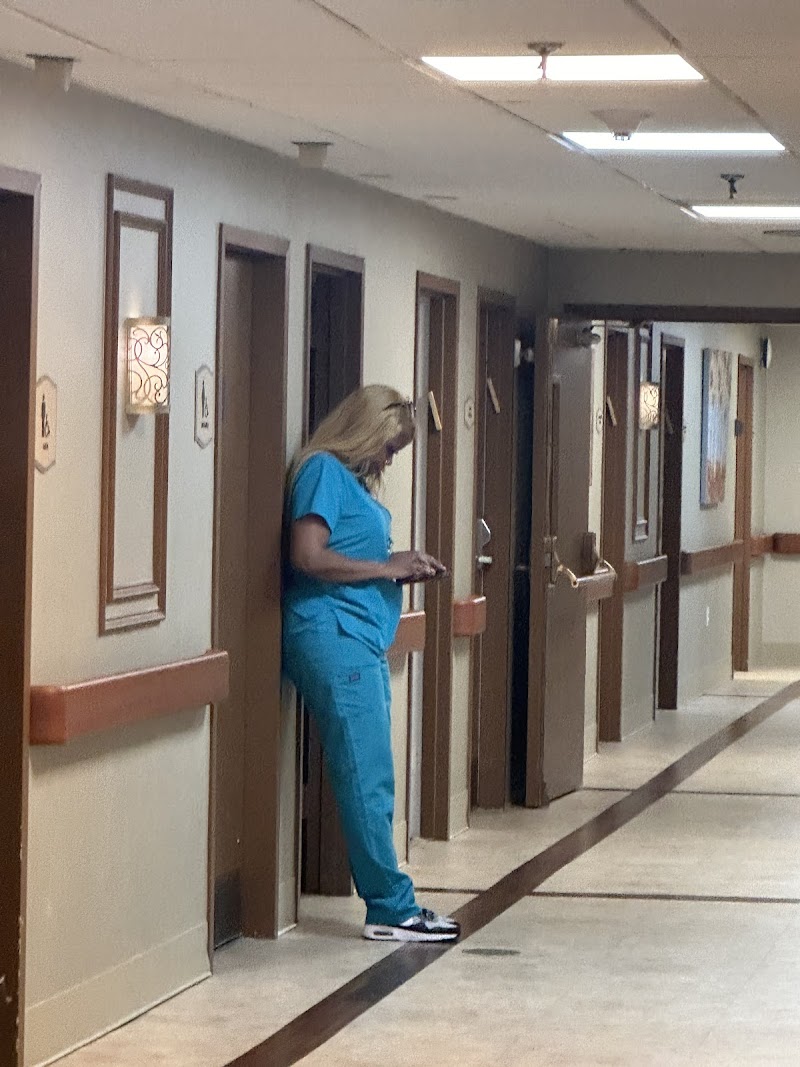
How is Medway Country Manor Skilled Nursing & Rehabilitat Staffed?

CMS rates MEDWAY COUNTRY MANOR SKILLED NURSING & REHABILITAT's staffing level at 2 out of 5 stars, which is below average compared to other nursing homes. Staff turnover is 61%, which is 15 percentage points above the Massachusetts average of 46%. High turnover can affect care consistency as new staff learn residents' individual needs. RN turnover specifically is 76%, which is notably high. RNs provide skilled clinical oversight, so turnover in this role can affect medical care quality.

What Have Inspectors Found at Medway Country Manor Skilled Nursing & Rehabilitat?

State health inspectors documented 89 deficiencies at MEDWAY COUNTRY MANOR SKILLED NURSING & REHABILITAT during 2022 to 2025. These included: 4 Immediate Jeopardy (the most serious level, indicating potential for serious harm or death), 3 that caused actual resident harm, 81 with potential for harm, and 1 minor or isolated issues. Immediate Jeopardy findings are rare and represent the most serious regulatory concerns. They require immediate corrective action.
Who Owns and Operates Medway Country Manor Skilled Nursing & Rehabilitat?

MEDWAY COUNTRY MANOR SKILLED NURSING & REHABILITAT is owned by a for-profit company. For-profit facilities operate as businesses with obligations to shareholders or private owners. The facility is operated by SHIMON LEFKOWITZ, a chain that manages multiple nursing homes. With 123 certified beds and approximately 110 residents (about 89% occupancy), it is a mid-sized facility located in MEDWAY, Massachusetts.

How Does Medway Country Manor Skilled Nursing & Rehabilitat Compare to Other Massachusetts Nursing Homes?

Compared to the 100 nursing homes in Massachusetts, MEDWAY COUNTRY MANOR SKILLED NURSING & REHABILITAT's overall rating (1 stars) is below the state average of 2.9, staff turnover (61%) is significantly higher than the state average of 46%, and health inspection rating (1 stars) is much below the national benchmark.

What Should Families Ask When Visiting Medway Country Manor Skilled Nursing & Rehabilitat?

Based on this facility's data, families visiting should ask: "What changes have been made since the serious inspection findings, and how are you preventing similar issues?" "How do you ensure continuity of care given staff turnover, and what is your staff retention strategy?" "Can you walk me through typical staffing levels on day, evening, and night shifts?" "Can I visit during a mealtime to observe dining assistance and food quality?" These questions are particularly relevant given the facility's Immediate Jeopardy citations, the facility's high staff turnover rate, and the below-average staffing rating.

Is Medway Country Manor Skilled Nursing & Rehabilitat Safe?

Based on CMS inspection data, MEDWAY COUNTRY MANOR SKILLED NURSING & REHABILITAT has documented safety concerns. Inspectors have issued 4 Immediate Jeopardy citations (the most serious violation level indicating risk of serious injury or death). The facility is currently on the Special Focus Facility watch list (a federal program monitoring the lowest-performing 1% of nursing homes nationwide). The facility has a 1-star overall rating and ranks #100 of 100 nursing homes in Massachusetts. Families considering this facility should ask detailed questions about what corrective actions have been taken since these incidents.

Do Nurses at Medway Country Manor Skilled Nursing & Rehabilitat Stick Around?

Staff turnover at MEDWAY COUNTRY MANOR SKILLED NURSING & REHABILITAT is high. At 61%, the facility is 15 percentage points above the Massachusetts average of 46%. Registered Nurse turnover is particularly concerning at 76%. RNs handle complex medical decisions and coordinate care — frequent RN changes can directly impact care quality. High turnover means new staff may not know residents' individual needs, medications, or preferences. It can also be disorienting for residents, especially those with dementia who rely on familiar faces. Families should ask: What is causing the turnover? What retention programs are in place? How do you ensure care continuity during staff transitions?

Was Medway Country Manor Skilled Nursing & Rehabilitat Ever Fined?

MEDWAY COUNTRY MANOR SKILLED NURSING & REHABILITAT has been fined $242,885 across 4 penalty actions. This is 6.8x the Massachusetts average of $35,508. Fines at this level are uncommon and typically indicate a pattern of serious deficiencies, repeated violations, or failure to correct problems promptly. CMS reserves penalties of this magnitude for facilities that pose significant, documented risk to resident health or safety. Families should request specific documentation of what issues led to these fines and what systemic changes have been implemented.

Is Medway Country Manor Skilled Nursing & Rehabilitat on Any Federal Watch List?

MEDWAY COUNTRY MANOR SKILLED NURSING & REHABILITAT is currently an SFF Candidate, meaning CMS has identified it as potentially qualifying for the Special Focus Facility watch list. SFF Candidates have a history of serious deficiencies but haven't yet reached the threshold for full SFF designation. The facility is being monitored more closely — if problems continue, it may be added to the official watch list. Families should ask what the facility is doing to address the issues that led to this status.