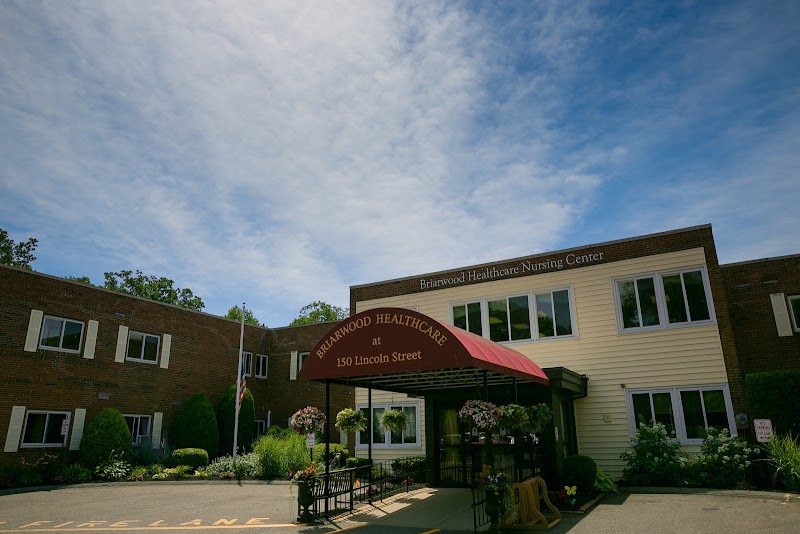
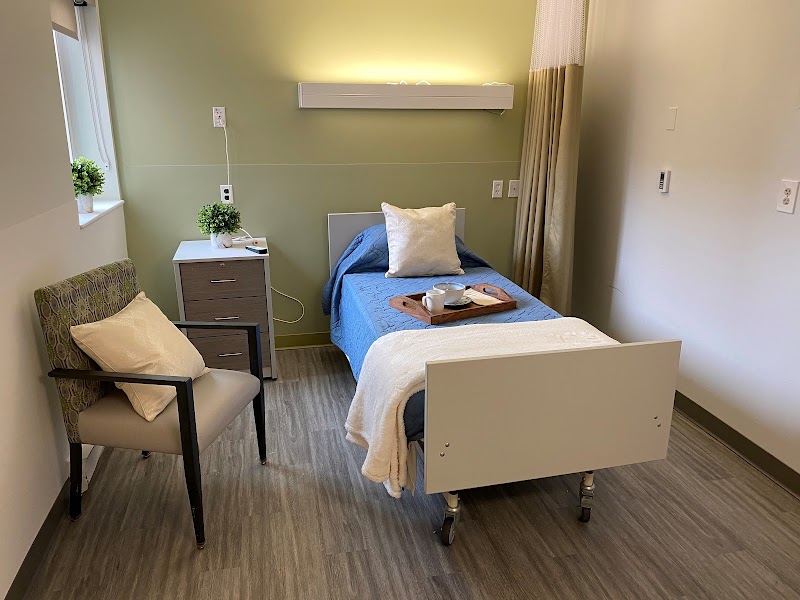
CONCERN
(D)
Potential for Harm - no one hurt, but risky conditions existed
Resident Rights
(Tag F0550)
Could have caused harm · This affected 1 resident
Based on observations and interview, the facility failed to ensure residents on the facility's Dementia Specialty Care Unit were provided with a dignified dining experience.
Findings include:
During a...
Read full inspector narrative →
Based on observations and interview, the facility failed to ensure residents on the facility's Dementia Specialty Care Unit were provided with a dignified dining experience.
Findings include:
During an observation of the lunch meal in the third unit dining room on 5/10/23, the surveyor made the following observations:
* At 12:32 P.M., a nurse stood over a resident, briefly fed him/her some spoonfuls of food and then walked away.
* At 12:35 P.M., a Resident (#28) at another table yelled where's my food. The resident's tablemate had been eating for 10 minutes.
* At 12:38 P.M., a Certified Nursing Assistant (CNA) stood over a resident, placed a bowl of applesauce below the resident's chin, and placed a spoonful of apple sauce in his/her mouth.
* At 12:40 P.M., Resident #28 yelled again where's my food.
* By 12:41 P.M., 11 residents in the dining room had been served lunch and 9 were waiting for their meals to be delivered to the unit on the second meal truck.
* At 12:42 P.M., another unserved and unfed resident at a table yelled out where's my food at?
* At 12:44 P.M., food was delivered to Resident #28, 20 minutes after his/her tablemate had been served.
During an observation of the breakfast meal in the third unit dining room on 5/11/23, the surveyor made the following observations:
* At 8:14 A.M., 13 residents were present in the dining room: seven had been served breakfast from the first food truck; six residents were waiting for their food to be delivered to the unit on the second food truck.
* At 8:16 A.M., a resident began eating pancakes and syrup with his/her hands. There were several staff in the room, however none noticed the resident. The resident's table mate appeared to be upset and repeatedly instructed the resident to not eat with his/her hands.
* At 8:26 A.M., the resident continued to eat pancakes and syrup with his/her hands. Four staff were in the dining room, however none of them were facing in the direction of the residents or aware.
During an observation of the breakfast meal in the third unit dining room on 5/12/23, the surveyor made the following observations:
* At 7:56 A.M., a resident sat at a table watching peers in the room eat, and stated loudly can you get me something to eat, I am hungry.
* At 8:02 A.M., staff realized the resident's food was not on the first truck and wheeled him/her out of the dining room and placed the resident in front of his/her room, then went back into the dining room to continue passing trays.
* At 8:04 A.M., the resident sat in the hall and said, I am hungry can you get me something to eat to the surveyor. The Nursing Home Administrator overheard the exchange and instructed staff to get him/her a snack while he/she was waiting.
* At 8:14 A.M., the resident was served breakfast.
During an interview with the Director of Nursing (DON) on 5/12/23 at 9:33 A.M., she said it is the expectation that staff sit at eye level while feeding residents and that if a resident needs assistance, the assistance is provided. As well, the DON said that meals in the main dining room should be delivered on the same truck so that residents don't have to sit around waiting while others eat.
CONCERN
(D)
Potential for Harm - no one hurt, but risky conditions existed
Deficiency F0552
(Tag F0552)
Could have caused harm · This affected 1 resident
**NOTE- TERMS IN BRACKETS HAVE BEEN EDITED TO PROTECT CONFIDENTIALITY** Based on record review, policy review, and interviews, the facility failed to ensure that one Resident (#320), out of a total sa...
Read full inspector narrative →
**NOTE- TERMS IN BRACKETS HAVE BEEN EDITED TO PROTECT CONFIDENTIALITY** Based on record review, policy review, and interviews, the facility failed to ensure that one Resident (#320), out of a total sample of 27 residents, whose right to be informed of, and participate in his/her treatment plan, was honored, when his/her Health Care Agent, which was not invoked, signed Resident #320's admission consents.
Findings include:
Review of the facility's policy titled Advanced Directives, undated, indicated that the resident has the right to formulate an advance directive, including the right to accept or refuse medical or surgical treatment. Advance directives are honored in accordance with state law and facility policy.
*Do Not Resuscitate (DNR) - indicates that, in case of respiratory or cardiac failure, the resident, legal guardian, health care proxy, or representative (sponsor) has directed that no cardiopulmonary resuscitation (CPR) or other life-sustaining treatments or methods are to be used.
*Health care decision-making - consent, refusal to consent, or withdrawal of consent to health care, treatment, service, or a procedure to maintain, diagnose, or treat a resident's physical or mental condition.
* Health care decision-making capacity - refers to possessing the ability (as defined by State law) to make decisions regarding health care and related treatment choice.
-Determining Existence of Advance Directive
*Prior to or upon admission of a resident, the social services director or designee inquires of the resident, his/her family members and/or his or her legal representative, about the existence of any written advance directives.
*The resident or representative is provided with written information concerning the right to refuse or accept medical or surgical treatment and to formulate an advance directive if he or she chooses to do so.
*Written information about the right to accept or refuse medical or surgical treatment, and the right to formulate an advance directive is provided in a manner that is easily understood by the resident or representative.
*If the resident is incapacitated and unable to receive information about his or her right to formulate an advance directive, the information may be provided to the resident's legal representative.
-Decision-Making Capacity
*Upon admission the interdisciplinary team assesses the resident's decision-making capacity and identifies the primary decision-maker if the resident is determined not to have decision-making capacity.
*The interdisciplinary team conducts ongoing review of the resident's decision-making capacity and invokes the resident representative or health care agent if the resident is determined not to have decision-making capacity. Changes are documented in the care plan and medical record.
Review of the facility's policy titled Resident Rights, undated, indicated:
*Federal and state laws guarantee certain basic rights to all residents of this facility. These rights include the resident's right to:
-self-determination;
-be informed about his or her rights and responsibilities;
-be notified of his or her medical condition and of any changes in his or her condition;
-be informed of, and participate in, his or her care planning and treatment;
Resident #320 was admitted to the facility in [DATE] with diagnoses including diabetes, osteoporosis, and depression.
Review of the most recent Minimum Data Set (MDS) assessment, dated [DATE], indicated Resident #320 could make self understood and that he/she could understand others. The MDS indicated that Resident #320 has a health care agent and the agent had not been invoked.
Review of the form titled Documentation of Resident Incapacity Pursuant to Massachusetts Health Care Proxy Act, undated, was blank in Resident #320's medical record.
Review of the Physician's Orders on [DATE] indicated there was not an order for Resident #320's Health Care Proxy to be invoked. Therefore, Resident #320 was deemed competent and able to consent to his/her own treatment.
Review of the Massachusetts Medical Orders for Life Sustaining Treatment (MOLST), dated [DATE], indicated Do Not Resuscitate and the form indicated that Resident #320's Health Care Agent which was not invoked gave consent via the telephone. Further review indicated the form was not signed by Resident #320.
Review of the form titled Agreement and its Attachments, dated [DATE], indicated Resident #320's Health Care Agent which was not invoked signed the following consents for Resident #320.
Attachment A, Bed Hold Policy;
Attachment B, Consent to admission and Treatment;
Attachment C1, Notice of Privacy Practices;
Attachment C2, Acknowledgement of Receipt of Resident's Rights;
Attachment D1 or D2, Smoking Policy;
Attachment D3, Firearms and Other Weapons Policy, Policy Statement;
Attachment E1, Management of Resident's Personal Funds;
Attachment E2, Resident Fund Management Service;
Attachment F1, Assignment of Benefits;
Attachment F2, Social Security and/or SSI Payments;
Attachment G, Medicare Secondary Payor (MSP) Screening;
Attachment H, readmission Agreement;
Attachment I, Consent to Photograph / Publish;
Attachment I2, Consent to Student Care and Treatment;
Attachment J, Alternative Dispute Resolution Agreement;
Attachment K, Private Therapy Rates;
Attachment L, Medicare Part D;
Attachment M, Notice of Medicare Non-Coverage;
Attachment N, Skilled Nursing Facility Advance Beneficiary Notification (SNFABN);
COVID-19 Rider
During an interview on [DATE] at 1:32 P.M., Unit Manager #1 reviewed the record with the surveyor. The Unit Manager said that Resident #320 was his/her own responsible person and that he/she should sign his/her own consents.
During an interview on [DATE] at 1:33 P.M., the admission Director said that she completed the new admission consents with Resident #320's Health Care Agent. The admission Director said that nursing told her that Resident #320 could not sign his/her own paperwork.
During an interview on [DATE] at 1:43 P.M., the Director of Nursing said Resident #320 was his/her own person and Resident #320 should have signed his/her own consents.
During an interview on [DATE] at 1:48 P.M., the Nurse Practitioner said that she did not invoke Resident #320's Health Care Agent. The Nurse Practitioner said that Resident #320 is his/her responsible person until the Health Care Agent is invoked.
CONCERN
(D)
Potential for Harm - no one hurt, but risky conditions existed
Report Alleged Abuse
(Tag F0609)
Could have caused harm · This affected 1 resident
Based on record review, policy review, and interview, the facility failed to report an allegation of abuse in the required timeframe for one Resident (#57), out of a total of 27 sampled residents.
Fin...
Read full inspector narrative →
Based on record review, policy review, and interview, the facility failed to report an allegation of abuse in the required timeframe for one Resident (#57), out of a total of 27 sampled residents.
Findings include:
Review of the facility's policy titled Abuse, Neglect, Exploitation or Misappropriation - Reporting and Investigating, undated, indicated the following:
Policy Statement:
All reports of resident abuse, neglect, exploitation, injuries of unknown origin, theft/misappropriation of resident properly, and reasonable suspicions of crimes against residents are reported to local, state, and federal agencies (as required by current regulations) and thoroughly investigated by facility management. Findings of all investigations are documented and reported.
Policy Interpretation and Implementation
*3. immediately is defined as:
a. Within two hours if the events that cause the allegation involve abuse or result in serious bodily injury; or
b. Within 24 hours if the events that cause the allegation do not involve abuse and do not result in serious bodily injury.
Resident #57 was admitted to the facility in June 2021 with diagnoses including dementia with other behavioral disturbances, polyosteoarthritis, and anxiety disorder.
Review of Resident #57's Minimum Data Set (MDS) assessment, dated 2/16/23, indicated the Resident had a Brief Interview for Mental Status (BIMS) score of 3 out of a possible 15 indicating he/she was severely cognitively impaired. The MDS further indicated Resident #57 did not have behaviors and required total assistance from staff for activities of daily living.
Review of a note titled SBAR (Situation, background, assessment, recommendation), dated 9/20/22, indicated Resident #57 threatened his/her roommate with a back massager at approximately 1:20 P.M.; no physical contact was made.
Review of the incident report write-up, dated 9/20/22, indicated the following:
-Investigative statement: Resident roommate made allegation that he/she was threatened with a back massager by his/her roommate, roommate denied any physical contact at that time.
Review of Resident #57's medical record indicated that the Resident was supposed to be on a 1:1 (one to one) staff supervision during the incident.
During an interview on 5/11/23 at 2:13 P.M., Unit Manager #2 said allegations of abuse are reported immediately to the Director of Nursing.
During an interview on 5/12/23 at 9:10 A.M., the Director of Nursing said she did not think the facility needed to report the incident as there was no physical contact during the threat/altercation.
CONCERN
(D)
Potential for Harm - no one hurt, but risky conditions existed
Investigate Abuse
(Tag F0610)
Could have caused harm · This affected 1 resident
Based on observations, record review, and interviews, the facility failed to identify and investigate the origin of a bruise for one Resident (#11), out of a total sample of 27 residents.
Findings inc...
Read full inspector narrative →
Based on observations, record review, and interviews, the facility failed to identify and investigate the origin of a bruise for one Resident (#11), out of a total sample of 27 residents.
Findings include:
Review of the facility's policy titled Assessment of skin condition and integrity, undated, indicated the following:
*Documentation: any new change in the resident's skin
*Reporting: notify the supervisor of new skin alterations noted, notify family, guardian of resident of new skin alterations noted.
Resident #11 was admitted to the facility in April 2022 with diagnoses including dementia and anemia.
Review of the most recent Minimum Data Set (MDS) assessment, dated 2/2/23, indicated a Brief Interview for Mental Status (BIMS) score of 12 out of a possible 15 indicating moderately impaired cognition.
During an observation and interview on 5/9/23 at 9:08 A.M., the surveyor observed Resident #11 with a fading, purple bruise with a yellow center on his/her upper right hand. Resident #11 told the surveyor he/she got it after accidentally knocking it on the bed.
Review of the May 2023 Physician's Orders indicated an order for Skin checks on Friday 3-11 every evening shifts every Friday.
Review of the most recent skin assessment, dated 4/28/23, did not indicate a bruise on the right upper hand.
The record failed to indicate the skin assessment scheduled for 5/5/23 was completed as ordered by the Physician.
During an interview with Resident #11's Certified Nurse's Assistant (CNA) #4 on 5/11/23 at 8:46 A.M., she said any new bruises identified on the residents during care should be reported to the nurse. CNA #4 said that she had seen the bruise on Resident #11's hand but did not report to the nurse as required.
During an observation and interview on 5/11/23 at 8:48 A.M., Nurse #7 and the surveyor observed Resident #11's fading bruise on the right upper hand. Nurse #7 said she was not aware of the bruise and that the CNAs were expected to observe the resident's skin during care and report any new bruises to her so she can start an incident report.
During an observation and interview with the Assistant Director of Nurses (ADON) on 5/11/23 at 8:54 A.M., she observed the fading bruise on Resident #11's right upper hand with the surveyor. The ADON said CNAs are expected to notify the nurse when they identify new bruises and that the nurse then starts an incident report, notifies the responsible party and physician, notifies the Director of Nurses, and if a report needs to be made to the Department of Public Health, a report is made within two hours.
CONCERN
(D)
Potential for Harm - no one hurt, but risky conditions existed
Comprehensive Care Plan
(Tag F0656)
Could have caused harm · This affected 1 resident
**NOTE- TERMS IN BRACKETS HAVE BEEN EDITED TO PROTECT CONFIDENTIALITY** 2. Review of the facility's policy titled Care Plans, Comprehensive Person-Centered, dated 10/2022, indicated the following:
* A...
Read full inspector narrative →
**NOTE- TERMS IN BRACKETS HAVE BEEN EDITED TO PROTECT CONFIDENTIALITY** 2. Review of the facility's policy titled Care Plans, Comprehensive Person-Centered, dated 10/2022, indicated the following:
* A comprehensive, person-centered care plan that includes measurable objectives and timetables to meet the resident's physical, psychosocial and functional needs is developed and implemented for each resident.
* When possible, interventions address the underlying source(s) of the problem area(s), not just symptoms or triggers.
* Assessments of residents are ongoing and care plans are revised as information about the residents and the residents' condition change.
Resident #57 was admitted to the facility in June 2021 with diagnoses including dementia with other behavioral disturbances, polyosteoarthritis, and anxiety disorder.
Review of Resident #57's most recent Minimum Data Set (MDS) assessment, dated 2/16/23, indicated the Resident had a Brief Interview for Mental Status (BIMS) exam score of 3 out of a possible 15, indicating he/she was severely cognitively impaired. The MDS further indicated Resident #57 did not have behaviors and required total assistance from staff for activities of daily living.
Review of Resident #57's Physician's Orders, dated 9/8/22, indicated 1:1 monitoring until further notice.
Review of Resident #57's resolved care plan with focus- I (Resident) have a behavior problem. Intervention date initiated 9/8/22 1:1 staff monitoring.
Review of a note titled SBAR (Situation, background, assessment, recommendation), dated 9/20/22, indicated the Resident threatened his/her roommate with a back massager at approximately 1:20 PM. There was no physical contact made.
During an interview on 5/11/23 at 2:13 P.M., Unit Manager #2 said at the time of the incident Resident #57 was on 15-minute checks and was never on 1:1 monitoring. The surveyor reviewed the physician's orders with Unit Manager #2 and she acknowledged that the Resident should have been on 1:1 monitoring per the orders.
During an interview on 5/12/23 at 9:10 A.M., the Director of Nursing said that staff were using 1:1 and 15-minute checks interchangeably throughout the nurses' progress notes. The Director of Nursing was unaware that there was a physician's order for Resident #57 to be on 1:1 monitoring.
3.Resident #55 was admitted to the facility in March 2021 with diagnoses including dementia and dorsalgia (back pain).
Review of Resident #55's Minimum Data Set (MDS) assessment, dated 3/9/2023, indicated a Brief Interview for Mental Status (BIMS) score of 0 out of a possible 15, indicating severe cognitive impairment. The MDS further indicated Resident #44 required total dependence of one-person for activities of daily living.
On 5/9/23 at 9:40 A.M., the surveyor observed Resident #55 lying in bed with his/her left hand without a kerlix roll in it. There was dark brown matter observed between the index and middle finger.
Review of Resident #55's medical record indicated:
* A physician's order, dated 11/23/2022, to Cleanse left hand with soap and water. Dry and place kerlix roll in grasp daily to the left hand with contractures.
* A care plan, dated as initiated 11/23/2022, indicated I have impaired skin integrity related to left hand contractures. An intervention on the care was Cleanse left hand with soap and water dry and place kerlix roll in grasp daily.
On 5/9/23 at 1:44 P.M., the surveyor observed Resident #55 lying in bed holding a kerlix roll in his/her left hand. There was dark brown matter noted between the index finger and middle finger.
On 5/10/23 at 8:10 A.M., the surveyor observed Resident #55 lying in bed holding a kerlix roll in his/her left hand. There was dark brown matter observed between the index finger and middle finger.
During an observation and interview on 5/10/23 at 9:43 A.M., the surveyor and Unit Manager #2 observed Resident #55's left hand together and observed dark brown crusty matter between the fingers. Unit Manager #2 said the order for cleaning Resident #55's hand should be followed and if Resident #55 refused the care it would be documented by the nurses.
Review of the current Treatment Administration Record (TAR) failed to indicate that Resident #55 had refused left hand care treatment as ordered.
Based on observations, record reviews, and interviews, the facility failed to implement and/or develop the care plan for three Residents (#25, #57 and #55), out of a total of 27 sampled residents. Specifically, the facility failed:
1. For Resident #25, to ensure supervision and assistance were implemented with bed mobility and eating;
2. For Resident #57, to develop and implement one to one (1:1) monitoring per the physician's order; and
3. For Resident #55, to implement the care plan for left hand contracture care.
Findings include:
1. Review of the facility's policy titled Activities of Daily Living (ADLs), Supporting, undated, indicated the following:
*Residents who are unable to carry out activities of daily living independently will receive the services necessary to maintain good nutrition, grooming, and personal and oral hygiene.
Resident #25 was admitted to the facility in July 2020 and had diagnoses that included dementia without behavioral disturbance and Barrett's Esophagus (a condition in which the flat pink lining of the swallowing tube that connects the mouth to the stomach (esophagus) becomes damaged by acid reflux, which causes the lining to thicken and become red).
Review of the most recent Minimum Data Set (MDS) assessment, dated 3/30/23, indicated that on the Brief Interview for Mental Status (BIMS) exam Resident #25 scored a 6 out of a possible 15, indicating severely impaired cognition. The MDS further indicated Resident #25 had no behaviors and required extensive physical assistance for bed mobility and required set up and supervision for eating.
On 5/9/23 at 8:13 A.M., the surveyor observed a Certified Nursing Assistant (CNA) deliver a breakfast tray to Resident #25. The CNA said, I have your breakfast, placed it on a tray table beside the bed and without assisting the Resident to a seated position or taking the covers off the drinks and food, exited the room. Resident #25 was lying flat on his/her back in bed and after a few minutes Resident #25 rocked his/her body back and forth until he/she was able to get to a seated position and reach the tray of food.
During a record review on 5/10/23 the following was indicated:
* The most recent Nutritional Assessment, dated 4/3/23, indicated Resident #25 feeds self with some assist for meal tray set up.
* The current [NAME] (resident specific care instructions) indicated I am continual supervision with eating and I require 1 staff to assist me to reposition and turn in bed.
* The current ADL care plan in place indicates
-I require 1 staff to assist me to reposition and turn in bed.
-I am continual supervision with eating.
On 5/10/23 at 12:24 P.M., the surveyor observed Resident #25 alone in his/her room, seated on the bed with his/her back to the door with lunch on the tray table in front of him/her.
* At 12:28 P.M., Resident #25 remained unsupervised. There was an uncut piece of meat on his/her tray and Resident #25 used a fork and knife (running the knife back and forth several times) attempting to cut the meat, unsuccessfully.
On 5/11/23 at 8:05 A.M., the surveyor observed Resident #25 awake and lying flat in bed. A CNA briefly entered the room, left breakfast on a tray table beside the bed, and exited the room to continue passing trays. The surveyor continued to make the following observation:
* At 8:13 A.M., Resident #25 remained unsupervised, and the Resident was eating uncut pancakes and syrup with his/her hands.
On 5/11/23 at 12:35 P.M., the surveyor observed a Nurse #11 deliver lunch to Resident #25. Nurse #11, placed the lunch on a tray table beside Resident #25's bed and exited the room, leaving Resident #25 alone and unsupervised.
* By 12:45 P.M., Resident #25 remained without supervision.
During an interview on 5/12/23 at 10:35 A.M., Resident #25's CNA #4 said that Resident #25 is independent with supervision with all care. CNA #4 said that she has access to the [NAME] and was unaware that Resident #25 required supervision with eating.
During an interview on 05/12/23 at 10:42 A.M., Nurse Unit Manager #2 said that continual supervision means someone should be with Resident #25 throughout the meal. Nurse Unit Manager #2 said that she does not think that Resident #25 needs assistance with bed mobility.
CONCERN
(D)
Potential for Harm - no one hurt, but risky conditions existed
Deficiency F0658
(Tag F0658)
Could have caused harm · This affected 1 resident
**NOTE- TERMS IN BRACKETS HAVE BEEN EDITED TO PROTECT CONFIDENTIALITY** 3. Review of the facility's policy titled Resident Mobility and Range of Motion, undated, indicated the following:
* Residents w...
Read full inspector narrative →
**NOTE- TERMS IN BRACKETS HAVE BEEN EDITED TO PROTECT CONFIDENTIALITY** 3. Review of the facility's policy titled Resident Mobility and Range of Motion, undated, indicated the following:
* Residents with limited range of motion (ROM) will receive treatment and services to increase and or prevent further decrease of ROM.
Resident #44 was admitted to the facility in January 2020 with diagnoses including hemiplegia and hemiparesis following other nontraumatic intracranial hemorrhage and contracture of left hand.
Review of Resident #44's most recent Minimum Data Set (MDS) assessment, dated 2/16/23, indicated a Brief Interview for Mental Status (BIMS) exam score of 0 out of possible 15, indicating severely impaired cognition. The MDS further indicated Resident #44 is totally dependent on staff for all activities of daily living.
On 5/9/23 at 10:00 A.M., the surveyor observed Resident #44 lying in bed with his/her left hand in a closed fisted position. Resident #44 was observed with a bright green sponge between his/her fingers.
Review of Resident #44's medical record indicated:
* A physician's order, dated 5/9/2023, for a Left palm guard during day (sic) to reduce skin integrity risk with skin checks and hand hygiene completed before and after don/doffing every shift.
* A care plan, dated as initiated 12/8/2022, for alteration in musculoskeletal status related to contractures to left and right hands.
On 5/10/23 at 11:35 A.M., the surveyor observed Resident #44 lying in bed and he/she was not wearing a left-hand palm guard.
On 5/10/23 at 1:42 P.M., the surveyor observed Resident #44 lying in bed and he/she was not wearing a left-hand palm guard.
During an interview on 5/10/23 at 1:48 P.M., Nurse #8 said Resident #44 has an order to be wearing a left palm guard and that the order was not being followed. Nurse #8 was unable to locate the palm guard.
During an interview on 5/11/23 at 8:20 A.M., the Assistant Director of Nursing (ADON) said Resident #44 should be wearing a palm guard to his/her left hand. The ADON said that if Resident #44 refused to wear the palm guard it would be documented in the medical record.
Review of the medical record failed to indicate Resident #44 refused to wear the left-hand palm guard.
Based on record review, policy review, observation, and interview, the facility failed to consistently follow professional standards of practice for three Residents (#29 ,#105, and #44), out of a total sample of 27 residents. Specifically, the facility failed:
1. For Resident #29, to reconcile medications correctly and complete a 24-hour chart check (process used to review reconciled orders placed into the physician's order);
2. For Resident #105,
a. to write an accurate physician's order for medication administration for a Resident with a feeding tube, and
b. to set an air mattress at the correct settings, per the physician's orders; and
3. For Resident #44, to follow the physician's orders for palm guard application for contracture management.
Findings include:
1. Review of the facility's policy titled Reconciliation of Medications on Admission, undated, indicated the purpose of this procedure is to ensure medication safety by accurately accounting for the resident's medications, routes and dosages upon admission or readmission to the facility.
*Gather the information needed to reconcile the medication list:
a. Approved medication reconciliation form;
b. Discharge summary from referring facility;
c. admission order sheet;
d. All prescription and supplement information obtained from the resident/family during the medication history; and
e. Most recent medication administration record (MAR), if this is a readmission.
-Find a quiet place that is free from distractions.
*General Guidelines
1. Medication reconciliation is the process of comparing pre-discharge medications to post-discharge medications by creating an accurate list of both prescription and over the counter medications that includes the drug name, dosage, frequency, route, and indication for use for the purpose of preventing unintended changes or omissions at transition points in care.
2. Medication reconciliation reduces medication errors and enhances resident safety by ensuring that the medications the resident needs and has been taking continue to be administered without interruption, in the correct dosages and routes, during the admission/transfer process.
3. Medication reconciliation helps to ensure that all medications, routes and dosages on the list are appropriate for the resident and his/her condition, and do not interact in a negative way with other medications/supplements on the list.
4. Medication reconciliation helps to ensure that medications, routes and dosages have been accurately communicated to the Attending Physician and care team.
*Steps in the Procedure
3. Using an approved medication reconciliation form or other record, list all medications from the medication history, the discharge summary, the previous MAR (if applicable), and the admitting orders (sources).
4. List the dose, route and frequency for all medications.
5. Review the list carefully to determine if there are discrepancies/conflicts. For example:
a. The dosage on the discharge summary does not match the dosage from the resident's previous MAR;
b. There is a potential medication interaction between a medication from the admitting orders and a supplement from the resident's medication history; or
c. There is a medication listed on the discharge summary for which there is no diagnosis or condition to support the use of the medication.
6. If there is a discrepancy or conflict in medications, dose, route or frequency, determine the most appropriate action to resolve the discrepancy. For example:
a. Contact the nurse from the referring facility;
b. Contact the physician from the referring facility;
c. Discuss with the resident or family;
d. Contact the resident's primary physician in the community;
g. Contact the admitting and/or Attending Physician.
7. Document findings and actions
8. When a resident is transferred to another facility, or within the organization, the reconciled medication list will be sent to the receiving care provider and the communication will be documented.
*Documentation
1. Document the medication discrepancy on the medication reconciliation form.
2. Document what actions were taken by the nurse to resolve the discrepancy.
3. If the discrepancy was unresolved, document how the discrepancy was communicated to the charge nurse physician, pharmacy, and/or next shift.
4. If the discrepancy was resolved, document how the discrepancy was resolved.
Resident #29 was admitted to the facility in March 2023 with diagnoses including diabetes, esophagitis, osteoporosis, and sepsis.
Review of the Minimum Data Set (MDS) assessment, dated 4/27/23, indicated Resident #29 can make self understood and that he/she has the ability to understand others.
During a record review on 5/10/23 at 12:43 P.M., the surveyor and Unit Manager #1 reviewed Resident #29's medical record and the surveyor requested printed copies of the hospital discharge summary, April and May 2023 Medication Administration Records and the Intermediate Drug Regime Review form.
Review of the Hospital Discharge summary, dated [DATE], indicated for nursing to administer:
-mycophenolate mofetil 250 milligrams, administer 2 capsules by mouth twice daily for kidney transplant to prevent organ rejection.
-acetaminophen (pain medication) 325 mg, administer two tablets four times daily for 28 days.
-Senna (constipation medication) 8.6 mg, 1 tablet at bedtime.
-sodium bicarbonate (mediation used for sodium levels) 650 mg, two tablets two times a day.
-insulin lispro (fast acting insulin for diabetes management typically administered with meals), inject 4 units three times a day with meals.
Review of the Physician's Orders and Medication Administration Record, dated April and May 2023, indicated there was no documentation to support that nursing reconciled (transcribed) the orders for:
-mycophenolate mofetil 250 milligrams, administer 2 capsules by mouth twice daily for kidney transplant to prevent organ rejection.
-acetaminophen 325 mg, administer two tablets four times daily for 28 days.
-Senna 8.6 mg, 1 tablet night at bedtime
-sodium bicarbonate 650 mg, two tables two times a day.
Further review indicated that nursing reconciled the orders incorrectly for:
-insulin lispro, inject 4 units three times a day with meals, reconciled as after meals and not with meals as recommended.
During a unit tour on 5/11/23 at 6:40 A.M., Resident #29 yelled out to the surveyor who was rounding on the [NAME] Rd Unit. Resident #19 was visibly upset and said he/she was told that 'the nurses made a mistake on his/her medications since April. They [nursing staff] just told me last night I was not getting me my Cellcept (Mycophenolate Mofetil 250 milligrams for kidney transplant to prevent organ rejection) this medication is important for me; I am a kidney transplant recipient and I need this medication. The medication is so my body does not reject my kidney, I could die.
During an interview on 5/11/23 at 6:57 A.M., the Director of Nursing said the Cellcept was not reconciled but should have been.
During an interview on 5/11/23 at 2:25 P.M., Nurse #4 said it was a busy night when Resident #29 returned to the facility. Nurse #4 said he was responsible to reconcile Resident #29's medications and said he was not aware he made errors until 5/11/23.
Review of the 24-Hour Chart Check Form, dated April 2023, indicated Nurse #6 completed a 24-hour chart check on 4/24/23.
During an interview on 5/12/23 at 7:15 A.M., Nurse #6 said she completed the 24-hour chart check. Nurse #6 said she identified omissions that Nurse #4 did not reconcile from the discharge summary. Nurse #6 said she did not address these omissions as required by policy.
During an interview on 5/11/23 at 1:33 P.M., the Nurse Practitioner (NP) said that nursing missed some of the medications on Resident #29's hospital discharge summary including his/her Cellcept. The NP said she should have caught the omission but she did not. The NP said that the transplant team at the hospital will need to manage Resident #29's treatment plan.
During an interview on 5/11/23 at 2:11 P.M., the Risk Manager said nursing did not reconcile the discharge summary orders correctly and nursing did not complete a 24-hour chart check correctly.
2a. Resident #105 was admitted to the facility in April 2023 with diagnoses including traumatic brain injury and gastrostomy (external opening into the stomach for nutritional support) and tracheostomy status.
Review of the Minimum Data Set (MDS) assessment, dated 4/17/23, indicated an incomplete Brief Interview for Mental Status (BIMS) score, indicating the Resident is non-interviewable.
Review of Resident #105's May 2023 Physician's Orders indicated the following:
-Glycolax powder, give 17 grams by mouth one time a day for constipation, mix the powder in 8 ounces of fluid of choice.
During an interview with Nurse #7 on 5/10/23 at 8:16 A.M., she said Resident #105 receives the medication via the feeding tube and not via the mouth.
During an interview on 5/10/23 at 11:11 A.M., the Director of Nurses said Resident #105 receives Glycolax powder via the feeding tube and the active physician's orders should reflect that.
b. Review of Resident #105's wound note, dated 5/2/23, indicated Resident #105 has a right ischium wound, stage 3.
Review of the May 2023 Physician's Orders indicated the following:
*Air mattress on bed, check inflation set by weight every shift for prevention.
Review of the most recent weights indicated the following:
*5/8/23 13:48 160.5 pounds (lbs.) (Mechanical Lift)
*5/8/23 22:42 160.5 lbs. (Bed Scale)
*5/9/23 00:08 160.5 lbs. (Mechanical Lift)
*5/10/23 10:45 160.5 lbs. (Mechanical Lift)
*5/10/23 18:45 160.5 lbs. (Hoyer)
*5/11/23 10:51 160.5 lbs. (Mechanical Lift)
*5/11/23 22:21 160.5 lbs. (Bed scale)
On 5/9/23 at 9:09 A.M.,12:36 P.M., 1:49 P.M., the surveyor observed Resident #105's air mattress was set at 130 lbs.
On 5/10/23 at 7:47 A.M., the surveyor observed Resident #105's air mattress was set at 130 lbs.
During an interview on 5/10/23 at 8:40 A.M., Certified Nurse's Assistant (CNA) #3 said air mattresses should always be set as ordered. She accompanied the surveyor to Resident #10's bed and stated that the air mattress should be set at 160 lbs. and not 130 lbs.
During an interview on 5/10/23 at 8:39 A.M., Nurse #7 said the Resident's air mattress should be set at 160 lbs. and not 130 lbs.
During an interview on 5/10/23 at 10:33 A.M., the Director of Nurses said air mattresses should be set by weight as indicated in the physician's orders.
CONCERN
(D)
Potential for Harm - no one hurt, but risky conditions existed
ADL Care
(Tag F0677)
Could have caused harm · This affected 1 resident
Based on observation, record review, and interview, the facility failed to provide one to one (1:1) supervision with meals for one Resident (#11), out of a total sample of 27 residents.
Findings inclu...
Read full inspector narrative →
Based on observation, record review, and interview, the facility failed to provide one to one (1:1) supervision with meals for one Resident (#11), out of a total sample of 27 residents.
Findings include:
Review of the facility's policy titled Activities of Daily Living (ADLs), Supporting'', undated, indicated the following:
*Appropriate care and services will be provided for residents who are unable to carry out ADLs independently, with the consent of the resident and in accordance with the plan of care, including appropriate support and assistance with dining (meals and snacks).
Resident #11 was admitted to the facility in April 2022 with diagnoses including dysphagia (difficulty chewing and swallowing), dementia, and cerebrovascular accident.
Review of the Minimum Data Set (MDS) assessment, dated 2/2/23, indicated a Brief Interview for Mental Status (BIMS) exam score of 12 out of a possible 15 indicating moderately impaired cognition. The MDS further indicated Resident #11 required supervision and one-person physical assistance with eating.
Review of Resident #11's May 2023 Physician's Orders indicated an order, dated 5/11/23, for 1:1 Supervision with meals.
On 5/11/23 at 8:10 A.M., the surveyor observed Resident #11 eating breakfast alone in his/her room. There were no staff present to supervise or assist with the meal.
On 5/11/23 at 12:00 P.M., the surveyor observed Resident #11 eating lunch in the unit dining room with other residents. He/she was not being provided with 1:1 supervision by staff.
On 5/12/23 at 7:49 A.M., the surveyor observed Resident #11 eating breakfast alone in his/her room. There were no staff present to supervise or assist with the meal.
During an interview on 5/12/23 at 8:15 A.M., Certified Nurse's Assistant (CNA) #3 said if the physician's order was for Resident #11 to be supervised 1:1 during meals, she is supposed to sit with the resident and provide the 1:1 supervision.
During an interview on 5/12/23 at 8:26 A.M., Nurse #7 said the physician's orders should be followed as indicated, the CNA or a Nurse should sit with the resident and provide 1:1 supervision while he/she eats.
During an interview on 5/12/23 at 8:39 A.M., Speech Therapist (SLP) #2 said a physician's order for 1:1 supervision during meals meant staff should be sitting with the Resident until he/she finishes the meal and cueing during the meal as needed.
CONCERN
(D)
Potential for Harm - no one hurt, but risky conditions existed
Incontinence Care
(Tag F0690)
Could have caused harm · This affected 1 resident
**NOTE- TERMS IN BRACKETS HAVE BEEN EDITED TO PROTECT CONFIDENTIALITY** Based on observation, record review, and interview, the facility failed to ensure that one Resident (#320) who was admitted to t...
Read full inspector narrative →
**NOTE- TERMS IN BRACKETS HAVE BEEN EDITED TO PROTECT CONFIDENTIALITY** Based on observation, record review, and interview, the facility failed to ensure that one Resident (#320) who was admitted to the facility with an indwelling catheter, and the hospital discharge summary recommended a voiding trial (process to remove an indwelling urinary catheter), was assessed for removal of the catheter as soon as possible, out of a total sample of 27 residents.
Findings include:
Resident #320 was admitted to the facility in April 2023 with diagnoses including diabetes, osteoporosis, and depression.
Review of the most recent Minimum Data Set (MDS) assessment, dated 4/28/23, indicated Resident #320 could make self understood and that he/she could understand others. The MDS further indicated Resident #320 had no behaviors, had an indwelling urinary catheter and that a toileting program had not been completed.
On 5/9/23 at 6:59 A.M., the surveyor observed an indwelling urinary catheter bag on the floor. The catheter was attached to Resident #320.
On 5/9/23 at 7:46 A.M., the surveyor observed an indwelling urinary catheter bag attached to Resident #320.
Review of the Hospital Discharge summary, dated [DATE], indicated that Resident #320 required an outpatient voiding trial. The Summary indicated for the nursing facility to complete a voiding trial.
Review of the Physician's Order, dated 4/25/23, indicated:
-Urinary Catheter: Maintain Foley [indwelling urinary catheter] catheter with 16 F [French] 10 ml [millimeter] balloon for urinary retention and change prn [as needed] for obstruction every shift.
Review of the medical record indicated there was no documentation to support that nursing implemented the hospital discharge summary recommendations for the voiding trial.
During an observation and interview on 5/10/23 at 11:09 A.M., the surveyor, accompanied by Certified Nurse Assistant (CNA) #1, observed Resident #320's catheter bag. CNA #1 said that Resident #1 required a catheter for urine output.
During an observation and interview on 5/10/23 at 11:26 A.M., the surveyor, accompanied by Nurse #1, observed Resident #320's catheter bag. Nurse #1 said he was a regular staff member who was familiar with Resident #320 and said that he was not aware that Resident #320 required a voiding trial. Further, Nurse #1 said he was not aware of any attempts by staff to complete a voiding trial for Resident #320.
During an interview on 5/10/23 at 11:31 A.M., Unit Manager #1 said that Resident #320 requires an indwelling urinary catheter. Unit Manager #1 said she was not aware that the hospital discharge paperwork indicated that Resident #320 required a voiding trial. Unit Manager #1 said had she known the hospital discharge instructions indicated to complete a voiding trail that the facility staff would have completed the voiding trial for Resident #320.
During an interview on 5/11/23 at 1:48 P.M., the Nurse Practitioner (NP) said she was not aware Resident #320's discharge summary indicated that he/she required a voiding trial. The NP said that the facility is able to complete voiding trials and should have.
During an interview on 5/12/23 at 9:28 A.M., the Director of Nursing said that the voiding trial was not done.
CONCERN
(D)
Potential for Harm - no one hurt, but risky conditions existed
Deficiency F0694
(Tag F0694)
Could have caused harm · This affected 1 resident
Based on observation, record review, and interview, the facility failed to ensure nursing followed a physician's order regarding a peripherally inserted central catheter (PICC) line dressing change fo...
Read full inspector narrative →
Based on observation, record review, and interview, the facility failed to ensure nursing followed a physician's order regarding a peripherally inserted central catheter (PICC) line dressing change for one Resident (#29), out of a total of 27 sampled residents.
Findings include:
Resident #29 was admitted to the facility in March 2023 with diagnoses including diabetes, esophagitis, osteoporosis, and sepsis.
Review of the most recent Minimum Data Set (MDS) assessment, dated 4/27/23, indicated Resident #29 can make self understood and that he/she has the ability to understand others. The MDS indicated that Resident #29 does not have behaviors and he/she does not reject care (blood work, medications, activities of daily living assistance). The MDS further indicated Resident #29 received intravenous medications.
On 5/9/23 at 8:05. A.M., the surveyor observed Resident #29 in his/her bed. Resident #29 had a PICC line in his/her left arm. The transparent dressing was dated 4/28/23.
Review of the Physician's Order, dated 4/24/23, indicated:
-IV: (PICC) Change Transparent Dressings every 7 days; Caps to be changed during dressing change. One time a day every Tuesday.
-IV: Assess all IV sites for unusual redness, drainage, skin irritation, pain at the site, patient confusion, and patient diaphoresis, observe for tenderness or induration when gently palpating the vein pathway above the IV site every shift document in Progress Notes.
Review of the Treatment Administration Record (TAR), dated May 2023, indicated:
-5/2/23, the PICC line dressing change was completed as ordered. However, during the observation on 5/9/23, the dressing was dated as 4/28/23.
During an interview on 5/11/23 at 7:01 A.M., Nurse #5 said that Resident #29's PICC line dressing is changed every 7 days. Nurse #5 said that if she completes the dressing as ordered she would date the dressing and sign off the TAR as completed.
During an interview on 5/10/23 at 10:52 A.M., Unit Manager #1 said that the PICC line dressing should have been changed according to the physician's order. Unit Manager #1 said the PICC line dressing should have been changed on 5/2/23.
During an interview on 5/12/23 at 9:23 A.M., the Director of Nursing said that nursing staff should have changed the dressing weekly as ordered.
CONCERN
(D)
Potential for Harm - no one hurt, but risky conditions existed
Deficiency F0698
(Tag F0698)
Could have caused harm · This affected 1 resident
Based on observations, record review, policy review, and interviews, the facility failed to ensure for one Resident (#315), who required dialysis received such services consistent with professional st...
Read full inspector narrative →
Based on observations, record review, policy review, and interviews, the facility failed to ensure for one Resident (#315), who required dialysis received such services consistent with professional standards of practice and the comprehensive person-centered care plan, out of 27 sampled residents. Specifically, nursing did not implement a physician's order for a pressure dressing and hemostat at Resident #315's bedside who required an arterio-venous fistula (AVF) for dialysis.
Findings include:
Review of the facility's policy titled End-Stage Renal Disease, Care of a Resident with, undated, indicated:
* Residents with end-stage renal disease (ESRD) will be cared for according to currently recognized standards of care.
* Staff caring for residents with ESRD, including residents receiving dialysis care outside the facility, shall be trained in the care and special needs of these residents.
Review of the facility's policy titled Hemodialysis Access Care, undated, indicated:
* Hemodialysis devices may only be accessed by medical personnel who have received training and demonstrated clinical competency regarding use of these devices.
-Hemodialysis access devices are surgically placed and removed.
-Vascular access may be an Arterio-venous fistula (AVF), the preferred method of vascular access. Access is created by surgically connecting an artery and a vein. The AVF is usually placed in the arm.
*Care Immediately Following Dialysis Treatment
-The dressing change is done in the dialysis center post-treatment.
-If dressing becomes wet, dirty, or not intact, the dressing shall be changed by a licensed nurse trained in this procedure.
-Mild bleeding from site (post-dialysis) can be expected. Apply pressure to insertion site and contact dialysis center for instructions.
-If there is major bleeding from site (post-dialysis), apply pressure to insertion site and contact emergency services and dialysis center. Verify that clamps are closed on lumens. This is a medical emergency. Do not leave resident alone until emergency services arrive.
Resident #315 was admitted to the facility in May 2023 with diagnoses including diabetes, end stage renal disease with dependence on renal dialysis, and atrial fibrillation.
Review of the most recent Minimum Data Set (MDS) assessment, dated 5/4/23, indicated Resident #315 was cognitively intact and received dialysis.
Review of the Physician's Order, dated 5/3/23, indicated:
-Keep pressure dressing & [and] hemostat at bedside
-Dialysis treatment one time a day every Mon, Wed, Fri.
-Apixaban Oral Tablet 2.5 milligrams (mg) (blood thinning medication), Give 1 tablet by mouth two times a day related to atrial fibrillation.
-Aspirin EC [enteric coated] Tablet Delayed Release 81 mg (Aspirin), Give 1 tablet by mouth one time a day (anti-platelet medication that interferes with blood clotting).
On 5/9/23 at 7:37 A.M., 5/9/23 at 11:30 A.M., 5/10/23 at 6:44 A.M., 5/10/23 at 8:30 A.M., and on 5/11/23 at 6:37 A.M., the surveyor did not observe pressure dressings or a hemostat at Resident #315's bedside.
During an interview on 5/11/23 at 7:03 A.M., Nurse #5 said Resident #315's pressure dressing is kept in the treatment room with the hemostat. Nurse #5 said these items are not stored at the bedside, as ordered by the physician.
During an interview on 5/11/23 at 12:09 P.M., Nurse #6 said that Resident #315 receives dialysis. Nurse #6 said that there should be dressing at the bedside in the event of an emergency and Nurse #6 said she was not sure what a hemostat was.
During an interview on 5/11/23 at 6:37 A.M., Unit Manager #1 said that Resident #315 should have pressure dressing and a hemostat at the bedside but did not, and she could not explain why.
During an interview on 5/12/23 at 9:27 A.M., the Director of Nursing said that dressings and a hemostat should be at the bedside in the event of an emergency.
CONCERN
(D)
Potential for Harm - no one hurt, but risky conditions existed
Deficiency F0699
(Tag F0699)
Could have caused harm · This affected 1 resident
Based on record review, policy review, and interview, the facility failed to ensure a plan of care was developed for Trauma Informed Care, with individualized interventions, for two Residents (#28 and...
Read full inspector narrative →
Based on record review, policy review, and interview, the facility failed to ensure a plan of care was developed for Trauma Informed Care, with individualized interventions, for two Residents (#28 and #78), who were admitted with the diagnosis of Post Traumatic Stress Disorder, out of a total sample of 27 residents.
Review of the facility's policy titled Trauma-Informed and Culturally Competent Care, undated, indicated the following:
* Trauma results from an event, series of events, or set of circumstances that is experienced by an individual as physically or emotionally harmful or life threatening and that has lasting adverse effects on the individual's functioning and mental, social, emotional or spiritual well-being.
* Trauma-informed care is an approach to delivering care that involves understanding, recognizing and responding to the effects of all types of trauma. A trauma-informed approach to care delivery recognizes the widespread impact and signs and symptoms of trauma in residents, and incorporates knowledge about trauma into care plans, policies, procedures and practices to avoid re-traumatization.
* Trigger: is a psychological stimulus that prompts recall of a previous traumatic event, even if the stimulus itself is not traumatic or frightening.
* Resident Care Planning
1. Develop individualized care plans that addresses past trauma in collaboration with the resident and family, as appropriate.
1. Resident #28 was admitted to the facility in December 2017 and had diagnoses that included Post-Traumatic Stress Disorder (PTSD) and schizoaffective disorder.
Review of the most recent Minimum Data Set (MDS) assessment, dated 2/9/23, indicated that on the Brief Interview for Mental Status (BIMS) exam Resident #28 scored a 4 out of a possible 15, indicating severely impaired cognition. The MDS further indicated Resident #28 had an active diagnosis of PTSD.
Review of the care plan for Resident #28 on 5/09/23 at 12:48 P.M., failed to indicate a PTSD care plan had been developed. Nor was there documentation of experiences and preferences in order to eliminate or mitigate triggers that may cause re-traumatization of Resident #28.
During an interview on 5/12/23 at 8:43 A.M., Social Worker #1 said that all residents that have a diagnosis of PTSD should have a care plan in place.
2. Resident #78 was admitted to the facility in March 2022 and had diagnoses that included Post-Traumatic Stress Disorder (PTSD) and major depressive disorder.
Review of the most recent Minimum Data Set (MDS) assessment, dated 2/23/23, indicated that on the Brief Interview for Mental Status (BIMS) exam Resident #28 scored 3 out of a possible 15, indicating severely impaired cognition. The MDS further indicated Resident #78 had an active diagnosis of PTSD.
Review of the care plan for Resident #78 on 5/09/23 at 12:35 P.M., indicated a PTSD care plan had been developed, however the care plan failed to include any individualized interventions or documentation of experiences and preferences in order to eliminate or mitigate triggers that may cause re-traumatization of Resident #78.
During an interview on 5/12/23 at 8:43 A.M., Social Worker #1 said that all residents that have a diagnosis of PTSD should have a care plan in place. In Resident #78's case she said, I think we just saw the diagnosis in his/her hospital paperwork and put a care plan in for the diagnosis but don't know anything more specific.
CONCERN
(D)
Potential for Harm - no one hurt, but risky conditions existed
Deficiency F0761
(Tag F0761)
Could have caused harm · This affected 1 resident
Based on observation, interview, and policy review, the facility failed to ensure medications were locked and secured on 2 of 3 units.
Findings include:
Review of the facility's policy titled Storage ...
Read full inspector narrative →
Based on observation, interview, and policy review, the facility failed to ensure medications were locked and secured on 2 of 3 units.
Findings include:
Review of the facility's policy titled Storage of Medications, undated, indicated the following:
* The facility stores all drugs and biologicals in a safe, secure and orderly manner.
* Drugs and biologicals in the facility are stored in locked compartments under proper temperature, light and humidity controls. Only persons authorized to prepare and administer medications have access to locked medications.
During an observation on the 1st floor unit on 5/09/23 at 6:58 A.M., the surveyor observed an unlocked and unattended medication cart. The surveyor was able to open and access the cart.
During an interview on 5/09/23 at 7:00 A.M., Nurse #1 said that the medication cart was supposed to be locked at all times when not attended to.
During an observation on the 3rd floor unit on 5/09/23 at 11:29 A.M., the surveyor observed an unlocked and unattended treatment cart. The surveyor was able to open and access the cart where treatment medications were being stored inside.
During an interview on 5/09/23 at 11:31 A.M., Nurse #2 said that the treatment cart was supposed to be locked at all times when not attended to.
During an interview on 5/10/23 at 10:28 A.M., the Director of Nursing said it was the expectation that all medication and treatment carts be locked when unattended.
CONCERN
(D)
Potential for Harm - no one hurt, but risky conditions existed
Medical Records
(Tag F0842)
Could have caused harm · This affected 1 resident
Based on record review and interview, the facility failed to ensure the medical record was accurate and complete for two Residents (#108 and #325), out of a total sample of 27 residents. Specifically,...
Read full inspector narrative →
Based on record review and interview, the facility failed to ensure the medical record was accurate and complete for two Residents (#108 and #325), out of a total sample of 27 residents. Specifically, the facility failed:
1. For Resident #108, to ensure they maintained a complete and accurate wound dressing order; and
2. For Resident #325, to ensure they maintained complete and accurate nurse practitioner notes.
Findings include:
1. Resident #108 was admitted to the facility in March 2023 with diagnoses including cancer, hypertension, and depression.
Review of the Minimum Data Set (MDS) assessment, dated 4/4/23, indicated Resident #108 had an indwelling urinary catheter and was at risk for developing pressure ulcers.
Review of the Wound Physician's note, dated 5/2/23, indicated Resident #108 had an unstageable deep tissue injury to his/her sacrum. Further review of the note indicated:
MDS 3.0 Stage Unstageable DTI [deep tissue injury] within and around wound
*Wound Size (L x W x D): 3 x 2 x 0.2 cm
*Periwound radius: Maceration, Surrounding DTI (Purple/Maroon)
*Exudate: Moderate Serous
*Granulation tissue: 100 %
DRESSING TREATMENT PLAN
*Primary Dressing(s)
-Alginate calcium apply once daily for 30 days
*Secondary Dressing(s)
-Foam silicone bdr [border] & faced apply once daily for 30 days
*Peri Wound Treatment
-Skin prep apply once daily for 30 days
Review of the Physician's Order, dated 5/3/23, indicated:
-Wound Description for Site: sacrum clean area with house cleanser, pad [sic] dry apply Alginate calcium apply once daily. Further review indicated there was no secondary dressing as required.
During an interview on 5/11/23 at 7:08 A.M., Nurse #5 said that Resident #108 has a wound to his/her sacrum. Nurse #5 said the wound is not covered with a secondary dressing.
During an interview on 5/11/23 at 12:13 P.M., Nurse #6 reviewed the physician's order for Resident #108's wound dressing. Nurse #6 said the order is not complete and is not accurate. Nurse #6 said the wound order requires a secondary dressing.
During an interview on 5/11/23 at 1:44 P.M., the Nurse Practitioner said that the nursing staff should have implemented the physician's order for the wound, including the application of a secondary dressing.
During an interview on 5/12/23 at 9:28 A.M., the Director of Nursing said Resident #108's wound dressing order was incomplete and did not include a secondary dressing.
2. Resident #325 was admitted to the facility in April 2023 with diagnoses including benign prostatic hyperplasia, heart disease, and depression.
Review of the hospital discharge record, dated 4/28/23, indicated a recommendation to discontinue the medication Finasteride secondary to orthostatic blood pressures.
Review of the Physician's Orders, dated May 2023, failed to indicate an order for Finasteride.
Review of the Nurse Practitioner's notes, dated 5/1/23 and 5/8/23, indicated that Resident #325's current medication list included Finasteride.
CONCERN
(E)
Potential for Harm - no one hurt, but risky conditions existed
Drug Regimen Review
(Tag F0756)
Could have caused harm · This affected multiple residents
4. Resident #44 was admitted to the facility in January 2020 with diagnoses including hemiplegia and hemiparesis following other nontraumatic intracranial hemorrhage and contracture of left hand.
Rev...
Read full inspector narrative →
4. Resident #44 was admitted to the facility in January 2020 with diagnoses including hemiplegia and hemiparesis following other nontraumatic intracranial hemorrhage and contracture of left hand.
Review of Resident #44's most recent Minimum Data Set (MDS) Assessment, dated 2/16/23, indicated a Brief Interview for Mental Status (BIMS) score of 0 out of possible 15 indicating Resident #44 has severe cognitive impairment.
Review of Resident #44's medical record indicated a medication regimen review had been completed on the following dates:
-9/7/22
-10/15/22
-11/7/22
-12/8/22
Further review of medical record failed to indicate the medication regimen review documents were available.
During an interview on 5/11/23 at 9:17 A.M., the DON said that she did not have any of the pharmacy recommendations for Resident #44. The DON explained that upon the surveyor's request for copies of the MRR the day prior she realized that she had not been receiving any of the recommendations, for any resident, for an undetermined length of time, but well over a year. The DON said that she contacted the pharmacy yesterday and learned that the pharmacy recommendations have been going to a mailbox that she never checked. The DON said that she has never addressed this with the pharmacy as she was unaware that there was a problem until a week prior. Although the problem was identified a week prior, she had not yet attempted to obtain the recommendations.
Based on record review, policy review, and interviews, the facility failed to ensure that pharmacy recommendations were reviewed and addressed for four sampled Residents (#29, #14, #30, and #44), out of a total sample of 27 residents.
Findings include:
Review of the facility's policy titled Medication Regimen Reviews, undated, included but was not limited to:
- The consultant pharmacist reviews the medication regimen of each resident at least monthly.
- Within 24 hours of the MRR, the consultant pharmacist provides a written report to the attending physicians for each resident identified as having a non-life threatening medication irregularity. The report contains:
a. the resident's name;
b. the name of the medication;
c. the identified irregularity; and
d. the pharmacist's recommendation.
- An irregularity refers to the use of medication that is inconsistent with accepted pharmaceutical services standards of practice; is not supported by medical evidence; and/or impedes or interferes with achieving the intended outcomes of pharmaceutical services. It may also include the use of medication without indication, without adequate monitoring, in excessive doses, and or in the presence of adverse consequences.
- If the identified irregularity represents a risk to a person's life, health, or safety, the consultant pharmacist contacts the physician immediately (within one hour) to report the information to the physician verbally, and documents the notification.
- If the physician does not provide a timely or adequate response, or the consultant pharmacist identifies that no action has been taken, he/she contacts the medical director or (if the medical director is the physician of record) the administrator.
- The attending physician documents in the medical record that the irregularity has been reviewed and what (if any) action was taken to address it.
- An acute change of condition may prompt a request for a MRR. The staff member who identifies the change of condition follows reporting procedures to notify the physician. The physician may request a MRR be conducted within a specific timeframe (e.g., within 24 hours).
- The consultant pharmacist provides the director of nursing services and medical director with a written, signed and dated copy of all medication regimen reports.
- Copies of medication regimen review reports, including physician responses, are maintained as part of the permanent medical record.
1. Resident #29 was admitted to the facility in March 2023 with diagnoses including diabetes, esophagitis, osteoporosis, and sepsis.
Review of the Minimum Data Set (MDS) assessment, dated 4/27/23, indicated Resident #29 can make self understood and that he/she has the ability to understand others.
-The MDS indicated: Did a complete drug regimen review identify potential clinically significant medication issues?
Facility Response Coded: Yes
-Did the facility contact a physician (or physician-designee) by midnight of the next calendar day and complete prescribed/recommended actions in response to the identified potential clinically significant medication issues?
Facility Response Coded: Yes
Review of the Pharmacy Consultant Note, dated 4/29/23, indicated:
-Orders reviewed recommendations submitted via IMRR.
During an interview on 5/10/23 at 12:43 P.M., Unit Manager #1 said that she was unable to provide the surveyor with Resident #29's IMRR. Unit Manager #1 said that the Director of Nursing (DON) receives IMRR and then the DON reviews them and makes the changes. Unit Manager #1 said she did not have a copy of the recommendations.
On 5/11/23, the DON provided the surveyor with the IMRR.
Review of the Pharmacy Consultant Note, dated 4/29/23, indicated:
-Orders reviewed-recommendations submitted via IMRR
Review of the Interim Medication Regime Review note, dated 4/29/23, indicated:
Clinically Significant Issue Identified. Must Act on Physician Response by Midnight Next Calendar Day--- due date: 4/30/23
For Clinically Significant Medication Issues. Facility was notified immediately.
Spoke with: TRIED CALLING AND NO ANSWER ON UNIT
Date: 4/29/23
Time: 8:30 P.M.
Recommendation: Mycophenolate Mofenolate oral capsule, order on hospital sheet- cannot find in system; please clarify
During an interview on 5/11/23 at 9:17 A.M., the DON said that she did not have any of the pharmacy recommendations for Resident #29. The DON explained that upon the surveyor's request for copies of the IMRR the day prior she realized that she had not been receiving any of the recommendations, for any resident, for an undetermined length of time, but well over a year. The DON said that she contacted the pharmacy yesterday and learned that the pharmacy recommendations have been going to a mailbox that she never checked. The DON said that she has never addressed this with the pharmacy as she was unaware that there was a problem until a week prior. Although the problem was identified a week prior, she had not yet attempted to obtain the recommendations.
2. Resident #14 was admitted to the facility in April 2023 with diagnoses including congestive heart failure, major depression, and anxiety.
Review of the MDS assessment, dated 4/11/23, indicated that during the Drug Regimen Review issues were found for Resident #14. The MDS indicated:
Did the facility contact a physician (or physician-designee) by midnight of the next calendar day and complete prescribed/recommended actions in response to the identified potential clinically significant medication issues?
The facility response was coded: Yes
Review of the Pharmacy Consultant Note, dated 4/12/23, indicated:
-orders reviewed recommendations submitted via IMRR.
During an interview on 5/10/23 at 12:43 P.M., Unit Manager #1 said that she was unable to provide the surveyor with Resident #14's IMRR. Unit Manager #1 said that the DON receives IMRR and then the DON reviews them and makes the changes. Unit Manager #1 said she did not have a copy of the recommendations.
On 5/11/23, the DON provided the surveyor with the IMRR.
Review of the IMRR, dated 4/12/23, indicated:
- PRN [as needed] Psychotropic orders need a 14-day stop date. Then ask MD to re-evaluate continued need for the following medication(s): hydroxyzine 25 milligrams Q24H [once daily] PRN anxiety
During an interview on 5/11/23 at 9:17 A.M., the DON said that she did not have any of the pharmacy recommendations for Resident #14. The DON explained that upon the surveyor's request for copies of the IMRR the day prior she realized that she had not been receiving any of the recommendations, for any resident, for an undetermined length of time, but well over a year. The DON said that she contacted the pharmacy yesterday and learned that the pharmacy recommendations have been going to a mailbox that she never checked. The DON said that she has never addressed this with the pharmacy as she was unaware that there was a problem until a week prior. Although the problem was identified a week prior, she had not yet attempted to obtain the recommendations.
3. Resident #30 was admitted to the facility in August 2021 and had diagnoses that included panic disorder and dementia.
During a record review on 5/10/23 at 10:44 A.M., the record indicated the pharmacist had reviewed Resident #30's medication regimen on the following dates:
* 4/7/23, with no recommendations;
* 3/2/23, with documentation to see report for recommendations;
* 2/4/23, with no recommendations;
* 1/5/23, with documentation to see report for new recommendation.
During an interview on 5/10/23 at 11:36 A.M., with Unit Manager #2 the surveyor requested to see copies of the pharmacy Medication Regimen Review (MRR) recommendations from 3/2/23 and 1/5/23. Unit Manager #2 said that she was unable to provide the surveyor with Resident #30's MRR. Unit Manager #2 said that the DON receives MRR and then the DON reviews them and makes the changes. Unit Manager #2 said she did not have a copy of the recommendations but that she would speak with the DON and obtain copies for the surveyor.
During an interview on 5/11/23 at 9:17 A.M., the DON said that she did not have any of the pharmacy recommendations for Resident #30. The DON explained that upon the surveyor's request for copies of the MRRs the day prior she realized that she had not been receiving any of the recommendations, for any resident, for an undetermined length of time, but well over a year. The DON said that she contacted the pharmacy and learned that the pharmacy recommendations have been going to a mailbox that she never checked. The DON said that she has never addressed this with the pharmacy as she was unaware that there was a problem until a week prior. Although the problem was identified a week prior, she had not yet attempted to obtain the recommendations.
CONCERN
(E)
Potential for Harm - no one hurt, but risky conditions existed
Deficiency F0760
(Tag F0760)
Could have caused harm · This affected multiple residents
**NOTE- TERMS IN BRACKETS HAVE BEEN EDITED TO PROTECT CONFIDENTIALITY** 2. Resident #57 was admitted to the facility in June 2021 with diagnoses including dementia with other behavioral disturbances a...
Read full inspector narrative →
**NOTE- TERMS IN BRACKETS HAVE BEEN EDITED TO PROTECT CONFIDENTIALITY** 2. Resident #57 was admitted to the facility in June 2021 with diagnoses including dementia with other behavioral disturbances and polyosteoarthritis.
Review of Resident #57's most recent Minimum Data Set (MDS) assessment, dated 2/16/23, indicated the Resident had a Brief Interview for Mental Status (BIMS) exam score of 3 out of a possible 15, indicating he/she had severe cognitive impairment. The MDS further indicated Resident #57 did not have behaviors and required total assistance from staff for activities of daily living.
Review of Resident #57's Physician's Order, dated 1/24/23, indicated the following:
-Gabapentin capsule 100 mg (milligrams) give 100 mg by mouth three times a day related to polyosteoarthritis. The start date was scheduled for 1/24/2024.
Review of Resident #57's Medication Administration Record (MAR) from 1/24/23-5/9/23 indicated Resident #57 did not receive his/her Gabapentin medication as ordered.
During an interview on 5/10/23 at 1:18 P.M., Unit Manager #2 said Resident #57 was supposed to be taking Gabapentin, she reviewed the physician's orders with the surveyor and acknowledged the transcription error.
During an interview on 5/12/23 at 11:52 A.M., the Director of Nursing said two nurses should verify orders at all times to prevent transcription errors. She acknowledged that in this case two nurses did not transcribe the order.
Based on record review and interviews, the facility failed to ensure two Residents (#29 and #57) were free of significant medication errors, out of a total sample of 27 residents. Specifically, the facility failed:
1. For Resident #29, to ensure that medications were accurately reconciled by nursing, resulting in a medication transcription error, resulting in Resident #29 going 17 days without being administered his/her anti-rejection medication; and
2. For Resident #57, to ensure that medications were accurately transcribed by nursing, resulting in Resident #57 going 106 days without being administered his/her Gabapentin (medication used for managing polyosteoarthritis pain).
Findings include:
1. Review of the facility's policy titled Reconciliation of Medications on Admission, undated, indicated the purpose of this procedure is to ensure medication safety by accurately accounting for the resident's medications, routes and dosages upon admission or readmission to the facility.
*Gather the information needed to reconcile the medication list:
a. Approved medication reconciliation form;
b. Discharge summary from referring facility;
c. admission order sheet;
d. All prescription and supplement information obtained from the resident/family during the medication history; and
e. Most recent medication administration record (MAR), if this is a readmission.
-Find a quiet place that is free from distractions.
*General Guidelines
1. Medication reconciliation is the process of comparing pre-discharge medications to post-discharge medications by creating an accurate list of both prescription and over the counter medications that includes the drug name, dosage, frequency, route, and indication for use for the purpose of preventing unintended changes or omissions at transition points in care.
2. Medication reconciliation reduces medication errors and enhances resident safety by ensuring that the medications the resident needs and has been taking continue to be administered without interruption, in the correct dosages and routes, during the admission/transfer process.
3. Medication reconciliation helps to ensure that all medications, routes and dosages on the list are appropriate for the resident and his/her condition, and do not interact in a negative way with other medications/supplements on the list.
4. Medication reconciliation helps to ensure that medications, routes and dosages have been accurately communicated to the Attending Physician and care team.
*Steps in the Procedure
3. Using an approved medication reconciliation form or other record, list all medications from the medication history, the discharge summary, the previous MAR (if applicable), and the admitting orders (sources).
4. List the dose, route and frequency for all medications.
5. Review the list carefully to determine if there are discrepancies/conflicts. For example:
a. The dosage on the discharge summary does not match the dosage from the resident's previous MAR;
b. There is a potential medication interaction between a medication from the admitting orders and a supplement from the resident's medication history; or
c. There is a medication listed on the discharge summary for which there is no diagnosis or condition to support the use of the medication.
6. If there is a discrepancy or conflict in medications, dose, route or frequency, determine the most appropriate action to resolve the discrepancy. For example:
a. Contact the nurse from the referring facility;
b. Contact the physician from the referring facility;
c. Discuss with the resident or family;
d. Contact the resident's primary physician in the community;
g. Contact the admitting and/or Attending Physician.
7. Document findings and actions
8. When a resident is transferred to another facility, or within the organization, the reconciled medication list will be sent to the receiving care provider and the communication will be documented.
*Documentation
1. Document the medication discrepancy on the medication reconciliation form.
2. Document what actions were taken by the nurse to resolve the discrepancy.
3. If the discrepancy was unresolved, document how the discrepancy was communicated to the charge nurse physician, pharmacy, and/or next shift.
4. If the discrepancy was resolved, document how the discrepancy was resolved.
Resident #29 was admitted to the facility in March 2023 with diagnoses including diabetes, esophagitis, osteoporosis, and sepsis.
Review of the most recent Minimum Data Set (MDS) assessment, dated 4/27/23, indicated Resident #29 can make self understood and that he/she has the ability to understand others. The MDS indicated that Resident #29 does not have behaviors and he/she does not reject care (blood work, medications, activities of daily living assistance).
The MDS indicated: Did a complete drug regimen review identify potential clinically significant medication issues? Facility Response Coded: Yes
The MDS indicated: Did the facility contact a physician (or physician-designee) by midnight of the next calendar day and complete prescribed/recommended actions in response to the identified potential clinically significant medication issues? Facility Response Coded: Yes
Review of the Hospital Discharge summary, dated [DATE], indicated for nursing to administer:
-mycophenolate mofetil (immunosuppression medication, is a prescription medicine to prevent rejection (anti-rejection medicine) in people who have received a kidney transplant. Rejection is when the body's immune system perceives the new organ as a foreign threat and attacks it.) 250 milligrams, administer 2 capsules by mouth twice daily for kidney transplant to prevent organ rejection.
Review of the Physician's Orders and Medication Administration Record, dated April and May 2023, indicated there was no documentation to support that nursing reconciled (transcribed) the orders for:
-mycophenolate mofetil 250 milligrams, administer 2 capsules by mouth twice daily for kidney transplant to prevent organ rejection.
Review of the Medication Administration Record, dated April 2023 and May 2023, indicated nursing did not transcribe, and Resident #29 did not begin his/her mycophenolate mofetil for his/her kidney transplant.
According to the Mayo Clinic, review on 5/12/23, indicated that the health risks associated with a kidney transplant include those associated directly with the surgery and rejection of the donor organ. Risks also include the side effects of taking anti-rejection medications (immunosuppressants) needed to prevent the body from rejecting the donated kidney. Further review indicates that rejection is your body's way of not accepting the kidney transplant. Although rejection is most common in the first six months after surgery, it can occur at any time. Fortunately, the transplant team can usually recognize and treat a rejection episode before it causes any major or irreversible damage. It is very important for you to continuously take your medications as prescribed and have your blood work drawn as scheduled.
Review of the Pharmacy Consultant Note, dated 4/29/23, indicated:
-Orders reviewed-recommendations submitted via IMRR [Interim Medication Regime Review]
Review of the Interim Medication Regime Review note, dated 4/29/23, indicated:
Clinically Significant Issue Identified. Must Act on Physician Response by Midnight Next Calendar Day--- due date: 4/30/2023
For Clinically Significant Medication Issues. Facility was notified immediately.
Spoke with: TRIED CALLING AND NO ANSWER ON UNIT
Date: 4/29/23
Time: 8:30 P.M.
Recommendation: Mycophenolate Mofenolate oral capsule, order on hospital sheet- cannot find in system; please clarify
During an interview on 5/10/23 at 12:43 P.M., the surveyor met with Unit Manager #1 and reviewed Resident #29's medical record. The surveyor requested printed copies of the hospital discharge summary, April 2023 and May 2023 Medication Administration Records, and the Intermediate Drug Regime Review form.
On 5/11/23 at 6:40 A.M., Resident #29 called out to the surveyor who was rounding on the [NAME] Rd Unit. Resident #29 was visibly upset and said he/she was told that the nurses made a mistake on his/her medications since April 2023. Resident #29 said, They [nursing staff] just told me last night I was not getting me my Cellcept (mycophenolate mofetil), and he/she said this medication is important for me; I am a kidney transplant recipient and I need this medication. The medication is so my body does not reject my kidney, I could die.
During an interview on 5/11/23 at 6:57 A.M., the Director of Nursing said the facility just became aware of a significant medication error that Resident #29 was not receiving his/her prescription Cellcept.
During an interview on 5/11/23 at 2:25 P.M., Nurse #4 said he was responsible to reconcile Resident #29's medications when he/she admitted to the facility but was not aware he made errors until 5/11/23.
Review of the 24-Hour Chart Check Form, dated April 2023, indicated Nurse #6 completed a 24-hour chart check on 4/24/23.
During an interview on 5/12/23 at 7:15 A.M., Nurse #6 said she completed the 24- hour chart check. Nurse #6 said she identified omissions that Nurse #4 did not reconcile from the discharge summary, but she did not address these omissions as required by policy.
During an interview on 5/11/23 at 1:33 P.M., the Nurse Practitioner said that nursing missed some of the medications on Resident #29's hospital discharge summary including his/her Cellcept. The NP said she should have caught the omission, but she did not. The NP said that the transplant team at the hospital will need to manage Resident #29's treatment plan for the missed doses of Cellcept.
During an interview on 5/11/23 at 2:11 P.M., the Risk Manager said nursing did not reconcile the discharge medication orders correctly and did not complete a 24-hour chart check correctly, but should have, resulting in the significant medication error.
During an interview on 5/12/23 at 9:23 A.M., the Director of Nursing (DON) said Resident #29 had a significant medication error event. The DON said she was not aware of the impact Resident #29 would have regarding his/her kidney transplant and the DON said that Unit Manager #1 is in communication with the transplant clinic for further instructions.
During an interview on 5/12/23 at 12:06 P.M., Unit Manager #1 said she called the transplant clinic to make the transplant clinic aware of the medication omission. Unit Manager #1 said that the clinic is working on an action plan for Resident #29, and she said this medication error could delay Resident #29's discharge plan. She indicated the facility was uncertain of the implications on the resident's health and well-being and that the transplant team had been notified of the significant medication error. She said the transplant team would be sending a kit to the facility to draw blood and return to them so that they could determine if Resident #29's body had begun to reject the transplant, due to not receiving the medication.
CONCERN
(F)
Potential for Harm - no one hurt, but risky conditions existed
Deficiency F0865
(Tag F0865)
Could have caused harm · This affected most or all residents
Based on record review, policy review, and interview, the facility failed to ensure they implemented and maintained an effective, comprehensive and data driven Quality Assurance and Performance Improv...
Read full inspector narrative →
Based on record review, policy review, and interview, the facility failed to ensure they implemented and maintained an effective, comprehensive and data driven Quality Assurance and Performance Improvement (QAPI) program. Specifically, the facility failed to invite or involve the pharmacy in the QAPI program for over two years.
Findings include:
The facility policy titled Quality Assurance and Performance Improvement (QAPI) Program-Design and Scope, undated, indicated the following
* The QAPI program is designed to address all systems and practices in this facility that affect residents, including clinical care, quality of life, resident choice and safety.
During an interview with one of the facility's Consultant Pharmacists (#1) on 5/11/23 at 1:26 P.M., he said that he had come to the facility monthly between October 2021-August 2022 to conduct monthly medication regimen reviews however during that time the pharmacy was never invited to attend the facility's QAPI meetings. He explained that the pharmacy attempted to get invited but never got a response. He cannot remember who in the building this was addressed with.
During an interview with the Nursing Home Administrator (NHA) on 5/12/23 at 11:07 A.M., she said QAPI meetings are held monthly at the facility and that the Pharmacy should absolutely be attending QAPI on a quarterly basis. The NHA confirmed that the pharmacist had not attended or participated in QAPI in all of 2022 or 2023.
CONCERN
(F)
Potential for Harm - no one hurt, but risky conditions existed
Infection Control
(Tag F0880)
Could have caused harm · This affected most or all residents
Based on observation and interview, the facility failed to maintain the inside of 2 of 2 laundry dryers in a manner to prevent the potential spread of infection.
Findings include:
During an observati...
Read full inspector narrative →
Based on observation and interview, the facility failed to maintain the inside of 2 of 2 laundry dryers in a manner to prevent the potential spread of infection.
Findings include:
During an observation of the laundry room on 5/11/23 at 8:30 A.M., the surveyor observed the inside of two dryers in the laundry room. Both dryers had caked-on substances on the interior of the drums covering approximately 50% of the drum walls.
The facility failed to produce a policy regarding the cleaning of the inside of the dryers.
Review of the manufacturer's directions indicated the following:
1. Check the cylinder daily for foreign objects and clean.
2. Thoroughly clean the tumbler every year and have an authorized service representative complete the cleaning.
During an interview on 5/11/23 at 8:35 A.M., the facility's Regional Director of Maintenance said that the dryer drums needed to be scraped because things had melted on them.
During an interview on 5/11/23 at 8:34 A.M., the Director of Housekeeping could not answer how often the inside of the dryers were cleaned and said there was no log of when they were cleaned.