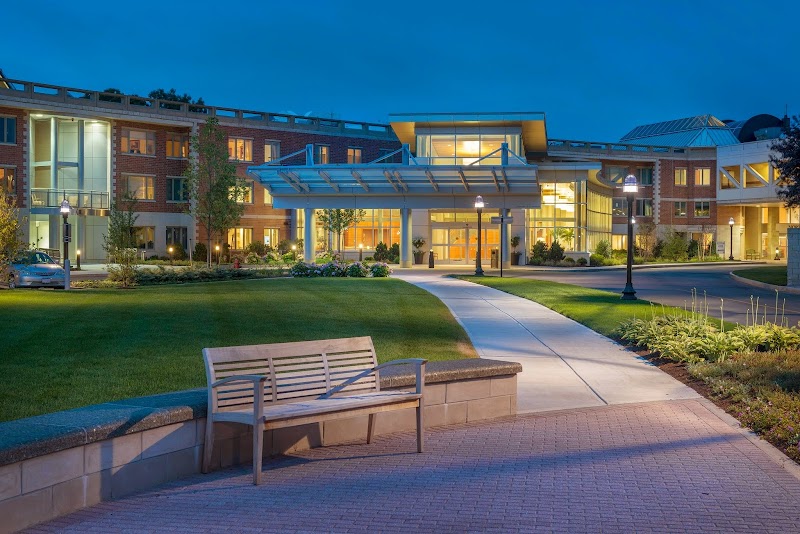
SKILLED NURSING FACILITY AT NORTH HILL (THE)

865 CENTRAL AVENUE, NEEDHAM, MA 02492 (781) 444-9910
Non profit - Corporation 72 Beds Independent Data: November 2025 2 Immediate Jeopardy citations
Trust Grade
39/100
#248 of 338 in MA
Last Inspection: July 2025

Inspected within the last 6 months. Data reflects current conditions.

Overview

The Skilled Nursing Facility at North Hill has received a Trust Grade of F, indicating poor performance with significant concerns. Ranking #248 out of 338 facilities in Massachusetts places it in the bottom half, and #25 out of 33 in Norfolk County means only a few local options are worse. Unfortunately, the facility is worsening, with issues increasing from 3 in 2024 to 5 in 2025. While staffing is a strength, receiving a 5-star rating and a low turnover rate of 22% compared to the state average, the facility has faced serious issues, including a critical incident where a resident wandered off the premises and suffered a fatal fall. Additionally, another resident was not adequately monitored, leading to potential harm, highlighting significant weaknesses despite some strengths in staffing and RN coverage, which is better than 78% of facilities in the state.

Trust Score
F
39/100
In Massachusetts
#248/338
Bottom 27%
Safety Record
High Risk
Review needed
Inspections
Getting Worse
3 → 5 violations
Staff Stability
✓ Good
22% annual turnover. Excellent stability, 26 points below Massachusetts's 48% average. Staff who stay learn residents' needs.
Penalties
✓ Good
$16,153 in fines. Lower than most Massachusetts facilities. Relatively clean record.
Skilled Nurses
✓ Good
Each resident gets 82 minutes of Registered Nurse (RN) attention daily — more than 97% of Massachusetts nursing homes. RNs are the most trained staff who catch health problems before they become serious.
Violations
⚠ Watch
11 deficiencies on record. Higher than average. Multiple issues found across inspections.
★★☆☆☆
2.0
Overall Rating
★★★★★
5.0
Staff Levels
★★★★☆
4.0
Care Quality
★☆☆☆☆
1.0
Inspection Score
Stable
2024: 3 issues
2025: 5 issues

The Good

  • 5-Star Staffing Rating · Excellent nurse staffing levels
  • 4-Star Quality Measures · Strong clinical quality outcomes
  • Low Staff Turnover (22%) · Staff stability means consistent care
  • Full Sprinkler Coverage · Fire safety systems throughout facility
  • No fines on record
  • Staff turnover is low (22%)

    26 points below Massachusetts average of 48%

Facility shows strength in staffing levels, quality measures, staff retention, fire safety.

The Bad

2-Star Overall Rating

Below Massachusetts average (2.9)

Below average - review inspection findings carefully

Federal Fines: $16,153

Below median ($33,413)

Minor penalties assessed

The Ugly 11 deficiencies on record

2 life-threatening
Jul 2025 3 deficiencies
CONCERN (D)

Potential for Harm - no one hurt, but risky conditions existed

Comprehensive Care Plan (Tag F0656)

Could have caused harm · This affected 1 resident

Based on observation, interview, and record review, the facility failed to develop an individualized, person-centered care plan to meet the physical, psychosocial, and functional needs of one Resident...

Read full inspector narrative →
Based on observation, interview, and record review, the facility failed to develop an individualized, person-centered care plan to meet the physical, psychosocial, and functional needs of one Resident (#12), out of a total sample of 18 residents. Specifically, the facility failed to ensure a comprehensive care plan was developed to address the use of psychotropic medication that identified target behaviors and individualized, measurable non-pharmacological interventions and measurable goals of treatment. Findings include:Review of the facility's policy titled Care Planning, last revised April 2014, indicated but was not limited to:-Upon entrance into the Health Center, the Minimum Data Set (MDS) Coordinator and Admitting Nurses begin the assessment process utilizing facility identified, industry standard assessment tools.-The comprehensive care plan is utilized in collaboration with each other to ensure that information related to the care of the individual resident is communicated to all team members.Resident #12 was admitted to the facility in October 2023 with diagnoses including unspecified dementia.Review of the MDS assessment, dated 6/12/25, indicated Resident #12 had severe cognitive impairment as evidenced by a Brief Interview for Mental Status (BIMS) score of 0 out of 15 and received antipsychotic medication on a routine basis.Review of the medical record indicated Resident #12 had been administered Zyprexa (antipsychotic) and Mirtazapine (antidepressant) since admission to the facility.Review of current Physician's Orders indicated but was not limited to:-Zyprexa 2.5 milligrams (mg) every other day for agitation (12/30/24)-Mirtazapine 30 mg every hour of sleep (HS) for depression (10/20/23)Review of March 2025 through July 2025 Medication Administration Records (MAR) indicated Zyprexa 2.5 mg and Mirtazapine 30 mg was administered as ordered by the physician.Review of comprehensive care plans indicated but was not limited to:Problem: Psychotropic Drug Use with Potential Drug Related Complications (initiated 10/20/23).Approaches: Administer/monitor effectiveness and side effects of Remeron and Zyprexa; Assess/record/report to MD drug related cognitive/behavioral impairment of Activity of Daily Living (ADL) functioning; Assess and report to MD gait disturbances, poor balance, dizziness, vertigo, unsteady gait; educate resident/family to potential risks, benefits and alternatives; monitor behaviors and document behavior flowsheet; AIMS test as ordered and as-needed (PRN); follow up with psychiatrist as indicated.Goal: Resident shall remain free from adverse effects of the psychotropic medication usage (no target date identified)The care plan failed to identify specific targeted signs/symptoms, Resident specific interventions, including non-pharmacological approaches, and measurable goals for the use of Mirtazapine and Zyprexa to meet the Resident's needs.During an interview on 7/17/2025 at 2:30 P.M., Nurse #2 said Resident #12 is administered Mirtazapine for depression and Zyprexa for behaviors such as combativeness and agitation. She reviewed the Resident's comprehensive care plan and said it does not identify targeted signs/symptoms or behaviors for the use of Mirtazapine and Zyprexa, and there are no resident-specific non-pharmacological interventions and no measurable goals of treatment. She said it might be on the Care Partners' (nursing assistant) Care Card for Resident #12. Nurse #2 reviewed the care card and said there were no resident-specific behaviors identified on the care card either. She said the Director of Nursing (DON) and Assistant Director of Nursing are responsible for care plan development.During an interview on 7/18/25 at 9:05 A.M., the DON said Resident #12 can become agitated in the afternoon and is prescribed Mirtazapine for depression and Zyprexa for agitation. She reviewed Resident #12's care plan and said the care plan for his/her use of psychotropic medication did not include resident specific signs, symptoms or behaviors for the use of psychotropic medications. She said the care plan should include resident specific symptoms/targeted behaviors such as his/her depression and agitation, resident specific interventions, non-pharmacological approaches, and measurable goals and does not.
CONCERN (D)

Potential for Harm - no one hurt, but risky conditions existed

Deficiency F0761 (Tag F0761)

Could have caused harm · This affected 1 resident

Based on observation, record review, and staff interview, the facility failed to ensure that for one Resident (#9), of a total sample of 18 residents, that drugs and biologicals used in the facility w...

Read full inspector narrative →
Based on observation, record review, and staff interview, the facility failed to ensure that for one Resident (#9), of a total sample of 18 residents, that drugs and biologicals used in the facility were labeled accurately and in accordance with the physician's order. Findings include:Review of the facility's policy titled Administering Medications, revised in April 2019, included but was not limited to the following:2. The director of nursing services supervises and directs all personnel who administer medications and/or have related functions. 4. Medications are administered in accordance with prescriber orders, including any required time frame.10. The individual administering the medication checks the label THREE (3) times to verify the right resident, right medication, right dosage, right time and right method (route) of administration before giving the medication. On 7/17/25 at 9:50 A.M., the surveyor observed Nurse #4 enter Resident #9's room to administer their medications. Nurse #4 verified the Resident's medication orders in the electronic Medication Administration Record (eMAR) which included metoprolol (an antihypertensive drug) 37.5 milligrams (mg) twice daily. She then obtained two cards of the drug metoprolol, one containing metoprolol 25 mg and another containing metoprolol 25 mg, 1/2 tabs (12.5 mg). Nurse #4 then proceeded to pour one each of the metoprolol 25 mg and 12.5 mg tablets, respectively, for a total dose of 37.5 mg. She handed the two cards of metoprolol to the surveyor to verify that the correct dose had been poured. Review of the two cards of metoprolol indicated that the pharmacy directions for dosing administration did not match the physician's orders as follows:Card 1: The administration instructions listed on the label for metoprolol 25 mg tablets indicated: Metoprolol Succ (succinate) ER (extended release) 25 mg:Give one half tab with 1 tabTD (total dose)= 75 mg by mouth twice a day for HTN (hypertension), give 1 tab with half tabTD= 75 mg by mouth twice a dayCard 2: The administration instruction listed on the label for metoprolol 25 mg, 1/2 tabs (12.5 mg) indicated: Metoprolol Succ ER 25 mg tab.Give one half tab with 1 tabTD= 75 mg by mouth twice a day for HTNGive 1 tab with half tabTD = 75 mg by mouth twice a day. During an interview on 7/17/25 at 9:55 A.M., Nurse #4 said that the two cards of metoprolol tablets, 25 mg and 12.5 mg, respectively, did not contain the correct labeling/dosing instructions. Nurse #4 said that she routinely administers medications to Resident #9 and had not noticed that the instructions indicated to give a total dose of metoprolol 75 mg twice a day instead of metoprolol 37.5 mg twice a day. Nurse #4 said that the incorrect directions, that amounted to twice the ordered dose of metoprolol, had the potential for a serious medication error. During an interview on 7/17/25 at 11:35 A.M., the Director of Nurses (DON) said that the error in the metoprolol order/administering directions on the medication card had the potential for a serious medication error if followed. She said that Resident #9 would have received twice the amount of metoprolol if the order had been followed (metoprolol 75 mg BID). The DON also said that nurses administering the resident's metoprolol should have identified the error in the order for administration on the medication cards.
CONCERN (E)

Potential for Harm - no one hurt, but risky conditions existed

Deficiency F0605 (Tag F0605)

Could have caused harm · This affected multiple residents

Based on record reviews and interviews, the facility failed to ensure one Resident (#10), out of a total sample of 18 residents, was free from unnecessary psychotropic medications. Specifically, the f...

Read full inspector narrative →
Based on record reviews and interviews, the facility failed to ensure one Resident (#10), out of a total sample of 18 residents, was free from unnecessary psychotropic medications. Specifically, the facility failed to ensure an as needed (PRN) dose of Seroquel (antipsychotic) was limited to no more than14 days as required. Findings include:Resident #10 was admitted to the facility in April 2022 and has diagnoses including visual hallucinations.Review of the Minimum Data Set (MDS) assessment, dated 3/13/25, indicated Resident #10 had moderate cognitive impairment as evidenced by a Brief Interview for Mental Status (BIMS) score of 9 out of 15, and received antipsychotic medication on a PRN basis only.Review of the medical record indicated but was not limited to the following physician's orders:-Seroquel 25 milligrams (mg) give 2 half tabs for a total dose of 25 mg by mouth twice a day as needed x 30 days and evaluate for hallucinations (7/12/24, stop date: 8/11/24)-Seroquel 25 mg twice a day as needed x 30 days and evaluate for hallucinations/restlessness (9/6/24, stop date: 10/6/24)-Seroquel 25 mg twice a day as needed for 60 days and evaluate (10/11/24, stop date: 11/5/24)-Seroquel 25 mg by mouth twice a day as needed for increased hallucinations (11/7/24, stop date: 12/10/24)During an interview on 7/16/25 at 3:12 P.M., Physician #1 said it is his understanding that the initial orders for all PRN psychotropic medication must be limited to 14 days, and if there is a need, it can be extended for a longer duration. He said he was not aware that antipsychotic medications were limited to 14 days with no exception. During an interview on 7/17/25 at 9:40 A.M., Nurse Practitioner (NP) #1 reviewed Resident #10's PRN Seroquel orders. She said the orders for PRN Seroquel should have been written for no more than 14 days after each evaluation, but were not on 7/12/24, 9/6/24, 10/11/24, and 11/7/24.During an interview on 7/18/25 at 9:05 A.M., the Director of Nursing (DON) reviewed Resident #10's medical record and said Resident #10's PRN orders for Seroquel should not have been written for a duration longer than 14 days but were.
Jan 2025 2 deficiencies 2 IJ
CRITICAL (J) 📢 Someone Reported This

A family member, employee, or ombudsman was alarmed enough to file a formal complaint

Immediate Jeopardy (IJ) - the most serious Medicare violation

Quality of Care (Tag F0684)

Someone could have died · This affected 1 resident

**NOTE- TERMS IN BRACKETS HAVE BEEN EDITED TO PROTECT CONFIDENTIALITY** Based on records reviewed and interviews, for one of three sampled residents (Resident #1), who was newly admitted to the Facili...

Read full inspector narrative →
**NOTE- TERMS IN BRACKETS HAVE BEEN EDITED TO PROTECT CONFIDENTIALITY** Based on records reviewed and interviews, for one of three sampled residents (Resident #1), who was newly admitted to the Facility, was confused, was noted to wander without regard for his/her own safety, the Facility failed to ensure he/she was provided with quality care and services that meet professional standards of practice. When although he/she was assessed by two different nurses upon admission as triggering for placement of a WanderGuard bracelet for safety, a device was not placed on him/her, and despite his/her continual wandering day and night, nursing did not reassess or re-evaluate their decision regarding placement of a WanderGuard. On [DATE], unbeknownst to staff, Resident #1 wandered off his/her unit, took the elevator to the Lobby and exited out the front door of the Facility, undetected by anyone. While outside, Resident #1 fell landed face down, hitting his/her head on the ground. Resident #1 was diagnosed with significant intracranial hemorrhaging (bleeding in the brain) and died eight days later. Findings include: The Facility's Policy titled, Elopement Risk Assessment & Prevention Policy and Procedure, dated 12/2017, indicated it is Policy of the Facility to establish and maintain standard protocols for the purpose of ensuring that each Resident residing in the Facility is appropriately assessed for risk of elopement, and utilizing an industry standard of practice Elopement Assessment Tool. The Policy indicated if an individual Resident is found at risk for elopement, appropriate interventions are implemented to decrease the potential for intentional or unintentional elopement from the Facility or campus premises. The Policy indicated assessment intervals include upon moving into the Facility each Resident is assessed to establish a baseline and determine risk for elopement. The Policy indicated this is completed by the Admitting Nurse and then subsequently by the Minimum Data Set (MDS) Coordinator or the Licensed Team Member designated by the MDS Coordinator and this assessment will also be completed if there is a change in a Resident's wandering patterns. The Policy indicated Residents which have the following are considered potentially at risk for elopement; Residents taking medications which potentially cause confusion or disorientation and Residents with indicators of Dementia. The Policy indicated those Residents found to be at risk for elopement from the Facility or the campus will have a WanderGuard bracelet placed on one or more of the following areas: wrist, ankle, mobility device, such as a walker or wheelchair. Residents who are found at risk of elopement will have 2 of their photos pulled or copied from their record and placed at the Facility's Receptionist desk in the WanderGuard Book. During an interview on [DATE] at 8:24 A.M., the Maintenance Director said the Facility is equipped with a WanderGuard alert system, that alarm sensors are in place at the elevator that prevents a resident wearing a WanderGuard device from accessing and using the elevator without a staff member present, and also prevents the resident from going through or out any door in the facility equipped with a sensor, unless they are accompanied by staff, who must temporarily disable the sounding alarm triggered by a resident wearing a WanderGuard device as they get within range of any of the WanderGuard alarm sensors. Review of the Facility Incident Report, dated [DATE] at 5:45 P.M., indicated that Resident #1 was observed by Certified Nurse Aide (CNA) #2 standing up from the dining table and had been unsteady on his/her feet. The Report indicated Resident #1 did not want to sit back down in his/her seat, therefore CNA #2 assisted Resident #1 and walked around the unit with him/her. The Report indicated CNA #2 escorted Resident #1 to the television room, where there was a Dietary Aide located at the time. The Report indicated CNA #2 left the room to assist another resident and the Dietary Aide left the television room. The Report indicated that at approximately at 6:09 P.M. Resident #1 exited the front door of the Facility and at 6:12 P.M. the Administrator and Director of Nurses (DON) observed Resident #1 outside, on the sidewalk in front of the building. The Report indicated that they observed Resident #1 placing his/her walker over the curb resulting in a witnessed fall. The Report indicated Resident #1 sustained lacerations to the left side of his/her forehead and top of his/her nose. The Report indicated first aid had been provided and Resident #1 was sent to the Hospital. Review of Resident #1's Hospital admission Note, dated [DATE], indicated Resident #1 sustained a Petechial Hemorrhage (9 mm) within the known left temporoparietal infarct (a significant intracranial hemorrhage, brain bleed), left frontal scalp hematoma, and unchanged bilateral hypodense subdural collections, likely hygromas (fluid collection in the subdural space on both sides of the brain that appear low in density). The Hospital Note indicated Resident #1 had been on Eliquis (anticoagulant, 5 milligrams two times a day) at the time of the fall, has significant intracranial hemorrhaging, with the potential for life-threatening progression or permanent disability and was transferred to another Hospital for further treatment. During an interview on [DATE] at 9:27 A.M., Family Member #1 said Resident #1 died on [DATE] (eight days later) as a result of his/her injuries, sustained from the fall. Resident #1 was admitted to the Facility in [DATE], diagnoses included Left Cerebral Vascular Accident (stroke) with right hemiparesis (muscle weakness or partial paralysis on one side of the body), Altered Mental Status, Aphasia (a disorder that affects how you communicate), Type II Diabetes with long term use of Insulin, Atrial Fibrillation (irregular/rapid heart rate), Urinary Tract Infection, Hypothyroidism (thyroid gland does not produce enough thyroid hormone), Hypertension (High Blood Pressure), and Insomnia (persistent problem falling and staying asleep). Resident #1's admission Fall Risk Assessment, dated [DATE], indicated Resident #1 was assessed by Nursing as being at High Risk for falls, factors included intermittent confusion, history of falls, balance problems while standing and walking, decreased muscular coordination with required assistance (person and device), and prescribed medications that increase his/her risk to falls. Resident #1's Baseline Care Plan titled Falls, dated as initiated on [DATE], indicated Resident #1 was at risk of falling, had short/long term memory problems, was moderately cognitively impaired (stage of decline that affects short-term memory and the ability to complete complex tasks) and required one staff member assistance with transfers and mobility. Review of Resident #1's admission Assessment, which included a brief Wandering Assessment component, dated [DATE], indicated he/she was assessed by Nurse #1 for the need for placement of a WanderGuard bracelet device. The Assessment directed Nurse #1 to consider placing a WanderGuard on the Resident if Yes was the response to Any of the following: - (a) new admission - (b) Resident independently in mobility - (c) Resident resistant to being placed in the facility - (d) Resident have a history of wandering - (e) he/she had been taking medications which cause confusion or disorientation - (f) any indications of Dementia. Further review of the Assessment indicated that although Nurse #1 documented Yes as the response to 1 of the 6 indicators listed above, (a) new admission, the decision was made by Nurse #1 NOT to place a WanderGuard on Resident #1. The Assessment also required the nurse completing it to document Why if the device was not placed on the Resident, however that part of the Assessment was left blank and no rationale was provided by Nurse #1. During a telephone interview on [DATE] at 9:26 A.M., Nurse #1 said on [DATE], he was assigned to and completed Resident #1's Admission. Nurse #1 said Resident #1 had a difficult time communicating and expressing his/her needs. Nurse #1 said Resident #1 was unsteady on his/her feet, Resident #1's body movements were slow, he/she was weak and he/she needed staff assistance for mobility. Nurse #1 said that although the assessment recommended to consider putting a WanderGuard on Resident #1, said that he felt Resident #1 did not need it. Review of an additional more detailed Wandering/WanderGuard Assessment for Resident #1, dated [DATE], and completed by Nursing Supervisor #1, indicated she also assessed him/her for the need for placement of a WanderGuard device. The Assessment also directed Nursing Supervisor #1 to consider placing a WanderGuard on the Resident if Yes was the response to Any of the following: - (a) new admission - (b) able to walk independently - (c) able to walk with walker or use wheelchair - (d) able to walk with the assistance of others - (e) Resident resistant to being placed in the Facility - (f) Resident has history of wandering - (g) he/she had been taking medications which cause confusion or disorientation - (h) any indications of Dementia. Further review of the Assessment indicated that although Nursing Supervisor #1 documented Yes as the response to 6 of the 8 indicators listed above, (a, b, c, d, g, h), the decision was made by Nursing Supervisor #1 NOT to place a WanderGuard on Resident #1. The Assessment also required nursing to document Why if the device was not placed on the resident, however that part of the Assessment was left blank and no rationale was provided by the Nursing Supervisor #1. During a telephone interview on [DATE] at 1:07 P.M., Nursing Supervisor #1 said on [DATE] she helped Nurse #1 with Resident #1's Admission. Nursing Supervisor #1 said Resident #1 recently had a stroke and he/she had difficulty finding words. Nursing Supervisor #1 said she observed Resident #1's mobility with the assistance of Physical Therapy and said Resident #1 had difficulty with walking. Nursing Supervisor #1 said on [DATE] she completed Resident #1's Wandering/WanderGuard Assessment which was a separate document from the admission and Assessment for Resident #1 that was completed by Nurse #1. Nursing Supervisor #1 said she did not communicate her findings of Resident #1's Assessment to Nurse #1. Nursing Supervisor #1 said Resident #1 was unsteady on his/her feet, and needed staff assistance with ambulation. Nursing Supervisor #1 said when she completed Resident #1's Wandering/WanderGuard Assessment, she did not document the reason why she decided Resident #1 did not need a WanderGuard and said all the questions on the Assessment including Why were to be completed as required. Nursing Supervisor #1 said she decided not to put the WanderGuard on him/her because he/she really could not walk independently. Nursing Supervisor #1 said it was confusing when completing the Facility's Resident admission and Assessments including the Wandering/WanderGuard Assessment if the Resident was able to walk, but was not independent. Review of Nurse #1's admission Progress Note, dated [DATE], indicated Resident #1's gait was slow and weak, that he/she required a rolling walker, and one staff member assistance was needed with transfers. The Note indicated Resident #1 needed frequent checks to prevent falls/injury, due to Resident #1's confusion. Review of Nurse's #1's Progress Note, dated [DATE], indicated Resident #1 was resistive to care, because of his/her impaired memory, he/she had an unsteady gait, was non-complainant with safety measures and Resident #1 required close supervision. Review of Nurse's #1's Progress Note, dated [DATE], indicated Resident #1 remains at High Risk for Falls due to confusion and poor balance. Review of Nurse's #2's Progress Note, dated [DATE], indicated Resident #1 continues to wander all evening, with standby assist and cueing required for safety. During an interview on [DATE] at 2:27 P.M., (and during a follow-up interview on [DATE] at 11:04 A.M.) the Occupational Therapist Assistant (OTA) said on [DATE] she observed Resident #1 ambulating with his/her walker, and that Resident #1 attempted to push open the door located on the far end of the unit. The OTA said she approached Resident #1 and distracted him/her from trying to exit the unit. The OTA said Resident #1 had a difficult time talking, verbalizing his/her needs and wants, was confused about his/her surroundings and had trouble following one step directions. The OTA said she had walked with and brought Resident #1 to the television room on the unit. The OTA said she spoke with Resident #1's Nurse (exact name unknown) to let her know what had occurred and said the Nurse directed her to inform the Director of Nurses (DON). The OTA said that day, she reported to the DON that she had observed Resident #1 wandering on the unit and that he/she was attempting to exit the unit. The OTA said the DON informed her that she would start a Behavioral Log on Resident #1. The OTA said she documented in Resident #1's Therapy Note on [DATE] what she had observed and that she had reported the incident. Review of a Nursing Progress Note, dated [DATE], indicated Resident #1 continues to wander all night. Further review of Resident #1's Medical Record, indicated there was no documentation to support nursing reassessed Resident #1 for placement of the WanderGuard bracelet, despite his/her continuous wandering behaviors and his/her episode of exit seeking on [DATE], to ensure his/her safety and decrease the risk of an elopement. During an interview on [DATE] at 1:29 P.M., the Assistance Director of Nurses/Staff Development Coordinator(ADON/SDC) said Resident #1's Wandering/WanderGuard Assessment completed by Nursing Supervisor #1 on [DATE], indicated nursing should consider placement of a WanderGuard device on him/her. The ADON/SDC said that although, the check off box was marked and indicated that a WanderGuard was NOT placed on Resident #1, she said there was no documentation to support why the decision was made by Nursing Supervisor #1 not to. The ADON/SDC said Resident #1's admission status regarding his/her Wandering/WanderGuard Assessment (completed by Nursing Supervisor #1) and Resident admission and Assessment (completed by Nurse #1), which had been completed on the same day, were answered differently. The ADON/SDC said parts of Resident #1's admission Assessments were left blank and no rationale was provided by either Nurse #1 or Nursing Supervisor #1 as to why they decided NOT to put a WanderGuard bracelet on him/her, even though he/she triggered for recommendation to use one. During an interview on [DATE] at 9:57 A.M., the Director of Nurses (DON) said that upon admission residents are screened for Fall Risk, Elopement, Wandering and WanderGuard Assessments. The DON said she spoke with Nursing Supervisor #1, because there was conflicting documentation on Resident #1's Wandering/Wander Guard Assessment, dated [DATE] compared to Resident #1's admission Assessment that was completed on the same day by Nurse #1. The DON said if any of the questions are answered Yes on the Resident admission and Assessment and or on the Wandering/WanderGuard Assessment the Nurse should apply a WanderGuard on the resident. The DON said a WanderGuard would be placed on a resident who has a history of elopement, does not want to be at the Facility, or exit seeks. The DON said at any time the Nurse can reassess a resident for elopement and place a WanderGuard on the resident to ensure safety, however Resident #1 was not reassessed.
CRITICAL (J) 📢 Someone Reported This

A family member, employee, or ombudsman was alarmed enough to file a formal complaint

Immediate Jeopardy (IJ) - the most serious Medicare violation

Accident Prevention (Tag F0689)

Someone could have died · This affected 1 resident

**NOTE- TERMS IN BRACKETS HAVE BEEN EDITED TO PROTECT CONFIDENTIALITY** Based on records reviewed and interviews for one of three sampled residents (Resident #1), who required the assistance of one st...

Read full inspector narrative →
**NOTE- TERMS IN BRACKETS HAVE BEEN EDITED TO PROTECT CONFIDENTIALITY** Based on records reviewed and interviews for one of three sampled residents (Resident #1), who required the assistance of one staff member for ambulation, exhibited increased wandering and exit seeking with the need for frequent redirection by staff for safety, the Facility failed to ensure he/she was provided with the necessary level of staff assistance/supervision to prevent him/her from eloping and sustaining serious injuries. On [DATE], at approximately 6:00 P.M., unbeknownst to staff, Resident #1 wandered off his/her unit, took the elevator to the main lobby, and although there was a Receptionist assigned to and seated in the Lobby, who was responsible for unlocking the main entrance door to let visitors and staff in/out, Resident #1 was able to exit through the main Lobby door, undetected and left the Facility. Resident #1 was ambulating outside alone for several minutes before being seen by staff, however before he/she could be safely redirected back into the Facility, Resident #1 fell forward landing face down on the pavement, was noted to be bleeding from lacerations on his/her head and nose, Emergency Medical Services (911) were activated, and he/she was transferred to the Hospital, where he/she was diagnosed with significant intracranial hemorrhaging (bleed in the brain) and died eight days later. Findings include: The Facility's Policy titled, Falls Prevention Policy and Procedure, dated 06/2022, indicated it is Policy of the Facility to establish and maintain standard protocols to assess all Residents, utilizing Evidence Based Practice and Fall Risk Assessment tools to identify and document Resident risk factors for falls and establish a Resident-Centered Falls Prevention Plan based on relevant assessment information. The Policy indicated the staff, with the support of the attending Physician, will evaluate functional and psychological factors that may increase fall risk, including ambulation, mobility, gait, balance, excessive motor activity, Activities of Daily Living (ADL) capabilities, activity tolerance, continence, and cognition. The Policy indicated the Staff will monitor and document each Resident's response to interventions intended to reduce falling or risks of falling. The Facility's Policy titled, Elopement Risk Assessment & Prevention Policy and Procedure, dated 12/2017, indicated it is Policy of the Facility to establish and maintain standard protocols for the purpose of ensuring that each Resident residing in the Facility is appropriately assessed for risk of elopement, and utilizing an industry standard of practice Elopement Assessment Tool. The Policy indicated if an individual Resident is found at risk for elopement, appropriate interventions are implemented to decrease the potential for intentional or unintentional elopement from the Facility or campus premises. The Policy indicated assessment intervals include upon moving into the Facility each Resident is assessed to establish a baseline and determine risk for elopement. The Policy indicated this is completed by the Admitting Nurse and then subsequently by the Minimum Data Set (MDS) Coordinator or the Licensed Team Member designated by the MDS Coordinator and this assessment will also be completed if there is a change in a Resident's wandering patterns. The Policy indicated Residents which have the following are considered potentially at risk for elopement; Residents taking medications which potentially cause confusion or disorientation and Residents with indicators of Dementia. The Policy indicated those Residents found to be at risk for elopement from the Facility or the campus will have a Wander Guard bracelet placed on one or more of the following areas: wrist, ankle, mobility device, such as a walker or wheelchair. Residents who are found at risk for elopement will have two (2) of their photos pulled or copied from their record and placed at the Facility's Receptionist desk in the Wander Guard Book. Resident #1 was admitted to the Facility in [DATE], diagnoses included Left Cerebral Vascular Accident (stroke) with right hemiparesis (muscle weakness or partial paralysis on one side of the body), Altered Mental Status, Aphasia (a disorder that affects how one communicates), Type II Diabetes with long term use of Insulin, Atrial Fibrillation (irregular/rapid heart rate), Urinary Tract Infection, Hypothyroidism (thyroid gland does not produce enough thyroid hormone), Hypertension (High Blood Pressure), and Insomnia (persistent problem falling and staying asleep). Resident #1's admission Fall Risk Assessment, dated [DATE], indicated Resident #1 was assessed by Nursing as being at High Risk for falls, factors included intermittent confusion, history of falls, balance problems while standing and walking, decreased muscular coordination with required assistance (person and device), and prescribed medications that increase his/her risk to falls. Resident #1's admission Assessment, dated [DATE], also included a brief Wandering Assessment component, which indicated he/she was assessed by Nurse #1 for the need for placement of a WanderGuard bracelet device. The Assessment indicated that although Nurse #1 was directed to consider placing a WanderGuard on the Resident #1 because he/she was a new admission, but that Nurse #1 made the decision not to put a device on him/her. Review of an additional more detailed Wandering/WanderGuard Assessment for Resident #1, dated [DATE], and completed by Nursing Supervisor #1, indicated she also assessed him/her for the need for placement of a WanderGuard device. The Assessment also directed Nursing Supervisor #1 to consider placing a WanderGuard on the Resident if Yes was the response to Any of the following: - (a) new admission - (b) able to walk independently - (c) able to walk with walker or use wheelchair - (d) able to walk with the assistance of others - (e) Resident resistant to being placed in the Facility - (f) Resident has history of wandering - (g) he/she had been taking medications which cause confusion or disorientation - (h) any indications of Dementia. Further review of the Assessment indicated that although Nursing Supervisor #1 documented Yes as the response to 6 of the 8 indicators listed above, (a, b, c, d, g, h), the decision was made by Nursing NOT to place a WanderGuard on Resident #1. The Assessment also required Nursing Supervisor #1 to document Why if the device was not placed on the Resident, however that part of the Assessment was left blank and no rationale was provided by Nursing Supervisor #1. Resident #1's Baseline Care Plan titled Falls, dated as initiated on [DATE], indicated Resident #1 was at risk of falling, had short/long term memory problems, was moderately cognitive impaired (stage of decline that affects short-term memory and the ability to complete complex tasks) and required one staff member assistance for transfers and mobility. Review of Nurse #1's Progress admission Note, dated [DATE], indicated Resident #1's gait was slow and weak, that he/she required a rolling walker, and one staff member assistance with transfers. The Note indicated Resident #1 needed frequent checks to prevent fall/injury due to Resident #1's confusion. Review of Nurse's #1's Progress Note, dated [DATE], indicated Resident #1 was resistive to care, because of his/her impaired memory, he/she had an unsteady gait, was non-complainant with safety measures and Resident #1 required close supervision. Review of Nurse's #1's Progress Note, dated [DATE], indicated Resident #1 remains at High Risk for Falls due to confusion and poor balance. Review of Nurse's #2's Progress Note, dated [DATE], indicated Resident #1 continues to wander all evening, with standby assist and queuing required for safety. Review of a Nursing Progress Note, dated [DATE], indicated Resident #1 continues wandering all night. During an interview on [DATE] at 2:55 P.M., the Dietary Aide said she had observed Resident #1 always trying to get up, move, walk and said staff had to redirect him/her since he/she never wanted to stay in one place. The Dietary said on [DATE], she had been asked by a nursing staff member (exact name unknown) to stay with Resident #1 since staff were busy and that she stayed with him/her approximately 30 minutes. The Dietary Aide said when she had sat with Resident #1, he/she had tried to get up several times and she had to redirect him/her to sit down for safety. Review of a Therapy Treatment Encounter Note, dated [DATE], indicated Resident #1 was observed Wandering around the household (unit) attempting to open a staircase door, that he/she was looking for a specific room (not his/her room), was unable to understand due to confusion and mixing his/her words, Nursing aware. During an interview on [DATE] at 2:27 P.M., (and during a follow-up interview on [DATE] at 11:04 A.M.) the Occupational Therapist Assistant (OTA) said on [DATE] she observed Resident #1 ambulatory with his/her walker, and that Resident #1 attempted to push open the door located on the far end of the unit. The OTA said she approached Resident #1 and distracted him/her from trying to exit the unit. The OTA said Resident #1 had a difficult time talking, verbalizing his/her needs and wants, was confused about his/her surroundings and had trouble following one step directions. The OTA said she had walked with and brought Resident #1 to the television room on the unit. The OTA said she spoke with Resident #1's Nurse (exact name unknown) to let her know what had occurred and said the Nurse directed her to inform the Director of Nurses (DON). The OTA said that day she reported to the DON that she observed Resident #1 wandering on the unit and that he/she was attempting to exit the unit. The OTA said the DON informed her that she would start a Behavioral Log on Resident #1. The OTA said she documented in Resident #1's Therapy Note on [DATE] what she had observed and that she had reported the incident. During a telephone interview on [DATE] at 12:19 P.M. Nurse #3 said that on [DATE] she was Resident #1's nurse, but said the OTA had not notified her (Nurse #3) that she (OTA) had observed Resident #1 exit seeking on the far end of the unit and had to intervene so he/she would not exit the door leading to the Facility's stairwell. Nurse #3 said she was not informed of Resident #1's behaviors by the OTA. Nurse #3 said the DON had not informed her of Resident #1's behaviors and she had not been aware that Behavioral Monitoring Sheet for Resident #1 had been initiated by the DON. Review of Resident #1's Documentation of Resident Incapacity Pursuant to Massachusetts Health Care Proxy (HCP) Act, dated [DATE], indicated Resident #1's Physician determined Resident #1 lacked the capacity to make or communicate health care decisions, because of his/her cognitive impairment/stroke and his/her HCP was activated. Review of a Nurse Progress Note, dated [DATE], indicated Resident #1 continues to wander all night, redirection done with no effect and he/she did not sleep. During an interview on [DATE] at 3:49 P.M., Nurse #2 said Resident #1 was not aware of his/her surroundings, he/she would stand up without assistance and just wanted to walk around the unit. Nurse #2 said Unit staff would see Resident #1 get up and then would assist him/her to walk for his/her safety, since Resident #1 was a High risk for falls. During a telephone interview on [DATE] at 11:23 A.M., Nurse #3 said she was informed that Resident #1 was not sleeping during the 11:00 P.M. to 7:00 A.M. (night) shift and he/she would wander all throughout the night. During an interview on [DATE] at 5:14 P.M., the Director of Nurses (DON) said on [DATE], the OTA had safety concerns regarding Resident #1 getting up and walking alone, and that the OTA spoke to her about Resident #1's behavior. The DON said they were unable to place a WanderGuard on everyone that wanders on the unit because it would be considered a restraint, so she started a Behavioral Log regarding Resident #1's behaviors, to monitor them for three days. The DON said she was not informed by the OTA that Resident #1 had been observed exit seeking. During a telephone interview on [DATE] at 2:22 P.M. Certified Nurse Aide (CNA), #1 said on [DATE], around 5:00 P.M., Resident #1 was sleeping in bed and was woken up by staff for dinner. CNA #1 said Resident #1 looked sleepy, was not making sense when he/she talked to him (CNA #1) so he had assisted Resident #1 to the dining room for dinner. CNA #1 said during dinner Resident #1 stood up from his/her seat and almost fell onto the resident who was sitting next to him/her, but CNA #2 was able to prevent the fall and redirect Resident #1. CNA #1 said shortly after, he left the dining room to help another resident. CNA #1 said he had not seen and was unaware Resident #1 had left the unit. Review of CNA #1's Written Event Statement, dated as written on [DATE], indicated Resident #1 looked confused and had an unsteady gait. The Statement indicated that initially Resident #1 did not want to go to the dining room and that he (CNA #1) had last seen Resident #1 at approximately 5:30 P.M. During an interview on [DATE] at 5:13 P.M., the CNA #2 said on [DATE] at the start of 3:00 P.M. to 11:00 P.M. (evening) shift, she was informed by staff that she needed to keep an eye on Resident #1 because he/she wandered. CNA #2 and said this was the first time she had cared for Resident #1. CNA #2 said during dinner Resident #1 was sitting at a table in the dining room when he/she had stood up, almost tipped over and she prevented him/her falling. CNA #2 said she tried to encourage and redirect Resident #1 to sit down, but he/she wanted to walk. CNA #2 said she walked with Resident #1 twice around the unit. CNA #2 said Resident #1 was confused and was walking into other residents' rooms. CNA #2 said she told Nurse #2, that when she was walking with Resident #1 that he/she had almost fallen and that Nurse #2 told her (CNA #2) to keep an eye on Resident #1. CNA #2 said at one point she had Resident #1 sit in the television room where a Dietary Aide was sitting after serving the dinner time meal. CNA #2 said it was that Dietary Aide's normal routine to stay in the television room and wait a little bit to allow residents time to finish their meals before going back to clear up dinner time meals plates etc, to bring them back to the kitchen. CNA #2 said during dinner time on the evening shift it really gets busy. CNA #2 said the Dietary Aide was [NAME] in the television room when she left the television room to go answer call lights, and that she left Resident #1 seated in a chair in the television room. CNA #2 said although she had been instructed by Nurse #2 to keep an eye on Resident #1, that she did not ask the Dietary Aide to watch Resident #1 while she answered call lights. During an interview on [DATE] at 3:49 P.M., Nurse #2 said Resident #1 was not alert to self or his/her surroundings, that his/her memory was impaired, he/she was at high risk of falls, and used a rolling walker for mobility. Nurse #2 said Resident #1 wanted to get up and walk, but was unaware of where he/she was going or what he/she was doing. Nurse #2 said Resident #1 needed a lot of verbal cueing and redirection from staff. Nurse #2 said staff needed to be with Resident #1 at all times when he/she was mobile for safety measures. Nurse #2 said on the 11:00 P.M. to 7:00 A.M. shift, Resident #1 would be up all night, was always restless and staff would take turns staying with Resident #1 to ensure he/she was safe. Nurse #2 said on [DATE], during the evening shift, she was assigned to care for Resident #1, she observed him/her at the dinner table, and observed that he/she had almost fallen. Nurse #2 said she had to redirect Resident #1 to sit down and to eat. Nurse #2 said Resident #1 was seated and eating his/her meal when she left him/her with staff. Nurse #2 said she was unaware of when and how Resident #1 left the unit on [DATE]. During an interview on [DATE] at 2:55 P.M., the Dietary Aide said on [DATE], after serving the dinner time meals to the residents on Resident #1's unit, that she went into the television room to take a break and waited for the residents to finish their meals. The Dietary Aide said she saw CNA #2 walking around the unit with Resident #1 during dinner time and at one point they both walked into the television room. The Dietary aide said shortly after that, around 6:00 P.M. she left the television room, but does not recall if Resident #1 was in the television room alone at that time or if CNA #2 was still with him/her. The Dietary Aide said she had not been asked by CNA #2 to stay with Resident #1 or watch him/her. Review of the Facility Incident Report, dated [DATE] at 5:45 P.M., indicated that Resident #1 was observed by CNA #2 standing up from the dining table had been unsteady on his/her feet. The Report indicated Resident #1 did not want to sit back down in his/her seat, therefore CNA #2 assisted Resident #1 and walked around the unit with him/her. The Report indicated CNA #2 escorted Resident #1 to the television room, where the Dietary Aide was located at the time. The Report indicated CNA #2 left the room to assist another resident and the Dietary Aide left the television room. The Report indicated that at approximately at 6:09 P.M. Resident #1 exited the front door of the Facility and at 6:12 P.M. the Administrator and Director of Nurses (DON) observed Resident #1 outside, on the sidewalk in front of the building. The Report indicated that they observed Resident #1 placing his/her walker over the curb resulting in a witness fall. The Report indicated Resident #1 had sustained lacerations to the left side of his/her forehead and top of his/her nose. The Report indicated first aid had been provided and Resident #1 was sent to the Hospital. Review of Resident #1's Hospital admission Note, dated [DATE], indicated Resident #1 sustained a Petechial Hemorrhage (9 mm) within the known left temporoparietal infarct (a significant intracranial hemorrhage, brain bleed), left frontal scalp hematoma, and unchanged bilateral hypodense subdural collections, likely hygromas (fluid collection in the subdural space on both sides of the brain that appear low in density). The Hospital Note indicated Resident #1 had been on Eliquis (anticoagulant, 5 milligrams two times a day) at the time of the fall, has significant intracranial hemorrhaging, with the potential for life-threatening progression or permanent disability and was transferred to another Hospital for further treatment. During an interview on [DATE] at 9:27 A.M., Family Member #1 said Resident #1 died on [DATE] (eight days later) as a result of his/her injuries, sustained from the fall. Review of the Facility's Surveillance Camera Video Footage, dated [DATE] and time stamped starting at 6:09 P.M., depicted the following: -06:09:01.100 P.M. (View is from a camera was located at a high angle), you able to see part of the main Lobby entrance, there is a person sitting behind a computer at the Receptionist desk (camera view of individual is blurred). The Lobby door opens, and Resident #1 (as identified by the Administrator) can be seen ambulating with his/her rolling walker proceeding out through the main entrance doors at a quick pace. Resident #1 was not accompanied by anyone. -06:09:11.568 P.M., Resident #1 can be seen walking through the second set of front Lobby doors, there was no one present in the video or outside the main Lobby entrance. Resident #1 starts to walk to the right side of the Facility, stops and then can be seen walking at a quick pace with his/her rolling walker to the left side of the Facility towards the direction of the Facility's Ambulance entrance. -06:10:11.056 P.M. View of the Main Lobby entrance, doors are closed and doorway is empty -06:10:12.530 P.M. View of the Main Lobby entrance, doors are closed and doorway is empty -06:10:12.543 P.M. View of the Main Lobby entrance, doors are closed and doorway is empty -Per the Video, approximately 40 seconds after Resident #1 was seen walking in the direction of the Ambulance entrance, can see in the video a person at the Receptionist Desk, with his/her arm reaching out towards the front door, the Administrator and DON can then be seen standing next to the Receptionist Desk heading towards the 1st set (inner set) of Lobby doors to leave the Facility. -06:10:13.110 P.M. Resident #1 can be seen trying to get back into the Facility through the Ambulance entrance, Resident #1 hits his/her walker against the Ambulance door (which, per Administration was locked) and then Resident #1 reaches out with his/her arm jingling the door handle trying to get into the Facility. Resident #1 can then be seen turning around and walking out of the ambulance entrance. -Per the Video (no time stamp noted) the Lobby door opens, and the Administrator and the DON are seen in the video walking out through the entrance way, This is 55 seconds (almost a full minute later) after Resident #1 had exited alone and undetected by the Receptionist, through the Facility's main entrance. -The video continues to show the front Lobby, Emergency Medical Services Ambulance lights can be seen reflecting off the main lobby windows/entrance doors in the video, approximately 18 minutes after the Administrator and DON left the Facility's front Lobby entrance. During an interview on [DATE] at 8:24 A.M., the Maintenance Director said the Receptionist controls the front door entrance by using a remote control device. The Maintenance Director said when the Receptionist presses the remote button and it will activate the doors to automatically unlock. The Maintenance Director said the person going out needs to be physically in range of the electronic eye (sensor system) to open the door to enter or exit the main entrance. The Maintenance Director said once the door is unlocked (can be opened) there is a delay of less than 10 seconds, during which it stays open prior to closing and relocking. During a telephone interview on [DATE] at 2:23 P.M., the Receptionist said on [DATE], he was working the Receptionist desk from 3:00 P.M. to 11:00 P.M. The Receptionist said his responsibilities included opening the front Lobby door for visitors, residents and at times for staff by clicking a button on the handheld remote control The Receptionist said on [DATE], he recalled seeing the DON walking towards the front Lobby door, so he clicked the button to open the door for her. The Receptionist said he was working on the computer at that time, saw that the DON had not exited (after he clicked the button) the front Lobby door but had instead gone into the Administrator office, which was located behind the Receptionist desk. The Receptionist said he did not see Resident #1 enter main Lobby, walk past him, or exit out the front door. The Receptionist said he was working on the Facility's computer, that there were a lot of people who went in and out of the Facility and that he could not recall if anyone was in the main Lobby when he initially unlocked the front Lobby door for the DON, when he thought she was leaving. The Receptionist said every time someone was at the Lobby door he would just click the button on the remote, the door would (unlocks) open, and people would come and go. The Receptionist said not everyone signed the Facility's Sign in book, when they arrived and/or exited the facility. The Receptionist said a short time later the Administrator and the DON left the Facility together and he opened the front door for them. The Receptionist said the next thing he recalls was seeing the DON rush back into the Facility and the Administrator called him on the telephone, told him a resident had fallen and to let the Nurses know and where they were located. The Receptionist said when the Administrator and the DON came back into the Facility, that was when he was informed that Resident #1 gotten outside and had fallen outside. Review of the Receptionist Witness Statement, dated [DATE], indicated he had not seen Resident #1 exit through the front door. The Statement indicated that although he could not remember, he believes he was on the computer when he saw the DON walk towards the front door, that he pushed the button to open the door for her, but the DON went towards the Administrators Office instead. The Statement indicated the Receptionist said he was working on the computer and he could not see over it. During an interview on [DATE] at 12:48 P.M., the Director of Nurses (DON) said on [DATE] around 6:00 P.M. she was leaving the Facility, walked in front of the Receptionist desk to walk out of the Facility when she realized the Administrator was still in his office. The DON said instead of walking out of the Facility she went to the Administrators office, which is located behind the Receptionist desk to speak with him. The DON said then she and the Administrator walked out of the facility together. The DON said she was speaking to the Administrator near their vehicles, the Administrator was facing the Facility and asked her if a resident was walking towards them. so she turned around to see who was walking down the hill, on the sidewalk. The DON said she walked closer to the individual and then saw that it was Resident #1. The DON said she then saw Resident #1 lift up his/her rolling walker to step off the sidewalk, that the walker became unbalanced and Resident #1 fell face forward down on the cement. The DON said Resident #1 had turned him/herself over and she observed Resident #1's left forehead had a laceration and bleeding. The DON said Resident #1 was talking saying Look, Look. The DON said Resident #1 was licking his/her fingers and trying to wipe the blood on his/her forehead. The DON said the Administrator called the Facility for help, the Nurse Supervisor came with dressing supplies, and she then ran to gather more supplies. The DON said upon returning to Resident #1, the Nurse Supervisor was helping Resident #1, 911 had been called, that EMS arrived quickly and Resident #1 was transferred to the Hospital. The DON said she started an investigation and interviewed staff on his/her Unit after Resident #1 was transferred to the Hospital. The DON said CNA #2 told her she had walked Resident #1 around the unit and then she had him/her sit in the television room where a Dietary Aide was sitting. The DON said CNA #2 told her she left Resident #1 alone in the television room to answer a call light and that the Dietary Aide was still in the television room. The DON said she was not sure how Resident #1 was able to make his/her way off the unit and down to the front Lobby main entrance. The DON said Resident #1 would not have not been able to use the stairs, must have used the elevator, that no alarms sounded in the Facility and he/she did not have a WanderGuard bracelet on him/herself, to trigger an alarm and alert staff. The DON said she watched the Facility's Surveillance camera video footage and said she was able to identify Resident #1 in the Facility's main entrance and said Resident #1 exited the Facility through the front Lobby entrance, unescorted by anyone to the outside premises, heading to the sidewalk at the left of the Facility. The DON said upon admission that Resident #1 was observed as being restless and was wandering the unit. The DON said the doors to Resident #1's unit were unlocked, that the elevators were located right outside his/her unit and residents were able to access the elevator without staff assistance. The DON said while she was in the Administrator office, most likely Resident #1 exited the elevator and was able to walk to and exit through the front door, since Resident #1's body triggered the door sensor to open because it had been already activated by the Receptionist pressing the button who had anticipated for her to leave. The DON said her expectations was that for residents' that required assistance or were dependent on staff, that staff need to know the location of the resident, if the resident is in the common area or the television room, staff are required to be with the resident to watch them, to ensure that they were safe. The DON said if the staff member needs to leave the resident, the staff member must tell another Nursing staff member. During an interview on [DATE] at 4:22 P.M., the Administrator said on [DATE], he was getting ready to go home when the DON came to his office and they left the Facility together. The Administrator said he was outside talking to the DON, he was facing the Facility, observed a person walking with a walker on the sidewalk, down the hill and questioned the DON if it was a resident. The Administrator said it was Resident #1, and as the DON approached Resident #1, he/she took a step off the sidewalk, fell. and he called Emergency Medical Services (911).
Jul 2024 3 deficiencies
CONCERN (D)

Potential for Harm - no one hurt, but risky conditions existed

Comprehensive Care Plan (Tag F0656)

Could have caused harm · This affected 1 resident

Based on record review and interviews, the facility failed to develop and implement a person-centered plan of care which included care and management for one Resident (#59) who had been determined to ...

Read full inspector narrative →
Based on record review and interviews, the facility failed to develop and implement a person-centered plan of care which included care and management for one Resident (#59) who had been determined to exhibit a behavior of wandering and was determined by the staff to be a risk of elopement (an incident when a resident leaves the premises or a safe area without authorization or the necessary supervision to do so safely), out of a total sample of 15 residents. Findings include: Resident #59 was admitted to the facility in May 2024 with diagnoses including: Dementia, chronic gastritis (swelling and inflammation of the stomach lining), and lower back pain. During an initial tour Resident #59 was observed in his/her room with a wanderguard device on their right ankle. Review of the medical record indicated, but was not limited to the following: - The Healthcare proxy was activated on 5/23/24 for a 3 month period for cognitive deficits and then to be re-evaluated at that time - Nursing admission assessment indicated the Resident was a risk for wandering but no wanderguard was put in place, the reason section was blank - review of the social service progress notes failed to indicate the Resident demonstrated a behavior of wandering or was a risk for elopement - review of the Nurse practitioner and physician notes failed to indicate the Resident demonstrated a behavior of wandering or was a risk for elopement - review of the nursing progress notes from May 2024 to July 11, 2024 indicated the Resident wandered at times on the evening or night shifts and was a risk for elopement Review of the current physician orders, dated: 7/11/2024 indicated but were not limited to the following: - Check for wanderguard placement to right ankle every day (6/7/2024) - Check wanderguard for function (right ankle) weekly (6/7/2024) During an interview on 7/9/24 at 1:56 P.M., Certified nurse assistant (CNA) #6 said Resident #59 will occasionally wander out of their room and walk the halls but as far as she is aware has never attempted to leave. She said the Resident is pleasant and usually easily redirected if you walk side by side with them. She said she isn't aware of the Resident being an elopement risk and was unaware the Resident wore a wanderguard bracelet on his/her right ankle. During an interview on 7/9/24 at 2:00 P.M., CNA #5 said Resident #59 walks the unit hallways with his/her walker at times and seems to be easy to redirect when he or she cannot find their room. She said the Resident has not attempted to leave the unit on her shift or that she is aware of and she was not aware that the Resident was considered an elopement risk or wore a wanderguard bracelet. During an interview on 7/10/24 at 10:05 A.M., Family member #1 said Resident #59 has been at the facility for about two months and lived independently in an apartment prior to that. She said the Resident does have some confusion and requires more support than prior to their admission but doesn't believe Resident #59 is a risk for elopement or wanders, just that they are walking around looking for their more familiar surroundings. She said the Resident wears a tracker on their ankle and she only found out about it when she came to take the Resident out for lunch one day. She said the facility did not communicate with her during a care plan meeting or at any time prior to that that they had concerns with a wandering behavior or felt the Resident was an elopement risk or what they were going to do to try to ensure the Resident remained safe or to combat those behaviors. Review of the current care plans on 7/10/24 for Resident #59 failed to indicate the Resident had a behavior of wandering or was a risk for elopement and required a wanderguard device. During a follow up interview on 7/10/24 at 11:42 A.M., Nurse #4 said the Resident is forgetful and rarely leaves their room on the day shift. She said the Resident may have had exit seeking behavior and wandering on a different shift which resulted in the wanderguard being placed on the Resident. She said there should be a care plan detailing the Residents behavior of wandering and risk for elopement but she does not see one in the medical record at this time. During an interview on 7/11/24 at 10:08 A.M., the Nursing supervisor reviewed Resident #59's medical record and said the Resident has notes indicating they wander on off shifts and that a wanderguard was placed for elopement risk, but no care plan was in place to determine what interventions should be attempted to help alleviate the behaviors or risk. She said there should be a care plan, as the process would indicate a care plan be developed when the behavior started and the risk for elopement was identified, but one was not developed as it should have been. During an interview on 7/11/24 at 1:20 P.M., the Assistant Director of Nurses said she knows the Resident well and is aware that the Resident has periods of wandering related to their cognitive deficits and is a risk for elopement. She reviewed the care plans for Resident #59 and said there was no care plan detailing the Residents behavior of wandering or elopement risk and there should be. During an interview on 7/11/24 at 1:22 P.M., the Director of Nurses said the expectation is that the facility develop and implement care plans that entail the Residents risk for elopement and behavior of wandering and how to help intervene when these behaviors occur. She said this Resident did not have those care plans as they should and the care planning process and expectation was not met.
CONCERN (D)

Potential for Harm - no one hurt, but risky conditions existed

Infection Control (Tag F0880)

Could have caused harm · This affected 1 resident

Based on observation, interview, and document review, the facility failed to ensure their staff wore personal protective equipment (PPE) in accordance with the requirements to prevent unnecessary expo...

Read full inspector narrative →
Based on observation, interview, and document review, the facility failed to ensure their staff wore personal protective equipment (PPE) in accordance with the requirements to prevent unnecessary exposure and the potential spread of COVID-19 infections while providing care and attending to the needs of a COVID-19 positive resident. Findings include: Review of the Centers for Disease Control (CDC) guidance titled: Interim Infection Prevention and Control Recommendations for Healthcare Personnel During the Coronavirus Disease 2019 (COVID-19) Pandemic, Updated: March 18, 2024 indicated but was not limited to the following: Personal Protective Equipment: Healthcare providers who enter the room of a patient with suspected or confirmed SARS-CoV-2 (COVID-19) infection should adhere to Standard Precautions and use an approved particulate respirator with N95 filters or higher, gown, gloves, and eye protection (i.e., goggles or a face shield that covers the front and sides of the face). Review of the facility policy titled: Transmission based precautions, last reviewed: 5/2024, indicated but was not limited to the following: - it is the policy of the facility to establish and maintain standard protocols for transmission based precautions in order to prevent or control infections - CDC guidelines, modified for long term care settings will be used to determine appropriate response - Transmission based precaution for COVID-19, is droplet. Small droplets can contain infectious organisms that can be expelled from the host for up to 3 feet by coughing or sneezing. A susceptible host can contract these organisms through inhaling or contact with mucous membranes (eyes, nose and mouth) DROPLET PRECAUTIONS: - Recommended for residents known or suspected to be infected with pathogens transmitted by respiratory droplets - PPE use: put on a mask upon entry into the room (use an N95 for COVID-19); for residents with suspected or proven COVID-19, eye protection (goggles or a face shield) is recommended During an interview on 7/9/24 at 7:48 A.M., the Infection Preventionist (IP) said there was one resident case of COVID-19 in the facility currently, and the expectation is that the staff would wear full PPE, following the posted sign on the resident's room door prior to entering the room and attending to the residents needs. Resident #171 was admitted to the facility in June 2024 following a left hip surgical procedure and tested positive of COVID-19 on 7/1/24. Throughout the survey the Resident remained on isolation precautions. Review of the sign in use by the facility and posted outside of Resident #171's room indicated, but was not limited to the following: Isolation: Droplet/Contact Precautions (in addition to standard precautions) Staff and providers MUST: clean hands when entering and exiting wear a gown, N95 respirator mask, eye protection (face shield or goggles), and gloves keep door closed During an observation on 7/10/24 at 9:11 A.M., the surveyor observed Certified nurse assistant (CNA) #4 enter Resident #171's room without putting on any PPE to deliver the Resident a plate of eggs. A bin with 3 drawers full of required PPE was available outside of the room door and the isolation precaution sign was on the closed door. Upon exiting the room the CNA performed alcohol based hand rub (ABHR) hand hygiene (HH). During an interview on 7/10/24 at 9:14 A.M. CNA #4 said the staff are wearing surgical masks on the unit for source control and she did not think to put any other PPE on when entering Resident #171's room because she was only delivering breakfast. She reviewed the posted sign on the Resident's bedroom door and said she was aware the Resident is positive for COVID-19 and she should have put on a gown, gloves, N95 mask and eye protection prior to entering the room but did not. During an observation on 7/10/24 at 9:42 A.M., CNA #4 was observed to perform ABHR HH then put on a gown, an N95 mask (securing only one of the two straps behind her head, leaving the second strap hanging down under her chin), and gloves, prior to entering the room. She was not observed to put on any eye protection. During an interview on 7/10/24 at 9:45 A.M., CNA #4 said she entered the COVID-19 positive room to collect the breakfast dishes. She said she should have secured her N95 mask with both straps behind her head and placed a face shield on to protect her eyes as the posted sign indicated and did not. During an observation on 7/10/24 at 9:54 A.M., CNA #4 was observed to perform ABHR HH and then put on a gown, N95 mask (securing both straps behind her head), and gloves. She was not observed to put on any eye protection. During an interview with observation on 7/10/24 at 9:56 A.M., Nurse #4 observed CNA #4 enter the COVID-19 positive room without any eye protection on and said she reviewed the PPE requirements with the CNA this morning during report and informed her that Resident #171 was positive for COVID-19 and on isolation precautions. She said CNA #4 is not wearing the proper PPE to be in the COVID-19 positive room and should have eye protection on. She knocked on the door and informed CNA #4 that she required eye protection to be in the room and then handed the CNA a face shield from the PPE supply bin immediately outside the room. During an interview on 7/10/24 at 10:33 A.M., the IP said she was made aware of the PPE breeches observed by the surveyor and Nurse #4. She said Resident #171 is on isolation precautions for COVID-19 and the staff should be wearing a gown, N95 mask with both straps secured behind their heads, gloves and eye protection prior to entering the room and based on the observations those guidelines were not followed as they should have been in accordance with the posted isolation sign and CDC guidelines and the staff required more education.
CONCERN (E)

Potential for Harm - no one hurt, but risky conditions existed

Deficiency F0883 (Tag F0883)

Could have caused harm · This affected multiple residents

**NOTE- TERMS IN BRACKETS HAVE BEEN EDITED TO PROTECT CONFIDENTIALITY** Based on record review, document review, and interview, the facility failed to implement policies and procedures to ensure resid...

Read full inspector narrative →
**NOTE- TERMS IN BRACKETS HAVE BEEN EDITED TO PROTECT CONFIDENTIALITY** Based on record review, document review, and interview, the facility failed to implement policies and procedures to ensure residents who were eligibility to receive the recommended pneumococcal vaccine (PCV-20), were offered the vaccination and they or their legal representatives were educated on the benefits and potential side effects of the vaccine in a timely manner for three Residents (#52, #59, and #41), out of a total sample size of five residents reviewed for immunizations. Findings include: Review of the Centers for Disease Control and Prevention (CDC) document titled Pneumococcal Vaccine Timing for Adults, dated March 2023, indicated the following: Make sure your patients are up to date with pneumococcal vaccination. Adults >= [AGE] years old, Complete Pneumococcal Vaccine Schedules: -PCV13 (pneumococcal conjugate vaccine) only at any age - give PCV20 (pneumococcal 20-valent conjugate) or PPSV23 (pneumococcal polysaccharide vaccine) >= 1 year later -PPSV23 only at any age - give PCV20 or PCV15 (pneumococcal 15-valent conjugate) >= 1 year later -PCV13 at any age and PPSV23 at <= 65 years - give PCV20 >= 5 years later - Completed series: PCV13 at any age and PPSV23 at >= 65: shared decision making: Together, with the patient, vaccine providers may choose to administer PCV20 to adults =[AGE] years old who have already received PCV13 (but not PCV15 or PCV20) at any age and PPSV23 at or after the age of [AGE] years old. Review of the facility policy titled: Pneumococcal vaccine, dated as last issued: April 2024, indicated but was not limited to the following: - it is the policy of the facility to establish and maintain protocols of offering to all admitted residents the Pneumococcal vaccine as recommended by the CDC - pneumococcal vaccines will be administered to residents (unless medically contraindicated, already given, or refused) per the physician's approved pneumococcal protocol - the resident or their representative will be given the opportunity to refuse the immunization, the refusal will be documented in the medical record - residents who receive the vaccinations will have the information documented in their medical record Resident #52 was admitted to the facility in June 2023 with diagnoses including: Dementia, Hypertension, and chronic kidney disease. The Resident is currently [AGE] years old. Review of the immunization record available in the Residents' medical record indicated, but was not limited to the following: - Two unspecified types of Pneumococcal vaccine: one administered in 2001 and the other administered in 2006 - One dose of PCV13 was administered in 2016 The immunization record failed to indicate the Resident had received any doses of PPSV23 or completed the pneumococcal vaccine series as indicated by the CDC or had received the PCV20 vaccination. Review of the current physician orders for Resident #52 dated: 7/11/2024, indicated but were not limited to the following: - May administer immunizations (pneumococcal, influenza, COVID 19 and TDaP) with permission of the resident or responsible party (6/16/23) Review of the Immunization consent form for Resident #52, dated initially on 9/26/23 failed to indicate the Resident or their Legal representative was offered any pneumococcal vaccinations at that time or on a confirmation review of their immunization status on 4/3/24. Further review of the immunization consent form for Resident #52 failed to indicate the availability of the PCV20 pneumococcal vaccine for the Resident. Review of the progress notes for Resident #52 from September 2023 to July 9 2024, failed to indicate the Resident or their legal representative was made aware of their eligibility for the PCV20 vaccine or provided any information on the vaccination at all. Resident #59 was admitted to the facility in May 2024 with diagnoses including: Dementia, chronic gastritis (swelling and inflammation of the stomach lining), and depressive disorder. Resident #59 is currently [AGE] years old. Review of the immunization record available in the Residents' medical record indicated, but was not limited to the following: - One unspecified types of Pneumococcal vaccine in 2007 - One dose of PPSV23 administered in 2009 - One dose of PCV13 administered in 2015 The immunization record failed to indicate the Resident had received any doses the PCV20 vaccination. Review of the current physician orders for Resident #59 dated: 7/11/2024, indicated but were not limited to the following: - May administer immunizations (pneumococcal, influenza, COVID 19 and TDaP) with permission of the resident or responsible party (5/9/24) Review of the Immunization consent form for Resident #59, dated 5/9/24 failed to indicate the Resident consented or declined or was provided any information on any pneumococcal vaccinations at that time. Further review of the Immunization consent form for Resident #59 failed to indicate the availability of the PCV20 pneumococcal vaccine for the Resident. Review of the progress notes for Resident #59 from May 2024 to July 9 2024, failed to indicate the Resident or their legal representative was made aware of their eligibility for the PCV20 vaccine or provided any information on the vaccination at all. Resident #41 was admitted to the facility in March 2022 with diagnoses including: Chronic obstructive pulmonary disease (a lung disease caused by restricted air flow and difficulty breathing), hypertension and dementia. The Resident is currently [AGE] years old. Review of the immunization record available in the Residents' medical record indicated, but was not limited to the following: - One dose of PPSV23 administered in 2007 - One dose of PCV13 administered in 2015 The immunization record failed to indicate the Resident had received any doses the PCV20 vaccination. Review of the Immunization consent form for Resident #41, dated 11/13/23 failed to indicate the Resident or their legally responsible party consented or declined or was provided any information on any pneumococcal vaccinations at that time. A reconfirmation on the immunization consent was completed on 4/10/24 and also failed to indicate the offering of any pneumococcal vaccinations. Further review of the Immunization consent form for Resident #41 failed to indicate the availability of the PCV20 pneumococcal vaccine for the Resident. Review of the progress notes for Resident #41 from November 2023 to July 9 2024, failed to indicate the Resident or their legal representative was made aware of their eligibility for the PCV20 vaccine or provided any information on the vaccination at all. During an initial interview on 7/9/24 at 11:34 A.M., the Infection Preventionist (IP) said she identified in April of 2024 that many residents had not been offered or received the PCV20 vaccination although they were eligible and she started a quality assurance performance improvement (QAPI) project to bring the facility into compliance and ensure the residents were offered the vaccination if they were eligible in accordance with the CDC recommendations. She provided a copy of the plan do study act QAPI form for review and said although she identified the issue in April 2024, she had only completed an initial audit of the situation at this time (July 2024) and the eligible residents have still not been offered the PCV20 vaccination at this time. She said this should have been a focus but was not and it needs more work for the facility to be in compliance. Review of the North Hill Immunization Consent form, currently in use by the facility, undated, indicated but is not limited to the following: - The facility administers the following immunizations: Pneumococcal - PCV13 and PPSV23 The form fails to indicate the availability of the PCV20 pneumococcal vaccination for eligible residents. During an interview on 7/10/24 at 2:37 P.M., Staff member #2 said the charts for new admissions are pre-made and labeled with all the necessary consents and paperwork to be completed by the nurses at the time of admission. She confirmed the form titled: North Hill Immunization consent form referenced above was the one currently available and in use by the facility and provided a blank copy of the form to the surveyor. During a follow up interview on 7/10/24 at 3:59 P.M., The IP reviewed the pneumococcal vaccination program for the residents with the surveyor and said the facility has standing orders by the medical director for all admitted residents to be able to receive their pneumococcal vaccines with the resident or legally responsible parties consent when they are eligible. She said she identified about 16 residents in the facility that were eligible and in need of their PCV20 vaccination through her auditing but has not yet notified them of their eligibility for the vaccination or provided any information to those residents or their representatives or received consent from them to administer the vaccination. She said she realizes that since she identified the issue in April of this year there should have been progress made on providing the vaccinations and there has not been, as it was not a prioritized as it should have been. We reviewed Residents #52, #59 & #41 and she said each of the Residents were eligible for their PCV20 vaccination based on the CDC shared decision making criteria, but they had not yet been provided the option to receive the vaccination or not. She said the form currently in use by the facility for pneumococcal vaccinations does not provide the option to Residents to receive the PCV20 vaccination or request any information on the vaccination as it should and the form needed to be updated to reflect the availability of the vaccination. She said the pneumococcal immunization program was a work in progress for the residents of the facility at this time and not where it should be to be in compliance with the facility policy or CDC recommendations. During an interview on 7/1024 at 4:27 P.M., Consultant #1 said the facility uses a computerized application to determine if residents are up to date with their pneumococcal vaccinations and that application does not provide for the shared decision making piece of the CDC recommendations in line with residents being eligible for the PCV20 vaccination. She said the residents should have been offered the PCV20 vaccination when they became eligible as part of the pneumococcal program and shared decision making process and were not. She reviewed the consent form in use by the facility and said it did not provide information on the PCV20 vaccination or it's availability and it should. She said the pneumococcal vaccination program would continue to be worked on to ensure the proper consents were available and the residents were offered any vaccinations they were eligible for in accordance with the facility policy and CDC recommendations.
May 2023 3 deficiencies
CONCERN (D)

Potential for Harm - no one hurt, but risky conditions existed

Abuse Prevention Policies (Tag F0607)

Could have caused harm · This affected 1 resident

Based on record review, policy review, and staff interviews, the facility failed to implement and follow their abuse policy related to the need to immediately report an allegation of potential abuse t...

Read full inspector narrative →
Based on record review, policy review, and staff interviews, the facility failed to implement and follow their abuse policy related to the need to immediately report an allegation of potential abuse to the Administrator or the Director of Nursing to protect other residents from potential abuse for one Resident (#4), out of a total of 26 sampled residents. Findings include: Review of the facility's Abuse Policy and Procedure, with a revision date of January 2023, indicated the following: When abuse, mistreatment, financial exploitation/misappropriation of resident property or neglect of a resident is observed, reported, or suspected by any team member; immediate action is required. -the team member will notify the immediate nursing supervisor. -the supervisor will immediately notify the Administrator and the Director of Nursing Services. -interviews will be conducted. If a team member is involved or implicated, his/her knowledge or version of the incident is to be documented. -the Administrator, Director of Nursing Services or designee, will send an initial report to the appropriate regulatory agency to report any alleged or suspected abuse, mistreatment or neglect within two (2) hours of obtaining knowledge of an incident or suspected incident. Resident #4 was admitted to the facility in November 2021 with diagnoses including depression, psychotic disorder, and anxiety. Review of Resident #4's most recent Minimum Data Set (MDS) assessment, dated 5/5/23, indicated he/she scored a 3 out of 15 on the Brief Interview for Mental Status (BIMS) exam indicating severe cognitive impairment and requires extensive assistance with bathing, dressing, and toileting. Review of the Nurse Progress Notes, dated 3/15/23, indicated that Resident #4 was tearful and accusatory of staff members being mean and hitting him/her. Review of the incident report indicated that the investigations were not initiated until 3/22/23 (7 days after the allegations). During an interview on 3/17/23 at 1:40 P.M., the Director of Healthcare Services said that they were not aware of the allegations until they saw the nurse progress notes on 3/15/23 during their risk assessment meeting on 3/22/23. She said that they initiated the investigation right away upon discovering the nurse progress notes on 3/15/23 in which Resident #4 accuses staff of being mean and hitting him/her. The Director of Healthcare Services said that the nursing supervisor should have notified the Administrator or the Director of Nursing about the allegations. During an interview on 5/18/23 at 9:00 A.M., via telephone, Nurse #1 said that she worked on 3/15/23 during the evening (3:00 P.M.-11:00 P.M.) shift and was the nurse providing care for Resident #4. She said that Resident #4 was crying and told her that staff members were mean to him/her and hit him/her. She said that she conducted a skin check and did not see any discolorations/bruising on his/her skin. Nurse #4 said that she then notified the 3:00 P.M.-11:00 P.M. nursing supervisor about the allegation of Resident #4. During an interview on 5/18/23 at 9:15 A.M., the Evening 3:00-11:00 P.M. Shift Nursing Supervisor said that he worked on the evening of 3/15/23 and was the nursing supervisor on duty. He said that he was notified by Nurse #1 in regards of Resident #4's allegations. He said that he went to see Resident #4 and assessed him/her. He said that Resident #4's behaviors include being accusatory of others and that it was not an abuse instead it was a behavior and that is the reason why he did not notify the Administrator or the Director of Nursing.
CONCERN (D)

Potential for Harm - no one hurt, but risky conditions existed

Report Alleged Abuse (Tag F0609)

Could have caused harm · This affected 1 resident

Based on record review, policy review, and staff interviews, the facility failed to report allegations of abuse to the state agency in a timely manner for one Resident (#4), out of a total of 26 sampl...

Read full inspector narrative →
Based on record review, policy review, and staff interviews, the facility failed to report allegations of abuse to the state agency in a timely manner for one Resident (#4), out of a total of 26 sampled residents. Findings include: Review of the facility's Abuse Policy and Procedure, with revision date of January 2023, indicated the following: When abuse, mistreatment, financial exploitation/misappropriation of resident property or neglect of a resident is observed, reported, or suspected by any team member; immediate action is required. -the team member will notify the immediate nursing supervisor. -the supervisor will immediately notify the administrator and the Director of Nursing Services. -interviews will be conducted. If a team member is involved or implicated, his/her knowledge or version of the incident is to be documented. -the Administrator, Director of nursing Services or designee, will send an initial report to the appropriate regulatory agency to report any alleged or suspected abuse, mistreatment or neglect within two (2) hours of obtaining knowledge of an incident or suspected incident. Resident #4 was admitted to the facility in November 2021 with diagnoses including depression, psychotic disorder, and anxiety. Review of Resident #4's most recent Minimum Data Set (MDS) assessment, dated 5/5/23, indicated he/she scored a 3 out of 15 on the Brief Interview for Mental Status (BIMS) exam indicating severe cognitive impairment and requires extensive assistance with bathing, dressing, and toileting. Review of the Nurse Progress Notes, dated 3/15/23, indicated that Resident #4 was tearful and accusatory of staff members being mean and hitting him/her. Review of the incident report indicated that the investigation was not initiated until 3/22/23 (7 days after the allegations). Review of the Health Care Facility Reporting System indicated that the incident of Resident #4's allegation was not reported to the Department of Public Health until 4:14 P.M. on 3/22/23. Review of the Social Worker's (SW) Progress Notes, dated 3/22/23 at 10:46 A.M., indicated that she met with Resident #4 regarding the nurse progress notes on 3/15/23 about the allegations made by him/her. During an interview on 5/18/23 at 10:30 A.M., the SW said that she met with Resident #4 after the risk assessment meeting on the morning of 3/22/23 upon learning of the allegations made by Resident #4 on 3/15/23. She said that everyone in the risk assessment meeting was made aware of the allegations including the Director of Nursing and the Administrator. The SW could not recall the exact time of the risk assessment meeting, but it was held in the morning. During an interview on 3/17/23 at 1:40 P.M., the Director of Healthcare Services said that management was not aware of the allegations until they saw the nurse progress notes on 3/15/23 during their risk assessment meeting on 3/22/23. She said that they initiated the investigation right away upon discovering the nurse progress notes on 3/15/23 in which Resident #4 accuses staff of being mean and hitting him/her. The Director of Healthcare Services said that the nursing supervisor should have notified the Administrator or the Director of Nursing about the allegations.
CONCERN (D)

Potential for Harm - no one hurt, but risky conditions existed

Comprehensive Assessments (Tag F0636)

Could have caused harm · This affected 1 resident

Based on records reviewed and interview, the facility failed to complete a comprehensive (Annual) Minimum Data Set (MDS) assessment in a timely manner for one Resident (#14) and failed to complete dis...

Read full inspector narrative →
Based on records reviewed and interview, the facility failed to complete a comprehensive (Annual) Minimum Data Set (MDS) assessment in a timely manner for one Resident (#14) and failed to complete discharge MDS assessments in a timely manner for two Residents (#60 and #46), out of a total sample of 26 residents. Findings include: Review of the Resident Assessment Instrument (RAI) Manual 3.0 indicated the following: -The Annual and Quarterly MDS must be completed no later than 14 days from the assessment reference date (ARD). -A discharge MDS must be completed no later than 14 days 1.) For Resident #14, review of the annual MDS indicated an annual assessment with an ARD of 3/31/23. Further review indicated a completion date of 5/17/23, which was completed 48 days after the ARD date. 2.) For Resident #60, review of the discharge MDS indicated a discharge assessment with an ARD of 1/23/23. Further review indicated a completion date of 5/17/23, which was completed 115 days after the ARD date. 3.) For Resident #46, review of the discharge MDS indicated a discharge assessment with an ARD of 1/5/23. Further review indicated a completion date of 5/17/23, which was completed 133 days after the ARD date. During an interview on 5/17/23 at 6:46 A.M., the MDS Coordinator said that the MDS assessments were not completed within the required timeframes but should have been.
Understanding Severity Codes (click to expand)
Life-Threatening (Immediate Jeopardy)
J - Isolated K - Pattern L - Widespread
Actual Harm
G - Isolated H - Pattern I - Widespread
Potential for Harm
D - Isolated E - Pattern F - Widespread
No Harm (Minor)
A - Isolated B - Pattern C - Widespread

Questions to Ask on Your Visit

  • "What changes have you made since the serious inspection findings?"
  • "Can I speak with families of current residents?"
  • "What's your RN coverage like on weekends and overnight?"

Our Honest Assessment

Strengths
  • • 22% annual turnover. Excellent stability, 26 points below Massachusetts's 48% average. Staff who stay learn residents' needs.
Concerns
  • • Multiple safety concerns identified: 2 life-threatening violation(s). Review inspection reports carefully.
  • • 11 deficiencies on record, including 2 critical (life-threatening) violations. These warrant careful review before choosing this facility.
  • • $16,153 in fines. Above average for Massachusetts. Some compliance problems on record.
  • • Grade F (39/100). Below average facility with significant concerns.
Bottom line: Trust Score of 39/100 indicates significant concerns. Thoroughly evaluate alternatives.

About This Facility

What is Skilled Nursing Facility At North Hill (The)'s CMS Rating?

CMS assigns SKILLED NURSING FACILITY AT NORTH HILL (THE) an overall rating of 2 out of 5 stars, which is considered below average nationally. Within Massachusetts, this rating places the facility higher than 0% of the state's 100 nursing homes. A rating at this level reflects concerns identified through health inspections, staffing assessments, or quality measures that families should carefully consider.

How is Skilled Nursing Facility At North Hill (The) Staffed?

CMS rates SKILLED NURSING FACILITY AT NORTH HILL (THE)'s staffing level at 5 out of 5 stars, which is much above average compared to other nursing homes. Staff turnover is 22%, compared to the Massachusetts average of 46%. This relatively stable workforce can support continuity of care.

What Have Inspectors Found at Skilled Nursing Facility At North Hill (The)?

State health inspectors documented 11 deficiencies at SKILLED NURSING FACILITY AT NORTH HILL (THE) during 2023 to 2025. These included: 2 Immediate Jeopardy (the most serious level, indicating potential for serious harm or death) and 9 with potential for harm. Immediate Jeopardy findings are rare and represent the most serious regulatory concerns. They require immediate corrective action.

Who Owns and Operates Skilled Nursing Facility At North Hill (The)?

SKILLED NURSING FACILITY AT NORTH HILL (THE) is owned by a non-profit organization. Non-profit facilities reinvest revenue into operations rather than distributing to shareholders. The facility operates independently rather than as part of a larger chain. With 72 certified beds and approximately 66 residents (about 92% occupancy), it is a smaller facility located in NEEDHAM, Massachusetts.

How Does Skilled Nursing Facility At North Hill (The) Compare to Other Massachusetts Nursing Homes?

Compared to the 100 nursing homes in Massachusetts, SKILLED NURSING FACILITY AT NORTH HILL (THE)'s overall rating (2 stars) is below the state average of 2.9, staff turnover (22%) is significantly lower than the state average of 46%, and health inspection rating (1 stars) is much below the national benchmark.

What Should Families Ask When Visiting Skilled Nursing Facility At North Hill (The)?

Based on this facility's data, families visiting should ask: "What changes have been made since the serious inspection findings, and how are you preventing similar issues?" "Can I visit during a mealtime to observe dining assistance and food quality?" "How do you handle medical emergencies, and what is your hospital transfer rate?" "Can I speak with family members of current residents about their experience?" These questions are particularly relevant given the facility's Immediate Jeopardy citations.

Is Skilled Nursing Facility At North Hill (The) Safe?

Based on CMS inspection data, SKILLED NURSING FACILITY AT NORTH HILL (THE) has documented safety concerns. Inspectors have issued 2 Immediate Jeopardy citations (the most serious violation level indicating risk of serious injury or death). The facility has a 2-star overall rating and ranks #100 of 100 nursing homes in Massachusetts. Families considering this facility should ask detailed questions about what corrective actions have been taken since these incidents.

Do Nurses at Skilled Nursing Facility At North Hill (The) Stick Around?

Staff at SKILLED NURSING FACILITY AT NORTH HILL (THE) tend to stick around. With a turnover rate of 22%, the facility is 23 percentage points below the Massachusetts average of 46%. Low turnover is a positive sign. It means caregivers have time to learn each resident's needs, medications, and personal preferences. Consistent staff also notice subtle changes in a resident's condition more quickly. Registered Nurse turnover is also low at 17%, meaning experienced RNs are available to handle complex medical needs.

Was Skilled Nursing Facility At North Hill (The) Ever Fined?

SKILLED NURSING FACILITY AT NORTH HILL (THE) has been fined $16,153 across 1 penalty action. This is below the Massachusetts average of $33,240. While any fine indicates a compliance issue, fines under $50,000 are relatively common and typically reflect isolated problems that were subsequently corrected. Families should ask what specific issues led to these fines and confirm they've been resolved.

Is Skilled Nursing Facility At North Hill (The) on Any Federal Watch List?

SKILLED NURSING FACILITY AT NORTH HILL (THE) is not on any federal watch list. The most significant is the Special Focus Facility (SFF) program, which identifies the bottom 1% of nursing homes nationally based on persistent, serious quality problems. Not being on this list means the facility has avoided the pattern of deficiencies that triggers enhanced federal oversight. This is a positive indicator, though families should still review the facility's inspection history directly.