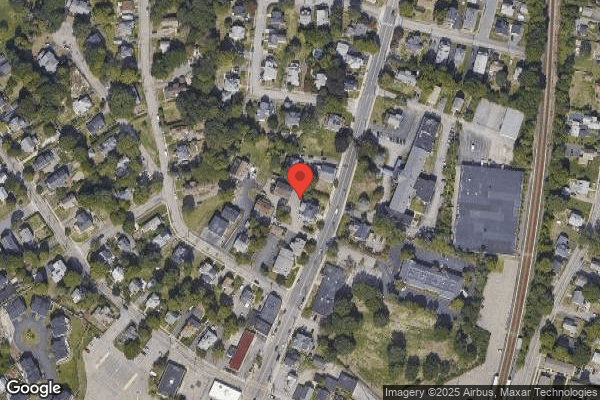

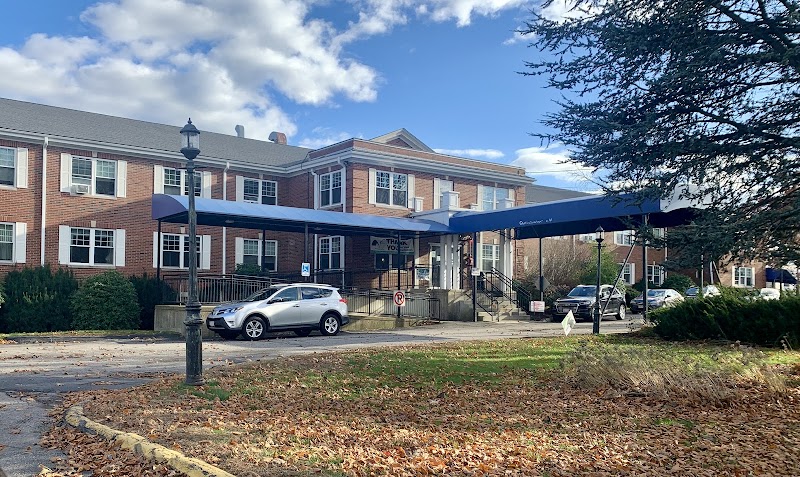
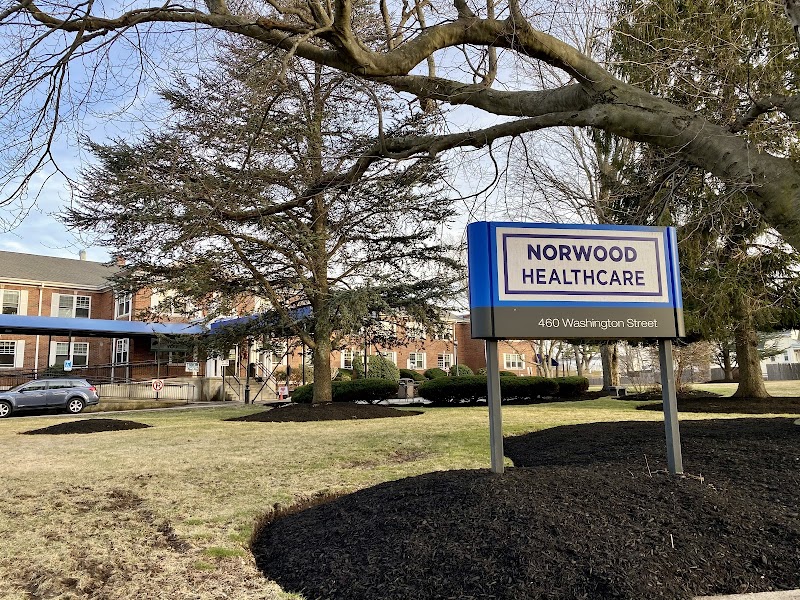
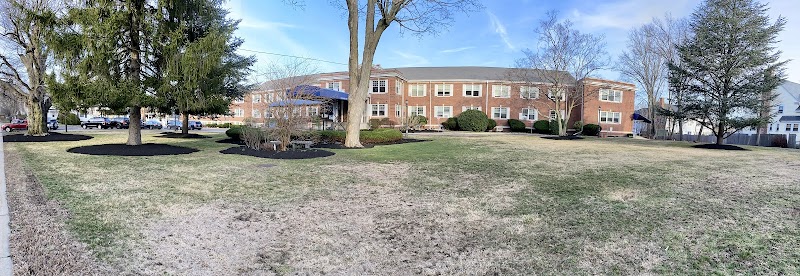
NORWOOD HEALTHCARE

460 WASHINGTON STREET, NORWOOD, MA 02062 (781) 769-2200
For profit - Limited Liability company 170 Beds NEXT STEP HEALTHCARE Data: November 2025 3 Immediate Jeopardy citations
Trust Grade
0/100
#304 of 338 in MA
Last Inspection: October 2024

Within standard 12-15 month inspection cycle. Federal law requires annual inspections.

Overview

Norwood Healthcare has received a Trust Grade of F, indicating poor performance with significant concerns about care and safety. Ranked #304 out of 338 facilities in Massachusetts, they are in the bottom half, and #31 of 33 in Norfolk County, suggesting limited local options for better care. Although the facility is improving, with a decrease in reported issues from 19 in 2024 to 4 in 2025, there are still critical concerns, including incidents where residents eloped due to inadequate supervision and staff not following care plans properly. Staffing receives a below-average rating of 2 out of 5 stars, but with a low turnover rate of 19%, staff retention is a relative strength. However, the high fines totaling $166,977, which are greater than 85% of other Massachusetts facilities, raise alarms about ongoing compliance issues. Overall, while there are some positive aspects, the facility's serious deficiencies and poor trust grade warrant careful consideration.

Trust Score
F
0/100
In Massachusetts
#304/338
Bottom 11%
Safety Record
High Risk
Review needed
Inspections
Getting Better
19 → 4 violations
Staff Stability
✓ Good
19% annual turnover. Excellent stability, 29 points below Massachusetts's 48% average. Staff who stay learn residents' needs.
Penalties
✓ Good
$166,977 in fines. Lower than most Massachusetts facilities. Relatively clean record.
Skilled Nurses
○ Average
Each resident gets 34 minutes of Registered Nurse (RN) attention daily — about average for Massachusetts. RNs are the most trained staff who monitor for health changes.
Violations
⚠ Watch
73 deficiencies on record. Higher than average. Multiple issues found across inspections.
★☆☆☆☆
1.0
Overall Rating
★★☆☆☆
2.0
Staff Levels
★★★☆☆
3.0
Care Quality
★☆☆☆☆
1.0
Inspection Score
Stable
2024: 19 issues
2025: 4 issues

The Good

  • Low Staff Turnover (19%) · Staff stability means consistent care
  • Full Sprinkler Coverage · Fire safety systems throughout facility
  • No fines on record
  • Staff turnover is low (19%)

    29 points below Massachusetts average of 48%

Facility shows strength in staff retention, fire safety.

The Bad

1-Star Overall Rating

Below Massachusetts average (2.9)

Significant quality concerns identified by CMS

Federal Fines: $166,977

Well above median ($33,413)

Significant penalties indicating serious issues

Chain: NEXT STEP HEALTHCARE

Part of a multi-facility chain

Ask about local staffing decisions and management

The Ugly 73 deficiencies on record

3 life-threatening 2 actual harm
Feb 2025 4 deficiencies
CONCERN (D) 📢 Someone Reported This

A family member, employee, or ombudsman was alarmed enough to file a formal complaint

Potential for Harm - no one hurt, but risky conditions existed

Deficiency F0559 (Tag F0559)

Could have caused harm · This affected 1 resident

Based on records reviewed and interviews for one of three sampled residents (Resident #1), who had an activated Health Care Agent (HCA), the Facility failed to ensure that his/her HCA received written...

Read full inspector narrative →
Based on records reviewed and interviews for one of three sampled residents (Resident #1), who had an activated Health Care Agent (HCA), the Facility failed to ensure that his/her HCA received written notice, including the reason for the change, when on 12/13/24 Resident #1's was moved to a new room without obtaining consent from and notifying his/her HCA of the room change. Findings include: Resident #1 was admitted to the Facility in December 2024 diagnoses include bilateral pulmonary embolisms (blood clots), left lower extremity deep vein thrombosis (blood clot), low back pain, and dementia. Review of Resident #1's Physician's Orders, dated 12/02/24, indicated that his/her Health Care Agent (HCA) had been responsible for his/her health care decisions. Review of Resident #1's admission Minimum Data Set (MS) Assessment, dated 12/08/24, indicated he/she had moderate cognitive impairment. Review of Resident #1's Nurse Progress Note (written by the Nursing Supervisor), dated 12/13/24, indicated that he/she had been moved to a new room, appears comfortable and he/she was adjusting well. During a telephone interview on 02/05/25 at 11:11 A.M., Resident #1's HCA said that the facility was aware that his/her Health Care Proxy had been invoked and said as Resident #1's HCA, the Facility did not notify him of the room change on 12/13/24, the reason for the change, or the chance to appeal the Facility's decision. Review of Resident #1's Medical Record indicated that on or before 12/13/24, there was no documentation to support that Resident #1 and his/her HCA had been notified of and had agreed to a room change, met with a new roommate prior to the move, or were aware of the reason for the room change. During an interview on 02/11/25 at 1:32 P.M., the Social Worker (SW) said that she was aware that Resident #1's HCA was his/her responsible party. The SW said she was not aware that Resident #1 had his/her room changed on 12/13/24. The SW said that she could not locate the appropriate paperwork required to properly move a resident's room in his/her medical record. During an interview on 02/11/25 at 12:51 P.M., the Nursing Supervisor said that he thought the SW had notified Resident #1's HCA of the room change and said he did not contact the HCA about his/her room change that happened on 12/13/24. During an interview on 02/11/25 at 4:26 P.M., the Assistant Director of Nurses (ADON, currently acting as the Director of Nurses (DON), said that he was not aware that on 12/13/24, Resident #1 had a room change. The ADON said the Social Service Department was responsible for completing the appropriate paperwork and also provide the resident/responsible party with the opportunity to appeal the decision related to the room change. The ADON said it is the Facility's expectation that before moving a resident's room, the resident and/or Responsible Party must be notified, written request/permission must be obtained, roommate(s) needs to be notified, and the reason for the room change must be provided.
CONCERN (D) 📢 Someone Reported This

A family member, employee, or ombudsman was alarmed enough to file a formal complaint

Potential for Harm - no one hurt, but risky conditions existed

Report Alleged Abuse (Tag F0609)

Could have caused harm · This affected 1 resident

**NOTE- TERMS IN BRACKETS HAVE BEEN EDITED TO PROTECT CONFIDENTIALITY** Based on records reviewed and interviews, for one of three sampled residents (Resident #1), the Facility failed to report ensure...

Read full inspector narrative →
**NOTE- TERMS IN BRACKETS HAVE BEEN EDITED TO PROTECT CONFIDENTIALITY** Based on records reviewed and interviews, for one of three sampled residents (Resident #1), the Facility failed to report ensure they reported an allegation of abuse to the Department of Public Health (DPH) within two hours, as required. On 01/02/25, Resident #1 was observed with an injury of unknown origin and the Facility did not report the incident to DPH, until 02/02/25, a month after the injury had been identified. Findings include: Review of the Facility Policy titled Abuse Investigation and Reporting, dated as last reviewed 2/2024, indicated each resident has the right to be free from verbal, sexual, physical and mental abuse, neglect, corporal punishment, involuntary seclusion, and misappropriation of their property. The Policy defines Injury of Unknown Etiology as any resident injury where the source of injury was not observed, or the source of injury cannot be explained by the resident. The Policy further indicated that the Facility must report to DPH and local law enforcement any reasonable suspicion of a crime committed against an individual who is a resident of, or is receiving care from, the facility. If the events that cause reasonable suspicion result in serious bodily injury, the report must be made immediately (but no later than two. (2) hours) after forming the suspicion. Otherwise, the report will not be made later than 24 hours after forming the suspicion. Review of the Health Care Facility Reporting System (HCFRS) indicated the Facility submitted the Report regarding an incident, an injury of unknown origin involving Resident #1 on 02/02/25, 33 days after the incident occurred. The Report indicated that it had been reported as an allegation of Abuse and Other Injury including type of harm identified as a bruise/hematoma. Resident #1 was admitted to the Facility in December 2024, diagnoses include bilateral pulmonary embolisms (blood clots), left lower extremity deep vein thrombosis (blood clot), low back pain, and dementia. Review of Resident #1's Hospital Discharge summary, dated [DATE], indicated he/she had a diagnosis of Encephalomalacia (a serious brain injury that involves the softening or loss of brain tissue) to his/her left posterior parietal/occipital (receives incoming somatosensory signals/processing sensory modalities) lobe of indeterminate age. Review of Resident #1's admission Minimum Data Set (MDS) Assessment, dated 12/08/24, indicated he/she had moderate cognitive impairment. Review of Resident #1's Physical Therapy Aide (PTA) Progress Note, dated 01/02/25, indicated that the PTA identified a small bump on his/her head, notified nursing and Resident #1 was sent out to the Hospital Emergency Department (ED) for evaluation. Review of Resident #1's Nurse Progress Note, dated 01/02/25, indicated a small bump was identified to his/her left forehead and he/she was sent to the ED for evaluation. During an interview on 02/20/25 at 11:15 A.M., the former Director of Nurses (DON) said that the Administrator oversaw that incident (from 01/02/25) and investigation into the bump found on Resident #1's head. The former DON said she knew Resident #1 was sent to the Hospital Emergency Department for evaluation. The former DON said she had not submitted a report to DPH because she was unaware of the specifics of the injury, and that the Administrator was dealing with the issue. The former DON said the Administrator should have reported it to DPH as an injury of unknown origin within the 2-hour window. During an interview on 02/11/25 at 3:42 P.M., the Administrator said that he had instructed the (former) Director of Nurses (DON) to submit a 2-hour reportable incident to DPH and for her to inform the police. The Administrator said the former DON had not followed through with an appropriate investigation into the injury of unknown origin regarding Resident #1 and said the report had not been submitted to DPH, as required.
CONCERN (D) 📢 Someone Reported This

A family member, employee, or ombudsman was alarmed enough to file a formal complaint

Potential for Harm - no one hurt, but risky conditions existed

Investigate Abuse (Tag F0610)

Could have caused harm · This affected 1 resident

**NOTE- TERMS IN BRACKETS HAVE BEEN EDITED TO PROTECT CONFIDENTIALITY** Based on records reviewed and interviews for one of three sampled residents (Resident #1), the Facility failed to ensure a thoro...

Read full inspector narrative →
**NOTE- TERMS IN BRACKETS HAVE BEEN EDITED TO PROTECT CONFIDENTIALITY** Based on records reviewed and interviews for one of three sampled residents (Resident #1), the Facility failed to ensure a thorough investigation was conducted related to an injury of unknown origin, when on 01/02/25 after staff found a bump on Resident #1's left forehead, the Facility was unable to provide documentation to support they conducted an investigation, into the injury. Findings include: Review of the Facility Policy titled Abuse Investigation and Reporting, dated as last reviewed 2/2024, indicated each resident has the right to be free from verbal, sexual, physical and mental abuse, neglect, corporal punishment, involuntary seclusion, and misappropriation of their property. The Policy defines Injury of Unknown Etiology as any resident injury where the source of injury was not observed, or the source of injury cannot be explained by the resident and the Nursing Supervisor will notify, the provider, Health Care Proxy, Responsible Party, Administrator, and Director of Nurses. The Policy indicates to do the following; -Interview appropriate individuals, any individual who may have knowledge of the event (alleged victim, employees working during the shift when the event was discovered/reported, as well as visitors or other residents); -Medical Record review to determine possible etiology and/or identify pertinent information relevant to the event; and -Review staffing schedule as warranted. Resident #1 was admitted to the Facility in December 2024, diagnoses include bilateral pulmonary embolisms (blood clots), left lower extremity deep vein thrombosis (blood clot), low back pain, and dementia. Review of Resident #1's Hospital Discharge summary, dated [DATE], indicated he/she had a diagnosis of Encephalomalacia (a serious brain injury that involves the softening or loss of brain tissue) to his/her left posterior parietal/occipital (receives incoming somatosensory signals/processing sensory modalities) lobe of indeterminate age. Review of Resident #1's Physician's Orders, dated 12/02/24, indicated that his/her Health Care Agent (HCA) was responsible for his/her health care decisions. Review of Resident #1's admission Minimum Data Set (MS) Assessment, dated 12/08/24, indicated he/she had moderate cognitive impairment. Review of Resident #1's Physical Therapy Progress Note, dated 01/02/25, indicated that the Physical Therapy Aide (PTA) identified a small bump on his/her head, notified nursing and Resident #1 was sent out to the Hospital Emergency Department for evaluation. Review of Resident #1's Nurse Progress Note, dated 01/02/25, indicated a small bump was identified to his/her left forehead and he/she was sent to the ED for evaluation. Review of the Health Care Facility Reporting System (HCFRS) report submitted by the Facility, dated 02/02/25, indicated Resident #1's investigation of the bump found on 01/02/25 had been classified by the Facility as Injury Other and Abuse Policies and Procedures. Further review of the HCFRS Report indicated there was no documentation to support that an investigation had been immediately initiated on 01/02/25 when the bump (injury of unknown origin) was first identified. Review of the facility's investigation indicated a witness statement was obtained on 01/09/25 from Nurse #1, and that Nurse #1 provided a second witness statement on 01/15/25, along with Certified Nurse Aide (CNA) #1 and #3 witness statements. Although the PTA was the staff member that found the 'bump on Resident #1's head, there was no witness statement obtained from the PTA or interview conducted with the PTA as part of their investigation. Review of Resident #1's Medical Record, including but not limited to progress notes, care plans, incident reports, indicated that there was no further investigation regarding the investigation of Resident #1's injury of unknown origin. During an interview on 02/20/25 at 11:15 A.M., the former Director of Nurses (DON) said that the Administrator oversaw the incident and investigation into Resident #1's injury of unknown origin (bump on head). The former DON said that she does not recall any staff reporting a bump on Resident #1's head to her. During an interview on 02/11/25 at 3:42 P.M., the Administrator said that he had instructed the former DON to submit a report to DPH about Resident #1's injury of unknown origin and to inform the police. The Administrator said the former DON had not followed through with an investigation.
CONCERN (D) 📢 Someone Reported This

A family member, employee, or ombudsman was alarmed enough to file a formal complaint

Potential for Harm - no one hurt, but risky conditions existed

Comprehensive Care Plan (Tag F0656)

Could have caused harm · This affected 1 resident

Based on records reviewed and interviews, for two of three sampled residents (Resident #1 and #2), who upon admission were each identified as at risk for falls, the Facility failed to ensure after the...

Read full inspector narrative →
Based on records reviewed and interviews, for two of three sampled residents (Resident #1 and #2), who upon admission were each identified as at risk for falls, the Facility failed to ensure after they experienced a witnessed and/or unwitnessed fall, that their plans of care were reviewed and revised for new interventions goals, and outcomes, as needed. Findings include: Review of the Facility Policy titled Fall Prevention and Management, dated as last revised 11/2024, indicated to prevent or minimize resident fall risk through identification of fall risk factors and implementation of interventions to prevent falls. The Policy further indicated the following; -If a resident falls, the nurse will conduct a physical assessment of the resident and notify the Provider and Responsible Party; -If a fall is unwitnessed or the resident hits his/her head during the fall, Neurological Assessment should be conducted. -Statements should be obtained from staff on the unit at the time of the fall; and -A new intervention will be added to the resident's care plan. Review of the Facility Policy titled Care Plans, Comprehensive Person Centered, dated as last revised 01/2024, indicted that care plan will identify problem areas and their caused as warranted and develop interventions that are targeted and meaningful to the resident. The Policy also indicated; -Evaluation of residents is ongoing and care plans are revised as information about the resident and the residents condition changes; and -The Interdisciplinary Team (IDT) will review and update the care plans when there has been a significant change in the residents' condition. 1) Resident #1 was admitted to the Facility in December 2024, diagnoses include bilateral pulmonary embolisms (blood clots), left lower extremity deep vein thrombosis (blood clot), low back pain, and dementia. Review of Resident #1's admission Minimum Data Set (MS) Assessment, dated 12/08/24, indicated he/she had moderate cognitive impairment. Review of Resident #1's Physician's Orders, dated 12/02/24, indicated that his/her Health Care Agent (HCA) had been responsible for his/her health care decisions. Review of Resident #1's Care Plan titled, Risk for Falls, dated 12/03/24, indicated that he/she would remain free from falls through his/her next review and interventions indicated the following; -Educate the resident/family about safety reminders and what to do if a fall occurs; -Ensure that he/she is wearing proper footwear when ambulating; -Rehabilitation evaluation and treat as ordered and as needed; -Call light within reach and encourage him/her to use it; -Provide safe environment with floors free from spills and/or clutter, adequate light, a working are reachable call light; and -Follow facility fall protocol. Review of Resident #1's Nurse Progress Note, dated 12/29/24, indicated that he/she had been found on the floor in the hallway, said he/she was tired and decided to sit on the floor. Review of Resident #1's care plan related to falls, indicated that there were no documentation to support that his/her fall care plan interventions had been reviewed, revised, or that new interventions were added to his/her care plan with the goal to minimize his/her risk for additional falls. Resident #1's unwitnessed fall and new behavior of putting self on floor when tired were not identified in the plan of care. During an interview on 02/11/25 at 3:14 P.M., Nurse #2 said that she does not know who is responsible for updating the care plans and said she does not do anything with care plans. Nurse # 2 said she did not make any changes to Resident #1's Care Plan after the 12/29/24 incident. 2) Resident 2 was admitted to the Facility in November 2024, diagnoses include anxiety, deep vein thrombosis (blood clot), hypertension, and dementia. Review of Resident #2's admission Minimum Data Set (MS) Assessment, dated 11/29/24, indicated he/she had significant cognitive impairment. Review of Resident #2's Care Plan titled, Risk for Falls, dated as initiated 11/23/24 indicated he/she would be free from falls through his/her next review and interventions indicated the following; -Educate the resident/family about safety reminders and what to do if a fall occurs; -Ensure that he/she is wearing proper footwear when ambulating; -Rehabilitation evaluation and treat as ordered and as needed; -Call light within reach and encourage him/her to use it; -Provide safe environment with floors free from spills and/or clutter, adequate light, a working are reachable call light; and -Follow facility fall protocol. Review of Resident #2's Facility Incident Report, dated 11/27/24, indicated that he/she was observed lying on the floor in another resident's room. Review of Resident #2's care plan related to Fall Risk, indicated that there were no new interventions added to his/her care plan that addressed his/her unwitnessed fall on 11/27/24. During an interview on 02/11/25 at 2:07 P.M., the MDS Coordinator said that she was responsible for the initial comprehensive care plans for each resident and said once they are completed, the floor nurses or supervisors are responsible for updating the care plans. During an interview on 02/11/25 at 4:26 P.M., the ADON (acting DON) said that he was not aware that the care plans for Resident #1 and #2 had not been updated and/or reviewed after each of their fall related incidents. The ADON said that it is the Facility's expectation that any resident involved with a witnessed or unwitnessed fall will be reviewed and new or revised interventions be added to their care plan, as needed.
Oct 2024 17 deficiencies
CONCERN (D)

Potential for Harm - no one hurt, but risky conditions existed

Notification of Changes (Tag F0580)

Could have caused harm · This affected 1 resident

Based on observation, interview, and record review, the facility failed to notify the Physician and/or responsible party of recommendations or changes in condition for two Residents (#86 and #8), out ...

Read full inspector narrative →
Based on observation, interview, and record review, the facility failed to notify the Physician and/or responsible party of recommendations or changes in condition for two Residents (#86 and #8), out of a total sample of 39 residents. Specifically, the facility failed: 1. For Resident #86, to notify the Physician of recommendations from the Dietitian for a change in nutritional formula to enhance the caloric intake of the malnourished Resident; and 2. For Resident #8, to notify the Health Care Proxy (HCP- health care agent designated by the resident when competent who has the authority to consent for health care decisions when a resident has been declared, by a physician, not to be competent to make his/her own health care decisions) when the Resident developed a deep tissue injury to the left heel and a stage 3 pressure wound (full thickness tissue loss. Subcutaneous fat may be visible, but bone, tendon or muscle are NOT exposed) to the left buttock. Findings include: Review of the facility's policy titled Change in Resident's Condition or Status, last revised 7/2024, indicated but was not limited to: -The facility professional staff will communicate with physicians, resident, and family regarding changes in condition as warranted. -The nurse/designee shall notify the resident's representative when there is a significant change in the resident's condition. -The nurse will record in the resident's medical record information relative to changes in the resident's medical/mental condition or status. 1. Resident #86 was admitted to the facility in August 2023 with diagnoses including unspecified protein-calorie malnutrition, cerebral infarction (stroke), and Type 2 diabetes. Review of the Minimum Data Set (MDS) for Resident #86, dated 8/23/24, indicated under C1000 (cognitive skills for daily decision making) that the Resident was severely cognitively impaired. On 10/29/24 at 12:50 P.M., the surveyor observed Resident #86 in bed with Glucerna 1.2 carbsteady (enteral nutritional formula) infusing at a rate of 50 milliliters (ml) per hour. Review of the current Physician's Orders (as of 10/29/24) for Resident #86 indicated but were not limited to the following: - NPO (nothing by mouth) diet (8/18/23) - Glucerna 1.2 cal oral liquid (nutritional supplement), give 50 ml per hour. Food schedule as follows: food up at 8:00 A.M. and down at 8:00 P.M. (8/18/24) Review of the Medical Nutrition Therapy assessment for Resident #86, effective date 8/19/24, indicated but was not limited to the following: - Annual assessment, Diet: NPO - Nutritional Diagnosis, intervention, monitoring and evaluation: Nutritional diagnosis #1: less than optimal enteral nutrition composition or modality related to: low BMI, tube feed (TF) not meeting nutritional needs as evidenced by: pt with BMI < 18.5 Nutritional diagnosis #2: inadequate suboptimal oral intake related to dysphagia as evidenced by: need for TF to meet nutritional needs Goal: Resident will show weight gain trend toward healthy BMI range, will tolerate TF without overt issue - Assessment, summary and care plan decision Request to change formula to Glucerna 1.5 at same volume for 900 calories (21 calories / kilogram) Review of the medical record on 10/29/24 failed to indicate the Physician was ever made aware of the Dietitian's request/recommendation for a formula change to Glucerna 1.5 or that a change ever occurred. During an interview on 10/29/24 at 3:34 P.M., the Nursing supervisor reviewed the medical record of Resident #86 and said the recommendation for Glucerna 1.5 was never addressed with the physician as it should have been. During an interview on 10/29/24 at 3:57 P.M., Physician #2 said she was not aware of a recommendation from the Dietitian to change the Glucerna from 1.2 to 1.5 for increased calories and said adjusting the calorie intake through a formula change is a good recommendation that she would have approved had she been notified of the request, but she was not. During an interview on 10/30/24 at 8:05 A.M., the Director of Nurses (DON) said the physician should have been made aware of the request for a change in nutritional formula for the Resident following the August evaluation, but that does not appear to have occurred as it should have. 2. Resident #8 was admitted to the facility in October 2021 and had diagnoses including dementia. Review of the MDS assessment, dated 9/6/24, indicated Resident #8 had moderate cognitive impairment as evidenced by a Brief Interview for Mental Status score of 11 out of 15, had one stage 3 pressure ulcer and one unstageable deep tissue injury. The assessment indicated Resident #8 had an activated HCP. Review of a Nursing Progress Note, dated 8/21/24, indicated the Resident was noted to have a half dollar sized blackened left heel and the physician and administration would be notified. The note failed to indicate the Resident's HCP was notified. Review of the consultant wound physician's evaluation, dated 8/22/24, indicated Resident #8 had an unstageable deep tissue injury of the left heel measuring 3.5 centimeters (cm) in length, 4.5 cm in width with no measurable depth. Review of the consultant wound physician's evaluation, dated 8/29/24, indicated Resident #8 had an unstageable deep tissue injury of the left heel and a newly identified stage 3 pressure wound of the left buttock. Review of a Nursing Progress note, dated 8/29/24, indicated Resident #8 was seen by the consultant wound physician for a left buttock wound with a recommendation for Silvadene 1% cream with house barrier cream daily. The note indicated the physician was aware and agreed with the recommendation. The note failed to indicate the Resident's HCP was notified. During a telephone interview on 10/25/24 at 10:42 A.M., Resident #8's HCP said he was not aware that Resident #8 had a deep tissue injury on his/her heel on 8/21/24 or a stage 3 pressure ulcer on his/her left buttock on 8/29/24 or was currently being seen by the wound physician. He said the communication from the facility is not good.
CONCERN (D)

Potential for Harm - no one hurt, but risky conditions existed

Comprehensive Care Plan (Tag F0656)

Could have caused harm · This affected 1 resident

**NOTE- TERMS IN BRACKETS HAVE BEEN EDITED TO PROTECT CONFIDENTIALITY** Based on observation, interview, and record review, the facility failed to develop and implement an individualized, person-cente...

Read full inspector narrative →
**NOTE- TERMS IN BRACKETS HAVE BEEN EDITED TO PROTECT CONFIDENTIALITY** Based on observation, interview, and record review, the facility failed to develop and implement an individualized, person-centered care plan to meet the physical, psychosocial, and functional needs for two Residents (#109, #58), out of a total sample of 39 residents. Specifically, the facility failed: 1. For Resident #109, to develop and implement a care plan to address the Resident's chronic pain and pain management; and 2. For Resident #58, to develop and implement a care plan to address the care and management of the Resident's left hand and elbow contracture. Findings include: Review of the facility's policy titled Care Plans, Comprehensive Person-Centered, last revised 1/2024, indicated but was not limited to: - A comprehensive, person-centered care plan will be developed for each resident. - The care plan will include objectives that meet the resident's physical, psychosocial and functional needs and is developed for each resident. - The Interdisciplinary Team (IDT) in conjunction with the resident and his/her family or legal representative, may assist with the development of a comprehensive, care plan for each resident. - The care plan interventions are derived from information gathered as part of the comprehensive assessment. - The resident comprehensive care plan will identify problem areas and their causes as warranted and developing interventions that are targeted and meaningful to the resident. - Evaluation of residents is ongoing and care plans are revised as information about the resident and the resident conditions change. 1. Resident #109 was admitted to the facility in September 2024 with diagnoses which included low back pain, muscle wasting and atrophy, and unsteadiness on feet. Review of the Minimum Data Set (MDS) assessment, dated 9/17/24, indicated the Resident was cognitively intact based on a Brief Interview for Mental Status (BIMS) score of 15 out of 15. Further review of Section J of the MDS indicated the Resident received scheduled and as needed (PRN) pain medications. Review of Resident #109's current Physician's Orders indicated but were not limited to: - 9/11/24: Tylenol Oral Tablet; give two 325 milligram (mg) tabs to equal 650 MG every six hours for pain as needed every 6 hours for pain. - 10/17/24: Oxycodone Tablet 10 mg; give one tablet by mouth every 8 hours as needed for pain. During an interview on 10/22/24 at 12:52 P.M., Resident #109 said he/she frequently has pain during the day. Resident #109 said he/she takes pain medication as needed in the facility. Review of Resident #109's medical record failed to indicate the facility developed a comprehensive care plan addressing chronic pain or pain management, including but not limited to pain diagnoses. During an interview on 10/29/24 at 10:03 A.M., the Nursing Supervisor said care plans are initially generated based off the admission MDS assessment and then updated to reflect new interventions, treatments or changes based on the care plan area. The Nursing Supervisor reviewed the comprehensive care plans for Resident #109 and said there was not a specific care plan related to Resident #109's pain and/or pain management. The Nursing Supervisor said there should have been a specific care plan related to pain and pain management developed and implemented initially when the Resident was admitted to the facility. During an interview on 10/29/24 at 10:59 A.M., the Regional Nurse said care plans are initiated when a resident is admitted to the facility and should be specific and comprehensive to the individual resident's needs. The Regional Nurse said Resident #109 did not have a care plan related to pain and/or pain management. 2. Resident #58 was admitted to the facility in January 2023 with diagnoses which included: non-traumatic intracerebral hemorrhage (brain bleed), aphasia (unable to formulate language due to brain injury), dysarthria and anarthria (complete loss or partial loss of speech), cerebral infarction (stroke), hemiplegia (paralysis on one side) affecting left dominant side. Review of the Hospital Discharge summary, dated [DATE], indicated but was not limited to the following: - Left arm contracted, spastic. There were no range of motion (ROM) measurements of the left upper extremity (LUE) contracture. Review of the Occupational Therapy Evaluation, dated 9/20/24, indicated patient required skilled occupational services to establish a splint wearing schedule and train caregivers on donning/doffing (putting on/taking off) splint for improved hygiene and to prevent skin breakdown. Review of Occupational Therapy Discharge summary, dated [DATE], indicated the discharge recommendations dated 3/20/24 indicated the following: -Recommending wear palm guard daily (day hours) on LUE: Dependent on nursing to don/doff. -Recommend patient wear left elbow wedge daily (day hours on LUE): Dependent on nursing to don/doff. Review of Resident #58's Care Plan indicated there was no care plan developed for contractures of the left upper extremity since admission. During an interview on 10/29/24 at 3:50 P.M., the Director of Rehabilitation (Rehab) said Resident #58 was currently receiving Occupational Therapy and was also seen last November 2023 through March 2024 for the left arm contracture. During a follow-up interview on 10/30/24 at 11:15 A.M., Rehab Staff #1 reviewed the Occupational Discharge summary dated [DATE] and said there should have been follow-up with the nurses to continue using the palm guards and the elbow wedge for the LUE. During an interview on 10/30/24 at 1:36 P.M., the Director of Nurses (DON) said Resident #58 should have a care plan for the contracture management of the LUE.
CONCERN (D)

Potential for Harm - no one hurt, but risky conditions existed

Deficiency F0658 (Tag F0658)

Could have caused harm · This affected 1 resident

**NOTE- TERMS IN BRACKETS HAVE BEEN EDITED TO PROTECT CONFIDENTIALITY** Based on observation, interview, and document review, the facility failed to ensure professional standards of care were met for ...

Read full inspector narrative →
**NOTE- TERMS IN BRACKETS HAVE BEEN EDITED TO PROTECT CONFIDENTIALITY** Based on observation, interview, and document review, the facility failed to ensure professional standards of care were met for one Resident (#107), out of a total sample of 39 residents. Specifically, the facility failed to ensure staff provided care and maintained the central venous catheter (CVC) tunneled into the right jugular (vein in the neck) of Resident #107 for medication infusions in accordance with current standards. Findings include: Review of the Massachusetts 244 CMR Board of Registration in Nursing, Section 3, dated 6/11/21, indicated but was not limited to the following: -A registered nurse shall bear full and ultimate responsibility for the quality of nursing care he or she provides to individuals or groups. Included in such responsibility is health maintenance, teaching, counseling, collaborative planning and restoration of optimal functioning and comfort. -A registered nurse shall systematically assess health status, plan, and implement nursing intervention, evaluate outcomes and initiate change when appropriate, collaborate, communicate and cooperate as appropriate with other health care providers. -A licensed practical nurse bears full responsibility for the quality of health care she or he provides to patients or health care consumers. -A licensed practical nurse shall assess an individual's basic health status, evaluate outcomes of basic nursing intervention, and initiate or encourage change in plans of care, and collaborate, cooperate, and communicate with other health care professionals. Review of the Massachusetts Board of Registration in Nursing Advisory Ruling #9324, titled Accepting, Verifying, Transcribing and Implementing Orders, dated as last revised 4/11/2018, indicated but was not limited to the following: -It is the responsibility of the licensed nurse to ensure there is a proper patient care order from a duly authorized prescriber prior to the administration of any prescription or non-prescription medication or activity that requires which order in accordance with accepted standard of practice and in compliance with the Boards regulations. -Licensed nurses in a management role must ensure an infrastructure is in place, consistent with current standards of care, to minimize error. -The nurse is accountable for ensuring that any orders he or she implements are reasonable based on the nurses knowledge of that particular patient's care. It is the responsibility and obligation of the nurse to question a patient care order that is deemed inappropriate by a nurse according to his/her educational preparation and clinical experience. Resident #107 was admitted to the facility in September 2024 and had diagnoses including Staphylococcal arthritis of the left hip, Methicillin Resistant Staph Aureus (MRSA) infection, and chronic renal disease. Review of the Minimum Data Set (MDS) assessment, dated 9/17/24, indicated Resident #107 was cognitively intact as evidenced by a Brief Interview for Mental Status score of 14 out of 15, received intravenous (IV) medications and dialysis. Review of the hospital Discharge summary, dated [DATE], indicated Resident #107 was hospitalized 8/2024-9/2024 for recurrent infection in his/her left hip caused by MRSA infection. During the hospitalization, a right-sided dual-lumen tunneled cuffed PowerLine catheter (a type of central line) was placed in the right external jugular (REJ) vein for IV antibiotic administration on 9/10/24. Review of PowerLine catheter manufacturer's guidelines indicated: -Flushing: For frequently accessed catheters (accessed at least every 8 hours), flush with 10 milliliters of normal saline between infusions. According to The National Institute of Health (July 2023), needleless connectors and components should be changed with each IV administration set to change, no more frequently than every 72 hours. Central line catheters must be flushed (a manual injection of 0.9% sodium chloride to clean the lumen of the catheter) before and after each fluid or medication infusion, and before and after drawing blood from the central line. Review of admission telephone orders (T.O.), signed and dated as received on 9/11/24 by the Nurse Supervisor included but was not limited to: -Ceftaroline (antibiotic) 400 milligrams (mg) IV every 8 hours until follow up with Infectious Disease Clinic -Vancomycin (antibiotic) 500 mg IV every Tuesday, Thursday, and Saturday at dialysis -Right chest tunneled catheter: double lumens, monitor for signs/symptoms (s/s) of infection, **Dressing to be done at dialysis FYI** -Complete Blood Count with differential, Basic Metabolic Panel, Liver Function Test, Erythrocyte Sedimentation Rate, C-Reactive Protein weekly on Wednesday and fax result to Infectious Disease Clinic The admission T.O.s did not indicate any orders for the care and maintenance of the REJ catheter including flushing the catheter between medication infusions and changing the needleless connectors and components with each IV administration. Review of comprehensive care plans indicated but was not limited to: -Focus: IV access line: Potential for infection and/or trauma related to catheter direct access to blood; type of line: Double lumen line right chest (9/13/24) -Interventions: IV medication/flushes per physician's order; IV site care and maintenance as ordered (9/13/24) -Goal: Resident will have no signs/symptoms of any IV related complications through next review (9/13/24) Review of the entire medical record, including the Medication/Treatment Administration Record (MAR/TAR) from 9/11/24 to 9/22/24 failed to indicate catheter flushes between antibiotic medication infusions and a change of the needleless connectors and components with each IV infusion was completed as ordered. Review of September 2024 Physician's Orders indicated but was not limited to: *12 days after the Resident was admitted to the facility: -IV-Central Line (all types) change needleless connector on admission, after any blood draw, every 24 hours with total parenteral nutrition (TPN), otherwise weekly and as needed (prn) (9/23/24) -IV-Central Line (all types) change transparent dressing on admission, weekly and prn (9/23/24) -IV-Central Line (all types) for intermittent use or TPN, change tubing and connectors daily (9/23/24) -IV-Central Line (all types) measure external catheter length on admission, with each dressing change and prn (9/23/24) *14 days after the Resident was admitted to the facility: -IV-Central Line (all types) when being used intermittently, flush with 10 milliliters (ml) NS, infuse medication, and flush again with 10 ml NS (9/25/24) Further review of the September 2024 MAR/TAR failed to indicate: -the needleless connector was changed weekly -the transparent dressing was changed weekly -tubing and connectors were changed daily -the external catheter length was measured with each dressing change Review of October 2024 MAR/TAR failed to indicate: -the needleless connector was changed weekly -the transparent dressing was changed weekly -tubing and connectors were changed daily -the external catheter length was measured with each dressing change During an interview on 10/28/24 at 1:38 P.M., Nurse #13 said all documentation related to medication and treatment administration for Resident #107's REJ is on the MAR/TAR. She said there is no other place they document that information. During an interview on 10/28/24 at 1:43 P.M., the Nursing Supervisor reviewed Resident #107's paper and electronic medical record and said on 9/23/24 and 9/25/24 he entered batch orders used for residents with central lines that include dressing changes, changing the tubing and connectors, flushing, and to measure the external length of the catheter. He could not explain why there were no orders to care for the Resident's REJ line until he entered the batch orders. He said the dressing changes to the REJ line are done at dialysis so that order should not be an order for the facility. He said the remaining orders did not populate to the MAR/TAR and said he was unable to provide evidence that the physician's orders were implemented. During an interview on 10/28/24 at 3:04 P.M., the Director of Nursing (DON) reviewed Resident #107's physician's orders and said the order to change the dressing and measure the external catheter length should not be there. She said with an REJ device, there are no measurements to be taken and the dressing changes are done at dialysis. The DON said all of the other physician's orders should have been implemented.
CONCERN (D)

Potential for Harm - no one hurt, but risky conditions existed

Quality of Care (Tag F0684)

Could have caused harm · This affected 1 resident

**NOTE- TERMS IN BRACKETS HAVE BEEN EDITED TO PROTECT CONFIDENTIALITY** Based on observations, record review, and interviews, the facility failed to monitor and document the range of motion (ROM) for ...

Read full inspector narrative →
**NOTE- TERMS IN BRACKETS HAVE BEEN EDITED TO PROTECT CONFIDENTIALITY** Based on observations, record review, and interviews, the facility failed to monitor and document the range of motion (ROM) for a resident admitted with left arm contractures, failed to implement recommendations from the Occupational therapy assessments for contracture management, and failed to educate the staff on proper application of the position devices currently in use for one Resident (#58), out of a total sample of 38 residents. Findings include: Resident #58 was admitted to the facility in January 2023 with diagnoses which included: non-traumatic intracerebral hemorrhage (brain bleed), aphasia (unable to formulate language due to brain injury), dysarthria and anarthria (complete loss or partial loss of speech), cerebral infarction (stroke), hemiplegia (paralysis on one side) affecting left dominant side. Review of the Minimum Data Set (MDS) assessment, dated 9/13/24, indicated Resident #58 scored 1 out of 15 on the Brief Interview for Mental Status (BIMS), indicating he/she had severe cognitive impairment. Additionally, the MDS indicated the following: -Section B0200 Hearing: Hearing adequate -Section B0600 Speech clarity: speech unclear slurred or mumbled -Section B0700 Makes self-understood: Sometimes understands- responds adequately to simple direct communication only. -Section B0800 Ability to understand others: understands clear comprehension. -Section GG: Resident is dependent with bed mobility, upper body dressing and personal hygiene. Review of the Hospital Discharge summary, dated [DATE], indicated but was not limited to the following: - Left arm contracted, spastic. There were no range of motion (ROM) measurements of the left upper extremity (LUE) contracture. Review of the Occupational Therapy Evaluation, dated 9/20/24, indicated there was no ROM measurements for the left hand or elbow. The current referral indicated Resident #58 was referred to therapy for evaluation for a left upper extremity contracture. Patient required skilled occupational services to establish a splint wearing schedule and train caregivers on donning/doffing (putting on/taking off) splint for improved hygiene and to prevent skin breakdown. Review of the Occupational Therapy Evaluation, dated 11/29/23, and Discharge summary, dated [DATE], indicated there were no ROM measurements for the left elbow or hand. The discharge recommendations dated 3/20/24 indicated the following: -Recommending wear palm guard daily (day hours) on LUE: Dependent on nursing to don/doff. -Recommend patient wear left elbow wedge daily (day hours on LUE): Dependent on nursing to don/doff. Resident #58 was also seen by Occupational Therapy 1/5/23 through 2/10/23, however the documentation could not be assessed in the electronic medical record. Review of the Physician's Order Summary report 1/5/24 through 10/31/24 indicated there were no orders for Resident #58 to don/doff palm guards, foam carrot, or elbow wedge for contracture management. On 10/22/24 at 10:43 A.M., the surveyor observed Resident #58 lying in bed with the foam wedge by his/her elbow and the foam carrot on the windowsill. On the wall behind the Resident's bed was a sign posted which read Please keep foam wedge between Resident #58's left elbow. On 10/29/24 at 1:02 P.M., the surveyor observed the foam carrot lying on the bed next to his/her right hand. The elbow wedge was observed to be between the left elbow and left upper side rail (not in the elbow crease). During an interview on 10/29/24 at 3:50 P.M., the Director of Rehabilitation (Rehab) said Resident #58 was currently receiving Occupational Therapy and was also seen last November 2023 through March 2024 for the left arm contracture. Rehab Staff #1 said he started working back in this facility in September 2024 and noticed Resident #58's left arm contracture and had Resident #58 evaluated by the occupational therapist for contracture management. The surveyor requested the occupational therapy evaluations, daily notes, and discharge summaries. During an interview on 10/29/24 at 4:42 P.M., Resident #58 was able to answer the surveyors' questions by nodding his/her head yes and no. Resident #58 nodded yes to wearing the foam carrot in his/her left hand. Resident #58 picked up the foam carrot with their right hand and attempted to place the carrot in their left hand but was unsuccessful due to the left-hand contracture. The surveyor observed the left elbow foam wedge placed between the left elbow and the left upper side rail. Resident #58 nodded no when the surveyor asked if he/she knew where the foam wedge was supposed to be placed. On 10/30/24 at 9:30 A.M., the surveyor observed Resident #58 lying in bed with the Foam carrot on the overbed table and the left elbow foam wedge located between the left elbow and the left upper side rail. The left elbow and wrist were observed to be fully flexed. During a follow-up interview on 10/30/24 at 11:15 A.M., Rehab Staff #1 reviewed the Occupational Evaluations, Discharge Summary, and daily notes on the computer and said he noticed there was no documentation of ROM of the LUE since admission. He said the rehab staff should have documented the ROM of the LUE at the very least on the evaluation and discharge summaries. He reviewed the Occupational Discharge summary dated [DATE] and said there should have been follow-up with the nurses to continue using the palm guards and the elbow wedge for the LUE. On 10/30/24 at 11:35 A.M., the surveyor with Rehab Staff #1 entered Resident #58's room and observed the foam carrot on the overbed table and the foam wedge positioned between the left elbow and the left upper side rail (Foam wedge was not in the elbow crease). During an interview on 10/30/24 at 11:35 A.M., Resident #58 answered questions by using hand gestures, motioning thumbs up/down or nodding yes/no with Rehab Staff #1 present. Resident #58 indicated with a thumbs down he/she did not know where the foam wedge was supposed to go and a thumbs up for the foam carrot. Resident #58 attempted to put the foam carrot in his/her left hand but was unsuccessful due to the contracted fingers. Resident #58 nodded yes to his/her hand and elbow contracture have gotten worse since he/she came to this facility. Rehab Staff #1 attempted to open Resident #58's left hand and extend the left elbow; the surveyor observed the left thumb to be restricted flexed across the palm of the hand and the left elbow restricted to approximately minus 120 degrees of extension. During a telephonic interview on 10/30/24 at 12:55 P.M., Rehab Staff #2 said she has been working with Resident #58 for contracture management and the foam carrot should be placed in his/her palm and the foam wedge should be placed in his/her left elbow crease for contracture management. Rehab Staff #2 said she posted the sign on the wall to remind staff to reposition the elbow wedge when Resident #58 removes it or it falls out of place. Rehab Staff #2 said she has not educated the nursing staff on donning/doffing the elbow foam wedge. She said she was not aware the nursing staff was positioning the wedge on the outside of the elbow (not in the crease). Rehab Staff #2 said she is not aware of the ROM measurements for the left wrist and elbow but does not feel the contractures are any worse since Resident #58's admission. During an interview on 10/30/24 at 1:00 P.M., Nurse Supervisor #1 said if a resident is seen by rehab and they recommend any type of support for positioning, they tell us, and we get the physician's orders for the treatment. He said he does not have any orders for an elbow wedge or foam carrot for Resident #58 in the computer. He said if there is no order then the nurses would not know to put the foam carrot or wedge on the Resident. Nurse Supervisor #1 said Resident #58 has had a contracture of the left arm since he/she was admitted . During an interview on 10/30/24 at 1:06 P.M., Nurse #12 (Agency nurse) said she is taking care of Resident #58 and is not aware he/she is supposed to use a foam carrot or foam wedge for positioning on the LUE. She said when she cares for a resident, she looks at the Medication and Treatment Administration Record (MAR and TAR) for what she is supposed to do with a resident. She reviewed Resident #58's MAR and TAR and said there are no physician's orders so she would never check for the foam carrot or the foam wedge as part of her treatment. During an interview on 10/30/24 at 1:08 P.M., Nurse #11 said sometimes she works with Resident #58, but she doesn't know anything about the foam carrot, foam wedge, or positioning for his/her contractures. During an interview on 10/30/24 at 1:10 P.M., Certified Nursing Assistant (CNA) #4 said she regularly cares for Resident #58. She said she has seen Rehab put the foam pad under Resident #58's elbow so that is what she does. She demonstrated and showed the surveyor under the elbow, not in the elbow crease, and showed how she pulls back the fingers to put the foam carrot in the left hand. She said she never received any instructions on how to put on the foam elbow pad or the carrot. During an interview with the Director of Nurses (DON) and Regional Clinical Nurse on 10/30/24 at 1:36 P.M., the DON said once rehab makes a recommendation and it is communicated to the nurses, the nurses should follow-up with obtaining physician's orders if that's what they want. The Regional Clinical Nurse said they do not have a policy for contracture management. As of the end of the survey, the Occupational Therapist (OT) who performed the most recent OT evaluation was not available to the surveyor for interview.
CONCERN (D)

Potential for Harm - no one hurt, but risky conditions existed

Accident Prevention (Tag F0689)

Could have caused harm · This affected 1 resident

Based on observation and interview, the facility failed to ensure staff provided residents with an environment free from accident hazards. Specifically, the facility failed to ensure: 1. On one unit o...

Read full inspector narrative →
Based on observation and interview, the facility failed to ensure staff provided residents with an environment free from accident hazards. Specifically, the facility failed to ensure: 1. On one unit of three units, hazardous items were stored in a secure location and were not easily accessible to residents on the South 2 Unit; and 2. For Resident (#54) and one unit (Unit 2) of three units in the facility, nail clippers, diabetic testing supplies and medications (not prescribed by the Resident's physician) were not stored in the Resident's bureau and were not easily accessible to the Resident and wandering residents on the unit. Findings include: Review of the facility Matrix (used to identify pertinent care categories for residents) provided to surveyors by the Director of Nursing on 10/22/24 indicated the South 2 Unit had 29 out of 34 residents with diagnoses of Alzheimer's disease/Dementia. 1. On 10/23/24 at 12:38 P.M., the surveyor observed in the South 2 Unit hallway: - A yellow bucket (unattended) containing: - Three metal scrappers - A box of nails - A metal trowel - Loose screws - A one-gallon bucket (unattended) of vinyl composition tile adhesive On 10/23/24 at 2:00 P.M., the surveyor observed a resident, on the South 2 Unit, walk by the vinyl composition tile adhesive and the yellow bucket and its contents. During an interview with observation on 10/23/24 at 4:27 P.M., Nurse #8 and the surveyor reviewed the contents of the yellow bucket and the vinyl composition tile adhesive. Nurse #8 said the maintenance department was doing work and that it was a safety hazard. Nurse #8 then took a linen cart and moved it in front of the yellow bucket and the vinyl composition tile adhesive. During an interview on 10/29/24 at 12:03 P.M., the Regional Director of Maintenance and the surveyor reviewed the contents of the yellow bucket and the one-gallon bucket of vinyl composition tile adhesive. The Regional Director of Maintenance said they should never have been left out in the hallway and accessible to residents because it was a safety hazard. During an interview on 10/29/24 at 12:39 P.M., the Regional Clinical Nurse said the yellow bucket with its contents and the bucket of vinyl composition tile adhesive should not have been left out in the hallway unattended and accessible to residents for their safety. 2. Resident #54 was admitted to the facility in February 2024 and had diagnoses including diabetes mellitus, dementia, and psychotic disorder. Review of the Minimum Data Set assessment, dated 8/9/24, indicated Resident #54's cognitive status was not assessed and the Resident received insulin injections daily. On 10/22/24 at 10:35 A.M., the surveyor observed two nail clippers placed on top of the bedside dresser, one bottle of glipizide (anti-diabetic medication), two large prescription bottles of metformin (anti-diabetic medication), a zippered pouch with six insulin pens of Novolog (anti-diabetic), two zippered pouches with a glucometer (device used to measure the concentration of glucose in the blood), test strips, and lancet pen (used to make punctures, such as a fingerstick, to obtain small blood specimens). Resident #54 said he/she keeps these items in his/her bureau and checks his/her own blood sugar. The Resident said the Nurses also check his/her blood sugar. Review of the medical record failed to indicate a self-administration assessment or physician's order to keep medications and diabetic testing supplies at the bedside. On 10/29/24 at 10:30 A.M., the surveyor observed three residents ambulating in the Unit 2 hallway unsupervised. No staff were noted in the vicinity at the time of the observation. On 10/29/24 at 10:33 A.M., the surveyor observed two nail clippers, one pair of scissors, one disposable razor, two zippered pouches with a glucometer, test strips, and a lancet pen placed on top of the bedside dresser. The top drawer of the Resident's bureau was open and contained two large prescription bottles of metformin and a plastic case containing six insulin pens of Novolog. Resident #54 was not in his/her room and the door was wide open and accessible to any wandering residents on the unit. On 10/29/24 at 10:42 A.M., Nurse #8 and the surveyor observed two nail clippers, one pair of scissors, one disposable razor, two zippered pouches with a glucometer, test strips, and a lancet pen placed on top of the bedside dresser. Inside the top drawer of the Resident's bureau were two large prescription bottles of Metformin and a plastic box containing six insulin pens of Novolog and lancets. The Nurse said she had no idea they were there. Nurse #8 said the Resident does not self-administer any medications and they should not be in his/her room as it is a safety hazard.
CONCERN (D)

Potential for Harm - no one hurt, but risky conditions existed

Incontinence Care (Tag F0690)

Could have caused harm · This affected 1 resident

Based on observation, interview, and record review, the facility failed to provide appropriate treatment and services for the care of an indwelling suprapubic catheter (tube that drains urine from the...

Read full inspector narrative →
Based on observation, interview, and record review, the facility failed to provide appropriate treatment and services for the care of an indwelling suprapubic catheter (tube that drains urine from the bladder through a small incision in the lower abdomen and into a collection bag outside the body) for one Resident (#12), out of total sample of 29 residents. Specifically, the facility failed to ensure the Resident's suprapubic catheter device was maintained in a sanitary way. Findings include: Review of Centers for Disease Control and Prevention (CDC) guidance titled Summary of Recommendations, Guideline for Prevention of Catheter-Associated Urinary Tract Infections, dated March 2024, indicated but was not limited to the following: -Do not rest the bag on the floor. Resident #12 was admitted to the facility in October 2020 and had diagnoses including neuromuscular dysfunction of the bladder and hydronephrosis (excess fluid in a kidney due to a backup of urine) with renal and ureteral calculus (stone) obstruction. Review of the Minimum Data Set (MDS) assessment, dated 9/6/24, indicated Resident #12 was cognitively intact as evidenced by a Brief Interview for Mental Status (BIMS) score of 15 out of 15 and had an indwelling catheter. Review of current Physician's Orders indicated the following: -Change Foley catheter bag as needed if blockage or out as needed for blockage/leakage, 12/6/19 -Privacy bag for supra pubic Foley cath (sic) drainage bag every shift, 6/28/19 -Suprapubic Catheter 20 French (Fr)/10 milliliter (ml) continuous to drainage bag every shift, 10/30/24 Review of the Suprapubic Catheter care plan, initiated 7/1/19, indicated the goal was to not develop any complications associated with catheter usage. During an observation with interview on 12/10/24 at 8:22 A.M. and 9:29 A.M., the surveyor observed Resident #12 lying in bed. A urinary catheter was observed draining yellow urine into a drainage bag which was fully resting on the floor. The bag did not have a protective barrier underneath potentially exposing it to environmental contaminants. The drainage bag was not stored inside a privacy bag per physician's orders. Resident #12 said he/she goes to the urologist every two weeks to have the catheter changed but staff care for it at the facility. During an observation with interview on 12/10/24 at 9:32 A.M., the surveyor entered the Resident's room with Nurse #7 and observed Resident #12 lying in bed. A urinary catheter was observed draining yellow urine into a drainage bag which was fully resting on the floor. The bag did not have a protective barrier underneath potentially exposing it to environmental contaminants. The drainage bag was not stored inside a privacy bag per physician's orders. Nurse #7 said the bag should not have been on the floor because of infection control reasons and it could get stuck. She said it's usually hanging. As Nurse #7 lifted the drainage bag off the floor, the surveyor observed yellow urine dripping from the valve and the corner of the drainage bag onto the floor. Nurse #7 said she adjusted the valve, but the bag was still leaking so she needed to find a bucket and replace the drainage bag. During an interview on 12/10/24 at 1:45 P.M. with the Director of Nursing (DON) and Consulting Staff #1, the DON said the Resident puts the bag on the floor and was care planned for it to address it. The surveyor reviewed the Resident's comprehensive care plans with the DON who said he was not. She said the catheter drainage bag should not have been on the floor due to infection control purposes and to ensure the bag does not get damaged. The DON further said it should have been stored inside a privacy bag.
CONCERN (E)

Potential for Harm - no one hurt, but risky conditions existed

Deficiency F0551 (Tag F0551)

Could have caused harm · This affected multiple residents

**NOTE- TERMS IN BRACKETS HAVE BEEN EDITED TO PROTECT CONFIDENTIALITY** Based on record review and interview, the facility failed to ensure a [NAME] treatment plan (court approved treatment plan for t...

Read full inspector narrative →
**NOTE- TERMS IN BRACKETS HAVE BEEN EDITED TO PROTECT CONFIDENTIALITY** Based on record review and interview, the facility failed to ensure a [NAME] treatment plan (court approved treatment plan for the administration of antipsychotic medications) was active and current for administration of an antipsychotic medication for two Residents (#16 and #25), out of 39 sampled residents with legal guardians (a person who has been appointed by a court or otherwise has the legal authority to care for the personal and property interests of another person who is deemed incapacitated). The facility identified an additional 21 residents with legal guardians that are being administered antipsychotic medication and require a [NAME] Treatment plan. Of these 21 residents, the facility failed to ensure 19 residents had valid, court approved [NAME] treatment plans in place for the administration of antipsychotic medication. Findings include: 1. Resident #16 was admitted to the facility in [DATE] and had diagnoses including paranoid schizophrenia and dementia. Review of the Minimum Data Set (MDS) assessment, dated [DATE], indicated Resident #16 had severe cognitive impairment as evidenced by a Brief Interview for Mental Status (BIMS) score of 4 out of 15, received antipsychotic medication, and had a legal guardian. Review of the medical record indicated Resident #16 was found to be incapable of taking care of himself/herself by reason of mental illness and Guardianship was appointed on [DATE] by the Commonwealth of Massachusetts Probate and Family Court. Subsequent review of the medical record indicated the court last renewed the [NAME] Treatment Plan to authorize the administration of antipsychotic medication on [DATE], which expired on [DATE] at 4:00 P.M. Review of current Physician's Orders indicated but was not limited to: -Risperidone (antipsychotic) 1 milligram (mg) by mouth two times a day ([DATE]) Review of the [DATE] through [DATE] Medication Administration Record (MAR) indicated Risperidone was administered to Resident #16 as ordered by the physician. 2. Resident #25 was admitted to the facility in [DATE] and had diagnoses including paranoid schizophrenia. Review of the MDS assessment, dated [DATE], indicated Resident #25 had severe cognitive impairment as evidenced by a BIMS score of 4 out of 15, received antipsychotic medication, and had a legal guardian. Review of the medical record indicated Resident #25 was found to be incapable of taking care of himself/herself by reason of mental illness and Guardianship was appointed on [DATE] by the Commonwealth of Massachusetts Probate and Family Court. Subsequent review of the medical record indicated the court last renewed the [NAME] Treatment Plan to authorize the administration of antipsychotic medication, which expired on [DATE]. Review of current Physician's Orders indicated but was not limited to: -Risperidone 1 mg by mouth two times a day ([DATE]) -Olanzapine 5 mg by mouth one time a day ([DATE]) Review of the [DATE] through [DATE] MAR indicated Risperidone and Olanzapine were administered to Resident #25 as ordered by the physician. During an interview on [DATE] at 12:00 P.M., the Administrator said he is unaware of the status of Resident #16 and #25's [NAME] guardianships. He said the Social Worker is responsible for tracking and following up on all guardianship issues and ensuring all [NAME] treatment plans are up to date, but the facility has not had a full time Social Worker since [DATE]. He said they have a consultant Social Worker that comes into the facility once a week and he is responsible for tracking and following up on all guardianship issues and [NAME] treatment plans. During a telephone interview on [DATE] at 12:50 P.M., the consultant Social Worker said he comes into the building one or two times a week and spends the bulk of his time doing social service evaluations (about four to five hours) and the rest of his time in the building he walks the floors and talks to residents. The consultant Social Worker said he has nothing to do with tracking or following up with guardianships or residents' [NAME] treatment plans. During an interview on [DATE] at 12:55 P.M., the Administrator provided the survey team with a current list of all residents in the facility with legal guardianships and those residents receiving antipsychotic medication requiring [NAME] treatment plans. Review of the list indicated a total of 41 residents (including Residents #16 and #25) in the facility had legal guardians and of those residents, 23 had [NAME] treatment plans. Review of legal documentation for 23 residents identified as receiving antipsychotic medication, 21 did not have valid, court approved [NAME] treatment plans. During an interview on [DATE] at 2:15 P.M., the Administrator said he had no additional information regarding the status of the 21 residents' [NAME] treatment plans but would look into it and provide the survey team with any documents he finds. As of the end of survey, on [DATE], the survey team did not receive any additional evidence that the required paperwork for [NAME] treatment plans had been completed, submitted and approved by the courts. On [DATE], the facility faxed the survey team 90 pages of documentation related to guardianship and [NAME] treatment plans for 15 residents (and not 21 as requested). None of the documents indicated that any of the 21 residents requiring [NAME] treatment plans for the administration of antipsychotic medication had valid, court approved [NAME] treatment plans.
CONCERN (E)

Potential for Harm - no one hurt, but risky conditions existed

Safe Environment (Tag F0584)

Could have caused harm · This affected multiple residents

**NOTE- TERMS IN BRACKETS HAVE BEEN EDITED TO PROTECT CONFIDENTIALITY** Based on observation and interview, the facility failed to provide a safe, clean, comfortable and homelike environment on one un...

Read full inspector narrative →
**NOTE- TERMS IN BRACKETS HAVE BEEN EDITED TO PROTECT CONFIDENTIALITY** Based on observation and interview, the facility failed to provide a safe, clean, comfortable and homelike environment on one unit out of a total of four units. Specifically, the facility failed to ensure the North Two unit temperature was maintained between 71-81 degrees Fahrenheit. Findings include: On 10/28/24 at 8:31 A.M., the surveyor entered the North 2 unit between rooms [ROOM NUMBERS]. The temperature was noticeably colder than the rest of the facility. During an interview on 10/28/24 at 8:31 A.M., Resident #24 said, It is cold on the unit and it has been all weekend. It was reported to the nurse over the weekend but nothing had been done. During an interview with observation on 10/28/24 at 9:14 A.M., Resident #98 said, It's been cold in here for a few days now. It feels like there is no heat. It's very cold. The surveyor observed Resident #98 to be wearing long flannel pants and a long sleeve shirt. During an interview on 10/28/24 at 9:20 A.M., the Regional Facility Engineer said he was trying to figure out why it was cold on the North 2 unit and said it feels colder than usual. He said the thermostat was reading 67 degrees when he last checked. During an interview with observation on 10/28/24 at 9:23 A.M., Resident #110 said, It feels cold, like the windows are open, but they are all closed. The Resident then repeated, I am freezing, freezing, freezing. The surveyor observed Resident #110 standing in the doorway of his/her room wearing a long sleeve shirt and a hospital gown. During an interview with observation on 10/28/24 at 9:25 A.M., Resident #96 said, I normally don't dress like this indoors, but I am so cold. I have my outdoor jacket on. The surveyor observed the Resident wearing a fleece jacket, a long sleeve shirt, and long pants. During an interview on 10/28/24 at 9:29 A.M., Certified Nursing Assistant (CNA) #3 said it has been cold since the start of the shift this morning. He said he was told it had been cold since last evening but he was not working yesterday. On 10/28/24 at 9:32 A.M., the surveyor observed Resident #24 self-propelling down the hallway, speaking loudly saying, It's been cold like this since yesterday, they don't adjust the temperatures for the season. On 10/28/24 at 9:40 A.M., the surveyor observed the thermostat, located in the hallway outside of room [ROOM NUMBER]. The thermostat read 62 degrees Fahrenheit. The Director of Nurses was present for the observation who confirmed the reading and said, It looks like it's reading 61.5-62 degrees currently. Directly following the observation, the surveyor and Director of Nurses entered the sitting room at the end of the hallway, near room [ROOM NUMBER]. The thermostat in the sitting room read 58 degrees Fahrenheit. The Director of Nurses was present for the observation and closed the doors to the sitting room as they left. During an interview on 10/28/24 at 9:50 A.M., the Administrator said the heat has been fixed and should be working again. On 10/28/24 at 12:32 P.M., the surveyor entered the North 2 unit between rooms [ROOM NUMBERS]. The temperature was noticeably colder than the rest of the facility. The surveyor observed the thermostat located in the hallway outside of room [ROOM NUMBER]. The thermostat was reading 62 degrees Fahrenheit. On 10/28/24 at 1:29 P.M., the surveyor observed the Regional Facility Engineer checking the temperatures on the North 2 unit. At the time of the observation, the air temperature was reading 66 degrees Fahrenheit. The surveyor observed the unit to be feeling cool but warmer than the observations made that morning. During an interview on 10/28/24 at 1:56 P.M., the Administrator said he spoke with the Regional Facility Engineer who had been testing the temperatures from the baseboard heat and said the temperature is appropriate. The Administrator could not speak to how the temperature was being measured or what tool was being used to determine the temperature levels at the baseboards but said he will ask that the air temperatures be checked again. The Administrator said the unit should be warmer than it has been.
CONCERN (E)

Potential for Harm - no one hurt, but risky conditions existed

Respiratory Care (Tag F0695)

Could have caused harm · This affected multiple residents

Based on observation, interview, and record review, the facility failed to provide the necessary respiratory care and services to three Residents (#51, #31, #17), out of a total sample of 39 residents...

Read full inspector narrative →
Based on observation, interview, and record review, the facility failed to provide the necessary respiratory care and services to three Residents (#51, #31, #17), out of a total sample of 39 residents. Specifically, the facility failed to maintain sanitary conditions of respiratory equipment, including nasal cannula tubing, nebulizer mask/tubing, bilevel positive airway pressure (BiPAP) mask/tubing, and/or continuous positive airway pressure (CPAP) mask/tubing to decrease the risk of potential contamination of germs and/or exposure to infection. Findings include: Review of the AARC (American Association for Respiratory Care) Clinical Practice Guideline, updated 2014: https://www.aarc.org/wp-content/uploads/2014/08/08.07.1063.pdf indicates: -Undesirable results or events may result from noncompliance with physicians' orders or inadequate instruction for oxygen therapy. -Equipment maintenance and supervision: All oxygen delivery equipment should be checked at least once daily. 1. Resident #51 was admitted to the facility in September 2021 with diagnoses including complete C1-C4 (Cervical Spine Vertebra 1-4) quadriplegia and chronic respiratory failure. Review of the Minimum Data Set (MDS) assessment, dated 9/6/24, indicated Resident #51 was cognitively intact as evidenced by a Brief Interview for Mental Status (BIMS) score of 15 out of 15. Further review of the MDS assessment indicated the Resident did not require continuous oxygen use and had shortness of breath (SOB) when lying flat. Review of Resident #51's current Physician's Orders indicated but was not limited to: - 9/3/23: Oxygen at 2 liters per minute (LPM) via nasal cannula as needed. - 8/12/24: Albuterol Sulfate Nebulization Solution 0.083%; 3-milliliters (mL) via mask every 6 hours as needed for SOB/wheezing. On 10/22/24 at 10:48 A.M., the surveyor made the following observations: - Oxygen concentrator was in the room below the windowsill and was not being utilized by the resident. - Oxygen tubing was attached to the concentrator and located on the ground underneath Resident #51's bed, not located in a plastic bag. The oxygen tubing was not dated. - A nebulizer mask and tubing were located on top of a bedside dresser, undated. The nebulizer mask and tubing were open to air and not located in a plastic bag or other storage system. During an interview on 10/22/24 at 10:48 A.M., Resident #51 said he/she uses a nebulizer and oxygen as needed. Resident #51 said nursing staff change the tubing for the oxygen and nebulizer but he/she was unsure of the last time it was completed. 2. Resident #31 was admitted to the facility in May 2024 with diagnoses including chronic respiratory failure, asthma and chronic obstructive pulmonary disorder (COPD). Review of the MDS assessment, dated 8/30/24, indicated Resident #51 was cognitively intact as evidenced by a BIMS score of 14 out of 15. Further review of the MDS assessment indicated the Resident required oxygen use and had shortness of breath (SOB) when lying flat. Review of Resident #31's current Physician's Orders indicated but were not limited to: - 5/29/24: Oxygen at 3 LPM via nasal cannula continuous during the day. - 5/29/24: Change oxygen tubing every night shift every Friday. - 5/29/24: Albuterol Sulfate Inhalation Nebulization Solution (2.5MG/3mL) 0.083%; 3 mL via mask every two hours as needed for SOB/wheezing. - 5/29/24: BiPAP scheduled start at 10:30 P.M.; Discontinue 7 A.M. - 5/29/24: BiPAP Machine Non-Disposable Tubing Care: wash tubing in warm soapy water, rinse and let air dry weekly every Thursday. - 5/29/24: BiPAP Machine Daily Care: remove mask from head gear, clean mask with warm soapy water, BIPAP wipe or approved cleaner, dry daily. On 10/22/24 at 11:03 A.M., the surveyor made the following observations: - Resident #31 was resting in bed on 3 liters (L) of oxygen via nasal cannula. - The nasal cannula inserted into Resident #31's nose was noted to have an orange/brown discoloration. - The nasal cannula oxygen tubing was dated 10/4/24. - A nebulizer mask and tubing were located on Resident #31's bedside dresser not dated or located in a plastic bag. - A BiPAP mask was located inside a cardboard box filled with papers and not stored in a plastic bag. During an interview on 10/22/24 at 11:03 A.M., Resident #31 said he/she has their nasal cannula tubing and nebulizer mask/tubing changed every two weeks. Resident #31 said he/she can take off his/her BiPAP mask, but staff need to store it after it is removed. Resident #31 said he/she could not remember the last time respiratory equipment was changed or cleaned. 3. Resident #17 was admitted to the facility in May 2024 with diagnoses including chronic respiratory failure and obstructive sleep apnea. Review of the MDS assessment, dated 8/30/24, indicated Resident #17 was cognitively intact as evidenced by BIMS score of 14 out of 15. Further review of the MDS assessment indicated the Resident required oxygen use. Review of Resident #17's current Physician's Orders indicated the following: - 5/25/24: Oxygen at 2 LPM via nasal cannula continuous every shift. - 5/25/24: Change oxygen tubing every night shift every Thursday. - 5/25/24: Wipe down concentrator and clean filter weekly every evening shift every Thursday. - 5/25/24: May titrate oxygen from 2 L to 3.5 L to maintain oxygen saturation above 89% every shift and as needed. - 5/25/24: CPAP/BiPAP Machine Non-Disposable Tubing Care: wash tubing in warm soapy water, rinse and let air dry weekly every evening shift every Thursday. - 5/25/24: CPAP Machine Daily Care: remove mask from head gear, clean mask with warm soapy water or CPAP wipe, clean humidifier chamber with warm soapy water, rinse humidifier chamber with water and let air dry, no refill water needed, every evening shift. - 5/25/24: CPAP at Bedtime: setting device; auto set CPAP oxygen 2 LPM auto set; 4-20 centimeters (cm) water full mask size large; apply CPAP at 10 P.M.; remove in A.M. On 10/22/24 at 9:00 A.M., the surveyor made the following observations: - A nebulizer and CPAP mask/tubing were resting on a bookshelf next to Resident #17's bed. The nebulizer and CPAP mask/tubing were not stored in plastic bags. The nebulizer mask tubing was dated 10/5/24. - An oxygen concentrator was set to 2.5 LPM and running. Resident #17 was utilizing oxygen via nasal cannula tubing that was not dated. On 10/28/24 at 9:19 A.M., the surveyor made the following observations: - A nebulizer mask/tubing was undated and observed on the floor next to Resident #17's bed. - A CPAP mask/tubing was resting on a bookshelf next to Resident #17's bed not stored in a plastic bag. During an interview on 10/22/24 at 9:07 A.M., Resident #17 said nursing staff try to change the oxygen tubing once a week. Resident #17 said he/she was not sure when the last time their respiratory equipment was changed or cleaned. During an interview on 10/28/24 at 9:52 A.M., Resident #17 said their nebulizer mask and tubing had been on the floor for a while. Resident #17 said he/she was not sure how the nebulizer mask/tubing got on the floor. Resident #17 said he can remove his/her nebulizer mask and/or CPAP mask but cannot store them without assistance from staff. During an interview on 10/28/24 at 10:04 A.M., Nurse #1 said respiratory equipment is typically changed or replaced on a weekly basis. Nurse #1 said orders will populate for the nurse on the shift when respiratory equipment is due to be changed or cleaned. Nurse #1 said respiratory equipment is typically stored in a plastic bag when not in use. Nurse #1 said if respiratory equipment is improperly stored or found on the floor it should be replaced with new equipment. During an interview on 10/29/24 at 9:57 A.M., the Nursing Supervisor said nasal cannula oxygen tubing is changed on a weekly basis. The Nursing Supervisor said respiratory tubing should be dated when it is changed by nursing staff. The Nursing Supervisor said when respiratory equipment is not in use it should be stored in plastic bags in the resident room. The Nursing Supervisor and the surveyor reviewed the observations made for Residents #51, #31 and #17. The Nursing Supervisor said the respiratory equipment was not stored or changed properly. During an interview on 10/29/24 at 10:59 A.M., the Regional Nurse said the facility changes respiratory tubing on a weekly basis. The Regional Nurse said respiratory equipment should be stored in a plastic bag when not in use. The Regional Nurse said respiratory equipment should be replaced if it was found on the floor or improperly stored.
CONCERN (E)

Potential for Harm - no one hurt, but risky conditions existed

Deficiency F0699 (Tag F0699)

Could have caused harm · This affected multiple residents

Based on record review and interview, the facility failed to address a history of trauma (results from an event, series of events, or set of circumstances that is experienced by an individual as physi...

Read full inspector narrative →
Based on record review and interview, the facility failed to address a history of trauma (results from an event, series of events, or set of circumstances that is experienced by an individual as physically or emotionally harmful or life threatening and that has lasting adverse effects on the individual's functioning and mental, physical, social, emotional, or spiritual well-being) identified on trauma assessments and failed to thoroughly assess and to develop a plan of care accounting for Resident's experiences and preferences in order to eliminate or mitigate triggers that may cause re-traumatization for one Resident (#8), with a self-reported history of trauma, out of a total sample of 39 residents. Findings include: Review of the facility's policy titled Trauma Informed Care, last revised 10/2019, indicated but was not limited to: -As part of the comprehensive assessment, identify history of trauma or interpersonal violence when such information is provided to the facility. Identifying past trauma or adverse experiences may involve record review or the use of screening tools. Resident #8 was admitted to the facility in October 2021 and had diagnoses including major depression, anxiety, and psychotic disorder. Review of the Minimum Data Set (MDS) assessment, dated 9/6/24, indicated Resident #8 had moderate cognitive impairment as evidenced by a Brief Interview for Mental Status score of 11 out of 15, expressed having little interest or pleasure in doing things (7-11 days during the review period) and feeling down depressed or hopeless (2-6 days during the review period). Review of a comprehensive Social Service Evaluation, section IV Psychosocial Well-Being/Trauma Informed Care, dated 5/17/24 and completed by a Social Worker no longer employed at the facility, indicated but was not limited to: Have you witnessed or experienced: -Assault with a weapon- witnessed -Sexual assault of any kind- witnessed -Combat or Exposure to War-Zone- witnessed -Captivity (kidnapping or abduction)- witnessed -Life threatening illness or injury- witnessed -Severe human suffering of others- witnessed -Sudden or violent death- witnessed -Unexpected death of someone close to you- witnessed -Serious injury you caused to someone- witnessed -Discrimination based you your gender identity- witnessed -Bullying- witnessed Review of a comprehensive Social Service Evaluation, section IV Psychosocial Well-Being/Trauma Informed Care, dated 8/20/24 and completed by a Social Worker no longer employed at the facility, indicated but was not limited to: Have you witnessed or experienced: -Assault with a weapon- witnessed -Sexual assault of any kind- witnessed -Combat or Exposure to War-Zone- witnessed -Captivity (kidnapping or abduction)- witnessed -Life threatening illness or injury- witnessed -Severe human suffering of others- witnessed -Sudden or violent death- witnessed -Unexpected death of someone close to you- witnessed -Serious injury you caused to someone- witnessed -Discrimination based you your gender identity- witnessed -Bullying- witnessed Review of a comprehensive Social Service Evaluation, section IV Psychosocial Well-Being/Trauma Informed Care, dated 9/10/24 and completed by the consultant Social Worker, indicated, but was not limited to: -Life threatening illness or injury- witnessed -Severe human suffering of others- witnessed -Bullying- witnessed Further review of the medical record failed to indicate a care plan with individualized interventions with identified triggers for the prevention of potential re-traumatization had been developed. During a telephone interview on 10/29/24 at 12:50 P.M., the consultant Social Worker said he has been a consultant at the facility for many years and comes into the facility one to two times per week. He said over the past three to six months, he has helped with resident evaluations to keep up with MDS assessments. He said he does not participate in the care planning process at all. However, if something comes up during the social service evaluations, he checks the care plans and creates one if there isn't one there. The surveyor reviewed the documented results of section IV Psychosocial Well-Being/Trauma Informed Care of the comprehensive Social Service Evaluations dated 5/17/24, 8/20/24, and 9/10/24 with the consultant Social Worker. He said Resident #8 should have had a trauma care plan developed with approaches tailored to the Resident's experiences to minimize re-traumatization based on all three of the Social Service evaluations, and it wasn't done. During an interview on 10/30/24 at 10:49 A.M., the Administrator said the facility has not had a full time Social Worker employed by the facility in several months.
CONCERN (E)

Potential for Harm - no one hurt, but risky conditions existed

Deficiency F0761 (Tag F0761)

Could have caused harm · This affected multiple residents

Based on observations and interview, the facility failed to ensure staff stored all drugs and biologicals used in the facility in accordance with currently accepted professional principles. Specifical...

Read full inspector narrative →
Based on observations and interview, the facility failed to ensure staff stored all drugs and biologicals used in the facility in accordance with currently accepted professional principles. Specifically, the facility failed to ensure the treatment carts were locked when not in direct supervision of the licensed nurse on three of three units. Findings include: Review of the facility's policy titled Storage of Medications, dated September 2018, indicated but was not limited to: - Medication rooms, carts, and medication supplies are locked when they are not attended by persons with authorized access. The surveyor made the following observations on: -10/23/24 at 8:51 A.M., a treatment cart unlocked and unattended on the North 1Unit. -10/23/24 at 12:34 P.M., a treatment cart unlocked and unattended on the South 2 Unit. -10/23/24 at 12:41 P.M., a treatment cart unlocked and unattended on the South 2 Unit. -10/23/24 at 2:11 P.M., a treatment cart unlocked and unattended on the North 2 Unit, 1 resident walked by the treatment cart. -10/23/24 at 3:12 P.M., a treatment cart unlocked and unattended on the North 1 Unit. -10/23/24 at 4:26 P.M., a treatment cart unlocked and unattended on the South 2 Unit, 2 residents in the hallway near the treatment cart. -10/29/24 at 3:05 P.M., a treatment cart unlocked and unattended on the North 1 Unit. During an interview on 10/23/24 at 3:29 P.M., Nurse #4 observed the unlocked and unattended treatment cart on the North 1 Unit and said the treatment cart contains medicated creams and treatment supplies and should be locked for safety reasons. During an interview on 10/29/24 at 3:16 P.M., Nurse #8 said if a treatment cart was not being used, then it should be locked. Nurse #8 said treatment carts should never be unlocked and unsupervised. During an interview on 10/30/24 at 8:04 A.M., Nurse #10 said it was not safe to leave treatments carts unlocked and unsupervised. Nurse #10 said treatment carts should be locked when not in use and not in direct view of the nurse. During an interview on 10/30/24 at 8:12 A.M., Nurse #9 said treatment carts must be locked when unattended for safety. During an interview on 10/30/24 at 10:23 A.M., the Regional Clinical Nurse said the expectation was for treatment carts to be locked and secured when not in use and should not be left unsupervised if the treatment cart was unlocked.
CONCERN (E)

Potential for Harm - no one hurt, but risky conditions existed

Food Safety (Tag F0812)

Could have caused harm · This affected multiple residents

Based on observation and interview, the facility failed to follow professional standards of practice for food safety and sanitation to prevent potential spread of foodborne illness to residents who ar...

Read full inspector narrative →
Based on observation and interview, the facility failed to follow professional standards of practice for food safety and sanitation to prevent potential spread of foodborne illness to residents who are at high risk. Specifically, the facility failed to properly label and date food products in the main kitchen. Findings include: Review of the facility's policy titled Food and Supply Storage, last revised 6/2018, indicated but was not limited to: - Policy: Food, non-food items, and supplies used in food preparation and service shall be stored in such a manner as to maintain safety and sanitation of the food or supply for human consumption as outlined in the Federal Drug Administration Food Code, state regulations, and city/county health codes. - Labeling and rotating food supply -Food products that are opened and not completely used; transferred from its original package to another storage container; or prepared at the facility and stored should be labeled as to its contents and use by dates. -Follow recommendations from the manufacturer when indicated on the product for storage time and storage location. -Food removed from its original container must be labeled with the common name of the food. -Discard food that exceeds their use by date or expiration date, is damaged, is spoiled, has exceeded the time and temperature danger zone requirements, or is incorrectly stored such that it is unsafe or its safety is uncertain. Review of the 2022 Food Code by the U.S. Food and Drug Administration (FDA) indicated but was not limited to: - 3-501.17 Ready-to-Eat, Time/Temperature Control for Safety Food, Date Marking. (A)Except when PACKAGING FOOD using a reduced oxygen packaging method as specified under § 3-502.12, and except as specified in (E) and (F) of this section, refrigerated, READY-TO-EAT, TIME/TEMPERATURE CONTROL FOR SAFETY FOOD prepared and held in a FOOD ESTABLISHMENT for more than 24 hours shall be clearly marked to indicate the date or day by which the FOOD shall be consumed on the PREMISES, sold, or discarded when held at a temperature of 5ºCelsius (41ºFahrenheit) or less for a maximum of 7 days. The day of preparation shall be counted as Day 1. (B)Except as specified in (E) - (G) of this section, refrigerated, READY-TO-EAT TIME/TEMPERATURE CONTROL FOR SAFETY FOOD prepared and PACKAGED by a FOOD PROCESSING PLANT shall be clearly marked, at the time the original container is opened in a FOOD ESTABLISHMENT and if the FOOD is held for more than 24 hours, to indicate the date or day by which the FOOD shall be consumed on the FDA Food Code 2022 Chapter 3. Food Chapter 3 - 29 PREMISES, sold, or discarded, based on the temperature and time combinations specified in (A) of this section and: (1) The day the original container is opened in the FOOD ESTABLISHMENT shall be counted as Day 1; and (2) The day or date marked by the FOOD ESTABLISHMENT may not exceed a manufacturer's use-by date if the manufacturer determined the use-by date based on FOOD safety. (D) A date marking system that meets the criteria stated in (A) and (B) of this section may include: (1) Using a method approved by the regulatory authority for refrigerated, ready-to-eat time/temperature control for safety food that is frequently rewrapped, such as lunchmeat or a roast, or for which date marking is impractical, such as soft serve mix or milk in a dispensing machine; (2) Marking the date or day of preparation, with a procedure to discard the food on or before the last date or day by which the food must be consumed on the premises, sold, or discarded as specified under (A) of this section; (3) Marking the date or day the original container is opened in a food establishment, with a procedure to discard the food on or before the last date or day by which the food must be consumed on the premises, sold, or discarded as specified under (B) of this section; or (4) Using calendar dates, days of the week, color-coded marks, or other effective marking methods, provided that the marking system is disclosed to the REGULATORY AUTHORITY upon request. - 3-501.18 Ready-to-Eat, Time/Temperature Control for Safety Food, Disposition. (A) A food specified in 3-501.17(A) or (B) shall be discarded if it: (1) Exceeds the temperature and time combination specified in 3- 501.17(A), except time that the product is frozen; (2) Is in a container or package that does not bear a date or day; or (3) Is inappropriately marked with a date or day that exceeds a temperature and time combination as specified in 3-501.17(A). On 10/22/24 at 7:35 A.M., the surveyor observed in the main kitchen walk-in refrigerator: - Pasta salad open date 10/11/24, expiration date 10/17/24. - Cucumber peeled and wrapped in plastic wrap, not dated. - Container of cooked breakfast sausage, not dated. - Container of cooked chicken tenders, dated 10/18/24, use by 10/21/24. - Container of gravy, not dated. - Container of cooked rice, dated 10/18/24, use by 10/21/24. - Opened container of hot dogs, not dated. - A bag of cubed cheese, best by 8/27/24. On 10/28/24 at 7:57 A.M., the surveyor observed in the main kitchen walk-in refrigerator: - Container of cooked rice, dated 10/23/24, use by 10/26/24. During an interview on 10/22/24 at 7:35 A.M., the Food Service Director (FSD) said the pasta salad, peeled cucumber, breakfast sausage, chicken tender, gravy, cooked rice, hot dogs, and cubed cheese should have been disposed of and open food items should be labeled. During an interview on 10/29/24 at 2:36 P.M., the Regional FSD said food should always be labeled with an open/prepared on date and use by date. The Regional FSD said once a food is prepared it is only good for three days. The Regional FSD said food should not be in the refrigerator after the use by date or the expiration date. The Regional FSD said her expectation is for food to be stored and labeled properly and should be discarded after the use by date/expiration date.
CONCERN (E)

Potential for Harm - no one hurt, but risky conditions existed

Medical Records (Tag F0842)

Could have caused harm · This affected multiple residents

**NOTE- TERMS IN BRACKETS HAVE BEEN EDITED TO PROTECT CONFIDENTIALITY** B. Resident #96 was admitted to the facility in November 2023 with diagnoses including right hip fracture and dementia. Review o...

Read full inspector narrative →
**NOTE- TERMS IN BRACKETS HAVE BEEN EDITED TO PROTECT CONFIDENTIALITY** B. Resident #96 was admitted to the facility in November 2023 with diagnoses including right hip fracture and dementia. Review of the medical record for Resident #96 failed to indicate the Resident had been seen by a Physician or PA in the facility since February 2024. During an interview on 10/29/24 at 10:11 A.M., Nurse #3 reviewed Resident #96's medical record. Nurse #3 said she had not seen any current Physician or PA notes in Resident #96's medical record. During an interview on 10/30/24 at 9:32 A.M., the Medical Records Clerk said he had not realized until recently that he was supposed to upload the Physician/PA notes into each resident's medical record, and he had not been trained on how to upload the notes. During a telephonic interview on 10/30/24 at 10:57 A.M., Physician #2 said either she or her PA had seen Resident #96 at a minimum of once a month. Physician #2 said she had last seen Resident #96 in September 2024 and Resident #96 had been seen by the PA two more times since then. During an interview on 10/30/24 at 10:23 A.M., the Regional Clinical Nurse said Resident #96's medical record was incomplete with missing physician/PA visit notes and the expectation was for each resident to have a complete and accurate medical record. 2. Review of the facility's policy titled Foley Catheter Insertion, Male Resident, last revised December 2020, indicated but was not limited to: - Documentation: - The size of the Foley catheter inserted and the amount of fluid used to inflate the balloon. A. Resident #24 was admitted to the facility in May 2020 with diagnoses which included urinary tract infection and urethral fistula (abnormal opening that forms between the urethra and another hollow organ, such as the bladder or bowel). Review of Resident #24's Minimum Data Set (MDS) assessment indicated Resident #24 had an indwelling catheter. Review of Resident #24's current Physician's Orders indicated but were not limited to: - Suprapubic catheter 14F (sic) (dated 7/8/24) Review of Resident #24's care plan indicated but was not limited to: - Focus: Resident #24 has a Supra Pubic (sic) catheter 16 Fr (French) and 10 mL (milliliter) [NAME]. (revision date 10/14/24) Review of Resident #24's interventional radiology brief post operative report, dated 8/5/24, indicated but was not limited to: - Findings: 18 Fr Foley in the bladder. During an interview with observation on 10/29/24 at 3:05 P.M., Nurse #3 and the surveyor observed Resident #24's suprapubic catheter labeled 18 Fr/10 cc (milliliter) balloon. Nurse #3 said Resident #24 had his/her suprapubic catheter changed by his/her urologist. During an interview on 10/30/24 at 8:04 A.M., Nurse #10 said when a resident goes out to an appointment, he/she would return to the facility and the nurse on duty would review the information from the appointment and examine the catheter for size. Then, the nurse would call the physician or the physician extender and obtain a physician's order for the updated size. During an interview on 10/30/24 at 9:58 A.M., the Nursing Supervisor said when Resident #24 returned to the facility from his/her appointment the nurse on duty should have reviewed the paperwork and inspected the catheter for the size. The Nursing Supervisor said it was important to know the correct size of Resident #24's catheter in case it fell out and needed to be replaced. During an interview on 10/30/24 at 10:23 A.M., the Regional Clinical Nurse said Resident #24's medical record should have accurately identified the size of his/her catheter. B. Resident #12 was admitted to the facility in June 2019 with diagnoses including neuromuscular dysfunction of bladder (condition that occurs when the nerves and muscles of the bladder don't work together properly). Review of Resident #12's MDS assessment indicated Resident #12 was cognitively intact as evidenced by a Brief Interview for Mental Status (BIMS) score of 15 out of 15 and had an indwelling catheter. Review of Resident #12's current Physician's Orders indicated but were not limited to: - Suprapubic catheter 14Fr/10ml continuous to drainage bag (6/28/19) - Suprapubic Foley to be changed at Urologist office monthly with 20Fr/10ml (7/3/24) Review of Resident #12's care plan indicated but was not limited to: - Focus: Suprapubic Catheter (revision date 7/3/23) - Intervention: Catheter size 14 [NAME] size 10cc (Revision date 7/1/19) Review of Resident #12's medical record indicated but was not limited to the following: - Urology Consult, dated 4/4/24, 20 French Foley catheter was inserted - Urology Consult, dated 5/6/24, 20 French Foley catheter was inserted - Urology Consult, dated 8/22/24, 20 French Foley catheter was inserted - Urology Consult, dated 9/17/24, 20 French Foley catheter was inserted - Urology Consult, dated 10/8/24, 20 French Foley catheter was inserted During an interview on 10/22/24 at 9:06 A.M., Resident #12 said he/she would go out to the urologist to have his/her suprapubic catheter changed. During an interview with observation on 10/28/24 at 1:32 P.M., Nurse #4 and the surveyor examined Resident #12's suprapubic catheter labeled 20 Fr/10 cc balloon. Nurse #4 said Resident #12 had his/her suprapubic catheter changed by his/her urologist and not at the facility. During an interview on 10/30/24 at 8:04 A.M., Nurse #10 said when a resident would go out to an appointment, he/she would return to the facility and the nurse on duty would review the information from the appointment and examine the catheter for size. Then, the nurse would call the physician or the physician extender and obtain a physician's order for the updated size. During an interview on 10/30/24 at 9:58 A.M., the Nursing Supervisor said when Resident #12 returned to the facility from his/her appointment the nurse on duty should have reviewed the paperwork and inspected the catheter for the size. The Nursing Supervisor said it was important to know the correct size of Resident #12's catheter in case it fell out and needed to be replaced. During an interview on 10/30/24 at 10:23 A.M., the Regional Clinical Nurse said Resident #12's medical record should have accurately identified the size of his/her catheter. Based on record review and interview, the facility failed to maintain medical records that were complete and accurate within accepted professional standards of practice for six Residents (#86, #96, #24, #12, #45 and #54), out of a total sample of 39 residents. Specifically, the facility failed to: 1. Ensure physician visits were available in the medical record within a timely manner for Residents #86 and #96; 2. Ensure the medical record contained accurate information regarding Residents #24 and #12's suprapubic tube (a tube surgically placed to empty the bladder of urine); and 3. Ensure clinical Substance Abuse assessments and notes were readily accessible and part of the medical record for Residents #45 and #54. The facility identified an additional 32 residents diagnosed with alcohol abuse and/or substance abuse. Of these 32 residents, the facility failed to ensure 32 residents' Substance Abuse assessments and notes were readily accessible and part of the medical record. Findings include: Review of the facility's policy titled Charting and Documentation, dated as last revised 10/2019, indicated but was not limited to the following: - all services provided to the resident, progress toward the care plan goals, or any changes in the resident's medical, physical, functional, or psychosocial condition should be documented in the resident's medical record - documentation of treatments will include care-specific details 1A. Resident #86 was admitted to the facility in August 2023 with diagnoses including unspecified protein-calorie malnutrition, cerebral infarction (stroke), and Type 2 diabetes. Review of Resident #86's medical record on 10/29/24 failed to indicate the Resident had been seen by a Physician or Nurse practitioner (NP) in the facility since February 2024. During an interview on 10/29/24 at 3:34 P.M., the Nursing Supervisor said all Physician and NP notes should be uploaded in the miscellaneous section of the Resident's medical record. He reviewed the medical record for Resident #86 and said no facility Physician or NP notes were available in the medical record since February 2024. During an interview on 10/29/24 at 3:57 P.M., Physician #2 said she sees Resident #86 routinely. She said she personally visited and evaluated the Resident in both August and September of this year and her Physician Assistant (PA) saw and evaluated the Resident recently this month. She said her notes must not have been uploaded into the medical record yet. She said she would send the visit notes to the facility today to ensure the medical record is complete and up to date with the most recent information. During an interview on 10/30/24 at 8:05 A.M., the Director of Nurses reviewed Resident #86's medical record and said the record remained incomplete with missing physician visit notes since February 2024 at this time. She said records should always be up to date and complete and that missing months of physician or clinician notes makes the record incomplete. She said the system needs to be worked on to ensure notes are being uploaded into the medical record timely. During an interview on 10/30/24 at 9:13 A.M., the Medical Records Clerk said there was a glitch in the electronic medical record system a few months ago. He said that Physician #2 had just started securely emailing all the visit notes to him for them to be placed into the medical record approximately three or four weeks ago and he has not gotten around to putting them in the medical record yet. He said he realizes that the medical record for any given resident is incomplete if it does not contain documentation of visits provided and he is trying to find time to complete that task and get the facility back into compliance. 3. During an interview on 10/30/24 at 10:49 A.M., the Administrator said the facility contracts with a Licensed Alcohol and Drug Counselor (LADC) who comes into the building and sees residents when needed. He said nursing provides the referrals for residents that are admitted with diagnoses of substance abuse. He said the LADC last visited the building in May of 2024 and met with several residents. He provided the surveyor with an invoice for visits to 32 residents (including Residents #45 and #54) on 5/4/24 and two residents on 5/6/24. The Administrator said he does not know where the Counselor's assessments and notes are kept but will search for them. -Resident #45 was admitted to the facility in March 2018 and had diagnoses including alcohol abuse with intoxication. Review of the MDS assessment, dated 8/16/24, indicated Resident #45 was cognitively intact as evidenced by a BIMS score of 15 out of 15 and had a diagnosis of alcohol abuse with intoxication. Review of the medical record failed to indicate any documentation from the LADC's assessment on 5/4/24. -Resident #54 was admitted to the facility in February 2024 and had diagnoses including paranoid schizophrenia. Review of the MDS assessment, dated 5/10/24, indicated Resident #54 was cognitively intact as evidenced by a BIMS score of 15 out of 15 and had a diagnosis of alcohol abuse. Review of the medical record failed to indicate any documentation from the LADC's assessment on 5/4/24. During a telephone interview on 10/30/24 at 2:25 P.M., the LADC said she and her staff come to the building on an as-needed basis. She said she is notified when there is a new resident with a diagnosis of substance abuse and she and her team come to the facility and conduct a substance abuse assessment and develop a care plan to meet the resident's needs. The LADC said she places her documentation in a folder and leaves it in the Director of Nursing's (DON) office or under the Administrator's door. She said it is her understanding that her documentation is available to staff in the medical record. During an interview on 10/30/24 at 2:45 P.M., the Administrator said that he, the DON and Regional Nurse have been unable to find any documentation from the LADC's visits with 34 residents in May 2024. He said these documents should be a part of the medical record. As of the end of survey, on 10/30/24, the survey team did not receive any documentation from 34 visits made by the LADC on 5/4/24 and 5/6/24. On 10/31/24 and 11/1/24, the facility faxed the survey team 131 pages of documentation of the LADC's substance abuse assessment and notes. Review of the documents indicated clinical Substance Abuse assessments, notes and care plans for only 19 (including Residents #45 and #54), out of a total of 34 residents seen by the LADC on 5/4/24 and 5/6/24.
CONCERN (E)

Potential for Harm - no one hurt, but risky conditions existed

Infection Control (Tag F0880)

Could have caused harm · This affected multiple residents

B. Resident #24 was admitted to the facility in May 2020 with diagnoses which included urinary tract infection and urethral fistula (abnormal opening that forms between the urethra and another hollow ...

Read full inspector narrative →
B. Resident #24 was admitted to the facility in May 2020 with diagnoses which included urinary tract infection and urethral fistula (abnormal opening that forms between the urethra and another hollow organ, such as the bladder or bowel). Review of Resident #24's MDS assessment indicated Resident #24 had an indwelling catheter. Resident #24 had an EBP sign, undated, from the CDC on the door to his/her room, which indicated but was not limited to the following: - Stop Enhanced Barrier Precautions - Everyone Must: - Clean their hands, including before entering and when leaving the room. - Providers and staff must also: - Wear gloves and a gown for the following High-Contact Resident Care Activities. - Dressing - Bathing/Showering - Transferring - Changing Linens - Providing Hygiene - Changing briefs or assisting with toileting - Device care or use: central line, urinary catheter, feeding tube, tracheostomy - Wound Care: any skin opening requiring a dressing Review of Resident #24's care plan indicated but was not limited to: -Focus: Resident #24 has a Supra Pubic catheter (revision date 10/14/24) -Interventions: resident placed on enhanced barrier precautions due to risk of infection (date initiated 5/30/24) On 10/22/24 at 12:32 P.M., the surveyor observed Certified Nursing Assistant (CNA) #3 perform hand hygiene and don (put on) gloves prior to performing catheter care. CNA #3 failed to don a gown. On 10/28/24 at 1:53 P.M., the surveyor observed CNA #3 perform hand hygiene and don gloves. CNA #3 then performed catheter care. CNA #3 failed to don a gown. During an interview on 10/28/24 at 1:56 P.M., CNA #3 said Resident #24 was on EBP precautions. CNA #3 said when a resident was on EBP you must perform hand hygiene, don gloves and a gown prior to providing direct care. CNA #3 said he did not don a gown. On 10/29/24 at 3:05 P.M., the surveyor observed Nurse #3 perform hand hygiene and don gloves. Nurse #3 assisted Resident #24 transfer from his/her wheelchair to his/her own bed. Nurse #3 doffed (took off) her gloves performed hand hygiene, donned gloves, and performed catheter care. Nurse #3 failed to don a gown prior to performing catheter care. During an interview on 10/29/24 at 3:12 P.M., Nurse #3 said she did not see the EBP precaution sign on Resident #24's door. Nurse #3 said she should have donned a gown before transferring Resident #24 and performing catheter care but did not. During an interview on 10/30/24 at 10:23 A.M., the Regional Nurse said catheter care and transfers are considered high contact care. The Regional Nurse said CNA #3 and Nurse #3 should have donned a gown for high contact care. 2. Review of the Centers for Medicare and Medicaid Services (CMS) guidance titled Enhanced Barrier Precautions in Nursing Homes, dated 3/20/24, indicated but was not limited to: -Enhanced Barrier Precautions (EBP) refer to an infection control intervention designed to reduce transmission of multidrug-resistant organisms (MDRO) that employs targeted gown and glove use during high contact resident care activities. -EBP are used in conjunction with standard precautions and expand the use of personal protective equipment (PPE) to donning (putting on) of gown and gloves during high-contact resident care activities that provide opportunities for transfer of MDROs to staff hands and clothing -EBP are indicated for residents with any of the following: a. Infection or colonization with a CDC-targeted MDRO when Contact Precautions do not otherwise apply; or b. Wounds and/or indwelling medical devices even if the resident is not known to be infected or colonized with a MDRO -EBP should be used for any residents who meet the above criteria, wherever they reside in the Facility. Review of the facility's policy titled Infection Control Guidelines for Nursing Procedures, last revised 7/2024, indicated but was not limited to: - EBP are an infection control intervention designed to reduce transmission of MDROs. - EBP is indicated for nursing home residents with any of the following: 1. Infection or colonization with an MDRO when Contact Precautions don't otherwise apply; 2. Chronic wounds; 3. Indwelling medical devices, including but not limited to IV, feeding tubes, tracheostomy, drains/pleuex, urinary catheters. - PPE: use of gown and gloves during high-contact resident care activities that may provide opportunities for transmission of MDROs via staff hands and clothing examples of high contact resident activities are: dressing, bathing, shower, transferring, changing linen, personal hygiene, toileting/brief change, device care. - Signs - the facility will implement a system to alert staff and visitors to the type of precaution the resident requires. A. Resident #86 was admitted to the facility in August 2023 with diagnoses including but not limited to protein-calorie malnutrition, type II diabetes, and gastrostomy status. Review of the most recent Minimum Data Set (MDS) assessment for Resident #86, dated 8/23/24, indicated under C1000 (cognitive skills for daily decision making) that the Resident was severely cognitively impaired. Review of Resident #86's current Physician's Orders indicated but were not limited to: - 11/14/23: Enteral Feed Order: every four hours, give free water (H2O) 120 milliliters (mL) every four hours. Review of Resident #86's comprehensive care plan indicated he/she required a tube feeding related to dysphagia (difficulty swallowing). Resident #86's interventions included he/she was placed on EBP due to risk of infection, effective 5/30/24. Resident #86 had an EBP sign, undated, from the CDC on the door to his/her room, which indicated but was not limited to the following: - In addition to standard precautions Staff and Providers must: - Clean hands prior to entering and when exiting the room - Wear gloves and a gown for the following high-contact resident care activities: dressing, bathing/showering, transferring, changing linens, providing hygiene, changing briefs or assisting with toileting, device care or use (tube feeding, central line, urinary catheter, tracheostomy), and wound care. On 10/29/24 at 10:14 A.M., the surveyor observed Nurse #4 preparing Resident #86's gastric tube feeding and medications as follows: - 10:38 A.M., Nurse #4 pulls down blankets and moves gown to expose the Resident's gastric tube with only gloves donned (on). Nurse #4 assesses and touches the gastric tube and completes a water flush with a syringe. - 10:40 A.M., Nurse #4 begins to administer medications via the gastric tube using a syringe with only gloves donned. During an interview on 10/29/24 at 10:55 A.M., Nurse #4 said the resident was not on any precautions. Nurse #4 said she only needed to wear gloves to provide medications via the Resident's gastric tube. Nurse #4 and the surveyor reviewed the EBP sign outside of the Resident's room. Nurse #4 said she did not wear a gown because there was not a PPE cart outside of the Resident's room. During an interview on 10/29/24 at 11:09 A.M., the Regional Nurse said all residents who have gastric tubes would be placed on EBP. The Regional Nurse said the nurse providing direct care or use of the gastric tube should have utilized gloves and a gown. Based on observation, interview, and document review, the facility failed to maintain an infection prevention and control program designed to provide a safe, sanitary, and comfortable environment, and to help prevent the development and potential transmission of communicable diseases and infections. Specifically, the facility failed to: 1. Maintain a complete and accurate system of surveillance and analyze their collected surveillance data to identify any trends of actual or potential infections within the facility to validate the effectiveness of their program; 2A. For Resident #86, who has a gastrostomy tube (feeding tube), ensure staff use appropriate personal protective equipment (PPE) for enhanced barrier precautions (EBP) when providing care; B. For Resident #3, ensure staff use the appropriate PPE for EBP when providing catheter care; and C. For Resident #107, ensure staff wore PPE while providing care for the Resident who was on EBP for a Central venous catheter (CVC) inserted into their right jugular vein. Findings include: 1. Review of the facility's policy titled Surveillance for Infections, dated as revised 4/2021, indicated but was not limited to the following: - the Infection Preventionist (IP) will conduct ongoing surveillance for healthcare-associated infections (HAI) and other epidemiologically significant infections that have a substantial or potential impact on resident outcomes and may require transmission based precautions (TBP) and other preventative interventions - the purpose of surveillance is to identify both individual cases and trends of organisms and HAI, and prevent future infections - criteria for such infections are based on current standard definitions of infections - infections included in routine surveillance include those pathogens associated with serious outbreak and pathogens considered in surveillance include those with limited transmittability in the healthcare environment - nursing staff will monitor signs and symptoms (s/s) that may suggest infection, according to criteria and definitions of infection, and will document and report suspected infections to the charge nurse GATHERING SURVEILLANCE DATA: - the IP or designated personnel is responsible for gathering and interpreting surveillance data, the quality assurance performance improvement (QAPI) committee may be involved in interpreting data - surveillance should include a review of any or all of the following information to help identify possible indicators of infection: lab records, skin care sheets, infection control rounds, verbal reports from staff, infection documentation records, temperature logs, pharmacy records, antibiotic review and transfer logs/summaries - lab reports are used to identify relevant information that merits further evaluation, i.e.: positive cultures - in addition to collecting data on the incidence of infections, the surveillance system is designated to capture certain epidemiologically important data that may influence how the overall surveillance data is interpreted DATA COLLECTION AND RECORDING: - for residents with infections that meet the criteria for definition of infection for surveillance, collect the following data as appropriate: identifying information (resident name, room number), diagnoses, date of onset (DOO), infection site, pathogens, invasive procedures or risk factors, pertinent remarks (symptoms of specific infection), treatment measures - using the current suggested criteria for HAI, determine if the resident has a HAI - Daily: record detailed information about the resident - Monthly: collect information and enter line listing (surveillance sheet) of infections by resident for the entire month; summarize monthly data for each nursing unit by site and pathogen; identify predominant pathogens or sites in the facility on units month to month and observe for trends; compare incidence of current infections to previous data to identify trends and patterns (use an average infection rate over a previous time period as a baseline); compare subsequent rates to the average rate to identify possible increases in infection rates. CALCULATING INFECTION RATES: - to determine the incidence of infection per 1000 resident days, divide the number of new HAI for the month by the total resident days for the month, times 1000 INTERPRETING SURVEILLANCE DATA: - analyze the data to identify trends; compare previous months in the current year and to the same month in previous years to identify seasonal trends; consider how increases or decreases might relate to recent process changes, events or activities in the facility and monitor these trends During an interview on 10/23/24 at 12:10 P.M., the IP said the facility uses McGeer criteria to determine if an illness rises to the definition of an infection and therefore should be counted as in infection within the facility. He said he completes the surveillance line listing sheets monthly and sends them to the lab. He said he does not interpret or evaluate the data that he collects and places on the surveillance sheets and that is completely done by the lab on a look back basis quarterly, not ongoing by the facility. He said he does not calculate an infection rate and has no idea what the facility infection rate is from month to month and does not supply that information to the lab or the QAPI committee. He said there is no way to know if there is any current ongoing fluctuation in infection rate, type, organism or site of infection from month to month and that is all done on a look back basis by the lab who provides a report to the quarterly QAPI committee. He said his understanding is the lab uses the data he sends them on the completed and signed surveillance line listing sheets and there is no one in the facility that interprets or analyzes it on an ongoing basis from month to month. He said the nurses are supposed to use McGeer evaluation sheets in the individual residents' medical records to help determine if an illness rises to the level of an infection and he does refer to those completed evaluations when he completes the monthly line listing surveillance sheets and then marks yes or no in the count column. Review of McGeer criteria, currently in use by the facility indicated but was not limited to the following: Syndrome: Urinary Tract Infection (UTI) without indwelling catheter Criteria: Must fulfill both 1 and 2 1. At least one of the following sign or symptom Acute dysuria or pain, swelling, or tenderness of testes, epididymis, or prostate Fever or leukocytosis, AND greater than 1 of the following: Acute costovertebral angle pain or tenderness, Suprapubic pain Gross hematuria, New or marked increase in incontinence, new or marked increase in urgency, new or marked increase in frequency * If no fever or leukocytosis, then greater than 2 of the following: Suprapubic pain, gross hematuria, new or marked increase in incontinence, new or marked increase in urgency, new or marked increase in frequency 2. At least one of the following microbiologic criteria 50,000 cfu/mL of no more than 2 species of organisms in a voided urine sample 20,000 cfu/mL of any organism(s) in a specimen collected by an in-and-out catheter Syndrome: Pneumonia Criteria: Must fulfill 1, 2, AND 3. 1. Chest X-ray with pneumonia or a new infiltrate 2. At least one of the following criteria: New or increased cough, new or increased sputum production, O2 sat (oxygen saturation) <94% on room air, or >3% decrease from baseline O2 sat, new or changed lung exam abnormalities, pleuritic chest pain, respiratory rate =25 breaths/min 3. At least one of the following criteria Fever, leukocytosis, acute mental status change, acute functional decline Review of the facility's surveillance line listings for July 2024 through September 2024 indicated but were not limited to the following: Surveillance sheets include columns for the following information: Name, Room, Category of illness, Date of onset (DOO), s/s, Culture (cx) date, site, results, treatment, infection cleared: Yes (y) or No (n), Comment, Final status: HAI/CAI, Count: Yes (y) or No (n). JULY 2024: Resident #49; Category: PNU (pneumonia); DOO: 7/8/24; s/s: cough, MD (medical doctor), cx - n/a; results - n/a; treatment azithromycin; cleared: y; final status: HAI, count: n Resident #59; Category: UTI (urinary tract infection); DOO: 7/19/24; s/s: lab (L); cx - urine (U); result - proteus mirabilis; cleared: y; final status: HAI; count: y The surveillance sheets miscategorized Resident #49's respiratory illness as PNU (since no chest x-ray (CXR) was complete) and failed to indicate necessary s/s for Resident #59 to have his/her illness rise to the level of an infection in accordance with McGeer criteria. During an interview on 10/23/24 at 4:19 P.M., the IP reviewed the surveillance sheets and McGeer criteria for Resident #49 and said the Resident should have been categorized under a different respiratory category since the Resident was treated at the hospital for a Chronic obstructive pulmonary disease (COPD) exacerbation. In addition, he said Resident #59 did not have enough s/s documented on their McGeer evaluation (in the medical record) to meet the definition of a UTI and the surveillance line listing is incomplete and inaccurate. AUGUST 2024: Resident #51; Category: PNU; DOO: blank; s/s: blank; cx date: blank; results: blank; treatment: blank; cleared: y; final status: blank; count: blank Resident #25; Category: UTI; DOO: 8/24/24; s/s: urgency (U), confusion (CF), cx date: n/a; site: n/a; result: n/a; treatment: Cefpodoxime; cleared: y; final status: CAI; count: y The surveillance listings were incomplete for Resident #51, who on record review was being actively treated with intravenous antibiotics for pneumonia. Resident #25 did not have a culture available due to them being sent to the hospital following their first s/s of UTI (which was confusion) and therefore the final status of CAI (community acquired infection) is incorrect since the first s/s of infection were identified in the facility prior to the Resident being hospitalized , which means the final status should have been HAI. During an interview on 10/23/24 at 4:21 P.M., the IP said the surveillance for Resident #51 was blank because they were unsure how to complete the surveillance following the Resident's hospitalization and the surveillance for that Resident is incomplete. He said on review of Resident #25's medical record there is no documented evidence that the Resident ever had any urgency and the final status should be HAI since the s/s of infection first started in the facility prior to the Resident being hospitalized and the surveillance is inaccurate. SEPTEMBER 2024: Resident #104; Category: UTI; DOO: 9/15/24; s/s: L; cx date: 9/16/24; site: U; result: Klebsiella; treatment: Cipro; cleared: y; final status: HAI; count: y Resident #214; Category: UTI; DOO: 8/28/24; s/s: other (O); cx date: 9/2/24; site: n/a; result: n/a; treatment: Macrobid; cleared: y; final status: HAI; count: y Resident #98; Category: PNU; DOO: 9/30/24; s/s: diagnosis (DX); cx date: n/a; site: CXR; result: left lower lobe pneumonia; treatment: Doxycycline; cleared: sent to hospital/resolved at hospital; final status: HAI; count: y The surveillance indicated Resident #104 did not meet criteria for a UTI and therefore should not have been counted as having a UTI. In addition, the symptom of O (other) for Resident #214 was undefined and with no other s/s available the Resident did not meet criteria for a UTI. Resident #98 surveillance sheets lacked s/s for the PNU to be counted in accordance with the facility defined McGeer criteria and therefore the surveillance was inaccurate and incomplete for the three reviewed Residents. During an interview on 10/23/24 at 4:26 P.M., the IP reviewed the surveillance and medical records for the three Residents reviewed for the month of September. He said Resident #104 does not meet criteria for a UTI and there were not enough s/s documented to meet criteria. Resident #214 had a s/s of other documented on surveillance but on review of the record and surveillance he had no way of identifying what the other symptom of infection was and the surveillance for this Resident was inaccurate and incomplete. He said Resident #98 had an inaccurate McGeer evaluation completed in the medical record and did not meet the criteria necessary with s/s for the PNU to count on the surveillance sheets and the surveillance for September of 2024 was inaccurate and incomplete. During an interview on 10/23/24 at 4:39 P.M., the IP said the three months of surveillance reviewed by him with the surveyor were both inaccurate and incomplete and there is room for improvement in the surveillance process. He said he was unaware he needed to evaluate and review all resident record information and ensure the McGeer evaluation forms completed by the nursing staff were correct prior to using them. He said he was unaware that he was responsible for identifying and monitoring trends in infection types and infection rates on an ongoing basis and had not even filled in the average daily census on the surveillance sheets prior to supplying them to the lab for a quarterly look back evaluation of the submitted data. He reviewed the facility policy on Surveillance for infections and said he was unaware of his duty to not only collect the data but analyze it and quantify it for accuracy prior to submitting it to the lab. He said the process needed work to ensure all pieces of the process were being met. C. Resident #107 was admitted to the facility in September 2024 with diagnoses including Staphylococcal arthritis of the left hip and methicillin resistant staph aureus (MRSA) infection and received intravenous (IV) antibiotic therapy. Review of the MDS assessment, dated 9/17/24, indicated Resident #107 was cognitively intact as evidenced by a Brief Interview for Mental Status score of 14 out of 15, received IV medications and dialysis. Review of September 2024 Physician's Orders indicated but was not limited to: -Right chest tunneled catheter, double lumen (9/11/24) -Ceftaroline (antibiotic) 400 milligrams (mg) IV every 8 hours until follow up with Infectious Disease Clinic -Vancomycin (antibiotic) 500 mg IV every Tuesday, Thursday, and Saturday at dialysis -MRSA precaution every shift (9/11/24) On 10/28/24 at 1:30 P.M., the surveyor observed a CDC Contact Precaution sign taped to Resident #107's door. The sign indicated but was not limited to the following: -Everyone must: clean their hands including before entering and when leaving the room. -Providers and Staff must also: -Put on gloves before room entry. -Discard gloves before room exit. -Put on gown before room entry. -Discard gown before room exit. -Do not wear the same gown and gloves for the care of more than one person. -Use dedicated or disposable equipment. -Clean and disinfect reusable equipment before use on another person. On 10/28/24 at 1:38 P.M., the surveyor observed Nurse #13 enter Resident #107's room with a pulse oximeter (a small device that measures the oxygen saturation of your blood and your pulse rate) and an infrared thermometer (non-contact thermometer) in her hands. She approached the Resident in his/her room and placed the pulse oximeter device on his/her finger and used the infrared thermometer to take his/her temperature. Nurse #13 failed to perform hand hygiene and put on gloves and a gown prior to entering the room and failed to perform hand hygiene before exiting the room. During an interview on 10/28/24 at 1:40 P.M., Nurse #13 said she should have worn gloves, a gown and performed hand hygiene prior to entering the Resident's room. During an interview on 10/29/24 at 9:30 A.M., the Nursing Supervisor said anyone entering Resident #107's room must wear PPE as indicated on the sign posted on the Resident's door.
CONCERN (F)

Potential for Harm - no one hurt, but risky conditions existed

Social Worker (Tag F0850)

Could have caused harm · This affected most or all residents

Based on interview and record review, the facility failed to employ a full time Social Worker as required for any facility with more than 120 beds. Findings include: During the Entrance Conference mee...

Read full inspector narrative →
Based on interview and record review, the facility failed to employ a full time Social Worker as required for any facility with more than 120 beds. Findings include: During the Entrance Conference meeting on 10/22/24 at 10:00 A.M., the Administrator and Regional Nurse said there has been no full time Social Worker in the facility since July 2024. Review of the Facility Assessment indicated total licensed bed capacity of 170, with 162 active beds. During an interview on 10/23/24 at 10:00 A.M., the Administrator said the facility had consulting Social Workers in the facility from July to current covering a few hours per week, but the coverage was not for full time hours. Review of the Consulting Social Worker Hours indicated the following: - 7/1/24 through 7/6/24: 10.75 hours - 7/7/24 through 7/13/24: 23.32 hours - 7/14/24 through 7/20/24: 14.02 hours - 7/21/24 through 7/27/24: 4.00 hours - 7/28/24 through 8/3/24: 15.00 hours - 8/4/24 through 8/10/24: 23.65 hours - 8/11/24 through 8/17/24: 7.33 hours - 8/18/24 through 8/24/24: 19.05 hours - 8/25/24 through 8/31/24: 6.00 hours - 9/1/24 through 9/7/24: 11.00 hours - 9/8/24 through 9/14/24: 13.00 hours - 9/15/24 through 9/21/24: 0.00 hours - 9/22/24 through 9/28/24: 9.00 hours - 9/29/24 through 10/5/24: 0.00 hours - 10/6/24 through 10/12/24: 0.00 hours - 10/13/24 through 10/19/24: 0.00 hours - 10/20/24 through 10/26/24: 0.00 hours - 10/27/2024 through 11/2/24: 24 hours During an interview on 10/23/24 at 1:30 P.M., the Administrator said a job posting for a full time Social Worker position had been posted since July 2024. The Administrator again reiterated there had been no full time Social Worker coverage since July 2024. During an interview on 10/28/24 at 9:56 A.M., the Administrator said the facility will have a consistent consulting Social Worker for 24 hours per week beginning 10/28/24. The Administrator said the facility was still working on achieving full time hour coverage for a Social Worker.
MINOR (B)

Minor Issue - procedural, no safety impact

Transfer Notice (Tag F0623)

Minor procedural issue · This affected multiple residents

Based on record review and interview, the facility failed to ensure a Notice of Transfer/Discharge was issued to two Residents (#16 and #25), out of a sample of 39 residents. Specifically, the facilit...

Read full inspector narrative →
Based on record review and interview, the facility failed to ensure a Notice of Transfer/Discharge was issued to two Residents (#16 and #25), out of a sample of 39 residents. Specifically, the facility failed to notify the Resident/Resident Representative in writing for the reason of transfer and send a copy of the notice to the ombudsman when emergently transferred to the hospital. Findings include: Review of the facility's policy titled Bed Holds/Returns, last revised 5/2018, indicated but was not limited to: -Prior to transfers and therapeutic leaves, residents or resident representatives will be informed in writing of the bed hold and return policy. -Prior to a transfer, written information will be given to the residents and/or the resident representatives that explains in detail: -The rights and limitations of the resident regarding bed-holds; -The reserve bed payment policy as indicated by the state plan; -The facility per diem rate required to hold a bed, or to hold a bed beyond the state bed-hold period -The details of the transfer (per the Notice of Transfer) 1. Resident #16 was admitted to the facility in May 2014 and had diagnoses including diabetes mellitus type 2, anxiety, and dementia. Review of the Minimum Data Set (MDS) assessment, dated 8/16/24, indicated Resident #16 had severe cognitive impairment as evidenced by a Brief Interview for Mental Status (BIMS) score of 4 out of 15, and received intravenous (administered into a vein) medication. The assessment indicated Resident #16 had a legal guardian (a person who has been appointed by a court or otherwise has the legal authority to care for the personal and property interests of another person who is deemed incapacitated). Review of a Nursing Progress Note, dated 7/1/24, indicated Resident #16 pulled out his/her Peripherally Inserted Central Catheter (PICC-a thin, flexible tube that's inserted into a vein in the arm and threaded into a large vein in the chest. It's used to deliver intravenous IV fluids) line and was transferred to the hospital. Review of a Nursing Progress Note, dated 8/17/24, indicated Resident #16 pulled out his/her PICC line and was transferred to the hospital. Further review of the entire medical record failed to indicate Notices of Transfer/Discharge had been issued to the Resident/Resident Representative or sent to the ombudsman. 2. Resident #25 was admitted to the facility in May 2019 and had diagnoses including chronic obstructive pulmonary disease and unsteadiness on feet. Review of the MDS assessment, dated 10/11/24, indicated Resident #25 had severe cognitive impairment as evidenced by a BIMS score of 4 out of 15 and had a legal guardian. Review of a Nursing Progress Note, dated 3/24/24, indicated Resident #25 was having difficulty breathing and was transferred to the hospital. Review of a Nursing Progress Note, dated 8/24/24, indicated Resident #25 was found lying on the floor in his/her room and was transferred to the hospital. Further review of the entire medical record failed to indicate Notices of Transfer/Discharge had been issued to the Resident/Resident Representative or sent to the ombudsman. During an interview on 10/30/24 at 9:18 A.M., Nurse #8 reviewed Resident #16 and #25's medical records and said she could not find evidence the Notices of Transfer/Discharge had been issued to the Resident/Resident Representatives and ombudsman. During an interview on 10/30/24 at 11:45 A.M., the Regional Nurse said she was unable locate and provide the surveyor with copies of Resident #16's Notices of Transfer/Discharge for 7/1/24 and 8/17/24 and Resident #25's Notices of Transfer/Discharge for 3/24/24 and 8/24/24.
MINOR (B)

Minor Issue - procedural, no safety impact

Deficiency F0625 (Tag F0625)

Minor procedural issue · This affected multiple residents

Based on record review and interview, the facility failed to ensure a Bed Hold Policy Notice was issued upon transfer to the hospital for two Residents (#16 and #25), out of a sample of 39 residents a...

Read full inspector narrative →
Based on record review and interview, the facility failed to ensure a Bed Hold Policy Notice was issued upon transfer to the hospital for two Residents (#16 and #25), out of a sample of 39 residents and two discharge records reviewed. Specifically, the facility failed to provide written notice of the facility's bed-hold policy to the resident/resident representative when transferred to the hospital. Findings include: Review of the facility's policy titled Bed Holds/Returns, last revised 5/2018, indicated, but was not limited to: -Prior to transfers and therapeutic leaves, residents or resident representatives will be informed in writing of the bed hold and return policy. -Prior to a transfer, written information will be given to the residents and/or the resident representatives that explains in detail: -The rights and limitations of the resident regarding bed-holds; -The reserve bed payment policy as indicated by the state plan; -The facility per diem rate required to hold a bed, or to hold a bed beyond the state bed-hold period -The details of the transfer (per the Notice of Transfer) 1. Resident #16 was admitted to the facility in May 2014 and had diagnoses including diabetes mellitus type 2, anxiety, and dementia. Review of the Minimum Data Set (MDS) assessment, dated 8/16/24, indicated Resident #16 had severe cognitive impairment as evidenced by a Brief Interview for Mental Status (BIMS) score of 4 out of 15, and received intravenous (administered into a vein) medication. The assessment indicated Resident #16 had a legal Guardian (a person who has been appointed by a court or otherwise has the legal authority to care for the personal and property interests of another person who is deemed incapacitated). Review of a Nursing Progress Note, dated 7/1/24, indicated Resident #16 pulled out his/her Peripherally Inserted Central Catheter (PICC-a thin, flexible tube that's inserted into a vein in the arm and threaded into a large vein in the chest. It's used to deliver intravenous IV fluids) line and was transferred to the hospital. Review of a Nursing Progress Note, dated 8/17/24, indicated Resident #16 pulled out his/her PICC line and was transferred to the hospital. Further review of the entire medical record failed to indicate Bed Hold Policy Notices had been issued to the Resident/Resident Representative. 2. Resident #25 was admitted to the facility in May 2019 and had diagnoses including chronic obstructive pulmonary disease and unsteadiness on feet. Review of the MDS assessment, dated 10/11/24, indicated Resident #25 had severe cognitive impairment as evidenced by a BIMS score of 4 out of 15 and had a legal Guardian. Review of a Nursing Progress Note, dated 3/24/24, indicated Resident #25 was having difficulty breathing and was transferred to the hospital. Review of a Nursing Progress Note, dated 8/24/24, Resident #25 was found lying on the floor in his/her room and was transferred to the hospital. Further review of the entire medical record failed to indicate Bed Hold Policy Notices had been issued to the Resident/Resident Representative. During an interview on 10/30/24 at 9:18 A.M., Nurse #8 reviewed Resident #16 and #25's medical records and said she could not find evidence the Bed Hold Policy Notices had been issued to the Resident/Resident Representative. During an interview on 10/30/24 at 11:45 A.M., the Regional Nurse said she was unable locate and provide the surveyor with copies of Resident #16's Bed Hold Policy Notices for 7/1/24 and 8/17/24 and Resident #25's Bed Hold Policy Notices for 3/24/24 and 8/24/24.
May 2024 2 deficiencies 1 IJ
CRITICAL (J) 📢 Someone Reported This

A family member, employee, or ombudsman was alarmed enough to file a formal complaint

Immediate Jeopardy (IJ) - the most serious Medicare violation

Accident Prevention (Tag F0689)

Someone could have died · This affected 1 resident

Based on observations, interviews and records reviewed, for one of three sampled Residents (Resident #1), whose history included a traumatic subarachnoid hemorrhage without loss of consciousness and u...

Read full inspector narrative →
Based on observations, interviews and records reviewed, for one of three sampled Residents (Resident #1), whose history included a traumatic subarachnoid hemorrhage without loss of consciousness and unspecified intracranial injury without loss of consciousness (traumatic brain injury/TBI), after being hit by a car as a pedestrian, who had limited attention/concentration and impaired judgement/insight, had a court appointed legal guardian, resided on a secured unit, and who was assessed and care planned for the need for staff supervision while smoking and using smoking materials, the Facility failed to ensure they provided an adequate level of staff to supervise the outside smoking area, as well as monitor and supervise the facility lobby during smoking break times to prevent an incident/accident, including an elopement. On 5/02/24, Resident #1, who was attending the 4:00 P.M., scheduled supervised smoke break group, was given a cigarette by the Nurse Supervisor, however he/she did not stay and wait with the other residents as they were getting their smoking materials, and when the Nurse Supervisor let Resident #3 (who was independent and could go out unsupervised to smoke) out the locked front door by releasing the electronic lock on the front door from the reception desk, unbeknownst to the Nurse Supervisor, Resident #1 and Resident #2 (who required supervision with smoking), also exited the Facility. After about one minute of being outside, unsupervised as there was no staff member outside in the smoking area, Resident #1 walked off Facility grounds and eloped from the facility. Resident #1 was not determined to be missing by staff until almost fifteen minutes later, when the smoke break ended. Resident #1's whereabouts were unknown for approximately nine days, and on 5/10/24, the Massachusetts Department of Mental Health informed the Facility that he/she checked him/herself into a Hospital Emergency Department about 13 miles away from the Facility. Findings include: Review of the Facility Policy titled Elopements, dated as established 1/2017, indicated that staff should promptly report any resident who tries to leave the premise and attempt to prevent the departure in a courteous manner. Review of the Facility Policy titled Smoking Policy-Residents, dated as last revised 3/2024, indicated that residents were evaluated on admission to determine the resident's ability to smoke safely with or without supervision. The Policy indicated residents who are supervised for smoking will be monitored by a staff member or designee during the smoking time. Review of the Report submitted by the Facility to the Department of Public Health (DPH) via the Health Care Facility Reporting System (HCFRS), dated 5/02/24, indicated that on 5/02/24 at 4:18 P.M., residents exited the Facility front door for the supervised smoking time and staff realized [after checking with staff on Resident #1's unit after the smoke break was over] that Resident #1 was not in the group. The Report indicated the inside of the Facility and the grounds were searched with the help of the police and Resident #1 was not found. Review of Resident #1's medical record indicated he/she had been admitted to the Facility during August 2023 with diagnoses which included history of a traumatic subarachnoid hemorrhage without loss of consciousness and unspecified intracranial injury without loss of consciousness (traumatic brain injury/TBI), and bilateral tibia (large lower leg bone) open fractures after being hit by a car in June 2023, as a pedestrian. The Record also indicated Resident #1 medical history included paranoid schizophrenia, delirium, alcohol use disorder and Substance Use Disorder related history of cocaine abuse, uncomplicated and homelessness. The Record also indicated that Resident #1 had a court ordered legal guardian in place as of August 2023. Review of Resident #1's Quarterly Minimum Data Set (MDS) Assessment, dated 3/01/24, indicated Resident #1's cognitive patterns were severely impaired. Review of the Behavioral Health Group Medication Management Note, dated 4/03/24, indicated Resident #1 was seen at the Facility for psychiatric evaluation and medication management. The Note indicated Resident #1's diagnoses included paranoid schizophrenia, alcohol abuse and cocaine use. The Note indicated Resident #1's psychiatric history, including history of inpatient or outpatient behavioral health services, was unknown. The Note indicated that Resident #1 exhibited anxiety, psychosis, circumstantial and disorganized thoughts and impaired long-term memory. The Note indicated that Resident #1 had limited attention/concentration and impaired judgement/insight. Review of Resident #1's Smoking Assessments, dated 9/30/23 and 11/30/23. indicated he/she was safe to light smoking materials with staff supervision. Review of Resident #1's Care Plan related to Smoking, dated as initiated 10/20/23, indicated that Resident #1 was to be supervised by staff in designated areas when smoking. The Care Plan goal indicated that Resident #1 would follow smoking policies and procedures and interventions, and his/her safety during smoking would be monitored. Review of the May 02, 2024 facility video surveillance camera footage, showed the following: - at 16:21:30 (4:21:30 P.M.), Residents #1, Resident #2 (who required supervision with smoking) and Resident #3 exit through the Facility front door, - at 16:21:44 (4:21:44 P.M.) Residents #1 and Resident #2 exchange a lighter while standing on the front stairs and light their cigarettes, - at 16:22:00 (4:22:00 P.M.) Residents #1 and Resident #2 descend the stairs and Resident #1 walks away from the smoking area, turing left down the Facility driveway and out of the view of the video surveillance camera, and, - at 16:22:30 (4:22:30 P.M., one full minute after Resident #1 and Resident #2 exited the facility) the Nurse Supervisor exits the front door with additional residents and they proceed to the smoking area. Review of the May 02, 2024 video surveillance camera footage from a second facility video camera showed the following: - at 16:22:30 (4:22:30 P.M.) Resident #1 approaches the end of the Facility driveway and the main road, and, - at 16:22:40 (4:22:40 P.M.) Resident #1 turned left at the end of the driveway and out of view of the video surveillance camera. Review of the May 02, 2024, footage showed the Resident #1 walked the distance from the bottom of the Facility front stairs to the end of the driveway (and off of the Facility property) in 40 seconds. During an interview on 5/08/24 at 3:35 P.M., the Nurse Supervisor said that on 5/02/24 around 4:00 P.M., he was seated at the reception desk monitoring the lobby and the locked front door. The Nurse Supervisor said that as residents arrived for the 4:00 P.M. smoking break time, that he dispensed cigarettes to them from the reception desk. The Nurse Supervisor said that, at one point, he saw Resident #3 waiting at the front door. The Nurse Supervisor said Resident #3 was able to leave the Facility independently. The Nurse Supervisor said that he released the electronic lock on the front door, using the release button located at the reception desk, to allow Resident #3 to exit. The Nurse Supervisor said that his view of the front door was partially obstructed when he was seated at the reception desk, that he did not see Resident #1 or Resident #2 standing with Resident #3, when he let Resident #3 out. The Nurse Supervisor said a short time later, after he finished dispensing cigarettes, [per the May 02, 2024, video footage was at 16:22:30 (4:22:30 P.M.,)] he exited the lobby with the remaining residents to go out to the smoking area. The Nurse Supervisor said that once out in the smoking area, he then noticed that Resident #1 wasn't present. The Nurse Supervisor said that he asked the other residents where Resident #1 was and said they told him that Resident #1 had not come outside to smoke. The Nurse Supervisor said that although he remembered giving Resident #1 a cigarette for the 4:00 P.M. smoking break, had documented that he gave him/her a cigarette, said he second guessed himself and trusted that the residents were correct that Resident #1 had not come outside to smoke. Although the Nurse Supervisor had a cell phone on him, he did not call Resident #1's unit to check on him/her but instead, after the smoking break, he checked with the staff on the North 2 Unit (where Resident #1 resided) and they told him that Resident #1 had gone down to smoke. Further review of the May 02, 2024, facility video surveillance camera footage revealed that the Nurse Supervisor and all of the residents who had smoked, returned inside the Facility via the front door by 16:34:51 (4:34:51 P.M.) about 12 minutes after Resident #1 had left the premises, and by the time the Nurse Supervisor checked with staff on Resident #1's unit to see if he/she was there, more than 15 minutes had passed since he/she first exited the facility. The Nurse Supervisor said that he notified the Director of Nurses and the Administrator that Resident #1 was missing and a search of the Facility and grounds was initiated. Review of the Facility Elopement Risk Evaluation Form used by the Facility indicated that residents who have a history of Substance Abuse or Psychosis should be considered at risk for elopement and a care plan should be initiated. Elopement Risk Evaluations conducted by nursing during Resident #1's stay at the Facility indicated the following: - Resident #1's Elopement Risk Assessment, dated 8/03/23, indicated he/she had a Substance Abuse History and Diagnosis/History of Psychosis, that the review of all triggers determination for this assessment by indicated he/she was not at risk for elopement and an elopement care plan was not developed. - However, Resident #1's Elopement Risk Assessment, dated 10/07/23, again indicated he/she had a Substance Abuse History and the review of all triggers determination for this assessment indicated he/she was at risk for elopement and that a care plan should be developed per Facility Policy, but was not. - Resident #1's Elopement Risk Assessment, dated on 11/30/23, again indicated he/she had a Substance Abuse History and Diagnosis/History of Psychosis, the review of all triggers determination for this assessment indicated he/she was not at risk for elopement and an elopement care plan was not developed. - Resident #1's Elopement Risk Assessment, dated 2/26/24, again indicated he/she had a Substance Abuse History and Diagnosis/History of Psychosis, the review of all triggers determination for the assessment indicated he/she was not at risk for elopement and an elopement care plan was not developed. Review of Resident #1's Care Plans indicated there was no documentation to support nursing having developed a care plan to address Resident #1's elopement risk, per their Elopement Risk criteria. During an interview on 5/08/24 at 3:09 P.M., the MDS Nurse said that she reviewed Resident #1's care plans, including all care plans concerns which had been developed and resolved previously during his/her stay at the Facility, and said the Facility had not developed a care plan to address his/her risk of elopement at any time during his/her stay. During an interview on 5/08/24 at 9:20 A.M. the Director of Nursing said that around 4:40 P.M. on 5/02/24, the Nurse Supervisor reported that Resident #1 was missing. The Director of Nurse said she supervised the search of the Facility and grounds while the Administrator and the Nurse Supervisor reviewed video surveillance camera footage of the 4:00 P.M. smoking break to identify whether Resident #1 left the Facility grounds during the smoking time. The Director of Nursing said that when the Administrator and Nurse Supervisor told her that they identified footage of Resident #1 leaving the Facility grounds at the beginning of the 4:00 P.M., smoking break, she notified the local police that the Facility had a missing resident. Review of the Police Report, dated 5/02/24, indicated the Facility notified local police at 17:25 (5:25 P.M.) that Resident #1 was missing, (which was about an hour after he/she left Facility grounds while attending the supervised 4:00 P.M., smoking break, during which he/she required supervision to be provided by staff to monitor him/her for safety). The Director of Nursing said that, as of 5/09/24, Resident #1 remained missing, that local hospitals and shelters had been contacted, without locating him/her. On 5/10/24 the Facility was notified by the Department of Public Health via an email that Resident #1 went to a local Hospital Emergency Department and checked him/herself in because he/she was not feeling well, and he/she returned to the facility that same day. On 5/09/24, the Facility was found to be in Past Noncompliance and presented the Surveyor with a plan of correction (with an effective date of 5/06/24) that addressed the area(s) of concern as evidenced by: A) On 5/03/24, the Facility developed a new Smoking Supervision Plan which included two staff members would be assigned, ensuring the safety of smokers during every smoking break time, one staff member would be physically, continuously present outside in the smoking area supervising smokers/dispersing cigarettes and a second staff member would continuously be present in the Facility lobby supervising the reception area and residents, staff and visitors as they egress through the locked front door. B) On 5/03/24, the Facility developed and implemented a Supervised Smoking Form for the smoking supervisor to document which residents attended the smoking break time, the return of smoking materials to the staff member supervising smoking break and the return of all residents inside of the Facility after the smoking break time was over. C) On 5/03/24 through 5/06/24, Administrative and Clinicial Management reviewed the facility Elopement Policy and Risk Evalaution Form for purpose of revision. The Assistant Director of Nursing (ADON) provided education to licensed nursing staff regarding completion of the Elopement Risk Assessments, accuracy and evaluation of the assessment, identifying triggers for risk of elopement, and residents with SUD and/or Psychosis must be considered at risk for and care planned for elopement. D) On 5/03/24, the Director of Nursing initiated a change to the daily Staffing Schedule to assign particular nursing staff members for transport of residents who smoke from North 2 (the secure unit) to the smoking area at the start of each smoking break time. E) On 5/03/24, the Director of Nursing and Administrator initiated a plan for a leadership staff member (Administrator, Manager of the Day, nursing supervisor) to assign specific staff members to supervise the reception area and for staff, resident, visitor egress through the locked front door during each Facility smoking break time. F) On 5/03/24 and on-going, the Administrator, Director of Nursing and Assistant Director of Nurses trained all staff involved in the supervision of smokers (nursing, reception, activities) on the new Smoking Supervision Plan and the Supervised Smoking Form. G) On 5/03/24, the Administrator and/or Director of Nursing and/or their designee initiated interviews of staff members to be conducted five times weekly for two weeks to determine their understanding and compliance of the new Smoking Supervision Plan. H) On 5/03/24, the Administrator and/or Director of Nursing and/or their designee initiated that five observations to be conducted by administrative staff weekly for two weeks during the resident smoking break time, for compliance. I) On 5/03/24, the Director of Nursing and/or Administrator and/or their designee initiated administrative staff review of the Supervised Smoking Forms, at least five times a week for two weeks. J) The Administrator and/or Designee reviewed the corrective actions plans in an ad hoc QAPI meeting, and will continue to review for compliance, at QAPI to ensure compliance. K) The Administrator and/or Designee are responsible for overall compliance.
CONCERN (D) 📢 Someone Reported This

A family member, employee, or ombudsman was alarmed enough to file a formal complaint

Potential for Harm - no one hurt, but risky conditions existed

Comprehensive Care Plan (Tag F0656)

Could have caused harm · This affected 1 resident

Based on interviews and records reviewed, for one of three sampled Residents (Resident #1), whose medical history included a traumatic subarachnoid hemorrhage without loss of consciousness and unspeci...

Read full inspector narrative →
Based on interviews and records reviewed, for one of three sampled Residents (Resident #1), whose medical history included a traumatic subarachnoid hemorrhage without loss of consciousness and unspecified intracranial injury without loss of consciousness (traumatic brain injury/TBI), after being hit by a car as a pedestrian, he/she had limited attention and concentration, impaired judgement/insight, was assessed and care planned for the need for staff supervision while smoking and using smoking materials, the Facility failed to ensure that 1) staff consistently implemented and followed interventions from his/her Plan of Care related smoking safety with the need for staff supervision while he/she was in possession of smoking materials, and 2) that he/she was accurately assessed by nursing based on criteria identified on the facility elopement risk form related risk factors that needed to be considered, and that a plan of care should be developed and implemented. Findings included: 1) The Facility Policy titled Smoking Policy-Residents, dated as last revised 3/2024, indicated that residents were evaluated on admission to determine the resident's ability to smoke safely. The Policy indicated residents who are supervised for smoking will be monitored by a staff member or designee during the smoking time. Review of Resident #1's medical record indicated he/she was admitted to the Facility during August 2023 with diagnoses which included paranoid schizophrenia, delirium, alcohol use disorder, cocaine abuse uncomplicated (substance use disorder) and a history of a traumatic subarachnoid hemorrhage without loss of consciousness and unspecified intracranial injury without loss of consciousness (traumatic brain injury/TBI) after being hit by a car as a pedestrian. The Record also indicated that Resident #1 had a court ordered legal guardian in place as of August 2023. Review of Resident #1's Care Plan related to Smoking, dated as initiated 10/20/23, indicated that Resident #1 was to be supervised by staff in designated areas when smoking. The Care Plan goal indicated that Resident #1 would follow smoking policies and procedures, that Resident #1's safety while smoking would be monitored. Review of Resident #1's Quarterly Minimum Data Set (MDS) Assessment, dated 3/01/24, indicated Resident #1's cognitive patterns were severely impaired. Review of the Behavioral Health Group Medication Management Note, dated 4/03/24, indicated Resident #1 seen at the Facility for psychiatric evaluation and medication management. The Note indicated Resident #1's diagnoses included paranoid schizophrenia, alcohol abuse and cocaine use. The Note indicated that Resident exhibited anxiety, psychosis, circumstantial and disorganized thoughts and that his/her long term memory was impaired. The Note indicated that Resident #1 had limited attention/concentration and impaired judgement/insight. Review of facility video surveillance camera footage, dated 5/02/24, in combination with staff interviews, indicated that during the dinner time smoke break that day, after Resident #1 was given a cigarette by a staff member, he/she followed another resident, (for whom the door had been opened remotely by a supervisor) out to the smoking area and was able to light and start smoking his/her cigarette before the staff member assigned to supervise residents participating in the smoking break, was outside and in place to maintain Resident #1's and the other residents' safety while smoking. Resident #1, was outside smoking, for almost a full minute unattended by staff, before the assigned staff member exited the facility lobby and was physically present to supervise him/her and the other smokers. Review of the May 02, 2024 facility video surveillance camera footage showed the following: - at 16:21:30, (4:21:30 P.M.) Resident #1 (who required supervision with smoking for safety), Resident #2 and Resident #3 exit through the Facility front door, -at 16:21:44, (4:21:44 P.M.) Residents #1 and Resident #2 exchange a lighter while standing on the front stairs, light and begin smoking their cigarettes, -at 16:22:30 (4:22: 30) the Nurse Supervisor (assigned to supervise the smoking group) exits the front door with additional residents who are going outside to smoke. During an interview on 5/08/24 at 3:35 P.M., the Nurse Supervisor said that on 5/02/24, he was assigned to and supervised the residents 4:00 P.M., smoking break on 5/02/24. The Nurse Supervisor said that before taking the residents outside, he dispensed cigarettes to residents in the lobby while he sat at the reception desk. The Nurse Supervisor said that at one point, from the vantage point of reception desk, he saw that Resident #3, who was able to leave the Facility independently and smoke safely without staff supervision, was waiting at the front door, so he released the electronic door lock on the front door with the button located at the reception desk to allow Resident #3 to exit the Facility. The Nurse Supervisor said however, he had a limited view of the front door from where he was sitting, and said he did not realize that Resident #1, (who he had already given a cigarette to) had also gone outside with Resident #3, when he let him/her out of the facility. During an interview on 5/08/24 at 9:20 A.M. the Director of Nursing said when she interviewed the Nurse Supervisor about the incident, he told her that he paused for only a blink of second to reset alarms after opening the front door before joining the residents outside in the smoking area. However, review of the May 02, 2024 video surveillance camera footage indicated that Resident #1 had been outside of the Facility smoking without a staff person supervising him/her for safety for a full minute, before the Nurse Supervisor went outside to the smoking area to provide supervision to the residents. 2) Review of the Facility Policy titled Elopements, dated as established 1/2017, indicated that staff should promptly report any resident who tries to leave the premise and attempt to prevent the departure in a courteous manner. Review of the Facility Policy titled Resident Participation-Assessment/Care Plan, dated as last revised 8/2019, indicated that the care planning process will included an assessment of the resident's strengths and his/her needs, be begun on the first day of admission and completed no later that the fourteenth day after admission, and the comprehensive care plan is developed within seven days of completing the resident assessment. Review of the Elopement Risk Evaluation Form used by the Facility, indicated that residents who have a history of Substance Abuse or Psychosis [both of which Resident #1 had] should be considered at risk for elopement and a care plan should be initiated. During an interview on 5/08/24 at 2:40 P.M, the MDS Nurse said that residents assessments were part of the electronic health record. The MDS Nurse said that different clinical staff in the Facility were assigned to complete certain assessments in the residents' electronic health record and the timeframe generally coincided with quarterly MDS assessments. Review of the Elopement Risk Evaluations completed by nursing for Resident #1, indicated that despite having both Substance Abuse and Psychosis, the evaluation determinations by nursing that indicated he/she was not at risk, were inconsistent with criteria identified on the facility assessment form. Elopement Risk Evaluations conducted by nursing during Resident #1's stay at the Facility indicated the following: - Resident #1's Elopement Risk Assessment, dated 8/03/23, indicated he/she had a Substance Abuse History and Diagnosis/History of Psychosis, that the review of all triggers determination for this assessment by indicated he/she was not at risk for elopement and an elopement care plan was not developed. - However, Resident #1's Elopement Risk Assessment, dated 10/07/23, again indicated he/she had a Substance Abuse History and the review of all triggers determination for this assessment indicated he/she was at risk for elopement and that a care plan should be developed per Facility Policy, but was not. - Resident #1's Elopement Risk Assessment, dated on 11/30/23, again indicated he/she had a Substance Abuse History and Diagnosis/History of Psychosis, the review of all triggers determination for this assessment indicated he/she was not at risk for elopement and an elopement care plan was not developed. - Resident #1's Elopement Risk Assessment, dated 2/26/24, again indicated he/she had a Substance Abuse History and Diagnosis/History of Psychosis, the review of all triggers determination for the assessment indicated he/she was not at risk for elopement and an elopement care plan was not developed. Review of Resident #1's Care Plans indicated there was no documentation to support nursing having developed a care plan to address Resident #1's elopement risk. During an interview on 5/08/24 at 3:09 P.M., the MDS Nurse said that she reviewed Resident #1's care plans, including all care plans concerns which had been developed and resolved previously during his/her stay at the Facility, and said the Facility had not developed a care plan to address his/her risk of elopement at any time during his/her stay. During interviews on 5/09/24 at 10:43 A.M. and 2:30 P.M., the Regional Director of Clinical Operations, the Director of Nursing and the Administrator, they said that they were not aware that the Elopement Risk Evaluation Form used by the Facility indicated that residents who have a history of Substance Abuse or Psychosis should be considered at risk for elopement and a care plan should be initiated. The Regional Director of Clinical Operations, the Director of Nursing and the Administrator said they disagreed with the wording on the assessment form and thought it was inappropriate to determine elopement risk based on diagnosis alone.
Oct 2023 2 deficiencies 2 IJ
CRITICAL (J) 📢 Someone Reported This

A family member, employee, or ombudsman was alarmed enough to file a formal complaint

Immediate Jeopardy (IJ) - the most serious Medicare violation

Comprehensive Care Plan (Tag F0656)

Someone could have died · This affected 1 resident

Based on observation, interviews and records reviewed, for one of three sampled Residents (Resident #1), who had a history of being homeless, with alcohol and substance abuse disorders, was assessed t...

Read full inspector narrative →
Based on observation, interviews and records reviewed, for one of three sampled Residents (Resident #1), who had a history of being homeless, with alcohol and substance abuse disorders, was assessed to be at risk for elopement and his/her care plan indicated he/she was to remain in the Facility unless supervised due to a history of elopement, the Facility failed to ensure staff consistently implemented and followed interventions from his/her Plans of Care related to Elopement and Smoking, for safety. On 10/01/23, Resident #1 left his/her secure second-floor unit (North 2), unsupervised and unbeknownst to staff, took the elevator down to the first floor lobby and exited the Facility through a locked front door. Once outside of the front door, Resident #1 walked around the area where residents were smoking for approximately three minutes unnoticed by staff, before leaving the Facility grounds. Resident #1's whereabouts were unknown for approximately thirty-two hours, during which time a serious adverse outcome was likely to occur. On 10/02/23, Resident #1 called 911 from a train station (which was located 10 miles away from the facility) responding Emergency Medical Services found him/her to be intoxicated and he/she was transported a local Hospital Emergency Department for evaluation and treatment, as needed. Findings included: The Facility Policy titled Comprehensive Assessments and the Care Delivery Process, dated as last revised 8/2019, indicated that comprehensive assessments will be conducted to assist in developing person-centered care plans. The Policy indicated that care plan interventions would be selected and implemented. Review of Resident #1's admission Minimum Data Set Assessment, dated 7/16/23, indicated his/her cognitive patterns were severely impaired. Review of the medical record indicated that Resident #1's Health Care Proxy had been activated during June 2023 due to permanent incapacity related to dementia. The medical record indicated Resident #1's diagnoses included insulin dependent diabetes, severe alcohol use disorder, opioid use disorder, cirrhosis, hepatic encephalopathy and age related cognitive decline. Review of the report submitted by the Facility via the Health Care Facility Reporting System (HCFRS) on 10/01/23 indicated that on 10/01/23, Resident #1, a resident who resided on a secure unit, eloped from the Facility through the main entrance. During an interview on 10/03/23 at 1:10 P.M., Resident #1 said that he/she left the Facility and said he/she was not sure where he/she went or how he/she got there. Review of Resident #1's Care Plan related to Elopement Risk, dated as initiated 8/29/23, indicated that Resident #1 was at risk for elopement due to decreased safety awareness, decreased cognition, and indicated that the goal was for Resident #1 to remain within the Facility unless supervised. Additional interventions, dated as initiated 8/29/23, indicated staff were to engage Resident #1 in a structured activity program, to photograph Resident #1 for the wander notebook and to redirect him/her as needed. Review of Resident #1's Care Plan related to Smoking, dated as initiated 7/18/23, indicated Resident #1 had been assessed to be a supervised smoker. Additional interventions, dated as initiated 7/18/23, indicated staff were to monitor Resident #1's safety during smoking. During interviews on: - 10/03/23 at 9:30 A.M. with the Administrator, - 10/03/23 at 4:35 P.M. with Nurse #1, and, - 10/05/23 at 3:28 P.M. with the Social Worker, they said the following: Resident #1 required staff supervision when he/she left the North 2 Unit and said staff would escort him/her to the smoking area at designated smoking times where he/she was supervised while smoking. The Administrator said that Resident #1 was admitted in July 2023 to North 2 (a secure unit on the second floor). Review of the Schedule for 10/01/23 indicated Nurse #1, Certified Nurse Aide (CNA) #1 and CNA #2 worked on Resident #1's Unit (North 2) during the 7:00 A.M. to 3:00 P.M. shift. During interview on: - 10/03/23 at 4:35 P.M. with Nurse #1, - 10/04/23 at 1:00 P.M. with CNA #1, and, - 10/11/23 at 11:00 A.M. with CNA #2, they said the following: On 10/01/23, they saw Resident #1 between 12:45 P.M. and 1:00 P.M. in his/her room, they said he/she required supervision when leaving the North 2 Unit and when smoking, however, at approximately 2:15 P.M., they became aware that he/she could not be located on the North 2 Unit. Nurse #1, CNA #1 and CNA #2 said although Resident #1's care plan interventions included supervision when leaving the North 2 Unit, he/she had left the North 2 Unit unsupervised, unbeknownst to them at some time between 1:00 P.M. and 2:00 P.M. on 10/01/23. The Administrator said that he was the Manager on Duty (MOD) on 10/01/23. The Administrator said that his responsibilities as MOD included sitting at the Reception Desk answering the telephone and letting visitors, residents and staff in and out of the locked front door. The Administrator said that at 9:00 A.M., 1:00 P.M., 4:00 P.M. and 7:00 P.M., the Facility had supervised smoking times which were typically supervised by the CNAs from the units. The Administrator said because the Facility staffing was low on 10/01/23, he supervised the smokers from inside, in the lobby vestibule for the 1:00 P.M. smoking time. The Administrator said that during the 1:00 P.M. smoking time he also answered the telephone at the reception desk and obtained smoking materials for residents which were kept at the North 1/South 1 nurses station. In order for the Administrator or anyone else to obtain the resident's smoking materials they would need to leave the lobby area to access the North 1/South 1 Unit, and would therefore be unable to visualize and supervise any residents outside in the smoking area. During an interview on 10/05/23 at 2:28 P.M., the Director of Maintenance said that North 1 /South 1 nurses station was approximately 55 feet away and around a corner from the lobby vestibule and the front door area. During tours on 10/03/23 at 3:30 P.M. and 6:30 P.M., the Surveyor observed that the supervised smoking area was not visible from the North 1/South 1 nurses station. Review of the Facility's video surveillance camera footage, from 10/01/23, shows that Resident #1 exited the Facility front door holding a laundry bag full of clothes at 1:22 P.M. The video footage shows that Resident #1 walked around the smoking area, where other residents were smoking until 1:25 P.M., and then he/she walked up the Facility driveway and off the Facility grounds. The Administrator said that Resident #1's care plan interventions included supervision by staff at all times when he/she left the North 2 Unit, including when going out to smoke and while in smoking area. The Facility Internal Investigation Update, dated 10/05/23, indicated that on 10/02/23 the Facility was notified by a local hospital that Resident #1 had called 911 from a train station and had been brought to a local hospital for evaluation. Review of the Hospital After Visit Summary, dated 10/02/23, indicated Resident #1 was seen for severe Alcoholic Intoxication without complications. The Administrator said although he was letting visitors, residents and staff in and out of the locked front door and supervising the residents who were smoking during the 1:00 P.M. smoking time, he did not see Resident #1 exit the Facility through the front door at 1:22 P.M., did not see him/her walk around in the smoking area, walk up the driveway and off the Facility grounds. The Administrator said that his back may have been turned while he was on the telephone or he may have been at the North 1/South 1 nurses station getting cigarettes for other residents.
CRITICAL (J) 📢 Someone Reported This

A family member, employee, or ombudsman was alarmed enough to file a formal complaint

Immediate Jeopardy (IJ) - the most serious Medicare violation

Accident Prevention (Tag F0689)

Someone could have died · This affected 1 resident

Based on observation, interview and records reviewed, for one of three sampled Residents (Resident #1), who had a history of being homeless, with alcohol and substance abuse disorders, resided on a se...

Read full inspector narrative →
Based on observation, interview and records reviewed, for one of three sampled Residents (Resident #1), who had a history of being homeless, with alcohol and substance abuse disorders, resided on a secured unit in the facility, who was to remain in the Facility unless supervised due to a history of elopement and had an activated Health Care Proxy, the Facility failed to ensure he/she was provided with an adequate level of staff supervision to maintain his/her safety in an effort to prevent an elopement. On 10/01/23, Resident #1 left his/her secure second-floor unit (North 2), unsupervised and unbeknownst to staff, took the elevator down to the first floor lobby and exited the Facility through a locked front door. At the time of the elopement, a facility Administrative staff member was stationed in the lobby monitoring the locked front door, letting visitors, staff and residents in and out of the facility and was also responsible for supervising any residents who were out in the smoking area (located outside of the front door). Resident #1 walked out the front door and walked around the smoking area for approximately three minutes unnoticed by staff, before leaving the Facility grounds. Resident #1's whereabouts were unknown for approximately thirty-two hours, during which time a serious adverse outcome was likely to occur. On 10/02/23, Resident #1 called 911 from a train station (which was located 10 miles away from the facility) responding Emergency Medical Services found him/her to be be intoxicated and he/she was transported a local Hospital Emergency Department for evaluation and treatment, as needed. Findings included: The Facility Policy titled Elopements, dated as established 1/2017, indicated that the staff should promptly report any resident who tries to leave the premise and attempt to prevent the departure in a courteous manner. The Facility Policy titled Smoking Policy-Residents, dated as established 11/2017, indicated that residents were evaluated on admission to determine the residents ability to smoke safety with or without supervision. Review of the report submitted by the Facility via the Health Care Facility Reporting System (HCFRS) on 10/01/23 indicated that on 10/01/23, Resident #1, a resident who resided on a secure unit, eloped from the Facility through the main entrance. During an interview on 10/03/23 at 1:10 P.M., Resident #1 said that he/she left the Facility and he/she was not sure where he/she went or how he/she got there. During an interview on 10/05/23 at 10:36 A.M., Family Member #1 said that at 2:42 P.M. on 10/01/23, Nurse #1 notified her that Resident #1 had eloped from the Facility and was missing. Family Member #1 said that on 10/02/23 at 9:40 P.M., a hospital notified her that Resident #1 was at the hospital and was intoxicated. Family Member #1 said that Resident #1 had been found in a town about 10 miles away from the Facility and she did not know how he/she had gotten to the hospital. The Facility Internal Investigation Update, dated 10/05/23, indicated that on 10/02/23 the Facility was notified by a local hospital that Resident #1 had called 911 from a train station and had been brought to a local hospital for evaluation. Review of the Hospital After Visit Summary, dated 10/02/23, indicated Resident #1 was seen for severe Alcoholic Intoxication without complications. Review of the Police Report, dated 10/03/23, indicated Resident #1 was located by the police in a neighboring city at a hospital. The Police Report indicated the police officer interviewed Resident #1 at the Facility on 10/03/23, that he/she was confused and unaware of what was going on. The Report indicated Resident #1 said he/she was gone from the Facility for a very long time. Review of Resident #1's admission Minimum Data Set Assessment, dated 7/16/23, indicated his/her cognitive patterns were severely impaired. Review of the medical record indicated that Resident #1's Health Care Proxy had been activated during June 2023 due to permanent incapacity related to dementia. The medical record indicated Resident #1's diagnoses included insulin dependent diabetes, severe alcohol use disorder, opioid use disorder, cirrhosis, hepatic encephalopathy and age related cognitive decline. Review of Hospital History and Physical, dated 7/07/23 and provided to the Facility as part of Resident #1's referral to the Facility for admission, indicated he/she had eloped from the hospital and was brought back. The History and Physical indicated that Resident #1's discharge barriers included the need for a one to one sitter for elopement. Review of Resident #1's Facility Elopement Risk Evaluation, dated 9/28/23 indicated he/she was at low risk for elopement. However, although the Evaluation indicated Resident #1 was at low risk for elopement, and that he/she was not exit seeking in the facility, conflicted with information in his/her progress notes. Review of Resident #1's Progress Notes dated 9/05/23, 9/06/23, 9/08/23 9/09/23, 9/10/23, 9/12/23, 9/14/23, 9/18/23, 9/20/23 9/21/23 and 9/23/23 indicated Resident #1 exhibited exit seeking behaviors. During an interview on 10/05/23 at 3:28 P.M., the Social Worker said that although Resident #1's Elopement Risk Evaluation in September 2023 indicated low risk for elopement, his/her care plan for elopement risk remained in place and she continued to document his/her risk for elopement in the Facility's Elopement Book because he/she had recently been talking more often about wanting to leave the facility. Review of Resident #1's Care Plan related to Smoking, dated as initiated 7/18/23, indicated Resident #1 had been assessed to be a supervised smoker. Additional interventions, dated as initiated 7/18/23, indicated staff were to monitor Resident #1's safety during smoking. Review of Resident #1's Care Plan related to Elopement Risk, dated as initiated 8/29/23, indicated that Resident #1 was at risk for elopement due to decreased safety awareness, decreased cognition, and indicated that the goal was for Resident #1 to remain within the Facility unless supervised. Additional interventions, dated as initiated 8/29/23, indicated staff were to engage Resident #1 in a structured activity program, to photograph Resident #1 for the wander notebook and to redirect him/her as needed. During interviews on: - 10/03/23 at 9:30 A.M. with the Administrator, - 10/03/23 at 4:35 P.M. with Nurse #1, and, - 10/05/23 at 3:28 P.M. with the Social Worker, they said the following: Resident #1 required staff supervision when he/she left the North 2 Unit and said staff escorted him/her to the smoking area at designated smoking times where he/she was supervised while smoking. The Administrator said that Resident #1 was admitted in July 2023 to North 2 (a secure unit on the second floor). During tours of the facility on 10/03/23 at 11:00 A.M. and 1:00 P.M., the Surveyor observed that the two floors of the Facility were accessible by two elevators. The elevators could be called to and boarded from the first floor (North/South 1 Unit) or from the basement without any security intervention. In order to call the elevator to the North 2 Unit (where Resident #1 resided), code entry into a key pad adjacent to the elevator doors was required. Once the elevator was called to the North 2 Unit, it could be boarded and taken to the North/South 1 Unit or the basement without any additional security intervention. The Surveyor observed that the first floor (North/South 1 Unit) had direct and unrestricted access to the Facility lobby. The Surveyor observed that the Facility front door was directly accessible from the lobby. The Administrator confirmed that the two floors of the Facility were accessible by two elevators and the elevators could be called to and boarded from the first floor (North/South 1 Unit) or from the basement without any security intervention. The Administrator confirmed that in order to call the elevator to the North 2 Unit (where Resident #1 resided), code entry into a key pad adjacent to the elevator doors was required. The Administrator confirmed that once the elevator was called to the North 2 Unit, it could be boarded and taken to the North/South 1 Unit or the basement without any additional security intervention. The Administrator said that the front door of the Facility, located in the lobby on the first floor, was locked at all times. The Administrator said that the lock on the front door could be released in one of three ways, by entering a code into keypad beside the front door, by depressing a button behind the reception desk in the lobby or by depressing a button at the North 1/South 1 nursing station. During an interview and tour with the Administrator and the Director of Maintenance on 10/03/23 at 3:00 P.M., the Administrator and Director of Maintenance said (and the Surveyor observed) that after the front door lock was released, it remained unlocked for approximately 30 seconds after which it automatically re-locked. Review of the Schedule for 10/01/23 indicated Nurse #1, Certified Nurse Aide (CNA) #1 and CNA #2 worked on Resident #1's Unit (North 2) during the 7:00 A.M. to 3:00 P.M. shift. During an interview on 10/03/23 at 4:35 P.M. Nurse #1 said that she was the nurse on Resident #1's Unit (North 2) during the 7:00 A.M. to 3:00 P.M. shift 10/01/23. Nurse #1 said that Resident #1 had a difficult day and said that he/she told her he/she was going to leave and asked to speak to Family Member #1. Nurse #1 said that she tried to call Family Member #1 for Resident #1 and said she was not able to reach Family Member #1. Nurse #1 said that Resident #1 approached her approximately every five minutes during the shift asking about leaving and about calling Family Member #1 and Family Member #2. Nurse #1 said that around 1:00 P.M., she went to Resident #1's room to administer his/her insulin. Nurse #1 said that although his/her meal tray had been delivered, Resident #1 was in bed so she assisted him/her to sit up in front of his/her meal tray before administering the insulin. Nurse #1 said that about an hour later, when the Physical Therapist came to the North 2 Unit, the Physical Therapist said that she could not find Resident #1. Nurse #1 said that she searched the North 2 Unit and could not locate Resident #1, so she went to the smoking area to see if he/she was out smoking. Nurse #1 said that she did not locate Resident #1 in the smoking area and said that she reported to the Administrator that Resident #1 was missing. During an interview on 10/04/23 at 1:00 P.M., CNA #1 said that although she worked on 10/01/23 during the 7:00 A.M. to 3:00 P.M., she was not assigned as Resident #1's CNA. CNA #1 said that she escorted Resident #1 to smoke during the supervised smoking time at 9:30 A.M. and said she loaned him/her a quarter to buy a soda. CNA #1 said that after smoking at 9:30 A.M., Resident #1 returned to the North 2 Unit and she did not see him/her again until approximately 12:30 P.M. when she brought the lunch tray to him/her in his/her room. During an interview on 10/11/23 at 11:00 A.M., CNA #2 said she worked on the North 2 Unit on 10/01/23 during the 7:00 A.M. to 3:00 P.M. shift and said she was assigned to be Resident #1's CNA. CNA #2 said that Resident #1 went out to smoke at approximately 9:00 A.M. with CNA #1 and said he/she spent the remainder of the morning in his/her room which was his/her typical routine. CNA #2 said that although she was assigned to take Resident #1 and the other residents who smoked outside to smoke at 1:00 P.M., she did not because she was running late with her other assignments. CNA #2 said that the last time that she saw Resident #1 on 10/01/23, he/she was in his/her room. CNA #2 said that although she heard that Residents #1 and two other residents from the North 2 Unit had gone outside to smoke around 1:00 P.M. on 10/01/23, said she did not take them and she did not now how they got off of the North 2 Unit. The Administrator said that he was the Manager on Duty (MOD) on 10/01/23. The Administrator said that his responsibilities as MOD included sitting at the Reception Desk answering the telephone and letting visitors, residents and staff in and out of the locked front door. The Administrator said that at 9:00 A.M., 1:00 P.M., 4:00 P.M. and 7:00 P.M., the Facility had supervised smoking times. The Administrator said that the resident's smoked in an area outside of the front door. The Administrator said that CNAs assisted residents from the various units to the lobby and out to the smoking area. The Administrator said that although the CNAs typically supervised the residents while they were in the smoking area outside of the front door, said because the Facility staffing was low on 10/01/23, he supervised the smokers from inside, in the lobby vestibule for the 1:00 P.M. smoking time. The Administrator said that during the 1:00 P.M. smoking time he also answered the telephone at the reception desk and obtained smoking materials for residents which were kept at the North 1/South 1 nurses station. In order for the Administrator or anyone else to obtain the resident's smoking materials they would need to leave the lobby area to access the North 1/South 1 Unit, and would therefore be unable to visualize and supervise any resident outside in the smoking area. During an interview on 10/05/23 at 2:28 P.M., the Director of Maintenance said that North 1 /South 1 nurses station was approximately 55 feet and around a corner from the lobby vestibule and front door. During tours of the facility on 10/03/23 at 3:30 P.M. and 6:30 P.M., the Surveyor observed that the supervised smoking area was not visible from the North 1/South 1 nurses station. Review of facility's video surveillance camera footage from 10/01/23 showed four residents (Resident #3 and non-sampled Residents A, B and C) exited the Facility through the lobby door and walk to the smoking area at 1:12 P.M. and at 1:13 P.M., and that at 1:17 P.M., non-sampled Resident A re-enters the Facility through the lobby door. Review of video footage showed Resident #1 exited the Facility front door holding a laundry bag full of clothes at 1:22 P.M. on 10/01/23. The video footage showed Resident #1 walk around the smoking area until 1:25 P.M., when he/she then walked up the Facility driveway and off Facility grounds. During an interview on 10/05/23 at 4:07 P.M., the Physician said Resident #1 required supervision. The Physician said that Resident #1 was an insulin dependent diabetic and although his/her blood sugars were relatively stable, his/her blood sugar was tested four times daily and he/she received insulin according to his/her test results. The Physician said Resident #1 was not able to manage his/her insulin or blood sugar testing and required supervision. The Physician said that Resident #1 received two medications for cirrhosis: Lactulose (a laxative used to treat complications of liver disease) four times daily and Rifaximin (an antibiotic used to prevent recurrent hepatic encephalopathy) twice daily. The Physician said Resident #1 required supervision to take the Lactulose and Rifaximin as prescribed in order to treat mental status changes and confusion related to cirrhosis and hepatic encephalopathy. The Administrator said that although he recalled releasing the lock on the front door from the button at the reception desk for Resident #3 and non-sampled Resident A, B and C, he did not recall releasing the lock on the front door for Resident #1 and said he did not see Resident #1 exit the Facility. The Administrator was unable to explain how Resident #1 exited the Facility through the locked door. The Administrator said that although he was supervising the residents who were smoking, he did not see Resident #1 in the smoking area during the three minutes that he/she walked around the smoking area and walked up the driveway and off the Facility grounds. The Administrator said that his back may have been turned while he was on the telephone or he may have been at the North 1/South 1 nurses station getting cigarettes for other residents.
Jul 2023 24 deficiencies 2 Harm
SERIOUS (G)

Actual Harm - a resident was hurt due to facility failures

Deficiency F0688 (Tag F0688)

A resident was harmed · This affected 1 resident

**NOTE- TERMS IN BRACKETS HAVE BEEN EDITED TO PROTECT CONFIDENTIALITY** Based on observations, record review and interviews, the facility failed to prevent the development of a contracture for 1 Resid...

Read full inspector narrative →
**NOTE- TERMS IN BRACKETS HAVE BEEN EDITED TO PROTECT CONFIDENTIALITY** Based on observations, record review and interviews, the facility failed to prevent the development of a contracture for 1 Resident (#8) and failed to implement a left-hand roll splint for 1 Resident (#1), out of a total sample of 33 residents. Findings include: 1. Resident #8 admitted to the facility in January 2016 with diagnoses including dementia. Review of Resident #8's most recent Minimum Data Set (MDS) dated [DATE] indicated the Resident had a Brief Interview for Mental Status (BIMS) score of 3 out of a possible 15, indicating he/she has severe cognitive impairment. The MDS also indicated Resident #8 is dependent on staff for all mobility, bathing and dressing needs. On 7/18/23 at 8:35 A.M., Resident #8 was observed lying in bed. His/her left hand was in a closed, fisted position. The Resident was unable to open his/her hand. Resident #8 was unable to say how long he/she has been unable to vountarily open his/her hand. Review of Resident #8's medical record indicated the Resident does not have a neurological condition that would increase the presence of, or cause, contractures. Review of the documents titled, Licensed Nursing Summary for January 2023 through June 2023 failed to indicate Resident #8 had a contracture. Review of the last 6 months of nursing notes failed to indicate the facility identified the change of range of motion to Resident #8's left hand. Review of the last 6 months of physician notes failed to indicate Resident #8 had any impairments with range of motion. During an interview on 7/20/23 at 8:51 A.M., CNA (certified nursing assistant) #1 said Resident #8's hand has been closed in a fisted position for a while now. CNA #1 attempted to open Resident #8's hand and was unable to. CNA #1 said the nurse would have more information because the CNAs don't take care of range of motion concerns. During an interview on 7/20/23 at 9:07 A.M., Nurse #2 attempted to open the Resident's left hand and was unable to and said the Resident's hand was contracted. Nurse #2 said he was unsure of how long the Resident's hand had been like that but would not make a referral to the therapy department to treat it because it may be a long-standing issue. During an interview on 7/20/23 at 9:29 A.M., the Director of Rehabilitation (DOR) said the therapy department depends on referrals from the nursing staff to identify changes in residents' status and to know who needs a therapy evaluation. The DOR said these referrals come from the floor staff, the MDS nurse during Medicare meeting, and from risk meeting notes. The DOR said the therapy department should also be screening residents quarterly. The DOR provided the surveyor with the 2022 and 2023 therapy screening log and Resident #8 was not in the book. The DOR said that means the Resident has not been screened by therapy in the past two years. The DOR said Resident #8 has never been referred to therapy for a new contracture and has never received therapy for contracture management. The DOR said she would expect a referral to therapy for anyone who has a decrease in range of motion/new contracture. During an interview on 7/20/23 at 10:49 A.M., the Director of Nursing (DON) said she expects nursing to identify any changes in range of motion and notify the physician, health care proxy if applicable, and make a referral to the therapy department for an evaluation immediately. 2. For Resident #1, the facility failed to ensure a hand roll was placed in Resident #1's left contracted hand in accordance with the medical plan of care. Resident #1 was admitted to the facility in June 2008 and has diagnoses that include but not limited to hemiplegia unspecified affecting left nondominant side, traumatic brain injury, convulsions, contracture left hand, dysphagia, and dementia. Review of the Minimum Data Set Assessment (MDS) with an assessment reference date of 5/11/23 indicated Resident #1 scored a 3 out of 15 on the Brief Interview for Mental Status Exam (BIMS) indicating a severe cognitive impairment and is dependent on staff for daily care including bed mobility, transfers, bathing, dressing and hygiene. Further, the MDS did not indicate Resident #1 rejected care. On 7/18/23 at 8:45 A.M., Resident #1 was observed resting in bed. The fingers on his/her left hand were curled in and contracted. Review of Resident #1's medical record on 7/18/23 indicated the following: -A physician's order dated 11/24/23, Left hand roll splint on following care and off in the afternoon. Skin check for irritation and/or redness and notify MD (medical doctor) if it occurs. The order did not indicate a specific time for left hand splint removal. -A [NAME], (a document that provides a plan of care for the Certified Nursing Assistants) did not indicate the use of a left-hand roll splint. -A care plan for risk of pain with a revision date of 8/29/19, with the intervention, left hand splint during the day shift to help maintain alignment, dated 1/16/18. During the survey the following observations were made: -On 7/19/23 at 12:26 P.M., Resident #1 was outside attending a cookout. Resident #1 did not have a left-hand roll splint applied. -On 7/19/23 at 2:35 P.M., Resident #1 was up in his/her wheelchair in the sitting room during the resident group meeting and was not wearing a left-hand roll splint. -On 7/19/23 at 4:13 P.M., Resident #1 was in a common space eating cheese curls. Resident #1 did not have a left-hand roll splint applied to his/her left-hand. Resident #1 said he/she had a hand roll once but did not know how long it has been since it has been used. -On 7/20/23 at 11:10 A.M., Resident #1 was in bed and his/her left hand was without a left-hand roll splint. During an interview on 7/20/23 at 12:07 P.M., CNA #6 said she has been caring for Resident #1 for a few months and Resident #1 requires complete care. CNA #6 said Resident #1 does not use a hand roll or device in his/her left hand and that she has never seen one. The surveyor and CNA #6 went to see Resident #1 and observed him/her to not have a left-hand roll splint applied. Resident #1 said he/she used to have one, but it has been lost. During an interview on 7/20/23 at 12:29 P.M., Nurse #8 said she did not know Resident #1 that well, but that if the left-hand roll was on the physician's orders and on the treatment administration record, it should be administered to Resident #1.
SERIOUS (G)

Actual Harm - a resident was hurt due to facility failures

Accident Prevention (Tag F0689)

A resident was harmed · This affected 1 resident

**NOTE- TERMS IN BRACKETS HAVE BEEN EDITED TO PROTECT CONFIDENTIALITY** Based on observation, record review and interview the facility 1) failed to ensure interventions to prevent a fall for one Resid...

Read full inspector narrative →
**NOTE- TERMS IN BRACKETS HAVE BEEN EDITED TO PROTECT CONFIDENTIALITY** Based on observation, record review and interview the facility 1) failed to ensure interventions to prevent a fall for one Resident (#80) were implemented, 2. failed to ensure supervision was provided to prevent one Resident (#78) from leaving the building unattended putting him/her at risk in the community, 3) failed to follow the emergency safety procedures during a fire alarm, and 4) failed to ensure supervision was provided and smoking articles were maintained safely for 2 Resident (#26, and #43 ) out of eleven applicable residents. Findings include: 1. Review of the facility policy titled, Falls and Fall Risk, Managing, dated 12/2022, indicated the following: *Based on previous evaluations and current data, the staff will identify interventions related to the resident's specific risks and causes to try to prevent the resident from falling and to try to minimize complications from falling. *The staff will implement a resident-centered fall care plan to reduce the specific risk factor(s) of falls for each resident at risk or with a history of falls. *The staff will monitor resident's response to interventions intended to reduce falling or the risks of falling. Resident #80 was admitted to the facility in December 2020 with diagnoses including Alzheimer's Disease. Review of Resident #80's most recent Minimum Data Set (MDS) dated [DATE], indicated the Resident had a Brief Interview for Mental Status (BIMS) score of 3 out of a possible 15, indicating he/she has severe cognitive impairment. The MDS also indicated Resident #80 requires extensive assistance for all functional tasks. Review of an incident report dated 2/13/23 indicated Resident #80 slipped and fell into a wall and staff were required to lower him/her to the ground. Review of Resident #80's fall care plan indicated the following interventions were added on 2/14/23 after this incident: *PT (physical therapy) consult to evaluate fall. Continue to monitor for s/sx (signs and symptoms) of falls. *Resident will be screened by PT Review of Resident #80's medical record failed to indicate the Resident was ever seen by physical therapy. Review of the nursing evaluation dated 2/28/23 indicated Resident #80 requires continual supervision/assist of 1 for all mobility. Review of the incident report dated 3/17/23 indicated the following: *Resident #80 sustained an unwitnessed fall in his/her room. The Resident was previously attending an activity in the dining room and interviews with the activity staff indicated the Resident walked to and from the activity independently without assistance from staff. The fall resulted in Resident #80 sustaining a lower leg fracture. Review of Resident #80's activity of daily living care plan at the time of the fall indicated Resident #80 required continual supervision with ambulation. During an interview on 7/20/23 at 9:29 A.M., the Director of Rehabilitation (DOR) said the therapy department screens all falls as long as they are told of them. The DOR provided the surveyor with the therapy screening logs for 2023 and Resident #80 was not in the book as having been screened. The DOR said she was unaware of Resident #80's fall in February with a new intervention to be seen by physical therapy and this never occurred. During an interview on 7/21/23 at 9:50 A.M., the Activities Director said she and her staff are aware of the level of assistance residents require for ambulation due to her completing quarterly assessments. During an interview on 7/20/23 at 10:49 A.M., the Director of Nursing (DON) said if a resident sustains a fall, the staff should immediately assess the resident, notify the physician and health care proxy if indicated, and an investigation into the cause of fall should be completed. The DON said if a resident is continual supervision, staff should be supervising him/her at all times when out of bed. 4. For Resident #26 and Resident #43 the facility failed to ensure supervision was provided during smoking and failed to ensure cigarettes and lighters were stored safely. Review of the document dated 6/28/23-7/4/23 titled Smoker, at risk provided by the facility in the surveyor binder, indicated the facility has 11 residents evaluated to smoke and all are recommended by the IDT (interdisciplinary team) as requiring supervision for smoking. Review of the facility's policy dated 11/2017 indicated the following: This facility shall establish and maintain safe resident smoking practices. Further review of the policy indicated, Guidelines, 1 Prior to and upon admission residents shall be informed of the facility smoking policy, including designated smoking areas, and the extent to which the facility can accommodate their smoking or non-smoking preferences. 6. The residents will be evaluated on admission to determine if he or she is a smoker or non-smoker. If a smoker, the evaluation will include the ability to smoke safely with or without supervision (per a completed Safe smoking evaluation). 12. Residents who have independent smoking privileges are not permitted to keep cigarettes pipes, tobacco and other smoking articles in their procession. All other forms of lighters, including matches, are prohibited. 13. Residents are not permitted to give smoking articles to other residents. 14. Residents without independent smoking privileges may not keep any smoking articles, including cigarettes, tobacco etc., except when they are under direct supervision. A) Resident #26 was admitted to the facility in 4/2019 and has diagnoses that include and are not limited to schizoaffective disorder, unsteadiness on his/her feet, and asthma. Review of Resident #26's record indicated Resident #26 had a smoking evaluation with an effective date of 5/8/23 with the IDT (interdisciplinary team) determination; Resident (#26) is safe to smoke with supervision without protective equipment. Resident (#26) is safe to light own cigarette with staff assistance. B) Resident #43 was admitted the facility in March 2017 and has diagnoses that include but not limited to chronic obstructive pulmonary disease, bipolar disorder and nicotine dependence. Review of Resident #43's medical record indicated Resident #43 had a smoking evaluation with an effective date of 6/26/23 with the IDT (interdisciplinary team) determination; Resident (#43) is safe to smoke with supervision without protective equipment. Resident (#43) is independent with lighting cigarette. On 7/18/23 at 4:00 P.M., the surveyor made the following observations: Nurse #5 pushed Resident #26 via wheelchair out to the area designated by a sign that as the designated smoking area and returned to the vestibule of the building many feet away and observed from there. Resident #43 was already outside, with no staff present, sitting at a table with a pack of [NAME] cigarettes and a lighter on top of his/her bag on the table in front of him/her. Resident #43 used the lighter and lit his/her cigarette and passed the lighter to Resident #26, who lit his/her cigarette, and both began to smoke. Resident #26 did not have an ashtray nearby and after a few puffs on the cigarette dropped the cigarette on the ground. During an interview at this time, Resident #43 said he/she had privileges to keep his/her own cigarettes and lighter. Resident #26 said he/she can keep her own cigarettes but bum's the lighter from his/her friend. Nurse #5 returned and asked Resident #26 why he/she put his/her cigarette on the ground? And then encouraged both residents to come back inside. During an interview on 7/19/23 at 6:04 P.M., Nurse #5 said he was taking Resident #26 out the day before (7/18/23) for fresh air and not to smoke. Nurse #5 said after he looked from the vestibule he realized both Residents were smoking. Nurse #5 said Resident #43 has been known to have his/her own cigarettes and lighter and they have discussed this with him/her and with his/her family. Nurse #5 said all residents who smoke including Resident #26 and Resident #43 require supervision from staff for safety. During an interview on 7/19/23 at 4:17 P.M., the Receptionist said all the cigarettes are kept for each resident who chooses to smoke in a locked box and are signed out and recorded. The Receptionist said no residents can smoke by themselves and a Certified Nursing Assistant (CNA) always goes out with the residents to supervise. At this time the Receptionist and Surveyor went out to observe the smoking area. Approximately four residents were in the designated smoking area and the CNA who was providing supervision was pointed out by the Receptionist as being at her car, which was a distance away and not observed to be providing direct supervision to the residents. During an interview on 7/19/23 at 5:35 P.M., the Regional Administrator said he would need to check the smoking policy for the facility but would expect supervision during smoking to be in the direct vicinity or have visual supervision.
CONCERN (D)

Potential for Harm - no one hurt, but risky conditions existed

Deficiency F0583 (Tag F0583)

Could have caused harm · This affected 1 resident

Based on observations and interviews, the facility failed to protect personal healthcare information on 1 out of 3 units. Findings include: Review of the facility policy titled, Resident Rights, date...

Read full inspector narrative →
Based on observations and interviews, the facility failed to protect personal healthcare information on 1 out of 3 units. Findings include: Review of the facility policy titled, Resident Rights, dated 12/2022, indicated the following: *Federal and state laws guarantee certain basic rights to all residents of the facility. These rights include the resident's right to: - privacy and confidentiality On 7/19/23 at 9:39 A.M. Nurse #1 left her medication cart unattended with the computer screen unlocked and visible to anyone in the hallway. Private healthcare information of the residents residing on the unit was visible to 2 housekeepers and 1 resident who walked by the screen. The screen was visible until 9:44, 5 minutes later. Nurse #1 left the screen unlocked and visible again between 9:45 A.M. and 9:53 A.M. During this time 3 residents walked by the screen where personal healthcare information could be seen. Nurse #3 left her screen unlocked and visible again from 10:03 A.M. to 10:07 A.M. During this period, 3 residents walked by the screen where personal healthcare information could be seen. During an interview on 7/19/23 at 10:07 A.M., Nurse #1 said her screen should be locked so that private information is not visible to individuals walking by. During an interview on 7/19/23 at 10:14 A.M., the Director of Nursing said nurses should lock their computer screens when leaving the medication cart so individuals walking by cannot see private healthcare information.
CONCERN (D)

Potential for Harm - no one hurt, but risky conditions existed

Deficiency F0604 (Tag F0604)

Could have caused harm · This affected 1 resident

**NOTE- TERMS IN BRACKETS HAVE BEEN EDITED TO PROTECT CONFIDENTIALITY** Based on observation, record review and interview, the facility failed to ensure two Residents (#72 and 97) were free from restr...

Read full inspector narrative →
**NOTE- TERMS IN BRACKETS HAVE BEEN EDITED TO PROTECT CONFIDENTIALITY** Based on observation, record review and interview, the facility failed to ensure two Residents (#72 and 97) were free from restraints out of a total sample of 33 residents. Specifically, the facility failed to assess the use of pillows under the fitted sheet on both sides of the bed as a potential restraint. Findings include: Review of facility policy titled 'Use of Restraints' date revised 10/2022 indicated the following but not limited to: Policy: Restraints shall only be used for the safety and well-being of the resident (s) and only after other alternatives have been tried unsuccessfully. Restraints shall only be used to treat the resident's medical symptom (s) and never for discipline or staff convenience. Guidelines: * Physical Restraints are defined as any manual method or physical or mechanical device, material or equipment attached or adjacent to the resident's body that the individual cannot remove easily, which restricts freedom of movement or restricts normal access to one's body. *The definition of a restraint is based on the functional status of the resident and not the device. If the resident cannot remove a device in the same manner in which the staff applied it given that resident's physical condition and this restricts his/her typical ability to change position or place, that device may be considered a restraint. *Prior to placing a resident in restraints, there shall be a pre-restraining assessment and review to determine the need for restraints. The assessment shall be used to determine possible underlying causes of the problematic medical symptom and to determine if there are less restrictive interventions (programs, devices, referrals, etc.) that may improve the symptoms. *Restraints shall only be used upon the written order of a physician and after obtaining consent from the resident and/or representative. 1. Resident #72 was admitted to the facility in April 2023 with diagnoses including: Alzheimer's disease, dementia and failure to thrive. Review of Resident 72's Minimum Data Set (MDS) assessment dated [DATE] indicated the Resident was severely cognitively impaired and was rarely understood. Further review of MDS indicated the Resident required extensive assist of two staff members for care. On 7/18/23 at 9:16 A.M., Resident #72 was observed lying in bed with a pillow tucked under the fitted sheet on the right side of the bed potentially preventing him/her from getting out of bed. The bed was in the low position and a floor matt was on the right side of the bed. On 7/19/23 at 6:57 A.M., Resident #72 was observed lying in bed with a pillow tucked under the fitted sheet on the right side of the bed potentially preventing him/her from getting out of bed. The bed was in the low position and a floor matt was on the right side of the bed. Review of Resident #72's care plan failed to indicate a plan of care for the use of a restraint or the use of pillows under the fitted sheet. Review of Resident #72's physician's orders, dated July 2023, failed to indicate an order for the use of restraint. Further review of Resident #72's medical record failed to indicate assessment for use of restraint. During an interview on 7/19/23 at 2:13 P.M., Certified Nursing Assistant (CNA) #4 said they use the pillow under fitted sheet to prevent Resident #72 from falling out of bed. During an interview on 7/19/23 at 2:25 P.M. Nurse #5 said the use of pillows under fitted sheet would restrict the Resident's movement. He further said they have fall matt for fall intervention. During an interview on 7/20/23 at 11:23 A.M., the Director of Nursing said using pillows under fitted sheet is considered a restraint as it restricts the Resident's movement. 2. Resident #97 was admitted to the facility in June 2023 with diagnoses including Parkinson's disease, metabolic encephalopathy. Review of Resident #97's Minimum Data Set (MDS) assessment dated [DATE] indicated the Resident was cognitively intact and scored a 15 out of possible 15 on the Brief Interview for Mental Status (BIMS). Further review of Resident 97's MDS indicated the Resident required extensive assist of two person for transfer and bed mobility. On 7/18/23 at 9:10 A.M., Resident #97 was observed lying in bed with pillow tucked under the fitted sheet on the left side of the bed potentially preventing him/her from getting out of bed. The Resident said he/she did not know why the pillow was under the fitted sheet. On 7/19/23 at 6:55 A.M., Resident #97 was observed lying in bed with pillow tucked under the fitted sheet on the left side of the bed, potentially preventing him/her from getting out of bed. On 7/19/23 at 1:04 P.M., Resident #97 was observed lying in bed with pillows tucked under the fitted sheet on both sides of the bed., potentially preventing him/her from getting out of bed On 7/19/23 at 2:03 P.M., CNA #4 and the surveyor observed Resident #97 lying in bed with pillows tucked under the fitted sheet on both sides of the bed, potentially preventing him/her from getting out of bed. Review of Resident #97's care plan failed to indicate a plan of care for the use of a restraint or the use of pillows under the fitted sheet on both sides of the bed. Review of Resident #97's physician's orders, dated July 2023, failed to indicate an order for the use of a restraint. Further review of Resident #97's medical record failed to indicate assessment for use of restraint. During an interview on 7/19/23 at 2:03 P.M., CNA #4 said she used the pillows on both sides to prevent Resident #97 from getting out of the bed. CNA #4 further said if she doesn't use the pillows the Resident will swing his/her legs over the side of the bed and fall. During an interview on 7/19/23 at 2:23 P.M., Nurse #5 said pillows should not be used under the fitted sheet as they restrict the Resident's movement and would be considered a restraint. During an interview on 7/20/23 at 11:23 A.M., the Director of Nursing said using pillows under fitted sheet is considered a restraint as it restricts the Resident's movement.
CONCERN (D)

Potential for Harm - no one hurt, but risky conditions existed

Investigate Abuse (Tag F0610)

Could have caused harm · This affected 1 resident

**NOTE- TERMS IN BRACKETS HAVE BEEN EDITED TO PROTECT CONFIDENTIALITY** 3. Resident #94 was admitted to the facility in December 2020 with diagnoses including paranoid schizophrenia, drug induced seco...

Read full inspector narrative →
**NOTE- TERMS IN BRACKETS HAVE BEEN EDITED TO PROTECT CONFIDENTIALITY** 3. Resident #94 was admitted to the facility in December 2020 with diagnoses including paranoid schizophrenia, drug induced secondary Parkinsonism, and epilepsy. Review of Resident #94's most recent Minimum Data Set (MDS), dated [DATE], indicted he/she was assessed to have severe cognitive impairment. Further review of the MDS indicated he/she required extensive assist of two staff members for personal hygiene, transfers and dressing. During an observation on 7/18/23 at 8:41 A.M., and 12:28 P.M., Resident #94 was observed to have two bruises on both knees. The bruises were yellowish brown in color. Review of Resident #94's weekly skin check, dated 7/17/23, indicated No new skin issues noted, general dry skin, skin intact. During an observation on 7/19/23 at 7:48 A.M., Resident #94 was observed to have two bruises on both knees. The bruises were yellowish brown in color. During an observation and interview on 7/20/23 at 7:44 A.M., the Assistant Director of Nurses (ADON) said that the Resident does have multiple bruises on both knees. The ADON said that the bruises do look old and said they should have been documented on the skin check that was completed on 7/17/23. During an interview on 7/19/23 at 10:14 A.M., the Director of Nursing said if a new bruise is identified on a resident, the nursing staff should complete a full skin assessment, notify the physician and health care proxy and an investigation should begin into the cause of the bruise. The Director of Nursing said all bruises of unknown origin should be investigated in attempt to find the cause of the bruise. The Director of Nursing said she was not notified of Resident #94's bruise. Based on observations, record review, policy review and interviews, the facility failed to investigate a bruise of unknown origin in a suspicious area for 3 Residents (#30, #99 and #94) out of a total sample of 33 residents. Findings include: Review of the facility policy titled, Abuse Investigation and Reporting, dated 6/2022, indicated the following: *All reports of resident abuse, exploitation, misappropriation of resident property, mistreatment and/or injuries of unknown source (abuse) shall be promptly reported to local, state and federal agencies and thoroughly investigated by facility management. * If an incident or suspected incident of resident abuse, mistreatment, exploitation, neglect or injury of unknown sources reported and will be investigated. * The individual conducting the investigation will, as a minimum: a. Review the completed documentation forms. b. Review the resident's medical record to determine events leading up to the incident; c. Interview the person(s) reporting the incident; d. Interview any witnesses to the incident; e. Interview the resident (as medically appropriate); f. Interview the resident's attending physician as needed to determine the resident's current level of cognitive function and medical condition; g. Interview the resident's roommate, family members, and visitors; i. Review all events leading up to the alleged incident; j. Any other documentation or interview needed to complete investigation; k. Interview staff members (on all shifts if applicable) who have had contact with the resident during this period of alleged incident. 1. Resident #30 was admitted to the facility in May 2019 with diagnoses including major depression and anxiety disorder. Review of Resident #30's most recent Minimum Data Set (MDS) dated [DATE], indicates he/she has a Brief Interview for Mental Status score of 10 out of a possible 15, indicating he/she has moderate cognitive impairment. The MDS also indicated Resident #30 requires extensive assistance from staff for dressing and bed mobility tasks. On 7/19/23 at 8:40 A.M., Resident #30 was observed lying in bed. A small quarter size purple area was observed on the front of his/her left hip. Resident #30 did not know the origin of the discoloration. On 7/19/23 at 8:42 A.M., Nurse #2 observed the purple area and said it was a bruise. Nurse #2 said this bruise looked new and she was previously unaware of it. Review of the skin evaluation dated 7/17/23 indicated Resident #30 had no skin impairments or bruising. Review of Resident #30's medical record indicated a note written on 7/18/23 indicating the following: *Nurse completed head to toe assessment. No complaints of pain or limit to ROM. Resident did express discomfort with wheelchair seating. Small bruised area observed on left hip. MD and responsible party notified. No new orders at this time. Nursing to notify MD for any change of condition. Therapy to assess resident for alternate seating for seat width as well as cushion for comfort. On 7/19/23 at approximately 8:00 A.M., the surveyor requested the incident report/investigation for Resident #30's bruise identified on 7/18/23. The facility failed to provide one. During an interview on 7/19/23 at 10:14 A.M., the Director of Nursing said if a new bruise is identified on a resident, the nursing staff should complete a full skin assessment, notify the physician and health care proxy and an investigation should begin into the cause of the bruise. The Director of Nursing said all bruises of unknown origin should be investigated in attempt to find the cause of the bruise. The Director of Nursing said she was not notified of Resident #30's bruise. The Director of Nursing said a bruise of unknown origin on the hip could be considered a suspicious area and an investigation into the origin of the bruise should have begun immediately. 2. Resident #99 was admitted to the facility in September 2021 with diagnoses including dementia. Review of Resident #99's most recent Minimum Data Set (MDS) dated [DATE], indicates he/she has a Brief Interview for Mental Status score of 2 out of a possible 15, indicating he/she has severe cognitive impairment. The MDS also indicates Resident #99 requires supervision for functional daily tasks. On 7/18/23 at 8:54 A.M., Resident #99 was observed eating breakfast in the dining room. A large greenish-blue area was observed on his/her right arm behind and slightly above the elbow and two small nickel sized greenish-yellow areas were observed on the Resident's right forearm. The Resident was unable to say how or when he/she got these skin alterations. On 7/19/23 at 9:32 A.M., Nurse #1 and the surveyor observed Resident #99's skin together. Nurse #1 said all 3 areas were bruises. Nurse #1 said the bruises must be older than a couple of days due to the coloring. Review of a skin assessment dated [DATE] failed to indicate any skin impairments for Resident #99. Review of nursing notes for the past 2 weeks failed to indicate nursing identified the bruising to Resident #99's arm. During an interview on 7/19/23 at 9:45 A.M., Nurse #1 said the bruises identified on Resident #99 should have been documented on the skin assessment completed on 7/17/23. Nurse #1 said she completed the skin assessment and failed to identify the bruises while assessing the Resident. During an interview on 7/19/23 at 10:14 A.M., the Director of Nursing said if a new bruise is identified on a resident, the nursing staff should complete a full skin assessment, notify the physician and health care proxy and an investigation should begin into the cause of the bruise. The Director of Nursing said all bruises of unknown origin should be investigated in attempt to find the cause of the bruise. The Director of Nursing said she was not notified of Resident #99's bruise.
CONCERN (D)

Potential for Harm - no one hurt, but risky conditions existed

Pressure Ulcer Prevention (Tag F0686)

Could have caused harm · This affected 1 resident

**NOTE- TERMS IN BRACKETS HAVE BEEN EDITED TO PROTECT CONFIDENTIALITY** Based on observations, record reviews and interviews the facility failed to follow a physician order for prevention of pressure ...

Read full inspector narrative →
**NOTE- TERMS IN BRACKETS HAVE BEEN EDITED TO PROTECT CONFIDENTIALITY** Based on observations, record reviews and interviews the facility failed to follow a physician order for prevention of pressure ulcer for one Resident (#47) out of a total sample of 33 residents. Findings include: Resident #47 was admitted to the facility in June 2023, with diagnoses including cerebral infarct (stroke) and generalized weakness, Review of Resident #47's most recent Minimum Data Set (MDS) assessment dated [DATE], indicated the Resident has a Brief Interview for Mental Status (BIMS) score of 10 out of a possible 15, indicating he/she has moderately impaired cognition. The MDS further indicated Resident #47 requires extensive assistance of two person for bed mobility. Section M of the MDS indicated a stage 4 pressure ulcer (deep wounds that may impact muscle, tendons, ligaments, and bone) and the use of pressure reducing device bed/ chair. Review of the physician's orders indicated: -5/18/23 Low air loss mattress, check placement and functioning every shift set at 200. -5/4/23 Left lateral foot wound: Normal saline wash, apply Santyl with calcium alginate cover with abdominal pad (ABD) wrap with kerlix daily every day shift. Review of a Norton Assessment, dated 7/14/23, indicated Resident #47's score as a 3 which is high risk for for pressure ulcer development. Review of the weight record, dated 7/5/23, indicated Resident #47 weighed 157 pounds. Review of the plan of care related to stage 4 pressure ulcer left lateral foot intervention dated 5/17/23 indicated the following: -Air mattress as ordered set at 250. On 7/18/23 at 11:18 A.M., 7/19/23 at 6:55 A.M., 7/19/23 at 2:27 P.M., 7/20/23 at 6:34 A.M., and 7/20/23 at 11:00 A.M., Resident #47 was in his/her bed and his/her air mattress was set to 150 pounds. During an interview on 7/20/23 at 11:04 A.M., Nurse #5 said air mattresses are checked during rounds and are set to the resident's weight and per the physician's orders. Nurse #5 said only nurses at the facility are allowed to adjust the settings. During an interview on 7/20/23 at 11:28 A.M., the Director of Nursing said the physician's orders should be followed for air mattress setting, as the Resident required it for his/her pressure ulcer.
CONCERN (D)

Potential for Harm - no one hurt, but risky conditions existed

Incontinence Care (Tag F0690)

Could have caused harm · This affected 1 resident

**NOTE- TERMS IN BRACKETS HAVE BEEN EDITED TO PROTECT CONFIDENTIALITY** Based on observations, policy review and interviews the facility failed to maintain a suprapubic catheter (a tube that drains ur...

Read full inspector narrative →
**NOTE- TERMS IN BRACKETS HAVE BEEN EDITED TO PROTECT CONFIDENTIALITY** Based on observations, policy review and interviews the facility failed to maintain a suprapubic catheter (a tube that drains urine directly through the abdominal wall) in a manner to reduce infection for one Resident (#97) out of a total 33 sampled residents. Findings Include: Review of facility policy titled 'Catheter Care of Indwelling Urinary' date last revised April,2018, indicated but not limited to the following: Policy: Catheter care will be performed at least daily and as needed (PRN) and in accordance with physician's and/or nursing orders. Guidelines: *Ensure that catheter tubing is secured to the thigh with leg strap and to prevent urinary tract infections caused by urinary reflux, always keep the drainage bag below the level of the residents bladder and off the floor. Position catheter tubing for straight drainage. Resident #97 was admitted to the facility in June 2023 with diagnoses including ESBL (Extended Spectrum Beta-Lactamase), Parkinson's disorder of the autonomic nervous system, chronic suprapubic catheter. Review of Resident #97's Minimum Data Set (MDS) assessment dated [DATE] indicated the Resident was cognitively intact and scored a 15 out of possible 15 on the Brief Interview for Mental Status (BIMS). Further review of Resident 97's MDS indicated the Resident required extensive assist of two person for transfer and bed mobility On 7/18/23 at 11:41 A. M., the surveyor observed Resident #97 lying in his/her bed, the urinary collection bag and tubing containing urine was lying flat on the floor next to the bed. On 7/19/23 at 6:56 A.M., the surveyor observed Resident #97 lying in his/her bed, the urinary collection bag and tubing containing urine was lying flat on the floor next to the bed. Review of Resident #97's physician's orders dated July 2023, indicated: *Supra pubic foley catheter care every shift and as needed. Review of Resident #97's medical record indicated the following: *A care plan focus, date initiated 6/7/23: Resident has an indwelling urinary catheter (Supra pubic). Intervention: provide catheter care per policy. During an interview on 7/19/23 at 2:23 P.M., Nurse #5 said catheter bags should not be on the floor. During an interview on 7/20/23 at 11.27 A.M., the Director of Nursing said the foley catheter should be off the floor.
CONCERN (D)

Potential for Harm - no one hurt, but risky conditions existed

Deficiency F0692 (Tag F0692)

Could have caused harm · This affected 1 resident

**NOTE- TERMS IN BRACKETS HAVE BEEN EDITED TO PROTECT CONFIDENTIALITY** Based on observations, record review and interviews, the facility failed to address significant weight loss for 1 Resident (#8) ...

Read full inspector narrative →
**NOTE- TERMS IN BRACKETS HAVE BEEN EDITED TO PROTECT CONFIDENTIALITY** Based on observations, record review and interviews, the facility failed to address significant weight loss for 1 Resident (#8) out of a total sample of 33 residents. Findings include: Review of the facility policy titled, Weight Management, dated 4/4/19, indicated the following: *All residents with significant weight changes will have verification of weight measurement for accuracy and documentation purposes. If verification of weight indicates significant weight change (suggested parameters for evaluating significance of unplanned and undesired weight loss are: 5% in 30 days, 7.5% in 90 days and 10% in 180 days) the resident and/or family representative and I DT will be notified in the plan of care will be revised as appropriate. *Residents with significant unintended weight changes will be added to weekly weights x 4 weeks or until weight stabilizes. *The registered dietitian will be responsible for determining the desirable body weight range. This will be documented on the initial medical nutrition therapy assessments and reassessments. Resident #8 admitted in January 2016 with diagnoses including dementia. Review of Resident #8's most recent Minimum Data Set (MDS) dated [DATE] indicates the Resident has a Brief Interview for Mental Status (BIMS) score of 3 out of a possible 15, indicating the Resident has severe cognitive impairment. The MDS also indicated Resident #8 is dependent on staff for all tasks except he/she is supervised only for self-feeding tasks. On 7/18/23 at 8:49 A.M., Resident #8 was observed eating breakfast alone in his/her room. The Resident ate approximately 25% of his/her meal. Review of Resident #8's weight log indicated the following weights: *On 5/3/23 the Resident weighed 122.4 pounds *On 6/2/23 the Resident weighed 118.4 pounds *On 7/3/23 the Resident weighed 112.8 pounds, a significant weight loss of 7.84% in 2 months. Review of the nursing notes for the months of May 2023 through July 2023 failed to indicate nursing was aware of Resident #8's significant weight loss or that they had notified the physician or dietitian. Review of the dietitian notes indicated Resident #8 was last seen by the dietitian on 5/8/23 for a quarterly assessment and has not assessed the Resident since the significant weight loss. Review of Resident #8's physician orders indicate the only nutritional intervention is for the Resident to have fortified food at meals and this has been in place since August 2019. The physician orders failed to indicate any new nutritional interventions since the significant weight loss. Review of Resident #8's nutritional care plan last revised 12/5/22, indicated the following intervention: *Monthly weights as resident allows and notify HCP (health care proxy), MD/NP/RD (physician, nurse practitioner and registered dietitian) if significant weight changes are determined. Resident #8 could not be interviewed regarding his/her weight loss due to cognitive impairment. During an interview on 7/21/23 at 9:30 A.M., Nurse #2 said if a resident were to have a significant weight loss the electronic medical record will notify the staff. Nurse #2 said the dietitian needs to start a new nutritional intervention, but that nursing does not need to do anything. During an interview on 7/20/23 at 1:27 P.M., the Regional Dietitian (RD) said the electronic medical record automatically triggers significant changes in weight. The RD said if a resident were to have a significant weight change, both the nurses need to notify the dietitian, health care proxy if applicable and the physician. The RD said the dietitian should complete an assessment as soon as possible and implement a new nutritional intervention. The RD confirmed Resident #8 had a significant weight loss and the dietitian failed to identify, assess and treat the significant weight loss.
CONCERN (D)

Potential for Harm - no one hurt, but risky conditions existed

Deficiency F0698 (Tag F0698)

Could have caused harm · This affected 1 resident

Based on record review, policy review and interview, the facility failed to provide care and services consistent with professional standards for one Resident (#19) who required renal dialysis (a life ...

Read full inspector narrative →
Based on record review, policy review and interview, the facility failed to provide care and services consistent with professional standards for one Resident (#19) who required renal dialysis (a life sustaining treatment that helps your body remove extra fluid and waste products from your blood when the kidneys are not able to) out of a total sample of 33 residents. Specifically, the facility failed to ensure that clamps and pressure dressings were kept with the Resident (#51) for emergency related to a tunneled hemodialysis catheter (a plastic tube used for exchanging blood between a patient and a hemodialysis machine). Findings include: Review of the facility policy titled 'End-Stage Renal Disease, Care of a Resident with (sic)', last revised date November 2017, indicated the following but not limited to: Policy: Residents with end-stage renal disease (ESRD) will be cared for according to currently recognized standards of care. Guidelines: * Education and training of staff includes specifically: -Signs and symptoms of worsening condition and or implications of end stage renal disease. -How to recognize and intervene in medical emergencies such as hemorrhages and septic infections. Resident #19 was admitted to the facility in August 2021 with the diagnoses including end stage renal disease, dependence on renal dialysis. Review of Resident #19 's Minimum Data Set (MDS) Assessment, dated 6/12/23 indicated a Brief Interview for Mental Status (BIMS) score of 14 out of a total possible 15 indicating intact cognition. The MDS further indicated the Resident requires extensive assist of one for personal care and is dependent on dialysis. On 7/18/23 at 11:46 A.M., the surveyor observed Resident #19 lying in his/her bed. The surveyor did not observe clamps or pressure dressing with the Resident or in the Resident's room. On 7/21/23 at 7:40 A.M., the surveyor and Nurse #5 went into the Resident's room, Nurse #5 was not able to locate the clamps or the pressure dressing. During an interview on 7/21/23 at 7:44 A.M., Nurse #5 said they should have a clamp and pressure dressing set up in the Resident's room. During an interview on 7/21/23 at 12:08 P.M., the Director of Nursing said emergency clamps and pressure dressing for dialysis residents should be by bedside.
CONCERN (D)

Potential for Harm - no one hurt, but risky conditions existed

Deficiency F0757 (Tag F0757)

Could have caused harm · This affected 1 resident

**NOTE- TERMS IN BRACKETS HAVE BEEN EDITED TO PROTECT CONFIDENTIALITY** Based on record review and interview, the facility failed to ensure that 1 Resident's (#104) medication regimen was free from un...

Read full inspector narrative →
**NOTE- TERMS IN BRACKETS HAVE BEEN EDITED TO PROTECT CONFIDENTIALITY** Based on record review and interview, the facility failed to ensure that 1 Resident's (#104) medication regimen was free from unnecessary drugs out of a total sample of 33 Residents. Findings include: Review of the facility policy titled, Psychoactive Medication, dated 7/23, indicated The need to continue PRN (as needed) orders for psychotropic medications beyond 14 days requires that the practitioner document the rational for the extended order. The duration of the PRN order will be indicated in the order. Resident #104 was admitted to the facility in March 2023 with diagnoses including dementia, major depressive disorder, and hypertension. Review of Resident #104's most recent Minimum Data Set (MDS) dated [DATE] indicated he/she scored a 1 out of a possible 15 which indicated he/she had severe cognitive impairment. Review of Resident #104's July 2023 physician orders, start date of 3/17/23, indicated Ativan (benzodiazepine) oral tablet 0.5 mg (milligrams), Give one tablet by mouth every 6 hours as needed for anxiety. Review of Resident #104's anti-anxiety mediation care plan, dated 4/12/23, indicated administer anti-anxiety medications as ordered by the physician. Monitor for side effects and effectiveness q-shift (every shift). Review of Resident #104's consultant pharmacist recommendation to prescriber, dated 5/16/23, indicated the following: CMS recently updated guidelines to include the following limitation on this medication: PRN (as needed) orders for psychotropic medications are limited to 14 days. If the prescribing practitioner believes it is appropriate for the PRN order to be extended beyond 14 days, they must document their rational in the resident's medical record and indicate the duration for the PRN order and give order specific stop date PRN orders cannot be open-ended. The PRN medication must be assessed at the end of that time frame for further need. * Please review this PRN (as needed) order and consider D/C (discontinue) if appropriate or document continued need for therapy and specify stop date. Further review of the consultant pharmacist recommendation indicated the Physician (MD) disagreed with the recommendation and wrote pt (patient) needs it, signed 6/8/23. Review of Resident #104's medical record failed to indicate a rational or a stop date/ re-evaluation date was put into place by the physician. During an interview on 7/20/23 at 8:16 A.M., the Assistant Director of Nursing (ADON) said the physician must re-evaluate the as needed Ativan every 14 days and write why the medication is needed in a progress note.
CONCERN (D)

Potential for Harm - no one hurt, but risky conditions existed

Deficiency F0761 (Tag F0761)

Could have caused harm · This affected 1 resident

2. During an inspection of the first floor South Unit medication cart on 7/21/23 at 10:59 A.M., the following medications were available for administration: -1 Combivent respimat inhaler opened and un...

Read full inspector narrative →
2. During an inspection of the first floor South Unit medication cart on 7/21/23 at 10:59 A.M., the following medications were available for administration: -1 Combivent respimat inhaler opened and undated thus unable to determine the expiration date. -2 bottles of fluticason propionate 50 mcg (micrograms) opened and undated thus unable to determine the expiration date. -1 Ventolin HFA 90 mcg opened and undated thus unable to determine the expiration date. -2 bottles of refresh tear drops opened and undated thus unable to determine the expiration date, manufacturer recommends discarding after 60 days. -1 advair inhaler 250-50 mcg opened and undated thus unable to determine the expiration date. During an interview on 7/21/23 at 11:20 A.M., Nurse #5 was not sure if the medications needed to be labeled once they were opened. During an interview on 7/21/23 at 12:03 P.M., the Director of nursing said medication should be labeled with date when opened and when to discard. Based on observation, interview and facility policy review the facility failed to ensure that 1. the medication cart was locked and secured on 1 of 3 units observed and 2. medications were properly labeled after opening on 1 of 3 units observed. Findings include: Review of the facility policy titled, Storage of Medications, dated 8/20, indicated Medications and biologicals are stored safely, securely, and properly. The medication supply is accessible only to licensed nursing personnel, pharmacy personnel, or staff members lawfully authorized to administer medications. Medications rooms, carts, and medication supplies are locked when they are not attended by persons with authorized access. 1. During an observation on 7/19/23 at 7:14 A.M., the surveyor observed the medication cart unlocked in the hallway with no staff present. During an interview on 7/19/23 at 7:16 A.M., Nurse #3 said that the medication cart should be locked at all times if the nurse is not present. Nurse #3 said that she left the medication cart open. During an interview on 7/20/23 at 11:22 A.M., the Director of Nursing said that the medication should be locked at all times if a nurse is not physically standing at it.
CONCERN (D)

Potential for Harm - no one hurt, but risky conditions existed

Deficiency F0790 (Tag F0790)

Could have caused harm · This affected 1 resident

**NOTE- TERMS IN BRACKETS HAVE BEEN EDITED TO PROTECT CONFIDENTIALITY** Based on observation, interview and record review, the facility failed to provide dental services for 1 Resident (#83) out of a ...

Read full inspector narrative →
**NOTE- TERMS IN BRACKETS HAVE BEEN EDITED TO PROTECT CONFIDENTIALITY** Based on observation, interview and record review, the facility failed to provide dental services for 1 Resident (#83) out of a total sample of 33 residents. Findings include: Resident #83 was admitted to the facility in February 2023 with diagnoses including Parkinson's Disease, dementia, anxiety, and major depressive disorder. Review of Resident #83's most recent Minimum Data Set (MDS) dated [DATE] indicates that he/she has a Brief Interview for Mental Status (BIMS) score of 15 out of a possible 15, indicating he/she is cognitively intact. Further review of Resident #83's admission MDS indicated he/she had broken teeth. During an interview on 7/18/23 at 9:24 A.M., Resident #83 said he/she has not been seen by a dentist and he/she is missing 2 crowns. Resident #83 was asked if he/she reported it to staff, he/she said yes. Review of Resident #83's medical record indicated a doctor's order dated 2/16/23 for dental service consult. Further review of the medical record indicated a consent form for dental services was signed on 3/7/23. During an interview on 7/20/23 at 9:38 A.M., Nurse #5 said he and the Assistant Director of Nursing (ADON) were made aware of Resident #83's missing crowns and that the ADON would be making a dental appointment for the resident. Nurse #5 said he was not aware that Resident #83 had not been seen by the dentist. Review of the facilities records of dental visits provided by the Assistant Director of Nursing on 7/20/23 at 1:25 P.M., indicated the most recent dental services were provided in April 2023, after the Resident had requested to be seen. Further review of the facilities dental records failed to indicate Resident #83 had been seen by a dentist since his/her admission.
CONCERN (D)

Potential for Harm - no one hurt, but risky conditions existed

Deficiency F0805 (Tag F0805)

Could have caused harm · This affected 1 resident

**NOTE- TERMS IN BRACKETS HAVE BEEN EDITED TO PROTECT CONFIDENTIALITY** Based on observation and interview the facility failed to ensure for 1 Resident (#92) out of a total sample of 33 residents, tha...

Read full inspector narrative →
**NOTE- TERMS IN BRACKETS HAVE BEEN EDITED TO PROTECT CONFIDENTIALITY** Based on observation and interview the facility failed to ensure for 1 Resident (#92) out of a total sample of 33 residents, that food provided to the Resident met his/her individual needs. Resident #92 was admitted to the facility in November 2020 with diagnoses including dementia. Review of the Minimum Data Set (MDS), dated [DATE], indicated that Resident #92 was unable to complete a Brief Interview for Mental Status (BIMS). Further review of the MDS indicated Resident #92 requires physical assistance with eating. On 7/19/23 at 9:18 A.M., Resident #92 was observed walking around the unit unsupervised, eating from a small bag of chips. Resident #92 walked up and down the halls, in a back dining room area and turned back around and walked past several staff members. On 7/19/23 at 9:26 A.M., Resident #92 was observed walking around the unit and nurses' station unsupervised, eating from a small bag of chips. On 7/19/23 at 9:29 A.M., there were no bags of chips observed in Resident #92's room. Review of Resident #92's physician diet order dated 8/30/2022 indicated the Resident's diet is a regular diet mechanical soft texture with thin liquid consistency. Review of Resident #92's Quarterly Nutrition assessment dated [DATE], indicated the Resident requires regular house mechanical soft diet, fortified cereals, supplement: Ensure Clear BID and requires supervision with eating. Review of Resident #92's Speech Evaluation indicated regular diet mechanical soft texture with thin liquid consistency. Review of Resident #92's Nursing assessment dated [DATE] indicated regular diet mechanical soft texture with thin liquid consistency. During an interview on 7/19/23, at 8:49 A.M., Certified Nursing Assistant (CNA) #2 said the Resident can't eat without help and needs us to assist him/her. During an interview on 7/19/23, at 10:04 A.M., Nurse #2 said he is not sure what diet is ordered for Resident #92 and that staff need to check the orders. After looking at the Resident's orders, Nurse #2 said Resident #92 is on a mechanical soft diet. Nurse #2 said chips are hard foods and said he does not know if chips fall under a mechanical soft diet. During an interview on 7/19/23, at 9:25 A.M., Nurse #1 said chips are considered soft and the Resident can have finger foods. Nurse #1 said the Resident needs supervision when eating and she is unaware of how the Resident got the chips. Nurse #1 said the Residents diet can be found on the care plan and diet slip. During an interview on 07/20/23, at 09:45 A.M., the Director of Rehabilitation said Resident #92 has an order for mechanical soft diet and that chips are not part of a mechanical soft diet. The Director of Rehabilitation said recommendations for 1 to 1 assistance is needed and that staff are expected to follow recommendations. During an interview on 7/20/23 at 9:25 A.M., the Director of Nursing (DON) said chips are not part of a mechanical soft diet. The DON said staff must look at the physician orders and provide the diet as ordered. The DON said all physician orders need to be followed as written.
CONCERN (D)

Potential for Harm - no one hurt, but risky conditions existed

Deficiency F0806 (Tag F0806)

Could have caused harm · This affected 1 resident

**NOTE- TERMS IN BRACKETS HAVE BEEN EDITED TO PROTECT CONFIDENTIALITY** Based on observation, interview, and meal tray ticket review, the facility failed to provide the dietary preferences for one Res...

Read full inspector narrative →
**NOTE- TERMS IN BRACKETS HAVE BEEN EDITED TO PROTECT CONFIDENTIALITY** Based on observation, interview, and meal tray ticket review, the facility failed to provide the dietary preferences for one Resident (#97) out of a total sample of 33 residents. Findings include: Resident #97 was admitted to the facility in June 2023 with diagnoses including dysphagia, metabolic encephalopathy. Review of Resident #97's Minimum Data Set (MDS) assessment dated [DATE] indicated the Resident was cognitively intact and scored a 15 out of possible 15 on the Brief Interview for Mental Status (BIMS) score. On 7/18/23 at 11:40 A.M., Resident #97 said that he/she has food concerns as he/she dislikes potatoes and has been receiving potatoes with most of his/her meals. On 7/19/23 at 1:04 P.M., Resident #97 was observed in his/her bed with a lunch tray in front of him/her untouched. The tray had mashed potatoes as part of the lunch. The Resident stated he/she was not interested in having the meal. Review of the lunch meal ticket for 7/19/23 indicated Resident disliked potatoes. During an interview on 7/19/23 at 2:15 P.M., Certified Nursing Assistant (CNA) #4 said the Resident should not have received the potatoes. During an interview on 7/19/23 at 2:20 P.M., Nurse #5 said he normally check the trays and meal ticket for accuracy and that the Resident should not have received potatoes especially if it has been ongoing. During an interview on 7/20/23 at 11:25 A.M., the Director of Nursing said the Resident should not have received potatoes per the meal ticket and the Resident's preference. During an interview on 7/20/23 at 1:49 P.M., the Cooperate Dietician said the Resident should not have received the potatoes as the meal serving process starts from the kitchen where the dietary aides reads the ticket to the chef who plates the meals, she further said the Resident preference should be honored.
CONCERN (D)

Potential for Harm - no one hurt, but risky conditions existed

Deficiency F0825 (Tag F0825)

Could have caused harm · This affected 1 resident

**NOTE- TERMS IN BRACKETS HAVE BEEN EDITED TO PROTECT CONFIDENTIALITY** 3. The facility failed to provide occupational therapy was to one Resident (#97) in accordance with the occupational therapy tre...

Read full inspector narrative →
**NOTE- TERMS IN BRACKETS HAVE BEEN EDITED TO PROTECT CONFIDENTIALITY** 3. The facility failed to provide occupational therapy was to one Resident (#97) in accordance with the occupational therapy treatment plan of care. Findings include: Resident #97 was admitted to the facility in June 2023 with diagnoses including Parkinson's disease and metabolic encephalopathy. Review of Resident #97's Minimum Data Set (MDS) assessment dated [DATE] indicated the Resident was cognitively intact and scored a 15 out of a possible 15 on the Brief Interview for Mental Status (BIMS). Further review of Resident 97's MDS indicated the Resident required extensive assist of two person for transfer and bed mobility. On 7/18/23 at 11:41 A.M., Resident #97 said he/she has not been receiving therapy. Review of Resident #97 medical record indicated the following: * A Physician's order dated 6/7/2023- PT (Physical Therapy), OT (Occupational Therapy) and SLP (Speech language pathology) evaluation and treatment as indicated. * An Occupational therapy evaluation and Plan of Treatment dated 6/13/23- Frequency five time (s) per week, Duration 30 day (s), Intensity Daily. Review of occupational therapy notes indicated Resident #97 did not receive five days of service as indicated. Week of 6/18/23 - 6/24/23 - Resident received OT four times. Week of 6/25/23 - 6/30/23 - Resident received OT once Week of 7/9/23 - 7/15/23 - Resident received OT three times Week of 7/16/23- 7/22/23- Resident received OT two times and was scheduled to stop service on 7/21/23. During an interview on 7/20/23 at 10:08 A.M., the Director of Rehabilitation (DOR) said Resident #97 should have received services as ordered and as indicated on the OT evaluation. Based on observation, record review and interview the facility 1.) failed to ensure for one Resident (#54) that rehabilitation services were provided in accordance with the physician's order and after Resident #54 was provided a new orthotic, 2.) failed to ensure physical therapy was provided to one Resident (#158) in accordance with the physical therapy treatment plan of care, and 3.) failed to provide Occupational Therapy for one Resident (#97) in accordance with the occupational therapy treatment plan of care, out of a total sample of 33 residents. Findings include: 1. For Resident #54 the facility failed to ensure physical therapy services were provided per the physician's order and after Resident #54 was provided an orthotic device for his/her right ankle following an appointment with an orthopedic doctor. Resident #54 was admitted to the facility in December 2018 and has diagnoses that include but not limited to chronic obstructive pulmonary disease, unspecified abnormalities of gait and mobility and encounter for other orthopedic aftercare. Review of the Minimum Data Set Assessment (MDS) with and assessment reference date of 4/28/23 indicated Resident #54 scored a 15 out of 15 on the Brief Interview for Mental Status Exam, indicating he/she has intact cognition, and requires supervision for bed mobility, transfers, and walking in his/her room and uses a walker or wheelchair for mobility. During an interview on 7/18/23 at 9:57 A.M., Resident #54 said he/she snapped his ankle about two and a half years ago and has never been able to put his/her right heel down flat. Resident #54 said he/she received a brace from the orthopedic doctor about one or two months ago to help him/her walk. Resident #54 said he/she was supposed to be seen by physical therapy but that has not happened. He/she said the orthopedic doctor wanted him/her to have physical therapy after he/she got the brace. Resident #54 had the brace which was observed to have laces that tied up and straps. Review of Resident #54's medical record indicated the following: -A Doctor's order sheet with an order dated 6/27/23, PT (physical therapy) for right ankle. -An encounter note dated 6/27/23, written by the Physician Assistant (PA) indicated: Patient now has a splint for heel support. He/she is able to ambulate a few feeds (sic) (feet), He/she is still waiting to receive proper PT. During an interview on 7/20/23 at 9:47 A.M. the Director of Rehabilitation (DOR) said the last time Resident #53 was treated by PT was 11/18/22 through 12/17/22. The DOR said she was not aware that Resident #53 had received a new orthotic device and had an order to be seen by physical therapy. The DOR said anyone who has a physician's order to be seen by PT should be screened within 48 hours. It's been 24 days since the order was put in for Resident #54 to be seen by physical therapy. 2. For Resident #158 the facility failed to ensure he/she was provided rehabilitation in accordance with the physical therapy treatment plan. Review of Resident #158's medical record indicated he/she was admitted in July 2023 and had a physician's order to admit for skilled services. Further review of the Resident #158's medical record indicated he/she has diagnoses including but not limited to anxiety disorder, other specified disorders of bone density and structure, antiphospholipid syndrome (an autoimmune disease with the risk of developing blood clots) and chronic obstructive pulmonary disease. During an interview on 7/18/23 at 10:23 A.M., Resident #158 said he/she was not pleased that he/she is not receiving enough physical therapy and was worried about his/her right foot drop. Review of Physical Therapy (PT) Evaluation and Treatment Plan document with a start of care date of 7/15/23, indicated the plan of treatment as follows: frequency 5 times a week, duration 30 days. Review of the PT Treatment Encounter Notes indicated Resident #158 had PT treatment on 7/15/23 (evaluation date) and 7/18/23. During an interview on 7/20/23 at 9:53 A.M. the Director of Rehabilitation said PT should be provided per the PT treatment plan. The DOR said the PT would treat Resident #158 today 7/20/23, (which would be his/her third PT treatment since admission) and that due to staffing issues, Resident #158 may only have two PT treatments this week and the Resident is planned for 5 visits.
CONCERN (D)

Potential for Harm - no one hurt, but risky conditions existed

Medical Records (Tag F0842)

Could have caused harm · This affected 1 resident

Based on observation, record review and interview the facility failed to ensure an accurate medical record for 1 Resident (#1), out of a total sample of 33 residents. Specifically, Nursing staff docum...

Read full inspector narrative →
Based on observation, record review and interview the facility failed to ensure an accurate medical record for 1 Resident (#1), out of a total sample of 33 residents. Specifically, Nursing staff documented that Resident #1 was administered a left-hand roll splint. Findings include: Resident #1 was admitted to the facility in June 2008 and has diagnoses that include but not limited to hemiplegia unspecified affecting left nondominant side, traumatic brain injury, convulsions, contracture left hand, dysphagia, and dementia. Review of the Minimum Data Set Assessment (MDS) with an assessment reference date of 5/11/23 indicated Resident #1 scored a 3 out of 15 on the Brief Interview for Mental Status Exam (BIMS) indicating a severe cognitive impairment and is dependent on staff for daily care including bed mobility, transfers, bathing, dressing and hygiene. On 7/18/23 Resident #1 was observed resting in bed. The fingers on his/her left hand were curled in and contracted. There was no device observed. Review of Resident #1's medical record on 7/18/23 indicated the following: -A physician's order dated 11/24/23, Left hand roll splint on following care and off in the afternoon. Skin check for irritation and/or redness and notify MD (medical doctor) if it occurs. -A care plan for risk of pain with a revision date of 8/29/19, with the intervention, left hand splint during the day shift to help maintain alignment, dated 1/16/18. During the survey the following observations were made: -On 7/19/23 at 12:26 P.M., Resident #1 was outside attending a cookout. Resident #1 did not have a left-hand roll splint on. -On 7/19/23 at 2:35 P.M., Resident #1 was up in his/her wheelchair in the sitting room during the Resident group meeting and was not wearing a left-hand roll splint. -On 7/19/23 at 4:13 P.M., Resident #1 was in a common space eating cheese curls. Resident #1 did not have a left-hand roll splint applied to his/her left-hand. Resident #1 said he/she had a hand roll once but did not know how long it has been since it has been used. -On 7/20/23 at 11:10 A.M., Resident #1 was in bed and his/her left hand was without a left-hand roll splint. -On 7/20/23 at 12:07 P.M., CNA #6 said she has been caring for Resident #1 for a few months and Resident #1 requires complete care. CNA #6 said Resident #1 does not use a hand roll or device in his/her left hand and that she has never seen one. The surveyor and CNA #6 went to see Resident #1 and observed him/her to not have a left-hand roll splint applied. Resident #1 said he/she used to have one, but it has been lost. Review of the Treatment Administration Report (TAR) dated July 2023 indicated that Resident #1 had been administered his/her left hand roll splint on all days, hours 0730 (7:30 A.M.) through 7/19/23 and removed all afternoons at 1430 (4:30 P.M.,) this is in conflict with the observations made by the surveyor on 7/19/23 and in conflict with staff interview that said Resident #1 did not have a left-hand roll splint. During an interview on 7/20/23 at 12:29 P.M., Nurse #8 said she did not know Resident #1 that well, but that if the left-hand roll was on the physician's orders and on the Treatment Administration Record (TAR) it should be administered to Resident #1 and not signed off on the TAR if not provided.
CONCERN (D)

Potential for Harm - no one hurt, but risky conditions existed

Infection Control (Tag F0880)

Could have caused harm · This affected 1 resident

Based on interview and observations, the facility failed to disinfect shared resident equipment during medication pass. Findings include: On 7/19/23 at 7:45 A.M., Nurse #5 was observed going into a re...

Read full inspector narrative →
Based on interview and observations, the facility failed to disinfect shared resident equipment during medication pass. Findings include: On 7/19/23 at 7:45 A.M., Nurse #5 was observed going into a resident's room and measure his/her blood pressure. The nurse returned to his medication cart and placed the blood pressure machine on the cart. He did not disinfect the blood pressure machine. On 7/19/23 at 8:15 A.M., Nurse #5 was observed going into a different resident's room, the surveyor stopped Nurse #5 before he could reach the resident for blood pressure measurements. During an interview on 7/19/23 at 8:17 A.M., Nurse #5 said he should have disinfected the blood pressure machine as it is shared medical equipment. During an interview on 7/20/23 at 11:31 A.M., the Director of Nursing said the facility's expectation is that shared medical equipment should be sanitized after each use.
CONCERN (E)

Potential for Harm - no one hurt, but risky conditions existed

Resident Rights (Tag F0550)

Could have caused harm · This affected multiple residents

**NOTE- TERMS IN BRACKETS HAVE BEEN EDITED TO PROTECT CONFIDENTIALITY** 4. Resident #50 was admitted to the facility in April 2019 with diagnoses including dementia, legal blindness, and major depress...

Read full inspector narrative →
**NOTE- TERMS IN BRACKETS HAVE BEEN EDITED TO PROTECT CONFIDENTIALITY** 4. Resident #50 was admitted to the facility in April 2019 with diagnoses including dementia, legal blindness, and major depressive disorder. Review of Resident #50's most recent Minimum Data Set (MDS), dated [DATE], indicated he/she was assessed to have severe cognitive impairment. Further review of the MDS indicated he/she required an extensive assist of one staff member for dressing and eating. During an observation on 7/18/23 from 8:40 A.M. to 9:02 A.M., Resident #50 was observed in bed without a pillow or blanket and was clothed only in an incontinence brief. Resident #50 was able to be seen from the hallway, the privacy curtain was not drawn. During an observation on 7/19/23 from 7:11 A.M. to 7:44 A.M., Resident #50 observed to be clothed only in an incontinence brief. He/she was able to be visualized from the hallway, the privacy curtain was not drawn. During an interview on 7/19/23 at 10:14 A.M., the Director of Nursing said all residents should have privacy as this is their home. The Director of Nursing said residents should be provided with the proper linen and not left exposed in the bed. Based on observations, record review, policy review and interviews, the facility 1) failed to provide a dignified dining experience to the residents on 2 South Unit and one Resident (#1) on the 1 South Unit , and 2) failed provide a dignified living experience for 3 Residents (#30, #96, and #50) by maintaining their privacy, out of a total of 33 sampled residents. Findings include: Review of the facility policy titled, Resident Rights, dated 12/2022, indicated the following: *Employees shall treat all residents with kindness, respect, and dignity. *Federal and state laws guarantee certain basic rights to all residents of the facility. These rights include the resident's right to: a. a dignified experience t. privacy and confidentiality 1. Breakfast was served on the 2 South Unit on 7/18/23 at 8:56 A.M., and the following observations were made: *Two Certified Nursing Assistants (CNAs) referred to a resident as a feeder in the hallway where residents could hear them use this term. *A CNA placed clothing protectors on all residents sitting in the dining room without asking the residents if they would like to wear one. *A nurse was observed standing while feeding a resident and was not at the eye level of the resident. *A CNA was assisting a resident with her meal. The CNA never spoke to the resident throughout the meal to explain what food the resident was eating or to give the resident a choice of what she would like to eat or drink next. Lunch was served on the 2 South Unit on 7/18/23 at 12:33 P.M., and the following observations were made: *A Certified Nursing Assistants (CNA) referred to a resident as a feeder in the hallway where residents could hear them use this term. *A CNA placed clothing protectors on all residents sitting in the dining room without asking the residents if they would like to wear one. *A nurse was observed standing while feeding a resident and was not at the eye level of the resident. *A CNA was assisting a resident with his meal. The CNA never spoke to the resident throughout the meal to explain what food the resident was eating or to give the resident a choice of what he would like to eat or drink next. Lunch was served on the 2 South Unit on 7/19/23 at 12:44 P.M., and the following observations were made: *A Certified Nursing Assistants (CNA) referred to a resident as a feeder in the hallway where residents could hear them use this term. During an interview on 7/20/23 at 2:10 P.M., the Director of Nursing said she expects all residents to be treated in a dignified manner and to have a dignified dining experience. The Director of Nursing said terms like feeder should not be used when referring to residents, staff should be at the eye level of residents when assisting them with meals, and staff should be explaining the meal process to the residents as they are assisting with meals. 2 A. Resident #30 was admitted to the facility in May 2019 with diagnoses including major depression and anxiety disorder. Review of Resident #30's most recent Minimum Data Set (MDS) dated [DATE], indicates he/she has a Brief Interview for Mental Status score of 10 out of a possible 15, indicating he/she has moderate cognitive impairment. The MDS also indicates Resident #30 requires extensive assistance from staff for dressing and bed mobility tasks. On 7/18/23 at 8:40 A.M., Resident #30 was observed lying in bed. The Resident was dressed from the waist up only and exposed from the waist down. There was no sheet or blanket on the bed to cover the Resident. When asked, Resident #30 said staff washed him/her and then left him/her in the bed in this position. Resident #30 said he/she would like a blanket, so he/she is not exposed in case his/her roommate wanders over to his/her side of the room. During an interview on 7/18/23 at 8:42 A.M., Nurse #1 said the Resident must have taken his/her clothes off him/herself but could not say why there were no clothes or sheets on the floor. Nurse #1 said residents should be provided with a sheet and covered so not exposed if someone enters the room. During an interview on 7/19/23 at 10:14 A.M., the Director of Nursing said all residents should have privacy as this is their home. The Director of Nursing said residents should be provided with the proper linen and not left exposed in the bed. 2B. Resident #96 was admitted to the facility in October 2021 with a diagnosis of dementia. Review of Resident #96's most recent Minimum Data Set (MDS) dated [DATE], indicates the Resident has a Brief Interview for Mental Status (BIMS) score of 4 out of a possible 15, indicated he/she has severe cognitive impairment. The MDS also indicates Resident #96 requires supervision for all functional tasks. On 7/18/23 at 7:59 A.M., the Surveyor entered the unit. The surveyor observed Resident #96 say hello to Nurse #1. Nurse #1 said you've already said hi to me 50 times and walked away from the Resident. On 7/21/23 at 7:53 A.M., Resident #96 was observed lying in bed. A maintenance worker entered the Resident's room without knocking and started working on fixing part of the wall opposite the bed. Resident #96 asked the worker 4 times why he was in his/her room and the worker never answered. Resident #96 left his/her room and told the surveyor he/she was very upset about a man being in his/her room and not knowing why. During interviews on 7/19/23 at 10:14 A.M., and 7/21/23 at approximately 9:00 A.M. the Director of Nursing (DON) said all residents should be spoken to in a polite, respectful manner. The DON said all staff, including maintenance workers, should knock before entering a residents room and should always ask if its okay to enter and explain why they are there. 3. For Resident #1 the facility failed to maintain his/her dignity during the breakfast meal when a Certified Nursing Assistant (CNA) fed Resident #1 standing up, resulting in Resident #1 having to look up at the CNA. Resident #1 was admitted to the facility in June of 2008 and has diagnoses that include but not limited to hemiplegia unspecified affecting left nondominant side, traumatic brain injury, convulsions, contracture left hand, dysphagia, and dementia. Review of the Minimum Data Set Assessment (MDS) with an assessment reference date of 5/11/23 indicated Resident #1 scored a 3 out of 15 on the Brief Interview for Mental Status Exam (BIMS) which indicated a severe cognitive impairment and required limited assistance of one person for eating. The surveyor made the following observations: -On 7/18/23 at 8:55 A.M., CNA #6 entered Resident #1's room and began to feed him/her in his/her bed. CNA #6 was standing above Resident #1's eye level and Resident #1 had to look up as he/she was being fed. - On 07/20/23 at 8:50 A.M. CNA #6 entered Resident #1's room and began feeding him/her in bed. CNA #6 was standing above Resident #1 and was not at eye level and Resident #1 was looking up. During an interview on 7/20/23 at 2:10 P.M., the Director of Nursing said she expects all residents to be treated in a dignified manner and to have a dignified dining experience. The Director of Nursing said terms like feeder should not be used when referring to residents, staff should be at the eye level of residents when assisting them with meals, and staff should be explaining the meal process to the residents as they are assisting with meals.
CONCERN (E)

Potential for Harm - no one hurt, but risky conditions existed

Safe Environment (Tag F0584)

Could have caused harm · This affected multiple residents

**NOTE- TERMS IN BRACKETS HAVE BEEN EDITED TO PROTECT CONFIDENTIALITY** 2. Resident #85 was admitted to the facility in February 2020 with diagnoses including Neurosyphilis (infection affecting the br...

Read full inspector narrative →
**NOTE- TERMS IN BRACKETS HAVE BEEN EDITED TO PROTECT CONFIDENTIALITY** 2. Resident #85 was admitted to the facility in February 2020 with diagnoses including Neurosyphilis (infection affecting the brain), anemia, and hypertension. Review of Resident #85's most recent Minimum Data Set (MDS) dated [DATE], indicated he/she was assessed by staff to have severe cognitive deficits and requires assistance of two people for daily activities. On 7/18/23 at 9:30 A.M., Resident #85's mattress cover was observed to be worn and ripped. On 7/19/23 at 12:36 P.M., Resident #85 was observed lying in his/her bed with worn and ripped mattress cover exposed. Resident #85 was unable to say what happened to his/her mattress or how long it had been worn and ripped. During an interview on 7/20/23 at 9:41 A.M., the Maintenance Director said that he does environmental rounds of the units in the morning and afternoon to see if anything needs to be repaired. The Maintenance Director said that if staff report anything needing to be repaired, he tells them to enter it into the computer system so he has a record of the repairs that need to be completed. The maintenance director was asked if he was aware of Resident #85's ripped mattress. He said no. During an interview on 7/20/23 at 11:15 A.M., CNA #5 said she was aware Resident #85's mattress was worn and ripped but unsure for how long. CNA #5 was asked if she had reported it to the nurse or maintenance. She said no. 3. During environmental rounds on 7/19/23 at 11:03 A.M., and 7/20/23 at 12:34 P.M., the following bathroom sink water temperatures were recorded: *room [ROOM NUMBER]: 95 degrees *room [ROOM NUMBER]: 90 degrees *room [ROOM NUMBER]: 80 degrees *room [ROOM NUMBER]: 89 degrees *room [ROOM NUMBER]: 85 degrees *room [ROOM NUMBER]: 97 degrees *room [ROOM NUMBER]: 94 degrees During an interview on 7/20/23 at 9:41 A.M., the Maintenance Director said he uses the facilities computer system to record weekly water temperatures. The Maintenance Director provided water temperature logs for the last 90 days. Review of the water temperature failed to indicate water temperatures were maintained at 110 degrees to 120 degrees. The Maintenance Director said the expectation is the facility water temperatures are maintained at 110 degrees to 120 degrees. Based on observations and interviews the facility failed to maintain a homelike environment by 1) replacing a broken television for 1 Resident (#20), 2) identifying and replacing a ripped and worn mattress for 1 Resident (#85) and 3) ensuring water temperatures were meeting warm temperature levels in the facility bathroom sinks, out of a total sample of 33 residents. Findings include: 1. Resident #20 was admitted to the facility in May 2008 with diagnoses including dementia, anxiety, and major depression. Review of Resident #20's most recent Minimum Data Set (MDS) dated [DATE] indicates he/she has a Brief Interview for Mental Status (BIMS) score of 3 out of a possible 15, indicating he/she has severe cognitive impairment. During an interview on 7/20/23 at 2:04 P.M., Resident #20 said he/she wanted to watch television and the television was not working. The Resident said he/she needed the television, and it hasn't been working all week. During an interview on 7/20/23 at 1:13 P.M., Certified Nursing Assistant (CNA) #2 said Resident #20 prefers to stay in bed and watch television to pass the time. CNA #2 said Resident #20's television has been broken for some time and needs to be fixed or replaced by maintenance. During an interview on 7/21/23 at 9:14 A.M., the Maintenance Director said he was told of Resident #20's television being broken while working on a different issue on the unit and asked the staff to enter this maintenance issue into the computer system so he would remember to go back and fix the television. The Maintenance Director said staff did not enter this concern into the system and he forgot about it so Resident #20's television never got fixed.
CONCERN (E)

Potential for Harm - no one hurt, but risky conditions existed

Comprehensive Care Plan (Tag F0656)

Could have caused harm · This affected multiple residents

**NOTE- TERMS IN BRACKETS HAVE BEEN EDITED TO PROTECT CONFIDENTIALITY** 1 B. Resident #47 was admitted to the facility in June 2023, with diagnoses including cerebral infarct (stroke) and generalized ...

Read full inspector narrative →
**NOTE- TERMS IN BRACKETS HAVE BEEN EDITED TO PROTECT CONFIDENTIALITY** 1 B. Resident #47 was admitted to the facility in June 2023, with diagnoses including cerebral infarct (stroke) and generalized weakness, Review of Resident #47's most recent Minimum Data Set (MDS) assessment dated [DATE], indicated the Resident has a Brief Interview for Mental Status (BIMS) score of 10 out of a possible 15, indicating he/she has moderately impaired cognition. The MDS further indicated Resident #47 requires extensive assistance of two person for bed mobility. Section M of the MDS indicated a stage 4 pressure ulcer, pressure reducing device bed/ chair Review of Resident #47's physician orders indicate the following order initiated on 1/12/2023: *Blue bottie (sic) to left ankle at all times every shift. On 7/18/23 at 11:18 A.M., Resident #47 was observed lying in bed with his/her left heel directly on the mattress, a blue boot was not observed on the Resident's foot. On 7/19/23 at 6:55 A.M., and 2:27 A.M., Resident #47 was observed lying in bed with his/her left heel directly on the mattress, a blue boot was not observed on the Resident's foot. On 7/20/23 at 6:34 A.M., and 11:04 A.M., Resident #47 was observed lying in bed with his/her left heel directly on the mattress, a blue boot was not observed on the Resident's foot. During an interview on 7/20/23 at 11:12 A.M., Nurse #5 said the Resident should have his/her left ankle offloaded with a blue bootie at all times. He further said that at times the Resident would refuse the bootie but no documentation supported this. During an interview on 7/20/23 at 11:28 A.M., the Director of Nursing said the expectation is that the physician's orders should be followed. 3. Resident #39 was admitted to the facility in October 2021 with diagnoses including vascular dementia, anxiety, and dysphagia. Review of Resident #39's most recent Minimum Data Set (MDS), dated [DATE], indicated he/she was assessed by staff to have severe cognitive impairment. Further review of the MDS indicated he/she required extensive assistance of two staff members for ADLs. During an observation on 7/18/23 at 8:40 A.M., the surveyor observed Resident #39 lying in bed, the side rails were not padded. During an observation on 7/18/23 at 12:16 P.M., the surveyor observed Resident #39 lying in bed, the side rails were not padded. During an observation on 7/19/23 at 8:09 A.M., the surveyor observed Resident #39 lying in bed, the side rails were not padded. During an observation on 7/20/23 at 9:55 A.M., the surveyor observed Resident #39 lying in bed, the side rails were not padded. Review of Resident #39's incident report final investigation, dated 3/4/23, indicated The Nurse Practitioner ordered a splint to resident 5th finger to the 4th finger if he/she can tolerate it. Resident will be screened by rehab and side rails padded. Care plan updated. Review of Resident #39's side rail care plan, dated 3/6/23, indicated 3/6/23- pads placed on side rails to prevent injury. During an interview on 7/20/23 at 11:18 A.M., the Director of Nursing said she expects that the padded side rails would be in place at all times. During an observation on 7/21/23 at 8:09 A.M., the surveyor observed Resident #39 lying in bed, the side rails were not padded. Based on observations, record reviews and interviews, the facility 1) failed to implement the plan of care to off-load heels for 2 Residents (#8 and #47), 2) failed to develop a care plan for an orthotic device for 1 Resident (#54) and 3) failed to implement a care plan to provide padded side rails for 1 Resident (#39), out of a total sample of 33 residents. Findings include: 1 A. Resident #8 was admitted to the facility in January 2016 with diagnoses including dementia. Review of Resident #8's most recent Minimum Data Set (MDS) dated [DATE], indicates the Resident has a Brief Interview for Mental Status (BIMS) score of 3 out of a possible 15, indicating he/she has severe cognitive impairment. The MDS also indicates Resident #8 is dependent on staff for all bed mobility tasks. On 7/19/23 at 7:25 A.M., 8:20 A.M., and 1:00 P.M., Resident #8 was observed lying in bed. Both of his/her heels were directly on the mattress and not offloaded from pressure. On 7/20/23 at 8:19 A.M. and 10:00 A.M., Resident #8 was observed lying in bed. Both of his/her heels were directly on the mattress and not offloaded from pressure. Review of Resident #8's physician orders indicate the following order initiated on 11/7/19: *Off load heels every shift for prevention. During an interview on 7/20/23 at 9:07 A.M., Nurse #2 said Resident #8 has an air mattress as a skin integrity intervention. Nurse #2 said Resident #8 does not need his/her heels off loaded and any resident who has an air mattress would not need their heels offloaded. During an interview on 7/20/23 at 10:49 A.M. the Director of Nursing said she expects all physician orders to be followed as written. 2. For Resident #54 the facility failed to develop a care plan for the use of a right ankle brace. Resident #54 was admitted to the facility in December 2018 and has diagnoses that include but are not limited to chronic obstructive pulmonary disease, unspecified abnormalities of gait and mobility, and encounter for other orthopedic aftercare. Review of Resident #54's Minimum Data Set Assessment (MDS) with and assessment reference date of 4/28/23 indicated Resident #54 scored a 15 out of 15 on the Brief Interview for Mental Status Exam indicating he/she has intact cognition, requires supervision for bed mobility, transfers, walking in his/her room, and uses a walker or wheelchair for mobility. During an interview on 7/18/23 at 9:57 A.M., Resident #54 said he/she snapped his ankle about two and a half years ago and has never been able to put his/her right heel down flat. Resident #54 said he/she recently got a brace about a one or two months ago to help with walking and is waiting for physical therapy to see him/her. During a subsequent interview on 7/18/23 at 4:22 P.M., Resident #54 said he/she puts the brace on him/herself. Resident #54 showed the surveyor the orthotic devices which had laces that need to be tied and straps that Velcro around the ankle. Resident #54 said he/she did not have instructions for the brace and when asked how long he/she keeps it on he/she said until it hurts. Review of Resident #54's medical record on 7/18/23 indicated the following: -An encounter note dated 6/27/23, written by the Physician Assistant (PA) Patient now has a splint for heel support. He/she is able to ambulate a few feeds (sic) (feet), He/she is still waiting to receive proper PT (physical therapy.) Review of Resident #54's medical record on 7/18/23 failed to indicate an order was implemented for the use of the right ankle brace/splint and failed to indicate a care plan was developed for the use and management of the right ankle brace/splint. During an interview on 7/20/23 at 9:47 A.M., the Director of Rehabilitation said she was not aware that Resident #54 had received a new orthotic device for his/her right ankle. The DOR said an orthotic device should have a physician's order and a care plan should be developed with interventions for the use of the device.
CONCERN (E)

Potential for Harm - no one hurt, but risky conditions existed

ADL Care (Tag F0677)

Could have caused harm · This affected multiple residents

**NOTE- TERMS IN BRACKETS HAVE BEEN EDITED TO PROTECT CONFIDENTIALITY** 2c. Resident #29 was re-admitted to the facility in August 2022 with diagnoses including Post-Traumatic Stress Disorder (PTSD), ...

Read full inspector narrative →
**NOTE- TERMS IN BRACKETS HAVE BEEN EDITED TO PROTECT CONFIDENTIALITY** 2c. Resident #29 was re-admitted to the facility in August 2022 with diagnoses including Post-Traumatic Stress Disorder (PTSD), type 2 diabetes, dysphagia, and anxiety. Review of Resident #29's most recent Minimum Data Set (MDS), dated [DATE], indicated he/she scored a 14 out of a possible 15 which indicated he/she was cognitively intact. Further review of the MDS indicated he/she requires supervision/ physical assist of one staff member for eating. During an observation on 7/18/23 at 8:16 A.M. to 8:23 A.M., Resident #29 was observed in his/her wheelchair in his/her room with their breakfast tray, no staff were present. Resident #29 was observed to be coughing at times. During an observation on 7/18/23 at 12:05 P.M. to 12:11 P.M., Resident #29 was observed in his/her wheelchair in his/her room with their breakfast tray, no staff were present. Resident #29 was observed to be coughing at times. During an observation on 7/19/23 at 8:17 A.M. to 8:22 A.M., Resident #29 was observed in his/her wheelchair in his/her room with their breakfast tray, no staff were present. Resident #29 was observed to be coughing at times. During an observation on 7/19/23 at 12:35 P.M. to 12:41 P.M., Resident #29 was observed in his/her wheelchair in his/her room with their lunch tray, no staff were present. Resident #29 was observed to be coughing at times. During an observation on 7/20/23 at 8:18 A.M. to 8:26 A.M., Resident #29 was observed in the day room with their breakfast tray, no staff were present. Resident #29 was observed to be coughing at times. Review of Resident #29's nursing summary, dated 6/27/23, indicated Eating: Continual Supervision (ratio 1:8). Review of Resident #29's Occupational Therapy Note, dated 7/1/23, indicated Eating=Supervision or touching assistance. Review of Resident #29's Activity of Daily Living (ADL) care plan, dated 7/18/22, indicated Eating: continual supervision from staff 1:8 ratio. Review of Resident #29's Plan of Care response history, dated 7/18/23, indicated he/she was supervised for eating at all meal times. Review of Resident #29's CNA [NAME] (a form indicating the level of assist needed), dated 7/20/23, indicated Eating: Continual supervision from staff 1:8 ratio. During an observation and interview on 7/20/23 at 8:32 A.M., the MDS Nurse said that Resident #29 should be supervised as care planned and there are no staff present in the room. The MDS Nurse said Resident #29 should be supervised with meals as he/she has dysphagia and is on thickened liquids. 2d. Resident #74 was admitted to the facility in December 2018 with diagnoses including dementia, acute respiratory failure with hypoxia and hypercapnia, and dysphagia. Review of Resident #74's most recent Minimum Data Set (MDS), dated [DATE], indicated he/she scored a 1 out of a possible 15 which indicated her/she had severe cognitive impairment. Further review of the MDS indicated he/she required supervision/one person physical assist by a staff member for eating. During an observation on 7/18/23 from 8:23 A.M. to 8:28 A.M., the surveyor observed Resident #74 in bed with their breakfast tray, no staff were present. Resident #74 was observed dropping food at times on themselves. During an observation on 7/18/23 from 12:06 P.M. to 12:12 P.M., the surveyor observed Resident #74 in bed with their lunch tray, no staff were present. Resident #74 was observed to not initiate eating. During an observation on 7/19/23 from 8:17 A.M. to 8:31 A.M., the surveyor observed Resident #74 in bed with their breakfast tray, no staff were present. Resident #74 was observed to be falling asleep at times at the edge of the bed. During an observation on 7/19/23 from 12:10 P.M. to 12:24 P.M., the surveyor observed Resident #74 in bed with their lunch tray, no staff were present. Resident #74 was observed to not initiate eating. During an observation on 7/20/23 from 8:12 A.M. to 8:22 A.M., the surveyor observed Resident #74 in bed with their breakfast tray, no staff were present. Resident #74's door was partially shut, unable to see the resident from the hallway. Review of Resident #74's activity of daily living (ADL) care plan, dated 6/28/22, indicated Eating: Continual supervision from staff 1:8 ratio. Review of Resident #74's Point Of Care response history, dated 7/18/23 and 7/19/23, indicated staff provided him/her with supervision for eating at each meal time. Review of Resident #74's CNA [NAME] (a form indicating the level of assist needed), dated 7/20/23, indicated Eating: Continual supervision from staff 1:8 ratio. During an interview on 7/20/23 at 8:31 A.M., the MDS Nurse and Nurse #4 said that the Certified Nurse Aides (CNA) use the CNA [NAME] for each resident to know the needs of each resident. The MDS Nurse said that if a resident is care planned for supervision or assist with meals then that resident should receive the supervision or assist with meals. During an observation on 7/20/23 at 8:32 A.M., the MDS Nurse said that Resident #74 should be supervised as care planned and there are no staff present in the room and the door was almost shut to the room. 2e. Resident #94 was admitted to the facility in December 2020 with diagnoses including paranoid schizophrenia, drug induced secondary parkinsonism, and epilepsy. Review of Resident #94's most recent Minimum Data Set (MDS), dated [DATE], indicted he/she was assessed to have severe cognitive impairment. Further review of the MDS indicated he/she required extensive assist of two staff members for personal hygiene, transfers and dressing. Extensive assist one person physical assist for eating. During an observation on 7/18/23 from 8:54 A.M. to 8:59 A.M., the surveyor observed Resident #94 was observed sitting at the edge of his/her bed with their breakfast tray, no staff present. Resident #94 was observed moving their food around his/her plate, not eating. During an observation on 7/19/23 from 12:44 P.M. to 12:54 P.M., the surveyor observed Resident #94 sitting in a chair in their room with his/her lunch tray, no staff present. Resident #94 was observed to not initiate eating. During an observation on 7/20/23 at 8:53 A.M., Resident #94 was in his/her chair at the bedside, observed to playing with food moving it around the plate and not eating, no staff present. Review of Resident #94's activity of daily living (ADL) care plan, dated 6/20/22, indicated Eating: Continual supervision from staff 1:8 ratio. Review of Resident #94's nursing summary, dated 7/17/23, indicated Eating: Physical Assist. Review of Resident #94's CNA [NAME] (a form indicating the level of assist needed), dated 7/20/23, indicated Eating: Continual supervision from staff 1:8 ratio. During an interview on 7/20/23 at 8:31 A.M., the MDS Nurse and Nurse #4 said that the Certified Nurse Aides (CNA) use the CNA [NAME] for each resident to know the needs of each resident. The MDS Nurse said that if a resident is care planned for supervision or assist with meals then that resident should receive the supervision or assist with meals. Based on observations, record review, policy review and interviews, the facility 1) failed to provide grooming assistance for 1 Resident (#78) and 2) failed to provide assistance with meals as needed for 6 Residents (#78, #92, #1, #29, #74 and #94) out of a total sample of 33 residents. Findings include: Review of the facility policy titled Activities of Daily Living (ADLs) Supporting, dated 9/19, indicated Residents who are unable to carry out activities of daily living independently will receive the services necessary for activities of daily living. 1. Resident #78 was admitted to the facility in March 2023 with diagnoses including dementia. Review of Resident #78's most recent Minimum Data Set (MDS) dated [DATE] indicates Resident #78 has a Brief Interview for Mental Status (BIMS) score of 7 out of a possible 15, indicating he/she has moderate cognitive impairment. During an interview on 7/18/23 at 8:35 A.M., Resident #78 said he/she would like his/her face shaved. On 7/18/23 at 1:20 P.M., Resident #78 was observed walking on the unit with an unshaven face. On 7/19/23 at 7:48 A.M., Resident #78 was observed walking the unit asking staff if he/she could have assistance shaving his/her face. On 7/19/23 at 12:05 P.M., Resident #78 was observed walking on the unit with an unshaven face. During this observation, Resident #78 said he/she has been waiting for his/her face to be shaved for days and would really like assistance to do so. Review of Resident #78's Activity of Daily Living care plan, last revised 4/6/23, indicated the following intervention: *Grooming: assist/dependent of 1 staff. During an interview on 7/19/23 at 12:10 P.M. Certified Nursing Assistant (CNA) #3 said all unwanted facial hair is removed as part of daily care. CNA #3 said Resident #78 is one of the residents she has on her assignment and she did not offer him/her assistance with shaving today. During an interview on 7/20/23 at 11:24 A.M., the Director of Nursing said it is expected that all unwanted facial hair is removed as part of the routine daily care provided by nursing assistants. 2a. Resident #92 was admitted to the facility in November 2020 with diagnoses including dementia, anxiety, hyperlipidemia, vitamin D deficiency. Review of the Minimum Data Set (MDS), dated [DATE], indicated that Resident #92 was unable to complete a Brief Interview for Mental Status (BIMS) due to severe cognitive impairment. Further review of the MDS indicated Resident #92 requires continual supervision and requires staff assistance with eating. On 7/18/23 at 9:09 A.M., Resident #92 was observed eating breakfast in the dining room. The Resident tried multiple times to pick up eggs with his/her fingers and place them into his/her mouth unsuccessfully. The Resident began placing the eggs into his/her drinking cup full of orange juice and began to drink from the cup. The Resident was not eating breakfast and continued picking up and moving his/her food items around his/her tray. The Resident tried multiple times to pick up eggs with his/her fingers and place them into his/his/her mouth unsuccessfully. Certified Nursing Assistant #3 walked past the dining room area to the meal truck and left the area to pass out a tray. The Resident was left alone without staff present to supervise or assist if needed. On 7/18/23 at 12:40 P.M., Resident #92 was observed eating lunch. The Resident was attempting to eat pudding with a fork, playing with spaghetti, placing spaghetti into the bowl of pudding. Certified Nursing Assistant (CNA) #3 looked over and said out loud from the hallway you have a spoon for that. CNA #3 observed Resident #92 trying to drink the pudding and walked away from the dining room area and did not provide assistance. Resident #92 continued to lift spaghetti with his/her fingers and put it down multiple times. Staff did not assist Resident #92 during lunch. Resident #92 was left alone without staff present to supervise or assist if needed. On 7/19/23 08:39 AM., Resident #92 was observed trying to spoon oatmeal into his/her orange juice cup during breakfast in the dining room. Resident #92 used his/her fingers to lift his/her oatmeal out of his/her cup and place it back into the bowl. Resident #92 was left alone without staff present to supervise or assist if needed. Review of Resident #92's activity of daily living care plan last revised 11/26/2022, indicated the following interventions: *Continual supervision 1:8 ratio. Assist/Dependent of 1 staff. *Provide, served diet as ordered. Monitor intake and record meal. Offer finger foods. *Assistance with meals as needed. Review of Resident #92's [NAME] (a form indicating a resident's level of assistance needed with tasks) indicated the Resident requires continual supervision 1:8 ratio and is dependent of 1 staff for eating. Review of Resident #92's Quarterly Nutrition assessment dated [DATE], indicated the Resident requires supervision with eating. Review of Resident #92's Speech Evaluation dated indicated the Resident requires increased nutritional needs with supervision needed. Review of Resident #92's Nursing assessment dated [DATE] indicated that Resident #92 requires physical assistance with eating. During an interview on 7/19/23, at 8:49 A.M., Certified Nursing Assistant (CNA) #2 said the resident can't eat without help and needs us to assist his/her. During an interview on 7/20/23, at 10:04 A.M., Nurse #2 said staff need to check the care plan and/or [NAME] to see the level of assistance required during mealtime. During an interview on 7/20/23 at 9:25 A.M., the Director of Nursing (DON) said she expects staff to look at the care plans and/or [NAME] and provide the level of care written. The DON said recommendations for mealtimes need to be followed. The DON said physical assistance and supervision is expected throughout the meal and Residents should not be left alone. 2b. Resident #1 was admitted to the facility in June 2008 and has diagnoses that include but not limited to hemiplegia unspecified affecting left nondominant side, traumatic brain injury, convulsions, contracture left hand, dementia and dysphagia (difficulty in swallowing.) Review of the Minimum Data Set Assessment (MDS) with an assessment reference date of 5/11/23 indicated Resident #1 scored a 3 out of 15 on the Brief Interview for Mental Status Exam (BIMS) indicating a severe cognitive impairment and requires limited assistance from one person for eating. On 7/18/23 beginning at 8:45 A.M., the surveyor made the following observations: -At 8:45 A.M., a Certified Nursing Assistant (CNA #7) delivered a breakfast tray to Resident #1 consisting of puree food. CNA #7 set up the tray and left the room. -At 8:47 A.M., Resident #1 was alone in his/her room holding his/her meal tray ticket in his/her hand. -At 8:52 A.M., Resident #1 was observed holding a spoon with his/her eyes closed. Staff was observed passing breakfast trays and walking by Resident #1's room. -At 8:55 A.M., ten minutes after Resident #1 received his/her breakfast tray CNA #6 entered and began feeding Resident #1 his/her breakfast, while standing next to his/her bed. Review of Resident #1's medical record indicated the following: -A physician's order dated 5/5/23 regular diet, puree texture, thin liquid consistency. -A [NAME], dated as of 7/20/23 indicated, Resident care aspiration (when something goes down the wrong way, while swallowing) precautions, Eating: continual supervision from staff 1:8 ratio/assist/dependent of 1 staff. -An Activities of Daily Living (ADL) self-care deficit care plan dated as revised on 5/24/23 indicated eating, continual supervision from staff 1:8 ratio/assist/dependent of 1 staff, revision dated 7/7/23 -A Nutrition Care Plan dated as revised on 2/6/23 indicted an intervention, Resident #1 requires supervision and occasional limited assistance at meals r/t (related to) hx (history) of aspiration. Meals will be served after ind (independent) residents are served in order to make staff available to meet his/her dining needs at meals. -A Speech Language Recert, Progress report and Updated there (sic) dated 7/13/23 indicated current status 7/13/23 1:1 supervision, requires cues for safe swallow strategies. On 7/19/23 the following was observed: -At 8:49 A.M., Resident #1 was in his/her room with his/her breakfast tray set up in front of him/her. The breakfast was not touched, and no staff were present. -At 8:53 A.M., Resident #1 had his/her eyes closed with a spoon in his/her hand. -At 9:02 A.M., Resident #1 was holding a meal tray ticket in his/her hand, was not eating, nor was any staff in the room to assist. -At 9:26 A.M., Resident #1 had his/her eyes closed with the breakfast tray in front of him/her. Half of the hot cereal was consumed, approximately a quarter of the eggs was eaten, and some coffee was consumed. No assistance was observed being provided during the breakfast meal. On 7/19/23 at 4:13 P.M. Resident #1 was up in his/her wheelchair in a common room eating a bag of cheese curls. No staff were present in the room. On 7/20/23 at 8:45 A.M., Resident #1 was in his/her bed with a breakfast tray set up and front of him/her, holding a spoon with his/her eyes closed. No staff were present. At 8:48 Resident #1 was trying to feed him/herself with difficulty. The Curtain was pulled, and Resident #1 could not be seen from the hall. At 8:50 A.M., Certified Nursing Assistant (CNA #6) entered and began to assist Resident #1 while standing next to his/her bed. During an interview on 7/20/23 at 12:07 P.M., CNA #6 said she has been caring for Resident #1 for a few months and he/she requires complete care. CNA #6 said Resident #1 can eat after the tray is set up, but he/she can be very slow, and she will return to offer assist if he/she is tired. CNA #6 said she was not made aware or educated about any precautions for eating, just that he/she is served puree food.
CONCERN (E)

Potential for Harm - no one hurt, but risky conditions existed

Deficiency F0679 (Tag F0679)

Could have caused harm · This affected multiple residents

**NOTE- TERMS IN BRACKETS HAVE BEEN EDITED TO PROTECT CONFIDENTIALITY** 4. Resident #94 was admitted to the facility in December 2020 with diagnoses including paranoid schizophrenia, drug induced seco...

Read full inspector narrative →
**NOTE- TERMS IN BRACKETS HAVE BEEN EDITED TO PROTECT CONFIDENTIALITY** 4. Resident #94 was admitted to the facility in December 2020 with diagnoses including paranoid schizophrenia, drug induced secondary Parkinsonism, and epilepsy. Review of Resident #94's most recent Minimum Data Set (MDS), dated [DATE], indicted he/she was assessed to have severe cognitive impairment. Further review of the MDS indicated he/she required extensive assist of two staff members for personal hygiene, transfers and dressing. During an interview on 7/18/23 at 9:04 A.M., Resident #94 said he/she was bored sitting in his/her room. Review of Resident #94's activities care plan, dated 3/15/21, indicated interventions Invite to scheduled activities. Offer variety of activity types and locations. Provide leisure supplies for self-directed pursuits per patient preferences. Throughout all days of survey Resident #94 was observed multiple times in his/her room with out the television on. Resident #94 was not observed to be invited to scheduled activities through out survey and there were no activities occurring on the unit. Review of Resident #94's CNA [NAME], dated 7/20/23, indicated Invite to scheduled activities. During an interview on 7/20/23 at 11:24 A.M., the Director of Nursing said she would expect that activities would provide Resident #94 activities as care planned. During an interview on 7/20/23, at 1:04 A.M. the Activities Director said that no activities are provided to residents who stay in their rooms other than morning and afternoon food cart visits. The Activities Director said Resident #94 is able to leave their room for scheduled activities and said he/she should be invited to all activities. The Activities Director said there had been no activities scheduled for Resident #94's unit during days of survey and the activity staff had not provided any activity materials to the unit. Based on observations, record reviews and interviews, the facility failed to provide an individualized activity program for 4 Residents (#61, #88 and #94) out of a total sample of 33 residents. Findings include: 1. Resident #61 was admitted to the facility in May 2016 with diagnoses including dementia, depression, anxiety, mild cognitive impairment, frontotemporal neurocognitive disorder, major depressive disorder, insomnia, Review of the Minimum Data Set (MDS), dated [DATE], indicated that Resident #61 was unable to complete a Brief Interview for Mental Status (BIMS) due to severe cognitive impairment. Further review of the MDS indicated Resident #61 requires extensive assistance and supervision with locomotion. Throughout all days of survey 7/18/23 through 7/21/23, Resident #61 was observed walking around the unit unsupervised wandering into empty dining rooms and hallways where staff were not present. There were no activity staff observed going into his/her room for one-on-one visits or to bring any activity materials to the Resident. A television was observed in the Residents room but remained off during the survey. The Resident did not have any reading materials in his/her room. Resident was not observed in his/her room and was wandering the unit throughout the survey. The Resident was not observed engaging in any activities or observed walking with staff at any time. Staff were not observed communicating with the Resident or providing the Resident with any activity materials or meaningful engagement. Review of Resident #61's activity care plan last revised 11/18/2022, indicated the following interventions: *Involve in enjoyable activities which orient the reality and don't depend on orientation. *Encourage Resident to attend activities and redirect as warranted when at the door of other residents. *Introduce to other residents with similar interests, disabilities, and / or Spanish speaking language *Invite to scheduled activities *Offer to assist/escort resident to activity functions *Remind Resident that they may leave activities at any time and is not required to stay for entire activity. *Continual supervision x 1 staff with walking/ locomotion. Review of Resident #61's activity assessment dated [DATE], indicated Resident #61 requires modified activities to accommodate cognitive, communication, hearing, and visual deficits. The activity assessment indicates that assistance will be provided to get the Resident to activities. The assessment also indicated the Resident enjoys self-directed activities, television, music, bingo, art therapy spiritual group, and reading materials. The activity assessment indicates the Resident enjoys walking around the unit and the activities department will encourage the Resident to attend activities of his/her choice and supply the Resident with monthly calendar. During an interview on 7/20/23, at 12:46 P.M. the Activities Director said residents are assessed for likes and interests each quarter. The Activities Director said the activities department offers bingo, bible study every Friday and church services every other Sunday. Live entertainment is scheduled once per week in North dining room two. The Activities Director said the activities department provides coffee socials, exercise groups, arts and crafts, singalongs, and food carts twice per day. The Activity Director said no activities are provided for Residents who stay in their rooms other than morning and afternoon food cart visits. When asked what Resident #61 has as an activity program, the Activities Director said she was not sure what the Resident's specific activity preferences are, but he/she likes to wander on the unit. The Activities Director said they were not aware that the Resident did not attend any activities or have any activity materials throughout survey. The Activities Director said the Resident may have come to the activity and walked away and left and that the Resident did not attend the cookout today. The Activities Director said the activities department supplies the unit with activity materials but they often go missing and she hasn't replaced the materials lately. During an interview on 7/20/23, at 1:00 P.M. Certified Nursing Assistant (CNA) #1 said there haven't been any activities on the unit for months. The Resident will wander all over the place all the time. During an interview on 7/20/23, at 11:23 A.M. the Director of Nursing (DON) said, she expects activities to check in with the Resident and develop individualized activities to engage Resident #61 and provide in room activities if he/she does not want to leave his/ her room. The DON said the Resident is expected to have materials available as indicated on the activity assessment and care plans are to be followed. 2. Resident #88 was admitted to the facility in August 2022 with diagnoses including dementia, depression with psychotic features, suicidal ideations, anxiety, personality disorder, and paranoid schizophrenia. Review of Resident #88's most recent Minimum Data Set (MDS), dated [DATE], indicates the Resident has a Brief Interview for Mental Status (BIMS) score of 9 out of a possible 15, indicating he/she has moderate cognitive impairment. The MDS also indicates Resident #88 requires continual supervision from staff for all functional tasks. During an interview on 7/20/23, at 8:02 A.M., Resident #88 said he/she is not invited to activities and, besides watching his/her roommate's television across the room, he/she has no activity materials in his/her room. Throughout all days of survey, Resident #88 was observed lying in bed without any activity materials in his/her room. The television is located across the room, in front of the roommate's bed and he/she does not have a television for him/herself. The television was turned on, but the volume was low and was not audible on Resident #88's side of the room. There were no activity staff observed going into his/her room for one-on-one visits or to bring any activity materials. The Resident did not have any reading material, daily chronicle, his/her own television, radio, or food cart visits as mentioned as activities he/she enjoys in the activity assessment. There was a July activity calendar posted on the wall next to the Residents bed. Review of Resident #88's activity care plan last revised 8/26/2022, indicated the following interventions: *Provide (the Resident) structures activities: toileting, walking inside and outside, reorientation strategies including, signs, pictures, and memory boxes. *Encourage small group activities. *Ensure access to clock/calendar. *Establish daily routine with Resident *Encourage Resident to attend spiritual programs available to help cope with traumatic event *Provide leisure supplies for self-directed pursuits per patient preferences *Invite and encourage activity programs consistent with established interests Review of Resident #88's activity assessment dated [DATE], indicated Resident #88 requires modified activities to accommodate cognitive, hearing, and visual deficits The Resident enjoys self-directed activities, television, music, reading/writing, spiritual/religious activities, trips/shopping, talking/conversation, helping others, daily visits from the activity's food cart, newspapers, reading the daily chronical, monthly activity calendar, and other reading materials. The activity assessment indicates the activity department will supply the Resident with the daily chronicle every day. During an interview on 7/20/23, at 1:16 P.M. Certified Nursing Assistant (CNA) #1 said Resident #88 will leave his/her room to watch television in the dining room sometimes and that he/she likes to stay in his/her room. CNA #1 said Resident #88 likes the food cart when it comes to the unit. During an interview on 7/20/23 at 12:45 P.M. CNA # 3 said there has not been an activity assistant assigned to Resident #88's unit for months and there are never any activities happening on the unit. CNA #3 said the activity staff do not leave activity materials for the residents to use on the unit and residents often have nothing to do during the day. During an interview on 7/20/23, at 1:04 A.M. the Activities Director said that no activities are provided to residents who stay in their rooms other than morning and afternoon food cart visits. When asked what Resident #88 has as an activity program, the Activities Director said she was not sure what the Residents specific needs are, but he/she likes the food cart. The Activities Director said they were not aware that the Resident did not attend any activities or have any activity materials throughout survey. The Activities Director said she supplies the unit with radios and materials at the nursing station, but those items go missing. During an interview on 7/20/23, at 11:23 A.M. the Director of Nursing (DON) said, she expects activities to check in with the Resident and develop individualized activities to engage Resident #88 and provide in room activities if he/she does not want to leave his/ her room. The DON said the Resident is expected to have materials available as indicated on the activity assessment and care plans are to be followed.
CONCERN (E)

Potential for Harm - no one hurt, but risky conditions existed

Deficiency F0730 (Tag F0730)

Could have caused harm · This affected multiple residents

Based on record review and interview, the facility failed to complete annual Certified Nurse Aide (CNA) performance reviews for 5 of 5 sampled CNAs. Findings include: During review of 5 CNA employee r...

Read full inspector narrative →
Based on record review and interview, the facility failed to complete annual Certified Nurse Aide (CNA) performance reviews for 5 of 5 sampled CNAs. Findings include: During review of 5 CNA employee records, the Surveyor was unable to locate annual performance reviews for CNA #1, CNA #2, CNA #3, CNA #10 and CNA #11. During an interview on 7/21/23 at approximately 9:30 A.M., the Director of Nursing (DON) said that CNA's are required to have annual performance reviews and was aware that the 5 CNA's reviewed did not have the required performance reviews completed.
CONCERN (E)

Potential for Harm - no one hurt, but risky conditions existed

Food Safety (Tag F0812)

Could have caused harm · This affected multiple residents

Based on observation, interview and record review, the facility failed to 1) properly store food items to prevent the risk of foodborne illness in accordance with professional standards for food servi...

Read full inspector narrative →
Based on observation, interview and record review, the facility failed to 1) properly store food items to prevent the risk of foodborne illness in accordance with professional standards for food service safety and 2) failed to ensure staff followed proper sanitation and food handling during meal service to prevent the potential outbreak of foodborne illness. Findings include: 1. Review of the facility policy titled, Food and Storage, dated 6/2018, indicated the following: *Food items, and supplies used in food preparation and service shall be stored in such a manner as to maintain safety and sanitation of the food or supply for human consumption as outlined in the Federal Drug Administration food code, state regulations, and city/county health codes. *Food products that are opened and not completely used; transferred from its original package to another storage container; or prepared at the facility and stored should be labeled as to its contents and used by dates. *Refrigerated, ready to eat food prepared on site that is held longer than 24 hours should be properly labeled with the common name, the preparation date, and used by date (maximum of 7 days, if held at an internal temperature of 41 degrees Fahrenheit or below, including the date of preparation). *Discard food that exceeds their use by date or expiration date, is damaged, is spoiled, has the time and temperature danger zone requirements, or incorrectly stored such that it is unsafe, or its safety is uncertain. During the initial walk through of the kitchen on 7/18/23 at 7:19 A.M., the surveyor made the following observations in the walk-in refrigerator: *Egg salad sandwiches bagged with a use by date of 7/16/23. *Cut up watermelon in juice with a use by date of 7/17/23. *Opened Almond milk with a use by date of 3/20/23. *A large container of fluff with a use by date of 7/12/23. *An open container of mayonnaise undated. *An open container of basil pesto with an open date of 2/21/23. *Green grapes with visible spoilage throughout the bag mixed with red bell peppers, tomatoes and red onions. *An opened uncooked sliced bacon dated 3/30/23. In the dry food storage room the following was observed: *A box of cereal that was open and undated. During a follow-up visit to the kitchen on 7/19/23 at 6:59 A.M., the surveyor made the following observations: *An opened can of evaporated milk with plastic wrap covering the top undated. * Three opened containers of yogurt with an expiration date of 5/13/23. *Opened container of salsa dated 2/21/23 During an interview on 7/18/23 at 7:55 A.M., the cook said food is stored for up to 3 days before it gets thrown out and all food items should be labeled with the date the item was opened. During an interview on 7/20/23 at 10:15 A.M., the Food Service Director (FSD) said all opened food must be used within 3 days. The FSD said dietary staff should label food when it is opened. The FSD said moldy food should not be stored with fresh foods and moldy food items need to be discarded. 2. On 7/18/23 at 7:41 A.M., the following was observed in the facility kitchen during the breakfast meal line: *The cook was observed wearing gloves while preparing food for breakfast. The cook was observed touching utensils and then touching food items with the same gloved hands. The cook placed the palm of her gloved hand in the middle of the plates and proceeded to slide each plate down the line for food items. The cook picked up tongs and then used her gloved hand to pick up blueberry muffins and place them on individual plates. The cook was observed touching the counter with her gloved hands and then touched the egg scoop handle. Using her gloved hand, she then touched toast with her gloved hand and placed the toast on plates without changing gloves. The cook did not remove her gloves or perform hand hygiene during the breakfast meal line. During an interview on 7/20/23 at 8:52 A.M., the Food Service Director said all staff are expected to wash their hands before and after removing gloves and that nonfood items should not be touched before handling food with gloved hands. The Food Service Director said it is expected that all staff will properly remove gloves and wash their hands before serving food.
Mar 2021 24 deficiencies
CONCERN (D)

Potential for Harm - no one hurt, but risky conditions existed

Deficiency F0583 (Tag F0583)

Could have caused harm · This affected 1 resident

Based on observation and staff interview, the facility staff failed to ensure, for one resident (#2), from a total sample of 22 residents, that the right to personal privacy of his/her own physical bo...

Read full inspector narrative →
Based on observation and staff interview, the facility staff failed to ensure, for one resident (#2), from a total sample of 22 residents, that the right to personal privacy of his/her own physical body during medical treatment was maintained. Findings include: On 3/19/21 at 8:26 A.M., the surveyor observed a laboratory technician in Resident #2's room. The technician was drawing blood from the Resident's arm in full view of his/her roommate, and any passerby in the hallway. The door was open and the privacy curtain was not pulled. During an interview on 3/25/21 at 12:02 P.M., Nurse #4 and Nurse #5 said that the laboratory technician should have either closed the door or pulled the privacy curtain prior to drawing blood to protect Resident #2's privacy.
CONCERN (D)

Potential for Harm - no one hurt, but risky conditions existed

Safe Environment (Tag F0584)

Could have caused harm · This affected 1 resident

**NOTE- TERMS IN BRACKETS HAVE BEEN EDITED TO PROTECT CONFIDENTIALITY** On 3/25/2021 at 4:24 P.M., the surveyor observed the second floor North Unit dining room and the sitting room with the wall moun...

Read full inspector narrative →
**NOTE- TERMS IN BRACKETS HAVE BEEN EDITED TO PROTECT CONFIDENTIALITY** On 3/25/2021 at 4:24 P.M., the surveyor observed the second floor North Unit dining room and the sitting room with the wall mounted television. In both rooms the tables were pushed to the corner and stacked on top of each other and there were no chairs in either room. On 3/25/21 at 2:01 P.M., on the second floor North Unit, the surveyor observed a resident, wandering the hallways, come into sitting room and sit on the edge of the stacked tables and start watching the television. Nurse #4 approached the resident and asked the resident to get off the table, the resident got off the table and left the sitting room and resumed walking up and down the hallway. During an interview on 3/25/21 at 3:34 P.M., the Administrator and the Corporate Administrator said they were not aware that the tables on the second floor North Unit dining room and sitting room were all stacked in the corner of the rooms and there were no chairs for the residents to sit and watch television. Based on observations and interviews, the facility staff failed to ensure that the residents had a homelike environment on two of four units in the facility. Findings include: On 3/26/21 at 9:11 A.M., the Administrator, the Corporate Administrator, and the surveyor observed the resident rooms on the South 2 unit and observed the following: room [ROOM NUMBER]: Two residents resided in this room. All walls were barren, and the room was devoid of any personalized items or decor. A window was open approximately four inches, and had no screen in place to prevent pests from entering the room. room [ROOM NUMBER]: Two residents resided in this room. All walls were barren except for one framed picture, and the room was devoid of any personalized items or decor. A window was open approximately four inches, and it had no screen in place to prevent pests from entering the room. room [ROOM NUMBER]: One resident resided in this room. All walls were barren, and the room was devoid of any personalized items or decor. A window was open approximately four inches, and it had no screen in place to prevent pests from entering the room. room [ROOM NUMBER]: One resident resided in this room. All walls were barren, and the room was devoid of any personalized items or decor. A window was open approximately four inches, and it had no screen in place to prevent pests from entering the room. room [ROOM NUMBER]: Two residents resided in this room. All walls were barren, and the room was devoid of any personalized items or decor. One window was open approximately four inches, and it had no screen in place to prevent pests from entering the room. room [ROOM NUMBER]: Two residents resided in this room. All walls were barren, and the room was devoid of any personalized items or decor. One window was open approximately four inches, and it had no screen in place to prevent pests from entering the room. A bedside bureau was broken and missing a drawer front. The resident said that the drawer had been broken since he/she moved in. room [ROOM NUMBER]: Two residents resided in this room. All walls were barren, and the room was devoid of any personalized items or decor. One window was open approximately four inches, and it had no screen in place to prevent pests from entering the room. room [ROOM NUMBER]: Two residents resided in this room. All walls were barren, and the room was devoid of any personalized items or decor. One window was open approximately four inches, and it had no screen in place to prevent pests from entering the room. A bedside bureau was broken and missing a drawer front. The resident said that the drawer had been broken since he/she moved in. room [ROOM NUMBER]: Two residents resided in this room. All walls were barren, and the room was devoid of any personalized items or decor, except for one framed picture. One window was open approximately four inches, and it had no screen in place to prevent pests from entering the room. A wardrobe cabinet was missing a drawer. room [ROOM NUMBER]: Two residents resided in this room. All walls were barren, and the room was devoid of any personalized items or decor. One window was open approximately four inches, and it had no screen place to prevent pests from entering the room. A bedside bureau was broken and missing a drawer. room [ROOM NUMBER]: Two residents resided in this room. All walls were barren, and the room was devoid of any personalized items or decor. Three windows had broken/missing mini blind shades. The Administrator and the Corporate Administrator said that all of the rooms observed need personalized decor, and furniture that is not broken to make the residents' environment feel more comfortable and homelike. The Administrator said that when the air conditioning units were removed from the windows in the fall, the screens were not put back into place.
CONCERN (D)

Potential for Harm - no one hurt, but risky conditions existed

Report Alleged Abuse (Tag F0609)

Could have caused harm · This affected 1 resident

Based on record review, policy review, and staff interview, the facility failed to ensure staff reported to the State Agency (SA), one allegation of abuse for Resident #15, out of a total sample of 22...

Read full inspector narrative →
Based on record review, policy review, and staff interview, the facility failed to ensure staff reported to the State Agency (SA), one allegation of abuse for Resident #15, out of a total sample of 22 residents. Findings include: On 3/18/21 at 11:51 A.M., Resident #15 reported to the surveyor that a nurse had pushed him/her into the bathroom, but was unable to provide further details. On 3/18/21 at 12:10 P.M., the surveyor notified the administrator of Resident #15's allegation. Review of the facility's Abuse Investigation and Reporting Policy, revised June 2018, indicated, but was not limited to: -All reports of resident abuse .shall be promptly reported to local, state, and federal agencies, and thoroughly investigated by facility management. -An alleged violation of abuse .will be reported immediately, but not later than two hours if the alleged violation involves abuse. Review of the online Health Care Facility Reporting System (HCFRS) on 3/24/21 at 12:10 P.M., indicated the facility staff had not reported Resident #15's allegation of abuse to the SA. During an interview on 3/24/21 at 12:21 P.M., the Corporate Administrator said the facility administration did not do an investigation or report it to the SA because this is typical of Resident #15's behavior.
CONCERN (D)

Potential for Harm - no one hurt, but risky conditions existed

Deficiency F0657 (Tag F0657)

Could have caused harm · This affected 1 resident

2. For Resident #68, the facility staff failed to revise the skin care plan to include new orders from the physician to provide Resident #68 with Dove Sensitive soap and Free and Clear Tide laundry de...

Read full inspector narrative →
2. For Resident #68, the facility staff failed to revise the skin care plan to include new orders from the physician to provide Resident #68 with Dove Sensitive soap and Free and Clear Tide laundry detergent, and for the Resident to avoid washing clothes in the sink with dish detergent due to the Resident's worsening whole body skin rash. The facility staff also failed to remove the care plan for antibiotic use that Resident #68 completed on 2/13/21. Resident #68 was admitted to the facility in August 2020 with diagnoses including transient Acantholytic Dermatosis (skin condition characterized by red, elevated, solid skin lesions that may or may not be itchy). Review of the most recent quarterly Minimum Data Set (MDS), completed on 2/12/21, indicated that Resident #68 had a Brief Interview for Mental Status (BIMS) score of 11 out of 15, indicating moderate cognitive impairment. Review of the March 2021 physician's orders indicated the following: -May use hypo allergenic detergent for laundry (12/16/20) -Avoid washing your clothes with dish soap and use Free and Clear Tide (2/2/21) -Use Dove Sensitive soap only (2/2/21) Review of Resident #68's care plan indicted the following: 1. The resident is at risk for alteration in skin related to incontinence and immobility (initiated 8/24/20 with a revision of 11/28/20). -The resident will maintain clean and intact skin by the review date 5/13/21 Interventions: -Encourage good nutrition and hydration in order to promote healthier skin -Follow facility protocols for treatment of injury -Keep skin clean and dry. Use lotion on dry skin 2. Infection- Resident #68 has an active infection (red rash exacerbation) and is being treated in attempt to prevent the spread (initiated 12/3/20) -Contact precautions, droplet empiric Precautions, airborne precautions, administer medication as ordered, Keflex 500 milligrams (mg) by mouth three times a daily for 10 days until 2/13/21. During an interview on 3/26/21 at 8:44 A.M., the Director of Nurses (DON) said she was not aware Resident #68's care plan had not been updated with the specialty soap/ detergent and with the removal of the completed antibiotic treatment. Based on record review and interview the facility failed to review and revise the comprehensive care plan for two Residents (#84 and #68), from a total sample of 22 residents. 1. For Resident #84, the facility staff failed to review and revise the comprehensive care plan for communication. Resident #84 was admitted to the facility in May 2020 with medical diagnoses that included anxiety disorder. Review of the quarterly Minimum Data Set (MDS), assessment dated as completed 2/25/21, indicated that the Resident had moderate cognitive impairment as evidenced by a Brief Interview for Mental Status score of 09 out of 15. The Resident required one person physical assist for all activities of daily living (ADL) and extensive assistance for eating, with one person physical assist. The quarterly MDS indicated the Resident's hearing was adequate without the need for assistive devices. Review of the Communication Nursing Care Plan, initiated on 6/17/20, indicated that the Resident had impaired communication due to being hard of hearing. The care plan goals indicated that the Resident will be able to communicate his/her needs through the next review. The care plan interventions indicated: Allow time to process information; anticipate resident's needs if unable to express; assess body and facial expressions; maintain eye contact when talking to resident; reduce distraction in resident's environment; and use short simple direct statements. On 3/25/21 at 11:08 A.M., the surveyor observed the Resident in the dining room area, waiting to participate in the Resident Council meeting. The surveyor observed that Resident #84 communicated with her without difficulty from a greater than six foot distance. On 3/25/21 at 11:32 A.M., Nurse # 3 said that the Resident had no problem communicating despite being hard of hearing. On 3/25/21 at 12:30 P.M., Certified Nursing Assisstant (CNA) #1 said she has no problem communicating with Resident #84. On 3/25/21 at 2:32 P.M., Nurse #3 said there probably was an error when the care plan was developed. Nurse #3 confirmed that the Resident had no communication problem related to being hard of hearing.
CONCERN (D)

Potential for Harm - no one hurt, but risky conditions existed

Deficiency F0658 (Tag F0658)

Could have caused harm · This affected 1 resident

Based on observation, interview and record reviews the facility failed to ensure that professional standards were followed for Resident #2 in a total sample of 24 residents. The facility failed to obt...

Read full inspector narrative →
Based on observation, interview and record reviews the facility failed to ensure that professional standards were followed for Resident #2 in a total sample of 24 residents. The facility failed to obtain a physician's orders for the use of a defined perimeter mattress. Findings include: Standard of Practice Reference: Pursuant to Massachusetts General Law (M.G.L.), chapter 112, individuals are given the designation of registered nurse and practical nurse which includes the responsibility to provide nursing care. Pursuant to the Code of Massachusetts Regulation (CMR) 244, Rules and Regulations 3.02 and 3.04 define the responsibilities and functions of a registered nurse and Practical nurse respectively. The regulations stipulate that both the registered nurse and practical nurse bear full responsibility for systematically assessing health status and recording the related health data. They also stipulate that both the registered nurse and practical nurse incorporate into the plan of care, and implement prescribed medical regimens. The rules and regulations 9.03 define standards of Conduct for Nurses where it is stipulated that a nurse licensed by the Board shall engage in the practice of nursing in accordance with accepted standards of practice. Resident #2 was admitted to the facility in 12/2017 with diagnoses including vascular dementia with behavioral disturbance. Review of the most recent Minimum Data Set (MDS), with a reference date of 3/12/21, indicated that Resident #2 had moderate cognitive impairment as evidenced by a Brief Interview for Mental Status score of 7 out or 15, and exhibited behaviors. On 5/21/21 at 10:45 A.M., Resident #2 was observed lying in bed sleeping with a defined perimeter mattress in place. Review of the medical record failed to indicate that a physician's order was obtained for the use of a defined perimeter mattress. During an interview with the Director of Nursing on 5/21/21 at 11:50 A.M. she reviewed the medical record and said that a physician's order had not been obtained for the use of the defined perimeter mattress.
CONCERN (D)

Potential for Harm - no one hurt, but risky conditions existed

Deficiency F0661 (Tag F0661)

Could have caused harm · This affected 1 resident

**NOTE- TERMS IN BRACKETS HAVE BEEN EDITED TO PROTECT CONFIDENTIALITY** Based on record review and staff interview, the facility failed to ensure that for one Resident (#109), of two closed records re...

Read full inspector narrative →
**NOTE- TERMS IN BRACKETS HAVE BEEN EDITED TO PROTECT CONFIDENTIALITY** Based on record review and staff interview, the facility failed to ensure that for one Resident (#109), of two closed records reviewed, out of a total sample of 22 residents, that the Resident's record included a discharge summary, including a recapitulation (summary) of the Resident's stay. Findings include: Resident #109 was admitted in [DATE] with diagnoses which included: failure to thrive, malignant neoplasm of the bone (bone cancer), and severe protein-calorie malnutrition. The Resident was admitted to the Hospice service on admission. Review of Resident #109's closed record on [DATE], indicated that the Resident's clinical status gradually deteriorated over time and the Resident expired on [DATE]. Record review indicated the facility failed to include a Discharge Summary, or a recapitulation of the Resident's stay. On [DATE] at 1:34 P.M., the Director of Clinical Operations said that there was no Discharge Summary included in the closed record.
CONCERN (D)

Potential for Harm - no one hurt, but risky conditions existed

Quality of Care (Tag F0684)

Could have caused harm · This affected 1 resident

Based on observations, resident and staff interviews, and record review, the facility failed to ensure staff implemented the physician's orders to provide special soap and laundry detergent for one Re...

Read full inspector narrative →
Based on observations, resident and staff interviews, and record review, the facility failed to ensure staff implemented the physician's orders to provide special soap and laundry detergent for one Resident (#68), out of a total sample of 22 residents, to treat the Resident's skin rash. Findings Include: Resident #68 was admitted to the facility in August 2020 with diagnoses including transient Acantholytic Dermatosis (skin condition characterized by red, elevated, solid, lesions which may or may not be itchy). Review of the most recent quarterly Minimum Data Set (MDS) completed on 2/12/21, indicated that Resident #68 had a Brief Interview for Mental Status (BIMS) score of 11 out of 15, indicating moderate cognitive impairment. Review of the current (March 2021) physician's orders indicated the following: -May use hypoallergenic detergent for laundry (12/16/20) -Avoid washing your cloths with dish soap and use Free and Clear Tide (2/2/21) -Use Dove Sensitive soap only (2/2/21) Review of a nurse's progress note, dated 2/2/21, indicated Resident #68 returned from his/her dermatology appointment with new orders: e. Use only Dove Sensitive soap; f. Avoid washing clothes with dish soap and use Free and Clear Tide. During an interview and observation on 3/24/21 at 5:19 P.M., Resident #68 said he/she does not have any Dove soap and he/she washes his/her clothes in the bathroom sink using liquid dish soap he/she gets from the sink down the hallway. The surveyor observed Resident #68, sitting on his bed, scratching his left lower leg. Resident #68's left lower leg was observed to have a rash covering most of the lower leg and it appeared to have open areas with visible blood. Resident #68 then showed the surveyor both arms and trunk (chest) in which large areas were covered in a rash and appeared to have open areas and visible blood. The surveyor then observed Resident #68's bathroom. There was no Dove soap, and in the sink, was a piece of clothing soaking in water. A clear plastic cup of a yellowish liquid soap was on the counter. Resident #68 said he/she does not have any Dove soap now, he/she got the liquid soap in the cup from the sink down the hallway to wash his/her clothes. Resident #68 said he/she always washes his/her clothes in the sink and he/she has never been given any special kind of laundry detergent to use. During an interview on 3/25/21 at 9:18 A.M., Social Worker #1 said he is aware Resident #68 has a really bad skin rash and is supposed to use a certain kind of soap, but was not aware Resident #68 was supposed to use a certain type of laundry detergent. During an interview on 3/25/21 at 8:08 A.M., Nurse #5 said she has given Resident #68 Dove soap in the past and even went out and bought him/her Dove soap. Nurse #5 said Resident #68's bed was made with the regular house linen and she was not aware of any special laundry detergent that was to be used on Resident #68's clothing. Resident #68 was observed sitting on his bed, constantly scratching his trunk and both arms during the conversation with the nurse. Resident #68's bed sheet appeared to be dirty and in need of changing. During an interview on 3/25/21 at 8:39 A.M., the Director of Laundry services said she has no special instructions when laundering Resident #68's personal clothing or bed linens. The Director of Laundry services said there is no Tide Free and Clear laundry detergent in the facility and she has never purchased it for the facility. She said all laundry, including residents' clothes and linens, are washed in an Ecolab detergent. During an interview on 3/25/21 at 10:30 A.M., Certified Nursing Assistant (CNA) #11 said, while changing Resident #68's bed linens, she gets the sheets off the regular laundry cart in the hallway and changes the bed linens. CNA #11 said there are no instructions for Resident #68's clothes or linens to be washed with a specific detergent. During an interview on 3/26/21 at 08:44 A.M., the Director of Nurses (DON) said Resident #68 has had an order for Tide laundry detergent for a while and the order has not been implemented; she does have Dove soap which she keeps in her office. The DON said the nurses are supposed to provide the Dove soap to Resident #68 as needed.
CONCERN (D)

Potential for Harm - no one hurt, but risky conditions existed

Deficiency F0698 (Tag F0698)

Could have caused harm · This affected 1 resident

**NOTE- TERMS IN BRACKETS HAVE BEEN EDITED TO PROTECT CONFIDENTIALITY** Based on interview and record and policy review, the facility failed to ensure staff implemented dialysis services consistent wi...

Read full inspector narrative →
**NOTE- TERMS IN BRACKETS HAVE BEEN EDITED TO PROTECT CONFIDENTIALITY** Based on interview and record and policy review, the facility failed to ensure staff implemented dialysis services consistent with professional standards of practice for one Resident (#99), from a total sample of 22 residents. Specifically, the facility failed to provide ongoing communication and collaboration with the dialysis facility regarding dialysis care and services and ongoing assessment of the Resident's condition before and after dialysis treatments. Findings include: Resident #99 was admitted to the facility on [DATE] and had diagnoses including Diabetes Mellitus II and End Stage Renal Disease (ESRD). Review of the quarterly Minimum Data Set (MDS), with a reference date of 3/5/21, indicated that Resident #99 was receiving dialysis. Review of the physician's orders, dated 9/11/20, indicated Resident #99 received dialysis on Tuesdays, Thursdays, and Saturdays at 6:30 A.M. at the consultant dialysis center. Review of the Long-Term Care Facility Outpatient Dialysis Services Coordination Agreement with the consultant dialysis center, dated 4/2/18, indicated the following: Obligations of the ESRD Dialysis Unit and/or Company: - To provide to the Long-Term Care Facility information on all aspects of the management of the ESRD Resident's care related to the provision of Renal Dialysis Services. Review of the facility's policy titled Hemodialysis Access Care, revised in November 2017, indicated the facility's general medicine nurse was required to document the following information in the resident's medical record each shift: - location of the catheter - condition of the dressing - if dialysis was done during shift - any part of report from dialysis nurse post-dialysis being given - observations post-dialysis Review of Resident #99's medical record with Nurse #7 on 3/24/21 at 09:22 A.M., indicated that the Dialysis/Observation Communication Forms, completed by 1) the Dialysis Center and 2) the Facility, were incomplete as follows: 1) Dialysis Center On 3/6/21, 3/13/21, and 3/16/21 the dialysis center failed to complete the communication form including pre- and post-weights and vitals, assessment of the graft/catheter site, comments/complications, if the resident was seen by the M.D., lab/culture results, medications given, new orders or order changes, signature/title and date. On 3/11/21, 3/18/21, and 3/20/21 the dialysis center failed to complete the communication form including assessment of the graft/catheter site, comments/complications, if the resident was seen by the M.D., lab/culture results, medications given, new orders or order changes, signature/title and date. 2) Facility On 3/6/21 and 3/13/21 the facility failed to document in Resident #99's medical record post-dialysis observations or documentation of the report from the dialysis nurse post-dialysis being given. On 3/11/21 and 3/16/21 the facility failed to document in Resident #99's medical record the location of the catheter, condition of the dressing, observations post-dialysis, or documentation of the report from the dialysis nurse post-dialysis being given. On 3/18/21 the facility failed to document in Resident #99's medical record if dialysis was done during the corresponding shift, the location of the catheter, the condition of the dressing, or documentation of the report from the dialysis nurse post-dialysis being given. On 3/20/21 the facility failed to document in Resident #99's medical record the location of the catheter or the condition of the dressing. During an interview on 3/24/21 at 09:22 A.M., Nurse #7 said he was usually the one who requested the paperwork from the dialysis unit if it was not filled out the day of service, and said the dialysis facility should have been notified to have the information faxed to the facility. He said there was another book in the Director of Nurses' (DON) office that would contain the missing information, from the dates reviewed with the surveyor, but returned with the book and said the information was not there. Nurse #7 also said the documentation was not done, but should have been, and there was no way of knowing if the post-dialysis vital signs were documented in the medical record if there was no return time from dialysis. During an interview on 3/24/21 at 10:03 A.M., the DON said the dialysis unit should have completed the forms, but did not. She also said the nurse receiving the Resident should have called to obtain the missing information which would then be written on the communication form or documented in a nursing progress note. She said the medical record did not contain the required documentation per facility policy.
CONCERN (D)

Potential for Harm - no one hurt, but risky conditions existed

Drug Regimen Review (Tag F0756)

Could have caused harm · This affected 1 resident

Based on interview and record and policy review, the facility failed to ensure staff consistently implemented a system to ensure the attending physician and Director of Nursing (DON) or licensed desig...

Read full inspector narrative →
Based on interview and record and policy review, the facility failed to ensure staff consistently implemented a system to ensure the attending physician and Director of Nursing (DON) or licensed designee reviewed and acted upon identified pharmacological recommendations for two Residents (#22, #25), and failed to ensure psychotropic medications were accurately monitored for two Residents ( #32, #64), out of a total sample of 22 residents. Findings include: Review of the facility's policy titled Medication Regimen Review (MRR) and Reporting, dated September 2018, indicated: - Resident specific MRR recommendations and findings are documented and acted upon by the nursing care center and/or physician. - The nursing care center follows up on the recommendations to verify that appropriate action has been taken. - Recommendations shall be acted upon within 30 calendar days. - For those that require physician intervention, the attending physician either accepts or rejects with documentation of rationale. - For recommendations that do not require physician intervention, the DON or licensed designee will address the recommendations. 1. Resident #25 was admitted to the facility in January 2020 with diagnoses including Diabetes Mellitus II, depression, and anxiety. Review of the medical record for Resident #25 indicated a monthly MRR was completed by a pharmacist on 1/23/21 and 2/21/21. The assessments indicated that pharmacy consultant reports were generated, however, the surveyor was unable to locate the reports or communication with the attending physician or nursing regarding the pharmacy medication review recommendations in the medical record. During an interview on 3/25/21 at 2:34 P.M., the Clinical Operation Nurse and the Corporate Administrator said they did not have the 1/23/21 or 2/21/21 pharmacy consultant reports and had to call the pharmacy to have them printed. They said they hadn't been received by the pharmacy, recommendations reviewed, signed off by the nurse or entered into the Resident's medical record, but should have been. 2. Resident #32 was admitted to the facility in November 2018 with diagnoses including alcohol abuse and anxiety. Review of the medical record for Resident #32 indicated a monthly MRR was completed by a pharmacist on 1/23/21. The assessment indicated that a pharmacy consultant report was generated, however, there was no evidence of the report in the medical record or communication with the attending physician or nursing regarding the pharmacy medication review recommendations. During an interview on 3/25/21 at 2:34 P.M., the Clinical Operation Nurse and Corporate Administrator said they did not have the 1/23/21 pharmacy consultant report and had to call the pharmacy to have it printed. They said it hadn't been received by the pharmacy, signed off by the attending physician, or entered into the Resident's medical record, but should have been. 4. For Resident #64, the facility failed to ensure that psychotropic medication was accurately monitored to prevent the use of unnecessary medications. Resident #64 was admitted to the facility in November 2019, with diagnoses that included vascular dementia without behavioral disturbance, major depressive disorder, anxiety disorder, other seizures and unspecified psychosis not due to a substance or known physiological condition. Review of the significant change in status Minimum Data Set (MDS), assessment dated as completed 11/16/2020, indicated Resident #64 had severe cognitive impairment as evidenced by a Brief Interview for Mental Status (BIMS) score of 0 out of 15. The MDS indicated that the Resident had received antipsychotic medications since admission; and last attempted gradual dose reduction was completed in September 2020. Review of the Physician's Orders, dated March 2021, included the following psychotropic medications: Zyprexa (antipsychotic used to treat mental disorders including schizophrenia and mood disorders) 5 milligram (mg) tablets. Give one tablet by mouth at bed time; Prozac (used to treat depression, panic attacks, and obsessive compulsive disorder) 20 mg tablets. Give one tablet by mouth daily for depression. Review of the clinical record indicated that the Medication Regimen Review (MRR) was not consistent. Review of the clinical record indicated MRRs were not readily available for review during the survey periods: March 18, 2021 through March 26, 2021. On 3/19/21 at 12:32 P.M., Nurse #2 said that the facility had a contract with a pharmacy and did not know where the pharmacy review form and recommendations are kept for Resident #64. During an interview on 3/25/21 at 4:30 P.M., the surveyor made the DON aware of the inconsistency on the MRR. The DON said the pharmacy review forms are kept in a binder on each unit. The DON reviewed the binder on the 2 North Unit and said there was no pharmacy review form for Resident #64. During an interview on 3/25/21 at 3:45 P.M., Nurse # 2 said she was not aware of the inconsistency in monitoring psychotropic medication. 5. For Resident #58, the facility failed to ensure that psychotropic medication was accurately monitored to prevent the use of unnecessary medications. Resident #58 was admitted to the facility in January 2020, with diagnoses that included suicidal ideations, major depressive disorder, and vascular dementia without behavioral disturbance. Review of the significant change in status MDS, assessment, dated as completed 11/10/20, indicated Resident #58 had severe cognitive impairment as evidenced by a Brief Interview for Mental Status (BIMS) score of 2 out of 15. The MDS indicated that the Resident had received antipsychotic medications on a routine basis only and no gradual dose reduction (GDR) had been attempted. Review of the Physician's Orders, dated March 2021, indicated the following psychotropic medications: Depakote (anticonvulsant used to treat certain psychiatric conditions) 250 milligram (mg) tablets. Give 3 tablets to equal 750 mg by mouth every 12 hours for behavior modification; Risperdal (antipsychotic used to treat certain mental disorders) 0.5 mg tablets. Give one tablet by mouth daily for insomnia. Review of Resident #58's clinical record indicated that the MRR was not always consistent. The following medication regimen reviews (January, February and March 2021) were not readily available for review during the survey periods: as the progress notes indicated orders reviewed - see report. During an interview on 3/19/21 at 12:40 P.M., Nurse #2 said the facility had a contract with a pharmacy and did not know where the pharmacy review form and recommendations are kept for Resident #58. During an interview on 3/19/21 at 4:30 P.M., the surveyor made the DON aware of the inconsistency on the MRR. The DON said the pharmacy review forms are kept in a binder on each unit. The DON reviewed the binder on the 2 North Unit and said there was no pharmacy review form retrieved for Resident #58. 3. Resident #22 was admitted to the facility in December 2018 with diagnoses which included gastroesophageal reflux disease (GERD). Review of Resident #22's medical record indicated that on 2/20/21 the consultant pharmacist conducted a monthly MRR of the Resident's medications. The pharmacist recommended to the physician that the current order for Omeprazole (drug used to treat GERD) 20 milligrams (mg) daily be discontinued as the Resident had been on the Omeprazole since June 2020. On 3/8/21, the Physician's Assistant (PA) reviewed the pharmacist's recommendation and checked the box to Discontinue the current order and start Famotodine 20 mg at bedtime for 4 weeks. Although, the PA checked the box to discontinue the Omeprazole and start Famotodine 20 mg at bedtime for 4 weeks, on 3/8/21, he only wrote in the physician's orders to discontinue the Omeprazole and did not order the Famotodine. During an interview on 3/25/21 at 12:15 P.M., Nurse #4 said that nursing should have contacted the PA to determine why the Famotodine was not ordered as indicated on the checked box in the Medication Regimen Review of 2/22/21. As of 3/25/21, nursing staff had not addressed why the Famotodine had not been ordered, or clarified this with the PA/physician.
CONCERN (D)

Potential for Harm - no one hurt, but risky conditions existed

Deficiency F0757 (Tag F0757)

Could have caused harm · This affected 1 resident

Based on record review and staff interview, the facility staff failed to ensure that residents' medication regimen was free from unnecessary drugs, and that psychotropic medications (hypnotic) were no...

Read full inspector narrative →
Based on record review and staff interview, the facility staff failed to ensure that residents' medication regimen was free from unnecessary drugs, and that psychotropic medications (hypnotic) were not used for an excessive duration, for two Residents (#64 and #58), of a total sample of 22 residents. Specifically, the staff failed to ensure that psychotropic medication was accurately monitored. Resident #64 was admitted to the facility in November 2019, with diagnoses that included vascular dementia without behavioral disturbance, major depressive disorder, anxiety disorder, other seizures and unspecified psychosis not due to a substance or known physiological condition. Review of the significant change in status Minimum Data Set (MDS), assessment dated as completed 11/16/20, indicated Resident #64 had severe cognitive impairment as evidenced by a Brief Interview for Mental Status (BIMS) score of 0 out of 15. The MDS indicated that the Resident had received antipsychotic medications since admission and last attempted gradual dose reduction was completed in September 2020. Review of the physician's orders, dated March 2021, indicated the following psychotropic medications: Zyprexa (antipsychotic used to treat mental disorders including schizophrenia and mood disorders) 5 milligram (mg) tablets. Give one tablet by mouth at bed time; Prozac (used to treat depression, panic attacks, and obsessive compulsive disorder) 20 mg tablets. Give one tablet by mouth daily for depression. Review of Resident #64's clinical record indicated that Medication Regimen Review was not readily available for review during the survey period: March 18, 2021 through March 26, 2021. Resident #58 was admitted to the facility in January 2020, with diagnoses that included suicidal ideations, major depressive disorder and vascular dementia without behavioral disturbance. Review of the significant change in status Minimum Data Set (MDS), assessment dated as completed 11/10/2020, indicated Resident #58 had severe cognitive impairment as evidenced by a Brief Interview for Mental Status (BIMS) score of 2 out of 15. The MDS indicated that the Resident had received antipsychotic medications on a routine basis only and no gradual dose reduction (GDR) had been attempted. Review of the physician's orders, dated March 2021, included the following psychotropic medications: Depakote (anticonvulsant used to treat certain psychiatric conditions) 250 mg tablets. Give 3 tablets to equal 750 mg by mouth every 12 hours for behavior modification; Risperdal (antipsychotic used to treat certain mental disorders) 0.5 mg tablets. Give one tablet by mouth daily for insomnia. Review of the clinical record indicated that the Medication Regimen Review was not consistent. The medication regimen reviews for January, February and March 2021 were not readily available for review by the surveyor, as the progress notes indicated orders reviewed - see report. During an interview on 3/19/21 at 12:32 P.M. and 12:40 P.M., Nurse #2 said the facility had a contract with a pharmacy and she did not know where the pharmacy review form and recommendations are kept for Resident #64 and Resident #58. During an interview on 3/25/21 at 4:30 P.M., the surveyor made the Director of Nurses (DON) aware of the inconsistency on the medication regimen reviews. The DON said the pharmacy review forms are kept in a binder on each unit. The DON reviewed the binder on the 2 North Unit and said there were no pharmacy review forms for Resident #64 and Resident #58. During an interview on 3/25/21 at 3:45 P.M., Nurse # 2 said she was not aware of the inconsistency in monitoring psychotropic medication.
CONCERN (D)

Potential for Harm - no one hurt, but risky conditions existed

Deficiency F0805 (Tag F0805)

Could have caused harm · This affected 1 resident

Based on observation, interview, record and policy review, the facility failed to ensure staff prepared food in a form designed to meet the individual needs of one Resident (#99), of a total sample of...

Read full inspector narrative →
Based on observation, interview, record and policy review, the facility failed to ensure staff prepared food in a form designed to meet the individual needs of one Resident (#99), of a total sample of 22 residents, which resulted in the Resident receiving the wrong diet order for a period of seven days. Review of the facility's policy titled Nutrition, revised on June 2018, indicated, but is not limited to: Guidelines: - The IDT facilitates communication of the implementation and evaluation of nutrition interventions amongst the team and other facility personnel through established communication tools/meeting such as 24-hour nursing report, morning stand-up meeting, nurse's aide assignment sheet, care plan, IDT plan/meeting, tray card/ticket, and direct conversations with healthcare providers. Resident #99 was admitted to the facility in August 2020 and had diagnoses including Diabetes Mellitus II, End Stage Renal Disease, and dysphagia (difficulty swallowing). Review of the quarterly Minimum Data Set (MDS), with a reference date of 3/5/21, indicated that Resident #99 had a mechanically altered diet requiring change in texture of food or liquids (ex. pureed food, thickened liquids) and therapeutic diet (ex. low salt, diabetics, low cholesterol). Review of dietary progress notes, dated 3/17/21, indicated the Resident had not been able to eat food on a mechanical soft texture diet and preferred pureed food. A recommendation was made to change the diet texture order to pureed and speech therapy was notified. Review of the physician's orders, dated 3/17/21, indicated the Resident's diet was changed to a renal diet puree texture, thin liquid consistency, regular texture cookies and crackers allowed per speech, and double portion protein. On 3/22/21 at 9:01 A.M., the surveyor observed Resident #99 lying in bed with his/her breakfast tray on the tray table which was across his/her bed. The tray consisted of scrambled eggs, toast, corn flakes, 8 oz. coffee,4 oz. apple juice, and 4 oz. whole milk. On 3/24/21 at 8:24 A.M., the surveyor observed Resident #99 sitting up in bed eating his/her breakfast independently which included: a standing order of ¾ cup of cereal, double protein, 4 oz. apple juice, 8 oz. coffee, and 4 oz. of whole milk. The tray card indicated the Resident's current diet order was mechanical soft, double protein, and renal. During an interview on 3/24/21 at 8:28 A.M., the surveyor showed Nurse #6 the Resident's breakfast tray card and asked if it was correct. Nurse #6 said it was correct and was not aware of the new diet order. During an interview on 3/24/21 at 10:36 A.M., the Food Service Director (FSD) said he was not made aware of the new 3/17/21 diet order until 3/24/21, seven days later, when Nurse #6 informed him. He said if there's a new diet order he would get a slip with an order change by nursing. He said he did not receive a new diet order slip from nursing, but should have. During an interview on 3/24/21 at 11:20 A.M., the Registered Dietitian (RD) said when a diet order is changed, nursing must approve it and submit a dietary communication slip to the kitchen. She said it was not done. During an interview on 3/24/21 at 1:42 P.M., Nurse #6 showed the surveyor on Point Click Care (PCC) (electronic health record) that the nurse who approved the diet order change was the Clinical Operations Nurse on 3/19/21 at 11:05 A.M. and said the order was not implemented thereafter. During an interview on 3/24/21 at 2:36 P.M., the Clinical Operations Nurse said she confirmed the order which made it live in PCC, but did not follow through with it because she thought the other nurses had already taken care of it.
CONCERN (D)

Potential for Harm - no one hurt, but risky conditions existed

Deficiency F0813 (Tag F0813)

Could have caused harm · This affected 1 resident

Based on policy review, observation, and staff interview, the facility failed to ensure that staff stored resident food from outside the facility per the facility policy. Findings include: Review of ...

Read full inspector narrative →
Based on policy review, observation, and staff interview, the facility failed to ensure that staff stored resident food from outside the facility per the facility policy. Findings include: Review of the facility's policy titled Food Brought into the Facility, revised April 2019, indicated that perishable food brought into the facility for the resident must be stored and identified with the resident's name, food item and used by date. During interview and observation on 3/24/21 at 9:42 A.M., the surveyor observed the following in the North 1 nourishment kitchen: -A plastic container labeled, lobster bisque, was in the freezer. The container was not labeled with a resident's name. Corporate Nurse #1 said that the container should have been labeled with a resident's name.
CONCERN (D)

Potential for Harm - no one hurt, but risky conditions existed

Deficiency F0849 (Tag F0849)

Could have caused harm · This affected 1 resident

Based on observations, staff interviews, and medical record review, the facility failed to: 1.) ensure that the Hospice admission Comprehensive Assessment was available in the record, 2.) develop an i...

Read full inspector narrative →
Based on observations, staff interviews, and medical record review, the facility failed to: 1.) ensure that the Hospice admission Comprehensive Assessment was available in the record, 2.) develop an integrated and individualized plan of care that coordinated Hospice staff participation in the care planning process, for two Residents (#58 and #87), from a sample of seven residents receiving hospice services, from a total sample of 22 residents. Findings include: 1.) For Resident #58, the facility failed to ensure that the Hospice admission Comprehensive Assessment was available in the record. Review of the Hospice Nursing Facility Services Agreement indicated the following: * (2.1 page 3 of 19) admission to Hospice Program (a) If a Resident, or the Resident's legal representative, requests the provision of Hospice Services. Hospice shall perform an admission assessment of such Resident to determine whether Resident is capable of being admitted to Hospice. Resident #58 was admitted to the facility in January 2020, with medical diagnoses that included vascular dementia without behavioral disturbance, chronic obstructive pulmonary disease, heart failure and aphasia related to cerebral vascular disease. Resident #58 had a recent significant change for a decline in cognitive status per the Minimum Data Set (MDS), assessment dated as completed 11/10/20. The Resident's health care agent elected Hospice services on March 11, 2021. During an interview on 3/26/21 at 11:36 A.M., the Comprehensive Assessment was not available and Nurse #2 said she told the Director of Nurses, but she would contact Hospice on her own. Nurse #2 contacted Hospice and they failed to provide the Comprehensive assessment. 2.) *(2.3 page 3 of 19) Plan of Care (a) Establishment of Plan of Care: Hospice shall establish and maintain a coordinated Plan of Care for each Resident who becomes a Patient in accordance with applicable federal and state laws and regulations, and in conjunction with Nursing Facility representatives, the Nursing Attending Physician, and to the extent possible, the Patient, Resident or designated representative. If there is a conflict between the Hospice and the Nursing Facility Attending Physician regarding the Plan of Care, the Hospice and Nursing Facility shall communicate in a timely manner regarding the issue. The communication shall include the Hospice Medical Director and the Nursing Facility Medical Director as well as other pertinent Hospice and Nursing Facility staff as needed. The Plan of Care must identify the care and services that are needed and specifically identify which provider is responsible for performing the respective functions that have been agreed upon and included in the Plan of Care developed for each resident. -Review of the facility's Hospice Care Plan for Resident #58, initiated 3/12/21, indicated that the Care Plan was not individualized and does not include specific care to be provided by Hospice staff by discipline to meet the Resident's needs. The Care Plan included coordinate daily care with Hospice care givers and encourage Resident #58 to discuss feelings of frustration, hopelessness, anxiety, anger, and fear. On 3/18/21 at 10:30 A.M., the Hospice chart for the Resident was not available on the Unit. The surveyor asked Nurse #2 about the communication process between the facility and Hospice provider. The Nurse said that there should be a binder available on the unit for each resident on Hospice. The Hospice Aide schedule was not available for review. On 3/26/21 at 10:51 A.M., the surveyor looked for the Hospice schedule on the two North unit and it was not available. -Resident #87 was admitted to the facility in February 2021 with medical diagnoses that include malignant neoplasm of unspecified part of unspecified bronchus or lung (lung cancer), diastolic congestive heart failure (weakness of the heart that leads to a buildup of fluid in the lungs and surrounding body tissue), and Hodgkin lymphoma (cancer of the lymphatic system). Review of the physician's orders, dated 2/6/21, indicated Hospice evaluation by Hospice, admit as indicated. Resident #87 was assessed and admitted to Hospice services on 2/7/21. admission diagnoses: included malignant neoplasm of left main bronchus and heart failure. Review of the facility's Hospice Care Plan, initiated 2/8/21, indicated that the Care Plan is not individualized and does not include specific care to be provided by Hospice staff by discipline to meet the Resident's needs. The Care Plan included coordinate daily care with Hospice care givers and encourage Resident #87 to discuss feelings of frustration, hopelessness, anxiety, anger, and fear. The Hospice schedule was not available for review to determine who provided care to Resident #87. From 3/18/21 through 3/26/21, the surveyor did not observe a posted Hospice schedule on the unit. On 3/26/21 at 10:51 A.M., the surveyor asked Nurse #2 about the schedule for Resident #87. Nurse #4 said that she was not aware that a Hospice schedule should have been posted on the unit.
CONCERN (E)

Potential for Harm - no one hurt, but risky conditions existed

Resident Rights (Tag F0550)

Could have caused harm · This affected multiple residents

**NOTE- TERMS IN BRACKETS HAVE BEEN EDITED TO PROTECT CONFIDENTIALITY** Based on resident and staff interviews and observations, the facility failed to ensure that staff allowed residents to: (1) Exer...

Read full inspector narrative →
**NOTE- TERMS IN BRACKETS HAVE BEEN EDITED TO PROTECT CONFIDENTIALITY** Based on resident and staff interviews and observations, the facility failed to ensure that staff allowed residents to: (1) Exercise their rights during the public health emergency for six Residents (#2, #19, #80, #84, #98, and #68); and (2) Maintain dignity for four Residents (#2, #3, #12 and #41) out of a sample of 22 residents. Findings include: 1. On 3/25/21 at 11:00 A.M., the surveyor held a group meeting and met with five Residents (#2, #19, #80, #84 and #98). The residents expressed the following resident rights concerns: a. Resident #2 said the doors to the front foyer are kept closed and they [residents] are told they can't go sit in the front room. The Resident said, prior to COVID-19, they were always allowed to sit out in the front sitting room. The Resident said you can't sit in the first floor dining room to read a book, because it's now for staff only. The Resident feels like they are locked in the facility. b. Resident #19 said it is difficult to stay in your room [ROOM NUMBER]/7; you can't sit in the front lobby, you can only go in the resident's dining room on the first floor to use the vending machine and then you have to leave, because the staff uses it for their break room; and you can't go outside for fresh air unless it's to smoke cigarettes. c. Resident #80 said they are not allowed to sit in the first floor dining room or in the front sitting room, even if they are socially distanced and wearing a mask. d. Resident #84 said he/she is not allowed to go outside because he/she is not a smoker. Resident #84 feels he/she should be able to go outside at a different time than smokers so they don't have to smell the smoke. e. Resident #98 said he/she is not allowed to go out for fresh air because he/she is not a smoker. During an interview on 3/25/21 at 3:34 P.M., with the Administrator and the Corporate Administrator, the Administrator said: -Residents were allowed to go outside during smoking times if they wanted fresh air. The Administrator said there are two residents that do go out on a regular basis, but was not aware if all residents have this knowledge. -They do not have communal dining at this time, but it is something they are looking at restarting. -They were not aware, that on the Second floor North Unit, there were no chairs and all the tables were stacked up in a corner of the dining room. -They were not aware residents were only allowed to go into the first floor resident dining room to use the vending machine and then had to leave because the staff were using the room for their break room. -The Corporate Administrator said, that at one time during the COVID-19 outbreak, the room was closed to the residents, but it should be open to residents now and staff should not be using the room for a break room. On 3/25/21 at 4:15 P.M., the surveyor observed the first floor dining room and Nurse #6 was at a table eating. The surveyor also observed that there were multiple tables and chairs in the room, with personal bags, back packs and coats on them. During an interview on 3/25/21 at 4:15 P.M., Nurse #6 said she was on break and this room is now used as a staff break room since COVID-19 started. Nurse #6 said residents only come in here if they want to use the vending machine, otherwise the room is closed to them. During an interview on 3/25/21 at 4:18 P.M., Nurse #1 said the first floor dining room has been closed to residents during the COVID-19 outbreak. Nurse #1 said the first floor dining room is used as a staff break room, but residents can go in and use the vending machine. Nurse #1 said residents still eat all their meals in their rooms. On 3/25/21 at 4:26 P.M., the surveyor observed the second floor North Unit dining area and the sitting room with the television. Both rooms had no chairs and all the tables were stacked up in the corner. The surveyor attempted to observe the second floor South Unit dining room, but the door was locked. During an interview on 3/25/21 at 3:34 P.M., the Administrator and Corporate Administrator said the doors to the front foyer are kept closed, but residents can sit out in the front foyer anytime. The Corporate Administrator said during the COVID-19 outbreak, the residents were restricted from entering the front sitting room because it was used as the facility entrance screening area. The Administrator and Corporate Administrator said they have seen one resident sitting out in the front sitting room knitting. During an interview on 3/25/21 at 4:21 P.M., the Admissions Coordinator, whose office is just past the closed doors to front sitting room, said she works full time and she also covers the front entrance to screen visitors five days a week. The Admissions Coordinator said she is not sure if a resident can come out past the closed doors to the front sitting area. She said during COVID-19, the residents were not allowed past the closed doors to the front sitting room because it was the entrance screening area. The Admissions Coordinator said during her working hours, she has not seen any residents sitting out in the front sitting room since COVID-19 started and the only time she sees residents in this area is when they are going out to smoke. -For Resident #68, the facility staff did not act upon his/her request to go outside for fresh air. During an interview on 3/24/21 at 5:12 P.M., Resident #68 invited the surveyor into his room to look out the window at his/her view of the outdoors. Resident #68 said he/she was not allowed to go outside for fresh air since coming to this building and would like to go outside. Review of Resident #68's care plan, with date initiated August 2020, indicated the following: -Elopement-Resident is at risk for elopement based on elopement assessment risk assessment, decreased cognition, history of wandering, revised August 2020. -Resident #68 will remain in the facility unless supervised, revised on September 2020. During an interview on 3/25/21 at 9:18 A.M., Social Worker #1 said Resident #68 has requested to go outside, but he spoke to Resident #68's guardian who requested Resident #68 only be allowed outside for family visits. Social Worker #1 had no documentation of the conversation with Resident #68's guardian. During an interview on 3/26/21 at 8:44 A.M., the Director of Nurses (DON) said Resident #68 is an elopement risk. The DON said, Resident #68's guardian was concerned about elopement and said he/she could not go out of the facility without staff supervision. The DON said she thought Resident #68 could go outside with staff supervision for fresh air. During a phone interview on 3/26/2021 at 11:31 A.M., Resident #68's guardian said since he/she has been appointed guardian, he/she has not had a conversation with anyone from the facility limiting Resident #68 from going outdoors with supervision. Resident #68's guardian said, he/she thinks it would be a good idea for Resident #68 to go outdoors with staff supervision. 2. For Residents #2, #3, #8, and #41, the facility failed to ensure that staff promoted and maintained the residents' dignity by not providing the residents with an appropriate garment to protect his/her clothing while eating. a. For Resident #2, review of the most recent Quarterly Minimum Data Set (MDS), with a reference date of 3/12/21, indicated that the Resident had severe cognitive impairment as evidenced by a Brief Interview for Mental Status (BIMS) score of 7 out of 15, and required assistance with eating. On 3/25/21 at 8:20 A.M., the surveyor observed Resident #2 sitting upright in bed eating breakfast independently. A fitted bed sheet was observed draped across his/her chest as a clothing protector. b. For Resident #3, review of the most recent Quarterly Minimum Data Set (MDS), with a reference date of 12/11/20, indicated that the Resident had severe cognitive impairment as evidenced by a BIMS score of 5 out of 15, and was dependent on staff for eating. On 3/19/21 at 8:45 A.M., the surveyor observed Certified Nursing Assistant (CNA) #8 feeding Resident #3 his/her breakfast. The Resident was observed to have a hand towel draped across his/her chest to protect his/her clothing from spills. On 3/25/21 at 8:27 A.M., the surveyor observed CNA #6 feeding Resident #3 his/her breakfast. The Resident was observed to have a hand towel draped across his/her chest to protect his/her clothing from spills. c. For Resident #12, review of the most recent Quarterly Minimum Data Set (MDS), with a reference date of 12/18/20, indicated that the Resident had severe cognitive impairment as evidenced by a BIMS score of 1 out of 15, and was dependent on staff for eating. On 3/24/21 at 12:19 P.M., the surveyor observed Resident #12 being fed his/her lunch by CNA #7. The Resident had a fitted bed sheet across his/her chest to protect his/her clothing from spills. On 3/25/21 at 8:15 A.M., the surveyor observed Resident #12 being fed by CNA #7. The Resident had a small paper napkin tucked into the collar of his/her shirt to protect his/her clothing from spills. During an interview on 3/25/21 at 8:16 A.M., CNA #7 said that clothing protectors are kept in the linen closet down the hall, but there were none available to use. d. For Resident #41, review of the most recent Quarterly Minimum Data Set (MDS), with a reference date of 1/22/21, indicated that Resident #41 had severe cognitive impairment as evidenced by a Brief Interview for Mental Status (BIMS) score of 3 out of 15, and required extensive assistance from staff for eating. On 3/25/21 at 8:25 A.M., the surveyor observed Resident #41 being fed by CNA #8. The Resident had a fitted bed sheet draped across his/her chest to protect his/her clothing from spills. On 3/25/21 from 8:00 A.M. to 8:25 A.M., the surveyor observed the residents in all rooms on the South 2 unit and observed that no residents had clothing protectors on while they were eating. During an interview on 3/25/21 at 8:18 A.M., Nurse #5 said that she had never seen clothing protectors used for residents on the South 2 unit before. She accompanied the surveyor to the laundry closet on the unit, and was unable to find any clothing protectors. On 3/25/21 at 8:45 A.M. in the laundry room, three laundry aides and the surveyor looked for clothing protectors throughout the folded facility linens, and none were found. During an interview with the Laundry Manager and Laundry Aide #1 on 3/25/21 at 9:00 A.M., the laundry aide said that she delivers linens to the units three times a day: 7:00 A.M., 11:00 A.M., and 3:00 P.M. She said that this morning, she delivered approximately 25 clothing protectors to the linen closet on the South 2 unit (Laundry Aide #1 confirmed the location of the linen closet on South 2 as the one that the surveyor and Nurse #5 searched earlier). On 3/25/21 at 11:14 A.M., CNA #7 and the surveyor searched the South 2 linen closet again. No clothing protectors were found.
CONCERN (E)

Potential for Harm - no one hurt, but risky conditions existed

Deficiency F0572 (Tag F0572)

Could have caused harm · This affected multiple residents

**NOTE- TERMS IN BRACKETS HAVE BEEN EDITED TO PROTECT CONFIDENTIALITY** Based on resident and staff interviews, the facility staff failed to communicate and update residents with accurate information ...

Read full inspector narrative →
**NOTE- TERMS IN BRACKETS HAVE BEEN EDITED TO PROTECT CONFIDENTIALITY** Based on resident and staff interviews, the facility staff failed to communicate and update residents with accurate information on the current status and plans to reopen the facility safely during the COVID-19 pandemic. Specifically, the residents were not updated on 1. Resumption of communal dining, 2. Resumption of group activities, 3. Ability of residents to go outdoors for fresh air, 4. Resumption of in person family visits, and 5. Residents' ability to congregate in open areas such as front sitting room and dining rooms. Findings include: On March 25, 2021 at 11:00 A.M., the surveyor held a group meeting. Five Residents (#2, #19, #84, #80 and #98), attended and expressed the following concerns: a. Resident #2 said he/she was told by the Director of Social Services they could not do group activities until the pandemic cleared. The Resident wanted to know why the doors to the front foyer are kept closed and they are told they can't go sit out in the front room. The Resident said you can't even sit in the first floor dining room to read a book because it's now for staff only. The Resident feels like they are locked in the facility. b. Resident #19 said it is difficult to stay in your room [ROOM NUMBER]/7; you can't sit out in the front lobby, you can only go in the resident's dining room on the first floor to use the vending machine and then have to leave because the staff uses it for their break room; and you can't go outside for fresh air unless it's to smoke cigarettes. c. Resident #80 said they are not allowed to sit in the first floor dining room or in the front sitting room, even if they are socially distanced and wearing a mask because it is off limits to the residents. d. Resident #84 said he/she is not allowed to go outside because he/she is not a smoker. Resident #84 feels he/she should be able to go outside at a different time from the smokers so he/she doesn't have to smell the smoke. e. Resident #98 said she is not allowed to go out for fresh air because he/she is not a smoker. f. Residents (#2, #19, #80, #84, and #98) said they have not been given any updates from the management or staff when they can return to their pre-COVID-19, normal activities. During an interview on 3/25/21 at 2:12 P.M., Activity Assistant #1 said, she is following the facility guidance she was given when COVID-19 began. She said there have been no group activities or communal dining in the facility since Spring 2020. Activity Assistant #1 said, she has not received new guidance on how to safely start group activities from the facility, CDC, DPH, or from any other accredited organization. Review of the Activity Calendars for February and March 2021 did not have any information provided to the residents on the status of the building rules or plans to reopen the facility to visitation, group activities or communal dining. Review of Resident Council minutes, dated March 4, 2021, indicated the following: -New Business: Residents are wanting to do group activities; they are asking about when family visits can resume. The Activity Director stated that once the weather gets warmer, activities will be going outside to do spring cleanup and plant flowers; and set up an outdoor concert. During an interview on 3/25/2021 at 3:34 P.M., the Administrator and Corporate Administrator said the facility updates the residents through Resident Council, the Activity Calendar and the Activity Staff. The Resident Council minutes and activity calendar for February and March were reviewed and they both acknowledged that it did not update residents on the current status of the building or plans of the facility moving forward. The Administrator and Corporate Administrator said that the information that Activity Assistant #1 told the surveyor on 3/25/21 at 2:12 P.M., was not accurate and that the activity staff may have passed on inaccurate information to the residents. The Administrator said he felt a more formal communication process is needed with the residents and staff.
CONCERN (E)

Potential for Harm - no one hurt, but risky conditions existed

Comprehensive Care Plan (Tag F0656)

Could have caused harm · This affected multiple residents

**NOTE- TERMS IN BRACKETS HAVE BEEN EDITED TO PROTECT CONFIDENTIALITY** Based on observation, record review, and interview, the facility staff failed to ensure that individualized, comprehensive care ...

Read full inspector narrative →
**NOTE- TERMS IN BRACKETS HAVE BEEN EDITED TO PROTECT CONFIDENTIALITY** Based on observation, record review, and interview, the facility staff failed to ensure that individualized, comprehensive care plans were developed and consistently implemented for four Residents (#2, #3, #12, #41), of a total of 22 sampled residents. Findings include: 1. For Resident #2, the facility staff failed to ensure that a comprehensive care plan was developed for the use of pillows that were secured under a fitted sheet on either side of the Resident's body. Resident #2 was admitted to the facility in December 2017 with diagnoses including vascular dementia with behavioral disturbance. Review of the most recent Quarterly Minimum Data Set (MDS), with a reference date of 3/12/21, indicated that Resident #2 had severe cognitive impairment as evidenced by a Brief Interview for Mental Status score of 7 out of 15, and exhibited behaviors. On 3/18/21 at 10:50 A.M. and 2:00 P.M., the surveyor observed Resident #2 lying in bed sleeping with bilateral side rails raised. Two pillows were visible on both the left and right side of the Resident's body, and were secured to the mattress underneath a fitted sheet. On 3/19/21 at 1:01 P.M., the surveyor observed Resident #2 lying in bed sleeping with bilateral side rails raised. Two pillows were visible on both the left and right side of the Resident's body, and were secured to the mattress underneath a fitted sheet. Review of the medical record failed to indicate that an order had been obtained and a comprehensive, person-centered care plan had been developed for the use of bilateral pillows secured to the mattress with a fitted sheet. During an interview on 3/22/21 at 12:18 P.M., Nurse #4 said that Resident #2 rolls around in bed, and the pillows make it so the Resident won't fall out of bed. During an interview on 3/22/21 at 12:50 P.M., Nurse #5 said she was unable to explain why Resident #2 had pillows on either side of his/her body secured by a fitted sheet. She reviewed the medical record and was unable to find a physician's order, or care plan for their use. 2. For Resident #3, the facility staff failed to ensure the comprehensive care plan for the use of bilateral (for both) foam booties was consistently implemented per the physician's orders. Resident #3 was admitted to the facility in May 2014 with diagnoses including dementia. Review of the most recent quarterly MDS, with a reference date of 12/11/20, indicated that Resident #3 had severe cognitive impairment as evidenced by a Brief Interview for Mental Status score of 5 out of 15, was dependent on staff for positioning, transfers, and all activities of daily living (ADL). The assessment noted that the Resident was at risk for developing pressure ulcers, received pressure ulcer care, and had a pressure relieving device in bed. Review of the medical record indicated a physician's order for the use of heel float boots to bilateral heels while in bed (initiated 2/22/21), and elevate feet while in bed (initiated 2/22/21). The interdisciplinary care plan for ADLs indicated that Resident #3 wore sponge boots to bilateral feet at all times (last revised 11/24/20), and off-load (distribute weight to other areas which are not as susceptible to pressure) bilateral heels while in bed (last revised 1/7/20). On 3/18/21 at 9:35 A.M., the surveyor observed Resident #3 lying in bed asleep on his/her back. The resident's feet were visibly lying directly on the mattress. The Resident was not wearing bilateral sponge boots on his/her feet as ordered by the physician. On 3/19/21 at 7:54 A.M., the surveyor observed Resident #3 lying in bed on his/her back. The Resident was wearing non-skid socks and both feet were lying directly on the mattress. The Resident was not wearing bilateral foam booties on his/her feet as ordered by the physician. During an interview on 3/19/21 at 8:45 A.M., Certified Nursing Assistant (CNA) #8 said that she had never seen Resident #3 wear foam booties on his/her feet, and his/her feet are never elevated off the mattress. On 3/19/21 at 12:59 P.M., the surveyor observed Resident #3 seated upright in a recliner chair watching television with his/her roommate. The Resident was wearing non-skid socks, and not foam booties as indicated by the physician's orders. On 3/22/21 at 11:43 A.M., the surveyor observed Resident #3 sitting upright in a recliner chair in his/her room. The Resident was wearing non-skid socks and not foam booties as indicated by the physician's orders. During an interview on 3/22/21 at 12:32 P.M., Resident #3's attending physician confirmed that Resident #3 was to wear foam booties on both feet, at all times, and his/her feet were to be elevated while in bed as a pressure reducing intervention. 3. For Resident #12, the facility staff failed to ensure that a comprehensive care plan was developed for the use of bilateral palm guards. Resident #12 was admitted to the facility in November 2018 with diagnoses including Alzheimer's disease. Review of the most recent Quarterly MDS, with reference date of 12/18/20, indicated that Resident #12 had severe cognitive impairment as evidenced by a Brief Interview for Mental Status score of 1 out of 15, and was dependent on two or more staff for all activities of daily living. On 3/23/21 at 11:40 A.M., the surveyor observed Resident #12 seated in a wheelchair in his/her room with an overbed table in front of him/her. The Resident was wearing bilateral white, lambs wool texture palm guards. During an interview on 3/23/21 at 11:58 A.M., Nurse #4 said that the Resident was using the palm guards as a trial, and did not know how long ago the Resident started using them. Review of the medical record failed to indicate that a comprehensive care plan was developed that identified the services furnished with measurable objectives, timeframes, goals, and desired outcomes for the use of bilateral palm guards. 4. For Resident #41, the facility staff failed to implement floor mats at the bedside as indicated on the care plan for falls. Resident #41 was admitted to the facility in May 2008 with diagnoses including osteoporosis. Review of the most recent Quarterly MDS, with a reference date of 1/22/21, indicated that Resident #41 had severe cognitive impairment as evidenced by a Brief Interview for Mental Status score of 3 out of 15, and at risk for falls. Review of March 2021 physician's orders indicated an order, initiated 8/14/18, for the use of floor mats on the floor when in bed, every shift. Review of the comprehensive care plan for fall risk due to poor safety awareness, seizure disorder, impulsivity, cognitive deficit, spinal stenosis, and osteoporosis, initiated 1/3/13, indicated the use of floor mats as indicated (initiated 8/14/18). Review of Resident #41's CNA [NAME] (used to communicate resident's care) indicated that he/she was to have floor mats on either side of the bed for safety. On 3/18/21 at 10:41 A.M. and at 2:04 P.M., the surveyor observed Resident #41 lying in bed. No mats were in place on the floor on either side of the bed. On 3/19/21 at 7:55 A.M., the surveyor observed Resident #41 lying in bed sleeping. No fall mats were in place on either side of the bed. On 3/23/21 at 11:45 A.M., the surveyor observed Resident #41 sleeping in bed. No mats were in place on either side of the bed. During an observation and interview on 3/24/21 at 12:15 P.M., the surveyor observed CNA #6 feeding Resident #41 at the bedside. The surveyor asked her if Resident #41 is supposed to have mats on the floor on either side of the bed when he/she is in bed. CNA #6 said, No, the Resident doesn't have any mats. During an interview on 3/25/21 at 12:02 P.M., Nurse #4 and Nurse #5 said that they had never seen mats placed on the floor while Resident #41 was in bed, and were not aware that it was a part of the Resident's plan of care.
CONCERN (E)

Potential for Harm - no one hurt, but risky conditions existed

Deficiency F0761 (Tag F0761)

Could have caused harm · This affected multiple residents

Based on observation, interview, and policy review, the facility failed to ensure staff properly labeled emergency medication kits and reordered if opened in accordance with currently accepted profess...

Read full inspector narrative →
Based on observation, interview, and policy review, the facility failed to ensure staff properly labeled emergency medication kits and reordered if opened in accordance with currently accepted professional principles in two of four medication storage rooms. Findings include: Review of the facility's policy titled Storage of Medications, revised April 2018, indicated, but is not limited to: Guidelines: - Drug containers that have missing, incomplete, improper, or incorrect labels shall be returned to the pharmacy for proper labeling before storing. - The facility shall not use discontinued, outdated, or deteriorated drugs or biologicals. All such drugs shall be returned to the dispensing pharmacy or destroyed. Review of the facility's policy titled Medication Storage, dated January 2021, indicated but is not limited to: - Outdated, discontinued or deteriorated medications and those in containers that are without secure closures are immediately removed from stock, disposed of according to procedures for medication disposal, and reordered from the pharmacy. On 3/22/21 at 11:24 A.M., the surveyor and Nurse #7 inspected the North 1 Unit medication storage room. The surveyor observed the Warfarin (drug used to thin the blood) emergency kit (e-kit) opened with an expiration date of November 2021. During an interview on 3/22/21 at 11:24 A.M., Nurse #7 said the kit had been opened and wasn't sure if a request to obtain a replacement e-kit had been faxed to the pharmacy. On 3/22/21 at 10:05 A.M., the surveyor and Nurse #6 inspected the North 2 Unit medication storage room. The surveyor observed the Insulin (drug used to control blood sugar) e-kit without an expiration label and the e-kit was opened. During an interview on 3/22/21 at 10:05 A.M., Nurse #6 said the e-kit had been opened and wasn't sure if a request to obtain a replacement e-kit had been faxed to the pharmacy, but should have been. During an interview on 3/22/21 at 12:02 P.M., the Director of Nurses (DON) said there should have been an expiration sticker on the outside of the e-kit indicating the earliest expiration date, but there was not. She also said if an e-kit was opened, the nurse should have filled out the paperwork included inside the kit and faxed it to the pharmacy who would then send a replacement. During an interview on 3/23/21 at 8:22 A.M., the DON said there were no faxed requests to the pharmacy for replacement of the unsealed Warfarin and Insulin e-kits located, therefore it was unknown how long ago the kits had been opened.
CONCERN (E)

Potential for Harm - no one hurt, but risky conditions existed

Food Safety (Tag F0812)

Could have caused harm · This affected multiple residents

Based on observation, staff interview, and policy review, the facility failed to ensure that staff stored, prepared, and served food under sanitary conditions in the main kitchen and in three of four ...

Read full inspector narrative →
Based on observation, staff interview, and policy review, the facility failed to ensure that staff stored, prepared, and served food under sanitary conditions in the main kitchen and in three of four nourishment kitchens in the facility. Findings include: Review of the facility's policies titled Food Storage Policy, revised June 2018, and Refrigerator/Freezer Temperature Monitoring, revised June 2018, indicated, but is not limited to the following: Policy: -Food, non-food items, and supplies used in good preparation and service shall be stored in such a manner as to maintain safety and sanitation of the food or supply for human consumption as outlined in the Federal Drug Administration Food Code, state regulations, and city/county health codes. Guidelines: -Food and food supplies are stored to minimize exposure to splash, dust, or other contamination; and stored away from walls -Temperature: thermometers should be easily readable and located in refrigeration and freezer units to measure air temperature in the warmest part of the refrigerated unit. Recommended air temperature range is 32 - 39 degrees Fahrenheit to achieve an internal food temperature of 41 degrees F or lower. -If the unit has an integral permanently affixed thermometer outside of the unit's door, place a thermometer on the inside as well. Read-out panels are not always accurate and should be checked with a thermometer inside the refrigerator. -Food products that are opened and not completely used; transferred from its original package to another storage container; or prepared at the facility and stored should be labeled as to its contents and used by dates. -Food removed from its original container must be labeled with the common name of the food. -Store food removed from its original package in containers of food-grade storage bags intended for good that is durable, leak-proof, and is able to be sealed or covered. During interview and observation on 3/18/20 at 8:00 A.M., the surveyor and the Food Service Director (FSD) observed the following food sanitation concerns in the kitchen: Reach-in Refrigerator #1 -A temperature log posted on the outside of the door. The temperature documented for 3/18/21 in the morning was 32 degrees. The thermometer inside the refrigerator read 38 degrees. Kitchen staff #1 said that she looks at the thermometer on the outside of the refrigerator and logs that temperature. She said that she does not look at the thermometer inside the refrigerator. The FSD said that temperatures should be read from the thermometer inside the refrigerator, and not the thermometer affixed to the outside of the unit. -A container labeled low fat cottage cheese was on the top shelf. It was opened and not labeled with a used by date. -A small round bundle of aluminum foil wrapped in clear plastic wrap was observed on a shelf. The bundle was not labeled to identify what it was, and was undated. -A clear plastic square container was labeled chocolate pudding. The plastic wrap was not secured to the edges of the container, and the plastic was observed floating in the breeze of the refrigerator fan. Reach-in Refrigerator #2 -A tray on the top shelf held two clear plastic containers that contained a brown, gelatinous substance. The containers were unlabeled and undated. During observation and interview on 3/22/21 at 10:00 A.M., the surveyor, the FSD, and the Corporate FSD, observed the following in the kitchen: Dry food storage room -A cardboard box, labeled rice, was opened, and had a blue plastic bag inside that was opened and unsecured. Walk-in freezer -Inside the freezer a cardboard box, labeled hash brown potatoes, was opened and contained an unlabeled, unsecured, blue plastic bag. The bag contained brown, irregular shaped objects. The FSM said that he thought it was breaded tofu cutlets, but was not sure. Refrigerator #1 -A metal pan covered with plastic wrap and labeled peaches was on a shelf. The plastic wrap was not secured, and the plastic was observed floating in the breeze of the refrigerator fan. During interview and observation on 3/23/21 at 11:35 A.M., the surveyor observed the following in the North 2 nourishment kitchen: -Bottom right drawer of the refrigerator contained a dark gray thermal bag. Nurse #2 removed the bag from the drawer, unzipped the bag and said that it was not a resident's food. She said that it looked like a staff member's lunch, and it should not be there. -A large piece of plywood covered the sink and was secured to the countertop with nails. There was no other sink in the nourishment kitchen for staff to wash their hands. During interview and observation on 03/24/21 at 9:35 A.M., the surveyor observed the following on the South 2 nourishment kitchen/nourishment refrigerator: -An unlabeled, tan, plastic shopping bag containing a plastic food container was in the freezer portion of the nourishment refrigerator (which stored nutritional supplement drinks) at the nursing station. Nurse #4 identified the container as a staff member's lunch, and said that it should not be there. During interview and observation on 3/24/21 at 9:42 A.M., the surveyor observed the following in the North 1 nourishment kitchen: -The thermometer inside the door of the refrigerator measured 44 degrees F. Three plastic beverage pitchers on a shelf in the refrigerator were observed to each have condensation dripping down the sides. On 3/26/21 at 10:19 A.M., the surveyor observed the North 1 nourishment kitchen and observed the thermometer inside the door of the refrigerator measured 44 degrees F, just as it did on 3/24/21. Two plastic beverage pitchers were observed to each have condensation dripping down the sides. On 3/26/21 at 10:26 A.M., the FSM accompanied the surveyor to the North 1 nourishment kitchen. The FSM inspected the thermometer inside the refrigerator door and said that it read 45 degrees F. Three plastic beverage pitchers were observed to have condensation dripping down the sides. During an interview on 3/26/21 at 4:00 P.M., the Administrator said that he inspected the nourishment kitchen on the North 2 unit and confirmed that the sink was non-functional, and staff did not have a sink available to wash their hands with soap and water prior to and after handling food
CONCERN (F)

Potential for Harm - no one hurt, but risky conditions existed

Deficiency F0563 (Tag F0563)

Could have caused harm · This affected most or all residents

**NOTE- TERMS IN BRACKETS HAVE BEEN EDITED TO PROTECT CONFIDENTIALITY** Based on resident and staff interviews and policy review, the facility failed to allow residents the right to have in person vis...

Read full inspector narrative →
**NOTE- TERMS IN BRACKETS HAVE BEEN EDITED TO PROTECT CONFIDENTIALITY** Based on resident and staff interviews and policy review, the facility failed to allow residents the right to have in person visitation during the current public health emergency as required by the Centers for Medicare & Medicaid Services (CMS). Findings include: On 3/25/21 at 11:00 A.M., the surveyor held a group meeting with five Residents (#2, #19, #80, #84, and #98) in attendance. The residents expressed the following concerns: a. Resident #2 said he/she has not been allowed to have a visitor in a year. b. Resident #19 said he/she is not allowed to have visitors at the facility, but she can go out for a car ride with a friend. c. Resident #80 said there are no visitations allowed for any residents in the facility. d. Resident #84 said he/she can only see his/her family with Zoom calls. He/She has a small family and would like to be able to see them, it's been a year. e. Resident #98 said he/she would like to be able to have visitations. Review of the Resident Council Minutes, dated March 4, 2021, indicated the following: New business-Residents are wanting to do group activities, they are asking about when family visits can resume. Activity Director stated that once the weather gets warmer, activities will be going outside to spring cleanup and plant flowers. Set up an outdoor concert. Review of the facility's policy titled Visitation, Infection Control During, revised April 2018, indicated the following: -The facility does not have an age restriction policy. However, the Administration has the right to restrict or ban visitors as indicted per CMS/CDC/DPH guidance. Review of the Centers for Medicare and Medicaid Services (CMS) guidance for Nursing Home Visitation-Covid-19 dated September 17, 2020 with a revision date of March 10, 2021, indicated the following: Guidance: -Visitation can be conducted through different means based on a facility's structure and residents' needs, such as in resident rooms, dedicated visitation spaces, outdoors, and for circumstances beyond compassionate care situations (9/17/2020). Outdoor Visitation: -Outdoor visitation is preferred and can also be conducted in a manner that reduces the risk of transmission (9/17/2020). - Facilities should create accessible and safe outdoor space for visitation, such as in courtyards, patios, or parking lots, including tents, if available (9/17/2020). Indoor Visitation: -Facilities should allow indoor visitation at all times and for all residents (regardless of vaccination status) (3/10/2021), except for a few circumstances when visitation should be limited due to high risk of COVID-19 transmission. These scenarios include limiting visitation for: -Unvaccinated residents, if the nursing home's COVID-19 county positivity rate is greater than 10% and less than 7% of residents in the facility are fully vaccinated. -Residents with confirmed COVID-19 infection, whether vaccinated or unvaccinated until they have met the criteria to discontinue Transmission based precautions: or -Residents in quarantine, whether vaccinated or unvaccinated, until they have met criteria for release from quarantine. Required Visitation: -Facilities shall not restrict visitation without reasonable clinical or safety cause, consistent with 42 CFR 483.10(F) (4) (v). A nursing home must facilitate in-person visitation consistent with the applicable CMS regulations. (9/17/2020 and 3/10/2021). During an interview on 3/18/21 at 1:17 P.M., the Infection Preventionist said that the last resident/ staff tested positive for COVID-19 on 2/12/21. Review of the CMS COVID-19 Nursing Home Data indicated the following COVID-19 county positivity rates for [NAME] county to be: 2/17/2021 at 2.7% 2/24/2021 at 2.1% 3/2/2021 at 2.1% 3/9/2021 at 3.1% 3/16/2021 at 2.0% 3/23/2021 at 2.3% During an interview on 3/25/21 at 3:34 P.M., the Administrator said they [the facility] do not currently allow indoor or outdoor family visitations at this time. The Administrator said, new guidance just came out on 3/10/2021 and the facility is in the process of starting visitations. The surveyor reviewed the September 17, 2020, CMS guidance that indicated that facilities should allow in person visitation. The Administrator said he has not been given the green light from corporate to start in person visitations.
CONCERN (F)

Potential for Harm - no one hurt, but risky conditions existed

Deficiency F0679 (Tag F0679)

Could have caused harm · This affected most or all residents

**NOTE- TERMS IN BRACKETS HAVE BEEN EDITED TO PROTECT CONFIDENTIALITY** On 3/25/21 at 11:00 A.M., the surveyor held a group meeting. Five residents (#2, #19, #84, #80 and #98) attended and expressed t...

Read full inspector narrative →
**NOTE- TERMS IN BRACKETS HAVE BEEN EDITED TO PROTECT CONFIDENTIALITY** On 3/25/21 at 11:00 A.M., the surveyor held a group meeting. Five residents (#2, #19, #84, #80 and #98) attended and expressed the following concerns: a. Resident #2 said he/she was told by the Director of Activities they could not do group activities until the pandemic ended; the Movie Channel does not work; and there is nothing to do here. b. Resident #19 said it's difficult to have to do everything in your room [ROOM NUMBER]/7 for a year. There are no activities to go to and we can only go outside to smoke. c. Resident #80 said the Movie Channel has not been working for a month; asked why they could not watch movies and be served snacks in the common room if they socially distance as a group activity; and that there have been no activities for a long time. Review of Resident Council minutes, dated March 4, 2021, indicated the following: -New Business: Residents are wanting to do group activities, they are asking about when family visits can resume. Activity Director stated that once the weather gets warmer, activities will be going outside to do spring cleanup and plant flowers. Set up an outdoor concert. During an interview on 3/25/21 at 2:12 P.M., Activity Assistant #1 said the main DVD player has not been working for a while, so there is no working Movie Channel 2 now, even though it's still on the calendar. Activity Assistant #1 said there are no group activities including communal dining in the facility since spring of 2020 when COVID-19 began. Activity Assistant #1 said she has not received any new guidance on how to safely start group activities from the facility, Centers for Medicare and Medicaid Services (CDC), Department of Public Health (DPH), or from any other accredited organization. Activity Assistant #1 said the Administrator has not approved any group activities. During an interview on 3/25/21 at 3:08 P.M., the Corporate Administrator said the reason why the Movie Channel is not working today is because the contracted television service is off line. She said a work order has been submitted to have it repaired. The surveyor informed the Corporate Administrator that the Channel 2 movie station listed on the activity calendar has been out of service for weeks. The Corporate Administrator said she was not aware the Movie Channel had not been working for weeks. During an interview on 3/25/21 at 3:26 P.M., the Corporate Administrator said she misspoke, and the Movie Channel has not been working for two and a half weeks. The Corporate Administrator said the movie activity should have been removed from the activity calendar and the residents informed of the situation. During an interview on 3/25/2021 at 3:34 P.M., with the Administrator and the Corporate Administrator present, the Administrator said new guidance for group activities just came out and the facility is looking into starting group activities. Based on observation, activity documentation review, and interview, the facility failed to implement any meaningful and engaging activity programming and communal dining for all residents on four of four units in the facility. Findings include: Review of the Centers for Medicare & Medicaid Services QSO-20-39 memo regarding Nursing Home Visitation - COVID 19, dated 9/17/20, indicated, but was not limited to: Communal Activities and Dining: While adhering to the core principles of COVID-19 infection prevention, communal activities and dining may occur. Residents may eat in the same room with social distancing (e.g., limited number of people at each table and with at least six feet between each person). Facilities should consider additional limitations based on status of COVID-19 infections in the facility. Additionally, group activities may also be facilitated (for residents who have fully recovered from COVID-19, and for those not in isolation for observation, or with suspected or confirmed COVID-19 status) with social distancing among residents, appropriate hand hygiene, and use of a face covering. Facilities may be able to offer a variety of activities while also taking necessary precautions. For example, book clubs, crafts, movies, exercise, and bingo are all activities that can be facilitated with alterations to adhere to the guidelines for preventing transmission. During an interview on 3/18/21 at 1:17 P.M., the Infection Preventionist said that the last resident or staff tested positive for COVID-19 on 2/12/21. Review of the Activity Calendars for January 2021, February 2021, and March 2021, indicated the following: 9:00 A.M. Beverage cart 1:00 P.M. Movie on Channel 2 3:00 P.M. Beverage cart During an observation and interview on 3/18/21 at 9:37 A.M. on the South 2 unit, the surveyor observed Activity Aide #1 push a beverage cart from each resident room to deliver drinks and snacks. During an interview, Activity Aide #1 said that there are no group activities in the facility, and no visitation. She said that when she delivers beverages and snacks to residents in the morning and afternoon, she provides one-to-one visits to them. She said that she tells stories to them, sings to them, and provides them with a daily chronicle newsletter. On 3/18/21 from 9:30 A.M. to 10:30 A.M., the surveyor observed that Activity Aide #1 did not tell any stories to residents, and did not sing to any residents. During an interview on 3/24/21 at 10:04 A.M., the Activity Director said that since COVID came into the building, all group activities stopped. She said that there are three activity assistants that provide residents with daily room visits during beverage cart time, offer magazines and coloring materials, and assist with Zoom calls. During an interview on 3/25/21 at 12:02 P.M., Nurses #4 and #5 said that there has been nothing going on since COVID-19 began. They said that there used to be sing-a-longs, games, movies, religious things, manicures and pedicures, and now there is nothing; only a beverage cart. They said that they feel bad because there is nothing for the residents to do. They said that the residents have not been able to leave their rooms for meals since the beginning of the pandemic.
CONCERN (F)

Potential for Harm - no one hurt, but risky conditions existed

Deficiency F0838 (Tag F0838)

Could have caused harm · This affected most or all residents

Based on document review and staff interview, the facility failed to conduct and document a facility assessment. Specifically, the Facility Assessment Tool was incomplete and failed to reflect the sta...

Read full inspector narrative →
Based on document review and staff interview, the facility failed to conduct and document a facility assessment. Specifically, the Facility Assessment Tool was incomplete and failed to reflect the status of the facility. The Facility Assessment Tool had no specific information: a. for the assessing of residents' safety with bed rails for entrapment, the role of the Maintenance department in evaluating the bed frames and bed rails. b. for resources necessary to assess the risk and management of building water to reduce the risk of growth of Legionella to the waterborne pathogens in water. The assessment indicated services that were not available to residents due to the Covid-19 pandemic. However, the facility did not provide services that were identified as being available to residents during the pandemic. Findings include: Review of the Facility Assessment Tool, last revised 12/29/20, indicated that the facility failed to accurately conduct, document, and implement a facility-wide assessment to determine what resources are necessary to care for its residents competently during both day-to-day operations and emergencies. The Assessment Tool was incomplete. During a post-survey telephone interview on 4/1/21 at 9:58 A.M., the surveyor requested a completed Facility Assessment, as the assessment provided during the recertification survey was incomplete. On 4/1/21 at 3:30 P.M., the Administrator emailed the completed Facility Assessment as requested. Review of the re-submitted Facility Assessment Tool, last revised 12/29/20, indicated that the assessment was still incomplete and did not include information for the following: a. for the assessing of residents' safety with bed rails for entrapment, the role of the Maintenance department in evaluating the bed frames and bed rails. b. for resources necessary to assess the risk and management of building water to reduce the risk of growth of Legionella to the waterborne pathogens in water. The Facility Assessment Tool indicated that the facility used unit day/dining rooms for small group dining while maintaining a 6 foot social distance separation for infection control purposes. Observations of unit day/dining rooms on 3/25/21 at 2:01 P.M. and 3/25/21 at 4:26 P.M failed to indicate that the day/dining rooms were used for small group dining. Tables and chairs were observed stacked up in the corners of the rooms. Interviews with facility staff confirmed that unit day/dining rooms were not being used for small group dining, and had not been used since the beginning of the global Covid-19 pandemic in March 2020. The assessment indicated that the facility offers residents opportunities for on-site visitation with family and friends with locations both inside and outside of the facility, and scheduled activities which include fresh air/outside, offering puzzles, games, nail cleaning and conversation. During an interview with the Resident Council on 3/25/21 at 11:00 A.M., five out of five residents in attendance said that small group dining, indoor or outdoor visitation with family and friends, scheduled activities such as fresh air/outside time, puzzles, games, and nail cleaning are not provided, and haven't been provided since the start of the global Covid-19 pandemic in March 2020. The Assessment Tool indicated that periodic review of the environment is conducted to assess safety and homelike environmental concerns. The facility maintains a QAPI (Quality Assurance Performance Improvement) program which prioritizes repairs, schedules work to be completed, and tracks progress. Education is provided to staff on the importance of a safe and homelike environment to identify needs such as furniture, bed, and room repairs. On 3/26/21 at 10:00 A.M., the Administrator and Corporate Administrator accompanied the surveyor on an environmental tour of the South 2 Unit. Several needs that were identified in residents' rooms by the survey team during the survey were confirmed by the Administrator and Corporate Administrator that included no screens in opened windows, broken window shades, broken furniture, and barren walls devoid of any personalization. During an interview on 3/26/21 at 3:17 P.M., the Corporate Administrator said that complete environmental rounds were done in October 2020, November 2020, and March 3, 2021. She said that each of these rounds revealed that window blinds and furniture in several resident rooms were broken. The Administrator and Corporate Administrator confirmed that environmental safety and homelike environment concerns persist on the South 2 Unit, and should be prioritized.
CONCERN (F)

Potential for Harm - no one hurt, but risky conditions existed

Infection Control (Tag F0880)

Could have caused harm · This affected most or all residents

Based on observations, interviews, and policy review, the facility failed to implement an infection prevention and control program to prevent the potential transmission of communicable diseases and in...

Read full inspector narrative →
Based on observations, interviews, and policy review, the facility failed to implement an infection prevention and control program to prevent the potential transmission of communicable diseases and infections, including COVID-19. Specifically, the facility failed to: 1) ensure that staff and residents wore the appropriate personal protective equipment (PPE) and performed hand hygiene when indicated; and 2) ensure that staff consistently monitored water temperatures and performed visual inspections as part of an ongoing water management program. 1) Review of the Centers for Disease Control and Prevention guidance titled Interim Infection Prevention and Control Recommendations for Healthcare Personnel (HCP) During the Coronavirus Disease 2019 (COVID-19) Pandemic, dated February 23, 2021, indicated, but is not limited to: Implement Universal Source Control Measures - Source control refers to use of well-fitting cloth masks, facemasks, or respirators to cover a person's mouth and nose to prevent spread of respiratory secretions when they are breathing, talking, sneezing, or coughing. - Because of the potential for asymptomatic and pre-symptomatic transmission, source control measures are recommended for everyone in a healthcare facility, even if they do not have symptoms of COVID-19. - Patients may remove their source control when in their rooms but should put it back on when around others (e.g., when visitors enter their room) or leaving their room. - HCP should wear well-fitting source control at all times while they are in the healthcare facility, including in breakrooms or other spaces where they might encounter co-workers. - Educate patients, visitors, and HCP about the importance of performing hand hygiene, including immediately before and after any contact with their cloth mask, facemask, or respirator. Review of the Centers for Disease Control and Prevention guidance titled, Preparing for COVID-19 in Nursing Homes, dated November, 20, 2020, included, but is not limited to: Provide Supplies Necessary to Adhere to Recommended Infection Prevention and Control Practices - Hand hygiene supplies: - Put alcohol-based hand sanitizer with 60-95% alcohol in every resident room (ideally both inside and outside of the room) and other resident care and common areas. On 3/18/21 at 10:34 A.M., the surveyor observed a Certified Nursing Assistant (CNA) #8 on the South 1 Unit sitting in a chair at a computer station in a hallway alcove wearing a face shield and a surgical mask below his nose. He touched and adjusted the facemask three times without performing hand hygiene before or after. During an interview on 3/18/21 at 10:35 A.M., CNA #8 said sometimes his mask falls below his nose and he has to push it back up. He said the expectation on the unit was to wear eye protection (face shield or goggles) and a mask at all times and he should have washed his hands when touching or adjusting his facemask, but did not. On 3/18/21 at 10:48 A.M., the surveyor observed Resident #95 sitting at a table by him/herself in the dayroom at the end of the hall on the South 1 Unit using a laptop with his/her facemask resting on the table to his/her left. Staff interacted with the Resident, but did not prompt him/her to put on his/her facemask. During an interview on 3/18/21 at 10:59 A.M., Nurse #6 said Resident #95 was alert and oriented and she should have prompted him/her to put it on, but didn't. She said the required personal protective equipment (PPE) on the unit and patient care areas included a surgical mask and eye protection (goggles or face shield). During an interview on 3/18/21 at 08:07 A.M., the Director of Nurses (DON) said the requirement for PPE on the unit and patient care areas was eye protection and masks. On 3/23/21 at 11:46 A.M., the surveyor observed Nurse #6 perform tracheotomy suctioning for Resident #101. After beginning to prepare her sterile field on the bedside tray table, Nurse #6 used 4x4 sponges to wipe respiratory secretions off the Resident's chest, placed them on a dirty section of the tray, and did not doff (to take off) her gloves or perform hand hygiene prior to opening and donning (to put on) a set of sterile gloves to perform the procedure. After completing the procedure, she doffed her dirty and sterile gloves and donned a new set of gloves without performing hand hygiene. She again used 4x4's to wipe secretions off the Resident's chest then placed drain sponges around the trach site without changing her gloves in between or performing hand hygiene. During an interview on 3/23/21 at 12:16 P.M., Nurse #6 said she should have put on a new set of gloves each time after wiping the respiratory secretions off Resident #101's chest and performed hand hygiene, but did not, and said she should have doffed her dirty gloves and performed hand hygiene prior to donning her sterile gloves, but did not. During an interview on 3/26/21 at 08:28 A.M., the DON said she was aware of the surveyor's observations and Nurse #6 should not have done that.On 3/22/21 at 9:56 A.M., the surveyor observed a resident from another unit enter the quarantined unit. He/she walked down the hallway to the ice cooler behind the nurse's station. He/she put his/her cup cover and straw down on the cooler cart and used the ice scoop to get ice. He/she then put the straw and cup cover back on his/her cup and walked off the quarantine unit. During an interview on 3/22/21 at 9:58 A.M., CNA #9 said residents from other units should not come onto the quarantine unit. She also said residents should not touch the ice cooler. During an interview on 3/22/21 at 9:59 A.M., Nurse #1 said the resident from another unit should not have entered the quarantine unit. He further said residents should not go behind the nurse's station and touch the ice cooler. On 3/18/21 at 9:00 A.M., the surveyor observed, on 2 North unit, that hand sanitizer dispensers were not readily available for staff. On 3/18/21 at 9:05 A.M., the surveyor observed Resident #86, without a face covering, walking in the hallway. CNA #1 and CNA #2 were present and failed to prompt the Resident to wear a mask. On 3/18/21 at 9:06 A.M., the surveyor observed CNA #2 assisting with passing out and removing resident breakfast trays. The surveyor observed CNA #2 enter Residents' (#16 and #100) room and then exit the room without sanitizing her hands. During an interview on 3/25/21 at 11:13 A.M., CNA #2 said she knew about performing hand hygiene, but hand sanitizer was not readily available for use. On 3/18/21 at 9:19 A.M., the surveyor observed CNA #1 enter Resident #37's room to feed him/her. CNA #1 fed the Resident a couple of bites of food and then returned the tray to the food cart. CNA #1 entered and exited the room without sanitizing her hands. During an interview on 3/25/21 at 12:33 P.M., CNA #1 said that sanitizer dispensers are not accessible for use. On 3/18/21 at 10:18 A.M., the surveyor observed CNA #3 enter and exit the room of Residents #58, #64 and #103. CNA #3 did not perform hand hygiene prior to entering and exiting the residents' room. During an interview on 3/25/21 at 01:15 P.M., CNA #3 said she knows about hand hygiene; the PPE signage at the door entrance showed what to do, but we do not have hand sanitizer on the unit. She put out her hand and showed the surveyor two alcohol pads that she could use. 2) Review of the facility's Water Management Plan (WMP), dated 12/21/20, indicated, but not limited to: -Areas Where Legionella Could Grow and Spread: 1. Areas in the water system that could encourage the growth and spread of Legionella or other waterborne bacteria: 2. Storage tanks; 3. Water heaters; 4. Filters; 5. Aerators; 6. Showerheads and hoses 7. Misters, atomizers, air washers and humidifiers; 8. Hot tubs; 9. Fountains; and 10. Medical device such as CPAP machines, hydrotherapy equipment; etc. 11. Construction; 12. Water main breaks; 13. Changes in municipal water quality; 14. The presence of biofilm, scale or sediment; 15. Water temperature fluctuations; 16. Water pressure changes; 17. Water stagnation and; 18. Inadequate disinfection - and Control Measures (The activities needed to maintain the facility's water system and provide a low risk of growing or spreading Legionella are listed below: 1. Routine Weekly water temperatures documented at the mixing valve, random resident rooms and where it returns to the boiler/heater or valve. This is documented in TELS [building management software program] and brought to the safety committee. 2. Preventive Maintenance Schedule for facility systems documented in TELS 3. Physician orders for tubing change and medical equipment. (i.e. C-pap and 02 tubing) 4. Equipment with potential for Legionella is cleaned per manufacturer's recommendations 5. Review Disinfection Program used and the measured effectiveness. Facility determines effectiveness through reviewing the monthly line listings. Further control for Temperature under Control Measure, indicated Control of growth and spreading of bacteria is accomplished when maintaining temperatures. Temperature monitoring is completed immediately downstream of hot water heaters and at the ends of return loops. Specific ranges are as follows: -Maintain temperatures for each heater operating design configuration of 130-160F (Fahrenheit). During an interview on 3/25/21 at 2:56 P.M., the surveyor asked the former Administrator about the monitoring of water temperatures per the facility's WMP. The former Administrator said that water temperature documentation was only available going back to December 2020 and that from August 2020 to December 2020 there was no water temperature documentation. She acknowledged that monitoring the facility's hot water temperatures was an essential component of the facility WMP, and necessary to prevent the potential growth of harmful bacteria such as Legionella. The former Administrator could only produce water temperature monitoring for resident rooms, but not for the mixing valve, or where water returns to the boiler/heater or valve, per the facility's WMP. Random, weekly resident room temperatures logs were reviewed and noted below: -12/29/20, 112-115F -1/11/21, 110-112F -1/13/21, 112-115F -1/20/21, 112-115F An additional temperature log, dated 12/9/20, was provided. The log included the kitchen, laundry, North 1, North 2, South 1, and South 2. No temperatures were listed; instead Pass was written for each of the above areas. Another component of Control Measure is Visual Inspection. A visual inspection will include the following activities: -Look for discoloration from biofilm on spray nozzles and sink spigot surfaces. If any discoloration is present, complete needed action. -turning on and off of all water use sinks, spigots and showers in areas where stagnation is possible. On 3/24/21 at 11:00 A.M., the surveyor observed the staff bathroom on the South 2 Unit. The spigot for the hot water faucet was observed to be inoperable. When turned clockwise and counterclockwise no water flowed, but instead a small amount of water leaked from around the base of the hot water faucet handle. During an interview on 3/24/21 at 1:30 P.M., the Maintenance Director said he was not aware that the hot water faucet for the staff bathroom sink was not working; nor, could he provide evidence that a visual inspection of all water use sinks, spigots, and showers in areas where stagnation is possible was conducted-in accordance with the WMP. During an interview on 3/26/21 at 5:45 P.M., the Administrator said he was informed by the former administrator that the staff failed to consistently monitor water temperatures in residents' rooms and water temperatures at the mixing valve, and failed to enact Control Measure monitoring to prevent the potential growth of Legionella. The Administrator said that he understood the inherent risk for Legionella resulting from a WMP that was not fully-monitored and implemented.
CONCERN (F)

Potential for Harm - no one hurt, but risky conditions existed

Deficiency F0885 (Tag F0885)

Could have caused harm · This affected most or all residents

Based on staff and resident interview, the facility failed to develop and implement a plan to ensure that residents, their representatives, and the families of those residing in the facility, are info...

Read full inspector narrative →
Based on staff and resident interview, the facility failed to develop and implement a plan to ensure that residents, their representatives, and the families of those residing in the facility, are informed by 5 P.M. the next calendar day following the occurrence of either a single confirmed infection of COVID-19, or three or more residents or staff with new-onset of respiratory symptoms occurring within 72 hours of each other, as required by the Centers for Medicare & Medicaid Services (CMS). Findings include: Review of the Centers for Medicare & Medicaid Services (CMS) published final rule, dated August 26, 2020, for Long Term Care (LTC) Facility Testing and Reporting Requirements for Residents and Staff during the COVID-19 pandemic indicated that facility staff must notify residents, legal representatives and families timely, by 5:00 P.M. the following day of a new positive COVID case (staff or resident). During an interview on 3/24/21 at 12:45 P.M., the Corporate Administrator and the Director of Clinical Operations (DCO) were asked about the facility's process for notifying residents, resident representatives (RR) and families, of recent COVID-19 cases, or COVID-19 activity at the facility. They said that information is provided on the corporate web site; families and RRs can call the COVID-19 Daily Update Line to get information, including any changes in the COVID-19 status in the facility. However, both acknowledged that some families or RRs may not have access to a computer, or to the Internet. They acknowledged that it is the facility's responsibility to notify families when there are changes in the COVID-19 status at the facility, not the families' or RR's responsibility to seek out the information. The surveyor asked the DCO to provide evidence that the facility contacted families, and/or resident representatives, of changes in the facility's COVID-19 status and mitigating efforts to halt transmission of the virus. The DCO said she would try to find evidence to support communication with the families and RRs regarding changes in the facility's COVID-19 status. However, the DCO did not provide any information to the surveyor to support the facility's compliance with notification to residents, families, and/or RRs. During an interview on 3/26/21 at 12:40 P.M., Resident #86, who was alert and oriented, said he/she had not been informed by anyone at the facility of any COVID-19 activity at the facility. During an interview on 3/26/21 at 12:45 P.M., the surveyor asked the former Administrator and Corporate Administrator about the facility's process for communicating COVID-19 activity at the facility to residents, families, and/or RRs. The Corporate Administrator said that the facility has not had a process for communicating changes, including increased COVID-19 activity, to residents, families, and RRs, since the current Administrator started at the facility in December 2020.
CONCERN (F)

Potential for Harm - no one hurt, but risky conditions existed

Deficiency F0925 (Tag F0925)

Could have caused harm · This affected most or all residents

Based on observation, interviews, and review of the facility's pest control service reports and pest sighting logs, the facility failed to ensure that staff maintained an effective pest control progra...

Read full inspector narrative →
Based on observation, interviews, and review of the facility's pest control service reports and pest sighting logs, the facility failed to ensure that staff maintained an effective pest control program so that the facility was free of rodents and cockroaches. Findings include: Review of the facility's policy titled Integrated Pest Management (IPM), last revised July 2020, indicated the following: -It is the policy of this facility to incorporate Integrated Pest Management Procedures for controlling pests. -Maintain safe and sustainable facility environment -Protect human health by suppressing pests that threaten public health and safety -The facility will appoint a Maintenance Director as the IPM Coordinator responsible for overseeing implementation of the IPM Policy and site plans, and responsibilities include recording of all pest sightings by facility staff -Pest sighting sheets and pest control records will be kept current and accessible to verify the need for treatments and track the effectiveness of management activities. Review of the pest sightings documentation indicated the following: -4/29/20 Bedbugs were sighted in five rooms on the first floor of the building -2/24/21 Roaches and mice in one room on the first floor, and elsewhere in the building No other entries were noted on the pest sightings document. During an interview on 3/22/21 at 8:50 A.M., a resident on the North 1 Unit said that in the early morning of 3/20/21, a cockroach about the size of a nickel, was crawling on his/her chest. The resident said that he/she killed it and told a Certified Nursing Assistant (CNA) about it. He/she said that about four days ago, he/she saw another cockroach crawling on his/her tray table. During an interview on 3/24/21 at 1:58 P.M., a resident on the North 2 Unit said that he/she sees small cockroaches from time to time in his/her bathroom. On 3/26/21 at 9:15 A.M., the Surveyor and Nurse #2 observed a cockroach crawl across a desk at the North 2 nursing station. During an interview on 3/26/21 at 12:40 P.M., a resident on the North 2 Unit said that he/she saw a small mouse crawling on the floor in his/her room around midnight last night. Review of the 9/9/20 through 3/18/21 pest control technician's notes indicated that the technician met with facility staff, inspected and treated multiple areas within the facility for mice and cockroaches. The reports indicated ongoing cockroach sightings in the building despite weekly service calls as follows: 9/9/20 Technician met with Maintenance Director who wanted a room on the second floor treated for roaches. Found live activity behind a night stand. Treated interior perimeter and baited thoroughly. 9/23/20 Technician spoke with Housekeeping Director who said that all the units needed to be sprayed for cockroaches. Three rooms and North 2 nursing station were sprayed for cockroaches. Found live activity of cockroaches. 9/30/20 Technician spoke with kitchen staff who reported moderate cockroach activity. Glue boards replaced, applied gel baits to all baseboards, cracks and crevices. 10/7/20 Technician inspected and treated kitchen and hallway, applied residual spray to baseboards, replaced glue boards in kitchen, and applied gel baits. Unable to spray four rooms and North nursing station because the residents couldn't leave their rooms, so applied gel baits to all cracks and crevices. 10/21/20 Weekly pest control service focusing on roaches and fruit flies. Heavy fruit fly activity in two rooms, both rooms were cluttered with trash not removed, filthy. Recommended removing trash and cleaning once it's removed. Treated physical therapy gym, kitchen areas, and three resident rooms for cockroaches using dust and glue boards. Heavy activity found on glue boards in kitchen. 11/4/20 Technician serviced one room for cockroach activity. 11/11/20 Technician dusted kitchen baseboards where kitchen staff reported cockroach sightings. 11/18/20 Technician met with Maintenance Director. Serviced kitchen area for cockroaches, activity found. 11/23/20 Several cockroaches found in six resident rooms. 11/29/20 Treated 16 rooms on the first floor. Heaviest activity found in one room. Found light activity and treated four rooms. Found heavy roach activity in door frame behind single bed in one room. 12/9/20 Weekly pest service. Kitchen having issues with roaches along back wall. Found roaches on glue boards, will treat entire kitchen Monday night to knockdown activity levels. 1/6/21 Technician inspected and treated kitchen and dishroom for cockroaches. Most cockroach activity was found in the dish trolleys. 1/20/21 Technician inspected and serviced kitchen, boiler room, bathroom next to kitchen and two rooms on the second floor. Found high activity in the resident rooms. 1/27/21 Technician inspected kitchen and first floor unit for cockroaches. Light activity noted in the kitchen. Recommended that housekeeping increase sanitation on first floor unit, clear out dressers and cabinets of old sandwiches and other things that keep pests alive. Bedroom furniture found live cockroach activity. 2/10/21 Technician met with Maintenance staff who requested that one room on the second floor be sprayed for cockroaches. Found live activity in the identified room. 2/17/21 Technician serviced kitchen. Staff reported high dead roach activities in the kitchen. 2/23/21 Technician met with the Maintenance Director who asked him to treat two rooms: one for mice, and one for cockroaches. 3/10/21 Technician met with the Maintenance Director, who reports cockroaches in the kitchen. Live cockroaches were found in the hallway where food carts are placed. 3/17/21 Kitchen was treated for cockroaches. During interviews on 3/25/21 at 1:52 P.M., and 3/26/21 at 1:00 P.M., the Administrator and the Maintenance Director said that the contracted pest control company services the facility once a week to treat for mice and cockroaches. The Administrator said that although the pest control technician had recommended that areas of the facility should be kept as clean as possible, have no clutter, and have no food out in residents rooms, no plan had been implemented yet to address the ongoing pest infestation.
Understanding Severity Codes (click to expand)
Life-Threatening (Immediate Jeopardy)
J - Isolated K - Pattern L - Widespread
Actual Harm
G - Isolated H - Pattern I - Widespread
Potential for Harm
D - Isolated E - Pattern F - Widespread
No Harm (Minor)
A - Isolated B - Pattern C - Widespread

Questions to Ask on Your Visit

  • "What changes have you made since the serious inspection findings?"
  • "Can I speak with families of current residents?"
  • "What's your RN coverage like on weekends and overnight?"

Our Honest Assessment

Strengths
  • • 19% annual turnover. Excellent stability, 29 points below Massachusetts's 48% average. Staff who stay learn residents' needs.
Concerns
  • • Multiple safety concerns identified: 3 life-threatening violation(s), 2 harm violation(s), $166,977 in fines. Review inspection reports carefully.
  • • 73 deficiencies on record, including 3 critical (life-threatening) violations. These warrant careful review before choosing this facility.
  • • $166,977 in fines. Extremely high, among the most fined facilities in Massachusetts. Major compliance failures.
  • • Grade F (0/100). Below average facility with significant concerns.
Bottom line: This facility has 3 Immediate Jeopardy findings. Serious concerns require careful evaluation.

About This Facility

What is Norwood Healthcare's CMS Rating?

CMS assigns NORWOOD HEALTHCARE an overall rating of 1 out of 5 stars, which is considered much below average nationally. Within Massachusetts, this rating places the facility higher than 0% of the state's 100 nursing homes. A rating at this level reflects concerns identified through health inspections, staffing assessments, or quality measures that families should carefully consider.

How is Norwood Healthcare Staffed?

CMS rates NORWOOD HEALTHCARE's staffing level at 2 out of 5 stars, which is below average compared to other nursing homes. Staff turnover is 19%, compared to the Massachusetts average of 46%. This relatively stable workforce can support continuity of care.

What Have Inspectors Found at Norwood Healthcare?

State health inspectors documented 73 deficiencies at NORWOOD HEALTHCARE during 2021 to 2025. These included: 3 Immediate Jeopardy (the most serious level, indicating potential for serious harm or death), 2 that caused actual resident harm, 66 with potential for harm, and 2 minor or isolated issues. Immediate Jeopardy findings are rare and represent the most serious regulatory concerns. They require immediate corrective action.

Who Owns and Operates Norwood Healthcare?

NORWOOD HEALTHCARE is owned by a for-profit company. For-profit facilities operate as businesses with obligations to shareholders or private owners. The facility is operated by NEXT STEP HEALTHCARE, a chain that manages multiple nursing homes. With 170 certified beds and approximately 119 residents (about 70% occupancy), it is a mid-sized facility located in NORWOOD, Massachusetts.

How Does Norwood Healthcare Compare to Other Massachusetts Nursing Homes?

Compared to the 100 nursing homes in Massachusetts, NORWOOD HEALTHCARE's overall rating (1 stars) is below the state average of 2.9, staff turnover (19%) is significantly lower than the state average of 46%, and health inspection rating (1 stars) is much below the national benchmark.

What Should Families Ask When Visiting Norwood Healthcare?

Based on this facility's data, families visiting should ask: "What changes have been made since the serious inspection findings, and how are you preventing similar issues?" "Can you walk me through typical staffing levels on day, evening, and night shifts?" "Can I visit during a mealtime to observe dining assistance and food quality?" "How do you handle medical emergencies, and what is your hospital transfer rate?" These questions are particularly relevant given the facility's Immediate Jeopardy citations and the below-average staffing rating.

Is Norwood Healthcare Safe?

Based on CMS inspection data, NORWOOD HEALTHCARE has documented safety concerns. Inspectors have issued 3 Immediate Jeopardy citations (the most serious violation level indicating risk of serious injury or death). The facility has a 1-star overall rating and ranks #100 of 100 nursing homes in Massachusetts. Families considering this facility should ask detailed questions about what corrective actions have been taken since these incidents.

Do Nurses at Norwood Healthcare Stick Around?

Staff at NORWOOD HEALTHCARE tend to stick around. With a turnover rate of 19%, the facility is 26 percentage points below the Massachusetts average of 46%. Low turnover is a positive sign. It means caregivers have time to learn each resident's needs, medications, and personal preferences. Consistent staff also notice subtle changes in a resident's condition more quickly.

Was Norwood Healthcare Ever Fined?

NORWOOD HEALTHCARE has been fined $166,977 across 4 penalty actions. This is 4.8x the Massachusetts average of $34,749. Fines at this level are uncommon and typically indicate a pattern of serious deficiencies, repeated violations, or failure to correct problems promptly. CMS reserves penalties of this magnitude for facilities that pose significant, documented risk to resident health or safety. Families should request specific documentation of what issues led to these fines and what systemic changes have been implemented.

Is Norwood Healthcare on Any Federal Watch List?

NORWOOD HEALTHCARE is not on any federal watch list. The most significant is the Special Focus Facility (SFF) program, which identifies the bottom 1% of nursing homes nationally based on persistent, serious quality problems. Not being on this list means the facility has avoided the pattern of deficiencies that triggers enhanced federal oversight. This is a positive indicator, though families should still review the facility's inspection history directly.