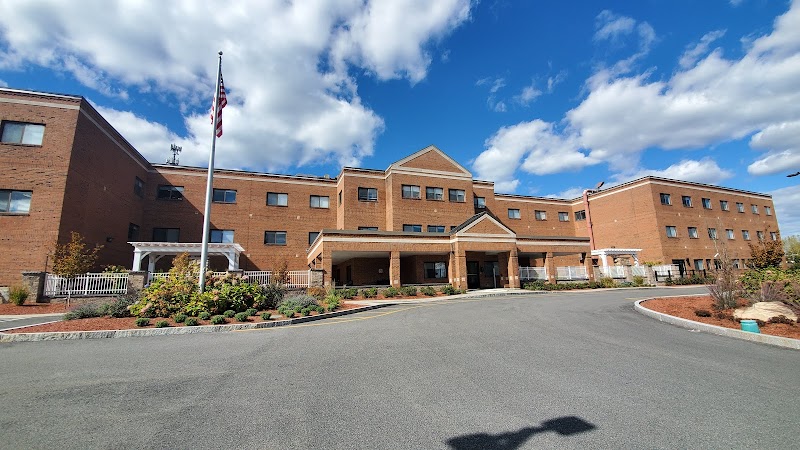
CARE ONE AT RANDOLPH

49 THOMAS PATTEN DRIVE, RANDOLPH, MA 02368 (781) 961-1160
For profit - Limited Liability company 168 Beds CAREONE Data: November 2025
Trust Grade
25/100
#279 of 338 in MA
Last Inspection: August 2025

Inspected within the last 6 months. Data reflects current conditions.

Overview

Care One at Randolph has a Trust Grade of F, indicating significant concerns about the quality of care provided. With a state ranking of #279 out of 338 in Massachusetts, they are in the bottom half of facilities, and they rank #29 out of 33 in Norfolk County, meaning only a few local options are worse. The facility's situation is worsening, with the number of issues rising from 20 in 2024 to 25 in 2025. Staffing is rated average with a turnover rate of 36%, which is slightly better than the Massachusetts average. However, they have incurred $34,257 in fines, suggesting ongoing compliance issues. The RN coverage is average, which means residents may not receive the level of attention that RNs can provide compared to facilities with higher coverage. Specific incidents include a failure to prevent a resident's knee contracture after physical therapy ended, resulting in decreased mobility, and a serious medication error where a resident missed several doses of a critical medication, leading to hospitalization. Additionally, pest issues were reported, with cockroaches found in various areas of the facility, raising concerns about cleanliness. Overall, while there are some strengths like staffing stability, serious weaknesses in care and environment should be carefully considered.

Trust Score
F
25/100
In Massachusetts
#279/338
Bottom 18%
Safety Record
Moderate
Needs review
Inspections
Getting Worse
20 → 25 violations
Staff Stability
○ Average
36% turnover. Near Massachusetts's 48% average. Typical for the industry.
Penalties
✓ Good
$34,257 in fines. Lower than most Massachusetts facilities. Relatively clean record.
Skilled Nurses
○ Average
Each resident gets 34 minutes of Registered Nurse (RN) attention daily — about average for Massachusetts. RNs are the most trained staff who monitor for health changes.
Violations
⚠ Watch
63 deficiencies on record. Higher than average. Multiple issues found across inspections.
★☆☆☆☆
1.0
Overall Rating
★★★☆☆
3.0
Staff Levels
★★☆☆☆
2.0
Care Quality
★☆☆☆☆
1.0
Inspection Score
Stable
2024: 20 issues
2025: 25 issues

The Good

  • Full Sprinkler Coverage · Fire safety systems throughout facility
  • No fines on record
  • Staff turnover below average (36%)

    12 points below Massachusetts average of 48%

Facility shows strength in fire safety.

The Bad

1-Star Overall Rating

Below Massachusetts average (2.9)

Significant quality concerns identified by CMS

Staff Turnover: 36%

Near Massachusetts avg (46%)

Typical for the industry

Federal Fines: $34,257

Above median ($33,413)

Moderate penalties - review what triggered them

Chain: CAREONE

Part of a multi-facility chain

Ask about local staffing decisions and management

The Ugly 63 deficiencies on record

2 actual harm
Aug 2025 21 deficiencies
CONCERN (D)

Potential for Harm - no one hurt, but risky conditions existed

Resident Rights (Tag F0550)

Could have caused harm · This affected 1 resident

Based on interview and record review, the facility failed to ensure one Resident (#132) had the right to participate in his/her discharge planning process, in a total sample of 32 residents. Specifica...

Read full inspector narrative →
Based on interview and record review, the facility failed to ensure one Resident (#132) had the right to participate in his/her discharge planning process, in a total sample of 32 residents. Specifically, the facility involved the family member of Resident #132 in the discharge planning and did not involve Resident #132 who remained his/her own healthcare decision maker. Findings include:Review of the facility's policy titled Discharge Summary and Plan, dated as last revised in March 2025, indicated: -Every resident has an individualized discharge plan, which begins at admission and is part of the comprehensive care plan-The discharge plan is developed by the care planning/interdisciplinary team with the assistance of the resident and the representative to develop interventions to meet the resident's discharge goalsReview of the facility's policy titled Resident Rights, dated as last revised in February 2021, indicated but was not limited to:-These rights include the resident's right to self-determination and be supported by the facility in exercising his/her rights Resident #132 was admitted to the facility in May 2025 with diagnoses of congestive heart failure (CHF) and alcohol use disorder. Review of the Minimum Data Set (MDS) assessment, dated 6/5/25, indicated Resident #132 scored 11 out of 15 on the Brief Interview for Mental Status (BIMS), indicating the Resident had a moderate cognitive impairment. Review of the medical record on 8/8/25 failed to indicate the physician of Resident #132 had invoked their Health Care Proxy, indicating Resident #132 was their own healthcare decision maker. During an interview on 8/8/25 at 8:32 A.M., Resident #132 said he/she resides in a home with his/her siblings who both help with daily living activities at home. Resident #132 said he/she has been at the facility for a while and did not know what the discharge plan was, and he/she was hoping to return to the home with their siblings. Review of the progress notes indicated a family meeting for Resident #132 was held on 7/11/25 with the following in attendance: Social Services, Rehabilitation Department, Nursing and the sister of Resident #132. The note indicated it was a discharge planning meeting with the goal for Resident #132 to live in an assisted living facility. The medical record failed to indicate Resident #132 was involved in the discharge planning process. During an interview on 8/8/25 at 10:47 A.M., the Physical Therapy Assistant said she believed the plan was for the Resident to discharge to an assisting living or some sort of group setting but had not heard anything official. During an interview on 8/12/25 at 12:00 P.M., Resident #132 said he/she still did not know what the plan was for discharge or where he/she was going after residing at the facility. During an interview on 8/12/25 at 1:36 P.M., Physician #2 said Resident #132 had fluctuating cognition based on the resident's clinical conditions (infection, CHF). He had decided not to activate the Health Care Proxy and Resident #132 continued to make his/her own decisions. During an interview on 8/12/25 at 2:12 P.M., Social Worker #1 said the discharge planning meeting was held with the sibling of Resident #132 on 7/11/25 and Resident #132 did not attend, and the plan was for the Resident to move to an Assisted Living Facility (ALF). She said she had submitted the information to the ALF and the Resident was accepted. She said the Resident had a lot going on and believes the Resident was not invited to participate in the discharge planning meeting and thought the Health Care Proxy had been invoked and the sibling was making health care decisions. During an interview on 8/13/25 at 10:00 A.M., Social Worker #1 said she had reviewed the information and found that Resident #132 had not been invited to his/her discharge planning meeting and should have been.
CONCERN (D)

Potential for Harm - no one hurt, but risky conditions existed

Deficiency F0552 (Tag F0552)

Could have caused harm · This affected 1 resident

Based on record review and interviews, the facility failed to ensure for one Resident (#71), out of a sample of 32 residents, that informed, written consent was obtained for the administration of psyc...

Read full inspector narrative →
Based on record review and interviews, the facility failed to ensure for one Resident (#71), out of a sample of 32 residents, that informed, written consent was obtained for the administration of psychotropic medications, which include providing the Resident with information related to the risks and benefits of the medications, prior to administering them.Findings include:Review of the facility's policy titled Psychotropic Medication Use, dated as last revised February 2025, indicated but was not limited to:-Prior to the use of, increasing the dose of, or switching to a different psychotropic medication, the staff and physician will review the following with the resident/representative prior to obtaining documented consent or refusal:-Non-pharmacological alternatives;-Indications and rationale for the recommendation;-Potential risks and benefits (including possible side effects, adverse consequences, and black box warnings); and-The resident's/representative's right to accept or decline the treatment.Resident #71 was admitted to the facility in May 2025 and had diagnoses including depression. Review of the Minimum Data Set (MDS) assessment, dated 5/30/25, indicated Resident #71 was cognitively intact as evidenced by a Brief Interview for Mental Status (BIMS) score of 13 out of 15, and was administered antidepressant medication daily.Review of Physician's Orders indicated but was not limited to:-Sertraline HCI (antidepressant) 50 milligrams (mg) one time a day for depression (5/25/25)-Lorazepam 1 mg one time a day every Monday, Wednesday and Friday for anxiety prior to going to dialysis (7/29/25)Review of Resident #71's Medication Administration Records (MAR) from May 2025 through August 2025 indicated Sertraline and Lorazepam had been administered as ordered by the physician.During an interview on 8/12/25 at 8:12 A.M., Resident #71 said he/she has never been provided with any information about medications for mood and is not taking any.Further review of the medical record failed to indicate Resident #71 was informed of the risks and benefits of Sertraline and Lorazepam and provided written, informed consent for their use.
CONCERN (D)

Potential for Harm - no one hurt, but risky conditions existed

Grievances (Tag F0585)

Could have caused harm · This affected 1 resident

Based on interview and document review, the facility failed to promptly resolve a grievance for a missing delivery for one Resident (#17), out of a total sample of 32 residents. Findings include: Revi...

Read full inspector narrative →
Based on interview and document review, the facility failed to promptly resolve a grievance for a missing delivery for one Resident (#17), out of a total sample of 32 residents. Findings include: Review of the facility's policy titled Grievances/Complaints, Filing, dated as revised April 2017, indicated but was not limited to the following: - Residents and their representatives had the right to file grievances, either orally or in writing, to the facility staff- the Administrator and staff will make prompt efforts to resolve grievances to the satisfaction of the resident and/or representative- upon receipt of a grievance and/or complaint, the grievance officer will review and investigate the allegations and submit a written report of such findings within 5 working days of receiving the complaint/grievance- the resident filing the grievance, will be informed (verbally and in writing) of the findings of the investigation and the actions that will be taken to correct any identified problems- the Administrator will make such reports orally within 5 working days of the filing of the grievance with the facility- a written summary of the investigation will also be provided to the resident, and a copy will be filed in the business office Review of the facility's policy titled Grievances/Complaints, Recording and Investigating, dated as edited 4/12/2018, indicated but was not limited to the following: - all grievances filed within the facility will be investigated and corrective actions will be taken to resolve the grievances- upon receipt of a grievance and/or complaint, the grievance officer will review and investigate the allegations- the investigation and report will include, as applicable: date and time of alleged incident, circumstances surrounding the alleged incident, location of the alleged incident, names of any witnesses and their account of the incident, resident's account of alleged incident, recommendations for corrective actions- the grievance officer will record and maintain all grievances and complaints on the resident grievance/complaint log- the resident grievance/complaint investigation form will be filed with the Administrator within 5 working days of the incident- the resident filing the grievance, will be informed of the findings of the investigation, as well as any corrective actions recommended within 5 working days of filing the grievance Resident #17 was admitted to the facility in July 2024 and has diagnoses including: Chronic obstructive pulmonary disease (COPD - a group of lung diseases that blocks proper airflow and makes it difficult to breathe) and anxiety disorder. Review of the Minimum Data Set (MDS) assessment, dated 7/22/25, indicated the Resident was cognitively intact as evidenced by a Brief Interview for Mental Status (BIMS) score of 15 out of 15. During an interview on 8/7/25 at 9:09 A.M., Resident #17 said that he/she had items missing without any resolution and he/she had reported it to the Director of Nurses (DON). Resident #17 said he/she had placed an order of items via DoorDash and received notification on their phone that the items had been delivered, but upon going downstairs to the lobby to collect the items, about 30 minutes later, the items were gone. Resident #17 said the DON informed him/her that she would initiate a grievance for him/her at that time, but he/she has not heard back since. Resident #17 said no one ever follows up on concerns so they aren't sure what the point of reporting them is. Review of the facility's Grievance Book and logs on 8/8/25 at 11:17 A.M., from June 2025 to August 2025 failed to indicate a grievance was filed for the Resident's missing items/delivery. During an interview on 8/12/25 at 12:49 P.M., Social Worker #2 said she was not aware of any missing deliveries for the Resident, and she doesn't recall seeing anything about it in the grievance book. She said she would check with the regular full time social worker since missing items would be a concern that would need to be addressed. During an interview on 8/12/25 at 1:08 P.M., the DON said the Resident did report a grievance to her about a missing delivery and said the Resident had informed her the items were missing by the time he/she got downstairs to pick them up. She said she will look into where the grievance is as she is unsure at this time. During an interview with the Director of Social Services and Social Worker #2 on 8/13/25 at 8:24 A.M., the Director of Social Services said she was made aware of the Resident having a missing package that was delivered a few weeks ago. She said a grievance should have been completed and the grievance process should be completed, but she has not seen a form regarding the incident. She said any grievance should be resolved within five days of it being filed or voiced. Social Worker #2 said she inquired with the Administrator about the grievance after she had spoken to the surveyor yesterday, and the Administrator told her that she was handling it. During an interview on 8/13/25 at 8:47 A.M., Resident #17 said the Administrator came in to speak with him/her about the grievance the day prior and he/she showed her the DoorDash receipts for the items purchased from [local pharmacy] on 7/20/25. The receipt confirmed the package was delivered at the facility. The Resident said the Administrator told him/her they were concerned about the lack of photograph in the delivery confirmation and did not resolve her issue or grievance yet. The Resident said he/she didn't report the issue on 7/20/25, he/she waited until they saw the DON about 2 or 3 days later. The Resident said he/she believed it was a Thursday he/she reported it but didn't have the exact date. The Resident said no resolution to the concern has happened at this point and his/her issue remains unresolved. The Resident said the facility told him/her they filed a grievance for him/her and still haven't resolved anything, and he/she knows they have the right to voice grievances and have them resolved and he/she is not happy that they are not doing that. Review of the receipt documents on the Resident's DoorDash application on 8/13/25, indicated the following: - six items were ordered from [local pharmacy] on 7/20/25 for a total amount of $29.88- the items were delivered by the DoorDasher, Nilsa, on 7/20/25 at 11:47 A.M- the items were delivered to [facility address] During an interview on 8/13/25 at 11:26 A.M., the Administrator said she is the Grievance Official for the facility. She said she is still working on a grievance for Resident #17 and their missing delivery from 7/20/25. She said the grievance was reported to the DON the same week it occurred but not on the day of the actual occurrence. She said she reviewed the Resident's DoorDash receipt but noticed there was no picture to show where the delivery was left. She was still investigating the incident and there was no resolution at this point to the grievance. She said grievances are supposed to be resolved within seven calendar days and the resolution provided to the Resident, but in this case, she is still investigating so that has not happened. She said she would provide the survey team with a copy of the grievance form and investigation to this point. During an interview on 8/13/25 at 11:42 A.M., the Administrator said she would not provide a copy of the grievance report or investigation to the survey team since the interdisciplinary team was still discussing it.
CONCERN (D)

Potential for Harm - no one hurt, but risky conditions existed

Deficiency F0605 (Tag F0605)

Could have caused harm · This affected 1 resident

Based on record review and interview, the facility failed to ensure for one Resident (#33), from a total sample of 32 residents, that each resident's drug regimen was free from unnecessary psychotropi...

Read full inspector narrative →
Based on record review and interview, the facility failed to ensure for one Resident (#33), from a total sample of 32 residents, that each resident's drug regimen was free from unnecessary psychotropic medications to promote or maintain the Residents' highest practicable mental, physical, and psychosocial well-being. Specifically, the facility failed for Resident #33, to ensure a gradual dose reduction (GDR) was attempted, unless documented by the prescriber as clinically contraindicated in the medical record.Findings include:Review of the facility's policy titled Psychotropic Medication Use, revised February 2025, indicated but was not limited to the following:-Residents on psychotropic medication receive gradual dose reductions (coupled with non-pharmacological interventions), unless clinically contraindicated, to determine whether the continued use of the medication is benefitting the resident, to find an optimal dose, or in an effort to discontinue the medication.-Psychotropic medication management is an interdisciplinary process that involves the resident, family, and/or the representative and includes:a) determining adequate indications for use;b) establishing appropriate dose;c) adequate monitoring for efficacy and adverse consequences;d) determining appropriateness of gradual dose reduction; ande) preventing, identifying, and responding to adverse consequences-Residents are monitored for adverse consequences associated with psychotropic medications, including:d) neurologic effects - agitation, distress, extrapyramidal symptoms, neuroleptic malignant syndrome, Parkinsonism, tardive dyskinesia, cerebrovascular events Resident #33 was admitted to the facility in March 2024 and has diagnoses including dementia and unspecified psychosis.Review of the Minimum Data Set assessment, dated 4/19/25, indicated Resident #33 had severe cognitive impairment as evidenced by a Brief Interview for Mental Status score of 4 out of 15, and received antipsychotic medication daily.Review of the medical record indicated Physician's Orders for:-Risperidone (antipsychotic) 0.25 milligrams (mg), one tablet two times a day for agitation (initiated 3/22/24)-Behavior Tracking: Agitation, every shift (4/1/24)Review of August 2024 through August 2025 Medication Administration Records (MAR) indicated Risperidone was administered as ordered by the physician.Review of the historic Physician's Orders indicated Resident #33 has been receiving Risperidone 0.25 mg two times a day since admission in March 2024.Review of Resident #33's physician and Nurse Practitioner (NP)'s notes, dated 9/11/24, 12/26/24 and 4/24/25, failed to indicate the Resident's treatment with Risperidone has been evaluated for a GDR and failed to indicate a documented clinical rationale for a GDR of Risperidone was contraindicated.During an interview on 8/12/25 at 1:23 P.M., Physician #2 said he and his NP rely on the consultant psychiatric NP for documenting recommendations in their notes for continued use of psychotropic medications. He said neither he nor his NP had evaluated or documented a clinical rationale for the continuation of Risperidone. He said the Resident has been on the same dose of Risperidone since admission and has not had a GDR.
CONCERN (D)

Potential for Harm - no one hurt, but risky conditions existed

Deficiency F0687 (Tag F0687)

Could have caused harm · This affected 1 resident

Based on observation, interview, and record review, the facility failed to ensure for one Resident (#101), out of a total sample of 32 residents, that footcare was provided in accordance with professi...

Read full inspector narrative →
Based on observation, interview, and record review, the facility failed to ensure for one Resident (#101), out of a total sample of 32 residents, that footcare was provided in accordance with professional standards to help prevent potential foot problems. Findings include: Review of the facility's policy titled Foot Care, dated as revised October 2022, indicated but was not limited to the following: - residents receive appropriate foot care and treatment in order to maintain foot health- residents are provided with foot care and treatment in accordance with professional standards of practice- trained staff may provide routine foot care (e.g., toenail clipping) within professional standards of practice for residents without complicating disease processes- residents with foot disorders or medical complications associated with foot complications are referred to qualified professionals. Foot disorders that require treatment include nail disorders. Resident #101 was admitted to the facility in May 2025 with diagnoses including: Chronic obstructive pulmonary disease (COPD - a group of lung diseases that blocks proper airflow and makes it difficult to breathe), pan lobular emphysema (a disease preventing adequate gas exchange in the lungs, and chronic respiratory failure with hypoxia (the absence of enough oxygen in the tissue to sustain bodily functions). Review of the Minimum Data Set (MDS) assessment, dated 5/16/25, indicated the Resident was cognitively intact with a Brief Interview for Mental Status (BIMS) score of 15 out of 15. During an interview on 8/7/25 at 9:14 A.M., Resident #101 said he/she had requested to see a podiatrist to cut their toenails because their feet were out of control. During an observation with interview on 8/8/25 at 9:40 A.M., Resident #101 informed Nurse #1 that he/she needed their toenails cut. Nurse #1 told the Resident that she believed they were on the podiatry list but didn't know when that would happen. The Resident said he/she believed the podiatrist had already come in but did not see them. The nurse informed the Resident she would look into it and get back to him/her. Review of the medical record for Resident #101 indicated but was not limited to the following: - the Resident had signed a consent for podiatry services on 5/10/25- the record failed to indicate any consultants had seen the Resident for podiatry services- the physician orders failed to indicate an order was received for consultant podiatry services- review of the care plans failed to indicate the Resident had any foot health concerns - review of the last 90 days of progress notes, including nursing, provider, and social services, failed to indicate the Resident had seen or had an appointment with podiatry services or that the condition of his/her toenails and foot health were addressed in any way During an interview with observation on 8/8/25 at 12:25 P.M., the surveyor observed Nurse #1 request to see Resident #101's toenails. The nurse assisted the Resident in removing their socks and the Resident had scaly, flaking skin on both feet, long mycotic nails (thick, brittle) with yellow toenail beds and jagged chipped edges. The nails appeared thick and had multiple layers of brittle flaking nail that hung over the edge of the toes. The nurse agreed with the Resident that his/her toenails were in bad condition and in need of podiatry services. The Resident said no one at the facility has taken care of them since admission. The nurse said she would have to double check to see if the Resident is on the list for the next podiatrist visit to the building. During an interview on 8/12/25 at 11:39 A.M., Nurse #2 said last Thursday (8/7/25) the Resident had complained about his/her toenails and she was going to try to help him/her out with nail care since they are not diabetic, but when she saw the issue with the stacked layered nails that were very thick and long she knew tools other than regular clippers and files would be necessary and the Resident would have to wait for podiatry intervention. She said the Unit manager controls the list for podiatry and she is unsure when they are due to come in or when they were last here. She said she doesn't know when or if the Resident was actually put on the list for podiatry. During an interview on 8/12/25 at 2:25 P.M., Unit Manager #1 said she faxed the podiatry enrollment form for the Resident back when they had signed it in May 2025. She said she last had contact with the podiatry consultant by email on 5/15/25 and the Resident was not on that list to be seen. She said to the best of her knowledge the Resident had not been seen by podiatry services, but his/her feet appeared to be in poor condition, and she would ask the Resident about going out to a podiatrist in the community. She said the facility does not have the necessary tools to manage the Resident's toenails in house and the podiatry consultants are not good with their communication. During an interview on 8/13/25 at 7:19 A.M., the Director of Nurses (DON) said there is no one person responsible for overseeing all the consultant services or podiatry services and the process is for the Unit managers to get the consent signed by the residents and then fax it to the enrollment number on the form and then they receive an email a few days before the service is coming into the facility with a list of residents who will be seen. She said she checked the last podiatry visit list for the facility, which she believes was in July 2025, and said the Resident was not seen and she is unsure when podiatry services will be back in the facility. During a telephone interview on 8/13/25 at 10:32 A.M., the consultant podiatry representative said podiatry services are routinely in the facility every 60 days. She said the facility is responsible for enrolling the residents into the program and if the resident is eligible for services, the facility receives a list prior to the podiatrist coming to the facility which informs them of who is scheduled to be seen. She said at that time they can request any changes to the list, including additions. She said podiatry was in the facility twice in July on the 22nd and 26th of the month and Resident #101 was not seen either time. On further review of her system, the podiatry representative said Resident #101 was never enrolled in podiatry services and there are no plans for them to be seen at this time. During an interview on 8/13/25 at 12:27 P.M., the DON said she was surprised the enrollment for podiatry services didn't go through. She said the facility doesn't keep a confirmation that the enrollment form was sent and she doesn't believe they usually document anything about it in the record. She said there was a breakdown in the system somewhere that required fixing to prevent this from happening again. During a follow up interview on 8/13/25 at 3:42 P.M., the DON said the wound physician came in today and addressed Resident #101's toenails. She said the physician did not identify any ingrown nails or open areas but did recommend a treatment for a fungal infection for the Resident at this time. During an interview on 8/14/25 at 7:47 A.M., Physician #3 said he came in and provided nail care to Resident #101's feet on 8/13/25. He said the Resident's nails were long and there appeared to be a fungal infection that was more chronic in nature, and he recommended treatment for that.
CONCERN (D)

Potential for Harm - no one hurt, but risky conditions existed

Accident Prevention (Tag F0689)

Could have caused harm · This affected 1 resident

**NOTE- TERMS IN BRACKETS HAVE BEEN EDITED TO PROTECT CONFIDENTIALITY** Based on observation, interview, and record review, the facility failed to provide an environment free from accident hazards for...

Read full inspector narrative →
**NOTE- TERMS IN BRACKETS HAVE BEEN EDITED TO PROTECT CONFIDENTIALITY** Based on observation, interview, and record review, the facility failed to provide an environment free from accident hazards for one Resident (#132), in a total sample of 32 residents. Specifically, the facility failed to identify and intervene when the facility staff were writing secure keypad codes on door frames, including a stairwell where Resident #132, who was at risk for falls, at risk for wandering, at risk for eloping, and was experiencing confusion, accessed and descended 26 concrete stairs which lead to an alarmed exit door.Findings include:Resident #132 was admitted to the facility in May 2025 with diagnoses of congestive heart failure (CHF) and alcohol use disorder. Review of the care plans indicated Resident #132 was at risk for wandering and/or elopement, initiated 5/31/25 with interventions including implementing a scheduled toileting program, implementing scheduled hydration and schedule time for regular walks/appropriate activity. An additional care plan indicated Resident #132 was at risk for elopement, initiated 6/13/25 with interventions including a wander guard bracelet and when exhibiting exit seeking behavior to redirect to an appropriate area and provide supervision. Review of the care plans indicated Resident #132 was at risk for falls with interventions including assisting with ambulation and transfers, utilizing therapy recommendations. The care plan did not indicate what the therapy recommendations were. Review of the Elopement Evaluation, dated 6/13/25, indicated Resident #132 was looking for a ride from the facility and wandering behavior was likely to affect the safety or well-being of self or others. Review of the medical record indicated on 8/6/25 at around 1:00 P.M. Resident #132 opened the stairwell door next to his/her room, entered the stairwell, exited the building, and was found outside in the parking lot. Review of the nursing progress notes indicated on 6/16/25 Resident #132 was confused, asking to leave the facility on multiple occasions and tried to take the back stairs next to his/her room to go outside, and many other times he/she stood next to the elevator waiting for any opportunity to leave. Review of the medical record failed to indicate Resident #132 was moved away from the stairwell following attempts to get into the stairwell. Review of the progress notes indicated the following:6/18/25: Resident with increased confusion7/17/25: Resident with delusions7/21/25: Resident with a urinary tract infection and started on intravenous (IV) antibiotics8/4/25: mental status continues to fluctuate8/6/25 at 7:44 A.M.: Resident keeps talking with someone and acting like someone is coming to pick him/her up. In hallway at 4:00 A.M., wanted to go out and meet someone. 8/6/25 at 1:00 P.M.: Resident opened the 2 East door into the hallway, exited the building and staff had found the Resident downstairs in the parking lot. On 8/7/25 at 5:00 P.M., the surveyor observed the stairwell exit door next to where Resident #132 resided from admission through 8/6/25. The exit door went from the resident unit to a stairwell and down the stairs led to an outside door. The stairwell had 11 concrete steps down to a landing where the stairs changed direction for another 11 concrete steps, then another landing and four more concrete steps to the bottom where there was an alarmed door to the outside. The surveyor observed an upside-down wash basin on the second set of stairs and toiletries strewn across the bottom steps and landing. In addition, there were three pairs of socks and one pair of underwear which was labeled with the name of Resident #132. The surveyor returned to the resident unit and observed the stairwell exit door. There was a keypad to release the alarm mechanism for the door. In the door frame, at the keypad level, written in pen/pencil was the code to un-alarm the door. Review of the Physical Therapy (PT) Recert, Progress Report and Updated Therapy Plan, dated 8/4/25, indicated Resident #132 ambulated with a rolling walker with stand by assist, was unable to ambulate uneven surfaces and required contact guard assist for 4 stairs. On 8/7/25 at 5:03 P.M., the surveyor entered the code for the exit door and did not open the door. The door stayed un-alarmed for 1 minute and 54 seconds. During an interview at this time, Unit Manager #1 said she had no idea how long the door stayed un-alarmed for after entering the code. During an interview on 8/8/25 at 8:32 A.M., Resident #132 said he/she did attempt to leave the facility to meet his/her brother for supper. The Resident said he/she did not think he/she made it outside. When the surveyor inquired about the stairs the Resident said, I took the stairs or a hot air balloon. When the surveyor inquired about the Resident entering the numbers on the keypad to the stairs the Resident replied, I should play [NAME]. On 8/8/25 at 10:15 A.M., the surveyor observed the 2 East exit door to the stairwell to continue to take 1 minute and 54 seconds to re-alarm and the keypad code continued to be written on the doorframe. During an interview on 8/8/25 at 10:30 A.M., Certified Nursing Assistant (CNA) #1 said Resident #132 would get up and walk on his/her own and needed to be reminded to use the rolling walker. She said the Resident did not have a walking or hydration schedule, as indicated on the wander care plan. During an interview on 8/8/25 at 10:47 A.M., the Physical Therapy Assistant (PTA) said she regularly worked with Resident #132. She said Resident #132 had been fluctuating due to medical concerns including a recent infection. She said the Resident's endurance would fluctuate during the same visit sometimes he/she was able to walk down to the Rehabilitation (Rehab) gym and then would need a transport wheelchair to return to his/her room. She said Rehab had not worked on stairs recently with the Resident because the Rehab staff did not feel it was safe. She said Resident #132 would sometimes ask about leaving and will say he/she is going down to the store or down the street. During an interview on 8/8/25 at 12:02 P.M., Nurse #1 said Resident #132 wanders towards the elevator sometimes, but it had a code and that would keep the Resident from leaving. During an interview on 8/8/25 at 12:04 P.M., Nurse #4 said Resident #132 was pleasantly confused and would attempt to head towards the elevator at times and staff would redirect him/her back to his/her room. During an interview on 8/8/25 at 12:30 P.M., Nurse #2 said she was the assigned nurse for Resident #132 on 8/6/25 and worked on the unit regularly. She said normally the Resident would walk around the unit, did not use any assistive devices and the Resident was not a wander/elopement risk prior to 8/6/25 and there were no interventions in place for the Resident. She said the Resident had gone out the exit door next to his/her room and down the stairs. She said when she heard the alarm she was at the nurses' station and saw the light of the alarm that read East Stairwell. She said she and the Respiratory Therapist ran for the stairwell. She said she did not see a Resident in the stairwell, so she went down the stairs and by the time she saw the Resident he/she was outside with about eight staff members. She said she could not be sure the stairwell exit door alarm was sounding. During an interview on 8/8/25 at 12:45 P.M., the Respiratory Therapist said he was familiar with Resident #132, although the Resident was not receiving respiratory therapy. He said on 8/6/25 the Resident seemed off and kept saying he/she was going to see their sister. The Respiratory Therapist said he would tell the Resident their sister was coming and redirect the Resident back to their room and the Resident would return 20 minutes later, this was around 12:30-12:40 P.M. He said he was at the nurses' station on 8/6/25 when a very loud alarm sounded and he was not sure how he knew where the alarm was for, but he had run down the hall and booked it down the stairs and by this time the Resident was already outside and with staff members. He said he cannot be sure the stairwell exit door alarm was sounding. During an interview on 8/13/25 at 8:56 A.M., Unit Manager #1 said Resident #132 had presented with intermittent confusion after residing at the facility for over two weeks and this had been a change from admission. She said the Resident talked one day about going to a basketball tournament but was unsure about other times the Resident had wanted to leave the facility, including on 8/6/25. She said there was no walking schedule or hydration schedule for the Resident, as indicated on the wandering/elopement care plan. During an interview with observation on 8/8/25 at 1:00 P.M., the Director of Maintenance said all doors that led to stairs or the outside were coded with keypads. He said the keypad on the stairs are designed to un-alarm the door when the correct code is entered and this would stay unalarmed for 10-15 seconds (regardless of if the door was opened) and then would re-alarm. He reviewed the alarm system for the 2 East Unit. He said there was an unlabeled alarm that beeps (not the loudest one, no lights) when someone attempts to push on a door without the code. He said the outside door, located at the bottom of the 2 East stairwell had a loud alarm and a blue light that flashes in front of the nurses' station and showed the surveyor the alert system which was labeled East Stairwell Outside Door. The surveyor and the Maintenance Director observed the keypad of the 2 East stairwell exit door un-alarm when the code was entered and remain un-alarmed, if not opened, for one minute and 54 seconds. The Maintenance Director said he had no idea if this should stay unalarmed this long and a vendor would have to come in and change the timing. The surveyor showed the Maintenance Director the stairwell door code written on the door frame of the door. He said he was aware staff were writing codes on door frames and they were usually writing them for the kitchenettes, and the maintenance or housekeeping staff usually try to wipe them away. He said the Administrator started holding staff meetings and this was brought up at one of the staff meetings so that staff would stop writing the codes on door frames. During an interview with observation on 8/8/25 at 2:45 P.M., the Regional Clinical Coordinator and the surveyor observed the 2 East stairwell exit door stay un-alarmed for one minute and 54 seconds after entering the code. She said she was not sure if there was a policy for how long before the door should re-alarm. The surveyor and the Regional Clinical Coordinator observed the keypad code still written on the doorframe. She said the code should not be written on the doorframe. During an interview on 8/13/25 at 10:21 A.M., the Administrator said she had started having staff meetings on a regular basis and did not recall staff mentioning that keypad codes were being written on door frames and this had not been addressed. She said the facility did not have a policy for how long a door should stay unalarmed for after entering the code in the keypad and she had not known that the 2 East stairwell exit door stayed unalarmed for one minute and 54 seconds prior to the surveyor providing the information on 8/8/25. She said on 8/8/25, the staff had checked the entire facility and did find other doorways, stairways, and elevators where staff had written down the keypad code. She said the keypad codes to un-alarm the doors should not have been written on doorframes as this was a safety risk.
CONCERN (D)

Potential for Harm - no one hurt, but risky conditions existed

Deficiency F0740 (Tag F0740)

Could have caused harm · This affected 1 resident

Based on record review and interview, the facility failed to provide the necessary Behavioral Health care and services to attain or maintain the highest practicable mental and psychosocial well-being ...

Read full inspector narrative →
Based on record review and interview, the facility failed to provide the necessary Behavioral Health care and services to attain or maintain the highest practicable mental and psychosocial well-being for one Resident (#71), out of a total sample of 32 residents. Specifically, the facility failed to ensure that Resident #71's Behavioral Health Services providers were informed and provided appropriate psychiatric follow-up when the Resident was sent to the emergency room from the dialysis center for a concern of a suicide attempt after hearing auditory hallucinations, verbalizing wanting to die, and pulling out a dialysis line. Findings include:Review of the facility's policy titled Behavioral Assessment, Intervention, and Monitoring, revised February 2025, indicated the following:- Behavioral Interventions refers to individualized, nonpharmacological approaches to care that are provided as part of a supportive physical and psychosocial environment, directed toward understanding, preventing, relieving, and/or accommodating a resident's distress or loss of abilities, as well as maintaining or improving a resident's mental, physical, or psychosocial well-being.- The nursing staff identify, document, and inform the physician about specific details regarding changes in an individual's mental status, behavior, and cognition including: * Onset, duration, intensity and frequency of behavioral symptoms * Any precipitating or relevant factors or environmental triggers (e.g., medication changes, infection, recent transfer from hospital) and * New onset or changes in behavior will be documented.- The interdisciplinary team (IDT) thoroughly elevates new or changing behavioral symptoms in order to identify underlying causes and address any modifiable factors that may have contributed to the resident's change in condition.- The interdisciplinary team will evaluate behavioral symptoms in residents to determine the degree of severity, distress and potential safety risk to the resident, and develop a plan of care accordingly.-Safety strategies will be implemented immediately if necessary, to protect the resident and others from harm.- Interventions are individualized and part of an overall care environment that supports physical, functional, and psychosocial needs, and strives to understand, prevent or relieve the resident's distress or loss of abilities.-The care plan includes, as a minimum: * A description of the behavioral symptoms * Targeted and individualized interventions for the behavioral and/or psychosocial symptoms; * The rationale for interventions and approaches; * Specific and measurable goals for targeted behaviors; and * How the staff will monitor for effectiveness of the interventions- Non-pharmacologic approaches will be utilized to the extent possible to avoid or reduce the use of psychoactive medication to manage behavioral symptoms.Review of the facility's policy titled Suicide Threats, last revised December 2007, indicated but was not limited to:-Staff shall report any resident threats of suicide immediately to the nurse supervisor/charge nurse.-The nurse supervisor/charge nurse shall immediately assess the situation and shall notify the charge nurse/supervisor and/or director of nursing services of such threats.-After assessing the resident in more detail, the nurse supervisor/charge nurse shall notify the resident's attending physician and responsible party and shall seek further direction from the physician.-If the resident remains in the facility, staff will monitor the resident's mood and behavior and update care plans accordingly, until the physician has determined that a risk of suicide does not appear to be present.Resident #71 was admitted to the facility in May 2025 and had diagnoses including brain aneurysm with subsequent hemorrhagic stroke, chronic kidney disease, end stage renal disease, and depression.Review of the Minimum Data Set (MDS) assessment, dated 5/30/25, indicated Resident #71 was cognitively intact as evidenced by a Brief Interview for Mental Status (BIMS) score of 13 out of 15, expressed little interest or pleasure in doing things, feeling down, depressed or hopeless, trouble falling or staying asleep or sleeping too much, feeling tired or having little energy nearly every day, was administered antidepressant medication daily and received dialysis.Review of the medical record indicated a Nursing note, dated 7/25/25, indicating Resident #71 was transported to the hospital emergency department (ED) directly from the dialysis center after pulling out his/her dialysis port and telling staff that he/she wants to bleed out and die after hearing auditory hallucinations saying, you're going to die.' The note failed to indicate the Resident's physician was notified.Review of the hospital emergency department encounter notes, dated 7/25/25, indicated Resident #71 presented to the ED from dialysis as hemodialysis staff was concerned about suicidality after the Resident removed the dialysis line from his/her fistula. The notes indicated the Resident said he/she overheard someone say, you are going to die anyways and became frustrated, angry and removed the dialysis line saying, I might as well get it over with. The Resident did not receive a psychological assessment while in the ED. Discharge documentation included a referral for follow-up with a behavioral health provider.Further review of the clinical record failed to indicate that Residents #71's physician/Nurse Practitioner (NP) or Behavioral Health Service provider was notified, assessed or addressed Resident #71's behavioral health care needs related to the change in his/her psychiatric condition. No care plan had been developed to address the Resident's change in psychosocial status.Review of a Nursing Note, dated 7/28/25, indicated the dialysis center reported Resident #71's dialysis treatment was terminated early due because the Resident was agitated, demanding termination of treatment and attempted to bite and pull dialysis needles. The note indicated the physician was notified and ordered Ativan (antianxiety) 1 milligram to be administered prior to dialysis.Review of a Social Services note, dated 7/29/25 at 8:02 A.M., indicated the Director of Social Services (DSS) met with Resident #71 to follow up regarding his/her statement about wishing he/she was dead. The Resident indicated that he/she does not feel that way now and at that time he/she was distraught. The DSS indicated the LICSW (licensed independent clinical social worker) will see him/her today. The Social Service note failed to indicate the DSS informed the psychiatric NP or LICSW of the Resident's auditory hallucinations, alleged suicide attempt, and transfer to the ED. Review of the medical record indicated Resident #71 was seen by the facility's consultant Mental Health Counselor on 7/29/25 at 3:50 P.M. The note indicated that the Resident reported he/she feels like they are dying. The counselor indicated she provided words of affirmation, validation, and supportive emotional care to the patient (resident) who is struggling with depression around physical decline. The note failed to indicate Resident #71 had auditory hallucinations and an alleged suicide attempt at dialysis on 7/25/25.Review of a Nursing Note, dated 8/4/25, indicated Resident #71 pulled out the arterial needle (draws blood from the body to the dialyzer (filter that cleans a patient's blood when their kidneys are unable to perform this function) while the venous needle (returns purified blood to the patient) site was waiting to clot with a holding clamp.Further review of the clinical record failed to indicate the physician/NP or Behavioral Health Service provider was notified, assessed or addressed Residents #71's behavioral health care needs after having pulled out the dialysis line again. No care plan had been developed to address the Resident's change in psychosocial status.During an interview on 8/12/25 at 1:38 P.M. and 8/13/25 at 11:43 A.M., the DSS said she was notified that the Resident pulled out his/her port/needle on 7/25/25 while at dialysis and said he/she wanted to die. The DSS said she saw the Resident a few days afterward to follow-up on the Resident's statement about wishing he/she was dead, and the Resident told her it was in the moment and didn't really mean it and the LICSW saw the Resident later that day. The DSS said she did not notify the psychiatric NP of the Resident's self-harm statement. She said she was not aware of any new interventions put into place to meet the Resident's psychosocial needs.During a telephonic interview on 8/13/25 at 8:59 A.M., the consultant Mental Health Counselor/LICSW said she comes into the facility twice a week and does supportive talk therapy, not crisis intervention. She said the DSS is her primary contact and said nursing on the unit will also tell her if there is an acute need or change in a resident. She said if there is a higher need, either she or the nursing staff will refer to the psychiatric NP. The Mental Health Consultant said she did not remember being notified that at dialysis, Resident #71 had had an auditory hallucination, pulled out the dialysis line from the fistula and was sent to the hospital for evaluation for a suicide attempt and also pulled out the arterial line on 7/28/25.During an interview on 8/13/25 at 10:00 A.M., the consultant psychiatric NP said she worked at the facility until the end of June 2025, then returned the first week of August. She said she speaks to nursing staff on the unit to get updates before she sees her patients. The NP said she noted that Resident #71 had not been seen by a psych NP since 6/26/25 and then saw the Resident on 8/8/25 after checking in with nursing. She said she was not notified that at the dialysis center, Resident #71 had had an auditory hallucination, pulled out the dialysis line from the fistula and was sent to the hospital for evaluation for a suicide attempt and pulled out the arterial line on 7/28/25. She said she had no idea about the incidents. She said communication with the facility has not been good and it is frustrating. She said she should have been notified so she could have evaluated and addressed these issues during her visit.During an interview on 8/13/25 at 10:23 A.M., Physician #2 said he last saw Resident #71 on 7/24/25. He said the Resident has refused dialysis many times and he has educated him/her on the importance of continuing dialysis. He said he ordered Ativan to be taken prior to dialysis to assist with his/her anxiety but was not aware that Resident #71 had had an auditory hallucination, pulled out the dialysis line from the fistula and was sent to the hospital for evaluation for a suicide attempt. Physician #2 said if he were made aware of the incident, he would have made a referral for the consultant psychiatric provider to see and assess the Resident for safety.During an interview on 8/13/25 at 11:25 A.M., the ADON said she did not recall being informed about Resident #71 having auditory hallucinations, pulling out their dialysis port/needle being sent to the hospital by the dialysis center staff on 7/25/25. She said it was never mentioned in morning report.During an interview on 8/13/25 at 11:29 A.M., Nurse #4 said she received a telephone call from Resident #71's dialysis center on 7/25/25 to inform her that the Resident had auditory hallucinations, pulled out the dialysis port/needle, said he/she wanted to bleed out and die and was sent out to the hospital. She said the facility protocol is that the family and physician are notified and it is the protocol that a resident with suicidal ideation is placed on 15-minute checks until they are seen by the physician or psychiatric provider and cleared for safety. She said she does not recall notifying the physician.During an interview on 8/14/25 at 6:45 A.M., Nurse #10 said he received Resident #71 back to the facility when the transport brought him/her back from the ED on 7/25/25. He said he could not recall seeing any paperwork from the hospital and said the hospital didn't call prior to sending him/her back to the facility. He said the transport drivers told him information about the Resident's visit to the ED and said it shocked him when they told him about the Resident's auditory hallucination that he/she was going to die and having pulled out the dialysis port to bleed out. Nurse #10 said when the Resident returned from the ED, he/she was placed on 15-minute checks according to the facility's protocol. During an interview on 8/14/25 at 7:21 A.M., the ADON said it is facility protocol that 15-minute safety checks remain in place until the resident is cleared by the psychiatric NP, LICSW, or physician/NP. She said the Resident was cleared by the LICSW on 7/29/25. She reviewed the LICSW's 7/29/25 progress note and said it did not indicate the Resident was evaluated and cleared for safety. The ADON said she was not aware the LICSW was not informed about the incident that occurred at dialysis and the Resident being sent to the hospital for evaluation and not cleared for safety.During an interview on 8/14/25 at 10:40 A.M., Resident #71 said while at dialysis a few weeks ago, he/she heard a male voice tell him/her that he/she was going to die and then pulled out the dialysis needle. The Resident said he/she wanted to go home, and no one would help, so he/she pulled the needle out. Resident #71 said the facility social worker and his/her son are the only ones who have spoken to him/her about the incident.During interviews on 8/14/25 at 8:48 A.M. and 2:16 P.M., the Director of Nursing (DON) said the physician, psychiatric NP and counselor should have been informed of the event so they could assess Resident #71 for safety. She said a care plan should have been developed with interventions to keep the Resident safe, including 15 minutes safety checks after his/her return from the hospital until he/she was cleared for safety by the physician, psychiatric NP or Mental Health Counselor but was not. She said although the Resident has not displayed this behavior here at the facility, you never know if he/she will.
CONCERN (D)

Potential for Harm - no one hurt, but risky conditions existed

Drug Regimen Review (Tag F0756)

Could have caused harm · This affected 1 resident

Based on document review and interview, the facility failed to ensure monthly medication regimen reviews (MRR) were communicated to the physician and addressed in a timely manner for two Residents (#3...

Read full inspector narrative →
Based on document review and interview, the facility failed to ensure monthly medication regimen reviews (MRR) were communicated to the physician and addressed in a timely manner for two Residents (#33 and #15), out of a total sample of 32 residents. Specifically, the facility failed:1. For Resident #33, to ensure April 2025 consultant pharmacist recommendations were provided to the physician/nurse practitioner (NP) for review and response to the recommendation; and2. For Resident #15, to maintain the facility policy of documenting monthly MRR in the medical record, ensure the physician documented review of the April 2025 irregularity in the medical record and ensure the irregularity was addressed timely.Findings include:Review of the facility's policy titled Medication Regimen Reviews, last revised in May 2019, indicated the following: -The consultant pharmacist performs a medication regimen reviews (MRR) for every resident in the facility receiving medications -Within 24 hours of the MRR, the consultant pharmacist provides a written report to the attending physicians for each resident identified as having a non-life threatening medication irregularity -If the physician does not provide a timely or adequate response, or the consultant pharmacist identifies that no action has been taken, he/she contacts the medical director or the administrator. -the attending physician documents in the medical record that the irregularity has been reviewed and what (if any) actions was taken to address it -copies of the medication regimen review reports, including physician responses, are maintained as part of the permanent medical record 1. Resident #33 was admitted to the facility in March 2024 with diagnoses including dementia, malnutrition, and hypertension. Review of the Minimum Data Set (MDS) assessment, dated 6/17/25, indicated Resident #33 had a severe cognitive deficit as evidenced by a Brief Interview for Mental Status (BIMS) score of 4 out of 15. Review of the consultant Pharmacist’s MRR: Listing of Residents Reviewed with No Recommendation for the time period of 4/1/25 to 4/28/25, indicated Resident #33 was not listed on the document. Review of Resident #33’s medical record failed to indicate a pharmacy recommendation from April 2025 and failed to indicate any evidence that the Physician or NP was made aware of a recommendation made in April 2025. During an interview on 8/13/25 at 12:18 P.M., the Director of Nursing (DON) said Resident #33’s name is not listed on the Pharmacy’s April 2025 report which indicates the Resident has a pharmacy recommendation. She said the recommendation should be in the medical record and will search for it. During a subsequent interview on 8/14/25 at 2:16 P.M., the DON said she could not find Resident #33's pharmacy recommendation for April 2025. No further documentation was provided to survey team by the time of the exit conference. 2. Resident #15 was admitted to the facility in March 2023. Review of the electronic and paper medical record indicated the last monthly MRR documented for Resident #15 was in March of 2025. Review of the medical record failed to indicate if the consultant Pharmacist had completed the monthly MRR from April through July of 2025 and if the Pharmacist had noted any irregularities during the review. Upon request the DON provided Consultant Pharmacist's MRR: Listing of Residents Reviewed with No Recommendation for the surveyors to review for the months of April 2025, May 2025, June 2025 and July 2025. Review of the Consultant Pharmacist's MRR: Listing of Residents Reviewed with No Recommendation, provided by the DON and not part of the medical record for the time period of 4/1/25 to 4/28/25, indicated Resident #15 was not listed on the document. The surveyor requested the consultant Pharmacist recommendations. Review of the Consultant Pharmacist Recommendations to Physician form indicated on 4/27/25 the Pharmacist recommended the physician consider adding rinse mouth after use following the administration of Flovent (a steroid inhaler). The form indicated the Physician Assistant agreed to this order change on 6/25/25, two months after the recommendation was made. The Consultant Pharmacist Recommendation to Physician form was not part of the medical record and there was no additional documentation from a physician to indicate the irregularity had been reviewed. During an interview on 8/13/25 at 12:23 P.M., the DON said the Consultant Pharmacist had not been documenting monthly MRRs in the electronic medical record. She said the Consultant Pharmacist sends the reports to the facility and any irregularities are provided to the physicians. She said she was not sure why the April 2025 recommendation for Resident #15 was not addressed for two months.
CONCERN (D)

Potential for Harm - no one hurt, but risky conditions existed

Deficiency F0773 (Tag F0773)

Could have caused harm · This affected 1 resident

Based on record review and interview, the facility failed to ensure laboratory results were reported and acted on timely for one Resident (#9), out of a total sample of 32 residents. Specifically, the...

Read full inspector narrative →
Based on record review and interview, the facility failed to ensure laboratory results were reported and acted on timely for one Resident (#9), out of a total sample of 32 residents. Specifically, the facility failed to report his/her 6/12/25 and 6/20/25 sodium (a vital electrolyte that helps regulate fluid balance, blood pressure, nerve and muscle function with a reference range of 136 to 145 milliequivalents per liter (mEq/L) levels to the provider resulting in a delayed hospital transfer on two occasions.Findings include:Review of the facility's policy titled Lab and Diagnostic Test Results, dated as revised 11/2018, indicated but was not limited to:-When test results are reported to the facility, a nurse will first review the results. If staff who first receive or review lab and diagnostic test results cannot follow the remainder of this procedure for reporting or documenting the results and their implications another nurse in the facility should follow or coordinate the procedure-A nurse will identify the urgency of communicating with the attending physician based on physician request, the seriousness of any abnormality, and the individual's current condition-Identifying situations that warrant immediate notification: nursing staff will consider the following factors to help identify situations requiring prompt physician notification concerning lab or diagnostic test results: whether the result should be conveyed to a physician regardless of other circumstances (that is, the abnormal result is problematic regardless of any other factors) Resident #9 was admitted to the facility in May 2025 with diagnoses which included hyponatremia (low sodium). Review of Resident #9's medical record indicated he/she was transferred to the hospital on 6/13/25 and 6/23/25 due to low sodium levels. Review of Resident #9's 6/12/25 lab result indicated but was not limited to:-Collection date and time: 6/12/25 at 7:15 A.M.-Received date and time: 6/12/25 at 9:57 A.M.-Reported date and time: 6/12/25 at 10:47 A.M.-Reviewed By Physician #1 on 6/13/2025 10:15 A.M. Review of the nursing/clinical progress note, dated 6/13/25, indicated but was not limited to:-Writer was notified by MD about resident Sodium level of 120, and resident needed to be transferred to the emergency room. Review of the MD progress note, service date 6/13/25, indicated but was not limited to:-Sodium was critically low at 120. This had resulted yesterday but was not reported to either me or to the nursing by lab [sic]. Director of nursing apprised to follow-up on the failure to report a critical lab. During a telephonic interview on 8/12/25 at 10:24 A.M., the Lab Representative said the 6/12/25 critical Sodium level of 120 was faxed to the facility at 10:48 A.M., and posted to the electronic record at 10:50 A.M. Review of Resident #9's 6/20/25 lab result indicated but was not limited to:-Collection date and time: 6/20/25 at 12:50 P.M.-Received date and time: 6/20/25 at 2:25 P.M.-Reported date and time: 6/20/25 at 3:23 P.M. -Reviewed By Facility Staff on 6/23/25 at 1:37 P.M. Review of the nursing/clinical note, dated 6/21/25, indicated but was not limited to:- Labs done on 6/20/25 to be reported to MD (Vis a vis). Will continue to monitor. Further review of the medical record failed to indicate evidence that any form of provider notification regarding Resident #9's 6/20/25 lab results had occurred. Review of the nursing/clinical note, dated 6/23/25, indicated but was not limited to:-MD notified writer that resident sodium level of 120 and needed to be transferred to the emergency room Review of the MD progress note, service date 6/23/25, indicated but was not limited to:-Repeat sodium is 120. This was not reported to me over Friday. Patient was sent emergently to emergency room for further evaluation. During a telephonic interview on 8/12/25 at 10:24 A.M., the Lab Representative said the 6/20/25 critical Sodium level of 120 was faxed to the facility a total of six times and a lab representative called the facility three times but got disconnected after speaking with the receptionist each time. During an interview on 8/12/25 at 1:25 P.M., Nurse #5 said labs could be viewed in the resident's electronic record or off the fax machine. Nurse #5 said abnormal lab results should be reported to a provider right away. During an interview on 8/12/25 at 3:21 P.M., the Assistant Director of Nurses (ADON) said nurses were responsible for knowing who had labs drawn and monitoring for the results. The ADON said that when the labs result, they are faxed to the facility and uploaded into the resident's electronic record, and they should be reported to the provider, a progress note should be completed, and the lab should be marked as reviewed. During a telephonic interview on 8/12/25 at 1:43 P.M., Physician # 2 said critical labs should be reported to the provider immediately. Physician #2 said the facility did not report the critically low sodium levels to him and he would have sent the Resident to the hospital immediately. During an interview on 8/14/25 at 2:16 P.M., the Director of Nurses (DON) said the lab did not call and notify the staff of the critical result and the facility was following up on that. The DON said the lab did not have a stop sign (visual identifier used to inform staff there is an abnormality) on the lab to indicate it was critical. The DON said when abnormal and critical labs result, the facility should notify the provider. The DON said she would review Resident #9's record for evidence of provider notification. At the time of exit, on 8/14/25, no further evidence was provided.
CONCERN (E)

Potential for Harm - no one hurt, but risky conditions existed

Deficiency F0565 (Tag F0565)

Could have caused harm · This affected multiple residents

Based on review of Resident Council Minutes, a resident group meeting, interviews, and record reviews, the facility failed to ensure grievances brought forward from the Resident Council were addressed...

Read full inspector narrative →
Based on review of Resident Council Minutes, a resident group meeting, interviews, and record reviews, the facility failed to ensure grievances brought forward from the Resident Council were addressed and promptly resolved to ensure the residents felt their concerns were acted upon timely and included the facility response to the group.Findings include: Review of the facility's policy titled Resident Council, last revised February 2021, indicated but was not limited to the following:-The purpose of the Resident Council is to provide a forum for: -residents, families and resident representatives to have input in the operation of the facility; -discussion of concerns and suggestions for improvement; -consensus building and communication between residents and facility staff; and -disseminating information and gathering feedback from interested residents.-A Resident Council Response Form will be utilized to track issues and their resolution. The facility department related to any issues will be responsible for addressing the item(s) of concern.Review of the facility's policies titled Grievances/Complaints, Filing, revised 6/23/22 and Grievances/Complaints, Recording and Investigating, revised 4/12/18, indicated but were not limited to the following:-All grievances, complaints or recommendations stemming from resident or family groups concerning issues of resident care in the facility will be considered. Actions on such issues will be responded to in writing including a rationale for the response.-The resident, or person acting on behalf of the resident, will be informed of the findings of the investigation, as well as a corrective action recommended within five (5) working days of the filing of the grievance or complaint.Review of Resident Council minutes, dated 5/14/25, indicated but was not limited to:- Residents voiced concerns about not liking the food; food occasionally arrives cold.Review of a follow-up note regarding food complaints brought forward during the 5/14/25 resident council meeting, signed by the Administrator on 5/21/25 indicated but was not limited to:-Administrator immediately initiated a food committee program where monthly meetings are held amongst individual staff who want to participate.-The Culinary Director initiated an alert overhead page of when the food carts will be given to the units to alert staff when the carts are ready to be served.Review of Food Committee Meeting Minutes, dated 6/2/25, indicated four staff members (Director of Admissions, Assistant Director of Admissions, Food Service Director, Administrator) and no residents were in attendance. The residents' complaint of cold food at the 5/14/25 Resident Council Meeting was not addressed.Review of Resident Council minutes, dated 6/24/25, indicated the Administrator was present at the meeting. Residents voiced concerns about the food and would like a daily menu that has other options. The Administrator indicated she addressed the food concerns and let residents know about the new buffet style set-up dining plan to roll out in the next months.Review of Food Committee Meeting Minutes, dated 7/1/25, indicated three staff members (Director of Admissions, Assistant Director of Admissions, Food Service Director) and no residents were in attendance. The residents' complaint of cold food, not liking the food and wanting a daily menu with other options was not addressed.Review of Resident Council minutes, dated 7/22/25, indicated residents complained that they are served hot dogs a lot and they are cold, and eggs are cold at breakfast.On 8/8/25 at 10:30 A.M., the surveyor held a group meeting with 12 residents in attendance, 10 of which actively participated. The residents said complaints about cold food are voiced at every Resident Council Meeting with no improvement. They said all meals are cold every day of the week, and weekends are even worse. The residents said staff refuse to reheat their meals or call down to the kitchen for a new hot meal when asked. The residents said they have not been updated on any efforts to address their complaints of cold food, and nothing has changed. The residents said they are not aware of and have never been invited to participate in a food committee meeting but said they would love to be a part of a food committee. The residents said they do not know what alternative meals are available and when they tell staff that they don't like the food, they are told that it is their meal, and they need to eat it. The residents said they do not feel the Resident Council is effective in addressing their ongoing concerns.Review of the Grievance logs for May 2025 through August 2025 failed to indicate any grievances had been filed for the issues reported in resident council meetings.During an interview on 8/8/25 at 1:50 P.M., the Food Service Director said he is aware of the residents' complaints of cold food. He said he started to do overhead paging to alert staff when the food trucks leave the kitchen and are on their way to the unit but does not know what happens once the food trucks leave the main kitchen. He said he is not aware of any other interventions in place to address the residents' complaints of cold food.During an interview on 8/8/25 at 2:35 P.M., the Administrator said she is the Grievance Official and is responsible for investigation and resolution of grievances. The Administrator reviewed May 2025 through August 2025 Resident Council Minutes and Food Committee Minutes, and she said she did not think cold food and the residents' request for an always available menu were still an issue and did not address it. She said she reads the monthly meeting minutes but did not bring any of the residents' concerns through the grievance process and should have followed the process.
CONCERN (E)

Potential for Harm - no one hurt, but risky conditions existed

Notification of Changes (Tag F0580)

Could have caused harm · This affected multiple residents

Based on observation, record review, and interview, the facility failed to notify the Physician/Nurse Practitioner (NP)/Resident Representative timely of a change in condition for three Residents (#71...

Read full inspector narrative →
Based on observation, record review, and interview, the facility failed to notify the Physician/Nurse Practitioner (NP)/Resident Representative timely of a change in condition for three Residents (#71, #132 and #24), out of a total sample of 32 residents. Specifically, the facility failed:1. For Resident #71, to notify the Physician/NP: a. when the Resident had a new onset of auditory hallucinations and alleged suicide attempt (pulled out dialysis fistula - a surgically created connection between an artery and a vein, typically in the arm, used to provide access for hemodialysis (a treatment that filters waste from the blood when the kidneys fail) during dialysis treatment at an outpatient dialysis center, and b. when the Resident pulled out his/her dialysis arterial needle (used to draw blood from the patient's arteriovenous fistula (AVF) or graft, and then venous needles return the purified blood) at an outpatient dialysis center; 2. For Resident #132, to notify the Physician that the Resident accessed a stairwell with 26 stairs and exited the facility to the parking lot where he/she was found by staff; and3. To inform the legal guardian (an individual appointed by the court to make decisions on behalf of an individual) of Resident #24 of a 5.0% significant weight loss occurring between 6/23/25 and 7/21/25. Findings include:Review of the facility's policy titled Change in a Resident's Condition or Status, last revised in February 2021, indicated but was not limited to: -Our facility promptly notifies the resident, his or her attending physician, and the resident representative of changes in the resident’s medical/mental condition and/or status (e.g. changes in level of care, billing/payments, resident rights, etc.) -The nurse will notify the resident's attending physician or physician on-call when there has been a(an): -accident or incident involving the resident -significant change in the resident’s physical/emotional/mental condition -need to alter the resident's medical treatment significantly -Unless otherwise instructed by the resident, a nurse will notify the resident’s representative when: -there is a need to change the resident’s room assignment -Regardless of the resident’s current mental or physical condition, a nurse or healthcare provided will inform the resident of any changes in his/her medical care or nursing treatments. 1. Resident #71 was admitted to the facility in May 2025 and had diagnoses including depression, chronic kidney disease, and end stage renal disease. Review of the Minimum Data Set (MDS) assessment, dated 5/30/25, indicated Resident #71 was cognitively intact as evidenced by a Brief Interview for Mental Status (BIMS) score of 13 out of 15, and received antidepressant medication daily. Review of the medical record indicated a Nursing Note, dated 7/25/25, indicated Nurse #4 was contacted by the dialysis center to notify that Resident #71 pulled out his/her dialysis port and voiced to staff that he/she wants to bleed out and die. The note indicated Resident #71’s son was notified but failed to indicate the Resident’s physician or NP was notified. Review of a Nursing Note, dated 7/26/25 and written by Nurse #10, indicated Resident #71 returned to the facility from the emergency department on the 11:00 P.M. to 7:00 A.M. shift. The Resident was transported to the hospital emergency department directly from dialysis for an alleged suicide attempt whereby he/she allegedly pulled the dialysis needle out following hearing auditory hallucinations saying, you're going to die. The note failed to indicate the physician or NP was notified of the auditory hallucinations, alleged suicide attempt or being transported to the emergency department from dialysis. Review of a Nursing Note, dated 8/4/25, indicated while at dialysis, Resident #71 pulled out the arterial needle while the venous needle site was waiting to clot with the holding clamp. During interviews on 8/12/25 at 1:23 P.M. and 8/13/25 at 10:32 A.M., Physician #2 said he was not notified that Resident #71 had auditory hallucinations, pulled out his/her dialysis line from the fistula and said he/she wanted to bleed out and die at the dialysis center on 7/25/25. He said he last saw the Resident on 7/24/25 and was not notified of the Resident being sent to the hospital emergency department or having pulled out the dialysis arterial needle on 8/4/25. Physician #2 said that he would be notified of any changes because he has not had a NP working with him since March 2025. During an interview on 8/13/25 at 11:25 A.M., the Assistant Director of Nursing (ADON) said she did not recall anything about being informed or hearing about Resident #71 pulling out his/her dialysis needle from the fistula and having auditory hallucinations on 7/25/25. She said it was never mentioned in morning report. She said she was not aware that the Resident attempted to bite and pull the dialysis needles out on 7/28/25 or pulled out the dialysis arterial line on 8/4/25. During an interview on 8/13/25 at 11:29 A.M., Nurse #4 said on 7/25/25, the dialysis center called her to inform her that Resident #71 had auditory hallucinations and pulled out the dialysis port/needle and said he/she wanted to bleed out and die. Nurse #4 said the facility protocol is that the family and physician are notified and said she notified the family but did not notify the physician or NP. During an interview on 8/14/25 at 6:45 A.M., Nurse #10 said he was working on the unit the night Resident #71 returned from the hospital. He could not recall seeing any paperwork from the hospital, but the transport drivers told him the Resident had auditory hallucinations about wanting to die and pulled out his/her dialysis port. He said he did not notify the Physician or NP about the Resident’s auditory hallucinations or pulling out the dialysis port. 2. Resident #132 was admitted to the facility in May 2025 with diagnoses of congestive heart failure (CHF) and alcohol use disorder. Review of the care plans indicated Resident #132 was at risk for wandering and/or elopement. Review of the nursing progress notes indicated on 8/6/25 at around 1:00 P.M. Resident #132 opened the 2 East door into the hallway, exited the building and staff had found the Resident downstairs in the parking lot. An additional nursing progress note indicated Resident #132 was moved to the secure unit on 8/6/25. On 8/7/25 at 5:00 P.M., the surveyor observed the stairwell leading from resident unit: 2 East to an outside door. The stairwell had 11 concrete steps down to a landing where the stairs changed direction for another 11 concrete steps, then another landing and four more concrete steps until the bottom where there was an alarmed door to the outside. The surveyor observed an upside down wash basin on the second set of stairs and toiletries strewn across the bottom steps and landing. In addition, there were three pairs of socks and one pair of underwear which was labeled with the name of Resident #132. Review of a nursing progress note, dated 8/6/25 at 1:43 P.M., created on 8/8/25 at 8:44 A.M. by Unit Manager #1, indicated Resident was found in the parking lot, placed on 15-minute checks, moved to a secure unit, and the Physician was made aware. During an interview on 8/13/25 at 8:56 A.M., Unit Manager #2 said she had completed the nursing progress note on 8/8/25 and she had notified Physician #2 at the time of the incident. Review of the Physician Progress Note dated 8/7/25 indicated Resident #132 was oriented to self and continued to have some confusion. The Physician noted Resident #132 continued to have episodes of hallucinations and would have the Resident seen by psychiatric services. The Physician Progress Note failed to mention the Resident accessing the stairwell and exiting the facility the previous day. During an interview on 8/12/25 at 1:36 P.M., Physician #2 said he had been working extensively with Resident #132 who had been experiencing confusion and was attempting to determine if this was related to acute medical conditions such as a recent infection. He said he was aware Resident #132 would get confused and wander and had attempted to leave the facility and that was why the Resident was moved to the secure unit. He said he was not aware Resident #132 had accessed the stairwell and exited the facility on 8/6/25. The Physician reiterated that he knew the Resident was wandering but did not know the Resident was in a stairwell. 3. Resident #24 was admitted to the facility in January 2025 with diagnoses including cerebral infarction, severe protein-calorie malnutrition and muscle weakness. Resident #24 had an appointed guardian for decision making since admission to the facility. Review of the MDS assessment, dated 7/29/25, indicated Resident #24 had short- and long-term memory problems. The MDS assessment indicated he/she had a weight loss and was not on a prescribed weight loss regimen. Review of Resident #24’s Physician's Orders included but were not limited to: - 7/23/25: Regular Diet; pureed texture, thin consistency, 1:1 feed, sit upright/90 degree during feeding; - 7/8/25: Enteral Feed: Every shift - Formula Type: Glucerna 1.5; Rate: 80 milliliters (mL)/hour; Total Nutrient: 960mL; Total Calories: 1440 CAL (calories); start at 6 P.M. and run until 6 A.M. or until 960 mLs have been infused, Tube Type: G-TUBE (gastrostomy tube - surgically placed device used for supplemental feeding, hydration, or medicine through direct access to the stomach); and - 8/4/25: Monthly weights; in the morning every 1 month starting on the first for 1 day Review of Resident #24’s weights in the electronic medical record indicated a 5.0% weight loss from 6/23/25 (134.0 pounds (lbs.)) to 7/21/25 (127.3 lbs.). During an interview on 8/7/25 at 10:26 A.M., Resident #24’s guardian said they were not notified by the facility of any recent weight loss or changes in weight. Review of the nutrition progress notes, dated 7/1/25, 7/8/25, 7/21/25, 7/23/25, and 7/30/25, failed to include documentation indicating the guardian was notified of the significant weight loss. During an interview on 8/11/25 at 12:55 P.M., Nurse #3 said the dietitian wound notify a guardian or health care proxy (HCP) of a significant weight loss. Nurse #3 said the notification would typically be documented in a progress note. During an interview on 8/11/25 at 12:57 P.M., the Dietitian said she follows Resident #24 to evaluate his/her nutritional status and weight loss. The Dietitian said she updates the team including a resident’s guardian or HCP when a significant weight loss occurs and documents the notification in a progress note. The Dietitian said she did not notify Resident #24’s guardian of his/her significant weight loss because Resident #24 is listed as their own responsible party in the electronic medical record. During an interview on 8/11/25 at 1:23 P.M., the Director of Nursing (DON) said Resident #24’s guardian should have been notified of Resident #24’s significant weight loss.
CONCERN (E)

Potential for Harm - no one hurt, but risky conditions existed

Deficiency F0645 (Tag F0645)

Could have caused harm · This affected multiple residents

Based on interview and record review, the facility failed to accurately complete a Level I Pre-admission Screening and Resident Review (PASARR) for three Residents (#1, #5, and #8), out of a total sam...

Read full inspector narrative →
Based on interview and record review, the facility failed to accurately complete a Level I Pre-admission Screening and Resident Review (PASARR) for three Residents (#1, #5, and #8), out of a total sample of 32 residents, resulting in the Residents being admitted to the facility without the determination of whether they screened positive for intellectual disability (ID)/developmental disability (DD) or serious mental illness (SMI) requiring further evaluation. Findings include:Review of the Nursing Facility Bulletin 169: Updates to Nursing Facility Regulations: PASRR for Intellectual Disability (ID), Developmental Disability (DD), and Serious Mental Illness (SMI), dated October 2021, indicated the following:A Level I Screening identifies whether an applicant for admission to a nursing facility has, or may have, ID, DD, and/or SMI (i.e. a positive Level I Screening). Effective October 29, 2021, a Level I Screening must be conducted using the revised Preadmission Screening and Resident Review (PASRR) Level I Screening Form, PASRR-L1 (10/21). If the individual has a positive Level I Screening, the screener must refer the individual to the appropriate PASRR authority for a Level II Evaluation or Abbreviated Level II Evaluation, as applicable, unless the individual satisfies all of the criteria for an Exempted Hospital Discharge. 1. Resident #1 was admitted to the facility in January 2025 with diagnoses including adjustment disorder and dementia. Review of Resident #1's Minimum Data Set (MDS) assessment, dated 7/14/25, indicated the Resident was severely cognitively impaired as evidenced by a Brief Interview for Mental Status (BIMS) score of 3 out of 15. Review of Resident #1's Level I PASARR indicated the Level I PASARR was submitted for review after admitting into the facility. During an interview on 8/12/25 at 12:04 P.M., the Admissions Coordinator said that Resident #1's Level I PASARR should have been completed before or upon admission but was not completed. The Admissions Coordinator said that the missed PASARR submission was identified on facility audit and completed in March 2025. 2. Resident #5 was admitted to the facility in June 2024 with diagnoses including paranoia. Review of Resident #5's Level I PASARR indicated the Level I PASARR was submitted for review after admitting into the facility.Further review of Resident #5's Level I PASARR indicated the staff member completing the form failed to identify the Resident's documented diagnosis of paranoia. During an interview on 8/12/25 at 5:02 P.M., the Admissions Coordinator said Resident #5's full past medical history including the diagnosis of paranoia may not have been available or may have been missed when the Level I PASRR was initially completed. 3. Resident #8 was admitted to the facility in January 2025 with diagnoses including post-traumatic stress disorder, agoraphobia, and substance use disorder. During an interview on 8/11/25, the Regional Social Worker said that the Level I PASARR was not completed at or before time of admission, but the issue was identified on a facility internal audit and the PASARR was completed and submitted.
CONCERN (E)

Potential for Harm - no one hurt, but risky conditions existed

Comprehensive Care Plan (Tag F0656)

Could have caused harm · This affected multiple residents

Based on observation, interview, and record review, the facility failed to develop, implement and individualize comprehensive care plans for three Residents (#71, #33, and #8), out of a total sample o...

Read full inspector narrative →
Based on observation, interview, and record review, the facility failed to develop, implement and individualize comprehensive care plans for three Residents (#71, #33, and #8), out of a total sample of 32 residents. Specifically, the facility failed:1. For Resident #71, to develop and implement a person-centered care plan with measurable objectives and timeframes: a. to address recent onset of auditory hallucinations and self-injurious behavior/alleged suicide attempt; andb. to address the use of Sertraline (selective serotonin reuptake inhibitor used to treat anxiety) and Lorazepam (antianxiety) that identified resident specific targeted behaviors, non-pharmacological interventions, and measurable goals of treatment;2. For Resident #33, to ensure a comprehensive care plan was developed to address the use of Risperidone (antipsychotic) and Mirtazapine (antidepressant) that identified resident specific targeted behaviors, non-pharmacological interventions, and measurable goals of treatment; and 3. To ensure a comprehensive care plan was developed to address Resident #8's chronic left leg wounds. Findings include:Review of the facility's policy titled Care Plans, Comprehensive Person-Centered, revised 3/2022, included but was not limited to: -A comprehensive, person-centered care plan that includes measurable objectives and timetables to meet the resident’s physical, psychosocial and functional needs is developed and implemented for each resident. -The comprehensive, person-centered care plan: a) includes measurable objectives and timeframes; b) describes the services that are to be furnished to attain or maintain the resident’s highest practicable physical, mental, and psychosocial well-being; -Assessments of residents are ongoing and care plans are revised as information about the residents and residents’ conditions change. -The interdisciplinary team reviews and updates the care plan: a) when there has been a significant change in the resident’s condition; b) when the desired outcome is not met; c) when the resident has been readmitted to the facility from a hospital stay; and d) at least quarterly, in conjunction with the required quarterly MDS assessment. 1. Resident #71 was admitted to the facility in May 2025 and had diagnoses including brain aneurysm with subsequent hemorrhagic stroke, chronic kidney disease, end stage renal disease, and depression. Review of the Minimum Data Set (MDS) assessment, dated 5/30/25, indicated Resident #71 was cognitively intact as evidenced by a Brief Interview for Mental Status (BIMS) score of 13 out of 15, administered antidepressant medication daily and received dialysis treatments. a. Review of the medical record indicated Resident #71 has a history of refusing multiple dialysis treatments. Review of the medical record indicated on 7/25/25, Resident #71 was transported to the hospital emergency department (ED) directly from the dialysis center after pulling out his/her dialysis port and telling staff that he/she wants to bleed out and die after hearing auditory hallucinations saying, you're going to die.' The Resident returned to the facility during the 11:00 P.M. to 3:00 A.M. shift. Review of the hospital emergency department encounter notes, dated 7/25/25, indicated Resident #71 presented to the ED from dialysis as hemodialysis staff was concerned about suicidality after the Resident removed the dialysis line from his/her fistula. The notes indicated the Resident said he/she overheard someone say, “you are going to die anyways” and became frustrated, angry and removed the dialysis line saying, “I might as well get it over with”. Review of comprehensive care plans failed to indicate a person-centered care plan had been developed to address Resident #71’s self-injurious behavior/suicidal thoughts. Review of a Nursing Note, dated 7/28/25, indicated the dialysis center reported Resident #71 was agitated, demanding termination of treatment, attempted to bite and pull dialysis needles and treatment was terminated for safety. The physician was notified and ordered Ativan 1 milligram (mg) to be administered prior to dialysis. Review of a Nursing Note, dated 8/4/25, indicated Resident #71 pulled out the arterial needle (draws blood from the body to the dialyzer- filter that cleans a patient's blood when their kidneys are unable to perform this function) while the venous needle (returns purified blood to the patient) site was waiting to clot with a holding clamp. Further review of comprehensive care plans failed to indicate a person-centered care plan had been developed to address Resident #71’s continued self-injurious behavior. During an interview on 8/12/25 at 1:38 P.M., the Director of Social Services (DSS) said she participates in the development of social service care plans and will update them whenever there is a change in the resident's status. She said she was notified that while at dialysis, the Resident pulled out his/her port and said he/she wanted to die. The DSS said she saw the Resident a few days afterward and that the Resident said it was in the moment and didn't really mean it. She reviewed Resident #71’s comprehensive care plans and said she did not update or develop a care plan to address the Resident’s self-injurious behaviors/alleged suicide attempt but should have. b. Review of the medical record indicated Physician's Orders for: -Sertraline HCI 50 mg one time a day for depression (5/25/25) -Lorazepam 1 mg one time a day every Monday, Wednesday and Friday for anxiety prior to going to dialysis (7/29/25) Review of May 2025 through August 2025 Medication Administration Records (MAR) indicated Sertraline and Lorazepam were administered as ordered by the physician. Review of comprehensive care plans included but was not limited to: -Focus: At risk for changes in mood related to depression (initiated: 5/28/25) -Interventions: Administer medications per physician’s order; assess for physical/environmental changes that may precipitate change in mood; attempt psychotropic drug reduction per physician’s orders; observe for mental status/mood state changes when new medication is started or with dose changes; offer choices to enhance sense of control validate feelings of loss. -Goal: Will accept care and medication as prescribed Further review of comprehensive care plans failed to indicate a care plan had been developed for the use of Sertraline and Lorazepam that identified resident-specific symptoms or targeted behaviors, resident-specific non-pharmacological approaches, and measurable goals of treatment to meet the Resident's needs. During an interview on 8/12/25 at 8:42 A.M., the Assistant Director of Nursing (ADON) reviewed Resident #71’s medical records. The ADON said Resident #71 has depression and is treated with Sertraline and was recently started on Lorazepam for anxiety prior to dialysis because he/she refuses treatment sometimes. She reviewed the comprehensive care plans and said the care plans should include resident-specific targeted symptoms or behaviors, resident-specific interventions, and nonpharmacological interventions but they do not. 2. Resident #33 was admitted to the facility in March 2024 and has diagnoses including dementia and unspecified psychosis. Review of the MDS assessment, dated 4/19/25, indicated Resident #33 had severe cognitive impairment as evidenced by a BIMS score of 4 out of 15, and received antipsychotic and antidepressant medication daily. Review of the medical record indicated Physician's Orders for: -Risperidone 0.25 mg, one tablet two times a day (initiated 3/22/24) -Mirtazapine 15 mg, one tablet in the evening (initiated 3/22/24) Review of June 2025 through August 2025 MAR indicated Risperidone and Mirtazapine were administered as ordered by the physician. Review of comprehensive care plans included but was not limited to: -Focus: At risk for behavior symptoms related to unspecified dementia, refusal of care daily (initiated: 4/1/24) -Interventions: Administer medications per physician’s order; attempt psychotropic drug reduction per physician’s orders; consistent care givers, reapproach as needed (PRN); observe for mental status/behavioral changes when new medication started or with changes in dosage; psych referral as needed -Goal: Will reduce risk of behavioral symptoms Further review of comprehensive care plans failed to indicate a care plan had been developed for the use of Risperidone and Mirtazapine that identified resident-specific symptoms or targeted behaviors, resident-specific interventions, including non-pharmacological approaches, and measurable goals of treatment to meet the Resident's needs. During an interview on 8/12/25 at 8:42 A.M., the ADON reviewed Resident #33's medical record and said the Mirtazapine for Resident #33 is used as an appetite stimulant and she is not aware of any targeted symptoms or behaviors for the use of Risperidone. She reviewed the comprehensive care plans and said the care plans should include resident-specific targeted symptoms or behaviors, resident-specific interventions, and nonpharmacological interventions but they do not. During an interview on 8/14/25 at 2:16 P.M., the Director of Nursing (DON) said all care plans should be personalized and individualized to meet the residents’ needs and keep them safe. 3. Resident #8 was admitted to the facility in January 2025 with diagnoses including left lower extremity wound with history of wet gangrene (a serious bacterial infection that causes tissue death) status post multiple debridement's (a medical procedure that involves the removal of dead, damaged, or infected tissue) and staged grafting (a surgical procedure designed to repair and restore damaged or missing skin using healthy donor skin from another area of the body). Review of the comprehensive MDS assessment, dated 7/8/25, indicated Resident #8 was cognitively intact as evidenced by a BIMS score of 15 out of 15 and had an infection of the foot and surgical wounds. Review of Resident #8’s Physician's Orders indicated but was not limited to: -LYMPHADEMIC WOUND OF THE LEFT CALF FULL THICKNESS DRESSING TREATMENT PLAN Steroid cream prescription apply once daily and as needed: if saturated, soiled, or dislodged. For 30 days: Triamcinolone 1% to the wound bed for hypergranulation; Wet to dry apply once daily and as needed: if saturated, soiled, or dislodged. For 30 days ABD pad apply once daily and as needed: if saturated, soiled, or dislodged. For 30 days; Gauze roll (kerlix) 4.5 apply once daily (7/31/25) -LYMPHADEMIC WOUND OF THE LEFT SHIN FULL THICKNESS DRESSING TREATMENT PLAN Steroid cream prescription apply once daily and as needed: if saturated, soiled, or dislodged. For 30 days: Triamcinolone 1% to the wound bed for hypergranulation; Wet to dry apply once daily and as needed: if saturated, soiled, or dislodged. For 30 days ABD pad apply once daily and as needed: if saturated, soiled, or dislodged. For 30 days; Gauze roll (kerlix) 4.5 apply once daily (7/31/25) Review of Resident #8’s hospital History and Physical, dated 12/26/24, indicated the Resident had required several admissions for wound management dating back to 12/2023 with left lower extremity gangrene and cellulitis and had undergone multiple surgical debridement procedures and skin grafts. On 8/7/25 at 8:53 A.M., Nurse #3 said Resident #8 had wounds on his/her right leg and coccyx. On 8/7/25 at 10:32 A.M., the surveyor observed Resident #8 out of bed in his/her wheelchair with a dressing on his/her left leg. Resident #8 said he/she had a wound on his/her left leg and is seen by the facility’s consulting wound physician. On 8/11/25 at 11:53 A.M., the surveyor observed Resident #8 in his/her wheelchair with a dressing on his/her left leg. Review of comprehensive care plans failed to indicate a care plan had been developed to address the Resident's chronic left lower extremity wound. During an interview on 8/12/25 at 9:37 A.M., the Assistant Director of Nursing (ADON) said that Resident #8 has wounds on his/her left leg. The ADON said that she used to attend wound rounds with the facility’s consulting wound physician, and the Resident has had wounds on his/her left leg since he/she was admitted to the facility.
CONCERN (E)

Potential for Harm - no one hurt, but risky conditions existed

Deficiency F0658 (Tag F0658)

Could have caused harm · This affected multiple residents

**NOTE- TERMS IN BRACKETS HAVE BEEN EDITED TO PROTECT CONFIDENTIALITY** Based on observation, interview, and document review, the facility failed to provide services that met professional standards of...

Read full inspector narrative →
**NOTE- TERMS IN BRACKETS HAVE BEEN EDITED TO PROTECT CONFIDENTIALITY** Based on observation, interview, and document review, the facility failed to provide services that met professional standards of practice for seven Residents (#28, #43, #39, #5, #4, #71, and #1), out of a total sample of 32 residents. Specifically, the facility failed: 1. For Resident #28, to ensure vital sign parameters were adhered to prior to medication administration as per physician's orders;2. For Resident #43, to ensure his/her left built-up palm guard was implemented per physician's orders;3. For Resident #39,a. To ensure hospital medication reconciliation was completed and medications were implemented, andb. To ensure his/her air settings and right heel off-loading boots were implemented per physician orders;4. For Resident #5, to ensure his/her right-hand carrot orthotic and left-hand palm guard were implemented per physician's orders;5. For Resident #4, to ensure physician's orders for opioid administration were followed for Resident #4;6. For Resident #71, to ensure the physician's order for a Lidocaine 5% pain medication patch was complete and applied in accordance with the physician's order; and7. For Resident #1, to ensure he/she had an Abnormal Involuntary Movement Scale (AIMS) completed after initiation of Seroquel (antipsychotic medication). Findings include: Review of [NAME], Manual of Nursing Practice 11ed, dated 2019, indicated the following: -The professional nurse's scope of practice is defined and outlined by the State Board of Nursing that governs practice. Review of the Massachusetts Board of Registration in Nursing Advisory Ruling on Nursing Practice, dated as revised April 11, 2018, indicated: -Nurse's Responsibility and Accountability: Licensed nurses accept, verify, transcribe, and implement orders from duly authorized prescriber's that are received by a variety of methods (i.e., written, verbal/telephone, standing orders/protocols, pre-printed order sets, electronic) in emergent and non-emergent situations. Licensed nurses in a management role must ensure an infrastructure is in place, consistent with current standards of care, to minimize error. -In any situation where an order is unclear, or a nurse questions the appropriateness, accuracy, or completeness of an order, the nurse may not implement the order until it is verified for accuracy with a duly authorized prescriber. 1. Review of the facility's policy titled Administering Medications, dated as revised April 2019, indicated but was not limited to the following: - Medications are ordered in accordance with prescriber orders - the following information is checked/verified for each resident prior to administering medications: vital signs - if necessary Resident #28 was admitted to the facility in July 2025 with diagnoses including: hypertension (high blood pressure (HTN)) and Osteomyelitis (an infection in the bone). Review of the current Physician's Orders for Resident #28 indicated but were not limited to the following: - Vital signs every shift (7/22/25) - Lisinopril 10 milligrams (mg) Give 1 tablet by mouth one time a day for HTN Hold for systolic blood pressure (SBP) < (less than)100 (7/24/25) On 8/8/25 at 9:14 A.M., the surveyor observed Nurse #1 administer Lisinopril (a medication used to treat high blood pressure) 10mg to Resident #28. She was not observed to take or verify the Residents' blood pressure prior to administering the medication to ensure his/her SBP was not less than 100 and the vital signs were not observed to be documented on the medication administration record (MAR) at the time of medication administration. Review of the MAR for Resident #28 at 10:35 A.M. on 8/8/25 failed to indicate vital signs, including a blood pressure, had been obtained or documented for Resident #28. During an interview on 8/8/25 at 12:18 P.M., Nurse #1 reviewed the MAR for Resident #28 and said she missed that the Lisinopril order had blood pressure parameters and that is why she did not check the Resident's blood pressure prior to administering his/her medication. She said she should have checked the blood pressure to see if the SBP was <100 and she did not. She said not following the parameter orders is a medication error and she understands she should have completed that piece of the order. During an interview on 8/12/25 at 1:41 P.M., Physician #2 said his expectation is that the nurses are following his orders as they are written and they should not deviate from them. During an interview on 8/12/25 at 3:46 P.M., the Director of Nurses (DON) was made aware of the observation during medication pass. She said the expectation is that the nurses are following the physician's orders as they are written and the nurse should have verified the blood pressure for Resident #28 prior to administering the Lisinopril since the order contained hold parameters but, in this instance, it appears she did not. 2. Review of the facility’s policy titled Assistive Devices and Equipment, dated as revised February 2021, indicated but was not limited to: - our facility maintains and supervises the use of assistive devices and equipment for residents - recommendations for the use of devices and equipment are based on the comprehensive assessment and documented in the resident care plan - staff are trained and demonstrate competency in the use of devices prior to assisting or supervising the residents - the following factors are addressed to the extent possible to decrease the risk of avoidable accidents associated with devices and equipment: appropriateness for resident condition, personal fit, device condition, staff practices Resident #43 was admitted to the facility in January 2025 with diagnoses including: nonpyrogenic thrombosis of intercranial venous system (formation of blood clots in the veins of the brain not causing or related to the production of pus), focal traumatic brain injury, and traumatic subarachnoid hemorrhage (bleeding in the space between the brain and tissue covering the brain). Review of the Minimum Data Set (MDS) assessment, dated 7/22/25, indicated but was not limited to the following: Cognition: C1000 = significant impaired cognition Functional Abilities: GG0115 = Upper and lower extremities with impairment on both sides Active diagnoses: I5500 = TBI (total brain injury) On 8/7/25 at 8:55 A.M., the surveyor observed Resident #43 in bed with a partially closed left hand that the Resident was not moving. During an interview on 8/7/25 at 11:47 A.M., the Guardian for Resident #43 said she had brought up concerns to the facility about hand contractures and was told the Resident would see therapy for this, but that people with their conditions tended to develop contractures at baseline. She said she has never seen any type of splinting device or any device in the Resident's hand to prevent contractures and to the best of her knowledge they do not have anything to that effect. Review of the Occupational Therapy (OT) evaluation, notes and discharge summary for start of care 5/6/25, indicated but were not limited to the following: Diagnosis: contracture of the left hand, encounter for surgical aftercare following surgery on the nervous system Goals: greater than (>) 75% (percent) of staff will demonstrate carry over of previously established left palm guard wearing during the day and remove at night (baseline 5/6/25 - inconsistent carry over) Current referral: patient was d/c (discharged ) with palm guard to wear during the daytime and remove prior to nighttime on left hand Upper extremity ROM (range of motion) - impaired on both sides at shoulder, elbow/forearm, wrist, hand, thumb, index finger, middle finger, ring finger and little finger OT Notes: 6/8/25 - pt approached following A.M. care, left palm guard not donned (put on) at this time - therapy communication to nursing form initiated to encourage staff carryover of palm guard use 6/12/25 - education to caregivers left palm guard, management and wear schedule on during the day off at night 6/16/25 - education to caregivers regarding care and management of left palm guard, demonstrated insight regarding functional care and management with palm guard 6/18/25 - education to caregivers on palm guard management Review of the July and August 2025 Activities of daily living (ADL) care tasks indicated Resident #43 was dependent upon the staff for all care tasks. Review of the current Physician's Orders for Resident #43 indicated but were not limited to the following: - Patient to trial right hand orthotic (4/28/25) - Wear left built-up palm guard during the daytime, remove at bedtime - two times per day remove per schedule (3/10/25) Review of the Treatment Administration Record (TAR) for Resident #43 for July and August of 2025 indicated but was not limited to the following: - wear left built-up palm guard during daytime, remove at bedtime, two times a day and remove per schedule: remove at 8:59 A.M., apply at 9:00 A.M., remove at 4:59 P.M., apply at 5:00 P.M. Further review of the TAR indicated the licensed nursing staff were signing off the left palm guard was removed for 1 minute twice daily at 8:59 A.M., and 4:59 P.M., and then applied twice daily at both 9:00 A.M., and 5:00 P.M. Throughout the survey the surveyor made the following observations of Resident #43: 8/7/25: No left palm guard was in place at 8:55 A.M., or 4:00 P.M. 8/8/25: No left palm guard was in place at 8:12 A.M., 12 noon, or 2:23 P.M. 8/12/25: No left palm guard was in place at 8:48 A.M., or 2:06 P.M. During an interview on 8/8/25 at 11:33 A.M., the Director of Rehabilitation Services (DOR) said the rehab department maintains all therapy to nursing communication sheets which are essentially education sign offs to the nursing staff indicating they understand the needs of the residents on or previously on rehab services. Review of the Therapy communication to nursing forms, dated 3/10/25 and 6/8/25, indicated but were not limited to the following: March 2025: Recommendations for nursing follow through: Don left hand palm guard for daytime wear (on with A.M. care); remove palm guard at night (at P.M. care); complete skin check for redness or irritation prior to wear of orthotic 18 staff members signed the March 2025 education of Resident #43's left palm guard schedule, including Nurse #2 and Certified nurse assistant (CNA) #2 June 2025: The following was addressed: Left hand orthotic wear; Recommendations for nursing follow through: Left hand palm guard to be worn during the daytime and removed during nighttime care 14 staff members signed the June 2025 education of Resident #43's left palm guard schedule, including Unit manager #1, CNA #1 and CNA #2 During an interview on 8/8/25 at 2:26 P.M., CNA #1 said Resident #43 is totally dependent on the staff for care. She said they do not put any devices on the Resident and she does not remember the Resident using any splints or devices to his/her hand or wrist area. During an interview on 8/8/25 at 2:27 P.M., CNA #2 said Resident #43 is dependent on staff for all care and does not wear any devices or splints on his/her left hand or wrist and she doesn't recall seeing one, but perhaps the night shift manages that. During an interview on 8/8/25 at 2:28 P.M., Nurse #1 said Resident #43 is total care and she doesn't believe they wear any splints or devices on their hand, and she has not put any on the Resident today and doesn't recall seeing any available. Review of the current care plans for Resident #43 indicated but were not limited to the following: - At risk for alteration in skin integrity related to (r/t) impaired mobility and incontinence (initiated: 1/29/25) Encourage and assist to reposition; use assistive devices as needed (initiated: 1/29/25) - Neurological deficiencies r/t traumatic brain injury (revised: 1/20/25) Therapy evaluation and treatment as ordered (initiated: 1/20/25) - ADL self-care deficit r/t disease process, and physical limitations r/t TBI (revised: 1/29/25) Therapy evaluation and treatment per physician orders (initiated: 1/29/25); OT to trial bilateral hand orthotics (initiated: 2/3/25) The care plans failed to indicate the Resident was to wear a left palm guard during the day and remove at night During an interview on 8/12/25 at 1:41 P.M., Physician #2 said his expectation is that the nurses are following physician's orders and that this Residents' left-hand splint/palm guard should be on daily, as ordered. During an interview on 8/12/25 at 2:08 P.M., CNA #5 said the CNAs are made aware of any resident needing splints or other devices either through reviewing the CNA Care Kardex or if they are new, in report by the nurses. She said she is not aware of any hand splint of device being needed for Resident #43. Review of the CNA Care Kardex, dated 8/12/25, indicated OT to trial bilateral hand orthotics, but failed to indicate Resident #43 was to wear a left palm guard during the daytime. During an interview on 8/12/25 at 2:14 P.M., Nurse #2 said she is the primary day shift nurse for Resident #43. She said the Resident wears a left palm guard hand splint at night and the device is off during the day. She said that is what the nurses are documenting on the TAR. She reviewed the record and said there is no indication the Resident requires a left-hand splint or palm guard on the CNA Care Kardex and she wasn't aware until now, that the Resident was wearing the palm guard during the day and if it is signed off on the TAR it occurred within the process of the nurses just signing things off. She went to the room with the surveyor and verified the Resident was not wearing their left palm guard at this time. She searched the room for the device, including the drawers, bureau, closet, bedside table, and resident's chair, and said no device could be found and it seems the Resident should be wearing the device but is not and she is unsure of the last time the Resident had the device. During this time the Respiratory Therapist entered the room at approximately 2:19 P.M., and said he is in the Resident's room providing care multiple times a day and he hasn't seen the palm guard in a while, but he does not have anything to do with the Resident wearing that device. During an interview on 8/12/25 at 2:35 P.M., the DOR said Resident #43 is supposed to be wearing a left palm guard and that remains the recommendation of the skilled rehabilitation team for this Resident. During this conversation Nurse #2 entered the room and requested a new device for Resident #43 since the old one could not be found. Review of Resident #43's progress notes, including nursing notes and provider notes, from March 2025 to current, failed to indicate the Resident was not wearing their palm guard or any explanation as to why the palm guard was not in use as ordered. During an interview on 8/12/25 at 2:44 P.M., the DON was made aware of the surveyor's observations and the lack of use of the left palm guard device for Resident #43, while the nurses were signing off the device was in place. The DON said they probably signed it off not fully reading it and realizing what they were signing. She reviewed the orders and said the orders are written strangely and the palm guard originally started as a trial and that may be why the information for daily wear of the device is not on the Resident's care plan or CNA care Kardex. She said Resident #43 should be wearing his/her left palm guard in accordance with the physician's orders. 3a. Review of the facility’s policy titled Reconciliation of Medications on Admission, dated as revised July 2017, indicated but was not limited to: -The purpose of this procedure is to ensure medication safety by accurately accounting for the resident’s medications, routes and dosages upon admission or readmission to the facility -Steps in the procedure: 1. If a medication history has not been obtained from the resident or family, complete this first. 2. Ask the resident to list all physicians and pharmacies from which he or she has obtained medications. 3. Using an approved medication reconciliation form or other record, list all medications from the medication history, the discharge summary, the previous Medication Administration Record (MAR) (if applicable), and the admitting orders. 4. List the dose, route and frequency for all medications. 5. Review the list carefully to determine if there are discrepancies/conflicts. 6. If there is a discrepancy or conflict in medications, dose, route or frequency, determine the most appropriate action to resolve the discrepancy. 7. Document findings and actions. Resident #39 was admitted to the facility in December 2024 with diagnoses which included necrotizing fasciitis (bacterial infection that destroys skin and soft tissue, including the connective tissue surrounding muscles and organs), cellulitis of right lower limb (skin infection that affects the deeper layers of the skin and underlying tissues) and peripheral vascular disease (PVD, a condition where the blood vessels in the arms, legs, and other extremities become narrowed or blocked). Review of the MDS assessment, dated 7/1/25, indicated Resident #39 was cognitively intact as evidenced by a BIMS score of 14 out of 15. Review of Resident #39’s medical record indicated he/she was hospitalized and readmitted to the facility in April 2025. Review of the April 2025 Hospital Discharge summary indicated but was not limited to: -History and Physical: he/she presented to the hospital with elevated white blood cell count (WBC, a type of blood cell that plays a crucial role in the body's immune system, elevated levels can be indicative of infection) and admitting diagnoses included cellulitis -Home Medication List: New Medications include doxycycline (antibiotic) 100 milligrams (mg) by mouth every 12 hours and cefpodoxime (antibiotic) 200 mg by mouth twice per day -Current Medications: cefpodoxime 200 mg by mouth twice daily and doxycycline 100 mg by mouth every 12 hours -Patient Visit Information: You received IV antibiotics for management of an infection in your legs. You have now switched to antibiotics by mouth and will continue these through 4/29/25. Prescriptions: doxycycline 100 mg by mouth every 12 hours and cefpodoxime 200 mg by mouth twice a day. Review of Resident #39’s April 2025 MAR included but was not limited to: - doxycycline 100 mg by mouth two times per day was administered through 4/29/25 Further review of Resident #39’s April 2025 MAR failed to indicate cefpodoxime had been implemented. During an interview on 8/12/25 at 3:52 P.M., Nurse #4 said when a resident is readmitted to the facility the hospital paperwork should be reviewed, and new orders and recommendations are implemented. During an interview on 8/12/25 at 11:39 A.M., Nurse Practitioner #1 said when residents are admitted , or they return from the hospital she tries to see them within a few days and complete a medication reconciliation. Nurse Practitioner #1 said she did not recall the April hospitalization and was not sure why the cefpodoxime was not implemented. During an interview on 8/12/25 at 12:07 P.M., Physician #1 said he does not recall specifics of Resident #39’s April hospitalization but would expect the hospital discharge orders to match the admission orders. Physician #1 said if the discharge orders were not implemented there should be documentation in the record as to why. During an interview on 8/12/25 at 4:11 P.M., Unit Manager #1 said when a resident is admitted or readmitted from the hospital a medication reconciliation should be completed. Unit Manager #1 said two nurses should sign a medication reconciliation form to verify the discharge paperwork had been reviewed and implemented. Unit Manager #1 reviewed Resident #39’s medical record and said he/she did not have orders for cefpodoxime in April 2025 and there was no evidence a medication reconciliation was completed in April of 2025. Unit Manager #1 reviewed the discharge record and said there was a check mark next to the cefpodoxime on multiple pieces of the discharge paperwork indicating the order was reviewed and should have been implemented. b. Review of Resident #39’s Physician's Orders indicated but were not limited to: -Air mattress to bed check placement and function and keep settings at 160 every shift, 8/8/25 -Right heel off-loading boot in bed, 5/5/25 Review of Resident #39’s August 2025 TAR indicated his/her air mattress order had been signed off every shift. Further review of Resident #39’s August TAR failed to indicate evidence his/her right off-loading boot had been signed off as completed. On the following dates and times, the surveyor observed Resident #39 in bed, not wearing the right heel off-loading boot with his/her air mattress set to 355: -8/11/25 at 10:25 A.M. and 4:30 P.M. -8/12/25 at 8:01 A.M. and 1:49 P.M. During an interview on 8/12/25 at 3:52 P.M., Nurse # 4 said Resident #39 has an order for a right heel off-loading and his/her air mattress should be set at 160. During an interview on 8/12/25 at 4:11 P.M., Unit Manager #1 said orders for off-loading boots and air mattresses should be followed as ordered. During an interview 8/14/25 at 2:16 P.M., the DON said physician's orders should be followed. 4. Resident #5 was admitted to the facility in June 2024 with diagnoses including hand contracture and chronic pain. Review of the MDS assessment, dated 5/27/25, indicated Resident #5 was moderately cognitively impaired as evidenced by a BIMS score of 11 out of 15 and had impaired range of motion on both sides in his/her upper and lower extremities. Review of Resident #5’s Physician's Orders indicated but was not limited to the following: -Patient to wear right hand carrot orthotic during the daytime and remove with PM care every day and evening shift, dated 4/22/25 -Patient to wear left palm guard overnight and removed in the morning, dated 3/28/25 Review of Resident #5’s July and August 2025 TAR failed to indicate the right-hand carrot or left palm guard had been applied as ordered. Review of Resident #5’s Occupational Therapy Orders, dated 3/26/25, indicated but was not limited to: -resident to wear left palm guard overnight and remove in the morning On 8/8/25 at 8:43 A.M., the surveyor observed Resident #5 in bed with his/her hands covered by a sheet. Resident #5 said he/she was supposed to have something in his/her hands, but he/she did not. During an interview on 8/8/25 at 8:50 A.M., Certified Nursing Assistant (CNA) #8 said Resident #5 has devices ordered for both hands and does not push them off or remove them once they have been applied. On 8/12/25 at 3:00 P.M., the surveyor observed Resident #5 sitting in his/her wheelchair at a musical activity. Resident #5 did not have his/her carrot orthotic in place in his/her right hand. On 8/12/25 at 4:33 P.M., the surveyor observed Resident #5 lying in bed in his/her room. Resident #5 showed the surveyor his/her hands and he/she did not have his/her carrot orthotic in place in his/her right hand. On 8/14/25 at 6:51 A.M., the surveyor observed Resident #5 lying in bed in his/her room with no devices in either hand. Resident #5 said the facility was supposed to put something on his/her left hand at night and the right hand during the day. Resident #5 said he/she did not remember the last time the left-hand device was applied. On 8/12/25 at 4:30 P.M., Unit Manager #3 said Resident #5 wears a carrot orthotic in his/her right hand during the day and should have it in place. Unit Manager #3 and the surveyor observed Resident #5 without the carrot orthotic in place. Unit Manager #3 located the Resident’s carrot orthotic in his/her nightstand. During an interview on 8/14/25 at 6:55 A.M., Nurse #13 said she worked the night shift on Resident #5’s unit regularly and her current position was a night nurse. Nurse #13 said Resident #5 does not wear anything on his/her left hand. Nurse #13 said a left palm guard was not on her radar, and she did not recall a time it was applied to or worn by Resident #5. Nurse #13 reviewed the physician's orders and said Resident #5 should have a left palm guard on at night and she would have to check to see if the Resident had one. Nurse #13 and the surveyor observed Resident #5 in his/her bed without the left palm guard in place. Nurse # 13 located Resident #5’s the left palm guard in his/her nightstand. During an interview on 8/14/25 at 11:06 A.M., the DOR said Resident #5 should have been wearing a left palm guard at night prior to 8/14/25. The DOR said the left-hand palm guard had been discontinued due to left hand wounds on 8/14/25. During an interview on 8/14/25 at 8:59 A.M., Physician #2 said devices (palm guard and orthotic carrot) should be worn as ordered. During an interview on 8/14/25 at 7:22 A.M., Unit Manager #3 said Resident #5 should wear his/her left palm guard at night as ordered. During an interview on 8/14/25 at 2:16 P.M., he DON said devices should be worn per physician's orders. 5. Review of the facility’s policy titled Pain Assessment and Management, dated as revised April 2025, indicated but was not limited to: -The medication regimen is implemented as ordered. Results Of the interventions are documented and communicated directly to the provider when appropriate. Ongoing communication between the prescriber and the staff is necessary for the optimal and judicious use of pain medications. Resident #4 was admitted to the facility in March 2025 with diagnoses which included cerebral infarction (stroke), low back pain, and chronic pain. Review of the MDS assessment, dated 5/2025, indicated Resident #4 was cognitively intact as evidenced by a BIMS score of 14 out of 15. Further review of the MDS assessment indicated he/she received scheduled and as needed medication for pain. Review of Resident #4’s Physician's Orders indicated but were not limited to: -oxycodone 5 mg by mouth every six hours as needed for severe pain (7-10), hold for sedation/drowsiness Review of Resident #4’s July and August 2025 MAR indicated: - July: as needed oxycodone was administered a total of 48 times, on 38 occasions the reported pain level was less than 7 -August: as needed oxycodone was administered a total of 22 times, on 19 occasions the reported pain level was less than 7 During an interview on 8/13/25 at 3:44 P.M., Nurse #12 said Resident #4 received oxycodone 5 mg for pain as needed, that his/her pain ranged between a 4-5 and was never as high as a 7. During an interview on 8/14/25 at 6:57 A.M., Nurse #13 said Resident #4 had orders for as needed oxycodone every six hours for pain. Nurse #13 reviewed the physician's order and said the medication should be administered when his/her pain was a 7 or higher. During an interview on 8/14/25 at 7:22 A.M., Unit Manager #3 reviewed Resident #4’s physician's orders and said the oxycodone should not have been administered for pain less than 7 out of 10. During an interview on 8/14/25 at 2:16 P.M., the DON said physician's orders should be followed as prescribed. 6. Resident #71 was admitted to the facility in May 2025 and had diagnoses including hemiplegia (paralysis on one side of the body), hemiparesis (muscle weakness or partial paralysis on one side of the body) following a stroke and osteoarthritis. Review of the MDS assessment, dated 5/30/25, indicated Resident #71 was cognitively intact as evidenced by a BIMS score of 13 out of 15, was dependent on staff for activities of daily living, had frequent pain and received scheduled and as needed pain medication. Review of the medical record indicated but was not limited to the following Physician’s Orders: -Lidocaine Patch 5%, apply to left ankle topically in the evening for pain remove and discard patch within 12 hours (5/25/25) Review of May 2025 through August 2025 MARs/TARs indicated the Lidocaine Patch 5% was applied to Resident #71’s left ankle as ordered by the physician at 7:00 P.M. The MAR/TARs failed to indicate when the Lidocaine 5% patch was removed each day. During an interview on 08/12/25 at 8:12 A.M., the surveyor observed Resident #71 sitting reclined in bed with his/her johnny (hospital gown) hanging off his/her left shoulder exposing a rectangular shaped patch, unsigned and undated, adhered to the Resident’s left shoulder. The Resident said he/she has a lot of pain, and the patch helps. During an interview on 8/12/25 at 8:35 A.M., the Assistant Director of Nursing (ADON) reviewed Resident #71’s physician’s orders for Lidocaine 5% patch and said it is to be applied to the left ankle topically in the evening for pain and remove and discard the patch within 12 hours. She said the order is not written properly. She said the order should include the time for the patch to be removed and an area for staff to document its removal. At this time, the surveyor and ADON went to the Resident’s room. The ADON noted the patch to the Resident’s left shoulder and identified it as a pain patch. She said the Resident should not have a pain patch on his/her left shoulder because the order indicates it to be applied to the left ankle. During an interview on 8/14/25 at 7:02 A.M., Nurse #11 reviewed the physician’s orders for lidocaine patch to be applied to the left ankle. The nurse said she applied the Lidocaine 5% patch to the Resident’s right ankle at 5:00 P.M. last evening because the resident told her his/her right ankle hurt and not the left ankle. Nurse #11 said she has been busy and has not removed the patch yet this morning. She said according to the order, it is supposed to be removed within 12 hours, which would have been by 5:00 A.M. today. During an interview on 8/14/2025 at 2:16 P.M., the DON, she said the order for 5% lidocaine patch order is bizarre and should include when to apply it and when to remove it. 7. Review of the facility’s policy titled Psychotropic Medication Use, revised February 2025, indicated but was not limited to the following: -Residents on psychotropic medication receive gradual dose reductions (coupled with non-pharmacological interventions), unless clinically contraindicated, to determine whether the continued use of the medication is benefitting the resident, to find an optimal dose, or in an effort to discontinue the medication. -Psychotropic medication management is an interdisciplinary process that involves the resident, family, and/or the representative and includes: a) determining adequate indications for use; b) establishing appropriate dose; c) adequate monitoring for efficacy and adverse consequences; d) determining appropriateness of gradual dose reduction; and e) preventing, identifying, and responding to adverse consequences -Residents are monitored for adverse consequences associated with psychotropic medications, including: d) neurologic effects – agitation, distress, extrapyramidal symptoms, neuroleptic malignant syndrome, Parkinsonism,
CONCERN (E)

Potential for Harm - no one hurt, but risky conditions existed

Quality of Care (Tag F0684)

Could have caused harm · This affected multiple residents

Based on observations, interviews, and records reviewed, the facility failed to provide care, consistent with professional standards of practice for one Resident (#39), out of a total sample of 32 res...

Read full inspector narrative →
Based on observations, interviews, and records reviewed, the facility failed to provide care, consistent with professional standards of practice for one Resident (#39), out of a total sample of 32 residents. Specifically, the facility failed to ensure his/her wound (non-pressure related) recommendations were implemented.Findings include:Resident #39 was admitted to the facility in March 2025 with diagnoses which included necrotizing fasciitis (bacterial infection that destroys skin and soft tissue, including the connective tissue surrounding muscles and organs), cellulitis of right lower limb (skin infection that affects the deeper layers of the skin and underlying tissues) and peripheral vascular disease (PVD, a condition where the blood vessels in the arms, legs, and other extremities become narrowed or blocked). Review of the Minimum Data Set (MDS) assessment, dated 7/8/25, indicated Resident #39 did not have impaired memory and he/she made reasonable and consistent decisions. Review of Resident #39's care plans indicated but was not limited to:-Resident #39 was at risk for alteration in skin integrity related to history of pressure ulcers, impaired mobility, and recent surgery. Date Initiated: 3/11/25 -Resident #39 had actual skin breakdown on his/her sacrum, and right lateral ankle. Date Initiated: 3/11/25 (revised on 5/15/25) Review of Resident #39's medical record indicated he/she was followed by a Wound Consultant. Review of Resident #39's Wound Evaluation and Management Summary Report, completed by the Wound Consultant, dated 3/26/25, indicated but was not limited to:-Skin tear wound of right knee: apply betadine (an antiseptic used for skin disinfection) once daily Review of Resident #39's March and April 2025 Treatment Administration Records (TAR) indicated the 3/26/25 right knee skin tear recommendation was not implemented. Further review of the TAR indicated there was no treatment to the right knee after 3/27/25. Review of Resident #39's Wound Evaluation and Management Summary Report, completed by the Wound Consultant, dated 4/2/25, 4/9/25, and 4/30/25 indicated but was not limited to:-Skin tear right knee: apply Xeroform (a type of dressing made of used to promote a moist environment, assist in the removal of dead tissue and promote healing) gauze to wound bed and cover with a bordered silicone foam dressing daily Review of Resident #39's April and May 2025 TAR indicated the 4/2/25, 4/9/25, and 4/30/25 right knee skin tear recommendations were not implemented. Further review of the TAR indicated there was no treatment order for the right knee until 5/5/25. Review of Resident #39's Wound Evaluation and Management Summary Report, completed by the Wound Consultant, dated 4/2/25, 4/9/25, 4/30/25, and 5/7/25, indicated but was not limited to:- Surgical wound of right medial calf: apply alginate calcium (used for moderately to heavily draining wounds and promotes healing), apply skin prep (a protective barrier applied to the skin before the application of adhesives) to periwound and cover with a bordered silicone foam dressing daily Review of Resident #39's April and May 2025 TARs indicated the 4/2/25, 4/9/25, 4/30/25, and 5/7/25, right medial calf surgical wound recommendations were not implemented. Review of Resident #39's Wound Evaluation and Management Summary Reports, completed by the Wound Consultant, dated 6/11/25, 6/18/25, 6/25/25, 7/2/25, 7/15/25, 7/23/25, 7/30/25, and 8/6/25 indicated but was not limited to:-surgical wound of sacral/perineal: apply alginate calcium (used for moderately to heavily draining wounds and promotes healing) to wound bed followed by superabsorbent gelling fiber (used to absorb and retain wound fluid, creating a moist environment that promotes healing and aids in removal of dead tissue) and cover with bordered silicone dressing daily Review of Resident #39's June, July and August 2025 TARs indicated the 6/11/25, 6/18/25, 6/25/25, 7/2/25, 7/15/25, 7/23/25, 7/30/25, and 8/6/25 sacral/perineal surgical wound recommendations were not implemented. Further review of the TARs indicated the sacral/perineal surgical wound recommendation was not implemented until 8/12/25. Review of Resident #39's Wound Evaluation and Management Summary Report, completed by the Wound Consultant, dated 7/2/25, indicated but was not limited to:-arterial wound of right lateral ankle: start doxycycline (antibiotic) 100 milligrams (mg) by mouth twice daily for six weeks related to exposed bone and abnormal labs Review of Resident #39's July 2025 TAR indicated he/she was not started on doxycycline or any other antibiotics prior to his/her unrelated hospitalization on 7/8/25. Review of Resident #39's medical record failed to indicate why the wound consultant recommendations were not approved. During an interview on 8/12/25 at 1:25 P.M., Nurse #5 said the wound consultant makes recommendations and the facility staff get the recommendations approved by the provider. Nurse #5 said if the recommendations were not approved there should be a note in the resident's record. During an interview on 8/12/25 at 1:49 P.M., Nurse #4 said wound consultant recommendations were reflected on the wound evaluation and management summary report. Nurse #4 said the facility staff reviews the wound evaluation and management summary and implements the recommendations. Nurse #4 said the facility providers have granted approval of wound recommendations because it was their area of expertise. During an interview on 8/12/25 at 4:11 P.M., Unit Manager #1 said when the facility receives the wound evaluation and management summary report the unit manager reviews the recommendations to make sure they match the current orders. Unit Manager #1 said if the orders and recommendations did not match, then the provider needs to be called for approval. Unit Manager #1 said if the provider did not approve the recommendation there should be documentation in the medical record. Unit Manager #1 said she did not recall a time that Resident #39's wound recommendations were not approved and she was not sure why the recommendations were not implemented. During a telephonic interview on 8/12/25 at 11:39 A.M., Nurse Practitioner (NP) #1 said the wound consultant comes to the facility weekly and records his recommendation in the wound evaluation and management summary. NP #1 said his recommendations were generally approved because he was the specialist. NP #1 said she cannot recall a time where Resident #39's treatment recommendations were not approved. NP #1 said she did not recall a discussion with the facility or wound consultant regarding an antibiotic in July and was not sure why that was not implemented. During an interview on 8/12/25 at 12:07 P.M., Physician #1 said the wound consultant recommendations should be implemented because he was the specialist. Physician #1 said he did not recall a time the wound consultant recommendations for Resident #39 were not implemented. Physician #1 said if the recommendations were not approved there should be documentation in the medical record. During a telephonic interview on 8/14/25 at 7:39 A.M., the Wound Consultant said the facility completes wound rounds with him weekly, they complete the wound assessment and discuss the plan of care and recommendations. The Wound Consultant said he completes a Wound Evaluation and Management Summary Report for each resident and loads it into their electronic record by the end of that day. During an interview on 8/12/25 at 3:27 P.M., the Assistant Director of Nurses (ADON) said the wound consultant documents his findings and recommendations on the wound evaluation and management summary report. The ADON said once the wound summary and management report was loaded into the electronic record, the unit manager should compare the recommendations to the current orders and ensure any changes were implemented. The ADON said if a recommendation was not being implemented there should be documentation to support why in the resident's medical record. The ADON and the surveyor reviewed Resident #39's medical record and she said she was not sure why the recommendations had not been implemented. During an interview on 8/14/25 at 2:16 P.M., the Director of Nurses (DON) said the wound consultant recommendations should be implemented within 24 hours of being uploaded into the electronic record. The DON said if the recommendations were not implemented the rationale should be documented in the medical record.
CONCERN (E)

Potential for Harm - no one hurt, but risky conditions existed

Deficiency F0712 (Tag F0712)

Could have caused harm · This affected multiple residents

Based on interviews and record review, the facility failed to ensure two Residents (#33 and #7), in a sample of 32 residents, were seen by the Physician at least every 30 days for the first 90 days af...

Read full inspector narrative →
Based on interviews and record review, the facility failed to ensure two Residents (#33 and #7), in a sample of 32 residents, were seen by the Physician at least every 30 days for the first 90 days after admission and at least every 60 days thereafter, with alternate visits by a Nurse Practitioner (NP) as indicated. Specifically, the facility failed:1. For Resident #33, to ensure the Resident was seen by the Physician or NP at least every 60 days after the first 90 days after admission; and2. For Resident #7, to ensure the Resident was seen and evaluated by a Physician or NP at least every 60 days. Findings include:1. Resident #33 was admitted to the facility in March 2024 with diagnoses including malnutrition, dementia and hypertension. Review of the Physician's Progress Notes indicated Resident #33 was seen by the Physician for an initial visit in March 2024. The Physician's Progress Notes indicated that the Resident was not seen by the Physician again until 12/26/24. All interval visits between March 2024 and November 2024 were conducted by the NP. Further review of the medical record indicated Resident #33 was seen by the Physician on 12/26/24 and was not seen again by the Physician or NP until 4/24/25, a span of 119 days. Since 4/24/25, Resident #33 has not been seen by the Physician or NP, a span of 112 days. During an interview on 8/12/25 at 12:08 P.M., the Medical Director said his expectation is that patients will be seen at least every 60 days and can alternate with a Physician’s Assistant or NP. During a telephonic interview on 8/12/25 at 1:23 P.M. Physician #2 said his patients should be seen by either himself or a NP every 1 to 2 months unless he is notified of an acute issue. Physician #2 reviewed his notes and said Resident #33 was not seen every 60 days as required and he should have seen the Resident every 120 days. He said he doesn't have a system in place to alert him when his patients are due to be seen. 2. Resident #7 was admitted to the facility in June 2023 with diagnoses including dementia and seizures. Review of Resident #7’s Progress Notes indicated that the Resident was last seen by his/her attending physician on 5/30/24 and by the physician assistant on 7/26/24, 12/18/24, and 6/20/25. During an interview on 8/11/25 at 3:17 P.M., the Director of Nursing (DON) said Resident #7’s attending physician was the facility’s medical director. The DON said she called the attending physician’s office to make sure there were no other visit notes missing from the Resident’s record that the facility had not received since 5/30/24 and there was not. During an interview on 8/12/25 at 12:07 P.M., Physician #1 said the facility informs him when residents are due to be seen and sometimes, he is behind on his visits because he relies on the facility to tell him. Physician #1 said he was aware that he had not seen Resident #7 for about one year and he should have been seen sooner.
CONCERN (E)

Potential for Harm - no one hurt, but risky conditions existed

Deficiency F0761 (Tag F0761)

Could have caused harm · This affected multiple residents

Based on observation, and interview, the facility failed to ensure drugs and biologicals were labeled and stored in accordance with acceptable professional standards for one Resident (#39), of 32 samp...

Read full inspector narrative →
Based on observation, and interview, the facility failed to ensure drugs and biologicals were labeled and stored in accordance with acceptable professional standards for one Resident (#39), of 32 sampled residents and in four of five medication carts observed. Specifically, the facility failed to:1.For Resident #39, ensure Dakins Solution (a dilute solution of sodium hypochlorite (bleach) historically used as an antiseptic for wound cleaning) was stored in a locked compartment;2. On the 3 East Unit, ensure the medication cart was locked and secured while unattended; and3. Ensure that medications and biologicals were stored in accordance with professional standards of practice in three of four observed medication carts.Findings include:Review of the facility’s policy titled Medication Labeling and Storage, dated as revised February 2023, indicated but was not limited to: -Compartments (including, but not limited to, drawers, cabinets, rooms, refrigerators, carts, and boxes) containing medications and biologicals are locked when not in use, and trays or carts used to transport such items are not left unattended if open or otherwise available to others. -Medications for external use, as well as hazardous drugs and biologicals, are clearly marked as such, and are stored separately from other medication. -Antiseptics, disinfectants, and germicides used in any aspect of resident care must have legible, distinctive labels that identify the contents and the directions for use and shall be stored separately from regular medications. -Labeling of medications and biologicals dispensed by the pharmacy is consistent with applicable federal and state requirements and currently accepted pharmaceutical practices. The medication labels include, at a minimum: medication name (generic and/or brand), prescribed dose, strength, expiration date (when applicable), resident’s name, route of administration, and appropriate instructions and precautions. -Multi-dose vials that have been opened or accessed (e.g., needle punctured are dated and discarded within 28 days unless the manufacturer specifies a shorter or longer date for the open vial) Review of the facility’s policy titled Administering Medications, dated as revised April 2019, indicated but was not limited to: -During administration of medications, the medication cart is kept closed and locked when out of sight of the medication nurse or aide. 1.On the following dates and times, the surveyor observed full strength Dakins solution in Resident #39's room: -8/11/25 at 10:25 A.M. and 4:30 P.M. -8/12/25 at 8:01 A.M. and 1:49 P.M. During an interview on 8/12/25 at 3:52 P.M., Nurse #4 said Dakins solution should be stored in a bag and in the treatment cart. Nurse #4 said it was a strong antiseptic and should not have been left in the Resident's room. During an interview on 8/12/25 at 4:11 P.M., Unit Manager #1 said antiseptics should be stored in the treatment cart when not being used and should not be left in a Resident's room. During an interview on 8/14/25 at 2:16 P.M., the Director of Nurses (DON) said drugs and biologicals should be stored in locked compartments and should not be left in a Resident's room. 2. On 8/14/25 at 6:49 A.M., on the 3 East Unit, the surveyor observed the Short Hall medication cart in front of the nurses' station. The medication cart was unlocked with the third drawer ajar approximately 10 inches. The surveyor observed a resident walking independently in the hallway and no facility staff were observed in the area. During an interview on 8/14/25 at 6:53 A.M., Nurse #13 said she thought she shut the medication drawer when she walked away, and the medication cart should be locked when unattended. During an interview on 8/14/25 at 7:22 A.M., Unit Manager #3 said medication carts should be locked when the nurse cannot see it. During an interview on 8/14/25 at 2:16 P.M., the DON said medication carts should be locked when unattended. 3. On 8/12/25, the surveyor observed three of four medications carts to have medications not stored in accordance with professional standards of practice as follows: -Review of a Medication Cart on 2-West Unit with Nurse #5 indicated multiple unidentified loose pills were found in compartments 1, 2, and 4 of the top drawers; and multiple loose unidentified pills were found inside the left side of the second drawer. On further observation two vials of Novolin Insulin regular 100 units/milliliter in use and undated with a date opened. During an interview on 8/12/25 at 10:35 A.M., Nurse #5 said she was not aware there were so many loose pills in her medication cart and did not think the insulin needed to be dated when opened. -Review of the Medication Cart on the 2- East Unit with Nurse #2 revealed the following medications, opened, and undated with a date they were opened or a date to be used by: -two vials of Novolin (R) 100 units/ml (used to treat high blood sugar) -two Budesonide Inhalers (used to manage asthma and chronic obstructive pulmonary disease (COPD)) -one Trelegy Ellipta (a maintenance inhaler prescribed for the long-term, once-daily treatment of COPD and asthma in adults) -one Symbicort inhalation Aerosol 80-4.5 MCG/ACT (Budesonide-Formoterol Fumarate Dihydrate) -one Ipratropium-Albuterol Inhalation Solution 0.5-2.5 (3) MG/3ML (Ipratropium-Albuterol) -one vial Insulin Lispro Injection Solution (used to treat high blood sugar) -one Lantus Subcutaneous Solution 100 UNIT/ML (used to treat high blood sugar). During an interview on 8/12/25 at 11:22 A.M., Nurse #2 said she was not aware that the medications in the cart were not labeled with a date opened. - Review of the medication cart on the 3-West with Nurse #14 revealed two vials of Humulin (R) insulin (used to treat high blood sugar) in use and not labeled with an opened date. During an interview on 8/12/25 at 12:10 P.M., Nurse #14 said she did not know why the insulins in her cart were not labeled with the date they were opened. During an interview on 8/12/25 at 10:55 A.M., the Assistant Director of Nursing (ADON) and Unit Manager #2, said the nurses are to review the drawers for loose pills and added they were not stored properly. During an interview on 8/13/25 at 8:30 A.M., Nurse #14 said Insulin must be labeled with a start and an end date, upon opening, prior to first use. During an interview on 8/13/25 at 8:40 A.M., Unit Manager #2 said the expectation is for the nurses to label the insulins with a start and end date prior to use. During an interview on 8/13/25 at 11:40 A.M., Unit Manager #1 said all medications are to be labeled with opening and ending date prior to using.
CONCERN (E)

Potential for Harm - no one hurt, but risky conditions existed

Food Safety (Tag F0812)

Could have caused harm · This affected multiple residents

Based on observation and interview, the facility failed to follow professional standards of practice for food safety and sanitation to prevent the potential of foodborne illness to residents who are a...

Read full inspector narrative →
Based on observation and interview, the facility failed to follow professional standards of practice for food safety and sanitation to prevent the potential of foodborne illness to residents who are at high risk. Specifically, the facility failed to:1. Properly label and date food products and maintain safe/clean equipment in four of four unit nourishment kitchenettes; and2. Handle ready-to-eat food (food which does not require cooking or further preparation prior to consumption) utilizing proper hand hygiene to prevent cross contamination (transfer of pathogens from one surface to another). Findings include:Review of the facility's policy titled Foods Brought by Family/Visitors, dated October 2017, indicated but was not limited to the following:- Food brought to the facility by visitors and family is permitted. Facility staff will strive to balance resident choice and a homelike environment with the nutritional and safety needs of residents.- Food brought by family/visitors that is left with resident to consume later will labeled (sic) and stored in a manner that is clearly distinguishable from facility-prepared food.- Perishable foods must be stored in re-sealable containers with tightly fitting lids in a refrigerator. Containers will be labeled with the resident's name, the item and the use by date.- The nursing staff will discard perishable foods on or before the use by date.- The nursing and/or food service staff will discard any foods prepared for the resident that show obvious signs of potential foodborne danger (for example, mold growth, foul odor, past due package expiration dates). Review of the 2022 Food Code by the U.S. Food and Drug Administration (FDA), revised 1/2023, indicated but was not limited to the following:- 3-301.11 Preventing Contamination from Hands. (A) FOOD EMPLOYEES shall wash their hands as specified under S 2-301.12. (B) Except when washing fruits and vegetables as specified under S3-302.15 or as specified in (D) and (E) of this section, FOOD EMPLOYEES may not contact exposed, READY-TO-EAT FOOD with their bare hands and shall use suitable UTENSILS such as deli tissue, spatulas, tongs, single-use gloves, or dispensing EQUIPMENT.- 3-304.15 Gloves, Use Limitation. (A) If used, single-use gloves shall be used for only one task such as working with ready-to-eat food or with raw animal food, used for no other purpose, and discarded when damaged or soiled, or when interruptions occur in the operation. 1. On 8/7/25 at 1:20 P.M., the surveyor made the following observations in the Three East Unit Kitchenette:- The refrigerator contained an opened bottle of Thick and Easy Nectar Consistency Orange Juice. The sticker on the bottle indicated a received date of 7/22/25. No other open or use by date was noted on the bottle. The manufacturer's recommendation on the bottle indicates to discard ten days after opening.- The refrigerator contained an opened bottle of Thick and Easy Nectar Consistency Cranberry Juice. There was no open or use by dates indicated on the bottle. The manufacturer's recommendation on the bottle indicated to discard 10 days after opening.- The refrigerator contained two opened Thick and Easy Nectar Consistency Thickened Dairy Beverage bottles. Neither bottle was labeled with an open or use by date. The manufacturer's recommendation on the bottle indicated to discard 10 days after opening.- The inside of the microwave was noted to have food splatter and residue on the top and sides. The top and bottom of the microwave had peeling/bubbling of the white plastic inner lining. On 8/7/25 at 1:44 P.M., the surveyor made the following observations in the Three [NAME] Unit Kitchenette:- In the refrigerator, a plate containing a peanut butter and jelly sandwich covered by saran wrap was noted on the bottle shelf. There were no dates on the sandwich indicating when it was made and when it should be discarded. - The microwave was noted to have a brown/yellow substance underneath the glass dish. On 8/7/25 at 1:52 P.M., the surveyor made the following observations in the East Two Unit Kitchenette:- The inside of the microwave was noted to have food splatter/residue to the top and bottom. On 8/7/25 at 1:57 P.M., the surveyor made the following observations in the Two [NAME] Unit Kitchenette:- The refrigerator contained an opened bottle of Vanilla Med Pass 2.0 Fortified Nutritional Shake - Nectar Consistency. The bottle was not dated. The manufacturer's recommendation on the bottle indicated to discard four days after opening.- The inside of the microwave had food residue/splatter noted to the top and bottom. The top inside portion of the microwave was also noted to have black/white bubbling/cracking of the plastic inner lining.- Two Simply Thick Easy Mix Dispenser bottles were stored on the countertop next to the sink with product dripping out of the container's pumps as well as covering the bottles. The label on the bottle indicated the pump should be wiped gently with an alcohol wipe at the end of the day. On 8/11/25 at 8:15 A.M., the surveyor made the following observations in the Three East Unit Kitchenette:- The inside of the microwave was noted to have food splatter and residue on the top and sides. The top and bottom of the microwave had peeling/bubbling of the white plastic inner lining. On 8/11/25 at 8:20 A.M., the surveyor made the following observations in the Three [NAME] Unit Kitchenette:- The refrigerator contained on opened bottle of Thick and Easy Nectar Consistency Thickened Dairy Beverage with no open or use by dates on the bottle. On 8/11/25 at 8:27 A.M., the surveyor made the following observations in the Two East Unit Kitchenette:- Two Polar Sparkling Frost Water Bottles with no resident identification label. The bottles were both dated 8/12. On 8/11/25 at 8:32 A.M., the surveyor made the following observations in the Two [NAME] Unit Kitchenette:- The inside of the microwave had food residue/splatter noted to the top and bottom. The top inside portion of the microwave was also noted to have black/white bubbling/cracking of the plastic inner lining.- The refrigerator contained an opened Thick and Easy Nectar Consistency Thickened Dairy Beverage. The sticker on the bottle indicated a date of 7/22/25. There were no other dates noted on the bottle. The manufacturer's recommendation on the bottle indicated to discard 10 days after opening. During an interview on 8/11/25 at 3:31 P.M., the Food Service Director (FSD) said unit kitchenettes are stocked and cleaned daily by the dietary staff. The FSD and the surveyor reviewed the observations made in the unit kitchenettes throughout the survey. The FSD said all items should have proper labels including resident identification and use by dates. The FSD said the microwaves needed to be replaced and should not be used if there is peeling/bubbling of the inside. 2. On 8/7/25 at 7:40 A.M., the surveyor made the following observations during the breakfast line service:- At 7:48 A.M.: Dietary Aide #1 picked up a food lid from the ground and did not perform hand hygiene prior to returning to the tray service line.- At 7:49 A.M., Dietary Aide #2 returned to the kitchen after bringing a meal truck to the unit. Dietary Aide #2 did not perform any hand hygiene prior to returning to the tray service line.- At 7:51 A.M., Dietary Aide #2 left the tray service line to grab a box of individual cranberry juice cups from the walk-in refrigerator. Dietary Aide #2 filled a bin on the tray service line with the individual cranberry juice cups. One of the cranberry juice cups fell on the ground. Dietary Aide #2 picks the cup up from the ground and throws it away. Dietary Aide #2 returned to the tray service line and did not complete hand hygiene.- At 7:54 A.M.: Dietary Aide #3 left the tray service line to grab milk cartons from the milk chest across the kitchen. Dietary Aide #3 returned to the tray service line without performing hand hygiene.- At 7:56 A.M.: [NAME] #1 left the food service line and placed bread into the toaster. [NAME] #1 then returned to the service line without changing her gloves or performing hand hygiene and continued plating food items.- At 7:58 A.M.: [NAME] #1 left the food service line and retrieved bread from the toaster. [NAME] #1 returned to the service line without changing her gloves or performing hand hygiene and continued plating food items.- At 7:58 A.M., Dietary Aide #2 grabbed a box of individual orange juice cups from the walk-in refrigerator and puts them into a bin on the tray service line. Dietary Aide #2 returned to the tray service line without performing hand hygiene. On 8/11/25 at 11:40 A.M., the surveyor made the following observations during the lunch breakfast line service:- At 11:48 A.M.: Dietary Aide #1 touched her hands to her face throughout tray line service and did not complete hand hygiene.- At 11:50 A.M.: Dietary Aide #3 left the tray service line to grab items from the walk-in refrigerator. Dietary Aide #3 returned to the tray service line without performing hand hygiene.- At 12:00 P.M.: Dietary Aide #5 tossed a paper towel in the trash can and touched the lid of the trash can. Dietary Aide #5 then donned (put on) a pair of gloves and began preparing sandwiches for meal service. Dietary Aide #5 was not observed to perform hand hygiene. During an interview on 8/11/25 at 3:31 P.M., the FSD and the surveyor reviewed the observations made during the food line services. The FSD said hand hygiene and/or glove changes should be completed each time a dietary staff member leaves their station. The FSD said if a dietary staff member touches their face or picks an item up off the ground they should perform hand hygiene.
CONCERN (E)

Potential for Harm - no one hurt, but risky conditions existed

Infection Control (Tag F0880)

Could have caused harm · This affected multiple residents

Based on observation, interview, and record review, the facility failed to maintain an infection prevention and control program designed to provide a safe, sanitary and comfortable environment and to ...

Read full inspector narrative →
Based on observation, interview, and record review, the facility failed to maintain an infection prevention and control program designed to provide a safe, sanitary and comfortable environment and to help prevent the development and potential transmission of communicable diseases and infections. Specifically, the facility failed:1.To maintain an infection prevention and control program which included a complete and accurate system of surveillance to identify any trends or potential infections; 2. For Resident #10, to ensure the tubing for a gastrostomy tube (g-tube, a feeding tube inserted through the abdominal wall) was not in contact with the tubing for a urinary catheter;3. For Resident #17, to ensure nasal cannula (NC) tubing for oxygen delivery through the nose, was stored in a sanitary way to prevent the possibility of contamination from germs when not in use; 4. For Resident #101, to ensure handheld nebulizer (HHN) tubing and mouthpiece set up, as well as a non-rebreather oxygen delivery device were stored in a sanitary way to prevent them from possible contamination from germs and environmental debris in between uses; 5. For Resident #28, to ensure the intravenous (IV) connection hub (end of port line from the Resident's peripherally inserted central catheter (PICC)) was scrubbed clean per the facility policy and standard of IV care for 15 seconds, prior to hooking up medication delivery tubing to the device; 6. For Resident #39, to ensure infection control practices were maintained while performing wound care; and7. To ensure infection control practices were maintained during medication administration. Findings include:Review of the facility's policy titled Surveillance of Infections, dated as last revised September 2017, indicated the following: -the purpose of the surveillance of infections is to identify both individual cases and trends of epidemiologically significant organisms and healthcare-associated infections, to guide appropriate interventions, and to prevent further infections -infections that will be included in routine surveillance include those with: evidence of transmissibility in a healthcare environment, available processes and procedures that reduce the spread of infection, clinically significant morbidity or mortality associated with infection, and pathogens associated with serious outbreaks -the infection preventionist is responsible for gathering and interpreting surveillance data -the surveillance should include a review of any or all of the following information to help identify possible indicators of infections: laboratory records, skin care sheets, infection control rounds, verbal reports, infection documentation records, temperature logs, pharmacy records, antibiotic review, transfer log/summaries -for residents with infections that meet the criteria for definition of infection for surveillance, collect the following as appropriate: identifying information (resident’s name), diagnoses, admission date, date of onset of infection (onset of symptoms or date of positive diagnostic test), infection site (be as specific as possible), pathogens, risk factors, pertinent remarks including if the resident is hospitalized or expires, treatment measures and precautions -using the current suggested criteria for healthcare-associated infections, determine if the resident has a healthcare-associated infection During an interview on 8/12/25 at 3:30 P.M., the Infection Control Preventionist (IP) said he was responsible for the infection surveillance, and the information was logged in to the electronic medical record in a form for each individual resident and then the Infection Surveillance Monthly Report was generated from that information. Review of the facility's Infection Surveillance Monthly Report with the IP for the months of June 2025, July 2025, and August 2025 indicated the following: -June 2025: The Summary by Infection Category indicated there were 10 infections in the “Other” category out of a total of 20 infections. Review of the 10 residents in the “other” infection category listed the infections as “unknown.” 12 out of 20 residents did not have any signs or symptoms of infection listed 13 out of 20 residents did not have treatment measures or precautions listed -July 2025: The Summary by Infection Category indicated there were 11 infections in the “Other” category out of a total of 23 infections. Review of the 11 residents in the “other” infection category listed the infections as “unknown.” 14 out of 23 residents did not have any signs or symptoms of infection listed 15 out of 23 residents did not have treatment measures or precautions listed -August 2025: The Summary by Infection Category indicated there were 12 infections in the “Other” category out of a total of 24 infections. Review of the 12 residents in the “other” infection category listed the infections as “unknown.” 15 out of 24 residents did not have any signs or symptoms of infection listed 16 out of 24 residents did not have treatment measures or precautions listed During the continued interview on 8/12/25 at 3:30 P.M, the IP said there was no way for him to know what the infections were for these residents in the “other” category without going through each individual medical record. He said he previously recorded the surveillance information on paper, and all of the information was available, but now that it was electronic some of the information was missing including types of infection, signs and symptoms, and treatments. A. Resident #28 was admitted to the facility in July 2025 with a diagnosis of right ankle osteomyelitis (a bone infection). Review of the medical record for Resident #28 indicated the Resident was to receive intravenous (IV) antibiotics through 8/31/25. Review of the July and August 2025 Infection Surveillance Monthly Report failed to include Resident #28. During the continued interview on 8/12/25 at 3:30 P.M, the IP said Resident #28 should have been included on the surveillance. B. Resident #113 was admitted to the facility in September 2024. Review of the August 2025 Infection Surveillance Monthly indicated Resident #113 had an infection in the category of “other” with a symptom of diarrhea and an infection onset date of 1/6/25. There was no additional information on the surveillance to indicate what the infection was or how it was treated. During the continued interview on 8/12/25 at 3:30 P.M, the IP said he could not remember what type of infection Resident #113 had with an onset date of January 2025 and was not sure if the Resident should have continued on the infection surveillance form through August 2025. C. Resident #9 was admitted to the facility in May 2025. Review of the August 2025 Infection Surveillance Monthly indicated Resident #9 had an infection in the category of “other” with an onset date of 6/20/25 and treated with an antibiotic. The Status column indicated the infection resolved on 8/11/25. During the continued interview on 8/12/25 at 3:30 P.M, the IP said he did not know what infection Resident #9 had or when it had resolved as it was not listed on the surveillance. During an interview on 8/13/25 at 4:00 P.M., the Regional Clinical Coordinator said the infection surveillance should capture all the resident’s information and the electronic system was designed to have all the information. 2. Resident #10 was admitted to the facility in April 2024. Review of the Minimum Data Set (MDS) assessment, dated 7/15/25, indicated Resident #10 had an indwelling urinary catheter and a feeding tube. On 8/7/25 at 9:20 A.M., the surveyor observed Resident #10 in bed with their feeding tube pump running. The formula was connected by a tube to the Resident’s abdomen. The surveyor observed the tube to come from the formula bottle, through the pump, down to the side of the bed where it crossed through the call light cord and a bed cord, leaned against the urinary catheter tubing (which had urine in it) and then under the sheet to the Resident’s abdomen. The surveyor observed a strong smell of urine and liquid on the ground directly below the urinary catheter bag. On 8/8/25 at 9:27 A.M., the surveyor observed Resident #10 in bed with their feeding tube pump running. The surveyor observed the tube to come from the formula bottle, through the pump, down the side of the bed where it rested against the urinary catheter tubing (which had urine in it). During an interview on 8/12/25 at 4:00 P.M., the IP said the expectation is that the tube for the feeding and the tube for the urinary catheter do not touch as this was a breach of infection control practices. 3. Resident #17 was admitted to the facility in July 2024 and has diagnoses including: Chronic obstructive pulmonary disease (COPD - a group of lung diseases that blocks proper airflow and makes it difficult to breathe); and chronic peripheral venous insufficiency (a condition in which the veins primarily in the legs have difficulty returning blood to the heart). Review of the MDS assessment, dated 7/22/25, indicated the Resident was cognitively intact with a Brief Interview for Mental Status (BIMS) score of 15 out of 15. During an interview on 8/7/25 at 9:09 A.M., the Resident said he/she has been on oxygen (O2) via NC for quite a while and the facility staff changes the tubing on their regular O2 tank and portable O2 tank about once a week. The Resident said he/she keeps a small portable O2 tank on their wheelchair (w/c) with its own tubing. The NC O2 tubing was observed to be directly on his/her w/c seat, not stored in a bag or in a manner to prevent it from possible germs or environmental debris. The Resident said there is no bag that the tubing is kept in, and it is just kept on his/her w/c like that. Throughout the survey, the surveyor made the following observations of Resident #17's NC O2 tubing: 8/7/25 at 9:09 A.M. - NC attached to w/c portable O2 tank lying directly on the w/c seat, not stored in a manner to prevent it from possible contamination of germs or environmental debris, no respiratory storage bag or plastic bag observed in the room. 8/8/25 at 8:23 A.M. - NC attached to w/c portable O2 tank lying directly on the w/c seat, not stored in a manner to prevent it from possible contamination of germs or environmental debris; the Resident said that is how it always is when he/she is not using it because they have nowhere else to store it. 8/8/25 at 8:58 A.M. - Nurse #1 entered the Resident's room to refill the portable O2 tank on the back of the w/c. The Nurse picked up the tubing from the w/c seat, disconnected it from the portable tank and placed it on the bed linens. 8/8/25 at 9:07 A.M. - the Respiratory therapist (RT) returned the Resident's portable O2 tank to them placing it on the rear of the w/c and left the room. The RT did not address or notice the O2 tubing sitting on the Resident's bed linens, not secured in a way to prevent it from germs. The Resident said he/she would use the tubing that was on the bed linens and placed it on their face once getting into their w/c and adjusting their O2. 8/12/25 at 11:15 A.M. - NC O2 tubing coiled up on the seat of the Resident's w/c, not stored in a respiratory bag or sanitary way to prevent it from possible contamination of germs or environmental debris. 8/13/25 at 8:41 A.M. - NC O2 tubing resting directly on the seat of the w/c. The Resident got up out of bed, picked up the tubing and placed it on his/her face for transport to the bathroom. The Resident said no one had brought them a storage bag yet, so they didn't have any other options; no storage bag was observed in the room. Review of Resident #17's current Physician's Orders indicated but was not limited to the following: -Change all disposable oxygen supplies every week and as needed. Label and date all supplies (5/30/25) During an interview on 8/8/25 at 12:22 P.M., Nurse #1 said that when any form of O2 tubing is not in use it should be stored in a plastic respiratory bag that is dated and labeled. She said this morning she removed the portable O2 oxygen tubing directly from the Resident #17's w/c seat and it was not stored in a respiratory bag, and she then placed it on the bed and did not provide a clean NC for the Resident after that as she should have. She said not having the O2 tubing stored in a respiratory bag is an infection control concern since the tubing could potentially get dirty from germs. During an interview on 8/12/25 at 11:46 A.M., the RT said all respiratory equipment including O2 tubing, non-rebreathers, HHN devices and ambu-bags should be stored in a respiratory plastic bag when not in use that is dated and labeled to prevent any possible contaminants getting on the tubing or devices. He said putting respiratory bags in place for the O2 tubing, non-rebreathers and HHN devices is nursing's responsibility, but if he notices it when he is in and out of rooms, he will take care of it. During an interview on 8/12/25 at 1:24 P.M., the IP said all O2 equipment and tubing is to be stored in a respiratory storage bag when not in use by the resident. He said not being stored in this way potentially exposes the tubing and devices to germs and environmental contaminants and is an infection control concern. He viewed the storage of Resident #17's NC O2 tubing and said the tubing just lying on the w/c seat is not sanitary or an appropriate manner for the storage of the tubing. 4. Resident #101 was admitted to the facility in May 2025 with diagnoses including: COPD, panlobular emphysema (a disease preventing adequate gas exchange in the lungs), and chronic respiratory failure with hypoxia (the absence of enough O2 in the tissue to sustain bodily functions). Review of the MDS assessment, dated 5/16/25, indicated the Resident was cognitively intact with a BIMS score of 15 out of 15. During an interview on 8/7/25 at 9:14 A.M., the Resident said he/she does not recall having any type of storage bag for their HHN tubing and mouthpiece or the non-rebreather mask on the back wall. The Resident said the non-rebreather has been hanging off the valve on the back of the wall for a little while and usually the HHN tubing and mouthpiece are usually left on the bedside table or in the nightstand drawer. Throughout the survey, the surveyor made the following observations of Resident #101's NC respiratory tubing/equipment: 8/7/25 at 9:14 A.M. and 4:22 P.M., - non-rebreather mask and tubing hanging off the suction valve on the wall behind the Resident's bed, and the Resident's HHN tubing and mouthpiece lying in the top drawer of the bedside table, not stored in a respiratory bag or any sanitary manner to protect it from environmental debris or potential contamination of germs. 8/8/25 at 8:50 A.M., non-rebreather mask and tubing hanging off the suction valve on the wall behind the Resident's bed, and the Resident's HHN tubing and mouthpiece lying in the top drawer of the bedside table, not stored in a respiratory bag or any sanitary manner to protect it from environmental debris or potential contamination of germs. 8/8/25 at 9:03 A.M., Nurse #1 removed Resident #101's HHN device and mouthpiece from the open top drawer of the bedside table (stored in the drawer on top of grooming supplies not in a respiratory bag or stored in a sanitary way), opened up a vial of nebulizer medication pouring it into the HHN device closing the device and handing it to the Resident for him/her to receive their aerosolized medication. The nurse was not observed to clean or disinfect the HHN device or mouthpiece prior to providing it to the Resident for medication administration. At 9:13 A.M., Nurse #1 observed the Resident complete their HHN medication and then throw the HHN and mouthpiece into the drawer. At 9:40 A.M., the nurse re-entered the room and the surveyor did not observe her clean or disinfect the HHN or mouthpiece or provide a new HHN tubing or mouthpiece to the Resident or provide him/her with a respiratory storage bag for the device. 8/8/25 at 12:24 P.M., non-rebreather mask and tubing hanging off the suction valve on the wall behind the Resident's bed, and the Resident's HHN tubing and mouthpiece lying in the top drawer of the bedside table, not stored in a respiratory bag or any sanitary manner to protect it from environmental debris or potential contamination of germs. During an interview on 8/8/25 at 12:23 P.M., Nurse #1 said that when any form of respiratory tubing or equipment is not in use, it should be stored in a plastic respiratory bag that is dated and labeled. She said this morning during medication pass she removed Resident #101's HHN set up, tubing and mouthpiece from the top bedside table drawer and it was not stored in a respiratory bag but lying directly on top of items in the drawer. She said the HHN set up and mouthpiece was exposed to all the grooming supplies in the drawer and was not stored in a sanitary manner to protect it from germs and she should not have used it to administer the Resident's morning nebulizer medication but didn't think anything of it. She said after the fact she should have made sure the equipment was cleaned and stored in a sanitary way, and she did not. During an interview on 8/12/25 at 11:46 A.M., the RT said all respiratory equipment including O2 tubing, non-rebreathers, HHN devices and ambu-bags should be stored in a respiratory plastic bag when not in use that is dated and labeled to prevent any possible contaminants getting on the tubing or devices. He said putting respiratory bags in place for the O2 tubing, non-rebreathers and HHN devices is nursing's responsibility, but if he notices it when he is in and out of rooms, he will take care of it. During an interview on 8/12/25 at 1:24 P.M., the IP said all O2 equipment and tubing is to be stored in a respiratory storage bag when not in use by the resident. He said not being stored in this way potentially exposes the tubing and devices to germs and environmental contaminants and is an infection control concern. He viewed the storage of Resident #101s HHN with mouthpiece and non-rebreather and said the respiratory tubing and devices were not stored in a sanitary or appropriate manner. 5. Review of the facility's policy titled Central Venous Catheter Flushing and Locking, dated as revised June 2025, indicated but was not limited to the following: - disinfect needleless access device (hub) with a disinfectant wipe for at least 15 seconds and allow to air dry When giving medications: - perform hand hygiene, put on gloves, disinfect needleless access device (hub) with a disinfectant wipe, flush with prefilled syringe, connect primed tubing, administer medication at ordered rate Resident #28 was admitted in July 2025 with diagnoses including: osteomyelitis (inflammation of a bone caused by infection). Review of the current Physician's Orders for Resident #28 indicated but were not limited to the following: - Ceftriaxone Sodium Injection Solution Reconstituted 1 GM (Ceftriaxone Sodium) - Use 2 gram intravenously (IV) in the morning for right ankle infection until 08/31/25 (7/22/25) On 8/8/25 at 9:21 A.M., the surveyor observed Nurse #1 ready the 2 grams of Ceftriaxone IV medication bag for administration and prime the tubing. She then was observed to use an alcohol wipe to disinfect the hub of Resident #28's PICC line wiping the hub for approximately 3-4 seconds before flushing the line and attaching the IV tubing for medication administration. During an interview on 8/8/25 at 12:18 P.M., Nurse #1 said she thought the IV connection hub only needed to be scrubbed for between 3-5 seconds and was unaware that the facility policy and standard was 15 seconds prior to accessing the PICC line. During an interview on 8/12/25 at 1:26 P.M., the Staff Development Coordinator (SDC) said nurses have competencies on IV management completed annually and he would provide the competency form for Nurse #1 to the survey team. During an interview on 8/12/25 at 2:40 P.M., the Director of Nursing (DON) said she is unsure of how long the nurses are required to scrub the hub of a PICC line prior to attaching anything to it. Upon review of the policy, she said she isn't sure if they are trained to the 15 second timeframe in the policy. Review of Nurse #1's education file indicated she had completed a competency on IV Medication administration in the last 12 months, in October of 2024. Further review of the competency form in use by the facility failed to indicate the connection hub was to be scrubbed for 15 seconds and instead indicated cleanses the valve with alcohol prep correctly. During an interview on 8/12/25 at 3:46 P.M., the DON said the policy should be followed for IV flushing and locking. During an interview on 8/13/25 at 11:11 A.M., the IP, who also serves as the facility SDC, said the hub of a needleless connector is to be scrubbed for disinfection for 15 seconds according to the standard and facility policy. He said the competencies do not say 15 seconds but that is the expectation and how the nurses are trained. He was made aware of Nurse #1 only scrubbing the hub of Resident #28's IV PICC line for 3-4 seconds and said the policy and standard were not met in that instance. 6. Review of the facility’s policy titled Handwashing/Hand Hygiene, dated as revised March 2024, indicated but was not limited to: -Hand Hygiene is indicated: immediately before touching a resident; before performing an aseptic task; after contact with blood, body fluids, or contaminated surfaces; after touching a resident; after touching the resident’s environment, before moving from work on a soiled body site to a clean body site on the same resident; and immediately after glove removal Review of the facility’s policy titled Dry/Clean Dressings, dated as revised September 2013, indicated but was not limited to: -position resident and adjust clothing to provide access to affected area -wash and dry your hands thoroughly -put on clean gloves, loosen tape and remove soiled dressing -pull glove over dressing and discard into plastic or biohazard bag -wash and dry your hands thoroughly -open dry, clean dressing(s) by pulling corners of the exterior wrapping outward, touching only the exterior surface -label tape or dressing with date, time, and initials, place on clean field -using clean technique open other products (i.e., prescribed dressing: dry, clean gauze) -wash and dry your hands thoroughly -put on clean gloves -assess the wound and surrounding skin for edema, redness, drainage, tissue healing progress and wound stage -cleanse the wound with ordered cleanser. If using gauze, use clean gauze for each cleansing stroke. Clean from the least contaminated area to the most contaminated area (usually, from the center outward) -use dry gauze to pat the wound dry -apply the ordered dressing and secure with tape or bordered dressing per order. Label with date and initials to top of dressing. -discard disposable items into the designated container -remove disposable gloves and discard into designated container, wash and dry your hands thoroughly Resident #39 was admitted to the facility in March 2025 with diagnoses which included necrotizing fasciitis, cellulitis of right lower limb, and chronic wounds. On 8/12/25 at 1:49 P.M., the surveyor observed Nurse #4 complete Resident #39’s wound care with assistance from Nurse #2 as follows: -Nurses #4 and #2 performed hand hygiene and donned (put on) personal protective equipment (PPE) including gloves and a gown A. Right lateral ankle wound care: -Nurse #4 removed the previously applied/soiled dressing (Nurse #4 failed to remove the soiled gloves after removing the soiled dressing and perform hand hygiene) -Nurse #4 grabbed a package of xeroform (a type of wound dressing, commonly used as a primary contact layer for wounds, providing a moist, non-adherent environment that promotes healing) and opened the packaging (Nurse # 4 failed to perform hand hygiene and don clean gloves) -Nurse #2 soaked gauze with normal saline and handed it to Nurse #4 -Nurse #4 washed the wound with the normal saline soaked gauze pads and patted the wound dry -Nurse #4 applied xeroform to the wound bed followed by an abdominal pad (a highly absorbent dressing used to manage heavily draining wounds) and wrapped it with kerlix and secured the dressing with tape -Nurse #4 then removed her gloves and applied clean gloves (Nurse #4 did not perform hand hygiene prior to applying clean gloves) B. Sacral (bone at end of spine) wound care: -Nurse #4 applied clean gloves (Nurse #4 failed to perform hand hygiene prior to donning clean gloves) -Nurse #4 turned the Resident onto his/her side (touching his/her blanket, drawsheet and brief) to see his/her sacral wound -Nurse #4 removed her gloves and applied new gloves (Nurse #4 failed to perform hand hygiene prior to donning clean gloves) -Nurse #4 removed the previously applied/soiled dressing -Nurse #4 removed her gloves and applied new gloves (Nurse #4 failed to perform hand hygiene prior to donning clean gloves) -Nurse #4 washed the wound bed with normal saline and patted the wound dry -Nurse #4 discarded the material used to cleanse the wound and previous dressing -Nurse #4 applied new gloves and applied calcium alginate (dressing material frequently used for wounds with moderate to heavy drainage) to wound bed and covered it with bordered gauze (Nurse #4 failed to perform hand hygiene prior to donning clean gloves) -Nurse #4 removed her gloves and repositioned the patient During an interview on 8/12/25 at 3:52 P.M., Nurse #4 said she should have performed hand hygiene prior to applying clean gloves and she should have changed gloves when going from dirty/soiled to clean. During an interview on 8/12/25 at 4:11 P.M., Unit Manager #1 said nurses should perform hand hygiene when gloves are removed and prior to applying new gloves. Unit Manager #1 said gloves should be changed after touching soiled material. During an interview on 8/14/25 at 2:16 P.M., the DON said infection control practices should be maintained during dressing changes. 7. Review of the facility’s policy titled Administering Medications, dated as revised April 2019, indicated but was not limited to: -Staff follow established facility infection control procedures (e.g., handwashing, antiseptic technique, gloves, isolation precautions, etc.) for the administration of medications, as applicable. On 8/14/25 at 6:53 A.M., the surveyor observed Nurse #13 preparing medication at her medication cart. Nurse #13 dropped a pill onto the top of her medication cart and picked it up with her ungloved hand and placed it into the medication cup. Nurse #13 continued to prepare medication and then handed the resident the medication cup for consumption. During an interview on 8/14/25 at 6:55 A.M., Nurse #13 said when the pill fell onto the medication cart she should have thrown the medication away and prepared a new one. Nurse #13 said touching the medication with her ungloved hand was frowned upon. During an interview on 8/14/25 at 7:22 A.M., Unit Manager #3 said nurses should not touch medication with an ungloved hand. Unit Manager #3 said if a medication falls onto a surface a new one should be prepared. During an interview on 8/14/25 at 2:16 P.M., the DON said infection control practices should be maintained during medication administration.
CONCERN (E)

Potential for Harm - no one hurt, but risky conditions existed

Deficiency F0883 (Tag F0883)

Could have caused harm · This affected multiple residents

**NOTE- TERMS IN BRACKETS HAVE BEEN EDITED TO PROTECT CONFIDENTIALITY** Based on interview and record review, the facility failed to provide education, assess eligibility, and offer influenza (flu) va...

Read full inspector narrative →
**NOTE- TERMS IN BRACKETS HAVE BEEN EDITED TO PROTECT CONFIDENTIALITY** Based on interview and record review, the facility failed to provide education, assess eligibility, and offer influenza (flu) vaccinations and pneumococcal vaccinations per the Centers for Disease Control and Prevention (CDC) recommendations for four Residents (#28, #39, #9, and #90), out of a sample of five residents. Specifically, the facility failed to ensure:1. Staff offered, assessed, and provided education on the CDC recommended pneumococcal vaccines (an active immunizing agent used to prevent infection caused by certain types of pneumococcal bacteria) for Residents #28, #39, #9, and #90; and2. Staff administered the seasonal influenza vaccine to Resident #90 who had a signed consent form to receive the vaccine. Findings include: 1. Review of the facility's policy titled Pneumococcal Vaccine, dated as last revised in October 2023, indicated the following:-all residents are offered pneumococcal vaccines to aid in preventing pneumonia/pneumococcal infections-upon admission, residents are assessed for eligibility to receive the pneumococcal vaccine series, and when indicated, are offered the vaccine series within 30 days of admission to the facility unless medically contraindicated or the resident has completed the current recommended vaccine series-administration of the pneumococcal vaccines are made in accordance with current CDC recommendations at the time of the vaccinationReview of the CDC guidelines for Pneumococcal Vaccine indicated the following:-Adults [AGE] years of age or older have the option to receive supplemental PCV20 or PCV21 (not both) if they previously completed the pneumococcal vaccine series with PPSV23-Adults [AGE] years of age or older have the option to receive supplemental PCV20 or PCV21 (not both) if they previously completed the pneumococcal vaccine series with both PCV13 and PPSV23 and meet the following criteria:-Previously received one dose of PCV13 (but not PCV15, PCV20, or PCV21) at any age, and-Previously received all recommended doses of PPSV23 (including 1 dose of PPSV23 at or after [AGE] years of age) A. Resident #28 was admitted to the facility in July 2025. Review of the medical record indicated Resident #28 had received the PPSV23 vaccine in 2013 and had not been administered any other pneumococcal vaccines and was therefore eligible for an additional vaccine. Review of the paper medical record included an Influenza and Pneumococcal Vaccine Consent and Tracking Form. The form did not indicate the vaccines had been reviewed with Resident #28 and was blank. During an interview on 8/13/25 at 9:12 A.M., Unit Manager #1 said the admitting nurse should have reviewed the vaccines with the Resident and she was not sure why the form was blank. B. Resident #39 was admitted to the facility in March 2025. Review of the medical record indicated Resident #39 had received the PCV13 vaccine in 2019 and had not been administered any other pneumococcal vaccines and was therefore eligible for an additional vaccine. Review of the paper medical record included an Influenza and Pneumococcal Vaccine Consent and Tracking Form. The form did not indicate the vaccines had been reviewed with Resident #39 and was blank. During an interview on 8/13/25 at 9:12 A.M., Unit Manager #1 said the admitting nurse should have reviewed the vaccines with the Resident and she was not sure why the form was blank. C. Resident #9 was admitted to the facility in May 2025. Review of the medical record indicated Resident #9 had received the PPSV23 vaccine in 2013 and the PCV7 vaccine in 2016 (9 years prior) and had not been administered any other pneumococcal vaccines and was therefore eligible for an additional vaccine after five years. Review of the paper medical record included an Influenza and Pneumococcal Vaccine Consent and Tracking Form. The form did not indicate the vaccines had been reviewed with Resident #9 and was blank. During an interview on 8/13/25 at 9:18 A.M., Unit Manager #2 said the process was for the nurse working on the admission to review vaccines with the Resident or representative. He said he could not speak to why the form was blank. D. Resident #90 was admitted to the facility in July 2024. Review of the medical record indicated Resident #90 had not received any pneumococcal vaccines prior to or since admission. Review of the paper medical record included an Influenza and Pneumococcal Vaccine Consent and Tracking Form. The form indicated the vaccines had been reviewed with the responsible person for Resident #90 and consent was provided on 7/2/24. During an interview on 8/13/25 at 9:41 A.M., Unit Manager #4 reviewed the consent form and the medical record and said the family consented to the pneumococcal vaccine and could not find that it was administered. She said the Infection Control Preventionist was responsible for tracking and administering the pneumococcal vaccines. 2. Review of the facility's policy titled Influenza Vaccine, dated as last revised in March 2022, indicated the following:-Between October 1st and March 31st each year, the influenza vaccine shall be offered to residents and employees, unless the vaccine is medically contraindicated or the resident or employee has already been immunized-Employees hired or residents admitted between October 1st and March 31st shall be offered the vaccine within five working days -The infection preventionist will maintain surveillance data on influenza vaccine coverage and reported rates of influenza among residents and staff Resident #90 was admitted to the facility in July 2024. Review of the paper medical record included an Influenza and Pneumococcal Vaccine Consent and Tracking Form. The form indicated the vaccines had been reviewed with the responsible person for Resident #90 and consent was provided on 7/2/24. Review of the medical record indicated Resident #90 had not received the 2024/2025 influenza vaccine. During an interview on 8/13/25 at 9:41 A.M., Unit Manager #4 reviewed the consent form and the medical record and said the family consented to the influenza vaccine and could not find that it was administered. She said the unit nurses were responsible for tracking and administering the influenza vaccine. During an interview on 8/13/25 at 2:31 P.M., the Infection Preventionist said he had reviewed the medical records and any documentation including the Massachusetts Immunization Information System (MIIS) and could not find that additional vaccines had been administered to Residents #28, #39, #9 or #90. He said the unit floor nurses were responsible for providing education to residents on if they were eligible for an additional pneumococcal vaccine. He said Resident #90 should have received the influenza vaccine based on the consent form.
MINOR (B)

Minor Issue - procedural, no safety impact

Deficiency F0628 (Tag F0628)

Minor procedural issue · This affected multiple residents

Based on record review and interview, the facility failed to provide written documentation related to transfer discharge notices and bed hold upon hospitalizations or discharge for three Residents (#1...

Read full inspector narrative →
Based on record review and interview, the facility failed to provide written documentation related to transfer discharge notices and bed hold upon hospitalizations or discharge for three Residents (#142, #143, and #9), out of a total of 32 sampled residents and 3 closed records.Findings include: Review of the facility’s policy titled Transfer or Discharge Notices, dated as revised March 2025 indicated but was not limited to: A. Notice of Transfer or Discharge (Anticipated) - under the following circumstances, the notice of transfer is given as soon as it is practicable but before the transfer or discharge: The health and/or safety of individuals in the facility would be endangered due to the clinical or behavioral status of the resident; the resident's health improves sufficiently to allow a more immediate transfer or discharge; an immediate transfer or discharge is required by the residents urgent medical needs; or a resident has not resided in the facility for 30 days -The resident and representative are notified in writing of the following information: The specific reason for the transfer or discharge, the effective date of the transfer or discharge, the specific location to which the resident is being transferred or discharged , an explanation of the residents right to appeal the transfer or discharge to the state, the notice of facility bed hold and policies B. Notice of Transfer or Discharge (Emergency) -when a resident is sent emergently to an acute care setting, this is considered a transfer, not discharge, because the resident’s return is generally expected -Notice of Transfer is provided to the resident and representative as soon as practicable before the transfer and to the long-term care (LTC) ombudsman when practicable -Notice of facility Bed-Hold and Return policies are provided to the resident and representative within 24 hours of emergency transfer 1. Resident #142 was admitted to the facility in April 2025 with medical diagnoses including acute and chronic respiratory failure with hypoxia, chronic obstructive pulmonary disease (COPD), and type 2 diabetes without complications. Review of the electronic medical record census history indicated Resident #142 was transferred to the Hospital emergency room on 6/11/25 due to a change in condition. Further review of the medical record failed to indicate a Notice of Transfer/Discharge was issued to Resident #142 or his/her Representative prior to the hospital transfer. During an interview on 8/13/25 at 11:15 A.M., Social Worker #2 said Nurses are responsible for the completion of Transfer/Discharge and Bed Hold Notices. During an interview on 8/13/25 at 3:00 P.M., Nurse #7 said the Bed Hold and the Notice of Transfer/Discharge were not completed on 6/11/25. During an interview on 8/13/25 at 3:15 P.M., Nurse #11 said if a copy of the Notice of Transfer and Bed Hold is not in the record, they were not done. During an interview on 8/13/25 at 12:37 P.M., Unit Manager #1 said the Notice of Transfer/Discharge should be done when a resident is being transferred to the hospital. He said in this case, they were not done. 2. Resident #143 was admitted to the facility in February 2024 with medical diagnoses including cirrhosis of liver, paroxysmal atrial fibrillation, and chronic kidney disease. Review of the electronic medical record census history indicated Resident #143 was transferred to the Hospital emergency room on 6/2/25 due to a serious change in condition. Further review of the medical record failed to indicate a Notice of Transfer/Discharge was issued to Resident #143 or his/her Representative prior to the hospital transfer. During an interview on 8/14/25 at 08:40 A.M., the Assistant Director of Nurses (ADON) said the Notice of Transfer and Bed Hold were not done. During an interview on 08/14/25 at 09:10 A.M., Unit Manager #2 said the Bed Hold and Notice of Transfer were not done. During an interview on 08/14/25 at 9:50 A.M., the Director of Nurses (DON) said the Notice of Transfer and Bed Hold were not done. 3. Resident #9 was admitted to the facility in May 2025 with diagnoses which included: COPD, falls, and hyponatremia (low sodium). Review of Resident #9’s medical record indicated he/she was transferred to the hospital on 5/31/25, 6/1/25, 6/3/25, 6/6/25, 6/13/25, and 6/23/25. Further review of the medical record failed to indicate Bed Hold notices and Intent to Transfer notices had been provided to Resident #9 on 5/31/25, 6/1/25, 6/3/25, or 6/6/25. On 8/13/25 at 10:23 A.M., the Director of Social Services (DOSS) and the surveyor reviewed the Bed Hold and Transfer Notice Binder, and the DOSS said she had no evidence of Bed Hold or Transfer notices for Resident #9 on 5/31/25, 6/1/25, 6/3/25, or 6/6/25. The DOSS said she does not complete Bed Hold or Transfer notices for residents who are sent to the hospital emergently and that nursing should do it with the transfer paperwork. During an interview on 8/13/25 at 11:42 A.M., Nurse #7 said when a resident is emergently sent to the hospital the nurse should complete the Bed Hold and Intent to Transfer notices and provide them to the resident prior to transfer. During an interview on 8/13/25 at 11:52 A.M., Unit Manager #2 reviewed Resident #9’s medical record and could not locate a Bed Hold or Transfer notice for 5/31/25, 6/1/25, 6/3/25, or 6/6/25. Unit Manager #2 said Bed Hold and Transfer notices should be completed when a resident is transferred to the hospital. During an interview on 8/13/25 at 12:19 P.M., the DON said Resident #9 did not have any overflow records. During an interview on 8/14/25 at 2:16 P.M., the DON said Bed Hold and Transfer notices should be completed when a resident is emergently sent to the hospital.

May 2025 3 deficiencies
CONCERN (D) 📢 Someone Reported This

A family member, employee, or ombudsman was alarmed enough to file a formal complaint

Potential for Harm - no one hurt, but risky conditions existed

Deficiency F0552 (Tag F0552)

Could have caused harm · This affected 1 resident

**NOTE- TERMS IN BRACKETS HAVE BEEN EDITED TO PROTECT CONFIDENTIALITY** Based on records reviewed and interviews for two of six sampled residents (Resident #5 and #6), who were alert, oriented, and ab...

Read full inspector narrative →
**NOTE- TERMS IN BRACKETS HAVE BEEN EDITED TO PROTECT CONFIDENTIALITY** Based on records reviewed and interviews for two of six sampled residents (Resident #5 and #6), who were alert, oriented, and able to make their own health care decisions, the Facility failed to ensure that they obtained signed written consent for the administration of psychotropic medications, which include providing each resident with information related to the risks and benefits of the medications, prior to administering them. Findings include: Review of the Facility Policy Psychotropic Medication Use, dated as last revised 02/2025, indicated prior to the use of, increasing the dose of, or switching to a different psychotropic medication, the staff and physician will review the following with the resident/representative prior to obtaining documented consent or refusal; -Non-pharmacological alternatives; -Indications and rationale for the recommendation; -Potential risks and benefits (including possible side effects, adverse consequences, and black box warnings); and -The resident's/representative's right to accept or decline the treatment. 1) Resident #5 was admitted to the Facility in May 2025, diagnoses included but not limited to, schizoaffective disorder and a history of falls. Review of Resident #5's Hospital Discharge summary, dated [DATE], indicated to administer the following; - Aripiprazole (Antipsychotic) 20 milligram (mg) tablet, give one tablet by mouth at bedtime; and - Olanzapine (Antipsychotic) 20 mg tablet, give one tablet by mouth at bedtime. Review of Resident #5's Physician's Orders, dated 05/21/25, indicated to administer the following; - Aripiprazole 20 milligram (mg) tablet, give one tablet by mouth at bedtime; and - Olanzapine 20 mg tablet, give one tablet by mouth at bedtime. Review of Resident #5's Medication Administration Record (MAR), dated 05/22/25 through 05/27/25, indicated he/she had been administered five (5) doses of each of the psychotropic medications. However, review of Resident #5's Informed Consent for Psychotropic Administration Form, indicated signed written consent for the administration of his/her psychotropic medications was not obtained until 05/27/25 (six (6) days after he/she had already been started on the medications). 2) Resident #6 was admitted to the Facility May 2025, diagnoses include but not limited to, bipolar disorder and a fall with distal right femur fracture. . Review of Resident #6's Hospital Discharge summary, dated [DATE], indicated to administer the following; -Fluoxetine (Antidepressant) 10 mg capsule, give one capsule daily by mouth; and -Quetiapine (Antipsychotic) 100 mg tablet, give two tablets two times a day by mouth. Review of Resident #6's Physician's Orders, dated 05/23/25, indicated to administer the following; -Fluoxetine 10 mg capsule, give one capsule daily by mouth; and -Quetiapine 100 mg tablet, give one tablet two times a day by mouth. Review of Resident #6's Medication Administration Record (MAR), dated 05/23/25, indicated he/she had been administered four (4) doses of Fluoxetine and eight (8) doses of Quetiapine. However, review of Resident #6's Informed Consent for Psychotropic Administration Form, indicated signed written consent for the administration of his/her psychotropic medications was not obtained until 05/27/25 (four (4) days after he/she had already been started on the medications). During an interview on 05/27/25 at 1:36 P.M., Unit Manager #1 said that she was not aware that both Resident #5 and #6's psychotropic medication consent forms had not been obtained in a timely manner. Unit Manager #1 said that the Nurse that completes the admission of the resident is responsible for obtaining informed consent to administer psychotropic medication. During an interview on 05/27/25 at 2:34 P.M., the Assistant Director of Nurses (ADON) said that it is the responsibility of the admitting nurse to obtain informed consents for psychotropic medication and the consents must be obtained prior to administering any psychotropic medications. During an interview on 05/27/25 at 3:11 P.M., the Director of Nurses (DON) said that it is the Facility's expectation that the Nurse admitting each resident obtain informed consents for psychotropic medication from either the resident or the resident's responsible party, prior to administering any psychotropic medications.
CONCERN (D) 📢 Someone Reported This

A family member, employee, or ombudsman was alarmed enough to file a formal complaint

Potential for Harm - no one hurt, but risky conditions existed

Deficiency F0558 (Tag F0558)

Could have caused harm · This affected 1 resident

**NOTE- TERMS IN BRACKETS HAVE BEEN EDITED TO PROTECT CONFIDENTIALITY** Based on records reviewed, interviews, and observations for three of five sampled residents (Resident #1, #2 and #4) and three n...

Read full inspector narrative →
**NOTE- TERMS IN BRACKETS HAVE BEEN EDITED TO PROTECT CONFIDENTIALITY** Based on records reviewed, interviews, and observations for three of five sampled residents (Resident #1, #2 and #4) and three non-sampled residents (NS RT #A, #B and #C), the facility the Facility failed to ensure 1) that the call bell system button was accessible and within reach for residents to call for assistance and 2) that staff responded to sounding call bells in a timely manner, per facility policy. Findings include: Review of the Facility Policy titled, Answering the Call Light, dated as last revised 9/2022, indicated that the purpose of answering a call light is to ensure timely response to the resident's requests and needs. The Policy further indicated that staff are to ensure that the call light is accessible to the resident when in bed, on the toilet, in the shower or bathing facility. 1) During a tour of the facility on 05/27/25, Surveyor #1 observed the following: -9:42 A.M., room [ROOM NUMBER], NS RT #A was in bed, the call bell was hanging on the wall, out of his/her reach -9:43 A.M., room [ROOM NUMBER], bed closest to door, NS RT #B was in bed, the call bell was on the floor, out of his/her reach -9:45 A.M., room [ROOM NUMBER], bed closest to door, NS RT #C was in bed, the call bell was wedged behind the bed, out of his/her reach Resident #1 was admitted to the Facility in February 2025, diagnoses include but not limited to vascular dementia, bipolar disorder and a history of falls During a telephone interview on 05/27/25 at 1:00 P.M., Family Member #1 said that each time she went to visit Resident #1, his/her call bell was never within his/her reach and he/she was not able to call for help. During a telephone interview on 06/05/25, Nurse #2 said that Resident #1's Family Member did complain that each time she was visiting, his/her call bell was out of his/her reach. Nurse #2 said that each time a staff member leaves a resident's room they must ensure that the call bell is left within reach of the resident. Resident #2 was admitted to the Facility in December 2020, diagnoses include but not limited to osteoarthritis, muscle weakness, and chronic kidney disease. During an observation on 11:30 A.M., Resident #2 was observed out of bed in his/her wheelchair, positioned to the left side of his/her bed, the call bell was observed hanging behind the bed on the right side of the bed, out of his/her reach. During an interview on 05/27/25 at 11:30 A.M., Resident #2 said he/she is aware of how to call the staff for assistance but said the call bell is never within his/her reach, especially when he/she is sitting in his/her wheelchair beside his/her bed. 2) Resident #4 was admitted to the Facility in May 2025, diagnoses include open lesion and cellulitis to left upper arm, diabetes mellitus, seizure disorder, chronic ulcer to left lower extremity and history of a right above the knee amputation. During an observation on 05/27/25 at 9:35 A.M., the Surveyor observed the call bell monitoring device (monitors and records the length of time a call bell is ringing) at the second floor nurses station. The System indicated that the call bell for room [ROOM NUMBER] W had been sounding (going off) for 30 minutes, at which point a Certified Nurse Aide (CNA) finally entered the room, attended to the resident, turned off the call bell and the monitoring device at the nurses station reset. During an observation on 05/27/25 at 11:50 A.M., the Surveyor again observed the call bell central monitoring device at the nurses station on the second floor. The System indicated that the call bell for room [ROOM NUMBER] W had been sounding (going off) for 20 minutes, at which point a CNA was observed entering the room, attended to the resident, turned off the call bell and the monitoring device at the nurses station reset. During an interview on 05/27/25 at 11:51 A.M., Resident #4 (who resided in room [ROOM NUMBER] W) said that he/she normally has to wait a long time before any staff member answers his/her call bell. Resident #4 said that he/she could be having a seizure or be really sick and no one responds timely when he/she puts the call light on. During an interview on 05/27/25 at 1:59 P.M., Nurse #2 said that call light are to be left within reach of the residents at all times when they are in their room and should be answered in a timely manner. During an interview on 05/27/25 at 1:11 P.M., Unit Manger #1 said that call bells should always be left within reach of the resident while they are in their room. Unit Manager #1 said that call bells needed to be answered timely by staff and that 20 to 30 minutes response time, was not considered timely. During an interview on 05/27/25 at 3:11 P.M., the Director of Nurse (DON) said the Facility's expectation is that call bells are left within reach of each resident when a staff member leave a room. The DON said call bells need to be answered in a timely manner.
CONCERN (D) 📢 Someone Reported This

A family member, employee, or ombudsman was alarmed enough to file a formal complaint

Potential for Harm - no one hurt, but risky conditions existed

Deficiency F0655 (Tag F0655)

Could have caused harm · This affected 1 resident

**NOTE- TERMS IN BRACKETS HAVE BEEN EDITED TO PROTECT CONFIDENTIALITY** Based on records reviewed and interviews, for two of six sampled residents, (Resident #3 and #5), the facility failed to ensure ...

Read full inspector narrative →
**NOTE- TERMS IN BRACKETS HAVE BEEN EDITED TO PROTECT CONFIDENTIALITY** Based on records reviewed and interviews, for two of six sampled residents, (Resident #3 and #5), the facility failed to ensure that upon admission, nursing developed and implemented baseline care plans with interventions, treatments, goals and outcomes that addressed the residents' overall immediate care needs. Findings include: Review of the Facility Policy titled Baseline Care Plans, dated as last revised 03/2022, indicated that a baseline care plan will be developed for each resident within 48-hours of admission to meet the resident's immediate health and safety needs. The Policy further indicated the baseline care plan will be used until the staff can conduct the comprehensive assessment and develop an interdisciplinary person-centered comprehensive care plan. The baseline care plan is updated as needed to meet the residents' needs until the comprehensive care plan is developed. 1) Resident #3 was admitted to the Facility in May 2025, diagnoses included acute respiratory failure, Stage Four(IV, full thickness tissues loss with exposed areas) pressure ulcer, larynx cancer with a tracheostomy (tube surgically placed into the trachea to breath), and dysphagia with a gastrostomy (tube placed into the stomach for nutrition) tube. Review of Resident #1's Acute Rehabilitation Discharge summary, dated [DATE], indicated his/her immediate care needs were identified as followed; -Tracheostomy care with the use of oxygen; -Indwelling catheter in place; -Gastrostomy care; -Treatment of Stage IV pressure ulcer; and -Enhanced Barrier Precautions. Review of Resident #3's Medical Record indicated there was no documentation to support that Baseline Care Plans were developed and implemented, or that Comprehensive Care Plans that addressed these areas of concern were in place within 48 hours of his/her admission or prior to 05/07/25 (day of survey). 2) Resident #5 was admitted to the Facility in May 2025, diagnoses include but not limited to; rectal prolapse (portion of the large intestine slips out side the anus), vaginal prolapse (pelvic floor muscles weaken causing the bladder, bowels, or uterus to sag into the vagina), rectal wound, schizoaffective disorder, and a history of falls. Review of Resident #5's Hospital Discharge summary, dated [DATE], indicated his/her immediate care needs were identified as followed; -Antipsychotic medication use; -Fall risk; -Alteration in comfort secondary to bilateral knee pain; and -Rectal Wound. Review of Resident #5's Medical Record indicated there was no documentation to support that Baseline Care Plans were developed and implemented, or that Comprehensive Care Plans that addressed these areas of concern were in place within 48 hours of his/her admission or prior to 05/7/25 (day of survey). During an interview on 05/27/25 at 1:59 P.M., Nurse #1 said that the Unit Manager is responsible for creating the Baseline Care Plans for the resident. Nurse #1 said that she has never done a Baseline Care Plan. During an interview on 05/27/25 at 2:34 P.M., the Assistant Director of Nurses (ADON) said that the Unit Manager and admitting nurse are responsible for creating the resident's baseline care plans. During an interview on 05/27/25 at 3:11 P.M., the Director of Nurses (DON) said that it is the Facility's expectation that the nurse admitting the resident should initiate the base line care plan and the Unit Manager is expected to double check the next day for the completion of the baseline care plan.
Mar 2025 1 deficiency
CONCERN (D) 📢 Someone Reported This

A family member, employee, or ombudsman was alarmed enough to file a formal complaint

Potential for Harm - no one hurt, but risky conditions existed

Notification of Changes (Tag F0580)

Could have caused harm · This affected 1 resident

**NOTE- TERMS IN BRACKETS HAVE BEEN EDITED TO PROTECT CONFIDENTIALITY** Based on records reviewed and interviews, for one of three sampled residents (Resident #2), who had experienced a change in cond...

Read full inspector narrative →
**NOTE- TERMS IN BRACKETS HAVE BEEN EDITED TO PROTECT CONFIDENTIALITY** Based on records reviewed and interviews, for one of three sampled residents (Resident #2), who had experienced a change in condition related to an incident of elopement, the Facility failed to ensure that nursing notified Resident #2's Health Care Agent (HCA, Family Member #3 aka, his/her Resident Representative), when on 02/21/25 at approximately 5:45 A.M., an individual that had dropped off a staff member for work, found a person (later identified as Resident #2) outside the Facility sitting on the pavement in the middle of the facility's driveway, and Family Member #3 was not made until much later that day (around 2:00 P.M.) when she came into visit Resident #2 and questioned staff about the areas of bruising to Resident #2's knees. Findings include: Review of the Facility Policy titled Change in a Resident's Condition or Status, dated as last revised February 2021, indicated that the Facility promptly notifies the resident, his/her attending physician, and the resident's representative of changes in the resident's medical/mental condition and/or status. The Policy further indicated that unless otherwise instructed by the resident, a nurse will notify the resident's representative when: -The resident is involved in any accident or incident that results in an injury including injuries of unknown origin; -There is a significant change in the resident's physical, mental, or psychosocial status; -There is a need to change the resident's room assignment; -A decision has been made to discharge the resident from the facility; and/or -It is necessary to transfer the resident to the hospital/treatment center. Review of the Report submitted by the Facility via the Health Care Facility Reporting System (HCFRS), dated 02/28/25, indicated that on 02/21/25 at approximately 5:45 A.M., Resident #2 was found outside sitting in the driveway of the facility. Resident #2 was admitted to the Facility in February 2025, diagnoses include respiratory failure with Chronic Obstructive Pulmonary Disease (COPD), malignant lung cancer and dementia. Review of Resident #2's Hospital Discharge summary, dated [DATE], indicated that his/her Health Care Proxy was invoked while at the Hospital and his/her HCA was responsible for health care related decisions. Review of Resident #2's admission Face Sheet, indicated that his/her Health Care Agent was his/her first Emergency Contact (Family Member #3). Review of Resident #2's Brief Interview for Mental Status (BIMS, evaluates cognitive impairment and can help with dementia diagnoses), dated 02/19/25, indicated his/her BIMS score was a 12, (8-12 indicates moderately impaired cognition). During a telephone interview on 03/17/25 at 11:11 A.M., Family Member #3 said that on the day of his/her admission to the facility, she reported to the nurse that she was Resident #3's HCA and that his/her Health Care Proxy (HCP) had been invoked at the Hospital. Family Member #3 said that she wanted to ensure that Resident #3's medications were accurate, that he/she could not comprehend medical issues and asked the nursing staff to reach out to her as his/her Resident Representative. Family Member #3 said she requested that nursing ask his/her physician to evaluate the need to invoke his/her HCP as well, while in the Facility, as soon as possible. During a telephone interview on 03/19/25 at 9:10 A.M., Nurse #2 said that on 2/21/25, he was not aware that Resident #2 had eloped from the Facility and at approximately 5:30 A.M., Nurse #7 brought Resident #2 to his/her unit after being found outside on the ground in the driveway, just minutes earlier. Nurse #2 said that he reported the incident to the Director of Nurses, but said he did not call to inform Resident #2's responsible party (Resident Representative/HCA/Family Member #3) of the incident. Review of Resident #2's medical record, indicated that there was no documentation to support that nursing staff notified his/her HCA/Resident Representative after the accident/incident had occurred on 02/21/25. During an interview on 03/20/25 at 6:22 A.M., the Staff Development Coordinator (SD) said that all accidents and incidents should be reported to a resident's representative/HCA after an incident occurs unless otherwise requested and/or documented by the resident. During an interview on 03/19/25 at 12:48 P.M., the Assistant Director of Nurses (ADON) said that she was not aware Resident #2's responsible party (HCA/Resident Representative) had not been notified of the incident that occurred that morning. The ADON said that at 2:00 P.M., on 2/21/25, Family Member #3 pointed out to her that Resident #2 had bruising to both of his/her knees. The ADON said that Family Member #3 had still not been told of the incident of Resident #2 being found on the ground in the driveway earlier that morning. The ADON said that she then informed Family Member #3 (HCA) that the injuries may have been from the fall that he/she had sustained earlier that morning. During an interview on 03/20/25 at 9:58 A.M., the Director of Nurses said that she was not aware that Nurse #3 had not informed Resident #2's responsible party (HCA/Resident Representative) of his/her incident earlier that morning. The DON said that it is the facility's expectation that when a serious accident/incident occurs while a resident is residing at the facility, it is the responsibility of the nurse to inform the appropriate parties, including the resident's responsible party (HCA/Resident Representative) unless otherwise indicated by the resident.
Dec 2024 3 deficiencies
CONCERN (D) 📢 Someone Reported This

A family member, employee, or ombudsman was alarmed enough to file a formal complaint

Potential for Harm - no one hurt, but risky conditions existed

Comprehensive Care Plan (Tag F0656)

Could have caused harm · This affected 1 resident

Based on records reviewed and interviews for one of three sampled residents (Resident #1) who had a diagnosis of diabetes mellitus and received two oral hypoglycemic medications daily, the Facility fa...

Read full inspector narrative →
Based on records reviewed and interviews for one of three sampled residents (Resident #1) who had a diagnosis of diabetes mellitus and received two oral hypoglycemic medications daily, the Facility failed to ensure nursing developed and implemented an individualized comprehensive care plan with interventions, treatment goals and outcomes that addressed Resident #1's risk for hyper/hypoglycemia (high/low blood sugar). Findings include: Review of the Facility's policy titled, Care Plans Comprehensive Person-Centered, dated as revised December 2106, indicated the following: -A comprehensive, person-centered care plan that includes measurable objectives and timetables to meet the resident's physical, psychosocial and functional needs is developed and implemented for each resident; -The care plan interventions are derived from a thorough analysis of the information gathered as part of the comprehensive assessment; -the comprehensive person-centered care plan will incorporate identified problem areas, risk factors associated with identified problems, aid in preventing or reducing decline in the resident's functional status and reflect currently recognized standards of practice for problem areas and conditions; -Assessments of residents are ongoing and care plans are revised as information about the residents and the residents' conditions change. Review of the Facility Policy titled, Diabetes - Clinical Protocol, dated as revised December 2020, indicated that the physician will help identify individuals with confirmed diabetes and order desired parameters for monitoring and reporting information related to blood sugar management. The Policy further indicated that the staff will incorporate such parameters into the care plan. Resident #1 was admitted to the Facility in January 2023, diagnoses included Alzheimer's disease, type 2 diabetes mellitus, transient ischemic attack and cerebral infarction, chronic kidney disease, COVID -19, anxiety and traumatic subdural hemorrhage without loss of consciousness. Review of Resident #1's Physician's Orders, dated 01/20/23 through 08/06/24, indicated he/she had an order for pioglitazone hcl (Actos, anti-diabetic medication, used to treat high blood sugar) oral tablet 30 milligrams (mg) by mouth once daily for diabetes. Review of Resident #1's Physician's Orders, dated 04/24/24 through 08/06/24, indicate he/she had an order for tradjenta (Linagliptin, anti-diabetic medication, oral medication that helps control blood sugar) oral tablet 5 mg by mouth once daily for diabetes. Review of Resident #1's Quarterly Minimum Data Set (MDS) assessment, dated 07/16/24, indicated that he she was severely cognitively impaired. Review of Resident #1's Care Plan related to malnutrition and type 2 diabetes mellitus, reviewed and renewed with Quarterly MDS completed 07/16/24, indicated there was no documentation to support that an individualized comprehensive care plan with interventions, treatment goals and outcomes related to his/her diabetes, including for nursing to administer oral hypoglycemic medications and to monitor him/her for signs and symptoms of hyper/hypoglycemia, had been developed and implemented. During an in-person interview on 12/04/24 at 12:45 P.M. and a subsequent telephone interview on 12/05/24 at 3:21 P.M., the Director of Nurses (DON) said that it was her expectation that Resident #1 (who received oral medications daily for the treatment of his/her diabetes) should have had a more in depth care plan related to his/her diagnosis of diabetes that included for nursing to monitor for signs and symptoms of hyper/hypoglycemia, but did not.
CONCERN (D) 📢 Someone Reported This

A family member, employee, or ombudsman was alarmed enough to file a formal complaint

Potential for Harm - no one hurt, but risky conditions existed

Deficiency F0658 (Tag F0658)

Could have caused harm · This affected 1 resident

Based on records reviewed and interviews, for one of three sampled residents (Resident #1), who had a diagnosis of diabetes mellitus and received two oral hypoglycemic medications daily, the Facility ...

Read full inspector narrative →
Based on records reviewed and interviews, for one of three sampled residents (Resident #1), who had a diagnosis of diabetes mellitus and received two oral hypoglycemic medications daily, the Facility failed to ensure nursing staff provided care and services that met professional standards of quality related to monitoring and assessment of Resident #1 for signs and symptoms of hyper/hypoglycemia (high/low blood sugar). Findings include: Standard Reference: Standard of Practice Reference: Pursuant to Massachusetts General Law (M.G.L), chapter 112, individuals are given the designation of registered nurse and practical nurse which includes the responsibility to provide nursing care. Pursuant to the Code of Massachusetts Regulation (CMR) 244, Rules and Regulations 3.02 and 3.04 define the responsibilities and functions of a registered nurse and practical nurse respectively. The regulations stipulate that both the registered nurse and practical nurse bear full responsibility for systematically assessing health status and recording the related health data. They also stipulate that both the registered and practical nurse incorporated into the plan of care and implement prescribed medical regimens. The rules and regulations 9.03 defined standards of Conduct for Nurses where it is stipulated that a nurse licensed by the Board shall engage in the practice of nursing in accordance with accepted standards of practice. Review of the Facility Policy titled, Diabetes - Clinical Protocol, dated as revised December 2020, indicated the following: -for residents with confirmed diabetes, the nurse shall assess and document and report the following during the initial assessment: dose and time of most recent anti-hyperglycemic given, any signs or symptoms of infection, or other acute illnesses, recent change in intake/thirst, resident's blood sugar history over 48 hours, usual patterns of blood sugar over recent months, onset, duration of any changes and recent labs. -staff will identify significant comorbidities that may influence the approach to diabetes as well as complications or risk of complications that may be related to diabetes; -staff will summarize factors that are contributing to the resident's diabetes and will assess the impact of diabetes on the resident's function and quality of life; -based on assessment, the physician will order appropriate interventions which may include oral hypoglycemia agents; -the physician will order appropriate lab tests and adjust treatments based on these results; -examples of blood glucose monitoring might include: residents receiving oral medications who are well controlled - monitor blood glucose levels at least twice weekly and A1C (glycated hemoglobin - a blood test that measures the average amount of glucose in your blood over the past three months) every three to six months; for resident's receiving oral medications who are poorly controlled - monitor blood glucose levels twice to four times daily as needed and A1C every three months; -the physician will order desired parameters for monitoring and reporting information related to blood sugar management; -staff will incorporate such parameters into the Medication Administration Record and Care Plan; -staff will identify and report issues that may affect a patient's diabetes management such as increased thirst, hypoglycemia, foot infections, skin ulcerations; -staff will manage hypoglycemia appropriately; -the Interdisciplinary Team will monitor the resident for conditions that are frequently associated with diabetes. Review of the EVENCARE G3 Blood Glucose Meter Operators Manual, undated, indicated that a glucose test result that reads HI indicates that the glucose test result is higher than 600 milligrams per deciliter (mg/dl). Resident #1 was admitted to the Facility in January 2023, diagnoses included Alzheimer's disease, type 2 diabetes mellitus, transient ischemic attack and cerebral infarction, chronic kidney disease, COVID -19, anxiety and traumatic subdural hemorrhage without loss of consciousness. Review of Resident #1's Quarterly Minimum Data Set (MDS) assessment, dated 07/16/24, indicated that he/she was severely cognitively impaired. Review of Resident #1's Physician's Orders, dated 01/20/23 through 08/06/24, indicated he/she had an order for pioglitazone hcl (Actos, anti-diabetic medication, used to treat high blood sugar) oral tablet 30 milligrams (mg) by mouth once daily for diabetes. Review of WebMD article, titled Pioglitaxone hcl side effects/warnings/precautions, dated 07/11/24, indicated to monitor for symptoms of hypoglycemia which included: headache, crankiness, anxiety, hunger, dizziness or confusion, blurry vision, slurred speech, sweating, feeling jittery or shaky, fast heartbeat and seizures. Review of Resident #1's Physician's Orders, dated 04/24/24 through 08/06/24, indicate he/she had an order for tradjenta (Linagliptin, anti-diabetic medication, oral medication that helps control blood sugar) oral tablet 5 mg by mouth once daily for diabetes. Review of WebMD article, titled Tradjenta side effects/warnings/precautions, dated 06/20/24, indicated to monitor for symptoms of hypoglycemia which included: headache, crankiness, anxiety, hunger, dizziness or confusion, blurry vision, slurred speech, sweating, feeling jittery or shaky, fast heartbeat and seizures. Review of WebMD article, titled Hyperglycemia signs and symptoms, dated 11/08/23, indicated that thirst, headaches, trouble concentrating, blurred vision, frequent peeing, fatigue, weakness, weight loss and blood sugar more than 180 mg/dl are signs of hyperglycemia. Review of a Nurse Progress Note, dated 08/05/24 at 2:12 P.M., (written by Nurse #6), indicated that Resident #1 was resistive to care, had a poor appetite and oral fluids were encouraged. During a telephone interview on 12/12/24 at 1:21 P.M., Nurse #6 said she took care of Resident #1 on 08/05/24 and said he/she was a diabetic who received two oral hypoglycemic medications daily. Nurse #6 said that Resident #1 was resistive to care and did not eat much for breakfast or lunch that day. Nurse #6 said she did not obtain a fingerstick blood glucose level because Resident #1 did not have any physician's orders to obtain a fingerstick blood glucose. Nurse #6 said that Resident #1 did not have an order to monitor him/her for hypo/hyperglycemia, but should have because he/she received oral medications for diabetes. Nurse #6 said she could not explain why he/she did not have any physician's orders to monitor him/her or to obtain a fingerstick blood glucose PRN (as needed). Review of a Nurse Progress Note, dated 08/05/24 at 7:59 P.M., (written by Nurse #1), indicated that Resident #1 stayed in bed most of shift, had a poor appetite for meals and tolerated fluids well. The Note indicated that the Nurse Practitioner (NP) was notified and ordered labs CBC (complete blood test that measures white blood cells, red blood cells, hemoglobin and platelets) and BMP (Basic Metabolic Panel - blood test measuring the levels of 8 different substances in the blood, including glucose) in the morning. During an interview on 12/03/24 at 3:00 P.M., Nurse #1 said that she took care of Resident #1 on 08/05/24 and said he/she was a diabetic who received two oral hypoglycemic medications daily. Nurse #1 said that Resident #1 was weak and had a poor appetite that day so she notified the NP, who ordered a CBC and BMP for the next day. Nurse #1 said that she did not obtain a fingerstick blood glucose level because Resident #1 did not have any physician's orders to obtain a fingerstick blood glucose. Nurse #6 said that Resident #1 did not have an order to monitor him/her for hypo/hyperglycemia, but should have because he/she received oral medications for diabetes. Nurse #1 said she could not explain why he/she did not have any physician's orders to monitor him/her or to obtain a fingerstick blood glucose PRN (as needed). Review of a Nurse Progress Note, dated 08/06/24 at 6:30 A.M., (written by Nurse #6), indicated that Resident #1 appeared to be weak, required help for feeding and had lab work, CBC and BMP done this morning. During a telephone interview on 12/12/24 at 1:21 P.M., Nurse #6 said that she took care of Resident #1 on 08/06/24, and that Resident #1 was weak and could not even feed himself that morning. Nurse #6 said she did not obtain a fingerstick blood glucose level on 08/06/24, because Resident #1 did not have any physician's orders to obtain a fingerstick blood glucose. Review of a Nurse Progress Note, dated 08/06/24 at 12:50 P.M., (written by Nurse #2), indicated that Resident #1 presented with a change in condition related to not eating or drinking, his/her blood glucose level read HI, he/she had decreased level of consciousness, physician was notified and Resident #1 was transferred to the hospital for evaluation. During an interview on 12/03/24 at 3:30 P.M., Nurse #2 said that she took care of Resident #1 on 08/06/24 and said he/she was a diabetic who received oral hypoglycemic medications daily. Nurse #2 said that Resident #1 was lethargic, not him/herself, not very responsive and she obtained a fingerstick blood glucose level which read HI. Nurse #2 said she notified Unit Manager #2, the NP and Resident #1 was transferred to the hospital for evaluation. During an interview on 12/04/24 at 10:40 A.M., Unit Manager #2 said that Resident #1 was a diabetic who received oral hypoglycemic medications daily. Unit Manager #2 said that residents who are diabetic and receive insulin have physician orders to monitor for hypo/hyperglycemia and to check a fingerstick blood glucose PRN. Unit Manager #2 said that for residents who receive oral hypoglycemic medications, nursing judgement is used or nurses follow specific physicians orders. Review of Resident #1's lab results, dated 08/06/24, indicated that his/her blood glucose level was critically high at 852 mg/dl (normal range 74 mg/dl - 109 mg/dl). Review of Resident #1's Medical Record indicated there was no documentation to support that nursing monitored Resident #1 for any signs or symptoms of hypo/hyperglycemia or any potential side effects of being administered pioglitazone hcl and tradjenta daily. During an in-person interview on 12/04/24 at 12:45 P.M. and a subsequent telephone interview on 12/05/24 at 1:46 P.M., the Director of Nurses (DON) said that Resident #1 had a diagnosis of type 2 diabetes and received oral hypoglycemic medications daily. The DON said that the facility follows the physician's orders for diabetic residents. The DON could not explain why Resident #1 did not have any orders for nursing to monitor him/her for signs and symptoms of hypo/hyperglycemia. During a telephone interview on 12/05/24 at 4:26 P.M., the Physician said that it was his expectation that nursing monitor diabetic residents for signs and symptoms of hypo/hyperglycemia, obtain a blood glucose fingerstick if the resident is symptomatic and to notify the practitioner of any changes in resident condition. During a telephone interview on 12/09/24 at 9:48 A.M., the Medical Director said that it was his expectation that nursing monitor diabetic residents for signs and symptoms of hypo/hyperglycemia, obtain a blood glucose fingerstick if the resident is symptomatic and to notify the practitioner of any changes in resident condition.
CONCERN (F) 📢 Someone Reported This

A family member, employee, or ombudsman was alarmed enough to file a formal complaint

Potential for Harm - no one hurt, but risky conditions existed

Deficiency F0925 (Tag F0925)

Could have caused harm · This affected most or all residents

**NOTE- TERMS IN BRACKETS HAVE BEEN EDITED TO PROTECT CONFIDENTIALITY** Based on records reviewed, interviews and for two of three unit kitchenettes, the facility failed to ensure they maintained a pe...

Read full inspector narrative →
**NOTE- TERMS IN BRACKETS HAVE BEEN EDITED TO PROTECT CONFIDENTIALITY** Based on records reviewed, interviews and for two of three unit kitchenettes, the facility failed to ensure they maintained a pest free environment, when live and dead cockroaches were observed during an environmental tour on the units. Findings include: Review of the Facility's Policy, titled Pest Control, dated as revised May 2008, indicated the Facility maintains an on-going pest control program to ensure the building is kept free of insects and rodents. Review of the Pest Control Site Inspection Report, dated 11/01/24, indicated that there were cockroaches: -on monitors (location not specified); -behind the freezer (location not specified); -by the cart storage area (location not specified). Review of the Pest Control Invoice, dated 11/26/24, indicated that the following were treated for cockroaches: -room [ROOM NUMBER] on the Two [NAME] Unit; -room [ROOM NUMBER] on the Two East Unit; -the Activities Office; -room [ROOM NUMBER] on the Three [NAME] Unit had cockroaches on the monitors and in the bathroom. Review of the Pest Control Invoice, dated 12/03/24, indicated that the following were treated for cockroaches: -room [ROOM NUMBER] on the Two [NAME] Unit; -room [ROOM NUMBER] on the Three East Unit; -rooms [ROOM NUMBERS] on the Three [NAME] Unit; -the Three [NAME] and Two East Nurses Station. During an interview on 12/03/24 at 11:13 A.M., Family Member #1 said that she saw cockroaches in Resident #1's room and was told by the nurses that the Facility had an infestation of cockroaches. Family Member #1 said that when she went to pick up Resident #1's belongings, she saw 15 cockroaches in his/her drawers and closet and said she had to throw away all of his/her belongings due to the infestation of cockroaches. During interviews on 12/03/24 and 12/04/24 between 8:30 A.M. and 3:55 P.M., the Director of Rehabilitation, Food Service Director, Activity Assistant #1, Certified Nurse Aide (CNA) #1, CNA #5, CNA #6, Nurse #1, and Nurse #2, all stated that they have seen cockroaches crawling on the floors, walls, countertops at the nurses station, resident rooms and resident bathrooms. The staff members all said that they record their sightings in the maintenance log located at each nurse's station and at each department head office. During an interview on 12/04/24 at 11:34 A.M., the Director of Maintenance said he has been working at the facility for five months. The Director of Maintenance said that there has been a cockroach issue since he started. The Director of Maintenance said that he has seen cockroaches in resident bathrooms, the corners of resident rooms, on the walls and in the unit kitchenettes. The Director of Maintenance said that the facility has a pest control company that comes in twice a week and that the facility is doing the best that it can, but cockroaches continue to be present. During an environmental tour on 12/03/24 at 2:16 P.M., on the Three East Unit, accompanied by Nurse #3, the Surveyor observed one live cockroach crawling on the floor of the unit kitchenette and one live cockroach crawling on the refrigerator door of the unit kitchenette. During an interview on 12/03/24 at 2:16 P.M., Nurse #3 said she also observed the two live cockroaches crawling on the Three East Unit's kitchenette. Nurse #3 said that the facility has issues with cockroaches and said that she would notify Maintenance and the Director of Nurses (DON) of her observations. During an environmental tour on 12/04/24 at 9:00 A.M., on the Two [NAME] Unit accompanied by Unit Manager #1, the Surveyor observed a dead cockroach on the countertop of the unit kitchenette behind a tray with crackers, creamers and sugar packets. During an interview on 12/04/24 at 9:00 A.M., Unit Manager #1 said she also observed the dead cockroach on the countertop of the Two [NAME] Unit kitchenette. Unit Manager #1 said that the facility has issues with cockroaches and said she would notify Maintenance and the DON of her observations. During an environmental tour on 12/04/24 at 9:15 A.M., on the Three East Unit accompanied by the Assistant Administrator, the Surveyor observed a dead cockroach on the floor of the unit kitchenette between a base cabinet and the refrigerator. During an interview on 12/04/24 at 9:15 A.M., the Assistant Administrator said he also observed the dead cockroach on the floor of the Three East kitchenette. The Assistant Administrator said that the facility has had a pest control issue with cockroaches for approximately one year. The Assistant Administrator said that the facility has recently changed pest control companies, has increased the frequency of treatments in the facility to two times a week and is doing the best that they can with the pest control issue, but they continue to be present.
Oct 2024 4 deficiencies
CONCERN (D) 📢 Someone Reported This

A family member, employee, or ombudsman was alarmed enough to file a formal complaint

Potential for Harm - no one hurt, but risky conditions existed

Notification of Changes (Tag F0580)

Could have caused harm · This affected 1 resident

Based on records reviewed and interviews, for one of three sampled residents (Resident #1), who had an activated Health Care Proxy (HCP), the Facility failed to ensure nursing immediately notified his...

Read full inspector narrative →
Based on records reviewed and interviews, for one of three sampled residents (Resident #1), who had an activated Health Care Proxy (HCP), the Facility failed to ensure nursing immediately notified his/her Health Care Agent (HCA) and physician, when on 09/20/24, Resident #1 was found sitting on the floor after an unwitnessed fall. Resident #1 was noted with a closed, swollen, puffy right eye several hours later and was transferred to the Hospital Emergency Department (ED) for evaluation. Findings include: Review of the Facility's Policy, titled Change in a Resident's Condition or Status, dated as revised February 2021, indicated the following: -our facility promptly notifies the resident's attending physician, the resident representative of change in the resident's medical/mental condition and/or status; -the nurse will notify the resident's attending physician when there has been an accident or incident involving the resident, discovery of injuries of unknown source; -a nurse will notify the resident's representative when the resident is involved in any accident or incident that results in an injury including injuries of unknown source; -the nurse will record in the resident's medical record information relative to changes in the resident's medical/mental condition or status. Review of the Facility Policy, titled Accidents and Incidents - Investigating and Reporting, dated as revised July 2017, indicated the following: -the charge nurse shall promptly initiate and document investigation of the accident or incident; -the following data shall be included in the Accident/Incident form: - date and time the accident or incident took place, the nature of the injury, the circumstances surrounding the accident or incident, where the accident took place, the names of the witnesses and their accounts of the accident or incident, the time the resident's attending physician was notified, the date/time the resident's family was notified and by whom, the condition of the resident, including vital signs, the disposition of the resident, and other pertinent data as necessary or required. Resident #1 was admitted to the Facility in March 2022, diagnoses included Alzheimer's disease, failure to thrive, type 2 diabetes mellitus, depression, hypertension, difficulty in walking and muscle weakness. Review of Resident #1's Medical Record indicated Resident #1's Health Care Proxy was permanently invoked on March 11, 2022. Review of the Report submitted by the Facility via the Health Care Facility Reporting System (HCFRS), dated as submitted on 09/22/24, indicated that on 09/21/24 at approximately 6:30 A.M., Resident #1 was found by a CNA with a closed and swollen right eye. The Report indicated that the CNA notified the nurse and Resident #1 was transferred to the ED for evaluation. The Report indicated that on 09/22/24, the facility received a telephone call from the hospital notifying the facility that Resident #1 had a right nasal bone fracture and a right lamina papyracea (paper like lacrimal bone which protects the optic nerve) and an investigation was initiated by the facility. The Report indicated that (on 9/20/24) nursing staff observed Resident #1 sitting on the floor at the end of the roommate's bed at approximately 11:00 P.M. The Report indicated that Resident #1 was without obvious signs of injury, was assisted off the floor, brought to the bathroom and then returned to bed. The Report further indicated that based on the information obtained, Resident #1 ambulated to the bathroom, lost his/her balance, fell, and accidentally struck his/her face on the end of the roommate's bed causing the injuries. Review of Resident #1's Medical Record indicated there was no documentation to support that the physician and Resident #1's HCA were notified of his/her fall that occurred on 09/20/24. During a telephone interview on 10/17/24 at 2:58 P.M., (which included review of her Witness Statement, dated 9/23/24), CNA #1 said that on 09/20/24 at approximately 11:00 P.M., she found Resident #1 sitting on the floor next to his/her roommate's bed. CNA #1 said that she stood Resident #1 up off the floor, walked him/her to the bathroom and then walked him/her back to bed. CNA #1 said that she notified the 3:00 P.M. to 11:00 P.M. nurse (later identified as Nurse #1) that she found Resident #1 on the floor, that she had picked him/her up off the floor, walked him/her to the bathroom and then back to bed. CNA #1 said that at approximately 6:00 A.M. the next morning (09/21/24) she checked on Resident #1 and observed that his/her right eye was shut and swollen and she notified the 11:00 P.M. to 7:00 A.M. nurse (later identified as Nurse #2). However, CNA #1 said that she did not inform Nurse #2 that she had found Resident #1 on the floor earlier in the shift. During an interview on 10/ 09/24 at 2:40 P.M., (which included review of her Witness Statement, undated), Nurse #1 said that she worked the 3:00 P.M. to 11:00 P.M. shift on 09/20/24 and was doing her last set of rounds at approximately 11:20 P.M. when CNA #1 reported to her that she found Resident #1 sitting on the floor in his/her room. Nurse #1 said that CNA #1 told her that she stood Resident #1 up, walked him/her to the bathroom and then walked him/her back to bed. Nurse #1 said that she did not document the incident in the medical record, did not complete an incident report, did not notify the physician or Resident #1's HCA of his/her unwitnessed fall, but said she should have and could not explain why she did not follow the facility's policy. Review of Resident #1's Medical Record indicated that on 9/20/24, there was no documentation from Nurse #1 related to Resident #1's fall. There was no documentation to support Nurse #1 notified the physician or Resident #1's HCA of his/her unwitnessed fall on 09/20/24. This was not consistent with the Facility's Change in a Resident's Condition or Status and Accidents and Incidents - Investigating and Reporting Policies. During an interview on 10/17/24 at 08:50 A.M., (which included a review of her Written Witness Statement, dated 09/23/24), Nurse #2 said that she worked the 11:00 P.M. to 7:00 A.M. shift on 09/20/24. Nurse #2 said that at approximately 6:00 A.M. on 09/21/24, CNA #1 reported to her that Resident #1's right eye was shut and swollen. Nurse #2 said that neither CNA #1 or Nurse #1 had reported to her that Resident #1 had been found sitting on the floor earlier during the start of the overnight shift and said she was unaware that Resident #1 had fallen earlier. Nurse #2 said that Nurse #1 and CNA #1 should have reported to her that Resident #1 had fallen. Nurse #2 said that she did not notify the physician or Resident #1's HCA that Resident #1 had fallen on 09/20/24, because she had been unaware he/she had fallen. Review of a Hospital Discharge Summary Report, dated 09/25/24, indicated that Resident #1 presented to the hospital from a nursing home with edema and erythema on the right side of his/her face around his/her eye and brow. The Summary indicated that a Head and Facial CT scan revealed a right frontal subgaleal hematoma (a collection of blood between the scalp and the skull) with right periorbital (swelling around the eye) soft tissue swelling, an age indeterminate fracture deformity of the right lamina papyracea (paper like lacrimal bone which protects the optic nerve) and age indeterminate right nasal bone fracture. The Summary further indicated that the Nursing Home reported that Resident #1 was found sitting on the floor near his/her bed at 11:20 P.M., that they did not realize he/she was hurt, and the next morning, he/she was noted with his/her right eye swollen and sent him/her to the hospital. During a telephone interview on 10/17/24 at 9:59 A.M., the Director of Nurses (DON) said that she could not find any documentation in Resident #1's Medical Record regarding his/her fall on 09/20/24. The DON said it was her expectation that Nurse #1 should have immediately notified the physician and Resident #1's HCA of his/her fall. The DON said that Nurse #1 did not follow the facilities policies.
CONCERN (D) 📢 Someone Reported This

A family member, employee, or ombudsman was alarmed enough to file a formal complaint

Potential for Harm - no one hurt, but risky conditions existed

Comprehensive Care Plan (Tag F0656)

Could have caused harm · This affected 1 resident

Based on records reviewed and interviews, for one of three sampled residents (Resident #1), whose Plans of Care indicated that he/she required the physical assistance of one staff member with transfer...

Read full inspector narrative →
Based on records reviewed and interviews, for one of three sampled residents (Resident #1), whose Plans of Care indicated that he/she required the physical assistance of one staff member with transfers and ambulation, the Facility failed to ensure nursing staff consistently implemented and followed interventions identified in their Plans of Care, when on 09/20/24, a short time after Resident #1 had been found on the floor by staff after an unwitnessed fall, Nurse #1 witnessed Resident #1 walking in his/her room, unassisted, and did not intervene to assist him/her, did not notify a staff member that he/she was ambulating in his/her room without assistance and proceeded to leave the facility and go home. Findings include: Review of the Facility's Policy, titled Comprehensive Person-Centered Care Plans, dated as revised December 2016, indicated the following: -an comprehensive, person-centered care plan that includes measurable objectives and timetables to meet the resident's physical, psychosocial and functional needs is developed and implemented for each resident; -the Facility's Care Planning/Interdisciplinary Team (IDT) in conjunction with the resident, his/her family or representative, develops and implements a comprehensive, person-centered care plan for each resident; -the comprehensive, person-centered care plan will: -describe the services that are to be furnished to attain or maintain the resident's highest practicable physical, mental and psychosocial well-being; - incorporate identified problem areas; incorporate risk factors associated with identified problems; -build on the resident's strengths, aid in preventing or reducing decline the resident's functional status and/or functional levels; -reflect currently recognized standard of practice for problem areas; -when possible, interventions address the underlying soured(s) of the problem area(s); -assessments of residents are ongoing and care plans are revised as information about the resident and the residents conditions change. Resident #1 was admitted to the Facility in March 2022, diagnoses included Alzheimer's disease, failure to thrive, type 2 diabetes mellitus, depression, hypertension, difficulty in walking and muscle weakness. Review of Resident #1's Quarterly Minimum Data Set (MDS) Assessment, dated 08/27/24, indicated that Resident #1 was severely cognitively impaired, required supervision or touching assistance from a staff member with ambulation and substantial to maximal assistance from a staff member with transfers and sit to stand. Review of Resident #'s Care Plan related to Physical Limitations - ADL Self Care Deficit, renewed and reviewed with his/her August 2024 MDS, indicated that he/she required the physical assist of one staff member with ambulation, transfers and toileting. Review of Resident #1's Fall Risk Assessment, dated 08/19/24, indicated that he/she was assessed by nursing as being at high risk for falls. During an interview on 10/ 09/24 at 2:40 P.M., (which included review of her Witness Statement, undated), Nurse #1 said that she worked the 3:00 P.M. to 11:00 P.M. shift on 09/20/24 and was doing her last set of rounds at approximately 11:20 P.M. when CNA #1 reported to her that she found Resident #1 sitting on the floor in his/her room. Nurse #1 said that CNA #1 said that she stood Resident #1 up, walked him/her to the bathroom and then walked him/her back to bed. Nurse #1 said that she observed Resident #1 quietly lying in bed and assumed that he/she was alright. Nurse #1 said (since it was the end of the shift) that she went to the nurse's station to get her personal belongings and when she went by Resident #1's room, on her way home, she saw Resident #1 walking to the bathroom. Nurse #1 said she did not notify any staff member that Resident #1 was walking in his/her room without assistance and said she went home. Nurse #1 said that Resident #1 is at high risk for falls and said Resident #1 requires supervision and physical assistance of one staff member with ambulation, transfers and toileting. Nurse #1 could not explain why she did not notify a staff member that Resident #1 was walking in his/her room without assistance and said she did not follow Resident #1's plan of care. During a telephone interview on 10/17/24 at 9:59 A.M., the Director of Nurses (DON) said that Resident #1 was at high risk for falls and had just sustained an unwitnessed fall when Nurse #1 saw Resident #1 walking in his/her room unassisted on her way home. The DON said that her expectation was that Nurse #1 should have assisted him/her to the bathroom and then notified a staff member that Resident #1 was walking in his/her room unassisted. The DON said that Nurse #1 did not follow Resident #1's plan of care.
CONCERN (D) 📢 Someone Reported This

A family member, employee, or ombudsman was alarmed enough to file a formal complaint

Potential for Harm - no one hurt, but risky conditions existed

Deficiency F0658 (Tag F0658)

Could have caused harm · This affected 1 resident

Based on records reviewed and interviews, for one of three sampled residents (Resident #1), who was severely cognitively impaired, required supervision to substantial/maximal assistance from staff to ...

Read full inspector narrative →
Based on records reviewed and interviews, for one of three sampled residents (Resident #1), who was severely cognitively impaired, required supervision to substantial/maximal assistance from staff to meet his/her care needs, and was assessed by nursing as being at high risk for falls, the Facility failed to ensure he/she was provided nursing care and treatment in accordance with professional standards of practice, when on 09/20/24, after Resident #1 was found lying on the floor in his/her room by Certified Nurse Aide (CNA) #1 after an unwitnessed fall, CNA #1 proceeded get him/her up off the floor, walk him/her to the bathroom and then transfer him/her back to bed, before informing and having nursing assess him/her for any potential injury. After being made aware of Resident #1's unwitnessed fall, Nurse #1 did not assess Resident #1 for injuries, did not document the incident, did not complete an incident report, did not report the incident to his/her physician, or the oncoming shift nurse. Findings include: Standard Reference: Standard of Practice Reference: Pursuant to Massachusetts General Law (M.G.L), chapter 112, individuals are given the designation of registered nurse and practical nurse which includes the responsibility to provide nursing care. Pursuant to the Code of Massachusetts Regulation (CMR) 244, Rules and Regulations 3.02 and 3.04 define the responsibilities and functions of a registered nurse and practical nurse respectively. The regulations stipulate that both the registered nurse and practical nurse bear full responsibility for systematically assessing health status and recording the related health data. They also stipulate that both the registered and practical nurse incorporated into the plan of care and implement prescribed medical regimens. The rules and regulations 9.03 defined standards of Conduct for Nurses where it is stipulated that a nurse licensed by the Board shall engage in the practice of nursing in accordance with accepted standards of practice. Review of the Facility's Policies, titled Managing Falls and Fall Risk and Falls - Clinical Protocol, dated as revised March 2018, indicated the following: -the staff will evaluate, and document falls that occur while the resident is in the facility, when and where they happen and any observations of the events; -staff will identify interventions related to the resident's risks and causes to try to prevent the resident from falling and to try to minimize complications from falling; -when a resident if found on the floor, a fall is considered to have occurred; -falls should be identified as witnessed or unwitnessed; -staff will follow up on any fall with associated injury and delayed complications such as late fracture or subdural hematoma until the resident is stable; -delayed complications such as late fractures and major bruising may occur hours or days after a fall; -staff will monitor and document resident's response to interventions. Review of the Facility Policy, titled Accidents and Incidents - Investigating and Reporting, dated as revised July 2017, indicated the following: -all accidents and incidents involving residents occurring on facility premises shall be investigated and reported to the Administrator; -the charge nurse shall promptly initiate and document investigation of the accident or incident; -the following data shall be included in the Accident/Incident form: - date and time the accident or incident took place, the nature of the injury, the circumstances surrounding the accident or incident, where the accident took place, the names of the witnesses and their accounts of the accident or incident, the time the resident's attending physician was notified, the date/time the resident's family was notified and by whom, the condition of the resident, including vital signs, the disposition of the resident, and other pertinent data as necessary or required. -the charge nurse shall complete an Incident/Accident Report form and submit the original to the Director of Nursing Services within 24 hours of the incident or accident; -the Director of Nursing Services shall ensure that the administrator receives a copy of the Incident/Accident form. Review of the Facility Policy, titled Charting and Documentation, dated as revised July 2017, indicated that al services provided to the resident or any changes in the resident's medical, functional or psychosocial condition, shall be documented in the resident's medical record. The Policy further stated that incidents or accidents involving the resident shall be documented in the resident's medical record. Resident #1 was admitted to the Facility in March 2022, diagnoses included Alzheimer's disease, failure to thrive, type 2 diabetes mellitus, depression, hypertension, difficulty in walking and muscle weakness. Review of Resident #1's Quarterly Minimum Data Set (MDS) Assessment, dated 08/27/24, indicated that Resident #1 was severely cognitively impaired, required supervision or touching assistance from a staff member with ambulation and substantial to maximal assistance from a staff member with transfers and sit to stand. Review of Resident #1's Fall Risk Assessment, dated 08/19/24, indicated that he/she was assessed by nursing as being at high risk for falls. Review of the Report submitted by the Facility via the Health Care Facility Reporting System (HCFRS), dated as submitted on 09/22/24, indicated that on 09/21/24 at approximately 6:30 A.M., Resident #1 was found by a CNA with a closed and swollen right eye. The Report indicated that the CNA notified the nurse and Resident #1 was transferred to the ED for evaluation. The Report indicated that on 09/22/24, the facility received a telephone call from the hospital notifying the facility that Resident #1 had a right nasal bone fracture and a right lamina papyracea (paper like lacrimal bone which protects the optic nerve) and an investigation was initiated by the facility. The Report indicated that (on 9/20/24) nursing staff observed Resident #1 sitting on the floor at the end of the roommate's bed at approximately 11:00 P.M. The Report indicated that Resident #1 was without obvious signs of injury, was assisted off the floor, brought to the bathroom and then returned to bed. The Report further indicated that based on the information obtained, Resident #1 ambulated to the bathroom, lost his/her balance, fell, and accidentally struck his/her face on the end of the roommate's bed causing the injuries. During a telephone interview on 10/17/24 at 2:58 P.M., (which included review of her Witness Statement, dated 9/23/24), CNA #1 said that on 09/20/24 at approximately 11:00 P.M., she found Resident #1 sitting on the floor next to his/her roommate's bed. CNA #1 said she did not notify the nurse at that time. CNA #1 said that she stood Resident #1 up off the floor, walked him/her to the bathroom and then walked him/her back to bed. CNA #1 said after she assisted Resident #1 back to bed, that was when she told the 3:00 P.M. to 11:00 P.M. nurse (later identified as Nurse #1) that she found him/her on the floor. CNA #1 said that Resident #1 did not have any signs of injury, so she picked him/her off the floor and walked him/her to the bathroom and then back to bed. CNA #1 said that at approximately 6:00 A.M. the next morning (09/21/24) she checked on Resident #1 and observed that his/her right eye was shut and swollen and she notified the 11:00 P.M. to 7:00 A.M. nurse (later identified as Nurse #2). However, CNA #1 said that she did not inform Nurse #2 that she had found Resident #1 on the floor earlier in the shift. During an interview on 10/ 09/24 at 2:40 P.M., (which included review of her Witness Statement, undated), Nurse #1 said that she worked the 3:00 P.M. to 11:00 P.M. shift on 09/20/24 and was doing her last set of rounds at approximately 11:20 P.M. when CNA #1 reported to her that she found Resident #1 sitting on the floor in his/her room. Nurse #1 said that CNA #1 told her that she stood Resident #1 up, walked him/her to the bathroom and then walked him/her back to bed. Nurse #1 said that she observed Resident #1 quietly lying in bed and assumed that he/she was alright. Nurse #1 said that she did not assess Resident #1 for any injuries, did not notify the 11:00 P.M. to 7:00 A.M. nurse of the fall, did not document the incident in the medical record, did not complete an incident report, did not notify the physician or family of Resident #1's fall, but said she should have and could not explain why she did not follow the facility's policy. Nurse #1 said that the Director of Nurses asked her to complete an Incident Report on 09/23/24 regarding Resident #1's fall that occurred on 09/20/24. Nurse #1 said (since it was the end of her shift) that she went to the nurse's station to get her personal belongings and when she went by Resident #1's room, on her way home, she saw Resident #1 walking to the bathroom. Nurse #1 said she did not notify any staff member that Resident #1 was walking in his/her room without assistance and said she went home. Nurse #1 said that Resident #1 is at high risk for falls and said Resident #1 requires supervision and assistance with ambulation. During an interview on 10/17/24 at 08:50 A.M., (which included a review of her Written Witness Statement, dated 09/23/24), Nurse #2 said that she worked the 11:00 P.M. to 7:00 A.M. shift on 09/20/24. Nurse #2 said that at approximately 6:00 A.M. on 09/21/24, CNA #1 reported to her that Resident #1's right eye was shut and swollen. Nurse #2 said that she went and assessed Resident #1 and observed that his/her right eye was swollen, puffy and closed shut. Nurse #2 said there was no bruising and Resident #1 denied pain and denied falling. Nurse #2 said that she thought that maybe the swelling was related to an allergy or infection and notified the physician. Nurse #2 said that Resident #1 was transferred to the ED for evaluation. Nurse #2 said that neither CNA #1 or Nurse #1 reported to her that Resident #1 had been found sitting on the floor earlier during her shift and said she was unaware that Resident #1 had fallen earlier. During the facility's investigation, it was revealed that Resident indeed had fallen on 09/20/24 at approximately 11:00 P.M., but that no one had reported it. Nurse #2 said that Nurse #1 and CNA #1 should have reported to her that Resident #1 had fallen. Review of Resident #1's Medical Record indicated there was no documentation on 9/20/24, related to Resident #1's fall. There was no documentation to support Nurse #1 had assessed Resident #1 for potential injury or pain as a result of the fall. This was not consistent with the Facility's Managing Falls and Fall Risk, Falls - Clinical Protocol, Accidents and Incidents - Investigating and Reporting and Charting and Documentation Policies. Review of a Hospital Discharge Summary Report, dated 09/25/24, indicated that Resident #1 presented to the hospital from a nursing home with edema and erythema on the right side of his/her face around his/her eye and brow. The Summary indicated that a Head and Facial CT scan revealed a right frontal subgaleal hematoma (a collection of blood between the scalp and the skull) with right periorbital (swelling around the eye) soft tissue swelling, an age indeterminate fracture deformity of the right lamina papyracea (paper like lacrimal bone which protects the optic nerve) and age indeterminate right nasal bone fracture. The Summary further indicated that the Nursing Home reported that Resident #1 was found sitting on the floor near his/her bed at 11:20 P.M., that they did not realize he/she was hurt, and the next morning, he/she was noted with his/her right eye swollen and sent him/her to the hospital. During an interview on 10/09/24 at 3:45 P.M., the Director of Nurses (DON) said that Resident #1 was at high risk for falls. The DON said she could not find any documentation in Resident #1's Medical Record regarding his/her fall on 09/20/24. The DON said that she asked Nurse #1 to complete an Incident Report on 09/23/24 after she found out that Resident #1 had a fall on 09/20/24 The DON said it was her expectation that Nurse #1 should have assessed Resident #1 for injury, documented it in a Nurse's Note, completed an Incident Report, notified the physician, HCA and notified the oncoming nurse of Resident #1's fall, but she had not. The DON said that Nurse #1 did not follow the facility's policies. On 10/09/24, the Facility presented the Surveyor with a plan of correction that addressed the areas of concern identified in this survey, the Plan of Correction is as follows: A) 09/21/24, Resident #1 was transferred to the Hospital Emergency Department (ED) for evaluation and treatment of injuries as a result of an unwitnessed fall. B) 09/23/24, Nurse #1 and CNA #1 were immediately educated by the Director of Nurses (DON) to follow the Facility's Falls Clinical Protocol and Accident & Incidents - Investigating & Reporting Policies. C) 09/24/24, Unit Manager conducted a Unit wide skin assessments on the Unit CNA #1 worked for injuries of unknown origin. D) 09/27/24, Unit Managers interviewed staff regarding observing residents on the floor and compliance with notifications within past 14 days. E) 09/27/24, the Director of Nurses (DON) audited the past 14 days of incident reports for compliance with the requirement for nursing to complete an assessment prior to moving the resident F) 09/27/24, the DON reviewed all injuries of unknown origin for the past 14 days to ensure that the investigation and conclusion were consistent with unknown injury policy. G) 09/27/24, the Facility Educator inserviced all staff, nursing, therapy, activities, social services on the notification of assigned nursing staff of resident observed on the floor, accident and incidents, nursing assessment and moving of resident post fall, care and expectations for residents with suspected significant injury. H) 09/27/24 - 09/30/24, the Facility Educator administered CNA Fall Quiz, Abuse & Reporting Quiz, Nurse Responsibility Quiz to all Staff. I) 09/23/24, 09/24/24, 09/25/24 and 10/04/24, the DON randomly interviewed ten staff members regarding notification of resident on floor and reporting of falls. J) DON and/or Designee will randomly interview ten staff members regarding notification of resident on floor and reporting of falls weekly for three weeks then monthly for two months or until substantial compliance is met. K) Results of the Audits will be be presented to the Quality Assurance Performance Improvement (QAPI) committee monthly for three months for patterns, trends and continued recommendations for process monitoring and improvement. L) The DON and/or Designee are responsible for overall compliance.
CONCERN (D) 📢 Someone Reported This

A family member, employee, or ombudsman was alarmed enough to file a formal complaint

Potential for Harm - no one hurt, but risky conditions existed

Quality of Care (Tag F0684)

Could have caused harm · This affected 1 resident

Based on records reviewed and interviews, for one of three sampled residents (Resident #1), who was severely cognitively impaired and was assessed by nursing at high risk for falls, the Facility faile...

Read full inspector narrative →
Based on records reviewed and interviews, for one of three sampled residents (Resident #1), who was severely cognitively impaired and was assessed by nursing at high risk for falls, the Facility failed to ensure staff provided quality of care consistent with professional standards of practice, when on 09/20/24, after finding Resident #1 lying on the floor in his/her room after an unwitnessed fall, Certified Nurse Aide (CNA) #1 got him/her up off the floor, proceeded to walk with him/her to the bathroom and transfer him/her back to bed, before informing and having the nurse assess him/her for the potential for physical injury, and as a result, Resident #1 was found in bed the next morning with a swollen, puffy, closed right eye and was transferred to the Hospital Emergency Department (ED) for evaluation. Findings include: Review of a Certified Nurse Aide (CNA) Job Description, dated 2003, indicated the following: -the primary purpose of your job position is to provide each of your assigned residents with routine daily nursing care and services in accordance with the resident's assessment and care plan, an as may be directed by your supervisors; -report all changes in the resident's condition to the Nurse Supervisor/Charge Nurse as soon as practicable; -report all accidents and incidents you observe on the shift that they occur; -perform all assigned tasks in accordance with our established policies and procedures, and as instructed by your supervisors. Review of the Facility Policy, titled Accidents and Incidents - Investigating and Reporting, dated as revised July 2017, indicated the following: -all accidents and incidents involving residents occurring on facility premises shall be investigated and reported to the Administrator; -the charge nurse shall promptly initiate and document investigation of the accident or incident; -the following data shall be included in the Accident/Incident form: - date and time the accident or incident took place, the nature of the injury, the circumstances surrounding the accident or incident, where the accident took place, the names of the witnesses and their accounts of the accident or incident, the time the resident's attending physician was notified, the date/time the resident's family was notified and by whom, the condition of the resident, including vital signs, the disposition of the resident, and other pertinent data as necessary or required. -the charge nurse shall complete an Incident/Accident Report form and submit the original to the Director of Nursing Services within 24 hours of the incident or accident; -the Director of Nursing Services shall ensure that the administrator receives a copy of the Incident/Accident form. Resident #1 was admitted to the Facility in March 2022, diagnoses included Alzheimer's disease, failure to thrive, type 2 diabetes mellitus, depression, hypertension, difficulty in walking and muscle weakness. Review of Resident #1's Quarterly Minimum Data Set (MDS) Assessment, dated 08/27/24, indicated that Resident #1 was severely cognitively impaired, required supervision or touching assistance from a staff member with ambulation and substantial to maximal assistance from a staff member with transfers and sit to stand. Review of Resident #1's Fall Risk Assessment, dated 08/19/24, indicated that he/she was assessed by nursing as being at high risk for falls. Review of the Report submitted by the Facility via the Health Care Facility Reporting System (HCFRS), dated as submitted on 09/22/24, indicated that on 09/21/24 at approximately 6:30 A.M., Resident #1 was found by a CNA with a closed and swollen right eye. The Report indicated that the CNA notified the nurse and Resident #1 was transferred to the ED for evaluation. The Report indicated that on 09/20/24 nursing staff had observed Resident #1 sitting on the floor at the end of the roommate's bed at approximately 11:00 P.M. The Report indicated that Resident #1 was assisted off the floor, brought to the bathroom and then returned back to bed. The Report further indicated that based on the information obtained, Resident #1 ambulated to the bathroom, lost his/her balance, fell, and accidentally struck his/her face on the end of the roommate's bed causing the injuries. Review of CNA #1's Written Witness Statement, dated 09/23/24, indicated that on 09/20/24, upon arrival on the floor, while checking resident rooms, she noticed Resident #1 sitting (on the floor in his/her room) in an upright position on the floor facing the bathroom. The Statement indicated that she helped Resident #1 stand, walked him/her to the bathroom and walked him/her back to bed. The Statement indicated that she did not observe any signs of injury, and that Resident #1 did not complain of any pain. The Statement indicated that in the morning, she observed Resident #1 rubbing his/her eye and she noted that his/her eye was swollen, and she notified the nurse. Further review of CNA #1's Written Witness Statement indicated there was no documentation to support that after finding Resident #1 on the floor, that she reported it to the nurse so he/she could be assessed for injury, prior to moving him/her. During a telephone interview on 10/17/24 at 2:58 P.M., CNA #1 said that on 09/20/24 at approximately 11:00 P.M., she found Resident #1 sitting on the floor next to his/her roommate's bed. CNA #1 said that she stood Resident #1 up off the floor, walked him/her to the bathroom and then walked him/her to bed. CNA #1 said (after she assisted Resident #1 with care) that she notified the 3:00 P.M. to 11:00 P.M. nurse (later identified as Nurse #1) that she had found Resident #1 on the floor, and she picked him/her up off the floor, walked him/her to the bathroom and then to bed. CNA #1 said that at approximately 6:00 A.M. the next morning (09/21/24) she checked on Resident #1 and observed that his/her right eye was shut and swollen and that she notified the 11:00 P.M. to 7:00 A.M. nurse (later identified as Nurse #2). However, CNA #1 said that she did not inform Nurse #2 that she had found Resident #1 on the floor earlier in the shift. Review of Nurse #1's Written Witness Statement, undated, indicated that at approximately 11:30 P.M., a CNA (later identified as CNA #1) told her that she helped Resident #1 get up off the floor and transferred him/her to his/her bed. The Statement indicated that Nurse #1 saw Resident #1 lying down comfortably in bed since it was the end of her shift, she went to the nursing station to get his/her belongings and left the facility. During an interview on 10/ 09/24 at 2:40 P.M., Nurse #1 said that she worked the 3:00 P.M. to 11:00 P.M. shift on 09/20/24 and was doing her last set of rounds at approximately 11:20 P.M. when CNA #1 reported to her that she found Resident #1 sitting on the floor in his/her room. Nurse #1 said that CNA #1 said that she stood Resident #1 up, walked him/her to the bathroom and then walked him/her back to bed. Nurse #1 said that CNA #1 should not have picked Resident #1 up off the floor after an unwitnessed fall, and said she should have immediately notified her of the fall she could assess the resident for any injuries. Review of Nurse #2's Written Witness Statement, dated 09/23/24, indicated that on 09/21/24 at 6:30 A.M., a CNA (later identified as CNA #1) called her into Resident #1's room. The Statement indicated that she was surprised to see Resident #1's right eye puffy, swollen and closed. The Statement indicated that although Resident #1 kept saying he/she did not fall and had no pain and no bruising was noted to his/her face. The Statement indicated that Resident #1 was transferred to the ED. During an interview on 10/17/24 at 08:50 A.M., Nurse #2 said that she worked the 11:00 P.M. to 7:00 A.M. shift on 09/20/24. Nurse #2 said that at approximately 6:00 A.M. on 09/21/24, CNA #1 reported to her that Resident #1's right eye was shut and swollen. Nurse #2 said that she went and assessed Resident #1 and observed that his/her right eye was swollen, puffy and closed shut. Nurse #2 said there was no bruising and Resident #1 denied pain and denied falling. Nurse #2 said that she thought that maybe the swelling was related to an allergy or infection and notified the physician. Nurse #2 said that Resident #1 was transferred to the ED for evaluation. Review of a Hospital Discharge Summary Report, dated 09/25/24, indicated that Resident #1 presented to the hospital from a nursing home with edema and erythema on the right side of his/her face around his/her eye and brow. The Summary indicated that a Head and Facial CT scan revealed a right frontal subgaleal hematoma (a collection of blood between the scalp and the skull) with right periorbital (swelling around the eye) soft tissue swelling, an age indeterminate fracture deformity of the right lamina papyracea (paper like lacrimal bone which protects the optic nerve) and age indeterminate right nasal bone fracture. The Summary further indicated that the Nursing Home reported that Resident #1 was found sitting on the floor near his/her bed at 11:20 P.M., that they did not realize he/she was hurt, and the next morning, he/she was noted with his/her right eye swollen and sent him/her to the hospital. During an interview on 10/09/24 at 3:45 P.M., the Director of Nurses (DON) said that Resident #1 was at high risk for falls. The DON said the Facility's policy is that with any unwitnessed fall, that a licensed nurse assesses the resident before he/she is moved. The DON said that Resident #1 should have been assessed for any injuries by the nurse before being moved following a fall, but was not. On 10/09/24, the Facility presented the Surveyor with a plan of correction that addressed the areas of concern identified in this survey, the Plan of Correction is as follows: A) 09/21/24, Resident #1 was transferred to the Hospital Emergency Department (ED) for evaluation and treatment of injuries as a result of an unwitnessed fall. B) 09/23/24, Nurse #1 and CNA #1 were immediately educated by the Director of Nurses (DON) to follow the Facility's Falls Clinical Protocol and Accident & Incidents - Investigating & Reporting Policies. C) 09/24/24, Unit Manager conducted a Unit wide skin assessments on the Unit CNA #1 worked for injuries of unknown origin. D) 09/27/24, Unit Managers interviewed staff regarding observing residents on the floor and compliance with notifications within past 14 days. E) 09/27/24, the Director of Nurses (DON) audited the past 14 days of incident reports for compliance with the requirement for nursing to complete an assessment prior to moving the resident F) 09/27/24, the DON reviewed all injuries of unknown origin for the past 14 days to ensure that the investigation and conclusion were consistent with unknown injury policy. G) 09/27/24, the Facility Educator inserviced all staff, nursing, therapy, activities, social services on the notification of assigned nursing staff of resident observed on the floor, accident and incidents, nursing assessment and moving of resident post fall, care and expectations for residents with suspected significant injury. H) 09/27/24 - 09/30/24, the Facility Educator administered CNA Fall Quiz, Abuse & Reporting Quiz, Nurse Responsibility Quiz to all Staff. I) 09/23/24, 09/24/24, 09/25/24 and 10/04/24, the DON randomly interviewed ten staff members regarding notification of resident on floor and reporting of falls. J) DON and/or Designee will randomly interview ten staff members regarding notification of resident on floor and reporting of falls weekly for three weeks then monthly for two months or until substantial compliance is met. K) Results of the Audits will be be presented to the Quality Assurance Performance Improvement (QAPI) committee monthly for three months for patterns, trends and continued recommendations for process monitoring and improvement. L) The DON and/or Designee are responsible for overall compliance.
Aug 2024 11 deficiencies
CONCERN (D)

Potential for Harm - no one hurt, but risky conditions existed

Deficiency F0578 (Tag F0578)

Could have caused harm · This affected 1 resident

**NOTE- TERMS IN BRACKETS HAVE BEEN EDITED TO PROTECT CONFIDENTIALITY** Based on interview and record review, the facility failed to ensure advanced directives were reviewed and followed-up on for one...

Read full inspector narrative →
**NOTE- TERMS IN BRACKETS HAVE BEEN EDITED TO PROTECT CONFIDENTIALITY** Based on interview and record review, the facility failed to ensure advanced directives were reviewed and followed-up on for one Resident (#44), out of 25 sampled residents. Specifically, the facility failed to ensure the wishes for Do Not Resuscitate (DNR) were pursued as legally allowed for Resident #110. Findings include: Review of the facility's policy titled Advanced Directives, dates as revised in [DATE], indicated the following: -Do Not Resuscitate (DNR)- indicates that, in case of respiratory or cardiac failure, the resident, legal guardian, health care proxy, or representative has directed that no cardiopulmonary resuscitation (CPR) or other life-sustaining treatments or methods are to be used. - Prior to or upon admission of a resident, the social services director or designee inquires of the resident, his/her family members and/or his or her legal representative, about the existence of any written advance directives -The plan of care for each resident is consistent with his or her documented treatment preference and/or advance directives Resident #110 was admitted to the facility in [DATE] with diagnoses including a history of a cerebral infarction (stroke) and aphasia (defect or loss of the power of expression by speech, writing, or signs, or of comprehending spoken or written language, due to injury or disease of the brain centers). Review of the Minimum Data Set (MDS) assessment, dated [DATE], indicated Resident #110 had severely impaired cognition with short- and long-term memory problems as evidenced by staff assessment. Review of the medical record for Resident #110 included the following: - a Massachusetts Medical Orders for Life-Sustaining Treatment (MOLST) form, signed by a physician in [DATE], indicating Resident #110 was a Do Not Resuscitate (DNR), Do not Intubate and Ventilate (DNI). -the MOLST form indicated consent from Resident #110's Representative had been obtained over the phone in [DATE]. -Guardianship paperwork, indicating Resident #110 was incapacitated and could not make his/her own decisions and Resident Representative # 4 had been elected to make medical decisions for Resident #110. Review of Resident #110's current physician orders failed to indicate advanced directive orders. Review of Resident #110's care plan indicated but was not limited to: -Focus: Advanced Directives, [DATE] -Intervention: Discuss Advance Directives with Patient, Family or Legal Representative, [DATE] -Intervention: Full Code, [DATE] Review of Resident #110's Quarterly Progress Note completed by Social Worker #1, dated [DATE], indicated but was not limited to: -He/She is a full code and has a guardianship who visits regularly During a telephonic interview on [DATE] at 9:32 A.M., Resident Representative #4 said she told the hospital she wanted Resident #110 to be a DNR, DNI as she indicated to the hospital in April. Resident Representative #4 said the facility had not discussed advance directives with her to question or clarify her wishes. During an interview on [DATE] at 8:52 A.M., Nurse #9 said Resident #110 did not have orders in his/her electronic record to reflect advance directives. Nurse #9 said if a MOLST was completed it should be honored. During an interview on [DATE] at 8:48 A.M., the Assistant Director of Nurses (ADON) said a MOLST form is an order for advance directives. The surveyor and ADON reviewed Resident #110's medical record and the ADON said the Resident Representative wishes were not reflected. During an interview on [DATE] at 9:54 A.M., the Director of Nurses (DON) said Resident #110's guardian was Resident Representative #4 and her wishes for Resident #110 should be followed. The surveyor and the DON reviewed Resident #110's MOLST form and the DON said given that verbal consent was obtained the MOLST form could not be honored. The DON said the advance directives should have been reviewed with the Resident Representative and clarified. During an interview on [DATE] at 10:55 A.M., Social Worker #1 said advance directives should be reviewed and completed when a Resident/Resident Representative indicated their wishes have changed. The surveyor and Social Worker #1 reviewed the medical record and Social Worker #1 said the MOLST form although not signed by the Resident Representative indicated wishes for Resident #110 to be a DNR and DNI. Social Worker #1 said the advance directives should have been clarified and put into place.
CONCERN (D)

Potential for Harm - no one hurt, but risky conditions existed

Notification of Changes (Tag F0580)

Could have caused harm · This affected 1 resident

Based on record review and interview, the facility failed to ensure the Physician/Practitioner was notified of a change in treatment for one Resident (#59), out of a total sample of 25 residents. Spec...

Read full inspector narrative →
Based on record review and interview, the facility failed to ensure the Physician/Practitioner was notified of a change in treatment for one Resident (#59), out of a total sample of 25 residents. Specifically, the facility failed to ensure the Physician/Practitioner was notified when an antibiotic prescribed to treat a urinary tract infection (UTI) was not available from the pharmacy and administered as ordered. Findings include: The Facility Policy titled Miscellaneous Special Situations, Unavailable Medications, dated February 2019, indicated that medications used by residents in the Nursing Facility may be unavailable for dispensing from the pharmacy on occasion. The Policy indicated that the Facility must make every effort to ensure that medications were available to meet the needs of each resident. The Policy indicated that nursing staff shall notify the attending Physician of the situation and explain the circumstances, expected availability, and optional therapy/therapies that are available. Resident #59 was admitted to the facility in April 2024 and diagnoses including a history of a stroke and chronic kidney disease. Review of the Minimum Data Set assessment, dated 7/30/24, indicated Resident #59 had an indwelling urinary catheter. Review of a Physician/Practitioner Progress note, dated 5/24/24 at 1:55 P.M., indicated, but was not limited to: -History of recurrent UTIs; will send a urinalysis culture. -Given his/her history, will treat empirically per previous culture results. -Give Meropenem (antibiotic) 1 gram (gm) every eight hours X seven days (for a total of 21 doses) Review of May 2024 Physician's orders included, but was not limited to: -Meropenem 1 gm intravenously every eight hours for seven days for UTI (5/24/24) Review of a Nursing Note, dated 5/24/24, indicated the Meropenem was not available and the pharmacy would deliver during the night shift. Further review of the medical record failed to indicate the Physician/Practitioner was notified that Meropenem was not available and would not be delivered until the night shift. Review of the May 2024 Medication Administration Record (MAR) indicated the first dose of Meropenem 1 gm was administered on 5/25/24 at 6:00 A.M. The MAR indicated the antibiotic was administered every eight hours from 5/25/24 at 6:00 A.M. to 5/31/24 at 6:00 A.M. for a total of 19 doses and not 21 doses as ordered. Further review of the medical record failed to indicate the Physician/Practitioner was notified that Meropenem was not administered every eight hours for seven days as ordered. During an interview on 8/15/24 at 11:05 A.M., Unit Manager #1 reviewed Resident #59's medical record and said there was no evidence the Physician/Practitioner was notified of the delay in receiving the Meropenem and administration of the the medication was less than seven days as ordered. Unit Manager #1 said it is her expectation that Nursing staff would have notified the Physician of the delay in delivering and administering the medication, and that it was not administered for 7 days as ordered.
CONCERN (D)

Potential for Harm - no one hurt, but risky conditions existed

Deficiency F0655 (Tag F0655)

Could have caused harm · This affected 1 resident

Based on record review and interview, the facility failed to ensure staff developed a baseline or comprehensive care plan within 48 hours of the resident's admission, which included the instructions n...

Read full inspector narrative →
Based on record review and interview, the facility failed to ensure staff developed a baseline or comprehensive care plan within 48 hours of the resident's admission, which included the instructions needed to provide effective and person-centered care for two Residents (#424 and #425), out of a total sample of 25 residents. Specifically, the facility failed: 1. For Resident #424, to develop a baseline care plan for the Resident's diagnosis of diabetes mellitus and sarcoidosis; and 2.For Resident #425, to develop and implement a baseline care plan related to falls. Findings include: Review of the facility's policy title Care Plans - Baseline, last revised March 2022, indicated but was not limited to: - Policy Statement: A baseline plan of care to meet the resident's immediate health and safety needs is developed for each resident within forty-eight (48) hours of admission. -The baseline care plan includes instructions needed to provide effective, person-centered care of the resident that meet professional standards of quality care and must include the minimum healthcare information necessary to properly care for the resident including, but not limited to the following: a. Initial goals based on admission orders and discussion with the resident/representative; b. Physician orders; c. Dietary orders; d. Therapy services; e. Social services; and f. PASARR recommendation, if applicable. -The baseline care plan is used until the staff can conduct the comprehensive assessment and develop an interdisciplinary person-centered care plan (no later than 21 days after admission). The baseline care plan is updated as needed to meet the resident's needs until the comprehensive care plan is developed. - The resident and/or representative are provided a written summary of the baseline care plan (in a language that the resident/representative can understand) that includes, but is not limited to the following: a. The stated goals and objectives of the resident; b. A summary of the resident's medications and dietary instructions; c. Any services and treatments to be administered by the facility and personnel acting on behalf of the facility; and d. Any updated information based on the details of the comprehensive care plan, as necessary. -Provision of the summary to the resident and/or resident representative is documented in the medical record. 1. Resident #424 was admitted to the facility in August 2024 with diagnoses including type 2 diabetes mellitus (DM) with hyperglycemia and sarcoidosis of the lung (an inflammatory condition which can cause shortness of breath, cough, and permanent lung damage). Review of the medical record indicated the Minimum Data Set (MDS) Assessment was still in progress. Review of the Physician's Orders indicated, but was not limited to, the following: -Check blood sugars as needed (8/7/24) -Check blood sugars two times a day (8/7/24) -Consult: Respiratory consult: Eval and treat as as [sic] needed or indicated (8/6/24) -Hypoglycemic Protocol- For blood sugar less as needed 1. Administer approximately 15 grams (g) of glucose by mouth or carbohydrates found in any of the following: 1/2 cup juice, 1/2 cup applesauce, 1 cup milk, 1 tube glucose gel, 3 glucose tablets. AND as needed 2. Wait 15 minutes AND as needed 3. Recheck BG levels. If level is still below the target, give another 15g of glucose by mouth or follow with a meal or snack within one hour. AND as needed 4. If resident is unable to swallow administer glucagon 1 milligram (mg) intramuscularly immediately. A. Recheck blood glucose levels in 15 mins, if no response may repeat one time B. Notify Physician for continuing orders (8/7/24) -Albuterol Sulfate Nebulization Solution (2.5mg/3 milliliters (ml)) 0.083% 1 vial inhale orally via nebulizer every 6 hours as needed for SOB (8/12/24) (a medication used to treat breathing problems) -Azithromycin 250mg 1 tablet by mouth one time a day for cough for 4 days (8/9/24) (an antibiotic) -Benzonatate (a medication used to treat cough) Capsule 200mg 1 capsule by mouth every 8 hours as needed for cough (8/12/24) -Budesonide-Formoterol Fumarate inhalation Aerosol 80-4.5mg/act 2 puff inhale orally two times a day for pulmonary hypertension (8/6/24) (a medication used to treat breathing problems) -Lantus (Insulin Glargine) inject 50 unit subcutaneously two times a day for DM (8/6/24) (a long-acting insulin) -Mucus Relief ER 600mg Give 1 tablet by mouth two times a day for cough for 5 days (8/11/24) -Prednisone Give 60 mg by mouth one time a day for cough for 2 Days THEN Give 50 mg by mouth one time a day for cough for 2 Days THEN Give 40 mg by mouth one time a day for cough for 2 Days THEN Give 30 mg by mouth one time a day for cough for 2 Days THEN Give 20 mg by mouth one time a day for cough for 2 Days THEN Give 10 mg by mouth one time a day for cough for 2 Days (8/8/24) (a medication used to reduce inflammation) -Robitussin Peak Cold DM Syrup 100-10mg/5ml Give 10ml by mouth every 4 hours as needed for cough (8/11/24) -Ventolin HFA Inhalation Aerosol Solution 108mcg/act 2 puff inhale orally every 4 hours as needed for wheeze(8/6/24) (a medication used to treat breathing problems) Further review of Resident #424's medical record failed to indicate a baseline or comprehensive care plan was developed within 48 hours of admission to address the Resident's diagnosis, treatment and monitoring of diabetes mellitus and sarcoidosis. During an interview on 8/15/24 at 11:55 AM, Nurse #11 said that the supervisor initiates the baseline care plan at the time of admission. Nurse #11 said the care plans are driven by the residents' specific diagnoses and needs. Nurse #11 said that a baseline care plan relevant to a diagnosis of diabetes should be initiated with the baseline care plan. During an interview on 8/15/24 at 12:43 P.M., the Director of Nursing (DON) said that the baseline care plan is completed within the first 48 hours of admission and the care plans included are based on the evaluations that are completed for each resident and the residents' diagnoses. Resident #425 was admitted to the facility August 2024 with diagnoses of hypertension and psoriatic arthritis mutilans (inflammation in the joints of the hands and feet, leading to deformities and movement problems). Review of the medical record indicated the Minimum Data Set (MDS) Assessment was still in progress. Review of Resident #425 Resident Evaluation Form, dated 8/6/24, indicated but was not limited to: - Resident #425 had a moderate cognitive impairment as evidenced by a Brief Interview for Mental Status (BIMS) assessment score of 9 out of 15. - Resident #425 had 1-2 falls in the past 3 months and was a high fall risk. Reviewed of Resident #425 medical record failed to indicate his/her Health Care Proxy was activated. Further review of the medical record indicated Resident #425 had sustained a fall on 8/6/24. Further review of the medical record indicated a care plan for Falls had been established on 8/12/24, six days after (144 hours) after Resident #425's admission. During an interview with record review on 8/13/24 at 4:14 P.M., Nurse #6 said on admission a care plan should be implement for falls. Nurse #6 and the surveyor and reviewed Resident #425's care plans. Nurse #6 said a care plan for falls should have been established on admission or within 48 hours. Nurse #6 said she did not know why it took so long to implement a care plan for falls. During an interview on 8/15/24 at 12:43 P.M., The Director of Nurses (DON) said Resident #425's care plan for falls went in late but should have been implemented within 48 hours of admission.
CONCERN (D)

Potential for Harm - no one hurt, but risky conditions existed

Deficiency F0658 (Tag F0658)

Could have caused harm · This affected 1 resident

Review of the facility policy title Pacer, Care of a Resident with, dated December 2015, indicated but was not limited to: -Purpose of the Procedure: The purpose of this procedure is to provide inform...

Read full inspector narrative →
Review of the facility policy title Pacer, Care of a Resident with, dated December 2015, indicated but was not limited to: -Purpose of the Procedure: The purpose of this procedure is to provide information about and guidance for the care of a resident with pacemaker. -Monitoring: 3. The pacemaker battery will be monitored remotely through the telephone or an internet connection. The resident's cardiologist will provide instructions on how and when to do this. -Documentation: 1. For each resident with a pacemaker, document the following in the medical record and on a pacemaker identification card upon admission: a. The name, address and telephone number of the cardiologist; b .Type of pacemaker c. Type of leads d. Manufacturer and model; e. Serial number; f. Date of implant; and g. Paced rate. Resident #425 was admitted to the facility August 2024 with diagnoses of hypertension (high blood pressure) and cardiomegaly (a condition where the heart grows larger than normal). Review of the medical record indicated the Minimum Data Set (MDS) Assessment was still in progress. Review of Resident #425's Resident Evaluation Form, dated 8/6/24, indicated but was not limited to: - Resident #425 had moderate cognitive impairment as evidenced by a Brief Interview for Mental Status (BIMS) assessment score of 9 out of 15. Further review of Resident #425's Resident Evaluation Form, dated 8/6/24, failed to indicate he/she had a pacemaker, implanted defibrillator, or other implanted cardiovascular device. Reviewed of Resident #425 medical record failed to indicate his/her Health Care Proxy was activated. Review of Resident #425's hospital discharge paperwork indicated but was not limited to: -He/she had a history of HOCM (hypertrophic obstructive cardiomyopathy, a cardiac abnormality that causes the heart's walls to thicken and block blood flow) and LVH (Left ventricular hypertrophy is thickening of the walls of the lower left heart chamber) with Boston Scientific ICD (an implantable cardioverter defibrillator, is a device designed to administer lifesaving therapy in the event of a sudden cardiac arrest). On the following days the Physicians Assistant document Resident #425 had ICD placement: - 8/9/24 - 8/12/24 During an interview on 8/13/24 at 3:55 P.M., Resident #425 said he/she had a pacemaker with a defibrillator. During an interview on 8/13/24 at 4:14 P.M., Nurse #6 said the nurse doing the admission would identify on admission if a resident had a pacemaker or ICD on admission. Nurse #6 said the nurse doing the admission would notify the physician and obtain orders for care and management of the device. During an interview on 8/13/24 at 4:56 P.M., Nurse #13 said she did not ask Resident #425 if he/she had a pacemaker or ICD on admission because she thought he/she was confused. Nurse #13 said she did not see on the hospital discharge paperwork that indicated Resident #425 had an ICD. During an interview on 8/13/24 at 4:39 P.M., the Director of Nursing (DON) said it should have been identified on admission that Resident #425 had an ICD and orders for care should have been obtained along with information about the ICD. Based on observation, record review, and interview, the facility failed to ensure staff provided care and services consistent with accepted standards of clinical practice for two Residents (#59 and #47), out of a total sample of 25 residents. Specifically, the facility failed to ensure: 1. For Resident #59, a. the Physician's order for antibiotics to treat a urinary tract infection (UTI) was implemented timely which resulted in a delay in treatment and was administered for the duration of the order; and b. the Physician's order was followed for tube feeding (a medical device used to provide nutrition to people who cannot obtain nutrition by mouth, are unable to swallow safely, or need nutritional supplementation) and measuring gastric volume; 2. For Resident #425, care and treatment to the Resident's implanted cardiac pacemaker met professional standards of quality. Findings include: 1. Resident #59 was admitted to the facility in April 2024 and diagnoses including a history of a stroke, chronic kidney disease and diabetes mellitus. Review of the Minimum Data Set assessment, dated 7/30/24, indicated Resident #59 had an indwelling urinary catheter and received tube feeding. a. Review of a Physician/Practitioner Progress note, dated 5/24/24 at 1:55 P.M., indicated, but was not limited to: -History of recurrent UTIs; will send a urinalysis culture. -Given his/her history, will treat empirically per previous culture results. -Give Meropenem (antibiotic) 1 gram (gm) every eight hours X seven days (for a total of 21 doses) Review of May 2024 Physician's orders included, but was not limited to: -Meropenem 1 gm intravenously (IV) every eight hours for seven days for UTI (5/24/24) Review of a Nursing Note, dated 5/24/24, indicated the Meropenem was not available and the pharmacy would deliver during the night shift. Review of the May 2024 Medication Administration Record (MAR) indicated the first dose of Meropenem 1 gm was administered on 5/25/24 at 6:00 A.M. The MAR indicated the antibiotic was administered every eight hours from 5/25/24 at 6:00 A.M. to 5/31/24 at 6:00 A.M. for a total of 19 doses and not 21 doses as ordered. During an interview on 8/15/24 at 11:05 A.M., Unit Manager #1 reviewed Resident #59's medical record and said there was no evidence the Physician/Practitioner was notified of the delay in receiving the Meropenem and administration of the the medication was less than seven days as ordered. Unit Manager #1 said it is her expectation that Nursing staff would have notified the Physician of the delay in delivering and administering the medication, and that it was not administered for 7 days as ordered. During an interview on 8/16/24 at 1:03 P.M., the Staff Development Coordinator/Infection Preventionist (SDC/IP) provided the surveyor with an itemized list of all medications available in their automated medication dispensing system. Review of the medication listing indicated the automated medication dispensing system includes the antibiotic, Meropenem 1 gm vial. The SDC/IP reviewed Resident #59's medical record and said when nursing learned that the pharmacy could not deliver the Meropenem until the night shift, the medication should have been obtained from the automated medication dispensing system to prevent a delay in treatment. He said there is always a nurse in the facility that has credentials to access the system and retrieve medication. b. Review of the facility's policy, Enteral Nutrition Feedings, dated 7/26/13, indicated, but was not limited to: -The purpose of this policy is to provide guidelines for providing enteral nutrition support to residents receiving enteral tube feedings. -Process: -Verify physician order. -Review resident care plan and provide for any special needs of the resident. -Check gastric residual volume according to practitioner order -Remove gloves and perform hand hygiene after checking residual volumes. -Document the following: -Date and time of the procedure -Type and amount of enteral feeding -Name and title of the individual performing the procedure -All assessment data gathered during the procedure -How the resident tolerated the procedure -The signature and title of the person recording the data Review of the medical record indicated, but was not limited to the following Physician's orders: -Enteral Feed Order: Glucerna 1.5; Rate; 60 milliliters(ml))/hour (hr) x 20 hours until 1200 ml infused (up at 2:00 P.M., down at 10:00 A.M.) (percutaneous endoscopic gastrostomy (PEG) tube, also known as a gastrostomy tube, is a feeding tube that's inserted through the skin and into the stomach to provide direct access to the stomach) (6/28/24) -Enteral Feed Order: every shift per American Society for Parenteral and Enteral Nutrition (ASPEN)/The Society of Critical Care Medicine (SCCM) critical care guidelines, please do not check for gastric residual volumes unless resident is exhibiting signs and/or symptoms of gastrointestinal (GI) distress. If greater than 500 cc, follow facility procedures and alert provider. (6/28/24) Review of comprehensive care plans indicated, but was not limited to: -Focus: Diet/Nutritional Status-Inadequate intake due to dysphagia, receiving tube feeding (4/24/24) -Interventions/Tasks: Enteral nutrition per physician's orders; Nothing by mouth (NPO) (4/24/24) -Goal: Will tolerate enteral feeding without any signs/symptoms of aspiration (4/24/24) Review of the medical record indicated a Nutrition Follow-up assessment and progress note, both dated 7/25/24. The assessment and note indicated Resident #59 had a gradual weight gain over the past six months. The dietician re-estimated the Resident's nutritional needs and recommend a new tube feeding regimen of Glucerna 1.5 at 55 ml/hr to expand to continuously (over 24 hours with calculations per 22 hours given feeding stopped for care to ensure accurate amount of tube feeding/flushes provided) for a total volume of 1210 ml. Review of Physician's verbal orders, dated 7/25/24, indicated the enteral feed order for Glucerna 1.5, 60/hr X 20 hours until 1200 ml infused (up at 2:00 P.M. and down at 10:00 A.M.) was discontinued on 7/25/24 and a new order was given for Glucerna 1.5, 55 ml/hr continuous for a total amount of 1210 ml infused on 7/25/24. Review of Nursing/Clinical notes from 7/25/24 through 8/8/24 related to tube feeding indicated: -7/26/24: G-tube in place, well functioning. -7/26/24: Glucerna 1.5 calorie completed this A.M., tolerated well. Glucerna 1.5 calorie up at 2:00 P.M., no indication of pain or discomfort noted. -7/27/24: All medication received via g-tube; g-tube flushed freely. -7/30/24: Completed G-tube feeding this A.M. Glucerna 1.5 calorie up at 2:00 P.M., tolerating well. -7/31/24: G-tube feeding well tolerated. -7/31/24: Completed Glucerna 1.5 calorie this A.M., tolerated well. -8/2/24: G-tube patient. -8/3/24: Completed G-tube feeding this A.M., tolerated well. -8/4/24: Tolerated G-tube feeding well, completed this A.M. Glucerna 1.5 calorie up at 2:00 P.M., infusing well at 55 cc/hour tolerating well. -8/8/24: G-tube patent, infusing Glucerna @ 55 ml/hr with free water flushes @ 175 ml every four hours. -8/8/24: Continue on Glucerna 1.5, runs at 55 ml/hr via g-tube. G-tube intact and patent. No signs of infection noted at the site. During an interview with observation on 8/8/24 at 12:20 P.M., the surveyor observed Resident #59 reclined in a Broda chair in his/her room. A tube feed pump was attached to an IV pole (used suspend fluid bags at a height so that intravenous/entereal fluids can flow from the bag to the patient) positioned behind the Resident's chair. The pump was off and no tube feed formula was hanging on the pole. Resident #59's Responsible Person (RP) she said every day, staff start the Resident's tube feeding at 2:00 P.M. and take it down at 10:00 A.M. the following day. During an interview with observation on 8/8/24 at 2:40 P.M., Nurse #7 said Resident #59 receives Glucerna 1.5 at 55 ml/hr up at 2:00 P.M. and down at 10:00 A.M. the following day, and gets a 175 ml flush every 4 hours. At 2:45 P.M., Nurse #7 connected a syringe to the PEG tube and drew back the plunger which pulled gastric liquid into the syringe. She then pushed the gastric contents back through the tube, and flushed the tube with water. The surveyor asked if Resident #59 showed any signs or symptoms of gastrointestinal distress, and she said no, he/she does well with the feedings. Review of a Nursing/Clinical Note, dated 8/8/24 and written by Nurse #7, failed to indicate Resident #59 had any signs/symptoms of gastrointestinal distress to check gastric residual volume according to physician's orders. On 8/9/24 at 10:06 A.M., the surveyor observed Unit Manager #1 disconnect the tube feeding from Resident #59's PEG tube. Review of July and August 2024 Medication Administration Record (MAR) indicated nursing staff signed off that Glucerna 1.5, 55 ml/hr continuous for a total amount of 1210 ml infused via PEG tube was administered as ordered. On 8/9/24 02:07 P.M., the surveyor observed Unit Manager #1 hang a bottle of Glucerna 1.5 and set the pump to 55 ml/hr. She said the feeding goes up at 2:00 P.M. and down at 10:00 A.M. The surveyor asked if she if she verified the order before hanging the feed and starting it and she said yes. Unit Manager #1 and the surveyor reviewed the physician's tube feed orders on the computer. She read the active order aloud which indicated the feed order was Glucerna 1.5 at 60/hr X 20 hours until 1200 ml infused. The Unit Manager reviewed discontinued orders and said she did not realize the previous order was discontinued on 7/25/24. Unit Manager #1 said they do not document the volume of feeding infused to ensure the Resident is receiving the amount required. The surveyor shared the observation of Nurse #7 on 8/8/24 and she said the Nurse should also have verified and followed physician's orders and infused the tube feeding and not drawn gastric residual according to physician's orders. The Unit Manager said nursing was documenting on the MAR that the current tube feed order was being followed when it was not. During an interview on 8/9/24 at 2:35 P.M., the Dietician said she conducted a nutritional assessment on 7/25/24 and documented changes in the tube feed orders from 55 ml/hr up at 2:00 P.M. and down at 10:00 A.M. to 60 ml/hr continuously for a total infusion of 1200 ml. She indicated that taking into account stops in feeding during personal care, the total infusion time would be 22 hours. She said it would be impossible to meet the total volume required if the feeding were put up at 2:00 P.M. and taken down at 10:00 A.M. taking into account the time the feeding is off for care and nursing should have followed the tube feed order.
CONCERN (D)

Potential for Harm - no one hurt, but risky conditions existed

Deficiency F0675 (Tag F0675)

Could have caused harm · This affected 1 resident

**NOTE- TERMS IN BRACKETS HAVE BEEN EDITED TO PROTECT CONFIDENTIALITY** Based on observation, record review, and interview the facility failed to provide the necessary care and services to attain or m...

Read full inspector narrative →
**NOTE- TERMS IN BRACKETS HAVE BEEN EDITED TO PROTECT CONFIDENTIALITY** Based on observation, record review, and interview the facility failed to provide the necessary care and services to attain or maintain the highest practicable physical, mental, and psychosocial well-being for one Resident (#65), out of a total sample of 25 residents. Specifically, the facility failed to fully develop and implement interdisciplinary care plans related to his/her dominant language of Cantonese and failed to implement their Limited English Proficiency policy. Findings include: Review of the facility's policy titled, Communication with Persons with Limited English Proficiency, last revised October 2022, indicated but was not limited to the following: - It is the policy of this Center to: -take reasonable steps to ensure that persons with Limited English Proficiency (LEP) have meaningful access and an equal opportunity to participate in our services, activities, programs and other benefits. -All interpreters, translators and other aids needed to comply with this policy shall be provided without cost to the person being served, and patients/residents and their families will be informed of the availability of such assistance free of charge. -Provide for meaningful communication and access for patients/residents who have LEP. -Ensure compliance with federal regulatory requirements. -Family members or friends of the LEP person will not be used as interpreters unless specifically requested by that individual and after the LEP person has understood that an offer of an interpreter at no charge to the person has been made by the facility. Such an offer and the response will be documented in the person's record. Resident #65 was admitted to the facility in March 2024 with diagnoses including encephalopathy and anxiety. Review of the Minimum Data Set assessment, dated 6/18/24, indicated Resident #65 was of Asian descent with Cantonese as his/her primary language and needed or wanted an interpreter to communicate with a doctor or health care staff. Review of comprehensive care plans included, but was not limited to: -Focus: Difficulty understanding/communicating related to lack/limited use/understanding of English (3/25/24) -Interventions/Tasks: Communicate using yes/no questions and responses when able; provide reassurance and patience when communicating with patient. Repeat information as needed (3/25/24) -Goal: Will demonstrate understanding by completing task when requested (4/8/24); Will speak in a manner that can be understood (4/8/24); Family will be able to communicate with patient through sensory approaches/reminiscence (4/8/24); Will have needs met through normal daily routine without having to express them (4/8/24) The care plan for communication failed to identify the Resident's language and resident specific interventions to facilitate communication such as translation services or a communication book. -Focus: Prefers not to attend group activities due to communication deficit, prefers to stay in room (3/15/244) -Interventions/Tasks: Per Resident family, keep TV on sports station/Resident likes to watch sports (all) (6/21/24); Picture book for communication-translations (3/15/24) -Goal: Will participate in independent leisure activities of choice such as watching TV, listening to music as tolerated (3/15/24) Review of the [NAME] (Certified Nursing Assistant Care Plan with key patient information) for Resident #65 failed to indicate he/she did not speak English and did not identify the availability of a picture book or translation services available to assist in communication with the Resident. On 8/8/24 at 10:30 A.M., the surveyor observed Resident #65 seated in a Broda chair (positioning chair) at the bedside watching television (talk show). The surveyor greeted the Resident and he/she responded in his/her language. There was no communication book noted in the Resident's room. On 8/8/24 at 2:16 P.M., the surveyor observed Resident #65's family member (family member #5) and a friend approach Nurse #1 at the Nursing Desk. Family member #5 asked, through an interpreter, if they (staff) had found an interpreter for Resident #65 yet. Nurse #1 responded no, and asked what language the Resident speaks. The family friend responded Cantonese. During an interview with observation on 8/8/24 at 2:20 P.M., Family Member #5, through an interpreter, said Resident #65 speaks Cantonese and there is no staff that speak the language and can communicate with the Resident. She said there is no communication book available in the Resident's room and she is not aware of the availability of translation services. During the interview, Resident #65 was observed conversing in his/her language with both Family Member #5 and his/her friend. During an interview on 8/8/24 at 2:35 P.M., Nurse #1 said they have not been able to find an interpreter that speaks Resident #65's language and is not aware if there is a communication book or where it would be. On 8/12/24 at 11:30 A.M., the surveyor knocked and entered the Resident's room. The Resident was shouting out and gesturing toward the television. The surveyor indicated to Resident #65 that she would get a staff person to assist him/her. At 11:35 A.M., the surveyor alerted Certified Nursing Assistant #3 (CNA #3) that Resident #65 was trying to communicate by speaking in his/her own language and pointing toward the television. She said the Resident speaks Chinese and she cannot communicate with him./her She said no staff speak Chinese here. The surveyor asked how staff communicates with the Resident and she said the family comes in and can translate, but they do not come in everyday. On 8/12/24 at 11:49 A.M., the surveyor observed CNA #3 in the Resident's room changing the linen on his/her bed. The Resident was shouting out and gesturing toward the TV. The CNA did not respond to the Resident. The surveyor asked CNA #3 what she thought the Resident was trying to say. She said she didn't know, and resumed changing the linen on the bed. The Resident began to shout a little louder in his/her own language and gestured toward the TV. The surveyor asked CNA #3 again what she thought the Resident was trying to say. She said maybe he/she wants the light off, and she shut off the light. The surveyor asked CNA #3 if there is a communication book available in Chinese/Cantonese to assist the Resident in communicating with staff and she said no. She said the Resident's family has not left anything for them to use. The Resident began to shout and point at the TV again. CNA #3 changed the channel on the TV to a news program, but the Resident continued to shout out and point at the television. CNA #3 then gave the Resident the TV remote control and left the room. During an interview on 8/12/24 at 12:00 P.M., Nurse #2 said she usually works at night, but is working the day shift today. She said she is familiar with Resident #65, but she cannot speak Chinese. She said there is a translation line they can use to communicate with the Resident in an emergency. The surveyor asked if there was a communication book for staff to use to communicate with the Resident. Nurse #3 retrieved a three-ringed binder from a shelf. The binder contained pictures and corresponding words for Korean, traditional Chinese and Portuguese. She said she didn't know if CNA staff are aware the communication book is available on the shelf behind the nursing desk. On 8/13/24 at 9:32 A.M., the surveyor observed Resident #65 seated upright in Broda chair at the bedside. CNA #5 was in the room assisting his/her roommate. CNA #5 said she is familiar with Resident #65 and knows he/she speaks Chinese. She said she does not speak Chinese and unless the family is here to translate, she does not know what he/she is asking for when he/she speaks or gestures. The surveyor asked if there is a communication book for staff to use to communicate with the Resident and she said no.
CONCERN (D)

Potential for Harm - no one hurt, but risky conditions existed

Deficiency F0692 (Tag F0692)

Could have caused harm · This affected 1 resident

Based on observation, record review and interview for one Resident (#276) of 25 sampled residents the facility failed to ensure acceptable parameters of nutritional status were maintained. Specificall...

Read full inspector narrative →
Based on observation, record review and interview for one Resident (#276) of 25 sampled residents the facility failed to ensure acceptable parameters of nutritional status were maintained. Specifically, for Resident #276 a resident with nutritional risk factors, the facility failed to timely obtain a reweigh when significant weight loss was identified. Findings include: Review of the facility's policy titled Weight Assessment and Intervention, dated as revised March 2022, indicated but was not limited to: -residents are weighed upon admission and at intervals established by the interdisciplinary team such as: weekly for four weeks, then monthly unless otherwise indicated or as ordered -weights are recorded in each individual's medical record -any weight change of 5 pounds or more in a patient weighing more than 100 pounds or of 2 pounds in a patient weighing less than 100 pounds since the last weight assessment will be retaken for verification. If the weight is verified, nursing notifies the dietitian -the dietitian will respond timely to a verified significant weight change -the threshold for significant unplanned and undesired weight loss is based on the following criteria [where percentage of body weight loss = (usual weight - actual weight)/ usual weight) x 100] a. 1 month - 5% weight loss is significant; b. 6 months - 10% weight loss is significant Review of the U.S. Center for Disease Control and Prevention's Adult Body Mass Index (BMI, a numerical value calculated from a person's weight and height that is used to assess an individual's weight status) Categories, dated 3/19/24, indicated but was not limited to the following: -BMI Category: BMI Range (kilogram/meters squared) -Underweight: less than 18.5 -Healthy Weight: 18.5 to less than 25 -Overweight: 25 to less than 30 -Obesity: 30 or greater Resident #276 was admitted to the facility in July 2024 with the following diagnoses: adult failure to thrive and chronic obstructive pulmonary disease (COPD). Review of the Minimum Data Set (MDS) assessment, dated 7/30/24, indicated Resident #276 was cognitively intact as evidenced by a Brief Interview for Mental Status (BIMS) score of 15 out of 15. Further review of the MDS indicated he/she was 62 inches tall and weighted 123 pounds, with no or unknown weight loss or gain. Review of Resident #276's care plan indicated but was not limited to: -Focus: Nutritional Status, malnourished related to past medical history of hypertension, hyperlipidemia, current BMI of 18.9, advanced age as evidenced by mini nutritional assessment form, therapeutic diet, dated as revised 8/6/24 -Goal: Will not experience a significant change in weight through next review, dated 8/6/24 -Interventions: Weights as ordered, 8/6/24 Review of Resident #276's physician orders indicated but was not limited to: -Regular diet with regular texture and thin consistency, dated 7/29/24 -Med Pass 2.0 (a nutritional supplement used to add additional dietary calories and protein), 60 milliliters (ml) by mouth three times per day, dated 8/6/24 -Weekly weights, every day shift every Monday, dated 7/29/24 -Mirtazapine (antidepressant, used as an appetite stimulant) 15 milligrams (mg) by mouth at bedtime for poor appetite, dated 7/29/24 Review of Resident #276's weight summary indicated: -7/29/24: 122.8 pounds (mechanical lift) -8/5/24: 103.4 pounds (mechanical lift) Review of Resident #276's Mini Nutritional Status, dated 8/6/24, indicated but was not limited to: -weight: 103.4 pounds -height: 62 inches -BMI less than 19 Review of Resident #276's Nutrition Evaluation, dated 8/6/24, indicated but was not limited to: -height: 62 inched -weight: 103.4 pounds -BMI: 18.9 -Additional comments/Weight history: 7/29 122.8#, 8/5 103.5# -Patients weight status: loss, 15.8% loss -Additional detail: from 7/29 to 8/5, question accuracy. Reweigh to be requested -Nutritional Problems: underweight, malnourished -Recommendations/Additional Comments: Reweigh it so be requested, BMI 18.9 (if accurate) within normal limits, however low. Gradual weight gain is ideal. Recommend trial Med Pass 60 ml three times per day to optimize intake. Reweigh, monitor weights and labs. Review of the Nutrition Note, dated 8/5/24 indicated but was not limited to: -Patient sent to hospital, since return no new weights obtained. No significant dietary changes. Review of the Nutrition Note, dated 8/6/24, indicated but was not limited to: -Noted to have a weight loss, 15.8, time frame for weight change from 7/29 to 8/5. Question accuracy, reweigh to be requested. -Underweight with malnutrition -Gradual weight gain is ideal -Recs: NAS diet, Med Pass 60 ml three times per day, reweigh, monitor weights and labs as ordered During an interview on 8/12/24 at 11:30 A.M., Resident #276 said he/she had not been weighed in a while and knew there was something off with his/her weights. Resident #276 said he/she was not sure what his/her current weight was and would ask the facility staff to weigh him/her again. During an interview on 8/13/24 at 9:42 A.M., Nurse #3 said the dietitian leaves a list of patients who need a weight and then the staff obtain the weight and give the list back to the dietitian. During an interview on 8/13/24 at 3:25 P.M., the Director of Nurses (DON) said the policy did not specify a timeframe in which a reweigh should be obtained. The DON said she could not quantify the expected length of time for a reweigh. During an interview on 8/14/24 at 11:31 A.M., the Dietitian said Resident #276 was due for a reweigh, she has been on the daily request list provided to nursing but the reweigh had not been obtained. During an interview on 8/14/24 at 11:55 A.M., the Dietitian said she has not seen Resident #276 since 8/6/24 and the reweigh was being obtained that day. The Dietitian said the preference would be for a reweigh to be obtained within one day. The Dietitian said when a reweigh is needed she speaks with the nursing staff verbally, documents it in her notes, and provided a daily list of weights that are needed. The Dietitian said Resident #276 was on the weight list 8/6, 8/7, 8/8, 8/9, 8/13 and 8/14. Review of Resident #276's medical record, 8/15/24 at 9:10 A.M., failed to indicate a weight had been obtained. During an interview, with record review, on 8/15/24 at 11:40 A.M., Nurse #3 said Resident #276's last documented weight was 103.4 pounds and had been obtained on 8/5. Nurse #3 said Resident #276 was on the list for that day but had not been weighed yet. During an interview on 8/15/24 at 11:47 A.M., the Dietitian said Resident # 276 was weighed yesterday (8/14/24) and it was not documented because it was not accurate and another reweigh was requested. The Dietitian confirmed that she had been requesting a reweigh since 8/6 and one had not been obtained prior to 8/14/24. During an interview on 8/15/24 at 11:49 A.M., the Assistant Director of Nurses (ADON) said a reweigh should be obtained within 24 hours and if the resident refused it should be documented. The surveyor and ADON reviewed Resident #276's medical record and the ADON said the last documented weight was on 8/5/24, and a refusal was not documented. During an interview on 8/15/24 at 1:47 P.M., the Dietitian said the weight from 8/14/23 was 115 pounds which was questionable so a reweigh was obtained that day (8/15/24) which resulted in a weight of 111.8 pounds. The Dietitian said the facility will continue with weekly weights and she intended to assess the Resident that day, and at this time there had been no changes in the plan of care. Subsequent review of Resident #276's weight summary indicated: -7/29/24: 122.8 pounds (mechanical lift) -8/5/24: 103.4 pounds (mechanical lift), - 19.4 pounds -8/14/24: 115.2 pounds (wheelchair), + 11.8 pounds -8/15/24: 111.8 poounds (sitting) -3.4 pounds During an interview on 8/15/24 at 2:36 P.M., the Staff Development Coordinator (SDC) said the expectation for a resident with a loss of 5 pounds or more should be re-weighed within 24 hours. The SDC said if a resident had a 5 pound or more gain a reqeight should be obtained immediately.
CONCERN (E)

Potential for Harm - no one hurt, but risky conditions existed

Deficiency F0561 (Tag F0561)

Could have caused harm · This affected multiple residents

Based on observation, interview, and record review, the facility staff failed to honor a choice of smoking for two Residents (#424 and #425), out of a total sample of 25 residents. Findings include: ...

Read full inspector narrative →
Based on observation, interview, and record review, the facility staff failed to honor a choice of smoking for two Residents (#424 and #425), out of a total sample of 25 residents. Findings include: Review of the facility's policy titled Smoking Policy; Residents, revised 10/25/22, indicated but was not limited to the following: -Prior to, and upon admission, residents are informed of the Center's smoking policies including the location of designated outdoor smoking area(s) if any, and the extent to which the Center can accommodate their smoking or non-smoking preferences. -If the Center permits outdoor smoking in designated areas and time, then residents who express a desire to smoke are evaluated to determine their ability to make informed decisions regarding smoking, accepting liability for any smoking-related harm(s) and follow safety protocols, with or without supervision. -Matches, lighters, electronic cigarettes, and vaping devices are not stored in resident rooms regardless of a resident's level of cognition. The purpose of this policy is to: -Ensure that residents who choose to smoke, despite warnings to the contrary, are as safe as possible when doing so, and other residents, visitors and staff are not exposed to secondhand smoke, including secondhand smoke/vapor from electronic cigarettes. 2.1 Complete the smoking evaluation for residents who express a desire to continue smoking upon admission, despite being aware of risks associated with smoking. The evaluation is updated quarterly, and with each significant change in condition. The evaluation includes: 2.1.4. Ability to make informed decisions regarding accepting risks associated with smoking and ability to follow safety protocols (including handling lit cigarettes or vaping device/e-cigarette) with or without supervision. 2.4.2. Residents deemed independent with smoking may retain cigarettes or vaping devices but do not retain lighters, matches or other sources of ignition. 2.6. Develop a plan of care that addresses smoking with input from the interdisciplinary team. Review of the facility's policy titled Notice of Resident Rights and Responsibilities, revised March 2017, indicated but was not limited to the following: -Our facility shall inform the resident both orally and in writing of his or her rights as a resident, and the rules and regulations governing the resident's conduct and responsibilities during his or her stay in the facility. 1. Resident #424 was admitted to the facility in August 2024 with diagnoses including type 2 diabetes mellitus (DM) with hyperglycemia and sarcoidosis of the lung (an inflammatory condition which can cause shortness of breath, cough, and permanent lung damage), and tobacco use. Review of the medical record indicated the Minimum Data Set (MDS) Assessment was still in progress. Review of the list of residents who smoke provided by the facility included Resident #424 as a current smoker in the facility. Review of Resident #424's medical record included a document signed by the Resident titled Smoking Information. The document indicated that the facility had designated areas for smoking and that the smoking policy is as follows: -Smoking times are 10:00 A.M. and 4:00 P.M. -Cigarettes, lighters and matches cannot be held by a resident. The nursing staff will collect all smoking materials. Also, please note that residents are not to share, lend, borrow, give, sell, or provide any smoking material to other residents as it could jeopardize their safety. Review of Resident #424's medical record included a document signed by the Resident titled Smoking Rules. The document included, but was not limited to, the following information: -All residents who choose to smoke, despite warnings of the health and environmental risks, do so at their own risk. -Prior to being permitted to smoke, a Smoking Evaluation will be conducted by the nurse or designated member of your health care team. a. This evaluation will determine your ability to accept responsibility for the harms caused by smoking, your ability to follow safety protocols, the extent to which supervision is needed, and whether any protective devices (such as a smoking apron) must be used while smoking. b. Your ability to smoke and level of independence will be re-evaluated regularly and will be part of your plan of care. We will review your plan of care with you regularly and document the review in the medical record. -Smoking is permitted only in the designated smoking area(s) and only at designated times. Review of Resident #424's Safe Smoking Evaluation, dated 8/6/24, indicated that Resident #424 was determined to be an independent smoker requiring no supervision to smoke. Review of Resident #424's Progress Notes indicated that a Safe Smoking Evaluation was completed for the Resident on 8/6/24 and that based on the evaluation, the Resident was an independent smoker requiring no supervision to smoke. Review of Resident #424's Care Plan included, but was not limited to: Focus: Safe Smoking Goals: -Will adhere to facility smoking policy during stay -Will have no adverse events related to smoking during stay Interventions: -Educate family and visitors not to leave smoking materials in patient's room -Educate to interventions and center smoking policy and procedures -Offer/encourage smoking cessation -Secure smoking materials at nursing station -Supervised smoking at designated times During an interview on 8/12/24 at 12:01 P.M., Resident #424 said he/she had been at the facility for almost a week and had not gone out to smoke yet. Resident #424 said that at home, he/she smoked approximately 6 cigarettes per day and that his/her family member had brought two packs of cigarettes to the facility for him/her to smoke while he/she was there. Resident #424 said he/she was told by an Activities staff member that he/she had to wait by the elevator at the smoking times but he/she uses a walker and is unable to get there without help. The Resident said that he/she would like to go out to smoke but had not been offered to go out to smoke since he/she had arrived at the facility. During an interview on 8/13/24 at 8:57 A.M., Resident #424 said that he/she is an active smoker and wants to smoke. The Resident said he/she was not assessed by anyone for smoking when he/she was admitted but did sign a form saying he/she wanted to smoke at 10:00 A.M. and 4:00 P.M. The Resident said he/she had not been out to smoke at all since he/she was admitted although he/she had been asking to go. Resident #424 said that the aides and nurses tell him/her no when he/she asks to smoke. Resident #424 said his/her roommate (Resident #425) arrived at the facility before him/her and had not been outside to smoke either. On 8/13/24 at 9:50 A.M. until 10:10 A.M. the surveyor stood outside of the Resident's room and no staff member went in to the Resident's room to ask him/her if he/she wanted to smoke. During an interview on 8/13/24 at 10:08 A.M., the Assistant Director of Nursing said that residents who desire to smoke while at the facility sign the smoking consent forms on admission and an assessment for smoking is completed in the electronic medical record to make sure the resident is physically and cognitively safe to smoke. During an interview on 8/14/24 at 9:44 A.M., Resident #424 said he had spoken with the Director of Nursing (DON) about being able to go out to smoke. The Resident said he/she had been told he/she would be able to smoke at 10:00 A.M. and was looking forward to it. On 8/14/24 at 10:15 A.M., Resident #424 was observed in the elevator with a staff member. The Resident said they gave me the biggest runaround but that he/she told the staff he/she had signed the paperwork and wanted to smoke and they agreed to assist him/her to the smoking area. During an interview on 8/15/24 at 12:43 P.M., the DON said she would not have brought Resident #424 out to smoke last week due to his/her medical condition, but that he/she looked ten times better at that time. During an interview on 8/15/24 at 12:43 P.M., the Corporate Clinical Services Coordinator said it was the Resident's right to smoke and someone should have offered for him/her to go out and smoke. Resident #425 was admitted to the facility August 2024 with diagnoses of hypertension and psoriatic arthritis mutilans (inflammation in the joints of the hands and feet, leading to deformities and movement problems). Review of the medical record indicated the Minimum Data Set (MDS) Assessment was still in progress. Review of the list of residents who smoke provided by the facility included Resident #425 as a current smoker in the facility. Review of Resident #425's Resident Evaluation Form, dated 8/6/24, indicated but was not limited to: - Resident #425 had moderate cognitive impairment as evidenced by a Brief Interview for Mental Status (BIMS) assessment score of 9 out of 15. Reviewed of Resident #425's medical record failed to indicate his/her Health Care Proxy was activated. Review of Resident #425's medical record included a document signed by the Resident titled Smoking Information. The document indicated that the facility had designated areas for smoking and that the smoking policy is as follows: -Smoking times are 10:00 A.M. and 4:00 P.M. -Cigarettes, lighters and matches cannot be held by a resident. The nursing staff will collect all smoking materials. Also, please note that residents are not to share, lend, borrow, give, sell, or provide any smoking material to other residents as it could jeopardize their safety. Review of Resident #425's medical record included a document signed by the Resident titled Smoking Rules. The document included, but was not limited to, the following information: -All residents who choose to smoke, despite warnings of the health and environmental risks, do so at their own risk. -Prior to being permitted to smoke, a Smoking Evaluation will be conducted by the nurse or designated member of your health care team. a. This evaluation will determine your ability to accept responsibility for the harms caused by smoking, your ability to follow safety protocols, the extent to which supervision is needed, and whether any protective devices (such as a smoking apron) must be used while smoking. b. Your ability to smoke and level of independence will be re-evaluated regularly and will be part of your plan of care. We will review your plan of care with you regularly and document the review in the medical record. -Smoking is permitted only in the designated smoking area(s) and only at designated times. Further review of Resident #425's medical record indicated a Safe Smoking Evaluation had been completed on 8/6/24 and determined Resident #425 was an: - Independent Smoker: Capable and independent; requires no supervision to smoke. During an interview on 8/12/24 at 11:57 A.M., Resident #425 said he/she smoked half a pack of cigarettes a day when he/she was at home. Resident #425 said he/she came into the Facility with a pack of cigarettes and a lighter. Resident #425 said when he/she was admitted to the Facility the nurse took his/her cigarettes and lighter. Resident #425 said he/she had asked to go out to smoke but no one had taken him/her to go out to smoke. During an interview on 8/12/24 at 12:01 A.M., Resident #424 said Resident #425 would wait for someone to come and get him/her to go smoke, but no one would come and offer. During an interview on 8/12/24 at 11:20 A.M., Nurse #3 said she was not aware Resident #425 was a smoker. Nurse #3 said someone from activities would take out residents who smoke at 10 A.M. and 4 P.M. During an interview on 8/12/24 at 4:10 P.M., Activity Assistant #1 said smoking times were at 10 A.M. and 4 P.M. Activity Assistant #1 said he would go to the Resident's rooms and get them to take them out to smoke. Activity Assistant #1 said no one had told him that Resident #425 wanted to smoke. During an interview on 8/13/24 at 3:59 A.M., Resident #425 said he/she had another smoking today (8/13/24) that as completed by the nurse but he/she was not taken outside to smoke. Resident #425 said the assessment was done with a pen to evaluate if he/she could hold a cigarette. Resident #425 said no one had offered for him/her to go out for the 4:00 P.M. smoke time and he/she would have liked to have gone out. During an interview on 8/15/24 at 12:43 A.M., the Director of Nursing (DON) said she was not sure if Resident #425 should have been offered to go out and smoke. The DON said Resident #425 knew the smoking times and should have called if he wanted to smoke. During an interview on 8/15/24 at 12:43 P.M., the Corporate Clinical Services Coordinator said it was Resident #425's right to smoke and someone should have offered for him to go out and smoke.
CONCERN (E)

Potential for Harm - no one hurt, but risky conditions existed

Deficiency F0804 (Tag F0804)

Could have caused harm · This affected multiple residents

Based on observation, test tray results, and interview, the facility failed to ensure staff served food that was palatable and at an appetizing temperature for 2 out of 2 test trays conducted. Findin...

Read full inspector narrative →
Based on observation, test tray results, and interview, the facility failed to ensure staff served food that was palatable and at an appetizing temperature for 2 out of 2 test trays conducted. Findings include: During initial resident screening on 8/8/24, the residents expressed the following concerns about the food served at the facility: -Food that was served was not often hot -The food was served cool to warm -The food was sometimes cold -The food was not palatable and was ice cold most of the time. On 8/12/24 at 1:40 P.M., the residents at the Resident Group Meeting expressed concern regarding the palatability of the food served at the facility with concerns that included but was not limited to: -The food leaves a lot to be desired -Some of the food looked like vomit -The portions were terrible reports that he/she received one chicken wing cut in half as their protein serving -Chicken with pieces of bone in it had been served During an interview on 8/12/24 at 11:20 A.M., Resident #22 said over the weekend the food was terrible. Resident #22 said on 8/11/24 the residents were served a chicken patty and french fries and the french fries were cold and the chicken patty was ice cold. Resident #22 said on 8/10/24 the residents were served hot dogs and beans and the hot dog was ice cold and shriveled up. Resident #22 said he/she was discharged that day and was looking forward to a good meal, he/she said he/she had sent back more meals than he/she had eaten. Test Tray#1 On 8/12/24, the surveyor requested a lunch tray. The test tray was to be delivered to the 3 [NAME] Unit. The test tray, a puree meal, was plated and placed on the food truck at 12:26 P.M. The food truck left the kitchen at 12:27 P.M. and arrived on the unit at 12:28 P.M., trays were immediately passed. The last tray was passed at 12:38 P.M. The surveyor and the Food Service Director (FSD) conducted the test tray at 12:39 P.M., the FSD obtained temperatures in degrees Fahrenheit (F) with the facility thermometer and the surveyors thermometers with the following results: -Milk: 39.6 F -Applesauce: 44.5 F -Mashed potato/gravy: 147.1 F -Pork: 141.6, warm but not hot -Vegetable (squash): 137.8, warm and not hot, bland to taste, and slightly gummy in texture During an interview on 8/12/24 at 12:37 P.M., the FSD said the facility conducts test trays at least weekly and for the most part they are satisfactory. The FSD milk had been the biggest hurdle and that had improved. The FSD said the vegetable could have used a little more seasoning. Test Tray #2 On 8/13/24, the surveyor requested a lunch tray. The test tray was to be delivered to the 2 East Unit. The test tray, a regular texture meal, was plated and placed on the food truck at 12:09 P.M. The Food truck left the kitchen at 12:10 P.M. and arrived on the unit at 12:12 P.M. The first tray was passed at 12:13 P.M. and the last tray was passed at 12:19 P.M. The surveyor and the Food Service Director (FSD) conducted the test tray at 12:19 P.M., the FSD obtained temperatures in degrees Fahrenheit (F) with the facility thermometer and the surveyors thermometers with the following results: -Milk: 41F -Apple juice: 43F -Chocolate Pudding: 55F -Vegetable: 127F, lukewarm and slightly bland to taste -Hot entrée (fettuccini alfredo): 149, warm but not hot During an interview on 8/13/24 at 12: 24 P.M., the FSD said the juice could have been colder and the vegetable could have been warmer. The FSD said that florets have always been difficult to maintain temperature. During an interview on 8/15/24 at 7:39 A.M., the Dietitian said she did not participate in test trays with the FSD but she believed he conducted them weekly and that they were going well. During an interview on 8/15/24 at 1:31 P.M., the Regional Dietary Director provided the surveyor with a list of Test Tray Standard Temperatures indicated cold beverages should be 41F and the vegetable should be 135F.
CONCERN (E)

Potential for Harm - no one hurt, but risky conditions existed

Deficiency F0806 (Tag F0806)

Could have caused harm · This affected multiple residents

Based on observations, staff interviews, and record review, the facility failed to ensure that staff accommodate food preferences for two Residents (#18 and #37), out of a total sample of 25 residents...

Read full inspector narrative →
Based on observations, staff interviews, and record review, the facility failed to ensure that staff accommodate food preferences for two Residents (#18 and #37), out of a total sample of 25 residents. Specifically, 1. For Resident #18, the facility failed to offer preferred food and portion size requested by the Resident, which included scrambled eggs and double meal portions. 2. For Resident #37, the facility failed to honor the Resident's preferences and served the Resident foods that he/she disliked, including coffee and oatmeal, on a daily basis. Findings include: 1. Resident #18 was admitted to the facility in July 2023 with diagnoses that included adult failure to thrive and ileostomy status. Review of the Minimum Data Set (MDS) assessment, dated 7/9/24, indicated Resident #18 scored a 15 out of 15 on the Brief Interview for Mental Status (BIMS) indicating the Resident was cognitively intact. The MDS also indicated the Resident had the ability to make his/herself understood and had the ability to understand others with clear comprehension. The MDS also indicated the Resident was their own healthcare decision maker. Review of Resident #18's current physician orders indicated: -Regular diet, minced and moist texture, thin consistency, fortified, double portions for nutrition; order start date 7/3/23. Further review of Resident #18's medical record indicated but was not limited to the following: Nutrition Follow-Up Assessment, dated 10/9/23, indicated but was not limited to the following: -Resident #18 was on a regular diet, fortified, minced and moist texture, thin consistency; -Resident #18 requested bigger portions. Dietitian #2 stated the Resident's order and kitchen were updated. Nutrition Follow-Up Assessment, dated 1/6/24, indicated but was not limited to the following: -Resident #18 continued on a regular diet, fortified, double portions, minced and moist texture, thin consistency; -dietitian recommendations: the Resident continueed on regular diet, fortified, double portions, minced and moist texture, thin consistency. Resident #18 requested his/her portion sizes to be increased which Dietitian would do. Nutrition Follow-Up Assessment, dated 4/4/24, indicated but was not limited to the following: -Resident #18 continued on a regular diet, fortified, double portions, minced and moist texture, thin consistency; -dietitian recommendations: Continue regular diet with fortified foods and double portions. Nutrition Follow-Up Assessment, dated 7/8/24, indicated but was not limited to the following: -Resident #18 continued on a regular diet, fortified, double portions, minced and moist texture, thin consistency; -dietitian recommendations: fortified foods, double portion foods at meals. Review of Resident #18's Progress Notes indicated but were not limited to the following: Review of Resident #18's meal ticket provided to the Resident on his/her meal trays indicated but were not limited to the following: 8/8/24 Lunch: minced and moist, double portion Dislikes: eggs Prefers: no preferences 8/13/24 Dinner: minced and moist, double portion Dislikes: eggs Prefers: no preferences 8/14/24 Breakfast: minced and moist, double portion Dislikes: eggs Prefers: no preferences 8/14/24 Lunch: minced and moist, double portion Dislikes: none Prefers: no preferences 8/14/24 Dinner: minced and moist, double portion Dislikes: none Prefers: no preferences During an interview on 8/8/24 at 12:40 P.M., Resident #18 said he/she buys their own snacks because the facility does not give them enough to eat. The surveyor observed containers of cookies, candy, and other snacks in the Resident's room. During an interview on 8/12/24 at 11:51 A.M., Resident #18 said the facility does not give him/her enough to eat. During an interview on 8/13/24 at 9:00 A.M., Resident #18 said he/she had been requesting double meal portions for months was not getting double portions. The Resident also said he/she liked scrambled eggs and had# been requesting scrambled eggs for months. The Resident said he/she was told they could not have eggs. During an interview on 8/13/24 at 11:40 A.M., the Dietitian said Resident #18's diet order indicated the Resident should be receiving double portioned meals and she was unaware of his/her preference for scrambled eggs and the Resident should receive foods he/she prefers. On 8/14/24 at 4:57 P.M., the surveyor observed staff deliver Resident #18's dinner tray. The surveyor observed one scoop of mashed potato, one scoop of pureed vegetables, and an amount of minced poultry that appeared to be the size of a deck of playing cards, and gravy; one carton of whole milk. Resident #18 said his/her dinner did not appear to be double portion. During an interview on 8/14/24 at 5 P.M., the Food Service Director (FSD) said a double portioned minced and moist dinner would have two scoops of each food item. Dietary Staff #6, who was cook on the dinner tray line, said a double portioned minced and moist meal was plated as follows: if using a small scooper, two scoops of each food is plated. If using a medium scoop, one and a half scoops of each food is plated. The FSD said Dietary Staff #6's explanation was correct. Dietary Staff #6 said he was using a medium sized scoop to plate today's dinner. Under the observation of the FSD, Dietary Staff #6 prepared a double portioned minced and moist dinner with the same food items Resident #18 received for dinner, minus the gravy. The surveyor observed two side-by-side scoops of mashed potato, two side-by-side scoops of pureed vegetable, and a portion of minced poultry larger than a deck of playing cards. During an interview on 8/14/24 at 5:15 P.M., the plate with double portions was placed before Resident #18 for visualization. The Resident said the plate with double portions had larger portion sizes than the meal he/she had received for dinner that evening. During an interview on 8/15/24 at 10:45 A.M., The DON said she sometimes oversees the tray line and knows what double portions looks like. The DON said the dinner meal Resident #18 received yesterday was not double portions. 2. Resident #37 was admitted to the facility in April 2023 with diagnoses that included dysphagia (difficulty swallowing) and acquired absence of other specified parts of digestive tract. Review of the MDS assessment, dated 7/16/24, indicated Resident #37 scored a 15 out of 15 on the Brief Interview for Mental Status (BIMS) indicating the Resident was cognitively intact. The MDS also indicated the Resident had the ability to make his/herself understood and had the ability to understand others with clear comprehension. The MDS also indicated the Resident was their own healthcare decision maker. Review of Resident #37's current physician orders indicated: -Regular diet, soft and bite-sized texture, thin consistency, bread and transitional food allowed, FORTIFIED; order start date 5/14/23. Further review of Resident #37's medical record indicated but was not limited to the following: Nutrition Follow-Up Assessment, dated 10/17/23, indicated but was not limited to the following: -Resident #37 was discharged from hospice services on 10/9/23; -Resident #37 was on a regular diet, soft and bite-sized texture, thin consistency; 30 mL of Med Pass 2.0 (a fortified oral nutritional supplement) 60 mL TID, Mighty Shake (a fortified oral nutrition supplement) no sugar added TID; -weight 112.6 lbs.; -BMI 18.7; -Nutrition problems: at risk for malnutrition related to history of weight loss, low BMI, recent history of hospice care, altered texture diet; -Dietitian recommendations: Would benefit from weight gain within normal BMI range. Resident eating 50-100% of meals. Continue diet as ordered, add fortified foods. Monitor oral intake. Nutrition Follow-Up Assessment, dated 1/12/24, indicated but was not limited to the following: -Resident #37 was on a regular diet, soft and bite-sized texture, thin consistency, fortified foods; 30 mL of Med Pass 2.0 (a fortified oral nutritional supplement) 60 mL TID, Mighty Shake (a fortified oral nutrition supplement) no sugar added TID; -weight 118 lbs.; -BMI 19.6; -Nutrition problems: increased nutrient needs; -Dietitian recommendations: Weight gain considered desired. Resident is ordered for fortified foods and supplements to maximize intake and promote weight status. Continue fortified foods. Nutrition Follow-Up Assessment, dated 4/11/24, indicated but was not limited to the following: -Resident #37 was on a regular diet, soft and bite-sized texture, thin consistency, fortified foods; 30 mL of Med Pass 2.0 60 mL TID, Mighty Shake no sugar added TID; -weight 117.8 lbs.; -BMI 19.6; -Nutrition problems: at risk for malnutrition; -Dietitian recommendations: Oral intakes 50-100% of meals per documentation. Continue regular diet with fortified foods. Nutrition Follow-Up Assessment, dated 7/10/24, indicated but was not limited to the following: -Resident #37 was on a regular diet, soft and bite-sized texture, thin consistency; 30 mL of Med Pass 2.0 60 mL TID, Mighty Shake no sugar added TID; -weight 122.5 lbs.; -BMI 20.4; -Nutrition problems: at risk for malnutrition related to history of weight loss, low BMI (current 20.4), altered texture diet. -Dietitian recommendations: Oral intake typical greater than or equal to 50%. Continue regular diet with fortified foods. Review of Resident #37's Breakfast meal ticket for 8/15/24 indicated, but was not limited to the following: -Beverages: coffee -Dislikes: Brussels sprouts, broccoli, cauliflower, asparagus -Prefers: yogurt Review of Resident #37's record in the kitchen's meal ticket software indicated, but was not limited to the following: -Beverage/meal preferences: Breakfast: skim milk, coffee, yogurt Lunch: water, coffee, diet cranberry juice Dinner: skim milk, decaf coffee, diet ginger ale -Resident dislikes: broccoli, cauliflower, asparagus, Brussels sprouts During an interview on 8/15/24 at 8:53 A.M., Resident #37 said he/she has told staff a hundred times and for months that he/she does not drink coffee or eat oatmeal. The Resident said he/she always has staff take the coffee off his/her tray and he/she never eats the fortified oatmeal at breakfast. During an interview on 8/15/24 at 12:36 P.M., the Dietitian said she was not aware that Resident #37 did not like coffee or oatmeal and the Resident's food preferences should be accurate on the Resident's meal ticket.
CONCERN (E)

Potential for Harm - no one hurt, but risky conditions existed

Food Safety (Tag F0812)

Could have caused harm · This affected multiple residents

Based on observation, policy review, and interview, the facility failed to follow their policy and professional standards of practice for food safety and sanitation to prevent the potential spread of ...

Read full inspector narrative →
Based on observation, policy review, and interview, the facility failed to follow their policy and professional standards of practice for food safety and sanitation to prevent the potential spread of foodborne illness to residents who are at high risk. Specifically, the facility failed to: 1. Ensure two of four-unit kitchenettes were maintained in a clean and sanitary condition; and 2. Ensure food items were properly labeled, dated, and stored four of four-unit kitchenettes. Findings include: 1. Review of the 2022 Food Code by the Food and Drug Administration (FDA), revised 1/2023, indicated but was not limited to the following: -3-305.11 (A) Except as specified in paragraphs (B) and (C) of this section, food shall be protected from contamination by storing the food (1) in a clean, dry location. -4-602.11 (D) Equipment is used for storage of packaged or unpackaged food such as a reach-in refrigerator and the equipment is cleaned at a frequency necessary to preclude accumulation of soil residues. -6-501.12 (A) Physical facilities shall be cleaned as often as necessary to keep them clean. Review of the facility's policy titled Food Receiving and Storage, dated as revised November 2022, indicated but was not limited to: -food services, or other designated staff, maintain clean and temperature/humidity-appropriate food storage areas at all times -all foods stored in the refrigerator or freezer are covered, labeled and dated (use by: date) -refrigerated foods are labeled, dated and monitored so they are used by their use-by date, frozen, or discarded Foods and Snacks Kept on Nursing Units: -all foods belonging to residents are labeled with the resident's name, the item and the use-by date -beverages are dated when opened and discarded after 72 hours unless otherwise indicated on the manufacturer's label 1A. On 8/12/24 at 2:57 P.M. and on 8/13/24 at 1:24 P.M., the surveyor observed the following in the 2 East Kitchenette: -Multiple cartons of Mighty Shakes (nutrition supplements) in the bottom drawer of the refrigerator. The shakes were sticking to the drawer and a dry yellow substance was noted on the bottom of the drawer and on some of the mighty shakes. During an interview, with kitchenette observation, on 8/13/24 at 2:28 P.M., the Food Service Director (FSD) said the dietary aide was supposed to restock and clean the kitchenette, including the refrigerator daily. The FSD said the shakes should not have been sticking to the drawer and it should have been clean. B. On 8/12/24 at 3:23 P.M. and on 8/13/23 at 1:39 P.M., the surveyor observed the following in the 3 East Kitchenette -the top shelf of the refrigerator with a large area of dry and crusted white substance During an interview, with kitchenette observation, on 8/13/24 at 2:42 P.M., the FSD said the dietary aide was supposed to restock and clean the kitchenette, including the refrigerator daily. The FSD said the top shelf of the refrigerator should have been clean. During an interview on 8/13/24 at 1:43 P.M., Unit Manager #2 said the kitchen staff was responsible for cleaning the refrigerators daily. During an interview on 8/13/24 at 1:56 P.M., Dietary Staff # 6 said the kitchenettes should be clean and without spills. Dietary Staff #6 said the dietary aid who stocks the kitchen daily should be making sure the kitchenette is clean. During an interview on 8/13/24 at 3:25 P.M., the Director of Nurses (DON) spills in the kitchenettes should be cleaned right away and the refrigerators should be maintained in a clean and sanitary manner. 2A. On 8/12/24 at 2:57 P.M., the surveyor observed the following in the 2 East Kitchenette: -8 out of 11 cartons of carbsteady nutrition supplements with an expiration date of 8/1/24 -one plastic bag containing food brought in by visitors, undated -one bottle of thickened water with a hint of lemon, opened and undated, with a manufacturer label which indicated it should be discarded if not used within 10 days of opening -two cartons of med pass 2.0 fortified nutritional shake (nutritional supplement), one dated 8/7/24 and one dated 7/1/24, with a manufacturer label which indicated it should be consumed with four days of being opened On 8/13/24 at 1:24 P.M., the surveyor observed the following in the 2 East Kitchenette: -8 out of 11 cartons of carbsteady nutrition supplements with an expiration date of 8/1/24 -one carton of med pass 2.0 fortified nutritional shake (nutritional supplement), one dated 8/7/24, with a manufacturer label which indicated it should be consumed with four days of being opened During an interview, with kitchenette observation, on 8/13/24 at 2:28 P.M., the FSD said the dietary aide should remove anything that is out of date or undated daily when restocking. B. On 8/13/24 at 1:18 P.M., the surveyor observed the following in the 2 [NAME] Kitchenette: -two cartons of thick and easy dairy beverage, one dated 8/8, one undated, with a manufacturers label which indicted it should be discarded if not used within four days of opening During an interview, with kitchenette observation, on 8/13/24 at 2:22 P.M., the FSD said the dairy beverage should have ben discarded after four days. The FSD said beverages should be dated when opened and disposed of per label. C. On 8/13/24 at 1:39 P.M., the surveyor observed the following in the 3 East Kitchenette -one carton of thick and easy dairy beverage, undated, with a manufacturers label which indicted it should be discarded if not used within four days of opening During an interview, with kitchenette observation, on 8/13/24 at 2:42 P.M., the FSD said the dairy beverage should be dated when opened and disposed of per label. D. On 8/12 at 3:29 PM, the surveyor observed the following in the 3 [NAME] Kitchenette - one plastic bag of food brought in by a visitor, undated On 8/13/24 at 1:31 PM, the surveyor observed the following in the 3 [NAME] Kitchenette -one carton of lactose free 2% reduced fat milk, undated, with a manufacturers label which indicated once open it should be consumed within 14 days. During an interview, with kitchenette observation, on 8/13/24 at 2:37 P.M., the FSD said food brought in by visitors should be dated and the lactose free milk should have been labeled when it was opened. During an interview on 8/13/24 at 1:37 P.M., Nurse #8 said food brought in by visitors is good for three days and should always have the date on it. Nurse #8 said the expectation was for staff to date containers/bottles when they open them and dispose of them based on the label instructions. During an interview on 8/13/24 at 1:43 P.M., Unit Manager #2 said food brought in by visitors should be dated and disposed of after three days. Unit manager #2 said all containers should be labeled and dated upon opening and disposed of per guidelines. During an interview on 8/13/24 at 1:56 P.M., Dietary Staff #6, said everything should be labeled when opened and thrown away per label. Dietary Staff #6 said food brought by in my visitors should be dated and disposed of after three days. During an interview on 8/13/24 at 3:25 P.M., the DON said expectation food should be labeled when it is opened and disposed of per label instructions. The DON said food brought in by visitors should also be dated and is only good for three days. The DON said anything that was undated should be disposed of.
CONCERN (E)

Potential for Harm - no one hurt, but risky conditions existed

Infection Control (Tag F0880)

Could have caused harm · This affected multiple residents

2A. Resident #104 was admitted to the facility in May 2024 with diagnoses including persistent vegetative state, traumatic subdural hemorrhage (bleeding under the protective tissue around the brain) w...

Read full inspector narrative →
2A. Resident #104 was admitted to the facility in May 2024 with diagnoses including persistent vegetative state, traumatic subdural hemorrhage (bleeding under the protective tissue around the brain) with loss of consciousness, and diabetes mellitus. A Minimum Data Set (MDS) Assessment completed 5/8/24 indicated that Resident #104 was in a persistent vegetative state. Review of Resident #104's Care Plan included, but was not limited to, the following: -Focus: Precautions -Goal: Maintain at all times -Interventions: Contact precautions (transmission-based precautions used for patients who may be infected or colonized with certain infectious agents for which additional precautions are needed to prevent infection transmission) 2* (secondary to) MRSA (Methicillin-resistant Staphylococcus aureus, a type of bacteria resistant to certain antibiotics that survives on skin and objects in the environment), VRE (Vancomycin-resistant Enterococci, bacteria normally found in the human intestines, female genital tract, and environment that are resistant to Vancomycin, the antibiotic often used to treat infections caused by enterococci) resp cx (respiratory culture). Review of Resident #104's referral information from an outside facility, dated 5/2/24, indicated, but was not limited to, the following: -Contact Isolation Status (2/28/24) -Infection: VRE, onset: 2/1/24 by VRE rectal screen -Infection: MRSA, onset 2/1/24 by respiratory culture/smear Review of Resident #104's Physician's Orders included, but was not limited to, the following: -Contact Precautions 2* MRSA, VRE in resp cx (7/30/24) On 8/12/24 at 11:20 A.M., the Director of Admissions and MDS Nurse #1 were observed in Resident #104's room setting up a new air mattress without personal protective equipment (PPE) on. A Contact Precautions sign posted outside of room indicating that providers and staff must perform hand hygiene and put on gloves and gown before room entry was posted on the wall next to the Resident's room doorframe and a PPE supply cart was located below the sign. During an interview on 8/12/24 at 11:27 A.M. the Director of Admissions said that Resident #104 was on Contact Precautions for positive VRE rectal swab results and that hand hygiene was required before entering room and upon leaving room if not making contact with resident/environment. MDS Nurse #1 said that a gown and gloves should be worn if providers/staff were touching items in the room or providing care to the resident and that PPE was available outside of the room. 2B. Review of the Centers for Disease Control and Prevention (CDC) Contact Precautions Sign in use by the facility and posted on the doorframe of Resident #1a's room, titled Contact Precautions, indicated but was not limited to the following: -Everyone Must: clean their hands, including before entering and when leaving the room -providers and staff must also: put on gloves before room entry and discard gloves before room exit, put on gown before room entry and discard gown before room exit On 8/12/24 at 3:37 P.M., the surveyor observed Maintenance Staff #1 enter Resident #1A's room with a maintenance cart without performing hand hygiene or donning PPE. A contact precaution sign was posted on the doorframe and a PPE bin was present outside of the room. On 8/13/24 at 9:54 A.M., Lab Technician #1 was observed in Resident #1A's room drawing his/her blood. The Lab Technician was not wearing a gown. A contact precaution sign was posted on the doorframe and a PPE bin was present outside of the room. During an interview on 8/13/24 at 9:59 A.M., the Lab Technician said if she needed to put on PPE the nurses would tell her before she went in and or there was a sign indicating that precautions were needed. The surveyor and the lab technician reviewed the sign posted on the doorframe and the lab technician said the nurses had not mentioned donning PPE for that resident. During an interview on 8/13/24 at 10:00 A.M., the Assistant Director of Nurses (ADON) said Resident #1A required contact precautions and the sign on the doorframe indicated that to staff, consultants and visitors. The ADON said if someone was going to have contact with the Resident or his/her belongings a gown and glove should be donned. The ADON said the Lab Technician should have been wearing a gown. 3. Review of the Centers for Disease Control and Prevention (CDC) Isolation/Droplet Contact Precautions Sign in use by the facility and posted on the doorframe of Resident #74's room, indicated but was not limited to the following: Staff and providers must: clean their hands when entering and exiting the room, wear a gown, N95 respirator mask, eye protection (face shield or goggles), and gloves when in the room. On 8/14/24 at 8:24 A.M., the surveyor observed Nurse # 9 enter Resident #74's room without donning (putting on) PPE. An isolation precaution sign was posted on the doorframe and a PPE bin was present outside of the room. An additional sign indicating that one should make sure their eyes, nose and mouth were fully covered before room entry and remove before room exit. Upon exiting the room Nurse #9 said she had just administered Resident #74's medication and that she was unsure of why Resident #74 had an isolation precaution sign posted on his doorframe and she did not get anything in report about it. Nurse #9 said Resident #74 had a respiratory infection about one month ago but she did not see anything to indicate that he/she was currently on precautions. Nurse #9 said it may have been the wrong sign or for a previous patient. During an interview on 8/13/24 at 8:50 A.M., Certified Nursing Assistant (CNA) #6 said Resident #74 was on isolation precautions related to Methicillin-Resistant Staphylococcus Aureus (MRSA, a type of bacteria resistant to certain antibiotics) in his/her nares and required gloves, gown, eye protection and a mask prior to room entry. During an interview on 8/13/24 at 10:00 A.M., the Assistant Director of Nurses (ADON) said staff should know to implement transmission-based precautions based on the signs posted on the doorframe. The ADON said the expectation was for precaution signs to be followed as posted. Based on document review and interview, the facility failed to maintain an infection prevention and control program to help prevent the development and potential transmission of communicable diseases and infections for four Residents (#59, #104, #1A, and #74) of 25 sampled residents and for three of four units in the facility. Specifically, the facility failed to: 1. For Resident #59, ensure staff wore personal protective equipment (PPE) as required for Enhanced Barrier Precautions (EBP- an infection control intervention designed to reduce transmission of multidrug-resistant organisms in nursing homes) while providing direct care to a Resident requiring tube feeding; 2. For Residents #104 and #1A, ensure staff wore PPE as required for contact precautions (an infection control intervention designed to reduce transmission of infections) while providing care; and 3. For Resident #74, ensure staff wore PPE as required for Isolation Precautions (an infection control intervention designed to reduce transmission of infections) while in his/her room. Findings include: Review of the facility's policy titled Enhanced Barrier Precautions, dated 8/2022, indicated but was not limited to: - Enhanced barrier precautions (EBP) are used as an infection prevention and control intervention to reduce the spread of multi-drug resistant organisms (MDRPs) to residents. -EBPs employ targeted gown and glove use during high contact resident care activities when contact precautions do not otherwise apply. a. Gloves and gown are applied prior to performing high contact resident care activity (as opposed to before entering the room. b. Personal protective equipment is changed before caring for another resident. c. Face protection may be used if there is also a risk of splash or spray. -Examples of high-contact resident care activities requiring the use of gown and gloves for EBPs include: a. dressing; b. bathing/showering; c. transferring; d. providing hygiene; e. changing linens; f. changing briefs or assisting with toileting; g. device care or use (central line, urinary catheter, feeding tube, tracheostomy/ventilator, etc.); and h. wound care (any skin opening requiring a dressing). -EBPs are indicated (when contact precautions do not otherwise apply) for residents with wounds and/or indwelling medical devices regardless of MDRO colonization. -EBPs remain in place for the duration of the resident's stay or until resolution of the wound or discontinuation of the indwelling medical device that places them at increased risk. -Signs are posted in the door or wall outside the resident room indicating they type of precautions and PPE required. Review of the facility's policy titled Isolation-Initiating Transmission -Based Precautions, dated 8/2019, indicated but was not limited to: -Transmission-based precautions (TBP) may include contact precautions, droplet precautions, or airborne precautions. Findings include: 1. Resident #59 was admitted to the facility in April 2024 and diagnoses including a history of a stroke, chronic kidney disease and diabetes mellitus. Review of the Minimum Data Set assessment, dated 7/30/24, indicated Resident #59 had an indwelling urinary catheter and received tube feeding. Review of August 2024 Physician's orders indicated, but was not limited to: -Enhanced Barrier Precautions due to suprapubic tube (a thin, flexible tube that drains urine from the bladder when someone can't urinate on their own. It's inserted through a small incision in the lower abdomen, just above the pubic bone, and directly into the bladder) and G-tube (a small, flexible tube that is surgically inserted through the abdominal wall and into the stomach. It allows for the direct delivery of food, liquids, and medications to the stomach), every shift (7/30/24) On 8/8/24 at 2:40 P.M., the surveyor observed Nurse #7 in Resident #59's room handling the Resident's PEG tube and initiating tube feeding wearlng only gloves and without a gown on. Signs posted outside the Resident's room indicated that staff were to follow EBP. During an interview on 8/9/24 at 2:02 P.M., Unit Manager #1 said Nurse #7 should have worn a gown as well as gloves when providing direct care for Resident #59 because he/she is on EBP.
May 2024 2 deficiencies
CONCERN (D) 📢 Someone Reported This

A family member, employee, or ombudsman was alarmed enough to file a formal complaint

Potential for Harm - no one hurt, but risky conditions existed

Deficiency F0658 (Tag F0658)

Could have caused harm · This affected 1 resident

Based on records reviewed, interviews and observations for one of three sampled residents (Resident #1), the Facility failed to ensure nursing provided care and services that met professional standard...

Read full inspector narrative →
Based on records reviewed, interviews and observations for one of three sampled residents (Resident #1), the Facility failed to ensure nursing provided care and services that met professional standards, when on 05/28/24, nursing failed to follow acceptable standards of practice related to medication administration. Findings include: Review of the Facility Policy titled, Administrating Medications, dated as last revised 04/2019, indicated that medications are administered in a safe and timely manner and as prescribed. The Policy further indicated the following; -The individual administering the medication verifies the resident's identity before administering any medication; -The individual administering the medication checks the label THREE times to verify the right resident, right medication, right dose, right time and right method of administration before giving the medication; and -Medications ordered for a particular resident may not be administered to another resident, unless permitted by State law and facility policy, and approved by the Director of Nurses. Resident #1 was admitted to the Facility in April 2024, diagnoses included paraplegia (the inability to voluntarily move the lower parts of the body) secondary to a cervical six/cervical seven (C-6/C-7) spinal cord injury (damage to the spinal cord in the region of the cervical vertebrae), bilateral pressure injuries to his/her buttocks, anxiety, post-traumatic stress disorder, chronic pain syndrome, and diabetes mellitus. Review of Resident #1's Physician's Orders, dated 04/11/24 through 05/28/24, indicated he/she had an order for nursing to cleanse his/her left and right buttock with normal saline, pat dry, apply Santyl (prescription topical ointment used to remove damaged tissue from chronic skin ulcers) to the wound beds and cover with a foam silicone dressing daily and as needed. On 05/28/24 at 11:11 A.M., the Surveyor, accompanied by the Assistant Director of Nurses (ADON), observed Nurse #1 complete dressing changes to Resident #1's bilateral buttocks pressure injury wounds. After the completion of Resident #1's dressing changes, the Surveyor observed the medication tube of Santyl (which had already been opened) used by Nurse #1 in Resident #1's dressing change, was prescribed to and dispensed for a different resident. During an interview on 05/28/24 at 11:20 A.M., Nurse #1 said she had not realized that the tube of Santyl medication that she used and applied to Resident #1 during his/her dressing change, had belong to a different resident, and not to Resident #1. Nurse #1 said she should have checked the name on the tube of Santyl before using it. Nurse #1 said the tube of Santyl was for a resident the had been discharged from the facility. Nurse #1 said they are not allowed to use another resident's medication on any other residents, other than whom the medication is prescribed for. During an interview on 05/28/24 at 11:20 A.M., the ADON said she had not noticed that the tube of Santyl medication, used by Nurse #1 during the dressing change, had not been prescribed for Resident #1, but was for another resident. The ADON said that it is the expectation of the Facility that prescription medications may not be used for any other resident, other than for whom it is prescribed. During an interview on 05/29/24 at 12:48 P.M., the Director of Nurse (DON) said she was made aware of the medication being used during Resident #1's dressing change, had not been prescribed to Resident #1 and that the prescription label on the Santyl had another residents name on it. The DON said it is the expectation of the Facility that all Nurses administering medications by any route double check the five rights for administering medications safely. The DON said medications may only be administered to the Resident for whom it is prescribed.
CONCERN (E) 📢 Someone Reported This

A family member, employee, or ombudsman was alarmed enough to file a formal complaint

Potential for Harm - no one hurt, but risky conditions existed

Deficiency F0804 (Tag F0804)

Could have caused harm · This affected multiple residents

**NOTE- TERMS IN BRACKETS HAVE BEEN EDITED TO PROTECT CONFIDENTIALITY** Based on records reviewed, interviews and observations for one of four sampled resident care units (2 East), the Facility failed...

Read full inspector narrative →
**NOTE- TERMS IN BRACKETS HAVE BEEN EDITED TO PROTECT CONFIDENTIALITY** Based on records reviewed, interviews and observations for one of four sampled resident care units (2 East), the Facility failed to ensure food and beverages provided to the residents were served at safe and appetizing temperatures, when on 05/28/24, results of test trays observations indicated that the food items were not served at appetizing temperatures, and some foods items were not palatable. Findings include: Review of the Facility Policy titled Food Temperatures, undated, indicated that hot foods should be maintained at a minimum of 140 degrees Fahrenheit (F) and cold foods should be maintained at a maximum of 40 degrees F. Review of the Facility Policy titled Food Safety, undated, indicated temperatures of food will be monitored daily and be in compliance with the Department of Public Health Guidelines in the fold service department. Review of the Resident Council Group meeting minutes held on 04/16/24 at 1:30 P.M., with eight residents in attendance, indicated the residents voiced complaints about food temperatures, foods not being hot enough. During a telephone interview on 05/28/24 at 8:27 A.M., Ombudsman #2 said that the biggest complaint that he had been hearing from the residents at the Facility were the temperature and quality of the food had not been up to par. During an interview on 05/28/24 at 1:03 P.M., Resident #1 said that the food is not very good and is usually always cold. Resident #1 said that the dinner time meals and the weekends are worse, and he/she never gets what he/she ordered. During an interview on 05/28/24 at 12:35 P.M., Resident #2 said that the food at night and on the weekends is inedible, almost always cold and he/she complains for other residents as well because he/she is the President of Resident Council. Resident #2 said he/she had addressed food temperatures in the past with the Director of Nurse (DON) and FSD. Resident #2 said that the menus will say one thing and he/she will receive something different on his/her tray, from what he/she had selected from the menu. Resident #2 said that last evening (5/27/24) he/she got a cheeseburger with no cheese, and that the meat was so hard and cold, he/she thought it was still frozen. During an interview on 05/29/24 at 9:41 A.M., the Dietician said that some residents are reporting that some meals are not hot enough. Review of the Facility's Temperature Log Template, undated, indicated the following temperatures were acceptable holding temperatures; -Hot Beverages, 170 degrees to 180 degrees F; -Soups, 140 degrees to 180 degrees F; -Hot Entrées, 140 degrees to 180 degrees F; -Starches, 140 degrees to 180 degrees F; -Vegetables, 140 degrees to 180 degrees F; -Juices, 35 degrees to 40 degrees F; and -Milk. 35 degrees to 40 degrees F. Review of the Facility's Test Tray Worksheet, undated, indicated what the acceptable temperature points (as served)standards for 20 minutes after food is assembled. The Temperature Key indicated the following; -Soups/Hot Beverages, greater then (>) 150 degrees F (standard temperature 20 minutes out); -Hot Entrée/Starch/Veg/Eggs, greater than (>)135 degrees F; -Dessert/Fruit, less then (<) 41 degrees F; -Milk/Cold [NAME]/Potentially Hazardous Cold Foods, less than (<) 41 degrees F. Review of the Facility Daily Mealtime Temperature Log, dated 05/28/24, at 11:40 A.M., 40 minutes after lunch service began, indicated the [NAME] had not taken meal temperatures for either the breakfast meal or the lunch meal prior to serving the tray line for the residents. During an interview on 05/29/24 at 10:00 A.M., the [NAME] said that he is supposed to take the temperature of all foods prior to serving the meals to the residents. The [NAME] said he had not taken the temperature of any food for breakfast or lunch on 05/28/24 prior to serving the residents. The following food trays tests were conducted on 5/28/24 and 5/29/24 on the Two East (2 E) Unit by the surveyor accompanied by Facility Staff. On 05/28/24 at 11:58 A.M., the lunchtime meal truck for 2 E left the kitchen. At 12:00 P.M., the first lunch food truck was observed to arrive on the 2 E unit. Diet Aide #1 announced that the food truck had arrived on the unit and left the floor. At 12:11 P.M., Nursing staff began checking and distributing the residents lunch trays. At 12:23 P.M., after the last resident meal tray was removed and served, the test tray was pulled from the cart by Nurse #1. Test Tray #1 observations: The food temperatures were measured by the Surveyor, who also taste tested food items, in the presence of Nurse #1, observations were noted as follows: -turkey meatloaf was 110 degrees F (25 degrees less than acceptable standard), and tasted lukewarm, -Mashed potatoes were 120 degrees F (15 degrees less than the acceptable standard), tasted warm and quite bland, -Broccoli was at 100 degrees F (35 degrees less than the acceptable standard), was lukewarm, very hard and bitter, -coffee was 104 degrees F (46 degrees less than the acceptable standard), was tepid and not palatable, -Milk was 52 degrees F (11 degrees greater than the acceptable standard), -Cranberry juice was 52 degrees F (11 degrees greater than the acceptable standard); and -Canned peaches were 64 degrees F (25 degrees greater than the acceptable standard). Review of the Facility Daily Mealtime Temperature Log, dated 05/29/24, at 7:40 A.M., 40 minutes after breakfast service began, indicated the cook had not taken the temperature of the breakfast meal prior to serving the tray line. The [NAME] said that he is supposed to take the temperature of all foods prior to serving the meals to the residents. The [NAME] said he had not taken the temperature of the breakfast food on 05/29/24 prior to serving the residents. On 5/29/24 at 7:53 A.M., the first breakfast meal truck was observed to arrive on the 2 E unit. Diet Aide #1 announced the food truck had arrived on the unit and left the floor. At 7:56 A.M., the Nursing staff began checking and distributing the resident's breakfast trays. At 8:09 A.M., after the last resident meal tray was removed from the cart and delivered, the test tray was removed from the cart by Nurse #1. Test Tray #2 observations: The temperatures were taken by the Food Service Director (FSD) in the presence of the Surveyor. -Hard-boiled egg was 82 degrees F, (53 degrees less than the acceptable standard), -Toast was 80 degrees F (55 degrees less than the acceptable standard), was moist and wilted. -Cream of wheat was 124 degrees F (11 degrees less than acceptable standards). - Milk was 48 degrees F (7 degrees greater than the acceptable standard) On 5/29/24 at 12:06 P.M., the first lunchtime meal truck was observed to arrive on the 2 E unit. Diet Aide #1 announced the food truck had arrived on the unit and left the floor. At 12:08 P.M., the Nursing staff began checking and distributing the resident's lunch trays. At 12:20 P.M., after the last resident meal tray was removed and delivered, the test tray was removed from the cart by Nurse #1. The temperatures were taken by the Food Service Director (FSD) in the presence of the Surveyor. Test Tray #3 observations: -Pork Stir Fry was 138 degrees F (met facility acceptable standards) -Rice was 134 degrees F, (although this was only 1 degree less than acceptable standard) was warm, however some grains were hard and crunchy, (rice was tasted by both the FSD and Surveyor); -Coffee was 138 degrees F (12 degrees less than the acceptable standard), -Milk was 48 degrees F (7 degrees greater than the acceptable standard); and -Apple juice was 50 degrees F (9 degrees greater than the acceptable standards). During a telephone interview on 06/03/24 at 12:06 P.M., Unit Manager #2 said that she had received resident complaints regarding the food in the past and said residents complain that some meals are not hot enough and some meals just don't taste good. During an interview on 05/28/24 at 1:33 P.M. and 05/29/24 at 7:40 A.M., the Food Service Director (FSD) said he had been unaware that the [NAME] had not taken the temperatures of any of the food items prior to the breakfast or lunch service on 05/28/24 until it was brought to his attention. The FSD said he was also unaware that the [NAME] had not taken any of the required food temperatures on 05/29/24 prior to the morning breakfast service. The FSD said it is the expectation of the Facility for Kitchen Staff to take the food temperatures of the final products and then a holding temperature prior to serving the food line getting to the residents to ensure proper temperatures.
May 2023 15 deficiencies 1 Harm
SERIOUS (G)

Actual Harm - a resident was hurt due to facility failures

Deficiency F0688 (Tag F0688)

A resident was harmed · This affected 1 resident

**NOTE- TERMS IN BRACKETS HAVE BEEN EDITED TO PROTECT CONFIDENTIALITY** Based on observation, interview, and record review, the facility failed to monitor and prevent a left knee contracture from deve...

Read full inspector narrative →
**NOTE- TERMS IN BRACKETS HAVE BEEN EDITED TO PROTECT CONFIDENTIALITY** Based on observation, interview, and record review, the facility failed to monitor and prevent a left knee contracture from developing after resident completed the initial course of physical therapy for one Resident (#106), out of a total sample of 28 residents. Findings include: Resident #106 was admitted to the facility in October 2022 with a diagnosis of stroke with hemiplegia (paralysis) of the left side. The Resident's Health Care Proxy (HCP) was activated on 11/5/22. Review of the Minimum Data Set (MDS) assessment, dated 4/25/23, indicated the Resident had a Brief Interview for Mental Status (BIMS) score of 7 out of 15 which indicated the Resident had moderate cognitive impairment. Section G0400 Functional limitation in range of motion for the lower extremity: No impairment. During an interview on 5/21/23 at 3:27 P.M., Family Member (FM) #1 said Resident #106's left leg has become more and more contracted. FM #1 said Resident #106 received physical therapy until January 2023 and it was stopped because the insurance would not pay anymore. FM #1 said since stopping therapy the leg became more and more contracted and nothing was done about it until physical therapy started again in March. He/she said at that point it was too late, the leg was already stuck. FM #1 showed the surveyor Resident #106's left leg and attempted to straighten the left leg. The surveyor observed the left leg limited to 90 degrees flexion and observed Resident #106 grimacing in pain when FM #1 was trying to straighten the left leg. FM #1 said Resident #106 used to be able to sit up in a wheelchair but can't now because the left leg is stuck in a bent position. Review of the Nursing Progress Note, dated 1/13/23, indicated: -Musculoskeletal: -No impairment of lower extremity (hip, knee, ankle, foot). -devices used: none Review of the Physical Therapy Evaluation and Plan of Treatment, dated 3/21/23, indicated the following: Resident is a long-term resident of this facility. Prior level of function at most recent PT Discharge summary dated [DATE]: -Bed mobility with minimal (min) to moderate (mod) assist -Transfers via stand pivot to the right with mod assist -Sit to stand with rail and min to mod assist Static standing with rail and contact guard to min assist; wheelchair mobility 50 feet with bilateral upper extremities and min assist -Recommend wheelchair for all out of bed positioning due to inability to consistently participate in ambulation with therapy. Initial Musculoskeletal System Assessment for 3/21/23: -Left lower extremity range of motion impaired -Left knee extension -90 degrees (Knee bent to 90 degrees) -Functional limitations present due to contracture: yes, functional limitations as a result of contracture. Assessment summary: -Resident presents with significantly impaired left knee extension range of motion resulting (ROM) in a flexion contracture on the left side affected by the left hemiplegia resulting in abnormal positioning, increased risk for skin breakdown, and increased difficulty tolerating mobility and transfers. -At prior baseline patient was mod assist for bed mobility and transfers via stand pivot, using wheelchair for primary means of mobility, however, at this time, patient requires mod assist with Max encouragement to perform supine to sitting at edge of bed. -Deferred further attempt to stand/transfer at this time due to significant range of motion limitations. -Patient presents with pain at left knee with passive range of motion, achieving -90 degrees extension passive range of motion with noted significant left hamstring tightness, resting left lower extremity in knee flexion and hip external rotation for comfort. -Patient will benefit from skilled PT services to utilize thermal modalities to decrease tightness and improve left range of motion for positioning and mobility. During an interview on 5/23/23 at 11:06 A.M., the Rehab Manager said Resident #106 was seen by physical, occupational, and speech therapy when he/she was admitted and completed therapy on 1/3/23. She said Resident #106 was recently picked back up by physical therapy for a contracture of the left knee. She said at this time they do not have a rehab aide and there is no functional maintenance program for residents. She said when rehab is completed, the rehab staff educates the nursing staff to perform maintenance exercises. The Rehab staff documents in their notes the education the nursing staff is given to perform the maintenance program. During an Interview on 05/23/23 at 11:12 A.M., Rehab Staff #1 said she was not aware of the loss of ROM until Resident #106 was referred back to Rehab in March 2023 and she found the Resident had a 90-degree left knee flexion contracture (Knee is bent to 90 degrees and can't straighten out). Since starting Rehab in mid-March, she said the Resident's knee contracture has decreased from -90 to -70 degrees. She said Resident #106 is currently wearing a brace seven hours a day, four days a week to decrease the flexion contracture, and once the Resident tolerates it for eight hours a day, she will transition the brace to the nursing staff to apply daily. Rehab Staff #1 said the Resident does experience pain when she is stretching the knee, but not when wearing the brace. She said when Resident #106 completed his/her initial physical therapy on 1/3/23, he/she had full ROM in the left leg. She said Resident #106 was not put on a functional maintenance program because they do not have a rehab aide to continue to provide ROM; the nursing staff was educated in his/her functional level. Rehab Staff #1 said Resident #106 developed left knee contracture after he/she moved to the long-term unit on the third floor. Rehab Staff #1 admits it is a significant contracture. During an interview on 05/23/23 at 11:40 A.M., the Rehab Director said Resident #106 has developed a significant knee contracture in a short amount of time. She said she would expect if they were doing ROM every day, it would not have contracted to 90 degrees or it would have been identified earlier before it reached 90 degrees. She does not know why they waited until the contracture reached 90 degrees before involving rehab. The Rehab Director said Resident #106 did not have the left knee contracture when he/she was discharged from rehab 1/3/23. During an interview on 5/23/23 at 1:39 P.M., Certified Nursing Assistant (CNA) #10 said when Resident #106 was on the second floor, he/she could walk with rehab, and he/she would sit up in the wheelchair and self-propel short distances. CNA #10 said Resident #106 did not have a contracture of the left knee when he/she was on the second floor. During an interview on 5/23/23 at 4:15 P.M., CNA #12 said when she performs activity of daily living (ADL) care Resident #106 moans and makes facial expressions of pain. The surveyor asked if it was a little pain and she said no, a lot of pain. She said the nurses were told about it a while ago and now Resident #106 is seeing Rehab. CNA #12 said the Resident still has a lot of pain when you are washing or moving him/her. CNA #12 said the Resident now refuses to get out of bed. During an interview on 5/23/23 at 4:18 P.M., CNA #13 said she does ROM with the Resident's hands but does not do ROM of the legs because of the pain. She said you can tell washing or moving him/her causes high pain by the faces he/she makes. During an interview on 5/23/23 at 4:10 P.M., the Assistant Director of Nurses (ADON) said she knows Resident #106 has pain in the left leg, but she is not aware he/she any ROM or contracture of the left knee. She said he/she likes to stay in bed. During an interview on 05/23/23 at 4:45 P.M., Unit Manager (UM) #2 said Resident #106 really does not get out of bed now and she doesn't think the Resident could self-propel in the wheelchair anymore. Review of the medical record indicated there was no nursing and CNA documentation in which Resident #106 received any range of motion or exercises from the nursing staff 1/3/23 through 5/24/23. Further review of the nursing notes indicated there was no documentation of Resident #106's decrease in ROM or increased pain with ADL care. Review of a Physician's Note, dated 2/23/23, indicated today the patient stated feeling fine. Reported having chronic pain in left shoulder, both knees, known to have arthritis. Musculoskeletal: patient denies joint swelling, positive joint pain, negative back pain -Extremities no pitting edema, no clubbing, no cyanosis: Assessment and plan: -Osteoarthritis medication adjusted for better clinical outcomes, will add scheduled Tylenol. Continue Naproxen as needed, will monitor pain level. Review of a Nurse Practitioner's Progress Note, dated 3/17/23, indicated today the patient stated feeling OK. Reported having chronic pain in the left shoulder, both knees, known to have osteoarthritis. -Musculoskeletal stiffness and muscle weakness -Extremities lower extremities no edema. -Assessment plan: no assessment or plan for lower extremities Review of a Nurse Practitioner's Note, dated 3/31/23, indicated today the patient stated feeling OK, reported having chronic pain in the left shoulder, both knees, known to have osteoarthritis. Resident is more relaxed and less oral thrush which has improved his/ her intake, legs positioned on pillows but less contracted overall. -Musculoskeletal: stiffness and muscle weakness -Extremities: lower extremities no edema less contracted; -Assessment plan: contracture of multiple joints less contracted on Baclofen 10 milligrams 3 times a day no adverse side effects per spouse. Added a diagnosis with an ICD code M 24.5: contracture, unspecified joint. During a telephonic interview on 5/24/23 at 10:35 A.M., Physician #2 said last time he saw Resident #106 was 2/23/23 and he was not aware of any contracture or increased pain with care. He said he was made aware of the left knee contracture in mid-March by the nursing staff and he started the Resident on a muscle relaxer and asked physical therapy to do an evaluation. Physician #2 said Resident #106's therapy ended in January and the Resident became custodial care at the facility. He said he relies on the nursing staff to do maintenance care and follow their protocol to maintain ROM. During an interview on 5/23/23 at 2:30 P.M., Resident #106 said he/she did have pain in the left knee and said the pain was a 10 (scale 0-10, 10 being severe pain). The surveyor observed Resident #106 lying in bed with a full leg brace on the left leg and Resident #106 was rubbing the top of his knee.
CONCERN (D)

Potential for Harm - no one hurt, but risky conditions existed

Deficiency F0552 (Tag F0552)

Could have caused harm · This affected 1 resident

Based on record review, interview, and policy review, the facility failed to ensure residents and/or their representatives were informed and given necessary information to make health care decisions i...

Read full inspector narrative →
Based on record review, interview, and policy review, the facility failed to ensure residents and/or their representatives were informed and given necessary information to make health care decisions including the risks and benefits of psychotropic medications prior to their use for one Resident (#20) out of a total sample of 28 Residents. Findings include: Review of the facility's policy titled Psychopharmacologic Medication Policy, last revised on 9/6/2018, indicated but was not limited to: - Prior to administering [a listed/specified] psychotropic medication, a facility shall obtain the informed written consent of the resident, the resident's health care proxy (HCP) or the resident's guardian. - Written informed consent must be obtained each time a new or renewed prescription falls outside the dosage to which the resident or the resident's legal representative previously consented, or once a year, whichever is shorter. Resident #20 was admitted to the facility on January, 2022, with diagnoses which included Alzheimer's disease and chronic obstructive pulmonary disease (disease affecting the lungs). Resident #20's HCP was invoked on 1/28/2022. Resident #20's HCP signed an Informed Consent for Psychotropic Administration dated 1/28/2022 for the following medications: - Quetiapine Furmarate (antipsychotic) with a dosage range of 0.0 milligrams (mg) to 750 mg per day - Mirtazapine (antidepressant) with a dosage range of 0 mg to 45 mg per day Review of current and discontinued Physician orders, dated 1/29/2022 through 5/24/2023, indicated an order for: - Trazodone (antidepressant) tablet 100 mg by mouth once per day started 1/29/2022 and discontinued 7/28/2022 - Trazodone tablet 75 mg by mouth once per day started 7/28/2022 and discontinued 1/25/2023 - Trazodone tablet 50 mg by mouth once per day started 1/25/2023 - Quetiapine Furmarate tablet 25 mg by mouth once per day started 1/29/2022 and discontinued 2/22/2023 - Quetiapine Furmarate tablet 12.5 mg by mouth once per day started on 2/22/2023 - Mirtazapine tablet 7.5 mg by mouth once per day started 1/29/2022 - Duloxetine (antidepressant) tablet 20 mg by mouth once per day started 1/29/2022 Review of the Medication Administration Record (MAR) indicated Resident #20 received medication as ordered from 1/28/2023 through review on 5/24/2023. Further review of clinical record showed a signed Informed Consent for Psychotropic Administration Form was signed by the HCP on 3/16/2023 for the following medications: - Quetiapine Furmarate with a dosage range of 0 mg to 750 mg per day - Mirtazapine with a dosage range of 0 mg to 45 mg per day - Trazodone with a dosage range of 0 mg to 600 mg per day - Duloxetine with a dosage range of 0 mg to 120 mg per day During an interview on 5/24/2023 9:01 at A.M., Regional Nurse #2 and surveyor reviewed the clinical record and were unable to locate the signed Informed Consent For Psychotropic Administration Form for Duloxetine and Trazodone on 1/28/2022. The Regional Nurse #2 said the expectation would be for consents to be signed by the resident or HCP prior to the start of the medication and then on a yearly basis if the consents remained within the original dose range on the consent form.
CONCERN (D)

Potential for Harm - no one hurt, but risky conditions existed

Comprehensive Care Plan (Tag F0656)

Could have caused harm · This affected 1 resident

Based on observation, record review, and interview, the facility failed to ensure that individualized, comprehensive care plans were developed and implemented for two Residents (#33 and #4), out of a ...

Read full inspector narrative →
Based on observation, record review, and interview, the facility failed to ensure that individualized, comprehensive care plans were developed and implemented for two Residents (#33 and #4), out of a total sample of 28 residents. Specifically, the facility failed to: 1) For Resident #33 implement bilateral quarter side rails used for mobility and security; and, 2) For Resident #4 ensure a comprehensive care plan was developed for a resident receiving Dialysis treatment. Findings include: 1. Resident was admitted to the facility 12/19/2019 with diagnosis which included, schizophrenia, conversion disorder with seizures/convulsions, and stroke. Review of the Minimum Data Set (MDS) assessment, dated 3/28/2023, indicated the Resident had a Brief Interview for Mental Status (BIMS) score of 15 out of 15 indicating the Resident was cognitively intact. Review of Resident #33's care plan indicated the following: -Activity of daily living self-care deficit related to physical limitations related to decline in functional mobility initiated 12/30/2019. -Interventions, bilateral quarter side rails at head of bed per resident request to promote sense of security and assist with transfers and bed mobility. Review of the facility form, titled Consent for Use of Side Rails, indicated Resident #33 signed for consent for the use of side rails to aid in self-positioning and transfers on 12/30/2019. During an interview on 5/21/23 at 4:41 P.M., Resident #33 said it was scary when the nurses turned him/her in bed because he/she felt like they were going to fall out of bed. Resident #33 wished the bed had side rails, and he/she did not know why the rail were taken off the bed. Resident said he/she would like the rails put back on the bed. During an interview on 5/23/23 at 4:25 P.M., Unit Manger (UM) #2 said she did not know why Resident #33's bed rails were taken off the bed. The UM #2 reviewed the medical record and said, the Resident had a care plan, and a consent for the use of bed rails and said she could not find any reason why the Resident does not have bed rails. During an interview on 5/24/23 at 9:15 A.M., the surveyor reviewed Resident #33's care plan and request for quarter side rails with the Director of Nurses (DON) and she said, she did not know why the Resident did not have side rails on the bed. 2. Resident #4 was admitted to the facility 2/2023 with diagnosis which included, end stage chronic kidney disease requiring dialysis. Review of the current Physician's Orders indicated the following: -Dialysis every Tuesday, Thursday and Saturday at 9:10 A.M., Review of Resident #4's care plan indicated there was no care plan developed for the Resident's current dialysis treatment. During an interview on 5/24/23 at 9:15 A.M., the Director of Nurses (DON) said Resident #4 should have a care plan for dialysis.
CONCERN (D)

Potential for Harm - no one hurt, but risky conditions existed

Deficiency F0658 (Tag F0658)

Could have caused harm · This affected 1 resident

Based on record review, policy review and interview, the facility failed to ensure staff administered medication which met professional standards of care for one Resident (#21) out of a total sample o...

Read full inspector narrative →
Based on record review, policy review and interview, the facility failed to ensure staff administered medication which met professional standards of care for one Resident (#21) out of a total sample of 28 residents. Specifically, staff failed to follow the Physician's order, and administered medication when the Resident's blood pressure was outside the Physician's ordered parameters. Findings include: Review of the facility policy titled, Administering Medications, dated 5/21/19, indicated but was not limited to the following: -Medications are administered in a safe and timely manner, and as prescribed. -The policy indicated medications are administered in accordance of physician's order. Resident #21 was admitted to the facility April 2023 with diagnoses which included heart failure and orthostatic hypotension. Review of the Minimum Data Set (MDS) assessment, dated 5/1/23, indicated Resident #21 could make self understood and understood others. Review of the Physician's order, dated 5/15/23, indicated: -Midodrine (medication used to treat low blood pressure) HCl Oral Tablet 2.5 milligrams (mg), give 2.5 mg by mouth three times a day and hold for SBP >120 [hold for a systolic blood pressure greater than 120] related to orthostatic hypotension. Review of the Medication Administration Record (MAR), dated May 2023, indicated nursing administered Resident #21's physicians ordered Midodrine on the following dates: 5/16/23 at 8:00 A.M., with a blood pressure of 137/78 5/16/23 at 2:00 P.M., with a blood pressure of 126/68 5/17/23 at 8:00 A.M., with a blood pressure of 141/66 5/17/23 at 2:00 P.M., with a blood pressure of 132/70 5/21/23 at 8:00 P.M., with a blood pressure of 142/70 5/22/23 at 8:00 A.M., with a blood pressure of 136/62 During an interview on 5/22/23 at 1:28 P.M., Nurse #4 said Resident #21's blood pressure was 136/62 and she should not have administered the Midodrine. During an interview on 5/24/23 at 3:00 P.M., the Director of Nursing said nursing should not have administered Resident #21's Midodrine when the systolic blood pressure was greater than 120.
CONCERN (D)

Potential for Harm - no one hurt, but risky conditions existed

Incontinence Care (Tag F0690)

Could have caused harm · This affected 1 resident

Based on observation, record review and interview, the facility failed to ensure staff provided appropriate care and services related to indwelling urinary catheter drainage bags for one Resident (#12...

Read full inspector narrative →
Based on observation, record review and interview, the facility failed to ensure staff provided appropriate care and services related to indwelling urinary catheter drainage bags for one Resident (#120) who required an indwelling urinary catheter (a tube placed through the urethra into the bladder to drain urine), out of a total sample of 28 residents. Findings included: Review of the facility policy titled, Catheter Care, Urinary, dated as revised August 2022, indicated but was not limited to: -To prevent urinary catheter-associated complicates, including urine tract infections to be sure the catheter tubing and drainage bag are kept off the floor. Resident #120 was admitted to the facility in April 2023 with diagnoses which included cerebral infraction, sepsis, muscle weakness, urinary tract infection, hypertension, anxiety and urine retention. Review of the Minimum Data Set assessment, dated 5/4/23, indicated Resident #120 required an indwelling urinary catheter. On 5/21/23 at 9:10 A.M., the surveyor observed Resident #120's indwelling urinary catheter drainage bag. The catheter drainage bag was stored in a wash basin directly on the floor. On 5/22/23 at 6:42 A.M., 5/22/23 at 10:59 A.M. and 5/22/23 at 3:36 P.M., the surveyor observed Resident #120's indwelling urinary catheter drainage bag in a wash basin directly on the floor. The drainage bag was intertwined with his/her oxygen tubing which was attached to the wall with oxygen flowing to his/her tracheostomy. Review of the physician's order, dated 5/3/23, indicated: Foley [indwelling urinary catheter] catheter every shift provide care every shift. Review of the plan of care for use of indwelling urinary catheter, dated 5/18/23, indicated for nursing to change the urinary collection bag as needed. During an interview on 5/22/23 at 3:45 P.M., Certified Nurse Assistant (CNA) #2 said indwelling urinary catheter drainage bags should be stored off the floor. During an interview on 5/22/23 at 4:07 P.M., CNA #3 said indwelling urinary catheter drainage bags should be stored off the floor. On 5/22/23 at 3:56 P.M., Nurse #2 accompanied the surveyor to Resident #120's room. Nurse #2 said the indwelling catheter drainage bag should not have been stored in a basin on the floor. Nurse #2 picked up the indwelling urinary catheter drainage bag out of the basin and tried to attach the bag to the bed. Nurse #2 said the urinary catheter drainage bag securement device was broken and the catheter bag did not have a piece to keep the indwelling urinary catheter drainage bag off the floor. Nurse #2 said the urinary drainage bag should have been changed. During an interview on 5/22/23 at 4:52 P.M., the Facility Educator/ Infection Control Nurse said indwelling urinary catheter drainage bags should be stored off the floor. During an interview on 5/23/23 at 8:17 A.M., the Director of Nursing said indwelling urinary catheter drainage bags should be stored off the floor.
CONCERN (D)

Potential for Harm - no one hurt, but risky conditions existed

Tube Feeding (Tag F0693)

Could have caused harm · This affected 1 resident

**NOTE- TERMS IN BRACKETS HAVE BEEN EDITED TO PROTECT CONFIDENTIALITY** Based on observations, records review, interview and policy review, the facility failed to ensure enteral nutrition provided via...

Read full inspector narrative →
**NOTE- TERMS IN BRACKETS HAVE BEEN EDITED TO PROTECT CONFIDENTIALITY** Based on observations, records review, interview and policy review, the facility failed to ensure enteral nutrition provided via a gastrostomy tube (G-tube, a feeding tube in the abdomen used to provide nutrition) was provided in accordance with professional standards of practice for two Residents (#120 and #52), out of a total sample of 28 residents. Specifically, 1.) For Resident #120, nursing administered an enteral nutrition formula which was not correct, the bottle was undated and therefor unable to ensure the enteral nutrition was not expired and 2.) For Resident #52, the enteral bottle was undated and therefor unable to ensure the enteral nutrition was not expired. Review of the facility policy titled, Enteral Feedings - Safety Precautions, dated as [DATE], indicated but was not limited to the following: -To ensure the safe administration of enteral nutrition: *Preparation 1. All personnel responsible for preparing, storing and administering enteral nutrition formulas will be trained, qualified and competent in his or her responsibilities. 2. The facility will remain current in and follow accepted best practices in enteral nutrition. *Preventing Contamination 3. Maintain strict adherence to maximum hang times: c)Sterile formula in a closed system has a maximum hang time of 48 hours. *Preventing errors in administration 1. Check the enteral nutrition label against the order before administration. Check the following information: a.) Resident name, ID and room number; b.) Type of formula; c.) Date and time formula was prepared; d.) Route of delivery; e.) Access site; f.) Method (pump, gravity, syringe); and Rate of administration (ml/hour). 2. On the formula label document initials, date and time the formula was hung, and initial that the label was checked against the order. Findings include: 1.) For Resident #120 during an observation, the enteral nutrition was the incorrect formula concentration and the bottle was undated and therefor unable to ensure the enteral nutrition was not expired. Resident #120 was admitted to the facility in [DATE] with diagnoses which included cerebral infraction, sepsis, muscle weakness, urinary tract infection, hypertension, anxiety and urine retention. Review of the Minimum Data Set assessment, dated [DATE], indicated Resident #120 was totally dependent for eating which included tube feeding. On [DATE] at 9:09 A.M., the surveyor observed a bottle of Jevity (fiber-fortified tube feeding formula) 1.2 with approximately 200 milliliters (ml) missing from the bottle. The tubing was primed and wrapped around Resident #120's bed rail. Review of the Physician's order dated [DATE], indicated for nursing to administer formula type: Jevity 1.5. Review of the plan of care related to nutrition, dated as revised [DATE], indicated for nursing to administer enteral nutrition per physician's order. During an interview on [DATE] 4:42 P.M., Nurse #2 said nursing was required to verify the tube feeding prior to initiating the enteral feedings and to date and label the enteral formula containers. During an interview on [DATE] at 4:52 P.M., the Facility Educator/ Infection Control Nurse(FE/IP) said nursing should administer the correct formula of enteral feeding and the bottles should be dated when opened. The FE/IP said the enteral feeding tube should not have been wrapped around the bed rail but should have been stored in a manner to prevent contamination. During an interview on [DATE] at 8:00 A.M., the Director of Nursing said nursing should have administered the correct formula of the Jevity. The Director of Nursing said the bottle of Jevity should be dated when opened. During a follow-up interview on [DATE] at 7:00 A.M., Nurse #2 said on [DATE] he administered Resident #120 the wrong dose of Jevity. Nurse #2 said he did not date and label the bottle but should have. 2.) For Resident #52 during an observation, the enteral bottle was undated and therefor unable to ensure the enteral nutrition was not expired. Resident #52 was admitted to the facility in [DATE] with diagnoses which included cerebral infraction, dysphagia, respiratory failure, metabolic encephalopathy, dehydration and major depression. Review of the Minimum Data Set assessment, dated [DATE], indicated Resident #52 had no speech, was rarely/never understood and required total dependence of one person for eating which included tube feeding. On [DATE] at 9:38 A.M., the surveyor observed a bottle of Jevity 1.5 with approximately 800 mls missing from the bottle. The tubing was primed and wrapped around Resident #52's bed rail. Review of the Physician's order, dated [DATE], indicated: enteral feeding every shift Formula Type: Jevity 1.5. During an interview on [DATE] 4:42 P.M., Nurse #2 said nursing was required to verify the tube feeding prior to initiating the enteral feedings and required to date and label the enteral formula containers. During an interview on [DATE] at 4:52 P.M., the Facility Educator/ Infection Control Nurse said the enteral formula bottles should be dated when opened. The FE/IP said the enteral feeding tube should not have been wrapped around the bed rail but should have been stored in a manner to prevent contamination. During an interview on [DATE] at 8:00 A.M., the Director of Nursing said the bottle of Jevity should be dated when opened. During a follow-up interview on [DATE] at 7:00 A.M., Nurse #2 said on [DATE], he administered Resident #52's enteral feeding without a date when opened and said he did not date and label the enteral feeding bottle but should have.
CONCERN (D)

Potential for Harm - no one hurt, but risky conditions existed

Deficiency F0694 (Tag F0694)

Could have caused harm · This affected 1 resident

Based on interview and record review, the facility failed to provide care and maintenance of an intravenous catheter, consistent with professional standards of practice for one Resident (#227) out of ...

Read full inspector narrative →
Based on interview and record review, the facility failed to provide care and maintenance of an intravenous catheter, consistent with professional standards of practice for one Resident (#227) out of a total sample of 28 residents. Specifically, for Resident #227, the facility failed to flush his/her intravenous device to maintain patency. Findings Include: Review of the facility policy titled, Maintaining Patency of Peripheral and Central Vascular Access Devices, dated 8/16, indicated, but was not limited to: -All vascular access devices should be flushed routinely when not in use to maintain patency. Review of the facility policy titled, Infusion Therapy Procedures Flush Chart, dated 8/16, indicated but was not limited to: -For a tunneled Catheter at a minimum should be flushed with 10 milliliters (mL) of saline pre- use, post-use, every eight hours and as needed. Resident #227 was admitted to the facility May 2023 with diagnoses which included laminectomy (a surgical procedure performed on the spine) and surgical wound infection. Review of the medical record indicated Resident #227 received Ertapenem Sodium (antibiotic) 1 gram intravenously daily. Further review of the medical record indicated Resident #227 had a tunneled central line (an intravenous catheter) inserted through his/her right jugular (neck). Review of Resident #227's physician's orders indicated the following: -Sodium Chloride Solution 0.9% use 10 mL intravenously as needed for flush after each use, dated 5/20/23 -Sodium Chloride Solution 0.9% use 10 mL intravenously as needed for flush before each use, dated 5/20/23 Review of Resident #227's May 2023 Medication Administration Record (MAR) failed to indicate the Tunneled Catheter had been flushed before and after use. Further review of May 2023 MAR failed to indicate saline flushes for every eight-hours had been ordered per facility policy. During an interview on 5/23/23 at 10:43 A.M., Unit Manager #3 said intravenous devices should be flushed before and after every use and every eight hours. During an interview on 5/23/23 at 11:48 A.M., the Director of Nurses said her expectation was for an intravenous device to be flushed every shift.
CONCERN (D)

Potential for Harm - no one hurt, but risky conditions existed

Respiratory Care (Tag F0695)

Could have caused harm · This affected 1 resident

Based on observation, record review and interview, the facility failed to maintain respiratory equipment according to professional standards of practice for 1 Resident (#120) out of a total sample of ...

Read full inspector narrative →
Based on observation, record review and interview, the facility failed to maintain respiratory equipment according to professional standards of practice for 1 Resident (#120) out of a total sample of 28 residents. Findings include: Resident #120 was admitted to the facility April 2023 with diagnoses which included cerebral infraction, sepsis, muscle weakness, urinary tract infection, hypertension, anxiety and urine retention. Review of the Minimum Data Set (MDS) assessment, dated 5/4/23, indicated Resident #120 had no speech, was rarely/ never understood and could rarely/ never make self-understood. Review of the MDS indicated Resident #120 required tracheostomy care and oxygen administration. On 5/22/23 at 6:42 A.M., 5/22/23 at 10:59 A.M. and 5/22/23 at 3:36 P.M., the surveyor observed Resident #120's oxygen tubing attached to the wall with oxygen flowing to his/her tracheostomy. The tubing was in a basin on the floor and was intertwined with an indwelling urinary catheter bag with urine in the bag. Review of the physician's order, dated 4/5/23, indicated: -Cool mist aerosol via air compressor with 5 lpm [liters per minute] of oxygen (O2) bleed-in via liquid O2 tank or concentrator to trach mask to equal approximately 28 % oxygen. On 5/22/23 at 3:56 P.M., Nurse #2 accompanied the surveyor to Resident #120's room. Nurse #2 said oxygen tubing should not have been stored on the floor in a basin with the indwelling catheter drainage bag. During an interview on 5/22/23 at 4:52 P.M., the Facility Educator/ Infection Control Nurse said oxygen tubing should not have been stored on the floor in a basin with the indwelling catheter drainage bag. During an interview on 5/24/23 at 10:51 A.M., the Respiratory Therapist said oxygen tubing should not have been stored on the floor in a basin with the indwelling catheter drainage bag. During an interview on 5/23/23 at 8:17 A.M., the Director of Nursing said oxygen tubing should not have been stored on the floor in a basin with the indwelling catheter drainage bag.
CONCERN (D)

Potential for Harm - no one hurt, but risky conditions existed

Unnecessary Medications (Tag F0759)

Could have caused harm · This affected 1 resident

Based on observations, records reviewed, policy review and interviews, the facility failed to ensure it was free from a medication error rate of greater than 5% when 2 out of 3 nurses observed made 2 ...

Read full inspector narrative →
Based on observations, records reviewed, policy review and interviews, the facility failed to ensure it was free from a medication error rate of greater than 5% when 2 out of 3 nurses observed made 2 errors out of 25 opportunities resulting in a medication error rate of 8%. Those errors impacted 2 Residents (#115 and #21) out of 3 residents observed. Findings include: Review of the facility policy titled, Administering Medications, dated 5/21/19, indicated, but was not limited to the following: -Medications are administered in a safe and timely manner, and as prescribed. The policy indicated medications are administered in accordance of physician's order and the individual administering the medication will verify the dose. On at 5/22/23 at 8:00 A.M., the Surveyor observed Nurse #1 prepare and administer medications for Resident #115 including: -Miralax (medication used for constipation), mixed in 4 ounces of water. Nurse #1 measured the dose in the cap up to the first line. Further review indicated Nurse #1 did not measure to the line in the cap with the arrow indicating a full dose of 17 grams. Review of the physician's order, dated 3/6/23, miralax oral powder 17 grams per scoop, administer one scoop by mouth one time a day for constipation. During an interview on 5/22/23 at 8:11 A.M., Nurse #1 said he filled the cap to where he thought was the 17 grams. Nurse #1 was unaware of the correct line to administer the correct dose of 17 grams. During an observation and interview on 5/23/23 at 8:18 A.M., the Director of Nursing said Nurse #1 did not fill to scoop to the correct line and Nurse #1 did not administer the correct dose of miralax. On at 5/22/23 at 9:07 A.M., the Surveyor observed Nurse #4 prepare and administer medications for Resident #21 including: - Midodrine (medication used for low blood pressure) 2.5 milligrams (mg), 1 tablet Review of the physician's order, dated 5/15/23, Midodrine HCl Oral Tablet 2.5 MG (Midodrine HCl) Give 2.5 mg by mouth three times a day and hold for SBP >120 [hold for a systolic blood pressure greater than 120] related to orthostatic hypotension During an interview on 5/22/23 at 1:28 P.M., Nurse #4 said Resident #21's blood pressure was 136/62 and she should not have administered the Midodrine. On 5/22/23 at 1:30 P.M., Nurse #4 made the Director of Nursing aware of the medication error. During an interview on 5/23/23 at 8:18 A.M., the Director of Nursing said Nurse #4 should not have administered the Midodrine.
CONCERN (D)

Potential for Harm - no one hurt, but risky conditions existed

Deficiency F0760 (Tag F0760)

Could have caused harm · This affected 1 resident

**NOTE- TERMS IN BRACKETS HAVE BEEN EDITED TO PROTECT CONFIDENTIALITY** Based on record review and interview, the facility failed to ensure one Resident (#276) was free from a significant medication e...

Read full inspector narrative →
**NOTE- TERMS IN BRACKETS HAVE BEEN EDITED TO PROTECT CONFIDENTIALITY** Based on record review and interview, the facility failed to ensure one Resident (#276) was free from a significant medication error, out of a total sample of 28 residents. Specifically, Resident #276 was administered the physician's ordered antibiotic daily at 9:00 A.M., 1:00 P.M., and 5:00 P.M.; for 26 doses instead of every eight hours as indicated by the hospital discharge summary. Findings include: Resident #276 was admitted to the facility in May 2023 with diagnoses which included diabetes, gangrene and bacteremia (infection in the blood). Review of the Minimum Data Set assessment, dated 5/17/23, indicated Resident #276 required intravenous therapy. Review of the hospital Discharge summary, dated [DATE] , indicated for nursing to administer Cefepime (antibiotic medication) 2,000 milligrams (mg) intravenous (IV) every eight hours. Review of the nursing note, dated 5/12/23, indicated [cefepime] not arrived from the pharmacy, rescheduled time and notified physician. Review of the Physician's order dated, 5/12/23, indicated: Cefepime 2 grams three times a day. Review of the Medication Administration Record (MAR), dated May 2023, indicated Cefepime intravenous solution 2 grams administer 2 gram intravenously three times a day for antibiotic until 05/23/2023. Further review of the record indicated the medication was scheduled and administered on: 5/12/23 at 5:00 P.M.; 5/13/23 at 9:00 A.M., 1:00 P.M., and 5:00 P.M.; 5/14/23 at 9:00 A.M., 1:00 P.M., and 5:00 P.M.; 5/15/23 at 9:00 A.M., 1:00 P.M., and 5:00 P.M.; 5/16/23 at 9:00 A.M., 1:00 P.M., and 5:00 P.M.; 5/17/23 at 9:00 A.M., 1:00 P.M., and 5:00 P.M.; 5/18/23 at 9:00 A.M., 1:00 P.M., and 5:00 P.M.; 5/19/23 at 9:00 A.M., 1:00 P.M., and 5:00 P.M.; 5/20/23 at 9:00 A.M., 1:00 P.M., and 5:00 P.M.; 5/21/23 at 9:00 A.M. On 5/21/23 at 7:45 A.M., the surveyor observed an IV bag for Resident #276 labeled as Cefepime 2 grams IV which included directions to administer every 8 hours. During an interview on 5/24/23 at 12:27 P.M., Nurse #6 said she had to clarify the order for Resident #276's physician's ordered Cefepime on 5/12/23. Nurse #6 said she didn't realize when she clarified the physician's order in the computer the administration times defaulted to 9:00 A.M., 1:00 P.M., and 5:00 P.M., and said the medication should have been administered every eight hours. During an interview on 5/22/23 at 4:22 P.M., Unit Manager #3 said Resident #276's medications should have been scheduled every eight hours. Unit Manager #3 said that she administered Resident #276's Cefepime on 5/21/23 and said she did not notice the times scheduled were so close together. During an interview on 5/23/23 at 11:46 A.M., the Physician said nursing did not transcribe the order correctly on 5/12/23 and Resident #276 should have received the antibiotic medication around the clock every eight hours and not during an eight hour period.
CONCERN (D)

Potential for Harm - no one hurt, but risky conditions existed

Infection Control (Tag F0880)

Could have caused harm · This affected 1 resident

**NOTE- TERMS IN BRACKETS HAVE BEEN EDITED TO PROTECT CONFIDENTIALITY** Based on observation, interview, record review and policy review, the facility failed to ensure staff implemented and followed f...

Read full inspector narrative →
**NOTE- TERMS IN BRACKETS HAVE BEEN EDITED TO PROTECT CONFIDENTIALITY** Based on observation, interview, record review and policy review, the facility failed to ensure staff implemented and followed facility policy for proper Enhanced Barrier Precautions in an effort to help prevent the possible transmission of diseases and infections, such as multi-drug resistant organisms (MDROs) for two Residents (#73 and #115) out of a total sample of 28 residents. Findings included: Review of the facility's policy titled Enhanced Barrier Precautions, dated August 2022, indicated the following: - Enhanced barrier precautions (EBPs) are used as an infection prevention and control intervention to reduce the spread of multi-drug resistant organisms (MDROs) to residents. - Examples of high-contact resident care activities requiring use of gown and gloves for EBPs include dressing, bathing/showering, transferring, providing hygiene, changing linens, changing briefs or assisting with toileting, device care of use (central line, urinary catheter, feeding tube, tracheostomy/ventilator, etc.) and wound care (any skin opening requiring a dressing). - Signs are posted in the door or wall outside the resident room indicating the type of precautions and personal protective equipment (PPE) required. - PPE is available outside of the resident rooms. 1. Resident # 73 was admitted to the facility in January with diagnoses which included Alzheimer's disease, muscle weakness and difficulty in walking. Review of Resident #73's current Physician's orders indicated: - Hospice admit, effective 12/13/22. - FYI: Enhanced Barrier Precautions: Wounds every shift, effective 3/28/23. Observations completed on 5/22/2023 at 10:22 A.M., 5/23/2023 at 3:30 P.M., and 5/24/2023 at 7:59 A.M. indicated there was no EBPs sign at the door or cart with PPE outside of Resident #73's room. Review of Resident #73's Treatment Administration Records (TAR) dated 3/28/2023 through 5/24/2023, indicated EBPs were checked off every shift as completed while wound care was provided. During an interview on 5/24/23 at 8:10 A.M., Hospice Aide #1 said she was not aware of any special precautions when she provided care to Resident #73 and did not use any special PPE. During an interview on 5/24/23 at 10:21 A.M., Nurse #11 said she was not aware of any special precautions needed when care was provided to Resident #73 and did not use a gown during direct care. Nurse #11 said gowns were kept in the clean utility room. Nurse #11 and the surveyor went into the clean utility room and observed 2 gowns located on the sink. Nurse #11 said, technically staff should wear gowns, but they did not. 2. Resident #115 was admitted to the facility on [DATE], with diagnoses which included: cerebral infarction, dementia and other retention of urine. Review of Resident #115's current Physician orders indicated: - FYI: Enhanced Barrier Precaution - Foley Catheter Every Shift effective 3/28/2023 Observations on 5/22/2023 at 10:22 A.M., 5/23/2023 at 3:30 P.M., and 5/24/2023 at 7:59 A.M. indicated no EBPs sign or cart with PPE outside of Resident #115's room. Review of Resident #115's Treatment Administration Records (TAR) dated 3/28/2023 through 5/24/2023, indicated EBPs were completed when care was provided for the foley catheter. In an interview on 5/24/2023 at 10:16 A.M., Nurse #1 said the Resident was on contact precautions, which included wearing gowns and gloves for foley catheter changes, but it was not necessary to have signage or a PPE cart outside of the resident's room because the Resident did not have an infection. During an interview on 5/24/2023 at 10:20 A.M., Regional Nurse # 2 said Resident #73 and Resident #115's active Physician orders indicated the Residents were on EBPs and said this required a gown and gloves when providing foley catheter and wound care. Regional Nurse #2 and the surveyor observed Resident #73 and Resident #115's doorways. Regional Nurse #2 said there should be a signage which indicated EBP'S and a cart outside both rooms to indicated EBP's were in place.
CONCERN (D)

Potential for Harm - no one hurt, but risky conditions existed

Room Equipment (Tag F0908)

Could have caused harm · This affected 1 resident

Based on observation and interview, the facility failed to maintain essential equipment in the main kitchen in working order. Specifically, the facility failed to: 1. Ensure the dishwasher sanitation ...

Read full inspector narrative →
Based on observation and interview, the facility failed to maintain essential equipment in the main kitchen in working order. Specifically, the facility failed to: 1. Ensure the dishwasher sanitation rise temperature reached 180 degrees Fahrenheit as required for sanitation process to be completed; and, 2. Ensure the steam oven was repaired in a timely manner. Findings include: 1. During an interview on 5/22/23 at 1:32 P.M., the Food Service Manager (FSM) said the dishwasher was a high temperature machine. He said the wash cycle should be 160 Fahrenheit (F) and the the sanitation temperature is 180 degrees F. On 5/22/23 at 1:40 P.M., the surveyor observed the dietary staff operating the dishwasher for lunch service dishes. The wash temperature was observed to be 160 degrees F and the sanitation was observed to 160 degrees F. The surveyor reviewed the dishwasher temperature logs, which indicated the wash cycle consistently at 160 degrees F and the sanitation was consistently 180 to 183 degrees F. The surveyor observed a total of five sets of dishes run through the dishwasher with wash temp of 160 degrees F and the sanitation at 160 degrees F. Dietary Aide #1 was removing the dishes from the dish machine as the cycle was completed and said the sanitation temperature had to be between 160 and 180 degrees F. The surveyor continued to watch two more full cycles of the dish machine and the removal of the dishes with the sanitation temperature remaining at 160 degrees F. Dietary Aide #1 said maybe in last week, its had not been as hot as it usually was when the dishes came out. FSM said he knew the dishwasher was running correctly, because the repair Technician was just in the building to repair the dish track inside the dishwasher machine. The surveyor and the FSM observed the sanitation temperature to be at 160 degrees F. The FSM got a disc thermometer and ran it through the dishwasher. The first run through, the final rinse temp was 156.9 degrees F and the second time through, the temperature was 164.1 degrees F. The FSM said the dishwasher was running correctly and reiterated the service technician had just been in and checked out the dishwasher. During a telephonic interview on 5/22/23 at 1:55 P.M., the Service Technician said he was just in the facility to fix the dishwasher internal track, but did not check to see if the dishwasher was functioning properly. The Service Technician confirmed it was a high temperature dishwasher and the final rinse temperature had to reach a temperature of 180 degrees F to complete the sanitation process. He said if the final rinse temperature was only reaching 160 degrees F, the dishwasher was not functioning properly. He said he would return to facility and turn up the temperature. During an interview on 5/22/23 at 2:15 P.M., the Service Technician said the heat boaster on the dishwasher was not working and he would have to order parts. He said he was switching the dishwasher over to a chemical sanitation dishwasher until the heat booster could be fixed. 2. During an interview on 5/21/23 at 5:05 P.M., the FSM said the steam oven had been broken for about six months and he did not know why it was taking so long to replace. During an interview 5/22/23 at 4:10 P.M., the Administrator said the steam oven had not been working for a while.
CONCERN (E)

Potential for Harm - no one hurt, but risky conditions existed

Deficiency F0761 (Tag F0761)

Could have caused harm · This affected multiple residents

Based on observation, interview and policy review, the facility failed to ensure 1) a medication cart was locked, 2) medications were stored (refrigerated), and dated once opened, according to manufac...

Read full inspector narrative →
Based on observation, interview and policy review, the facility failed to ensure 1) a medication cart was locked, 2) medications were stored (refrigerated), and dated once opened, according to manufacturer's guidelines in three out of seven medication carts and 3) medication room was maintained according to facility policy. Findings include: Review of the facility policy titled, Medication Labeling and Storage, dated as revised November 2020, indicated but was not limited to: - Medication Labeling: Multi-dose vials that have been opened or accessed (e.g., needle punctured are dated and discarded within 28 days unless the manufacturer specifies a shorter or longer date for the open vial.) - Multi-dose vials that are not opened or accessed are discarded according to the manufacturer's expiration. Review of the facility policy titled, Storage of Medications, dated as revised August 2022, indicated but was not limited to: - The facility stores all drugs and biologicals in a safe, secure, and orderly manner. - Drugs and biologicals used in the facility are stored in locked compartments under proper temperature, light and humidity controls. Only persons authorized to prepare and administer medications have access to locked medications. - Discontinued, outdated, or deteriorated drugs or biologicals are returned to the dispensing pharmacy or destroyed. - Medications requiring refrigeration are stored in a refrigerator located in the drug room at the nurses' station or other secured location. Medications are stored separately from food and are labeled accordingly. 1.) During an observation on 5/21/23 at 12:41 P.M., the surveyor observed the 2 [NAME] Short Hall medication cart unlocked and unattended. During an observation and interview on 5/21/23 at 12:42 P.M., Nurse # 5 returned to the medication cart and said the medication cart should have been locked when unattended. 2) Medications were not stored (refrigerated), and dated once opened, according to manufacturer's guidelines in three out of seven medication carts a.) During an observation on 5/21/23 at 12:42 P.M., of the 2 [NAME] Short Hall medication cart, the following was observed: - one Novolin N insulin (medication used to treat diabetes) flex pen, opened and undated - one Novolog insulin flex pen, opened and undated - one Humulin N Kwik pen, opened and undated - one Humalog flex pen, opened and undated - one Lantus Solostar pen, opened and undated - one vial Lantus insulin, opened and undated - two bottles of Latanoprost eye drops (medication used in the eyes), opened and undated - one bottle Lumigan eye drops, opened and undated - one bottle of active liquid protein, opened and undated During an interview on 5/21/23 at 12:46 P.M., Nurse #5 said insulin and eye drops should be dated when opened. b.) During an observation on 5/21/23 at 1:08 P.M., of the 2 East medication cart, the following was observed: - one Novolin N insulin flex pen, opened and undated - three Humalog insulin flex pens, opened and undated - one insulin Gargline pen, opened and undated - one insulin Toujeo Gargline pen, opened and undated - one vial Lantus insulin, opened and undated - one vial Humalog insulin, opened and undated - one bottle of Latanoprost eye drops, opened and undated - one Trelegy Ellipta inhaler (medication that is inhaled for chronic obstructive pulmonary disease)opened and undated During an interview on 5/21/23 at 1:18 P.M., Unit Manager #3 said medications should be stored according to manufactures guidelines. c.) During an observation on 5/21/23 at 1:25 P.M., of the 2 [NAME] medication cart, the following was observed: - one bottle of Latanoprost eye drops, opened and undated -one bottle of active liquid protein, opened and undated - one Ozempic (medication used for diabetes management) pen, opened and undated - one vial Humalog insulin, unopened and marked as refrigerate until opened - one Ozempic pen, unopened and marked as refrigerate until opened During an interview on 5/21/23 at 1:30 P.M., Nurse #6 said eye drops, liquid protein, insulin and Ozempic should have been dated once opened and the insulin vial and Ozempic pen should have been refrigerated until opened. d.) During an observation 5/21/23 at 12:40 P.M., of the 3 [NAME] Long Hall medication cart, the following was observed by the surveyor and Nurse #8: - one Solostar insulin (medication used to treat diabetes) flex pen, opened and undated During an interview on 5/21/23 at 12:42 P.M., Nurse #8 said insulin should be dated when opened. 3.) Medications were not stored separately from food and labeled accordingly. During an observation of the 2 [NAME] Medication Storage Room the surveyor made the following observation: In the medication storage refrigerator with stored medications: - one container of yogurt unopened and dated as expired 4/30/23. During an interview on 5/21/23 at 1:33 P.M., Nurse #6 said food items should not be stored in the medication refrigerators. During an interview on 5/21/23 at 5:15 P.M., the Director of Nursing acknowledged the surveyors observations and said medication carts should be locked when unattended, medications should be stored in the medication cart according to manufactures guidelines, and food should not be stored in the medication room refrigerators with medications.
CONCERN (E)

Potential for Harm - no one hurt, but risky conditions existed

Deficiency F0804 (Tag F0804)

Could have caused harm · This affected multiple residents

Based on observation, interview, and test tray results, the facility failed to ensure foods and beverages were prepared by methods which conserved nutritional value, flavor, appearance, palatability, ...

Read full inspector narrative →
Based on observation, interview, and test tray results, the facility failed to ensure foods and beverages were prepared by methods which conserved nutritional value, flavor, appearance, palatability, and appetizing temperatures for one of two test trays observed. Findings include: During an interview on 5/21/23 at 8:51 A.M., Resident #114 said the food was not so good, no flavor and was cold. During an interview on 5/21/23 at 8:26 A.M., Resident #276 said the food was terrible, the hot dog last night wasn't even cooked, it was cold. During an interview on 5/21/23 at 10:29 A.M., Resident #56 said the food was bad, same old stuff all the time pasta and chicken. He/she said the hamburger was cold and the cheese wasn't even melted. During an interview on 5/21/23 at 10:47 A.M., Resident #21 said the food was plain and the temperature was terrible. During an interview on 5/21/23 at 2:03 P.M., Resident #34 said the food was not even luke warm. During an interview on 5/21/23 at 2:10 P.M., Resident #62 said the food was most often cold. On 5/23/23 at 7:35 A.M., the surveyor observed the breakfast service and the house scrambled eggs were stronger in yellow color and the puree scrambled eggs were pale in color. The surveyor requested a test tray with the following results: The test tray left the kitchen on the truck at 7:47 A.M. (Dietary aide had to get coffee cart) and arrived on the floor at 7:50 A.M. Staff started serving trays off the cart at 7:54 A.M. Tray deliver was paused when the delivery cart was moved from long hall to short hall. Staff completed serving the tray delivery at 8:12 A.M. (25 minutes to deliver all trays) -Test tray results observed by staff member Nurse #14: -Puree scrambled eggs: 125.4 Fahrenheit (F), tepid, pasty,gritty and lacking flavor. Not palatable -House scrambled eggs: tasty, 126.1 F tepid -French toast; 121.6 F luke warm, edges were tough to cut and chewy. The taste was bland. Not palatable -Sausage: 115.4 F flavor was good, but it was cold -Milk: 44.1 adequate -Orange juice: 61.8 F not palatable, not cold During an interview on 5/24/23 at 12:10 P.M., [NAME] #1 said he prepared the puree scrambled eggs using left over eggs from yesterday and added fresh scrambled eggs cooked today if needed. During an interview on 5/23/23 at 12:51 P.M., Regional Dietary Manager said the cook was supposed to cook all the eggs fresh everyday and the french toast should have been cooked fresh (not frozen). He said the facility needed to organize the food delivery trucks better so all the meals on one truck were delivered to same area.
CONCERN (F)

Potential for Harm - no one hurt, but risky conditions existed

Food Safety (Tag F0812)

Could have caused harm · This affected most or all residents

Based on observation and interview, the facility failed to ensure the nourishment kitchenettes were maintained in a clean sanitary manner to prevent potential foodborne illness for 4 out of 4 nourishm...

Read full inspector narrative →
Based on observation and interview, the facility failed to ensure the nourishment kitchenettes were maintained in a clean sanitary manner to prevent potential foodborne illness for 4 out of 4 nourishment kitchenettes. Findings include: On 5/22/2023 at 3:37 P.M., the surveyor toured the four kitchenettes and made the following observations: 3 East Unit nourishment kitchenette: -Shelves that stored the bottles of juices and soda was sticky with a thick layer gelled type of liquid. -Styrofoam take out container on top of the microwave, not labeled or dated. -Floor was sticky with visible food particles and dirt. 3 [NAME] Unit nourishment kitchenette: -Beside the refrigerator was a sticky pest trap with a cockroache and sugar pack stuck to it and paper trash. -Behind the refrigerator was plastic silverware, empty water bottles, sugar packets, butter containers and the floor was visible dirty. -Microwave front panel was rusting out along bottom portion. -Inside the microwave, the top and right side was dirty with food debris. -Under the sink there was a quarter filled bottle of apple juice, empty bottle of water and plastic container. The bottom of the cabinet was visible dirty. -Second under the counter cabinet, the floor was visible dirty with dirt, dirty gray bin, and trash. -Front of lower cabinets were visible dirty with food and a black sticky substance running down left side of the cabinet. -Upper cabinets, both upper and lower shelves were sticky to the touch and dirty with food particles. -Bottle of syrup on counter, not labeled or dated. -String secured to the cabinet, was lying in the sink and had a black gooey substance on the bottom six inches of the string. 2 East Unit nourishment kitchenette: -Cabinet under the sink, there was a plate, an empty food storage container, empty bottle of ginger ale, and trash. -Inside the microwave, the roof was visible dirty with brown food debris. -Behind the refrigerator was trash, plastic bag and paper. -The wall above the back splash had paint chipping away, holes in the wall were roughly patched with joint compound -On the top of the back splash was a build up of dirt, paint chips and joint compound dust. 2 [NAME] Unit nourishment kitchenette: -Container of beans, potatoes and meat were on top of the refrigerator, labeled with a resident's name and 5/19/23, but not refrigerated. -Microwave on top of the refrigerator, inside bottom and one quarter of side walls were was visible dirty with a brown substance. The inside top center was stained and the coating was lifting. The front inside panel was starting to rust on the seams. -Cabinet under the sink had a black crusted, burnt like material covering the entire bottom of the cabinet, along with trash and other debris mixed in. The back wall of the cabinet was dirty with gray and red dried liquid drippings. -The bottom cabinet doors had a black dried material that had dripped down the seams of the cabinets and was encrusted in the door hinges. -The inside of the second bottom cabinet was filthy with dirt, debris and other trash. -The condiments container had pieces of trash mixed in with the ketchups, syrups, sweet and low and sugar packets. -On the counter was a black take out container with glazed chicken dinner, it was labeled with a resident's name, had no date and was not refrigerated -On the counter there was a second container in a plastic bag of potato salad that was not labeled, dated, or refrigerated. -On the counter was a facility supplied container of yogurt which was not refrigerated. -The second microwave on the counter was found to be dirty and the inside top flaking away. During an interview on 5/22/23 at 4:21 P.M., the Food Service Director said he a dietary staff member goes up every morning and cleans the old food out of the refrigerators and re-stocks. He said they aren't responsible for cleaning the floors or the cabinets as housekeeping does that. During an interview on 5/22/23 at 4:15 P.M., the Administrator said after viewing the two kitchenettes with the surveyor on the second floor (East and [NAME] Units), she said the kitchenette on the [NAME] Unit was gross.
Mar 2023 2 deficiencies 1 Harm
SERIOUS (G) 📢 Someone Reported This

A family member, employee, or ombudsman was alarmed enough to file a formal complaint

Actual Harm - a resident was hurt due to facility failures

Deficiency F0760 (Tag F0760)

A resident was harmed · This affected 1 resident

**NOTE- TERMS IN BRACKETS HAVE BEEN EDITED TO PROTECT CONFIDENTIALITY** Based on records reviewed and interviews for one of five sampled residents (Resident #1), whose physicians orders included Creon...

Read full inspector narrative →
**NOTE- TERMS IN BRACKETS HAVE BEEN EDITED TO PROTECT CONFIDENTIALITY** Based on records reviewed and interviews for one of five sampled residents (Resident #1), whose physicians orders included Creon (Pancrelipase, prescription medication used to treat people who cannot digest food normally because their pancreas does not make enough enzymes), the Facility failed to ensure he/she was free from a significant medication error, when on 2/18/23, 2/19/23, and 2/20/23, although nursing documented that Resident #1 was administered Creon, the medication was unavailable and not delivered to the Facility until 2/21/23, and could not have been administered. As a result Resident #1 missed seven doses of Creon, experienced two days of abdominal pain, nausea, vomiting, and diarrhea, he/she was transferred to the Hospital Emergency Department on 2/23/23 and was admitted . Findings include: Review of the Facility Policy titled, Adverse Consequences and Medication Errors, dated as last revised 4/2014, indicated an adverse consequence is defined as an unpleasant symptom or event that is due to or associated with a medication and may include medication reaction, side effect, medication to medication interaction and medication to food interaction. A medication error is defined as the preparation or administration of drugs which is not in accordance with the physician's orders, manufacturers specifications, or accepted professional standards and principles of the professional providing services. The Policy indicated the following examples of medication errors; -Omission-a medication ordered but not administered; -Wrong time; and -Failure to follow the manufacturer's instructions. Review of the Facility Protocol titled, Unavailable Medications, dated 1/10/23, indicated what to do if a medication is not available from the Pharmacy. The Protocol indicated to check the Omnicell (Facility back-up) to see if the medication is in there and if not proceed with the following; -Call the Pharmacy to check on the estimated time for delivery; -Notify a Physician that the medication is not available and ask for additional options; -Notify the resident or health care proxy if activated, that the medication is not available and explain the follow-up requested by the Physician; and document in a progress not what has been done. Review of the Omnicell (Facility back-up medication supply) Items Table List Report, dated 12/13/2022, indicated the following medications were not available to access for administration for Resident #1 at the time of Resident #1's admission; -Creon DR 24,000 Units CAP. The Pharmacy Delivery Manifest, dated 2/21/23, indicated the following medication was received by the Facility on 2/21/23 at 12:54 P.M.; -Creon DR 24,000 Units CAP. Review of the Official Drug.Com Medical Review of Creon, dated 8/02/22, indicated Creon contains three enzymes (proteins): lipase, protease, and amylase. These enzymes are normally produced in the pancreas and are important in the digestion of fat, proteins, and sugars. - Creon is a prescription medicine used to treat people who cannot digest foods normally because their pancreas is not functioning properly. - Creon should be taken with every meal and if not taken symptoms will continue and become worse. Without this medication one will not be able to absorb the necessary nutrients and vitamins, this may lead to diarrhea, abdominal pain, vitamin deficiency, and weight loss. Resident #1 was admitted to the Facility in February 2023, diagnoses included hyponatremia, severe malnutrition, cirrhosis of the liver, pancreatic insufficiency, and alcohol abuse. Review of Resident #1's Hospital Discharge summary, dated [DATE], indicated he/she was to be administered Pancrelipase (Creon) 24,000-76,000-120,000 units Delayed Release Capsules, take three capsules (72,000 units) by mouth three times a day with meals, for aid in digestion of food. Review of Resident #1 Physician's Orders, dated 2/18/23, indicated to administer Creon Oral Capsule Delayed Release Particles 24,00-76,000 units, give three capsules by mouth three times a day with meals. During an interview on 3/03/23 at 11:03 A.M., Resident #1's Family member said he/she was admitted to the Facility at approximately 2:00 P.M. and said he/she did not see a staff member until approximately 11:30 P.M. that evening and received no medications. Resident #1's Family Member said the next day, 2/19/23, he/she did not see a nurse for hours and the Facility was unable to locate Nurse #1 for some time. Resident #1's Family Member said he/she never received his/her medications until about 4:00 P.M. that day. Review of Resident #1's Grievance Report, dated 2/22/23, indicate that on 2/19/23, he/she did not receive his/her medications for the entire shift worked by Nurse #1, and that Nurse #1 was not seen for a number of hours that same day. Review of Resident #1's Orders, Administration Notes, dated 2/19/23 at 4:36 P.M. and 4:51 P.M., (written by Nurse #1) said awaiting from pharmacy. Review of Resident #1's Medication Administration Record (MAR), dated 2/19/23, 2/20/23, and 2/21/23, indicated although there was no Creon in the Facility until 2/21/23, nursing signed off in the MAR as having administered the medications as follows; -2/19/23, Creon 5:00 P.M. dose administered at 8:34 P.M., by Nurse #3; -2/20/23, Creon 9:00 A.M. dose administered at 8:25 A.M., by Nurse #3; -2/20/23, Creon 5:00 P.M. dose administered at 9:19 P.M., by Nurse #3; and -2/21/23, Creon 9:00 A.M. dose signed as being refused, by Nurse #3. During an interview on 3/21/23 at 1:26 P.M., the Pharmacist Manager for the Facility, said Resident #1's medications orders were received by the Pharmacy on 2/18/23 at 10:00 P.M., and the order for his/her prescription medications was not processed and delivered until 2/20/23 at 12:47 P.M. The Pharmacist said Resident #1's Creon was not on the original manifest; however, a STAT order was received and processed on 2/20/23 and the Creon was received by the Facility on 2/21/23 at 12:54 P.M. The Pharmacist said going without Creon for several days, would likely cause abdominal pain, nausea, vomiting and diarrhea if missed especially with certain diagnoses, including pancreatic insufficiency. Review of Resident #1's Nurse Progress Note, dated 2/24/23 (as a late entry for 2/23/23) indicated that Resident #1 was experiencing diarrhea and vomiting for the past three days, he/she had abdominal pain and with generalized edema, was transferred to the Hospital Emergency Department for evaluation, and was admitted . The Department of Public Health (DPH) was unable to interview Nurse #1 regarding the areas of concern, as Nurse #1 did not respond to multiple calls made by the surveyor or to the DPH letter request for an interview. During an interview on 3/30/23 at 4:00 P.M., Nurse #2 said Resident #1's admission orders were sent to the pharmacy on the evening of his/her admission and said he does not remember administering any medications to Resident #1 that night. During an interview on 3/29/23 at 11:39 A.M., Nurse #3 said she does not recall if Resident #1's medication Creon was available to be administer on 2/20/23. During an interview on 3/27/23 at 12:15, the Director of Nurses said that the Facility has recently switched Pharmacy's. The DON said it is the expectation of the Facility for nurses to follow the protocol for unavailable medications if a Resident's medication is not available at the time of administration. The DON said she does not know what happened in getting Resident #1's Creon form the pharmacy and does not know when it was first administered.
CONCERN (E) 📢 Someone Reported This

A family member, employee, or ombudsman was alarmed enough to file a formal complaint

Potential for Harm - no one hurt, but risky conditions existed

Deficiency F0658 (Tag F0658)

Could have caused harm · This affected multiple residents

Based on records reviewed and interviews for three of five sampled residents (Resident #1, #3, and #4), who were admitted to the Facility related to their continued need for skilled nursing care, the ...

Read full inspector narrative →
Based on records reviewed and interviews for three of five sampled residents (Resident #1, #3, and #4), who were admitted to the Facility related to their continued need for skilled nursing care, the Facility failed to ensure nursing provided care and services that met professional standards of practice related to the administration of physician ordered medications, when on 2/19/23, Resident #1, #3, and #4 medications were not administered in a timely manner, per facility policy. Findings include: Review of Facility Policy titled Administering Medications, dated as last revised 4/21/2019, indicated that medications are administered in a safe and timely manner, and as prescribed. The Policy indicated the following; -Medications are administered in accordance with prescriber orders, including required time frames; -Medication administration times are determined by resident need and benefit, not staff convenience: enhancing optimal therapeutic effect; -Medications are administered within one hour of their prescribed time, unless otherwise specified (before/after meals); -If a medication is withheld, refused, or given at a time other than the scheduled time, the nurse administering the medication shall utilize the appropriate documentation codes as appropriate; -The nurse administering the medications signs off the medication being giving the next medication. 1) Resident #1 was admitted to the Facility in February 2023, diagnoses included hyponatremia, severe malnutrition, cirrhosis of the liver related to alcohol use, and pancreatic insufficiency. Review of Resident #1's admission Minimum Data Set (MDS) dated , 2/23/23, indicated he/she scored a 15/15 on his/her Brief Interview for Mental Status (BIMS, 0-7 severely impaired, 8-12 moderate impairment, and 13-15 intact), indicating he/she was cognitively intact. During an interview on 3/03/23 at 11:03 A.M., Resident #1's Family Member said on the day of his/her admission, Resident #1 arrived at the Facility at approximately 2:00 P.M., but he/she did not see a staff member until approximately 11:30 P.M. that evening. The Family Member said on the day of his/her admission, Resident #1 was not given any medications on the day or the evening shift. The Family Member said the next day, 2/19/23, Resident #1 did not see a nurse for hours and that he/she never received any of his/her day time medications until about 4:00 P.M. The Family Member said the facility had been unable to locate Resident #1's nurse that day. Review of Resident #1's Grievance Report Form, dated 2/22/23, indicate that on 2/19/23, (during the evening shift 3:00 P.M. to 11:00 P.M.) he/she had not received any medications for the entire shift. The Report indicated that Resident #1 primary nurse that evening was Nurse #1, and was the nurse responsible for administering him/her any physician ordered medications. The Report further indicated that the facility (during the investigation into Resident #1's grievance) had also determined that Nurse #1, had also worked the day shift (7:00 A.M. to 3:00 P.M.) on 2/19/23, had not been seen for a number of hours during the day shift by other staff members on the unit. During an interview on 3/30/21 at 10:37 A.M., Certified Nurse Aide (CNA) #2 said she was working on the same unit as Nurse #1 on 2/19/23. CNA #2 said she remembers answering Resident #1's call light, that Resident #1's Family Member was present, and told her that he/she (Resident #1) had not seen a nurse all day and that he/she had not received any of his/her medications yet. CNA #2 said she found Nurse #1 right before lunch (around 12:00 P.M.) just coming back from break and reported to him what Resident #1 and his/her Family Member had said, and that Nurse #1 said he would take care of it. CNA #2 said Resident #1 was not the only resident to use their call light in search of Nurse #1, and said she answered two other call lights and those residents had the same issue. CNA #2 said she also reported to Nurse #1 as well, that two other resident were looking for their nurse. Review of Resident #1 admission physician's orders, dated 2/18/23, indicated nursing was to administer his/her medications as follows: - Creon (Pancrelipase, prescription medication used to treat people who cannot digest food normally because their pancreas does not make enough enzymes) Oral Capsule Delayed Release (DR) Particles, 24,000-76,000 Units, give 3 capsules by mouth three times a day with meals for digestion, scheduled to be administered at 9:00 A.M., 1:00 P.M., and 5:00 P.M., -Furosemide (Diuretic) Oral Tablet 20 mg, give one tablet by mouth once daily, scheduled to be administered at 9:00 A.M., - Spironolactone (diuretic) Oral Tablet 50 mg, give one tablet by mouth one time daily, scheduled to be administered at 9:00 A.M., -Nicotine Transdermal (wearable form of nicotine replacement) Patch 24 hours 21 mg/24 hours, apply one patch transdermally one time a day, scheduled to be applied at 9:00 A.M. -Esomeprazole (proton-pump inhibitor, treats gastrointestinal reflux) Cap DR 40 milligrams (mg), give by mouth two times a day (take one hour before meals), scheduled to be administered at 7:30 A.M. and 4:30 P.M., -Cyanocobalamin (vitamin B 12) Oral Tablet, give 1000 microgram (mcg) by mouth once a day, scheduled to be administered at 9:00 A.M.; -Potassium (chemical element, supplement) Cl (chloride) Oral Packet 20 milliequivalent (meq), give two packets by mouth one time daily, scheduled to be administered at 9:00 A.M., -Thiamine HCL (B complex vitamin) Oral Tablet 50 mg, give one tablet by mouth once daily, scheduled to be administered at 9:00 A.M., -Vitamin D3 tablets 25 mcg (1000 units), give two tablets by mouth once daily, scheduled to be administered at 9:00 A.M., -Ferrous Gluconate (iron supplement) Oral Tablet 324 (37.5 Fe) mg, give one tablet by mouth once daily; scheduled to be administered at 9:00 A.M., - Review of the Omnicell (automated electronic medication dispensing system, contained Facility's back-up medication supply) Items Table List Report, dated 12/13/2022, and review of the Facility house supply of over the counter medications, indicated all of the above medications were available to access for administration to Resident #1 upon admission, with the exception of Creon, which was not a stock medication in the Omnicell. Review of the Pharmacy's Electronic Shipping Manifest, for Resident #1's admission physician ordered medications, indicated the Facility received his/her medications 2/20/23 and 2/21/23. The Manifest indicated the following medications were received by the Facility on 2/20/23 at 12:47 P.M.; -Esomeprazole Delayed Release (DR) 40 milligram (mg) capsules; -Furosemide, 20 mg tablets; -Lactulose (laxative) 10 gm/15 milliliters (ml) solution; -Loperamide, 2 mg capsules (cp); -Nicotine 21 mg/24 hour (hr) patches; -Ondansetron Hydrochloric Acid (HCL) 4 mg tablet; -Potassium Chloride (CL) 20 milliequivalents (meq) Packet; and -Spironolactone (diuretic) 50 mg tablet. The Manifest indicated the following medication was received by the Facility on 2/21/23 at 12:54 P.M.; -Creon DR 24,000 Unit Capsules. Review of Resident #1's MAR, dated 2/18/23, indicated he/she was not administered his/her evening medications, which included Esomeprazole due at 4:30 P.M., and Creon due at 5:00 P.M. Review of Resident #1's MAR, dated 2/19/23, indicated the following medications (as documented by Nurse #1) were administered late: -Cyanocobalamin Oral Tablet, due a 9:00 A.M., was administered at 4:36 P.M.; -Esomeprazole Cap DR due at 7:30 A.M., was administered at 4:36 P.M., -Esomeprazole Cap DR due at 4:30 A.M., was administered 8:34 P.M., -Potassium Cl Oral Packet, due at 9:00 A.M., was administered at 4:47 P.M., -Spironolactone Oral Tablet, due at 9:00 A.M., was administered at 4:47 P.M. -Thiamine HCL, due at 9:00 A.M., was administered at 4:50 P.M., -Vitamin D3 tablets, due at 9:00 A.M., was administered at 4:53 P.M., -Nicotine Transdermal Patch 24 hours, due at 9:00 A.M., was administered at 4:38 P.M., -Ferrous Gluconate Oral Tablet, due at 9:00 A.M., was administered at 4:38 P.M., -Furosemide Oral Tablet, due at 9:00 A.M., was administered at 4:38 P.M. - Creon Oral Capsule Delayed Release Particles, due at 9:00 A.M., 1:00 P.M., and 5:00 P.M., was not administered at 9:00 A.M., or 1:00 P.M., or 5:00 P.M., with meals as orders. Further review of Resident #1's MAR indicated that Nurse #1 documented on 2/19/23 that Resident #1 was administered Creon at 9:19 P.M., however per the Pharmacy Manifest, dated 2/21/23, Creon was not delivered to the facility and unavailable to be administered, at that time. Review of Resident #1's medical record indicated there was no documentation to support nursing contacted his/her physician to notify them regarding the late administration of the medications, why the medications were given late, or if there were any adverse outcomes. 2) Resident #3 was admitted to the Facility February 2023, diagnoses included chronic pain syndrome, osteoarthritis to both knees, anxiety, depression, and opioid dependence. Review of Resident #3's admission Minimum Data Set (MDS) dated , 2/24/23, indicated he/she scored a 15 on his/her Brief Interview for Mental Status (BIMS), indicating he/she was cognitively intact. During an interview on 3/06/23 at 11:27 A.M., Resident #3 said on 2/19/23, the day after admission, he/she waited for over 18 hours before receiving any medications and said the facility could not locate his/her nurse for most of the day. Review of Resident #3's physician orders, dated February 2023, indicated nursing were to administered his/her medications as follows: -Acetaminophen (Tylenol, analgesic) Tablet 500 mg, give two tablets by mouth three times a day scheduled for 8: 00 A.M., 2:00 P.M., and 9:00 P.M.,. -Amitriptyline (antidepressant/pain management) HCL Oral Tablet 10 mg give one tablet by mouth three times a day, scheduled for 8:00 A.M., 2:00 P.M., and 8:00 P.M., -Zyrtec Allergy Oral Tablet 10 mg one tablet by mouth once a day, scheduled for 9:00 A.M., -Diclofenac (anti-inflammatory) Sodium External Gel 1%, apply to affected area topically three times a day, scheduled for 9:00 A.M., 1:00 P.M. and 6:00 P.M., -Sucralfate (antacid) Oral Suspension 1 gm/ml give 10 ml by mouth twice a day, scheduled for 9:00 A.M., -Bupropion (antidepressant) HCL ER Oral Tablet 150 mg, give one tablet by mouth once daily, scheduled for due at 9:00 A.M., -Fluticasone Propionate (steroid) Nasal Suspension 50 mcg/spray, one spray in each nostril once daily, scheduled for 9:00 A.M., -Oxycontin (narcotic used for pain) Oral Table ER 12-hour Abuse-Deterrent 20 mg give one tablet by mouth every 12 hours, scheduled for 9:00 A.M., -Losartan Potassium (antihypertensive) Oral Tablet 25 mg give one tablet by mouth daily; scheduled for 9:00 A.M., -Atenolol (antihypertensive) Oral Tablet 25 mg give one tablet by mouth once daily, scheduled for 9:00 A.M., -Buspirone (antianxiety) HCL Oral Tablet 10 mg give one tablet by mouth twice daily, scheduled for 9:00 A.M. and 6:00 P.M., However, review of Resident #3's MAR, dated 2/19/23, indicated the following medications (as documented by Nurse #1) were not administered as ordered and some were late: -Acetaminophen (Tylenol); due at 8:00 A.M., was administered at 12:56 P.M., -Amitriptyline HCL Oral Tablet, due at 8:00 A.M., was administered at 1:00 P.M., -Zyrtec Allergy Oral Tablet, due at 9:00 A.M., administered at 1:05 P.M., -Diclofenac (anti-inflammatory) Sodium External Gel 1%, due at 9:00 A.M., was administered at 1:01 P.M., -Sucralfate (antacid) Oral Suspension, due at 9:00 A.M., was administered at 1:03 P.M., -Bupropion HCL ER Oral Tablet, due at 9:00 A.M., was administered at 1:00 P.M., -Fluticasone Propionate (steroid) Nasal Suspension, due at 9:00 A.M., administered at 1:02 P.M. -Oxycontin Oral Tablet ER, due at 9:00 A.M., however, was administered at 1:05 P.M., -Losartan Potassium Oral Tablet, due at 9:00 A.M., was administered at 1:02 P.M., -Atenolol Oral Tablet, due at 9:00 A.M., was administered at 1:00 P.M. -Buspirone (antianxiety) HCL Oral Tablet, due at 9:00 A.M., was administered at 1:00 P.M., Review of Resident #3's medical record indicated there was no documentation to support nursing contacted his/her physician to notify them regarding the late administration of the medications, why the medications were given late, or if there were any adverse outcomes. 3) Resident #4 was admitted to the Facility in February 2023, diagnoses included leukemia, malnutrition with a Percutaneous Endoscopic Gastrostomy (PEG)-Tube in place (tube inserted into the stomach for nutrition bypassing the mouth and esophagus) in place, chronic renal insufficiency, and respiratory failure. Review of Resident #4's admission Minimum Data Set (MDS) dated , 2/21/23, indicated he/she scored a 15 on his/her Brief Interview for Mental Status (BIMS), indicating he/she was cognitively intact. Review of Resident #4's Grievance Report Form, dated 2/22/23, indicated that on 2/19/23 he/she was administered medication late on the 3:00 P.M.-11:00 P.M. (evening shift). Review of Resident #4's MAR, dated 2/19/23, indicated the following medication were administered late according to his/her Physicians Orders; -Psyllium Husk (fiber/laxative) Powder give one tablespoon via Peg-Tube three times a day; due at 8:00 A.M., 2:00 P.M., and 9:00 P.M., -however, the 8:00 A.M., dose was signed by Nurse #1 as being administered at 1:33 P.M., P.M., and the 9:00 P.M. dose was not signed off in the MAR as having been administered, -Metoprolol Succinate (antihypertensive) ER Tablet 24-hour 25 mg give one tablet via Peg-Tube twice daily; scheduled to be administered at 8:00 A.M. and 6:00 P.M., -however, the 8:00 A.M., dose was signed off by Nurse #1 as being administered at 1:33 P.M. and the 6:00 P.M. dose was not signed off in the MAR as having been administered, - Acyclovir (antiviral) Oral Tablet 400 mg give one tablet via Peg-Tube twice daily; scheduled to be administered at 8:00 A.M. and 8:00 P.M., -however, the 8:00 A.M., dose was signed off by Nurse #1 as being administered at 1:21 P.M. and the 8:00 P.M., dose was not signed off in the MAR as having been administered, -Lansoprazole (antacid) Oral Tablet DR 30 mg give one tablet via Peg-tube twice daily; scheduled to be administered at 8:00 A.M. and 8:00 P.M., -however, the 8:00 A.M. does was signed off by Nurse #1 as being administered at 1:21 P.M. and the 8:00 P.M., dose was not signed off in the MAR as having been administered, -Atovaquone (antifungul and antiparasite) Oral Suspension 750 mg/5 ml give 10 ml via Peg-tube one time daily; scheduled to be administered at 9:00 A.M., - however, the 9:00 A.M., dose was signed off by Nurse #1 as being administered at 1:33 P.M. Review of Nurse #1's Time-Card Report, dated 2/19/23, indicated he punched in at 8:43 A.M. and punched out on 2/20/23 at 12:21 A.M., and per the Facility Nurse #1 was assigned to work on Resident #1. #3, and #4's unit (for the day and evening shift). The Department of Public Health (DPH) was unable to interview Nurse #1 regarding the areas of concern, as Nurse #1 did not respond to multiple calls made by the surveyor or to the DPH letter request for an interview. During an interview on 3/30/21 at 10:47 A.M., Nurse #7 said on 2/19/23, she worked the 3:00 P.M.-11:00 P.M. (evening) shift with Nurse #1. Nurse #7 said she does remember at one point one of Nurse #1's residents were looking for him and said she assured the residents that she would let Nurse #1 know when he returned from break. During an interview on 3/06/23 at 10:09 A.M., with the Administrator and Director of Nurses (DON), both said they were uncertain of actual events of 2/19/23, however, immediately after being made aware of incident, grievances were filled out with Resident #1 and Resident #4, and Nurse #1 was suspended. During an interview on 3/24/23 at 12:15 P.M., the Director of Nurses (DON) said that Nurse #1 did give the medications and that the facility audit form showed they were all administered late. The DON said it is the expectation of the Facility that medications are given on time and if unable to do so, that documentation must be included to support reasons why and what the outcome was.
Feb 2023 1 deficiency
CONCERN (D) 📢 Someone Reported This

A family member, employee, or ombudsman was alarmed enough to file a formal complaint

Potential for Harm - no one hurt, but risky conditions existed

Deficiency F0658 (Tag F0658)

Could have caused harm · This affected 1 resident

**NOTE- TERMS IN BRACKETS HAVE BEEN EDITED TO PROTECT CONFIDENTIALITY** Based on records reviewed and interviews, for one of three sampled residents (Resident #1), who was admitted related to his/her ...

Read full inspector narrative →
**NOTE- TERMS IN BRACKETS HAVE BEEN EDITED TO PROTECT CONFIDENTIALITY** Based on records reviewed and interviews, for one of three sampled residents (Resident #1), who was admitted related to his/her skilled nursing care needs and whose admission Skin Assessment, completed by nursing, indicated he/she had skin tears (wounds) to his/her left and right lower extremities, the Facility failed to ensure nurses provided care and treatment that met professional standards of practice, related to obtaining Physician's Orders for and administering treatments of his/her wounds. Several days after admission to the facility, Resident #1 required transfer to the Hospital Emergency Department for evaluation of a potential infection to his/her left lower extremity. Findings include: Standard Reference: Standard of Practice Reference: Pursuant to Massachusetts General Law (M.G.L), chapter 112, individuals are given the designation of registered nurse and practical nurse which includes the responsibility to provide nursing care. Pursuant to the Code of Massachusetts Regulation (CMR) 244, Rules and Regulations 3.02 and 3.04 define the responsibilities and functions of a registered nurse and practical nurse respectively. The regulations stipulate that both the registered nurse and practical nurse bear full responsibility for systematically assessing health status and recording the related health data. They also stipulate that both the registered and practical nurse incorporated into the plan of care and implement prescribed medical regimens. The rules and regulations 9.03 defined standards of Conduct for Nurses where it is stipulated that a nurse licensed by the Board shall engage in the practice of nursing in accordance with accepted standards of practice. Review of Facility Policy titled, Charting and Documentation, dated as last revised 5/27/22, indicated all services provided to the resident, progress toward the care plan goals, or any changes in the resident's medical, physical, functional or psychosocial condition, shall be documented in the resident's medical record, The medical record should facilitate communication between interdisciplinary team regarding the resident's condition and response to care. Resident #1 was admitted to the Facility in January 2023, diagnoses included, diabetes mellitus, status post falls, cervical myelopathy (compression of the spinal cord in the neck), and left leg weakness. Review of Resident #1's Hospital Discharge summary, dated [DATE], indicated he/she had wounds to both his/her left and right lower extremities. The Summary indicated the following; -left anterior (front) lower leg, with foam dressing in place. -right lower leg (identified as a recurrent wound), assessment of area was pink and excoriated, with scant amount of drainage, periwound (skin surrounding wound) was clean, dry, and there was an abdominal pad (ABD), kerlix roll, and xeroform dressing in place. Review of Resident #1's Facility admission Resident Evaluation, dated 1/19/23, indicated nursing noted the following assessment of two areas of skin issues identified upon admission; -left shin, with deep skin tear, measuring 8.0 centimeters (cm) x 3.0 cm, and -right shin with two scabbed skin tears, one measuring 0.5 centimeters (cm) x 0.25 cm and the other measuring 0.25 cm x 0.25 cm. Review of Resident #1's Nurse Practitioner admission Note, dated 1/20/23, indicated he/she had a left shin abrasion/wound. Review of Resident #1's Medical Record, including Physician's Orders and his/her Treatment Administration Record (TAR), indicated there was no documentation to support that nursing obtained Physician's Orders for treatment of his/her wounds. There was also no documentation in Resident #1's TAR or in his/her progress notes to support that nurses were assessing or administering treatments to either wound. During an interview on 2/13/23 at 1:39 P.M., Nurse #3 said she was the nurse that completed the admission for Resident #1. Nurse #3 said she usually does not perform a skin assessment on a new resident and said that the nurse (identified as Nurse #1) responsible for (assigned to) the resident usually does the admission Skin Assessment. Although Nurse #3 signed off on as having completed Resident #1 admission skin assessment, Nurse #3 said she did not remember measuring Resident #1's wounds or if there were dressings in place on the two areas identified on the admission skin assessment. Nurse #3 said she did not see a Physician's Order for a treatment for Resident #1's lower extremity wounds. During an interview on 2/13/23 at 2:14 P.M., Unit Manager #2 said Nurse #1 reported to her that Resident #1 was admitted with wounds, and she did not know why there were no treatment orders for the wounds. Unit Manager #2 said she normally reviews the paperwork for each new admission but said she did not recall finishing the review of Resident #1's admission. Unit Manager #2 said it is the Facility's expectation that nurses obtain treatment orders from the Physician for any wounds a resident may have. During an interview on 2/13/23 at 3:25 P.M., the Director of Nurses (DON) said she really did not have much recollection of Resident #1 or of his/her skin condition upon admission. The DON said it is the Facility's expectation that a Physician's Order be obtained for any skin tears, wounds, or any treatments required to a resident's skin. On 1/21/23, Resident #1 was transferred to the Hospital Emergency Department for evaluation due to a change in the wound condition in his/her left lower extremity. Resident #1 was diagnosed with a left lower extremity cellulitis (bacterial infection involving the inner layers of skin) measuring 5 cm x 3 cm, site was noted to be superficial and warm, and he/she was treated with Cephalexin (an antibiotic).
Understanding Severity Codes (click to expand)
Life-Threatening (Immediate Jeopardy)
J - Isolated K - Pattern L - Widespread
Actual Harm
G - Isolated H - Pattern I - Widespread
Potential for Harm
D - Isolated E - Pattern F - Widespread
No Harm (Minor)
A - Isolated B - Pattern C - Widespread

Questions to Ask on Your Visit

  • "Can I speak with families of current residents?"
  • "What's your RN coverage like on weekends and overnight?"

Our Honest Assessment

Strengths
  • • 36% turnover. Below Massachusetts's 48% average. Good staff retention means consistent care.
Concerns
  • • 63 deficiencies on record, including 2 serious (caused harm) violations. Ask about corrective actions taken.
  • • $34,257 in fines. Higher than 94% of Massachusetts facilities, suggesting repeated compliance issues.
  • • Grade F (25/100). Below average facility with significant concerns.
Bottom line: Trust Score of 25/100 indicates significant concerns. Thoroughly evaluate alternatives.

About This Facility

What is Care One At Randolph's CMS Rating?

CMS assigns CARE ONE AT RANDOLPH an overall rating of 1 out of 5 stars, which is considered much below average nationally. Within Massachusetts, this rating places the facility higher than 0% of the state's 100 nursing homes. A rating at this level reflects concerns identified through health inspections, staffing assessments, or quality measures that families should carefully consider.

How is Care One At Randolph Staffed?

CMS rates CARE ONE AT RANDOLPH's staffing level at 3 out of 5 stars, which is average compared to other nursing homes. Staff turnover is 36%, compared to the Massachusetts average of 46%. This relatively stable workforce can support continuity of care. RN turnover specifically is 62%, which is notably high. RNs provide skilled clinical oversight, so turnover in this role can affect medical care quality.

What Have Inspectors Found at Care One At Randolph?

State health inspectors documented 63 deficiencies at CARE ONE AT RANDOLPH during 2023 to 2025. These included: 2 that caused actual resident harm, 60 with potential for harm, and 1 minor or isolated issues. Deficiencies causing actual harm indicate documented cases where residents experienced negative health consequences.

Who Owns and Operates Care One At Randolph?

CARE ONE AT RANDOLPH is owned by a for-profit company. For-profit facilities operate as businesses with obligations to shareholders or private owners. The facility is operated by CAREONE, a chain that manages multiple nursing homes. With 168 certified beds and approximately 135 residents (about 80% occupancy), it is a mid-sized facility located in RANDOLPH, Massachusetts.

How Does Care One At Randolph Compare to Other Massachusetts Nursing Homes?

Compared to the 100 nursing homes in Massachusetts, CARE ONE AT RANDOLPH's overall rating (1 stars) is below the state average of 2.9, staff turnover (36%) is near the state average of 46%, and health inspection rating (1 stars) is much below the national benchmark.

What Should Families Ask When Visiting Care One At Randolph?

Based on this facility's data, families visiting should ask: "Can I visit during a mealtime to observe dining assistance and food quality?" "How do you handle medical emergencies, and what is your hospital transfer rate?" "Can I speak with family members of current residents about their experience?"

Is Care One At Randolph Safe?

Based on CMS inspection data, CARE ONE AT RANDOLPH has a clean safety record: no substantiated abuse findings (meaning no confirmed cases of resident harm), no Immediate Jeopardy citations (the most serious violation level indicating risk of serious injury or death), and is not on the Special Focus Facility watch list (a federal program monitoring the lowest-performing 1% of nursing homes). The facility has a 1-star overall rating and ranks #100 of 100 nursing homes in Massachusetts. While no facility is perfect, families should still ask about staff-to-resident ratios and recent inspection results during their visit.

Do Nurses at Care One At Randolph Stick Around?

CARE ONE AT RANDOLPH has a staff turnover rate of 36%, which is about average for Massachusetts nursing homes (state average: 46%). Moderate turnover is common in nursing homes, but families should still ask about staff tenure and how the facility maintains care continuity when employees leave.

Was Care One At Randolph Ever Fined?

CARE ONE AT RANDOLPH has been fined $34,257 across 2 penalty actions. The Massachusetts average is $33,421. While any fine indicates a compliance issue, fines under $50,000 are relatively common and typically reflect isolated problems that were subsequently corrected. Families should ask what specific issues led to these fines and confirm they've been resolved.

Is Care One At Randolph on Any Federal Watch List?

CARE ONE AT RANDOLPH is not on any federal watch list. The most significant is the Special Focus Facility (SFF) program, which identifies the bottom 1% of nursing homes nationally based on persistent, serious quality problems. Not being on this list means the facility has avoided the pattern of deficiencies that triggers enhanced federal oversight. This is a positive indicator, though families should still review the facility's inspection history directly.