TREMONT REHABILITATION & SKILLED CARE CENTER

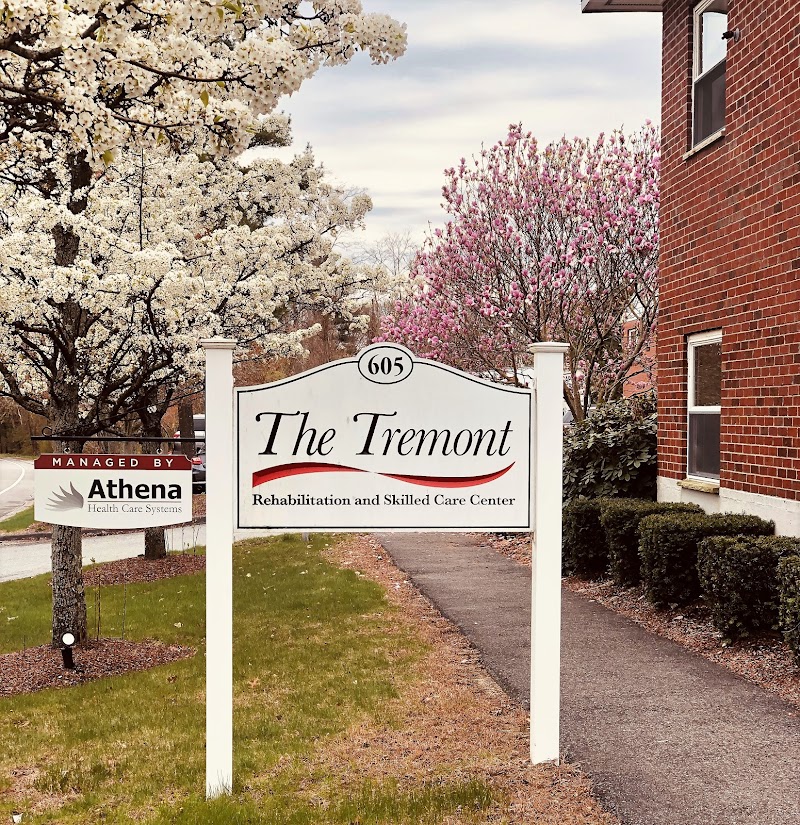
605 MAIN STREET, WAREHAM, MA 02571 (508) 295-1040
For profit - Limited Liability company 104 Beds ATHENA HEALTHCARE SYSTEMS Data: November 2025
Trust Grade
35/100
#189 of 338 in MA
Last Inspection: January 2025

Within standard 12-15 month inspection cycle. Federal law requires annual inspections.

Overview

Families considering Tremont Rehabilitation & Skilled Care Center should be aware that it received an F Trust Grade, indicating significant concerns about care quality. Ranking #189 out of 338 in Massachusetts places it in the bottom half of nursing facilities in the state, and #17 out of 27 in Plymouth County, meaning there are better local options available. While the facility is improving, with issues decreasing from 15 in 2024 to 7 in 2025, it still has concerning metrics, including $384,482 in fines, which is higher than 99% of Massachusetts facilities. Staffing is somewhat stable with a turnover rate of 37%, below the state average, but it only has average RN coverage, which may not be sufficient for all residents' needs. Specific incidents of concern include a serious fall resulting in hospitalization for one resident due to inadequate supervision, and another resident being restrained and taunted by staff, raising serious questions about safety and care practices. Overall, while there are some positive aspects, families should weigh these serious issues carefully.

Trust Score
F
35/100
In Massachusetts
#189/338
Bottom 45%
Safety Record
High Risk
Review needed
Inspections
Getting Better
15 → 7 violations
Staff Stability
○ Average
37% turnover. Near Massachusetts's 48% average. Typical for the industry.
Penalties
○ Average
$384,482 in fines. Higher than 59% of Massachusetts facilities. Some compliance issues.
Skilled Nurses
⚠ Watch
Each resident gets only 29 minutes of Registered Nurse (RN) attention daily — below average for Massachusetts. Fewer RN minutes means fewer trained eyes watching for problems.
Violations
⚠ Watch
28 deficiencies on record. Higher than average. Multiple issues found across inspections.
★★★☆☆
3.0
Overall Rating
★★★☆☆
3.0
Staff Levels
★★☆☆☆
2.0
Care Quality
★★★☆☆
3.0
Inspection Score
Stable
2024: 15 issues
2025: 7 issues

The Good

  • Full Sprinkler Coverage · Fire safety systems throughout facility
  • No fines on record
  • Staff turnover below average (37%)

    11 points below Massachusetts average of 48%

Facility shows strength in fire safety.

The Bad

3-Star Overall Rating

Near Massachusetts average (2.9)

Meets federal standards, typical of most facilities

Staff Turnover: 37%

Near Massachusetts avg (46%)

Typical for the industry

Federal Fines: $384,482

Well above median ($33,413)

Significant penalties indicating serious issues

Chain: ATHENA HEALTHCARE SYSTEMS

Part of a multi-facility chain

Ask about local staffing decisions and management

The Ugly 28 deficiencies on record

2 actual harm
Jan 2025 7 deficiencies
CONCERN (D)

Potential for Harm - no one hurt, but risky conditions existed

Deficiency F0658 (Tag F0658)

Could have caused harm · This affected 1 resident

Based on observation, interview, and record review, the facility failed to follow professional standards of practice for one Resident (#40), out of a total sample of 21 residents. Specifically, the fa...

Read full inspector narrative →
Based on observation, interview, and record review, the facility failed to follow professional standards of practice for one Resident (#40), out of a total sample of 21 residents. Specifically, the facility failed to administer medications per physician's orders. Findings include: Review of Lippincott Nursing Procedures, Eighth Edition, [Wolters Kluwer], 2019, indicated but was not limited to the following: -To promote a culture of safety and to prevent medication errors, nurses must avoid distractions and interruptions when preparing and administering medications and adhere to the five rights of medication administration: identify the right patient by using at least two specific identifiers; select the right medication; administer the right dose; administer the medication at the right time; and administer the medication by the right route. Recent literature identifies nine rights of medication administration, which in addition to the five rights includes the right documentation, the right action (or appropriate reason for prescribing the medication), the right form, and the right response. Verifying the Medication Order: -Follow a written or typed order, or an order entered into a computer order-entry system. Review of the facility's policy titled Medication Administration - Oral, dated June 2015, indicated but was not limited to the following: -Verify medication order on Medication Administration Record (MAR). Check against physician order. -Compare the medication label to the resident's/patient's MAR. -Verify that the medication is being administered at the proper time, in the prescribed dose, and by the correct route. Resident #40 was admitted to the facility in November 2021 and had diagnoses including chronic venous insufficiency and chronic embolism and thrombosis of deep veins. Review of current Physician's Orders indicated the following: -Aspirin Tablet Chewable 81 milligrams (mg), give 1 tablet by mouth in the morning for pain, 3/29/24 On 1/6/25 at 8:56 A.M., the surveyor observed Nurse #8 prepare Resident #40's medications and observed the following: 8:56 A.M. - Nurse #8 opened an over-the-counter bottle of generic chewable aspirin, 81 mg, from the top drawer of the medication cart and added one whole tablet into a medication cup along with five other various whole medication tablets. Nurse #8 did not separate the chewable aspirin from the other medications. 9:03 A.M. - Nurse #8 administered the medications all together in the same medication cup to Resident #40. Nurse #8 did not separate the chewable aspirin from the rest of the medications and did not prompt Resident #40 to chew the aspirin. During an interview on 1/6/25 at 9:05 A.M., the surveyor reviewed Resident #40's medical record with Nurse #8 who said the order was for the Resident to chew the aspirin, not swallow it whole. She said the reason for a chewable aspirin is that it is absorbed faster. Nurse #8 said medications should be administered per physician's orders and the physician notified if they can't be. During an interview on 1/6/25 at 11:35 A.M., the Director of Nursing (DON) said medications should be administered per physician's orders and the chewable aspirin was probably prescribed for the Resident because of gastrointestinal reasons and easier absorption but would have to look and get back to the surveyor. She said the chewable aspirin should have been separated from the other medications and the Resident prompted to chew it. The DON said if there was any issue with the Resident not being able to chew it versus swallow it whole, then the physician would be notified to obtain a new order for a different route.
CONCERN (D)

Potential for Harm - no one hurt, but risky conditions existed

Accident Prevention (Tag F0689)

Could have caused harm · This affected 1 resident

Based on observation, document review, and interview, the facility failed to ensure it provided an environment free of potential safety hazards for one Resident (#59 ), out of a total sample of 21 res...

Read full inspector narrative →
Based on observation, document review, and interview, the facility failed to ensure it provided an environment free of potential safety hazards for one Resident (#59 ), out of a total sample of 21 residents. Specifically, the facility failed to ensure medications were administered safely and not left at the Resident's bedside unsecured by the licensed staff. Findings include: Review of the facility's policy titled Medication Administration - Oral, dated June 2015, indicated but was not limited to the following: PROCEDURE: Identify resident; verify that medication is being administered at the proper time, stay with the resident until he/she has swallowed the medication Resident #59 was admitted to the facility in April 2024 and has diagnoses including: Visual disturbances, mild cognitive loss and dysphagia (difficulty swallowing). Review of the Brief Interview for Mental Status (BIMS) for Resident #59, dated 10/2/24, indicated the Resident suffered from moderate cognitive impairment with a score of 11 out of 15. During an observation with interview on 1/2/25 at 8:01 A.M., the surveyor observed Resident #59 sitting on his/her bed with two small cups on the overbed table. One cup contained two red larger oval gel caps and three small white round pills; the second cup was full to the top measurement line with a light orange liquid. The Resident said he/she does not self-administer and they do not store any medications in their room. The Resident said the cups were their morning medications but he/she was not sure what they were and that the nurses always leave them there for him/her to take while he/she is eating breakfast or prior to their smoking time. The Resident said he/she believed the medications were left so he/she could take them when he/she was ready and because the nurses are busy, they don't have to come back for him/her to take them. When asked to look in the cup and try to identify what the medications were the Resident said they take a pill for sadness and something for their eyes because they cannot see well and some type of liquid but couldn't identify them by name or say what time they were supposed to be taken except in the morning. Review of the medical record indicated but was not limited to the following: - One self-administration of medication evaluation, dated 4/1/24, and indicated the Resident did not have a desire to self-administer their medications - Current, active physician's orders, dated 1/3/25, failed to indicate an order for Resident #59 to self-administer medications - Progress notes from 11/1/24 through 1/3/25 failed to indicate the Resident expressed a desire to self-administer medications or any steps were taken in the process to identify if it were safe to leave medications at the Resident's bedside. Review of the current care plans for Resident #59 indicated but were not limited to the following: FOCUS: Resident has difficulty seeing because of decreased visual acuity - cataracts (4/1/24) GOAL: Resident will not have an accident related to impaired vision for 90 days (4/1/24) INTERVENTIONS: Announce your presence so resident will not be startled (4/1/24) FOCUS: Resident has a past medical history of dysphagia and malnutrition - placing them at increase risk for difficulty swallowing (4/2/24) INTERVENTIONS: Aspiration precautions; verbally inform resident of location of food/drink items, slow pace (4/2/24) The care plans failed to indicate medications could be left at the bedside safely or the Resident was capable of self-administering. During an interview on 1/3/25 at 8:34 A.M., Nurse #7 reviewed the medication administration record and pill cards and bottles for Resident #59's morning medications with the surveyor. She said the Resident receives two capsules of Preservision AREDS (a multivitamin formulated for eye health) [two red large oval gelcaps}, Lexapro (an antidepressant) three small white tablets of 5 milligrams (mg) each to equal the prescribed dose of 15 mg, and 30 milliliters of liquid protein (light orange colored liquid). Nurse #7 confirmed these were the Resident's prescribed morning medications, verifying the surveyor's observation the previous morning of the medications left at the bedside. She said Resident #59 is visually impaired and has some intermittent confusion and cannot self-administer medications, does not have an order to self-administer medications and that medications should not have been left at the bedside for safety reasons. She said the process is for the licensed nurses to ensure that when residents are administered medications that they observe the residents take all of their medications prior to leaving the room and that process was not followed on 1/2/25. During an interview on 1/3/25 at 12:57 P.M., Nurse #8 said medications cannot be left at the bedside unless a resident has an evaluation to determine they can safely self-administer and there is a doctor's order and care plan in place. She said Resident #59 is confused at times and is vision-impaired and would not be capable of safely self-administering their own medications or having their medications left at the bedside because he/she would be likely to forget to take them timely. She said licensed nurses should remain with the Resident while they are taking their medications to ensure the medications are swallowed. During an interview on 1/3/25 at 3:25 P.M., the Director of Nurses was made aware of the surveyor's observations and said the Resident does not want to self-administer medications and wouldn't likely be capable of doing so. The Resident's medications should not have been left at the bedside for the Resident. The process for safe medication administration was not followed.
CONCERN (D)

Potential for Harm - no one hurt, but risky conditions existed

Medication Errors (Tag F0758)

Could have caused harm · This affected 1 resident

Based on record review and interview, the facility failed to ensure residents receiving psychotropic medications receive gradual dose reductions (GDR) unless clinically contraindicated, in an effort t...

Read full inspector narrative →
Based on record review and interview, the facility failed to ensure residents receiving psychotropic medications receive gradual dose reductions (GDR) unless clinically contraindicated, in an effort to discontinue these drugs for one Resident (#6), out of a total sample of 21 residents. Specifically, the facility failed to ensure a GDR of the antipsychotic medication Seroquel was attempted, unless documented by the prescriber as clinically contraindicated in the medical record. Findings include: Review of the facility's policy titled Psychotropic Medication Management, dated April 2015, indicated but was not limited to: -Antipsychotic medications will be prescribed at the lowest possible dosage for the shortest period of time and are subject to gradual dose reduction and re-review. Resident #6 was admitted to the facility in September 2022 and had diagnoses including Alzheimer's disease, major depression, and anxiety. Review of the Minimum Data Set assessment, dated 10/25/24, indicated Resident #6 had severe cognitive impairment as evidenced by a Brief Interview for Mental Status score of 3 out of 15, received antipsychotic medication on a routine basis only, a GDR has not been attempted, and has been documented by a physician as contraindicated on 10/11/24. Review of the Physician's Orders included the following medications: -Quetiapine Fumarate (Seroquel) 25 milligrams (mg) at bedtime, to be taken with 50 mg for total dosing 75 mg (10/27/22) -Quetiapine Fumarate 50 mg at bedtime to be taken with 25 mg for total dosing of 75 mg (10/27/22) Review of September 2024 through January 2025 Medication Administration Records (MAR) indicated Seroquel was administered to Resident #6 as ordered by the physician. During an interview on 1/3/25 at 2:12 P.M., consultant psychiatric Nurse Practitioner (NP) #3 said he sees Resident #6 on a routine basis for evaluation of psychotropic medications. He reviewed the Resident's medical record and said he thought he/she had had a GDR of Seroquel at some point. He reviewed the medical record and said the Resident has been treated with Seroquel since October 2022 with no GDR. Review of physician/NP notes, dated 8/30/24, 9/6/24, 10/4/24, 10/18/24, 11/7/24, 12/9/24, and 12/13/24, failed to indicate the Resident's treatment with Seroquel was evaluated for a GDR and failed to indicate a documented clinical rationale that a GDR of Seroquel was contraindicated, contrary to the 10/25/24 MDS assessment. During an interview on 1/7/25 at 11:56 A.M., the Director of Nursing (DON) reviewed Resident #6's medical record and said she has spoken to the physician in the past about her failure to document a clinical rationale for not initiating a GDR of psychotropic medication and will address it with her again. During an interview on 1/7/25 at 12:43 P.M., Physician #2 said she spoke with the DON a few minutes ago regarding documentation regarding a periodic evaluation of Seroquel for a potential GDR following surveyor inquiry. She said she had not documented a clinical rationale that a GDR was contraindicated and contacted her scribe in the office and directed her to add an addendum to her 12/10/24 progress note and forward it to the facility. During an interview on 1/7/25 at 2:30 P.M., the DON provided the surveyor with Physician #3's progress note dated 12/10/24. Review of the progress note indicated it was written and signed by Physician #3 on 1/7/25 at 2:28 P.M., following surveyor inquiry, and included a clinical rationale that a GDR of Seroquel was contraindicated.
CONCERN (D)

Potential for Harm - no one hurt, but risky conditions existed

Deficiency F0761 (Tag F0761)

Could have caused harm · This affected 1 resident

Based on observation and interview, the facility failed to ensure all medications used in the facility were safely and securely stored in accordance with currently accepted professional principles. Sp...

Read full inspector narrative →
Based on observation and interview, the facility failed to ensure all medications used in the facility were safely and securely stored in accordance with currently accepted professional principles. Specifically, the facility failed to ensure unauthorized personnel do not have unsupervised access to medications in one of two medication rooms as required. Findings include: Review of the facility's policy titled Medication Storage Room/Medication Cart Policy, dated February 2018, indicated but was not limited to: -Medications are stored primarily in a locked mobile medication cart which is accessible only to licensed nursing personnel. -Storage for other medications will be limited to a locked medication room. On 1/3/25 at 2:15 P.M., the surveyor observed consultant psychiatric Nurse Practitioner (NP) #3 ask Nurse #2 to unlock the medication room so he could go inside and make a telephone call. Nurse #2 unlocked the medication room, and opened the door. Multiple medications, including emergency kits which contain medications including but not limited to anticoagulants, insulin, antibiotics, and antipsychotic medications, were observed on shelves inside the medication room. NP #3 went inside the medication room alone and closed the door. During an interview on 1/3/25 at 2:16 P.M., Nurse #2 confirmed that she had unlocked the medication room and allowed NP#3 to enter the room alone and remain in the room unaccompanied to make a telephone call. She said it was fine for him to be in the medication room alone. Nurse #9 was seated at the nursing station and said it was acceptable for NP#3 to enter the medication room and remain in there unaccompanied to make a telephone call. During an interview on 1/3/25 at 2:35 P.M., the Administrator said NP #3 should not have been allowed to enter and remain in the medication room alone. He said only nurses have keys and should be the only ones with access to the medication room.
CONCERN (D)

Potential for Harm - no one hurt, but risky conditions existed

Deficiency F0806 (Tag F0806)

Could have caused harm · This affected 1 resident

Based on observation, interview, and record review, the facility failed to ensure staff provided food that accommodated the allergies, intolerances, and preferences of one Resident (#85), out of a tot...

Read full inspector narrative →
Based on observation, interview, and record review, the facility failed to ensure staff provided food that accommodated the allergies, intolerances, and preferences of one Resident (#85), out of a total sample of 21 residents. Specifically, the facility failed to ensure the Resident was not served gluten (a protein found in some grains including wheat) and onions despite being listed as allergens in the Resident's medical record; and sausage despite preferences listed to not receive. Findings include: Review of the facility's policy titled Allergies, dated April 2015, indicated but was not limited to the following: Policy: -To identify and respond to all allergic reactions. Procedure: -Interview resident/family to determine if there are any allergies to food/drugs, or other substances. -Review all clinical documents to determine if there are any allergies. -Record allergies on Physician's Order Sheet and Medication and Treatment Administration Record (MAR and TAR). -Notify the Dietary Department if there are any food allergies. Review of a U.S. Foods Menu Solutions document titled Gluten Restricted Diet, dated November 2019, indicated but was not limited to the following: -Gluten-restricted diets are required for the medical management of celiac disease or gluten sensitivity. Removal of gluten from the meal plan is essential for gastrointestinal (GI) health for individuals with these conditions. -To assure a Gluten Free menu, all products purchased to be used for recipes on this diet must be reviewed for gluten content. Resident #85 was admitted to the facility in August 2024 with diagnoses including irritable bowel syndrome with diarrhea (IBS- digestive condition that causes abdominal symptoms including constipation, diarrhea, gas, and bloating). Review of the Minimum Data Set (MDS) assessment, dated 11/15/24, indicated that Resident #85 was cognitively intact as evidenced by a Brief Interview for Mental Status (BIMS) score of 15 out of 15. Review of current Physician's Orders indicated the following: -Allergies: Celery, chicken, fish and seafood, gluten, hard cheese, onions, shellfish -Gluten free diet, regular consistency texture, thin (regular) liquids consistency, multiple food allergies and intolerances for diet order, 8/29/24 Review of Resident #85's physician's Progress Note, dated 8/23/24, January 2025 MAR and TAR, and the Certified Nursing Assistant (CNA) Resident Care Card indicated the following: -Allergies: Celery, chicken, fish and seafood, gluten, hard cheese, onions, shellfish Review of the Nutritional Evaluation, dated 11/15/24, indicated the following: -Food Allergies: Shellfish allergy, gluten, onion, celery, lactose, chicken, fish, see list Review of a physician's Progress Note, dated 11/12/24, indicated the following: Diet and Allergy Management: -Maintain gluten free diet with regular consistency and thin liquids. Educate nursing and dietary staff to avoid known allergens and prevent cross-contamination in meal preparation. During an interview on 1/2/25 at 9:07 A.M., Resident #85 said he/she had multiple food allergies, and the facility is careless with food choices. The Resident said he/she has spoken to the Dietitian and Ombudsman with limited resolution. During an interview on 1/6/25 at 12:00 P.M., Resident #85 said the lunch tray had just been delivered which consisted of beef stew with gravy, but he/she refused it because there were onions in it, and he/she can't have gluten. The Resident said these foods will wreck his/her GI track and gets very nervous about the food at the facility and is afraid to eat it. The Resident said last night sausage was on the tray which has chicken in it and isn't supposed to have that either. The Resident said if he/she eats food that he/she is allergic to or intolerant of he/she will end up puking and [expletive] my brains out. The Resident said the facility offered gluten free bread, but he/she was not able to distinguish it from other breads so was too nervous to eat it. Resident #85 said the Director of Nursing (DON) and nursing staff are aware of the concern, but nothing has changed so he/she just relies on Cheerios, apple juice, and protein powder that's stored in their room. On 1/6/25 at 12:10 P.M., the surveyor, with CNA #4 and Resident #85 present, observed Resident #85's lunch meal tray and meal ticket stored on the food truck. The lunch tray consisted of beef stew including gravy, potatoes, green beans, and carrots. The Resident said there were onions in it as well showing the surveyor. It was unclear at the time of the observation if the gravy contained gluten. Review of Resident #85's meal ticket indicated the following: -Diet Order: Regular texture, gluten free, thin fluids -Allergies: Celery, chicken, fish and seafood, gluten, hard cheese, onions, shellfish -Notes: No sausage During an interview on 1/6/25 at 12:22 P.M., with Nurse #1, CNA #5 and CNA #6, Nurse #1 said Resident #85 is allergic to hard cheeses, fish, onions, and is gluten free. She said the Resident gets irritated a lot of times because the kitchen doesn't have anything he/she can eat, just hamburgers and mashed potatoes. CNA #5 and CNA #6 said there aren't many snacks the Resident can have on the unit either. CNA #5 said the kitchen will just put a hamburger on a plate or egg salad with nothing else on the plate and did not feel that was right or presentable to the Resident. Nurse #1 said she did check the Resident's lunch tray this day and didn't see onions on it. During an interview on 1/6/25 at 3:31 P.M., the Food Service Director (FSD) said he used to have gluten free bread for Resident #85, cookies, and snacks but he/she didn't want them, so he stopped ordering them. He said he used the same toaster for the Resident's gluten free bread as other breads but toasted it first and would do a deep clean on the toaster. The FSD reviewed the gravy mix label used for the beef stew with the surveyor and said it contained gluten. The FSD said Resident #85 should not have gotten the beef stew because it had gluten and onions in the mix. On 1/7/25 at 8:15 A.M., the surveyor reviewed the Resident's breakfast meal tray with the Resident and CNA #7. The breakfast tray consisted of scrambled eggs, one hard-boiled egg, and two pieces of sausage. Resident #85 said, I can't have sausage and refused the tray. During an interview on 1/7/25 at 8:20 A.M., the surveyor reviewed the Resident's breakfast tray with Nurse #1. Nurse #1 said she checked the Resident's tray but didn't see the sausages on it. She said it was her responsibility to check the trays to ensure there were no foods on it that shouldn't be. She and CNA #7 said the Resident receives food items on his/her tray he/she shouldn't have every day. During an interview on 1/7/25 at 8:38 A.M., Resident #85 said he/she was intolerant of sausage and if ingested he/she will end up on the commode with diarrhea and would need a puke bucket at the same time. On 1/7/25 at 12:00 P.M., the surveyor reviewed the A-Unit Nourishment Kitchen with the Assistant Director of Nursing (ADON) who said the unit had no snacks to offer the Resident that he/she could have other than one frozen Lactaid ice cream in the freezer. During an interview on 1/7/25 at 12:25 P.M., the FSD said when a resident is admitted they inform staff of allergies. He said he speaks with the resident about their allergies as well as their likes and dislikes and does a menu with them. He said he used to do a menu with Resident #85, but he/she didn't want to do it anymore so dietary staff now just focuses on what he/she can have but it's very limited. The FSD said the Resident frequently sends the tray back. The FSD said the Resident should not have received the beef stew or sausages on his/her meal tray. During an interview on 1/7/25 at 12:38 P.M., the DON said nursing reviews allergies with all new admissions, and they get added to the electronic medical record. She said the pharmacy is made aware as well as the kitchen where a meal ticket gets printed out listing the allergies and intolerances. She said Resident #85 should have received the diet as prescribed by the physician.
CONCERN (E)

Potential for Harm - no one hurt, but risky conditions existed

Deficiency F0679 (Tag F0679)

Could have caused harm · This affected multiple residents

**NOTE- TERMS IN BRACKETS HAVE BEEN EDITED TO PROTECT CONFIDENTIALITY** Based on observation and interview, the facility failed to provide an ongoing program of individual and group activities designe...

Read full inspector narrative →
**NOTE- TERMS IN BRACKETS HAVE BEEN EDITED TO PROTECT CONFIDENTIALITY** Based on observation and interview, the facility failed to provide an ongoing program of individual and group activities designed to meet the interests of and support the physical, mental, and psychosocial well-being of Residents on one (B Unit) of two nursing units and specifically for two out of 21 sampled Residents (#6 and #48). Specifically, the facility failed: 1. For Resident #6, to ensure that staff offered and encouraged engagement in activities according to their comprehensive assessment and identified preferences; 2. For Resident #48, to ensure that staff offered and encouraged engagement in activities according to their comprehensive assessment and identified preferences; and 3. To ensure staff provided a meaningful and engaging activity program, including materials for self-directed activity, for residents residing on the B Unit (secured). Findings include: Review of the facility's policy titled Activity Programs, last revised August 2017, indicated but was not limited to: -Recreational activities are designed to contribute to the achievement of the long and short-term goals established for each resident. -The goal of this department is to assist each resident in the resumption of normal activities and maintain the optimal level of psychosocial functioning. -These leisure services encompass a versatile scope of activities that promote the cultural, spiritual, social, intellectual, and physical growth and fulfillment of each resident. -In order to achieve this, a wide and diversified leisure service program has been developed based on the needs and personal interests of each resident. -Appropriate supplies and equipment are provided to ensure the safe implementation and continuation of meaningful recreational activities. -Provisions are made by the Recreation staff in accordance with the resident's level of participation. -Maintain accurate daily attendance records on each resident's progress and use these notes as a reference point for accurately assessing each resident's Recreation Plan as per care plan policy. During the entrance conference on 1/2/25 at 8:37 A.M., the Administrator said the B Unit was a secure unit with several residents with a diagnosis of dementia. Review of the Matrix for Providers (Centers for Medicare and Medicaid Services document used to identify pertinent care categories) provided by the facility on 1/2/25 at 11:00 A.M., indicated 44 residents resided on the B Unit, 34 of which have a diagnosis of dementia. 1. Resident #6 was admitted to the facility in September 2022 and had diagnoses including Alzheimer's disease, major depression, and anxiety. Review of the Minimum Data Set (MDS) assessment, dated 10/25/24, indicated Resident #6 had severe cognitive impairment as evidenced by a Brief Interview for Mental Status (BIMS) score of 5 out of 15. Review of the comprehensive MDS assessment, dated 7/26/24, indicated that it was very important to the Resident to: -have books, newspapers, and magazines to read -listen to music you like -do things with groups of people -do your favorite activities -to go outside to get fresh air when the weather is good Review of a Therapeutic Recreation Quarterly Progress Note, dated 10/23/24, indicated but was not limited to: -Attends activities independently; requires reminders to attend activities; is an active participant; is a passive participant. -Wellness/healing: dance/Zumba®; light movement; massage therapy. -Mental wellness: music therapy; pet therapy -Cognitive: oriented to person; forgetful/requires reminders and cues; short attention span; requires verbal cueing; cannot comprehend instruction (Spanish speaker. Cannot comprehend English instruction). -Activity preferences: social, religious, creative crafts, music, sing a long, baking, active games, outdoor. -Notes: Resident is independent in choosing leisure pursuits; needs invitations and reminders to attend groups of interest. Resident is Spanish speaker. Enjoys small crafts, music groups and sing a long, religious groups, going outside, dancing and several others. Enjoys self-directed tasks like sorting and folding, conversing in Spanish with other Spanish-speakers. Activities staff continue to support resident as needed. Review of the Resident's Activity Care Plan, last revised 11/12/24, listed interventions including but not limited to: -Provide Resident with the Daily Activities flier and a Spanish Communication Board -Activity staff will inform, invite, and encourage him/her to participate in activities -Activity staff will introduce Resident to peers with similar interests -Offer Resident independent leisure activities per his/her request No evidence was found in the Activity Care Plan to include interventions for musical activities, religious activities, or to go outside when the weather was good. Review of the Resident's Activity Participation Log indicated the following: December 2024: -1 day of a observing a craft activity -1 day of listening to music -6 days of receiving something from the refreshment cart -1 day of engaging in 1:1 conversation -1 day of a pet visit -1 day reading materials offered -2 days of playing a balloon game -7 days of Bingo/group board game -8 days of coffee club -1 day of trivia -1 day of exercise -6 days of arts and crafts -4 days of holiday events -12 days with no activity recorded Further review of the December 2024 Activity Participation Logs showed no evidence that the Resident had been offered to go outside, attend religious groups, or more than one day of reading materials provided to the Resident for independent activity. Review of the Resident's Activity Participation Log for January 2025 failed to indicate the Resident was offered or participated in any activities. 2. Resident #48 was admitted to the facility in August 2022 and had diagnoses including Alzheimer's disease. Review of the MDS assessment, dated 12/30/24, indicated Resident #48 had severe cognitive impairment as evidenced by a BIMS score of 00 out of 15. Review of the comprehensive MDS assessment, dated 3/11/24, indicated that it was very important to the Resident to: -listen to music you like -be around animals such as pets -do things with groups of people -do your favorite activities -to go outside to get fresh air when the weather is good Review of a Therapeutic Recreation Quarterly Progress Note, dated 11/27/24, indicated but was not limited to: -Requires reminders to attend activities; is a passive participant. -Wellness/healing: light movement. -Mental wellness: music therapy; pet therapy -Cognitive: forgetful/requires reminders and cues; confused; short attention span, cannot comprehend instruction. -Activity preferences: music, sing a long, outdoor. Review of the Resident's Activity Care Plan, last revised 1/5/25, listed interventions including but not limited to: -Activity staff will visit Resident daily to inform, invite and encourage him/her to participate in activities -Offer Resident independent leisure activities as needed No evidence was found in the Activity Care Plan to include interventions for musical activities, sing along, pet therapy, or to go outside when the weather was good. Review of the Resident's Activity Participation Log indicated the following: August 2024: -2 days of listening to music -2 days of engaging conversation -1 day of refreshment cart -2 days of socializing with peers -29 days with no activity recorded Further review of the August 2024 Activity Participation Logs showed no evidence that the Resident had been offered to participate in a sing along, pet therapy, participate in light movement, or to go outside. Review of the Resident's Activity Participation Log indicated the following: September 2024: -1 day of engaging conversation -1 day of socializing with peers -29 days with no activity recorded Further review of the September 2024 Activity Participation Logs showed no evidence that the Resident had been offered to participate in music therapy, sing along, pet therapy, participate in light movement, or to go outside. Review of the Resident's Activity Participation Log indicated the following: October 2024: -1 day of listening to music -30 days with no activity recorded Further review of the October 2024 Activity Participation Logs showed no evidence that the Resident had been offered to participate in sing along, pet therapy, participate in light movement, or to go outside. Review of the Resident's Activity Participation Log indicated the following: November 2024: -1 day of basketball -2 days of Bingo/group games -1 day of Tea Club -2 days of exercise -3 days of arts & crafts -2 days of entertainment -18 days with no activity recorded Further review of the November 2024 Activity Participation Logs showed no evidence that the Resident had been offered to participate in sing along, music, pet therapy, or to go outside. Review of the Resident's Activity Participation Log indicated the following: December 2024: -1 day of reading materials offered -1 day of a holiday event -29 days with no activity recorded Further review of the December 2024 Activity Participation Logs showed no evidence that the Resident had been offered to participate in sing along, music, pet therapy, participate in light activity, or go outside. Review of the Resident's Activity Participation Log for January 2025 failed to indicate the Resident was offered or participated in any activities. During an interview on 1/3/25 at 1:00 P.M., the Activity Director (AD) said she documents all residents' participation in the activity program in the electronic medical record. She could not explain why Residents #6 and #48 did not participate in programming according to their comprehensive assessment and preferences. During an interview on 1/6/25 at 10:56 A.M., Activity Assistant #3 she said she is the program coordinator for the dementia activity program. She said the program is held off the unit and limited to 10 to 12 residents that could benefit from smaller group activities. She said Residents #6 and #48 have not participated in the dementia activity program. 3. On the following days of survey, the surveyor made the following observations of the B Unit activity/dayroom: -1/2/25 at 9:18 A.M., 18 residents were seated in the dayroom with no staff members present. Hospice Aide #1 was seated next to one resident. The television was on, but only three residents were facing the television. Two residents were sleeping and 13 residents were awake with nothing to do. The residents were not provided with materials for self-directed activity and were not otherwise engaged in meaningful activity. During an interview on 1/2/25 at 9:23 A.M., Hospice Aide #1 said she comes to the facility four times a week from 8:00 A.M. to 12:00 P.M. to care for four residents. She said when she is here, she sees no staff engagement with the residents in the dayroom and wishes there were more activities for the residents to do. -1/2/25 at 9:58 A.M., 12 residents were seated in the dayroom with one staff member present who was sitting in a chair along the wall not engaging with the residents. The television was on a music station, but the sound was low and inaudible. One resident had a shape [NAME] toy, and one resident had a tube search puzzle in front of him/her. Ten residents were awake with nothing to do. The residents were not provided with materials for self-directed activity and were not otherwise engaged in meaningful activity. -1/2/25 at 10:10 A.M., 11 Residents were seated in the dayroom with Activity Assistant #1 in the room with a coffee cart. Activity Assistant #1 gave a cup of coffee to one resident, then left the room. Hospice Aide #1 was seated next to one resident. One resident was engaged in manipulating puzzle pieces, five residents were sleeping in their chairs, two residents were looking at the TV (which was showing an exercise program) and three residents were awake with nothing to do. There was no staff interaction, and the residents were not provided with materials for self-directed activity and were not otherwise engaged in meaningful activity. -1/2/25 at 10:34 A.M., 13 residents were seated in the dayroom with no staff member in the room. Hospice Aide #1 was seated next to one resident. Ten of 13 residents were awake with nothing to do and three residents were sleeping. The residents were not provided with materials for self-directed activity and were not otherwise engaged in meaningful activity. The activity calendar posted outside the dayroom indicated Noodle Balloon was supposed to be occurring but was not. At 10:36 A.M., Activity Assistant #1 came into the dayroom and returned to the coffee cart. -1/3/25 at 11:44 A.M., 11 residents were seated in the dayroom with no staff member in the room. One resident was looking at magazines. Ten residents were awake and had nothing to do. The residents were not provided with materials for self-directed activity and were not otherwise engaged in meaningful activity. During an interview on 1/3/25 at 11:45 A.M., Resident #144's family member said she said she comes in as often as she can to visit her loved one. She said she has seen the residents play Bingo before but otherwise has not seen any activities going on. She said there is rarely any activity staff on the unit. The family member said she is not sure if every time she is here, if staff are on a break, they call out sick, or they just don't have anyone to work. During an interview on 1/3/25 at 1:00 P.M., the Activity Director (AD) said Activity Assistant #1 works on the B Unit, and Activity Assistant #3 runs a dementia activity program on the first floor for about 10 residents. The Activity Director was unable to explain why the specialized programming was not available to all residents on the B Unit. She said Unit Manager #1 is in charge of the program and would be able to provide more detailed information. -1/3/25 at 1:41 P.M., 13 residents were seated in the Unit B dayroom awake with one staff member present who was sitting in a chair along the wall not engaging with the residents. The television was on to a music video. Three residents were watching the TV, and 10 residents were not in the line of sight to the television and had nothing to do. The residents were not provided with materials for self-directed activity and were not otherwise engaged in meaningful activity. During an interview on 1/3/25 at 2:00 P.M., Unit Manager #1 said she is really not in charge of the dementia activity program. She said there is no specific eligibility criteria or assessment process for residents to participate in the program. She said they select residents that need smaller group activities, and someone that may be a fall risk or a wanderer. She said the program runs Monday through Friday after breakfast until 1:30 P.M. -1/6/25 at 9:56 A.M., 15 residents were seated in the dayroom with one staff member present who was sitting in a chair along the wall not engaging with the residents. The TV was on, but the volume was low and inaudible. All the residents were awake with nothing to do. The residents were not provided with materials for self-directed activity and were not otherwise engaged in meaningful activity. -1/6/25 at 10:09 A.M., 17 residents were seated in the dayroom with one staff member present who was sitting in a chair along the wall not engaging with the residents. The TV was on, but the volume was low and inaudible. All the residents were awake with nothing to do. The residents were not provided with materials for self-directed activity and were not otherwise engaged in meaningful activity. The activity calendar posted outside the activity room indicated Coffee Club was scheduled during this time, but this activity was not occurring. -1/6/25 at 10:22 A.M., 12 residents were seated in the dayroom with one staff member present and walking around the room. The residents were awake and were not provided with materials for self-directed activity and were not otherwise engaged in meaningful activity. Coffee Club was not occurring as noted on the activity calendar. -1/6/25 at 10:31 A.M., 11 residents were seated in the dayroom with no staff present in the room. One resident was sleeping, eight residents were awake with nothing to do, and two residents were wandering in the dayroom. The TV was on, but no residents were watching it. The residents were not provided with materials for self-directed activity and were not otherwise engaged in meaningful activity. The activity calendar posted outside the activity room indicated Seated Kickball was supposed to be occurring, but it was not. -1/6/25 at 10:43 A.M., eight residents were seated in the dayroom with no staff present in the room. All eight residents were awake with nothing to do. The residents were not provided with materials for self-directed activity and were not otherwise engaged in meaningful activity. The activity calendar posted outside the activity room indicated Seated Kickball was supposed to be occurring as noted on the activity calendar but was not. -1/6/25 at 10:49 A.M., eight residents were seated in the dayroom with no staff present in the room. The TV was on with one resident watching it. Seven residents were sitting with nothing to do. The residents were not provided with materials for self-directed activity and were not otherwise engaged in meaningful activity. Seated Kickball was supposed to be occurring during this time as noted on the activity calendar but was not. -1/6/25 at 10:52 A.M., the surveyor observed Activity Assistant #1 in the hallway at the opposite end of the B Unit pushing a coffee cart in the hallway. During an interview on 1/6/25 at 10:56 A.M., Activity Assistant #3 said she is the program coordinator for the dementia activity program and tries to have 10 to 12 residents attend the program that otherwise would just sit with nothing to do. She said she can often get residents to participate when they come to the program; they come down daily or a few days a week for small group activities and to eat lunch. She said the program starts at 10:00 A.M. and ends around 1:30 P.M. every day during the week. She said after 1:30 P.M., she has her lunch, then goes upstairs to either the A or B Unit to do activities such as Bingo until 4:00 P.M. The Activity Assistant said no other activity staff do anything like this program upstairs on the B Unit for those that do not participate in the special program. She said they have regularly scheduled activities as noted on the calendar. She said she is aware that there are many periods of time that the residents on the B Unit are in the dayroom with nothing to do. She said there is a closet in the Unit B dayroom that is filled with supplies such as puzzles and sorting items for residents to use. She said the closet has a numerical lock on it, and all staff have the code and can access it at any time. She said the residents should never sit with nothing to do. -1/6/25 at 2:08 P.M., 10 residents were seated in the dayroom, four of which had Bingo cards. Activity Assistant #1 was seated at a table, positioned with her back to two of the four residents with cards as she called out Bingo numbers. There were no other staff in the room to assist in the activity. As she called out Bingo numbers, one resident fanned his/her face with the Bingo card, one resident was staring at the Bingo card, and two residents were not looking at their Bingo cards at all. Activity Assistant #1 did not assist the residents with playing the game or otherwise engage with the residents. During an interview on 1/7/25 at 9:20 A.M., Activity Assistant #1 said when she called Bingo on the B Unit on 1/6/25, she said she did not assist the residents with playing, but took turns playing their cards for them so they could win a prize. She said she did not consider playing a different game or activity that would be more appropriate for the residents' cognitive level so they could participate. She said they have low staff and she can't do it all on her own. During an interview on 1/7/25 at 11:56 A.M., the Director of Nursing (DON) said the Activity Director's last day at the facility was 1/3/25. She said she didn't get very involved with the activity program. She said they hope to hire a new Director soon and plan to work on the activity program.
CONCERN (E)

Potential for Harm - no one hurt, but risky conditions existed

Infection Control (Tag F0880)

Could have caused harm · This affected multiple residents

B. Resident #40 was admitted to the facility in November 2021 and has a history of Extended-Spectrum Beta-Lactamase (ESBL-a type of enzyme produced by certain bacteria that makes them resistant to a w...

Read full inspector narrative →
B. Resident #40 was admitted to the facility in November 2021 and has a history of Extended-Spectrum Beta-Lactamase (ESBL-a type of enzyme produced by certain bacteria that makes them resistant to a wide range of antibiotics). Review of Physician's Orders indicated but was not limited to: -Enhanced barrier precautions related to history of ESBL, every shift (12/25/24) On 1/3/25 at 8:03 A.M., the surveyor observed an EBP sign posted at Resident #40's doorway to indicate the Resident was on EBP and what PPE was to be worn for close contact care. The surveyor observed Certified Nurse Aide (CNA) #4 at Resident #40's bedside adjusting the bed linens wearing gloves and no gown. She told the Resident she was going to go get someone to assist her and left the room. On 1/3/25 at 8:09 A.M., CNA #4 returned to the Resident's room with CNA #2. Both CNAs wore gloves and no gown. CNA #4 placed shoes on the Resident's feet, then CNA #2 and CNA #4 physically assisted the Resident from a lying position to a seated position at the edge of the bed. At this time, CNA #3 entered the room, donned gloves, stood behind a wheelchair at the bedside, and assisted the other two CNAs to pivot the Resident and physically assist the Resident to sit in the wheelchair. During an interview on 1/3/25 at 8:13 A.M., CNA #3 said she didn't know Resident #40 was on EBP and only wore gloves when assisting the Resident into the wheelchair. She said if she knew the Resident was on EBP, she would have worn a gown and gloves. During an interview on 1/3/25 at 8:20 A.M., CNA #4 said when she repositioned the Resident and assisted him/her into the wheelchair, she did not wear a gown, just gloves. She said she didn't know she had to wear a gown when she repositioned the Resident. During an interview on 1/3/25 at 9:55 A.M., CNA #2 said she didn't know Resident #40 was on EBP and only wore gloves when assisting him/her into the wheelchair. During an interview on 1/6/25 at 11:30 A.M., the DON said CNAs #2, #3 and #4 should have worn gown and gloves when providing high contact care to Resident #40. 3. Review of Lippincott Nursing Procedures- 9th edition, dated 2023, section titled Contact Precautions, indicated but was not limited to: -Equipment: gowns, gloves, plastic bags, contact precaution signs; -Perform hand hygiene; -Put on a gown and gloves before entering the patient's room to comply with contact precautions; -Handle all items that have come in contact with the patient as you would for a patient on standard precautions; -Remove and discard your gown and gloves before leaving the room; -Perform hand hygiene before leaving the patient's room. Resident #144 was admitted to the facility in December 2024 and had diagnoses including ESBL in the urine and had a gastrostomy tube. Review of Physician's Orders indicated but was not limited to: -Enhanced barrier precautions related to history of ESBL, every shift (1/2/25) -Contact Precautions at all times due to ESBL Urine every shift until 1/6/25 (1/2/25) On 1/6/25 at 10:34 A.M., the surveyor observed an EBP sign and a contact precaution sign posted outside the doorway of Resident #144's room. The surveyor observed CNA #1 wearing gloves and no gown in the room physically assisting Resident #144 to get up from his/her bed. The CNA physically assisted the Resident to ambulate across the room and into the bathroom and closed the door. On 1/6/25 at 10:45 A.M., the surveyor observed CNA #1 and Resident #144, emerge from the bathroom and the CNA physically assisted the Resident to walk across the room and sit back onto the bed. The CNA adjusted the Resident's bed linen and clothing. During an interview on 1/6/25 at 10:46 A.M., CNA #1 said this was her first time working with Resident #144 and she didn't know he/she was on any type of precaution. The surveyor pointed out the contact precaution sign and EBP sign posted at the Resident's door. The CNA read the signs and said she should have worn a gown in addition to the gloves when she physically assisted the Resident with walking and when she toileted and changed the Resident. During an interview on 1/6/25 at 11:30 A.M., the DON said CNA #1 is new and she should have worn a gown and gloves when providing high contact care. Based on observation, interview and record review, the facility failed to maintain an infection control program designed to provide a safe, sanitary and comfortable environment, and to help prevent the development and potential transmission of communicable diseases and infections for four Residents (#294, #295, #40 and #144), out of a total sample of 21 residents. Specifically the facility failed: 1. For Resident #294, to maintain sanitary conditions of a nebulizer tubing set up and mask (parts of the nebulizer to administer aerosolized medications); 2. For Residents #295 and #40, to ensure appropriate personal protective equipment (PPE) was worn by staff while providing close contact care for a Resident on Enhanced Barrier Precautions (EBP); and 3. For Resident #144, to ensure appropriate personal protective equipment (PPE) was worn by staff while providing close contact care for a Resident on EBP and contact precautions. Findings include: 1. Review of the National Health, Blood and Lung institute document on How to use a Nebulizer, dated October 2021, indicated but was not limited to the following: How to store between uses: Store nebulizer parts in a dry clean plastic bag Resident #294 was admitted to the facility in December 2024 with diagnoses including: Chronic obstructive pulmonary disease (COPD) (a lung illness resulting in difficulty breathing). Review of the Nursing admission Evaluation indicated the Resident was alert and oriented to person, place, and time. Review of the Self-Administration evaluations, dated 12/26/24, indicated but were not limited to the following: - Nebulizer: the Resident was capable of independently inhaling nebulizer medications by handheld device - the Resident did not express a desire to self-administer medications Review of the Resident's current interim care plans failed to indicate any information on the use of the nebulizer. On 1/2/25 at 8:01 A.M., the surveyor observed the Resident in bed with his/her eyes closed and a nebulizer machine on the floor on the right side of the bed (not on) with the tubing and mask attached, not in use by the Resident, tucked slightly behind the pillow on the right side of the bed. The face mask and tubing were not stored in a plastic bag to protect them from environmental debris or germs while not in use. No plastic storage bag was observed in the room for the storage of the nebulizer tubing. Review of the current Physician's Orders for Resident #294, dated 1/2/25, indicated but were not limited to the following: - Formoterol Fumarate (a medication used to treat COPD) nebulizer solution 20 micrograms (mcg) per 2 milliliters (ml) orally via nebulizer two times a day related to COPD - Ipratropium albuterol (a medication used to open up the airways) inhalation solution 0.5 - 2.5 (3) milligrams (mg) per 3 ml every 4 hours as needed for shortness of breath, nebulizer - Change nebulizer tubing every Sunday night shift The surveyor made the following observations throughout the survey: 1/2/25: 3:21 P.M., Resident in bed, nebulizer mask not in use, nebulizer machine in the off position, tubing and mask lying on the bed, not stored in a plastic storage bag 1/3/25: at 7:41 A.M., 12:41 P.M., and 1:05 P.M., Nebulizer mask not in use, nebulizer machine in the off position, tubing and mask lying on the bed, not stored in a plastic storage bag - no storage bag observed in the room. During an interview on 1/3/25 at 7:41 A.M., Resident #294 said he/she keeps the mask close by in case they need a nebulizer treatment. He/She said they do not self-administer and the medications are provided by the nurses. The Resident said he/she was not provided with a bag to store the mask in between uses and the staff are aware he/she is leaving it on his/her bed with the machine on the floor because there is nowhere else to put anything. During an interview on 1/3/25 at 1:05 P.M., Nurse #8 said she had not recently provided a nebulizer treatment to the Resident. She said the process is usually to set up the treatment for the residents by placing the medications in the cup securing the mask or mouthpiece to the cup, turning on the machine and handing the device to the residents or helping them put the mask on. She said once the treatments are complete the tubing and medication cup are rinsed out and dried and then the pieces are stored in a plastic bag to keep them free of germs until the next use. She observed Resident #294's nebulizer mask and tubing on the linens of the Resident's bed not stored in a plastic bag and open to potential germs and environmental debris and said the mask and tubing should not be left on the bed for infection control reasons and the machine shouldn't be on the floor. During an interview on 1/3/25 at 1:23 P.M., the Infection Preventionist said the nebulizer machine should not be left on the floor for any resident as it could become an infection control concern. She additionally said that nebulizer tubing including the mask or mouthpiece should be stored in a plastic bag to keep it clean and free of potential germs when not in use and in this circumstance that did not occur as it should have. During an interview on 1/3/25 at 1:28 P.M., the Assistant Director of Nurses said she observed Resident #294's nebulizer machine on the floor and nebulizer tubing and mask resting on the bed. She said the equipment was not being managed and stored in an appropriate manner as it should have been. 2. Review of the facility's policy titled Enhanced Barrier Precautions, undated, indicated but was not limited to the following: It is the policy to implement EBP for preventing transmission of novel or targeted multi-drug resistant organisms (organisms that are resistant to all or most antibiotics) - EBP require the use of gown and gloves for certain residents during specific high contact resident care activities in which there is an increase risk for transmission of multi-drug resistant organisms. - Orders for EBP will be obtained, signage will be posted on the door or wall outside the room, carts with appropriate PPE will be outside the room, alcohol-based hand rub (ABHR) will be available for performing hand hygiene (HH) - EBP will be continued while the qualifying condition or indwelling device is still active or in use Review of the EBP sign in use by the facility, undated, indicated but was not limited to the following: Enhanced Barrier precautions, Everyone must: Clean their hands before entering and when leaving the room Providers and staff must also: Wear gloves and gown for the following High-Contact Resident Care Activities: Dressing, bathing, transferring, changing linens, providing hygiene, changing briefs or assisting with toileting, Device care or use of: central line, urinary catheters, feeding tubes, tracheotomies; wound care any skin opening requiring a dressing A. Resident #295 was admitted to the facility in December 2024 with diagnoses including: Open wound to right great toe. Review of the most recent Brief Interview for Mental Status (BIMS) for the Resident indicated he/she was cognitively intact with a score of 14 out of 15. On 1/2/25 at 8:36 A.M., the surveyor observed an EBP sign posted outside of Resident #295's bedroom door. During an observation with interview on 1/2/25 at 8:37 A.M., the surveyor observed Resident #295 in bed with a single lumen peripherally inserted central catheter (PICC) line in his/her right arm. The Resident said they were on antibiotics for an infection in their toe and received the medication through the PICC line three times a day. Review of the Resident record indicated but was not limited to the following: - Resident had a single lumen PICC line inserted into their right arm (in the basilic vein) on 12/17/24 - a baseline care plan was in place for use of the IV PICC line Review of the current Physician's Orders as of 1/2/25 indicated but were not limited to the following: Enhanced barrier precautions - every shift (12/20/24) During an observation with interview on 1/2/25 at 4:33 P.M., Nurse #5 said the Resident had just completed his/her dose of intravenous (IV) antibiotics and she was going to disconnect the PICC from the infusion pump. The surveyor observed Nurse #5 perform HH, don (put on) gloves, and then disconnect the IV tubing from the PICC line. Then, she flushed the PICC line with the prepared syringe of solution, doffed (took off) her gloves performed HH and left the room. At no time did the surveyor observe Nurse #5 to don a gown. Upon leaving the room, Nurse #5 confirmed that the Resident was on EBP for his/her wound and IV line. Nurse #5 said she was not aware that a gown needed to be worn when caring for the PICC line even though it is indicated on the sign posted outside of the Resident's room. During an observation with interview on 1/3/25 at 9:08 A.M., the surveyor observed Nurse #7 administer the Resident's IV antibiotic medication. Nurse #7 performed HH, donned gloves, attached the IV medication to the IV tubing, primed the line, flushed the PICC line, and then hooked the IV tubing up to the PICC line in the Resident's right arm. At no time was Nurse #7 observed to don a gown. She said the Resident is on EBP for having a wound and a central line and she should have worn a gown for that reason during the IV administration and forgot. She reviewed the EBP sign with the surveyor and said a gown should be worn during use or management of the IV line as it is a high-contact care activity and she did not wear one. During an interview on 1/3/25 at 11:18 A.M., the Director of Nurses (DON) said residents who are on EBP require staff to wear both gloves and a gown when providing high contact care. She was made aware of the surveyor's observations and said the Nurses should have put a gown on before providing any care or using the IV PICC line for Resident #295 in accordance with the guidelines and that expectation was not met.
Aug 2024 9 deficiencies
CONCERN (D)

Potential for Harm - no one hurt, but risky conditions existed

Notification of Changes (Tag F0580)

Could have caused harm · This affected 1 resident

Based on observations, record reviews, and interviews, the facility failed to notify the physician of a need to alter treatment significantly for two Residents (#9 and #30), out of a total sample of 1...

Read full inspector narrative →
Based on observations, record reviews, and interviews, the facility failed to notify the physician of a need to alter treatment significantly for two Residents (#9 and #30), out of a total sample of 18 residents. Specifically, the facility failed: 1. For Resident #9, to ensure the Resident's physician and Resident Representative (RR) were notified of the recommendations made by the Psychiatric Mental Health Nurse Practitioner (PMHNP) to adjust psychotropic medication because of the Resident's continued fluctuations of mood with paranoid behavior; and 2. For Resident #30, to ensure the physician was notified that STAT (urgent) labs were not obtained timely. Findings include: 1. Resident #9 was admitted in February 2024 with diagnoses including major depressive disorder, anxiety disorder, paranoid personality disorder, PTSD, and vascular dementia. Review of the Minimum Data Set (MDS) assessment, dated 5/10/24, indicated that Resident #9 scored 6 out of 15 on the Brief Interview for Mental Status (BIMS) indicating that he/she was severely cognitively impaired. Review of the Psychiatric Evaluation and Consultation, dated 7/23/24, indicated that Resident #9 was last seen by Nurse Practitioner (NP) #2 on 7/2/24 for a follow-up disease and medication management and that at that time, she recommended increasing Resident #9's Lamictal (a medication used for mood stabilization). Resident #9 continued to exhibit fluctuations of mood with paranoid behavior. On 7/23/24, NP #2 recommended increasing Lamictal from 75 milligrams (mg) to 100 mg, discontinuing Seroquel (an antipsychotic medication), and starting Risperdal (an antipsychotic medication) 0.5 mg by mouth in the morning. Review of the Psychiatric Evaluation and Consultation, dated 7/30/24, indicated that none of the recommendations made by NP #2 on 7/23/24 had been implemented. Review of Resident #9's Physician's Orders indicated but were not limited to the following: -Lamictal Oral Tablet 25 mg (Lamotrigine); Give 75 mg by mouth in the morning (order date 7/2/24) -Seroquel Oral Tablet 100 mg (Quetiapine Fumarate); Give 200 mg by mouth in the evening (order date 2/2/24) -Seroquel Oral Tablet 25 mg; Give 25 mg by mouth in the morning (order date 2/2/24) Review of the medical record, including Nursing Progress Notes from 7/23/24 to 7/31/24, failed to indicate the physician was notified of the Psych NP's recommendations to adjust Resident #9's medications. Review of Resident #9's Nursing Progress Notes indicated but were not limited to the following: -7/27/24 accusatory of staff and roommate. -7/28/24 noted with adverse behaviors, arguing with his/her roommate, accusatory towards staff, redirected with little to no effect. During an interview on 8/5/24 at 11:35 A.M., Unit Manager (UM) #1 said that new recommendations were made by NP #2 on 7/23/24. UM #1 said that when NP #2 makes recommendations, the recommendations are written on a log sheet and communicated to the resident's attending provider (or their designee) for approval. UM #1 said that he was unable to locate the 7/23/24 log sheet in the binder where it would typically be kept and was unable to locate any progress notes indicating that the recommendation had been reviewed by the attending physician or their designee. During an interview on 8/5/24 at 2:33 A.M., the Director of Nursing (DON) said that the PMHNP (NP #2) writes her recommendations on a log and in her progress note. The DON said that the facility nurses should review NP #2's recommendations with the resident's attending provider (or their designee) for implementation. On 8/5/24 at 8:49 A.M., the surveyor left a voicemail message left for Resident #9's RR. The RR was away and returned the surveyor's call on 8/12/24. During a telephonic interview on 8/12/24 at 1:54 P.M., the RR said that she was not aware of any recent psychotropic medication recommendations or changes. Refer to F740 2. Resident #30 was admitted to the facility in February 2024 with diagnoses including chronic renal failure. The Resident had bilateral nephrostomy tubes (tubes that let urine drain from the kidney through an opening in the skin on the back) implanted on 3/9/24 during a recent hospitalization. Review of the MDS assessment, dated 3/29/24, indicated Resident #30 had moderate cognitive impairment as evidenced by a BIMS score of 11 out of 15, and received anticoagulant and antibiotic medication. Review of the medical record indicated a Nursing Progress Note, dated 3/29/24, which indicated Resident #30 had 200 milliliters (ml) of slight pink tinged yellow/gold color liquid in the left nephrostomy drain bag, and 100 ml dark gold colored liquid in the right nephrostomy drain bag. The Resident complained of pain at approximately 5:20 P.M. Review of Physician's Orders indicated a 3/29/24 STAT order for a Complete Blood Count (CBC) with differential (measure of the number of red blood cells, white blood cells, and platelets in the blood, including the different types of white blood cells (neutrophils, lymphocytes, monocytes, basophils, and eosinophils) and Comprehensive Metabolic Panel (CMP). Review of a Nursing Progress Note, dated 3/29/24, indicated the lab called to inform them that they have no staff available to come out this evening to draw labs for Resident #30, and would come to the facility on 3/30/24. Further review of the medical record failed to indicate facility staff informed the Physician that STAT labs were not drawn on 3/29/24 as ordered. Review of a Nursing Progress Note, dated 3/30/24, indicated STAT labs (ordered 3/29/24) were drawn this morning, results pending, MD aware. During an interview on 8/5/24 at 11:31 A.M., the Director of Nursing (DON) and the surveyor reviewed Resident #30's medical record. She said Nursing staff should have notified the Physician the lab was unable to draw STAT labs as ordered on 3/29/24. The DON said the Physician may have wanted the Resident to be sent to the hospital to have the labs drawn.
CONCERN (D)

Potential for Harm - no one hurt, but risky conditions existed

Transfer Requirements (Tag F0622)

Could have caused harm · This affected 1 resident

Based on record review and staff interview, the facility failed to ensure that necessary information was communicated to the receiving health care institution to ensure a safe and effective transition...

Read full inspector narrative →
Based on record review and staff interview, the facility failed to ensure that necessary information was communicated to the receiving health care institution to ensure a safe and effective transition of care for one Resident (#36), out of a total sample of 18 residents. Findings include: Resident #36 was admitted in June 2023 with diagnoses which included Alzheimer's Disease and repeated falls. Review of Resident #36's Minimum Data Set (MDS) assessment, dated 6/28/24, indicated that he/she was discharged to the hospital with return anticipated. Review of Resident #36's Nursing Progress Note, dated 6/28/24, indicated Resident #36 was found on the floor, 911 was called to transfer the Resident to the hospital, and the Resident's Health Care Proxy and physician were notified. Further record review indicated that there was no evidence showing that any communication was made to the receiving hospital from the facility. During an interview on 7/31/24 at 8:41 A.M., the Staff Development Coordinator said that for hospital transfers, the SBAR tool (Situation-Background-Assessment-Recommendation, a worksheet that can be used to organize information in preparation for communicating about an ill resident) is completed in the electronic medical record. During an interview on 7/31/24 at 11:17 A.M., the Assistant Director of Nursing (ADON) said a physician's order and SBAR should be documented in the medical record when a resident is transferred to the hospital. The ADON said that Resident #36 was transferred out to the hospital after a fall and no SBAR tool was completed because it was an emergency transfer. During an interview on 8/5/24 at 10:14 A.M., Nurse #6 said that she was the nurse on duty when Resident #36 was transferred to the hospital after a fall on 6/28/24. Nurse #6 said that when a resident is transferred to the hospital, the facility staff calls 911 and then notifies the resident's family and doctor. Nurse #6 said a copy of Resident #36's demographic information and advanced directive were copied from the chart and sent with the Resident to the hospital. Nurse #6 said that no additional documentation was completed and/or sent to the hospital.
CONCERN (D)

Potential for Harm - no one hurt, but risky conditions existed

Accident Prevention (Tag F0689)

Could have caused harm · This affected 1 resident

Based on record review and interview, the facility failed to ensure residents were free from accident hazards for one Resident (#34), out of a total sample of 18 residents. Specifically, the facility ...

Read full inspector narrative →
Based on record review and interview, the facility failed to ensure residents were free from accident hazards for one Resident (#34), out of a total sample of 18 residents. Specifically, the facility failed to complete his/her quarterly smoking evaluation and safety screen. Findings include: Review of the facility's policy titled Smoking, dated as revised 11/2020, indicated but was not limited to: -Residents who smoke will be evaluated for their ability to smoke safely upon admission, quarterly and as dictated by any significant change in condition, to ensure that they continue to be capable of smoking and use smoking materials without presenting a danger to themselves or others. The need for assistive and/or safety devices will be identified and noted in the residents individualized care plan. Resident #34 was admitted to the facility in June 2021 with the following diagnoses: dementia and hypertension. Review of Resident #34's Minimum Data Set (MDS) assessment, dated 6/28/24, indicated he/she was cognitively intact as evidenced by a Brief Interview Mental Status (BIMS) score of 14 out of 15 and utilized tobacco products. Review of Resident #34's medical record indicated his/her last smoking evaluation and safety screen was completed on 4/23/24. During an interview on 8/1/24 at 1:32 P.M., Unit Manager (UM) #2 said smoking assessments were completed electronically and should be conducted quarterly. UM #2 said Resident #34's smoking assessment should have been completed by 7/23/24. Further review of the medical record, on 8/5/24, indicated the smoking assessment had not been completed. During an interview with record review on 8/5/24 at 12:55 P.M., the Director of Nurses (DON) said smoking assessments/evaluations should be completed quarterly. The DON reviewed Resident #34's medical record and said his/her last smoking assessment was completed on 4/23/24 and should have been completed on 7/23/24.
CONCERN (D)

Potential for Harm - no one hurt, but risky conditions existed

Deficiency F0740 (Tag F0740)

Could have caused harm · This affected 1 resident

2. Resident #9 was admitted in February 2024 with diagnoses including major depressive disorder, anxiety disorder, paranoid personality disorder, PTSD, and vascular dementia. Review of the Minimum Da...

Read full inspector narrative →
2. Resident #9 was admitted in February 2024 with diagnoses including major depressive disorder, anxiety disorder, paranoid personality disorder, PTSD, and vascular dementia. Review of the Minimum Data Set (MDS) assessment, dated 5/10/24, indicated that Resident #9 scored 6 out of 15 on the Brief Interview for Mental Status (BIMS) indicating that he/she was severely cognitively impaired. Review of the Psychiatric Evaluation and Consultation, dated 7/23/24, indicated that Resident #9 was last seen by Nurse Practitioner (NP) #2 on 7/2/24 for a follow-up disease and medication management and that at that time, she recommended increasing Resident #9's Lamictal (a medication used for mood stabilization). Resident #9 continued to exhibit fluctuations of mood with paranoid behavior. On 7/23/24, NP #2 recommended increasing Lamictal from 75 milligrams (mg) to 100 mg , discontinuing Seroquel (an antipsychotic medication), and starting Risperdal (an antipsychotic medication) 0.5 mg by mouth in the morning. Review of the Psychiatric Evaluation and Consultation, dated 7/30/24, indicated that none of the recommendations made by NP #2 on 7/23/24 had been implemented. Review of Resident #9's Physician's Orders indicated but were not limited to the following: -Lamictal Oral Tablet 25 mg (Lamotrigine); Give 75 mg by mouth in the morning (order date 7/2/24) -Seroquel Oral Tablet 100 mg (Quetiapine Fumarate); Give 200 mg by mouth in the evening (order date 2/2/24) -Seroquel Oral Tablet 25 mg; Give 25 mg by mouth in the morning (order date 2/2/24) Review of the medical record, including Nursing Progress Notes from 7/23/24 to 7/31/24, failed to indicate the physician was notified of the Psych NP's recommendations to adjust Resident #9's medications. Review of Resident #9's Nursing Progress Notes indicated but were not limited to the following: -7/27/24 accusatory of staff and roommate. -7/28/24 noted with adverse behaviors, arguing with his/her roommate, accusatory towards staff, redirected with little to no effect. On 7/30/24 at 9:09 A.M., the surveyor observed Resident #9 in the hallway crying and yelling at the Staff Development Coordinator. On 7/30/24 at 9:18 A.M., the surveyor observed Resident #9 in her room crying. On 7/31/24 at 9:40 A.M., the surveyor observed Resident #9 crying and yelling at a facility staff member on the unit. During an interview on 8/5/24 at 11:35 A.M., Unit Manager (UM) #1 said that new recommendations were made by NP #2 on 7/23/24. UM #1 said that he was unable to locate the 7/23/24 log sheet with NP#2's recommendations and was unable to locate any progress notes indicating that the recommendations had been implemented or declined by the attending physician or their designee. During an interview on 8/5/24 at 2:33 A.M., the Director of Nursing (DON) NP #2 writes her recommendations on a log and in her progress note. The DON said that the facility nurses should review NP #2's recommendations with the resident's attending provider (or their designee) for implementation. On 8/5/24 at 8:49 A.M., the surveyor left a voicemail message Resident #9's Resident Representative (RR). The RR was away and returned the surveyor's call on 8/12/24. During a telephonic interview on 8/12/24 at 1:54 P.M., the RR said that she was aware of Resident #9's behaviors, but was not aware of any recent psychotropic medication recommendations or changes. Based on record reviews and interviews, the facility failed to ensure that necessary behavioral health care and services were provided to create an environment to maintain the highest psychosocial well-being for two Residents (#34 and #9), out of a total sample of 18 residents. Specifically, the facility failed to review and revise the behavioral health care plan when the Residents had a change in condition. Findings include: 1. Resident #34 was admitted to the facility in June 2021 with the following diagnoses: depression, anxiety, schizoaffective disorder, post-traumatic stress disorder (PTSD), and insomnia. Review of the Minimum Data Set (MDS) assessment, dated 6/28/24, indicated Resident #34 was cognitively intact as evidenced by a Brief Interview for Mental Status (BIMS) score of 14 out of 15 and received antipsychotic and antidepressant medication. Review of Resident #34's care plan indicated but was not limited to: -Focus: Resident has episodes of anxiety/history of anxiety (revised 7/12/21) Interventions: encourage participating in activities of interest as form of diversion to reduce anxiety (7/12/21), observe behaviors as/and if indicated [sic] (7/12/21), psych evaluation and follow up as needed for medication management and counseling (7/12/21) -Focus: Behavior Problem related to diagnosis: anxiety, schizoaffective disorder (revised 7/17/24) Interventions: Administer and monitor the effectiveness and side effects of medications as ordered (9/22/22), anticipate care needs and provide them before the resident becomes overly stressed (9/22/22), Investigate/monitor need for psychological/psychiatric support. Provide services as ordered by the physician (9/22/22), Monitor behavior episodes and attempt to determine underlying cause. Consider location, time of day, person involved (9/22/22), Report to MD new or change in acute behavioral status (9/22/22) -Focus: Resident is having trouble sleeping (3/13/24) Interventions: Allow resident to ventilate feelings, concerns that may be keeping resident awake (3/13/24), Offer medications as ordered and determine effectiveness of medication used to promote sleep (3/13/24) Review of Resident #34's Physician's Orders indicated but was not limited to: -Invoke Health Care Proxy (12/8/23) -Paroxetine (antidepressant medication) 30 milligrams (mg) by mouth in the morning related to anxiety, 11/17/23 -Risperdal (antipsychotic medication) 0.5 mg by mouth two times per day related to schizoaffective disorder, 6/13/24 Review of Resident #34's progress note, dated 7/22/24, indicated he/she had voiced concerns of suicidal ideation to the Certified Nursing Assistant (CNA) and had been assessed by Nurse Practitioner (NP) #1. The progress note indicated that a note was left in the psych book. Review of the Resident Log, dated 7/22/24, indicated Resident #34 had a change in condition as evidenced by increased depression, life stressor, and suicidal ideation. Further review of the log indicated NP#2 had initialed the report on 7/23/24. Review of Resident #34's progress note, dated 7/23/24, composed by Nurse #4, indicated the Resident was evaluated by NP #2 who recommended Remeron (antidepressant medication, also called Mirtazapine) 7.5 mg daily at bedtime for insomnia and depression. Further review of the progress note indicated the physician was made aware and agreed and that a message was left for the Resident Representative to obtain consent. Review of Resident #34's Psychiatric Evaluation and Consultation, dated 7/23/24, indicated but was not limited to: -The nursing staff reported that the patient was severely depressed. This provider assessed the patient and reported a lack of sleep at bedtime. He/she denied suicidal ideation/homicidal ideation. -Current Assessment/Plan: This provider assessed the patient; the patient endorsed a lack of sleep at bedtime. This provider recommended Mirtazapine 7.5 mg by mouth at bedtime. The patient will continue to take the medications as prescribed. Review of Resident #34's Physician's Orders failed to indicate an order for Remeron had been initiated. During a telephonic interview on 8/1/24 at 11:00 A.M., Resident Representative #1 said the facility had not notified her of the suicidal ideation, change in condition or NP #2's recommendation to start Remeron. Resident Representative #1 said she did not have any messages from the facility regarding a need to alter Resident #34's plan of care. Resident Representative #1 said Resident #34 had expressed to her a desire to move to another unit because there is constant yelling on the one he/she is currently on. Resident Representative #1 said she was working with the facility to decrease the medication and did not know why they would start another medication without getting to the bottom of the issue first. Resident Representative #1 said a unit change would be beneficial. During an interview on 8/5/24 at 12:33 P.M., Resident #34 said he/she had not been getting much sleep at all since he/she moved her room to the current unit. Resident #34 said he/she is not aware of any sleeping medication and could not sleep because it was too loud at night. During an interview on 8/1/24 at 1:18 P.M., Nurse # 4 said she took care of Resident #34 on 7/23/24 but did not recall the plan of care changing and did not know anything about the recommendation to initiate Remeron. Nurse #4 said she would need to follow up with Unit Manager #2. Nurse #4 and the surveyor reviewed Resident #34's medical record and Nurse #4 said the Remeron was never initiated and his/her plan of care had not changed since 7/23/24. During an interview on 8/1/24 at 1:32 P.M., Unit Manager (UM) #2 said NP #2 saw Resident #34 on 7/23/24 and there was no concern for suicidal ideation. Unit Manager #2 said she did not recall Remeron being recommended. During an interview on 8/1/24 at 2:01 P.M., the Director of Nurses (DON) and UM #2 said there was no evidence that a recommendation was made but the NP had initialed the resident log on 7/23/24 indicating the Resident had been seen. During an interview on 8/1/24 at 2:20 P.M, Social Worker #1 said she saw Resident #34 on 7/23/24 and the Resident did not recall the event and was stable. Social Worker #1 said she had not documented the visit with the Resident because everyone else had met his/her needs. During an interview on 8/1/24 at 2:17 P.M., UM #2 said the facility spoke with NP #2 who said the Resident was clear and denies suicidal ideation but if he/she continued to make comments, he/she may need to start Remeron. UM #2 said the Nurse must have misunderstood NP #2. During a telephonic interview on 8/2/24 at 11:50 A.M., NP #2 said she saw Resident #34 on 7/23/24 who voiced concerns with a lack of sleep. NP #2 said she made a recommendation to initiate Remeron 7.5 mg at bedtime and had intended for the medication to start right away. NP #2 said she discussed her recommendations with the Nurse who was providing care to the Resident on that day, the Unit Manager and the Assistant Director of Nurses (ADON) because the DON was not in the facility on that date. During an interview on 8/5/24 at 7:25 A.M., the DON said she wanted to clarify the concerns brought to her attention regarding Resident #34. The DON said she spoke with NP#2 who stated she did intend for the Resident to start Remeron and had reviewed her recommendation with the facility staff on 7/23/24. The DON said the plan of care should have been adjusted at that time. The DON provided the surveyor with a copy of a Resident Log, dated 7/23/24, which indicated a new recommendation for Remeron 7.5 mg by mouth for insomnia/depression. The DON said since this discovery a call had been made to the Resident Representative to discuss the recommended changes in the Resident's plan of care. Subsequent review of Resident #34's medical record, on 8/5/24, indicated a nursing progress note dated 8/2/24 which indicated the Resident Representative had been called and a message had been left to obtain consent for the use of Remeron.
CONCERN (E)

Potential for Harm - no one hurt, but risky conditions existed

Deficiency F0658 (Tag F0658)

Could have caused harm · This affected multiple residents

**NOTE- TERMS IN BRACKETS HAVE BEEN EDITED TO PROTECT CONFIDENTIALITY** B. Resident #36 was admitted in June 2023 with diagnoses which included Alzheimer's disease and repeated falls. Review of Resid...

Read full inspector narrative →
**NOTE- TERMS IN BRACKETS HAVE BEEN EDITED TO PROTECT CONFIDENTIALITY** B. Resident #36 was admitted in June 2023 with diagnoses which included Alzheimer's disease and repeated falls. Review of Resident #36's MDS assessment, dated 6/28/24, indicated that he/she was discharged to the hospital with return anticipated. Review of Resident #36's Nursing Progress Note, dated 6/28/24, indicated Resident #36 was found on the floor, 911 was called to transfer the Resident to the hospital, and the Resident's Health Care Proxy and physician were notified. Review of Resident #36's Order Listing Report for 6/27/24-8/31/24 failed to indicate an order to transfer him/her to the hospital on 6/28/24. During an interview on 8/5/24 at 10:14 A.M., Nurse #6 said that she was the nurse on duty when Resident #36 was transferred to the hospital after a fall on 6/28/24. Nurse #6 said that when a resident is transferred to the hospital, the facility staff calls 911 and then notifies the resident's family and doctor. Nurse #6 said that she was not sure if a physician's order is needed when a resident is transferred to the hospital. During an interview on 7/31/24 at 11:17 A.M., the Assistant Director of Nurses (ADON) said a physician's order should be documented in the medical record when a resident is transferred to the hospital. C. Resident #39 was admitted in November 2022 with diagnoses which included dementia and rheumatoid arthritis. Review of Resident #39's MDS assessment, dated 6/16/24, indicated that he/she was discharged to the hospital with return anticipated. Review of Resident #39's Nursing Progress Note, dated 6/16/24, indicated Resident #39 fell on the floor in the hallway, 911 was called for transfer to the hospital, and the Resident's family and physician were notified. Review of Resident #39's Order Listing Report for 6/15/24-8/31/24 failed to indicate an order to transfer him/her to the hospital on 6/16/24. During an interview on 7/31/24 at 11:17 A.M., the Assistant Director of Nurses (ADON) said a physician's order should be documented in the medical record when a resident is transferred to the hospital. D. Resident #47 was admitted to the facility in June 2023 with diagnoses of atrial fibrillation and hypertension. Review of Resident #47's MDS assessment, dated 3/27/24, indicated he/she was discharged to the hospital with return anticipated. Review of Resident #47 Nursing Progress Note, dated 3/27/24, indicated but was limited to: -Resident c/o (complaining of) left side hip pain after fall around 4:15 while this nurse was doing neuro (neurological) assessment. Resident sent out to ER (emergency room) for further evaluation. MD (Medical Doctor) and healthcare proxy notified. Review of Resident #47's Order Listing Report for 3/27/24 through 8/31/24 failed to indicate an order to transfer him/her to the hospital on 3/27/24. During an interview on 7/31/24 at 2:56 P.M., Nurse #1 said she thought she may have obtained an order from the Doctor to send Resident #47 to the hospital but could not remember. Nurse #1 said she should have documented the order under Physician's Orders. During an interview on 7/31/24 at 2:59 P.M., Unit Manager (UM) #1 said the expectation was that when a resident is sent to the hospital, the nurse will obtain a Physician's Order to send the resident out to the hospital and document it. UM #1 reviewed Resident #47's Order Listing Report for 3/27/24 through 8/31/24 and said he did not see an order to send Resident #47 to the hospital, but there should have been one. During an interview on 7/31/24 at 3:20 P.M., the DON said a physician's order should be obtained and documented when a resident was transferred to the hospital. 2. Review of the facility's policy titled Medication Administration- Oral, dated June 2015, indicated but was not limited to: - Procedure: - Verify Medication order on MAR. Check against physician order. - If necessary, obtain vital signs. Resident #42 was admitted to the facility in March 2022 with diagnoses of hypertension and heart failure. On 7/31/24 at 9:16 A.M., the surveyor observed Nurse #1 prepare and administer 8:00 A.M. morning medications to Resident #42 in his/her room. Nurse #1 administered the Resident's Metoprolol Tartrate (a medication that treats hypertension and heart failure) and Nurse #1 did not obtain Resident #42's vital signs including blood pressure and pulse prior to administering the medication. Review of Resident #42's current 2024 Physician's Orders indicated but was not limited to: -Metoprolol Tartrate 25 milligram (mg) tab. Give 25 mg by mouth two times daily. Hold for SBP (systolic blood pressure) < (under) 110, DBP (diastolic blood pressure) <60 and HR (Heart rate) <60 (dated 1/17/23) During an interview with record review on 7/31/24 at 9:58 A.M., Nurse #1 reviewed Resident #42's Metoprolol Tartrate order and said she did not check Resident #42's blood pressure and pulse prior to administering the medication. Nurse #1 said that Resident #42 last had his/her vital signs checked at 5:53 A.M. Nurse #1 said she had not reviewed the vital signs from 5:53 A.M. or taken Resident #42's vital signs prior to administering the medication. Nurse #1 said she should have checked Resident #42's vital signs prior to administering the medication. During an interview on 7/31/24 at 3:07 P.M., UM #1 said when administering a medication with an order to check a blood pressure and pulse the nurse should check those prior to administering the medication. UM #1 said Nurse #1 should have obtained Resident #42's blood pressure and pulse prior to administering the medication. Based on observation, interview, and record review, the facility failed to ensure residents were provided care in accordance with professional standards of practice for six Residents (#15, #36, #39, #47, #42 and #30), out of a total sample of 18 residents. Specifically, the facility failed: 1. For Residents #15, #36, #39, and #47, to ensure a physician's order was in place to transfer them to the hospital; and 2. For Resident #42, to ensure a physician's order was followed to obtain a blood pressure prior to administering antihypertensive medication (used to lower blood pressure); and 3. For Resident #30, to ensure Physician's orders were in place to include PICC line catheter flushing before and after administration of intravenous antibiotic medication according to professional standards of practice and facility policy. Findings include: Review of the Massachusetts Board of Registration in Nursing Advisory Ruling on Nursing Practice, dated as revised April 11, 2018, indicated but was not limited to: Nurse's Responsibility and Accountability: Licensed nurses accept, verify, transcribe, and implement orders from duly authorized prescriber that are received by a variety of methods (i.e., written, verbal/telephone, standing orders/protocols, pre-printed order sets, electronic) in emergent and non-emergent situations. Licensed nurses in a management role must ensure an infrastructure is in place, consistent with current standards of care, to minimize error. 1A. Resident #15 was admitted to the facility in February 2023 with the following diagnoses: cirrhosis of liver and diabetes mellitus. Review of Resident #15's Minimum Data Set (MDS) assessments, dated 4/29/24 and 6/11/24, indicated he/she was discharged to the hospital with return anticipated. Review of Resident #15's Nursing Progress Note, dated 4/29/24, indicated he/she was transferred to the emergency department. Review of Resident #15's Nursing Progress Note, dated 6/11/24, indicated he/she was transferred to the hospital. Review of Resident #15's Order Listing Report for 4/28/24 through 8/1/24 failed to indicate an order to transfer him/her to the hospital on 4/29/24 or 6/11/24. During an interview on 8/5/24 at 12:55 P.M., the Director of Nurses (DON) said there was no order to transfer Resident #15 to the hospital on 4/29/24 or 6/11/24. The DON said a physician's order should be obtained when a Resident is transferred to the hospital. 3. Review of the facility's policy titled Central Venous Access Device Flushing, dated January 2022, indicated but was not limited to: Policy: -A prescriber order is required for vascular access device (VAD) flushing. The order will be specific with regards to flushing solution, volume, and frequency. -The VAD will be flushed before and after administration, in between multiple intravenous medication administration, and routinely at established intervals when the VAD is not in use. Procedure: -Verify prescriber's order. -Document procedure in resident's medical records, including but limited to: -Date and time -Site assessment -Flushing agent and volume flushed -Any difficulty flushing -Resident's response to procedure Review of Lippincott Nursing Procedures, eighth edition, dated 2008, indicated but was not limited to the following: Peripherally Inserted Central Catheter (PICC) Use: Flushing the PICC: -All catheters require flushing with normal saline before medication administration to clear the lumen and assess catheter function, between each medication administered to prevent drug precipitate, and after medication administration to again clear the line. Resident #30 was admitted to the facility in February 2024 with diagnoses including chronic renal failure. Review of the Minimum Data Set (MDS) assessment, dated 3/29/24, indicated Resident #30 had moderate cognitive impairment as evidenced by a Brief Interview for Mental Status (BIMS) score of 11 out of 15, received anticoagulant and antibiotic medication. Review of the medical record indicated Resident #30 was admitted to the hospital on [DATE] and diagnosed with severe sepsis. Review of the hospital's Inpatient Discharge summary, dated [DATE], indicated a single lumen PICC line was inserted into the left basilic vein on 3/18/24 and intravenous (IV) antibiotic therapy was started in the hospital. The Resident was discharged back to the facility on 3/21/24 with orders to continue antibiotic therapy IV Vancomycin and IV Ertapenem 1 gram (gm) every 24 hours for two weeks. Review of March 2024 Physician's Orders indicated but was not limited to: -Flush PICC line with 10 milliliters (ml) of normal saline (NS) every shift (3/21/24) -Monitor PICC insertion site for signs/symptoms of infection every shift (3/21/24) -Ertapenem Sodium Injection Solution Reconstituted 1 gm IV one time a day (3/21/24) -Vancomycin HCI Intravenous Solution 1250 milligrams (mg)/250 ml, use 1250 mg IV one time a day (3/21/24) Further review of the medical record failed to indicate an order for PICC line flushes before and after administration of the IV antibiotic medication according to professional standards of practice and facility policy. Further review of the medical record failed to indicate a comprehensive care plan was developed and implemented for the care and treatment of the PICC device in place upon re-admission to the facility on 3/21/24. Review of the March 2024 Medication Administration Record/Treatment Administration Record (MAR/TAR) indicated Ertapenem was administered at 2:00 P.M., Vancomycin was administered at 3:00 P.M. and the PICC line was flushed with 10 ml of NS as ordered by the Physician on the 7:00 A.M. to 3:00 P.M. shift by Nurse #5. Review of a documentation flow sheet (a flowsheet template provided by the consultant pharmacy and not a physician's order) titled Infusion Medication Administration Record, dated March 2024, identified the PICC line and checked off two instructions: Flush before administration 10 ml NS and Flush after administration 10 ml NS. The times for flushes were handwritten 2:00 P.M. and 3:00 P.M. The boxes corresponding to March 22 had handwritten Xs in them. The bottom of the flow sheet indicated Nurse # 5's signature and initials. Review of the medical record indicated four Nursing Progress Notes dated 3/22/24. Only one note, written at 2:24 P.M., indicated the Resident continued on IV antibiotics for sepsis; no adverse reactions noted. PICC line intact to left upper arm; no signs/symptoms of infection; flushed without difficulty. The note failed to indicate the agent and volume flushed, failed to identify if the PICC line was flushed before and after administration of antibiotic medications administered at 2:00 P.M. and 3:00 P.M. or if the flush referenced in the note was the flush ordered by the physician during the shift. Further review of the medical record indicated Resident #30 had a change of condition and was transferred to the hospital on 3/23/24 and admitted . The PICC line was removed during this hospitalization. During an interview on 8/5/24 at 10:59 P.M., Unit Manager #1 reviewed the Resident's medical record and said there should have been an order to flush the PICC line before and after each administration of the IV antibiotics and there was not. He said the Infusion Medication Administration flow sheets are redundant to the MAR/TAR, but don't represent Physician's orders. He said if Nurse #5 did the flushes before and after the medications were administered, she should have ensured an order was in place and written her initials in the corresponding box to indicate the flushes were done and not written X's. He said he doesn't know for sure if the flushes were done because there was no order to do it. Unit Manager #1 said a care plan was not developed for the PICC but should have been. He said the care plan should have identified the Resident's severe sepsis, the PICC line, and IV antibiotic treatment. During an interview on 8/5/24 at 11:31 A.M., the Director of Nursing (DON) reviewed Resident #30's medical record and said there should be orders to flush the PICC line before and after the IV medications were administered, but there is not. She said if Nurse #5 did do the flushes, there should have been an order and she should have signed off on the MAR/TAR and flowsheet with her initials, and not an X because it is confusing. During an interview on 8/5/24 at 2:14 P.M., Nurse #5 said she wrote an X on the flowsheets to indicate the IV antibiotics were administered and the flushes before and after were done. The surveyor asked Nurse #5 if she verified that there were orders prior to flushing the PICC line before and after the antibiotic administration, and she said there should have been an order, but she doesn't remember. She said if there wasn't an order, it is protocol to flush between medications and would have done it anyway.
CONCERN (E)

Potential for Harm - no one hurt, but risky conditions existed

Deficiency F0761 (Tag F0761)

Could have caused harm · This affected multiple residents

Based on observations, interview, and policy review, the facility failed to ensure staff stored all drugs and biologicals used in the facility in accordance with currently accepted professional princi...

Read full inspector narrative →
Based on observations, interview, and policy review, the facility failed to ensure staff stored all drugs and biologicals used in the facility in accordance with currently accepted professional principles. Specifically, the facility failed to: 1. Ensure the medication and treatment carts were locked when not in direct supervision of the licensed nurse; and 2. Ensure safe storage of medications and biologicals according to current standards of practice. Findings include: Review of the facility's policy titled Medication Administration- Oral, dated June 2015, indicated but was not limited to: - Medication carts are always locked when unattended. Review of the facility's policy titled Medication Storage Room/Medication Cart Policy, dated February 2018, indicated but was not limited to: - Policy: The facility provides pharmaceutical services that are conducted in accordance with accepted ethical and professional standards of practice and that meet applicable Federal, State and Local Laws, rules and regulations. - Procedure: - Medications are stored primarily in a locked mobile medication cart which is accessible only to licensed nursing personnel. - The medication cart is to be kept locked at all times when not in use by the nurse. The medication cart is to be locked when stored in the medication room or some other location. 1. The surveyor observed the following medication/treatment carts to be unlocked and unattended: - 7/30/24 at 10:04 A.M., Unit A Cart 2 medication cart was unlocked in the hallway and unattended with the keys in the lock. Nurse #1 was in a Resident's room with her back to the medication cart. - 7/31/24 at 9:01 A.M., Unit A Cart 2 medication cart was unlocked in the hallway and unattended. Nurse #1 was in a Resident's room with her back to the medication cart. - 7/31/24 at 11:22 A.M., Unit A Cart 2 medication cart was unlocked in the hallway and unattended. Nurse #1 was in a Resident's room behind a privacy curtain. - 7/31/24 at 11:29 A.M., Unit A Cart 2 medication cart was unlocked in the hallway and unattended. Nurse #1 was in a Resident's room diagonally across the hall. - 7/31/24 at 12:40 P.M., Unit A Cart 2 medication cart was unlocked in the hallway and unattended. - 8/1/24 at 8:02 A.M., Unit A Cart 2 medication cart was unlocked in the hallway and unattended. Nurse #1 went into the medication room with the door closed. - 8/1/24 at 2:35 P.M., Unit A Cart 2 medication cart was unlocked and unattended in the hallway diagonally across from the nurses' station out of view of the nurse. During an interview on 8/1/24 at 12:05 P.M., Nurse #1 said a medication cart should never be left unlocked and unattended, especially with keys hanging out of the lock. Nurse #1 said the medication cart should be always locked when a nurse is next to it. During an interview on 8/1/24 at 2:28 P.M., the Director of Nursing (DON) said if a medication cart is out of the view of the nurse it should be locked. The DON said the medication cart should never be unlocked and unattended, especially with keys left in the lock of the cart. 2. Resident #48 was admitted to the facility in June 2024 with diagnoses of gastrostomy (g-tube, tube inserted through the belly that brings nutrition and medication directly to the stomach) and malignant neoplasm (cancer) of pharynx (throat). Review of the Minimum Data Set (MDS) assessment, dated 7/3/24, indicated that Resident #48 scored 12 out of 15 on the Brief Interview for Mental Status (BIMS) indicating that he/she had moderate cognitive impairment. On the following dates and times, the surveyor observed a clear plastic medication cup with white cream in it on Resident #48's nightstand: -7/30/24 at 9:48 A.M. -7/30/24 at 2:35 P.M. -7/31/24 at 8:58 A.M. -7/31/24 at 11:23 A.M. During an interview on 7/31/24 at 8:58 A.M., Resident #48 said the cream on his/her nightstand is used by nurses to put on the area around his/her g-tube site. Review of Resident #48's current July 2024 Physician's Orders indicated but was not limited to: -Treatment: Miconazole (anti-fungal) Nitrate External Cream 2% Location g-tube site every shift for red area (dated 7/18/24) During an interview on 8/1/24 at 2:37 P.M., Nurse #1 said she was unaware there was a medicated cream on Resident #48's nightstand. Nurse #1 said Resident #48 should not have medicated cream on his/her nightstand. During an interview on 8/1/24 at 2:28 P.M., the DON said medications should not be left at any residents' bedside unless it is in a locked drawer and they have an order to self-administer the medication.
CONCERN (E)

Potential for Harm - no one hurt, but risky conditions existed

Food Safety (Tag F0812)

Could have caused harm · This affected multiple residents

Based on observation, policy review, and interview, the facility failed to follow their policy and professional standards of practice for food safety and sanitation to prevent the potential spread of ...

Read full inspector narrative →
Based on observation, policy review, and interview, the facility failed to follow their policy and professional standards of practice for food safety and sanitation to prevent the potential spread of foodborne illness to residents who are at high risk. Specifically, the facility failed to: 1. Ensure the main kitchen was maintained in a clean and sanitary condition; 2. Ensure two of two unit kitchenettes were maintained in a clean and sanitary condition; 3. Ensure food items were properly labeled, dated, and stored in the main kitchen; and 4. Ensure food items were properly labeled and dated in two of two unit kitchenettes. Findings include: 1. Review of the 2022 Food Code by the Food and Drug Administration (FDA), revised 1/2023, indicated but was not limited to the following: 3-305.11 (A) Except as specified in paragraphs (B) and (C) of this section, food shall be protected from contamination by storing the food (1) in a clean, dry location. 4-602.11 (D) Equipment is used for storage of packaged or unpackaged food such as a reach-in refrigerator and the equipment is cleaned at a frequency necessary to preclude accumulation of soil residues. 6-501.12 (A) Physical facilities shall be cleaned as often as necessary to keep them clean. Review of the facility's policy titled Dietary Department Guidelines, undated, indicated but was not limited to: -The facility must store, prepare, and distribute food under sanitary conditions. -The Dietary Department Supervisor will be a qualified food operator and have completed certification programs as required by state regulation. She or he will oversee the entire dietary program in collaboration with the dietitian, including the purchase, storage, preparation, and serving of food to residents, employees, and visitors as indicated. She or he also will supervise the cleaning and sanitizing of dishware and utensils, as well as the cleaning of the physical dietary plant. -The Dietary Department will be maintained in a clean and sanitary manner to prevent foodborne illness. -All food items should be labeled and dated to allow for rotation of supplies. -All items stored in the refrigerator will be covered, labeled with the contents and the date. All potentially hazardous foods must be discarded within three calendar days after the date prepared. -All foods shall be prepared according to Food and Drug Administration (FDA) Food Code, with special attention paid to potentially hazardous foods . and will be handled with extreme caution throughout the preparation and storage processes. -Foods brought into the facility by family members will be kept in appropriate storage, refrigerated if indicated, must be labeled and dated and will be discarded as appropriate. For example, prepared foods that require refrigeration should be discarded after three calendar days, whereas crackers stored in an airtight container may be kept longer. Review of the facility's policy titled Personal Food Policy, dated November 2016, indicated but was not limited to: -Families and visitors of residents are permitted to bring food into the facility for the resident's use. However, nursing home residents are at risk for serious complications from foodborne illness which may occur from unsafe food handling practices. In order to ensure the safety of our residents, food may only be brought into the facility in accordance with this policy. -The staff person receiving the personal food shall label the container with the date it was brought into the facility (or the date of preparation, if known) and the name of the resident receiving it. -Dietary aides are responsible for checking nourishment refrigerator daily and discarding any unused refrigerated food after three days. Frozen foods should be discarded after three months. -Any perishable items that are found outside of the refrigerator or unlabeled shall be discarded unless it can be verified that the food has not been out for more than 2 hours. 1. On 7/30/24 at 8:15 A.M. and on 7/31/24 at 8:40 A.M., the surveyor observed the following: Main kitchen: -exposed ceiling piping covered with a noticeable layer of dust along its span, with some areas of the piping located above food prep areas; -one section of ceiling pipe with dark splotches and corrosion located above an area where meal trays are assembled; -several walls, areas of the ceiling, and bulkhead with a noticeable layer of dust; -one mini-split covered with a layer of dust, located over a food prep table; -soil and debris buildup along the perimeter of the kitchen floor and underneath kitchen equipment; -two chest refrigerators containing single-serve drinks, such as milk cartons and juices, both with condensation and black buildup along the rubber sealings. Walk-in refrigerator: -drips of condensation along the refrigerator condenser located above lidless cardboard boxes containing unopened packages of cheese and above opened and re-wrapped packages of fresh spinach and fresh broccoli florets; -light fixture with condensation running along the inside of its plastic covering and smaller amount of condensation on its exterior which was located above a rolling cart that contained several different single-serve beverages; -buildup of tan-colored, powdery substance on several areas of all shelving, easily removed by the wipe of a finger; -walls with brown spots and splashes of substances; -buildup of soil and debris around the perimeter of the floor; -debris, such as coffee creamers, plastic lids, and packaging, underneath the shelving. Walk-in freezer: -Debris, such as frozen vegetable pieces and paper and plastic packaging, on the floor and underneath the shelving. During an interview on 8/1/24 at 8:21 A.M., the Food Service Director (FSD) said he expected kitchen areas and equipment to be maintained in a clean and sanitary condition. The FSD said kitchen staff followed the following two cleaning schedules: A. Review of the cleaning schedule titled Cleaning Checklist, undated, included but was not limited to the following: -A.M. Diet Aides to sweep floors after meals. -Cook to clean all freezers and refrigerators, interior and exterior, weekly. -Diet Aide to empty and clean milk refrigerators weekly. B. Review of the cleaning schedule titled Dietary Cleaning Schedule, undated, included but was not limited to the following: -Monday, Morning Aide #3 to empty and clean milk refrigerator. -Wednesday, Night Aide #2 to empty and clean milk refrigerator. -Friday, Night Aide #2 to sweep and mop walk-in refrigerator. Underneath shelves. -Friday, Night Aide #3 to empty and clean juice refrigerator. During the same interview on 8/1/24 at 8:21 A.M., the FSD said he expected kitchen staff to clean every part of the milk and juice refrigerator chests with a multipurpose cleaner, including the rubber seals to remove any black buildup. The FSD provided cleaning schedules for the past two weeks indicating Dietary Staff had performed and signed off on their assigned cleaning tasks. During an interview on 8/1/24 at 8:40 A.M., the surveyor and FSD observed the walk-in refrigerator. The FSD said the condensation issues within the walk-in unit started within the last week and condensation should not be dripping on food or beverage items or packaging. The FSD said he expected the walk-in to be maintained clean and sanitary, including sweeping underneath the shelving. The FSD said the walk-in refrigerator could use a power wash of the walls, floors, and shelving to remove the existing soil and buildup in its interior and on the shelving. During an interview with the FSD, Maintenance Staff #1, and the Director of Housekeeping (DOH) on 8/1/24 at 10:01 A.M., the surveyor and FSD observed the walls and ceiling in the main kitchen. The FSD said he expected all kitchen walls to be clean of soil and dust collection, as well as the exposed ceiling pipes. The FSD and surveyor reviewed both cleaning checklists and observed that cleaning the walls and pipes in the main kitchen area were not on either of the cleaning checklists. The FSD said in the two years he had worked at the facility, he had never coordinated the cleaning of the walls and exposed pipe in the main kitchen with maintenance or housekeeping. Maintenance Staff #1 and the DOH confirmed there was no coordination among the departments regarding regularly scheduled cleaning of the main kitchen. On 8/5/24 at 11:00 A.M., the surveyor observed the rubber seal of the milk chest with a buildup of black substance, especially near the corners of the seals. 2. On 7/31/24 at 11:40 A.M. and on 8/1/24 at 2:57 P.M., the surveyor observed the following in the A Unit kitchenette: -soil buildup on the perimeter of the floor; -light colored grout in one corner of the kitchenette where the ice/water machine was located and the grout in the main kitchenette area black in color; -accumulation of soil, hair, food pieces, dust, a plastic bottle cap, and other debris in the gap between the refrigerator and the wall; -drips/splashes on the wall next to the refrigerator; -behind the sink, a discolored area of grout that was slimy and slick to the touch; -refrigerator interior shelving covered with sticky residue with food containers set on top; -ice and water machine with light colored residue or buildup on the interior of the ice chute where ice is dispensed. On 7/31/24 at 9:40 A.M. and on 8/1/24 at 8:13 A.M., the surveyor observed the following in the B Unit kitchenette: -the interior door of refrigerator with sticky pink and brown substances on the shelving; -the bottom of the rubber gasket was ripped and hanging off and was discolored with black/brown substance; -the exterior left side of the refrigerator, which was located next to the countertop, was discolored with a brown substance. During an interview on 8/1/24 at 8:21 A.M., the FSD said maintenance was responsible for cleaning the interior of the ice/water machines in the facility. The FSD said Dietary Aides clean the interior and exterior of Unit refrigerators and cleaning the kitchenettes occurs daily as part of the stocking rounds. The FSD said Housekeeping cleans Unit kitchenettes daily. The FSD provided Housekeeping cleaning schedules titled A Wing and B Wing Housekeeper Responsibilities. The FSD referred to the cleaning schedules and said Housekeeping cleans Unit kitchenettes when they clean the day room from 1:00-2:00 P.M. The FSD said he expected the kitchenettes and kitchenette equipment to be maintained in a clean and sanitary condition. During an interview on 8/1/24 at 10:01 A.M., Maintenance Staff #1 said the maintenance department cleans the facility's ice/water machines monthly, usually the first of each month, and as needed. Maintenance Staff #1 said maintenance staff cleans the facility's ice bins and all internal parts. Maintenance Staff #1 said Unit staff typically only requested for maintenance to clean the exterior of the ice machine between scheduled monthly cleaning, and he could not recall any requests by Unit staff to clean any internal parts or the ice chute. Maintenance Staff #1 provided a completed quarterly schedule for all ice/water machines but could not locate the monthly schedules. Maintenance Staff #1 said the Director of Maintenance (DOM) likely had the monthly ice/water machine cleaning schedule records, and the DOM would be on vacation during the survey timeframe. On 8/1/24 at 2:57 P.M., the surveyor observed Dietary Aide #2 stocking the A Unit kitchenette with snacks. The surveyor observed Dietary Aide #2 drop a package of cookies onto the floor onto the black colored grout, pick up the package, and place the cookie package into the snack bin in the kitchenette cupboard. The surveyor did not observe Dietary Aide #2 clean any part of the ice/water machine. On 8/5/24 at 9:59 A.M., the surveyor observed the following in the B Unit kitchenette refrigerator: -one slice of pie with no label or date; -at least half of the bottom rack covered with red, sticky substance and eight bottles of cranberry and orange juice located on the same shelf; -exterior left side of the refrigerator widely covered with brown substance. On 8/5/24 at 11:11 A.M., the surveyor and Assistant FSD observed the A Unit kitchenette. The Assistant FSD said the ice/water machine and the floor and wall grout needed to be cleaned. The Assistant FSD said Dietary Staff were only responsible for cleaning the exterior of the ice/water machine. On 8/5/24 at 11:23 A.M., the surveyor and Assistant FSD observed the B Unit kitchenette. The surveyor observed that the refrigerator interior had been cleaned, however, the bottoms of some juice bottles still had pink sticky residue that was observed on the shelving previously. The Assistant FSD said she expected kitchenettes to be maintained in a clean and sanitary condition, including the interior and exterior refrigerator. During an interview on 8/5/24 at 11:32 A.M., the DOH said pulling out refrigerators and cleaning that area was not part of the cleaning tasks currently. During an interview on 8/5/24 at 12:10 P.M., the surveyor and Maintenance Staff #1 observed the A Unit kitchenette ice/water machine. Maintenance Staff #1 said the ice chute where the ice dispensed needed to be cleaned of the brown substance. 3. On 7/30/24 at 8:15 A.M., the surveyor observed the following in the main kitchen walk-in refrigerator and freezer: -one opened package of hotdogs wrapped with plastic, no label or date; -one opened carton of potato salad, wrapped with plastic, no date; -one unopened package of broccoli with contents turning brown, no label or date; -one pitcher of liquid, no label or date; -one opened package of frozen green beans, rewrapped with plastic, no label or date; and -one opened package of frozen peas, no label or date; -one bag of fresh spinach, opened, no label or date, with watery brownish yellow substance inside; -one container of thickened lemon-flavored water, opened and dated 5/13; the manufacturer label states may be kept up to 7 days under refrigeration. On 7/31/24 at 8:40 A.M., the surveyor observed the following in the dry storage room: -four containers of mayonnaise, out of box, no manufacturer expiration date, undated; -one bag of flake cereal, wrapped in plastic, no label or date; -one opened 25 pound bag of panko bread crumbs, no date; the bag was loosely twisted at the top and insecurely sealed; -one package of hard taco shells, out of box, no label or date; -six bags of brownie mix, out of box, no manufacturer expiration date, undated; -four bags of white cake mix, out of box, no manufacturer expiration date, undated; -two bags of yellow cake mix, out of box, no manufacturer expiration date, undated; -four bags of corn bread and muffin mix, out of box, no manufacturer expiration date, undated. On 7/31/24 at 4:15 P.M., the surveyor observed the following in the walk-in refrigerator: -two pieces of cake, plated and wrapped in plastic, no label or date; -one tray containing plated desserts, no label or date; -one opened bag of whipped cream, wrapped in plastic, no date; -one unopened package of broccoli with contents turning brown, no label or date. On 8/1/24 at 8:21 A.M., the surveyor observed the following in the main kitchen walk-in refrigerator and freezer: -one unopened bag of broccoli with contents turning brown, no label or date. -frozen meat with no label or date; -frozen bacon, opened and wrapped with plastic, no label or date. On 8/1/24 at 8:25 A.M., the surveyor and FSD observed the walk-in refrigerator and freezer, and the dry storage room. The FSD said all food and drink items should be labeled and dated, including any opened items or items taken out of their original boxes or packaging. The FSD said the fresh bag of broccoli should have been dated and was spoiled; the frozen meat and bacon should be labeled and dated; the dry storage items that were out of their original packaging and contained no manufacturer expiration date should be labeled and dated; any opened packaging should be closed securely to prevent contamination and spoilage. On 8/5/24 at 11:00 A.M., the surveyor observed an opened carton of Lactaid milk with no date in the walk-in refrigerator. The manufacturer label stated to consume the product within 14 days of opening. During an interview on 8/5/24 at 11:10 A.M., the Assistant FSD said the Lactaid milk should be dated. 4. On 7/31/24 at 9:40 A.M., the surveyor observed the following in the B Unit kitchenette: -one open carton of Thickened Lemon-Flavored Water, undated, with a manufacturer label which indicated after opening may be kept up to seven days under refrigeration; -one open box of Cranberry Cocktail, undated, with a manufacturer label which indicated after opening may be kept up to seven days under refrigeration; -one cup of an orange substance, dated 7/27; -one cup of yellow substance, dated 7/25. On 7/31/24 at 11:40 A.M., the surveyor observed the following in the A Unit kitchenette: -four opened containers of thickened liquids, undated, with the manufacturer label stating the product can be stored up to seven days in the refrigerator after opening. On 8/1/24 at 8:13 A.M., the surveyor observed the following on the B Unit kitchenette: -one plastic food storage container containing pasta with no label or date; -one open carton of Thickened Lemon-Flavored Water, undated, with a manufacturer label which indicated after opening may be kept up to seven days under refrigeration; -one open box of Cranberry Cocktail, undated, with a manufacturer label which indicated after opening may be kept up to seven days under refrigeration; -one cup of an orange substance, dated 7/27. During an interview on 8/1/24 at 8:21 A.M., the FSD said the Dietary Staff was responsible for checking for labels and dates. The FSD said all food and drink in the Unit kitchenettes should be labeled and dated. The FSD said any food or drink item with no label and/or dated should be thrown away. The FSD said whoever opens a carton of thickened liquid should have labeled the carton with an opened date. On 8/1/24 at 1:14 P.M., the surveyor observed the following in the B Unit kitchenette: -two opened cartons of thickened liquids, undated; the manufacturer label stated to use the product within seven days of opening. On 8/1/24 at 2:57 P.M., the surveyor and Dietary Staff #2 observed the A Unit kitchenette together. Dietary Staff #2 said he made sure the items he stocked were labeled and he moved forward any opened containers and moved sealed/unopened containers toward the back of the refrigerator. The surveyor observed Dietary Staff #2 rearrange the opened containers of thickened liquid, some undated, to the front of the refrigerator and placing the sealed cartons of thickened liquid to the back of the refrigerator. Dietary Staff #2 said he was unsure if that was the right process. On 8/5/24 at 8:45 A.M., the surveyor observed the following in the A Unit kitchenette: -eight opened cartons of thickened liquid with no dates; the manufacturer label stated the product can be stored up to seven days in the refrigerator after opening; -one bowl of fresh honey dew, wrapped in plastic, no label or date; -four bowls with some type of dessert, no label or date. During an observation with interview on 8/5/24 at 10:11 A.M., the surveyor and Dietary Staff #2 observed the A Unit kitchenette together. Dietary Staff #2 said two of the eight opened thickened liquids were opened on 8/2. He selected the two cartons, labeled them 8/2 as he said that was the date he brought those cartons to the Unit and the date they were opened. The surveyor asked Dietary Staff #2 if any other cartons of thickened liquid were open and he said no. The surveyor requested Dietary Staff #2 check the remaining cartons at which point Dietary Staff #2 observed the other six cartons had broken seals. Dietary Staff #2 said he thought he should put the opened ones in the front but was not sure. Dietary Staff #2 said he did not know cartons of thickened liquids state they should only be stored in the refrigerator up to seven days after opening. The surveyor asked Dietary Staff #2 about the unlabeled and undated honeydew in the refrigerator. Dietary Staff #2 opened the refrigerator and said the honeydew should be removed since it had no label or date. During an observation with interview on 8/5/24 at 11:11 A.M., the surveyor and Assistant FSD observed the A Unit kitchenette. The Assistant FSD said cartons of thickened liquids should be labeled and dated with an opened date by the person who opens the carton. The Assistant FSD said any opened cartons with no date should be thrown away. The Assistant FSD said any food items with no label and/or date should be thrown away, and any open or prepared food or drink item that is labeled and dated has a shelf life of three days in the refrigerator. During an observation with interview on 8/5/24 at 11:32 A.M., the surveyor and Assistant FSD observed the B Unit kitchenette. The surveyor observed one slice of pie with no label or date. The Assistant FSD said the pie was from yesterday's lunch and should be thrown away as it had no date or label. The surveyor observed one Tupperware container labeled with a resident's name and dated 8/1. The Assistant FSD said the contents should be thrown away because it has been stored for greater than three days.
CONCERN (E)

Potential for Harm - no one hurt, but risky conditions existed

Infection Control (Tag F0880)

Could have caused harm · This affected multiple residents

**NOTE- TERMS IN BRACKETS HAVE BEEN EDITED TO PROTECT CONFIDENTIALITY** Review of the Lippincott Manual of Nursing Practice, Eleventh Edition, Enteral gastrostomy and jejunostomy tube feeding and care...

Read full inspector narrative →
**NOTE- TERMS IN BRACKETS HAVE BEEN EDITED TO PROTECT CONFIDENTIALITY** Review of the Lippincott Manual of Nursing Practice, Eleventh Edition, Enteral gastrostomy and jejunostomy tube feeding and care, indicated but was not limited to: -Implementation -Perform Hand Hygiene Resident #48 was admitted to the facility in June 2024 with diagnoses of gastrostomy tube (G-tube) and malignant neoplasm (cancer) of pharynx (throat). Review of the Minimum Data Set (MDS) assessment, dated 7/3/24, indicated that Resident #48 scored 12 out of 15 on the Brief Interview for Mental Status (BIMS) indicating that he/she had moderate cognitive impairment. During an interview on 7/30/24 at 9:48 A.M., Resident #48 said he/she had a G-tube that was not being utilized for feedings or medication. Resident #48 said he/she flushed his/her own G-tube. On the following days and times, the surveyor observed Resident #48 flush his/her G-tube without performing hand hygiene prior: -7/31/24 at 8:58 A.M. -8/1/24 at 11:58 A.M. During an interview on 7/31/24 at 9:02 A.M., Nurse #1 said Resident #48 usually flushed his/her G-tube. During an interview on 8/1/24 at 11:58 A.M., Resident #48 said he/she flushed their G-tube just like he/she did when he/she was at home. During an interview on 8/1/24 at 12:05 P.M., Unit Manager #1 said an observation and competency should have been done prior to Resident #48 flushing his/her own G-tube. During an interview on 8/1/24 at 2:28 P.M., the Director of Nursing (DON) said the Resident should have had a competency completed with observation. Based on record review, document review, observations, and interviews, the facility failed to maintain an infection prevention and control program to help prevent the development and potential transmission of communicable diseases and infections. Specifically, the facility failed to: 1. Ensure COVID-19 testing was conducted in accordance with manufacturers guidelines during a COVID-19 outbreak; 2. Ensure Personal Protective Equipment was donned/doffed (put on/ taken off) according to current professional standards; and 3. Ensure Resident #48 performed hand hygiene prior to flushing his/her gastrostomy tube (G-tube inserted through the belly that brings nutrition and medication directly to the stomach). Findings include: 1. Review of the OSang Healthcare (OHC) COVID-19 antigen self-test manufacturer's instructions for use, dated as revised 2/2023, indicated but was not limited to: - Set the timer and read the test result at 15 minutes. Do not read the result after 20 minutes. -Warning: Inaccurate test interpretations may occur if results are read before 15 minutes or after 20 minutes. Review of the [NAME] BinaxNOW COVID-19 antigen self-test manufacturer's instructions for use, dated as revised 1/2023, indicated but was not limited to: -Wait 15 minutes. Read the results at 15 minutes. Do not read the result before 15 minutes or after 30 minutes. Review of the iHealth COVID-19 antigen self-test manufacturer's instructions for use, dated as revised 12/2021, indicated but was not limited to: -Wait 15 minutes. Do not interpret your test results until after your 15-minute timer has completed, as the test result may take as long as 15 minutes to appear. -A false negative or false positive result may occur if the test result is read before 15 minutes or after 30 minutes. On 7/31/24 between 3:02 P.M. and 3:18 P.M., the surveyor observed staff conducting self-testing during a COVID-19 outbreak, as follows: -Multiple boxes of COVID-19 self-tests kits available on a table including OHC antigen self-test, BinaxNOW antigen self-test, and iHealth antigen self-test kits -Upon arrival to testing area there was one test card with the control line present, indicating the card had been utilized, sitting on a table that was unattended and completely blank, the test card remained unattended for the entire observation period. -Certified Nursing Assistant (CNA) #3 completed her swab/application of solution at 3:06 P.M. CNA #3 read her results at 3:11 P.M., disposed of the test and left the testing area. - CNA #4 completed her swab/application of solution at 3:09 P.M. CNA #4 read her results at 3:13 P.M., disposed of the test and left the testing area. - Nurse #4 completed her swab/application of solution at 3:11 P.M. Nurse #4 read her results at 3:15 P.M., disposed of the test and left the testing area. On 8/1/24, the surveyor observed staff conducting self-testing during a COVID-19 outbreak as follows: Multiple boxes of COVID-19 self-tests kits available on a table including OHC antigen self-test, BinaxNOW antigen self-test, and iHealth antigen self-test kits -CNA #5 completed her swab/application of solution at 7:08 A.M. CNA #5 read her results at 7:11 A.M., disposed of the test and left the testing area. During an interview on 8/5/24 at 11:30 A.M., the Infection Control Nurse said the facility was currently in a COVID-19 outbreak and was testing all staff members at the start of their shift. The Infection Control nurse said testing should be conducted per guidance and manufacturer's recommendations. The Infection Control Nurse said all staff should be waiting 15 minutes before leaving the testing area and reporting to their area of work. During an interview on 8/5/24 at 12:55 P.M., the Director of Nurses said staff should not be reporting to their area of work before the test has been completed as indicated in the manufacturer's instructions. 2. Review of the Centers for Disease Control (CDC) guidance titled: Interim Infection Prevention and Control Recommendations for Healthcare Personnel During the Coronavirus Disease 2019 (COVID-19) Pandemic, updated 3/18/24, indicated but was not limited to the following: -Personal Protective Equipment: Healthcare providers who enter the room of a patient with suspected or confirmed SARS-CoV-2 (COVID-19) infection should adhere to Standard Precautions and use an approved particulate respirator with N95 filters or higher, gown, gloves, and eye protection (i.e., goggles or a face shield that covers the front and sides of the face). Review of the Centers for Disease Control and Prevention (CDC) guidance titled Infection Control Guidance: SARS-CoV-2, dated 6/24/24, indicated but was not limited to: -Recommended routine infection prevention and control (IPC) practices included but was not limited to: - Source control is recommended for individuals in healthcare settings who: have suspected or confirmed SARS-CoV-2 infection or other respiratory infection (e.g., those with runny nose, cough, sneeze); or Had close contact (patients and visitors) or a higher-risk exposure (HCP) with someone with SARS-CoV-2 infection, for 10 days after their exposure -When used solely for source control, any of the options listed above could be used for an entire shift unless they become soiled, damaged, or hard to breathe through. If they are used during the care of patient for which a NIOSH Approved respirator or facemask is indicated for personal protective equipment (PPE) they should be removed and discarded after the patient care encounter and a new one should be donned. Review of the sign in use by the facility and posted outside of resident rooms to indicate positive COVID status indicated but was not limited to the following: -Isolation: Droplet/Contact Precautions -In addition to standard precautions staff and providers must: Clean hands when entering and exiting and, wear gown and change in between residents, N-95 respirator, eye protection (face shield or goggles), gloves and change in between residents On 7/31/24 at 9:54 A.M., the surveyor observed Housekeeper #1 exit Resident #17's room with an Isolation: Droplet/Contact Precautions sign posted at the entrance of the room. Housekeeper #1 entered the hallway with all of his PPE in place. Housekeeper #1 removed his gloves and gown while in the hallway and disposed of them in his cart. Housekeeper #1 did not sanitize his eye protection, change his N95 or perform hand hygiene. On 7/31/24 at 10:55 A.M., the surveyor observed Certified Nursing Assistant (CNA) #1 exit Resident #36's room with an Isolation: Droplet/Contact Precautions sign posted at the entrance of the room wearing eye protection and an N95 mask. CNA #1 did not change her N95 or sanitize her eye protection after exiting the room. On 8/1/24 at 8:36 A.M., the surveyor observed Activities Assistant #1 exit Resident #17's room with an Isolation: Droplet/Contact Precautions sign posted at the entrance of the room wearing an N95 and eye protection. Activities assistant #1 was carrying a tape dispenser and papers in her hands and did not sanitize her eye protection, change her N95, or perform hand hygiene. Activities assistant #1 went directly into another resident's room. On 8/1/24 at 9:06 A.M., the surveyor observed Nurse #5 exit Resident #17's room in which an Isolation: Droplet/Contact Precautions sign was posted at the entrance of the room. Nurse #5 did not change her N95 or sanitize her eye protection after exiting the room. On 8/1/24 at 9:11 A.M., the surveyor observed Nurse #5 exit Resident #36's room in which an Isolation: Droplet/Contact Precautions sign was posted at the entrance of the room. Nurse #5 did not change her N95 or sanitize her eye protection after exiting the room. Nurse #5 went directly into Resident #9's room for whom Isolation Precautions were not indicated. During an interview on 8/1/24 at 10:03 A.M., Nurse #5 said the facility uses the CDC signs to indicate the precautions needed and notify staff and visitors of PPE required. Nurse #5 said the Isolation: Droplet/Contact Precautions sign indicated the resident was positive for COVID. Nurse #5 said when exiting a COVID room eye protection should be sanitized and a new N95 should be obtained. During an interview on 8/5/24 at 12:55 P.M., the Director of Nurses (DON) said staff should be following the CDC guidance for donning/doffing PPE. The DON said gowns and gloves should not be worn in the hallways. The DON said eye protection should be sanitized and a new N95 should be obtained after exiting a COVID room because those would be considered contaminated.
MINOR (C)

Minor Issue - procedural, no safety impact

Deficiency F0838 (Tag F0838)

Minor procedural issue · This affected most or all residents

Based on document review and interview, the facility failed to conduct and implement a comprehensive facility wide assessment that was inclusive of resources necessary to provide both emergency and da...

Read full inspector narrative →
Based on document review and interview, the facility failed to conduct and implement a comprehensive facility wide assessment that was inclusive of resources necessary to provide both emergency and day to day care of the population the facility currently serves. Specifically, the facility failed to: 1. Ensure the identification for residents with special treatments and conditions the facility consistently provides services for was accurately completed; 2. Failed to identify facility Resources needed to provide competent support and care for resident population every day and during emergencies; and 3. Failed to accurately identify Managing Health Care System. Findings include: Review of the Facility Assessment Tool last updated 6/15/24 and last review with QAA (quality assessment and assurance)/QAPI (quality assurance performance improvement) committee 6/27/24. 1. Review of the Facility Assessment Tool Part 1 section 3 titled Acuity failed to identify Number/Average or Range of Residents with Special Treatments and Conditions including but not limited to: - Respiratory - Oxygen therapy- left blank - Bitmap (bilevel positive airway pressure)/CPAP (continuous positive airway pressure) - left blank - Other- left blank - G-Tube (gastrostomy) feeding- left blank - Falls- left blank - Falls with major injury- left blank - Indwelling Catheter- left blank - Pain- left blank - Urinary Tract Infection- left blank - Declines in ADL (activities of daily living) - left blank - Limited Range of Motion- left blank - Physical Therapy- left blank - Occupation Therapy- left blank - Speech Therapy- left blank - Excessive Weight Loss- left blank - Facility Acquired Pressure Ulcer- left blank - Worsening Pressure Ulcer- left blank - Medications- left blank - Insulin- left blank - Anticoagulation therapy- left blank - Diuretic- left blank - Opioid- left blank - Hypnotic- left blank - Anti-anxiety- left blank - Anti-psychotic- left blank 2. Review of the Facility Assessment Tool Part 3 section 3.2 Staffing Plan failed to identify the Assistant Director of Nursing (ADON) as part of the staffing plan. 3. Review of the Facility Assessment Tool Part 3 section 3.5 identified an inaccurate Managing Health Care System as the quality team which evaluates the policies and procedures. During an interview on 8/5/24 at 1:24 P.M., the Administrator said this was the most recent Facility Assessment, and he updated it quarterly and as needed. The Administrator said the facility should have included the accurate Managing Health Care system, listed the ADON, and included accurate acuity of the residents. The Administrator said the Facility Assessment was inaccurate.
Mar 2024 6 deficiencies 1 Harm
SERIOUS (G)

Actual Harm - a resident was hurt due to facility failures

Accident Prevention (Tag F0689)

A resident was harmed · This affected 1 resident

**NOTE- TERMS IN BRACKETS HAVE BEEN EDITED TO PROTECT CONFIDENTIALITY** Based on observation, record review, and interview, the facility failed to follow the fall and activity of daily living (ADL) pl...

Read full inspector narrative →
**NOTE- TERMS IN BRACKETS HAVE BEEN EDITED TO PROTECT CONFIDENTIALITY** Based on observation, record review, and interview, the facility failed to follow the fall and activity of daily living (ADL) plans of care and provide adequate supervision and assistance in the shower room to prevent a fall for one Resident (#51), out of a total sample of 19 residents. Subsequently, Resident #51 sustained a fall requiring hospitalization and was diagnosed with a subdural hematoma (bleeding that occurs within the skull but outside the actual brain tissue), a nasal fracture, and a laceration that required sutures. Findings include: Review of the facility's Falls Management policy, undated, included but was not limited to: - The facility will utilize all resident/patient related information made available upon admission and ongoing to determine resident/patient at-risk for fall status. This information included but was not limited to the following: - Facility to facility referrals - Hospital Admission - Discharge summary - Rehabilitation (Physical Therapy/Occupational Therapy) referral/screening/evaluation information - Resident/patient/family/prior caregiver interview - Fall Risk Evaluation - Definition: a fall is defined as any incident in which a resident/patient unintentionally has a change in elevation/plane, an occasion where the resident would have lost their balance without staff intervention, or an incidence where a resident rolls off a bed or mattress close to the floor. - A fall risk evaluation will be conducted on each resident/patient upon admission, with the quarterly Minimum Data Set (MDS) cycle, when a significant change in status occurs, annually and following a fall. - The interdisciplinary team will develop, initiate and implement an appropriate individualized care plan based on the fall risk evaluation score - Residents/patients who are identified to be at risk on the admission fall risk evaluation will have a fall risk care plan developed with the information made available at the time of admission to implement a safety related care plan. The resident/patient can be screened/evaluated by rehabilitation services. Review of the Facility's Internal Investigation Report, dated 2/24/24, indicated that on 2/24/24 around 7:45 A.M., after hearing a loud thump, a Nurse (later identified as Nurse #3) found Resident #51 on the floor in the shower bleeding from a laceration on his/her face. Resident #51 was admitted to the facility in November 2019 with diagnoses including epilepsy and a history of falls. Resident #51's native language is not English. Review of the most recent Minimum Data Set (MDS) assessment, dated 1/26/24, indicated Resident #51 was cognitively intact as evidenced by a Brief Interview for Mental Status (BIMS) score of 15 out of 15, and could bathe independently, but required partial/moderate assistance from staff for tub/shower transfers. On 2/29/24 and 3/1/24, the surveyor made multiple observations of Resident #51 ambulating on the unit with a cane and supervised by staff. Review of a Fall Risk assessment, dated 11/9/23, indicated Resident #51 scored a 9. The assessment failed to include a legend to ascertain what level of risk was associated with the score. During interviews on 3/4/24 at 1:55 P.M. and 5:09 P.M., the Director of Nursing (DON) said the facility uses their own fall risk assessment, and a score of 10 indicates a high risk for falls. Review of Resident #51's comprehensive care plans indicated but was not limited to: - Focus: Resident has an ADL deficit related to: cognitive impairment, disease process/condition (1/21/19); Interventions: Needs intervention with the following areas. Level of assistance varies related to mood, behavior and motivation: - Bathing, grooming, hygiene: Continual supervision to assist as needed - Provide the amount of staff intervention that is needed for task completion with self-performance fluctuations (11/21/19) - Focus: At risk for fall related injury disease process/condition, functional problem (decreased strength and endurance), medication usage, use of assistive device: cane (3/24/20); -Interventions: Medication for epilepsy per physician's order (2/21/23); Provide resident/family/staff teaching to include safety measures to reduce fall risk; Provide/monitor use of adaptive device: cane (3/24/20) Review of Resident #51's [NAME] (a form utilized to describe care needs for residents), last revised 11/9/23, indicated Resident #51 was a high risk for falls and required continual supervision and assistance of one staff for bathing/showering and personal hygiene. Review of a Nurse Progress Note, dated 2/24/24 at 11:22 A.M., indicated Nurse #3 heard a loud thump coming from the shower room, and found Resident #51 on the floor, very lethargic with blood coming out of his/her head. The Resident was transferred to the hospital emergency department, then transferred to another hospital's trauma center and admitted . Review of a Nurse Progress Note, dated 2/24/24 at 5:57 P.M., indicated Resident #51 sustained a subdural hematoma, a nasal fracture, and an 8-centimeter (cm) laceration on his/her forehead. Review of a Hospital Emergency Department Discharge summary, dated [DATE], indicated that Resident #51 had an unwitnessed fall at the facility and sustained a 6 millimeter (mm) left lateral subdural hematoma, an 8 cm laceration above the right eyebrow, and a nasal bone fracture. During an interview on 2/29/24 at 2:17 P.M., Nurse #3 said she was working the morning Resident #51 fell in the shower room. She said she was standing at the medication cart at the nursing station and saw Resident #51 walking down the hallway with his/her cane and towels. A few minutes later, she said she heard a noise down the hall and went down the hall to check on Resident #51 in the shower room. Nurse #3 said when she arrived at the shower room, she saw Resident #51 on the floor with lots of blood and said he/she smashed his/her face. Nurse #3 said the shower room floor was slippery from the soap and water. She said at the time of the fall, Resident #51 was out of it and unable to say what happened. Nurse #3 said it is her understanding that Resident #51 is independent with all of his/her care. During an interview on 3/1/24 at 8:30 A.M., Nurse #2 translated for the surveyor and Resident #51. Resident #51 said he/she went to the shower room to take a shower and dropped a bottle of shampoo onto the floor. The Resident said he/she bent over to pick it up off the floor and slipped and fell because of the water and soap on the floor. The Resident said no staff was assisting him/her with the shower and wishes someone would have been there to help. During an interview on 3/1/24 at 8:40 A.M., Nurse #2 reviewed the [NAME] for Resident #51. She said according to the [NAME], a staff member should have been with Resident #51 while he/she showered on 2/24/24. During an interview on 3/1/24 at 10:00 A.M., Unit Manager #1 said continual supervision is non-stop visualization of a resident. He reviewed Resident #51's comprehensive care plan and [NAME] and said for bathing/showering, the Resident is supposed to have both continual supervision and assistance of one staff. He said on the day of the fall, Resident #51 should have had a staff member with him/her to supervise and assist with a shower. During an interview on 3/1/24 at 11:10 A.M., the Director of Nursing (DON) said that the CNA staff were likely busy with breakfast distribution and assisting other residents and didn't see Resident #51 go to the shower. She said when Nurse #3 saw Resident #51 ambulating down the hallway toward the shower room, she should have ensured he/she was supervised and assisted with showering according to the Resident's care plan and [NAME].
CONCERN (D)

Potential for Harm - no one hurt, but risky conditions existed

Comprehensive Care Plan (Tag F0656)

Could have caused harm · This affected 1 resident

Based on observations, interviews, policy review, and records reviewed, for two Residents (#85 and #4), out of 19 sampled residents, the facility failed to develop and implement comprehensive care pla...

Read full inspector narrative →
Based on observations, interviews, policy review, and records reviewed, for two Residents (#85 and #4), out of 19 sampled residents, the facility failed to develop and implement comprehensive care plans to reflect the individual needs of the Residents. Specifically, the facility failed: 1. For Resident #85, to ensure his/her fall care plan was updated after a fall and was inclusive of new interventions; and 2. For Resident #4, to develop and implement a care plan for the use of anticoagulant medication (used to prevent the blood from clotting, a blood thinner). Findings include: Review of the facility's policy titled Comprehensive Care Plans, undated, indicated but is not limited to: - Care plans are oriented toward preventing avoidable decline in clinical and functional levels, maintaining a specific level of functioning and reflect resident preferences and right to refuse certain services or treatment - Care plans are a combination of acute/chronic events, behaviors and/or illness -The care plan is evaluated and revised as needed, but at least quarterly 1. Resident #85 was admitted to the facility in July 2023 with diagnoses which included: cerebral infarction (stroke) with hemiplegia and hemiparesis (weakness and paralysis). Review of the most recent Minimum Data Set (MDS) assessment, dated 12/15/23, indicated that Resident #85 was severely cognitively impaired as evidenced by a Brief Interview for Mental Status (BIMS) score of 2 out of 15. Review of Resident #85's Nursing progress note, dated 2/13/24, indicated he/she was found sitting on the floor by his/her bedside. Review of Resident #85's care plan failed to indicate the care plan had been updated and new interventions had been implemented after his/her fall on 2/13/24. During an interview on 3/4/24 at 3:44 P.M., Nurse #5 said after a fall the care plan should be updated to include interventions. During an interview on 3/4/24 at 4:00 P.M., Unit Manager #1 said after a fall the care plan should be updated to include new interventions. Unit Manager #1 and the surveyor reviewed the record and Unit Manager #1 said the care plan had not been updated after the fall on 2/13/24. During an interview on 3/5/24 at 12:37 P.M., the Director of Nurses (DON) said the expectation was for post fall interventions to be added to the care plan. The DON and the surveyor reviewed Resident #85's medical record and the DON said the care plan had not been updated to reflect his/her fall and new interventions until 3/4/24. 2. Resident #4 was admitted to the facility in January 2020 with diagnoses including Parkinson's disease, cardiomyopathy (disease of the heart muscle), and bradycardia (slow heart rate). Review of the most recent MDS assessment, dated 12/8/23, indicated that Resident #4 was cognitively intact as evidenced by a BIMS score of 15 out of 15. Review of Resident #4's Physician's Orders indicated but were not limited to: - Eliquis (anticoagulant) 5 milligrams (mg) by mouth two times daily, dated 4/7/23 Review of Resident #4's February and March 2024 Medication Administration Records (MAR) indicated he/she received Eliquis as ordered. Review of Resident #4's care plan failed to indicate that a care plan for the use of anticoagulant medication had been developed. During an interview on 3/4/24 at 3:44 P.M., Nurse #5 said a care plan should be put into place when a resident was on a blood thinner. During an interview on 3/4/24 at 4:00 P.M., Unit Manager #1 said when a resident is on an anticoagulant a care plan should be developed. Unit Manager #1 and the surveyor reviewed Resident #4's record and Unit Manager #1 said a care plan for the use of Eliquis had not been developed. During an interview on 3/5/24 at 12:36 P.M., the DON said the expectation was that residents receiving anticoagulant medication should have a care plan in place.
CONCERN (D)

Potential for Harm - no one hurt, but risky conditions existed

Deficiency F0658 (Tag F0658)

Could have caused harm · This affected 1 resident

2. Review of the facility's policy titled Consultant Services, dated 4/15, indicated but was not limited to: - The consultant should document findings and recommendation on this form - The charge nurs...

Read full inspector narrative →
2. Review of the facility's policy titled Consultant Services, dated 4/15, indicated but was not limited to: - The consultant should document findings and recommendation on this form - The charge nurse will then notify the attending physician of findings and he/she can then order the specific treatments as outlined by the consultant - A consultant's report or some form of documentation pertaining to the results will be retained in the clinical record Resident #85 was admitted to the facility in July 2023 with the following diagnoses: Cerebral infarction (stroke) with hemiplegia and hemiparesis (weakness and paralysis), severe protein-calorie malnutrition with a gastrostomy (g-tube, a tube that is placed directly into the stomach for administration of food, fluids, and medications). Review of the Minimum Data Set (MDS) assessment, dated 12/15/23, indicated that Resident #85 was severely cognitively impaired as evidenced by a Brief Interview for Mental Status (BIMS) score of 2 out of 15. Review of Resident #85's Physician's Orders indicated but was not limited to: - Nepro (a nutritionally complete liquid formula) at 72 milliliters (ml) per hour (hr) for total dose of 792ml, up at 7 P.M. and down at 6 A.M., dated 1/4/24 - Water flush at 90 ml/hr, up at 7 P.M. and down at 6 A.M., dated 11/14/23 Review of Resident #85's February and March 2024 Medication Administration Record (MAR) indicated he/she had received Nepro at 72 ml/hr and water flushes at 90 ml/hr as ordered. Review of Resident #85's medical record indicated on 2/8/24 the Dietitian recommended: - Nepro be decreased to 60 ml/hr for a total dose of 660 ml - Water flush be decreased to 75 ml/hr Further review of the Nutrition Recommendation, dated 2/8/24, indicated it had been signed by the physician but was left undated. Review of Resident #85's Nutrition Note, dated 2/8/24, indicated a recommendation to decrease the Nepro feeding to 60 ml/hr and water flushes to 75 ml/hr for 11 hours due to improvement in his/her po (by mouth) intake. Review of Resident #85's Risk Meeting Progress Note, dated 2/8/24, indicated he/she had good po intake, his/her weight continued to slowly increase and he/she was followed by the Dietitian for tube feeding adjustments as po intakes improved. During an interview on 2/29/24 at 11:52 A.M., Nurse #2 said the current order for Resident #85's tube feeding was Nepro at 72 ml/hr with water flush of 90 ml/hr up at 7 P.M. and down at 6 A.M. Nurse #2 said when the dietitian has a recommendation, they leave a written nutrition recommendation and verbally review it with the nurse. Nurse #2 said once the nurses get approval from the physician, they implement the orders. Nurse #2 and the surveyor reviewed the Nutrition Recommendation and Nurse #2 said she was not sure why the recommendations had not been implemented after the physician approved it. During an interview on 2/29/24 at 2:40 P.M., Unit Manager #1 said the Dietitian verbally tells nursing what her recommendations are and then leaves a written recommendation in the unit physician communication book. Unit Manager #1 said once the orders were approved by the physician, the nursing department is responsible for transcribing the order. Unit Manager #1 and the surveyor reviewed the 2/8/24 nutrition recommendation and Unit Manager #1 said he had been unaware of that recommendation. During an interview on 3/5/24 at 11:07 A.M., the Dietitian said Resident #85 had improved po intake and therefore on 2/8/4 she recommended decreasing the rate of his tube feeding and water flushes. The Dietitian said the 2/8/24 recommendation had not been implemented and she usually follows up with her recommendations during the risk meeting but had been on vacation and her coverage did not follow up. The Dietitian said when she has a recommendation, she leaves a written recommendation for the nurses and unit manager to get physician approval and then transcribe the order. During an interview on 3/5/24 at 11:20 A.M., Unit Manager #1 said the order should have been transcribed when the physician signed off on it. Unit Manager #1 said he had not acted on the nutrition recommendation because it had been filed in the Resident's chart. During an interview on 3/5/24 at 12:37 P.M., the Director of Nurses (DON) said the Dietitian gives her recommendations to the unit manager or nurse and then when the recommendations are approved the nursing department transcribes the order. The DON said the order to decrease Resident #85's feeding and water flushes should have been transcribed when the physician approved them. Based on record review and interview, the facility failed to follow professional standards of practice for three Residents (#36, #85, and #39), out of a total sample of 19 residents. Specifically, the facility failed: 1. For Resident #36, to obtain a physician's order for a urinalysis (UA) test and a comprehensive metabolic panel (CBC) and basic metabolic panel (BMP) blood test; 2. For Resident #85, to ensure dietary recommendations were implemented; and 3. For Resident #39, to obtain a physician's order for either one to one (1:1) psychotherapy services or psychopharmacology review. Findings include: 1. Resident #36 was admitted to the facility in December 2023 with diagnoses which included: chronic respiratory failure with hypoxia, chronic obstructive pulmonary disease, and dementia. Review of Resident #36's Physician's Orders on 2/24/24 back to 2/17/24 indicated there were no orders to obtain a urine sample for a UA or for a blood draw for a CBC and BMP test. Review of Resident #36's lab reports indicated a urine sample was collected for a urinalysis on 2/25/24 at 11:00 P.M. A blood sample was collected for a BMP on 2/26/24 at 8:09 A.M., and a blood sample was collected for a CBC was collected on 2/26/24 at 12:02 P.M. Review of nursing progress note dated 2/25/24, indicated resident very confused, refused dinner, very slow at responding verbally. Vital signs taken and stable. Resident got repositioned, and while trying to wake Resident up, he/she started getting agitated. HP (sic) notified and recommended to order lab (CBC, BMP, and UA). Review of a nursing progress note, dated 2/26/24 at 1:20 P.M., indicated labs drawn this morning. Critical CO2 of 40, reported to the physician. Review of a nursing progress note, dated 2/26/24 at 1:50 P.M., indicated lab tech back to draw CBC from this A.M., (didn't have enough sample). Urinalysis pending. During an interview on 3/05/24 at 5:05 P.M., the Director of Nurses (DON) said there were no orders for urinalysis or for blood draws for Resident #36. She said the nurse put the information in her notes, but she still must write orders for the tests. 3. Review of the service contract between the facility and the consultant psychiatric provider, signed by the Administrator on 8/24/23, included but was not limited to: - It is the facility's responsibility to assure that all referrals to the consultant provider have been ordered by the resident's physician contracted by the facility. Resident #39 was admitted to the facility in June 2021 with diagnoses including schizoaffective disorder and anxiety. Review of the most recent Minimum Data Set (MDS) assessment, dated 1/26/24, indicated Resident #39 was cognitively intact as evidenced by a Brief Interview for Mental Status (BIMS) score of 14 out of 15, and received psychotropic medication daily. Further review of the medical record indicated psychiatric services were provided to Resident #39 on 10 occasions as follows: Psychotherapy: - 9/5/23 Psychosocial evaluation - 10/24/23 1:1 Psychotherapy - 1/30/24 1:1 Psychotherapy Psychopharmacology review: - 9/13/23 Psychiatric evaluation and consultation - 10/24/23 Psychiatric evaluation and consultation - 11/29/23 Psychiatric evaluation and consultation - 12/27/23 Psychiatric evaluation and consultation - 1/10/24 Psychiatric evaluation and consultation - 1/31/24 Psychiatric evaluation and consultation - 2/20/24 Psychiatric evaluation and consultation Further review of Resident #39's medical record failed to indicate a physician's order for either 1:1 psychotherapy services or Psychopharmacology review. During interviews on 3/1/24 at 2:30 P.M. and 2:49 P.M., the Director of Nursing reviewed Resident #39's medical record and said there were no orders in place for Resident #39 to be seen by the consultant psychiatric service provider but should be.
CONCERN (D)

Potential for Harm - no one hurt, but risky conditions existed

Deficiency F0699 (Tag F0699)

Could have caused harm · This affected 1 resident

Based on record review, policy review, and interview, the facility failed to perform a trauma assessment on admission to the facility for one Resident (#39), out of a total sample of 19 residents. Spe...

Read full inspector narrative →
Based on record review, policy review, and interview, the facility failed to perform a trauma assessment on admission to the facility for one Resident (#39), out of a total sample of 19 residents. Specifically, the facility failed to assess whether Resident #39 had a past history of trauma, and/or any triggers which may cause re-traumatization. Findings include: Review of the facility's policy titled Trauma Informed Care, undated, indicated but was not limited to: - It is the policy of this facility to ensure residents who are trauma survivors receive culturally competent, trauma-informed care in accordance with professional standards of practice. - Trauma is defined as an event, a series of events, or a set of circumstances experienced by an individual as physically or emotionally harmful or life threatening, that has lasting adverse effects on the individual's functioning and mental, physical, social, emotional, or spiritual well-being. - Social Service will screen each resident for a history of trauma upon admission. - If the screening indicates that the resident has a history of trauma and/or trauma related symptoms, a physician's order will be obtained for the resident, with their consent, to be evaluated/assessed by the facility's behavioral health consultant professionals. - Documentation regarding the resident's psychosocial well-being including their response to stressful life events/trauma and coping mechanisms will be reflected in the initial Social Service Assessment and/or Social Service Progress Notes. Resident #39 was admitted to the facility in June 2021 with diagnoses including anxiety disorder (intense, excessive, and persistent worry and fear about everyday situations). Review of the Minimum Data Set (MDS) assessment, dated 1/26/24, indicated Resident #39 was cognitively intact as evidenced by a Brief Interview for Mental Status (BIMS) score of 14 out of 15. Review of the facility's consultant psychiatric service provider's documentation indicated the clinician identified trauma as one of the areas of focus for the therapy sessions on 9/5/23, 10/24/23, and 1/30/24. Review of Resident #39's medical record failed to indicate that neither an assessment for trauma nor a care plan for the prevention of potential re-traumatization had been initiated. During an interview on 2/29/24 at 2:35 P.M., Social Worker (SW) #1 said all residents that are admitted to the facility have a trauma assessment conducted. If the trauma assessment indicates a history of trauma, a care plan is developed. She reviewed Resident #39's electronic medical record and said there was no trauma assessment. She said she would look in overflow documentation to see if it was in there. SW #1 said that she does not routinely review the psychiatric consultant's notes that are provided to the facility, and she was not aware Resident #39 identified trauma and therefore did not develop a care plan with interventions to avoid re-traumatization. During a subsequent interview with SW #1 on 3/1/24 at 9:47 A.M., she said she was unable to find a trauma assessment for Resident #39.
CONCERN (D)

Potential for Harm - no one hurt, but risky conditions existed

Medication Errors (Tag F0758)

Could have caused harm · This affected 1 resident

Based on records reviewed, policy review, and interviews, the facility failed to ensure for two Residents (#338 and #39), out of a total sample of 19 residents, that each Resident's drug regimen was f...

Read full inspector narrative →
Based on records reviewed, policy review, and interviews, the facility failed to ensure for two Residents (#338 and #39), out of a total sample of 19 residents, that each Resident's drug regimen was free from unnecessary psychotropic medications. Specifically, the facility failed: 1. For Resident #338, to ensure he/she was monitored for potential of adverse consequences of psychotropic medications and the effectiveness of the ordered psychotropic medications with identified target behaviors for the use of the medications; and 2. For Resident #39, to ensure Resident specific target behaviors and potential adverse consequences were monitored for the use of psychotropic medications. Findings include: Review of the facility's titled Psychotropic Medication Management, undated, indicated but was not limited to: - Each resident's drug regimen will be free from unnecessary drugs. Administration of psychoactive medications will focus on the individual needs of the resident, and will be prescribed only when necessary and clinically indicated to treat specific conditions and symptoms as diagnosed and documented. Psychoactive medication management will include implementation of behavioral interventions, gradual dose reduction attempts, and adequate monitoring that complies with Federal and State guidelines. - Obtain Physician order for psychoactive medication. Ensure that supportive diagnosis and target behaviors are documented and clearly identify the use of the medication is necessary and warranted. - Monitor target behaviors daily for Antipsychotics, Antidepressants, and Anxiolytics using a behavior monitoring tool. - Monitor the resident's response to the medication and for any potential adverse consequences of the medication. 1. Resident #338 was admitted to the facility in February 2024 with diagnoses including major depressive disorder. Review of the current Physician's Orders included but was not limited to: - Abilify (antipsychotic) 10 milligrams (mg) by mouth one time daily (2/12/24) Review of Resident's #338's care plan indicated but was not limited to: Focus: Psychotropic Drug Use Goal: Benefit without side effects Intervention: Monitor S.E. (side effects) The orders failed to indicate monitoring for potential adverse consequences and target behaviors for the use of antipsychotic medication. Review of Resident #338's February 2024 and March 2024 Medication Administration Record (MAR) and Treatment Administration Record (TAR) indicated he/she received the above psychotropic medication as ordered. During an interview on 3/4/24 at 2:06 P.M., Nurse #3 said residents who receive an antipsychotic medication should have an order to monitor for the side effects of medication and behaviors. Nurse #3 reviewed the MAR, TAR, and physician's orders for Resident #338. Nurse #3 said Resident #338 does not have an order to monitor side effects and behaviors but should. During an interview on 3/4/24 at 2:36 P.M., Unit Manager #1 said Resident #338 should have an order to monitor for potential side effects of the antipsychotic medication and behaviors but does not. During an interview on 3/4/24 at 2:40 P.M., the Director of Nursing (DON) said her expectation was for residents taking antipsychotic medications they should have an order to monitor target behaviors and potential side effects. 2. Resident #39 was admitted to the facility in June 2021 with diagnoses including schizoaffective disorder and anxiety. Review of the Minimum Data Set (MDS) assessment, dated 1/26/24, indicated Resident #39 was cognitively intact as evidenced by a Brief Interview for Mental Status (BIMS) score of 14 out of 15, and received psychotropic medication daily. Review of the Physician's Orders indicated but was not limited to: - Risperidone (antipsychotic) 1 mg two times a day related to schizoaffective disorder (11/17/23) - Paroxetine (antidepressant) 30 mg in the morning related to anxiety disorder (11/17/23) - Melatonin 3 mg every 24 hours as needed for insomnia (11/20/23) - Behavior: insomnia; Side effects: lethargy, dry mouth, agitation (11/22/23) Review of the December 2023 through March 2024 MAR indicated Resident #39 had received Risperidone and Paroxetine as ordered. Review of the entire medical record including MAR, TAR, physician's orders, and care plan failed to identify appropriate targeted behaviors, and orders to monitor behaviors and potential side effects of the antipsychotic and antidepressant medications from December 2023 through March 2024. During an interview on 2/29/24 at 2:35 P.M., Social Worker #1 said nursing is responsible for initiating behavior and side effect monitoring for residents on psychotropic medication. During an interview on 3/1/24 at 8:57 A.M., Unit Manager #1 reviewed Resident #39's medical record and said all psychotropic medications should have behavior and side effect monitoring in place and Resident #39 does not. During an interview on 3/1/24 at 11:10 A.M., the Director of Nursing reviewed Resident #39's medical record and said there were no orders for monitoring targeted behaviors or potential side effects of Risperidone from November 2023 to present and for Paroxetine from December 2023 to present.
CONCERN (E)

Potential for Harm - no one hurt, but risky conditions existed

Deficiency F0698 (Tag F0698)

Could have caused harm · This affected multiple residents

Based on observation, interview, and record review, the facility failed to follow the physician's orders to remove the dialysis dressing 24 hours post-dialysis treatment on multiple days and inaccurat...

Read full inspector narrative →
Based on observation, interview, and record review, the facility failed to follow the physician's orders to remove the dialysis dressing 24 hours post-dialysis treatment on multiple days and inaccurately documented on the medication administration record (MAR) that the dressing had been removed for one Resident (#12), out of a total of 19 sampled residents. Findings include: Resident #12 was admitted to the facility in April 2021 with the following diagnosis: End stage renal disease (ESRD) with dependence on renal dialysis. Review of the Physician's Orders indicated but were not limited to the following: - Hemodialysis: dialysis days Monday, Wednesday, Friday, initiated 8/2/23. - Hemodialysis: Remove dressing right forearm shunt every Tuesday, Thursday, Saturday, revision date 9/22/23. Review of Resident #12's care plan indicated but was not limited to the following: - Resident #12 requires hemodialysis for end stage renal disease, Monday Wednesday, and Friday, Revised 8/2/23. - The dressing to the AV fistula site is applied after dialysis treatments and the nursing facility is to remove the dressing the following day, revised on 5/11/2021. Review of the Medication Administration Record (MAR) indicated Resident #12 attended Dialysis on the scheduled Monday, Wednesday, and Friday days for the following dates: 10/30/23, 11/15/23, 12/20/23, 1/19/24, 2/2/24, 2/7/24, 2/9/24, 2/12/24, and 2/28/24. Further review of the MAR indicated Resident #12's dressing on the right forearm shunt was removed as scheduled on Tuesday, Thursday, and Saturday for the following dates: 10/31/23, 11/16/23, 12/21/23, 1/20/24, 2/3/24, 2/8/24, 2/10/24, 2/13/24, and 2/29/24. Review of the facility's Hemodialysis Communication Sheets located in Resident #12's Dialysis Communication book indicated Resident #12 had attended the next dialysis session with the previous dialysis dressing intact on the following dates: - 11/1/23 indicated, Please remove bandages a day after treatment. (The dressing was signed on the MAR as being removed on 10/31/23.) - 11/17/23 indicated, Please make sure access dressing is taken off after 24 hours post treatment to avoid clotting off access. (The dressing was signed on the MAR as being removed on 11/16/23.) - 12/22/23 indicated, Remove bandages 24 hours after treatment. (The dressing was signed on the MAR as being removed on 12/21/23.) - 1/22/24 indicated, *Please* Remove dialysis bandages next day after treatment. (The dressing was signed on the MAR as being removed on 1/21/24.) - 2/5/24 indicated Please remove dressing in 24 hours. (The dressing was signed on the MAR as being removed on 2/4/24.) - 2/9/24 indicated Please remove dialysis bandages next day please! (The dressing was signed on the MAR as being removed on 2/8/24.) - 2/12/24 indicated Please remove dressing 24 hours. (The dressing was signed on the MAR as being removed on 2/11/24.) - 2/16/24 indicated Please remove dialysis bandages the day after treatment. (The dressing was signed on the MAR as being removed on 2/15/24.) On 3/1/24 at 7:57 A.M., the surveyor observed Resident #12 sitting in the unit dining room wearing a short sleeve shirt eating breakfast. Resident #12 pulled up the right sleeve and the surveyor observed a large, white, square bandage above the elbow. The white bandage had two small square impressions visualized by the surveyor. During an interview on 3/1/24 at 11:00 A.M., Unit Manager #1 said sometimes the dialysis dressing was not removed after 24 hours. He said he had checked the Resident before dialysis to make sure the dressing had been removed after 24 hours, but this morning the dressing was still in place. Unit Manager #1 said he removed the dressing before the Resident left for dialysis, but it should have been removed yesterday. Unit Manager #1 said he was not aware the nurse had documented that the dressing had been removed on 2/29/24. During a telephonic interview on 3/1/24 at 8:33 A.M., the Dialysis Center Manager said there had been issues with the dialysis dressing remaining on when Resident #12 returns for Dialysis treatment. She said the concern with the dressing being left on until the next dialysis treatment was prolonged pressure on the access point could cause stenosis, clotting, and difficulty accessing the port. She said when the Center removed the dressing on their end, you could see a dent in the skin from the prolonged pressure. During a telephonic interview on 3/1/24 at 8:40 A.M., Dialysis Center Nurse #1 said it had been an ongoing issue, and on days they found the dressing still on his/her arm they wrote back on the communication sheet asking the facility to make sure the dressing was removed 24 hours after dialysis treatment. She said if it stayed on longer, it could affect blood flow, cause clotting, and make it more difficult to cannulate (access) the dialysis access port. During an interview on 3/1/24 at 12:03 P.M., the Director of Nurses said she expects the nursing staff to follow the physician's orders and not check off the MAR when the physician's order was not completed.
Jan 2023 4 deficiencies
CONCERN (D)

Potential for Harm - no one hurt, but risky conditions existed

Deficiency F0886 (Tag F0886)

Could have caused harm · This affected 1 resident

**NOTE- TERMS IN BRACKETS HAVE BEEN EDITED TO PROTECT CONFIDENTIALITY** Based on record review, policy review, and interview, the facility failed to ensure newly admitted residents are tested for COVI...

Read full inspector narrative →
**NOTE- TERMS IN BRACKETS HAVE BEEN EDITED TO PROTECT CONFIDENTIALITY** Based on record review, policy review, and interview, the facility failed to ensure newly admitted residents are tested for COVID-19 as required for one Resident (#3), in a total sample of five residents. Findings include: For Resident #3 the facility failed to perform the initial/admission COVID-19 testing timely when the Resident was admitted to the facility. Review of the Centers for Disease Control guidance on Interim Infection Prevention and Control Recommendations for Healthcare Personnel During the Coronavirus Disease 2019 (COVID-19) Pandemic (updated 9/23/22) indicated but was not limited to the following: Managing admissions and residents who leave the facility: -Testing is recommended at admission and, if negative, again 48 hours after the first negative test and, if negative, again 48 hours after the second negative test. Review of the Department of Public Health (DPH) guidance (dated 10/13/22) indicated but was not limited to the following: -Newly admitted or readmitted residents to a long-term care facility do not need to quarantine if they are asymptomatic -Residents should receive a negative test on day 0 (i.e., upon admission) day 2 and day 5 or later. During an interview on 1/19/23 at 11:40 A.M., the Infection Preventionist (IP) said that the facility follows the CDC, DPH and Center for Medicare and Medicaid (CMS) guidance/recommendations. Resident #3 was admitted to the facility in December 2022 with diagnoses that included dementia and diabetes. Record review indicated a Physician's Order for the following: -COVID-19 testing on admission, day two and day five. Review of a Nursing admission Note, dated 12/28/22 at 15:19 (3:19 P.M.) included but was not limited to the following: Resident arrived via stretcher from hospital. Alert, oriented x 1 to self. History of a fall at home with fracture of the right fourth metatarsal (toe) Sister, who is the Resident's Health Care Proxy (HCP) at bedside. Review of a Nursing Progress Note, dated 12/29/22 at 14:37 (2:37 P.M.), indicated: COVID Imax (Rapid Antigen COVID-19 nasal swab) done, result negative. The above Nurse's Notes indicated that Resident #3 arrived to the facility on [DATE] at 3:19 P.M. and a COVID-19 test was not performed until 12/29/22 at 2:37 P.M. (the next day). During an interview on 1/19/23 at 2:30 P.M., the IP said that when a new admission arrives at the facility it is the expectation that the COVID-19 testing should be performed. She said that as soon as the Resident arrives at the facility, they get swabbed (not the next day). The IP said that the documentation is on the Medication Administration Record (MAR) and that there is a template for the physician's order that is in the Electronic Medical Record (EMR) with the above timeframes (on admission, day 2 and day 5). The surveyor and the IP reviewed the nurse's notes, physician's orders and the MAR and the IP said that the facility failed to test Resident #3 upon admission to the facility.
CONCERN (E)

Potential for Harm - no one hurt, but risky conditions existed

Infection Control (Tag F0880)

Could have caused harm · This affected multiple residents

2. During an interview on 1/19/23 at 8:40 A.M., the IP said the facility's expectation is for staff to wear surgical masks in all resident areas. On 1/19/23 at 8:57 A.M., the surveyor observed Dietary...

Read full inspector narrative →
2. During an interview on 1/19/23 at 8:40 A.M., the IP said the facility's expectation is for staff to wear surgical masks in all resident areas. On 1/19/23 at 8:57 A.M., the surveyor observed Dietary Aide #1 standing at the Unit A elevator wearing a surgical mask below his nose and mouth. There were three residents seated in wheelchairs and two residents standing at the elevator in close proximity to the Dietary Aide. On 1/19/23 at 9:18 A.M., the surveyor observed Certified Nursing Assistant (CNA) #3 walking alongside a resident in the Unit A hallway wearing a surgical mask below her nose. On 1/19/23 at 9:21 A.M. and 9:47 A.M., the surveyor observed Nurse #2 at the medication cart wearing a mask below her nose while preparing medications, entering residents' rooms and administering medications. On 1/19/23 at 10:55 A.M., the surveyor observed Dietary Aide #1 in the Unit B dayroom wearing a surgical mask below his nose and mouth. There were seven residents in the room and one activity assistant. During an interview on 1/19/23 at 3:00 P.M., the IP said that staff has been educated multiple times on appropriate use of PPE and masks are to cover the nose and mouth at all times. Based on observation, policy review, and interviews, the facility failed to: 1. Ensure staff used appropriate Personal Protective Equipment (PPE) for two Residents (#1 and #2) on enhanced precautions during high contact care; and 2. Ensure facility staff wore appropriate Personal Protective Equipment (PPE) correctly. Findings include: Review of the facility's policy titled Enhanced Barrier Precautions Policy, dated 4/12/22, indicated the following: - The facility is to implement enhanced barrier precautions for preventing transmission of novel or targeted multidrug-resistant organisms (MDROs). - Enhanced barrier precautions require the use of gown and gloves for certain residents during specific high-contact resident care activities in which there is an increased risk for transmission of MDROs, including bathing, showering, dressing, transferring, linen changes, toileting, and wound care. 1a. On 1/19/23 at 9:10 A.M., the surveyor observed a sign on Resident #1's doorframe indicating the Resident required enhanced barrier precautions. The surveyor observed Certified Nursing Assistant (CNA) #1 providing linen changes (considered a high contact activity) for the Resident, without wearing a gown and gloves. 1b. On 1/19/23 at 12:05 P.M., the surveyor observed Resident #2 had a sign posted on his/her doorframe indicating enhanced precautions is required during high contact direct care. The surveyor observed Resident #2 being removed from the dayroom by the Physical Therapist (PT #1) into the hallway. The surveyor observed PT #1 attempt to transfer Resident #2 from one wheelchair into another. PT #1 was not wearing a gown or gloves. During the transfer, the PT asked for assistance from a Certified Occupational Therapist Assistant (COTA). The PT and the COTA transferred the Resident without wearing a gown and gloves. During an interview on 1/19/23 at 12:12 P.M., PT #1 said she was aware the Resident required enhanced barrier precautions, but said she was only transferring the Resident from one wheelchair to another. The PT said she would have worn the appropriate PPE (gown and gloves) if she had transferred the Resident in his/her room. During an interview on 1/19/23 at 3:00 P.M., the Infection Preventionist (IP) said that staff has been educated multiple times on enhanced barrier precautions and the appropriate use of PPE, during high contact care.
CONCERN (E)

Potential for Harm - no one hurt, but risky conditions existed

Deficiency F0883 (Tag F0883)

Could have caused harm · This affected multiple residents

**NOTE- TERMS IN BRACKETS HAVE BEEN EDITED TO PROTECT CONFIDENTIALITY** Based on interview, policy review, record review, and review of the resident vaccination tracking report (a facility generated r...

Read full inspector narrative →
**NOTE- TERMS IN BRACKETS HAVE BEEN EDITED TO PROTECT CONFIDENTIALITY** Based on interview, policy review, record review, and review of the resident vaccination tracking report (a facility generated report relative to administration of the pneumococcal vaccination) the facility failed to ensure five of five sampled Residents (#1, #2, #3, #4, and #5) were offered or received the pneumococcal vaccine (either PCV13 or PPSV23). Findings include: Review of the facility's policy titled Immunization of Residents, specifically the Procedure for Pneumococcal Vaccination of Residents (January 2022) indicated but was not limited to the following: Each resident or their responsible party will be asked on admission if they have previously had any pneumococcal vaccinations and their age at time of vaccination. The pneumococcal conjugate vaccine will be offered to all eligible residents and the risks and benefits will be provided to the resident or the resident's responsible legal representative prior to the administration of the vaccine. The resident or resident's legal representative has the right to refuse the vaccine. Review of the resident vaccination tracking report provided by the facility relative to administration of the pneumococcal vaccination indicated the following Pneumonia vaccination guide (PNE vax guide): -No history-PVC (pneumococcal conjugate vaccine)13 then PPSV23 (pneumococcal polysaccharide vaccine) -History of PPSV prior to 65 (years of age)- PCV13 then PPSV23 -History of PPSV23 post 65-PCV13 ***if PCV13 given prior to 65 no further PCV13 is required ***if PPSV23 previously given WAIT for second dose 1. Resident #1 was admitted to the facility in April 2021. Review of the Minimum Data Set (MDS) assessment, dated 10/20/22, Section O-0300. Pneumococcal Vaccine indicated the following: A. Is the resident's Pneumococcal Vaccine up to date- No B. If Pneumococcal Vaccine not received, state reason- Not offered. Review of the Resident Vaccination Tracking Report indicated Resident #1 had never received/offered/refused either the PCV13 or PPSV23. 2. Resident #2 was admitted to the facility in September 2022. Review of the MDS, dated [DATE], Section O-0300. Pneumococcal Vaccine indicated the following: A. Is the resident's Pneumococcal Vaccine up to date- No B. If Pneumococcal Vaccine not received, state reason - Not offered. Review of the Resident Vaccination Tracking Report indicated that Resident #2 had never received/offered/refused either the PCV13 or PPSV23. 3. Resident #3 was admitted to the facility in December 2022. Review of the MDS, dated [DATE], Section O-0300. Pneumococcal Vaccine indicated the following: A. Is the resident's Pneumococcal Vaccine up to date- No B. If Pneumococcal Vaccine not received, state reason- Not offered. Review of the Resident Vaccination Tracking Report indicated that Resident #3 had never received/offered/refused either the PCV13 or PPSV23. 4. Resident #4 was admitted to the facility in November 2022. Review of the MDS, dated [DATE], Section O-0300. Pneumococcal Vaccine indicated the following: A. Is the resident's Pneumococcal Vaccine up to date- No B. If Pneumococcal Vaccine not received, state reason- Not offered. Review of the Resident Vaccination Tracking Report indicated that Resident #4 had never received/offered/refused either the PCV13 or PPSV23. 5. Resident #5 was admitted to the facility in December 2022. Review of the MDS, dated [DATE], Section O-0300. Pneumococcal Vaccine indicated the following: A. Is the resident's Pneumococcal Vaccine up to date- No B. If Pneumococcal Vaccine not received, state reason- Not offered. Review of the Resident Vaccination Tracking Report indicated that Resident #5 had never received/offered/refused either the PCV13 or PPSV23. Further review of the Resident Vaccination Tracking Report given to the surveyor by the Infection Preventionist (IP) indicated that more than 50 residents in the facility (current census of 86) had not been offered or received the pneumococcal vaccine or their pneumococcal vaccine status investigated for the eligibility of receiving the pneumococcal vaccine. During an interview on 1/19/23 at 3:00 P.M., the IP said the resident vaccination tracking report had just been completed last week as the previous IP had no information that she could access regarding the vaccines in the facility, so she had to start from scratch. The IP further stated that because she had created the resident vaccination report, she was aware that the pneumonia vaccines/program had not been implemented.
CONCERN (F)

Potential for Harm - no one hurt, but risky conditions existed

Deficiency F0885 (Tag F0885)

Could have caused harm · This affected most or all residents

Based on interview and record reviews, the facility failed to ensure resident representatives/families were notified of each new COVID-19 positive resident case by 5:00 P.M. the following day. Findin...

Read full inspector narrative →
Based on interview and record reviews, the facility failed to ensure resident representatives/families were notified of each new COVID-19 positive resident case by 5:00 P.M. the following day. Findings include: Review of Centers for Disease Control and Prevention (CDC) guidance titled Interim Infection Prevention and Control Recommendations to Prevent SARS-CoV-2 Spread in Nursing Homes, updated February 2022, indicated but was not limited to the following: -Notify residents and families promptly about identification of SARS-CoV-2 in the facility and maintain ongoing frequent communication with residents and families with updates on the situation and facility actions During an interview on 1/19/23 at 8:05 A.M., the Infection Preventionist (IP) said there was an outbreak of COVID-19 at the facility beginning 12/14/22. Review of the documentation provided by the IP regarding facility resident cases indicated the following: 12/14/22 - 3 residents tested positive for COVID-19 12/16/22 - 2 residents tested positive for COVID-19 12/18/22 - 2 residents tested positive for COVID-19 12/20/22 - 5 residents tested positive for COVID-19 12/27/22 - 4 residents tested positive for COVID-19 12/28/22 - 1 resident tested positive for COVID-19 12/29/22 - 6 residents tested positive for COVID-19 12/30/22 - 2 residents tested positive for COVID-19 12/31/22 - 11 residents tested positive for COVID-19 1/2/23 - 8 residents tested positive for COVID-19 1/4/23 - 1 resident tested positive for COVID-19 1/5/23 - 1 resident tested positive for COVID-19 1/6/23 - 1 resident tested positive for COVID-19 1/10/23 - 1 resident tested positive for COVID-19 During an interview on 1/19/23 at 8:20 A.M., the Administrator said that the Social Worker is responsible for notifying residents, families and responsible parties of all new COVID cases. During interviews on 1/19/23 at 1:42 P.M., 2:20 P.M. and 2:40 P.M., the Social Worker said that she was in charge of notifying residents, families and responsible parties of the facility's COVID status and did not know that notification of new COVID-19 cases had to be completed by 5:00 P.M. the following day. She said the Administrator provides her with the notification letters and she verbally informs residents and emails or calls families/responsible parties with the information. The Social Worker provided the survey team with copies of all COVID notification letters she sent out to resident families/responsible parties. She said she was not provided any other notification letters to distribute or share with residents in the facility. The letters included, but were not limited to the following: 12/14/22 - 6 of our residents tested positive for COVID-19 today. We also had 2 staff members test positive this morning. 12/16/22 - 8 of our residents have tested positive for COVID-19. We also had 2 staff members test positive. 12/29/22 - 14 of our residents have tested positive for COVID-19. We also had 2 staff members test positive. 1/13/23 - I am pleased to announce that we do not have any new positive cases of COVID-19. The facility was unable to provide evidence of notification of new positive COVID-19 cases identified on 12/18/22, 12/20/22, 12/27/22, 12/30/22, 12/31/22, 1/2/23, 1/4/23, 1/5/23, 1/6/23 and 1/10/23.
Nov 2022 2 deficiencies 1 Harm
SERIOUS (G) 📢 Someone Reported This

A family member, employee, or ombudsman was alarmed enough to file a formal complaint

Actual Harm - a resident was hurt due to facility failures

Free from Abuse/Neglect (Tag F0600)

A resident was harmed · This affected 1 resident

Based on records reviewed, review of video surveillance camera footage, and interviews, for one of three sampled residents (Resident #1) who was severely cognitively impaired and was dependent on staf...

Read full inspector narrative →
Based on records reviewed, review of video surveillance camera footage, and interviews, for one of three sampled residents (Resident #1) who was severely cognitively impaired and was dependent on staff for care, the Facility failed to ensure he/she was free from physical and mental abuse when he/she was restrained and taunted by staff. Review of surveillance camera footage provided by the Facility, indicated that on 11/09/22, Resident #1 was seated in a wheelchair behind the nurses' station, and was restrained by staff to prevent him/her from getting up. In the video staff members draped a blanket over the front of Resident #1 from his/her neck down to his/her waist, and then secured it (tied it in a knot and/or held it tightly in place) behind him/her. Staff can be seen taunting and adding to Resident #1's agitation while he/she was being restrained. Although several staff members can be seen walking by or sitting next to Resident #1, and looking at how the blanket is secured, no one removed or untied the blanket, and Resident #1 remained confined to his/her wheelchair for almost an hour. Findings include: Review of the Facility's Policy titled Abuse Prohibition Policy, undated, indicated that the Facility has the responsibility to ensure that each resident has the right to be free from abuse, mistreatment, and neglect. The Policy indicated it is the Facility's responsibility to identify, correct, and intervene in situations where abuse, mistreatment or neglect occur. The Policy indicated Abuse means the willful infliction of injury, unreasonable confinement, intimidation or punishment resulting in physical harm, pain, or mental anguish. Review of the Facility's Policy titled Restraint Management, undated, defined a physical restraint as any manual, mechanical or physical device, material of equipment attached to, or adjacent to the resident's body that the individual cannot remove easily, which restricts freedom of movement or normal access to one's body. The Policy also indicated that restraints also include devices used in conjunction with a chair, such as trays, tables, bars or belts, that resident cannot remove easily, that prevent the resident from rising. Review of the Facility's Event Narrative Report and the report submitted by the Facility via Healthcare Facility Reporting System (HCFRS), dated 11/11/22, indicated that on 11/11/2022 at approximately 11:30 A.M., the 3:00 P.M. to 11:00 P.M. responsible person (later identified as Nursing Supervisor #1) and a Certified Nurse Aide (later identified as CNA #4) alerted the Unit B Manager (later identified as Unit Manager #1) of an incident on 11/09/2022 at approximately 8:42 P.M. where a resident (later identified as Resident #1) was confined to wheelchair by a sheet (blanket). Review of the Facility's Investigation Narrative Report, undated, indicated Resident #1 had been sitting at the nurses' station during the 7:00 A.M.-3:00 P.M. shift and the 3:00-11:00 PM shifts for safety related concerns. The Report indicated Resident #1 was assisted multiple times due to agitation and was placed on a 1:1 supervision. The Report indicated that while Resident #1 was on a 1:1, that CAN #1 said Nurse #1 told her (CNA #1) to hold up the blanket to keep it from falling off Resident #1, and she (CNA #1) lightly secured it in a knot to make sure it did not fall off. The Report indicated CNA #1 said Nursing Supervisor #1 came to the unit and told her (CNA #1) not to tell anyone what she did and left the unit. The Report indicated Nurse #1 did not report the incident because Nursing Supervisor #1 was the responsible person (that night) and she (Nurse #1) had not realized Resident #1 had a tied blanket on him/her. The Report indicated that on 11/10/22, Nursing Supervisor #1 told Unit Manager #1 that Resident #1 had behaviors with periods of anxiety throughout the evening shift (3:00 P.M.-7:00 P.M.) on 11/09/22. The Report indicated Unit Manager #1 called the Director of Nurses (DON) on 11/10/22 at 9:00 P.M. to request access to the surveillance camera footage on Resident #1's unit because Nursing Supervisor #1 was not giving her complete answers related to Resident #1's behaviors. The Report indicated that on 11/11/22, while viewing the surveillance camera footage, CNA #1 can be seen securing a blanket behind Resident #1's wheelchair and that there was also a question of Nurse #1 securing the blanket at one point. The Report indicated that the allegation of abuse was not substantiated. Review of a Police Report, dated, 11/11/22, indicated that on 11/09/22 at approximately 20:42 hours (8:42 P.M.), Resident #1 is seen on camera sitting in a wheelchair behind the nurses' station. The Report indicated CNA #1 and Nurse #1 are seen on camera taking a sheet (blanket), bringing it to neck height of Resident #1 and then tying a knot to restrain Resident #1 in the chair. The Report indicated an elder abuse form was filed. Resident #1 was admitted to the Facility in October 2022, and readmitted to the Facility in November 2022, diagnoses included dementia, depression, history of violent behaviors, and age-related cognitive decline. Review of Resident #1's Minimum Set Data (MDS) admission Assessment, dated 11/19/22, indicated Resident had significant cognitive impairment and required two or more staff members to assist with transfers and ambulation, and he/she exhibited behaviors that significantly interfered with care. Review of Resident #1's Care Plan, dated 10/18/22, indicated the following: - he/she required assistance from two staff members for transfers and ambulation, -when Resident #1 exhibited agitation and aggression toward staff, they should assist the resident to identify triggers or events that may precipitate symptoms, and approach resident warmly and calmly, -when Resident #1 does not use assistive devices or ambulates or transfers unassisted, staff should accept Resident #1's right to refuse and show respect for his/her decision, -identify stressors that may contribute to inappropriate behavior, -anticipate care needs and provide them before Resident becomes overly stressed, and -provide opportunities for positive interaction or attention; stop and talk when passing by. Review of Resident #1's Restraint Evaluation, dated 10/18/22, indicated the only restraint devices in use for him/her was a bed alarm for safety. Review of Resident #1's Physician's Order, dated 10/18/22, indicated he/she should have a bed alarm in place at all times when in bed. During an interview on 11/30/22 at 3:38 P.M., the Administrator and the Surveyor reviewed the surveillance camera video footage dated 11/09/22 on the evening shift from Resident #1's unit. The Administrator said the surveillance video footage was not continuous and was broken up into clips of varying timeframe's. Review of the surveillance camera video footage clips from 11/09/22 19:59:59 to 21:59:51, provided by the Administrator, illustrated the following: 20:04:01, Resident #1 is seen seated in a wheelchair at the nurses' station with CNA #1 and CNA #2. There is no blanket on Resident #1 at this time. CNA #1 gets up from sitting on top of the nursing station desk and as she walks by Resident #1, she quickly pinches Resident #1's nose. Resident #1 flinches and pulls his/her face away. 20:05:18, Resident #1 attempts to stand up from his/her wheelchair. CNA #2 places a hand on Resident #1's left shoulder and holds him/her back in the wheelchair to prevent him/her from standing. 20:07:53, Resident #1 stands up from his/her wheelchair. CNA #2 puts her right hand on Resident #1's left arm, then moves it away. CNA #1 then comes from behind Resident #1 and places her hands on Resident #1's shoulders and forces him/her to sit back down in the wheelchair. Resident #1 reaches back with his/her right hand to remove CNA #1's hand from his/her left shoulder and tries to stand again. CNA #1 pulls on Resident #1 so his/her shoulders are back against the wheelchair seat back. Resident #1 uses his/her left hand to remove CNA #1's hand from his/her right shoulder. 20:09:15, CNA #1 is touching Resident #1's right arm and Resident #1 repeatedly keeps trying to move away from CNA #1. 20:10:13, CNA #1 wiggles her fingers on Resident #1's right arm and Resident #1 pulls his/her arm away. 20:11:22 - 20:11:36, CNA #1 and CNA #2 are sitting on either side of Resident #1. Resident #1 is leaning forward in the wheelchair trying to stand and CNA #1 places her hand on Resident #1's right shoulder to hold him/her down. Resident #1 attempts to stand repeatedly and CNA #1 holds him/her back, so he/she cannot stand. Resident #1 hits CNA #1 and appears frustrated at being held back. CNA #2 intermittently places her right hand on Resident #1's left shoulder to push him/her back in his/her wheelchair. 20:11:53 -20:12:08, CNA #1 and CNA #2 are sitting on either side of Resident #1 and can be seen taking turns poking Resident #1 on his/her torso and arms, while he/she is sitting in a wheelchair behind nurses' station. Resident #1 crosses his/her arms in front of him/herself as they continue to poke him/her. 20:13:24, CNA #1 stands up and touches Resident #1 on what appears to be his/her right hip, and Resident #1 jumps, leans forward and appears to fight back, moving his/her hand toward CNA #1 quickly. CNA #2 is sitting on Resident #1's left side and holds onto Resident #1's left arm as CNA #1 quickly pulls Resident #1's right shoulder back and upper torso back into the wheelchair. 20:14:14, Nurse #1 covers Resident #1 with blanket once he/she is seated in the wheelchair. 20:15:29, Resident #1 is seated in the wheelchair with a blanket up to his/her neck with his/her arms tucked underneath the blanket. Nurse #1 secures the blanket behind Resident #1's wheelchair, and can be seen as she tugs up and pulls forcefully on the ends of the blanket. CNA #2 then helps Nurse #1 by tugging on a secured piece of the blanket, and is seen throwing her head back laughing. Nurse #1 widens her stance for leverage and uses forceful arm movements to secure the blanket. Nurse #1 is seen holding a piece of the blanket, lifting it up high, and pulling at it as if she were tying it. 20:22:00, Nurse #1 is seen untying the blanket and Resident #1 leans forward immediately. However, Nurse #1 then grabs the right and left sides of the blanket with two hands from behind and pulls Resident #1 back in the wheelchair, preventing him/her from getting up. 20:22:11, Resident #1 leans forward in wheelchair, Nurse #1 pulls him/her back into the wheelchair with the blanket which is still covering his/her body up to his/her neck, and limits movement of Resident #1's torso and arms. 20:23:35, Resident #1 leans forward in the wheelchair, Nurse #1 pulls the blanket from behind and repositions Resident #1 back in the wheelchair, and then she (Nurse #1) holds two pieces of the blanket together behind Resident #1's wheelchair. 20:23:56, Nurse #1 stands behind Resident #1, who remains seated in the wheelchair, holds the blanket with two hands, and braces herself with a widened stance for leverage. 20:24:24, Nurse #1 twists the blanket behind Resident #1 which tightens around Resident #1 and holds Resident #1 back in the wheelchair. The blanket is covering the top half of Resident #1's body, up to his/her neck. 20:41:59, CNA #1 puts both her hands on Resident #1's shoulders and Residents #1 pushes her hands away. 20:42:50, Nurse #1 is standing behind Resident #1 holding him/her back in the wheelchair with the blanket. Nurse #1 releases the blanket from her grip, and Resident #1 pushes the blanket down off the upper part of his/her body. 20:42:59, CNA #1 is pulling the blanket up over Resident #1's body, and he/she leans forward and grabs the blanket out of CNA #1's hands. CNA #1 pulls Resident #1 back in the wheelchair with her hands as Resident #1 fights to get CNA #1's hands off him/her. Resident #1 appears frustrated. 20:43:11, CNA #1 pulls the blanket up over Resident #1's arms and torso up to his/her neck and ties the blanket behind Resident #1's wheelchair. Nurse #1 watches CNA#1 tie the blanket. CNA #1 finishes tying the blanket, and looks at Nurse #1 who gives her the okay hand gesture. 20:44:12, CNA #1 is looking at her cell phone as she sits next to Resident #1. Resident #1 attempts to move the blanket to lean forward, and CNA #1 immediately adjusts the secured blanket. 20:44:51, CNA #1 is sitting at the nurses' station with Resident #1. CNA #4 walks by and looks at Resident #1 and CNA #1. CNA #1 holds up a piece of the blanket, which appears to be tied from behind Resident #1's wheelchair and shows it to CNA #4. CNA #4 continues walking by and does not intervene. 20:49:04, CNA #1 touching (wiggling her fingers) on Resident#1's neck while Resident #1's arms and body are restrained under the blanket. 20:51:13, CNA # 2 is sitting behind Resident #1 (while he/she is restrained by the blanket). 20:51:48, Resident #1 is pushing his/her hands against the blanket from underneath while it is secured behind him/her. Resident #1's eyebrows are furrowed and his/her eyes are closed. 21:00:19, Resident #1 still restrained under blanket (arms included), CNA #1 is wiggling her fingers on Resident #1's neck. Resident #1 appears annoyed by CNA #1's touch, and repeatedly moves away from her (CNA #1). 21:00:45, Resident #1 remains restrained under blanket (arms included), CNA #1 again can be seen wiggling her fingers Resident #1's neck and Resident #1 flinches. 21:01:37, CNA #1 is touching Resident #1's face, Resident #1 appears irritated, and is unable to get his/her arms out from underneath the blanket. 21:04:30 - 21:05:06, CNA #1 pokes Resident #1's neck several times and Resident #1 jumps. 21:08:04, CNA #1 is patting Resident #1's head, Resident #1 attempts to move his/her hands but is unable because the blanket is secured and won't allow him/her to. 21:10:07, CNA #1 shows Nursing Supervisor #1 the secured blanket behind Resident #1. Nursing Supervisor #1 is behind nurses' station at med cart, which is behind and to the right of Resident #1. 21:19:46, Nurse #1 checks the secured blanket behind Resident #1's wheelchair and then walks away from the Nurses Station, leaving Resident #1 alone with his/her arms underneath the secured blanket which is up to his/her neck. 21:20:29, Resident #1 is sitting in wheelchair, looks like he/she has slid down attempting to lean forward and use his/her arms, but is restricted by the blanket. 21:20:34, Nurse #1 returns to the nurses' station with CNA #6 who sits down next to Resident #1. 21:20:39, CNA #4 returns to the B Unit and is walking with Nurse #3. They walk by and both look at Resident #1. Nurse #3 continues to look at Resident #1 as she's walking around the outside of the nurses' station. Resident #1 is sitting with his/her eyes closed, the blanket is still covering him/her and it looks to still be secured. 21:24:37, Resident #1 gets his/her left hand out from under the secured blanket but is only able to get it out at the neck level because the blanket is restricting him/her from moving his/her arms any further. 21:29:30, Resident #1 is moving his/her hands under the blanket and is struggling. CNA #6 is sitting next to Resident #1, but does not intervene or help him/her. 21:30:14, CNA #2 is sitting next to Resident #1 behind the nurses' station. 21:30:02, Resident #1 lifts bottom portion of blanket up over his/her head and is moving underneath it. Resident #1's head is covered by the blanket, he/she is moving his/her arms under the blanket, and looks like he/she is struggling to free him/herself from under the blanket. 21:32:25, The blanket is now loosely draped over Resident #1. From the video surveillance footage, it is unable to be determined who loosened the blanket, and when. Nurse #1 is playing with Resident #1's hair and CNA #2 is sitting next to Resident #1. 21:33:03, Nurse #1 reaches behind Resident #1 and boosts him/her back in the wheelchair. The blanket is loose, at chest level, and Resident #1's arms free. 21:34:59, Resident #1 stands, Nurse #1 is standing with him/her and CNA #3 puts her hands on Resident #1's hips and pulls him/her back into the wheelchair. Resident #1 pushes CNA #1 away. CNA #3 moves Resident #1's wheelchair back quickly to remove Resident #1 from the nurses' station. Resident #1 is transported away from the nurses' station, his/her is head down and in his/her left hand. Review of Nursing Supervisor #1's Written Witness Statement, dated 11/11/22, indicated that on 11/09/22 at approximately 8:45 P.M., she saw Resident #1 tied to his/her wheelchair with a blanket. The Statement indicated that she (Nursing Supervisor #1) told Nurse #1 and CNA #1 she could not believe what she was seeing, and this could be considered a restraint and told them (Nurse #1 and CNA #1) to untie the blanket. The Statement indicated that she (Nursing Supervisor #1) was under the impression that Nurse #1 and CNA #1 would untie Resident #1 so she left the nurses' station and returned to the conference room. The Statement indicated that when she (Nursing Supervisor #1) returned to Resident #1's unit later in the shift and Resident #1 was in bed. During an interview on 11/30/22 at 1:17 P.M., and review of CNA #1's written statement, CNA #1 said she sat with Resident #1 on 11/09/22 at the nurses' station because he/she had been repeatedly trying to stand up since 3:00 P.M. CNA #1 said on 11/09/22, Resident #1 sat behind the nurses' station from 3:00 P.M. until 9:00 P.M. CNA #1 said when Nurse #1 asked her to sit with Resident #1, she saw Nurse #1 holding a blanket wrapped around Resident #1 from behind, and Resident #1's arms were underneath the blanket. CNA #1 said Nurse #1 was holding the blanket tightly like she was trying to hold Resident #1 back in the wheelchair. CNA #1 said Nurse #1 told her to make sure the blanket did not come off Resident #1. CNA #1 said she tied two pieces of the blanket together, and lightly secured the blanket with a knot behind Resident #1's wheelchair. CNA #1 said Nursing Supervisor #1 came onto the B Unit at some point during the shift but had not said anything to her. CNA #1 said she felt uncomfortable after her shift, and said she was going to report that Nurse #1 was holding a blanket tightly around Resident #1, but she did not. CNA #1 said she was also going to report that Nurse #1 had her wrap a blanket around Resident #1 and secure it, but she did not. Review of CNA #2's written Witness Statement, dated 11/11/22, indicated CNA #2 had worked on B Unit from 3:00 P.M. on 11/09/22 until 7:00 A.M. on 11/10/22. The Statement indicated she (CNA #2) helped with Resident #1's 1:1 supervision on and off that night, and saw he/she had a blanket around the top part of his/her body up to his/her neck but had not realized it was tied. During an interview on 12/12/22 at 2:37 P.M, although CNA #2 said she did not see or help Nurse #1 secure a blanket around Resident #1 and behind his/her wheelchair, her statements are suspect based on what can be seen on the video camera surveillance footage. CNA #1 and CNA #2 said they did not remember poking or teasing Resident #1. CNA #1 said she did not remember pushing Resident #1 back into his/her wheelchair or holding him/her back to prevent him/her from standing up. CNA #1 said Resident #1 can stand up by him/herself and had been repeatedly trying to stand up since 3:00 P.M. (greater than five hours). CNA #2 said CNA #1 told her she was going to tie Resident #1 to the wheelchair. During an interview on 12/14/22 at 9:16 A.M., and review of CNA #6's written Witness Statement, dated 11/15/22, indicated she (CNA #6) sat with Resident #1 on 11/09/22 at the nurses' station for 1:1 supervision for a very short period of time, but she did not see a blanket tied around him/her. Although written Witness Statements submitted by CNA #3 dated 11/11/22, , CNA #4 dated 11/11/22, CNA #5 dated 11/14/22, and CNA #6 dared 11/14/22, indicated in their written Witness Statements that they did not see Resident #1 secured to his/her wheelchair with a blanket, their statements seem suspect given based on what can be seen on the video surveillance footage, which depicts them either standing around or the nurses' station or sitting next to Resident #1 behind the nurses' station during the time he/she was restrained. Review of Unit Manager #1's written Witness Statement, dated 11/14/22, indicated on 11/10/22, Nursing Supervisor #1 told her (Unit Manager #1) that Resident #1 had difficult behaviors on 11/09/22 during the 3:00 P.M. to 11:00 P.M. shift. The Statement indicated when she watched the surveillance camera video footage, she saw Resident #1's blanket secured and tied behind him/her. During an interview on 11/30/22 at 1:53 P.M., Unit Manager #1 said when she and the DON viewed the surveillance camera video footage on 11/11/22, she saw Resident #1 sitting at the nurses' station with a blanket up over his/her shoulders and said she saw CNA #1 tie the blanket around the back of Resident #1's wheelchair, which was a restraint. Unit Manager #1 said even if there had been an order for a restraint (there was not), this was not an appropriate restraint device and tying Resident #1 to his/her wheelchair was considered abuse. During an interview on 11/30/22 at 2:58 P.M., the Director of Nurses (DON) said on 11/11/22, she watched the surveillance camera video footage from 11/09/22, and said she saw CNA #1 secure the blanket behind Resident #1. The DON said Nurse #1's role was in question because (based on the video) she had to have seen CNA #1 secure the blanket. The DON said if Resident #1 was confined to his/her wheelchair, that would be considered abuse. The DON said she had not watched any further video footage other than where CNA #1 secured the blanket around Resident #1. During an interview on 11/30/22 at 3:38 P.M., the Administrator said the first time he watched the surveillance camera video footage from the 3:00 to 11:00 shift on 11/09/22 was when he viewed it with the Surveyor on 11/30/22. While viewing the video footage with the Surveyor, the Administrator said he saw CNA #1 tie a blanket around and behind Resident #1's wheelchair, and that Nurse #1 had been present. On 12/05/22 at 12:48 P.M., the Administrator identified staff in the video footage for the Surveyor. The Administrator said he still had not had time to review all the surveillance camera footage from the 11/09/22 evening shift. The Surveyor asked the Administrator to review the footage from 20:15:29 and tell the Surveyor what he saw. The Administrator said it looked like Nurse #1 was tying the blanket around and behind Resident #1's wheelchair. During an interview on 12/07/22 at 1:23 P.M., the Administrator said after he watched more surveillance camera video footage, he substantiated abuse in both instances where Resident #1 is secured to his/her wheelchair with a blanket (once by Nurse #1 and again by CNA #1).
CONCERN (D) 📢 Someone Reported This

A family member, employee, or ombudsman was alarmed enough to file a formal complaint

Potential for Harm - no one hurt, but risky conditions existed

Abuse Prevention Policies (Tag F0607)

Could have caused harm · This affected 1 resident

Based on records reviewed, review of surveillance camera video footage, and interviews for one of three sampled residents (Resident #1), who was severely cognitively impaired and dependent on staff fo...

Read full inspector narrative →
Based on records reviewed, review of surveillance camera video footage, and interviews for one of three sampled residents (Resident #1), who was severely cognitively impaired and dependent on staff for his/her care needs, the Facility failed to ensure staff implemented and followed their abuse policy, when on 11/09/22 during the 3:00 P.M. to 11: 00 P.M., (based on review of surveillance camera video footage) a nursing supervisor and a certified nurse aide were aware that Resident #1 had a blanket tied around him/her physically restraining in his/her wheelchair, which prevented Resident #1 from getting up. However neither of them immediately reported the incident to the Administrator and/or Director of Nurses as required. Findings include: Review of the Facility's Policy titled Abuse Prohibition Policy, undated, indicated that in order to protect residents from harm, staff will immediately the resident from the alleged abused or remove the abuser from the resident, and immediately notify the supervisor who will then immediately notify the Administrator and/or Director of Nurses (DON). Review of Nursing Supervisor #1's written Witness Statement, dated 11/11/22, indicated that on 11/09/22 at approximately 8:45 P.M., she saw Resident #1 tied to his/her wheelchair with a blanket. The Statement indicated that she (Nursing Supervisor #1) told Nurse #1 and CNA #1 she could not believe what she was seeing and that this could be considered a restraint. The Statement indicated she (Nursing Supervisor #1) told them (Nurse #1 and CNA #1) to untie the blanket. The Statement indicated she (Nursing Supervisor #1) was under the impression Nurse #1 and CNA #1 would untie Resident #1 left the nurses' station and returned to the conference room. The Statement indicated that when she (Nursing Supervisor #1) returned to Resident #1's unit later in the shift, Resident #1 was in bed. There was no documentation to support that Nursing Supervisor #1 immediately reported the incident to the Administrator or the Director of Nurses, per facility policy. During an interview on 11/30/22 at 1:17 P.M., and review of CNA #1's written statement, CNA #1 said she sat with Resident #1 on 11/09/22 at the nurses' station because he/she had been repeatedly trying to stand up since 3:00 P.M. CNA #1 said on 11/09/22, Resident #1 sat behind the nurses' station from 3:00 P.M. until 9:00 P.M. CNA #1 said when Nurse #1 asked her to sit with Resident #1, she saw Nurse #1 holding a blanket wrapped around Resident #1 from behind, and Resident #1's arms were underneath the blanket. CNA #1 said Nurse #1 was holding the blanket tightly like she was trying to hold Resident #1 back in the wheelchair. CNA #1 said Nurse #1 told her to make sure the blanket did not come off Resident #1. CNA #1 said she tied two pieces of the blanket together, and lightly secured the blanket with a knot behind Resident #1's wheelchair. CNA #1 said Nursing Supervisor #1 came onto the B Unit at some point during the shift but had not said anything to her about Resident #1. CNA #1 said she felt uncomfortable after her shift, and said she was going to report that Nurse #1 was holding a blanket tightly around Resident #1, but she did not. CNA #1 said she was also going to report that Nurse #1 had her wrap a blanket around Resident #1 and secure it, but she did not. There was no documentation to support that Certified Nurse Aide #1 immediately reported the incident to the Administrator or the Director of Nurses, per facility policy. During an interview on 11/30/22 at 1:53 P.M., Unit Manager #1 said on 11/10/22 sometime after 7:00 P.M., Nursing Supervisor #1 told her Resident #1 had been behavioral on 11/09/22 and was sitting at the nurses' station. Unit Manager #1 said Nursing Supervisor #1 told her she felt funny about the situation and did not think the staff handled it appropriated. Unit Manager #1 said Nursing Supervisor #1 had not given her any further details. Unit Manager #1 said she then called the DON and asked if they could view the surveillance camera video footage on Resident #1's unit to determine what was going on. Unit Manager #1 said she was able to watch the video the next day, on 11/11/22 with the DON, and saw CNA #1 tie a blanket around Resident #1 and his/her wheelchair which was restraining him/her. During an interview on 11/30/22 at 2:58 P.M., the Director of Nurses said Unit Manger #1 told her on 11/10/22 that Nursing Supervisor #1 had reported to her that day (11/10/22) that Resident #1 had increased behaviors on 11/09/22 at approximately 8:30 P.M., during the evening shift. The DON said Unit Manager #1 told her that she questioned whether staff had dealt with Resident #1's behaviors in the correct manner, given Nursing Supervisor #1's lack of detailed information. The DON said when she watched the surveillance camera footage on 11/11/22 with Unit Manager #1 and could see CNA #1 secure a blanket behind Resident #1, as a restraint. During an interview on 11/30/22 at 3:38 P.M., the Administrator said on 11/11/22 the DON notified him that she watched surveillance camera video footage and said there was a restraint issue that had not been reported.
Understanding Severity Codes (click to expand)
Life-Threatening (Immediate Jeopardy)
J - Isolated K - Pattern L - Widespread
Actual Harm
G - Isolated H - Pattern I - Widespread
Potential for Harm
D - Isolated E - Pattern F - Widespread
No Harm (Minor)
A - Isolated B - Pattern C - Widespread

Questions to Ask on Your Visit

  • "Can I speak with families of current residents?"
  • "What's your RN coverage like on weekends and overnight?"

Our Honest Assessment

Strengths
  • • 37% turnover. Below Massachusetts's 48% average. Good staff retention means consistent care.
Concerns
  • • Multiple safety concerns identified: 2 harm violation(s), $384,482 in fines. Review inspection reports carefully.
  • • 28 deficiencies on record, including 2 serious (caused harm) violations. Ask about corrective actions taken.
  • • $384,482 in fines. Extremely high, among the most fined facilities in Massachusetts. Major compliance failures.
  • • Grade F (35/100). Below average facility with significant concerns.
Bottom line: Trust Score of 35/100 indicates significant concerns. Thoroughly evaluate alternatives.

About This Facility

What is Tremont Rehabilitation & Skilled's CMS Rating?

CMS assigns TREMONT REHABILITATION & SKILLED CARE CENTER an overall rating of 3 out of 5 stars, which is considered average nationally. Within Massachusetts, this rating places the facility higher than 99% of the state's 100 nursing homes. This mid-range rating indicates the facility meets federal standards but may have areas for improvement.
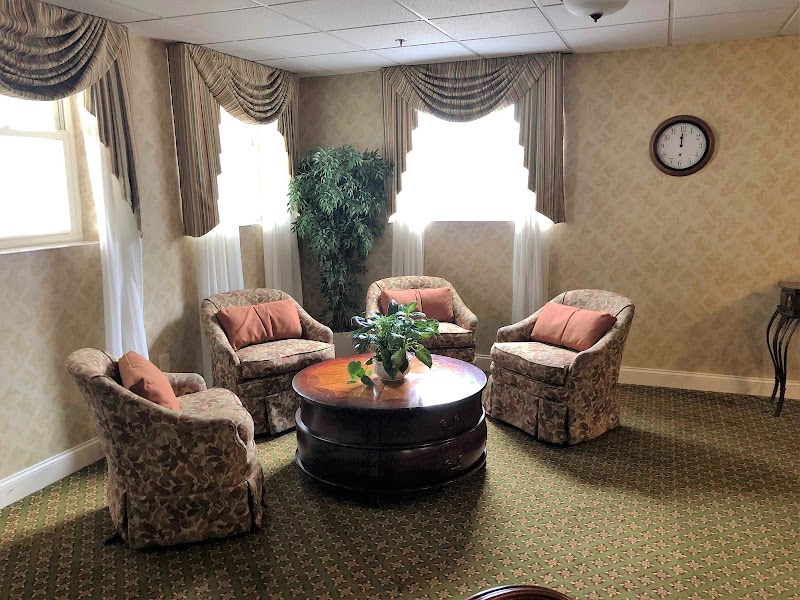
How is Tremont Rehabilitation & Skilled Staffed?

CMS rates TREMONT REHABILITATION & SKILLED CARE CENTER's staffing level at 3 out of 5 stars, which is average compared to other nursing homes. Staff turnover is 37%, compared to the Massachusetts average of 46%. This relatively stable workforce can support continuity of care.

What Have Inspectors Found at Tremont Rehabilitation & Skilled?

State health inspectors documented 28 deficiencies at TREMONT REHABILITATION & SKILLED CARE CENTER during 2022 to 2025. These included: 2 that caused actual resident harm, 25 with potential for harm, and 1 minor or isolated issues. Deficiencies causing actual harm indicate documented cases where residents experienced negative health consequences.
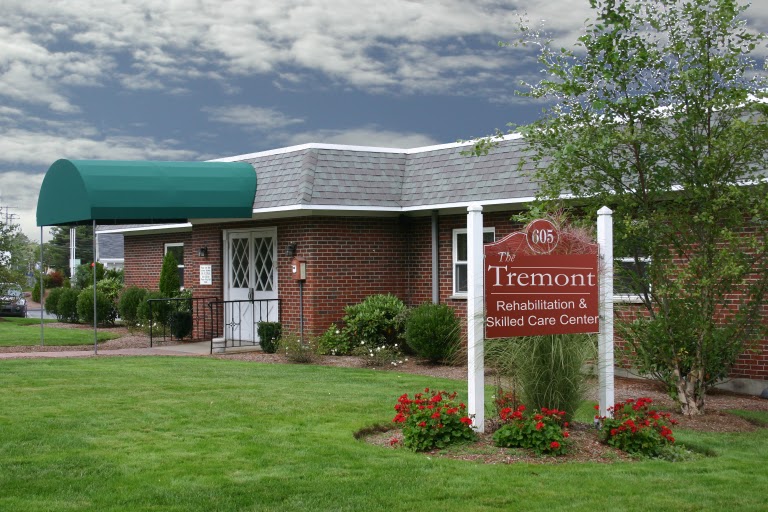
Who Owns and Operates Tremont Rehabilitation & Skilled?

TREMONT REHABILITATION & SKILLED CARE CENTER is owned by a for-profit company. For-profit facilities operate as businesses with obligations to shareholders or private owners. The facility is operated by ATHENA HEALTHCARE SYSTEMS, a chain that manages multiple nursing homes. With 104 certified beds and approximately 97 residents (about 93% occupancy), it is a mid-sized facility located in WAREHAM, Massachusetts.

How Does Tremont Rehabilitation & Skilled Compare to Other Massachusetts Nursing Homes?

Compared to the 100 nursing homes in Massachusetts, TREMONT REHABILITATION & SKILLED CARE CENTER's overall rating (3 stars) is above the state average of 2.9, staff turnover (37%) is near the state average of 46%, and health inspection rating (3 stars) is at the national benchmark.

What Should Families Ask When Visiting Tremont Rehabilitation & Skilled?

Based on this facility's data, families visiting should ask: "Can I visit during a mealtime to observe dining assistance and food quality?" "How do you handle medical emergencies, and what is your hospital transfer rate?" "Can I speak with family members of current residents about their experience?"

Is Tremont Rehabilitation & Skilled Safe?

Based on CMS inspection data, TREMONT REHABILITATION & SKILLED CARE CENTER has a clean safety record: no substantiated abuse findings (meaning no confirmed cases of resident harm), no Immediate Jeopardy citations (the most serious violation level indicating risk of serious injury or death), and is not on the Special Focus Facility watch list (a federal program monitoring the lowest-performing 1% of nursing homes). The facility has a 3-star overall rating and ranks #1 of 100 nursing homes in Massachusetts. While no facility is perfect, families should still ask about staff-to-resident ratios and recent inspection results during their visit.

Do Nurses at Tremont Rehabilitation & Skilled Stick Around?

TREMONT REHABILITATION & SKILLED CARE CENTER has a staff turnover rate of 37%, which is about average for Massachusetts nursing homes (state average: 46%). Moderate turnover is common in nursing homes, but families should still ask about staff tenure and how the facility maintains care continuity when employees leave.

Was Tremont Rehabilitation & Skilled Ever Fined?

TREMONT REHABILITATION & SKILLED CARE CENTER has been fined $384,482 across 4 penalty actions. This is 10.4x the Massachusetts average of $36,924. Fines at this level are uncommon and typically indicate a pattern of serious deficiencies, repeated violations, or failure to correct problems promptly. CMS reserves penalties of this magnitude for facilities that pose significant, documented risk to resident health or safety. Families should request specific documentation of what issues led to these fines and what systemic changes have been implemented.

Is Tremont Rehabilitation & Skilled on Any Federal Watch List?

TREMONT REHABILITATION & SKILLED CARE CENTER is not on any federal watch list. The most significant is the Special Focus Facility (SFF) program, which identifies the bottom 1% of nursing homes nationally based on persistent, serious quality problems. Not being on this list means the facility has avoided the pattern of deficiencies that triggers enhanced federal oversight. This is a positive indicator, though families should still review the facility's inspection history directly.