Majestic Care of Battle Creek
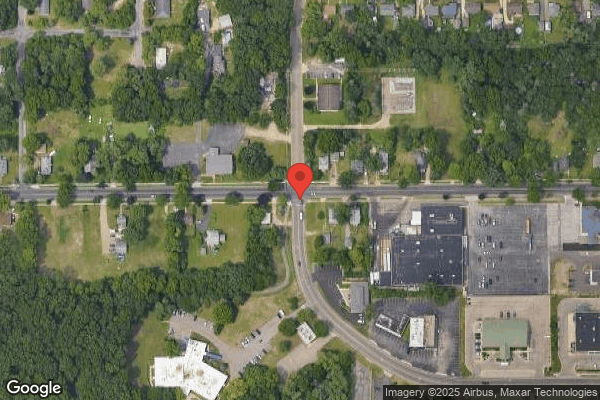
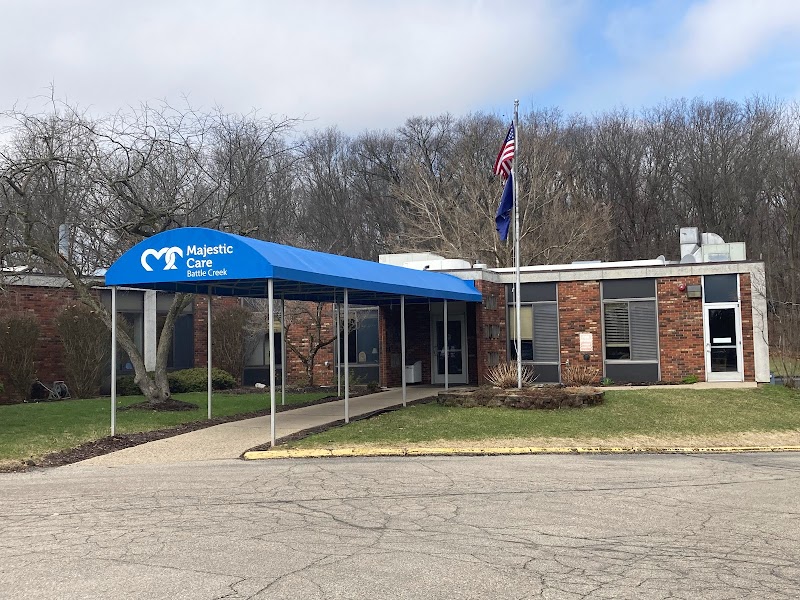
200 E Roosevelt, Battle Creek, MI 49037 (269) 965-3327
For profit - Corporation 65 Beds MAJESTIC CARE Data: November 2025
Trust Grade
15/100
#292 of 422 in MI
Last Inspection: October 2024

Within standard 12-15 month inspection cycle. Federal law requires annual inspections.

Overview

Majestic Care of Battle Creek has received a Trust Grade of F, indicating significant concerns about the facility's quality of care. Ranking #292 out of 422 in Michigan places it in the bottom half of state facilities, and #5 out of 8 in Calhoun County means only three local options are worse. While the facility has shown improvement, dropping from 15 issues in 2024 to just 2 in 2025, it still has a concerning staff turnover rate of 56%, which is above the state average. Despite having more RN coverage than 80% of Michigan facilities, the nursing home faced serious issues, including failing to change wound vac dressings as prescribed for residents, leaving them at risk for worsened conditions. Additionally, fines totaling $76,538 highlight ongoing compliance problems, suggesting a need for families to carefully consider their options.
Trust Score
F
15/100
In Michigan
#292/422
Bottom 31%
Safety Record
High Risk
Review needed
Inspections
Getting Better
15 → 2 violations
Staff Stability
⚠ Watch
56% turnover. Above average. Higher turnover means staff may not know residents' routines.
Penalties
✓ Good
$76,538 in fines. Lower than most Michigan facilities. Relatively clean record.
Skilled Nurses
✓ Good
Each resident gets 46 minutes of Registered Nurse (RN) attention daily — more than average for Michigan. RNs are trained to catch health problems early.
Violations
⚠ Watch
61 deficiencies on record. Higher than average. Multiple issues found across inspections.
★★☆☆☆
2.0
Overall Rating
★★☆☆☆
2.0
Staff Levels
★★★★☆
4.0
Care Quality
★★☆☆☆
2.0
Inspection Score
Stable
2024: 15 issues
2025: 2 issues

The Good

  • 4-Star Quality Measures · Strong clinical quality outcomes
  • Full Sprinkler Coverage · Fire safety systems throughout facility
  • No fines on record

Facility shows strength in quality measures, fire safety.

The Bad

2-Star Overall Rating

Below Michigan average (3.1)

Below average - review inspection findings carefully

Staff Turnover: 56%

Near Michigan avg (46%)

Frequent staff changes - ask about care continuity

Federal Fines: $76,538

Well above median ($33,413)

Moderate penalties - review what triggered them

Chain: MAJESTIC CARE

Part of a multi-facility chain

Ask about local staffing decisions and management

Staff turnover is elevated (56%)

8 points above Michigan average of 48%

The Ugly 61 deficiencies on record

4 actual harm
Sept 2025 1 deficiency
CONCERN (D) 📢 Someone Reported This

A family member, employee, or ombudsman was alarmed enough to file a formal complaint

Potential for Harm - no one hurt, but risky conditions existed

Deficiency F0657 (Tag F0657)

Could have caused harm · This affected 1 resident

**NOTE- TERMS IN BRACKETS HAVE BEEN EDITED TO PROTECT CONFIDENTIALITY** This citation pertains to intake number 2610947.Based on observation, interview, and record review the facility failed to ensure...

Read full inspector narrative →
**NOTE- TERMS IN BRACKETS HAVE BEEN EDITED TO PROTECT CONFIDENTIALITY** This citation pertains to intake number 2610947.Based on observation, interview, and record review the facility failed to ensure for two out of four residents (Residents #1 and 3) care plans were revised as care needs changed. Resident #1 (R1):Per the facility face sheet R1 was admitted to the facility on [DATE]. Diagnoses included a stage III pressure ulcer of the sacrum (butt bone).Review of a Skin Condition Evaluation form dated 6/9/2025, revealed R1 had a wound to the right inner thigh documented to be unstageable, a pressure wound to the gluteal fold (the crease in the buttocks) that was documented at a stage II, another wound on the right gluteal fold that was a stage II, a pressure ulcer to the left great toe, and a pressure ulcer to the left heel. Review of a Skin Condition Evaluation dated 6/16/2025, revealed R1 had a sacral pressure ulcer that measured 12 X 9 X 0.3 cm (centimeters) and was a stage III. The assessment did not mention the two gluteal fold stage II pressure ulcers (in this area two gluteal ulcers may merge into one large wound in the sacral area).Review of a Skin Condition Evaluation dated 6/30/2025, revealed R1's sacral pressure wound was a stage III that now measured 15.0 X 14.0 X 0.3 cm. Review of a Skin Condition Evaluation dated 7/7/2025, revealed R1's sacral pressure wound was a stage III that now measured 19.5 X 9.0 X 1.0 cm. Review of a Skin Condition Evaluation dated 7/14/2025, revealed R1's sacral pressure wound was a stage III that now measured 22.5 X 9.5 X 1.0 cm.Review of a Skin Condition Evaluation dated 7/7/2025, revealed R1's sacral pressure wound had a dept of 2.5 cm.Review of a care plan that was active revealed R1 had impaired skin integrity that included the sacral wound stage III pressure ulcer, however the care plan also had the two gluteal stage II pressure ulcers documented under the Focus also. This care plan had the date that it was initiated on as 6/10/2025, and a revision date of 7/1/2025. All of the interventions list on the care plan were dated 6/10/2025, and despite with worsening of R1's sacral pressure ulcer no new interventions were added to R1's plan of care to promote healing. All of the interventions were the same interventions that were put into place on R1's admission. Resident #3 (R3):Per the facility face sheet R3 was admitted on [DATE].Review of an admission assessment dated [DATE] revealed R3 did not have any pressure ulcers at the time of admission.Review of R3's progress notes dated 8/26/2025 revealed R3 had a fall which resulted in an abrasion to his back at the mid thoracic area (chest area but in the back). Another progress note dated 9/1/2025 revealed R3's abrasion had tuned into a stage III pressure ulcer.Review of R3's care plans revealed a care plan was in place with a Focus of (R3) is at Risk for skin breakdown due to impaired mobility and scattered bruising mid thoracic spine PI (pressure injury). and was dated 8/12/2025. The care plan was updated but not until 9/11/2025. However, none of the interventions were updated that revealed R3 had actual skin breakdown, and a stage III pressure ulcer and had. All the interventions were dated 8/12/2025.In an interview on 9/18/2025 at 3:01 PM, Licensed Practical Nurse (LPN) C stated R3's care plan for his wounds should have been updated with new interventions based on the changes with the abrasion.In an observation on 9/18/2025 at 2:55 PM, of R3's stage 3 on his spine revealed a stage 3, clean, no drainage, and no odor.In an interview on 9/22/2025 at 10:55 AM, Director of Nursing (DON) B stated that every morning when the team meets care plan review is discussed if needed, and any updates to the care plans are done right then, by the LPN C or the Minimum Data Set or MDS nurse, and stated that was her expectation. DON B said she did not know why R1 and R3's care plans were not updated.
Jan 2025 1 deficiency
CONCERN (D) 📢 Someone Reported This

A family member, employee, or ombudsman was alarmed enough to file a formal complaint

Potential for Harm - no one hurt, but risky conditions existed

Notification of Changes (Tag F0580)

Could have caused harm · This affected 1 resident

**NOTE- TERMS IN BRACKETS HAVE BEEN EDITED TO PROTECT CONFIDENTIALITY** This citation pertains to intake MI00148919. Based on observation, interview and record review, the facility failed to notify th...

Read full inspector narrative →
**NOTE- TERMS IN BRACKETS HAVE BEEN EDITED TO PROTECT CONFIDENTIALITY** This citation pertains to intake MI00148919. Based on observation, interview and record review, the facility failed to notify the provider of a change in condition for one (Resident #1) of two reviewed. Findings include: Review of the medical record reflected Resident #1 (R1) admitted to the facility on [DATE], with diagnoses that included unspecified severe protein-calorie malnutrition, degenerative disease of the nervous system and quadriplegia. The admission Minimum Data Set (MDS), with an Assessment Reference Date (ARD) of 12/1/24, reflected R1 was rarely/never understood and received nutrition via feeding tube. On 1/3/25 at 2:20 PM, R1 was observed lying in bed, awake. R1 did not verbally respond when spoke to. A bottle of Jevity 1.5 calorie tube feeding formula was infusing at a rate of 55 milliliters (mL) per hour. A bag of water was observed hanging, set for a flush rate of 50 mL every eight hours. On 1/6/25 at 8:59 AM, R1 was observed lying in bed, with their eyes closed. A bottle of Jevity 1.5 calorie tube feeding formula was infusing at a rate of 55 mL per hour. A bag of water was observed hanging, set for a flush rate of 50 mL every eight hours. On 1/6/25 at 3:47 PM, R1 was observed lying in bed with a tube feeding and water flush infusing via Percutaneous endoscopic gastrostomy (PEG tube/an endoscopic medical procedure in which a PEG tube is placed into the stomach, through the abdominal wall, and can be used to provide nutrition and hydration). R1's medical record reflected they were not to receive anything by mouth, thus required hydration, nutrition and medication to be administered via PEG tube. A Progress Note for 12/8/24 at 2:36 PM reflected R1's PEG tube was found dislodged, lying on their abdomen. According to the note, the nurse inserted an 18 French (foley/urinary) catheter with a 10 mL balloon in place of the PEG tube. R1's medical record reflected they were sent to the emergency room (ER) on 12/11/24 (three days later) to have their PEG tube replaced. During a phone interview on 1/6/25 at 11:38 AM, Physician D reported if someone were to call the on-call provider, a verbal order could have been given by phone that may not have been documented by the provider. Physician D stated the nursing notes would say who was contacted. Physician D indicated a provider should have been notified of the situation (R1's PEG tube dislodgment) and a request made for recommendations, even if the notification was made the following day. During a phone interview on 1/6/25 at 2:13 PM, Registered Nurse (RN) C reported they inserted a foley catheter tube in place of R1's PEG tube when it became dislodged. RN C reported Director of Nursing (DON) B was notified of the PEG tube being dislodged, but they could not recall if a text notification had been sent to a provider. RN C reported it was a common thing to happen, and they were not used to notifying the provider of such an occurrence. During an interview on 1/6/25 at 2:24 PM, DON B reported if a PEG tube became dislodged, the expectation was that the nurse would notify the physician and document it. DON B reported being notified that the tube became dislodged and was told the on-call provider had been notified that a foley catheter would be placed. R1's medical record did not reflect that a provider had been notified when the PEG tube became dislodged on 12/8/24, nor any orders pertaining to how to proceed with care. According to the facility's Change in Condition/Physician Notification policy, dated 1/2/24, .When a change in condition is discovered, the nurse will evaluate the resident and notify the resident's physician/NP/PA with pertinent information to discuss care for the resident .The nurse will notify the physician/NP/PA and the resident/resident representative when: .Need to alter medications or treatment .A significant change in the resident's physical, mental, or psychosocial status . According to the facility's Enteral Feeding policy, dated 1/2/24, .It is a policy of this facility to utilize feeding tubes in accordance with current clinical standards of practice, with interventions to prevent complications to the extent possible .Feeding tubes will be utilized according to physician orders .Only tubes designed or intended for enteral feeding will be utilized, except under extenuating circumstances and for the shortest time possible .Direction for staff regarding the conditions and circumstances under which a tube is to be changed will be provided: .When to replace and/or change a feeding tube (generally as ordered/scheduled by the physician, when a long-term feeding tube comes out unexpectedly .) .Instances when a tube can be replaced within the facility and by whom .Instances when a tube must be replaced in another setting .Notification of the practitioner when the need for a tube change arises unexpectedly .
Oct 2024 13 deficiencies
CONCERN (D)

Potential for Harm - no one hurt, but risky conditions existed

Transfer Requirements (Tag F0622)

Could have caused harm · This affected 1 resident

**NOTE- TERMS IN BRACKETS HAVE BEEN EDITED TO PROTECT CONFIDENTIALITY** Based on observation, interview and record review the facility failed to ensure required transfer and discharge documentation wa...

Read full inspector narrative →
**NOTE- TERMS IN BRACKETS HAVE BEEN EDITED TO PROTECT CONFIDENTIALITY** Based on observation, interview and record review the facility failed to ensure required transfer and discharge documentation was completed for one (Resident #20) of two residents reviewed for discharge. Resulting in the potential for ineffective or mismanaged continued care, as care plan goals were omitted from the transfer paperwork. Findings include: Resident #20 (R20) Review of the medical record reflected R20 was an initial admission to the facility on [DATE] with a readmission on [DATE]. Diagnoses of Parkinsons Disease, Diabetes Mellitus, Dementia, Cardiac Arrhythmias, Anxiety, Chronic Pain and weakness. The most recent Minimum Data Set (MDS), with an Assessment Reference Date (ARD) of 09/12/2024, revealed R20 had a Brief Interview of Mental Status (BIMS) of 15 (cognitively intact) out of 15. Under section G0100, Activities of Daily Living (ADL) Assistance reveals R20 requires minimal assistance with personal care. During an interview on 10/27/24 at 12:27 PM, R20 stated the last time she was in the hospital, she was admitted with a urinary tract infection (UTI), and the other time she fell and was hospitalized . Record review revealed R20 was hospitalized for UTI and Hypoxic (low oxygen in her system). Facility staff documented she was more lethargic and less talkative than usual. Writer could not find a hospital discharge/transfer notice for this hospitalization in her medical record. Record review also revealed R20 was sent out to the hospital after she was found diaphoretic (excessive sweating) and unresponsive. R20 was admitted and treated for metabolic encephalopathy (lack of oxygen or glucose sugar in her blood) related to UTI. Writer could not find a hospital discharge/transfer notice for this hospitalization in her medical record. During an interview on 10/29/24 at 02:35 PM via email, writer requested the bed hold/transfer/discharge for hospitalization for both March/April 2024 hospitalization. On 10/29/24 at 03:00 PM, writer received via email a bed hold/transfer/discharge with R20 demographic information, with no date or signature on the form. This form was not part of the medical record prior to asking for it. During an interview and observation on 10/29/24 at 03:31 PM, R20, she stated she had never seen that form before. R20 also stated she was not given any forms when she went in to the hospital in March 2024 and April 2024.
CONCERN (D)

Potential for Harm - no one hurt, but risky conditions existed

Transfer Notice (Tag F0623)

Could have caused harm · This affected 1 resident

**NOTE- TERMS IN BRACKETS HAVE BEEN EDITED TO PROTECT CONFIDENTIALITY** Based on observation, interview and record review the facility failed to provide a written copy to one (Residents #20) of two re...

Read full inspector narrative →
**NOTE- TERMS IN BRACKETS HAVE BEEN EDITED TO PROTECT CONFIDENTIALITY** Based on observation, interview and record review the facility failed to provide a written copy to one (Residents #20) of two residents of the reason for transfer/discharge to the hospital in a language that was understandable, resulting in potential for lack of understanding and knowledge. Findings Include: Resident #20 (R20) Review of the medical record reflected R20 was an initial admission to the facility on [DATE] with a readmission on [DATE]. Diagnoses of Parkinsons Disease, Diabetes Mellitus, Dementia, Cardiac Arrhythmias, Anxiety, Chronic Pain and weakness. The most recent Minimum Data Set (MDS), with an Assessment Reference Date (ARD) of 09/12/2024, revealed R20 had a Brief Interview of Mental Status (BIMS) of 15 (cognitively intact) out of 15. Under section G0100, Activities of Daily Living (ADL) Assistance reveals R20 requires minimal assistance with personal care. During an interview on 10/27/24 at 12:27 PM, R20 stated the last time she was in the hospital, she was admitted with a urinary tract infection (UTI), and the other time she fell and was hospitalized . Record review revealed R20 was hospitalized for UTI and Hypoxic (low oxygen in her system). Facility staff documented she was more lethargic and less talkative than usual. Writer could not find a hospital discharge/transfer notice for this hospitalization in her medical record. Record review also revealed R20 was sent out to the hospital after she was found diaphoretic (excessive sweating) and unresponsive. R20 was admitted and treated for metabolic encephalopathy (lack of oxygen or glucose sugar in her blood) related to UTI. Writer could not find a hospital discharge/transfer notice for this hospitalization in her medical record. During an interview on 10/29/24 at 02:35 PM via email, writer requested the bed hold/transfer/discharge for hospitalization for both March/April 2024 hospitalization. On 10/29/24 at 03:00 PM, writer received via email a bed hold/transfer/discharge with R20 demographic information, with no date or signature on the form. This form was not part of the medical record prior to asking for it. During an interview and observation on 10/29/24 at 03:31 PM, R20, she stated she had never seen that form before. R20 also stated she was not given any forms when she went in to the hospital in March 2024 and April 2024.
CONCERN (D)

Potential for Harm - no one hurt, but risky conditions existed

Deficiency F0625 (Tag F0625)

Could have caused harm · This affected 1 resident

**NOTE- TERMS IN BRACKETS HAVE BEEN EDITED TO PROTECT CONFIDENTIALITY** Based on observation, interview and record review the facility failed to provide a written copy to one (Resident #20) of two res...

Read full inspector narrative →
**NOTE- TERMS IN BRACKETS HAVE BEEN EDITED TO PROTECT CONFIDENTIALITY** Based on observation, interview and record review the facility failed to provide a written copy to one (Resident #20) of two residents reviewed for bed hold notification in a language that was understandable, resulting in potential for lack of understanding and knowledge for and what the bed hold policy entailed. Findings include: Resident #20 (R20) Review of the medical record reflected R20 was an initial admission to the facility on [DATE] with a readmission on [DATE]. Diagnoses of Parkinsons Disease, Diabetes Mellitus, Dementia, Cardiac Arrhythmias, Anxiety, Chronic Pain and weakness. The most recent Minimum Data Set (MDS), with an Assessment Reference Date (ARD) of 09/12/2024, revealed R20 had a Brief Interview of Mental Status (BIMS) of 15 (cognitively intact) out of 15. Under section G0100, Activities of Daily Living (ADL) Assistance reveals R20 requires minimal assistance with personal care. During an interview on 10/27/24 at 12:27 PM, R20 stated the last time she was in the hospital, she was admitted with a urinary tract infection (UTI), and the other time she fell and was hospitalized . Record review revealed R20 was hospitalized for UTI and Hypoxic (low oxygen in her system). Facility staff documented she was more lethargic and less talkative than usual. Writer could not find a hospital discharge/transfer notice for this hospitalization in her medical record. Record review also revealed R20 was sent out to the hospital after she was found diaphoretic (excessive sweating) and unresponsive. R20 was admitted and treated for metabolic encephalopathy (lack of oxygen or glucose sugar in her blood) related to UTI. Writer could not find a hospital discharge/transfer notice for this hospitalization in her medical record. During an interview on 10/29/24 at 02:35 PM via email, writer requested the bed hold/transfer/discharge for hospitalization for both March/April 2024 hospitalization. On 10/29/24 at 03:00 PM, writer received via email a bed hold/transfer/discharge with R20 demographic information, with no date or signature on the form. This form was not part of the medical record prior to asking for it. During an interview and observation on 10/29/24 at 03:31 PM, R20, she stated she had never seen that form before. R20 also stated she was not given any forms when she went in to the hospital in March 2024 and April 2024.
CONCERN (D)

Potential for Harm - no one hurt, but risky conditions existed

Deficiency F0645 (Tag F0645)

Could have caused harm · This affected 1 resident

Based on interview and record review, the facility failed to ensure the Preadmission Screening (PAS)/ Annual Resident Review (ARR) form for Mental Illness (MI)/ Intellectual Disability (ID)/ Related C...

Read full inspector narrative →
Based on interview and record review, the facility failed to ensure the Preadmission Screening (PAS)/ Annual Resident Review (ARR) form for Mental Illness (MI)/ Intellectual Disability (ID)/ Related Conditions Identification (DCH-3877) document was timely completed and sent to the local state agency for an evaluation for a Level II determination for one residents (R18) of one residents reviewed for PASARRs. Findings include: Findings include: On 10/28/24 at 10:30 AM R18 was observed sitting in a wheelchair in the hallway; greeting staff and residents by name as they came by. Review of the Electronic Medical Record (EMR) revealed R18 had an original admission date of 3/8/23. R18 had the following diagnoses: Quadriplegia (a paralysis that affects all limbs), Schizoaffective Disorder; Bipolar Type (a psychotic condition which causes fluctuation of mood), Major Depressive Disorder, Anxiety Disorder, and Dementia (a chronic condition that causes a decline in mental abilities). The Minimum Data Set (MDS) with an Assessment Reference Date (ARD) of 9/5/24 revealed R18 scored 15 out of 15 (cognitively intact) on the Brief Interview for Mental Status (BIMS-a cognitive screening tool). EMR review further revealed that R18 had a care plan addressing episodes of disturbing behavior - sexually explicit and angry comments and reactions. On 10/25/24 a Behavior Management Review was completed with documentation that R18's behavioral/mood symptoms were worsening. On 10/28/24 04:34 PM during interview with the Social Worker (SW) D and Assistant Director of Nursing (ADON) C the Level I PASARR completed in 2023 was discussed which documented the mental illness and dementia diagnosis. Based on the diagnoses the Level II PASRR was excluded. When asked if there had been a reevaluation the ADON C explained R18 did not have a guardian which was being worked on and would be needed. On 10/29/24 1:10 PM the Nursing Home Administrator (NHA) A said that the Behavioral Health team had scheduled an appointment for 10/30/24 to perform a reassessment of R18's dementia diagnosis. On 10/30/24 08:19 AM Social Worker (SW) D was interviewed and said Prior to today it is true he didn't get a reassessment of his dementia. He has a BIMS of 15. We know that. He has consistent behaviors. Social Worker (SW) D also added, Maybe we've just been going along with motions of what was determined last year and now he isn't there anymore. We need to look at where he is today. According to an online article posted by the Department of Human Services titled Level II Mental Health Preadmission and Resident Review Basics states in part that significant changes trigger a resident review such as . a decrease or clearing of dementia or delirium which may allow the person to benefit from mental health services.
CONCERN (D)

Potential for Harm - no one hurt, but risky conditions existed

Deficiency F0655 (Tag F0655)

Could have caused harm · This affected 1 resident

**NOTE- TERMS IN BRACKETS HAVE BEEN EDITED TO PROTECT CONFIDENTIALITY** Based on interview and record review the facility failed to ensure baseline care plans were developed within 48 hours of admissi...

Read full inspector narrative →
**NOTE- TERMS IN BRACKETS HAVE BEEN EDITED TO PROTECT CONFIDENTIALITY** Based on interview and record review the facility failed to ensure baseline care plans were developed within 48 hours of admission for one of 13 residents (Resident #41) resulting in the potential for unmet care needs. Findings included: Per the facility R41 was admitted to the facility on [DATE]. Diagnoses included dyskinesia (disorder of the esophagus) and dysphasia (difficulty in swallowing). Record review of R41's nutrition care plan revealed that it wasn't until 10/1/2024, six days after R41 was admitted , that a plan of care was put into place. R41's nutritional care plan revealed, presents with potential for nutritional risk related to acute metabolic encephalopathy (brain disease), UTI (urinary tract infection) chronic dysphasia. DX: MDD (diagnosis major depression disorder), anxiety, seizures, CKD (kidney disease) HLD increase lipids), chronic gastritis, vit D deficiency, hypothyroidism, sarcopenia (loss of muscle/strength). Mechanically altered diet affecting her oral intake. Date Initiated: 10/01/2024. R41's care plan was very specific to her nutritional care needs. Record review of R41's Physician orders revealed R41 was ordered to take: ARIPiprazole Oral Tablet 10 MG (Aripiprazole) Give 1 tablet by mouth one time a day for Depression, dated 9/24/2024. Celexa 1 mg one time a day for depression, ordered on 9/24/2024. RisperiDONE Oral Tablet 1 MG (Risperidone) Give 1 tablet by mouth one time a day for Bipolar affective disorder, dated 9/25/2024. QUEtiapine Fumarate Oral Tablet 100 MG (Quetiapine Fumarate) Give 1 tablet by mouth at bedtime for Bipolar affective disorder, dated 9/24/2024. Review of R41's care plans revealed that a plan of care was not developed and implemented until 10/7/2024 regarding R41's psychotropic, antianxiety, nor antidepressant medications that were ordered for R41 to take on a daily basis. The care plan that was developed on 10/72024 revealed R41 received psychotropic (or psychotropic like medication) and was at risk for adverse side effects antianxiety, antidepressant, antipsychotic Date Initiated: 10/07/2024. Review of R41's Medication Administration Record (MAR) for the month of September 2024 revealed R41 did received the ordered doses of Celexa, Aripiprazole, Seroquel, Risperidone, and Klonopin, starting on 9/24/2024, and therefore would have had a need for a plan of care starting 9/24/2024. In an interview on 10/29/2024 at 9:20 AM, Director of Nursing (DON) B stated that within 24 hours of a resident being newly admitted baseline care plans were to be developed and the resident or the resident representative were to receive a copy. Requested DON B to provide documentation or a copy that R41 had baseline care plans developed and implemented within 48 hours of admission on [DATE], and that R41's guardian received a copy. In another interview on 10/29/2024 at 11:56 AM, DON B stated that she was not able to find any documentation or copies that baseline care plans were developed or provided to R41's guardian.
CONCERN (D)

Potential for Harm - no one hurt, but risky conditions existed

Deficiency F0657 (Tag F0657)

Could have caused harm · This affected 1 resident

**NOTE- TERMS IN BRACKETS HAVE BEEN EDITED TO PROTECT CONFIDENTIALITY** Based on interview and record review, the facility failed to revise timely, individualized care plans for one (Resident #25) of ...

Read full inspector narrative →
**NOTE- TERMS IN BRACKETS HAVE BEEN EDITED TO PROTECT CONFIDENTIALITY** Based on interview and record review, the facility failed to revise timely, individualized care plans for one (Resident #25) of 13 residents reviewed for care planning, resulting in the potential for inadequate/inappropriate care and this resident not maintaining or achieving their highest practical physical well-being. Resident #25 (R25) Review of the medical record reflected R25 was an initial admission to the facility on [DATE] with a readmission on [DATE]. Diagnoses of Diabetes Mellitus with foot ulcer, restless leg syndrome, non-pressure related ulcers of the right foot with necrosis, Peripheral Vascular Disease and Chronic Kidney Disease. The most recent Minimum Data Set (MDS), with an Assessment Reference Date (ARD) of 10/30/2024, revealed R25 had a Brief Interview of Mental Status (BIMS) of 15 (cognitively intact) out of 15. Under section G0100, Activities of Daily Living (ADL) Assistance reveals R25 requires stand by assistance to independent with personal care. During an interview on 10/27/24 at 01:27 PM, R25 stated the facility nurses were not doing the wound vac dressing right. R25 also stated the nurses reported R25 didn't want the wound vac anymore, so the specialty clinic is now sending him to the wound clinic. Record review revealed R25 was receiving care for his diabetic ulcers through the wound clinic, vascular surgeon and Primary Care Provider (PCP). Specialty clinic placed an order for the wound vac to be placed on R25's foot on 06/21/24. Record review did not reveal that this order was implemented. During an interview on 10/29/24 at 09:20 AM, R25 stated that he had the wound vac on this last time for about 2 weeks. R25 stated he had never refused to have the wound vac on or have the dressing changes completed. During an interview and observation on 10/29/24 at 09:43 AM, Registered Nurse (RN) Q performing wound care to R25's right foot. RN Q gowned for enhanced precautions, had the dressing supplies gathered. RN Q cleaned scissor's prior to removing the soiled dressing, softened dressing stuck on the open areas. RN Q stated the wound care provided would be documented under treatment administration record (TAR) section of the orders. Writer asked where the wound vac dressing changes would be documented. RN Q stated when an order was put in the electronic medical record (EMR), it would generate a task to be completed, and new orders show up on medication administer record (MAR) or TAR. Writer could not find the record of performing wound vac dressing changes. RN Q explained the current dressing change process, cleaned with wound cleaner, a dressing that absorbs exudate placed on wound bed, covered with thick absorbent dressing and wrapped with rolled gauze. RN Q used clean technique, hand hygiene completed after removal of soiled dressing, prior to applying the new dressing and finishing the dressing change. Removed PPE appropriately and disposed of trash from the room. During an interview on 10/29/24 at 10:13 AM, RN Q stated R25 was on the wound vac for a short time as she was looking for dates. R25 was on wound vac on 11/20/23-12/08/23, 02/19/24 for 1 day. RN Q stated there was a recent wound vac order from vascular on 09/13/24 to 09/23/24. RN Q was unable to find orders for the wound vac. RN Q went to the DON's office for assistance locating the wound vac orders. PCP saw R25 on 09/23/24 and discontinued the wound vac. DON B also stated R25 was non-compliant with the use of the wound vac to his right foot. Writer asked to see the interventions that were used to work with R25 on his dressings of the right foot. DON B stated they just talked to him. Writer asked if R25 had any updated interventions on the care plan. DON B stated no. During an interview on 10/29/24 at 11:57 AM, R25 stated he had not refused treatment, R25 stated he had been outside and his dressing on the right foot get wet, R25 also stated he may have gotten his dressing wet a time or two but not because he was dragging his foot in the snow or rainwater. R25 stated he was in his wheelchair when he went outside and used the footrest on the wheelchair. R25 stated he doesn't go outside with his walker, as he cannot walk well, working with physical therapy. R25 stated he has had to walk into the bathroom because he didn't have a choice, had to go to the bathroom. During an interview on 10/30/24 at 08:00 AM, Nurse Practitioner (NP) S stated has been concerned about this resident, as she had ordered the wound vac and the facility staff have reasons to not put it on him. NP S stated that she had run into these problems for over a year and his wounds are not healing. NP S stated she felt in the middle because R25 deserves the care he needed, but there was always a reason that the treatment she ordered was not followed, due to the facility coming up with reasons or excuses. NP S stated her orders were not followed or implemented. NP S also stated that R25 can make his own medical decisions on his care, and he had voiced a desire to get better so he can go back to his home. NP S also stated that she was trying to advocate for him but running into barriers. NP S stated there were interventions that could be put in place to assist him, such as a bag over right foot when he goes outside in the rain or snow. NP S stated she was not giving up on him, and she would continue to advocate for him. During an interview on 10/30/24 at 09:58 AM, RN Q stated she did tell the vascular office about his non-compliance. RN Q stated the wound vac was placed on his right foot, but he cannot walk on it. RN Q stated R25 would drag it outside and they would have to change it daily. Writer asked RN Q what interventions they had used to address this concern. RN Q stated she did not document what she educates him on as it was daily, so it wasn't documented with interventions. During an interview on 10/30/24 at 10:11 AM, DON B stated they had educated him on autonomy and do not always document it. DON B stated R25 usually had the socks on over the dressing and didn't allow anything else. Writer asked if they had tried any new or updated interventions to work with R25 on the wound care concerns. DON B stated they had talked to him but didn't write it down. Record review of R25's care plan revealed R25 had not had any new or updated interventions regarding his impaired skin integrity to his right foot since the date of 03/30/23 and was revised during the annual survey dated on 10/29/24.
CONCERN (D)

Potential for Harm - no one hurt, but risky conditions existed

Respiratory Care (Tag F0695)

Could have caused harm · This affected 1 resident

Based on observation, interview and record review the facility failed to have an emergency tracheostomy readily available for 1 (R9) of 1 resident reviewed for tracheostomy care, resulting in the pote...

Read full inspector narrative →
Based on observation, interview and record review the facility failed to have an emergency tracheostomy readily available for 1 (R9) of 1 resident reviewed for tracheostomy care, resulting in the potential for a delay in needed action in the event of an emergency tracheostomy dislodgement. Findings include: On 10/27/24 at 10:42 AM R9 was observed resting in bed with a relaxed facial expression and breathing quietly through a tracheostomy which appeared intact and clean. Review of the electronic medical record (EMR) revealed R9 had an original admission date of 1/11/23 and a last admission date of 4/6/23. R9 had the following pertinent diagnoses: Chronic Respiratory Failure with Hypercapnia (breathing difficulty due to a high level of carbon dioxide) and Tracheostomy status (dated 2023). (A tracheostomy is a surgically created opening in the neck for access to the windpipe) On 10/28/24 at 9:25 AM during observation of tracheostomy care and after completion of care, Licensed Practical Nurse (LPN) J searched for the emergency tracheostomy. LPN J searched through the equipment on R9's table at the end of the bed and through drawers below. After 3 minutes of searching the package containing a sterile outer and inner cannula was found. The package did not contain an obturator (a curved rod that helps guide the tracheostomy into the airway). On 10/28/24 at 9:45 AM during interview with LPN J and Director of Nursing (DON) B and Clinical Consultant K the question about the availability of an emergency tracheostomy was answered by the Clinical Consultant K: The emergency tracheostomy will be on the wall within quick reach. On 10/28/24 at approximately 10:15 AM LPN J displayed an orange sign to go up on the wall in R9's room on which the emergency tracheostomy would be taped. Review of the facility policy with a revision date of 1/2/24 and titled Tracheostomy Care states in part, General considerations include: . Maintain a suction machine, a supply of suction catheters, correctly sized cannulas, and an ambu bag easily accessible for immediate emergency care.
CONCERN (D)

Potential for Harm - no one hurt, but risky conditions existed

Pharmacy Services (Tag F0755)

Could have caused harm · This affected 1 resident

**NOTE- TERMS IN BRACKETS HAVE BEEN EDITED TO PROTECT CONFIDENTIALITY** Based on interview, observation and record review, facility failed to ensure one (resident#20) of one resident was assessed to s...

Read full inspector narrative →
**NOTE- TERMS IN BRACKETS HAVE BEEN EDITED TO PROTECT CONFIDENTIALITY** Based on interview, observation and record review, facility failed to ensure one (resident#20) of one resident was assessed to safely self-administer medications. Resident #20 (R20) Review of the medical record reflected R20 was an initial admission to the facility on [DATE] with a readmission on [DATE]. Diagnoses of Parkinsons Disease, Diabetes Mellitus, Dementia, Cardiac Arrhythmias, Anxiety, Chronic Pain and weakness. The most recent Minimum Data Set (MDS), with an Assessment Reference Date (ARD) of 09/12/2024, revealed R20 had a Brief Interview of Mental Status (BIMS) of 15 (cognitively intact) out of 15. Under section G0100, Activities of Daily Living (ADL) Assistance reveals R20 requires minimal assistance with personal care. During an interview and observation on 10/28/24 at 09:00am, R20 had her morning medication brought into her room by Licensed Practical Nurse (LPN) N, who handed R20 a med cup with 14 pills in it. R20 asked LPN N for some applesauce to swallow the one of the large pills. LPN N left the room to get some applesauce, and left the medications with R20, out of visual sight when she went out in the hallway to get the applesauce. During an interview and observation on 10/28/24 at 1:10PM, R20 had a tube of normal saline, 10ml left with R20 at bedside. R20 was to take this prescription medication herself. R20 stated she swish and spits out the normal saline tooth issues. Writer asked R20 how many times a day she used normal saline as an oral rinse. R20 stated she uses them 3 to 4 times a day. Record review revealed R20 had an assessment completed stating she could not self-administer medications on 12/16/21. This document was signed and dated by R20 requesting that she have her medications administered to her, not self-administered.
CONCERN (D)

Potential for Harm - no one hurt, but risky conditions existed

Deficiency F0849 (Tag F0849)

Could have caused harm · This affected 1 resident

**NOTE- TERMS IN BRACKETS HAVE BEEN EDITED TO PROTECT CONFIDENTIALITY** Based on observation, interview and record review, the facility failed to ensure proper communication/documentation of Hospice s...

Read full inspector narrative →
**NOTE- TERMS IN BRACKETS HAVE BEEN EDITED TO PROTECT CONFIDENTIALITY** Based on observation, interview and record review, the facility failed to ensure proper communication/documentation of Hospice services provided to one (Resident #45) of one residents reviewed for Hospice services, resulting in a lack of coordination of comprehensive services and care provided Resident #45 (R45) Review of the medical record reflected R45 was an initial admission to the facility on [DATE] with a readmission on [DATE] and then signed up for hospice services on 08/26/24. Diagnoses of Chronic Kidney Disease, Bacteremia, Osteomyelitis, Methicillin Susceptible Staphylococcus, Diabetes Mellitus, Pressure Ulcer of Sacral Region. The most recent Minimum Data Set (MDS), with an Assessment Reference Date (ARD) of 08/16/2024, revealed R45 had a Brief Interview of Mental Status (BIMS) of 14 (cognitively intact) out of 15. Under section G0100, Activities of Daily Living (ADL) Assistance reveals R45 requires maximum assistance to dependent with personal care. During an interview and observation on 10/28/24 at 09:42 AM, R45 stated he lived at home with his wife, until he could no longer use his legs. R45 also stated that while in the hospital for a heart attack, they didn't address his pressure ulcers. R45 stated usually the hospice Certified Nursing Assistant (CNA) gave him a weekly bed bath. R45 also stated last week he skipped the bath due to him not feeling well. R45 stated he can feed himself with set up, but some days he feels like eating less. R45 shared the activities was difficult to attend, as he used a mechanical lift to get in the recliner. R45 stated he needed help with repositioning, staff didnt do it often, they rely on him to do it. Record review revealed a Hospice binder behind the nurses' station with R45 name in it. It contained the admission consent, consent for the election benefit, certification period for 08/26/24 through 11/23/24. Record review did not reveal a calendar with the disciplines dates and times to see R45. CNA care plan was not in the binder or the medical record. CNA visit notes were not in the binder or the medical record. During an interview on 10/30/24 at 08:22 AM, CNA O stated R45 was due for a shower today and the hospice CNAs are lined up on the same day as the facility. Writer asked if she was familiar with the hospice care plan and which CNAs were to do which task, she stated she did not. During an interview on 10/30/24 at 08:33 AM, Registered Nurse (RN) P stated she talked to the hospice CNA and nurse when they come in. Writer asked about the schedule of their visits, she stated there is a binder at the nurse's station that should have that in it. During an interview on 10/30/24 at 08:39 AM, Social Worker (SW) D stated coordination of care is a group effort, and they partner well with hospice representative that came in and talk to the family/resident. SW D stated that after that she did not know who made the changes in the plan of care. SW D also stated she didn't have much to do with the clinical piece after that. SW D also stated that sometimes the nurse would come to her if something needed to be communicated. SW D also stated it depended on what they needed from her if she documented it, but did not touch the care plan. SW D also stated she worked with DON B and ADON C who was very good with documenting, and they would tell her what to document. During an interview on 10/30/24 at 08:45 AM, ADON C stated it depended on the hospice company, if they needed orders then the nurse would come to them. They faxed the reports/visit notes to medical records, and she would put them in the medical record. Inter Disciplinary Team (IDT) gathered to discuss the changes and involved family. Writer asked about the CNA care plan. ADON C stated medical records would set it up if she was there. ADON C stated she just knows the day CNA comes in. Scheduler would ask hospice aides to come in on Monday and Wednesday, then facility CNAs provided an extra shower day either Friday or Saturday. Writer asked where this schedule could be found, ADON C stated she believes it was in the chart that medical records uploaded. Record review revealed the facility CNA care plan did not coordinate care with intervention designating what the facility CNAs were to do compared to what the Hospice CNAs would do. Record review of the hospice binder behind the nurse's station do not have any schedules for the days or dates that hospice staff would be making visits to R45. No Hospice Care plan in the binder, no communication between hospice staff and the facility staff. During an interview on 10/30/24 at 10:16 AM, DON B stated the coordination of care should be in the binder. Writer informed DON B that it was not there, again no schedule for all disciplines, no CNA care plan, no visit notes that show what care was provided on their visit and who they reported off to. DON B again stated they had documents under the misc. tab, writer asked her to look for these documents as they were not part of the medical record. DON stated she would be calling hospice right now to get the notes faxed.
CONCERN (E) 📢 Someone Reported This

A family member, employee, or ombudsman was alarmed enough to file a formal complaint

Potential for Harm - no one hurt, but risky conditions existed

Deficiency F0679 (Tag F0679)

Could have caused harm · This affected multiple residents

**NOTE- TERMS IN BRACKETS HAVE BEEN EDITED TO PROTECT CONFIDENTIALITY** This Citation Pertains to Intake #M00145852 Based on observation, interview and record review the facility failed to provide con...

Read full inspector narrative →
**NOTE- TERMS IN BRACKETS HAVE BEEN EDITED TO PROTECT CONFIDENTIALITY** This Citation Pertains to Intake #M00145852 Based on observation, interview and record review the facility failed to provide consistent and accurate activity calendars and failed to provide meaningful, diverse and engaging activity programs for one resident (#30) of three residents reviewed and 6 of 8 residents from confidential group meeting. Resident #30 Review of the clinical record including the Minimum Data Set (MDS) dated [DATE] Resident # 30 (R30) was admitted to the facility on [DATE] with diagnoses that included, major depression, hemipelaigia and hemiparesis. Review of the MDS reflected R30 scored 15 out of 15 (cognitively intact) on the Brief Interview Mental Status (BIMS), further review of the MDS reveled R30 had clear speech and adequate hearing. On 10/27/24 at 11:23 AM, during a bedside interview R30 was observed in bed and reported he was bored as the facility offers little to no activities, R30 reported there had been no Activity Director or Activity Aid in a month and they were employed at the facility for only a short time. R30 reported with the exclusion of bingo there was nothing to do at the facility. R30 elaborated that the activity calendar that is posted in resident rooms was different than the large activity calendar posted in the hallway, which increased confusion as to what if anything was happening on any given day. R30 then stated it was not that big of an issue because most activities on both calendars get canceled anyway. Review of the large activity calendar posted on the main hallway reflected Bingo was to occur on 10/27/24 at 12:00 pm, lunch occurred at 12:00 pm and Bingo was observed at 2:00 pm. On 10/28/24 at approximately 09:30 AM during an interview with Nursing Home Administrator ( NHA) A she reported the facility currently had no activity staff and the Certified Nursing Assistants were filling in. Review of grievances reflected R30 filed a grievance on 7/3/24 that he was not notified of the facility cookout and wasn't given the opportunity to participate. ( There was no resolution documented on form). R30 filed a grievance on 7/13/24 R30 complained scheduled activities over the weekend music and exercise did not happen. R30 filed a grievance on 7/16/24 which reveled an outdoor activity in the afternoon (due R30's medical condition and pain issues being up in a wheelchair needs to be done in short intervals, therefore R30 stayed in bed in the morning and opted to get up in the afternoon to attend the activity and get some fresh air. ) When R30 went to attempt the afternoon outdoor activity, R30 was informed it was held in the morning due to weather. R30 filed a grievance on 7/23, that they were not asked to go on outing - on the findings portion of the form it reflected R30 was not asked to go due to lack of space . R30 filed a grievance on 9/3 that the activity calendar are not followed and not adjusted to reflect any changes that were made. On 10/28/24 at 1:00 pm during the confidential group meeting , 6 of 8 group participants reported being bored with the lack of activities and frustrated with the large wall calendar posted in the hall and the activity calendar handed out to them being different and altered with no notification of changes made. On 10/29/24 at 02:52 PM during an interview with Certified Nursing Assistant (CNA) M she reported being employed at the facility for approximately 2 months and that she works periodically in activities. CNA M stated she was assigned to activities on Sunday (10/27) and again today. CNA M stated there was one CNA assigned to activities daily as there wasn't any activity staff. CNA M acknowledged the activity calendar changes without notice , CNA M elaborated and gave an example such as Men's Program or Cardio Crushers , CNA M stated she didn't know what to do for a lot the activities listed on the calendar so she would substitute things with coloring or ask someone else what to do. CNA M stated she had no training in activities but did not fully understand any of the calendars and was doing the best she could. Further review of the Activity calendar reflected Coffee and Chronicles was to start on 10/29 at 9:00 am, however CNA M's shift does not start until 10:00 am, CNA M reported Coffee and Chronicles didn't start until after 10:00 am when queried how residents were informed of the change in start time, CNA M stated she did not know. Of note, Cardio Crushers was scheduled for 10/29 at 10:00 am , which was when CNA M started her shift and did Coffee and Chronicles, which consisted of going room to room passing out coffee and a chronicle. On 10/29/24 at 03:35 PM, during an interview with NHA A she reported working at the facility for two months and the activity director at that time started a week prior and that the activity assistant was new as well, NHA A reported neither were no longer employed at the facility and reiterated that CNA's were trying to fill the void, NHA A offered no explanation for why the large activity calendar posted in the hall listed different activities and times as the activity calendars that were provided and posted in resident rooms or why either calendar had not been followed.
CONCERN (E)

Potential for Harm - no one hurt, but risky conditions existed

Infection Control (Tag F0880)

Could have caused harm · This affected multiple residents

Based on observation, interview, and record review, the facility failed to have an active and ongoing plan for reducing the risk of Legionella and other opportunistic pathogens of premise plumbing and...

Read full inspector narrative →
Based on observation, interview, and record review, the facility failed to have an active and ongoing plan for reducing the risk of Legionella and other opportunistic pathogens of premise plumbing and failed to protect clean and sanitary supplies from possible wastewater contamination. This deficient practice has the potential for the growth and transmission of Legionella in the circulating water of the building and the spread of Legionella infections, and potential contamination of clean supplies, affecting all residents. Findings include: During a tour of the facility, at 10:10 AM on 10/27/24, an observation of the small shower room found a shower fixture on the wall with no direct spigot or faucet found to dispense the water. Upon momentarily turning on the handle, water could be heard coming out of a fixture in the wall. During an interview with Maintenance Director (MD) H,at 11:08 AM on 10/27/24, it was found that he flushes all empty rooms on a weekly basis. During a tour of the nourishment room behind the nurse's station, at 11:10 AM on 10/27/24, it was observed that two water lines were coming out of the wall. Neither water line was connected to a fixture in order to be easily flushed. During an interview with MD H, at 11:30 AM on 10/29/24, it was found that the small shower room wall fixture used to be for the tub that was installed in the room. MD H was able to pull off a boarded up section of wall to find the old tub spigot. When asked about the water running in this area, MD H stated that its not a fixture he has been flushing. During a tour of the basement medical supply room, at 11:45 PM on 10/29/24, it was observed that that a shower was present in the storage closet. When asked if he was aware whether the shower was hooked up to water, MD H was unsure. During a tour of the central supply room, at 11:55 AM on 10/29/24, it was observed that a large double compartment utility sink was present on the back right wall. Observation of the sink found it dry with dust and debris in the basin. When asked if the sink gets used. MD H stated that its not used or one that is flushed. Further review of the sink found a momentary flow of brown and discolored water that came out of both hot and cold-water lines. Next to the two compartment sink was an eye wash station observed, when asked if this station gets flushed, MD H stated he doesn't get to it often because it doesn't have a drain. Observation found that the eye wash station doesn't have a wastewater line and just drops water onto the floor of the central supply and doesn't gravitate towards the floor drain roughly eight feet away. During an interview with MD H regarding the facilities water management plan, at 12:25 PM on 10/29/24, found that MD H has monthly meetings between the maintenance group, but not too much in house. When asked if there was currently any sampling the facility did, MD H stated no. During a review of the facilities Water Management Program, approved 12/12/23, found that The water management team will consist of at least the following personnel: a. The infection preventions; B. The administrator; c. The medical director (or designee); d. The director of maintenance; and e. The director of environmental services. A Further review of the plan found that The water management program includes the following elements: a. An interdisciplinary water management team; . d. The identification of situations that can lead to Legionella growth, such as: 7. Water stagnation; and 8. Inadequate disinfection. e. Specific measures used to control the introduction and/or spread of legionella ( e.g., temperature, disinfectants); f. The control limits or parameters that are acceptable and that are monitored; g. A diagram of where control measures are applied; h. A system to monitor control limits and the effectiveness of control measures; 1. A plan for when control limits are not met and/or control measures are not effective; and J. Documentation of the program . Through interview and record review of the Water Management Plan, No listed active and ongoing control measures and control limits were found to be documented and in place at this time. Observation of the basement central supply room, at 11:58 AM on 10/29/24, found that a large wastewater line extends from the right side of the ceiling to the left side, and down the left side storage rack (against the wall). Items under the wastewater line were found to be clean and sanitary nursing items used for resident care.
CONCERN (F)

Potential for Harm - no one hurt, but risky conditions existed

Deficiency F0804 (Tag F0804)

Could have caused harm · This affected most or all residents

**NOTE- TERMS IN BRACKETS HAVE BEEN EDITED TO PROTECT CONFIDENTIALITY** During a tour of the kitchen, at 1:02 PM on 10/29/24, an interview with Dietary Manager E found that the kitchen keeps a tempera...

Read full inspector narrative →
**NOTE- TERMS IN BRACKETS HAVE BEEN EDITED TO PROTECT CONFIDENTIALITY** During a tour of the kitchen, at 1:02 PM on 10/29/24, an interview with Dietary Manager E found that the kitchen keeps a temperature log for maintaining hot liquid temperatures between 120F and 140F. When asked where the policy or concern for hot liquid temperatures arose, Dietary Manager E was unsure and stated he had only been here a month. Dietary Aide I, stated that he remembers an issue with a resident getting burned awhile back and thought the policy started around that time. An interview with the Nursing Home Administrator and the Director of Nursing regarding the facilities Hot Liquid Policy, at 1:10 PM on 10/29/24, found that they were both newer to the facility and would need to look up the policy to be sure. A record review of documentation provided by the facility, found an incident form, dated 11/9/23, where a resident was assessed for burns due to hot liquids. A further review of the incident form found that a plan of correction for Element 2 (Identification of residents who may be affected) found that All residents who are identified at risk will be audited for completion of a hot liquid evaluation . A review of the facilities policy entitled Safety of Hot Liquids, revised October 2014, states Residents who prefer hot beverages with meals (i.e., coffee, tea, soups, etc.) will not be restricted from these options. Instead, staff will conduct regular Hot Liquids Safety Evaluations as indicated and document the risk factors for scalding and bums in the care plan. Once risk factors for injury from hot liquids are identified, appropriate interventions will be implemented to minimize the risk from burns. Such interventions may include: a. Maintaining a hot liquids serving temperature of not more than 180 degrees Fahrenheit; b. Serving hot beverages in a cup with a lid; c. Encouraging residents to sit at a table while drinking or eating hot liquids; d. Providing protective lap covering or clothing to protect skin from accidental spills; and e. Staff supervision or assistance with hot beverages. Based on observation, interview, and record review the facility failed to provide hot liquids at a palatable temperature to 5 of 8 residents in a group interview and one of two residents (R30) surveyed. This deficient practice has the potential to result in decreased hydration consumption and potential for decreased satisfaction of living. On 10/28/24 at 1:00 pm during the confidential group meeting , 5 of 8 group participants reported being frustrated with the temperatures of beverages, stating coffee and tea are always cold and water for hot cocoa was always too cold resulting in the cocoa packet not getting dissolved and left clumpy. Resident #30 Review of the clinical record including the Minimum Data Set (MDS) dated [DATE] Resident # 30 (R30) was admitted to the facility on [DATE] with diagnoses that included, major depression, hemipelaigia and hemiparesis. Review of the MDS reflected R30 scored 15 out of 15 (cognitively intact) on the Brief Interview Mental Status (BIMS), further review of the MDS reveled R30 had clear speech and adequate hearing. On 10/28/24 09:36 AM, during an interview with R30 it was reported coffee was not good because it was always cold therefore even though coffee was the preferred beverage it was no longer requested to be served due to the temperature. R30 further reported their spouse brings coffee in from local restaurants which has steam coming off it and was delicious. R30 voiced irritation that this could not be provided by the facility. R30 stated it was brought to managements attention and a grievance form filed but no changes were made. When queried if there had been an assessment for hot liquid or the need for an adaptive cup for hot liquid R30 stated no. Nursing progress notes dated 10/23/24 revealed . requested hot cocoa during Coffee and Chronicles pass. Beverage was temped just prior to delivering to [name redacted]. Temp was confirmed to be 145 degrees. He stated, it could be hotter. He has been informed of the safe and required temp range, and that 145 degrees does fall within that range. Review of R30's grievance filed on 10/14/24 for coffee temperature being too cold, the facility response was dated 10/15 and was coffee temp range was to be 120 - 140.
CONCERN (F)

Potential for Harm - no one hurt, but risky conditions existed

Food Safety (Tag F0812)

Could have caused harm · This affected most or all residents

Based on observation, interview, and record review, the facility failed to prepare food in accordance with professional standards for food service safety. This deficient practice has the potential to ...

Read full inspector narrative →
Based on observation, interview, and record review, the facility failed to prepare food in accordance with professional standards for food service safety. This deficient practice has the potential to result in food borne illness among all residents that consume food in the kitchen. Findings include: During an initial tour of the kitchen, at 9:12 AM on 10/27/24, observation of the two door Delfield refrigeration unit found the following items: a container of hot dogs dated 10/24 to 11/7, an open container of sliced smoked ham with no date, a saran wrapped chunk of ham with no date, an open container of strawberry sauce dated 10/13 to 10/19, a ziplock bag of bratwurst dated 10/18 to 11/18, and a bag of shredded lettuce dated 10/26 to 11/1 with a manufacture best by date of 10/28/24. An interview with [NAME] F, at 9:15 AM on 10/27/24, asking how many days are usually given to items like brats and hot dogs, [NAME] F stated it should be seven days, I would throw them away. According to the 2017 FDA Food Code section 3-501.17 Ready-to-Eat, Time/Temperature Control for Safety Food, Date Marking. (A) Except when PACKAGING FOOD using a REDUCED OXYGEN PACKAGING method as specified under § 3-502.12, and except as specified in (E) and (F) of this section, refrigerated, READY-TOEAT, TIME/TEMPERATURE CONTROL FOR SAFETY FOOD prepared and held in a FOOD ESTABLISHMENT for more than 24 hours shall be clearly marked to indicate the date or day by which the FOOD shall be consumed on the PREMISES, sold, or discarded when held at a temperature of 5ºC (41ºF) or less for a maximum of 7 days. The day of preparation shall be counted as Day 1. (B) Except as specified in (E) -(G) of this section, refrigerated, READY-TO-EAT TIME/TEMPERATURE CONTROL FOR SAFETY FOOD prepared and PACKAGED by a FOOD PROCESSING PLANT shall be clearly marked, at the time the original container is opened in a FOOD ESTABLISHMENT and if the FOOD is held for more than 24 hours, to indicate the date or day by which the FOOD shall be consumed on the PREMISES, sold, or discarded, based on the temperature and time combinations specified in (A) of this section and: (1) The day the original container is opened in the FOOD ESTABLISHMENT shall be counted as Day 1; and (2) The day or date marked by the FOOD ESTABLISHMENT may not exceed a manufacturer's use-by date if the manufacturer determined the use-by date based on FOOD safety . According to the 2017 FDA Food Code section 3-501.18 Ready-to-Eat, Time/Temperature Control for Safety Food, Disposition. (A) A FOOD specified in 3-501.17(A) or (B) shall be discarded if it: (1) Exceeds the temperature and time combination specified in 3-501.17(A), except time that the product is frozen; (2) Is in a container or PACKAGE that does not bear a date or day; or (3) Is inappropriately marked with a date or day that exceeds a temperature and time combination as specified in 3501.17(A) . During an initial tour of the kitchen, at 9:29 AM on 10/27/24, it was observed that a bottle of lemon juice, dated open on 9/10/24, was found sitting on a dry storage shelf above the microwave. Further observation of the lemon juice found that it was milky white in coloration and the manufactures directions state Refrigerate After Opening. According to the 2017 FDA Food Code section 3-501.16 Time/Temperature Control for Safety Food, Hot and Cold Holding. (A) Except during preparation, cooking, or cooling, or when time is used as the public health control as specified under §3-501.19, and except as specified under (B) and in (C ) of this section, TIME/TEMPERATURE CONTROL FOR SAFETY FOOD shall be maintained: (1) At 57C (135F) or above, except that roasts cooked to a temperature and for a time specified in 3-401.11(B) or reheated as specified in 3-403.11(E) may be held at a temperature of 54C (130F) or above; or (2) At 5C (41F) or less. During the initial tour of the kitchen, at 9:34 AM on 10/27/24, observation of the mechanical scoops clean utensil bin on the cook line, found a small puddle of water inside the container from scoops being put away wet. Further observation found one scoop with stuck on food debris and an accumulation of crumb debris inside the container of scoops. During an initial tour of the kitchen, at 9:36 AM on 10/27/24, observation of the clean pots and pans storage rack found three six inch deep quarter pans stacked wet. Further observation found two of the wet quarter pans had stuck on white food debris on the inside of the containers. During a tour of the dining room, at 9:49 AM on 10/27/24, it was observed that the dispensing spout on the ice machine was found with excess accumulation of white and black dried crusted debris. According to the 2017 FDA Food Code section 4-601.11 Equipment, Food-Contact Surfaces, Nonfood-Contact Surfaces, and Utensils. (A) EQUIPMENT FOOD-CONTACT SURFACES and UTENSILS shall be clean to sight and touch. (B) The FOOD-CONTACT SURFACES of cooking EQUIPMENT and pans shall be kept free of encrusted grease deposits and other soil accumulations. (C) NonFOOD-CONTACT SURFACES of EQUIPMENT shall be kept free of an accumulation of dust, dirt, FOOD residue, and other debris. During a tour of the dish machine area, at 9:38 AM on 10/27/24, observed Dietary Aide G washing dishes at the dish machine by himself. It was observed that Dietary Aide G went from racking dirty dishes and putting away clean dishes multiple times without using the hand sink or changing gloves in between changing tasks. An interview with Dietary Aide G found that he doesn't normally wash the dishes. Further observation found that Dietary Aide G started to make some coffee in-between doing the dishes. No hand sink observations from Dietary Aide G were made while going from dirty to clean to food preparation. According to the 2017 FDA Food Code section 2-301.14 When to Wash. FOOD EMPLOYEES shall clean their hands and exposed portions of their arms as specified under § 2-301.12 immediately before engaging in FOOD preparation including working with exposed FOOD, clean EQUIPMENT and UTENSILS, and unwrapped SINGLE-SERVICE and SINGLE-USE ARTICLES and:(A) After touching bare human body parts other than clean hands and clean, exposed portions of arms; (B) After using the toilet room; (C) After caring for or handling SERVICE ANIMALS or aquatic animals as specified in 2-403.11(B); (D) Except as specified in 2-401.11(B), after coughing, sneezing, using a handkerchief or disposable tissue, using tobacco, eating, or drinking; (E) After handling soiled EQUIPMENT or UTENSILS; (F) During FOOD preparation, as often as necessary to remove soil and contamination and to prevent cross contamination when changing tasks; (G) When switching between working with raw FOOD and working with READY-TO-EAT FOOD; (H) Before donning gloves to initiate a task that involves working with FOOD; and (I) After engaging in other activities that contaminate the hands. During an observation of the dish machine area, at 9:52 AM on 10/27/24, an increased accumulation of debris was found under the dish machine leading into the back corner of the unit. Further observation found that the back underside wall was deteriorating around the perimeter of the stainless-steel shield. Observation of pitting and open holes near the floor was observed where the stainless steel meets the wall and the floor. During an observation under the cook line and cold hold equipment, at 9:59 AM on 10/27/24, it was observed that an accumulation of debris, crumbs, a bread roll, cardboard, and dirt was present. According to the 2017 FDA Food Code section 6-501.11 Repairing. PHYSICAL FACILITIES shall be maintained in good repair. According to the 2017 FDA Food Code section 6-501.12 Cleaning, Frequency and Restrictions. (A)PHYSICAL FACILITIES shall be cleaned as often as necessary to keep them clean . During a tour of the ice machine, at 9:50 AM on 10/27/24, it was observed that the air gap for the ice machine was sunk into the waste drain and not allowing for a physical air gap of the unit. The set up should be installed in a manner that there is a physical gap that exists between the drain for the ice machine and the drain leading to the sewer. According to the 2017 FDA Food Code section 5-402.11 Backflow Prevention. (A) Except as specified in (B), (C), and (D) of this section, a direct connection may not exist between the SEWAGE system and a drain originating from EQUIPMENT in which FOOD, portable EQUIPMENT, or UTENSILS are placed . During a tour of the kitchen mop sink closet, at 9:54 AM on 10/27/24, it was observed that the mop sink faucet was left in the on position with a Y valve on the spout of the faucet. The faucet was found connected to a chemical pre-dispense system so that staff could push a button and dispense chemicals. This set up puts undue back pressure on the faucets internal vacuum breaker, of which it is not rated to handle. It was also observed that the hot water valve was missing its handle, so that it could not be turned off at this time. A wasting tee or sidekick device should be installed to alleviate any back pressure on the vacuum breaker and maintain its working integrity. According to the 2017 FDA Food According to the 2017 FDA Food Code section 5-205.15 System Maintained in Good Repair. A PLUMBING SYSTEM shall be: (A) Repaired according to LAW; and (B) Maintained in good repair.
Apr 2024 2 deficiencies
CONCERN (D) 📢 Someone Reported This

A family member, employee, or ombudsman was alarmed enough to file a formal complaint

Potential for Harm - no one hurt, but risky conditions existed

ADL Care (Tag F0677)

Could have caused harm · This affected 1 resident

**NOTE- TERMS IN BRACKETS HAVE BEEN EDITED TO PROTECT CONFIDENTIALITY** This citation pertains to MI00143615. Based on observation, interview and record review, the facility failed to ensure bathing a...

Read full inspector narrative →
**NOTE- TERMS IN BRACKETS HAVE BEEN EDITED TO PROTECT CONFIDENTIALITY** This citation pertains to MI00143615. Based on observation, interview and record review, the facility failed to ensure bathing and grooming was provided according to resident preferences for three (Resident #1, #2 and #6) of eight reviewed for hygiene and grooming. Findings include: Resident #1 (R1): Review of the medical record reflected R1 admitted to the facility on [DATE] and readmitted [DATE], with diagnoses that included unspecified dementia, diabetes and left side hemiplegia. The modification annual Minimum Data Set (MDS), with an Assessment Reference Date (ARD) of 3/14/24, reflected R1 scored 10 out of 15 (moderate cognitive impairment) on the Brief Interview for Mental Status (BIMS-a cognitive screening tool) and had upper and lower extremity impairments on one side of the body. On 4/25/24 at 10:37 AM, R1 was observed lying in bed, wearing a hospital gown. R1 reported she had gone for about one month without her hair being brushed by male staff members. Her hair then had to be cut with scissors, by a staff member, due to being tangled. She reported staff were unable to get the knots out of her hair prior to cutting it. She stated it had been a while ago, and her hair had since grown back. R1 reported she did not want to get her hair cut, but she did it, and it was just the back. In an interview with Nursing Home Administrator (NHA) A and Director of Nursing (DON) B on 4/26/24 at 10:08 AM, it was reported that NHA A did a training session with some of the male Certified Nurse Aides (CNAs) pertaining to braiding hair. It was reported that male staff said they were inept to the females at doing hair. It was reported that R1 did have her hair cut by the facility, as it often had knots. Resident #2 (R2): Review of the medical record reflected R2 admitted to the facility on [DATE], with diagnoses that included Alzheimer's. The quarterly MDS, with an ARD of 2/15/24, reflected R2 scored three out of 15 (severe cognitive impairment) on the BIMS. On 4/25/24 at 1:00 PM, R2 was observed lying in bed, wearing a hospital gown. R2 was able to convey that she received bed baths. She was unsure how often her hair was being washed. R2's medical record reflected a preference for bed baths on second shift, on Wednesday and Saturday. R2's Care Plan reflected preference for bed baths and hair being washed with each bed bath. R2's Task documentation for showers/bed baths for 3/27/24 to 4/24/24 reflected R2's hair was not washed on 3/27/24, 4/6/24, 4/10/24, 4/17/24 and 4/24/24. There were no refusals documented for those dates in the Task or Progress Notes. In an interview on 4/25/24 at 1:45 PM, Licensed Practical Nurse (LPN) C stated if it was reported that a resident refused their shower or bed bath, the nurse had to follow-up on the refusal. LPN C stated the nurse would take the Certified Nurse Aide (CNA) with them (to the resident) to verify the refusal. In an interview with NHA A and DON B on 4/26/24 at 10:08 AM, it was reported that if a resident refused a shower or bed bath, the nurse should be involved and should document. Resident #6 (R6): Review of the medical record reflected R6 admitted to the facility on [DATE] and readmitted [DATE], with diagnoses that included congestive heart failure. The quarterly MDS, with an ARD of 3/6/24, reflected R6 scored 14 out of 15 (cognitively intact) on the BIMS. On 4/25/24 at 11:05 AM, R6 was observed in bed. R6 reported that sometimes staff did not brush her hair for weeks at a time. She stated she wished her hair could have been brushed daily. R6 denied having to get her hair cut due to being knotted, reporting she kept her hair in a braid so it did not get that bad.
CONCERN (D) 📢 Someone Reported This

A family member, employee, or ombudsman was alarmed enough to file a formal complaint

Potential for Harm - no one hurt, but risky conditions existed

Accident Prevention (Tag F0689)

Could have caused harm · This affected 1 resident

**NOTE- TERMS IN BRACKETS HAVE BEEN EDITED TO PROTECT CONFIDENTIALITY** This citation pertains to MI00143615. Based on observation, interview and record review, the facility failed to ensure safe smok...

Read full inspector narrative →
**NOTE- TERMS IN BRACKETS HAVE BEEN EDITED TO PROTECT CONFIDENTIALITY** This citation pertains to MI00143615. Based on observation, interview and record review, the facility failed to ensure safe smoking practices for three (Resident #8, #9 and #14) of three reviewed for smoking. Findings include: Resident #8 (R8): Review of the medical record reflected R8 admitted to the facility on [DATE]. The quarterly Minimum Data Set (MDS), with an Assessment Reference Date (ARD) of 3/11/24, reflected R8 scored 15 out of 15 (cognitively intact) on the Brief Interview for Mental Status (BIMS-a cognitive screening tool). On 4/26/24 at 10:03 AM, R8 was observed seated on the left side of his bed, with a bag of tobacco in his lap, rolling cigarettes. He stated he knew it was a non-smoking facility, but they did allow him to roll cigarettes inside when it was windy or rainy. R8 reported he kept the tobacco in the top drawer of his night stand. R8 stated his lighter stayed in his pocket at all times. He reported he used to have to turn his cigarettes and lighter in, but the facility lost two packs of cigarettes and his lighter twice, so he stopped turning them in. A Care Plan intervention for 11/9/22 reflected that R8's smoking material was to be kept with facility staff. Resident #9 (R9): Review of the medical record reflected R9 admitted to the facility on [DATE] and readmitted [DATE]. The annual MDS, with an ARD of 3/30/24, reflected R9 scored 12 out of 15 (moderate cognitive impairment) on the BIMS. On 4/25/24 at 1:34 PM, R9 was observed lying in bed. He reported he smoked off facility property and kept his cigarettes and lighter in his possession, in his coat pocket. R9 reported he was previously keeping them locked in his metal money box. A Safe Smoking Review for 1/23/24 reflected R9 was able to smoke safely off facility grounds. There was no assessment for the storage of his smoking material. R9's Care Plan did not reflect an intervention for the storage of his smoking materials. Resident #14 (R14): Review of the medical record reflected R14 admitted to the facility on [DATE] and readmitted [DATE]. According to the annual MDS, with an ARD of 2/12/24, R14 scored 14 out of 15 (cognitively intact) on the BIMS. On 4/25/24 at 2:40 PM, R14 was observed in bed, with his eyes closed. R14 reported he used to smoke, and cigarettes and lighters had to be kept at the front desk, in a locked drawer. A Progress Note for 4/21/24 at 5:10 AM reflected a strong smell of cigarette smoke was coming from R14's room, but no smoking paraphernalia was observed. A Progress Note for 4/22/24 at 5:33 PM reflected the smell of cigarette smoke in his room the night prior was discussed with R14. He denied smoking in his room but admitted to having been out smoking prior to his encounter with the nurses, when the smell was detected. According to the note, R14 indicated there may have been cigarette butts in the trash (in his room), causing the smell. In an email on 4/26/24 at 3:08 PM, Nursing Home Administrator (NHA) A reported she was unable to locate a smoking assessment for R14. During an interview on 4/25/24 at 1:45 PM, Licensed Practical Nurse (LPN) C reported there were no residents that she was aware of that were allowed to keep cigarettes and/or lighters in their rooms. On 4/25/24 at 2:51 PM, NHA A reported the facility was non-smoking. Residents were supposed to give their cigarettes and lighters to the staff to lock up, but residents were not always compliant with that. NHA A reported having a conversation with R14 after seeing a Progress Note in his chart [for 4/21/24 at 5:10 AM]. She stated R14 was putting extinguished cigarette butts in the trash in his room, as he did not want to leave them in the parking lot. During an interview on 4/26/24 at 11:03 AM, LPN E reported residents were not allowed to keep cigarettes or lighters in their rooms.
Oct 2023 14 deficiencies
CONCERN (D)

Potential for Harm - no one hurt, but risky conditions existed

Resident Rights (Tag F0550)

Could have caused harm · This affected 1 resident

**NOTE- TERMS IN BRACKETS HAVE BEEN EDITED TO PROTECT CONFIDENTIALITY** Resident #51 (R51) Review of the medical record revealed Resident #51 (R51) was initially admitted to the facility on [DATE] and...

Read full inspector narrative →
**NOTE- TERMS IN BRACKETS HAVE BEEN EDITED TO PROTECT CONFIDENTIALITY** Resident #51 (R51) Review of the medical record revealed Resident #51 (R51) was initially admitted to the facility on [DATE] and then re-admitted on [DATE] with diagnoses that included Bilateral primary osteoarthritis of the hip, specific joint derangements of left hip, idiopathic aseptic necrosis of the left hip, pain in both left and right hip. According to Resident #51 (R51)'s Minimum Data Set (MDS) dated [DATE], revealed R51 scored 15 out of 15 (cognitively intact) on the Brief Interview for Mental Status (BIMS- a cognitive screening tool) and had no behaviors. R51 requires assistance with all activities of daily living. During an observation on 10/16/23 at 11:20 AM, R51 was sitting at a table with another resident getting ready for lunch in the dining room. Residents had been served their drinks and was waiting for their lunch to be served. There were 12 other residents also in the dining room waiting for lunch as well. Observed Rehab Director C walk into the dining room while on her cell phone with FaceTime open talking to other therapy team members on the other end. Rehab Director C walked up to R51 and stated, PT and OT want to do an evaluation on you. Rehab Director C was talking loud enough that writer could hear this private conversation from across the dining room. Rehab Director C then asked R51 if she could show them how well she was doing. R51 got up from the table, grabbed her walker and walked approximately 20 feet in the middle of the dining room, then back to the table and sat back down. Rehab Director C continued the evaluation by asking R51 how many steps she had to climb to get in her house, R51 responded by saying three steps. Rehab Director C saw this writer standing at the door of the dining room, put her hand up to the phone stated in a whispering voice that she would step out of the dining room to finish the conversation. Rehab Director C did not ask R51 to leave the dining room to conduct this evaluation, she completed it in front of all residents in the dining room. Based on observation, interview, and record review, the facility failed to promote resident dignity while dining for two of 46 residents reviewed for dining (Resident #8 & #51) resulting in decreased quality of life. Findings include: Resident #8 (R8) On 10/15/23 at 11:52 AM, Certified Nurse Assistant (CNA) G was observed assisting R8 with lunch in the assisted dining room. CNA G was observed standing while feeding R8. R8's annual Minimum Data Set (MDS) assessment with an assessment reference date of 6/30/23 indicated she was admitted to the facility on [DATE] and had a Brief Interview for Mental Status (BIMS), a short performance based cognitive screener, score of 07 (00-07 Severe Impairment). The same MDS revealed R8 had a diagnosis of Dementia and was independent in eating with set up help only.
CONCERN (D)

Potential for Harm - no one hurt, but risky conditions existed

Deficiency F0645 (Tag F0645)

Could have caused harm · This affected 1 resident

**NOTE- TERMS IN BRACKETS HAVE BEEN EDITED TO PROTECT CONFIDENTIALITY** Based on observation, interview, and record review the facility failed to complete a level I Preadmission Screening/Annual Resid...

Read full inspector narrative →
**NOTE- TERMS IN BRACKETS HAVE BEEN EDITED TO PROTECT CONFIDENTIALITY** Based on observation, interview, and record review the facility failed to complete a level I Preadmission Screening/Annual Resident Review (PASARR) for one (Resident #22) of one residents reviewed for PASARR, resulting in the potential for lack of appropriate mental health treatment and services. Findings include: Resident #22 (R22) R22's annual Minimum Data Set (MDS) dated [DATE] revealed he was admitted to the facility on [DATE] and had a brief interview for mental status (BIMS), a short performance-based cognitive screener for nursing home residents, score of 04 (00-07 Severe Impairment). The same MDS assessment indicated R22 had the diagnoses of Non-Alzheimer's dementia, depression, and Bi-polar disorder. Review of the physician signed 3878 dated 10/12/21, R22 was admitted to the facility on a 30-day exemption. There was no other documentation in R22's medical record. R22's PASARR Level 1 dated 10/11/21 indicated it was a Hospital exempted discharge and R22 was expected to require nursing home services for 30 days or less. No other Level 1 or Level II assessments were located in R22's medical record. Director of Nursing (DON) B was interviewed on 10/16/23 at 12:00 PM and stated she was responsible for completion of residents PASARR's and did not know very much about PASSAR requirements.
CONCERN (D)

Potential for Harm - no one hurt, but risky conditions existed

Comprehensive Care Plan (Tag F0656)

Could have caused harm · This affected 1 resident

**NOTE- TERMS IN BRACKETS HAVE BEEN EDITED TO PROTECT CONFIDENTIALITY** Based on observation, interview, and record review, the facility failed to develop and implement comprehensive care plans for 2 ...

Read full inspector narrative →
**NOTE- TERMS IN BRACKETS HAVE BEEN EDITED TO PROTECT CONFIDENTIALITY** Based on observation, interview, and record review, the facility failed to develop and implement comprehensive care plans for 2 (Resident #6 and #14) of 14 residents reviewed resulting in the potential for unmet care needs. Findings include: Resident #6(R6) Review of the Face Sheet and Minimum Data Set (MDS) dated [DATE], reflected R6 was a [AGE] year old female admitted to the facility on [DATE], with diagnoses that included alzheimers dementia, heart disease, hypertension (high blood pressure), diabetes, chronic obstructive pulmonary disease, and depression. The MDS reflected R6 had a BIM (assessment tool) score of 3 which indicated her ability to make daily decisions was severely impaired, and she required one person physical assist with bed mobility, dressing, toileting, eating, hygiene, bathing and two person physical assist with transfers. The MDS reflected R6 did not have any behaviors including rejection of care. During an observation on 10/15/23 at 10:42 AM, R6 was observed in bed with hospital gown on, eyes closed, and bilateral feet uncovered. R6's toe nails were very long, about 3/4 inch, discolored, uneven and ungroomed. R6's feet had several areas of yellow discolored dry flacky skin on bilateral feet. R6's left had appeared contracted in closed fist position with about 2 cm length nails resting against the palm of the hand. During an interview and observation on 10/17/23 at 11:40 AM, R6 reported preferred bed baths and staff. R6 reported unable to open left fist related to contracture. All R6 toe nails continued to be very long in length about 3/4 inch. Family at bedside reported concerned staff had not been providing R6 routine nail care because of very long unkept nail length. During an interview on 10/17/23 at 11:45 AM, Certified Nurse Aid (CNA) S reported CNA staff responsible for trimming resident toe nail and finger nails on scheduled bath days of residents are not diabetic. CNA S reported if residents are diabetic the nurse was responsible for maintaining nails. During an interview on 10/17/23 at 11:47 AM, Registered Nurse (RN) T reported resident nails should be trimmed with routine bathing by cna unless diabetic and verified R6 was not diabetic. Review of R6's Care Plans, dated 11/24/21, reflected interventions that included, BATHING/SHOWERING: Nail care on bath day and as necessary. Report any changes to the nurse . Review of the CNA Task documentation, dated 10/12/23 through current(10/17/23), reflected R6 was provided bed baths and 10/12/23 and 10/14/23 and daily personal hygiene. During an interview on 10/17/23 at 11:50 AM, Director of Nursing (DON) B reported would expect resident nail care to be performed with bathing if not diabetic. DON B reported nurse would be expected to complete nail care for diabetic residents. DON B reported R6 often refused care and was care planned for refusals. DON B reported would expect if resident refused care to re-approach and if refused again staff should document refusal in task(CNA Point of Care documentation) as well as communicate with nurse. DON B verified R6 had not refused three most recent bathing days. DON S reported would expect staff to document if R6 refused nail care and reported was unable to locate evidence of refusals. During an interview and record review on 10/17/23 at 12:05 PM, DON B provided R6 podiatry consult note, dated 8/11/23, that reflected R6 was seen for, painful thick toenails on both feet. Pain most noted, while in bed from pressure of bed sheets. The consult indicated R6 had bilateral toe pain and tinea unguium(nail fungus that causes thick, brittle, crumbly, or ragged nails). The consult note reflected plan to follow up in two to three months or as needed. DON B reported R6 was scheduled to be seen by podiatry in two weeks and RN T had trimmed R6's nail after speaking with this surveyor. Resident #14 (R14) During an interview on 10/15/23 at 12:38 PM, R14 reported mouth pain, that her teeth and gums were disintegrating and sensitive. R14's Minimum Data Set (MDS) assessment, with assessment reference date (ARD) of 9/21/23 indicated she was admitted to the facility on [DATE]; had a Brief Interview for Mental Status, a short performance-based cognitive screener for nursing home residents score of 15 (13-15 Cognitively Intact); had obvious or likely cavity or broken natural teeth; and required extensive assistance for personal hygiene that included brushing teeth. R14's Dental Care Area Assessment (CAA) with the same ARD date indicated R14 had oral/dental health problems due to missing teeth, and her teeth was in poor condition. The same CAA indicated the plan was to observe for signs Pain (gums, toothache, palate), Abscess, Debris in mouth, Lips cracked or bleeding, Teeth missing, loose, broken, eroded, decayed, Tongue (black, coated, inflamed, white, smooth), Ulcers in mouth, or Lesions. The same CAA indicated the potential for complications would be addressed in the care plan. Dental consult document dated 7/12/23 revealed R14 had generalized severe periodontitis (gum infection) and had an oral surgeon referral on file. R14 was advised if any pain or swelling occurred, tell facility staff, and they would need to set up appointment for extractions as needed. R14 had no dental complaints on the day of the exam, except a sharp area on the lower right where root tips were present. In review of R14's care plans, there was no care plans regarding dental health, and did not include the potential dental risks, monitor for teeth pain and swelling, or to set up an appointment with her oral surgeon. During an interview with Social Services E on 10/16/23 at 10:02 AM she stated she did not see any notes regarding R14's need for an oral surgeon and would follow-up with the nursing team.
CONCERN (D)

Potential for Harm - no one hurt, but risky conditions existed

Deficiency F0657 (Tag F0657)

Could have caused harm · This affected 1 resident

**NOTE- TERMS IN BRACKETS HAVE BEEN EDITED TO PROTECT CONFIDENTIALITY** Resident #12 (R12) Review of the medical record revealed Resident #12 (R12) was initially admitted to the facility on [DATE] and...

Read full inspector narrative →
**NOTE- TERMS IN BRACKETS HAVE BEEN EDITED TO PROTECT CONFIDENTIALITY** Resident #12 (R12) Review of the medical record revealed Resident #12 (R12) was initially admitted to the facility on [DATE] and then re-admitted on [DATE] with diagnoses that included Chronic respiratory failure, heart failure, chronic obstructive pulmonary disease, obesity, diabetes, blind in both eyes and oxygen dependent. According to Resident #12 (R12)'s Minimum Data Set (MDS) dated [DATE], revealed R12 scored 13 out of 15 (cognitively intact) on the Brief Interview for Mental Status (BIMS- a cognitive screening tool) and had no behaviors. R12 requires maximum assistance with all activities of daily living. Record review of case conference/interdisciplinary team (IDT) notes revealed only two summary's notes dated 01/13/23 and 09/14/23. Neither summaries mentioned a concern with R12's mattress and not sleeping in her bed nor that she was sleeping in her wheelchair. During an interview on 10/16/23 at 01:51 PM, DON B stated she knows they did IDT's but apparently it didn't get documented. During a record review of the physician orders, revealed an order dated 06/12/23 that R12 was to be on 4 liters of oxygen per nasal canula at all times. Record review of the care plan stated R12 was on still on 3 liters of oxygen per nasal canula at all times as of this date of 10/16/23. Care plan was not updated to reflect the new orders. Record review of the care plan reveals R12 has interventions for wound care dated Initiated: 01/12/2023, Revision on: 09/11/2023, however DON B stated R12 wounds were healed. Record review of the task sheet from the care plan revealed R12 went from a Do Not Resuscitate to a Full Code according to a signed and witnessed MIPPOST Medical Treatment Decision Form completed on 04/07/23. Full Code physicians order dated 06/09/23. Full Code status was added to the care plan-initiated date of 10/11/23 and revision date of 10/11/23. Clinical caregivers continue to document on R12 progress notes that she is a DNR as of 10/17/23. Record review of the care plan task sheet with a task- BED- Pressure relieving mattress to bed. Follow up question- Was the pressure reducing device placed on the bed while the resident was in it? On a 30 day look back (09/17/23-10/17/23) staff were marking yes on the sheet, when the R12 was not sleeping in her bed. Record review of the care plan task sheet with a task- ADL- toilet use. Follow up question- toilet use-self performance. How resident uses the toilet room, commode, bedpan, or urinal; transfers on/off toilet; cleanses self after elimination; changes pad; manages ostomy or catheter; and adjusts clothes. Do not include emptying of bedpan, urinal, bedside commode, catheter bag or ostomy bag. On a 30 day look back (09/18/23-10/17/23) R12 receive assistance with 2 to 4 brief changes daily. R12 can not perform this task without assistance, leaving her dependent of caregivers and put at increased risk of skin breakdown. Resident #28(R28) Review of the Face Sheet and Minimum Data Set (MDS) dated [DATE], reflected R28 was a [AGE] year old male admitted to the facility on [DATE], with diagnoses that included hypertension (high blood pressure), heart failure, kidney disease, obstructive uropathy, anxiety, bipolar disease, and schizophrenia. The MDS reflected R28 had a BIM (assessment tool) score of 14 which indicated his ability to make daily decisions was cognitively intact, and he required one person physical assist with locomotion on unit, dressing, toileting, hygiene, and bathing. During an observation on 10/15/23 at 10:26 AM, R28 way laying flat on back in bed on air mattress with oxygen on via nasal canula and eyes closed and appeared thin overall. Review of the Electronic Medical Record (EMR) reflected on 7/02/2023 R28 weighed 164 lbs and on 10/11/2023 weighed 144.5 pounds which is a -11.89 % Loss. Review of R28's PHQ-9 score(tool to monitor depression), dated 1/11/23, reflected score of 0(1-4=minimal depression). Review of the PHQ-9 score, dated 4/11/23, reflected R28 had a score of 26(20-27=severe depression). Review of R28's Psychiatric Consult Note, dated 3/15/23, reflected, Chief Complaint / Nature of Presenting Problem: Seen today as routine follow up visit to assess psychiatric status. SSD reports that for the last few days [named R28] has been expressing SI[suicidal ideations] with intent. He says that he is going to hide his meds and then take them all at one time. Staff is now crushing meds and observing resident while he takes them. SSD did send resident out to the hospital for evaluation of SI, but he was returned within hours. Today, he was not very talkative with this writer which is typical. Facility is continuing to closely monitor resident .Active SI, with Identified Plan and Current Intent . Diagnosis, A/P, & [NAME] and Plan .Bipolar disorder, current episode mixed, severe, without psychotic features SSD reports SI w/intent. Staff is monitoring resident closely. No reports of any recent distressing V/A hallucinations, delusions, paranoia, or disorganized thought. -Continue Risperdal 3mg 1 tab po BID. -Staff to monitor for new or re-emerging hallucinations, delusions, or paranoia. Depression: Per history, in setting of bipolar disorder: [named R28] has voiced SI with intent to SSD and staff. -Continue Viibryd 40mg 1 tab po Q daily; will consider starting a different antidepressant at next visit if SI continues. Resident on highest dose of Viibryd. -Nursing to monitor for and document any clinically significant changes in mood/behaviors (e.g., sadness, anhedonia, tearfulness, hopelessness, isolating in room, feelings of guilts, etc.) related to depression. F41.1: Generalized anxiety disorder Moderately stable. No anxiety reported today, but [named R28] is irritable. -Continue alprazolam 0.5mg 1 tab po TID. -Recommend continued psychotherapy. -Nursing to monitor for and document any clinically significant changes in mood/behaviors (e.g., feeling scared, panic attacks, irritability, pacing/fidgeting, excessive worrying, etc.) related to anxiety. Follow Up: Nursing staff to monitor and document any new or worsening moods/behaviors and notify [named mental health group]. Resident to continue with behavioral health services . Review of R28's EMR reflected no evidence of Care Conferences that involved R28 and IDT team and R28 wife between January 2023 and August 2023 including decline in mental health and significant weight loss. During an interview on 10/16/23 at 2:34 PM, Social Worker (SW) E reported R28 had a complex mental health history with support services from two community mental health groups. SW E reported R28 had no record of Care Conferences between January and August of 2023 and reported prior MDS coordinator had scheduled them and was no longer working at the facility. SW E reported all residents should have quarterly Care Conferences to discussed plan of care. SW E reported the facility Management team identified resident Care Conferences were missed in August 2023 and SW E reported she started initiating Care Conferences at that time to ensure they were being completed. SW E reported received positive feedback from families when care conferences re-started on regular basis. During an interview on 10/16/23 at 3:55 PM, Director of Nursing (DON) B reported expected Care Conferences quarterly and on admission. DON B reported change in staffing around January that effected Care Conference scheduling and was identified in August 2023 and were re-implemented at that time. Based on observation, interview and record review, the facility failed to revise resident care plans in three of 14 residents reviewed for care plans (Resident #12, #13, & #28), resulting in the potential for unment needs. Findings include: Resident #13 (R13) R13 was observed lying in bed on 10/15/23 at 1:47 PM, R13 was not wearing dentures, and stated he didn't have dentures. R13's Minimum Data Set (MDS) assessment with assessment reference date (ARD) of 9/30/23 indicated he admitted to the facility on [DATE], had a Brief Interview for Mental Status (BIMS), a short performance-based cognitive screener, score of 09 (08-12 Moderate Impairment). The same MDS indicated R13 was edentulous (did not have natural teeth or tooth fragments). In review of dental consult dated 7/12/23, R13 had ill fitting dentures, and recommended that the resident ask for some adhesive in the facility, to help with suction for the upper and lower denture. In review of R13's dental health problem care plan dated 10/14/23, R13 was edentulous. The same care plan didn't indicate he had dentures or needed to use adhesive with the dentures. During an interview with Certified Nurse Assistant (CNA) G on 10/17/23 at 8:19 AM, she stated she didn't remember if R13 had dentures, had not seen any in his room and that the facility had adhesive available for dentures. During an interview with Director of Nursing (DON B) on 10-17-23 at 12:35 PM, she stated they would look into R13's dentures, and maybe he had dentures and lost them.
CONCERN (D)

Potential for Harm - no one hurt, but risky conditions existed

Deficiency F0676 (Tag F0676)

Could have caused harm · This affected 1 resident

**NOTE- TERMS IN BRACKETS HAVE BEEN EDITED TO PROTECT CONFIDENTIALITY** Based on observation, interview, and record review the facility failed to provide for one out of three Residents sampled (Resid...

Read full inspector narrative →
**NOTE- TERMS IN BRACKETS HAVE BEEN EDITED TO PROTECT CONFIDENTIALITY** Based on observation, interview, and record review the facility failed to provide for one out of three Residents sampled (Resident #12), resulting in the potential for decline in skin integrity without ability to perform own activities of daily living (ADL's). Resident #12 (R12). Review of the medical record revealed Resident #12 (R12) was initially admitted to the facility on [DATE] and then re-admitted on [DATE] with diagnoses that included Chronic respiratory failure, heart failure, chronic obstructive pulmonary disease, obesity, diabetes, blind in both eyes and oxygen dependent. According to Resident #12 (R12)'s Minimum Data Set (MDS) dated [DATE], revealed R12 scored 13 out of 15 (cognitively intact) on the Brief Interview for Mental Status (BIMS- a cognitive screening tool) and had no behaviors. R12 requires maximum assistance with all activities of daily living. During an observation on 10/16/23 at 07:54 AM, R12 was sleeping sitting in her wheelchair up against her bed, did not sleep in her bed. R12's had several person items on the bed like a side table. During an interview on 10/16/23 at 08:32 AM, Social Worker (SW) E stated she was involved in the care conferences on R12. SW E stated at last case conference, was a review and no concerns noted. SW E stated we have been working with R12 on finding a wheelchair that she likes. SW E also stared she has been through 2-3 chairs recently as well as several beds. SW E also stated that currently R12 was not using her bed, and stated the covering is too slippery to sleep on. During an interview on 10/16/23 at 08:41, Director of Nursing (DON) B stated she was not sure where they were on finding a bed that R 31 likes. DON B then asked Central Supply/Certified Nursing Assistant (CNA) I who stated that she was not aware what R12 had decided on her bed, also stated R12 had trialed a couple of beds but didn't like any of them. CNA I also stated she would talk to the R12 again. DON B stated she was under the impression that R12 was sleeping in the bed and not her wheelchair. During an interview and observation on 10/17/23 at 09:07 AM, CNA F was assisting R12 with personal care while looking at her skin around her brief, in her groin and front pendulum. R12 stated the area of skin on her backside at the base of buttock was tender to the touch, observed the area as red and inflamed. R12 also stated her groin and under her stomach was tender to the touch. Writer asked R12 how she repositions and shifts her weight in her wheelchair when she is not sleeping in her bed. R12 stated she would rather sleep in her bed but was afraid of sliding out of her bed with the fabric type on the top of her bariatric low air loss mattress. During an interview on 10/17/23 at 08:32 AM, CNA G stated R12 was saturated with urine when she changed her brief this morning. CNA G stated R12 was red during the brief change, at the base of her buttocks. CNA G stated R12 had another bed before this one, also stated R12 was on another hall before coming to this hall. CNA G stated she had a routine with changing her briefs when she took care of her, as this was usually her hall. CNA G stated she would provide peri care with a brief change first thing in the morning, then after every meal because R12 is a heavy wetter. CNA G also stated R 31 had not slept in her bed for a long time. Record review of the care plan task sheet with a task- BED- Pressure relieving mattress to bed. Follow up question- Was the pressure reducing device placed on the bed while the resident was in it? On a 30 day look back (09/17/23-10/17/23) staff were marking yes on the sheet, when the R12 was not sleeping in her bed. Record review of the care plan task sheet with a task- ADL- toilet use. Follow up question- toilet use-self performance. How resident uses the toilet room, commode, bedpan, or urinal; transfers on/off toilet; cleanses self after elimination; changes pad; manages ostomy or catheter; and adjusts clothes. Do not include emptying of bedpan, urinal, bedside commode, catheter bag or ostomy bag. On a 30 day look back (09/18/23-10/17/23) R12 receive assistance 2 to 4 brief changes daily. R12 cannot perform this task without assistance, leaving her dependent of caregivers and increasing her risk of skin breakdown. DON B presented IDT summaries titled IDT review where the registered dietician was addressing the weight gain of R12. R12 was not invited to attend these meetings. No reflection of addressing R12''s bed concerns nor any new interventions put in place for sleeping in her wheelchair or repositioning updates while sitting and sleeping in her wheelchair. On 10/17/23 at 08:48 AM, Writer requested weekly nursing skin assessments from 06/01/23 to current date. 10/17/23 10:49 AM, still waiting for weekly nursing skin assessments. On 10/17/23 at 12:35 PM, DON B provided the weekly nursing skin assessment from 06/01/23 through 10/05/23 date wound healed. Record review of providers clinical note dated 06/22/23-Abdominal surgical incision - this area measures 0.2 x 0.5 centimeter with a depth of 0.5 centimeters. There is a purulent amount of serous drainage from this area. Wound bed consists of granulation tissue. Edges are attached and there is no slough, eschar, tunneling, undermining, or odor. Surrounding tissue is fragile but without redness, warmth, swelling, pain, induration or sign of infection. Tx: This area is to be cleaned daily with wound cleanser and triple antibiotic ointment applied to the area. Wound should be covered with a bordered gauze 4x4. Change twice daily. Initial and date. Record review of providers clinical note dated 06/25/23 Note Text: Old G-tube site treatment: Cleanse with NS or wound wash. Skin Prep to outside edges of wound. Cover with boarder gauze. Change every day and night shift, and PRN for soilage or dislodgement. every day and night shift for wound healing drg dry intact Record review of providers clinical note dated 06/29/23- Patient was alert, oriented x4 and pleasant. Does not report pain during assessment or wound intervention. Will continue to apply Calcium alginate. Will adjust treatment plan and reassess all sites in 1 week for progress. Record review of providers clinical note dated 09/07/23, [AGE] year-old male with G-tube surgical wound that are being managed by wound services. Wounds are still present. Wound services will continue to follow.1. Left thigh: this area measures 1.5 x 0.5 centimeters with a depth of 0.1 centimeters. There is a moderate amount of serous drainage from this area. Wound bed consists of 100% granulation tissue. Edges are macerated but attached and there is no eschar, tunneling, undermining, or odor. Surrounding tissue is fragile and macerated but without redness, warmth, swelling, pain, induration or sign of infection. Treatment: Cleanse wound with wound cleanser. Apply calcium alginate to wound bed. Wound should be covered with foam bordered pad. Record review of providers clinical note dated 09/14/23, [AGE] year-old male with right posterior thigh wound that are being managed by wound services. Wounds are still present. Wound services will continue to follow. Non-pressure chronic ulcer of left thigh limited to breakdown of skin: Cleanse wound with wound cleanser. Apply calcium alginate to wound bed. Wound should be covered with foam bordered pad. Record review of providers clinical note dated 09/21/23 1. Left thigh: this area measures 1.2 x 1.1 centimeters with a depth of 0.1 centimeters. There is a moderate amount of serous drainage from this area. Wound bed consists of 100% granulation tissue. Edges are macerated but attached and there is no eschar, tunneling, undermining, or odor. Surrounding tissue is fragile and macerated but without redness, warmth, swelling, pain, induration or sign of infection. Treatment: Cleanse wound with wound cleanser. Apply calcium alginate to wound bed. Wound should be covered with foam bordered pad. Record review of providers clinical note dated 09/28/23 Left thigh: this area measures 1.5 x 1.0 centimeters with a depth of 0.1 centimeters. There is a moderate amount of serous drainage from this area. Wound bed consists of 100% granulation tissue. Edges are macerated but attached and there is no eschar, tunneling, undermining, or odor. Surrounding tissue is fragile and macerated but without redness, warmth, swelling, pain, induration or sign of infection. Treatment: Cleanse wound with wound cleanser. Apply calcium alginate Ag to wound bed. Wound should be covered with foam bordered pad. Record review of nursing progress notes 10/05/23, non-pressure chronic ulcer of left thigh limited to breakdown of skin: resolved 10/5/23. Record review on 10/05/23, Orders - Administration Note, Note Text: Cleanse open area to left posterior thigh cover with calcium alginate plus silver cover with silicone border dressing. During an interview on 10/17/23 at 12:30 PM, DON B reviewed the wound care progress notes between the providers and the nurses weekly skin assessment notes. During the review and comparison of orders, there was discrepancy between weekly assessments in the location of the wounds, description of the wounds, and ordered wound care orders. DON B also made aware that the providers are still documenting that R12 is a DNR as of this date, when she actually became a full code on 04/07/23.
CONCERN (D)

Potential for Harm - no one hurt, but risky conditions existed

ADL Care (Tag F0677)

Could have caused harm · This affected 1 resident

**NOTE- TERMS IN BRACKETS HAVE BEEN EDITED TO PROTECT CONFIDENTIALITY** Based on observation, interview and record review, the facility failed to ensure residents received assistance with care accordi...

Read full inspector narrative →
**NOTE- TERMS IN BRACKETS HAVE BEEN EDITED TO PROTECT CONFIDENTIALITY** Based on observation, interview and record review, the facility failed to ensure residents received assistance with care according to their care plans for 1 residents(R6) of 3 residents reviewed for activities of daily living (ADL's), resulting in the increased likelihood for inadequate hygiene and grooming and feelings of embarrassment. Findings include: Resident #6(R6) Review of the Face Sheet and Minimum Data Set (MDS) dated [DATE], reflected R6 was a [AGE] year old female admitted to the facility on [DATE], with diagnoses that included alzheimers dementia, heart disease, hypertension (high blood pressure), diabetes, chronic obstructive pulmonary disease, and depression. The MDS reflected R6 had a BIM (assessment tool) score of 3 which indicated her ability to make daily decisions was severely impaired, and she required one person physical assist with bed mobility, dressing, toileting, eating, hygiene, bathing and two person physical assist with transfers. The MDS reflected R6 did not have any behaviors including rejection of care. During an observation on 10/15/23 at 10:42 AM, R6 was observed in bed with hospital gown on, eyes closed, and bilateral feet uncovered. R6's toe nails were very long, about 3/4 inch, discolored, uneven and ungroomed. R6's feet had several areas of yellow discolored dry flacky skin on bilateral feet. R6's left had appeared contracted in closed fist position with about 2 cm length nails resting against the palm of the hand. During an interview and observation on 10/17/23 at 11:40 AM, R6 reported preferred bed baths and staff. R6 reported unable to open left fist related to contracture. All R6 toe nails continued to be very long in length about 3/4 inch. Family at bedside reported concerned staff had not been providing R6 routine nail care because of very long unkept nail length. During an interview on 10/17/23 at 11:45 AM, Certified Nurse Aid (CNA) S reported CNA staff responsible for trimming resident toe nail and finger nails on scheduled bath days of residents are not diabetic. CNA S reported if residents are diabetic the nurse was responsible for maintaining nails. During an interview on 10/17/23 at 11:47 AM, Registered Nurse (RN) T reported resident nails should be trimmed with routine bathing by CNA unless diabetic and verified R6 was not diabetic. Review of R6's Care Plans, dated 11/24/21, reflected interventions that included, BATHING/SHOWERING: Nail care on bath day and as necessary. Report any changes to the nurse . Review of the CNA Task documentation, dated 10/12/23 through current(10/17/23), reflected R6 was provided bed baths and 10/12/23 and 10/14/23 and daily personal hygiene. During an interview on 10/17/23 at 11:50 AM, Director of Nursing (DON) B reported would expect resident nail care to be performed with bathing if not diabetic. DON B reported nurse would be expected to complete nail care for diabetic residents. DON B reported R6 often refused care and was care planned for refusals. DON B reported would expect if resident refused care to re-approach and if refused again staff should document refusal in task(CNA Point of Care documentation) as well as communicate with nurse. DON B verified R6 had not refused three most recent bathing days. DON S reported would expect staff to document if R6 refused nail care and reported was unable to locate evidence of refusals. During an interview and record review on 10/17/23 at 12:05 PM, DON B provided R6 podiatry consult note, dated 8/11/23, that reflected R6 was seen for, painful thick toenails on both feet. Pain most noted, while in bed from pressure of bed sheets. The consult indicated R6 had bilateral toe pain and tinea unguium(nail fungus that causes thick, brittle, crumbly, or ragged nails). The consult note reflected plan to follow up in two to three months or as needed. DON B reported R6 was scheduled to be seen by podiatry in two weeks and RN T had trimmed R6's nail after speaking with this surveyor.
CONCERN (D)

Potential for Harm - no one hurt, but risky conditions existed

Deficiency F0685 (Tag F0685)

Could have caused harm · This affected 1 resident

**NOTE- TERMS IN BRACKETS HAVE BEEN EDITED TO PROTECT CONFIDENTIALITY** Based on observation, interview and record review, the facility failed to arrange ophthalmology services in one of one reviewed ...

Read full inspector narrative →
**NOTE- TERMS IN BRACKETS HAVE BEEN EDITED TO PROTECT CONFIDENTIALITY** Based on observation, interview and record review, the facility failed to arrange ophthalmology services in one of one reviewed for vision services (Resident #14) resulting in decreased quality of life. Findings include: Resident #14 (R14) On 10/15/23 at 12:42 PM, R14 was observed sitting up in bed and stated she needed glasses and would like to see the eye doctor. R14 stated she had cataracts and that her vision was impaired. R14's Minimum Data Set (MDS) assessment, with assessment reference date (ARD) of 9/21/23 indicated she was admitted to the facility on [DATE]; and had a Brief Interview for Mental Status, a short performance-based cognitive screener for nursing home residents score of 15 (13-15 Cognitively Intact). During an interview on 10/16/23 at 10:02 AM, Social Services E was interviewed and stated R14 was on the list to see the eye doctor on the same day as the interview. In review of eye exam notes dated 03/06/23, R14 received a comprehensive eye exam and was referred to follow up with a cornea specialist, due to severity of condition, further evaluation and management of condition. The same exam note indicated they were unable to assess internal ocular health of left eye due to corneal scarring and cataracts. The plan was to monitor and recommended addressing cataracts depending on the corneal specialist's assessment of scarring. The same note indicated R14 had stated she had not yet been to see outside specialist. Eye exam notes dated 10/16/23 revealed referral for Ophthalmology Consult (Cornea Specialist), condition was likely cause of reduced vision and needed assessment from specialist before decision about cataract surgery was made. The same exam note indicated referral was recommended after previous exam but had not yet been set up. In review of R14's care plans, there was no interventions regarding follow up with a cornea specialist. During an interview on 10/17/23 at 12:35 PM, Director of Nursing (DON) B stated she was not aware of R14's ophthalmology consult and would look into it. No further information was provided prior to survey exit.
CONCERN (D)

Potential for Harm - no one hurt, but risky conditions existed

Drug Regimen Review (Tag F0756)

Could have caused harm · This affected 1 resident

**NOTE- TERMS IN BRACKETS HAVE BEEN EDITED TO PROTECT CONFIDENTIALITY** Based on interview and record review, the facility failed to implement pharmacy recommendations in one of five residents reviewe...

Read full inspector narrative →
**NOTE- TERMS IN BRACKETS HAVE BEEN EDITED TO PROTECT CONFIDENTIALITY** Based on interview and record review, the facility failed to implement pharmacy recommendations in one of five residents reviewed for medication regimen (Resident #33), resulting in the potential for an oral infection. Findings include: Resident #33 (R33) R33's Minimum Data Set (MDS) dated [DATE] revealed she was admitted to the facility on [DATE] and had a brief interview for mental status (BIMS), a short performance based cognitive screener for nursing home residents, score of 02 (00-07 Severe Impairment). Note to Attending Physician/Prescriber dated 7/12/23 indicated R33 received Budesonide-Formoterol aerosol, 2 puffs twice daily for Asthma. Pharmacist recommended to consider adding to the order rinse mouth with water and spit back into cup after use to prevent an infection from the steroid component, the same document indicated the physician agreed with the pharmacist's recommendation and was signed by the physician on 7/17/23. In review of R33's physician orders and care plans, the pharmacist recommendation was not added to the orders or care plan. Director of Nursing (DON) B was interviewed on 10/16/23 at 12:35 PM and stated she would have to investigate and did not provide any additional information prior to or during survey exit.
CONCERN (D)

Potential for Harm - no one hurt, but risky conditions existed

Deficiency F0761 (Tag F0761)

Could have caused harm · This affected 1 resident

Based on observation, interview and record review, the facility failed to properly store and secure Schedule II controlled drugs in one of one medication room reviewed for medication storage, resultin...

Read full inspector narrative →
Based on observation, interview and record review, the facility failed to properly store and secure Schedule II controlled drugs in one of one medication room reviewed for medication storage, resulting in the increased likelihood medication errors and/or diversion. During an interview on 10/15/23 at 4:09 PM, Licensed Practical Nurse (LPN) U reported the facility had four medication carts and one medication room. During an observation on 10/16/23 at 1:44 PM, the Hall A treatment cart was located in the hall , unlocked with no staff in the area until 2:10 p.m. During an observation and interview on 10/17/23 at 9:36 AM, Registered Nurse(RN) T unlocked the medication room and reported nurses and the DON had keys to the medication room. An unlock box was observed in the unlocked refrigerator with a 30 mg bottle of liquid Xanax(controlled medication) for R 36. RN T verified the box was unlocked and should be locked because controlled medications were required to be double locked and was observed locking box with key. RN T reported central supply staff stocked medication room. During an interview on 10/17/23 at 10:30 AM, Director of Nursing (DON) B reported nurses, DON and ADON (assistant DON) had keys to medication room. DON B reported she gives keys to Central Supply staff I to stock the over the counter medications. DON B reported expected medication room to be locked and controlled medication box inside the refrigerator to be locked. DON B reported had recently found Narcotic box inside refrigerator unlocked and educated all staff within last month.
CONCERN (D)

Potential for Harm - no one hurt, but risky conditions existed

Deficiency F0847 (Tag F0847)

Could have caused harm · This affected 1 resident

**NOTE- TERMS IN BRACKETS HAVE BEEN EDITED TO PROTECT CONFIDENTIALITY** Based on interview and record review, the facility failed to ensure residents/resident's guardians understood the purpose of bin...

Read full inspector narrative →
**NOTE- TERMS IN BRACKETS HAVE BEEN EDITED TO PROTECT CONFIDENTIALITY** Based on interview and record review, the facility failed to ensure residents/resident's guardians understood the purpose of binding arbitration agreements (an out-of-court alternate form of dispute resolution) for 2 residents, (R37 and R252) of 4 residents reviewed for arbitration, resulting in the residents and/or their representatives to not be informed of their rights. Findings include: During an interview on 10/17/23 at 8:35 AM, NHA A reported residents not required to sign arbitration agreement but have the option to. Informed NHA A had requested list of residents who had signed but had not received list. NHA A reported was unsure how to obtain list but would follow up. NHA A reported no residents had entered into the agreement. NHA A reported the admission staff completed admission documents with each resident but was currently suspended. NHA A reported plan for Business office Manager to complete in her absence at that time. NHA A reported most recent admission was R252 from the the weekend. Review of R12 Electronic Medical record(EMR) reflected a signed arbitration agreement, dated 1/11/23. Director of Nursing (DON) B provided list of residents that had signed the arbitration agreement on 10/17/23 at about 12:27 PM that included 9 residents not including R12(randomly reviewed to have signed agreement in Electronic Medical record). During an interview on 10/17/23 at 1:30 PM, DON B and NHA A reported thought all residents signed the arbitration agreement because it was part of the admission agreement and reported were working on requested list. During an interview on 10/17/23 at 1:35 PM, R252 reported was new admission on [DATE] and staff reviewed new admission documents with her. R252 reported was not told about arbitration agreement and wound not have signed if she had known. During an interview on 10/17/23 at 1:50 PM, R37 reported was aware of what an arbitration agreement was and did not sign one on admission. R37 reported facility staff did not speak to him about an arbitration agreement and would never sign it. R37 reported he makes his own medical choices and family at bedside verified. Review of R37 EMR, including signed arbitration agreement, dated 10/19/22, reflected R37 electronically signed the agreement. On 10/17/23 at 2:13 PM, R37 reported was not aware he had signed the arbitration agreement on 10/19/22 and stated, I definitely would have never signed that. R37 was not on the facility provided list of 9 residents that had signed the arbitration agreement.
CONCERN (D)

Potential for Harm - no one hurt, but risky conditions existed

Infection Control (Tag F0880)

Could have caused harm · This affected 1 resident

**NOTE- TERMS IN BRACKETS HAVE BEEN EDITED TO PROTECT CONFIDENTIALITY** Resident #32(R32) Review of the Face Sheet and Minimum Data Set (MDS) dated [DATE], reflected R32 was a [AGE] year old male admi...

Read full inspector narrative →
**NOTE- TERMS IN BRACKETS HAVE BEEN EDITED TO PROTECT CONFIDENTIALITY** Resident #32(R32) Review of the Face Sheet and Minimum Data Set (MDS) dated [DATE], reflected R32 was a [AGE] year old male admitted to the facility on [DATE], with diagnoses that included hypertension (high blood pressure), kidney disease, diabetes, peripheral vascular disease and depression. The MDS reflected R32 had a BIM (assessment tool) score of 14 which indicated his ability to make daily decisions was cognitively intact, and he required one person physical assist with hygiene and bathing. During an interview and observation on 10/15/23 at 10:49 AM R32 reported admitted to the facility with a wound to bottom of his right foot and developed wound right lateral foot. R32 able to answer questions with no difficulty. During an observation on 10/17/23 at 9:55 AM, Registered Nurse (RN) T gathered items for R32 right foot dressing change and entered R32 room. R32 verbalized permission for surveyor to enter and observe wound care. RN T removed old dressing from right foot dated 10/16/23. RN T performed hand hygiene and glove change prior to treatment. R32 had a deep wound about baseball size to bottom of heel and second wound to right lateral fifth digit area about golf ball size that was covered with 90 to 100% slough(white intact non-viable tissue). RN T cleaned both wounds with same wound wash soaked gauze with no hand hygiene or glove changes between wounds. RN T provided treatments to both wounds including use of Provide Iodine solution to right lateral foot wound. RN T exited the room after performing hand hygiene. At 10:30 a.m., RN T reported obtained Iodine from central supply because none was located in the treatment cart. Observed Iodine with manufacture expiration date of 5/22. RN T reported did not notice prior to use but should have checked expiration date prior to use. During an interview on 10/17/23 at 10:40 AM, Director of Nursing (DON) B reported would expect staff to check manufacturer expiration dated prior to using dressing change supplies and follow infection control process with one wound at a time with glove change and hand hygiene between. Based on observation, interview and record review the facility failed to in perform hand hygiene per Centers for Disease Control Prevention recommendations and administer eye drops using best practices, in 3 of a census of 46 residents reviewed for infection control practices (Resident #14, #18, & #32), resulting in the potential for the spread of infections. Findings include: Resident #18 (R18) Licensed Practical Nurse (LPN) Q was observed administering eye drops to R18 on 10/16/23 at 7:31 AM during medication pass. LPN Q placed the cap of artificial tears down on the over the bed table while administering the eye drops. There was no barrier placed or cleaning of the table prior to eye drop administration. Resident #14 (R14) R14's Minimum Data Set (MDS) assessment, with assessment reference date (ARD) of 9/21/23 indicated she was admitted to the facility on [DATE]; and had a Brief Interview for Mental Status, a short performance-based cognitive screener for nursing home residents score of 15 (13-15 Cognitively Intact). In review of R14's electronic medical record she had a pressure ulcer between the buttocks, 3 pressure ulcers on her right buttock, 1 pressure ulcer on the left buttock, 2 pressure ulcers on the back of her left thigh and 3 pressure ulcers on the back of her right thigh. On 10/16/23 at 2:00 PM Wound Nurse (WD) R was observed providing wound treatments for R14 pressure ulcers. WD R donned glovers and cleaned all areas on the buttocks and thighs with the same gloves. WD R applied a primary dressing to around all 10 wound beds. WD R applied barrier cream to all 10 peri-wounds and changed gloves without performing hand hygiene, then covered with outer dressings. Director of Nursing (DON) B was interviewed on 10/17/23 at 9:08 AM and stated the expectation would be to perform hand hygiene after removing gloves and to provide wound care to different areas separately, unless pressure ulcers were right next to each other. Centers for Disease Control Prevention (CDC) at https://www.cdc.gov/handhygiene/science/index.html recommended to always clean hands after removing gloves, and it was important to change gloves when moving from a contaminated body site to a clean body site, or when gloves had blood or bodily fluids on them after completing a task.
CONCERN (E)

Potential for Harm - no one hurt, but risky conditions existed

Deficiency F0725 (Tag F0725)

Could have caused harm · This affected multiple residents

**NOTE- TERMS IN BRACKETS HAVE BEEN EDITED TO PROTECT CONFIDENTIALITY** Based on observation, interview, and record review, the facility failed to provide sufficient staff to meet residents needs in s...

Read full inspector narrative →
**NOTE- TERMS IN BRACKETS HAVE BEEN EDITED TO PROTECT CONFIDENTIALITY** Based on observation, interview, and record review, the facility failed to provide sufficient staff to meet residents needs in seven of eight reported during a confidential Resident Council meeting, and in four of 14 sampled residents (Resident #8, #14, #18 & #252), in a census of 46 residents, resulting in the potential for unmet care needs. Findings include: During a confidential resident council meeting held on 10/16/2023 at 1:30 PM, six of eight residents reported that staff did not respond to call lights timely, sometimes they turn it off without helping or saying anything and they leave. These residents stated that this occurred mainly in the evening and these staff say they don't want to do it and it's not my job. The residents also stated that sometimes the light was on, and staff stand around talking and didn't respond timely. Seven of eight residents reported that they have waited for 30 minutes or more for their call light to be answered, especially on evenings or weekends after management goes home. Review of the Resident Council Meetings dated 9/6/2023, revealed a concern regarding, They still make you wait for over 1 hour in the bathroom and also leave you in the hallway and didn't come back for you. The response from the department manager, the Director of Nursing (DON) B was continually working on staffing, and staff education and it was signed off by the Nursing Home Administrator (NHA) A. Review of the Resident Council Meetings dated 8/2/2023, revealed a concern regarding, CNAs (Certified Nursing Assistant) makes them wait and are very argumentative. The response from DON B was will speak to CNAs at staff meeting but will start individual conversations now to get ahead of the game. This was signed off by NHA A. Review of the Resident Council Meetings dated 7/5/2023, revealed a concern regarding, Still short on CNAs at night. They aren't cleaning the urinal. The response from DON B was Working on staffing, lots of interviews and hiring happening. This was signed off by NHA A. Review of the Resident Council Meetings dated 6/6/2023, revealed only the first page with other pages and concerns missing. Review of the Resident Council Meetings dated 5/5/2023, revealed a concern regarding, Need to be faster with call lights and changing briefs. Follow-up on the concern was not seen in the minutes. Review of the Call Lights: Accessibility and Timely Response Policy revealed no implementation date or review date. Under step 10 of the policy it stated, All staff members who see or hear an activated call light are responsible for responding. If the staff member cannot provide what the resident desires, the appropriate personnel should be notified. During a confidential interview with a staff member (Staff N) the week of 10/15/2023, Staff N reported that staffing was bad. Staff N stated that staffing is bad at all times, weekdays, nights, weekends, but they do the best they can. Sometimes management helps and sometimes they don't. Staff N said that they do the best they can to get their tasks done during the day. During an interview on 10/15/23 at 03:48 PM, Licensed Practical Nurse (LPN) O stated that they try to get their tasks done during their shift but sometimes it may not be on time. Resident #8 (R8) During an interview on 10/15/23 at 12:25 PM, R8's Family Member P reported that staffing was poor in the evenings and weekends. He stated that sometimes when he comes to the facility there are only 2 nurses and 2 CNAs for the whole building which isn't enough to take care of the residents. Resident #252 (R252) On 10/15/23 at 10:15 AM observed R252's call light was on, and beeping was heard at the nurse's station. A housekeeper and two CNAs passed by without checking on R252. DON B was sitting at the nurse's station and was asked what the beeping noise was and she indicated that the beeping means a call light was on. [NAME] B stayed working at the nurse's station. A CNA passed by 15 minutes later and asked the DON if R252 needed something and the DON said to check on her. On 10/17/23 at 09:15 AM, observed R252's call light was on. One nurse and three CNAs walked by without checking on resident until a CNA went in at 9:20 AM. On 10/17/23 at 09:20 AM, observed RM [ROOM NUMBER]'s call light was on. Staff walked back and worth down the hall without checking on resident until the nurse went in at 09:33 AM. During an interview on 10/17/23 at 10:05 AM NHA A and DON B stated that they did random call light audits in May 2023 with the longest wait being 20 minutes. DON B said this was discussed in June with all staff and to make staff aware that they all need to answer call lights. NHA A and DON B weren't sure if staffing was discussed at their monthly Quality Assurance and Performance Improvement (QAPI) meetings. During another interview on 10/17/23 at 11:14 AM NHA A and DON B said the expectation for answering call lights is less than 10 minutes, it is what is preferred. NHA A and DON B stated that they had an all-staff education regarding call lights on 6/7/2023 and 9/6/2023. DON B said that they have had minor complaints of call lights and it was mostly from one resident who was moved closer to the unit manager's office. During an interview on 10/17/23 at 01:14 PM, DON B reported that they did not do any call light audits in the evening or on weekends. Review of Call light audit conducted in May 2023 revealed that the audit started on 4/25/2023 and ended on 5/30/2023 with 5 days on the audit with call light audits not being completed in the evening. On 4/27/2023 the audit revealed a wait time of 20 minutes. Prior to exit, DON B provided a call light audit that was completed in June 2023. The audit revealed that it was done on 6/14/2023, a weekday. Resident #18 (R18) During and interview on 10/15/23 at 10:03 AM R18 stated staffing was real bad on third shift (11:00 PM to 7:00 AM), and had waited over an hour for assistance recently. R18's Minimum Data Set (MDS) assessment, with assessment reference date (ARD) of 8/22/23 indicated she had a Brief Interview for Mental Status (BIMS), a short performance-based cognitive screener for nursing home residents score of 14 (13-15 Cognitively Intact). The same MDS revealed R18 required staff assistance with activities of daily living (ADL). Resident #14 (R14) During an interview on 10/15/23 at 12:31 PM, R14 stated there was a need at least one more certified nurse assistant (CNA) on second (3:00 PM to 11:00 PM) or third shifts. R14 stated one CNA that had just looked at her and went home without answering her call light. R14's MDS assessment, with ARD of 9/21/23 indicated she was admitted to the facility on [DATE]; had a BIMS score of 15 (13-15 Cognitively Intact).
CONCERN (E)

Potential for Harm - no one hurt, but risky conditions existed

Food Safety (Tag F0812)

Could have caused harm · This affected multiple residents

Based on observation, interview, and record review, the facility failed to: (1) effectively date and label cooked food put in the refrigerator, (2) effectively testing and maintaining the three-sink l...

Read full inspector narrative →
Based on observation, interview, and record review, the facility failed to: (1) effectively date and label cooked food put in the refrigerator, (2) effectively testing and maintaining the three-sink log with correct temperatures and sanitizing times and date effecting 46 residents, resulting in the increased potential for resident foodborne illness. During an observation and interview on 10/15/23 at 09:18 AM with the initial tour of the kitchen, a bowl of a brown substance was located in the refrigerator without a label and no date on the clear wrap over the bowl. Bowl was removed and disposed of by [NAME] L. During this same observation and interview, the three-sink dish washing log was already filled out with all three temperature checks for the whole day under date of 10/15/23. Dietary aide K stated, Oh I must have got confused when I was checking the off the water temperature and sanitation solution levels. Observed K tape the testing trip to the log, then getting some white white-out solution to white out the latter two entries for the day that he had documented on without testing. During an interview and observation on 10/16/23 at 07:20 AM, Dietary Manager (DM) J stated that they had been short staffed so she would be cooking all day today with one dietary aide assisting her. Observed the preparation and serving of breakfast in a sanitary environment.
MINOR (C)

Minor Issue - procedural, no safety impact

Staffing Information (Tag F0732)

Minor procedural issue · This affected most or all residents

Based on interview and observation, the facility failed to ensure that the nurse staffing data was posted daily and filled out completely resulting in the potential for all 46 residents as well as vis...

Read full inspector narrative →
Based on interview and observation, the facility failed to ensure that the nurse staffing data was posted daily and filled out completely resulting in the potential for all 46 residents as well as visitors to be uninformed of the facility's daily staffing information. Finding include: On 10/15/23 at 09:41 AM, observed daily nurse staff posting was dated 10/13/2023. During an interview on 10/15/23 at 10:47 AM, Director of Nursing (DON) B stated that the scheduler puts the daily nurse staff posting out and said she will check into why it wasn't put up yesterday or today yet. On 10/17/23 at 07:55 AM, observed daily nurse staff posting was up but census information was not filled in. On 10/17/23 at 10:04 AM, DON B stated again that the daily nurse staff posting was done by the scheduler during the week. She said that census was usually added later by the scheduler during the week after morning meeting. DON B stated that on weekends the daily nurse staff posting should be put up by the manager on duty. On 10/17/23 at 04:15 PM upon facility exit noted daily nurse staff posting still did not have the census filled in.
May 2023 6 deficiencies 2 Harm
SERIOUS (G) 📢 Someone Reported This

A family member, employee, or ombudsman was alarmed enough to file a formal complaint

Actual Harm - a resident was hurt due to facility failures

Quality of Care (Tag F0684)

A resident was harmed · This affected 1 resident

**NOTE- TERMS IN BRACKETS HAVE BEEN EDITED TO PROTECT CONFIDENTIALITY** This citation pertains to complaint #MI00132727. Based on observation, interview and record review, the facility failed to follo...

Read full inspector narrative →
**NOTE- TERMS IN BRACKETS HAVE BEEN EDITED TO PROTECT CONFIDENTIALITY** This citation pertains to complaint #MI00132727. Based on observation, interview and record review, the facility failed to follow physician's orders and perform a wound vacuum (vac) dressing change within standards of practice for two out of three residents, resident's #22 and #3 (R22 and R3), failed to identify, provide timely treatment and appropriate care and services to meet the needs of one resident out of one resident (R#22). Resident 3 (R3) Review of the medical record reflected R3 was an initial admission to the facility on [DATE], readmitted on [DATE] with diagnoses of non-pressure chronic ulcer of unspecified part of the right lower leg with unspecified severity and venous insufficiency and unspecified intellectual disability. During an interview on 05/16/23 at 08:17 AM, Wound Clinic Program Director (WCPD) M stated that R3 would come to his appointments at the wound clinic and his wound vac dressing would have not been changed as ordered, wound vac canister was full and backed up into the tubing. R3's wound vac dressing was stuck to the wound bed due to not following the orders and instructions for cutting the black foam smaller than the actual wound size. WCPD M stated that the facility nurses were not using the correct type of dressing, added the facility nurses were not following their doctors' orders, and had called the facility and discussed this with the nursing management team multiple times. During an interview on 05/16/23 at 08:25 AM, Wound Clinic RN Case Manager (WCRNCM) L stated that R3 would come into the wound clinic, the dressing was not applied appropriately, the black sponge was overlapping the healthy skin, the drape/clear adhesive dressing was too tight. Also stated the facility nurses did not change the wound vac canister timely and it was leaking out of the canister. R3 would report to WCRNCM L that on Monday when he needed the wound vac changed, that the facility nurse would tell him the dressing was already changed, however when he got to the wound clinic, he would have more than 2 days drainage on the dressing, wound drainage down into R3's shoes. WCRNCM L called the DON B regarding these concerns. Things got better for about a week then back to the old pattern. Review of the complaint information revealed a new wound due to wound vac dressing changes not completed correctly, the black sponge was overlapping the healthy tissue and breaking down. The clear adhesive dressing also known as a drape was on too tight, like a tourniquet, not applied correctly. The 2-layer compression wrap was also too tight and created a pressure wound on his left leg interior to the original wound. Additionally, facility did not empty his canister timely, and drainage was leaking out of the cannister, tubing backed up, draining onto R3 clothes and into his shoes. The medication/treatment administration record (MAR) had blank holes in the monthly report reflecting missed wound care treatments with no explanation as to why they were not done. During an interview on 05/16/23 at 01:45 PM, DON B stated R3 wanted to stop going to the wound clinic, and no longer wanted the wound vac, so he switched to the Wound Nurse Practitioner that comes to the facility. DON B denied having any conversations with the wound clinic staff regarding R3's wound vac dressing changes being a concern or dressing applied not being what the wound clinic ordered. Record review of the treatment administration record (TAR) revealed R3 did not have his wound vac dressing changed on 10/14/22, 10/28/22, 12/7/22 by the facility nurses. During an interview and observation on 05/16/23 at 03:56 PM, R3 stated that he likes to remove the dressing on his left leg himself because he was used to the pain from dressing removal, and that pain makes his right leg shake. Also stated it took him up to a half hour to remove the dressing because it stuck to the wound and cause bleeding. R3 stated he had been removing his own wound care dressing for years. Writer asked him if the nursing staff showed him how to remove it without causing it to bleed or take off new tissue growth, R3 stated no. R3 observed not moistening the wound dressing prior to removing dressing which caused bleeding and removal of healthy tissue. R3 observed wearing gloves to remove the dressing but would touch his feet and arm and then touched the wound bed. During observation, R3 did not follow basic wound care infection control measures. During an interview on 05/17/23 at 08:45 AM, LPN K stated she was not wound care certified. Writer asked if any of the nurses in the facility were wound certified and she stated no. Writer asked who taught the facility nurses to do wound care and wound vac dressing changes, LPN K stated she taught the stronger nurses, and they taught each other. Writer asked why R3 wound vac was discontinued, LPN K stated it was because the wound increased in size. Also stated it was because the black sponge was not being cut small than the actual wound size, overlapped on the healthy tissue and breaking down any new granulation. During an interview on 05/17/23 at 02:30 PM, previous Assisting Director of Nursing (ADON) N, stated she used to make rounds with the wound NP and assist with dressing changes, adding whatever the NP wanted for dressing changes, she would apply it. LPN N stated it was her job to put in the wound care orders. When asked about competencies of the floor nurses to do wound care according to the facility policies, LPN N stated the floor nurses would teach each other to do dressing changes. Writer asked if she was wound certified, she stated no. Writer asked if anyone in the building was wound certified, she stated no, not that she knew of. Resident 22 (R22) Review of the medical record reflected R22 was an initial admission to the facility on [DATE] with diagnoses of Type 1 Diabetes Mellitus with Foot Ulcer, Type 1 Diabetes Mellitus with Diabetic Neuropathic Arthropathy and Charcot's Joint right ankle and foot. The most recent Minimum Data Set (MDS), with an Assessment Reference Date (ARD) of 05/13/2023, revealed R22 had a Brief Interview of Mental Status (BIMS) of 15 (cognitively intact) out of 15. Observation and interview on 05/18/23 at 09:15 AM NP J and LPN K provided wound care and wound vac change for R22. Writer noted a strong odor entering the resident's room walking toward the residents' bed. Observation of white 4x4 gauze dressing taped over the wound vac dressing at the wound vac suction disc placement. R22 stated he had covered it himself yesterday due to the foul smell coming from the wound. Also stated the nurse yesterday did not think it was bad enough to complete a wound care dressing change. R22 also stated the nurses are not doing the dressing appropriately. NP J removed the soiled dressings and threw them in the trash at bedside. Writer was overcome by the strong malodorous smell from the dressing and wound. NP J cleansed the wound with a normal saline wound wash, then used Dakin's solution (Dakin's solution is a strong topical antiseptic wound wash used to clean infected wounds, ulcers or burns) to clean the wound, then cleaned with normal saline again. R22 had a hard time holding his right leg up to complete the dressing change so he rested his right foot on the bedframe at bottom of the bed. No barrier was used between the bed and the resident's foot. LPN K had to go back and forth to the treatment cart to gather gloves and wound care supplies to be used, did not have needed items brought into the room initially. During observation NP J and LPN K was not observed performing hand hygiene between glove changes. NP J measured the length and width, but not the depth of the wound. Observation of dry flaky skin on the bottom of his foot surrounding the wound. LPN K used the soiled scissors that NP pulled from his lab coat pocket not cleaned from last dressing change, to cut the clear adhesive dressing/drape for the first layer over the black foam sponge in the base of the wound bed. NP J did not use a skin barrier wipe around the outside of the wound to ensure the dressing would safely stick to the skin (barrier wipes are part the dressing change). NP J cut a small slit in the clear adhesive dressing over the black sponge to allow the suction/disc/ tubing to be placed directly over it. NP J then removed the canister from the wound vac machine, replaced it and threw the old one in the trash can. NP J set the canister apart from the machine on the floor trying to figure out how to get it back in the machine. LPN K assisted with replacement of the canister. NP J did not apply the second clear adhesive over the entire dressing on the wound to ensure the dressing was intact and securely in place (part of the wound vac dressing kit). R22 asked NP J to wrap something around the wound so when he got up to walk, he would not pull on the tubing attached to the wound vac. NP J wrapped a Kerlix dressing around the whole foot, blocking observation of the wound through the clear dressing. NP J put the soiled scissors back in his lab coat pocket. All remaining dressing that was not used, LPN K took back to the treatment cart and put them back in the drawer with the other new clean dressings. Discrepancies observed from observation of wound care and the policy on wound care. During an interview on 05/22/23 at 09:30 AM, R22 stated they did not change his wound vac dressing change on Saturday (05/20/23) like it was ordered. Writer asked if nursing had been in yet today to change it, R22 stated no. R22 stated he told the nurse he needed it change because it didn't get done on Saturday, and she told him it wasn't due to be changed on Monday. Day nurse printed off the wound vac dressing change schedule and gave it to R22. R22 stated he still requested it to be changed and the nurse would not change it. During an interview and observation on 05/22/23 at 11:16 AM, R22 stated the nursing staff did not send his wound vac dressing supplies with him to the wound clinic on 05/19/23. Wound Clinic Nurse O told R22 his wound should not smell like it did. R22 also stated the wound care nurse O had to wrap it up until he got back to the facility so the nurse could put the wound vac dressing back on, due to not having the needed supplies from the facility sent with him to his appointment. Record review of weekend calendar revealed Registered Nurse (RN) P worked on R22's hallway on Saturday (05/20/23) and the MAR under date of 05/20/23 it was documented to see nursing progress note, wound vac dressing change treatment was not provided. Record review of the treatment administration record (TAR) also revealed R22 did not get his wound vac dressing changed on 05/16/23, 05/18/23 or 05/20/23. During an interview on 05/23/23 at 08:30 AM, Unit Manager (UM) I stated R22 was sent to the hospital during the night per his request. Writer asked why he requested to go, UM I stated, apparently, he had a rash on his leg. Writer asked what the nurse reported about the rash. UM I stated, well I assume one of the nurses looked at it. Added she knew about it when she read the 24-hour report. Also stated she would look R22 up in epic (hospital's medical record) during their 09:00 AM morning rounds meeting. During an interview on 05/23/23 at 08:45 AM, DON B stated R22 was admitted to the hospital with cellulitis, treated with IV antibiotics, wound cultures were positive. Writer asked for a copy of the hospital admission record for R22. DON B also stated R22 told the night nurse that he had talked to the day nurse S and NP R on 05/22/23 about his rash and swelling on the right leg. During an interview on 05/23/23 at 11:20 AM, NP R stated she saw R22 on 05/22/23 and R22 told her he thought his leg was getting infected again, it was warm to the touch and had a rash. NP R also stated R22 denied chills, fever so recommended he have labs drawn. When asked why she did not look at his leg, she stated, He was like, hey my leg hurts, check it out, so vague. NP R stated she told DON B to have his labs drawn today. Writer asked again for clarification of bedside visit on 05/22/23, NP R stated she did not assess his right leg during this visit. R22 had to advocate for himself to seek treatment from the hospital. Record review revealed R22 did not have labs drawn on 05/22/23 when ordered. During an interview on 05/23/23 at 12:35 PM, LPN S stated she was the day nurse working on 05/22/23. R22 was upset because he wanted his wound vac dressing changed and today was not his scheduled day. LPN S printed off the schedule of when he got wound vac dressing changes and gave to him. LPN S stated, R22 told her he had blotches down his leg, and it was swollen, and he was concerned. LPN S also stated she looked at his right leg by his groin and it was swollen but she was not concerned. R22 told her he wanted to go to the hospital, so she notified the NP via tiger text (communication text), called DON B and sent him to the hospital. During an interview on 05/23/23 at 12:48 PM, Registered Nurse (RN) P stated she did not change the wound vac dressing on Saturday 05/20/23 as ordered because it was changed the day prior. Writer asked if she verified the orders for the wound vac dressing changes for Tuesday, Thursday and Saturday, RN P stated no, she received the information during shift change. Also added that she looked at the dressing and it was dry and intact. RN P did not follow physicians' orders to change the wound vac dressing on 05/20/23. Record review of the nursing progress notes did not reveal documentation from the day nurse S or NP R regarding R22's concern regarding his right leg concern. No documentation from NP P showing this visit.
SERIOUS (G) 📢 Someone Reported This

A family member, employee, or ombudsman was alarmed enough to file a formal complaint

Actual Harm - a resident was hurt due to facility failures

Pressure Ulcer Prevention (Tag F0686)

A resident was harmed · This affected 1 resident

**NOTE- TERMS IN BRACKETS HAVE BEEN EDITED TO PROTECT CONFIDENTIALITY** Resident 3 (R3) Review of the medical record reflected R3 was an initial admission to the facility on [DATE], readmitted on [DAT...

Read full inspector narrative →
**NOTE- TERMS IN BRACKETS HAVE BEEN EDITED TO PROTECT CONFIDENTIALITY** Resident 3 (R3) Review of the medical record reflected R3 was an initial admission to the facility on [DATE], readmitted on [DATE] with diagnoses of non-pressure chronic ulcer of unspecified part of the right lower leg with unspecified severity and venous insufficiency and unspecified intellectual disability. During an interview on 05/16/23 at 08:17 AM, Wound Clinic Program Director (WCPD) M stated that R3 came to his appointments at the wound clinic and his wound vac dressing would have not been changed as ordered, wound vac canister was full and backed up into the tubing. R3's wound vac dressing was stuck to the wound bed due to not following the orders and instructions for cutting the black foam smaller than the actual wound size. (WCPD) M stated that the facility nurses were not using the correct type of dressing, adding the facility nurses were not following their doctors' orders, and had called the facility and discussed this with the nursing management team multiple times. During an interview on 05/16/23 at 08:25 AM, Wound Clinic RN Case Manager (WCRNCM) L stated that R3 came into the wound clinic, the dressing was not applied appropriately, the black sponge was overlapping the wound bed on to the healthy tissue, the drape/clear adhesive dressing was placed too tight. Also stated the facility nurses did not change the wound vac canister timely and it was leaking out of the canister. R3 would report to WCRNCM L that on Monday when he needed the wound vac changed, that the facility nurse would tell him the dressing was already changed, however when he got to the wound clinic, he would have more than 2 days drainage on the dressing, wound drainage down into R3's shoes. WCRNCM L called the DON B regarding these concerns. Things got better for about a week then back to the old pattern. WCRNCM L stated that once the facility got a wound nurse, R3 stopped coming to the wound clinic. During an interview on 05/16/23 at 01:45 PM, DON B stated R3 wanted to stop going to the wound clinic, and no longer wanted the wound vac on, so he switched to the wound Nurse Practitioner that comes to the facility. DON B denied having any conversations with the wound clinic staff regarding R3's wound vac dressing changes being a concern or dressing applied not being what the wound clinic ordered. Record review of the treatment administration record (TAR) revealed R3 did not have his wound vac dressing changed on 10/14/22, 10/28/22, 12/7/22 by the facility nurses. Wound clinic identified a new wound on 12/29/22 due to wound vac dressing changes not completed correctly, the black sponge was overlapping the healthy tissue breaking it down. The clear adhesive dressing also known as a drape was put on too tight, like a tourniquet, not applied correctly. The 2-layer compression wrap was also too tight and created a pressure wound on his left leg interior to the original wound. The medication/treatment administration record (MAR) had blank holes in the monthly report reflected missed wound care treatments with no explanation as to why they were not done. This citation pertains to intake numbers MI00132727 and MI00135356. Based on observation, interview, and record review the facility failed to ensure two out of four residents (Resident #3 and 18) received appropriate care and treatment for pressure ulcers (PU) resulting in the development of pressure ulcers. Findings Included: Resident #18 (R18): Per the facility face sheet R18 was admitted to the facility on [DATE]. Review of a Pressure Ulcer-Weekly Observation-V 2 assessment dated [DATE], revealed R18 had a pressure ulcer to his outer right ankle that measured 2.1 x 3 x 0 (length, width, and depth). The assessment revealed that the PU was acquired while R18 was a resident at the facility. The PU was documented to be unstageable (not able to visualize the bed of the wound due to slough, which is a white/yellow material in that can obstruct the view of the wound bed). The assessment revealed, under 5a, e, First Observation . of the wound, had no odor, but infection was suspected due to redness, swelling, and pain. Review of another Pressure Ulcer-Weekly Observation-V 2 assessment dated [DATE], revealed that the same wound, right outer ankle measured 2.5 x 3 x 0, was unstageable, had slough in the wound, necrotic tissue (dead blackened tissue), and was unchanged from the 4/20/2023 assessment. The assessment also revealed that 75% of R18's PU wound was covered with slough and/or necrotic tissue and had a foul odor. The documented treatment for R18's PU wound was, medihoney (used to remove dead tissue), calcium alginate (encourages wound healing), optilock (dressing for covering the wound), and kerlix (another dressing). Review of a Pressure Ulcer-Weekly Observation-V 2 assessment dated [DATE], revealed R18's PU wound measured 2.2 x 2.5 x 0, was facility acquired, unstageable, improving, had new tissue growth, and was not checked to have and slough or necrotic tissue. The assessment also revealed that R18's dressing treatment was changed from using Medihoney to Santyl (also used to remove slough or damaged tissue from the wound). Upon review of R18's Electronic Medical Record (EMR) no Pressure Ulcer-Weekly Observation-V 2 assessment was found for the week of 4/23 through 4/29/2023. Director of Nursing (DON) B was requested to provide all R18's skin assessments, in which DON B also provide all of R18's Pressure Ulcer-Weekly Observation-V 2 assessments. No assessment for the week of 4/23 through 4/19/2023 was provided. In an interview on 5/17/2023 at 3:08 PM, R18 stated that the wound on his outer right ankle was new approximately three weeks ago. R18 stated that the Velcro on his diabetic shoe was too tight. In an interview on 5/18/2023 at 10:23 AM, Nurse Practitioner (NP) J stated that he had observed R18's right outer ankle. NP J stated that he observed the wound to have slough, which covered 80% of the wound bed. NP J stated that R18's right outer ankle wound was unstageable, because if any slough was observed in the wound bed, then the wound was not stageable. NP J said he was not sure how R18 developed the right outer ankle PU. NP J then stated that the wound was probably a diabetic wound (not pressure related) but was on a bony prominence (area of bone that is close to the skin's surface and where pressure ulcers commonly develop). NP J said he was documenting R18's right outer ankle wound as a non-pressure ulcer. NP J was asked why the depth of the wound was not measured. NP J stated that the depth of the wound should be measured with the length and width measurements using a Q-tip. In an interview and observation on 05/16/23 at 09:45 AM, LPN T was observed to perform wound care on R18. LPN T used the same gauze to clean the both of R18's wounds. Furthermore, LPN T was observed to pick up the container of Santyl ointment which had fallen onto the floor, and place it back on the over the bed table where LPN T had a barrier with clean wound care supplies. During an observation and interview with NP J and Licensed Practical Nurse (LPN) K on 5/18/2023 at 8:30 AM of R18's weekly wound assessment, revealed R18 had an open wound to his right lateral ankle. The wound was observed to be measured at 2.5 x 2.0 by NP J however, NP J did not measure the depth of R18's would. Upon NP J removing the old dressing it was observed that the wound bed was visible with approximately 25% slough at the top right corner of the wound additionally, the wound was observed to have depth to it, and observed to be a stage 3 wound. LPN K stated that R18's wound was possibly caused from the shoe he wore and said R18 would take on and off his shoe himself and put the Velcro on to tight, but then stated that she did not know what caused the PU. During the same observation NP J was observed to pull scissors out of his lab coat, cut off dressing, and put soiled scissors back in this pocket. LPN K placed the dressing supplies on top of R18's over the bed table that was observed to also have R18's belongings. LPN K did not put a barrier down on the table to place the dressing supplies onto. NP J was observed to open a container of Santyl and place it on R18's bed but did not replace the cap on the container. NP J did not use hand sanitizing or cleanse hands between glove changes. It was also observed that left over dressings, that had been placed onto R18's over the bed table, were taken out of R18's room and put back into the treatment cart that was in the hallway. NP J was observed to used the same gauze pad to clean two different wounds R18 had. Record review of NP J's wound progress notes revealed that on 4/20, 5/4, and 5/11/2023, R18's right outer ankle was documented to be a chronic (been present a long time) non-pressure ulcer, however, was also documented to be unstageable. Review of R18's Treatment Administration Record (TAR) for the month of May revealed a treatment order for R18 right outer ankle wound dated 5/3/2023, Treatment to right lateral ankle: Cleanse with half strength dakins (sig) (used to clean wounds) solution (sig), pat dry, apply midhoney (sig) then calcium alginate Ag (a dressing that promotes healing) to fit wound bed, cover with optilock and wrap with kerlix. every day shift. The TAR revealed that on 5/4, 5/5, 5/6 and 5/10/2023 there were nurses initials that indicated the treatment was completed for R18's right outer ankle wound. Per the CMS's RAI (Resident Assessment Instrument) Version 3.0 Manual, page M-8, If the wound bed is only partially covered by eschar (a scab) or slough, and the anatomical depth of tissue damage can be visualized or palpated, numerically stage the ulcer, and do not code this as unstageable.
CONCERN (D) 📢 Someone Reported This

A family member, employee, or ombudsman was alarmed enough to file a formal complaint

Potential for Harm - no one hurt, but risky conditions existed

Free from Abuse/Neglect (Tag F0600)

Could have caused harm · This affected 1 resident

**NOTE- TERMS IN BRACKETS HAVE BEEN EDITED TO PROTECT CONFIDENTIALITY** This Citation Pertains To Intake MI00133384 Based on observation, interview and record review the facility failed to ensure 3 r...

Read full inspector narrative →
**NOTE- TERMS IN BRACKETS HAVE BEEN EDITED TO PROTECT CONFIDENTIALITY** This Citation Pertains To Intake MI00133384 Based on observation, interview and record review the facility failed to ensure 3 residents were free from mental abuse (resident #'s 5,6,7) of 9 reviewed for abuse, resulting in a video of residents #'s 5,6 and 7 being posted on social media. Findings include: Resident #5 According to the clinical record, including the Minimum Data Set (MDS) dated [DATE], Resident 5 (R5) was a [AGE] year old male, review of R5's Brief Interview for Mental Status (BIMS) revealed he scored 15 out of 15 (cognitively intact.) Resident #6 According to the clinical record, including the Minimum Data Set (MDS) dated [DATE] reflected Resident 6 (R6) was cognitively intact and also scored 15 on the BIMS from the 2/25/23 MDS. Resident #7 According to the clinical record Resident 7 (R7) was admitted with a diagnosis of dementia but he too scored 15 on the BIMS dated 4/28/23 indicating cognitively intact. According to the facility reported incident dated 12/13/22, family member F called the facility very upset after seeing her relative in a video that was posted on social media by a contracted dietary employee D. Further review of the facility reported incident reflected Dietary employee D was terminated immediately after the incident was reported. On 5/16/23 at 10:20 am, the video that posted on social media on 12/13/22 was viewed by surveyor, the video reflected R 5, R6 and R7 sitting in the facility lounge watching television, their was a caption across the screen that read Old Pervs along with a green vomiting emoji face. Further review of the facility reported incident documents reflected that R5, R6 and R7 were not aware nor gave consent for Dietary staff D to film them, but were informed after the incident occurred. Of note, R5 was interviewed at bedside on 5/17/23 at 8:25 am , and R6 was interviewed on 5/17/23 at 7:40 am, neither resident (both of a BIMS of 15) both were observed resting in bed and presented alert and oriented to person place and time. Both R5 and R6 reported they were never made aware of the social media post using their images. Review of the facility's policy titled Email, Internet and Social Media Use with a revision date of July 2016. The facility policy reflected in part 4. described improper use and violations of facility internet usage and provided examples including but not limited to: a. Sending, forwarding, posting or sharing harassing, insulting, defamatory, obscene, offending or threatening messages; .d. Posting or sharing unauthorized images of the facility, residents, family or events on Social media or public forum. Review of the facility policy titled Abuse Prevention dated February 2019 with a revision date of March 2021 Defined abuse in part: Verbal abuse is defined as any use of oral, written or gestured language that willfully includes disparaging and derogatory terms to residents or their families, or within their hearing distance, to describe residents, regardless of their age, ability to comprehend, or disability. Exploitation. Means the unfair treatment or use of a resident or the taking of a selfish or unfair advantage of a resident for personal gain, through manipulation, intimidation, threats, or coercion. Mental abuse is defined as, but is not limited to, humiliation, harassment, threats of punishment, or withholding of treatment or services. On 5/16/23 at 11:00 am Nursing Home Administrator (NHA) A was interviewed at this time and offered no explanation for social media post that used disparaging comments toward R5, R6 and R7.
CONCERN (D) 📢 Someone Reported This

A family member, employee, or ombudsman was alarmed enough to file a formal complaint

Potential for Harm - no one hurt, but risky conditions existed

Investigate Abuse (Tag F0610)

Could have caused harm · This affected 1 resident

**NOTE- TERMS IN BRACKETS HAVE BEEN EDITED TO PROTECT CONFIDENTIALITY** This Citation Pertains To Intake MI00136602 Based on observation, interview and record review, the facility failed to ensure the...

Read full inspector narrative →
**NOTE- TERMS IN BRACKETS HAVE BEEN EDITED TO PROTECT CONFIDENTIALITY** This Citation Pertains To Intake MI00136602 Based on observation, interview and record review, the facility failed to ensure the protection of residents and thoroughly investigate allegations of abuse for one (Resident #13 ) of 9 reviewed for abuse, resulting in the potential for further abuse to occur and allegations of abuse not being thoroughly investigated. According to the clinical record, including the Minimum Data Set (MDS), dated [DATE], Resident 13 (R13) was a [AGE] year old male admitted to the facility with diagnoses that included diabetes. R13 scored 14 out of 15 (cognitively intact) on the Brief Interview for Mental Status (BIMS). Review of the facility reported incident dated 3/27/23, reflected R13 reported to an outside agency staff person that over the weekend he experienced physical abuse (was choked) by a staff member at the facility over the weekend. Review of facility investigation reflected R13 was not certain which weekend day the incident occurred, the time or the staff members name. Further review of the facility investigation reflected a total of 3 interviews which include 1 Nurse and 2 certified nurse aides. None of the three interviews concluded the three interviewed staff abused R13. Review of the actual working schedules for Saturday 3/25 reflected the nurses worked 12 hours shifts and 5 nurses worked at the facility on 3/25. Nurse aides worked 8 hour shifts and the 3/25 schedule reflected 11 nurse aides worked that day. Sunday 3/26 reflected 4 Nurses worked and 10 Nurse aides. There were no resident interviews in the investigation. On 5/15/23 at 4:45 PM, during an interview with Director of Nursing (DON) B she reported she did not speak to any resident about staff being physically abusive as she didn't think about it. When queried why 3 staff members and 0 residents were interviewed , DON B reported she did not speak to any residents because she didn't think about it. and she talked with staff closest to R13. DON B added she has not had any formal training on investigating and reporting allegations of abuse but did consult with the regional staff person for guidance. On 5/16/23 at 8:20am, during a bedside interview with R13 he was observed resting in bed and reported a few months ago that a staff member put his gown on too tight and it felt like he was choking. R13 elaborated he was in a house fire in 2012 in which the structure was burned to the ground and as a result of the fire he had a tracheostomy and since that time his neck area was sensitive and he does not like anything touching his neck. Review of the facility policy titled Abuse Prevention dated February 2019 with a revision date of March 2021, reflected on page 12. The individual conducting the investigation will, at a minimum: Review the resident's medical record to determine events leading up to the incident; Interview the person(s) reporting the incident; Interview any witnesses to the incident; Interview the resident (as medically appropriate); Interview the resident's Attending Physician as needed to determine the resident's current level of cognitive function and medical condition; Interview staff members (on all shifts) who have had contact with the resident during the period of the alleged incident; Interview the resident's roommate, family members, and visitors; Interview other residents to whom the accused employee provides care or services; and Review all events leading up to the alleged incident
CONCERN (D) 📢 Someone Reported This

A family member, employee, or ombudsman was alarmed enough to file a formal complaint

Potential for Harm - no one hurt, but risky conditions existed

Infection Control (Tag F0880)

Could have caused harm · This affected 1 resident

**NOTE- TERMS IN BRACKETS HAVE BEEN EDITED TO PROTECT CONFIDENTIALITY** This citation pertains to MI00132727 Based on observation, interview, and record review the facility failed to maintain infecti...

Read full inspector narrative →
**NOTE- TERMS IN BRACKETS HAVE BEEN EDITED TO PROTECT CONFIDENTIALITY** This citation pertains to MI00132727 Based on observation, interview, and record review the facility failed to maintain infection control practices related to hand hygiene and use of dirty equipment in 3 of 3 residents (R3, R18 and R22) out of a total sample of 21, resulting in the potential for infections to develop and transmission from resident to resident. Findings included: Resident 3 (R3) Review of the medical record reflected R3 was an initial admission to the facility on [DATE], readmitted on [DATE] with diagnoses of non-pressure chronic ulcer of unspecified part of the right lower leg with unspecified severity and venous insufficiency and unspecified intellectual disability. During an interview and observation on 05/16/23 at 03:56 PM, R3 stated that he likes to remove the dressing on his left leg himself because he was used to the pain from dressing removal, and that pain makes his right leg shake. Also stated it took him up to a half hour to remove the dressing because it stuck to the wound and cause bleeding. R3 stated he had been removing his own wound care dressing for years. Writer asked him if the nursing staff showed him how to remove it without causing it to bleed or take off new tissue growth, R3 stated no. R3 observed not moistening the wound dressing prior to removing dressing which caused bleeding and removal of healthy tissue. R3 observed wearing gloves to remove the dressing but would touch his feet and arm and then touched the wound bed. During observation, R3 did not follow basic wound care infection control measures. Observation and interview on 05/18/23 at 10:30 AM with NP J and LPN K completing wound care on R3. R3 had taken his own dressing off and showered prior to this care being provided. NP J cleaned both open wound with gauze dressing and Dankin solution, going back and forth over the larger wound bed with the same dressing. NP J measured both wounds for length and width but no depth. NP J applied medihoney to wound beds , applied xeroform gauze (xeroform gauze dressing is used for low exudating wounds) dressing to the wound beds, covered with an ABD pad, wrapped Kerlix gauze around leg to hold ABD in place and taped to secure it. Unused wound care dressing was picked up by LPN K and taken back to the treatment cart and put back in the drawer with other dressings. No observation of hand sanitizer being used between each glove change. Resident 22 (R22) Review of the medical record reflected R22 was an initial admission to the facility on [DATE] with diagnoses of Type 1 Diabetes Mellitus with Foot Ulcer, Type 1 Diabetes Mellitus with Diabetic Neuropathic Arthropathy and Charcot's Joint right ankle and foot. Observation and interview on 05/18/23 at 09:15 AM, NP J and LPN K provided wound care and wound vac change for R22. Writer noted a strong odor entering the residents room walking toward the resident's bed. Observation of white 4x4 gauze dressing taped over the wound vac dressing at the wound vac suction disc placement. R22 stated he had covered it himself yesterday due to the smell coming from the wound. Also stated the nurse yesterday did not think it was bad enough to complete a wound care dressing change. R22 also stated the nurses are not doing the dressing appropriately. NP J removed the soiled dressings and threw them in the trash at bedside. Writer was overcome by the strong malodorous smell from the dressing and wound. NP J cleansed the wound with a normal saline wound wash, then used Dakin's solution (Dakin's solution is a strong topical antiseptic wound wash used to clean infected wounds, ulcers or burns) to clean the wound out then cleaned with normal saline again. R22 had a hard time holding his right leg up to complete the dressing change so he rested his right foot on the bedframe at bottom of the bed. No barrier was used between the bed and the resident's foot. LPN K had to go back and forth to the treatment cart to gather gloves, more gauze to be used, did not have needed items brought into the room initially. NP J measured the length and width, but not the depth of the wound. Observation of dry flaky skin on the bottom of his foot surrounding the wound. LPN K used the soiled scissors that NP J pulled from his lab coat pocket from last residents wound care, to cut the clear adhesive dressing/drape for the first layer over the black foam sponge in the base of the wound bed. NP J did not use a skin barrier wipe around the outside of the wound to ensure the dressing would safely stick to the skin. NP J cut a small slit in the clear adhesive dressing over the black sponge to allow the suction/disc/ tubing to be placed directly over it. NP J then removed the canister from the wound vac machine, replaced it and throw the old one in the trash can. NP J set the canister apart from the machine on the floor trying to figure out how to get it back in the machine. LPN K assisted with replacement of the canister. NP J did not apply the second clear adhesive over the entire dressing on the wound to ensure the dressing was intact and securely in place. R22 asked NP J to wrap something around the wound so when he got up to walk, he would not pull on the tubing attached to the wound vac. NP J wrapped a Kerlix dressing around the whole foot, blocking observation of the wound through the clear dressing. NP J put the soiled scissors back in his lab coat pocket. All remaining dressing supplies that were not used, LPN K took back to the treatment cart and put them back in the drawer with the other new clean dressings. Hand hygiene was not performed after every glove change during wound care. Discrepancies observed from observation for infection control practices. Resident #18 (R18): Per the facility face sheet R18 was admitted to the facility on [DATE]. Review of a Pressure Ulcer-Weekly Observation-V 2 assessment dated [DATE], revealed R18 had a pressure ulcer to his outer right ankle that measured 2.1 x 3 x 0 (length, width, and depth). The assessment revealed that the PU was acquired while R18 was a resident at the facility. The PU was documented to be unstageable (not able to visualize the bed of the wound due to slough, which is a white/yellow material in that can obstruct the view of the wound bed). The assessment revealed, under 5a, e, First Observation . of the wound, had no odor, but infection was suspected due to redness, swelling, and pain. In an interview on 5/17/2023 at 3:08 PM, R18 stated that the wound on his outer right ankle was new approximately three weeks ago. R18 stated that the Velcro on his diabetic shoe was too tight. In an interview and observation on 05/16/23 at 09:45 AM, LPN T was observed to perform wound care on R18. LPN T used the same gauze to clean the both of R18's wounds. Furthermore, LPN T was observed to pick up the container of Santyl ointment which had fallen onto the floor, and place it back on the over the bed table where LPN T had a barrier with clean wound care supplies. During an observation and interview with NP J and Licensed Practical Nurse (LPN) K on 5/18/2023 at 8:30 AM of R18's weekly wound assessment, revealed R18 had an open wound to his right lateral ankle. During the same observation NP J was observed to pull scissors out of his lab coat, cut off dressing, and put soiled scissors back in this pocket. LPN K placed the dressing supplies on top of R18's over the bed table that was observed to also have R18's belongings. LPN K did not put a barrier down on the table to place the dressing supplies onto. NP J was observed to open a container of Santyl and place it on R18's bed but did not replace the cap on the container. NP J did not use hand sanitizing or cleanse hands between glove changes. It was also observed that left over dressings, that had been placed onto R18's over the bed table, were taken out of R18's room and put back into the treatment cart that was in the hallway. NP J was observed to used the same gauze pad to clean two different wounds R18 had.
CONCERN (E) 📢 Someone Reported This

A family member, employee, or ombudsman was alarmed enough to file a formal complaint

Potential for Harm - no one hurt, but risky conditions existed

Report Alleged Abuse (Tag F0609)

Could have caused harm · This affected multiple residents

This Citation pertains to intake number MI00136365. Based on interview and record review the facility failed to ensure the results of the facility's investigation for an allegation of misappropriation...

Read full inspector narrative →
This Citation pertains to intake number MI00136365. Based on interview and record review the facility failed to ensure the results of the facility's investigation for an allegation of misappropriation of resident's property (Residents 3, 10, 14, and 15) was reported to the state agency within 5 working days of the incident, resulting in the potential for further investigations to not be reported and/or abuse to not be investigated. Findings Included: Review of a Facility Reported Incident (FRI) revealed that the facility reported an allegation of misappropriation of resident property on 1/11/2023. The FRI revealed that Director of Nursing (DON) B was alerted to a suspected drug diversion (misappropriation) involving the weekend of 1/6-1/8/2023, involving Residents 3, 10, 14, and 15, who had opiate pain medications signed out in the narcotic book that keeps track of inventory, but it was not documented in R3, 10, 14, and 15's electronic medical record (EMR) as administered. The FRI revealed that Licensed Practical Nurse (LPN) E was sent for a drug test and suspended pending the facility's investigation. In an interview on 5/15/2023 at 1:45 PM, DON B stated that she did not report the incident to the state agency the allegation of drug diversion, because the facility did not substantiate diversion, and had terminated LPN E for not documenting narcotics on R3, 10, 14, and 15's EMR Medication Administration Record (MAR). DON B stated that LPN E was terminated for gross misconduct of nursing practice, and not for drug diversion. An attempt to contact LPN E was made on 5/16/2023 at 1:11 PM but was unsuccessful, and no voicemail was set up to leave a call back message. In another interview on 5/15/2023 at 4:44 PM, DON B stated that she was not able to access the MI-FRI (Michigan Facility Reported Incident) system and stated that she had not submitted the allegation to the state agency. DON B was shown the FRI that she had submitted on 1/11/2023, however DON B said she did not recall ever submitting the allegation to the state agency. DON B also stated that she had not had any training on the use the MI-FRI system. During the same interview with DON B [NAME] President of clinical services (VP) H stated that the allegation was not reported to the state agency, because the facility did not substantiate abuse so there was no need to report the allegation to the state agency. In an interview on 5/16/2023 at 10:48 AM, DON B stated that she did look in the MI-FRI system and found that she had submitted 24 hour initial allegation, but did not recall doing so. DON B further stated that she would always submit the required 5-day investigation whenever she reported an allegation to the state agency. In an interview on 5/16/2023 at 10:55 AM, LPN I, who was the Unit Manager, stated that LPN G had reported the allegation to her. LPN I said LPN G had a concern, because she noted that LPN E had signed out some narcotics at 10:00 PM on 1/7/2023 while she still had the keys to the cart. Review of the FRI revealed that the facility did not submit a completed 5-day investigation. Review of the facility's policy and procedure titled, Abuse Prevention Program that was last revised March of 2021 revealed on page #12, Should an incident or suspected incident of resident abuse, mistreatment, neglect or injury of unknown source be reported, the Administrator, or his/her designee, will appoint a member of management to investigate the alleged incident., and on page #13 the policy revealed, The results of the investigation will be recorded in a report form., The Administrator will provide a written report of the results of all abuse investigations and appropriate action taken to the state survey and certification agency .within 5 working days of the reported incident.
Mar 2023 1 deficiency
CONCERN (D) 📢 Someone Reported This

A family member, employee, or ombudsman was alarmed enough to file a formal complaint

Potential for Harm - no one hurt, but risky conditions existed

Deficiency F0552 (Tag F0552)

Could have caused harm · This affected 1 resident

**NOTE- TERMS IN BRACKETS HAVE BEEN EDITED TO PROTECT CONFIDENTIALITY** This citation pertains to intake: MI00132332 Based on interview and record review the facility failed to inform one resident (#1...

Read full inspector narrative →
**NOTE- TERMS IN BRACKETS HAVE BEEN EDITED TO PROTECT CONFIDENTIALITY** This citation pertains to intake: MI00132332 Based on interview and record review the facility failed to inform one resident (#1) out of four residents regarding the daily facility room rate and the pharmacy cost that could be incurred during a residents stay, resulting in the potential for emotional distress of financial liability. Finding Included: Resident #1 (R1) Review of the medical record revealed R1 was admitted to the facility 08/09/2022 with diagnoses that included malignant neoplasm (cancer) of bladder, peripheral vascular disease (PVD), Type 2 diabetes, hyperlipidemia (high level of fat in blood), dementia, chronic pain, urinary tract infection, and gastro-esophageal reflux. The most recent Minimum Data Set (MDS), with an Assessment Reference Date (ARD) of 08/17/2022, revealed R1 had a Brief Interview of Mental Status (BIMS) of 13 (cognitively intact) out of 15. R1 was discharged [DATE] to the home of his Durable Power of Attorney (DPOA) for healthcare. During a telephone interview on 03/02/2023 at 09:44 a.m. R1's Durable Power of Attorney (DPOA) F explained that R1 was admitted to the facility following a recent acute illness. R1's DPOA F explained that neither R1 or herself had received or signed a Facility admission Contract for the facility, which would have notified R1 of the charges for the facility. DPOA F also explained that neither R1 nor herself had ever received a contract explaining charges that had been charged by the pharmacy regarding what the cost of medication would have been that R1 had incurred. During record review of R1's medical record had not demonstrated that a facility admission contract was signed by R1 or Durable Power of Attorney (DPOA) F for healthcare. R1's medical record did not demonstrate that R1 or DPOA F. Review of copy of the facility Skilled Nursing Facility admission Agreement demonstrated on page 10 of the document for a signature of the resident, which would demonstrate agreement of the contract. Exhibit A of the same Skilled Nursing Facility admission Agreement contract demonstrated a place for the facilities daily rate. Exhibit A-6 of the same Skilled Nursing Facility admission Agreement demonstrated Pharmacy Consent Form. In an interview on 03/02/2023 at 12:05 p.m. Director of Nursing B explained that R1's admission contract was not located in his medical record and could not locate information regarding if R1 had signed or been given a Skilled Nursing Facility admission Agreement. In an Interview on 03/02/2023 at 01:30 p.m. with Director of Admissions G explained that she had attempted to complete a Skilled Nursing Facility admission Agreement on 08/16/2022 with R1's Durable Power of Attorney regarding the admission contract but that the Skilled Nursing Facility admission Agreement had not been signed. Director of admission G could not provide documentation demonstrated R1 or R1' DPOA F had been provided an opportunity to review or sign the Skilled Nursing Facility admission Agreement. Director of admission G could not explain why the Skilled Facility admission Agreement was not completed with R1. In an interview on 03/06/2023 at 09:00 a.m. Nursing Home Administrator (NHA) A explained that she was aware that R1 had not signed the Skilled Nursing Facility admission Agreement on admission or during his stay at the facility. NHA A explained that it was her expectation that the Skilled Nursing Facility admission Agreement be reviewed with the resident at the time of admission or at the least within 24 hours of admission.
Aug 2022 23 deficiencies 2 Harm
SERIOUS (G)

Actual Harm - a resident was hurt due to facility failures

Quality of Care (Tag F0684)

A resident was harmed · This affected 1 resident

**NOTE- TERMS IN BRACKETS HAVE BEEN EDITED TO PROTECT CONFIDENTIALITY** Resident #92 (R92) Review of the Face Sheet revealed R92 admitted to the facility on [DATE] and was her own responsible party. R...

Read full inspector narrative →
**NOTE- TERMS IN BRACKETS HAVE BEEN EDITED TO PROTECT CONFIDENTIALITY** Resident #92 (R92) Review of the Face Sheet revealed R92 admitted to the facility on [DATE] and was her own responsible party. R92's admission assessment reflected she was cognitively intact and admitted from the hospital following a surgical repair of a hip fracture. According to the hospital Discharge summary dated [DATE] reflected, Incision Care: Your dressing should stay in place until you're instructed to remove it. If there is drainage touching 3 or more edges of the absorbent pad of the dressing, please call the Ortho Office .This dressing is waterproof, it is OK to shower . According to the care plan for Impaired Skin Integrity due to a recent orthopedic surgery of the right hip dated 8/13/22, staff were to assess and document skin condition, notify MD of signs of infection and wound treatment as ordered During an observation and interview on 8/24/22 at 11:20 AM, R92 was observed resting on her bed wearing pants (the right hip dressing could not be observed). R92 stated that staff had not changed her dressing since she arrived on 8/12/22 and did not know what the incision looked like at this time. Review of the Order Recap Report dated 8/22/22 did not reflect an order to monitor the right hip dressing for saturation. Review of the Treatment Administration Record for August 2022 did not reflect an order for a dressing nor monitoring of the surgical site. The progress notes did not reflect an assessment of the dressing or surgical site. Resident #32 (R32) Review of the Face Sheet and Minimum Data Set (MDS) dated [DATE] revealed Resident #32 admitted to the facility on [DATE]. Brief Interview for Mental Status (BIMS) reflected a score of 14 out of 15 which represents Resident #32 was cognitively intact. During an interview and observation on 8/25/22 at 10:35 AM, the Director of Nursing changed R32's dressing with the assistance of the Assistant Director of Nursing (ADON). Without cleaning and prepping a clean field the DON placed the dressing supplies on the over the bed table next to R32's open soda pop and newspaper. While R32 was positioned onto his left side the dressing was observed to have brown colored substance smeared on the outside of the dressing. After opening the dressing package, the DON placed it on the bedsheet next to R32. This surveyor was not able to locate the initials or date on the dressing. When asked if the dressing contained a date or initials of the person who changed it last, the DON thoroughly observed the dressing and stated that she did not see any. The DON removed the dressing from R32's coccyx area. Without changes gloves and performing hand hygiene, the DON cleansed the wound with saline wound wash. The large wound area extended across the buttock that was purple and dark red in color. The DON stated it measured 15 cm by 12 cm and was MASD (moisture-associated skin damage) with an open area to the right side of the wound that measured 2.0 cm by 1.0 cm by 0. Wearing the same gloves, the DON opened a package of skin prep and prepped the outer aspect of the wound, the with a gloved finger without performing hand hygiene applied A & D ointment, used a marker and dated and initialed a border dressing and applied it to the coccyx area. The adhesive part of the dressing was pressed directly over the top of the open area. When asked if the adhesive portion of the dressing taped directly to the open area could have contributed to the open area in the skin, the DON stated that it probably did and peeled the dressing back off and asked a staff member to obtain a larger boarder dressing. Without changing gloves and performing hand hygiene the DON reapplied a larger dressing, repositioned R32 in bed, removed the soiled gloves, handed R32 a tissue box and went the bathroom to wash her hands. During an interview on 8/25/22 at approximately 10:00 AM, the ADON and DON reviewed the July and August Treatment Administration Records (TAR). According to the TAR's R32 had an order to cleanse and change the dressing as needed for soilage or dislodgement. There was no dressing change signed out by the nurses noted from 7/19/22 - 8/25/22 (34 days). When confirmed by the DON and ADON both stated there is no evidence documented on the TAR's those daily dressings were being done. The weekly (7/14/22 - 8/19/22) assessments of the wound were reviewed and did not reflect any measurement of the MASD (Moisture Associated Skin Damage) or the open area. When asked if the wound was improved, stable or worsened neither the DON or ADON could answer regarding the status of the wound. The DON stated that hospice also changed the dressing on their visits (twice weekly) but could not provide any evidence to support that prior to the exit of this survey. This citation pertains to intake MI00129147. This tag has two deficient practice statements. A. Based on interview and record review, the facility failed provide intravenous medication as ordered and respond to critical laboratory findings for 1 of 1 resident (R37) reviewed for intravenous medication usage, resulting in R37's medical needs not being addressed timely and the potential for a life-threatening infection to become resistant to treatment. Findings include: Review of R37's face sheet dated 8/30/22 revealed he was [AGE] year-old male admitted to the facility on [DATE] due to sepsis (a life-threatening complication of an infection). Other pertinent diagnoses included: myocardial infarction (heart attack), acute and subacute infective endocarditis (inflammation of the heart), immunodeficiency, and sarcoidosis (chronic disease-causing enlarged lymph nodes and growths that are common in the lungs, eyes and skin). R37 was his own responsible party. Review of R37's physician orders dated 7/29/22 revealed an order for, Ampicillin Sodium Solution, reconstituted 2 GM (grams), Use 2 gram, intravenously (IV) every four hours for Sepsis until 8/25/22. Review of R37's Medication Administration Record (MAR) for August 2022 revealed R37 was to received Ampicillin Sodium Solutions every 4 hours. On 8/10/22 the box for 1300 )1:00 PM) was marked 9, indicating the medication was not given, on 8/11/22 the box for 0500 (5:00 AM) was blank, indicating that the medication was not given, on 8/13/22 the boxes for 1300 and 1700 (5:00 PM) were marked 9 indicating two doses were not given, on 8/14/22 the box for 1300 was marked 9 indicating the dose was not given, on 8/17/22 the box for 1700 was blank, indicating that the dose was not given (R37 missed 6 doses of IV antibiotic treatment from 8/10/22 to 8/17/22). Review of R37's laboratory report for 8/16/22 revealed R37's [NAME] Blood Cell count (WBC- measures immune response to infection) was 18.7 (normal WBC is between 4.0 and 11.0). On 7/26/22 his WBC count was 19.7, on 8/4/22 it was 13.0, on 8/11/ 22 it was 13.6 (increased slightly after missing one dose on IV medication) and on 8/16/22 it was 18.7 (increased again after missing 5 doses of IV medication). Review of R37's progress note dated 8/17/22 at 12:04 PM revealed a Licensed Practical Nurse (LPN) attempted to notify R37's Nurse Practitioner (NP) of laboratory results from 8/4/22 and 8/11/22 and did not get a response. The LPN was now notifying R37's physician directly about laboratory work from 8/4/22 to 8/16/22. The note did not indicate if the LPN got any response from R37's physician. Review of R37's electronic medical records did not reveal any notes that indicated the facility had notified R37's physician that R37 had missing 6 doses of IV antibiotic and R37's WBC had been increasing since he had missed these doses of IV antibiotic. During an interview with the Director of Nursing (DON) and Nursing Home Administrator (NHA) on 8/29/22 at 1:30 PM, R37's IV antibiotic orders, laboratory findings and MAR were reviewed. The DON confirmed that R37 had missed multiple doses of his IV antibiotic and his WBC count had been increasing since he started missing doses. The DON and NHA were unable to locate any information that indicated R37's physician was aware of him missing several doses of IV antibiotic and/or his WBC count was increasing. The DON and NHA attempted to reach out to R37's physician, but R37's physician could not be reached. The NHA called the Medical Director to review R37's medical needs. The NHA and DON were asked if they were aware of the reason for R37 missing multiple doses of IV antibiotic and the NHA said she was not aware of the reason for the missing doses. The DON said she just started as the DON on 8/24/22 and had not been made aware of R37's missing doses of medication until now. Upon exit no reason was provided for missing doses of IV antibiotics for R37. Deficient Practice Statement B Based on observation, interview and record review the facility failed to assess and monitor impairments in skin integrity for 4 residents (R26, R32, R92, and R343) reviewed for skin impairment. This deficient practice resulted in identified skin impairments going unassessed and unmonitored for R26, R32, R92, and R343 with the potential for non-healing and infection to occur. Findings include: The facility provided the policy/procedure for Skin Management dated October 2019 for review. The policy reflected, 1. Alterations in skin integrity will be reported to the physician/NP (Nurse Practitioner) and responsible party/family. 2. Treatment order will be obtained. 3. All alterations in skin integrity will be documented in the medical record a) Residents admitted or readmitted with alterations in skin integrity will be documented on admission evaluation. b) All newly identified areas after admission will be documented on the weekly pressure/non-pressure evaluation. 4. The wound nurse (licensed nurse assigned responsibility for wounds for the building) will be notified of alterations in skin integrity . R26 Review of R26's face sheet dated 8/24/22 revealed she was a [AGE] year-old female admitted to the facility on [DATE] and had diagnoses that included: Alzheimer's disease, diabetes mellitus, moderate protein-calorie malnutrition and encephalopathy. R26 had a guardian in place. On 8/24/22 at 9:00 AM, Certified Nurse Aide (CNA) O removed R26's soiled sock from her right foot. There was no sign of any dressing. R26 was bleeding between the 4th and 5th toes. Along with the blood there was a white milky liquid. CNA O asked Licensed Practical Nurse (LPN) N to come look at R26's foot. LPN N said she thought R26's foot had healed, and she would have to call the doctor to get treatment orders. LPN N returned a few minutes later and said she was mistaken there were orders to treat the wound on R26's right foot. Then LPN N cleaned the wound and applied medicated powder and placed a clean sock back on R26's right foot. Review of R26's physician orders for 5/1/22 revealed, clean with normal saline 0.9 in between 4th digit and baby toe on right foot apply triple abt (antibiotic) ointment 2x (two times) a day cover with 4 by 4 dressing report to Dr. signs and symptoms of infection. Review of R26's physician orders for 5/2/22 revealed, right foot between 4th and 5th toe: Cleanse with NS (normal saline) pat dry. Then apply medihoney, calcium alginate and wrap. Review of R26's physician orders for 8/7/22 revealed, Cleanse wound inner rt (right) toe with NS (normal saline) pat dry. Then apply antifungal powder leave open to air can put sock on. Every day Review of R26's physician note dated 5/12/22 revealed, Visit Type: Wound Care, Right 5th toe, Physical Exam, NPU (non-pressure ulcer): 1 x 1.3 x 0.1. There was no indication of cause or treatment ordered. Review of R26's medical record revealed no other physician notes that addressed the wound on R26's right foot. Review of R26's weekly nursing summary dated 8/16/22 at 11:30 AM, revealed R26 had an open area on right toes (no measurement noted or specific location). On 8/25/22 at 10:44 AM, the Surveyor asked the Nursing Home Administrator (NHA) for all physician notes, orders, treatments, measurements and guardian notification for the wound on her right foot between her 4th and 5th toe. The NHA was unable to locate any verification that R26's guardian was aware of the wound. Weekly wound documentation rarely documented the size or location of the wound on the right foot. There were no other notes found from R26's physician that indicated the wound was being followed by a physician. R343 Review of R343's face sheet dated 8/29/22 revealed R343 was a [AGE] year-old female that was admitted to the facility on [DATE] and had diagnoses that included: encephalopathy, chronic obstructive pulmonary disease (COPD), morbid (severe) obesity due to excess calories, neuromuscular dysfunction of bladder, asthma, and chronic pain syndrome. Review of R343's care plan dated 8/13/22 revealed, Resident has impaired skin integrity, date Initiated: 8/13/22, Revision on 8/24/22. Interventions included: Assist x 1 staff with bed mobility to turn and reposition routinely, pressure reducing/redistributing mattress on bed, wound treatment as ordered. All interventions were dated, 8/13/22. Review of R343's admission assessment dated [DATE] revealed under skin assessment, No open wounds. R343 was observed in lying on her back in bed with her head elevated on 8/22/22 at 11:42 AM. R343 complained of her buttock (butt) hurting. R343 was observed lying on her back in bed with her head elevated on 8/25/22 at 1:00 PM. R343 was not able to remember the last time she was cleaned up or turned and complained of a painful buttock. The Surveyor was not able to locate any caregivers on the unit and asked Registered Nurse Consultant (RNC) Q and the Director of Nursing (DON) to assist R343 to roll in bed so the Surveyor could observe R343's buttocks. R343 reported she could assist with rolling in bed if she was provided bed rails. RNC Q and the DON rolled R343 on side. R343 had a urinary catheter in place for urine collect. The mattress was approximately 5 inches thick and firm foam (not a pressure reducing/redistributing mattress). R343 appear to have completely compressed the foam in the area of her buttock when sitting up in bed. When R343 was turned on her side the sheet was wet under her entire buttock. The sheet had red blood spots and dead skin on the sheets and covering the skin on her back side. A very foul odor was present when she was turned. After this observation, the surveyor requested documentation of skin checks, turning schedule, wound treatment and care schedule. Upon exit no information was provided to indicate R343 had any known skin breakdown, was being assisted to turn every 2 hours, or was receiving care for wounds on her buttock.
SERIOUS (G)

Actual Harm - a resident was hurt due to facility failures

Pressure Ulcer Prevention (Tag F0686)

A resident was harmed · This affected 1 resident

**NOTE- TERMS IN BRACKETS HAVE BEEN EDITED TO PROTECT CONFIDENTIALITY** This deficient practice pertains to intake MI00128052 and MI00129426. Based on observation, interview and record review, the fac...

Read full inspector narrative →
**NOTE- TERMS IN BRACKETS HAVE BEEN EDITED TO PROTECT CONFIDENTIALITY** This deficient practice pertains to intake MI00128052 and MI00129426. Based on observation, interview and record review, the facility failed to measure, monitor, and promote the healing of a pressure ulcer for 1 resident (R25) reviewed for pressure ulcers. The deficient practice resulted in R25 having a nonhealing stage 3 pressure ulcer and the increased risk for infection and further decline. Findings include: Resident #25 (R25) Review of the Face Sheet and Minimum Data Set (MDS) dated [DATE] revealed Resident #25 admitted to the facility on [DATE]. Brief Interview for Mental Status (BIMS) reflected a score of 12 out of 15 which represents Resident #25 was cognitively intact. During an interview on 8/29/22 at 11:40 AM, R25 showed this surveyor the blanket that was under her bottom and stated that it was there in case she leaked through. Several old blood stains were observed on the blanket. R25 reflected, it (the blood) is from the seeping wounds on my back. My sheets have not been changed in 5 days. According to the care plan dated 6/22/22 for Impaired Skin Integrity, R25 had a pressure ulcer to the right and left buttock. The goal reflected, Tissue injury will heal and be free from complications. The interventions included (but not limited to) assess and document skin condition, notify MD of signs of infection, notify MD of worsening or no improvement of wound, and wound treatment as ordered. According to the MDS dated [DATE] Section M Skin reflected that R25 had 2 pressure ulcers that were both stage 2. According to the Treatment Administration Record (TAR) for August, the wound treatment order reflected, Buttocks treatment: cleanse with normal saline apply Silvadene or equivalent and collagen crystals to wound base. Cover with non-adhesive foam dressing or abdominal pad. Change daily and prn (as needed). NO ADHESIVE TO AREA. Every day shift for wound treatment start date 8/17/2022. This was the most recent treatment order. On 8/30/22 at approximately 2:30 PM, the surveyor asked Doctor I about R32's pressure ulcers. Doctor I stated that he was just taking over care for R32 and was unable to answer questions related to R32's wounds. According to the doctor's progress notes date 7/7/22 and 8/16/22 the Doctor I documented the presence of a Stage 3 pressure ulcer. During an interview on 8/25/22 at approximately 9:00 AM, the ADON reviewed the weekly wound assessments from 7/14/22 - 8/18/22 and there were no measurements documented. The wound assessment dated [DATE] reflected a wound areas as MASD (Moisture Associated Skin Damage). The right buttock that measured 9.0 cm by 2.5 cm by 0.1 cm and the left buttock that measured 9.5 cm by 1.0 cm by 0.1 cm. When asked if there were open areas to the wounds that required treatment, the ADON stated, Yes. The ADON stated the wound healed from a stage 3 to a stage 2 then it was documented as a MASD. When asked if the facility was back staging or reverse healing the pressure ulcers stages as they healed, the ADON stated, Yes. The ADON and facility was asked to provide a policy or professional reference that back staging or reverse healing was an acceptable way to monitor and assess a pressure ulcers healing. No further documents were made available for review prior to the exit of this survey. The facility was unable to provide a policy for staging pressure ulcers therefore the State Operations Manual definition was referenced. The definition reflected, Stage 3 Pressure Ulcer: Full thickness skin loss. The description for Healing Pressure Ulcers/Injuries reflected, Ongoing evaluation and research have indicated that PU/PIs do not heal in reverse sequence, that is, the body does not replace the types and layers of tissue (muscle, fat and dermis) that were lost during development. After obtaining permission from R25 to observe the dressing changes, this surveyor notified her assigned nurse on 8/24/22 and 8/25/22 at approximately 9:00 AM both days and the nurse stated she would let the surveyor observe the dressing change but failed to notify the surveyor before the treatment was completed. No additional observations were made during the onsite survey.
CONCERN (D)

Potential for Harm - no one hurt, but risky conditions existed

Deficiency F0578 (Tag F0578)

Could have caused harm · This affected 1 resident

**NOTE- TERMS IN BRACKETS HAVE BEEN EDITED TO PROTECT CONFIDENTIALITY** Based on interview and record review, the facility failed to ensure 2 of 22 residents (R28 and R30) were assessed for competency...

Read full inspector narrative →
**NOTE- TERMS IN BRACKETS HAVE BEEN EDITED TO PROTECT CONFIDENTIALITY** Based on interview and record review, the facility failed to ensure 2 of 22 residents (R28 and R30) were assessed for competency/ability to make medical decisions prior to activating their Durable Power of Attorney's (DPOA's), resulting in R28's and R30's DPOA's signing their consent to treat forms, the potential for R28 and R30 not being able to make medical decisions for themselves, and the potential for their wishes for medical treatment not being followed. Findings include: A review of R30's admission Record, dated [DATE], revealed R30 was a [AGE] year-old resident admitted to the facility on [DATE]. In addition, R30's admission Record revealed multiple diagnoses that included congestive heart failure, cerebral infarction (stroke), and depression. A review of R30's Minimum Data Set (MDS) (a tool used for assessing a resident's care needs), dated [DATE], revealed R30 had a Brief Interview for Mental Status (BIMS) (a scale used to determine a resident's cognitive status) score of 10 which revealed R30 was moderately cognitively intact. A review of R30's Advance Directive Durable Power of Attorney for Healthcare (Patient Advocate Designation) form, dated [DATE], revealed R30 appointed Durable Power of Attorney (DPOA) B as his patient advocate in the event he is no longer able to make medical decisions and is deemed unable to make medical decisions by either two physicians or a physician and a licensed psychologist. A review of R30's [Name of State] Physician Orders for Scope of Treatment form, dated [DATE], revealed DPOA B signed on [DATE] R30's code status and treatment options as Person has no pulse and is not breathing. Do Not attempt Resuscitation/CPR (DNR/No CPR, allow Natural Death) . Medical Interventions Person has a pulse and/or is breathing. Comfort-Focused Treatment- primary goal of maximizing comfort. A review of R30's Do Not Resuscitate Order, dated [DATE], revealed DPOA B signed the order on [DATE] that R30 not be resuscitated in the event R30's heart and breathing stopped and MD H signed the order on [DATE]. A review of R30's Physician G's typed statement, dated [DATE], revealed deemed R30 unable to make medical decisions and is incapacitated due to his illness. A review of R30's electronic medical record failed to reveal a second physician's (or licensed psychologist) statement/evaluation that R30 was deemed unable to make medical decisions. During an interview on [DATE] at 11:15 AM, the Nursing Home Administrator (NHA) stated they could not locate a second physician (or licensed psychologist) letter in R30's medical record. She stated the former medical director (MD H) had performed an evaluation of R30's ability to make medical decisions and had deemed R30 unable to make medical decisions. The NHA stated the facility was trying to get a copy of MDH's letter. During a second interview on [DATE] at 10:50 AM, the NHA stated they were trying to find a second physician's determination letter that R30 was unable to make medical decisions. She stated MD H did not have a copy of the letter he had done, and they were trying to find the one that MD I, the current medical director, did. The NHA stated that the hospital physician had verbally told the facility that R30 was unable to make medical decisions and that DPOA B had signed all R30's paperwork at the hospital as a result. The NHA stated they were trying to see if the hospital had a physician note that states R30 was unable to make medical decisions until they can get a copy of MD I's letter. A review of MD I's typed statement, dated [DATE], revealed R30 was unable to make medical decisions. In addition, MD I's statement revealed R30 had only been under his care since [DATE]. A review of R30's electronic medical record, dated [DATE] to [DATE], failed to reveal any documentation that R30 had participated in any decisions regarding his medical care and/or that his medical care and choices for treatment had been discussed with him (e.g., during a care conference). Therefore, DPOA B was making medical decisions (e.g., code status and treatment options) for R30 for two months ([DATE] to [DATE]) prior to R30 being deemed unable to make medical decisions by two physicians. R28 Review of R28's face sheet dated [DATE] revealed she was a [AGE] year-old female admitted to the facility on [DATE] and had diagnoses that included: unspecified dementia, macular degeneration, chronic kidney disease stage 3, dysphagia (swallowing difficulty) and pain. The advanced directive section revealed, DNR (do not resuscitate), No to CPR (cardiopulmonary resuscitation), no to tube feeding, no to blood transfusions yes for IV (intravenous) for hydration, yes to dialysis, yes to PO/IV (by mouth and intravenous) antibiotics, yes to comfort measures, yes to hospitalizations. R28 was not listed as her own responsible party. Review of R28's face sheet revealed her Durable Power of Attorney (DPOA) was activated. Review of R28's medical record revealed she did not have a competency review completed by two physicians to activated her DPOA. During an interview with the Nursing Home Administrator (NHA) on [DATE] at 9:01 AM, the NHA confirmed R28's medical record did not have a competency assessment. The NHA said she would contact R28's physician and the hospice physician and have the competency assessment completed.
CONCERN (D)

Potential for Harm - no one hurt, but risky conditions existed

Comprehensive Care Plan (Tag F0656)

Could have caused harm · This affected 1 resident

**NOTE- TERMS IN BRACKETS HAVE BEEN EDITED TO PROTECT CONFIDENTIALITY** Based on observation, interviews and record review, the facility failed to develop and implement a comprehensive person-center c...

Read full inspector narrative →
**NOTE- TERMS IN BRACKETS HAVE BEEN EDITED TO PROTECT CONFIDENTIALITY** Based on observation, interviews and record review, the facility failed to develop and implement a comprehensive person-center care plan related to catheter care for 1 Residents (R31) of 22 Residents reviewed for care planning, of a total sample of 48 residents, resulting in potential of R31 not receiving proper catheter care. Finding include: Resident #31 Review of Resident #31's admission Record, dated 8/23/22, revealed R31 was re-admitted to the facility on [DATE] and had the following diagnoses: Hypertensive heart disease with heart failure, COPD, morbid (severe) obesity, Dementia with behavioral disturbance, neuromuscular dysfunction of bladder, and cognitive communication deficit. Resident #31 was her own responsible party. Resident #31's Brief Interview of Mental Status (BIMS) quarterly assessment dated [DATE], reflected under section C0100 that an interview should not be conducted because the resident is rarely/never understood. Review of the Facility Matrix that was provided on 8/22/22 reflected that R31 was marked having the following diagnosis: Alzheimer's/Dementia, Indwelling Catheter, Hospice, Diuretic, Opioid and Antidepressant. Review of R31's Care Plan reflected the care plan was last updated on 5/19/22, there was not a comprehensive person-center care plan related to catheter care. Further review reflected that Former Medical Director (FMD)H was still the resident's Physician, rather than Medical Director (MD) I. On 08/22/22 at 12:19 PM, Resident stated she was recently in the hospital because of a bad UTI (Urinary Tract Infection). R 31 stated was not sure if she was still taking meds. During an interview on 8/22/22 at approximately 3:30 PM, Nursing Home Administrator (NHA) stated, (Name of R31) did have a Foley (catheter), and that she should have a care plan for it. Review of R31's Physician Orders involving a catheter reflected the following 7/10/22 active orders: Foley:16 F Balloon CCS:10 ml DIAGNOSIS FOR USE: Comfort from urinary incontinence and prevent skin breakdown No directions specified for order. -CHANGE INDWELLING CATHETER AS NEEDED FOR BLOCKAGE OR DISLODGEMENT as needed for BLOCKAGE OR DISLODGEMENT . -IRRIGATE CATHETER WITH 30ML acetic acid FOR BLOCKAGE OR SLUGGISH OUTPUT every 8 hours for catheter care. Further review of the Physicians Orders reflected a catheter order on 8/16/22, Foley catheter r/t neurogenic bladder No directions specified for order. Review of R31's Physician Order on 8/23/22 at 2:45 PM, reflected the resident was no longer receiving antibiotics for a UTI.
CONCERN (D)

Potential for Harm - no one hurt, but risky conditions existed

Deficiency F0679 (Tag F0679)

Could have caused harm · This affected 1 resident

**NOTE- TERMS IN BRACKETS HAVE BEEN EDITED TO PROTECT CONFIDENTIALITY** Based on observation, interview, and record review, the facility failed to ensure 1 of 4 residents (R13) was offered/participate...

Read full inspector narrative →
**NOTE- TERMS IN BRACKETS HAVE BEEN EDITED TO PROTECT CONFIDENTIALITY** Based on observation, interview, and record review, the facility failed to ensure 1 of 4 residents (R13) was offered/participated in activities, resulting in R13 not being aware of activities that were being conducted and not participating in activities and the potential for boredom and isolation. Findings include: A review of R13's admission Record, dated 8/24/22, revealed R13 was a [AGE] year-old resident admitted to the facility on [DATE]. In addition, R13's admission Record revealed multiple diagnoses that included spina bifida (a birth defect where the spinal cord fails to properly develop), difficulty walking, anxiety, and depression. A review of R13's Minimum Data Set (MDS) (a tool used for assessing a resident's care needs), dated 5/20/22, revealed R13 had a Brief Interview for Mental Status (BIMS) (a scale used to determine a resident's cognitive status) score of 14 which revealed R13 was cognitively intact. In addition, R13's MDS revealed he was totally dependent on two or more staff for transfers (how resident moves between surfaces including to or from: bed, chair, wheelchair, standing position (excludes to/from bath/toilet) and does not ambulate on or off the unit. During an interview on 08/22/22 at 11:30 AM, R13 stated the staff used to give him an activities calendar so he knew what was going on. Now they just come around and tell us. They don't always come. R13 stated he would go to more activities if he knew when they were happening. There was not an activity calendar or other documentation detailing daily/monthly activities noted in visible sight within R13's room. During an interview on 08/22/22 at 11:45 AM, R30 (R13's roommate) stated he can go to activities because he can ambulate on his own. He stated staff tell him when activities are. R30 also stated the staff do not provide him with an activities calendar. A review of R30's MDS, dated [DATE], revealed R30 had a BIMS score of 10 which revealed R30 was moderately cognitively intact. A Review of R13's medical record, dated 5/1/22 to 8/24/22 failed to reveal that R13 had participated in any activities. On 8/23/22 at 4:00 PM, R13's Activities logs or any documents revealing activities R13 had participated in from 5/1/22 to 8/24/22 were requested from the Nursing Home Administrator (NHA). On 8/24/22 at 9:45 AM, a second request to the NHA was made for Activities logs or any documents revealing activities R13 had participated in from 5/1/22 to 8/24/22. The only documentation that the facility presented to the survey team that R13 had participated in activities from 5/1/22 to 8/24/22 was a copy of an activities calendar for the month of August 2022. The facility failed to provide any other evidence that R13 participated in activities prior to August 2022. During an interview on 08/24/22 at 02:00 PM, Certified Nursing Assistant (CNA) D stated residents used to get activities calendars monthly and a weekly newsletter letting them know what was going on at the facility, upcoming events, and changes to activities. CNA D also stated a large activities calendar used to be posted in the hallway in the middle of the building and individual ones used to be posted in resident rooms. However, she does not remember the last time she saw an activities calendar posted in the hallway or resident rooms. CNA D stated the activities are announced over their walkie talkies. She stated she has seen, at times, activities personnel going into individual resident rooms to notify them of activities. However, she did not know how often they do this. CNA D further stated there seems to have been a recent change in activities personnel. During an observation on 08/25/22 at 09:30 AM, R13's room was inspected. No activities calendars or other documentation detailing daily/monthly activities noted in visible sight.
CONCERN (D)

Potential for Harm - no one hurt, but risky conditions existed

Deficiency F0849 (Tag F0849)

Could have caused harm · This affected 1 resident

**NOTE- TERMS IN BRACKETS HAVE BEEN EDITED TO PROTECT CONFIDENTIALITY** Based on observations, interview and record review, the facility failed to provide collaborative hospice care for 1 Residents (R...

Read full inspector narrative →
**NOTE- TERMS IN BRACKETS HAVE BEEN EDITED TO PROTECT CONFIDENTIALITY** Based on observations, interview and record review, the facility failed to provide collaborative hospice care for 1 Residents (R28) resulting in the potential for care, services, and resident needs not being met. Findings included: Resident #28 Review of R28's face sheet dated [DATE] revealed she was a [AGE] year-old female admitted to the facility on [DATE] and had diagnoses that included: unspecified dementia, macular degeneration, chronic kidney disease stage 3, dysphasia (swallowing difficulty) and pain. The advanced directive section revealed, DNR (do not resuscitate), No to CPR (cardiopulmonary resuscitation), no to tube feeding, no to blood transfusions yes for IV (intravenous) for hydration, yes to dialysis, yes to PO/IV (by mouth and intravenous) antibiotics, yes to comfort measures, yes to hospitalizations. R28 was not listed as her own responsible party. R28 was observed in her room on [DATE]. R28 said she was on hospice care but was not aware of when she would see any hospice staff. R28 did not know when she had her last visit from hospice and did not know how to find out when they were coming to see her again. On [DATE] at 1:50 PM, R28 was at the nurse's station complaining of pain. Licensed Practical Nurse (LPN) N said she had just provided something for R28's pain. LPN N was asked when anyone from hospice was coming into see R28 and when was the last time anyone from hospice had seen R28. LPN N said she did not know but was aware hospice sent over weekly schedules. LPN N left to go to medical records on the lower level of the building. LPN N was able to locate a schedule that indicated R28 was to have a hospice aide come to see her on [DATE] and again on [DATE] but it did not list any times. LPN N was not sure if the hospice aide had been in already. LPN N said hospice staff do not document any care or services at the time of the services- all documentation is sent about a week after the visit. LPN N said it takes awhile for hospice documentation to reach R28's medical records as they do not have enough staff to load documents on a routine basis. On [DATE] at 8:42 AM the Social Service Worker (SSW) S was asked if R28's Durable Power of Attorney (DPOA) and hospice staff are invited and participate in R28's care conferences. SSW S said she invites them but does not enter anything into the medical record because she has not been trained on the electronic record system. SSW S did not have any records of when the care conferences were held, concerns or documentation of hospice or DPOA attending care conferences. SSW S was not aware of when hospice staff were coming in to provide services for R28.
CONCERN (E)

Potential for Harm - no one hurt, but risky conditions existed

Resident Rights (Tag F0550)

Could have caused harm · This affected multiple residents

**NOTE- TERMS IN BRACKETS HAVE BEEN EDITED TO PROTECT CONFIDENTIALITY** This deficient practice pertains to intake MI00128052. Based on observation, interview and record review, the facility failed to...

Read full inspector narrative →
**NOTE- TERMS IN BRACKETS HAVE BEEN EDITED TO PROTECT CONFIDENTIALITY** This deficient practice pertains to intake MI00128052. Based on observation, interview and record review, the facility failed to provide dignity and respect for 1 Resident (R25) related to lack of bed baths and care, resulting in feelings of embarrassment and shame. Findings include: Resident #25 A review of Resident #25's admission Record, dated 8/29/22, revealed Resident #25 was re-admitted to the facility on [DATE] with multiple diagnoses that included Chronic Obstructive Pulmonary Disease, morbid (severe)obesity, chronic diastolic (congestive) heart failure, dyspnea, heart failure, major depressive disorder, muscle wasting and anxiety. A review of Resident #25's Minimum Data Set (MDS) (an assessment and screening tool), dated 6/29/22, revealed Resident #25 had a BIMS (Brief Interview for Mental Status- an assessment for cognitive status) score of 12 which indicated Resident #25 was mildly impaired. Resident #25's assessment for Activities of Daily Living Assistance reflected the resident needs extensive assistance, with one-person physical assist in the areas of bed mobility, dressing, toilet use, and personal hygiene. The record reflected that bathing was not assessed, and that transfers (how a resident moves from one surface to another) did not occur. During an interview on 8/29/22 at 11:40 AM, R25 stated she had not had a bed bath since August 11th. Resident revealed she had was supposed to get a bed bath every Sunday and Thursday on first shift and stated she writes down in her notebook when she has them. R25 stated the following, I stink and smell like pee. I feel dirty and cruddy. I feel neglected! R25 reflected during the interview, I need to talk/see my daughter and see my grandkids. But, I do not want them coming up here because of how bad I smell, it's embarrassing, I stink. (Resident was confirmed to be malodorous, from several feet away while wearing a mask.) R25 showed her blanket that was under her bottom and stated that it was there in case she leaked through. Several old blood stains were observed on the blanket. R25 reflected, it (the blood) is from the seeping wounds on my back. Resident stated, my sheets have not been changed in 5 days. Resident #25 further revealed, I waited 2 1/2 hours (the other night) to be turned, I needed help because I cannot do it myself. The aide stated they had to go get someone to help me and did not come back. About an hour later the nurse checked on me and stated they would get me help. I waited another hour plus before the 2 aides came back. R25 stated during the interview, I can't lie on my sides because my shoulders are bad, and I am unable to get off my side without help and the staff just do not come. During the interview R25 stated, I no longer get up in my wheelchair because I cannot trust they are going to put me back into bed. I have had to wait 7 hours before because they did not have the staff to take care of me and put me back to bed when I needed to. I get so tired and sore, that I am afraid I will fall out of my wheelchair. R25 stated, I felt more cared for when it was (Facilities Previous Name), I do not feel cared for anymore. During an interview on 08/29/22 at 11:57 AM, Certified Nurse's Aide (CNA) P stated, I do not have time to give bed baths/showers honestly. I am spread too thin. Review of shower sheet dated 7/22 reflected, the resident was scheduled for showers/bed baths on Sunday and Thursdays. Review of R25's Bed Bath Task documented that the residents last bed bath was on 8/14/22 at 14:59. The last time R25's hair was washed was on 8/04/22 10:40. Not Applicable was noted in both tasks on 8/25/22 at 14:45.
CONCERN (E)

Potential for Harm - no one hurt, but risky conditions existed

ADL Care (Tag F0677)

Could have caused harm · This affected multiple residents

**NOTE- TERMS IN BRACKETS HAVE BEEN EDITED TO PROTECT CONFIDENTIALITY** Resident #25 A review of Resident #25's admission Record, dated 8/29/22, revealed Resident #25 was re-admitted to the facility o...

Read full inspector narrative →
**NOTE- TERMS IN BRACKETS HAVE BEEN EDITED TO PROTECT CONFIDENTIALITY** Resident #25 A review of Resident #25's admission Record, dated 8/29/22, revealed Resident #25 was re-admitted to the facility on [DATE] with multiple diagnoses that included Chronic Obstructive Pulmonary Disease, morbid (severe)obesity, chronic diastolic (congestive) heart failure, dyspnea, heart failure, major depressive disorder, muscle wasting and anxiety. A review of Resident #25's Minimum Data Set (MDS) (an assessment and screening tool), dated 6/29/22, revealed Resident #25 had a BIMS (Brief Interview for Mental Status- an assessment for cognitive status) score of 12 which indicated Resident #25 was mildly impaired. Resident #25's assessment for Activities of Daily Living Assistance reflected the resident needs extensive assistance, with one-person physical assist in the areas of bed mobility, dressing, toilet use, and personal hygiene. The record reflected that bathing was not assessed, and that transfers (how a resident moves from one surface to another) did not occur. During an interview on 8/29/22 at 11:40 AM, R25 stated she had not had a bed bath since August 11th. Resident revealed she had was supposed to get a bed bath every Sunday and Thursday on first shift and stated she writes down in her notebook when she has them. Resident stated she desperately wanted a bath and her hair washed. R25 showed her blanket that was under her bottom and stated that it was there in case she leaked through. Several old blood stains were observed on the blanket. R25 reflected, it (the blood) is from the seeping wounds on my back. My sheets have not been changed in 5 days. Resident #25 further revealed, I waited 2 1/2 hours (the other night) to be turned, I needed help because I cannot do it myself. The aide stated they had to go get someone to help me and did not come back. About an hour later the nurse checked on me and stated they would get me help. I waited another hour plus before the 2 aides came back. R25 stated during the interview, I can't lie on my sides because my shoulders are bad, and I am unable to get off my side without help and the staff just do not come. During the interview R25 stated, I no longer get up in my wheelchair because I cannot trust they are going to put me back into bed. I have had to wait 7 hours before because they did not have the staff to take care of me and put me back to bed when I needed to. I get so tired and sore, that I am afraid I will fall out of my wheelchair. R25 stated, I felt more cared for when it was (Facilities Previous Name), I do not feel cared for anymore. During an interview on 08/29/22 at 11:57 AM, Certified Nurse's Aide (CNA) P stated, I do not have time to give bed baths/showers honestly. I am spread too thin. Review of shower sheet dated 7/22 reflected, the resident was scheduled for 1st shift showers/bed baths on Sunday and Thursdays. Review of R25's Bed Bath Task documented that the residents last bed bath was on 8/14/22 at 14:59. The last time R25's hair was washed was on 8/04/22 10:40. Not Applicable was noted in both tasks on 8/25/22 at 14:45. Resident #40 A review of Resident #40's admission Record, dated 8/24/22, revealed Resident #40 was admitted to the facility on [DATE] with multiple diagnoses that include cerebral ischemia, type 2 diabetes mellitus with diabetic neuropathy, bipolar disorder, and muscle weakness. A review of Resident #40's Minimum Data Set (MDS) (an assessment and screening tool), dated 7/28/22, revealed Resident #40 had a BIMS (Brief Interview for Mental Status- an assessment for cognitive status) score of 12 which indicated Resident #40 was mildly impaired. Resident #40's assessment for Activities of Daily Living Assistance reflected the resident needs extensive assistance, with one-person physical assist in the areas of bed mobility, transfer, dressing, eating, toilet use, and personal hygiene. During an interview on 08/30/22 at 11:30 AM, R40 stated his sister is helping him out, stated he needed a toothbrush, toothpaste, and comb. Resident stated since he has been here, he brushes his teeth with finger's to get the stuff off them. (Resident was observed scraping the white grime off his teeth with his finger/fingernail. Resident stated he has not actually brushed his teeth with a toothbrush since he has been here. During an interview on 08/30/22 at 12:02 PM, Certified Nurse's Aide (CNA) R, Stated that yeah (Name of R40) had a toothbrush, toothpaste, and a comb. CNA R was asked to show where the resident's items were kept. CNA was observed going through a closet, the 4 drawers in the closet where she picked up a Pink Oral Swab and stated he used them when his mouth/teeth were infected. CNA R proceeded to look on the bedside table and the nightstand dresser drawers and provided a gold-colored toothbrush holder and a hair pick. No toothpaste or comb were available/provided. CNA R stated she did not know when the last time resident had his teeth actually brushed, maybe yesterday. CNA R stated she did not help the resident to brush his teeth today, but he did swish his mouth out today with water. CNA R was sure the resident has had his teeth brushed. Review of R40's Oral/Dental Care Plan reflected, (Name of Resident) has oral/dental health problems due to missing teeth, teeth in poor condition Date Initiated: 8/10/22. Interventions included: Observe for signs of oral/dental problems: Pain (gums, toothache, palate), Abscess, Debris in mouth, lips, cracked or bleeding, Teeth missing, loose, broken, eroded, decayed, Tongue (black, coated, inflamed, white, smooth), Ulcers in mouth, Lesions. Document abnormal findings and Notify MD Date Initiated: 8/10/22. Provide mouth care or encourage resident to perform oral care twice daily and as needed. Date Initiated: 8/10/22 Record review of a Report of Concern form for 8/15/21 reflected a confirmed grievance that a resident was not getting her teeth brushed. Record review of a Report of Concern form for 8/16/21 reflected a confirmed grievance that a resident did not get a shower as he requested. This deficient practice pertains to intake MI00128052, MI00128681 and MI00129426. Based on observations, interview and record review, the facility failed to provide necessary services to maintain grooming, and oral hygiene for 3 residents (R25, R40, and R92) reviewed for activities of daily living (ADL's). This deficient practice resulted in R25, R40, and R92 being unsatisfied with the assistance provided with ADL's with feelings of being unclean and uncared for. Findings include: Resident #92 (R92) Review of the Face Sheet revealed R92 admitted to the facility on [DATE] and was her own responsible party. R92's admission assessment reflected she was cognitively intact and admitted from the hospital following a surgical repair of a hip fracture. According to the hospital Discharge summary dated [DATE] reflected, Incision Care: Your dressing should stay in place until you're instructed to remove it. If there is drainage touching 3 or more edges of the absorbent pad of the dressing, please call the Ortho Office .This dressing is waterproof, it is OK to shower . According to the care plan dated 8/13/22, R92 required staff assistance for all ADL. During an observation and interview on 8/24/22 at 11:20 AM, R92 stated that she had not received a shower or had her hair washed since her admission on [DATE] (12 days). R92 states she doesn't want to get anyone into trouble but feels there may not be enough staff. According to the showering, bed bath and hair washing records signed out by the staff on 8/17/22 no care was provided. The records for 8/20/22 the staff checked the box not applicable. During an interview on 8/24/22 at approximately 3:00 PM, the Surveyor asked what it means when staff check not applicable on showering and hair washing records, the Assistant Director of Nursing (ADON) stated that she was not sure. The ADON stated if the care is accepted it should say yes if they refuse care then staff should check refused and nursing should write a progress note in the record. The progress notes from admission 8/12/22 through 8/24/22 were reviewed and did not contain a note regarding any refusals of care. During an interview on 8/24/22 at 10:40 AM, certified nursing assistant (CNA) A stated she answers her call lights in the order that they go off. CNA A stated she knows when the call light goes off when she looks down the hallway and sees them. CNA A further stated there is not any way for her to know the time the call lights went off because they are only visual lights outside the resident rooms. She stated there is not a board telling her what time the call light was activated or how long it had been on. CNA A also stated if she leaves a resident room and sees two or more call lights activated, she does not know whose light went off first. She stated she tries to answer the call lights in the order she saw them as best as she can. CNA A stated that the facility is short-staffed. She stated she will stay over without pay to provide resident care that could not be completed during her scheduled shift, so she does not have to pass on anything to the next shift because it's not fair to add to their workload. CNA A stated she frequently must stay past the end of her scheduled shift to finish up care and/or charting because she is so busy during her shift, she does not have time to do it all. During an interview on 8/24/22 at 12:00 PM, Ombudsman (OMB) C stated she was last at the facility on 8/11/22. She stated nothing has changed over the last several months. Between me and the other Ombudsman, we were going in that building twice a week. OMB C stated staff have told her they put in long hours, sometimes without pay. Management keeps promising them more money or bonuses and they don't get them. It's an on-going issue. OMB C also stated there are residents who do not get showers, even though staff are documenting that they received them. During an interview on 08/24/22 at 02:00 PM, CNA D she does not pass on any care to the next shift. She stated she will stay and finish up her charting and care, if needed. CNA D further stated there are many days in which she has to stay over past her scheduled shift to finish her documentation because there is not enough time to do it all during her shift.
CONCERN (E)

Potential for Harm - no one hurt, but risky conditions existed

Deficiency F0692 (Tag F0692)

Could have caused harm · This affected multiple residents

**NOTE- TERMS IN BRACKETS HAVE BEEN EDITED TO PROTECT CONFIDENTIALITY** Resident #492 (R492) A review of Resident #492's admission Record, dated 8/30/22, revealed R492 was admitted to the facility on ...

Read full inspector narrative →
**NOTE- TERMS IN BRACKETS HAVE BEEN EDITED TO PROTECT CONFIDENTIALITY** Resident #492 (R492) A review of Resident #492's admission Record, dated 8/30/22, revealed R492 was admitted to the facility on [DATE] with multiple diagnoses that included Dislocation of left shoulder joint, pneumonia, acute kidney failure and hypertension. The admission Record reflected R492 was their own responsible party. On 8/30/22 at approximately 1:15 PM it was reviewed that Resident #492's Minimum Data Set (MDS) (an assessment and screening tool) had not completed either the 5-day or the admission MDS. During an interview on 08/22/22 at 01:26 PM, R492 (a quarantined resident) requested a menu to review because she is unable to go to the nurses desk to look at it. Resident stated she was told by a care giver the menu was at the nurses station for residents to review. Resident revealed she was under a 10-day quarantine and was not allowed out of her room. A brief inspection of the residents room confirmed that no menu was available or posted. R492 revealed that she does not receive the stuff she orders, such as hot water for tea and gets coffee every day instead. Resident 492 stated I do not like coffee. I do not drink it, but they send it every day. During an interview on 08/24/22 at 10:45AM, R492 stated, I gave CNA an instant oatmeal packet, when they picked up my tray at breakfast, they have never brought it back. I wanted more than my soggy corn flakes to eat. I like instant oatmeal; I do not want coffee or broccoli. R492 revealed she had previously ordered the strawberries and banana's from the meal ticket multiple times. She stated she finally got them for the first time and was able to enjoy them. Resident #492 stated nobody has been in to talk to me about my food preferences yet. They still keep sending me coffee instead of hot water with a teabag. Resident feels the reason for not getting her oatmeal is because of the lack of personnel. Just do not have enough people to take care of us, it is why she does not get stuff. Review of R492's Care Plan reflected, (Name of R492) presents with potential for nutritional risk related to multiple Dx (diagnosis) including Pneumonia, Acute Kidney Failure, HTN, GERD, Dysphasia; need for mech alt diet r/t dental status and safe chewing/swallowing; noted food allergies and lactose intolerance. Date Initiated: 8/25/2022Interventions include: Honor food/fluid preferences as possible Date Initiated 8/25/22, Document food/fluid intakes. Date Initiated 8/25/22. Resident #92 (R92) Review of the Face Sheet revealed R92 admitted to the facility on [DATE] and was her own responsible party. R92's admission assessment reflected she was cognitively intact and admitted from the hospital following a surgical repair of a hip fracture. During an observation and interview on 8/24/22 at 11:20 AM, R92 stated that she had not been weighed since she admitted to the facility on [DATE]. R92 stated they have me listed as a vegetarian because I don't eat pork. R92 had concerns with losing weight and requested nutritional supplements which she did not receive. R92 showed this surveyor a protein supplement drink that her family was bringing in for her. R92 states she does not know what she is receiving for each meal until it comes. According to the Nutrition and Hydration care plan dated 8/13/22 reflected R92 was identified as At Risk for Nutrition and Hydration problems. The goal reflected, Resident will receive adequate nutrition and hydration. During an interview on 8/23/22 at 3:40 PM, the Regional Director of Culinary Services (Director) J stated that it is the practice of the facility to meet with all new residents upon admission and get a list of likes and dislikes. Director J stated she has not had an opportunity to do that yet for R92. The electronic health record (EHR) was reviewed on 8/24/22 at 11:30 AM and there were no weights located in the weight logs, progress notes, or admission assessment. Treatment Administration Record (TAR) for August reflected an order to obtain an admission weight dated 8/12/22 and the field was left blank. The facility was then asked for any evidence that R92's weight was taken since admission. The facility then provided a copy of the weight log that reflected, a weight obtained on 8/15/22 at 9:03 AM of 113.1 lbs taken and recorded by the Assistant Director of Nursing (ADON). During an interview on 8/24/22 at approximately 3:00 PM, the Surveyor advised the ADON that R92 had reported that her weight was not obtained since she admitted on [DATE]. The Surveyor reviewed a previous record review of weights in R92 EHR on 8/24/22 at 11:30 AM and none were listed but the facility now presents a logged weight taken on 8/15/22 of 113.1 lbs. The ADON stated that she reviewed the hospital records that R92 was sent with and found a weight of 113 lbs and entered it into the EHR on 8/24/22. When asked if R92 weight was ever taken at the facility the ADON stated, It does not look like it. This deficient practice pertains to intake MI00128052. Based on observation, interview and record review, the facility failed to assess, monitor and provide adequate nutrition for 4 Residents (R8, R29, R92 and R492) resulting in R8 and R29 having unplanned weight loss, the inability to assess R92's weight and nutritional needs, and R492's nutritional needs not being met and the potential for ongoing weigh loss of all 4 residents. Findings include: Resident #8 Review of R8's face sheet dated 8/25/22 revealed he was a [AGE] year old male admitted to the facility on [DATE] and had diagnoses that included: metabolic encephalopathy (chemical imbalance in the brain), cognitive communication deficit and chronic kidney disease (stage 4). He was his own responsible party. During an interview with R8 on 8/22/22 at 9:04 AM, R8 said the dietary manager left about a month ago. Since she left the kitchen is having a lot of problems. He used to get meal choices provided prior to the passing of meal trays. Now they just bring a tray of food. Some staff will not let him look at the food before they leave. If they provide something he does not like and staff wait to listen to him, it takes at least 20 minutes to get food he will eat. By then any vegetables or food he would have eaten with his meal is cold. If staff do not wait, he just does not eat because he gets so upset. During an interview with Registered Nurse Consultant (RNC) Q on 8/25/22 at 10:15 AM and the Nursing Home Administrator (NHA), they said they were not aware R8 was not being offered a choice of meals and were not aware he did not like the food. They confirmed the dietary manager had left some time ago. They were unable to locate any documentation of R8 being asked about food preferences. The NHA said they could go back to doing the meal preferences like they were doing back in July and would address R8's nutritional concerns. Review of R8's weights revealed, 12/7/21-127.0 lbs, 1/4/22-126.0 lbs, 2/2/22 -125.0 lbs, 3/2/22-127.0 lbs, 4/1/22 -123.8 lbs, 5/5/22 -120.4 lbs., 6/3/22-123.0 lbs, 7/2/22-121.0 lbs, 8/4/22-121.0 lbs Review of R8's Nutritional/dietary note dated 9/23/21 at 3:00 PM, Showing significant weight gain of 10.9 % in the past 90 days. Stable weight over the past 30 days. Current weight is 120.4 (9/2) and BMI 17.8. Weight gain considered beneficial at this time. Continues on a high protein, renal diet with regular texture and thin liquids. FAR (Food Acceptance Record) shows he was eating 50 -100%, (averaging 75%). Accepting HS (evening) snack, 30 cc (cubic centimeters) ProMod BID (protein supplement), and Health shake BID (twice a day). Meds (medications) reviewed. No new labs for review. Continues to be treated for non-pressure ulcer to L (left) great toe and L 4th toe. Met with R8. Admits he does not eat a meal if he doesn't want it (e.g. chicken twice/day). States his best meal is breakfast. Talked with kitchen staff who will go down and review his menus with him. They will also provide a copy of the alternate meal menu to him. Weigh current PO (by mouth) intake does not appear to be meeting his nutritional needs. Recommendations: Kitchen staff to continue working with R8. Add Ensure Plus BID (twice a day) between meals, Consult RD (registered dietitian) prn (as needed). Record review, dated 5/5/21 to 8/22/22, revealed this was the last Nutritional/dietary summary note in R8's record was 9/23/21. Review of R8's Dietitian Review (form with boxes) dated 8/21/22 revealed, R8 was to be on a high protein, renal diet, regular texture and thin liquids, current weight was 121 pounds, usual weight was 120 to 125, he was underweight, Estimated Kcal (kilocalories) needs 2044-2336. This note did not address that kitchen staff were no longer working with him for food choices. R 29 Review of R29's face sheet dated 8/29/22 revealed she was a [AGE] year-old female admitted to the facility on [DATE] and had diagnoses that included: Parkinson's Disease, vascular dementia, diabetes mellitus, and muscle weakness. R29 was her own responsible party. During an interview with R29 on 8/23/22 at 9:04 AM she reported she was losing weight because she did not like the food. During an interview with RNC Q on 8/30/22 at 1:17 PM, RNC Q reviewed R29's medical record and could not locate any information on ongoing food acceptance monitoring or food preferences. She was able to locate a note from May 2022 when R29 had weight loss of greater than 10%. RNC Q she was not aware R29 did not like the food. Review of R29's weights revealed, 1/18/22-250.8, no weight for February, 3/6/22-247.00, 4/26/22-233.2, 5/6/22-228.6, 6/8/22-232.0, 7/6/22 - 237.0, 8/4/22-235.0. Review of R29's Nutritional/dietary notes revealed the last note in her medical record was dated 5/23/22 at 4:42 PM, Showing 10.7 sig (significant) weight loss in past 180 d (days). Showing gradual weight loss in past 30 and 90 days. Weight 5/6: 228.6# and BMI (body mass index) 32.8. Daily BG (blood glucose) checks ranging 103-295. Continues on Lasix (medication for fluid retention) and Levimir (medication for diabetes) for BG control. Also continues on Lasix. Receiving CCHO (consistent, constant or controlled carbohydrate) diet, regular texture and thin liquids. PCC (electronic medical record) shows she is eating 0-100% and averaging 51-75%. Accepting fluids and appears adequate. No s/sx (sign/symptoms) difficulties chewing/swallowing. Needing up to extensive assistance at meals. With current PO (by mouth) intake and no sig (significant) weight changes in past 30 or 90 days. Appears to be meeting nutritional needs. Will follow. No indication what her food preferences were or that she did not like the food.
CONCERN (E)

Potential for Harm - no one hurt, but risky conditions existed

Respiratory Care (Tag F0695)

Could have caused harm · This affected multiple residents

**NOTE- TERMS IN BRACKETS HAVE BEEN EDITED TO PROTECT CONFIDENTIALITY** Resident #15 Review of Resident #15's admission Record, dated 8/25/22, revealed R15 was admitted to the facility on [DATE] diagn...

Read full inspector narrative →
**NOTE- TERMS IN BRACKETS HAVE BEEN EDITED TO PROTECT CONFIDENTIALITY** Resident #15 Review of Resident #15's admission Record, dated 8/25/22, revealed R15 was admitted to the facility on [DATE] diagnoses included: multiple sclerosis, kidney disease stage 3, type 2 diabetes mellitus, COPD and obstructive sleep apnea. Resident #15 was her own responsible party. A review of Resident #15's Minimum Data Set (MDS) (an assessment and screening tool), dated 6/06/22, revealed Resident #15 had a BIMS (Brief Interview for Mental Status- an assessment for cognitive status) score of 11 which indicated Resident #15 was moderately impaired. Resident is their own responsible party. Observation on 08/22/22 at 11:52 AM, reflected the oxygen tubing tag (located on the back of the wheelchair) was dated 7/27/22- 3 Liters. The oxygen concentrator's tubing located in R15's room was dated 7/26/22. A hallway observation on 8/24/22 at 10:45 AM, R15 reflected the same 7/27/22 -3 Liters tag on the wheelchair oxygen tubing. Review of R15's Physician Orders reflected, O2 at 2 Liters per minute via nasal cannula every shift 2/25/2022 18:00 (start date) 6/15/2022 (revised date). Change and date O2 tubing weekly every night shift every Sun Other Active 3/6/2022 18:00. Review of Oxygen Stats Summary reflected R15 received Oxygen via nasal cannula on 13 days between 7/27/22- 8/24/22. Resident #31 Review of Resident #31's admission Record, dated 8/23/22, revealed R31 was re-admitted to the facility on [DATE] and had the following diagnoses: Hypertensive heart disease with heart failure, COPD, morbid (severe) obesity, Dementia with behavioral disturbance, neuromuscular dysfunction of bladder, and cognitive communication deficit. Resident #31 was her own responsible party. Resident #31's Brief Interview of Mental Status (BIMS) quarterly assessment dated [DATE], reflected (under section C0100) that an interview should not be conducted because the resident is rarely/never understood. Review of the Facility Matrix provided on 8/22/22 reflected that R31's diagnosis included, Alzheimer's/Dementia, Indwelling Catheter, Hospice, Diuretic, Opioid and Antidepressant. During an observation of R31's room [ROOM NUMBER]/22/22 at 12:14 PM, revealed a tan tag on R31's oxygen concentrator was labeled only as Hospice with the resident's room and bed number. Further observation reflected no date on the oxygen tubing. R31 was on 2L of O2 via nasal canunula during the observation. Review of a Hospice Note dated 8/5/22 reflected R31 is on 3L of O2 on room air w/ Oxygen saturation level 93%. Review of Physician Orders reflected, Change and date O2 tubing weekly every night shift every Sun for monitoring Active 7/17/2022 18:00(start date) Oxygen at 2L per nasal cannula every shift for COPD Other Active 7/10/2022 18:00 During an observation on 08/25/22 at 10:43 AM, R31's O2 tubing was found labeled 8/23 KD. Resident #32 (R32) Review of the Face Sheet and Minimum Data Set (MDS) dated [DATE] revealed Resident #32 admitted to the facility on [DATE]. Brief Interview for Mental Status (BIMS) reflected a score of 14 out of 15 which represents Resident #32 was cognitively intact. During an observation on 8/22/22 at approximately 1:45 PM, R32's oxygen tubing was observed draped across his bed and tubing label had the date of 7/20/22 written on it. During an observation on 8/23/22 at approximately 2:00 PM, the oxygen tubing (with the same date on it) was observed lying on the floor beside the oxygen concentrator. Resident #20 (R20) Review of the Face Sheet and Minimum Data Set (MDS) dated [DATE] revealed R20 admitted to the facility on [DATE]. Brief Interview for Mental Status (BIMS) reflected a score of 6 out of 15 which represent R20 had severe cognitive impairment. During an observation on 8/22/22 at approximately 1:45 PM and 8/23/22 at approximately 2:00 PM, R20's oxygen tubing was observed unlabeled and dated. During an interview on 8/23/22 at approximately 4:30 PM, the Nursing Home Administrator and the Assistant Director of Nursing (ADON) explained that the oxygen tubing sets should be labeled, dated and changed each week. The facilities expectation is the nurses will document this on the Treatment Administration Record as well. Based on observations, interviews and record review, the facility failed to clean label and store residents' respiratory equipment for 5 Residents (R15, R20, R31. R32 and R343 in a manner that prevents contamination and the risk of respiratory illnesses, resulting in the potential for respiratory illnesses for all 5 residents. Findings included: Review of R343 face sheet dated 8/29/22 revealed R343 was a [AGE] year-old female that was admitted to the facility on [DATE] and had diagnoses that included: encephalopathy, chronic obstructive pulmonary disease (COPD), morbid (severe) obesity due to excess calories, neuromuscular dysfunction of bladder, asthma, and chronic pain syndrome. R343 was her own responsibility party. On 8/22/22 at 11:44 AM R343 was observed in bed. R343 had a CPAP machine on her nightstand. R343 said she uses the CPAP when she sleeps. R343 was not aware of the last time her CPAP machine was cleaned. R343 had an oxygen concentrator and oxygen was on via a nasal cannula at 2 liters. The O2 tube did not have any date that indicate how long that tube had been in use. R343 was not aware the last time the O2 tubing was cleaned or replaced. During an interview on 8/23/22 at 253 PM with the Nursing Home Administrator (NHA), the NHA was asked for records that indicated R343's CPAP machine was cleaned, and oxygen tubing was cleaned or replaced. The NHA said the tubing should be replaced weekly. Upon exit no information was located that indicated R343's CPAP machine had been cleaned since admission or her oxygen tubing had been cleaned or replaced. Review of R343's medical record, dated 8/12/22 to 8/22/22, did not reveal any oxygen tubing cleaning/replacement or CPAP cleaning.
CONCERN (E)

Potential for Harm - no one hurt, but risky conditions existed

Infection Control (Tag F0880)

Could have caused harm · This affected multiple residents

Based on observation, interview and record review, the facility failed to clean blood monitoring equipment adequately for 4 residents that utilized the same blood glucose monitor in a medication cart,...

Read full inspector narrative →
Based on observation, interview and record review, the facility failed to clean blood monitoring equipment adequately for 4 residents that utilized the same blood glucose monitor in a medication cart, resulting in the potential for contamination and the spread of disease. Findings included: During a medication observation on 8/23/22 at 11:20 AM, Registered Nurse (RN) F tested R343's blood using a multiple user glucometer in the medication cart. When RN F was done she wiped the glucometer on the front and back side with a standard alcohol wipe and immediately placed the glucometer back in the cart. RN R was asked how many other residents used that glucometer and she responded three. RN F was asked if the facility provided any training on glucometer cleaning and RN F responded, no. During an interview with the facility Infection Control Nurse, RN E on 8/23/22 at 11:38 AM, RN E was asked how the facility cleans glucometers. RN E said they use the cleaner with the purple top that contains bleach. RN E was informed RN F was not aware of the facility glucometer cleaning process and RN F had just cleaned a glucometer with an alcohol wipe and placed it back in the medication cart. RN E said she would provide RN F with training right now. The facility policy on glucometer cleaning was requested but not provided prior to exit.
CONCERN (E)

Potential for Harm - no one hurt, but risky conditions existed

Deficiency F0883 (Tag F0883)

Could have caused harm · This affected multiple residents

**NOTE- TERMS IN BRACKETS HAVE BEEN EDITED TO PROTECT CONFIDENTIALITY** Based on interview and record review, the facility failed to provide 1 Resident (R343) a pneumonia vaccination of 5 Residents re...

Read full inspector narrative →
**NOTE- TERMS IN BRACKETS HAVE BEEN EDITED TO PROTECT CONFIDENTIALITY** Based on interview and record review, the facility failed to provide 1 Resident (R343) a pneumonia vaccination of 5 Residents reviewed for pneumonia vaccinations, resulting in the potential for R343 to develop pneumonia that could be preventable. Findings include: Review of R343's face sheet dated 8/29/22 revealed R343 was a [AGE] year-old female that was admitted to the facility on [DATE] and had diagnoses that included: encephalopathy, chronic obstructive pulmonary disease (COPD), morbid (severe) obesity due to excess calories, neuromuscular dysfunction of bladder, asthma, and chronic pain syndrome. She was her own responsibility party. Review of R343's pneumonia vaccination request form dated 8/12/22 revealed R343 requested to have a pneumonia vaccination. During the infection control task interview with Registered Nurse Consultant (RNC) Q and the Assistant Director of Nursing (ADON) E on 8/30/22 at 11:13 AM, RNC Q said she has been assisting the facility intermittently throughout the year with infection control tasks and other tasks. RNC Q and ADON E were asked for verification that R343 had received the pneumonia vaccination she requested on 8/12/22. They looked in R343's electronic medical record and in the note book the Nursing Home Administrator was keeping and were not able to locate any information that would have indicated R343 had received the pneumonia vaccination she requested. They were not aware of any process that would have altered anyone at the facility to provide the vaccination.
CONCERN (E)

Potential for Harm - no one hurt, but risky conditions existed

Deficiency F0885 (Tag F0885)

Could have caused harm · This affected multiple residents

Based on interview and record review, the facility did not develop and implement a system to notify residents that are their own responsible party of confirmed COVID-19 cases in the facility, resultin...

Read full inspector narrative →
Based on interview and record review, the facility did not develop and implement a system to notify residents that are their own responsible party of confirmed COVID-19 cases in the facility, resulting in the residents not being aware of their risk of a COVID-19 infection. Findings include: During the infection control task interview with Registered Nurse Consultant (RNC) Q and the Assistant Director of Nursing (ADON) E on 8/30/22 at 11:13 AM, RNC Q said she has been assisting the facility intermittently throughout the year with infection control tasks and other tasks. RNC Q and ADON E were not able to locate any information on Resident notification of confirmed COVID-19 infections of staff or residents. ADON E was aware a staff person tested positive for COVID - 19 in the last two weeks and they were able to locate information that indicated resident's responsible parties were notified by a robotic telephone message that they had a confirmed positive COVID-19 staff person. They reviewed records but did not find any indication that residents that were their own responsibility party had been notified of the positive COVID-19 employee.
CONCERN (F)

Potential for Harm - no one hurt, but risky conditions existed

Deficiency F0725 (Tag F0725)

Could have caused harm · This affected most or all residents

**NOTE- TERMS IN BRACKETS HAVE BEEN EDITED TO PROTECT CONFIDENTIALITY** This deficient practice pertains to intake MI00128052 and MI00129426. Based on observation, interview, and record review, the fa...

Read full inspector narrative →
**NOTE- TERMS IN BRACKETS HAVE BEEN EDITED TO PROTECT CONFIDENTIALITY** This deficient practice pertains to intake MI00128052 and MI00129426. Based on observation, interview, and record review, the facility failed to provide sufficient numbers of staff to meet the physical needs for 4 residents (R492, R25, R40 and R92), of 24 residents reviewed, resulting in unmet care needs, pain, anxiety, and embarrassment and the potential for unmet needs and anxiety of all facility residents unable to care for themselves. Resident #492 (R492) A review of Resident #492's admission Record, dated 8/30/22, revealed R492 was admitted to the facility on [DATE] with multiple diagnoses that included Dislocation of left shoulder joint, pneumonia, acute kidney failure and hypertension. The admission Record reflected R492 was their own responsible party. On 8/30/22 at approximately 1:15 PM it was reviewed that Resident #492's Minimum Data Set (MDS) (an assessment and screening tool) had not completed either the 5-day or the admission MDS. During an interview on 08/24/22 at 10:45 AM, R492 stated, I gave CNA an instant oatmeal packet, when they picked up my tray at breakfast, they have never brought it back. I wanted more than my soggy corn flakes to eat. I like instant oatmeal; I do not want coffee or broccoli. Resident states she feels the reason for not getting her oatmeal is because of the lack of personnel. Just do not have enough people to take care of us, this is why she does not get stuff. During the 8/24/22 interview, R492 revealed that she put her call light on at 5 PM on 8/23/22 for an aide to go and get a bed pan. Resident stated she waited so long she had an accident because she waited well over an hour. Resident stated she was mad, and wished she had more control over her situation. R492 is on transmission-based precautions and staff must fully gown, glove and change masks prior to entering the residents room. Resident #25 A review of Resident #25's admission Record, dated 8/29/22, revealed Resident #25 was re-admitted to the facility on [DATE] with multiple diagnoses that included Chronic Obstructive Pulmonary Disease, morbid (severe)obesity, chronic diastolic (congestive) heart failure, dyspnea, heart failure, major depressive disorder, muscle wasting and anxiety. A review of Resident #25's Minimum Data Set (MDS) (an assessment and screening tool), dated 6/29/22, revealed Resident #25 had a BIMS (Brief Interview for Mental Status- an assessment for cognitive status) score of 12 which indicated Resident #25 was mildly impaired. Resident #25's assessment for Activities of Daily Living Assistance reflected the resident needs extensive assistance, with one-person physical assist in the areas of bed mobility, dressing, toilet use, and personal hygiene. The record reflected that bathing was not assessed, and that transfers (how a resident moves from one surface to another) did not occur. During an interview on 8/29/22 at 11:40 AM, R25 stated she had not had a bed bath since August 11th. Resident revealed she had was supposed to get a bed bath every Sunday and Thursday on first shift and stated she writes down in her notebook when she has them. Resident stated she desperately wanted a bath and her hair washed. R25 showed her blanket that was under her bottom and stated that it was there in case she leaked through. Several old blood stains were observed on the blanket. R25 reflected, it (the blood) is from the seeping wounds on my back. My sheets have not been changed in 5 days. Resident #25 further revealed, I waited 2 1/2 hours (the other night) to be turned, I needed help because I cannot do it myself. The aide stated they had to go get someone to help me and did not come back. About an hour later the nurse checked on me and stated they would get me help. I waited another hour plus before the 2 aides came back. R25 stated during the interview, I can't lie on my sides because my shoulders are bad, and I am unable to get off my side without help and the staff just do not come. During an interview on 8/29/22 at 11:57 AM, Certified Nursing Aide (CNA) P stated, I do not have enough time to give bed baths/showers honestly. I'm spread too thin. Resident #40 A review of Resident #40's admission Record, dated 8/24/22, revealed Resident #40 was admitted to the facility on [DATE] with multiple diagnoses that include cerebral ischemia, type 2 diabetes mellitus with diabetic neuropathy, bipolar disorder, and muscle weakness. A review of Resident #40's Minimum Data Set (MDS) (an assessment and screening tool), dated 7/28/22, revealed Resident #40 had a BIMS (Brief Interview for Mental Status- an assessment for cognitive status) score of 12 which indicated Resident #40 was mildly impaired. Resident #40's assessment for Activities of Daily Living Assistance reflected the resident needs extensive assistance, with one-person physical assist in the areas of bed mobility, transfer, dressing, eating, toilet use, and personal hygiene. During an interview on 08/30/22 at 11:30 AM, R40 stated his sister is helping him out, stated he needed a toothbrush, toothpaste, and comb. Resident stated since he has been here, he brushes his teeth with finger's to get the stuff off them. (Resident was observed scraping the white grime off his teeth with his finger/fingernail. Resident stated he has not actually brushed his teeth with a toothbrush since he has been here. During an interview on 08/30/22 at 12:02 PM, Certified Nurse's Aide (CNA) R, Stated that yeah (Name of R40) had a toothbrush, toothpaste, and a comb. CNA R was asked to show where the resident's items were kept. CNA was observed going through a closet, the 4 drawers in the closet where she picked up a Pink Oral Swab and stated he used them when his mouth/teeth were infected. CNA R proceeded to look on the bedside table and the nightstand dresser drawers and provided a gold-colored toothbrush holder and a hair pick. No toothpaste or comb were available/provided. CNA R stated she did not know when the last time resident had his teeth actually brushed, maybe yesterday. CNA R stated she did not help the resident to brush his teeth today, but he did swish his mouth out today with water. CNA R was sure the resident has had his teeth brushed. During an interview on 08/30/22 @ 02:433 PM, Human Resources Manager (HRM) V stated, We have 9 openings for nurses right now, and 10 CNA openings. Resident #92 (R92) Review of the Face Sheet revealed R92 admitted to the facility on [DATE] and was her own responsible party. R92's admission assessment reflected she was cognitively intact and admitted from the hospital following a surgical repair of a hip fracture. During an observation and interview on 8/24/22 at 11:20 AM, R92 stated that she had not received a shower or had her hair washed since her admission on [DATE] (12 days). R92 states she doesn't want to get anyone into trouble but feels there may not be enough staff.
CONCERN (F)

Potential for Harm - no one hurt, but risky conditions existed

Deficiency F0804 (Tag F0804)

Could have caused harm · This affected most or all residents

**NOTE- TERMS IN BRACKETS HAVE BEEN EDITED TO PROTECT CONFIDENTIALITY** Review of R8's face sheet dated 8/25/22 revealed he was a [AGE] year old male admitted to the facility on [DATE] and had diagnos...

Read full inspector narrative →
**NOTE- TERMS IN BRACKETS HAVE BEEN EDITED TO PROTECT CONFIDENTIALITY** Review of R8's face sheet dated 8/25/22 revealed he was a [AGE] year old male admitted to the facility on [DATE] and had diagnoses that included: metabolic encephalopathy (chemical imbalance in the brain), cognitive communication deficit and chronic kidney disease (stage 4). He was his own responsible party. During an interview with R8 on 8/22/22 at 9:04 AM R8 said the dietary manager left about a month ago. He stated since the dietary manager left, the kitchen was having a lot of problems. He used to get meal choices provided prior to the passing of meal trays. Now they just bring a tray of food. Some staff will not let him look at the food before they leave. If they provide something he does not like, staff will wait to listen to him and it takes at least 20 minutes to get food he will eat. By than any vegetables or food he would have eaten with his meal is cold. If staff do not wait, he just does not eat because he gets so upset. During an interview with Registered Nurse Consultant (RNC) Q on 8/25/22 at 10:15 AM and the Nursing Home Administrator (NHA) they said they were not aware R8 was not being offered a choice of meals and was not aware he did not like the food. They confirmed the dietary manager had left some time ago. They were unable to locate any documentation of R8 being asked about food preferences. The NHA said they could go back to doing the meal preferences like they were doing back in July and would address R8's nutritional concerns. Review of R8's Nutritional/dietary noted dated 9/23/21 at 3:00 PM, Showing significant weight gain of 10.9 % in the past 90 days. Stable weight over the past 30 days. Current weight is 120.4 (9/2) and BMI 17.8. Weight gain considered beneficial at this time. Continues on a high protein, renal diet with regular texture and thin liquids. FAR (Food Acceptance Record) shows he is eating 50 -100%, averaging 75%. Accepting HS (evening) snack, 30 cc ProMod BID (protein supplement), and Health shake BID. Meds reviewed. No new labs for review. Continues to be treated for non-pressure ulcer to L (left) great toe and L 4th toe. Met with R8. Admits he does not eat a meal if he doesn't want it (e.g. chicken twice/day). States his best meal is breakfast. Talked with kitchen staff who will go down and review his menus with him. They will also provide a copy of the alternate meal menu to him. Weigh current PO (by mouth) intake does not appear to be meeting his nutritional needs. Recommendations: Kitchen staff to continue working with R8. Add Ensure Plus BID (twice a day) between meals, Consult RD (registered dietitian) prn (as needed). Record review, dated 5/5/21 to 8/22/22, revealed this was the last Nutritional/dietary summary note in R8's record was 9/23/21. Review of R8's Dietitian Review (form with boxes) dated 8/21/22 revealed, R8 was to be on a high protein, renal diet, regular texture and thin liquids, current weight was 121 pounds, usual weight was 120 to 125, he was underweight, Estimated Kcal needs 2044-2336. This note did not address that kitchen was no longer working with him for food choices. R 29 Review of R29's face sheet dated 8/29/22 revealed she was a [AGE] year-old female admitted to the facility on [DATE] and had diagnoses that included: Parkinson's Disease, vascular dementia, diabetes mellitus, and muscle weakness. R29 was her own responsible party. During an interview with R29 on 8/23/22 at 9:04 AM she reported she was losing weight because she did not like the food. During an interview with RNC Q on 8/30/22 at 1:17 PM, RNC Q reviewed R29's medical record and could not locate any information on ongoing food acceptance monitoring or food preferences. She was able to locate a note from May 2022 when R29 had weight loss of greater than 10%. RNC Q she was not aware R29 did not like the food. Review of R29's Nutritional/dietary notes revealed the last note in her medical record was dated 5/23/22 at 4:42 PM, Showing 10.7 sig (significant) weight loss in past 180 d (days). Showing gradual weight loss in past 30 and 90 days. Weight 5/6: 228.6# and BMI (body mass index) 32.8. Daily BG (blood glucose) checks ranging 103-295. Continues on Lasix (medication for fluid retention) and Levimir (medication for diabetes) for BG control. Also continues on Lasix. Receiving CCHO (consistent, constant or controlled carbohydrate) diet, regular texture and thin liquids. PCC (electronic medical record) shows she is eating 0-100% and averaging 51-75%. Accepting fluids and appears adequate. No s/sx (sign/symptoms) difficulties chewing/swallowing. Needing up to extensive assistance at meals. With current PO (by mouth) intake and no sig (significant) weight changes in past 30 or 90 days. Appears to be meeting nutritional needs. Will follow. No indication what her food preferences ware or that she did not like the food. A review of the Resident Council Minutes, dated 2/23/22 to 8/22/22, revealed the following: - 4/8/22= Resident complained they did not have enough food (french toast sticks). The response from the dietary manager was the dietary department could not increase the portion sizes because of budgetary issues. The suggestion the dietary manager made was to make french toast from scratch. However, she stated she would have to consult with her boss first. - 4/27/22= No follow-up was noted for the dietary concern from the previous meeting notes (4/8/22) regarding the residents' complaints about portion sizes (specifically french toast sticks). An additional resident complaint that was made was The food is not hot or even warm when resident receive. - 5/25/22= Residents complained of cold food when they receive it. They also complained that the meat is dry and over-cooked. - 7/28/22= Dietary concerns included quality and food temperature concerns. The residents had No compliments about the dietary department and/or the food. - 8/3/22= Resident concerns included Hamburgers are over-cooked and Food is being served cold. - 8/15/22= Residents state they are not getting snacks passed to them. This deficient practice pertains to intake MI00128052. Based on observations, interviews, and record reviews, the facility failed to provide palatable food products effecting 48 residents, resulting in the increased likelihood for decreased food acceptance and resident nutritional decline. Findings include: On 08/22/22 at 10:35 A.M., An initial tour of the food service was conducted with Regional Director of Culinary Services J. The following items were noted: Regional Director of Culinary Services J stated: We currently have one part-time cook and two part-time dietary aide positions open. Regional Director of Culinary Services J additionally stated: We are actively seeking additional employees at this time. Regional Director of Culinary Services J stated: We currently do not have a dietary manager. Regional Director of Culinary Services J further stated: The old dietary manager just up and quit about a month ago. On 08/22/22 at 11:40 A.M., Food product temperatures were monitored utilizing a ThermoWorks Super-Fast Thermapen model CR2032 digital thermometer. The following food product temperatures were recorded: Spaghetti - 163.4 Meatballs - 180.7 Green Beans - 198.2 Garlic Bread - 120.1* Lemon Pudding - 48.7* Beverage (2% Milk) - 46.1* (*) The 2013 FDA Model Food Code section 3-501.16 states: (A) Except during preparation, cooking, or cooling, or when time is used as the public health control as specified under §3-501.19, and except as specified under (B) and in (C ) of this section, TIME/TEMPERATURE CONTROL FOR SAFETY FOOD shall be maintained: (1) At 57oC (135oF) or above, except that roasts cooked to a temperature and for a time specified in 3-401.11(B) or reheated as specified in 3-403.11(E) may be held at a temperature of 54oC (130oF) or above; or (2) At 5ºC (41ºF) or less. On 08/23/22 at 11:54 A.M., Regional Director of Culinary Services J was interviewed regarding the dietary meal tray delivery schedule. Regional Director of Culinary Services J stated: The meal tray delivery schedule is Cart 1 (Hall 1 and Hall 4), Cart 2 (Hall 2 and Hall 3), and Cart 3 (Assisted Dining Room). On 08/23/22 at 12:06 P.M., Cart 3 lunch meal food trays (11) were observed leaving the food production kitchen. On 08/23/22 at 12:08 P.M., Cart 3 lunch meal food trays (11) were observed arriving to the Assisted Dining Room. On 08/23/22 at 12:10 P.M., Certified Nursing Assistant (CNA) A and Certified Nursing Assistant (CNA) K were observed delivering resident lunch meal food trays within the Assisted Dining Room. On 08/23/22 at 12:12 P.M., Food product temperatures were monitored utilizing a ThermoWorks Super-Fast Thermapen model CR2032 digital thermometer. The following food product temperatures were recorded for Resident #29's lunch meal food tray: BBQ Chicken - 131.3* Mashed Potatoes - 141.7 Buttered Corn - 143.3 Corn Bread - Room Temperature Sugar Cookie - Room Temperature Beverage (1% Milk) - 44.5* Beverage (Coffee) - 117.8* (*) The 2013 FDA Model Food Code section 3-501.16 states: (A) Except during preparation, cooking, or cooling, or when time is used as the public health control as specified under §3-501.19, and except as specified under (B) and in (C ) of this section, TIME/TEMPERATURE CONTROL FOR SAFETY FOOD shall be maintained: (1) At 57oC (135oF) or above, except that roasts cooked to a temperature and for a time specified in 3-401.11(B) or reheated as specified in 3-403.11(E) may be held at a temperature of 54oC (130oF) or above; or (2) At 5ºC (41ºF) or less. On 08/24/22 at 11:57 A.M., Cart 3 lunch meal food trays (11) were observed leaving the food production kitchen. On 08/24/22 at 11:59 A.M., Cart 3 lunch meal food trays (11) were observed arriving to the Assisted Dining Room. On 08/24/22 at 12:08 P.M., The last lunch meal food tray was observed being served to Resident #10. On 08/24/22 at 12:09 P.M., Food product temperatures were monitored utilizing a ThermoWorks Super-Fast Thermapen model CR2032 digital thermometer. The following food product temperatures were recorded for Resident #10's lunch meal food tray: Note: Resident #10 currently receives a Mechanical Soft Consistency Textured Diet per physician orders. Glazed Pork Loin - 114.2* Seasoned Roasted Potatoes - 116.8* Green Peas - 109.5* Dinner Roll - Room Temperature Sugar Cookie - Room Temperature Beverage (Apple Juice) - 60.2* (*) The 2013 FDA Model Food Code section 3-501.16 states: (A) Except during preparation, cooking, or cooling, or when time is used as the public health control as specified under §3-501.19, and except as specified under (B) and in (C ) of this section, TIME/TEMPERATURE CONTROL FOR SAFETY FOOD shall be maintained: (1) At 57oC (135oF) or above, except that roasts cooked to a temperature and for a time specified in 3-401.11(B) or reheated as specified in 3-403.11(E) may be held at a temperature of 54oC (130oF) or above; or (2) At 5ºC (41ºF) or less. On 08/24/22 at 12:48 P.M., Resident #93 was interviewed regarding the facility dietary food products. Resident #93 stated: The food needs some major work. On 08/24/22 at 01:00 P.M., Record review of the Policy/Procedure entitled: Meal Distribution dated 10/2019 revealed under Policy Statement: It is the center policy that meals are transported to the dining locations in a manner that ensures proper temperature maintenance, protects against contamination, and are delivered in a timely and accurate manner. Record review of the Policy/Procedure entitled: Meal Distribution dated 10/2019 further revealed under Action Steps: (2) The Dining Service Director will ensure that all food items are transported promptly for appropriate temperature maintenance. (6) Proper food handling techniques to prevent contamination and temperature maintenance will be used at point of service dining. On 08/24/22 at 02:30 P.M., Record review of the Policy/Procedure entitled: Snacks dated 10/2019 revealed under Policy Statement: It is the center policy to provide: 1) bulk snacks and beverages to each resident/patient care area for availability upon request, 2) snacks as identified in the individual plans of care, and 3) bedtime (HS-hour of sleep) snacks to all residents.
CONCERN (F)

Potential for Harm - no one hurt, but risky conditions existed

Food Safety (Tag F0812)

Could have caused harm · This affected most or all residents

Based on observations, interviews, and record reviews, the facility failed to: (1) effectively clean and maintain food service equipment and (2) maintain cabinetry and acoustical ceiling tiles within ...

Read full inspector narrative →
Based on observations, interviews, and record reviews, the facility failed to: (1) effectively clean and maintain food service equipment and (2) maintain cabinetry and acoustical ceiling tiles within the Main Dining Room effecting 48 residents, resulting in the increased likelihood for cross-contamination, bacterial harborage, and decreased interior food service equipment illumination. Findings include: On 08/22/22 at 10:35 A.M., An initial tour of the food service was conducted with Regional Director of Culinary Services J. The following items were noted: Regional Director of Culinary Services J stated: We currently do not have a dietary manager. Regional Director of Culinary Services J additionally stated: The old dietary manager just up and quit about a month ago. The interior light bulb was observed non-functional in the Traulsen 2-door reach-in cooler. The interior light bulb was observed non-functional in the Traulsen 1-door reach-in freezer. 2 of 2 interior light bulbs were observed non-functional within the upper Vulcan convection oven. 1 of 2 interior light bulbs were observed non-functional within the lower Vulcan convection oven. The 2013 FDA Model Food Code section 6-303.11 states: The light intensity shall be: (A) At least 108 lux (10 foot candles) at a distance of 75 cm (30 inches) above the floor, in walk-in refrigeration units and dry FOOD storage areas and in other areas and rooms during periods of cleaning; (B) At least 215 lux (20 foot candles): (1) At a surface where FOOD is provided for CONSUMER self-service such as buffets and salad bars or where fresh produce or PACKAGED FOODS are sold or offered for consumption, (2) Inside EQUIPMENT such as reach-in and under-counter refrigerators; and (3) At a distance of 75 cm (30 inches) above the floor in areas used for handwashing, WAREWASHING, and EQUIPMENT and UTENSIL storage, and in toilet rooms; and (C) At least 540 lux (50 foot candles) at a surface where a FOOD EMPLOYEE is working with FOOD or working with UTENSILS or EQUIPMENT such as knives, slicers, grinders, or saws where EMPLOYEE safety is a factor. The Meat Slicer was observed soiled with accumulated food splash and residue, adjacent to the cutting blade assembly guard. Regional Director of Culinary Services J indicated the meat slicer was not currently being utilized by dietary staff members. The 2013 FDA Model Food Code section 4-601.11 states: (A) EQUIPMENT FOOD-CONTACT SURFACES and UTENSILS shall be clean to sight and touch. (B) The FOOD-CONTACT SURFACES of cooking EQUIPMENT and pans shall be kept free of encrusted grease deposits and other soil accumulations. (C) NonFOOD-CONTACT SURFACES of EQUIPMENT shall be kept free of an accumulation of dust, dirt, FOOD residue, and other debris. Main Dining Room: The kitchenette base cabinetry interior, located directly below the ice machine and water dispensing assembly, was observed severely (soiled, stained, bubbled, and cracked). The kitchenette base cabinetry interior rear wall/floor corner edge was also observed with fungal growth related to excessive moisture exposure. Three 24-inch-wide by 48-inch-long acoustical ceiling tiles were additionally observed stained from previous moisture exposure. The 2013 FDA Model Food Code section 6-501.11 states: PHYSICAL FACILITIES shall be maintained in good repair. One 16-inch fry pan interior surface was observed (etched, scored, particulate), hanging from the overhead storage rack. The 2013 FDA Model Food Code section 4-501.11 states: (A) EQUIPMENT shall be maintained in a state of repair and condition that meets the requirements specified under Parts 4-1 and 4-2. On 08/24/22 at 02:45 P.M., Record review of the Policy/Procedure entitled: Food Service Equipment dated 10/2019 revealed under Policy Statement: It is the center policy that all foodservice equipment is clean, sanitary, and in proper working order. Record review of the Policy/Procedure entitled: Food Service Equipment dated 10/2019 further revealed under Action Steps: (1) The Dining Services Director will ensure that all equipment is routinely cleaned and maintained in accordance with manufacturer directions and training materials. (3) The Dining Services Director ensures that all food contact equipment is cleaned and sanitized after every use. (4) The Dining Services Director ensures that all non-food contact equipment is clean. (5) The Dining Services Director will submit requests for maintenance or repair to the Administrator and/or Maintenance Director as needed.
CONCERN (F)

Potential for Harm - no one hurt, but risky conditions existed

Garbage Disposal (Tag F0814)

Could have caused harm · This affected most or all residents

**NOTE- TERMS IN BRACKETS HAVE BEEN EDITED TO PROTECT CONFIDENTIALITY** Based on observations, interviews, and record reviews, the facility failed to effectively clean and maintain the outdoor waste r...

Read full inspector narrative →
**NOTE- TERMS IN BRACKETS HAVE BEEN EDITED TO PROTECT CONFIDENTIALITY** Based on observations, interviews, and record reviews, the facility failed to effectively clean and maintain the outdoor waste receptacle cement pad and perimeter grounds area effecting 48 residents, resulting in the increased likelihood for pest attraction, pest harborage, and decreased aesthetic environmental value. Findings include: On 08/22/22 at 10:35 A.M., An initial tour of the food service was conducted with Regional Director of Culinary Services J. The following items were noted: Regional Director of Culinary Services J stated: We currently have one part-time cook and two part-time dietary aide positions open. Regional Director of Culinary Services J additionally stated: We are actively seeking additional employees at this time. Regional Director of Culinary Services J stated: We currently do not have a dietary manager. Regional Director of Culinary Services J additionally stated: The old dietary manager just up and quit about a month ago. On 08/23/22 at 09:20 A.M., A comprehensive tour of the food service was conducted with Regional Director of Culinary Services J. The following items were noted: On 08/23/22 at 09:40 A.M., The outdoor waste receptacle cement pad surface was observed soiled with miscellaneous debris (used vinyl gloves, paper products, cigarette butts, etc.). Three metal bed frames were also observed stored on the perimeter ground grass surface. One gray waste caddy was additionally observed two-thirds full of stagnant and pungent green water, attracting large populations of [NAME] flies. Miscellaneous debris (vinyl gloves, paper products, plastic bags, partially full waste bags, used surgical masks, etc.) was further observed, adjacent to the facility product receiving dock. On 08/23/22 at 09:45 A.M., Miscellaneous cases of new product (Resident Briefs, Super Sani-Cloths, Mediguard Vinyl Exam Gloves, etc.) were observed stored outdoors under the blue vinyl canopy, adjacent to the product receiving entrance door. Five used wheelchairs were additionally observed stored under the blue vinyl canopy. Director of Marketing and Admissions L stated: I am not sure what (Nursing Home Administrator's Name) wants to do with the wheelchairs. On 08/24/22 at 02:00 P.M., Record review of the Policy/Procedure entitled: Dispose of Garbage and Refuse dated 10/2019 revealed under Policy Statement: It is the center policy all garbage and refuse will be collected and disposed in a safe and efficient manner. Record review of the Policy/Procedure entitled: Dispose of Garbage and Refuse dated 10/2019 further revealed under Action Steps: (1) The Dining Services Director coordinates with the Director of Maintenance to ensure that the area surrounding the exterior dumpster area is maintained in a manner free of rubbish or other debris. (2) The Dining Services Director will ensure proper practice for handling garbage and refuse including: (a) Appropriate lined containers are available with the food service area. (b) Appropriate lids are provided for all containers. (c) Garbage and refuse are removed from the kitchen area routinely during the day and at the end of the work day. (c) The Dining Services Director will be responsible to ensure appropriate re-cycling practices are in place as outlined by the local authorities. On 08/24/22 at 02:15 P.M., Record review of the Maintenance Work Orders for the last 180 days revealed no specific entries related to the aforementioned maintenance concerns.
CONCERN (F)

Potential for Harm - no one hurt, but risky conditions existed

Medical Records (Tag F0842)

Could have caused harm · This affected most or all residents

**NOTE- TERMS IN BRACKETS HAVE BEEN EDITED TO PROTECT CONFIDENTIALITY** Resident #92 (R92) Review of the Face Sheet revealed R92 admitted to the facility on [DATE] and was her own responsible party. R...

Read full inspector narrative →
**NOTE- TERMS IN BRACKETS HAVE BEEN EDITED TO PROTECT CONFIDENTIALITY** Resident #92 (R92) Review of the Face Sheet revealed R92 admitted to the facility on [DATE] and was her own responsible party. R92's admission assessment reflected she was cognitively intact and admitted from the hospital following a surgical repair of a hip fracture. Skilled Care Nursing Documentation assessments were reviewed for R92. All assessments reflected Please complete based on resident status over the past 24 hours. The assessments dated [DATE] at 8 AM and 8 PM, [DATE] 8 AM and 8 PM, [DATE] 8 AM and 8 PM and [DATE] 8 AM all contained the same blood pressure and pulse dated [DATE]. All the assessments were initiated and locked on [DATE] by the Assistant Director of Nursing (ADON). The assessments did not contain new measurement each time the assessment was done but instead continued to repeat the same date of [DATE] for the date it was obtained. During a record review and interview on [DATE] at approximately 3:00 PM, the ADON stated that she noticed that the assessments were not put in on Monday ([DATE]) and caught them up. The ADON stated that the agency nurses that worked over the weekend charted the assessments on paper. The ADON stated that she did the input into the electronic health record because the nurses didn't know the system. When asked if the paper assessments could be reviewed the ADON stated that she shredded them after she entered them. When asked if she was aware that there were no current blood pressures or pulses associated with the assessments for over 3 days, the ADON stated she was not aware of that. Based on observation, interview, and record review, the facility failed to maintain complete, accurate, and confidential medical records for 3 of 22 residents (R8, R30, and R92) and for 1 of 4 medication carts (Hall 4), potentially affecting all facility residents, resulting in incomplete medical records, inaccurate medical records, and the potential for lack of medical record confidentiality and providers not having an accurate and complete picture of the resident's stay at the facility. Findings include: R30 A review of R30's [Name of State] Physician Orders for Scope of Treatment form, dated [DATE], revealed R30 signed on [DATE] his code status and treatment options as Person has no pulse and is not breathing. Attempt Resuscitation/CPR . Medical Interventions Person has a pulse and/or is breathing . Full Treatment- primary goal of prolonging life by all medically effective means. A review of R30's Advance Care Planning (ACP) note by the former Medical Director (MD H), dated [DATE] at 0000 hours (midnight), revealed CODE STATUS Code Status: DNR (Do Not Resuscitate). A review of R30's History and Physical note by MD H, dated [DATE] at 0000 hours, revealed, Full Code Yes to CPR (cardiopulmonary resuscitation) . A review of R30's [Name of State] Physician Orders for Scope of Treatment form, dated [DATE], revealed Durable Power of Attorney (DPOA) B signed on [DATE] R30's code status and treatment options as Person has no pulse and is not breathing. Do Not attempt Resuscitation/CPR (DNR/No CPR, allow Natural Death) . Medical Interventions Person has a pulse and/or is breathing. Comfort-Focused Treatment- primary goal of maximizing comfort. A review of R30's Do Not Resuscitate Order, dated [DATE], revealed DPOA B signed the order on [DATE] that R30 not be resuscitated in the event R30's heart and breathing stopped and MD H signed the order on [DATE]. A review of R30's Progress note by MD H, dated [DATE], revealed, Full Code Yes to CPR . A review of R30's Progress note by MD I (the current Medical Director), dated [DATE], revealed, Full Code Yes to CPR . R8 During an observation on [DATE] at 8:40 AM, the nurse aide kiosk in Hall 3 was open to R8's CNA task list and unattended. Staff were not visible in the area. Anyone walking by the kiosk could read R8's personal information. During an observation on [DATE] at 2:55 PM, the computer screen on the Hall 4 medication cart was left open and unattended to the [name of computer program] current facility residents screen. Anyone walking by the medication cart could access any facility residents' medical information if they selected a resident. During an observation on [DATE] at 3:00 PM, Licensed Practical Nurse (LPN) N was observed coming out of a resident's room down the hallway from the Hall 4 medication cart. LPN N moved quickly to the medication cart and closed the computer screen. During an interview on [DATE] at 3:05 PM, LPN N stated staff are not supposed to leave the hallway kiosks (where nurse aides document resident information) and/or computer screens on the medication carts open when unattended. She stated, It was my fault [the Hall 4 medication cart computer screen was left open and unattended]. I was in a hurry. I closed it (the computer screen) as soon as I could. During an interview on [DATE] at 11:45 AM, Registered Nurse (RN) E, stated staff are supposed to log out of the medication cart computers and hallway kiosks. She stated staff are not supposed to walk away from the computers or kiosks without closing the screens (logging off the system).
CONCERN (F)

Potential for Harm - no one hurt, but risky conditions existed

Deficiency F0868 (Tag F0868)

Could have caused harm · This affected most or all residents

Based on interview and record review, the facility failed to ensure the Quality Assurance and Performance Improvement (QAPI) meet at least quarterly with the required committee members. This deficient...

Read full inspector narrative →
Based on interview and record review, the facility failed to ensure the Quality Assurance and Performance Improvement (QAPI) meet at least quarterly with the required committee members. This deficient practice placed all 48 residents at risk for ongoing quality of care issues and resident needs to go unmet. Findings include: According to the CMS 2567 form dated 3/24/22 deficiencies with dignity, quality of care, assistance with activities of daily living, pressure ulcers, staffing and safe sanitary environments were identified and cited. The facilities plan of correction was validated and a plan of correction date of 6/25/22 given. The annual survey team entered approximately 8 weeks after the plan of correction date of 6/25/22 and identified the same deficiencies and systematic concerns. During an interview and record review on 8/30/22 at 3:07 PM, the Nursing Home Administrator (NHA) stated that there were no notes from QAPI to review for 2021. The NHA stated she started monthly meetings in January 2022. The sign in sheets were reviewed with the NHA for the three required committee members to meet: 1/26/22 - only the NHA, no Medical Director (MD) or Director of Nursing (DON) 2/23/22 - only the NHA and MD, no DON 3/2022 - no meeting 4/27/22 - all required committee members attended 5/2022 - no meeting 6/22/22 - only the NHA and DON, no MD 7/27/22 - only the NHA, no MD or DON 7/27/22 - per NHA unsure who was Medical Director but didn't attend, no DON, only NHA and a few others.
CONCERN (F)

Potential for Harm - no one hurt, but risky conditions existed

Antibiotic Stewardship (Tag F0881)

Could have caused harm · This affected most or all residents

Based on interview and record review, the facility failed to implement an antibiotic stewardship program resulting in the potential for antibiotic usage that was not necessary or provided adequate tre...

Read full inspector narrative →
Based on interview and record review, the facility failed to implement an antibiotic stewardship program resulting in the potential for antibiotic usage that was not necessary or provided adequate treatment for infection. Findings include: During the infection control task interview with Registered Nurse Consultant (RNC) Q and the Assistant Director of Nursing (ADON) E on 8/30/22 at 11:13 AM, RNC Q said she has been assisting the facility intermittently throughout the year with infection control tasks and other tasks. RNC Q was not aware of the last time the facility had an infection preventionist that worked at the facility. RNC Q was aware multiple nurses had been assisting with infection control tasks over the last year. RNC Q had the facility infection control binder. RNC Q could find some antibiotic stewardship notes for July of 2022, but they were not all complete. RNC Q was not aware of all the residents that had been on antibiotics in July or were currently on antibiotics. RNC Q was not aware of the facility policy or system for tracking residents on antibiotics. There was no list formed of residents on antibiotics for August 2022. RNC Q said she was assigned the infection control tasks for the facility but she did not have an infection control preventionist certification. ADON E said she had been provided one hour of training for infection prevention since she started and planned to get her infection preventionist certificate.
CONCERN (F)

Potential for Harm - no one hurt, but risky conditions existed

Deficiency F0882 (Tag F0882)

Could have caused harm · This affected most or all residents

Based on interview and record review, the facility failed to employ an infection preventionist, resulting in the facility not staying current of infection prevention and not being able to implement a ...

Read full inspector narrative →
Based on interview and record review, the facility failed to employ an infection preventionist, resulting in the facility not staying current of infection prevention and not being able to implement a thorough infection control program to prevent the spread of disease and infection. Findings include: During the infection control task interview with Registered Nurse Consultant (RNC) Q and the Assistant Director of Nursing (ADON) E on 8/30/22 at 11:13 AM, RNC Q said she has been assisting the facility intermittently throughout the year with infection control tasks and other tasks. RNC Q was not aware of the last time the facility had an infection preventionist that worked at the facility but was aware that multiple nurses had been assisting with the infection control tasks over the last year. RNC Q had the facility infection control binder. The binder was not completed for any of the required infection control tasks. Records could not be located for current tracking of tasks. No system was located for tracking of COVID -19 testing for staff or residents. RNC Q and ADON E were not aware of any tracking systems for vaccinations. RNC Q and ADON E were able to locate some vaccinations for residents in their medical records and some within a binder the Nursing Home Administrator was keeping. There was no single location to find vaccinations for residents or COVID-19 testing for staff and residents.
CONCERN (F)

Potential for Harm - no one hurt, but risky conditions existed

Deficiency F0886 (Tag F0886)

Could have caused harm · This affected most or all residents

Based on interview and record review, the facility failed to implement a system to verify all staff were tested for COVID - 19 after a known exposure, resulting in the potential spread of COVID-19. Fi...

Read full inspector narrative →
Based on interview and record review, the facility failed to implement a system to verify all staff were tested for COVID - 19 after a known exposure, resulting in the potential spread of COVID-19. Findings include: Upon entrance to the facility on 8/22/22 the Nursing Home Administrator (NHA) was asked how often staff are tested for COVID-19. The NHA said all staff are tested twice a week. Records were requested for the last 3 months of testing. The NHA provided hundreds of pages of documents that listed one person's name, no position or title and a date of COVID-19 testing. The piles of documents were not organized in any fashion (i.e., by employee, agency or date). During the infection control task interview with Registered Nurse Consultant (RNC) Q and the Assistant Director of Nursing (ADON) E on 8/30/22 at 11:13 AM, RNC Q said she has been assisting the facility intermittently throughout the year with infection control tasks and other tasks. RNC Q and ADON E were aware a contract employee had tested positive for COVID-19 in the last week. They were asked for verification that all employees and contract employees who were exposed to this contract worker had been tested for COVID-19. They provided a large stack of papers with names of people that had been tested for COVID-19 in the last two weeks. The list provided no indication if the person was a contract employee or a facility employee. There was no indication of which employees were facility staff or contract staff and which employees had been exposed with no way to verify all people that were exposed to COVID-19 had been tested. Prior to exit, the facility provided a list of names with no titles/positions or indication if they were contract or their employees and said this verified everyone was tested that needed testing for COVID-19. No list of people exposed to COVID-19 in the last two weeks was provided. The Surveyor was not able to verify who was exposed and that everyone that required testing had been tested. On entrance on 8/30/22 the Surveyor was informed that a resident had tested positive for COVID-19 on the evening of 8/29/22.
CONCERN (F)

Potential for Harm - no one hurt, but risky conditions existed

Safe Environment (Tag F0921)

Could have caused harm · This affected most or all residents

**NOTE- TERMS IN BRACKETS HAVE BEEN EDITED TO PROTECT CONFIDENTIALITY** On 8/29/22 at approximately 4:50 PM, observed the large tree (adjacent to the front door walkway) was completely dead. The tree ...

Read full inspector narrative →
**NOTE- TERMS IN BRACKETS HAVE BEEN EDITED TO PROTECT CONFIDENTIALITY** On 8/29/22 at approximately 4:50 PM, observed the large tree (adjacent to the front door walkway) was completely dead. The tree was leaning towards the building and bark was separating from trunk. The tree has the potential of falling on to the roof and/or into some resident rooms. During an observation on 8/25/22 at approximately 2:30 PM, the staff bathroom next to the kitchen door was observed with the air ventilation grill heavily soiled with dust and dirt. The commode base was missing caulking, and 3 floor tiles were missing. The remaining floor tiles were worn throughout the bathroom. Based on observations, interviews, and record reviews, the facility failed to effectively clean and maintain the physical plant effecting 48 residents, resulting in the increased likelihood for cross-contamination, bacterial harborage, and decreased illumination. Findings include: On 08/22/22 at 12:56 P.M., A common area environmental tour was conducted by this surveyor. The following items were noted: Nursing Station I Clean Utility Room: Ceiling surface was observed (raised, bubbled, particulate), adjacent to the metal access panel. Soiled Utility Room: The flooring surface was observed visibly soiled and sticky. Occupational Therapy/Physical Therapy Room: The wall surface was observed (raised, cracked, particulate), adjacent to the wall mounted hand sink. The laminate countertop edge surface was also observed (cracked, chipped, missing). The damaged laminate countertop edge surface measured approximately 10-12 feet long. The corridor overhead light assembly was observed non-functional, adjacent to the Occupational Therapy/Physical Therapy Room. Assisted Dining Room: 1 of 8 overhead light assemblies were observed non-functional. 9 of 32 48-inch-long fluorescent light bulbs were also observed non-functional. One 24-inch-wide by 48-inch-long acoustical ceiling tile was observed stained from a previous moisture exposure, adjacent to the Eagle Room. The clear plastic overhead light lens cover was observed (cracked, duct taped, broken), adjacent to resident room [ROOM NUMBER]. Dead insect carcasses were observed within the clear plastic overhead light lens cover, adjacent to resident room [ROOM NUMBER]. Dead insect carcasses were observed within the clear plastic overhead light lens cover, adjacent to resident room [ROOM NUMBER]. One 24-inch-wide by 48-inch-long acoustical ceiling tile was observed stained from a previous moisture exposure, located within the Assisted Dining Room. One 24-inch-wide by 48-inch-long acoustical ceiling tile was observed stained from a previous moisture exposure, adjacent to resident room [ROOM NUMBER]. The Soiled Linen Room lower protective panel was observed missing, exposing the (etched, scored, particulate) wooden door surface. Nursing Station II 1 of 2 chairs were observed (etched, scored, particulate), exposing the inner Styrofoam padding. Two 24-inch-wide by 48-inch-long acoustical ceiling tiles were observed stained from a previous moisture exposure, adjacent to resident room [ROOM NUMBER]. One 24-inch-wide by 48-inch-long acoustical ceiling tile was observed stained from a previous moisture exposure, adjacent to resident room [ROOM NUMBER]. One 24-inch-wide by 48-inch-long acoustical ceiling tile was observed stained from a previous moisture exposure, adjacent to resident room [ROOM NUMBER]. Beauty Shop: 1 of 2 overhead light assemblies were observed non-functional. Central Bath: Six corner ceramic tiles were observed (chipped, broken, missing), within the sole shower stall. The commode room entrance door was also observed enlarged and sticky. The commode room entrance door was additionally observed to not close completely. Two anti-skid strips were additionally observed (worn, etched, missing), adjacent to the sole shower stall entrance opening. The two damaged anti-skid strips measured approximately 30-36-inches long. Central Bath: 1 of 4 overhead 48-inch-long fluorescent light bulbs were observed non-functional. 1 of 2 overhead light assembly plastic lens covers were also observed missing. The return air ventilation grill was additionally observed soiled with dust and dirt deposits. Janitor Closet (adjacent to the food service): Two cases of Ecolab floor care wax was observed stored directly on the flooring surface, adjacent to the mop sink basin. The two cardboard cases of Ecolab floor care wax were also observed severely wicked with moisture. One 24-inch-wide by 48-inch-long acoustical ceiling tile was observed stained from a previous moisture exposure, directly outside of the facility copy room. On 08/23/22 at 08:23 A.M., The metal support grid was observed discolored from a previous moisture exposure, within the Marketing and Admissions Office. The discolored metal support grid measured approximately 48-inches-long. Staff/Visitor Restroom: The commode base caulking was observed (cracked, stained, missing). Main Dining Room: The emergency exit door weather stripping was observed (worn, loose, missing). The damaged weather stripping created a 0.25 - 0.50-inch air gap between the metal door and door frame/jamb surface. On 08/23/22 at 09:45 A.M., Miscellaneous cases of new product (Resident Briefs, Super Sani-Cloths, Mediguard Vinyl Exam Gloves, etc.) were observed stored under the blue vinyl canopy, adjacent to the product receiving entrance door. Five used wheelchairs were additionally observed stored under the blue vinyl canopy. Director of Marketing and Admissions L stated: I am not sure what (Nursing Home Administrator's Name) wants to do with the wheelchairs. The outdoor decorative pond was observed filled with a green malodorous solution, adjacent to the facility main entrance door. One of two water recirculation ports were also observed non-functional, creating a pungent discolored effluent. On 08/24/22 at 08:50 A.M., An environmental tour of sampled resident rooms was conducted with Nursing Home Administrator NHA and Director of Housekeeping and Laundry Services M. The following items were noted: 1: The Bed 1 overbed light assembly upper and lower 48-inch-long fluorescent light bulbs were observed non-functional. 2: The restroom return air ventilation exhaust grill was observed soiled with accumulated dust and dirt deposits. 3: The Bed 2 overbed light assembly switch was observed non-functional. The restroom hand sink was also observed draining slowly. The restroom toilet tissue dispenser mounting bar was additionally observed broken. 5: The drywall surface was observed (etched, scored, particulate), adjacent to both Bed 1 and Bed 2 headboards. The damaged drywall area measured approximately 24-inches-wide by 36-inches-long and 24-inches-wide by 48-inches-long respectively. 7: The Bed 1 overbed light assembly switch was observed non-functional. The Bed 1 privacy curtain was also observed soiled with accumulated food residue. The restroom hand sink was further observed draining slowly. 8: The restroom wall plaster surface was observed (raised, bubbled, particulate), adjacent to the wall mounted commode base. The damaged wall plaster surface measured approximately 12-inches-wide by 24-inches-long. 9: The restroom toilet tissue dispenser mounting bar was observed missing. 10: The restroom commode base was observed heavily soiled with bodily fluids, adjacent to the plumbing standpipe connection. The Bed 2 overbed light assembly 48-inch-long fluorescent bulb was also observed non-functional. The Bed 2 desk fan was additionally observed soiled with accumulated dust and dirt deposits. Two 24-inch-wide by 48-inch-long acoustical ceiling tiles were further observed stained from previous moisture exposure. 12: One of four overhead 48-inch-long fluorescent light bulbs were observed non-functional. The restroom vinyl coving base was also observed imploded, adjacent to the wall mounted commode base. The damaged vinyl coving base measured approximately 12-18-inches-long. 14: The Bed 2 trapeze frame was observed covered with duct tape on 2 of 4 upper frame corners, creating a cross-contamination and bacterial harborage issue. 17: The Bed 1 overbed light switch was observed non-functional. The restroom return air ventilation exhaust grill was also observed soiled with accumulated dust and dirt deposits. 18: The Bed 1 overbed light assembly pull string extension was observed missing. The Bed 2 desk fan was also observed soiled with accumulated dust and dirt deposits. The restroom hand sink basin was additionally observed soiled with accumulated dirt and grime deposits. The restroom commode base interior and exterior was further observed with accumulated and encrusted bodily fluids and solid waste deposits. The restroom overhead light was finally observed non-functional. 19: The Bed 1 and Bed 2 overbed light assembly pull string extensions were observed missing. The Bed 2 overbed light assembly upper and lower 48-inch-long fluorescent light bulbs were also observed non-functional. 20: The restroom return air ventilation exhaust grill was observed soiled with accumulated dust and dirt deposits. The restroom hand sink basin was also observed heavily stained and soiled with accumulated dirt and grime deposits. Director of Housekeeping and Laundry Services M indicated she would have staff thoroughly clean the restroom return air ventilation exhaust grill and hand sink basin as soon as possible. 21: The Bed 1 overbed light assembly upper 48-inch-long fluorescent light bulb was observed non-functional. The Bed 1 overbed light assembly pull string extension was also observed missing. The Bed 2 overbed light assembly switch was additionally observed non-functional. The Bed 2 oscillating floor fan was further observed soiled with accumulated dust and dirt deposits. Director of Housekeeping and Laundry Services M indicated she would have staff thoroughly clean and sanitize the soiled oscillating floor fan as soon as possible. 23: The Bed 2 overbed light assembly lower 48-inch-long fluorescent light bulb was observed non-functional. 24: The Bed 3 overbed light assembly upper 48-inch-long fluorescent light bulb was observed non-functional. 28: The restroom entrance door was observed enlarged from moisture exposure, allowing the door to contact the metal frame and not close. 31: The Bed 2 overbed light assembly switch was observed non-functional. The restroom return air ventilation exhaust grill was also observed soiled with accumulated dust and dirt deposits. Director of Housekeeping and Laundry Services M indicated she would have staff thoroughly clean the restroom return air ventilation exhaust grill as soon as possible. On 08/24/22 at 01:30 P.M., Record review of the Policy/Procedure entitled: EVS Cleaning dated (no date) revealed under Detailed Cleaning Guideline: Once a month, a detailed cleaning must be performed on every room. There will be a calendar chart indicating which rooms are scheduled to be cleaned on which days. Record review of the Policy/Procedure entitled: EVS Cleaning dated (no date) revealed under Detailed Cleaning Procedure: The Detailed Cleaning tasks should be performed as follows: (1) Straighten up the resident's room. (2) Clean all vent covers and dust all flat surfaces with a cloth and disinfectant, spot cleaning where necessary. (3) Clean the mattress and pillow with quaternary disinfectant cleaner, then wipe down the bed frame from top to bottom. (4) All furniture should be moved away from the walls and cleaned behind as well as underneath, removing any dirt and debris on the floor, in corners, and along edges. (5) Curtains should be taken down to be washed in the laundry and immediately replaced with clean curtains. (6) Dust mop the floor, sweep all trash and debris to the door, and pick it up with a dust pan. (7) Empty and clean the trash cans and put in a new liner if necessary. (8) Damp mop the room, ensuring a CAUTION floor sign is used. (9) Follow the same process set forth above in the resident bathroom. On 08/24/22 at 01:45 P.M., Record review of the Maintenance Work Orders for the last 180 days revealed no specific entries related to the aforementioned maintenance concerns.
Understanding Severity Codes (click to expand)
Life-Threatening (Immediate Jeopardy)
J - Isolated K - Pattern L - Widespread
Actual Harm
G - Isolated H - Pattern I - Widespread
Potential for Harm
D - Isolated E - Pattern F - Widespread
No Harm (Minor)
A - Isolated B - Pattern C - Widespread

Questions to Ask on Your Visit

  • "Why is there high staff turnover? How do you retain staff?"
  • "Can I speak with families of current residents?"
  • "What's your RN coverage like on weekends and overnight?"

Our Honest Assessment

Strengths
  • • Licensed and certified facility. Meets minimum state requirements.
Concerns
  • • Multiple safety concerns identified: 4 harm violation(s), $76,538 in fines, Payment denial on record. Review inspection reports carefully.
  • • 61 deficiencies on record, including 4 serious (caused harm) violations. Ask about corrective actions taken.
  • • $76,538 in fines. Extremely high, among the most fined facilities in Michigan. Major compliance failures.
  • • Grade F (15/100). Below average facility with significant concerns.
Bottom line: Trust Score of 15/100 indicates significant concerns. Thoroughly evaluate alternatives.

About This Facility

What is Majestic Care Of Battle Creek's CMS Rating?

CMS assigns Majestic Care of Battle Creek an overall rating of 2 out of 5 stars, which is considered below average nationally. Within Michigan, this rating places the facility higher than 0% of the state's 100 nursing homes. A rating at this level reflects concerns identified through health inspections, staffing assessments, or quality measures that families should carefully consider.
How is Majestic Care Of Battle Creek Staffed?

CMS rates Majestic Care of Battle Creek's staffing level at 2 out of 5 stars, which is below average compared to other nursing homes. Staff turnover is 56%, which is 10 percentage points above the Michigan average of 46%. High turnover can affect care consistency as new staff learn residents' individual needs. RN turnover specifically is 60%, which is notably high. RNs provide skilled clinical oversight, so turnover in this role can affect medical care quality.

What Have Inspectors Found at Majestic Care Of Battle Creek?

State health inspectors documented 61 deficiencies at Majestic Care of Battle Creek during 2022 to 2025. These included: 4 that caused actual resident harm, 56 with potential for harm, and 1 minor or isolated issues. Deficiencies causing actual harm indicate documented cases where residents experienced negative health consequences.

Who Owns and Operates Majestic Care Of Battle Creek?

Majestic Care of Battle Creek is owned by a for-profit company. For-profit facilities operate as businesses with obligations to shareholders or private owners. The facility is operated by MAJESTIC CARE, a chain that manages multiple nursing homes. With 65 certified beds and approximately 49 residents (about 75% occupancy), it is a smaller facility located in Battle Creek, Michigan.

How Does Majestic Care Of Battle Creek Compare to Other Michigan Nursing Homes?

Compared to the 100 nursing homes in Michigan, Majestic Care of Battle Creek's overall rating (2 stars) is below the state average of 3.1, staff turnover (56%) is near the state average of 46%, and health inspection rating (2 stars) is below the national benchmark.

What Should Families Ask When Visiting Majestic Care Of Battle Creek?

Based on this facility's data, families visiting should ask: "How do you ensure continuity of care given staff turnover, and what is your staff retention strategy?" "Can you walk me through typical staffing levels on day, evening, and night shifts?" "Can I visit during a mealtime to observe dining assistance and food quality?" "How do you handle medical emergencies, and what is your hospital transfer rate?" These questions are particularly relevant given the facility's high staff turnover rate and the below-average staffing rating.

Is Majestic Care Of Battle Creek Safe?

Based on CMS inspection data, Majestic Care of Battle Creek has a clean safety record: no substantiated abuse findings (meaning no confirmed cases of resident harm), no Immediate Jeopardy citations (the most serious violation level indicating risk of serious injury or death), and is not on the Special Focus Facility watch list (a federal program monitoring the lowest-performing 1% of nursing homes). The facility has a 2-star overall rating and ranks #100 of 100 nursing homes in Michigan. While no facility is perfect, families should still ask about staff-to-resident ratios and recent inspection results during their visit.

Do Nurses at Majestic Care Of Battle Creek Stick Around?

Staff turnover at Majestic Care of Battle Creek is high. At 56%, the facility is 10 percentage points above the Michigan average of 46%. Registered Nurse turnover is particularly concerning at 60%. RNs handle complex medical decisions and coordinate care — frequent RN changes can directly impact care quality. High turnover means new staff may not know residents' individual needs, medications, or preferences. It can also be disorienting for residents, especially those with dementia who rely on familiar faces. Families should ask: What is causing the turnover? What retention programs are in place? How do you ensure care continuity during staff transitions?

Was Majestic Care Of Battle Creek Ever Fined?

Majestic Care of Battle Creek has been fined $76,538 across 1 penalty action. This is above the Michigan average of $33,844. Fines in this range indicate compliance issues significant enough for CMS to impose meaningful financial consequences. Common causes include delayed correction of deficiencies, repeat violations, or care failures affecting resident safety. Families should ask facility leadership what changes have been made since these penalties.

Is Majestic Care Of Battle Creek on Any Federal Watch List?

Majestic Care of Battle Creek is not on any federal watch list. The most significant is the Special Focus Facility (SFF) program, which identifies the bottom 1% of nursing homes nationally based on persistent, serious quality problems. Not being on this list means the facility has avoided the pattern of deficiencies that triggers enhanced federal oversight. This is a positive indicator, though families should still review the facility's inspection history directly.