Pinnacle Care of Battle Creek
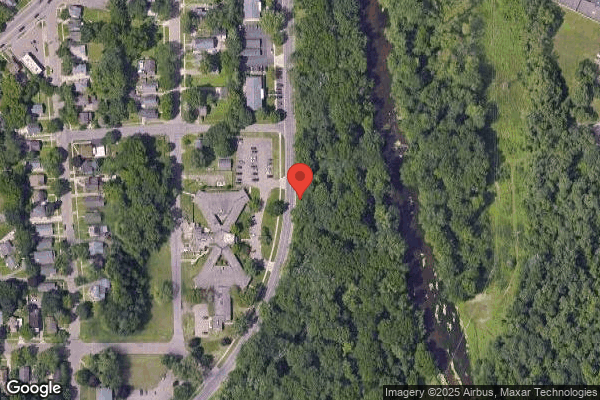
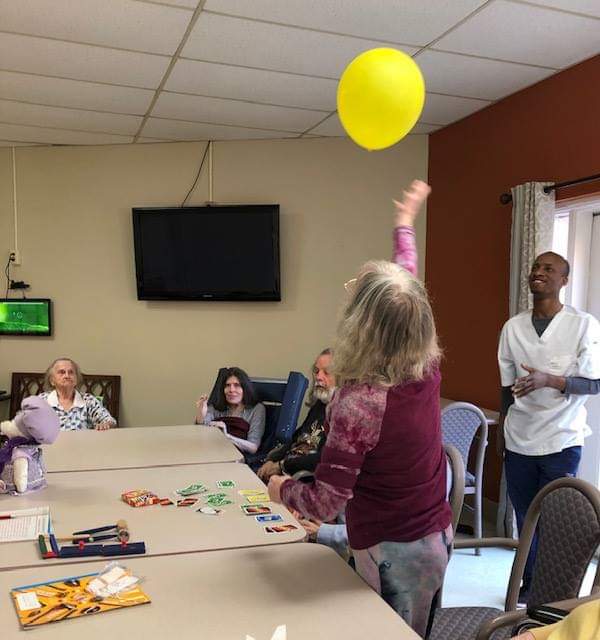
675 Wagner Drive, Battle Creek, MI 49017 (269) 969-6244
For profit - Partnership 82 Beds Independent Data: November 2025 1 Immediate Jeopardy citation
Trust Grade
0/100
#323 of 422 in MI
Last Inspection: May 2025

Inspected within the last 6 months. Data reflects current conditions.

Overview

Pinnacle Care of Battle Creek has received a Trust Grade of F, indicating significant concerns about the facility's quality of care. With a state rank of #323 out of 422 in Michigan, they are in the bottom half of nursing homes, and #6 out of 8 in Calhoun County, meaning there are only two other options that perform better locally. The facility is, however, showing signs of improvement, with issues decreasing from 37 in 2024 to 34 in 2025. Staffing is a troubling area with a rating of 2 out of 5 stars and a high turnover rate of 55%, which is above the state average. They also face serious issues, including a staggering $171,268 in fines, indicating repeated compliance problems, and a critical finding where hot water temperatures reached unsafe levels, posing a risk of burns to residents. There were also serious concerns regarding resident care, including failure to implement necessary interventions for pressure ulcers and instances of physical abuse between residents, which further highlight the need for families to carefully consider their options.
Trust Score
F
0/100
In Michigan
#323/422
Bottom 24%
Safety Record
High Risk
Review needed
Inspections
Getting Better
37 → 34 violations
Staff Stability
⚠ Watch
55% turnover. Above average. Higher turnover means staff may not know residents' routines.
Penalties
○ Average
$171,268 in fines. Higher than 68% of Michigan facilities. Some compliance issues.
Skilled Nurses
○ Average
Each resident gets 39 minutes of Registered Nurse (RN) attention daily — about average for Michigan. RNs are the most trained staff who monitor for health changes.
Violations
⚠ Watch
109 deficiencies on record. Higher than average. Multiple issues found across inspections.
★★☆☆☆
2.0
Overall Rating
★★☆☆☆
2.0
Staff Levels
★★★★★
5.0
Care Quality
★☆☆☆☆
1.0
Inspection Score
Stable
2024: 37 issues
2025: 34 issues

The Good

  • 5-Star Quality Measures · Strong clinical quality outcomes
  • Full Sprinkler Coverage · Fire safety systems throughout facility
  • No fines on record

Facility shows strength in quality measures, fire safety.

The Bad

2-Star Overall Rating

Below Michigan average (3.1)

Below average - review inspection findings carefully

Staff Turnover: 55%

Near Michigan avg (46%)

Higher turnover may affect care consistency

Federal Fines: $171,268

Well above median ($33,413)

Significant penalties indicating serious issues

The Ugly 109 deficiencies on record

1 life-threatening 3 actual harm
Sept 2025 1 deficiency
CONCERN (D) 📢 Someone Reported This

A family member, employee, or ombudsman was alarmed enough to file a formal complaint

Potential for Harm - no one hurt, but risky conditions existed

Free from Abuse/Neglect (Tag F0600)

Could have caused harm · This affected 1 resident

**NOTE- TERMS IN BRACKETS HAVE BEEN EDITED TO PROTECT CONFIDENTIALITY** This citation pertains to intakes 1194799 and 2564904.Based on observation, interview and record review, the facility failed to ...

Read full inspector narrative →
**NOTE- TERMS IN BRACKETS HAVE BEEN EDITED TO PROTECT CONFIDENTIALITY** This citation pertains to intakes 1194799 and 2564904.Based on observation, interview and record review, the facility failed to protect the resident's (R1's) right to be free from sexual abuse by R2.Findings include: R1:Review of the medical record reflected R1 admitted to the facility on [DATE], with diagnoses that included Parkinson's and dementia. The Quarterly Minimum Data Set (MDS), with an Assessment Reference Date (ARD) of 7/9/25, reflected R1 scored zero out of 15 (severe cognitive impairment) on the Brief Interview for Mental Status (BIMS- a cognitive screening tool) and required supervision or touching assistance for walking. On 9/10/25, at 9:12 AM, R1 was observed lying in bed, awake. She acknowledged having friends at the facility but did not know their names. R2 denied concerns pertaining to interactions with other residents.R2:Review of the medical record reflected R2 admitted to the facility on [DATE], with diagnoses that included Alzheimer's. The Annual MDS, with an ARD of 6/20/25, reflected R2 scored nine out of 15 (moderate cognitive impairment) on the BIMS, did not walk and required substantial/maximal assistance for transfers.On 9/10/25, at 8:25 AM, R2 was observed seated in a wheelchair, in his room. R2 denied having any interactions with female residents, including touching. R2 denied having been talked to about his interactions with other residents.R1's medical record included a Progress Note for 6/24/25 at 6:33 PM, which reflected she set off the door alarm when entering the North unit. R1 stated her boyfriend lived over there, and she was going to see him. According to the note, R1 was redirected to her unit.R1's medical record included a Progress Note for 6/25/25 at 4:09 AM, which reflected that at approximately 7:55 PM (on 6/24/25), a Certified Nurse Aide (CNA) reported R1 was observed in R2's room, with her shirt lifted above her breasts. R2's medical record included a Progress Note for 6/24/25 at 9:20 PM, which reflected a CNA observed R1 in R2's room. R1's shirt was up, her breasts were exposed, and R2 was touching R1's breasts.In a phone interview on 9/9/25 at 2:26 PM, CNA C reported that when walking by R2's room, she observed R1 in the room, with her back towards the door and her shirt lifted up. CNA C observed R2 touching R1's chest. CNA C reported she was unsure of what to do and left the unit to notify Registered Nurse (RN) D of the observation. When CNA C and RN D returned together, R1 continued to be in R2's room and was redirected out at that time. CNA C stated she received education, from RN D, that she should have removed R1 from R2's room at the time of her observation. CNA C was unaware of any further incidents between R1 and R2 since 6/24/25. In a phone interview on 9/9/25 at 2:52 PM, RN D recalled a CNA running up to her, stating R1 was in R2's room. Upon responding to R2's room, R1 was seated on R2's bed, fully clothed at that time. RN D was unaware of any further incidents between R1 and R2 since 6/24/25.R1's medical record included a Social Services Progress Note for 6/26/25, which reflected R1 could not recall the incident.R2's medical record included a Progress Note for 6/26/25, which reflected the Social Worker met with R2 to discuss the incident on 6/24/25. According to the note, R2 stated no harm was done.R1's Care Plan reflected an intervention, dated 7/1/25, that she was unable to consent to any sexual relations due to dementia and would require the consent of her Guardian. R2's Care Plan reflected an intervention, dated 7/1/25, that he may be verbally and physically sexually inappropriate with women. R1's medical record included a Progress Note for 7/5/25 at 2:23 PM, which reflected that around 10:30 AM, Maintenance staff observed R1 and R2 in the main dining room. R2 was observed rubbing R1's leg and buttocks. According to the note, the residents were separated.In an interview on 9/10/25 at 9:38 AM, Licensed Practical Nurse (LPN) F reported being notified, by Maintenance, that R2 was touching R1 on the outside of her pants. LPN F stated she had been aware that R1 had previously been in R2's room (on 6/24/25) but knew nothing more than that. During an interview on 9/10/25 at 10:24 AM, Nursing Home Administrator (NHA) A reported R1 wanted to see her friend and was let into the secure unit by a CNA (on 6/24/25). When walking by R2's room, a CNA observed R1 with her shirt lifted and R2 fondling R1's breasts. NHA A reported they were trying to keep R1 and R2 separated after the incident, and R1 was started on antibiotics for a urinary tract infection. NHA A reported there was a second incident (7/5/25), when Activities staff took R2 to the dining room, to go outdoors for a smoke break. While staff were gathering other residents, R1 went in the dining room and approached R2. R2 was observed touching R1's leg and buttocks, on the outside of her clothing.
May 2025 30 deficiencies 1 IJ
CRITICAL (J)

Immediate Jeopardy (IJ) - the most serious Medicare violation

Accident Prevention (Tag F0689)

Someone could have died · This affected 1 resident

**NOTE- TERMS IN BRACKETS HAVE BEEN EDITED TO PROTECT CONFIDENTIALITY** On 05/05/25 at 01:03 P.M., Domestic hot water temperatures were monitored utilizing a ThermoWorks Super-Fast Thermapen model CR2...

Read full inspector narrative →
**NOTE- TERMS IN BRACKETS HAVE BEEN EDITED TO PROTECT CONFIDENTIALITY** On 05/05/25 at 01:03 P.M., Domestic hot water temperatures were monitored utilizing a ThermoWorks Super-Fast Thermapen model CR2032 digital thermometer. The following domestic hot water temperatures were recorded: Resident room [ROOM NUMBER]: 128.9 degrees Fahrenheit* Resident room [ROOM NUMBER]: 136.7 degrees Fahrenheit* Resident room [ROOM NUMBER]: 152.6 degrees Fahrenheit* Resident room [ROOM NUMBER]: 145.6 degrees Fahrenheit* Resident room [ROOM NUMBER]: 106.9 degrees Fahrenheit Resident room [ROOM NUMBER]: 105.0 degrees Fahrenheit Resident room [ROOM NUMBER]: 111.7 degrees Fahrenheit On 05/05/25 at 01:45 P.M., An interview was conducted with Environmental Services Director (ESD) E regarding domestic hot water temperature monitoring and documentation log sheets. (ESD) E stated: We routinely monitor hot water temperatures. (ESD) E also stated: The temperatures are recorded on the log sheet. On 05/06/25 at 01:15 P.M., Domestic hot water temperatures were monitored utilizing a ThermoWorks Super-Fast Thermapen model CR2032 digital thermometer. The following domestic hot water temperatures were recorded: South Unit Resident room [ROOM NUMBER]: 142.7 degrees Fahrenheit* North Unit (Memory Care) Resident room [ROOM NUMBER]: 105.5 degrees Fahrenheit Resident room [ROOM NUMBER]: 126.9 degrees Fahrenheit* Resident room [ROOM NUMBER]: 129.9 degrees Fahrenheit* Resident room [ROOM NUMBER]: 129.8 degrees Fahrenheit* Resident room [ROOM NUMBER]: 134.6 degrees Fahrenheit* Resident room [ROOM NUMBER]: 147.1 degrees Fahrenheit* Resident room [ROOM NUMBER]: 137.9 degrees Fahrenheit* Resident room [ROOM NUMBER]: 147.9 degrees Fahrenheit* On 05/06/25 at 03:15 P.M., Domestic hot water monitoring log sheets were requested from (ESD) E. (ESD) E stated: I know I have all of the temperature log sheets. On 05/06/25 at 03:24 P.M., An interview was conducted with (ESD) E regarding facility domestic hot water monitoring. (ESD) E stated: Maintenance Technician F usually takes water temperatures. (ESD) E also stated: I have taken hot water temperatures occasionally. On 05/06/25 at 03:38 P.M., An interview was conducted with Maintenance Technician F regarding the device currently used to monitor facility domestic hot water temperatures. Maintenance Technician F stated: I use a [NAME] digital thermometer. Maintenance Technician F also stated: I dropped the old thermometer and broke it. On 05/06/25 at 03:45 P.M., Domestic hot water temperatures were monitored by this surveyor utilizing a ThermoWorks Super-Fast Thermapen model CR2032 digital thermometer. The following domestic hot water temperatures were recorded: Resident room [ROOM NUMBER]: 127.6 degrees Fahrenheit* Resident room [ROOM NUMBER]: 137.1 degrees Fahrenheit* Resident room [ROOM NUMBER]: 137.1 degrees Fahrenheit* Resident room [ROOM NUMBER]: 143.0 degrees Fahrenheit* Resident room [ROOM NUMBER]: 138.2 degrees Fahrenheit* Resident room [ROOM NUMBER]: 150.7 degrees Fahrenheit* Resident room [ROOM NUMBER]: 144.6 degrees Fahrenheit* Resident room [ROOM NUMBER]: 142.3 degrees Fahrenheit* Resident room [ROOM NUMBER]: 124.2 degrees Fahrenheit* Resident room [ROOM NUMBER]: 125.0 degrees Fahrenheit* On 05/06/25 at 03:45 P.M., Domestic hot water temperatures were monitored by Maintenance Technician F utilizing a [NAME] (no model number) digital thermometer. The following domestic hot water temperatures were recorded: Resident room [ROOM NUMBER]: 127.4 degrees Fahrenheit* Resident room [ROOM NUMBER]: 136.2 degrees Fahrenheit* Resident room [ROOM NUMBER]: 136.4 degrees Fahrenheit* Resident room [ROOM NUMBER]: 143.4 degrees Fahrenheit* Resident room [ROOM NUMBER]: 137.4 degrees Fahrenheit* Resident room [ROOM NUMBER]: 150.0 degrees Fahrenheit* Resident room [ROOM NUMBER]: 144.6 degrees Fahrenheit* Resident room [ROOM NUMBER]: 141.6 degrees Fahrenheit* Resident room [ROOM NUMBER]: 123.8 degrees Fahrenheit* Resident room [ROOM NUMBER]: 124.8 degrees Fahrenheit* On 05/06/2025 at 04:30 P.M., Record review of the (Corporation Name) Immediate Jeopardy (IJ) Removal Plan revealed the following narrative: During annual survey, it was identified that water temperatures in resident room bathrooms were exceeding the regulatory standard. Below are the immediate action items completed in proposal for removal of the (IJ). 1. 100% of community residents were assessed by the Director of Nursing and designees on 05/06/25 to ensure no negative effects related to water temperatures. Resident showers were taken offline to ensure safety of water temperatures, to include bed baths. 2. The water temperature was adjusted to ensure temperatures within regulatory standard. The Maintenance Director and designee conducted a 100% community audit of resident area water sources to ensure appropriate temperatures per regulatory guidance. 3. The Administrator reviewed the policy and procedure related to Safe Water Temperatures on 05/06/2025 with changes completed as necessary. Community staff will be educated on the policy for Safe Water Temperatures, with all staff completed or removed from the schedule by 05/09/25. 4. The Maintenance Director or designee will conduct an audit of resident room water temperatures daily, on both shifts for seven days, then twice weekly thereafter to ensure water temps meet regulatory standards. Results of the audits will be brought to the Quality Assurance Performance Improvement Committee for review. Any changes to the auditing process will be determined by the QAPI Committee. The Administrator is responsible to attain and maintain compliance. On 05/06/25 at 04:45 P.M., Domestic hot water temperatures were monitored utilizing a ThermoWorks SuperFast Thermapen model CR2032 digital thermometer. The following temperature was recorded: Staff/Visitor Restroom Hand Sink - 155.0 degrees Fahrenheit*. The State Operations Manual (SOM) Appendix PP section F689 Accidents states: Note: (*) Water Temperature - Water may reach hazardous temperatures in hand sinks, showers, tubs, and any other source or location where hot water is accessible to a resident. Burns related to hot water/liquids may also be due to spills and/or immersion. Many residents in long-term care facilities have conditions that may put them at increased risk for burns caused by scalding. These conditions include: decreased skin thickness, decreased skin sensitivity, peripheral neuropathy, decreased agility (reduced reaction time), decreased cognition or dementia, decreased mobility, and decreased ability to communicate. The degree of injury depends on factors including the water temperature, the amount of skin exposed, and the duration of exposure. Some States have regulations regarding allowable maximum water temperature. Table 1 illustrates damage to skin in relation to the temperature of the water and the length of time of exposure. Table 1. Time and Temperature Relationship to Serious Burns Water Time Required for a 3rd Degree Temperature Burn to Occur _________________________________________________________________ 155°F 68°C 1 sec 148°F 64°C 2 sec 140°F 60°C 5 sec 133°F 56°C 15 sec 127°F 52°C 1 min 124°F 51°C 3 min 120°F 48°C 5 min 100°F 37°C Safe Temperatures for Bathing (see Note) _________________________________________________________________ NOTE: Burns can occur even at water temperatures below those identified in the table, depending on an individual's condition and the length of exposure. Based upon the time of exposure and the temperature of the water, the severity of the harm to the skin is identified by the degree of burn, as follows. o First-degree burns involve the top layer of skin (e.g., minor sunburn). These may present as red and painful to touch, and the skin will show mild swelling. o Second-degree burns involve the first two layers of skin. These may present as deep reddening of the skin, pain, blisters, glossy appearance from leaking fluid, and possible loss of some skin. o Third-degree burns penetrate the entire thickness of the skin and permanently destroy tissue. These present as loss of skin layers, often painless (pain may be caused by patches of first- and second-degree burns surrounding third-degree burns), and dry, leathery skin. Skin may appear charred or have patches that appear white, brown, or black. On 05/07/25 at 09:14 A.M., An interview was conducted with (ESD) E regarding the domestic hot water supply. (ESD) E stated: We consulted with Facilities Supervisor for the Battle Creek Fire Department (FS) G. (ESD) E also stated: He [(FS) G] suggested a regulator was going out on the South Unit water heater. (ESD) E additionally stated: We bled out the hot water from the hot water storage tanks. (ESD) E further stated: room [ROOM NUMBER] was at 118.2 degrees Fahrenheit. (ESD) E also stated: room [ROOM NUMBER] was at 120.5 degrees Fahrenheit. (ESD) E additionally stated: room [ROOM NUMBER] was at 124.0 degrees Fahrenheit. (ESD) E further stated: The staff/visitor restroom hand sink was at 125.0 degrees Fahrenheit. (ESD) E also stated: Temperatures were monitored at approximately 7:00 AM this morning. On 05/07/25 at 09:40 A.M., An environmental tour of sampled resident rooms was conducted with Housekeeper H. Domestic hot water temperatures were monitored utilizing a ThermoWorks Super-Fast Thermapen model CR2032 digital thermometer. The following restroom hand sinks domestic hot water temperatures were noted: 117: 125.1 degrees Fahrenheit* 122: 128.1 degrees Fahrenheit* 123: 128.8 degrees Fahrenheit* 124: 130.3 degrees Fahrenheit* 128: 124.0 degrees Fahrenheit* 129: 124.5 degrees Fahrenheit* 131: 121.3 degrees Fahrenheit* On 05/07/25 at 12:06 P.M., An interview was conducted with (ESD) E regarding the facility maintenance work order system. (ESD) E stated: We have TELS. On 05/07/25 at 12:23 P.M., Domestic hot water temperatures were monitored utilizing a ThermoWorks Super-Fast Thermapen model CR2032 digital thermometer. The following domestic hot water temperatures were recorded: South Unit Shower Room Hand Sink - 123.8 degrees Fahrenheit* On 05/07/25 at 12:30 P.M., An interview was conducted with Maintenance Technician F regarding the South Unit Shower Room floor drain concern. Maintenance Technician F stated: We have contacted (Contractual Vendor Name) for commercial repairs related to both plumbing and hot water heater issues. On 05/07/25 at 01:26 P.M., Domestic hot water temperatures were monitored utilizing a ThermoWorks Super-Fast Thermapen model CR2032 digital thermometer. The following domestic hot water temperatures were recorded: Staff/Visitor Restroom: Hand Sink - 126.4 degrees Fahrenheit* On 05/07/25 at 01:33 P.M., An interview was conducted with Nursing Home Administrator (NHA) A regarding removal of the domestic hot water supply excessive hot water temperature immediacy. (NHA) A stated: We are not providing showers or bed baths until further notice. (NHA) A also stated: We have posted signage in all resident rooms and shower rooms. On 05/07/25 at 01:41 P.M., Record review of the resident room and shower room posted signage revealed the following narratives: Resident Room posted signage states: Please do not use water without first calling for staff assist. Shower Room posted signage states: Showers are out of order until further notice. On 05/07/25 at 03:50 P.M., An interview was conducted with Commercial Contractor (CC) I regarding the domestic hot water temperature concern. (CC) I stated: The recirculation pump switch was turned off. (CC) I also stated: If the recirculation pump is off, you can't get consistent hot water temperatures. (CC) I further stated: The cold-water supply was also closed to the tempering system. On 05/08/25 at 08:45 A.M., Record review of the Policy/Procedure entitled: Safe Water Temperatures dated (no date) revealed under Policy: It is the policy of this facility to maintain appropriate water temperatures in resident care areas. Record review of the Policy/Procedure entitled: Safe Water Temperatures dated (no date) further revealed under Policy Explanation and Compliance Guidelines: (4) Staff will report abnormal findings, such as complaints of water too cold of hot, burns or redness, or any problems with water temperature (ex. water is painful to touch or causes redness) to the supervisor and/or maintenance staff. (5) Water temperatures will be set to a temperature of no more than (120 degrees Fahrenheit) or (49 degrees Celsius), or the state's allowable maximum water temperature. (6) Maintenance staff will check water heater temperature controls and the temperatures of tap water in all hot water circuits weekly and as needed. (7) Documentation of testing will be maintained for 3 years and kept in the maintenance office. On 05/08/25 at 09:00 A.M., Record review of the Hot Water Temperature Monitoring Log Sheets for the last 126 days revealed no specific entries related to excessive domestic hot water temperatures. Note: Numerous Hot Water Temperature Monitoring Log Sheets were observed completely missing from the requested timeframe. This citation has two separate DPS's: A and B. DPS A) Based on observation, interview, and record review, the facility failed to ensure hot water temperatures were in the comfortable range of 100-120 degrees Fahrenheit for two of 20 residents who resided in the dementia unit (Resident #31 and 39), resulting in Immediate Jeopardy when R31, who was independent with ambulation had a bathroom water temperature of 150 degrees Fahrenheit; and R39 who and was independent with ambulation, had a bathroom water temperature of 144.6 degrees Fahrenheit; and 2) facility wide resident bathroom water temperatures that tempted at greater than 120 degrees Fahrenheit with potential for second and/or third degree burns. Findings Included: Resident #31 (R31) A review of the medical record showed that Resident #31 (R31) was admitted to the facility on [DATE] and readmitted on [DATE]. Diagnoses included generalized anxiety disorder, wandering, type 2 diabetes mellitus, psychotic disorder with delusions, dementia, and Alzheimer ' s disease. According to the Minimum Data Set (MDS) with an Assessment Reference Date (ARD) of 2/4/25, R31 scored 1 out of 15 on the Brief Interview for Mental Status (BIMS), indicating severe cognitive impairment. Resident #39 (R39) Resident #39 (R39) was admitted on [DATE] with diagnoses including generalized anxiety disorder, psychotic disorder with delusions, dementia, and Alzheimer ' s disease. The MDS with an ARD of 4/5/25 reflected a BIMS score of 12 out of 15, indicating moderate cognitive impairment. Domestic hot water temperatures were measured on multiple occasions in where both R31 and R39 resided: On 05/05/25 at 1:03 PM: R 39s Room= 152.6°F On 05/06/25 at 1:15 PM: R 31s Room =137.9°F and R 39s room [ROOM NUMBER].9°F, On 5/06/25 at 3:45 PM for R 31s Room =150.7°F and R 39s Room =144.6°F Temperatures above 120°F are considered hazardous and pose a risk of scalding, especially for vulnerable populations such as those with cognitive impairment. On 05/06/2025 at 5:00 PM, the Administrator was notified of the Immediate Jeopardy that was identified on 5/6/2025, and began on 5/6/2025 when two identified residents (Resident #31 and 39) bathroom water temperatures were found to be greater than 120 degrees Fahrenheit. On 5/12/2025 the surveyor verified the facility implemented the following corrective action to remove the Immediate Jeopardy on 05/06/2025: 1. 100% of community residents were assessed by the Director of Nursing and designees on 05/06/25 to ensure no negative effects related to water temperatures. Resident showers were taken offline to ensure safety of water temperatures, to include bed baths. 2. The water temperature was adjusted to ensure temperatures within regulatory standard. The Maintenance Director and designee conducted a 100% community audit of resident area water sources to ensure appropriate temperatures per regulatory guidance. 3. The Administrator reviewed the policy and procedure related to Safe Water Temperatures on 05/06/2025 with changes completed as necessary. Community staff will be educated on the policy for Safe Water Temperatures, with all staff completed or removed from the schedule by 05/09/25. 4. The Maintenance Director or designee will conduct an audit of resident room water temperatures daily, on both shifts for seven days, then twice weekly thereafter to ensure water temps meet regulatory standards. Results of the audits will be brought to the Quality Assurance Performance Improvement Committee for review. Any changes to the auditing process will be determined by the QAPI Committee. The Administrator is responsible to attain and maintain compliance. Although the Immediate Jeopardy was removed on 5/6/2025, the facility remained out of compliance at a scope of widespread and severity of no actual harm with the potential for more than minimal harm that is not Immediate Jeopardy due to sustained compliance had not been verified by the state agency. DPS B) Based on observation, interview and record review, the facility failed to 1) investigate falls, develop and implement post fall interventions, and prevent further falls for one of one (Resident #58) reviewed for falls and 2) facility failed to ensure resident was free from potential accidents or hazards by allowing unsupervised access to chewing tobacco for one (R38) of three residents reviewed for accidents. Findings include: Resident #58 A review of the medical record revealed that Resident #58 (R58) was admitted to the facility on [DATE], with diagnoses including difficulty walking, muscle weakness, wandering, and dementia. The Minimum Data Set (MDS), with an Assessment Reference Date (ARD) of 1/24/2025, indicated that R58 scored 3 out of 15 on the Brief Interview for Mental Status (BIMS), reflecting severe cognitive impairment. On 5/05/2025 at 12:19 PM, R58 was observed ambulating independently and attempting to exit the locked memory care unit. When redirected, she became agitated and expressed a desire to go outside. R58 was noted to be pleasantly confused and non-interviewable. During an interview conducted on 5/05/2025 at 12:13 PM, Family Member DD reported that R58 had experienced multiple falls, including one that resulted in hospitalization. A review of incident and accident reports, as well as progress notes, revealed the following fall incidents: On 10/26/2024 at 6:35 PM, R58 was found sitting on the floor next to her bed. The care plan was updated to ensure that R58's walker remained within reach while she was in bed. On 1/28/2025 at 1:39 AM, R58 was discovered lying on her back on the floor of her room. A moderate amount of blood was noted around her head, and a laceration was observed on the left parietal region. She was transferred to a local emergency department, where she received one staple to close the head wound. Per the incident report, staff stated she had been ambulating with her walker at the time of the fall. Despite the severity of this incident, no new fall interventions were added to her care plan, no incident report was completed, and no investigation was initiated. On 1/29/2025 at 7:45 AM, R58 stood up from her wheelchair, lost her balance, and fell backward, striking her head against the medication cart. Although no apparent injuries were noted, this was R58's second fall in two days. Again, the care plan was not updated to include new fall interventions-only a request for a therapy screen was noted. No incident report was created, and no investigation occurred. On 3/12/2025 at 6:00 AM, R58 was found lying on her left side on the floor, leaning against the closet in her room. No injuries were reported, yet no additional fall prevention strategies were added to her care plan. Further observation on 5/07/2025 at 9:45 AM revealed that R58 was in bed with her call light draped over the headboard, out of her reach, and her walker placed against the wall, also out of reach, raising ongoing safety concerns. In an interview on 5/08/2025 at 11:22 AM, the Director of Nursing (DON) B stated that the facility's expectations following a fall include completing an incident report and implementing an immediate intervention to prevent recurrence. Resident # 38 (R38) Review of the medical record revealed R38 was admitted to the facility on [DATE] with diagnoses that included: legal blindness, muscle weakness, need for assistance with personal care, anxiety disorder, and depression. The Minimum Data Set (MDS) with an Assessment Reference Date (ARD) of 4/18/25 revealed R38 scored 13 out of 15 (cognitively intact) on the Brief Interview for Mental Status (BIMS-a cognitive screening tool). On 5/5/25 at 10:15 AM, R38 was observed asleep on his back with a can of chewing tobacco on his bedside tray table, as well as a Styrofoam cup with tobacco spit in it. On 5/5/25 at 12:24 PM, a staff member was observed entering R38's room to see if he was done with his lunch tray. This staff member exited the room and reported that R38 was still eating his lunch. The chewing tobacco and cup with spit in it was easily visible on R38's bedside table, next to his lunch tray. On 5/5/25 at 12:28 PM R38 was queried about the chewing tobacco on his bedside table, R38 reported that he was told prior to his admission that it was ok for him to have it on him and to use it in his room, they let me have it here. On 5/6/25 at 2:07 PM, R38 was observed to still have chewing tobacco and a spit cup on his bedside table. On 5/6/25 at 2:12 PM, the director of nursing (DON) was asked what the facilities policy on chewing tobacco was. She reported that she would have to look it up. On 5/6/25 at 2:14 PM, DON and this surveyor entered R38's room. DON stated that she would clean up the dry tobacco on resident's clothing and bedside table. DON removed the can of tobacco and the cup of tobacco spit. DON reported that she believed chewing tobacco should be treated like a medication and would need to be assessed to determine if it would be safe for the resident to have at his bedside. On 05/08/25 at 12:54 PM, during an interview with CNA II reported that she was aware that R38 had chewing tobacco and had observed it at his bedside. She reported that it was something new. CNA II further stated that the resident was not supposed to have it unless he went outside to use it. On 5/12/25 at 8:19 PM during a telephone interview with R38's family member (FM KK), they reported that they had been bringing in chewing tobacco to R38 for a few months and that the staff was aware and that there wasn't a problem with it until this week. On 5/08/25 at 2:01 PM, during an interview with Director of Nursing (DON) and Assistant Director of Nursing (ADON), it was reported to her that a review of the smoking policy revealed that it does not specifically address chewing tobacco and how was the facility planning to address it, she stated that what she had done for R38 specifically was talked to social services staff to do an assessment to if R38 could self-administer. She further stated that he could use it during smoking breaks and that she plans to bring it to QAPI (Quality and Assurance Performance Improvement). DON reported that she took the tobacco to the nurse and had her lock it up in the narcotic drawer in the medication cart and label it. Assistant director of nursing (ADON) reported that social services staff had placed it in the lock box with the other resident's cigarettes. When asked if they would agree that it isn't safe for a visually impaired resident to have access to chewing tobacco and associated spit cup both the DON and ADON agreed, with the ADON adding especially unattended/unassisted. On 5/6/25 at 2:41 PM a request was made via email to the facility administrator (nursing home administrator-NHA) to clarify whether the facility had a policy that specifically addressed chewing tobacco and on 5/6/25 at 2:50 PM, NHA responded that they have searched and do not have anything specific to chewing tobacco. Review of the facilities policy titled Pinnacle Care of Battle Creek Smoking Contract, documented in part I am not allowed to have my own cigarettes, E-cigarettes, vape pens, matches of lighters while I reside at the facility. If I have any cigarettes, E-cigarettes, vape pens, matches or lighters on my person, I will turn all smoking materials in to the Activities Director before returning inside the facility . I am not allowed to give, get, or request cigarettes, E-cigarettes, or vape pens from any other resident at any time .
SERIOUS (G)

Actual Harm - a resident was hurt due to facility failures

Pressure Ulcer Prevention (Tag F0686)

A resident was harmed · This affected 1 resident

**NOTE- TERMS IN BRACKETS HAVE BEEN EDITED TO PROTECT CONFIDENTIALITY** Based on observation, interview and record review the facility 1) failed to implement and update Physician orders, 2) accurately...

Read full inspector narrative →
**NOTE- TERMS IN BRACKETS HAVE BEEN EDITED TO PROTECT CONFIDENTIALITY** Based on observation, interview and record review the facility 1) failed to implement and update Physician orders, 2) accurately assess and document a pressure ulcer, 3) failed to ensure pressure ulcer prevention interventions were implemented, 4) failed to adequately assess and treat pain prior to wound care and 5) failed to prevent the development of pressure ulcers for 2 (Resident #11, Resident #20) out of 3 reviewed for pressure ulcers resulting in worsening of a pressure ulcer, unrelieved pain during wound care, and an increased risk of further skin breakdown. Findings include: Resident #20 (R20) Review of the medical record reflected that Resident #20 was admitted to the facility on [DATE] and readmitted on [DATE], with diagnoses that included muscle weakness, contractures of both right and left legs, pressure-induced deep tissue damage of the left heel, dementia, and acute and chronic respiratory failure with hypoxia. The Minimum Data Set (MDS), with an Assessment Reference Date of 02/10/25, reflected that Resident #20 scored 3 out of 15 on the Brief Interview for Mental Status, indicating severe cognitive impairment. Resident #20 was not interviewable. On 05/05/25 at 10:07 AM, Resident #20 was observed seated in the dining room wearing pressure-relieving ankle-foot orthosis (PRAFO) boots on both feet. However, the right boot was nearly detached from Resident #20's foot. During an interview conducted on 05/05/25 at 10:43 AM, Family Member O reported that Resident #20 had developed a sore on his heel. Family Member O stated that Resident #20 was unable to move his legs independently due to muscle atrophy and contractures. A review of the Activities of Daily Living Care Plan indicated that Resident #20 required maximum assistance of two persons for bed mobility. A skin assessment dated [DATE], completed upon readmission, described an unstageable pressure ulcer on the left heel with a length of 5 centimeters and a width of 7 centimeters. The Skin Integrity Care Plan for Resident #20 included an intervention dated 02/06/25 that stated, I need to wear off-loading boots for heel protection. A review of the Physician's Orders revealed an active order initiated on 03/13/25, which stated Cleanse left heel deep tissue injury with Dakin's solution, pat dry, apply hydrogel, cover with Kerlix gauze. Change dressing daily and as needed. Resident to have pressure-relieving ankle-foot orthosis boots on at all times. An outside wound care service note dated 04/21/25 described the left heel wound as an unstageable, pressure-induced tissue injury measuring 7.2 centimeters in length by 5.6 centimeters in width, with an undetermined depth. The wound bed was described as 10 percent granulation tissue, 20 percent slough, and 70 percent eschar. Treatment instructions included Clean with Dakin's solution, apply Santyl and alginate. A facility Weekly Wound Healing Record dated 04/21/25 assessed the same wound as a suspected deep tissue injury. The facility nurse described the wound bed as having granulation tissue and 20 percent slough, with measurements of 7.2 centimeters in length by 5.6 centimeters in width and an undetermined depth. The treatment plan included Cleanse with normal saline, apply Santyl and alginate topically, wrap with Kerlix daily. The corresponding physician's order was not updated to reflect these changes in treatment. An outside wound care service note dated 04/28/25 described the left heel wound as an unstageable, pressure-induced tissue injury measuring 7.0 centimeters by 4.7 centimeters, with an undetermined depth. The wound was noted to have 20 percent granulation tissue, 20 percent slough, and 60 percent eschar. Treatment instructions included Clean with normal saline and apply Santyl and alginate daily. Cover with an abdominal pad and wrap with Kerlix. A Weekly Wound Healing Record dated 04/28/25 documented the wound as a suspected deep tissue injury with measurements of 7.2 centimeters in length by 4.9 centimeters in width, and no depth recorded. The wound bed was noted to contain 20 percent slough. The treatment plan included Cleanse with normal saline, apply Santyl and alginate daily. Review of the Physician's Orders revealed that the orders still reflected the prior, outdated treatment: Cleanse left heel deep tissue injury with Dakin's solution, pat dry, apply hydrogel, cover with Kerlix gauze. Change daily and as needed. No update had been made to reflect the current wound care plan. On 05/07/25 at 09:24 AM, Resident #20 was observed lying flat in bed without wearing PRAFO boots. The boots were seen on the resident's wheelchair. At 09:47 AM on 05/07/25, Registered Nurses Q and J gathered supplies to perform wound care for Resident #20. The resident remained in bed, lying flat and without the boots. Registered Nurse Q verified the current physician order and gathered Dakin's solution and hydrogel as per the outdated order. Registered Nurse J confirmed that the left heel wound was a suspected deep tissue injury and stated she participates in wound rounds with the nurse practitioner weekly and updates orders based on the plan of care. During the procedure, Registered Nurse Q removed the dressing and described the wound as an open area with slough. She applied Dakin ' s solution, then hydrogel, covered the wound with an abdominal pad, and secured it with Kerlix and tape. Resident #20 verbalized ouch multiple times during the dressing change. Following the dressing change, Registered Nurse Q applied the PRAFO boots and stated she would notify the assigned nurse that Resident #20 required acetaminophen for pain. At 10:27 AM on 05/07/25, Certified Nursing Assistant R stated she was familiar with Resident #20's care and confirmed that the resident does not refuse care, including wearing the PRAFO boots. On 05/08/25 at 11:35 AM, Director of Nursing B explained that an outside wound care provider visits the facility, assesses wounds, and recommends treatment changes. She confirmed that facility staff are responsible for updating the physician's orders accordingly. After reviewing the Weekly Wound Healing Record, the Director of Nursing agreed that the facility's assessment of the left heel wound was inaccurate, as it continued to describe the injury as a suspected deep tissue injury rather than an unstageable pressure ulcer. At 12:12 PM on 05/08/25, Registered Nurse J reviewed the nurse practitioner's wound treatment recommendations alongside the current physician's orders in the electronic medical record. Registered Nurse F agreed that the physician orders did not match the nurse practitioner's plan of care. She updated the physician's order to Cleanse with normal saline, apply Santyl and alginate, and cover with Kerlix gauze. Additionally, review of the Medication Administration Record revealed that Resident #20 did not receive as-needed acetaminophen for pain until after the wound care procedure had been completed. Resident #11 (R11): Review of the medical record reflected R11 admitted to the facility 7/3/14 and readmitted [DATE], with diagnoses that included vascular dementia, dependence on wheelchair and diabetes. The Quarterly Minimum Data Set (MDS), with an Assessment Reference Date (ARD) of 3/31/25, reflected R11's cognition and mood were not assessed. The same MDS reflected R11 did not walk, was dependent for transfers and required substantial/maximal assistance with personal hygiene and partial/moderate assistance with rolling left and right. Weekly Wound Healing Records, dated 4/21/25 and 4/28/25, reflected R11 had a facility-acquired pressure ulcer to the posterior (back) scrotum, which developed 4/18/25. The wound was documented as stage II (two) (partial thickness loss of dermis/middle layer of skin, presenting as a shallow open ulcer with a red/pink wound bed; may also present as an intact or open/ruptured blister), measuring 0.9 centimeters (cm) in length by 0.9 cm in width and 0.1 cm in depth. The appearance of the wound bed was not documented. Weekly Wound Healing Records, dated 4/21/25 and 4/28/25, reflected R11 had a facility-acquired pressure ulcer to left intergluteal (between the buttocks) region, which developed 4/18/25. The wound was documented as stage II, measuring 0.9 cm in length by 0.5 cm in width and 0.1 cm in depth. The appearance of the wound bed was not documented. On 05/06/25 at 9:21 AM, R11 was observed seated in a wheelchair, in the hallway. A seating cushion was not observed in the wheelchair. On 05/06/25 at 12:44 PM, R11 was observed seated in their wheelchair, in the hallway. A seating cushion was not observed in the wheelchair. On 05/06/25 at 2:10 PM, R11 was observed seated in their wheelchair, in the main dining room. A seating cushion was not observed in the wheelchair. On 05/06/25, R11 was observed seated in their wheelchair, without a seating cushion at 3:42 PM, 4:05 PM and 4:52 PM. On 05/07/25 at 8:12 AM, R11 was observed seated in their wheelchair, in the hallway. A seating cushion was not observed in the wheelchair. On 05/07/25 at 8:22 AM, a request was made, to staff, to observe R11's skin during care that day. On 05/07/25 at 9:22 AM, Certified Nurse Aide (CNA) W and CNA V began care, including preparing to transfer R11 to bed as Licensed Practical Nurse (LPN) X prepared wound care supplies. Once LPN X had gathered wound care supplies and returned to the room, R11 refused assessment and treatment of their wounds. On 05/07/25 at 11:00 AM, R11 was observed lying in bed, on a standard mattress, positioned towards their right side. An additional mattress was on the floor at the right bedside. R11's wheelchair was observed in the room, with a seating cushion in place. On 05/07/25 at 1:31 PM, R11 was observed lying in bed, on a standard mattress, positioned towards their right side. An additional mattress was on the floor at the right bedside. On 05/07/25 at 2:52 PM, R11 was observed lying in bed, on a standard mattress, positioned towards their right side. An additional mattress was on the floor at the right bedside. In an interview on 05/07/25 at 2:54 PM, CNA W reported R2 received a wheelchair cushion from the Therapy Department that morning, after being transferred from their wheelchair to bed. CNA W reported sometimes, R2 did not have a wheelchair seating cushion for weeks at a time. During a phone interview on 05/08/25 at 1:11 PM, Nurse Practitioner (NP) AA reported visiting the facility weekly for wounds. NP AA reported they had seen R11 two to three times, and R11's stage II pressure ulcers had remained stable. NP AA stated they had recommended a low air loss mattress (specialty mattress) and a cushion for R11's wheelchair. Regarding the type of wheelchair cushion recommended, NP AA reported they usually recommended Roho cushions (specialty cushion for pressure relief). According to NP AA, their recommendations had been conveyed to the facility. NP AA's visit notes for 4/21/25 and 4/28/25 reflected, .The patient is noncompliant with repositioning .Change positions often to keep pressure off the wound, and spread body weight evenly with cushions, mattresses, pillows, foam wedges, or other pressure-relieving devices . A risk for skin breakdown Care Plan reflected it was created on 7/9/2014 and was initiated 3/5/25. An additional Care Plan, initiated on 5/5/25, reflected R11 had impaired skin integrity on the scrotum and intragluteal region. R11's Care Plan did not reflect the presence of pressure ulcers, nor interventions for pressure relief.
CONCERN (D)

Potential for Harm - no one hurt, but risky conditions existed

Resident Rights (Tag F0550)

Could have caused harm · This affected 1 resident

**NOTE- TERMS IN BRACKETS HAVE BEEN EDITED TO PROTECT CONFIDENTIALITY** Based on observation, interview, and record review, the facility failed to ensure one resident (R38) was treated with dignity an...

Read full inspector narrative →
**NOTE- TERMS IN BRACKETS HAVE BEEN EDITED TO PROTECT CONFIDENTIALITY** Based on observation, interview, and record review, the facility failed to ensure one resident (R38) was treated with dignity and respect out of one reviewed. Findings include: Review of the medical record revealed R38 was admitted to the facility on [DATE] with diagnoses that included: legal blindness, muscle weakness, need for assistance with personal care, anxiety disorder, and depression. The Minimum Data Set (MDS) with an Assessment Reference Date (ARD) of 4/18/25 revealed R38 scored 13 out of 15 (cognitively intact) on the Brief Interview for Mental Status (BIMS-a cognitive screening tool). On 5/5/25 at 12:34 PM, R38 was observed lying on his back in his bed, speaking with a soft/quiet voice with his eyes closed during most of the interview. R38 reported that his roommate R35 calls him names (dumb son of a b*tch) and is not friendly at all. R38 reported that the facility is aware and that staff have been in the room and witnessed R35 calling him names. On 5/7/25 at 10:32 AM, R35 was asked what he could tell me about his interactions with his roommate R38. R35 reported that R38 is loud and has alarms that are bothersome. When asked if the two have ever exchanged words R35 replied oh yeah, he is a dumb*ss and I tell him too, he treats me like sh*t but wants me to pamper him. When asked if staff had asked him not to call R38 names, R35 smiled and said that he would prefer not to answer that question. On 5/8/25 at 12:48 PM, during an interview with CNA II, she reported that she had observed R25 being inappropriate to staff in the past. On 5/12/25 at 10:15 AM, during an interview with certified nursing assistant CNA HH, when asked what she could tell me about R38 and his roommate R35, stated that R38 had reported that his roommate called him a dumb*ss and a f*cking idiot and that he (R38) was afraid of him (R35). She further reported that R35 can have a strong demeanor when he is mad, he gets mad easily and that he had an issue with his previous roommate. CNA HH reported that she had heard R35 get loud and say things to R38 in the past but never to the extent R38 described. Review of R35's care plan revealed no interventions for inappropriate behavior until 5/12/25, despite staff and residents reports that R35 had a history of this behavior. Review of the facilities policy titled Resident Rights, documented in part The resident has a right to be treated with respect and dignity, including .The resident has the right to a safe, clean, comfortable and homelike environment, including, but not limited to receiving treatment and supports for daily living safely .
CONCERN (D)

Potential for Harm - no one hurt, but risky conditions existed

Deficiency F0552 (Tag F0552)

Could have caused harm · This affected 1 resident

**NOTE- TERMS IN BRACKETS HAVE BEEN EDITED TO PROTECT CONFIDENTIALITY** Based on interview and record review, the facility failed to obtain and document required informed consent from the resident's g...

Read full inspector narrative →
**NOTE- TERMS IN BRACKETS HAVE BEEN EDITED TO PROTECT CONFIDENTIALITY** Based on interview and record review, the facility failed to obtain and document required informed consent from the resident's guardian prior to administering a psychotropic medication for two (Resident #33, #41) of five reviewed for unnecessary medications. Findings include: Resident #33 (R33) A review of the medical record indicated that Resident #33 was admitted to the facility on [DATE] with diagnoses including major depressive disorder and early-onset Alzheimer's disease. According to the Minimum Data Set (MDS) with an Assessment Reference Date (ARD) of 3/31/25, R33 scored 0 out of 15 on the Brief Interview for Mental Status (BIMS), indicating severe cognitive impairment. During an interview conducted on 5/05/25 at 11:14 AM, family member (FM) FF reported concerns regarding the recent administration of the anti-anxiety medication Ativan (Lorazepam) to R33. The family member stated that she had questioned why he was receiving the medication and how long it had been prescribed, noting that the family, specifically FM FF guardian, had not been informed of the new medication order. A review of the medical record confirmed an active physician's order dated 3/6/25 for Lorazepam (Ativan) 0.5 mg, to be given by mouth every 4 hours as needed for anxiety. Although documentation reflected that a request for consent for the use of this psychotropic medication was initiated, a signed consent was not obtained and was not available for review by the time of survey exit. Resident #41(R41) Review of the medical record reflected R41 was admitted to the facility on [DATE] and readmitted on [DATE], with diagnoses that included dementia. R41 was not interviewable. Review of the Physician order revealed an order for Zyprexa (an antipsychotic) oral tab 2.5 milligrams initiated on 8/28/24. A signed consent was not obtained and was not available for review by the time of survey exit.
CONCERN (D)

Potential for Harm - no one hurt, but risky conditions existed

Deficiency F0578 (Tag F0578)

Could have caused harm · This affected 1 resident

**NOTE- TERMS IN BRACKETS HAVE BEEN EDITED TO PROTECT CONFIDENTIALITY** Based interview and record review, the facility failed to ensure the accuracy of code status information for one (R36) of one re...

Read full inspector narrative →
**NOTE- TERMS IN BRACKETS HAVE BEEN EDITED TO PROTECT CONFIDENTIALITY** Based interview and record review, the facility failed to ensure the accuracy of code status information for one (R36) of one reviewed for advance directives. Findings include: Review of the medical record reflected R36 admitted to the facility on [DATE], with diagnoses that included hemiplegia (paralysis or weakness on one side of the body) and hemiparesis (weakness on one side of the body) following cerebral infarction (stroke) affecting left non-dominant side, vascular dementia and chronic kidney disease. The Quarterly Minimum Data Set (MDS), with an Assessment Reference Date (ARD) of [DATE], reflected R36's cognitive status was not assessed. According to the medical record, R36 was their own responsible party. Review of the medical record reflected R36's Physician's Order, dated [DATE], reflected they were a full code (full resuscitation/Cardiopulmonary Resuscitation-CPR). Further review of the medical record reflected R36 and two witnesses signed a Do Not Resuscitate (DNR/no CPR) form on [DATE]. The Physician signed the DNR form on [DATE]. The document was scanned into the Miscellaneous section of the Electronic Medical Record (EMR). In an interview on [DATE] at 9:43 AM, Licensed Practical Nurse (LPN) X reported that in the event of an emergency, they would refer to the banner (section of main page) of the EMR to verify code status and hope it was correct. In an interview on [DATE] at 11:06 AM, Registered Nurse (RN) Q reported that in the event of an emergency, they would look at the EMR banner for code status but would also verify the documents in the Miscellaneous section of the EMR to ensure the information matched. Upon review of R36's medical record, RN Q agreed the banner, which reflected full code, and the Code Status form in the Miscellaneous tab, which reflected DNR, did not match. In an interview on [DATE] at 11:21 AM, Social Worker (SW) C reported being responsible for code status/advance directives. SW C reported R36's code status form was updated [DATE], but they remained full code status until the Physician signed the form. SW C reported she may not have communicated the need to change R36's code status to DNR after receiving the signed DNR form back from the Physician.
CONCERN (D)

Potential for Harm - no one hurt, but risky conditions existed

Safe Environment (Tag F0584)

Could have caused harm · This affected 1 resident

**NOTE- TERMS IN BRACKETS HAVE BEEN EDITED TO PROTECT CONFIDENTIALITY** Based on observation, interview and record review the facility failed to ensure personal belongings were available for use for o...

Read full inspector narrative →
**NOTE- TERMS IN BRACKETS HAVE BEEN EDITED TO PROTECT CONFIDENTIALITY** Based on observation, interview and record review the facility failed to ensure personal belongings were available for use for one (Resident #38) of one reviewed for personal belongings, resulting in misplaced personal items. Findings include: Review of the medical record revealed R38 was admitted to the facility on [DATE] with diagnoses that included: legal blindness, muscle weakness, need for assistance with personal care, anxiety disorder, and depression. The Minimum Data Set (MDS) with an Assessment Reference Date (ARD) of 4/18/25 revealed R38 scored 13 out of 15 (cognitively intact) on the Brief Interview for Mental Status (BIMS-a cognitive screening tool). On 5/5/25 at 12:52 PM, R38 reported that a DVD (digital optical disc) set (of episodes of Law and Order) had been purchased by his daughter and was stolen the same day that it was brought into the facility, the facility is aware and his daughter had completed a form to request the facility remedy the situation about 5 months ago. R38 reported being upset about the missing DVD set because his plan was to play them on a portable DVD player, using headphones, because his roommate will turn his television up so loud that R38 can't hear his own TV that is mounted on the wall. During a phone interview on 5/12/25 at 8:19 AM, with R38's family member (FM KK), she reported that the missing DVD set was given to the resident for his birthday in January 2025 and when the resident switched rooms the family could not find the DVD set. Additionally, FM KK reported that this was reported to the facility and a concern form was handed into the receptionist in the main lobby and that she had not heard anything about it since filing the concern form. FM KK reported the DVD set was of R38's favorite Law and Order show. During an interview with Receptionist LL on 5/12/25 at 9:48 AM, she reported that she recalled R38's family filling out a concern form related to missing DVD's and that she would have turned it into the administrator at that time. On 5/8/25 at 1:28 PM, an email was sent to the facility administrator requesting any grievance/concern forms for R38. One was provided by the facility; however, it was unrelated to the missing DVD set. On 5/12/25 at 10:33 AM, during an interview with assistant director of nursing (ADON), when asked about a concern form filed by R38's family related to a missing DVD set she reported that after the previous administrator left there were papers that should have been in his office that could not be located.
CONCERN (D)

Potential for Harm - no one hurt, but risky conditions existed

Deficiency F0605 (Tag F0605)

Could have caused harm · This affected 1 resident

**NOTE- TERMS IN BRACKETS HAVE BEEN EDITED TO PROTECT CONFIDENTIALITY** Based on interview and record review, the facility failed to limit the duration of a PRN (as needed) psychotropic medication to ...

Read full inspector narrative →
**NOTE- TERMS IN BRACKETS HAVE BEEN EDITED TO PROTECT CONFIDENTIALITY** Based on interview and record review, the facility failed to limit the duration of a PRN (as needed) psychotropic medication to 14 days and/or ensure the physician documented rationale to extend the duration of use for one (Resident #33) out of five reviewed for unnecessary medications. Findings include: Resident #33 (R33) Review of the medical record reflected R33 was admitted to the facility on [DATE], with diagnoses that included major depressive disorder and Alzheimer's with early onset. The Minimum Data Set (MDS), with an Assessment Reference Date (ARD) of 3/31/25, reflected R33 scored 0 out of 15 (severe cognitive impairment) on the Brief Interview for Mental Status (BIMS-a cognitive screening tool). Review of the Medical Record revealed an active Physician order initiated on 3/6/25 for Lorazepam (Ativan-an antianxiety medication) Tablet 0.5 milligrams. Give 1 tablet by mouth every 4 hours as needed for Anxiety. On 05/08/25 at 11:27 AM, Director of Nursing (DON) B reviewed the as needed Ativan order for R33 and stated that the order should have been discontinued after 14 days and a reevaluation for continued use should have occurred.
CONCERN (D)

Potential for Harm - no one hurt, but risky conditions existed

Deficiency F0628 (Tag F0628)

Could have caused harm · This affected 1 resident

**NOTE- TERMS IN BRACKETS HAVE BEEN EDITED TO PROTECT CONFIDENTIALITY** Based on interview and record review, the facility failed to provide the resident/representative with a written notice of transf...

Read full inspector narrative →
**NOTE- TERMS IN BRACKETS HAVE BEEN EDITED TO PROTECT CONFIDENTIALITY** Based on interview and record review, the facility failed to provide the resident/representative with a written notice of transfer/discharge and send a copy to the ombudsman for one (R67) of one reviewed. Findings include: Review of the medical record revealed R67 was admitted to the facility on [DATE] with diagnoses that included diabetes, quadriplegia, anxiety, and atrial fibrillation. The Discharge Minimum Data Set (MDS) with an Assessment Reference Date of 4/6/25 revealed R67 was independent with cognitive skills for daily decision making and had an unplanned discharge to the hospital with a return not anticipated. Review of the Health Status Note dated 4/6/2025 revealed R67 was transferred to the hospital. R67 did not return to the facility. There was no documentation that a written notice of transfer/discharge was provided. In an interview on 05/08/25 at 12:45 PM, Director of Nursing (DON) B reported a transfer/discharge notice would not have been sent to the ombudsman because they were unaware that was a requirement. On 05/08/25 at 1:03 PM, Assistant Director of Nursing (ADON) J joined the interview. Both DON B and ADON J reported they were not aware a written notice of transfer/discharge to the resident/representative and the ombudsman were required; therefore, they did not have documentation that this was done.
CONCERN (D)

Potential for Harm - no one hurt, but risky conditions existed

Comprehensive Assessments (Tag F0636)

Could have caused harm · This affected 1 resident

**NOTE- TERMS IN BRACKETS HAVE BEEN EDITED TO PROTECT CONFIDENTIALITY** Based on observation, interview, and record review the facility failed to accurately complete a comprehensive assessment for one...

Read full inspector narrative →
**NOTE- TERMS IN BRACKETS HAVE BEEN EDITED TO PROTECT CONFIDENTIALITY** Based on observation, interview, and record review the facility failed to accurately complete a comprehensive assessment for one (Resident #20) of 15 residents reviewed. Findings include: Review of the medical record reflected that Resident #20 was admitted to the facility on [DATE] and readmitted on [DATE], with diagnoses that included muscle weakness, contractures of both right and left legs, pressure-induced deep tissue damage of the left heel, dementia, and acute and chronic respiratory failure with hypoxia. The Minimum Data Set (MDS), with an Assessment Reference Date of 02/10/25, reflected that Resident #20 scored 3 out of 15 on the Brief Interview for Mental Status, indicating severe cognitive impairment. Resident #20 was not interviewable. On 05/05/25 at 10:07 AM, Resident #20 was observed seated in the dining room wearing pressure-relieving ankle-foot orthosis (PRAFO) boots on both feet. However, the right boot was nearly detached from Resident #20's foot. During an interview conducted on 05/05/25 at 10:43 AM, Family Member O reported that Resident #20 had developed a sore on his heel. Family Member O stated that Resident #20 was unable to move his legs due to muscle atrophy and contractures. A skin assessment dated [DATE], completed upon readmission, described an unstageable pressure ulcer on the left heel with a length of 5 centimeters and a width of 7 centimeters. An outside wound care service note dated 04/21/25 described the left heel wound as an unstageable, pressure-induced tissue injury measuring 7.2 centimeters in length by 5.6 centimeters in width, with an undetermined depth. The wound bed was described as 10 percent granulation tissue, 20 percent slough, and 70 percent eschar. Treatment instructions included Clean with Dakin ' s solution, apply Santyl and alginate. An outside wound care service note dated 04/28/25 described the left heel wound as an unstageable, pressure-induced tissue injury measuring 7.0 centimeters by 4.7 centimeters, with an undetermined depth. The wound was noted to have 20 percent granulation tissue, 20 percent slough, and 60 percent eschar. Treatment instructions included Clean with normal saline and apply Santyl and alginate daily. Cover with an abdominal pad and wrap with Kerlix. Review of the Qaurterly MDS assessment dated [DATE] revealed the section under Skin Conditions reflected R33 was marked 0 for unstageable pressure ulcers, despite the wound documentation reporting differently.
CONCERN (D)

Potential for Harm - no one hurt, but risky conditions existed

Deficiency F0637 (Tag F0637)

Could have caused harm · This affected 1 resident

**NOTE- TERMS IN BRACKETS HAVE BEEN EDITED TO PROTECT CONFIDENTIALITY** Based on observation, interview and record review, the facility failed to perform a Significant Change in Status Assessment (SCS...

Read full inspector narrative →
**NOTE- TERMS IN BRACKETS HAVE BEEN EDITED TO PROTECT CONFIDENTIALITY** Based on observation, interview and record review, the facility failed to perform a Significant Change in Status Assessment (SCSA) Minimum Data Set (MDS) for one (R11) of 15 reviewed. Findings include: R11: Review of the medical record reflected R11 admitted to the facility 7/3/14 and readmitted [DATE], with diagnoses that included vascular dementia, dependence on wheelchair and diabetes. The Quarterly Minimum Data Set (MDS), with an Assessment Reference Date (ARD) of 3/31/25, reflected R11's cognition and mood were not assessed. The same MDS reflected R11 did not walk, was dependent for transfers and required substantial/maximal assistance with personal hygiene and partial/moderate assistance with rolling left and right. On 05/06/25 at 9:21 AM, R11 was observed seated in a wheelchair, in the hallway, without a seating cushion in the wheelchair. On 05/07/25 at 8:12 AM, R11 was observed seated in a wheelchair, in the hallway, without a seating cushion in the wheelchair. On 05/07/25 at 2:52 PM, R11 was observed lying in bed, on a standard mattress, positioned towards their right side. An additional mattress was on the floor at the right bedside. R11's medical record reflected the development of two facility-acquired stage II (two) pressure ulcers (partial thickness loss of dermis/middle layer of skin, presenting as a shallow open ulcer with a red/pink wound bed; may also present as an intact or open/ruptured blister) on 4/18/25. The pressure ulcers were documented to be in left intergluteal (between the buttocks) region and posterior (back) scrotum. During a phone interview on 05/08/25 at 1:11 PM, Nurse Practitioner (NP) AA reported R11's stage II pressure ulcers to the scrotum and left intergluteal region were unchanged (still present/not healed) upon their assessment on 5/5/25. In a phone interview on 05/08/25 at 1:38 PM, MDS Registered Nurse (RN) BB reported a SCSA MDS could be prompted by things such as significant weight loss, large changes in activities of daily living and hospice admission and/or discharge. RN BB reported they had never conducted a SCSA MDS for pressure ulcers. RN BB reported their understanding was that a SCSA MDS was required for hospice admission and discharge, but it was up to the discretion of the facility to conduct a SCSA MDS for other changes. RN BB was unaware that R11 had developed pressure ulcers. RN BB acknowledged that the development of two stage II pressure ulcers could have warranted a SCSA MDS, which would have guided the development of a pressure ulcer Care Plan. The Centers for Medicare & Medicaid Services Long-Term Care Facility Resident Assessment Instrument 3.0 User's Manual, Version 1.19.1, dated October 2024, reflected, .The SCSA is a comprehensive assessment for a resident that must be completed when the IDT [Interdisciplinary Team] has determined that a resident meets the significant change guidelines for either major improvement or decline .A significant change is a major decline or improvement in a resident's status that: 1. Will not normally resolve itself without intervention by staff or by implementing standard disease-related clinical interventions, the decline is not considered self-limiting; 2. Impacts more than one area of the resident's health status; and 3. Requires interdisciplinary review and/or revision of the care plan .When a resident's status changes and it is not clear whether the resident meets the SCSA guidelines, the nursing home may take up to 14 days to determine whether the criteria are met .Decline in two or more of the following: .Emergence of a new pressure ulcer at Stage 2 or higher .
CONCERN (D)

Potential for Harm - no one hurt, but risky conditions existed

Assessment Accuracy (Tag F0641)

Could have caused harm · This affected 1 resident

**NOTE- TERMS IN BRACKETS HAVE BEEN EDITED TO PROTECT CONFIDENTIALITY** Resident #9 (R9): Review of the medical record reflected R9 admitted to the facility on [DATE] and readmitted [DATE], with diagn...

Read full inspector narrative →
**NOTE- TERMS IN BRACKETS HAVE BEEN EDITED TO PROTECT CONFIDENTIALITY** Resident #9 (R9): Review of the medical record reflected R9 admitted to the facility on [DATE] and readmitted [DATE], with diagnoses that included dementia, major depressive disorder, insomnia, Alzheimer's and psychotic disorder with delusions. The Quarterly Minimum Data Set (MDS), with an Assessment Reference Date (ARD) of 3/31/25, reflected R9's cognition and mood were not assessed. On 05/06/25 at 1:12 PM, R9 was observed seated in a wheelchair, in their room, watching TV. Section C (Cognitive Patterns) of the Quarterly MDS, with an ARD of 3/31/25, reflected questions C0100 through C1000 were marked with responses of dashes and Not assessed. Section D (Mood) of the same MDS was marked with responses that included Not assessed and Not assessed/no information. In an interview on 05/07/25 at 11:21 AM, Social Worker (SW) C reported R9 could be cranky and unwilling to do things, and their behaviors included refusal of care and lashing out at others. In an interview on 05/08/25 at 10:49 AM, Certified Nurse Aide (CNA) N reported R9 had behaviors of screaming, yelling and refusing care. Resident #11 (R11): Review of the medical record reflected R11 admitted to the facility 7/3/14 and readmitted [DATE], with diagnoses that included vascular dementia, dependence on wheelchair and diabetes. The Quarterly MDS, with an ARD of 3/31/25, reflected R11's cognition and mood were not assessed. The same MDS reflected R11 did not walk, was dependent for transfers and required substantial/maximal assistance with personal hygiene and partial/moderate assistance with rolling left and right. On 05/06/25 at 9:21 AM, R11 was observed seated in a wheelchair, in the hallway, without a seating cushion in the wheelchair. On 05/07/25 at 8:12 AM, R11 was observed seated in a wheelchair, in the hallway, without a seating cushion in the wheelchair. Section C (Cognitive Patterns) of the Quarterly MDS, with an ARD of 3/31/25, reflected questions C0100 through C1000 were marked with responses of dashes and Not assessed. Section D (Mood) of the same MDS was marked with responses that included Not assessed and Not assessed/no information. R11's MDS history reflected a Discharge Return Anticipated MDS, with an ARD of 10/25/24, which reflected R11 had not had any falls since admission/entry or reentry or the prior assessment (OBRA [Omnibus Budget Reconciliation Act] or scheduled PPS [Prospective Payment System]), whichever was more recent. Review of R11's Incident Reports reflected they had fallen, without injury, on 10/21/24 and 10/24/24. Review of R11's MDS history reflected a Quarterly MDS, with an ARD of 12/31/24, which reflected R11 had not had any falls since admission/entry or reentry or the prior assessment (OBRA or scheduled PPS), whichever was more recent. R11's prior MDS was an End of PPS (Medicare) Part A Stay, with an ARD of 11/18/24. Review of R11's Incident reports reflected they had a fall, without injury, on 11/29/24, which had not been coded on an MDS assessment. During a phone interview on 05/08/25 at 1:38 PM, MDS Registered Nurse (RN) BB reported they were conducting MDS assessments from outside of the facility. RN BB relied on documentation of the Unit Managers, Social Worker and Director of Nursing for personal interviews or questions that she would not be able to do (from offsite). RN BB reported R9 and R11's mood and behavior sections of the Quarterly MDS, with an ARD of 3/31/25, were not assessed due to there being a short period of time without a Social Worker in the facility to conduct the assessments. RN BB reported interview information collected after the ARD could not be used on the assessment, therefore the responses to those items had to be dashed. Based on observation, interview and record review the facility failed to complete accurate Minimum Data Set (MDS) assessments for three Residents (#9, #11, #40) of 15 residents reviewed for MDS accuracy. Findings Included: Resident #40 (R40) Review of the medical record demonstrated R40 had been admitted to the facility 01/31/2025 with diagnoses chronic obstructive pulmonary disease (COPD), asthma, type 2 diabetes, stage 4 pressure ulcer of sacral region, stage 3 pressure ulcer of right buttock, muscle weakness, bone density disorder, hyperlipidemia (high fat content in flood), urinary retention, gastro-esophageal reflux, anemia, and left below knee amputation. Review of R40's Minimum Data Set (MDS), with an Assessment Reference Date (ARD) of 03/25/2025, revealed R40 had a Brief Interview for Mental Status (BIMS) of 11 (moderate cognitive impairment) out of 15. Review of R40's medical record demonstrated that she had been prescribed Lexapro (antidepressant) 10 mg (milligrams), which was written 03/11/2025. The prescription stated Give 10mg by mouth one time per day for severe depression. Review of R40's medical diagnoses list, did not include the diagnoses of depression. Review of R40's Minimum Data Set (MDS), with an Assessment Reference Date (ARD) of 03/24/2025, revealed section I-Active Diagnoses, Sub section I5800-Depression was documented as No. In a telephone interview on 05/08/2025 at 01:38 p.m. Minimum Data Set (MDS) Coordinator BB explained that she is responsible for completing section I-Active Diagnoses of the MDS. MDS Coordinator BB explained that she reviews the medical record and talks with clinical staff when completing the MDS. MDS Coordinator BB also explained that she would place diagnoses of resident's illness in the medical record based on information provided by the physician. MDS Coordinator BB explained that if a physician medication order included the medical diagnoses that would be enough justification to enter the medical diagnoses. MDS Coordinator BB reviewed R40's physician orders and explained that R40 had a diagnosis of depression as revealed in the physician order for Lexapro. MDS Coordinator BB confirmed that she was the person that had completed the MDS, with an Assessment Reference Date (ARD) of 03/24/2025, section I-Active Diagnoses, Sub section I5800-Depression and confirmed that she had documented No. MDS Coordinator BB explained that she should have documented Yes as R40 had the diagnoses of depression during the MDS assessment period. During observation and interview on 05/08/2025 at 02:06 p.m. R40 was observed lying in bed. R40 explained that she had been diagnosed with depression in the past but could not recall if she was currently taking any medication for depression.
CONCERN (D)

Potential for Harm - no one hurt, but risky conditions existed

Comprehensive Care Plan (Tag F0656)

Could have caused harm · This affected 1 resident

**NOTE- TERMS IN BRACKETS HAVE BEEN EDITED TO PROTECT CONFIDENTIALITY** Based on observation, interview and record review, the facility failed to develop and implement a comprehensive Care Plan for on...

Read full inspector narrative →
**NOTE- TERMS IN BRACKETS HAVE BEEN EDITED TO PROTECT CONFIDENTIALITY** Based on observation, interview and record review, the facility failed to develop and implement a comprehensive Care Plan for one (R11) of 15 reviewed. Findings include: Review of the medical record reflected R11 admitted to the facility 7/3/14 and readmitted [DATE], with diagnoses that included vascular dementia, dependence on wheelchair and diabetes. The Quarterly Minimum Data Set (MDS), with an Assessment Reference Date (ARD) of 3/31/25, reflected R11's cognition and mood were not assessed. The same MDS reflected R11 did not walk, was dependent for transfers and required substantial/maximal assistance with personal hygiene and partial/moderate assistance with rolling left and right. On 05/06/25 at 9:21 AM, R11 was observed seated in a wheelchair, in the hallway. Gripper socks were observed on both feet. Rear anti-tip bars and anti-rollback brakes were observed on the wheelchair. A seating cushion was not observed in the wheelchair. Upon entering R11's room, a standard mattress was noted on their bed, without linens in place. On 05/06/25 at 3:42 PM, 4:05 PM and 4:52 PM, R11 was observed seated in a wheelchair, without a seating cushion in place. On 05/06/25 at 4:52 PM, R11's bed was observed without linens in place on the mattress. R11's risk for falls Care Plan reflected an intervention, dated 4/25/25, to apply new bedding immediately following removal of old bedding. R11's medical record reflected the development of two facility-acquired stage II (two) pressure ulcers (partial thickness loss of dermis/middle layer of skin, presenting as a shallow open ulcer with a red/pink wound bed; may also present as an intact or open/ruptured blister) on 4/18/25. The pressure ulcers were documented to be in left intergluteal (between the buttocks) region and posterior (back) scrotum. During a phone interview on 05/08/25 at 1:11 PM, Nurse Practitioner (NP) AA reported visiting the facility weekly for wounds. NP AA reported they had seen R11 two to three times, and R11's stage II pressure ulcers had remained stable. NP AA stated they had recommended a low air loss mattress (specialty mattress) and a cushion for R11's wheelchair. Regarding the type of wheelchair cushion recommended, NP AA reported they usually recommended Roho cushions (specialty cushion for pressure relief). According to NP AA, their recommendations had been conveyed to the facility. NP AA's visit notes for 4/21/25 and 4/28/25 reflected, .The patient is noncompliant with repositioning .Change positions often to keep pressure off the wound, and spread body weight evenly with cushions, mattresses, pillows, foam wedges, or other pressure-relieving devices . In a phone interview on 05/08/25 at 1:38 PM MDS Registered Nurse (RN) BB was unaware that R11 had developed pressure ulcers. RN BB acknowledged that the development of two stage II pressure ulcers could have warranted a Significant Change in Status MDS, which would have guided the development of a pressure ulcer Care Plan. A risk for skin breakdown Care Plan reflected it was created on 7/9/2014 and was initiated 3/5/25. An additional Care Plan, initiated on 5/5/25, reflected R11 had impaired skin integrity on the scrotum and intragluteal region. R11's Care Plan did not reflect the presence of pressure ulcers, nor interventions for pressure relief.
CONCERN (D)

Potential for Harm - no one hurt, but risky conditions existed

Deficiency F0657 (Tag F0657)

Could have caused harm · This affected 1 resident

**NOTE- TERMS IN BRACKETS HAVE BEEN EDITED TO PROTECT CONFIDENTIALITY** Based on observation, interview and record review, the facility failed to conduct a quarterly care conference for one (resident ...

Read full inspector narrative →
**NOTE- TERMS IN BRACKETS HAVE BEEN EDITED TO PROTECT CONFIDENTIALITY** Based on observation, interview and record review, the facility failed to conduct a quarterly care conference for one (resident 33) of three residents reviewed for careplanning. Findings include: Review of the medical record reflected R33 was admitted to the facility on [DATE], with diagnoses that included major depressive disorder and Alzheimer's with early onset. The Minimum Data Set (MDS), with an Assessment Reference Date (ARD) of 3/31/25, reflected R33 scored 0 out of 15 (severe cognitive impairment) on the Brief Interview for Mental Status (BIMS-a cognitive screening tool). During an interview conducted on 5/5/25, at 11:14 AM, Family Member FF reported recent inconsistencies regarding the care conferences, which are typically scheduled on a quarterly basis. A review of R33's care conference records showed that the last quarterly care conference was held on 12/9/24. The subsequent conference was due in March 2025, however, documentation confirmed that it was not conducted. In an interview on 5/8/25 at 10:56 AM, Social Services (SS) staff member C explained that the facility had recently lost their social worker. As a result, she had only recently taken over the role and was working to get care conferences scheduled and back on track. After reviewing the care conference documentation, SS C acknowledged that R33 should have had a quarterly care conference in March 2025.
CONCERN (D)

Potential for Harm - no one hurt, but risky conditions existed

Deficiency F0679 (Tag F0679)

Could have caused harm · This affected 1 resident

**NOTE- TERMS IN BRACKETS HAVE BEEN EDITED TO PROTECT CONFIDENTIALITY** Based on observation, interview, and record review the facility failed to provide consistent and meaningful activities, ensure a...

Read full inspector narrative →
**NOTE- TERMS IN BRACKETS HAVE BEEN EDITED TO PROTECT CONFIDENTIALITY** Based on observation, interview, and record review the facility failed to provide consistent and meaningful activities, ensure adequate staffing and staff engagement, and maintain accountability for the implementation of scheduled activities for one (Resident #33) out of one reviewed for activities. Findings include: Resident #33 (R33) Review of the medical record reflected R33 was admitted to the facility on [DATE], with diagnoses that included major depressive disorder and Alzheimer's with early onset. The Minimum Data Set (MDS), with an Assessment Reference Date (ARD) of 3/31/25, reflected R33 scored 0 out of 15 (severe cognitive impairment) on the Brief Interview for Mental Status (BIMS-a cognitive screening tool). During an interview on 5/05/25 at 11:14 AM, Family Member (FM) FF reported that resident R33 was previously a very active person. The FM expressed concern regarding the current level of activity and engagement available to R33, stating that they were concerned about the activities. FM FF stated that it's hard to engage someone when there doesn't seem to be any life enrichment happening. FM FF shared that R33 spent a lot of time siting in his chair without anything engaging occurring. On 5/06/25 at 12:55 PM, R33 was observed sitting in a chair at a table. Rubber duck and Yoshi toy placed in front of him along with water. R33 was not paying attention to items in front of him. On 5/07/25 at 9:27 AM, an activity staff member was observed at the dining room table seated next to a female resident. The activities staff member was scrolling through her phone, not interacting with any of the residents in the dining room. One resident was seated at a nearby table, repeatedly hitting his fist on the table. No meaningful engagement occurred with the residents in the dining room, including R33 who was seated at an adjacent table staring off. On 9:42 AM, a continuation of the previous observation continued. R33 was observed in his Broda chair with no staff interaction. Another resident was observed nearby still repeatedly hitting his fist on the table. The activities staff member was seated next to a female resident. The activity staff member was completing a craft alone without interacting with any of the residents in the dining room. The Activity whiteboard listed the following schedule of activities for the day: o 9:00 AM - Chronicle Reading o 10:45 AM - Balloon Toss o 1:30 PM - Music Exercise o 2:30 PM - Balloon Toss o 3:30 PM - Movie In an interview on 5/7/25 at 10:17 AM, Certified Nursing Assistant (CNA) S stated she has observed times challenges with activity staff implementing consistent activities and continuity of care. As a result, the staff in the memory care unit have had increased responsibility attempting to not only provide care for the residents, but, provide some sort of interaction and engagement. Without the interaction and engagement, behaviors and accidents seem to increase. On 5/7/25 at 11:12 AM CNA R reported that the 10:30 AM balloon toss activity did not occur. On 5/7/25 at 11:17 AM, Licensed Practical Nurse (LPN) GG denied the balloon toss activity occurring, stating she had been present in the room during the time frame. On 5/08/25 at 10:59 AM Activities Director (AD) C stated that efforts need to be made to implement structured and sensory-based activities in the memory care unit. AD C reported challenges with consistent staffing and needing more presence on the memory care unit. AD C indicated that staff departures and training of new hires have impacted activity delivery consistency, nonetheless, staff should not be on their personal phones and the expectation would be to carry out the scheduled activity and engage with all residents in the dining room during an activity.
CONCERN (D)

Potential for Harm - no one hurt, but risky conditions existed

Deficiency F0692 (Tag F0692)

Could have caused harm · This affected 1 resident

**NOTE- TERMS IN BRACKETS HAVE BEEN EDITED TO PROTECT CONFIDENTIALITY** Based on observation, interview, and record review the facility failed to properly adhere to the physician's order for double pr...

Read full inspector narrative →
**NOTE- TERMS IN BRACKETS HAVE BEEN EDITED TO PROTECT CONFIDENTIALITY** Based on observation, interview, and record review the facility failed to properly adhere to the physician's order for double protein portions for one resident (Resident #20) out of one reviewed for nutrition. Resident #20 A review of the medical record indicates that Resident #20 was admitted to the facility on [DATE] and readmitted on [DATE]. Diagnoses include heart failure and both acute and chronic respiratory failure with hypoxia. On 05/05/25 at 11:54 AM, Resident #20 was observed seated in the dining room, where their lunch consisted of two chicken tenders, potatoes, and coleslaw. Upon further observation, it was noted that the portion size of Resident #20's meal was consistent with that of the other residents in the dining room. The medical record shows that Resident #20's weight was recorded on the following dates: 2/28/25, 3/1/25, 3/14/25, 4/18/25, and 5/2/25. The recorded weights were as follows: 222.0 pounds on 3/14/25, 211.5 pounds on 4/18/25, and 210.2 pounds on 5/2/25. A Physician's Order dated 2/21/25 indicated that double protein portions were to be provided, with the order initially implemented on 10/19/25 and revised on 4/21/25. On 05/07/25 at 12:14 PM, Resident #20's lunch was observed and did not include the double protein portions as per the order. On 05/08/25 at 2:05 PM, Registered Dietitian (RD) M reported that she had noticed recent weight loss in Resident #20 and, in response, had implemented the intervention of double protein portions, as she was aware that Resident #20 was a good eater. RD M stated that the expectation was to adhere to the order and provide Resident #20 with double protein portions.
CONCERN (D)

Potential for Harm - no one hurt, but risky conditions existed

Unnecessary Medications (Tag F0759)

Could have caused harm · This affected 1 resident

Based on observation, interview, and record review the facility failed to ensure a medication error rate of less than 5% for three observed medication errors out of 25 opportunities, resulting in a me...

Read full inspector narrative →
Based on observation, interview, and record review the facility failed to ensure a medication error rate of less than 5% for three observed medication errors out of 25 opportunities, resulting in a medication error rate of 12%. Findings Included: During an observation of a medication administration on 5/06/2025 at 8:10 AM, Registered Nurse (RN) EE was observed to obtain an iron pill from a bottle to administer to a resident. RN EE was asked why was the observed handwritten date on the bottle there, RN EE stated she did not know other than the nurse were to write the date of the bottle being opened, but stated it meant nothing. A review of the bottle of iron revealed the bottle did not have a manufacture's expiration date on the bottle. RN EE was asked what needed to have been done with the bottle of iron, seems it was not possible to know the expiration date of the iron pills, in which RN EE stated that she would give the iron to the resident because that was what she was supposed to do, but said she did not know the expiration date of the iron pills. RN EE was observed to administered the iron to the resident then returned the bottle to the medication cart for future use, and did not dispose of the iron pills. During another medication pass with Licensed Practical Nurse (LPN) X on 5/07/2025 at 7:20 AM, LPN X was observed to administer a Senna Plus 8.6/50 mg tablet to the resident whom she was passing medications to. Review of the Physician's orders revealed that the order for the Senna was not for Senna Plus 8.6/50 mg, but rather did not state a dose at all, Active Order Summary: Senna Oral Tablet (Sennosides) Give 1 tablet by mouth one time a day for constipation. In an interview on 5/07/2025 at 12:19 PM, LPN X was asked what the Physician's order was for the Senna medication. LPN X reviewed the Physician's order, and stated that because the Physician's order did not state 8.6 mg for the dose, and did not state the dose at all, she gave the Senna (laxative) plus (stool softener) 8.6/50 mg (respectfully). Observation of a medication pass on 5/07/2025 at 7:45 AM, LPN GG was observed during a medication administration. Amalodepine was ordered to be administered, but held for a blood pressure less than 94/64. Per LPN GG the resident's blood pressure was less that 94/64 so the Amalodepine was not to be administered. LPN GG was observed to place all medications into a med cup along with pudding. Included in the medications was Losartin 50 mg two tabs to be held for blood pressure less than 100. Prior to LPN GG administering the Losartin 50 mg LPN GG was asked if there were any blood pressure parameters for the Losartin. LPN GG did not believe so, however did check the Physician's orders, and then discovered there were parameters for the Losartin.
CONCERN (D)

Potential for Harm - no one hurt, but risky conditions existed

Infection Control (Tag F0880)

Could have caused harm · This affected 1 resident

Based on observation, interview, and record review the facility failed to ensure oxygen tubing was changed every seven days for one out of two residents (Resident #61). Findings Included: In an obser...

Read full inspector narrative →
Based on observation, interview, and record review the facility failed to ensure oxygen tubing was changed every seven days for one out of two residents (Resident #61). Findings Included: In an observation on 5/05/2025 at 12:25 PM, an oxygen concentrator (tank that delivers oxygen) was observed to be on. Tubing was observed to go from the tank to Resident #61's (R61) nose and was administering oxygen to the R61. The tubing was observed to have a tapped label on it which had a date of 4/20/2025. In another observation on 5/07/2025 at 3:07 PM, R61 was observed to have the same oxygen tubing in place as observed on 5/5/2024 and was still labeled 4/20/2025. In an interview on 5/07/2025 at 3:45 PM, Infection Control Preventionist (ICP), who was also a Registered Nurse (RN) J stated that she did not monitor and track the use of oxygen tubing via the infection control program. ICP/RN J stated she did not perform audits to ensure oxygen tubing was being changed every seven days. In an interview on 5/07/2025 at 3:59 PM, the Director of Nursing (DON) B stated the oxygen tubing was to be changed every seven days and dated. DON B stated her that her expectation was that the ICP/RN J perform monthly audits and random checks of resident's oxygen tubing for dates, assuring staff are changing the tubing per policy. Review of the facility policy and procedure, not dated, revealed oxygen tubing was to be changed weekly and as needed. The policy revealed under #5. b. Change oxygen tubing and mask/cannula weekly and as needed if it becomes soiled or contaminated.
CONCERN (D)

Potential for Harm - no one hurt, but risky conditions existed

Deficiency F0883 (Tag F0883)

Could have caused harm · This affected 1 resident

**NOTE- TERMS IN BRACKETS HAVE BEEN EDITED TO PROTECT CONFIDENTIALITY** Based on interview and record review, the facility failed to document education provided regarding the benefits and potential si...

Read full inspector narrative →
**NOTE- TERMS IN BRACKETS HAVE BEEN EDITED TO PROTECT CONFIDENTIALITY** Based on interview and record review, the facility failed to document education provided regarding the benefits and potential side effects of the pneumococcal immunization for two (R2 and R22) of five reviewed. Findings include: Resident #22 (R22) Review of the medical record revealed R22 admitted to the facility on [DATE] with diagnoses that included chronic obstructive pulmonary disease (COPD) and diabetes. The Minimum Data Set (MDS) with an Assessment Reference Date (ARD) of 3/23/25 revealed R22's cognitive skills for daily decision making were not assessed. The MDS with an ARD of 12/21/24 revealed R22 scored 13 out of 15 (cognitively intact) on the Brief Interview for Mental Status (BIMS-a cognitive screening tool). Review of the Pneumonia Vaccine Consent Form revealed R22 declined the pneumonia vaccine on 5/9/24. Review of the Nurses Note dated 8/28/24 revealed PCP [primary care physician] ordered pneumonia immunization, resident consented . R22 received the pneumonia vaccine on 8/30/24. The medical record did not reflect the education provided to R22 regarding the benefits and potential side effects of the pneumonia vaccine. In an interview on 05/08/25 at 1:14 PM, Director of Nursing (DON) B and Assistant Director of Nursing/Infection Preventionist (ADON/IP) J reported they were not employed at the facility when R22's pneumonia vaccine was administered. DON B and ADON/IP J reported the Centers for Disease Control and Prevention Vaccine Information Statement should be given prior to any vaccine administered. Further information was requested regarding the documentation of the education given to R22 prior to administering the pneumonia vaccine. Documentation was not received prior to the survey exit. Resident #2 (R2): Review of the medical record reflected R2 admitted to the facility on [DATE] and readmitted [DATE], with diagnoses that included chronic obstructive pulmonary disease and diabetes. The Quarterly Minimum Data Set (MDS), with an Assessment Reference Date (ARD) of 3/1/25, reflected R2 scored 14 out of 15 (cognitively intact) on the Brief Interview for Mental Status (BIMS-a cognitive screening tool). Review of the Pneumonia Vaccine Consent Form reflected R2 declined the pneumonia vaccine on 4/22/24. The medical record reflected R2 received the Prevnar 20 pneumococcal (pneumonia) immunization on 8/30/24. A Progress Note for 8/30/24 reflected, Resident received prevnar20 and shingles immunization to deltoid. Resident tolerated administration well . The medical record did not reflect the education provided to R2 regarding the benefits and potential side effects of the pneumonia immunization. In an interview on 05/08/25 at 9:42 AM Director of Nursing (DON) B and Assistant Director of Nursing/Infection Preventionist (ADON/IP) J reported the Centers for Disease Control and Prevention Vaccine Information Statement should have been provided prior to any vaccine administered. On 05/08/25 at approximately 10:30 AM, R2 was observed in their room. R2 acknowledged providing consent for the facility to administer a pneumococcal immunization, however, when asked if they had been provided with education on the risks and/or benefits of the pneumococcal immunization, R2 reported they had not received education.
CONCERN (E)

Potential for Harm - no one hurt, but risky conditions existed

Deficiency F0558 (Tag F0558)

Could have caused harm · This affected multiple residents

**NOTE- TERMS IN BRACKETS HAVE BEEN EDITED TO PROTECT CONFIDENTIALITY** Based on observation, interview, and record review the facility failed to ensure six out of 15 residents (Resident # 4, 7, 23, 2...

Read full inspector narrative →
**NOTE- TERMS IN BRACKETS HAVE BEEN EDITED TO PROTECT CONFIDENTIALITY** Based on observation, interview, and record review the facility failed to ensure six out of 15 residents (Resident # 4, 7, 23, 26, 46 & 134) had call lights that were accessible. Findings Included: Resident #4 (R4): During an interview on 5/05/2025 at 10:42 AM, Resident #4 (R4) was observed in bed. The call light was observed to be hanging out of reach of R4. R4 was alert and able to answer questions. R4 stated that he does not have a call light, but there was one hanging on the wall. It was then observed that a call light was wrapped around the call light outlet box that was on the wall. The call light was not within reach of R4, and R4 stated he was not able to reach the call light, and also stated he never used that call light. During the same interview it was observed that a bell was on R4's over the bed table, and upon asking R4 the reason for the bell, R4 stated it was so he could ding it to get someone to come in his room when he needed assistance. R4 said, but said they (staff) never hear it, so he gets himself up to his wheelchair and takes himself to the BR, but sometimes he falls on the floor so he yells out really loud for help. In another interview on 5/05/2025 at 4:33 PM, R4's room call light button was pushed and it was revealed that the call light did not turn on, did not light up in the room, nor outside the room. Also, no audible sounds was heard from the call light. R4 was asked how long he had the ding bell, in which he stated about one year. Immediately after the interview with R4 on 5/5/2025 at 4:33 PM, Certified Nurse Aid (CNA) N confirmed R4 had the ding bell for about one year ever since the call light system was new from one year ago. On 5/06/2025 at 12:13 PM, R4 call light situation had not changed. However, R4 resided in bed one, and for bed two there was no bed in that space, so the call light for bed two was pushed which revealed that call light was functional. The call light for bed two reached over far enough to be fully accessible to R4 in his bed; bed one however, that call light had not been given to R4. In an interview and observation on 5/06/2025 at 12:16 PM, CNA CC was asked to ring R4's bell for an audible test at the nurses station. Upon CNA CC ringing the bell the ding was only vaguely heard, and was washed out due to other noise. R4's room was room [ROOM NUMBER] which was four rooms down form the nurse's station. Resident #7 (R7): On 5/5/2025 at 11:45 AM, R7 was observed in his room in bed awake, and was also observed to not have a call light within reach. The only call light that was observed on the wall was at the head of R7's bed which was the emergency red string light, but the string was behind R7's headboard and out of reach for R7. R7 was asked where his call light was located, and he said right here, and pointed to the side of his bed. Upon telling R7 there was no call light there, R7 was asked what color was the call light in which R7 stated it was red, a red string. No other call light system was observed on the wall. The cord was observed to have no support mechanism to prevent it from falling back behind the headboard. Resident #23 (R23): On 5/08/2025 at 9:25 AM, R23 was observed in bed with legs hanging off the side of the bed, stated she was not trying to get out of bed, but wanted to get out of bed. R26's call light was observed to be out of reach, and located behind the head of the bed between the headboard and the wall. Resident #26 (R26): In an observation and interview on 5/5/2025 at 1:34 PM, R26 was yelling out for the nurse from his bed in his room. R26 asked if he had his call light, in which R26 very angrily stated no, and threw his arm roughly over his head which suggested his call light was behind him. Upon entering R26's room the call light was found to be on the floor underneath R26's bed. R26 stated that when his call light falls on the floor it makes him very angry. In an observation on 5/5/2025 at 4:00 PM, R26 began yelling out for nurse. R26's call light was observed to be wrapped around the call light outlet box on the wall and was out of R26's reach. Resident #46 (R46): In an observation and interview on 5/05/2025 at 11:58 AM, R46 was observed to be in bed eating his lunch. R46 asked how he would call for a Certified Nurse Aid or nurse in the even he needed assistance. R46 was observed to reach for his bed remote and said that was his call light. R46 was made aware that was not his call light. The R46 reached for his TV remote and said that was the call light. R46 was told that was the TV remote, then R46 stated Hell I don't know then. A red string emergency call light was observed behind R46's headboard on the wall, which was out of R46's reach. R46 stated that the red cord was the cord he pulled when he needed the nurse. The cord was observed to have no support mechanism to prevent it from falling back behind the headboard and out of reach. Review of the facility's policy and procedure, not dated, titled Call lights: Accessibility and Timely Response revealed, Policy Explanation and Compliance Guidelines: 5. Staff will ensure the call light is within reach of resident and secured as needed.
CONCERN (E)

Potential for Harm - no one hurt, but risky conditions existed

Quality of Care (Tag F0684)

Could have caused harm · This affected multiple residents

**NOTE- TERMS IN BRACKETS HAVE BEEN EDITED TO PROTECT CONFIDENTIALITY** Resident #67 (R67) Review of the medical record revealed R67 was admitted to the facility on [DATE] with diagnoses that included...

Read full inspector narrative →
**NOTE- TERMS IN BRACKETS HAVE BEEN EDITED TO PROTECT CONFIDENTIALITY** Resident #67 (R67) Review of the medical record revealed R67 was admitted to the facility on [DATE] with diagnoses that included diabetes, quadriplegia, anxiety, and atrial fibrillation. The Discharge Minimum Data Set (MDS) with an Assessment Reference Date of 4/6/25 revealed R67 was independent with cognitive skills for daily decision making and had an unplanned discharge to the hospital with a return not anticipated. Review of hospital records from prior to admission revealed a wound assessment dated [DATE] which revealed an abdominal wound to the left lower quadrant. The wound measured 3.5 centimeters (cm) long x 15 cm wide x 1 cm deep. The wound had moderate serous: thin, water, clear drainage. Wound management was listed as Negative Pressure Wound Therapy (NPWT/wound vacuum assisted closure [vac]). Another assessment dated [DATE] revealed a second wound on the midline abdomen measuring 12 cm long. The wound was approximated with sutures and moderate amount of serosanguineous: thin watery, pale red/pink drainage. The wound management was listed as alginate; transparent film. Review of the Hospital After Visit Summary dated 4/2/25 revealed wound care instructions were as follows: 1) Left lower quadrant abdominal wound: NPWT wound management with continuous pressure set at -125 mmHg (millimeters of Mercury) with black foam and drape; change Monday, Wednesday, Friday, and as needed if dressing is no longer intact. These instructions were circled with two stars drawn on the left side and wound vac? written above the circled area. 2) Abdominal midline surgical wound: cleanse with vashe wash, prep with skin prep and allow to dry, apply Xeraform/fluffs, cover with ABD (abdominal pad), and secure with tape. Change daily and as needed if the dressing is no longer intact. Review of the Physician Orders revealed these orders were not implemented. Review of the Medication Administration Record (MAR) and Treatment Administration Record (TAR) revealed these treatments were not completed. Review of the Nurses Note dated 4/3/25 revealed Drsg D/I [dressing dry and intact] to LL [left lower] abdominal wound. Colostomy intact . The medical record did not reflect what dressing was in place or when it was applied. Review of the Nurses Note dated 4/4/25 revealed Resident surgical incision has grayish colored drainage with no odor noted with sutures in place. Review of the Nurses Note dated 4/5/25 revealed Resident surgical incision has grayish colored drainage with no odor noted with sutures in place. Review of the Alert Note dated 4/6/25 revealed Residents [sic] had an old wound that opened back up. Some milky drainage noted. Open area cleaned and calcium alginate, kerlix and abdominal pads applied to the open incision. [Doctor] made aware of the drainage and open incision. Per Physician he would like an [sic] culture collected from the drainage. Review of the Health Status Note dated 4/6/2025 revealed Nurse was alerted by aide that resident was requesting to be sent to hospital. When nurse spoke with resident, resident stated that she did not feel well and she was concerned that she had an infection from abdominal incision dehiscence. Aide got vitals on resident and BP [blood pressure] was 101/63, Temp [temperature] 103.7, RR [respiratory rate] 16, HR [heart rate] 106, O2 [oxygen saturation] 90% on room air. Resident complained of discomfort, but no complaint of pain. After nursing assessment of resident, nurse decided to call emergency transport to take resident to the hospital for further evaluation. Review of the culture obtained from the abdominal wound on 4/4/25 with results available on 4/7/25 revealed the wound was positive for many Escherichia coli (E-coli), few klebsiella pneumoniae, rare staphylococcus aureus, and few pseudomonas aeruginosa. The culture results revealed this organism [klebsiella pneumoniae] has been determined to produce an extended spectrum beta lactamase (ESBL) and is considered to show multiple drug resistance, requiring that the patient be placed in contact precautions In a telephone interview on 05/08/25 at 12:23 PM, Registered Nurse (RN) P reported they worked with R67 on the night of 4/4/25. RN P reported they received in report that R67 had just received a wound vac that day (two days after admission). When asked about any treatment for the midline abdominal surgical incision, RN P reported the wound was seeping continuously and a dry 4x4 sponge gauze was used after cleansing with saline. In a telephone interview on 05/08/25 at 12:31 PM, RN EE reported R67 did not have a wound vac placed upon admission. RN EE reported they believed R67 had wound orders in place while waiting for the wound vac but could not recall which dressing/treatment was used. In an interview on 05/08/25 at 12:45 PM, Director of Nursing (DON) B reported R67 showed signs and symptoms of infection upon admission to the facility. DON B reported they did not visualize R67's wounds upon admission. DON B reported R67's admission assessment did not reflect any abdominal wounds. When asked about treatments for R67's abdominal wounds, DON B reported the first treatment ordered was dated 4/6/25, the day R67 transferred to the hospital DON B reported they would have to consult with Assistant Director of Nursing (ADON) J for further information. ADON J joined the interview at 1:03 PM. ADON J reported the facility was informed that R67 needed a wound vac and that the facility had a wound vac available. ADON J reported when R67 arrived, it was determined that R67 needed two wound vacs and the physician was contacted for a treatment order until the second wound vac arrived. ADON J reported it took two to three days for the second wound vac to arrive. DON B and ADON J reported they could not locate any wound treatment orders or documentation that wound treatments were completed prior to 4/6/25. Resident #11 (R11): Review of the medical record reflected R11 admitted to the facility 7/3/14 and readmitted [DATE], with diagnoses that included vascular dementia, dependence on wheelchair and diabetes. The Quarterly Minimum Data Set (MDS), with an Assessment Reference Date (ARD) of 3/31/25, reflected R11's cognition and mood were not assessed. The same MDS reflected R11 did not walk, was dependent for transfers and required substantial/maximal assistance with personal hygiene and partial/moderate assistance with rolling left and right. On 05/06/25 at 9:21 AM, R11 was observed seated in a wheelchair, in the hallway. Gripper socks were observed on both feet. Rear anti-tip bars and anti-rollback brakes were observed on the wheelchair. A seating cushion was not observed in the wheelchair. Upon entering R11's room, a standard mattress was noted on their bed, without linens in place. R11's medical record reflected weights that included 210.5 pounds on 4/24/25, 275.5 pounds on 5/1/25 and 237 pounds on 5/8/25. An eINTERACT SBAR (Situation Background Assessment Recommendation) Summary for Providers Progress Note for 4/30/25 reflected R11 had new or worsening edema (swelling), with edema around both eyes, to the right side of the abdomen, to the scrotum and both legs. The edema on R11's legs was documented as +2 pitting edema (measurement of swelling with indentations that remain after pressing on the skin). A hospital After Visit Summary, dated 4/30/25, reflected R11 was seen due to edema and was to receive 40 milligrams of Lasix (diuretic medication) daily for seven days. Review of R11's medical record, including Progress Notes, the Assessments section and Physician's Orders did not reflect assessment and monitoring of R11's edema. In an interview on 05/08/25 at 2:48 PM, Director of Nursing (DON) B agreed that there had not been assessment and monitoring of R11's edema since their return from the hospital. Regarding assessments for edema, DON B reported R11 would be placed on daily weights, as well as monitoring of lung sounds, vital signs and assessment of edema and circulation. Based on observation, interview and record review the facility failed to 1) follow physician orders (Resident #20) 2) assess and monitor edema (Resident #11) 3) secure and monitor a urinary catheter (Resident #38) and 4) implement wound care orders upon admission from the hospital (Resident #67) for 4 out of 15 reviewed for quality of care. Findings include: Resident #20 (R20) A review of the medical record revealed that Resident #20 was admitted to the facility on [DATE] and readmitted on [DATE], with diagnoses including heart failure and both acute and chronic respiratory failure with hypoxia. On 05/07/25 at 9:24 AM, Resident #20 was observed lying flat in bed while wearing a nasal cannula. At 9:47 AM that same day, the resident was again observed lying flat in bed with the nasal cannula in place. A nurse's note dated 05/07/25 at 5:21 AM indicated that Resident #20 had returned from an Emergency Department visit with a diagnosis of possible pneumonia. The After Visit Summary from the Emergency Department revealed that Resident #20 presented with shortness of breath. Emergency medical services reported that the resident had a low pulse ox of 91% on room air. The resident was placed on 2 liters of oxygen via nasal cannula, which improved the oxygen saturation to 93%. A review of a physician's order initiated on 02/06/25 stated: The resident cannot lie with head of bed flat due to shortness of breath while lying flat and diagnosis of chronic respiratory failure. Another physician's order, initiated on 03/12/25, stated: Oxygen at 2 liters via nasal cannula PRN (as needed) for SpO2 below 90%. In an interview conducted on 05/08/25 at 12:06 PM, Registered Nurse (RN) J stated that she also observed Resident #20 lying flat in bed. She acknowledged that, based on the physician's order, the expectation was that the resident should not have been lying flat. Resident #R38 (R38) Review of the medical record revealed R38 was admitted to the facility on [DATE] with diagnoses that included: retention of urine, legal blindness, muscle weakness, need for assistance with personal care, anxiety disorder, and depression. The Minimum Data Set (MDS) with an Assessment Reference Date (ARD) of 4/18/25 revealed R38 scored 13 out of 15 (cognitively intact) on the Brief Interview for Mental Status (BIMS-a cognitive screening tool). On 5/5/25 at 12:45 PM, resident was observed laying on his back in bed, reported that his penis is splitting in half and that he is going to have a suprapubic catheter placed. On 5/7/25 at 3:04 PM, during an interview with RN Q, she reported completing R38's catheter care that morning. When asked about the condition of his penis, she reported that it didn't look pink or rashy but was split down the length of the head of his penis. On 5/7/25 at 3:39 PM, observed R38's penis with RN Q, there was a split where the urethral opening should be that extended the length of the penis head (approximately 1 inch long and ¼ inch wide). R38 had been observed wearing a brief and sweat pants and no catheter securing device was in place at that time. The tubing for his catheter had been fed through the left leg of his sweat pants. R38 reported at that time he didn't have any feeling in his penis which was new and prior to that he had significant pain with any slight movement, R38 rated it 8/10 on the pain scale. When asked what he could tell me about the history of his penile injury, R38 reported that it was due to them placing the catheter, that it had slowly gotten worse and that he didn't have any slack with the tubing which caused it to pull and tear. R38 reports that there was a time where the staff were placing a catheter securing device and he believed that had made an improvement. He further reported that it (the catheter securing device) would come off at night due to sweat. When asked about documentation that resident had refused to see urology in the past, R38 reported that was a misunderstanding and that he had wanted to be seen by the provider in the facility and did not want to have to be sent out to see the provider if possible. On 5/8/25 at 2:28 PM, during an interview with ADON, when asked what she could tell me about R38's penis injury, stated that it started as deterioration from the tip of his penis. When asked what led to the injury ADON reported she believed it was from his refusal to use a cath secure (device used to secure catheter in place) which caused tugging and wear and tear from the catheter. She further stated that when R38 would experience hallucinations he would tug at it. It should be noted that progress notes or care plan do not reflect resident tugging on his catheter or any interventions to help prevent this from occurring. On 5/8/25 at 2:45 PM, during an interview with Doctor MM, when asked what he could tell me about R38's split penis, reported that he knows there was a delay in getting his suprapubic catheter placement scheduled. When asked what caused the split/injury to the head of R38's penis, Doctor MM reported that all long term, male catheters will cause a split in the penis. During a phone interview on 5/12/25 at 8:19 AM, with R38's family member (FM KK), when asked about the injury to her father's penis, stated that he doesn't know when he is peeing so he required a catheter. She further stated that the facility waited too long to change it and ripped his penis hole. FM KK reported that she was previously the caregiver for R38 and that he had normal penile anatomy prior to this injury. On 5/12/25 at 12:44 PM, during an interview with DON, when asked what she could tell me about the injury to R38's penis, reported that Doctor MM said it was chronic and that resident was supposed to have a suprapubic catheter placed. DON reported that with a leg strap and proper catheter care an injury to the penis is avoidable for male catheter patients. A review of R38's physicians orders revealed, 1/20/24 A and D ointment (skin protectant) to excoriated underside of penis, twice a day for damage to penis from Foley catheter. A review of R38's progress notes revealed: 1/8/2025 11:38 Nurses Note Late Entry: Received from night nurse that resident was c/o (complaint of) pain at the site of insertion of foley catheter. It was reported that resident's catheter was changed by night nurse and resident tolerated well. This nurse answered the resident's call light at approximately 11am to the resident stating that he needed his emesis emptied and the basin returned to him quickly due to nausea and vomiting. Resident stated that he was in a lot of pain in his abd (abdomen)/bladder. This nurse assessed his foley, emptied the balloon and tried to advance the foley further to see if this would relieve the resident's pain. The resident stated that his pain was relieved with the balloon being deflated, however upon advancing the catheter, this nurse noted frank red blood into the foley bag. The resident continued to have decreased pain as this nurse advanced the catheter into the bladder and refilled the balloon with 10cc of NS. This nurse flushed the resident's catheter and noted more blood in the foley bag. At this point, the resident asked that the catheter be removed stating that he no longer wanted it because it hurt him. The catheter was removed by this nurse's hall partner. The resident was presenting with confusion, vomiting, copious amounts of frank red blood with clots to his brief. At this point, this nurse spoke with the resident about going to the ED (emergency department) for evaluation r/t (related to) bleeding from his urethra. The resident agreed. (EMS company name redacted) EMS was called to transport. (Name redacted), resident's daughter was called to notify. Report called to (name redacted) at (Hospital name redacted) . On 1/8/25 at 3:38 PM Nurses note Resident c/o (complained of) discomfort at Foley catheter insertion site. Foley changed per sterile procedure; resident tolerated well. On 1/27/25 at 3:36 PM Nurses note .Foley cath (catheter) patent with clean tallow urine in bag . On 2/25/25 at 1:23 PM Nurses note (Doctor MM) in to see resident, (Doctor MM) suggested that he see a urologist for suprapubic cath placement as soon as possible. Per resident he stated that the did not want to go out to the urologist or to the hospital, refused urology consult. On 2/26/26 at 2 PM admission Note: Late Entry: Resident arrived via stretcher accompanied by 2 EMTs (Emergency Medical Technician) at 12:28 pm today, Wed [DATE] .Resident returns to (name of facility redacted) after about one week in (hospital name redacted), where he was treated for a urinary tract infection and resulting encephalopathy .Wound on undersurface of tip of penis continues. Treatment with A&D ointment continues. Resident still has his Foley catheter. On 3/6/25 at 4:35 PM Nurses Note: (Doctor MM) notified of resident change in condition including increased confusion, hallunications, and picking at skin. Doc recommended transfer to (hospital name redacted) due to recurrent UTI's . On 3/13/25 at 2 PM admission Note, Late Entry: Resident arrived at (facility name redacted) at 12:39 PM via stretcher in the company of two EMTs . On 3/17/25 at 3:39 PM Nurses Note Spoke to Dr regarding delusions and hallucinations vivid to resident causing distress, and recurrent UTI with sepsis. New orders for Seroquel and prophylactics added to orders . Review of urology consult revealed, 3/18/15 Ventral erosion of penis, UTI (urinary tract infection) symptoms, Recommend suprapubic catheter, surgery scheduled will contact, change foley today and collect sample to send out for culture, will call with results and prescribe antibiotic once culture is back. Review of office visit notes from R38's primary care provider revealed 4/4/25 (age redacted)-year old male has a indwelling Foley catheter that is literally splitting his penis in half. Patient was scheduled to get a suprapubic catheter placed but this apparently is still trying to be scheduled. Patient gets frequent urinary tract infections secondary to the eroding of the catheter, he had significant metabolic encephalopathy .Patient will benefit from avoiding metabolic encephalopathy which comes with his urosepsis which comes from his catheter eroding through his penis while waiting for urology to place a suprapubic catheter . Review of R38's care plan revealed no interventions related to foley catheter care or securement. Review of Kardex revealed the following: CATHETER: I have a catheter, please position my catheter bag and tubing below the level of my bladder and away from the entrance room door. Provide me with a leg strap and use a dignity bag to cover my catheter bag. It should be noted that staff reported that resident would refuse to use a leg strap however no progress notes were found indicating refusal, education or re-education on the importance of securing the catheter. Requested incident/accident reports related to injury, none provided prior to survey end. Review of facilities policy titled Catheter Care, documented in part It is the policy of this facility to ensure that residents with indwelling catheters receive appropriate catheter care and maintain their dignity and privacy when indwelling catheters are in use .Leg bags will be attached to the residents thigh or calf making sure to have slack on the tubing to minimize pressure and tension. Ensure straps are snug but not tight. It should be noted that the facilities policy does not address securing a catheter except for when a leg bag is used.
CONCERN (E)

Potential for Harm - no one hurt, but risky conditions existed

Deficiency F0725 (Tag F0725)

Could have caused harm · This affected multiple residents

**NOTE- TERMS IN BRACKETS HAVE BEEN EDITED TO PROTECT CONFIDENTIALITY** On 5/7/25 at 12:24 PM, during a confidential Resident Council meeting, when asked if the residents get the help and care they ne...

Read full inspector narrative →
**NOTE- TERMS IN BRACKETS HAVE BEEN EDITED TO PROTECT CONFIDENTIALITY** On 5/7/25 at 12:24 PM, during a confidential Resident Council meeting, when asked if the residents get the help and care they need without waiting a long time and if staff respond to their call lights timely, responses included: One resident laughed and replied not on nights Usually takes at least a half an hour. Staff turn off call lights and don't take care of the need. It depends on who is working, with certain people I have to wait 45 minutes When asked if there is enough staff, 10 of 10 residents responded no and provided the following responses: We are always short that is why we have to wait so long for call lights. Nights is worse. Good luck getting something done after 6pm (resident mentioned specific concerns with delay in getting brief changed) Based on observation, interview and record review, the facility failed to ensure sufficient nursing staff to respond to resident needs timely for three (R2, R25 and R37) and the Resident Council, from a census of 61 residents. Findings include: Resident #2 (R2): Review of the medical record reflected R2 admitted to the facility on [DATE] and readmitted [DATE], with diagnoses that included chronic obstructive pulmonary disease and diabetes. The Quarterly Minimum Data Set (MDS), with an Assessment Reference Date (ARD) of 3/1/25, reflected R2 scored 14 out of 15 (cognitively intact) on the Brief Interview for Mental Status (BIMS-a cognitive screening tool). On 05/05/25 at 11:39 AM, R2 was observed in a wheelchair, in their room. R2 reported call light response times of 35 minutes to one hour and 45 minutes. R2 reported the extended call light response times could be on any shift, depending on who was working. R2 reported they were able to determine their call light response times using the clock in their room. Resident #25 (R25): Review of the medical record reflected R25 admitted to the facility on [DATE], with diagnoses that included hemiplegia (paralysis or weakness on one side of the body) and hemiparesis (weakness on one side of the body) following cerebral infarction (stroke). The Quarterly MDS, with an ARD of 2/20/25, reflected R25 scored nine out of 15 (moderate cognitive impairment) on the BIMS. On 05/05/25 at 1:06 PM, R25 was observed lying in bed. R25 reported at times, they had to sit in feces for hours at a time, mostly on the day shift. R25 reported it took more than one person to change them. Resident #37 (R37): Review of the medical record reflected R37 admitted to the facility on [DATE] and readmitted [DATE], with diagnoses that included iron deficiency anemia due to blood loss, muscle weakness, difficulty walking and need for assistance with personal care. The Quarterly MDS, with an ARD of 2/13/25, reflected R37 scored 15 out of 15 (cognitively intact) on the BIMS. On 05/05/25 at 11:11 AM, R37 was observed seated in a wheelchair, in their room. R37 reported at times, it took one hour for their call light to be answered on day shift. R37 also reported staff would respond to the call light, say they would be back but would not return. The extended call light wait times occurred when R37 wanted to get out of bed for the day. R37 reported they liked to be out of bed between 9:30 AM and 10:00 AM. In an interview on 05/08/25 at 10:49 AM, Certified Nurse Aide (CNA) N reported when the facility was not able to cover shifts, they worked short-handed. CNA N reported that occurred more on the weekends and approximately three times in the prior three months. In an interview on 05/12/25 at 12:06 PM, Scheduler U reported the facility staffed based on census and acuity. Regarding extended call light response times, Scheduler U reported there was a resident that required a higher number of staff to assist with care, which could be time consuming. When the Restorative Aide was working, they assisted with getting that resident up.
CONCERN (E)

Potential for Harm - no one hurt, but risky conditions existed

Drug Regimen Review (Tag F0756)

Could have caused harm · This affected multiple residents

**NOTE- TERMS IN BRACKETS HAVE BEEN EDITED TO PROTECT CONFIDENTIALITY** Resident #9 (R9): Review of the medical record reflected R9 admitted to the facility on [DATE] and readmitted [DATE], with diag...

Read full inspector narrative →
**NOTE- TERMS IN BRACKETS HAVE BEEN EDITED TO PROTECT CONFIDENTIALITY** Resident #9 (R9): Review of the medical record reflected R9 admitted to the facility on [DATE] and readmitted [DATE], with diagnoses that included dementia, major depressive disorder, insomnia, Alzheimer's and psychotic disorder with delusions. The Quarterly Minimum Data Set (MDS), with an Assessment Reference Date (ARD) of 3/31/25, reflected R9's cognition and mood were not assessed. R9's medical record did not reflect evidence that monthly Pharmacy Medication Regimen Reviews had been conducted for July 2024, August 2024, September 2024, October 2024 and March 2025. On 05/07/25 at 12:59 PM, an email request was sent to Nursing Home Administrator (NHA) A and Director of Nursing (DON) B for monthly Pharmacy Medication Regimen Reviews, Pharmacy recommendations and follow-up actions for R9 since 5/1/24. On 05/07/25 at 2:28 PM, DON B reported if the Pharmacy Medication Regimen Reviews were not in the medical record, they did not have them. During a phone interview on 05/08/25 at 11:59 AM, Pharmacist Z reported their pharmacy provided medications to the facility and reviewed medications upon request of the nursing staff. Pharmacist Z reported an outsourced, third-party Pharmacist conducted the monthly Pharmacy Medication Regimen Reviews. Pharmacist Z reported the monthly Medication Regimen Reviews were not a service their pharmacy provided to the facility. Based on interview and record review the facility failed to perform drug regimen reviews at least once a month by a licensed pharmacist for five Residents (#9,#33, #40, #41, and #49) of five Residents reviewed. Findings Included: Resident #40 (R40) Review of the medical record demonstrated R40 had been admitted to the facility 01/31/2025 with diagnoses chronic obstructive pulmonary disease (COPD), asthma, type 2 diabetes, stage 4 pressure ulcer of sacral region, stage 3 pressure ulcer of right buttock, muscle weakness, bone density disorder, hyperlipidemia (high fat content in flood), urinary retention, gastro-esophageal reflux, anemia, and left below knee amputation. Review of R40's Minimum Data Set (MDS), with an Assessment Reference Date (ARD) of 03/25/2025, revealed R40 had a Brief Interview for Mental Status (BIMS) of 11 (moderate cognitive impairment) out of 15. Review of R40's medical record did not demonstrate that a Pharmacy Medication Regimen Review had been completed for March 2025. Resident #49 (R49) Review of the medical record demonstrated R49 had been admitted to the facility 09/17/2024 with diagnoses osteomyelitis (bone infection), malnutrition, asthma, paraplegia (paralysis that affects lower part of the body), stage 4 pressure ulcer sacral region, anxiety, depression, left lower leg non pressure ulcer, neuromuscular dysfunction of bladder, hypertension, atrial fibrillation, hypotension, anemia (low red blood cells), nicotine dependance, and chronic pain. Review of R49's Minimum Data Set (MDS), with an Assessment Reference Date (ARD) of 12/29/2024, revealed R49 had a Brief interview of Mental Status (BIMS) of 15 (cognitively intact) out of 15. Review of R49's medical record did not demonstrate that a Pharmacy Mediation Regimen Review had been completed for March 2025. During an interview on 05/28/2025 at 12:45 p.m. Director of Nursing (DON) B explained that a pharmacist reviewed all Resident medication orders monthly. DON B was asked to provide March 2025 Pharmacy Medication Regimen Reviews for R40 and R49. DON B explained that if they were not located in the Residents medical record that they would not have been completed. DON B could not verify that March 2025 Pharmacy Medication Regimen Reviews had been completed for R40 and R49. DON B could not explain why the March 2025 Pharmacy Medication Regimen Reviews had not been completed. Resident #33 (R33) Review of the medical record reflected R33 was admitted to the facility on [DATE], with diagnoses that included major depressive disorder and Alzheimer's with early onset. The Minimum Data Set (MDS), with an Assessment Reference Date (ARD) of 3/31/25, reflected R33 scored 0 out of 15 (severe cognitive impairment) on the Brief Interview for Mental Status (BIMS-a cognitive screening tool). Review of the Medical Record revealed that Monthly Medication Reviews did not occur on July 2024, August 2024, September 2024 , October 2024 and March 2025. Resident #41 (R41) Review of the medical record reflected R41 was admitted to the facility on [DATE] and readmitted on [DATE], with diagnoses that included dementia. R41 was not interviewable. Review of the Medical Record revealed that Monthly Medication Reviews did not occur on July 2024, August 2024, September 2024, October 2024 and March 2025. During an interview on 05/28/2025 at 12:45 p.m. Director of Nursing (DON) B explained that a pharmacist reviewed all Resident medication orders monthly. DON B was asked to provide the missing Pharmacy Medication Regimen Reviews. DON B explained that if they were not located in the Residents medical record that they would not have been completed.
CONCERN (E)

Potential for Harm - no one hurt, but risky conditions existed

Deficiency F0761 (Tag F0761)

Could have caused harm · This affected multiple residents

**NOTE- TERMS IN BRACKETS HAVE BEEN EDITED TO PROTECT CONFIDENTIALITY** Based on observation, interview, and record review the facility failed to ensure medications were properly labeled and stored pe...

Read full inspector narrative →
**NOTE- TERMS IN BRACKETS HAVE BEEN EDITED TO PROTECT CONFIDENTIALITY** Based on observation, interview, and record review the facility failed to ensure medications were properly labeled and stored per professional standards of practice for two residents (R35 and R36) and a medication cart in a current facility census of 61 residents. Findings Included: During an observation of a medication administration on 5/06/2025 at 8:10 AM, Registered Nurse (RN) EE was observed to obtain an iron pill from a bottle to administer to a resident. RN EE was asked why was the observed handwritten date on the bottle there, RN EE stated she did not know other than the nurse were to write the date of the bottle being opened, but stated it meant nothing. A review of the bottle of iron revealed the bottle did not have a manufacture's expiration date on the bottle. RN EE was asked what needed to have been done with the bottle of iron, seems it was not possible to know the expiration date of the iron pills, in which RN EE stated that she would give the iron to the resident because that was what she was supposed to do, but said she did not know the expiration date of the iron pills. RN EE was observed to administered the iron to the resident then returned the bottle to the medication cart for future use, and did not dispose of the iron pills. In an observation and interview on 5/07/2025 at 7:45 AM, Licensed Practical Nurse (LPN) GG was observed to put pills into a medication cup and place pudding in over the pills. Prior to LPN GG administering the medications to the resident LPN GG discovered that she needed to remove two of the pills from the cup of pudding. LPN GG was observed to take a plastic spoon and remove one of the pills, and then take another plastic spoon and remove the other pill. Both pills remained on the spoons, and were observed to be tossed into the garbage can that was attached to the side medication cart. The garbage can did not have a lid, and both spoons were stuck at the top of the can on the plastic can liner due to the pudding. Both pills were visible and exposed, and easily accessible to other residents. LPN GG was observed to leave the medication cart unattended. There were observed to be three residents in the room where the medication cart was left, and two of the three residents were ambulatory. LPN GG was asked about the facility's policy for medication disposal, in which LPN GG stated she did not know what the facility's policy and procedure was for non-controlled substances, medication disposal. Resident #36 (R36) Review of the medical record reflected R36 admitted to the facility on [DATE], with diagnoses that included hemiplegia (paralysis or weakness on one side of the body) and hemiparesis (weakness on one side of the body) following cerebral infarction (stroke) affecting left non-dominant side, vascular dementia and chronic kidney disease. The Quarterly Minimum Data Set (MDS), with an Assessment Reference Date (ARD) of 3/18/25, reflected R36's cognitive status was not assessed. On 05/06/25 at 9:55 AM, R36 was not observed in their room. A medication cup with four pills was observed on R36's overbed table, including two round, white pills and two round pills that were orange/pink in color. R36's roommate was observed in the room. On 05/06/25 at 10:07 AM, Licensed Practical Nurse (LPN) T reported administering medications to R36 that morning, including amlodipine (medication used to treat high blood pressure), hydrochlorothiazide (diuretic/water pill used to treat high blood pressure), metoprolol (medication used to treat high blood pressure) and hydralazine (medication used to treat high blood pressure). LPN T reported she took R36's medications to their room between 8 AM and 9 AM that morning but did not observe R36 consuming the medications. Upon entering R36's room with LPN T, she removed the pills from R36's bedside and stated those were the medications she provided to R36 that morning. LPN T stated she was not supposed to leave the medications at bedside for R36. R36's May 2025 Medication Administration Record (MAR) reflected orders for morning medications, which included amlodipine 10 milligrams (mg) daily for high blood pressure, hydrochlorothiazide 25 mg daily for high blood pressure, hydralazine 25 mg twice daily for high blood pressure and metoprolol 25 mg twice daily for high blood pressure. In an interview on 05/08/25 at 8:48 AM, Director of Nursing (DON) B reported the nurses were supposed to observe residents taking their medications, then mark them as administered. Resident # 35 (R35) Review of the medical record revealed R35 was admitted to the facility on [DATE] with diagnoses that included: depression and repeated falls. The Minimum Data Set (MDS) with an Assessment Reference Date (ARD) of 4/11/25 revealed R35 scored 13 out of 15 (cognitively intact) on the Brief Interview for Mental Status (BIMS-a cognitive screening tool). A review of R35's chart revealed: Nursing progress note, 12/28/24 at 19:00, This resident (R35) had a visitor at about 1 p.m. this afternoon who stayed only a few minutes. Shortly after the resident's visitor left, one of the CNAs (certified nursing assistant) reported to this writer that this resident (R35) has marijuana gummies in his room, and that this resident had already given at least one gummy to the resident in room (room number redacted), initials (initials redacted). This writer asked this resident if he did indeed have marijuana gummies in his room. He admitted to having them, but refused to tell me where they were. This writer told the resident that they cannot stay in his room, and that he certainly cannot give these to other residents. At about 1:45 p.m. this resident gave this writer an opened bag of 200 mg gummies. There were two gummies in the bag. This writer placed the bag in the Boardwalk med cart's narcotic box. This resident's vital signs were within normal limits, as were his affect and movements. This resident's provider was notified by voice mail; this writer awaits a response. A request for any incident or accident reports for R35 was made via email on 5/7/25 at 10:18 AM. No associated incident or accident reports were provided prior to survey end. On 5/8/25 at 2:08 PM, during an interview with the director of nursing (DON) and assistance director of nursing (ADON), both reported to not have any knowledge of R35 having had cannabis gummies and/or that he shared them with another resident. When asked what the facilities policy is related to cannabis products, DON reported that she would need to look it up but would assume no drugs in the building, doesn't matter if it is gummies. DON/ADON both reported if there was any additional information they would provide it prior to survey exit. No additional information was provided. A review of the facilities policy titled, Cannabidiol (CBD), documented in part It is the policy of the facility to honor a resident's right to receive Cannabidiol (CBD) within the limits of the law. CBD will be administered in oral form (oil/gummies, etc) or via vape to residents with a physician's order. (The legality of CBD and whether or not CBD is considered a controlled substance varies by state .Like all other medications, CBD will be given by licensed nurses by the physician .CBD will be considered a controlled substance in the facility and amounts will be counted at the beginning and end of each shift and signed by the licensed nurse completing the count to ensure accuracy of amounts on hand .CBD administration will be documented in the same manner as all other controlled substances.
CONCERN (E)

Potential for Harm - no one hurt, but risky conditions existed

Deficiency F0809 (Tag F0809)

Could have caused harm · This affected multiple residents

Based on interview and record review the facility failed to consistently offer bedtime snacks to nine of ten residents who attended the confidential Resident Council Meeting. Findings include: On 5/7/...

Read full inspector narrative →
Based on interview and record review the facility failed to consistently offer bedtime snacks to nine of ten residents who attended the confidential Resident Council Meeting. Findings include: On 5/7/25 at 12:24 PM, during the confidential Resident Council meeting, when asked if residents were offered snacks at bedtime, nine of ten reported that snacks were not offered and they would like them. Responses included: No bedtime snacks. They do not offer every night, it is rare when they come in and offer (several residents nodded in agreement or verbalized agreement) They don't always have snacks available. I use to get cottage cheese but they don't have a variety of snacks anymore, mostly only peanut butter sandwiches. The previous kitchen staff use to be really good at asking and offering snacks every night. A review of the resident council meeting minutes revealed the following: January 2, 2025 Please describe the concern: snacks at night February 5, 2025 Please describe the concern: not getting snacks at night On 5/8/25 at 10:48 AM, during an interview with dietary cook JJ, she reported that the dietary staff provide each unit with a tray of snacks each day (around dinner time) and that the nursing staff on each unit is responsible for offering and providing them to the residents each night. Dietary [NAME] JJ reported that there are days when the kitchen staff delivers the snacks and the trays from the day before have zero or only few items missing, indicating they may not have been offered to the residents. Review of the facilities policy, titled Offering/Serving Bedtime Snacks, documented in part It is the practice of this facility to offer and serve residents with a nourishing snack in accordance with their needs, preferences and requests at bedtime on a daily basis .Dietary services staff delivers bedtime snacks to each nurses' station. Nursing staff is made aware of the delivery of the snacks .Nursing staff delivers and serves snacks to residents.
CONCERN (E)

Potential for Harm - no one hurt, but risky conditions existed

Deficiency F0919 (Tag F0919)

Could have caused harm · This affected multiple residents

**NOTE- TERMS IN BRACKETS HAVE BEEN EDITED TO PROTECT CONFIDENTIALITY** Based on observations, interviews, and record reviews, the facility failed to effectively maintain the resident call system effe...

Read full inspector narrative →
**NOTE- TERMS IN BRACKETS HAVE BEEN EDITED TO PROTECT CONFIDENTIALITY** Based on observations, interviews, and record reviews, the facility failed to effectively maintain the resident call system effecting 61 residents, resulting in the increased likelihood for delayed emergency response and/or negative resident outcomes. Findings include: On [DATE] at 02:01 P.M., The resident call system was monitored for functionality for the following resident rooms: South Unit Resident room [ROOM NUMBER]: Functioning Resident room [ROOM NUMBER]: Functioning Resident room [ROOM NUMBER]: Functioning Resident room [ROOM NUMBER]: Functioning Resident room [ROOM NUMBER]: Functioning Resident room [ROOM NUMBER]: Functioning Resident room [ROOM NUMBER]: Functioning Resident room [ROOM NUMBER]: Functioning Resident room [ROOM NUMBER]: Functioning Resident room [ROOM NUMBER]: Functioning On [DATE] at 02:55 P.M., An interview was conducted with R25 regarding the resident call system provided by the facility. R25 stated: I wish I had the old call system to push. On [DATE] at 12:06 P.M., An interview was conducted with Environmental Services Director (ESD) E regarding the facility maintenance work order system. (ESD) E stated: We have TELS. On [DATE] at 10:30 A.M., Record review of the Policy/Procedure entitled: Call Lights: Accessibility and Timely Response dated (no date) revealed under Policy: The purpose of this policy is to assure the facility is adequately equipped with a call light at each resident's bedside, toilet, and bathing facility to allow residents to call for assistance. Call lights will directly relay to a staff member or centralized location to ensure appropriate response. Record review of the Policy/Procedure entitled: Call Lights: Accessibility and Timely Response dated (no date) further revealed under Policy Explanation and Compliance Guidelines: (1) All staff will be educated on the proper use of the resident call system, including how the system works and ensuring resident access to the call light. (2) All residents will be educated on how to call for help by using the resident call system. (5) Staff will ensure the call light is within reach of residents and secured, as needed. (8) Staff will report problems with a call light or the call system immediately to the supervisor and/or maintenance director and will provide immediate or alternative solutions until the problem can be remedied. (Examples include: replace call light, provide a bell or whistle, increase frequency of rounding, etc.). (9) Ensure the call system alerts staff members directly or goes to a centralized staff work area. On [DATE] at 01:00 P.M., Record review of the Direct Supply TELS Work Orders for the last 60 days revealed no specific entries related to the resident call system.
CONCERN (F)

Potential for Harm - no one hurt, but risky conditions existed

Food Safety (Tag F0812)

Could have caused harm · This affected most or all residents

Based on observations, interviews, and record reviews, the facility failed to: (1) effectively clean and maintain food service equipment, and (2) effectively date mark all potentially hazardous ready-...

Read full inspector narrative →
Based on observations, interviews, and record reviews, the facility failed to: (1) effectively clean and maintain food service equipment, and (2) effectively date mark all potentially hazardous ready-to-eat food products effecting 61 residents who consume food, resulting in the increased likelihood for cross-contamination, bacterial harborage, and resident foodborne illness. Findings include: On 05/05/25 at 09:10 A.M., An initial tour of the food service was conducted with Dietary Head [NAME] (DHC) K. The following items were noted: One gallon (one-sixteenth full) of Kemps Select 2% Milk was observed, within the Arctic Air 2-door reach-in cooler, without an effective open or discard date. The manufacturer's use-by-date read 5-15-25. One gallon (one-eighth full) of Kemps Select Whole Milk was observed, within the walk-in cooler, without an effective open or discard date. The manufacturer's use-by-date was observed to read 5-15-25. The 2022 FDA Model Food Code section 3-501.17 states: (A) Except when PACKAGING FOOD using a REDUCED OXYGEN PACKAGING method as specified under § 3-502.12, and except as specified in (E) and (F) of this section, refrigerated, READY-TO-EAT, TIME/TEMPERATURE CONTROL FOR SAFETY FOOD prepared and held in a FOOD ESTABLISHMENT for more than 24 hours shall be clearly marked to indicate the date or day by which the FOOD shall be consumed on the PREMISES, sold, or discarded when held at a temperature of 5ºC (41ºF) or less for a maximum of 7 days. The day of preparation shall be counted as Day 1. Non-pasteurized shell eggs (7) were observed within the Arctic Air 2-door reach-in cooler. (DHC) K stated: We use the eggs for breakfast. (DHC) K also stated: We do eggs over easy for those who want them. The 2022 FDA Model Food Code section 3-202.14 states: (A) EGG PRODUCTS shall be obtained pasteurized. (B) Fluid and dry milk and milk products shall: (1) Be obtained pasteurized; and (2) Comply with GRADE A STANDARDS as specified in LAW. (C) Frozen milk products, such as ice cream, shall be obtained pasteurized as specified in 21 CFR 135 - Frozen desserts. (D) Cheese shall be obtained pasteurized unless alternative procedures to pasteurization are specified in the CFR, such as 21 CFR 133 - Cheeses and related cheese products, for curing certain cheese varieties. The can opener assembly was observed soiled with accumulated and encrusted food residue. (DHC) K stated: We clean the can opener every Monday and Wednesday. 1 of 2 Garland convection oven interior and exterior surfaces were observed soiled with accumulated and encrusted food residue. The Bunn Coffee Machine (backsplash, under splash, drip tray) was observed soiled with accumulated and encrusted food residue. The coffee machine drip tray was also observed completely full of liquid waste. (DHC) K stated: We clean the coffee machine daily. The Panasonic microwave oven interior was observed soiled with accumulated and encrusted food residue. The 2022 FDA Model Food Code section 4-601.11 states: (A) EQUIPMENT FOOD-CONTACT SURFACES and UTENSILS shall be clean to sight and touch. (B) The FOOD-CONTACT SURFACES of cooking EQUIPMENT and pans shall be kept free of encrusted grease deposits and other soil accumulations. (C) NonFOOD-CONTACT SURFACES of EQUIPMENT shall be kept free of an accumulation of dust, dirt, FOOD residue, and other debris. The Panasonic microwave oven interior door surface protective mesh screen was observed (etched, scored, torn), creating a microwave safety issue. The damaged door screen measured approximately .25-inches wide by 2-inches-long. The 2022 FDA Model Food Code section 4-501.13 states: Microwave ovens shall meet the safety standards specified in 21 CFR 1030.10 Microwave ovens. Failure of microwave ovens to meet the CFR standards could result in human exposure to radiation leakage, resulting in possible medical problems to consumers and employees using the machines. The Ecolab mechanical dish machine pounds-per-square inch (PSI) gauge was observed to read 33 (PSI) during the final rinse cycle. The (PSI) reading should be between 5-30 (PSI) during the final rinse cycle. (DHC) K indicated she would have Dietary Manager L contact the contractual vendor for necessary repairs as soon as possible. The 2022 FDA Model Food Code section 4-501.113 states: The flow pressure of the fresh hot water SANITIZING rinse in a WAREWASHING machine, as measured in the water line immediately downstream or upstream from the fresh hot water SANITIZING rinse control value, shall be within the range specified on the machine manufacturer's data plate and may not be less than 35 kilopascals (5 pounds per square inch) or more than 200 kilopascals (30 pounds per square inch). The Walk-In Cooler flooring surface was observed covered with laminate pattern rolled vinyl. 2 of 3 anti-skid strips near the entrance of the Walk-In Cooler were also observed loose-to-mount and partially missing. The 2022 FDA Model Food Code section 6-201.11 states: Except as specified under § 6-201.14 and except for antislip floor coverings or applications that may be used for safety reasons, floors, floor coverings, walls, wall coverings, and ceilings shall be designed, constructed, and installed so they are SMOOTH and EASILY CLEANABLE. The Walk-In Cooler automatic door closer assembly was observed out-of-adjustment, allowing the door to not close and latch completely. The 2022 FDA Model Food Code section 4-501.11 states: (A) EQUIPMENT shall be maintained in a state of repair and condition that meets the requirements specified under Parts 4-1 and 4-2. (B) EQUIPMENT components such as doors, seals, hinges, fasteners, and kick plates shall be kept intact, tight, and adjusted in accordance with manufacturer's specifications. (C) Cutting or piercing parts of can openers shall be kept sharp to minimize the creation of metal fragments that can contaminate FOOD when the container is opened. On 05/08/25 at 12:00 P.M., Record review of the Policy/Procedure entitled: Sanitation Inspection dated (no date) revealed under Policy: It is the policy of this facility, as part of the department's sanitation program, to conduct inspections to ensure food service areas are clean, sanitary, and in compliance with applicable state and federal regulations. Record review of the Policy/Procedure entitled: Sanitation Inspection dated (no date) further revealed under Policy Explanation and Compliance Guidelines: (1) All food service areas shall be kept clean, sanitary, free from litter, rubbish, and protected from rodents, roaches, flies, and other insects. On 05/08/25 at 12:15 P.M., Record review of the Policy/Procedure entitled: Cleaning and Sanitizing Dietary Areas and Equipment dated (no date) revealed under Policy: All kitchen areas and equipment shall be maintained in a sanitary manner and be free of buildup of food, grease, or other soil. The facility will provide sanitary foodservice that meets state and federal regulations. On 05/08/25 at 12:30 P.M., Record review of the Policy/Procedure entitled: Culinary Operating Procedures 501 Sanitation-General dated (no date) revealed under Policy: It is the policy of this facility to maintain the sanitation of the kitchen through compliance with a written, comprehensive cleaning schedule. On 05/08/25 at 12:45 P.M., Record review of the Policy/Procedure entitled: Culinary Operating Procedures 502 Cleaning Equipment and Utensils dated (no date) revealed under Policy: Equipment and utensils will be properly cleaned, sanitized, and stored to prevent contamination. On 05/08/25 at 12:55 P.M., Record review of the Policy/Procedure entitled: Date Marking for Food Safety dated (no date) revealed under Policy: The facility adheres to a date marking system to ensure the safety of ready-to-eat, time/temperature control for safety food. Record review of the Policy/Procedure entitled: Date Marking for Food Safety dated (no date) further revealed under Policy Explanation and Compliance Guidelines for Staffing: (1) Refrigerated, ready-to-eat, time/temperature control for safety food (i.e. perishable food) shall be held at a temperature of 41 degrees or less for a maximum of 7 days. (2) The food shall be clearly marked to indicate the date or day by which the food shall be consumed or discarded. (5) The discard day or date may not exceed the manufacturer's use-by-date, or four days, whichever is earliest. The date of opening or preparation counts as day 1. (For example, food prepared on Tuesday shall be discarded on or by Friday.)
CONCERN (F)

Potential for Harm - no one hurt, but risky conditions existed

Deficiency F0865 (Tag F0865)

Could have caused harm · This affected most or all residents

Based on interview and record review the facility failed to maintain an effective Quality Assurance and Performance Improvement program that identified areas of focus and improvement in a current faci...

Read full inspector narrative →
Based on interview and record review the facility failed to maintain an effective Quality Assurance and Performance Improvement program that identified areas of focus and improvement in a current facility census of 61 residents. Findings Included: During the survey a concern was identified at an Immediate Jeopardy level regarding hot water temperatures in which the facility was unaware off. Also, it was identified during the survey a concern of accommodation of resident needs regarding call light accessibility. Review of resident council meeting minutes, dated 3/5/2025, revealed a concern was brought up regarding not having hot water in the resident rooms. The facility's response was to check the hot water temperatures, and to also check them weekly. Review of QAPI minutes revealed no further discussion of weekly hot water temperatures, nor were any documented logs noted. In an interview on 5/08/2025 at 2:35 PM, Administrator A was not able to verify that a QAPI meeting had been held for the month of April 2025. Administrator A stated that she had no idea if there had been QAPI discussion regarding water temperatures not being at a comfortable level. Administrator A also stated that she was not aware of any perfomance improvement plan (PIP) that was in place regarding the resident call light system or accessibility.
CONCERN (F)

Potential for Harm - no one hurt, but risky conditions existed

Safe Environment (Tag F0921)

Could have caused harm · This affected most or all residents

Based on observations, interviews, and record reviews, the facility failed to effectively clean and maintain the physical plant effecting 61 residents, resulting in the increased likelihood for cross-...

Read full inspector narrative →
Based on observations, interviews, and record reviews, the facility failed to effectively clean and maintain the physical plant effecting 61 residents, resulting in the increased likelihood for cross-contamination, bacterial harborage, decreased air quality, and potential cross-connections between the potable (drinking) and non-potable (non-drinking) water supplies. Findings include: On 05/06/25 at 09:20 A.M., A common area environmental tour was conducted with Environmental Services Director (ESD) E. The following items were noted: South Unit Occupational Therapy/Physical Therapy: The wall mounted grab bar, located directly in front of the wheelchair scale, was observed loose-to-mount. 2 of 2 oval shaped mobile swivel chair cushions were also observed (etched, scored, particulate). 1 of 2 chair cushions were additionally observed with green duct tape covering the damaged vinyl surface. (ESD) E indicated she would have staff repair the loose-to-mount grab bar and remove the damaged chairs as soon as possible. Shower Room: 2 of 2 shower wand assemblies were observed missing an atmospheric vacuum breaker. (ESD) E stated: I will have them installed this week. Janitor Closet: The flooring surface and mop sink basin were observed soiled with accumulated and encrusted dust/dirt and debris (paper products, dust balls, etc.). (ESD) E indicated she would have housekeeping staff thoroughly clean the room as soon as possible. Nurses Station: The restroom return-air-exhaust ventilation grill was observed soiled with accumulated and encrusted dust/dirt deposits. (ESD) E indicated she would have housekeeping staff thoroughly clean the ventilation grill as soon as possible. Soiled Utility Room: The return-air-exhaust ventilation grill was observed soiled with accumulated and encrusted dust/dirt deposits. (ESD) E indicated she would have housekeeping staff thoroughly clean the ventilation grill as soon as possible. Lift Storage Room: 2 of 2 overhead light assemblies were observed non-functional. (ESD) E indicated she would have staff make necessary repairs as soon as possible. North Unit Dining Room: 9 of 9 overhead light assembly clear plastic protective lens covers were observed soiled with accumulated and encrusted (dust, dirt, dead insect carcasses). (ESD) E indicated she would have staff thoroughly clean the soiled lens covers as soon as possible. Activities Storage Room: The return-air-exhaust ventilation grill was observed heavily soiled with accumulated and encrusted dust/dirt deposits. (ESD) E indicated she would have housekeeping staff thoroughly clean the ventilation grill as soon as possible. Beauty Shop: 2 of 2 hand sink basins were observed draining very slowly. (ESD) E stated: I will have (Maintenance Technician F) clear the drains. Storage Room: The flooring surface was observed missing vinyl tiles. The damaged flooring surface measured approximately 3 feet-wide by 5 feet-long. (ESD) E indicated she would have staff make necessary repairs as soon as possible. On 05/07/25 at 09:40 A.M., An environmental tour of sampled resident rooms was conducted with Housekeeper H. The following items were noted: 101: The Bed 2 overbed light assembly clear plastic protective lens cover was observed cracked/broken. Human fecal material was also observed on the drywall surface, located directly above the restroom waste receptacle. The restroom commode base caulking was additionally observed (etched, scored, stained, particulate). 102: The restroom commode base caulking was observed (etched, scored, stained, particulate). 111: The restroom commode base caulking was observed (etched, scored, stained, particulate). 117: The Bed 1 overbed light assembly lower 48-inch-long fluorescent bulb was observed non-functional. The restroom entrance door was also observed ill-mounted and not latching. 122: The Bed 1 overbed light assembly was observed missing the light switch and pull string extension. The wall mounted thermostat was also observed loose-to-mount and missing a protective cover plate. The restroom hand sink faucet assembly was additionally observed loose-to-mount. The restroom commode base caulking was further observed (etched, scored, stained, particulate). 123: The restroom commode seat was observed loose-to-mount. The Bed 1 overbed light assembly pull string extension was also observed missing. The vinyl base coving strip was further observed loose-to-mount. The damaged vinyl base coving strip measured approximately 6-inches-wide by 6-inches-long, along the corner edge of the drywall partition. 124: The restroom return-air-exhaust ventilation grill was observed heavily soiled with accumulated and encrusted dust/dirt deposits. The restroom commode base caulking was also observed (etched, scored, stained, particulate). 127: The Bed 2 metal frame was observed in the retracted position without a mattress, creating a potential safety hazard for R21. 128: The Bed 1 overbed light assembly pull string extension was observed missing. The restroom commode base caulking was also observed missing. The restroom commode seat was additionally observed loose-to-mount. 129: The Bed 2 overbed light assembly pull string extension was observed missing. 130: The restroom commode base caulking was observed missing. The restroom return-air-exhaust ventilation grill was also observed heavily soiled with accumulated and encrusted dust/dirt deposits. 131: The restroom commode base caulking was observed missing. The restroom return-air-exhaust ventilation grill was also observed heavily soiled with accumulated and encrusted dust/dirt deposits. 133: The restroom commode support was observed loose-to-mount. The restroom commode seat was also observed loose-to-mount. The restroom interior door surfaces were additionally observed (etched, scored, particulate). 135: The Bed 1 overbed light assembly upper 48-inch-long fluorescent bulb was observed non-functional. The Bed 1 overbed light assembly pull string extension was also observed missing. The Bed 2 enable bar was additionally observed loose-to-mount. The restroom shower stall overhead light assembly was further observed non-functional. Human fecal material was also observed, adjacent to the restroom shower stall unit. The restroom toilet tissue holder center pin was also observed missing. The restroom commode base caulking was additionally observed missing. 143: The restroom commode base caulking was observed missing. The resident room entrance overhead light assembly clear plastic protective lens cover was also observed soiled with (dust, dirt, dead insect carcasses). On 05/07/25 at 12:06 P.M., An interview was conducted with (ESD) E regarding the facility maintenance work order system. (ESD) E stated: We have TELS. On 05/07/25 at 12:30 P.M., An interview was conducted with Maintenance Technician F regarding the South Unit Shower Room floor drain concern. Maintenance Technician F stated: We have contacted (Contractual Vendor Name) for commercial repairs related to both plumbing and hot water heater issues. On 05/08/25 at 11:00 A.M., Record review of the Policy/Procedure entitled: Maintenance Inspection dated (no date) revealed under Policy: It is the policy of this facility to utilize a maintenance inspection checklist in order to assure a safe, functional, sanitary, and comfortable environment for residents, staff, and the public. On 05/08/25 at 11:15 A.M., Record review of the Policy/Procedure entitled: Preventative Maintenance Program dated (no date) revealed under Policy: A Preventative Maintenance Program shall be developed and implemented to ensure the provision of a safe, functional, sanitary, and comfortable environment for residents, staff, and the public. Record review of the Policy/Procedure entitled: Preventative Maintenance Program dated (no date) further revealed under Policy Explanation and Compliance Guidelines: (1) The Maintenance Director is responsible for developing and maintaining a schedule of maintenance services to ensure that the buildings, grounds, and equipment are maintained in a safe and operable manner. On 05/08/25 at 11:30 A.M., Record review of the Policy/Procedure entitled: Routine Cleaning and Disinfection dated (no date) revealed under Policy: It is the policy of this facility to ensure the provision of routine cleaning and disinfection in order to provide a safe, sanitary environment, and to prevent the development and transmission of infections to the extent possible. Record review of the Policy/Procedure entitled: Routine Cleaning and Disinfection dated (no date) further revealed under Policy Explanation and Compliance Guidelines: (1) Routine cleaning and disinfection of frequently touched or visibly soiled surfaces will be performed in common areas, resident rooms, and at the time of discharge. On 05/08/25 at 11:45 P.M., Record review of the Direct Supply TELS Work Orders for the last 60 days revealed no specific items related to the aforementioned maintenance concerns.
MINOR (B)

Minor Issue - procedural, no safety impact

Deficiency F0887 (Tag F0887)

Minor procedural issue · This affected multiple residents

**NOTE- TERMS IN BRACKETS HAVE BEEN EDITED TO PROTECT CONFIDENTIALITY** Based on interview and record review, the facility failed to administer a COVID-19 vaccine per consent for one (R33) of five rev...

Read full inspector narrative →
**NOTE- TERMS IN BRACKETS HAVE BEEN EDITED TO PROTECT CONFIDENTIALITY** Based on interview and record review, the facility failed to administer a COVID-19 vaccine per consent for one (R33) of five reviewed. Findings include: Review of the medical record revealed R33 was admitted to the facility on [DATE] with diagnoses that included Alzheimer's Disease and diabetes. The Minimum Data Set (MDS) with an Assessment Reference Date (ARD) of 3/31/25 revealed R33 scored 00 (severe cognitive impairment) on the Brief Interview for Mental Status (BIMS-a cognitive screening tool). R33's spouse was their Durable Power of Attorney (DPOA) for Healthcare. According to R33's immunization history, the most recent COVID-19 vaccine was administered on 11/7/23. Review of the COVID-19 Vaccine Consent Form revealed R33's DPOA gave verbal consent for the COVID-19 vaccine on 8/28/24. R33 did not receive the COVID-19 vaccine per consent. In an interview on 05/08/25 at 1:14 PM, Director of Nursing (DON) B and Assistant Director of Nursing/Infection Preventionist (ADON/IP) J were not able to provide documentation or information as to why R33 did not receive an updated COVID-19 vaccine.
MINOR (C)

Minor Issue - procedural, no safety impact

Staffing Information (Tag F0732)

Minor procedural issue · This affected most or all residents

Based on interview and record review, the facility failed to ensure the daily nurse staffing posting was dated with the year and included the actual hours worked by category of licensed and unlicensed...

Read full inspector narrative →
Based on interview and record review, the facility failed to ensure the daily nurse staffing posting was dated with the year and included the actual hours worked by category of licensed and unlicensed nursing staff (i.e., Registered Nurse (RN), Licensed Practical Nurse (LPN), Certified Nurse Aide (CNA)) directly responsible for resident care per shift. Findings include: On 05/05/25 at approximately 1:30 PM, the daily nursing staffing posting was noted on a table, in the main lobby. The posting was dated, May 5th and included the total amount of hours worked for day shift and night shift for RNs, LPNs and CNAs. The current year and shift times were not included on the posting. On 05/06/25 at 2:11 PM, the daily nursing staffing posting was noted in the main lobby. The posting was dated, May 6th and included the total amount of hours worked for day shift and night shift for RNs, LPNs and CNAs. The current year and shift times were not included on the posting. On 05/07/25 at 8:11 AM, the daily nursing staffing posting was noted in the main lobby. The posting was dated, May 7th and included the total amount of hours worked for day shift and night shift for RNs, LPNs and CNAs. The current year and shift times were not included on the posting. In an interview on 05/08/25 at 2:48 PM, Director of Nursing (DON) B reported the Scheduler was responsible for the daily staffing posting and may have been using a form that was passed down.
Apr 2025 3 deficiencies 1 Harm
SERIOUS (G) 📢 Someone Reported This

A family member, employee, or ombudsman was alarmed enough to file a formal complaint

Actual Harm - a resident was hurt due to facility failures

Free from Abuse/Neglect (Tag F0600)

A resident was harmed · This affected 1 resident

**NOTE- TERMS IN BRACKETS HAVE BEEN EDITED TO PROTECT CONFIDENTIALITY** This citation pertains to MI00149061 and MI00151480 Based on observation, interview, and record review, the facility failed to ...

Read full inspector narrative →
**NOTE- TERMS IN BRACKETS HAVE BEEN EDITED TO PROTECT CONFIDENTIALITY** This citation pertains to MI00149061 and MI00151480 Based on observation, interview, and record review, the facility failed to protect the resident's right to be free from abuse for three of nine residents reviewed, resulting in resident-to-resident physical abuse, bruising for R11, bruising and bleeding for R12, and a head laceration requiring sutures and hospital admission for R17. Findings include: Review of the facility reported incident (involving R11 and R12) revealed on [DATE] While these residents were playing bingo, (R11) attacked (R12). R11 wheeled his wheelchair behind R12 and then started hitting him and biting him. R12 did not retaliate and was hit twice and bit twice. The second bite was enough to leave teeth marks . Review of the second facility reported incident (involving R11 and R12) revealed on [DATE], Resident (R12) was using the phone in the front lobby when resident (R11) wheeled behind him and tried to take the phone from him. (R12) started hitting (R11) and (R11) was hitting back ., another resident witnessed the altercation and called for help. A nurse responded and separated the residents. The witness acknowledged that both residents made contact with each other. It should be noted that the facility initially provided information related to the [DATE] incident. R11 Review of the medical record revealed Resident #11 (R11) was admitted to the facility on [DATE] with diagnoses that included hemiplegia, vascular dementia and generalized anxiety disorder. The Minimum Data Set (MDS) with an Assessment date (ARD) of [DATE] revealed R11 scored 12 out of 15 (mildly impaired cognition) on the Brief Interview for Mental Status (BIMS). Review of R11's progress notes revealed: [DATE] Resident hitting head on wall while cares being provided. Unable to redirect behavior. [DATE] I spoke with resident's guardian today regarding sending resident's referral somewhere that would be more suitable for behaviors. Guardian would like us to follow psych recommendations first and see if there is any improvement. [DATE] Resident hitting and kicking at staff AM, grabbing and pulling at TV cord trying to pull from wall. [DATE] Social work met with resident in their room to discuss code status directive. Resident refused to sign upon getting very agitated, after her verbally sated that he wanted to be a full code. Resident jammed the pen into the paper which was clipped to a clip board and smacked the wall. [DATE] Resident pushed lunch tray off of table onto floor. Resident agitated with staff as they try to provide ADL care. [DATE] This writer returned from lunch to the news that (R11 and R12) got into another fight, This nurse spoke with (R11), who reported that (R12) was blocking the hallway. When (R11) tried to pass (R12), (R12) struck (R11) in the face. Resident assessed for injuries. Resident has a small scratch, 0.7cm long by 0.1 cm wide, over his left eye. Resident denies pain. [DATE] Resident has gone to a psych facility. Resident agreed to leave willingly . [DATE] Spoke with patients guardian rt patients increase of behaviors. SW (social worker) told guardian that patient has been becoming increasingly aggressive with staff and with other residents and facility recommends referral to inpatient psych. Guardian is agreeable to this . [DATE] writer observed res hit a picture with a glass pane in the hallway of south unit. R (right) hand ring finger (4th digit) has a small ST approx. 1cmx0.1cm . [DATE] Late Entry (R11) was in his wheelchair heading into the lobby to use the resident phone, which was in use by another resident. (R11) attempted to grab the phone from the other resident and then other resident began hitting (R11) to the left side of the face. Residents were immediately separated and safe. (R11) denied pain and was offered an ice pack for his left side of face, noted discoloration and swelling seen instantly after incident. [DATE] res (resident) cont. (continue) on 15min checks . [DATE] res cont on 15min checks . [DATE] res cont on 15min checks . [DATE] At approximately 1420, the resident was noted in the dining room with activities running bingo. This nurse was alerted of an incident between this resident and another resident. Apparently, this resident was self-propelling around the table while the other residents were playing bingo when he went past another resident and per the activity's aide, this resident started to bite another resident. Per the activities staff, the other resident did not react to this resident, however it was noted that this resident did have scratches on his face and neck and a red mark on his nose. Per activity's aide this resident bit the other resident on the right shoulder and the right hand. A skin assessment was completed on this resident, and it was noted that this resident had red scratch marks in linear shape on both sides of his neck as well as linear shape scratch on the outer side of his right eye. Resident also noted to have a red spot on the end of his nose. Resident noted to remain with full function at this time and reports no pain. Resident states to this nurse that he did hit and bite the other resident, but the other resident hit him as well. The resident apologized to this nurse for fighting with the other resident. The resident is reminded that it is inappropriate to fight with other residents. Resident voiced understanding. Residents separated from each other by staff at the scene . [DATE] Resident noted to refuse to get out of bed this AM. Resident stated later. Resident then proceeded to yell out nurse several times. When entering the resident room, resident stated that he needed a hospital gown. When resident was given a gown, resident did not want this gown. Resident was then noted to call out nurse again down the hallway and kick over his bed side tray table. When this nurse entered the room, the resident stated that he needed a hospital wheelchair. This nurse asked him if he was ready to get out of bed. The resident stated that he was not ready to get out of bed yet. This nurse showed the resident that he had a w/c (wheelchair) in his room. The resident voiced understanding. All needs are noted to be met at this time. Will continue to monitor for behaviors throughout the shift and document as necessary. [DATE] Pt (patient) has been very behavioral tonight. Pt yelled for his meds shortly after the shift started. Administered medication and a pain pill. After 30 minutes was on the side of the bed yelling again for a staff member from first shift that had gone home. Pt was asked by staff could she help him pt ignored her. This writer moved cart so could make sure pt was not going to fall to the floor. Pt tried to move forward so the left side of the mattress was starting to life up. Staff repositioned pt on the mattress. Pt stopped trying to slide out of the bed. However pt started banging on the wall with hand inside the blanket and bothering the next door pt from his sleep. Pt slept well after that until he asked for something for pain again. Pt did state that he was sorry. On [DATE] at 1:24 PM, R11 was observed lying on his back in his bed. Strong smell of urine noted. Resident was covered with 2 blue pads. When asked if he could tell me anything about incidents were he had been physically touched or been touched by another resident he replied yes but did not offer any additional information. When asked a second time he began to stutter well, well, well and stated that she got fresh and so all I did was hang onto her finger. He reported that incident was with a staff member and could not recall any incidents with other residents then thanked me followed by good bye. R12 Review of the medical record revealed Resident 12 (R12) was admitted to the facility on [DATE] with diagnoses that included paranoid schizophrenia, major depressive disorder and generalized anxiety disorder. The Minimum Data Set (MDS) with an Assessment date (ARD) of [DATE] revealed R12 scored 7 out of 15 (severe cognitive impairment) on the Brief Interview for Mental Status (BIMS). A review of R12's progress notes revealed: [DATE] Resident in room (redacted) struck resident in the doorway of room (redacted), resident separated. Resident in room (redacted) then began striking the nurse and they fell to floor, resident did not hit his head. Resident continued yelling at nurse, vital signs 97.1, 107/68, 64, 92% r/a (room air), resp (respirations) 17. Resident had no signs of injuries noted. No signs and symptoms of pain or discomfort. [DATE] This writer and the north unit manager were in the south nurses station attempting to do report when we heard this resident yelling in the hallway on Boardwalk. After a few minutes of this, we began to hear two voices shouting. This writer turned to look and saw that this resident from room (redacted) and the resident from room (redacted) (R12 and R17) had their hands on each, and were shouting at each other. This writer walked down the hall to intervene. The resident in room (redacted) (R17) fell and hit his head, which began to bleed. This writer tried to get this resident to sit down in his wheelchair, but he pulled this writer back with him, and we both tipped over backward and ended up on the floor. This resident began to hit this writer about the head and face, causing quite a lot of bleeding. This writer was finally able to get away from this resident. [DATE] This writer returned from lunch to the news that (R11) and (R12) got into another fight. This nurse spoke with (R11), who reported that (R12) was blocking the hallway. When (R11) tried to pass (R12) struck (R11) in the face. Resident was assessed for injuries. None were found. Resident denied pain. [DATE] Resident up in W/C (wheelchair) at start of shift asking for ride home, he was tearful when staff was unable to given rides . [DATE] Resident up during night asking staff to give him a ride home. No other behaviors noted this shift . [DATE] Guest called 911 yesterday evening from phone in lobby, stating that there were no nurses or staff and the building was abandoned. At that time there were 3 nurses and 3 CNAs (certified nursing assistants) on unit. Guest was reassured that staff were available to help at all times and was assisted back to room. Guest later accused nurses of sneaking pills to him. Guest reassured that he could take or not take meds as he wished . [DATE] In evening guest was noted wandering in halls, asking staff if they could give him a ride home. Explained to guest that he would need to be discharged by doctor before he could leave d/t (due to) memory issues and needing help with med administration. Reassured guest that his family knows they are here and will be in touch soon. No episodes of aggression or attempts at egress. Cont (continue) on 15 min checks . [DATE] resident pulled fire alarm at front door. Writer asked resident why he would pull alarm. He stated he was going to continue pulling them until someone stops stealing all of his tools. Resident not easily redirected. [DATE] Resident hollering out this noc (night). When this nurse entered room to ask if he was in pain. He said No, I want my mom and dad. Will continue to monitor. [DATE] Before dinner, resident was out in hallway in his wheelchair and began repeatedly asking when he is going home. This nurse and other staff attempted to redirect the resident, but he became verbally aggressive and began moving toward the direction of room (redacted), whose occupant was shouting and cursing. This resident was redirected away from the direction of (redacted), and eventually settled down. [DATE] Resident returned to facility at approx. 2130, resident was tearful for short period, no aggression noted. Placed on 15 min checks . [DATE] (R12) has again had a physical interaction with a nurse and another resident causing physical harm. He is not able to be redirected, and this incident was not provoked. He sought out someone to harm. I have attempted to contact (redacted) inpatient psych. I spoke with nursing, (name redacted) she stated we are not taking him back, we are not a long-term care you are 911 called due to physical assault that he did to a nurse and another resident. [DATE] We reciaved (sp) a call from (name redacted) transportation company that R12 became physically aggressive on the way from inpatient psych returning to Pinnacle. To ensure (R12) and the driver's safety the driver pulled into the first business parking lot and called his base for assistance. Another driver came to the location, loaded R12 into his vehicle without incident and returned him to Pinnacle. DON (director of nursing) met with owner of (redacted name of transportation company) to discuss the situation. R12 was never left unattended or in an unsafe situation. (name of neuropsych group redacted) was called regarding the event, and they agreed to have R12 transported back to inpatient psych due to this recent escalation .R12 will be returning on the original petition and certification . [DATE] Social Service Director has been attempting to reach guardian via phone for the majority of the day to discuss the influx of more aggressive behaviors and R12 seeking out other residents and physically attacking them . [DATE] Follow up skin assessment following another resident-to-resident right middle finger at the first joint is bruised as it was Friday after the first resident-to-resident. The bruising in no larger, not swollen, and just slightly darker than Friday. R12 denies pain. [DATE] per witness statements: R12 was using the resident phone when another resident attempted to grab the phone from R12. R12 began hitting the other resident in the left side of the face, staff intervened instantly and ensure their safety, incident was witnessed by other residents that were in the lobby. [DATE] It was reported to writer by staff that this resident reached back hitting another resident and staff heard a smack. Staff separated both residents safely. Small bruises noted to back of right hand, denies pain . [DATE] res cont (resident continues) on 15 min checks . [DATE] res cont on 15 min checks . [DATE] res cont on 15 min checks . [DATE] res cont on 15 min checks . [DATE] Cont on 15 min checks [DATE] Resident is also noted to have two linear scratches to the right side of his mouth were he says that the other resident punch him (R12). [DATE] At approximately 1420, the resident was noted to be in the dining room playing bingo with activities. This nurse was alerted of an incident between this resident and another resident. Apparently, this resident was sitting at the table playing bingo when another resident was self-propelling around the dining room. Per the activities staff, the other resident was going past this resident when all of the sudden the other resident started to bite this resident. Once in the back of the right shoulder and once in the right hand. This resident was not noted to retaliate. A skin assessment was completed on this resident, and it was noted that this resident had red marks in a circular shape both on the back of his right shoulder between the top of his shoulder and his scapula as well as the third knuckle on his right hand . [DATE] Resident noted to be up this AM roam(ing) about the facility. Resident noted to yell at staff as well as pick up staff material from the front desk and carry them around the facility. This nurse had a chat with the resident about appropriate behavior and not getting into things that don't belong to him . [DATE] .Resident was noted to yell at staff this AM . [DATE] Resident noted to be yelling this AM. Yelling in hallway, yelling at kitchen staff for pushing carts down the hallway. Resident also noted to be inappropriate with staff, hitting staff rear end, etc . [DATE] Resident noted to be upset this AM. Resident noted to be questioning why he is here this AM .Resident noted to be swearing and yelling about why he is here and why we are holding him here, how he got here and where he is . [DATE] Up in wheelchair, alert x2 .Yelling and fussing about neighbor's radio. Staff intervened and turned down radio. Reminding patient not to enter anyone else's room. Patient eventually retreating to his own room and remained there quietly. On [DATE] at [DATE] at 1:24 PM, R11 was observed lying in his bed, covered with 2 blue pads with a strong urine odor present. R11's speech was stuttered, and he reported not recalling being the aggressor or victim in any incidents with other residents. It should be noted that the reasonable person would not expect that they would be harmed in his/her own home or a health care facility and would experience a negative psychosocial outcome. R12 had been discharged from the facility and unavailable for interview. R16 was listed as a witness for both incidents. On [DATE] at 2:12 PM, R16 was asked what he recalled about the incidents between R11 and R12. R16 reported that he saw 2 fights and that R11 is an a*sh*le. When asked what staff have done to keep residents safe he reported that they try to keep R11 out of his room. R16 went on to report R11 is a dumb*ass and he goes around in circles and turns tables around and everything, he should be gone too. On [DATE] at 12:39 PM, during an interview with Registered Nurse (RN) F, when asked what she recalled about an incident that occurred between R12 and another resident, she stated R12 did a lot of things and then reported that the resident that was struck by R12 was R15. When asked what she could tell me about R12's behaviors and any interventions put in place to keep R12 and other residents safe, she reported that you had to have a relationship with him and that he was sent out to psych a few times. Additional interventions that she noted were video games, TV, pop and fake chewing tobacco that he enjoyed. On [DATE] at 2:29 PM, during an interview with the Nursing Home Administrator (NHA) and director of nursing (DON), NHA reported that R12 had a history of acting out and due to a medical condition he was very easy to agitate. He further stated that the facility could have done a better job with care plans/interventions. Obviously he had a history and this was not a one off. I would see this as an acceleration of behavior and some behaviors just got worse and worse. He repeated that care plans and interventions were inadequate and he did not see a lot of new intervention put in place and I completely acknowledge that. When asked what interventions were put in place when both residents (R11 and R12) were involved in physical incidents on both [DATE] and again on [DATE], NHA reported the residents were immediately separated following both incidents. Discussed with NHA and DON that R11's chart revealed the facility had completed every 15 minute checks completed from 12/7-[DATE], a progress note from [DATE] indicated that they should continue and no documentation indicated they should end, and R11 and R12 were involved in a physical altercation on [DATE]. DON reported that an IDT (interdisciplinary team) should determine when it is appropriate to stop every 15 minute checks, which does not appear to have happened in this case. NHA added that in addition to an IDT discussion there should have been back up with a psychological re-evaluation for interventions to prevent further aggressive occurrences. R11 was care planned for being physically and verbally aggressive since [DATE] but no new interventions had been added except labs ordered on [DATE] and removal of his footboard on [DATE]. When asked if they could tell me why additional interventions were not put in place, DON confirmed the information I provided was correct and not additional information was provided. DON/NHA reported that they were not aware of any like residents being interviewed or screened, just that witness statements were taken. Review of the facility reported incident (involving R12 and R17) revealed on [DATE], at approximately 2:45 pm the unit nurse (name redacted) (RN G) reports a resident-to-resident altercation occurred. Resident #1 (R12) was heard yelling in the hallway. Within a few minutes multiple voices were heard shouting and both unit nurses (RN G and RN H) responded. Resident #2 (R17) fell out of his wheelchair and hit his head on the floor causing a head laceration that was bleeding. Resident#1 (R17) also verbalized that resident #2 (R12) had hit him. (name redacted) (RN G) held pressure to the head wound while (name redacted) (RN H) attempted to deescalate Resident #1 (R12). Resident #1 (R12) continued shouting and attempting to punch and kick staff. (name redacted) (RN G) immediately reported the incident to Director of Nursing and building administrator. The following interventions were put in place: the residents were separated immediately, and each resident was transported to the local emergency room (hospital name redacted) for prompt medical care . Staff member (name redacted) (RN H) went to the ER following his shift. Resident (last name redacted) (R17) had a laceration on his left temple which required stitches .Staff member (name redacted) (RN H) had a blackened eye and bloodied eye .The incident was witnessed and is substantiated. R17 Review of the medical record revealed Resident 17 (R17) was admitted to the facility on [DATE] with diagnoses that included history of falling, memory deficit following cerebrovascular disease, adjustment disorder with mixed anxiety and depressed mood. The Minimum Data Set (MDS) with an Assessment date (ARD) of [DATE] revealed R17 scored 8 out of 15 (moderately impaired cognition) on the Brief Interview for Mental Status (BIMS). A review of R17's progress notes revealed: [DATE] Removed 6 sutures from left forehead no s/s (signs or symptoms) of infection noted no bleeding steri strips applied. Denies pain or discomfort . [DATE] Resident was struck by another resident and fell in his room hitting his head. Laceration left temple, neuros wnl (neurological assessment within normal limits) .Applied pressure dressing to area and ice EMS (Emergency Medical Services) contact and resident transferred to (hospital name redacted) for eval (evaluation) and treat (treatment). [DATE] Guest yelling and swearing at staff repeatedly since early this morning. Difficult to soothe or calm. Does become more amenable after med admin. [DATE] Guest yelling and cursing at staff, also refusing care. Went back asleep after demanding to get up and then being upset that it was very early in the morning. [DATE] Resident yelling and cursing at staff re (about) I can't find my call light, which was right under his hand. Noted increase in emotional outbursts in early evening since Trazadone changed from BID (twice daily) to HS (at bedtime) only . [DATE] Resident increasily (sp) agitated and aggressive towards staff since Trazodone changed from BID (twice daily) to QD (once daily). Yells and swears at staff, up walking in room with unsteady gait. Able to calm but only temporarily and with great effort . In a telephone interview with RN H, he reported that on [DATE]nd R12 was pushing himself up and down the hallway, muttering to himself (which he reported was normal behavior for R12), R12 was near R17's room, toward the end of the hallway, R12 had a raised voice and R17 came out of his room to tell him to stop being loud, then they began to exchange words. R17 was standing and R12 was in his wheelchair facing eachother and within seconds they had their hands on each other. They each had ahold of the others shirt. RN H went to intervene. He reported that R12 was strong and shortly after he got to the 2 residents R12 let go of R17 and R17 fell to the ground, hitting his head on the floor. His verbal account aligned with the information in the FRI investigation. RN H stated that he was the only nurse for 40-45 residents that night and that him and several other staff members had raised concerns that it was an unsafe assignment to both the scheduler and the administrator. RN H reported that R12 had a known history of being violent. On [DATE] at 2:38 PM, during in interview with NHA, when asked what he could tell me about the incident involving R12 and R17, he reported that from what he [NAME] there was an altercation, R12 struck and pushed R17, R17 fell over his chair and received a head laceration, staff intervened immediately then R12 stuck a nurse resulting in a black eye. R12 was known to be physically aggressive, when asked what interventions had been put in place to keep R17 and other residents safe, NHA reported that after the incident R12 was placed on every 15 minute checks. When asked if they were aware that staff had expressed concern that the nursing assignments were not safe, both NHA and DON said they were not aware. When asked if any like residents were interviewed/screened or assessed following this incident both NHA and DON were not aware that had occurred. A review of the facilities policy titled Abuse, Neglect and Exploitation, documented in part The facility will make efforts to ensure all residents are protected from physical and psychosocial harm, as well as additional abuse, during and after the investigation. Examples include but are not limited to: increased supervision of the alleged victim and residents .
CONCERN (E) 📢 Someone Reported This

A family member, employee, or ombudsman was alarmed enough to file a formal complaint

Potential for Harm - no one hurt, but risky conditions existed

ADL Care (Tag F0677)

Could have caused harm · This affected multiple residents

**NOTE- TERMS IN BRACKETS HAVE BEEN EDITED TO PROTECT CONFIDENTIALITY** This citation pertains to MI00150826. Based on observation, interview, and record review, the facility failed to provide activit...

Read full inspector narrative →
**NOTE- TERMS IN BRACKETS HAVE BEEN EDITED TO PROTECT CONFIDENTIALITY** This citation pertains to MI00150826. Based on observation, interview, and record review, the facility failed to provide activities of daily living (ADL) assistance for two residents (Resident 14 and Resident 21) of three residents reviewed. Findings include: Resident #14 (R14) Review of the medical record revealed Resident #14 (R14) was admitted to the facility on [DATE] with diagnoses that included depression, need for assistance with personal care, reduced mobility, and muscle weakness. The Minimum Data Set (MDS) with an Assessment date (ARD) of 12/15/25 revealed R14 scored 15 out of 15 (cognitively intact) on the Brief Interview for Mental Status (BIMS) and required substantial/maximal assistance with showering. On 4/9/25 at 12:38 PM, R14 was observed sitting in his power scooter, with stubble on his face and food/debris on his shirt and coat. R14 reported that he had been trying to get staff to shave him for at least 3 days and that he gets a shower about once per week, which he reported is an improvement from the past. Review of the shower/bath task revealed R14's shower days were Sunday/Thursday and no showers were documented for 3/20/25, 3/30/25 and 4/3/25. The record shows a ten day span that resident did not receive a shower and that in 30 days R14 only had 4 showers. In an interview on 4/9/25 at 12:57 PM, Certified Nursing Assistant (CNA) B reported that the facility documents showers and refusals of showers on paper shower sheets and in their electronic health record. In an interview on 4/15/25 at 3:35 PM with Director of Nursing (DON) it was confirmed that all shower sheets have been provided (either uploaded in the resident's electronic health record or a paper copy has been provided). DON reported that the expectation for showers is twice weekly or more often if a resident makes that request. She reported that completion of showers is not currently being formally audited but she does review the dashboard each morning and if a resident refuses a shower, she will encourage staff to offer one the following day. Review of the medical record revealed Resident #21 (R21) was admitted to the facility on [DATE] with diagnoses that included vascular dementia, generalized anxiety disorder, dependence on a wheelchair and schizoaffective disorder. The Minimum Data Set (MDS) with an Assessment date (ARD) of 12/31/24 revealed R14 scored 8 out of 15 (moderately impaired cognition) on the Brief Interview for Mental Status (BIMS) and required substantial/maximal assistance with showering. Resident #21 (R21) Review of the shower/bath task revealed R21's shower days were Tuesday/Friday and no showers were documented for 3/28/25, 4/11/25 and 4/15/25. The record revealed that in 30 days R21 only had 5 showers. On 4/17/25 at 10:48 AM, R21 was observed in the main dining room, sitting in a manual wheelchair. R21 was observed to be wearing sweatpants that were soiled with a white substance and food debris, his shirt was soiled as well. There was a body odor noted when resident raised or moved his arms. His hair was observed to be unkempt and sticking out of a beanie style hat. R21 could not state how often he received showers. A review of the facilities policy titled Activities of Daily Living (ADLs), documented in part A resident who is unable to carry out activities of daily living will receive the necessary services to maintain good nutrition, grooming, and personal and oral hygiene .
CONCERN (E) 📢 Someone Reported This

A family member, employee, or ombudsman was alarmed enough to file a formal complaint

Potential for Harm - no one hurt, but risky conditions existed

Incontinence Care (Tag F0690)

Could have caused harm · This affected multiple residents

**NOTE- TERMS IN BRACKETS HAVE BEEN EDITED TO PROTECT CONFIDENTIALITY** This citation pertains to MI00151617 and MI00150826 Based on observation, interview, and record review, the facility failed to o...

Read full inspector narrative →
**NOTE- TERMS IN BRACKETS HAVE BEEN EDITED TO PROTECT CONFIDENTIALITY** This citation pertains to MI00151617 and MI00150826 Based on observation, interview, and record review, the facility failed to obtain orders for catheter care and failed to properly maintain urinary catheters for two (Resident 10 and Resident 14) of three reviewed. Findings include: Resident #10 (R10) Review of the medical record revealed R10 was admitted to the facility on [DATE] with diagnoses that included anxiety disorder, depression, neuromuscular dysfunction of bladder and paraplegia. The Minimum Data Set (MDS) with an Assessment date (ARD) of 12/29/24 revealed R10 scored 15 out of 15 (intact cognition) on the Brief Interview for Mental Status (BIMS) and had an indwelling catheter. On 4/9/25 at 1:13 PM, R10 was observed lying in bed on her left side, with a urinary drainage bag observed hanging from the edge of her bed. R10 reported having problems with her suprapubic catheter frequently and that she needs to remind staff to flush it daily. R10 further reported being frustrated that she recently has had to be sent out to the emergency department three times related to the facility not properly maintaining her catheter, she became tearful while discussing this. On 4/14/25 at 2:06 PM, R10 reported that she continued to have to remind staff to flush her suprapubic catheter and that it is supposed to be done first thing in the morning but gets passed on to the night shift sometimes. She reported that it had not been completed yet that day. A review of the physicians' orders for R10 revealed the following: 1/5/25 Suprapubic catheter to gravity every shift. 1/16/25 Cleanse super pubic area with NS, Pat Dry, apply TAO cover with drain sponge. Change daily. 3/12/25 Flush catheter daily with 60mls of sterile water and prn, one time daily AND every 24 hours as needed. No previous order for flush was found. 3/30/25 Monitor 18fr suprapubic Cath output, two times per day. No previous order for monitoring urinary output was found. It should be noted that the resident has had a suprapubic catheter since September of 2024. A review of R10's Medication administration record and Treatment administration record (MAR/TAR) revealed: February 2025 MAR/TAR documentation of Suprapubic catheter to gravity every shift for stage 4 pressure injury to sacral region only. No documentation of flush, urinary output or catheter care. January 2025 MAR/TAR documentation of Cleanse super pubic area with NS, Pat Dry, apply TAO cover with drain sponge. Change daily,, Cleanse super pubic area with NS (normal saline), Pat Dry cover with dressing BID two times a day tx and Suprapubic catheter to gravity every shift for stage 4 pressure injury to sacral region. No documentation of flush or urinary output. December 2024 MAR/TAR documentation of Cleanse super pubic area with NS (normal saline), and Pat Dry cover with dressing BID two times a day tx and Suprapubic catheter to gravity every shift for stage 4 pressure injury to sacral region. No documentation of flush or urinary output. November 2024 MAR/TAR documentation of Cleanse super pubic area with NS (normal saline), and Pat Dry cover with dressing BID two times a day tx and Suprapubic catheter to gravity every shift for stage 4 pressure injury to sacral region. No documentation of flush or urinary output. October 2024 MAR/TAR documentation of Cleanse super pubic area with NS (normal saline), and Pat Dry cover with dressing BID two times a day tx, Suprapubic catheter to gravity every shift for stage 4 pressure injury to sacral region. No documentation of flush or urinary output. September 2024 MAR/TAR documentation of Remove sutures from super pubic one time only for 1 Day tx which was completed on 9/26/24, Cleanse super pubic area with NS (normal saline), Pat Dry cover with dressing BID two times a day tx, Suprapubic catheter to gravity every shift for stage 4 pressure injury to sacral region. No documentation of flush or urinary output. A review of R10's medical record reviewed she was sent to the emergency department for complications related to her suprapubic catheter on 3/22/25, 3/26/25 and 3/30/25. Review of Emergency Department Note from 3/30/25 revealed the following: Patient presents with suprapubic catheter plugged. Patient was here last week for the same., Patient has a chronic indwelling suprapubic catheter. It was clogged last week and she had to come to the emergency department. Patient says that staff is supposed to be flushing her suprapubic catheter daily. She says nobody is flushing it which is why she has had to present to the emergency department several times for a dysfunctional catheter., Patient has suprapubic bladder distention that is tender to palpation on exam., 0700 bladder scan showed greater than 900 ml of urine in the bladder., 0720 a new nonlatex 18 French foley catheter was replaced by me .It did immediately drain over 1000 ml (milliliters) of urine. Patient did get immediate relief., 0730 .I reached out to the (facility name) and spoke with the attending physician (Physician C). He admitted to me the facility is understaffed, and it does not surprise him that her catheter is not being flushed regularly. In an interview with Physician C on 4/16/25 at 9:42 AM, when asked about R10's recent trips to the emergency room, stated that the resident had to be sent out to the emergency room due to the facility not having the proper supplies to replace it. When asked how often a suprapubic catheter should be flushed he reported that it would depend on the patient and that he would assume the nurses are fulfilling the orders as instructed. When asked what his expectation for monitoring catheter output he reported that it would depend on the individual patient and if there is a concern about output. When asked, in the absence of flushing wouldn't monitoring output help determine if the catheter was patent, he responded that it would depend on the individual patient and if they had a kidney problem they wouldn't have a lot of output. On 4/17/25 at 10:15 AM, during an interview with central supply staff D, it was reported that the supplies for R10's suprapubic catheter are super hard to find, that the facility currently has 2 sets in stock, that there was approximately a month that the facility did not have the necessary supplies. Central supply staff D further reported that she was unaware that the resident had to be sent out to the emergency department until about 2 weeks ago. When asked if she was aware of how often the catheter needed to be changed she responded that she did not know but thought that it was often. When asked if it would be important for her to know that information in order to assure the necessary supplies are on hand, she said it would be important and that she normally has a par level for supplies but she had not determined it for the suprapubic catheter supplies yet. A review of the facilities policy titled Suprapubic Catheterization, documented in part The care and maintenance of suprapubic catheters shall be in accordance with physician orders. The orders shall specify the type and size of catheter, and frequency of catheter changes . According to the Cleveland Clinic website (https://my.clevelandclinic.org/health/treatments/25028-suprapubic-catheter) It's important to rinse (flush) a suprapubic catheter with sterile water to help prevent blood clots from blocking the device and otherwise keep the catheter clean and working properly. You should flush your suprapubic catheter at least once a day. Resident #14 (R14) Review of the medical record revealed Resident #14 (R14) was admitted to the facility on [DATE] with diagnoses that included depression, need for assistance with personal care, reduced mobility, and muscle weakness. The Minimum Data Set (MDS) with an Assessment date (ARD) of 12/15/25 revealed R14 scored 15 out of 15 (cognitively intact) on the Brief Interview for Mental Status (BIMS). On 4/9/25 at 12:38 PM, R14 was observed in his room, with urinary catheter bag secured to his motorized scooter. When asked how often staff emptied his catheter bag he reported once or twice per day. When asked if staff are regularly cleaning his genitals, he reported that he doesn't think that they are and I know they don't spend anytime down there. Review of R14's progress notes revealed: 3/3/2025 Resident has a foley catheter; placed in patient in ER on [DATE], Foley has been patent draining clear yellow urine in bag and tubing. Resident has Dx (diagnosis) of Urinary Tract Infection . On 4/9/25 A review of R14's physician orders revealed no order for urinary catheter or any related urinary catheter orders (monitoring urinary output, catheter care). It should be noted that documentation in progress notes indicated that resident had a foley catheter placed on 3/1/25. A review of R14's [NAME] and Care plan both revealed no documentation of urinary catheter. On 4/10/25 at 2:01 PM, during an interview with Licensed Practical Nurse (LPN) E, when asked what care R14 receives specific to his urinary catheter, she reported that he received traditional catheter care, which included washing his penis from tip down with soap and water, at least three times per day. When asked if she had completed catheter care during her current shift, she replied that she had. When asked where it was documented she reported, on the TAR (treatment administration record). When asked if she could show me, she pulled up the TAR on her computer and said you made a liar out of me. She reported that it had been completed during his shower that day. When asked how often his urinary catheter collection bag should be emptied, she replied each shift. When asked where that is documented at she reported That is not in there either (documented in the computer). I will add it. On 4/10/25 at 2:11 PM, during an interview with Director of Nursing (DON) she reported that the expectation for urinary catheter orders would include, balloon size, French/size, diagnosis, catheter care every shift, flushes if needed and output/emptied each shift. DON was notified of R14 not having any orders in place related to his urinary catheter. DON reported that orders are normally placed by the admitting nurse with a second check from another staff nurse. A review of the facilities policy titled Catheter Care, documented in part Catheter care will be performed each shift and as needed by nursing personnel .
Dec 2024 1 deficiency
CONCERN (F) 📢 Someone Reported This

A family member, employee, or ombudsman was alarmed enough to file a formal complaint

Potential for Harm - no one hurt, but risky conditions existed

Deficiency F0925 (Tag F0925)

Could have caused harm · This affected most or all residents

This citation refers to intake MI00148755. Based on observation and interview, the facility failed to maintain an effective Pest Control Program effecting 64 residents, resulting in complaints regardi...

Read full inspector narrative →
This citation refers to intake MI00148755. Based on observation and interview, the facility failed to maintain an effective Pest Control Program effecting 64 residents, resulting in complaints regarding rodents, the presence of rodent activity in multiple areas of the facility, and the potential to cause cross-contamination and resident discomfort. Findings include: On 12/18/24 at 10:30 AM, an observation of R2's Room (104) was conducted. Several rodent droppings were observed in the hallway right outside resident's door. Rodent droppings were observed along the floor/wall junctures, behind the door and garbage cans. Additional activity was observed in both resident closets. Approximately 20 droppings were found in/around R2's room. On 12/18/24 at approximately 10:40 AM, upon exiting right from R2's room, an outside exit door was observed not to be tightly sealed. Rodent droppings were observed along the floor/wall junctures of the hallway leading to the exit door. Droppings were noted in front of the exit door and windows in this area. Further observation of the exit door (outside area) revealed some of the bricks and mortar were loose/crumbling and causing gaps in the wall. A black bait box was observed right next to the door in front of the window. Rodent droppings were also observed in the north dining room and along floor/wall junctures in the hallways. During an interview on 12/18/24 at 10:48 AM, Registered Nurse (RN) C revealed that the facility has been having a mouse problem for a while now. RN C stated we have a pest control company that comes in, but we still have activity. During an interview on 12/18/24 at 11:11 AM, Resident#3 (R3) revealed the building has been having mice activity for a while. R3 stated, a couple of weeks ago I observed a mouse come out right under my bathroom door and came right on in my room. I asked the staff for a trap. They got me one and we caught it. They just removed the trap from my room the other day. During an interview on 12/18/24 at 11:44 AM, NHA stated, We have a mouse problem right now. Our pest control company is coming out on Friday. During the interview this surveyor went over areas of concern that had been observed so far and requested to review their pest control book and the last couple months of inspection/service reports. Review of the pest control communication binder reflected mice and ants were noted in the monthly log on 3/29/24. Spider activity noted on 5/17/24. No further documentation of activity was noted for October or November. The binder failed to reveal recent areas of concern by the facility. Review of the binder failed to provide any pest control inspection reports after March 2024. Review of (Name of Pest Solutions) Service Inspection Report dated 10/22/24, Under General Comments/Instructions, he informed me that they're having an issue with mice in the dry storage room in the kitchen. I checked the logbook, and nothing was noted. I inspected the exterior bait stations. I found a range of no feeding to heavy feeding. I added bait due to feeding. Inspected the interior glueboard stations. I replaced 2 glueboard monitors in the corner where the wall and freezer meet. On station #12 I had a mouse capture. (Name of Employee) moved the front entrance station to the boiler room. I replaced glueboards due to the mouse capture and the glue boards being dirty. I found a gap under the dishwasher machine. I recommended sealing it off. Further review of the Conditions/Observations section of the report reflected, (1.) Condition: bad door seal- all doors need seals. Action: Repair or replace door seal. Reported 3/29/24 as a High Severity. (2.) Condition: mulch- mulch in exterior middle of the building. Action: replace mulch with rocks or grass. Reported 3/29/23 as High Severity. (3.) Front Entrance and Kitchen Condition: Hole In Wall - Under dishwasher Action: repair hole in wall. Reported 10/22/4 as a High Severity. The Service Inspection Report further reflected rodent activity in 6 exterior boxes and one house mouse being caught. Review of (Name of Pest Solutions) Service Inspection Report dated 11/27/24, Under General Comments/Instructions, I arrived for the service today, I spoke with (Name of employee). She informed me there're still having rodent activity, and they have caught some on the glue boards they have placed. I checked the logbook, and nothing was noted. I inspected the interior glue board stations. I replaced glue boards due to insect captures, rodent captures, and due to being dirty. I had mouse captures on stations #2 and #1. There are many access points where mice may be entering. I recommend sealing off any cracks, gaps, and crevices to help prevent pest entry. If you have any concerns, please contact us. Further review of the Conditions/Observations reflected the 3 previous Conditions/Observations had not been corrected. During a kitchen observation/interview on 12/18/24 at 2:10 PM, Head [NAME] F and Dietary Manager G stated the pest problem in the kitchen has gotten better over the past month, but they still have activity. They revealed the activity was so bad they now had to keep bread in the cooler so the mice would not eat it and a lot of their food and snacks in the dry storage room are stored in plastic totes to help deter the mice. Head [NAME] F revealed they had repaired the hole under the dish machine, and they are cleaning several times daily to help deter pest activity. Another bait box was located right outside an exterior kitchen exit door located by the staircase that leads to the basement. Observation of the large dining room (connected to the kitchen) on 12/18/24 at 2:50 PM, revealed a door that led to a patio area where they allowed residents to smoke. The bottom left side of the door/door frame has a hole (bigger than the size of a quarter) where cold air, rodents and other pests can enter. The area of concern was pointed out to the NHA. Several outer doors in the facility were noted to be rusted and had gaps where pests could enter through.
Sept 2024 2 deficiencies
CONCERN (D) 📢 Someone Reported This

A family member, employee, or ombudsman was alarmed enough to file a formal complaint

Potential for Harm - no one hurt, but risky conditions existed

Report Alleged Abuse (Tag F0609)

Could have caused harm · This affected 1 resident

**NOTE- TERMS IN BRACKETS HAVE BEEN EDITED TO PROTECT CONFIDENTIALITY** This citation pertains to intake MI00147038. Based on observation, interview and record review, the facility failed to report an...

Read full inspector narrative →
**NOTE- TERMS IN BRACKETS HAVE BEEN EDITED TO PROTECT CONFIDENTIALITY** This citation pertains to intake MI00147038. Based on observation, interview and record review, the facility failed to report an allegation of resident to resident physical abuse to the State Agency for two (Resident #4 and #5) of five reviewed. Findings include: Resident #4 (R4): Review of the medical record reflected R4 admitted to the facility on [DATE] and readmitted [DATE], with diagnoses that included hemiplegia and hemiparesis following unspecified cerebrovascular disease and mild cognitive impairment of uncertain or unknown etiology. The quarterly Minimum Data Set (MDS), with an Assessment Reference Date (ARD) of 6/30/24, reflected R4 scored 11 out of 15 (moderate cognitive impairment) on the Brief Interview for Mental Status (BIMS-a cognitive screening tool). On 9/25/24 at 9:52 AM, R4 was seated in a wheelchair, in his room. R4 denied any verbal or physical incidents with other facility residents. A Progress Note for 9/12/24 at 7:25 PM reflected R4 was in his wheelchair and attempted to roll around another resident's wheelchair, when his wheelchair bumped into the other resident's chair. The other resident hit R4 once in the face and once in the neck. R4 had redness to his left upper facial area and the left side of his neck, according to the note. Resident #5 (R5): Review of the medical record reflected R5 admitted to the facility on [DATE] and readmitted [DATE], with diagnoses that included paranoid schizophrenia, history of traumatic brain injury and dementia. The quarterly MDS, with an ARD of 9/5/24, reflected R5 scored nine out of 15 (moderate cognitive impairment) on the BIMS. On 9/25/24 at 11:56 AM, R5 was observed lying in bed. R5 denied having any altercations with other residents, including physical altercations. A Progress Note for 9/12/24 at 7:34 PM reflected R5 was in his wheelchair, in the hallway, when another resident in a wheelchair bumped his wheelchair while trying to get around him. R5 began yelling at the other resident, then punched the other resident once in the head and once in the neck. When asked, R5 said he hit the other resident because the other resident kept bumping into his wheelchair. During an interview on 9/26/24 at 8:48 AM, Licensed Practical Nurse (LPN) C reported being the manager on call when the incident between R4 and R5 occurred. She reported R5 was talking to a Certified Nurse Aide (CNA), who was trying to calm him down, and R4 accidentally bumped into R5's wheelchair. R5 swung around the CNA and made contact with R4's head and face. During a phone interview on 9/26/24 at 12:57 PM, CNA I reported observing R4's wheelchair bumping into R5's wheelchair in the hallway. R5 yelled something at R4, then R5 punched R4 at least three times, on the left side, in his neck/collar bone area. CNA I reported R5 also made contact with R4's face because there was a scratch on R4's face. In an interview on 9/26/24 at 3:09 PM, when discussing resident to resident physical altercations with Nursing Home Administrator (NHA) A, he stated if one person was hitting another, the facility took that seriously and would report to the State Agency. Regarding the incident involving R4 and R5, NHA stated R4 bumped into R5's wheelchair, and their wheelchair wheels locked or became tangled. He stated R5 struck R4 and may have punched him. NHA A stated he did not report the incident to the State Agency. According to the facility's Abuse, Neglect and Exploitation policy, with a review/revision date of 11/24/23, .The facility will have written procedures that include .Reporting of all alleged violations to the Administrator, state agency .within specified timeframes .Immediately, but not later than 2 hours after the allegation is made, if the events that cause the allegation involve abuse .
CONCERN (D) 📢 Someone Reported This

A family member, employee, or ombudsman was alarmed enough to file a formal complaint

Potential for Harm - no one hurt, but risky conditions existed

Quality of Care (Tag F0684)

Could have caused harm · This affected 1 resident

**NOTE- TERMS IN BRACKETS HAVE BEEN EDITED TO PROTECT CONFIDENTIALITY** Based on observation, interview and record review, the facility failed to ensure management and monitoring of diabetes for one (...

Read full inspector narrative →
**NOTE- TERMS IN BRACKETS HAVE BEEN EDITED TO PROTECT CONFIDENTIALITY** Based on observation, interview and record review, the facility failed to ensure management and monitoring of diabetes for one (Resident #1) of four reviewed. Findings include: Review of the medical record reflected Resident #1 (R1) admitted to the facility on [DATE] and readmitted [DATE], with diagnoses that included type 2 diabetes without complications (11/17/23) and type 2 diabetes mellitus with hyperglycemia (9/11/24). On 9/25/24 at 10:31 AM, R1 was lying in bed. R1 reported his Trulicity (dulaglutide/medication used to treat type 2 diabetes and help control blood sugar) was discontinued a couple months prior due to insurance no longer covering the cost of the medication. R1 reported the facility had not found an alternative medication that insurance would cover the cost for. R1 reported a recent hospitalization and being placed on short-acting and long-acting insulin. Review of R1's Physician's Orders reflected he had been prescribed Trulicity, to be administered weekly for type 2 diabetes, with a start date of 11/20/23 and an end date of 12/18/23. An order with a start date of 1/12/24 and an end date of 3/18/24 reflected Trulicity was to be administered weekly for type 2 diabetes. An order with a start date of 3/22/24 and an end date of 5/10/24 reflected Trulicity was to be administered weekly for type 2 diabetes. According to Mayo Clinic, .Dulaglutide injection is used to treat type 2 diabetes mellitus. Dulaglutide is used together with diet and exercise to help control your blood sugar .When you start using this medicine, it is very important that you check your blood sugar often, especially before and after meals and at bedtime. This will help lower the chance of having very low blood sugar . (https://www.mayoclinic.org/drugs-supplements/dulaglutide-subcutaneous-route/side-effects/drg-20122526?p=1) Physician Orders reflected Ozempic (Semaglutide/a medication for the treatment of type 2 diabetes) was to be administered weekly, for type 2 diabetes, and had a start and end date of 4/22/24. An order with a start date of 4/26/24 and an end date of 5/17/24 reflected Ozempic was to be administered weekly, for type 2 diabetes. An order with a start date of 5/24/24 and an end date of 5/31/24 reflected Ozempic was to be administered weekly for type 2 diabetes. An order with a start date of 6/7/24 and an end date of 6/10/24 reflected Ozempic was to be administered weekly, for type 2 diabetes. A Physician's Order with a start date of 6/11/24 and and end date of 7/11/24 reflected Ozempic was to be administered weekly for type 2 diabetes. The order reflected the medication had been discontinued due to not being covered by insurance. There was no documentation to reflect whether an alternate medication had been considered for the management of diabetes. According to Mayo Clinic, .Semaglutide injection is used to treat type 2 diabetes. It is used together with diet and exercise to help control your blood sugar .When you start using this medicine, it is very important that you check your blood sugar often, especially before and after meals and at bedtime. This will help lower the chance of having very low blood sugar . (https://www.mayoclinic.org/drugs-supplements/semaglutide-subcutaneous-route/description/drg-20406730) R4's medical record was not reflective of routine monitoring of blood sugars. R1's hemoglobin A1C result was 6.0% on 1/9/24. According to Mayo Clinic, .The A1C test is a common blood test used to diagnose type 1 and type 2 diabetes. If you're living with diabetes, the test is also used to monitor how well you're managing blood sugar levels .An A1C test result reflects your average blood sugar level for the past two to three months .The higher your A1C level is, the poorer your blood sugar control and the higher your risk of diabetes complications . (https://www.mayoclinic.org/tests-procedures/a1c-test/about/pac-20384643) Hospital discharge documents for an admission date of 9/5/24 and a discharge date of 9/11/24, reflected diagnoses which included hyperglycemia (high blood sugar). According to the documents, R1's blood sugar was 512 milligrams per deciliter (mg/dL) in the Emergency Department, and his A1C was 9.9% on 9/6/24. A hospital After Visit Summary for 9/20/24 reflected R1's primary diagnosis was hyperglycemia. An attempt to contact Physician J via phone on 9/26/24 at 3:35 PM was not successful. A return call was not received prior to the exit of the survey on 9/26/24. In an interview on 9/26/24 at 3:48 PM, Director of Nursing (DON) B reported she did not see that R1's blood sugars had been monitored regularly, nor an A1C since January 2024.
Mar 2024 32 deficiencies 1 Harm
SERIOUS (G) 📢 Someone Reported This

A family member, employee, or ombudsman was alarmed enough to file a formal complaint

Actual Harm - a resident was hurt due to facility failures

Incontinence Care (Tag F0690)

A resident was harmed · This affected 1 resident

**NOTE- TERMS IN BRACKETS HAVE BEEN EDITED TO PROTECT CONFIDENTIALITY** Based on observation, interview and record review, the facility failed to provide appropriate monitoring and treatment for a res...

Read full inspector narrative →
**NOTE- TERMS IN BRACKETS HAVE BEEN EDITED TO PROTECT CONFIDENTIALITY** Based on observation, interview and record review, the facility failed to provide appropriate monitoring and treatment for a resident experiencing symptoms of repeat Urinary Tract Infection (UTI), for 1 resident (R18) of 2 residents reviewed for UTI, resulting in a lack of monitoring, a delay in the treatment of a UTI, hospitalization, and sepsis (a life threatening complication of infection.) Findings include: Review of the facility, Antibiotic Stewardships Program Policy, dated 12/1/23, reflected, Policy: It is the policy of this facility to implement an Antibiotic Stewardship Program as part of the facility's overall infection prevention and control program. The purpose of the program is to optimize the treatment of infections while reducing the adverse events associated with antibiotic use .The Medical Director, Director of Nursing, and Consultant Pharmacist serve as the leaders of the Antibiotic Stewardship Program and receives support from the Administrator and other governing officials of the facility .Medical Director - sets the standards for antibiotic prescribing practices for all healthcare providers prescribing antibiotics, oversees adherence to antibiotic prescribing practices, and reviews antibiotic use data and ensures best practices are followed .Director of Nursing - establish standards for nursing staff to assess, monitor and communicate changes in a resident's condition that could impact the need for antibiotics, use their influence as nurse leaders to help ensure antibiotics are prescribed only when appropriate, and educate front line nursing staff about the importance of antibiotic stewardship and explain policies in place to improve antibiotic use .Infection Preventionist - utilizes expertise and data to inform strategies to improve antibiotic use to include tracking of antibiotic starts, monitoring adherence to evidence-based published criteria during the evaluation and management of treated infections, and reviewing antibiotic resistance patterns in the facility to understand which infections are caused by resistant organisms .The program includes antibiotic use protocols and a system to monitor antibiotic use. a. Antibiotic use protocols: i. Nursing staff shall assess residents who are suspected to have an infection and notify the physician. ii. Laboratory testing shall be in accordance with current standards of practice. iii. The facility uses the (CDC's (Centers for Disease Control) NHSN Surveillance Definitions, updated McGeer criteria, or other surveillance tool) to define infections. The Loeb Minimum Criteria may be used to determine whether to treat an infection with antibiotics .Monitoring antibiotic use: i. Monitor response to antibiotics, and laboratory results when available, to determine if the antibiotic is still indicated or adjustments should be made (e.g., antibiotic time-out). ii. Antibiotic orders obtained upon admission, whether new admission or readmission, to the facility shall be reviewed for appropriateness. iii. Antibiotic orders obtained from consulting, specialty, or emergency providers shall be reviewed for appropriateness .11. Documentation related to the program is maintained by the Infection Preventionist, including, but not limited to: a. Action plans and/or work plans associated with the program. b. Assessment forms. c. Antibiotic use protocols/algorithms. d. Data collection forms for antibiotic use, process, and outcome measures. e. Antibiotic stewardship meeting minutes. f. Feedback reports. g. Records related to education of physicians, staff, residents, and families. h. Annual reports Review of the Face Sheet and Minimum Data Set (MDS) dated [DATE], reflected R18 was .admitted to the facility on [DATE] and re-admitted [DATE] post hospital admission related to sepsis due to urinary tract infection(UTI), with other diagnoses that included Alzheimer's disease, hypertension (high blood pressure), history of UTI, history of falls with bilateral hip and pelvis fractures, depression and anxiety . The MDS reflected R18 had a BIMS (assessment tool) score which indicated her ability to make daily decisions was severely impaired, and she was dependant on care and required maximal assist with toileting. The MDS reflected R18 was not on a urinary toileting program and was frequently incontinent of urine. During an observation on 3/12/24 at 9:50 AM, R18 was laying in bed. R18 was observed to have a peripherally inserted central catheter (PICC) in the right arm. An empty intravenous bag was hanging at R18's bedside labeled with R18's name and Ertapenem 1gm (gram)/100 every 24hr (hours) for 17 days. No isolation signage was posted outside R18's room. During an observation on 3/14/24 at 10:15 AM, R18 was laying in bed with feet off edge of bed with eyes closed. No isolation signage was posted outside R18's door. Review of the Hospital Discharge documents, dated 2/25/24 through 3/1/24, scanned into the facility Electronic Medical Record(EMR) on 3/1/24, reflected R18 was admitted into the hospital on 2/25/24 with diagnosis of sepsis .from urinary tract infection. Continued review of the documents reflected R18 had a Infectious Disease Consult on 2/28/24 that reflected, The patient is .with a history of advanced Alzheimer dementia and bilateral hip hemiarthroplasty who presented to ER (Emergency Room) via EMS (Emergency Medical Services) from SNF[skilled nursing facility] with AMS[altered mental status] outside of baseline, fevers, and rigors. At baseline the patient is able to speak a few words to family and also follows commands .Per chart review: The patient did have a positive urine culture .on 1/31/24 .Assessment 1. Complicated .UTI with ESBL klebsiella bacteremia, with .findings of right hydroureteronephrosis and calculus, stent placement planned for 2/29 . Continued review of documents reflected R18 discharge plan to include, Discharge Plan PICC: yes Antibiotics: Ertapenem Duration: complete 3 weeks (3/18) Weekly Labs .Follow-up: 2 weeks from discharge via telemed with nurse at SNF . Review of the Hospital Discharge summary, dated [DATE], scanned into the facility electronic medical record (EMR) on 3/1/24, reflected R18 required contact isolation. R18's room reflected no evidence of contact isolation precautions 3/12/24 through 3/14/24. Review of the facility EMR, dated 7/12/23 through current 3/14/24, reflected no evidence of physician notes. During an interview on 3/14/24 at 11:40 AM, Director of Nursing(DON) B reported R18 was followed by PACE (a community service for seniors) services including physicians. DON B reported R18 was not followed by facility physicians because of billing and verified R18 had been a resident on and off since 2021 and verified was unable to locate evidence of Physician notes in the facility EMR. Review of the facility Bowel and Bladder assessments, dated 7/12/23, 7/25/23, and 3/1/24, reflected R18 was a good candidate for bladder retraining. Review of R18's the Care Plans, dated 7/12/23, reflected R18 was incontinent of bladder with goal to be free of signs and symptoms of UTI with one intervention, Keep me as clean and dry as possible. Apply protective barrier cream prn. Additional interventions were added 3/1/24 that included, Assist me to the toilet after meals .Assist me to the toilet before meals .Observe and report any signs and symptoms of an infection such as frequency, urgency, burning upon urination, mental status changes, fever, etc .Provide me my mediations as ordered. (The Care Plans did not mention use of antibiotic treatment until 3/1/24.) Review of R18's Nursing Progress Notes, dated 10/18/23 at 11:48 p.m., reflected, Resident had orders to obtain a urine sample. Resident complained about urgency and frequency and burning up on voiding. Sample was obtained and sent to [named] lab. Urine was very dark in color and noted to have a strong odor. Will notify Dr .when lab results received. Review of R18's Nursing Progress Notes, dated 10/21/23, reflected, Verbal order given to start resident on Monurol 3mg x1 day d/t klebsiella pneumoniae (UTI). Med is to be mixed in 3-4oz of water and drank immediately. Per PA (Physicians Assistant) the sensitivity for urine isn't back yet but she would call facility if changes needed to be made . Review of R18's Nursing Progress Note, dated 10/23/23, reflected, This Lpn contacted PACE for new antibiotic order for UTI. [named provider] (on call)ordered Amoxicillin- Clavulanate 875 mg BID (twice per day) for 7 days . Review of the Medication Administration Record(MAR), dated 10/1/23 through 10/31/23, reflected R18 received single dose of Monurol 3 grams on 10/22/23 and on 10/24/23 started Amoxicillin- Clavulanate 875 mg BID for 7 days. Review of the Laboratory reported, faxed 10/21/23, reflected R18 had urinalysis collected on 10/18/23 with preliminary culture results of >100K col/mL Klebsiella pneumonia (A). Review of R18's Physician Order, dated 10/30/23, reflected, Collect UA with C&S post ATB (antibiotic) one time only for 1 day on 11/1/23. (No evidence of urine culture results in EMR was located). Review of the Nursing Progress Notes, date 1/30/24 through 2/4/24, reflected R18 had increased weakness documented on 1/30/24 at 10:08 a.m., unwitnessed incident with injury at 6:45 p.m., continued weakness with repeat attempts to self transfer, fever with UA obtained on 1/31/24, and unwitnessed fall on 2/4/24 and 2/8/24 with injury. Review R18's Physician orders, dated 2/1/24, reflected, Fosfomycin Tromethamine Oral Packet 3 GM (Fosfomycin Tromethamine) Give 1 packet by mouth one time a day for UTI for 1 Day. Review of R18's Physician order, dated 2/5/24, reflected, Macrobid Oral Capsule 100 M(Nitrofurantoin Monohyd Macro) Give 1 capsule by mouth two times a day related to URINARY TRACT INFECTION, SITE NOT SPECIFIED (N39.0) for 7 Days. (No evidence of urinalysis or culture located in EMR.) Review of R18's Einteract SBAR (situation, background, assessment, recommendation) Change of Condition note, dated 2/25/24 at 7:01 p.m., reflected, resident shaking profusely. unable to grasp/squeeze writer's hands. Resident alert during assessment. Writer asked resident if she is having any pain, resident shook head yes and rubbed right arm and then shoulder .[R18 Responsible Party] notified and request for her mother to be sent hospital. Pace contacted again and order given to send to ED (ER) . During an interview on 3/14/24 at 12:21 PM, Infection Control Preventionist (ICP) U reported had been in the infection control role since June 2023. ICP U reported the facility did not use McGeer's or Loeb criteria to determine if the resident likely had an infection, in which an antibiotic was indicated. ICP U reported McGeer's should be used according to professional nursing standards. ICP U reported they would expect staff to complete a Change of Condition Assessment, notify physician of symptoms, enter orders into EMR and document with signs and symptoms of UTI. ICP U verified R18 admitted to the hospital on [DATE] related to UTI. ICP U reported she tracks antibiotic use in the facility and reported R18 did not return to facility with urine culture and sensitivity results, therefore did not verify proper use of antibiotics. ICP U reported R18 was difficult to manage because PACE services were involved and verified did not have access to PACE documentation and PACE visits were not part of R18's EMR. ICP U reported verbal communication with PACE staff in facility and nurses expected to document on Progress Notes. ICP U verified they were unable to locate R18 Urinalysis with Culture and Sensitivity from 1/31/24 or 10/18/23 in the EMR and reported they did not have access to Hospital lab results. Review of the January and February Infection Control Line listing reflected incorrect or missing data including admit date , onset date, cultures, organism, antibiotic and dated cleared and outcome. ICP U reported they were not aware of R18's UTI organism at the time of hospital discharge on [DATE] because was not in the discharge documents and stated she must have overlooked it. ICP U verified R18 received physician ordered antibiotics 2/2/24, 2/6/24 and re-admission on [DATE] that were not documented on the Infection Control Line Listing. ICP U reported often completes Sepsis Screen Assessment for each Resident on antibiotics and verified R18 had an incomplete assessment on 3/8/24 and was unsure why. ICP U reported R18 did not meet mcgeers for 2/2/24 use of antibiotics with only one symptom of increased agitation. Review of R18's urinalysis with culture and sensitivity (UA with C&S), dated 1/31/24 to 2/3/24, reflected, Culture >100K col/mL Klebsiella pneumoniae! This organism has been determined to produce an extended spectrum beta lactamase (ESBL) and is considered to show multiple drug resistance, requiring the the patient be placed in contact precautions. Cefoxitin or piperacillin/tazobactam are appropriate treatment options for ESBL producing organisms in low inoculum infections (such as urinary tract infections). (R18 had same organism on 10/18/23, treated with single dose of Monurol 3 grams on 10/22/23 and on 10/24/23 started Amoxicillin- Clavulanate 875 mg BID for 7 days with no evidence of ordered UA with C&S on 11/1/23. R18 was treated with Fosfomycin Tromethamine Oral Packet 3 GM 1 packet by mouth on 2/1/24 followed by Macrobid Oral Capsule 100 M one capsule by mouth two times a day for 7 Days on 2/5/24. Not as recommended by 2/3/24 culture results and no evidence of justification not to follow recommendations.) During an interview on 03/14/24 at 2:48 PM, Registered Nurse (RN) C reported R18 had a current UTI and if residents had infection with treatment on antibiotics nursing staff should completed Infection Progress Notes every shift. Review of R18 EMR, dated 1/31/24 through 2/25/24, reflected no evidence of Infection Progress notes including when R18 was treated with antibiotics for UTI 2/2/24 through 2/12/24. Review of the Senior Care Partners P.A.C.E.(Program of All-Inclusive Care for the Elderly) Provider Agreement, dated 9/9/2020, reflected, Provider Obligations. Provider must meet Federal, State, and any applicable Medicare and Medicaid requirements and comply with service delivery, Participant rights, and Quality Improvement activities .Services. Provider shall provide all Provider Services normally provided by Provider and within the scope of Provider's license. Provider services provided under this Agreement shall be of the same type and quality, and provided in the same manner as services provided to all other patients of Provider .RECORD MAINTENANCE, AVAILABILITY, INSPECTION, AND AUDIT 6.1 Maintenance. Provider shall prepare and maintain appropriate medical and billing records concerning Provider Services provided to Participants, including such records as necessary for the evaluation of the quality, appropriateness, and timeliness of such services. All such records shall be maintained in accordance with prudent record keeping procedures and as required by law. Participants and their representatives shall be given access to the Participant's medical records, to the extent and in the manner provided by law and, subject to reasonable charges, be given copies thereof upon request .Senior Care Partners PACE relies on Provider to communicate any quality of care changes as they may occur. The Contract was signed by prior facility owner on 8/23/21 including prior facility name.
CONCERN (D) 📢 Someone Reported This

A family member, employee, or ombudsman was alarmed enough to file a formal complaint

Potential for Harm - no one hurt, but risky conditions existed

Resident Rights (Tag F0550)

Could have caused harm · This affected 1 resident

**NOTE- TERMS IN BRACKETS HAVE BEEN EDITED TO PROTECT CONFIDENTIALITY** Based on observation, interview and record review, the facility failed to maintain dignity for one resident (R11) of two residen...

Read full inspector narrative →
**NOTE- TERMS IN BRACKETS HAVE BEEN EDITED TO PROTECT CONFIDENTIALITY** Based on observation, interview and record review, the facility failed to maintain dignity for one resident (R11) of two residents reviewed for dignity, resulting in the likelihood of feelings of embarrassment and humiliation based on the reasonable person concept. Findings include: Review of the Face Sheet and Minimum Data Set (MDS) dated [DATE], reflected R11 was a [AGE] year old female admitted to the facility on [DATE] related to Alzheimers disease, bipolar disorder, traumatic brain injury, hypertension (high blood pressure), depression and anxiety. The MDS reflected R11 had a BIMS (Brief Interview for Mental Status) score which indicated her ability to make daily decisions was severely impaired. Review of the MDS, revealed she was dependant on care and required substantial/maximal assist (helper does more than half the effort) with toileting, bathing, dressing, and personal hygiene. The MDS reflected R11 did not have behaviors including refusal of care. The Face Sheet reflected a picture of R11 with long groomed hair and reflected R11's son was her clinical and financial responsible party. During an observation on 3/12/24 at 9:50 AM, R11 was observed laying in bed with eyes closed, un-groomed short hair, oxygen via nasal canula in place and the call light was tied to the side rail hanging under the bed out of R11's reach. Review of the facility, Physician Determination of Decision Making Capability, signed by second physician 12/1/22, reflected R11 was not capable of her own medical treatment decisions. During an observation and interview on 3/13/24 at 2:45 PM, R11 was laying in bed, appeared able to answer questions without difficulty. R11's hair appeared very short and uneven, choppy, unprofessionally hair cut. R11 reported a recent rash on the back of their neck that caused pain and itching. R11 reported a staff member recently cut her hair because it was matted in the back because she does not get out of bed. R11 reported their hair was much easier to care for when it was short. During an interview on 3/14/24 at 9:25 AM, the Director of Nursing(DON) B reported R11 had an activated Durable Power of Attorney (DPOA) and R11 did not make her own decisions. On 3/15/24 at 9:15 AM, Unit Manager(UM) U was interviewed and reported R11 recently had irritation on the back of their neck with treatment. UM U reported they returned from a few days off on 3/4/24 and R11's hair was cut. UM U reported they asked staff several questions about who cut R11 because R11 had long hair and was very short and unprofessionally cut by what looked by scissors. UM U reported to Nursing Home Administrator (NHA) A because R11 was not her own person. UM U reported after incident informed all of her staff that they were not allowed to cut residents hair on the dementia unit unless the responsible party was notified first. UM U reported residents have right to professional hair cuts and agreed R11's was not. UM U reported they determined Certified Nurse Assistant (CNA) AA cut R11 hair who was working with CNA BB that weekend. During an interview on 3/15/24 at 9:40 AM, CNA BB reported they had worked at the facility for about 90 days. CNA BB reported R11's hair was cut by CNA AA, who no longer worked at the facility, on weekend of March 2nd to March 3rd. CNA BB reported she was assigned to R11 that day and CNA AA offered to cut R11 hair because it was matted in the back and had skin was irritation on back of R11's neck. CNA BB reported CNA AA received permission to cut R11 hair by a Registered Nurse (RN). CNA BB reported the facility did not have a Beautician for at least past 90 days since she had hired on. CNA BB reported she did not know they needed to get permission from the responsible party to cut residents hair. CNA BB reported R11 hair cut was not even or professional in appearance. Review of the Bathing Task, dated 2/17/24 through 3/14/24, reflected R11 did not received scheduled showers on 2/28/24(no shower between 2/24/24 and 3/2/24), as indicated by no documentation. During an interview on 3/15/24 at 1:20 PM, NHA A reported no concern forms had been completed for R11 in past 30 days. NHA A reported they did not complete one because no knowledge of R11 hair cut. NHA A reported knowledge of pixie cut but prior to last two weeks. NHA A verified the facility did not have a beautician with attempt to hire since 8/2023. NHA A reported facility offers shampoo service only and some families take residents out for hair cuts. NHA A reported they would expect staff to contact responsible party for permission prior to cutting resident hair. NHA A reported was responsible for facility grievances.
CONCERN (D)

Potential for Harm - no one hurt, but risky conditions existed

Deficiency F0561 (Tag F0561)

Could have caused harm · This affected 1 resident

**NOTE- TERMS IN BRACKETS HAVE BEEN EDITED TO PROTECT CONFIDENTIALITY** Based on observation, interview and record review, the facility failed to ensure resident choices were honored for two of two re...

Read full inspector narrative →
**NOTE- TERMS IN BRACKETS HAVE BEEN EDITED TO PROTECT CONFIDENTIALITY** Based on observation, interview and record review, the facility failed to ensure resident choices were honored for two of two residents (Residents #4 and #206) reviewed for choices and as reported by four of seven residents during a confidential Resident Council meeting resulting in frustration and distress. Findings include: During a confidential Resident Council meeting on 3/13/2024 at 10:48 AM which started late due to staff not assisting residents on time, four of seven residents reported that they were unaware of their rights at the facility and that their rights are not encouraged. One resident reported that he doesn't even know what his rights are. One resident said that the facility staff doesn't follow rules since the residents buy food items to be kept in the resident refrigerator at the nurses' station and staff won't get things for them when they ask for it. Another resident stated that Sometimes we don't get our items until a week later such as pop or unopened sandwich meat. Seven of seven residents stated that they wanted a copy of their rights in an easy-to-read format so they are aware of what they are. Resident #206 (R206) Review of the Face Sheet and Minimum Data Set (MDS) dated [DATE] revealed R206's admission date to the facility was on 2/20/2024 and she had a diagnosis of anxiety and insomnia (trouble falling and/or staying asleep). Brief Interview for Mental Status (BIMS) score was a 14 which indicated her cognition was intact (13-15 cognitively intact). On 3/13/2024 at 11:30 AM after the confidential Resident Council meeting ended, Life Enrichment Director (LED) Q mentioned that R206 wanted to speak to the surveyor who held the meeting. On 3/13/2024 at approximately 11:30 AM the Ombudsman notified the survey team that a resident was very upset regarding not receiving assistance to attend the confidential Resident Council meeting. During an interview on 3/13/2024 at 11:38 AM in R206's room, R206 was lying in bed and stated that she was very upset that she was unable to attend the Resident Council meeting. R206 said that she told staff earlier that morning that she wanted to attend and asked them to get her up for the meeting but they did not get her up in time to attend. During the conversation, R206 was crying and in distress. R206 asked when the next Resident Council meeting would be held by the state and she was told the next time we come here for an annual visit and she cried even more. During an interview on 3/13/2024 at 1:45 PM, LED Q stated that she informed residents about the Resident Council meeting and put flyers in resident rooms. LED Q said she wasn't a CNA (Certified Nursing Assistant) and can't get people up if they wanted to attend. Review of Resident Council Meetings Policy with an Implementation date of 6/1/2023 and a Reviewed/Revised date of 10/2/2023 under Policy Explanation and Compliance Guidelines revealed, 2. All residents are eligible to participate in the Resident Council and are encouraged by facility staff to participate. Resident #4 (R4) Review of the medical record revealed Resident #4 (R4) was initially admitted to the facility on [DATE] with diagnoses that included heart disease with heart failure, supra-pubic catheter, neurogenic bladder (overactive). According to Resident #4 (R4)'s Minimum Data Set (MDS) dated [DATE], revealed R4 scored 10 out of 15 (Moderate cognitive impairment) on the Brief Interview for Mental Status (BIMS- a cognitive screening tool) and had no behaviors. R4 required substantial/maximum assistance with toileting, showering/bathing, getting dressed and personal hygiene. During an interview on 03/12/24 at 11:38 AM, R4 stated he wanted to be transferred to another facility and social work was supposed to be helping him move. R4 also stated he wanted to move over by [NAME] Michigan. During an interview on 03/13/24 at 02:02 PM, the Director of Nursing (DON) B stated they currently did not have a Social Worker and she is working to fill that gap until one could be hired. DON B stated R4 recently told them he wanted to go to [NAME], they gave him some phone numbers for facilities in that area. DON B also stated R4 wanted to visit all the facilities. DON B stated R4 came to this facility with a friend and because his friend was leaving the facility, R4 wanted to leave too. DON B stated she showed him the facilities on the laptop. R4 mentioned it again on 03/12/24 to the DON B. DON B stated R4 had some development delay, so she was thinking to have him evaluated. R4 did have psychiatric services in place. During an interview on 03/14/24 at 01:55 PM, R4 was sitting in his wheelchair in the cafeteria staring out the window. R4 stated just sitting here and he stated again that he wanted to move to another facility. R4 also stated he had talked to the social worker, and she was supposed to call his guardian to help do this and nobody is doing anything about it. R4 stated he asked to get some information on facilities over by [NAME]. R4 stated he went there with his friend and now that his friend is leaving this facility to go to another place, and he doesn't want to stay here either. During an interview on 03/14/24 at 01:49 PM, Guardian V stated the social worker called her and left a message about this but did not return the call. Guardian V stated she would get to it but it would take longer than usual due to her being short staffed. Writer asked for clarification, Guardian V stated she got a message from the facility social worker (who quit in 02/24) about R4 wanting to relocate to another facility. Guardian V stated she would get to it when she can, but it will take longer than usual due to Guardian V not having enough staff in her office.
CONCERN (D) 📢 Someone Reported This

A family member, employee, or ombudsman was alarmed enough to file a formal complaint

Potential for Harm - no one hurt, but risky conditions existed

Deficiency F0582 (Tag F0582)

Could have caused harm · This affected 1 resident

**NOTE- TERMS IN BRACKETS HAVE BEEN EDITED TO PROTECT CONFIDENTIALITY** Based on interview and record review, the facility failed to 1) issue a Skilled Nursing Facility Advance Beneficiary Notice of N...

Read full inspector narrative →
**NOTE- TERMS IN BRACKETS HAVE BEEN EDITED TO PROTECT CONFIDENTIALITY** Based on interview and record review, the facility failed to 1) issue a Skilled Nursing Facility Advance Beneficiary Notice of Non-coverage (SNF ABN) to one (Resident #56) of three reviewed for Beneficiary Notification; and 2) ensure the SNF ABN included the estimated cost of items and services for which the resident may be charged for two (Resident #14 and #47) of three reviewed for Beneficiary Notification. Findings include: Resident #56 (R56): Review of the medical record reflected R56 admitted to the facility on [DATE], on Medicare Part A services. R56's last covered day under Medicare Part A services was 10/1/23. R56 remained in the facility, until discharged on 11/21/23, and was not provided with an SNF ABN upon discharge from Medicare Part A services. During an interview on 03/15/24 at 08:52 AM, Business Office Manager (BOM) K reported R56 should have received an SNF ABN. Resident #14 (R14): Review of the medical record reflected R14 readmitted to the facility on [DATE], on Medicare Part A services. R14's last covered day under Medicare Part A services was 10/5/23, and she remained in the facility. R14's SNF ABN reflected, .Beginning on 10-6-2023, you may have to pay out of pocket for this care if you do not have other insurance that may cover these costs . The care listed was Physical Therapy (PT), Occupational Therapy (OT) and Speech Therapy (ST). There were no additional services listed, nor any potential cost for items or services for which R14 may have been financially responsible. Resident #47 (R47): Review of the medical record reflected R47 admitted to the facility on [DATE] and readmitted [DATE], on Medicare Part A services. R47's last covered day under Medicare Part A services was 2/4/24. R47 remained in the facility until discharged on 3/14/24. R47's SNF ABN reflected, .Beginning on 2-6-2024, you may have to pay out of pocket for this care if you do not have other insurance that may cover these costs . The care listed included therapy services. There were no additional services listed, nor any potential cost for items or services for which R47 may have been financially responsible. During an interview on 03/15/24 at 08:52 AM, BOM K reported an SNF ABN was to be provided to any resident that was staying in the facility (after discharge from Medicare Part A), to give the option of paying out of pocket or to bill Medicare, even though the care may not be covered. BOM K reported any services listed on the SNF ABN should have listed the cost for those services. BOM K stated that normally the facility included the cost for 15 minutes of therapy, as well as the room and board rate for private and semi-private rooms.
CONCERN (D) 📢 Someone Reported This

A family member, employee, or ombudsman was alarmed enough to file a formal complaint

Potential for Harm - no one hurt, but risky conditions existed

Transfer Requirements (Tag F0622)

Could have caused harm · This affected 1 resident

Based on interview and record review, the facility failed to provide medical information to the hospital for one (Resident #7) of one resident reviewed for hospitalization. Findings include: Review of...

Read full inspector narrative →
Based on interview and record review, the facility failed to provide medical information to the hospital for one (Resident #7) of one resident reviewed for hospitalization. Findings include: Review of the medical record reflected Resident #7 (R7) admitted to the facility 2/1/24, with diagnoses that included diabetes, angina pectoris (chest pain caused by reduced blood flow to the heart) and hypertension (high blood pressure). The admission Minimum Data Set (MDS), with an Assessment Reference Date (ARD) of 2/14/24, reflected R7 scored 15 out of 15 (cognitively intact) on the Brief Interview for Mental Status (BIMS-a cognitive screening tool). R7 no longer resided in the facility at the time of the survey. A late entry Progress Note for 2/26/24 at 9:30 PM reflected R7 was observed on a personal phone, contacting Emergency Medical Services (EMS), stating she was having diabetic complications and requesting assistance. Upon EMS arrival, there was no medical emergency, according to the note. The note reflected R7 was her own responsible party and was transferred for further evaluation. R7 was transferred to the hospital via ambulance. R7's medical record was not reflective of any documentation or medical information being provided to the hospital upon transfer. Review of the Assessments section of R7's medical record reflected the eINTERACT Transfer Form had not been completed. The eINTERACT Transfer Form included sections for demographic and transfer information, key clinical information, additional clinical information (mental/functional status, treatments, etc.), supplemental information (behavioral issues, immunizations, rehab, etc.) and key contacts. A Progress Note for 2/27/24 at 2:00 AM reflected R7 returned from the hospital via ambulance. A Progress Note for 2/27/24 at 11:37 PM reflected that upon taking her bedtime medication, R7 was noticeably altered. She was confused and oriented to herself only. R7 was unable to communicate where she was. She was unable to complete full sentences and was confused to the time and day. R7's oxygen saturation was 82 percent while breathing room air. She was placed on two liters of oxygen, and her oxygen saturation increased to 88 percent. Her temperature was 100.4 degrees Fahrenheit. Her pulse was 136 beats per minute. Her respiratory rate was 24 breaths per minute, and her blood pressure was 118/62. According to the note, the physician ordered that R7 be transferred to the Emergency Room. EMS was notified, and R7 was transported to the hospital. R7's medical record was not reflective of any documentation or medical information being provided to the hospital upon transfer. Review of the Assessments section of R7's medical record reflected the eINTERACT Transfer Form had not been completed. During an interview on 03/15/24 at 01:19 PM, Director of Nursing (DON) B reported that upon transfer to the hospital, the resident's orders, progress notes and a face sheet, which included diagnoses, allergies and medications, were to be sent with the resident and report was to be called to the receiving provider. The DON B reported the eINTERACT Transfer Form was also to be sent with the resident, if it was completed.
CONCERN (D) 📢 Someone Reported This

A family member, employee, or ombudsman was alarmed enough to file a formal complaint

Potential for Harm - no one hurt, but risky conditions existed

Transfer Notice (Tag F0623)

Could have caused harm · This affected 1 resident

Based on interview and record review, the facility failed to notify the resident and/or the resident's representative, in writing, of the reason for transfer/discharge to the hospital for one (Residen...

Read full inspector narrative →
Based on interview and record review, the facility failed to notify the resident and/or the resident's representative, in writing, of the reason for transfer/discharge to the hospital for one (Resident #7) of one reviewed for hospitalization. Findings include: Review of the medical record reflected Resident #7 (R7) admitted to the facility 2/1/24, with diagnoses that included diabetes, angina pectoris (chest pain caused by reduced blood flow to the heart) and hypertension (high blood pressure). The admission Minimum Data Set (MDS), with an Assessment Reference Date (ARD) of 2/14/24, reflected R7 scored 15 out of 15 (cognitively intact) on the Brief Interview for Mental Status (BIMS-a cognitive screening tool). R7 no longer resided in the facility at the time of the survey. A Progress Note for 2/27/24 at 11:37 PM reflected that upon taking her bedtime medication, R7 was noticeably altered. She was confused and oriented to herself only. R7 was unable to communicate where she was. She was unable to complete full sentences and was confused to the time and day. R7's oxygen saturation was 82 percent while breathing room air. She was placed on two liters of oxygen, and her oxygen saturation increased to 88 percent. Her temperature was 100.4 degrees Fahrenheit. Her pulse was 136 beats per minute. Her respiratory rate was 24 breaths per minute, and her blood pressure was 118/62. According to the note, the physician ordered that R7 be transferred to the Emergency Room. EMS was notified, and R7 was transported to the hospital. R7's medical record was not reflective of a written notice of transfer/discharge. During an interview on 03/15/24 at 01:19 PM, Director of Nursing (DON) B reported she believed the information pertaining to the reason for transfer/discharge, location of transfer/discharge, State Long-Term Care Ombudsman information and appeal rights was included on the facility's bed hold notice. DON B then reported the facility's bed hold notice did not include that information. A written notice of transfer/discharge for R7 was not provided prior to the exit of the survey on 3/19/24.
CONCERN (D) 📢 Someone Reported This

A family member, employee, or ombudsman was alarmed enough to file a formal complaint

Potential for Harm - no one hurt, but risky conditions existed

Deficiency F0625 (Tag F0625)

Could have caused harm · This affected 1 resident

Based on interview and record review, the facility failed to notify the resident and/or the resident's representative of the facility's policy for bed hold for one (Resident #7) of one reviewed for ho...

Read full inspector narrative →
Based on interview and record review, the facility failed to notify the resident and/or the resident's representative of the facility's policy for bed hold for one (Resident #7) of one reviewed for hospital transfer. Findings include: Review of the medical record reflected Resident #7 (R7) admitted to the facility 2/1/24, with diagnoses that included diabetes, angina pectoris (chest pain caused by reduced blood flow to the heart) and hypertension (high blood pressure). The admission Minimum Data Set (MDS), with an Assessment Reference Date (ARD) of 2/14/24, reflected R7 scored 15 out of 15 (cognitively intact) on the Brief Interview for Mental Status (BIMS-a cognitive screening tool). R7 no longer resided in the facility at the time of the survey. A Progress Note for 2/27/24 at 11:37 PM reflected that upon taking her bedtime medication, R7 was noticeably altered. She was confused and oriented to herself only. R7 was unable to communicate where she was. She was unable to complete full sentences and was confused to the time and day. R7's oxygen saturation was 82 percent while breathing room air. She was placed on two liters of oxygen, and her oxygen saturation increased to 88 percent. Her temperature was 100.4 degrees Fahrenheit. Her pulse was 136 beats per minute. Her respiratory rate was 24 breaths per minute, and her blood pressure was 118/62. According to the note, the physician ordered that R7 be transferred to the Emergency Room. EMS was notified, and R7 was transported to the hospital. R7's medical record was not reflective of a bed hold policy being provided. During an interview on 03/15/24 at 01:19 PM, Director of Nursing (DON) B reported when sending a resident to the hospital, the bed hold policy was to be sent with them. DON B reported it should have been documented in a Progress Note that the bed hold was provided.
CONCERN (D) 📢 Someone Reported This

A family member, employee, or ombudsman was alarmed enough to file a formal complaint

Potential for Harm - no one hurt, but risky conditions existed

Deficiency F0637 (Tag F0637)

Could have caused harm · This affected 1 resident

Based on interview and record review the facility failed to complete a Significant Change in Status Assessment (SCSA) for one resident (#29) of 14 residents reviewed for Minimum Data Set (MDS), result...

Read full inspector narrative →
Based on interview and record review the facility failed to complete a Significant Change in Status Assessment (SCSA) for one resident (#29) of 14 residents reviewed for Minimum Data Set (MDS), resulting in the potential for inaccurate care plans and unmet needs. Findings Included: Resident #29 (R29) Review of the medical record demonstrated R29 was admitted to the facility 10/08/2018 with diagnoses that included hemiplegia (paralysis) and hemiparesis (muscle weakness or partial paralysis) affecting left dominate side, type 2 diabetes, malnutrition, apraxia (difficulty with skill movement), weakness, chronic right hip pain, edema, depression, constipation, hearing loss, hypertension, and cerebral infarction (stroke). Review of the Minimum Data Set (MDS), with an Assessment Reference Date (ARD) of 01/12/2024, revealed R29 had a Brief Interview for Mental Status (BIMS) was not assessed because the resident is rarely never understood. Review of R29's medical record demonstrated a physician order written 12/09/2023 for hospice services. Review of R29's Minimum Data Set (MDS) history demonstrated the last MDS, with an Assessment Reference Date (ARD) of 01/12/2024, was a quarterly MDS. R29's MDS history did not demonstrate a Significant Change in Status Assessment (SCSA) MDS after the date of starting on Hospice Services. In an interview on 03/14/2024 at 10:58 a.m. Director of Nursing (DON) B explained that it was her responsibility to function as the facility Minimum Data Set (MDS) Coordinator. DON B acknowledged that R29 had been started on hospice services on 12/09/2023. She could not demonstrate that a Significant Change in Status Assessment (SCSA) MDS was completed after R29 was started on hospice services. DON B explained that a Significant Change in Status Assessment (SCSA) MDS should have been completed and submitted. DON B could not explain why a Significant Change in Status Assessment (SCSA) MDS was not completed.
CONCERN (D) 📢 Someone Reported This

A family member, employee, or ombudsman was alarmed enough to file a formal complaint

Potential for Harm - no one hurt, but risky conditions existed

Comprehensive Care Plan (Tag F0656)

Could have caused harm · This affected 1 resident

**NOTE- TERMS IN BRACKETS HAVE BEEN EDITED TO PROTECT CONFIDENTIALITY** Based on observation, interview, and record review the facility failed to develop and implement care plans for two of 14 residen...

Read full inspector narrative →
**NOTE- TERMS IN BRACKETS HAVE BEEN EDITED TO PROTECT CONFIDENTIALITY** Based on observation, interview, and record review the facility failed to develop and implement care plans for two of 14 residents (Residents #4, and #29) reviewed for Care Plan implementation for behavioral health and hospice services. Findings Include: Resident #4 (R4) Review of the medical record revealed Resident #4 (R4) was initially admitted to the facility on [DATE] with diagnoses that included heart disease with heart failure, supra-pubic catheter, neurogenic bladder (overactive). According to Resident #4 (R4)'s Minimum Data Set (MDS) dated [DATE], revealed R4 scored 10 out of 15 (Moderate cognitive impairment) on the Brief Interview for Mental Status (BIMS- a cognitive screening tool) and had no behaviors. R4 required substantial/maximum assistance with toileting, showering/bathing, getting dressed and personal hygiene. During a record review, it revealed R4 did not have a Dementia diagnosis or any other diagnosis for cognitive impairment. R4 was not on any medications for cognitive impairment. Record review did reveal visit notes from [name redacted] psychiatric services for dates of 01/17/24, 01/19/24, 01/26/24 and 02/07/24. The psychiatric service visit notes dated 01/17/24 revealed a diagnosis of adjustment disorder with depressed mood, dementia with behavioral disturbance. R4 was screened for safety concerns including dangers to self and others as well as environmental risk. Safety screen was positive for fall risk and migration recommendations included facility fall precautions. Recommendations to start Aricept 5mg (milligrams) 1 tab PO (by mouth) at bedtime was declined. It should be noted that it was unclear who declined this recommendation as no risk vs (verse) benefit was in the medical records, nor physicians progress note stating why it was declined. During an interview on 03/15/24 at 10:46 AM, the DON B stated they had not started the behavioral program on him yet. DON B also stated she will investigate it now. Writer asked about the new diagnosis for Vascular Dementia and Adjustment disorder depressed mood. DON B stated she had not got to that yet but would update the diagnosis today. DON B stated that the staff is supposed to document if they see any behaviors on him. This Writer asked if this was on the care plan, task sheets and [NAME] for staff to have access to. DON B stated probably not. Writer also asked if she knew why Aricept 5mg 1 tab PO at bedtime was declined and by who? DON B stated, No. Record review of nurses note dated 1/10/2024 revealed the following: Note Text: Resident in hallway Infront of his room when another resident began to yell out loud and curse at this resident. Resident immediately removed to calm area, provided comfort support, resident denies being bothered, states he is fine, no pain or discomfort noted. Resident reassured of safety. Record review of nurses note dated 1/24/2024 revealed the following: Note Text: Resident in hallway near nurses' cart being observed. Mood is pleasant. Resident room changed today per resident request. Resident was upset and arguing with another resident this morning. Incident statement made by CNA of resident-to-resident altercation. No visible injuries noted on resident body . Resident #29 (R29) Review of the medical record demonstrated R29 was admitted to the facility 10/08/2018 with diagnoses that included hemiplegia (paralysis) and hemiparesis (muscle weakness or partial paralysis) affecting left dominate side, type 2 diabetes, malnutrition, apraxia (difficulty with skill movement), weakness, chronic right hip pain, edema, depression, constipation, hearing loss, hypertension, and cerebral infarction (stroke). Review of the Minimum Data Set (MDS), with an Assessment Reference Date (ARD) of 01/12/2024, revealed R29 had a Brief Interview for Mental Status (BIMS) was not assessed because the resident is rarely never understood. During observation and attempted interview on 03/12/2024 at 11:19 a.m., R29 was observed lying on his bed. Resident was unable to answer questions regarding his care provided at the facility. Review of R29's medical record demonstrated a physician order written 12/09/2023, which stated Hospice to eval (evaluate) and treat. Review of the plan of care revealed the problem statement, I have elected hospice services. The interventions listed in the plan of care did not list what hospice disciplines where to be included in the plan of care or the frequency of those disciplines' visits. In an interview on 03/13/2024 at 03:47 p.m. Director of Nursing B explained that coordination of Hospice services is completed by the nursing staff and the physician. She explained that a Hospice notebook was kept at the nurse's station. She explained that the Hospice notebook would contain what hospice services are provided, hospice visit notes, and a calendar of services that where to be provided. In an interview on 03/14/2024 at 08:48 p.m. Certified Nursing Aide (CNA) S was asked how she was aware of what residents were receiving hospice services. CNA S explained that she knew because the Nurses would tell her and that there was notebook at the Nurses Desk that would let her know. CNA S explained that R29 had a hospice aide that provided services but could not explain what task or frequency the aide provided those services. CNA S reviewed R29's Hospice notebook. The Hospice Calendar only listed a visit for the date of 03/01/2024 but did not list what discipline or services were to visit. CNA S demonstrated hospice progress notes that were found in the hospice notebook that were recorded by a hospice aid. CNA S was asked if there was any documentation on R29's Point of Care (POC) or [NAME] which would inform a care giver that he was receiving hospice services. CNA S reviewed R29's POC and [NAME] and confirmed that no information was present for hospice services. Review of R29's Hospice notebook demonstrated a hospice calendar for the month of March 2024. A date was written on 03/01/2024 but did not list what discipline was to visit or what services were to be provided. The Hospice notebook also revealed a copy of R29's hospice plan of care (which had been provided by the hospice agency) which revealed that R29 was to receive Skilled Nursing 2 times per week for one week, then 1 time per week for twelve weeks, and three as needed visits. The hospice provided plan of care listed social work services one time per month for one month and four as needed visits. The hospice provided of care listed Chaplin services one time per month for one month and one as needed visit. The hospice plan of care did not list any services that were provide by a hospice aide. The hospice notebook also revealed handwritten documentation of visits that had occurred. Review of those records revealed R29 had received hospice aide services on 02/27/2024, 03/01/2024, 03/06/2024, and 03/07/2024. In an interview on 03/14/2024 at 08:59 a.m. Assistant Director of Nursing (ADON) R was asked how she knew which residents received hospice services. She explained that the this information is discussed at the facility daily clinical meeting. ADON R was asked how staff was aware of this information. She explained that she would verbally tell the nurse providing care to the resident. ADON R explained that the residents plan of care included what disciplines are involved from the hospice agency and the frequency of those visits. She also explained that a calendar is in the resident's Hospice notebook, which is kept at the nurse's station. ADON R explained that R29 was receiving hospice services. She explained that she knew he was receiving aide services Tuesdays and Fridays. ADON R was asked to review R29's hospice notebook and demonstrate what disciplines were involved and when those services were to be provided. ADON R review R29's hospice notebook and could not demonstrate a completed calendar of services to be provided. She also could not demonstrate in the hospice plan of care that hospice aide services were to be provided. ADON R was asked why services, frequency, and task of hospice agency were not listed on R29's facility plan of care or [NAME]. She explained that it was the responsibility of the MDS Coordinator to add this information to the plan of care and [NAME]. ADON R' confirmed that R29's facility plan of care and [NAME] did not include hospice services, frequency, and task of hospice agency. She could not explain why the previous information was not completed on the facility plan of care or why a complete hospice calendar was not found in R29's medical record or hospice notebook.
CONCERN (D)

Potential for Harm - no one hurt, but risky conditions existed

Deficiency F0657 (Tag F0657)

Could have caused harm · This affected 1 resident

**NOTE- TERMS IN BRACKETS HAVE BEEN EDITED TO PROTECT CONFIDENTIALITY** Based on observation, interview and record review, the facility failed to ensure care plan interventions were evaluated for effe...

Read full inspector narrative →
**NOTE- TERMS IN BRACKETS HAVE BEEN EDITED TO PROTECT CONFIDENTIALITY** Based on observation, interview and record review, the facility failed to ensure care plan interventions were evaluated for effectiveness and updated in a timely manner, with new interventions, to prevent further decline in condition for one (Resident #4) of 14 sampled residents reviewed for care plan timing and revision. Findings Include: Resident #4 (R4) Review of the medical record revealed Resident #4 (R4) was initially admitted to the facility on [DATE] with diagnoses that included heart disease with heart failure, supra-pubic catheter, neurogenic bladder (overactive). According to Resident #4 (R4)'s Minimum Data Set (MDS) dated [DATE], revealed R4 scored 10 out of 15 (Moderate cognitive impairment) on the Brief Interview for Mental Status (BIMS- a cognitive screening tool) and had no behaviors. R4 required substantial/maximum assistance with toileting, showering/bathing, getting dressed and personal hygiene. Record review did reveal visit notes from [name redacted] psychiatric services for dates of 01/17/24, 01/19/24, 01/26/24 and 02/07/24. [name redacted] visit notes dated 01/17/24 revealed a diagnosis of adjustment disorder with depressed mood, dementia with behavioral disturbance. R4 was screened for safety concerns including dangers to self and others as well as environmental risk. Safety screen was positive for fall risk and migration recommendations included facility fall precautions. Recommendations to start Aricept 5mg (milligrams) 1 tab PO (by mouth) at bedtime, it was declined. It should be noted it is unclear who declined this recommendation or the reasoning to decline it. Follow up: Nursing staff to document any new or worsening moods/behaviors and notify [name redacted]. Resident to continue with behavioral health services. During an interview on 03/15/24 at 10:46 AM, the DON B stated they had not started the behavioral program on him yet. DON B also stated she will investigate it now. Writer asked about the new diagnosis for Vascular Dementia and Adjustment disorder depressed mood. The DON B stated she had not got to that yet but would update the diagnosis today. DON B stated that the staff is supposed to document if they see any behaviors on him. This Writer asked if this was on the care plan, task sheets and [NAME] for staff to have access to. DON B stated probably not. This Writer also asked if she knew why Aricept 5mg 1 tab PO at bedtime, it was declined and by who? DON B stated, No. Record review did not reveal the care plan was updated following the new diagnosis, behavioral plan instructions or task sheet for tracking behaviors. DON B updated the new diagnosis, care plan and task sheet after meeting with this Writer on 03/15/24.
CONCERN (D) 📢 Someone Reported This

A family member, employee, or ombudsman was alarmed enough to file a formal complaint

Potential for Harm - no one hurt, but risky conditions existed

Deficiency F0660 (Tag F0660)

Could have caused harm · This affected 1 resident

Based on observation, interview, and record review the facility failed to actively pursue discharge planning for one resident (#206) of one resident reviewed for discharge planning resulting in frustr...

Read full inspector narrative →
Based on observation, interview, and record review the facility failed to actively pursue discharge planning for one resident (#206) of one resident reviewed for discharge planning resulting in frustration with the facility discharge process. Findings Included: Resident #206 (R206) Review of the medical record demonstrated R206 was admitted to the facility 02/20/2024 with diagnoses that included central cord syndrome at the cervical spinal cord (causing impairment of upper limb motor function), abnormalities in gait and mobility, muscle spasm of back, rheumatoid arthritis, low back pain, overactive bladder, quadriplegia, hyperlipidemia (high fat content in blood), anxiety, constipation, insomnia, heart disease, hypertension, pain in upper left arm, and need for assistance with personal care. Review of the Minimum Data Set (MDS), with an Assessment Reference Date (ARD) of 02/27/2024, revealed R206 had a Brief Interview for Mental Status (BIMS) of 14 (intact cognitive responses) out of 15. During observation and interview on 03/12/2024 at 02:20 p.m., R206 was observed lying in bed. She explained that she had come to the facility after a stay at another facility that specialized in rehabilitation services. R206 explained that she had not talked to anyone about her discharge plan because she was told by the facility that they currently did not have a social worker. She explained that it was her desire to return home but has been told nothing about the discharge and she really wanted to leave the facility. R206 explained that she was frustrated and upset about the lack of discharge planning and lack of communication regarding the discharge process. Review of R206's medical record demonstrated a documented entitled Interdisciplinary Care Plan Conference Summary, which was completed 02/23/2024 at 11:00 a.m The above document demonstrated that R206 had stated, Resident wishes to be short term and will return home if possible and stated, Resident will need any necessary medical equipment necessary ordered. Review of R206's plan of care demonstrated a problem statement I wish to return to my home when I am medically stable, which was initiated 02/20/2024 and was not updated since that date. Interventions included Communicate with myself/caregivers any discharge plans. No other discharge planning was found documented in R206's medical record since 02/23/2024. During an interview on 03/13/2024 at 03:42 p.m., the Director of Nursing (DON) B explained that the facility Social Worker had recently resigned, and that the facility currently did not have a Social Worker. DON B explained that she was currently responsible for the discharge planning of residents at the facility. DON B explained that she was aware that R206 desired to return home but that she was having difficulty finding community resources for her to return home. DON B explained that this was necessary as her family was not willing to assist R206 by taking her home. DON B was asked where the documentation could be found demonstrating the attempts of providing community resources and discharge planning for R206. DON B explained that she had not documented the multiple attempts of coordinating community resources, but it should have been recorded in R206's medical record, she stated that she would complete that documentation at this time. DON B' explained that R206 should know her discharge plan because she had talked with R209, but she could not demonstrate those meetings or conversations in R206's medical record. Review of R206's medical record after interview with the Director of Nursing (DON) B demonstrated a progress note dated 03/14/2024 at 07:51 a.m. which stated, IDT (Interdisciplinary Team) met to discuss dc (discharge) planning. Resident wants to dc home but requires max (maximum) assistance with all ADL's (activities of daily living). This discharge planning did not occur until lack of discharge planning was identified during the survey process.
CONCERN (D) 📢 Someone Reported This

A family member, employee, or ombudsman was alarmed enough to file a formal complaint

Potential for Harm - no one hurt, but risky conditions existed

ADL Care (Tag F0677)

Could have caused harm · This affected 1 resident

**NOTE- TERMS IN BRACKETS HAVE BEEN EDITED TO PROTECT CONFIDENTIALITY** During observation, interview, and record review the facility failed to ensure dependent residents receive showers according to ...

Read full inspector narrative →
**NOTE- TERMS IN BRACKETS HAVE BEEN EDITED TO PROTECT CONFIDENTIALITY** During observation, interview, and record review the facility failed to ensure dependent residents receive showers according to their personal preferences for three residents (#206, #47, #4)) of four residents reviewed for hygiene and grooming, resulting in missed bath/showers. Findings Included: Resident #206 (R206) Review of the medical record demonstrated R206 was admitted to the facility 02/20/2024 with diagnoses that included central cord syndrome at the cervical spinal cord (causing impairment of upper limb motor function), abnormalities in gait and mobility, muscle spasm of back, rheumatoid arthritis, low back pain, overactive bladder, quadriplegia, hyperlipidemia (high fat content in blood), anxiety, constipation, insomnia, heart disease, hypertension, pain in upper left arm, and need for assistance with personal care. Review of the Minimum Data Set (MDS), with an Assessment Reference Date (ARD) of 02/27/2024, revealed R206 had a Brief Interview for Mental Status (BIMS) of 14 (intact cognitive responses) out of 15. During observation and interview on 03/12/2024 at 02:21 p.m. , R206 was observed lying down in bed. She appeared to be unkept in her physical appearance. R206 explained that she only had a bath/shower twice since she has been at the facility. R206 could not explain how many times a week she was to receive a shower/bath. During an interview on 03/14/2024 at 09:37 a.m., Certified Nursing Aide (CNA) P explained that showers are to be recorded in the resident's Point of Care (POC) documentation. She demonstrated a notebook from the Nursing Station that contained Skin Monitoring: Comprehensive Shower Review sheets. She explained that sometimes she completed those sheets and then those sheets were given to the Assistant Director of Nursing (ADON) R. CNA P did not know if those sheets were scanned into the medical record. She explained that it was facility practice that all resident showers/baths be documented in the residents POC. Review of R206 medical record demonstrated that she transferred using a Hoyer (mechanical lift device) with the assistance of two persons. R206's plan of care also revealed, Bathing/showering: I required max assistance with bathing, I prefer my bathing days to be on Tuesday and Friday in the morning. Review of R206's Point of Care (POC) documentation demonstrated Activities of Daily Living- Bathing prefers Tuesday and Friday. The same POC documentation for bathing task was documented as completed on 02/23/2024 at 05:59 a.m. and was also documented on 03/01/2024 at 05:59 p.m. as not applicable. No other documentation was present for the bathing task since R206's admission date. During an interview on 03/14/2024 at 09:42 a.m. Assistant Director of Nursing (ADON) R explained that bath/showers are completed according to the Resident's plan of care. She explained that completion of a bath/shower is documented in the residents Point of Care (POC) documentation, which would be completed by a staff member. ADON R confirmed that R206 was do have a bath twice every week. ADON R also confirmed that R206 was to receive bathing on Tuesday and Friday during the day shift. ADON R confirmed that R206's POC bathing task only documented that a shower was completed once since admission and that the task also was documented as nonapplicable on 03/01/2024. She explained that it was her opinion that staff failed to document when they had completed R206's bath during this time. ADON R could not provide any other documentation demonstrating that R206 had received more baths during her stay at the facility. Resident #4 (R4) Review of the medical record revealed Resident #4 (R4) was initially admitted to the facility on [DATE] with diagnoses that included heart disease with heart failure, supra-pubic catheter, neurogenic bladder (overactive). According to Resident #4 (R4)'s Minimum Data Set (MDS) dated [DATE], R4 scored 10 out of 15 (Moderate cognitive impairment) on the Brief Interview for Mental Status (BIMS- a cognitive screening tool) and had no behaviors. R4 required substantial/maximum assistance with toileting, showering/bathing, getting dressed and personal hygiene. During an interview on 03/12/24 at 11:40 AM, R4 stated he haven't had a shower in a long time. This Writer asked him if he was refusing them or if they were not offered to him. R4 stated he doesn't refuse showers. Record review of R4's ADL's (activities of daily living) shower/bath Task Sheets did not have any refused showers checked off by the CNA's. Record review revealed R4 was admitted on [DATE]. During the last 30 days, R4 has had 3 showers on 03/06/24, 02/21/24 and 02/18/24. During an interview on 03/13/24 at 02:18 PM, DON B stated the CNA's asked him today and he refused. DON B stated the CNAs were supposed to ask him 3 times and fill out a shower sheet and tell the nurse. Record review did not reveal any showers sheets, skin assessment sheets scanned into R4's medical records. Nor did the nursing progress notes reflect R4 had refused any of the showers that were scheduled for him. Nor did the ADL/shower task sheets reflect R4 refused any showers. During an interview on 03/14/24 at 01:24 PM, R4 stated he hadn't had a shower in like 5 days. R4 also stated he thinks he is supposed to have showers on Wednesday and Sunday. R4 then stated he didn't get a shower yesterday even after asking. Record review revealed CNA X signed out that R4 had a shower at 15:46 on 03/13/24. During an interview on 03/14/24 at 02:12 PM, CNA X stated she did not take care of R4 yesterday, 2 other CNAs covered his hall. This Writer asked why her initials were signed out that she had provided the shower. CNA X then stated the CNA that give him the shower forgot to sign it out, so she signed it out for her. CNA X also stated there is a shower sheet in the nurse's station that should have been signed out yesterday by CNA Y. This Writer went to the nurse's station and observed a shower sheet that stated R4 was given a bed bath when he asked for a shower. During an interview on 03/14/24 at 04:36 PM, CNA Y stated she worked until 2:00pm and that R4 had a bed bath yesterday because he vomited and had diarrhea. CNA Y stated she floats throughout the building and has different assignments. CNA Y stated she usually gives him a shower, adding he is very vocal, and he will tell you what he wants on that day. Record review did not reveal R4 had any vomiting or diarrhea on 03/14/24, on his shower sheet or in the nursing progress notes. Writer requested last 3 months of ADL shower task sheets for R4 from NHA A four times and did not receive them before exiting the survey. Record review of shower sheets/skin assessment sheets revealed on 12/17/23 did not document if he got a shower or not, 12/24/23 did not document if he got a shower or not, 01/03/24 did not document if he got a shower or not, 01/07/24 did not document if he got a shower or not, on 01/28/24 did not document if he got a shower or not, 01/31/24 did not document if he got a shower or not, 02/03/24 did document he had a bed bath, 02/11/24 did not document if he got a shower or not, 02/25/24 did not document if he got a shower or not, 02/28/24 did not document if he got a shower or not, 03/13/24 did document he had a bed bath, 03/14/24 did not document if he got a shower or not. Record review of the shower sheet/skin assessment forms, R4 did not receive a shower or bed bath in the month of December 2023. R4 did not receive a shower or bed bath in the month of January 2024. R4 received one bed bath during the month of February 2024. R4 had one bed bath for the month of March 2024. Resident #47 (R47) Review of the medical record revealed Resident #47 (R47) was initially admitted to the facility on [DATE] with diagnoses that included surgical aftercare following surgery on the genitourinary system, congestive heart disease, liver cancer with secondary cancer of unspecified site, peripheral vascular disease, anxiety, and weakness. According to Resident #47 (R47)'s Minimum Data Set (MDS) dated [DATE], revealed R81 scored 13 out of 15 (cognitively intact) on the Brief Interview for Mental Status (BIMS- a cognitive screening tool) and had no behaviors. R47 requires substantial/maximum assistance with toileting, showering/bathing, getting dressed and personal hygiene. During an interview on 03/14/24 at 10:08 AM, R47 stated he was not getting his showers or baths because they are short of staff. R47 stated he prefers showers. R47 stated he has only had 4 showers since admission of 01/15/24. R47 stated he could wipe himself in the bathroom, but the staff will check the coccyx wound dressing and see if it needs changed or ointment applied. R47 also stated there is a problem with having workable showers where you cannot get many people in it a day. R47 again stated they do not have enough staff to provide the care needed to many residents. R47 also stated he felt lucky that he can voice for himself, but many cannot. Record review revealed R47's care plan stated he prefers showers on Wednesday and Sundays. The task sheet for R47 revealed under the bathing section in had (Prefers: SPECIFY), no days of the week were listed. [NAME] for R47 under BATHING/SHOWERING: R47 required assistance x1, R47 prefers showers on sun and wed am. Record review revealed R47 had a bath on 02/16/24 at 02:59am, 02/23/24 at 05:59am, 02/26/24 at 12:59pm. Record review also revealed R47 had not had a shower from 03/01/24 through today 03/14/24. On 03/19/24 at 08:53 AM, writer requested last 3 months of task sheets for bathing on R47 from the DON B, did not receive these prior to exit.
CONCERN (D)

Potential for Harm - no one hurt, but risky conditions existed

Quality of Care (Tag F0684)

Could have caused harm · This affected 1 resident

Based on observation, interview, and record review the facility failed to provide assessment/intervention for bowel constipation for one resident (#206) of 14 residents reviewed for quality of care. ...

Read full inspector narrative →
Based on observation, interview, and record review the facility failed to provide assessment/intervention for bowel constipation for one resident (#206) of 14 residents reviewed for quality of care. Findings Included: Review of the medical record demonstrated R206 was admitted to the facility 02/20/2024 with diagnoses that included central cord syndrome at the cervical spinal cord (causing impairment of upper limb motor function), abnormalities in gait and mobility, muscle spasm of back, rheumatoid arthritis, low back pain, overactive bladder, quadriplegia, hyperlipidemia (high fat content in blood), anxiety, constipation, insomnia, heart disease, hypertension, pain in upper left arm, and need for assistance with personal care. Review of the Minimum Data Set (MDS), with an Assessment Reference Date (ARD) of 02/27/2024, revealed R206 had a Brief Interview for Mental Status (BIMS) of 14 (intact cognitive responses) out of 15. During observation and interview on 03/12/2024 at 02:25 p.m. R206 was observed lying in bed. R206 explained that she had a history of constipation, and the facility is aware of her issue, but she feels they are not doing anything to assist her with her constipation issue. Review of the medial record demonstrated R209 had bowel movements 02/21/2024,02/23/2024, 02/26/2024, 02/29/2024, 03/01/2024, 03/06/2024, 03/08/2024, 03/10/2024, 03/13/2024 and 03/14/2024. Review of physician orders revealed R209 had been prescribed Senna Oral Tablet 8.6 milligrams (MG) (Sennosides) give 2 tablets by mouth one time a day related to constipation which was ordered 02/20/2024. She was also prescribed Docusate Sodium Oral Tablet (Docusate Sodium) give 1 tablet by mouth three times a day related constipation which was order written 02/20/2024. R206's medical record revealed that she was prescribed Norco Oral Tablet 10-325 MG (Hydrocodone-Acetaminophen) *Controlled Drug* give 1 tablet by mouth every 4 hours as needed for Pain related to chronic pain syndrome prescribed 02/20/204, which is known to contribute to constipation. Review of R206's March Medication Administration Record (MAR), (during the dates of March 1, 2024 to March 14, 2024) she had been administered Norco Oral Tablet 10-325 MG (Hydrocodone-Acetaminophen) *Controlled Drug*Give 1 tablet by mouth every 4 hours as needed for pain was administered 39 times. Further review of R206's physicians orders and March MAR did not reveal that any other laxatives had been ordered or administered during March, to include the period of 03/01/2024 to 03/06/2024, when R209 had not had a bowel movement longer than a period of three days. R209's progress notes, in the medical record, did not demonstrate that R206 had been assessed for constipation during the period when she had not had a bowel movement lasting longer than three days. In an interview on 03/14/2024 at 10:19 a.m. Licensed Practical Nurse (LPN) G explained that it was her practice to monitor all residents for bowel movements. She explained that if a resident had not had a bowel movement in three days, she would assess the resident and contact the physician for an order requesting additional laxatives, such as milk of magnesia (MOM). LPN G explained that R206 had a history of constipation but could not provide an answer why additional laxatives had not been ordered during the period of 03/01/2024 and 03/06/2024, when she had not had a bowel movement greater than three days. In an interview on 03/14/2024 at 10:23 a.m. Assistant Director of Nursing (ADON) R explained that the facility monitored resident's bowel patterns daily. She explained that if a resident had not had a bowel movement in three days the computerized medical record would initiate an alert, which would be present on the facility dashboard. Once identified the nurse would initiate the facility bowel protocol. ADON R offered to provide a copy of the facility bowel protocol; however, none was provided by time of exit. ADON R reviewed R206's bowel pattern for the month of March and agreed that no bowel movements were documented for the period of 03/01/2024 to 03/26/2024 and explained that R206 should have been started on a bowel protocol to assist with constipation. ADON R could not provide an explanation why an assessment or further laxatives had not been initiated.
CONCERN (D) 📢 Someone Reported This

A family member, employee, or ombudsman was alarmed enough to file a formal complaint

Potential for Harm - no one hurt, but risky conditions existed

Deficiency F0688 (Tag F0688)

Could have caused harm · This affected 1 resident

**NOTE- TERMS IN BRACKETS HAVE BEEN EDITED TO PROTECT CONFIDENTIALITY** Based on observation, interview, and record review the facility failed to ensure appropriate treatment and services for contract...

Read full inspector narrative →
**NOTE- TERMS IN BRACKETS HAVE BEEN EDITED TO PROTECT CONFIDENTIALITY** Based on observation, interview, and record review the facility failed to ensure appropriate treatment and services for contracture management for two residents (#32, #206) of two residents reviewed resulting in the potential for worsening contractures and pain. Findings Included: Resident #32 (R32) Review of the medical record demonstrated R32 was admitted to the facility on [DATE] with diagnoses that included cerebral infarction (stroke), hypertension, depression, anxiety, hyperlipidemia (high fat content in blood), Pseudobulbar affect (inappropriate involuntary laughing and crying due to a nervous system disorder), tachycardia, muscle spasm, cognitive impairment, psychosis (loss of external reality), conduct disorder, chronic pain, personality and behavior disorder, dysphasia (difficulty understanding spoken language), and muscle weakness. Review of the Minimum Data Set (MDS), with an Assessment Reference Date (ARD) of 02/13/2024, revealed R32 had a Brief Interview for Mental Status (BIMS) of 11 (moderately impaired cognition) out of 15. Review of section GG-Functional abilities and goals of the MDS, with the same ARD, demonstrated upper and lower body extremity impairment on one side. During observation and interview on 03/12/24 at 09:39 a.m. R32 was observed sitting on the side of his bed. R32's left hand and fingers appeared to be curled toward his forearm and almost touching his forearm. R32 explained that he could move his left hand and fingers but was unable to demonstrate that ability. He denied staff providing Range of Motion (ROM) to his left hand but explained that they would help him with the brace that he wore. During an interview on 03/13/2024 at 02:30 p.m. Certified Nursing Aide (CNA) S explained she was currently responsible for providing care to R32. CNA S was asked if she provided Range of Motion (ROM) for R32's left hand and fingers. CNA S explained that she is not and explained that she was not aware of how restorative nursing services are provided to residents. She explained that the facility has a restorative program but did not know if R32 was part of that program. During review of R32's medical record no Restorative Nursing Program was listed in his plan of care or his Visual/Bedside [NAME] Report (used to prompt care givers of task/services for resident care) list any Range of Motion (ROM) to be provided to R32's left hand or fingers. In an interview on 03/13/2024 at 02:35 p.m., the Nursing Home Administrator (NHA) A explained that Director of Nursing (DON) B was responsible for the coordination of the Restorative Nursing Program. She further explained that the Restorative Nursing Program had just been started 03/11/2024 but could not explain if residents were actively being provided Range of Motion currently. In an interview on 03/13/2024 at 03:31 p.m. Director of Nursing (DON) B explained that the facility had just started a Restorative Nursing Program. She explained that an aide, who was going to provide Range of Motion (ROM) and other task of the Restorative Nursing Program, had just been hired and trained recently. DON B explained that currently there were six residents on the list of needing Restorative Nursing Services but that those services had not been provided by the time of this interview. DON B confirmed that R32 had contractures to his left hand and fingers but was not receiving any ROM. DON B was asked why ROM services had not been provided to R32. DON B stated We can not just place thirty some residents at once on a restorative program. DON B could not provide explanation of when R32 would receive ROM. Resident #206 (R206) Review of the medical record demonstrated R206 was admitted to the facility 02/20/2024 with diagnoses that included central cord syndrome at the cervical spinal cord (causing impairment of upper limb motor function), abnormalities in gait and mobility, muscle spasm of back, rheumatoid arthritis, low back pain, overactive bladder, quadriplegia, hyperlipidemia (high fat content in blood), anxiety, constipation, insomnia, heart disease, hypertension, pain in upper left arm, and need for assistance with personal care. Review of the Minimum Data Set (MDS), with an Assessment Reference Date (ARD) of 02/27/2024, revealed R206 had a Brief Interview for Mental Status (BIMS) of 14 (intact cognitive responses) out of 15. During observation and interview on 03/12/2024 at 02:23 p.m. R206 was observed lying in bed. She explained that she had come to the facility after a stay at another facility that specialized in rehabilitation services. She explained that she had been receiving Skilled Therapy Services, but it was unsuccessful. R206 explained that she has not received any Restorative Nursing Services and proceed to demonstrate how it was difficult to move her left upper arm. Record review R206's medical record demonstrated that she had been receiving Physical Therapy (PT) Services and they were concluded 03/06/2024. The PT discharge summary demonstrated D/C (discharge) reason: Maximum Potential Achieved, referred for RNP (Restorative Nursing program). R206's medical record also demonstrated that she had received Occupational Therapy (OT) Services, and they were concluded 03/06/2024. OT Services discharge notes demonstrated Discharge Recommendations: Pt (patient) will continue current stay at SNF (Skilled Nursing Facility) where she will participate in restorative program. The OT discharge documentation demonstrated that OT was recommending that R206 receive Passive ROM (Range of Motion) to upper extremities daily. Review of R206's medical record did not demonstrate a plan of care for a Restorative Nursing Program nor did the medical record demonstrate on the Visual/Bedside [NAME] Report (used to prompt care givers of task/services for resident care) any Range of Motion (ROM) to be provided. In an interview on 03/14/2024 at 01:44 p.m. Certified Nursing Aide (CNA) P was asked if she provide any restorative program to R206. CNA P explained that she did not complete any Range of Motion (ROM) while caring for R206. She demonstrated that R206's Visual/Bedside [NAME] Report (used to prompt care givers of task/services for resident care) did not list any Range of Motion (ROM) to be provided. In an interview on 03/14/24 at 01:52 p.m. Physical Therapy Assistant (PTA) T explained that she had participated in the Skilled Therapy Services provided to R206. She explained that R206 had reached her maximum potential for Skilled Therapy Services but that Physical Therapy (PT) and Occupational Therapy (OT) had suggested R206 be involved in a Restorative Nursing Program at the time of her Skilled Therapy discharge on [DATE]. PTA T explained that R206 had not yet received Restorative Nursing services because the program had not been started yet. She explained that R206 had been placed on the Restorative Nursing List, which currently included five or six residents, but that it had not been started as of this interview. In an interview on 03/14/2024 at 02:32 p.m., the Director of Nursing (DON) B confirmed that she was aware of Physical and Occupational Therapy recommendations that R206 be provided Restorative Nursing Care for Range of Motion of her arm/shoulder/elbow/wrist/finger and assistance with eating also. She explained that R206 was one of the six residents included when the Restorative Nursing Program would be started. DON B could not provide a time when the program was to start.
CONCERN (D)

Potential for Harm - no one hurt, but risky conditions existed

Deficiency F0740 (Tag F0740)

Could have caused harm · This affected 1 resident

**NOTE- TERMS IN BRACKETS HAVE BEEN EDITED TO PROTECT CONFIDENTIALITY** Based on interview and record review the facility failed to ensure one (Resident #4) out of four residents received the necessar...

Read full inspector narrative →
**NOTE- TERMS IN BRACKETS HAVE BEEN EDITED TO PROTECT CONFIDENTIALITY** Based on interview and record review the facility failed to ensure one (Resident #4) out of four residents received the necessary behavioral health care and services to attain or maintain their highest practicable physical, mental, and psychosocial well-being. Findings Included: Resident #4 (R4) Review of the medical record revealed Resident #4 (R4) was initially admitted to the facility on [DATE] with diagnoses that included heart disease with heart failure, supra-pubic catheter, neurogenic bladder (overactive). According to Resident #4 (R4)'s Minimum Data Set (MDS) dated [DATE], revealed R4 scored 10 out of 15 (Moderate cognitive impairment) on the Brief Interview for Mental Status (BIMS- a cognitive screening tool) and had no behaviors. R4 required substantial/maximum assistance with toileting, showering/bathing, getting dressed and personal hygiene. Record review did reveal visit notes from [name redacted] psychiatric services for dates of 01/17/24, 01/19/24, 01/26/24 and 02/07/24. [Name redacted] visit notes dated 01/17/24 revealed a diagnosis of adjustment disorder with depressed mood, dementia with behavioral disturbance. R4 was screened for safety concerns including dangers to self and others as well as environmental risk. Safety screen was positive for fall risk and migration recommendations included facility fall precautions. Recommendations to start Aricept 5mg 1 tab PO at bedtime, it was declined. Follow up: Nursing staff to document any new or worsening moods/behaviors and notify [name redacted]. Resident to continue with behavioral health services. During an interview on 03/15/24 at 10:46 AM, DON B stated they had not started the behavioral program on him yet. DON B also stated she will investigate it now. This Writer asked about the new diagnosis for Vascular Dementia and Adjustment disorder depressed mood. The DON B stated she had not got to that yet but would update the diagnosis today. DON B stated that the staff is supposed to document if they see any behaviors on him. This Writer asked if this was on the care plan, task sheets and [NAME] for staff to have access to. DON B stated probably not. Writer also asked if she knew why Aricept 5mg 1 tab PO at bedtime, it was declined and by who? DON B stated no. Record review of nurses note dated 1/10/2024. Note Text: Resident in hallway in front of his room when another resident began to yell out loud and curse at this resident. Resident immediately removed to calm area, provided comfort support, resident denies being bothered, states he is fine, no pain or discomfort noted. Resident reassured of safety. Record review of nurses note dated 1/24/2024. Note Text: Resident in hallway near nurses' cart being observed. Mood is pleasant. Resident room changed today per resident request. Resident was upset and arguing with another resident this morning. Incident statement made by CNA of resident-to-resident altercation. No visible injuries noted on resident body . Record review of the Minimum Data Set (MDS) dated [DATE] under section E for Behaviors were marked as behavior not exhibited.
CONCERN (D) 📢 Someone Reported This

A family member, employee, or ombudsman was alarmed enough to file a formal complaint

Potential for Harm - no one hurt, but risky conditions existed

Deficiency F0757 (Tag F0757)

Could have caused harm · This affected 1 resident

**NOTE- TERMS IN BRACKETS HAVE BEEN EDITED TO PROTECT CONFIDENTIALITY** Resident #18 Review of the facility, Antibiotic Stewardships Program Policy, dated 12/1/23, reflected, Policy: It is the policy ...

Read full inspector narrative →
**NOTE- TERMS IN BRACKETS HAVE BEEN EDITED TO PROTECT CONFIDENTIALITY** Resident #18 Review of the facility, Antibiotic Stewardships Program Policy, dated 12/1/23, reflected, Policy: It is the policy of this facility to implement an Antibiotic Stewardship Program as part of the facility's overall infection prevention and control program. The purpose of the program is to optimize the treatment of infections while reducing the adverse events associated with antibiotic use .The Medical Director, Director of Nursing, and Consultant Pharmacist serve as the leaders of the Antibiotic Stewardship Program and receives support from the Administrator and other governing officials of the facility .Medical Director - sets the standards for antibiotic prescribing practices for all healthcare providers prescribing antibiotics, oversees adherence to antibiotic prescribing practices, and reviews antibiotic use data and ensures best practices are followed .Director of Nursing - establish standards for nursing staff to assess, monitor and communicate changes in a resident's condition that could impact the need for antibiotics, use their influence as nurse leaders to help ensure antibiotics are prescribed only when appropriate, and educate front line nursing staff about the importance of antibiotic stewardship and explain policies in place to improve antibiotic use .Infection Preventionist - utilizes expertise and data to inform strategies to improve antibiotic use to include tracking of antibiotic starts, monitoring adherence to evidence-based published criteria during the evaluation and management of treated infections, and reviewing antibiotic resistance patterns in the facility to understand which infections are caused by resistant organisms .The program includes antibiotic use protocols and a system to monitor antibiotic use. a. Antibiotic use protocols: i. Nursing staff shall assess residents who are suspected to have an infection and notify the physician. ii. Laboratory testing shall be in accordance with current standards of practice. iii. The facility uses the (CDC's NHSN Surveillance Definitions, updated McGeer criteria, or other surveillance tool) to define infections. The Loeb Minimum Criteria may be used to determine whether to treat an infection with antibiotics .Monitoring antibiotic use: i. Monitor response to antibiotics, and laboratory results when available, to determine if the antibiotic is still indicated or adjustments should be made (e.g., antibiotic time-out). ii. Antibiotic orders obtained upon admission, whether new admission or readmission, to the facility shall be reviewed for appropriateness. iii. Antibiotic orders obtained from consulting, specialty, or emergency providers shall be reviewed for appropriateness .11. Documentation related to the program is maintained by the Infection Preventionist, including, but not limited to: a. Action plans and/or work plans associated with the program. b. Assessment forms. c. Antibiotic use protocols/algorithms. d. Data collection forms for antibiotic use, process, and outcome measures. e. Antibiotic stewardship meeting minutes. f. Feedback reports. g. Records related to education of physicians, staff, residents, and families. h. Annual reports Resident #18(R18) Review of the Face Sheet and Minimum Data Set (MDS) dated [DATE], reflected R18 was .admitted to the facility on [DATE] and re-admitted [DATE] post hospital admission related to sepsis due to urinary tract infection(UTI), with other diagnoses that included Alzheimer's disease, hypertension (high blood pressure), history of UTI, history of falls with bilateral hip and pelvis fractures, depression and anxiety . The MDS reflected R18 had a BIMS (assessment tool) score which indicated her ability to make daily decisions was severely impaired, and she was dependant on care and required maximal assist with toileting. The MDS reflected R18 was not on a urinary toileting program and was frequently incontinent of urine. During an observation on 3/12/24 at 9:50 AM, R18 was laying in bed with feet with feet hanging over side of bed. R18 was observed to have a peripherally inserted central catheter in the right arm. An empty intravenous bag was hanging at R18's bedside labeled with R18's name and Ertapenem (antibiotic) for 17 days. No isolation signage was posted outside R18 room. During an observation on 3/14/24 at 10:15 AM, R18 was laying in bed with feet off edge of bed with eyes closed. No isolation signage was posted outside R18's door. Review of the Hospital Discharge documents, dated 2/25/24 through 3/1/24, scanned into the facility Electronic Medical Record(EMR) on 3/1/24, reflected R18 was admitted into the hospital on 2/25/24 with diagnosis of sepsis due to ESBL Klebsiella pneumoniae from urinary tract infection. Continued review of the documents reflected R18 had a Infectious Disease Consult on 2/28/24 that reflected, The patient is an 76 year female with a history of advanced Alzheimer dementia and bilateral hip hemiarthroplasty who presented to ER via EMS from SNF[skilled nursing facility] with AMS[altered mental status] outside of baseline, fevers, and rigors. At baseline the patient is able to speak a few words to family and also follows commands .Per chart review: The patient did have a positive urine culture for ESBL klebsiella on 1/31/24 .Assessment 1. Complicated ESBL klebsiella UTI with ESBL klebsiella bacteremia, with .findings of right hydroureteronephrosis and calculus, stent placement planned for 2/29 . Continued review of documents reflected R18 discharge plan to include, Discharge Plan PICC: yes Antibiotics: Ertapenem Duration: complete 3 weeks (3/18) Weekly Labs .Follow-up: 2 weeks from discharge via telemed with nurse at SNF . Review of R18's the Care Plans, dated 7/12/23, reflected R18 was incontinent of bladder with goal to be free of signs and symptoms of UTI with one intervention, Keep me as clean and dry as possible. Apply protective barrier cream prn. Additional interventions were added 3/1/24 that included, Assist me to the toilet after meals .Assist me to the toilet before meals .Observe and report any signs and symptoms of an infection such as frequency, urgency, burning upon urination, mental status changes, fever, etc .Provide me my mediations as ordered. (The Care Plans did not mention use of antibiotic treatment until 3/1/24.) Review of R18's Nursing Progress Notes, dated 10/18/23 at 11:48 p.m., reflected, Resident had orders to obtain a urine sample. Resident complained about urgency and frequency and burning up on voiding. Sample was obtained and sent to [named] lab. Urine was very dark in color and noted to have a strong odor. Will notify Dr. (doctor) when lab results received. Review of R18's Nursing Progress Notes, dated 10/21/23, reflected, Verbal order given to start resident on Monurol 3mg (milligrams) x1 day d/t (due to) klebsiella pneumoniae. Med is to be mixed in 3-4oz (ounces) of water and drank immediately. Per PA (Physician Assistant) the sensitivity for urine isn't back yet but she would call facility if changes needed to be made . Review of R18's Nursing Progress Note, dated 10/23/23, reflected, This Lpn contacted PACE for new antibiotic order for UTI. [named provider] (on call)ordered Amoxicillin- Clavulanate 875 mg BID for 7 days . Review of the Medication Administration Record(MAR), dated 10/1/23 through 10/31/23, reflected R18 received single dose of Monurol 3 grams on 10/22/23 and on 10/24/23 started Amoxicillin- Clavulanate 875 mg BID for 7 days. Review of the Laboratory reported, faxed 10/21/23, reflected R18 had urinalysis (UA) collected on 10/18/23 with preliminary culture results of >100K col/mL Klebsiella pneumonia (A). Review of R18's Physician Order, dated 10/30/23, reflected, Collect UA with C&S (culture and sensitivity) post ATB (antibiotic) one time only for 1 day on 11/1/23. (No evidence of urine culture results in EMR was located). Review of the Nursing Progress Notes, date 1/30/24 through 2/4/24, reflected R18 had increased weakness documented on 1/30/24 at 10:08 a.m., unwitnessed incident with injury at 6:45 p.m., continued weakness with repeat attempts to self transfer, fever with UA obtained on 1/31/24, and unwitnessed fall on 2/4/24 and 2/8/24 with injury. Review R18's Physician orders, dated 2/1/24, reflected, Fosfomycin Tromethamine Oral Packet 3 GM (Fosfomycin Tromethamine) Give 1 packet by mouth one time a day for UTI for 1 Day. Review of R18's Physician order, dated 2/5/24, reflected, Macrobid Oral Capsule 100 M(Nitrofurantoin Monohyd Macro) Give 1 capsule by mouth two times a day related to URINARY TRACT INFECTION, SITE NOT SPECIFIED (N39.0) for 7 Days. (No evidence of urinalysis or culture located in EMR.) Review of R18's Einteract SBAR Change of Condition note, dated 2/25/24 at 7:01 p.m., reflected, resident shaking profusely. unable to grasp/squeeze writer's hands. Resident alert during assessment. Writer asked resident if she is having any pain, resident shook head yes and rubbed right arm and then shoulder .[R18 Responsible Party] notified and request for her mother to be sent hospital. Pace contacted again and order given to send to ED . During an interview on 3/14/24 at 12:21 PM, Infection Control Preventionist (ICP) U reported had been in the infection control role since June 2023. ICP U reported the facility did not use McGeer's or Loeb criteria to determine if the resident likely had an infection, in which an antibiotic was indicated. ICP U reported McGeer's should be used according to professional nursing standards. ICP U reported would expect staff to complete Change of Condition Assessment, notify physician of symptoms, enter orders into EMR and document with signs and symptoms of UTI. ICP U verified R18 admitted to the hospital on [DATE] related to UTI. ICP U reported she tracks antibiotic use in the facility and reported R18 did not return to facility with urine culture and sensitivity results, therefore did not verify proper use of antibiotics. ICP U reported R18 was difficult to manage because PACE services involved and verified did not have access to PACE documentation and PACE visits were not part of R18 EMR. ICP U reported verbal communication with PACE staff in facility and nurses expected to document on Progress Notes. ICP U verified they were unable to locate R18's Urinalysis with Culture and Sensitivity from 1/31/24 or 10/18/23 in the EMR and reported did not have access to Hospital lab results. ICP U reported tracked facility infection on a log. Review of the January and February Infection Control Line listing reflected incorrect or missing data including admit date , onset date, cultures, organism, antibiotic and dated cleared and outcome. ICP U reported was not aware of R18's UTI organism at the time of hospital discharge on [DATE] because was not in the discharge documents and stated she must have overlooked it. ICP U reported R18 did not meet mcgeers for 2/2/24 use of antibiotics with only one symptom of increased agitation. Review of R18's urinalysis with culture and sensitivity (UA with C&S), dated 1/31/24 to 2/3/24, reflected, Culture >100K col/mL Klebsiella pneumoniae! This organism has been determined to produce an extended spectrum beta lactamase (ESBL) and is considered to show multiple drug resistance, requiring the the patient be placed in contact precautions. Cefoxitin or piperacillin/tazobactam are appropriate treatment options for ESBL producing organisms in low inoculum infections (such as urinary tract infections). (R18 had same organism on 10/18/23, treated with single dose of Monurol 3 grams on 10/22/23 and on 10/24/23 started Amoxicillin- Clavulanate 875 mg BID for 7 days with no evidence of ordered UA with C&S on 11/1/23. R18 was treated with Fosfomycin Tromethamine Oral Packet 3 GM 1 packet by mouth on 2/1/24 followed by Macrobid Oral Capsule 100 M one capsule by mouth two times a day for 7 Days on 2/5/24. Not as recommended by 2/3/24 culture results and no evidence of justification not to follow recommendations.) During an interview on 03/14/24 at 2:48 PM, Registered Nurse (RN) C reported R18 had a current UTI and if residents had infection with treatment on antibiotics nursing staff should completed Infection Progress Notes every shift. Review of R18 EMR, dated 1/31/24 through 2/25/24, reflected no evidence of Infection Progress notes including when R18 was treated with antibiotics for UTI 2/2/24 through 2/12/24. During an interview on 3/14/24 at 3:05 PM, ICP U reported obtained R18 UA with C&S today from the hospital system and verified was not part of R18's EMR. ICP U reported did not have access to hospital records until today. Based on observation, interview and record review, the facility failed to ensure residents were free from unnecessary medications in three (Resident #12 and #18) of 8 reviewed for medications , resulting in increased risk of adverse drug reactions and R18's hospital admission related to sepsis due to urinary tract infection(UTI). Findings include: Resident #12 (R12) R12's annual Minimum Data Set (MDS) assessment with an assessment reference date (ARD) of 2/08/24, revealed she was admitted to the facility on [DATE] and had a Brief Interview for Mental Status (BIMS), a short cognitive screener, score of 00 (00-07 Severe Impairment). R12's care plan dated 11/24/23 revealed she had the diagnoses of insomnia, depression, dementia, unspecified psychosis, and high cholesterol. In review of R12's physician orders, Levothyroxine 50 micrograms (mcg) was ordered on 8/14/23 for the diagnosis of hypothyroidism (thyroid gland does not produce enough thyroid hormones). R12 was also taking Seroquel (antipsychotic) 250 milligrams (mg) every night. Amlodipine-Atorvastatin 10-20 mg was ordered every day for high blood pressure and cholesterol management. Pharmacist Recommendations signed by the physician on 8/07/23 revealed agreement with pharmacist laboratory recommendations to obtain baseline thyroid function tests: Thyroid-Stimulating Hormone (TSH), triiodothyronine hormone (T3), thyroxine hormone (T4). The physician also added A1C (blood sugar average) and a lipid profile (measures cholesterol). In review of R12's clinical record, there were no T3, T4, A1C or lipid profile laboratory results found in her record. Director of Nursing (DON) B was interviewed on 03/14/24 at 10:53 AM and was not able to produce evidence T3, T4, or A1C labs were obtained or attempted.
CONCERN (D) 📢 Someone Reported This

A family member, employee, or ombudsman was alarmed enough to file a formal complaint

Potential for Harm - no one hurt, but risky conditions existed

Medication Errors (Tag F0758)

Could have caused harm · This affected 1 resident

**NOTE- TERMS IN BRACKETS HAVE BEEN EDITED TO PROTECT CONFIDENTIALITY** Findings include: Resident #44(R44) Review of the Face Sheet and Minimum Data Set (MDS) dated [DATE] revealed R44's admission d...

Read full inspector narrative →
**NOTE- TERMS IN BRACKETS HAVE BEEN EDITED TO PROTECT CONFIDENTIALITY** Findings include: Resident #44(R44) Review of the Face Sheet and Minimum Data Set (MDS) dated [DATE] revealed R44's admission date to the facility was on 7/21/2022 and she had diagnoses of Alzheimer's disease, anxiety, depression, psychotic disorder with delusions (fixed, false conviction in something that was not real or shared by other people). Brief Interview for Mental Status (BIMS) score was a 00 which indicated her cognition was severely impaired (00-07 severe impairment). R44 was receiving Hospice care as of 1/2/2024. Review of the Medication Administration Record (MAR) revealed that R44 received haloperidol lactate (Haldol) oral concentrate for agitation, 2 mg/ml (milligrams/milliliter) .5 ml by mouth every 4 hours as needed for agitation. This order started on 2/10/2024 and has no end date. The medication was given on 2/27/2024 and 3/6/2024. Review of MAR also revealed that R44 received lorazepam intensol oral concentrate (Ativan) for anxiety, 2 mg/ml .25 ml by mouth every 4 hours as needed. This order started on 2/10/2024 and has no end date. The medication was given on 2/27/2024, 3/6/2024 and 3/13/2024. Review of the Pharmacist Recommendations from 2/1/2024 to 2/14/2024 revealed, Recommend reorder for a specific number of days PRN (as needed) use of haldol and lorazepam for this resident, or discontinue, per the following federal guideline: Requirement for all psychoactives, indication notwithstanding. Hospice is not exempt. In accordance with state and federal guidelines, revised regulation 483.45 (e) psychotropic drugs PRN, orders for psychotropic drugs are limited to 14 days, except when the attending physician or prescribing practitioner believes that it is appropriate for the PRN order to be extended beyond 14 days (maximum of 180 days) then he or she should document the rationale in the resident's medical record and indicate the duration for the PRN order. The physician checked the box to continue prn use of Haldol and lorazepam for 14 days, as the benefits outweighs the risks and it was signed on 3/6/2024. Review of facility physician note dated 2/15/2024 revealed, current medication was reviewed. Current medications: Patient is on risperidone, morphine sulfate concentrate, lorazepam, levsin and Haldol. Psychiatric follow-up. Hospice is following this patient. Review of Hospice Physician orders dated 2/10/2024 revealed, haloperidol lactate 2 mg/ml (milligrams per milliliter) oral concentrate give .5 ml by mouth every 4 hours as needed. Lorazepam 2 mg/ml oral concentrate prn .25 ml every 4 hours as needed. Review of Psychiatric services recommendations on 11/30/2023 revealed, Recommend failing GDR (Gradual Dose Reduction) of Zyprexa due to increased psychotic behavior, paranoia. Restart Zyprexa 2.5 mg 1 tablet po (oral) @HS (in the evening). The physician denied this recommendation and there was no reason for the denial. Review of Psychiatric services recommendations on 12/20/2023 revealed, 1) Reduce Depakote to 125 mg bid (125 milligrams twice a day). Suspect this medication is contributing to anorexia. 2) Start Remeron 7.5 mg qhs (every evening) for appetite stimulation and to help with adjunct treatment of anxiety and depression. The physician denied this recommendation and there was no reason for the denial. Further review of R44's chart from February 2024 to March 2024 revealed that there were no physician documentation notes of the rationale of continued prn use of haloperidol and lorazepam. There also wasn't any documentation that Hospice was made aware of the pharmacist recommendations regarding use of haloperidol and lorazepam prn. Also, no other documentation was found regarding physician denials of psychiatric recommendations from 11/30/2023 and 12/20/2023. During an interview on 3/19/2024 at 7:59 AM, Director of Nursing (DON) B stated that the physician doesn't like the current psychiatric services and their recommendations so he denies all recommendations. DON B said the physician doesn't allow them to put orders in anymore since he doesn't like the psychiatric company's ideas since they are different and it has been like that for a while. When asked about pharmacist recommendations regarding haloperidol and lorazepam prn and the need for reevaluation every 14 days DON B stated that there weren't any additional physician notes besides what was in R44's chart (the last physician note was dated 2/15/2024). Review of the Monthly Regimen Review Policy with an Implementation date of 4/01/2023 and a Reviewed/Revised date of 12/01/2023 under Policy Explanation and Compliance Guidelines 7f revealed, Facility staff shall act upon all recommendations according to procedures for addressing medication regimen review irregularities. Based on interview and record review, the facility failed to ensure residents were free from unnecessary medications in one of three reviewed for psychotropic medications (Resident #44), resulting in increased risk of adverse drug reactions. Findings include:
CONCERN (D) 📢 Someone Reported This

A family member, employee, or ombudsman was alarmed enough to file a formal complaint

Potential for Harm - no one hurt, but risky conditions existed

Deficiency F0883 (Tag F0883)

Could have caused harm · This affected 1 resident

**NOTE- TERMS IN BRACKETS HAVE BEEN EDITED TO PROTECT CONFIDENTIALITY** Based on interview and record review, the facility failed to offer pneumococcal immunization in two of five residents reviewed f...

Read full inspector narrative →
**NOTE- TERMS IN BRACKETS HAVE BEEN EDITED TO PROTECT CONFIDENTIALITY** Based on interview and record review, the facility failed to offer pneumococcal immunization in two of five residents reviewed for immunizations (Resident #12 & #18), resulting in an increased risk of acquiring, transmitting, or experiencing complications from pneumococcal disease. Findings include: Resident #12 (R12) R12's annual Minimum Data Set (MDS) with an assessment reference date (ARD) of 2/08/24, revealed she was admitted to the facility on [DATE] and had a Brief Interview for Mental Status (BIMS), a short cognitive screener, score of 00 (00-07 Severe Impairment). In review of R12's immunization record, she was [AGE] years old, received the Prevnar 13 vaccine on 11/22/14. In review of R12's clinical record, there were no offering or education of the Pneumococcal 20-valent Conjugate Vaccine (Prevnar 20/PCV 20). Resident #18 (R18) In review of R18's clinical record, she was admitted to the facility on [DATE], was [AGE] years old and had the Prevnar-13 vaccine on 9/14/16. There was no consent or education of the PCV 20 vaccine. Infection Control Preventionist (ICP) U was interviewed on 3/14/24 at 11:11 AM and was not able to locate consents or refusals for PCV20 vaccine for R12 and R18. In review of the Pneumococcal Vaccine (Series) policy dated 12/01/23, the type of pneumococcal vaccine (PCV15, PCV20, or pneumoccal polysaccharide vaccine/ Pneumovax 23/ PPSV23) offered will depend upon the recipient's age and susceptibility to pneumonia, in accordance with current Centers for Disease Control and Prevention (CDC) guidelines and recommendations.
CONCERN (D) 📢 Someone Reported This

A family member, employee, or ombudsman was alarmed enough to file a formal complaint

Potential for Harm - no one hurt, but risky conditions existed

Deficiency F0887 (Tag F0887)

Could have caused harm · This affected 1 resident

Based on interview and record review, the facility failed to maintain staff documentation of COVID-19 screening, education, offering and current COVID-19 vaccination status of one of one staff reviewe...

Read full inspector narrative →
Based on interview and record review, the facility failed to maintain staff documentation of COVID-19 screening, education, offering and current COVID-19 vaccination status of one of one staff reviewed, resulting in increased risk for COVID-19 infections. Findings include: The employee file for Registered Nurse (RN) F was reviewed and did not contain documentation of COVID-19 vaccination screening, education, offering of COVID-19 vaccines and status. Human Resources Director J was interviewed on 03/14/24 at 12:02 PM and stated she was not aware the facility had to provide education on the COVID-19 vaccine and was not able to provide any COVID-19 documentation regarding RN F. COVID-19 Vaccination policy dated 12/01/23 indicated the facility would maintain documentation related to staff COVID-19 vaccination and include at a minimum: a. Education to the staff regarding the risks, benefits, and potential side effects of the COVID-19 vaccine; b. The offering of the COVID-19 vaccine or information on obtaining the COVID-19 vaccine; c. The COVID-19 vaccine status of staff and related information as indicated by the National Healthcare Safety Network (NHSN).
CONCERN (E)

Potential for Harm - no one hurt, but risky conditions existed

Deficiency F0565 (Tag F0565)

Could have caused harm · This affected multiple residents

Based on interview and record review, the facility failed to address and resolve grievances reported in Resident Council Meetings as stated during a confidential Resident Council meeting resulting in ...

Read full inspector narrative →
Based on interview and record review, the facility failed to address and resolve grievances reported in Resident Council Meetings as stated during a confidential Resident Council meeting resulting in unresolved concerns and unmet needs of residents. Findings include: During a confidential Resident Council meeting on 3/13/2024 at 10:48 AM which started late due to staff not assisting residents on time, five of seven residents reported that the facility didn't respond to grievances and/or suggestions brought to them from Resident Council and they weren't getting resolved. Four of seven residents said that staffing and call lights have been brought up monthly for several months in Resident Council meetings and there was no distinct resolution and they weren't happy with the resolution presented by the facility. Six of seven residents stated that the rationale presented by the facility was that they are working on it and they think the resolution is okay for them but it isn't okay with us. Six of seven residents reported that the facility doesn't listen to suggestions brought to them from Resident Council meetings. One resident stated that he suggested that at the nursing shift change instead of staff coming in exactly when it was time to work there should be time to get situated before the shift starts but he hasn't heard anything back about whether they are able to do it. Review of Resident Council monthly meeting notes from October 2023 to March 2024 revealed that call lights and staffing were brought up as concerns at each of the meetings in the six-month timespan. During an interview on 3/15/2024 at 8:20 AM, Nursing Home Administrator (NHA) A stated that she was the Grievance Official at the facility. NHA A said that she was aware of the same complaints that are coming up month to month at Resident Council meetings and she keeps addressing them and takes it to QAPI (quality assurance performance improvement). NHA A said that she speaks with residents and tells them she is working diligently with their concerns and values their concerns. NHA A stated that she hasn't attended a Resident Council meeting in a while and she hasn't been asked to attend one recently. Review of Resident Council Meetings Policy with an Implementation date of 6/1/2023 and a Reviewed/Revised date of 10/2/2023 under Policy Explanation and Compliance Guidelines revealed, 7. The facility shall act upon concerns and recommendations of the Council, make attempts to accommodate recommendations to the extent practicable, and communicate its decisions to the Council. Review of Resident and Family Grievances Policy and Implementation date of 6/1/2023 and a Reviewed/Revised date of 2/23/2024 under Policy Explanation and Compliance Guidelines under 10. Procedures and revealed, d. The Grievance Official will take steps to resolve the grievance, and record information about the grievance, and those actions, on the grievance form. i. Steps to resolve the grievance may involve forwarding the grievance to the appropriate department manager for follow up. ii. All staff involved in the grievance investigation or resolution should make prompt efforts to resolve the grievance and return the grievance form to the Grievance Official. Prompt efforts include acknowledgment of complaint/grievances and actively working toward a resolution of that complaint/grievance.
CONCERN (E) 📢 Someone Reported This

A family member, employee, or ombudsman was alarmed enough to file a formal complaint

Potential for Harm - no one hurt, but risky conditions existed

Assessment Accuracy (Tag F0641)

Could have caused harm · This affected multiple residents

**NOTE- TERMS IN BRACKETS HAVE BEEN EDITED TO PROTECT CONFIDENTIALITY** Based on interview and record review the facility failed to complete accurate Minimum Data Set (MDS) assessments for two residen...

Read full inspector narrative →
**NOTE- TERMS IN BRACKETS HAVE BEEN EDITED TO PROTECT CONFIDENTIALITY** Based on interview and record review the facility failed to complete accurate Minimum Data Set (MDS) assessments for two residents (#7 and #38) of 15 residents reviewed for MDS accuracy, resulting in inaccurate MDS assessments, and the potential for inaccurate care plans and unmet care needs. Findings Included: Resident #7 (R7): Review of the medical record reflected Resident #7 (R7) admitted to the facility 2/1/24, with diagnoses that included diabetes, angina pectoris (chest pain caused by reduced blood flow to the heart) and hypertension (high blood pressure). The admission Minimum Data Set (MDS), with an Assessment Reference Date (ARD) of 2/14/24, reflected R7 scored 15 out of 15 (cognitively intact) on the Brief Interview for Mental Status (BIMS-a cognitive screening tool). R7 no longer resided in the facility at the time of the survey. A Progress Note for 2/27/24 at 11:37 PM reflected that upon taking her bedtime medication, R7 was noticeably altered. She was confused and oriented to herself only. R7 was unable to communicate where she was. She was unable to complete full sentences and was confused to the time and day. R7's oxygen saturation was 82 percent while breathing room air. She was placed on two liters of oxygen, and her oxygen saturation increased to 88 percent. Her temperature was 100.4 degrees Fahrenheit. Her pulse was 136 beats per minute. Her respiratory rate was 24 breaths per minute, and her blood pressure was 118/62. According to the note, the physician ordered that R7 be transferred to the Emergency Room. EMS was notified, and R7 was transported to the hospital. As of 3/15/24 at 10:03 AM, a discharge MDS had not been initiated or completed in R7's medical record. The MDS section of R7's medical record reflected a flag/message that the discharge MDS ARD was 2/27/24, and the assessment was three days overdue. During an interview on 03/15/24 at 01:19 PM, Director of Nursing (DON) B reported opening the discharge MDS that day (3/15/24). DON B reported the MDS was currently three days late, and she had two weeks to complete it (after the ARD). Resident #38 (R38): Review of the medical record reflected R38 admitted to the facility on [DATE], with diagnoses that included Alzheimer's, senile degeneration of the brain, unspecified psychosis and psychotic disorder with delusions due to known physiological condition. The annual MDS, with an ARD of 12/14/23, reflected R38's PHQ-9-OV (staff assessment of resident mood) score was zero out of 30. R38 was coded for the use of antipsychotic and antidepressant medication. The coding reflected a gradual dose reduction (GDR) was attempted 9/12/23. R38's order history reflected he was not receiving an antidepressant medication at the time of the annual MDS for 12/14/23. R38's Sertraline (antidepressant medication) was discontinued 10/13/23. R38 was receiving Risperdal (antipsychotic medication). During an interview on 03/14/24 at 11:13 AM, DON B reported she was doing MDS at the facility. DON B stated R38 was not on an antidepressant medication at the time of the 12/14/23 annual MDS, and the antidepressant use was coded in error. DON B reported she did not know why R38 was coding as having a GDR attempted, as his Risperdal was increased on 8/5/23.
CONCERN (E) 📢 Someone Reported This

A family member, employee, or ombudsman was alarmed enough to file a formal complaint

Potential for Harm - no one hurt, but risky conditions existed

Accident Prevention (Tag F0689)

Could have caused harm · This affected multiple residents

**NOTE- TERMS IN BRACKETS HAVE BEEN EDITED TO PROTECT CONFIDENTIALITY** Resident #47 (R47) Review of the medical record revealed Resident #47 (R47) was initially admitted to the facility on [DATE] wit...

Read full inspector narrative →
**NOTE- TERMS IN BRACKETS HAVE BEEN EDITED TO PROTECT CONFIDENTIALITY** Resident #47 (R47) Review of the medical record revealed Resident #47 (R47) was initially admitted to the facility on [DATE] with diagnoses that included surgical aftercare following surgery on the genitourinary system, congestive heart disease, liver cancer with secondary cancer of unspecified site, peripheral vascular disease, anxiety, and weakness. According to Resident #47 (R47)'s Minimum Data Set (MDS) dated [DATE], R47 scored 13 out of 15 (cognitively intact) on the Brief Interview for Mental Status (BIMS- a cognitive screening tool) and had no behaviors. R47 requires substantial/maximum assistance with toileting, showering/bathing, getting dressed and personal hygiene. During an observation on 03/13/24 at 07:56 AM, R47 had of a crockpot plugged in sitting on his nightstand with bottles of open condiments sitting on the nightstand as well. This Writer overheard staff saying, In the morning meeting, we were told to remove this from his nightstand. During an observation on 03/13/24 at 09:57 AM, the crockpot was removed from the nightstand and put in a box and placed in the bottom of his nightstand. Observation of a nurse Z look in the bottom of the nightstand and pull the boxed crockpot out of the nightstand. CNA Z stated it was not there yesterday afternoon. During an observation on 03/13/24 at 10:14 AM was made of a maintenance staff going into the room and remove it from the nightstand and take it down the hall where Fire Safety Inspector asked him where the crockpot came from. Maintenance staff repeated that he was told to remove it from room [ROOM NUMBER]-1. Based on observations, interviews, and record reviews, the facility failed to: (1) effectively secure an active physical plant renovation site, (2) maintain flooring and wall surfaces, (3) maintain roofing and plumbing systems, and (4) secure electrical heating devices (crock pot) for 1 (#47) of 14 sampled residents effecting 53 residents, resulting in the increased likelihood for accidental resident falls and/or serious bodily injury. Findings include: On 03/12/24 at 02:13 P.M., An interview was conducted with Nursing Home Administrator (NHA) A regarding the current physical plant renovation site security awareness. (NHA) A stated: We have caution tape across the double doors. On 03/13/24 at 09:55 A.M., An environmental tour of the facility basement was conducted by this surveyor. The following item was noted: Electrical/Generator Panel Room: Pooling water was observed, adjacent to the Main Electrical and Generator Panel Disconnects. On 03/13/24 at 10:20 A.M., An interview was conducted with Director of Maintenance N regarding the basement pooling water concern. Director of Maintenance N stated: The water leak was discovered this morning. Director of Maintenance also stated: I am really not sure where the water is coming from. Director of Maintenance N further stated: I have been trying to locate the source all morning. On 03/14/24 at 08:04 A.M., A common area environmental tour was conducted with Director of Maintenance N. The following items were noted: South Unit: Note: Resident rooms 143, 144, 145, 146 are currently off-line for major construction repairs (plumbing and flooring concerns). The area, adjacent to resident rooms 143, 144, 145, and 146 were observed with an open exposed trench. The open exposed trench measured approximately 3-feet-wide by 50-feet-long by 18-inches-deep. The two double door entryways leading to the renovation area were also observed unsecured, creating the increased likelihood for resident access to the open trenched area. The flooring surface was observed uneven and sloping, adjacent to resident rooms [ROOM NUMBERS]. The damaged flooring surface measured approximately 12-feet-wide by 16-feet-long. The drywall surface was also observed bowed out, between resident rooms [ROOM NUMBERS]. North Unit: The flooring surface was observed uneven and sloping, adjacent to resident rooms [ROOM NUMBERS]. The damaged flooring surface measured approximately 12-feet-wide by 16-feet-long. The drywall surface was also observed bowed out between resident rooms [ROOM NUMBERS], also between resident rooms [ROOM NUMBERS]. On 03/14/24 at 09:50 A.M., An interview was conducted with Director of Maintenance N regarding the current plastic sheeting resting upon a section of the facility roof. Director of Maintenance N stated: I started this position on 3-1-23. Director of Maintenance N also stated: I have patched several roof locations. Director of Maintenance N further stated: The previous Director of Maintenance (Name) placed a plastic tarp on the roof to reduce leaks. On 03/13/24 at 12:40 P.M., An interview was conducted with Nursing Home Administrator (NHA) A regarding the renovation project start date. (NHA) A stated: The renovation project started on 6-6-23. On 03/18/24 at 04:45 P.M., Record review of the Policy/Procedure entitled: Accidents and Supervision dated 10-02-2023 revealed under Policy: The resident environment will remain as free of accident hazards as is possible. Each resident will receive adequate supervision and assistive devices to prevent accidents. This includes: (1) Identifying hazards and risks. (2) Evaluating and analyzing hazards and risks. (3) Implementing interventions to reduce hazards and risks. (4) Monitoring for effectiveness and modifying interventions when necessary.
CONCERN (E) 📢 Someone Reported This

A family member, employee, or ombudsman was alarmed enough to file a formal complaint

Potential for Harm - no one hurt, but risky conditions existed

Deficiency F0725 (Tag F0725)

Could have caused harm · This affected multiple residents

Based on interview and record review, the facility failed to provide sufficient staff to meet resident needs as reported in a confidential Resident Council meeting resulting in the potential for unmet...

Read full inspector narrative →
Based on interview and record review, the facility failed to provide sufficient staff to meet resident needs as reported in a confidential Resident Council meeting resulting in the potential for unmet care needs. Findings include: During a confidential Resident Council meeting on 3/13/2024 at 10:48 AM which started late due to staff not assisting residents on time, six of seven residents reported that they had to wait a long time for help from staff and that waiting for one hour was not unusual. One resident stated that the aides leave and say they will be back and sometimes don't come back. Six of seven residents said weekend staffing was worse. One resident said that he waited for help for over 2 ½ hours on a weekend. Another resident said they don't have enough staff to properly take care of them. Four of seven residents said that staffing and call lights have been brought up monthly for several months in Resident Council meetings and there was no distinct resolution and they aren't happy with the resolution presented by the facility. Six of seven residents stated that the rationale presented by the facility was that they are working on it and they think the resolution is okay for them but it isn't okay with us. Four of seven residents stated that they are not receiving showers due to a staffing shortage. One resident said he hasn't had a shower for 1 month. Review of Resident Council monthly meeting notes from October 2023 to March 2024 revealed that call lights and staffing were brought up as concerns at each of the meetings in the six-month timespan. During an interview on 3/15/2024 at 8:20 AM, Nursing Home Administrator (NHA) A stated that she was the Grievance Official at the facility. NHA A said that she was aware of the same complaints that are coming up month to month at Resident Council meetings and she keeps addressing them and takes it to QAPI. NHA A said that she speaks with residents and tells them she is working diligently with their concerns and values their concerns. NHA A stated that she hasn't attended a Resident Council meeting in a while and she hasn't been asked to attend one recently.
CONCERN (E) 📢 Someone Reported This

A family member, employee, or ombudsman was alarmed enough to file a formal complaint

Potential for Harm - no one hurt, but risky conditions existed

Drug Regimen Review (Tag F0756)

Could have caused harm · This affected multiple residents

**NOTE- TERMS IN BRACKETS HAVE BEEN EDITED TO PROTECT CONFIDENTIALITY** Resident #44 (R44) Review of the Face Sheet and Minimum Data Set (MDS) dated [DATE] revealed R44's admission date to the facilit...

Read full inspector narrative →
**NOTE- TERMS IN BRACKETS HAVE BEEN EDITED TO PROTECT CONFIDENTIALITY** Resident #44 (R44) Review of the Face Sheet and Minimum Data Set (MDS) dated [DATE] revealed R44's admission date to the facility was on 7/21/2022 and she had diagnoses of Alzheimer's disease, anxiety, depression, psychotic disorder with delusions (fixed, false conviction in something that was not real or shared by other people). Brief Interview for Mental Status (BIMS) score was a 00 which indicated her cognition was severely impaired (00-07 severe impairment). R44 was receiving Hospice care as of 1/2/2024. Review of R44's Medication Administration Record (MAR) revealed that R44 received Depakote as a mood stabilizer. R44's current Depakote order as of 12/5/2024 was: Depakote Sprinkles Oral Capsule Delayed Release Sprinkle 125 MG (milligrams) 2 capsules by mouth one time a day for mood stabilizer AND 2 capsules by mouth one time a day for mood stabilizer. Previous Depakote order starting 11/13/2023 to 11/30/2023 was: Depakote Sprinkles Oral Capsule Delayed Release Sprinkle 125 MG 2 capsules by mouth one time a day for mood stabilizer AND 1 capsule by mouth at bedtime for mood stabilizer. Review of R44's pharmacy monthly medication regimen review dated 12/18/2023 revealed, The Resident is taking Depakote routinely, dose recently increased. The recommended routine lab work includes VPA (valproic acid) level and Ammonia level due to boxed warning. Target concentrations for seizure disorder typically falls between 50-100 mcg/mL (microgram per milliliter) and 50 to 125 mcg/mL in bipolar disorder. The physician response was marked to obtain schedule lab work as follows: Depakote/ammonia level and was signed on 1/3/2024. During an interview on 3/14/2024 at 2:38 PM Director of Nursing (DON) B stated that she pulls up monthly pharmacy recommendations and separates it into nursing and physician follow up. DON B said that the unit manager or DON puts orders in once the physician signs off on it. During another interview on 3/19/2024 at 7:59 AM, DON B stated that she didn't have labs for VPA and ammonia per the pharmacist recommendations on 12/18/2024. DON B also said that the resident doesn't allow lab draws so that's probably why it wasn't done. Review of the Monthly Regimen Review Policy with an Implementation date of 4/01/2023 and a Reviewed/Revised date of 12/01/2023 under Policy Explanation and Compliance Guidelines 7f revealed, Facility staff shall act upon all recommendations according to procedures for addressing medication regimen review irregularities. Resident #2 (R2) Review of the medical record demonstrated R2 was admitted to the facility 11/17/2023 with diagnoses that included end stage renal disease, atrial flutter, atherosclerotic heart disease (damage or disease in the hearts major blood vessels), weakness, anemia, insomnia, hypertension, chronic obstructive pulmonary disease (COPD), malnutrition, anxiety, hyperlipidemia (high fat content in blood), constipation, and type 2 diabetes. Review of the Minimum Data Set (MDS), with an Assessment Reference Date (ARD) of 01/27/2024, revealed R2 had a Brief Interview for Mental Status (BIMS) of 10 (cognitively intact) out of 15. During observation and interview on 03/12/2024 at 01:36 p.m., R2 was observed sitting up in his wheelchair in his room. R2 explained that he was taking an anticoagulant but had not experienced any side effects such as bleeding or bruising. Review of R2's medical record demonstrated pharmacy progress notes entitled Medication Regimen Review- See Pharmacy Report for the dates of 12/18/2023, 01/16/2024, and 02/14/2024. The above listed pharmacy reports could not be located in R2's medical record. In an interview on 3/14/2024 at 02:38 p.m., the Director of Nursing (DON) B explained that she is responsible to make sure that pharmacy recommendations are reviewed and either implemented or the physician documents the reason for not agreeing with pharmacy. She explained that R2's pharmacy reviews are not in his medical record at this time. The pharmacy reviews for R2 were requested at that time and DON B explained that she would have to locate them. Review of R2 pharmacy recommendation, dated 01/17/2024, demonstrated Routing: Nursing: Please place an adverse reaction monitoring order on the MAR (Medication Administration Record) for this resident to support the use of DOAC (Direct Oral Anticoagulant) Apixaban. Review of R2 pharmacy recommendation, dated 02/14/2024, demonstrated demonstrated Routing: Nursing: Please place an adverse reaction monitoring order on the MAR (Medication Administration Record) for this resident to support the use of DOAC (Direct Oral Anticoagulant) Apixaban. Review of R2 physician orders demonstrated Anticoagulant Medication-Monitor for discolored urine, black tarry stools, sudden severe headache, N&V (nausea and vomiting), diarrhea, muscle joint pain, lethargy, bruising, sudden changes in mental status and/or V/S (vital signs), SOB (Shortness of Breath), nose bleeds. Document 'N' if monitored and none of the above observed. Y if monitored and any of the above was observed, select chart code 'Other/See Nurses notes' and progress note finding every shift for monitor of side effects. The previous physician order was not written until 03/06/2024. In an interview on 03/15/2024 at 08:46 a.m. Director of Nursing (DON) B explained that it is her expectation that pharmacy recommendations are addressed or acted upon as soon as possible. After reviewing the pharmacy recommendations dated 01/17/2024 and 02/14/2024 regarding R2, DON B was asked why those pharmacy recommendations were not acted upon until 03/06/2024. DON B explained that the physician may have been out of the country. DON B asked if it was necessary to have a physician order to monitor for side effects of anticoagulants and she responded No. DON B could not provide further explanation for the delay in monitoring R2 for anticoagulant side effects. Resident #38 (R38): Review of the medical record reflected R38 admitted to the facility on [DATE], with diagnoses that included Alzheimer's, senile degeneration of the brain, unspecified psychosis and psychotic disorder with delusions due to known physiological condition. The annual MDS, with an ARD of 12/14/23, reflected R38 had short-term and long-term memory impairments. A pharmacy recommendation for 12/18/23 reflected a suggestion to reduce the dose of Loratadine to every other day or as needed, if possible. The recommendation reflected the half life (the amount of time the drug stays in the body) in the elderly was longer than in younger adults. The recommendation further reflected as allergy season had concluded, it was an appropriate time to discontinue Loratadine to prevent unnecessary medication use. A response to reduce Loratadine to every other day was marked, and the recommendation was signed by the physician on 1/3/24. Review of R38's order history reflected Loratadine 10 milligrams changed from daily dosing to every other day dosing on 3/11/24 (more than two months later). During an interview on 03/14/24 at 02:34 PM, Director of Nursing (DON) B reported the pharmacy recommendation for Loratadine was printed on 12/18/23, faxed to the doctor on 12/22/23 and signed by the doctor on 1/3/24. DON B reported that once a pharmacy recommendation was signed by the doctor, if she did not have time to act on it, she would ask the Unit Manager to put the orders in place. When asked why R38's Loratadine order was not changed until 3/11/24, DON B stated, .that is how it goes . Based on interview and record review the facility failed to ensure the attending physician documented in the medical record that identified medication review irregularities were reviewed, the action taken, and the rationale for no changes to the medications for four (R2, R25, R38 and R44 ) of six reviewed for unnecessary medications Finding include: Resident #25(R25) Review of the Face Sheet and Minimum Data Set (MDS) date 1/3/24, reflected R25 was admitted to the facility on [DATE] related to dementia, heart disease, hypertension (high blood pressure), diabetes (DM), stroke, depression, psychotic disorder(other than schizophrenia), and anxiety . The MDS reflected R25 had a BIMS (assessment tool) score which indicated her ability to make daily decisions was severely impaired. The MDS reflected R25 did not have behaviors. Review of the Electronic Medical Record (EMR) on 3/13/24 at 2:38 PM, reflected R25 had monthly Pharmacy Reviews that indicated recommendations for May, June, July, November of 2023 and February 2024. Continued review of the EMR reflected no evidence of Pharmacy notes with recommendation. During a interview on 3/13/24 at 11:45 AM, the Director of Nursing(DON) B reported she kept medication pharmacy recommendations (MRR) in her office and were not part of the medical record. DON B reported MRR are sent to her and she gives to the provider then the physician orders are entered into the facility EMR. DON B was observed going through large stack of papers attempting to locate requested reviews and reported they would follow up with this surveyor. Review of provided documents on 3/19/24 at 8:30 a.m., reflected no evidence of R25's MRR for May, July and November 2023. During an interview and record review on 3/19/24 at 9:13 AM, DON B verified the MRR process. DON B provided evidence that R25 did not have MRR recommendation for May 2023. DON B reported was unable to locate the physician signed MRR recommendations, dated 7/14/23, that reflected, This resident has been taking omeprazole 20mg twice daily 1/12/23 without a dose reduction. Please consider a trial dose reduction to omeprazole 20mg once daily. DON B reported she was unable to locate R25's physician signed MRR, dated 11/13/23, but verified the order was entered into the EMR. Review of R25's unsigned MRR, dated 11/13/23, reflected, This Resident is receiving two drugs with very similar therapeutic activity: 1. HumaLOG KwikPen Subcutaneous Solution Pen-injection 100 UNIT/ML (Insulin Lispro)- injection as per sliding scale .IF BS (blood sugar) is >400 RECHECK BS in 1 hour--if BS is >400 after recheck, GIVE another 10units--RECHECK BS in another hour--is BS is >400 after 2nd recheck, GIVE another 10 units--RECHECK BS in another hour--CALL DR. (doctor) 2. HumaLOG KwikPen Subcutaneous Solution Pen-injection 100 UNIT/ML (Insulin Lispro) - Inject 10 units subcutaneously every 2 hours as needed for DM. Pharmocokinetic date - Duration of Humalog (Insulin Lispro) ~ 5.5-6.5 hours. Please be cautious when administering multiple doses within 6 hour time frame as medication has not achieved its peak affect. DON B reported she had not recalled seeing R25's November MRR. Review of R25 Medication Administration Records(MAR), dated 11/1/23 through 3/19/24, reflected R25 had both Insulin Lispro orders with documentation R25 received several repeat doses within two hours. Continued review of the EMR reflected no evidence of continued justification of use from the physician.
CONCERN (E)

Potential for Harm - no one hurt, but risky conditions existed

Deficiency F0761 (Tag F0761)

Could have caused harm · This affected multiple residents

This citation has 2 Deficient Practice Statements (DPS), #1 and #2. DPS #1 Based on observation, interview, and record review, the facility failed to ensure eye drops were removed from use according t...

Read full inspector narrative →
This citation has 2 Deficient Practice Statements (DPS), #1 and #2. DPS #1 Based on observation, interview, and record review, the facility failed to ensure eye drops were removed from use according to manufactures instructions, in one of two medication carts reviewed, resulting in risk of decreased efficacy. Findings include: On 3/14/24 at 12:15 PM a bottle of Latanoprost (Xalatan, used to treat increased eye pressure/glaucoma) was observed in a medication cart located on south hall with an opened date of 1/02/24. Licensed Practical Nurse (LPN) G stated she thought Latanoprost was good for 60 days after opening. According to the Xalatan website at Xalatan.com, once the bottle was opened, it may be stored at room temperature for 6 weeks. The Director of Nursing (DON) B was interviewed on 3/19/24 at 8:10 AM and stated the facility's policy indicated to follow manufactures instructions for storage of eye drops. Deficient Practice Statement #2 Based on observations, interviews, and record reviews, the facility failed to ensure enteral food products were provided with current manufacturer's use-by-dates effecting 1 resident, resulting in the increased likelihood for resident medical adverse effects. Findings include: On 03/14/24 at 08:04 A.M., A common area environmental tour was conducted with Director of Maintenance N. The following items were noted: South Unit Nursing Supply Room: Twelve 33.8 fluid ounce bottles of Nepro with Carbsteady were observed with an expiration date of 3-1-24. Ten 33.8 fluid ounce bottles of Glucerna with Carbsteady were observed with an expiration date of 2-1-24. Director of Maintenance N indicated he would promptly discard the outdated enteral food products to the outdoor waste receptacle. North Unit Nursing Supply Room: Eighteen 1 L (33.8 fluid ounce) containers of Nestle HealthScience Isosource 1.5 Cal was observed with an expiration date that read 2-13-24. Director of Maintenance N indicated he would promptly discard the outdated enteral food products to the outdoor waste receptacle. On 03/18/24 at 05:15 P.M., Record review of the Policy/Procedure entitled: Nutritional and Dietary Supplements dated 10-02-2023 revealed under Policy: It is the policy of this facility that nutritional and dietary supplements will be used to compliment a resident's dietary needs in-order-to maintain adequate nutritional status and resident's highest practicable level of well-being. Record review of the Policy/Procedure entitled: Nutritional and Dietary Supplements dated 10-02-2023 further revealed under Policy Explanation and Compliance Guidelines: (11) Nutritional Supplements shall be stored in the Medical Supply Room. Nutritional Supplements should be stored and discarded per manufacturer's recommendation and labeling.
CONCERN (E)

Potential for Harm - no one hurt, but risky conditions existed

Deficiency F0919 (Tag F0919)

Could have caused harm · This affected multiple residents

**NOTE- TERMS IN BRACKETS HAVE BEEN EDITED TO PROTECT CONFIDENTIALITY** Based on observations, interviews, and record reviews, the facility failed to effectively maintain the facility resident call sy...

Read full inspector narrative →
**NOTE- TERMS IN BRACKETS HAVE BEEN EDITED TO PROTECT CONFIDENTIALITY** Based on observations, interviews, and record reviews, the facility failed to effectively maintain the facility resident call system effecting 29 residents, resulting in the increased likelihood for delayed emergency response and/or negative resident outcomes. Findings include: On [DATE] at 03:20 P.M., An interview was conducted with Director of Maintenance N regarding an unmarked illuminated light upon the South Unit Nursing Station call system panel board. Director of Maintenance N stated: The light is coming from room [ROOM NUMBER]. On [DATE] at 03:25 P.M., An interview was conducted with Certified Nursing Assistant (CNA) P regarding the facility resident call system. (CNA) P stated: You have to cancel Bed 1 and then Bed 2 to stop the noise in 148. (CNA) P also stated: Sometimes people forget to cancel Bed 2. On [DATE] at 08:57 A.M., Director of Maintenance N stated: The call system went down yesterday (3-13-24) at (05:15 PM) on South Unit. Director of Maintenance N also stated: We have provided bells to each resident. Director of Maintenance N further stated: The electrician has been called and should be here soon for repairs. On [DATE] at 10:23 A.M., The facility call system was activated by this surveyor within the Journey (Activity) Room. The South Unit Nursing Station call light system panel was observed to not indicate the exact location of the system call. The call light system panel was also observed to not illuminate during the system call, creating staff confusion. On [DATE] at 10:29 A.M., An interview was conducted with Registered Nurse C regarding the facility resident call system. Registered Nurse C stated: The restrooms light up in red and the resident rooms light up in yellow. On [DATE] at 11:15 A.M., Record review of the Policy/Procedure entitled: Call Lights: Accessibility and Timely Response dated (no date) revealed under Policy: The purpose of this policy is to ensure the facility is adequately equipped with a call light at each resident's bedside, toilet, and bathing facility to allow residents to call for assistance. Call lights will directly relay to a staff member or centralized location to ensure appropriate response. Record review of the Policy/Procedure entitled: Call Lights: Accessibility and Timely Response dated (no date) further revealed under Policy Explanation and Compliance Guidelines: (1) All staff will be educated on the proper use of the resident call system, including how the system works and ensuring resident access to the call light. (2) All residents will be educated on how to call for help by using the resident call system. (5) Staff will ensure the call light is within reach of resident and secured, as needed. (8) Staff will report problems with a call light or the call system immediately to the supervisor and/or maintenance director and will provide immediate or alternative solutions until the problem can be remedied. (Examples include: replace call light, provide a bell or whistle, increase frequency of rounding, etc.). (9) Ensure the call system alerts staff members directly or goes to a centralized staff work area.
CONCERN (E) 📢 Someone Reported This

A family member, employee, or ombudsman was alarmed enough to file a formal complaint

Potential for Harm - no one hurt, but risky conditions existed

Safe Environment (Tag F0921)

Could have caused harm · This affected multiple residents

**NOTE- TERMS IN BRACKETS HAVE BEEN EDITED TO PROTECT CONFIDENTIALITY** Based on observation and interview, the facility failed to maintain the physical plant, including floor wall junctures and light...

Read full inspector narrative →
**NOTE- TERMS IN BRACKETS HAVE BEEN EDITED TO PROTECT CONFIDENTIALITY** Based on observation and interview, the facility failed to maintain the physical plant, including floor wall junctures and lighting, resulting in unsanitary and unsafe conditions for any residents residing in or traversing through the North Hall and open areas of the South Hall. Findings include: On 5/7/24 at approximately 12:50 PM, the over sink light in the toilet room of room [ROOM NUMBER] was observed very dim and flickering. Interview at this time with Staff I was conducted. Staff I stated that the lighting comes and goes. On 5/7/24 at approximately 1:00 PM, a hole approximately 6 inches by 12 inches was observed in the wall behind the toilet in the visitor toilet room. On 5/7/24 at approximately 3:00 PM, on the North Hall between rooms [ROOM NUMBERS], and under the radiator near room [ROOM NUMBER], observed gaps at the floor/wall juncture of approximately an inch, between the floor and the cove base. Dirt and debris accumulation could be seen in the gaps. The cove base was observed missing at the exit door by room [ROOM NUMBER]. On 5/7/24 at approximately 3:10 PM, on the South Hall between rooms [ROOM NUMBERS], observed gaps of approximately an inch at the floor/wall juncture on both sides of the hall, and between rooms 121 - 124, and at all door frames. Dirt and debris could be seen in the gaps. During interview at this time, Staff F stated that he would repair the areas.
CONCERN (F)

Potential for Harm - no one hurt, but risky conditions existed

Food Safety (Tag F0812)

Could have caused harm · This affected most or all residents

Based on observations, interviews, and record reviews, the facility failed to: (1) date mark all potentially hazardous ready-to-eat food products, (2) maintain the mechanical dish machine, and (3) mai...

Read full inspector narrative →
Based on observations, interviews, and record reviews, the facility failed to: (1) date mark all potentially hazardous ready-to-eat food products, (2) maintain the mechanical dish machine, and (3) maintain ventilation hood lighting effecting 53 residents, resulting in the increased likelihood for cross-contamination, bacterial harborage, resident foodborne illness, and decreased illumination. Findings include: On 03/12/24 at 09:23 A.M., An initial tour of the food service was conducted with Dietary Manager L. The following items were noted: One gallon of Mooville Whole Milk 1/4 full was observed within the Arctic Air 2-Door Refrigeration Unit without an effective date mark on the container. The manufacturer's use-by-date was observed to read 3-18-24. One quart of Glenview Farms Heavy Cream was also observed without an effective date mark on the container. The manufacturer's use-by-date was observed to read 4-14-24. One 5lb container of Glenview Farms Cottage Cheese was additionally observed with a manufacturer's use-by-date of 3-4-24. The date mark label was also observed to read: Prep Date: 3/10 and Use By: 3/12. Dietary Manager L indicated she would in-service dietary staff as soon as possible regarding effective date marking practices. The 2017 FDA Model Food Code section 3-501.17 states: (A) Except when PACKAGING FOOD using a REDUCED OXYGEN PACKAGING method as specified under § 3-502.12, and except as specified in (E) and (F) of this section, refrigerated, READY-TO-EAT, TIME/TEMPERATURE CONTROL FOR SAFETY FOOD prepared and held in a FOOD ESTABLISHMENT for more than 24 hours shall be clearly marked to indicate the date or day by which the FOOD shall be consumed on the PREMISES, sold, or discarded when held at a temperature of 5ºC (41ºF) or less for a maximum of 7 days. The day of preparation shall be counted as Day 1. The Walk-In Cooler condensate drain line extension was observed missing, creating pooling water upon the flooring surface. Dietary Manager L indicated she would contact maintenance for necessary repairs as soon as possible. The 2017 FDA Model Food Code section 4-501.11 states: (A) EQUIPMENT shall be maintained in a state of repair and condition that meets the requirements specified under Parts 4-1 and 4-2. (B) EQUIPMENT components such as doors, seals, hinges, fasteners, and kick plates shall be kept intact, tight, and adjusted in accordance with manufacturer's specifications. (C) Cutting or piercing parts of can openers shall be kept sharp to minimize the creation of metal fragments that can contaminate FOOD when the container is opened. One of two ventilation hood lights were observed non-functional. Dietary Manager L indicated she would contact maintenance for light bulb replacement as soon as possible. The 2017 FDA Model Food Code section 6-303.11 states: The light intensity shall be: (A) At least 108 lux (10 foot candles) at a distance of 75 cm (30 inches) above the floor, in walk-in refrigeration units and dry FOOD storage areas and in other areas and rooms during periods of cleaning; (B) At least 215 lux (20 foot candles): (1) At a surface where FOOD is provided for CONSUMER self-service such as buffets and salad bars or where fresh produce or PACKAGED FOODS are sold or offered for consumption, (2) Inside EQUIPMENT such as reach-in and under-counter refrigerators; and (3) At a distance of 75 cm (30 inches) above the floor in areas used for handwashing, WAREWASHING, and EQUIPMENT and UTENSIL storage, and in toilet rooms; and (C) At least 540 lux (50 foot candles) at a surface where a FOOD EMPLOYEE is working with FOOD or working with UTENSILS or EQUIPMENT such as knives, slicers, grinders, or saws where EMPLOYEE safety is a factor. The mechanical dish machine final rinse temperature was observed to read 132.5 degrees Fahrenheit during final rinse. The pounds-per-square-inch (psi) gauge was also observed to read 52 (psi) during the final rinse cycle. The wash temperature gauge was additionally observed to read 126 degrees Fahrenheit during the wash cycle. The final rinse temperature gauge was further observed to read 128 degrees Fahrenheit during the final rinse cycle. Dietary Manager L stated: We need to use disposables immediately. The 2017 FDA Model Food Code section 4-501.110 states: (A) The temperature of the wash solution in spray type ware washers that use hot water to SANITIZE may not be less than: (1) For a stationary rack, single temperature machine, 74oC (165oF); (2) For a stationary rack, dual temperature machine, 66oC (150oF); (3) For a single tank, conveyor, dual temperature machine, 71oC (160oF); or (4) For a multitank, conveyor, multitemperature machine, 66oC (150oF). (B) The temperature of the wash solution in spray-type ware washers that use chemicals to SANITIZE may not be less than 49oC (120oF). The 2017 FDA Model Food Code section 4-501.112 states: (A) Except as specified in (B) of this section, in a mechanical operation, the temperature of the fresh hot water SANITIZING rinse as it enters the manifold may not be more than 90oC (194oF), or less than: (1) For a stationary rack, single temperature machine, 74oC (165oF); or (2) For all other machines, 82oC (180oF). (B) The maximum temperature specified under (A) of this section, does not apply to the high pressure and temperature systems with wand-type, hand-held, spraying devices used for the in-place cleaning and SANITIZING of EQUIPMENT such as meat saws. The 2017 FDA Model Food Code section 4-501.113 states: The flow pressure of the fresh hot water SANITIZING rinse in a WAREWASHING machine, as measured in the water line immediately downstream or upstream from the fresh hot water SANITIZING rinse control value, shall be within the range specified on the machine manufacturer's data plate and may not be less than 35 kilopascals (5 pounds per square inch) or more than 200 kilopascals (30 pounds per square inch). On 03/12/24 at 12:15 P.M., The Main Dining Room tables (13) were observed soiled with accumulated food residue and debris. The 2017 FDA Model Food Code section 4-602.13 states: NonFOOD-CONTACT SURFACES of EQUIPMENT shall be cleaned at a frequency necessary to preclude accumulation of soil residues. On 03/12/24 at 12:31 P.M., The North Unit and South Unit Cambro insulated food tray transportation carts were observed without an effective latching mechanism. Both sets of doors on each transportation cart were also observed sporadically opening during the movement process. On 03/12/24 at 12:32 P.M., The North Unit Cambro insulated food tray transportation cart was observed with both doors open during the lunch meal delivery process. The 2017 FDA Model Food Code section 4-501.11 states: (A) EQUIPMENT shall be maintained in a state of repair and condition that meets the requirements specified under Parts 4-1 and 4-2. (B) EQUIPMENT components such as doors, seals, hinges, fasteners, and kick plates shall be kept intact, tight, and adjusted in accordance with manufacturer's specifications. (C) Cutting or piercing parts of can openers shall be kept sharp to minimize the creation of metal fragments that can contaminate FOOD when the container is opened. On 03/15/24 at 09:00 A.M., Record review of the Policy/Procedure entitled: Culinary Operating Procedures 504 Dish Machine Usage dated 01-01-24 revealed under Policy: Dietary staff required to operate the dish machine will be trained in all steps of dish machine use by the supervisor or a designee proficient in all aspects of proper use and sanitation. Record review of the Policy/Procedure entitled: Culinary Operating Procedures 504 Dish Machine Usage dated 01-01-24 further revealed under Start Up Procedure: The following guidelines will be followed when dishwashing: (3) After appropriate temperature reached run temperature test strip and record on log. (If temperatures are not accurate do not use and notify supervisor immediately for corrective action). On 03/15/24 at 09:15 A.M., Record review of the Dish Machine Temperature Log - (High Temperature) dated March 2024 revealed no entry for the Morning and Afternoon Final Rinse Temperature (180-190 F) columns on Day 11. On 03/15/24 at 09:30 A.M., Record review of the Policy/Procedure entitled: Date Marking for Food Safety dated 01-01-24 revealed under Policy: The facility adheres to a date marking system to ensure the safety of ready-to-eat, time/temperature control for safety food. Record review of the Policy/Procedure entitled: Date Marking for Food Safety dated 01-01-24 revealed under Policy Explanation and Compliance for Staffing: (1) Refrigerated, ready-to-eat, time/temperature control for safety food (i.e. perishable food) shall be held at a temperature of 41 degrees F. or less for a maximum of 7 days. (2) The food shall be clearly marked to indicate the date of day by which the food shall be consumed or discarded. (3) The individual opening or preparing a food shall be responsible for date marking the food at the time the food is opened or prepared. (4) The marking system shall consist of a color-coded label, the day/date of opening, and the day/date the item must be consumed or discarded. (5) The discard day or date may not exceed the manufacturer's use-by-date, or four days, whichever is earliest. The date of opening of preparation counts as day 1. (For example, food prepared on Tuesday shall be discarded on or by Friday).
CONCERN (F) 📢 Someone Reported This

A family member, employee, or ombudsman was alarmed enough to file a formal complaint

Potential for Harm - no one hurt, but risky conditions existed

Administration (Tag F0835)

Could have caused harm · This affected most or all residents

During an observation and interview on 05/07/24 at 11:11am, this writer went into the Former NHA B's office requesting the plan of correction binders. Observation of 4 staff members sitting around the...

Read full inspector narrative →
During an observation and interview on 05/07/24 at 11:11am, this writer went into the Former NHA B's office requesting the plan of correction binders. Observation of 4 staff members sitting around the conference table putting documents in the binder, had several sticky notes marking missing items. Writer asked why they were putting documents in the binder after we had asked to see them. Former NHA B stated We are double checking to make sure everything is in place. Observation of tabs and dividers flagged with missing items listed on the sticky notes. Writer picked up part of the binders while other surveyor picked up the rest as staff were pulling off the ticket notes not wanting survey team to read the notes regarding missing information. All binders were taken into the conference room with the whole team. It was at this time it was confirmed that the facilities alleged plan of correction was not complete. Based on observation, interview, and record review the facility failed to ensure for all 46 residents, who resided in the facility, effective administration oversite of the facility's plan of correction for the survey dated 3/19/2024, and bringing the facility into compliance for 10 identified deficient practices. Findings Included: Review of the facility's plan of correction (POC) for survey dated 3/19/2024 revealed that the POC was not completed by 4/22/2024, the facility's alleged POC date, nor by 5/9/2024 upon exit of the revisit survey for the following tags, F561, 565, 582, 625, 656, 657, 684, 740, 761, and 812. Further review of the facility's POC revealed: F561, the facility did not perform audits to monitor and ensure continued compliance for resident self-determination, and did not provide education for all staff. The facility's POC revealed that all residents were determined to have the potential to be affected by the deficient practice, however the facility did not assess all residents who resided at the facility for self-determination. F565, the facility identified per the POC that all residents had the potential to be affected by the deficient practice, however did not assess all residents who resided at the facility for grievances, and did not ensure seven residents who had grievances prior to the facility's POC date of 4/22/2024 were resolved. F582, did not correct Resident #14's advanced beneficiary notice from the previous survey findings dated 3/19/2024 per the facility's POC. F625, the facility did not conduct any audits to ensure continued compliance with bed hold notices per the facility's POC. F656, the facility did not correct Resident #4 and 29 comprehensive care plans from the previous survey findings dated 3/19/2024 per the facility's POC. F657, the facility did not review all residents care plans that resided at the facility to ensure compliance with care plan revisions. The facility's POC revealed that all residents had the potential to be affected by the deficient practice. F684, the facility did not assess all residents who resided at the facility, and did not perform audits after 4/22/2024 to ensure continued compliance with the facility's bowel and bladder protocol. The facility's POC revealed that all residents had the potential to be affected by the deficient practice. F740, the facility did not assess all residents who resided at the facility, did not perform audits, and only educated three staff members to ensure compliance with behavioral heath services. The facility's POC revealed that all residents had the potential to be affected by the deficient practice. F761, the facility did not assure all nursing staff were educated, but rather only educated nine out of 13 nursing staff, to ensure compliance with medication storage. F812, the facility did not educate all dietary staff, but only the dietary manager was educated, however per the facility's POC the dietary manager was the one who was to provide all dietary staff the education. In an observation and interview on 5/7/24 at 11:11 AM, approximately four employees were observed in former Nursing Home Administrators (NHA) B's office adding pages into the Plan of Correction (POC) binders. When queried if we could have them, former NHA B stated that they are making sure everything is there. Former NHA B instructed the staff to remove the sticky's. Several sticky notes were observed on the POC binder tags which stated missing audits 2 weeks. Staff removed sticky notes from the POC binder, crumbed up into their fists, and exited the room. In an interview on 5/7/24 at 2:13 PM, former NHA B stated that the sticky notes were on the POC binders because she went through the binders on Friday and put sticky notes in the binders for nursing to review. When asked what was identified which required review from nursing, former NHA B stated just things here and there . if information was missing. Former NHA B verified that she identified missing audits during her POC binder review. In an interview on 5/9/2024 at 1:15 PM, Licensed Practical Nurse LPN D stated she attended a QAPI meeting on 4/23/2024. LPN D said in the meeting it was discussed who was going to perform audits and the education. LPN D confirmed that on Tuesday 5/7/2024, when the state agency entered the facility for a revisit survey to the previous survey dated 3/19/2024, the facility's POC was not completed. LPN D said she provided the nursing education and was aware that all nurses were to be education for the POC, but stated she did not educate nurses who worked casually on an as needed basis, and was not able to get together nurses to educate them all. In an interview on 5/9/2024 at 2:58 PM, former Administrator B was not able to answer why all staff had not received education, and stated all staff should have all been educated for the corresponding deficiencies. Administrator B said she used the POC and policies and procedures to ensure compliance. Administrator B was asked how she assured all of the facility POC elements were completed, in which Administrator B stated by doing audits. Administrator A said the POC audits were not done nor completed, and she took responsibility for that. Administrator B stated she checked the POC binder on 5/3/2024 and had found that audits, and staff education had not been completed. Administrator B said on Monday 5/6/2024 she emailed staff for the POC documentation that was not in the POC binder. Administrator B said the facility POC was not completed by the facility's alleged POC date of 4/22/2024, because she did not get the documents from staff that she needed. Administrator B stated she understood that there was a concern with the effectiveness of the QAPI program and bringing the facility back into compliance by 4/22/2024. Furthermore, Administrator B stated that she had no QAPI meeting notes nor documents pertaining to monitoring the effectiveness of the facility's POC. Per Administrator B, and record review of a sign in sheet, the only QAPI meeting that was held pertaining to the POC was on 3/26/2024, and only the facility's pertinent policies and procedures and the writing of the POC was discussed. Administrator B said she relied on staff to perform the POC correction activities they were assigned to, and provide the documentation to her, however did not provide the administrative oversite of the plan of correction and bringing the facility back into compliance with the deficiencies.
CONCERN (F) 📢 Someone Reported This

A family member, employee, or ombudsman was alarmed enough to file a formal complaint

Potential for Harm - no one hurt, but risky conditions existed

QAPI Program (Tag F0867)

Could have caused harm · This affected most or all residents

**NOTE- TERMS IN BRACKETS HAVE BEEN EDITED TO PROTECT CONFIDENTIALITY** During an observation and interview on 05/07/24 at 11:11am, this writer went into the Former NHA B's office requesting the plan ...

Read full inspector narrative →
**NOTE- TERMS IN BRACKETS HAVE BEEN EDITED TO PROTECT CONFIDENTIALITY** During an observation and interview on 05/07/24 at 11:11am, this writer went into the Former NHA B's office requesting the plan of correction binders. Observation of 4 staff members sitting around the conference table putting documents in the binder, had several sticky notes marking missing items. Writer asked why they were putting documents in the binder after we had asked to see them. Former NHA B stated We are double checking to make sure everything is in place. Observation of tabs and dividers flagged with missing items listed on the sticky notes. Writer picked up part of the binders while other surveyor picked up the rest as staff were pulling off the ticket notes not wanting the survey team to read it. All binders were taken into the conference room with the whole team. It was at this time it was confirmed that the facilities alleged plan of correction was not complete. Resident #14 (R14) Review of the medical record revealed R14 was readmitted [DATE], on Medicare Part A services. R14's last covered day under Medicare Part A services was 10/05/2023, and she remained at the facility. R14's Skilled Nursing Facility (SNF) Advance Beneficiary Notice (ABN) reflected .Beginning on 10/06/2023, you may have to pay for this care if you do not have other insurance that may cover costs . The care listed was Physical Therapy (PT), Occupational Therapy (OT) and Speech Therapy (ST). There were no additional services listed, nor any potential cost for items for services for which R14 may have been financially responsible. Review of the facilities Statement of Deficiencies and Plan of Correction from the recertification survey, conducted 03/19/2024, stated . resident #14 Guardian will be notified via telephone of the resident's last covered day, omission and corrective action by 04/22/2024. Review of R14's medical record did not demonstrate that R14's Guardian had been notified via telephone or in writing of R14's last covered day, omission and corrective action had been conducted by 04/22/2024. During an interview on 05/09/2024 at 10:50 a.m. former Nursing Home Administrator (NHA) B explained that she was unable to provide documentation of notification to F14's Guardian or explain who was responsible for placing the telephone call to R14's Guardian, as stated in the facilities Plan of Correction (POC), that was to be completed by 04/22/2024. NHA B could not explain why the facility had not notified R14's Guardian as stated in the facility POC. Resident # 29 (R29) Review of the medical record demonstrated R29 was admitted to the facility 10/08/2018 and demonstrated a physician order written 12/09/2023, which stated Hospice to eval (evaluate) and treat. Review of the plan of care revealed the problem statement, I have elected hospice services. The interventions listed in the plan of care did not list what hospice disciplines where to be included in the plan of care or the frequency of those disciplines' visits. The Plan of care did not demonstrate that any adjustments past the dates of 12/09/2023. Review of the facilities Statement of Deficiencies and Plan of Correction from the recertification survey, conducted 03/19/2024, stated Resident . #29, Comprehensive Assessments will be reviewed, revised, completed by 04/22/2024. In an interview on 05/07/2024 at 11:15 a.m. Assistant Director of Nursing (ADON) E explained that R29 had been receiving hospice services and currently those services continued. ADON E was asked to review R29's plan of care and to explain what disciplines were provided to the resident and the frequency of those services. ADON E explained that what disciplines and the frequency of those services were not listed on R29's plan of care. She could not explain why the facility had not updated R29's plan of care since 12/09/2023. ADON E could not find any comprehensive assessment that had been reviewed, revised, and completed by 04/22/2024 as stated in the facilities Statement of Deficiencies and Plan of Correction from the recertification survey, conducted 03/19/2024. ADON E explained that she believed the facility had not updated R29's plan of care for hospice services and was not currently compliant with the previous plan of correction that was to be completed by 04/22/2024. Based on observation, interview, and record review the facility failed to ensure, through the facility's Quality Assurance and Performance Improvement (QAPI) program, monitoring of corrective action for 10 deficiencies that were identified on the previous survey, dated 3/19/2024, were in compliance by 4/22/2024 the facility's alleged compliance date. Findings Included: Review of the facility's plan of correction (POC) for survey dated 3/19/2024 revealed that the POC was not completed by 4/22/2024, the facility's alleged POC date, nor by 5/9/2024 upon exit of the revisit survey for the following tags, F561, 565, 582, 625, 656, 657, 684, 740, 761, and 812. Further review of the facility's POC revealed: F561, the facility did not perform audits to monitor and ensure continued compliance for resident self-determination, and did not provide education for all staff. The facility's POC revealed that all residents were determined to have the potential to be affected by the deficient practice, however the facility did not assess all residents who resided at the facility for self-determination F565, the facility identified per the POC that all residents had the potential to be affected by the deficient practice, however did not assess all residents who resided at the facility for grievances, and did not ensure seven residents who had grievances prior to the facility's POC date of 4/22/2024 were resolved. F582, did not correct Resident #14's advanced beneficiary notice from the previous survey findings dated 3/19/2024 per the facility's POC. F625, the facility did not conduct any audits to ensure continued compliance with bed hold notices per the facility's POC. F656, the facility did not correct Resident #4 and 29 comprehensive care plans from the previous survey findings dated 3/19/2024 per the facility's POC. F657, the facility did not review all residents care plans that resided at the facility to ensure compliance with care plan revisions. The facility's POC revealed that all residents had the potential to be affected by the deficient practice. F684, the facility did not assess all residents who resided at the facility, and did not perform audits after 4/22/2024 to ensure continued compliance with the facility's bowel and bladder protocol. The facility's POC revealed that all residents had the potential to be affected by the deficient practice. F740, the facility did not assess all residents who resided at the facility, did not perform audits, and only educated three staff members to ensure compliance with behavioral heath services. The facility's POC revealed that all residents had the potential to be affected by the deficient practice. F761, the facility did not assure all nursing staff were educated, but rather only educated nine out of 13 nursing staff, to ensure compliance with medication storage. F812, the facility did not educate all dietary staff, but only the dietary manager was educated, however per the facility's POC the dietary manager was the one who was to provide all dietary staff the education. In an interview on 5/9/2024 at 1:15 PM, Licensed Practical Nurse LPN D stated she attended a QAPI meeting on 4/23/2024. LPN D said in the meeting it was discussed who was going to perform audits and the education. LPN D confirmed that on Tuesday 5/7/2024, when the state agency entered the facility for a revisit survey to the previous survey dated 3/19/2024, the facility's POC was not completed. LPN D said she provided the nursing education and was aware that all nurses were to be education for the POC, but stated she did not educate nurses who worked casually on an as needed basis, and was not able to get together nurses to educate them all. In an interview on 5/9/2024 at 2:58 PM, former Administrator B was not able to answer why all staff had not received education, and stated all staff should have all been educated for the corresponding deficiencies. Administrator B said she used the POC and policies and procedures to ensure compliance. Administrator B was asked how she assured all of the facility POC elements were completed, in which Administrator B stated by doing audits. Administrator A said the POC audits were not done nor completed, and she took responsibility for that. Administrator B stated she checked the POC binder on 5/3/2024 and had found that audits, and staff education had not been completed. Administrator B said on Monday 5/6/2024 she emailed staff for the POC documentation that was not in the POC binder. Administrator B said the facility POC was not completed by the facility's alleged POC date of 4/22/2024, because she did not get the documents from staff that she needed. Administrator B stated she understood that there was a concern with the effectiveness of the QAPI program and bringing the facility back into compliance by 4/22/2024. Furthermore, Administrator B stated that she had no QAPI meeting notes nor documents pertaining to monitoring the effectiveness of the facility's POC. Per Administrator B, and record review of a sign in sheet, the only QAPI meeting that was held pertaining to the POC was on 3/26/2024, and only the facility's pertinent policies and procedures and the writing of the POC was discussed. Administrator B said she relied on staff to perform the POC correction activities they were assigned to, and provide the documentation to her, however did not provide the administrative oversite of the plan of correction and bringing the facility back into compliance with the deficiencies.
CONCERN (F) 📢 Someone Reported This

A family member, employee, or ombudsman was alarmed enough to file a formal complaint

Potential for Harm - no one hurt, but risky conditions existed

Antibiotic Stewardship (Tag F0881)

Could have caused harm · This affected most or all residents

**NOTE- TERMS IN BRACKETS HAVE BEEN EDITED TO PROTECT CONFIDENTIALITY** Review of the facility, Antibiotic Stewardships Program Policy, dated 12/1/23, reflected, Policy: It is the policy of this facil...

Read full inspector narrative →
**NOTE- TERMS IN BRACKETS HAVE BEEN EDITED TO PROTECT CONFIDENTIALITY** Review of the facility, Antibiotic Stewardships Program Policy, dated 12/1/23, reflected, Policy: It is the policy of this facility to implement an Antibiotic Stewardship Program as part of the facility's overall infection prevention and control program. The purpose of the program is to optimize the treatment of infections while reducing the adverse events associated with antibiotic use .The Medical Director, Director of Nursing, and Consultant Pharmacist serve as the leaders of the Antibiotic Stewardship Program and receives support from the Administrator and other governing officials of the facility .Medical Director - sets the standards for antibiotic prescribing practices for all healthcare providers prescribing antibiotics, oversees adherence to antibiotic prescribing practices, and reviews antibiotic use data and ensures best practices are followed .Director of Nursing - establish standards for nursing staff to assess, monitor and communicate changes in a resident's condition that could impact the need for antibiotics, use their influence as nurse leaders to help ensure antibiotics are prescribed only when appropriate, and educate front line nursing staff about the importance of antibiotic stewardship and explain policies in place to improve antibiotic use .Infection Preventionist - utilizes expertise and data to inform strategies to improve antibiotic use to include tracking of antibiotic starts, monitoring adherence to evidence-based published criteria during the evaluation and management of treated infections, and reviewing antibiotic resistance patterns in the facility to understand which infections are caused by resistant organisms .The program includes antibiotic use protocols and a system to monitor antibiotic use. a. Antibiotic use protocols: i. Nursing staff shall assess residents who are suspected to have an infection and notify the physician. ii. Laboratory testing shall be in accordance with current standards of practice. iii. The facility uses the (CDC's NHSN Surveillance Definitions, updated McGeer criteria, or other surveillance tool) to define infections. The Loeb Minimum Criteria may be used to determine whether to treat an infection with antibiotics .Monitoring antibiotic use: i. Monitor response to antibiotics, and laboratory results when available, to determine if the antibiotic is still indicated or adjustments should be made (e.g., antibiotic time-out). ii. Antibiotic orders obtained upon admission, whether new admission or readmission, to the facility shall be reviewed for appropriateness. iii. Antibiotic orders obtained from consulting, specialty, or emergency providers shall be reviewed for appropriateness .11. Documentation related to the program is maintained by the Infection Preventionist, including, but not limited to: a. Action plans and/or work plans associated with the program. b. Assessment forms. c. Antibiotic use protocols/algorithms. d. Data collection forms for antibiotic use, process, and outcome measures. e. Antibiotic stewardship meeting minutes. f. Feedback reports. g. Records related to education of physicians, staff, residents, and families. h. Annual reports Resident #18(R18) Review of the Face Sheet and Minimum Data Set (MDS) dated [DATE], reflected R18 was admitted to the facility on [DATE] and re-admitted [DATE] post hospital admission related to sepsis due to urinary tract infection(UTI), with other diagnoses that included Alzheimer's disease, hypertension (high blood pressure), history of UTI, history of falls with bilateral hip and pelvis fractures, depression and anxiety . The MDS reflected R18 had a BIMS (assessment tool) score which indicated her ability to make daily decisions was severely impaired, and she was dependant on care and required maximal assist with toileting. The MDS reflected R18 was not on a urinary toileting program and was frequently incontinent of urine. During an observation on 3/12/24 at 9:50 AM, R18 was laying in bed with a peripherally inserted central catheter in the right arm. An empty antibiotic intravenous bag was hanging at R18's bedside. Review of the Hospital Discharge documents, dated 2/25/24 through 3/1/24, scanned into the facility Electronic Medical Record(EMR) on 3/1/24, reflected R18 was admitted into the hospital on 2/25/24 with diagnosis of sepsis due to ESBL Klebsiella pneumoniae from urinary tract infection. Continued review of the documents reflected R18 had a Infectious Disease Consult on 2/28/24 that reflected, The patient is .with a history of advanced Alzheimer dementia and bilateral hip hemiarthroplasty who presented to ER (emergency room) via EMS (emergency medical services) from SNF[skilled nursing facility] with AMS[altered mental status] outside of baseline, fevers, and rigors. At baseline the patient is able to speak a few words to family and also follows commands .Per chart review: The patient did have a positive urine culture for ESBL klebsiella on 1/31/24 .Assessment 1. Complicated ESBL klebsiella UTI with ESBL klebsiella bacteremia, with . findings of right hydroureteronephrosis and calculus, stent placement planned for 2/29 . Review of the Hospital Discharge summary, dated [DATE], scanned into the facility EMR on 3/1/24, reflected R18 required contact isolation. (R18's room reflected no evidence of contact isolation precautions 3/12/24 through 3/14/24.) During an interview on 3/14/24 at 11:40 AM, Director of Nursing(DON) B reported R18 was followed by PACE services including physicians. DON B reported R18 was not followed by facility physicians because of billing and verified R18 had been resident on and off since 2021 and verified was unable to locate evidence of Physician notes in the facility EMR. Review of R18's the Care Plans, dated 7/12/23, reflected R18 was incontinent of bladder with goal to be free of signs and symptoms of UTI with one intervention, Keep me as clean and dry as possible. Apply protective barrier cream prn. Additional interventions were added 3/1/24 that included, Assist me to the toilet after meals .Assist me to the toilet before meals .Observe and report any signs and symptoms of an infection such as frequency, urgency, burning upon urination, mental status changes, fever, etc .Provide me my mediations as ordered. (The Care Plans did not mention use of antibiotic treatment until 3/1/24.) Review of R18's Nursing Progress Notes, dated 10/18/23 at 11:48 p.m., reflected, Resident had orders to obtain a urine sample. Resident complained about urgency and frequency and burning up on voiding. Sample was obtained and sent to [named] lab. Urine was very dark in color and noted to have a strong odor. Will notify Dr.(doctor) when lab results received. Review of R18's Nursing Progress Notes, dated 10/21/23, reflected, Verbal order given to start resident on Monurol 3mg (milligrams) x1 day d/t (due to) klebsiella pneumoniae. Med is to be mixed in 3-4oz (ounces) of water and drank immediately. Per PA the sensitivity for urine isn't back yet but she would call facility if changes needed to be made . Review of R18's Nursing Progress Note, dated 10/23/23, reflected, This Lpn contacted PACE for new antibiotic order for UTI. [named provider] (on call)ordered Amoxicillin- Clavulanate 875 mg BID (twice per day) for 7 days . Review of the Medication Administration Record(MAR), dated 10/1/23 through 10/31/23, reflected R18 received single dose of Monurol 3 grams on 10/22/23 and on 10/24/23 started Amoxicillin- Clavulanate 875 mg BID for 7 days. Review of the Laboratory reported, faxed 10/21/23, reflected R18 had urinalysis collected on 10/18/23 with preliminary culture results of >100K col/mL Klebsiella pneumonia (A). Review of R18's Physician Order, dated 10/30/23, reflected, Collect UA with C&S (culture and sensitivity) post ATB (antibiotic) one time only for 1 day on 11/1/23. (No evidence of urine culture results in EMR was located). Review of the Nursing Progress Notes, date 1/30/24 through 2/4/24, reflected R18 had increased weakness documented on 1/30/24 at 10:08 a.m., unwitnessed incident with injury at 6:45 p.m., continued weakness with repeat attempts to self transfer, fever with UA obtained on 1/31/24, and unwitnessed fall on 2/4/24 and 2/8/24 with injury. Review R18's Physician orders, dated 2/1/24, reflected, Fosfomycin Tromethamine Oral Packet 3 GM (Fosfomycin Tromethamine) Give 1 packet by mouth one time a day for UTI for 1 Day. Review of R18's Physician order, dated 2/5/24, reflected, Macrobid Oral Capsule 100 M(Nitrofurantoin Monohyd Macro) Give 1 capsule by mouth two times a day related to URINARY TRACT INFECTION, SITE NOT SPECIFIED (N39.0) for 7 Days. (No evidence of urinalysis or culture located in EMR.) Review of R18's Einteract SBAR (situation, background, assessment, recommendations) Change of Condition note, dated 2/25/24 at 7:01 p.m., reflected, resident shaking profusely. unable to grasp/squeeze writer's hands. Resident alert during assessment. Writer asked resident if she is having any pain, resident shook head yes and rubbed right arm and then shoulder .[R18 Responsible Party] notified and request for her mother to be sent hospital. Pace contacted again and order given to send to ED (ER) . During an interview on 3/14/24 at 12:21 PM, Infection Control Preventionist (ICP) U reported had been in the infection control role since June 2023. ICP U reported the facility did not use McGeer's or Loeb criteria to determine if the resident likely had an infection, in which an antibiotic was indicated. ICP U reported McGeer's should be used according to professional nursing standards. ICP U reported would expect staff to complete Change of Condition Assessment, notify physician of symptoms, enter orders into EMR and document with signs and symptoms of UTI. ICP U verified R18 admitted to the hospital on [DATE] related to UTI. ICP U reported she tracks antibiotic use in the facility and reported R18 did not return to facility with urine culture and sensitivity results, therefore did not verify proper use of antibiotics. ICP U reported R18 was difficult to manage because PACE services involved and verified did not have access to PACE documentation and PACE visits were not part of R18 EMR. ICP U reported verbal communication with PACE staff in facility and nurses expected to document on Progress Notes. ICP U verified unable to locate R18 Urinalysis with Culture and Sensitivity from 1/31/24 or 10/18/23 in the EMR and reported did not have access to Hospital lab results. ICP U reported tracked facility infection on a log. Review of the January and February Infection Control Line listing reflected incorrect or missing data including admit date , onset date, cultures, organism, antibiotic and dated cleared and outcome. ICP U reported was not aware of R18's UTI organism at the time of hospital discharge on [DATE] because was not in the discharge documents and stated she must have overlooked it. ICP U verified R18 received physician ordered antibiotics 2/2/24, 2/6/24 and re-admission on [DATE] that were not documented on the Infection Control Line Listing. ICP U reported often completes Sepsis Screen Assessment for each Resident on antibiotics and verified R18 had an incomplete assessment on 3/8/24 and was unsure why. ICP U reported R18 did not meet mcgeers for 2/2/24 use of antibiotics with only one symptom of increased agitation. Review of R18's urinalysis with culture and sensitivity (UA with C&S), dated 1/31/24 to 2/3/24, reflected, Culture >100K col/mL Klebsiella pneumoniae! This organism has been determined to produce an extended spectrum beta lactamase (ESBL) and is considered to show multiple drug resistance, requiring the the patient be placed in contact precautions. Cefoxitin or piperacillin/tazobactam are appropriate treatment options for ESBL producing organisms in low inoculum infections (such as urinary tract infections). (R18 had same organism on 10/18/23, treated with single dose of Monurol 3 grams on 10/22/23 and on 10/24/23 started Amoxicillin- Clavulanate 875 mg BID for 7 days with no evidence of ordered UA with C&S on 11/1/23. R18 was treated with Fosfomycin Tromethamine Oral Packet 3 GM (gram)1 packet by mouth on 2/1/24 followed by Macrobid Oral Capsule 100 M one capsule by mouth two times a day for 7 Days on 2/5/24. Not as recommended by 2/3/24 culture results and no evidence of justification not to follow recommendations.) During an interview on 03/14/24 at 2:48 PM, Registered Nurse (RN) C reported R18 had a current UTI and if residents had infection with treatment on antibiotics nursing staff should completed Infection Progress Notes every shift. Review of R18 EMR, dated 1/31/24 through 2/25/24, reflected no evidence of Infection Progress notes including when R18 was treated with antibiotics for UTI 2/2/24 through 2/12/24. During an interview on 3/14/24 at 3:05 PM, ICP U reported obtained R18 UA with C&S today from the hospital system and verified was not part of R18's EMR. ICP U reported did not have access to hospital records until today. Review of the Senior Care Partners P.A.C.E.(Program of All-Inclusive Care for the Elderly) Provider Agreement, dated 9/9/2020, reflected, Provider Obligations. Provider must meet Federal, State, and any applicable Medicare and Medicaid requirements and comply with service delivery, Participant rights, and Quality Improvement activities .Services. Provider shall provide all Provider Services normally provided by Provider and within the scope of Provider's license. Provider services provided under this Agreement shall be of the same type and quality, and provided in the same manner as services provided to all other patients of Provider .RECORD MAINTENANCE, AVAILABILITY, INSPECTION, AND AUDIT 6.1 Maintenance. Provider shall prepare and maintain appropriate medical and billing records concerning Provider Services provided to Participants, including such records as necessary for the evaluation of the quality, appropriateness, and timeliness of such services. All such records shall be maintained in accordance with prudent record keeping procedures and as required by law. Participants and their representatives shall be given access to the Participant's medical records, to the extent and in the manner provided by law and, subject to reasonable charges, be given copies thereof upon request .Senior Care Partners PACE relies on Provider to communicate any quality of care changes as they may occur. The Contract was signed by prior facility owner on 8/23/21 including prior facility name. Based on interview and record review, the facility failed to maintain an antibiotic stewardship program that included antibiotic use protocols and a system to monitor antibiotic use for one of eight residents reviewed for medications (Resident #18), affecting a census of 53 residents, resulting in inappropriate antibiotic use and increased risk of adverse events associated with antibiotic use. Findings include: Infection Control Preventionist (ICP) U was interviewed on 3/14/24 at 11:11 AM and stated the facility did not use McGeer's or Loeb criteria to determine if the resident likely had an infection, in which an antibiotic was indicated. Director of Nursing (DON) B was interviewed on 3/19/24 at 8:07 AM and stated the facility followed McGeer's criteria. DON B was not able to produce education provided to facility nurses regarding McGeer's or Loebs criteria. Antibiotic Stewardship Program Policy dated 12/01/23 revealed the program included antibiotic use protocols and a system to monitor antibiotic use. Nursing was to monitor the initiation of antibiotics and conduct an antibiotic timeout within 48-72 hours of antibiotic therapy, to monitor response to the antibiotic and review laboratory results; nursing would consult with the practitioner to determine if the antibiotic was to continue or if adjustments were needed based on the findings. Random audits of antibiotic prescriptions would be performed to verify completeness and appropriateness.
CONCERN (F) 📢 Someone Reported This

A family member, employee, or ombudsman was alarmed enough to file a formal complaint

Potential for Harm - no one hurt, but risky conditions existed

Deficiency F0925 (Tag F0925)

Could have caused harm · This affected most or all residents

On 03/13/2024 at 01:45 p.m., while sitting in the conference room, a mouse was observed scurrying along the base board of the room and proceeded to go under a stove beside the counter. Resident #206 ...

Read full inspector narrative →
On 03/13/2024 at 01:45 p.m., while sitting in the conference room, a mouse was observed scurrying along the base board of the room and proceeded to go under a stove beside the counter. Resident #206 (R206) Review of the medical record demonstrated R206 was admitted to the facility 02/20/2024 with diagnoses that included central cord syndrome at the cervical spinal cord (causing impairment of upper limb motor function), abnormalities in gait and mobility, muscle spasm of back, rheumatoid arthritis, low back pain, overactive bladder, quadriplegia, hyperlipidemia (high fat content in blood), anxiety, constipation, insomnia, heart disease, hypertension, pain in upper left arm, and need for assistance with personal care. Review of the Minimum Data Set (MDS), with an Assessment Reference Date (ARD) of 02/27/2024, revealed R206 had a Brief Interview for Mental Status (BIMS) of 14 (intact cognitive responses) out of 15. During observation and interview on 03/14/2024 at 03:25 p.m., R206 was observed to be sitting up in her wheelchair approximately three feet from the edge of her bed. R206 was observed crying and could barely speak. R206 explained that she just witnessed a mouse run under her bed and that she was afraid of mice. This surveyor immediately requested staff to remove her from the room and the incident was reported to Nursing Home Administrator (NHA) A. Based on observations, interviews, and record review, the facility failed to provide an effective Pest Control Program effecting 53 residents, resulting in the increased likelihood for cross-contamination, bacterial harborage, insect/rodent infestations, and resident discomfort. Findings include: On 03/12/24 at 10:30 A.M., An interview was conducted with Resident #2 regarding pest control concerns within his room. Resident #2 stated: I saw mice in my room last Thursday night (3-7-24). Three pest control glue boards and one plastic bait station containing bait were also observed strategically placed within Resident #2's room. On 03/13/24 at 11:28 A.M., Record review of the (Contractual Pest Control Company Name) pest control service invoices for the last 180 days revealed the last physical facility service date by a licensed pest control technician occurred on 8-24-23. On 03/13/24 at 11:33 A.M., An interview was conducted with Director of Maintenance N regarding no specific facility pest control service activity since 8-24-23. Director of Maintenance N stated: I believe lack of payment may be the reason. On 03/13/24 at 01:38 P.M., An interview was conducted with Facility Owner O regarding an active facility Pest Control Contract. Facility Owner O stated: Yes, we have an active contract. On 03/14/24 at 12:57 P.M., An interview was conducted with Facility Owner O regarding the current facility pest control contract. Facility Owner O stated: I have not located the actual contract. Facility Owner O also stated: I believe (Contractual Pest Control Company Name) is still the active vendor. On 03/15/24 at 09:45 A.M., Record review of the (Contractual Pest Control Company Name) Pest Sighting/Evidence Log dated (no date) revealed under Date/Time: 8-22-23 indicating the last time a pest control technician was physically in the facility. On 03/15/24 at 10:00 A.M., Record review of the Policy/Procedure entitled: Pest Control Program dated (no date) revealed under Policy: It is the policy of this facility to maintain an effective pest control program that eradicates and contains common household pests and rodents. Record review of the Policy/Procedure entitled: Pest Control Program dated (no date) further revealed under Definition: (Effective Pest Control Program) is defined as measures to eradicate and contain common household pests (e.g., bed bugs, lice, roaches, ants, mosquitoes, flies, mice, and rats). On 03/15/24 at 10:15 A.M., Record review of the (Contractual Pest Control Company Name) Pest Elimination Services Agreement dated 4-1-23 revealed under Term and Termination: Early Termination Damages: This agreement has an initial term of one-year (Initial Term) and will automatically renew on a month-to-month basis thereafter, until terminated by either party upon thirty (30) days prior written notice.
Feb 2024 2 deficiencies
CONCERN (D) 📢 Someone Reported This

A family member, employee, or ombudsman was alarmed enough to file a formal complaint

Potential for Harm - no one hurt, but risky conditions existed

Deficiency F0558 (Tag F0558)

Could have caused harm · This affected 1 resident

**NOTE- TERMS IN BRACKETS HAVE BEEN EDITED TO PROTECT CONFIDENTIALITY** Based on observation, interview and record review, the facility failed to promote and facilitate resident needs through support ...

Read full inspector narrative →
**NOTE- TERMS IN BRACKETS HAVE BEEN EDITED TO PROTECT CONFIDENTIALITY** Based on observation, interview and record review, the facility failed to promote and facilitate resident needs through support of resident choice in bathing, a toileting program, equipment needs, and services, in one of three residents reviewed for rehabilitation services (Resident #5), resulting in lack of progress in meeting resident goals for discharge. Findings include: Resident #5 (R5) R5 was observed lying in bed on his back on 2/08/24 at 10:50 AM. R5 stated he had not received therapy services he needed since he was admitted to the facility. R5 stated his goal was to return home and live independently as he did before he had back surgery a few months prior. R5 stated after his back surgery he transferred to a rehabilitation hospital for therapy, and bowel and bladder training. R5 stated he had not had a shower in over a month. R5 stated he had received bed baths, but preferred showers. R5 stated he had acne from not receiving a shower. R5 stated his pain was worse after the fall from the transfer lift with staff the month prior. R5 stated the average call light response time was one hour during the day and up to five hours at night; and at times had to yell for help. R5 stated he used a BiPAP (provide air pressure levels for inhalation and exhalation) at home and had used a BiPAP machine during his stay in the hospital. R5 stated he had an appointment set up with a podiatrist prior to his admission to the nursing home due to an ingrown toenail, but the facility had canceled the appointment and told him he could see a podiatrist at the nursing home. R5 stated it had been over two months ago, and he was still waiting to see a podiatrist. R5 stated staff did not take him to the bathroom and had to wait for staff to clean him up after incontinence. R5 stated he was looking for another nursing home, and stated he could only hope he would walk again. R5's medical record revealed he was not residing in the room that was under the census tab in his record. The room that was in R5's record was observed with a sign on the door that indicated the room was out of order. R5 was observed residing in a different room on 2/08/24 at 10:50 AM; and there was a sign on the door that instructed to not use the bathroom in the room. R5's Minimum Data Set (MDS) assessment dated [DATE] revealed he was [AGE] years old and was admitted to the facility on [DATE], after an inpatient stay at a rehabilitation facility. Prior to the rehabilitation facility, R5's referral information dated 10/12/23 indicated he presented to the hospital with back pain in August of 2023, and underwent spinal surgery on 10/02/23. Prior to August 2023, R5 ambulated independently and worked as a mechanic. R5's MDS dated [DATE] revealed a brief interview for mental status (BIMS), a short performance-based cognitive screener score of 14 (14-15 cognitively intact). The same MDS assessment indicated R5 was frequently incontinent of urine and always incontinent of bowel. A trial of a toileting program (e.g. scheduled toileting, prompted voiding or bladder training) had not been attempted since admission or since incontinence was noted in the facility. R5's admission referral from the specialized rehabilitation facility dated 10/12/23 indicated R5 had a diagnoses of diabetes, super morbid obesity and hypoventilation syndrome ([NAME], breathing disorder resulting in a slow breathing rate due to lack of oxygen) and was treated with a BiPAP machine. The same referral information indicated R5 used a BiPAP machine while at the rehabilitation facility. R5 was motivated with meeting goals that included improvement in bowel and bladder continence, increased strength and endurance with therapy, improved self-care skills, and return to the community. R5's same referral information indicated his rehab prognosis was good. R5's [NAME] (Care Plan) dated 2/08/24 revealed Bathing- (Specify); there was no specific information on whether R5 preferred showers, bed baths, or tub baths. There were no instructions on how often R5 preferred showers. Under Bladder/Bowel instructions, R5 was to be checked every 2 hours during the day and to change his brief as needed. Occupational Therapy (OT) Plan of Treatment, certification period 12/20/23 through 2/17/24 indicated R5's goal was to safely perform toileting tasks using a raised toilet seat and bedside commode with minimum assistance and proper positioning without falls. Progress toward R5's goal was limited due to need for bariatric commode and limited upright tolerance. R5's OT was discontinued on 1/12/24. The same note revealed a proper sling was ordered for showering and for toileting (hole cut out), for R5. OT note dated 1/09/24 revealed R5 had constipation, and was unable to have a bowel movement for greater than 7 days. R5 was interviewed on 2/09/24 at 7:30 AM and stated his call light was on earlier on this same morning for an hour; he stated he was screaming for help; his leg was off the bed, was locked up (muscle spasm) and in need of medication. During an observation on 2/09/24 at 8:48 AM, the light over the door to room R5's room was illuminated. In observation of the call light board at the nurse's station; no light was observed activated for R5's room and there was no sound. The only way to know R5's need for assistance was to visually observe the light over the door. Other resident rooms on the South unit were illuminated above the door and at the nurse's station; the sound was faint and was not able to be heard unless at the nurse's station. The speaker on the call light board was observed covered with heavy duty tape. At the same date and at approximately 9:45 AM, room [ROOM NUMBER]'s light was observed illuminated above the door, however; it was not illuminated or sounding at the nurse's station. Assistant Director of Nursing (ADON) H was interviewed on 2/09/24 at 9:05 AM and 11:00 AM; she stated a bowel and bladder assessment was completed with the admission nursing assessment. ADON H did not know if residents were assessed for a three-to-five-day patterning to assist in determining appropriate toileting plans to improve or maintain continence. ADON H did not know if R5 had a commode to use for toileting, and stated R5 was incontinent. ADON H stated she was not aware R5's electronic medical record indicated he was in a different room than he was residing. ADON H was asked if she was aware R5 preferred showers and he had not had a shower for over a month; her response was R5 had bed baths. ADON stated in the same interview she was not aware R5 required a BiPAP machine prior to admission to the facility. ADON H stated the facility had completed call light audits in response to call light response time complaints reported in resident council the last three months; but did not know if R5's room had been audited. Occupational Therapist (OT) J was interviewed on 2/09/24 at 10:07 AM and stated he had requested a sling for R5 to use for toileting. OT J stated there had been staffing issues in the therapy department since the Rehab manager left in November 2023, and as of 1/12/24, was no longer employed at the facility. OT J stated when residents were discharged from therapy, in the past he would recommend a maintenance program; but had not recommended maintenance programs for some time because there was no one in the building to provide services. During an interview with maintenance staff (MS) K on 2/09/24 at 10:30 AM, stated R5 moved about a week and half ago due to a ceiling leak, and the plan to move him back to his room was when the director of nursing determined it was okay. MS K stated the toilet in R5's room was working, the sign that was on the door not to use the toilet was an old sign. MS K stated he was not aware call lights were not working at the nurse's station for R5's room or room [ROOM NUMBER]. Maintenance staff K stated he had just put a bedside commode in R5's room for use. During an interview with Unit Manager/Licensed Practical Nurse (LPN) I on 2/09/24 at 10:36 AM stated the facility did not have a toileting sling for R5 to use. On 2/09/24 at 10:45 AM, a bedside commode was observed in R5's room. The toilet in R5's room was observed with cloudy water and did not look as if it had been cleaned for some time. R5's toilet did not flush completely unless the handle was held down for the entire cycle.On 2/09/24 at 10:50 AM, R5's maximum weight capacity for the bedside commode that was provided on this same day was requested; Nursing Home Administrator (NHA) replied that she would have to ask other staff and did not provide maximum weight capacity prior to survey exit.
MINOR (B) 📢 Someone Reported This

A family member, employee, or ombudsman was alarmed enough to file a formal complaint

Minor Issue - procedural, no safety impact

Investigate Abuse (Tag F0610)

Minor procedural issue · This affected multiple residents

**NOTE- TERMS IN BRACKETS HAVE BEEN EDITED TO PROTECT CONFIDENTIALITY** This citation pertains to MI00142383. Based on observation, interview and record review, the facility failed to ensure the prote...

Read full inspector narrative →
**NOTE- TERMS IN BRACKETS HAVE BEEN EDITED TO PROTECT CONFIDENTIALITY** This citation pertains to MI00142383. Based on observation, interview and record review, the facility failed to ensure the protection of other residents by thoroughly investigating allegations of abuse for one (Resident #2) of three reviewed for abuse, resulting in the potential for abuse to occur with other residents. Findings include: Resident #2 (R2) During record review it was revealed that during a video call on 1/12/2024, R2 reported to a family member and the Activities Director (AD) C that they put their penis in my butt. As a result, the facility submitted a Facility Reported Incident (FRI) on 1/12/2024 regarding sexual abuse to the State Agency. The FRI investigation was completed and submitted to the State Agency on 1/19/2024. Review of the Face Sheet and Minimum Data Set (MDS) dated [DATE] revealed R2 admitted to the facility on [DATE] with diagnoses of multiple sclerosis (autoimmune disease that affects the central nervous system), anxiety, dysphagia (difficulty swallowing), depression and chronic fatigue. Brief Interview for Mental Status (BIMS) reflected a score of 00 out of 15 which indicated R2 was severely cognitively impaired (00 to 07 is severe cognitive impairment). During an interview on 2/7/2024 at 8:27 AM, R2 was lying in bed and was sleepy. R2 was unable to answer any questions or hold a conversation. Review of the FRI and investigation file revealed that other comparable residents were not assessed and/or interviewed during the investigation to make sure other residents were safe due to the sexual abuse allegation. During an interview on 2/8/2024 at 10:33 AM, Social Worker (SW) D stated that she wanted to say she interviewed other residents for this FRI but she wasn't sure. SW D said, Maybe not if other resident interviews aren't in the file. During an interview on 2/8/2024 at 2:25 PM, Nursing Home Administrator (NHA) A reported that other residents were interviewed around the same time regarding misappropriation of property but other residents weren't interviewed for inappropriate/unwanted touch.
May 2023 7 deficiencies
CONCERN (D) 📢 Someone Reported This

A family member, employee, or ombudsman was alarmed enough to file a formal complaint

Potential for Harm - no one hurt, but risky conditions existed

Investigate Abuse (Tag F0610)

Could have caused harm · This affected 1 resident

**NOTE- TERMS IN BRACKETS HAVE BEEN EDITED TO PROTECT CONFIDENTIALITY** This citation pertains to intake MI00135409. Based on observation, interview, and record review, the facility failed to initiate...

Read full inspector narrative →
**NOTE- TERMS IN BRACKETS HAVE BEEN EDITED TO PROTECT CONFIDENTIALITY** This citation pertains to intake MI00135409. Based on observation, interview, and record review, the facility failed to initiate a thorough investigation following an abuse allegation, in 3 of 7 residents reviewed for abuse (Resident #6, #7 & &15), resulting in the potential for abuse and residual effects. Findings include: In review of the facility 5-day follow-up investigation dated 11/07/22 at 10:00 AM, Nursing Home Administrator (NHA) A reported R7 and R6 were yelling at each other. R7 attempted to hit R6. Staff intervened and separated both residents. In review of investigation information provided by facility regarding a facility reported altercation dated 11/07/22, there was one statement that was dated 11/09/22, 2 days following the altercation, written by Social Worker (SW) H. There were no witness statements from the staff that intervened and separated both residents in the investigation file. SW H statement dated 11/09/22, titled interview: Social Worker with [resident name (R6)], revealed R6 continued to report the same events that occurred on 11/07/22; R7 was in the dining room, R7 was already agitated because the residents were coming in from smoking and there was cold air being let in, that caused R7 to yell obscenities. R7 went over to talk to R15, who was not talkative, R7 was upset R15 did not talk to him. R7 .rams his foot pedal into things as he moves. R6 told R7 that R15 did not talk much, R7 told R6 to shut up and threatened R6. R7 moved closer to R6 while yelling, and R7 got behind R6, pushed R6 and caused his wheelchair to move. R6 locked his wheelchair breaks, R7 swung his elbow at R6 and continued to swing at R6. R6 grabbed R7's arm to stop him from swinging at him. Kitchen staff came out of the kitchen and told the residents to stop. SW H was interviewed on 5/17/23 at 9:12 AM and reviewed her witness statement from the 11/07/23 altercation. SW H stated the statement was from an interview with R6 and did not witness the altercation. SW H stated R7 had history of yelling out and had a diagnosis of a traumatic brain injury. SW H stated she did not know if R7 pushed/rammed his wheelchair into R15. SW H was not able to verify R15 was followed for the potential for residual effects, and stated there were no notes in R15's medical record. SW H stated R7 would always need re-direction to keep him busy. SW H stated she met with R6 daily regarding issues that come up. Resident #6 (R6) R6's Minimum Data Set (MDS) assessment dated [DATE] indicated he admitted to the facility on [DATE], was 56 year's old, had a Brief Interview for Mental Status (BIMS), a short performance-based cognitive screener for nursing home residents, score of 14 (13-15 Cognitively Intact); had no physical, verbal, or other types of behaviors during the look-back period; did not reject care, and was independent in locomotion on and off the unit. Progress note dated 11/07/22 at 10:58 AM revealed R6 reported an incident that occurred on 11/07/22 in the dining room; R6 reported he was not hurt, was not afraid, and would continue normal routines. During an observation and interview on 5/17/23 at 11:45 AM, R6 was observed sitting in a wheelchair in dining room and was painting a cross. R6 stated he recalled the incident that happened in the dining room on November 7, 2022. R6 stated R7 was angry about the cold air coming into the dining room after residents came into the dining room following a smoke break. R7 started yelling and then turned his aggression toward R15, when R15 did not talk to him. R6 stated he had been abused before and couldn't set there and do nothing. R6 told R7 that R15 didn't talk much and R7 rammed his wheelchair into R15's wheelchair and then approached R6. R6 stated R7 came up behind him and swung his arm. R6 stated he grabbed R7's arm and told him that if he didn't stop, he would break his arm. Some kitchen staff came out of the kitchen and R6 stated he let go of R7's arm. R6 stated he immediately went across the hall and report the incident to NHA A, because he knew that resident to resident contact needed to be reported. R6 stated R15 seemed more distressed by R7's verbal yelling more than him bumping his chair. R6 stated R15 was trying to move away from R7, but R7 had blocked him in. R6 stated there was a hospitality aide that observed the altercation in the dining room. R6 stated had not had any altercations with R7 since 11/07/22. Resident #7 (R7) R7's MDS dated [DATE] revealed he admitted to the facility on [DATE], was 35 year's old, had a BIMS score of 00 (00-17 Severely cognitively impaired), had physical behaviors 1 to 3 days, zero verbal behaviors, and other behaviors not directed toward other 1 to 3 days during the 7-day look-back period. R7's care plan dated 3/09/20 indicated he had episodes of socially inappropriate behavior for programs, such as using abusive language, using sexually explicit language, and making loud disruptive sounds. R7's care plan dated 5/21/19 revealed he had a behavior problem, at times may be sexual inappropriate to staff and attempt to grab them. Often will masturbate. Will touch staff inappropriately such as try to put my hands down their pants, or up their shirt. At times may yell out profanities at other residents. Will also yell for staff when need help. Will bang/hit on my wall. Will use swear words in my everyday language. Resident #15 (R15) R15's MDS assessment dated [DATE] indicated he admitted to the facility on [DATE], was 78 year's old, had a BIMS score of 00 (00-07 Severely Impaired), was able to hear adequately, was usually understood (difficulty communicating some words or finishing thoughts but able if prompted or given time), and usually understood (may miss some part/intent of message, but comprehended conversation) others. The same MDS assessment revealed R15 did not have behaviors during the 7-day look-back period and required limited assistance in a wheelchair for locomotion on and off the unit. MDS assessment dated [DATE] indicated R15 was discharged from the facility and admitted to the hospital. Nursing Home Administrator (NHA) A was interviewed on 5/17/23 at 3:01 PM and stated he did not remember the person that reported the altercation on 11/07/22 and there was a lack of witnesses to interview. NHA A stated he got most of the information for his investigation from R6 himself. NHA A stated he did not know R15 had been in the dining room at the time of the incident and confirmed R15 was not seen by social services for identification of possible residual effects.
CONCERN (E) 📢 Someone Reported This

A family member, employee, or ombudsman was alarmed enough to file a formal complaint

Potential for Harm - no one hurt, but risky conditions existed

Safe Environment (Tag F0584)

Could have caused harm · This affected multiple residents

**NOTE- TERMS IN BRACKETS HAVE BEEN EDITED TO PROTECT CONFIDENTIALITY** This citation pertains to intake MI00134124. Based on observation, interview and record review, the facility failed to maintain ...

Read full inspector narrative →
**NOTE- TERMS IN BRACKETS HAVE BEEN EDITED TO PROTECT CONFIDENTIALITY** This citation pertains to intake MI00134124. Based on observation, interview and record review, the facility failed to maintain comfortable temperatures between 71 degrees Fahrenheit to 81 degrees Fahrenheit in the dining room and create a homelike environment in resident rooms, in two of three residents interviewed for environment (Resident #12 & #13), and as reported in resident council, resulting in an uncomfortable environment. Resident #12 (R12) R12's Minimum Data Set (MDS) assessment dated [DATE], introduced a Brief Interview for Mental Status (BIMS), a brief performance-based cognitive screener for nursing home residents, score of 13 (13-15 Cognitively Intact). During an interview on 5/16/23 at 7:35 AM, R12 stated she had seen a mouse in her room night, sometimes she saw the mouse during the day. A trap was observed on the floor in the room. A large hole, approximately 8 inches by 3 inches, was noted on the side of the window screen. R12 stated her room was cluttered with 2 bed side commodes, 2 walkers, 2 wheelchairs, cans of pop and soft drinks stored on the floor, and clothes in bags on the floor. Resident #13 (R13) R13's MDS dated [DATE] revealed a BIMS score of 13 (13-15 Cognitively Intact). On 5/16/23 at 7:35 AM, R13's bed was placed against the wall, the drywall was ripped in approximately six areas, with brown paper exposed. Chipping paint, and several screw holes that were observed. R13 stated the resident that was in the room prior had several items hanging on the wall and asked jokingly if it looked nice. A broken mirror was observed fixed to the wall under the over-the-bed light. In review of Resident Council Minutes dated 3/08/23, a resident expressed concern she was afraid that tree branches were going to come through her window. The Resident Council Investigation form dated 3/09/23 indicated environmental services needed to remove three to four trees in that area. On 5/15/23 at 4:30 PM, three trees were observed behind facility, visible from room [ROOM NUMBER], that appeared to be dead, without any foliage. Resident Council Minutes dated 5/10/23 indicated the dining room was cold and to turn the air off. Resident Council Investigation form dated 5/12/23 indicated maintenance was educated on temperatures throughout the building. On 5/17/23 at 2:30 PM, Maintenance Staff D took the temperature in the main Dining room with a laser thermometer, and it read 67.5 degrees Fahrenheit to 70 degrees when read pointing at the ceiling. Nursing Home Administrator (NHA) A was interviewed on 5/17/23 at 3:15 PM and regarding pest recommendations, stated he could not verify things in past, just going forward. NHA A stated he was not aware of the dead trees behind the facility. NHA A stated the temperature in the dining room was usually colder in the morning and should be at 72 degrees. NHA A was notified the temperature obtained on 5/17/23 was in the afternoon, at 2:30 PM.
CONCERN (E) 📢 Someone Reported This

A family member, employee, or ombudsman was alarmed enough to file a formal complaint

Potential for Harm - no one hurt, but risky conditions existed

Deficiency F0725 (Tag F0725)

Could have caused harm · This affected multiple residents

**NOTE- TERMS IN BRACKETS HAVE BEEN EDITED TO PROTECT CONFIDENTIALITY** This citation pertains to intake MI00134124 and intake MI135521. Based on observation, interview, and record review, the facilit...

Read full inspector narrative →
**NOTE- TERMS IN BRACKETS HAVE BEEN EDITED TO PROTECT CONFIDENTIALITY** This citation pertains to intake MI00134124 and intake MI135521. Based on observation, interview, and record review, the facility failed to ensure enough staff were on duty to meet resident needs, in 3 of 3 residents reviewed for staffing concerns (Resident #6, #12, & #13), and as reported by resident council, resulting in excessive wait times for medications, dissatisfaction in care, and the potential for abuse. Findings include: Resident #6 (R6) R6's Minimum Data Set (MDS) assessment dated [DATE] indicated he admitted to the facility on [DATE], had a Brief Interview for Mental Status (BIMS), a short performance-based cognitive screener for nursing home residents, score of 14 (13-15 Cognitively Intact); had no physical, verbal, or other types of behaviors during the look-back period; did not reject care, and was independent in locomotion on and off the unit. On 5/17/23 at 11:45 AM, R6 was observed sitting in the dining room. R6 stated there was not enough staff and it was an ongoing problem. R6 stated the south hall was short-staffed that morning. Resident #12 (R12) R12's MDS assessment dated [DATE], introduced a BIMS score of 13 (13-15 Cognitively Intact). On 5/16/23 at 7:35 AM R12 stated the nurse assistant would answer the call light and then she had to wait for them to hunt down the nurse. R12 stated she had asthma, and it took 45 minutes to 1 hour to get assistance. R12 stated there were not enough nurse assistants, at times they had one nurse assistant, and if they were giving a shower, no one would answer her call light. Resident #13 (R13) R13's MDS dated [DATE] revealed a BIMS score of 13 (13-15 Cognitively Intact). During an interview on 5/165/23 at 7:35 AM, R13 stated the call light response time was 45 minutes to 1 hour at times and felt neglected when that happened. Resident Council Minutes (RCM) dated 1/11/23 revealed there was not enough staff. Resident Council Investigation Form (RCIF) dated 1/11/23 indicated staff numbers were sufficient and the concern was resolved. RCM dated 2/8/23, under old business indicated old business was not accepted, and staffing was still an issue. RCM also indicated residents were not getting up when they wanted to. RCIF dated 2/09/23 indicated audits and education would continue, and the concern was not resolved. RCM dated 3/08/23 indicated call lights were taking too long to be answered. RCM dated 4/05/23 indicated concerns related to call light response and not receiving showers. RCIF dated 4/06/23 indicated the concerns were resolved. RCM dated 5/10/23 indicated concern regarding call light response. The same minutes indicated residents reported they were not getting up when they wanted too. The facility did not provide a response to the call light concern reported on 5/10/23. Director of Nursing (DON) B was interviewed on 5/17/23 at 9:41 AM and stated they agency staff use was currently at 22 percent. DON B stated they had lots of staff, but their status was as needed. DON B stated staff did not want to change to permanent status because they made more money.
CONCERN (F) 📢 Someone Reported This

A family member, employee, or ombudsman was alarmed enough to file a formal complaint

Potential for Harm - no one hurt, but risky conditions existed

Grievances (Tag F0585)

Could have caused harm · This affected most or all residents

**NOTE- TERMS IN BRACKETS HAVE BEEN EDITED TO PROTECT CONFIDENTIALITY** This citation pertains to intake MI00134124. Based on observation, interview, and record review, the facility failed to resolve...

Read full inspector narrative →
**NOTE- TERMS IN BRACKETS HAVE BEEN EDITED TO PROTECT CONFIDENTIALITY** This citation pertains to intake MI00134124. Based on observation, interview, and record review, the facility failed to resolve resident grievances, in 3 of 3 residents reviewed for staffing concerns (Resident #6, #12, & #13), and as reported in resident council minutes, resulting in unresolved concerns and dissatisfaction. Findings include: Resident #6 (R6) R6's Minimum Data Set (MDS) assessment dated [DATE] indicated he admitted to the facility on [DATE], had a Brief Interview for Mental Status (BIMS), a short performance-based cognitive screener for nursing home residents, score of 14 (13-15 Cognitively Intact); had no physical, verbal, or other types of behaviors during the look-back period; did not reject care, and was independent in locomotion on and off the unit. On 5/17/23 at 11:45 AM, R6 was observed sitting in the dining room. R6 stated there was not enough staff and it was an ongoing problem. R6 stated the south hall was short-staffed that morning. Resident #12 (R12) R12's MDS assessment dated [DATE], introduced a BIMS score of 13 (13-15 Cognitively Intact). On 5/16/23 at 7:35 AM R12 stated the nurse assistant would answer the call light and then she had to wait for them to hunt down the nurse. R12 stated she had asthma, and it took 45 minutes to 1 hour to get assistance. R12 stated there were not enough nurse assistants, at times they had one nurse assistant, and if they were giving a shower, no one would answer her call light. Resident #13 (R13) R13's MDS dated [DATE] revealed a BIMS score of 13 (13-15 Cognitively Intact). During an interview on 5/16/23 at 7:35 AM, R13 stated the call light response time was 45 minutes to 1 hour at times and felt neglected when that happened. Resident Council Minutes (RCM) dated 1/11/23 revealed there was not enough staff. Resident Council Investigation Form (RCIF) dated 1/11/23 indicated staff numbers were sufficient and the concern was resolved. RCM dated 2/8/23, under old business indicated old business was not accepted, and staffing was still an issue. RCM also indicated residents were not getting up when they wanted to. RCIF dated 2/09/23 indicated audits and education would continue, and the concern was not resolved. RCM dated 3/08/23 indicated call lights were taking too long to be answered and a concern regarding dead tree branches. RCIF form dated 3/09/23 indicated 3 to 4 trees needed to be removed from the area. RCM dated 4/05/23 indicated concerns related to call light response and not receiving showers. RCIF dated 4/06/23 indicated the concerns were resolved. RCM dated 5/10/23 indicated concern regarding call light response. The same minutes indicated the dining room was cold, the kitchen was running out of food, and not getting up when they wanted to. The facility did not provide a response to the call light concern reported on 5/10/23.
CONCERN (F) 📢 Someone Reported This

A family member, employee, or ombudsman was alarmed enough to file a formal complaint

Potential for Harm - no one hurt, but risky conditions existed

Deficiency F0802 (Tag F0802)

Could have caused harm · This affected most or all residents

This citation pertains to intake MI00135521. Based on observation, interview and record review, the facility must employ sufficient staff with the appropriate competencies and skills sets to carry out...

Read full inspector narrative →
This citation pertains to intake MI00135521. Based on observation, interview and record review, the facility must employ sufficient staff with the appropriate competencies and skills sets to carry out the functions of the food and nutrition service, in a census of 58 residnts, resulting in the increased likelihood for cross-contamination, bacterial harborage and foodborne illnesses. Findings include: In review of the 3 Compartment Sink Log in the kitchen, the month/year was left blank, the location was also blank. Under the day column, the log listed numbers 1 through 31. Across from each day was separated into day, afternoon, and evening data. Data included a column to check the wash temperature was greater than 110-degree Fahrenheit, a column for part per million (PPM) was 150 to 400, and a column for initial of person documenting. Day number 1 through 10 were filled out for day, afternoon and evening. The time was documented in the column for wash temperature greater than 110 degrees Fahrenheit, instead of a temperature. On day 11, the day and afternoon documentation were blank, the evening was documented, with exception of the wash temperature. Day 12 through day 15 was left blank. A column titled manager review weekly was left blank. On the bottom of the same form were instructions Wash Temperatures: must be > [greater than] 110 degrees. Fill sink with hot soppy water > 110 degrees and record temperature of water. In review of the Dish Machine Temperature Log dated May 2023, Delimed weekly column was left blank, there was no temperature recorded on prior to washing dishes on 5/15/23. In review of the Food Usage and Temp Log, there were no recorded temperatures from 5/08/23 to 5/15/23. On 5/16/23 at 12:50 PM during an interview with [NAME] E at the same date and time, stated she began making the lunch meal between 9:00 AM and 9:30 AM, to insure it was ready by 11:00 AM. On 5/15/23 lunch was served in the dining room to the first resident at 11:45 AM. In review of the Food Usage and Temp Log dated 5/15/23, Chicken 40 pounds of chicken was documented at 120 degrees Fahrenheit, before meal service, in the column for regular diet, in the column for mechanical soft diet and in the column for pureed diet. No time was documented. [NAME] F was interviewed on 5/16/23 at 12:50 PM and stated she was concerned regarding the chicken temperature recorded at 120 degrees on 5/15/23 and verified she did not record that temperature on 5/15/23. [NAME] E was interviewed on 5/16/23 at 12:50 PM and stated she documented the temperature incorrectly on temperature log for lunch on 5/15/23, when she documented 120 degrees 3 times. During an interview with Dietary Aide G on 5/16/23 at approximately 1:00 PM, stated she checked the 3 compartment sink and documented on the log form. DA G produced log sheet that was filled out on the line for the first day of the month, not on the 16th. Under the column for wash temperature, the time was again documented. There was no documentation of afternoon meal on the 3-compartment sink log. There was no documentation the dishwasher was checked in morning or afternoon on this same day. During an interview with ES C on 5/17/23 at 8:23 AM she had not looked at food temperature logs and did not know what the temperature were supposed to be. ES C stated she planned to educate dietary staff before NHA A leaves on 5/18/23. ES C stated there was a rough patch in the kitchen 2 weeks ago, and a lot of people quit, no dietary staff have been hired in the last 2 weeks. The previous dietary manager's last day was on 5/05/23, she gave a 30-day notice. ES C stated in the same interview she had not received any education regarding the kitchen until this week, after the start of the survey. On 5/17/23 at 1:52 PM Registered Dietician (RD) I was interviewed and stated she worked at the facility on Wednesday and one weekend day per week. RD I stated her role in the building was clinical, with oversight at times as needed and could step into the role of kitchen manager.
CONCERN (F) 📢 Someone Reported This

A family member, employee, or ombudsman was alarmed enough to file a formal complaint

Potential for Harm - no one hurt, but risky conditions existed

Food Safety (Tag F0812)

Could have caused harm · This affected most or all residents

This citation pertains to intake MI00134124. Based on observation, interview and record review, the facility failed to effectively store food, clean and monitor food service equipment effecting 58 re...

Read full inspector narrative →
This citation pertains to intake MI00134124. Based on observation, interview and record review, the facility failed to effectively store food, clean and monitor food service equipment effecting 58 residents, resulting in the increased likelihood for cross-contamination, bacterial harborage and foodborne illnesses. Findings include: During a tour of the kitchen on 5/15/23 at 9:00 AM, the following was observed: No towels at handwashing sink, [NAME] E was observed using hand sanitizer. The light switch above the sink was heavily soiled and between the sink and soap dispenser, torn drywall was noted, exposing brown paper, approximately 6 inches by 3 inches in size. One dietary staff was noted without a hair net and was not wearing a beard restraint, he was wearing a surgical mask on over his chin. Raw chicken was observed on the preparation table, with liquid juices noted inside the plastic bag that was, inside a cardboard box. Next to the chicken was a cardboard box with frozen vegetables. [NAME] E stated chicken and vegetables were just taken from freezer and was going to be used for lunch on this same day. On the other side of the box of chicken was a Styrofoam food container that contained 2 grilled cheese sandwiches. [NAME] E stated the sandwiches were for a resident that went out for dialysis. The posting in the kitchen indicated a resident went to dialysis on Monday, Wednesday, and Friday at 10:00 AM. A refrigerator that was next to the bread rack had a paper attached to the front with temperatures recorded twice a day. There were no temperatures recorded since 5/12/23. A trash can near door and coffee machine had a lid that was heavily soiled with food on top and bottom of the lid. A refrigerator contained orange juice that was not covered or dated. The freezer contained broccoli in an open plastic bag, in box not sealed. 2 brown bags were observed with no label of the contents. 2 bags of hot dog buns, 6 buns in each bag, were observed in with use by 1/11/23. Ice buildup under first rack was noted. The freezer contained mixed vegetables dated 5/4 and was not sealed/closed. A bag of white rolls was observed not closed/sealed. A freezer was observed with frozen hamburger patties that were not sealed, no date on bag of frozen waffles, hot dogs were not sealed, and no temperature had been recorded on the log on the front of the freezer door since 5/13/23 in the morning. A refrigerator log did not include temperatures in the morning on 5/13/23, or in the afternoon on 5/13/23, and 5/14/23. 2 Tomatoes were observed in a plastic bag, not dated, a bag of Bologna was dated 5/12, hot dogs were not dated, the bottom of the refrigerator was soiled. Tortillas were dated 4/18 and was open. Another bag of opened tortilla was dated 5/8 and were hard near the open area. ½ of a tomato was observed in a bag not dated. Sauces in plastic single use containers were observed on a pink tray that was soiled with spills, no label, no date. The upper and lower ovens were observed heavily soiled with black debris. The walk-in cooler was observed with a soiled floor, and was heavily soiled in the corner to the right of the door along with a butter packet. Cabbage in box was wilted, Salad mix with use by date of 5/11 were noted. A plastic container of vanilla icing was noted with a use by date of 3/01/23. The temperature log had not been documented on since the afternoon on 5/12/23. The dry storage included three containers, one of each: corn flakes, fruit loops and cheerios with no label or no date. 2 onions were observed with long spouts. A container of croutons was not dated and placed on soiled tray. 7 dented cans were observed on the floor, serving as a door stop. Loose cereal was noted on floor. A bag of elbow macaroni was dated 4/17/23, and not sealed. A container of breadcrumbs was dated 6/15, 12/15. A bag of tortilla chips was not labeled, and not closed. A corn starch box was observed open. A jug of pancake/waffle syrup had a top that was observed opened. Binders were noted in the dry storage area under the cereal that were soiled. Loose cereal was noted on the floor near a mouse trap. During an interview with Environmental Services (ES) C on 5/15/23 at approximately 10:00 AM, she stated as of last week she was head of the kitchen. In review of the 3 Compartment Sink Log in the kitchen, the month/year was left blank, the location was also blank. Under the day column, the log listed numbers 1 through 31. Across from each day was separated into day, afternoon, and evening data. Data included a column to check the wash temperature was greater than 110-degree Fahrenheit, a column for part per million (PPM) was 150 to 400, and a column for initial of person documenting. Day number 1 through 10 were filled out for day, afternoon and evening. The time was documented in the column for wash temperature greater than 110 degrees Fahrenheit, instead of a temperature. On day 11, the day and afternoon documentation were blank, the evening was documented, with exception of the wash temperature. Day 12 through day 15 was left blank. A column titled manager review weekly was left blank. On the bottom of the same form were instructions Wash Temperatures: must be > [greater than] 110 degrees. Fill sink with hot soppy water > 110 degrees and record temperature of water. In review of the Dish Machine Temperature Log dated May 2023, Delimed weekly column was left blank, there was no temperature recorded on prior to washing dishes on 5/15/23. In review of the Food Usage and Temp Log, there were no recorded temperatures from 5/08/23 to 5/15/23. On 5/16/23 at 12:50 PM during an interview with [NAME] E at the same date and time, stated she began making the lunch meal between 9:00 AM and 9:30 AM, to insure it was ready by 11:00 AM. On 5/15/23 lunch was served in the dining room to the first resident at 11:45 AM. In review of the Food Usage and Temp Log dated 5/15/23, Chicken 40 pounds of chicken was documented at 120 degrees Fahrenheit, before meal service, in the column for regular diet, in the column for mechanical soft diet and in the column for pureed diet. No time was documented. [NAME] F was interviewed on 5/16/23 at 12:50 PM and stated she was concerned regarding the chicken temperature recorded at 120 degrees on 5/15/23 and verified she did not record that temperature on 5/15/23. [NAME] E was interviewed on 5/16/23 at 12:50 PM and stated she documented the temperature incorrectly on temperature log for lunch on 5/15/23, when she documented 120 degrees 3 times. During an interview with Dietary Aide G on 5/16/23 at approximately 1:00 PM, stated she checked the 3 compartment sink and documented on the log form. DA G produced log sheet that was filled out on the line for the first day of the month, not on the 16th. Under the column for wash temperature, the time was again documented. There was no documentation of afternoon meal on the 3-compartment sink log. There was no documentation the dishwasher was checked in morning or afternoon on this same day. During an interview with ES C on 5/17/23 at 8:23 AM she had not looked at food temperature logs and did not know what the temperature were supposed to be. ES C stated she planned to educate dietary staff before NHA A leaves on 5/18/23. ES C stated there was a rough patch in the kitchen 2 weeks ago, and a lot of people quit, no dietary staff have been hired in the last 2 weeks. The previous dietary manager's last day was on 5/05/23, she gave a 30-day notice. ES C stated in the same interview she had not received any education regarding the kitchen until this week, after the start of the survey. On 5/17/23 at 1:52 PM Registered Dietician (RD) I was interviewed and stated she worked at the facility on Wednesday and one weekend day per week. RD I stated her role in the building was clinical, with oversight at times as needed and could step into the role of kitchen manager. The 2017 FDA Model Food Code section 4-601.11 states: Nonfood-CONTACT SURFACES of EQUIPMENT shall be kept free of an accumulation of dust, dirt, FOOD residue, and other debris. The 2017 FDA Model Food Code section 3-401.11 states: raw animal FOODS such as EGGS, FISH, MEAT, POULTRY, and FOODS containing these raw animal FOODS, shall be cooked to heat all parts of the FOOD to a temperature and for a time that complies with one of the following methods based on the FOOD that is being cooked: (3) 74oC (165oF) or above for < 1 second (instantaneous) for POULTRY.
CONCERN (F) 📢 Someone Reported This

A family member, employee, or ombudsman was alarmed enough to file a formal complaint

Potential for Harm - no one hurt, but risky conditions existed

Deficiency F0925 (Tag F0925)

Could have caused harm · This affected most or all residents

**NOTE- TERMS IN BRACKETS HAVE BEEN EDITED TO PROTECT CONFIDENTIALITY** This citation pertains to intake MI00134124. Based on observation, interview and record review, the facility failed to maintain...

Read full inspector narrative →
**NOTE- TERMS IN BRACKETS HAVE BEEN EDITED TO PROTECT CONFIDENTIALITY** This citation pertains to intake MI00134124. Based on observation, interview and record review, the facility failed to maintain an effective pest control program in 2 of 2 residents interviewed for pests in the facility (Residents in room [ROOM NUMBER]-1 and 123-2), effecting 58 residents, resulting in the increased likelihood for insect and rodent infestations. Findings include: During an interview on 5/16/23 at 7:35 AM, residents in room [ROOM NUMBER]-1 and 123-2 stated a mouse comes out at night, sometimes will come out during the day, and was about 2 inches in size. A trap was observed on the floor at the foot of 123-2's bed. One resident in room [ROOM NUMBER] stated the mouse was likely breeding in the trap, and they had never seen anyone check the trap. room [ROOM NUMBER] was cluttered, with 2 bed side commodes, 2 walkers, 2 wheelchairs, cans of pop and soft drinks stored on the floor, and clothes in bags on the floor. A large hole was observed in the window screen. Review of a resident concern form dated 3/21/23, a resident that resided in room [ROOM NUMBER] reported she needed a mouse trap in her room. Corrective action indicated mouse traps were placed even though there was no evidence of mine. Concern form dated 4/06/23 indicated the same resident in room [ROOM NUMBER] still had a mouse issue. An audit dated 4/07/23 was attached to the concern form dated 4/06/23, indicated no evidence of mice was found in room [ROOM NUMBER]. Pest control receipt with service dated of 3/03/23 indicated vines needed to be trimmed away from the building to help eliminate rodent activity. Interior rodent service was provided to room [ROOM NUMBER], 115, 183, 127, 129, and 143. The same receipt indicated pest activity was found. The Front Entrance to the facility had an interior exit door that did not close/seal properly, and a gap of ¼ inch or greater existed. Dining interior exit door did not close/seal properly, ¼ inch gap or greater was noted. The boiler room exit door was rusted at the bottom of the door allowing access for rodents and other pests entering. The same receipt indicated there were two doors that separated the boiler room from the interior of the building, and the doors did not have door sweeps. Pest control receipt with service date of 4/17/23 revealed findings that vines that were growing near the entrance doors of the facility could contribute to pest infestations and needed to be cut back away from the facility. On 5/16/23 at 7:35 AM vines were noted around front entrance, a gap greater than ¼ inch, in the center of double doors was noted in both the outer and interior doors. Main dining room exit door was observed with gap greater than ¼ inch. On 5/17/23 at 8:23 AM, Environmental Services (ES) C was interviewed and stated mouse traps were checked daily. ES C stated the entrance door hinges keep coming loose and caused a gap in the doors in the center. ES C stated vines were growing up the walls and they had cut those vines back. ES C stated she did get a quote to remove the vines and the bushes, but the previous owner did not approve the cost. ES C stated resident rooms were cleaned daily. The residents in room [ROOM NUMBER] ordered snacks in their room and the facility ordered totes to keep the snacks sealed. ES C stated the hole in screen was on her list to be repaired. On 5/17/23 at 2:30 PM the door that led to the outside, from the boiler room, was observed to be rusted with daylight coming through under the door, greater than ¼ of an inch. Maintenance staff E stated the facility did not install door sweeps, as recommended by the pest control company and stated the boiler door needed a new threshold due to the rust and stated the threshold was on order.
Dec 2022 31 deficiencies
CONCERN (D) 📢 Someone Reported This

A family member, employee, or ombudsman was alarmed enough to file a formal complaint

Potential for Harm - no one hurt, but risky conditions existed

Resident Rights (Tag F0550)

Could have caused harm · This affected 1 resident

**NOTE- TERMS IN BRACKETS HAVE BEEN EDITED TO PROTECT CONFIDENTIALITY** Resident #48 (R48) Review of R48's electronic medical record (EMR) revealed R48 was admitted to the facility on [DATE]. Diagnose...

Read full inspector narrative →
**NOTE- TERMS IN BRACKETS HAVE BEEN EDITED TO PROTECT CONFIDENTIALITY** Resident #48 (R48) Review of R48's electronic medical record (EMR) revealed R48 was admitted to the facility on [DATE]. Diagnoses included congestive heart failure (causes weakness and shortness of breath), Dementia, muscle weakness. Record review of a Minimum Data Set (MDS) assessment, dated 7/1/2022, revealed R48 had a Brief Interview for Mental Status (BIMS) score of zero out of 15, which indicated R48 had severely impaired cognition. Further review of the MDS R48 required use of a wheelchair for maximum assistance with all personal care. During the same observation Certified Nurse Aid (CNA) U was observed to grab R48's left forearm and pull him into the dining room from the hallway while he was in his wheelchair. R48 did not have footrest on his wheelchair to be pushed or pulled, only self-propel. This citation pertains to intake: MI00130932 Based on observation, interview and record review, the facility failed to ensure residents were treated with dignity and respect for three( R21, R40, and R48) of five residents reviewed for dignity, resulting in potential for feelings of diminished self-worth, sadness, and frustration. Findings include: Resident #21(R21) Review of the Face Sheet and Minimum Data Set (MDS) dated [DATE], reflected R21 was a [AGE] year old female admitted to the facility on [DATE], with diagnoses that included dementia, coronary heart disease, heart failure, peripheral vascular disease, seizure disorder, schizophrenia, and mantic depression. The MDS reflected R 21 had a BIM (assessment tool) score which indicated her ability to make daily decisions was severely impaired, and she required one person physical assist with bed mobility, transfers, locomotion on unit, dressing, eating, toileting, hygiene, and bathing. During an observation on 12/11/22 at 9:07 AM, R21 was laying on an air mattress positioned low with hospital gown on with head awkwardly positioned to the left with very strong smell of urine in room. R21 door was open with stop sign on door that read, aerosol generate\ing procedure that indicated required use of gloves, mask, gown, and eye protection, with no Personal Protective Equipment(PPE) observed outside door. R21 had an air mattress in place, appeared thin and frail, was awake with eyes open holding stuffed animal and rosary. R21 did not appear to be verbal and appeared calm with soft touch call light located out of reach under top of pillow. Folding chair was noted at bedside along with bedside table with 2 large Styrofoam cups with straws that appeared to be orange juice and water. During an observation on 12/11/22 at 3:45 p.m., R21 continued to lay in bed with gown on with neck turned to left in dark room. During an interview on 12/11/22 at 2:45 PM, Certified Nurse Aid (CNA) MM reported assisted R21 for breakfast and reported was not able to recall what R21 ate for breakfast but reported had either nectar or honey thick liquids from kitchen. CNA MM reported knows how to care for each resident by verbal report at shift change. CNA MM reported documents in Electronic Medical Record (EMR) at nurse station only because she does not have access to hall monitors and reported unsure how to determine what each resident diets are including restrictions from EMR. CNA M joined interview in hall and verified no way for CNA staff to determine resident diet from EMR and reported aware of resident care including diets from verbal report at shift change and sign in main kitchen with resident liquid modification and consistency. During an interview on 12/11/22 at 2:55 PM, CNA M reported had forgot that they have access to [NAME] for each resident that had care and diet modifications including liquid consistencies. CNA MM also present for interview verified that was the first CNA MM had heard about the [NAME] and was unsure how to even look at it. During an observation on 12/14/22 at 9:20 AM, CNA KK and Administrator A observed in R21's room. R21 was noted positioned low in bed awkwardly leaning to left side. CNA KK then asked CNA NN for assist with boosting R21 up in bed because ADM A asked her to make R21 comfortable. At 9:27 AM R21's call light was observed and heard alarming with door closed and observed four staff pass R21's room with call light on as indicated by light illuminated over door. At 9:31 AM CNA KK exited R21 room with bag of soiled items and call light was turned off. At 9:34 AM this surveyor entered R21 room with CNA KK and observed CNA NN and CNA KK finish R21 morning care including linen. R21 was repositioned and brief and hospital gown changed. Staff did not apply moisture barrier cream to R21. This surveyor observed television was on programmed to, Two broke girls(current television show). During an observation on 12/14/22 at 11:33 AM R21's meal tray was delivered to her room and placed on the bedside table next to the bed and staff exited the room. R21 was noted in bed and the meal tray was covered and untouched. Several staff noted on hall and smell of outside food noted one door down from R21 room with several staff noted eating lunch. This surveyor continued to observe outside R21's room and R21 call light turned on at 12:23 PM CNA M entered R21 room, turned off the call light, offered R21 something to eat and drink from the untouched meal tray and R21 accepted. At 12:37 PM, CNA M exited R21's room with the meal tray and reported R21 ate about 25% of meal including mandarin oranges mostly, did not want mashed potato's or pureed possible beef/broccoli or magic cup which was no longer cold to touch. CNA M reported R21 drank quite a bit. This surveyor verified dishes were not warm. CNA M reported trays were delivered to unit about 11:30 a.m. and was unsure who delivered R21 tray. Review of the Care Plans, revised 5/3/17, reflected, I am incontinent of Bowel and Bladder potentially d/t progressive dementia. My guardian has elected I receive hospice services and a decline in my condition is expected. My skin will not become impaired r/t incontinence by next review. I will be free of odor while maintaining my dignity. Assist me with incontinence care post incontinent episodes. Clean and dry skin, inspect for skin irritation or compromise, and apply moisture barrier cream with each change of briefs or linens. Assist me to change my clothing as needed. I require extensive assistance for toileting. Check frequently and change as needed. Assist me with my meals and encourage me to be in my wheelchair while eating. Date Initiated: 01/29/2017 Revision on: 05/03/2017 . During an observation on 12/20/22 at 8:20 AM, R21 was laying on back in low bed, eyes closed, wearing a hospital gown, with 2 mugs on bedside table with straws. Observe R21 meal meal tray on hall cart with CNA M with 2 bowls of pureed items. One bowl was untouched and on with maybe one bite taken and empty glucerna on the tray. CNA M reported meals not posted but reported breakfast was biscuits and gravy and sausage. During an observation on 12/20/22 at 9:50 AM R21 was laying in low bed on back with eyes closed wearing hospital gown with lights off and no music. Continued to observed R21 room with no staff entering R21 room up through 10:45 a.m. During an interview on 12/21/22 at 10:45 AM, CNA M reported residents are bored and complain of nothing to do. CNA M reported new owner took over and sold the facility bus and now residents complain that they used to be able to go out and now they can not. CNA M reported had never seen hospice spiritual care in for R21, only hospice CNA who provided baths usually 2 times weekly. CNA M reported was unsure of R21 religious preference. Licensed Practical Nurse (LPN) OO joined the interview and reported had cared for R21 for several years and use to enjoy regular trips out of the facility. LPN OO reported had not observed R21 out of bed in two weeks and does not like group events. LPN OO reported was unsure if R21 liked music and reported long history of using rosary and had always had cross necklace she was very attached to. LPN OO reported was unsure of R21's religious background and reported had never observed hospice spiritual services visiting R21. LPN OO and CNA MM both reported were unsure what services R21 was receiving from hospice and reported they only sign hospice tablet after visits for CNA and Nurse. During an interview on 12/21/22 at 12:25 PM Hospice CNA PP reported provided R21 bathing services two times weekly on Wednesday and Friday and often comes during lunch to assist with meals. CNA OO reported facility had been short staffed and reported R21 was going to be discharged from Hospice services and skin started to breakdown related to incontinence located in brief area and facility moved R21 from north to south unit. Hospice CNA OO reported Hospice offered music and pet therapy but R21 did not receive and was unsure why. CNA OO reported was told yesterday that hospice binder would be located in front of building because difficult to locate staff for nurse to sign for visits. Resident #40 According to the clinical record including the Minimum Data Set (MDS) dated [DATE] resident 40 (R40) was a [AGE] year old female, admitted to the facility with diagnosis that include severe intellectual disabilities, early onset Alzheimer's, Bi-polar disorder, anxiety, Down syndrome unspecified. R40 scored 00 (severe cognitive impairment) on the Brief Interview for Mental Status. Of note, further record review revealed R40 had a court appointed guardian, no contact with family, and had no visitors. R40 was observed on 12/11/22 at approximately 12:00 pm, sitting alone at a table in the dining room, her hair had not been combed, she wore mismatched clothing and had a disheveled appearance. Unidentified staff delivered R40 her lunch and walked away to assist other residents. R40 was observed to eat with her fingers (there was a fork provided) no verbal or physical cueing was provided to assist R40 to use utensils, after several minutes passed, R40 was then observed to consume part of her meal by putting her face in the plate and proceeded to eat without fingers, hands or utensils, it was momentarily after this observation that staff acknowledged R40 and cued her to use utensils. On 12/13/22 at 08:47 AM, R40 was observed to be walking with an unidentified Activity aide, R40 had a strong odor of feces, Licensed Practical Nurse (LPN) N was observed to walk passed R40 in the dining room where other residents and staff were present, and while waving her hand in front of her face, LPN N loudly questioned Oh, who is stinky?!
CONCERN (D)

Potential for Harm - no one hurt, but risky conditions existed

Deficiency F0559 (Tag F0559)

Could have caused harm · This affected 1 resident

**NOTE- TERMS IN BRACKETS HAVE BEEN EDITED TO PROTECT CONFIDENTIALITY** Based on observation, interview, and record review, the facility failed to provide advanced written notice prior to a room chang...

Read full inspector narrative →
**NOTE- TERMS IN BRACKETS HAVE BEEN EDITED TO PROTECT CONFIDENTIALITY** Based on observation, interview, and record review, the facility failed to provide advanced written notice prior to a room change for one resident (#20) reviewed for room changes which resulted in reported frustration with the potential for increased anxiety, misunderstanding of the reason for the room change, and the lack of opportunity for resident questions. Findings include: Resident # 20 (R20) initially admitted to facility 8/5/21 with most recent facility readmission 9/22/22 with diagnoses including cerebral infarction, type 2 diabetes mellitus, chronic pain, displaced fracture of left femur, and morbid obesity. Review of Minimum Data Set (MDS) with an Assessment Reference Date (ARD) of 11/13/22 revealed that R20 had highly impaired hearing but had clear speech and was understood and understands with a Brief Interview for Mental Status (BIMS) score of 6 (severe cognitive impairment). Section G of MDS revealed that R20 required two-person extensive assistance with bed mobility, two-person total dependence for transfers, one-person total dependence with dressing, independent with eating after set up assist, two- person total dependence with toilet use, and two-person extensive assistance with personal hygiene. Section P of MDS reflected that R20 used bed rails daily. Review of the Discharge MDS dated [DATE], revealed that R20 had an unplanned discharge to an acute care hospital and that her return to the facility was anticipated. During an observation and interview on 12/11/22 at 12:54 PM, Resident #20 (R20) was observed laying in bed, on left side, dressed in facility gown. Oxygen noted to be in place at 3 liters per minute via nasal cannula. Bilateral quarter side rails and over the bed trapeze noted to be in place. R20 stated that last week, she believed it was on Thursday, a Certified Nurse Aide (CNA) or Housekeeper entered her room with a cart and begin removing items from her closet and placing them on the cart. R20 stated that when she questioned the staff member, she was informed that she would be changing rooms. R20 denied being notified prior to the initiation of the room change and stated that she still did not understand the rationale for the room change. R20 stated that she was initially frustrated with the abrupt move but was now getting comfortable in the new room. In an interview on 12/12/2022 at 2:10 PM, Social Worker (SW) D stated that any pending room change would be discussed amongst the Interdisciplinary Team (IDT) daily in the AM or PM meeting. SW D stated that she would then follow up with the resident to review and have the resident sign the Acknowledgement of Room Change form. SW D further stated that a housekeeper may mention the room change to a resident and even initiate the room change prior to the form being reviewed as stated that the housekeeping staff were responsible for the completion of the room change. SW D confirmed that R20's room change had been complete and that R20 was already moved to room [ROOM NUMBER] prior to the time that she reviewed the room change form with R20 on 12/9/22. Per SW D, R20's main concern at the time the room change form was complete post room change had been that there would be a third person in the room but after she was reassured that was not the case, SW D stated that R20 denied additional concerns. Review of R20's medical record included no nurses notes or social work notes on the day of or the days following the room change which reflected the change or resident's reaction to the new room. Review of the facility policy titled Room Changes dated 5/2/2022, indicated that .2) Prior to changing a room or roommate assignment all parties involved in the change/assignment .will be given a 24 hour/day advance notice of such changes .4) Unless medically necessary or for the safety and well-being of the resident(s), a resident will be provided with an advance notice of the room change. Such notice will include the reason(s) why the move is recommended.
CONCERN (D)

Potential for Harm - no one hurt, but risky conditions existed

Deficiency F0565 (Tag F0565)

Could have caused harm · This affected 1 resident

Based on observation, interview and record review the facility failed to ensure that grievances were promptly documented, investigated, tracked and resolved for 9 of 9 members of the Resident Council ...

Read full inspector narrative →
Based on observation, interview and record review the facility failed to ensure that grievances were promptly documented, investigated, tracked and resolved for 9 of 9 members of the Resident Council resulting in unresolved complaints, anger and frustration. Findings Include: On 12/13/22 at 10:00 am, during the Resident Council meeting, 9 of 9 participants reported their complaints are frequently not addressed, responded to timely and/or go resolved without explanation. Members of the Resident Council reported they felt unheard, ignored and angry. Review of Resident Council Meeting Minutes dated 6/8/22 reflected concerns related to meal trays taking to long, dietary staff not reading tickets (resulting in food preference not being followed) , rooms not clean, lack of Nursing staff along with nursing staff being rude. Resolutions to the 6/08/22 Resident council meeting were to continue with tray audits, all staff to assist with passing trays, educate housekeeping staff and complete check off lists, and Staffing- staffing to get more staff. The 7/6/22 Resident Council Minutes reflected in part, concerns related to housekeeping, dirty rooms they stink, call light response time for call lights, and missing cloths. The facility response was to educate laundry on replacing labels for missing cloths, educate housekeeping staff on how to properly clean, and a call light audit that started and ended on 7/8/22. Resident Council Minutes dated 8/3/22 -listed complaints of dirty rooms, missing clothes, staffing, and cold food. Facility response was to continue education for laundry labels and complete check offs for housekeeping and ongoing review of rounds. Dietary was to continue to do food temperature audits. Resident Council Minutes dated 9/7/22 complained of rude staff, dirty rooms, not receiving scheduled showers showers. The facility response was to educate staff on dirty clothes going to right bin, educate staff on proper labeling, staff education on infection control and shower audits. Resident Council Minutes dated 10/12/22 reflected residents voiced concerns that pertained to not getting proper showers, missing clothes, facility dirty, night shift staff being too loud, and dietary not reading meal tickets. The facility Response was to do walking rounds to be done daily, a better process of labeling clothes and audit meal service 3 times a week. Education on noise reduction to be done in person. Resident Council Minutes dated 11/09/22 reflected residents voiced concerns that reflected rooms were dirty. The facility response was to do audits for cleaning rooms and educate staff about showers. During the 12/13/22 Resident Council meeting with the State Agency, one participant stated he complained about missing clothes on a monthly basis, the participant further reported nobody had assisted him in filling out a concern form and despite his ongoing complaint none of his items have been located or replace. This particular Resident Council participant was observed to be wearing pants with large holes in the material above the left knee, the participant reported that was one of his 2 remaining pair of pants, which he was embarrassed to wear but had no choice. The participants elaborated that staff attitudes are not addressed at all, and the ongoing facility cleanliness of the building just gets ignored. The participants elaborated that the facility always has a Plan in which they (the resident) is expected to sign, however the Plan never materializes. On 12/20/22 at 02:51 PM, during an interview with Activity Director P reported she had been the Activity Director for over 1 year and her duties included running the Resident Council Meetings. Activity Director P agreed that issues are brought forth month after month without being resolved. Activity Director P stated she had never filled out specific concern form for the missing items or resident specific issues, and elaborated that a recent Nursing Home Administrator (NHA) (there had been 3 Administrators in recent months) told her about one month ago this needed to be done and she will discuss issues with current NHA A.
CONCERN (D)

Potential for Harm - no one hurt, but risky conditions existed

Deficiency F0578 (Tag F0578)

Could have caused harm · This affected 1 resident

**NOTE- TERMS IN BRACKETS HAVE BEEN EDITED TO PROTECT CONFIDENTIALITY** Resident #21(R21) Review of the Face Sheet and Minimum Data Set (MDS) dated [DATE], reflected R21 was a [AGE] year old female ad...

Read full inspector narrative →
**NOTE- TERMS IN BRACKETS HAVE BEEN EDITED TO PROTECT CONFIDENTIALITY** Resident #21(R21) Review of the Face Sheet and Minimum Data Set (MDS) dated [DATE], reflected R21 was a [AGE] year old female admitted to the facility on [DATE], with diagnoses that included dementia, coronary heart disease, heart failure, peripheral vascular disease, seizure disorder, schizophrenia, and mantic depression. The MDS reflected R 21 had a BIM (assessment tool) score which indicated her ability to make daily decisions was severely impaired, and she required one person physical assist with bed mobility, transfers, locomotion on unit, dressing, eating, toileting, hygiene, and bathing. During an observation on 12/11/22 at 9:07 AM, R21 was laying on an air mattress positioned low with hospital gown on with head awkwardly positioned to the left with strong smell of urine in room. R21 door was open with stop sign on door that read, aerosol generate\ing procedure that indicated required use of gloves, mask, gown, and eye protection, with no Personal Protective Equipment(PPE) observed outside door. R21 had an air mattress in place, appeared thin and frail, was awake with eyes open holding stuffed animal and rosary. R21 did not appear to be verbal and appeared calm with soft touch call light located out of reach under top of pillow. Folding chair was noted at bedside along with bedside table with 2 large Styrofoam cups with straws that appeared to be orange juice and water. Review of R21's Code Status/Do not Resuscitate Directive revealed the form was signed by R21's guardian on 1/24/20, however the form was not signed by witnesses until 1/25/20. During an interview on 12/20/22 at 1:10 PM, Social Worker (SW) D reported would expect witnesses to sign at the time the resident or responsible party signed the Do Not Resuscitate Directive. SW D could not explain why witness signed the document a day after R21's guardian. Based on observation, interview, and record review, the facility failed to ensure updated and accurate advance directive information was in place for three residents (Resident #7, #21, #27) of five reviewed for advance directives (legal documents that allow a person to identify decisions about end-of-life care ahead of time), resulting in the potential for a resident's preferences for medical care to not be followed by the facility, or other healthcare providers. Findings Include: Review of the MICHIGAN DO-NOT-RESUSCITATE PROCEDURE ACT, Act 193 of 1996 (Revised 3-25-14), revealed that, An order executed under this section shall be on a form described in section 4. The order shall be dated and executed voluntarily and signed by each of the following persons: (a) The declarant, the declarant's patient advocate, or another person who, at the time of the signing, is in the presence of the declarant and acting pursuant to the directions of the declarant. (b) The declarant's attending physician. (c) Two witnesses [AGE] years of age or older, at least 1 of whom is not the declarant's spouse, parent, child, grandchild, sibling, or presumptive heir. (3) The names of all signatories shall be printed or typed below the corresponding signatures. A witness shall not sign an order unless the declarant or the declarant's patient advocate appears to the witness to be of sound mind and under no duress, fraud, or undue influence. Further review of this Act revealed, Sec. 4. A do-not-resuscitate order executed under section 3 or 3a shall include, but is not limited to, the following language, and shall be in substantially the following form: DO-NOT-RESUSCITATE ORDER This do-not-resuscitate order is issued by _______________________________________, attending physician for _________________________________________. (Type or print declarant's or ward's name) Use the appropriate consent section below: A. DECLARANT CONSENT I have discussed my health status with my physician named above. I request that in the event my heart and breathing should stop, no person shall attempt to resuscitate me. This order will remain in effect until it is revoked as provided by law. Being of sound mind, I voluntarily execute this order, and I understand its full import. _______________________________________ _______________ (Declarant's signature) (Date) _______________________________________ _______________ (Signature of person who signed for (Date) declarant, if applicable) _______________________________________ (Type or print full name) B. PATIENT ADVOCATE CONSENT I authorize that in the event the declarant's heart and breathing should stop, no person shall attempt to resuscitate the declarant. I understand the full import of this order and assume responsibility for its execution. This order will remain in effect until it is revoked as provided by law. _______________________________________ _______________ (Patient advocate's signature) (Date) _______________________________________ (Type or print patient advocate's name) C. GUARDIAN CONSENT I authorize that in the event the ward's heart and breathing should stop, no person shall attempt to resuscitate the ward. I understand the full import of this order and assume responsibility for its execution. This order will remain in effect until it is revoked as provided by law. _______________________________________ _______________ (Guardian's signature) (Date) _______________________________________ (Type or print guardian's name) _______________________________________ _______________ (Physician's signature) (Date) _______________________________________ (Type or print physician's full name) ATTESTATION OF WITNESSES The individual who has executed this order appears to be of sound mind, and under no duress, fraud, or undue influence. Upon executing this order, the declarant has (has not) received an identification bracelet. ______________________________ ______________________________ (Witness signature) (Date) (Witness signature) (Date) ______________________________ ______________________________ (Type or print witness's name) (Type or print witness's name) THIS FORM WAS PREPARED PURSUANT TO, AND IS IN COMPLIANCE WITH, THE MICHIGAN DO-NOT-RESUSCITATE PROCEDURE ACT. Resident #27 (R27) Review of the medical record revealed R27 was admitted to the facility on [DATE] with diagnoses that included chronic osteomyelitis, diabetes, anxiety, depression, and dementia. The Minimum Data Set (MDS) with an Assessment Reference Date (ARD) of 11/18/22 revealed R27 scored 00 out of 15 (severe cognitive impairment) on the Brief Interview for Mental Status (BIMS-a cognitive screening tool). R27 had a legal guardian in place. On 12/20/22 at 9:55 AM, R27 was observed asleep in bed. Review of R27's Code Status/Do Not Resuscitate Directive revealed the form was signed by R27's guardian on 3/9/22, however the form was not signed by two witnesses until five days later, on 3/14/22. In an interview on 12/20/22 at 11:32 AM, Social Worker (SW) D reported witnesses should sign at the time the resident or responsible party signed the Do Not Resuscitate Directive. SW D could not explain why two witnesses signed the document five days after R27's guardian. Resident #7 According to the clinical record, including the Minimum Data Set (MDS) dated [DATE], Resident # 7 (R7) was a [AGE] year old female admitted to the facility with multiple medical/health issues including dementia. Further record review reflected R7 scored 5 out of 15 (severe cognitive impairment) on the Brief Interview Mental Status (BIMS) completed on 2/15/21. Review of R7's advanced directive forms, reflected R7 signed a Do Not Resuscitate (DNR) form on 2/17/21, the same form was signed by the Physician on 2/19/21, the same form had 2 witness signatures which were both dated 2/24/21. On 12/20/22 at 12:56 PM, during an interview with Social Worker (SW) D it was queried if residents with known severe cognitive impairment would not be evaluated by a physician for their degree of ability to participate in medical decisions. SW D stated she does request that evaluation routinely but could not account for why this was not done for R7. When queried about the DNR form, with witness signatures 5 days after R7's signature, SW D agreed it should be signed by the witness right after it was signed by R7.
CONCERN (D)

Potential for Harm - no one hurt, but risky conditions existed

Free from Abuse/Neglect (Tag F0600)

Could have caused harm · This affected 1 resident

**NOTE- TERMS IN BRACKETS HAVE BEEN EDITED TO PROTECT CONFIDENTIALITY** Based on interview and record review the facility failed to ensure residents were free of physical and verbal involving 2 reside...

Read full inspector narrative →
**NOTE- TERMS IN BRACKETS HAVE BEEN EDITED TO PROTECT CONFIDENTIALITY** Based on interview and record review the facility failed to ensure residents were free of physical and verbal involving 2 residents (#40 and 25), of 6 residents that were reviewed for abuse, resulting in Resident 40 being verbally and physically abused. Findings include: Resident #25 According to the clinical record, including the Minimum Data Set (MDS) dated [DATE] reflected Resident 25 (R25) was an [AGE] year old female admitted to the facility with diagnosis of dementia and bi-polar disorder. The MDS revealed R25 had long and short term memory impairment with severely impaired decision making skills. Resident #40 Review of Nursing progress notes dated 11/30/2022 reflected Certified Nursing Assistant (CNA) CC walked by R40's room at 12:30 am and observed R25 was slapping R40 and calling R40 names. Upon CNA CC trying to intervene, R25 then became verbally and physically aggressive with CNA CC, at which time CNA EE entered and separated R25 and R40. Review of the facility Incident report dated 11/30/22 reflected R40 received physical aggression. An attempt to contact the Licensed Practical Nurse (LPN) DD, who authored the progress note and was assigned to R25 and R40 on 11/30/22. LPN DD had multiple phone numbers on file none of which were in service and attempts to interview via emergency phone numbers listed in her personnel file were not valid phone numbers. Multiple attempts were made to contact CNA CC via voice mail and texts on 12/21 and 12/22 but none were returned. According to the facility Policy titled Abuse Prevention dated 8/20/21 defined Abuse as The willful infliction of injury, unreasonable confinement, intimidation or punishment with resulting physical harm, pain or mental anguish. Abuse also includes the deprivation by an individual, including a caretaker of good or services that are necessary to attain or maintain physical, mental and psychosocial well-being. Instances of abuse of all residents, irrespective of any mental or physical condition, cause physical harm, pain or mental anguish. It includes verbal abuse, sexual abuse, physical abuse and mental abuse including abuse facilitated or enabled trough the use of technology, such as through the use of photographs and recording devices to demean or humiliate a resident.
CONCERN (D)

Potential for Harm - no one hurt, but risky conditions existed

Report Alleged Abuse (Tag F0609)

Could have caused harm · This affected 1 resident

**NOTE- TERMS IN BRACKETS HAVE BEEN EDITED TO PROTECT CONFIDENTIALITY** Based on interview and record review the facility failed to report an allegation of abuse for two of 6 residents reviewed for ab...

Read full inspector narrative →
**NOTE- TERMS IN BRACKETS HAVE BEEN EDITED TO PROTECT CONFIDENTIALITY** Based on interview and record review the facility failed to report an allegation of abuse for two of 6 residents reviewed for abuse (#25 and 40). Resulting in allegations of abuse not being reported to the State Agency and the potential for additional allegations of abuse to go unreported. Resident #25 According to the clinical record, including the Minimum Data Set (MDS) dated [DATE] reflected Resident 25 (R25) was an [AGE] year old female admitted to the facility with diagnosis of dementia and bi-polar disorder. The MDS revealed R25 had long and short term memory impairment with severely impaired decision making skills. Resident #40 Review of Nursing progress notes dated 11/30/2022 reflected Certified Nursing Assistant (CNA) CC walked by R40's room at 12:30 am and observed R25 was slapping R40 and calling R40 names. Upon CNA CC trying to intervene, R25 then became verbally and physically aggressive with CNA CC, at which time CNA EE entered and separated R25 and R40. Review of the facility Incident report dated 11/30/22 reflected R40 received physical aggression. An attempt to contact the Licensed Practical Nurse (LPN) DD, who authored the progress note and was assigned to R25 and R40 on 11/30/22. LPN DD had multiple phone numbers on file none of which were in service and attempts to interview via emergency phone numbers listed in her personnel file were not valid phone numbers. Multiple attempts were made to contact CNA CC via voice mail and texts on 12/21 and 12/22 but none were returned. On 12/21/22 at 12:59 PM, during an interview with Nursing Home Administrator (NHA) A the incident was discussed and it was revealed that NHA A acknowledge the abuse but that she did not report it to the Stat Agency. NHA A elaborated, and initially stated she was new and did not have access on the computer system in order to report allegation of abuse to the State Agency, NHA A then offered another explanation for the incident not being reported in which she stated the facility had a separate but reportable allegation of drug diversion which took precedence for reporting which was reported by the owner of the facility. According to the facility Policy titled Abuse Prevention dated 8/20/21 under initial reporting 1b. read in part The Administrator or his/her designee will notify DOH (Department of Health) of all alleged violations involving abuse, Neglect, Exploitation, Mistreatment of a resident, or Misappropriation of resident property and injuries of unknown Source as soon as possible, but in no event later than twenty-four (24) hours from the time the incident/allegation was made known to the staff member. Under the heading reporting #3. State Department of Health, When possible DOH will be notified using the online reporting system. The facility will submit an online facility reported incident form in accordance with DOH's then current instructions. In the event of an Internet outage or similar failure, This facility will temporarily notify the DOH District Office of the allegation via alternative method (e.g. phone), and will submit the self reported incident online once service is restored. Only the Administrator or someone specifically designed by the Administrator is authorized to submit a Self-Reported incident to the DOH.
CONCERN (D)

Potential for Harm - no one hurt, but risky conditions existed

Assessment Accuracy (Tag F0641)

Could have caused harm · This affected 1 resident

**NOTE- TERMS IN BRACKETS HAVE BEEN EDITED TO PROTECT CONFIDENTIALITY** Resident #21(R21) Review of the Face Sheet and Minimum Data Set (MDS) dated [DATE], reflected R21 was a [AGE] year old female ad...

Read full inspector narrative →
**NOTE- TERMS IN BRACKETS HAVE BEEN EDITED TO PROTECT CONFIDENTIALITY** Resident #21(R21) Review of the Face Sheet and Minimum Data Set (MDS) dated [DATE], reflected R21 was a [AGE] year old female admitted to the facility on [DATE], with diagnoses that included dementia, coronary heart disease, heart failure, peripheral vascular disease, seizure disorder, schizophrenia, and mantic depression. The MDS reflected R21had a BIM (assessment tool) score which indicated her ability to make daily decisions was severely impaired, and she required one person physical assist with bed mobility, transfers, locomotion on unit, dressing, eating, toileting, hygiene, and bathing. During an observaton on 12/11/22 at 9:07 AM, R21 was laying on an air mattress positioned low with hospital gown on with head aukwardly positioned to the left with strong smell of urine in room. R21 door was open with stop sign on door that read, aerolol generate\ing procedure that indicated required use of gloves, mask, gown, and eye protection, with no Personal Pertective Equipment(PPE) observed outside door. R21 had an air mattress in place, appeared thin and frail, was awake with eyes open holding stuffed animal and rosery. R21 did not appear to be verbal and appeared calm with soft touch call light located out of reach under top of pillow. Folding chair was noted at bedside along with bedside table with 2 large styrofaom cups with straws that appeared to be orange juice and water. Review of the facility Matrix, dated 12/11/22, reflected R21 was not receiving Hospice services. Review of the MDS, dated [DATE], 7/24/22 and 1/21/22, reflected R21 was not receiving hospice services. Review of the EMR on 12/12/22 reflected R21 did not have a physician order for hospice services. Review of R21 Hospice Care Plans, dated 1/8/20 to current, reflected,I have a terminal prognosis and elected to have Hospice .Work cooperatively with hospice team to ensure my spiritual, emotional, intellectual, physical and social needs are met . During an interview on 12/20/22 at 1:35 PM, Director of Nursing (DON) B reported R21 had been a Hospice resident for several months and reported would expect R21 to have an order for hospice. DON B reported had been the MDS nurse prior to DON and reported R21's MDS should reflect hospice services and if it did not it was an error. During an interview on 12/21/22 at 12:25 PM Hospice CNA PP reported provided R21 bathing services two times weekly on Wednesday and Friday and often comes during lunch to assist with meals. CNA OO reported facility had been short staffed and reported R21 was going to be discharged from Hospice services and skin started to breakdown related to incontinants located in brief area and facility moved R21 from north to south unit. Hospice CNA OO reported Hospice offered music and pet therapy but R21 did not receive and was unsure why. CNA OO reported was told yesterday that hospice binder would be located in front of building because difficult to locate staff for nurse to sign for visits. Based on observation, interview, and record review the facility failed to ensure the accuracy of Minimum Data Set (MDS) assessments for three (Resident #21, #27, #50) of 15 reviewed, resulting in inaccurate MDS assessments and the potential for unmet care needs. Findings include: Resident #27 (R27) Review of the medical record revealed R27 was admitted to the facility on [DATE] with diagnoses that included chronic osteomyelitis, diabetes, anxiety, depression, and dementia. The Minimum Data Set (MDS) with an Assessment Reference Date (ARD) of 11/18/22 revealed R27 scored 00 out of 15 (severe cognitive impairment) on the Brief Interview for Mental Status (BIMS-a cognitive screening tool), had an indwelling catheter in place, was always incontinent of urine, had one or more unhealed pressure ulcers, yet none were documented under each stage of pressure ulcers. R27's MDS was also not coded for any venous or arterial ulcers. On 12/20/22 at 9:55 AM, R27 was observed asleep in bed. R27 had an indwelling catheter in place. In an interview on 12/20/22 at 10:06 AM, Director of Nursing (DON) B reported she was also the facility's MDS nurse. DON B reported R27 did not have pressure ulcers, but instead had venous ulcers. DON B reported R27's MDS was coded incorrectly and should have been coded as not having any unhealed pressure ulcers. When asked about R27 being coded as having an indwelling catheter and always incontinent of urine, DON B reported R27's incontinence status should have been coded as not rated since she had an indwelling catheter. Resident #50 According to the clinical record, including the Minimum Data Set (MDS) dated [DATE] and 10/10/22, Resident 50 (R50) was a [AGE] year old female admitted to the facility in July 2022 with diagnoses that included Alzheimer's disease. On 12/11/22 at 02:17 PM, R50 was observed in her room, she did not respond to simple questions, but did smile when surveyor greeted her. On the wall next to R50's bed , was notebook paper taped to the wall observed with key words from Spanish to English i.e. hola-Hello, aqua-water etc . Review of R50's medical record revealed R50 was born in Mexico and her primary language was Spanish, but at one point R 50 was bilingual. On 12/14/22 at 9:15 am, during an interview with R50's family member FF, they verified R50's primary/preferred language was Spanish and her place of birth was Mexico. Per family member FF R50 no longer spoke English and they believed she had forgotten how to, which was why they made and posted the notebook paper on the wall in order to assist R50's needs be met. Review of the 2 MDS's completed since R50's admission, dated 7/10 and 10/10/22 reflected R50 was not of Hispanic or Latino decent, nor did either assessment capture R50's preferred language. On 12/13/22 at 11:11 AM, during an interview with Director of Nursing (DON) B who also serves as the MDS Nurse offered no explanation for the errors.
CONCERN (D) 📢 Someone Reported This

A family member, employee, or ombudsman was alarmed enough to file a formal complaint

Potential for Harm - no one hurt, but risky conditions existed

Pressure Ulcer Prevention (Tag F0686)

Could have caused harm · This affected 1 resident

**NOTE- TERMS IN BRACKETS HAVE BEEN EDITED TO PROTECT CONFIDENTIALITY** This citation pertains to M100130932. Based on observation, interview, and record review, the facility failed to assess pressure...

Read full inspector narrative →
**NOTE- TERMS IN BRACKETS HAVE BEEN EDITED TO PROTECT CONFIDENTIALITY** This citation pertains to M100130932. Based on observation, interview, and record review, the facility failed to assess pressure injury risk, and failed to accurately and routinely assess and document pressure injury presentation in one of five residents (Resident #1) reviewed for pressure injuries resulting in the potential for delayed healing, wound deterioration, and the formation of additional pressure injuries. Findings include: Resident #1 (R1) initially admitted to facility 4/8/2016 with diagnoses including multiple sclerosis, anemia, right ankle contracture, left ankle contracture, osteoporosis, polyneuropathy, and urge incontinence. Review of the Minimum Data Set (MDS) with an Assessment Reference Date (ARD) of 11/6/22 revealed that R1 had a Brief Interview for Mental Status (BIMS) score of 6 (severe cognitive impairment). Section G of MDS revealed that R1 required one-person extensive assistance with bed mobility, dressing, eating, and personal hygiene; one-person total dependence with toilet use; and two-person total dependence with transfer. Section H of MDS reflected that R1 was always incontinent of bowel and bladder. Section M of MDS indicated that R1 was at risk of developing pressure injuries and had two Stage 1 pressure injuries. The MDS dated [DATE] revealed that R1 was at risk for developing pressure injuries but was not indicated to have any at time of assessment. On 12/11/22 at 11:50 AM, R1 was observed lying in bed, in facility gown, positioned on back with head of bed elevated to approximately seventy-five degrees. Purple foam heel protector was noted at right heel with visible gauze dressing beneath. In an interview on 12/13/22 at 1:29 PM, Assistant Director of Nursing (ADON) L stated that R1 had a wound on her bottom related to incontinence, a left ear scab from pressure, and a right heel wound from pressure. ADON L denied additional knowledge regarding wound formation and presentation as stated that Director of Nursing (DON) B completed weekly wound assessments. On 12/13/22 at 1:33 PM, observed completion of R1's wound care by Licensed Practical Nurse (LPN) C and Certified Nurse Aide (CNA) M. CNA M unfastened brief and completed peri care using personal cleansing wipes as R1 noted to be incontinent of soft brown stool. No dressing was noted to be present to sacrum. Sacrum noted to present with small open wound with thin layer of adherent yellow tissue at central aspect of wound base and thin line of dark pink tissue surrounding and extending to wound borders. Surrounding tissue with intact pink epithelial tissue. LPN C washed hands, placed gloves, cleansed sacral wound with normal saline and 4 by 4 gauze, patted area dry with 4 by 4 gauze, and applied bordered foam dressing. LPN stated that wound presented similar as in previous week and commented, It hasn't gotten any worse or better. LPN C removed gloves, washed, and dried hands, applied new gloves, and removed heel protector and gauze wrap from R1's right heel. Right lateral heel noted to present with dime size area of adherent dry, black tissue with intact pink tissue surrounding. Left ear presented with intact pink tissue. No open areas noted. Review of R1's medical record complete with the following findings noted: 8/24/2022 Weekly Wound Healing-Wound Care Nurse form reflected sacral alteration acquired in house on 8/17/2022. Wound was indicated as Moisture Associated Stasis Dermatitis (MASD) and staged as a Suspected Deep Tissue Injury (SDTI). Wound was indicated to measure 2.5centimeters (cm) by 1.2cm by 0.1cm and to present with epithelial tissue in wound base, scant serous drainage, and intact peri-wound. Box within Treatment section noted to state Order for dry dressing. 8/31/2022 Weekly Wound Healing Record-Wound Care Nurse form reflected sacral alteration to be an other type of alteration with entry blank under prompt to Specify Other. Under Pressure Ulcer Stage, wound indicated as a SDTI. Wound was indicated to measure 2.3cm by 1.2cm by 0.1cm and to present with epithelial tissue in wound base, scant serous drainage, and intact peri-wound. Box within Treatment section noted to state Xeroform. 9/8/2022 Weekly Wound Healing Record-Wound Care Nurse form indicated sacral alteration as MASD and staged as SDTI. Wound was indicated to measure 2.5cm by 1.2cm by 0.1cm and to present with dry epithelial tissue in wound base, scant serous drainage, and intact peri-wound. Box within Treatment section noted to state Continue with dry dressing. 9/13/2022 Weekly Wound Healing Record-Wound Care Nurse form reflected sacral alteration to be an other type of alteration with entry blank under prompt to Specify Other. Under Pressure Ulcer Stage, wound indicated as SDTI. Wound was indicated to measure 2.5cm by 1.2cm by 0.1cm with dry wound base, scant serous drainage, and intact peri-wound. No tissue type was noted to be selected. Inflammation and slight redness indicated to be present with box under Treatment noted to state Add medihoney to order. 9/20/2022 Weekly Wound Healing Record-Wound Care Nurse form reflected sacral alteration to be MASD. Wound was indicated to measure 2.5cm by 1.5cm by 0.1cm and to present with granulation tissue in wound base and scant serous drainage. Peri-wound was indicated to be Normal for resident. Box within Treatment section noted to state Continue medihoney. 9/27/2022 Weekly Wound Healing Record-Wound Care Nurse form indicated sacral alteration as MASD. Wound was indicated to measure 2.7cm by 1.4cm by 0.1cm with dry wound base and scant serous drainage. No tissue type was noted to be selected. Peri-wound was indicated to be Normal for resident. Box within Treatment section stated, No changes, continue light softening of wound bed to increase epithelial production. 10/4/2022 Weekly Wound Healing Record-Wound Care Nurse form reflected sacral alteration to be an other type of alteration with entry under prompt to Specify Other noted to state sacral. Wound was indicated to measure 2.6cm by 1.4cm by 0.1cm and to present with granulation tissue in wound base and scant serous drainage. Peri-wound was indicated to be Normal for resident. Box within Treatment section stated, No changes this week as wound is healing, more granulation tissue present. 10/11/2022 Weekly Wound Healing Record-Wound Care Nurse form indicated sacral alteration to be a Stage 2 Pressure Injury. Wound was noted to measure 2.5cm by 1.5cm by 0.1cm and to present with granulation tissue in wound base and small amount serous drainage. Peri-wound was indicated to be Normal for resident. Box within Treatment section stated, Medihoney. 10/18/2022 Weekly Wound Healing Record-Wound Care Nurse form indicated sacral alteration to be a Stage 2 Pressure Injury. Wound was noted to measure 2.8cm by 3.0cm by 0.2cm and to present with granulation tissue in wound base and scant serous drainage. Peri-wound was indicated to be Intact normal color for resident. Box within Treatment section stated, Continue Medihoney. 12/8/2022 Weekly Wound Healing Record-Wound Care Nurse form indicated sacral alteration to be a Stage 2 Pressure Injury. Wound was noted to measure 3.5cm by 5.0cm with no noted depth. Wound base was indicated to present with epithelial tissue with intact peri-wound. Box within Treatment section stated, Cleanse with Normal Saline .Cover with Optifoam. Review of R1's Sacral treatment orders and Treatment Administration Record from August 2022 through December 19, 2022, reflected the following: Treatment Order dated 8/23/2022, indicated to Cleanse sacrum with Normal Saline .Pat dry .Cover with Xeroform and Optifoam dressing .everyday. Although 8/24/2022 Weekly Wound Healing-Wound Care Nurse form reflected that sacral alteration was acquired in house on 8/17/2022, no treatment order noted until 8/23/2022. Treatment Order dated 9/2/2022, indicated to Cleanse sacrum with Normal Saline .Pat dry .Cover with Optifoam .Change every three days . Treatment Order dated 9/13/2022, indicated to Cleanse sacrum with Normal Saline .Pat dry .Cover with Medihoney and Optifoam .Everyday . Treatment Order dated 11/25/2022, indicated to Cleanse sacrum with Normal Saline .Pat dry .Cover with Optifoam .Everyday . 9/27/2022 Weekly Wound Healing-Wound Care Nurse form reflected a Stage 2 left ear pressure injury acquired in house on 9/21/2022. Wound was indicated to measure 0.3centimeters (cm) by 2.0cm by 0.1cm and to present with dry, necrotic tissue (brown, black, leather, scab-like). Peri-wound indicated to be normal for resident. Box within Treatment section stated, Dry dressing to protect, reduce infection .add xeroform. 10/4/2022 Weekly Wound Healing-Wound Care Nurse form reflected a Stage 2 left ear pressure injury. Wound was indicated to measure 0.3cm by 1.8cm by 0.1cm. No indication of wound base presentation noted as all areas within Visible Tissue section blank. Peri-wound indicated to be intact. Box within Treatment section stated, No changes .Continue same treatment of medihoney. 10/11/2022 Weekly Wound Healing-Wound Care Nurse form reflected a Stage 1 left ear pressure injury. Wound was indicated to measure 0.2cm by 0.1cm by 0.1cm with no indication of wound base presentation noted as all areas within Visible Tissue section blank. Peri-wound indicated to be intact. Box within Treatment section stated, Staff to continue to encourage resident to not lean to left .keep pillow in place .Xeroform. 10/18/2022 Weekly Wound Healing-Wound Care Nurse form reflected a Stage 2 left ear pressure injury. Wound was indicated to measure 0.3cm by 0.5cm by 0.1cm with no indication of wound base presentation noted as all areas within Visible Tissue section blank. Peri-wound indicated to be intact. Box within Treatment section stated, Continue treatment of Xeroform . Review of R1's left ear treatment orders from September 2022 through December 20, 2022 reflected the following: Treatment order dated 9/20/2022, indicated to Clean left ear with Normal Saline (NS), cover with gauze and tape .at bedtime . Treatment order dated 9/27/2022, indicated to Clean left ear with NS .cover with Xeroform .cover with dry gauze and secure with tape .everyday . Treatment order dated 11/25/2022, indicated to Clean left ear with NS .cover with dry gauze and secure with tape .everyday . Review of R1's medical record reflected that no Weekly Wound Healing-Wound Care Nurse form was completed to reflect R1's right heel wound from wound presentation to current date of 12/20/22. Review of R1's right heel treatment orders from October 2022 through December 20, 2022 reflected the following: Treatment order dated 10/24/2022 indicated Right Heel Treatment: apply skin prep to right heel area every night shift .for prevention. Treatment order dated 12/13/2022 indicated Right Heel Treatment: apply skin prep to right heel area every night shift, cover with kerlix for comfort .for prevention. Review of Weekly Head-To-Toe Assessment form complete from August 2022 through December 20, 2022 with the following noted: Form dated 8/11/2022 indicated No new skin issues but otherwise blank. Form dated 8/18/2022 indicated No new skin issues noted but otherwise blank although 8/24/2022 Weekly Wound Healing-Wound Care Nurse form reflected sacral alteration acquired in house on 8/17/2022. Form dated 8/25/2022 indicated a sacral alteration measuring 5.0cm by 3.0cm. with wound type indicated as incontinence derm [dermatitis] and indicated to be a Stage 2. Notes on same form stated, noted to have open area on sacrum .treatment in place. Form dated 9/2/2022 indicated Skin intact but otherwise blank. Form dated 9/8/2022 indicated No new skin issues noted but otherwise blank. Form dated 9/15/22 indicated No new skin issues noted .treatment in place for incontinence derm but otherwise blank. Form dated 9/22/2022 indicated No new skin issues noted but otherwise blank although 9/27/2022 Weekly Wound Healing-Wound Care Nurse form reflected a Stage 2 left ear pressure injury acquired in house on 9/21/2022. Form dated 9/29/22 indicated No new skin issues noted but otherwise blank. Form dated 10/6/2022 indicated No new skin issues noted but otherwise blank. Form dated 10/13/2022 indicated a Stage 2 Pressure Injury at Coccyx and a Left Ear Pressure Injury with no additional details noted. Form dated 10/20/2022 indicated No new skin issues noted but otherwise blank. Form dated 10/27/2022 indicated No new skin issues noted but otherwise blank. Form dated 11/3/2022 indicated No new skin issues noted but otherwise blank. Form dated 11/17/22 indicated .has treatment in place, no new areas of concern but otherwise blank. Form dated 12/1/2022 indicated a Stage 2 Pressure Injury at Right Heel and a Stage 2 Pressure Injury at Coccyx with no additional details noted. Notes on same form stated, Resident with previous right heel ulcer and coccyx ulcer .Treatments continue .Other skin areas intact. Form dated 12/8/2022 indicated Resident with previous right heel ulcer and coccyx ulcer .Treatments continue .Other skin areas intact. Form dated 12/15/2022 indicated Noted area on sacrum .treatment in place. Review of R1's Progress Notes from August 2022 through December 20, 2022 reflected the following: A Skin/Wound Note dated 8/30/2022, indicated Nurse in to assess wound on sacrum .Epidermis intact, redness, and blanchable. A Skin/Wound Note dated 9/13/2022, indicated interventions for sacral wound that appears to be MASD .obtained order to add medihoney . An eInteract SBAR note dated 9/20/2022, indicated .skin wound or ulcer .Recommendations: clean and put dressing on it. Order is on the TAR (Treatment Administration Record). No additional information noted within note regarding wound location or presentation. A Skin/Wound Note dated 9/27/2022, indicated .has wound on buttocks that presents as MASD .left ear that presents as stage 2 pressure . A Skin/Wound Note dated 10/4/2022, indicated .wound on ear appears to be healing as it is smaller in size and has new growth of epithelial tissue .sacral wound is healing . A Skin/Wound Note dated 10/24/2022, indicated .she is currently receiving treatment for her left ear, right heel and sacral area . No additional assessment information contained within note indicating wound measurements or wound presentation. A Nurses Note dated 11/9/2022, indicated .continues to receive wound care on her heel, ear, and sacrum .wounds are healing as evidence by new epithelial tissue growth on sacrum and ear, heel is soft . No additional assessment information contained within note indicating wound measurements or wound presentation. A Nurses Note dated 11/25/2022, indicated .wound on her ear is 0.2 by 0.1 by 0.1 and has a scab .Right heel is soft .has delicate skin on sacrum and is incontinent . No additional assessment information contained within note indicating wound measurements or wound presentation. A Skin/Wound Note dated 11/30/2022, indicated .has wound on left ear, sacrum, and right heel . No additional assessment information contained within note indicating wound measurements or wound presentation. Review of Physician Progress Notes dated 9/8/2022, 10/4/2022, 11/3/2022 and 12/9/2022 complete with no indication of skin alterations noted. Review of R1's Assessments revealed no completion of a Braden Scale (an assessment tool used to assess risk for developing a pressure injury) since 7/7/2021. In an interview on 12/20/22 at 11:52 AM, Director of Nursing (DON) B stated that she had been completing and was currently still responsible for the completion of R1's wound assessments and documentation but that she was in the process of transitioning the wound nurse role to ADON L. DON B stated that the expectation was to assess and document on R1's wounds each week and that each assessment should include wound measurements and presentation, review of orders, review of interventions and coordination with physician as warranted. DON B stated that the weekly wound assessments should be documented within R1's medical record using the Weekly Wound Healing Record-Wound Care form. DON B confirmed that R1 currently had active left ear, sacrum, and right heel pressure injuries. Upon review of R1's medical record, DON B confirmed that the last weekly documented assessment for the left ear and sacrum was complete on 10/18/2022 and that weekly assessments had never been initiated for R1's right heel wound. DON B stated that the last time she visualized R1's wounds was on 12/8/2022 and stated that at that time the right heel wound was closed and presented with dry necrotic tissue in wound base and both the sacrum and left ear presented with superficial open areas with scant drainage. DON B stated that documentation was not complete for the assessments that she completed on 12/8/2022 but that the ordered treatments all remained appropriate. DON B stated that although weekly assessments had not been completed since 10/18/2022, which she stated was approximately the time that she transitioned to the facilities Director of Nursing, assessments, and documentation within the Weekly Wound Healing Record-Wound Care should still have been completed on a weekly basis. DON B further confirmed that a Braden Scale for Predicting Pressure Ulcer Risk should be completed quarterly but upon review of R1's medical record, DON confirmed that the last one that was complete was dated 7/7/2021 and was unable to provide a more recent assessment. In a follow-up interview on 12/22/22 at 9:03 AM, ADON L stated that she was in the process of assuming the wound nurse role. ADON L confirmed that on 12/8/2022 that she assessed and documented on R1's sacral wound for the first time but denied assessing the right heel or left ear wounds or completing any of the wound assessments since. A review of the facility policy titled Wound Care dated 5/1/2022, indicated that The nursing staff and Attending Physician will assess and document an individual's significant risk factors for developing pressure sores .In addition, the nurse shall describe and document .Full assessment of pressure sore including location, stage, length, width and depth, presence of exudates or necrotic tissue .pain assessment .mobility status .current treatments, including support surfaces. The National Pressure Injury Advisory Panel (2016) updated staging system defines a Stage 1, Stage 2, Stage 3, Stage 4, Unstageable Pressure Injury, and Suspected Deep Tissue Injury as follows: Stage 1 Pressure Injury-nonblanchable erythema. Intact skin with non-blanchable redness of a localized area usually over a bony prominence. Darkly pigmented skin may not have visible blanching. Stage 2 Pressure Injury Partial-thickness loss of skin with exposed dermis. The wound bed is viable, pink or red, moist, and may also present as an intact or ruptured serum-filled blister. Adipose (fat) is not visible and deeper tissues are not visible. Granulation tissue, slough and eschar are not present. Stage 3 Pressure Injury: Full-thickness skin loss Full-thickness loss of skin, in which adipose (fat) is visible in the ulcer and granulation tissue and epibole (rolled wound edges) are often present. Slough and/or eschar may be visible. The depth of tissue damage varies by anatomical location; areas of significant adiposity can develop deep wounds. Undermining and tunneling may occur. Fascia, muscle, tendon, ligament, cartilage and/or bone are not exposed. If slough or eschar obscures the extent of tissue loss this is an Unstageable Pressure Injury. Stage 4 Pressure Injury: Full-thickness skin and tissue loss Full-thickness skin and tissue loss with exposed or directly palpable fascia, muscle, tendon, ligament, cartilage, or bone in the ulcer. Slough and/or eschar may be visible. Epibole (rolled edges), undermining and/or tunneling often occur. Depth varies by anatomical location. If slough or eschar obscures the extent of tissue loss this is an Unstageable Pressure Injury. Unstageable Pressure Injury: Obscured full-thickness skin and tissue loss Full-thickness skin and tissue loss in which the extent of tissue damage within the ulcer cannot be confirmed because it is obscured by slough or eschar. If slough or eschar is removed, a Stage 3 or Stage 4 pressure injury will be revealed. Stable eschar (i.e. dry, adherent, intact without erythema or fluctuance) on the heel or ischemic limb should not be softened or removed. Suspected Deep Tissue Injury: Purple or maroon localized area of discolored intact skin or blood-filled blister due to damage of underlying soft tissue from pressure and/or shear. Additionally, the NPUAP provides the following information regarding Pressure Ulcer Assessment: Assess the pressure ulcer initially and re-assess it at least weekly .Document the results of all wound assessments .Assess and document physical characteristics including location, category/stage, size, tissue type(s), color, peri-wound condition, wound edges, sinus tracts, undermining, tunneling, exudate, and odor . (http:www.npuap.org/wp-content/uploads/2014/08/Quick-Reference-Guide-DIGITAL-NPUAP-EPUAP-PPPIA-Jan2016.pdf)
CONCERN (D)

Potential for Harm - no one hurt, but risky conditions existed

Deficiency F0698 (Tag F0698)

Could have caused harm · This affected 1 resident

Based on interview and record review, the facility failed to ensure the completion of routine post dialysis monitoring, assessments, and documentation for one resident (Resident #14) of one reviewed f...

Read full inspector narrative →
Based on interview and record review, the facility failed to ensure the completion of routine post dialysis monitoring, assessments, and documentation for one resident (Resident #14) of one reviewed for dialysis, resulting in the potential for unidentified change in condition and complications post dialysis treatment. Findings include: Resident #14 (R14) admitted to facility 10/1/19 with diagnoses including end stage renal disease, asthma, anemia, chronic obstructive pulmonary disease, acute lymphoblastic leukemia, and congestive heart failure. Review of Minimum Data Set (MDS) with an Assessment Reference Date (ARD) of 10/20/22 revealed R14 to have a Brief Interview for Mental Status (BIMS) score of 13 (cognitively intact). Further review of the medical record revealed that R14 received dialysis treatment, at an outpatient dialysis center, on Mondays, Wednesdays, and Fridays. During an observation and interview on 12/11/22 at 9:47 AM, R14 was observed sitting in a wheelchair at bedside with oxygen in place at 3 liters per minute via nasal cannula. R14 stated that her kidneys were weak and that she had started hemodialysis in October of 2022 and held up her right arm and pointed at the fistula that could be seen in her right upper arm. Per R14, she left the facility at approximately 6:30 AM every Monday, Wednesday, and Friday for dialysis and returned at approximately 12:00 PM. Review of R14's medical record included a Dialysis Communication Form which was noted to include three sections: Top: Facility Pre-Dialysis Information including date/time, resident name, medications administered prior to dialysis, meal/snack sent, shunt location/status, additional information since last visit, vital signs, and nurse signature. Middle: Dialysis Center Information including pre and post weight, fluid removed, meal/snack intake, shunt location/status, additional information (changes in condition, medications administered, labs drawn, lab results), new MD (Medical Doctor) orders/recommendations, vital signs, and nurse signature. Bottom: Facility Post-Dialysis Information including date/time, bruit/thrill present, bleeding, general condition of resident, vital signs, and nurse signature. Review of R14's Dialysis Communication Forms located within the medical record complete with the following findings noted: Bottom section of the Dialysis Communication Form titled Facility Post-Dialysis Information which included date/time, assessment of bruit/thrill, bleeding, general condition of resident, vital signs, and nurse signature noted to be blank on 10/31/2022, 11/4/2022, 11/11/2022, 11/14/2022, 11/18/2022, 11/20/2022, 11/25/2022, 11/30/2022, 12/2/2022, and 12/9/2022. No Dialysis Communication Forms noted within R14's medical record for the dialysis treatment that resident was scheduled to receive on 10/24/2022, 10/26/2022, 10/28/2022, 11/7/2022, 11/28/2022, 12/5/2022, and 12/14/2022. Further review of R14's medical record complete with the following findings noted: Nurses Note dated 10/26/2022 at 9:02 AM, stated received phone call from dialysis stating that vein had infiltrated when attempting to start dialysis. Give instructions to put ice on area every 20 minutes, off for 20 minutes today until goes to bed tonight. Stated to expect bruising. Assessed fistula right arm when returned. No bruising observed, but some swelling observed above fistula. Nurses Note dated 10/28/2022 at 1:49 PM, stated Doctor in bedside to evaluate fistula and surrounding skin. No new orders at this time. Physician Progress Notes dated 11/3/2022 2:00 PM, stated .Right arm discomfort .pain scale 0 out of 10 with pain in the arm 2 out of 10 . However, no assessment or documentation of right upper extremity or fistula noted. Physician H & P (History and Physical) dated 12/8/2022 12:46 PM, stated .Fistula site appears to be well-healed. However, no further assessment or documentation information regarding fistula and extremity presentation noted. Review of nurse's notes from 10/1/2022 through 12/20/2022 complete with no further notes identified to include resident post dialysis assessment information, and review of vital sign section for this same time period included no routine documentation to reflect post dialysis vital signs. On 12/20/22 at 2:36 PM, Nursing Home Administrator (NHA) A was requested to provide R14's Dialysis Communication Forms dated 10/24/2022, 10/26/2022, 10/28/2022, 11/7/2022, 11/28/2022, 12/5/2022, and 12/14/2022 that could not be located within the medical record. In an interview on 12/21/22 at 8:56 AM, Director of Nursing (DON) B stated that the nurse assigned to the resident should initiate a Dialysis Communication Form and complete the Facility Pre-Dialysis Information section prior to a resident leaving the facility on each scheduled dialysis treatment day. DON B stated that the form would then be sent with the resident to the dialysis center and that the resident should return with the same form with the section titled Dialysis Center Information complete by the dialysis center. Per DON B, the expectation would be that upon resident return to the facility post dialysis, the assigned nurse completed a comprehensive assessment which included vital signs and site assessment and documented the information on the same Dialysis Communication Form within the Facility Post-Dialysis Information section. DON B stated that the facility had a difficult time getting the return paperwork from the dialysis center and acknowledged that several dialysis forms were missing from R14's medical record. DON B denied knowledge of any other location in R14's medical record where post dialysis assessments would be complete if not complete on the Dialysis Communication Form or any other location that the completed Dialysis Communication Forms would be kept. On 12/21/22 at 10:50 AM, a follow-up request was made to NHA A for R14's Dialysis Communication Forms dated 10/24/2022, 10/26/2022, 10/28/2022, 11/7/2022, 11/28/2022, 12/5/2022, and 12/14/2022 that could not be located within the medical record. On 12/21/11 at 11:48 AM, NHA A confirmed that after checking with both Medical Records and the Unit Manager, that the requested Dialysis Communication Forms for R14 were unable to be located with no additional information provided prior to the end of the survey. A Review of the facility policy titled Dialysis dated 5/1/2022, included Purpose: To adequately assess resident needs and provide care goals which achieve the highest practicable level of care to residents with end stage renal disease receiving hemodialysis .Procedure: . 2) Risk factors related to potential for bleeding, alteration in fluid volume, potential for infection, alteration in nutrition, alteration in skin integrity, risk for adverse medication effects and psychosocial needs should be identified, assessed, and interventions to manage addressed .
CONCERN (D)

Potential for Harm - no one hurt, but risky conditions existed

Deficiency F0727 (Tag F0727)

Could have caused harm · This affected 1 resident

Based on interview, and record review, the facility failed to ensure that a Registered Nurse was on duty for 8 consecutive hours a day for seven days a week, resulting in the likelihood of inadequate ...

Read full inspector narrative →
Based on interview, and record review, the facility failed to ensure that a Registered Nurse was on duty for 8 consecutive hours a day for seven days a week, resulting in the likelihood of inadequate coordination of emergency or routine care with negative clinical outcomes affecting all 53 residents residing in the facility. Findings include Review of the PBJ report, dated 4/1/22 through 6/30/22, reflected facility was triggered for failing to have Licensed Nursing coverage 24 Hours/Day for four or more days within the quarter. During an interview and record review on 12/21/22 at 3:40 PM, Requested staffing from Scheduler GG for following dates: 5/8/22 (Sunday), 5/21/22 (Saturday), 5/22/22 (Sunday), 5/30/22 (Monday), 6/4/22 (Saturday), 6/5/22 (Sunday), 6/19/22 (Sunday). Scheduler GG reported started as scheduler mid June 2022 and reported does not submit data for PBJ reports. Scheduler GG reported creates schedules according to census per direction of Facility Owner LL. Scheduler GG reported had been the owner since 7/1/21. Scheduler GG reported attempts to schedule Registered Nurses in each 24 hours but agency staff are Licensed Practical Nurses and not always an option and reported they only have two RN staff and one works night shift and one was per-diem day shift. Scheduler GG reported provides Facility Owner LL with census and he provides staff to resident ratio according to census and provided example of tool used to determine required staff. Scheduler GG reported no knowledge of requirement for staffing RN staff apposed to LPN staff. Scheduler GG verified on Saturday May 21, 2022 the facility was staffed with LPN nurses only from 6am to 6am on 5/22/22. Review of provided staffing tool, labeled, [facility name] Par Calculator, reflected staffing was as follows: Optimal 7am to 7pm(days)=1 CNA/9 Residents(1:9); 1 Nurse/20 Residents(1:20). 7pm to 7am(nights)=1:14; 1:28 Acceptable 7am to 7pm=1:12; 1:25. Plus one unit manager weekdays. 7pm to 7am=1:16; 1:30. Minimal 7am to 7pm=1:14; 1:30. Plus one unit manager weekdays. 7pm to 7am=1:20; 1:36. Continued review of the staffing tool reflected 1 supervisor on weekends and nights and 1 restorative aid on weekdays. Continued review reflected no mention of resident acuity.
CONCERN (D)

Potential for Harm - no one hurt, but risky conditions existed

Deficiency F0730 (Tag F0730)

Could have caused harm · This affected 1 resident

Based on interview and record review, the facility failed to ensure that two Certified Nurse Aides (CNA GG and JJ) whose in-service training files were reviewed, had the required 12 hours of in-servic...

Read full inspector narrative →
Based on interview and record review, the facility failed to ensure that two Certified Nurse Aides (CNA GG and JJ) whose in-service training files were reviewed, had the required 12 hours of in-service training, resulting in the potential for unmet educational needs and missed opportunity for improved quality of care and services provided to the residents. Findings include: Review of CNA personnel records for CNA GG hired 4/8/15 and CNA JJ with a hire date of 11/02/21 revealed there was not 12 hours of training, education and or in-service. On 12/21/22 at 2:05 pm, during an interview with Director of Nursing (DON) B and Human Resources (HR) S they reported they had a recent mandatory training in early December, HR S stated the training was approximately 2 hours in length and that was the only documented education, in-service training she had for any of the CNA's over the last 12 months. When queried why the requirement was not met, DON B reported the facility did not have time to train provide in-services upon orientation therefore the facility did not have time to do it on an annual basis. DON B stated she was aware this was an issue and planned to take it to quality assurance meeting.
CONCERN (D)

Potential for Harm - no one hurt, but risky conditions existed

Unnecessary Medications (Tag F0759)

Could have caused harm · This affected 1 resident

Based on observation, interview, and record review, the facility failed to ensure a medication error rate of less than five percent when five medication errors were observed from a total of twenty-nin...

Read full inspector narrative →
Based on observation, interview, and record review, the facility failed to ensure a medication error rate of less than five percent when five medication errors were observed from a total of twenty-nine opportunities for two residents (Resident # 30 and # 8) of five reviewed for medication administration, resulting in a medication error rate of 17.24% and the potential for reduced efficacy of medications and increased risk of adverse reactions/side effects. Findings include: Resident #30 On 12/13/22 at 8:33 AM, Licensed Practical Nurse (LPN) C was observed preparing multiple medications for Resident #30 (R30) including one Aspirin 325milligram (mg) enteric coated tablet and one Docusate Sodium 100mg tablet. After preparing the medications, LPN C was observed to administer the medications to R30 and then proceeded to document the medications as given in the electronic medical record. On 12/13/22, a review of R30's medical record was complete. During the review, a physician's order dated 12/24/2020 read, Aspirin Tablet 325mg. Give 1 tablet by mouth one time a day . and a physician's order dated 12/15/2020 read, Colace Capsule 100mg (Docusate Sodium). Give 1 capsule by mouth one time a day . The orders were specifically for an Aspirin tablet and a Colace capsule. R30 was administered an Aspirin enteric coated tablet and a colace tablet. Resident #8 On 12/13/22 at 8:47 AM, LPN C was observed preparing multiple oral medications for Resident #8 (R8) including one Aspirin 81mg chewable tablet and one Multi Vitamin tablet (without minerals). LPN C was also observed to prepare R8's Basaglar Insulin pen for injection. LPN C was observed to clean the insulin pen hub with an alcohol swab, attach the disposable needle to the pen, and then dial the pen to 30 units. LPN C then entered R8's room, sanitized hands, placed gloves, cleaned R8's left abdominal region with an alcohol swab, verified that the pen was dialed to 30 units, and then administered the insulin injection to R8. At no time prior to the insulin administration was LPN C observed to prime (remove the air from the pen vial) the insulin pen. LPN C was then observed to administer the oral medications to R8 and then proceeded to document the medications as given in the electronic medical record. On 12/13/22, a review of R8's medical record was complete. During the review, a physician's order dated 3/15/2022 read, Aspirin EC (enteric coated) tablet Delayed Release 81mg. Give 1 tablet by mouth one time a day . and a physician's order dated 10/2/2022 read, Multivital Tablet (Multiple Vitamins-Minerals). Give 1 tablet by mouth one time a day . The orders were specifically for an Aspirin enteric coated tablet and a Multiple Vitamins-Minerals tablet. R8 was administered an Aspirin chewable tablet and a Multi Vitamin tablet (without minerals). In an interview on 12/13/22 at 10:42 AM, Director of Nursing (DON) B stated that prior to the administration of an oral medication, the right medication, right dosage, and right route should be verified. Additionally, DON B stated that the manufacturer's instructions for insulin administration via a pen should be followed including cleaning the insulin pen hub with an alcohol swab, placing a needle, dialing pen to ordered units, cleaning resident injection site with an alcohol swab, and then administering the insulin. DON did not mention the step to prime the insulin pen prior to dialing and administering the ordered insulin dosage. Review of the facility policy titled Medication Administration and dated 5/1/2022 indicated, Procedure 7) The individual administering the medication must check the label THREE (3) times to verify the right resident, right medication, right dosage, right time and right method (route) of administration before giving the medication 14) Insulin pens will be clearly labeled with the resident's name or other identifying information .Prior to administering insulin with an insulin pen, the Nurse will verify that the correct pen is used for that resident . No additional information noted within the policy regarding the procedure for insulin pen preparation or insulin administration via a pen. Instructions on Basaglar Kwikpen at https://dailymed.nlm.nih.gov/basaglarkwikpen within section titled Instructions for Use under Priming you Pen included Prime before each injection .Priming means removing the air from the Needle and Cartridge that may collect during normal use. It is important to prime your Pen before each injection so that it will work correctly .If you do not prime before each injection, you may get too much or too little insulin .To prime your Pen, turn the Dose Knob to select 2 units .Hold your Pen with the Needle pointing up. Tap the Cartridge Holder gently to collect air bubbles at the top .Continue holding your Pen with the Needle pointing up. Push the Dose Knob in until it stops, and 0 is seen in the Dose Window .You should see insulin at the tip of the Needle .
CONCERN (D)

Potential for Harm - no one hurt, but risky conditions existed

Deficiency F0761 (Tag F0761)

Could have caused harm · This affected 1 resident

**NOTE- TERMS IN BRACKETS HAVE BEEN EDITED TO PROTECT CONFIDENTIALITY** Based on observation and interview the facility failed to ensure nutritional supplements and over the counter medications were n...

Read full inspector narrative →
**NOTE- TERMS IN BRACKETS HAVE BEEN EDITED TO PROTECT CONFIDENTIALITY** Based on observation and interview the facility failed to ensure nutritional supplements and over the counter medications were not expired and discarded. Resulting in the potential for altered potency and efficacy for the 53 residents receiving nutritional supplements and over the counter medications out of the medication room. During an observation and interview on [DATE] at 08:30 AM with LPN N regarding the number of medications. LPN N stated we have 2 med rooms, one on north and one on south. Med room- north-(Dementia unit) 3 bottles of Zinc 50mg expired on 08/22. On [DATE] at 08:45 A.M., A common area environmental tour was continued with Environmental Service Director F. The following item was noted: North Unit: Medical Supply Room: Two full cases of Glucerna Rich Chocolate nutritional supplement were observed with an expiration date that read [DATE]. One full case of Glucerna Creamy Strawberry nutritional supplement was also observed with an expiration date that read [DATE]. Environmental Services Director F indicated she would have staff discard the expired nutritional supplements as soon as possible.
CONCERN (D)

Potential for Harm - no one hurt, but risky conditions existed

Deficiency F0839 (Tag F0839)

Could have caused harm · This affected 1 resident

Based on observation, interview, and record review, the facility failed to ensure that a Certified Activities Director was employed at the facility, resulting in potential for all 53 residents to not ...

Read full inspector narrative →
Based on observation, interview, and record review, the facility failed to ensure that a Certified Activities Director was employed at the facility, resulting in potential for all 53 residents to not be provided with meaningful activities. In an interview on 12/14/22 at 07:59 AM Activity Director certification. AD P stated she was not a certified as an activity director, but stated the facility set her up for an online program. however, the AD P had not started the program yet. Admin A sent an email that revealed that AD P was to start her training on 12/14/22 at 08:50 AM. On 12/14/22 at 09:58 AM and email was emailed was received from Admin A that AD P had not been signed up, until 12/14/22 Writer received second email from training site dated 12/14/22 at 09:58 AM reflecting AD P had been signed up for this online program at this date and time. In a continued interview with AD P on 12/14/22 at 07:59 AM, AD P stated she had been in her active role of AD for one year without training prior to this registration for the online certification program on 12/14/22.
CONCERN (D)

Potential for Harm - no one hurt, but risky conditions existed

Deficiency F0849 (Tag F0849)

Could have caused harm · This affected 1 resident

**NOTE- TERMS IN BRACKETS HAVE BEEN EDITED TO PROTECT CONFIDENTIALITY** Based on observation, interview and record review, the facility failed to ensure proper communication/documentation of the servi...

Read full inspector narrative →
**NOTE- TERMS IN BRACKETS HAVE BEEN EDITED TO PROTECT CONFIDENTIALITY** Based on observation, interview and record review, the facility failed to ensure proper communication/documentation of the services that Hospice had provided to two of two residents (R48 and R21) reviewed for Hospice services, resulting in a lack of coordination of care between the facility and Hospice. Findings include: Resident #48 (R48) Review of R48's electronic medical record (EMR) upon R48 was admitted to the facility on [DATE] hospice services were already in place. Diagnoses included congestive heart failure (causes weakness and shortness of breath), Dementia, muscle weakness. Record review of a Minimum Data Set (MDS) assessment, dated 7/1/2022, revealed R48 had a Brief Interview for Mental Status (BIMS) score of zero out of 15, which indicated R48 had severely impaired cognition. Further review of the MDS R48 required use of a wheelchair for maximum assistance with all personal care. During an interview on 12/12/22 at 03:20 PM with Licensed Practical Nurse (LPN) N regarding care coordination with hospice. LPN N stated when hospice would come in to see R48 she had no idea what they did. LPN N stated there was a binder up in a cupboard at the nurse's station. Record review of hospice binder revealed hospice Certified Nurse Aide (CNA) had documented R48 had received showers on 12/12/22, 12/08/22, 12/06/22, 12/05/22, 12/01/22, 11/28/22, 11/21/22, 11/18/22, 11/14/22 and 11/07/22. Further reveal hospice binder revealed no hospice care plan in place. In an interview on 12/13/22 at 08:23 AM, CNA U stated hospice provided showers on the facility scheduled shower days. Writer inquired if R48 ever gets two showers a day. During an interview on 12/21/22 at 09:05 AM, Director of Nursing (DON) B stated she thought hospice CNAs provided all showers on facility scheduled shower day, instead of the facility CNAs. DON B further stated the facility CNAs only gave showers if the hospice CNA did not show up. Record review of R48's hospice binder did not contain a care plan, [NAME] (CNAs direction of care), physician orders, schedule of hospice visits, nor nurses' notes were in the binder. Review of R48's care plan, no comprehensive care plan was ever put in place regarding R48 hospice services he was receiving and therefor no interventions were in place for coordination of care such to what services hospice was providing. Resident #21(R21) Review of the Face Sheet and Minimum Data Set (MDS) dated [DATE], reflected R21 was a [AGE] year old female admitted to the facility on [DATE], with diagnoses that included dementia, coronary heart disease, heart failure, peripheral vascular disease, seizure disorder, schizophrenia, and mantic depression. The MDS reflected R 21 had a BIM (assessment tool) score which indicated her ability to make daily decisions was severely impaired, and she required one person physical assist with bed mobility, transfers, locomotion on unit, dressing, eating, toileting, hygiene, and bathing. During an observation on 12/11/22 at 9:07 AM, R21 was laying on an air mattress positioned low with hospital gown on with head awkwardly positioned to the left with strong smell of urine in room. R21 door was open with stop sign on door that read, aerosol generate\ing procedure that indicated required use of gloves, mask, gown, and eye protection, with no Personal Protective Equipment(PPE) observed outside door. R21 had an air mattress in place, appeared thin and frail, was awake with eyes open holding stuffed animal and rosary. R21 did not appear to be verbal and appeared calm with soft touch call light located out of reach under top of pillow. Folding chair was noted at bedside along with bedside table with 2 large Styrofoam cups with straws that appeared to be orange juice and water. Review of the facility Matrix, dated 12/11/22, reflected R21 was not receiving Hospice services. Review of the MDS, dated [DATE], 7/24/22 and 1/21/22, reflected R21 was not receiving hospice services. Review of the EMR on 12/12/22 reflected R21 did not have a physician order for hospice services. During an interview on 12/20/22 at 1:35 PM, Director of Nursing (DON) B reported R21 had been a Hospice resident for several months and reported would expect R21 to have an order for hospice. DON B reported had been the MDS nurse prior to DON and reported R21's MDS should reflect hospice services and if it did not it was an error. Review of the R 21 Care Plans, dated 1/29/17 through 11/25/22, reflected, I have a terminal prognosis and elected to have Hospice. Date Initiated: 01/08/2020 .Interventions .Work cooperatively with hospice team to ensure my spiritual, emotional, intellectual, physical and social needs are met . Care Plans reflected no mentions of what hospice services R21 received or what hospice company or frequency of services. During an interview on 12/20/22 at 3:30 PM, DON B reported had a care conference with R21 Hospice that today and reported prior to that day no history of hospice involvement with care conferences. DON B reported plans to involve Hospice companies with residents Care Conferences now moving forward. DON B reported document in binder was signed today and should have been signed by staff receiving report from hospice staff and will be part of plan of correction moving forward. DON B reported R21's Care Plans should be personalized including Hospice services provided. During an interview on 12/21/22 at 10:45 AM, CNA M reported had never seen hospice spiritual care in for R21, only hospice CNA who provided baths usually 2 times weekly. Licensed Practical Nurse (LPN) OO joined the interview and reported had cared for R21 for several years and use to enjoy regular trips out of the facility. LPN OO reported had not observed R21 out of bed in two weeks and does not like group events. LPN OO reported was unsure if R21 liked music and reported long history of using rosary and had always had cross necklace she was very attached to. LPN OO reported was unsure of R21's religious background and reported had never observed hospice spiritual services visiting R21. LPN OO and CNA MM both reported were unsure what services R21 was receiving from hospice and reported they only sign hospice tablet after visits for CNA and Nurse. During an interview on 12/21/22 at 12:25 PM Hospice CNA PP reported provided R21 bathing services two times weekly on Wednesday and Friday and often comes during lunch to assist with meals. CNA OO reported facility had been short staffed and reported R21 was going to be discharged from Hospice services and skin started to breakdown related to incontinence located in brief area and facility moved R21 from north to south unit. Hospice CNA OO reported Hospice offered music and pet therapy but R21 did not receive and was unsure why. CNA OO reported was told yesterday that hospice binder would be located in front of building because difficult to locate staff for nurse to sign for visits.
CONCERN (E) 📢 Someone Reported This

A family member, employee, or ombudsman was alarmed enough to file a formal complaint

Potential for Harm - no one hurt, but risky conditions existed

Comprehensive Care Plan (Tag F0656)

Could have caused harm · This affected multiple residents

**NOTE- TERMS IN BRACKETS HAVE BEEN EDITED TO PROTECT CONFIDENTIALITY** Resident #14 Resident #14 (R14) admitted to facility 10/1/19 with diagnoses including end stage renal disease, asthma, anemia, ...

Read full inspector narrative →
**NOTE- TERMS IN BRACKETS HAVE BEEN EDITED TO PROTECT CONFIDENTIALITY** Resident #14 Resident #14 (R14) admitted to facility 10/1/19 with diagnoses including end stage renal disease, asthma, anemia, chronic obstructive pulmonary disease, acute lymphoblastic leukemia, and congestive heart failure. Review of Minimum Data Set (MDS) with an Assessment Reference Date (ARD) of 10/20/22 revealed R14 to have a Brief Interview for Mental Status (BIMS) score of 13 (cognitively intact). Section G of MDS revealed that R14 was independent with bed mobility after set up, independent with eating and toilet use, and required one person limited assistance with transfers and dressing. During an observation and interview on 12/11/22 at 9:47 AM, R14 was observed sitting in a wheelchair at bedside with oxygen in place at 3 liters per minute via nasal cannula. R14 stated that her kidneys were weak and that she had started hemodialysis in October of 2022 and held up her right arm and pointed at the fistula that could be seen in her right upper arm. Per R14, she left the facility at approximately 6:30 AM every Monday, Wednesday, and Friday for dialysis and returned at approximately 12:00 PM. Review of R14's Care Plan Focus created 10/13/2022 stated, I am receiving Dialysis r/t (related to) my renal failure M-W-F at [name and location of dialysis center]. Care Plan Goal stated, I will have immediate intervention should any signs and symptoms of complications from dialysis occur with 10/13/2022 created date and 11/15/2022 revision date. Care Plan Intervention stated, Observe for signs and symptoms of fluid overload i.e. (such as) shortness of breath, fatigue, lower extremity swelling. Monitor me for signs and symptoms of pain with 10/13/2002 initiated date. No additional interventions noted to reflect resident centered interventions i.e. R14's routine dialysis times, transportation to/from dialysis center, dialysis access site, potential complications that could arise from dialysis treatment, or dialysis center contact information. In an interview on 12/20/22 at 2:46 PM, DON B stated that a dialysis care plan should be formulated when a resident begins dialysis treatment and that the care plan should include dialysis location and contact information, individualized dialysis schedule and times, specific resident centered instructions from dialysis (i.e. snacks that should be sent with resident), dialysis access site location and monitoring, and potential complications that could arise post dialysis treatment. Review of facility policy titled Dialysis dated 5/1/2022, indicated that .2) Risk factors related to potential for bleeding, alteration in fluid volume, potential for infection, alteration in nutrition, alteration in skin integrity, risks for adverse medication effects and psychosocial needs should be identified, assessed, and interventions to manage addressed in the individualized care plan .5) An individual care plan should be developed and followed in coordination with the comprehensive assessment .8) Emergency protocols should be identified and incorporated into the individual care plan. Resident #48 (R48) Review of R48's electronic medical record (EMR) upon R48 was admitted to the facility on [DATE] hospice services were already in place. Diagnoses included congestive heart failure (causes weakness and shortness of breath), Dementia, muscle weakness. Record review of a Minimum Data Set (MDS) assessment, dated 7/1/2022, revealed R48 had a Brief Interview for Mental Status (BIMS) score of zero out of 15, which indicated R48 had severely impaired cognition. Further review of the MDS R48 required use of a wheelchair for maximum assistance with all personal care. During an interview on 12/12/22 at 03:20 PM with Licensed Practical Nurse (LPN) N regarding care coordination with hospice. LPN N stated when hospice would come in to see R48 she had no idea what they did. LPN N stated there was a binder up in a cupboard at the nurse's station. Record review of hospice binder revealed hospice Certified Nurse Aide (CNA) had documented R48 had received showers on 12/12/22, 12/08/22, 12/06/22, 12/05/22, 12/01/22, 11/28/22, 11/21/22, 11/18/22, 11/14/22 and 11/07/22. Further reveal hospice binder revealed no hospice care plan in place. In an interview on 12/13/22 at 08:23 AM, CNA U stated hospice provided showers on the facility scheduled shower days. Writer inquired if R48 ever gets two showers a day. During an interview on 12/21/22 at 09:05 AM, Director of Nursing (DON) B stated she thought hospice CNAs provided all showers on facility scheduled shower day, instead of the facility CNAs. DON B further stated the facility CNAs only gave showers if the hospice CNA did not show up. Record review of R48's hospice binder did not contain a care plan, [NAME] (CNAs direction of care), physician orders, schedule of hospice visits, nor nurses' notes were in the binder. Review of R48's care plan, no comprehensive care plan was ever put in place regarding R48 hospice services he was receiving and therefor no interventions were in place for coordination of care such to what services hospice was providing. Resident #18(R18) Review of the Face Sheet and Minimum Data Set (MDS) dated [DATE] reflected R18 was a [AGE] year old male admitted to the facility on [DATE], with diagnoses that included hypertension, peripheral vascular disease, and mood disorder. The MDS reflected R18 had a BIM (assessment tool) score which indicated his ability to make daily decisions was cognitively intact. During an observation and interview on 12/11/22 at 10:27 a.m., R18 was sitting in wheelchair in room. R18 reported not a lot of interest in captivities offered at facility. R18 reported likes to watch TV but not many activities of interest for men. Review of the most recent Life Enrichment(Activities) Assessment, dated 9/3/20, reflected R18 preferred activities included playing cards, exercise, sports, reading, music, baking/cooking, trips/traveling, talking/coffee chats, watching TV, watching movies, parties/social events and keeping up with news. Review of R18 Activity Care Plans on 12/20/22 at 11:15 AM, reflected, My name Is [named R18] I Prefer to be called [named]. I am an Army Veteran for 3 years .I enjoyed traveling. I enjoyed riding motorcycles .I am religious Presbyterian. I played the drums .I am also into racing both NASCAR and drag racing. I also enjoy smoking. I also enjoy therapeutic coloring and I prefer to use Crayons . Revision on: 04/01/2021 .Goals .I will maintain involvement in cognitive stimulation, social activities as desired through review date .Interventions .I will attend/participate in activities of my choice (3-5 times weekly) by next review date .Invite me to scheduled activities .Provide me with an activities calendar and notify me of any changes .Provide me with materials for individual activities as I desire .Staff will encourage me to wear a mask .Thank me for attending activity functions. The Activity Care Plans reflected no mention of R18 preferred activities. Review of the Activity Task documentation, dated 11/1/22 through 12/19/22, reflected R18 only participated in social hour, TV/movie/music and bingo with no evidence of R18 other areas of interest. Resident #21(R21) Review of the Face Sheet and Minimum Data Set (MDS) dated [DATE], reflected R21 was a [AGE] year old female admitted to the facility on [DATE], with diagnoses that included dementia, coronary heart disease, heart failure, peripheral vascular disease, seizure disorder, schizophrenia, and mantic depression. The MDS reflected R 21 had a BIM (assessment tool) score which indicated her ability to make daily decisions was severely impaired, and she required one person physical assist with bed mobility, transfers, locomotion on unit, dressing, eating, toileting, hygiene, and bathing. During an observation on 12/11/22 at 9:07 AM, R21 was laying on an air mattress positioned low with hospital gown on with head awkwardly positioned to the left with strong smell of urine in room. R21 door was open with stop sign on door that read, aerosol generate\ing procedure that indicated required use of gloves, mask, gown, and eye protection, with no Personal Protective Equipment(PPE) observed outside door. R21 had an air mattress in place, appeared thin and frail, was awake with eyes open holding stuffed animal and rosary. R21 did not appear to be verbal and appeared calm with soft touch call light located out of reach under top of pillow. Folding chair was noted at bedside along with bedside table with 2 large Styrofoam cups with straws that appeared to be orange juice and water. During an observation on 12/11/22 at 3:45 p.m., R21 continued to lay in bed with gown on with neck turned to left in dark room. During an interview on 12/11/22 at 2:45 PM, Certified Nurse Aid (CNA) MM reported assisted R21 for breakfast and reported was not able to recall what R21 ate for breakfast but reported had either nectar or honey thick liquids from kitchen. CNA MM reported knows how to care for each resident by verbal report at shift change. CNA MM reported unsure how to determine what each resident diets are including restrictions from EMR. CNA MM reported had noticed hospitality aid had placed two large Styrofoam cups with straws with water and orange juice after breakfast and CNA MM informed aid to use smaller cups. CNA MM reported R21 could have straws. CNA M joined interview in hall and verified no way for CNA staff to determine resident diet from EMR and reported aware of resident care including diets from verbal report at shift change and sign in main kitchen with resident liquid modification and consistency. During an interview on 12/11/22 at 2:55 PM, CNA M reported had forgot that they have access to [NAME] for each resident that had care and diet modifications including liquid consistencies. CNA MM also present for interview verified that was the first CNA MM had heard about the [NAME] and was unsure how to even look at it. During an observation on 12/14/22 at 9:20 AM, CNA KK and Administrator A observed in R21's room. R21 was noted positioned low in bed awkwardly leaning to left side. CNA KK then asked CNA NN for assist with boosting R21 up in bed because ADM A asked her to make R21 comfortable. At 9:27 AM R21's call light was observed and heard alarming with door closed and observed four staff pass R21's room with call light on as indicated by light illuminated over door. At 9:31 AM CNA KK exited R21 room with bag of soiled items and call light was turned off. At 9:34 AM this surveyor entered R21 room with CNA KK and observed CNA NN and CNA KK finish R21 morning care including linen. R21 was repositioned and brief and hospital gown changed. Staff did not apply moisture barrier cream to R21. This surveyor observed television was on programmed to, Two broke girls(current television show). During an observation on 12/14/22 at 11:33 AM R21's meal tray was delivered to her room and placed on the bedside table next to the bed and staff exited the room. R21 was noted in bed and the meal tray was covered and untouched. Several staff noted on hall and smell of outside food noted one door down from R21 room with several staff noted eating lunch. This surveyor continued to observe outside R21's room and R21 call light turned on at 12:23 PM. CNA M entered R21 room, turned off the call light, offered R21 something to eat and drink from the untouched meal tray and R21 accepted. At 12:37 PM, CNA M exited R21's room with the meal tray and reported R21 ate about 25% of meal including mandarin oranges mostly, did not want mashed potato's or pureed possible beef/broccoli or magic cup which was no longer cold to touch. CNA M reported R21 drank quite a bit. This surveyor verified dishes were not warm. CNA M reported trays were delivered to unit about 11:30 a.m. and was unsure who delivered R21 tray. Review of the, Life Enrichment (Activities) Assessment, dated 1/27/21, reflected R21 indicated the following were either very important or somewhat important to her: choose clothing to wear, snacks between meals, choose type of bathing, bedtime, family involved in care, private calls, listen to music, be around animals/pets, groups of people, favorite activities, outdoors, and religious services. The assessment indicated R21 preferred activities were playing cards, crafts, music, spiritual religious activities, spending time outdoors, watching TV, listening to radio, watching movies and parties/social events. This surveyor had not observed R21 out of bed or offered any activities. Review of the ADL documentation, dated 12/11/22 through 12/14/22, reflected R21 was walked in room, transferred, walked in corridor, and had locomotion on and off unit. Resident not observed out of bed and staff interviews indicated R21 had not been out of bed. Review of the Life Enrichment assessment, dated 1/26/2017, reflected R21 church affiliation and level of participation was catholic mass. Review of the Activity Task documentation, dated 12/1/22 through 12/14/22, reflected no documentation to reflect preferred actives for R21. Review of the R 21 Care Plans, dated 1/29/17 through 11/25/22, reflected, I am incontinent of Bowel and Bladder potentially d/t progressive dementia. My guardian has elected I receive hospice services and a decline in my condition is expected .Goal .My skin will not become impaired r/t incontinence by next review .I will be free of odor while maintaining my dignity .Interventions .Assist me with incontinence care post incontinent episodes. Clean and dry skin, inspect for skin irritation or compromise, and apply moisture barrier cream with each change of briefs or linens. Assist me to change my clothing as needed .I require extensive assistance for toileting. Check frequently and change as needed . My name is [named R21]. I prefer to be in my bed most days. I do get up from time to time and enjoy looking out my window .Also like snacks(cheese puffs and ginger ale). I also enjoy bingo but need help placing the chip on the correct space. I like to have a pop but need it in a cup with handles .Revision on: 04/01/2021 .Goal .I will maintain involvement in cognitive stimulation, social activities as desired through review date .Target Date: 01/03/2023 .Interventions .Ensure that the activities I am attending are: Compatible with physical and mental capabilities; Compatible with known interests and preferences; Adapted as needed(such as large print, holders if I lack hand strength, task segmentation), Compatible with my needs and abilities; and Age appropriate. Revision on: 02/07/2017 .Establish and record my prior level of activity involvement and interests by talking with me, caregivers, and family on admission and as necessary. Revision on: 02/07/2017. I need 1:1 bedside/in-room visits 3x a week with [NAME]. Date Initiated: 02/07/2017 Revision on: 09/08/2020 .I prefer to socialize with: small groups, I am not very social. Date Initiated: 02/07/2017 Revision on: 02/07/2017 .Introduce me to others with similar background, interests and encourage/facilitate my interaction. Date Initiated: 02/07/2017. Revision on: 02/07/2017 .Invite me to scheduled activities. Date Initiated: 02/07/2017. Revision on: 02/07/2017 .My preferred activities are: watching Cops, watching the news, talking, going outside when it is nice. Date Initiated: 02/07/2017 Revision on: 02/07/2017. Provide me a program of activities that interest and empower me by encouraging/allowing my choice, self-expression and responsibility. Date Initiated: 02/07/2017 .Revision on: 02/07/2017. Provide me with an activities calendar and notify me of any changes. Date Initiated: 02/07/2017 Revision on: 02/07/2017 .When I choose not to participate in organized activities, I prefer to watch TV, go outside, have pet visits, and chat 1:1 for social and sensory stimulation. Date Initiated: 02/07/2017 Revision on: 02/07/2017 . I need assistance with my ADL's d/t weakness r/t dx of dementia, bipolar, schizophrenia, anemia, seizures, rheumatoid arthritis, osteoarthritis, and COPD. My guardian has elected I receive hospice services and a decline in my condition is expected. I also have a DX of CHF (7/23/18). Date Initiated: 01/31/2017 Revision on: 11/29/2021 .Goal .I will achieve optimal hygiene and grooming with staff assistance, as I tolerate, through the review date. Revision on: 10/05/2022. Target Date: 01/03/2023 .I prefer to use non-spill cups with handles of my choosing for my drinks. Revision on: 11/05/2018 .No male caregivers for personal cares. Date Initiated: 05/29/2020 .Resident is EXT - TOTAL with all areas of adl's .Revision on: 11/29/2021 .BED MOBILITY: I require extensive assistance x1 for turning and repositioning when in bed. Please offer assistance with repositioning at least Q 2 hours while in bed .Revision on: 11/05/2018 .EATING: I benefit from extensive to total assistance with feeding, as I am unable to hold utensils with my right hand .Revision on: 07/05/2019 . I have impaired cognitive function/dementia or impaired thought processes r/t Difficulty making decisions, dx of schizophrenia, bipolar, anxiety .Engage me in activities that I enjoy to improve my focus and enhance my quality if life .Revision on: 11/29/2021 . I am at nutritional risk r/t my chronic conditions. I have schizophrenia, malnutrition, COPD, dementia, GERD, anemia. I am edentulous and do not wear dentures. I require a mechanically altered diet with thickened liquids. My appetite is poor and I have low BMI. I have impaired skin requiring nutritional supplements. I require 1:1 assistance with meals. I have a food allergy. I receive diuretic therapy, fluid related weight changes are anticipated. I receive medications that may impact my appetite. I receive hospice services and a decline in my condition is expected. Date Initiated: 01/29/2017 Revision on: 11/09/2022 .Goal .Minimize risk of aspiration as feasible .I will accept at least 50% of ordered supplements through next review date. Target dated 1/3/20223 .Interventions .Assist me with my meals and encourage me to be in my wheelchair while eating. Date Initiated: 01/29/2017 Revision on: 05/03/2017 .Offer me my preferred choices of food - I like ice cream, hot dogs, roast beef, grilled cheese, pork chops. Given my diet texture constraints some of my favorite foods are not permitted. Revision on: 05/09/2020 . I have a swallowing problem r/t difficulty with eating and drinking thin liquids. I am on comfort care with Hospice. Revision on: 11/29/2021 .Interventions .Alternate small bites and sips using a spoon for eating and do not allow me to have a straw. Date Initiated: 11/29/2021. Assist/encourage me to eat in an upright position, eat slowly, chew each bite thoroughly and taste my food. Date Initiated: 11/29/2021 .I am to eat with extensive assistance . I am at risk for impaired skin integrity related to poor nutrition and recent weight loss. I also need assistance with adls Date Initiated: 02/21/2022 .Interventions .Assist in repositioning me frequently in my bed or chair .Keep my urinal in reach since I use it independently(R21 is a famale). I am incontinent of bowels so check and change me when soiled. I use an incontinent pad when I am in bed-no brief. Date Initiated: 08/19/2022 .Keep my skin clean and dry. Use lotion or A&D on dry skin .Turn and reposition me every two hours as tolerated to keep my off my back except during meals times . I have a rash of the under bilateral breast r/t reoccurrence yeast infection. Date Initiated: 11/01/2022 .Interventions .Encourage me to get out of bed as tolerated . I have a terminal prognosis and elected to have Hospice. Date Initiated: 01/08/2020 .Interventions .Work cooperatively with hospice team to ensure my spiritual, emotional, intellectual, physical and social needs are met . Care Plans reflected no mentions of what hospice services R21 received or what hospice company or frequency of services. During an observation on 12/20/22 at 8:20 AM, R21 was laying on back in low bed, eyes closed, wearing a hospital gown, with 2 mugs on bedside table with straws. Observe R21 meal meal tray on hall cart with CNA M with 2 bowls of pureed items. One bowl was untouched and on with maybe one bite taken and empty glucerna on the tray. CNA M reported meals not posted but reported breakfast was biscuits and gravy and sausage. Continue to observe R21 in room with lights off and no music, no staff entered, no type of activities on hall until 10:45 a.m. During an interview and record on 12/20/22 at 3:10 PM, Activity Director (AD) P reported had been in position since November 2021. AD P reported was responsible for completing annual and new admission activity assessments. AD P reported completed annual reviews when they pop up and residents should have an activity assessment at least once per year. AD P verified R21's most recent activity assessment had been completed 1/27/21 and reported was unsure who generates them. AD P reported R21 should of had one completed January 2022 and was unsure why. AD P reported was no aware she was responsible for maintaining Activity Care Plans until two months ago when current Director of Nursing(DON) B took over. AD P reported R21 should have daily 1:1 in room activity and would expect it to be documented in EMR, including refusals. AD P reported was unaware of R21's religious preferences and verified did have rosary when on north unit but was unsure of her denomination. During an interview on 12/20/22 at 3:30 PM, DON B reported had a care conference with R21 Hospice that today and reported prior to that day no history of hospice involvement with care conferences. DON B reported plans to involve Hospice companies with residents Care Conferences now moving forward. DON B reported document in binder was signed today and should have been signed by staff receiving report from hospice staff and will be part of plan of correction moving forward. DON B reported R21's Care Plans should be personalized including Hospice services provided. During an observation on 12/21/22 at 9:43 AM, first observed activities noted on south unit with two staff observed reading to residents in rooms. Activity staff observed in R21 room for less than three minutes. During an interview on 12/21/22 at 10:45 AM, CNA M reported residents are bored and complain of nothing to do. CNA M reported new owner took over and sold the facility bus and now residents complain that they used to be able to go out and now they can not. CNA M reported had never seen hospice spiritual care in for R21, only hospice CNA who provided baths usually 2 times weekly. CNA M reported was unsure of R21 religious preference. Licensed Practical Nurse (LPN) OO joined the interview and reported had cared for R21 for several years and use to enjoy regular trips out of the facility. LPN OO reported had not observed R21 out of bed in two weeks and does not like group events. LPN OO reported was unsure if R21 liked music and reported long history of using rosary and had always had cross necklace she was very attached to. LPN OO reported was unsure of R21's religious background and reported had never observed hospice spiritual services visiting R21. LPN OO and CNA MM both reported were unsure what services R21 was receiving from hospice and reported they only sign hospice tablet after visits for CNA and Nurse. During an interview on 12/21/22 at 12:25 PM Hospice CNA PP reported provided R21 bathing services two times weekly on Wednesday and Friday and often comes during lunch to assist with meals. CNA OO reported facility had been short staffed and reported R21 was going to be discharged from Hospice services and skin started to breakdown related to incontinence located in brief area and facility moved R21 from north to south unit. Hospice CNA OO reported Hospice offered music and pet therapy but R21 did not receive and was unsure why. CNA OO reported was told yesterday that hospice binder would be located in front of building because difficult to locate staff for nurse to sign for visits. Resident #27 (R27) Review of the medical record revealed R27 was admitted to the facility on [DATE] with diagnoses that included chronic osteomyelitis, diabetes, anxiety, depression, and dementia. The Minimum Data Set (MDS) with an Assessment Reference Date (ARD) of 11/18/22 revealed R27 scored 00 out of 15 (severe cognitive impairment) on the Brief Interview for Mental Status (BIMS-a cognitive screening tool) and required extensive assistance of one person for bed mobility. On 12/11/22 at 09:25 AM, R27 was observed asleep in bed with an alternating pressure mattress (APM) set to 2.5 normal pressure float. R27 had a dressing on her left stump, an incontinence pad rolled up and placed under her left stump, and a boot on her right foot. On 12/20/22 at 09:55 AM, R27 was observed asleep in bed. R27's left below the knee amputation site had one 4x4 gauze in place and the alternating pressure mattress was unplugged and not functioning. R27 had a dressing in place on her right foot, but did not have a pressure relieving boot in place or a blanket rolled up under her left stump. Review of the Physician's Order dated 6/6/22 revealed APM mattress in place for wound management. Review of the Physician's Order dated 9/11/22 revealed an order for a left below the knee daily dressing change which included to cover with dry gauze and secure with border gauze. Review of R27's most recent Wound Clinic Notes dated 11/21/22 revealed Z flex offloading boot at all times to right calcaneus (heel) and Keep a rolled up blanket behind left knee to keep her from rolling the stump behind the upper thigh. Review of R27's Potential/Actual Skin Impairment care plan, revealed an intervention of a pressure reducing mattress. R27's Potential/Actual Skin Impairment to Skin Integrity of the Sacrum care plan revealed an intervention of APM mattress. R27's care plans did not mention a boot to the right foot or a rolled-up blanket behind the left knee. In an interview on 12/20/22 at 09:58 AM, Licensed Practical Nurse (LPN) K reported R27 had skin impairments. When asked why the mattress was not functioning, LPN K entered R27's room and reported the mattress was not plugged in and she was unsure how long it had been unplugged. In an interview on 12/20/22 at 10:06 AM, Director of Nursing (DON) B reported R27 should have a dressing on her left below the knee amputation incision, a functioning alternation pressure mattress, and a boot to the right foot in place. During the interview, DON B left the room and then came back and reported the Physician was in the building and would complete R27's dressing to her left stump. On 12/21/22 at 08:53 AM, DON B reported R27 should have a boot to the right foot in place at all times. On 12/20/22 at 10:56 AM, R27's left stump dressing change was completed. R27's mattress was plugged in and she had a boot to the right foot in place. In an interview on 12/21/22 at 08:53 AM, DON B reported R27 should have a boot to the right foot in place at all times. This citation pertains to intake MI00130932 Based on observation, interview and record review the facility failed to develop and implement comprehensive care plans for 6 (Resident #'s 14, 18, 21, 27, 48 and 50) of 15 reviewed for comprehensive care planning, resulting in the potential for unmet care needs and services. Findings include: Resident #50 According to the clinical record, including the Minimum Data Set (MDS) dated [DATE] and 10/10/22, Resident 50 (R50) was a [AGE] year old female admitted to the facility in July 2022 with diagnoses that included Alzheimer's disease. On 12/11/22 at 02:17 PM, R50 was observed in her room, she did not respond to simple questions, but did smile when surveyor greeted her. On the wall next to R50's bed , was notebook paper taped to the wall observed with key words from Spanish to English i.e. hola-Hello, aqua-water etc . Review of R50's medical record revealed R50 was born in Mexico and her primary language was Spanish, but at one point R 50 was bilingual. On 12/14/22 at 9:15 am, during an interview with R50's family member FF, they verified R50's primary/preferred language was Spanish and her place of birth was Mexico. Per family member FF R50 no longer spoke English and they believed she had forgotten how to, which was why they made and posted the notebook paper on the wall in order to assist staff to meet R50's needs. On 12/13/22 at 11:11 AM, during an interview with Director of Nursing (DON) B who also serves as the MDS Nurse, R50's care plans were reviewed and reflected R50's mood care plan, created on 6/29/22 stated R50 could speak English, but would refuse to do so if mad or irritated, the goal of the care plan was for R50 to be free of side effects related to antidepressant therapy, there was no goal and no interventions that pertained to language or communication. DON B agreed the mood care plan did not address R50's communication needs and further review of the medical record reflected there was no care plan at all in place to address R50's communication needs.
CONCERN (E)

Potential for Harm - no one hurt, but risky conditions existed

Deficiency F0657 (Tag F0657)

Could have caused harm · This affected multiple residents

**NOTE- TERMS IN BRACKETS HAVE BEEN EDITED TO PROTECT CONFIDENTIALITY** Based on observation, interview, and record review, the facility failed to revise care plans for 4 (Residents #1, #14, #40, #21)...

Read full inspector narrative →
**NOTE- TERMS IN BRACKETS HAVE BEEN EDITED TO PROTECT CONFIDENTIALITY** Based on observation, interview, and record review, the facility failed to revise care plans for 4 (Residents #1, #14, #40, #21) of 15 reviewed for care plans resulting in the potential for inadequate/inappropriate care plan interventions and unmet resident needs. Findings include: Resident #1 Resident #1 (R1) initially admitted to facility 4/8/2016 with diagnoses including multiple sclerosis, anemia, right ankle contracture, left ankle contracture, osteoporosis, polyneuropathy, and urge incontinence. Review of the Minimum Data Set (MDS) with an Assessment Reference Date (ARD) of 11/6/22 revealed that R1 had a Brief Interview for Mental Status (BIMS) score of 6 (severe cognitive impairment). Section G of MDS revealed that R1 required one-person extensive assistance with bed mobility, dressing, eating, and personal hygiene; one-person total dependence with toilet use; and two-person total dependence with transfer. Section H of MDS reflected that R1 was always incontinent of bowel and bladder. Section M of MDS indicated that R1 was at risk of developing pressure injuries and had two Stage 1 pressure injuries. The MDS dated [DATE] revealed that R1 was at risk for developing pressure injuries but was not indicated to have any at time of assessment. On 12/11/22 at 11:50 AM, R1 was observed laying in bed, in facility gown, positioned on back with head of bed elevated to approximately seventy-five degrees. Staff member noted to be sitting at bedside and feeding resident with staff name tag indicating Hospitality Aide. Hospitality Aide (HA) E stated that resident required extensive assist at meals and that when she intermittently assisted her to eat, R1 would consume 50 to 75% of meal. On 12/13/22 at 3:01 PM, Licensed Practical Nurse (LPN) C confirmed that R1 had an order for oral care and that she would either provide the oral care or verify with the assigned aide that the care had been completed. LPN C stated that R1 required extensive to complete assistance with oral care as R1 had limited dexterity in arms and hands to assist with completion of task. In an interview on 12/13/22 at 3:06 PM, Certified Nurse Aide (CNA) M stated that R1 required full/total assist with oral care. CNA M stated that R1 sometimes refused assist with care including oral care but that she tried to complete daily. During the same interview, CNA M stated that a CNA that was unfamiliar with a resident would look at the [NAME] to determine the assistance level that a resident required. CNA M proceeded to review R1's [NAME] which stated, I need limited assistance from you with personal hygiene and oral care. CNA M stated that according to the [NAME], it appeared that R1 could basically complete oral care on her own with only verbal cues and minimal assist from staff. CNA M confirmed that this was inaccurate and stated again that R1 needed total assist with oral care. Review of R1's Care Plan Focus created 4/11/2016 and last revised on 11/25/2022 stated, I need assistance with ADL's (Activities of Daily Living) d/t (due to) weakness and difficulty in walking from Care Plan Goal stated, I will maintain my current level of functioning through the review date with 3/10/2020 created and 11/25/2022 revision date. Care Plan Intervention stated, PERSONAL HYGIENE: I need limited assistance from you with personal hygiene and oral care with 3/10/2020 initiated and revision date. Review of R1's [NAME] included under Hygiene/Oral Care that for PERSONAL HYGIENE: I need limited assistance from you with personal hygiene and oral care. However, the MDS and staff that were familiar with resident's current status indicated that R1 required extensive to total assist with oral hygiene. Resident #14 Resident #14 (R14) admitted to facility 10/1/19 with diagnoses including end stage renal disease, asthma, anemia, chronic obstructive pulmonary disease, acute lymphoblastic leukemia, and congestive heart failure. Review of Minimum Data Set (MDS) with an Assessment Reference Date (ARD) of 10/20/22 revealed R14 to have a Brief Interview for Mental Status (BIMS) score of 13 (cognitively intact). Section G of MDS revealed that R14 was independent with bed mobility after set up, independent with eating and toilet use, and required one-person limited assistance with transfers and dressing. In an interview on 12/21/22 at 11:12 AM, CNA M confirmed that she was familiar with R14 and worked with her frequently. CNA M stated that R14 was really independent including with transfers and with dressing and that she only assisted her with showers. In an interview on 12/21/22 at 11:20 AM, CNA KK stated that she was new to facility but had worked with R14 and was assigned to her that date. CNA KK stated that she referenced the [NAME] for resident care needs and that R14 required set up assist for dressing and meals but that she was otherwise independent with transfers and toileting. Review of R14's Care Plan Focus created 10/28/2019 with no indicated revision date stated, I require supervision and assistance with ADL's . Care Plan Goal stated, I will remain in the facility for my long-term care needs. Care Plan Intervention stated, Resident requires limited with all areas of ADL performance with 7/21/2021 initiated and revision date. Review of R14's Care Plan Focus created 1/5/2020 and revised 11/26/2021 stated, I am at risk for falls r/t (related to) gait/balance problems . Care Plan Goal stated, I hope to be free from falls without a serious injury by next review with 1/5/2020 created date and 11/15/2022 revision date. Care Plan Interventions stated, Do not leave me alone in the bathroom with 1/5/20220 initiated date with no revision date noted. Review of R14's Care Plan Focus created 5/6/5022 stated, MY TRANSFER STATUS. Care Plan Goal stated, I will transfer safely with 5/6/2022 created date and 11/15/2022 revision date. Care Plan Interventions stated, transfers independently with 5/6/2022 initiated and revision date. Review of R14's Care Plan Focus created 10/9/2019 and revised 10/24/2019 stated, I need assistance with my ADL's . Care Plan Goal stated, I will maintain my current level of functioning through the review date with 10/9/2019 created date and 11/15/2022 revision date. Care Plan Interventions included, TOILET USE: I am able to toilet myself with 10/24/2019 initiated and revision date, and DRESSING: I dress myself with supervision. Assistance by staff PRN to help set up . with 11/26/2021 initiated and revision date. Review of R14's [NAME] reflected the Care Plan Interventions which included that resident transfers independently, Dressing: I dress myself with supervision, assistance by staff PRN [as needed] to help set up, and Do not leave me alone in the bathroom. In an interview on 12/21/22 at 12:17 PM, DON B stated that R14 was independent with bed mobility and personal hygiene after set up, required up to limited assist with transfers and dressing since starting dialysis, and remained independent with toileting. DON B confirmed that the MDS dated [DATE] accurately reflected resident status and that the care plan focus, goals, and interventions needed to be reviewed and revised to reflect R14's current status and level of care which included limited assist with transfers and dressing. Review of facility policy titled Resident Care Plans dated 5/1/2022, indicated that .2)The care plan interventions are derived from a thorough analysis of the information gathered as part of the comprehensive assessment .13) Assessment of residents are ongoing and care plans are revised as information about the residents and the residents' conditions change .14) The Interdisciplinary Team must review and update the care plan .d. At least quarterly, in conjunction with the required quarterly MDS assessment . Resident #21(R21) Review of the Face Sheet and Minimum Data Set (MDS) dated [DATE], reflected R21 was a [AGE] year old female admitted to the facility on [DATE], with diagnoses that included dementia, coronary heart disease, heart failure, peripheral vascular disease, seizure disorder, schizophrenia, and mantic depression. The MDS reflected R 21 had a BIM (assessment tool) score which indicated her ability to make daily decisions was severely impaired, and she required one person physical assist with bed mobility, transfers, locomotion on unit, dressing, eating, toileting, hygiene, and bathing. During an observation on 12/11/22 at 9:07 AM, R21 was laying on an air mattress positioned low with hospital gown on with head awkwardly positioned to the left with strong smell of urine in room. R21 door was open with stop sign on door that read, aerosol generate\ing procedure that indicated required use of gloves, mask, gown, and eye protection, with no Personal Protective Equipment(PPE) observed outside door. R21 had an air mattress in place, appeared thin and frail, was awake with eyes open holding stuffed animal and rosary. R21 did not appear to be verbal and appeared calm with soft touch call light located out of reach under top of pillow. Folding chair was noted at bedside along with bedside table with 2 large styrofaom cups with straws that appeared to be orange juice and water. During an observation on 12/11/22 at 3:45 p.m., R21 continued to lay in bed with gown on with neck turned to left in dark room. During an observation on 12/14/22 at 9:34 AM this surveyor entered R21 room with CNA KK and observed CNA NN and CNA KK finish R21 morning care including linen. R21 was repositioned and brief and hospital gown changed. Staff did not apply moisture barrier cream to R21. This surveyor observed television was on programmed to, Two broke girls(current television show). Review of the, Life Enrichment (Activities) Assessment, dated 1/27/21, reflected R21 indicated the following were either very important or somewhat important to her: choose clothing to wear, snacks between meals, choose type of bathing, bedtime, family involved in care, private calls, listen to music, be around animals/pets, groups of people, favorite activities, outdoors, and religious services. The assessment indicated R21 preferred activities were playing cards, crafts, music, spiritual religious activities, spending time outdoors, watching TV, listening to radio, watching movies and parties/social events. This surveyor had not observed R21 out of bed or offered any activities. Review of the ADL documentation, dated 12/11/22 through 12/14/22, reflected R21 was walked in room, transferred, walked in corridor, and had locomotion on and off unit. Resident not observed out of bed and staff interviews indicated R21 had not been out of bed. Review of the Life Enrichment assessment, dated 1/26/2017, reflected R21 church affiliation and level of participation was catholic mass. Review of the Activity Task documentation, dated 12/1/22 through 12/14/22, reflected no documenting to reflect preferred actives for R21. Review of the R 21 Care Plans, dated 1/29/17 through 11/25/22, reflected, My name is [named R21]. I prefer to be in my bed most days. I do get up from time to time and enjoy looking out my window .Also like snacks(cheese puffs and ginger ale). I also enjoy bingo but need help placing the chip on the correct space. I like to have a pop but need it in a cup with handles .Revision on: 04/01/2021 .Goal .I will maintain involvement in cognitive stimulation, social activities as desired through review date .Target Date: 01/03/2023 .Interventions .Ensure that the activities I am attending are: Compatible with physical and mental capabilities; Compatible with known interests and preferences; Adapted as needed(such as large print, holders if I lack hand strength, task segmentation), Compatible with my needs and abilities; and Age appropriate. Revision on: 02/07/2017 .Establish and record my prior level of activity involvement and interests by talking with me, caregivers, and family on admission and as necessary. Revision on: 02/07/2017. I need 1:1 bedside/in-room visits 3x a week with [NAME]. Date Initiated: 02/07/2017 Revision on: 09/08/2020 .I prefer to socialize with: small groups, I am not very social. Date Initiated: 02/07/2017 Revision on: 02/07/2017 .Introduce me to others with similar background, interests and encourage/facilitate my interaction. Date Initiated: 02/07/2017. Revision on: 02/07/2017 .Invite me to scheduled activities. Date Initiated: 02/07/2017. Revision on: 02/07/2017 .My preferred activities are: watching Cops, watching the news, talking, going outside when it is nice. Date Initiated: 02/07/2017 Revision on: 02/07/2017. Provide me a program of activities that interest and empower me by encouraging/allowing my choice, self-expression and responsibility. Date Initiated: 02/07/2017 .Revision on: 02/07/2017. Provide me with an activities calendar and notify me of any changes. Date Initiated: 02/07/2017 Revision on: 02/07/2017 .When I choose not to participate in organized activities, I prefer to watch TV, go outside, have pet visits, and chat 1:1 for social and sensory stimulation. Date Initiated: 02/07/2017 Revision on: 02/07/2017 . During an observation on 12/20/22 at 8:20 AM, R21 was laying on back in low bed, eyes closed, wearing a hospital gown, with 2 mugs on bedside table with straws. Continue to observe R21 in room with lights off and no music, no staff entered, no type of activities on hall until 10:45 a.m. During an interview and record on 12/20/22 at 3:10 PM, Activity Director (AD) P reported had been in position since November 2021. AD P reported was responsible for completing annual and new admission activity assessments. AD P reported completed annual reviews when they pop up and residents should have an activity assessment at least once per year. AD P verified R21's most recent activity assessment had been completed 1/27/21 and reported was unsure who generates them. AD P reported R21 should of had one completed January 2022 and was unsure why. AD P reported was no aware she was responsible for maintaining Activity Care Plans until two months ago when current Director of Nursing(DON) B took over. AD P reported R21 should have daily 1:1 in room activity and would expect it to be documented in EMR, including refusals. AD P reported was unaware of R21's religious preferences and verified did have rosary when on north unit but was unsure of her denomination. During an observation on 12/21/22 at 9:43 AM, first observed activities noted on south unit with two staff observed reading to residents in rooms. Activity staff observed in R21 room for less than three minutes. During an interview on 12/21/22 at 10:45 AM, CNA M reported residents are bored and complain of nothing to do. CNA M reported new owner took over and sold the facility bus and now residents complain that they used to be able to go out and now they can not. CNA M reported had never seen hospice spiritual care in for R21, only hospice CNA who provided baths usually 2 times weekly. CNA M reported was unsure of R21 religious preference. Licensed Practical Nurse (LPN) OO joined the interview and reported had cared for R21 for several years and use to enjoy regular trips out of the facility. LPN OO reported had not observed R21 out of bed in two weeks and does not like group events. LPN OO reported was unsure if R21 liked music and reported long history of using rosary and had always had cross necklace she was very attached to. LPN OO reported was unsure of R21's religious background and reported had never observed hospice spiritual services visiting R21. Resident #40 According to the clinical record including the Minimum Data Set (MDS) dated [DATE] resident 40 (R40) was a [AGE] year old female, admitted to the facility with diagnosis that include severe intellectual disabilities, early onset Alzheimer's, Bi-polar disorder, anxiety, Down syndrome unspecified. Review of the MDS dated [DATE] reflected R40 was always incontinent of bowel and bladder, required extensive assistance with toilteintg, hygiene extensive assistance and required 1 person physical assistance with dressing and hygiene. The Brief Interview for Mental Status reflected a score of 00, severe cognitive impairment. Of note, R40 resided on the facility's locked dementia unit. On 12/11/22 at 09:03 AM, R40 was observed wandering around the unit, she was barefoot, had mis matched clothing clothing on, her hair was messy, R40 was observed to have form fitting yoga type pants on her brief was observed to be overly saturated and hung to one side to the back of R40's knee, there was a very pungent urine odor. At 9:30am the same observation of R40 was made, observations of R40 walk by Licensed Practical Nurse (LPN) R, Certified Nursing Assistant Q and GG, Hospitality Aide HH and an unidentified Activity staff person. None of the identified staff were observed to have noticed R40's disheveled appearance and need for incontinent care. On 12/12/22 at 08:05 AM, Resident # 40 observed walking in hall wearing tight fitting light gray sweat pants, the back of the pants were observed discolored/ (wet), a large sagging bulge was observed on the back of the brief that hung just above R40's knees. On 12/12/22 10:28 AM R40 was observed wandering in and out of other residents rooms, R40 was observed to be wearing the pants from the day before (yoga type pants, navy blue with large [NAME] on them) her brief remained soiled/saturated and hung to the right side, there was a strong odor of urine. On 12/13/22 at 08:47 AM, R40 was observed to be walking with an unidentified Activity aide, R40 had a strong odor of feces, Licensed Practical Nurse (LPN) N was observed to walk passed R40 in the dining room where other residents and staff were present while verbalizing someone was Stinky. In which no staff present were observed to investigate or attempt to correct LPN's N's concern, and R40 continued to wander. Observation of R40 on 12/14/22 at 09:34 AM, revealed R40 had been wearing the same pants for 3 consecutive days. R40's closet was observed to have ample clothing hanging in it. Review of R40's care plan for bowel and bladdar with a revision date of 4/26/21 reflected in part Check me at least every 2 hours during the day and change my brief if needed. The goal was to be free of odor and maintain dignity. Review of the Activity Daily Living Care plan with a most recent revision date of 4/26/21 reflected I need assistance with my ADLs. I at times choose to sleep in my roomate's bed. the goal was to maintain current level of function, and interventions included check and change resident every 2 hours, set up with meals, limited assistance with bed mobility, transfers, toileting, hygeine, dressing, bathing, and eating. The Activity care plan with a most dated 12/10/20 reflected R40 enjoyed puzzles and coloring and picture books. On 12/20/22 03:07 PM, during an interview with Activity Director P stated she had been the Activity Director for over a year, but did not know until 2 to 3 months ago that she was responsible for updating care plans and reassessments. During a follow up interview with Activity Director P on 12/21/22 12:44 PM, she reported R40 no longer colors, does not like painting or exercising. Activity Director P elaborated that R40 doesnt do anything except wander in and out of other resident rooms and continuously takes other residents belongings which makes other residents on the unit angry.
CONCERN (E) 📢 Someone Reported This

A family member, employee, or ombudsman was alarmed enough to file a formal complaint

Potential for Harm - no one hurt, but risky conditions existed

ADL Care (Tag F0677)

Could have caused harm · This affected multiple residents

**NOTE- TERMS IN BRACKETS HAVE BEEN EDITED TO PROTECT CONFIDENTIALITY** This citation pertains to intake M100130932 Based on observation, interview and record review, the facility failed to ensure two...

Read full inspector narrative →
**NOTE- TERMS IN BRACKETS HAVE BEEN EDITED TO PROTECT CONFIDENTIALITY** This citation pertains to intake M100130932 Based on observation, interview and record review, the facility failed to ensure two residents of eight residents (R21and R40) receive the necessary care and services for activities of daily living resulting in potential unmet care needs. Findings Include: Resident #21(R21) Review of the Face Sheet and Minimum Data Set (MDS) dated [DATE], reflected R21 was a [AGE] year old female admitted to the facility on [DATE], with diagnoses that included dementia, coronary heart disease, heart failure, peripheral vascular disease, seizure disorder, schizophrenia, and mantic depression. The MDS reflected R21had a BIM (assessment tool) score which indicated her ability to make daily decisions was severely impaired, and she required one person physical assist with bed mobility, transfers, locomotion on unit, dressing, eating, toileting, hygiene, and bathing. During an observation on 12/11/22 at 9:07 AM, R21 was laying on an air mattress positioned low with hospital gown on with head awkwardly positioned to the left with strong smell of urine in room. R21 door was open with stop sign on door that read, aerosol generate\ing procedure that indicated required use of gloves, mask, gown, and eye protection, with no Personal Protective Equipment(PPE) observed outside door. R21 had an air mattress in place, appeared thin and frail, was awake with eyes open holding stuffed animal and rosary. R21 did not appear to be verbal and appeared calm with soft touch call light located out of reach under top of pillow. Folding chair was noted at bedside along with bedside table with 2 large styrofaom cups with straws that appeared to be orange juice and water. During an observation on 12/11/22 at 3:45 p.m., R21 continued to lay in bed with gown on with neck turned to left in dark room. During an interview on 12/11/22 at 2:45 PM, Certified Nurse Aid (CNA) MM reported assisted R21 for breakfast and reported was not able to recall what R21 ate for breakfast but reported had either nectar or honey thick liquids from kitchen. CNA MM reported knows how to care for each resident by verbal report at shift change. CNA MM reported documents in Electronic Medical Record (EMR) at nurse station only because she does not have access to hall monitors and reported unsure how to determine what each resident diets are including restrictions from EMR. CNA M joined interview in hall and verified no way for CNA staff to determine resident diet from EMR and reported aware of resident care including diets from verbal report at shift change and sign in main kitchen with resident liquid modification and consistency. During an interview on 12/11/22 at 2:55 PM, CNA M reported had forgot that they have access to [NAME] for each resident that had care and diet modifications including liquid consistencies. CNA MM also present for interview verified that was the first CNA MM had heard about the [NAME] and was unsure how to even look at it. During an observation on 12/14/22 at 9:20 AM, CNA KK and Administrator A observed in R21's room. R21 was noted positioned low in bed awkwardly leaning to left side. CNA KK then asked CNA NN for assist with boosting R21 up in bed because ADM A asked her to make R21 comfortable. At 9:27 AM R21's call light was observed and heard alarming with door closed and observed four staff pass R21's room with call light on as indicated by light illuminated over door. At 9:31 AM CNA KK exited R21 room with bag of soiled items and call light was turned off. At 9:34 AM this surveyor entered R21 room with CNA KK and observed CNA NN and CNA KK finish R21 morning care including linen. R21 was repositioned and brief and hospital gown changed. Staff did not apply moisture barrier cream to R21. This surveyor observed television was on programmed to, Two broke girls(current television show). During an observation on 12/14/22 at 11:33 AM R21's meal tray was delivered to her room and placed on the bedside table next to the bed and staff exited the room. R21 was noted in bed and the meal tray was covered and untouched. Several staff noted on hall and smell of outside food noted one door down from R21 room with several staff noted eating lunch. This surveyor continued to observe outside R21's room and R21 call light turned on at 12:23 PM. CNA M entered R21 room, turned off the call light, offered R21 something to eat and drink from the untouched meal tray and R21 accepted. At 12:37 PM, CNA M exited R21's room with the meal tray and reported R21 ate about 25% of meal including mandarin oranges mostly, did not want mashed potato's or pureed possible beef/broccoli or magic cup which was no longer cold to touch. CNA M reported R21 drank quite a bit. This surveyor verified dishes were not warm. CNA M reported trays were delivered to unit about 11:30 a.m. and was unsure who delivered R21 tray. Review of the Care Plans, revised 5/3/17, reflected, I am incontinent of Bowel and Bladder potentially d/t progressive dementia. My guardian has elected I receive hospice services and a decline in my condition is expected. My skin will not become impaired r/t incontinence by next review. I will be free of odor while maintaining my dignity. Assist me with incontinence care post incontinent episodes. Clean and dry skin, inspect for skin irritation or compromise, and apply moisture barrier cream with each change of briefs or linens. Assist me to change my clothing as needed. I require extensive assistance for toileting. Check frequently and change as needed. Assist me with my meals and encourage me to be in my wheelchair while eating. Date Initiated: 01/29/2017 Revision on: 05/03/2017 .I need assistance with my ADL's d/t weakness r/t dx of dementia, bipolar, schizophrenia, anemia, seizures, rheumatoid arthritis, osteoarthritis, and COPD. My guardian has elected I receive hospice services and a decline in my condition is expected. I also have a DX of CHF (7/23/18). Date Initiated: 01/31/2017 Revision on: 11/29/2021 .Goal .I will achieve optimal hygiene and grooming with staff assistance, as I tolerate, through the review date. Revision on: 10/05/2022. Target Date: 01/03/2023 .I prefer to use non-spill cups with handles of my choosing for my drinks. Revision on: 11/05/2018 .No male caregivers for personal cares. Date Initiated: 05/29/2020 .Resident is EXT - TOTAL with all areas of adl's .Revision on: 11/29/2021 .BED MOBILITY: I require extensive assistance x1 for turning and repositioning when in bed. Please offer assistance with repositioning at least Q 2 hours while in bed .Revision on: 11/05/2018 .EATING: I benefit from extensive to total assistance with feeding, as I am unable to hold utensils with my right hand .Revision on: 07/05/2019 .I have impaired cognitive function/dementia or impaired thought processes r/t Difficulty making decisions, dx of schizophrenia, bipolar, anxiety .Engage me in activities that I enjoy to improve my focus and enhance my quality if life .Revision on: 11/29/2021 . During an observation on 12/20/22 at 8:20 AM, R21 was laying on back in low bed, eyes closed, wearing a hospital gown, with 2 mugs on bedside table with straws. Observe R21 meal meal tray on hall cart with CNA M with 2 bowls of pureed items. One bowl was untouched and on with maybe one bite taken and empty glucerna on the tray. CNA M reported meals not posted but reported breakfast was biscuits and gravy and sausage. During an observation on 12/20/22 at 9:50 AM R21 was laying in low bed on back with eyes closed wearing hospital gown with lights off and no music. Continued to observed R21 room with no staff entering R21 room up through 10:45 a.m. During an interview on 12/21/22 at 10:45 AM, CNA M reported residents are bored and complain of nothing to do. CNA M reported new owner took over and sold the facility bus and now residents complain that they used to be able to go out and now they can not. CNA M reported had never seen hospice spiritual care in for R21, only hospice CNA who provided baths usually 2 times weekly. CNA M reported was unsure of R21 religious preference. Licensed Practical Nurse (LPN) OO joined the interview and reported had cared for R21 for several years and use to enjoy regular trips out of the facility. LPN OO reported had not observed R21 out of bed in two weeks and does not like group events. LPN OO reported was unsure if R21 liked music and reported long history of using rosary and had always had cross necklace she was very attached to. LPN OO reported was unsure of R21's religious background and reported had never observed hospice spiritual services visiting R21. LPN OO and CNA MM both reported were unsure what services R21 was receiving from hospice and reported they only sign hospice tablet after visits for CNA and Nurse. During an interview on 12/21/22 at 12:25 PM Hospice CNA PP reported provided R21 bathing services two times weekly on Wednesday and Friday and often comes during lunch to assist with meals. CNA OO reported facility had been short staffed and reported R21 was going to be discharged from Hospice services and skin started to breakdown related to incontinence located in brief area and facility moved R21 from north to south unit. Hospice CNA OO reported Hospice offered music and pet therapy but R21 did not receive and was unsure why. CNA OO reported was told yesterday that hospice binder would be located in front of building because difficult to locate staff for nurse to sign for visits. Resident #40 According to the clinical record including the Minimum Data Set (MDS) dated [DATE] resident 40 (R40) was a [AGE] year old female, admitted to the facility with diagnosis that include severe intellectual disabilities, early onset Alzheimer's, Bi-polar disorder, anxiety, Down syndrome unspecified. Review of the MDS dated [DATE] reflected R40 was always incontinent of bowel and bladder, required extensive assistance with toilteintg, hygiene extensive assistance and required 1 person physical assistance with dressing and hygiene. The Brief Interview for Mental Status reflected a score of 00, severe cognitive impairment. Of note, R40 resided on the facility's locked dementia unit. On 12/11/22 at 09:03 AM, R40 was observed wandering around the unit, she was barefoot, had mis matched clothing clothing on, her hair was messy, R40 was observed to have form fitting yoga type pants on her brief was observed to be overly saturated and hung to one side to the back of R40's knee, there was a very pungent urine odor. At 9:30am the same observation of R40 was made, observations of R40 walk by Licensed Practical Nurse (LPN) R, Certified Nursing Assistant Q and GG, Hospitality Aide HH and an unidentified Activity staff person. None of the identified staff were observed to have noticed R40's disheveled appearance and need for incontinent care. On 12/12/22 at 08:05 AM, Resident # 40 observed walking in hall wearing tight fitting light gray sweat pants, the back of the pants were observed discolored/ (wet), a large sagging bulge was observed on the back of the brief that hung just above R40's knees. On 12/12/22 10:28 AM R40 was observed wandering in and out of other residents rooms, R40 was observed to be wearing the pants from the day before (yoga type pants, navy blue with large [NAME] on them) her brief remained soiled/saturated and hung to the right side, there was a strong odor of urine. On 12/13/22 at 08:47 AM, R40 was observed to be walking with an unidentified Activity aide, R40 had a strong odor of feces, Licensed Practical Nurse (LPN) N was observed to walk passed R40 in the dining room where other residents and staff were present while verbalizing someone was Stinky. In which no staff present were observed to investigate or attempt to correct LPN's N's concern, and R40 continued to wander. Observation of R40 on 12/14/22 at 09:34 AM, revealed R40 had been wearing the same pants for 3 consecutive days. R40's closet was observed to have ample clothing hanging in it. On 12/21/22 at 9:05am during an interview with Director of Nursing (DON) B verbalized Residents were to be checked and changed every 2 hours and as needed, DON B and offered no explanation for R40's care.
CONCERN (E) 📢 Someone Reported This

A family member, employee, or ombudsman was alarmed enough to file a formal complaint

Potential for Harm - no one hurt, but risky conditions existed

Deficiency F0679 (Tag F0679)

Could have caused harm · This affected multiple residents

**NOTE- TERMS IN BRACKETS HAVE BEEN EDITED TO PROTECT CONFIDENTIALITY** This citation pertains to intake: MI00130932 Based on observation, interview and record review, the facility failed to provide m...

Read full inspector narrative →
**NOTE- TERMS IN BRACKETS HAVE BEEN EDITED TO PROTECT CONFIDENTIALITY** This citation pertains to intake: MI00130932 Based on observation, interview and record review, the facility failed to provide meaningful activities for three Resident (R18, R21and R40) of seven residents reviewed for meaningful activities. This deficient practice resulted in the potential for boredom and decreased quality of life. Findings include: Resident #18(R18) Review of the Face Sheet and Minimum Data Set (MDS) dated [DATE] reflected R18 was a [AGE] year old male admitted to the facility on [DATE], with diagnoses that included hypertension, peripheral vascular disease, and mood disorder. The MDS reflected R18 had a BIM (assessment tool) score which indicated his ability to make daily decisions was cognitively intact. During an observation and interview on 12/11/22 at 10:27 a.m., R18 was sitting in wheelchair in room. R18 reported not a lot of interest in captivities offered at facility. R18 reported likes to watch TV but not many activities of interest for men. Review of the most recent Life Enrichment(Activities) Assessment, dated 9/3/20, reflected R18 preferred activities included playing cards, exercise, sports, reading, music, baking/cooking, trips/traveling, talking/coffee chats, watching TV, watching movies, parties/social events and keeping up with news. Review of R18 Activity Care Plans on 12/20/22 at 11:15 AM, reflected, My name Is [named R18] I Prefer to be called [named]. I am an Army Veteran for 3 years .I enjoyed traveling. I enjoyed riding motorcycles .I am religious Presbyterian. I played the drums .I am also into racing both NASCAR and drag racing. I also enjoy smoking. I also enjoy therapeutic coloring and I prefer to use Crayons . Revision on: 04/01/2021 .Goals .I will maintain involvement in cognitive stimulation, social activities as desired through review date .Interventions .I will attend/participate in activities of my choice (3-5 times weekly) by next review date .Invite me to scheduled activities .Provide me with an activities calendar and notify me of any changes .Provide me with materials for individual activities as I desire .Staff will encourage me to wear a mask .Thank me for attending activity functions. The Activity Care Plans reflected no mention of R18 preferred activities. Review of the Activity Task documentation, dated 11/1/22 through 12/19/22, reflected R18 only participated in social hour, TV/movie/music and bingo with no evidence of R18 other areas of interest. Resident #21(R21) Review of the Face Sheet and Minimum Data Set (MDS) dated [DATE], reflected R21 was a [AGE] year old female admitted to the facility on [DATE], with diagnoses that included dementia, coronary heart disease, heart failure, peripheral vascular disease, seizure disorder, schizophrenia, and mantic depression. The MDS reflected R 21 had a BIM (assessment tool) score which indicated her ability to make daily decisions was severely impaired, and she required one person physical assist with bed mobility, transfers, locomotion on unit, dressing, eating, toileting, hygiene, and bathing. During an observation on 12/11/22 at 9:07 AM, R21 was laying on an air mattress positioned low with hospital gown on with head awkwardly positioned to the left with strong smell of urine in room. R21 door was open with stop sign on door that read, aerosol generate\ing procedure that indicated required use of gloves, mask, gown, and eye protection, with no Personal Protective Equipment(PPE) observed outside door. R21 had an air mattress in place, appeared thin and frail, was awake with eyes open holding stuffed animal and rosary. R21 did not appear to be verbal and appeared calm with soft touch call light located out of reach under top of pillow. Folding chair was noted at bedside along with bedside table with 2 large styrofaom cups with straws that appeared to be orange juice and water. During an observation on 12/11/22 at 3:45 p.m., R21 continued to lay in bed with gown on with neck turned to left in dark room. During an observation on 12/14/22 at 9:34 AM this surveyor entered R21 room with CNA KK and observed CNA NN and CNA KK finish R21 morning care including linen. R21 was repositioned and brief and hospital gown changed. Staff did not apply moiture barrier cream to R21. This surveyor observed television was on programmed to, Two broke girls(current television show). Review of the, Life Enrichment (Activities) Assessment, dated 1/27/21, reflected R21 indicated the following were either very important or somewhat important to her: choose clothing to wear, snacks between meals, choose type of bathing, bedtime, family involved in care, private calls, listen to music, be around animals/pets, groups of people, favorite activities, outdoors, and religious services. The assessment indicated R21 preferred activities were playing cards, crafts, music, spiritual religious activities, spending time outdoors, watching TV, listening to radio, watching movies and parties/social events. This surveyor had not observed R21 out of bed or offered any activities. Review of the ADL documentation, dated 12/11/22 through 12/14/22, reflected R21 was walked in room, transferred, walked in corridor, and had locomotion on and off unit. Resident not observed out of bed and staff interviews indicated R21 had not been out of bed. Review of the Life Enrichment assessment, dated 1/26/2017, reflected R21 church affiliation and level of participation was catholic mass. Review of the Activity Task documentation, dated 12/1/22 through 12/14/22, reflected no documenting to reflect preferred actives for R21. Review of the R 21 Care Plans, dated 1/29/17 through 11/25/22, reflected, My name is [named R21]. I prefer to be in my bed most days. I do get up from time to time and enjoy looking out my window .Also like snacks(cheese puffs and ginger ale). I also enjoy bingo but need help placing the chip on the correct space. I like to have a pop but need it in a cup with handles .Revision on: 04/01/2021 .Goal .I will maintain involvement in cognitive stimulation, social activities as desired through review date .Target Date: 01/03/2023 .Interventions .Ensure that the activities I am attending are: Compatible with physical and mental capabilities; Compatible with known interests and preferences; Adapted as needed(such as large print, holders if I lack hand strength, task segmentation), Compatible with my needs and abilities; and Age appropriate. Revision on: 02/07/2017 .Establish and record my prior level of activity involvement and interests by talking with me, caregivers, and family on admission and as necessary. Revision on: 02/07/2017. I need 1:1 bedside/in-room visits 3x a week with [NAME]. Date Initiated: 02/07/2017 Revision on: 09/08/2020 .I prefer to socialize with: small groups, I am not very social. Date Initiated: 02/07/2017 Revision on: 02/07/2017 .Introduce me to others with similar background, interests and encourage/facilitate my interaction. Date Initiated: 02/07/2017. Revision on: 02/07/2017 .Invite me to scheduled activities. Date Initiated: 02/07/2017. Revision on: 02/07/2017 .My preferred activities are: watching Cops, watching the news, talking, going outside when it is nice. Date Initiated: 02/07/2017 Revision on: 02/07/2017. Provide me a program of activities that interest and empower me by encouraging/allowing my choice, self-expression and responsibility. Date Initiated: 02/07/2017 .Revision on: 02/07/2017. Provide me with an activities calendar and notify me of any changes. Date Initiated: 02/07/2017 Revision on: 02/07/2017 .When I choose not to participate in organized activities, I prefer to watch TV, go outside, have pet visits, and chat 1:1 for social and sensory stimulation. Date Initiated: 02/07/2017 Revision on: 02/07/2017 . During a confidential interview on 12/12/22 at 3:05 PM, Confidential Resident QQ reported facility did not offer activities of interest to men. Resident reported had gone on what activity staff call fishing trip to local pond and given kid character pole to fish with, occasional bowling is ok, something to do. Resident reported otherwise they watch TV all day and stated, this place to me is where people come to die and I'm not ready for that yet. Resident reported they do offer video games occasionally. During an observation on 12/20/22 at 8:20 AM, R21 was laying on back in low bed, eyes closed, wearing a hospital gown, with 2 mugs on bedside table with straws. Observe R21 meal meal tray on hall cart with CNA M with 2 bowls of pureed items. One bowl was untouched and on with maybe one bite taken and empty glucerna on the tray. CNA M reported meals not posted but reported breakfast was biscuits and gravy and sausage. Continue to observe R21 in room with lights off and no music, no staff entered, no type of activities on hall until 10:45 a.m. During an interview and record on 12/20/22 at 3:10 PM, Activity Director (AD) P reported had been in position since November 2021. AD P reported was responsible for completing annual and new admission activity assessments. AD P reported completed annual reviews when they pop up and residents should have an activity assessment at least once per year. AD P verified R21's most recent activity assessment had been completed 1/27/21 and reported was unsure who generates them. AD P reported R21 should of had one completed January 2022 and was unsure why. AD P reported was no aware she was responsible for maintaining Activity Care Plans until two months ago when current Director of Nursing(DON) B took over. AD P reported R21 should have daily 1:1 in room activity and would expect it to be documented in EMR, including refusals. AD P reported was unaware of R21's religious preferences and verified did have rosary when on north unit but was unsure of her denomination. During an observation on 12/21/22 at 9:43 AM, first observed activities noted on south unit with two staff observed reading to residents in rooms. Activity staff observed in R21 room for less than three minutes. During an interview on 12/21/22 at 10:45 AM, CNA M reported residents are bored and complain of nothing to do. CNA M reported new owner took over and sold the facility bus and now residents complain that they used to be able to go out and now they can not. CNA M reported had never seen hospice spiritual care in for R21, only hospice CNA who provided baths usually 2 times weekly. CNA M reported was unsure of R21 religious preferance. Licensed Practical Nurse (LPN) OO joined the interview and reported had cared for R21 for several years and use to enjoy regular trips out of the facility. LPN OO reported had not observed R21 out of bed in two weeks and does not like group events. LPN OO reported was unsure if R21 liked music and reported long history of using rosary and had always had cross necklace she was very attached to. LPN OO reported was unsure of R21's religious background and reported had never observed hospice spiritual services visiting R21. LPN OO and CNA MM both reported were unsure what services R21 was receiving from hospice and reported they only sign hospice tablet after visits for CNA and Nurse. During an interview on 12/21/22 at 12:25 PM Hospice CNA PP reported provided R21 bathing services two times weekly on Wednesday and Friday and often comes during lunch to assist with meals. CNA OO reported facility had been short staffed and reported R21 was going to be discharged from Hospice services and skin started to breakdown related to incontinence located in brief area and facility moved R21 from north to south unit. Hospice CNA OO reported Hospice offered music and pet therapy but R21 did not receive and was unsure why. Resident #40 According to the clinical record including the Minimum Data Set (MDS) dated [DATE] resident 40 (R40) was a [AGE] year old female, admitted to the facility with diagnosis that include severe intellectual disabilities, early onset Alzheimer's, Bi-polar disorder, anxiety, Down syndrome unspecified. Review of the MDS dated [DATE] reflected R40 was always incontinent of bowel and bladder, required extensive assistance with toilteintg, hygiene extensive assistance and required 1 person physical assistance with dressing and hygiene. The Brief Interview for Mental Status reflected a score of 00, severe cognitive impairment. Of note, R40 resided on the facility's locked dementia unit. Review of R40's last Activity progress note was dated 12/15/21 and reflected R40 liked coloring, small groups and 1:1 visits. Throughout the survey of 12/11 through 12/22/22 R40 was not observed to have been involved in any small group activity or coloring. There was observations of Activity Aide following R40, attempt to interact or converse with R40- strictly followed R40 in and out of other residents rooms. There was no current care plan in place that identified R40's likes and interests. On 12/20/22 03:07 PM, during an interview with Activity Director P stated she had been the Activity Director for over a year, but did not know until 2 to 3 months ago that she was responsible for updating care plans and reassessments. During a follow up interview with Activity Director P on 12/21/22 12:44 PM, she reported R40 no longer enjoys coloring, does not like painting or exercising. Activity Director P elaborated that R40 didn't do anything except wander in and out of other resident rooms and continuously takes other residents belongings which makes other residents on the unit angry.
CONCERN (E) 📢 Someone Reported This

A family member, employee, or ombudsman was alarmed enough to file a formal complaint

Potential for Harm - no one hurt, but risky conditions existed

Quality of Care (Tag F0684)

Could have caused harm · This affected multiple residents

**NOTE- TERMS IN BRACKETS HAVE BEEN EDITED TO PROTECT CONFIDENTIALITY** This citation has 2 Deficient Practice Statements: (A) & (B) (A) Based on observation, interview, and record review, the facilit...

Read full inspector narrative →
**NOTE- TERMS IN BRACKETS HAVE BEEN EDITED TO PROTECT CONFIDENTIALITY** This citation has 2 Deficient Practice Statements: (A) & (B) (A) Based on observation, interview, and record review, the facility failed to complete routine post fall assessments and ensure timely completion of a stat x-ray order for 1 (Resident #20) of 15 residents reviewed for quality of care, resulting in delayed identification and treatment of a fracture, and increased pain. Findings include: Resident # 20 (R20) initially admitted to facility 8/5/21 with most recent facility readmission 9/22/22 with diagnoses including cerebral infarction, type 2 diabetes mellitus, chronic pain, displaced fracture of left femur, and morbid obesity. Review of Minimum Data Set (MDS) with an Assessment Reference Date (ARD) of 11/13/22 revealed that R20 had highly impaired hearing but had clear speech and was understood and understands with a Brief Interview for Mental Status (BIMS) score of 6 (severe cognitive impairment). Section G of MDS revealed that R20 required two-person extensive assistance with bed mobility, two-person total dependence for transfers, one-person total dependence with dressing, independent with eating after set up assist, two- person total dependence with toilet use, and two-person extensive assistance with personal hygiene. Section P of MDS reflected that R20 used bed rails daily. Review of the Discharge MDS dated [DATE], revealed that R20 had an unplanned discharge to an acute care hospital and that her return to the facility was anticipated. During an observation and interview on 12/11/22 at 12:54 PM, Resident #20 (R20) was observed lying in bed, on left side, dressed in facility gown. Oxygen noted to be in place at 3 liters per minute via nasal cannula. Bilateral quarter side rails and over the bed trapeze noted to be in place. R20 stated that she rolled out of bed approximately three to four weeks ago and broke her left leg. Per R20, as she moved her legs to reposition herself, her legs started to slide off the edge of the bed causing her to roll out of bed and onto the floor. R20 stated that she put on her call light but before staff could arrive to assist with repositioning, she slid to the floor. R20 stated that after she was on the floor, she yelled out and staff came running. Per R20, facility staff called Emergency Medical Services (EMS) to assist staff with lifting her back into bed. Incident Report dated 9/16/22, provided by Nursing Home Administrator (NHA) A, indicated Person Preparing Report to be Assistant Director of Nursing (ADON) L with Incident Location indicated to be Resident's Room. Within Incident Description the Nursing Description indicated that Resident observed laying on floor in bedroom on left side, assessment completed, vitals obtained WNL (within normal limits), skin tear to right elbow and the Resident Description indicated Resident stated she was attempting to use equipment to reposition self in bed. Section titled Immediate Action Taken, indicated that EMS was contacted to assist with post fall care, stat x-ray ordered of left knee and femur, and that R20 was not taken to the hospital. Within same report, R20's mental status both at time of incident and post incident was indicated as oriented to person, place, situation, and time and that she was able to communicate with EMS/Staff. Within report, pain level was indicated as 3 at time of incident and as 2 post incident. Section within report titled Injuries Report Post Incident indicated No injuries observed post incident. Review of R20's medical record complete with the following findings noted: Nurses note dated 9/16/22 at 7:11 PM, indicated At approximately 1730 (5:30 PM) observed resident laying on right side parallel to and facing bed .resident stated My legs started going, and the rest of me just followed.Called Lifecare for lift assist .Assessed for injuries .MD (Medical Doctor) notified, orders received to obtain X-Rays. Pain Tool assessment dated [DATE] at 5:49 PM, indicated Left knee (front) within section titled Location. Current Pain Level via Numerical Pain Scale indicated as an 8 with indication that PRN (as needed) pain meds (medications) makes the pain better. Numerical Pain Scale score indicated as a 2 when pain was at its least. Within section titled What Makes the Pain Worse?, Movement was indicated with the Numerical Pain Scale noted to indicate a score of 8 when pain is at its worst. Within section titled Effects of Pain on ADLS (Activities of Daily Living), Physical activity and mobility are indicated to be affected. Within Comments section of the same form, there was indication that X-Rays ordered related to pain after fall. Nurses note dated 9/17/2022 at 5:29 AM, indicated Resting in bed comfortable, pain meds given at 4:30 AM with good effective for right leg pain, X-ray tech unable to obtain X-ray image, manager notify, no acute distress noted .neuro (neurological) check WNL . Order dated 9/17/22 at 11:09 AM, stated Obtain X-Rays of pelvis, left hip, left femur, left knee, LLE (left lower extremity), and left ankle. Order dated 9/18/22 at 11:12 AM, indicated discontinuation of Norco Tablet 5-325 MG Give 1 tablet by mouth every 12 hours as needed and new order with same date and time stated, Norco Tablet 5-325 MG (HYDROcodone-Acetaminophen) *Controlled Drug* Give 1 tablet by mouth every 8 hours as needed for pain. Order dated 9/18/22 at 11:13 AM, stated Voltaren Gel 1 % (Diclofenac Sodium). Apply to affected areas topically every 8 hours as needed for pain. 2 grams to affected areas. Interdisciplinary (IDT) Notes dated 9/19/22 at 10:14 AM, indicated that IDT met to discuss resident's fall that occurred on 09/16/2022 at 1730 (5:30 PM). Fall was unwitnessed. Resident was observed laying on the floor after falling from her bed. Resident reported that she was moving in the bed and her body rolled out of the bed. Lifecare came to assist getting resident back into her bed. At last care conference, resident and family requested for the strap to help resident move around in her bed. P.A.C.E (Program of All-Inclusive Care for the Elderly) will be asked to reevaluate interventions put in place by them. Neuros started, pain assessment completed, pain medication given and effective post fall, and vitals taken. P.A.C.E. doctor and DON (Director of Nursing) notified, and X-Rays obtained. Care plan reviewed and updated. Nurses Note dated 9/21/2022 at 6:48 PM, indicated .informed by PACE that the results of her x-ray was FX (fracture) of the femur and that they were sending EMTS (Emergency Medical Technicians) for her to be sent to Hospital .called the south unit manager she called the administrator and the DON. Nurse Note dated 9/23/2022 at 9:47 AM, indicated LATE ENTRY-PACE provider in for care conference in reference to recent fall post new bed mobility equipment including positioning strap. New interventions for safety to include new evaluation of use of bed mobility equipment by pace PT/OT. X-ray ordered for resident. Removal of positioning strap until new evaluation of use. No other new orders received. Neurological Assessment beginning 9/16/22 at 5:30 PM and noted to continue through 9/20/22 included routine vital sign monitoring, pupil response, eye response, level of consciousness and motor response but provided no indication of extremity range of motion or additional physical assessment. Review of R20's Hospital After Visit Summary dated 9/21/22-9/22/22, included left femur x-ray results with indication of acute mildly displaced supracondylar fracture of the distal femur. Further review of R20's medical record, reflected no additional nurses notes or resident assessments during the period from the date/time of fall (9/16/22 at 5:30 PM) to the date/time R20 was transferred to the hospital (9/21/22). No comprehensive physical nursing assessment was noted to be complete on 9/17/22 after the 5:29 AM Nurses Note entry nor was a comprehensive physical nursing assessment noted to be complete on 9/18/22, 9/19/22, 9/20/22, or on 9/21/22 prior to or at the time of R20's transfer to the hospital. Additionally, no Physician Progress Note was noted to be complete during this time. In an interview on 12/21/22 at 4:20 PM, DON B stated that an Accident and Incident/Fall Episode Checklist was used by the facility nursing staff for guidance in the completion of resident assessments post fall. Per DON B, post fall assessment should include a risk management report, a head-to-toe physical assessment including range of motion, and neurological checks, and that this assessment would guide the nursing staff on the need to provide in facility treatment versus hospital transfer. DON B stated that the checklist does not indicate the frequency or duration of a resident assessment post fall and stated that she was not aware of a facility policy that indicated this information nor was she able to verbalize this information. During the same interview, DON B stated that she was not informed that R20's ordered x-ray was not complete and confirmed that there was no indication in the medical record that the primary physician was notified. Upon further review of R20's medical record, DON B stated that she would expect to see routine nursing assessments and documentation within a progress note regarding resident status from the time of the fall to the time of the hospital transfer. DON B reviewed and acknowledged R20's 9/18/22 orders for pain medication increase and that the expectation would be to complete nursing documentation and pain assessments to reflect the rationale for the order changes that warranted an increase in pain medication. Additionally, upon further review of R20's medical record, DON B confirmed that there was no noted documentation regarding the primary physician's assessment of R20's status post fall within the medical record with no additional assessment documentation provided prior to survey exit. In an interview on 12/22/22 at 9:03 AM, ADON L stated that she was not R20's assigned nurse on the date of the fall but that she was in DON B's office when she was notified that R20 rolled out of bed. ADON L Stated that when she entered R20's room, resident was noted to be laying on her right side to the left of the bed. ADON L stated that she did not assess resident as assigned nurse that was also present in the room had completed assessment. Per ADON L, EMS was contacted to assist with transfer and aided facility staff in a 6 person transfer off the floor using a lift sheet. ADON L stated that the assigned nurse notified R20's physician following the fall and that an x-ray order was obtained. ADON L stated that although she recalled that resident denied pain at time of fall, an x-ray order was obtained as a precautionary measure as assessment was difficult due to resident size. However, a Pain Tool assessment in R20's medical record dated 9/16/22 at 5:49 PM indicated left knee pain at an 8 at time of fall with movement making the pain worse. During the same interview, ADON L stated that the expectation would be for a post fall assessment to be completed and documented every shift for 72 hours with the assessment including a comprehensive physical assessment, pain assessment and vital signs. ADON L confirmed that although neurological monitoring was completed, no comprehensive physical assessment was completed from 9/17/22 at 5:29 AM through the time R20 was transferred to the hospital on 9/21/22. ADON L also confirmed that the expectation would be for a nurses note to be completed with any new or changed orders, acknowledging that although orders received on 9/17/22 regarding increase and addition in R20's pain medication, that no corresponding nurses note was present to indicate these order changes or rationale for the changes. During the same interview, ADON L stated that she was at home when she was contacted by R20's assigned nurse in the early AM (morning) of 9/17/22 and notified that R20's x-rays were unable to be completed by the mobile x-ray company. ADON L stated that she notified DON B and the NHA at that time but had no additional involvement in R20's plan of care on 9/17/22 and did not know if the physician was notified. Upon review of R20's medical record, ADON L confirmed that there was no documentation regarding physician notification of inability to obtain ordered x-rays and proceeded to state if something is not documented, then it wasn't done. During same interview, ADON L stated that an interdisciplinary team meeting was completed on 9/19/22 and that sometime between 9/19/22 and 9/21/22, PACE facilitated and sent own mobile x-ray unit for completion of R20's ordered x-rays. ADON L stated that she could not confirm whether physician assessment of R20 was completed post fall but upon review of medical record, confirmed that no physician notes were available to reflect and provided no additional assessment documentation prior to survey exit. ADON L also stated that although the completed x-ray reports had been requested, that they had never been received. Review of the facilities Accident and Incident/Fall Episode Checklist included the guidance If resident is injured obtain order for x-ray, or any other testing that can be done STAT (immediately) within the facility or send to ER (Emergency Room). Review of the facility policy titled Falls & Incident Investigation dated 10/28/2021, indicated that The following procedure is to be initiated whenever a fall or incident occurs 3) DON/Designee: a. Reassess resident, and document findings in medical record .d. Review documentation by Licensed Nurse, assess need for any additional monitoring .4) The resident will be followed up on the 24-hour report and progress notes for 72 hours (3 days) post-accident/incident. B Based on observation, interview and record review the facility failed to ensure the necessary care and services was provided to two out of 15 residents (R48 and R21) to maintain the highest practical level of wellbeing, resulting in potential for care needs not being met. Findings include: Resident #48 (R48) Review of R48's electronic medical record (EMR) upon R48 was admitted to the facility on [DATE] hospice services were already in place. Diagnoses included varicose veins of left lower extremity with ulcer in other part of lower leg. Record review of a Minimum Data Set (MDS) assessment, dated 7/1/2022, revealed R48 had a one venous ulcer (ulcer that develops due to poor circulation). Record review of the care plan in place revealed a focus of venous ulcers dated 09/12/22 related in impaired vascular status. Review of the interventions in place dated 09/12/22 revealed to complete dressing changes as ordered by the physician. Observe dressing daily for cleanliness, drainage and compression. Follow skin management program and report any abnormalities to physician. Record review of R48's weekly skin/wound assessments revealed R48 had vascular impairment on the back of the left calf, right shin and right ankle. Weekly skin/wound assessments revealed on 09/12/22, 09/19/22, 09/26/22, 10/04/22 and 11/11/22, were the only skin/wound assessments documented over a two-month period. There were no assessments documented after 11/11/22 through 12/21/22. During an interview on 12/21/22 at 09:05 AM, DON B regarding R48's weekly wound care assessments not being completed, DON B stated, R48 vascular wounds had healed up so that may be the reason for no weekly assessment. No documentation to reflect wound healing/healed or worsened. Observation on 12/21/22 at 10:00 AM revealed R48's had an open wound on his right shine, ankle and calf of the left leg that were not healed. Facility had not followed orders to complete weekly assessment, measuring and monitoring. Resident #21(R21) Review of the Face Sheet and Minimum Data Set (MDS) dated [DATE], reflected R21 was a [AGE] year old female admitted to the facility on [DATE], with diagnoses that included dementia, coronary heart disease, heart failure, peripheral vascular disease, seizure disorder, schizophrenia, and mantic depression. The MDS reflected R21had a BIM (assessment tool) score which indicated her ability to make daily decisions was severely impaired, and she required one person physical assist with bed mobility, transfers, locomotion on unit, dressing, eating, toileting, hygiene, and bathing. During an observaton on 12/11/22 at 9:07 AM, R21 was laying on an air mattress positioned low with hospital gown on with head aukwardly positioned to the left with strong smell of urine in room. R21 door was open with stop sign on door that read, aerolol generate\ing procedure that indicated required use of gloves, mask, gown, and eye protection, with no Personal Pertective Equipment(PPE) observed outside door. R21 had an air mattress in place, appeared thin and frail, was awake with eyes open holding stuffed animal and rosery. R21 did not appear to be verbal and appeared calm with soft touch call light located out of reach under top of pillow. Folding chair was noted at bedside along with bedside table with 2 large styrofaom cups with straws that appeared to be orange juice and water. Review of the facility Matrix, dated 12/11/22, reflected R21 was not receiving Hospice services. Review of the MDS, dated [DATE], 7/24/22 and 1/21/22, reflected R21 was not receiving hospice services. Review of the EMR on 12/12/22 reflected R21 did not have a physician order for hospice services. During an interview on 12/20/22 at 1:35 PM, Director of Nursing (DON) B reported R21 had been a Hospice resident for several months and reported would expect R21 to have an order for hospice. DON B reported had been the MDS nurse prior to DON and reported R21's MDS should reflect hospice services and if it did not it was an error. Review of the R21Care Plans, dated 1/29/17 through 11/25/22, reflected, I have a terminal prognosis and elected to have Hospice. Date Initiated: 01/08/2020 .Interventions .Work cooperatively with hospice team to ensure my spiritual, emotional, intellectual, physical and social needs are met . Care Plans reflected no mentions of what hospice services R21 received or what hospice company or fequency of services. During an interview on 12/20/22 at 3:30 PM, DON B reported had a care conference with R21 Hospice that today and reported prior to that day no history of hospice involvement with care conferences. DON B reported plans to involve Hospice companies with residents Care Conferences now moving forward. DON B reported document in binder was signed today and should have been signed by staff receiving report from hospice staff and will be part of plan of correction moving forward. DON B reported R21's Care Plans should be personalized including Hospice services provided. During an interview on 12/21/22 at 10:45 AM, CNA M reported had never seen hospice spiritual care in for R21, only hospice CNA who provided baths usually 2 times weekly. Licensed Practical Nurse (LPN) OO joined the interview and reported had cared for R21 for several years and use to enjoy regular trips out of the facility. LPN OO reported had not observed R21 out of bed in two weeks and does not like group events. LPN OO reportd was unsure if R21 liked music and reported long history of using rosery and had always had cross necklace she was very attached to. LPN OO reported was unsure of R21's religious background and reported had never observed hospice spiritual services visiting R21. LPN OO and CNA MM both reported were unsure what services R21 was receiving from hospice and reported they only sign hospice tablet after visits for CNA and Nurse. During an interview on 12/21/22 at 12:25 PM Hospice CNA PP reported provided R21 bathing services two times weekly on Wednesday and Friday and often comes during lunch to assist with meals. CNA OO reported facility had been short staffed and reported R21 was going to be discharged from Hospice services and skin started to breakdown related to incontinants located in brief area and facility moved R21 from north to south unit. Hospice CNA OO reported Hospice offered music and pet therapy but R21 did not receive and was unsure why. CNA OO reported was told yesterday that hospice binder would be located in front of building because difficult to locate staff for nurse to sign for visits.
CONCERN (E) 📢 Someone Reported This

A family member, employee, or ombudsman was alarmed enough to file a formal complaint

Potential for Harm - no one hurt, but risky conditions existed

Deficiency F0725 (Tag F0725)

Could have caused harm · This affected multiple residents

This Citation Pertains To Intakes: MI00128361, MI00130337, MI00130932, MI00129672, Based on observation, interview, and record review the facility failed to ensure sufficient nursing staff for 8 of 9...

Read full inspector narrative →
This Citation Pertains To Intakes: MI00128361, MI00130337, MI00130932, MI00129672, Based on observation, interview, and record review the facility failed to ensure sufficient nursing staff for 8 of 9 resident council members, resulting in the potential for all 54 residents who resided at the facility to not attain or maintain their highest practicable physical, mental, and psychosocial well-being. Findings include: Review of the facility's CMS-672 Resident Census and Conditions of Residents dated 12/11/22 revealed the facility's census was 54, of which 48 required assistance of one or two staff for bathing, 52 required assistance of one or two staff for dressing, 38 required assistance of one or two staff for transferring, 38 required assistance of one or two staff for toilet use, and 21 required assistance of one or two staff for eating. The CMS-672 also revealed 6 residents were dependent on staff for bathing, 0 were dependent on staff for dressing, 7 were depending on staff for transferring, 9 were dependent on staff for toilet use, and 2 were dependent on staff for eating. Review of the PBJ report, dated 4/1/22 through 6/30/22, reflected facility was triggered for failing to have Licensed Nursing coverage 24 Hours/Day for four or more days within the quarter. During an interview and record review on 12/21/22 at 3:40 PM, Requested staffing from Scheduler GG for following dates: 5/8/22 (Sunday), 5/21/22 (Saturday), 5/22/22 (Sunday), 5/30/22 (Monday), 6/4/22 (Saturday), 6/5/22 (Sunday), 6/19/22 (Sunday). Scheduler GG reported started as scheduler mid June 2022 and reported does not submit data for PBJ reports. Scheduler GG reported creates schedules according to census per direction of Facility Owner LL. Scheduler GG reported had been the owner since 7/1/21. Scheduler GG reported attempts to schedule Registered Nurses in each 24 hours but agency staff are Licensed Practical Nurses and not always an option and reported they only have two RN staff and one works night shift and one was per-diem day shift. Scheduler GG reported provides Facility Owner LL with census and he provides staff to resident ratio according to census and provided example of tool used to determine required staff. Scheduler GG reported no knowledge of requirement for staffing RN staff apposed to LPN staff. Scheduler GG verified on Saturday May 21, 2022 the facility was staffed with LPN nurses only from 6am to 6am on 5/22/22. Review of provided staffing tool, labeled, [facility name] Par Calculator, reflected staffing was as follows: Optimal 7am to 7pm(days)=1 CNA/9 Residents(1:9); 1 Nurse/20 Residents(1:20). 7pm to 7am(nights)=1:14; 1:28 Acceptable 7am to 7pm=1:12; 1:25. Plus one unit manager weekdays. 7pm to 7am=1:16; 1:30. Minimal 7am to 7pm=1:14; 1:30. Plus one unit manager weekdays. 7pm to 7am=1:20; 1:36. Continued review of the staffing tool reflected 1 supervisor on weekends and nights and 1 restorative aid on weekdays. Continued review reflected no mention of resident acuity. On 12/13/22 at 10:00 am, during the Resident Council meeting, 8 of 9 participants reported they had concerns with sufficient staff and the call light response time. One of the participants reported it was not unusual to wait for an hour or more to receive assistance. Review of Resident Council Meeting minutes reflected they had voiced these concerns on 6/8, 7/6, 8/3, and 9/7. Six of the Nine participants reported they do not receive showers twice weekly as scheduled due to lack of sufficient nursing staff. On 12/14/22 at 11:41 AM, during an interview with Director of Nursing (DON) B she reported she had had the position since October 2022 and offered no explanation for the concerns brought forth by Resident Council.
CONCERN (E)

Potential for Harm - no one hurt, but risky conditions existed

Deficiency F0726 (Tag F0726)

Could have caused harm · This affected multiple residents

Resident #1 Resident #1 (R1) initially admitted to facility 4/8/2016 with diagnoses including multiple sclerosis, anemia, right ankle contracture, left ankle contracture, osteoporosis, polyneuropathy,...

Read full inspector narrative →
Resident #1 Resident #1 (R1) initially admitted to facility 4/8/2016 with diagnoses including multiple sclerosis, anemia, right ankle contracture, left ankle contracture, osteoporosis, polyneuropathy, and urge incontinence. Review of the Minimum Data Set (MDS) with an Assessment Reference Date (ARD) of 11/6/22 revealed that R1 had a Brief Interview for Mental Status (BIMS) score of 6 (severe cognitive impairment). Section G of MDS revealed that R1 required one-person extensive assistance with bed mobility, dressing, eating, and personal hygiene; one-person total dependence with toilet use; and two-person total dependence with transfer On 12/11/22 at 11:50 AM, R1 was observed laying in bed, in facility gown, positioned on back with head of bed elevated to approximately seventy-five degrees. Staff member noted to be sitting at bedside and feeding resident with staff name tag indicating Hospitality Aide. Hospitality Aide (HA) E stated that R1 required extensive assist at meals and that when she intermittently assisted her to eat, R1 would consume 50 to 75% of meal. R1 was observed to take small bites of food as provided by HA E. R1's tray ticket stated mechanical soft diet, nectar thick liquids, and mugs with lid and straw. In an interview on 12/13/22 at 10:42 AM, Director of Nursing (DON) B stated that a Hospitality Aide's job description included tidying/housekeeping tasks and stated that they could not do any hands-on skilled care such as transferring. DON B stated that the Speech Therapist provided feeding education for a few of the Hospitality Aides regarding diets and textures and that these trained HA's could feed a resident. In an interview on 12/13/22 at 11:51 AM, Nursing Home Administrator A stated that the HA job description included the ability to deliver meal trays to a resident but that they had not went through the training required to feed residents and therefore could not assist a resident with feeding. NHA A confirmed that some of the HA's had been provided feeding training by the Speech Therapist but that these HA's still could not feed a resident. In a follow-up interview on 12/13/22 at 12:13 PM, DON B stated she had been mistaken and that the Speech Therapist had not provided feeding training to the Hospitality Aides and confirmed that the Hospitality Aides should not be feeding residents. On 12/21/22 at 2:05 PM, Human Resources (HR) S confirmed that HA E was a Hospitality Aide with a 10/24/22 date of hire. Review of education record, provided by HR S, included no education regarding feeding. Review of the facility document titled Job Description for the Hospitality Aide dated 5/1/22, indicated .Essential Functions .Can do tasks including .Deliver water and snacks to residents not on a mechanically altered diet .Deliver meals to residents not receiving a mechanically altered diet during mealtime . The job description provides no indication that the Hospitality Aide can feed a resident on a regular or mechanically altered diet. Based on interview and record review, the facility failed to ensure three Licensed Practical Nurses (LPN C, N, II) had specific competencies and skills necessary to meet resident needs, failed ensure two Certified Nursing Assistants (CNA GG and JJ) of two CNA's reviewed for nursing competencies had their required annual competency evaluation in skills and techniques necessary to care for residents, resulting in the potential for nursing staff to lack the necessary qualifications and training to adequately care for the needs of the residents, and failed to ensure one Hospitality Aide (E) ie. non-certified/ trained staff provide services within their scope of practice. Findings include: On 12/21/22 at 4:45PM, during a review of Personnel records, it was discovered LPN C with a hire date of 12/14/21, LPN N with a hire date of 3/19/14 and LPN II with a hire date of 5/19/20 did not have any nurse competencies and or performance reviews. Review of CNA personnel records for CNA GG hired 4/8/15 and CNA JJ with a hire date of 11/02/21 had no annual competency evaluation in skills and techniques necessary to care for residents. On 12/21/22 at 5:05PM, during an interview with Human Resource Director (HR) S and Director of Nursing (DON) B both reported they were new to their role and offered no explanation as to why personal files, required nursing staff competencies and skills check lists were not completed.
CONCERN (E)

Potential for Harm - no one hurt, but risky conditions existed

Deficiency F0744 (Tag F0744)

Could have caused harm · This affected multiple residents

**NOTE- TERMS IN BRACKETS HAVE BEEN EDITED TO PROTECT CONFIDENTIALITY** Based on interview, observation and record review, the facility failed to ensure staff were educated in behavioral care training...

Read full inspector narrative →
**NOTE- TERMS IN BRACKETS HAVE BEEN EDITED TO PROTECT CONFIDENTIALITY** Based on interview, observation and record review, the facility failed to ensure staff were educated in behavioral care training for two of three residents (R40 and R49) reviewed for behavioral care resulting in the potential all 24 residents residing in the Dementia unit to receive adequate behavioral care. Findings Include; Resident #49 (R49) Review of the medical record reflected R49 was originally admitted to the facility 06/15/2022 with a diagnosis of Alzheimer's Disease. Record review on 07/29/2022 reflected behavior notes on R49 who continues 15-minute checks because other residents were wondering in his room. In an interview on 12/21/22 at 11:02 AM, Social Worker (SW) D stated the facility does not have a behavioral program. SW D was provided documentation showing 15-minute checks being performed on R49. SW D was asked why R49 was placed on 15-minute checks. SW D stated I am not sure why we put him on 15 mins checks. During an interview and record review on 12/21/22 at 02:05 PM, Human Resources (HR) S stated competencies had not been completed. She did not have any documentation on staff behavioral training. Resident #40 According to the clinical record including the Minimum Data Set (MDS) dated [DATE] resident 40 (R40) was a [AGE] year old female, admitted to the facility with diagnosis that include severe intellectual disabilities, early onset Alzheimer's, Bi-polar disorder, anxiety, Down syndrome unspecified. Review of the MDS dated [DATE] reflected R40 was always incontinent of bowel and bladder, required extensive assistance with toilteintg, hygiene extensive assistance and required 1 person physical assistance with dressing and hygiene. The Brief Interview for Mental Status reflected a score of 00, severe cognitive impairment. Of note, R40 resided on the facility's locked dementia unit. On 12/11/22 at 09:03 AM, R40 was observed wandering around the unit, she was barefoot, had mis matched clothing clothing on, her hair was messy, R40 was observed to have form fitting yoga type pants on her brief was observed to be overly saturated and hung to one side to the back of R40's knee At 9:30am the same observation of R40 was made, observations of R40 walk by Licensed Practical Nurse (LPN) R, Certified Nursing Assistant Q and GG, Hospitality Aide HH and an unidentified Activity staff person. None of the identified staff were observed to have noticed R40's disheveled appearance and need for incontinent care, or attempted to engage with her. R40 was continued to be observed to wander in and out of other residents rooms. On 12/12/22 at 08:05 AM, Resident # 40 observed wandering the unit, entering other resident rooms. On 12/12/22 10:28 AM R40 was observed wandering in and out of other residents rooms, including room [ROOM NUMBER] where R40 took a tube of lotion. On 12/13/2022 at 8:14am several staff were overheard that R40 will be a 1:1, Licensed Practical Nurse (LPN) N it was queried why R40 would have a 1:1 assigned to her. LPN N stated she was not completely certain, but thought it was due to her continuous wandering in and out of other resident rooms and taking their belongings. When LPN N was further if R40 behavior was the same on 12/11 and 12/12, LPN N stated yes it was,and offered no explanation. On 12/13/22 at 8:19am R40 was observed unsupervised in room [ROOM NUMBER] (not R40's room). On 12/13/22 at 08:47 AM, R40 was observed to be walking with an unidentified Activity aide. R40 proceeded to enter rooms with Activity Aide following her. On 12/14/22 at 09:36 AM observed Resident # 40 observed wandering unit, including behind the nurses station, staff observed to follow but do not attempt engage or redirect. 12/20/22 R40 was observed wandering throughout the unit and in and out of other resident rooms. Review of R40's clinical record, including behavior tracking tool from 12/01 -12/20/22 reflected 1 episode of wandering (12/20). Further review of the clinical record reflected R40 was put on close supervision which was a check off form, R40 was on close supervision from 12/1-12/9, 12/11, 12/15, 12/16, and 12/17. There was no corresponding behavior log, progress note to identify the reason for the Close supervision. On 12/21/22 09:17 AM, during an interview with Director of Nursing (DON) B it was queried why R40 was on closer supervision and or 15 checks. DON B stated they were the same thing, and would have implemented due to R40's behavior. DON Bfurther stated staff should have correlating notes for behaviors and risk management as to why closer supervision was implemented. The December dates were reviewed and DON B made aware no documented reasons were located in the medical record. On 12/21/22 at 11:02 AM, during an interview with Social Worker (SW) D she reported R40 wanders in and out of other resident rooms on a daily basis and that if she is not involved with something R40 will just walk. SW D stated she has 1:1 with activities they walk with her, and R40 enjoyed coloring. SW D stated the facility had no behavioral management program in place but do discuss issues as they arise. SW D offered no explanation for the closer supervision. When queried about Dementia Care, SW D stated the Activity department was to occupy R40. During an interview with Activity Director P on 12/21/22 12:44 PM, she reported R40 no longer enjoys coloring, does not like painting or exercising. Activity Director P elaborated that R40 didn't do anything except wander in and out of other resident rooms and continuously takes other residents belongings which makes other residents on the unit angry. On 12/21/22 at 2:05 pm, during an interview with Director of Nursing (DON) B and Human Resources (HR) S they reported they had a recent mandatory training in early December, HR S stated the training was approximately 2 hours in length and did include dementia care. When queried if the facility provided education on behavioral health care, HR S reported that was not offered.
CONCERN (E)

Potential for Harm - no one hurt, but risky conditions existed

Drug Regimen Review (Tag F0756)

Could have caused harm · This affected multiple residents

**NOTE- TERMS IN BRACKETS HAVE BEEN EDITED TO PROTECT CONFIDENTIALITY** Resident #49 (R49) Review of the medical record reflected R49 was originally admitted to the facility 06/15/2022 with a diagnosi...

Read full inspector narrative →
**NOTE- TERMS IN BRACKETS HAVE BEEN EDITED TO PROTECT CONFIDENTIALITY** Resident #49 (R49) Review of the medical record reflected R49 was originally admitted to the facility 06/15/2022 with a diagnosis of Alzheimer's Disease, Depression and Anxiety. During a record review of a Monthly Medication Review (MMR) on 12/12/22, revealed R49 was ordered to receive Galantamine Hydrobromide 4 MG Tablet. Give 1 tablet by mouth twice a day, Zoloft Tablet 100 MG 1 tablet by mouth one time a day for paranoid personality disorder. During an interview on 12/14/22 at 11:41 AM, DON B stated, she did not know the MMR process. Record review on 12/16/22 of R48 pharmacy recommendations in the electronic medication record (EMR), revealed there were no MMR performed from July 2022 through December 2022 On 12/20/22 at 0800 AM, Admin A and DON B was requested last 6 months of MMR. On 12/21/22 at 0910 AM, Admin A and DON B was requested last 6 months of MMR again. As of 12/22/22 at approximately 12:00 PM, time of exit, the last six months of MMR's were not provided. Based on observation, interview, and record review the facility failed to ensure the physician reviewed and acted upon identified medication regimen irregularities for three (Resident #22, #27, and #49) of five reviewed, resulting in the potential for unnecessary medications and adverse reactions. Findings include: Resident 27 (R27) Review of the medical record revealed R27 was admitted to the facility on [DATE] with diagnoses that included chronic osteomyelitis, diabetes, anxiety, depression, and dementia. The Minimum Data Set (MDS) with an Assessment Reference Date (ARD) of 11/18/22 revealed R27 scored 00 out of 15 (severe cognitive impairment) on the Brief Interview for Mental Status (BIMS-a cognitive screening tool). On 12/20/22 at 09:55 AM, R27 was observed asleep in bed. In an email on 12/22/22 at 08:27 AM, Director of Nursing (DON) B sent R27's pharmacy medication regimen reviews for September, October, and November 2022 that had been previously requested three times. DON B reported the physician did not want to decrease R27's Plavix due to her vascular status and medical history. Review of pharmacy reviews dated 9/13/22, 10/18/22, 11/15/22 revealed The patient currently receives both Clopidogrel [Plavix] 75 mg [milligrams] QD [every day] and Aspirin 81 mg QD. Current recommendation notes dual antiplatelet therapy, namely ASA [Aspirin] plus Plavix, is only indicated for 30 days (for carotid artery stenting) or 90 days (for intracranial large artery atherosclerosis). After the initial treatment period, only ONE antiplatelet should be administered. The physician did not sign or document any of the pharmacy reviews. Review of the physician's orders revealed R27 was still prescribed Plavix 75 mg daily and Aspirin 81 mg daily. In an interview on 12/22/22 at 09:18 AM, DON B reported the physician was in the facility last week and signed R27's October and November pharmacy reviews, but she was unable to locate the signed documents. Physician documentation was requested regarding R27's pharmacy reviews and not provided prior to the survey exit. Resident #22 According to the clinical record, including the Minimum Data Set (MDS) dated [DATE] revealed Resident 22 was admitted to the facility on [DATE], (R22) scored 00 out of 15 (severe cognitive impairment) on the Brief Interview for Mental Status (BIMS-a cognitive screening tool). Review of R22's monthly pharmacy reviews and recommendations reflected the January 27, 2021 pharmacy recommendation read Evaluated the patient immunological history in the chart and noticed this patient may be a candidate for pneumococcal vaccination. There was no written response from the Physician, and no signed consent or refusal from R22's legal guardian. It was requested that a signed physician copy of the pharmacy recommendation be provided on 12/20/22 On 12/14/22 at 11:41 AM, during an interview with Director of Nursing (DON) B she reported being new to her role and did not have an insight or knowledge how Pharmacy services work, along with the process and protocols. R22's signed pharmacy recommendation for January 2021 was requested at that time. DON B reported on 12/20/22 10:10 am, that she had located a very large binder with Pharmacy recommendations and would attempt to locate the Physician signed document, at this time a 2nd request was made for R22's January 2021 pharmacy recommendation signed by the Physician. Physician documentation was requested regarding R22's pharmacy reviews and not provided prior to the survey exit.
CONCERN (E)

Potential for Harm - no one hurt, but risky conditions existed

Infection Control (Tag F0880)

Could have caused harm · This affected multiple residents

**NOTE- TERMS IN BRACKETS HAVE BEEN EDITED TO PROTECT CONFIDENTIALITY** Resident #30 On 12/13/22 at 8:33 AM, Licensed Practical Nurse (LPN) C was observed preparing multiple medications for Resident ...

Read full inspector narrative →
**NOTE- TERMS IN BRACKETS HAVE BEEN EDITED TO PROTECT CONFIDENTIALITY** Resident #30 On 12/13/22 at 8:33 AM, Licensed Practical Nurse (LPN) C was observed preparing multiple medications for Resident #30 (R30). During medication preparation of Tramadol 50 milligrams, 1 tablet was observed to drop directly on top of the medication cart after LPN C popped the tablet out of the blister pack. LPN C was then noted to pick up the tablet with her bare fingers and place it into the medication cup with the remainder of the prepared medications. After preparing the medications, LPN C was observed to administer the medications to R30. Resident # 8 On 12/13/22 at 8:47 AM, LPN C was observed preparing multiple medications for Resident #8 (R8). During medication preparation of Potassium Chloride 10 milliequivalents, 1 tablet was observed to drop directly on top of the medication cart after LPN C popped the tablet out of the blister pack. LPN C was then noted to pick up the tablet with her bare fingers and place it into the mediation cup with the remainder of the prepared medications. After preparing the medication, LPN C was observed to administer the medications to R8. In an interview on 12/13/22 at 10:42 AM, Director of Nursing (DON) B, stated that the steps in preparing oral medications for administration would include verifying ordered medication, dose, and route and to not physically touch the pill when the medication was popped out of the blister pack. DON B stated that the expectation would be to dispose of a medication that fell on top of the medication cart during medication preparation and for a new medication to be dispensed. Review of facility policy titled Medication Administration dated 5/1/2022, included .22) Staff shall follow established facility infection control procedures (e.g., handwashing, antiseptic technique, gloves ) for the administration of medications . During medication pass observation on 12/14/22 at 12:24 PM, a sign on the closed door of room [ROOM NUMBER] indicated, Aerosol Generating Procedure Sign. The sign was noted to be blank except for the handwritten date of 12/14/22 after the statement An Aerosol Generating Procedure was performed in this room on. LPN C stated that upon completion of the nebulizer treatment (an aerosol generating procedure), the form would be updated to indicate the time of the procedure and the duration of time staff and visitors must enter the room with an N95 respirator mask post administration. LPN C stated that an N95 mask must be worn when entering the room for the duration of the precautionary period post nebulizer administration. The sign indicated that the precautionary period was based on air changes per hour in this room with the line that indicated the specific air changes in that room noted to be blank. LPN C stated that she was uncertain as to how to figure out the duration of the precautionary period post nebulizer administration. LPN C stated that she knew that there was a certain time frame but could not state what it was and needed time to follow-up before proceeding with nebulizer treatment administration. On 12/14/22 at 12:48 PM, LPN C returned to unit with a new sign indicating a 4 in the space provided to indicate the air changes per hour in the room and stated that precautionary measures will continue for 104 minutes post nebulizer administration based on the 4-air changes per hour in the room. Per LPN C, she had never completed the form prior and had never received education regarding the completion of the form. In an interview on 12/14/22 at 1:20 PM, LPN K stated I'm going to be real with you and then proceeded to state that she was an agency nurse and did not know what the facility policy was for nebulizer administration. LPN K confirmed that she was assigned to the resident in room [ROOM NUMBER]-2 and had administered a nebulizer treatment earlier that shift. LPN K proceeded to room [ROOM NUMBER] with a blank Aerosol Generating Procedure Sign noted to be hanging on the open door. LPN K stated that the sign on the door was just to indicate that a resident was on a nebulizer treatment, nothing more, and nothing additional needed to be done. No personal protective equipment (PPE) was noted outside of room [ROOM NUMBER] with LPN K denying knowledge as to the location of the PPE. LPN K stated that at the facility, the only additional PPE that she wore when administering a nebulizer treatment was gloves as already had N95 and safety glasses on. LPN K denied wearing a gown when administering nebulizer treatments at the facility. In an interview on 12/20/22 at 11:35 AM, DON B stated that the expectation would be for staff to follow the facility policy during the completion of an aerosol generating procedure. Per DON B, there are isolation signs posted outside of the designated rooms to notify staff that an individual was receiving an aerosol generating procedure and that PPE precautions should be adhered to including the usage of N95, goggles, gown, and gloves. During the same interview, DON B confirmed that an Aerosol Generating Procedure Sign was placed on the outside of each room where an aerosol generating procedure was administered and this would include nebulizer treatments. Per DON B, the room air changes per hour in a room was a calculation completed by environmental staff and a prior nurse consultant and that anyone entering the room needed to wear an N95 mask for the period of time handwritten on the form each time an aerosol generating procedure was complete. DON B was unable to explain how the 4 air changes per hour was obtained on 12/14/22, for room [ROOM NUMBER], or the duration of time an N95 must be worn when entering a room post aerosol generating procedure as the time frame was based on the room air changes per hour and was uncertain as to how or where this information could be found. In a follow up interview on 12/21/22 8:56 AM, DON B stated that had discussed with environmental services staff and that the air changes per hour calculation was based on the ventilation system but was going to follow-up with outside resources on how to proceed and had no additional information to provide at that time. In a follow up interview in the afternoon of 12/21/22, DON B stated that I took the sign down and threw it away in reference to the sign posted on room [ROOM NUMBER] indicating that There are 4 air changes per hour in this room. DON B stated, I would say 30 minutes, but I just don't know in reference to the period of time an N95 respirator should be worn when entering a room post administration of an aerosol generating procedure. Review of the facility policy titled Aerosol Generating Procedures (AGP) dated 5/1/2022, indicated Procedure .3) Proper signage should be on the door to indicate that AGP's are being done in this room. This should include the procedure being done and when it will be safe again to enter the room. 4) Full Personal Protective Equipment (PPE) including N95 mask, gowns and gloves must be put on prior to the procedure being done . This citation includes two Deficiet Practice Statements A and B. DPS A Based on observation, interview, and record review the facility failed to review Infection Control Policies and Program annually resulting in the potential of not following the most current Infection Control Standards of Practice and resulting in the potential for the spread of infection for all 53 Residents that reside at the facility. Findings Included: During record review of the provided facility policies regarding Infection Control no documents listed a date that the policies were implemented and no date that the policies had been reviewed annually. In an interview on 12/21/22 08:43 a.m. Nursing Home Administrator A explained that the facility Infection Control Policies are reviewed annually in a QA (Quality Assurance) Committee meeting. When asked to provide documentation demonstrating that review of the facility Infection Control Policies had been completed annually, NHA A explained that she would have to locate that information and would provide it would be provided. In an interview on 12/21/22 12:59 p.m. Nursing Home Administrator (NHA) explained that she had reviewed all the QA (Quality Assurance) Committee meetings and could not find that facility Infection Control Policies had been reviewed annually. NHA A explained that the facility could not provide any documentation that the facility Infection Control Policies had been reviewed annually. DPS B Based on observation, interview, and record review the facility failed to follow infection control process for three Residents (Resident #7, #8 #30) out of all 53 Residents that reside at the facility was followed for prevention and/or transmission of infections during medication administration and catheter care resulting in potential for spread of infection for all 53 Residents that reside at the facility. Resident #7 According to the clinical record, Resident 7 (R7) was admitted to the facility on [DATE] and transferred to the hospital on [DATE], R7 had diagnosis that include dementia and urinary retention that required a urinary catheter. Multiple observations were made of R7's catheter bag and tubing resting on the floor in the dining/activity area, these observations were made on 12/11 at 9:20am this observation included no dignity bag , 12/11 during the noon meal, 12/13 at 8:44 am and 12/14/22 throughout the day. During an interview with Director of Nursing (DON) B she on 12/21/22 at 11:50 am, she reported the expectation was the tubing and catheter bag not be on the ground.
CONCERN (E)

Potential for Harm - no one hurt, but risky conditions existed

Deficiency F0883 (Tag F0883)

Could have caused harm · This affected multiple residents

**NOTE- TERMS IN BRACKETS HAVE BEEN EDITED TO PROTECT CONFIDENTIALITY** Based on observation, interview and record review the facility failed to offer pneumococcal and influenza immunization for three...

Read full inspector narrative →
**NOTE- TERMS IN BRACKETS HAVE BEEN EDITED TO PROTECT CONFIDENTIALITY** Based on observation, interview and record review the facility failed to offer pneumococcal and influenza immunization for three Residents (Residents #22, #356, and #357) out of 6 reviewed and failed to provide written declination of those immunizations refused for two Residents (Residents #6 and #29) out of six Residents resulting in the potential for increased risk of acquiring, transmitting, or experiencing complications of pneumococcal or influenza disease and the potential for miscommunication and misunderstanding of Residents immunization preferences. Findings Included: Resident #6 (R6) Review of the medical record revealed R6 was admitted to the facility 05/22/2017 with diagnoses that included type two diabetes mellitus, paranoid schizophrenia, vascular dementia with behavioral disturbances, dysphagia (difficulty swallowing), chronic kidney disease, hypertension, atherosclerotic heart disease (buildup of cholesterol plaque on the walls of arteries), depression, kidney failure, hypermagnesemia (high magnesium levels in the blood), and first-degree heart block (slow conduction of the atrioventricular node of the heart). The most recent Minimum Data Set (MDS), with an Assessment Reference Date (ARD) of 11/11/2022, revealed R6 had Brief Interview for Mental Status (BIMS) of 00 (severely impaired cognition and could not repeat words correctly) out of 15. Review of R6 medical record revealed that the Pneumovax Dose 1 Immunization (pneumococcal immunization) had been refused, which was evident on the R6 Immunization Record. No declination for refusal was found in the medical record and no date of the refusal was present on the R6 Immunization Record. No documentation was found in R6's medical record that demonstrated receipt of education regarding benefits and that side effects of the immunization had been provided to R6's representative. No declination or education for the pneumococcal immunization was provided by time of survey exit. During observation on 12/21/2022 at 01:23 p.m. R6 was observed lying in bed and appeared to be sleeping. Resident #29 (R29) Review of the medical record revealed R29 was admitted to the facility 05/15/2019 with diagnoses that included depression, alcohol dependence, cocaine dependence, left sided hemiplegia and hemiparesis (paralysis), bipolar disorder, epilepsy (nerve activity in the brain is disrupted causing seizures), traumatic brain injury, attention deficit disorder, anxiety, hyperlipidemia (high fat in the blood), hypertension, chronic obstructive pulmonary disease (COPD), and gastro-esophageal reflux. The most recent Minimum Data Set (MDS), with an Assessment Reference Date (ARD) of 011/17/2022, revealed R29 had Brief Interview for Mental Status (BIMS) of 01 (severely impaired cognition) out of 15. Review of R29 medical record revealed that Influenza Vaccination had be refused three times, Previnar 13 (pneumococcal immunization) refused one time, Previnar 20 (pneumococcal immunization) refused one time, which was evident by R29's Immunization Record. No declination for refusal was found in the medical record and no date of the refusal was present on R29's Immunization Record. No documentation was located in R29's medical record that demonstrated receipt of education regarding benefits and side effects of the immunization had been provided to R29's representative. No declination or education for the influenza immunization or the pneumococcal immunization was provided by time of survey exit. During observation and interview on 12/21/2022 at 01:26 p.m. R29 was observed setting up in bed. He explained that things were going well at the facility but was unable to answer any questions about his vaccination status. Resident #356 (R356) Review of the medical record revealed R356 was admitted to the facility 12/09/2022 with diagnoses that included fracture of the right femur, depression, hypertension, hallucinations, and homelessness. R356 admission Minimum Data Set (MDS) was not completed as of this survey. R356 Nursing admission Assessment, dated 12/10/2022, revealed that he was orientated to person, place, and time. Review of R356 medical record revealed that his Immunization Record contained no information on the status of a pneumococcal immunization or an influenza immunization. No declination for pneumococcal immunization or influenza immunization was found in the medical record and none was provided by time of survey exit. During observation and interview on 12/21/2022 at 01:20 p.m. R356 was observed sitting up in a wheelchair. R356 explained that someone from the facility had just come into his room and offered him the COVID-19 Immunizations but could not recall if a pneumococcal immunization or influenza vaccination had been offered. Resident #357 (R357) Review of the medical record revealed R357 was admitted to the facility 12/07/2022 with diagnoses that included cellulitis (bacterial skin infection) right and left lower limb, chronic pain, type 2 diabetes, peripheral vascular disease, edema, morbid obesity, emphysema (lung condition causes shortness of breath), depression, hypertension, hyperlipidemia (high fat in the blood), and gastro-esophageal reflux. R357 admission Minimum Data Set (MDS) was not completed as of this survey. R356 Nursing admission Assessment, dated 12/8/2022, revealed that she was orientated to person, place, and time. Review of R357 medical record revealed that her Immunization Record contained no information on the status of a pneumococcal immunization or an influenza immunization. No declination for pneumococcal immunization or influenza immunization was found in the medical record and none was provided by time of survey exit. During observation on 12/21/2022 at 01:19 p.m. R357 was observed lying in bed and appeared to be sleeping. In an interview on 12/21/2022 at 10:25 a.m. Director of Nursing (DON) B explained that the process for providing immunizations to residents would consist of asking the resident, explaining the risk and benefits, sign a consent form, then the vaccination was given to the resident, and the consent was to be upload into the computerized medical record. DON B explained that if a Resident refused the same process would be followed expect that immunization would not be given. In an interview on 12/21/2022 at 12:30 p.m. Director of Nursing (DON) B explained that it was her expectation that immunizations are offered within 72 hours our admission. DON B could not explain why a declination for pneumococcal immunization were not present for R6 in the medical record. DON B could not explain why a declination for influenza immunizations and pneumococcal immunizations were not present for R29 in the medical record. DON B explained that R356 and R357 should have had data in their immunization record and a declination for both in the medical record. She could not explain why immunizations had not been offered to R356 and R357. Resident #22 According to the clinical record, including the Minimum Data Set (MDS) dated [DATE] revealed Resident 22 was admitted to the facility on [DATE], (R22) scored 00 out of 15 (severe cognitive impairment) on the Brief Interview for Mental Status (BIMS-a cognitive screening tool). Review of R22's monthly pharmacy reviews and recommendations reflected the January 27, 2021 pharmacy recommendation read Evaluated the patient immunological history in the chart and noticed this patient may be a candidate for pneumococcal vaccination. Review of R22's Nursing progress notes dated 2/25/22 that a message was left for R22's guardian at the time inquiring about the pnumococcal vaccine. There was no documentation that a return or follow up call had occurred. There was no documentation that R22's guardian at that time had been provided written education that pertained to the pneumococcal vaccine. Further review of the clinical record reflected R22 was appointed a new guardian on 8/2/22, there was no evidence that the current guardian had been educated and offered the pneumococcal vaccine on behalf of R22. On 12/20/22 at 2:32 PM, Director of Nursing (DON) B reported R22's former guardian was hard to contact and could not account for why there was no further attempt to reach R22's original guardian. DON B stated she was not aware if R22's current guardian had been informed, educated and or offered the pneumococcal vaccine, DON B stated she did not believe that had been done. Review of the facility policy titled Pneumococcal Vaccine dated 5/01/22 reflected all residents will be offered Pneumococcal vaccines to aid in the prevention of pneumonia. 1. Prior to or upon admission, residents will be assessed for eligibility for to receive the Pneumococcal vaccine series, and when indicated, will be offered the vaccine series within 30 days of the admission to the facility unless medically contraindicated or the resident had already received the vaccinated. 5. Residents/Representatives have the right to refuse vaccination. If refused, appropriate entries will be documented in each resident's medical record indicating the date of the refusal of the Pneumococcal vaccination.
CONCERN (E)

Potential for Harm - no one hurt, but risky conditions existed

Deficiency F0887 (Tag F0887)

Could have caused harm · This affected multiple residents

Based on observation, interview and record review the facility failed to offer COVID-19 Immunization, obtain complete declination for COVID-19 Immunization, provide COVID-19 Immunization education for...

Read full inspector narrative →
Based on observation, interview and record review the facility failed to offer COVID-19 Immunization, obtain complete declination for COVID-19 Immunization, provide COVID-19 Immunization education for five resident representatives or residents (residents #6,#29, #35, #356, and #357) out of five residents reviewed for COVID-19 Immunization resulting in the potential for miscommunication and misunderstanding of Resident COVI-19 Immunization preferences. Findings included: Resident #6 (R6) Review of the medical record revealed R6 was admitted to the facility 05/22/2017 with diagnoses that included type two diabetes mellitus, paranoid schizophrenia, vascular dementia with behavioral disturbances, dysphagia (difficulty swallowing), chronic kidney disease, hypertension, atherosclerotic heart disease (buildup of cholesterol plaque on the walls of arteries), depression, kidney failure, hypermagnesemia (high magnesium levels in the blood), and first-degree heart block (slow conduction of the atrioventricular node of the heart). The most recent Minimum Data Set (MDS), with an Assessment Reference Date (ARD) of 11/11/2022, revealed R6 had Brief Interview for Mental Status (BIMS) of 00 (severely impaired cognition and could not repeat words correctly) out of 15. Review of R6 medical record revealed a Public Health Department document that a COVID-19 Immunization was offered at the facility on 11/22/2021. The document revealed a handwritten statement refused 11/22/21. The document contained no signature of R6 representative and did not contain any documentation that the risk and benefits for the COVID-19 Immunization had been provided or discussed. During observation on 12/21/2022 at 01:23 p.m. R6 was observed lying in bed and appeared to be sleeping. Resident #29 (R29) Review of the medical record revealed R29 was admitted to the facility 05/15/2019 with diagnoses that included depression, alcohol dependence, cocaine dependence, left sided hemiplegia and hemiparesis (paralysis), bipolar disorder, epilepsy (nerve activity in the brain is disrupted causing seizures), traumatic brain injury, attention deficit disorder, anxiety, hyperlipidemia (high fat in the blood), hypertension, chronic obstructive pulmonary disease (COPD), and gastro-esophageal reflux. The most recent Minimum Data Set (MDS), with an Assessment Reference Date (ARD) of 011/17/2022, revealed R29 had Brief Interview for Mental Status (BIMS) of 01 (severely impaired cognition) out of 15. Review of R29 medical record revealed a Public Health Department document that a COVID-19 Immunization was offered at the facility on 11/22/2021. The document revealed a handwritten statement Declined. The document contained no signature of R29 representative and did not contain any documentation that the risk and benefits for the COVID-19 Immunization had been provided or discussed. During observation and interview on 12/21/2022 at 01:26 p.m. R29 was observed setting up in bed. He explained that things were going well at the facility but was unable to answer any questions about his vaccination status. Resident #35 (R35) Review of the medical record revealed R35 was admitted to the facility 07/21/2020 with diagnoses that included insomnia, depression, neuromuscular dysfunction of the bladder, constipation, dysphagia (difficulty swallowing), anxiety, restless leg syndrome, dementia, cognitive communication deficit, and vision loss. The most recent Minimum Data Set (MDS), with an Assessment Reference Date (ARD) of 10/28/2022, revealed R35 had Brief Interview for Mental Status (BIMS) of 00 (severely impaired cognition and could not repeat words correctly) out of 15. Review of R35 medical record revealed a Public Health Department document that a COVID-19 Immunization was offered at the facility on 11/22/2021. The document revealed a handwritten statement NO. The document contained no signature of R35 representative and did not contain any documentation that the risk and benefits for the COVID-19 Immunization had been provided or discussed. During observation on 12/21/2022 at 01:30 p.m. R35 was observed laying down in bed and appeared to be sleeping. Resident #356 (R356) Review of the medical record revealed R356 was admitted to the facility 12/09/2022 with diagnoses that included fracture of the right femur, depression, hypertension, hallucinations, and homelessness. R356 admission Minimum Data Set (MDS) was not completed as of this survey. R356 Nursing admission Assessment, dated 12/10/2022, revealed that he was orientated to person, place, and time. Review of R356 medical record revealed no documentation for consent or refusal of COVID-19 Immunization. During observation and interview on 12/21/2022 at 01:20 p.m. R356 was observed sitting up in a wheelchair. R356 explained that someone from the facility had just come into his room and offered him the COVID-19 Immunizations and he had refused. He explained that he was explained the risk and benefits of the COVID-19 Immunizations. Resident #357 (R357) Review of the medical record revealed R357 was admitted to the facility 12/07/2022 with diagnoses that included cellulitis (bacterial skin infection) right and left lower limb, chronic pain, type 2 diabetes, peripheral vascular disease, edema, morbid obesity, emphysema (lung condition causes shortness of breath), depression, hypertension, hyperlipidemia (high fat in the blood), and gastro-esophageal reflux. R357 admission Minimum Data Set (MDS) was not completed as of this survey. R356 Nursing admission Assessment, dated 12/8/2022, revealed that she was orientated to person, place, and time. Review of R357 medical record revealed no documentation for consent or refusal of COVID-19 Immunization. During observation on 12/21/2022 at 01:19 p.m. R357 was observed lying in bed and appeared to be sleeping. In an interview on 12/21/2022 at 10:25 a.m. Director of Nursing (DON) B explained that the process for providing immunizations to residents would consist of asking the resident, explaining the risk and benefits, sign a consent form, then the vaccination was given to the resident, and the consent was to be upload into the computerized medical record. DON B explained that if a Resident refused the same process would be followed and expect that immunization would not be given. In an interview on 12/21/2022 at 12:30 p.m. Director of Nursing (DON) B explained that is the was her expectation that immunizations are offered within 72 hours our admission. DON B confirmed that R356 and R357 had been offered COVID-19 Immunizations and she had been told they refused. DON B could not locate any documentation of immunizations in the medical records. DON B reviewed consents for R6, R29, and R35. DON B explained that what was in the medical record was not and accurate facility consent which should have included that education had been provided and contained a signature of the resident' representative. DON B could not explain why the consents were not accurate.
CONCERN (E) 📢 Someone Reported This

A family member, employee, or ombudsman was alarmed enough to file a formal complaint

Potential for Harm - no one hurt, but risky conditions existed

Safe Environment (Tag F0921)

Could have caused harm · This affected multiple residents

**NOTE- TERMS IN BRACKETS HAVE BEEN EDITED TO PROTECT CONFIDENTIALITY** Based on observations, interviews, and record reviews, the facility failed to effectively clean and maintain the physical plant ...

Read full inspector narrative →
**NOTE- TERMS IN BRACKETS HAVE BEEN EDITED TO PROTECT CONFIDENTIALITY** Based on observations, interviews, and record reviews, the facility failed to effectively clean and maintain the physical plant effecting 53 residents, resulting in the increased likelihood for cross-contamination, bacterial harborage, decreased illumination, and plumbing leaks. Findings include: On 12/12/22 at 08:35 A.M., The drywall surface was observed bowed out between resident rooms [ROOM NUMBERS]. The damaged drywall surface alignment was observed to bow approximately 6-inches away from the remaining non-damaged symmetrical corridor drywall surfaces. On 12/12/22 at 08:40 A.M., The flooring surface was observed separated from the metal door frame, within Resident room [ROOM NUMBER]. The distance observed between the flooring surface and metal door frame was approximately 1.5 - 2.0 inches. On 12/12/22 at 08:45 A.M., The metal double door frame between Resident room [ROOM NUMBER] and Resident room [ROOM NUMBER] was observed separated from the flooring surface on the right-hand side. The distance observed between the flooring surface and metal double door frame was approximately 2.0 - 3.5 inches. On 12/12/22 at 08:55 A.M., The exterior upper metal door frame surface was observed separated from the drywall surface approximately 2.0 inches, within Resident room [ROOM NUMBER]. The drywall surface was also observed cracked and chipped, adjacent to the metal door frame surface. On 12/12/22 at 09:01 A.M., The return air exhaust ventilation grill was observed soiled with accumulated dust and dirt deposits, within Harmony Hall. On 12/12/22 at 09:06 A.M., The flooring surface was observed cracked and sinking, adjacent to Resident room [ROOM NUMBER] and Resident room [ROOM NUMBER]. The cracked and sinking area measured approximately 12-feet-long by 8-feet-wide. On 12/12/22 at 09:10 A.M., The flooring surface was observed cracked and sinking, adjacent to Resident room [ROOM NUMBER] and Resident room [ROOM NUMBER]. The cracked and sinking area measured approximately 12-feet-long by 8-feet-wide. On 12/12/22 at 09:15 A.M., A gap, measuring approximately 1.0 - 1.5 inches wide, was observed between the metal emergency exit door surface and the metal weather stripping. The metal emergency exit door was located adjacent to Resident room [ROOM NUMBER] (Central Supply). On 12/12/22 at 09:21 A.M., The drywall surface was observed bowed out between Resident room [ROOM NUMBER] and Resident room [ROOM NUMBER]. The damaged drywall surface alignment was observed to bow approximately 6-inches from the remaining non-damaged symmetrical corridor drywall surfaces. On 12/12/22 at 09:26 A.M., The drywall surface was observed bowed out between Resident room [ROOM NUMBER] and Resident room [ROOM NUMBER]. The damaged drywall surface alignment was observed to bow approximately 4-inches from the remaining non-damaged symmetrical corridor drywall surfaces. On 12/12/22 at 10:05 A.M., The exterior metal entrance door was observed separated from the metal door frame jamb on the left-hand side, within Resident room [ROOM NUMBER]. The distance between the metal entrance door and metal door frame jamb was approximately 0.5 - 2.0 inches-wide. On 12/12/22 at 02:42 P.M., An expansion crack was observed directly above and adjacent to the upper exterior metal entrance door frame, within Resident room [ROOM NUMBER]. The drywall expansion crack measured approximately 24-inches long by .25 - .50 inches-wide. On 12/12/22 at 03:20 P.M., A common area environmental tour was conducted with Environmental Service Director F. The following items were noted: Resident Smoking Area: The concrete surface was observed (cracked, chipped, and missing). The damaged concrete area measured approximately 15-feet wide by 30-feet long (450 square feet). Service Hall: The south cement block wall surface was observed (raised, bubbled, particulate) from previous moisture exposure. One of two exterior window frame laminate surfaces were also observed loose-to-mount. Staff Break Room: The microwave oven interior surface (floor, walls, ceiling) was observed soiled with accumulated food residue and splash. South Unit: Shower Room: 12 of 20 overhead 48-inch-long fluorescent light bulbs were observed non-functional. The return air exhaust ventilation grill was also observed soiled with accumulated dust and dirt deposits. On 12/13/22 at 08:45 A.M., A common area environmental tour was continued with Environmental Service Director F. The following items were noted: South Unit: South Emergency Exit Door: The weather stripping was observed (worn, torn, missing), adjacent to the Laundry Service. The damaged weather stripping created a gap that measured approximately 1.5 inches-wide by 1.5 inches-long. Janitor Closet: The mop sink basin was observed heavily soiled with accumulated dirt and grime deposits. The flooring surface and wall/floor junctures were also observed soiled with accumulated and encrusted dirt deposits. The vinyl coving base was further observed missing, throughout the room perimeter. Staff Restroom: The hot water valve stem was observed leaking at the hand sink faucet, upon actuation. Laundry Exit Door: The metal weather stripping was observed (worn, torn, missing), creating an opening to the exterior grounds. The gap measured approximately 2-inches-wide by 2-inches-long. The metal threshold plate was also observed missing, creating an opening to the exterior grounds. Laundry: 6 of 10 overhead 48-inch-long fluorescent light bulbs were observed non-functional. North Unit: Dining Room: 2 of 9 overhead light assemblies were observed non-functional. One stained 24-inch-wide by 48-inch-long acoustical ceiling tile was also observed stained from a previous moisture leak. Oxygen Storage Room: The return air exhaust ventilation grill was observed soiled with dust and dirt deposits. Main Parking Lot Emergency Exit Door: The metal exit door was observed bent, creating a gap between the door surface and metal weather stripping. The opening measured approximately 2-inches-wide by 24-inches-long. Journey Room: The restroom commode base caulking was observed (cracked, loose, missing). The Activity Director's chair was also observed (worn, torn, etched), exposing the inner Styrofoam padding. Environmental Services Director F stated: I have a new chair in the basement. I will replace the chair today. Janitor Closet: The flooring surface was observed (worn, etched, severely soiled), exposing the concrete sub-surface. The mop sink basin was also observed soiled with accumulated and encrusted dirt/grime deposits. Shower Room: 4 of 6 overhead light assemblies were observed non-functional. The commode base caulking was also observed (cracked, worn, torn, missing). The caulking bead was additionally observed green in color for approximately 4-6 inches. On 12/13/22 at 01:35 P.M., An environmental tour of sampled resident rooms was conducted with Maintenance Supervisor G. The following items were noted: 102: The commode support was observed loose-to-mount. The commode support could be moved from side to side approximately 4-6 inches. The restroom call light system pull cord was also observed frayed and threadbare. 105: The Bed 1 bedside table surface was observed (etched, scored, bubbled). 116: The restroom commode support was observed loose-to-mount. The commode support could be moved from side to side approximately 4-6 inches. The hand sink was also observed draining slowly. The restroom door latch strike plate and door jamb were additionally observed with a gap, allowing the door to not close completely. The distance between the door jamb and latch strike plate assembly measured approximately .25 - .50 inches. 125: The flooring surface was observed very unlevel. The restroom commode base caulking was also observed (chipped, cracked, particulate). The flooring surface was additionally observed separating from the wall/floor vinyl base coving, adjacent to the wooden wardrobe closet. 126: 1 of 2 exterior glass windowpanes (30-inches-wide by 48-inches-high) were observed cracked. The damaged glass measured approximately 14-inches-long. The restroom commode was also observed running water continuously, within the bowl basin. Maintenance Supervisor G stated: The handle is stiff, and needs replaced. 128: The Bed 2 window shade was observed soiled with food splash. 3 of 4 overbed light assembly upper 48-inch-long fluorescent light bulbs were also observed non-functional. The restroom commode support was further observed loose-to-mount. The commode support could be moved from side to side approximately 4-6 inches. 129: The restroom flooring surface was observed soiled and stained, adjacent to the commode base. The commode base caulking was also observed (cracked, chipped, missing). 130: The Bed 1 and Bed 2 wall surfaces were observed (etched, scored, particulate). The Bed 1 overbed light assembly upper 48-inch-long fluorescent light bulb was also observed non-functional. The restroom commode base caulking was further observed (etched, scored, stained, particulate). 136: The Bed 2 overbed light assembly upper 48-inch-long fluorescent light bulb was observed non-functional. 141: The restroom flooring surface was observed (stained, soiled, worn), adjacent to the commode base. The commode base caulking was also observed (cracked, chipped, missing). Restroom interior door surfaces were further observed (etched, scored, particulate). 146: The restroom flooring surface was observed separated from the wall/floor vinyl coving base. The separation gap measured approximately 1-2 inches along the restroom perimeter wall. The commode support was also observed loose-to-mount. The commode support could be moved from side to side approximately 4-6 inches. 149: The restroom commode base caulking was observed (cracked, chipped, missing). The restroom entrance door metal frame was also observed separated from the flooring surface. The gap between the metal door frame and the flooring surface measured approximately 2-3 inches. On 12/13/22 at 03:40 P.M., Record review of the Direct Supply TELS Work Orders for the last 90 days revealed no specific entries related to the aforementioned maintenance concerns. On 12/13/22 at 04:15 P.M., Record review of the Policy/Procedure entitled: Homelike Environment dated 10/27/21 revealed under Policy: Residents are provided with a safe, clean, comfortable, homelike environment and encouraged to use their belongings to the extent possible.
CONCERN (E) 📢 Someone Reported This

A family member, employee, or ombudsman was alarmed enough to file a formal complaint

Potential for Harm - no one hurt, but risky conditions existed

Deficiency F0925 (Tag F0925)

Could have caused harm · This affected multiple residents

**NOTE- TERMS IN BRACKETS HAVE BEEN EDITED TO PROTECT CONFIDENTIALITY** On 12/13/22 at 10:00 am, during the Resident Council meeting, 6 of 9 participants reported they regularly see mice throughout th...

Read full inspector narrative →
**NOTE- TERMS IN BRACKETS HAVE BEEN EDITED TO PROTECT CONFIDENTIALITY** On 12/13/22 at 10:00 am, during the Resident Council meeting, 6 of 9 participants reported they regularly see mice throughout the building and this had been an ongoing issue. One participant reported they shake/jiggle their night stand in order to scare to mice away and hope to fall asleep before they return. Another participant reported mice were observed running around everywhere and maintenance staff were regularly setting traps, but its an ongoing problem. Based on observations, interviews, record reviews, and 6 of 9 from the confidential group meeting, the facility failed to provide effective pest control services effecting 53 residents, resulting in the increased likelihood for insect and rodent infestations. Findings include: On 12/11/22 at 09:23 A.M., An interview was conducted with Food Service Director H regarding rodent activity within the food production kitchen. Food Service Director H stated: One rodent was caught in a snap trap approximately one month ago. On 12/12/22 at 09:15 A.M., A gap, measuring approximately 1.0 - 1.5 inches wide, was observed between the metal emergency exit door surface and the metal weather stripping panel. The metal emergency exit door was located adjacent to Resident room [ROOM NUMBER] (Central Supply). On 12/12/22 at 10:42 A.M., An interview was conducted with Environmental Services Director F regarding the facility Pest Control Program. Environmental Services Director F stated: Our pest control contract is with (Pest Control Contractual Firm Name). Environmental Services Director F was queried: Have you had any pest activity within the last three months? Environmental Services Director F stated: Yes Environmental Services Director F also stated: We have had Bees in the Therapy Room above the suspended ceiling tiles. Environmental Services Director F additionally stated: ((Pest Control Contractual Firm Name) was notified and removed the Bees nest. Environmental Services Director F further stated: We have also caught three mice (2 in room [ROOM NUMBER]) and (1 in room [ROOM NUMBER]). On 12/13/22 at 08:45 A.M., A common area environmental tour was continued with Environmental Service Director F. The following items were noted: South Unit: The South Emergency Exit Door: The weather stripping was observed (worn, torn, missing), adjacent to the Laundry Service. The damaged weather stripping was also observed to create a gap approximately 1.5 inches wide by 1.5 inches long, allowing potential pests (rodents) to enter the building. The South Emergency Exit Door metal threshold plate was additionally observed ill fitting, creating a gap between the metal threshold plate and the bottom of the metal door surface. Daylight could be seen through the gap that measured approximately 1.0 - 2.0 inches wide by 36-inches long. Laundry Exit Door: The metal weather stripping was observed (worn, torn, missing), creating an opening to the exterior grounds. The gap measured approximately 2-inches-wide by 2-inches-long. The metal threshold plate was also observed ill fitting, creating an opening between the metal threshold plate and the bottom of the metal door surface. Daylight could be seen through the gap that measured approximately 1.0 - 2.0 inches wide by 36-inches long. Lift Room: One Victor snap trap was observed triggered with peanut butter residue attached to the yellow plastic actuator plate. Incontinent brief remnants were also observed within the storage closet, adjacent to the Victor snap trap. Harmony Hall: One dead Stink Bug carcass was observed resting within a base cabinet interior drawer. North Unit: Main Parking Lot Emergency Exit Door: The metal exit door was observed bent, creating a gap between the door surface and metal weather stripping. The opening measured approximately 2-inches-wide by 24-inches-long. Lift Room: One Victor snap trap was observed triggered without any evidence of bait residue or deceased rodent carcass. On 12/13/22 at 01:35 P.M., An environmental tour of sampled resident rooms was conducted with Maintenance Supervisor G. The following items were noted: 117: Ants were observed foraging along the east restroom wall/floor vinyl base coving strip. Food residue and food debris were also observed, adjacent to the east restroom wall surface. 131: One gnat was observed flying directly in front of the entrance door. 141: Four gnats were observed flying, within and adjacent to the resident room hand sink basin. On 12/13/22 at 03:12 P.M., Resident #18 was interviewed regarding current pest (rodent) activity. Resident #18 was queried: Have you seen any mice? Resident #18 stated: Oh my god, lots of them. Resident #18 also stated: Usually at night. Resident #18 was also queried: Have you seen any mice lately? Resident #18 stated: Sure. Last Night. Resident #18 further stated: I usually see the mice when it gets dark outside. On 12/13/22 at 03:22 P.M., Resident #41 was interviewed regarding current pest (rodent) activity. Resident #41 was queried: Have you seen any mice? Resident #41 stated: I have seen one. Resident #41 further stated: He travels around and next to the room walls. On 12/13/22 at 03:45 P.M., Record review of the (Contractual Firm Name) Pest Elimination Services Agreement revealed no effective start date within the narrative of the contractual document. On 12/13/22 at 04:00 P.M., Record review of the (Contractual Firm Name) Pest Elimination Customer Service Report dated 11/30/2022 revealed under Target Pest: Bedbugs. Record review of the (Contractual Firm Name) Pest Elimination Customer Service Report dated 11/30/2022 further revealed under Conditions Found/Actions Taken: Inspected and treated selected areas. South Hallway Nurses Station and Shower Room inspected and treated. Facility team reported a potential bedbug was found on shoulder area of an office chair. Bug was flushed before being identified. Three office chairs that were inside of nurse's station were moved to the shower room for safe storage and for treatment. On 12/13/22 at 04:15 P.M., Record review of the Policy/Procedure entitled: Homelike Environment dated 10/27/21 revealed under Policy: Residents are provided with a safe, clean, comfortable, homelike environment and encouraged to use their belongings to the extent possible.
CONCERN (F)

Potential for Harm - no one hurt, but risky conditions existed

Food Safety (Tag F0812)

Could have caused harm · This affected most or all residents

**NOTE- TERMS IN BRACKETS HAVE BEEN EDITED TO PROTECT CONFIDENTIALITY** Based on observations, interviews, and record reviews, the facility failed to effectively clean and maintain food service equipm...

Read full inspector narrative →
**NOTE- TERMS IN BRACKETS HAVE BEEN EDITED TO PROTECT CONFIDENTIALITY** Based on observations, interviews, and record reviews, the facility failed to effectively clean and maintain food service equipment effecting 53 residents, resulting in the increased likelihood for cross-contamination, bacterial harborage, decreased interior food service equipment illumination, and plumbing water leaks. Findings include: On 12/11/22 at 09:20 A.M., An initial tour of the food service was conducted with Food Service Director H. The following items were noted: On 12/11/22 at 09:23 A.M., An interview was conducted with Food Service Director H regarding rodent activity within the food production kitchen. Food Service Director H stated: One rodent was caught in a snap trap approximately one month ago. The True one-door reach-in freezer was observed missing the interior light bulb. One of two Garland convection oven interior light assemblies were observed non-functional. The 2017 FDA Model Food Code section 6-303.11 states: The light intensity shall be: (A) At least 108 lux (10 foot candles) at a distance of 75 cm (30 inches) above the floor, in walk-in refrigeration units and dry FOOD storage areas and in other areas and rooms during periods of cleaning; (B) At least 215 lux (20 foot candles): (1) At a surface where FOOD is provided for CONSUMER self-service such as buffets and salad bars or where fresh produce or PACKAGED FOODS are sold or offered for consumption, (2) Inside EQUIPMENT such as reach-in and under-counter refrigerators; and (3) At a distance of 75 cm (30 inches) above the floor in areas used for handwashing, WAREWASHING, and EQUIPMENT and UTENSIL storage, and in toilet rooms; and (C) At least 540 lux (50 foot candles) at a surface where a FOOD EMPLOYEE is working with FOOD or working with UTENSILS or EQUIPMENT such as knives, slicers, grinders, or saws where EMPLOYEE safety is a factor. The hand sink hot water valve stem was observed faulty allowing the valve to not completely close, creating a water leak. Food Service Director H indicated she would contact maintenance for necessary repairs as soon as possible. The 2017 FDA Model Food Code section 5-205.15 states: A PLUMBING SYSTEM shall be: (A) Repaired according to LAW; and (B) Maintained in good repair. The hand sink basin was observed soiled with accumulated dirt and grime. The South Bend stove/oven exterior surfaces (door fronts, door handles, etc.) were observed soiled with accumulated and encrusted food residue. The Coffee Machine interior surfaces were observed with accumulated food residue/splash. The Coffee Machine (backsplash, under splash, and spout assemblies) were also observed soiled with accumulated food residue/splash. The interior surfaces of the Coffee Urns were observed soiled and stained with accumulated and encrusted food residue. Dry Storage (Basement): Magnum freezer was observed (1/4) obstructed with ice [NAME]. The Walk-In Cooler condenser fan grill plate was observed soiled with accumulated dust and dirt deposits. The 2017 FDA Model Food Code section 4-601.11 states: (A) EQUIPMENT FOOD-CONTACT SURFACES and UTENSILS shall be clean to sight and touch. (B) The FOOD-CONTACT SURFACES of cooking EQUIPMENT and pans shall be kept free of encrusted grease deposits and other soil accumulations. (C) NonFOOD-CONTACT SURFACES of EQUIPMENT shall be kept free of an accumulation of dust, dirt, FOOD residue, and other debris. The Walk-In Cooler flooring surface was observed (cracked, chipped, missing). Food Service Director H indicated she would contact maintenance for necessary repairs as soon as possible. The 2017 FDA Model Food Code section 6-201.11 states: Except as specified under § 6-201.14 and except for antislip floor coverings or applications that may be used for safety reasons, floors, floor coverings, walls, wall coverings, and ceilings shall be designed, constructed, and installed so they are SMOOTH and EASILY CLEANABLE. Main Dining Room: 4 of 11 blue tablecloths were observed soiled with accumulated food residue/splash. The 2017 FDA Model Food Code section 4-801.11 states: Clean LINENS shall be free from FOOD residues and other soiling matter. On 12/12/22 at 08:00 A.M., Record review of the Policy/Procedure entitled: Cleaning Equipment and Utensils dated (no date) revealed under Policy: Equipment and utensils will be properly cleaned, sanitized, and stored to prevent contamination. Record review of the Policy/Procedure entitled: Cleaning Equipment and Utensils dated (no date) further revealed under Procedure: (4) All culinary staff will be in-serviced on cleaning and sanitizing equipment. On 12/12/22 at 08:15 A.M., Record review of the Policy/Procedure entitled: Maintenance and Repairs of Equipment dated (no date) revealed under Policy: It is the policy of this facility that all malfunctions and need for repairs are reported to the Maintenance Department and the Administrator in a timely manner. Record review of the Policy/Procedure entitled: Maintenance and Repairs of Equipment dated (no date) further revealed under Procedure: (4) Preventative maintenance will be provided for major equipment at regular intervals. The Culinary Manager and Maintenance Department will be responsible to coordinate these check-ups and in-putting into the TELS system.
MINOR (B)

Minor Issue - procedural, no safety impact

Deficiency F0577 (Tag F0577)

Minor procedural issue · This affected multiple residents

Based on observation, interview and record review, the facility failed to ensure the Survey Book was consistently readily available, and that the book was maintained to include the facility plan of co...

Read full inspector narrative →
Based on observation, interview and record review, the facility failed to ensure the Survey Book was consistently readily available, and that the book was maintained to include the facility plan of correction for identified deficiencies. Resulting in the potential for residents and visitors to be uninformed. Findings include: On 12/13/22 at 10:00 am, during the Resident Council meeting, 9 of 9 participants reported that they were aware of the location of the survey book was, however it frequently would be missing for extended periods of time. One group participant stated, they wished the facility had documented on how they would correct the issues identified by the State Agency. On the afternoon of 12/13/22, the survey book was located across from the main dining room, review of the survey book reflected an abbreviated survey was conducted on 3/16/22 with two citations issued, one at harm level. The report in the survey book did not include the plan of correction, just as the Resident Council participant had described. On 12/20/22 at 02:51 PM, during an interview with Activity Director P reported she was not responsible for maintaining the survey book, and did not know who was. On 12/20/22 at 4:40 PM during an interview with Director of Nursing B she stated the current Nursing Home Administrator (NHA) A had been at the facility for approximately 1 month and the facility had not had a survey in that time. DON B stated she was not responsible for the survey book and was not aware of what had to be posted, and that the former NHA handled it.
Understanding Severity Codes (click to expand)
Life-Threatening (Immediate Jeopardy)
J - Isolated K - Pattern L - Widespread
Actual Harm
G - Isolated H - Pattern I - Widespread
Potential for Harm
D - Isolated E - Pattern F - Widespread
No Harm (Minor)
A - Isolated B - Pattern C - Widespread

Questions to Ask on Your Visit

  • "What changes have you made since the serious inspection findings?"
  • "What safeguards are in place to prevent abuse and neglect?"
  • "Can I speak with families of current residents?"
  • "What's your RN coverage like on weekends and overnight?"

Our Honest Assessment

Strengths
  • • Licensed and certified facility. Meets minimum state requirements.
Concerns
  • • Multiple safety concerns identified: Federal abuse finding, 1 life-threatening violation(s), Special Focus Facility, 3 harm violation(s), $171,268 in fines, Payment denial on record. Review inspection reports carefully.
  • • 109 deficiencies on record, including 1 critical (life-threatening) violation. These warrant careful review before choosing this facility.
  • • $171,268 in fines. Extremely high, among the most fined facilities in Michigan. Major compliance failures.
  • • Grade F (0/100). Below average facility with significant concerns.
Bottom line: This facility has a substantiated abuse finding. Extreme caution advised. Explore alternatives.

About This Facility

What is Pinnacle Care Of Battle Creek's CMS Rating?

CMS assigns Pinnacle Care of Battle Creek an overall rating of 2 out of 5 stars, which is considered below average nationally. Within Michigan, this rating places the facility higher than 0% of the state's 100 nursing homes. A rating at this level reflects concerns identified through health inspections, staffing assessments, or quality measures that families should carefully consider.
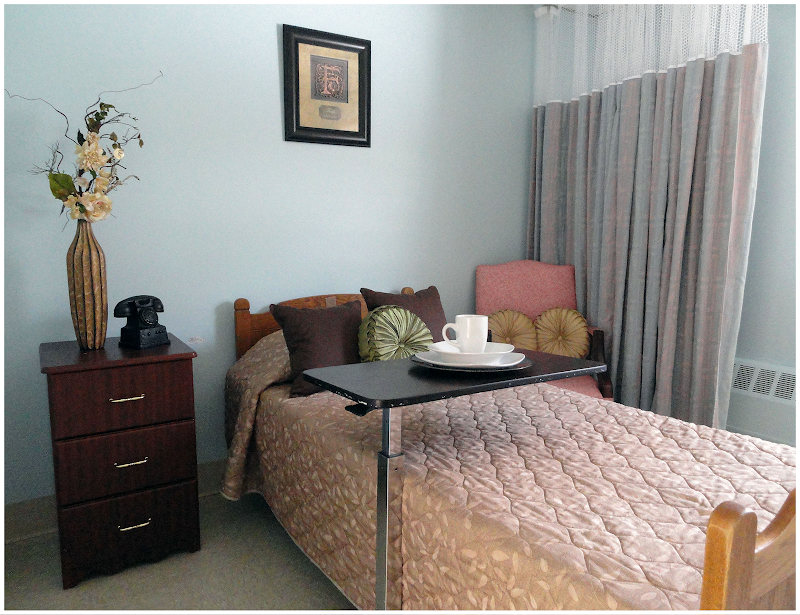
How is Pinnacle Care Of Battle Creek Staffed?

CMS rates Pinnacle Care of Battle Creek's staffing level at 2 out of 5 stars, which is below average compared to other nursing homes. Staff turnover is 55%, compared to the Michigan average of 46%.

What Have Inspectors Found at Pinnacle Care Of Battle Creek?

State health inspectors documented 109 deficiencies at Pinnacle Care of Battle Creek during 2022 to 2025. These included: 1 Immediate Jeopardy (the most serious level, indicating potential for serious harm or death), 3 that caused actual resident harm, 101 with potential for harm, and 4 minor or isolated issues. Immediate Jeopardy findings are rare and represent the most serious regulatory concerns. They require immediate corrective action.

Who Owns and Operates Pinnacle Care Of Battle Creek?

Pinnacle Care of Battle Creek is owned by a for-profit company. For-profit facilities operate as businesses with obligations to shareholders or private owners. The facility operates independently rather than as part of a larger chain. With 82 certified beds and approximately 61 residents (about 74% occupancy), it is a smaller facility located in Battle Creek, Michigan.

How Does Pinnacle Care Of Battle Creek Compare to Other Michigan Nursing Homes?

Compared to the 100 nursing homes in Michigan, Pinnacle Care of Battle Creek's overall rating (2 stars) is below the state average of 3.1, staff turnover (55%) is near the state average of 46%, and health inspection rating (1 stars) is much below the national benchmark.

What Should Families Ask When Visiting Pinnacle Care Of Battle Creek?

Based on this facility's data, families visiting should ask: "What changes have been made since the serious inspection findings, and how are you preventing similar issues?" "What safeguards and monitoring systems are in place to protect residents from abuse or neglect?" "Can you walk me through typical staffing levels on day, evening, and night shifts?" "Can I visit during a mealtime to observe dining assistance and food quality?" These questions are particularly relevant given the facility's Immediate Jeopardy citations, the substantiated abuse finding on record, and the below-average staffing rating.

Is Pinnacle Care Of Battle Creek Safe?

Based on CMS inspection data, Pinnacle Care of Battle Creek has documented safety concerns. The facility has 1 substantiated abuse finding (meaning confirmed case of resident harm by staff or other residents). Inspectors have issued 1 Immediate Jeopardy citation (the most serious violation level indicating risk of serious injury or death). The facility is currently on the Special Focus Facility watch list (a federal program monitoring the lowest-performing 1% of nursing homes nationwide). The facility has a 2-star overall rating and ranks #100 of 100 nursing homes in Michigan. Families considering this facility should ask detailed questions about what corrective actions have been taken since these incidents.

Do Nurses at Pinnacle Care Of Battle Creek Stick Around?

Pinnacle Care of Battle Creek has a staff turnover rate of 55%, which is 9 percentage points above the Michigan average of 46%. Moderate turnover is common in nursing homes, but families should still ask about staff tenure and how the facility maintains care continuity when employees leave.

Was Pinnacle Care Of Battle Creek Ever Fined?

Pinnacle Care of Battle Creek has been fined $171,268 across 4 penalty actions. This is 4.9x the Michigan average of $34,792. Fines at this level are uncommon and typically indicate a pattern of serious deficiencies, repeated violations, or failure to correct problems promptly. CMS reserves penalties of this magnitude for facilities that pose significant, documented risk to resident health or safety. Families should request specific documentation of what issues led to these fines and what systemic changes have been implemented.

Is Pinnacle Care Of Battle Creek on Any Federal Watch List?

Pinnacle Care of Battle Creek is currently an SFF Candidate, meaning CMS has identified it as potentially qualifying for the Special Focus Facility watch list. SFF Candidates have a history of serious deficiencies but haven't yet reached the threshold for full SFF designation. The facility is being monitored more closely — if problems continue, it may be added to the official watch list. Families should ask what the facility is doing to address the issues that led to this status.