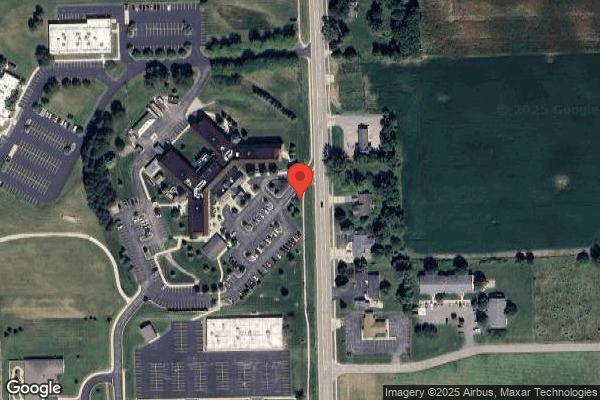
Tuscola County Medical Care Facility

1285 Cleaver Road, Caro, MI 48723 (989) 673-4117
Government - County 159 Beds Independent Data: November 2025
Trust Grade
50/100
#253 of 422 in MI
Last Inspection: October 2024

Within standard 12-15 month inspection cycle. Federal law requires annual inspections.

Overview

Tuscola County Medical Care Facility has a Trust Grade of C, indicating it is average compared to other nursing homes. It ranks #253 out of 422 facilities in Michigan, placing it in the bottom half, and #3 out of 3 in Tuscola County, meaning only one other option is better. Unfortunately, the facility's performance is worsening, with issues increasing from 7 in 2023 to 11 in 2024. Staffing is a strong point, earning a 5/5 star rating and a low turnover rate of 21%, which is significantly better than the state average of 44%. While the facility has no fines on record, there have been serious concerns, including failing to prevent the worsening of pressure ulcers for two residents, which indicates potential gaps in care. Overall, while there are strengths in staffing, families should be aware of the recent decline in quality and specific care issues.

Trust Score
C
50/100
In Michigan
#253/422
Bottom 41%
Safety Record
High Risk
Review needed
Inspections
Getting Worse
7 → 11 violations
Staff Stability
✓ Good
21% annual turnover. Excellent stability, 27 points below Michigan's 48% average. Staff who stay learn residents' needs.
Penalties
✓ Good
No fines on record. Clean compliance history, better than most Michigan facilities.
Skilled Nurses
✓ Good
Each resident gets 64 minutes of Registered Nurse (RN) attention daily — more than 97% of Michigan nursing homes. RNs are the most trained staff who catch health problems before they become serious.
Violations
⚠ Watch
24 deficiencies on record. Higher than average. Multiple issues found across inspections.
★★★☆☆
3.0
Overall Rating
★★★★★
5.0
Staff Levels
★★★☆☆
3.0
Care Quality
★★☆☆☆
2.0
Inspection Score
Stable
2023: 7 issues
2024: 11 issues

The Good

  • 5-Star Staffing Rating · Excellent nurse staffing levels
  • Low Staff Turnover (21%) · Staff stability means consistent care
  • Full Sprinkler Coverage · Fire safety systems throughout facility
  • No fines on record
  • Staff turnover is low (21%)

    27 points below Michigan average of 48%

Facility shows strength in staffing levels, staff retention, fire safety.

The Bad

3-Star Overall Rating

Near Michigan average (3.1)

Meets federal standards, typical of most facilities

The Ugly 24 deficiencies on record

3 actual harm
Oct 2024 11 deficiencies 2 Harm
SERIOUS (G)

Actual Harm - a resident was hurt due to facility failures

Quality of Care (Tag F0684)

A resident was harmed · This affected 1 resident

Deficiency Text Not Available

Read full inspector narrative →
Deficiency Text Not Available
SERIOUS (G)

Actual Harm - a resident was hurt due to facility failures

Pressure Ulcer Prevention (Tag F0686)

A resident was harmed · This affected 1 resident

Deficiency Text Not Available

Read full inspector narrative →
Deficiency Text Not Available
CONCERN (D)

Potential for Harm - no one hurt, but risky conditions existed

Resident Rights (Tag F0550)

Could have caused harm · This affected 1 resident

**NOTE- TERMS IN BRACKETS HAVE BEEN EDITED TO PROTECT CONFIDENTIALITY** Based on observation, interview and record review, the facility failed to ensure care that was dignified and respectful treatmen...

Read full inspector narrative →
**NOTE- TERMS IN BRACKETS HAVE BEEN EDITED TO PROTECT CONFIDENTIALITY** Based on observation, interview and record review, the facility failed to ensure care that was dignified and respectful treatment for two residents (Resident #96 and Resident #114) of two residents reviewed, resulting in a lack of acknowledgement and/or response to Resident #96's verbalization of discomfort and Resident #114's request for assistance, and the likelihood for feelings for insignificance and psychosocial distress utilizing the reasonable person concept. Findings include: Resident #96: On 10/15/24 at 8:33 AM, Resident #96 was observed in the dining room of the locked dementia care unit of the facility. The Resident was sitting in their wheelchair at a table with a plastic cushion behind their back and was repeatedly saying, Oh my back, oh my back. There were other residents sitting at the table eating as well as a Certified Nursing Assistant (CNA) U. Two other staff members were present in the dining room within hearing distance of Resident #96. When asked if they were okay, Resident #96 responded, Oh my back but did not provide further explanation. The Resident was leaning forward and back and displaying non-verbal signs and symptoms of pain. When asked if they ate breakfast yet, Resident #96 indicated they did not know, and CNA U verbalized they already ate. Neither CNA U nor any of the other staff members in the dining room acknowledged the Resident's verbalization of back discomfort. Record review revealed Resident #96 was admitted to the facility on [DATE] with diagnoses which included Alzheimer's disease, dementia, intervertebral disc disorders (condition where the discs separating the spinal bones break down), osteoarthritis, and falls. Review of the Minimum Data Set (MDS) assessment dated [DATE] revealed the Resident was severely cognitively impaired and required moderate assistance for bathing and personal hygiene. The MDS further revealed the Resident had received scheduled pain medication in the prior five-day period. Review of Resident #96's care plans revealed a care plan entitled, The resident has or is at risk for chronic pain r/t (related to) Arthritis (Initiated and Revised: 3/6/24). The care plan included the interventions: - Assess for pain using pain assessment tool appropriate for the Resident's cognitive status (Initiated: 3/6/24) - Monitor for presence of pain, effectiveness of intervention, adverse consequences . (Initiated: 3/6/24) Review of Resident #96's Medication Administration Record (MAR) and Health Care Provider (HCP) Orders revealed the Resident was receiving Ultram (opiate pain medication) 50 milligrams (mg) twice a day as well as Tylenol 8 Hour Arthritis Pain 650 mg three times a day. Documentation of pain on the MAR for 10/15/24 at 9:00 AM was zero out of 10 (indicating the Resident was experiencing no pain). Review of Resident #96's Progress Notes on 10/16/24 revealed no documentation related to the Resident complaining of discomfort on 10/15/24. Resident #114: On 10/14/24 at 11:27 AM, Resident #114 was not present in their room. On 10/15/24 at 8:33 AM, Resident #114 was observed in the dining room of the locked dementia care unit of the facility. The Resident's hair was uncombed and had a greasy appearance. When spoke to and asked questions, Resident #114 was pleasant, confused, and did not provide meaningful responses. Record review revealed Resident #114 was admitted to the facility on [DATE] with diagnoses which included Alzheimer's Disease, dementia, and hypertension. Review of the MDS assessment dated [DATE] revealed the Resident was severely cognitively impaired and required set up to supervision assistance to complete dressing and personal hygiene. On 10/14/24 at 4:10 PM, Resident #114 was observed sitting at a table in the dining room in a wheelchair. CNA V was sitting next to the Resident at the same table. Upon entering the dining room, and approaching Resident #114, the Resident was heard saying they wanted to lay down. An interview was conducted with Resident #114 at this time. When asked how they were, Resident #114 replied, I'm really tired and they won't let me lay down. Resident #114 gestured toward CNA V. CNA V was sitting directly next to Resident #114 but did not verbally respond to the Resident. When asked why Resident #114 was not able to lay down, CNA V did not provide a response and called CNA Y, who was also in the dining room, to come to the table. CNA Y was then asked why Resident #114 was not able to lay down and replied, We are going to eat dinner soon. When queried how that prohibited the Resident from laying down and why no one would assist them to go back to their room when they were asking, CNA Y did not provide a response. CNA V then stated they would take Resident #114 back to their room. CNA V was observed pushing the Resident out of their room in their wheelchair to their room. At 4:30 PM on 10/14/24, Resident #114 was observed in their room. The Resident was in bed, positioned on their side with their eyes closed. On 10/16/24 at 11:18 AM, Resident #114 was observed sitting in their wheelchair in the dining room. The Resident was pleasantly confused and did not provide meaningful responses to questions. Review of facility provided Resident Mealtimes document detailed dinner was served in Resident #114's unit at 5:00 PM for the first cart and 6:15 PM for the second cart. An interview was conducted with the Director of Nursing (DON) on 10/16/24 at 2:00 PM. When queried regarding expectations of staff in relation to acknowledgment and responding to a resident's verbalization of discomfort and/or care needs, the DON indicated they expect staff to acknowledge and respond to residents. Observations of Resident #96 were relayed to the DON at this time including non-verbal signs/symptoms of pain, verbalization of Oh my back, and lack of staff response. When asked their thoughts, the DON replied, I would have to look into that. When queried regarding Resident #96's pain level being documented as zero, no further explanation was provided. The DON was then informed of observations of Resident #114 asking staff to assist them to go to their room and lay down. When asked, the DON expressed the Resident is able to go to their room and lay down whenever they want. The DON was then questioned why staff did not acknowledge or assist the Resident and replied, I will look into that. Review of facility policy/procedure entitled, Resident Rights (Reviewed 1/15/24) revealed, Policy . The resident has a right to a dignified existence, self-determination . 6. The resident has the right to refuse treatment, deny or withdraw consent at any time . 39. The resident has the right to be treated in a manner and in an environment that maintains or enhances each resident's dignity and respect in full recognition of his or her individuality. 40. The resident has the right to choose activities, schedules, and health care .
CONCERN (D)

Potential for Harm - no one hurt, but risky conditions existed

Accident Prevention (Tag F0689)

Could have caused harm · This affected 1 resident

**NOTE- TERMS IN BRACKETS HAVE BEEN EDITED TO PROTECT CONFIDENTIALITY** Based on observation, interview and record review, the facility failed to ensure a safe environment to prevent skin tears and br...

Read full inspector narrative →
**NOTE- TERMS IN BRACKETS HAVE BEEN EDITED TO PROTECT CONFIDENTIALITY** Based on observation, interview and record review, the facility failed to ensure a safe environment to prevent skin tears and bruising for one resident (Resident #22) of 8 residents reviewed for accidents, resulting in Resident #22 suffering repeated skin tears and bruising. Findings Include: Resident #22: Accidents A record review of the Face sheet and Minimum Data Set/MDS assessment for Resident #22 identified a readmission to the facility on 8/18/2023 with diagnoses: Diabetes, heart disease, heart failure, COPD, arthritis, Alzheimer's, and a history of falls. The MDS assessment dated [DATE] indicated the resident had a BIMS score of 9/15 with moderate cognitive decline and needed assistance with all care. On 10/14/2024 at 11:53 AM, Resident #22 was observed lying in bed; there were two handrails on the sides of the bed (grab bars). He was observed to have thick tan colored arm sleeves from his wrist to mid-upper arm on. Certified Nurse Aide/CENA P said the resident wore the sleeves to protect his arms because he repeatedly tried to climb out of bed. The aide said the resident would bump the rails and get skin tears on his arms. A review of the Incident and Accident Reports for Resident #22 revealed the following: Falls: Resident #22 had 2 falls over the last year- 5/27/2024, and 6/13/2024. 5/27/2024 at 2:15 PM- Resident found sitting on buttocks on floor beside bed, no injury, intervention to add 2 stacked mats beside the bed. The resident had recently completed antimicrobial treatment for C. Diff (a diarrheal infection) and a UTI (urinary tract infection). The report indicated the resident has confusion with UTI's. The resident's interventions were updated to include double stacked mattresses on the floor. 6/13/2024 at 11:40 AM- Resident #22 was found lying on floor next to his wheelchair with his bedside table tray in front of him. He had a laceration on his head 3 cm x 0.5 cm, hematoma 5.5 cm x 2.5 cm, bruise above left eye 7 cm x 3.5 cm. laceration left eye hematoma 1 cm x 1 cm. He was sent to the Emergency Room/ER and received 4 staples to the laceration on his head. The Incident and Accident Reports also identified Resident #22 as obtaining 13 skin tears and/or bruises from 11/23/2023- 10/3/2024. 11/23/2023 at 4:17 AM- 3.5 cm x 3.5 cm green purple bruise next to a skin tear right fore arm during transfer; The report provided, Predisposing Situation Factors: 'During Transfer'. 12/10/2023 at 5:57 PM- Back of right hand between 1st and 2nd digit open 0.5 cm V shaped skin tear. At sight of an existing bruise. 12/14/2023 at 10:40 AM- 0.5cmx1cm left hand between 1st and 2nd digits. The report stated, It happened when my hand brushed against the sling in the lift. 1/11/2024 at 2:42 AM- Right hand bruises 2.5 cm x 1.5 cm dark purple bruise back of right hand at base of thumb. 1/18/2024 at 4:30 PM- Skin tear right upper arm during care. 2/22/2024 at 2:02 AM- Dark purple bruise back of right hand 1cm x 2 cm. 2/29/2024 at 2:49 AM-Bruising to left upper arm, top of left hand and right wrist. Resident stated he thought it was from transfer to chair. 6/23/2024 at 10:27 PM- 0.3 cm x 0.3 cm open area right elbow near a scab, fell 6/13/24. 6/26/2024 11:00 PM- Purple yellow bruise right ankle 5 cm x 2.5 cm. 6/29/2024 at 2:39 PM- Skin tear left bicep 0.5cm x 0.5 cm. 7/17/2204 at 10:30 PM- Skin tear 2 cm x 4 cm left upper arm with fresh blood; 9/20/2024 at 3:15 AM- Found on mattress on floor next to bed, with 3 new skin tears: between elbow and wrist on forearm 3 cm; on left elbow 1 cm; above left elbow 2 cm x 1 cm. on left arm from the rails. Per report, Resident injuries consistent with his likely using arms and bumping into hard surfaces attempting to self-transfer to mats. 10/3/2024 at 3:24 AM- LUE (left upper extremity) 3cm x 3cm dark purple bruise; (right forearm) purple bruise 4.5 cm x 6.5 cm with 1 cm dry scabbed area. A review of the Care Plans for Resident #22 identified the following: Requires assist with ADL (activities of daily living) needs (related to) Fatigue, weakness, dementia, date initiated 5/4/2023 and revised 9/16/2024 with Interventions including: Mobility handles per Dr's order for safety during care provision, to assist with bed mobility Observe for injury or entrapment related to mobility handle use, date initiated 8/28/2023; Assist with bathing, grooming, meals, dressing and personal hygiene as needed, date initiated 5/4/2023. Per the MDS assessment dated [DATE], the resident was identified to be dependent for all care except for eating. He was not able to transfer on his own and could not ambulate (walk). The resident is at risk for falls related to decondition, impaired safety awareness, impaired mobility, date initiated 5/4/2023 and revised 9/16/2024 with Interventions including: T/F (transfer): 1 assist with Hoyer & medium sling . date initiated 8/17/2023 and revised 3/26/2024. Resident #22 was identified to have many injuries (skin tears and bruises); some of the injuries did not have an identified cause, but several listed the resident attempting to exit the bed on his own or he had injuries from transfers with the mechanical lift. There was 1-person assigned to assist the resident with transfers with the lift; there was no mention on whether this was safe for one person to manage the mechanical lift and ensure the resident's safety, as the resident was dependent with transfers. The resident has potential for impairment to skin integrity related to fragile skin, date initiated and revised 6/8/2023 with 2 Interventions, Follow facility protocols for treatment of injury, date initiated 6/22/2023 and Dermasaver BUE (bilateral upper extremities) (at all times), off q shift & check skin, date initiated 8/17/2023 and revised 9/25/2024. The resident was ordered arm sleeves (Dermasavers), but continued to develop injuries. In some instances, the injuries were outside the area the Dermasaver covered. There was no mention of the resident climbing or attempting to climb out of bed, or if the Mobility bars were causing bruising or skin tears. On 10/16/2024 at 9:50 AM, during an interview with Quality Nurse H, he was asked about the injuries that Resident #22 had obtained. Quality Nurse H said he investigated the incidents, and the resident was confused and attempted to get out of bed at times and that is why he had the 2 mattresses on the floor. He said the resident had fragile skin and the Dermasavers for his arms were provided to protect them. There was no explanation for injuries potentially from the Mobility bars or during transfers, as some of the injuries were similar and in the same locations. A review of the facility policy titled, Skin care, date implemented 4/16/2003, reviewed 11/4/2021 and revised 2/18/24 provided, . Weekly Skin Assessment Procedure: . Skin assessment to be complete by unit nurses on their scheduled day . Fragile Skin/Skin Tears/Abrasions . There was no mention of investigating the causes for the injuries. A review of the facility policy titled, Falls and Fall Risk, date approved 11/25/2002, reviewed 12/27/22 and revised 1/10/24 provided Policy: The goal of the (facility) is to improve the prevention and management of resident falls by assessing/identifying the resident's risk for falls. Then incorporating a treatment/management program related to the individual resident's needs, monitoring/evaluating the effectiveness of interventions that have been employed . A Restorative Nurse will review current ADL documentation during the fall review to assess for changes in level of assistance utilized with transfers . All falls are recorded on an incident report . The policy was specific to falls, and did not address other injuries or potential causes for injuries.
CONCERN (D)

Potential for Harm - no one hurt, but risky conditions existed

Tube Feeding (Tag F0693)

Could have caused harm · This affected 1 resident

**NOTE- TERMS IN BRACKETS HAVE BEEN EDITED TO PROTECT CONFIDENTIALITY** Based on observation, interview and record review, the facility failed to update and follow care planned interventions for one r...

Read full inspector narrative →
**NOTE- TERMS IN BRACKETS HAVE BEEN EDITED TO PROTECT CONFIDENTIALITY** Based on observation, interview and record review, the facility failed to update and follow care planned interventions for one resident (Resident #51) of two residents reviewed for tube feeding, resulting in the head of the bed being at 19 degrees during tube feeding with the likelihood of decreased tube feeding dose, aspiration and/or pneumonia. Findings include: Resident #51: On 10/16/24, at 11:00 AM, a record review of Resident #51's electronic medical record revealed a readmission on [DATE] with diagnoses that included Dysphagia, Multiple Sclerosis and Pneumonitis due to Inhalation of food and vomit. Resident #51 required extensive assistance with Activities of Daily Living and had intact cognition. A review of the physician orders revealed . Jevity 1.5 Cal Liquid (Nutritional Supplements) Directions Give 60 ml enterally . Start Date 10/9/2024 . Ensure HOB is elevated 30 degrees for duration of feeding and 60 minutes after feeding complete Line up yellow markings on bed and headboard . Start Date 09/30/2024 . A review of the [NAME] revealed . Resident Care . Yellow markings lined up R/T (related to) TF (tube feed) . A review of the care plan The resident requires tube feeding tube r/t Dysphagia, Resident has G-tube Date Initiated: 03/14/2024 . Interventions/Tasks . Current TF regimen: Jevity 1.5 45 ml until 1080 cc infused 400 mLs flushes for A shift and 400 mLs flushes for B shift Date Initiated: 09/12/2024 . HOB @ 30 degrees during & after T.F. for an hour, use wall timer Date Initiated: 03/15/2024 . Visualize hourly Date Initiated: 09/30/2024 Yellow marking lined up R/T T.F. Date Initiated: 09/30/2024 One hour after tube feed done, lower HOB Date Initiated: 09/30/2024 On 10/17/24, at 8:30 AM, Resident #51 was lying in their bed on their left side. Their tube feeding pump was running and the tubing was hooked to the resident. The head of the bed appeared low. A measurement of the bed frame and head of the bed revealed an angle of only 19 degrees incline. On 10/17/24, at 8:35 AM, an observation of Resident #51's head of the bed was conducted with Nurse M. Nurse M was asked if the head of the bed was high enough and Nurse M offered there used to be a yellow line on the head board to show the proper height but I don't see the yellow tape. There was a faint line on the headboard which appeared if there was tape at one point. The top of the mattress was below the faint line. Nurse M was asked if the top of the mattress should be above the faint line or the bed frame and Nurse M stated, I believe the bed frame and raised the head of the bed to allow the bed frame to be even with the faint line.
CONCERN (D)

Potential for Harm - no one hurt, but risky conditions existed

Respiratory Care (Tag F0695)

Could have caused harm · This affected 1 resident

**NOTE- TERMS IN BRACKETS HAVE BEEN EDITED TO PROTECT CONFIDENTIALITY** Based on observation, interview and record review the facility failed to follow physician's orders for oxygen administration for...

Read full inspector narrative →
**NOTE- TERMS IN BRACKETS HAVE BEEN EDITED TO PROTECT CONFIDENTIALITY** Based on observation, interview and record review the facility failed to follow physician's orders for oxygen administration for one resident (Resident #117) of one resident reviewed for oxygen administration, resulting in the oxygen flow rate being administered not matching the [NAME] or care plan. Findings include: Resident #117 (R117): R117 is [AGE] years old and admitted to the facility on [DATE] with diagnoses that include COPD (Chronic Obstructive Pulmonary Disease), chronic pulmonary edema, anxiety and anemia. On 10/14/24 at 09:56AM, R117 was observed sitting in a reclining chair with oxygen being administered at 3LPM (liters per minute) via NC (nasal cannula). The oxygen tubing was dated 10/10. On 10/15/24 at 08:58AM, R117 was observed sleeping in bed, oxygen was being administered at 3LPM via NC. On 10/16/24 at 03:57PM, R117 was asked if they are on oxygen continuously. R117 stated they use oxygen all the time and currently use 3LPM. The oxygen concentrator was observed set to 3LPM and the humidification bottle was empty. On 10/16/24 at 03:59PM, an interview was conducted with CNA (Certified Nursing Assistant) L. CNA L was asked who sets the oxygen flow rate for residents. CNA L stated the nurses set the rate, CNA L also stated that the aides are not allowed to set the rate or change it. CNA L was asked where they would look in the EMR (Electronic Medical Record) to see what the rate is supposed to be for a resident on oxygen in order to make sure it is set correctly. CNA L replied they would look In the [NAME] (an area in the EMR that CNA's have access to and helps to guide their care) and the rate should be available, if not, CNA L stated they can check the physician orders and see what the rate should be. On 10/16/24 at 04:15PM, record review of the [NAME] revealed that R117 was on continuous oxygen via NC at 2LPM. The care plan for altered respiratory status, last revised on 06/03/2024, revealed an intervention/task that stated R117 is on continuous oxygen via nasal cannula at 2LPM. Humidified as needed, last revised on 06/03/2024. On 10/16/24 at 04:20PM, record review of the physician's order for oxygen administration states, PRN(as needed) oxygen at 1-6LPM via nasal cannula for signs and symptoms of respiratory distress and/or to maintain oxygen saturation greater than/equal to 90%. May humidify PRN for resident comfort. On 10/17/24 at 09:22AM, an interview was conducted with RN (Registered Nurse) K. RN K was asked how they confirm the rate of oxygen administration for residents. RN K stated the nurses have a standing order for oxygen for 1-6LPM to titrate to the residents needs. RN K stated when a resident admits from the hospital they set the rate to the hospital order, monitor the oxygen saturation levels and confirm if that is a good rate for the resident. RN K stated the physician will be notified if the rate needs to change but the staff nurses can immediately titrate it according to the standing order. RN K was asked how would a CNA know what the rate should be, so they can confirm if it is correct or not. RN K stated the CNA's will come to the nurses and ask what the rate is and then confirm if it is correct on the oxygen concentrator or portable tank. Review of the policy titled, Oxygen Delivery Systems, revised 11/15/23, revealed: 5. Nursing Guidelines for Oxygen Therapy: a. Licensed staff using oxygen equipment will be trained in its operation, safety precautions, and manufacturer ' s instructions for using the equipment. Training will occur upon hire and periodically for review of safety guidelines and usage requirements. b. Oxygen therapy requires a Physician's Order, except in the case of an emergency. Standing orders for oxygen are found in policy # 701-222 Standing Order Protocols c. Follow the order from the physician for flow rate, device and specific parameters related to oxygen saturation levels. d. Humidification is appropriate for discomfort associated with mucous membranes and can be added prn. e. Using pulse oximetry, maintain Oxygen Saturation greater than or equal to 90% or per Physician ' s order. f. Oxygen saturation should be monitored every shift while resident is receiving continuous oxygen or has an order for PRN oxygen. g. If oxygen is not used for a period of 1 week, obtain an order to have oxygen therapy discontinued due to non-use. Review of the policy titled, Standing Order Protocols, last revised 5/30/24, revealed: POLICY: The Medical Director of TCMCC has outlined protocols to give Nurses the authority to initiate treatment to maintain the health and well-being of a resident until the physician can be notified. OXYGEN THERAPY: For signs of respiratory distress and/or oxygen saturation less than 90%: O2 1-6 L/min. per Nasal Cannula to maintain O2 sat greater than or equal to 90%. Humidify PRN for complaints of dry mucous membranes. Check oxygen saturation every shift and as needed For oxygen saturation less than 90% and/or continued signs of respiratory distress after implementing above standing order, contact the physician for further orders regarding oxygen flow rate and oxygen delivery device.
CONCERN (D)

Potential for Harm - no one hurt, but risky conditions existed

QAPI Program (Tag F0867)

Could have caused harm · This affected 1 resident

Based on interview and record review, the facility failed to implement a yearly Quality Assessment Process Improvement (QAPI) Plan specific to the facility's population and concerns to ensure correcti...

Read full inspector narrative →
Based on interview and record review, the facility failed to implement a yearly Quality Assessment Process Improvement (QAPI) Plan specific to the facility's population and concerns to ensure correction of deficiencies necessary to ensure resident safety and quality of life for 127 residents of the facility, resulting in the potential for negative physical and psychosocial outcomes for all 127 residents of the facility. Findings Include: FACILITY QAPI and QAA On 10/17/24 at 2:23 PM, the Administrator was interviewed about the facilities QAA/QAPI program. The Administrator said he oversaw the QAPI program at the facility; he said the committee met monthly, except for December. He said they met the quarterly meeting requirements. When asked to review the committee attendance forms. The Administrator provided a document with 3 paragraphs; he said he had typed the names of those in attendance and those that were not present for the meetings and were excused. The entries he provided did not meet the attendee requirements as the Medical Director/Physician did not attend on one of the meetings provided. When asked again to review the attendance forms, the Administrator would not let the surveyor see the original documents. He provided another typed date that met the quarterly requirement. When asked about the processes for the QAPI program, the Administrator responded We meet that requirement. The Administrator was asked how areas of focus were identified for improvement and he said the committee focused on Quality measures. When asked for further specifics he said he was not sure if he could relay that information. During the review of the QAPI program with the Administrator, he was asked if the QAPI committee had completed a yearly performance improvement project (PIP) and he stated, No. The question was re-worded, and a performance improvement project definition was clarified with the Administrator and he said he knew what it was, and they had not completed one. The review of the QAPI program continued and the Administrator said he thought the committee might have completed a performance improvement project (PIP). He said he would have to check on it. No further information about a performance improvement was received prior to exit on 10/17/2024 at 4:40 PM.
CONCERN (E)

Potential for Harm - no one hurt, but risky conditions existed

Comprehensive Care Plan (Tag F0656)

Could have caused harm · This affected multiple residents

**NOTE- TERMS IN BRACKETS HAVE BEEN EDITED TO PROTECT CONFIDENTIALITY** Based on interview and record review, the facility failed to develop person-centered comprehensive care plans for Code Status pr...

Read full inspector narrative →
**NOTE- TERMS IN BRACKETS HAVE BEEN EDITED TO PROTECT CONFIDENTIALITY** Based on interview and record review, the facility failed to develop person-centered comprehensive care plans for Code Status preferences for five residents (Resident #4, Resident #17, Resident #22, Resident #66, Resident #68) of 29 residents reviewed for care plans, resulting in the potential for residents not to receive individualized care, which could lead to a decline in condition, and/or a negative outcome. Findings Include: A record review of the facility policy titled, Comprehensive Care Plan, Care plan review and Care Plan Conferences, date implemented [DATE], date reviewed [DATE] and date revised [DATE], provided (The facility) will ensure that all residents have a Baseline Care Plan completed per the Baseline Care Plan Policy, and a comprehensive Care Plan in the e- chart within 7 days of completion of section Z of the admission MDS assessment . The Care Plan will provide staff with guidelines on resident care needs . Resident #4: Advance Directives A record review of the Face sheet and Minimum Data Set/MDS assessment for Resident #4 indicated an admission to the facility on [DATE] and readmission on [DATE] with diagnoses: urinary tract infection, acute kidney failure, chronic kidney disease, diabetes, Parkinson's disease, obesity, Dementia and peripheral vascular disease. The MDS assessment dated [DATE] revealed the resident had moderate cognitive loss with a Brief Interview for Mental Status/BIMS score of 12/15 and the resident needed assistance with all care. On [DATE] at 4:13 PM, during a record review of the Advance Directives for Resident #4, the Code Status form dated [DATE] indicated the resident had No checked next to Cardiopulmonary Resuscitation (CPR), Use of Respirators, Ventilators, Tube Feeding, and Transfer to Acute Care Hospital. The Code Status form was signed by the resident's Durable Medical Power of Attorney on [DATE]. A review of the Comprehensive Care Plans for Resident #4 indicated there was no mention of the resident's Code Status preferences. Resident #17: Advance Directives A record review of the Face sheet and Minimum Data Set/MDS assessment for Resident #17 indicated an admission to the facility on [DATE] and readmission on [DATE] with diagnoses: Multiple Sclerosis, Dementia, history of Lyme disease, diabetes, COPD, and heart failure. The MDS assessment dated [DATE] revealed the resident had severely impaired cognitive skills and needed assistance with all care. A review of a Code Status form dated [DATE] identified several Code Status preferences by the resident: No was checked for the options Cardiopulmonary Resuscitation/CPR, Use of Respirators, Ventilators and Transfer to Acute Hospital. Yes was marked for Tube Feeding. The Other category listed Transfers to acute care hospital for tube feeding concerns and seizure activity as needed. The Code Status for was signed on [DATE] by the resident's Guardian. A review of the Care Plan for Resident #17 indicated there was no mention of the resident's Code status preferences for no CPR, no Use of a Respiratory/Ventilator or no Transfer to Acute Hospital. There was also no mention of the Other request to transfer to the acute care hospital for tube feeding concerns and seizure activity as needed. Resident #22: Advance Directives A record review of the Face sheet and Minimum Data Set/MDS assessment for Resident #22 identified an admission to the facility on [DATE] with diagnoses: Diabetes, heart disease, heart failure, COPD, arthritis, Alzheimer's, and a history of falls. The MDS assessment dated [DATE] indicated the resident had a BIMS score of 9/15 with moderate cognitive decline and needed assistance with all care. A review of the Code Status Form Do-Not-Resuscitate Order for Resident #22 revealed that the resident signed the form on [DATE]. A review of the Care Plans for Resident #22 revealed there was no mention of the resident's Advance Directives or Code status preferences. Resident #66: Advance Directives A record review of the Face sheet and Minimum Data Set/MDS assessment for Resident #66 indicated an admission to the facility on [DATE] with diagnoses: history of a stroke, left sided weakness, heart failure, Alzheimer's, and COPD. The MDS assessment dated [DATE] revealed the resident had full cognitive abilities with a BIMS score of 14/15 and needed some assistance with care. A review of the Code Status form for Resident #66 revealed it was signed by the resident's DPOA on [DATE]th, 2024. The form was marked Yes for: Cardiopulmonary resuscitation (CPR), Use of respirator, ventilator, tube feeding and transfer to Acute care hospital. A review of the Care Plans for Resident #66 indicated there was no mention of the resident's Advance Directives or Code Status preferences. Resident #68: Advance Directives A record review of the Face sheet and Minimum Data Set/MDS assessment for Resident #68 identified an admission to the facility on [DATE] and readmission on [DATE] with diagnoses: chronic kidney disease, heart failure, COPD, peripheral vascular disease, hypothyroidism, depression, anxiety, anemia, and obesity. The MDS assessment dated [DATE] revealed the resident had full cognitive abilities with a BIMS score of 13/15 and needed some assistance with all care. A review of the Code status form titled, Do-Not-Resuscitate Order indicated the resident signed the form on [DATE] for DNR/Do-Not-Resuscitate. A review of the Care Plans for Resident #68 revealed there was no mention of her Code Status preference. On [DATE] at 8:55 AM, Social Services/SS Director J was interviewed about Residents' Advance directives and code status preferences. The SS Director J said someone from Social Services reviewed the code status and advance directives with the resident or responsible party and nursing obtained an order for the code status. When asked if the residents' code status was Care Planned, she said she did not think it was care planned. Reviewed the resident's Care Plan with the SS Director and it did not mention the resident's code preferences.
CONCERN (E)

Potential for Harm - no one hurt, but risky conditions existed

Incontinence Care (Tag F0690)

Could have caused harm · This affected multiple residents

**NOTE- TERMS IN BRACKETS HAVE BEEN EDITED TO PROTECT CONFIDENTIALITY** Based on observation interview and record review the facility failed to follow facility policy for indwelling catheter use for f...

Read full inspector narrative →
**NOTE- TERMS IN BRACKETS HAVE BEEN EDITED TO PROTECT CONFIDENTIALITY** Based on observation interview and record review the facility failed to follow facility policy for indwelling catheter use for five residents (R17, R22, R51, R52, R106) of six residents reviewed, resulting in physician's orders not having catheter size, dignity bags touching the floor and recurrent UTI's (urinary tract infections). Findings include: Resident #52 (R52): R52 is [AGE] years old and was admitted to the facility on [DATE] with diagnoses that include Alzheimer's disease, dementia, neuromuscular dysfunction of the bladder and history of urinary tract infections. On 10/14/24 at 10:27AM, observation revealed that R52 had an indwelling catheter, the urine collection bag was hanging below the bed, covered by a dignity bed and off the floor. On 10/16/24, record review of the admission MDS (Minimum Data Set) revealed that R52 was admitted with an indwelling catheter. On 10/16/24, record review of R52's care plan revealed a care plan for the indwelling catheter that was last revised on 12/27/2023. The interventions/tasks for the care plan state the resident has a 16fr Foley catheter, last revised on 12/18/2023. A review of the October 2024 TAR (Treatment Administration Record) for R52 revealed that the catheter was last changed on October 5th, 2024. No documentation was located that revealed what size catheter was used during the change. On 10/16/24, record review revealed a physician's order for the indwelling catheter, order date 01/03/2024. The order reads, Foley Catheter. Change PRN (as needed). as needed for end of life. The order does not contain the size of the catheter On 10/17/24, an interview with RN (Registered Nurse) K. RN K was asked how they would know what size catheter a resident has. RN K stated that the indwelling catheters are labeled with the size and that the physician's order also states the size the catheter is. RN K was asked who updates the care plans and orders with catheter size. RN K stated the nurse managers do that. Resident #106 (R106): R106 is [AGE] years old and admitted to the facility on [DATE] with diagnoses that include Alzheimer's disease, dementia, bladder-neck obstruction and neuromuscular dysfunction of the bladder. On 10/14/24 at 01:52PM, observation revealed that R106 had an indwelling catheter. The urine collection bag is covered by a dignity bag and the dignity bag is resting on the floor. On 10/16/24 at 10:26AM, record review of R106's physician's orders revealed that R106 has an order for an indwelling catheter for neuromuscular dysfunction of the bladder. The order is dated 01/26/2023 and reads, Foley Catheter. Change PRN. On 10/16/24 at 10:35AM, record review of R106's care plans revealed a care plan for an indwelling catheter, last revised on 08/15/2024. The interventions/tasks on the care plan state the resident has a 16fr indwelling catheter, last revised on 01/26/2023. On 10/16/24 at 10:40AM, record review of the October 2024 TAR for R106 revealed the catheter was changed on October 6, 2024 and it was documented that a 14fr indwelling catheter was used. Record review of the policy titled, Urinary Catheters: Insertion/Removal of Straight, Indwelling or Suprapubic Catheters, revised 11/27/2023 revealed: 1. The use of an indwelling urinary catheter will be in accordance with physician orders, which will include the diagnosis or clinical condition making the use of the catheter necessary, size of the catheter, and frequency of change (if applicable). 8. Keep urinary collection bags in a cloth bag/cover for discreteness and cleanliness. Maintain urinary collection bags below the level of the bladder per manufacturer ' s recommendations; typically, regular drainage bags are required to be placed below the level of the bladder while leg bags do not have the same restriction. Do not allow urinary collection bags or drainage tubing to rest on the floor. 11. When a catheter is changed, note the change in the resident's electronic medical record making sure to record the date, catheter type, and size. Update Indwelling Catheter Tracking Log (located in TCMCF Official Forms Folder) Resident #51: On 10/14/2024, at 4:33 PM, Resident #51 was lying in their bed. Their Foley catheter drainage bag was covered with a blue cotton bag. The blue cotton bag was resting on the floor. On 10/16/24, at 11:00 AM, a record review of Resident #51's electronic medical record revealed a readmission on [DATE] with diagnoses that included Dysphagia, Multiple Sclerosis and Pneumonitis due to Inhalation of food and vomit. Resident #51 required extensive assistance with Activities of Daily Living and had intact cognition. A review of the physician orders revealed Foley Catheter, prn as needed Change indwelling Foley catheter as needed for Leakage, obstruction, breaks in system or S/S (signs and symptoms) of UTI (urinary tract infection) . Start Date 09/30/2024 . There was no size of the Foley catheter listed on the physician's order. A review of the [NAME] revealed no direction as to when to change the blue cotton catheter bag cover or to keep the urinary catheter bag off the floor. A review of the care plan The resident has an indwelling catheter in place R/T (related to) Neuromuscular Dysfunction of Bladder Date Initiated: 03/14/2024 . Intervention/Task . Catheter care per policy & procedure. Date Initiated: 03/14/2024 CATHETER: The resident 16fr Foley 10 ml balloon. Position catheter bag and tubing below the level of the bladder. Revision on: 03/18/2024 Keep in cloth bag for discreteness/cleanliness. Date Initiated: 03/14/2024 . There was no intervention as to when to change the blue cotton catheter bag cover or to keep the urinary catheter bag off the floor. On 10/17/2024, at 8:30 AM, Resident #51 was lying in their bed. Their bed was in a low position. Their urinary catheter bag was inside a blue cotton bag which was resting on the floor. The overbed table leg was pushed against the catheter drainage bag touching the tubing. On 10/17/24, at 8:35 AM, an observation along with Nurse M was conducted of Resident #51's urinary catheter bag. Nurse M was asked if the blue bag covering the urinary catheter bag should be on the floor and Nurse M stated, no, that might have been midnight shift, pulled the bedside table back and raised the bed. Nurse M was asked how often the blue bags get replaced and Nurse M stated, I believe weekly and exited the room. On 10/17/24, at 10:06 AM, During Infection Control Task, Infection Control Nurse O was asked how often the blue cotton urinary drainage bag covers were laundered and IC Nurse O stated, as needed. Resident #17: Urinary Catheter or UTI A record review of the Face sheet and Minimum Data Set/MDS assessment for Resident #17 indicated an admission to the facility on 4/27/2023 and readmission on [DATE] with diagnoses: Multiple Sclerosis, Dementia, history of Lyme disease, diabetes, COPD, epilepsy, neuromuscular dysfunction of bladder and heart failure. The MDS assessment dated [DATE] revealed the resident had severely impaired cognitive skills and needed assistance with all care. A review of the physician orders for Resident #17 identified the following: Foley catheter. Change as needed for neurogenic bladder, start date 4/26/2024. On 10/14/2024 at 12:38 PM, Resident #17 was observed lying in bed. A urinary catheter/Foley catheter drainage bag was observed inside a black cloth bag sitting on the floor. The catheter bag was bent over in the middle, so the urine could not flow freely into the bag. A review of the Care Plans for Resident #17 revealed the following: The resident has Indwelling Catheter (Foley) in place r/t (related to): Neurogenic bladder, date initiated 8/30/2016 and revised 4/26/2024. On 10/17/2024 an intervention was added, The resident has (16 Fr (size)) Foley. Position catheter bag and tubing below the level of the bladder, date initiated and revised 10/17/2024; Keep in cloth bag for discreetness/cleanliness, date initiated and revised 4/26/2024. Resident #22: Urinary Catheter or UTI A record review of the Face sheet and Minimum Data Set/MDS assessment for Resident #22 identified a readmission to the facility on 8/18/2023 with diagnoses: Diabetes, heart disease, heart failure, COPD, arthritis, Alzheimer's, and a history of falls. The MDS assessment dated [DATE] indicated the resident had a BIMS score of 9/15 with moderate cognitive decline and needed assistance with all care. A review of the physician orders indicated Resident #22 had a supra-pubic urinary catheter with a start date of 5/20/2024. On 10/14/2024 at 11:48 AM, Resident #22 was observed lying in bed resting. The urinary catheter tubing had cloudy colored urine in it. The urinary catheter bag was sitting inside a black cloth bag that was sitting on the floor under the bed and behind 2 mattresses that were sitting on the floor. Certified Nurse Aide/CENA P entered the room and said the resident had a history of UTI's/Urinary tract infections. The aide was assisting the resident A review of the Care Plans for Resident #22 revealed the following: The resident has history of) recurrent Urinary Tract infections, dated initiated 5/5/2023 and revised 5/29/2024 with Interventions including: Observe urine characteristics and report to physician as indicated, date initiated 5/20/2024 and revised 7/25/2024. There was no mention of keeping the urinary catheter bag and or the black cloth bag off the floor to aid in preventing contamination. The resident has a suprapubic catheter in place (related to): Neurogenic bladder, date initiated 7/26/2023 and revised 12/28/2023 with Interventions including: Catheter are per policy and procedure, dated 7/26/2023. There was no mention of maintaining the urinary catheter bag or the black cloth bag from touching the floor. On 10/16/2024, Resident #22 was observed lying in bed and his urinary catheter bag was observed sitting inside a black cloth bag on the floor behind two mattresses stacked on the floor next to his bed. Nurse Q entered the resident's room and was asked about the catheter bag lying on the floor. The nurse moved the two mattresses slightly away from the side of the bed and the urinary catheter bag was observed inside a cloth black bag on the floor. The nurse said it should have been off the floor. He laid on his back on the mattresses on the floor and used two ties on the bag to lift it and tied it under the bed frame. On 10/17/2024 at 9:45 AM, Resident #22 was observed lying in bed waiting for wound care with Nurse R and Nurse Aide S. The urinary catheter bag was inside a black cloth bag and was tied on the end of the bed; hanging off the floor as the bed was raised to accommodate wound care. The black cover bag was very stained and soiled. The 2 mattresses that had been lying on the floor beside the bed were moved against the wall by the window during the wound care. Both mattresses were very soiled: brown with dirt stains. Both mattresses had tears, open areas and with ends that appeared shredded and tattered. The mattresses were previously leaning against the catheter bag. A review of the Association for Professionals in Infection Control and Epidemiology: Guide to Preventing Catheter-Associated Urinary Tract Infections, first edition, April 2014 identified the following: . Drainage System Safety- Sterile, continuously closed drainage systems became the standard of care based on an uncontrolled study published in 1966 demonstrating a reduction in the risk of infection in short-term catheterized patients wit the use of a closed system. Recent data also include the finding that disconnection of the drainage system is a risk factor for bacteriuria. The catheter tubing should allow free flow of urine and kinking of tubing should be avoided. The urine bag should be kept below the level of the bladder and kept off the floor .
CONCERN (E)

Potential for Harm - no one hurt, but risky conditions existed

Deficiency F0761 (Tag F0761)

Could have caused harm · This affected multiple residents

Based on observation, interview and record review, the facility failed to ensure that medications and medical supplies were stored and disposed of per professional standards of practice in two of five...

Read full inspector narrative →
Based on observation, interview and record review, the facility failed to ensure that medications and medical supplies were stored and disposed of per professional standards of practice in two of five medication rooms resulting in expired medications and medical supplies, lack of refrigerated vaccine temperature monitoring per CDC recommendations, and the potential for residents to have procedures and testing completed with expired supplies and to receive expired medications with altered potency and efficacy. Findings include: A tour of the Second Redwood Medication Room was completed with Unit Manager Registered Nurse (RN) T on 10/17/24 at 8:34 AM. The following exited medications and medical supplies were present in the medication room: - ProSource NoCarb 15-gram Protein, 30 fluid ounce (oz) container, Expired: 9/28/24 - UTI-Stat, 30 fluid oz container, Expired 7/27/24 - 100 tablet bottle of Aspirin 81 mg tablets, Expired: 9/24 - Three bottles of Prevacid 15 mg tablets with 14 tablets per bottle for Resident #14, Expired 6/24 - Universal Viral Transport for Viruses (Covid) laboratory sample, Expired: 10/9/24 - 20 mL (milliliter) oral dispenser syringe, Expired: 7/30/24 - 24 g (gauge) IV (intravenous) Catheter BD Insyte Autoguard (for IV insertion and medication administration), Expired: 11/30/22 - Point-Lok Sharps Safety devices, quantity 12, Expired: 12/4/22 When queried regarding the expired medications and medical supplies, RN T confirmed the medications and supplies were expired and indicated they would dispose of them. A tour of the medication refrigerator in the medication storage room revealed vaccines were stored on the top shelf of the refrigerator along with other medications. A review of the temperature monitoring log for the refrigerator revealed temperatures monitoring documentation was completed once per day (24-hour period). When queried if vaccines are always stored in the medication refrigerator, RN T revealed vaccines are frequently stored in the refrigerator. When asked how often the temperatures are checked, RN T responded once daily. On 10/17/24 at 9:06 AM, a tour of the Second Hickory Medication Room was completed with the Assistant Director of Nursing (ADON). The following expired medications were noted in the medication room: - Bottle of 100 Vitamin E 200 IU (International Units) softgels - Bottle of 100 Acetaminophen 325 mg tablets - Bottle of Geri-kot (stool softener) 8.6 mg tablets, Expired: 4/24 - Four containers of Banatrol Plus (anti-diarrheal solution) 0.38 oz containers, Expired: 8/5/24 Review of facility policy/procedure entitled, Storage and Labeling of Medication and Biologics (Reviewed: 12/14/23) revealed, It is the policy of this facility to ensure all medications housed on our premises will be stored in the pharmacy and/or medication rooms according to the manufacturer's recommendations and sufficient to ensure proper sanitation, segregation, and security . 1. General Guidelines: a. All drugs and biological's will be stored in locked compartments (i.e., medication carts, cabinets, drawers, refrigerators, medication rooms) under proper temperature controls . 8. Expiration dates will be monitored to ensure that all medications are removed from distribution prior to expiration date. Nurses will check stock medications when removing them from storage are to ensure expired medications are not placed in the medication cart for use. The expiration date assures that the drug meets applicable standards of strength, quality & purity at the time of use. When the label shows only a month and a year, the implied expiration date is the last day of that month. 9. Out-dated stock medications / supplies will be disposed of in a pharmaceutical destruction container or returned to our contracted pharmacy for disposal if appropriate. Review of the Centers for Disease Control (CDC) Vaccine Storage and Handling Toolkit (Updated: 3/29/24) revealed, Vaccine Storage and Temperature Monitoring Equipment . Check and record storage unit minimum and maximum temperatures at the start of each workday. If your TMD (Temperature Monitoring Device) does not read minimum/maximum temperatures, then check and record the current temperature a minimum of two times per workday (at the start and end of the workday) . Reference: US Centers for Disease Control and Prevention. (2024, March 29). Vaccine Storage and Handling Toolkit. https://www.cdc.gov/vaccines/hcp/storage-handling/?CDC_AAref_Val=https://www.cdc.gov/vaccines/hcp/admin/storage-handling.html
CONCERN (F)

Potential for Harm - no one hurt, but risky conditions existed

Infection Control (Tag F0880)

Could have caused harm · This affected most or all residents

**NOTE- TERMS IN BRACKETS HAVE BEEN EDITED TO PROTECT CONFIDENTIALITY** Based on observation, interview and record review, the facility 1) Failed to ensure analyzed observational data of personal care...

Read full inspector narrative →
**NOTE- TERMS IN BRACKETS HAVE BEEN EDITED TO PROTECT CONFIDENTIALITY** Based on observation, interview and record review, the facility 1) Failed to ensure analyzed observational data of personal cares with a continued spread of a Multi-Drug Resistant Organism (MDRO), 2) Failed to ensure proper Personal Protection Equipment (PPE) use, 3) Failed to ensure proper hand hygiene, 4) Failed to ensure proper wound care, 5) Failed to ensure proper perineal (peri) care for two residents (Resident #40, Resident $45) of two residents reviewed for peri-care and 6) Failed to prevent a wound infection for one resident (Resident #45) of three residents reviewed for wound care, resulting in the continued in-house spread of Proteus Mirabilis infections, staff not following enhanced barrier precautions and providing clean cares with the likelihood of the further spread of infections. Findings include: On 10/16/24, at 11:56 AM, a record review of the facility provided infection control line listing revealed the following case counts of In-House MDRO Urinary Tract Infections (UTI): 5/2024 Case List revealed 6 Urinary Tract Infections. 6/2024 Case List revealed 6 Urinary Tract Infections. 7/2024 Case List revealed 12 Urinary Tract Infections. 8/2024 Case List revealed 5 Urinary Tract Infections. 9/2024 Case List revealed 3 Urinary Tract Infections. 10/2024 Case List revealed 1 Urinary Tract Infections. \On 10/16/24, at 2:05 PM, a record review of provided Urinary Tract Infection Investigation documentation and culture results along with Infection Control (IC) Nurse O for five residents revealed the Urinary Tract Infections were caused by Proteus Mirabilis with Resident #46 having a Proteus Mirabilis urinary tract infection on 1/19/2024, 3/25/2024, 7/8/2024 and 8/15/2024. IC Nurse O was asked what the Urinary Tract Infection Investigation revealed and IC Nurse O offered, that they did research on Proteus Mirabilis and did staff education on preventing UTI's. IC Nurse O offered they did focused education on (nursing unit) where Proteus Mirabilis was found. IC Nurse O was asked to hypothesize the spread of the proteus mirabilis infection (MDRO) to Resident #45's wound and if there was any spread from Resident #46's MDRO urine infection with the same MDRO. The IC Nurse O offered that yes, (Resident #46) and (Resident #45) are on the same group so I did hand hygiene audits on those care givers but did not see breaches in those groups. IC Nurse O was asked if they watch the Nurses provide wound care or catheter care and IC Nurse O offered, the nurse managers due the wound care observations and that they didn't see any reeducation's provided by the nurse managers. IC Nurse O offered that they planned a jeopardy game for infection control education specific to spreading infections. IC Nurse O was asked if the MDRO proteus mirabilis could be spread by hand contact and IC Nurse O stated, not that I'm seeing but doesn't mean it isn't happening. IC Nurse O offered the summary on the line listing for July, 2024 which revealed: 5/12 urine cultures grew Proteus Mirabilis, a natural gastrointestinal flora Most common reason for its presence in urine is due to ascension from the GI tract, Foley catheters facilitate this . Notified medical director of observation and analysis, he state P. mirabilis is common GI pathogen responsible for UTI & diabetic wounds, not likely the result of transmission-stated, P. Mirabilis, E. coli infections are the result of the person's own GI bacteria. It is highly unlikely that that transmission of those bacteria to cause UTI could occur during the provision of care. After 35 years of practice, I've never heard of that happening. On 10/17/24, at 9:31 AM, CNA N was observed performing all am care for Resident #45. CNA N performed hand hygiene, donned a gown and gloves. CNA N opened up the closet door with their gloved hands, removed the basin, personals and clothing, walked through the closed privacy curtain touching the curtain with their left gloved hand. CNA N then entered the bathroom and filled the basin with water. CNA N entered the residents area after touching the privacy curtain. CNA N set the basin down on the bedside table, grabbed the bed remote and changed the position of the bed with the same gloves on. CNA N removed the covers, and the foot cushions underneath Resident #45's right foot. CNA N now walked back through the privacy curtain touching the curtain with both gloved hands and returned into the residents are with more washcloths. With the same gloves on, CNA N performed perineal care as Resident #45 was soiled with urine and a small amount of bowel movement. CNA N grabbed chamosyn cream out of the closet and applied cream to Resident #45's buttock area and placed a new incontinent brief on. Still with the same gloves on, CNA N adjusted the bed sheet and performed range of motion to the residents legs, positioned the wedge under the left leg and the pillow under the right foot. With the same gloves on, CNA N assisted the resident with new clothing, deodorant and finished with combing their hair. CNA N walked to the bathroom dried out the basin with paper towels, reentered the resident area and placed the personal items inside the basin, opened up the closet, placed the items inside. CNA N assisted Resident #45 with repositioning using the bed remote. CNA N doffed their gown and gloves and used hand gel for hand hygiene upon exit of the room . The privacy curtain was observed to have brown spots on it. On 10/17/24, at 9:46 AM, an observation of Nurse M was conducted of Resident #45's diabetes injections and their right foot wound care. Nurse M entered the room set down the supplies, performed hand hygiene, donned a gown and gloves. Nurse M gave the resident an injection to their right arm and then to their abdomen. With the same gloves on, Nurse M propped up Resident #45's right leg onto a cushion and removed their sock and dirty dressing from their right heel. The dressing had dark bloody drainage noted. Nurse N removed their gloves and discarded. Nurse M then entered their left pocket with their left hand, pulled out a pair of gloves and donned the gloves at the bedside without performing hand hygiene. Nurse M cleaned the wound and opened up the new dressing. Nurse M with their left gloved hand pulled aside the front of their gown, entered their right pocket with their gloved right hand, removed their black marker, wrote the date on the new dressing and then placed the black marker back into their right pocket. Nurse M then placed the new dressing over top of the wound on Resident #45's right heel. Nurse M placed the same sock onto the heel. Nurse M adjusted the residents blankets, tied up the garbage, doffed their gown and gloves and performed hand hygiene at the sink. Nurse M washed their hands for only a total of six seconds. Nurse M returned to the bedside to adjust the bed with the bed remote, grabbed their dirty garbage and exited the room. A review of Resident #45's lab results revealed Foot, Right, Wound Swab Collected 09/18/2024 . Moderate Escherichia coli Moderate Proteus Mirabilis Moderate Enterococcus species . Susceptibility . Proteus Mirabilis R (resistant) . On 10/17/24, at 10:06 AM, Infection Control Nurse (IC) O was asked to explain the facility expectations for proper perineal care and IC Nurse O offered, the expectation is to wash hands from dirty to clean care. IC Nurse O was asked if perineal care was considered dirty and IC Nurse O offered, yes, peri-care is dirty. IC Nurse O was alerted the observation of CNA N touched multiple surfaces with their gloved hands prior to peri-care and after peri-care for Resident #45. IC Nurse O asked the surveyor why CNA N wasn't stopped by the surveyor. IC Nurse O was also alerted of Resident #45's wound care observation with Nurse M. IC Nurse O was asked again to provide all environmental rounds, peri-care audits, hand hygiene audits, wound care audits and PPE audits to ensure staff compliance with infection control standards. On 10/17/24, at 11:17 AM, a record review of the provided Monthly Summary Data and provided environmental rounds along with IC Nurse O was conducted. The View Monthly Summary Data for June, July, August and September 2024 revealed 30 hand hygiene and 30 PPE audits for each month were conducted. There was no staff education provided for the Gown and Gloves audits that had failures each month. A review of the provided Environmental Room Attendants Checklist 10/10/24 revealed a checklist for Bedrooms, Bathrooms/Showers and Carts. There were check marks but no additional data that explained what the check marks meant. IC Nurse O clarified the environmental rounds check list was completed by the cleaning staff. IC Nurse O provided a typed document that revealed the following: During bi-weekly rounds we observe 12 wound care, peri-care and hand hygiene observations monthly x 12 months. In the last 24 months there were no observed concerns. During the educational fair all CENA's were observed for peri-care and hand hygiene observations. Concerns were addressed and real-time education was provided. General education followed for all direct care staff. IC Nurse O was asked if the peri-care observations were on actual residents and IC Nurse O stated, No, a mannequin. IC Nurse O was asked to clarify when and why there should be actual Resident peri-care audits of the staff and IC Nurse O stated, if there was a concern. IC Nurse O was asked to provide additional data for all staff/care audits, audits on cleaning reusable medical equipment, linen transportation, hand hygiene, wound care and peri-care. IC Nurse O stated, that was QAPI protected information and offered that the residents had their own medical equipment. IC Nurse O was again asked to provide audits on cleaning reusable medical equipment for all equipment other than glucometers. Prior to exit, there were no peri-care audits, wound care audits and audits on cleaning reusable medical equipment. Once the facility was alerted of exit, a document was offered of a printed spread sheet of numerous papers that were provided to show proof of audits of care although was not readable as it was all separated by page. During exit conference, the Administrator was alerted of the document share and was offered the opportunity to send any additional documents that clarified the data or proved audits of personal cares for ensuring staff were following Infection Control Standards. According to Centers for Disease Control and Prevention . Infection Prevention in Long-term Care Facility Residents .Healthcare-Associated Infections (HAI) . Long-term care facilities provide many services, both medical and personal care, to people who are unable to live without help. If you live in a nursing home, assisted living facility or other long-term care facility, you have a higher risk of getting an infection. There are steps you can take to reduce your risk . Keep your hands clean. Remind staff and visitors to keep their hands clean . According to National Library of Medicine, P. mirabilis has swarming motility and the ability to self-elongate and secrete a polysaccharide when in contact with solid surfaces; this allows for attachment and easy motility along surfaces (e.g. medical equipment) . Proteus is found abundantly in soil and water, and although it is part of the normal human intestinal flora . it has been know to cause serious infections in humans . Proteus infection can be avoided with proper sanitation and hygiene, such as adequate sterilization of medical equipment and surfaces . Resident #40: Record review revealed Resident #40 was admitted to the facility on [DATE] with diagnoses which included dementia, pressure ulcers (wounds caused by pressure), quadriplegia, and contractures. Review of the Minimum Data Set (MDS) assessment dated [DATE] revealed the Resident was severely cognitively impaired and required maximum to total assistance to complete all Activities of Daily Living (ADL). Review of documentation in Resident #40's Electronic Medical Record (EMR) revealed Resident #40 had a current treatment in place to the top of their left foot. The treatment detailed, Everyday shift every Mon, Thu . cleanse with normal saline or sterile H2O, apply medihoney, cover with silicone dressing (mepilex) (Start Date: 9/16/24) Review of Resident #40's TCMCC Weekly Nursing Assessment dated 10/10/24 specified, Left foot continues with open area 0.5 x 0.5 cm (centimeters), dressing was changed today and is currently dry and intact . A wound care observation was completed with Wound Care Licensed Practical Nurse (LPN) R on 10/17/24 at 10:01 AM. LPN R was observed removing the dressing on Resident #40's left foot pressure ulcer wound. LPN R was then observed removing their gloves and donning a new pair without performing hand hygiene after removing soiled gloves. A review of the Association for Professionals in Infection Control and Epidemiology: Guide to Preventing Catheter-Associated Urinary Tract Infections, first edition, April 2014 identified the following: . Urinary tract infections are one of the five most common types of healthcare-associated infection (HAI), and along with other device-associated infections (e.g., central catheter-associated bloodstream infections and ventilator-associated pneumonia) account for 25.6 percent of all hospital HAI's . Catheter-associated urinary tract infection (CAUTI) has been associated with increased morbidity, mortality, hospital cost, and length of stay. Bacteriuria also leads to unnecessary antimicrobial use, and urinary drainage systems can be reservoirs for multidrug-resistant bacteria and a source of transmission to other patients . The source of microorganisms causing CAUTI can be endogenous-typically via meatal, rectal, or vaginal colonization- or exogenous, such as via equipment or contaminated hands of healthcare personnel .Drainage System Safety- Sterile, continuously closed drainage systems became the standard of care based on an uncontrolled study published in 1966 demonstrating a reduction in the risk of infection in short-term catheterized patients with the use of a closed system. Recent data also include the finding that disconnection of the drainage system is a risk factor for bacteriuria. The catheter tubing should allow free flow of urine and kinking of tubing should be avoided. The urine bag should be kept below the level of the bladder and kept off the floor . Resident #17: Urinary Catheter or UTI A record review of the Face sheet and Minimum Data Set/MDS assessment for Resident #17 indicated an admission to the facility on 4/27/2023 and readmission on [DATE] with diagnoses: Multiple Sclerosis, Dementia, history of Lyme disease, diabetes, COPD, epilepsy, neuromuscular dysfunction of bladder and heart failure. The MDS assessment dated [DATE] revealed the resident had severely impaired cognitive skills and needed assistance with all care. A review of the physician orders for Resident #17 identified the following: Foley catheter. Change as needed for neurogenic bladder, start date 4/26/2024. On 10/14/2024 at 12:38 PM, Resident #17 was observed lying in bed. A urinary catheter/Foley catheter drainage bag was observed inside a black cloth bag sitting on the floor. The catheter bag was bent over in the middle, so the urine could not flow freely into the bag. A review of the Care Plans for Resident #17 revealed the following: The resident has Indwelling Catheter (Foley) in place r/t (related to): Neurogenic bladder, date initiated 8/30/2016 and revised 4/26/2024. On 10/17/2024 an intervention was added, The resident has (16 Fr (size)) Foley. Position catheter bag and tubing below the level of the bladder, date initiated and revised 10/17/2024; Keep in cloth bag for discreetness/cleanliness, date initiated and revised 4/26/2024. A review of the Infection Line Listing for May 2024 indicated Resident #17 was identified to have a Catheter Associated Urinary Tract Infection (CAUTI) on 5/13/2024. The infectious organism was Escherichia coli (E. coli) and the resident was treated with antibiotics. Resident #22: Urinary Catheter or UTI A record review of the Face sheet and Minimum Data Set/MDS assessment for Resident #22 identified a readmission to the facility on 8/18/2023 with diagnoses: Diabetes, heart disease, heart failure, COPD, arthritis, Alzheimer's, and a history of falls. The MDS assessment dated [DATE] indicated the resident had a BIMS score of 9/15 with moderate cognitive decline and needed assistance with all care. A review of the physician orders indicated Resident #22 had a supra-pubic urinary catheter with a start date of 5/20/2024. On 10/14/2024 at 11:48 AM, Resident #22 was observed lying in bed resting. The urinary catheter tubing had cloudy colored urine in it. The urinary catheter bag was sitting inside a black cloth bag that was sitting on the floor under the bed and behind 2 mattresses that were sitting on the floor. Certified Nurse Aide/CENA P entered the room and said the resident had a history of UTI's/Urinary tract infections. The aide was assisting the resident A review of the Care Plans for Resident #22 revealed the following: The resident has history of) recurrent Urinary Tract infections, dated initiated 5/5/2023 and revised 5/29/2024 with Interventions including: Observe urine characteristics and report to physician as indicated, date initiated 5/20/2024 and revised 7/25/2024. There was no mention of keeping the urinary catheter bag and or the black cloth bag off the floor to aid in preventing contamination. The resident has a suprapubic catheter in place (related to): Neurogenic bladder, date initiated 7/26/2023 and revised 12/28/2023 with Interventions including: Catheter are per policy and procedure, dated 7/26/2023. There was no mention of maintaining the urinary catheter bag or the black cloth bag from touching the floor to prevent contamination. On 10/16/2024, Resident #22 was observed lying in bed and his urinary catheter bag was observed sitting inside a black cloth bag on the floor behind two mattresses stacked on the floor next to his bed. Nurse Q entered the resident's room and was asked about the catheter bag lying on the floor. The nurse moved the two mattresses slightly away from the side of the bed and the urinary catheter bag was observed inside a cloth black bag on the floor. The nurse said it should have been off the floor. He laid on his back on the mattresses on the floor and used two ties on the bag to lift it and tied it under the bed frame. On 10/17/2024 at 9:45 AM, Resident #22 was observed lying in bed waiting for wound care with Nurse R and Nurse Aide S. The urinary catheter bag was inside a black cloth bag and was tied on the end of the bed; hanging off the floor as the bed was raised to accommodate wound care. The black cover bag was very stained and soiled. The 2 mattresses that had been lying on the floor beside the bed were moved against the wall by the window during the wound care. Both mattresses were very soiled: brown with dirt stains. Both mattresses had tears, open areas and with ends that appeared shredded and tattered. The mattresses were previously leaning against the catheter bag. A review of the Infection Line Listing for May 2024-September 2024 identified Resident #22 as developing a urinary tract infection on 5/20/2024. The infectious organism was Escherichia coli and the resident was treated with antibiotics. The Infection Line List also listed Resident #22 as having urinary tract infections on 2/11/2024 with Enterobacter cloacae, 1/23/2024 with E. coli, 12/15/2023 with E. coli and Enterococcus faecalis. The Infection Line List identified Resident #22 as developing Clostridium (Clostridioides) difficile (C. diff) a severe infection with diarrhea that can lead to colitis, on 6/25/2024. Centers for Disease Control and Prevention- CDC: About C. diff: . Most cases of C. diff occur when you've been taking antibiotics for something else or not long after you've finished . That's because antibiotics that fight bacterial infections by killing bad germs can also kill the good germs. These good germs protect the body against harmful infection like C. diff infection . The Infection Line List for August 2024 indicated Resident #22 develop another urinary tract infection on 8/26/2024. The infectious organisms were Enterococcus faecium, Escherichia coli and Klebsiella pneumoniae. The resident was treated with antibiotics.
Oct 2023 7 deficiencies 1 Harm
SERIOUS (G)

Actual Harm - a resident was hurt due to facility failures

Pressure Ulcer Prevention (Tag F0686)

A resident was harmed · This affected 1 resident

**NOTE- TERMS IN BRACKETS HAVE BEEN EDITED TO PROTECT CONFIDENTIALITY** Based on observation, interview and record review, the facility failed to prevent development and worsening of pressure ulcers f...

Read full inspector narrative →
**NOTE- TERMS IN BRACKETS HAVE BEEN EDITED TO PROTECT CONFIDENTIALITY** Based on observation, interview and record review, the facility failed to prevent development and worsening of pressure ulcers for two residents (Resident #24, Resident #37), resulting in the worsening of a skin injury for Resident #24 and a facility-acquired Stage III pressure ulcer for Resident #37. Findings include: Record review of facility 'Skin Care' policy dated 11/8/2022 revealed a head-to-toe skin assessment is completed and documented on all residents upon admission by a licensed nurse and/or registered nurse, and weekly skin assessment thereafter by licensed or registered nurse that is documented in EMR. Skin Risk assessment to be completed on admission, weekly for 4 weeks then quarterly with MDS schedule and as needed. All residents will be reviewed for appropriate pressure relief interventions in place. Nursing will assess and plan additional interventions as needed. The focus of the skin assessment is to: (1.) Promote the health of the skin and identify residents at risk for skin breakdown. (2.) Prevent the development of pressure ulcers and other alterations of skin integrity. (3.) Provide healing when the skin integrity of the resident has been altered. Record review of Form CMS-802 Roster Matrix identified Resident #24 as having a Stage IV (4) Pressure ulcer and Resident #37 as having a Stage III (3) facility-acquired pressure ulcer. Resident #24: Record review of Resident #24's re-admission assessment dated [DATE] section C: Skin Integrity revealed normal color was normal, temperature was warm, equal, and dry. Skin turgor was noted as normal. Skin integrity noted multiple areas. The right buttocks noted 1 cm X 1 cm in size excoriated open area and allevyn foam applied. Left buttocks 1.5 cm X 1 cm in size excoriated open area and allevyn foam applied. Record review of Resident #24's admission Minimum Data Set (MDS) dated [DATE] revealed an elderly male with Brief Interview of Mental Status (BIMS) score of 15 out of 15, cognitively intact. Medical diagnosis included: anemia, atrial fibrillation, heart failure, hypertension, orthostatic hypotension, benign prostatic hyperplasia, obstructive uropathy, pneumonia, diabetes, arthritis, other fracture, depression, and chronic obstructive pulmonary disease (COPD). Section G: Functional status assessment Resident #24 as: Extensive assist on one person with bed mobility, dressing, eating, toilet use and personal hygiene. Total dependence on staff of one person with transfers, locomotion, and bathing. An interview on 10/25/23 at 09:30 AM with Resident #24 revealed that his tail bone was cracked, the sore flared up every once in a while, and yes, the sore was painful. Resident #24 acknowledged that the sore on his bottom had gotten larger while he has been living at the facility. In an observation and interview on 10/25/23 at 09:40 AM with Certified Nurse Assistant (CNA) B of Resident #24's dressing to the coccyx, no date on the dressing was noted. Both CNA B and the state surveyor looked for a date to the dressing. CNA B stated that the wound care nurse was in here this morning. Record review of Resident #24's progress notes from 5/19/2023 through 10/26/2023 revealed: On 6/5/2023 at 8:43 AM skin care notes of pressure ulcer of unstageable with 100% yellow wound bed, measurements: length 4.5 cm X width 4 cm with no depth. Noted 10 cm X 10 cm of redness surrounding area. On 6/12/2023 at 7:38 AM skin care notes of pressure ulcer of unstageable with 100% yellow wound bed, measurements: length 4.5 cm X width 4 cm with no depth. Noted 10 cm X 8.5 cm of redness surrounding area. On 6/20/2023 at 6:35 AM skin care notes of pressure ulcer of unstageable with base visible with 100% yellow wound bed, no measurements noted. On 7/3/2023 at 12:53 PM skin care notes of pressure ulcer of unstageable with 100% yellow wound bed, measurements: length 4.2 cm X width 3.2 cm with no depth. On 7/10/2023 at 1:00 PM skin care notes of pressure ulcer of unstageable wound bed visible, 25% yellow/75% redness with scant drainage noted. Measurements: length 4.2 cm X width 3 cm X depth 1.4 cm with undermining at 12 to 6 O'clock measurement of 1.4 cm, and 7-11:00 O'clock measurements of 2.5 cm. On 7/17/2023 at 11:59 AM skin risk note of pressure ulcer is staged IV (4) with visible base of 10% yellow/90% redness. Measurements: length 4.7 cm X width 3 cm X depth 1.2 cm with undermining around the entire wound measurements of 2.5 cm. Area with blanchable redness. On 7/24/2023 at 2:17 PM skin care notes of pressure ulcer of unstageable wound bed visible, 25% yellow/75% redness with serosanguinous drainage noted. Measurements: length 4.7 cm X width 2.5 cm X depth 1.2 cm with 2.7 cm undermining around entire wound with bone palpable. On 7/31/2023 at 1:22 PM skin risk note of pressure ulcer is a stage IV (4) with visible base of 10% yellow/90% redness with serosanguinous drainage of moderate amount. Measurements: length 5 cm X width 2.5 cm X depth 1 cm with undermining around entire wound, deepest area at 2.5 cm at 11:00 O'clock. Surrounding skin area appearance is reddened. On 8/8/2023 at 10:07 AM skin care note of pressure ulcer is stage IV (4) with wound base of 10% yellow/90% redness with serosanguinous drainage of moderate amount. Measurements: length 5 cm X width 2.5 cm X depth 1 cm with undermining around entire wound, deepest area at 4.0 cm at 11:00 O'clock. Surrounding skin area appearance is reddened. On 8/13/2023 Resident #24 was sent to the emergency room for gastrointestinal issues. An interview on 10/26/23 at 02:02 PM with Licensed Practical Nurse (LPN) F revealed that she was made aware of the observation of the surveyor on 10/25/2023 and LPN F owned up to the fact that there was no date and initials/signing the coccyx dressing on that day. LPN F was made aware of the incident that the state surveyor observed the dressing and there was no date or initials of nursing found on the dressing, that was because LPN F stated she was using up the residents' old supplies in the wardrobe and LPN F did not date the dressing that was used. LPN F acknowledged that Resident #24 was admitted on [DATE] with a wound on admission. Over time the facility debrided the wound with Santyl, and it is now a Stage IV (4). The state surveyor inquired how the wound advanced to Stage 4 from slough. LPN F stated that the Santly with debridement. In an observation of Resident #24's coccyx wound on 10/27/23 at 09:42 AM, Licensed Practical Nurse (LPN) F prepared wound dressing items of: Promogran Prisma AGE, silver, and collagen, for new tissue growth. Observation of the Stage IV (4) dressing change observation, enhanced barrier precautions were used. The state surveyor observed suprapubic catheter dressing in place. LPN F stated the suprapubic catheter has come out, and resident was awaiting replacement, The state surveyor observed coccyx wound dressing was removed had been dated and initialed. LPN F proceeded to use Normal Saline to cleanse. LPN F acknowledged there was tunneling noted to deepest at 12:00 O'clock and 1-7:00 PM tunneling. LPN F applied outer skin barrier applied. Measurements performed: length of 6.0 cm X width 3.0 cm X depth 0.7 cm. Tunneling measurement increased since last measurement to 1.9 cm 12 o'clock. Edges of alginate dressing pushed under lip of the wound. LPN F stated that Resident #24 has not had a wound vac or wound clinic visits for this wound. LPN F place large absorb dressing covered with a clear outer dressing dated and initialed. Positioning pillows placed for comfort. Resident #37: Record review of Resident #37's admission Minimum Data Set (MDS) dated [DATE] revealed an elderly female with Brief Interview of Mental Status (BIMS) score of 9 out of 15, cognitive impairment. Medical diagnosis included: anemia, coronary artery disease, heart failure, hypertension, renal insufficiency, neurogenic bladder, urinary tract infection, arthritis, osteoporosis, hemiplegia, post [NAME] syndrome, and weakness. Section G: Functional status assessment Resident #37 as: Extensive assist on one person with bed mobility, dressing, eating, toilet use and personal hygiene. Total dependence on staff of one person with transfers, locomotion, and bathing. There were no skin issues noted. Record review of Resident #37's weekly wound care assessment dated [DATE] noted left ischial tuberosity facility acquired pressure ulcer unstageable with wound base color 50% yellow/50% red with serosanguinous drainage. Measurements: length 1.5 cm X width 1.0 cm with peri wound tissue noted as reddened. Treatment of Medi honey/mepilex. Record review of Resident #37's progress notes from 1/1/2023 through 10/26/2023 revealed: On 4/18/2023 at 9:10 AM wound/skin note documented a left ischium abrasion measuring length 1.5 cm X 0.7 cm red wound base with no drainage noted. On 4/26/2023 at 11:54 AM progress note documented an abrasion to the left ischial measuring length 1.5 cm X width 1.0 cm with yellow/red wound base. On 5/2/2023 at 12:30 PM progress note left ischial tuberosity as pressure ulcer unstageable with 100% yellow wound base. Measurements: length 1.5 cm X width 1.0 cm with undermining related to slough. Observation on 10/25/23 at 11:08 AM of Resident #37 revealed the resident to be seated up in chair in bingo activity. Observation noted a urinary catheter in place. Record review of Resident #37's Progress notes, dated 9/22/2023 at 12:51 PM, revealed pressure ulcer to the left ischial tuberosity Stage III wound closed with redness remains. On 9/25/2023 at 1:07 PM noted the left ischial tuberosity area closed with 100% non-blanchable redness. On 10/3/2023 at 11:53 AM noted left ischial tuberosity Stage III wound base was closed, pink blanchable tissue remains. Record review of Resident #37's Progress notes, dated 10/23/2023 at 1:34 PM, documented the re-opening of the left ischial tuberosity Stage III with scant drainage. Measurements: length 1.3 cm X width 1.3 cm with depth less than 0.1 cm. In an interview on 10/26/23 at 02:50 PM, Licensed Practical Nurse (LPN) F revealed that Resident #37's left ischial wound started on 5/2/2023 and it did get bigger and then the wound closed in September 2023. LPN F stated that then on 10/23/2023 the left ischial tuberosity wound re-opened to a Stage III and was facility acquired. Resident #37 was re-started on a multi-vitamin, vitamin C, Zinc, and alginate. Observation of Resident #37's wound care on 10/27/23 at 10:06 AM with Licensed Practical Nurse (LPN) F revealed that enhanced barrier precautions were followed. LPN F gathered her supplies of exiderm, dermafilm, hydrocolloid dressing. bottom drawer of treatment cart retrieved 4 x 4 gauze out of package, sat them on to top of treatment cart, did not clean top of cart between residents or use a barrier. LPN F stacked all supplies on top of each other applied a gown and gloves. Observation of the Left ischial dressing was removed, and a stage III (3) wound was noted. LPN F used 44 gauzes wetted with normal saline and applied to the wound bed for cleansing, more 44 gauze was then used to dry area, skin prep applied to the skin around the wound. Measurements of length recent X width 0.5 cm with depth less than 0.1 cm. LPN F applied treatment of debridement hydrocolloid dressing applied. Record review of the 'National Pressure Ulcer Advisory Panel (NPUAP) Pressure Injury Stages' document dated 2017 revealed pressure injury staging definitions: Unstageable Pressure Injury- obscured full-thickness skin and tissue loss in which the extent of tissue damage within the ulcer cannot be confirmed because it is obscured by slough or eschar. Stage III (3) pressure injury- Full thickness skin loss, in which adipose (fat) is visible in the ulcer and granulation tissue and epibole (rolled wound edges) are often present. Stage IV (4) pressure injury- Full thickness skin tissue loss with exposed or directly palpable fascia, muscle, tendon, ligament, cartilage, or bone in the ulcer.
CONCERN (D)

Potential for Harm - no one hurt, but risky conditions existed

Tube Feeding (Tag F0693)

Could have caused harm · This affected 1 resident

**NOTE- TERMS IN BRACKETS HAVE BEEN EDITED TO PROTECT CONFIDENTIALITY** Based on observation, interview and record review, the facility failed to implement procedures for tube feeding equipment storag...

Read full inspector narrative →
**NOTE- TERMS IN BRACKETS HAVE BEEN EDITED TO PROTECT CONFIDENTIALITY** Based on observation, interview and record review, the facility failed to implement procedures for tube feeding equipment storage, per professional standards of practice for one resident (Resident #57) of one resident reviewed, resulting in a lack of cleaning and sanitary storage of tube feeding equipment and the likelihood for contamination and illness. Findings include: Resident #57: On 10/25/23 at 12:08 PM, signage was noted outside of Resident #57's room indicating the Resident had contact, droplet, and airborne transmission-based isolation precautions in place. On 10/25/23 at 4:52 PM, an interview was completed with Certified Nursing Assistant (CNA) X. When queried regarding the reason for the transmission-based isolation precautions, CNA X revealed Resident #57 had Covid-19. An observation of Resident #57 occurred on 10/25/23 at 5:00 PM. Resident #57 was observed in their room in bed. The Resident's eyes were closed. A tube feeding bag was observed on an IV pole in the room and a tube feeding syringe was observed on the overbed table. The syringe was visibly soiled with unknown substances inside the end of the syringe. Record review revealed Resident #57 was originally admitted to the facility on [DATE] with diagnosis which included dementia, Alzheimer's disease, diabetes mellitus, and contractures. Review of the MDS assessment dated [DATE] revealed the Resident was rarely/never understood and required extensive to total assistance from staff to complete ADL. Review of Resident #57's care plans revealed a care plan entitled, (Resident #57) has nutritional problem suboptimal oral intake of fluids/food, has peg (Percutaneous Endoscopic Gastrostomy- surgically created opening in the abdominal wall to the stomach to allow for the entry of food) . (Initiated: 9/22/17; Revised: 12/30/22). The care plan included the following interventions: - The resident is dependent with tube feeding and water flushes. See MD orders for current feeding orders (Initiated: 8/22/22) - Check for tube placement and gastric contents/residual volume per facility protocol and record. Hold feed if greater than 200 cc (cubic centimeter) aspirate (Initiated: 8/22/22) - Medications may be administered via tube or orally. Administer medications as ordered. Monitor/Document for side effects and effectiveness (Initiated: 7/30/19; Revised: 5/8/20) Review of Resident #57's Medication Administration Record (MAR) and Treatment Administration Record (TAR) revealed the following: - [Enteral] Change tube feeding bag, tubing, syringe, and cup daily. Label with date and resident's initials every night shift for Tube Feeding (Start Date: 7/11/16). The task was documented as completed daily. On 10/27/23 at 9:39 AM, an observation of Resident #57 occurred in their room. The Resident was in bed, positioned on their back. A tube feeding syringe was sitting on the bedside table. Visible fluid with chunks of unknown substances were noted in the syringe. An interview was conducted with Unit Manager Registered Nurse (RN) U on 10/27/23 at 10:35 AM. When queried regarding Resident #57's tube feeding, RN U stated, Gets (tube feeding) if eat less than 50% of meal. When asked if Resident #57 requires assistance to eat, RN U indicated the Resident needed a staff member to assist them to eat. RN U was then queried regarding care and storage of tube feeding equipment and stated, Supposed to rinse the syringe and then leave it apart in a cup or out to dry. RN U was asked how frequently a new syringe is obtained and indicated it is changed once daily on night shift. When asked about observation of tube feeding syringe and equipment in Resident #57's room, RN U revealed that was not best practice and that the substances observed in the syringe were most likely medications. An interview was completed with the Assistant Director of Nursing (ADON) on 10/27/23 at 11:35 AM. When queried regarding cleaning and storage of tube feeding equipment, the ADON indicated they would need to defer to the policy. No further explanation was provided. Review of facility policy/procedure entitled, Feeding Tubes (Reviewed: 10/13/22) revealed. It is a policy . to ensure that a resident maintains acceptable parameters of nutritional and hydration status. Feeding tubes will be used in accordance with current clinical standards of practice, with interventions to prevent complications to the extent possible . 7. Feeding tubes (PEG, J-tubes and G-J tubes) will be used in accordance with current clinical standards of practice, with interventions to prevent complications to the extent possible .
CONCERN (E)

Potential for Harm - no one hurt, but risky conditions existed

Deficiency F0658 (Tag F0658)

Could have caused harm · This affected multiple residents

**NOTE- TERMS IN BRACKETS HAVE BEEN EDITED TO PROTECT CONFIDENTIALITY** Based on observation, interview, and record review the facility failed to follow professional standards of practice by ensuring ...

Read full inspector narrative →
**NOTE- TERMS IN BRACKETS HAVE BEEN EDITED TO PROTECT CONFIDENTIALITY** Based on observation, interview, and record review the facility failed to follow professional standards of practice by ensuring four residents' (#11, #35, #79 and #83) comprehensive quarterly assessment progress notes were inputted timely, resulting in the four residents having 2-3 missed assessment progress notes due to lack of oversight and time management. Findings include: Resident #79: During initial tour on 10/25/2023, Resident #79 was observed resting in her room. Further review of Resident #79's medical records revealed she was admitted to the facility on [DATE] with diagnoses that included, Vascular Dementia, Hemiplegia and Hemiparesis, Schizophrenia, Bipolar Disorder, Epilepsy, and Insomnia. Further review was completed of Resident #79's record and yielded the following results: Social Work Quarterly Assessment Progress Notes: After April 2023 there was no quarterly assessments completed in the months of July 2023 and October 2023. Resident #35: On 10/26/2023, a review was completed of Resident #35's medical record and it revealed the resident was admitted to the facility on [DATE] with diagnoses that included Alzheimer's, Dementia, Post-traumatic stress disorder and Diabetes. Further review was conducted of Resident #35's records and yielded the following: Social Work Quarterly Assessment Progress Notes: After January 2023 there was no quarterly assessments documented in the months of April 2023 and July 2023 for Resident #35. Resident #83: On 10/26/2023, a review was completed of Resident #83's medical record and it revealed he was admitted to the facility on [DATE] with diagnoses that included, Parkinson's, Dementia, Diabetes, Heart Disease and Anxiety. Further review was conducted of Resident #35's records and yielded the following: Social Work Quarterly Assessment Progress Notes: After March 2023 there were no quarterly assessments documented in the months of March 2023 and September 2023 for Resident #83. Resident #11: On 10/26/2023, a review was completed of Resident #11's medical record and it revealed she was admitted to the facility on [DATE] with diagnoses that included, Multiple Sclerosis, Bipolar Disorder, Anxiety, Delusional Disorder ad Alzheimer's Disorder. Further review was conducted of Resident #11's records and yielded the following: Social Work Quarterly Assessment Progress Notes: After January 2023 there were no quarterly assessments documented in the months of April 2023, July 2023 and October 2023 for Resident #11. It can be noted the Social Worker quarterly progress notes are very detailed and provide extensive information related to the resident's needs, background, likes/dislikes etc. and is of greatly aide in the daily care provided to the resident. On 10/27/2023 at 12:40 PM, and interview was conducted with Social Work Director Y and Social Worker Z regarding documentation of social work quarterly assessments. Director Y stated it's the departments expectation the team completes a progress note after their annual or quarterly assessment and then input the information into the appropriate MDS section. Social Worker Z stated they are responsible for MDS sections C, D, E, Q for quarterly assessments and for annual assessments they complete sections C, D, E, Q and V. Director Y was queried if she was aware, four residents were missing two or more documented quarterly assessment progress notes. She stated she was not. This writer reviewed the missing assessments with the Director who shared the residents were all assigned to Social Worker AA. On 10/27/2023 at 12:50 PM, an interview was conducted with Social Worker AA regarding the missing quarterly assessment documentation for Resident's #11, #35, #79 and #83. Social Worker AA, stated typically she will input all the information into the appropriate MDS section after the assessment was completed but is not the best at inputting the subsequent progress notes. Social Worker AA shared they are trained to complete a detailed progress note of the assessment and input into the resident's medical record. Social Worker AA was asked if she was aware she had about two or more quarterly assessment progress notes missing for four different residents. She shared she is behind on inputting the progress notes for all her assigned residents as she struggles with time management. When asked how many residents she is assigned she stated, 30. Review was completed of the facility policy entitled, Social Services Assessments, reviewed 3/13/2023. The policy stated, Assessments will be completed by a Social Worker in order to determine a resident's level of cognition, mood, behavior and psychosocial status .A Social History and Assessment will be obtained as necessary to obtain pertinent background information and a better understanding of the resident . Review was completed of, Social Worker Job Description, it stated, . Perform administrative requirements, such as completing necessary forms, reports, etc., and submitting such to the Administrator as required .
CONCERN (E)

Potential for Harm - no one hurt, but risky conditions existed

Incontinence Care (Tag F0690)

Could have caused harm · This affected multiple residents

**NOTE- TERMS IN BRACKETS HAVE BEEN EDITED TO PROTECT CONFIDENTIALITY** Resident #61: On 10/26/23, at 8:39 AM, Resident #61 was resting in bed. Their urinary catheter tubing was pink in color with se...

Read full inspector narrative →
**NOTE- TERMS IN BRACKETS HAVE BEEN EDITED TO PROTECT CONFIDENTIALITY** Resident #61: On 10/26/23, at 8:39 AM, Resident #61 was resting in bed. Their urinary catheter tubing was pink in color with sediment noted to the tubing. On 10/26/23, at 1:44 PM, an observation along with Nurse Manager U of Resident #61's urinary catheter and tubing was conducted. Nurse Manager U was asked what they saw and Nurse Manager U stated, it looks like brown sediment. The catheter tubing along with the chamber in the drainage bag was brown in color and appeared to have had large amount of sediment built up. On 10/26,23, at 1:51 PM, a record review along with Nurse Manager U of Resident #61's progress notes revealed the most recent mention of the urinary catheter was on 10/6/2023 06:04 Residents Foley catheter collection bag with more than a pink tinge, color is now sanguine in color resident denies any flank or pelvic pain, denies any nausea, vomiting, fever or chills. Urine does have a pungent odor when emptying collection bag. Routine labs completed this AM . There was no mention of notifying the physician of the findings. A review of the Physician progress note on 10/16/2023 and 10/2/2023 along with Nurse Manager U revealed no mention of the urinary catheter with blood tinged urine, pungent odor or sediment. On 10/26,23, at 3:30 PM, a record review of Resident #61's electronic medical record revealed an admission on [DATE] with diagnoses that included Kidney failure, Obstructive and Reflux Uropathy and Pressure ulcers. Resident #61 required extensive assistance with all Activities of Daily Living and had impaired cognition. A review of the The resident has indwelling Catheter in place R/T (related to) Other Obstructive and Reflux Uropathy Date Initiated: 08/14/2023 Revision on: 08/18/2023 Goal Device will function properly without complication through review date . Interventions/Tasks . Monitor/record/report to MD for s/sx (signs and symptoms) UTI: (urinary tract infection) pain, burning, blood tinged urine, cloudiness, no output, deepening of urine color, increased pulse, increased temp, Urinary frequency, foul smelling urine, fever, chills, altered mental status, change in behavior, change in eating patters. Date Initiated: 08/14/2023 Monitor/Report any sediment, blood, or mucous in tubing. Date Initiated: 08/14/2023 A review of the Weekly Nursing Assessment documents for the month of October, 2023 revealed no mention of sediment that was present in the urinary catheter tubing. On 10/27/23, at 8:45 AM, Nurse Manager U was asked if they had alerted the physician of the sediment in Resident #61's urinary catheter and Nurse Manager U stated, they sent them a text. The Text was unable to be reviewed and Nurse Manager U stated, they would put in a late progress note. A further review of the nurse progress notes revealed 10/26/2023 16:47 Late Entry: Note Text: Text sent to MD related to brownish sediment noted in catheter tubing fluids con't to be encouraged. Resident denies discomfort. Based on observation, interview and record review, the facility failed to ensure the provision and care of indwelling urinary catheter drainage bags per professional standards of practice for five residents (Resident #24, Resident #37, Resident #46, Resident #61, and Resident #235) of six residents reviewed, resulting in urinary catheter drainage bags and tubing being maintained in an unsanitary conditions and a lack of comprehensive assessment and monitoring of urinary catheters for residents. Findings include: Resident #46: On 10/25/23 at 2:13 PM, an observation of Resident #46 occurred in their room. One side of the Resident's bed was positioned against the wall. Resident #46 was in bed, positioned on their back, with their eyes closed. An indwelling urinary catheter drainage bag was positioned directly on the floor. Record review revealed Resident #46 was admitted to the facility on [DATE] with diagnoses which included urinary retention, Benign Prostatic Hyperplasia (BPH), skin cancer, and heart disease. Review of the Minimum Data Set (MDS) assessment dated [DATE] revealed the Resident was moderately cognitively impaired and required supervision to moderate supervision to complete Activities of Daily Living (ADL). On 10/27/23 at 8:17 AM, Resident # 46 was observed sitting in their wheelchair at a table in the dining room of the unit. The Resident's urinary catheter drainage bag was in a dignity bag under the wheelchair. The urinary catheter drainage tubing was directly on the floor. The dignity bag, containing the urinary catheter drainage bag, was on the floor and dragged under the wheelchair when the Resident's wheelchair was moved. An interview was completed with Registered Nurse (RN) T on 10/27/23 at 8:35 AM. When asked if urinary catheter tubing should be directly on the floor, RN T replied, No. An observation of Resident #46's urinary catheter drainage bag was completed with RN T at this time. When queried regarding Resident #46's catheter and tubing, RN T stated, We are supposed to put it in the bag (dignity bag). When queried regarding the dignity bag dragging on the floor, RN T indicated the bag is able to be adjusted so it doesn't drag. RN T then stated, They just put a suprapubic (surgically created opening in the abdomen to the bladder to allow for the drainage of urine) in yesterday. RN T did not pick the tubing off the floor and/or adjust the dignity/drainage bag. Resident #235: On 10/25/23 at 12:11 PM, Resident #235 was observed in the dining room of the facility sitting in a wheelchair. The Resident was observed attempting to reposition themselves in the wheelchair. When queried, Resident #235 revealed their back was hurting them in the wheelchair. The Resident was noted to have an indwelling urinary catheter. The urinary catheter drainage bag was positioned under their chair with the tubing and bag positioned directly on the floor. Record review revealed Resident #235 was admitted to the facility on [DATE] with diagnoses which included respiratory failure, heart failure, kidney failure, and urinary retention. Review of admission documentation indicated the Resident was cognitively intact and required supervision to total assistance to complete ADL. Review of Resident #235's care plans revealed a care plan entitled, The resident has Indwelling Catheter in place R/T (related to): Urinary Retention (Initiated: 10/21/23). The care plan included the interventions: - Catheter care per policy & procedure (Initiated: 10/21/23) - Catheter: The resident has (SPECIFY Size) (SPECIFY Type of Catheter). Position catheter bag and tubing below the level of the bladder (Initiated: 10/21/23) - Keep in cloth bag for discreteness/cleanliness (Initiated: 10/21/23) - Maintain a closed system (Initiated: 10/21/23) - Change drainage bag per policy & procedure (Initiated: 10/21/23) At 2:47 PM on 10/25/23, Resident #235 was observed in their room in bed with Witness V. Resident #235's indwelling urinary catheter drainage bag and tubing were not contained and positioned directly on the floor. An interview was completed at this time. When queried regarding their indwelling urinary catheter, Resident #235 revealed the catheter was inserted in the hospital prior to coming to the facility. When asked additional questions, Resident #235 referred to Witness V to respond. With further inquiry, Witness V revealed the hospital nursing staff took out the catheter but had to put it back in before transferring to the facility because Resident #235 was unable to urinate. When asked what the plan was in relation to the catheter, Witness V indicated the Resident needed to see a urologist and stated the hospital said, We would need to have one (appointment) set up. When queried a urologist appointment had been set up/scheduled by the facility, both Resident #235 and Witness V disclosed an appointment had not been scheduled. An interview was completed with Unit Manager RN W on 10/27/23 10:57 AM. When if indwelling urinary catheter drainage bags and tubing should be directly on the floor, Unit Manager RN W confirmed that drainage bags and tubing should be contained and not directly on the floor. When queried regarding observations of Resident #46 and Resident #235's urinary catheter drainage tuning and drainage bags on the floor, Unit Manager RN W was unable to provide an explanation. On 10/27/23 at 11:50 AM, an interview was conducted with the Assistant Director of Nursing (ADON). When queried regarding urinary catheter tubing and drainage bags on the floor, the ADON indicated they would need to refer to facility policy/procedure. No further explanation was provided. Resident #24: Record review of Resident #24's admission Minimum Data Set (MDS) dated [DATE] revealed an elderly male with Brief Interview of Mental status (BIMS) score of 15 out of 15, cognitively intact. Medical diagnosis included: anemia, atrial fibrillation, heart failure, hypertension, orthostatic hypotension, benign prostatic hyperplasia, obstructive uropathy, pneumonia, diabetes, arthritis, other fracture, depression, and chronic obstructive pulmonary disease (COPD). Section G: Functional status assessment Resident #24 as: Extensive assist on one person with bed mobility, dressing, eating, toilet use and personal hygiene. Total dependence on staff of one person with transfers, locomotion, and bathing. Observation and interview on 10/25/23 at 09:30 AM of Resident #24 was seated up in a high back wheelchair in the resident's room. Resident #24 stated that his tail bone was cracked and had a sore, the sore flares up every once in a while, and yes it was painful. The state surveyor observed catheter tubing to be on the floor under the wheelchair. Resident #24 stated that he was waiting Hoyer transfer back to bed. Observation and interview on 10/27/23 at 09:00 AM of Resident #24 while seated up in the first-floor main dining room the state surveyor observed urinary catheter tubing on the floor, while seated up in dining room for meal. The surveyor asked the Registered Nurse (RN) G to come into the dining room and have RN G get the catheter tubing off the floor. RN G had to sit on the floor and reach under the wheelchair to elevate the privacy bag off the floor and raise the tubing up off the floor. The surveyor asked about cross contamination and RN G stated that they did not want germs from the floor to get on the catheter due to infection. In an interview on 10/27/23 at 11:24 AM with Registered Nurse (RN)/In-Service staff education K was asked about when the last Peri care/catheter education was done for the nursing staff. RN K stated that peri care/catheter care education is given when in orientation, as new Certified Nursing Assists, and that there was a check off sheet. The state surveyor inquired about refresher peri care education for current staff and RN K stated that there was no peri care/catheter care education not this year in 2023. Not unless there was a reason. RN K stated that Urinary Tract Infections (UTI's) in-service/education was done by the Infection Control Preventionist (ICP) in June or July at the request of the dementia unit manager just on Gaberial's Garden. The Urinary Tract Infections (UTI) prevention Education Recap was only done on the Gaberial gardens because of increased frequency of UTI's with straight catheterizations of a resident residing on that unit. Resident #37: Record review of Resident #37's admission Minimum Data Set (MDS) dated [DATE] revealed an elderly female with Brief Interview of Mental status (BIMS) score of 9 out of 15, cognitive impairment. Medical diagnosis included: anemia, coronary artery disease, heart failure, hypertension, renal insufficiency, neurogenic bladder, urinary tract infection, arthritis, osteoporosis, hemiplegia, post [NAME] syndrome, and weakness. Section G: Functional status assessment Resident #37 as: Extensive assist on one person with bed mobility, dressing, eating, toilet use and personal hygiene. Total dependence on staff of one person with transfers, locomotion, and bathing. There were no skin issues noted. Observation on 10/25/23 at 12:32 PM of Resident #37 was seated up in a wheelchair at a table all by herself. Resident #37 had a surgical mask under her chin. Geri sleeve on right arm and with a soft food/chopped consistency tray. Observation of the urinary catheter tubing was on the floor in dining room with the urinary catheter bag in privacy bag hung below the wheelchair. Record review on 10/25/23 at 02:24 PM of Resident #37's paper chart labs revealed that on 9/1/2023 a urinalysis result with greater than 100,000 Escherichia coli/10,000-49000 pseudomonas aeruginosa was noted. Record review of Resident #37's August 2023 Medication Administration Record revealed that on 8/29/2023 Resident #37 was started on antibiotic Rocephin 1-gram intramuscular (IM) injection until 8/31/2023. On 9/2/2023 Resident #37 was switched to antibiotic Macrobid 100 mg oral for 7 days and received the antibiotic on 9/1/23 and 9/2/23. On 9/2/2023 Resident #37 was switched to antibiotic ciprofloxacin 500 mg oral for 7 days due to creatin clearance.
CONCERN (E)

Potential for Harm - no one hurt, but risky conditions existed

Deficiency F0694 (Tag F0694)

Could have caused harm · This affected multiple residents

**NOTE- TERMS IN BRACKETS HAVE BEEN EDITED TO PROTECT CONFIDENTIALITY** Based on observation, interview and record review, the facility failed to implement policies and procedures to ensure the provis...

Read full inspector narrative →
**NOTE- TERMS IN BRACKETS HAVE BEEN EDITED TO PROTECT CONFIDENTIALITY** Based on observation, interview and record review, the facility failed to implement policies and procedures to ensure the provision of Peripherally Inserted Center Catheter (PICC- intravenous [IV] catheter inserted in the body through the arm that extends to the heart utilized for long term administration of medications) care per professional standards of practice for one resident (Resident #50) of one resident reviewed, resulting in a lack of appropriate port cleaning prior to access, inappropriate flushing technique including Resident #50's PICC line being flushed unnecessarily with heparin 41 times during October 2023, and the potential for PICC complications and infection. Findings include: Resident #50: On 10/25/23 at 12:58 PM, signage outside of Resident #50's room indicated the Resident had Enhanced Barrier Precautions in place. The signage specified, Providers and Staff Must . Wear gloves and gowns for the following Device Care or Use: Central line . Wound Care . Upon entering the room, Resident #50 was observed sitting in a wheelchair in their room with their left lower extremity placed on a stationary chair in the room on top of two pillow. A PICC line was present in the Resident's Right Upper Extremity (RUE). When spoke to, Resident #50 indicated they were deaf, and communication was completed via writing. During the interview, at 1:14 PM, Licensed Practical Nurse (LPN) L entered the room. LPN L proceeded to flush Resident #50's PICC line and initiate IV antibiotic therapy. LPN L wiped Resident #50's PICC line port with an alcohol port for three seconds and immediately attached the Normal Saline (NS) flush without waiting for the port to dry. LPN L proceeded to flush the PICC line slowly without pulsating and/or aspirating for blood to check for placement. LPN L completed the flush and then removed the syringe but did not withdrawal the syringe as they were infusing the last 0.5 milliliters of the NS flush. LPN L disconnected the NS flush, prepared the IV antibiotic, cleaned the PICC line port in the same manner, and connected the IV tubing for antibiotic infusion via IV pump. The exposed connector of the IV tubing was observed contacting LPN L's hand while they were cleaning the PICC line port prior to connecting. LPN L exited the room. LPN L wore gloves but not a gown when accessing the PICC line. Examination of Resident #50's PICC line revealed it was a Power PICC Solo. The hub on the port specified, Check blood return and Flush. Record review revealed Resident #50 was initially admitted to the facility on [DATE] and readmitted on [DATE] with diagnoses which included bilateral hearing loss, non-pressure lower extremity ulcer, and diabetes mellitus. Review of the Minimum Data Set (MDS) assessment dated [DATE] revealed the Resident was cognitively intact and required limited to extensive assistance to complete Activities of Daily Living (ADL) with the exception of eating. Review of Resident #50's care plan revealed a care plan entitled, Resident has IV access: 4.0 Fr single lumen Power PICC placed 9/28/23 at (hospital) . (Initiated and Revised: 10/5/23). The care plan included the interventions: - Flushes per protocol (Initiated: 10/5/23) - Monitor site for patency and s/sx (signs/symptoms) of infection (Initiated: 10/5/23) - Site care and dressing change per protocol (Initiated: 10/5/23) Review of Resident #50's Orders in the Electronic Medical Record revealed the order, PICC site flush before and after medication administration or every 12 hours for maintenance every 12 hours for Treatment Flush with 10 mL (milliliters) Normal Saline followed by 5 mL Heparin EACH lumen Use 10 mL syringe or larger (Ordered: 10/5/23). Review of Resident #50's Medication Administration Record (MAR) and Treatment Administration Record (TAR) revealed documentation that the PICC line was flushed with Heparin 41 times from 10/5/23 at 8:00 PM to 10/26/23 at 8:00 AM. An interview was completed with LPN L on 10/26/23 at 4:26 PM. LPN L was asked what Resident #50 had enhanced precautions in place for and stated, Their wound. When queried if a PICC line was considered a Central line, LPN L indicated it was. LPN L was then asked if enhanced barrier precautions also included central/PICC lines, LPN L indicated they would need to review the policy. When queried regarding the verbiage on the Enhanced Barrier precaution sign, LPN L revealed they should have worn a gown and gloves when accessing Resident #50's PICC line and stated, I will now. When queried regarding assessment of placement and checking for blood return prior to initiating medication infusion through the PICC when flushing, LPN L replied, As an LPN, I am not sure I can (check for blood return). When asked if they had received training in the care and use of central/PICC lines, LPN L did not respond. When queried why they did not pulsate when flushing the PICC line, LPN L indicated they flushed the catheter slowing and had stopped while flushing. When asked if they knew the reason the pulsating method was utilized when flushing a PICC/Central line and evidence-based practice, LPN L revealed they did not. LPN L was then asked if heparin was always used to flush Resident #50's PICC line and stated, Yes. LPN L proceeded to show this surveyor a chart with different central lines and flushing protocols on it in Resident #50's paper medical record. Power PICC was highlighted on the chart which indicated to use saline and heparin when flushing the line. The chart also contained a column for Power PICC Solo which specified only normal saline was to be used for flushing. When queried if Resident #50 had a Power PICC or a Power PICC Solo line, LPN L revealed they assumed it was a Power PICC because that was what was highlighted. An observation of Resident #50's PICC line was completed with LPN L in the Resident's room at this time. After assessing the PICC line, LPN L stated, It's the Solo Power PICC. LPN L was asked what the port had written on it and confirmed the PICC line stated to check blood return and flush. After exiting Resident #50's room, LPN L returned to Resident #50's paper medical record and review the central line flushing chart. LPN L stated No heparin with Solo Power PICC. A review of Resident #50's hospital medical records was completed with LPN L. Review revealed the hospital had not used heparin when flushing the PICC line. Unit Manager Registered Nurse (RN) W entered the room at this time. RN W was queried regarding the reason Resident #50's PICC line was being flushed with heparin. RN W indicated they had entered the order based upon the Resident's PICC line type and the facility protocol. The flushing chart was reviewed with RN W. When queried why the flushing orders were for a Power PICC when the Resident had a Power PICC Solo line, RN W began reviewing the hospital documentation in the paper medical record and indicated they entered the orders based upon the hospital documentation of the PICC line. With further discussion, LPN L confirmed Resident #50's line specified it was a Power PICC Solo on the line itself. RN W then revealed they would need to change the order. RN W was asked if they assessed Resident #50's PICC line prior to entering the flush/care orders in the Electronic Medical Record but did not provide a response. On 10/27/23 at 11:35 AM, an interview was completed with the Assistant Director of Nursing (ADON). When queried regarding Resident #50's PICC line, the ADON indicated they were aware. With further inquiry regarding care, maintenance and flushing of PICC lines, the ADON specified they would defer to the facility policy. An interview was completed with Staff Education RN K on 10/26/23 at 5:12 PM. When queried regarding staff training related to PICC lines and aspiration of blood when flushing to ensure placement, RN K indicated that was not part of the facility procedure. When queried why it was not when it was written on the PICC line to complete, an explanation was not provided. RN K was then queried if staff were educated to pulsate when flushing and indicated they were. An interview was completed with Infection Control RN S on 10/27/23 at 1:06 PM. When queried regarding Resident #50's enhanced barrier precautions, RN S indicated the precautions were in place for the Resident's wound and PICC line. When asked about observations of staff not wearing a gown when accessing the PICC line, RN S did not provide an explanation. RN S was then queried regarding cleansing of the PICC line access port hub prior to accessing. When asked if the hub should be allowed to dry after wiping, RN S indicated it should. No further explanation was provided. Review of facility provided policy/procedure entitled, Vascular Access Device Care Maintenance with Grid (Reviewed: 11/21/22) revealed, In order to provide consistent, safe and quality infusion services to our residents . will implement the procedure on (facility) Vascular Access Device Care Protocol . Procedure: 1. Initiate the (facility) Vascular Access Device: Care and Maintenance Grid upon receiving an order for intravenous infusion therapy . 2. High-light the appropriate column . Line Type . Solo Power PICC . Routine Flush . 10ml Saline before & after medication. No Heparin Needed. Use 10cc (cubic centimeter) syringe or larger . Always remove syringes slowly while injecting saline. Leave 0.5ml saline in syringe rather than bottoming out syringe .
CONCERN (E)

Potential for Harm - no one hurt, but risky conditions existed

Respiratory Care (Tag F0695)

Could have caused harm · This affected multiple residents

**NOTE- TERMS IN BRACKETS HAVE BEEN EDITED TO PROTECT CONFIDENTIALITY** Based on observation, interview and record review, the facility failed to ensure clean respiratory equipment storage for four re...

Read full inspector narrative →
**NOTE- TERMS IN BRACKETS HAVE BEEN EDITED TO PROTECT CONFIDENTIALITY** Based on observation, interview and record review, the facility failed to ensure clean respiratory equipment storage for four residents (Resident #41, Resident #57, Resident #122, Resident #135), resulting in exposed Continues Positive airway Pressure (CPAP) mask and oxygen equipment with the likelihood of cross contamination of the equipment causing respiratory infections. Findings include: Resident #122: On 10/26/23, at 8:30 AM, Resident #122 was resting in bed. Their CPAP mask was resting face up on their nightstand. Resident #122 was asked if they wore their CPAP in the night and Resident #122 stated, no that nobody came in last night to help him. On 10/26/23, at 2:44 PM, an observation along with Nurse N of Resident #122's CPAP mask that remained exposed on the nightstand was conducted. Nurse N stated, we normally clean it and hang it form the pole but I have been too busy. Nurse N was asked how they normally clean it and Nurse N stated, they use dawn soap. Nurse N was asked how the mask was normally stored and Nurse N stated, in a plastic bag but they were out of them. On 10/26/23, at 4:00 PM, a record review of Resident #122's electronic medical record revealed an admission on [DATE] with diagnoses that included Obstructive Sleep Apnea, Stroke and Hemiplegia affecting left side. Resident #122 required extensive assistance with Activities of Daily Living and had intact cognition. A review of the Focus The resident has: altered respiratory status/difficulty breathing r/t (related to) Sleep Apnea Date Initiated: 03/01/2023 Revision on: 03/01/2023 . Interventions/Tasks . Clean and maintain CPAP equipment according to facility policy. Date Initiated: 03/01/2023 Revision on: 09/03/2023 . On 10/27/23, at 9:02 AM, Resident #122 was resting in their bed. Their CPAP mask remained on the nightstand with the face mask exposed uncovered. Resident #41: On 10/26/23 at 9:40 AM, signage indicating Resident #41 had contact, droplet, and contact transmission-based isolation precautions were observed outside of the Resident's room. On 10/26/23 at 9:45 AM, an observation of Resident #41 occurred in their room. The Resident was laying in bed, uncovered with their brief exposed and their eyes closed. Their skin was very pale with a sickly appearance. A strong permeating urine was present in the room. Nasal cannula oxygen tubing was on the Residents face and not positioned in their nose. The nasal prongs were above the nose and pointed towards the Resident's eyes. An uncovered and uneaten breakfast tray sat on the overbed table positioned parallel to the bed. When their name was spoken, the Resident did not respond verbally or non-verbally. Record review revealed Resident #41 was originally admitted to the facility on [DATE] and readmitted on [DATE] with diagnosis which included heart disease, depression, fibromyalgia, and Covid-19. The Minimum Data Set (MDS) assessment dated [DATE] detailed the Resident was severely cognitively impaired and required supervision to extensive assistance to complete Activities of Daily Living (ADL) with the exception of locomotion. An observation of Resident #41 occurred on 10/27/23 at 10:00 AM. The Resident was laying in their room in bed. A breakfast tray was present on the overbed table parallel to the bed with approximately 25% of the food eaten. The Resident was receiving oxygen, via nasal cannula, at 2 liters (L) per minute. An empty humification chamber was in place on the oxygen concentrator. An interview was completed with Unit Manager Registered Nurse (RN) U on 10/27/23 at 10:10 AM. When queried if Resident #41 was supposed to have humidification in place with the oxygen, RN U replied, Yes. When queried regarding observation of the humification chamber being empty, RN U relayed they would inform the nurse. RN U then stated, It (humification) is PRN (as needed). When asked what they meant, RN U revealed humification was used based upon the oxygen administration rate. Review of Resident #41's health care provider orders revealed no order for humidification with oxygen therapy. The following orders were noted in Resident #41's Electronic Medical Record (EMR): - Change and date oxygen supplies, clean concentrator and filter. every night shift every Thu (Thursday) (Start Date: 8/17/23) - PRN O2 @ 1-6L/minute via nasal cannula for S&S (Signs and Symptoms) respiratory distress and/or to maintain O2 saturation greater than/equal to 90% every day and night shift for O2 saturation less than 90% and/or S&S respiratory distress Monitor respiratory status and O2 saturation every shift and PRN (Start Date: 8/15/23) Resident #57: On 10/25/23 at 12:08 PM, signage was noted outside of Resident #57's room indicating the Resident had contact, droplet, and airborne transmission-based isolation precautions in place. Detailed observation of the PPE revealed there were no disinfectant wipes for equipment cleaning. On 10/25/23 at 4:52 PM, Certified Nursing Assistant (CNA) X was observed exiting Resident #57 and their roommate's room with a vital sign monitoring machine wearing Personal Protective Equipment (PPE) including a gown, gloves, N-95 respirator mask, and eye protection. After exiting the room, CNA X proceeded to remove their gown and gloves in the hall with the room door open. CNA X did not remove their N-95 mask and eye protection. CNA X proceeded to shut the door and moved into the hall and touched the vital sign machine. An interview was completed with CNA X at this time. When queried why Resident #57 and their roommate were in isolation precautions, CNA X replied, Covid. CNA X was then asked about the vital sign machine and indicated they had used the machine to obtain Resident #57's vital signs. When queried if residents who are positive for Covid-19 have dedicated vital sign monitoring equipment in their rooms, CNA X stated, Some (residents) have an individual adaptor in the room for blood pressure. When asked if all Covid positive residents had their own blood pressure cuff adaptor in their rooms, CNA X disclosed they did not. The vital sign machine was observed to have unconnected blood pressure cuff and other equipment in the basket. When queried if the vital sign machine was used for Residents who did not have Covid-19, CNA X replied that it was. When queried regarding cleaning/disinfecting, CNA X revealed there are wipes in the utility room to clean the machine. CNA X was then asked where PPE is supposed to be removed when exiting a Covid-19 positive resident room and stated, Last week the garbage's were outside of the rooms. They just put them inside, so I get confused. When asked to clarify if they were saying the garbage cans for removed PPE were in the hall prior to the start of the survey, CNA X restated the garbage cans for removed PPE were in the hall and not inside the rooms the previous week. When asked where the PPE should be removed, CNA X indicated it should be in the room. CNA X was then queried when they remove the N-95 mask. CNA X replied the N-95 mask should be removed after exiting the room. When asked why they had not removed their N-95 mask, CNA X revealed there were no surgical masks were available outside of the room. An observation of Resident #57 occurred on 10/25/23 at 5:00 PM. Resident #57 was observed in their room in bed. The Resident's eyes were closed. A nebulizer machine with connected tubing and administrative mask were sitting on the dresser beside the Resident's bed. The nebulizer administrative mask was connected with visible fluid was noted in the medication cup. The nebulizer administration set was sitting uncontained and uncovered next to the nebulizer machine. Record review revealed Resident #57 was originally admitted to the facility on [DATE] with diagnosis which included dementia, Alzheimer's disease, diabetes mellitus, and contractures. Review of the MDS assessment dated [DATE] revealed the Resident was rarely/never understood and required extensive to total assistance from staff to complete ADL. Review of Resident #57's care plans revealed a care plan entitled, The resident is at risk for altered respiratory status/difficulty breathing r/t (related to) Covid (Initiated and Revised: 10/26/23). The care plan included the following interventions: - Administer medication as ordered. Monitor for effectiveness and side effects (Initiated: 10/26/23) - Assess and document lung sounds, vital signs, SP02, Respiratory characteristics as indicated (Initiated: 10/26/23) - Change residents position every 2 hours to facilitate lung secretion movement and drainage (Initiated: 10/26/23) - Elevate head of bed per policy and procedure (Initiated and Revised: 10/26/23) - Oxygen as ordered and per policy/procedure (Initiated and Revised: 10/26/23) A second care plan entitled, Resident has a diagnosis of COVID-19 and is experiencing respiratory complications including fever (Initiated: 4/13/20; Revised: 10/18/23) was also noted in Resident #57's Electronic Medical Record (EMR). This care plan included the intervention, Contact, Droplet, and modified airborne precautions (Initiated and Revised: 10/18/23). A care plan pertaining to nebulizer treatments was not present in Resident #57's EMR. An interview was conducted with Unit Manager Registered Nurse (RN) U on 10/27/23 at 10:32 AM. When queried regarding Resident #57, RN U revealed Resident #57 tested positive on 10/18 for Covid. With further inquiry, RN U stated, (Resident #57) was symptomatic on the unit. RN U revealed the Resident was removed from the dining room and tested for Covid-19. Per RN U, Resident #57 tested positive and was moved to their current room on that day. RN U was queried regarding Resident #57's nebulizer and revealed the nebulizer was not initiated until after they tested positive for Covid. When queried regarding facility policy/procedure regarding cleaning and storage of nebulizer equipment, RN U stated, Rinse out (after use) and let dry. Observation of Resident #57's nebulizer was told to RN U. RN U stated, That is not correct. Resident #235: On 10/25/23 at 2:47 PM, Resident #235 was observed in their room in bed with Witness V. Resident #235 was receiving supplemental oxygen via nasal cannula at 2 liters (L) per minute. A CPAP machine and mask were sitting on the Resident's bedside dresser. The mask was not contained and sitting next to a personal CPAP cleaning machine. An interview was completed at this time. When queried how long they have been receiving oxygen therapy, both Resident #235 and Witness V revealed the Resident was started on oxygen when they were in the hospital and did not use it at home. When asked the observed CPAP machine, Resident #235 revealed they had that at home. When queried regarding staff assistance with cleaning and storing the CPAP equipment, Resident #235 indicated they had their cleaning machine but did not elaborate further. Record review revealed Resident #235 was admitted to the facility on [DATE] with diagnoses which included respiratory failure, heart failure, kidney failure, and urinary retention. Review of admission documentation indicated the Resident was cognitively intact and required supervision to total assistance to complete ADL. Review of Resident #235's care plans revealed a care plan entitled, The resident is at risk for altered respiratory status/difficulty breathing r/t (related to) CHF (Congestive Heart Failure) (Initiated and Revised: 10/21/23). The care plan included the interventions: - Oxygen as ordered and per policy/procedure (Initiated: 10/21/23) - FYI: Oxygen Settings: PRN (as needed) 02 (oxygen) 1-6 LPM (Liters Per Minute) via nasal cannula to keep 02 Saturation above 90% or for signs of respiratory distress (Initiated: 10/21/23) On 10/27/23 at 11:35 AM, an interview was completed with the Assistant Director of Nursing (ADON). When queried regarding facility policy/procedure related to care, including cleaning, maintenance, and storage of respiratory equipment, the ADON replied, I would have to refer to the policy. Observations of respiratory equipment was relayed to the ADON. When asked if observations demonstrated best practice, the ADON did not provide a response and reiterated they would defer to the policy. Review of facility provided policy/procedure entitled, Oxygen Delivery Systems (Reviewed and Revised: 11/23/21) revealed, It is the policy of (facility) to provide a safe environment for residents, staff, and the public. This policy addresses the use and storage of oxygen and oxygen equipment and the administration of oxygen . 5. Nursing Guidelines for Oxygen Therapy . b. Oxygen therapy requires a Physician's Order, except in the case of an emergency . c. Follow the order from the physician for flow rate, device and specific parameters related to oxygen saturation levels . 8. Infection Control: a. Store oxygen tubing, nasal cannulas, and/or masks in plastic storage bags when not in use. Change and date tubing, nasal cannulas/masks and storage bags, weekly and as needed. b. Change and date humidifier bottle weekly and as needed .
CONCERN (E)

Potential for Harm - no one hurt, but risky conditions existed

Deficiency F0761 (Tag F0761)

Could have caused harm · This affected multiple residents

Based on observation, interview and record review, the facility failed to ensure that 4 of 5 medication carts were free from loose tablets and capsules, and ensure proper labeling of medications, resu...

Read full inspector narrative →
Based on observation, interview and record review, the facility failed to ensure that 4 of 5 medication carts were free from loose tablets and capsules, and ensure proper labeling of medications, resulting in opened and undated medications, the likelihood of cross contamination and ineffective medications. Findings include: Record review of the facility 'Storage of Medication' policy dated 10/3/2022 revealed medications are stored in containers that meet legal requirements. Medications and biological's are stored properly, following manufacturer's recommendations or those of the supplier to maintain their integrity and to support safe administration. The medication supply is accessible only to licensed nursing personnel, pharmacy personnel, or staff members lawfully authorized to administer medications. Record of facility provided pharmacy Long Term Care 'Medication Expiration Date Requirements' dated 2/2/2023 revealed multiple medications and solutions with varying expiration dates/days after opening. Medication Storage and Labeling: Observation was conducted on 10/25/23 at 11:45 AM of the Redwood/Pine first floor medication room with Licensed Practical Nurse (LPN) E and Registered Nurse (RN) P. Observation on 10/25/23 at 11:48 AM of Redwood unit medication cart revealed unsampled Resident #88 to have Nystatin Cream 100000 units/1 gm, 30-gram tube in a box with a pharmacy label and was opened and not dated with an open date. The unsampled Resident #88 also had Triamcinolone Acetonide 0.1% cream in a box with a pharmacy label which was opened with no open date. The tubes were well used in appearance. LPN E could not give a reason for the cream medications with no open dates noted. Observation of the tubes revealed that there were orange pharmacy dating stickers noted on each tube with no dates written on them. Observation on 10/26/23 at 8:01 AM of the Maple/Hickory 2nd floor medication cart with License Practical Nurse (LPN) L revealed Resident #110 had Fluticasone Flonase 50 mcg one spray each nostril with the no seal on the bottle and the orange pharmacy date label was not dated. LPN L stated that she had performed a cart audit the day prior and the top was sealed yesterday. LPN L revealed that the nasal spray bottle is good for one year from the open date. Observation on 10/26/2023 at 8:01 AM of unsampled Resident #234 revealed Nystatin/traim Cream 30 gm tube with no box in a plastic bag with a pharmacy label not dated. The tube was rolled up and squeezed as it was emptied. There was no open date noted to the tube upon unrolling and closer observation. Observation on unsampled Resident #74 revealed Triad cream Mupirocin ointment 2% (skin treatment for bacteria) was opened and not dated, a second medicated cream of Clotrimazole and betamethasone dipropionate cream (corticosteroid & antifungal) DIPROP 1%/0.5% tube with no date and opened. Record of facility provided pharmacy Long Term Care 'Medication Expiration Date Requirements', dated 2/2/2023, revealed nasal solutions/suspensions original container 1 year from date of opening or manufacturer expiration date whichever is sooner- unless otherwise indicated. Observation on 10/26/23 at 08:25 AM with Licensed Practical Nurse (LPN) N of the second floor Medication cart of the Pine Hallway revealed there to be loose blue capsule and orange tablet both loose in the cart. Observation of unsampled Resident #22 had Duo-neb treatments of ipratropium/albuterol inhalation aerosol 0.5 mg/3 ml box not dated and opened foil packet opened and not dated. Record of facility provided pharmacy Long Term Care 'Medication Expiration Date Requirements', dated 2/2/2023, revealed Ipratropium/Albuterol Inhalation Aerosol (DuoNeb) expiration 7 days after opening foil pouch. Observation on 10/26/23 at 11:00 AM with Licensed Practical Nurse (LPN) O of Resident #85's medication of Carafate 7.5ML/750 mg liquid via peg tube and Scopolamine patch transdermal every 72 hrs (for oral secretions). LPN O prepared the medications and walked into the resident room. Observation of Resident #85 was seated in the bed with a clothing protector noted with drool from the mouth. Observation of Resident #85's Jevity tube feeding material of a creamy yellow appearance. LPN O walked into the room applied gloves and knelt down on the single mattress placed next to the bed felt and looked behind Resident #85's ears and neck but did not find the old Scopolamine patch to remove. There was no patch found. Observations of Resident #85 noted oral secretions. LPN O then and placed the new Scopolamine patch to behind the left ear. LPN O then lifted the resident's shirt to expose the abdomen. Observation of Resident #85's abdomen revealed a peg tube that was full of creamy yellow material and LPN O attempted to flush the peg tube with 30ml of water. After several plunging attempts with a 60ml Syringe Resident #85's peg tube would not flush. LPN O stated that she had flushed the peg tube earlier that morning after administering medications. The medication could not be administered at that time and were discarded. Record review of Resident #85's Medication Administration Record (MAR) for the month of October noted that on 10/26/2023 at 11:00 AM Carafate 7.5ML/750 mg liquid via PEG tube was signed as given even though it was not. Record review of Resident #85's Progress note, dated 10/26/2023 at 1:42 PM, noted that the resident's J tube was clogged, and warm water was ineffective, cola was used, multiple attempts to gently push/pull with cola, at this time cola removed at warm water effectively flushed with minimal effort.
Oct 2021 6 deficiencies
CONCERN (D)

Potential for Harm - no one hurt, but risky conditions existed

Deficiency F0688 (Tag F0688)

Could have caused harm · This affected 1 resident

**NOTE- TERMS IN BRACKETS HAVE BEEN EDITED TO PROTECT CONFIDENTIALITY** Based on observation, interview and record review, the facility failed to ensure that Restorative Nursing services were provided...

Read full inspector narrative →
**NOTE- TERMS IN BRACKETS HAVE BEEN EDITED TO PROTECT CONFIDENTIALITY** Based on observation, interview and record review, the facility failed to ensure that Restorative Nursing services were provided to maintain and promote the residents' abilities to maintain optimal physical functioning and range of motion for two residents (Resident #49 and Resident #62) of three residents reviewed for range of motion, resulting in residents not receiving planned services to maintain their current level of functionality and mobility and the potential to have a decrease in physical mobility, range of motion and an overall decreased level of functioning. Findings include: Resident #49: A review of Resident #49's medical record revealed an admission into the facility on 4/23/21 with diagnoses that included cerebral atherosclerosis, anxiety, diabetes, muscle weakness and paralytic gait. A review of the Minimum Data Set assessment revealed the Resident had intact cognition and needed extensive assistance with bed mobility, transfers, dressing, toilet use and personal hygiene and needed limited assistance to walk in corridor. A review of Resident #49's care plan revealed the following: -Resident #49 is at risk for falls R/T (related to) Deconditioning, revision on 8/12/21, with interventions that included, Restorative Nursing: Standing Balance, and Restorative Nursing: Ambulation, date initiated 5/26/21 with a Revision on 10/13/21. A review of Resident #49's medical record of the Tasks for ROM revealed ROM was performed for 10 minutes on 9/23/21 and 9/28/21. The task for ROM was documented as Not Applicable, on 9/30/21, 10/5/21 and 10/7/21. The task for Restorative Nursing: Lower Extremity ROM, and Restorative Nursing: Standing Balance, had no data found. On 10/14/21 at 9:48 AM, an observation was made of Resident #49 sitting in his wheelchair in his room. The Resident reported he had a stroke and had minimal use of his left hand and arm. The Resident indicated that the half tray on the wheelchair helped to support his arm. When asked about receiving Physical Therapy, the Resident stated, My insurance ran out about two weeks ago, and that he has not received any therapy since then and stated, I just want to go home. When queried regarding Restorative Therapy, the Resident was not familiar with the term. The Resident had a walker in his room, when asked if staff help him with walking with the walker, the Resident reported they did a couple times, but it stopped, and no one had been in recently to walk him with his walker. On 10/15/21 at 1:27 PM, an interview was conducted with Restorative Nurse Manager (RNM) U regarding Resident #49's Restorative Therapy program. The RNM indicated the Resident had a Restorative program for the upper and lower extremities ROM, standing balance and ambulation with the upper body exercises started September 3, 2021, and that the lower body restorative exercise program was started on 10/13/21. When queried why such a gap in the time of lower body exercise program started, the RNM stated, Discharge from therapy was probably recent. The date of discharge for therapy was reviewed in the medical record but the RNM was unable to find the specific date and indicated the information would be in the therapy notes but did not have access to them in Resident's medical record. When asked about the task for ROM as documented as Not Applicable, the RNM was not aware why the ROM had not been performed and indicated there was no documentation as to why. The RNM asked CNA II to come down to the RNM's office. CNA II had documented the task as Not Applicable. On 10/15/21 at 1:32 PM, an interview was conducted with CNA II and Restorative Nurse Manager U regarding restorative ROM exercises documented as Not Applicable. The CNA was queried regarding the Not Applicable documentation for the ROM task. The CNA stated, He was on precautions (transmission-based-precautions (TBP) for Covid exposure) and I am not fitted (for an N95 mask). I can't go in there. The CNA reported that she had not passes the fit testing for the required N95 mask for TBP that was used for Resident's that had Covid-19 or exposure to the virus and did not go into rooms of Resident's on TBP due to Covid-19 exposure. The RNM stated, In isolation there is no rule that we don't treat, we make an attempt to try. When asked if anyone else had gone in to assist with Resident with his Restorative Therapy exercises, the RNM stated, If there is no documentation then no. A review of the progress /tasks had revealed no documentation. The RNM was asked how many of the Restorative CNAs were not fit tested for an N95 mask. The RNM indicated that three of six CNA staff were not fit tested. The RNM stated, All staff have been attempted to be fit tested, for a number of reasons they were unable. When queried if anyone else was assigned to do the task, the RNM reported that it was only performed by Restorative Therapy staff due to training and that no one else was assigned to complete the task. The CNA was asked if she worked full time in Restorative Therapy and reported that she gets pulled to the floor,' and indicated that usually she is pulled to take an assignment on the floor, instead of working Restorative, about once or twice a week and that this past week she had been pulled to the floor for one and a half shifts. The RNM reported that all the staff rotate being pulled to the floor for an assignment and after review indicated that on Wednesday, they had 2 of 4 scheduled doing Restorative Therapy and Thursday they had 2 full shifts and 2 half shifts with the other days being full staffed for Restorative Therapy. When queried if they were able to provide Restorative Therapy to the Residents that were in the program, the RNM stated, We make the best efforts. Resident #62: During a tour of the facility on 10/13/21 at 10:40 AM, Nurse Aide BB was interviewed and said she was a Restorative Aide but had an assignment on the floor as a Nurse Aide. The Restorative Aide was asked why she wasn't working as a Restorative Aide and she said the facility needed her to take an assignment, because there weren't enough aides. During a tour of the facility on 10/13/21 at 3:52 PM, Resident #62 was observed sitting in a wheelchair in her room, she said she was, Paralyzed from the armpits down. I can move my arms, but they exercise my legs with therapy. I don't think it's every day. A record review of the Facesheet and Minimum Data Set (MDS) assessment for Resident #62, indicated the resident was originally admitted to the facility on [DATE] and readmitted on [DATE] and 2/23/19 with diagnoses: Paraplegia, contracture of right and left knees, history of a heart attack, heart failure, COPD, GERD, arthritis, weakness, and obesity. The MDS assessment dated [DATE] revealed the resident had full cognitive abilities, was not able to walk, needed assistance with most care and had functional limitation of range of motion with both lower extremities. A review of the Care Plans for Resident #62 identified the following: (Resident #62) requires assist with ADL (activities of daily living) needs related to musculoskeletal impairment, paraplegia, and incontinence, date initiated 10/24/16 and revised 12/9/19 with Interventions: Restorative Nursing: Lower extremity ROM (range of motion), date initiated: 6/27/18 and revised 7/2/18 and Restorative Nursing: Restorative Dance, date initiated 6/27/18 and revised 7/2/18. (Resident #62) is at risk for falls related to paraplegia to BLE (bilateral lower extremities), wheelchair bound, non-ambulatory and incontinence, date initiated 10/24/16 and revised 12/9/19 with Interventions: Encourage the resident to participate in activities that promote exercise, physical activity for strengthening and improved mobility, date initiated 10/25/16. A record review of the Tasks: Restorative Nursing: Restorative Dance documentation for a 30-day period from 9/19/21 to 10/19/21 indicated there was no documentation that this had occurred or was attempted. A record review of the Tasks: Restorative Nursing: Lower Extremity ROM (range of motion) documentation for a 30-day period from 9/19/21 to 10/19/21 revealed 3 entries dated 9/23/21 (refused), 9/28/21 (5 minutes) and 10/12/21 (5 minutes). On 10/15/21 at 2:39 PM, Restorative Nurse Manager U was interviewed and said there were 6 Restorative Nurse Aides, but only 3 were fit tested for an N95 mask; this prevented the non-fit tested staff from working with some residents who were in Transmission-Based Precautions and their assignments were adjusted because of this. The Restorative Nurse Manager said the non-fit tested Restorative Aides were moved to a Nurse Aide assignment on the floor and this prevented them from working with some of the residents that needed restorative nursing services. The Restorative Nurse Manager also said the Restorative Nurse Aides were placed on Nurse Aide assignments when there were not enough staff to care for the residents; this occurred frequently/several times a week. He said the Restorative department was able to provide about 75% of the needed services to the residents. Some residents did not receive the care and services that were needed. On 10/19/21 at 9:00 AM, the Director of Nursing and Administrator were interviewed About the lack of Restorative Services provided to the residents, due to a lack of fit-testing for N-95 masks, with 3 of 6 Restorative Aides and the Restorative Nurse Manager not able to wear an N-95 (4 of 7 Restorative staff members) and staff shortages, they said they were looking into adjusting the staffing to accommodate the resident's needs. A review of the facility policy titled, Restorative Range of Motion, date approved 4/16/2003 and revised 1/12/21 provided, .The program will be started based on resident's individualized range capabilities and needs . ROM includes programs provided to assist with preventing contractures and keep joints as limber as possible . Follow the prescription for ROM for each individual resident . document appropriately in medical record .
CONCERN (D)

Potential for Harm - no one hurt, but risky conditions existed

Respiratory Care (Tag F0695)

Could have caused harm · This affected 1 resident

**NOTE- TERMS IN BRACKETS HAVE BEEN EDITED TO PROTECT CONFIDENTIALITY** Resident #87: A review of Resident #87's medical record revealed an admission into the facility on 6/11/17 with a re-admission o...

Read full inspector narrative →
**NOTE- TERMS IN BRACKETS HAVE BEEN EDITED TO PROTECT CONFIDENTIALITY** Resident #87: A review of Resident #87's medical record revealed an admission into the facility on 6/11/17 with a re-admission on [DATE] with diagnoses that included cerebral ischemia, acute respiratory failure, need for assistance with personal care, intellectual disability, heart failure, dementia, and difficulty in walking. A review of the Minimum Data Set assessment revealed the Resident had moderately impaired cognition and needed extensive assistance with transfers, dressing, toilet use and personal hygiene. The Resident had an order for PRN (as needed) O2 (oxygen) @ (at) 1-6 L (liters)/minute via nasal cannula for S&S (signs and symptoms) respiratory distress and/or to maintain O2 saturation greater than/equal to 90%. On 10/13/21 at 1:00 PM, an observation was made of Resident #87's room. The Resident was not in the room. An observation was made of Resident #87's oxygen tubing and nasal cannula laying on the floor of the room. The O2 concentrator was on and working. An observation was then made of Resident #87 in the dining room for the lunchtime meal and had the nasal cannula attached to the oxygen tank that was positioned on the back of the Resident's wheelchair. At 1:03 PM, an observation was made of staff in and out of Resident #87's roommate's room. The curtain is pulled back to Resident #87's part of the room and the nasal cannula lying on the floor was visible to staff entering and exiting the roommate's side of the room. On 10/13/21 at 1:16 PM, an observation was made of Resident #87 in her room after returning from the lunchtime meal. The O2 remains on the floor. The Resident is questioned about putting on the oxygen tubing and indicated that staff put the oxygen on for her and that they put her on the tank oxygen earlier. The Resident indicated she uses the oxygen most of the time. On 10/13/21 at 1:46 PM, an observation was made of Resident #87's oxygen tubing and nasal cannula on the floor. CNA FF was questioned about the oxygen tubing on the floor and reported that the tubing should be kept in the bag that was hanging from the oxygen concentrator. The concentrator was still on. The CNA indicated she will replace the tubing that was on the floor. On 10/13/21 at 1:50 PM, an interview was conducted with Unit Manager, Nurse GG regarding Resident #87's tubing on the floor. The Unit Manager indicated that the tubing was stored in the bag on the concentrator when not in use and was in the process of obtaining new oxygen tubing and nasal cannula for Resident #87. Based on observation, interview and record review, the facility failed to ensure that respiratory equipment was stored properly for 2 residents (Resident #13 & Resident #87) (nasal cannula's were not in bags when not in use and an oxygen concentrator was left on when not in use) of 8 residents reviewed for specialty care of a total sample of 27 residents, resulting in the high likelihood for cross contamination, resident respiratory infections, and antibiotic usage with possible hospitalization. The resident's diagnosis included, stroke, acute kidney failure, anxiety, depression, heart disease, heart failure and shortness of breath. Findings Include: Resident #13: Review of the Face Sheet, Minimum Data Set (MDS, resident assessment tool dated 10/7/21), physician orders and care plans, revealed Resident #13 was 70 years-old, required staff assistance with Activities of Daily Living (ADL's), and was at risk for altered respiratory status and received oxygen. Review of Resident #13's Altered Respiratory Status care plan dated 9/2/21, stated oxygen as ordered and per policy/procedure. Observation was made on 10/13/21 at 11:43 a.m., the resident was not in her room; her oxygen concentrator was left running with the NC (nasal cannula) sitting on top of the concentrator, not in a protective bag. Review of Resident #13's non-current orders, revealed an order dated 9/12 (2012) stating, D/C (discontinue) O2 (oxygen) for nonuse. When oxygen has been discontinued, the oxygen concentrator is to be removed from the residents room. A second observation was made on 10/8/21 at 8:47 a.m., the oxygen concentrator was still sitting in the resident's room in the corner. During an interview done on 10/8/21 at 8:48 a.m., Nurse, LPN N stated, She (resident #13) did use the oxygen when she came back from the hospital. During an interview done on 10/13/21 at 11:45 a.m., Nurse, LPN O was shown the NC sitting on top of the running concentrator, no in a bag and she stated, The nasal cannula should be in a bag; it (the running concentrator) should not be left on. Nurse O immediately turned off the running concentrator and removed the contaminated nasal cannula and tubing. During an interview done on 10/15/21 at 8:35 a.m., Nurse, LPN J revealed respiratory equipment should be stored in a bag when not in use. Review of the facility Oxygen Delivery System policy dated 7/15/21, stated Store oxygen tubing, nasal cannula's, and/or masks in plastic bags when not in use. Review of the facility Course Assignment list (un-dated) and the Oxygen Safety education curriculum (un-dated), revealed on 4/1/21 and 4/30/21 Nursing Assistants and Nursing staff were educated on oxygen safety. Oxygen was to be turned off when not in use (including the oxygen concentrator).
CONCERN (D)

Potential for Harm - no one hurt, but risky conditions existed

Deficiency F0698 (Tag F0698)

Could have caused harm · This affected 1 resident

**NOTE- TERMS IN BRACKETS HAVE BEEN EDITED TO PROTECT CONFIDENTIALITY** Based on observation, interview and record review, the facility failed to assess and monitor low blood pressures and dialysis ac...

Read full inspector narrative →
**NOTE- TERMS IN BRACKETS HAVE BEEN EDITED TO PROTECT CONFIDENTIALITY** Based on observation, interview and record review, the facility failed to assess and monitor low blood pressures and dialysis access site dressing after dialysis treatments for one resident (Resident #39) of one resident reviewed for dialysis resulting in the potential of adverse effects of receiving dialysis treatments to go unrecognized and untreated. Findings include: Resident #39: A review of Resident #39's medical record revealed an admission into the facility on 1/21/21 and a re-admission on [DATE] with diagnoses that include hypertensive chronic kidney disease, end stage renal disease, diabetes, acute kidney failure and dependence of renal dialysis. A review of the Minimum Data Set assessment revealed the Resident had moderately impaired cognition and needed limited assistance with bed mobility, transfers, walking, and toilet use. A review of Resident #39's Dialysis Communication Form, dated 9/7/21 to 10/12/21 revealed low blood pressures (BP) of a systolic blood pressure (SBP) of 90 or lower. -9/14/21 at 12:15 PM, BP 90/74, General condition of resident: tired, ate lunch, currently in room in w/c (wheelchair). -9/16/21 at 11:40 AM, BP 83/59, General condition of resident: (no) issues. -9/28/21 no time documented, BP 81/63, General condition of resident: A+Ox 3 (alert and oriented), (low) BP, metoprolol held. -9/30/21 at 12:15 PM, BP 88/64, General condition of resident: (no) issues. -10/9/21 at 12:00 PM, BP 84/53, General condition of resident: (no) issues. Further review of the Dialysis Communication Forms, dated 9/7/21 to 10/12/21 revealed the Resident had internal jugular permcath (a tunneled catheter into the vein used for dialysis) to the left chest (L IJ) and then changed to an arteriovenous fistula (A-V fistula-a surgical connection between an artery and a vein used for dialysis) to the left arm. On 9/18/21, the dialysis center information revealed the Shunt Location/Type: L IJ and L (Left) arm fistula, with directions to Remove dressing on L arm at bedtime. The Post-Dialysis Information indicated the shunt location/type was the L Chest Cath. The medical record of progress notes lacked documentation of the removal of the dressing and assessment of the site. On 9/21/21 the Dialysis Center Information of the shunt location/type indicated L IJ LUAF (left upper arm fistula), and the Post-Dialysis Information indicated the shunt location/type was LFA (left forearm). The progress notes did not indicate where the dressing was or if the dressing had been removed. On 9/23/21 the Dialysis Center Information indicated the shunt location/type was the L Chest, the Post-Dialysis Information indicated the shunt location/type was the left arm, and that the dressing was clean, dry, and intact. The medical record lacked documentation of the removal of the dressing. On 10/15/21 at 3:45 PM, an observation was made of Resident #39 sitting in his wheelchair in his room. When asked about dialysis, the Resident reported he went to a dialysis center to get dialysis treatments three times a week. The Resident indicated he had dialysis yesterday. When asked about what port is used for dialysis, the Resident indicated they use the left arm. The left arm A-V fistula did not have a dressing to the area and the Resident reported the nurse removed it but was unsure when it was removed. On 10/15/21 at 4:10 PM, an interview was conducted with Unit Manager (UM), Nurse GG regarding Resident #39's dialysis treatments and communication with the dialysis center. Resident #39's Dialysis Communication Form was reviewed with the Unit Manager. When queried regarding what site the dialysis center was using, the UM reported that the Resident had an A-V shunt created on 7/19/21 and they were using the left IJ catheter for dialysis, was seen on 9/17/21 and determined it was ok to use the fistula. When queried what site the facility Nurse should be checking on return from dialysis, the UM stated, They should be checking whatever site was used. The UM was asked which site was used for dialysis treatment for Resident #39 on 9/23/21. The Unit Manager stated, I am not sure. When asked which site was used on 9/21/21 and 9/18/21, the UM stated, I can't tell which they used. A review of the progress notes revealed a lack of documentation regarding the dressing site. The Unit Manager was asked about the critical low BP values with SBP under 90 and when was the blood pressure monitored again. After review of the medical record of vital signs, the Unit Manager reported BP were not monitored until medication was scheduled at 8:00 PM that had BP parameters to administer or not administer medication based on the blood pressure. The BP obtained after returning from dialysis were documented around noon and the next BP not monitored until 8:00 PM, approximately 8 hours later. The UM reviewed the progress notes and reported a lack of documentation that the physician had been notified of the low blood pressure or an assessment and monitoring of the low blood pressures after returning to the facility after dialysis treatments. The Unit Manager was asked when a low BP should be monitored. The UM stated, They should retake it manually, not off the machine, in 30 minutes to and hour it should be rechecked to see if it is lower. On 10/19/21 at 11:40 AM, an interview was conducted with the Director of Nursing (DON) regarding Resident #39's post-dialysis assessments. The DON indicated they would tighten up orders for the assessment of the dressings of the dialysis sites. The low BP post dialysis treatments were reviewed. The DON reported a progress note, dated 7/10/21 that revealed, Order in PCC (electronic medical record) states to notify NP (Nurse Practitioner) if BP is out of parameters. NP stated she does not need to be called, to just hold or administer med according to parameters set. She would like BP's to continue to be recorded in PCC and she would follow up on Friday. She did order for one time hold of Losartan this evening and then to cont (continue) with order. The DON indicated that the Nurse should be contacting the provider with blood pressures that were low and the Resident was symptomatic. The DON indicated that for Resident #39, there was no reason for no assessment and no follow up on the blood pressures. A review of facility policy with the subject of Vital Signs, date revised 9/30/20, revealed, .Vital signs are indicators of health status, including temperature, pulse, blood pressure, respiratory rate, oxygen saturation and pain . b. Licensed nurses are responsible for knowing the usual range of a resident's vital signs, analyzing, and interpreting routine vital signs, and notifying the physician of abnormal findings . 4. Acceptable ranges for adults: . d. Blood pressure: average 120/80 mm HG . 7. The nurse is responsible to report abnormal vital signs to the resident's Primary Care Physician [PCP] according to policy #701-019 Changes in Resident Condition . A review of facility policy with the subject of Hemodialysis-Coordination of Care and Care Planning Special Needs, reviewed 10/7/2020, revealed, .3. Interventions may include, but not limited to: a. Documentation and monitoring of complications . c. Assessing, observing, and documenting care of access sites, as applicable . 5. Changes in condition following a dialysis treatment will be reported immediately to the physician .
CONCERN (D)

Potential for Harm - no one hurt, but risky conditions existed

Deficiency F0761 (Tag F0761)

Could have caused harm · This affected 1 resident

**NOTE- TERMS IN BRACKETS HAVE BEEN EDITED TO PROTECT CONFIDENTIALITY** Based on observation, interview and record review, the facility failed to ensure that two of five medication carts were clean an...

Read full inspector narrative →
**NOTE- TERMS IN BRACKETS HAVE BEEN EDITED TO PROTECT CONFIDENTIALITY** Based on observation, interview and record review, the facility failed to ensure that two of five medication carts were clean and free of loose pills, crushed medications, dust, and pieces of paper in the bottom of the drawers, resulting in the likelihood of cross contamination, low medication counts and increased resident medication coasts. Findings Include: Observation of the 1st Pine Medication Cart was done on 10/13/21 at 10:45 a.m., on the first floor accompanied by Nurse, LPN M. During the observation, in the second drawer was found the following: -Surgical Lubricant, partly used with no resident name or use-by date on it and it was not in a protective bag. During an interview done on 10/13/21 at 10:46 a.m., Nurse M stated, it should be in a bag. -1/2 small orange pill and 1 round white pill, crushed medications were found along with several pieces of paper were found on the bottom of the second drawer. -Bethameth [NAME] Cream 1%, open and partly used with no use-by date on the tube. During an interview done on 10/13/21 at 10:50 a.m., Nurse M stated, They (Nursing Staff) should be writing a use-by date on them when they open them (medications). -Voltaren cream open and partly used with an expiration date of 10/1/21. The tube of medication was past the expiration date. -Nystatin Cream medication open and partly used with no use-by date on it. During an interview done on 10/13/21 at 10:50 a.m., Nurse M was asked by this surveyor who was reasonable for cleaning the medication carts and she stated, I will have to find out for you. Observation of the 1st Redwood Medication Cart was done on 10/13/21 at 10:51 a.m., on the first floor accompanied by Nurse, RN N. During the observation, in the second drawer was found the following: -Proheal liquid drink was open and partly used with sticky drippings all over the top and sides of the bottle. -1 round white pill, several pieces of paper and crushed medications were observed on the bottom of the second drawer. -Diclofenac Gel 1% medication was open and partly used with no use-by date on it. -Surgical Lubricant, partly used with no resident name or use-by date on it. During an interview done on 10/13/21 at 10:58 a.m., Nurse N revealed the day nurses were to clean the medication carts and she said there was no sign-off sheet for cleaning the carts. During an interview done on 10/19/21 at approximately 9:00 a.m., the Director of Nursing said the facility did not have a policy for cleaning the medication carts, however every one who uses them should clean them.
CONCERN (E)

Potential for Harm - no one hurt, but risky conditions existed

Resident Rights (Tag F0550)

Could have caused harm · This affected multiple residents

**NOTE- TERMS IN BRACKETS HAVE BEEN EDITED TO PROTECT CONFIDENTIALITY** Resident #2: A review of Resident #2's medical record, revealed an admission into the facility on 4/2/2018 with diagnoses that i...

Read full inspector narrative →
**NOTE- TERMS IN BRACKETS HAVE BEEN EDITED TO PROTECT CONFIDENTIALITY** Resident #2: A review of Resident #2's medical record, revealed an admission into the facility on 4/2/2018 with diagnoses that included memory deficit following cerebral infarction (stroke), depression, dysphagia, need for assistance with personal care and vascular dementia. A review of the Minimum Data Set assessment revealed the Resident had severely impaired cognition and needed extensive assistance with bed mobility, dressing, eating and personal hygiene and was total dependent on staff for transfers, locomotion on and off the unit and toilet use. On 10/13/21 at 12:01 PM, an observation was made during the lunchtime meal on the Lower-Level East wing, Gabriel's Garden, of the facility. The meal was observed to be served in the dining room and staff were passing out trays of food and placing the tray, with the plate of food, utensils, and drinks, in front of the Residents. The items were not removed from the trays and the Resident ate with the tray in front of them. At 12:38 PM, most Residents were served their meal and the staff were assisting some of the Residents to eat. Resident #2 was observed to be in a reclined mobile chair and was snoring lightly. A CNA asked another Staff to help sit Resident #2 up to eat. One of the CNAs went behind the Resident and lifted the back of the reclined chair. Neither CNA had informed the Resident that she was to be put into a seated position. The Resident sounded startled and stated, OH OH OH, repeatedly after the back of her chair was lifted so the Resident was in more upright position to eat. Resident #81: A review of Resident #81's medical record, revealed an admission into the facility on 2/23/21 with diagnoses that included Alzheimer's Disease, depression, anxiety disorder, and dementia. A review of the Minimum Data Set assessment revealed the Resident had severely impaired cognition and needed supervision with locomotion on the off the unit. On 10/13/21 at 12:01 PM, an observation was made during the lunchtime meal on the Lower-Level East wing, Gabriel's Garden, of the facility. The meal was observed to be served in the dining room and staff were passing out trays of food and placing the tray, with the plate of food, utensils and drinks, in front of the Residents. Resident #81 was observed in her wheelchair, propelling herself around the room. Staff was observed to redirect her back to her meal multiple times. Resident #81 was observed again propelling herself in the wheelchair and came up to a male Resident seated at another table and tried to give him some papers that looked like a magazine. A CNA called out Resident #81's name but the Resident did not respond and continued to try to get the other Resident to take the paper. Resident #81 then reaches for the arm of the other Resident. Staff were observed to come up behind Resident #81, and without warning the Resident, her wheelchair was moved backwards. Resident #81 observes to be startled when she was moved and reached to grab the other Resident's arm as she was abruptly removed away. Confidential Group Meeting: During a tour of the facility on 10/13/21 at 10:40 AM, Nurse Aide BB was interviewed and said she was a Restorative Aide but had an assignment on the floor as a Nurse Aide. The Restorative Aide was asked why she wasn't working as a Restorative Aide and she said the facility needed her to take an assignment, because there weren't enough aides. On 10/15/21 at 10:16 AM during an interview with a Confidential Group of Residents, several residents said they had to wait between 20- 30 minutes to have their call lights answered to go to the bathroom. The residents said it was too long to wait to have their light answered when they had to go to the bathroom. One Confidential Resident said on 10/14/21, he waited for over one hour to have his call light answered. The resident said the problem was that he usually needed to use the bathroom multiple times and waiting 20 minutes to 1 hour at a time was not acceptable. Some members of the Confidential Group said they used to have more staff and they often did not have enough anymore. On 10/15/21 at 10:20 AM, during the interview with the Confidential Group of residents, they said their meals were delivered on food trays and they were warped. This made it difficult to cut the meat; They rock back and forth. The residents were asked why the food was left on the trays and stated, Because we eat in our room. One resident stated, I've asked them to put covers on the water. The water is uncovered and spills on the tray. It soaks everything, including the napkin, salt, pepper, sugar . They have covers on the milk, so I don't understand the difference. On 10/15/21 at 11:01 AM, Culinary Manager CC was interviewed about the meals being delivered on trays. She said the trays were used when Covid-19 started, and the residents stayed in their rooms. The Manager said the trays were used in the dining rooms also, because the food was served from the kitchen and not the dining rooms as it used to be. Discussed with the Culinary Manager, that the residents were upset about the food trays, wobbling, and rocking back and forth as some did not sit flat and seemed to be misshapen; she stated, I'm not sure why they are left on the trays. We will start covering the water starting now. We will have a food meeting with them this week. On 10/19/21 at 9:00 AM, the Director of Nursing and Administrator were interviewed about staffing and the amount of time it took to answer call lights. They said that was too long for the residents to wait. Also, reviewed with the Administrator and Director of Nursing about the resident's concerns related to the food trays and spilled water; they said they had not been aware of the resident's issues with the food trays and water. Based on observation, interview, and record review, the facility failed to treat residents with dignity and respect for four residents (Resident #2, Resident #81 Resident #95, and Resident #104) and the residents at the Confidential Group Meeting resulting in one resident being tearful and upset about the way she was spoken to, one resident not toileted in a timely manner, two residents being physically startled when their chairs were moved without warning and complaints of call light wait times and food served on trays in the dining rooms. Findings include: Resident #95: According to the Minimum Data Set Resident Assessment (MDS), dated [DATE], Resident #95 was a [AGE] year old female admitted on [DATE] with diagnoses that included, high blood pressure, Diabetes Mellitus, arthritis, and Cerebral Palsy, a brain injury that happens at or near birth. The MDS also indicated that Resident #95 had no cognitive impairment and a Brief Interview for Mental Status score of 15 out of 15. During an interview on 10-13-2021 at 11:36 AM with Resident #95 in her room, she reported that Staff P, an activities aide, had been rude to her and had made her cry. Resident #95 explained that she was just learning to play a game that involved counting the spots on a die and my disability is that I have a hard time counting This happened not that long ago. They (the other residents) think it slows up the game if they have to count for me. I asked Staff P how long it would be before I could play with the other ladies, she said I don't know. I want someone to teach me how to count the dice, but no one wants to teach me, my family are mad because of Staff P's attitude. If someone would teach me how to do it, no one would get mad and I would be happy. Resident #95 was asked if Staff P made her mad by informing her that she could not play the dice game with the other ladies, or if it was the way she was told, and said it was the way she told me, she had an attitude. Resident #95 reported that she had informed a nurse about the incident. On 10/15/21 at 11:00 AM, an interview was held with Licensed Practical Nurse (LPN) EE, who reported that Resident #95 had informed her that she was having problems with an activity and she was teary eyed but did not state that she was upset with a staff member at that time. LPN EE had documented a progress note on 9/29/2021 stating that she had reported to the activity department that Resident #95 was concerned about an activity. On 10/15/21 at 10:40 AM , the Director of the Activity Department, Staff Q, was interviewed. He stated that he had spoken with Resident #95 and had enlisted a younger activity aide to help Resident #95 learn the dice game. He stated that at the time he spoke with Resident #95, she had not expressed that she was upset with Staff P. Staff Q also reported that he had not documented on the medical record of Resident #95 for the special assistance she was receiving for learning to play the dice game. On 10/15/21 at 03:15 PM, Staff P was interviewed by phone. Staff P stated that I talked to Resident #95, told her what Staff Q said to tell her, I did not want to or intend to upset her, I know I cannot make the other residents play with her, or take turns to count for her, or reach the dice for her, they do not want to do that, and I can't make them because it was an independent activity. I can help her when we are not busy doing another activity. I don't know how to play the game so I really could not help her anyway. On 10/19/21 at 11:00 AM, another interview was held with Staff Q. Staff Q stated that he had talked to Resident #95 again, she feels better today, although still was upset by Staff P who had made her cry. On 10/19/21 at 11:30 AM, and interview was conducted with Registered Nurse (RN) R, who was responsible for investigations. RN R stated that she was in the process of conducting an investigation, talking to everyone involved about the incident with Resident #95. A review of the personnel file for Staff P included a Disciplinary Action for Re-Education on 5/24/2021. This re-education had been provided by RN R for not following defined departmental policies and procedures., RN R explained that a supervisor had to ask Staff P to wear her mask properly while she was on the work unit and had asked that she be provided with re-education. The re-education form indicated that there had been Further discussion occurred regarding failure to comply with requests made by a supervisor and maintaining an appropriate tone during conversations in resident care areas. The annual performance evaluations for Staff P included the evaluation on 6/26/2021 which stated that continues to greatly improved demeanor with nursing staff and become more versatile [sic] with staffing needs without becoming frustrated. The evaluation on 5/2/2020 stated Your approach and conflict resolution as well as your teamwork with peers has improved in the last year. You still at times can have strong opinions and would continue to work on continuing to convey your thoughts in a productive way to other staff. On 5/24/2019 the comments on the evaluation included continue to work on being coached .this includes body language. On 10/19/21 at 11:30 AM, RN R stated that she had not yet concluded the investigation. According to the facility policy on Residents Rights, dated 2/9/2021 , #39 stated The resident has the right to be treated in a manner and in an environment that maintains or enhances each resident's dignity and respect in full recognition of his or her individuality. Resident #104: Review of the Face Sheet, Minimum Data Set (MDS, resident assessment tool dated 9/10/21), care plans and diagnosis sheet, revealed Resident #104 was 93 years-old, admitted to the facility on [DATE], was alert, and dependent on staff for Activities of Daily Living (ADL's). The residents diagnosis included, osteoporosis, heart disease, back chronic pain, high blood pressure and generalized weakness. The residents family member visited once a week for the allowed time (30 minutes). During an interview done with Resident #104 and Family Member V, on 10/19/21 at approximately 10:40 a.m., the resident revealed staff answer her call light, then they shut it off without assisting her to the bathroom per request. The resident said she has wet her pants more then once waiting for staff to assist her with toileting. The resident stated, They come in and shut the light (call light) off and say they will come back, I have wet my pants several times; it makes me feel terrible to feel I wet my pants. During an interview done on 10/19/21 at approximately 10:45 a.m., Family Member V revealed the resident has called her at home and she has had to call the nurses desk and ask the nurse to assist the resident with toileting. Review of the facility Prevention of Resident Abuse and Reporting Suspected crimes Under The Federal Elder Justice Act, policy #101-140, dated 2/9/21, revealed staff are to identify when a resident requires care and give the care. Staff are not to ignore residents when they request to be toileted.
CONCERN (E)

Potential for Harm - no one hurt, but risky conditions existed

Food Safety (Tag F0812)

Could have caused harm · This affected multiple residents

Based on observation and interview the facility failed to maintain sanitary conditions in the Cortland satellite kitchen, resulting in an increased potential for cross contamination of food and foodbo...

Read full inspector narrative →
Based on observation and interview the facility failed to maintain sanitary conditions in the Cortland satellite kitchen, resulting in an increased potential for cross contamination of food and foodborne illness, potentially affecting all residents who receive oral food meal services (10 residents residing in the Cortland building) out of the facility's total campus census of 136 residents. Findings include: 1. On 10/13/21 at 11:30 AM, the Cortland building's ice machine located in the dry storage room adjoined to the kitchen was observed with an accumulation of mold/ mildew on the interior of the unit. At this time the surveyor inquired with the Certified Dietary Manager, Staff A, on who was responsible for cleaning the ice machine to which they stated, maintenance is, but as far as how often that would be a question for maintenance. On 10/14/21 at 8:49 AM, upon interview with Maintenance Director, Staff B, regarding the current state of the ice machine they stated, we have PM's for the ice machines to be done quarterly. They were just done within less than a month. Review of 2013 U.S. Public Health Service Food Code, Chapter 4-602.13 Nonfood-Contact Surfaces directs that: NonFOOD-CONTACT SURFACES of EQUIPMENT shall be cleaned at a frequency necessary to preclude accumulation of soil residues. 2. On 10/13/21 at 11:31 AM, the Cortland building's ice machine scoop was observed stored in a container with standing liquid in the bottom of it. At this time the surveyor inquired with the Certified Dietary Manager, Staff A, on the current state of the container to which they stated, we will get that cleaned out and sanitized right now, that is not supposed to be like that. Review of 2013 U.S. Public Health Service Food Code, Chapter 4-601.11, Equipment, Food-Contact Surfaces, Nonfood-Contact Surfaces, and Utensils, directs that: (A) Equipment food-contact surfaces and utensils shall be clean to sight and touch.
Understanding Severity Codes (click to expand)
Life-Threatening (Immediate Jeopardy)
J - Isolated K - Pattern L - Widespread
Actual Harm
G - Isolated H - Pattern I - Widespread
Potential for Harm
D - Isolated E - Pattern F - Widespread
No Harm (Minor)
A - Isolated B - Pattern C - Widespread

Questions to Ask on Your Visit

  • "Can I speak with families of current residents?"
  • "What's your RN coverage like on weekends and overnight?"

Our Honest Assessment

Strengths
  • • No fines on record. Clean compliance history, better than most Michigan facilities.
  • • 21% annual turnover. Excellent stability, 27 points below Michigan's 48% average. Staff who stay learn residents' needs.
Concerns
  • • Multiple safety concerns identified: 3 harm violation(s). Review inspection reports carefully.
  • • 24 deficiencies on record, including 3 serious (caused harm) violations. Ask about corrective actions taken.
  • • Grade C (50/100). Below average facility with significant concerns.
Bottom line: Mixed indicators with Trust Score of 50/100. Visit in person and ask pointed questions.

About This Facility

What is Tuscola County Medical Care Facility's CMS Rating?

CMS assigns Tuscola County Medical Care Facility an overall rating of 3 out of 5 stars, which is considered average nationally. Within Michigan, this rating places the facility higher than 0% of the state's 100 nursing homes. This mid-range rating indicates the facility meets federal standards but may have areas for improvement.

How is Tuscola County Medical Care Facility Staffed?

CMS rates Tuscola County Medical Care Facility's staffing level at 5 out of 5 stars, which is much above average compared to other nursing homes. Staff turnover is 21%, compared to the Michigan average of 46%. This relatively stable workforce can support continuity of care.

What Have Inspectors Found at Tuscola County Medical Care Facility?

State health inspectors documented 24 deficiencies at Tuscola County Medical Care Facility during 2021 to 2024. These included: 3 that caused actual resident harm and 21 with potential for harm. Deficiencies causing actual harm indicate documented cases where residents experienced negative health consequences.

Who Owns and Operates Tuscola County Medical Care Facility?

Tuscola County Medical Care Facility is owned by a government entity. Government-operated facilities are typically run by state, county, or municipal agencies. The facility operates independently rather than as part of a larger chain. With 159 certified beds and approximately 134 residents (about 84% occupancy), it is a mid-sized facility located in Caro, Michigan.

How Does Tuscola County Medical Care Facility Compare to Other Michigan Nursing Homes?

Compared to the 100 nursing homes in Michigan, Tuscola County Medical Care Facility's overall rating (3 stars) is below the state average of 3.1, staff turnover (21%) is significantly lower than the state average of 46%, and health inspection rating (2 stars) is below the national benchmark.

What Should Families Ask When Visiting Tuscola County Medical Care Facility?

Based on this facility's data, families visiting should ask: "Can I visit during a mealtime to observe dining assistance and food quality?" "How do you handle medical emergencies, and what is your hospital transfer rate?" "Can I speak with family members of current residents about their experience?"

Is Tuscola County Medical Care Facility Safe?

Based on CMS inspection data, Tuscola County Medical Care Facility has a clean safety record: no substantiated abuse findings (meaning no confirmed cases of resident harm), no Immediate Jeopardy citations (the most serious violation level indicating risk of serious injury or death), and is not on the Special Focus Facility watch list (a federal program monitoring the lowest-performing 1% of nursing homes). The facility has a 3-star overall rating and ranks #100 of 100 nursing homes in Michigan. While no facility is perfect, families should still ask about staff-to-resident ratios and recent inspection results during their visit.

Do Nurses at Tuscola County Medical Care Facility Stick Around?

Staff at Tuscola County Medical Care Facility tend to stick around. With a turnover rate of 21%, the facility is 25 percentage points below the Michigan average of 46%. Low turnover is a positive sign. It means caregivers have time to learn each resident's needs, medications, and personal preferences. Consistent staff also notice subtle changes in a resident's condition more quickly. Registered Nurse turnover is also low at 19%, meaning experienced RNs are available to handle complex medical needs.

Was Tuscola County Medical Care Facility Ever Fined?

Tuscola County Medical Care Facility has no federal fines on record. CMS issues fines when nursing homes fail to meet care standards or don't correct problems found during inspections. The absence of fines suggests the facility has either maintained compliance or corrected any issues before penalties were assessed. This is a positive indicator, though families should still review recent inspection reports for the full picture.

Is Tuscola County Medical Care Facility on Any Federal Watch List?

Tuscola County Medical Care Facility is not on any federal watch list. The most significant is the Special Focus Facility (SFF) program, which identifies the bottom 1% of nursing homes nationally based on persistent, serious quality problems. Not being on this list means the facility has avoided the pattern of deficiencies that triggers enhanced federal oversight. This is a positive indicator, though families should still review the facility's inspection history directly.