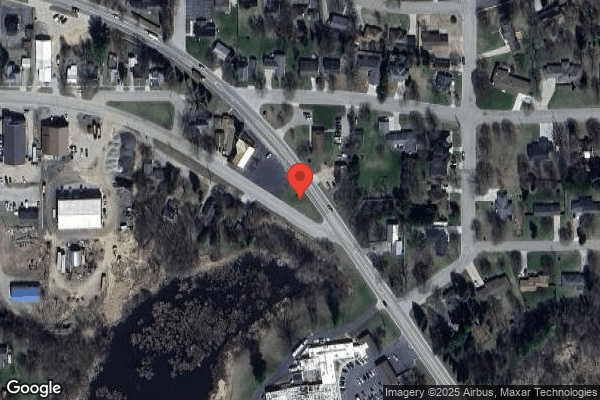
Medilodge of Clare

600 SE 4th Street, Clare, MI 48617 (989) 386-7723
For profit - Limited Liability company 92 Beds MEDILODGE Data: November 2025
Trust Grade
63/100
#142 of 422 in MI
Last Inspection: February 2025

Within standard 12-15 month inspection cycle. Federal law requires annual inspections.

Overview

Medilodge of Clare has a Trust Grade of C+, which means it is slightly above average but not particularly outstanding. It ranks #142 out of 422 facilities in Michigan, placing it in the top half, and #2 out of 2 in Clare County, indicating that there is only one other local option. The facility's trend is stable, with the same number of issues reported in both 2024 and 2025. Staffing is a strength, with a 4/5-star rating and a turnover rate of 43%, which is slightly below the Michigan average of 44%. However, the facility has received $10,059 in fines, which is considered average but may suggest some compliance issues. On the downside, there have been serious incidents reported, including a failure to ensure nurses were competent in providing care for a resident, leading to a delay in treatment and the resident's subsequent death. Another serious finding involved not properly monitoring residents on leave, resulting in falls and injuries among multiple residents. While there are positive aspects like good RN coverage-more than 78% of Michigan facilities-families should weigh these strengths against the serious concerns regarding resident safety and quality of care.

Trust Score
C+
63/100
In Michigan
#142/422
Top 33%
Safety Record
High Risk
Review needed
Inspections
Holding Steady
2 → 2 violations
Staff Stability
○ Average
43% turnover. Near Michigan's 48% average. Typical for the industry.
Penalties
✓ Good
$10,059 in fines. Lower than most Michigan facilities. Relatively clean record.
Skilled Nurses
✓ Good
Each resident gets 56 minutes of Registered Nurse (RN) attention daily — more than average for Michigan. RNs are trained to catch health problems early.
Violations
○ Average
10 deficiencies on record. Average for a facility this size. Mostly minor or procedural issues.
★★★★☆
4.0
Overall Rating
★★★★☆
4.0
Staff Levels
★★★★☆
4.0
Care Quality
★★★★☆
4.0
Inspection Score
Stable
2024: 2 issues
2025: 2 issues

The Good

  • 4-Star Staffing Rating · Above-average nurse staffing levels
  • 4-Star Quality Measures · Strong clinical quality outcomes
  • Full Sprinkler Coverage · Fire safety systems throughout facility
  • No fines on record
  • Staff turnover below average (43%)

    5 points below Michigan average of 48%

Facility shows strength in staffing levels, quality measures, fire safety.

The Bad

Staff Turnover: 43%

Near Michigan avg (46%)

Typical for the industry

Federal Fines: $10,059

Below median ($33,413)

Minor penalties assessed

Chain: MEDILODGE

Part of a multi-facility chain

Ask about local staffing decisions and management

The Ugly 10 deficiencies on record

3 actual harm
Mar 2025 1 deficiency
CONCERN (D) 📢 Someone Reported This

A family member, employee, or ombudsman was alarmed enough to file a formal complaint

Potential for Harm - no one hurt, but risky conditions existed

Deficiency F0658 (Tag F0658)

Could have caused harm · This affected 1 resident

**NOTE- TERMS IN BRACKETS HAVE BEEN EDITED TO PROTECT CONFIDENTIALITY** Based on observation, interview, and record review, the facility failed to ensure incontinence care was provided according to pr...

Read full inspector narrative →
**NOTE- TERMS IN BRACKETS HAVE BEEN EDITED TO PROTECT CONFIDENTIALITY** Based on observation, interview, and record review, the facility failed to ensure incontinence care was provided according to professional standards of practice for 1 resident (R104) of 5 residents reviewed for incontinence care. Findings include: Review of an admission Record revealed R104 admitted to the facility on [DATE] with pertinent diagnoses which included altered mental status, urinary tract infection, and muscle weakness. Review of a Minimum Data Set (MDS) (a tool used for assessing a resident's care needs) assessment for R104, with a reference date of 2/17/2025 revealed a Brief Interview for Mental Status (BIMS) (a scale used to determine a resident's cognitive status) score of 13, out of a total possible score of 15, which indicated R104 was cognitively intact. Further review of same MDS assessment revealed R104 required assistance with toileting and was incontinent of urine. Review of a current incontinence Care Plan intervention for R104, initiated 2/11/2025, directed staff to apply barrier cream after incontinence care. In an observation on 3/26/2025 at 10:25 AM in R104's room, Certified Nursing Assistant (CNA) G cleaned feces from R104's buttocks and anus and then cleaned R104's vaginal area without changing gloves or performing hand hygiene in between. CNA G did not apply barrier cream to R104 after incontinence care was complete. In an interview on 3/26/2025 at 10:47 AM, CNA G reported she was not aware that she should perform hand hygiene and switch gloves in between going from cleaning feces to cleaning the vaginal area. CNA G reported she was not taught this during her CNA certification or at the facility. CNA G reported she forgot to apply barrier cream to R104 after incontinence care. In an interview on 3/26/2025 at 10:55 AM, Unit Manager I reported staff were expected to change gloves and perform hand hygiene when going from a dirty area to a clean area during incontinence care. Review of facility policy/procedure Hand Hygiene, revised 12/13/2023, revealed .All staff will perform proper hand hygiene procedures to prevent the spread of infection to other personnel, residents, and visitors . The use of gloves does not replace hand hygiene . Further review of the Hand Hygiene Table revealed staff were instructed to perform hand hygiene when, during resident care, moving from a contaminated body site to a clean body site.
Feb 2025 1 deficiency
CONCERN (F)

Potential for Harm - no one hurt, but risky conditions existed

Staffing Data (Tag F0851)

Could have caused harm · This affected most or all residents

Based on interview and record review, the facility failed to report Payroll Based Journal (PBJ) information to CMS (Centers for Medicare and Medicaid). This deficient practice resulted in inaccurate r...

Read full inspector narrative →
Based on interview and record review, the facility failed to report Payroll Based Journal (PBJ) information to CMS (Centers for Medicare and Medicaid). This deficient practice resulted in inaccurate reporting of staffing levels with the potential to affect all residents residing in the facility. Findings include: Review of the CMS PBJ Staffing Data Report FY (fiscal year) Quarter 4 2024 (July 1 - September 30)revealed the metric Excessively Low Weekend Staffing Triggered In an interview on 2/05/25 at 10:28 AM., Registered Nurse/Staff Scheduler (RN/SS) E reported there was a possibility that the Excessively Low Weekend Staffing had Triggered on the PBJ report from CMS because nurses who are salaried position often work the floor and do not punch in on a time clock. RN /SS E reported as for Certified Nurse Aides (CNA's) this could also be true, because the Activity Director (AD) and the facility Transportation staff do not punch in either to her knowledge. RN /SS E reported both of those staff members work the units as CNAs when the facility runs short. RN /SS E reported she was a salaried staff but often will pick up and work the units performing nursing duties. RN /SS E reported there was also a Glitch in their time clock systems a few months back when the facility changed their payroll/timekeeping system. In an interview on 2/6/25 at 2:00 PM., Nursing Home Administrator NHA reported they had some issues with their PBJ reporting and the timekeeping system which had changed over, and this may be the reason the facility triggered for Excessively Low Weekend Staffing.
Jan 2024 2 deficiencies
CONCERN (D) 📢 Someone Reported This

A family member, employee, or ombudsman was alarmed enough to file a formal complaint

Potential for Harm - no one hurt, but risky conditions existed

Deficiency F0558 (Tag F0558)

Could have caused harm · This affected 1 resident

**NOTE- TERMS IN BRACKETS HAVE BEEN EDITED TO PROTECT CONFIDENTIALITY** Resident #227 (R227) Review of an admission Record revealed R227 was a [AGE] year-old female, admitted to the facility on [DATE]...

Read full inspector narrative →
**NOTE- TERMS IN BRACKETS HAVE BEEN EDITED TO PROTECT CONFIDENTIALITY** Resident #227 (R227) Review of an admission Record revealed R227 was a [AGE] year-old female, admitted to the facility on [DATE], with pertinent diagnoses which included: aftercare following explanation of knee joint prosthesis (knee replacement). Review of a Minimum Data Set (MDS) assessment for R227, with a reference date of 11/6/23 revealed a Brief Interview for Mental Status (BIMS) score of 15, out of a total possible score of 15, which indicated R227 was cognitively intact. During an interview on 01/09/24 at 10:26 AM, R227 reported that while she was a resident at the facility, she required ice for her knee following a knee replacement. R227 stated, They (facility staff) would come in and shut off the call light and then 2-3 hours later they'd come back with my bag of ice for my knee. Review of R227's Quality Assistance Form dated 10/26/23 revealed, .CNA (Certified Nursing Assistant) never came back after saying she would be back .Plan/Actions: Call light audits being initiated to assure there is not an unknown concern of call lights not being answered timely. Message to nursing staff to assure if they tell a resident they will be back that they do come back to address any needs, and to not turn off call light until needs are met . Review of the Resident Council Meeting Minutes revealed: Date of Meeting: 7/3/23 .New Business Review/Action Plan .Call light wait times long .Outcome-Not Resolved-Action Needed . Date of Meeting: 9/5/23 .New Business Review/Action Plan .Call light wait times too long on all shifts . Date of Meeting: 1/2/24 .New Business Review/Action Plan .Call lights not being placed within reach .Outcome-Resolved-Still Monitoring . This citation pertains to intake #: MI00140715 Based on observation, interview, and record review, the facility failed to accommodate the needs of 2 residents in a timely manner (Resident #178 and Resident #227) out of 3 residents reviewed for accommodation of needs, resulting in delays in care provided to residents. Findings: Review of a Face Sheet revealed R178 was a [AGE] year-old female, admitted to the facility on [DATE], with pertinent diagnoses of pneumonia, diabetes mellitus type 2, history of falls, morbid obesity, and need for assistance with personal care. R178 was her own decision maker and cognitively intact. During an observation on 01/08/24 at 12:15 PM, R178's call light was on, staff entered the room at 12:20 PM, and the call light was turned off. Staff exited the resident's room. During an observation on 01/08/24 at 1:09 PM, R178's call light was activated. During the same time, R178 stated that the call light was activated an hour ago, staff came in and turned off the light, and told R178 that staff would be in shortly to assist getting her brief changed. Staff had not yet returned to assist her so R178 activated the call light again. I need to be changed, it's been an hour. During an observation on 01/08/24 at 1:13 PM, staff entered R178's room and the call light was turned off. Staff exited the room. Two aides returned at 1:17 PM to assist resident with a brief change. During an interview on 01/09/24 at 10:18 AM, the Administrator indicated that the expectation for answering call lights was that they were left on until the resident's needs were met. Review of the facility policy Call Lights: Accessibility and Timely Response reflected: Any staff member who sees or hears an activated call light is responsible for responding. If the staff member cannot provide what the resident desires, the appropriate personnel should be notified. The policy does not direct staff to leave the call light on until the resident's needs are met.
CONCERN (D)

Potential for Harm - no one hurt, but risky conditions existed

Deficiency F0658 (Tag F0658)

Could have caused harm · This affected 1 resident

**NOTE- TERMS IN BRACKETS HAVE BEEN EDITED TO PROTECT CONFIDENTIALITY** Based on interview and record review, the facility failed to follow professional standards of nursing practice for medication ad...

Read full inspector narrative →
**NOTE- TERMS IN BRACKETS HAVE BEEN EDITED TO PROTECT CONFIDENTIALITY** Based on interview and record review, the facility failed to follow professional standards of nursing practice for medication administration for 2 of 8 residents (Resident #4 and #33), reviewed for the provision of nursing services, resulting in blood pressures not being assessed prior to medication administration and medications administered outside of the physician ordered parameters, and the potential for an unsafe elevation of blood pressure and the worsening of a medical condition. Findings: Resident #4 (R4) Review of an admission Record revealed R4 was a [AGE] year-old female, originally admitted to the facility on [DATE], with pertinent diagnoses which included: orthostatic hypotension (low blood pressure that happens when you stand up from sitting or lying down). Review of R4's Physician Order dated 9/15/23 revealed, Midodrine HCl Tablet 2.5 MG Give 1 tablet by mouth three times a day for vasopressor (constrict blood vessels) hold if systolic blood pressure (top number) is greater than 120. Midodrine is a medication to treat low blood pressure. Review of the Medication Regimen Review dated 10/2/23 and signed by facility provider on 10/3/23 revealed, Midodrine 2.5 mg TID (three times a day) hold if SBP (Systolic Blood Pressure/top number) is greater than 120. A review of the MAR (Medication Administration Record) shows a few doses administered outside parameters. Review of R4's December 2023 Medication Administration Record revealed the following: On 12/1/23 R4's 11:00 AM dose of midodrine was administered following a blood pressure of 121/65. On 12/3/23 R4's 10:00 PM dose of midodrine was administered following a blood pressure of 130/66. On 12/4/23 R4's 6:00 PM dose of midodrine was administered following a blood pressure of 130/85. On 12/5/23 R4's 11:00 AM dose of midodrine was administered following a blood pressure of 121/80. On 12/13/23 R4's 11:00 AM dose of midodrine was administered following a blood pressure of 123/78. On 12/15/23 R4's 11:00 AM dose of midodrine was administered following a blood pressure of 136/70. On 12/17/23 R4's 11:00 AM dose of midodrine was administered following a blood pressure of 127/62. On 12/19/23 R4's 11:00 AM dose of midodrine was administered following a blood pressure of 154/90. On 12/22/23 R4's 11:00 AM dose of midodrine was administered following a blood pressure of 138/83. On 12/23/23 R4's 11:00 AM dose of midodrine was administered following a blood pressure of 126/75. On 12/24/23 R4's 11:00 AM dose of midodrine was administered following a blood pressure of 133/88. On 12/25/23 R4's 11:00 AM dose of midodrine was administered following a blood pressure of 138/76. On 12/25/23 R4's 6:00 PM dose of midodrine was administered following a blood pressure of 129/63. On 12/26/23 R4's 6:00 PM dose of midodrine was administered following a blood pressure of 134/90. On 12/27/23 R4's 6:00 PM dose of midodrine was administered following a blood pressure of 142/79 Review of R4's January 2024 Medication Administration Record revealed the following: On 1/2/24 R4's 11:00 AM dose of midodrine was administered following a blood pressure of 123/70. On 1/3/24 R4's 11:00 AM dose of midodrine was administered following a blood pressure of 152/83. On 1/4/24 R4's 10:00 PM dose of midodrine was administered following a blood pressure of 130/68. On 1/5/24 R4's 10:00 PM dose of midodrine was administered following a blood pressure of 147/79. On 1/6/24 R4's 11:00 AM dose of midodrine was administered following a blood pressure of 122/67. On 1/8/24 R4's 6:00 PM dose of midodrine was administered following a blood pressure of 136/74. Resident #31 (R31) Review of an admission Record revealed R31 was an [AGE] year-old male, originally admitted to the facility on [DATE], with pertinent diagnoses which included: orthostatic hypotension. Review of R31's Physician Order dated 12/1/23-12/28/23 revealed, Midodrine HCl Oral Tablet 5 MG (Midodrine HCl) Give 1 tablet by mouth three times a day for bp (blood pressure) hold if systolic blood pressure is greater than 120. Review of R31's December 2023 Medication Administration Record revealed the following: On 12/2/23 R31's 8:00 PM dose of midodrine was administered following a blood pressure of 124/86. On 12/8/23 R31's 7:00 AM dose of midodrine was administered following a blood pressure of 123/59. On 12/8/23 R31's 11:00 AM dose of midodrine was administered following a blood pressure of 123/59. On 12/9/23 R31's 7:00 AM dose of midodrine was administered following a blood pressure of 149/85. On 12/9/23 R31's 11:00 AM dose of midodrine was administered following a blood pressure of 149/85. On 12/10/23 R31's 7:00 AM dose of midodrine was administered following a blood pressure of 147/75. On 12/10/23 R31's 11:00 AM dose of midodrine was administered following a blood pressure of 147/75. Confirmed using R31's Blood Pressure Summary that R31's blood pressure was not assessed prior to the midodrine administration at 11:00 AM on 12/8/23, 12/9/23, and 12/10/23. Review of R31's Physician Order dated 12/28/23-1/4/24 revealed, Midodrine HCl Oral Tablet 5 MG (Midodrine HCl) Give 1 tablet by mouth three times a day for bp hold if systolic blood pressure is greater than 110. Review of R31's January 2024 Medication Administration Record revealed the following: On 1/1/24 R31's 8:00 PM dose of midodrine was administered following a blood pressure of 114/61. On 1/2/24 R31's 7:00 AM dose of midodrine was administered following a blood pressure of 156/79. On 1/2/24 R31's 11:00 AM dose of midodrine was administered following a blood pressure of 156/79. On 1/2/24 R31's 8:00 PM dose of midodrine was administered following a blood pressure of 121/65. On 1/3/24 R31's 7:00 AM dose of midodrine was administered following a blood pressure of 116/66. On 1/3/24 R31's 11:00 AM dose of midodrine was administered following a blood pressure of 116/66. On 1/3/24 R31's 8:00 PM dose of midodrine was administered following a blood pressure of 127/68. Confirmed using R31's Blood Pressure Summary that R31's blood pressure was not assessed prior to the midodrine administration at 11:00 AM on 1/2/24 and 1/3/24. During an interview on 1/10/24 at 9:11 AM, Licensed Practical Nurse (LPN) D reported that medications with ordered parameters should be administered within the prescribed parameters. LPN D reported that medications with ordered parameters should be held if outside given parameters and a physician notified unless otherwise stated. If a medication should have parameters and does not, the physician should be contacted for clarification of the order. During an interview on 01/10/2024 at 10:26 AM, Unit Manager (UM) F reported that the pharmacist reviewed the resident's physician orders monthly (Monthly Medication Review) and provided recommendations for follow-up related to the ordered medications such as laboratory testing, dose reductions, discontinuations, irregularities, and identified concerns. UM F reported that if the pharmacist identified a concern during the Monthly Medication Review (MRR) a report would be sent to the Director of Nursing (DON). The DON would then send the report to the provider for review at which point the provider would make order changes and or new orders. UM F reported that during the morning interdisciplinary team meetings the MRR's with recommendations and/or concerns were discussed, and the clinical nurse team/unit managers would then follow-up and implement order changes if required. UM F did not recall an identified concern of medications administered outside of ordered parameters. During an interview on 01/10/24 at 09:45 AM, Nursing Home Administrator (NHA) reported that she was not aware that there had been a concern with failing to follow physician ordered parameters as identified by the consultant pharmacist. Review of the facility policy Medication Administration dated 1/1/22 revealed, Medications are administered by licensed nurses, or other staff who are legally authorized to do so in this state, as ordered by the physician and in accordance with professional standards of practice, in a manner to prevent contamination or infection. Policy Explanation and Compliance Guidelines .8. Obtain and record vital signs, when applicable or per physician orders. when applicable, hold medication for those vital signs outside the physician's prescribed parameters . Review of Fundamentals of Nursing ([NAME] and [NAME]) 10th edition revealed, Use vital sign measurements to determine indications for medication administration. For example, give certain cardiac drugs only within a range of pulse or BP (blood pressure) values .Know the acceptable vital sign ranges for your patients before administering medications . [NAME], [NAME] A.; [NAME], [NAME] Griffin; Stockert, [NAME] A.; Hall, [NAME]. Fundamentals of Nursing - E-Book (p. 467-468). Elsevier Health Sciences. Kindle Edition.
Aug 2023 2 deficiencies 1 Harm
SERIOUS (G) 📢 Someone Reported This

A family member, employee, or ombudsman was alarmed enough to file a formal complaint

Actual Harm - a resident was hurt due to facility failures

Quality of Care (Tag F0684)

A resident was harmed · This affected 1 resident

**NOTE- TERMS IN BRACKETS HAVE BEEN EDITED TO PROTECT CONFIDENTIALITY** This citation pertains to intake #: MI00135530 Based on interview and record review, the facility failed to 1.) ensure licensed ...

Read full inspector narrative →
**NOTE- TERMS IN BRACKETS HAVE BEEN EDITED TO PROTECT CONFIDENTIALITY** This citation pertains to intake #: MI00135530 Based on interview and record review, the facility failed to 1.) ensure licensed nurses were competent in the provision of care for a diagnosis of [NAME] Syndrome, 2.) identify a change in condition, 3.) perform a comprehensive assessment following a change in condition, and 4.) ensure complete and accurate documentation for 1 resident (Resident #102) reviewed for quality of care, resulting in a delay in medical treatment and R102's subsequent death. Findings: Resident #102 (R102) Review of an admission Record revealed R102 was a [AGE] year-old male, originally admitted to the facility on [DATE] and readmitted on [DATE], with pertinent diagnoses which included: [NAME] Syndrome. R102 was listed as a Full Code Status (all medical interventions including cardiopulmonary resuscitation to be provided in the event of a medical emergency). Review of a Minimum Data Set (MDS) assessment for R102, with a reference date of 2/14/23 revealed a Brief Interview for Mental Status (BIMS) score of 6, out of a total possible score of 15, which indicated R102 was severely cognitively impaired. Review of the Functional Status revealed that R102 required extensive 2 person assist for bed mobility, dressing, toileting, and personal hygiene, and total dependence of 2 persons for transferring. [NAME] Syndrome wwww.pwsausa.org Review of the [NAME]-[NAME] Syndrome Association/USA booklet titled [NAME]-[NAME] Syndrome Medical Alerts last revised 2022 revealed, This booklet was developed to alert medical practitioners in emergency departments, urgent care facilities and primary care practices to severe medical complications that can develop rapidly in individuals with [NAME]-[NAME] syndrome (PWS). The booklet highlights medical issues that occur in some patients with PWS and hopefully assists in the recognition and management of problems that are uncommon in the general population but do occur with increased frequency among individuals with PWS. These findings may present at various ages and result in serious, sometimes urgent or even fatal outcomes. Common problems during hospitalization and medical procedures are also discussed. The booklet also serves to alert families and other caregivers to potential PWS complications requiring specific management. Emergency and Acute Medical Issues .Severe Gastrointestinal Concerns: Vomiting - Decreased ability to vomit. Vomiting occurs infrequently in many people with PWS. Emetics may be ineffective, and repeated doses may cause toxicity. This characteristic is of particular concern in light of hyperphagia and the possible ingestion of uncooked, spoiled, or otherwise unhealthful food items. The presence of new onset vomiting or vomiting accompanied by loss of appetite or lethargy may signal a life-threatening illness and may warrant immediate treatment. (See below and pages 24-25 as well as foldout on the last page of this booklet for more information on this topic.) Severe Gastric Illness: Gastric problems are very common in PWS due to decreased motility and gastroparesis. Abdominal distension or bloating, pain and/or vomiting may be signs of life-threatening gastric dilation, inflammation or necrosis. Rather than localized pain, there may be a general or vague feeling of being unwell. Anti-diarrheal medications may also cause severe colonic distension, necrosis and rupture and should be avoided. Any individual with PWS with these symptoms needs immediate medical attention. An X-ray, CT scan or ultrasound can help with the diagnosis and confirm if there is gastric necrosis and/or perforation. If distension is noted, these individuals need close clinical monitoring on an ongoing basis, to be made NPO, and may need decompression with an NG tube. Gastric necrosis or perforation is a medical emergency requiring exploratory laparotomy or emergent surgery. Individuals with PWS may not have tenderness, rigidity or rebound normally associated with an acute abdomen. Please see additional information on Gastric Necrosis on pages 24-25 of this booklet and see an algorithm for evaluation of GI complaints in people with PWS at the end of this booklet . Pain Tolerance A high threshold for sensing pain is common and may mask the presence of infection or injury. Someone with PWS may not complain of pain until infection is severe or may have difficulty localizing pain. Parent/caregiver reports of subtle changes in condition or behavior should be investigated for medical cause. Any complaint of pain by a person with PWS should be taken seriously . Temperature Abnormalities . fever may be absent despite serious infection . Hyperphagia and Food Seeking Individuals with PWS have a nearly constant drive to eat and must be continuously supervised in all settings to prevent access to excess food .There are currently no treatments for this constant urge to eat. Insatiable appetite may lead to life-threatening weight gain, which can be very rapid and occur even on a low-calorie diet. III. Evaluation and Treatment of Special Issues-Risk of Stomach Necrosis and Rupture A Cause of Death from Sepsis, Gastric Necrosis or Blood Loss Signs and symptoms of stomach necrosis and rupture: *Vomiting-Atypical vomiting accompanied by decrease in appetite or lethargy is unusual in PWS *Loss of appetite (ominous sign) *Lethargy *Complaints of pain, usually non-specific. Pain sensation appears to be abnormal in PWS due to high pain threshold; affected people rarely complain of pain *Pain is often poorly localized *Peritoneal signs may be absent *Abdominal/stomach bloating and gastric dilation *Fever may or may not be present *Guaiac positive stools (chronic gastritis) . https://www.pwsausa.org/wp-content/uploads/2022/04/MedicalAlertsBooklet-GIChart-2022.pdf Review of R102's Care Plans revealed no specific Care Plan for [NAME] Syndrome with interventions and/or observations to assists in the recognition and management of potential medical complications and/or problems. Review of the Facility Assessment last updated 09/2022 revealed, .Decisions regarding caring for residents with conditions not listed above-1.3 A referral packet is received and reviewed by facility staff from the hospital or referring agency to ensure we can meet the needs of the resident before admission to the facility. If additional training is needed it will be completed prior to admitting the resident to ensure we are able to accommodate their needs. If we are unable to meet the needs of the resident, then we will not proceed with admission to the facility . Review of R102's admission documentation revealed the facility received a fax from the local hospital on 2/7/23 with pertinent information regarding R102. The Inquiry-admission Worksheet included the following information: R102 was a full code and required skilled nursing care. R102 had a history of anemia, anxiety, arthritis, cataracts, kidney disease, (unknown abbreviation), [NAME]-[NAME] Syndrome, sleep apnea, and seizure. Confirming the facility was aware of the diagnosis of PWS prior to admission. Review of R102's Nursing Evaluation Summary dated 2/8/23 revealed, .Active bowel sounds x4 (in 4 quadrants of the abdomen). Abd (abdomen) distended and edema to left leg and bil (bilateral) hands with contractions in hands that guardian states is his baseline .Res. (resident) is a pureed diet with nect (nectar) thick liquids and no straws. Pain is a 2 at this time (no location or type of pain identified) . Confirming R102 had active bowel sounds at the time of admission and nausea and/or vomiting was not identified as a baseline symptom. There were no other Progress Notes regarding R102's abdominal distention. Review of R102's Provider Progress Note dated 2/9/23 revealed R102 had a normal abdominal assessment with no documentation that R102 experienced nausea or vomiting and did not have abdominal distention. Review of R102's Provider Progress Note dated 2/14/23 revealed, patient is seen today to review plan of care .Patient is here for therapy purposes . Patient has a history of [NAME]-[NAME] syndrome . GASTROINTESTINAL: Negative for abdominal pain, nausea, vomiting, diarrhea + constipation . ABDOMEN: Soft & non-tender. BS (bowel sounds) active x 4. No pain with palpation . There was no documentation of chronic abdominal distention and a history of nausea and/or vomiting. Review of R102's Provider Progress Note dated 2/21/23 revealed, patient is seen for a follow-up visit .Patient had an orthopedic consult February 18 .REVIEW OF SYSTEMS . GASTROINTESTINAL: Negative for abdominal pain, nausea, vomiting, diarrhea + constipation . GENERAL: patient is in his bed in his room he is alert he does not appear to be in any acute distress . ABDOMEN: Soft & non-tender. BS (bowel sounds) active x 4. No pain with palpation . EXTREMITIES: No peripheral edema. Pulses are equally palpable x4 . There was no documentation of chronic abdominal distention and a history of nausea and/or vomiting. R102 was not seen by a provider again prior to his transfer to the hospital on 3/16/23. Review of R102's RAI (Resident Assessment Instrument) Progress Note dated 2/20/23 revealed, (R102) admitted for skilled services d/t (due to) having a fracture of the distal end of his left femur (with no known trauma), pneumonia, encephalopathy, anemia, [NAME]-[NAME] syndrome, seizure disorder, hypothyroidism, thrombocytopenia, hyperkalemia, cognitive communication deficit, dysphagia, GERD (reflux), narcolepsy with cataplexy, sleep apnea with CPAP use, generalized weakness and debility. Information obtained through resident and staff interview, chart review and direct resident observation in collaboration with therapy .(R102) has cognitive impairment AEB (as evidence by) his BIM's score of 06/15, he takes antipsychotic medications on a regular basis, and will continue per his home routine, licensed staff monitor for side effects/efficacy, see SW (social work) notes for behaviors/cognition. (R102) is able to hear normal vocal tones during conversation with no hearing aids, his vision is adequate without glasses, his speech is clear and he is able to understand and makes himself understood .(R102) has his own natural teeth in fair repair with no noted difficulty chewing noted. Review of his Hydration Risk UDA reveals he has no s/s (signs or symptoms) of dehydration and is not at risk for dehydration .K Nutrition: See nutritional status CAA (care area assessment) . Confirming R102's diagnosis of [NAME]-[NAME] Syndrome was known prior to his admission on [DATE] and he did not have a history of nausea and/or vomiting documented. Review of R102's Nutritional Care Plan (Care Area Assessment) revealed, The resident has potential for nutritional deficits r/t (related to) Left femur fx (fracture), encephalopathy, anemia, [NAME] syndrome, seizure disorder, hypothyroidism, hyperkalemia, GERD, dysphagia, hx (history) falls, Vitamin D deficiency, hyperparathyroidism, depression, bipolar disorder, anxiety, CKD (kidney disease), OA (osteoarthritis). BMI >30 (body mass index greater than 30), obese. Date Initiated: 02/14/2023 .The resident will maintain adequate nutritional status as evidenced by maintaining weight, no s/sx (signs or symptoms) of malnutrition and consuming at least 75% of meals daily through review date .Administer medications as ordered. Monitor/Document for side effects and effectiveness.Monitor weight as ordered .Notify nurse/MD PRN any s/sx of dysphagia: Pocketing, Choking, Coughing, Drooling, Holding food in mouth, Several attempts at swallowing, Refusing to eat, Appears concerned during meals .Obtain and monitor lab/diagnostic work as ordered. Report results to MD and follow up as indicated .Provide and serve diet as ordered. Monitor intake and record q (every) meal. No concentrated sweets, NDD (dysphagia/difficulty swallowing) diet: level 1/pureed texture, nectar thick liquids. No double portions/snacks between meals. No straws. 2 handle cup, scoop plate at meals .RD (Registered Dietician) to evaluate and make diet change recommendations PRN (as needed) .Staff to provide assistance at meals, refer to tray card for food preference choices. Confirming R102 did not have a history of nausea and/or vomiting and the potential medical emergency of nausea/vomiting was not addressed under the nutritional care plan. Review of the Complaint Submission to the State Agency revealed, (R102) .was admitted to (facility) on 2/8/23 for rehabilitation from orthopedic surgery for a fracture femur .When I visited (R102) on Tuesday, 3/14/23, he complained of nausea and vomiting. He did not eat his lunch. He was excessively thirsty. He was having difficulty staying awake without prompting. I reported this to the nurse on shift. A nurse listened to his abdomen and lungs, took his temperature and stated that nothing was of concern based on this cursory exam. I was assured that they would keep an eye on him by taking his vitals and conferring with the Nurse Practitioner in charge as to whether any further testing was warranted. Evidently, no labs were ordered as there are no test results for 3/14/23 or 3/15/23. Wednesday, 3/15/23, I made a phone call to (facility) at 3:42 pm to inquire about (R102's) condition. I was told by the nurse on shift that he was, eating ice cream, not having any behaviors and that (R102) was better than he was the day before. Her message was solely of re-assurance that he was well. As I wrote above, no vitals were taken, no labs were ordered, nothing was recorded of his rapidly worsening health . From about 2:00 pm Tuesday, 3/14/23, when I alerted nursing staff to (R102's) symptoms, at least 40 hours passed before there was any notice that he was failing rapidly. By this time, his condition was so critical that his life was in jeopardy with no medical alternatives to change the course of his health; the result being (R102's) preventable death . During an interview on 08/23/2023 at 1:06 PM, Family Member (FM) S reported she was also R102's legal guardian. FM S reported that upon admission to the facility on 2/8/23 she reported to the facility management and staff that R102 had [NAME] Syndrome and provided the facility with an alert book that contained specific information and an algorithm to reference if R102 was displaying and changes from his baseline. FM S reported the alert book was a booklet produced by [NAME] Association of the US and she would give a copy to all of R102's providers, Community Mental Health, his Adult [NAME] Care, Hospital, and the facility. FM S stated, it (the booklet) was a fast way to look through and see if there was a problem and pursue it. FM S reported she had visited R102 on 3/14/23 during lunch and became concerned when R102 did not eat his lunch which immediately raised concerns because of his diagnosis of [NAME] Syndrome he had an insatiable appetite. FM S reported R102 was telling her he couldn't eat, and his stomach was bothering him. FM S reported that R102 also drank 5 drinks while she was with him, and she was concerned with his excessive thirst. Additionally, FM S reported she was having difficulty keeping R102 awake and stated he had narcolepsy, but this was different. He just was very out of it. FM S stated, That's why I alerted the nurse on duty at the time. I saw all these signs of something being very wrong and was told they would obtain vital signs and keep an eye on him. FM S stated R102's nausea should have raised concerns. People with his concern develop digestive issues. They lack the mechanism of vomiting so vomiting would be very unusual for someone with [NAME] Syndrome. FM S reported that on 3/15/23 she called the facility for follow up on R102's condition and spoke to the 2nd shift nurse, the same nurse she reported concerns to on 3/14/23, who reported that he was fine and eating ice cream and was assured that R102 had improved and was at his baseline. FM S stated, I made it clear that I had significant concerns about his symptoms with his [NAME] Syndrome. FM S stated that from 3/14/23 until his transfer to the hospital (R102) wasn't as verbal and not as behavioral. and were not identifying that those changes were additional signs of his system failing and a medical emergency. During an interview on 08/24/2023 at 10:58 AM via phone and on 8/24/23 at 3:23 PM via email, FM S verified the booklet provided to the facility staff via a picture of the book in R102s belongings at the facility and stated she alerted staff to the information contained within it (the booklet). At that point in time, I expected that if issues occurred while he was admitted there, they would be able to use it for reference. (The specific booklet provided to the facility can be found at https://www.pwsausa.org/wp-content/uploads/2022/04/MedicalAlertsBooklet-GIChart-2022.pdf) During an interview on 08/25/2023 at 2:45 PM, during exit conference, Regional Nurse (RN) T confirmed that there was a [NAME] Syndrome book in his room for reference and Unit Manager (UM) U confirmed there was a [NAME] Will Syndrome reference sheet hanging up at the nurses' station. Review of R102's Progress Notes revealed no documentation that R102 experienced nausea and/or vomiting from time of admission on [DATE] until 3/14/23. Confirming the presence of nausea and/or vomiting was a new symptom for R102. Review of R102's Progress Notes revealed no documentation that R102 had emesis (vomiting) on 3rd shift between 3/13/23 and 3/14/23 and no documentation that the provider was notified. There was a Pertinent Charting-Behavior note written on 3/14/23 at 2:45 AM which revealed Resident displayed several behaviors this shift, from constant use of the call light and some yelling out and an Orders-Administration Note completed at 12:52 AM with a follow up pain scale entry at 3:28 AM both of which contained no additional documentation regarding R102's condition or comprehensive pain assessment. Review of R102's Nurses Note dated 3/14/23 at 1:55 PM revealed, Resident sitting up in w/c at this time, bowel sounds x 4, active, abdomen nontender, lung sounds CTA (clear to auscultation), no resp distress observed, temp 97.1, resident had emesis x 1 per report during the night, no further emesis this shift. There were no Nurses Notes written from 3/11/23 until a Late Entry note written for 3/14/23 at 12:30 PM. Review of R102's Skilled Daily-Medically Complex documentation dated 3/14/23 at 11:59 AM revealed R102s Cardiac and Respiratory Systems were assessed with a blood pressure and pulse obtained on 2/27/23 and respirations and oxygen level obtained on 2/26/23. R102's skin was identified as having no surgical wounds or abnormal skin conditions. There were no new labs and/or tests ordered, and the physician was not notified of any changes, abnormal vital signs, and/or test/lab results. R102's emesis noted on the previous shift was not documented. Review of a Late Entry Nurses Note written on 3/17/23 at 10:32 AM and dated for 3/14/23 at 12:30 PM revealed, Resident alert and oriented. Very pleasant and polite today. Did call and talk to former home care givers this AM and sister on phone today. No difficulties with meals, no N/V (nausea and vomiting). Review of R102's Vital Signs obtained on 3/14/23 at 3:05 PM revealed a blood pressure of 131/68. R102's pulse, temperature, and oxygen saturation were not assessed/documented. Review of R102's Pertinent Charting-Behavior note dated 3/15/23 at 5:58 AM revealed, resident has been in bed all of night shift with no behaviors noted. Review of R102's Skilled Daily-Medically Complex documentation dated 3/15/23 at 12:43 PM revealed R102s Cardiac and Respiratory Systems were assessed with vital signs obtained on 3/15/23 at 2:09 AM. R102's skin was identified as having no surgical wounds or abnormal skin conditions. There were no new labs and/or tests ordered, and the physician was not notified of any changes, abnormal vital signs, and/or test/lab results. R102's Guardian's concerns were not documented in the assessment. Review of a Late Entry Nurses Note written on 3/17/23 and dated for 3/15/23 at 1:32 PM revealed, No difficulties with meals today, no N/V. Very pleasant with all staff today, no outbursts or yelling. Did talk to former home care givers and sister today on telephone. Review of a Late Entry Nurses Note written on 3/18/23 at 12:30 AM and dated for 3/15/23 at 8:26 PM revealed, No nausea or vomiting. Resident drinking fluids and requested ice cream to eat. Vitals within norm. Review of R102's Electronic Health Record revealed no documentation that the provider was notified of R102's vomiting on 3rd shift between 3/13/23-3/14/23 and was not notified of the guardians voiced concerns during her onsite visit on 3/14/23 (excessive thirst, lethargy, nausea and vomiting, and lack of appetite.) The Electronic Health Record revealed no diagnostic testing or laboratory testing were ordered/completed from 3/14/23-3/16/23. Review of R102's Orders-Administration Note dated 3/14/23 at 12:52 AM revealed R102 complained of pain 2/10 and was administered Tylenol Oral Tablet 325 MG (Acetaminophen) 2 tablets. To be administered every 6 hours as needed for pain/fever. There was no description of the location or characteristics of R102's pain. Last dose of as needed Tylenol was not administered on 3/7/23. (Review of R102's Pain Assessments revealed that from 3/9/23-3/16/23 consistently scored 0/10 for pain with a rating of 1/10 on 3/11/23 at 7:30 PM and 3/14/23 at 4:57 PM and a rating of 2/10 on 3/10/23 at 8:05 PM and 3/14/23 at 12:52 AM.) Review of R102's Vital Signs revealed: *Oxygen was last assessed on 2/26/23 *BP, Pulse, and temperature were last assessed on 2/27/23 *3/14/23 at 3:05 PM a BP of 131/68 *3/15/23 at 2:09 AM a BP of 125/72, Pulse of 85, Oxygen 92%, Respirations 18, Temperature 97.5 (There was no Nurses Note written regarding the rationale for obtaining R102's vital signs at 2:09 AM.) *3/16/26 at time of transfer BP of 100/53, Pulse of 103, Oxygen 91%, Respirations 21, Temperature 97.5 During an interview on 08/25/2023 at 10:48 AM, Director of Nursing (DON) reported that R102's Guardian (FM S) visited R102 often and would provide education to the facility staff regarding [NAME] Syndrome. DON reported that if FM S was uncomfortable with anything or had concerns she would report it to facility staff. During an interview on 08/24/2023 at 9:10 AM, Licensed Practical Nurse (LPN) E reported that R102 was previously at the facility (April 2021-September 2021) and was familiar with [NAME] Syndrome at that time. LPN E reported that if a resident is admitted with a diagnosis/syndrome she is unfamiliar with she will review the diagnosis/syndrome to ensure she is aware of what she needs to know as a nurse to ensure proper care. LPN E reported R102 had behaviors which were typically related to making multiple phone calls to his AFC (adult foster care) and his sister. If he was unable to reach them his behaviors would increase. During an interview on 08/24/2023 at 9:49 AM, UM U reported she was the Unit Manager for the unit that R102 was on during his stay. UM U had not been made aware that R102 had nausea and vomiting, changes in his behaviors, and/or lethargy between 3/13/23 and his transfer to the hospital on 3/16/23. UM U reported that R102's guardian was a great guardian for him and was knowledgeable with [NAME] Syndrome (PWS). UM U reported that when R102 was initially admitted to the facility in April 2021 there was a dietician that provided extensive education to the facility staff. UM U reported that during his second admission to the facility (2/8/23) management did not provide education as they did previously because most of the facility staff had been educated prior. UM U reported there was a printout the sister/guardian had pinned up at the nurses' station for staff to reference but could not recall what was included on the printout. During an interview on 08/24/2023 at 9:30 AM, LPN I reported he was the nurse for R102 and recalled his diagnosis of [NAME] Syndrome. LPN I reported that prior to his transfer to the hospital he did not observe any changes in R102's condition. LPN I reported that facility management had asked if R102 had any episodes of nausea and/or vomiting prior to his transfer to the hospital over the last couple shifts LPN I worked, which was why he documented 2 late entry notes on 3/17/23. LPN I reported that 1 episode of emesis would be documented on the 24-hour report sheet unless there were other significant concerns or conditions in addition to the emesis, in which case, the provider would be notified. LPN I reported that if a resident is admitted with an unfamiliar disease/syndrome/condition management will provide education in the form of a printout and/or verbal education for important points to know for nursing staff. LPN I reported that he believed there was a printout distributed at the time of R102's admission. During an interview on 08/24/2023 at 1:07 PM, LPN C reported that R102 was the first patient she had cared for with [NAME] Syndrome. LPN C reported there was a brief education regarding PWS but there was no in-depth education but reported she did recall a printout pegged to the board at the nurses' station. LPN C reported she was R102's nurse on the 3rd shift between 3/13/23-3/14/23. LPN C stated, I believe he had vomited that night and reported she assessed his vital signs, and they were within normal limits. LPN C reported the CNAs had informed her that R102 had vomited, and she did not visualize it. LPN C reported that she did not perform a physical assessment, did not auscultate bowel sounds, and did not palpate abdomen on R102 after he had emesis but went in and talked to him and stated the situation wasn't something that really grabbed my attention or something that needed to be reported to the provider. LPN C did not report what time during the shift R102 vomited. LPN C reported that if R102 would have had an additional episode of vomiting she would have notified the provider but reported that with just 1 episode of vomiting, the outcome of the conversation with R102, and vital sign results, she would have just passed it along in report and documented it on the 24-hour report (not part of a resident's permanent medical chart). LPN C reported if a resident has 2 episodes of emesis in 24 hours and definitely 2 episodes of emesis in 1 shift the provider is to be called. When asked why on 3/14/23 there was no progress note written and informed that the vital signs were not documented, LPN C reported a progress note should have been written and the vital signs should have been documented. LPN C reported there were no other concerns identified during her shift and stated, he was actually a little less needy and exhibited less behaviors from his usual. During an interview on 08/25/2023 at 1:12 PM, ADON H reported she worked a brief shift on 3/14/23 from approximately 1PM to 2 PM. ADON H reported that she had seen on a 24-hour communication form that R102 had had emesis on the previous night shift, so she completed a physical assessment but did not identify any concerns. At that time, R102 had active bowel sounds and no abdominal distension. ADON H reported that FM S did not report any concerns regarding R102's condition to her at that time but did have concerns regarding his wheelchair. During an interview on 08/25/2023 at 9:24 AM, CNA P reported she was R102's 2nd shift CNA on 3/14/23 and 3/15/23. CNA P reported that the last 2 days she provided care for R102 he was more tired. CNA P reported that on 3/15/23 she observed his stomach was distended and stated, (R102) was sitting in his chair (in his room) and his belly looked bigger than usual and he reported he wasn't feeling well. CNA P reported that she notified the nurse on duty (LPN G), and she went in the room to talk to him. CNA P reported she and another CNA put R102 to bed at that time and I believe we got vitals. CNA P reported she was concerned for R102 because he never complained, he never complained about nothing and on 3/15/23 he looked ill and complained of generally feeling unwell which was not normal for R102. During an interview on 08/24/2023 at 11:59 AM, LPN G reported that she had not been provided education on [NAME] Syndrome and was not employed at the facility during R102's first stay in April 2021. LPN G stated, there may have been one (printout at the nurses' station) to keep an eye out for nausea. LPN G reported that she was R102's nurse on 2nd shift on both 3/14/23 and 3/15/23. LPN G reported that R102 had many behaviors and if he got worked up he would sometimes cough up clear secretions but reported it wasn't food, it was clear and if it was more (emesis) I would have called the doctor. LPN G reported that on 3/15/23 R102 went to bed earlier than usual, slept a lot one night, and stated, I did notice him not being so fussy. LPN G reported that looking back that (sleeping more) was bad and reported that in hindsight he was more lethargic than his baseline stating, (R102) was always complaining and vocalizing. And that night he wasn't after me LPN G stated, Looking back, a behavioral patient not being behavioral, that's a sign of a change in condition. LPN G stated, the highest risk patient is the hypochondriac and the behavioral person because they constantly complain or display behaviors, but a full assessment should still be completed because one of those times (not performing an assessment) something is going to happen. LPN G reported that on 3/15/23 she did not complete a comprehensive physical assessment because at that time she felt R102 was just tired but she did have the Certified Nursing Assistants CNAs obtain a set of vital signs and did not recall the vital signs out of range. When asked why the vital signs were not documented in the Electronic Health Record, she reported that the CNAs were responsible for inputting the information into the resident's chart. LPN G was unable to recall R102's vital signs on 3/15/23 or the time the vital signs were obtained. LPN G reported [TRUNCATED]
CONCERN (E) 📢 Someone Reported This

A family member, employee, or ombudsman was alarmed enough to file a formal complaint

Potential for Harm - no one hurt, but risky conditions existed

Pharmacy Services (Tag F0755)

Could have caused harm · This affected multiple residents

**NOTE- TERMS IN BRACKETS HAVE BEEN EDITED TO PROTECT CONFIDENTIALITY** This citation pertains to intake #: MI00137844 Based on interview and record review, the facility failed to 1.) ensure controlle...

Read full inspector narrative →
**NOTE- TERMS IN BRACKETS HAVE BEEN EDITED TO PROTECT CONFIDENTIALITY** This citation pertains to intake #: MI00137844 Based on interview and record review, the facility failed to 1.) ensure controlled substances were accurately documented and 2.) ensure narcotic medications were administered following the physician order for 4 residents (Resident #108, #109, #110, and #111), reviewed for controlled substances, resulting in narcotic medications not being administered and the potential for drug diversion of controlled substances and pain not being adequately controlled. Findings include: Resident #108 (R108) Review of an admission Record revealed R108 was a [AGE] year-old male, originally admitted to the facility on [DATE], with pertinent diagnoses which included: muscle spasms. Review of R108's Physician Order dated 2/10/23 revealed, KlonoPIN Oral Tablet 0.5 MG (Clonazepam) Give 1 tablet by mouth two times a day related to OTHER MUSCLE SPASM. Review of R108's Controlled Substance Record revealed no Klonopin was not administered on 8/16/23. Review of R108's Incident Audit Report dated 8/25/23 revealed, Floor nurse signed out clonazepam at 0702 (on 8/16/23) but did not sign it out of the narcotic book or pull the medication from the med (medication) cart .Education provided to floor nurse on rights of medication pass and administering medications per MD (medical doctor) order . Resident #109 (R109) Review of an admission Record revealed R109 was a [AGE] year-old female, originally admitted to the facility on [DATE], with pertinent diagnoses which included: anxiety. Review of R109's Physician Order dated 2/20/17 revealed, CLONAZEPAM 1 MG TABLET Give 1 tablet orally two times a day related to ANXIETY DISORDER. Review of R109's Controlled Substance Record revealed clonazepam was only administered 1 time on 8/21/23. Review of R109's Incident Audit Report dated 8/24/23 revealed, Floor nurse signed out clonazepam at 0833 (8:33 AM) on 8/21 but did not sign out med in narcotic book .upon investigation floor nurse stated she must have forgotten to pull medication from cart, education provided to nurse on rights of medication pass . Resident #110 (R110) Review of an admission Record revealed R110 was a [AGE] year-old male, originally admitted to the facility on [DATE], with pertinent diagnoses which included: seizures. Review of R110's Physician Order dated 7/30/23 revealed, Diazepam Tablet Give 1 tablet by mouth three times a day for seizures. Review of R110's Controlled Substance Record revealed diazepam was administered only 1 time on 8/11/23 and only 1 time on 8/20/23. Review of R110's Incident Audit Report dated 8/24/23 revealed, Floor nurse signed out diazepam but did not sign it out in the narcotic book .Nurse practitioner notified of missed medication on 8/11 and 8/20 .education provided to nurse on importance of med pass and rights of med pass . Resident #111 (R111) Review of an admission Record revealed R111 was a [AGE] year-old female, originally admitted to the facility on [DATE], with pertinent diagnoses which included: Schizophrenia. Review of R111's Physician Order dated 2/3/20 revealed, diazePAM Tablet 5 MG Give 1 tablet by mouth two times a day related to SCHIZOPHRENIA. Review of R111's Controlled Substance Record revealed no documentation of the date or time R111's diazepam was administered on 8/22/23. During an interview on 08/24/2023 at 3:30 PM, Assistant Director of Nursing (ADON) reported that a medication error report would be completed for R109 and R111 and the missing documentation was completed for R110. During an interview on 08/25/2023 at 1:15 PM, ADON reported that a medication error report would be completed for R108. Review of the facility policy Controlled Substance Prescriptions dated 09/2018 revealed, Medication included in the Drug Enforcement Administration (DEA) classification as controlled substances and medications classified as controlled substances by state law are subject to special ordering, receipt, and recordkeeping requirements in the facility, in accordance with federal and state laws and regulations .The Director of Nursing and the contracted consultant pharmacist maintain the facility's compliance with federal and state laws and regulations in the handling of controlled medications .IX. Security and Recordkeeping- 1. Controlled substances are dispensed by the provider pharmacy in readily accountable quantities and containers designed for easy counting of contents. The pharmacy will include an individual resident controlled drug record (count sheet) for each controlled substance medication container dispensed to a resident unless directed otherwise by the facility . Review of Fundamentals of Nursing ([NAME] and [NAME]) 10th edition revealed, After administering a medication, immediately document which medication was given on a patient's MAR per agency policy to verify that it was given as ordered .Never document that you have given a medication until you have actually given it. Document the name of the medication, the dose, the time of administration, and the route on the MAR. [NAME], [NAME] A.; [NAME], [NAME] Griffin; Stockert, [NAME] A.; Hall, [NAME]. Fundamentals of Nursing - E-Book (p. 609-610). Elsevier Health Sciences. Kindle Edition. Review of Fundamentals of Nursing ([NAME] and [NAME]) 10th edition revealed, The National Coordinating Council for Medication Error Reporting and Prevention (2018) defines a medication error as any preventable event that may cause inappropriate medication use or jeopardize patient safety. Medication errors include inaccurate prescribing, administering the wrong medication, giving the medication using the wrong route or time interval, administering extra doses, and/ or failing to administer a medication. Preventing medication errors is essential. [NAME], [NAME] A.; [NAME], [NAME] Griffin; Stockert, [NAME] A.; Hall, [NAME]. Fundamentals of Nursing - E-Book (p. 605). Elsevier Health Sciences. Kindle Edition.
Jan 2023 4 deficiencies 2 Harm
SERIOUS (G) 📢 Someone Reported This

A family member, employee, or ombudsman was alarmed enough to file a formal complaint

Actual Harm - a resident was hurt due to facility failures

Quality of Care (Tag F0684)

A resident was harmed · This affected 1 resident

**NOTE- TERMS IN BRACKETS HAVE BEEN EDITED TO PROTECT CONFIDENTIALITY** Resident #30 (R30) Review of an admission Record revealed R30 was a [AGE] year-old male, originally admitted to the facility on ...

Read full inspector narrative →
**NOTE- TERMS IN BRACKETS HAVE BEEN EDITED TO PROTECT CONFIDENTIALITY** Resident #30 (R30) Review of an admission Record revealed R30 was a [AGE] year-old male, originally admitted to the facility on [DATE], with pertinent diagnoses which included: dementia and heart disease. Review of R30's Nurses' Note dated 12/7/22 revealed, resident sent to ER (Emergency Room) for eval (evaluation) per sons request. Review of R30's Hospital Discharge documentation from emergency room visit 12/7/22-12/8/22 revealed an order for Nitrofurantoin (Macrobid) (antibiotic) 100 mg (milligram) capsule Take 1 capsule by mouth 2 times a day for 7 days. Review of R30's Nurses' Note dated 12/8/22 at 11:27 AM revealed, N.O. (new order) Noted and received for abt (antibiotic) therapy after res. (resident) returned (sic) from ER with new orders for uti (Urinary Tract Infection) . Review of R30's Physician Order dated 12/9/22 at 9:39 AM revealed, Macrobid Capsule 100 MG (Nitrofurantoin Monohyd Macro) Give 1 capsule by mouth two times a day for UTI for 7 days. (Macrobid was not ordered in R30's Electronic Health Record for approximately 22 hours). Review of R30's December Medication Administration Record (MAR) revealed the first dose of Macrobid was administered on 12/9/22 at 6:00 PM and last dose administered on 12/16/22 at 8:00 AM. Review of R30's Nurses' Note dated 12/9/22 at 9:40 AM revealed, Clarification on abt (antibiotic) ordered from ER for UTI. Macrobid 100mg BID (twice a day) x7 days. N.P. (Nurse Practitioner) aware and want him to cont. (continue) with azithromycin for uri (Upper Respiratory Infection . Review of R30's hospital Result Care Coordination note revealed: *Urine Culture and Sensitivity (C&S) result dated 12/9/22 at 8:12 AM >100000 COL/ML ENTEROCOCCUS SP. ENTEROCOCCI CAN BE PREDICTED TO BE SUSCEPTIBLE TO URINE CONCENTRATIONS OF AMPICILLIN (antibiotic) 100% OF THE TIME . The result of R30's urine culture and sensitivity identified ampicillin as the most effective antibiotic to treat R30's UTI. (Culture and sensitivity tests-After a specimen is sent to a laboratory, the laboratory technologist identifies the microorganisms growing in the culture. Additional test results indicate the antibiotics to which the organisms are resistant or sensitive. Sensitivity reports determine which antibiotics used in treatment are effective and need to be ordered for treatment.) *12/9/22 at 8:49 AM written by hospital physician Please call patient back, stop Macrobid, will need a prescription called in for ampicillin 500 mg p.o. (orally) 4 times daily for 1 week. *12/9/22 at 5:05 PM written by hospital Registered Nurse (prior to R30's 1st dose of Macrobid per facility MAR) revealed, Attempted to contact pt. (patient) Left voicemail. *12/11/22 at 8:38 AM written by hospital Registered Nurse Faxed to (facility) with direction to nurse responsible. Review of R30's Electronic Health Record (EHR) revealed no documentation that the provider was notified of the Urine C&S result or the hospital providers order to stop Macrobid and start Ampicillin. Review of R30's EHR revealed no Physician/Provider assessments/notes for R30 since 11/17/22. R30's EHR revealed no documentation that the Physician/Provider was notified of the Urine C&S result or that the Physician/Provider directed facility nurses to continue using Macrobid over Ampicillin. During an interview on 01/05/2023 at 11:24 AM, Registered Nurse/Infection Control Preventionist (RN/ICP) S reported that she had not been made aware of the hospital order to change R30's Macrobid to Ampicillin prior to R30 being sent back to the Emergency Department on 12/16/22. RN/ICP S reported that as the Infection Control Preventionist she would have expected the facility nurses to notify R30's Physician/Provider as well as RN/ICP S of a Urine C&S report with recommended changes. During an interview on 01/05/2023 at 12:18 PM, RN/ICP S reported that she contacted R30's provider regarding the Urine C&S result and recommended antibiotic change following the interview on 01/05/2023 at 11:24 AM. RN/ICP S reported that R30's provider had not been notified by the facility staff of the results/recommendation on 12/9/22 and 12/11/22. RN/ICP S reported there were no Physician/Provider assessments/notes for R30 for the month of December 2022. Review of Hospital Records revealed R30 arrived in the Emergency Department on 12/16/22 at 3:04 PM and was admitted as an inpatient with Principal Problem .Pneumonia, UTI, Sepsis. This citation is related to intake #MI00130701 Based on interview and record review, the facility failed to provide quality care for two residents (Resident #222 and Resident #30 ) by (a) failing to identify, assess, and monitor for a change in condition for Resident #222 and (b) failing to notify the physician of, and initiate a new antibiotic order based on culture and sensitivity for Resident #30 , resulting in (a) severe septic shock and death for Resident #222 and (b) rehospitalization with pneumonia, urinary tract infection and sepsis for Resident #30. Findings: Resident #222 (R222) Review of an admission Record revealed R222 was a [AGE] year old male, admitted to the facility on [DATE] for acute cystitis (bladder infection), with pertinent diagnoses of high blood pressure, chronic obstructive pulmonary disease, morbid obesity, insulin dependent diabetics, and chronic (long term) use of a Foley catheter (a tube inserted into the bladder that drains urine into a closed collection drainage bag). Review of a Nursing admission Evaluation-Part 1 for R222, admission date-05/03/2022, reflected the following incorrectly documented or omitted information: (a) R222's height, weight, and current vital signs were pulled forward from a previous admission on [DATE], (b) in the transfer safety evaluation the question can the resident walk without assistance was not as completed, (c) in the fall risk evaluation question 8 referred to the nurse checking orthostatic blood pressures and assessing if there was a marked drop in blood pressure. The nurse documented no drop in pressure was noted. However, orthostatic blood pressures on admission could not be located in the electronic medical record (EMR) .Nursing admission Evaluation-Part 2 also reflected information pulled forward from a previous admission on [DATE] and (d) comorbidities- none were checked despite R222 having at least 2 of the concerns, (e) the Sepsis Screen, used to determine if signs and symptoms of an infection are present and require close monitoring, relied on having current vital signs available. The sepsis screen was determined to be negative based on information that was over 60 days old, (f) the cardiovascular/circulatory screen revealed that no edema (swelling) was present at admission, and (g) the urinary continence screen did not correctly reflect that R222 utilized a foley catheter for the elimination of urine. Review of a Nursing Evaluation Summary note for R222, dated 05/03/22, reflected the following: sob (shortness of breath) with exertion .generalized edema to body 3-4+ throughout . and foley in place, draining clear yellow urine. Review of a Nursing Evaluation Summary note for R222, dated 05/04/22, reflected the following: wears oxygen via nasal cannula at 2 liters .and foley catheter in place, patent and draining hematuria (blood in urine) noted. From 05/05/22 through time of discharge to the emergency room on [DATE], no nursing progress notes discussed or re-assessed the hematuria noted on 05/04/22. No documentation was found in the EMR that assessed (a) if the foley catheter was draining properly, (b) a description of the urine (cloudy, clear, sedement or blood present), (c) whether an odor was noted when the foley bag was emptied, (d) how often the foley bag was emptied, (e) who much urine the resident was making each shift, and (f) how much fluid R222 was taking in each shift. Review of the Electronic Medication Administration Record (Emar) for R222 reflected an order to monitor urine from indwelling catheter for color, odor, and decreased output. Notify provider as needed of any changes. every shift. Start date 05/05/22. The monitoring involved revealed a check mark was placed in a box each shift. No nursing assessments or narratives were located in the EMR. Review of a Physician Progress Note, dated 05/05/22, reflected the following assessment: weight= 460.6 pounds, extremities= 1+ edema (swelling that barely has any pitting), reason for admission= rehabilitation, risk for re-hospitalization=high, and medical conditions= COPD (chronic obstructive pulmonary disease) on oxygen and cluster headaches. The physician note did not discuss the foley catheter. Review of a Physician Progress Note, dated 05/10/22 for R222, revealed the following assessment: positive for significant weight gain, bilateral lower extremity edema, and no assessment or mention of the foley catheter use and urine output. Review of a Physician Progress Note, dated 05/17/22, reflected the following assessment: weight 550.8 pounds, extremities= 3+ edema bilateral lower extremities (both lower legs). No assessment or mention of the foley catheter use and urine output was noted by the physician. The physician note did not discuss the foley catheter and urine. During an email correspondence with the Director of Nursing (DON) on 01/05/23, the DON indicated that the last date R222 was seen by a physician at the facility was 05/17/22. The DON also indicated that R222 transitioned from Medicare to Medicaid on 05/31/22 and the last date for required daily nursing documentation was 05/31/22. Review of a Nursing Progress Note for R222, dated 06/04/22, revealed .resident requesting to be taken to the hospital related to vomiting, chills, sweats, and blurred vision. Resident unable to keep any food or liquids down. Blood sugar was 87. Ambulance was called and resident was transported to the local emergency department. No nursing progress notes leading up to the residents request to be sent to the emergency room were present in the electronic medical record. Review of a Transfer Notice for R222, dated 06/04/22, reflected that the resident was being sent out for emergency medical care due to vomiting, headache, and blurred vision. Review of emergency room Records for R222, dated 06/04/22 revealed the following: (a) patient complains of body aches, headache, blurred vision over the last few days and 6 episodes of vomiting today, (b) patient has scrotal edema, 3+ pitting edema bilaterally in the lower extremities and abdomen as well, (c) (R222) reports dark urine through his foley catheter that has not been replaced for 7-8 weeks, (d) in ER .urine is dark with chunks in the urine, WBC (White Blood Cell) count of 11.6, respiratory rate greater than 20, heart rate 103 (tachycardic), temperature-99.8, severe fluid overload, and (e) REASON FOR HOSPITALIZATION-Severe Sepsis with shock and organ failure. Despite being admitted to the intensive care unit, R222 was pronounced dead on 06/08/22.
SERIOUS (G) 📢 Someone Reported This

A family member, employee, or ombudsman was alarmed enough to file a formal complaint

Actual Harm - a resident was hurt due to facility failures

Accident Prevention (Tag F0689)

A resident was harmed · This affected 1 resident

**NOTE- TERMS IN BRACKETS HAVE BEEN EDITED TO PROTECT CONFIDENTIALITY** This citation pertains to intake # MI00129347 Based on observation, interview, and record review, the facility failed to ensure ...

Read full inspector narrative →
**NOTE- TERMS IN BRACKETS HAVE BEEN EDITED TO PROTECT CONFIDENTIALITY** This citation pertains to intake # MI00129347 Based on observation, interview, and record review, the facility failed to ensure resident safety by 1.) providing accurate assessments, 2.) implementing care planned interventions, 3.) monitoring residents, and 4.) implementing safety interventions for residents on leave, for 5 residents (Resident #8, #223, #26, #54, and #48) reviewed for accidents, hazards, and supervision, resulting in falls for Resident #223 and Resident #26, a clavicle fracture for Resident #8, and the potential for further falls, serious injury, and a deterioration in health status. Findings: Resident #8 (R8) Review of an admission Record revealed R8 was a [AGE] year-old female, originally admitted to the facility on [DATE], with pertinent diagnoses which included: dementia, left arm fracture, and history of falling. Review of a Minimum Data Set (MDS) assessment for R8, with a reference date of 12/15/22 revealed a Brief Interview for Mental Status (BIMS) score of 2, out of a total possible score of 15, which indicated R8 was severely cognitively impaired. Review of the Functional Status revealed that R8 required extensive 2 person assist for transferring and toileting. Review of R8's Hospital Record dated 6/23/22 revealed a diagnosis of closed fracture of proximal end of left humerus . Review of R8's Activities of Daily Living Care Plan revealed: TRANSFER: sit to stand ax2 (assist with 2 persons), do not bare weight to left arm Dated/revised 07/21/2022 TRANSFER: ax2 with gait belt, do not bare weight to left arm Dated/revised 07/25/2022 TRANSFER: ax2 with gait belt/total lift as needed if resident exhibits weakness, do not bare weight to either arm . Dated/revised 07/31/2022 During an interview on 01/05/2023 at 3:22 PM, Occupational Therapist (OT) T reported that R8's transfer status was changed on 7/25/22 from using the sit to stand with 2 person assist to using the gait belt with 2 person assist because the sit to stand placed too much stress on R8's left arm (from left humerus fracture). OT T reported that when the therapy department made recommendations for treatments/care, no order was written but the therapy department would communicate directly with the facility nurses/Unit Manger to ensure the resident's Care Plan was updated. Review of R8's SBAR (Situation, Background, Assessment, Recommendation) Communication Form and progress note dated 7/30/22, written by Licensed Practical Nurse (LPN) V revealed, .Evaluation of right shoulder related to pain .Resident was transferred by the CNA (Certified Nursing Assistant) to bed with the use of sit stand (sit to stand lift). She attempted to clean and change her (R8). When she c/o (complained of) pain on her right shoulder, the CNA lowered her to the bed. Upon assessment of this writer, I observed that the right shoulder protruded. Pain noted on ROM (Range of Motion). Called the on call supervisor and (Nurse Practitioner name omitted). (Nurse Practitioner name omitted) ordered to send her to the ER (Emergency Room) for evaluation. Review of R8's Physician Order dated 7/30/22 at 8:31 PM revealed, Send patient to ER for evaluation of right arm. Review of R8's Nurses' Notes dated 8/1/22 at 10:27 AM revealed, Nurse practitioner aware of x ray results showing .acute mildly displaced right midclavicular fracture . Review of R8's NP/PA (Nurse Practitioner/Physician Assistant) Progress Note dated 8/2/2022 at 4:13 PM revealed, Chief Complaint (Reason for Patient Visit): pain, subsequent encounter for palliative care-History of Present Illness .94 y/o female per staff patient has been having right shoulder pain. this has been ongoing 2-3 days. did have frequent (recent) xray showing clavicle fx (fracture). today patient reports she has been having pain however is unable to specify where or when. staff does report they have been using PRN (as needed) norco (pain medication) with improvement of pain . Review of R8's Orthopedic Consult Note note dated 8/30/22 revealed, (R8) is a 94 y.o. (year old) female who is here today for evaluation of a new right clavicle fracture and old left proximal humerus fracture (left upper arm). She is here today with her family. Her family notes that she sustained a right clavicle fracture sometime around the end of July. She was being positioned with a lifter at her nursing facility and the nursing aides heard a crack. She apparently had pain in the right clavicle. She was seen in an emergency department in Mount Pleasant where x-rays revealed a possible clavicle fracture. She was placed in a figure-of-eight type brace and eventually referred to my office for further evaluation . These hospital records/consult notes were obtained from the hospital medical records department on 1/5/22 by onsite surveyors and were not located in R8's Electronic Health Records (EHR). During an interview on 01/04/2023 at 1:50 PM, Unit Manager/Licensed Practical Nurse (UM/LPN) E reported that R8's right clavicle fracture on 7/30/22 resulted from a facility aide improperly transferring R8 to bed and was not the result of a fall. UM/LPN E was unable to recall details from the incident and reported that the incident would have been documented in R8's EHR. UM/LPN E was unable to locate documentation (incident report, progress notes, hospital records) from R8's right clavicle fracture in the EHR. During an interview on 01/04/23 at 02:29 PM, LPN V reported that she was the nurse on duty at the time of R8's clavicle fracture on 7/30/22. LPN V reported that the aide (identified as Former Waiver Care Aide (FWCA) W) was questionable and she had concerns with her ability to provide quality care to the residents. LPN V reported that she entered R8's room to supervise FWCA W's while she transferred R8 to bed but didn't assist. LPN V reported that she intervened when she identified that R8 was injured but reported she was not able to identify what caused R8's right clavicle fracture. LPN V reported she called the provider immediately following the transfer to have R8 sent to the hospital for evaluation. Confirming that R8 was not transferred following the Occupational Therapists recommendation and Care Planned intervention resulting in a right clavicle fracture (Care Planned to transfer using a gait belt with 2 staff assist and was transferred using a sit to stand with 1 person.) During an interview on 01/05/23 at 09:09 AM, Assistant Director of Nursing (ADON) U reported that the LPN V had immediately notified her of R8's injury on 7/30/22 and subsequent transfer to the hospital. ADON U reported that she had completed an investigation into the incident but was unable to locate any of the documentation from the investigation or from R8's emergency room evaluation. ADON U reported that FWCA W was maneuvering R8 in the sit to stand and LPN V was present in the room. ADON U reported that an Incident Report was not completed and are only completed if there is a fall or a skin tear. ADON U reported that typically hospital records are scanned into the resident's EHR and investigation notes would be available for review but (I) just don't know where that information is. ADON U reported that a thorough investigation was completed and reviewed by management and it was determined that abuse was not substantiated and the root cause for the fracture was osteopenia and not anything we (facility staff) had done to cause the injury. ADON U reported that all staff received retraining on the use of a sit to stand even though I didn't feel it caused it. ADON U reported that she would document an outline of the investigation in writing for review. On 01/05/2023 at 11:16 AM, an outline of R8's 7/30/22 investigation was received via email.On 7/31/22 (incorrect date of incident) staff were transferring resident from w/c (wheelchair) back to bed with sit to stand r/t (related to) resident was feeling weak. Resident did not have pain prior to transfer and then stated she had pain in right clavicle area while up in sit to stand, she was then layed (sic) down in bed. The nurse observed her right clavicle appearing protruded and pain with ROM. The nurse notified the nurse practitioner who gave order to send to ER for evaluation. Resident returned from ER visit with x-ray report showing right shoulder osteopenia, acute mildly displaced right clavicular fracture, superior migration of right humeral head, consistent with chronic rotator cuff disease .Resident had been sit to stand for transfers in care plan and was changed to Ax2/gaitbelt on 7/25/22. Staff used sit to stand to transfer resident on 7/31/22 r/t weakness. Upon investigation, 2 staff were with resident and this nurse spoke to resident and abuse was ruled out. On 8/1/22 resident was changed to total lift for transfers until therapy re-evaluated. Staff were evaluated and re-competencied (sic) on use of sit to stand and it was determined that sit to stand was used correctly and according to manufacturer guidelines. Root cause of fracture r/t resident has diagnosis osteopenia and r/t having left arm in sling and additional pressure on right side of body a fracture resulted. Confirming R8's care planned intervention/Occupational Therapists recommendation for transfers was not followed resulting in R8's right clavicular fracture. During an interview via email on 01/05/23 at 08:25 AM, Director of Nursing (DON) reported that there was no Incident Report completed for R8 regarding the right clavicle fracture on 7/30/22. Review of R8's Progress Notes revealed no documentation of R8's injury/incident, transfer to the hospital, or return from the hospital. Review of R8's Electronic Health Record revealed no hospital records and/or diagnostic (xray) records from R8's 7/30/22 emergency room visit. Former Waiver Care Aide (FWCA) W Review of FWCA W's Employee File revealed she was hired as a WCA on 03/23/22. (Waiver Care Aide- waiver allowed facilities to employ individuals beyond four months, in a nurse aide role, without the completion of a state approved Nurse Aide Training and Competency Evaluation Programs (NATCEP). The individual could continue to work if the nursing home ensured that the nurse aide could demonstrate competency in skills and techniques needed to care for residents during the pandemic.) FWCA W received a Performance Improvement Form on 5/13/22 which revealed: .Reason for Counseling/Corrective Action: Multiple concerns from supervisors/co-workers: -stating a resident was changed and when checked resident was soaked/soiled -not giving care per [NAME] (individualized care plan summary) -not able to keep up with charting and care with a minimized work load . Counseling sessions/corrective actions: Spoke with and offered opportunity for any skills or education that she feels like she may need. Spoke with her previously a couple weeks prior to this date regarding some of same concerns, stated she is was (sic) just now getting better orientation that (sic) she was . Expected Level of Performance: Will follow [NAME] as written, will be able to keep up with work load given, will follow all policy and procedure . Corrective Action Plan: Offered opportunity in building for more orientation, education, and skills training. Continues to go through CNA class currently. Spoke to her to bring awareness to concerns being brought to DON after extensive orientation, told her she needs to feel comfortable asking (for) extra training if she does not feel confident with skills, work load. CNAs she has been paired with the last two weeks have specifically been working with her on time management and will continue while on orientation. DON did educate on expectation after this orientation is complete to be able to complete all tasks and follow [NAME]'s (sic) of residents when given a standard work load . Follow Up Review Date: (no date documented for follow up review) It is essential that immediate steps are taken to improve and maintain performance to the required level. If demonstrated material improvement is not made during this time frame, or if performance deteriorates during or after this time, further action, up to and including discharge, may be taken before the end of this time period or after this time period . Indicating FWCA W had known care concerns without documented follow-up ensuring FWCA W followed resident plans of care and could demonstrate competency in skills and techniques (approximately 11 weeks prior to R8's right clavicle fracture.) FWCA W was not terminated following R8's transfer using a sit to stand with 1 person assist. FWCA W resigned her position with her last day of work documented on the resignation letter as 9/2/22. Resident #223 (R223) Review of an admission Record revealed R223 was a [AGE] year old male, admitted to the facility on [DATE] for short term rehabilitation services following a left total hip replacement on 05/18/22. R223 had pertinent diagnoses of high blood pressure, type 2 diabetes mellitus, and need for assistance with personal care. R223 was his own responsible person and scored 15/15 on the Brief Interview for Mental Status (BIMS) completed 06/02/22, which indicated he was cognitively intact. During an interview on 01/02/23 at 10:15 AM, R223 recounted the following details regarding a fall sustained on 05/22/22 while residing at the facility: (a) (R223) needed to go pee, put on the call light, and after a long wait time, staff came in to assist (R223) to the bathroom, (b) (R223) started to pee before getting to the bathroom because of the long wait time, and peed on the floor while heading to the bathroom, (c) after using the bathroom, was assisted back to bed by staff who did not use a gait belt to steady (R223), and (d) (R223) slipped in the puddle of pee that was still on the floor and fell, fracturing his left acetabulum (the socket part of the hip) and spraining his left ankle. Review of a facility Incident/Accident Report for R223, dated 05/22/22 at 9:30 PM, revealed the following information related to the fall: (a) brief description: urinated on floor-grippers (socks) wet, slipped and fell while returning to bed with staff assist, (b) a walker was being used, (c) initial blood pressure obtained after the fall was 100/62 lying, 99/59 sitting, and 90/50 standing, and (d) resident received a diuretic (a medication that removes fluid from the body through increased urine output) and narcotic pain medication at approximately 6 PM, prior to the fall. Review of a Fall Investigation Report for R223 regarding the fall on 05/22/22, the report revealed the following: QUESTION-what appears to be the initial root cause of the fall? ANSWER-urgency to void, recent surgery, and socks wet from urine (slipped). QUESTION-describe initial interventions to prevent future falls. ANSWER-urinal and gait belt. Resident #26 (R26) Review of an admission Record revealed R26 was an [AGE] year old female, admitted to the facility on [DATE] for short term rehabilitative services, following a right total hip replacement on 12/06/22. R26 had pertinent diagnoses of type 2 diabetes mellitus, high blood pressure, generalized muscle weakness, unsteadiness on feet, need for assistance with personal care, and was her own responsible party for medical decisions. Review of a Physician Progress Note, dated 12/08/22, revealed the following findings on the physical exam: Lungs + for rhonchi (gurgling/bubbling sounds heard while breathing), and extremities 1+ edema (no specific location noted). R26's recent right total hip replacement and surgical incision site were not addressed in the progress note. Review of an Occupational Therapy Evaluation, completed 12/08/22 for R26, reflected the following assessment: (a) safety awareness=impaired, (b) follows 1 step directions=independently with prompts/cues, (c) ability to understand others=usually understands, and (d) decision making ability for routine activities=modified independence. Review of a Physician Progress Note, dated 12/09/22, revealed the following findings during the review of systems: (a) positive for fatigue, fever, chills, and sweats, (b) positive for dyspnea (difficulty breathing), and (c) positive for dizziness, headaches, and weakness. Review of a facility Incident/Accident Report, dated 12/11/22, revealed R26 had an unwitnessed fall in her room. Review of a Nurse Progress Note for R26, dated 12/14/22 at 1:13 PM, reflected .resident is alert and oriented and can make her needs known. After her shower, resident showed signs of pain and distress. Resident had a fall yesterday (12/13/22). Resident was sent out for further evaluation. No record of a fall on 12/13/22 was provided to the surveyor during the survey process. No additional information was obtained regarding the circumstances surrounding the shower received 12/14/22. Review of a facility Transfer to Hospital form, dated 12/14/22, revealed R26 was sent to the emergency room to be evaluated for fall-right hip pain. Review of an emergency room document, dated 12/14/22 at 11:37 AM, reflected .resident to emergency room from local nursing home with chief complaint of a fall. Patient states she fell this morning, the staff report that she fell last night. Patient has shortening and rotation of her left leg. X-ray confirmed a left displaced intertrochanteric femur fracture. After review of all available medical records related to fall(s), it remained unclear as to sequence of events leading to the left femur fracture. Review of a facility Policy-Fall Prevention Program, last reviewed/revised 01/01/2022, revealed the following: Each resident will be assessed for the risks of falling and will receive care and services in accordance with the level of risk to minimize the likelihood of falls. Policy Guidelines: (2) Upon admission, the nurse will complete a fall risk assessment along with the admission assessment to determine the resident's level of fall risk. (3) The nurse will indicate the resident's fall risk and initiate interventions on the resident's baseline care plan, in accordance with the resident's level of risk. Resident #54 (R54) Review of an admission Record revealed R54 was a [AGE] year old female, admitted to the facility on [DATE], with pertinent diagnoses of dementia, high blood pressure, type 2 diabetes, muscle weakness, use of a foley catheter (tube that drains urine from the bladder into a closed collection system), and chronic kidney disease-stage 3. A Brief Interview for Mental Status, completed 12/9/22, revealed a score of 3/15, indicating severe cognitive impairment. According to R54's MDS (minimum data set) functional status, the resident required extensive assistance from 2 staff persons for bed mobility, transfers, getting dressed, and using the bathroom. R54's ability to move from a seated to standing position and ability to walk were evaluated as: not steady, only able to stabilize with staff assistance. Review of a [NAME] (bed side care guide) indicated that the following care measures were needed for R54: (a) be sure the resident's call light is within reach and encourage the resident to use it for assistance as needed, (b) Transfer-the resident requires assist x 2 with gait belt, and (c) Cue, reorient and supervise as needed. Review of a facility Incident/Accident Report, dated 12/07/22, indicated R54 had an unwitnessed fall in the dining room following a meal. The root cause analysis included: resident can be impulsive at times, fall related to general weakness and confusion at times, resident to be removed from the dining room as soon as the meal is completed related to poor impulse control and the need for increased supervision. Review of a facility Incident/Accident Report, dated 12/16/22, indicated R54 had an unwitnessed fall in the dining room following a meal. The root cause analysis included: fall related to general weakness and confusion at times, resident to be removed from the dining room as soon as the meal is completed related to poor impulse control and the need for increased supervision. The intervention to remove R54 from the dining room following a meal was implemented after the unwitnessed fall on 12/07/22. During an observation on 01/03/23 at 3:04 PM, R54 laid resting in bed with eyes closed, and two touch pad call lights were positioned under the fitted sheet, out of sight, midway down the bed, and on the left side of the bed. The placement of the two touch pad call lights suggested that the two touch pad call lights were used as an alarm system to alert staff to R54 attempting to get out of bed. During an observation on 01/04/23 at 10:06 AM, certified nurse aide (CNA) P assisted R54 to change her pants. The two touch pad call lights were positioned under the fitted sheet, midway down the bed, and on the left side of the bed. CNA P indicated that (a) the two touch light call pads alerted staff when R54 attempted to get out of bed unassisted and (b) R54 had no call light available, within reach and sight, to alert staff to needs. During an observation on 01/05/23 at 2:18 PM, CNA X transferred R54 from a sitting position on the edge of the bed to the wheelchair. No gait belt was used to 1 person transfer R54. The two touch pad call lights were positioned under the fitted sheet, midway down the bed, and on the left side of the bed. No other call light system available to R54 was observed. During an interview on 01/05/23 at 2:40 PM, the Director of Nursing (DON) indicated not being aware of touch light call pads utilized as an alarm/alert system for staff regarding care for R54. The DON also indicated that R54 was a two person transfer and a gait belt should be used. Resident #48 (R48) Review of an admission Record reflected R48 admitted to the facility on [DATE] with diagnoses that included infection following a surgical procedure, peripheral vascular disease, diabetes mellitus, chronic obstructive pulmonary disease (COPD), phantom limb syndrome with pain, morbid obesity, hypertensive heart disease, and acquired absence of the right and left leg above the knee. Review of a quarterly Minimum Data Set (MDS) assessment dated [DATE] reflected R48 was cognitively intact as evidenced by a Brief Interview for Mental Status (BIMS) score of 15/15, required set-up help only for bed mobility, transfers, dressing and locomotion on and off the unit. R48 needed one-person physical assistance for personal hygiene and bathing and required extensive assistance from one person for toilet use. The assessment indicated R48 had not had a fall since the last quarterly assessment. UNSAFE MEDICATION ADMINISTRATION During an observation and interview on 1/3/2023 at 11:37 AM, R48 was observed alone in his room, leaning over from his powerchair, his upper body lying on the bed. Two inhalers (Ventolin HFA Aerosol Solution 108 (90 Base) MCG/ACT (Albuterol Sulfate HFA) and a Spiriva inhaler device) were noted at the foot of the bed within arms reach of R48. R48 reported that he kept the inhalers with him, and staff had assessed him as safe to self-administer the medication. A lock box to secure the medications was not observed in the room. Review of the Electronic Medical Record (EMR) did not reflect a Self-Administration of Medications Evaluation of Resident's Ability had been completed. The Care Plan Report did not reflect R48 was deemed safe to self-administer medications. Physician orders were reviewed and did not indicate R48 was safe to self-administer medications. During an interview on 1/5/2023 at 9:10 AM, Licensed Practical Nurse/Unit Manager (LPN) E reported that she believed R48 did self-administer his inhalers. LPN E reviewed the EMR and agreed that there was not a self-administration of medication assessment on record for R48. LPN E said there should be an assessment and a locking box for storage of medication as well as physician orders and a care plan pertaining to the self-administration of medication.
CONCERN (D)

Potential for Harm - no one hurt, but risky conditions existed

Deficiency F0578 (Tag F0578)

Could have caused harm · This affected 1 resident

**NOTE- TERMS IN BRACKETS HAVE BEEN EDITED TO PROTECT CONFIDENTIALITY** Based on interview and record review, the facility failed to evaluate and arrange for a legal representative for 1 resident (Res...

Read full inspector narrative →
**NOTE- TERMS IN BRACKETS HAVE BEEN EDITED TO PROTECT CONFIDENTIALITY** Based on interview and record review, the facility failed to evaluate and arrange for a legal representative for 1 resident (Resident #23) reviewed for decision making capabilities. This deficient practice resulted in R23 demonstrating repeated impaired decision-making ability on assessments and potentially unsafe and uninformed medical decisions. Findings include: The facility provided the policy Residents' Rights Regarding Treatment and Advance Directives dated 10/18/2020 with a revised date of 1/1/2022. The policy reflected, It is the policy of this facility to support and facilitate a resident's right to request, refuse and/or discontinue medical or surgical treatment and to formulate an advance directive .4. The facility will periodically assess the resident for decision-making abilities and approach the healthcare proxy or legal representative if the resident is determined not to have decision making capacities. 5. The facility will identify or arrange for an appropriate representative for the resident to serve a primary decision maker if the resident is assessed as unable to make relevant health care decisions. 6. The facility will define and clarify medical issues and present them to the resident or legal representative as appropriate. Resident #23 (R23) Review of the Face Sheet and Minimum Data Set (MDS) dated [DATE] revealed R23 admitted to the facility on [DATE], with a diagnosis that included (but not limited to) cognitive communication disorder (difficulty with thinking and how someone uses language). Brief Interview for Mental Status (BIMS) reflected a score of 2 out of 15 which represent R23 had severe cognitive impairment. The Face Sheet reflected that R23 was his own responsible party for health care and financial decisions. During an interview on 1/4/23 at approximately 11:30 AM, R23 was observed resting in his bed. R23 told this Surveyor that he was hungry. When asked if he had eaten breakfast, R23 stated he could not recall. When asked what he usually likes to have for breakfast, R23 stated, food. When asked if he received his medication timely manner, R23 stated, I guess. When asked about other aspects of care such as vaccines, showers, or skin issues, R23 continued to give vague and nonspecific answers. Review of the MDS and BIMS on 6/3/22 and 9/1/22 both reflected a score of 0 which revealed R23 had severe cognitive impairment for an extended period. R23 had short-term and long-term memory deficits along with deficits in safety awareness and decision-making abilities. Review of the care plan dated 12/2/21, last revised on 12/2/21 with a focus of Self-determination related to advanced directive: resident is his own decision-maker at this time. Petition for Guardianship discussed with resident and brother. The intervention of Document when resident does not have the capacity to make decisions and refer to legal representative dated 12/2/21. During an interview on 1/4/23 at 3:50 PM, Social Worker (SW) F confirmed R23's BIM scores and was asked if a physician had evaluated R23 for competency or if legal action to appoint a legal resident representative was pursued on behalf of the facility, SW F stated not that she was aware of. SW F stated the R23's family member assisted R23 in decision making when needed. During an interview on 1/4/23 at 3:58 PM, Director of Nursing (DON) was asked if the facility followed the policy to have R23 evaluated for competency due to his low BIM's scores and the DON stated he was not able to locate a physician competency evaluation in the electronic health record. When asked if the facility had requested a legal representative for R23, the DON stated the facility had not done that because the staff felt R23 had the ability to make appropriate decisions for himself.
CONCERN (E)

Potential for Harm - no one hurt, but risky conditions existed

Deficiency F0565 (Tag F0565)

Could have caused harm · This affected multiple residents

Based on interview and record review, the facility failed to thoroughly address grievances for 7 of 13 confidential group interview respondents, resulting in the potential for unmet needs, unresolved ...

Read full inspector narrative →
Based on interview and record review, the facility failed to thoroughly address grievances for 7 of 13 confidential group interview respondents, resulting in the potential for unmet needs, unresolved concerns and frustration for residents who live at the facility. Findings: Review of the facility policy Quality Assistance Procedure last reviewed/revised 1/1/2022 reflected Resident's, their representatives (sponsors), other interested family members, or resident advocates may file a Quality Assistance Form. The facility will provide a designated staff person who is approved by resident or family group and the facility and who is responsible for providing assistance and responding to written requests that result from group meetings. The facility will consider the views of a resident or family group and act upon the assistance request and recommendations of such groups concerning issues of resident care and life in the facility. The policy specified 1. Any resident, his or her representative (sponsor), family member, or resident advocate may file a Quality Assistance Form concerning treatment, medical care, behavior or other residents, staff members, theft of property, etc. without fear of threat or reprisal in any form .4. Quality Assistance request may be submitted orally or in writing. The administrator may delegate the responsibility of Quality Assistance investigation to appropriate department manager .5. The resident, or person filing the Quality Assistance Form on behalf of the resident, will be informed of the findings of the investigation and the actions that will be taken to correct any identified problems. During a confidential group interview on 1/4/2023 at 2:00 PM, 7 of 13 residents in attendance reported they were frustrated with the facility response to reported concerns. Residents in the group interview said they were not sure where to find a Quality Assistance Form. Residents reported that they have had ongoing concerns with call light response times, cold food and a failure to pass out evening snacks. The residents expressed frustration with the lack of facility response and indicated it doesn't do them any good to report concerns. Review of Resident Council Minutes from June 2022-December 2022 reflected that in 6 of the 7 months of meetings, residents reported extended call light response times or reported staff will not return to meet their need after they answer the call light. Cold food was reported as a concern in August 2022 and again in October 2022. Residents reported they were not being offered evening snacks in November and again in December 2022. During an interview on 1/5/2023 at 2:08 PM, the Nursing Home Administrator (NHA) reported that they were aware there were some inconsistencies with the grievance process at the facility. The NHA said they transitioned to an electronic format and that was contributing to missing some follow-through. According to the NHA, the facility did a thorough review of food temperatures in response to the complaints received from the resident council and thought the issue had been resolved. The NHA reported that they completed a call light response audit and did not identify that there was a delay in call light response time. Review of Call Light Function Audit Tool documents from November 2022 and December 2022 (18 pages in total) reflected the majority of call light response times were excellent. However, the call light audit tool was not used consistently by staff observing the activity as evidenced by the majority of audits did not include a time of day and were limited in scope (very few rooms reviewed per day and time frame). The limited audit could contribute to an uniformed conclusion related to the reported concerns and subsequent frustration expressed by residents who reported a lack of facility response to an ongoing issue.
Understanding Severity Codes (click to expand)
Life-Threatening (Immediate Jeopardy)
J - Isolated K - Pattern L - Widespread
Actual Harm
G - Isolated H - Pattern I - Widespread
Potential for Harm
D - Isolated E - Pattern F - Widespread
No Harm (Minor)
A - Isolated B - Pattern C - Widespread

Questions to Ask on Your Visit

  • "Can I speak with families of current residents?"
  • "What's your RN coverage like on weekends and overnight?"

Our Honest Assessment

Strengths
  • • 43% turnover. Below Michigan's 48% average. Good staff retention means consistent care.
Concerns
  • • Multiple safety concerns identified: 3 harm violation(s). Review inspection reports carefully.
  • • 10 deficiencies on record, including 3 serious (caused harm) violations. Ask about corrective actions taken.
  • • $10,059 in fines. Above average for Michigan. Some compliance problems on record.
Bottom line: Mixed indicators with Trust Score of 63/100. Visit in person and ask pointed questions.

About This Facility

What is Medilodge Of Clare's CMS Rating?

CMS assigns Medilodge of Clare an overall rating of 4 out of 5 stars, which is considered above average nationally. Within Michigan, this rating places the facility higher than 99% of the state's 100 nursing homes. This rating reflects solid performance across the metrics CMS uses to evaluate nursing home quality.

How is Medilodge Of Clare Staffed?

CMS rates Medilodge of Clare's staffing level at 4 out of 5 stars, which is above average compared to other nursing homes. Staff turnover is 43%, compared to the Michigan average of 46%. This relatively stable workforce can support continuity of care.

What Have Inspectors Found at Medilodge Of Clare?

State health inspectors documented 10 deficiencies at Medilodge of Clare during 2023 to 2025. These included: 3 that caused actual resident harm and 7 with potential for harm. Deficiencies causing actual harm indicate documented cases where residents experienced negative health consequences.

Who Owns and Operates Medilodge Of Clare?

Medilodge of Clare is owned by a for-profit company. For-profit facilities operate as businesses with obligations to shareholders or private owners. The facility is operated by MEDILODGE, a chain that manages multiple nursing homes. With 92 certified beds and approximately 73 residents (about 79% occupancy), it is a smaller facility located in Clare, Michigan.

How Does Medilodge Of Clare Compare to Other Michigan Nursing Homes?

Compared to the 100 nursing homes in Michigan, Medilodge of Clare's overall rating (4 stars) is above the state average of 3.1, staff turnover (43%) is near the state average of 46%, and health inspection rating (4 stars) is above the national benchmark.

What Should Families Ask When Visiting Medilodge Of Clare?

Based on this facility's data, families visiting should ask: "Can I visit during a mealtime to observe dining assistance and food quality?" "How do you handle medical emergencies, and what is your hospital transfer rate?" "Can I speak with family members of current residents about their experience?"

Is Medilodge Of Clare Safe?

Based on CMS inspection data, Medilodge of Clare has a clean safety record: no substantiated abuse findings (meaning no confirmed cases of resident harm), no Immediate Jeopardy citations (the most serious violation level indicating risk of serious injury or death), and is not on the Special Focus Facility watch list (a federal program monitoring the lowest-performing 1% of nursing homes). The facility has a 4-star overall rating and ranks #1 of 100 nursing homes in Michigan. While no facility is perfect, families should still ask about staff-to-resident ratios and recent inspection results during their visit.

Do Nurses at Medilodge Of Clare Stick Around?

Medilodge of Clare has a staff turnover rate of 43%, which is about average for Michigan nursing homes (state average: 46%). Moderate turnover is common in nursing homes, but families should still ask about staff tenure and how the facility maintains care continuity when employees leave.

Was Medilodge Of Clare Ever Fined?

Medilodge of Clare has been fined $10,059 across 1 penalty action. This is below the Michigan average of $33,179. While any fine indicates a compliance issue, fines under $50,000 are relatively common and typically reflect isolated problems that were subsequently corrected. Families should ask what specific issues led to these fines and confirm they've been resolved.

Is Medilodge Of Clare on Any Federal Watch List?

Medilodge of Clare is not on any federal watch list. The most significant is the Special Focus Facility (SFF) program, which identifies the bottom 1% of nursing homes nationally based on persistent, serious quality problems. Not being on this list means the facility has avoided the pattern of deficiencies that triggers enhanced federal oversight. This is a positive indicator, though families should still review the facility's inspection history directly.