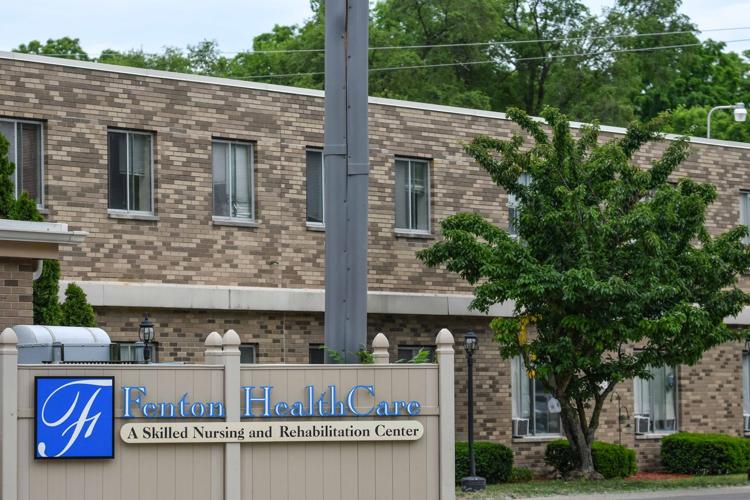
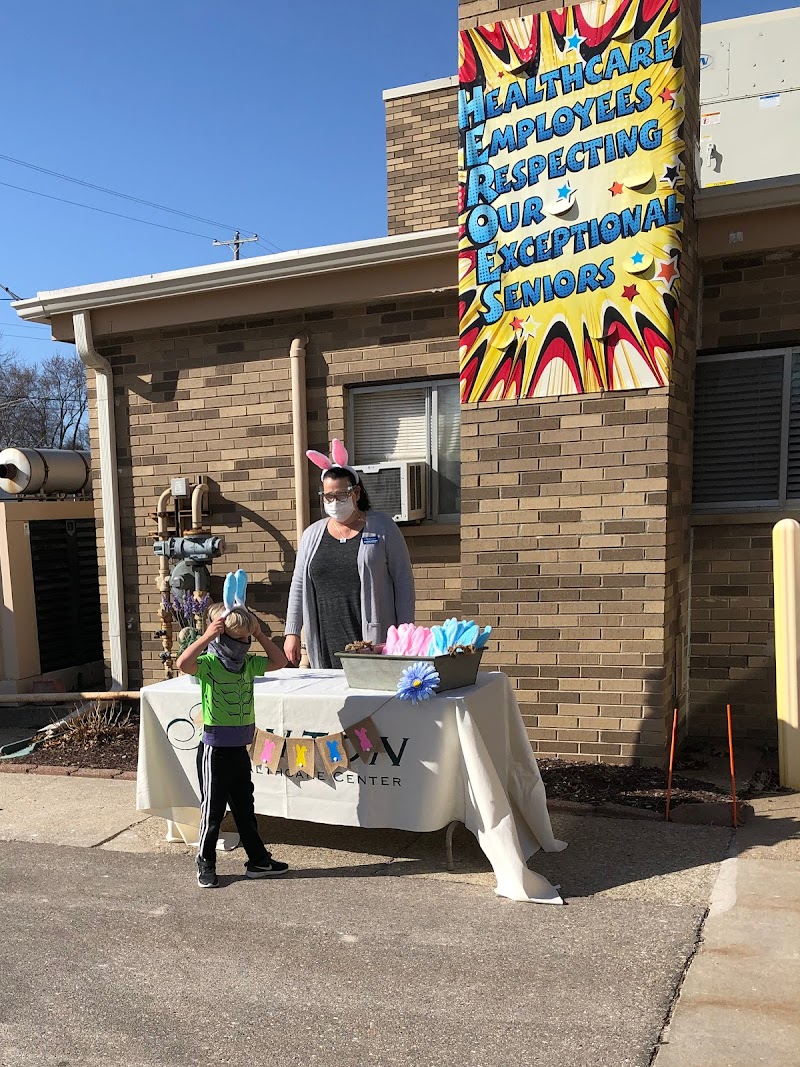
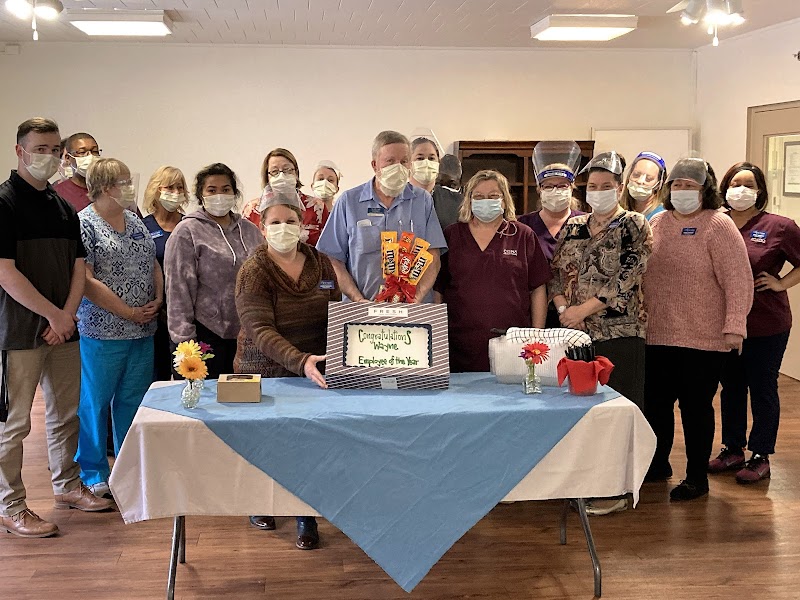
Fenton Healthcare

512 Beach Street, Fenton, MI 48430 (810) 629-4117
For profit - Individual 92 Beds CIENA HEALTHCARE/LAUREL HEALTH CARE Data: November 2025
Trust Grade
68/100
#115 of 422 in MI
Last Inspection: October 2024

Within standard 12-15 month inspection cycle. Federal law requires annual inspections.

Overview

Fenton Healthcare has a Trust Grade of C+, indicating it is slightly above average among nursing homes. It ranks #115 out of 422 facilities in Michigan, placing it in the top half, and #4 out of 15 in Genesee County, meaning only a few local options are better. The facility appears to be improving, reducing its issues from 7 in 2024 to just 1 in 2025. Staffing is strong with a rating of 4 out of 5 stars and a turnover rate of 26%, which is significantly lower than the state average of 44%. There have been no fines reported, which is a positive sign, but there are concerns noted in the inspector findings, such as inadequate management of pressure injuries for residents and issues with cleanliness, including strong odors of urine in various areas. Additionally, there were concerns about accessibility to handwashing facilities for staff following contact precautions. Overall, while Fenton Healthcare has several strengths, including good staffing and no fines, it also has important areas that need improvement.

Trust Score
C+
68/100
In Michigan
#115/422
Top 27%
Safety Record
Moderate
Needs review
Inspections
Getting Better
7 → 1 violations
Staff Stability
✓ Good
26% annual turnover. Excellent stability, 22 points below Michigan's 48% average. Staff who stay learn residents' needs.
Penalties
✓ Good
No fines on record. Clean compliance history, better than most Michigan facilities.
Skilled Nurses
○ Average
Each resident gets 38 minutes of Registered Nurse (RN) attention daily — about average for Michigan. RNs are the most trained staff who monitor for health changes.
Violations
⚠ Watch
29 deficiencies on record. Higher than average. Multiple issues found across inspections.
★★★★☆
4.0
Overall Rating
★★★★☆
4.0
Staff Levels
★★★★★
5.0
Care Quality
★★★☆☆
3.0
Inspection Score
Stable
2024: 7 issues
2025: 1 issues

The Good

  • 4-Star Staffing Rating · Above-average nurse staffing levels
  • 5-Star Quality Measures · Strong clinical quality outcomes
  • Low Staff Turnover (26%) · Staff stability means consistent care
  • Full Sprinkler Coverage · Fire safety systems throughout facility
  • No fines on record
  • Staff turnover is low (26%)

    22 points below Michigan average of 48%

Facility shows strength in staffing levels, quality measures, staff retention, fire safety.

The Bad

Chain: CIENA HEALTHCARE/LAUREL HEALTH CARE

Part of a multi-facility chain

Ask about local staffing decisions and management

The Ugly 29 deficiencies on record

1 actual harm
Mar 2025 1 deficiency
CONCERN (D) 📢 Someone Reported This

A family member, employee, or ombudsman was alarmed enough to file a formal complaint

Potential for Harm - no one hurt, but risky conditions existed

Deficiency F0602 (Tag F0602)

Could have caused harm · This affected 1 resident

**NOTE- TERMS IN BRACKETS HAVE BEEN EDITED TO PROTECT CONFIDENTIALITY** This Citation Pertains to Intake Number MI00148563. Based on interview and record review, the facility failed to protect the res...

Read full inspector narrative →
**NOTE- TERMS IN BRACKETS HAVE BEEN EDITED TO PROTECT CONFIDENTIALITY** This Citation Pertains to Intake Number MI00148563. Based on interview and record review, the facility failed to protect the resident's right to be free from misappropriation of property by facility staff for one resident (Resident #701) of three residents reviewed. Findings include: Review of Facility Reported Incident (FRI) intake documentation dated as initially received on 11/19/24 revealed the facility was notified on 11/19/24 at approximately 1:40 PM by Family Member Witness D of fraudulent charges on Resident #701's credit card. The facility submitted documentation detailing that the allegation was substantiated by the facility. An interview was completed with the facility Administrator on 3/19/25 at 9:30 AM. When asked if they had substantiated the allegations in the FRI involving Resident #701, the Administrator replied, Yes. The Administrator was asked what happened and verbalized that Resident #701's family member came to their office and informed them there was some unusual activity on Resident #701's card and that they had canceled the card. The Administrator stated, There was one staff member whose answers did not add up during their investigation. The Administrator was asked who the staff member was and stated, (Certified Nursing Assistant [CNA] B). When queried what did not add up in what CNA B said, the Administrator replied, There were discrepancies in their story. With further inquiry, the Administrator revealed CNA B no longer worked at the facility. The Administrator stated, (CNA B) would not come back in (to the facility) for a follow-up in person interview but told Human Resources (HR) they did it and resigned. When queried regarding CNA B's work history, the Administrator revealed CNA B had worked at the facility for six years and did not have any prior any performance issues. Record review revealed Resident #701 was admitted to the facility on [DATE] with diagnoses which included cerebral infarct (stroke) with resulting speech and language deficits, depression, diabetes mellitus, and Congestive Heart Failure (CHF). A review of the Minimum Data Set (MDS) assessment dated [DATE] revealed the Resident was severely cognitively impaired and required set-up to moderate assistance to complete all Activities of Daily Living (ADL) with the exception of eating. A review of facility provided investigation documentation revealed the following: - Resident, Family, Employee, and Visitor Assistance Form . (Family Member D) . What is your concern about? Identified 'fraudulent' transactions on credit card and credit card is missing . When did the problem or incident occur? 11/17/24 and 11/18/24 . Who else knows about the problem or incident? No one- the bank . How can we address your issues? 'Just thought you should know.' Facility Response: Concern form initiated; Investigation initiated per facility protocol; Family states all charges were covered by the bank. Action to be Taken: Police notified on 11/19/24; Concern identified- Permanently resolved; Continue routine quality rounds/education and monitoring . The form was signed by the Administrator on 11/25/24 and Family Member D on 11/26/24. - CNA B's Workforce Background Check and hire information from 2018. - Chase Bank Transaction Statement detailing the following: Card Purchase on 11/15 at Halo Burger in [NAME] MI for $14.49 Card Purchase on 11/15 at [NAME] Ecorse MI for $2.10 Card Purchase on 11/15 at Vg's Food Center in [NAME] MI for $31.14 Card Purchase on 11/15 at Speedway in [NAME] MI for $7.35 Card Purchase on 11/15 at Speedway in [NAME] MI for $52.89 Card Purchase on 11/16 at Tips & Toes Nails in [NAME] MI for $53.50 Card Purchase on 11/16 at Panda Express in [NAME] MI for $17.75 - Incident and Accident Investigation Form . Date: 1/19/24 . 1:40 PM . Location: Unknown . Employee Involved in Incident: (CNA B) . Brief Description: Resident's brother stated 'fraudulent' transactions occurred on cred card- credit card is missing . (Witness D) notified (Administrator) . Investigation . Was the guest/resident . involved in the alleged incident questioned? Yes . 11/20/24 11:00 AM . (Resident #701) . Conclusion . Concern seems to be substantiated. Suspect identified and no longer employed. Completed review of others that may be at risk: Yes . - Quality Assurance Interview Summary . Guest/Resident: (Resident #701) . Date of Interview: 11/20/24 . Not aware of wallet, could not recall last used credit card. No concerns didn't see anyone removing it. Not are of unauthorized transactions confirmed (Witness D) handles all of finances/card handling Name of Staff Member Interviewed: (Licensed Practical Nurse [LPN] C) . Date of Interview: 11/20/24 . I remember when (Resident #701) was admitted . (Resident #701's family) had called a few times regarding their cell phone. I did go thru their bag to look for the phone, but I never seen a wallet. (Resident #701) never mentioned a wallet and I never seen them with one. (Resident #701) wasn't even aware they had a phone . Name of Staff Member Interviewed: (LPN G) . Date of Interview: 11/20/24 . Was the admitting nurse for (Resident #701) on 11/12/24. Was her on 11/18/24. Never saw a wallet or credit card at the resident's bedside . Name of Staff Member Interviewed: (CNA J) . Date of Interview: 11/22/24 . Assigned CNA for (Resident #701) 11/12/24. Didn't recall seeing a wallet when in resident's room. Never saw a credit card. Had they observed a credit card, the nurse would've been notified. Not aware of any concerns involving resident's possessions including credit cards . Name of Staff Member Interviewed: (CNA B) . Date of Interview: 11/20/24, 11/22/24 . 11/20/24: Never observed a wallet or credit card. Not aware of the location. 11/22/24: Declined to come in for a follow-up interview. - Investigation Summary/Actions Taken: (Resident #701) was originally admitted on [DATE] . transferred from the hospital via ambulance . The resident is cognitively impaired and uses a wheelchair for locomotion. On 11/19/24 at approximately 1:40 PM, (Witness B) notified the Administrator that they became aware of fraudulent transactions using (Resident #701's) credit card on Monday, 11/18/24. (Witness D) stated that two of the transactions were in [NAME] which made them think that the card was possibly taken from [NAME] Healthcare and used in the area . (Witness D) stated immediately contacted Chase Bank who deactivated the card and has since applied credit for the charges. (Witness D) stated that the transactions appear to have occurred on Saturday, 11/15/24 and Sunday, 11/16/24. All of the charges have been reversed by the bank, and (Resident #701) has recovered all of the funds . (Witness D) stated they came to the facility on Monday, 11/18/24 and observed that the resident's wallet was in a drawer next to their bed. According to (Witness D), the wallet did not have the credit card in it. According to (Witness D) the wallet had a $5.00 bill, Driver's License, Social Security Card and a Credit Union card. The last time that that (missing) credit card was physically used was on 10/12/24 for an ATM transaction. The resident was interviewed, (Resident #701) was unable to recall the last time the card was used and was not aware that it was missing. (Witness D) handles all of (the Resident's) finances. (Resident #701) was unaware any of the charges that (Witness D) was referring to . expressed no concerns regarding anyone's handling of belongings, and didn't seem aware. The resident's roommate is not interview-able. Facility staff interviews were initiated . (LPN G) was the assigned to the resident on the following shift from admission, and multiple times since . stated observed very little belongings, and never observed a wallet, however had no reason to go into (Resident #701's) bedside dresser. (CNA B) was scheduled to work Friday 11/15, Saturday 11/16, and Sunday 11/17, (CNA B) worked the afternoon shift and was not assigned to the resident. (CNA B) was initially interviewed on 11/21/24 and stated they never saw a wallet, was not aware of a wallet or a credit card. (CNA B) said they observed the family with a wallet sometime on Saturday and thought they took it home. According to the family and the nurse, the wallet was taken home on Monday. A follow-up interview was attempted to be scheduled on 11/22/24, due to discrepancies in the initial statement on 11/22/24, as well as a discussion that the employee had when they called Human Resources (HR), after the initial interview. (HR Coordinator E) stated that (CNA B) had called and inquired about what would happen if someone used a resident's debit card, and what should they do if they had taken one. Human resources thought the call was unusual and reported the conversation to the Administrator. The Administrator contacted (CNA B) via phone on 11/22/24 after (CNA B) called in for their scheduled shift that day, the employee stated was unable to come in for a follow-up discussion, the employee was suspended pending investigation at that time. Immediately after the call was ended with the Administrator the (CNA B) called (HR Coordinator E) and stated they resigned immediately, that they messed up, that they did it and didn't know what they were thinking. The Administrator attempted to reach the (CNA B) after the call, but there was no answer. The Administrator attempted to reach the City of [NAME] Police on 11/22/24 and on 11/25/24 with the updated information. Current interview-able residents were queried regarding any concerns with missing items, no concerns were identified. In conclusion, the allegation was substantiated. The resident has recovered all of the money for the unauthorized transactions. (CNA B) is no longer employed . The investigation documentation was reviewed with the Administrator on 3/19/25 at 11:00 AM. When queried regarding the location of the purchases and the facility, the Administrator revealed Halo Burger and VG's grocery store are approximately two miles from the facility. Review of CNA B address during their employment at the facility revealed the purchases completed in [NAME] were near and/or within a reasonable distance between the facility and CNA B's address. CNA B's time clock punch documentation for 11/12/14 to termination of employment was requested at this time. On 3/19/25 at 11:10 AM, a phone interview was attempted to be completed with CNA B. The phone number provided was disconnected/out of service. An interview was completed with Family Member Witness D on 3/19/25 at 11:29 AM. When queried regarding Resident #701, Witness D disclosed they live in Florida and stated, Since (Resident #87) had a stroke, I do their financial's as numbers confuse (Resident #701) now. Witness D revealed the Resident has two bank accounts and stated, After I pay (Resident #701's) bills, I would put the extra money in the Chase account and (Resident #701) could go to the Chase bank and take money out. Witness D stated, (Resident #701) only took out a lump sum out of the ATM and there would be $50 or $60 bucks left in the account. Witness D revealed Resident #701 was hospitalized prior to going to the facility and stated, When (Resident #701) was in the hospital, I kept putting money in (Chase account) and there was $300 or $400 in there. When queried regarding the fraudulent charges on Resident #701's card, Witness D stated, (Resident #701) went to (the facility) after the hospital. I went to see (the Resident) Monday morning and as I pulled in the driveway, my phone was going off like crazy. All the charges from the weekend dropped then. Witness D was asked what they meant and revealed they were on the Chase account with Resident #701 and had text alerts set up so they would know when money was withdrawn from the account. Witness D explained that any charges or withdrawals made from the account over the weekend, or when the bank was closed, did not drop or show on the account until Monday or when the bank reopened. Witness D stated the alerts were all for Point of sale charges (use of a credit or debit card to pay for goods) and stated, (Resident #701) never did a point of sale charge. Witness D reiterated Resident #701 only used the card to withdrawal cash. Witness D then stated, The charges were all in [NAME] and [NAME] and revealed Resident #701 lived and was in the hospital in Garden City (approximately one hour from the facility). Witness D continued, I happened to be in the parking lot of the facility when they received the bank notifications of the changes. Witness D stated, I went in and asked (Resident #701) where their wallet was, and the Chase card was missing. When asked where the Resident's wallet was, Witness D replied, In the top drawer. Witness D stated, I took (Resident #701's) wallet right then and took it home. When asked what happened, Witness D revealed they contacted the bank, canceled the card, and the bank reimbursed the account. Witness D stated, I told the Administrator on Monday or the following or next day. Witness D revealed they told the admin I think they have a problem because of the card being missing and where the charges were made. When asked what the Administrators response was, Witness D stated, The Administrator suggested I complete a police report. When asked, Witness D revealed they did file a police report. When queried what transpired following the police report, Witness D stated, Probably a week later the Administrator told me they found out who they thought it was, and they were no longer a concern. Witness D was asked the name of Police Officer who they spoke to and revealed they were unsure but that it was the City Police Department. When asked about the charges on Resident #701's card, Witness D emailed a copy of the bank account statement dated October 19, 2024 through November 20, 2024 with the fraud charges highlighted. When queried how Resident #701 responded to their card being stolen and the fraudulent charges, Witness D verbalized the Resident did not know until they were told. Witness D further stated the Resident was upset and becomes easily confused. Witness D verbalized they would prefer Resident #701 was not asked about the card because they focus on it. At 12:13 PM on 3/19/25, the City Police Department was contacted. When queried regarding the report involving Resident #701, the dispatcher revealed the Officer who responded to the incident was Officer I. A voicemail message with return phone was left at this time. Review of Resident #701's Electronic Medical Record (EMR) revealed the following: - 11/13/24 at 2:03 AM: Nursing Summary . Arrived via EMS . A&O x 3 (Alert and Orientated to person, place, and time) . BLE (Bilateral Lower Extremity) weakness x 1 person transfers. Incontinent B&B (Bowel and Bladder) . - 11/13/24 at 2:03 AM: admission Nursing Comprehensive Evaluation . Most Recent admission: [DATE] 22:36 (10:36 PM) . admitted From . hospital . Mode of Transport . EMS . Reason for admission: Needs assistance with ADL's . The Assessment was completed by Licensed Practical Nurse (LPN) C. On 3/19/25 at 2:10 PM, Resident #701 was observed in a wheelchair. An interview was completed at this time. When asked how they were doing, Resident #701 become tearful with visible tears. Resident #701 was asked what was wrong but did not provide a response. After Resident #701 stopped crying, they were asked if any of their personal items were lost or missing while at the facility and responded, My clothes. When asked how long their clothes had been missing, Resident #701 replied, Awhile. Resident #701 was asked what clothes were missing and indicated they did not know. The Resident was confused and unable to provide meaningful responses to questions. An interview was completed with CNA F on 3/19/25 at 2:25 PM. When queried regarding Resident #701 becoming tearful and crying, CNA F revealed the Resident frequently cries for no obvious known reason. An interview was conducted with Licensed Practical Nurse (LPN) G on 3/19/25 at 2:35 PM. When queried regarding Resident #701 becoming tearful and crying when asked how they were doing, LPN G revealed it is normal for the Resident to be emotional. LPN G revealed the Resident was recently started on medication which had improved their emotional liability. When queried regarding the Resident's confusion, LPN G stated, (Resident #701) has been (confused) since they came to the the facility. When asked if they recalled and had worked with CNA B, LPN G verbalized they did and had. When asked if they had ever observed CNA B remove any personal items from a resident's room, LPN G replied they never seen (CNA B) take anything. When queried if Residents have a locked drawer and/or area in their room to secure personal items, LPN G replied, They do but have to ask about them. When asked what the process is when a resident arrives to the facility with money and/or debit/credit cards, LPN G replied, If we notice during admission then take and lock up for family to pick up. LPN G was then queried regarding the facility process/procedure pertaining to inventory of resident personal items upon admission to the facility and stated, We usually look through their stuff in front of them (resident) and another nurse and then we document everything on an inventory sheet. On 3/19/25 at 2:50 PM, an interview was completed with Unit Manager LPN H. When queried if they were aware of any concerns with missing resident items including Resident #701's debit/credit card, LPN H responded they were Not aware of any concerns. When asked what staff are supposed to do regarding inventory of resident personal items upon admission to the facility, LPN H stated, We have the CNA's go through their (resident) stuff and then they mark it (on inventory sheet). The CNA's let the nurse know if there is anything of value. When asked who signs the inventory form, LPN H revealed the resident's assigned nurse signs the form. When queried if the CNA signs the form, as they are completing the form, LPN H revealed they did not think the CNA signed. When queried why the nurse signs the form, if they are not actually completing the inventory, LPN H did not provide an explanation. Review of CNA B's Timecard for Terminated Employee Report for 11/12/24 to 11/30/24 revealed CNA B worked the following dates and times: - 11/13/24 from 3:10 PM to 11:02 PM - 11/14/24 from 3:15 PM to 11:01 PM - 11/15/24 from 11:13 AM to 11:01 PM - 11/16/24 from 2:56 PM to 6:04 AM - 11/17/24 from 3:16 PM to 11:01 PM - 11/18/24 from 2:59 PM to 10:08 PM - 11/19/24 from 2:51 PM to 9:05 PM - 11/21/24 from 3:19 PM to 9:09 PM The timecard specified CNA B was a Call Off 3 PM - 11 PM on 11/22/24. An interview was conducted with the facility Administrator on 3/19/25 at 3:00 PM. When queried if they interviewed all staff who worked from when Resident #701 was admitted to when the card was used, the Administrator verbalized they did not because they identified who had taken the card and did not feel it was necessary. When queried if they spoke to/interviewed housekeeping staff, the Administrator stated they did not. CNA B's timecard was reviewed with the Administrator at this time. When asked, the Administrator confirmed CNA B's last worked shift was on 11/21/24. An interview was conducted with HR Coordinator E on 3/19/25 at 3:52 PM. When queried if they recalled CNA B, HR Coordinator E confirmed they did. When asked if they recalled speaking to CNA B regarding their employment suspension, HR Coordinator E confirmed they did. HR Coordinator E stated, (The Administrator) and I were in their office, and we talked to (CNA B) about their suspension then via phone. When queried how the conversation went, HR Coordinator E stated, It was odd. (CNA B) was like okay and matter of fact about it. For (CNA B) it was to calm and to quick. When asked, HR Coordinator E revealed it was abnormal for CNA B to not be more boisterous and verbal. HR Coordinator E then stated, After we just hung up from talking to (CNA B), I got a phone call from them. I didn't have my phone on me, but I felt it on my I-watch. HR Coordinator E revealed they called CNA B back when they got their phone. When asked what CNA B said when they called then back, HR Coordinator E stated, (CNA B) said I quit I did it I f-ed up. When asked if they asked CNA B anything after they said that HR Coordinator E replied, (CNA B) said something about they would pay it back and I told her someone would get back to them in the near future. HR Coordinator E stated, We really didn't speak on the phone that long. When asked if CNA B was admitting to taking Resident #701's credit/debit card and were saying they would pay the Resident back, HR Coordinator E replied, That was my understanding. When queried if CNA B had any prior similar issues during their employment, HR Coordinator E replied, No, not that I am aware of. When queried if CNA B had said anything else to them regarding Resident #701's debit/credit card, HR Coordinator E stated, The day before, at the end of day, (CNA B) had been in my office. (CNA B) was saying stuff about what if somebody did that (took a Resident's credit/debit card) and I told them that if somebody did that they should talk to (the Administrator). (CNA B) called later and said if I knew who that person was what should they do, and I said do you know who did it. (CNA B) said yeah and I said you should tell to talk to (the Administrator). An interview was completed with LPN C on 3/19/25 at 4:40 PM. When queried regarding Resident #701's admission, LPN C verbalized they recalled the admission. When asked what occurred, LPN C stated, The family called and said they were trying to reach (Resident #701) on their cell phone. We were looking for it in some bags (the Resident) had and couldn't find it. When queried what the Resident brought with them, LPN C replied, Had clothes and a blanket. When asked if the Resident had a wallet with them, LPN C responded they did not see a wallet. When asked if they looked in the Resident's bedside dresser drawers, LPN C stated, No. LPN C was asked about Resident #701's cognitive status and stated, Pretty confused. Still pretty confused at times. When queried if they recalled working with CNA B, LPN C indicated they did and stated, (CNA B) died today. LPN C then stated, I don't know nothing about no debit card. When asked why they said that LPN C revealed they heard rumors and did not want to answer questions related to CNA B. Further review of Resident #701's EMR revealed an Inventory of Personal Effects which specified the Resident had 1 Nightgowns/pajamas and 1 cell phone, purple case with charger. The form was signed under On Admission on 11/12/24 but the signature was illegible. The section for Resident/Resident Representative Signature section on admission was blank. A second Inventory of Personal Effects with Additional Personal Effects Brought 11/16/24 handwritten on the top of the form was present. This form specified Resident #701 had the following items 6 blouses/shirts . 1 Nightshirt/pajamas . 3 Slacks/trousers . 1 pair shoes black . 1 pair hearing aid . both- No Charger . 1 Glasses (readers) . The form was signed and dated 11/16/24 by Witness D. The form was not signed by facility staff. Review of facility staffing/assignment sheets revealed the following CNA staff were assigned to care for Resident #701 from 11/12/24 to 11/16/24: CNA K, CNA L, CNA B, CNA O, CNA M, CNA N, and CNA J. Review of facility staffing/assignment sheets revealed CNA K was assigned to care for Resident #701 during the midnight shift on 11/12/25. An interview was completed with CNA K on 3/20/25 at 7:43 AM. When queried if they recalled Resident #701 and the day they were admitted , CNA K stated, Don't remember. When asked what the facility process/procedure is for documenting what resident personal items brought to the facility upon admission, CNA K stated, The nurse will give us the belonging sheet and sometimes they already have stuff put away, so we have to open the closet and then check it off on the sheet. We take the sheet back to the nurse and they sign it. CNA K was asked if they sign the Inventory sheet and responded, No. When asked if the nurse reviews they items with them, CNA K indicated they do not. When queried if they recalled working with CNA B, CNA K indicated they did. When asked, CNA K indicated they did not recall CNA B displaying any unusual behaviors. At 8:00 AM on 3/20/25, an interview was attempted to be completed with CNA J. A voice mail message was left with a return phone number. On 3/20/25 at 8:59 AM, the Administrator revealed CNA J was unavailable due to being on vacation. When queried what time Resident #701 was actually admitted to the facility, the Administrator reviewed the Resident's EMR and stated, 11/12/24 at 8:00 PM. When asked who signed the initial Inventory form for Resident #701 dated 11/12/23, the Administrator reviewed the form and responded, (Unit Manager LPN H). When queried if LPN H was working on 11/12/25 when the Resident was admitted , the Administrator indicated they were not sure. A second interview was completed with Unit Manager LPN H on 3/20/25 at 9:30 AM. When queried if they were in the facility when Resident #701 was admitted , LPN H replied they were not sure. When asked if they clock in and out when they work, LPN H stated, Yes. LPN H was asked if they went through all of Resident #701's belongings when they were admitted , as they signed the admission inventory form on 11/12/23, LPN H stated, If I signed, that is what I normally do. LPN H did not provide an explanation when asked why they previously said a CNA goes through the resident's belongings and not the nurse. LPN H's clock in sheet for 11/12/23 was requested from the facility Administrator on 3/20/25 at 9:35 AM. An interview was conducted with CNA N on 3/20/25 at 9:50 AM. When queried regarding Resident #701, CNA N confirmed they knew the Resident. When asked if they had completed and/or assisted with completing the Resident's inventory sheet when they were admitted in November, CNA N replied, Never done them on third shift. CNA N was asked to clarify and verbalized they worked third shift and had not assisted with and/or completed an inventory sheet. When asked if they recalled if Resident #701 had a wallet and/or purse when they were admitted , CNA N stated, I don't remember because I don't go in (Resident #701's) drawers for nothing. On 3/20/25 at 9:55 AM, an interview was completed with CNA L. When queried regarding procedure for completion of resident inventory upon admission, CNA L stated, I try not to do that, I don't like going through peoples stuff. When queried regarding if they recalled completing Resident #701's inventory when they worked the day shift on 11/13/24, CNA L replied, I didn't touch any of (Resident #701's) stuff. When asked if they recalled seeing a wallet or debit card in the Resident's room, CNA L stated, No, but I heard that (CNA B) took a resident's debit card and got their nails done. When asked, CNA L was unable to provide any additional information pertaining to the incident. An interview was completed with CNA M on 3/20/25 at 9:59 AM. When queried if they recalled completing Resident #701's inventory, CNA M revealed they did not recall. When asked if they remembered if the Resident had a wallet or a purse, CNA M stated, I don't know. CNA M was asked if Resident #701 was a two person assist and replied, I don't even remember. When queried if they worked with CNA B, CNA M confirmed they did. When queried if CNA B had taken any of Resident #701's personal belongings, CNA M revealed they heard CNA B took Resident #701's debit card. CNA M then stated, I don't know if (Resident #701) had a purse or wallet or anything. When asked why they said that CNA M stated, (Witness D) came in and said they were getting notifications. (Witness D) told us. When asked who they meant when they told us, CNA M revealed Witness D informed CNA B and themselves in the facility. A second interview was completed with Witness D on 3/20/25 at 10:11 AM. When asked where they last saw Resident #701's wallet/purse, Witness D stated, (Resident #701) had their wallet with them at the hospital and then the ambulance took them from the hospital to the facility. Witness D verbalized they drove to Michigan on the 14th and 15th. When queried regarding the location of Resident #701's wallet during the EMS transfer from the hospital to the facility, Witness D stated, (Resident #701) would have carried it with them. Witness D reiterated they started to get alerts on their phone related to the fraudulent charges on the card when they pulled into[TRUNCATED]
Oct 2024 1 deficiency
CONCERN (D) 📢 Someone Reported This

A family member, employee, or ombudsman was alarmed enough to file a formal complaint

Potential for Harm - no one hurt, but risky conditions existed

Pressure Ulcer Prevention (Tag F0686)

Could have caused harm · This affected 1 resident

**NOTE- TERMS IN BRACKETS HAVE BEEN EDITED TO PROTECT CONFIDENTIALITY** REFER TO INTAKE NUMBER: MI00147356 Based on observation, interview, and record review, the facility failed to provide the approp...

Read full inspector narrative →
**NOTE- TERMS IN BRACKETS HAVE BEEN EDITED TO PROTECT CONFIDENTIALITY** REFER TO INTAKE NUMBER: MI00147356 Based on observation, interview, and record review, the facility failed to provide the appropriate skin care interventions to prevent the development of pressure ulcers and promote healing consistent with professional standards for three residents (R301, R302, and R304) of four sampled residents reviewed for pressure ulcers resulting in delay in treatment and healing and potential for worsening of wound, infection and further complications. Findings include: Resident 301(R301): R301 was [AGE] years old and admitted to the facility on [DATE] with a diagnosis of Type 2 Diabetes Mellitus with Diabetic Chronic Kidney Disease, Major Depressive Disorder, and Pressure Ulcer of the Sacral Region in addition to other diagnoses. On 9/12/2024, R301 was discharged to the nearby acute care hospital to evaluate and treat the wounds. R301 did not return to the facility after discharge to the urgent care on 9/12/2024. A review of R301's Treatment Administration Record (TAR) dated in July, August, and September of 2024, there were missing signatures in the treatment record. On the TAR for July 2024, the treatment order: Cleanse sacrum area and apply Chamosyn with Manuka honey cream every shift. There were missing nurse signatures on 7/2/2024, 7/6/2024, 7/9/2024, 7/18/2024, 7/23/2024, and 7/26/2024. The August 2024 TAR had a one-time order: Cleanse the sacrum area with normal saline and pat dry. Apply Medihoney and Optifoam dressing every day shift dated 8/23/24. The box for 8/23 was not signed and was left blank. Another order: Cleanse sacrum area and apply chamosyn with manuka honey cream every shift. It was noted to have blanks without a signature on the following dates: 8/1/2024, 8/3/2024, 8/4/2024, and 8/16/2024. The September 2024 TAR was reviewed. Another treatment order to apply skin prep to the discolored red area on the right buttock/hip every shift for skin care revealed that on 9/10/2024, the box was left unsigned or blank R Treatment order for the left heel was noted: Apply skin prep to left heel every shift for preventative heel care. Every shift for preventative skin care. It was noted that the treatment box was not signed on 9/2/2024 and 9/10/2024. R301's wound measurement dated 9/12/24 per Wound Consultation by a Nurse Practitioner noted the following: Date of Service: 9/12/24 Visit Type: Wound Care Consult Wound Assessment: .L89.150- Pressure Ulcer of Sacral region, unstageable: Patient will be sent to hospital for further evaluation of deteriorating sacral wound. Location: Sacrum Stage: Unstageable Measurements: Length: 9.50centimeters (cm) Width: 1.40 cm Depth: 0.10 cm Drainage Type: serosanguineous Drainage Amount: Moderate Granulation: 50 Sough 50 Date recorded: September 12, 2024 Status: Deteriorating . The EMR was reviewed on October 23, 2024, at 1:30 PM. The nurse notes for R301 dated 9/12/2024 at 11:00 AM noted that during wound rounds, wound care Nurse Practitioners (NP) ( two names mentioned, #1 NP and #2 NP) evaluated her sacral wound and recommended she go to the hospital for further evaluation of deteriorating sacral wound and recommended she go to the hospital for further evaluation of deteriorating wound . On 9/12/24 at 12:27 PM, Wound care doctor in to see the resident. Order received to send the resident to (name of Hospital mentioned) nearby hospital for eval and treatment of deteriorating sacral wound. A review of R301's care plan for at risk for impaired skin integrity date initiated on 11/7/2023 revealed: > Cue to reposition self as needed. Initiated 11/7/2023 . > Follow the facility policies /protocols for the prevention/treatment of the impaired skin integrity . Resident 302 (R302): A wound treatment performed by the Wound Nurse A for R302 was observed on 10/23/24 at. A review of R302's clinical record EMR conducted on 10/22/24 at 2:30 PM revealed R302 was admitted to the facility on [DATE] with the diagnosis of Parkinsonism, bipolar disorder, difficulty in walking, and limitation of activities in addition to other diagnoses. R302's Braden Scale score was=16, which puts R302 at risk for pressure sore. A stage 3 pressure ulcer at R302's sacral area was noted during admission assessment on 10/11/24. The treatment order specified, dated 10/12/24, was: Cleanse wound on sacrum with NS. Pack area with normal packing strip and apply calmoseptine to reddened area around wound. Cover with Optifoam every day and evening shift. R302's Treatment Administration Record (TAR) was reviewed on 10/22/24 at 2:30 PM, revealed that treatment boxes on 10/16/24 and 10/18/24 were unsigned, and no notes were indicating why the box was left empty by nurses. The Nurses Notes from 10/11/2024 up to 10/22/24 were reviewed 10/22/24 at 2:30 PM. There was no mention in the nurses' notes indicating any treatments performed or missed treatments mentioned. However, on 10/22/24 at 17:19 (5:19 PM), a late entry on 10/22/24 at 17:19 (5:19 PM) as noted stated, Late entry-10/18/24 treatment complete. An interview with Nurse B was conducted on 10/22/24 at 3:10 PM. She confirmed working that day but did not know why the treatment was left blank on 10/16/24. She stated that according to nursing protocol,if not signed, that means it did not happen. Nurse C was interviewed on 10/22/24 at 3:15 PM. She confirmed that she was working on 10/18/2024 and remembered that she had been given all medications and treatments. She stated, I must have missed signing it off that day. Resident 304 (R304): R304 was observed for treatment on 10/23/24 at 2:00 PM. The area was red, and the incontinence pad was soaked and saturated with urine. An open area was noted on the left coccyx area, described by the Wound Nurse A as a part of the skin came off. Wound Nurse A confirmed it, and measurements of the observed open area were noted. On 10/23/24 at 2:15 PM, R304 was observed for wound treatment. R304 was not one of the facility's identified in the list of residents with pressure sore submitted by the facility administrator. Wound treatment and measurement observation revealed an open area on the right sacrum, observed on 10/23/24 during the wound and incontinence care for R304. The top layer of the skin is off on the right sacrum, measured 0.2 centimeters (cm) length x 0.2 cm width and depth of 0.1 cm wound. The Wound Nurse A cleansed the area with Normal Saline and applied calmoseptine cream. The Wound Nurse A explained that this is the standard treatment until the wound nurse practitioner evaluates the area. Wound Nurse A denied receiving a report or knowledge of the open area found in the sacral area. R304 was admitted to the facility on [DATE] with the diagnosis of metabolic Encephalopathy, Type 2 Diabetes Mellitus, and Limitation of Activities due to disability. R304 was observed with Status/Post-Bilateral Above the Knee Amputation (AKA). R304's Care Plan for at-risk for impaired skin integrity was initiated on 5/20/24, with the last updated interventions dated 8/27/24. The treatment Administration Record TAR for October 2024 was reviewed. A treatment to cleanse the area on the coccyx/sacrum area with Normal Saline and apply calmoseptin every shift for wound care was ordered on 9/25/2024. An empty box with no signed-off signature was noted on 10/20/24. An interview with Wound Nurse A on 10/22/24 at 3:00 PM was conducted. She indicated that it is our protocol to make sure we sign off all treatments that were done. If it is not signed, it didn't happen. During the interview with the Director of Nursing on 10/23/24 at 2:45 PM, she stated that nurses are to provide the treatment as ordered and to document by signing off treatments when done. The facility wound care protocol, dated effective 9/19/24, was reviewed on 10/23/24 at 1:00 PM. The policy's practice guideline noted: . #3. Appropriate preventative measures will be implemented on residents identified at risk, and the interventions are documented in the care plan .#5. The licensed nurse will initiate documentation in the electronic health record, which includes a description of the skin impairment as follows: In Electronic Health Record (EHR) facilities, the licensed nurse will document the skin and wound evaluation for pressure injury and vascular ulcers. Document weekly until the area is resolved .
Oct 2024 6 deficiencies
CONCERN (D)

Potential for Harm - no one hurt, but risky conditions existed

Resident Rights (Tag F0550)

Could have caused harm · This affected 1 resident

**NOTE- TERMS IN BRACKETS HAVE BEEN EDITED TO PROTECT CONFIDENTIALITY** Resident #212: A review of Resident #212's medical record revealed an admission into the facility 9/24/24 with diagnoses that in...

Read full inspector narrative →
**NOTE- TERMS IN BRACKETS HAVE BEEN EDITED TO PROTECT CONFIDENTIALITY** Resident #212: A review of Resident #212's medical record revealed an admission into the facility 9/24/24 with diagnoses that included fusion of spine lumbar region, chronic pain, polyneuropathy, cervical disc disorder with myelopathy, and fusion of spine cervical region. Further review of the medical record revealed the resident needed substantial/maximal assistance for bathing, toilet hygiene, and lower body dressing and partial/moderate assistance for upper body dressing, transfers with slide board, and toilet transfers. On 10/1/24 at 9:42 AM, an observation was made of the Resident sitting on the side of his bed. The Resident was interviewed, answered questions and engaged in conversation. The Resident was observed to be sitting on the side of the bed facing away from the door. The Resident had pants on that were not pulled up but positioned on his thighs and his brief he had on was exposed. The Resident could be seen from the hallway with the curtain not pulled to provide the Resident privacy. When asked the Resident reported he had been waiting for staff to come back and help him into his wheelchair. When asked how long staff had left him, the resident was unsure and stated, It hasn't been too long. Staff had not been seen exiting the room when the Resident's room was approached and there was not staff at or around the Resident's room at that time. The Resident reported he had to wait for staff to return to get into the wheelchair. An observation was made of the Resident's call light not in reach and was positioned on the floor at the head of the bed. On 10/1/24 at 9:45 AM, after the conclusion of the interview with Resident #212, Nurse M who was down the hallway at the medication cart was informed of the Resident's call light on the floor. When queried, the Nurse reported the call light should be in reach for the Resident and went to place the call light in reach for the Resident. A review of facility policy titled, Call Lights, dated 12/16/21, revealed, Policy: Call lights will be placed within the guest's/resident's reach and answered in a timely manner. Procedure: .3. When a guest/resident is in bed or confined to a chair be sure the call light is within easy reach of the guest/resident . Based on observation, interview and record review, the facility 1) Failed to ensure the dignity and privacy of one resident (Resident #265) while doing a bed bath, and 2) Failed to ensure that one resident (Resident #212) had their call light within reach, resulting in the likelihood for shame, embarrassment, anger towards staff, feeling of isolation and fear of not having a readily available call light. Findings Include: Resident #265: Review of the Face Sheet, physician orders dated 9/21/24 through 10/1/24, and care plans dated 9/21/24 through 9/26/24, revealed Resident #265 was 73 years-old, admitted to the facility on [DATE], alert and able to make healthcare decisions, and dependent on staff for assistance with Activities of Daily Living (ADL). The resident was dependent on oxygen at 2 liters and his diagnosis included, encephalopathy (swelling of the brain), muscle weakness, high blood pressure, Atrial Fibrillation, sepsis, anemia, heart failure, acute respiratory failure, urinary tract infection, history of lung cancer, pleural effusion, end stage renal disease and dependent on renal dialysis. Review of the resident's Respiratory and ADL care plans dated 9/24/24, revealed chronic respiratory failure with oxygen use, weakness, and the need for staff assistance with ADL's (including bathing). Observation was made on 10/1/24 at 9:02 a.m., revealed Nursing Assistant/CNA F was giving the resident a bed bath. The following are the steps done during the resident's bed bath: -Gave wash cloth to resident to wash his face. -Took brief off, washed bottom and dried bottom. -Washed peri area. -Put depends on resident, washed under his arms and top chest area. -Grabbed his shirt from closet and put on him. -After shirt put on went back to closet, got sweat pants and put them on the resident. -Touched bed controls to raise the head of the bed. -Tied the dirty linen bag, got into second drawer of bedside stand and got toothbrush, basin and tooth paste out for resident and gave it to him. -Left resident's room and walked down the hallway and went into the soiled utility room. -No cover, blanket, cover or bath blanket was on resident during the entire bed bath. During the above entire process, the same gloves were left on CNA F, she did not remove gloves, nor wash her hands the whole time she gave ADL care. No cover was put on the resident at all; dignity was not protected during his bed bath while 2 people were in the room performing and observing the bed bath. Review of the facility Resident Dignity & Personal Privacy policy dated 3/28/24, stated Drape and dress residents appropriately at all times to avoid exposure and embarrassment; maintain resident privacy during toileting, bathing and other activities of personal hygiene, use a top sheet or bath blanket as a cover-up during bedside care. Review of the facility CNA orientation (un-dated), revealed new CNA's are educated on Residents Rights, Abuse, Dignity, and demonstration of bed bath.
CONCERN (D)

Potential for Harm - no one hurt, but risky conditions existed

Comprehensive Care Plan (Tag F0656)

Could have caused harm · This affected 1 resident

**NOTE- TERMS IN BRACKETS HAVE BEEN EDITED TO PROTECT CONFIDENTIALITY** Based on observation, interview and record review, the facility failed to up-date person-centered comprehensive care plans to en...

Read full inspector narrative →
**NOTE- TERMS IN BRACKETS HAVE BEEN EDITED TO PROTECT CONFIDENTIALITY** Based on observation, interview and record review, the facility failed to up-date person-centered comprehensive care plans to ensure that a shaving preference was identified for one resident (Resident #20) and a transfer status was updated for one resident (Resident #212) of 17 residents reviewed for care plans, resulting in the potential for Residents' needs not being met, frustration, Resident #20 not shaved to their preference and Resident #212 not assisted with getting out of bed during the weekend. Findings include: Resident #20: A review of Resident #20's medical record revealed an admission into the facility on 3/12/24 with diagnoses that included chronic obstructive pulmonary disease, limitations of activities due to disability, lung cancer, muscle weakness, dementia, disorientation, and need for assistance with personal care. A review of the Minimum Data Set (MDS) assessment dated [DATE] revealed a Brief Interview of Mental Status score of 7/15 that indicated moderately impaired cognition, and the Resident needed partial/moderate assistance with personal hygiene. On 9/30/24 at 10:09 AM, an observation was made of Resident #20 sitting up in bed with the head of the bed elevated. The Resident was asked questions, answered simple questions and engaged in limited conversation with understanding of what the Resident was saying to take extra time. An observation was made of the Resident with facial hair covering his cheeks, chin, upper lip and neck. The Resident was asked if he liked having a beard. The Resident rubbed his cheeks, chin and indicated he didn't like it this long. When asked if he refused when they offered, the Resident reported he would not say no and stated, I don't like the beard. On 10/2/24 at 10:15 AM, an observation was made of Resident #20 lying in bed with the head of the bed elevated. The Resident continued to have facial hair that had not been shaven from the observation made on 9/30/24. The Resident was asked about his preference for having a beard and the Resident stated, Yeah, I want this off. The Resident stated, Someone was supposed to do it, rubbed his beard on his cheeks up to his ears and was talking but what was said was not completely understandable. The Resident indicated he was waiting to get a shower. On 10/2/24 at 2:19 PM, an interview was conducted with the Director of Nursing (DON). When asked about facility policy of facial hair shaving, the DON reported that it depends on their preference. The DON was asked about Resident #20's preference and how would staff know what the Resident's preference was. The DON indicated that the [NAME] would contain that information. When asked to look on the [NAME], the DON stated, I don't see it documented, but it could be in his care plan, and reported she would follow up with Resident #20 on his preference. The care plan was reviewed with the DON. The care plan did not have the Resident's preference for the ADL (activities of daily living) activity of shaving. When asked if the care plan should have the Resident's preference, the DON stated, Yes we usually care plan it, it should be in there. On 10/2/24 at 4:16 PM, the DON reported that she had addressed the concern of the lack of Resident preference on shaving on the care plan. The DON reported that the resident likes to be clean shaven at least every 3 days. The DON reported she had updated the care plan and had it trigger to the [NAME]. Resident #212: A review of Resident #212's medical record revealed an admission into the facility 9/24/24 with diagnoses that included fusion of spine lumbar region, chronic pain, polyneuropathy, cervical disc disorder with myelopathy, and fusion of spine cervical region. Further review of the medical record revealed the resident needed substantial/maximal assistance for bathing, toilet hygiene, and lower body dressing and partial/moderate assistance for upper body dressing, transfers with slide board, and toilet transfers. On 9/30/24 at 10:42 AM, Monday, an observation was made of Resident #212 sitting in his wheelchair in their room after returning to the room from the elevator. The Resident was interviewed, answered questions and engaged in conversation. The Resident reported he didn't have his neck brace on and indicated he was to wear a collar when out of bed. The Resident reported it was his first time getting up into the wheelchair and was figuring out how to wheel his wheelchair. When asked when he had arrived at the facility, the Resident responded he had gotten here on Tuesday. The Resident was asked why this was the first time out of bed. The Resident stated, I didn't get up on the weekend because they didn't know if I could or not. The Resident reported he got up with the slide board with staff this morning and had not gotten up through the weekend. The Resident reported wanting to stand up on his own over the weekend and stated, It's hard to just lay in the bed, just couldn't take it. The resident reported they didn't have an order for what I could do. On 10/2/24 at 3:35 PM, an interview was conducted with the Director of Nursing (DON) regarding Resident #212 not getting out of bed on the weekend. The DON reported that there was a communication form that was to be provided between therapy and nursing and that she had not received the communication. The DON reported that she had asked on Monday for the form from the Therapy department regarding the transfer status. The DON indicated that the form was dated 9/26, which was a Thursday, and indicated the Resident was to be a slide board transfer and a drop arm commode toilet, nursing had not received the updated transfer status determined by the Therapy evaluation and the DON stated, We had some conversation about process improvement, and reported that once they had the conversation, they looked at the process to see how they can improve so it does not happen again. The Resident did not have the change made until Monday, 9/30/24, when the therapy evaluation determined the updated transfer status of the Resident was completed on 9/26/24 with the Resident not getting out of bed through the weekend. On 10/3/24 at 10:11 AM, an interview was conducted with the Therapy Director -- regarding Resident #212 not being assisted out of bed over the past weekend. The Therapy Director indicated that the therapy evaluations had been completed on 9/25/24 for OT (Occupational Therapy) and PT (Physical Therapy) on 9/26/24 and the interventions on transfer status was left in the DON's mailbox and also give to the MDS Nurse on Friday morning, 9/27/24. A review of Resident #20's care plan revealed a focus for ADL (Activities of Daily Living) with interventions for Transfer: Resident requires partial/moderate assistance of one staff and slideboard; and Toilet Transfer: Resident requires partial/moderate assistance of one staff with slideboard and bariatric drop arm commode, with revision dated on 9/30/24. A review of the facility policy titled, Care Planning, revised 6/24/21, revealed, Purpose: Every resident in the facility will have a person-centered Plan of Care developed and implemented that is consistent with the resident rights, based on the comprehensive assessment that includes measurable objectives and time frames to meet a residents medical, nursing, and mental and psychosocial needs identified in the comprehensive assessments and prepared by an interdisciplinary team who includes but not limited to; attending physician, .the resident or resident representative, therapy staff as required and any other ancillary staff. Additional resources will also be utilized to ensure that any additional needs or risk areas are identified . 7. The care plan must be specific, resident centered, individualized and unique to each resident .
CONCERN (E)

Potential for Harm - no one hurt, but risky conditions existed

ADL Care (Tag F0677)

Could have caused harm · This affected multiple residents

**NOTE- TERMS IN BRACKETS HAVE BEEN EDITED TO PROTECT CONFIDENTIALITY** Based on observation, interview and record review, the facility failed to ensure that residents received assistance with showeri...

Read full inspector narrative →
**NOTE- TERMS IN BRACKETS HAVE BEEN EDITED TO PROTECT CONFIDENTIALITY** Based on observation, interview and record review, the facility failed to ensure that residents received assistance with showering and shaving for one resident (Resident #20) and failed to use appropriate hand hygiene during ADL (activities of daily living) care for Resident #265, of five residents reviewed for ADL care and 3 of 5 confidential group of residents voicing concern of not receiving bathing activity, resulting in the potential for embarrassment, frustration, needs not meet, infection and lack of feelings of self-worth. Findings include: Resident #20: A review of Resident #20's medical record revealed an admission into the facility on 3/12/24 with diagnoses that included chronic obstructive pulmonary disease, limitations of activities due to disability, lung cancer, muscle weakness, dementia, disorientation, and need for assistance with personal care. A review of the Minimum Data Set assessment dated [DATE] revealed a Brief Interview of Mental Status score of 7/15 that indicated moderately impaired cognition, and the Resident needed partial/moderate assistance with personal hygiene. On 9/30/24 at 10:09 AM, an observation was made of Resident #20 sitting up in bed with the head of the bed elevated. The Resident was asked questions, answered simple questions and engaged in limited conversation with understanding of what the Resident was saying to take extra time. An observation was made of the Resident with facial hair covering his cheeks, chin, upper lip and neck. The Resident was asked if he liked having a beard. The Resident rubbed his cheeks, chin and indicated he didn't like it this long. When asked if he refused when they offered, the Resident reported he would not say no and stated, I don't like the beard. On 10/2/24 at 10:15 AM, an observation was made of Resident #20 lying in bed with the head of the bed elevated. The Resident continued to have facial hair that had not been shaven from the observation made on 9/30/24. The Resident was asked about his preference for having a beard and the Resident stated, Yeah, I want this off. The Resident stated, Someone was supposed to do it, rubbed his beard on his cheeks up to his ears and was talking but what was said was not completely understandable. The Resident indicated he was waiting to get a shower. On 10/2/24 at 11:03 AM, an interview was conducted with CNA K regarding facility policy for shaving. The CNA indicated that med and women should be shaved as needed as soon as the hair grows back. When asked about Resident #20 facial hair, the CNA reported she had that Resident today and he had just taken a shower and got him shaved and stated, When I have him, I try to shave him, I have not had him in a while. When asked when facial hair assistance was offered to Residents, the CNA reported that she offers on a daily basis. On 10/2/24 at 2:19 PM, an interview was conducted with the Director of Nursing (DON). When asked about facility policy of facial hair shaving, the DON reported that it depends on their preference. The DON was asked about Resident #20's preference and how would staff know what the Resident's preference was. The DON indicated that the [NAME] would contain that information. When asked to look on the [NAME], the DON stated, I don't see it documented, but it could be in his care plan, and reported she would follow up with Resident #20 on his preference. The care plan was reviewed with the DON. The care plan did not have the Resident's preference for the ADL (activities of daily living) activity of shaving. When asked if the care plan should have the Resident's preference, the DON stated, Yes we usually care plan it, it should be in there. On 10/2/24 at 4:16 PM, the DON reported that she had addressed the concern of the lack of Resident preference on shaving on the care plan. The DON reported that the resident likes to be clean shaven at least every 3 days. The DON reported she had updated the care plan and had it trigger to the [NAME]. Resident #265: Review of the Face Sheet, physician orders dated 9/21/24 through 10/1/24, and care plans dated 9/21/24 through 9/26/24, revealed Resident #265 was 73 years-old, admitted to the facility on [DATE], alert and able to make healthcare decisions, and dependent on staff for assistance with Activities of Daily Living/ADL's. The resident was dependent on oxygen at 2 liters and his diagnosis included, encephalopathy (swelling of the brain), muscle weakness, high blood pressure, Atrial Fibrillation, sepsis, anemia, heart failure, acute respiratory failure, urinary tract infection, history of lung cancer, pleural effusion, end stage renal disease and dependent on renal dialysis. Review of the resident's Respiratory and ADL care plans dated 9/24/24, revealed chronic respiratory failure with oxygen use, weakness, and the need for staff assistance with ADL's (including bathing). Observation was made on 10/1/24 at 9:02 a.m., revealed Nursing Assistant/CNA F was giving the resident a bed bath. The following are the steps done during the resident's bed bath: -Gave wash cloth to resident to wash his face. -Took brief off, washed bottom and dried bottom. -Washed peri area. -Put depends on resident, washed under his arms and top chest area. -Grabbed his shirt from closet and put on him. -After shirt put on went back to closet, got sweat pants and put them on the resident. -Touched bed controls to raise the head of the bed. -Tied the dirty linen bag, got into second drawer of bedside stand and got toothbrush, basin and tooth paste out for resident and gave it to him. -Left resident's room and walked down the hallway and went into the soiled utility room. -No cover, blanket, cover or bath blanket was on resident during the entire bed bath. During the above entire process, the same gloves were left on CNA F, she did not remove gloves, nor wash her hands the whole time she gave ADL care. Review of the facility Hand Hygiene policy dated 10/11/23, stated Hand Hygiene should be performed: Before and after contact with the resident, after contact with blood, body fluids, visibly contaminated surfaces or after contact with objects (including soiled linen bag) in the resident's room, staff involved in direct resident contact must perform hand hygiene. Gloves are to be removed and hands washed after contact with peri care and/or washing the buttock area. Resident Group Meeting: On 10/1/24 at 2:00 p.m., a confidential resident meeting was done. During the meeting, 3 of 5 confidential resident's verbalized we missed a shower because of low staffing.
CONCERN (E)

Potential for Harm - no one hurt, but risky conditions existed

Accident Prevention (Tag F0689)

Could have caused harm · This affected multiple residents

**NOTE- TERMS IN BRACKETS HAVE BEEN EDITED TO PROTECT CONFIDENTIALITY** Resident #212: A review of Resident #212's medical record revealed an admission into the facility 9/24/24 with diagnoses that in...

Read full inspector narrative →
**NOTE- TERMS IN BRACKETS HAVE BEEN EDITED TO PROTECT CONFIDENTIALITY** Resident #212: A review of Resident #212's medical record revealed an admission into the facility 9/24/24 with diagnoses that included fusion of spine lumbar region, chronic pain, polyneuropathy, cervical disc disorder with myelopathy, and fusion of spine cervical region. Further review of the medical record revealed the resident needed substantial/maximal assistance for bathing, toilet hygiene, and lower body dressing and partial/moderate assistance for upper body dressing, transfers with slide board, and toilet transfers. On 9/30/24 at 10:32 AM, an observation was made of Resident #212 propelling himself in a wheelchair and getting on the elevator. The Resident reported to people in the vicinity to be careful because he was not a pro on maneuvering the wheelchair and said it was his first time up. Staff were in the hallway and around the nurse's station. The Resident got in the elevator. The Resident was not gone long, came back up, got off the elevator, said forgot my collar, and propelled himself back to his room. Staff did not stop the Resident from leaving the unit without his cervical collar on. On 9/30/24 at 10:42 AM, an observation was made of Resident #212 sitting in his wheelchair in their room after returning to the room from the elevator. The Resident was interviewed, answered questions and engaged in conversation. The Resident reported he didn't have his neck brace on and indicated he was to wear a collar when out of bed, a cervical collar and engaged in conversation about the surgery he had on his neck. The Resident said he had gotten downstairs, and they told him he forgot his collar and came back up to have it put on. The Resident was asked how he got up into the wheelchair and he explained that staff helped him use the slide board for transfer to his wheelchair. The Resident was asked if staff had offered to put the C-collar on, and he indicated they did not, and he forgot. On 10/2/24 at 3:35 PM, an interview was conducted with the Director of Nursing (DON) regarding Resident #212's lack of having a C-collar on while out of bed and if the Resident needed assistance with care. The DON reported that the Resident did need assistance with care and that he should have the C-Collar on when out of bed. The DON reviewed the Resident's medical record and indicated the order was to encourage the C-collar when out of bed. A review of Resident #212's orders revealed an active order dated 9/24/24 C collar to be worn when out of bed, every shift for post neck surgery. The Resident's care plan revealed, Focus: ADL: (Resident's name) has a functional ability deficit and requires assistance with self care/mobility R/T (related to): multiple back surgeries. C-Collar when out of bed, initiated 9/24/24 and revision on 9/26/24. One of the Interventions included Encourage C-collar when out of bed, initiated on 9/26/24. A review of the [NAME] revealed, Resident Care . Encourage C-collar when out of bed. Based on observation, interview, and record review, the facility 1) Failed to ensure a safe environment with adequate supervision and implement interventions to prevent a fall for three residents (Resident #2, Resident #53 and Resident #54) and failed to do a complete fall investigation for those three residents and 2) Failed to ensure that Resident #212 had their C-collar (Cervical collar or brace used to support the neck and spinal cord, often used for neck pain, spinal fractures, surgery recovery or trauma) on while out of bed as ordered by the physician of 7 residents reviewed for falls and accident hazards, resulting in potential for pain and decline in medical condition and the likelihood of repeated fall with serious injury to occur due to incomplete investigations for R2, R53 and R54 and the potential for pain or worsening/decline in medical condition for Resident #212. Findings include: Resident #2 (R2): Accidents According to the review of the Electronic Medical Records (EMR) on 10/2/24 at 3:00 PM, R2 was [AGE] years old, admitted to the facility on [DATE] with a diagnosis of Vascular Dementia, Protein Calorie Malnutrition and Cerebral Infarction in addition to other diagnoses. Brief Interview of Mental Status (BIMS) Score dated 7/02/2024 was 03. A score of 0-07 means that the person has severe cognitive impairment. Minimum Data Set (MDS) Section GG, as assessed on 7/02/2024, revealed that R2 required maximum assistance with toileting, showering, and most ADL's (Activities of Daily Living, including oral hygiene). She required partial to moderate assistance with sit-to-stand, from bed to sitting on one side of the bed, and toilet transfers. R2 is non-ambulatory and was always incontinent with bowel and bladder elimination patterns. A care plan for Falls was noted last revised on 10/1/2024 during the survey, including the history of placing self on the floor with a pillow and blanket, crawling around on the floor, self-transferring, and the intervention of communicating with hospice as needed. On 12/02/2024 at 9:45 AM' R2 was observed lying in her bed with half of her body (left shoulder and head) off to the very side of the bed. R2's eyes were closed, and she was sound asleep. When the surveyor confirmed the observation with the Nurse (LPN M), the nurse revealed that sometimes she is unpredictable with her movements. LPN M stated, It depends on the day. And that's why she is a fall risk. There are times she will not move and times when she will move. The LPN M went to find the CNA assigned to reposition R2 in the middle of the bed. In an interview with the Nurse Manager JB on 10/3/24 at 11:03 AM, she stated: R#2's mental status depends on the day. R2 does not move, and all of a sudden, she would. R2 requires assistance with transfers and is non-ambulatory. A review of R2's 3 Fall Incident Reports (I/A) Report is as follows: Fall 1: Fall #1 dated 7/8/24. Incident description revealed: Called to the resident's room per activities staff. The resident noted lying on the left side of the bed on the floor, she was lying on her left side. Resident Description: head pointed towards footboard. Resident Unable to give description. No staff witnesses were mentioned, nor were staff statements found. Some blanks were left, and checkboxes essential for the investigation were not marked. R2's I/A Report #1 was incomplete. Fall 2: Fall#2 dated 8/3/24. Incident Description revealed: Nurse was making rounds on the floor. The nurse heard resident calling out for help. Upon entering resident's room, the nurse observed the resident lying on R side between the bed and wall. Feet towards FOB, head towards HOB with head resting on the floor under her bed. W/C located at foot of bed on same side as Resident without locked wheels. Gripper socks on. Resident Description: I was trying to go to bed and fell. R2's I/A Report #2 was incomplete. No staff witnesses were mentioned, nor were staff statements found. The incident report left some blanks, and some checkboxes were not marked. Fall 3: Fall#3 dated 8/7/24. The incident Description revealed: This Nurse heard moaning coming from the resident's room, upon arrival to the resident's room, Resident was observed on the floor face down with left side of face in direct contact with the floor next to the right side of her bed, bed noted to be in low position at this time. Resident has a knot on left side of forehead. No other injuries were observed. Passive and active ROM was completed for BLE and BUE per resident's baseline without complaints of pain. Resident assisted back into bed with a 2 PA for her safety. Resident Description: When Resident was asked what she was doing before she ended up on the floor, Resident stated that she was trying to get up. When asked where she was going, Resident could not say where she was going. R2's I/A Report #3 was incomplete. No staff witnesses were mentioned, and no staff statements were found. The incident report #3 left some blanks, and some checkboxes were not marked. Resident #53 (R53): Accidents During observation and interview on 9/30/2024 at 10:15 AM, R53 was alert, awake in his room, lying in bed, and stated that the facility needed more bathrooms. They had to wait in line to get to the bathroom. According to the review of the Electronic Medical Records (EMR) on 10/2/24 at 3:00 PM, R53 was admitted to the facility on [DATE] with a diagnosis of Diabetes Mellitus, Hypothyroidism, and Wedge Compression Fracture of first lumbar vertebra, unsteadiness on feet and repeated falls in addition to other diagnoses. R53's BIMS Score is 13/15. Section GG of the Minimum Data Set (MDS), assessed on 7/24/24, revealed that mobility devices such as a walker and wheelchair were used. R53 was deemed dependent on ALL transfers (Sit-to-stand, chair transfers, and toilet transfers). This further explained R53's ability to safely come to a standing position from sitting in a chair or on the side of the bed. R53 was dependent, meaning the helper did ALL of the effort. R53 makes no effort to complete the activity. Walking 10 feet and 50 feet, assessment was not attempted due to medical condition or safety concerns. Additionally, R53 was occasionally incontinent with Bladder Elimination. However, he was always continent with bowel elimination patterns. R 53's Fall Care Plan initiated on 1/19/24 revealed to: o Encourage Resident to wear non-skid footwear when out of bed. Assist Resident as needed. o Keep the Resident's environment as safe as possible with even floors free from spills and/or clutter; adequate lighting; call light within reach, commonly used items within reach, avoid repositioning furniture, and keep the bed in the appropriate position. On 10/2/24 at 3:05 PM, a review of the Facility incident/accident (I/A) report revealed: Fall 1: Fall#1 on 6/27/24 at 23:00 (11:00 PM) described: Writer called into room by patient roommate. The roommate stated that the patient had rolled out of bed. Pt was sitting on the side of the bed. The Resident Description: getting himself off the floor, when the writer entered the room. Patient was asked what happened and he stated he fell. He was asked if he hit his head, and patient stated, No. R53's I/A Report #1 was deemed incomplete. No staff witnesses were mentioned, nor were staff statements found. The incident report #1 left some blanks, and some checkboxes were not marked. Fall 2: According to the I/A report, the fall#2 occurred on 9/15/24 at 8:15 AM. It described: 'Resident was walking in the hallway to obtain an item from breakfast cart, observed knees buckling and Resident falling slowly to the floor. The resident landed on the backside, scraping arm across the leg of mechanical lift that was located in the hallway. On assessment, Resident was noted to have sustained a 2.5 x 1.5 cm. skin tear to the left forearm. Resident Description: Walking in the hall, I didn't think I would need my walker. I felt weak and fell, I am fine. As a result, R53 sustained a skin tear to the left elbow. R53's mental status, predisposed environmental or the predisposed situation factors were not marked. No witness or staff statements were entered. Other information indicated that R53: did not use call light or walker; non-skid socks not on feet. R53's I/A Report #2 was deemed incomplete. No staff witnesses were mentioned, nor were staff statements found. The incident report #1 left some blanks, and some checkboxes were not marked. According to Nurse Manager JB on 10/03/24 at 11:34 AM, R53 is forgetful and needs reminders to use his walker. Nurse JB described R53's mental status and revealed that R53 is usually confused and forgetful. Nurse Manager JB further commented, R53 needed constant reminders to use his walker when he's up and about. R53 does not remember to use the call light either. Staff anticipates his needs, and constant supervision from Staff is essential. Resident #54 (R54): Accidents According to the review of Electronic Medical Records (EMR) on 10/2/24 at 3:30 PM, R54 was [AGE] years old and admitted to the facility on [DATE] with the following diagnoses: Hemiplegia and Hemiparesis following Cerebral Infarction affecting the left non-dominant side, difficulty in walking, syncope and collapse, hypotension and essential hypertension in addition to other diagnoses. R54's Brief Interview of Mental Status or BIMS Score assessed on 5/16/24 was 15/15. R54's Functional Limitation in Range of Motion (ROM) revealed that her Upper Extremity (shoulder, elbow, wrist, and hand) was impaired on one side. ADL's, shower, and upper and lower body dressing were substantial to max assistance. Personal hygiene (combing, shaving, washing, and drying face and hands): Partial to moderate assistance. Mobility: roll left to right: Dependent, Sit to lying: Dependent; lying to sitting on the side of the bed: Dependent; sit to stand: Dependent. Chair to bed- to chair: Dependent, Toilet transfer: Dependent, Tub/shower transfer: Dependent. Dependent means that the helper does ALL of the effort. The resident does none of the effort to complete the task. R54 is always incontinent for both bladder and bowel elimination patterns. The Fall Care Plan for R#54 was reviewed on 10/3/12:15 PM: Amongst other interventions, the facility had the following action plans: o Educate Resident on maintaining bed at wheelchair level for transfers and locking wheelchairs prior to transfers. o Encourage the Resident to wear appropriate footwear as needed. These interventions are in place for R54 to prevent falls and minimize injuries to occur and considering R54's Left sided impairment and mobility conditions. The following Fall I/A for R54 was reviewed: Fall 1: Fall #1, on 5/17/24 at 8:15 AM, Staff assisted the patient to the bathroom. R54 said she readjusted herself on the toilet and slipped off of the toilet. Staff assisted. Resident Description: (R54) stated back on the toilet and then back into bed. Resident stated that she adjusted her position on the toilet. R54's I/A Report #1, dated 5/17/24, was deemed incomplete. No staff witnesses were mentioned, nor were staff statements found. The incident report #1 left some blanks, and some checkboxes were not marked. Important details such as R54's mental status predisposing factors (Environmental and situation) were not checked or filled out. The level of pain was not assessed. Fall 2: Fall #2, on 6/13/24 at 01:00 AM, described: Staff were called to room by a roommate who had called her son to call the facility to let Staff know that this Resident was on the floor. Resident Description: The resident noted that on the floor on the right side of the bed, she was lying on her left side. No noted injuries, denied hitting the head. The resident stated, I just turned over too far and rolled out of bed. After a review of the Fall#2 I/A dated 6/13/24, it was deemed incomplete because the level of pain and the mental status were not assessed, considering that the fall was unwitnessed, there were no statements from the nursing assistant (Staff assigned), and the predisposed environmental and situation factors were left blank. Fall 3: Fall#3 occurred on 6/23/24 at 18:35 (6:35 PM). In the report,Nurse called to Resident's room. Resident was sitting on the floor next to her bed. She was sitting upright, facing the door with her legs extended. Resident said she was sitting on the side of her bed praying. She was reaching into her bedside table for a prayer book that was recently bought for her. Resident Description: Resident said she was sitting on the side of her bed praying. She was reaching into her bedside table for a prayer book that was recently bought for her. Resident also stated that the remote/cord to raise and lower the bed was tangled under the bedside table and was trying to untangle it. In the same report, the nurse wrote: Resident said she was sitting on the side of her bed praying. She was reaching into her bedside table for a prayer book that was recently bought for her. Resident also stated that the remote/cord to raise and lower the bed was tangled under the bedside table and was trying to untangle it. The I/A Report #3, dated 6/23/24, was deemed incomplete because of the following : 1.) The level of pain was not assessed. 2.) R54's Mental status was left blank 3.) Predisposed factors (environmental/ physiological/situation) were not marked or checked. There were no statements, and the incident was unwitnessed Fall 4: Fall#4 occurred in R54's room on 7/26/24 at approximately 18:35 (6:35 PM). Nursing description revealed: Called to the room and observed resident sitting on the floor with knees bent. Facing HOB (Head of Bed). Hands on Mattress of bed. The bed was in the lowest position, and the wheels were not in the lock position. Resident Description: Resident stated she had lowered the bed to get back into it. When she attempted to transfer from the w/c to the bed, the bed was not locked and slid away from her when she pushed on it. She lost her balance and fell onto her buttocks. The I/A Report dated 7/26/24 was deemed incomplete because of the following: The post-fall pain level and R54's mental status were not assessed. No statements were obtained from the Staff assigned on the day of the incident. Fall 5: Fall#5, dated 9/20/24 at 14:31 (2:31 PM), revealed R54 was observed on the floor in bathroom laying on her right side and facing the closed north side door of the bathroom. South side door open with wheelchair in the doorway. Resident had her house shoes and grippy socks on. The toilet was empty, and clothing was on. No signs of injury noted, and resident denied any pain. Resident Description: The resident reported that she slid to the floor while trying to self-transfer back to her wheelchair from the toilet. The resident states she was trying to pull her pants up all the way when she started sliding to the floor and landing on her right side. Resident denied hitting head and any injury or pain. The I/A Report dated 9/20/24 was deemed incomplete because R54's Mental Status and the level of pain were not assessed. The I/A Report noted: Resident attempted to transfer herself without assistance from toilet to wheelchair. There was no statement from the nursing assistant assigned on where the assigned Staff was during the fall and what interventions were put in place to avoid reoccurrences and prevent the potential for serious injuries to occur post-fall. During the interview with Nurse Manager JB, she indicated that most falls are caused by R54, forgetting that she needs to ask for help and assistance. Nurse JB stated that R54 needs monitoring and supervision. R54 thinks she can be independent. R54 wants to go home in assisted living. Nurse JB that they continue to educate and remind R54 to keep interventions in place. On 10/3/24 at 12:00 PM, the facility's Abuse Prohibition Policy had specified Reports and Investigations, dated 9/30/2024, was reviewed. It indicated: The facility Quality Assurance Performance Improvement Committee will investigate occurrences, patterns, and trends that may indicate the presence of abuse, neglect, or misappropriation of guest/resident property and to determine the direction of the investigation/intervention through analysis of systems, audits, and reports. 2. Identification through the safety program begins with the Incident Report. 3. The Director of Nursing and Administrator review all incident reports to identify and further investigate any suspicious incidents . The Director of Nursing and Administrator review all incident reports to identify and further investigate any suspicious incidents. E. Investigation: . 2. The Director of Nursing or designee will complete an assessment of guest(s)/resident(s) and document findings in the medical record. 3. An Incident Report (and/or grievance forms per state-specific requirements) will be completed. 4. The licensed Nurse will: a. Notify the physician if required b. Notify the family member/responsible party/emergency contact/legal guardian (not necessarily all individuals) 5. A preliminary, on-site investigation will be initiated within twenty-four (24) hours of any report. 6. The Administrator or Director of Nursing/designee shall initiate the Incident and Accident Investigation Form (or other grievance forms per state specific guidelines) and take the following actions to ensure that the investigation is conducted effectively .
CONCERN (E)

Potential for Harm - no one hurt, but risky conditions existed

Food Safety (Tag F0812)

Could have caused harm · This affected multiple residents

Based on observation, interview and record review, the facility failed to maintain the kitchen and food preparation equipment in a sanitary condition and ensure clean and ready-for-use kitchen equipme...

Read full inspector narrative →
Based on observation, interview and record review, the facility failed to maintain the kitchen and food preparation equipment in a sanitary condition and ensure clean and ready-for-use kitchen equipment was air dried properly, resulting in an increased potential for food borne illness, potentially affecting 60 residents of a census of 62 residents who consume oral nutrition from the facility kitchen. Findings Include: Review of the U.S. Public Health Service 2009 Food Code, as adopted by the Michigan Food Law, effective October 1, 2012, directs those physical facilities shall be cleaned as often as necessary to keep them clean, food equipment was to be dried in a manner that leaves no water left inside prior to storage, and ready-to-eat foods shall be clearly marked at the time the original container is open if held for more than 24 hours. Observation was done on 10/1/24 at 10:06 a.m., accompanied by Dietary Manager/RD E. The following were observed during the initial kitchen tour done on 10/1/24: -At 10:07 a.m., the large can opener had an excessive amount of dried on food and rust-like on the blade and the surrounding area. -The plate warmer, steam table and prep table all had dried on food particles. -The oven sides were found to have dried on drippings with dried on food. -The clean and ready for use Robot Coupe food processor was found with the top on and there was an area on the top of the attachment that was wet with a dark brown substance on it. -The liquid coffee maker had dried on black thick substance on the nozzle. -The cooler had dried on drips on the sides and front. -A total of 5 stacked, clean and ready for use plate covers were found wet inside of one another. -A total of 2 black plate covers in the plate warmer were found to have dried on food particles on them. -The microwave was found to have dried on food inside on the top and sides. -The floor on the side of the oven was found to have dust and dirt on it. Review of the facility kitchen cleaning duties (un-dated), revealed the coffee pot was to be cleaned on Tuesday, the steam table on Thursday, and the stove on Tuesday. During an interview done on 10/1/24 at 10:40 a.m., Dietary Manager E said she had to get staff to clean more.
CONCERN (F)

Potential for Harm - no one hurt, but risky conditions existed

Safe Environment (Tag F0921)

Could have caused harm · This affected most or all residents

**NOTE- TERMS IN BRACKETS HAVE BEEN EDITED TO PROTECT CONFIDENTIALITY** On 9/30/24 at 10:09 AM, an observation was made of the second floor of a strong urine odor halfway down the hallway. On 10/2/24 ...

Read full inspector narrative →
**NOTE- TERMS IN BRACKETS HAVE BEEN EDITED TO PROTECT CONFIDENTIALITY** On 9/30/24 at 10:09 AM, an observation was made of the second floor of a strong urine odor halfway down the hallway. On 10/2/24 at 10:27 AM, an observation was made of room [ROOM NUMBER] that had two Residents residing in the room with one of the Residents sleeping in bed. An observation was made of a strong odor of urine in the room, upon walking into the room, the floor was sticky with each footstep around the first bed area. The bathroom had a strong smell of urine. The Nurses' station was across the hall not far from room [ROOM NUMBER]. In the hallway and by the Nurses' Station, the urine odor was detected as well. On 10/3/24 at 11:59 AM, an interview was conducted with the Director of Nursing (DON) during the Infection Control task of the survey. The DON and this surveyor were on the second floor of the facility. An odor of urine was noticed in the hallway near the Nurses' Station. The Soiled Utility room was next to the Nurses' Station and the Nurses' Station was in the vicinity of Resident rooms. An observation was made inside the Soiled Utility room with the hopper/bin that held bags of soiled linen was piled high with bags and there were multiple bags of linen laying on the floor around the filled hopper/bin. The room smelled of urine. Housekeeping staff I was asked about the overflowing dirty linen bin. The Housekeeping staff indicated that the laundry staff usually comes up and collects it, and reported he would take this one down. A review of the facility policy titled, Federal & State - Resident Rights & Facility Responsibilities, revised 5/14/24, revealed, .i. Safe environment. The resident has a right to a safe, clean, comfortable and homelike environment, including but not limited to receiving treatment and supports for daily living safely . Based on observation, interview and record review, the facility failed to ensure a clean and safe environment for 11 residents' rooms, 2 main hallways, and 1 residential sitting area, resulting in the likelihood for resident injury (bug and spider bites and hand splinters), anger and frustration from family members and residents, and cross contamination with illnesses with increased use of antibiotics. Findings Include: During an environmental walk through done on 10/2/24 starting at 8:16 a.m., accompanied by Director of Maintenance, Housekeeping and Laundry D; the following concerns were observed: First Floor: -At 8:16 a.m., room [ROOM NUMBER], the oxygen tubing with nasal cannula was observed on the floor (not in a bag) next to his bed. The resident had no idea where his oxygen was. -room [ROOM NUMBER], the bathroom toilet had BM on the back of the seat and the floor was found dirty. -At 8:30 a.m., room [ROOM NUMBER], the window running air conditioner filter was found to have an excessive amount of dust and dirt on it. In the bathroom was found a clear plastic bag of clean linens sitting on the floor. -room [ROOM NUMBER], the window running air conditioner filter was found to have dust and dirt on it. -The first-floor shower room across from room [ROOM NUMBER], had the window open and an excessive amount of dead bugs, dirt and spider webs were found in the tract and on the window seal. -In the clean linen room, was found a dirty blue bootie sitting on clean linen and the floor had dirt and dust on it. None of the linen was covered at the time. -At 8:45 a.m., in the Therapy room was found a wheeled measuring device that was being stored behind the toilet. -In the first-floor dining room (also used for activities and council meetings), seven tables were noted to have on the edges, areas of bare wood; the venire had worn off and wood was exposed (safety and infection control concern). One light bulb was out over a dining table. -The patio off the dining room was observed; directly under the window by the door, behind two chairs was observed a medium size pile of leaves, dirt and small sticks; large spider webs were also noted behind the chairs. -At 9:19 a.m., in the laundry room, the second and third driers were found to have heavy build-up of lint on the screens. The screens themselves were not visible at the time. The running washer had both screens covered with a thick layer of lint and dust. The exhaust fan above the area where clean linens were being folded at the time had a very thick layer of black dust/dirt on all blades. Laundry Staff member G was folding white towels at the time, and they were stacked directly beneath the exhaust fan. Also, Laundry Aide G was eating food, and it was sitting on the folding table by the clean stacked towels. During an interview done on 1-/2/24 at 9:06 a.m., Laundry Aide G stated Usually once a shift I clean the filters and as needed. If screens are dirty, then it is as needed. Second Floor: -At 9:22 a.m., the walls in the hallway were observed to have several areas of black marks and scuffs. Several resident rooms on the second floor also had black marks on the walls. -A heavy smell of urine was noted across from the nurse's station, and the soiled utility room door was shut at the time. -At the end of the hall, the window was open, and the window track was very dirty with dirt, dust, spider webs and dead bugs. -At 9:35 a.m., in room [ROOM NUMBER] the running air conditioner had a large amount of black and orange colored mold-like inside the top vents, and the filter was dusty. -room [ROOM NUMBER]'s running air conditioner filter was dirty with heavy dust. -At 9:40 a.m., in room [ROOM NUMBER], the running air conditioner top and filter was found to be dirty with dead bugs and heavy dust. -room [ROOM NUMBER], the floor was found dirty. -room [ROOM NUMBER], the running air conditioner was found to have a heavy coating of dust on the front and the filter. -room [ROOM NUMBER], the air conditioner and window track and window seal were found dirty with dirt, dead bugs and dust. -room [ROOM NUMBER], the wall on the right side of the door had areas of missing paint and the window seal and tracks were found to have dust, dirt and dead bugs. -room [ROOM NUMBER], the window seal and track were observed dirty. During a interview done on 10/2/24 at 8:50 a.m., the Director of Maintenance/Housekeeping/Laundry D stated I don't have a check sheet for walk through's. During an interview done on 10/2/24 at 12:05 p.m., the Director of Nursing/Infection Control nurse stated, there is always room for improvement. Review of the facility Infection Control walk through's dated 6/24, 7/24 and 8/24, revealed under nursing all areas were marked as y, nothing was observed unclean. Review of the facility Daily cleaning and disinfecting expectations sheet (un-dated), stated Dust vent grates in bathrooms, TV's and air conditioning filters, sweep then mop-place wet floor sign until dry, dust where walls meet ceiling for spider webs.
Sept 2023 9 deficiencies
CONCERN (D)

Potential for Harm - no one hurt, but risky conditions existed

Deficiency F0582 (Tag F0582)

Could have caused harm · This affected 1 resident

**NOTE- TERMS IN BRACKETS HAVE BEEN EDITED TO PROTECT CONFIDENTIALITY** Based on interview and record review, the facility failed to provide documentation of adequate notice of non-coverage for Medica...

Read full inspector narrative →
**NOTE- TERMS IN BRACKETS HAVE BEEN EDITED TO PROTECT CONFIDENTIALITY** Based on interview and record review, the facility failed to provide documentation of adequate notice of non-coverage for Medicare Part A benefits for two residents (Resident #174 and Resident #175) of 3 residents reviewed for notice of non-coverage of Medicare Part A benefits, resulting in the residents' inability to exercise the right to file an appeal in a timely manner. FACILITY Beneficiary Notification: Resident #174: A record review of the Face Sheet and Minimum Data Set (MDS) assessment indicated Resident #174 was admitted to the facility on [DATE] with diagnoses left femur fracture repair, weakness, heart failure, atrial fibrillation, hypertension, arthritis, GERD, anxiety and depression. A review of the progress notes revealed Resident #174 was discharged home on 1/16/2023. A review of a facility document titled Notice of Medicare Non-Coverage provided, The effective date Coverage of your current skilled stay services will end: 1/15/2023. Your Medicare provider and/or health plan have determined that Medicare probably will not pay for your current skilled nursing services after the effective date indicated above. You may have to pay for any services you receive after the above date. You have the right to an immediate, independent medical review (appeal) of the decision to end Medicare coverage . Please sign below to indicate you received and understood this notice. I have been notified that coverage of my services will end on the effective date indicated on this notice and that I may appeal this decision by contacting my QIO. The form for Resident #174 was not signed or dated that it was received and reviewed by the resident or her representative. A review of the progress notes for Resident #174 did not indicate the resident had received and signed a notification that their skilled Part A services would be discontinued. Resident #175: A record review of the Face Sheet and Minimum Data Set (MDS) assessment indicated Resident #175 was admitted to the facility on [DATE] with diagnoses: Dementia, anxiety, depression weakness, fracture of sacrum, and urinary tract infection. A review of the progress notes revealed Resident #175 was discharged home on 4/7/2023, per a facility Discharge Summary document. A review of a facility document titled Notice of Medicare Non-Coverage provided, The effective date Coverage of your current skilled stay services will end: 4/9/2023. Your Medicare provider and/or health plan have determined that Medicare probably will not pay for your current skilled nursing services after the effective date indicated above. You may have to pay for any services you receive after the above date. You have the right to an immediate, independent medical review (appeal) of the decision to end Medicare coverage . Please sign below to indicate you received and understood this notice. I have been notified that coverage of my services will end on the effective date indicated on this notice and that I may appeal this decision by contacting my QIO. The form for Resident #175 was not signed or dated that it was received and reviewed by the resident or her representative. A review of the progress notes for Resident #175 did not indicate the resident had received and signed a notification that their skilled Part A services would be ending. During an interview with the Administrator on 9/14/23 at 10:54 AM, Beneficiary Notifications were reviewed. Three residents were reviewed and 2 (#'s 174 and 175) of 3 residents did not have signed notices that skilled services would be discontinued. The Administrator said the Business office Manager was responsible for the process and was reeducated on the process to ensure the residents/representatives received the notice in the appropriated timeframe and the form was signed completed. A review of the facility policy titled, Notice of Medicare Non-Coverage (NOMNC) CMS Form 10123 and Skilled Nursing Facility Advanced Beneficiary Notice of Non-coverage (SNFABN) Form CMS-10055, dated origination 9/1/2022 and last revised 10/17/2022 provided, It will be the policy of the facility to issue Notices of Medicare Non-Coverage )NOMNC) to all Resident on Medicare Part A Medicare Advantage Programs, and Medicare Part B/Medicare Advantage B therapies. This will give the Resident/Guest or Responsible Party advanced notice so a decision on non-coverage they must contact the Quality Improvement Organization (QIO) that is responsible for reviewing the decision. The Skilled Nursing Facility Advanced Beneficiary Notice (SNFABN) and the Advance Beneficiary Notice (ABN) will offer the Resident/Guest or Responsible Party the option of agreeing or disagreeing with the decision . Notice of Medicare Non-Coverage (NOMNC): The NOMNC, Form CMS-10123 is given by the facility to all Medicare beneficiaries at least two days before the end of a Medicare covered Part A stay or when all of Part B therapies are ending .
CONCERN (D)

Potential for Harm - no one hurt, but risky conditions existed

Comprehensive Care Plan (Tag F0656)

Could have caused harm · This affected 1 resident

**NOTE- TERMS IN BRACKETS HAVE BEEN EDITED TO PROTECT CONFIDENTIALITY** Based on observation, interview and record review the facility failed to implement a comprehensive care plan for one resident (R...

Read full inspector narrative →
**NOTE- TERMS IN BRACKETS HAVE BEEN EDITED TO PROTECT CONFIDENTIALITY** Based on observation, interview and record review the facility failed to implement a comprehensive care plan for one resident (Resident #70) of 19 residents reviewed for care plans, resulting in Resident #70 lacking a urinary catheter securement device. Findings Include: Resident #70: Urinary Catheter or UTI A record review of the Face Sheet and Minimum Data Set (MDS) assessment indicated Resident #70 was admitted to the facility on [DATE] with diagnoses: recent history of pulmonary embolism, diabetes atrial fibrillation, heart failure, hypertension, deep vein thrombosis left lower extremity, weakness, morbid obesity, chronic kidney disease. On 8/8/2023 diagnosis of chronic ulcer let thigh and left lower leg and on 8/32023 a diagnosis of urinary retention was added. A review of the MDS assessment date 8/3/2023 revealed the resident had full cognitive abilities with a Brief Interview for Mental Status (BIMS) score of 14/15. The MDS also revealed the resident needed assistance with all care, but was able to feed self with set up assistance. On 9/12/2023 at 2:08 PM, during a tour of the facility, Resident #70 was observed in her room lying in bed. She had an indwelling urinary catheter/ Foley catheter, with clear yellow urine in the tubing. She was asked if she had a securement device such as a leg strap to aid in preventing the catheter from pulling or dislodging and she stated, No, I don't. A review of the physician orders revealed, CATHETER: 18Fr Foley Catheter with 10cc balloon r/t (related to) acute urinary retention, dated 8/4/2023. A review of the Care Plan for Resident #70 provided: (Resident #70) is at risk for urinary tract infection and catheter-related trauma: has indwelling catheter related to acute urinary retention, date initiated 8/3/2023 and revised 8/4/2023 with Interventions: Ensure catheter tubing is secured, date initiated 8/3/2023. On 9/14/2023 at 11:57 AM, the Director of Nursing/DON was interviewed related to Resident #70's indwelling urinary catheter without a securement device. She said the resident was transferred to the hospital on 9/13/2023 for abnormal laboratory values including an elevated white blood cell count. The DON said she was looking for a larger/bariatric Foley securement device for the resident. A review of the facility policy titled, Lippincott procedures- Indwelling urinary catheter (Foley) care and management, dated reviewed 12/02/2022 provided, . Assess the securement device daily . If a securement device isn't available, use a piece of adhesive tape to secure the catheter .
CONCERN (D)

Potential for Harm - no one hurt, but risky conditions existed

Quality of Care (Tag F0684)

Could have caused harm · This affected 1 resident

**NOTE- TERMS IN BRACKETS HAVE BEEN EDITED TO PROTECT CONFIDENTIALITY** Based on observation, interview and record review, the facility failed to correctly identify an intravenous (IV) catheter to ens...

Read full inspector narrative →
**NOTE- TERMS IN BRACKETS HAVE BEEN EDITED TO PROTECT CONFIDENTIALITY** Based on observation, interview and record review, the facility failed to correctly identify an intravenous (IV) catheter to ensure appropriate care and maintenance of the catheter for one resident (Resident #15) of 3 residents reviewed for IV catheter use, resulting in the potential for Resident #15 to not receive the necessary care and services needed to prevent a decline in condition. Findings include: Resident #15: A record review of the Face sheet and Minimum Data Set (MDS) assessment indicated Resident #15 was admitted to the facility on [DATE] with several discharges and readmissions with the most recent readmission of 9/11/2023 with diagnoses: Osteomyelitis (bone infection), pressure ulcer left buttock healed, bipolar disorder, right knee and ankle contractures, kidney stones, history of a stroke, diabetes, chronic kidney disease, peripheral vascular disease, heart failure, anxiety, depression, COPD, supra pubic catheter (a catheter through the abdomen into the bladder to drain urine). The resident was discharged to the hospital on 9/1/2023 for a change of condition with decreased responsiveness and returned on 9/11/2023 with diagnoses: SIRS (Systemic Inflammatory Response Syndrome), a new right nephrostomy (a catheter tube from the kidneys to the outside of the body). During a tour of the facility on 9/12/23 at 1:17 PM, Resident #15 was observed lying in bed watching TV. He indicated he had an IV in his right upper arm. He lifted his sleeve and showed the clear dressing and right midline IV. In large letters across the tape on the IV it said 9/6 Midline in large black letters. The resident said he was receiving IV antibiotics but he didn't know why. A review of the hospital discharge summary from the hospital indicated the resident was there from 9/1/2023 to 9/11/23 for a urinary tract infection that advanced to SIRS (systemic inflammatory response syndrome). The resident received an IV antibiotic in the hospital and was to continue the antibiotic at the facility via the midline IV catheter. Further review of the hospital discharge summary for Resident #15's stay from 9/1/2023 to 9/11/2023, identified the following: Nursing Midline Insertion Note: Date of Service September 6th, 2023 at 5:00 PM . Indication for Midline Placement: Antibiotics (intravenous) . Device Type: Bard Power Glide, 18g, Number of Lumens: Single, Total Midline length (cm): 10 . right upper arm; Vein of insertion: cephalic . A review of the physician orders for Resident #15 at the facility provided the following: Change transparent dressing to PICC (peripherally inserted central catheter) . 9/12/2023 Measure PICC catheter length . 9/12/2023 A review of the Care Plan for Resident #15 provided, (Resident #15) is at risk for complications of IV therapy: Antibiotics via PICC line; PICC line is in right upper arm, date initiated 9/11/2023 and revised 9/12/2023, with Interventions including: Observe for s/sx of infection at the PICC site: . date initiated 9/11/2023 and revised 9/12/2023. The Care Plan did not mention the resident had a Midline catheter not a PICC line. A review of the nursing progress notes did not mention what type of IV catheter Resident #15 had, including a provider progress note on 9/12/2023 at 00:00 hours (12:00 AM) or a Nursing Summary dated 9/12/2023 at 1:14 AM, . re-admitted from hospital via EMS . Resident on antibiotic Meropenem . The nurses were documenting that Resident #15 had a PICC line, but he did not. He had a Midline catheter inserted for IV antibiotic therapy. PICC and Midline Catheters: What they are and what to expect- What is a PICC? A Peripherally Inserted Central Catheter (PICC) is a small flexible tube that is inserted into a vein on the inside of your upper arm. A PICC extends into the large central vein that returns blood to your heart . PICC's are used for patients who need: Long-term access to veins . What is a Midline Catheter? A Midline Catheter is a small flexible tube that is shorter than a PICC. It is inserted in the same vein location as a PICC, but it only extends to a point just below the level of your armpit. It is not a central venous catheter (CVC). A midline Catheter does not provide ongoing blood access. It cannot be used for some medicines . Midline Catheters are used for patients who need: Short-term IV access . some types of medicines . short-term IV fluids . University of [NAME] Medical Center,,, reviewed 03/2016. CDC: Centers for Disease Control and Prevention: Infection Control-Summary of Recommendations: Edited February 2017, Guidelines for the Prevention of Intravascular Catheter-Related Infections (2011); 1. Education, Training and Staffing: Educate healthcare personnel regarding the indications for intravascular catheter use , proper procedures for the insertion and maintenance of intravascular catheters . Periodically assess knowledge of and adherence to guidelines . Designate only trained personnel who demonstrate competence for the insertion and maintenance of peripheral and central intravascular catheters . Select catheters on the basis of the intended purposed and duration of use . CDC: Centers for Disease Control and Prevention: Infection Control, November 5th, 2015, Background Information: Catheter Types: Guidelines for the Prevention of Intravascular Catheter-Related Infections (2011),Table 1. Catheters Used for Venous and Arterial Access, . Midline catheters, Inserted via the antecubital fossa into the proximal basilic or cephalic veins; does not enter central veins, peripheral catheters; Length 3-8 inches . Peripherally inserted central venous catheters (PICC); Inserted into basilic, cephalic or brachial veins and enter the superior vena cava, > than or = to 20 cm (approximately 9.09 or greater inches) . On 9/13/23 at 3:17 PM, upon review of the medical record, Resident #15 had documentation that the nurse was working on a transfer for a change of condition. On 9/13/2023 at 3:55 PM, spoke with Charge Nurse Q she said she was working on sending the resident to the hospital because he threatened to harm himself and stated, That is not like him. Upon observation the resident had a nurse aide sitting with him; she said she just came into his room. The resident had his eyes half open, with pursed lip breathing. He did not respond to voice with his name called loudly. This surveyor went out and told the charge nurse, at the nurses desk/down the hallway, who was also assigned to care for the resident. She went to see him and he was awake, responding/slowly talking to the nurse. The nurse aid said she also left the room and told another nurse to come in and see him, and that nurse had just left the room. The charge nurse left the room, the resident said physically he did not feel good and stated, My gut is super sore, rubbed his stomach. The nurse aide showed his lower abdomen with supra pubic catheter site with dry gauze dressing dated 9/13/2023. The resident stated, My back, the nephrostomy is new, I've only had it a few days, it hurts. It's swollen up like a football. On 9/14/23 at 2:16 PM, interviewed the Director of Nursing/DON related to the nurses charting PICC line assessments and orders, when the resident has a Midline IV in his right upper arm. Reviewed with the DON the IV dressing had Midline written across the top of the IV dressing on 9/12/2023 and the transfer orders from the hospital on 9/11/2023 have a document detailing the type of IV Midline and when it was inserted with additional details from the nurse who inserted the IV. Also reviewed, the nurses needed to know which IV catheter Resident #15 had as Midline catheters are intended for use up to 30 days and PICC lines for longer use. Midline catheters are not appropriate for all medications and should not be used for blood draws. The DON said she was not aware that the nurses had not identified the appropriate catheter for Resident #15. A review of the facility policy titled, Midline Catheter Flushing and Locking, date revised July 1, 2012 provided, To be performed by: Licensed nurses according to state law and facility policy. The nurse is responsible and accountable for obtaining and maintaining competence with infusion therapy within his or her scope of practice . Specific flush/lock orders must be obtained, documented, and submitted to the pharmacy . The sequence of flushing, clamping, and disconnecting of the normal saline syringe should be performed according to the manufacturer of the needleless connector . A prescriber order is required to flush/lock a midline catheter . Only 10 ml barrel diameter syringes or larger will be used to flush/lock catheters .
CONCERN (D)

Potential for Harm - no one hurt, but risky conditions existed

Pressure Ulcer Prevention (Tag F0686)

Could have caused harm · This affected 1 resident

**NOTE- TERMS IN BRACKETS HAVE BEEN EDITED TO PROTECT CONFIDENTIALITY** Based on observation, interview and record review, the facility failed to prevent the development of a Stage II (blister) heel p...

Read full inspector narrative →
**NOTE- TERMS IN BRACKETS HAVE BEEN EDITED TO PROTECT CONFIDENTIALITY** Based on observation, interview and record review, the facility failed to prevent the development of a Stage II (blister) heel pressure ulcer for one resident (Resident #49) of 3 residents reviewed for pressure ulcers, resulting in a Stage II heel pressure ulcer, pain, discomfort, agitation, and wound treatments. Findings include: Stage two pressure ulcer is partial-thickness skin loss involving epidermis or dermis, or both. The ulcer is superficial and presents as an abrasion, shallow center, or blister. High risk resident (immobile, bed bound) should be assessed weekly, when a condition change or as needed and preventive measures should be in place including pressure relieving devices, position changes, and dietary supplements. National Pressure Ulcer Advisory Panel (NPIAP). Record review of the facility 'Skin Management' policy, dated 12/15/2023, revealed it is the policy that the facility should identify and implement interventions to prevent the development of pressure injuries. Guest/residents with wounds and/or pressure injury and those at risk for skin compromise are identified, evaluated, and provided appropriate treatment to promote prevention and healing. Resident #49: Record review of Resident #49's Significant Change Minimum Data Set (MDS) dated [DATE] noted an elderly female with Brief Interview of Mental Status (BIMS) of 6 out of 15, severe cognitive impairment. Section I: Active diagnosis revealed non-traumatic brain dysfunction, arthritis, osteoporosis, non-Alzheimer's dementia, anxiety, depression, difficulty walking, need for assistance with personal care, and muscle weakness. Weight was noted at 152 pounds. Section M: Skin conditions noted the Resident #49 to be at risk of developing pressure ulcers/injuries. There were no pressure ulcers/injuries noted at that time. Record review on 09/12/23 at 03:29 PM of the facility- provided CMS 802 form/document identified a facility-acquired Stage II pressure ulcer for Resident #49. Record review of Resident #49's weights for six-month review revealed that on 6/3/2023 weight of 152.4 pounds. On 7/2/2023 Resident #49's weight was taken 3 times by the registered dietitian: 138.8, 139.0, 139.0 were all a 13-pound loss in weight, with 8.9% loss. Record review of Resident #49's nutritional care plans noted no changes or added interventions to support the resident's change. Record review of Resident #49's weight log dated 9/6/2023 noted weight of 133.6 pounds another 5.25% weight loss. Record review of Resident #49's 'Wound & Skin Evaluation' assessment form, dated 9/8/2023 at 10:49 AM, revealed a new blister to the right medial heel that was in-house acquired measuring 5.1 cm (centimeter) in length and 4.6 cm in width with erythemia (bright red skin). Intervention of heels up cushion added to residents plan of care. Observation and interview on 09/13/23 at 07:19 AM with Licensed Practical Nurse (LPN)/Wound Care Nurse B noted that Resident #49 was lying in bed. Resident #49 gave consent to have right heel wound observed. There was no dressing in place. The State surveyor observed red blister area of the right heel. LPN B stated that they found the blister on Friday 9/8/23, it has not broken open and reabsorbed. LPN B Estimated measurements are weekly with photos with skin assessments. LPN B stated that the facility did not know where the wound came from, stating 'we just don't know where it came from'. An interview and record review on 09/14/23 at 01:49 PM with the Director of Nursing (DON) of Resident #49's pressure ulcer to right heel, revealed the skin injury started on 9/8/2023 and that the DON did see it (the left heel) that day, it looked like a blister fluid filled. The DON stated that the skin injury was in fact a pressure injury, staged at level II (2), and was in-house acquired. The DON stated the Resident #49 was on the radar, she had weight loss. We have spoken to family member about possible hospice and notify family of the blister and weight loss, and that the registered dietitian would review the diet. The DON stated that the pressure ulcer came from the mattress and the way she lays in the bed and not being changed in position.
CONCERN (D)

Potential for Harm - no one hurt, but risky conditions existed

Tube Feeding (Tag F0693)

Could have caused harm · This affected 1 resident

**NOTE- TERMS IN BRACKETS HAVE BEEN EDITED TO PROTECT CONFIDENTIALITY** Based on observation, interview and record review, the facility failed to ensure Enteral nutrition (tube feeding/nutrition throu...

Read full inspector narrative →
**NOTE- TERMS IN BRACKETS HAVE BEEN EDITED TO PROTECT CONFIDENTIALITY** Based on observation, interview and record review, the facility failed to ensure Enteral nutrition (tube feeding/nutrition through a feeding tube into the stomach or intestines) formula was provided as ordered for one resident (Resident #56) of 2 residents reviewed for enteral nutrition, resulting in the potential for Resident #56 to not receive the appropriate amount of Enteral formula. Findings Include: Resident #56: Tube Feeding A record review of the Face sheet and Minimum Data Set (MDS) assessment indicated Resident #56 was admitted to the facility on [DATE] and discharged and readmitted several times with the most recent readmission on [DATE] with diagnoses: Encephalopathy, anxiety, depression, urinary retention, gastrostomy tube for enteral nutrition, dementia, history of a stroke, GERD, hypertension, aphasia (absence of speech) and dysphagia (difficulty talking). The MDS assessment dated [DATE] revealed the resident's cognitive status could not be evaluated and he needed assistance with all care. On 9/12/23 at 1:46 PM, during a tour of the facility, Resident #56 was observed lying in bed. His bed was positioned with the head of the bed facing the wall and the resident was watching television on the nightstand. An enteral nutrition bottle/tube feeding, of Nepro 1.8 cal, was hanging on an IV pole. It was not running. The tube feeding bottle said it was hung at 0800 (8:00 AM) on 9/12/23 at 66 ml/hr. There was approximately 860 ml in the bottle. That was approximately 140 ml that the resident had received since 8:00 AM that morning. A review of the physician orders for Resident #56 provided, Enteral feed: Two times a day Nepro via PEG (feeding tube), 66 ml over 20 hours. Provides 2400 kcal, 107 g protein, 966 ml water. Total volume of 1320 ml, dated 1/6/2023. A review of the September, 2023 Medication Administration Record and Treatment Administration Record/MAR/TAR, for Resident #56 revealed, Enteral Feed Order: Two times a day Nepro via PEG, 66 ml over 20 hours. Provides 2400 kcal, 107 g protein, 966 ml water. Total volume of 1320, start date 1/6/2023. On the Hours column of the MAR/TAR it said 1300 (1:00 PM) and 1700 (5:00 PM). The nurses placed their initials at each time daily. There was no indication what 1300 and 1700 meant. It was unclear what time the tube feeding started or stopped. On 9/12/2023 at 4:29 PM the Registered Dietitian/RD G was interviewed related to the tube feeding/enteral nutrition order for Resident #56. The order was reviewed and she was asked what time the tube feeding was started and stopped. She reviewed the order specifics and said she wasn't sure, but it was to run for 20 hours. On 9/12/2023 at 4:45 PM, interviewed the Director of Nursing and RD related to the enteral nutrition/tube feeding received by Resident #56. The DON said the MAR/TAR identified the tube feeding was taken down at 1:00 PM and started at 5:00 PM for a run time of 20 hours. Reviewed that this was not written on the MAR/TAR, it simply said 1300 and 1700. Reviewed with the DON that the bottle of Nepro for Resident #56 indicated in writing that it was hung on the IV pole and started at 8:00 AM, as a new bottle of 1000 ml of Nepro. It was written on the bottle that it was to run at 66 ml/hr. Upon view at 1:46 PM, the bottle showed approximately 860 ml of Nepro remained in the bottle: approximately 140 ml. If the tube feeding was administered as ordered at 66 ml/hr, it would have run from 8:00 AM to 1:00 PM: 5 hours at 66 ml/hr was 330 ml of Nepro that the resident would have received. The DON was asked why the resident did not receive the necessary amount of nutrition and she said she would check on it. A review of the progress notes on 9/12/2023 at 4:00 PM, did not identify a note explaining why the resident did not receive the appropriate amount of nutrition. A review of the progress notes for Resident #56 on 9/13/2023 identified a late entry note written on 9/12/2023 at 4:44 PM by Nurse B for 9/12/2023 at 12:30 PM. It revealed, Changed peg tube at this time due to peg tube plug came off and needed it replaced. Resident tolerated with no complaints of pain. No signs or symptoms of distress noted. Placement checked and peg tube flushed with no difficulty. The DON did not mention or reference this when interviewed on 9/12/2023 at 4:45 PM. On 9/14/2023 at 2:00 PM, during an interview with the DON about Resident #56, she said the facility was working on clarifying the physician orders for Resident #56's tube feeding/enteral nutrition to clearly identify when the resident was to begin receiving the enteral nutrition and when it was to stop. The DON did not mention the feeding tube had been changed or how long it took to change it. She was asked for clarification related to the amount of enteral nutrition the resident received and said they were working on it. A review of the facility policy titled, Enteral Nutrition, origination 3/1/2013 and revised 6/24/2022 provided, Guests/residents maintain acceptable parameters of nutritional status . Each guest/resident is provided with sufficient fluid intake to maintain proper hydration and health. Guests/residents who are unable to feed themselves receive the necessary services to maintain good nutrition, including at times, enteral nutrition . Upon admission or after an enteral tube has been placed, the facility's clinical nutrition staff will evaluate the guest/resident for nutrition and fluid needs and recommend the appropriate enteral formula and rate to the physician . Documentation elements: Type, amount, rate of feeding formula, residual amounts, weights, patency, intolerance, condition of stoma site and oral hygiene.
CONCERN (D)

Potential for Harm - no one hurt, but risky conditions existed

Respiratory Care (Tag F0695)

Could have caused harm · This affected 1 resident

Based on observation, interview and record review, the facility failed to ensure that one resident's (Resident #11) preferred tracheostomy care supplies was available for the resident to perform their...

Read full inspector narrative →
Based on observation, interview and record review, the facility failed to ensure that one resident's (Resident #11) preferred tracheostomy care supplies was available for the resident to perform their own tracheostomy cleaning and that the water for humidification was dated and replaced on the Airvo machine (oxygen delivery system with water for humidification used for the administration of oxygen through the tracheostomy tube) for Resident #11 of one resident reviewed for tracheostomy care, resulting in frustration for the resident and the potential for infection and respiratory illness. Findings include: Resident #11: A review of Resident #11's medical record revealed an admission into the facility on 5/5/23 with diagnoses that included chronic obstructive pulmonary disease, obesity, need for assistance with personal care, diabetes, bipolar disorder, tracheostomy, and obstructive sleep apnea. A review of Resident #11's Minimum Data Set assessment, revealed the Resident had intact cognition and was independent with activities of daily living with set up assistance for some activities of daily living. Further review of the MDS revealed the Resident had a special treatment for tracheostomy care. On 9/12/23 at 2:57 PM, an observation was made of Resident #11 out in the hallway seated in his wheelchair. The Resident was observed to have a tracheostomy (trach) secured with a tracheostomy collar. The trach area was clean, and the trach tube was observed to be clean. The Resident was interviewed. The Resident answered questions by putting his finger over the trach tube and engaged in conversation. The Resident propelled himself into his room to talk with the surveyor. The Resident was asked about his tracheostomy care. The Resident indicated he did his own trach care and has had the trach for an extended time. The Resident reported that he was frustrated because the facility did not have the kind of trach cleaning kit that he preferred. The Resident indicated a Nurse had gotten him a kit, the one that he liked to use, last week and that he has been using the same cleaning brush since last week. The Resident indicated that the cleaning brushes were different in the two different kits, and he preferred the one over the other. When asked to see the cleaning supplies, the Resident indicated he didn't have any kits available in his room and the last kit he had was the wrong one. The Resident reported he knew he should not reuse the cleaning supplies, but when they don't have the right one, then he reused the one that he preferred. An observation was made of an Airvo oxygen delivery system in the Resident's room. The machine had oxygen tubing that would be applied to the tracheostomy, was positioned over a metal hook, and looked ready to use. The machine had a humidification chamber that had water inside with moisture over the top of the chamber. The machine was connected to tubing that had a bag of water connected to it. The Resident indicated that he was unsure if he had used it and indicated he has not used it recently and that it was there if he needed oxygen. An observation was made of the oxygen tubing not labeled with a date of when the tubing had last been changed and there was not a date to indicated when the bag with the water had been changed, nor a date of when the water was placed in the bag. During the interview with the Resident, Nurse M was summoned into Resident #11's room and was asked about the accessibility of an emergency trach cannula that would be used in case of dislodgement of the trach. The Nurse was able to find the emergency trach in the supplies in the Resident's room. When asked about cleaning supply kits, the Nurse reported the Resident cleaned his own trach. The Nurse was unable to find cleaning supply kits in the Resident's room and indicated they should be available in his room for his use. The Nurse reported that the facility did not have the supply kits the Resident preferred, she had supplied a kit last week and they were going to order more. The Resident reported to the Nurse that he had used the same brush from the last kit she brought in last week because the other kits were the wrong ones. The Nurse indicated that she would get new kits placed in the Resident's room and reported the kits the Resident preferred should be available for the Resident to use. On 9/13/23 at 2:31 PM, an interview was conducted with the Director of Nursing (DON) regarding Resident #11's humidification for the Resident's emergency oxygen supply. The DON indicated she had talked to their supply company regarding the Airvo machine in the Resident's room that was set up and ready for use. The DON indicated that the water in the bag would be changed out not the water in that chamber of the machine. The DON reported that the water was to be changed every two months. When asked if the set-up was the original from when the Resident had been admitted in May, the DON stated, It may have been, and reported that going forward it will be changed every two months and label the bag and tubing to alleviate any confusion. The DON indicated that the Resident was given education regarding one time use of trach care supplies. A review of facility policy titled, Tracheostomy tube cannula and stoma care, reviewed 12/5/22, revealed, Introduction: .tracheostomy care has the same goals: to ensure airway patency by keeping the tube free from mucus buildup, to maintain mucous membrane and skin integrity, to prevent infection, and to provide psychological support . Equipment .sterile cotton-tipped applicators . sterile nylon brush . sterile pipe cleaners .
CONCERN (D)

Potential for Harm - no one hurt, but risky conditions existed

Deficiency F0760 (Tag F0760)

Could have caused harm · This affected 1 resident

**NOTE- TERMS IN BRACKETS HAVE BEEN EDITED TO PROTECT CONFIDENTIALITY** Based on interview and record review, the facility failed to ensure that laboratory testing levels for Tobramycin (an antibiotic...

Read full inspector narrative →
**NOTE- TERMS IN BRACKETS HAVE BEEN EDITED TO PROTECT CONFIDENTIALITY** Based on interview and record review, the facility failed to ensure that laboratory testing levels for Tobramycin (an antibiotic used to treat infection) were drawn as recommended by Pharmacy services and that laboratory testing results were obtained timely for one resident (Resident #54) of three residents reviewed for antibiotic use, resulting in an IV (intravenous) antibiotic medication, Tobramycin, not administered, a delay in treatment of infection, and the potential for worsening infection and decline in overall health. Findings include: Resident #54: A review of Resident #54's medical record revealed an admission into the facility on 8/11/23 and readmission on [DATE] with diagnoses that included osteomyelitis of vertebra, sacral and sacrococcygeal region, anemia, depression, pressure ulcer of sacral region Stage IV, gastrostomy, muscle weakness, and need for assistance with personal care. A review of Resident #54's Minimum Data Set assessment revealed the Resident had intact cognition and needed extensive assistance for bed mobility, dressing and personal hygiene and was dependent on staff for eating, toilet use and bathing. A review of Resident #54's Medication Administration Record (MAR) for August 2023, revealed an order for Tobramycin 420 mg (milligrams) intravenously (IV) every 48 hours for osteomyelitis of vertebra, sacral and sacrococcygeal region until 9/11/23, with a start date on 6/13/23, and discontinued on 8/25/23 after the Resident was transferred to the hospital. The MAR revealed the IV antibiotic was given on 8/13, 8/15 and not given on 8/17, 8/19, 8/21 and 8/23. A review of Resident #54's MAR for September 2023, revealed an order to Tobramycin 100 mg IV one time a day for osteomyelitis of vertebra, sacral and sacrococcygeal region until 9/11/23 with a start date on 9/1/23. The IV antibiotic was administered 9/1 through 9/5 and not administered on 9/6, 9/7, 9/8, 9/9, 9/10 and 9/11. A review of Resident #54's progress notes revealed on 9/7/23, Nurses Notes, Lab called w(with)/ critical value for Antibiotic peak and trough values, trough value was High so Pharmacy is adjusting dosage. Pharmacy said they will call on 9/7/23 @1030 am to get more information, regarding draw for values new specimen . On 9/7/23 at 8:15 AM, pharmacy recommends to hold Tobramycin at this time and take random levels until under 1.0 mcg/ml. lab ordered for 9/8/23. Dr. [NAME] aware and hold order and lab order completed. Resident aware. A review of Resident #54's document from Pharmacy of a Pharmacy to Dose Order, dated 8/18/23, for daily random Tobramycin laboratory levels and another Pharmacy to Dose Order, with pharmacist signature on 9/7/23 to .Hold Tobramycin 100 mg IVPB q (every) 24 hrs until further notice due to high trough level=2.8 on 9/5. Draw daily random levels until equal to or less than 1.0 mcg/ml . A review of Resident #54's Tobramycin trough levels (with a reference range of less than or equal to 2) and the reported date, included the following: -Collection 8/16/23, reported 8/17/23, 2.6 critical high results. -Collection 8/18/23, reported 8/21/23, 2.3 high results. -Collection 9/1/23, reported 9/11/23, specimen not suitable for analysis. -Collection 9/5/23, reported 9/6/23, trough levels 2.8 critical high results. -Collection 9/8/23, reported 9/12/23 with results of 1.0 that was in range. On 9/13/23 at 3:59 PM, an interview was conducted with the Director of Nursing (DON) regarding Resident #54's Tobramycin IV administration and the laboratory results of the Tobramycin trough. It was reviewed with the DON of the trough results needed for Pharmacy to dose the Tobramycin. The DON was asked why laboratory results were not received timely. The DON was unsure and indicated she would look into the delay in getting results. The DON indicated that the specimen drawn on 9/1 was rejected and they were not made aware until 9/11. The pharmacy request for daily labs was reviewed with the DON. There were no orders for the daily labs to be completed and the DON indicated that their labs were usually drawn two days a week, Tuesday and Friday. When asked about Residents needing labs drawn more frequently when the antibiotic treatment required dosing on trough levels, the DON indicated that daily labs can be completed with approval. The DON was asked about communication to the pharmacy regarding not drawing the Tobramycin trough levels daily or that results were not received timely. A review of the nurses' notes indicated a note to hold the medication until the level was under 1 on 9/7/23 and the nurses' notes lacked documentation of communication regarding results not received timely. A review of the lab that was collected on 9/8 was at 1.0 and within range, but the result was not obtained until 9/12 with the Resident not receiving any antibiotic on 9/8, 9/9, 9/10, and 9/11 that was the completion date of when the antibiotic treatment was to be completed. The DON indicated a delay in reporting results when lab results could not be released until the reference lab sent out their specialty labs. The DON returned with information that the draws on 8/18 and 9/8 were on a Friday and 9/1 was a Friday and a weekend holiday. Review of facility policy titled, Medication Administration, reviewed 9/9/23, revealed, .Physician's Orders-Medications are administered in accordance with written orders of the attending physician .
CONCERN (E)

Potential for Harm - no one hurt, but risky conditions existed

Deficiency F0761 (Tag F0761)

Could have caused harm · This affected multiple residents

**NOTE- TERMS IN BRACKETS HAVE BEEN EDITED TO PROTECT CONFIDENTIALITY** Narcotic Storage: On 9/14/23 at 12:18 PM, medication storage and labeling was reviewed with Nurse C of the medication room with ...

Read full inspector narrative →
**NOTE- TERMS IN BRACKETS HAVE BEEN EDITED TO PROTECT CONFIDENTIALITY** Narcotic Storage: On 9/14/23 at 12:18 PM, medication storage and labeling was reviewed with Nurse C of the medication room with the Omnicell that holds prescriptions medication that can be accessed by a computer to obtain necessary medications for Residents. The medication room was located behind the nurses' station and was locked. An observation was made of two vials of Ativan 2 mg (milligrams)/ml (milliliters) in a removable locked plastic box in an unlocked medication refrigerator. The locked plastic box was not secured inside the refrigerator. Nurse C was asked about the narcotic count and reconciliation of the Ativan. The Nurse reported that the Ativan was part of the Omnicell and that pharmacy takes care of that. The Nurse indicated the key to the box with the Ativan was in the Omnicell with a computer to access the contents and sign out the medication with a key from the Omnicell. When asked if the Ativan was counted between shifts, the Nurse reported they do not count the Ativan during narcotic counting between shifts. Pharmacist P was in the medication room at the time and reported that other facilities that he goes to secure the narcotic box to the refrigerator or have another lock on the refrigerator. When asked when the Ativan was monitored, the Pharmacist reported that he comes once a month to reconcile the medications which includes the narcotics and the Ativan in the refrigerator. Unit Manager, Nurse B was asked about the reconciliation of the Ativan in the refrigerator and how did the facility ensure that the Ativan was accounted for on a regular basis when the box can be removed out of the refrigerator. The Nurse reported they will address securing the box in the refrigerator or count the narcotic on the shift change and stated, I see what you mean, it is not counted and the whole box can be removed from the refrigerator. On 9/14/23 at 1:48 PM, a review of the narcotic medication Ativan in the refrigerator of the medication room and not secured or reconciled at the change of shifts was reviewed with the Director of Nursing. The Director of Nursing indicated they were securing the box that held the Ativan inside the refrigerator. A review of facility policy titled, Storage and Expiration Dating of Medications, Biological's, revision date 8/7/23, revealed, .Store all drugs and biological's in locked compartments, including the storage of Schedule II-V medications in separately locked, permanently affixed compartments, permitting only authorized personnel to have access . Based on observation, interview and record review, the facility failed to secure a treatment cart with prescribed topical medications and refrigerated narcotic medications in an appropriate manner, resulting in the likelihood for drug diversion or ingestion of unlocked medications. Findings include: Record review of the facility 'Medication/Treatment Cart Use', dated 8/15/2023, revealed the nursing staff uses of medication/treatment cart to systematically distribute physician ordered medications to residents. Security: The medication/treatment cart and its storage bins are kept locked until the specified time of medication/treatment administration. If an emergency occurs during the medication/treatment pass, the nurse securely locks the medication/treatment cart before attending to the emergency situation . Observation and interview on 09/14/23 at 07:39 AM on the Second-floor resident living unit, the State surveyor observed the Treatment Cart to be unlocked, sitting in the hallway and accessible to the cognitively impaired residents that reside upon the unit. Registered Nurse A was in the hallway walking around and was stopped by State surveyor to observed treatment cart. State surveyor was able to access/open all drawers of treatment cart. Observation of the treatment cart revealed: prescription medications of creams and ointments. Resident #70- tube of Ketoconazole 2% cream for face and arms every shift for rash. Resident #70 was discharged [DATE] to hospital ER for eval. Active order starts 9/6/2023. Resident #33- tube of Lidocaine 2.5%/ Prilocaine cream for left upper thigh one time a day every Tues, Thurs, and Saturday dependence on dialysis. Last dose 9/14/2023@5:00 AM. Resident #48- tube of Santyl 250 unit/gram/30 grams (Collagenase) for left lateral diabetic ulcer. Resident #55- tube of Ketoconazole 2% cream to face for rash discontinued on 8/31/2023. Last dose 8/20/2023. Medication still in the treatment cart. Resident #60- tube of Nystatin 100,000 unit/gram/15 grams topical to vaginal folds every day and night. Resident #43- tube of Diclofenac Sodium 3% for right shoulder osteoarthritis pain. Observation of opened large volume Dankins solution 1/4 strength multi-dose bottle in bottom drawer, with manufactures date of 5/2024 there was no open date noted on the bottle. Observation and interview on 09/14/23 at 7:46 AM with Licensed Practical Nurse (LPN)/Unit Manager/Wound Care Nurse B approached the treatment cart and noted the surveyor reviewing prescription medication creams and ointments. The State surveyor inquired if the treatment cart should have been left unattended and unlocked? LPN A stated that the treatment cart should not be left unlocked, and that she had not used the cart yet that day. LPN A stated that the floor nurses also use the cart, any nurse can use the cart. Second floor nurses were asked about the treatment cart. At 7:48 AM Licensed Practical Nurse (LPN) C and at 7:50 AM Licensed Practical Nurse (LPN) D were both asked if they had used the treatment cart, and both denied using the cart and had just started their shifts. Was the treatment cart left unlocked since night shift??? no one knew.
CONCERN (F)

Potential for Harm - no one hurt, but risky conditions existed

Infection Control (Tag F0880)

Could have caused harm · This affected most or all residents

**NOTE- TERMS IN BRACKETS HAVE BEEN EDITED TO PROTECT CONFIDENTIALITY** Observation of Transmission-Based Precautions: On 9/12/23 at 4:22 PM, an observation was made in room [ROOM NUMBER]. The room wa...

Read full inspector narrative →
**NOTE- TERMS IN BRACKETS HAVE BEEN EDITED TO PROTECT CONFIDENTIALITY** Observation of Transmission-Based Precautions: On 9/12/23 at 4:22 PM, an observation was made in room [ROOM NUMBER]. The room was for single occupancy and had transmission-based precautions sign on the door that indicated the Resident was on contact precautions. Personal protection equipment (PPE) was available on the door. Upon entrance, an observation was made of the Resident laying in bed. An interview was conducted with the Resident. After the completion of the interview, an observation was made of the bathroom across from the Resident and was not readily accessible due to a chair and overbed table in the vicinity of the door to the bathroom. PPE was removed at the doorway to the hall and deposited in the receptacle for discarded PPE. There was no hand sanitizer accessible prior to leaving the room and the bathroom with the sink to wash hands was not readily accessible without moving resident items and their chair. Hand sanitizer was not accessible in the PPE holder on the door or directly outside the Resident's door. Based on observation, interview and record review, the facility failed to: (1) Ensure that infection rates were identified in the monthly infection control reports from June 2022 through August 2023, (2) Ensure that recommendations for staff education was noted on the reports (no peri-care education for trending urinary trat infections) and (3) Ensure that infection control policies and procedures were reviewed annually, resulting in the likelihood for increased rate of infections, prolonged illness and the lack of updated policies and procedure guidance for staff members. Findings include: Record review of the facility 'Infection Prevention Program Overview' policy, dated 9/9/2022, revealed the next policy review should have been on 9/9/2023. The policy revealed that the infection prevention and control program (IPCP) must include, at a minimum, the following elements: Investigates, identifies, prevents, reports and controls infections and communicable diseases. The administrator is ultimately responsible for the infection prevention program. Infection Preventionist responsibilities include collecting, analyzing, and providing infection data and trends to nursing staff and healthcare practitioners. Providing education and training; implementing evidence-based infection control practices including those mandated by regulatory and licensing agencies. Infection Prevention Committee meets on a regular basis as a component of the QAPI committee, which meets on a monthly basis and provides input and direction for the infection prevention program. Policies and procedures relating to infection prevention are approved by the committee. Reports of infections are presented to the committee which recommends actions and control measures . At the beginning of the Infection Control survey task on 9/14/2023 at 9:18 AM with the Director of Nursing (DON)/Infection Preventionist (ICP) the State surveyor requested three policies: Infection Prevention Program overview, Standard Precautions, Hand hygiene. The DON/ICP printed the policies from the policy directory off the computer. All three policies were last reviewed on 9/9/2022 and the next review date was 9/9/2023. Observation on 09/13/23 03:15 PM of room [ROOM NUMBER], a private room with single bed- bathroom across from the window with large Broda chair in front of bathroom door, with a large step on trash bin near entrance door, there was no hand sanitizer noted in room, or in the Isolation caddy over the entrance room door with gowns & gloves. In an interview and record review on 09/14/23 at 09:18 AM, the Director of Nursing (DON)/Infection Preventionist (ICP) revealed that 'yes I am all those jobs and more'. The DON/ICP revealed that she started the position on 9/19/2022, and the prior DON was also the ICP, I took over October 2022 as ICP and as DON. The state surveyor inquired about residents of concern identified by the survey team: Discussion on 09/14/23 at 09:27 AM of Resident #54 was in contact precautions for multi-drug resistance organism (MDRO), was noted with caddy over the door that had supplies, but no hand sanitizer noted in the room or in the isolation caddy. Closest hand sanitizer in the hallway was noted across and down the hall at the nursing station. Resident #3 was placed on Contact isolation due to Nurse Practitioner thought the resident had Shingles. Resident was in isolation during the weekend and then the physician saw the resident on Tues 9/12/2023 and cleared her. The Isolation was for Three and half days. The Resident #3 was on Was on Cyclovir (antiviral) medication, and the isolation was stopped, but continued the medication per physician order. Record review on 09/14/23 at 09:40 AM with the Director of Nursing (DON)/Infection Preventionist (ICP) revealed infection control monthly summaries from June 2022 (last recertification survey) through August 2023. The June 2022 infection control monthly report noted no census or infection rates for the month for urinary tract infections, respiratory infections, skin, etc Facility acquired infections (HAI), or community acquired infection (CAI) rates. Record review of the July 2022 infection control tab in the infection control binder revealed no typed-up summary notes or infection rates. The DON reviewed the binder and did not find a monthly meeting summary or sign in sheet for the meeting. Record review of the August 2022 Infection control monthly meeting summary report noted 7 (seven) residents on antibiotics for blood/staph infection, peg tube infection, and UTI's (Urinary Tract Infections). There were no in-facility acquired or community acquired infection rates identified on the monthly summary report. Infection Control education noted enhanced precautions new policy for all nursing staff. There were no educations related to peri care or hand hygiene noted. Record review of the October 2022 infection control monthly summary noted 12 infections. Seven (7) courses identified, and facility acquired, and Five (5) courses identified as community acquired, there were no infection rates identified in the summary report. Identified trends were antibiotic trends for UTI's (Urinary Tract Infections). There were no recommendations for staff education related to the UTI trend. Record review of the November 2022 infection control monthly summary report revealed fifteen (15) resident infections. Eleven (11) courses of antibiotic usage as in-facility acquired and four (4) courses of antibiotic use as community acquired. There were no in-facility acquired or community acquired infection rates identified on the monthly summary report. Identified trend for skin issues in November ranging from surgical to cellulitis. Recommended staff education was sepsis training for nurses. There were no recommendations for skin assessment or care education. Record review of the infection control meeting dated 1/19/2023 for the December 2022 infection control monthly summary report revealed eleven (11) residents received antibiotics. There were six (6) in-facility acquired infections and five (5) community acquired infections. There were no in-facility acquired or community acquired infection rates identified on the monthly summary report. Identified trends noted more skin related issues in December ranging from surgical prophylaxis to on-going treatment for slow healing. Education recommendations were Covid-19, personal protective equipment (PPE), hand hygiene and testing. Record review and interview of the infection control meeting dated 2/16/2023 for the January 2023 infection control monthly summary report revealed 10 resident received antibiotics. there were ten (10) in-facility acquired infections and four (4) community acquired infections. There were no in-facility acquired or community acquired infection rates identified on the monthly summary report. The DON/ICP was asked how she knows the rate of infection for urinary tract infection acquired within the facility from her report? and the DON stated that she would have to review her data. Record review of the infection control meeting dated 8/10/2023 for the July infection control summary report revealed eleven (11) residents received antibiotic use. five (5) were in-facility acquired and one resident received three different topical antifungal treatments. In an interview on 09/14/23 at 12:20 PM, the Director of nursing/Infection Control Preventionist was asked how much time is sent on the Infection Control program per week. The DON/ICP stated that she does work a 40-hour week and spent a least 10-20 hours a week on Infection Control program.
Jun 2022 12 deficiencies 1 Harm
SERIOUS (G)

Actual Harm - a resident was hurt due to facility failures

Pressure Ulcer Prevention (Tag F0686)

A resident was harmed · This affected 1 resident

**NOTE- TERMS IN BRACKETS HAVE BEEN EDITED TO PROTECT CONFIDENTIALITY** Based on observation, interview and record review, the facility failed to properly identify, assess, manage, document, prevent d...

Read full inspector narrative →
**NOTE- TERMS IN BRACKETS HAVE BEEN EDITED TO PROTECT CONFIDENTIALITY** Based on observation, interview and record review, the facility failed to properly identify, assess, manage, document, prevent development, and treat skin conditions for two residents ( Resident #47 and Resident #52) of five residents reviewed for pressure injury, resulting in residents developing Stage 4 pressure injuries ( Resident #47) and developing a deep tissue injury (Resident #52) and suffering pain, hospitalizations, and surgical debridement. Findings include: Resident #52: According to admission face sheet, Resident #52 was a [AGE] year-old female, admitted to the facility on [DATE], with diagnoses that included: Complete paraplegia, Encephalopathy, Hypertension, Atrial Fibrillation, Pneumonia, Chronic respiratory failure, Major depressive disorder, Anemia, Malnutrition, Schizophrenia, weakness, and other complications. According to Minimum Data Set (MDS) dated [DATE], Resident #52 was scored 13 on the Cognition Assessment, indicating intact Cognition. According to the MDS, Resident #52 required two staff assistance with bed mobility and transfers, and one staff assistance with toileting. On 06/06/22 at 03:20 PM Resident #52 was observed in bed sleeping, positioned on her back. On 06/07/22 11:05 AM Resident #52 was observed being cleaned by staff in her bed. Heel protecting boots were noted on resident's feet. Skin and Wound evaluation dated 5/5/22 had a following assessment: pressure wound to sacrum, unstageable- obscured full-thickness skin and tissue loss (therefore depth cannot be measured), present on admission, area measures 5.3 x 14.0 x 0.1 cm (length x width x depth), with 20% granulation, present on admission. No other wounds were described. Care Plan for Resident #52 dated 5/4/22 had the following: Focus- Resident has actual impairment of skin integrity r/t pressure injury to sacrum, unstageable, present on admission, 5/25/22 noted deep tissue injury to left and right heel (initiated on 5/4/22, revision on 5/26/22). Goal- will have no complications r/t pressure injury of the sacrum through the review date (initiated on 5/4/22, revision on 5/18/22). Skin injury of the left and right heel will show signs of healing by review date (initiated on 5/26/22). Interventions: -Apply positioning pillow to offload pressure area while in bed as allows (initiated on 5/4/22, revision on 6/4/22). -Bilateral proof boots or elevate heels while in bed (initiated on 5/26/22). -Educate resident/family/caregivers of causative factors and measures to prevent skin injury (initiated on 5/5/22). - Encourage good nutrition and hydration in order to promote healthier skin, provide dietary supplement as ordered (initiated on 5/5/22). -LTC 105 mattress (initiated on 5/5/22). -Observe location, size and treatment of skin injury, report abnormalities, failure to heal, s/sx (signs and symptoms) of infection, maceration etc. to physician (initiated on 5/5/22). -Provide incontinent care and use moisture barrier treatment as needed after incontinent episodes (initiated on 5/5/22). - ROHO in wheelchair when up as resident allows (initiated on 5/5/22). -Treatment as ordered (initiated on 5/5/22). -Turn and reposition as required and resident allows (initiated on 5/4/22). -Utilize draw sheet or pad for turning and repositioning in bed (initiated on 5/5/22). -Wound team to follow as needed (initiated on 5/5/22). Review of the treatments administered in May 2022 for Resident #52 revealed the provider skin treatment orders: Observe area to Left heel every day and PRN for increased pain, drainage, swelling, redness or change in appearance, apply lotion every day and as needed, every day shift for deep tissue injury. Start date 5/25/22, discontinued date 5/31/22 and Observe area to Right heel every day and PRN for increased pain, drainage, swelling, redness or change in appearance, apply lotion every day and as needed, every day shift for deep tissue injury. Start date 5/25/22, discontinued date 5/31/22. During interview with Nurse B on 6/14/22 at 2:30 PM she stated that Resident #52 came to facility with a sacral wound, however resident did not have heels skin issues on admission. Nurse B said Resident #52 developed deep skin injury to her heels in a facility. Policy for Skin Management revised on 7/14/22 was provided by the facility and was reviewed. Policy indicated: It is a policy that the facility should identify and implement interventions to prevent development of clinically unavoidable pressure injuries. Guests/residents with wounds and/or pressure injury and those at risk for skin compromise are identified, evaluated, and provided appropriate treatment to promote prevention and healing. Ongoing monitoring and evaluation are provided to ensure optimal guest/resident outcomes. Under section Practice guidelines of the Policy the following statement was found: 13. Guest's/resident's with pressure injury and lower extremity ulcers will be evaluated, measured, and staged weekly (pressure injury and vascular ulcers only) in accordance with the practice guidelines until resolved. According to International NPUAP/EPUAP (National Pressure Ulcer Advisory Panel/ European Pressure Ulcer Advisory Panel; a group of experts who serve as the authoritative voice in pressure injuries) defined pressure injury stages. (A) Stage I-nonblanchable erythema. (B) Stage II-partial thickness skin loss with exposed dermis. (C) Stage III-full-thickness skin loss. (D) Stage IV-full-thickness skin and tissue loss. (E) Unstageable pressure injury-obscured full thickness skin and tissue loss. (F) Deep tissue pressure injury-persistent non-blanchable deep red, maroon, or purple discoloration. (2016 NPUAP Pressure Injury Staging Illustrations from http://www.npuap.org/resources/educational-and-clinical-resources/pressure-injurystagingillustrations/. Used with permission of the National Pressure Ulcer Advisory Panel March 2018. © NPUAP.) Nursing and Patient Care Considerations: Prevent Pressure Ulcer Development- 1. Provide meticulous care and positioning for immobile patients. (a.) Inspect skin several times daily. (b.) Wash skin with mild soap, rinse, and pat dry with a soft towel. (c.) Lubricate skin with a bland lotion to keep skin soft and pliable. (d.) Avoid poorly ventilated mattress that is covered with plastic or impermeable material. (e.) Employ bowel and bladder programs to prevent incontinence. (f.) Encourage ambulation and exercise. (g.) Promote nutritious diet with optimal protein, vitamins, and iron. Resident #47: On 6/6/22 at 3:36 PM, Resident #47 was observed in their room in the facility, sitting in a wheelchair with both of their feet positioned on the floor. Both of Resident #47's lower extremities were dark purple- red in color. The skin on both of Resident #47's lower extremities were shiny with a taut appearance and observable edema (swelling). Their right lower extremity was visible more edematous than their left. An interview was completed with the Resident at this time. When queried regarding the reason for their admission to the facility, Resident #47 revealed they fell at home, fractured their right leg, had to have surgery, and came to the facility for therapy. When queried if they had any wounds, Resident #47 indicated they had developed a sore on their heel at the facility. Resident #47 also indicated they had an area on their bottom. Resident #47 was wearing shorts with Croc style slip on shoes and a wound dressing was not observed. When asked, Resident #47 revealed staff were no longer putting a dressing on the wound. When queried regarding the edema in their legs, Resident #47 implied their legs swell frequently because they have heart failure. Resident #47 was then queried how often they sit up in their wheelchair and revealed they sit in the chair all day. When asked if they elevate their legs, Resident #47 indicated they did not and that they did not have a chair available to recline and elevate. Record review revealed Resident #47 was originally admitted to the facility on [DATE] and readmitted on [DATE] with diagnoses which included heart failure, Chronic Obstructive Pulmonary Disease (COPD), diabetes mellitus, right quadriceps muscle, connective tissue, and tendon injury, right knee replacement. Review of the Minimum Data Set (MDS) assessment dated [DATE] revealed the Resident was cognitively intact, required extensive to total assistance to perform Activities of Daily Living (ADLs) with the exception of eating, and had a stage II pressure ulcer. A review of Resident #47's prior MDS assessment submission documentation detailed the following: - 11/18/21 admission MDS Assessment: At risk for pressure ulcer development but did not have any pressure ulcers - 12/2/21 Discharge MDS Assessment: One Unstageable pressure ulcer - 2/15/22: Quarterly MDS Assessment: One stage II and one Unstageable pressure ulcer Review of Resident #47's census and clinical admission documentation revealed the Resident was admitted to the facility from the hospital on [DATE], tested positive for Covid-19 and subsequently transferred to a Covid-19 hub on 12/2/21, and readmitted to the facility on [DATE]. Facility provided CMS- 802 form revealed Resident #47 had a stage II pressure ulcer but did indicate the pressure ulcer was facility acquired. Review of documentation in Resident #47's Electronic Medical Record (EMR) detailed the following: - 11/12/21 at 7:16 PM: Nursing Comprehensive Evaluation . admission . Skin . Right knee . Dressing clean, dry, and intact with cast from heel to above knee/mid-thigh . Has cast to mid-thigh on right leg. sutures of incision site are intact, no s/s of infection noted at incision site. non weight bearing of right leg . - 11/15/21 (Physician) Progress Notes: Date of Service: 11/15/21 . Visit Type: Acute . New admit . reports discomfort where the bottom of the cast presses against Achilles tendon . right leg with rigid cast from mid-thigh to ankle, anterior portion of cast with window cut out and ACE wrap covering knee. Bottom edge of cast is pressing on Achilles tendon - no skin breakdown noted . Some irritation from cast where it presses over the right Achilles tendon . no skin breakdown or redness noted . - 11/17/21 (Physician) Progress Notes: Date of Service: 11/17/21 . Visit Type: Follow Up . continues to report that the cast is rubbing against Achilles tendon and is sore . - 11/19/21 at 6:16 PM: Total Body Skin Assessment . Number of new skin conditions: 0. Comments: Resident has no redness noted does have a long leg cast with a window by knee. toes are pink and warm and blanche well . - 11/22/21 (Physician) Progress Notes: Date of Service: 11/22/21 . Visit Type: Follow Up . continues to experience discomfort where the bottom of cast presses on right Achilles tendon .tolerating leg cast, continues to report soreness in right Achilles tendon where edge of the cast presses on the tendon . Skin: warm and dry, early skin breakdown over right Achilles tendon where cast is pressing into tendon - beginning of small ulceration noted, no drainage or evidence of infection . - 11/24/21 (Physician) Progress Notes: Date of Service: 11/24/21 . Visit Type: Follow Up . (+) skin breakdown over right Achilles tendon where cast is pressing into tendon - ulceration noted, no drainage or evidence of infection . right leg with rigid cast from mid-thigh to ankle, anterior portion of cast with window cut out and ACE wrap covering knee. Bottom edge of cast is pressing on Achilles tendon - evidence of skin breakdown . Nursing staff state they have tried to pad the cast and to support pts (patients) right heel to minimize pressure from cast. They have also attempted to have pt (patient) lie on right or left hip to offload heel and Achilles . Skin breakdown becoming more significant on exam today - facility to call ortho office to request recommendations . - 11/26/21 at 6:16 PM: Total Body Skin Assessment Late Entry . Number of new skin conditions: 0 . skin breakdown over right Achilles tendon where cast is pressing into tendon - ulceration noted, no drainage or evidence of infection-to follow up with ortho on suggestions to offload pressure . - 11/29/21: Report of Consultation . Ortho . See Wound Care. Change Ankle bandages twice a day . - 11/29/21 at 2:00 PM: Nurses Notes . Resident returned from ortho appointment . Ortho redid cast and noted a new wound on heel area. new orders noted . - 11/29/21 at 4:53 PM: Skin & Wound Evaluation . Pressure . Unstageable . Slough and/or eschar . Right heel . In-House Acquired . How long has the wound been present? Exact Date: 11/29/21 . Measurements . Length: 1.8 cm (centimeters) . Width: 2.9 cm . Depth: 0.6 cm . Undermining: 1.7 cm . Wound Bed: Slough . Exudate: Moderate . Serosanguineous . Treatment: Dressing . Intact . Notes: Resident had cast removed 11/29/21 and noted new area on right heel. Wound Dr. evaluated during wound rounds. Wound unstageable and continue with calcium alginate with silver pad and wrap . Resident needs encouragement . to keep leg elevated . Plan of care evaluated and updated. Ortho replaced the cast with a shorted (sic) cast but the bottom of cast is putting pressure on leg also. Padding applied . An image of the wound was included with the Skin and Wound Evaluation documentation. The wound bed was not obscured by the cast. - 12/9/21 at 5:02 PM: Nursing Comprehensive Evaluation . admission . Skin . Right heel open unstageable area to heel. exposed tendon. cast is covering part of wound . - 12/10/21 at 2:07 PM: Skin & Wound Evaluation . Pressure . Unstageable . Slough and/or eschar . Right heel . Acquired . 11/29/21 . Measurements . Length: 3.4 cm . Width: 1.7 cm . Depth: 1.0 cm . Undermining: None . Wound Bed: Slough . Exudate: Moderate . Serosanguineous . readmitted and note area on right heel getting worse. Wound unstageable An image of the wound was included with the Skin and Wound Evaluation documentation. The cast was present in the image but was not obscuring the wound bed. - 12/15/21 at 2:29 PM: Skin & Wound Evaluation . Pressure . Unstageable . Slough and/or eschar . Right heel . Acquired . 11/29/21 . Measurements . Length: 4.8 cm . Width: 4.8 cm . Depth: 1.0 cm . Undermining: 1.4 cm . Wound Bed: Slough . Exudate: Moderate . Serosanguineous . Progress: Deteriorating . Cast was removed and continue with current treated . Ortho replaced the cast with a brace . An image of the wound was included with the Skin and Wound Evaluation documentation. Resident #47's Achilles tendon was visible in the wound bed image. - 1/13/22 at 7:06 AM: Skin & Wound Evaluation . Pressure . Unstageable . Slough and/or eschar . Right heel . Acquired . 11/29/21 . Measurements . Length: 4.0 cm . Width: 4.4 cm . Exudate: Moderate . Serosanguineous . -2/3/22 at 7:16 AM: Skin & Wound Evaluation . Pressure . Stage II . Right heel . Acquired . 11/29/21 . Measurements . Length: 3.2 cm . Width: 3.0 cm . Exudate: Moderate . Serosanguineous . -3/3/22 at 7:01 AM: Skin & Wound Evaluation . Pressure . Stage II . Right heel . Acquired . 11/29/21 . Measurements . Length: 1.9 cm . Width: 2.3 cm . Exudate: Light . Serosanguineous . - 5/5/22 at 7:11 AM: Skin & Wound Evaluation . Pressure . Stage II . Right heel . Acquired . 11/29/21 . Measurements . Length: 0.9 cm . Width: 1.7 cm . Area scabbed over. New treatment noted left open to air . - 5/17/22 at 3:42 PM: Resident At Risk Reviewed Clinical Indicator: Healing Pressure injury to right heel. Treatments continue as ordered, elevation of foot, continue to be followed by ortho . getting up daily in wheelchair with encouragement . - 6/2/22 at 7:39 AM: Skin & Wound Evaluation . Pressure . Stage II . Right heel . Acquired . 11/29/21 . Measurements . Length: 0.6 cm . Width: 0.5 cm . Exudate: Light . Serosanguineous . Should be resolving soon . Encouragement to keep leg elevated and noted to use pillow to elevate leg/heel . On 6/13/22 at 11:09 AM, Resident #47 was observed in their room, sitting in their wheelchair with their feet positioned on the floor. An interview was completed at this time. When queried if staff complete wound care treatments on their heel, Resident #47 replied, Sometimes. Resident #47 was asked about elevation of their right leg when they had the cast in place on their leg, Resident #47 revealed they had to be in bed to put their leg up. Resident #47 indicated it was uncomfortable when staff would place a pillow under the cast because of how long the case was and the lack of support. Resident #47 was then queried if the facility offered them a recliner and/or other adaptive devices to assist with positioning and reduce the pressure from the cast and revealed they did not. Review of Resident #47's care plans revealed a care plan entitled, (Resident #47) has an actual impaired skin integrity related Site: Right Heel pressure injury . (Initiated: 11/29/21; Created: 12/2/21). The care plan included the interventions: - Conduct skin assessment weekly and measure area(s) and document characteristics (Initiated: 11/29/21; Created: 12/2/21) - Consult wound team as ordered (Initiated: 11/29/21; Created: 12/2/21) - Elevated heel when in bed as allows (Initiated: 4/5/22) - Observe for signs of discomfort with dressing changes and administer pain medication as ordered (Initiated: 11/29/21; Created: 12/2/21) - Treatment as ordered (Initiated: 11/29/21; Created: 12/2/21) (Initiated: 11/29/21; Created: 12/2/21) (Initiated: 11/29/21; Created: 12/2/21) A second care plan entitled, (Resident #47) is at risk for impaired skin integrity/pressure injury R/T (related to) debility, surgical repair of right knee (Initiated: 12/10/21; Created: 11/12/21). The care plan included the intervention, Encourage to float heels while in bed and assist as needed (Initiated: 11/12/21; Created and Revised: 11/15/21) On 6/13/22 at 11:25 AM, an interview was completed with Registered Nurse (RN) G. When queried regarding Resident #47's pressure ulcers, RN G indicated the Resident had one ulcer on their right heel which was now open to air. RN G revealed the Resident had a cast on their leg which caused the pressure ulcer. When queried if the ulcer was visible Resident #47's cast was in place, RN G revealed it was. When queried regarding interventions in place to prevent pressure when the cast was in place, RN G indicated staff were assisting the resident to elevate their leg in bed. RN G was asked if that reduced how that reduced pressure due to the location of the wound and was unable to provide an explanation. An observation of the wound was completed with RN G at this time. RN G did not perform hand hygiene upon entering Resident #47's room. RN G donned gloves, removed the Resident's slip-on shoe, and assisted the Resident to raise their leg. A dark red colored area with a while-colored tissue was present on the back of Resident #47's right lower extremity, over the distal area of Achilles tendon. A pencil tip, open area was present in the center of the wound. When asked if the wound bed was blanchable, RN G pressed the area. No blanching was observed and confirmed by RN G. An interview was completed with Certified Nursing Assistant (CNA) H on 6/13/22 at 11:27 AM. When queried regarding Resident #47's pressure ulcers, CNA H revealed they were not aware of the Resident having any pressure ulcers. When queried regarding interventions to prevent pressure ulcer development for the Resident during their stay at the facility, CNA H revealed they were unaware of any specific interventions for the Resident. When queried if they recalled Resident #47 having a cast on their leg, CNA H indicated they did. An interview was completed with Unit Manager/Wound Care Licensed Practical Nurse (LPN) B on 6/13/22 at 3:29 PM. When queried if Resident #47's right lower extremity was facility acquired, LPN B replied, Kind of. LPN B was asked what they meant and stated, The cast was resting where the pressure was, and we couldn't get to it. When queried if nursing staff were able to visualize the pressure ulcer LPN B replied, Eventually. LPN B was asked when the wound was first identified and after reviewing Resident #47's EMR stated 11/29/22. LPN B stated, Knew about area because (Resident #47) was complaining of pain and irritation. When queried why there was physician documentation of early breakdown in the area on 11/22/21 when the wound was not assessed and identified by the facility until 11/29/21, LPN B was unable to provide an explanation. When asked about the wound progress, LPN B stated, The tendon was visible in November (2021). When queried if a pressure ulcer with a visible tendon was a stage II, LPN B stated, No, it's a stage 4. LPN B was then asked if the pressure ulcer had been surgically debrided and revealed it had not. When queried why the stage of the pressure ulcer was changed in the medical record from an unstageable to a stage II, LPN B indicated it was changed because the wound improved. When asked if they were aware that pressure ulcers always remain documented at the highest stage unless surgically debrided, LPN B revealed they were not. With further inquiry regarding the pressure ulcer and interventions implemented/actions taken by the facility, LPN B indicated the Resident's orthopedic provider was contacted when the wound was observed. When queried regarding the date the provider was contacted, LPN B revealed they did not recall and had not documented the information. LPN B revealed a shorted cast was placed when the Resident was seen in the orthopedic surgeon's office. LPN B continued that the shorten cast did not reduce pressure on the area because the cast slid down. Review of Resident #47's Treatment Administration Records (TAR) for November and December 2021 were reviewed and revealed documentation of completion of all treatments on the Resident's right heel. When queried regarding how treatments were completed if the cast had slid down, LPN B was unable to provide an explanation. When queried regarding the reason no interventions were implemented in the seven days from initial skin breakdown on 11/22/21 to open wound on 11/29/22, LPN B revealed they had attempted to contact the Resident's orthopedic surgeon. When asked why the pressure ulcer was not identified as facility acquired on the CMS-802, LPN B replied, It happened here.
CONCERN (D)

Potential for Harm - no one hurt, but risky conditions existed

Deficiency F0558 (Tag F0558)

Could have caused harm · This affected 1 resident

**NOTE- TERMS IN BRACKETS HAVE BEEN EDITED TO PROTECT CONFIDENTIALITY** Based on observation, interview and record review, the failed to ensure reasonable accommodation of needs and individualization ...

Read full inspector narrative →
**NOTE- TERMS IN BRACKETS HAVE BEEN EDITED TO PROTECT CONFIDENTIALITY** Based on observation, interview and record review, the failed to ensure reasonable accommodation of needs and individualization of the physical environment in the bathroom to promote independence for one resident (Resident #57) of one resident reviewed, resulting in a lack of wheelchair height mirrors, resident verbalization of limitations and dissatisfaction, and the potential for residents with physical limitations to have unmet needs. Findings include: Resident #57: On 6/6/22 at 12:20 PM, Resident #57 was observed sitting in a wheelchair in their room. The Resident's left leg was amputated, and a prosthetic leg was present in the corner of the room in a bag. An interview was completed at this time. When queried regarding their leg, Resident #57 revealed their leg was amputated many years prior and they no longer wanted to put on the prosthetic leg. When asked about ADL care and mobility, Resident #57 stated, I can't see in the bathroom to even brush my teeth. With further inquiry regarding the mirror, Resident #57 revealed they do not feel like they are able to brush their teeth very well because they cannot see themselves. When asked, Resident #57 revealed they sit in their wheelchair when at the sink in the bathroom. An observation of the bathroom was completed at this time. The bathroom contained a sink and toilet and was shared between two rooms and six residents. The mirror was directly against the wall and approximately ten inches above the sink. A reflection in the mirror was not able to be seen from a seated position in front of the sink. Record review revealed Resident #57's medical record revealed the Resident was admitted to the facility on [DATE] with diagnoses which included Left Above the Knee Amputation (AKA), dementia, overactive bladder, and pain. Review of the Minimum Data Set (MDS) assessment dated [DATE] revealed the Resident was moderately cognitively impaired and required supervision to limited assistance to perform Activities of Daily Living (ADLs) in their room with the exception of eating. On 6/8/22 at 10:35 AM, Resident #57 was observed sitting in their wheelchair in their room. The Resident's prosthetic leg remained in the corner of their room. When queried regarding bathing and showers at the facility, Resident #57 stated, I wash up at the sink in the bathroom. When asked, Resident #57 revealed they were unable to see themselves in the bathroom when performing hygiene care. Resident #57 reiterated they wish they could see themselves in the bathroom. Review of Resident #57's care plans revealed a care plan entitled, (Resident #57) has an ADL Self Care Performance Deficit and requires assistance with ADL's and mobility r/t (related to): Amputation left above knee, Fatigue/weakness, Limited Mobility [NAME] sent home with (family) on 5/8/22 (Initiated: 5/25/21; Revised: 5/9/22). The care plan included the interventions: - Ambulation: Non-ambulatory. Wheelchair used for locomotion. Resident can assist with propelling own wheelchair at times (Initiated: 5/25/21; Revised: 3/23/22) - Personal Hygiene/Oral Care: Resident requires limited assistance with personal hygiene and oral care (Initiated and Revised: 5/25/21) An interview and observation of Resident #57's bathroom sink/mirror was completed with the Director of Nursing (DON) on 6/13/22 at 10:51 AM. The DON was asked how a Resident is able to see themselves in the mirror when they are sitting in a wheelchair in front of the sink and brushing their teeth and replied, Okay. No further explanation was provided. A facility policy/procedure related to accommodation of needs was requested via email from the Administrator on 6/13/22 at 8:00 PM. On 6/14/22 at 1:23 PM, the Administrator revealed the facility did not have a policy/procedure specifically related to accommodation of needs. When queried regarding Resident #57's bathroom mirror and Resident statements, an explanation was not provided. Review of facility policy/procedure entitled, Guest/resident Dignity & Personal Privacy (Last Revised: 4/19/22) did not include any pertinent information related to accommodation of resident needs.
CONCERN (D)

Potential for Harm - no one hurt, but risky conditions existed

ADL Care (Tag F0677)

Could have caused harm · This affected 1 resident

**NOTE- TERMS IN BRACKETS HAVE BEEN EDITED TO PROTECT CONFIDENTIALITY** Based on observation, interview and record review, the facility failed to ensure the provision of Activities of Daily Living (AD...

Read full inspector narrative →
**NOTE- TERMS IN BRACKETS HAVE BEEN EDITED TO PROTECT CONFIDENTIALITY** Based on observation, interview and record review, the facility failed to ensure the provision of Activities of Daily Living (ADL) care for two resident (Resident #7 and Resident #14) of three residents reviewed resulting in a lack of assistance with daily oral and hygiene care, unkept and unclean appearance, resident verbalization of feelings of discontentment and their hair being dirty, and the potential for psychosocial discontentment utilizing the reasonable person concept. Findings include: Resident #7: On 6/6/22 at 12:31 PM, an observation of Resident #7 occurred in their room. The Resident's bed was directly against the wall and the head of their bed was positioned towards the center of the room. Bolsters were present on both sides of the bed and the Resident was not visible until entering the room and standing closer to their bed. The Resident was wearing a hospital style gown and they had an unkept appearance. An interview was completed at this time. When asked questions, Resident #7 responded slowly and repeated themselves. An unidentifiable red colored substance was observed on Resident #7's teeth. A toothbrush and/or oral hygiene supplies were not observed in the room. Record review revealed Resident #7 was originally admitted to the facility on [DATE] with diagnoses which included Huntington's disease, dementia, dysphagia (difficulty swallowing), and convulsions. Review of the Minimum Data Set (MDS) assessment dated [DATE] revealed the Resident was severely cognitively impaired and required extensive to total assistance to complete Activities of Daily Living (ADLs). An interview was conducted with Certified Nursing Assistant (CNA) C on 6/7/22 at 9:44 AM. When queried if daily care for dependent and bedbound residents included oral care and washing hair, CNA C indicated it did. No further information was provided. On 6/7/22 at 11:46 AM, Resident #7 was observed in their room. The Resident was in bed, with the bolsters in place and the Resident in the same position as on 6/6/22. The unidentifiable red colored substance remained on the Resident's teeth. Review of Resident #7's care plans revealed a care plan entitled, (Resident #7) has an ADL Self Care Performance Deficit and requires assistance with ADL's and mobility r/t (related to) Huntington's Disease . (Initiated: 10/8/18; Revised: 6/6/22). The care plan included the interventions: - Personal Hygiene/Oral Care: Resident requires total assistance with personal hygiene and oral care (Initiated: 10/8/18; Revised: 2/15/19) - Bathing: Resident requires total assistance with bathing (Initiated: 10/8/18; Revised: 2/15/19) On 6/8/22 at 9:30 AM, Resident #7 was observed in their room. The Resident was in bed, with the bolsters in place and in the same position as previous observations. The unidentifiable red colored substance remained on the Resident's teeth. Resident #14: On 6/6/22 at 11:48 AM, Resident #14 was observed in their room, in bed, positioned directly on their back. The Resident was wearing a hospital style gown and their hair had a greasy and matted appearance. An interview was completed at this time. When queried regarding level of assistance required from facility staff to complete Activities of Daily Living (ADLs), Resident #14 stated, I don't have the ability to get out of bed by myself anymore. Resident #14 was then asked about the frequency in which they receive showers and/or bathing and revealed they told by staff they could only have bed baths due to a recently having a new dialysis shunt (surgically created access port for dialysis treatments) placed and infection. Resident #14 then stated, My hair is disgusting. When asked if they were instructed to not shower by the surgeon who had completed the dialysis shunt procedure, Resident #14 indicated they thought they were able to shower. Resident #14 further revealed staff did not wash their hair when giving a bed bath and that their hair had not been washed in weeks. When asked if they would like a shower, Resident #14 responded they would. When queried if they required oral care and brushing their teeth, Resident #14 indicated they were able to brush their own teeth when they had their toothbrush, toothpaste, and water. Resident #14 was asked if staff assisted them to obtain the supplies necessary to brush their teeth and revealed not all staff ask. Record review revealed Resident #14 was originally admitted to the facility on [DATE] and readmitted on [DATE] with diagnoses which included end stage renal disease with dialysis dependence, Congestive Heart Failure (CHF), diabetes mellitus, and difficulty walking. Review of the Minimum Data Set (MDS) assessment dated [DATE] revealed the Resident was cognitively intact and required limited to total assistance to perform Activities of Daily Living (ADLs) with the exception of eating. Review of Resident #14's care plans revealed a care plan entitled, (Resident #14) has an ADL Self Care Performance Deficit and requires assistance with ADL's prn (as needed) . (Initiated: 8/28/18; Revised: 1/5/22). The care plan included the interventions: - Personal Hygiene/Oral Care: Resident is extensive assist with personal hygiene and oral care (Initiated: 8/28/18; Revised: 12/15/21). - Bathing: Resident is extensive assist of one for bathing (Initiated: 8/28/18; Revised: 12/14/21). On 6/8/22 at 8:22 AM, Resident #14 was observed in their room in bed, positioned on their back. Resident #14's hair continued to appear unclear with a very greasy and matted appearance. When asked if they had received a shower or had their hair washed, Resident #14 revealed they had not and stated, It's (hair) gross. An interview was completed with the facility Administrator on 6/13/22 at 5:34 PM. When queried regarding observation of Resident #14's hair, the Resident's statements of their hair being disgusting and gross, and not receiving showers, the Administrator indicated Resident #14 frequently refuses showers. When asked why facility staff had not washed the Resident's hair when providing a bed bath, the Administrator revealed the facility had equipment to wash bed bound residents' hair and there was no reason staff were not using the equipment. When queried regarding observation of the same unknown red colored substance on Resident #7's teeth, the Administrator replied, Understood. No further explanation was provided. Review of facility provided policy/procedure entitled, Routine Guest/Resident Care (Revised: 6/16/21) revealed, Guests/residents receive the necessary assistant to maintain good grooming and personal/oral hygiene .
CONCERN (D)

Potential for Harm - no one hurt, but risky conditions existed

Accident Prevention (Tag F0689)

Could have caused harm · This affected 1 resident

**NOTE- TERMS IN BRACKETS HAVE BEEN EDITED TO PROTECT CONFIDENTIALITY** Based on observation, interview and record review, the facility failed to operationalize policies and procedures to ensure and p...

Read full inspector narrative →
**NOTE- TERMS IN BRACKETS HAVE BEEN EDITED TO PROTECT CONFIDENTIALITY** Based on observation, interview and record review, the facility failed to operationalize policies and procedures to ensure and promote safe transfers for two residents (Resident #17 and Resident #37) and assess and monitor for safety for the use and positioning of bed bolsters for Resident #7, of nine residents reviewed for accidents, resulting in the potential for falls, harm, injury and decline in physical and mental health. Findings include: Resident #37: A review of Resident #37's medical record revealed an admission into the facility on 1/12/22 with diagnoses that included Alzheimer's disease, diabetes, dementia, anxiety disorder, obstructive sleep apnea and gastro-esophageal reflux disease. A review of the Minimum Data Set assessment revealed the Resident needed limited assistance of one-person physical assist for bed mobility, transfers, toilet use and personal hygiene and extensive assistance with dressing. Further review of the admission Record revealed the Resident had a family member as the DPOA (durable power of attorney) who was the responsible party. A review of Resident #37's care plan revealed a Focus of (Resident's name) is at risk for fall related injury and falls R/T (related to): Confusion, gait/balance problems; unsteady, impaired, history of falls, incontinence, date initiated 1/27/22 with an intervention to Lock wheels on wheelchair prior to transfers. On 6/13/22 at 9:45 AM, an observation was made during medication administration of Resident #37 lying in bed. Nurse O was observed to position the Resident into a seated position for medication administration. The foot of the bed and the head of the bed was slightly elevated with the Resident is a reclining position with a perimeter mattress on the bed. The Nurse was observed to assist the Resident into a seated position by grabbing the Resident's hands and pull him forward, then moved the legs to the edge of the bed. The Nurse pulled the wheelchair towards the bed facing the Resident, with the brakes not locked on the one side of the wheelchair. The Nurse assisted the Resident up into a standing position and was assisting the Resident into the wheelchair, stopped the activity to lock the wheelchair brake due to the wheelchair moving slightly away during the process. The Nurse leaned over while the Resident was in a standing position to reach down and across the resident and wheelchair to lock the wheelchair brake on the far side of the wheelchair. The Resident did not have a gait belt on. An observation was made of multiple gait belts hanging on hooks on the wall across from the Resident's bed. The Resident was administered his medication and a cup of Med Plus supplemental drink. After completing the supplemental drink, the Nurse assisted the Resident to stand and pivot towards the bed, sat back onto the bed, and reclined back into bed. The gait belt was not used in the process of the transfer. On 6/14/22 at 1:15 PM, an interview was conducted with the Director of Nursing, (DON) regarding gait belt use with Resident #37's transfer from bed to wheelchair during the medication administration observation. The DON was asked about facility policy regarding gait belt use. The DON was unsure about a facility policy but indicated for a one person assist with transfer, they should wear a gait belt. A facility policy was not received prior to the exit of the survey on gait belt use. Resident #7: On 6/6/22 at 12:31 PM, an observation of Resident #7 occurred in their room. The Resident's bed was directly against the wall and the head of their bed was positioned towards the center of the room. A fall mat was noted on the side of the bed not against the wall. Bolsters, approximately 10 to 12 inches in height, were present on both sides of the bed. The bolsters extended from the top of the bed (above the Resident's head) to the bottom. Due to the height of the bolsters, Resident #7 was not able to be visualized in the bed until standing very close the side of the bed. The Resident was wearing a hospital style gown and had an unkept appearance. A very thin pillow was in place behind the Resident's head. An interview was completed at this time. When asked questions, Resident #7 responded slowly and repeated their response. When asked why the bed bolsters were in place, Resident #7 did not respond. When queried if they were able to see over the bolsters, Resident #7 indicated they could not. The bolsters were noted to be connected around the metal frame of the bed. On 6/7/22 at 11:46 AM, Resident #7 was observed in their room. The Resident was in bed, with the bolsters in place and the Resident in the same position as on 6/6/22. Record review revealed Resident #7 was originally admitted to the facility on [DATE] with diagnoses which included Huntington's disease, dementia, dysphagia (difficulty swallowing), and convulsions. Review of the Minimum Data Set (MDS) assessment dated [DATE] revealed the Resident was severely cognitively impaired and required extensive to total assistance to complete Activities of Daily Living (ADLs). Review of Resident #7's care plans revealed a care plan entitled, (Resident #7) is at risk for anticipated falls r/t (related to) attempts unassisted transfers, confusion/unaware of safety needs, diagnosis Huntington's with involuntary movements, History of Falls, Incontinence, Psychotropic medication use (Initiated: 10/8/18; Revised: 7/30/19). The care plan included the interventions: - Bed support system/bolsters on bed (Initiated: 10/21/19; Revised: 2/24/21) - Fall mat on floor (Initiated: 4/21/21) - Ensure bed bolsters positioned properly (Initiated: 4/21/21) - Keep bed in the lowest position . (Initiated: 7/15/19) On 6/8/22 at 9:30 AM and 10:40 AM, Resident #7 was observed in their room. The Resident was in bed, with the bolsters in place and in the same position as previous observations. The unidentifiable red colored substance remained on the Resident's teeth. An interview was completed with Certified Nursing Assistant (CNA) M on 6/8/22 at 10:43 AM. When queried regarding the bolsters on Resident #7's bed, CNA M revealed the bolsters had been in place for months. When asked why the bolsters were in place on Resident #7's bed, CNA M stated, I think it was more of a behavior to stop (the Resident) from falling out of bed. When queried if Resident #7 was able to see over the bolsters, CNA M revealed they had not thought about that before. CNA M was then asked how the bolsters are kept in place on the bed and indicated they are strapped to the mattress. When asked if staff check the strap to ensure it is in place and correctly attached, CNA M revealed they do not. An interview and observation of Resident #7 was completed with the Director of Nursing (DON) on 6/13/22 at 10:45 AM. When queried regarding the bolsters in place on the Resident's bed, the DON indicated the bolsters were in place to ensure the Resident's safety due to the uncontrolled motor movements associated with Huntington's disease. When asked how long the bolsters had been in place, the DON replied, I don't remember how long. When queried regarding the position of the bolsters on the bed and Resident not being able to see over them, the DON did not provide an explanation. When asked if alternatives to the tall bolsters at the Resident's head level had been tried, the DON indicated the facility had implemented multiple interventions but was unable to recall specific details. The DON indicated they would provide documentation related to interventions. When queried regarding safety monitoring of the bolsters and how staff knew they were in correct place/position, the DON did not provide a response. An interview was completed with the facility Administrator on 6/13/22 at 5:38 PM. When queried regarding the bolsters in place on Resident #7's bed and the Resident not being able to see over the bolsters, the Administrator stated, I understand. When asked how staff monitor and know the bolsters are correctly positioned, the Administrator revealed they would review the medical record and provide documentation. A follow up interview was completed with the Administrator on 6/14/22 at 2:00 PM. The Administrator was asked again how facility staff monitor the bolsters in place on Resident #7's bed to ensure correct positioning for safety, the Administrator stated, Well it is on the care plan and the staff check off that they follow the care plan. When asked how the staff know what to check and monitor related to the bolsters, the Administrator did not provide a response. The Administrator was then asked if facility staff had received education pertaining to the bolsters and replied, I don't know. The Administrator indicated they would review staff education documentation. On 6/14/22 at 2:41 PM, a follow up interview was completed with the Administrator. When asked about Resident #7's bolsters and staff education, the Administrator stated, No education had been provided to staff. On 6/6/22 at 4:01 PM, an observation occurred of Resident #17 being pushed down the entire length of the long section of the hallway to their room in their wheelchair, without leg rests, by Activity Staff Member E. Unit Manager Licensed Practical Nurse (LPN) B was present in the hallway at this time. When asked if it was acceptable and safe to push Residents down the hallway without footrests in place, Unit Manager LPN B stated, No, should have them. Unit Manager LPN B then stated, Most residents have them (footrests) and indicated they would need to check if Resident #17 did. Activity Staff Member E was observed exiting Resident #17's room and an interview was completed at 4:05 PM on 6/6/22. When queried if they had pushed Resident #17 through the facility without footrests on their wheelchair, Activity Staff Member E replied, I did. When asked if they are supposed to push residents in wheelchairs without foot pedals, Activity Staff Member E stated, No. Activity Staff Member E was then asked why Residents should have footrests on their wheelchairs when being pushed by staff and stated, Because their feet can come down and they can fall out and hit their face. When asked why they pushed Resident #17 down the hall without footrests when they knew the reason that footrests are important, Activity Staff Member E did not provide an explanation. Record review revealed Resident #17 was most recently admitted to the facility on [DATE] with diagnoses which included heart failure, arthritis, and Cerebral Palsy. Review of the MDS assessment dated [DATE] revealed the Resident was cognitively intact, required extensive to total assistance to perform all ADLs with the exception of eating, and utilized a wheelchair for mobility. An interview was completed with the facility Administrator on 6/7/22 at 9:23 AM. When queried if resident wheelchairs should have footrests in place when staff are pushing residents, the Administrator stated, Ideally, yes. Should have footrests. The Administrator revealed they were aware of the incident on 6/6/22 involving Resident #17. A policy/procedure related to pushing residents in wheelchairs and footrest utilization was requested at this time. On 6/7/22 at 11:00 AM, the Administrator revealed the facility did not have a policy/procedure related to safe transfers of residents in wheelchairs.
CONCERN (D)

Potential for Harm - no one hurt, but risky conditions existed

Respiratory Care (Tag F0695)

Could have caused harm · This affected 1 resident

**NOTE- TERMS IN BRACKETS HAVE BEEN EDITED TO PROTECT CONFIDENTIALITY** Based on observation, interview and record review, the facility failed to operationalize policies and procedures to ensure profe...

Read full inspector narrative →
**NOTE- TERMS IN BRACKETS HAVE BEEN EDITED TO PROTECT CONFIDENTIALITY** Based on observation, interview and record review, the facility failed to operationalize policies and procedures to ensure professional standards of practice for respiratory equipment storage for one resident (Resident #47) of one resident reviewed, resulting in unsanitary and inappropriate storage of Continuous Positive Airway Pressure (CPAP- method to provide positive airway ventilation commonly utilized to treat sleep apnea) therapy equipment, visibly soiled equipment, and the potential for respiratory infection and illness. Findings include: Resident #47: On 6/6/22 at 3:36 PM, Resident #47 was observed sitting in a wheelchair in their room in the facility. A CPAP mask was observed sitting on the top of an open drawer on the Resident's bedside table and was not contained in a bag. The mask was visibly soiled with unknown dark colored substances present inside the mask. The tubing was visibly dirty with a significant amount of fluid was present inside the tubing. An interview was completed with the Resident at this time. When queried if staff clean their CPAP mask, Resident #47 replied, No. When queried where the mask is normally stored when not in use, Resident #47 revealed it is not stored anywhere specific. When asked if staff take the mask and tubing apart to dry it, Resident #47 indicated they do not. When asked, Resident #47 revealed they had a Bipap machine when they were first admitted to the facility, but it broke and the facility provided a CPAP at that time. Record review revealed Resident #47 was originally admitted to the facility on [DATE] and readmitted on [DATE] with diagnoses which included heart failure, Chronic Obstructive Pulmonary Disease (COPD), diabetes mellitus, and sleep apnea. Review of the Minimum Data Set (MDS) assessment dated [DATE] revealed the Resident was cognitively intact and required extensive to total assistance to perform Activities of Daily Living (ADLs) with the exception of eating. Review of Resident #47's care plans revealed a care plan entitled, (Resident #47) has a potential for difficulty breathing and risk for respiratory complications . use of bi-pap at HS (bedtime) . (Initiated: 11/23/21; Revised: 11/23/21). The care plan included the interventions: - Clean bi-pap tubing with soap and water, rinse with water and air dry (Initiated: 11/23/21) - Empty and clean bi-pap humidifier container with soap and water, rinse with water, and air dry (Initiated: 11/23/21) An interview was conducted with the facility Administrator on 6/13/22 at 5:15 PM. When queried regarding storage if CPAP and respiratory equipment should be stored in a bag and if equipment should be visibly soiled, the Administrator indicated equipment should be clean and stated they would look into it. Review of facility policy/procedure entitled, Use of Oxygen (Revised 8/17/21) did not include information regarding CPAP equipment.
CONCERN (D)

Potential for Harm - no one hurt, but risky conditions existed

Pharmacy Services (Tag F0755)

Could have caused harm · This affected 1 resident

**NOTE- TERMS IN BRACKETS HAVE BEEN EDITED TO PROTECT CONFIDENTIALITY** Based on observation, interview and record review, the facility failed to ensure that medications were administered timely prior...

Read full inspector narrative →
**NOTE- TERMS IN BRACKETS HAVE BEEN EDITED TO PROTECT CONFIDENTIALITY** Based on observation, interview and record review, the facility failed to ensure that medications were administered timely prior to Resident #262 leaving the facility for dialysis treatment and ensure that the insulin pen was primed per standards of practice prior to administration of insulin to Resident #213, of 8 residents reviewed for medication administration, resulting in Resident #262 not receiving medication as ordered with the potential for symptoms to go untreated, worsen and ineffective management of diagnoses and the potential for Resident #213 to not receive a correct dosage of insulin to treat hyperglycemia. Finding include: Resident #262: A review of Resident #262's admission Record revealed an admission into the facility on 5/31/22 with diagnoses that included hemiplegia and hemiparesis following cerebral infarction, acute and chronic respiratory failure, anemia in chronic kidney disease, hypothyroidism, diabetes, anxiety disorder, hypertensive urgency, heart disease, heart failure, malignant neoplasm of the breast, end stage renal disease and dependence on renal dialysis. Further review of the medical record revealed the Resident went out of the facility for dialysis treatments. On 6/13/22 at 9:33 AM, an observation was made of Nurse O doing medication administration. The Nurse was observed to prepare and administer medication to a Resident in room [ROOM NUMBER]. At 9:45 AM, the Nurse was observed to prepare and administer medication to a Resident in 208-A. At 10:10 AM, the Nurse was observed to prepare medication for a Resident in room [ROOM NUMBER]-B. At that time, an observation was made of Resident #262 on the stretcher and leaving with ambulance personnel. The Nurse administered the medication to the Resident in room [ROOM NUMBER]-B. Once back at the medication cart at 10:20 AM, the Nurse checked which Resident's she had left to administer medication and indicated she had Resident #262 but indicated the Resident had already left the facility. The Nurse reported she thought she might have gone to dialysis and reviewed the computer and indicated the Resident did have dialysis today and was supposed to leave about 10:00 AM. A review of the medication administration record revealed the Resident's medications were in red. When queried what the red color meant, the Nurse indicated that the medications were late and that she was running behind on her medication pass. The Nurse reported that the facility had a Nurse that did not come in and had been alerted earlier in the shift that the Nurse did not come to work and had to take more Residents under her care. The Nurse indicated that she was unaware the Resident was to go to dialysis and stated, If I had known, she would be the first one I would pass medications on. The Nurse reported she would call the Doctor and let them know the Resident did not receive her medication prior to leaving the facility for dialysis treatment. On 6/13/22 at 5:15 PM, an interview was conducted with Nurse O regarding Resident #262's medications not given prior to the Resident leaving. The Nurse reported the medication administration was late and that the facility had a no call/no show and indicated they were not aware the Nurse was not coming in until they did not show up for work that morning. The Nurse indicated the Nurse that did not come in was an agency nurse and that the situation had happened before and stated, not happen with our Nurses, but occasionally with agency nurses. The Nurse reported that she had been informed of the third nurse not coming in and ceased her wound care to start counting narcotic medications. The Nurse stated, I could have looked up the Resident's history to see if she was going to dialysis. She would have been my first medication pass, and reported she had called the Doctor for further orders and changed the medication times to accommodate the Resident's dialysis schedule. The Nurse reported the Resident came back around 3:00 PM and received medications upon return. A review of Resident #262's Medication Administration Record revealed the following: -Anastrozole 1 mg (milligram). Give 1 tablet by mouth one time a day for breast cancer, scheduled to be given a 9:00 AM. Not given prior to leaving for dialysis on 6/13/22. -Aspirin EC (enteric coated) tablet Delayed Release 81 mg. Give 1 tablet by mouth one time a day for DVT prophylaxis, scheduled to be given at 9:00 AM. Not given prior to leaving for dialysis on 6/13/22. -Fluoxetine HCl capsule 20 mg. Give 1 capsule by mouth one time a day related to depression, scheduled to be given at 9:00 AM. Not given prior to leaving for dialysis on 6/13/22. -Losartan Potassium Tablet 50 mg. Give 50 mg by mouth one time a day for HTN (hypertension), scheduled to be given at 9:00 AM. Not given prior to leaving for dialysis on 6/13/22. -[NAME]-Vite Tablet (B Complex-C-Folic Acid). Give 1 tablet by mouth one time a day for supplement, scheduled to be given at 9:00 AM. Not given prior to leaving for dialysis on 6/13/22. -Carvedilol tablet 3/125 mg. Give 1 tablet by mouth two times a day for Hypertension, scheduled to be given at 9:00 AM and 9:00 PM. Not given prior to leaving for dialysis on 6/13/22. -Colace 100 mg (Docusate Sodium). Give 100mg by mouth two times a day for Constipation, scheduled to be given at 9:00 AM and 9:00 PM. Not given prior to leaving for dialysis on 6/13/22. -Clonidine HCl tablet 0.3 mg. Give 1 tablet by mouth three times a day for HTN, scheduled at 9:00 AM, 1:00 PM and 9:00 PM. Not given prior to leaving for dialysis on 6/13/22. -Hydralazine HCl tablet 50 mg. Give 50 mg by mouth three times a day for HTN, scheduled at 9:00 AM, 1:00 PM and 9:00 PM. Not given prior to leaving for dialysis on 6/13/22. Resident #213 On 6/13/22 at 10:47 AM, an observation was made during medication administration with Nurse Q. The Nurse was observed to do a blood glucose monitoring. The results of the blood glucose testing was 321. The Nurse was observed to prepare the Humalog insulin pen by wiping the top and placing a needle. The Nurse reported the Resident was to receive 10 Units of insulin. The Nurse was observed to turn the dial on the pen to the 10 unit mark. After entering the room of Resident #213, the Nurse preformed hand hygiene, instructed the Resident on the insulin administration, wiped the Residents abdomen with an alcohol swab, inserted the needle and administered the medication, held the pen in place for approximately 3 seconds and then removed the needle. The Nurse did not prime the insulin pen when the needle was placed on the pen or before administering the insulin. After returning to the medication cart, the Nurse was asked about the need to prime the insulin pen. The Nurse stated, Some do, some don't. When asked if the insulin pen used needed to be primed, the Nurse indicated she was unsure. On 6/14/22 at 1:15 PM, an interview was conducted with the Director of Nursing (DON). Resident #262 medications as ordered for the morning and not given prior to leaving the facility for dialysis was reviewed with the DON. When asked what options the Nurse O had, the DON indicated the Nurse could have notified the Unit Manager or herself to assist her. The DON reported having a no call/no show and had the third nurse due to possibly opening the first floor and had tried to get a third nurse to come in or the Unit Manager or herself would cover the floor when needed. The observation of insulin given by Nurse Q with an insulin pen without priming the needle was reviewed with the DON. The DON indicated the Nurse was aware of the need to prime the needle but froze when questioned by the surveyor. A review of facility policy titled, Medication Administration, revised 12/16/21, revealed, Guest/resident medications are administered in an accurate, safe, timely, and sanitary manner . Procedure . 6. Administer medication within 60 minutes of the scheduled time. Unless otherwise specified by the physician, routine medications are administered according to the established medication administration schedule for the facility. For example, if the medication is ordered for 8:00 a.m., it must be given between 7:00 a.m. and 9:00 a.m. in order to be considered timely . According to uspl.lilly.com/Humalog/Humalog.html#ug1, Lilly USA, LLC 2021, revealed instructions to priming insulin Pen before each injection to remove air from the needle and cartridge and ensures the Pen is working correctly, and if you do not prime before each injection, you may get too much or too little insulin. To prime the Pen, select 2 units, hold the needle upright, tap to collect air bubbles at the top, push the dose knob in until it stops, and insulin is seen at the tip of the needle. To administer the insulin, select the dosage, insert the needle, push the dose knob, continue to hold the dose knob in and slowly count to 5 before removing the needle . According to https://my.clevelandclinic.org/health/treatments/17923-insulin-pen-injections How do I use an insulin pen? revealed, .Attach a new pen needle onto the insulin pen . Remove the inner cap. Prime the insulin pen. Priming means removing air bubbles from the needle, and ensures that the needle is open and working. The pen must be primed before each injection. To prime the insulin pen, turn the dosage knob to the 2 units indicator. With the pen pointing upward, push the knob all the way. At least one drop of insulin should appear. You may need to repeat this step until a drop appears .
CONCERN (E)

Potential for Harm - no one hurt, but risky conditions existed

Resident Rights (Tag F0550)

Could have caused harm · This affected multiple residents

**NOTE- TERMS IN BRACKETS HAVE BEEN EDITED TO PROTECT CONFIDENTIALITY** Resident #1: A review of Resident #1's medical record revealed an admission into the facility on 6/4/21 with diagnoses that incl...

Read full inspector narrative →
**NOTE- TERMS IN BRACKETS HAVE BEEN EDITED TO PROTECT CONFIDENTIALITY** Resident #1: A review of Resident #1's medical record revealed an admission into the facility on 6/4/21 with diagnoses that included cerebral palsy, bipolar disorder, anxiety disorder, dementia, and chronic obstructive pulmonary disease. A review of the MDS revealed a Brief Interview of Mental Status score of 15/15 that indicated intact cognition and needed staff extensive assistance with bed mobility, transfers, dressing, toilet use and personal hygiene. On 6/6/22 at 12:21 PM, an observation was made of Resident #1 lying in bed, dressed. An interview was conducted with the Resident. The Resident answered questions appropriately and engaged in conversation. The Resident was queried regarding staff treating her with respect and dignity and if she had concerns of how she or other resident were treated in the facility. The Resident reported she was upset, that staff that had talked on their personal phone while providing care to her. The Resident reported she was unsure of the staff's name but indicated it happened on the afternoon shift and stated that an aide talked on their phone to their loved ones while providing care and stated, They are not communicating with me when they are talking on the phone to someone else. The Resident reported they did not say anything because they did not want to get anyone in trouble but indicated she had been upset over the incident and had seen other CNAs on their personal phones before. On 6/7/22 at 2:06 PM, an interview was conducted with a group of Confidential Residents during the Resident Council task of the survey process. The meeting included seven Residents and all Residents provided input into the interview questions and discussions. The Residents were asked about concerns identified during the survey. When asked about personal phone use while providing care by staff, 4 of the 7 Confidential Residents had issues with staff using their phone while caring for the Residents. One Resident indicated often they will have the phone on and flip through pictures, another reported shopping on the phone and two indicated while care was provided the CNA was on their phone. One of the Residents indicated during an evening, a CNA had sat in their room and talked on their phone, reported the CNA was not providing care but used their room to sit and talk on their (the CNA's) personal phone. The Residents reported frustration and disappointment when staff are seen on their phone during work time, with and without care being provided at the time of personal phone use by the staff. On 6/8/22 at 3:12 PM, an interview was conducted with the Activities Director P regarding concerns from the Resident Council task of the survey process. When asked if concerns were brought up about staff personal phone use during care of the Residents, the Activities Director reported the issue had been brought up before but was unsure when and indicated she had asked about personal phone use by staff in the past. On 6/13/22 at 3:25 PM, an interview was conducted with the Administrator (NHA) regarding concerns identified during the Resident Council task of the survey process. The NHA indicated she had interviewed Residents and staff regarding the concern of personal phone use of staff while caring for Residents and reported there were no issues identified. The NHA reported she had done education on the issue in the past but that it had not been an issue brought up for a long time. A facility policy for staff personal phone use during working hours was requested but a policy was not received prior to the exit of the survey. Based on observation, interview and record review, the facility failed to operationalize policies and procedures to ensure and promote dignified and respectful treatment of a confidential group of residents and four residents (Resident #1, Resident #14, Resident #34, and Resident #47) of four residents reviewed. This deficient practice resulted in residents' verbalizations of feelings of being disrespected and yelled at by staff, feeling upset, staff not knocking prior to entering resident rooms, and the likelihood for psychosocial distress. Findings include: Resident #14: On 6/6/22 at 11:48 AM, Resident #14 was observed in their room, in bed, positioned directly on their back. The Resident was wearing a hospital style gown and their hair had a greasy and matted appearance. An interview was completed at this time. When asked about mobility and how they get out of bed, Resident #14 stated, I don't have the ability to get out of bed by myself anymore. Resident #14 was then queried regarding ADL care and mobility assistance from staff and stated, My hair is disgusting. When queried regarding showers and bathing, Resident #14 revealed they were told by staff they could only have bed baths because they recently had a new dialysis shunt (surgically created access port for dialysis treatments) placed. Resident #14 further revealed staff did not wash their hair when giving a bed bath and that their hair had not been washed in weeks. When asked how they are treated by staff, Resident #14 stated, One Aide (Certified Nursing Assistant [CNA]) is rude and rough. With further inquiry regarding how the CNA was rude and rough, Resident #14 stated, They hit my head when pulling them up in bed. Resident #14 revealed a staff member was just rude when they talked to them. When asked the name of the staff member, Resident #14 would not provide the CNA's name because they did not want any issues. When queried if they had spoke to any facility staff regarding their concerns, Resident #14 indicated they had but were going to talk to the Director of Nursing (DON). Record review revealed Resident #14 was originally admitted to the facility on [DATE] and readmitted on [DATE] with diagnoses which included end stage renal disease with dialysis dependence, Congestive Heart Failure (CHF), diabetes mellitus, and difficulty walking. Review of the Minimum Data Set (MDS) assessment dated [DATE] revealed the Resident was cognitively intact and required limited to total assistance to perform Activities of Daily Living (ADLs) with the exception of eating. A follow up interview was conducted with Resident #14 on 6/8/22 at 8:22 AM in their room. The Resident was in bed, positioned on their back. When queried about the CNA they had spoken about previously, Resident #14 replied, I talked to the DON. Resident #14 explained the CNA would not come in their room anymore after speaking to the DON. At this time during the interview, Certified Nursing Assistant (CNA) J and another staff member entered the Resident's room without knocking and/or announcing themselves. After the staff exited the room, Resident #14 was asked how they feel when staff enter their room without knocking and/or announcing themselves. Resident #14 revealed they were accustomed to it but indicated they appreciate when staff do knock and/or let them know they are coming into their room. Resident #34: On 6/6/22 at 3:51 PM, Resident #34 was observed in their room, lying in bed. An interview was completed at this time. When queried regarding the care they receive at the facility, Resident #34 stated, The Aides (CNAs) get cranky and yell. Resident #34 was asked to elaborate and indicated they were referring to the afternoon/midnight shift CNA staff. Resident #34 revealed it was not just one CNA. When asked, Resident #34 was unable to provide the CNA staff names and indicated they did not know the staff names. Staff names and/or date were not posted in the Resident's room. When asked for examples of how the staff get cranky, Resident #34 replied, Staff don't want to listen, they slam (food) trays down. Resident #34 was queried regarding staff yelling and revealed CNA staff come into the room to turn off the call light but do not provide assistance. Resident #34 indicated staff become irritated when the call light is pressed again. Resident #34 stated, (Staff say) we told you we would be back in a rude and irritated way. Resident #34 continued, The second shift Aides are on the phone. When asked what they meant, Resident #34 revealed facility CNA staff talk on their personal phones while providing care. Resident #34 specified they can do most things independently, but their roommate is dependent upon staff, and it is upsetting to them when facility staff yell. Resident #34 then stated They (facility nurse) told me I fake seizures. Resident #34 disclosed they were very upset that a facility nurse said that to them and stated, I have had seizures since I was a kid. Resident #34 was asked the name of the nurse. The Resident did not know the nurses name but revealed they work nights and were able to provide descriptive information about the nurse including, They (nurse) left once, and (the facility) hired them back. When asked if they had any other concerns, Resident #34 revealed the bathroom (toilet and sink) in their room is a Jack and Jill style and shared with another room. Resident #34 stated, They leave soiled briefs on the floor (in the bathroom) and divulged facility staff do not clean or pick up the briefs. Record review revealed Resident #34 was originally admitted to the on 5/1/21 and readmitted on [DATE] with diagnoses which included pancreatic cancer, depression, and heart disease. Review of the MDS assessment dated [DATE] revealed the Resident was cognitively intact and was able to complete all ADLs independently. Resident #47: On 6/6/22 at 3:36 PM, Resident #47 was observed in their room in the facility, sitting in a wheelchair. An interview was completed at this time. When queried if facility staff treat them with respect and dignity, Resident #47 replied, There a couple nurses on second shift who do not. With further inquiry, Resident #47 stated, They yelled at me. Resident #47 continued, It upset me. When asked about the situation, Resident #47 revealed the incident occurred when they were asking for assistance and the call light. Resident #47 was unable to provide the staff names and/or date when asked. Record review revealed Resident #47 was originally admitted to the facility on [DATE] and readmitted on [DATE] with diagnoses which included heart failure, Chronic Obstructive Pulmonary Disease (COPD), hypertension (high blood pressure), diabetes mellitus, and atherosclerotic heart disease (narrowing and/or hardening of the blood vessels). Review of the Minimum Data Set (MDS) assessment dated [DATE] revealed the Resident was cognitively intact and required extensive to total assistance to perform Activities of Daily Living (ADLs) with the exception of eating. An interview was completed with the facility Administrator on 6/13/22 at 5:23 PM. The Administrator was queried regarding Resident #14's verbalization of concerns related to a staff member being rude and rough and revealed they were unaware of any concerns but would follow up with the Resident and staff. When asked if staff should knock and/or announce themselves prior to entering a Resident room, the Administrator indicated they should. When queried regarding concerns verbalized by Resident #34 and Resident #47, the Administrator revealed they were not aware of the concerns including those related to the nurse. The Administrator was asked about expectations of staff in relationship to treatment of Residents and indicated all residents should be treated in a respectful manner.
CONCERN (E)

Potential for Harm - no one hurt, but risky conditions existed

Quality of Care (Tag F0684)

Could have caused harm · This affected multiple residents

**NOTE- TERMS IN BRACKETS HAVE BEEN EDITED TO PROTECT CONFIDENTIALITY** Resident #33: According to admission face sheet, Resident #33 was an [AGE] year-old female, admitted to the facility on [DATE], ...

Read full inspector narrative →
**NOTE- TERMS IN BRACKETS HAVE BEEN EDITED TO PROTECT CONFIDENTIALITY** Resident #33: According to admission face sheet, Resident #33 was an [AGE] year-old female, admitted to the facility on [DATE], with diagnoses that included: Chronic Diastolic (Congestive) Heart Failure (CHF), Hypertension, Diabetes Mellitus Type 2, Atrial fibrillation, Chronic Obstructive Pulmonary Disease, Dementia, and other complications. According to Minimum Data Set (MDS) dated [DATE], Resident #33 was not scored on the Cognition Assessment, indicating Severe Cognition Impairment. According to the MDS, Resident #33 required two staff assistance with transfer, and one staff assistance with bed mobility and toileting. 06/07/22 at 12:25 PM Resident was observed in a dining room eating lunch with other residents. 06/08/22 at 03:20 PM Resident was observed in a lounge area participating in activities. Per staff Resident #33 up in a wheelchair during the day and usually propels self, prefers not to stay in the room. 06/14/22 09:45 AM Resident was observed in her room in bed, resting with her eyes closed on her right side. Review of Resident #33's electronic medical records revealed hospitalization on 5/7/22 to 5/12/22. There was a nursing progress note dated 5/7/22 at 7:41 PM: Resident was brought from LOA (leave of absence) with family. Daughter requesting to send resident to the hospital. Stated she has cough, bringing up brown mucus. Resident uses additional muscles to breeze, face color grayish. Vital signs: Temperature- 101.7 F, BP 109/71, HR 98, Oxygen Saturation 82% on room air. Upon review of Resident #33 Vital signs for 5/5/22 and 5/6/22 all Vital signs recorded by facility were documented to be within normal limit parameters. No notes regarding abnormal lung sounds, productive cough with sputum, difficulty breathing, or low extremities edema were found in nursing progress notes on 5/5/22 and 5/6/22. Hospital records for admission of Resident #33 dated 5/8/22 had following documentation: Problem 1- PNA (pneumonia) Problem 2- CHF (Congestive Heart Failure) exacerbation Chief Complaint- Shortness of breath Patient reported she has had several days history of progressively worsening shortness of breath as well as productive cough and subjective chills and fevers. Patient reports that her productive cough has changed from yellow to green at this time. On physical examination conversational dyspnea noted, with crackles in bilateral lung fields; 2+ pitting edema to bilateral lower extremities noted. Medical imaging review showed pulmonary vascular congestion. There was Cardiology progress note dated 5/10/22: Problem 1- Acute Respiratory failure. [Resident #33] appears to have worsening volume overload, received Lasix 20 mg (diuretic) by mouth this AM, added 20 mg IV (intravenous) in addition. Monitor strict I/O (input/output for fluids), daily weights. The following antibiotics was ordered for Resident #33 during this hospitalization: -Piperacillin 4 gm with tazobactam 0.5 gm injection, start 5/8/22 stop 5/13/22, 4.5 grams IV piggyback every 8 hours. -Vancomycin injection, start 5/9/22 stop 5/13/22, 1250 mg IV piggyback every 24 hours. On 5/12/22 there was a facility recorded nurses progress note: [Resident #33] returned from hospital on antibiotics for Pneumonia due to shortness of breath, productive cough, hypoxia, fever, and x ray. Physician note dated 5/13/22 revealed the following: VS (vital signs) BP (blood pressure) 175/67, temperature 101.7 F, HR (heart rate) 97, respirations 24, Oxygen saturation 97%. Orders for antibiotics: - Amoxicillin-Pot Clavulanate tablet 875-125 mg, give 1 tablet by mouth every 12 hours for Pneumonia, start 5/13/22 stop 5/20/22 - Doxycycline mono 100 mg cap (50 EA), give 100 mg by mouth two times a day for Pneumonia related to Chronic Obstructive Pulmonary Disease, start 5/13/22 stop 5/21/22. During interview with Licensed Practical Nurse (LPN) B on 6/14/22 at 12:09 PM she stated that facility usually manages residents with CHF condition per physician's prescribed orders, and that there is not a protocol in place related to monitoring, assessment, and/or interventions to manage residents with CHF. Staff usually accesses edema during weekly skin assessments. Weight orders are entered by physician or dietician (if there was a weight loss/gain issues). Weights are monitored weekly on admission and after 4 weeks monthly. No orders for daily weights, strict I/O or assessment/recording of edema were put in place for Resident #33 CHF management after she returned from the hospital or prior to hospitalization. Record review revealed Resident #33 Care Plan with the following: Focus- Resident #33 is at risk for cardiac complications r/t (related to) multiple cardio-vascular diseases: Hypertension, A Fib, CHF, Hyperlipidemia (initiated on 10/22/21). Goal- Will be free from s/s (signs and symptoms) of cardiac complications through review date (initiated on 10/22/21, revised on 11/05/21). Interventions: -Administer medications per order. Observe for adverse reactions/side effects as indicated and report to physician as necessary (initiated on 10/22/21). -Observe/document/report to physician PRN (as needed) and s/sx of cardiac distress: chest pain or pressure, heartburn, nausea and vomiting, shortness of breath, excessive sweating, dependent edema, changes in capillary refill, color/warmth of extremities (initiated on 10/22/21 and revised on 5/12/22). -Lab values as ordered. Notify physician of abnormalities as needed (initiated on 10/22/21). -Diet consult as necessary (initiated on 10/22/21). No revisions were made by facility in Resident #33 Care Plan after return from the hospital regarding close monitoring for CHF exacerbation (by monitoring for fluid intake/output, daily weights or assessments of lung sounds). No revisions were made to Care plan regarding Resident #33 new respiratory infection status (Pneumonia) or antibiotic use. Resident #48: According to admission face sheet, Resident #48 was a [AGE] year-old female, admitted to the facility on [DATE], with diagnoses that included: Cerebral Infarction (stroke), Alzheimer's disease, Hypertension, Osteoporosis, muscle weakness, and other complications. According to Minimum Data Set (MDS) dated [DATE], Resident #48 was not scored on the Cognition Assessment (score of 99), indicating Severe Cognition Impairment and memory problem. According to the MDS, Resident #48 required two staff assistance with bed mobility and transfers, and one person assist with toileting. On 06/14/22 at 09:50 AM Resident #48 was observed in her room in bed. Nurse aid was helping with ADLs. No bleeding was noted in a brief. Coccyx wound was clean, about 5 x 2 cm in size, wound bed had slight amount of yellow tissue (slough), with pink and red tissue; Stage 3 (with full thickness skin loss) on observation. Resident #48 was admitted to facility on 3/31/22 and during her two and a half months of stay she was hospitalized 5 times: on 4/4/22 to 4/28/22, on 5/7/22 to 5/8/22, on 5/20/22 to 5/21/22 (less than 24 hours stay), on 5/21/22 to 5/27/22, and on 6/4/22 to 6/13/22. During interview with DON on 6/14/22 she stated that Resident #48 had multiple hospitalizing for varied reasons. She stated that family had difficult time with filing for official guardianship paperwork. Record review of Resident #48 facility documentation revealed the following: Note signed by Nurse Practitioner and dated 4/1/22 Patient seen today to establish care. She is nonverbal and does not respond much to stimuli. She has tube feed running during examination and is sleeping for most of the examination. Staff reports no acute concerns. In the same note under assessments and plans there was documentation: Cerebral infarction, unspecified: Patient is NPO (nothing by mouth), nonverbal. Tube feeding running for nutrition. Frequent repositioning to avoid further skin breakdown. Monitor closely. There was a nursing progress note dated 4/2/22: Peg tube patent verification of placement. Flushes easily small amount leaking formula around insertion site. Dressing around insertion site changed. Resident grabs this writer's arms when care being done. Has abdominal binder for safety. Review of Resident #48 Care Plan had following documentation: Focus: [Resident #48] is unable to tolerate nutritionally adequate food and/or fluids by mouth requiring the use of a feeding tube R/T (related to): history of failed swallow evaluation and with diagnosis of Stroke and Alzheimer's disease (initiated on 4/4/22, revision on 6/13/22). Goal: Will maintain adequate hydration status by labs, maintain moist mucus membranes, and good skin turgor through review date (initiated on 4/4/22, revision on 6/1/22). Will maintain wight within +/- 5 pounds (current weight 146 lb) through review date (created on 4/4/22, revision on 6/13/22). Will be free of aspiration through review date (initiated on 6/13/22). Will remain free of side effects or complications related to tube feeding through review date (initiated on 6/13/22). Interventions/Tasks: -Administer tube feeding as ordered (initiated on 4/4/22). -Check for tube placement and gastric contents/residual volume per facility protocol and record (initiated on 4/4/22, revision on 5/27/22). -Elevate the HOB (head of the bed) 45 degrees during and thirty minutes after tube feed (initiated on 4/4/22, revision on 5/11/22). -Flush tube feed per physician orders (initiated on 4/4/22). -Notify physician if tube becomes dislodged, replace or change tube as ordered (initiated on 4/4/22). -Observe for s/sx (signs /symptoms) of dehydration (dry mouth, poor skin turgor, lethargy, low blood pressure, etc.). Notify physician of abnormal findings (initiated on 4/4/22). -Observe for s/sx of intolerance to the tube feed such as: nausea, vomiting, abdominal discomfort, increased residual, abnormal lung sounds, etc. Notify physician of abnormal findings (initiated on 4/4/22). -Obtain labs and diagnostics as ordered, report abnormal findings to the physician (initiated on 4/4/22). -Obtain weight at a minimum monthly. Report significant weight changes of 5% x 1 month, 7.5% x 3 months, or 10% x 6 months to the physician and dietitian (initiated on 4/4/22). -Provide supplements as ordered (initiated 6/1/22). -Refer to dietitian as needed (initiated on 4/4/22). -Resident is dependent with tube feeding and water flushes. See MD orders for current feeding orders (initiated on 4/4/22, revision on 5/11/22). -She is NPO (nothing by mouth), (initiated on 4/4/22). No interventions regarding prevention/monitoring of resident pulling out or dislodging feeding tube were noted in a care plan. There was a nursing progress note dated 4/4/22: Leakage around Tube Feed site. Perimeter of insertion site hard. Tube not flushing. Resident pulls on feeding tube, abdominal binder in place. On 4/4/22 Resident #48 was send to the hospital with following nursing observations/recommendations: leakage at Tube feeding site, evaluation of placement recommended. Record review of Resident #48 chart revealed physician note dated 4/29/22: [Resident #48] has been admitted to this facility after being hospitalized , 4/4 to 4/27, and worked up/treated for an abdominal wall abscess, stage 2 coccygeal pressure wound. Under Assessments and Plans there was further instructions: Cutaneous abscess (localized collection of pus in the skin), unspecified: Watch closely for worsening of the disease, development of sepsis, or recurrence of infection. Non-ST elevated (NSTEMI) myocardial infarction: Monitor closely for development of cardiac arrhythmia's, Congestive heart failure (CHF), depression. No revisions were noted in Resident #48's Care Plan regarding new status post abdominal infection and sepsis monitoring. Nursing progress note dated 5/7/22 at 4:13 AM had the following: At 02:00 Resident observed on the floor next to bed on her left side with left arm under her body and folding chair on top of resident. Resident non-verbal. Showed signs of pain on attempt of external flexion of left hip. Kept left leg slightly bent in the knee. On attempt of range of motion check resident grimaced and held her thigh. Also, had bump on right forehead. Ice applied to forehead. Telemed conducted and doctor ordered to send resident to the hospital to r/o (rule out) left hip fracture. Son notified of situation. Resident left by ambulance at 3:40 AM. Following note dated by Nurse Practitioner on 5/9/22 was found on record: Patient (Resident #48) was seen for follow up after a fall to the floor. She was in significant pain and was sent to the hospital for testing. She was unable to move her left leg and there was concern for fracture, X-ray was negative. She had a bruise on her head and CT scan done at the hospital reports small subacute bleed (bleeding into a space between the brain and a [NAME]). She was sent back on Keppra (medication for seizures treatment) for one week. Wider bed was provided (and addressed in care plan) to prevent Resident #48 falling out of the bed. No revisions to Resident #48's Care Plan were noted after above noted hospitalization to address head trauma, monitoring for bleeding, or signs and symptoms of possible complications, like seizures. Record review revealed nursing note dated 5/20/22 at 11:00 PM: Resident observed bleeding from rectum at 9 PM. When resident turned on side blood clots gushed out from rectum. Doctor notified, order to send to emergency room for evaluation. Next nursing note was recorded on 5/21/22 at 10:52 AM: Resident returned from the hospital. Vitals within normal limits. Resident shows no s/s of distress, no facial grimacing. Nursing note dated 5/21/22 at 11:36 PM had the following documentation: Resident has overt bleeding from rectum gushing out, with clots. Was sent to hospital last night for the same reason, was back in less than 24 hours with no new doctor's orders. Provider notified. Resident #48 was sent to the hospital on 5/22/22 at 00:37 AM. She returned to facility on 5/27/22. Nurse Practitioner note dated 5/31/22 revealed: Patient seen today for follow up after rectal bleeding and admission to hospital. She has no noted bleeding today. No revisions to Resident #48's Care Plan were noted after above noted hospitalization to address GI (gastrointestinal) bleeding assessment and monitoring. The was a nursing note dated 6/4/22 at 04:25 AM: Resident was observed has excessive dark red bleeding and clots coming out from the rectum. Notified on call physician unit manager and son. Resident is being transferred to the hospital for further evaluation. On 6/13/22 Resident #48 returned to facility. There were revisions initiated on 6/13/22 in Resident #48's Care Plan after the above hospitalization addressing GI bleeding, hospitalization, and anemia (caused by excessive GI bleed). Change in condition and assessment policy was requested and provided by facility on 6/14/22. In Introduction section there was a following statement: In a long-term care setting, any change from baseline in a resident's status must be identified and addressed. A resident is more likely to return to baseline status and avoid complications when a condition is recognized early so that it can be treated. By identifying such risk factors as chronic diseases, previous hospitalizations, and notable conditions in the resident's medical history, the nurse can anticipate some acute changes in status. The Care Plan should address the resident's risk factors, allow for rapid identification of a change in status, and define baseline assessment findings. Based on observation, interview and record review, the facility failed to implement and operationalize policies and procedures, per standards of practice and best practice guidelines, for heart failure management and to prevent hospitalizations for three residents (Resident #33, Resident #47, and Resident #48) of four residents reviewed, resulting in a lack of interventions, assessments, and monitoring for effective management of heart failure, multiple hospitalizations, and the likelihood for delayed and unidentified exacerbation of heart failure and changes in condition, deterioration in health status, unnecessary hospitalizations, and preventable decline. Findings include: Resident #47: On 6/6/22 at 3:36 PM, Resident #47 was observed in their room in the facility. The Resident was near their bed, sitting in a wheelchair. The Resident's Bilateral Lower Extremities (BLE- legs) were in a dependent position with their feet touching the floor. Their legs were observed to have a shiny appearance and were dark purple-red in color from the knees down with significant visible edema (swelling). Resident #47's right leg was noted to have more edema than their left. An interview was completed with the Resident at this time. When queried, Resident #47 revealed they had came to the facility after falling, suffering a fractured leg, and having to have surgery. When asked about the visible swelling in their legs, Resident #47 indicated they have heart failure and that their legs swell frequently. When queried how often they sit in their wheelchair, Resident #47 revealed they are in their chair all day. When asked if they had elevating footrests for their wheelchair, Resident #47 indicated they did not. Footrests were not observed in the room. Resident #47 was then asked if staff had educated them regarding elevation of their lower legs related to the edema and replied, No. Record review revealed Resident #47 was originally admitted to the facility on [DATE] and readmitted on [DATE] with diagnoses which included heart failure, Chronic Obstructive Pulmonary Disease (COPD), hypertension (high blood pressure), diabetes mellitus, and atherosclerotic heart disease (narrowing and/or hardening of the blood vessels). Review of the Minimum Data Set (MDS) assessment dated [DATE] revealed the Resident was cognitively intact and required extensive to total assistance to perform Activities of Daily Living (ADLs) with the exception of eating. Review of Resident #47's care plans revealed a care plan entitled, (Resident #47) is at risk for cardiac complications r/t (related to) CAD (Coronary Artery Disease), HTN (Hypertension), CHF (Congestive Heart Failure) . (Created and Initiated: 11/13/21; Revised: 5/13/21). The care plan included the interventions: - Observe/document/report to physician PRN (as needed) any s/sx (signs/symptoms) of cardiac distress: chest pain or pressure, heartburn, nausea and vomiting, shortness of breath, excessive sweating, dependent edema, changes in capillary refill, color/warmth of extremities (Created and Initiated: 11/23/21) - Observe and report to physician PRN any s/sx of Congestive Heart Failure: dependent edema of legs and feet, periorbital edema, SOB upon exertion, cool skin, dry cough, distended neck veins, weakness, weight gain unrelated to intake, crackles and wheezes upon auscultation of the lungs, orthopnea (shortness of breath when lying flat), weakness and/or fatigue, increased heart rate (Tachycardia) lethargy and disorientation (Created and Initiated: 11/23/21) - Observe and report to physician PRN any s/sx of altered cardiac output . dizziness, syncope, difficulty breathing (Dyspnea) . lower than baseline B/P (blood pressure) (Created and Initiated: 11/23/21) - Lab values as ordered and notify physician of abnormalities as needed (Created and Initiated: 11/23/21) - Vital Signs as ordered. Notify physician of abnormal readings as needed (Created and Initiated: 11/23/21) A second care plan entitled, (Resident #47) is at risk for discomfort or adverse side effects: receives diuretic therapy r/t: edema, hypertension, CAD, CHF (Created and Initiated: 11/23/21; Revised: 12//20/21) was present in the Resident's medical record. The following interventions were included in the care plan: - Encourage resident to drink fluids of choice (Created and Initiated: 11/23/21) - Administer medication as ordered (Created and Initiated: 11/23/21) Review of Resident #47's weight documentation in the Electronic Medical Record (EMR) from January 2022 to June 2022 revealed the Resident had been weighted monthly. Review of Resident #47's Progress Note documentation in the EMR revealed the following: - 3/4/22: Progress Notes . Visit Type: Acute . Extremities: No pedal edema . (Authored by Physician A) - 3/11/22: Progress Notes . Visit Type: Acute . sitting in wheelchair . Extremities: No pedal edema . (Authored by Physician A) - 4/4/22: Progress Notes . Visit Type: Acute . Chief Complaint: Edema, blood pressure . Patient seen today for recent hypertension and chronic edema . BP is better today but has been running higher than preferred . has edema of both lower extremities and is on Bumex (diuretic) . Sitting up in wheelchair . (+) pedal edema . 5/12/22 at 1:03 AM: Nursing Summary . resident alert and oriented x 3, mood appropriate. calm and cooperative with staff . Note did not address Resident #47's edema and/or cardiac status. - 5/13/22: Progress Notes . Visit Type: Acute . Doing to (sic) examination today patient dyspnea on exertion, wheezing, chest tightness, worsening cough or sputum production, lack of energy, unintended weight loss, swelling in ankles, feet or leg . Extremities: No pedal edema . (Authored by Physician A) - 5/17/22 at 3:42 PM: Resident At Risk Reviewed Clinical Indicator: Healing Pressure injury to right heel . Action Taken: Treatments continue as ordered, elevation of foot . allowing staff to assist with elevating leg . getting up daily in wheelchair . - 5/19/22: Progress Notes . Visit Type: Wound Care . (+) pedal edema . (Authored by Nurse Practitioner [NP] I) - 6/2/22: Progress Notes . Visit Type: Wound Care . (+) pedal edema . (Authored by Nurse Practitioner [NP] I) Review of progress notes in the EMR revealed no nursing note documentation pertaining to assessment of Resident #47's edema and/or cardiovascular status. On 6/7/22 at 9:41 AM, an interview was completed with Licensed Practical Nurse (LPN) D. When queried regarding Resident #47's BLE edema and any assessment/care treatments in place, LPN D replied, I honestly don't know because I'm agency. No further explanation was provided. An interview was conducted with Certified Nursing Assistant (CNA) C on 6/7/22 at 9:44 AM. When queried how often Resident #47 is supposed to be weighed, CNA C specified all Residents are weighed once a month. When asked if Resident #47 had any specific interventions in place related to their legs being edematous such as elevation, CNA C indicated they were not aware of any interventions since their cast had been removed. On 11:10 AM at 6/8/22, Resident #47 was observed sitting in their wheelchair in their room with their legs down and their feet touching the floor. Both of Resident #47's lower extremities remained visibly edematous with their right leg more edematous than their left. Both of their lower extremities had a shiny appearance and were purple-red in color. An interview was completed at this time. When queried regarding management and monitoring of edema and heart failure including their weight by facility staff, Resident #47 revealed they are weighed at the first of the month by facility staff. When queried regarding auscultation (listening with stethoscope) of heart and lung sounds by facility nursing staff, Resident #47 revealed the nursing staff mainly pass medications and complete dressing changes when needed. With further inquiry, Resident #47 indicated Certified Nursing Assistants (CNAs) assist with ADL care as requested and answer the call light. On 6/13/22 at 11:33 AM, an interview was completed with Registered Nurse (RN) G. When queried regarding Resident #47's edema, RN G indicated the Resident has CHF. When asked what treatments and interventions are in place for the Resident's CHF, RN G replied, (Resident #47's) on Bumex (diuretic medication used to treat heart failure). When asked if the facility implements standard nursing interventions and monitoring such as daily weights, laboratory (blood) test monitoring, and/or BLE elevation for residents with diagnosis of and being treated for CHF, RN G revealed the facility did not have any standard interventions and stated, No, everybody is different. When asked if they auscultate the Resident's heart and lung sounds and assess their edema, RN G revealed they do not unless a concern is brought to their attention. With further inquiry regarding care and monitoring of residents with CHF, RN G stated, It's what the Doctor feels (is appropriate). RN G continued, (Resident #47) is pretty stable. When queried how they know the Resident is stable when they are not monitoring and assessing for CHF, RN G was unable to provide an explanation. Patient teaching for Bumex includes monitoring of daily weights and avoiding sudden changes in position and nursing considerations detail monitoring fluid intake and output, weights, and glucose levels in diabetic patients ([NAME] & [NAME], 2022) An interview was conducted with Unit Manager Licensed Practical Nurse (LPN) B on 6/13/22 at 4:17 PM. When queried if they had noted the edema in Resident #47's lower extremities, Unit Manager LPN B replied, Yes. With further inquiry, Unit Manager LPN B revealed the edema was related to (Resident #47's) heart failure. Unit Manager LPN B was queried how the facility monitors the Resident's edema and cardiac status to assess for and prevent CHF exacerbation and replied, Weight once a month. When queried if nursing staff assess, grade, and document the Resident's edema, Unit Manager LPN B replied, No. When queried regarding interventions such as BLE elevation for edema reduction, Unit Manager LPN B revealed the Resident did not have an intervention in place for BLE elevation. When asked if staff auscultate the Resident's heart and lung sounds to assess and identify signs and symptoms of fluid overload indicative of CHF exacerbation, Unit Manager LPN B revealed facility staff do not complete routine assessments of heart and lungs sounds. Unit Manager LPN B was then asked if nursing staff monitor Resident #47's diet including intake and output for assessment of fluid balance, Unit Manager LPN B revealed they were not. When asked how facility nursing staff monitor and assess Resident #47 for signs and symptoms of heart failure exacerbation when they are not completing Resident assessments, monitoring fluid balance, and/or weighing the Resident per best practice guidelines, Unit Manager LPN B revealed they did not know what the best practice guidelines for CHF care were and that facility nursing staff follow physician orders for care. Unit Manager B proceeded to state that the facility was monitoring the Resident's labs (laboratory values). When queried when Resident #47's last BNP (B-type natriuretic peptide - laboratory test used to evaluate heart failure), Unit Manager LPN B replied, I don't know. Unit Manager LPN B proceeded to review Resident #47's laboratory testing and results and stated, Don't have one. It was not done. When asked how the facility was monitoring Resident's with diagnoses of CHF to prevent and/or mitigate disease exacerbations, acute changes in condition, and declines in overall health, Unit Manager LPN B replied, I can't say we are monitoring heart failure. No further explanation was provided. When asked if the facility had a policy/procedure related to CHF assessment, monitoring, and care, Unit Manager LPN B indicated they would look. A copy of the policy/procedure was requested at this time. According to Heart failure self - management (2022), Heart failure (HF) is one of the most common causes of hospitalization, hospital readmission, and death. Due to the complexity and long-term nature of HF regimens, the need for careful diet and weight management, and the importance of intervention in the early phases of decompensation, patient self-management is crucial in avoiding hospitalizations . patients are expected to restrict salt intake, monitor their weight daily, be able to identify early warning signs of deterioration, and adjust diuretic use according to clinical changes ([NAME] & [NAME]). An interview was completed with the facility Administrator on 6/13/22 at 5:15 PM. When queried regarding lack of nursing staff monitoring and assessment of Resident #47 for CHF, the Administrator was unable to provide an explanation. The Administrator was asked about a facility policy/procedure pertaining to care and monitoring of residents with CHF and indicated they would need to review the facility policies. On 6/13/22 at 8:00 PM, a policy/procedure related to heart failure and CHF management/care/monitoring was requested from the facility Administrator via email. An interview was completed with the Director of Nursing (DON) on 6/14/22 at 8:39 AM. When queried regarding monitoring and assessment of signs and symptoms of CHF to prevent exacerbation and/or decompensation, the DON indicated facility staff follow Physician orders and that there is not a protocol in place related to monitoring, assessment, and/or interventions. Physician A's phone number was requested from the DON at this time. On 6/14/22 at 1:23 PM, an interview was completed with the facility Administrator. When asked, the Administrator stated there was No protocol for CHF care, assessment, and monitoring. The Administrator revealed the Doctor drives care. Physician A's phone number was requested from the Administrator at this time. Physician A's phone number was requested but not received by the conclusion of the survey. A policy/procedure related to heart failure management was requested but not received by the conclusion of the survey. References: [NAME], K. C., & In [NAME], M. T. (Ed.). (2022). Nursing 2022 Drug Handbook (42nd ed.) (pp. 234-235) Wolters Kluwer. [NAME], L., & [NAME], H. (2022, June 8). Heart failure self-management. Up To Date. Retrieved June 15, 2022, from https://www-uptodate-com.svsulibrary.idm.oclc.org/contents/systems-based-strategies-to-reduce-hospitalizations-in-patients-with-heart-failure?search=heart%20failure%20home%20care&topicRef=13607&source=see_link#H9965632
CONCERN (E)

Potential for Harm - no one hurt, but risky conditions existed

Deficiency F0725 (Tag F0725)

Could have caused harm · This affected multiple residents

**NOTE- TERMS IN BRACKETS HAVE BEEN EDITED TO PROTECT CONFIDENTIALITY** Based on observation, interview and record review the facility failed to ensure that there was adequate staff to meets the needs...

Read full inspector narrative →
**NOTE- TERMS IN BRACKETS HAVE BEEN EDITED TO PROTECT CONFIDENTIALITY** Based on observation, interview and record review the facility failed to ensure that there was adequate staff to meets the needs of the residents, resulting in staff verbalizations of being unable to adequately provide care, residents waiting for assistance with Activities of Daily Living (ADL), residents not receiving necessary care and timely medications and a lack of staff to monitor and provide for residents' safety. Findings include: During facility tour on 06/07/22 at 12:13 PM confidential resident shared that she has to wait for staff for care needs sometimes up to an hour. Resident was observed in a wheelchair and said some days it takes a long time to get up and get help dressed. Moreover, resident stated that she did not have a shower when she asked for it. On 6/6/22 during lunch time observation a confidential resident was seen in her bed prepped to her left side with an over the bed table with lunch tray on it next to her. Resident was struggling with eating. She was reaching out to the food and trying to scoop it with utensils while majority of the food was falling off her fork. Ten minutes later resident was observed lying on her side in bed and most of her food still being on the plate. Staff was busy passing trays and assisting other residents. During lunch observation on 6/6/22 in a dining room [ROOM NUMBER] residents needed assistance with feeding and 4 nursing staff was providing that assistance. Staffing schedule provided and reviewed for 6/7/22 (second day of the survey) had 3 nurses and 8 CENA's scheduled for the day shift. On 6/6/22 facility provided resident census form had 17 residents with assist of one or two staff with eating, and 8 listed as dependent on staff assistance. Further, 53 residents were marked as needed assist of one or two staff with dressing and 3 listed as dependent. Lastly, 51 residents needed assistance of one or two staff with bathing and 7 listed as dependent. On 06/14/22 at 01:19 PM during interview with DON she stated that her expectations are to have 2 nurses working the second floor on a day shift. Third nurse needed only when 1st floor has residents. Up to 60 residents on the second floor usually are covered with 2 nurses. Facility assessment, provided and reviewed on 06/14/22 at 03:01 PM, revealed the following: average number of licensed nurses providing direct care in a 24-hour period to be 5 nurses and average number of nurse aids in a 24-hour period to be 13 aids. Per facility provided posted staffing sheets there were following dates noted: 10/22/21 7 am-PM shift- 2 nurses, PM-7 am shift- 2 nurses, day shift- 1 nurse and 5 CENA's (nurse aids), afternoon shift-3 CENA's, midnight shift- 3 CENA's (total of 5 nurses, 11 CENA's for 62 residents, with afternoon shift having 2 nurses and 3 CENA's for 62 residents) 12/4/21 7 am-PM shift- 2 nurses, PM-7 am shift- 1 nurse, day shift- 5 CENA's, afternoon shift-5 CENA's, midnight shift- 4 CENA's (total of 3 nurses, 14 CENA's for 55 residents, the night shift was covered only by 1 nurse for 55 residents) 12/5/21 7 am-PM shift- 2 nurses, PM-7 am shift- 1 nurse, day shift- 7 CENA's, afternoon shift-6 CENA's, midnight shift- 4 CENA's (total of 3 nurses, 17 CENA's for 55 residents, the night shift was covered only by 1 nurse for 55 residents) 1/8/22 7 am-PM shift- 2 nurses, PM-7 am shift- 2 nurses, day shift- 3 CENA's, afternoon shift-5 CENA's, midnight shift- 4 CENA's (total of 4 nurses, 12 CENA's for 56 residents) 1/9/22 7 am-PM shift- 2 nurses, PM-7 am shift- 2 nurses, day shift- 3 CENA's, afternoon shift-5 CENA's, midnight shift- 3 CENA's (total of 4 nurses, 11 CENA's for 56 residents) 3/19/22 day and afternoon shifts had 2 nurses and 4 CENA's for 58 residents 3/20/22 day and afternoon shifts had 2 nurses and 4 CENA's for 58 residents During interview with administrator on 6/14/22 at 3:10 PM she shared that facility is actively working on staffing improvement, conducting surveys, exit interviews, hiring direct facility nursing staff and utilizing less of the agency nurses. Nursing staffing Policy last revised on 11/1/2017 was provided by facility and reviewed. The following was stated in the policy: The nursing services department provides 24-hour nursing services. The facility ensure sufficient nursing staff with the appropriate competencies and skills sets to provide nursing and related services to assure resident safety and attain or maintain the highest practicable physical, mental, and psychosocial elbowing of each resident, as determined by resident assessments and individual plans of care and considering the number, acuity, and diagnoses of the facility's resident population in accordance with the facility assessment. Medication administration not timely. On 6/13/22 at 9:33 AM an observation was made of Nurse O doing medication administration. At 10:10 AM, the Nurse prepared medication for Resident in room [ROOM NUMBER]-B and an observation was made of Resident #262 leaving on a stretcher. The Nurse completed the medication administration for Resident in room [ROOM NUMBER]-B and reviewed the administration record for Resident #262, checked the room as which the Resident had left the facility, checked the medical record and Nurse O indicated the Resident had left for dialysis. A review of the medication administration record revealed the Resident's medications were in red. When queried what the red color meant, the Nurse indicated that the medications were late and that she was running behind on her medication pass. The Nurse reported that the facility had a Nurse that did not come in and had been alerted earlier in the shift that the Nurse did not come to work and had to take more Residents under her care. An observation was made of Nurse O passing medications that were colored red in the medication administration record on Resident in rooms: 208-B at 10:10 AM, 236-A at 10:22 AM, and 236-B at 10:35 AM. The Nurse was questioned further about the medications in red in the medical record. The Nurse reported that the time was after 10:00 AM, the medications were scheduled for 9:00 AM and they were being given late. The Nurse indicated she had more medications to pass that were late for four other Resident's and there was one the Resident (#262) who did not receive their medication prior to leaving the facility for dialysis treatment. On 6/13/22 at 11:00 AM, an interview was conducted with Nurse O who was rolling the medication cart in the hallway towards the nurses' station. When queried regarding the Unit Manager at the medication cart as observed at 10:45 AM and asked if she had received assistance with the late medication administration, the Nurse indicated that she had completed the medication administration on her own and had just finished my 9 AM's. The Nurse was asked why she was administering medication late and reported she had been running behind. At that time, Nurse Q came up and indicated they had only two nurses on that day due to having a call in. When asked if a replacement came in, both Nurses stated, No. On 6/13/22 at 5:15 PM, an interview was conducted with Nurse O regarding Resident #262's medications not given prior to the Resident leaving and the late medication administration observed that morning. The Nurse reported the medication administration was late and that the facility had a no call/no show and indicated they were not aware the Nurse was not coming in until they did not show up for work that morning. The Nurse indicated the Nurse that did not come in was an agency nurse and that the situation had happened before and stated, not happen with our Nurses, but occasionally with agency nurses. The Nurse reported that she had been informed of the third nurse not coming in and ceased her wound care to start counting narcotic medications. The Nurse stated, I could have looked up the Resident's history to see if she was going to dialysis. She would have been my first medication pass, and reported she had called the Doctor for further orders and changed the medication times to accommodate the Resident's dialysis schedule. The Nurse reported the Resident came back around 3:00 PM and received medications upon return. The Nurse indicated that she could ask for assistance from the Unit Manager or the Director of Nursing and that they have assisted before when needed. On 6/14/22 at 1:15 PM, an interview was conducted with the Director of Nursing (DON). The late medication administration on 6/13/22 during medication administration observations and Resident #262 medications as ordered for the morning and not given prior to leaving the facility for dialysis was reviewed with the DON. When asked what options the Nurse O had, the DON indicated the Nurse could have notified the Unit Manager or herself to assist her. The DON reported having a no call/no show and had the third nurse due to possibly opening the first floor and had tried to get a third nurse to come in or the Unit Manager or herself would cover the floor when needed.
CONCERN (E)

Potential for Harm - no one hurt, but risky conditions existed

Unnecessary Medications (Tag F0759)

Could have caused harm · This affected multiple residents

**NOTE- TERMS IN BRACKETS HAVE BEEN EDITED TO PROTECT CONFIDENTIALITY** Based on observation, interview and record review, the facility failed to ensure a medication error rate of less than 5% when 17...

Read full inspector narrative →
**NOTE- TERMS IN BRACKETS HAVE BEEN EDITED TO PROTECT CONFIDENTIALITY** Based on observation, interview and record review, the facility failed to ensure a medication error rate of less than 5% when 17 errors were observed out of 38 opportunities for 8 residents reviewed for medication administration, resulting in an error rate of 44.74% with medications not administered timely and the potential of ineffective medication therapy and the exacerbation of medical conditions. Findings include: On 6/13/22 at 9:33 AM, an observation was made of Nurse O doing medication administration. At 10:12 AM, an observation was made of Nurse O preparing medication for Resident in room [ROOM NUMBER]-B. A review of the medications with Nurse O revealed the medications were in red for Aspirin EC (enteric coated), Lisinopril 2.5 mg, Megestrol Acetate suspension 40 mg/ml (milligrams per milliliter) 5 ml, Sertraline 50 mg, Metoprolol Tartrate 50 mg, Clonidine 0.1 mg, and Pentoxifylline ER (extended release). On 6/13/22 at 10:22 AM, an observation was made of Nurse O administering medication to Resident in room [ROOM NUMBER]-A. A review of the medications in the electronic medical record with Nurse O revealed the medications were in red for Cetirizine 10mg, Cholecalciferol 1000 unit, docusate sodium 100mg, Sennosides tablet 8.6 mg, two tablets given, benztropine Mesylate 0.5 mg, Depakote delayed release 250 mg, and Lithium Carbonate 600 mg. On 6/13/22 at 10:35 AM, an observation was made of Nurse O administering medication to Resident in room [ROOM NUMBER]-B. A review of the medications in the electronic medical record with Nurse O revealed the medications were in red for Colace 100 mg, Sennosides 8.6 mg two tablets given, and Depakote Delayed Release 250 mg. The Nurse was asked about the medications in red in the medical record. The Nurse reported that the time was after 10:00 AM, the medications were scheduled for 9:00 AM and they were being given late. The Nurse indicated she had more medications to pass that were late for four other Resident's and there was one Resident who did not receive their medication prior to leaving the facility for dialysis treatment. On 6/13/22 at 10:45, an observation was made of Nurse O at the medication cart and Nurse Manager B standing with the Nurse. On 6/13/22 at 11:00 AM, an interview was conducted with Nurse O who was rolling the medication cart in the hallway towards the nurses' station. When queried regarding the Unit Manager at the medication cart as observed at 10:45 AM and asked if she had received assistance with the late medication administration, the Nurse indicated that she had completed the medication administration on her own and had just finished my 9 AM's. The Nurse was asked why she was administering medication late and reported she had been running behind. At that time, Nurse Q came up and indicated they had only two nurses on that day due to having a call in. When asked if a replacement came in, both Nurses stated, No. On 6/13/22 at 5:15 PM, an interview was conducted with Nurse O regarding the late medication administration observation that morning. The Nurse reported the medication administration was late and that the facility had a no call/no show and indicated they were not aware the Nurse was not coming in until they did not show up for work that morning. The Nurse indicated the Nurse that did not come in was an agency nurse and that the situation had happened before and stated, not happen with our Nurses, but occasionally with agency nurses. The Nurse reported that she had been informed of the third nurse not coming in and ceased her wound care to start counting narcotic medications. The Nurse indicated that she could ask for assistance from the Unit Manager or the Director of Nursing and that they have assisted before when needed. On 6/14/22 at 1:15 PM, an interview was conducted with the Director of Nursing (DON). The late medication administration on 6/13/22 during medication administration observations was reviewed with the DON. When asked what options the Nurse O had, the DON indicated the Nurse could have notified the Unit Manager or herself to assist her. The DON reported having a no call/no show and had the third nurse due to possibly opening the first floor and had tried to get a third nurse to come in or the Unit Manager or herself would cover the floor when needed. The medication reconciliation for Resident in room [ROOM NUMBER]-B revealed the following orders: -Aspirin EC (enteric coated) tablet delayed release 81mg. Give 1 tablet by mouth one time a day related to Hemiplegia and hemiparesis following cerebral infarction affecting right dominant side, scheduled at 9:00 AM. -Lisinopril 2.5 mg. Give 1 talblet by mouth one time a day for hypertension related to essential (Primary) hypertension, scheduled at 9:00 AM. -Megestrol Acetate suspension 40 mg/ml (milligrams per milliliter). Give 5 ml by mouth one time a day for decreased appetite, scheduled at 9:00 AM. -Sertraline 50 mg. Give 1 tablet by mouth one time a day for depression, scheduled at 9:00 AM. -Metoprolol Tartrate 50 mg. Give 1 tablet by mouth two times a day related to essential (primary) hypertension, scheduled at 9:00 AM and 9:00 PM. -Clonidine 0.1 mg. Give 0.1 mg by mouth three times a day related to essential (primary) hypertension, scheduled at 9:00 AM, 1:00 PM and 9:00 PM. -Pentoxifylline ER (extended release) 400 mg. Give 400 mg by mouth three times a day for muscle pain, scheduled at 9:00 AM, 1:00 PM and 9:00 PM. The medication reconciliation for Resident in room [ROOM NUMBER]-A revealed the following orders: -All Day Allergy tablet (Cetirizine HCl). Give 10 mg by mouth one time a day for seasonal allergy, scheduled at 9:00 AM. -Cholecalciferol 1000 unit. Give 1 tablet by mouth one time a day related to vitamin d deficiency, scheduled at 9:00 AM. -Docusate Sodium 100mg. Give 1 capsule by mouth one time a day for constipation, scheduled at 9:00 AM. -Sennosides tablet 8.6 mg. Give 2 tablet by mouth one time a day for constipation, scheduled at 9:00 AM. -Benztropine Mesylate 0.5 mg. Give 0.5 mg by mouth two times a day related to adjustment disorder with mixed anxiety and depressed mood, scheduled at 9:00 AM and 9:00 PM. -Depakote delayed release 250 mg. Give 250 mg by mouth two times a day related to schizoaffective disorder, bipolar type, scheduled at 9:00 AM and 9:00 PM. -Lithium Carbonate 600 mg. Give 1 capsule by mouth two times a day related to schizoaffective disorder, scheduled at 9:00 AM and 9:00 PM. The medication reconciliation for Resident in room [ROOM NUMBER]-B revealed the following orders: -Colace 100 mg. Give 1 capsule by mouth one time a day for Constipation, scheduled at 9:00 AM. -Sennosides 8.6 mg. Give 2 tablet by mouth one time a day for constipation, scheduled at 9:00 AM. -Depakote Delayed Release 250 mg. Give 250 mg by mouth two times a day related to mood disorder due to known physiological condition, unspecified, scheduled at 9:00 AM and 9:00 PM. A review of facility policy titled, Medication Administration, revised 12/16/21, revealed, Guest/resident medications are administered in an accurate, safe, timely, and sanitary manner . Procedure . 6. Administer medication within 60 minutes of the scheduled time. Unless otherwise specified by the physician, routine medications are administered according to the established medication administration schedule for the facility. For example, if the medication is ordered for 8:00 a.m., it must be given between 7:00 a.m. and 9:00 a.m. in order to be considered timely .
CONCERN (F)

Potential for Harm - no one hurt, but risky conditions existed

Food Safety (Tag F0812)

Could have caused harm · This affected most or all residents

Based on observation, interview and record review, the facility failed to maintain a clean and sanitary kitchen area, properly dry dishes and ensure that food products brought into the facility for re...

Read full inspector narrative →
Based on observation, interview and record review, the facility failed to maintain a clean and sanitary kitchen area, properly dry dishes and ensure that food products brought into the facility for residents were properly labeled with an Open and Use By dates, resulting in the potential contamination of food, bacterial harborage and the increased potential for food borne illness. This deficient practice had the potential to affect all residents that consume food prepared in the kitchen or had food items brought in for them. Findings include: On 6/6/22 at 9:50 AM, an initial tour of the kitchen was conducted with the Certified Dietary Manager (CDM) N and Dietician T. The following observations were made: -Meal trays stacked together with the top two trays with water droplets. The CDM was questioned about the trays and indicated the trays were stacked to be ready to use. The trays were stacked on a rolling cart that had food debris where the trays were stacked and ready for use. -Cups turned upside down on a tray, not dry. The CDM indicated the cups were on the tray to be used. -Food processor with food debris inside the plastic container with a slicer. Debris on the food processor parts. -Plastic food containers stacked together wet. -Nesting food prep bowls stacked together with two of the bowls wet inside. -Two coffee carafes with lids on were wet inside. -Food splashes on heat plates that were stacked together with one heat plate wet and not dried properly prior to stacking together. -Metal baking food trays with food debris on the edge of a couple stacked baking trays. -Food processor assembled together that was wet inside. After touring the kitchen, an observation was made with the CDM of the kitchenette area with a refrigerator in a room near the Nurses' Station. The CDM indicated that Residents had items in the refrigerator that were brought in for them to use. An observation was made of juice in the refrigerator that was opened. The date on the juice had 5/9/22. The CDM was asked what the date meant. The CDM indicated they were unsure if it was an open date or a received by date. When queried how long juice was good for after being opened, the CDM reported it should be tossed in three days. Another container of apple juice was observed to be open but did not have an open or use by date on the container. Another container of juice with a resident's name on the container was opened and had an open date of 5/28. The CDM stated, It should be discarded in 3 days, and removed the juice from the refrigerator. A container of milk that was not opened, had a Resident's name on it but no date. The Best By date on the milk was 6/4/22. The CDM indicated the milk should be removed and not used. A review of facility policy titled, Dish Machine Usage and Sanitation, revised 4/2015, revealed, .Procedure: .7. After running items through an entire cycle, allow to air dry by leaving items in the dish rack or place items on a drying rack . 9. Stack like items together in the appropriate storage location . A review of facility policy titled, Nourishment Room Refrigerators, revised 4/2015, revealed, .4. Resident food, snacks, and nourishments stored in the Nourishment Refrigerator will be covered, labeled, and dated with an In Date, Open Date, and Use-by-Date. 5. All opened food and beverage items will be discarded after 3 days, counting the day the item was opened as Day 1. 6. The Manufacturers' Expiration Date on commercial supplements, soda, and sealed manufacturer products will be used until the item is opened. 7. Any item that is brought in by family or visitors that is not clearly dated will be discarded.
MINOR (C)

Minor Issue - procedural, no safety impact

Deficiency F0727 (Tag F0727)

Minor procedural issue · This affected most or all residents

Based on observation, interview and record review the facility failed to ensure that there was RN coverage for 8 consecutive hours 7 days a week and posting of accurate public information resulting in...

Read full inspector narrative →
Based on observation, interview and record review the facility failed to ensure that there was RN coverage for 8 consecutive hours 7 days a week and posting of accurate public information resulting in a lack of appropriate qualification staffing to meet residents' needs and providing not updated, inaccurate information about staffing to the public. Findings include: On 6/6/22 at 11:00 AM during initial tour of the facility a posted staffing sheet was observed on the first floor across the front door. The information on the sheet reflected actual day staffing and had RN (registered nurse) coverage posted. During interview with administrator on 6/14/22 at 3:10 PM she shared that facility is actively working on staffing improvement, conducting surveys, exit interviews, hiring direct facility nursing staff and utilizing less of the agency nurses. Administrator acknowledged that staffing is one of the main priorities on her list. RN coverage was discussed, and past missing dates were noted. Per facility provided posted staffing sheets no RN coverage for 8 consecutive hours was noted on following days: 10/8/21, 12/1/21-only 2 hours of RN coverage, 12/4/21, 12/5/21, 12/19/21, 12/25/21, 1/15/22, 1/16/22, 2/26/22, 4/26/22- 10 days in an 8-month period. Two originally posted sheets were provided for 11/12/21 and 12/28/21 with no RN coverage, however were corrected by administrator to have RN coverage (after time sheets review). Nursing Staffing Policy, last revised on 11/1/2017, was provided by facility and reviewed. The following was stated in the policy: The nursing services department is under the supervision of a registered nurse (RN) 8 consecutive hours a day, 7 days a week.
Understanding Severity Codes (click to expand)
Life-Threatening (Immediate Jeopardy)
J - Isolated K - Pattern L - Widespread
Actual Harm
G - Isolated H - Pattern I - Widespread
Potential for Harm
D - Isolated E - Pattern F - Widespread
No Harm (Minor)
A - Isolated B - Pattern C - Widespread

Questions to Ask on Your Visit

  • "Can I speak with families of current residents?"
  • "What's your RN coverage like on weekends and overnight?"

Our Honest Assessment

Strengths
  • • No fines on record. Clean compliance history, better than most Michigan facilities.
  • • 26% annual turnover. Excellent stability, 22 points below Michigan's 48% average. Staff who stay learn residents' needs.
Concerns
  • • 29 deficiencies on record, including 1 serious (caused harm) violation. Ask about corrective actions taken.
Bottom line: Mixed indicators with Trust Score of 68/100. Visit in person and ask pointed questions.

About This Facility

What is Fenton Healthcare's CMS Rating?

CMS assigns Fenton Healthcare an overall rating of 4 out of 5 stars, which is considered above average nationally. Within Michigan, this rating places the facility higher than 99% of the state's 100 nursing homes. This rating reflects solid performance across the metrics CMS uses to evaluate nursing home quality.

How is Fenton Healthcare Staffed?

CMS rates Fenton Healthcare's staffing level at 4 out of 5 stars, which is above average compared to other nursing homes. Staff turnover is 26%, compared to the Michigan average of 46%. This relatively stable workforce can support continuity of care.

What Have Inspectors Found at Fenton Healthcare?

State health inspectors documented 29 deficiencies at Fenton Healthcare during 2022 to 2025. These included: 1 that caused actual resident harm, 27 with potential for harm, and 1 minor or isolated issues. Deficiencies causing actual harm indicate documented cases where residents experienced negative health consequences.

Who Owns and Operates Fenton Healthcare?

Fenton Healthcare is owned by a for-profit company. For-profit facilities operate as businesses with obligations to shareholders or private owners. The facility is operated by CIENA HEALTHCARE/LAUREL HEALTH CARE, a chain that manages multiple nursing homes. With 92 certified beds and approximately 65 residents (about 71% occupancy), it is a smaller facility located in Fenton, Michigan.

How Does Fenton Healthcare Compare to Other Michigan Nursing Homes?

Compared to the 100 nursing homes in Michigan, Fenton Healthcare's overall rating (4 stars) is above the state average of 3.1, staff turnover (26%) is significantly lower than the state average of 46%, and health inspection rating (3 stars) is at the national benchmark.

What Should Families Ask When Visiting Fenton Healthcare?

Based on this facility's data, families visiting should ask: "Can I visit during a mealtime to observe dining assistance and food quality?" "How do you handle medical emergencies, and what is your hospital transfer rate?" "Can I speak with family members of current residents about their experience?"

Is Fenton Healthcare Safe?

Based on CMS inspection data, Fenton Healthcare has a clean safety record: no substantiated abuse findings (meaning no confirmed cases of resident harm), no Immediate Jeopardy citations (the most serious violation level indicating risk of serious injury or death), and is not on the Special Focus Facility watch list (a federal program monitoring the lowest-performing 1% of nursing homes). The facility has a 4-star overall rating and ranks #1 of 100 nursing homes in Michigan. While no facility is perfect, families should still ask about staff-to-resident ratios and recent inspection results during their visit.

Do Nurses at Fenton Healthcare Stick Around?

Staff at Fenton Healthcare tend to stick around. With a turnover rate of 26%, the facility is 20 percentage points below the Michigan average of 46%. Low turnover is a positive sign. It means caregivers have time to learn each resident's needs, medications, and personal preferences. Consistent staff also notice subtle changes in a resident's condition more quickly.

Was Fenton Healthcare Ever Fined?

Fenton Healthcare has no federal fines on record. CMS issues fines when nursing homes fail to meet care standards or don't correct problems found during inspections. The absence of fines suggests the facility has either maintained compliance or corrected any issues before penalties were assessed. This is a positive indicator, though families should still review recent inspection reports for the full picture.

Is Fenton Healthcare on Any Federal Watch List?

Fenton Healthcare is not on any federal watch list. The most significant is the Special Focus Facility (SFF) program, which identifies the bottom 1% of nursing homes nationally based on persistent, serious quality problems. Not being on this list means the facility has avoided the pattern of deficiencies that triggers enhanced federal oversight. This is a positive indicator, though families should still review the facility's inspection history directly.