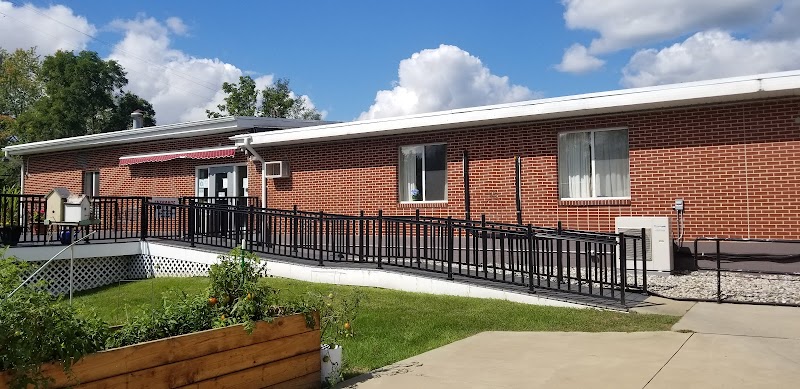
Argentine Care Center

9051 Silver Lake Road, Linden, MI 48451 (810) 735-9487
For profit - Corporation 60 Beds Independent Data: November 2025
Trust Grade
80/100
#3 of 422 in MI
Last Inspection: February 2025

Within standard 12-15 month inspection cycle. Federal law requires annual inspections.

Overview

Argentine Care Center in Linden, Michigan, has a Trust Grade of B+, indicating it is above average and recommended for families seeking care. It ranks #3 out of 422 facilities in Michigan, placing it in the top half of the state, and is the top facility out of 15 in Genesee County. The overall trend is improving, with the number of issues decreasing from 13 in 2024 to 6 in 2025. Staffing is a strong point here, with a 5-star rating and a turnover rate of 44%, which is on par with the state average. There are some concerns, including incidents where food was not stored properly, which could increase the risk of foodborne illness. Additionally, there were failures in maintaining hand hygiene during medication passes and issues with proper documentation of staff CPR certifications. However, there have been no fines reported, which is a positive sign, and the facility offers good RN coverage, providing a safety net for residents.

Trust Score
B+
80/100
In Michigan
#3/422
Top 1%
Safety Record
Low Risk
No red flags
Inspections
Getting Better
13 → 6 violations
Staff Stability
○ Average
44% turnover. Near Michigan's 48% average. Typical for the industry.
Penalties
✓ Good
No fines on record. Clean compliance history, better than most Michigan facilities.
Skilled Nurses
✓ Good
Each resident gets 47 minutes of Registered Nurse (RN) attention daily — more than average for Michigan. RNs are trained to catch health problems early.
Violations
⚠ Watch
26 deficiencies on record. Higher than average. Multiple issues found across inspections.
★★★★★
5.0
Overall Rating
★★★★★
5.0
Staff Levels
★★★★★
5.0
Care Quality
★★★★☆
4.0
Inspection Score
Stable
2024: 13 issues
2025: 6 issues

The Good

  • 5-Star Staffing Rating · Excellent nurse staffing levels
  • 5-Star Quality Measures · Strong clinical quality outcomes
  • Full Sprinkler Coverage · Fire safety systems throughout facility
  • No fines on record
  • Staff turnover below average (44%)

    4 points below Michigan average of 48%

Facility shows strength in staffing levels, quality measures, fire safety.

The Bad

Staff Turnover: 44%

Near Michigan avg (46%)

Typical for the industry

The Ugly 26 deficiencies on record

Jun 2025 2 deficiencies
CONCERN (D) 📢 Someone Reported This

A family member, employee, or ombudsman was alarmed enough to file a formal complaint

Potential for Harm - no one hurt, but risky conditions existed

Free from Abuse/Neglect (Tag F0600)

Could have caused harm · This affected 1 resident

**NOTE- TERMS IN BRACKETS HAVE BEEN EDITED TO PROTECT CONFIDENTIALITY** This citation pertains to Intake Number MI00152642 Based on the observation, interview and record review, the facility failed to...

Read full inspector narrative →
**NOTE- TERMS IN BRACKETS HAVE BEEN EDITED TO PROTECT CONFIDENTIALITY** This citation pertains to Intake Number MI00152642 Based on the observation, interview and record review, the facility failed to supervise a group activity of five residents and prevent a resident-to-resident for two residents (Res.#502 and Res. #503) of five residents reviewed for abuse, resulting in a hospital transfer for evaluation and treatment. Findings include: A review of the Facility Incident Report was reviewed on 6/3/25 at 10:30 AM. The facility indicated a resident-to-resident altercation between R502 and R503 occurred on 4/18/25 at 7:32 PM. It happened in the dayroom while playing a game with two other residents. The incident started with an argument between R502 and R503, where they threw beverages at each other and escalated to physical contact. R502 started punching R503, then R503 struck back, hitting R502 in the face. The brawl ended when R503 decided to leave the day room after hitting R502 back. Although the incident was unwitnessed by staff, the event was captured on video and was reviewed by the Administrator the following day. As a result of the resident-to-resident physical altercation, R502 sustained some bruising and laceration on the bridge of her nose, and R503 complained of pain on her eye and left jaw. Both residents were separated after the incident. R502 resides on the main floor (first floor), and R503 resides on the second floor. Both R502 and R503 were transferred to the hospital where they were evaluation and received treatment. A review of records on 5/29/25 at 3:00 PM, revealed that after the physical altercation, R503 received a CT Scan of maxillofacial /brain/ head while at the hospital emergency room due to complaints of jaw and eye pain. R503 also had a scratch on her right arm. The Facility's Incident Report dated 4/18/25, concluded that, after completing the investigation by the Social Services and the Director of Nursing, the facility substantiated a resident-to-resident physical altercation. However, the facility's failure to supervise residents' activity after dinner at around 7:30 PM involving a group of five (5) residents with various levels of cognition in the day room and provide a safe environment free from physical harm was not mentioned as the root cause of the resident-to-resident altercation. According to the Administrator, on 5/29/30 at 3:30 PM, she revealed that staff had not witnessed the incident. The activity was unsupervised. The Administrator indicated she reviewed the video the following morning. She did not find any staff in the day room during the altercation. The incident ended when R503 was seen in the video exiting the dining room. After R503 left the dayroom, both were separated and assessed. R502 sustained a bruise under her right eye and a laceration on the bridge of her nose from her glasses. R503 complained of left eye and jaw pain. Both residents were sent to the hospital for evaluation. R502: Resident #502 (R502), [AGE] years old, was assessed with a Brief Interview of Mental Status (BIMS) Score of 15/15 assessed on (DATE). A score of 15 indicated that R502 was cognitively intact. R502 was admitted to the facility on [DATE] with the diagnosis of Atherosclerotic Heart Disease, Bipolar, and Anxiety Disorder in addition to other diagnoses. R504 is care planned for independent ADLs (Activities of Daily Living) with transfers. Although she ambulates independently all around the first floor, R502 is care planned as a fall risk related to new admission and medication use. The surveyor reviewed R502's hospital discharge documents dated 4/19/25 and residents' statements at the time of the physical altercation on 4/18/2025 on 6/3/25 at 12:00 PM. A brief interview with R502 was conducted on 6/3/25 at 3:45 PM. R503 recalled getting in trouble so many times but did not specify the resident-to-resident altercation. She explained how she got the laceration on her forehead when she fell sometime in May unrelated to the resident -to resident altercation R503: Resident #503 (R503),[AGE] years old, was assessed on 3/1/25, with a BIMS Score of 9/15 on 3/1/2025. A score of 9 means moderately impaired cognition. She was admitted to the facility on [DATE] with a diagnosis of Alzheimer's Disease, Type 2 Diabetes Mellitus, and Dementia, in addition to other diagnoses. R503, like R502, was deemed safe to ambulate independently around the facility. R503's hospital discharge documents dated 4/19/25 and the resident's statements at the time of the physical altercation between residents on 4/18/2025 were reviewed. R503 was interviewed briefly on 6/3//25 at 1:30 PM at the dining room. She did not mention anything about the incident related to the resident-to-resident altercation. She did not apear to have bruising or discoloration. She denied any pain at the time of the interview. On 6/3/25 at 11:45 AM, Nurse B was interviewed on the phone. Nurse B revealed that she recalled a resident-to-resident incident in April. Nurse B indicated that she was passing medications after dinner the night it happened. She was the nurse on the first floor, and Nurse H (Nurse's name was mentioned) was on the second floor. There was no other staff in the day room when it happened because the staff was busy with patient care and putting residents to bed. Nurse B stated that R502 hit R503 first and R503 hit R502 hard that R502 ended up with a laceration on the bridge of her nose and bruising on one eye. There was blood coming from R502's nose after R503 punched her in the face. I evaluated R502 immediately because she was my resident on the first floor. R502 was immediately sent to the hospital for further evaluation. R503 lived on the 2nd floor. They were separated, and another nurse, Nurse P, evaluated R503 on the second floor. They were both sent to separate emergency rooms and were sent back the following day after treatment. Nurse B was asked if activities are monitored or supervised, Nurse B stated there are no activities staff after dinner. They all go home. No group activities are scheduled after 5 PM. Residents should not be left unsupervised, and someone should be checking on them. Nurse B recalled that at least four residents were present during the incident on 4/18/25; some had dementia diagnoses, and some had behaviors. The aides were in and out of the residents' rooms. The video camera in the dayroom was reviewed and showed no staff present during the altercation. Nurse H was interviewed on 6/3/25 at 11:22 AM by phone. Nurse H indicated that she worked the afternoon shift and was assigned to the second floor, where R503 stayed that day. Most of the time, R503 goes downstairs to the dayroom to play cards or other activities offered, and R503 enjoys spending time with other residents on the first floor. Nurse H described R503 to be impulsive at times because of her dementia and occasionally gets agitated. Although Nurse H did not see her physically act out, she corrected herself by saying, At least not with me. Nurse H further revealed that R503 was a little snippy verbally sometimes. Nurse H commented, Activities should have been monitoring residents in case there are residents with impulsive behaviors or dementia. Nurse H described evaluating R503 after the physical altercation and recalled that R503 complained of jaw and eye pain when R502 hit her but did not see any obvious bleeding or bruising. R503 was sent to the nearby emergency room to be evaluated appropriately that night. The Administrator indicated on 6/3/25 at 11:30 AM that staff did not witness the incident. The Administrator also revealed that the facility does not have an Activities Director and has now posted the position. When asked what the current plan is, the Administrator stated, There are no activities at night after dinner specified after 5:30 PM. The main dining is closed after dinner so our staff can get residents in bed. We do not have staff to conduct activities after dinner. An interview with the Social Services Director SSD was conducted on 6/3/25 at 3:45 PM. SSD revealed that both residents were receiving behavior care services. R503 has dementia and is taking some antipsychotic medications. Although R502 did not have dementia and her BIMS is 15, she does have some anxiety behaviors. R503 threw liquid on R502, and R502 hit R503 on the face. The SSD had indicated that 4/18/25 She received a call from the facility on 4/18 /25 after the physical altercation occurred because she had to call their families to inform them about the incident and that both residents were sent to the hospital for further evaluation. The SSD stated that the residents should have been supervised during the activities to start with because of mixed dementia and behaviors of residents participating in a group activity. R503's son emphasized that R503 should not have been left unsupervised. Regarding R502, even if her BIMS score is 15, she still needs supervision because of some behaviors. After dinner at 4:30 PM, residents who stay in the day room area for independent activities should be supervised to prevent this. They have not been supervised enough in activities, especially after dinner. After dinner, they are supposed to close the dining room, but some residents prefer to stay and watch television or play games with other residents. However, the staff is busy with other residents and schedules no activities after dinner. When activities staff leave at 5:30, they close the dining room. Sometimes, residents stay out in the hallway to talk to each other, but no activities are scheduled because there are no activities staff to hold and get residents to participate. The facility has been trying to figure it out up to now. It's been over a month. On 6/3/25 at 3:30 PM, the facility's Abuse Policy dated 4/8/23 was reviewed. It indicated that the facility (name of facility specified) will not tolerated Abuse, Neglect, Exploitation of its residents or the Misappropriation of Resident's Property. Definitions: .Physical Abuse includes hitting, slapping, pinching, and kicking. It also includes controlling behavior through corporal punishment . .Willful means the individual must have acted deliberately, not that the individual must have intended to inflict injury or harm .
CONCERN (D) 📢 Someone Reported This

A family member, employee, or ombudsman was alarmed enough to file a formal complaint

Potential for Harm - no one hurt, but risky conditions existed

Deficiency F0760 (Tag F0760)

Could have caused harm · This affected 1 resident

**NOTE- TERMS IN BRACKETS HAVE BEEN EDITED TO PROTECT CONFIDENTIALITY** This citation pertains to Intake Number MI00153237 Based on observation, interview, and record review, the facility failed to fo...

Read full inspector narrative →
**NOTE- TERMS IN BRACKETS HAVE BEEN EDITED TO PROTECT CONFIDENTIALITY** This citation pertains to Intake Number MI00153237 Based on observation, interview, and record review, the facility failed to follow the standards of practice and physician's order to reduce the methadone dosage administered to one resident (Resident #502) of four residents reviewed for medication errors. Resident 502 received the wrong dosage five times (5/17/25, 5/18/25, 5/19/25, 5/23/25, and 5/24/25), and potentially a second dosage was administered on 5/24/25. Findings include: Resident #502 (R502): R502's Electronic Medical Record (EMR) was reviewed on 6/3/25 at 11:00 AM. R502 was [AGE] years old and admitted to the facility on [DATE], with the diagnosis of Atherosclerotic Heart Disease, Gastro-esophageal Reflux Disease, Altered Mental Status, Major Depressive and Bipolar Disorder in addition to other diagnoses. R502's Brief Interview for Mental Status (BIMS) Score is 15/15, assessed on 4/23/2025. A score of 15 means R502 is cognitively intact. The Minimum Data Set (MDS) revealed that R502 is independent of ambulation, transfers, and mobility. R502 receives trazodone and Xanax for the diagnosis of Anxiety and Depression. R502 also receives Methadone 100 mg (1 tablet) daily for chronic pain as care planned. During a record review of R502's Physician's orders on 6/3/25 at 11:00 AM, it was noted that on 5/16/25, the physician changed the Methadone order to reduce the dosage due to a recent fall sustaining a laceration to her forehead. The change of order form was filled out and was noted as follows: Methadone-Scheduled II Concentrate: 10 mg/ml: amt: 70 mg: oral Frequency: Once A Morning at 6:00 AM Special Instructions: Give 70 mg (7 mL) by mouth every morning A verbal order by R502's primary physician received by the DON on 5/16/25 at 2:02 PM. The Director of Nursing (DON) was interviewed on June 3, 2025, at 1:30 PM. She recalled the change of R502's Methadone dosage order. She admitted that she received a report from staff of a medication error was reported on 5/25/25. The DON provided the surveyor with an Incident Report dated 5/29/25. When asked why it took so long to do the Incident Investigation? Why did the Med Error investigation start on 5/29/25 when the surveyor was already at the facility? The DON stated that the incident was reported to her on 5/25/25, but she couldn't get to it until 5/29/25. The day the surveyor was at the facility. The DON revealed that the nurse who administered the wrong dosage, Nurse C, received an in-service with other nurses and one-on-one counseling on medication errors on 5/29/25. When asked if another nurse made the same error, The DON was unaware of a second nurse who had given the wrong dosage of Methadone to R502 or multiple episodes of an incorrect dosage administered on 5/17, 5/18, and 5/19. She only knew about the 5/23/25. A review of the R502's narcotic log entitled: Controlled drug receipt/Record/Disposition Form was conducted with the DON on 6/3/25 at 1:35 PM. It revealed that despite a written and verbal physician's order to reduce the methadone from 7.5 mL to 7.0 ml daily at 6:00 AM. Two Nurses continued to administer a 7.5 dosage and were not following the most current order given by the physician. The following data was noted: R502 received incorrect dosages on: 5/17/25 R502 received 7.5 mL at 6:00 AM, given by Nurse B 5/18/25 R502 received 7.5 ml at 6:00 AM by Nurse C 5/19/25 R502 received 7.5 ml at 6:00 AM by Nurse C Error continued on 5/23/25 R502 received 7.5 ml at 6:00 AM by Nurse C 5/24/25 R502 received 7.5 ml at 6:00 AM by Nurse C and another entry was noted: 5/24/25 %502 received 7.0 (correct dosage) given by Nurse B A review of R502's Progress Notes dated May 2025 on 6/3/25 at 11>05 AM indicated No physician's progress notes were noted related to the medication errors on 5/17, 5/18, 5/19, 5/23/ & 5/24/2025. Upon further review of R502's Narcotic Log on 6/3/25 at 1:30 PM, the DON further explained that the error on 5/24/25 was that the second entry was on the date. Nurse B made a mistake in putting the correct date, 5/25/25, instead of 5/24/25. The DON was not sure if R502 received two doses on 5/24/25. The DON indicated that Nurse C had signed the Med Error Incident report and received education about the error on 5/29/25. On the other hand, Nurse B, the second nurse who made an error, did not receive in-service educational counseling. The Medication Error Incident report addressed the dates 5/23 and 5/24/25. The medication error filed did not address the dates 5/17, 5/18, and 5/19, which also had a dosage error. The DON revealed she did not know about another set of errors until now. The DON only knew of the 5/24/25 and was unaware that there were six episodes of medication errors, as evidenced by R502's narcotic log. The DON assured the surveyor that Nurse B would receive the appropriate education and counseling for medication administration errors (Med Errors) this week. Nurse B was interviewed by telephone on 6/3/25 at 11:25. She reported the medication errors made for R502 by Nurse C. She denied receiving an in-service education related to medication errors herself. Nurse B denied any mistakes made by her. Nurse D was observed on 6/3/25 at 12:30 PM. When Nurse D was asked to do a narcotic count for R502's controlled medications, Nurse D warned the surveyor that the narcotic count for R502's Xanax would be wrong because she had marked the sheet as given today but was not administered. The Xanax count sheet says 21 tablets left, but found 22 tablets in the blister pack. Nurse D apologized and stated she had not given the medication to R502 but had marked it earlier as given. Nurse D apologized for making the error. In an interview on 6/3/25 at 4:30 PM, the Administrator stated she was unaware of the Med Error and was not informed of any discrepancy with R502's medication. Otherwise, we would have immediately investigated it and brought it to the QA (Quality Assurance) committee. The facility's Policy on Medication Errors, Revised on February 2023, was reviewed on 6/3/25 at 4:00 PM. It indicated: 1. A medication error is defined as the preparation or administration of drugs or biological's that are not in accordance with a physician's order, manufacturer specifications, or accepted professional standards and principles of the professional (s) providing services. 2. Examples of Medication errors include: a. Omission- a drug ordered but not administered. b. Unauthorized drug- a drug is administered without a physician's order. c. Wrong dose (e.g., Dilantin 12 mL ordered, Dilantin 2 mL given) . 3. A significant medication-related error is defined as: a. Requiring modification, discontinuation, or dose modification. b. Requiring hospitalization or extending a hospitalization. c. Resulting in disability. d. Requiring treatment with a prescription medication. e. Resulting in cognitive deterioration or impairment. f. Life threatening. g. Resulting in death The facility provided a 2-paged medication error policy only for the surveyor to review, but on the bottom of page 2, it noted: continues on next page. The surveyor was not provided with the following pages of the policy. The first two pages did not emphasize the importance of notifying the physician when the Medication error occurred or was discovered. The medication error was not indicated in the progress notes nor when the physician was notified. The facility's Medication Administration Policy was reviewed on 6/3/25 at 4:15 PM. Policy Statement: Medications are administered in a safe and timely manner and as prescribed. Policy Interpretation and Implementation specified: .4. Medications are administered in accordance with prescriber orders, including any required time frame . 6. Medication errors are documented, reported, and reviewed by the QAPI committee to inform process changes and or the need for additional staff training .10. The individual administering the medication checks the label THREE (3) times to verify the right resident, right medication, right dosage, right time, and the right method (route) of administration before giving the medication .
Feb 2025 4 deficiencies
CONCERN (D)

Potential for Harm - no one hurt, but risky conditions existed

Resident Rights (Tag F0550)

Could have caused harm · This affected 1 resident

Based on observation, interview and record review, the facility failed to ensure a timely meal pass for three residents (R#5, R#37 and R#47) of 13 residents at the main dining area observed during lun...

Read full inspector narrative →
Based on observation, interview and record review, the facility failed to ensure a timely meal pass for three residents (R#5, R#37 and R#47) of 13 residents at the main dining area observed during lunch. FACILITY A dining observation was conducted on 02/27/25 at 11:45 AM to 12:30 PM. The facility meal times policy revealed: Lunch are served between 11:30 and 11:45 AM. There were 12 residents in the dining area with staff waiting for resident's cart to arrive in the dining area. The cart arrived at 12:00 PM from the kitchen. Staff distributed the trays to residents and started setting up and assisting other residents that required feeding. There were three residents R#5, R#37 and R#47 observed without a meal tray while others started eating. At 12:20 PM, The three residents trays have not arrived. R#47 was restless and become loud stating that his tray came late last night and often comes late. While R#37 kept wandering around the dining room ambulating in her wheelchair and was redirected by staff to return back to her spot twice. R#5 remained calm and quiet but looked bored. The Director of Nursing (DON) entered the dining room at 12:22 PM carrying R#37 lunch tray. A few minutes later R#37's tray arrived. At 12:26 PM, R#47 tray did not arrive yet. R47 continued to verbalized where his tray at, that he was starving and that his tray was late last night for dinner. As the surveyor went out of the dining room, at 12:30 PM, the DON was approaching the dining room carrying the last tray and explained that it is R#47 lunch tray. The DON further indicated that there was a misunderstanding in the kitchen that they delivered it to his room instead of sending them to the cart for dining room residents. The surveyor observed R#47's tray delivered to him at 12:31 PM. The posted meal times per facility was 11:30- 11:45 AM and the three trays were delivered late at 12:22 PM (R#5), 12:24 PM (R#37), and R#47 arrived at 12:31 PM. Interview with the Director of Nursing (DON) was conducted on 02/27/25 at 02:53 PM. The DON confirmed that three residents' trays were delivered late for R#5, R#37, and R#47. The Meal Distribution Policy revised on 2/2023, was reviewed on 2/27/25 at 3:00 PM. Policy Statement: Meals are transported to the dining locations in the manner that ensures proper temperature maintenance, protects against contamination, and are delivered in a timely and accurate manner. Procedures .4. The nursing staff will be responsible for verifying meal accuracy and the timely delivery of meals to residents/patients. 5. For point-of-serving dining, the Dining Services Department staff, under the supervision of the licensed nurse, will assemble the meal in accordance with the individual meal card and present it to the resident/patient or care staff for delivery to the resident /patient. 6. Proper food handling techniques to prevent contamination and temperature maintenance controls will be used for point-of-service dining .
CONCERN (D)

Potential for Harm - no one hurt, but risky conditions existed

Deficiency F0692 (Tag F0692)

Could have caused harm · This affected 1 resident

**NOTE- TERMS IN BRACKETS HAVE BEEN EDITED TO PROTECT CONFIDENTIALITY** Based on observation, interview, and record review, the facility failed to assess and monitor weights and ensure that interventi...

Read full inspector narrative →
**NOTE- TERMS IN BRACKETS HAVE BEEN EDITED TO PROTECT CONFIDENTIALITY** Based on observation, interview, and record review, the facility failed to assess and monitor weights and ensure that interventions to promote nutrition and prevent weight loss were in place for two residents (R#19 and R#37) of four sampled residents reviewed for food and nutrition. Findings include: Resident #19 (R19): Nutrition According to a review of the Electronic Medical Records on 2/27/25 at 2:18 PM, R19 was [AGE] years old and admitted to the facility on [DATE] with the diagnosis of Alzheimer's Disease, Adult Failure to Thrive and Malignant Neoplasm of Prostate in addition to other diagnoses. R19 Brief Interview for Mental Status (BIMS) score was zero (0/15) assessed on 12/04/2024. A score of zero means severe cognitive impairment. R19's GG section revealed that R19 required substantial/maximum assistance with eating, which means the helper assistant does half the effort to complete the task. R19's GG (Functional assessment) indicated that he depended on staff to perform most activities of daily living (ADL's), such as personal hygiene, toileting, showers, and upper and lower body dressing, and was always incontinent with bowel and bladder elimination patterns. R19's weight record and calculations were reviewed on 02/27/25 at 02:38 PM, and R19's weight was recorded at 124.4 pounds on 2/26/25. According to weight calculations: > On 11/09/2024, the resident weighed 133.4 lbs. On 02/26/2025, the resident weighed 124.4 pounds, which is a -6.75 % Loss in 3 months. >On 09/04/2024, the resident weighed 147.2 lbs. On 02/26/2025, the resident weighed 124.4 pounds, which is a -15.49 % Loss in 6 months. The following were recorded weights taken by the facility: 9/4/2024 147.2 pounds (lbs.) BMI:24.49 10/11/2024 138.6 lbs. BMI 22.2 11/9/2024 133.4 lbs. BMI 22.2 12/4/2024 129.2 lbs. BMI 21.5 01/07/2025 129 lbs. BMI 21.5 02/11/2025 121.8 lbs. BMI 2027 The Dietary Progress notes reviewed on 2/27/25 at 2:00 PM confirmed that R19 had a significant weight loss on December 20, 2024, and February 27, 2025 (during the survey). The RD, on 12/20/24, recommended increasing house shake supplements to four times(4 X) daily instead of TID (3 X a day), adding a shake at HS, and continuing to monitor R19. R19, according to the supplemental record, did not receive supplements 4 times a day. The recommendation of increasing the house shakes to 4 times on December 20, 2024, was not followed. R19's Intake/Supplement Record in February 2025 revealed: February 2025 Supplemental Intake Monitoring Log showed NO ENTRIES (BLANK) on: 2/10/25 at 12:00 PM Blank 2/24/25 at 12:00 PM Blank 2/27/25 at 12:00 PM Blank The Food Acceptance Record for R19 was reviewed on 2/27/25 at 2:15 PM. R19's daily food acceptance was not monitored or recorded daily. The surveyor asked the DON on 2/27/25 at 2:30 PM what it meant when the box was blank. The DON stated that it meant either the supplement was not given or recorded. The DON indicated that not all residents' food acceptance is monitored or recorded automatically. She further explained, It is only if it triggers it! such as significant weight loss or, if indicated, a dietician recommendation or MD orders. The DON confirmed that the facility did not have a consistent documented record to monitor R19's food intake and supplements. A physician's order was noted on 2/26/25 at 2:00 PM, and it was specified that the House Shakes TID with meals record the amount consumed. There was no accurate and consistent monitoring of food intake and supplements recorded/documented for R19. The Registered Dietician's recommendation for R19 dated 12/20/24, for an increase in the supplement (house shakes) to 4 times as recommended in December 2024, was not implemented, and meanwhile, R19's weights continued to decline. R19's Alteration in Nutrition Care Plan was reviewed on 2/27/25 at 2:30 PM. Goal: I will be free from signs and symptoms of malnutrition and dehydration through the next review date. Approach Start Date: 6/26/25 Specified: 1. Encourage and record intake of food and fluids. Monitor and record output. 2. Monitor for signs and symptoms of malnutrition. 3. Monitor/record weight 4. Report and document if I leave 25% or more food uneaten. 5. R19 Short-Term Target Date was 12/17/2024. No updated follow-up of the care plan and revision was found. Resident # 37 (R37): Nutrition During Dining Observation conducted on 2/27/25 from 11:45 AM to 12:30 PM, The Lunch meal trays were delivered late, between 12:00 PM to 12:30 PM instead of 11:30-11:45 AM per the posted Lunch delivery schedule. as confirmed by the Director of Nursing and residents did not receive their trays timely. The facility meal times policy revealed that lunch is served between 11:30 and 11:45 AM. There were 13 residents in the dining area, with staff waiting for the resident's cart to arrive in the dining area. The cart arrived at 12:00 PM from the kitchen. Staff distributed the trays to other residents while R#37 kept wandering around the dining room ambulating in her wheelchair and was redirected by staff to return to her spot twice. A few minutes later, R37's tray arrived. The DON explained on 2/27/25 at 12:30 PM that there was a misunderstanding in the kitchen, and they delivered it to his room instead of sending it to the cart for dining room residents. The surveyor observed R#47's tray delivered to him at 12:31 PM. The posted meal times per facility were 11:30 AM to 11:45 AM, and the three trays were delivered late at 12:22 PM (R#5), 12:24 PM (R#37), and R#47 arrived at 12:31 PM. Weight: R37 had a BIMS Score of 15/15 assessment done on 1/23/25. A perfect score of 15 indicates that the person is cognitively intact. R 37 was admitted to the facility on [DATE], with a diagnosis of Dementia, GERD (Gastro Esophageal Reflux Disease), Difficulty Walking, and a History of NSTEMI (Non-ST-Elevation Myocardial Infarction), in addition to other Diagnoses. R37's Functional Assessment (Section GG of the Minimum Data Set) dated 1/23/25 revealed no assistance needed for eating but partial assistance from staff during ADL's (Activities of Daily Living) such as grooming, personal hygiene, and dressing. R37 did not have a weight found in the admission record. No records of R37's food acceptance record and supplements were found in her clinical record during the review. The Director of Nursing DON later confirmed that they failed to measure R37's weight when she was admitted in January 2025. During an interview with R#37 on 02/27/25 at 02:45 PM. R#37 revealed that she was not happy with her weight. She expressed that she only weighs 135 typically and did not get weighed at the facility. During dining room observation conducted on 02/27/2025 at 11:45 AM, R37's tray was delivered late for almost an hour. An interview with the Director of Nursing (DON) was conducted on 02/27/25 at 02:56 PM. The DON confirmed that R#37 did not have a record of initial/baseline weight taken upon admission on [DATE]. They did not have any weight taken at the first of the month. She stated, It was apparently missed. The Director of Nursing reported that neither Food nor Fluid Acceptance Records were found in the R37 clinical record. According to the DON, There should be an admission weight for every newly admitted resident and a follow-up weight every first of the month unless weekly weights are triggered. Although we did not require a food acceptance record for everyone, it is just for those who trigger it. One of the triggers is significant weight loss or suspected weight loss. R37's Nutrition Care Plan was reviewed on 2/27/25 at 2:15 PM. No nutrition, weight, or eating problem was in her care plan. Nutritional Assessment Policy Revised in 2/2023 was reviewed on 2/27/25 at 2:30 PM. Policy: Resident weights are recorded and monitored at least monthly . PROCEDURES: 1. admission height and weight are to be obtained by nursing staff within 24 hours of admission and recorded on the nursing admission assessment. 2. Nursing staff weighs and records residents' weights each month by the 7th of the month. Weekly weights are obtained on those residents within the first 4 weeks of admission and those residents deemed appropriate per the assessment of the dietician, dietary manager, physician or as an outcome of the NAR meeting .
CONCERN (D)

Potential for Harm - no one hurt, but risky conditions existed

Pharmacy Services (Tag F0755)

Could have caused harm · This affected 1 resident

**NOTE- TERMS IN BRACKETS HAVE BEEN EDITED TO PROTECT CONFIDENTIALITY** Based on observation, interview and record review, the facility failed to provide two diabetic medications (Jardiance and Januvi...

Read full inspector narrative →
**NOTE- TERMS IN BRACKETS HAVE BEEN EDITED TO PROTECT CONFIDENTIALITY** Based on observation, interview and record review, the facility failed to provide two diabetic medications (Jardiance and Januvia (sitagliptin)) timely for one resident (Resident #151) of six residents reviewed for medications. Findings include: Resident #151: On 2/25/25, at 12:42 PM, Resident #151 was in their room. They complained about their sugar levels seemed to be a bit higher than normal. Resident #151 complained they thought they weren't getting enough protein or maybe too much starches since their admission. On 2/25/25, at 2:30 PM, a record review of Resident #151's electronic medical record revealed an admission on [DATE] at 11:43 AM with diagnoses that included Diabetes, Stroke and Transient Ischemic Attack (TIA). Resident #151 was noted to be alert and orientated. A review of the Physician orders revealed the following: Received Date: 02/21/2025 Order Description sitagliptin tablet; 100 mg; amt: 1 tablet; oral . Once A Day 08:00 AM . Give one tablet by mouth once daily for diabetes . Received Date: 02/21/2025 . Jardiance (empagliflozin) tablet; 25 mg; amt: 1 tablet; oral . Once A Day 08:00 AM . Give one tablet by mouth once daily for diabetes . Pharmacy Directive: Substitution Permitted . A review of the Medications Administration History: 02/01/2025 - 02/27/2025 revealed the following: Order Jardiance (empagliflozin) tablet; 25 mg; Amount to Administer: 1 tablet; oral . Start/End Date 02/21/2025 - Open Ended . For the days Sat 22 Sun 23 Mon 24 Tue 25 Wed 26 Thu 27 the nurse initials were surrounded by parenthesis which revealed . Reasons/Comments Not Administered: Drug/Item unavailable . This was documented for 02/22/2025 thru 02/27/2025 which revealed Resident #151 did not receive Jardiance one time from the facility. Order sitagliptin tablet; 100 mg; Amount to Administer: 1 tablet; oral . Start/End Date 02/21/2025 - Open Ended . For the days Sun 23 Mon 24 the nurse initials were surrounded by parenthesis which revealed . Reasons/Comments Not Administered: Drug/Item unavailable . A review of the progress notes revealed 02/22/2025 10:58 AM Spoke with Pharmacy. Will send Jardiance and sitagliptin tonight. signed by Nurse A. On 2/26/25, at 9:00 AM, A review of Resident #151's blood sugar results revealed Search Vitals Results . Blood Sugar revealed since admission of the 10 results 7 were over 200 mg/dL. On 2/26/25, at 10:15 AM, an observation of medication cart along with Nurse A was conducted of the upstairs medication cart. There was bottle of home-brought (Sitagliptin/Januvia) medication for Resident #151 that had a VA label on it. Nurse A offered that his daughter brought that in from home. Nurse A was asked if Resident #151 had Jardiance in their medication supply and Nurse A offered, were still waiting on that one and that they had called the pharmacy over the weekend. Nurse A was asked if they knew why the pharmacy didn't supply the Jardiance and Nurse A offered, maybe they are waiting on an authorization. On 2/26/25, at 2:00 PM, the Director of Nurses (DON) was asked regarding Resident #151's diabetic medications. The DON offered, the pharmacy wanted to send another medication in the place of the one but that because the resident was going to be in the facility short term the DON decided that wouldn't work. The DON explained that they did authorize the medication so now it will be sent. On 2/27/25, at 12:12 PM, a follow up interview with Resident #151, who was in their room, was conducted. Resident #151 complained they were still worried about their sugar levels and thought it might be the food they were offered. Resident #151 was asked if they knew what their sugar levels normally run, and Resident #151 went on to complain that their sugar levels had been a bit higher with some over 200. Resident #151 was asked if they knew the names of their diabetic medications and Resident #151 knew they took 2 tablets of Metformin a day but was unsure of the other ones. Resident #151 offered that they had the pills at home but couldn't remember them all because the stroke they had makes me forgetful and that their daughter helps them out. On 2/27/25, at 12:21 PM, Nurse A was asked if Resident #151's Jardiance had been supplied from the pharmacy and Nurse A offered, they sent the Januvia last night but not the Jardiance. An observation of the pharmacy supplied Januvia revealed a pharmacy supplied cartridge of Januvia. There was no Jardiance housed in the medication cart for Resident #151. A further review of Recent Progress Notes through 02/27/2025 01:14 AM revealed no further progress notes regarding the medications Jardiance nor the sitagliptin. A review of the facility provided Pharmacy Agreement revealed . Pharmacy shall supply the Facility and its residents with FDA approved pharmaceuticals . Deliver of Services . In the event an ordered medication is for any reason unavailable, the Pharmacy shall notify the Facility .
CONCERN (D)

Potential for Harm - no one hurt, but risky conditions existed

Deficiency F0761 (Tag F0761)

Could have caused harm · This affected 1 resident

Based on observation, interview and record review, the facility failed to ensure safe narcotic storage and reconciliation for one medication room backup supply. Findings include: On 2/26/25, at 10:0...

Read full inspector narrative →
Based on observation, interview and record review, the facility failed to ensure safe narcotic storage and reconciliation for one medication room backup supply. Findings include: On 2/26/25, at 10:00 AM, an observation of the medication room on the first floor was conducted along with Nurse B. The outside door required a key to open which was on the Nurse B key ring. There was a small black refrigerator that was unlocked. Inside the refrigerator was a clear plastic locked box that housed 2 vials of Ativan. Nurse B was asked where on the narcotic reconciliation form do they reconcile the vials of Ativan and Nurse B stated, I don't think we count these. Nurse B pulled out the plastic box which was approximately 10 inches long by 5 inches high and wide. The box was not affixed inside the refrigerator. Nurse B tried their keys on their key ring which did not open the box. Nurse B was asked how many Ativan vials were in the box and Nurse B offered, I think maybe 2 but could be 3 as they were housed inside blue plastic bags and not visible. On 2/26/25, at 9:55 AM, a record review of the narcotic reconciliation booklet housed on medication cart on the first floor revealed no reconciliation form for the Ativan housed in the medication room refrigerator. On 2/26/25, at 10:30 AM, the DON was interviewed regarding the Ativan vials in the refrigerator in the medication room and asked how the facility ensures reconciliation. The DON offered, (pharmacy consultant D) comes in every other week and reconciled the backup medications including the Ativan vials. The DON was asked to provide the pharmacy documentation of the Ativan reconciliation. The DON was asked how the nurses would get the Ativan from the refrigerator and the DON offered, the nurses key should open the box. On 2/26/25, at 10:35 AM, an observation of the medication room refrigerator along with Nurse B and the DON was conducted. The DON opened the unlocked refrigerator and pulled out the plastic box. Nurse B's key ring did not house a key to open the box. Nurse B stated, the key is in the nexys system (pharmacy backup storage machine). The DON offered they would call the pharmacy consultant and inquire on the Ativan reconciliation. On 2/26/25, at 10:50 AM, while on the phone with pharmacy consultant D, the DON entered the medication room, logged into the nexys (backup machine) and was able to obtain the key for the lock box of Ativan vials. The DON opened the box and counted 2 vials of Ativan, locked the box and replaced it back into the refrigerator. The DON was asked again for any documentation the pharmacy consultant could provide that ensures the Ativan had been reconciled and to provide the narcotic reconciliation procedure. On 2/27/25, at 10:00 AM, the DON offered that the pharmacy consultant could not run a reconciliation report for just the one facility. On 2/27/25, at 2:05 PM, an observation of the medication room refrigerator along with Nurse C was conducted. Nurse C removed the box from the refrigerator and offered, we used to count it on our sheets but now the key is locked in the nexys. Prior to exit, the facility did not provide any reconciliation documentation that ensured the Ativan vials had been reconciled. A review of the facility provided Controlled Substances Revised February 2023 revealed The facility complied with all laws, regulations, and other requirements related to handling, storage, disposal, and documentation of controlled medications . Dispensing and Reconciling Controlled Substances 1. Controlled substance inventory is monitored and reconciled to identify loss or potential diversion in a manner that minimizes the time between loss/diversion and detection/follow-up . Storing Controlled Substances are separately locked in permanently affixed compartments, except when using single unit package drug distribution systems in which the quantity stored is minimal and a missing dose can be readily detected . 12. Some controlled substances may be stored in the emergency medication supply. Reconciliation of controlled substances in the emergency supply is conducted at intervals established by the director of nursing services .
Jan 2024 13 deficiencies
CONCERN (D) 📢 Someone Reported This

A family member, employee, or ombudsman was alarmed enough to file a formal complaint

Potential for Harm - no one hurt, but risky conditions existed

Resident Rights (Tag F0550)

Could have caused harm · This affected 1 resident

**NOTE- TERMS IN BRACKETS HAVE BEEN EDITED TO PROTECT CONFIDENTIALITY** This Citation pertains to Intake Numbers MI00136477, MI00141844, and MI00141874. Based on observation, interview and record revi...

Read full inspector narrative →
**NOTE- TERMS IN BRACKETS HAVE BEEN EDITED TO PROTECT CONFIDENTIALITY** This Citation pertains to Intake Numbers MI00136477, MI00141844, and MI00141874. Based on observation, interview and record review, the facility failed to ensure that residents' rights were met when the facility failed to 1.) Ensure call lights were answered timely for six Residents (Resident #14 and 5 Residents in the Confidential Group of Residents (E, F, G, H, and I)); 2.) Ensure food was served warm at a palatable temperature for two residents from the Confidential Group of Residents (G and I); and 3.) Ensure that showers/bed baths were provided to five residents from the Confidential Group of Residents (E, F, G, H, and I), of a sample of 12 residents reviewed for residents' rights and accommodation of needs and a group of five residents from the Confidential Group, resulting in unmet care needs, incontinent episodes, feelings of shame and humiliation; dissatisfaction of cold, unpalatable food with the potential for weight loss; and a lack of showers for more than seven days, embarrassment and the potential for body odor and infection. Findings include: On 1/05/2024 at 1:15 PM, a group of five confidential residents were interviewed during the survey task for the Resident Council. Meeting minutes from past Resident Council meetings were reviewed before the group meeting. The group was asked about individual issues and concerns not brought to the Resident Council meetings. Five of five confidential residents expressed that there was a pattern of delayed call light responses from staff and frustration with the outcome of the delay. During the Resident Council meeting, three confidential residents described that they required using a mechanical transfer lift for transfers to and from the toilet and needed extra time to perform the activities of daily living compared to other residents and when call lights were not answered timely, caused a delay in making it to the toilet timely. One resident, Resident G, stated, staff would come in to turn off the call light and say that they will be back but don't return. Resident G further revealed waking up in the middle of the night soaked in urine because the staff did not return after turning off my call light. Resident G stated, It seems worse on the night shift than during the day. At least the day shift returns after a couple of hours. The night shift doesn't seem to do their job. Resident H revealed that the day shift staff turned off the call light and did not return. Resident H expressed that at times, they were unsure if the staff intentionally ignored the request or forgot because they were too busy and short of staff. On 1/9/2024 at 10:27 AM, Resident #14 (R14) was interviewed, answered questions and engaged in conversation. R14 indicated that she had brought up the issue with the Director of Nursing (DON) of the call light being turned off by staff from the nursing station. The Resident reported the staff turned their call light off without coming to the room to check on us. During the interview, although non-verbal, R14's roommate, Resident #6 (R6), was making signals and noise, indicating that she agreed with the call lights being shut off from the nurses' station. R14 stated, It happened again last night during the night shift. R14 further stated, I don't know why they would shut it off when you need something .they would not even come to the room to ask what you need. CNA BB was interviewed on 1/9/24 at 10:30 AM regarding call light response from staff. The CNA stated, we turn off the call lights in the resident's room. We are not supposed to shut it off from the phone. Nurse CC was interviewed on 1/9/24 at 10:37 AM regarding call lights shut off at the nurses' station. Nurse CC demonstrated how the call lights can be turned off or shut off from the nursing station desk phone. The Nurse indicated staff were to answer the call light in the room and not shut it off at the Nurses Station. The DON was interviewed on 1/9/24 at 10:47 AM regarding call light response. The DON indicated she was unaware of the incident from last night when the call light was not answered for Resident #14 but had received a previous complaint from R14 regarding call lights being turned off without CAN's going in the room. The DON stated, It was around October of 2023. The DON revealed that she instructed R14 to report directly to the DON when it happens again but had not heard from R14 since then. The DON was asked about facility policy and indicated staff were to go into the room to answer call light. The DON was queried if interventions had been implemented to prevent the staff from shutting off the call lights at the nurses' station. The DON said that she had not done anything because no one had reported anything since. The DON indicated that she would follow up with R14 and R6 regarding staff shutting off the call light from the nurse's station. A review of the Resident Council Suggestions/Concern Form dated 10/9/2023. R14 initiated the concern. The DON wrote, States they turn her call light off from nursing station never checks what she needs. Resolution/response: Resident to report to manager immediately when this happens. Nurses to be notified if on night shift. Signed by the DON, dated on 10/10/23. Resident Response to resolution: (was left blank) Administrator Signature: (was left blank) Date: (was left blank). Maintenance C was interviewed on 1/9/2024 at 10:50 AM, regarding the call light system. Maintenance C demonstrated how the staff could turn off or cancel the call light alarm by pressing a button from the telephone at the nurse's station. During the Resident Council meeting on 1/5/24 at 1:45 PM, the confidential residents emphasized their concern about hot food being served cold and cold food being served warm. The Residents expressed that sometimes, the food is not thoroughly cooked, they had complained about it, but they didn't come back to heat it or cook it properly. The Residents reported that sometimes one side of the food was frozen, and the other was half-cooked. Resident G described a particular experience of being served a quarter of a sausage, and stated, like someone had taken a bite of it. During the resident's dining observation conducted with the dietary [NAME] (Staff B) on 1/08/24 at 12:30 PM, Resident G's dish, a chicken pot pie, was temped at 137 degrees Fahrenheit. Resident I's Pot pie dish was at 113 degrees Fahrenheit. During the dining observation, an observation was made of Staff B hearing the comments from the residents, especially regarding dissatisfaction with their meal experience and the food temperature. On 1/5/24 at 1:45 PM during the Resident Council group meeting, Resident H expressed concerns about not getting showers for over a week. Resident H recalled not getting a shower since returning from the hospital from Thursday until the following Friday. Resident H expressed they preferred to have a shower than a bed bath. An updated Shower Schedule (dated 11/8/2023) was reviewed on 1/05/24 at 4:25 PM. It revealed that Resident H is scheduled to receive showers three (3) times a week on Monday, Wednesday, and Friday. Resident G was scheduled twice weekly on Monday and Wednesday. Resident I was scheduled twice a week on Tuesday and Thursday. Resident E was scheduled twice weekly on Wednesday and Friday. Resident F was scheduled every Friday. The shower schedule entitled Downstairs Shower noted each of the resident's shower schedules on the first floor and noted: Friendly Reminder: If the shower aid is pulled to work the floor, each individual CAN's (Certified Nurse's Aide) is responsible for their own shower that day. During the Resident Council meeting, the group of confidential residents was asked to raise their hands if they had not received their planned showers or baths for over a week. Five of the five confidential residents raised their hands. The confidential residents revealed that they were told that showers were not done because the shower aide had COVID and told them to stay in their room until further notice. The shower aide, CAN's V, was interviewed on 1/5/2024 at 3:16 PM. CAN's V admitted she was off last week and was unsure how the showers were given. The Shower CAN's mentioned the facility policy, that if the shower aide could not do showers, it would be the responsibility of every resident's assigned aide to do baths. CAN's V indicated the aides have to fill out the skin sheet for every shower and stated, That's when we know that the bath/showers were done. CAN's V revealed being sick and was absent last week. CAN's V had just returned to work from illness, reported she was unsure if the CAN's were giving residents their scheduled showers/baths and stated, They should have filled out the skin sheet to see if they have done them. The Administrator was queried on 1/5/24 at 3:07 PM regarding the Residents' missed showers/bathing and stated we have not been doing showers because of the COVID outbreak, but residents should receive bed baths. The quarantine started on December 28, 2023. The residents were instructed to stay in their rooms. They were to use commodes instead of using shared bathrooms, and staff were to give bed baths. Some residents prefer showers. An interview with the Director of Nursing DON was conducted on 01/05/24 at 11:00 AM. The DON explained that each bath/shower should have a skin assessment sheet. That's when staff identify any skin discrepancies. The surveyor requested the residents' shower skin assessments. The DON could not provide the skin assessments for the group of confidential residents for the dates requested for the past two (2) weeks (December 20th, 2023- January 5th, 2024). When queried, she could not tell if the showers/baths were done for the residents because no skin sheets or documentation indicated showers were given to the requested residents. A review of facility policies was conducted on 1/8/24 at 4:00 PM. The Bath, Shower/Tub Policy (revised Date February 2018) revealed, Purpose: .the purposes of this procedure are to promote cleanliness, provide comfort to the resident and to observe the condition of the resident's skin . Documentation: 1.) The Date and time the shower/tub bath was performed. 2.) The name and title of the individual(s) who assisted the resident with the shower/tub bath. 3.) All assessment data (e.g., any reddened areas, sores, etc., on the resident's skin) obtained during the shower/tub bath . Reporting: 1.) Notify the supervisor if the resident refuses the shower/tub bath. 2.) Notify the physician of any skin areas that may need to be treated. 3.) Report other information in accordance with facility policy and professional standards of practice. The facility policy was reviewed on 1/9/24 at 3:00 PM entitled: Answering Call Light Policy (revised Date September 2022). It revealed, Purpose: The purpose of this procedure is to ensure timely responses to the resident's requests and needs .Steps in the Procedure: 1.) Answer the resident call system immediately. When answering an auditory request for assistance, identify yourself and politely respond to the resident by his/her name (e.g., This is Mrs. [NAME]. Mr. [NAME], how may I help you?). a. If the resident needs assistance, indicate the approximate time it will take for you to respond. b. If the resident's request requires another staff member, notify the individual. c. If the resident's request is something you can fulfill, complete the task within five minutes if possible. d. If you are uncertain as to whether or not a request can be fulfilled, or if you cannot fulfill the resident's request, ask the nurse supervisor for assistance . The facility's policy on Food Quality and Palatability Policy (undated) was reviewed on 1/9/24 at 3:15 PM. It revealed, Policy Statement: Food will be prepared by methods that conserve nutritive value, flavor, and appearance. Food will be palatable, attractive, and served at a safe and appetizing temperature. Food and liquids are prepared and served in a manner, form and texture to meet resident's needs .Procedures: .2.) The [NAME] (s) prepare food in a sanitary manner utilizing the principles of Hazard Analysis Critical Control Point (HACCP) and time and temperature guidelines as outlined in the Federal Food Code . According to the US Department of Agriculture USDA (December 12, 2023), https://ask.usda.gov/s/article, Once the food is cooked or reheated, it should be held hot, at or above 140 degrees Fahrenheit (60 degrees Celsius). Food may be held in the oven or on the serving line in heated chafing dishes, or on preheated steam tables, warming trays and/or slow cookers.
CONCERN (D)

Potential for Harm - no one hurt, but risky conditions existed

Deficiency F0645 (Tag F0645)

Could have caused harm · This affected 1 resident

**NOTE- TERMS IN BRACKETS HAVE BEEN EDITED TO PROTECT CONFIDENTIALITY** Based on observation, interview, and record review, the facility failed to ensure that proper Pre-admission Screening and Reside...

Read full inspector narrative →
**NOTE- TERMS IN BRACKETS HAVE BEEN EDITED TO PROTECT CONFIDENTIALITY** Based on observation, interview, and record review, the facility failed to ensure that proper Pre-admission Screening and Resident Review (PASARR) or DCH-3877 Form documentation was completed annually for one resident (Resident #39), of three residents reviewed for PASARR documentation, resulting in the potential for inappropriate admission, and absence of available services for mental disorders or unmet specialized needs. Findings include: Resident #39 (R39): On 1/4/24, at 11:39 AM, R39 was observed in his room and complained about being unable to get out of the room to use the bathroom on the second floor. R39 had a roommate (Bed #2) and was asleep during the observation. R39 had expressed, I don't like it here but don't want to complain. My roommate has dementia and needs a lot of attention. I don't like being here. A record review of R39's Electronic Medical Record (EMR) dated 11/08/23 revealed R39 was [AGE] years old, admitted to the facility on [DATE], with diagnoses that included Anxiety Disorder, Depression, Schizophrenia and Post Traumatic Syndrome Disorder (PTSD). The Minimum Data Set (MDS) assessment dated [DATE], revealed a Brief Interview of Mental Status (BIMS) score of 15/15. A BIMS Score of 13 to 15 indicated that a person was cognitively intact. According to the MDS assessment dated [DATE], R39 did not receive any antipsychotic prescription or did not receive any mental health services despite the list of diagnoses for Mental disorders mentioned above. A review of R39's PASARR indicated that the last assessment was done in 2022. There was no PASARR found after 2022 in R39's EMR. On 1/9/24 at 11:30 AM, R39 current PASARR was requested. The Social Worker SW A presented a PASARR (Form 3877) for R39 dated 1/9/24. The PASARR submitted by SW A revealed: The screening purpose was for (X) Change in Condition. Section II. Screening Criteria: (All six items must be completed.) 1. (X) NO ( ) Yes The person has a person current diagnosis of ( )Mental illness or ( ) Dementia 2. (X) NO ( ) Yes The person has received treatment for ( ) Mental Illness or ( ) Dementia 3. (X) NO ( ) Yes The person has routinely received one or more prescribed antipsychotic or antidepressant medications within the last 14 days. 4. ( ) NO (X) Yes There is presenting evidence of mental illness or dementia, including significant disturbances in thought, conduct, emotions, or judgment. Presenting evidence may include, but is not limited to, suicidal ideation's, hallucinations, delusions, serious difficulty completing tasks, or serious difficulty interacting with others. 5. (X) NO ( ) Yes The person has a diagnosis of an intellectual disability or a related condition including, but not limited to, epilepsy, autism, or cerebral palsy, and this diagnosis manifested before the age of 22. 6. (X) NO ( ) Yes There is presenting evidence of deficits in intellectual functioning or adaptive behavior, which suggests that the person may have an intellectual disability or a related condition. These deficits appear to have manifested before the age of 22. Note: If you check Yes to items 1 and or 2, circle the word Mental Illness or Dementia Explain any Yes: Resident displays indicators of mood Section III. Clinician Statement: I certify to the best of my knowledge that the above information is accurate. Electronically signed by SW A dated 01/09/2024 . When queried, the SW A indicated that the last PASARR 3877 for R39 was performed when he was admitted in 2022. SW A confirmed that the submitted PASARR was done today (dated 1/9/2024). When SW A was queried where the PASARR evaluation was in 2023 and why the submitted PASARR was dated 1/9/24, SWA further revealed: I just did it today after realizing it was not done. I honestly did not get to it. SW A further verified, referring to the PASARR dated 1/9/24, that R39 did not have any Mental Disorder as a diagnosis and was not receiving medications and treatments for mental disorders. The facility's policy: Resident Assessment-Coordination with PASARR Program, was reviewed with the Administrator on 1/9/24. It was noted that The facility coordinates assessment with the preadmission screening and resident review (PASARR) program under Medicaid to ensure that individuals with a mental disorder, intellectual disability or a related condition receive care and services in the most integrated setting appropriate to their needs. Policy Explanation and Compliance Guidelines: . 2.) The facility will only admit individuals with a mental disorder or intellectual disability who the State mental health or intellectual disability authority has determined as appropriate for admission .6.) The Social Services Director shall be responsible for keeping track of each resident's PASARR screening status, and referring to the appropriate authority. 7.) Recommendations, such as any specialized services, from a PASARR Level II determination and or PASARR evaluation report will be incorporated into the resident's assessment, care planning, and transition of care. 8.) Any level II resident who experiences a significant change in status will be referred promptly to the state mental health or intellectual disability authority for additional resident review .
CONCERN (D)

Potential for Harm - no one hurt, but risky conditions existed

Deficiency F0657 (Tag F0657)

Could have caused harm · This affected 1 resident

Based on observation, interview and record review, the facility failed to review and revise care plans with resident changes, to ensure that interventions necessary for care and appropriate care and s...

Read full inspector narrative →
Based on observation, interview and record review, the facility failed to review and revise care plans with resident changes, to ensure that interventions necessary for care and appropriate care and services were provided for two residents (Resident #8, Resident #35), resulting in the likelihood for unmet care needs. Findings include: Record review of facility provided 'Change in a Residents Condition or Status' policy revision date 2/2021, revealed the facility promptly notifies the resident, his or her physician, and the resident representative of changes in the residents medical/mental condition and/or status (e.g., changes in level of care, billing/payments, resident rights, etc.) #2. (c.) requires review interdisciplinary review and/or revision to the care plan Record review of the facility provided 'Attachment D-Residents Rights & Facility Responsibilities' undated, pages 1-24, revealed that the planning and implementing care the resident/representative has the right to participate in developing and implementation of person-centered plan of care. The resident has the right to be informed, of and participate in treatment. Resident #8: Record review of Resident #8's Care plans, pages 1-22, revealed that the resident had an indwelling urinary catheter care plan up dated 10/2022 with interventions of: make sure the bag is hanging and kept off the floor at the level below my bladder. (Resident) will sometimes place it on the floor so check periodically to make sure it is off the floor. Observe for signs/symptoms of urinary tract infection, such as bladder spasms, pain, blood in urine, odor, cloudy urine, and notify physician. Record review of the urinary catheter care plan did not identify if a catheter strap is used or refused by the resident. In an observation and interview on 01/08/24 at 09:18 AM the state surveyor requested that the Registered Nurse (RN) K (infection control nurse) tour Resident #8's room. While standing at the bedside of Resident #8 with the state surveyor, RN K observed the resident's urinary catheter bag and tubing on the floor of the resident's room. RN K acknowledged that cross contamination from the floor was a concern. The state surveyor inquired how long had Resident #8 had purple bag/catheter syndrome. RN K stated that she was not aware that the resident had purple bag/catheter syndrome and was not familiar with purple bag syndrome. RN K stated that no it's not normal for the catheter and catheter bag to be the color of purple. The state surveyor wanted to know how long the urinary catheter bag has had been purple, and when was the last catheter changed. There was no catheter strap last noted. RN K stated that she would have to do some digging to get the answers. Resident #35: Record review on 01/08/24 10:49 AM of Resident #35's Care plans, pages 1-19, revealed there was no care plan for the use of Ativan to monitor the resident for side effects or the purpose of the medication. There was a care plan for the use of Seroquel antipsychotic medication noted. Record review of Resident #35's pharmacy 'Note to Attending Physician/Prescriber' form, dated 9/9/23, revealed recommend discontinuing PRN use of Ativan 0.5 mg BID (twice daily) for this resident, or reorder for specific number of days, per following federal guidelines. The physician left the number of days blank and circled the benefit outweighs the risk, and wrote recently started, continue current dose/order and monitor. There was no indication/diagnosis for the use of the medication noted by the attending physician. There were no development or revision of interventions added to the care plan when the lorazepam/Ativan anxiolytic/benzodiazepines medication was ordered for treatment.
CONCERN (D) 📢 Someone Reported This

A family member, employee, or ombudsman was alarmed enough to file a formal complaint

Potential for Harm - no one hurt, but risky conditions existed

Pressure Ulcer Prevention (Tag F0686)

Could have caused harm · This affected 1 resident

**NOTE- TERMS IN BRACKETS HAVE BEEN EDITED TO PROTECT CONFIDENTIALITY** This Citation pertains to Intake Number MI00141844. Based on observation, interview, and record review, the facility failed to: ...

Read full inspector narrative →
**NOTE- TERMS IN BRACKETS HAVE BEEN EDITED TO PROTECT CONFIDENTIALITY** This Citation pertains to Intake Number MI00141844. Based on observation, interview, and record review, the facility failed to: 1.) Provide services to prevent the development of pressure ulcers consistent with professional standards, 2.) Perform skin assessments and provide the appropriate skin care interventions to promote healing and 3.) Notify the physician of the changes in skin condition for the appropriate treatment for one resident (Resident #4), of three sampled residents observed with pressure ulcers, resulting in the development of avoidable pressure ulcer, delay in treatment and healing and potential for wound infection, pain and complications. Findings include: Resident #4 (R4): On 01/04/24 at 11:23 AM, R4 was observed in bed awake and cooperative while Certified Nurse Aide (CAN's)X during incontinence care. CAN's X was queried about R4's skin status, CAN's X revealed that R4 had a wound on her bottom that was found yesterday (1/3/24). CAN's X had indicated that he reported the open area to the nurse yesterday. When asked if there was a dressing or any cream applied to her bottom, CAN's X revealed that he was unaware of any recent order or treatment for the wound. On 01/05/24 at 01:41 PM, an observation was made with License Practical Nurse (LPN) N and Certified Nurse Aide (CAN's) BB, to see R4's skin status. LPN N and CAN's BB were unsure about R4's skin status. LPN N indicated that R4 did not have any treatment order and was unaware of the wound on R4's bottom. After R4 was repositioned in bed, staff observed an open area on R4's sacral area (bottom). The open area was found on the R4's bottom with no dressing, no skin treatment, and no skin protection/preventative cream applied to the sacral area. There were also two scabbed areas and one open area with a slight bloody discharge coming from the wound found at the triangular area of the sacrum. Dried blood was noted to have been absorbed on R4's incontinence pad. Both LPN N and CAN's BB validated the observation and that there was one open area, as evidenced by the bloody discharge from the wound, and two scabbed areas. There was no treatment ordered and care intervention that was currently in place for R4. LPN N further stated that they would report this observation to the hospice nurse and the primary doctor. The surveyor requested R4's skin documentation for review. LPN N after the wound observation on 1/5/24 at 1:45 PM, was interviewed. She stated, I don't usually measure and stage wounds. We wait for the wound doctor or his nurse practitioner, who comes every week. I will make sure that we put her on the list. A review of Electronic Medical Records (EMR) was conducted on 1/5/24 at 2:00 PM. It revealed, that R4 was [AGE] years old, admitted to the facility on [DATE], with the diagnoses of Chronic systolic Congestive Heart Failure, Dementia, Chronic Obstructive Pulmonary Disease (COPD), Major Depressive Disorder in addition to other diagnoses. R4's Brief Interview of Mental Status (BIMS) Score revealed 00, which indicated that cognition was severely impaired. R4 is currently enrolled in Hospice. A review of the Nursing Progress Notes from 12/05/2023 to 01/05/2024 revealed no documentation regarding recent changes in skin status, pertinent skin assessment, physician notification, or preventative and treatment orders. There was no indication of R4's wounds on the sacral area. R4's care plan, last revised on 12/26/23, revealed that R4 was at risk for pressure ulcers related to immobility, cognitive impairment, terminal diagnosis, and incontinence. One of the interventions specified was to: Report any signs of skin breakdown (sore, tender, red, or broken areas). The discipline set to be responsible for implementing the actions were: Nursing and Certified Nurse Aide (CAN's). A review of the Nursing Facility Hospice Services Agreement, dated and signed on 2/17/2020, was conducted on 1/8/24 at 3:30 PM. It specifically indicated in Article III. Services To Be Provided By Nursing Facility (page 8) . 3.6 Notifications. The Nursing Facility must immediately notify Hospice in the event of any of the following: (a) A significant change occurs in a Resident Patient's physical, mental, social, or emotional status; (b) Clinical complications appear that suggest a need to alter the Resident Patient's Plan of Care; . After the review conducted on 01/05/24, R4's nursing notes dated 12/5/2023 to 01/04/2024 showed no documentation indicating that the hospice agency was notified of R4's changes in skin condition. There was no documentation that R4's attending physician had been notified, nor had a recent physician's treatment order been obtained. The Director of Nursing (DON) was interviewed on 1/8/24 at 11:45 AM and indicated that the wound found was not considered a pressure wound according to the LPN N assessment. The DON could not produce R4's bath/skin sheet for the requested dates (12/18/23 to 01/04/24). The Bath/Skin Report noted by LPN N after the skin observation with CAN's BB and the surveyor conducted on 1/5/24 at 1:41 PM, revealed three (3) marked wounds on the sacral area. The wound area were described as: 1.) peri-wound area measurement: 1.5 centimeters (cm) X 1.0 cm., purple, and very superficial. Two scabbed areas on the sacral area were described as: 2.) scabbed area: 1 cm X 0.5 cm, and 3.) scabbed area: 1.5 cm X 1.0 cm. The facility did not provide any Bath/Skin Report prior to 1/5/24, as requested. The facility's Prevention of Pressure Injuries Policy, dated April 2020, revealed that .The Purpose of this procedure is to provide information regarding the identification of pressure injury risk factors and interventions for specific risk factors .4.) Inspect the skin daily when performing or assisting with personal care or ADL's. a.) Identify any signs of developing pressure injuries (i.e., non-blanchable erythema). For darkly pigmented skin, inspect for changes in skin tone, temperature, and consistency; b.) Inspect pressure points (sacrum, heels, buttocks, coccyx, elbows, ischium, trochanter, etc.) . Monitoring: 1.) Evaluate, report, and document potential changes in the skin. 2.) Review the interventions and strategies for effectiveness on an ongoing basis . The facility's Change in a Resident's Condition or Status Policy, dated February 2020, was reviewed. It revealed, Policy Statement: Our facility promptly notifies the resident, his or her attending physician, and the resident representative of changes in the resident's medical/mental condition and/or status (e.g , changes in the level of care, billing/payments, resident rights, etc.) .Policy Interpretation and Implementation: .3.) Prior to notifying the physician or healthcare provider, the nurse will make detailed observations and gather relevant and pertinent information for the provider, including (for example) information prompted by SBAR Communication Form . According to the Centers for Medicare and Medicaid Services (CMS) Pressure Ulcer/Injury Coding Stages, Stage 1: Observable pressure-related alteration of intact skin with non-blanchable redness of a localized area . Stage 2: Partial thickness loss of dermis presenting as a shallow open ulcer with a red or pink wound bed, without slough or bruising. May also present as an intact or opened/raptured blister . (QRP Pocket Guide, undated).
CONCERN (D)

Potential for Harm - no one hurt, but risky conditions existed

Incontinence Care (Tag F0690)

Could have caused harm · This affected 1 resident

**NOTE- TERMS IN BRACKETS HAVE BEEN EDITED TO PROTECT CONFIDENTIALITY** Based on observation, interview and record review, the facility failed to: (1.) Identify purple bag syndrome of a urinary cathet...

Read full inspector narrative →
**NOTE- TERMS IN BRACKETS HAVE BEEN EDITED TO PROTECT CONFIDENTIALITY** Based on observation, interview and record review, the facility failed to: (1.) Identify purple bag syndrome of a urinary catheter for one resident (Resident #8) and (2.) prevent recurrent Urinary Tract Infections for one resident (Resident #9), resulting in the likelihood for prolonged illness and possible hospitalizations. Findings include: Record review of facility provided 'Catheter Care, Urinary' Nursing Services Policy and Procedure Manual for Long-Term Care policy, revision date 8/2022 revealed the purpose of the procedure was to prevent urinary catheter-associated complications, including urinary tract infections. General guidelines: (#3.) Empty the collection bag at least every eight (8) hours using a separate, clean container for each resident. Catheter Evaluation: (#2.) Nursing and the interdisciplinary team should assess and document the ongoing need for a catheter that is in place. Use a standardized tool for documenting clinical indications for catheter use. Complications: (#1.) Observed the resident for complications associated with urinary catheters. Report unusual findings to the physician or supervisor immediately: (b.) if urine has an unusual appearance . Documentation: The following information should be recorded in the resident's medical record: (#1.) The date and time that the catheter care was given. (#2.) The name and title of the individual giving the catheter care. (#3.) All assessment data obtained when giving catheter care. Reporting: (#2.) Report other information in accordance with facility policy and professional standards of practice. Record review of facility provided 'Peri and catheter care' staff education dated 8/21/2023 revealed that 10 certified nurse assistants and one nurse signed as attending the education. Record review of the 'In the Know-A Client Care Module: Perineal and Catheter Care' dated 2012, pages 1-11, revealed that the number one healthcare associated infection is the urinary tract infection (UTI). Most healthcare associated UTI's are the result of catheterization or incontinence and can be avoided by providing regular peri-care or catheter-care using proper techniques. The educational materials noted to immediately notify the nurse if changes in output. Record review of the facility 'Foley Catheter Insertion, Female Resident' revision dated 10/2010 revealed under the heading of reporting: (#2.) Notify the physician of any abnormalities (i.e., bleed, obstruction etc ) (#3.) Report other information in accordance with facility policies and professional standards of practice. Resident #8: Record review of Resident #8's Minimum Data Set (MDS) dated [DATE] revealed an elderly male with Brief Interview of Mental Status (BIMS) of 7 out of 15 score, cognitive impairment. Medical diagnosis included: anemia, neurogenic bladder, obstructive uropathy, diabetes, depression, anxiety, and schizophrenia. Section H: Bowel and Bladder revealed an indwelling urinary catheter. Observation and interview on 01/04/24 at 02:12 PM of Resident #8 revealed a urinary catheter with tubing and catheter collection bag of a purple/blue color. Resident #8 stated that he has had the urinary catheter for 6 months and it has not been changed. There was no leg strap noted to hold the catheter in place to the leg. Record review of Resident #8's Care plans pages 1-22 revealed that the resident had an indwelling urinary catheter care plan last up dated 10/2022 with interventions of: make sure the bag is hanging and kept off the floor at the level below my bladder. (Resident) will sometimes place it on the floor so check periodically to make sure it is off the floor. Observe for signs/symptoms of urinary tract infection, such as bladder spasms, pain, blood in urine, odor, cloudy urine, and notify physician. An observation on 01/05/24 at 7:22 AM, during the medication administration observation with Registered Nurse M, revealed that Resident #8 had the urinary catheter with tubing and collection bag of the purple/blue color. Observation of the bag revealed that the staff had emptied the collection bag recently. Registered Nurse M did not comment on the color of the catheter bag. In an observation and interview on 01/08/24 at 09:18 AM, the state surveyor requested that the Registered Nurse (RN) K infection control nurse tour Resident #8's room. While standing at the bedside of Resident #8 with the state surveyor, RN K observed the resident urinary catheter bag and tubing on the floor of the resident's room. RN K acknowledged that cross contamination from the floor was a concern. The state surveyor inquired how long had Resident #8 had purple bag/catheter syndrome. RN K stated that she was not aware that the resident had purple bag/catheter syndrome and was not familiar with the syndrome. RN K stated that it was not normal for the urinary catheter and bag to be color purple. The state surveyor inquired long had the catheter and collection bag been purple, and when was the last urinary catheter change for Resident #8. There was no catheter strap noted. RN K stated that she would have to do some digging to get the answers. In an interview on 01/08/24 at 11:21 AM, Registered Nurse (RN) K infection control nurse stated that she had called the doctor, and he has never heard of purple bag syndrome, he wants to come in tomorrow morning and look at the bag himself. Lab will come in the morning to draw labs for Urinary Tract Infection. Resident #8's last labs were in November 2023 that were blood samples not urinary. On 1/8/2024 at approximately 2:00 PM, Registered Nurse (RN) K Infection Control nurse presented the state surveyor with 'The American Journal of Medicine' Purple Urinary Bag Syndrome clinical communication dated 2009: Purple urinary bag syndrome is an uncommon process that occurs when patients with a catheter in situ develop constipation. The urine entering the catheter is normal in color, yet purple discoloration soon appears. This is due to the development of indigo (blue in color) and indirubin (red in color) by the presence of urinary bacteria . The most common bacteria responsible for this phenomenon are pseudomonas aeruginosa, Escherichia coli, Proteus Mirabilis, Providencia rettgeri, Klebsiella pneumoniae, and Proteus vulgaris. Record review of Resident #8's electronic medical record for a six month (July to December 2023) look back revealed the last noted urinary catheter change was July 20, 2023. Record review of Resident #8's Nursing progress notes from July to December 2023 revealed there were no mention/notes of Purple Bag/catheter syndrome. Record review of physician note dated 11/21/2023 at 10:05 AM revealed that urine was clear yellow, did not mention the appearance of the catheter or collection bag. Resident #9: Observation and interview on 01/04/24 at 10:36 AM, during the initial tour of the resident's living area, revealed Resident #9 to be lying in bed. Resident #9 stated that she has been to the hospital numerous times and does not remember any of it. She did have a catheter for urine, but it was removed. Resident #9 was noted to be wearing briefs for incontinence. In an interview and record review on 01/08/24 at 11:33 AM, Registered Nurse (RN) K infection control nurse reviewed Resident #9's Infection control logs which revealed: Urinary Tract infections in the months of May, September, October and November 2023 and Resident #9 received antibiotic therapy each of the months. May 2023 UTI: Record review of Resident #9's physician order dated 5/19/2023 revealed Resident #9 was placed on Keflex/cephalexin 500 mg capsule three times daily till 5/26/2023. there was no indication for the antibiotic use noted on the physician order. Record review of the May 2023 infection control line listing revealed that there were no culture/organisms identified with the treatment of facility acquired urinary tract infection. September 2023 UTI: Record review of Resident #9's progress notes dated 9/23/2023 revealed that Resident #9 was a Hoyer lift for transfers and two (person) assist with extensive assist with bed mobility and dependent with toileting. On 9/27/23 at 11:10 AM progress notes revealed that Resident #9 had a change in condition with confusion and vomiting was tested for COVID-19 which was negative. On 9/28/2023 at 9:27 AM Resident #9 was noted to have an altered mental status and was sent to hospital. Record review of Resident #9's hospital discharge record dated 9/28/23 revealed the resident was diagnosed with urinary tract infection and received Rocephin IV (antibiotic), came back to facility, but no organism was found with in the facility medical records. Record review of the September 2023 infection control line listing revealed Resident #9 received antibiotic therapy and that there were no culture/organisms identified with the treatment of facility acquired urinary tract infection. October 2023 UTI: Record review of Resident #9's progress note dated 10/16/23 at 9:04 AM noted the resident to be confused and would open her eyes but not responding, physician was notified, and resident was sent to the hospital. Progress note dated 10/21/23 at 2:57 PM noted Resident #9 came back to facility on antibiotic for urinary tract infection and was treated with Augmentin antibiotic. Record review of the October 2023 infection control line listing revealed Resident #9 received antibiotic therapy and that there were no culture/organisms identified with the treatment of facility acquired urinary tract infection. November 2023 UTI: Record review of Resident #9's progress note dated 11/2/23 at 8:52 AM noted the resident to be lethargic and unable to answer questions. Resident #9 was sent to the local hospital and returned. Progress notes on 11/3/23 at 3:13 PM noted Resident #9 was sent to a different hospital with no use of her right arm and difficulty swallowing. Progress not on 11/11/23 at 6:47 PM revealed the resident returned from the hospital with a Foley (urinary) catheter. On 11/1223 the Foley (urinary) catheter was discontinued. Progress note dated 11/25/23 at 1:17 AM noted Resident was confused with a low-grade temperature of 100.0 (degrees), COVID-19 test was negative. Order to obtain urine analysis (UA). Progress note dated 11/25/23 at 7:43 AM revealed urine sample collected with dark amber urine noted. Resident was very lethargic and difficult to arouse, physician notified. Progress noted to keep resident at facility a treat with Rocephin (antibiotic) Intramuscular twice a day for 5 days and to send urine for analysis.
CONCERN (D)

Potential for Harm - no one hurt, but risky conditions existed

Medication Errors (Tag F0758)

Could have caused harm · This affected 1 resident

Based on observation, interview, and record review, facility failed to: (1.) Obtain signed consents prior to administering anti-psych medications for 2 residents (Resident #9, Resident #35) and (2.) L...

Read full inspector narrative →
Based on observation, interview, and record review, facility failed to: (1.) Obtain signed consents prior to administering anti-psych medications for 2 residents (Resident #9, Resident #35) and (2.) Limit an as-needed order for anti-psychotic medication, the anxiolytic medication lorazepam, to fourteen days without a documented rationale by the prescriber for Resident #35, resulting in the likelihood for unnecessary medications. Findings include: Record review of the facility 'Antipsychotic Medication Use' policy dated 7/2022, pages 10 through 13, revealed residents will not receive medications that are not clinically indicated to treat a specific condition. (#13.) Resident (and/or resident representatives) will be informed of the recommendation, risk, benefits, purpose, and potential adverse consequences of antipsychotic medication use. (#15.) Residents will not receive PRN (as needed) doses of psychotropic unless that medication is necessary to treat a specific condition that is documented in the clinical record. (#16) PRN orders for antipsychotic medications will not be renewed beyond 14 days unless the healthcare practitioner has evaluated the resident for the appropriateness of that medication and documented the rational for continued use. The duration of the PRN order will be indicated in the order. Resident #9: In an observation on 01/04/24 at 12:41 PM the state surveyor noted Resident #9 was noted to scream out at times. Observation of Resident #9's room revealed she was the only resident residing in the room. Observation on 01/05/24 at 8:45 AM of Resident #9 in room with door closed was heard yelling out at times while state surveyor was in the hallway. Observation on 01/09/24 at 10:05 AM of Resident #9 was heard yelling out. The state surveyor applied PPE and entered the room to observe Resident #9 lying in bed with her bed-side table tipped over and beverages spilled over the floor. Record review of Resident #9's physician's orders revealed Risperdal 0.5 mg tablet oral three times a day, 8:00 AM, 2:00 PM and 8:00 PM daily. In an interview on 01/09/24 at 10:26 AM, Social Service Staff (SS) A stated that Resident #9 has behaviors of yelling out, she has had a decline, she went in and out of hospital with Urinary Tract Infections (UTI's) and has declined since she has been having the UTI's. She is on Risperdal and followed by behavioral Care Solutions. The state surveyor inquired about falls. Social services A revealed that Resident #9 has been falling at times, she has restlessness and then attempts to get up and falls and with the COVID outbreak we must keep the doors closed, and she yells out. In an interview and record review on 01/09/24 at 11:18 AM, SS A reviewed Resident #9's electronic medical record with the state surveyor for a signed consent for Risperdal antipsychotic medication that started in December 2023. Social Service A reviewed the electronic medical record and went to find a paper copy, and there was no consent signed by the guardian found in the medical record. In a record review on 01/09/24 at 11:20 AM, SS A presented the state surveyor with a 'Psychoactive Medication Informed Consent' form for Risperdal dated 1/9/2024. The Social services A wrote that a verbal consent was obtained that day of 1/9/2024 and the family member will sign and return. Resident #35: Record review of 'Nursing 2017 Drug Handbook' page 902-903, lorazepam/Ativan anxiolytic/benzodiazepines medication. Record review on 01/08/24 at 09:33 AM of Resident #35's electronic medical record revealed physician order dated 8/29/2023 for Ativan/lorazepam 0.5 mg via peg tube PRN every 12 hours as needed, was ordered on 8/29/2023 and was open ended order. There was no consent for the Avitan found in the medical record. Record review on 01/08/24 10:49 AM of Resident #35's Care plans, pages 1-19, revealed there was no care plan for the use of Ativan with what to monitor the resident for side effects or the purpose of the medication. There was a care plan for the use of Seroquel antipsychotic medication. In an interview and record review on 01/08/24 at 12:16 PM with the Director of Nursing (DON) record review of Resident #35's medical record revealed there was no consent from the August 28, 2023, Ativan order and that the order has open end date. The DON stated that it needs a 14 day stop date. The DON reviewed Resident #35's medication administration record and acknowledged that the resident did receive the Ativan medication on 12/30/2023 by an agency nurse that night. An interview and record review on 01/08/24 at 12:26 PM with SS A of Resident #35's electronic medical record revealed that there was no consent found by the state surveyor for Ativan ordered in August 2023. Social Services Staff A stated that she did not have a consent for the Ativan and that it is a psychotropic medication. Social Services Staff A stated that she would keep looking in the to be scanned into medical record pile and get back to the state surveyor. In an interview and record review on 01/08/24 at approximately 1:15 PM the Social Services Staff A presented the state surveyor with a 'Psychoactive Medication Informed Consent' form for Ativan form dated 1/8/2023 (wrong year) with handwritten note on the side of the form stating: 1/8/2023 received verbal consent from (family member) will be in this week to sign. The form section 'Purpose the Psychoactive medication is used for was left blank for specific condition/diagnosis and the beneficial effects expected was also blank. Social services staff A stated that she had just phoned the family member for verbal consent that day 1/8/2024. Record review of Resident #35's pharmacy 'Note to Attending Physician/Prescriber' form, dated 9/9/23, revealed recommending discontinuing PRN use of Ativan 0.5 mg BID (twice daily) for this resident, or reorder for specific number of days, per following federal guidelines. The physician left the number of days blank and circled the benefit outweighs the risk, and wrote recently started, continue current dose/order and monitor. There was indication/diagnosis for the use of the medication noted by the attending physician.
CONCERN (D)

Potential for Harm - no one hurt, but risky conditions existed

Deficiency F0882 (Tag F0882)

Could have caused harm · This affected 1 resident

Based on observation, interview, and record review, the facility failed to have a certified Infection Control Preventionist (ICP) present/interacting with surveyors during the annual recertification s...

Read full inspector narrative →
Based on observation, interview, and record review, the facility failed to have a certified Infection Control Preventionist (ICP) present/interacting with surveyors during the annual recertification survey days during a COVID-19 outbreak, resulting in the likelihood for missed implementation of infection control policies and practices. Findings include: Record review of the facility 'Policies and Practices-Infection Control' policy revision date 10/2018, pages 24-25, revealed the facility's infection control policies and practices are intended to facilitate maintaining a safe, sanitary, and comfortable environment and to help prevent and manage transmission of diseases and infections. In an interview on 01/04/24 at 9:36 AM During the entrance conference with the Nursing Home Administrator (NHA) and Director of Nursing (DON) identified the facility was in a COVID outbreak and that Registered Nurse K as the full time Infection Control Preventionist (ICP). There was no mention of another infection control staff member. Observation and interview on 01/04/24 around 11:30 AM the state surveyor observed open office door with Registered Nurse K was seated behind a desk. The state surveyor introduced themselves and RN K stated that she was the Infection Control Preventionist for the facility. Observation of the office revealed only one desk, file cabinets and a beauty salon countertop were noted in the room. There were noted stacks of binders/books and papers in the room. There was no other staff person present in the office. In an interview and record review on 01/05/24 at 01:56 PM during the infection control task with Registered Nurse (RN) K upon request for copy of her Infection Control Preventionist (ICP) certificate of infection control program, RN K stated that she had not completed the ICP course. RN K stated that she was point 0.15 hours short of module completions. RN K was asked when she started in the ICP position. RN K stated that she started at facility the on September 15, 2023, as the ICP and the former ICP left the position at the end of September 2023. RN K stated that she had started the infection control modules/course on 10/12/2023 doing the CDC modules. The former ICP does the NIHN weekly reporting still, that is all she does, but comes in once a month to do resident hair. In an interview and record review on 01/05/24 at 02:45 PM with Registered Nurse K was asked who had filled out the handwritten infection control line listing being reviewed. RN K stated that she had handwritten the infection control ling listing logs for October, November, and December 2023 and presented the monthly meeting report to the QA meetings. In an interview and record review on 01/08/24 at 01:24 PM with Registered Nurse (RN) K stated that she came in early that day and completed her ICP certificate that morning. The state surveyor received a copy dated 1/8/2024.
CONCERN (D)

Potential for Harm - no one hurt, but risky conditions existed

Safe Environment (Tag F0921)

Could have caused harm · This affected 1 resident

**NOTE- TERMS IN BRACKETS HAVE BEEN EDITED TO PROTECT CONFIDENTIALITY** Based on observation, interview, and record review, the facility failed to: 1.) Maintain a safe and functional beverage cooler i...

Read full inspector narrative →
**NOTE- TERMS IN BRACKETS HAVE BEEN EDITED TO PROTECT CONFIDENTIALITY** Based on observation, interview, and record review, the facility failed to: 1.) Maintain a safe and functional beverage cooler in the kitchen (Refrigerator#2) to ensure temperatures below 42 degrees Fahrenheit for all residents consuming milk and other beverages in the facility, 2.) Repair the damaged and rotting baseboard molding in one resident's room (Resident #18) of two residents' rooms observed for comfortable, safe environment, and 3.) Provide trash cans in residents' rooms that are functional and prevent spread of infection and sanitation for a total of 43 residents resulting in unsanitary conditions, lack of home-like environment, potential for illnesses caused by foodborne pathogens and spread of infection to residents, staff and the public. Findings include: Beverage Cooler: The kitchen observation was conducted on 1/04/24 at 9:50 AM with Dietary [NAME] (Staff B). The refreshment cooler (Refrigerator #2) was the facility's designated beverage refrigerator. The thermometer found inside Refrigerator #2 was at 40 degrees Fahrenheit. It stored refrigerated items such as V-8 beverages, gallon milk jugs, individually packed protein shakes, and fruit juices. Tray line observation was conducted on 1/8/24 at 11:25 AM. The following were observed: The milk served in individual cups, directly taken out from refrigerator #2, with a lid was 43.9 degrees Fahrenheit. The individually packed house (protein) shake (directly taken out from refrigerator #2) was 44.3 degrees Fahrenheit. The thermometer inside refrigerator #2 was 42 degrees Fahrenheit. When queried, Staff B on 01/08/24 at 11:35 AM revealed that refrigerator#2 had problems keeping the beverages cold in the past. Staff B stated, The maintenance worked on it and replaced the rubber gasket not too long ago to keep the door sealed and shut. When asked about the temperature policy of the refrigerator, Staff B indicated that the refrigerator must be kept under 41 degrees per FDA, and that's what we follow. The maintenance director C on 1/9/24 at 11:30 AM had indicated that the repair service company was working on the beverage refrigerator#2. Refrigerator #2 had been out for service since yesterday (1/8/24) afternoon. The maintenance director C revealed that they found a tiny hole (leak) in the Freon, explaining why it was not reaching the proper temperatures. A review of the facility's policy entitled: Food Storage: Cold Foods dated 2/2023, noted: . Policy Statement ALL Time Temperature Control for Safety (TCS) foods, frozen and refrigerated, will be appropriately stored in accordance with guidelines of the FDA Food Code . 2.) All perishable foods will be maintained at a temperature of 41 degrees Fahrenheit or below . Resident #18 (R18): On 1/4/25 at 2:18 PM, Resident #18 and R18's wife and daughter were visiting in the room. Two trash receptacles (without a cover) were observed by the door overflowing with discarded Personal Protective Equipment (PPE) used during care. The daughter verbalized the lack of housekeeping because of the trash without lids and overflow of used PPE. The family pointed out the puddle observed on the floor. The daughter indicated it was there when they arrived and suspected it was urine that spilled from the resident's urinal. During R18's interview on 01/04/24 at 02:18 PM, Nurse AA came into the resident's room to address the wet floor (puddle of urine) brought up by the family. The family questioned if they have housekeeping staff daily. The surveyor observed the wet floor next to R18's bed, and behind the bed were strips of ripped blue painter's tape placed on the baseboard molding. The blue (painter's) tape held the damaged, rotting wooden baseboard in R18's room. It had not been determined how long the baseboard has been taped, but it was noted to be torn and scuffed. R18 indicated that he was unaware of why there was blue tape on the side of the wall behind the headboard. The facility's environmental observation tour was conducted on 01/09/24 at 10:13 AM with Maintenance C and the Facility Owner W. They both agreed that the baseboard in R18's room needed replacement. Maintenance C indicated he did not receive a repair request for R18's room. Maintenance C explained the process of the request order and where the clipboard was located on the second floor. Maintenance C denied keeping a log of all maintenance requests and repairs completed. During an interview with Housekeeper Z conducted on 1/9/24 at 10:20 AM, Housekeeper Z did not comment about the blue tape on R18's wall. Trash: The Maintenance Director C and Facility owner W continued the environmental tour outside the facility on 01/09/24 at 10:20 AM. The facility's dumpster was next to the building and the parking lot area. The dumpster lid (one of two lids) was wide open. The owner and maintenance director agreed that the lid should have been closed to prevent rodents, contamination, and spreading infection to the public. A review of the policy entitled Maintenance Request Procedure (dated 1/9/24) submitted by the Maintenance Director C. The policy revealed, .1.) If a resident has a maintenance request or staff observes a maintenance issue, it must be reported to the maintenance department as soon as possible. 2.) The request can be made verbally to maintenance or by filling a Request for Maintenance Service/Repair Slip, which is located at each Nurses Station on a clipboard . During the first and second floor observation tour conducted on 1/4/24 at 11:00 am, it was noted that the facility was in quarantine, requiring all residents to stay in their rooms due to Covid 19 outbreak. During direct care, staff was required to wear disposable Personal Protective Equipment (PPE) as part of the facility's Transmission-Based Precautions (TBP) Protocol. An observation was made of multiple rooms on the first and second floor where the trash bins did not have lids or covers and overflowed with debris, some trash bins were found without a liner, trash overflowed, and some did not have trash bins to dispose of the used PPE. The following were observations made inside the residents' rooms: - 01/04/24 11:31 AM, inside room [ROOM NUMBER], the trash for used/doffed PPE did not have a lid and was full to capacity. - 01/04/24 01:10 PM, on the first floor, room [ROOM NUMBER], no trash can was found for PPE disposal inside the room. -01/04/24 01:12 PM, room [ROOM NUMBER], had an overflow of used/discarded PPE inside the trash receptacle found without a cover. -01/04/24 01:21 PM, in room [ROOM NUMBER], the trash can inside the room had no liner, the trash did not have a lid, and was filled to capacity with used PPE. -01/04/24 01:31 PM, room [ROOM NUMBER] had no trash can to dispose of used PPE before leaving the room. -01/04/24 01:49 PM Registered Nurse RN AA revealed that there was an active covid positive in room [ROOM NUMBER]. Two trash cans found in the room were not covered and were filled with PPE. -01/09/24 10:27 AM, room [ROOM NUMBER] had no liner in the trash bin containing used PPE. During an interview with Housekeeper Z regarding the lack of trash cans inside the residents room under isolation precaution was conducted on 1/04/24 at 11:32 AM. Housekeeper Z stated, If you don't find a trash can inside the rooms, you'll find trash bins anywhere in the hall or throw your PPE into the housekeeping cart. When asked why the trash had no lids to contain overflowing PPE, Housekeeper Z did not comment. On 01/09/24 at 10:47 AM, the Director of Nursing (DON) was notified of the observations regarding trash receptacles not having liners, no lids or no trash can available in some rooms, which were an environmental concern in infection control prevention. The DON did not comment regarding this observation. A review of the Policies and Practices-Infection Control Policy (October 2018) was conducted on 1/9/24 at 1:45 PM. Policy Statement specified that- This facility's infection control policies and practices are intended to facilitate maintaining a safe, sanitary and comfortable environment and to help prevent and manage transmission of disease and infections . According to Centers for Disease Control and Prevention (CDC), in the published article entitled Implementation of Personal Protective Equipment (PPE) Used in Nursing Homes To Prevent Spread of MDRO's (Multidrug-resistant Organisms) updated July 12, 2022, .2.) Enhanced Barrier Precaution or EBP are an infection control intervention designed to reduce transmission resistant organisms that employs targeted gown and glove use during high contact care activities .4.) Effective Implementation of EBP requires staff training on the proper use of personal protective equipment (PPE) and the availability of PPE and hand hygiene supplies at the point of care . Position a trash can inside the resident room and near the exit for discarding PPE after removal, prior to exit of the room or before providing care for another resident in the same room .
CONCERN (E)

Potential for Harm - no one hurt, but risky conditions existed

Deficiency F0678 (Tag F0678)

Could have caused harm · This affected multiple residents

**NOTE- TERMS IN BRACKETS HAVE BEEN EDITED TO PROTECT CONFIDENTIALITY** Based on interview and record review, the facility failed to maintain documentation per facility policy requiring a current card...

Read full inspector narrative →
**NOTE- TERMS IN BRACKETS HAVE BEEN EDITED TO PROTECT CONFIDENTIALITY** Based on interview and record review, the facility failed to maintain documentation per facility policy requiring a current cardiopulmonary resuscitation or CPR Certification for one (1) of five (5) nurses reviewed for Licensure and Credentialing resulting in a potential delay involving monitoring residents and the performance of timely emergency response to basic cardiopulmonary resuscitation protocols. This deficient practice affects residents residing in the facility that may require CPR. Findings include: A list of employees was given to the facility Human Resource Staff D on [DATE] at 10:30 AM to review the staff annual training, credentialing, licensure and certification. On [DATE] at 3:45 PM, five licensed nurses were reviewed for credentialing and verification of licensure. One (RN Q) of five (5) nurses reviewed had an expired CPR certification issued on [DATE] and renew by date of 4/2023. Human Resources Staff D on [DATE] at 12:00 PM stated that all nurses are required to have a current BLS certificate in their file. It is part of employment requirement and we have held classes on site to provide recertification. When asked about RN Q's proof of current CPR certification, HR D stated, we don't have her current CPR Certificate. The Director of Nursing (DON) on [DATE] at 2:30 PM, indicated that they had a class in June last year (2023) and RN Q was in the class. When the DON was requested to provide proof of training such as CPR Class attendance sheet, proof of training completion or testing result scores, the DON was unable to provide the document upon time survey was completed and exited. The Administrator on [DATE] at 2:16 PM revealed that they have reached out to the CPR training agency and to American Heart Association via phone, text and email. The Administrator reported the CPR training agency used was no longer in business. There was no CPR certificate for RN Q received upon exit of the survey. On [DATE] at 12:30 PM, the surveyor reviewed the policy entitled, License Nurse Credentialing and License Verification. It revealed, It is the policy of this facility that all licensed nurses (RN/LPN) have their credentials and license verified upon initial employment and annually thereafter during the term of employment .7.) The following documentation (as applicable) is required for the credentialing and licensing process: a. Evidence of a current, unencumbered RN/LPN license to practice in this State. b. Malpractice insurance. c. Curriculum vitae. d. Current CPR Certification e. Other as may be requested by the facility to verify credentialing and licensing status .
CONCERN (E)

Potential for Harm - no one hurt, but risky conditions existed

Deficiency F0761 (Tag F0761)

Could have caused harm · This affected multiple residents

Based on observation, interview, and record review, the facility failed to label opened, used, multi-dose medications with opened dates for four residents (Resident #12, Resident #21, Resident #30, Re...

Read full inspector narrative →
Based on observation, interview, and record review, the facility failed to label opened, used, multi-dose medications with opened dates for four residents (Resident #12, Resident #21, Resident #30, Resident #50), resulting in the likelihood for residents to receive medications with altered efficiency and potency. Findings include: Record review of the facility 'Administering Medication' policy dated 4/2019, pages 5 through 7, revealed medications are administered in a safe and timely manner, and as prescribed. (#12.) The expiration/beyond use date on the medication label is checked prior to administering. When opening a multi-dose container, the date opened is recorded on the container. (#25.) Staff follows established facility infection control procedures (e.g., handwashing) for the administration of medications. Record review of the facility 'Medication Labeling and Storage' policy dated 2/2023, pages 28-29, revealed that the facility stores all medications and biological's in locked compartments under proper temperature, humidity, and light control. (#5.) Multi-dose vials that have been opened or accessed are dated and discarded within 28 days unless the manufacturer specifies a shorter or longer date for the open vial. In an observation and interview on 01/04/24 at 10:04 AM, Licensed Practical Nurse R stated that she was done administering medication. Observation of the first-floor medication cart revealed that the laptop screen was open. An observation and interview on 01/04/24 at 01:05 PM with Registered Nurse S of the 100-hall cart noted undated opened medications: -Resident #12 had an Advair discus 250/50 one puff/inhalation twice daily 8:00 AM and 8:00 PM used with no open date found on container and a multi-pack of Albuterol Neb 0.63 mg 3 ml ampoules packet of 5 with 2 left in foil packet open with no open date noted on the foil packet. -Resident #13 had Flonase 50 mcg nasal spray multi-dose container was used and there was no open date noted on the container. -Resident #21 had Flonase nasal spray multi-dose 50 mcg nasal spray was used and there was no open date noted on the container. -Resident #30 had a Ventolin Inhaler aerosol, two puffs three times daily, the Ventolin multi-dose inhaler was used with no open date noted on the container. -Resident #50 had a Breztri 160 mcg/9 mcg/4.8 mcg aerosphere inhaler, two puffs twice daily. The multi-dose inhaler was used with no open date noted on the container. Registered Nurse S stated that she had checked the medication cart before she had time off for vacation. On 01/04/24 at 01:31 PM the state surveyor requested the medication policy for dating open multi-dose medications.
CONCERN (E)

Potential for Harm - no one hurt, but risky conditions existed

Antibiotic Stewardship (Tag F0881)

Could have caused harm · This affected multiple residents

**NOTE- TERMS IN BRACKETS HAVE BEEN EDITED TO PROTECT CONFIDENTIALITY** Based on observation, interview and record review, the facility failed to justify the administration of antibiotic therapy for t...

Read full inspector narrative →
**NOTE- TERMS IN BRACKETS HAVE BEEN EDITED TO PROTECT CONFIDENTIALITY** Based on observation, interview and record review, the facility failed to justify the administration of antibiotic therapy for two residents (Resident #9, Resident #27) resulting in Resident #9 and Resident #27 receiving antibiotic therapy without appropriate clinical rationale and the possibility of antibiotic resistance due to inappropriate usage. Findings include: Record review of the facility provided 'Antibiotic Stewardship' Infection Control Policy and Procedure Manual revision date 12/2016, pages 1-2, revealed that antibiotics will be prescribed and administered to residents under the guidance of the facility's antibiotic stewardship program. The purpose of the Antibiotic Stewardship Program was to monitor the use of antibiotics in the residents. (#4.) If an antibiotic is indicated, prescribers will provide complete antibiotic orders including the following: (a.) Drug name. (b.) dose. (c.) Frequency of administration. (d.) Duration of treatment: (1) start and stop date or (2) number of days of therapy. (e.) Route of administration. (f.) Indications for use. (#11.) When a culture and sensitivity is ordered lab results and the current clinical situation will be communicated to the prescriber as soon as available to determine if antibiotic therapy should be started, continued, modified, or discontinued. Record review of facility 'Antibiotic Stewardship-Orders for Antibiotics' Infection Control Policy and Procedure Manual revision date 12/2016, pages 3-4, revealed that appropriate indications for use of antibiotics include: (a.) Criteria met for clinical definition of active infection or suspected sepsis; and (b.) Pathogen susceptibility, based on culture and sensitivity, to antimicrobial. Resident #9: Observation and interview was conducted on 01/04/24 at 10:36 AM during the initial tour of the resident living area and revealed Resident #9 to be lying in bed. Resident #9 stated that she has been to the hospital numerous times and does not remember any of it. She did have a catheter for urine, but it was removed. Resident #9 was noted to be wearing briefs for incontinence. An interview and record review on 01/08/24 at 11:33 AM with Registered Nurse (RN) K (infection control nurse) of Resident #9's Infection control logs revealed: facility acquired Urinary Tract infections (UTI's) in the months of May, September, October and November 2023 and Resident #9 received antibiotic therapy each of the months. May 2023 UTI: Record review of Resident #9's physician order dated 5/19/2023 revealed Resident #9 was placed on Keflex/cephalexin 500 mg capsule three times daily till 5/26/2023. there was no indication for the antibiotic use noted on the physician order. Record review of the May 2023 infection control line listing revealed that there were no culture/organisms identified with the treatment of facility acquired urinary tract infection. Record review of Resident #9's 5/24/2023 urine dip lab identified abnormal results: leukocytes, protein, white blood cells, red blood cells and bacteria. There was no culture or sensitivity for an organism found at the time of the survey. September 2023 UTI: Record review of Resident #9's progress notes dated 9/23/2023 revealed that Resident #9 was a Hoyer lift for transfers and two (person) assist with extensive assist with bed mobility and dependent with toileting. On 9/27/23 at 11:10 AM progress notes revealed that Resident #9 had a change in condition with confusion and vomiting was tested for COVID-19 which was negative. On 9/28/2023 at 9:27 AM Resident #9 was noted to have an altered mental status and was sent to hospital. Record review of Resident #9's hospital discharge record dated 9/28/23 revealed the resident was diagnosed with urinary tract infection and received Rocephin IV (antibiotic), came back to facility, but no organism was found with in the facility medical records. Record review of the September 2023 infection control line listing revealed Resident #9 received Keflex 500 mg oral twice daily for seven (7) days antibiotic therapy and that there were no culture/organisms identified with the treatment of facility acquired urinary tract infection. October 2023 UTI: Record review of Resident #9's progress note dated 10/16/23 at 9:04 AM noted the resident to be confused and would open her eyes but not responding, physician was notified, and resident was sent to the hospital. Progress note dated 10/21/23 at 2:57 PM noted Resident #9 came back to facility on antibiotic for urinary tract infection and was treated with Augmentin 875/125 mg oral twice daily for ten (10) days of antibiotic. Record review of the October 2023 infection control line listing revealed Resident #9 received antibiotic therapy and that there were no culture/organisms identified with the treatment of facility acquired urinary tract infection. Under the other actions column on the 'Line Listing of Resident Infections' form noted obtain C&S (culture & sensitivity) ensure susceptible. November 2023 UTI: Record review of Resident #9's progress note dated 11/2/23 at 8:52 AM noted the resident to be lethargic and unable to answer questions. Resident #9 was sent to the local hospital and returned. Progress notes on 11/3/23 at 3:1 noted Resident #9 was sent to a different hospital with no use of her right arm and difficulty swallowing. Progress not on 11/11/23 at 6:47 PM revealed the resident returned from the hospital with a Foley (urinary) catheter. On 11/1223 the Foley (urinary) catheter was discontinued. Progress note dated 11/25/23 at 1:17 AM noted Resident was confused with a low-grade temperature of 100.0 (degrees), COVID-19 test was negative. Order to obtain urine analysis (UA). Progress note dated 11/25/23 at 7:43 AM revealed urine sample collected with dark amber urine noted. Resident was very lethargic and difficult to arouse, physician notified. Progress noted to keep resident at facility a treat with Rocephin (antibiotic) Intramuscular twice a day for 5 days and to send urine for analysis. Record review of the 'Line Listing of Resident Infections' November 2023 revealed that the urine sample was collected on 11/25/2023 sent for urinalysis and culture & sensitivity. Rocephin 1 gram intramuscular twice daily for 5 days was started. on 11/27/2023 noted culture pending. Record review of Resident #9's physician orders from 12/1/2023 through 12/31/2023 revealed that the resident received Amoxicillin (antibiotic) tablet 500 mg one table oral three times daily from 12/1/23 through 12/8/23. There was no diagnosis noted. Record review of the 'Line Listing of Resident Infections' December 2023 revealed there was no line listing for the antibiotic of amoxicillin antibiotic for Resident #9. Resident #27: Record review of Resident #27's Minimum Data Set (MDS), dated [DATE], revealed an individual with intellectual disabilities (ID) with moderately impaired cognitive skills decisions poor, cues/supervision required. medical diagnosis included medically complex conditions and seizures. Section H: Bowel and Bladder revealed indwelling urinary catheter. Record review of Resident #27's medical record reveal the that the resident was admitted on [DATE], on antibiotics for wounds from a hospital. The medical record revealed urinary tract infections treated with antibiotic therapies. An interview and record review on 1/5/2024 at 11:33 AM, during the Infection Control Task portion of the survey, with Registered Nurse (RN) K (Infection Control nurse) revealed that Resident #27 had multiple urinary tract infections while residing at the facility. Resident #27 was noted to receive antibiotic therapy in the months of: May, July, August, September, November, and December 2023. May UTI 2023: Record review of Resident #27's Observation detail list report dated 5/14/2023 at 3:15 PM revealed that the resident was screened for urinary tract infection with indwelling catheter with purulent discharge from around the catheter or acute pain, swelling, or tenderness of the testes, epididymis, or prostate. Urinary catheter specimen culture with at least 100,00 cfu/ml of any organism. Record review of the facility' Infection Control antibiotic 'Line Listing of Resident Infections' May 2023, noted on 5/13/23 noted urinary tract infection and Resident #27 was sent to the emergency room. The line listing noted culture at hospital, but none was found within the resident's facility medical record. Ceftriaxone 1 gram intramuscular for 3 days, Facility-Acquired Infection (HAI) was identified. Record review of Resident #27's prescription order dated 5/16/23 through 5/27/23 ordered antibiotic piperacillin-tazobactam 4.5 grams intravenous every six hours was ordered for urinary tract infection. July UTI 2023: Record review of the facility's Infection Control antibiotic 'Line Listing of Resident Infections' July 2023, noted Resident #27 to have urinary tract infection with indwelling catheter, symptoms/date only listed 'urosepsis', culture 'yes plus urine' no culture/organism identified on the line listing form, Bactrim DS twice daily for 14 days, identified as Facility-Acquired Infection (HAI). Record review of Resident #27's urine culture results dated 7/4/2023 revealed proteus mirabilis. A handwritten order of Ciprofloxacin 500 mg twice daily for 14 days signed by the DON on 7/10/2023. Record review of prescription order dated 7/10/2023 Cipro 500 mg oral twice daily 8:00 AM and 8:00 PM with diagnosis left blank. August UTI 2023: Record review of the facility's Infection Control antibiotic 'Line Listing of Resident Infections' August 2023, noted Resident #27 to have urinary tract infection with indwelling catheter, no symptoms identified dated 8/8/ (23), culture positive urine (no organism identified, ertapenem 1 gram intravenously at bedtime for 10 days, identified as Facility-Acquired Infection (HAI). Record review of Resident #27's prescription order dated 8/8/23 through 8/18/23 ordered antibiotic metronidazole (Flagyl) 500 mg oral three times daily was noted with no diagnosis for antibiotic. Record review of Resident #27's 'Observation detail list report' form dated 8/8/23 at 2:04 PM revealed chronic indwelling catheter with urinary tract infection that met the minimum criteria to initiate antibiotics for urinary tract infection. Record review of Resident #27's urine culture results dated 8/8/2023 revealed proteus mirabilis and Extended Spectrum Beta-Lactamase (ESBL). These organisms are uniformly resistant to all penicillin's, cephalosporins and aztreonam. September UTI 2023: Record review of the facility's Infection Control antibiotic 'Line Listing of Resident Infections' September 2023, noted Resident #27 to have urinary tract infection with indwelling catheter, with change in condition suprapubic pain, no date listed, culture: urine sent, no organism identified, Bactrim DS antibiotic twice daily for ten days, identified as Facility-Acquired Infection (HAI). Record review of the continued pages of the 'Line Listing of Resident Infections' August 2023, noted Resident #27 on 9/26/2023 to have urinary tract infection with change in condition with increased pain, positive culture, the line listing had a handwritten note: continued treatment from 9/12/2023. Peripheral Inserted Central catheter (PICC) line ordered, meropenem 1 gram intravenous three times daily for 10 days and Flagyl 500 mg oral twice daily for 10 days, identified as Facility-Acquired Infection (HAI). Record review of Resident #27's urine culture results dated 8/8/2023 revealed proteus mirabilis and Extended Spectrum Beta-Lactamase (ESBL). These organisms are uniformly resistant to all penicillin's, cephalosporins and aztreonam. Record review of Resident #27's prescription order dated 9/26/23 through 10/6/23 ordered antibiotic metronidazole (flagyl) 500 mg oral three times daily was noted with no diagnosis for antibiotic, and meropenem 1 gram intravenous three times daily, no diagnosis was noted on the order. Record review of Resident #27's progress note dated 9/26/23 at 6:04 AM revealed that the PICC line was placed, and the antibiotic was given with urine very cloudy. November/December UTI 2023: Record review of Resident #27's urine culture dated 11/29/2023 revealed proteus mirabilia, pseudomonas aeruginosa, and extended-spectrum beta lactamase (ELBS). No treatment was found within the medical record for the infection. Record review of the facility's Infection Control antibiotic 'Line Listing of Resident Infections' December 2023, noted Resident #27 to have urinary tract infection with indwelling catheter, on 12/19/2023 with the culture on 11/29/2023, tobramycin sulfate 80 mg/2 ml injection once daily for seven (7) days for urinary tract infection. In an interview on 01/05/24 at 02:45 PM with Registered Nurse (RN) K infection control nurse revealed that Resident #27's November 2023 urinary culture was Positive for proteus mirabilia, pseudomonas, Extended-Suspectable Beta Lactamases (ESBL) has a urinary catheter in place. The 11/29/23 urine culture was received, and the attending physician was for Resident #27's wound care physician and did not want to start any antibiotics he felt urine was colonized. The Medical director physician decided to start the Tobramycin on 12/19/2023. That is a delay in treatment of antibiotic therapy for the resident #27.
CONCERN (F)

Potential for Harm - no one hurt, but risky conditions existed

Food Safety (Tag F0812)

Could have caused harm · This affected most or all residents

Based on observation, interview and record review, the facility failed to serve, store, and prepare food under sanitary conditions in the facility kitchen, resulting in the increased potential for foo...

Read full inspector narrative →
Based on observation, interview and record review, the facility failed to serve, store, and prepare food under sanitary conditions in the facility kitchen, resulting in the increased potential for foodborne illness. This deficient practice had the potential to affect all residents who ate meals prepared by the facility out of a census of 43 residents residing in the facility. Findings include: An initial tour observation of the kitchen was conducted with the Dietary [NAME] (Staff B) on 1/4/2024 at 09:30 AM. The following items were observed: -The Cook's Refrigerator #1 had a temperature log filled out on 1/4/24 current date. The inside thermometer reading was 34 degrees Fahrenheit. The following items were found inside Refrigerator#1: -A container of cooked scrambled eggs, uncovered and not labeled. Staff B identified the container as scrambled eggs leftovers from breakfast meal but was not labeled. Staff B indicated that the label should include the name of the product, the date prepared and the use by date. -A container identified as containing (ground) turkey unlabeled, undated and no use by (UB) date. -A container of (pureed) turkey-unlabeled and undated. -A whole can of Marinara sauce 6 lbs. and 8 ounces opened with a spoon ladle placed inside the can without an open and no UB date. Staff B revealed that they used the sauce to prepare the pizza for lunch and did not have time to put it in the proper container and labeled. -A labeled container of chocolate pudding with a UB date: 1/1/24. -A container labeled cooked rice with a UB date: 1/3 -A container was identified by Staff B as cherry pie filling -not labeled with no open date and no UB date. -Two cups containing unlabeled soup, each covered with a small dish plate (saucer). Staff B confirmed it was unlabeled chicken noodle soup saved for the two residents, specifically requesting it for lunch. -A labeled container identified by Staff B as cranberry sauce with a written UB date: 1/3. Other foods found in the refrigerator#1 were: -A block of Swiss cheese with a UB date of 12/31. -A bag #1 of sausage patties (cooked) with a UB date: 12/29. -A bag #2 of sausage patties (cooked) with a UB date: 1/1. -A bag identified by Staff B as cooked diced chicken with a UB date: 1/1. -A container identified by Staff B as grilled cheese sandwiches with a UB date of 1/3. -A container of cooked pork with a UB date of 12/29. -A container of cooked brisket identified by Staff B was unlabeled with no UB date. -A bag of cooked sausage patties was unlabeled with no UB date. -A container labeled as Shredded ham with a UB date: 1/3/24. All these foods were found inside Cook's Refrigerator #1 and were validated by Staff B by removing the items from the refrigerator to be discarded. The kitchen observation continued on 1/04/24 at 9:50 AM with Staff B. The Drink Cooler (Refrigerator #2) is the facility's designated beverage refrigerator. The thermometer found inside Refrigerator #2 was 40 degrees Fahrenheit. It contained V-8 beverages, gallon milk jugs, individually packed protein shakes, and fruit juices. The following were observed: -Fruit juice in a pitcher was found inside Refrigerator #2 with a label UB 12/31/23. -A gallon bag of sausage links unlabeled with no UB date. -A gallon bag of Fruits in syrup unlabeled with no UB date. - A half-consumed 20 fluid-ounce bottle of Sprite (soda). When queried, Staff B explained that the Drink Cooler (Refrigerator #2) should only store the drinks and refreshments for residents. Someone must have put their personal food and drink in here. A half-consumed sprite should not be placed in the resident's beverage refrigerator. There should be no food items (for staff) in the Drink Cooler. On 1/4/24 at 10:00 AM, the kitchen observation tour continued to the basement where the pantry stored dry goods, nine (9) refrigerators and freezers, and one (1) employees only refrigerator: Inside freezer #3, it was observed that there were: -One box of bacon unwrapped (not sealed) without a non-permeable/non-absorbable protective covering that was found inside a box covered with dried blood spatters. -Ground beef in a plastic sealed packaging was frozen but noted to have frozen dried blood that came out from one side of the packaging seal. The box of bacon and the ground beef were removed from Freezer #3 by Staff B who stated, This will be tossed (discarded) due to potential for contamination. The tour observation with StaffB ended 01/04/24 at 10:28 AM. A review of the facility policy was conducted on 1/9/2024 at 3:00 PM. According to the facility policy entitled: Food: Cold Storage (Revised date 2/2023), revealed, Policy Statement: All/Time/Temperature Control for Safety (TCS) foods, frozen and refrigerated, will be appropriately stored in accordance with guidelines of the FDA Food Code. Procedures . 5.) All foods will be stored wrapped or in covered containers, labeled and dated, and arranged in a manner to prevent cross contamination . According to USDA Food Safety and Inspection Service (fsis.usda.gov), their publication last updated July 31, 2020, recommended: Wrap Leftovers Well. Cover leftovers, wrap them in airtight packaging, or seal them in storage containers. These practices help keep bacteria out, retain moisture, and prevent leftovers from picking up odors from other food in the refrigerator .Store Leftovers safely. Leftovers can be kept in the refrigerator for 3 to 4 days or frozen for 3 to 4 months .
CONCERN (F) 📢 Someone Reported This

A family member, employee, or ombudsman was alarmed enough to file a formal complaint

Potential for Harm - no one hurt, but risky conditions existed

Infection Control (Tag F0880)

Could have caused harm · This affected most or all residents

**NOTE- TERMS IN BRACKETS HAVE BEEN EDITED TO PROTECT CONFIDENTIALITY** This Citation pertains, in part, to Intake Number MI00141874. Based on observation, interview and record review, the facility fa...

Read full inspector narrative →
**NOTE- TERMS IN BRACKETS HAVE BEEN EDITED TO PROTECT CONFIDENTIALITY** This Citation pertains, in part, to Intake Number MI00141874. Based on observation, interview and record review, the facility failed to: (1.) Identify 'purple bag syndrome' for Resident #8, (2.) Keep catheter & tubing on the floor, (3.) Practice hand hygiene with medication pass, (4.) Initiate surveillance of facility monitoring of laundry hot water temperatures, (5.) Prevent overflow of trash receptacles in Transmission Based Precaution rooms, and (6.) Follow up on employee health call-ins, resulting in the likelihood for cross contamination with fingers in the med bottles, overflow of trash receptacles with no lids, low water temperature in laundry services, and cross contamination of urinary catheter, and the spread of illness from employees to residents with likelihood for prolonged illness and/or hospitalization. Findings include: Record review of the facility 'Policies and Practices-Infection Control' policy revision date 10/2018, pages 24-25, revealed the facility's infection control policies and practices are intended to facilitate maintaining a safe, sanitary, and comfortable environment and to help prevent and manage transmission of diseases and infections. Record review of the facility 'Surveillance for Infections' Infection Control Policy and Procedure Manual revision date 9/2017 revealed that the infection preventionist will conduct ongoing surveillance for Healthcare-Associated Infections (HAI) and other epidemiologically significant infections that have substantial impact on potential resident outcomes and that may require transmission-based precautions and other preventative interventions. (1.) Purple Bag Syndrome: Resident #8: Observation and interview on 01/04/24 at 02:12 PM with Resident #8 revealed a urinary catheter size 16 French, tubing and catheter collection bag are purple/blue in color. Resident #8 stated that he has had the catheter for 6 months and it has not been changed. There was no leg strap noted to hold the catheter in place. Observation on 01/05/24 throughout the day revealed that Resident #8 had the urinary catheter with tubing and collection bag of the purple/blue color. Observation of the bag revealed that the staff had emptied the collection bag. Observation and interview on 01/08/24 at 09:18 AM the state surveyor requested that the Registered Nurse (RN) K infection control nurse to tour Resident #8's room. While standing at the bedside of Resident #8 with the state surveyor, RN K observed the resident urinary catheter bag and tubing on the floor of the resident's room. RN K acknowledged that cross contamination from the floor was a concern. The state surveyor inquired how long had Resident #8 had purple bag/catheter syndrome. RN K stated that she was not aware that the resident had purple bag/catheter syndrome and was not familiar with that. RN K stated that no not normal to be color purple. The state surveyor wanted to know how long the urinary catheter bag has had been purple, and when was the last catheter changed. There was no catheter strap last or this week. RN K stated that she would have to do some digging to get the answers. In an interview on 01/08/24 at 11:21 AM with Registered Nurse (RN) K infection control nurse stated that she had called the doctor, and he has never heard of purple bag syndrome, he wants to come in tomorrow morning and look at the bag himself. Lab will come in the morning to draw labs for Urinary Tract Infection. Resident #8's last labs were in November 2023 that were blood samples not urinary. record review of Resident #8's electronic medical record for a six month look back revealed change of urinary catheter was July 2023 and there were no mention/notes of the Purple Bag/catheter syndrome. Record review of physician notes revealed that there was no mention of the urinary catheter of abnormal color/purple and there was no follow-up or concern related to urinary catheter noted. In an interview on 01/09/24 at 09:45 AM with Registered Nurse (RN) K infection control nurse stated that Resident #8's urinary catheter was replaced on July 20th, 2023, and that the catheter was replaced twice on that day because the resident kept pulling the catheter out. RN K acknowledged that Resident #8's urinary catheter had not been replaced until yesterday (1/8/2024). RN K stated that there were PRN orders for the catheter to be changed, but when it turned purple, she was not notified until the state survey identified the purple bag syndrome. (2.) Urinary catheter on floor: Record review of Resident #8's Care plans pages 1-22 revealed that the resident had an indwelling urinary catheter care plan with up dated 10/2022 with interventions of: make sure the bag is hanging and kept off the floor at the level below my bladder. I will sometimes place it on the floor so check periodically to make sure it is off the floor. Observe for signs/symptoms of urinary tract infection, such as bladder spasms, pain, blood in urine, odor, cloudy urine, and notify physician. Observation and interview on 01/08/24 at 09:18 AM the state surveyor requested that the Registered Nurse (RN) K infection control nurse to tour Resident #8's room. While standing at the bedside of Resident #8 with the state surveyor, RN K observed the resident urinary catheter bag and tubing on the floor of the resident's room. RN K acknowledged that cross contamination from the floor was a concern. The state surveyor inquired how long had Resident #8 had purple bag/catheter syndrome. RN K stated that she was not aware that the resident had purple bag/catheter syndrome and was not familiar with that. RN K stated that no not normal to be color purple. The state surveyor wanted to know how long the urinary catheter bag has had been purple, and when was the last catheter changed. There was no catheter strap last or this week. RN K stated that she would have to do some digging to get the answers. (3.) Hand Hygiene with medication administration: Record review of the facility 'Hand hygiene' policy dated 9/21/2023 revealed all staff will perform hand hygiene procedures to prevent the spread of infection to other personnel, residents, and visitors. Hand hygiene table indicated hand hygiene between resident contacts, before and after removing personal protective equipment, including gloves, before preparing or handling medications, before and after performing care to residents in isolation. Observation on 01/05/24 at 07:02 AM of the off going Registered Nurse Q and the oncoming Registered Nurse (RN) M were at the first-floor medication cart and performed narcotic count with RN M noted to touch each punch card to count shift to shift narcotic count performed in front of surveyor. RN M locked the drawer and put the keys into her sweater pocket over her uniform. RN M then started her medication administrations. Observation of medication administration on 01/05/24 at 07:22 AM with RN M of both residents in room [ROOM NUMBER] who both were in Transmission Based Precautions (TBP), the nurse prepared both residents medications at the same time and wrote bed numbers on the clear medication cups, walked to the room and applied gown and gloves. Resident #8 bed 109-1 received his medications from the nurse, the nurse picked up the water glass and assisted the resident to a sitting position. Nurse M then turned to the roommate and used same glove between resident administrations, did not perform hand hygiene after administering medications, returned to the medication cart went on to the next resident. Observation of medication administration on 01/05/24 at 08:47 AM with Licensed Practical Nurse (LPN) N of Resident #27's medication prep/set-up revealed that the LPN N placed her right index finger into the senna multi-dose bottle to get one tablet out of the bottle with no gloves on. In an interview on 01/08/24 at 02:55 PM with the Director of Nursing the state surveyor explained that during medication pass the downstairs nurse M put her left-hand index finger into the senna bottle and flicked a tablet out of the bottle into the cup, no gloves were used. Surveyor explained that the upstairs nurse N also placed her right index finger into the senna bottle for Resident #27 to get a single tablet out of the bottle with no gloves on. (4.) Laundry service water temperature monitoring: Record review of the facility provided 'Laundry and Bedding, soiled' Nursing Services Policy and Procedure Manual for Long Term-Care revision date 9/2022 revealed soiled laundry/bedding shall be handled, transported, and processed according to best practices for infection prevention and control. Onsite Laundry Processing: (#10.) Laundry processing in hot water temperatures is 160-degree Fahrenheit (71 degree Celsius) for 25 minutes. Observation of the on-site laundry department on 01/08/24 at 01:27 PM with Registered Nurse/Infection Control Preventionist K and the laundry tech U revealed that the laundry process is the dirty laundry comes down in bags or a barrel, goes to the dirty side. Once sorted comes across the hall to the clean side to the washers. Observation of the Dryer vents observed and clean of lint. Washing process was reviewed: Laundry tech U when asked about water temperature for sanitation/infection control revealed that the facility only had the two (2) washers and the temp reading on the machine #1 has no temperature reading it been broken for 6 months. The repairman came 6 months ago and that's what he stated it has not been working. Observation of the Machine #1 temp reading was blank, no reading. Observation of Machine #2 temp is 95 degrees. Laundry tech U stated that the machine usually temp at 130 degrees. Observation of the chemicals used with hoses directly to the washers included: de-stainer, suds laundry detergent, laundry breaker, and a softener agent. In an interview on 01/08/24 at 01:35 PM with Registered Nurse K Infection Control nurse revealed that she tours the area but, looks at items on the floor, but I do not push any buttons. she did not know that the water temperatures were not over 130 degrees. Observation and interview on 01/08/24 at 01:43 PM with Maintenance Director C revealed that the facility checked the water lines to the washing machines with a handheld Dual [NAME] 30 laser thermometer. There were no washing machine water temperature logs when requested by the state surveyor. There was no facility rounding documents found from January through October 2023 when requested by the surveyor during the survey. In November 2023 Registered Nurse K initiated rounding by departments from the manager's not by actually performing a physical round. The RN K presented a 15-minute check sheet that each manager takes 15 minutes and walks through the facility to ensure that staff are performing their duties. On 01/08/24 around 3:00 PM the Maintenance Director C presented the state surveyor with a photo of the wash machine screen that he temped on the hot water cycle at 127 degrees Fahrenheit. Record review on 01/08/24 at 03:20 PM with Registered Nurse K Infection Control Nurse reviewed the facility laundry processing policy with the state surveyor that revealed washing water temperature is to be 160 degrees in hot water. In an interview and record review on 01/08/24 at 03:23 PM with the Director of Nursing was notified that the surveyor took the Infection Control nurse to the laundry service area and checked the water temperatures with the maintenance director and laundry tech of the washing machine #1 with a broken water temperature reader and of washing machine #2 with water temperature of less than 130 degrees Fahrenheit. Maintenance Director C took a photo of the washer temp in hot cycle of 127 degrees Fahrenheit. The DON reviewed the laundry policy which stated 160 degrees Fahrenheit. In an interview on 01/09/24 at 08:21 AM with the Maintenance director revealed the facility was having (Company name) Laundry service, we have de-Stainer, suds laundry detergent, laundry breaker, and a softener. There is No Ozone used here at this facility. The chemicals, we don't know about, we are looking at the different types and have call out to [NAME] laundry chemicals and reach out ask what to use. (5.) Overflow Trash receptacles: Record review of the facility 'Surveillance for Infections' Infection Control Policy and Procedure Manual revision date 9/2017 revealed that the infection preventionist will conduct ongoing surveillance for Healthcare-Associated Infections (HAI's) and other epidemiologically significant infections that have substantial impact on potential resident outcomes and that may require transmission-based precautions and other preventative interventions. Observation on 01/04/24 at 10:15 AM of both first floor and second floor Transmission Based Precaution (TBP) resident rooms with positive COVID noted that there were no large trash receptacles noted in resident rooms with lids. Observed at resident's bedside were small 2-gallon black trash cans with clear plastic bag liners noted in resident rooms. There were no larger trash cans noted in the rooms for TBP gowns, gloves, mask, etc. noted in the rooms. Observations on 01/05/24 at 7:18 AM during the medication pass task on first floor revealed rooms that there were in Transmission Based Precaution with noted signage on doors revealed larger estimated 13-gallon size open topped trash cans with red biohazard bag liners, there were no lids, and some were noted to be overflowing with gowns, gloves, etc . Registered Nurse (RN) M stated that those will be collected by housekeeping when they clean the rooms later in the day. Observation and interview on 01/05/24 at 9:45 AM with the Director of Nursing (DON) went on tour of the first floor COVID positive room and observed with the surveyor that there was larger trash estimated 13-gallon size receptacle with red biohazard bag liner's that had no top on the trash receptacles next to the door with gowns and gloves noted in the trash receptacles. The DON agreed with the surveyor that there should be a lid on the trash cans to contain the organisms to stop cross contamination from spreading. Observation and interview on 01/05/24 at 10:32 AM with housekeeping staff O and P were observed with a rolling cart full of trash can lids stacked up in the first-floor hallway entering rooms with the lids. Housekeeping staff O and P stated that they were placing the lids on the trash cans in resident rooms because they were told to do so by management. (6.) Employee Health: Request for Employee health/illness follow-up policy was done on 1/5/2024 and again on 1/8/2024 with no policy received. In an interview on 01/08/24 at 02:18 PM with Registered Nurse K Infection Control nurse the state surveyor requested employee illness call-in sheets to review. RN K stated she not getting the call-in sheets until mid-December 2023, they were going to human resource person for attendance recording and not getting passed on to the infection control nurse. RN K started to get the call-in sheets in December 2023. Record review of the November employee call-in log identified staff with nausea/vomiting, diagnosis. RN K was not aware until the QA meeting in December for the November data. RN K revealed that she had recently started to call back/follow-up with employees on the positive COVID results with staff on day 5 of the outbreak. RN K stated that the COVID-19 outbreak started 12/28/23 was first day staff and residents started to test positive. It was after the holidays/Christmas. We had family/visitor/community members and school kids/ church people/ dancing senior ladies, Elivs impersonator had all been in the building prior to the outbreak. Residents had a lot of exposure to the public. The facility had a total of 22 positive residents and 22 positive staff. RN K stated that the NIHN weekly reporting is still done by the former Infection Control nurse, that was the only infection control task that she performed. RN K started the weekly reporting during outbreak status. Communicable disease is also reported.
Oct 2022 7 deficiencies
CONCERN (D)

Potential for Harm - no one hurt, but risky conditions existed

Deficiency F0558 (Tag F0558)

Could have caused harm · This affected 1 resident

**NOTE- TERMS IN BRACKETS HAVE BEEN EDITED TO PROTECT CONFIDENTIALITY** Based on observation, interview, and record review, the facility failed to accommodate Residents 39's ancillary needs, by ensuri...

Read full inspector narrative →
**NOTE- TERMS IN BRACKETS HAVE BEEN EDITED TO PROTECT CONFIDENTIALITY** Based on observation, interview, and record review, the facility failed to accommodate Residents 39's ancillary needs, by ensuring that his glasses were fixed or replaced, when broken, out of a sample of 14 residents reviewed, resulting in Resident #39 wearing broken glasses during the survey and asking for new glasses or strong reading glasses. Findings include: Resident #39: According to the admission face sheet, Resident #39 was an [AGE] year old male admitted to the facility on [DATE], with diagnoses that included: Stroke with Right sided weakness, High Blood Pressure, Heart Disease, Blood Clots, Bipolar, Seizures, Diabetes, Right wrist contracture, and other complications. According to Minimum Data Set (MDS) dated [DATE], Resident #39 was score a 14 out of 15 on the Cognition Assessment indicating minimal cognition impairment. The MDS coded Resident #39 as requiring extensive 1 person assist with Activities of Daily Living (ADL) care to include Bed Mobility, Dressing, Toileting, and Personal Hygiene. On 10/3/22, During initial screening of Resident #39, Resident #39 was in his room, resting in bed. Observation of Resident #39 reflected on his glasses, a piece of cream colored tape, taped around the center frame of his glasses's, near the nose piece. Resident #39 was asked what happened to his glasses. Resident #39 said they got broke quite awhile back. I just need someone to go over to the Dollar store and buy me a strong pair of Reader Glasses, or just buy me new glasses. Resident #39 was asked if he told anyone his glasses are broke. He said I told the Aids, and they all can see the tape, Aids and Nurses. Surveyor asked who taped his glasses. Resident #39 he said he couldn't remember, it had been some time ago. Surveyor asked if anyone told the Social Worker that the glasses are broke. Resident #39 said he did not know. Resident #39 said Someone knows, because they are taped. Can you go over to the Dollar store and get me some good glasses. I need better glasses than what I got. Surveyor indicated she would speak with the Social Worker about the glasses. Observation on 10/4/22, reflected Resident #39 wearing glasses, with cream colored tape around the center of the frame near the nose piece. (2nd observation). An interview was conducted on 10/4/22, with Social Worker C related to ancillary services for Resident #39. Staff C was asked if she had seen Resident #39 recently, and indicated she had not. Staff C was asked if anyone shared information with her that Resident #39's glasses had been broken and were taped in the center of the frames. Staff C verbalized she couldn't recall anyone informing her about broken glasses. Various other concerns where shared with Staff C regarding Resident #39 at his request. Staff C was asked if Resident #39 had seen the eye doctor. Staff C verbalized she would have to see if he was on the list. Staff C was informed that he asked Surveyor if she would go over to the Dollar Store and buy him glasses and provided the strength that he wanted. (He indicated a 2.50 strength requested for Reader glasses). Staff C provided a document for 'Eye Care Request' with date of service (DOS) documented on 4/4/22. The reason listed for the consult was documented as 'Cataracts' and had an evaluation by the eye doctor on that date. On 10/5/22, Staff C was asked about the glasses's for Resident #39, and provided a documentation in Resident #39's medical record that resident was wearing a pair of broken glasses. Located a pair of unbroken glasses in his drawer and had him try them on and he reports that this pair is fine. The documentation in the notes was on 10/4/22 at 6:17 PM, after Surveyor inquired about the broken glasses. Review of Policy 'Accommodation of Needs' dated January 2020, documented: Our facility's environment and staff behaviors are directed toward assisting the resident in maintaining and/or achieving safe independent functioning, dignity, and well-being. The resident's individual needs and preferences will be accommodated to the extent possible, except when the health and safety of the individual or other residents would be endangered . The resident's individual needs and preferences, including the need for adaptive devices and modifications to the physical environment, shall be evaluated upon admission and reviewed on an ongoing basis . Staff will help keep hearing aids, glasses and other adaptive devices clean and in working order for the resident.
CONCERN (D)

Potential for Harm - no one hurt, but risky conditions existed

Accident Prevention (Tag F0689)

Could have caused harm · This affected 1 resident

**NOTE- TERMS IN BRACKETS HAVE BEEN EDITED TO PROTECT CONFIDENTIALITY** Based on observation, interview and record review, the facility failed to provide appropriate supervision, assessment, and monit...

Read full inspector narrative →
**NOTE- TERMS IN BRACKETS HAVE BEEN EDITED TO PROTECT CONFIDENTIALITY** Based on observation, interview and record review, the facility failed to provide appropriate supervision, assessment, and monitoring per professional standards of practice to prevent and mitigate falls for one resident (Resident #2) out of 14 sample residents reviewed, resulting in lack of adequate supervision to prevent falls, and the likelihood of injury, suffering pain, and decline in overall health status. Finding include: Resident #2: During initial facility tour and screening on 10/03/22 at 11:45 AM, Resident #2 was observed in her room, lying in bed, waiting for lunch. Resident's walker was noted close to her bed, next to overbed side table. Call light was in reach. Same day, on 10/03/22 at 01:45 PM, Resident #2 was not found in her room. Resident was not found outside or in activity room. When staff in care was asked where the resident could be, nurse aide stated she might be in the bathroom. On 10/04/22 at 01:05 PM, Resident #2 was not found in her room. Nurse in care E was asked to help find the resident. After looking outside and in the dining room, nurse went back to the room and knocked on a bathroom door. Resident #2 answered, she was in the bathroom, by herself. Nurse E asked if resident was doing ok. Resident #2 said yes, she was fine. Nurse provided privacy and left the room. According to admission face sheet, Resident #2 was a [AGE] year-old female, admitted to the facility on [DATE], with diagnoses that included: Hypertension, Diabetes Mellitus Type 2 with neuropathy (numbness, weakness, and pain from nerve damage usually in hands and feet), Chronic kidney disease stage 3, Alzheimer's disease, Muscle weakness, Repeated falls, Major depressive disorder, Overactive bladder, Abnormalities of gait and mobility. According to Minimum Data Set (MDS) dated [DATE] Resident #2 was scored 4/15 on the Cognition Assessment, indicating severe Cognition Impairment. Resident #2 required one-person physical assistance with bed mobility, transfers, walking in room or corridor, dressing and toileting. On 10/05/22 at 11:11 AM, during interview with DON (Director of Nursing) she was asked if Resident #2 needs one-person limited assist/observation with toileting and mobility in and outside the room. DON said yes, Resident #2 does need assistance and supervision and she (DON) also expects staff to monitor resident for safety while in a bathroom. Review of Resident #2 electronic medical records (EMR) revealed the following: Fall Risk assessment form dated 09/30/22 had a score of 25 (score of 10 or higher represents a high risk for falls). Nursing note dated 06/21/22 (on admission) at 11:08 PM indicated: Resident alert and awake, very pleasant, forgetful/repetitive at times, and asking when she will get to go home. Rings call light appropriately. She is afraid of falling, educated on importance to use call light to prevent falling so we can assist her to the bathroom with walker. Nursing note dated 07/14/22 at 02:20 AM, had the following recorded: At 02:10 AM, CNA called me to the resident's room. She (Resident #2) was on the floor next to her bed. After assessing, no apparent injuries to be found, she was helped back into her bed. Neuro checks were started. I called her two daughters and DON to notify of the fall. Physician was made aware. A wing mattress was ordered to help prevent further falls. Call light is in reach and frequent checks continue. There was a nursing note dated 08/02/22 at 03:41 AM: Resident had gotten up to use the commode about 3:30 AM, and slipped/fell between the bed and commode. Resident's roommate had put on call light, and she was seen sitting up against the wall. No visible injuries, c/o right arm pain after we had helped her up off the floor. She was given Tylenol and will continue to monitor pain in arm. Vital signs are within normal limits, and Neuro checks has been started. When helping her up off the ground the socks she was wearing just slid across the floor even with the grip material on the bottom. We changed her socks to other grip material. Re-educated resident to use call light when needing to use the commode. Daughter was called and noted in a physician's book as well. Nursing note dated 09/16/22 at 04:00 PM, had the following recorded: CNA (certified nurse aide) observed resident sitting on the floor next to her bed. CNA was able to get her up and back to bed without difficulty. Resident stated, I forgot to lock my walker and when I tried to get up and grabbed the handlebars it went forward too fast, and I lost my balance. Resident denies hitting her head or hurting herself, no skin tears or bruising noticed. Reminded resident to always lock her walker before trying to get up. Neuro sheet started since fall was unwitnessed. There was a nursing note dated 9/26/22: Resident discovered sitting on the bathroom floor by CNA. Resident stated she was rising from the toilet tried to grab her walker and lost her balance and fell on her bottom and hit the back of her head on the wall. Resident assisted back to bed and reminded her not to try and get up by herself, to put her light on. Resident assessed for any injury, no C/O (complaints of) of pain, no bump felt on her head or any cuts, scrapes, or bruising. Notified her daughter (name) of incident. Neuro flow sheet started. Care Plan was revised after resident's fall. Record review indicated that Resident #2 fell 4 times in a past three and a half months since her admission on [DATE]. All falls were unwitnessed, with no staff present for toilet/ambulating supervision. Quarterly MDS note dated 06/30/22 at 07:47 AM had the following: Resident is able to verbalize her wants/needs to staff. She is forgetful with poor safety awareness. She is usually continent with occasional incontinent episodes. She requires supervision with occasional limited assistance for bed mobility, dressing, toileting, personal hygiene, and extensive assistance of one for bathing tasks. She will self-transfer, ambulate, and toilet self at times without requesting staff assistance. Nursing care plans reviewed, revised to ensure they remain appropriate to meet resident's needs. Review of the Resident #2's Care Plan revealed: Under Problem category ADL Functional/Rehabilitation Potential, CNA Care Guide there were following Approach notes- Ambulation- Limited assist of 1 with 2 wheeled walker and gait belt. I am unsteady and will walk without telling staff placing me at risk for falls (start date 06/21/22). Toilet use- Limited assist of 1. I will attempt to toilet myself without letting staff know, I am unsteady and high risk for falls (start date 06/21/22). Next problem section had the following: I have a history of falling related to impaired strength, balance, poor safety awareness, dementia. I have an unsteady gait and will ambulate at times without asking for assistance (started on 07/04/22- 2 weeks after admission) Goal- I will remain free from injury. Approach: - Bilateral assist rails to bed to assist with positioning and transfers (started on 09/30/22- after the fall on 09/26/22) - Assure the floor is free of glare, liquids, foreign objects (started on 07/04/22) - Give me verbal reminders not to ambulate/transfer without assistance, and to lock brakes on my walker and/or wheelchair (started on 07/04/22) - Keep call light in reach at all times (started on 07/04/22) - Keep personal items and frequently used items within reach (started on 07/04/22) - Obtain PT/OT (physical and occupational therapy) consult for strength training, toning, positioning, transfer training, gait training, mobility devices, etc. (started on 07/04/22) - Provide me an environment free of clutter (started on 07/04/22) - Provide me with safety device/appliance: I use a 4 wheeled walker and/or wheelchair for mobility (started on 07/04/22) - Provide proper. Well-maintained footwear (started on 07/04/22) - Provide toileting assistance every two hours and as needed or requested (started on 07/04/22) No revisions to resident's care plan were found after the Resident #2's falls on 07/14/22, 08/02/22 and 09/16/22. Physical therapy note dated 08/02/22 indicated resident was using 2 wheel walker where in care plan was stated to provide a 4 wheel walker. Therapy quarterly screen dated 09/27/22 indicated in comments that resident's walker was switched to a 2 wheel walker after the fall (no date for fall provided). No care plan update was noted for a different equipment use. Review of the nursing notes revealed no documentation from 08/24/22 till 09/16/22 of reminders and education for Resident #2 to and use call light and call for assistance with ambulation. Third fall happened on 09/16/22. Policy for Fall was requested and reviewed (revised March 2018). Under Assessment and Recognition: 1. The physician will help to identify individuals with a history of falls and risk factors for falling. 5. Staff will evaluate and document falls that occur while the individual is in the facility; for example, when and where they happened, any observations of the events. 7. Falls should also be identified as witnessed or unwitnessed events. Under Cause Identification: 1, For individuals who has fallen, the staff and practitioner will begin to try to identify possible causes within 24 hours of the fall. 3. The staff and physician will continue to collect and evaluate information until either the cause of the falling is identified, or it is determined that the cause cannot be found or is not correctable. Under Treatment/Management: 1. Based on the preceding assessment, the staff and physician will identify pertinent interventions to try to prevent subsequent falls and to address the risks of clinically significant consequences of falling. 2. If underlying causes cannot be readily identified or corrected, staff will try various interventions, based on assessment of the nature or category of falling, until falling reduces or stops or until a reason is identified for its continuation (for example, if the individual continues to try to get up and walk without waiting for assistance). Under Monitoring and Follow-Up: 3. The staff and physician will monitor and document the individual's response to interventions intended to reduce falling or the consequences of falling. 4. If the individual continues to fall, the staff and physician will re-evaluate the situation and reconsider possible reasons for the resident's falling (instead of, or in addition to those that have already been identified) and also reconsider the current interventions.
CONCERN (D)

Potential for Harm - no one hurt, but risky conditions existed

Incontinence Care (Tag F0690)

Could have caused harm · This affected 1 resident

**NOTE- TERMS IN BRACKETS HAVE BEEN EDITED TO PROTECT CONFIDENTIALITY** Based on observation, interview and record review, the facility failed to provide care and maintenance of an indwelling urinary ...

Read full inspector narrative →
**NOTE- TERMS IN BRACKETS HAVE BEEN EDITED TO PROTECT CONFIDENTIALITY** Based on observation, interview and record review, the facility failed to provide care and maintenance of an indwelling urinary catheter in a dignified manner, per standards of practice and infection control principles, for one resident (Resident #49) out of 2 residents reviewed for indwelling catheters, resulting in urinary drainage bag being maintained directly on the floor, and the likelihood for infection. Findings include: Resident #49: On 10/03/22 at 11:55 PM Resident #49 was observed in a dining room joining other residents for lunch. He was propelling himself in a wheelchair with his feet. Resident was noted to be not shaved, had his glasses on, was dressed appropriately to weather and had socks on. Foley catheter drainage bag was noted on a side of the wheelchair, secured, and had privacy bag on. On 10/04/22 at 01:15 PM Resident was found in his room, resting in his bed. When asked he stated he is satisfied with the care in the facility. Resident said he gets his ADL care/showers when he requests it. Foley catheter drainage bag was noticed to be in a privacy cover bag and lying directly on the floor. DON was notified immediately about indwelling catheter bag being observed on the floor. On 10/05/22 at 08:11 AM, during breakfast tray passing, Resident #49 was observed in his room lying in bed. Foley catheter drainage bag was noted directly on the floor with no privacy cover on it. Privacy bag was noted tied up to the bed frame. After breakfast was served Resident #49 was observed in his bed resting and the Foley catheter drainage bag was remaining on the floor, uncovered. DON was notified of this observation. According to admission face sheet, Resident #49 was a [AGE] year-old male, admitted to the facility on [DATE], with diagnoses that included: Schizoaffective disorder, bipolar, Acute kidney failure, Diabetes Mellitus type 2, Muscle weakness, Abnormalities of gait and mobility, Obstructive and reflux uropathy (blockage of the urinary tract), Neuromuscular dysfunction of the bladder, History of transient ischemic attack (mini-stroke) and cerebral infarction(stroke),Encephalopathy (brain disease), Acute respiratory failure with hypoxia, Rhabdomyolysis (destruction of muscle cells), pacemaker placement. According to Minimum Data Set (MDS) dated [DATE], Resident #49 was scored 11/15 on the Cognition Assessment, indicating mild Cognition Impairment. Resident #49 also required one staff assistance with transfers, dressing, toileting, and personal hygiene. During brief interview with DON on 10/05/22 at 08:30 AM she stated that Resident #49 transfers himself in and out of wheelchair and has to be reminded to secure his catheter drainage bag on a chair or bed and keep it off the floor. When asked if staff should pay attention to the catheter and drainage bag location during, for example, breakfast tray pass or care, she agreed that they should be paying attention to it. Review of the Resident #49's record revealed the following physician's orders: Foley catheter to gravity 16 Fr. Start date 12/21/21. Provide catheter care QS (every shift) and as needed. Start date 01/20/22 (month later after catheter was in place). Review of the Resident #49's Care Plan revealed: Under Problem- Category: Indwelling catheter. I have an indwelling urinary catheter related to obstructive and uropathy and neuromuscular bladder dysfunction. I have history of being unable to void following catheter removal 12/2021 and again 01/2022 with urinary retention. Goal: I will not develop complications associated with catheter usage through the next review. Approach: - Change catheter tube and bag per physician order (start 12/28/21) - Keep catheter system a closed system as much as possible (start 12/28/21) - Lab work per physician order (start 12/28/21) - Measure and record intake and output (start 12/28/21) - Observe for signs and symptoms of UTI (urinary tract infection) such as bladder spasms, pain, blood in urine, odor, cloudy urine. Notify physician if any noted (start 12/28/21) - Provide catheter care every shift and as needed (start 12/28/21) - Use 16 Fr catheter per physician order (start 12/28/21) No interventions were noted for resident's education to keep catheter bag off the floor to prevent UTI, or safe transfer/handling and pulling on the catheter to prevent trauma. Facility's Catheter Care, Urinary Policy was requested and reviewed (revised September 2014). The purpose of the Policy was indicated as to prevent catheter-associated urinary tract infections. Under infection control the following directions were written: 1. Use standard precautions when handling or manipulating the drainage system. 2. Maintain clean technique when handling or manipulating the catheter, tubing, or drainage bag. a. Do not clean the periurethral area with antiseptics to prevent catheter-associated UTI while the catheter is in place. Routine hygiene (e.g., cleansing of the metal surface during daily bathing or showering) is appropriate. b. Be sure catheter tubing and drainage bag are kept of the floor. c. Empty the drainage bag regularly using a separate, clean collection container for each resident. Avoid splashing and prevent contact of the drainage spigot with the nonsterile container. d. Empty the collection bag at least every 8 hours.
CONCERN (E)

Potential for Harm - no one hurt, but risky conditions existed

ADL Care (Tag F0677)

Could have caused harm · This affected multiple residents

**NOTE- TERMS IN BRACKETS HAVE BEEN EDITED TO PROTECT CONFIDENTIALITY** Based on observation, interview, and record review, the facility failed to provide assistance with Activities of Daily Living (A...

Read full inspector narrative →
**NOTE- TERMS IN BRACKETS HAVE BEEN EDITED TO PROTECT CONFIDENTIALITY** Based on observation, interview, and record review, the facility failed to provide assistance with Activities of Daily Living (ADL) care (fingernail, shaving, combing hair) consistently, in a timely manner, for 4 residents (Resident #16, Resident #19, Resident #39, and Resident #40), and 2 women residing in room [ROOM NUMBER]-Beds #1 and #2, out of 14 resident's care reviewed, resulting in facial hair on women, long, jagged dirty fingernails, and observations of uncombed hair, unmet needs, and complaints to Surveyors. Findings include: Resident #16: According to the admission face sheet, Resident #16 was an [AGE] year old female admitted to the facility on [DATE], with diagnoses that included: Dementia with Behavioral Disturbances, Cardiac, Psych Disorder, Anxiety, Depression, Gall Stones, and other complications. According to Minimum Data Set (MDS) dated [DATE], Resident #16 was score a 4 out of 15 on the Cognition Assessment indicating severe cognition impairment. The MDS coded Resident #16 as requiring extensive 1 person assist with Activities of Daily Living (ADL) care to include Bed Mobility, Dressing, Toileting, and Personal Hygiene. Resident #19: According to the admission face sheet, Resident #19 was an [AGE] year old male admitted to the facility on [DATE], with diagnoses that included: Peripheral Vascular Disease, Diabetes, Left ankle non-pressure ulcer, Right below knee amputation, ETOH abuse, Schizophrenia and other complications. According to Minimum Data Set (MDS) dated [DATE], Resident #19 was score a 9 out of 15 on the Cognition Assessment indicating minimal cognition impairment. The MDS coded Resident #19 as requiring extensive 1 person assist with Activities of Daily Living (ADL) care to include Bed Mobility, Dressing, Toileting, and Personal Hygiene. Resident #39: According to the admission face sheet, Resident #39 was an [AGE] year old male admitted to the facility on [DATE], with diagnoses that included: Stroke with Right sided weakness, High Blood Pressure, Heart Disease, Blood Clots, Bipolar, Seizures, Diabetes, Right wrist contracture, and other complications. According to Minimum Data Set (MDS) dated [DATE], Resident #39 was score a 14 out of 15 on the Cognition Assessment indicating minimal cognition impairment. The MDS coded Resident #39 as requiring extensive 1 person assist with Activities of Daily Living (ADL) care to include Bed Mobility, Dressing, Toileting, and Personal Hygiene. Resident #40: According to the admission face sheet, Resident #40 was an [AGE] year old female admitted to the facility on [DATE], with diagnoses that included: Brain Cancer, Stroke with Left sided weakness, High Blood Pressure, Seizures, Diabetes, Schizophrenia, Heart Disease, and other complications. According to Minimum Data Set (MDS) dated [DATE], Resident #40 was not scored on the Cognition Assessment indicating cognition impairment. The MDS coded Resident #40 as requiring extensive 1 person assist with Activities of Daily Living (ADL) care to include Bed Mobility, Dressing, Toileting, and Personal Hygiene. Resident #16: During initial screening of Resident #16 on 10/3/22, Resident #16 was observed sitting up in a reclining geri-chair, sitting out in the hallway, up on the 2nd floor. Resident #16 was wearing a blue face mask. Resident #16 pulled her face mask down below her chin and was observed to have dark facial hair noted to the upper lip area. One of the staff passing in the hall helped adjust the facial covering back to proper place. Resident #16 was observed on 10/4/22, with dark facial hair observed to her upper lip, and only visible when she pulled her mask down. Observation of care provided by 2 Nursing Assistants on 10/5/22, occurred at 9: 55 AM. Observation of 2 person transfer with mechanical lift completed by NA's. Resident #16 was observed to have dark whiskers to her upper lip. room [ROOM NUMBER]: The following observation was made on 10/3/22 at 12:28 PM, in room [ROOM NUMBER], Bed #1. Female resident residing in the room had a family member visiting during the screening. Family member was asked about the care her loved one was receiving and if she would do an interview to discuss the care. Family member refused at that time, and verbalized she was angry, and on her way to discuss her care concerns with the Social Worker. Family member verbalized she would give the facility a chance to correct the care concerns first before she interviewed. If it does not go well, I will be back to speak to you. Family member pushed Resident in 212-1, who was up in her wheelchair out of the room. Surveyor observed whiskers (facial hair) on chin, roughly 1/2 in length. Resident's hair was uncombed as well. Female resident and Family left the area. Female resident in 212-2, was observed resting in bed, observation reflected this female too also had whiskers on her chin area. Observation of the room, reflected a lot of clutter in the room, also dirty overbed table, with stains on the table. Resident #19: The following observation was made on 10/3/22, of Resident #19, who was resting in his bed at 2:52 PM. Resident #19 was asked about the care he received. Observation of Resident #19, reflected a very long, busy beard, unkempt, dirty and greasy hair. Further observation reflected he had very long, jagged fingernails on both hands, with a dark substance observed under his fingernails. Resident #19 was noted to have dirty glasses on, with dried liquid brown substance stuck to the left upper lens area of his glasses and trailing across the outer edge of his glasses. On 10/4/22, Resident #19 was noted to be resting in his bed, and his fingernails were still observed with a dark substance under them. His hair was uncombed and greasy appearing. On 10/5/22, Resident #19 was down in the main dinning area, having his breakfast. His room on the 2nd floor was getting a deep clean. Resident #19 was observed to have long, dirty fingernails with dark substance under them while eating his breakfast. Resident #39: The following observation occurred on 10/3/22, at 12:23 PM, during initial screening. Resident #39 was asked about the care. Resident #39 was observed resting in bed, and had cream colored piece of tape, taped around the center frame of his glasses, near the nose area. Resident #39 was observed to have long, jagged, dirty fingernails, with dark substance observed under his nails. Resident #39 brought up various concerns he wanted the Social Worker to be made aware of. Resident #39 also asked Surveyor to go buy some new glasses for him. Resident #39 also had uncombed hair. Resident #39 was observed on 10/5/22, in the main dinning area on the first floor, and was noted to have dirty fingernails, with dark substance noted, during his breakfast meal. Other residents were present. Resident #40: On 10/3/22, during initial screening of Resident #40, the following observation occurred. Resident #40 was resting in her bed, Call Light was draped over the head of the bed. Resident #40 had a silver bell on her overbed table. Resident #40 was observed to have some whiskers (facial hair) noted to her chin area, and her hair was uncombed and matted in the back of her head, where it rests on the pillow. Resident #40 was observed to have very long fingernails, with dark spots noted to the nails. Resident #40 was asked if the brown substance was over the top of her nails or under it. She said under the nails. On 10/5/22 at 9:30 AM, Resident #40 was awake, resting in bed. Resident #40 was asked if she gets regular showers and verbalized she wasn't thrilled about showers. Resident #40's hair was uncombed, matted in the back. Resident #40 was asked if she is able to comb her own hair, and said she could do some of it. Resident #40 verbalized it had been very tangled before and had to cut off to get the tangles out. Resident #40 was observed to comb the front and sides of her hair, but was not able to comb the back, where the mats were. Resident #40 was observed to have facial hair. Review of policy 'Activities of Daily Living (ADL), Supporting' dated revised 2018, documented: Residents will be provided with care, treatment and services as appropriate to maintain or improve their ability to carry out activities of daily living (ADLs) Residents who are unable to carry out activities of daily living independently will receive the services necessary to maintain good nutrition, grooming, and personal and oral hygiene . If residents with cognitive impairment or dementia resists care, staff will attempt to identify the underlying cause of the problem and not just assume the resident is refusing or declining care. Approaching resident a different way or time, or having another staff member speak with the resident may be appropriate .
CONCERN (E)

Potential for Harm - no one hurt, but risky conditions existed

Deficiency F0725 (Tag F0725)

Could have caused harm · This affected multiple residents

**NOTE- TERMS IN BRACKETS HAVE BEEN EDITED TO PROTECT CONFIDENTIALITY** Findings Include: According to Resident Census and Conditions of Residents form provided by the facility there were 17 residents...

Read full inspector narrative →
**NOTE- TERMS IN BRACKETS HAVE BEEN EDITED TO PROTECT CONFIDENTIALITY** Findings Include: According to Resident Census and Conditions of Residents form provided by the facility there were 17 residents with assist of one or two staff for bathing, and 27 dependent residents for bathing. There were 36 residents with assist of one or two staff with dressing and 6 dependent residents. For transferring there were 23 residents with assist of one or two staff, and 20 dependent residents. Forty residents were coded as in a chair all or most of time. For toilet use there were 22 residents with assist of one or two staff, and 21 dependent residents. Finally, for eating there were 15 residents with assist of one or two staff, and 5 dependent residents. Review of facility provided staffing sheets for the past 6 months indicated: On 07/24/22 on night shift (7PM -7AM) only 2 CNAs were covering the building from 11:00 PM till 4:14 AM. At 4 AM both DON and scheduler came in to help as CNAs (for resident census of 48). On 08/07/22 on night shift there were 3 CNAs for census of 47 residents. On 08/24/22 on night shift there were 3 CNAs for census of 50 residents. On 09/10/22 on night shift (7PM -7AM) only 2 CNAs were covering the building from 08:00 PM till 4:00 AM. During interview with DON on 10/04/22 at 11:02 AM she confirmed that facility was using staffing agency services to fulfill staffing needs. On some shifts, she recalled, she had to come in and work as a nurse aid due to staff calling in (not showing up for work). In a last month she stated she had to work the floor 5 times. Scheduler also was helping, she worked 3 times as CNA in a last month period. DON shared that per her expectations day shift should be covered with 2 nurses and 5-6 CNAs and night shift coverage expected to have 2 nurses and 3-4 CNAs. During interview with the scheduler D, on 10/05/22 at 03:41 PM she stated that agency nursing staffing is a hit or miss. They have moderate amount of no shows and call ins. Scheduling can be difficult at times and facility does its best to cover shifts appropriately. She confirmed that she was helping on the floor as CNA when needed. She was shown a staffing sheet with 5 out of 5 CNAs not showing up for work on night shift (on 06/11/22) and asked how facility managed to cover it. She said it was not easy on any of such days (4 more instances were brought up with 2-3 CNAs not showing up for work on nights). Some staff is expected to stay over (mandated) and some will come in on a short notice. Resident #2: On 10/04/22 at 01:05 PM Resident #2 was not found in her bed and no walker was in a room. Nurse in care E was asked to help find the resident. After looking outside and in the dining room nurse went back to the room and knocked on a bathroom door. Resident #2 answered, she was in the bathroom, by herself. Nurse E asked if resident was doing ok. Resident #2 said yes, she was fine. Nurse provided privacy and left the room. According to admission face sheet, Resident #2 was a [AGE] year-old female, admitted to the facility on [DATE], with diagnoses that included: Hypertension, Diabetes Mellitus Type 2 with neuropathy (numbness, weakness, and pain from nerve damage usually in hands and feet), Chronic kidney disease stage 3, Alzheimer's disease, Muscle weakness, Repeated falls, Major depressive disorder, Overactive bladder, Abnormalities of gait and mobility. According to Minimum Data Set (MDS) dated [DATE] Resident #2 was scored 4/15 on the Cognition Assessment, indicating severe Cognition Impairment. Resident #2 required one-person physical assistance with bed mobility, transfers, walking in room or corridor, dressing and toileting. On 10/05/22 at 11:11 AM during interview with DON (Director of Nursing) she was asked if Resident #2 needs one-person limited assist/observation with toileting and mobility in and outside the room. DON said yes, Resident #2 does need assistance and supervision and she (DON) also expects staff to monitor resident for safety while in a bathroom. Resident #2's Care Plan had the following documentation in it: CNA Care Guide Toilet use- Limited assist of 1. I will attempt to toilet myself without letting staff know, I am unsteady and high risk for falls. Start date 06/21/22. Also, Provide toileting assistance every two hours and as needed or requested. Started on 07/04/22. Record review indicated that Resident #2 fell 4 times in a past three and a half months since her admission on [DATE]. All falls were unwitnessed, with no staff present for toilet/ambulating supervision. This Citation pertains to Intake Number MI00131138. Based on observation, interview and record review, the facility 1) Failed to ensure adequate staffing in sufficient numbers, to meet residents' Activities of Daily Living (ADL) care needs, for four residents (Resident #16, Resident #19, Resident #39, and Resident #40) and 2) Failed to provide adequate supervision to prevent falls for one resident (Resident #2), resulting in observations of residents with unmet needs (dirty hair, nails, lack of ADL care) falls, feelings of anger, frustration, the likelihood of injury with repeated falls, and complaints to the State Agency. Findings include: Review of Facility Assessment Tool documented under 'Requirement': Nursing facilities will conduct, document, and annually review a facility-wide assessment, which includes both their resident population and the resources the facility needs to care for their residents. Under Purpose: The purpose of the assessment is to determine what resources are necessary to care for residents competently during day to day care, and emergencies. Use the assessment to make decisions about your direct care staff needs, as well as your capabilities to provide services to residents in your facility . The intent of the facility assessment is for the facility to evaluate its resident population and identify the resources needed to provide the necessary person-centered care and services the residents require . Under 'Staffing Plan' documented: Based on resident population and their needs for care and support, describe your general approach to staffing to ensure you have sufficient staff to meet the needs of residents at any given time . Documented under 'Position' Licensed nurses providing direct care was documented 14 as 'total number needed or Average or Range'. Nurse Aids: 27 documented for total number needed or Average or Range. An interview was conducted with the Director of Nursing on 10/5/22, at 3:42 PM, related to staffing in the facility. The DON was shown that her Clinical Staff Daily posting, of the staffing numbers, for Clinical Staff (nurses and aids) reflected their was no census documented on any of the staffing sheets, for at least 6 months, that was provided by the facility. The Administrator and DON verbalized and the person who was responsible for completing those sheets accurately was no longer working at the facility. The DON verbalized she came in on many shifts to work the floor as and AID or a Nurse. The Administrator verified such. Both were in agreement the staffing information provided was inaccurate, and did not reflected when upper management worked the floor. Review of staffing information from a period of 9/19/22 through 10/3/22, reflected the following information: -9/19/22, there was no census documented for number of residents in house on both shifts. Three nurses were scheduled on day shift, with only two nurses signatures documented as present. (not three). -9/21/22, no census documented and only one nurse out of two scheduled signed in as present on day shift. Also noted, was two nursing assistants scheduled on 2nd floor, One was crossed out with (WNBI) will not be in, leaving one aid to work the 2nd floor from 6:30 AM, until 11:30 AM, when an Agency Aid showed up. (According to the documented staffing sheet, only one aid for 5 hours on 2nd floor). -9/22/22, no census documented for day or night shift. Only two nurses out of three documented as scheduled on day shift, signed in as present. -9/23/22, Out of 4 scheduled nurses on day and night shift, only one signed in as present. no census documented for either shift. -9/24/22, on night shift, 3 Aids scheduled to work 1st floor and only one Aid scheduled to work 2nd floor. No census documented. (An Agency AIde was written in and crossed off the staff sheet.) -9/25/22, only 3 out of 4 nurses signed in a present on day and night shift. No census was documented on the sheet. -9/26/22, only 3 out of 4 scheduled nurses signed in as present on their shift. On night shift, nursing Aid was crossed off for 2nd floor and (NCNS) no call no show was documented by the name for the shift 6:30 PM, through 7 AM. Another Aids name was written in for 1 and 1/2 hours (6:30 PM-8 PM) assigned to 2nd floor. Agency was documented as assigned 11 PM -7 AM. (3 hours of only one Aid assigned to the 2nd floor, per the facility staff sheet. -9/27/22, only one nurse signed in as present out of 4 scheduled on day and night shift. On night shift, 4 Aids were scheduled, 2 on 1st floor, and 2 on 2nd floor. One AID was scratched off with NCNS beside the name from 6:30 PM - 7:00 AM. (leaving one for 1st floor). There were two names written in but did not designate what area to work in. One was only scheduled from 6:30 PM - 9:15 PM. -9/29/22, 3 nurses signed as present out of 4 scheduled nurses. -9/30/22, on night shift, Agency NCNS, and One Aid Co (called off) leaving 3 aids scheduled for 1st floor and one Aid scheduled for 2nd floor. -10/1/22, only 3 nurses signed in as present out of 5 scheduled, with split assignment on day and nights on 1st floor. -10/2/22, out of 4 scheduled nurses, only 2 signed as present. On day shift, One Aid was crossed off WNBI documented, Another Aid was crossed off and documented as CO, Another Aid was crossed off and documented as Sent home, leaving one Aid on 2nd floor from 6:30 AM -7 PM, and 2 Aids on the 1st floor. Agency Aid was scheduled at Noon, but the staffing sheet did not designated the area to work. On 2nd shift, 4 scheduled Aids all CO for 6:30 PM - 7:00 AM. 3 Agency names were written in for the shift. The scheduler's name was documented twice on the sheet to work 7:41 PM -9:05 PM, then 5 PM - 7 AM. 2 other staff were written in with various hours. -10/3/22, out of 6 scheduled nurse, only 3 signed in as present. On night shift one Aid was documented as Co, Agency was written in, but no designation of the area to work, leaving one on 2nd floor, and 2 Aids on 1st floor. Resident #16: According to the admission face sheet, Resident #16 was an [AGE] year old female admitted to the facility on [DATE], with diagnoses that included: Dementia with Behavioral Disturbances, Cardiac, Psych Disorder, Anxiety, Depression, Gall Stones, and other complications. According to Minimum Data Set (MDS) dated [DATE], Resident #16 was score a 4 out of 15 on the Cognition Assessment indicating severe cognition impairment. The MDS coded Resident #16 as requiring extensive 1 person assist with Activities of Daily Living (ADL) care to include Bed Mobility, Dressing, Toileting, and Personal Hygiene. On 10/3/22, Resident #16 was wearing a blue face mask. Resident #16 pulled her face mask down below her chin and was observed to have dark facial hair noted to the upper lip area. One of the staff passing in the hall helped adjust the facial covering back to proper place. Resident #16 was observed on 10/4/22, with dark facial hair observed to her upper lip, and only visible when she pulled her mask down. Observation of care provided by 2 Nursing Assistants on 10/5/22, occurred at 9: 55 AM. Observation of 2 person transfer with mechanical lift completed by NA's. Resident #16 was observed to have dark whiskers to her upper lip. Resident #19: According to the admission face sheet, Resident #19 was an [AGE] year old male admitted to the facility on [DATE], with diagnoses that included: Peripheral Vascular Disease, Diabetes, Left ankle non-pressure ulcer, Right below knee amputation, ETOH abuse, Schizophrenia and other complications. According to Minimum Data Set (MDS) dated [DATE], Resident #19 was score a 9 out of 15 on the Cognition Assessment indicating minimal cognition impairment. The MDS coded Resident #19 as requiring extensive 1 person assist with Activities of Daily Living (ADL) care to include Bed Mobility, Dressing, Toileting, and Personal Hygiene. The following observation was made on 10/3/22, of Resident #19, who was resting in his bed at 2:52 PM. Resident #19 was asked about the care he received. Observation of Resident #19, reflected a very long, busy beard, unkempt, dirty and greasy hair. Further observation reflected he had very long, jagged fingernails on both hands, with a dark substance observed under his fingernails. Resident #19 was noted to have dirty glasses on, with dried liquid brown substance stuck to the left upper lens area of his glasses and trailing across the outer edge of his glasses. On 10/4/22, Resident #19 was noted to be resting in his bed, and his fingernails were still observed with a dark substance under them. His hair was uncombed and greasy appearing. On 10/5/22, Resident #19 was down in the main dinning area, having his breakfast. His room on the 2nd floor was getting a deep clean. Resident #19 was observed to have long, dirty fingernails with dark substance under them while eating his breakfast. Resident #39: According to the admission face sheet, Resident #39 was an [AGE] year old male admitted to the facility on [DATE], with diagnoses that included: Stroke with Right sided weakness, High Blood Pressure, Heart Disease, Blood Clots, Bipolar, Seizures, Diabetes, Right wrist contracture, and other complications. According to Minimum Data Set (MDS) dated [DATE], Resident #39 was score a 14 out of 15 on the Cognition Assessment indicating minimal cognition impairment. The MDS coded Resident #39 as requiring extensive 1 person assist with Activities of Daily Living (ADL) care to include Bed Mobility, Dressing, Toileting, and Personal Hygiene. The following observation occurred on 10/3/22, at 12:23 PM, during initial screening. Resident #39 was asked about the care. Resident #39 was observed resting in bed, and had cream colored piece of tape, taped around the center frame of his glasses, near the nose area. Resident #39 was observed to have long, jagged, dirty fingernails, with dark substance observed under his nails. Resident #39 brought up various concerns he wanted the Social Worker to be made aware of. Resident #39 also asked Surveyor to go buy some new glasses for him. Resident #39 also had uncombed hair. Resident #39 was observed on 10/5/22, in the main dinning area on the first floor, and was noted to have dirty fingernails, with dark substance noted, during his breakfast meal. Other residents were present. Resident #40: According to the admission face sheet, Resident #40 was an [AGE] year old female admitted to the facility on [DATE], with diagnoses that included: Brain Cancer, Stroke with Left sided weakness, High Blood Pressure, Seizures, Diabetes, Schizophrenia, Heart Disease, and other complications. According to Minimum Data Set (MDS) dated [DATE], Resident #40 was not scored on the Cognition Assessment indicating cognition impairment. The MDS coded Resident #40 as requiring extensive 1 person assist with Activities of Daily Living (ADL) care to include Bed Mobility, Dressing, Toileting, and Personal Hygiene. On 10/3/22, during initial screening of Resident #40, the following observation occurred. Resident #40 was resting in her bed, Call Light was draped over the head of the bed. Resident #40 had a silver bell on her overbed table. Resident #40 was observed to have some whiskers (facial hair) noted to her chin area, and her hair was uncombed and matted in the back of her head, where it rests on the pillow. Resident #40 was observed to have very long fingernails, with dark spots noted to the nails. Resident #40 was asked if the brown substance was over the top of her nails or under it. She said under the nails. On 10/5/22 at 9:30 AM, Resident #40 was awake, resting in bed. Resident #40 was asked if she gets regular showers and verbalized she wasn't thrilled about showers. Resident #40's hair was uncombed, matted in the back. Resident #40 was asked if she is able to comb her own hair, and said she could do some of it. Resident #40 verbalized it had been very tangled before and had to cut off to get the tangles out. Resident #40 was observed to comb the front and sides of her hair, but was not able to comb the back, where the mats were. Resident #40 was observed to have facial hair on 3rd day of annual survey. An interview was done on 10/5/22, with 2 Aides working in the facility, about concerns related to staffing. The Aids were asked if they had enough help to do their job and said No, If everyone would come to work, we would. The call offs are high. We try to do the best we can, but sometimes you can not do all the things they need done, like showers, shaving, nails and hair. Agency is called in to help, but sometimes they don't even show up. We try, but sometimes it is impossible to do everything. Facility Policy for Nurse Staff Information, undated, documented: It is the policy of this facility to make nurse staffing information readily available in a readable format to residents and visitors at any given time . The Nurse Staffing Sheet will be posted on a daily basis and will contain the following information: -Facility name . -. Current date . - Facility's current resident census . - The total number and the actual hours worked by the following categories of licensed and unlicensed nursing staff directly responsible for resident care per shift . - A copy of the schedule will be available to all supervisors to ensure the information posted is up-to-date and current. -The information shall reflect staff absences on that shift due to call-outs and illness. After the start of each shift, actual hours will be updated to reflect such. - Staffing shall include all nursing staff who are paid by the facility (including contract staff) .
CONCERN (E)

Potential for Harm - no one hurt, but risky conditions existed

Staffing Information (Tag F0732)

Could have caused harm · This affected multiple residents

Based on observation, interview, and record review, the facility failed to ensure that clinical staff postings of nursing hours were completed accurately, in a clear and readable format daily, resulti...

Read full inspector narrative →
Based on observation, interview, and record review, the facility failed to ensure that clinical staff postings of nursing hours were completed accurately, in a clear and readable format daily, resulting in the inaccurate information being posted for residents and visitors to not know what clinical staff were working on those days. Findings Include: On 10/05/22 at 03:30 PM, facility posted staffing information sheet was observed in a main lobby across the nurses' station. No residents census number was noted on the sheet. On 10/05/22 at 03:00 PM, posted staffing sheets (a document listing all licensed and unlicensed nursing staff directly responsible for resident care working in the building on each shift- posted per federal guidelines) for the past 6 months were requested and reviewed. Review of the posted sheets revealed the following: No resident census data was documented on the sheets for the past 6 months. Clinical Staff Posted sheet, dated 06/11/22, had no documented CNA (certified nurse aide) hours recorded for day shift. The night shift had inaccurate number of CNA's worked and hours recorded. Clinical Staff Posted sheets, dated 07/24/22, 08/07/22, 08/24/22, and 09/10/22, had inaccurate number of CNA's documented as worked on a day and night shifts, and inaccurate number of hours worked recorded. There was no RN coverage recorded on 07/26/22, 08/03/22, 09/06/22, 09/12/22, 09/19/22, 09/22/22, 09/26/22, 09/27/22, and 09/30/22. The following dates had only one nurse documented as covering the facility from 6:30 AM to 01:00 PM, and a different nurse covering the facility from 12:30 PM to 07:00 PM, (no census was recorded for those sheets): 04/05/22, 04/12/22, 04/19/22, 04/20/22, 04/26/22, 05/03/22, 05/10/22, 05/24/22, 07/14/22, 09/22/22, and 09/30/22. During interview with DON and Administrator on 10/05/22 at 03:41 PM, both acknowledged that the Clinical Staff Posted sheets were incomplete, and had inaccurate information. Additional paperwork (clock in information) was provided by administration and was reviewed. It confirmed sufficient RN coverage for dates in question. During interview with the Scheduler D, on 10/05/22 at 03:41 PM, Scheduler D stated that she was responsible for recording and posting of staffing sheets since she assumed the role of a Scheduler several months ago. Scheduler D did not recall being taught to record census numbers on the sheets. However, she verbalized understanding of the importance of the posted information being accurate. Scheduler D was asked about several posted sheets, and if she can tell how many CNA's/Nurses worked that shift. Scheduler D said Just by looking at the sheets, it is hard to tell how many staff actually was working that day, and how many hours. That is mostly due to the occurrences of call ins on some days, and updates to the assignments. Facility Policy for Nurse Staff Posting Information was requested and reviewed. No Implementation or Revision date was noted on the Policy. It had the following: It is the policy of this facility to make nurse staffing information readily available in a readable format to residents and visitors at any given time. Under Policy Explanation and Compliance Guidelines: 1. The Nurse Staffing Sheet will be posted on a daily basis and will contain the following information: a. Facility name b. Current date c. Facility's current resident census d. The total number and the actual hours worked by the following categories of licensed and unlicensed nursing staff directly responsible for resident care per shift: i. Registered Nurses ii. Licensed Practical Nurses/Licensed Vocational Nurses iii. Certified Nurse Aides 3. The information posted will be: a. Presented in a clear and readable format. b. In a prominent place readily accessible to residents and visitors. 4. A copy of the schedule will be available to all supervisors to ensure the information posted is up-to-date and current. a. The information shall reflect staff absences on that shift due to call-outs and illness. After the start of each shift, actual hours will be updated to reflect such. b. Staffing shall include all nursing staff who are paid by the facility (including contract staff).
MINOR (B)

Minor Issue - procedural, no safety impact

Deficiency F0912 (Tag F0912)

Minor procedural issue · This affected multiple residents

**NOTE- TERMS IN BRACKETS HAVE BEEN EDITED TO PROTECT CONFIDENTIALITY** Based on observation, interview, and record review, the facility failed to provide at least 80 square feet for multi-dwelling ro...

Read full inspector narrative →
**NOTE- TERMS IN BRACKETS HAVE BEEN EDITED TO PROTECT CONFIDENTIALITY** Based on observation, interview, and record review, the facility failed to provide at least 80 square feet for multi-dwelling rooms, (Multiple Residents in rooms), for room [ROOM NUMBER], room [ROOM NUMBER], and room [ROOM NUMBER]), resulting in rooms not having the required square footage for residents to dwell in for themselves and their personal items. Findings include: On 10/3/22 at 10:00 AM, during initial tour of the facility on the 2nd floor, reflected the following observation, and verified by bed count sheet, reflected the following information: ROOM # SQUARE FEET # OF BEDS 207 209 3 211 141 2 212 141 2 (In room [ROOM NUMBER] for 3 beds, the square footage is approximately 69.67 square feet per resident.) (In room [ROOM NUMBER] and 212 for 2 beds, the square footage is approximately 70.5 square feet) The rooms do not have the required square footage per resident beds. An interview was conducted with the Administrator on 10/5/22 related to not having the required footage for 3 of the residents in rooms. The Administrator verbalized she had her room waivers in place and gets a citation for this every survey. Review was done of the waivers for 6 residents who reside in the rooms as listed above with description of: -Diagnoses, -number of beds in room, -Status of Resident (such as ambulatory, wheelchair .) -special equipment, -accessibility to toilet, sink, dresser, closet, -full privacy -length of time in room, -necessary equipment for other residents in the room. An interview with residents reflected no concerns voiced related to the smaller rooms. Although the rooms did not meet the requirements for square footage, the health and safety of residents residing in those rooms were not impacted.
Understanding Severity Codes (click to expand)
Life-Threatening (Immediate Jeopardy)
J - Isolated K - Pattern L - Widespread
Actual Harm
G - Isolated H - Pattern I - Widespread
Potential for Harm
D - Isolated E - Pattern F - Widespread
No Harm (Minor)
A - Isolated B - Pattern C - Widespread

Questions to Ask on Your Visit

  • "Can I speak with families of current residents?"
  • "What's your RN coverage like on weekends and overnight?"

Our Honest Assessment

Strengths
  • • Grade B+ (80/100). Above average facility, better than most options in Michigan.
  • • No major safety red flags. No abuse findings, life-threatening violations, or SFF status.
  • • No fines on record. Clean compliance history, better than most Michigan facilities.
  • • 44% turnover. Below Michigan's 48% average. Good staff retention means consistent care.
Concerns
  • • 26 deficiencies on record. Higher than average. Multiple issues found across inspections.
Bottom line: Generally positive indicators. Standard due diligence and a personal visit recommended.

About This Facility

What is Argentine Care Center's CMS Rating?

CMS assigns Argentine Care Center an overall rating of 5 out of 5 stars, which is considered much above average nationally. Within Michigan, this rating places the facility higher than 99% of the state's 100 nursing homes. This rating reflects solid performance across the metrics CMS uses to evaluate nursing home quality.

How is Argentine Care Center Staffed?

CMS rates Argentine Care Center's staffing level at 5 out of 5 stars, which is much above average compared to other nursing homes. Staff turnover is 44%, compared to the Michigan average of 46%. This relatively stable workforce can support continuity of care.

What Have Inspectors Found at Argentine Care Center?

State health inspectors documented 26 deficiencies at Argentine Care Center during 2022 to 2025. These included: 25 with potential for harm and 1 minor or isolated issues.

Who Owns and Operates Argentine Care Center?

Argentine Care Center is owned by a for-profit company. For-profit facilities operate as businesses with obligations to shareholders or private owners. The facility operates independently rather than as part of a larger chain. With 60 certified beds and approximately 50 residents (about 83% occupancy), it is a smaller facility located in Linden, Michigan.

How Does Argentine Care Center Compare to Other Michigan Nursing Homes?

Compared to the 100 nursing homes in Michigan, Argentine Care Center's overall rating (5 stars) is above the state average of 3.2, staff turnover (44%) is near the state average of 46%, and health inspection rating (4 stars) is above the national benchmark.

What Should Families Ask When Visiting Argentine Care Center?

Based on this facility's data, families visiting should ask: "Can I visit during a mealtime to observe dining assistance and food quality?" "How do you handle medical emergencies, and what is your hospital transfer rate?" "Can I speak with family members of current residents about their experience?"

Is Argentine Care Center Safe?

Based on CMS inspection data, Argentine Care Center has a clean safety record: no substantiated abuse findings (meaning no confirmed cases of resident harm), no Immediate Jeopardy citations (the most serious violation level indicating risk of serious injury or death), and is not on the Special Focus Facility watch list (a federal program monitoring the lowest-performing 1% of nursing homes). The facility has a 5-star overall rating and ranks #1 of 100 nursing homes in Michigan. While no facility is perfect, families should still ask about staff-to-resident ratios and recent inspection results during their visit.

Do Nurses at Argentine Care Center Stick Around?

Argentine Care Center has a staff turnover rate of 44%, which is about average for Michigan nursing homes (state average: 46%). Moderate turnover is common in nursing homes, but families should still ask about staff tenure and how the facility maintains care continuity when employees leave.

Was Argentine Care Center Ever Fined?

Argentine Care Center has no federal fines on record. CMS issues fines when nursing homes fail to meet care standards or don't correct problems found during inspections. The absence of fines suggests the facility has either maintained compliance or corrected any issues before penalties were assessed. This is a positive indicator, though families should still review recent inspection reports for the full picture.

Is Argentine Care Center on Any Federal Watch List?

Argentine Care Center is not on any federal watch list. The most significant is the Special Focus Facility (SFF) program, which identifies the bottom 1% of nursing homes nationally based on persistent, serious quality problems. Not being on this list means the facility has avoided the pattern of deficiencies that triggers enhanced federal oversight. This is a positive indicator, though families should still review the facility's inspection history directly.