Oakridge Manor Nursing and Rehabilitation Center L
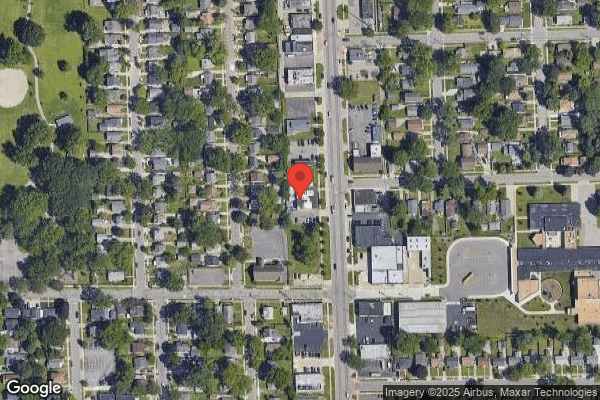
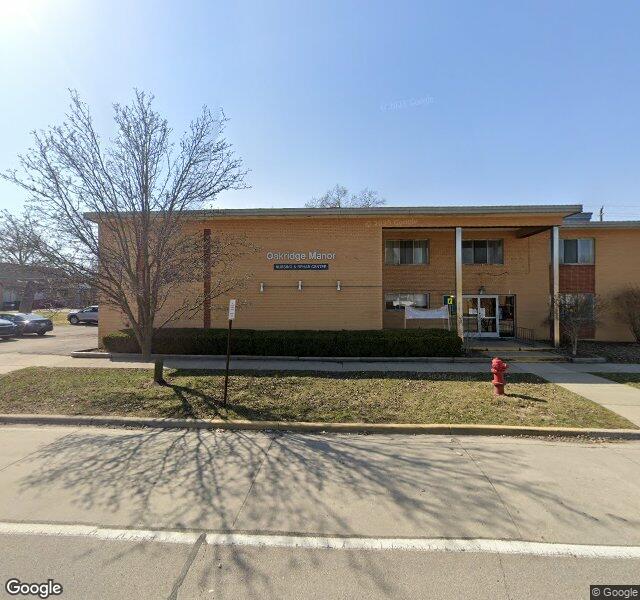
3161 Hilton Rd, Ferndale, MI 48220 (248) 547-6227
For profit - Corporation 64 Beds PIONEER HEALTHCARE MANAGEMENT Data: November 2025
Trust Grade
38/100
#218 of 422 in MI
Last Inspection: May 2025

Inspected within the last 6 months. Data reflects current conditions.

Overview

Oakridge Manor Nursing and Rehabilitation Center has received a Trust Grade of F, indicating poor performance with significant concerns. Ranking #218 out of 422 facilities in Michigan places it in the bottom half, while it's #12 out of 43 in Oakland County, meaning only 11 local options are better. The facility is showing some improvement, reducing issues from 14 in 2024 to 12 in 2025, but it still has a concerning history. Staffing is relatively strong, with a rating of 4 out of 5 stars and a turnover rate of 28%, well below the state average, which suggests staff members are likely to remain familiar with residents. However, the facility has accrued $85,999 in fines, which is higher than 90% of Michigan facilities, indicating ongoing compliance issues. Additionally, there are serious concerns regarding resident care. For example, one resident was not allowed to participate in decisions about their treatment, which caused them distress. Another resident developed contractures in their fingers due to a lack of intervention, and a third resident experienced painful pressure ulcers because preventive measures were not properly implemented. Overall, while there are strengths in staffing, the facility also has significant weaknesses that families should consider carefully.

Trust Score
F
38/100
In Michigan
#218/422
Bottom 49%
Safety Record
High Risk
Review needed
Inspections
Getting Better
14 → 12 violations
Staff Stability
✓ Good
28% annual turnover. Excellent stability, 20 points below Michigan's 48% average. Staff who stay learn residents' needs.
Penalties
✓ Good
$85,999 in fines. Lower than most Michigan facilities. Relatively clean record.
Skilled Nurses
⚠ Watch
Each resident gets only 19 minutes of Registered Nurse (RN) attention daily — below average for Michigan. Fewer RN minutes means fewer trained eyes watching for problems.
Violations
⚠ Watch
55 deficiencies on record. Higher than average. Multiple issues found across inspections.
★★★☆☆
3.0
Overall Rating
★★★★☆
4.0
Staff Levels
★★★☆☆
3.0
Care Quality
★★★☆☆
3.0
Inspection Score
Stable
2024: 14 issues
2025: 12 issues

The Good

  • 4-Star Staffing Rating · Above-average nurse staffing levels
  • Low Staff Turnover (28%) · Staff stability means consistent care
  • Full Sprinkler Coverage · Fire safety systems throughout facility
  • No fines on record
  • Staff turnover is low (28%)

    20 points below Michigan average of 48%

Facility shows strength in staffing levels, staff retention, fire safety.

The Bad

3-Star Overall Rating

Near Michigan average (3.1)

Meets federal standards, typical of most facilities

Federal Fines: $85,999

Well above median ($33,413)

Moderate penalties - review what triggered them

Chain: PIONEER HEALTHCARE MANAGEMENT

Part of a multi-facility chain

Ask about local staffing decisions and management

The Ugly 55 deficiencies on record

3 actual harm
May 2025 12 deficiencies 1 Harm
SERIOUS (G)

Actual Harm - a resident was hurt due to facility failures

Deficiency F0578 (Tag F0578)

A resident was harmed · This affected 1 resident

**NOTE- TERMS IN BRACKETS HAVE BEEN EDITED TO PROTECT CONFIDENTIALITY** Based on observation, interview, and record review, the facility failed to ensure residents were given the opportunity to make d...

Read full inspector narrative →
**NOTE- TERMS IN BRACKETS HAVE BEEN EDITED TO PROTECT CONFIDENTIALITY** Based on observation, interview, and record review, the facility failed to ensure residents were given the opportunity to make decisions about their treatment for one (R32) of two residents reviewed for advance directives, resulting in R32 becoming distressed, tearful, and withdrawn after the facility attempted to petition (send to the hospital involuntarily for a psychiatric evaluation) him to the hospital when he refused dialysis, continuously expressing frustration with having a feeding tube, and not being included in conversations about his care. Findings include: On 5/5/25 at 9:28 AM, R32 was observed in bed sleeping. A tray containing breakfast was observed on the over bed table. A tube feeding pole with a pump was observed in the room, but was not attached to the resident or infusing. On 5/5/25 at 10:57 AM, R32 requested to have a conversation. R32 reported feeling frustrated with his legal guardian. R32 explained he had things to take care of outside of the facility, but his legal guardian did not return his phone calls and he had not met her or spoken with her since his admission into the facility. R32 said he was not allowed to leave the facility without the guardian's consent. A review of R32's clinical record revealed R32 was admitted into the facility on 4/11/25 with diagnoses that included: heart disease, prostate cancer, hypertension, end stage renal disease (ESRD), type 2 diabetes mellitus, history of traumatic brain injury, acquired absence of left leg below knee, and dependence on renal dialysis. A review of a Minimum Data Set (MDS) assessment dated [DATE] revealed R32 had moderately impaired cognition, no delusions or hallucinations, no behaviors including no rejection of care, required partial/moderate assistance from staff for activities of daily living, had no signs or symptoms of a swallowing disorder, and received nutrition via feeding tube and mechanical soft diet (by mouth). A review of R32's progress notes revealed the following: On 4/21/25, it was documented in a nursing progress note that R32 refused to go to dialysis because he wanted to wait for his daughter to go with him. The appointment was rescheduled for 4/22/25. It was documented R32 attended dialysis on 4/22/25. On 4/23/25, it was documented in a nursing progress note that R32 stated to writer that he doesn't want to go to dialysis. Nurse asked why resident stated because he supposed to go only 3 times a week. Resident stated he went yesterday and he not going to keep going back and forth every day. Nurse contacted daughter to assist with convincing resident to go for schedule dialysis appointment today and resident started using profanity saying allow him to make his own decisions for his life and hung up the phone .Nurse contacted provider made aware and stated its ok for resident to miss if refusing . On 4/30/25, it was documented in a nursing progress note that R32 told the nurse hes not going to dialysis today. Nurse contacted provider stated he came by facility yesterday and saw resident regarding resident is being non-compliant with care. Provider stated resident code status needs to be changed also for manager to consult hospice r/t (related to) not being compliant w/ (with) care .Nurse contacted guardian. No answer . On 4/30/25, it was documented in a nursing progress note that R32's guardian called and said that since the resident was not compliant with dialysis and care multiple times she felt it will not (be) safe for resident to leave facility and she would rather for nursing staff to watch resident closely . It should be noted that there was no documentation in R32's clinical record that indicated staff or the legal guardian engaged in a conversation with the resident about why he did not want to go to dialysis at times. It was documented R32 attended dialysis on 5/5/25. On 5/7/25 at 8:40 AM, R32 was observed seated on his bed eating breakfast. R32 was asked about his dialysis schedule. R32 reported he went to dialysis twice a week and that the physician wanted him to go three times a week. R32 said he felt better only going twice a week. R32 further explained he no longer wanted the PEG tube in his stomach. R32 reported he ate all food by mouth and stated, I told them so many times that I don't want this tube. I want it out! R32 reported he was told his legal guardian had to consent for any medical care. R32 stated, I need a patient advocate or something because I have an issue with having a guardian who doesn't return my calls. R32 further explained his guardian or the facility had never had a conversation with him about his goals and treatment preferences. R32 said he wanted to petition the court for a new guardian or to not have one at all. R32 reported the facility social worker had not talked to him about anything. On 5/7/25 at approximately 10:50 AM, Emergency Medical Services (EMS) was observed outside of R32's room. R32 was observed to be calm, not yelling or screaming. EMS was observed talking with Licensed Practical Nurse (LPN) 'C' and said they could not force R32 to go to the hospital if he did not want to go. At that time, Unit Manager, LPN 'A' handed LPN 'C' a completed Petition for Mental Health Treatment form (a form petitioning the court to order mental health treatment for an individual who is a danger to self or others) for R32 and LPN 'C' contacted the police and told them R32 was a danger to himself because he would not go to dialysis treatment. On 5/7/25 at approximately 11:00 AM, an interview was conducted with EMS staff. EMS staff said they cannot make R32 go to the hospital if he would not voluntarily go. They were not allowed to restrain the resident. EMS staff reported they believed R32 was of sound mind and made a conscious decision not to go to dialysis. At that time, an interview was conducted with LPN 'C'. LPN 'C' reported she was told by LPN 'A' to petition R32 to the hospital. LPN 'C' reported R32 was combative and agitated and refused to go to dialysis. At that time R32 was observed lying in bed calmly. A review of the petition revealed documentation that R32 .refused several days of dialysis appointments over the past two weeks and has not abided by his hemodialysis orders. Refusing to attend further sessions as well as tube feeding and medications . When queried about whether she thought R32 required psychiatric treatment, LPN 'C' reported she did not think he did. LPN 'C' reported R32's vital signs were currently stable and R32 was not in any physical distress. LPN 'C' stated, (LPN A') did the petition. On 5/7/25 at 11:06 AM, an interview was conducted with R32. R32 was observed visibly upset and stressed and was teary eyed. R32 reported he knew the doctor's orders were to go to dialysis more often, but he already told the doctor he would only go twice a week. R32 reported he knew what dialysis was for and understood the risks of not going according to the physician's order. R32 reported he went on Monday (5/5/25) and would go again on Friday ( - interview with resident. Visibly upset, teary eyed. Said he talked to the dialysis doctor already. Wants him to go three days but resident only wants to go two. He said he understands the risks of not going all days and knows what dialysis is for. He said he went on Monday and will go on Friday (5/9/25). R32 stated, They don't get to get rid of my rights just because I'm in a nursing home. I have the right. Might as well just discharge me then. On 5/7/25 at 11:11 AM, an interview was conducted with LPN 'A'. When queried about why the facility had completed a petition for mental health care for R32, LPN 'A' reported R32 had a history of two cardiac arrests (prior to admission into the facility) and missed several dialysis appointments. LPN 'A' stated, I have to ask myself, 'Have I done all I can to help him?' When queried about why they petitioned R32 instead of following his wishes to not go to the hospital, LPN 'A' reported R32 had a legal guardian and they wanted him to get dialysis. When queried about how often the legal guardian interacted with the resident or when they last visited R32, LPN 'A' reported the legal guardian had not visited R32 (admitted on [DATE]). LPN 'A' reported that they had to follow what the legal guardian wanted. LPN 'A' further reported if R32 did not go to the hospital, the physician said the legal guardian had to sign R32 onto hospice services. When queried about R32's choice in signing onto hospice services, LPN 'A' did not offer a response. When queried about what conversation were had with R32 about dialysis and why he did not want to go according to physician's orders, LPN 'A' said R32 just said, You can't make me go. At that time, police entered the facility and attempted to talk with R32. R32 remained calm and did not agree to go to the hospital The police left the building around 11:20 AM. On 5/7/25 at approximately 11:25 AM, R32 was observed curled into a fetal position. An interview was attempted. R32 was visibly upset and said he could barely talk at the moment because he was very stressed about what just happened. R32 curled back into a fetal position and pulled the bed sheet over his face. On 5/7/25 at approximately 1:20 PM, R32 was interviewed further. When queried about whether anyone in the facility and/or his legal guardian had talked to him about his treatment wishes related to dialysis or his code status. R32 reported nobody talked to him. R32 reported he would only want CPR (Cardiopulmonary Resuscitation) if he could be brought right back and would not want to be hooked up to machines to breathe. When queried about whether he knew what hospice was, R32 stated, Is that like when you are about to die? R32 reported a nurse asked him if he wanted to be on hospice and he told her No. R32 reported the nurse stated, Are you sure? and left the room. R32 reported nobody had any meaningful discussion about his treatment wishes. A review of a Social Services progress note dated 5/7/25, written by Social Services Staff (SS 'L') revealed, Writer sent hospice recommendation letter to guardian, guardian approved of consult and gave permission for writer to speak with resident's family regarding hospice consult, writer called resident's sister and left a voicemail, resident daughter phone line was busy unable to leave message. There was no indication hospice was discussed with R32. There were no other Social Services progress notes that indicated R32's refusals of dialysis and other care were addressed by social services. On 5/7/25 at 1:27 PM, an interview was conducted with SS 'L'. When queried about the facility's process for including residents in decision making when they had a legal guardian, SS 'L' reported both the resident and legal guardians were included in conversations about the resident's care, including discussions about code status and whether the resident wanted CPR or not. When queried about whether R32 was included in a discussed about his code status when he was admitted into the facility, SS 'L' reported R32 was not included, only the legal guardian. When queried about whether R32's legal guardian has been to the facility since R32 was admitted , SS 'L' reported the guardian had not and she did not know if they had talked on the telephone. When queried about any conversations SS 'L' had with R32 about his treatment wishes or why he had refused dialysis at time, SS 'L' reported she talked to R32 on that day because he refused dialysis, but did not talk to him before that. SS 'L' reported she had not talked to R32's legal guardian and R32 together to discuss R32's refusals of dialysis or care and stated, Now he will be having a consult for hospice. When queried about whether R32 was included in a conversation about his feeling about having a hospice consult, SS 'L' reported he was not and stated, It is just a consult. On 5/7/25 at 2:00 PM, an attempt was made to interview R32's guardian via the telephone using the phone number provided by SS 'L'. There was no option to leave a voice mail message. On 5/7/25 at 2:19 PM, an interview was conducted with the Administrator. The Administrator reported any care conference or discussion about treatment or care should including the resident and the legal guardian. On 5/8/25 at 1:40 PM, an interview was attempted with Physician 'K' via the telephone and a voice mail message was left. Physician 'K' was not available for interview prior to the end of the survey. A review of a facility policy titled, Residents' Rights Regarding Treatment and Advance Directives, dated 3/13/24, revealed, in part, the following: .The facility will provide the resident or resident representative information, in a manner that is easy to understand, about the right to refuse medical or surgical treatment and formulate an advance directive .Any services that would be otherwise required, but are refused, will be documented in the resident's comprehensive care plan .The facility will not initiate or discontinue any other care based on refusal of care by the resident .
CONCERN (D)

Potential for Harm - no one hurt, but risky conditions existed

Deficiency F0558 (Tag F0558)

Could have caused harm · This affected 1 resident

**NOTE- TERMS IN BRACKETS HAVE BEEN EDITED TO PROTECT CONFIDENTIALITY** Based on observation, interview, and record review, the facility failed to ensure the call light was accessible to the resident ...

Read full inspector narrative →
**NOTE- TERMS IN BRACKETS HAVE BEEN EDITED TO PROTECT CONFIDENTIALITY** Based on observation, interview, and record review, the facility failed to ensure the call light was accessible to the resident for one (R32) of three residents reviewed for accommodation of needs. Findings include: On 5/6/25 at 9:28 AM, R32 was observed in bed sleeping. The call light, which was a long thin string attached to a switch, was observed behind the head of the bed on the floor. On 5/6/25 at 10:56 AM, R32 was observed in bed with the head of the bed at an incline. R32 asked for the head of the bed to be lowered. When queried about how he alerted staff when assistance was needed, R32 reported he used the call light. The call light remained behind the head of the bed on the floor. When queried about whether he could reach the call light string, R32 attempted to reach back and said he could not reach it. On 5/6/25 at 11:00 AM, an interview was conducted with Licensed Practical Nurse (LPN) 'I'. LPN 'I' reported all nursing staff were required to ensure residents had access to their call lights. At that time, an observation of R32's call light was conducted with LPN 'I'. LPN 'I' attached the call light string to R32's blanket. On 5/6/25 at approximately 2:00 PM, R32's call light was observed clipped behind the head of the bed to a bed sheet, not in reach of the resident. At that time, LPN 'I' was informed and said it should be clipped where the resident could reach it. On 5/8/25 at 3:39 PM, an interview was conducted with the Director of Nursing (DON). The DON reported all staff were required to ensure call lights were within reach of the residents. A review of R32's clinical record revealed R32 was admitted into the facility on 4/11/25 with diagnoses that included: heart disease, end stage renal disease, and history of traumatic brain injury. A review of a Minimum Data Set (MDS) assessment dated [DATE] revealed R32 had moderately impaired cognition and required partial/moderate assistance with bed mobility, transfers, and activities of daily living. A review of a progress note dated 4/26/25 revealed R32 was not compliant with self-transferring. It was documented the nurse educated R32 on using the call light. A review of R32's care plans revealed a care plan dated 4/24/24 that noted, I am at risk for falling R/T (related to): poor safety awareness, need for assist with mobility and not waiting for help. An intervention dated 4/27/25 noted, Keep call light in reach at all times.
CONCERN (D)

Potential for Harm - no one hurt, but risky conditions existed

Quality of Care (Tag F0684)

Could have caused harm · This affected 1 resident

**NOTE- TERMS IN BRACKETS HAVE BEEN EDITED TO PROTECT CONFIDENTIALITY** Based on observation, interview and record review the facility failed to assess, monitor and treat a skin tear for one (R16) of ...

Read full inspector narrative →
**NOTE- TERMS IN BRACKETS HAVE BEEN EDITED TO PROTECT CONFIDENTIALITY** Based on observation, interview and record review the facility failed to assess, monitor and treat a skin tear for one (R16) of one resident reviewed for wounds. Findings include: On 5/6/25 at 8:53 AM, R16 was observed sitting in a wheelchair in the dining room. An undated adhesive foam bandage was observed on R16's right forearm. Shadowing of drainage was visible on the bandage. When asked about the bandage, R16 was not able to explain why it was there. On 5/6/25 at approximately 12:00 PM, R16 was observed sitting in a wheelchair in the dining room. The bandage on R16's right forearm with the same shadowing of drainage had the date 5/6/25 written on it. Review of the clinical record revealed R16 was admitted into the facility on 6/28/21 and readmitted [DATE] with diagnoses that included: altered mental status, dementia and anxiety disorder. According to the Minimum Data Set (MDS) assessment dated [DATE], R16 had severely impaired cognition and required the assistance of staff for activities of daily living (ADL's). Review of R16's physician orders revealed no order for a dressing to the right forearm. Review of R16's progress notes revealed a nursing note dated 5/5/25 at 7:03 PM that read in part, Resident has a skin tear to the right forearm . Writer cleaned area left open to air . On 5/7/25 at 10:41 AM, R16 was observed sitting in a wheelchair in their room. The bandage on R16's forearm, dated 5/6/25, had the same shadowing of drainage that was observed the previous day. On 5/7/25 at 11:10 AM, Licensed Practical Nurse (LPN) C, R16's assigned nurse, was asked if she had received any report of R16 having a skin tear. LPN C explained she had not been told anything about R16 having a skin tear. When asked if there were any orders for a dressing for R16, LPN C explained there were no orders for any dressings for R16. On 5/7/25 at 12:55 PM, Unit Manager (UM) A was interviewed and asked about the dressing of R16 ' s right forearm. UM A explained she had been leaving the facility on 5/5/25 when R16 ' s nurse had told her about R16 ' s skin tear . she thought the nurse had taken care of everything, but now knew there were no physician orders for the skin tear. UM A was asked who had put the dressing on the skin tear as the progress note had said it was left open to air. UM A explained she did not know if it had been the midnight nurse or the day nurse. UM A was asked if a nurse thought a skin tear required a dressing on it, what should be done. UM A explained the nurse should call the physician an obtain orders for the dressing and wound care. When informed the dressing originally had no date, but the same dressing was dated later on in the day, UM A had no answer. Review of a facility policy titled, Wound Treatment Management dated 11/1/22 read in part, .Wound treatments will be provided in accordance with physician orders, including the cleansing method, type of dressing, and frequency of dressing change . In the absence of treatment orders, the licensed nurse will notify physician to obtain treatment orders .
CONCERN (D) 📢 Someone Reported This

A family member, employee, or ombudsman was alarmed enough to file a formal complaint

Potential for Harm - no one hurt, but risky conditions existed

Pressure Ulcer Prevention (Tag F0686)

Could have caused harm · This affected 1 resident

**NOTE- TERMS IN BRACKETS HAVE BEEN EDITED TO PROTECT CONFIDENTIALITY** This citation pertains to Intake Number(s): MI00152212. Based on observation, interview, and record review, the facility failed ...

Read full inspector narrative →
**NOTE- TERMS IN BRACKETS HAVE BEEN EDITED TO PROTECT CONFIDENTIALITY** This citation pertains to Intake Number(s): MI00152212. Based on observation, interview, and record review, the facility failed to consistently monitor residents' skin according to physician's orders and appropriately implement preventative interventions for three (R15, R18, R23) of three residents reviewed for pressure ulcers, who had a history of or were at risk of pressure ulcers. Findings include: On 5/6/25 at 9:25 AM, R15 was observed partially inclined in bed, lying on her back. A specialty air mattress was observed on R15's bed which was set to normal pressure and 400 pounds. Protective heel boots were observed in the room, but not on the resident. R15's heels were observed in contact directly with the mattress. On 5/6/25 at 10:56 AM, R15 was observed in the same position in bed and the air mattress was set to 400 pounds. R15 did not appear to weigh 400 pounds. R15's heels were observed in contact directly with the mattress and the heel boots were not applied. On 5/6/25 at 4:15 PM, R15 remained in the same position in bed and the air mattress remained set to 400 pounds. R15 was not wearing the heel boots. R15's heels were observed in contact directly with the mattress. When queried, R15 reported she did not like to wear the boots and that was her choice. R15 further said she liked to stay in bed. A review of R15's clinical record revealed R15 was admitted into the facility on [DATE], and readmitted on [DATE], 3/8/25, and 3/16/25 with diagnoses that included: normal pressure hydrocephalus, acute cystitis, and diabetes mellitus. A review of a Minimum Data Set (MDS) assessment dated [DATE] revealed R15 had severely impaired cognition, required partial/moderate assistance with bed mobility and transfers, was always incontinent of bowel and bladder, and was at risk of pressure ulcer development. A review of a Braden Scale Assessment dated 4/18/25 revealed R15 was at moderate risk of developing pressure ulcers. The documented interventions included pressure reducing device for bed. A review of R15's Physician's Order revealed an order with a start date of 10/11/24 for Weekly Skin Assessment Special Instructions: Complete under observation/weekly skin assessment once a day on Tue (Tuesday) . A review of R15's weekly skin assessments under observation revealed no skin assessments completed by the nurse between the dates of 4/10/25 and 4/30/25 and 3/16/25 and 4/2/25. A review of R15's care plans revealed no specific interventions regarding the settings for the specialty pressure reducing air mattress. There was an intervention to float R15's heels with pillows or with heel boots. On 5/6/25 at 4:55 PM, an interview was conducted with Unit Manager, Licensed Practical Nurse (LPN) 'A' who was also the wound care coordinator for the facility. When queried about how nursing staff knew what settings to use for residents who had speciality air mattresses used to prevent pressure ulcers, LPN 'A' reported she trained staff to set the mattresses according to the residents' body weight. When queried about whether R15's mattress should be set at 400 pounds, LPN 'A' reported it should not because it would provide too firm of a surface for R15's weight, which was not 400 pounds. When queried about how residents' skin was monitored for any skin alterations, including pressure ulcers, LPN 'A' reported the nurses were required to complete a full head to toe skin assessment using the observation form every week. LPN 'A' reported Certified Nursing Assistants looked at residents' skin during showers and nurses signed off on the shower sheets, but those were not in place of the full head to toe skin assessments ordered by the physician. At that time LPN 'A' reviewed R15's clinical record and confirmed R15 had a physician's order for weekly skin assessments and there as no skin assessments completed between 4/10/25 and 4/30/25; and 3/16/25 and 4/2/25. A review of a facility policy titled, Skin Assessment dated 11/1/22, revealed, in part, the following, .A full body, or head to toe, skin assessment will be conducted by a licensed or registered nurse upon admission/re-admission, daily for three days, and weekly thereafter . R18 A review of R18's clinical record revealed R18 was admitted to the facility on [DATE] from another skilled nursing facility. R18's admitting diagnoses included colon cancer, liver cirrhosis, history of falls with fractures, and depression. Based on the MDS assessment dated [DATE], R18 had a Brief Interview for Mental Status (BIMS) of 12/15 indicative of moderate cognitive impairment. Section M of the MDS assessment revealed that R18 was admitted with a stage 3 pressure ulcer on their buttocks. Based on the definition of staging from Centers for Medicare and Medicaid Services, a stage 3 pressure ulcer is full thickness tissue loss and the subcutaneous (under the skin) fat may be visible, but bone, tendon, or muscle is not exposed. R18 had pressure reducing devices for the bed. An initial observation was completed on 5/6/25 at approximately 9:40 AM. R18 was observed lying on their bed that had a regular mattress. When queried how they were doing, R18 stated I feel a lot better. R18 was able to answer questions and reported that they had surgery some time ago related to their cancer. R18 also reported that they came over here from another facility. Later that day, follow-up observations were completed at approximately 11:00 AM and 12:20 PM. R18 was observed in their room, sitting in a wheelchair. R18 was queried if they had any pain and or sores on their back and they reported no and they have had the same mattress since they were admitted to this facility. Review of R18's Electronic Medical Record (EMR) revealed a physician order dated 3/28/25 that wound on left upper buttock and lower buttocks. Special instructions: clean wound with wound cleaner on left upper and lower buttock and apply Calmoseptine ointment on each shift and weekly skin assessments: under observations. R18 also had an order for weekly skin assessments dated 4/2/25. Review of nursing admission progress notes dated 3/27/25 read in part, Resident alert oriented x 3 at this moment .skin assessment done, open wound to buttocks,, wound consult done. Further review of EMR did not reveal any wound care consultation or any new orders other than the Calmoseptine order referenced above. Review of nursing progress notes dated 3/28/25 read in part, Midnight nurse assessed resident buttocks for wounds. Resident has one small open wound on upper left buttock and small wound in healing stage on lower left buttocks . Review of admission skin assessment dated [DATE] did not reveal any pressure ulcers marked on the assessment. Further review of weekly skin observations revealed that they were not consistently completed as ordered. R18 had an admission skin assessment completed on 3/28/25 revealed no pressure ulcers when the initial record review was completed on 5/6/25 at approximately 1:30 PM. Later that day (after the concern was brought to the attention of facility team) during the follow up review, at approximately 4 PM the admission skin assessment was initially completed on 3/28/25 showed that a modification of assessment was in progress on the EMR. There were no weekly skin assessments for approximately over two weeks after 3/28/24, and the next skin assessment was completed on 4/17/24. Review of R18's care plan revealed a problem area dated 4/9/25 that read, I have a pressure ulcer, due to multiple underlying medical conditions, wound may not heal and formation of more wounds may be unavoidable and interventions included low air loss mattress that initiated on 4/9/25. R23 A review of R23's clinical record revealed R23 was originally admitted to the facility on [DATE] and they were recently hospitalized and readmitted back to the facility on 3/3/25. R23's admitting diagnoses included brain cancer (recent finding), urinary tract infection, post COVID, dementia, and compression fracture of the lumbar vertebrae. Based on the MDS assessment dated [DATE], R23 had a BIMS of 11/15, indicative of moderate cognitive deficits. An initial observation was completed on 5/6/25 at approximately 10:15 AM. R23 was observed in their bed. R23 was receiving their nutrition and hydration through Percutaneous Endoscopic Gastrostomy (PEG) tube/feeding tube. R23 also had a Foley catheter (a thin, flexible tube used to drain urine from the bladder) and the bag was connected to their bed frame. R23 was observed laying on their back and they had a specialty low air loss mattress. Review of R23's recent Braden assessment (tool used by healthcare professionals to assess a patient's risk for developing pressure ulcers/bedsores) dated 3/3/25, revealed a score of 14, indicative of moderate risk for pressure ulcer. Review of R23's admission note dated 1/24/25 revealed that R23 was admitted to the facility with two stage 2 pressure ulcers on their sacrum and wounds on their left scapula (shoulder blade). R23's EMR revealed a physician order dated 2/1/25 that read weekly skin assessment. Review of R23's care plan initiated on 2/3/24 read, I have a pressure ulcer. Due to multiple underlying medical conditions wounds may not heal and formation of more wounds may be unavoidable. Review of R23's skin assessments revealed that weekly skin assessments were not completed as ordered. Review of weekly assessments after 2/1/25 revealed assessments dated: 2/5/25. No assessment on 2/12. R23 was admitted to hospital between 2/14/25 and 3/2/25. They were readmitted to the facility on [DATE]. After the initial assessment that was done on readmission there were no weekly skin assessments until 4/3/25 (approximately one month). There was no assessment for the week of 4/11- 4/17. The shower sheets that were provided later by the facility revealed R23 had multiple weeks with areas of redness or open areas marked by the CNAs and signed by the nurse, with no further follow-up nursing assessment. The shower sheets dated 3/19/25, 3/22/25, 3/26/25, 3/29/25, 4/9/25 and 4/12/25 that had red area or open area checked on shower sheet with no further skin assessment/follow-up by the nurse. An initial interview with the DON was completed on 5/7/25 at approximately 9:45 AM. They were questioned about the weekly skin assessment process and they reported that they added the skin assessments orders to Medication Administration Record (MAR) section for the nurses to give weekly alerts and the nurses completed the assessments under the observation sections of the EMR. The DON also added that the CNAs completed their skin checks during the shower and they were verified and signed off by the nurses. They were questioned why the weekly skin assessments as ordered by the physician were not consistently completed by the for R18 and R23. They reviewed the EMR and agreed that they were completed weekly and understood the concerns and reported that they would check and report back. An initial interview with Unit Manager, LPN A was completed on 5/7/25 at approximately 9:35 AM. They reported that they oversaw the facility's wound care program. They were queried about the weekly skin assessment process. They reported that they were completed weekly by the floor nurses under observation section of their EMR. Certified Nursing Assistants completed weekly skin checks during showers/bed baths and they were completed on paper by the CNAs and signed off by the nurses. They were questioned about the low air loss mattress that was on R18's care plan and they reported that they were not sure why it was recommended and did not believe that R18 needed one. LPN A was reported that they would check and provide the shower sheet for the R18 and R23. An interview with LPN B was completed on 5/7/25 at approximately 12:10 PM. They were questioned about the facility's weekly skin assessment process. They reported that the nurses completed the skin assessment on shower days. They signed off on the shower sheets and documented their assessment under weekly skin assessment observations in the EMR. They were questioned what their process was if they identified any skin concerns during skin checks on shower days. LPN B reported that they would notify the physician after they complete further assessment on the identified area of concern and document under the weekly skin assessment. During a follow up interview completed with the DON on 5/7/25 at approximately 11:10 AM, they reported that paper shower sheets that were used by CNAs were signed off by the nurses and they were also considered as the weekly skin assessments. They were queried further about the discrepancies between shower sheets and skin observations. They were asked to explain how R18's admission nursing note completed on 3/28/25 had a reflected small open area with treatment orders and wound consult and skin was marked clear on shower sheet dated 3/29/25. Also, they were queried further about multiple shower sheets for R23 dated 3/19/25, 3/22/25, 3/26/25, 3/29/25, 4/9/25 and 4/12/25 that had red area or open area checked on the shower sheet with no further skin assessment/follow-up by the nurse on where the redness or open areas were. When queried further, the DON did not have any further explanation and they reported that they understood the concerns. On 5/07/25 at approximately 04:00 PM, the Administrator was notified of the concerns with the skin assessments. Review of the facility provided document titled Skin Assessment dated 11/1/22, read in part, Policy: It is our policy to perform a full body skin assessment as part of our systematic approach to pressure injury prevention and management. This policy includes the following procedural guidelines in performing the full body skin assessment. Policy Explanation and Compliance Guidelines: 1. A full body, or head to toe, skin assessment will be conducted by a licensed or registered nurse upon admission/re-admission, daily for three days, and weekly thereafter. The assessment may also be performed after a change of condition or after any newly identified pressure injury . 2. Documentation of skin assessment: a. Include date and time of the assessment, your name, and position title. b. Document observations (e.g. skin conditions, how the resident tolerated the procedure, etc.). c. Document type of wound. d. Describe wound (measurements, color, type of tissue in wound bed, drainage, odor, pain). e. Document if resident refused assessment and why. f. Document other information as indicated or appropriate .
CONCERN (D)

Potential for Harm - no one hurt, but risky conditions existed

Accident Prevention (Tag F0689)

Could have caused harm · This affected 1 resident

**NOTE- TERMS IN BRACKETS HAVE BEEN EDITED TO PROTECT CONFIDENTIALITY** Based on observation, interview, and record review facility failed to thoroughly investigate and do a root cause analysis of a f...

Read full inspector narrative →
**NOTE- TERMS IN BRACKETS HAVE BEEN EDITED TO PROTECT CONFIDENTIALITY** Based on observation, interview, and record review facility failed to thoroughly investigate and do a root cause analysis of a fall; and failed to consistently implement fall/accident prevention interventions as recommended for one (R34) of one resident reviewed for falls. This deficient practice has the potential for further falls with/without injury and resulted in hospital transfer of R34 for evaluation after fall. R34 R34 was a long-term care resident of the facility, originally admitted to facility on 9/24/24. R34's admitting diagnoses included dementia, personality disorder, schizoaffective disorder, and drug induced movement disorder, and unsteady gait with history of falls. Based on Minimum Data Set (MDS) assessment dated [DATE], R34 had a Brief Interview for Mental Status (BIMS) score of 3/15 indicative of severe cognitive impairment. An initial observation was completed on 5/6/25 at approximately 9:55 AM. R34 was observed sitting in the dining room in their wheelchair eating a snack. R34 had no shoes and had gripper socks on. Follow-up observations were completed on 5/7/25 at approximately 8:35 AM and 9:30 AM. R34 was sitting up in wheelchair, in their room. They had their bedside table in the front with their breakfast tray. R34 had a non-skid socks. Later that day, at approximately 12:15 PM, R34 was observed sitting in the dining room with their socks. At approximately 1:20 PM, they were observed trying to propel their wheelchair in front of the nursing station with their socks on. Review of R34's Electronic Medical Record (EMR) revealed a nursing progress note dated 03/09/2025 at 08:31 AM, read in part, During shift change, resident fall out of bed, Writer immediately assessed resident, small laceration noted on right-side of head neuro checks in place . Writer contacted MD (Medical Doctor) notified of situation writer also informed MD that resident is currently on Eliquis(blood thinner) writer ordered to send resident to hospital for evaluation. Further review revealed a nursing progress note dated 3/10/25 at 6:50 PM that read in part, Writer received resident from [local hospital] accompanied by two attendees post fall. Resident alert, verbally responsive. No s/s (signs-symptoms) acute distress. Denies sob (shortness of breath). Denies pain. Pupils equal and reactive. Able to move all extremities. Incontinent of bowel and bladder. Abrasion to the right side of forehead. Bed in lowest position . A request was sent via e-mail to the facility administrator on 5/06/25 at 3:05 PM to provide Incident and Accident (IA) reports for R34 between 9/24/24 and 5/6/25. Three sets of event reports (incident and accident) and investigation reports were received. The reports revealed R34 had events on 10/21/24, 11/22/24, and 11/29/24. Review of the IA report dated 10/21/24 revealed that R34 had a fall in the room while they were attempting to self-transfer and they were sent to an emergency room for further evaluation due to an abrasion to their forehead. The IA report for the 11/22/24 fall revealed R34 had a fall from their bed. Review of the investigation reports and R34's care plan did not reveal a thorough investigation of the incident or any immediate interventions that were implemented after the fall. Review of the IA report dated 11/29/24 and progress notes revealed that R34 was sitting in the day room and another resident wheeled over their right foot and their right great toenail was partially detached from the nail bed. Intervention read Certified Nursing Assistant (CNA) educated on importance of proper footwear. The facility did not provide any IA report or investigation report for R34's fall on 3/9/25 when they were transferred out to the hospital with a laceration to their forehead. An interview with License Practical Nurse (LPN) B was completed on 5/7/25 at approximately 2:41 PM. LPN B was assigned to care for R34 during that shift. They were queried about how the resident information/plan of care was shared with the CNAs. LPN B reported they had a [NAME] (care card for CNAs) book/binder for the CNA's and nurses shared the information as needed. LPN B provided the [NAME] book for the unit. Review of [NAME] for R34 revealed an intervention dated 11/29/24 that read proper foot ware and LPN B was queried about what it meant for R34 and they reported that he had tendency to scoot/sit himself on the floor and R34 needed non-skid socks or shoes. When queried if socks were ok they reported yes. An interview with Unit Manager (UM) A was completed on 5/7/29 at approximately 9:30 AM. They were queried about the post fall follow up and investigation process. They reported that the nurse initiated the process and they would call and notify them or Director of Nursing (DON). The nurse would implement immediate interventions and the leadership completed the investigation and further follow up as needed. They were queried about the IA and investigation report for 3/9/25 fall and they reported that they would follow up with the DON. An interview with the DON was completed on 9/7/25 at approximately 9:50 AM. They were queried about the process and they reported that the nurse would notify them or the unit manager of a fall event and they would make recommendations on implementation of immediate interventions. The DON also added that they were involved with handling the fall management program for the facility. DON was queried about the IA and investigation report for the fall event on 3/9/25. The DON reported that they were unaware of the fall event from 3/9/25 and they were not notified that R34 was transferred out to hospital. The DON reviewed the EMR and progress notes from 3/9/25 and 3/10/25. They reported that they would find out more information and would get back. They were queried about staff expectations on R34's intervention dated 11/29/24 proper footwear. The DON reported that R34 should have their shoes on when they were up because of the incident. The DON was notified of the multiple observations when R34 was observed with their socks on in the dining room and hallway. They reported that they would follow up with their staff. On 5/7/25 at approximately 11:10 AM, the DON came back and reported that they did not have any IA reports for this fall and they were trying to reach the nurse and the nurse was taking their exam and they were unable to reach them. They confirmed that they were unaware of the event. They reported that they understood the concern. On 5/7/25 at approximately 4 PM, the facility Administrator was questioned about the fall investigation process. The Administrator notified that the nurse initiated the IA report and notified the DON or the unit manager and the DON followed up after completing the investigation and implemented plans. They were notified of the concern with fall incident on 3/9/25 with IA and investigation, the administrator agreed with the concern. Review of the facility provided document titled Incidents and Accidents with a date of 11/1/22, read in part, Policy: It is the policy of this facility for staff to utilize Incident Reports to report, investigate, and review any accidents or incidents that occur or allegedly occur, on facility property and may involve or allegedly involve a resident. Definitions: Accident refers to any unexpected or unintentional incident, which results or may result in injury or illness to a resident. An incident is defined as an occurrence or situation that is not consistent with the routine care of a resident or with the routine operation of the organization. This can involve a visitor, vendor, or staff member. Policy Explanation: The purpose of incident reporting can include: • Assuring that appropriate and immediate interventions are implemented and corrective actions are taken to prevent recurrences and improve the management of resident care. • Conducting root cause analysis to ascertain causative/contributing factors as part of the Quality Assurance Performance Improvement (QAPI) to avoid further occurrences. • Alert risk management and/or administration of occurrences that could result in claims or further reporting requirements. • Meeting regulatory requirements for analysis and reporting of incidents and accidents. Compliance Guidelines: 1. Incident/accident reports are part of the facility's performance improvement process and are confidential quality assurance information. 2. Licensed staff will utilize Incident Reports, falls assessments and Neuro Check Protocol to report incidents/accidents and assist with completion of any investigative information to identify root causes. 3. Incidents or accidents involving employees or visitors will be documented on the following forms/systems: Incident Reports 6. In the event of an incident or accident, immediate assistance will be provided or securement of the area will be initiated unless it places one at risk of harm. 7. Any injuries will be assessed by the licensed nurse or practitioner and the affected individual will not be moved until it is safe to do so. First aid will be given for minor injuries such as cuts or abrasions. 8. The supervisor or other designee will be notified of the incident/accident. If necessary, law enforcement may be contacted for specific events .
CONCERN (D)

Potential for Harm - no one hurt, but risky conditions existed

Incontinence Care (Tag F0690)

Could have caused harm · This affected 1 resident

**NOTE- TERMS IN BRACKETS HAVE BEEN EDITED TO PROTECT CONFIDENTIALITY** Based on observation, interview and record review facility failed to ensure a resident admitted with an indwelling catheter was ...

Read full inspector narrative →
**NOTE- TERMS IN BRACKETS HAVE BEEN EDITED TO PROTECT CONFIDENTIALITY** Based on observation, interview and record review facility failed to ensure a resident admitted with an indwelling catheter was assessed for removal; failed follow-up with urologist as ordered and failed to have orders for catheter care for one (R23) of two residents reviewed for urinary catheter. This deficient practice has the potential to cause Urinary Tract Infections (UTI) and loss of normal bladder function. Findings include: Review of R23's clinical record revealed R23 was originally admitted to the facility on [DATE] and they were recently hospitalized and readmitted back to the facility on 3/3/25. R23's admitting diagnoses included brain cancer (recent finding), urinary tract infection, post COVID, dementia, and compression fracture of the lumbar vertebrae (stable). Based on a Minimum Data Set (MDS) assessment dated [DATE], R23 had a Brief Interview of Mental Status (BIMS) of 11/15, indicative of moderate cognitive deficits. An initial observation was completed on 5/6/25 at approximately 10:15 AM. R23 was observed in their bed. R23 was receiving their nutrition and hydration through Percutaneous Endoscopic Gastrostomy (PEG) tube/feeding tube. R23 also had a foley catheter (a thin, flexible tube used to drain urine from the bladder) and the bag was connected to their bed frame. R23 was observed laying on their back and they had a specialty low air loss mattress. Multiple follow up observations were completed on 5/7/25 (at approximately 8:30 AM and 12:35 PM) and 5/8/25 (at approximately 8:35 AM), R23 had their foley catheter during all the follow-up observations. Review of R23's Electronic Medical Record (EMR) revealed a diagnosis list, with the diagnosis of urinary retention dated 1/24/25 (upon admission to the facility). Further review of discharge summary from the hospital dated 1/23/25 revealed the following diagnoses: acute back pain, dementia, essential hypertension (high blood pressure), history of seizure, cranial neoplasm (brain cancer), sinus bradycardia (slower heartbeat/rhythm), leukocytosis (high white blood cell count), COVID infection, multiple vertebral compression fractures, and severe protein calorie malnutrition. The hospital records did not reveal a diagnosis of urinary retention or any urologist consultation. Review of physician orders did not reveal any orders for the foley catheter use and care, since admission to the facility. Review of Care Area Assessment under the MDS assessment dated [DATE] revealed the following indicators for catheter use: Restricted mobility, urinary urgency and need assistance for toileting and did not have any other clinical rationale/diagnoses for the use of the indwelling catheter. The supporting documentation section for use of foley catheter was blank. Review of physician progress notes revealed a note dated 4/3/25, with recommendation to follow up with urology regarding urinary retention. There was no evidence in the EMR that R23 had any urology follow-up and it was later confirmed by Director of Nursing (DON) on 5/7/25. Review of R23's care plan revealed an intervention that read change catheter per MD (Medical Doctor) order and use a Fr. (size), type per MD order but there were no physician orders for foley catheter use and care. An interview with Licensed Practical Nurse (LPN) B was completed on 5/7/25 at approximately 2:35 PM. They were assigned to care for R23 during that shift. They were queried about the facility process to care for foley catheter. LPN B reported that they followed the physician order for catheter use and the standards for nursing care. They were unaware that R23 did not have any physician orders for the foley catheter use and care. An interview with the DON was completed on 5/7/25 at approximately 3:45 PM. They were queried about the rationale for foley catheter use for R23 and the facility process. The DON shared the facility process and reviewed the EMR for R23. After reviewing the records, the DON agreed that R23 did not have any orders for foley catheter use/care and they were unable to locate the diagnosis of urinary retention based off hospital records. They also confirmed that R23 did not have any urology appointment. They reported that they understood the concern. A facility provided document titled Appropriate Use of Indwelling Catheters' with a date of 11/1/22, read in part, Policy: It is the policy of this facility to ensure that a resident who is continent of bladder on admission receives services and assistance to maintain continence unless his/her clinical condition is or becomes such that continence is not possible to maintain. An indwelling urinary catheter will be utilized only when a resident's clinical condition demonstrates that catheterization is necessary . 1. It is the policy of this facility to ensure each resident with urinary incontinence: a. Who enters the facility without an indwelling catheter is not catheterized unless the resident's clinical condition demonstrates that catheterization was necessary. b. Who is admitted with an indwelling urinary catheter, or each resident who subsequently receives an indwelling catheter, will be assessed for removal of the catheter as soon as possible unless the resident's clinical condition demonstrates that catheterization is necessary. c. Who is incontinent of bladder receives appropriate treatment and services to prevent urinary tract infections and to restore continence to the extent possible . 3. Any decision regarding the use of an indwelling urinary catheter will be based on the resident's condition and goals for treatment. The resident and/or representative will be included in discussions about the indications, use, potential benefits and risks of urinary catheters, and alternatives to help support the resident's right to make an informed decision. 4. The use of an indwelling urinary catheter will be in accordance with physician orders, which will include the diagnosis or clinical condition making the use of the catheter necessary, size of the catheter, and frequency of change (if applicable). 5. Examples of appropriate indications for indwelling urethral catheter use: a. Resident has acute urinary retention or bladder outlet obstruction. b. Need for accurate measurements of urinary output. c. To assist in healing of open sacral or perineal wounds in incontinent residents. d. Resident requires prolonged immobilization (e.g., potentially unstable thoracic or lumbar spine, multiple traumatic injuries such as pelvic fractures). e. To improve comfort for end-of-life care, if needed. 6. Documentation to support decision making will be included in the medical record, including but not limited to: a. Clinical or medical conditions demonstrating the need for an indwelling urinary catheter. b. Assessment of incontinence, including the type, frequency, duration, and complicating factors associated with the incontinence. c. Assessment of psychosocial and functional factors affecting urinary continence status. d. Services provided to restore normal bladder function to the extent possible. e. Response to interventions prior to the decision to use an indwelling catheter. f. Resident's wishes and prognosis. 7. Indwelling urinary catheters will be used on a short-term basis, unless the resident's clinical condition warrants otherwise. The interdisciplinary team, with the support and guidance from the physician, will assure the ongoing review, evaluation, and decision making regarding the insertion, continuation, or removal of an indwelling urinary catheter. 8. Indwelling urinary catheters (urethral or suprapubic) will be utilized in accordance with current standards of practice, with interventions to prevent complications to the extent possible .
CONCERN (D)

Potential for Harm - no one hurt, but risky conditions existed

Deficiency F0692 (Tag F0692)

Could have caused harm · This affected 1 resident

**NOTE- TERMS IN BRACKETS HAVE BEEN EDITED TO PROTECT CONFIDENTIALITY** Based on observation, interview, and record review, the facility failed to identify and address a significant weight loss in a t...

Read full inspector narrative →
**NOTE- TERMS IN BRACKETS HAVE BEEN EDITED TO PROTECT CONFIDENTIALITY** Based on observation, interview, and record review, the facility failed to identify and address a significant weight loss in a timely manner for one (R15) of one resident reviewed for nutrition. Findings include: On 5/6/25 at 9:25 AM, R15 was observed in bed eating her breakfast meal. A plate cover was observed over the plate and a bowl of cereal appeared eaten. When queried about the food in the facility, R15 opened the cover that was placed over the plate and said Yuck! The plate was observed to contain scrambled eggs and toast that were not eaten. R15 reported she did not like the food in the facility and did not ask for anything different when served something she did not like. R15 stated, I don't believe in that. When queried about whether she lost any weight, R15 reported she did not know. On 5/6/25 at approximately 12:00 PM, R15 was observed in bed eating her lunch meal. R15 was observed attempting to eat peaches from a bowl which fell into her lap when she tried to eat it. When queried about how the food was, R15 stated, Yuck! Yuck! Yuck! A review of R15's clinical record revealed R15 was admitted into the facility on [DATE], and readmitted on [DATE], 3/8/25, and 3/16/25 with diagnoses that included: normal pressure hydrocephalus, acute cystitis without hematuria, influenza A, bradycardia, hypertension, type 2 diabetes mellitus, and frontotemporal neurocognitive disorder. A review of a Minimum Data Set (MDS) assessment dated [DATE] revealed R15 had severely impaired cognition, required setup or clean-up assistance for eating, and weighed 173 pounds with no weight loss or gain (five percent over 30 days or 10 percent over 120 days). A review of R15's progress notes revealed multiple hospitalizations, a history of poor appetite, and gastrointestinal (GI) issues that included vomiting over the past several months. A review of a summary of R15's weights since her admission into the facility on [DATE] revealed the first weight taken was on 1/6/25 and was 194.6 pounds. The next recorded weight was on 2/27/25 and was noted to be 172.6 pounds which was an 11.31 percent loss of body weight within 30 days. Subsequent weights were recorded as follows: 3/3/25 - 171.5 pounds 4/2/25 - 173.2 pounds 5/1/25 - 174.7 pounds According to the weights recorded in R15's clinical record, as noted above, R15 had an 11 percent loss of body weight between 1/6/25 and 4/2/25. A review of an admission Observation for R15 dated 10/12/24 revealed no documented weight for R15. A review of two Nursing progress notes written on 10/10/24 (R15's day of admission into the facility) revealed no documented weight for R15. A review of a Nursing progress note dated 12/27/24 revealed, Resident refused breakfast and lunch, staff encouraged resident to eat and drink resident refused . It was documented in a Nursing progress note that R15 was sent to the hospital on 2/18/25 due to coffee ground emesis (vomiting) to rule out a GI bleed. R15 returned to the facility on 2/24/25. A review of a admission Nursing Comprehensive Evaluation dated 2/24/25 revealed a (re)admission weight of 199.9 pounds. It should be noted that three days later, R15's weight was recorded as 172.6 pounds. A review of a admission Nursing Comprehensive Evaluation dated 3/8/25 revealed a readmission weight of 199 pounds. A review of a admission Nursing Comprehensive Evaluation dated 3/26/25 revealed a readmission weight of 172 (pounds) per d/c (discharge) paper work. Further review of R15's progress notes revealed no documentation from the dietary department or physician regarding the significant weight loss documented. There was no evidence that it was reported to anyone or addressed. There was no evidence that a re-weigh was conducted to confirm the accuracy of the 11.31 percent loss of body weight. A review of a Nutritional Assessment note dated 4/18/25 (the first note after the documented weight loss), written by Certified Dietary Technician (DT) 'M', revealed, .Resident's CBW (current body weight) is 173 lbs (pounds), no significant wt (weight) changes noted . There was nothing documented that addressed the weight loss that was noted between 1/6/25 and 2/27/25. A review of a progress note written by Registered Dietitian (RD) 'J' on 4/19/25 revealed, .there have been no significant weight changes observed . A review of a progress note written by RD 'J' on 5/4/25 revealed, CBW 174.7 lbs. last month's weight at 173.2 on 4/2. Weight in the past 4 months ranges between 171 lbs-175 lbs. Weight loss triggers related to erroneous weighing in January at 194.6 lbs . There was no evidence in the clinical record that the documented weight loss that occurred between 1/6/25 and 2/27/25 was evaluated by the RD or physician to determine if it was erroneous. Further review of R15's full clinical record revealed no documentation of R15's initial weight when admitted into the facility on [DATE]. A review of R15's Nutritional Assessments revealed the first assessment was completed on 1/16/25 (three months after R15 was admitted into the facility) and noted R15 weighed 195 pounds with no weight changes in 30 days. The next Nutritional Assessment was completed on 4/18/25 and noted R15 weighed 173 pounds with no weight change in 30 days, but did not acknowledge the weight loss that occurred within that assessment period. On 5/8/25 at 10:25 AM, an interview was conducted with DT 'M'. DT 'M' explained she was a Certified Dietary Manager, but had certification as a dietary technician which allowed her to conduct dietary assessments. DT 'M' explained RD 'J' was the Registered Dietician for the building and she handled all high risk residents such as residents who required tube feeding or dialysis and she (DT 'M') handled the basic residents and conducted assessments on them. When queried about how residents were monitored for significant changes in weight, DT 'M' reported if she found a significant weight change, it was reported to RD 'J'. Staff who took residents weights also reported any changes to RD 'J' or herself. When queried about the documented significant weight loss for R15 between 1/6/25 and 2/27/25 and how that was addressed, DT 'M' reported the Director of Nursing (DON) was working on looking into weight discrepancies at that time so it might have had to do with that. DT 'M' did not have any additional information on how R15's weight loss was addressed. On 5/8/25 at 10:36 AM, an interview was conducted with RD 'J'. RD 'J' reported she was hired as a Corporate Dietitian and covered six facilities for the past year. RD 'J' reported she was currently the RD for the facility and covered high risk residents and DT 'M' was able to assess and monitor the non-high risk residents with her oversight. When queried about how resident's weights were monitored for any significant changes, RD 'J' reported the documented weights in the Electronic Medical Record (EMR) were reviewed and if there were any significant weight losses or gains she requested a re-weight to confirm the accuracy of the weight changes. When queried about whether she was informed or if she identified R15's significant weight loss between 1/6/25 and 2/27/25, RD 'J' reported the facility had erroneous weights taken before I came in and I noticed a lot that did not seem right or consistent with how the resident looked. RD 'J' reported they hired a new person to take weights because they were not being done correctly. When queried about how an actual weight loss was ruled out for R15 given the documented appetite changes and medical issues during that time, RD 'J' reported she should be contacted regarding significant weight loss. On 5/8/25 at 11:07 AM, an interview was conducted with the DON. The DON reported monthly weights were taken on residents, as well as on admission and for the first couple weeks after admission, they were done weekly. Any significant changes in weights were reported to RD 'J'. When queried about what RD 'J' should do if a significant weight loss was identified, the DON reported she would let the staff know if a reweigh was needed and then make recommendations for additional interventions. When queried about R15's weight loss and the lack of documentation to address it, the DON reported they identified a lot of discrepancies with weights and discovered the person who used to weigh residents was not doing it correctly or consistently so they hired someone new. When queried about how it was known that R15 did not actually lose weight given her medical conditions, no weight taken on admission, and inconsistent documentation of weights in the clinical record, the DON reported she understood the concern. When queried about whether the significant weight loss should have been addressed at the time it was identified, even if it was erroneous, the DON reported it should have been addressed right away and any discrepancy should have been documented at that time. A review of R15's care plans revealed a care plan initiated on 10/16/24 that read, Resident is at risk for nutrition-related declines . Interventions initiated on 1/16/25 revealed, .Obtain weight per policy. Observe and report to physician/responsible party significant weight changes . There were no additional interventions implemented after the documented weight loss on 2/27/25. A review of a facility policy titled, Weight Monitoring, revised 3/27/24, revealed, in part, the following: .The facility will utilize a systemic approach to optimize a resident's nutritional status .Identifying and assessing each resident's nutrition status and risk factors .Evaluating/analyzing the assessment information .Developing and consistently implementing pertinent approaches .Monitoring the effectiveness of interventions .A weight monitoring schedule will be developed upon admission for all residents .Resident with weight loss - monitor weekly .A significant change in weight is defines as .5% change in weight in 1 month (30 days) .7.5% change in weight in 3 months (90 days) .10% change in weight in 6 months (180 days) .
CONCERN (D)

Potential for Harm - no one hurt, but risky conditions existed

Drug Regimen Review (Tag F0756)

Could have caused harm · This affected 1 resident

**NOTE- TERMS IN BRACKETS HAVE BEEN EDITED TO PROTECT CONFIDENTIALITY** Based on interview and record review, the facility failed to ensure irregularities identified by the consultant pharmacist and s...

Read full inspector narrative →
**NOTE- TERMS IN BRACKETS HAVE BEEN EDITED TO PROTECT CONFIDENTIALITY** Based on interview and record review, the facility failed to ensure irregularities identified by the consultant pharmacist and signed by the physician were completed for one (R16) of five residents reviewed for monthly medication regimen reviews. Findings include: Review of the clinical record revealed R16 was admitted into the facility on 6/28/21 and readmitted [DATE] with diagnoses that included: heart failure, dementia and anxiety disorder. According to the Minimum Data Set (MDS) assessment dated [DATE], R16 had severely impaired cognition and required the assistance of staff for activities of daily living (ADL's). Review of a Note To Attending Physician/Prescriber by a Consultant Pharmacist dated 3/11/25 revealed a recommendation that read, .Please consider ordering the following labs: Lipid Panel, TSH (thyroid-stimulating hormone) levels . The Physician/Prescriber Response was marked AGREE and signed 3/13/25. Review of a Note To Attending Physician/Prescriber dated 4/15/25 revealed a recommendation that read, .Please consider ordering the following labs: Lipid panel, TSH levels, Vitamin D levels . The Physician/Prescriber Response was marked AGREE and signed 4/17/25. Review of R16's laboratory results revealed the Lipid panel, TSH level and Vitamin D levels were drawn on 4/17/25. No results were found for the 3/11/25 recommendation. On 5/7/25 at 3:40 PM, Licensed Practical Nurse (LPN) C was asked where it was documented when labs were ordered for a resident. LPN C explained the nurse would fill out a requisition order and place it in the lab book. LPN C was asked if a record was kept of what labs were ordered. LPN C explained since lab would take the requisition form, she would usually write a progress note that labs were ordered, but not everyone did that. On 5/7/25 at 3:43 PM, the Director of Nursing (DON) was interviewed and asked if the Lipid panel and TSH level had been ordered after the pharmacy recommendation on 3/11/25. The DON explained there was no way to see if a lab was ordered or not. Review of a facility policy titled, Medication Regimen Review dated 11/1/22 read in part, .Facility staff shall act upon all recommendations according to procedures for addressing medication regimen review irregularities .
CONCERN (D)

Potential for Harm - no one hurt, but risky conditions existed

Deficiency F0883 (Tag F0883)

Could have caused harm · This affected 1 resident

**NOTE- TERMS IN BRACKETS HAVE BEEN EDITED TO PROTECT CONFIDENTIALITY** Based on interview and record review, the facility failed to ensure accurate tracking and administration of the pneumococcal vac...

Read full inspector narrative →
**NOTE- TERMS IN BRACKETS HAVE BEEN EDITED TO PROTECT CONFIDENTIALITY** Based on interview and record review, the facility failed to ensure accurate tracking and administration of the pneumococcal vaccinations for three (R143, R16 and R10) of five residents reviewed for vaccinations. Findings include: Review of a facility policy titled, Pneumococcal Vaccine (Series) revised 1/8/25 read in part, .Each resident will be offered a pneumococcal immunization upon admission . The type of pneumococcal vaccine (PCV15, PCV20, PCV21 or PPSV23) offered will depend upon the recipient's age, having certain risk conditions, and previously received pneumococcal vaccines, in accordance with current CDC (Centers for Disease Control and Prevention) guidelines and recommendations . R143 Review of the clinical record revealed R143 was admitted into the facility on 4/23/25 with diagnoses that included: fracture of right femur, chronic obstructive pulmonary disease and chronic respiratory failure with hypoxia. Review of a facility provided Michigan Care Improvement Registry (MCIR) report dated 4/23/25 revealed there was no record of R143 receiving any pneumococcal vaccination. The MCIR report indicated R143 was Overdue for PCV15/PCV20/PCV21 vaccinations. According to (CDC) guidelines, R143 was due for a dose of PCV15, PCV20, or PCV21. R16 Review of the clinical record revealed R16 was admitted into the facility on 6/28/21 and readmitted [DATE] with diagnoses that included: heart failure, dementia and anxiety disorder. Review of a facility provide MCIR report dated 6/16/23 revealed R16 had received a Pneumococcal Adult vaccination 3/28/19 and was Overdue for PCV20/PPSV23 vaccinations. Review of R16's Preventive Health Care record revealed no Pneumococcal vaccinations had been given by the facility. According to CDC guidelines, R16 was due for a dose of PCV15, PCV20 or PCV21. R10 Review of the clinical record revealed R10 was admitted into the facility on 6/27/23 and readmitted [DATE] with diagnoses that included: diabetes, acute respiratory failure with hypoxia and liver transplant status. Review of a facility provided MCIR report dated 6/16/23 revealed R10 had received Pneumococcal Adult vaccinations 12/22/09 and 3/26/15, and was Overdue for PCV15/PCV20 vaccinations. Review of R10's Preventive Health Care record revealed a Pneumococcal Vaccine was given to R10 on 8/18/18 outside of this building. It should be noted this dose was not listed on R10's MCIR dated 6/16/23. According to CDC guidelines, R10 was due for PCV20 or PCV21. On 5/8/25 at 11:21, Licensed Practical Nurse (LPN) A, who served as the Infection Control Nurse, was interviewed and asked about Pneumococcal vaccinations. LPN A explained she followed CDC guidelines for vaccinations. LPN A was asked about why R143 had not received any vaccinations even though they had been admitted for two weeks. LPN A explained the consent for vaccinations was included in the admission paperwork, and she did not have that paperwork yet. When asked if she ever went to the resident herself and asked if they wanted to get the vaccination, LPN A explained she did not, she would wait for the paperwork. LPN A was asked why R16 had not received a Pneumococcal vaccination. LPN A explained R16 was due this year as it was five years since their last vaccination. When informed that was not the CDC guideline for vaccination, and the MCIR listed the vaccination as overdue on 6/16/23, LPN A explained she must be using outdated guidelines. LPN A was asked why R10 had not received a vaccination as it had been well over five years since their last dose. LPN A explained they thought if the vaccine was given after the age of 65, no more doses were required.
CONCERN (E) 📢 Someone Reported This

A family member, employee, or ombudsman was alarmed enough to file a formal complaint

Potential for Harm - no one hurt, but risky conditions existed

Assessment Accuracy (Tag F0641)

Could have caused harm · This affected multiple residents

**NOTE- TERMS IN BRACKETS HAVE BEEN EDITED TO PROTECT CONFIDENTIALITY** R15 A review of R15's weights revealed on 1/6/25, R15 weighed 194.6 pounds. On 4/2/25, R15 weighed 173.2 pounds which indicated ...

Read full inspector narrative →
**NOTE- TERMS IN BRACKETS HAVE BEEN EDITED TO PROTECT CONFIDENTIALITY** R15 A review of R15's weights revealed on 1/6/25, R15 weighed 194.6 pounds. On 4/2/25, R15 weighed 173.2 pounds which indicated an 11 percent loss of body weight. A review of R15's progress notes between 1/6/25 and 4/2/25 revealed no documentation that indicated the weight difference was incorrect or what was done to verify that it was accurate. A review of R15's clinical record revealed R15 was admitted into the facility on [DATE] and readmitted on [DATE], 3/8/25, and 3/16/25 with diagnoses that included: normal pressure hydrocephalus, influenza, and acute cystitis. A review of R15's MDS assessment dated [DATE] revealed R15 weighed 185 pounds which indicated a 6.81 percent weight gain since the last documented weight of 173.2 pounds on 4/2/25. It was documented on the MDS assessment that R15 did not have a gain of five percent or more in the last month or a loss of 10 percent or more in the last six months. The weight documented on the MDS assessment was not consistent with the weight documented in the clinical record in the weight summary. On 5/8/25 at approximately 2:16 PM, an interview was conducted with RN 'H'. When queried about how she ensured accuracy of the nutrition assessments conducted by other staff members, RN 'H' reported she went through the assessment and was in communication with RD 'J' and CM 'K' to coordinate with them to ensure their assessments were accurate. When queried about the weight discrepancy and why R15 was coded as not having significant weight loss or gain based on the weight in the MDS and/or the documented weights in the clinical record, RN 'H' stated, I am only signing off that the assessment is done, but I do coordinate with them. RN 'H' reported as a nurse she did not know how to calculate percentage of weight loss to check for accuracy and stated, Dietary is responsible for that. I only sign off that it's complete, not that it's accurate. On 5/8/25 at 3:00 PM, an interview was conducted with the Administrator. When queried about the role of the RN MDS Coordinator in ensuring accuracy of MDS assessments, the Administrator reported RN 'H' was supposed to assess the residents in order to ensure the information entered on the MDS was accurate. If there were any discrepancies, a discussion should be had with the department who conducted the assessment. It should not be assumed that the documented assessment was correct. Based on interview and record review, the facility failed to ensure accurate assessments were completed for four (R41, R16, R15 and R18) of 13 residents reviewed for Minimum Data Set (MDS) assessments. Findings include: According to the Long-Term Care Facility (LTCF) Resident Assessment Instrument (RAI) 3.0 User's Manual, link to the LTCF RAI User's Manual: https://www.cms.gov/files/document/finalmds-30-rai-manual-v1191october2024.pdf: .an accurate assessment requires collecting information from multiple sources . Those sources must include the resident and direct care staff on all shifts, and should also include the resident's medical record, physician . R41 Review of the closed record revealed R41 was admitted into the facility on [DATE] and readmitted [DATE] with diagnoses that included: hypertension, acute kidney failure and diabetes. According to the MDS assessment dated [DATE], section A2105 which prompted the staff completing the assessment to indicate where the resident discharged to was incorrectly marked as Short-Term General Hospital. Review of R41's progress notes revealed a nursing note dated 2/11/25 at 10:57 AM that read in part, .Resident was transferred to another facility . Discharge transfer paperwork sent with resident . On 5/8/25 at 2:14 PM, the MDS Coordinator, Registered Nurse (RN) H, was interviewed by phone and asked why R41's discharge assessment was marked for the hospital when R41 was discharged to another Long Term Care facility. RN H explained it was a complete accident she had marked hospital. R16 Review of the clinical record revealed R16 was admitted into the facility on 6/28/21 and readmitted [DATE] with diagnoses that included: heart failure, psychotic disorder with delusions and anxiety disorder. According to the MDS assessment dated [DATE], section N0450 which prompted the staff completing the assessment to answer yes or no if there had been a gradual dose reduction (GDR) of an antipsychotic was completed, and the date it was attempted. The assessment was incorrectly marked as Yes and the date entered was 01/05/2025. Review of R16's Psychiatric Evaluation & Consultation report dated 1/27/25 read in part, .Current Assessment/Plan: .GDR is not indicated at this time due to the ongoing need for symptom control . Current medication regimen will remain unchanged . On 5/8/25 at 2:20 PM, RN H was asked, during the phone interview, why R16's assessment on 2/24/25 was marked yes for a GDR. RN H explained she had seen that R16 had a psychiatric evaluation on 1/5/25 and she thought a GDR was done every time a psychiatric evaluation was done. When informed a GDR was not indicated, RN H explained she now saw that it was not done. Additional review of R16's psychiatric evaluations revealed no evaluation was completed on 1/5/25. In Resident Documents the upload date of 1/5/25 was for an evaluation completed 12/30/24. The evaluation dated 12/30/24 also documented a GDR was not indicated. R18 R18 was admitted to the facility on [DATE] from another skilled nursing facility. R18's admitting diagnoses included colon cancer, liver cirrhosis, history of falls with fractures and depression. Based on MDS assessment dated [DATE], R18 had a Brief Interview for Mental Status (BIMS) of 12/15 indicative of moderate cognitive impairment. Section M of the MDS assessment revealed that R18 was admitted with a stage 3 pressure ulcer and they had pressure reducing devices for the bed. An initial observation was completed on 5/6/25 at approximately 9:40 AM. R18 was observed lying on their bed that had a regular mattress. When queried how they were doing, R18 stated I feel a lot better. R18 was able to answer questions and reported that they had surgery some time ago related to their cancer. R18 also reported that they came over here from another facility. Later that day the follow-up observations were completed at approximately 11 AM and 12:20 PM. R18 was observed in their room, sitting in a wheelchair. R18 was queried if they had any pain and or sores on their back and they reported no and they have had the same mattress since they were admitted to this facility. Review of R18's Electronic Medical Record (EMR) revealed a physician order dated 3/28/25 that wound on left upper buttock and lower buttocks. Special instructions: clean wound with wound cleaner on left upper and lower buttock and apply Calmoseptine ointment on each shift. Review of nursing admission progress notes dated 3/27/25 read in part, Resident alert oriented x 3 at this moment .skin assessment done, open wound to buttocks,, wound consult done. Further review of EMR did not reveal any wound care consultation or any new orders other than the Calmoseptine order referenced above. Review of nursing progress notes dated 3/28/25 read in part, Midnight nurse assessed resident buttocks for wounds. Resident has one small open wound on upper left buttock and small wound in healing stage on lower left buttocks . Review of admission skin assessment dated [DATE] did not reveal any pressure ulcers marked on the assessment. Review of history and physical note by attending physician dated 3/27/25 revealed R18 had pressure ulcer with no specification on any stage. Review of the facility Matrix revealed that R18 had a stage 3 pressure ulcer. Further review of EMR did not reveal any evidence of stage 3 pressure ulcer after R18's admission to the facility. An interview with Registered Nurse (RN) E was completed on 5/6/25 at approximately 2:55 PM. They reported that they had been at the facility almost 2 years and they regularly worked the floor. They added that they were familiar with the residents. They were questioned about wound treatments on the unit and if they had any stage 3 pressure ulcers. RN E reported that they did not have any resident with open areas on the unit and added that the floor nurses completed the treatments if they had any on their units. An interview with Unit Manager (UM) A was completed on 5/6/25 at approximately 3:10 PM. They reported that they oversaw the facility's wound care program. They were queried about R18 and they had reported that they were familiar with the resident. They were queried if R18 had any stage 3 pressure ulcers, and UM A reported (after reviewing EMR) that that R18 did not have stage 3 pressure ulcer and they had small hypopigmented /open areas on their left buttocks when they were admitted . They added that R18 never had a stage 3 pressure ulcer and they were just using barrier cream since admission. They were queried about the MDS assessment that indicated that R18 was admitted with stage 3 pressure ulcer and they reported that resident was admitted from one of their other facilities and the paperwork from other facility had documentation about stage 3 pressure ulcer during their stay at the other facility. They were notified of the concerns with the accuracy of MDS assessment and they reported that they understood and they would follow up with their Director of Nursing (DON). An interview with DON was completed on 5/6/25 at approximately 3:35 PM. During this interview Administrator and UM A were present in the office. They were notified of the findings and concerns with the accuracy of MDS assessment. DON confirmed that R18 did not have stage 3 wounds after their admission to the facility and UM A completed weekly rounds with their wound care practitioner. The DON reported that the MDS coordinator possibly obtained the information from the transfer records sent from the other facility. They reported that they understood the concern and they would follow up with their MDS coordinator. An interview with RN 'H' was completed via phone on 5/8/25 at approximately 2:15 PM. They were queried how they had completed the section M (skin conditions) under the MDS assessment. They reported that they saw all residents admitted to the facility prior to their comprehensive assessments. When queried further on the process to ensure the accuracy of assessment, they reported they were not trained to do wound staging or assessments and they relied on documentation from the nursing team/wound care team to complete their assessment. When queried about R18 and the stage 3 pressure ulcer coded on R18's MDS assessment, RN 'H' reported that they obtained the information from the documentation that was sent from the previous facility and the admission nursing note had documentation about small open areas and had completed their MDS assessment based on that information. They did not physically verify if R18 had a stage 3 pressure ulcer and did not look any further. They were notified of the concern with the MDS accuracy and they reported that they understood the concern and will submit a modification. Review of the facility provided document tiled Conducting an Accurate Resident Assessment with a revision date of 2/26/25, read in part, The purpose of this policy is to assure that all residents receive an accurate assessment, reflective of the resident's status at the time of the assessment, by staff qualified to assess relevant care areas. Definition: 'Accuracy of assessment' means that the appropriate, qualified health professionals correctly document the resident's medical, functional, and psychosocial problems and identify resident strengths to maintain or improve medical status, functional abilities, and psychosocial status using the appropriate Resident Assessment Instrument (RAI) (i.e. comprehensive, quarterly, significant change in status). Policy Explanation and Compliance Guidelines: 1. The Administrator will ensure that all participants in the assessment process have the requisite knowledge to complete an accurate assessment. 2. Qualified staff who are knowledgeable about the residents will conduct an accurate assessment addressing each resident's status, needs, strengths, and areas of decline. The assessment will be documented in the medical record. 3. The appropriate, qualified health professional will correctly document the resident's medical, functional, and psychosocial problems and identifies resident strengths to maintain or improve medical status, functional abilities, and psychosocial status. 4. A registered nurse will coordinate the RAI completion process with the appropriate participation of health professionals. The registered nurse is responsible for certifying that the assessment has been completed. 5. Information provided by the initial comprehensive assessment establishes baseline data for the ongoing assessment of resident progress. 6. The physical, mental and psychosocial condition of the resident determines the appropriate level of involvement of physicians, nurses, rehabilitation therapists, activities professionals, medical social workers, dietitians, and other professionals, such as developmental disabilities specialists, in assessing the resident, and in correcting resident assessments. Involvement of other disciplines is dependent upon individual resident status and needs. 7. A registered nurse will sign and certify that the assessment/correction request is completed. Each individual who completes a portion of the assessment will sign and certify the accuracy of that portion of the assessment. Whether the MDS assessments are manually completed, or computer generated following data entry, each individual assessor is responsible for certifying the accuracy of responses relative to the resident's condition and discharge or entry status .
CONCERN (E)

Potential for Harm - no one hurt, but risky conditions existed

Deficiency F0761 (Tag F0761)

Could have caused harm · This affected multiple residents

Based on observation, interview and record review, the facility failed to ensure medications and biologicals were appropriately stored in a safe/sanitary manner in one medication cart reviewed. Findin...

Read full inspector narrative →
Based on observation, interview and record review, the facility failed to ensure medications and biologicals were appropriately stored in a safe/sanitary manner in one medication cart reviewed. Findings include: On 5/8/25 at 10:40 AM, observation of the 2nd floor medication cart was made with Licensed Practical Nurse (LPN) D. In the top drawer on the left, money was observed folded in the back right hand corner. LPN D was asked whose money it was. LPN D explained she did not know whose money it was. LPN D was asked how much money was there. LPN D unfolded the money to reveal four one dollar bills. When asked what she was going to do with the money, LPN D explained she would give it to the manager. Continued observation of the medication cart revealed in the third drawer on the left, an open bottle of hand sanitizer with a pump was in the same compartment as a nebulizer treatment for inhalation. LPN D was asked about the hand sanitizer. LPN D immediately removed the bottle of hand sanitizer and said it should not be there. On 5/8/25 at 12:09 PM, the Director of Nursing (DON) was informed of finding money in the medication cart. The DON explained they would keep it in the office until either a resident or staff member asked about it. When asked if money should ever be kept in a medication cart, the DON said no. The DON was informed of a bottle of hand sanitizer in the same compartment as nebulizer medication. The DON explained cleaning supplies should never be in the same space as medications. Review of a facility policy titled, Medication Storage revised 9/27/23 read in part, .External Products: Disinfectants and drugs for external use are stored separately from internal and injectable medications .
MINOR (B)

Minor Issue - procedural, no safety impact

Deficiency F0912 (Tag F0912)

Minor procedural issue · This affected multiple residents

Based on observation and interview, the facility failed to provide 80 square feet per resident for 7 of 20 multiple resident rooms and failed to provide 100 square feet per resident for 3 of 4 single ...

Read full inspector narrative →
Based on observation and interview, the facility failed to provide 80 square feet per resident for 7 of 20 multiple resident rooms and failed to provide 100 square feet per resident for 3 of 4 single bed resident rooms, resulting in the potential for inadequate space and resident dissatisfaction with their living conditions. Findings Include: On 5/07/25 at 11:00 AM, the following Medicare/Medicaid resident rooms were observed: Room # Square Ft. Beds 102 227 3 103 93 1 107 222 3 109 222 3 110 231 3 111 83 1 203 93 1 204 230 3 205 224 3 207 225 3 The health and safety of the residents were not affected by the room size. Interviews revealed residents had no problems with their rooms.
Oct 2024 1 deficiency
CONCERN (D) 📢 Someone Reported This

A family member, employee, or ombudsman was alarmed enough to file a formal complaint

Potential for Harm - no one hurt, but risky conditions existed

Free from Abuse/Neglect (Tag F0600)

Could have caused harm · This affected 1 resident

**NOTE- TERMS IN BRACKETS HAVE BEEN EDITED TO PROTECT CONFIDENTIALITY** This citation pertains to Intake MI00145936. Based on interview and record review, the facility failed to protect the one reside...

Read full inspector narrative →
**NOTE- TERMS IN BRACKETS HAVE BEEN EDITED TO PROTECT CONFIDENTIALITY** This citation pertains to Intake MI00145936. Based on interview and record review, the facility failed to protect the one resident (R902)'s right to be free from physical abuse a resident (R903). Findings include: A review of a Facility Reported Incident (FRI) intake MI00145936 revealed an allegation of resident-to-resident physical abuse involving R903 (perpetrator) and R902 (victim) that occurred on 7/23/24 at 5:45 AM. A record review revealed R902 was admitted to the facility on [DATE] with medical diagnoses including, diabetes, chronic kidney disease, hypertension, and psychomotor deficit following a stroke. A Brief Interview for Mental status (BIMS) score assessed on 8/8/24 scored 15/15 indicating R902 was cognitively intact. A clinical record review revealed R903 was admitted to the facility on [DATE] with right sided hemiparesis (weakness on right side of body) following a stroke, asthma, and heart disease. The BIMS assessed on 8/25/24 scored 13/15 indicating R903 was cognitively intact. On 10/8/24 at 10:00 AM, A record review of the FRI documented on 7/23/24 at 5:45 AM, while providing morning care, Certified Nurse assistant (CNA) A documented they noticed R902's lip was injured. When inquired what happened, R902 said R903 punched them because they refused to turn down the TV. On 10/8/24 at 10:37 AM, an attempt was made for a telephone interview with Licensed Practical Nurse B. for confirmation of their involvement with the incident. No return call was made by the end of this survey. On 10/8/24 at 10:40 AM, a telephone interview with CNA A was conducted and confirmed when they went to provide morning care, an obvious injury to the lip was identified on R902. CNA A stated R902's lip was split open, bleeding, and swollen, and denied pain. CNA A asked R902 what happened, and R902 replied they did not turn down their TV volume and R903 got upset, walked over and punched them in the face. When CNA A questioned R903 what had happened, they replied the volume was too high, R902 would not turn it down, and proceeded to punch R902 in the face. R903 was immediately removed from the room, they said they knew it was wrong and apologized to CNA A. CNA A confirmed R902 and R903 have never had a history of incidents, and commented the two televisions in that room always have very high volumes and this was the first time this was a problem. On 10/8/24 at 10:55 AM, R903 was observed lying in their room, quiet and alone. When questioned the recollection of the event with R902, R903 acknowledged the volume on the TV was too loud, asked R902 to turn it down, at which time they refused. R903 stated, I went over to turn off the TV and [R902] started swinging at me, and I punched them in the face. On 10/8/24 at 11:15 AM, R902 was interviewed and confirmed R903 was telling them to turn down their TV volume, R902 stated, 'I can't' and [R903] came over and punched me in the face, and my lip got hurt. On 10/8/24 at 12:05, an interview was conducted with Social Services (SS) C who also observed R902 had trauma to their lip. R903 was removed from the room and placed in another residence downstairs. SS C commented R903 recognized what they did was not right and apologized. SS C commented neither R902 or R903 ever had a conflict with each other, or other residents, and the entire incident was a shocker. Further record review revealed the local authorities were contacted on 7/23/24 at 9:00 AM and a police report was filed. Review of the facility policy title; Abuse, Neglect and Exploitation dated 11/2022 documented: .The facility will make efforts to ensure all residents are protected from physical and psychosocial harm .
Jul 2024 2 deficiencies
CONCERN (D) 📢 Someone Reported This

A family member, employee, or ombudsman was alarmed enough to file a formal complaint

Potential for Harm - no one hurt, but risky conditions existed

Comprehensive Assessments (Tag F0636)

Could have caused harm · This affected 1 resident

This citation pertains to Intake Number MI00145339 Based on interview, and record review, the facility failed to complete a comprehensive admission assessment for one resident (R701) of three resident...

Read full inspector narrative →
This citation pertains to Intake Number MI00145339 Based on interview, and record review, the facility failed to complete a comprehensive admission assessment for one resident (R701) of three residents reviewed for assessments. Findings include: A review of a complaint submitted to the State Agency revealed an allegation that noted R701 doesn't know when he needs to use the bathroom and can't control it because he's incontinent. Staff want to accompany him to the bathroom every few hours to see if he needs to go but he doesn't want to do that. He would rather use the brief and then alert staff when it needs to be changed . A review of R701's clinical record revealed R701 was admitted into the facility on 6/28/24 with diagnoses that included: type 2 diabetes mellitus. A review of R701's Minimum Data Set (MDS) assessments revealed he was not yet fully assessed. The MDS was noted to be in progress with a due date of 7/4/24 (14 days after admission). Some sections were complete, but others were not, including the assessment for bowel and bladder continence. On 7/16/24 at approximately 9:35 AM, an interview was conducted with the DON (Director of Nursing). The DON reported they were not aware R701's comprehensive MDS assessment not being completed. The DON reported the MDS coordinator was not at the facility and reported they would follow up with any additional information. No additional information was provided prior to the end of the survey. A review of a facility policy titled, Assessment Frequency/Timeliness, revised on 2/23/24, revealed, in part, the following, .The comprehensive admission assessment will be completed within 14 days after admission .
CONCERN (D) 📢 Someone Reported This

A family member, employee, or ombudsman was alarmed enough to file a formal complaint

Potential for Harm - no one hurt, but risky conditions existed

Incontinence Care (Tag F0690)

Could have caused harm · This affected 1 resident

This citation pertains to Intake Number MI00145339 Based on observation, interview, and record review, the facility failed to complete an assessment for incontinence for one (R701) of three residents ...

Read full inspector narrative →
This citation pertains to Intake Number MI00145339 Based on observation, interview, and record review, the facility failed to complete an assessment for incontinence for one (R701) of three residents reviewed for incontinence care. Findings include: A review of a complaint submitted to the State Agency revealed an allegation that noted R701 doesn't know when he needs to use the bathroom and can't control it because he's incontinent. Staff want to accompany him to the bathroom every few hours to see if he needs to go but he doesn't want to do that. He would rather use the brief and then alert staff when it needs to be changed . On 7/17/24 at 9:20 AM, 9:48 AM, and 10:30 AM, R701 was observed sleeping. R701 did not wake up when spoken to. A review of R701's clinical record revealed R701 was admitted into the facility on 6/28/24 with diagnoses that included: type 2 diabetes mellitus. A review of R701's Minimum Data Set (MDS) assessments revealed he was not yet fully assessed. The MDS was in progress and noted R701 had intact cognition, but was not assessed for urinary continence. A review of R701's assessments revealed no admission nursing assessment or assessment for incontinence. A review of R701's progress notes revealed the following: On 6/28/24, it was documented in a Nursing progress note that upon admission R701 had a saturated brief and R701 said he was incontinent of urine. On 6/28/24, it was documented in a Physician history and physical note that R701 had intermittent incontinence and noted, Briefs as needed, prior urinary retention, continue flomax (a medication used for enlarged prostate), urology f/u (follow up) as needed. On 7/5/24, it was documented in a Social Work note that R701 had a complaint about going to the bathroom every hour, resident stated he would rather only get hanged laying down or bedside .states he cannot control when he has to use the bathroom . On 7/14/24, it was documented in a Nursing progress note that R701 refused to use the rest room and said he was not capable. It was documented that he preferred to be changed in bed. On 7/16/24, it was documented in a Nursing progress note by the Director of Nursing (DON) that she spoke with R701 about his toileting concerns. It was documented that R701 explained at another facility he was told that he would not qualify to stay in a nursing home if he did not need help. On 7/16/24 at approximately 9:35 AM, an interview was conducted with the DON and Social Worker 'A'. When queried about how residents were assessed for urinary continence, the DON reported they were assessed using an assessment tool and also through the MDS assessment upon admission, quarterly, and as needed. When queried about why R701 was not assessed, the DON reported she was not aware he was not. The DON acknowledged that in order to determine the resident's continence he had to be assessed. A review of a facility policy titled, Incontinence, implemented 11/1/22, revealed, in part, the following, Based on the resident's comprehensive assessment, all residents that are incontinent will receive appropriate treatment and services .The facility must ensure that residents who are continent of bladder and bowel upon admission receive appropriate treatment, services, and assistance to maintain continence unless his or her clinical condition is or becomes such that continence is not possible to maintain .Residents that are incontinent of bladder or bowel will receive appropriate treatment to prevent infections and to restore continence to the extent possible .
Apr 2024 11 deficiencies 1 Harm
SERIOUS (G)

Actual Harm - a resident was hurt due to facility failures

Deficiency F0688 (Tag F0688)

A resident was harmed · This affected 1 resident

**NOTE- TERMS IN BRACKETS HAVE BEEN EDITED TO PROTECT CONFIDENTIALITY** Based on observation, interview and record review, the facility failed to identify and implement interventions to address change...

Read full inspector narrative →
**NOTE- TERMS IN BRACKETS HAVE BEEN EDITED TO PROTECT CONFIDENTIALITY** Based on observation, interview and record review, the facility failed to identify and implement interventions to address changes in range of motion (ROM) for one (R14) of two residents reviewed for limited ROM, resulting in R14 developing contractures in three fingers. Findings include: On 4/22/24 at 9:26 AM, R14 was observed lying in their bed. R14 was asked if they had any concerns about care at the facility. R14 explained when they were admitted , they could use their left hand, now it was useless and they had to keep a napkin in their palm to keep their fingernails from digging into their palm. Observation of R14's left hand revealed the middle, ring and little fingers bent down with the fingernail tips of the ring and little fingers making contact with R14's palm. When asked if they could straighten out their three fingers, R14 explained that was as far as they could straighten them. R14 was asked if staff could get their fingers straight. R14 explained they did not know, as no one ever tried to straighten them out. Review of the clinical record revealed R14 was admitted into the facility on 9/12/23 and readmitted [DATE] with diagnoses that included: atrial fibrillation, diabetes and depression. According to the Minimum Data Set (MDS) assessment dated [DATE], R14 was cognitively intact, was independent for eating and oral hygiene, and required the assistance of staff for all other activities of daily living (ADL's). The MDS assessment also indicated R14 had no impairment in ROM to the upper extremities (arms). Review of R14's comprehensive care plan revealed no ROM goals or interventions. On 4/23/24 at 9:15 AM, Occupational Therapist (OT) F was interviewed and asked when was R14's last OT evaluation. OT F explained it was on 11/28/23. OT F was asked if R14 had any limitations or contractures to their left hand. OT F explained there was no limitation or contractures at the evaluation or when the last screening was done in February 2024. OT F was informed R14 was unable to straighten out their fingers and kept a napkin in their hand to keep their nails from digging into their palm. On 4/23/24 at 9:25 AM, observation of OT F checking R14's left hand was completed. OT F attempted to straighten R14's middle, ring and little fingers, but was unable to straighten them. OT F explained she had generic palm splints, but would have an Orthotist (makes and fits braces and splints) come and make R14 a splint to protect the hand and try to prevent further contractures. Review of the OT evaluation dated 11/28/23 read in part, .LUE (left upper extremity) ROM = WFL (within functional limitation) . LUE Strength = WFL . Functional Limitations Present d/t (due to) Contracture = No . On 4/23/24 at 11:25 AM, Certified Nursing Assistant (CNA) G, who provided restorative therapy at the facility, was interviewed and asked about R14. CNA G explained she and the Activity Supervisor did the ROM, therapy would give them the orders for what to do and how often to do the exercises. CNA G was asked if they had noticed any decrease in ROM in R14's left hand. CNA G explained she had noticed a decrease in ROM approximately 2-3 weeks ago. When asked who she had told about the limitation, CNA G explained she had told the nurse, but could not remember which nurse. CNA G was asked to provide restorative documentation. Review of restorative documentation for R14 revealed a Restorative Flow Sheet for January 2024 that read in part, .PRESCRIPTION: Pt to complete AROM (active range of motion) ex (exercises) all planes 20 reps (repetitions) 2 sets for BUE (bilateral upper extremities)/BLE (bilateral lower extremities) to maintain strength . FREQUENCY: 3x/wk (week) x 8 wks . No other flow sheets were provided however, a ONE TO ONE ACTIVITY PROGRAM PARTICIPATION AND RESPONSE sheet for R14 read in part, .3/14 (R14) participated upper body exercises. 10 mins; 3/18 (R14) refused . No other documentation was provided before the end of the survey. On 4/24/24 at approximately 9:00 AM, OT F was asked if she had done an evaluation on R14. OT F explained she had, and confirmed R14 had hand and finger contractions. OT F was asked if these contractures could have developed in 2-3 weeks. OT F explained contractures take 2-3 months to develop. Review of the OT evaluation dated 4/23/24 read in part, .LUE ROM = impaired . Hand = impaired; Middle Finger = impaired; Ring Finger = impaired; Little Finger = impaired . AROM - (L) Middle Finger: PIP (proximal interphalangeal joint - middle joint) Extension = -16* (degrees); DIP (distal interphalangeal joint - end joint) Extension -28* . AROM - (L) Ring Finger: PIP Extension = -44*; DIP Extension = -31* . AROM - (L) Little Finger: PIP Extension = -33*; DIP Extension = -39* . Functional Limitations Present d/t Contracture = Yes . Location of Contracture: left hand . Review of a facility policy titled, Prevention of Decline in Range of Motion dated 11/1/22 read in part, .Residents who enter the facility without limited range of motion will not experience a reduction in range of motion . Based on the comprehensive assessment, the facility will provide interventions, exercises and/or therapy to maintain or improve range of motion . Staff will be educated on basic, restorative nursing care that does not require the use of a qualified therapist or licensed nurse to oversight .
CONCERN (D)

Potential for Harm - no one hurt, but risky conditions existed

Resident Rights (Tag F0550)

Could have caused harm · This affected 1 resident

**NOTE- TERMS IN BRACKETS HAVE BEEN EDITED TO PROTECT CONFIDENTIALITY** Based on observation, interview, and record review, the facility failed to ensure dignity was maintained for three (R38, R43 and...

Read full inspector narrative →
**NOTE- TERMS IN BRACKETS HAVE BEEN EDITED TO PROTECT CONFIDENTIALITY** Based on observation, interview, and record review, the facility failed to ensure dignity was maintained for three (R38, R43 and R6) of three residents reviewed for dignity. Findings include: R38 On 4/22/23 at 9:37 AM, R38 was observed walking in the hallway on the 2nd floor wearing a very thin, stretchy light pink shirt and not wearing a brazier. R38 was observed to have large breasts, and her areola and nipples were visible through the shirt. Multiple times throughout the day R38 was observed walking in the hallway wearing the pink shirt and no brazier. Review of the clinical record revealed R38 was admitted into the facility on 3/28/23 with diagnoses that included: metabolic encehalopathy, Alzheimer's disease and restlessness and agitation. According to the Minimum Data Set (MDS) assessment dated [DATE], R38 had severely impaired cognition. Review of R38's ADL (activities of daily living) care plan initiated 3/29/23 had an intervention that read, DRESSING: 1 person assist. On 4/23/24 at 9:50 AM, R38 was observed in the walking in the 1st floor dining room wearing the same thin pink shirt and no brazier. On 4/23/24 at 10:45 AM, R38 was observed in her room. R38 was asked if she had any braziers. R38 explained she used to have some, but did not have them anymore, but she would feel better if she had some. R38 then asked if she looked bad. On 4/23/24 at 10:50 AM, Certified Nursing Assistant (CNA) D was interviewed and asked if R38 had any braziers at the facility. CNA D explained R38 did not have any braziers. On 4/23/24 at 1:25 PM, Social Worker (SW) C was interviewed and asked if R38's guardian had ever been asked to provide braziers for R38. SW C explained she would look into the matter. On 4/23/24 at 3:05 PM, the Director of Nursing (DON) was interviewed and asked about R38 obviously not wearing a brazier. The DON explained R38 did have braziers at the facility. When informed R38 and the CNA both said she did not, the DON agreed to go look for R38's braziers. The DON was observed to look in R38's closet and bedside cabinet. No braziers were found. The DON asked R38 where her braziers were. R38 explained she did not have any. The DON asked R38 to look through some bags and tubs on her bed. R38 was observed to unpack items that were on her bed, R38 pulled out several white braziers, with the tags still attached to them. The DON explained those were not the braziers she knew R38 had, and that were on her inventory list. The DON was asked to provide the inventory list. Review of R38's Inventory of personal Items dated 7/28/24 read in part, .Bras: 3 sports bras (white, blue, and gray) . R43 On 4/24/24 at 11:12 AM, R43 was observed sitting in a geriatric chair being pulled backwards by a CNA from the 2nd floor dining room to their room. On 4/24/24 at 11:18 AM, Licensed Practical Nurse (LPN) K, who served as Nurse Supervisor, was informed R43 had been pulled backwards in a geriatric chair. LPN K explained that was not an acceptable way to transport residents and she would talk to the staff. Review of the clinical record revealed R43 was admitted into the facility on 3/26/24 with diagnoses that included: pulmonary disease, heart disease and dementia. According to the MDS assessment dated [DATE], R43 had severely impaired cognition. Resident #6 On 04/22/24 at approximately 9:08 a.m. R6 was observed in their room, laying in their bed attempting to eat their breakfast meal. R6 was observed to have food debris covering their gown. No clothing protector was observed to be provided to R6. R6's meal ticket was reviewed and it stated that R6 had to have a divided plate for assistance with eating. No divided plate was observed to be provided to R6's breakfast meal to help them eat. On 4/23/24 at approximately 8:26 a.m., R6 was observed in the main dining room drinking a red juice as part of their breakfast meal. R6 was observed to have their juice pouring out of their mouth and running down their shirt. At that time, no clothing protector was observed applied to protect R6's clothing. On 4/23/24 at approximately 11:23 a.m., R6 was still observed in the first floor dining room, sitting in their wheelchair. R6 still had the large red juice stain from their breakfast and dried food debris covering their shirt. On 4/23/24 at approximately 1:14 p.m., R6 was still observed in the main dining with the red juice stain observed down their shirt from the breakfast meal and still had the same dried food spilled on their shirt. On 4/22/24 the medical record for R6 was reviewed and revealed the following: R6 was initially admitted to the facility on [DATE] and had diagnoses including Dementia and Peripheral vascular disease. A review of R6's MDS (minimum data set) with an ARD (assessment reference date) of 1/23/24 revealed R6 needed substantial assistance from facility staff with upper body dressing and personal hygiene. R6's was documented as having short and long term memory deficits. On 4/23/24 at approximately 4:05 p.m., During a conversation with the Director of Nursing (DON), the DON was queried regarding the dried food debris and red juice stain on R6's shirt. The DON reported that one of the staff should have taken them back to their room after breakfast and completed a shirt change so R6 would not have to sit in their wet shirt with food debris. On 4/24/24 a facility provided document pertaining to maintaining resident dignity was reviewed and revealed the following: Policy: It is the practice of this facility to protect and promote resident rights and treat each resident with respect and dignity as well as care for each resident in a manner and in an environment, that maintains or enhances resident's quality of life by recognizing each resident's individuality .
CONCERN (D)

Potential for Harm - no one hurt, but risky conditions existed

Deficiency F0578 (Tag F0578)

Could have caused harm · This affected 1 resident

Based on interview and record review, the facility failed to evaluate, and clarify the residents advance directive code status for one resident (R4) of one resident reviewed for hospice services. Find...

Read full inspector narrative →
Based on interview and record review, the facility failed to evaluate, and clarify the residents advance directive code status for one resident (R4) of one resident reviewed for hospice services. Findings include: R4 was initially admitted to this facility on 2/16/22 with a medical history of chronic obstructive pulmonary disease (COPD), atrial fibrillation (abnormal heart rhythm) and coronary artery disease. On 2/7/24, R4 returned to the facility after a hospitalization, and was readmitted to hospice care. A Brief Interview for Mental Status (BIMS) was assessed on 2/13/24 and R4 scored an eight, indicating mildly impaired cognition. On 4/22/24, the Electronic Medical Record (EMR) and face sheet identified R4 as a hospice resident and designated code status was documented Do Not Resuscitate (DNR) (a legal document indicating in the event a person's heart or breathing stops, do not take measures to bring back to life). Further record review of the EMR identified an Advance Directive dated 9/9/2023, and revealed R4 elected for full resuscitation and life sustaining treatments. On 4/22/24 at 11:30 AM, The Director of Nursing (DON) was interviewed and inquired if there was documentation of advance directives confirming the resident elected to be a DNR. The DON verified while reviewing R4's EMR, the last advance directive dated 9/9/23, R4 was responsible for themselves and elected code status was a full code (full resuscitation). The DON acknowledged that the EMR identified R4 as a DNR. On 4/22/24, A hospice communication binder for R4 was discovered at the facilities second floor nursing station. Documentation included advanced directive paperwork dated 2/25/24 revealed elected code status for R4 as DNR. This document was signed by R4's Power of Attorney (POA), the facility's previous Limited Licensed Masters Social Worker (LLMSW) A and Physician B. On 4/23/24 at 2:47 PM, The facility Corporate Licensed Bachelors Social Worker (LBSW) C requested a conversation and disclosed R4 was not deemed incompetent, and never evaluated by two physicians for decision making competency. LBSW C acknowledged the DNR paperwork signed on 2/25/24 by the designated POA, the facility's previous LLMSW A, and the Facility Physician B was not a legal binding document. LBSW C confirmed the code status for R4 was changed from DNR to Full Code on 4/22/24. The facilities policy titled Residents' Rights Regarding Treatment and Advance Directives Implemented 3/13/24 states.The facility will identify, clarify, and review with the resident or legal representative whether they desire to make any changes related to any advance directives .
CONCERN (D) 📢 Someone Reported This

A family member, employee, or ombudsman was alarmed enough to file a formal complaint

Potential for Harm - no one hurt, but risky conditions existed

Transfer Notice (Tag F0623)

Could have caused harm · This affected 1 resident

This Citation pertains to Intake MI00142276. Based on record review and interview, the facility failed to provide a notification for transfer to the hospital for one resident (R19) resulting in R19's ...

Read full inspector narrative →
This Citation pertains to Intake MI00142276. Based on record review and interview, the facility failed to provide a notification for transfer to the hospital for one resident (R19) resulting in R19's responsible party was not informed for the reason of transfer and admission to the hospital. Findings include: On 4/22/23, A clinical record review revealed that R19 was initially admitted to this facility on 7/20/20 with a diagnosis of coronary artery disease, hypertension, diabetes, stroke, dementia, anxiety, and depression. Further observation revealed R19 is bedbound, nonverbal, contracted and receives nutrition via a Percutaneous Endoscopic Gastrostomy (PEG) Tube (a surgically inserted tube placed into the stomach to receive nutrition). A Brief Interview for Mental Status (BIMS) summary score totaled three indicating R19 is severely cognitively impaired. Further record review revealed on 3/12/24, staff discovered the PEG tube for R19 was dislodged which required a transfer to the hospital to have a surgical procedure to replace. On 4/23/24 at 9:49 AM, The Nursing Home Administrator (NHA) was informed the documentation of the Notice of Transfer to R19's responsible party was not identified in the medical record. The NHA acknowledged this document was not found and requested the Director of Nursing (DON) review R19's medical record to verify. On 4/23/24 at 9:59 AM, The DON confirmed no notice of transfer was provided and could not confirm if R19's responsible party was notified of the hospital transfer. Review of the facilities Transfer and Discharge Policy Implemented 11/1/2022 reads.Provide a notice of transfer and the facilities bed hold policy to the resident and representative .
CONCERN (D)

Potential for Harm - no one hurt, but risky conditions existed

Drug Regimen Review (Tag F0756)

Could have caused harm · This affected 1 resident

**NOTE- TERMS IN BRACKETS HAVE BEEN EDITED TO PROTECT CONFIDENTIALITY** Based on record review and interview, the facility failed to document within the medical record for two residents (R19, R20) tha...

Read full inspector narrative →
**NOTE- TERMS IN BRACKETS HAVE BEEN EDITED TO PROTECT CONFIDENTIALITY** Based on record review and interview, the facility failed to document within the medical record for two residents (R19, R20) that an identified irregularity identified from the medication regimen review (MMR) was acknowledged by the Physician/Prescriber to prevent adverse consequences related to medication therapy. Findings include: Review of the facility policy Medication Regimen Review, dated 11/1/22 states.The Medication Regimen Review is a thorough evaluation of the medication regimen of a resident with the goal of promoting positive outcomes and adverse consequences .The MRR includes collaboration with other members of the interdisciplinary team .Facility staff shall act upon all recommendations according to procedures for addressing medication regimen review irregularities . R19 On 4/23/24, A clinical record review revealed R19 was admitted to the facility on [DATE] for stroke, dysphagia (difficulty swallowing food and liquid), dementia, anxiety, depression, and dependent on parental nutrition via a Percutaneous Endoscopic Gastronomy (PEG) Tube (nutrition provided by tube surgically placed into the stomach). The Brief Interview for Mental Status (BIMS) score totaled three, identifying R19 had severe impaired cognition. Review of the MMR for R19 dated 2/12/24 indicated .This resident has been taking Sertraline (an antidepressant) 50 milligram (mg) without a Gradual Dose Reduction (GDR). Could we attempt a dose reduction at this time to verify this resident is on the lowest dose? If not, please indicate response . The bottom of the document for the Physician/Prescriber response was not acknowledged. On 4/24/24 at 10:45 AM, Physician O was contacted regarding the 2/12/24 MMR recommendation and Physician O could not confirm if the MMR was acknowledged. R20 On 4/23/24, A clinical record review revealed R20 was admitted to the facility on [DATE] with a diagnosis of depression, anxiety, hypertension, renal dysfunction, and arthritis.The Brief Interview for Mental Status (BIMS) score totaled three, identifying R20 had severe impaired cognition. Review of two MMR's dated 2/12/24 and 4/15/24 from pharmacy indicated .The resident has been taking Sertraline 50 mg and Alprazolam (medication for anxiety) 0.25mg without a GDR. Could we please attempt a dose reduction at this time to verify this resident is on the lowest dose? If not, please indicate response . The bottom of the document for the Physician/Prescriber response was not acknowledged. On 4/24/24 at 9:17AM, Physician B was contacted and unable to confirm if the MMR's dated 2/12/24 and 4/15/24 were acknowledged. Physician B revealed Nurse Practitioner N also acknowledges MMRs and suggested to contact them for further information. On 4/24/24 at 10:25 AM, an attempt to contact NP N was made and no response was received by the end of this survey.
CONCERN (D)

Potential for Harm - no one hurt, but risky conditions existed

Laboratory Services (Tag F0770)

Could have caused harm · This affected 1 resident

**NOTE- TERMS IN BRACKETS HAVE BEEN EDITED TO PROTECT CONFIDENTIALITY** Based on interview and record review, the facility failed to obtain a Physician ordered laboratory (lab) test for one resident (...

Read full inspector narrative →
**NOTE- TERMS IN BRACKETS HAVE BEEN EDITED TO PROTECT CONFIDENTIALITY** Based on interview and record review, the facility failed to obtain a Physician ordered laboratory (lab) test for one resident (R27) of one resident reviewed for laboratory diagnostics, resulting in the potential for abnormal lab results to go unreported to the Physician. Findings include: On 4/22/24 at approximately 9:22 a.m., R27 was observed in their room, laying in their bed. R27 was queried if they had any concerns and they indicated they weren't feeling well. On 4/22/24 the medical record for R27 was reviewed and revealed the following: R27 was initially admitted to the facility on [DATE] and had diagnoses including Cerebral infarction, Paranoid schizophrenia and Neuromuscular dysfunction of bladder. A review of R27's MDS (Minimum data set) with an ARD (assessment reference date) of 3/6/24 revealed R27 needed assistance from facility staff with most of their activities of daily living. A Physicians's evaluation dated 4/11/24 revealed the following: .Following for complaint of dysuria. Patient has recently been treated for cystitis. He denies fever chills denies lethargy weakness reports occasional suprapubic tenderness and pain. States he has occasional dysuria, no hematuria. No change in mentation per staff ASSESSMENT/PLANS: #Chronic UTI (urinary tract infection). CBC (complete blood count), BMP (basic metabolic panel), UA (urine analysis) CS (culture and sensitivity), PSA (prostate specific antigen) level . A Nursing progress note dated 4/11/24 revealed the following: Resident was complaining of pain when urinating [Nurse Practitioner] came by and spoke with him urine was sent off. She also order blood work. The lab technicians [lab technician] was unable to get blood she mention she would have someone else to come back but she said for resident to increase fluids because she normally don't have issues with getting blood from him . Further review of the medical record did not reveal any results from the CBC, BMP and PSA laboratory diagnostics requested by the Physician on 4/11/24. A review of the UA collected on 4/11/24 revealed Blood, Protein and Leukocytes (+3) were abnormal and that the urine contained proteus mirabillis (bacterium-organism) in it. On 4/23/24 at approximately 11:57 a.m., the laboratory results from the labs ordered on 4/11/24 were requested from the Administrator. On 4/23/24 at approximately 1:26 p.m., the labs ordered on 4/11/24 were reviewed with Nurse Manager K (NM K). NM K was queried regarding the missing results and reported that they were unaware the labs had been needed to be drawn and indicated they were not done. NM K Stated that follow-up should have been done by the Nursing staff and the labs were ordered to be redrawn STAT (immediately). NM K was queried if the UA results had been reported to the Physician and they indicated that they did not know but there was no documentation present in the record that the Physician had been notified. On 4/24/24 a facility document pertaining to laboratory services and reporting was reviewed and revealed the following: Policy: The facility must provide or obtain laboratory services when ordered by a physician, physician assistant, nurse practitioner, or clinical nurse specialist in accordance with state law. Policy Explanation and Compliance Guidelines: 1. The facility must provide or obtain laboratory services to meet the needs of its residents. 2. The facility is responsible for the timeliness of the services.
CONCERN (D)

Potential for Harm - no one hurt, but risky conditions existed

Infection Control (Tag F0880)

Could have caused harm · This affected 1 resident

**NOTE- TERMS IN BRACKETS HAVE BEEN EDITED TO PROTECT CONFIDENTIALITY** Based on observation, interview and record review, the facility failed to ensure enhanced barrier precautions (EBP) were impleme...

Read full inspector narrative →
**NOTE- TERMS IN BRACKETS HAVE BEEN EDITED TO PROTECT CONFIDENTIALITY** Based on observation, interview and record review, the facility failed to ensure enhanced barrier precautions (EBP) were implemented and staff were educated on proper procedures for two (R15 and R27) residents. Findings include: R15 On 4/22/24 at 9:47 AM, R15 was observed sitting in a wheelchair in their room. A urinary catheter bag was observed hanging from the wheelchair. No signs for EBP were observed on the door to the room, no personal protective equipment (PPE) was observed in or near R15's room. Throughout the day, no staff was observed to don PPE when providing care to R15. Review of the clinical record revealed R15 was admitted into the facility on 8/6/23 and readmitted [DATE] with diagnoses that included: heart disease, schizoaffective disorder and urinary retention. According to the Minimum Data Set (MDS) assessment dated [DATE], R15 had moderately impaired cognition, and had an indwelling urinary catheter. Review of R15's indwelling urinary catheter care plan initiated 3/19/24 revealed no mention of EBP precautions. On 4/23/24 at 8:15 AM, R15 was observed sitting in a wheelchair in the dining room. No EBP sign was posted on R15's room, no PPE was observed in or near R15's room. On 4/24/24 at 11:18 AM, Licensed Practical Nurse (LPN) K, who served as the Infection Preventionist, was interviewed and informed of observations of R15 having no signage for EBP or PPE in or near their room, and no staff observed wearing PPE while providing care. LPN K explained R15 should be on EBP due to their indwelling urinary catheter. LPN K was also informed of observations of other residents on EBP with signage and available PPE, but staff was not using PPE, or staff was using PPE for roommates of residents on EBP. LPN K explained she would have to provide more education for staff. On 4/22/24 at approximately 9:23 a.m., Certified Nursing Assistant M (CNA M) was observed in R27's room fixing their linens on their bed with R27 laying in it. CNA M was observed to be not utilizing any gloves or having a gown on. R27 was noted to be on enhanced barrier precautions due to cystitis and had a yellow apron with gloves and gowns noted on their door for usage. CNA M was queried if they should have used gloves and gown when handling dirty lines and they indicated that they should have. On 4/24/24 a facility document pertaining to Enhanced Barrier Precautions was reviewed and revealed the following: Policy: It is the policy of this facility to implement enhanced barrier precautions for the prevention of transmission of multidrug-resistant organisms. Definitions: Enhanced barrier precautions (EBP) refer to an infection control intervention designed to reduce transmission of multidrug-resistant organisms that employs targeted gown and gloves use during high contact resident care activities . an order for enhanced barrier precautions will be obtained for residents with any of the following: Wounds . and/or indwelling medical devices (e.g., .urinary catheters .) .
CONCERN (E)

Potential for Harm - no one hurt, but risky conditions existed

Deficiency F0658 (Tag F0658)

Could have caused harm · This affected multiple residents

**NOTE- TERMS IN BRACKETS HAVE BEEN EDITED TO PROTECT CONFIDENTIALITY** Based on observation, interview and record review, the facility failed to ensure medications were administered and/or documented...

Read full inspector narrative →
**NOTE- TERMS IN BRACKETS HAVE BEEN EDITED TO PROTECT CONFIDENTIALITY** Based on observation, interview and record review, the facility failed to ensure medications were administered and/or documented per professional standards of practice for three (R198, R196, R3 and R14) residents. Findings include: On 4/23/24 at 8:28 AM, A medication observation was conducted with Licensed Practical Nurse (LPN) H for R198. As R198 was taking medications, R198 requested more water from LPN H at which time, LPN H left remaining medications on the bedside table and exited the room. LPN H returned to R198 with another glass of water and commented that the remaining medications should have not been left unattended and further stated, You, (referring to this surveyor) were here, so it was alright. On 4/23/24 at 8:39 AM, A medication observation was conducted with LPN H for R 196. During administration, an Albuterol inhaler (medication inhaled to relax the airway) was observed inside a box of gauze sponges and a bottle of peroxide. When inquired if the inhaler was part of the medications ordered, R196 replied, That is from the hospital I was discharged from. R196 further stated he doesn't really use it because he gets breathing treatments at the facility. LPN H confirmed the Albuterol inhaler was from the hospital and does not have a current order from the facility, it should not be at the bedside. LPN H put the inhaler back into box and placed it back onto the bedside table and left the room. On 4/23/24 at 8:42 AM, A medication observation was conducted with LPN H for R3. Medication documented and observed being prepared was Aspirin 81 milligram (mg) delayed release one time daily. During the medication reconciliation, it was revealed the order from the facility was Aspirin 81 mg chewable one time daily. 04/23/24 at 4:43 PM, The Director of Nursing (DON) was informed of the medication observations with LPN H and confirmed medications should have not been left unattended, medications are not to be left at bedside, and the order for aspirin was not followed per orders. Review of the facilities policy for Medication administration Implemented: 11/1/22 Revised: 3/27/24 . Medications are administered as ordered by the physician and is in accordance with professional standards of practice .Observe resident consumption of medication .Ensure that the right drug is administered . R14 On 4/22/24 at 9:26 AM, R14 was observed lying in their bed. R14 was asked if they had any concerns about care at the facility. R14 explained at times they would get phantom pain (pain from a body part that has been amputated) and that Tylenol would really help, but it would take two or more hours to get the Tylenol after they asked the nurse for Tylenol. Review of the clinical record revealed R14 was admitted into the facility on 9/12/23 and readmitted [DATE] with diagnoses that included: amputation of left leg below knee, amputation of right leg above knee and depression. According to the Minimum Data Set (MDS) assessment dated [DATE], R14 was cognitively intact. Review of R14's pain care plan revealed interventions dated 9/13/23 that read in part, .Administer pain medication as ordered . Review of R14's April 2024 Medication Administration Record (MAR) revealed no physician order for Tylenol, or any other pain medication, scheduled, as needed or a one time order. Review of R14's September 2023, October 2023, November 2023, December 2023, January 2024, February 2024 and March 2024 MAR's revealed no orders for Tylenol or other pain medications. On 4/23/24 at 9:30 AM, Registered Nurse (RN) E was interviewed and asked about R14's pain. RN E explained R14 did not usually have any pain, occasionally R14 would say they were having phantom pain. RN E was asked if she had ever given R14 Tylenol. RN E explained she had, but not often. When told there was no physician order for Tylenol, RN E explained it must have been discontinued by the doctor, so she would have called and gotten a one time order to give it to them. On 4/23/24 at 11:20 AM, the DON was interviewed and asked if Tylenol could be given without a physician order. The DON explained any medication needed to have a physician order to be given. The DON was informed R14 said they were getting Tylenol and the nurse said she had given Tylenol before and there had not been a physician order for Tylenol. The DON explained if a nurse obtained a one time order, the order had to be entered and documented on the MAR. Review of facility job descriptions for RN's and LPN's, both dated 6/1/19 that read in part, .provided and coordinated quality nursing care for residents . Administer prescribed medications . and note times and amounts on patients' charts .
CONCERN (E)

Potential for Harm - no one hurt, but risky conditions existed

Accident Prevention (Tag F0689)

Could have caused harm · This affected multiple residents

**NOTE- TERMS IN BRACKETS HAVE BEEN EDITED TO PROTECT CONFIDENTIALITY** Based on observation, interview and record review, the facility failed to ensure an environment free from hazards. This deficien...

Read full inspector narrative →
**NOTE- TERMS IN BRACKETS HAVE BEEN EDITED TO PROTECT CONFIDENTIALITY** Based on observation, interview and record review, the facility failed to ensure an environment free from hazards. This deficient practice had the potential to affect multiple residents who reside on the first floor. Findings include: On 4/22/24 at approximately 10:02 a.m., a portable oxygen tank was observed in room [ROOM NUMBER] on the first floor propped up against the wall without being secured. On 4/22/24 at approximately 12:39 p.m., the portable oxygen tank was still observed in room [ROOM NUMBER] propped up against the wall without being secured. On 4/22/24 at approximately 2:38 p.m., a second oxygen tank that was free standing was observed behind the nursing station without any devices securing it such as a caddie or cradle On 4/23/24 at approximately 9:37 a.m., the oxygen tank in room [ROOM NUMBER] was still observed propped up against the wall without being secured. On 4/23/24 at approximately 9:40 a.m., Nurse Manager k was shown the oxygen tank in room [ROOM NUMBER] and they indicated that all portable oxygen tanks should be stored appropriately with a caddie and not leaning up against a wall or be free standing without anything supporting it. On 4/23/24 a facility document pertaining to oxygen safety was reviewed and revealed the following: Policy: It is the policy of this facility to provide a safe environment for residents, staff, and the public. This policy addresses the use and storage of oxygen and oxygen equipment. Policy Explanation and Compliance Guidelines: 1. Safety is the responsibility of all staff, residents, visitors, and the general public. 2. Hazards or other conditions that could develop into a hazard must be reported to a supervisor or Maintenance Director as soon as practical. Anyone may report a hazard, or potential hazard. 3. Staff, residents, and families will be educated on oxygen safety precautions in accordance with their roles and responsibilities related to the use and storage of oxygen .c. Cylinders will be properly chained or supported in racks or other fastenings (i.e. sturdy portable carts, approved stands) to secure all cylinders from falling, whether connected, unconnected, full, or empty.
CONCERN (E)

Potential for Harm - no one hurt, but risky conditions existed

Deficiency F0761 (Tag F0761)

Could have caused harm · This affected multiple residents

**NOTE- TERMS IN BRACKETS HAVE BEEN EDITED TO PROTECT CONFIDENTIALITY** Based on observation and interview the facility failed to ensure expired medical supplies were removed, maintain daily log of re...

Read full inspector narrative →
**NOTE- TERMS IN BRACKETS HAVE BEEN EDITED TO PROTECT CONFIDENTIALITY** Based on observation and interview the facility failed to ensure expired medical supplies were removed, maintain daily log of refrigerator temperatures, and provide refrigerated medication at recommended temperature between 36-42-degree Fahrenheit (F) resulting in the potential for the decreased efficacy of medical supplies and medications. Findings include: [DATE] at 8:21 AM, An observation was conducted of the facility second floor medication storage room with Licensed Practical Nurse (LPN) L. Initial entrance to the room revealed the refrigerator had no lock. The thermometer located inside on the top shelf noted temperature of 30-degree F. LPN L was unable to continue with the observation and was temporarily ceased. On [DATE] at 9:35 AM, a second attempt of the medication room observation was requested and conducted with the Director of Nursing (DON). The DON unlocked the medication storage room and identified the refrigerator was not locked. The pad lock was outside of the room next to the computer on the nurse's desk. The refrigerator thermometer located inside on the top shelf revealed a temperature of 28 degrees F. Review of the daily temperature log verified temperatures were not documented from [DATE] to [DATE] . The DON confirmed nursing on the midnight shift is responsible for documenting refrigerator temperatures and was informed prior by staff this was identified as incomplete when earlier surveyed. Random medical supplies were pulled from the shelves by the DON and revealed the following expired supplies: Urine Catheter, 20 French expired [DATE], Tuberculin needle 28 gauge expired [DATE], two Intravenous (IV) needles both 18 gauge expired [DATE] and [DATE], IV needle 20 gauge expired [DATE]. The DON acknowledged expired supplies should have been discarded and not stored past expiration. Request for the facility policy on medical supplies regarding expiration was not provided by the end of the survey. Review of the facilities Medication Storage Policy Implemented: [DATE] and Revised [DATE] states: .All drugs and biologicals will be stored in locked compartments (i.e., refrigerators) under proper temperature controls .Refrigerator temperatures are maintained within 36-46 degrees (F) .Temperature levels are recorded daily by the charge nurse or other designee .
MINOR (B)

Minor Issue - procedural, no safety impact

Deficiency F0912 (Tag F0912)

Minor procedural issue · This affected multiple residents

Based on observation and interview, the facility failed to provide 80 square feet per resident for 16 of 20 multiple resident rooms and failed to provide 100 square feet per resident for 4 of 4 single...

Read full inspector narrative →
Based on observation and interview, the facility failed to provide 80 square feet per resident for 16 of 20 multiple resident rooms and failed to provide 100 square feet per resident for 4 of 4 single bed resident rooms, resulting in the potential for inadequate space and resident dissatisfaction with their living conditions. Findings Include: On 4/22/24 at 2:00 pm, the following Medicare/Medicaid resident rooms were observed: Room # Square Ft. Beds 101 222 3 102 227 3 103 93 1 104 230 3 105 224 3 107 222 3 108 221 3 109 222 3 110 231 3 111 83 1 201 222 3 202 227 3 203 93 1 204 230 3 205 224 3 207 225 3 208 234 3 210 221 3 211 221 3 214 83 1 The health and safety of the residents were not affected by the room size. Interviews revealed residents had no problems with their rooms.
Dec 2023 2 deficiencies
CONCERN (D) 📢 Someone Reported This

A family member, employee, or ombudsman was alarmed enough to file a formal complaint

Potential for Harm - no one hurt, but risky conditions existed

Grievances (Tag F0585)

Could have caused harm · This affected 1 resident

**NOTE- TERMS IN BRACKETS HAVE BEEN EDITED TO PROTECT CONFIDENTIALITY** This citation pertains to intake: MI00141572. Based on interview and record review, the facility failed to thoroughly follow-up ...

Read full inspector narrative →
**NOTE- TERMS IN BRACKETS HAVE BEEN EDITED TO PROTECT CONFIDENTIALITY** This citation pertains to intake: MI00141572. Based on interview and record review, the facility failed to thoroughly follow-up and communicate resolutions on grievances expressed by one resident (R901) of one resident reviewed for grievances resulting in frustration and ongoing concerns with communication. Findings include: A record review revealed that R901 was originally admitted to the facility on [DATE]. R901 was recently hospitalized and readmitted back to the facility on [DATE] with diagnoses including Human immunodeficiency virus, severe malnutrition, respiratory failure, and encephalopathy (brain disease, damage, or malfunction). R901 had a Brief Interview for Mental Status Score of 3/15, indicative of severe impairment based on Minimum Data Set (MDS) assessment dated [DATE]. It must be noted that R90's cognition had significantly improved since this assessment and an updated BIMS assessment was not available in R901's Electronic Medical Record (EMR). An initial observation was completed on 12/27/23, at approximately 9AM. R901 was sitting in the edge of their bed drinking their coffee. R901 had their cell phone on the hand. An interview was completed during this observation. R901 reported that their one family member visited them daily and they did not remember exactly how long they had been at the facility. R901 reported that they were doing well. Two subsequent observations were completed later that day at approximately 11:30 AM and 2:30 PM. An interview was completed with the R901's family member on 12/27/23, at approximately 11:10 AM. R901's Family member reported that they had brought up concerns with their care and a scratch on R901's back during care to the nursing management and they did hear any follow-up. The Family member also reported that this was during their first admission to the facility in October-2023 and reported that R901 needed a lot of assistance with their care during that time. A request was sent via e-mail to the administrator on 12/27/23, at 11:03 AM. Director of Nursing (DON) reported at approximately 12 PM, that facility did not have grievance forms for R901. An interview was completed with nurse manager (Staff member A) on 12/27/23, at approximately 12:10 PM. Staff member A was queried on their grievance process. Staff member A reported that if any concern was brought to their attention they would try and address it. If they were able to resolve the concern they would not document on their grievance form. If they were not able to resolve the issue, they would document and follow and up. Staff member A was queried about the grievance for R901. Staff member A reported that they had addressed anything that was brought to their attention. Staff member A reported that they were able to recall when the family member had asked them to check on a questionable nail scratch on R901's bottom (gluteal area). Staff member A reported that they had checked it, and it was a small scratch and had asked the nurse to follow up. Staff member A reported that they did not follow their grievance process and they understood the concern. An interview was completed with the Administrator on 12/27/23, at approximately 1:00 PM. The Administrator was queried on the facility's grievance process and reported the grievance forms were available at the nurse's station. Staff would complete the concern from if any resident or family member had a concern. The concerns were addressed by the facility leadership and they were discussed during their morning team meeting and followed up according to their facility's protocol. They were reviewing the grievances during the monthly quality assurance meeting. The Administrator was queried on R901's grievances and they reported that they understood the concern and they would bring it up with their team. An interview was completed with the Director of Nursing (DON) on 12/27/23, at approximately 1:45 PM. The DON was queried on the facility's grievance process and the concern for R901 and reported that they would initiate the grievance process and the facility's follow up. The DON reported that they understood the concern and they would follow up with their team and tighten up their process. A facility provided document titled, Resident and Family Grievances dated 11/1/22, read in part, The staff member receiving the grievance will record the nature and specifics of the grievance on the designated grievance form or assist the resident or family member to complete the form. i. Take any immediate actions needed to prevent further potential violations of any resident right. ii. Report any allegations involving neglect, abuse, injuries of unknown source, and/or misappropriation of resident property immediately to the administrator and follow procedures for those allegations. Forward the grievance form to the Grievance Official as soon as practicable. The Grievance Official will take steps to resolve the grievance, and record information about the grievance, and those actions, on the grievance form. i. Steps to resolve the grievance may involve forwarding the grievance to the appropriate department manager for follow up. ii. All staff involved in the grievance investigation or resolution should make prompt efforts to resolve the grievance and return the grievance form to the Grievance Official toward a resolution of that complaint/grievance .
CONCERN (D) 📢 Someone Reported This

A family member, employee, or ombudsman was alarmed enough to file a formal complaint

Potential for Harm - no one hurt, but risky conditions existed

Quality of Care (Tag F0684)

Could have caused harm · This affected 1 resident

**NOTE- TERMS IN BRACKETS HAVE BEEN EDITED TO PROTECT CONFIDENTIALITY** This citation pertains to intake: MI00141572. Based on interview and record review the facility failed to ensure that a resident...

Read full inspector narrative →
**NOTE- TERMS IN BRACKETS HAVE BEEN EDITED TO PROTECT CONFIDENTIALITY** This citation pertains to intake: MI00141572. Based on interview and record review the facility failed to ensure that a resident received the anti-viral treatment consistently as ordered by the physician and failed to follow up with the physician or practitioner when the ordered medication was not administered for one (R901) of two Residents reviewed for quality of care resulting in potential to result in complications from an infection. Findings include: A record review of the Electronic Medical Record (EMR) revealed that R901 was originally admitted to the facility on [DATE]. R901 was recently hospitalized and readmitted back to the facility on [DATE]. R901's admitting diagnoses included Human immunodeficiency virus, severe malnutrition, respiratory failure, and encephalopathy (brain disease, damage, or malfunction). R901 had a Brief Interview for Mental Status Score of 3/15, indicative of severe impairment based on Minimum Data Set (MDS) assessment dated [DATE]. It must be noted that R90's cognition had significantly improved since this assessment and an updated BIMS assessment was not available in R901's Electronic Medical Record (EMR). During their initial admission R901 was receiving their medications and part of their nutrition through PEG (Percutaneous Endoscopic Gastrostomy tube - a tube directly placed on stomach to provide nutrition and hydration) tube. An initial observation was completed on 12/27/23, at approximately 9 AM. R901 was sitting in the edge of their bed drinking their coffee. An interview was completed during this observation. R901 reported that their one family member visited them daily and they did not remember exactly how long they had been at the facility. R901 reported that they were doing well. A review of R901's discharge summary notes and order from the hospital dated 10/24/23 revealed an order for a (an antiviral medication) that read, bictegrav-emtricit-tenof ALAFENAMIDE (Biktarvy) 50-200-25 mg (milligrams) once daily in addition to other medications. A review of R901's Electronic Medical Record (EMR) revealed that the medication was ordered after admission to the facility (10/26/23), with a start date of 10/27/23 and it was scheduled between 7 AM and 11 AM. A review of R901's Medication Administration Record (MAR) revealed that R901 did not receive their antiviral medication on 10/27, 10/28, 10/29, 10/30, and 10/31. Review of the reasons for not administering the anti-viral medications read, Not Administered: Drug/Item unavailable for all the above dates (10/27/23 to 10/31/23) with one comment on 10/30/23 that read awaiting pharmacy. Further review of R901's EMR did not reveal that the attending physician or practitioner were notified that R901 did not receive their antiviral medications. A physician progress dated 10/28/23, read, .diagnosed in June 2023, being treated with active antiretroviral therapy indicating that physician was unaware that R901 was not receiving their medications as ordered. An interview was completed with Director of Nursing (DON) on 12/27/23, at approximately 4:15 PM. DON was queried on the anti-viral medication. The DON reviewed the Medication Administration Record (MAR) for R901 and reported that the medication was not administered as they were not available based on the nursing documentation on the MAR. The DON was queried on the facility protocol on the medications that were not available. The DON reported that staff should have notified the physician, resident/resident's responsible party and nursing leadership and reported that they were getting notifications from pharmacy if a medication was not available so they could follow up. The DON was not unaware that R901 did not receive their antiviral medications for five days and reported that they would follow up with their team. A facility provided document titled Unavailable Medications dated 11/1/22, read in part, Medications may be unavailable for a number of reasons. Staff shall take immediate action when it is known that the medication is unavailable: a. Determine reason for unavailability, length of time medication is unavailable, and what efforts have been attempted by the facility or pharmacy provider to obtain the medication. b. Notify physician of inability to obtain medication upon notification or awareness that medication is not available. Obtain alternative treatment orders and/or specific orders for monitoring resident while medication is on hold. c. If facility allows: Determine whether resident has home supply. Obtain orders to use home supply. Administer first dose after pharmacist has verified that the medication is correct with respect to name, dose, and form of medication. If a resident misses a scheduled dose of the medication, staff shall follow procedures for medication errors, including physician/family notification, completion of a medication error report, and monitoring the resident for adverse reactions to omission of the medication.
May 2023 24 deficiencies 1 Harm
SERIOUS (G)

Actual Harm - a resident was hurt due to facility failures

Pressure Ulcer Prevention (Tag F0686)

A resident was harmed · This affected 1 resident

**NOTE- TERMS IN BRACKETS HAVE BEEN EDITED TO PROTECT CONFIDENTIALITY** Based on observation, interview, and record review, the facility failed to ensure interventions to prevent pressure ulcers were ...

Read full inspector narrative →
**NOTE- TERMS IN BRACKETS HAVE BEEN EDITED TO PROTECT CONFIDENTIALITY** Based on observation, interview, and record review, the facility failed to ensure interventions to prevent pressure ulcers were implemented and identify and treat two new pressure ulcers for one (R24) of two residents reviewed for pressure ulcers, resulting in the development of pressure ulcers to the outside of both knees, one which had green purulent drainage and caused the resident pain. Findings include: On 5/16/23 at 8:30 AM, 9:30 AM, and 10:45 AM, R24 was observed lying on their back in bed. They had heel protector boots on both feet and their legs turned out to the sides which placed the outer aspect of their knees in direct contact with the mattress. A low air loss mattress was observed. However, the console was not turned on. R24 was sleeping during all observations except for at 10:45 AM when they requested the head of their bed to be adjusted. Review of R24's clinical record revealed R24 was admitted into the facility on [DATE] and readmitted on [DATE] with diagnoses that included: hypertension, cerebral infarction, atrial fibrillation, schizoaffective disorder, bipolar disorder, dementia, and glaucoma. Review of a Minimum Data Set (MDS) assessment dated [DATE] revealed R24 had intact cognition, required limited physical assistance with bed mobility, did not transfer during during the assessment period, and was totally dependent on staff assistance for toilet use. Review of R24's Physician's Orders revealed R24 was to have a specialty mattress to bed to aid in wound healing and Weekly skin assessments. Review of R24's care plans revealed a care plan initiated on 1/25/23 that read, RESIDENT HAS history of A PRESSURE ULCER; DUE TO MULTIPLE UNDERLYING MEDICAL CONDITIONS, WOUND MAY NOT HEAL AND FORMATION OF MORE WOUNDS MAY BE UNAVOIDABLE: RETURN FROM HOSPITAL WITH STAGE 3 TO COCCYX .ulcer .is resolved but continues to be at risk for breakdown . It should be noted that although the care plan indicated the previous wound may not heal and formation of more wounds may be unavoidable, the previous pressure ulcer did heal. The care plan documented the following interventions initiated on 1/25/23: .AVOID PRESSURE TO BONEY PROMINENCES UTILIZING CUSHIONING DEVICES .DOCUMENT ANY REFUSALS OF CARE, TREATMENTS OR POSITIONING/OFFLOADING DEVICES AS NEEDED; (R24) prefers to lay on his back and will refuse to be positioned on his side .LOW AIR LOSS MATTRESS; MONITOR FOR INFLATION AND FUNCTION EVERY SHIFT .TURN AND REPOSITION EVERY 1-2 HOURS PER SCHEDULE .UTILIZE PRESSURE REDUCTION DEVICES: LAL (low air loss - mattress) . On 5/17/23 at 11:27 AM, R24 was observed sleeping on their back with their legs turned out to the side and outer aspect of their knees in direct contact with the mattress. On 5/18/23 at 9:42 PM, R24 was observed sleeping on their back with their legs turned out to the side and the outer aspect of their knees in direct contact with the mattress. The low air loss mattress was not turned on. R24 was asked if they had any wounds on their body and responded they did not know. When queried about whether staff checked their skin, R24 reported they did not. R24 had difficulty talking, was grimacing, and appeared to be in pain. On 5/18/23 at 11:38 AM, R24 was observed lying on their back in bed. CNA 'D' and CNA 'C' were observed providing incontinence care to R24. R24 asked CNA 'D' and CNA 'C' to stop when they attempted to turn them over and verbalized they had pain to their left knee. An observation of R24's left knee was made and there was a nickel sized open area to the outer part of R24's left knee. The wound bed was obscured and could not be visualized and the surrounding skin was raised and red in color. Drainage that was tan and greenish in color was observed on the bed sheet directly under R24's knee where the wound was located. R24 continued to express pain to the left knee. It was verified with Nurse 'B' that R24 had been medicated for pain relief an hour and a half prior to the care being provided. R24 verbalized pain to the left knee and screamed for CNA 'D' and CNA 'C' to stop providing care. On 5/18/23 at approximately 12:30 PM, Nurse 'B' was queried about the wound observed to the outer part of R24's left knee. Nurse 'B' reported they were not notified of the wound. On 5/18/23 at 1:47 PM, an interview was conducted with Unit Manager, Nurse 'A'. Nurse 'A' explained that the Director of Nursing (DON) was the facility's wound care coordinator (The DON was not available at the time of that interview and Nurse 'A' reported they would be the person to interview in the DON's absence). When queried about how residents were assessed for any skin impairments and what the process was if a new skin impairment was identified, Nurse 'A' explained the DON would be notified of all new skin impairments and nurses conducted weekly skin assessments on all residents. When queried about where skin assessments were documented, Nurse 'A' reported the skin assessments were conducted by the nurses and documented in the electronic medical record (EMR) on a Weekly Skin Assessment. Nurse 'A' reported if a resident developed a new pressure ulcer, the contracted wound provider would be contacted and they would evaluate the wounds and diagnose and stage the wounds. Nurse 'A' reported that nurses signed off on shower sheets when CNAs gave showers and they could indicate any skin changed on that form as well. When queried about whether they were aware of the wound observed on R24's left knee, Nurse 'A' reported they were not aware. On 5/18/23 at 2:45 PM, CNA 'C' and CNA 'D' were observed turning R24 onto their left side to position a sling for a mechanical lift. An open area was observed to the outer aspect of R24's right knee. R24 verbalized pain to their leg and was observed with facial grimacing. The CNAs had to stop moving R24. CNA 'D' was interviewed and queried about whether they were aware of the open areas to R24's right and left knees. CNA 'D' reported they were not aware but that they did provide care that day. CNA 'D' stated, I don't usually work over here so I just assumed they (the wounds) had been there). Review of R24's Weekly Skin Assessments revealed the following: A skin assessment dated [DATE] that was not completed and left blank. A skin assessment dated [DATE] that indicated R24 did not have any changed to their skin. The next documented skin assessment in the EMR was dated 2/2/23 (three months prior to the one done on 5/9/23). Review of R24's Shower Sheet for May 2023 did not have a CNA signature or anything documented on the form for the dates of 5/3/23, 5/6/23, 5/10/23, 5/13/23, and 5/17/23. Each date had a signature from Nurse 'K' even though there was no indication that R24 received a shower. Review of R24's progress notes revealed no documentation of any open area to R24's right or left knee prior to the observation made on 5/18/23 at 11:38 AM and 2:45 PM. Review of a progress note written by Nurse 'B' on 5/18/23 at 12:49 PM revealed, Resident observed with an open area on the left side of the left knee. Noted with greenish purulent (pus) drainage and painful upon movement . Review of a progress note written by Nurse 'B' on 5/18/23 at 3:36 PM revealed, Resident medicated for pain as ordered. Complete skin assessment .event/new pressure sore completed x 2 . Review of a progress note written by Nurse 'B' on 5/18/23 at 3:47 PM revealed, Skin assessment completed .Side of left knee open area with purulent drainage noted .side of right knee open area no drainage noted . On 5/18/23 at 2:52 PM, an interview was conducted with Nurse 'G' who was the designated person to interview in the absence of the DON. Nurse 'G' explained weekly skin assessments were to be completed, they were unaware of R24's wounds until that day, and the low air loss mattress was to be on at all times and if observed to be not functioning, maintenance should have been notified. Review of a facility policy titled, Skin Assessment dated 11/1/22, revealed, in part, the following: A full body, or head to toe, skin assessment will be conducted by a licensed or registered nurse upon admission/re-admission, daily for three days, and weekly thereafter .Documentation of skin assessment: .Document observations .Document type of wound .Describe wound .Document if resident refused assessment and why .
CONCERN (D)

Potential for Harm - no one hurt, but risky conditions existed

Resident Rights (Tag F0550)

Could have caused harm · This affected 1 resident

**NOTE- TERMS IN BRACKETS HAVE BEEN EDITED TO PROTECT CONFIDENTIALITY** Based on observation, interview, and record review, the facility failed to dress one (R5) of one resident reviewed for dignity, ...

Read full inspector narrative →
**NOTE- TERMS IN BRACKETS HAVE BEEN EDITED TO PROTECT CONFIDENTIALITY** Based on observation, interview, and record review, the facility failed to dress one (R5) of one resident reviewed for dignity, in clean clothing. Findings include: On 5/16/23 at 8:41 AM, R5 was observed propelling themselves in a wheelchair. R5's clothing appeared to be unclean with a dusty appearance and multiple stains on their shirt and pants. On 5/17/23 at 1:00 PM, R5 was observed wearing the same dirty clothing as the previous day. When queried about whether they had clothing to change into each day or how often staff assisted them with their clothing, R5 asked, Can you ask them? On 5/17/23 at 1:56 PM, an interview was conducted with Certified Nursing Assistant (CNA) 'D'. When queried about when the last time R5 changed into clean clothing, CNA D reported that if R5's clothing was stored in the closet in their room, their roommate put all the clothing on and urinated in it. CNA 'D' explained that laundry was asked to bring one outfit a day up so that R5 had clean clothing. CNA 'D' reported it did not appear that R5 was wearing clean clothing and they would have to get some clothes from laundry. On 5/18/23 at 8:20 AM, R5 was observed propelling in a wheelchair. R5 was dressed in clean clothing and appeared clean and no longer had facial hair. R5 stated, I'm clean! and smiled. Review of R5's clinical record revealed R5 was admitted into the facility on 4/29/22 and readmitted on [DATE] with diagnoses that included: type 2 diabetes mellitus with ketoacidosis, anxiety disorder, insomnia, schizoaffective disorder, hyperlipidemia, heart disease, schizophrenia, anemia, Review of a Minimum Data Set (MDS) assessment dated [DATE] revealed R5 had intact cognition, no behaviors (including rejection of care), and required supervision with set up assistance for dressing. Review of a facility policy titled, Promoting/Maintaining Resident Dignity, dated 11/1/22, revealed, in part, the following: .All staff members are involved in providing care to residents to promote and maintain resident dignity and respect resident rights .Groom and dress residents according to resident preference .
CONCERN (D)

Potential for Harm - no one hurt, but risky conditions existed

Deficiency F0558 (Tag F0558)

Could have caused harm · This affected 1 resident

**NOTE- TERMS IN BRACKETS HAVE BEEN EDITED TO PROTECT CONFIDENTIALITY** Based on observation, interview, and record review, the facility failed to ensure one (R24) of one resident reviewed for accommo...

Read full inspector narrative →
**NOTE- TERMS IN BRACKETS HAVE BEEN EDITED TO PROTECT CONFIDENTIALITY** Based on observation, interview, and record review, the facility failed to ensure one (R24) of one resident reviewed for accommodation of needs had their call light accessible to them. Findings include: On 5/16/23 at 8:52 AM, R24 was observed lying in bed. Their call light was not visible and in reach of the resident. The remote used to adjust the bed was observed at the foot of the bed. On 5/16/23 at 10:45 AM, R24 was observed lying in bed. Their call light was not visible. The remote used to adjust the bed was observed at the foot of the bed. R24 asked for the head of their bed to be adjusted. When queried about using their call light to get assistance, R24 did not know where it was. At that time, Certified Nursing Assistant (CNA) 'J' was asked where R24's call light was. CNA 'J' reached behind the head of the bed and pulled up the call light. When queried about how R24 was supposed to alert staff if they needed assistance or if there was an emergency, CNA 'J' stated, He just tells me what he needs when I come in. Review of R24's clinical record revealed R24 was admitted into the facility on [DATE] and readmitted on [DATE] with diagnoses that included: hypertension, cerebral infarction, atrial fibrillation, bipolar disorder, dementia, and glaucoma. Review of a Minimum Data Set (MDS) assessment dated [DATE] revealed R24 had intact cognition and required limited assistance with bed mobility. Review of a facility policy titled, Call Lights: Accessibility and Timely Response dated 11/1/22, revealed, in part, the following: .Staff will ensure the call light is within reach of resident and secured, as needed .The call system will be accessible to residents while in their bed or other sleeping accommodations within the resident's room .
CONCERN (D)

Potential for Harm - no one hurt, but risky conditions existed

Deficiency F0624 (Tag F0624)

Could have caused harm · This affected 1 resident

**NOTE- TERMS IN BRACKETS HAVE BEEN EDITED TO PROTECT CONFIDENTIALITY** Based on interview and record review the facility failed to implement the facility's policy on an Against Medical Advice (AMA) d...

Read full inspector narrative →
**NOTE- TERMS IN BRACKETS HAVE BEEN EDITED TO PROTECT CONFIDENTIALITY** Based on interview and record review the facility failed to implement the facility's policy on an Against Medical Advice (AMA) discharge to ensure a safe discharge for one (R43) of two residents reviewed as a closed record. Findings include: Review of the medical record revealed R43 was admitted to the facility on [DATE] and discharged from the facility six days later on 4/3/23. Review of the preadmission paperwork from the hospital provided to the facility upon R43's admission documented R43 was sent to the facility for rehabilitation and therapy after multiple falls that resulted in multiple fractures. Review of the progress notes revealed no documentation on why the resident was discharged from the facility on 4/3/23. Review of the medical record revealed a form titled Release From Responsibility For Discharge dated 4/3/23 at 9:45 AM, which documented in part, . This is to certify that I (R43's name), understand the consequences and acknowledge that I am leaving (facility name) against the advice of the attending physician and facility administrator. I acknowledge that I have been informed of the risks and consequences of leaving the facility, the benefits of continued confinement and the alternatives (if any) to continued confinement. I hereby release the attending physician, any other physician involved in my care, the facility and its agents or employees from all responsibility for any ill effects which may result from this action . Authorization must be signed by the patient/resident, or by the nearest relative in the case of a minor; or when patient/resident is physically or mentally incompetent . The form did not document a signature from the resident or the resident representative. On 5/17/23 at 11:19 AM, a telephone interview was conducted with R43 and R43's family member. When asked why R43 left the faciity on 4/3/23, R43's family member replied there was red flag after red flag at the facility. The facility was not doing physical therapy with R43 which was the main reason the resident was transferred to the facility. R43's family member stated R43 was non weight bearing for one of their legs at the time so they understood that therapy could not be done, however R43's family member stated they had concerns regarding the care of R43 at the facility. R43's family member stated they were unable to talk to anyone about R43's care due to staff stating that the Administration and physician was not in the facility. R43's family member stated the last straw was on 4/3/23 when the facility staff called them in the morning and was told their loved one was found on the floor. R43's family member stated they went up to the facility to see R43 who had a big knot on her head. R43's family member stated the staff was not completing any follow-up to see if their loved one was okay. R43's family member asked to speak to the physician which no one would contact for them to talk to. R43's family member stated I told the staff that I was taking (R43) out of the facility and that is what I did and took (R43) straight to the hospital for an evaluation. R43's family member was asked if the nurse, administration staff or physician had talked to them about the risks and benefits of leaving/staying the facility against medical advice and R43's family member stated No and the problem was that the facility staff would not allow R43's family to talk to the physician regarding their concerns. On 5/17/23 at 1:15 PM, the Director of Nursing (DON) was asked what should staff do if someone requests to leave AMA, the DON replied the staff should notify the physician, if the resident has complaints, we try to fix it and explain to them the risks of leaving the facility against medical advice. The DON was asked why the facility staff failed to notify the physician regarding the AMA discharge for R43. The DON stated they would look into the record to familiarize themselves with R43 situation and follow back up. At 2:06 PM, the DON returned and stated the R43's family member had concerns regarding the care of R43 and took R43 out of the facility. The DON stated the nurse should have contacted the physician and documented it in the resident's record. On 5/17/23 at 1:18 PM, the facility's administrator was asked to provide all grievances or concerns forms filed on the behalf of R43. At 1:46 PM, the Administrator stated they did not have any grievances or concern forms for the resident. Review of a facility policy titled Transfer and Discharge (including AMA) dated 11/1/22, documented in part . The resident and family/legal representative should be informed of the risks involved, the benefits of staying at the facility, and the alternatives to both . The physician should be notified of the intended AMA discharge and be encouraged to speak with the resident to encourage them to stay at the facility . Documentation of this notification should be entered in the nurses' notes by the nursing department .
CONCERN (D)

Potential for Harm - no one hurt, but risky conditions existed

Deficiency F0645 (Tag F0645)

Could have caused harm · This affected 1 resident

**NOTE- TERMS IN BRACKETS HAVE BEEN EDITED TO PROTECT CONFIDENTIALITY** Based on observation, interview, record review, the facility failed to ensure a level I Preadmission Screening (PAS)/Annual Resi...

Read full inspector narrative →
**NOTE- TERMS IN BRACKETS HAVE BEEN EDITED TO PROTECT CONFIDENTIALITY** Based on observation, interview, record review, the facility failed to ensure a level I Preadmission Screening (PAS)/Annual Resident Review (ARR) Mental Illness/Intellectual Disability/Related Conditions Identification was completed accurately and sent to local community mental health for a level II OBRA (Omnibus Budget Reconciliation Act of 1993) evaluation for one (R27) of four residents reviewed for PASARRs. This deficient practice resulted in the potential for the resident to be excluded from receiving necessary care and services appropriate to meet their mental health and intellectual disability needs. Findings include: On 5/16/23 at 9:47 AM, R27 was observed sitting in the dining room. Upon initial interview the resident appeared on guard regarding the interview questions, by responding with why do you want to know? Who did you say you are again? And asking why after every question asked. After a while, the resident warmed up a bit and began to participate in the interview. Review of the medical record revealed R27 was admitted to the facility on [DATE], with a diagnosis that included Schizophrenia. A Minimum Data Set (MDS) assessment dated [DATE], documented a Brief Interview for Mental Status (BIMS) score of 8 which indicated moderately impaired cognition. Review of the medical record revealed one PASARR assessment completed for R27. Further review of the PAS level I screening dated 12/19/22, documented No for R27 to have a mental illness diagnosis. This indicated the form was not completed accurately and did not identify R27's diagnosis of Schizophrenia. Further review of the medical record revealed the facility failed to complete an accurate Level I Screening for R27 since admission into the facility. Review of a facility policy titled Resident Assessment - Coordination with PASARR Program dated 10/26/22, documented in part . This facility coordinates assessments with the preadmission screening and resident review (PASARR) program under Medicaid to ensure that individuals with a mental disorder, intellectual disability, or a related condition receives care and services in the most integrated setting appropriate to their needs . All applicants to this facility will be screened for serious mental disorders or intellectual disabilities and related conditions in accordance with the State's Medicaid rules for screening . PASARR Level I - initial pre-screening that is completed prior to admission . The facility must screen the individual using the State's Level I screening process and refer any resident who has or may have MD (mental disability), ID (Intellectual disability), or a related condition to the appropriate state designated authority for Level II PASARR evaluation and determination . The Level II resident review must be completed within 40 calendar days of admission . On 5/16/23 at 3:35 PM, the facility's Social Worker (SW) E was interviewed and asked about the inaccurate Level I screening in R27's record. SW E stated a corporate social worker was responsible to complete the screenings, however they would look into it and follow back up. On 5/17/23 at 9:13 AM, SW E returned and stated they reached out to the corporate social worker, and they reviewed R27's PASARR and realized that the PASARR received from the transferring facility was not correct and that was missed by the facility when R27 was admitted . SW E stated the corporate social worker has now completed a new screening.
CONCERN (D)

Potential for Harm - no one hurt, but risky conditions existed

Comprehensive Care Plan (Tag F0656)

Could have caused harm · This affected 1 resident

**NOTE- TERMS IN BRACKETS HAVE BEEN EDITED TO PROTECT CONFIDENTIALITY** Based on observation, interview and record review, the facility failed to develop comprehensive care plans which addressed targe...

Read full inspector narrative →
**NOTE- TERMS IN BRACKETS HAVE BEEN EDITED TO PROTECT CONFIDENTIALITY** Based on observation, interview and record review, the facility failed to develop comprehensive care plans which addressed targeted behaviors and symptoms for the use of antipsychotic medication for one (R29) of five residents reviewed for care planning. Findings include: According to the facility's policy titled, Care Planning - Interdisciplinary Team dated 11/21/2022: .The facility's Care Planning/Interdisciplinary Team is responsible for development of an individualized comprehensive care plan for each resident . On 5/16/23 at 9:11 AM and 5/17/23 at 11:00 AM, R29 was observed seated in wheelchair and was non-verbal. At each of these observations, R29 was observed to have significant puckering/smacking of their lips. Review of the clinical record revealed R29 was admitted into the facility on 7/2/22 with diagnoses that included: aphasia following other cerebrovascular disease, Alzheimer's disease, anxiety disorder due to known physiological condition, depression, and suspected adult sexual abuse. According to the Minimum Data Set (MDS) assessment dated [DATE], R29 had no speech, rarely/never makes self-understood, sometimes understands others, had severely impaired cognition, had no indicators of psychosis (such as hallucinations or delusions), had no mood or behavioral symptoms, received antipsychotic medication for seven days during this review period of seven days, received antipsychotic medication since admission with no gradual dose reduction attempted. Review of the current psychotropic medication use included Quetiapine (also called Seroquel - an antipsychotic medication) 50 milligrams (MG) once a day at 9:00 PM. This medication had not been changed since R29's admission on [DATE]. There were no specific parameters to monitor for any adverse side effects for use of this antipsychotic medication. There were no documented (gradual dose reduction) GDR's in the clinical record. Review of the care plans included: Psychotropic Drug Use I am at risk for adverse consequence R/T (related to) receiving antipsychotic medication. This was initiated on 7/27/22 with no further revisions. Interventions that were all initiated on 7/27/22 included: AIMS (Abnormal Involuntary Movement Scale - used to identify/measure involuntary movements known as tardive dyskinesia (TD)) every six months. Attempt at gradual dose reduction (if not contraindicated). Monitor and report signs of sedation, anticholinergic and/or extrapyramidal symptoms. Objectively document the resident's behavior. The only identified behaviors in the mood/behavioral care plans revealed R29 was at risk for elopement and had wandering behaviors. There were no resident specific identified behaviors for the use of/continued use of antipsychotic medication, or identification of history of sexual abuse and potential trauma needs. On 5/17/23 at 4:00 PM, an interview was conducted with Social Worker (SW 'E') in the presence of the MDS Nurse and Activity Director. They reported they began working at the facility in October 2022 for two days a week and began working three days a week in February 2023. When asked about the lack of care planning to identify R29's specific targeted behaviors and who was responsible for implementing resident specific care plans to address their mood, behavior and psychosocial needs, including potential trauma needs, SW 'E' reported that should be completed upon admission and offered no further clarification as to why this had not been done for R29. When asked how were staff to know what specific behaviors to monitor for and for the practitioners to evaluate their need for continued treatment, SW 'E' offered no response.
CONCERN (D)

Potential for Harm - no one hurt, but risky conditions existed

ADL Care (Tag F0677)

Could have caused harm · This affected 1 resident

**NOTE- TERMS IN BRACKETS HAVE BEEN EDITED TO PROTECT CONFIDENTIALITY** Based on observation, interview, and record review, the facility failed to ensure one (R5) of one resident reviewed for activiti...

Read full inspector narrative →
**NOTE- TERMS IN BRACKETS HAVE BEEN EDITED TO PROTECT CONFIDENTIALITY** Based on observation, interview, and record review, the facility failed to ensure one (R5) of one resident reviewed for activities of daily living (ADLs) received a shower on a regular basis. Findings include: On 5/16/23 at 8:41 AM, R5 was observed propelling in a wheelchair. Their face appeared oily with scruffy facial hair. When queried about their preference for shaving, R5 reported they preferred to be clean shaven, but did not want to ask staff to do it. R5 reported they would need some assistance with shaving. On 5/17/23 at 1:00 PM, R5 was observed wearing the same dirty clothing as the previous day. The scruffy facial hair remained and their face appeared oily. When queried about how often they received a shower, R5 asked, Can you ask them (the staff)? On 5/17/23 at 1:56 PM, an interview was conducted with Certified Nursing Assistant (CNA) 'D'. When queried about when the last time R5 received a shower or bath, CNA 'D' reported they really needed to give R5 a shower and planned to do it that day. CNA 'D' reported R5 did not always like to get showers, but they thought it was because he preferred a male CNA instead of a female CNA. On 5/18/23 at 8:20 AM, R5 was observed propelling in a wheelchair. R5 was dressed in clean clothing and appeared clean and no longer had facial hair. R5 stated, I'm clean! and smiled. On 5/18/23 at approximately 8:30 PM, an interview was conducted with Nurse 'B'. When queried about where residents' showers were documented, Nurse 'B' reported they would be on the shower sheets and provided a binder that included all shower sheets for residents on the 2nd floor. R5's shower sheets were reviewed and revealed no documented showers for the month of April 2023. The shower sheet for May 2023 indicated R5's scheduled shower days were Mondays and Thursdays. There were no documented showers for May 2023. Further interview with CNA 'D' revealed CNA 'C' provided R5 with a shower and shave on 5/17/23 but did not document it. Review of R5's clinical record revealed R5 was admitted into the facility on 4/29/22 and readmitted on [DATE] with diagnoses that included: type 2 diabetes mellitus with ketoacidosis, anxiety disorder, insomnia, schizoaffective disorder, hyperlipidemia, heart disease, schizophrenia, and anemia. Review of a Minimum Data Set (MDS) assessment dated [DATE] revealed R5 had intact cognition, no behaviors including rejection of care, and did not receive a bath or shower during the assessment period. Review of R5's care plans revealed a care plan that documented, Resident has self care deficit R/T (related to) MOBILITY LIMITS, COGNITIVE LIMITS; REQUIRES ASSIST WITH SOME OF HIS ADLS; return from hospital with dx (diagnosis) of altered mental status and recent fall . Interventions with a start date of 4/29/22 included, BATHING 1-2 person assist as needed. twice weekly and PRN (as needed) .OFFER SHAVE DAILY . There were no care plans that indicated R5 refused showers or had a preference for males over females for caregivers. On 5/18/23 at approximately 2:50 PM, an interview was conducted with the Nurse 'G' who covered for the Director of Nursing (DON) on that day. When queried about where resident showers were documented, Nurse 'G' reported all showers were documented on the shower sheet kept in the binder at the nurses station. Nurse 'G' reported residents should receive showers according to their scheduled days and if there were refusals they would be documented. A policy regarding ADLs was requested but not received prior to the end of the survey.
CONCERN (D)

Potential for Harm - no one hurt, but risky conditions existed

Tube Feeding (Tag F0693)

Could have caused harm · This affected 1 resident

**NOTE- TERMS IN BRACKETS HAVE BEEN EDITED TO PROTECT CONFIDENTIALITY** Based on observation, interview and record review, the facility failed to ensure accurate administration of tube feeding formula...

Read full inspector narrative →
**NOTE- TERMS IN BRACKETS HAVE BEEN EDITED TO PROTECT CONFIDENTIALITY** Based on observation, interview and record review, the facility failed to ensure accurate administration of tube feeding formula in accordance with the physician order for one (R25) of one resident reviewed for tube feeding. Findings include: On 5/16/23 at 9:21 AM, R25 was observed lying in bed. Tube feeding formula, Jevity 1.5 CAL, and water for flush and hydration was being delivered via a tube feeding pump. The pump indicated the Jevity 1.5 CAL feeding formula was being delivered at 50 mL/hr (milliliters per hour) and the water was being delivered at 40 mL/hr. Review of the clinical record revealed R25 was admitted into the facility on 2/16/22 and readmitted [DATE] with diagnoses that included: dysphagia (difficulty swallowing), severe protein-calorie malnutrition and Alzheimer's disease. According to the Minimum Data Set (MDS) assessment dated [DATE], R25 had severely impaired cognition, and required the extensive to total assistance of staff for all activities of daily living (ADL's). The MDS assessment also indicated R25 received greater than 51% of nutrition through tube feed. Review of R25's physician orders revealed an enteral order dated 4/18/23 for Osmolite 1.5 at 50 mL/hr with water flush at 30 mL/hr. On 5/17/23 at 12:54 PM, the Director of Nursing (DON) was interviewed and asked if nurses could use a different tube feeding formula than what was ordered. The DON explained nurses could not change an order, they would have to call RD F to change the order. On 5/17/23 at 12:55 PM, Registered Dietician (RD) F was interviewed by phone and asked if Jevity 1.5 CAL and Osmolite 1.5 formulas could be used interchangeably. RD F explained both formulas had similar nutrition, but there were differences and were not to be used interchangeably. RD F was asked if there was any issues getting Osmolite 1.5 formula. RD F explained there was no difficulty getting Osmolite 1.5, but if there was none available, the order would be changed to a different formula that was available. Review of a facility policy titled, Care and Treatment of Feeding Tubes dated 11/1/22 read in part, .Feeding tubes will be utilized according to physician orders, which typically include: the kind of feeding and its caloric value, volume, duration, mechanism of administration, and frequency of flush . Ensuring that the administration of enteral nutrition is consistent with and follows the practitioner's orders .
CONCERN (D)

Potential for Harm - no one hurt, but risky conditions existed

Deficiency F0699 (Tag F0699)

Could have caused harm · This affected 1 resident

**NOTE- TERMS IN BRACKETS HAVE BEEN EDITED TO PROTECT CONFIDENTIALITY** Based on observation, interview and record review, the facility failed to ensure that a resident who was a trauma survivor recei...

Read full inspector narrative →
**NOTE- TERMS IN BRACKETS HAVE BEEN EDITED TO PROTECT CONFIDENTIALITY** Based on observation, interview and record review, the facility failed to ensure that a resident who was a trauma survivor received care and services that accounted for experiences and identified and implemented interventions to mitigate triggers for one (R29) of one resident reviewed for trauma informed care, resulting in the potential for re-traumatization due to staff not being informed and knowledgeable of the resident's past trauma and lack of individualized care plan interventions. Findings include: According to the facility's policy titled, Trauma Informed Care dated 11/1/2022: .Trauma results from an event, series of events, or set of circumstances that is experienced by an individual as physically or emotional harmful or life threatening and that has lasting adverse effects on the individual's functioning and mental, physical, social, emotional, or spiritual well-being. Common sources of trauma may include, but are not limited to .Physical, sexual, mental, and/or emotional abuse (past or present) .The facility will use a multi-pronged approach to identifying a resident's history of trauma .This will include asking the resident about triggers that may be stressors or may prompt recall of a previous traumatic event, as well as screening and assessment tools such as .the social history/assessment, and others .The facility will collaborate with resident trauma survivors, and as appropriate, the resident's family, friends, the primary care physician, and any other health professionals (such as psychologists and mental health professionals) to develop and implement individualized care plan interventions .The facility will identify triggers which may re-traumatize residents with a history of trauma .The facility will evaluate whether the interventions have been able to mitigate (or reduce) the impact of identified triggers on the resident that may cause re-traumatization . On 5/16/23 at 9:11 AM and 5/17/23 at 11:00 AM, R29 was observed seated in a wheelchair and was non-verbal. At each of these observations, R29 was observed to have significant puckering/smacking of their lips and grabbing at staff and those that walked past where the resident was seated. Review of the clinical record revealed R29 was admitted into the facility on 7/2/22 with diagnoses that included: aphasia following other cerebrovascular disease, Alzheimer's disease, anxiety disorder due to known physiological condition, depression, and suspected adult sexual abuse. According to the Minimum Data Set (MDS) assessment dated [DATE], R29 had no speech, rarely/never makes self-understood, sometimes understands others, had severely impaired cognition, had no indicators of psychosis (such as hallucinations or delusions), and had no mood or behavioral symptoms. Review of the care plans revealed there were none initiated for R29's history of sexual abuse and identification of potential triggers to prevent re-traumatization. Further review of R29's clinical record revealed there was no social service initial assessment, or quarterly assessments documented. There was no trauma assessment completed. Review of the limited available physician documentation for R29 revealed the resident's attending physician (Physician 'BB') did not identify history of sexual abuse, or identification of potential triggers of re-traumatization Review of the psych Nurse Practitioner (NP 'H's) documentation revealed at each assessment on 9/6/22, 10/22/22, 12/28/22, 3/14/23 and 4/12/23 it was noted only as .Have you experienced any form of abuse Sexual abuse: Yes; Alleged at other SNF (Skilled Nursing Facility) prior to admission . There was no identification of potential triggers of re-traumatization included in these evaluations or evidence of collaboration with the facility staff as indicated in the facility's policy. On 5/17/23 at 4:00 PM, an interview was conducted with Social Worker (SW 'E'). They reported they began working at the facility in October 2022 for two days a week and began working three days a week in February 2023. When asked about when they completed their social work assessments, SW 'E' reported that was done on admission and the quarterly assessments were the care conference and documentation in the MDS assessment. SW 'E' was asked about who addressed the resident's specific mood/behavior/psychosocial needs and they offered no response. When asked if they were aware of R29's recent history of sexual abuse and whether they had completed a trauma assessment as there was no initial social service assessment completed for R29, they reported there should have been but was unable to offer any further information. When asked if they could provide any additional documentation which addressed R29's trauma informed care needs, they reported they might have some additional documentation from Psychiatrist 'DD' that had yet to be filed in the clinical record. On 5/17/23 at 4:15 PM, SW 'E' provided an additional psychiatric consultation with Psychiatrist 'DD' from 3/3/23 that documented, in part: XXX[AGE] year old female admitted [DATE] from (local hospital) with dx (diagnosis) of assault, pt (patient) has a hx (history) with (contracted psych company) .She has a hx Aphasia following cerebrovascular disease, Alzheimer's Disease, dementia w/ (with) behaviors, restlessness and agitation, MDD (major depression disorder) recurrent mild, anxiety due to known physiological condition .wandering, hearing loss .Last seen by this writer on 6/17/22 (name of another nursing home) and pt is non verbal. Plan: we discussed if she has been having behaviors, they report that she goes into other residents rooms constantly. writer witnessed her going into another residents room and staff removing her safely. They report she will attempt to take things form the nurses station and nurses cart. The <sic> report it is difficult to redirect her. They report sometimes she does have episodes where she is physically combative. I would like for staff to document any aggressive behaviors as they occur No behaviors in chart. On exam pt is sitting down in her wheel chair, she finished her <sic> all her lunch. She is alert, calm, and cooperative. Pt is nonverbal .SW states the pt is doing well from a psychiatric pov (point of view) and has no behaviors . There was no documentation to address R29's trauma informed care needs. On 5/17/23 at 2:46 PM, a phone interview was conducted with Physician 'BB'. When asked about their lack of assessment of R29's history of sexual abuse and whether they had been aware of that, Physician 'BB' acknowledged they did not have documentation of their previous visits in the clinical record and requested this surveyor view the clinical record on 5/18/23. Physician 'BB' deferred to psych services to address the resident's history of sexual abuse. On 5/18/23 at 11:07 AM, a phone interview was conducted with NP 'H'. When asked what their involvement with developing interventions to address and identify potential triggers for R29's history of sexual abuse, they reported they could not remember. NP 'H' was asked if they participated in any type of facility behavior management, NP 'H' reported No. On 5/18/23 at 10:00 AM, further review of R29's clinical record included additional note from Physician 'BB' as a late entry on 5/17/23 at 6:21 PM for 5/14/23 at 6:19 PM which documented, in part: .ASSESSMENT AND PLAN .Prior Adult Sexual Abuse in the prior ECF (Extended Care Facility)?, questionable episode with another resident, without recurrence and the patient was transferred to our facility. It should be noted that although this entry was noted as a late entry for 5/14/23, a phone interview with Physician 'BB' on 5/17/23 revealed they were not aware of R29's history of recent sexual abuse. Additionally, there was no further details on the identification of potential re-triggers and resident specific interventions with the interdisciplinary team.
CONCERN (D)

Potential for Harm - no one hurt, but risky conditions existed

Deficiency F0745 (Tag F0745)

Could have caused harm · This affected 1 resident

**NOTE- TERMS IN BRACKETS HAVE BEEN EDITED TO PROTECT CONFIDENTIALITY** Based on observation, interview and record review, the facility failed to provide medically related social services to address m...

Read full inspector narrative →
**NOTE- TERMS IN BRACKETS HAVE BEEN EDITED TO PROTECT CONFIDENTIALITY** Based on observation, interview and record review, the facility failed to provide medically related social services to address mood, behavior, psychosocial well-being and/or trauma-informed care for two (R29 and R42) of five residents reviewed for social services, resulting in the increased potential for ongoing unaddressed physical, mental and psychosocial needs of the resident. Findings include: According to the facility's Social Worker job description dated 4/2/2021: .identifying each resident's social, emotional and psychological need .Developing and carrying out a plan to develop the resident's full potential during their stay .Core Responsibilities: Complete and document Social Work and Psychosocial assessments for all residents within 3 days of their admission or readmission .Completes, reviews and updates Care plans including: Psychosocial .Behavioral .Monitor the behavior log book and follow up on any new or changed behaviors noted .Monitor high risk residents including but no limited to .Psychiatric dx (diagnosis). And/or medications .Non-verbal residents .Coordinate care with the psych provider including medication management .GDRs (Gradual Dose Reductions) .Ensures daily visits and assessments x 3 days for any resident involved event including documentation .Documents all interactions with residents, families, Health Care Providers etc in the Medical Record . R29 On 5/16/23 at 9:11 AM and 5/17/23 at 11:00 AM, R29 was observed seated in a wheelchair and was non-verbal. At each of these observations, R29 was observed to have significant puckering/smacking of their lips and grabbing at staff and those that walked past where the resident was seated. Review of the clinical record revealed R29 was admitted into the facility on 7/2/22 with diagnoses that included: aphasia following other cerebrovascular disease, Alzheimer's disease, anxiety disorder due to known physiological condition, depression, and suspected adult sexual abuse. According to the Minimum Data Set (MDS) assessment dated [DATE], R29 had no speech, rarely/never makes self-understood, sometimes understands others, had severely impaired cognition, had no indicators of psychosis (such as hallucinations or delusions), and had no mood or behavioral symptoms, received antipsychotic medication since admission with no gradual dose reduction. Review of the care plans revealed there were none initiated for R29's targeted symptoms for receiving antipsychotic medication, history of sexual abuse and identification of potential triggers to prevent re-traumatization. Further review of R29's clinical record revealed there was no social service initial assessment, or quarterly assessments documented. There was no trauma assessment completed. On 5/17/23 at 4:00 PM, an interview was conducted with Social Worker (SW 'E'). They reported they began working at the facility in October 2022 for two days a week and began working three days a week in February 2023. When asked about when they completed their social work assessments, SW 'E' reported that was done on admission and the quarterly assessments were the care conference and documentation in the MDS assessment. SW 'E' was asked about who addressed the resident's specific mood/behavior/psychosocial needs and they offered no response. When asked if they were aware of R29's recent history of sexual abuse and whether they had completed a trauma assessment as there was no initial social service assessment completed for R29, they reported there should have been but was unable to offer any further information. R42 Review of the clinical record revealed R42 was admitted into the facility on 2/23/23; discharged to the hospital on 2/28/23; returned to the facility on 3/6/23; discharged to the hospital on 3/9/23; returned to the facility on 3/21/23; and discharged to the hospital on 3/22/23. As of this review, R42 had to returned to the facility following the hospitalization on 3/22/23. Review of a nursing progress note on 2/25/23 at 8:27 AM read, Resident received in bed alert and orientated x4 (person, place, time and situation) able to use call light to make needs known. Resident needs referral to social services for her talking of letting her die and she know this her last stop before death. Her last wish is to smoke a cigarette outside with other residents .Resident refused tubefeeding x3 stating she is not hungry. Oncoming nurse made aware . Review of a dietary progress note on 2/25/23 at 6:57 PM read, .Resident is alert X 4, can make her needs known .Resident has a peg tube and is on Regular diet with thin liquids Resident was educated on diet and encouraged to eat better in order to help wean the TF (tube feeding). Resident insist on continuing the TF as she does not eat well .Will request Psych eval . Review of the social work documentation for R42 revealed there were no assessments or progress notes completed and/or available. On 5/18/23 at 1:45 PM, an interview was conducted SW 'E' regarding the lack of social service assessments and whether there had been any coordination with psych. SW 'E' reported due to sick family, they had taken some time off in the beginning of January so they might not have been available. When asked if they had anyone covering for them in their absence, SW 'E' reported, No. When asked if there was anyone such as a Corporate SW, SW 'E' reported there was and would only come to the facility when asked. They confirmed, they had not spoken to them about coming in.
CONCERN (D)

Potential for Harm - no one hurt, but risky conditions existed

Pharmacy Services (Tag F0755)

Could have caused harm · This affected 1 resident

**NOTE- TERMS IN BRACKETS HAVE BEEN EDITED TO PROTECT CONFIDENTIALITY** Based on observation, interview, and record review, the facility failed to accurately document administration of a controlled me...

Read full inspector narrative →
**NOTE- TERMS IN BRACKETS HAVE BEEN EDITED TO PROTECT CONFIDENTIALITY** Based on observation, interview, and record review, the facility failed to accurately document administration of a controlled medication; pull medication from the back up supply when it was not available for administration; ensure medications were ordered timely and accurately; and failed to verify medications delivered by the pharmacy matched the physicians order for one (R30) resident. Findings include: Review of a facility policy titled, Controlled Substance Administration & Accountability, dated 11/1/22, revealed, in part, the following: .All controlled substances obtained from a non-automated medication cart or cabinet are recorded on the designated usage form. Written documentation must be clearly legible with all applicable information provided .The Controlled Drug Record .serves the dual purpose of recording both narcotic disposition and patient administration .The Controlled Drug Record is a permanent medical record document and in conjunction with the MAR (medication administration record) is the source for documenting any patient-specific narcotic dispensed from the pharmacy . .Ordering and Receiving Controlled Substances: .daily orders for stock narcotics are filled out by the charge nurse according to the following procedure .The amount on hand is checked against the amount used daily from the documentation records .The designated order form is completed and set to the appropriate pharmacy making sure it contains the following .Medications and quantities required .Controlled substances are delivered to and signed for by a licensed nurse .The medications delivered are immediately records on the appropriate drug disposition record and stored in the controlled drug storage area by the nurse accepting delivery .Controlled Drug Record forms are signed and the pharmacy record receipt copy removed and returned to the pharmacy by the person who delivers the drug .The original and remaining copies remain in the care area to account for each dose administered .When the sheet has been completed or the medication discontinued .The original is placed in the patient chart in the MAR section .The nurse copy of the Controlled Drug Record remains in the clinical area for a 30-day period after which it is returned to the Pharmacy . On 5/16/23 at 8:34 AM, R30 was observed lying in bed. R30 reported they did not feel well, did not sleep well the night before due to ringing in their ears, and they could not stand the beeping noise that was coming from the smoke detector which beeped approximately every minute. On 5/16/23 at 10:35 AM, R30 was heard yelling from their room. When addressed R30 reported they were upset because they needed their medication. R30 stated, I feel like I'm going crazy without it! Especially with that beeping! The smoke alarm was observed to beep approximately every minute. R 30 stated, I don't know why that lady won't give me my medicine! R30 reported they already activated the call light. At that time, a Certified Nursing Assistant (CNA) entered the room. R30 reported they needed their medication and the CNA reported it to Nurse 'O'. On 5/16/23 at approximately 10:50 AM, Nurse 'O' entered R30's room with their medication. R30 looked into the medication cup and asked why their lorazepam (a medication used to treat anxiety) was not in the cup. Nurse 'O' told R30 they would go get it. Nurse 'O' left R30's room, opened the medication cart, unlocked the metal box that contained controlled substances, removed a blister pack, and placed a tablet into the medication cup. Nurse 'O' was observed opening the binder that contained the logs for documenting counts of controlled substances and writing in it and administered it at approximately 10:55 AM. On 5/16/23 at approximately 12:45 PM, review of R30's MAR revealed no documentation that R30's lorazepam was given which was due at 8:00 AM. On 5/17/23 at 8:38 AM, review of R30's MAR revealed Nurse 'O' documented the following for R30's 8:00 AM dose of lorazepam on 5/16/23: Late Administration: Charted late Comment: adm (administered) on time. However, it should be noted that Nurse 'O' was observed administering R30's medications, including the medication they removed from the narcotic box at 10:55 AM, which was three hours late, not on time as documented. Further review of R30's clinical record revealed R30 was admitted into the facility on 6/17/21 with diagnoses that included: paralytic syndrome following cerebral infarction, bilateral; urinary tract infection, paranoid schizophrenia, insomnia, major depressive disorder, anxiety disorder, dysphagia, GERD (Gastro-Esophageal Reflux Disease), neuromuscular dysfunction of bladder, and constipation. Review of a MDS (Minimal Data Set) assessment dated [DATE] revealed R30 had modified independence for decision making. Review of R30's Physicians Orders revealed R30 had an order for lorazepam 1 mg (milligram) every 8 hours for anxiety with a start date of 12/28/22. There were no other active orders for lorazepam for R30. On 5/17/23 at 8:35 AM, the binder that contained residents' Controlled Drug Records (a log that tracks when a controlled substance was delivered and each time a dose was pulled from the supply to account for all the controlled medications) was reviewed. A Controlled Drug Record for R30's Lorazepam 1 MG (milligram) Tab (tablet) give 1 tablet by mouth every 8 hours for 14 days documented 42 tablets of that drug was received on 5/16/23 by Nurse 'O', indicated by Nurse 'O's signature in the Received by section. It was documented by Nurse 'O' that one tablet of lorazepam was given from that supply on 5/16/23 at 4:00 PM. At that time, Nurse 'B' was queried about where the previous controlled drug records were located and they indicated the DON or Nurse 'A' would have them. On 5/17/23 at 8:36 AM, an email was sent to the Administrator to request R30's previous Controlled Drug Record for lorazepam. On 5/17/23 at 8:56 AM, the following was provided: A Controlled Drug Record for R30 for Lorazepam 1MG TAB Give 1 tablet by mouth once a day as needed for 14 days. The record indicated 14 tablets were received by Nurse 'B' on 5/9/23. It was indicated on the record, as documented by the nurses, that on 5/10/23, three doses of lorazepam were pulled from the supply. One at 12:00 AM, one at 9:00 AM, and another dose at an illegible time. On 5/11/23, two doses were pulled, one at 12:00 AM and one at 9:00 AM. On 5/12/23, three doses were pulled, one at 12:00 AM, one at 8:00 AM, and one at 4:00 PM. On 5/13/23, three doses were pulled, one at 12:00 AM, one at 8:00 AM, and one at 4:00 PM. On 5/14/23, two doses were pulled, one at 8:00 AM and one at 4:00 PM. There were no additional doses of lorazepam signed out between 5/14/23 at 4:00 PM and 5/16/23 at 4:00 PM. The record indicated there were zero tablets left after the dose was given on 5/16/23 at 4:00 PM. Further review of R30's Physicians Orders revealed no as needed (PRN) order for lorazepam, as documented on the pharmacy labeled attached to the Controlled Drug Record started after the 5/9/23 delivery of 14 tablets. An order for lorazepam 1 mg .once a day (scheduled, not as needed) was ordered by the psychiatric nurse practitioner (NP 'H') on 4/19/23 with an end date of 5/3/23. Further review of R30's MAR for May 2023 revealed the following documentation for lorazepam 1mg every 8 hours: On 5/15/23 at 8:00 AM, it was documented that R30's lorazepam was administered. On 5/15/23 scheduled time 4:00 PM, charted at 5:04 PM - Not Administered: Drug/Item unavailable Comment: Awaiting pharmacy On 5/16/23 scheduled time 12:00 AM, charted at 1:00 AM - Late Administration .Admin (administrated) on time On 5/16/23 scheduled time 8:00 AM, charged at 1:48 PM - Late Administration .Adm (Administered) on time On 5/17/23 at 8:58 AM, the Administrator and DON were asked to provide the Controlled Drug Record for R30 for the every 8 hour order. On 5/17/23 at 9:27 AM, the following was provided by the facility: A Controlled Drug Record for R30 for Lorazepam 1MG .every 8 hours that began on 3/30/23. There was no signature from the nurse to indicate who received the 90 tablet supply or when it was received from the pharmacy. The last tablet was removed from that supply on 4/29/23. A Controlled Drug Record for R30 for Lorazepam 1MG .once a day as needed for 14 days indicated 14 tablets were received from the pharmacy on 4/19/23. However, it was documented, R30 received two doses on 4/29/23, three doses on 4/30/23, three doses on 5/1/23, three doses on 5/2/23, and three doses on 5/3/23. There was no Controlled Drug Record provided that indicated R30 had lorazepam available for administration between 5/14/23 at 4:00 PM when the last tablet from the supply was administered and 5/16/23 at 4:00 PM when a new supply was delivered. On 5/17/23 at 9:54 AM, an interview was conducted with the Director of Nursing (DON). When queried about the facility's protocols for administering controlled substances, the DON reported the nurse should verify the order, ensure it matches the physical medication available, pull the medication, log it on the Controlled Drug Record and indicate the amount of tablets remaining, administer the medication, and document on the MAR that the medication was administered. When queried about the process for ordering controlled substances from the pharmacy, the DON reported the provider wrote an order, the script was sent to the pharmacy, the nurse entered the order in the electronic medical record so that it showed up on the MAR. When the medication was delivered from pharmacy, the nurse should verify it was the correct medication and order, add it to the count sheet for the medication cart, sign off on the Controlled Drug Record for the specific resident and medication and indicate the date received and the amount received. The DON reported the nurse should compare the sticker provided by pharmacy to the actual order written by the provider. If the orders did not match, the nurse should question the pharmacy delivery staff and notify the DON. When queried about if the facility had a process to audit controlled medications, the DON reported no audits were completed by the facility. On 5/17/23 at 10:32 AM, a phone interview was conducted with Nurse 'O'. When queried about where they obtained R30's lorazepam on 5/26/23 when the resident asked for it, Nurse 'O' reported they removed it from the back up supply. When queried about the observation of Nurse 'O' removing a tablet from the controlled substance box located within the medication cart, Nurse 'O' reported they removed it earlier because (R30) didn't have any more and put it in the cart, but didn't give it to (R30) until he asked for it. On 10:47 AM, an interview was conducted with Nurse 'A'. When queried about the process for removal of controlled substances from the back up supply, Nurse 'A' reported the back up supply is located on the first floor and all controlled substance required prior authorization in order to remove from the supply. Nurse 'A' confirmed there was lorazepam (0.5 mg) in the back up supply. However, Nurse 'A' reported there were no medications removed from the back up supply on 5/16/23. On 5/17/23 at 3:40 PM, Nurse 'A' was further interviewed. When queried about the nurses pulling R30's lorazepam from the once a day as needed supply and the physician's orders for once a day with a start date of 4/29/23 and end date of 5/3/23, Nurse 'A' reported NP 'H' wrote their own order for lorazepam 1mg once a day in addition to the scheduled every 8 hours order, but did not indicate as needed in the order. Nurse 'A' explained the pharmacy discontinued the every 8 hour order when the new (once a day) order started. When queried about whether the pharmacy was authorized to discontinue a physician's order, Nurse 'A' did not offer a response. Nurse 'A' confirmed R30 did not have any lorazepam available between 5/14/23 at 4:00 PM and 5/16/23 at 4:00 PM and reported the nurses should not have documented it was administered if it was not. On 5/17/23 at 3:49 PM, a phone interview with Pharmacist GG' was conducted. When queried about R30's lorazepam, Pharmacist 'GG' explained the last 30 day supply of lorazepam was sent on 3/29/23 and included 90 tablets for the every 8 hours order. On 4/19/23, the pharmacy received script for lorazepam 1mg as needed and sent a 14 day supply with 2 refills. Per Pharmacist 'GG', 14 day tablets were sent (according to the refills) on 5/1/23 and 5/9/23. It was explained by Pharmacist 'GG' that on 5/16/23, Nurse 'A' called and provided a new script for lorazepam every 8 hours and a 14 day supply was sent.
CONCERN (D)

Potential for Harm - no one hurt, but risky conditions existed

Medication Errors (Tag F0758)

Could have caused harm · This affected 1 resident

**NOTE- TERMS IN BRACKETS HAVE BEEN EDITED TO PROTECT CONFIDENTIALITY** R38 On 5/16/23 at 9:36 AM and multiple observations throughout the survey, R38 was observed either sitting or lying on the bed, ...

Read full inspector narrative →
**NOTE- TERMS IN BRACKETS HAVE BEEN EDITED TO PROTECT CONFIDENTIALITY** R38 On 5/16/23 at 9:36 AM and multiple observations throughout the survey, R38 was observed either sitting or lying on the bed, or self propelling himself in a wheelchair. At each of these observations, the interactions with R38 revealed the resident was alert, and readily initiated conversation with staff and peers. There were no observations of any hallucinations, delusions or paranoia. Review of the clinical record revealed R38 was admitted into the facility on 9/24/22 and readmitted [DATE] with diagnoses that included: psychoactive substance abuse with unspecified psychoactive substance-induced disorder, bipolar disorder and major depressive disorder. According to the MDS assessment dated [DATE], R38 was cognitively intact and received antipsychotic medications. Review of R38's medications revealed an admission order of Aripiprazole (an antipsychotic) 15 mg (milligrams) one time a day was increased to 20 mg one time a day on 11/15/22. An additional antipsychotic, Quetiapine (Seroquel) 50 mg was ordered as a one time dose on 3/7/22, then added as a daily 50 mg at bedtime on 3/14/23. Review of R38's psychotropic care plan initiated 9/24/22 included interventions that read in part, .Monitor resident's mood and response to medication . Try non-pharmacological interventions before initiating drug therapy . Review of R38's progress notes revealed no behavior notes, nor documented instances of hallucinations, delusions or paranoia. Review of psychiatric progress notes by Nurse Practitioner (NP) H revealed notes dated 10/22/22, 12/7/22 and 4/12/22 that all included, ALLERGIES: .Seroquel -- states makes him violent . Review of R38's physician orders revealed a safety alert that was acknowledged on 3/14/23 at 8:30 PM by Licensed Practical Nurse (LPN) A for Quetiapine 50 mg that read, Contraindicated - Alert Type: Duplicate Therapy Alert . Alert: Use of aripirazole tablet; 20 mg; amt (amount): 1 tab; oral and quetiapine oral tablet 50 mg may represent a duplication in therapy based on their association to the therapeutic drug class Antipsychotics . Override Reason: Prescriber is aware of this potential risk, the resident's condition will be monitored . On 5/17/23 at 12:03 PM, LPN A, who served as Unit Manager, was interviewed and asked about the acknowledgement of the safety alert for R38's Quetiapine. LPN A explained when R38 was readmitted from the hospital on 3/7/23, there was an order for the Quetiapine, she went over the medications with the physician, and put the orders into the computer. On 5/17/23 at 1:32 PM, SW E was interviewed and asked if there was justification for R38 being on two antipsychotic medications. SW E explained she was not aware R38 was on two antipsychotic medications. SW E was asked if R38 had ever seen the Psychiatrist. SW E explained she did not believe R38 had ever seen the Psychiatrist, only NP H. On 5/17/23 at 2:13 PM, the DON was interviewed and asked where behavioral monitoring was documented. The DON explained the nurses would write a progress note and the Certified Nursing Assistants (CNA's) documented in a binder at the nurse station. Review of the behavioral binder revealed no documentation for R38. On 5/18/23 at 2:42 PM, NP H was interviewed by phone and asked why the Quetiapine was not discontinued or decreased when he had seen R38 on 4/12/23 as it was listed as an allergy in his notes. NP H explained he was not aware R38 was allergic to Quetiapine, and that he thought it had been ordered by R38's attending physician. When asked if bipolar disorder and major depressive disorder usually justified having two antipsychotic medications, NP H explained those two diagnoses usually did not need two antipsychotic medications. NP H was asked why in his 4/12/23 progress note he wrote that the Quetiapine was contraindicated for a Gradual Dose Reduction (GDR) due to Target symptoms have not been sufficiently relived by non-pharmacological interventions when no behaviors or non-pharmacological interventions were documented. NP H had no answer. Based on observation, interview, and record review, the facility failed to provide justification for continued the use of an antipsychotic medication, document and monitor targeted behaviors and symptoms, and perform a gradual dose reduction for two (R29 and R38) of five residents reviewed for unnecessary medications. Findings include: According to the facility's policy titled, Use of Psychotropic Medication dated 11/2/2022: .Residents are not given psychotropic drugs unless the medication is necessary to treat a specific condition, as diagnoses and documented in the clinical record, and the medication is beneficial to the resident, as demonstrated by monitoring and documentation of the resident's response to the medication(s) .Psychotropic drugs include, but are not limited to the following categories: antipsychotics, antidepressants, anti-anxiety, and hypnotics .The indications for initiating, withdrawing, or withholding medication(s), as well as the use of non-pharmacological approaches, will be determined by: a. Assessing the resident's underlying condition, current signs, symptoms, expressions, and preferences and goals for treatment. b. Identification of underlying causes (when possible) .The attending physician will assume leadership in medication management by developing, monitoring, and modifying the medication regimen in collaboration with residents, their families and /or representatives, other professionals, and the interdisciplinary team .The indications for use of any psychotropic drug will be documented in the medical record .Residents who use psychotropic drugs shall also receive non-pharmacological interventions to facilitate reduction or discontinuation of the psychotropic drugs .The resident's symptoms and therapeutic goals shall be clearly and specifically identified and documented .The physician in collaboration with the consultant pharmacist shall re-evaluate the use of the medication and consider whether or not the medication can be reduced or discontinued upon admission or soon after admission On 5/16/23 at 9:11 AM and 5/17/23 at 11:00 AM, R29 was observed seated in wheelchair and was non-verbal. At each of these observations, R29 was observed to have significant puckering/smacking of their lips. Review of the clinical record revealed R29 was admitted into the facility on 7/2/22 with diagnoses that included: aphasia following other cerebrovascular disease, Alzheimer's disease, anxiety disorder due to known physiological condition, depression, and suspected adult sexual abuse. According to the Minimum Data Set (MDS) assessment dated [DATE], R29 had no speech, rarely/never makes self-understood, sometimes understands others, had severely impaired cognition, had no indicators of psychosis (such as hallucinations or delusions), had no mood or behavioral symptoms, received antipsychotic medication for seven days during this review period of seven days, received antipsychotic medication since admission with no gradual dose reduction attempted. Review of the current psychotropic medication use included Quetiapine (also called Seroquel - an antipsychotic medication) 50 milligrams (MG) once a day at 9:00 PM. This medication had not been changed since R29's admission on [DATE]. There were no specific parameters to monitor for any adverse side effects for use of this antipsychotic medication. There were no documented GDR's in the clinical record. Review of the care plans included: Psychotropic Drug Use I am at risk for adverse consequence R/T (related to) receiving antipsychotic medication. This was initiated on 7/27/22 with no further revisions. Interventions that were all intitiated on 7/27/22 included: AIMS (Abnormal Involuntary Movement Scale - used to identify/measure involuntary movements known as tardive dyskinesia (TD)) every six months. Attempt at gradual dose reduction (if not contraindicated). Monitor and report signs of sedation, anticholinergic and/or extrapyramidal symptoms. Objectively document the resident's behavior. (Extrapyramidal symptoms/EPS) are neurological side effects that can occur at any time from the first few days of treatment with antipsychotic medication to years later. EPS includes various syndromes such as: Akathisia, which refers to a distressing feeling of internal restlessness that may appear as constant motion, the inability to sit still, fidgeting, pacing, or rocking. Medication-induced Parkinsonism, which refers to a syndrome of Parkinson-like symptoms including tremors, shuffling gait, slowness of movement, expressionless face, drooling, postural unsteadiness and rigidity of muscles in the limbs, neck and trunk. Dystonia, which refers to an acute, painful, spastic contraction of muscle groups (commonly the neck, eyes and trunk) that often occurs soon after initiating treatment and is more common in younger individuals.) (Tardive dyskinesia refers to abnormal, recurrent, involuntary movements that may be irreversible and typically present as lateral movements of the tongue or jaw, tongue thrusting, chewing, frequent blinking, brow arching, grimacing, and lip smacking, although the trunk or other parts of the body may also be affected.) The only identified behaviors in the mood/behavioral care plans revealed R29 was at risk for elopement and had wandering behaviors. There were no resident specific identified behaviors for the use of/continued use of antipsychotic medication. Review of the documentation available in the clinical record revealed there were no documented behavioral concerns. On 5/17/23 at 4:00 PM, an interview was conducted with Social Worker (SW 'E'). They reported they began working at the facility in October 2022 for two days a week and began working three days a week in February 2023. When asked about the lack of identified resident specific behaviors and clinical rationale for continued use of the antipsychotic medication and whether gradual dose reduction (GDR) had ever been discussed/considered for R29, SW 'E' reported GDR's were handled by the psych providers and was unable to offer any further explanation. When asked how staff would know what behaviors to monitor for, or how the psych consultants would be able to know about whether there were any changes in behaviors, SW 'E' reported staff came to them and the Unit Manager and also put a note in the physician's book. SW 'E' reported there were behavior log binders at each nursing desk. When asked if they had any behavioral management meetings to discuss resident behaviors, approaches and changes, SW 'E' reported they were supposed to meet once a week but that did not occur. SW 'E' further reported that the Psych Nurse Practitioner (NP 'H') usually came to the facility every two weeks but had recently had concerns with lack of availability and Psychiatrist (Physician 'DD') came to the facility usually once a month. SW 'E' was asked to provide any behavioral documentation for R29 since admission. Review of the only behavior documentation provided by SW 'E' revealed a behavior log which had one documented behavior of wandering into inappropriate places and attempting to leave the facility on 7/5/22 at 1:30 PM. Review of the available psych consultations completed by NP 'H' included five which were conducted on: On 9/6/22 (recorded as a late entry on 9/9/22), .Medical History: dementia w behaviors, restlessness and agitation, MDD (Major Depressive Disorder) recurrent mild, anxiety due to known physiological condition .wandering .Seroquel 25 mg tablet (Take 2 tablet(s) by oral route, 1 time per day) XXX[AGE] year old female admitted [DATE], History of Alzheimer's type dementia, Anxiety, Depression and Adult sexual abuse, suspected, sequela. She is alert to self only, non verbal, and has difficulty following verbal commands. She is calm, and frequent wandering is reported. She allows one to one guidance and direction from staff, requiring extensive supervision .Psychiatric: intermittently complains of anxiety; +memory loss; intermittently complains of hyperactivity; previously complained of agitation; +impulsivity .Sexual abuse: Yes; Alleged at other SNF (Skilled Nursing Facility) prior to admission . On 10/11/22 (recorded as a late entry on 10/25/22), .Medical History: dementia w behaviors, restlessness and agitation, MDD (Major Depressive Disorder) recurrent mild, anxiety due to known physiological condition .wandering .Seroquel 25 mg tablet (Take 2 tablet(s) by oral route, 1 time per day) XXX[AGE] year old female admitted [DATE], History of Alzheimer's type dementia, Anxiety, Depression and Adult sexual abuse, suspected, sequela .She is alert to self only, and is non verbal. She is calm and cooperative. Struggles following commands, and she requires extensive supervision .Psychiatric: intermittently complains of anxiety, +memory loss; intermittently complains of hyperactivity; previously complained of agitation; +impulsivity .Sexual abuse: Yes; Alleged at other SNF prior to admission . On 12/28/22 (recorded as a late entry on 1/19/23), .Medical History: dementia w behaviors, restlessness and agitation, MDD (Major Depressive Disorder) recurrent mild, anxiety due to known physiological condition .wandering .Seroquel 25 mg tablet (Take 2 tablet(s) by oral route, 1 time per day) XXX[AGE] year old female admitted [DATE], History of Alzheimer's type dementia, Anxiety, Depression and Adult sexual abuse, suspected, sequela .She is alert and responsive, though non verbal. No outward signs of depression or anxiety .Psychiatric: previously complained of anxiety; +memory loss .Sexual abuse: Yes; Alleged at other SNF prior to admission . On 4/12/23 (recorded as late entry on 4/29/23), .Medical History: dementia w behaviors, restlessness and agitation, MDD (Major Depressive Disorder) recurrent mild, anxiety due to known physiological condition .wandering .Seroquel 25 mg tablet (Take 2 tablet(s) by oral route, 1 time per day) XXX[AGE] year old female admitted [DATE], History of Alzheimer's type dementia, Anxiety, Depression and Adult sexual abuse, suspected, sequela .She is alert and responsive, though non verbal. No outward signs of depression or anxiety .Psychiatric: previously complained of anxiety; +memory loss .Sexual abuse: Yes; Alleged at other SNF prior to admission . Further review of these psych consultations with NP 'H' included the same GDR documentation which read, Seroquel 25 mg tablet .GDR Contraindicated Risk & Benefit statement: Target symptoms have not been sufficiently relived <sic> by non-pharmacological interventions. In my professional opinion, the continued use of the present medication regimen is in accordance with relevant current standards of practice. Any type of dose reduction at this time would likely impair resident function and cause psychiatric instability by exacerbation of underlying symptoms, so the resident is NOT a candidate for Gradual Dose Reduction at the present time .(AIMS) Movement Ratings .Total: 0/36 . There were no resident specific identified target symptoms and/or non-pharmacological interventions identified in their consultation and/or the clinical record. There were no identified concerns with potential TD/EPS symptoms as all of the AIMS testing conducted by NP 'H' were scores of 0/36. Additionally, it is unknown how the resident complained to NP 'H' as reflected in their documentation when R29 was noted as non-verbal. There were no psychiatry notes available for review in the clinical record. There were no physician notes available for review in the clinical record from 11/25/22 to 3/7/23. A progress note from Physician 'BB' documented a late entry on 3/30/23 for 3/13/23 which read, .This is a [AGE] year-old woman with a past medical history significant for Dementia secondary to Alzheimer's disease, h/o (history of) psychosis, Anxiety and Depression, with prior mood swings previously mumbling to herself with intermittent word with her Dementia has progressed with minimal verbalization, intermittently a few words .pseudobulbar effect .She seems to be doing pretty well .MEDICATIONS .seroquel .She is a well-developed, well-nourished woman who is in no acute distress .ASSESSMENT AND PLAN: 1. Advanced Dementia/psychosis, anxiety, depression and previous elopement attempts and prior violent aggressive behavior, although non ambulatory, minimally verbal with progressive Dementia and currently stable, and cooperative. We will continue her mood stabilizing medications and follow with psychiatry. 2.H/o Pseudobulbar effect: continue with supportive care . (It is unknown about the identification of pseudobulbar as there is no other further explanation of this in R29's clinical record. On 5/17/23 at 2:46 PM, a phone interview was conducted with Physician 'BB'. When asked about R29's use of antipsychotic medication and the clinical rationale for continued use of this medication in absence of identified/documented behavioral concerns and whether they had considered a GDR, Physician 'BB' reported they couldn't answer that as they psych consultants were responsible for following up with all of that. When asked about their documentation which reflected pseudobulbar and history of violent aggressive behavior that was only noted in their assessment, Physician 'BB' did not offer an explanation for that, but reported R29's behaviors have considerably gotten better as their dementia progressed. When asked if they had identified or been notified of any concern with potential TD/EPS symptoms, Physician 'BB' reported R29 had a fine tremor but psych was responsible for completing those and they didn't notice anything significant. Physician 'BB' was informed of the observations of R29's significant mouth/lip movement which was constant and they reported they would have to follow-up. When asked about what specific clinical rationale for continued use of the antipsychotic medication without a GDR, Physician 'BB' reported R29 had a history of aggressive behaviors. When informed that this information was not identified by any other disciplines, including the available psych consultations, they offered no further response. On 5/17/23 at 4:15 PM, SW 'E' provided an additional psychiatric consultation with Psychiatrist 'DD' from 3/3/23 (which had not been available in R29's clinical record) that documented, in part: XXX[AGE] year old female admitted [DATE] from (local hospital) with dx (diagnosis) of assault, pt (patient) has a hx (history) with (contracted psych company) .She has a hx Aphasia following cerebrovascular disease, Alzheimer's Disease, dementia w/ (with) behaviors, restlessness and agitation, MDD recurrent mild, anxiety due to known physiological condition .wandering, hearing loss .Last seen by this writer on 6/17/22 (name of another nursing home) and pt is non verbal. Plan: we discussed if she has been having behaviors, they report that she goes into other residents rooms constantly. writer witnessed her going into another residents room and staff removing her safely. They report she will attempt to take things form the nurses station and nurses cart. The <sic> report it is difficult to redirect her. They report sometimes she does have episodes where she is physically combative. I would like for staff to document any aggressive behaviors as they occur. if she has had behaviors when at the facility next will likely increase Seroquel. If she is having behaviors before the writer is back at the facility I recommend PCP (Primary Care Physician) d/c Seroquel 75 mg BID (twice a day) and give her Seroquel 200 mg QHS (every evening) .No behaviors in chart. On exam pt is sitting down in her wheel chair, she finished her <sic> all her lunch. She is alert, calm, and cooperative. Pt is nonverbal .SW states the pt is doing well from a psychiatric pov (point of view) and has no behaviors .It is noted pt has constant and moderate puckering and smacking of the lips. Since my initial visit, pt has not been on any medications that would be causing her lip movements or tardive dykinesia <sic>. I suspect pt may have been on previous anti-psychotic in the past which may have caused this. I spoke with guardian who informed me of pmhx (past medical history) of TD .pt has been on Seroquel very low dose which would not cause her to have TD at such low doses. Seoquel <sic> can cause TD, however it would have to be at doses of at least 300 mg QD .Restlessness and agitation .(improved) Plan .If pt continues to do well, consideration can be made to d/c (discontinue) Seoquel <sic> in the future .Abnormal Involuntary Movement Scale (AIMS) .Lips and Perioral Area e.g. puckering, pouting, smacking .3-Moderate .Total: 3/36. (It should be noted that although Psychiatrist 'DD' refers to R29's current Seroquel order of 75 mg BID, the order did not change since admission for Seroquel 50 mg two pills once a day.) On 5/18/23 at 11:07 AM, a phone interview was conducted with NP 'H'. When asked what their process was of coordination of care with Psychiatrist 'DD', they reported they reviewed their consultations and that Psychiatrist 'DD' came in monthly. When asked about Psychiatrist 'DD's consultation on 3/3/23 that indicated in absence of behaviors would consider GDR of Seroquel at next visit, which NP 'H' conducted on 4/12/23, NP 'H' reported, I don't remember right now. When asked about their score of 0/36 for all of the AIMS assessments, however observations during the survey as well as moderate indication on Psychiatrist 'DD's assessment from 3/3/23, NP 'H' reported again they didn't remember. When asked about the process of how they knew which residents to evaluate and how they received their information about resident behaviors or mood concerns, NP 'H' reported usually social work provides a list for who to see. When asked how they would get their information if there was no supporting documentation in the clinical record, or on behavior logs, NP 'H' reported they went by what staff said. When asked to clarify in the absence of documentation, they went by verbal notification from staff, NP 'H' reported they couldn't just not do anything just because it wasn't documented. NP 'H' was informed of the concern that R29 had only one documented behavior of wandering/exit-seeking a few days after admission and the concern was there had been no consideration for a GDR of the antipsychotic medication in accordance with regulatory requirements. When asked if they participated in any type of facility behavior management, NP 'H' reported No. On 5/18/23 at 12:25 PM, a second interview was conducted with NP 'H' who called to discuss the AIMS test they documented for R29 on 4/12/23 was entered in error and they would write a note that it was inaccurate. When asked about the lack of GDR consideration, NP 'H' reported, I don't remember why. I overlooked it. I'll see her on 4/24.
CONCERN (D)

Potential for Harm - no one hurt, but risky conditions existed

Deficiency F0775 (Tag F0775)

Could have caused harm · This affected 1 resident

Based on interview and record review, the facility failed to ensure laboratory reports were contained in the clinical record for one (R29) of two residents reviewed for laboratory services, resulting ...

Read full inspector narrative →
Based on interview and record review, the facility failed to ensure laboratory reports were contained in the clinical record for one (R29) of two residents reviewed for laboratory services, resulting in the increased potential for inability to effectively monitor changes in resident's condition due to lack of supporting documentation. Findings include: According to the facility's Laboratory Services and Reporting dated 11/2/2022: .The facility must provide or obtain laboratory services to meet the needs of its residents .The facility is responsible for the timeliness of the services .All laboratory reports will be dated and contain the name and address of the testing laboratory and will be filed in the resident's clinical record .Promptly notify the ordering physician, physician assistant, nurse practitioner, or clinical nurse specialist of laboratory results that fall outside the clinical reference range. Review of the clinical record revealed R29 was admitted into the facility on 7/2/22 with diagnoses that included: aphasia following other cerebrovascular disease, anorexia, 2019-nCoV acute respiratory disease, Adult sexual abuse, suspected, essential hypertension, Alzheimer's disease, anxiety disorder due to known physiological condition, hypertensive heart disease without heart failure, depression, and arteriosclerotic heart disease. Review of the physician orders revealed R29 had been admitted with orders for Divalproex (also called Depakote - which is a medication used to treat seizures and certain psychiatric conditions). There had been no gradual dose reduction (GDR) or discontinuation until 3/3/23. The GDR started on 3/3/23 and the medication was last administered on 3/18/23. There was no documentation that any blood work had been ordered or obtained in R29's clinical record. Review of the MRRs from 7/6/22 to 4/11/23 revealed there were four identified irregularities on 8/8/22, 12/6/22, 2/28/23, and 3/22/23 which all included the same pharmacy recommendation to obtain a baseline liver function test (LFT), then repeat at least every 6 months, and to also order an ammonia and valproic acid level (for use of the Depakote medication). Review of the physician orders and lab results from 8/1/22 to 5/17/23 revealed there were no lab orders created, nor were there any obtained as recommended while the resident received the Depakote medication, nor were there any to monitor ammonia levels. The only available labs in the physician orders were not ordered until 4/19/23 which did not include checking ammonia levels as recommended by pharmacy. Further review of R29's clinical record revealed only one lab had been ordered on 4/19/23 for: CBC (Complete Blood Count), CMP (Comprehensive Metabolic Panel), TSH (Thyroid Stimulating Hormone), HgbA1C (Hemoglobin A1C), next lab day. As of this review, there was no evidence this was completed as the lab results were not available in the clinical record. On 5/17/23 at 4:30 PM, an interview was conducted with the Director of Nursing (DON) and Administrator. When asked about the lack of labs being available in the clinical record, the DON reported the facility had been without a medical records staff since the facility went to electronic records (about a year) and they had not been able to have that placed in R29's electronic medical record.
CONCERN (D)

Potential for Harm - no one hurt, but risky conditions existed

Antibiotic Stewardship (Tag F0881)

Could have caused harm · This affected 1 resident

Based on interview and record review, the facility failed to maintain an effective Antibiotic Stewardship program that included consistent implementation of protocols for appropriate antibiotic admini...

Read full inspector narrative →
Based on interview and record review, the facility failed to maintain an effective Antibiotic Stewardship program that included consistent implementation of protocols for appropriate antibiotic administration and ensured that infection criteria were met for two (R24 and R46) of seven residents reviewed for antibiotic use. Findings include: Review of the Center for Disease Control's (CDC) The Core Elements of Antibiotic Stewardship for Nursing Homes dated 2015, documented in part, .Improving the use of antibiotics in healthcare to protect patients and reduce the threat of antibiotic resistance is a national priority. Antibiotic stewardship refers to a set of commitments and actions designed to optimize the treatment of infections while reducing the adverse events associated with antibiotic use .Antibiotics are among the most frequently prescribed medications in nursing homes, with up to 70% of residents in a nursing home receiving one or more courses of systemic antibiotics when followed over a year .studies have shown that 40-75% of antibiotics prescribed in nursing homes may be unnecessary or inappropriate. Harms from antibiotic overuse are significant for the frail and older adults receiving care in nursing homes. These harms include risk of serious diarrheal infections from Clostridium difficile, increased adverse drug events and drug interactions, and colonization and/or infection with antibiotic- resistant organisms . Infection prevention coordinators have key expertise and data to inform strategies to improve antibiotic use. This includes tracking of antibiotic starts, monitoring adherence to evidence-based published criteria during the evaluation and management of treated infections .Identify clinical situations which may be driving inappropriate courses of antibiotics such as asymptomatic bacterial or urinary tract infection prophylaxis and implement specific interventions to improve use . On 5/18/23 at 12:06 PM, review of the facility's infection control program was conducted with Licensed Practical Nurse (LPN) A, who served as the Infection Control Nurse (ICN) and revealed the following: R24 was documented in February 2023 as having a left knee redness, swelling and pain or tenderness and treated with an antibiotic. The infection was marked N for not meeting McGeer's criteria. Review of R24's progress notes revealed a nursing note dated 2/15/23 at 4:23 PM that read in part, .Complains of pain to Left knee. Left knee appear edematous and reddened warm to touch . Dr. (BB) orders Antibiotics Cephalexin 50 mg (milligrams) three times a day for 7 days. Also X-Ray of Left Knee. Ultrasound of soft tissue to Left Knee/ leg . Review of R24's February Medication Administration Record (MAR), cephalexin 500 mg was given 2/15/23 through 2/22/23. ICN A explained R24's left knee was slightly red, did not have the appearance of cellulitis and the X-ray and ultrasound had come back negative. R46 was documented in March 2023 as having a urinary tract infection (UTI) and treated with an antibiotic with no documentation of lab work of a Urinalysis (UA) or culture and sensitivity (C&S) having been done. ICN A explained R46 had been sent to the hospital for a fall, and he came back with a prescription for antibiotics for a UTI. Review of R46's progress notes revealed a nursing note dated 3/3/23 at 9:44 AM that read in part, .Transportation arrived to take resident to hospital . A nursing note dated 3/3/23 at 7:07 PM read, Resident return from (local) hospital. New orders for oral abt (antibiotic therapy) for uti. Review of R46's March 2023 MAR, Bactrim DS 800-160 mg every 12 hours was given 3/3/23 through 3/6/23. ICN A was asked if the facility had gotten a UA/C&S on R46 before starting the antibiotics as there had not been enough time for the hospital to positively diagnose a UTI (It should be noted that a C&S takes 72 hours to determine if an infection is present). ICN A explained they did not do any lab work, they just follow the hospital orders to give antibiotics, even with no supporting diagnostic tests. When asked about the risks of inappropriate antibiotic use, and the starting and stopping of antibiotics, ICN A explained it all contributed to antibiotic resistance. Review of a facility policy titled, Antibiotic Stewardship Program dated 11/1/22 read in part, .It is the policy of this facility to implement an Antibiotic Stewardship Program as part of the facility's overall infection prevention and control program. The purpose of the program is to optimize the treatment of infections while reducing the adverse events associated with antibiotic use . Laboratory testing shall be in accordance with current standards of practice . Antibiotic orders obtained upon admission, whether new admission or readmission, to the facility shall be reviewed for appropriateness .
CONCERN (D)

Potential for Harm - no one hurt, but risky conditions existed

Deficiency F0883 (Tag F0883)

Could have caused harm · This affected 1 resident

**NOTE- TERMS IN BRACKETS HAVE BEEN EDITED TO PROTECT CONFIDENTIALITY** Based on interview and record review, the facility failed to ensure accurate tracking and administration of the pneumococcal vac...

Read full inspector narrative →
**NOTE- TERMS IN BRACKETS HAVE BEEN EDITED TO PROTECT CONFIDENTIALITY** Based on interview and record review, the facility failed to ensure accurate tracking and administration of the pneumococcal vaccinations for residents residing in the facility for two (R10 and R20) of five residents reviewed for pneumococcal vaccinations. Findings include: Review of a facility policy titled, Pneumococcal Vaccine (Series) dated 11/1/22 read in part, .Each resident will be assessed for pneumococcal immunization upon admission . Each resident will be offered a pneumococcal immunization unless it it is medically contraindicated or the resident has already been immunized. Following assessment for any medical contraindications, the immunization may be administered in accordance with physician approved 'standing orders' . R10 Review of the clinical record revealed R10 was admitted into the facility on [DATE]. The Preventative Health Record did not reveal evidence of a pneumococcal vaccination. Review of a facility provided Michigan Care Improvement Registry (MCIR) report dated 5/18/23 revealed there was no record of R10 receiving any pneumococcal vaccination. According to Centers for Disease Control and Prevention (CDC) guidelines, R10 was due for either a Pneumococcal Conjugate Vaccine (PCV) 15 or PCV 20 immunization. R20 Review of the clinical record revealed R20 was admitted into the facility on 7/30/20 and readmitted [DATE]. The preventative Health Record did not reveal evidence of a pneumococcal vaccination. Review of a facility provided hospital Discharge summary dated [DATE], R20 had received a Pneumococcal Polysaccharide Vaccine (PPSV) 23 on 9/25/12. According to CDC guidelines, R20 was due for either a PCV 15 or PCV 20 immunization. On 5/18/23 at 12:06 PM, Licensed Practical Nurse (LPN) A, who served as the Infection Control Nurse (ICN), was interviewed and asked about pneumococcal vaccinations. ICN A explained vaccines were offered on admission to the facility. ICN A was asked why R10 and R20 had not received any pneumococcal vaccination at the facility. ICN A had no answer. When asked how it was determined when residents were due for a vaccine, ICN A explained they followed CDC guidance for vaccinations.
CONCERN (E)

Potential for Harm - no one hurt, but risky conditions existed

Safe Environment (Tag F0584)

Could have caused harm · This affected multiple residents

Based on observation, interview and record review, the facility failed to maintain a clean, comfortable, homelike environment for all 23 residents who resided on the second floor, including R10, R30, ...

Read full inspector narrative →
Based on observation, interview and record review, the facility failed to maintain a clean, comfortable, homelike environment for all 23 residents who resided on the second floor, including R10, R30, R5, R17, R24, R2, and R37. Findings include: On 5/16/23 at 8:00 AM, a strong, foul urine odor was observed upon entrance to the second floor of the facility. There was a loud beeping noise that came from the smoke alarm in the dining room and in multiple other areas of the 2nd floor unit. On 5/16/23 at 8:20 AM, R10's room was observed to have dirty and stained privacy curtains. On 5/16/23 at 8:34 AM, R30 was observed lying in bed. A beeping sound was observed coming from the smoke alarm installed on the ceiling. R30 reported they had not been sleeping well and they Can't stand the beeping!. On 5/16/23 at 8:41AM, R5's room was observed. A urinal was observed hung on the door knob. The nightstand next to R5's bed was observed to have a piece of cake placed directly on the nightstand (with no plate). A urinal was hung behind the head of R5's bed that contained urine and trash. The floor throughout R5's room, both near their bed and their roommate's bed was sticky and causing shoes to stick to the floor and made a noise when lifted up. The floor around R5's bed was caked with debris, trash, and food crumbs. The wall next to R5's bed was observed to have a brown substance that had dripped from the ceiling and dried onto the wall. On 5/16/23 at 8:50 AM, a bathroom across from R10's room was observed to have a large amount of debris and dirt on the floor, the floor was sticky, and there was a dried brown substance on the side of the toilet. There was no toilet paper observed in the bathroom. There was signage posted on the outside of the door that read, out of order. A resident was observed to propel their wheelchair into the bathroom and used it, as evidenced by bowel movement odor upon the resident's exit from the bathroom. On 5/16/23 at 8:52 AM, R17 and R24's room was observed with a strong, foul urine odor. The floor throughout the room was sticky. The privacy curtains by each bed were dirty and stained. On 5/16/23 at 9:19 AM, R2's room was observed to have a large puddle of urine on the floor between their bed and their roommate's fall mat. R2, who self-propelled his wheelchair with their feet, was observed going through the puddle of urine and around his room and into the hallway. On 5/16/23 at 9:28 AM, R37 was observed lying in bed. R37 was asked about the facility. R37 explained they wished they would clean the floors more often. When asked how often the floor were cleaned, R37 explained they were only cleaned every three days. The floors were observed to be dirty and sticky. On 5/18/23 at 9:40 AM, An observation of R2's room revealed milk spilled on the tray table and floor. No breakfast tray was observed in the room. Further observation of the 2nd floor unit revealed dirty, stained privacy curtains in each room and sticky, dirty floors throughout. On 5/16/23 at 10:35 AM, R30 was heard yelling out from their room. R30 reported they needed their medication and that they felt like they were going crazy without it and the beeping from the smoke alarm made it worse. On 5/16/23 at approximately 11:00 AM, an interview was conducted with Director of Corporate Operations 'FF' about the batteries needing to be changed in the smoke detectors on the second floor. Director of Corporate Operations 'FF' called Facilities Director 'N' and asked if they had any batteries for the smoke alarms, and they reported they had to go check. On 5/16/23 at approximately 11:45 AM, Facilities Director 'N' began replacing the batteries in the smoke detectors. When queried about how often they changed the batteries, Facilities Director 'N' reported every 6 months. When queried about how long the smoke detectors had been beeping on the second floor, Facilities Director 'N' did not offer a response. On 5/18/23 at 7:20 AM, a very strong foul urine odor was observed upon entrance to the 2nd floor of the facility. On 5/18/23 at 7:30 AM, an interview was conducted with Certified Nursing Assistant (CNA) 'D' and CNA 'C'. When queried about the strong urine odor on the 2nd floor unit, CNA 'D' reported they noticed it when they arrived for their shift that morning. CNA 'D' explained that there were residents on that floor that urinated on the floor at times, but nursing staff had access to cleaning supplies in the absence of a housekeeping on the night shift.
CONCERN (E)

Potential for Harm - no one hurt, but risky conditions existed

Abuse Prevention Policies (Tag F0607)

Could have caused harm · This affected multiple residents

Based on interview and record review, the facility failed to operationalize their abuse prohibition policy to ensure contracted nursing staff had appropriate background checks and fingerprints done be...

Read full inspector narrative →
Based on interview and record review, the facility failed to operationalize their abuse prohibition policy to ensure contracted nursing staff had appropriate background checks and fingerprints done before working in the facility for 13 of 13 contracted staff reviewed for criminal background checks. Findings include: Review of a facility policy titled, Background Investigations dated 11/1/22, revealed, in part, the following: .The Human Resource department will conduct all applicable background investigation(s) on each individual making application for employment with this company . Review of a facility policy titled, Abuse, Neglect and Exploitation dated 11/1/22, revealed, in part, the following: .'Staff' includes employees .contractors .caregivers who provide care and services to residents on behalf of the facility .Potential employees will be screened for a history of abuse, neglect, exploitation, or misappropriation of resident property .Background, reference, and credentials' checks shall be conducted on potential employees, contracted temporary staff .Screenings may be conducted by the facility itself, third-party agency or academic institution . On 5/17/23 at approximately 10:47 AM, an interview with unit manager, Nurse 'A' was conducted. When queried about whether the facility utilized contracted nursing staff, Nurse 'A' explained they were not contracted with a staffing agency, but used an online application with a database of healthcare professionals that were available to work. Review of the online application web page revealed the company provides background checks .for all your healthcare shifts you post. On 5/18/23 at 12:18 PM, review of a list of nursing staff hired through the online application who worked in the facility for the month of May 2023 revealed there were a total of 13 nursing staff who worked (seven Licensed Practical Nurses - LPNs and six Certified Nursing Assistants - CNAs). The Administrator was asked to provide background checks and fingerprints for those 13 nursing staff which included: LPN 'O', LPN 'P', LPN 'Q', LPN 'S', LPN 'Y', LPN 'Z, LPN 'U', CNA 'R', CNA 'T', CNA 'V', CNA 'W', CNA 'X', and CNA 'AA'. On 5/18/23 at 12:54 PM, the Administrator provided background checks for the above nurses and CNAs. The provided background checks for LPN 'O', LPN 'P', LPN 'Q', LPN 'S', LPN 'Y', LPN 'Z, LPN 'U', CNA 'R', CNA 'T', CNA 'V', CNA 'W', CNA 'X', and CNA 'AA' were reviewed. The background checks were completed through a third-party company and searched the National Criminal Search and National Sex Offender Records, but was not done through the Michigan Workforce Background Check and did not include fingerprints. On 5/18/23 at 3:17 PM, an interview was conducted with the Administrator. When queried about the lack of fingerprints for LPN 'O', LPN 'P', LPN 'Q', LPN 'S', LPN 'Y', LPN 'Z, LPN 'U', CNA 'R', CNA 'T', CNA 'V', CNA 'W', CNA 'X', and CNA 'AA', the Administrator reported they began using staff from the online application due to a staffing shortage and assumed the application did the appropriate criminal background checks and fingerprinting.
CONCERN (E)

Potential for Harm - no one hurt, but risky conditions existed

Deficiency F0658 (Tag F0658)

Could have caused harm · This affected multiple residents

**NOTE- TERMS IN BRACKETS HAVE BEEN EDITED TO PROTECT CONFIDENTIALITY** Based on observation, interview, and record review, the facility failed to ensure services provided to three residents (R's 13, ...

Read full inspector narrative →
**NOTE- TERMS IN BRACKETS HAVE BEEN EDITED TO PROTECT CONFIDENTIALITY** Based on observation, interview, and record review, the facility failed to ensure services provided to three residents (R's 13, 17, 30) of three residents reviewed met professional standards of nursing practice. Findings include: Medication Administration Observation On 5/17/23 at 8:19 AM, Registered Nurse (RN) I was observed prepping the morning medications for R13. At 8:24 AM, RN I entered into the room of R13 and administered their morning medications. RN I was then observed to wash their hands, make a phone call to the physician, and then begin to prepare medications for the next resident. RN I failed to document the administration of R13's medications after administering the medications to R13 and before preparing the medications for the next resident. Review of R13's May 2023 MAR on 5/17/23 at 9:22 AM, confirmed that RN I had not signed off on any of R13's morning medications that was administered. RN I' failed to follow the policy of the facility regarding the administration of medications. On 5/17/23 at 2:18 PM, the Director of Nursing (DON) was interviewed regarding the medication administration observation completed with RN I and the DON replied the nurse should have signed for the medications after they administered it. R17 On 5/16/23 at 8:50 AM, R17 was observed seated in a wheelchair. R17 was sleeping. Nurse 'O' was observed to rub R17's sternum to attempt to wake them. R17 opened their eyes briefly then fell back asleep. On 5/16/23 at 10:50 AM and 11:30 AM, R17 was observed sleeping in bed. R17 did not respond when addressed. On 5/16/23 at 12:30 PM, R17 was observed with their head propped on the wall and the rest of their body slouched down with legs over the end of the bed. R17 was sleeping and their lunch meal was observed at the side of the bed. On 5/16/23 at 12:42 AM, R17's clinical record was reviewed. Review of R17's Medication Administration Record (MAR) revealed R17's morning medications had not been administered which included: acetaminophen used to treat pain (due at 9:00 AM), amlodipine used to treat high blood pressure (due at 9:00 AM), hydrocortisone used to treat itchiness (due at 8:00 AM), aspirin used to prevent blood clots (due at 9:00 AM), duloxetine used to treat depression (due at 8:00 AM), gabapentin used to treat pain (due at 9:00 AM), metoprolol tartrate used to treat high blood pressure (due at 9:00 AM), insulin aspart used to treat diabetes (due at 7:30 AM and 11:30 AM before meals), and oxybutynin chloride used to treat overactive bladder (due at 8:00 AM). On 5/16/23 at 3:10 PM, an interview was conducted with Nurse 'O'. When queried about whether R17 received their morning medications, Nurse 'O' reported they administered the medications but did not document the administration at that time. Nurse 'O' reported they wrote residents' medications on a piece of paper and documented on the MAR at the end of the shift with a note that noted the administration was charted late, but administered on time. When queried about whether that was done according to nursing standards of practice, Nurse 'O' reported they should sign off on the MAR at the time of administration of the medication. R30 On 5/16/23 at 8:34 AM, R30 was observed lying in bed. R30 reported they did not feel well, did not sleep well the night before due to ringing in their ears, and they could not stand the beeping noise that was coming from the smoke detector which beeped approximately every minute. On 5/16/23 at 10:35 AM, R30 was heard yelling from their room. When addressed R30 reported they were upset because they needed their medication. R30 stated, I feel like I'm going crazy without it! Especially with that beeping! The smoke alarm was observed to beep approximately every minute. R 30 stated, I don't know why that lady won't give me my medicine! R30 reported they activated the call light. At that time, a Certified Nursing Assistant (CNA) entered the room. R30 reported they needed their medication and the CNA reported it to Nurse 'O'. On 5/16/23 at approximately 10:50 AM, Nurse 'O' entered R30's room with their medication. R30 looked into the medication cup and asked why their lorazepam (a medication used to treat anxiety) was not in the cup. Nurse 'O' told R30 they would go get it. Nurse 'O' left R30's room, opened the medication cart, unlocked the metal box that contained controlled substances, removed a blister pack, and placed a tablet into the medication cup. Nurse 'O' was observed opening the binder that contained the logs for documenting counts of controlled substances and writing in it. At approximately 10:55 AM, Nurse 'O' administered R30's medications, approximately two to three hours after they were due. On 5/16/23 at approximately 12:45 PM, review of R30's MAR revealed no documentation that R30's morning medications were given which included the following: amlodipine used to treat heart disease (due at 9:00 AM), docusate sodium used to treat constipation (due at 9:00 AM), famotidine used to treat gastro-esophageal reflux disease (GERD - due at 9:00 AM), furosemide used to treat heart disease (due at 9:00 AM), vibegron used to treat overactive bladder (due at 9:00 AM), isosorbide dinitrate used to treat heart disease (due at 9:00 AM), lorazepam (due at 8:00 AM), methocarbamol used to treat pain (due at 9:00 AM), and polyethylene glycol used to treat constipation (due at 9:00 AM). On 5/16/23 at 3:10 PM, an interview was conducted with Nurse 'O'. When queried about when a resident's medication was considered late, Nurse 'O' reported they could administer most medications one hour before or one hour after the scheduled time and if administered more than one hour later, it would be considered late. When queried about why R30 received they medications almost two hours late that morning, Nurse 'O' reported they had an emergency going on, but could not explain what the emergency was. On 5/17/23 at 8:38 AM, review of R30's MAR revealed Nurse 'O' documented the following for all R30's 9:00 AM medications on 5/16/23: Late Administration: Charted late Comment: adm (administered) on time. However, Nurse 'O' was observed administering R30's medications two hours late as documented above. Further review of R30's Physicians Orders and MAR revealed they were to receive lorazepam at 8:00 AM and 4:00 PM and therefore would have received the 4:00 PM dose six hours after the 8:00 AM dose that was given at 10:55 AM instead of eight hours after. Review of a late entry progress note created on 5/16/23 at 4:01 PM for 5/16/23 at 11:01 AM revealed Nurse 'O' documented, NP (Nurse Practitioner) approved medication to be given and signed off late today due to an emergency via phone . It should be noted that on the MAR it was documented R30's medications were given on time and charted late which was not factual. Further review of R30's clinical record revealed R30 was admitted into the facility on 6/17/21 with diagnoses that included: paralytic syndrome following cerebral infarction, bilateral; urinary tract infection, paranoid schizophrenia, insomnia, major depressive disorder, anxiety disorder, dysphagia, GERD, neuromuscular dysfunction of bladder, and constipation. Review of a MDS assessment dated [DATE] revealed R30 had modified independence for decision making. On 5/17/23 at 9:54 AM, an interview was conducted with the DON. When queried about timely administration of medications, the DON reported nurses could administer most medications an hour before or an hour after the scheduled time. When queried about documentation of medication administration, the DON reported the nurse was to document on the MAR at the time of administration of the medication. Review of a facility policy titled Medication Administration dated 11/1/22, documented in part . Medications are administered by licensed nurses, or other staff who are legally authorized to do so in this state, as ordered by the physician and in accordance with professional standards of practice . Administer medication as ordered . Observe resident consumption of medication . Sign MAR (Medication Administration Record) after administered .
CONCERN (E)

Potential for Harm - no one hurt, but risky conditions existed

Deficiency F0711 (Tag F0711)

Could have caused harm · This affected multiple residents

**NOTE- TERMS IN BRACKETS HAVE BEEN EDITED TO PROTECT CONFIDENTIALITY** R#28 Review of the medical record revealed R28 was admitted to the facility on [DATE] with a readmission date of 2/24/23 and dia...

Read full inspector narrative →
**NOTE- TERMS IN BRACKETS HAVE BEEN EDITED TO PROTECT CONFIDENTIALITY** R#28 Review of the medical record revealed R28 was admitted to the facility on [DATE] with a readmission date of 2/24/23 and diagnoses that included: cellulitis of right lower limb, hyperlipidemia, hypertensive heart disease and unspecified convulsions. A MDS assessment dated [DATE] documented a BIMS (Brief Interview for Mental Status) score of 15 which indicated intact cognition. Review of the medical record revealed the following physician entries for the last year on 2/25/23 at 9:27 PM and 6/1/22 at 4:25 PM. Further review of the medical record revealed no physician notes/consultations and/or a physician delegate notes/consultations uploaded in the resident's chart. This indicated the resident was not receiving physician visits consistently as required. On 5/18/23 at 12:39 PM, R28 was observed sitting on their bed. When asked, R28 stated that their physician did come to see them regularly at the facility and they had no concerns with the physician services. On 5/18/23 at 1:26 PM, Physician BB (the physician assigned to R28) was interviewed and when asked why R28 has not been consistently assessed and total plan of care reviewed by a physician as required and Physician BB stated that R28 is seen regularly, however Physician BB admitted that their documentation is not put in the record timely due to the physician documenting their assessments on paper. Physician BB stated they are having a challenging time learning the facility's electronic medical record system. Physician BB was then asked why their paper consultations were not scanned and uploaded in the medical record and Physician BB again stated how challenging it has been for them to learn the electronic medical system. Physician BB stated their documentation may not be in the record timely, however the care for their resident's were not lacking. Review of a facility policy titled Physician Visits and Physician Delegation dated 11/1/22, documented in part . It is the policy of this facility to ensure the physician takes an active role in supervising the care of residents . The Licensed Nurse should . Make rounds with the physician . Remind the physician to date and sign all orders and write a progress note . Write a note to reflect the date and time of the physician visit . The residents must be seen . at least every 60 days thereafter by physician or physician delegate as appropriate by State Law . Review the resident's total program of care including medications and treatments at each visit . Physician BB failed to document, date, and sign each physician visit conducted in the medical record and/or electronic record. R2 Review of the medical record revealed R2 was admitted to the facility on [DATE] and readmitted [DATE] with diagnoses that included: seizures, metabolic encephalopathy and heart disease. According to the MDS assessment dated [DATE], R2 had modified independent cognition, which meant the person had some difficulty in new situations only. Review of physician progress notes revealed a date of service (DOS) of 5/6/23, however the progress note was recorded as a late entry by Dr. BB on 5/16/23, ten days after Dr. BB had seen R2 on the DOS. R38 Review of the medical record revealed R38 was admitted to the facility on [DATE] and readmitted [DATE] with diagnoses that included: chronic obstructive pulmonary disease (COPD), congestive heart failure and polyneuropathy. According to the MDS assessment dated [DATE], R38 was cognitively intact. Review of physician progress notes revealed: DOS 2/21/23, recorded as a late entry by Dr. BB on 3/2/23, nine days later. DOS 3/1/23, recorded as a late entry by Dr. BB on 3/23/23, 22 days later. Included in the list of R38's medication was seroquel (an antipsychotic). R38 was not prescribed Seroquel until 3/7/23, after the DOS, but before the progress note was written. DOS 3/7/23, recorded as a late entry by Dr. BB on 3/23/23, 16 days later and the DOS was before the progress note on 3/1/23 was written. DOS 4/11/23, recorded as a late entry by Dr. BB on 5/17/23, 36 days later. Based on interview and record review, the facility failed to ensure physician visits/assessments were completed and documented for four (R's: 2, 28, 29, 38 & 39) of six residents reviewed for physician visits, resulting in the lack of documentation and increased potential for coordination of care due to lack of documentation. Findings include: According to the facility's policy titled, Medical Records dated 3/22/22: .Healthcare practitioners will comply with requirements for medical records completion .The administrator and medical records coordinator will advise the medical director about issues related to medical records documentation and completion .Healthcare practitioner documentation will be timely, legible, and clinically pertinent .As part of medical QA/PI (Quality Assurance/Process Improvement) activities, the medical director will selectively review open medical records for appropriate and timely physician and other healthcare practitioner documentation, signatures, and record completion .Through the QA/PI process and committee, the medical director will advise the administrator, DON (Director of Nursing), and staff, and be informed by them, about issues related to interdisciplinary communications and related documentation; for example, communication by nurses to physicians of medical information about acute changes of condition and the adequacy of nursing and physician documentation about addressing lab test results. R29 Review of the clinical record revealed R29 was admitted into the facility on 7/2/22 with diagnoses that included: aphasia following other cerebrovascular disease, anorexia, 2019-nCoV acute respiratory disease, Adult sexual abuse, suspected, essential hypertension, Alzheimer's disease, presence of cardiac pacemaker, anxiety disorder due to known physiological condition, hypertensive heart disease without heart failure, depression, and arteriosclerotic heart disease. Review of the clinical record revealed there were no physician notes from the resident's attending physician (Physician 'BB') from 11/25/22 to 3/13/21. The assessment from Physician 'BB' on 3/13/23 was noted as a late entry which had been completed on 3/30/23 at 5:16 PM. On 5/17/23 at 1:15 PM, an interview was conducted with the Director of Nursing (DON). When asked about Physician 'BB' they reported they usually came in the evenings and did not utilize another extender, they were responsible for all visits. At that time, the DON was informed of the concern with the lack of physician documentation and required physician assessments. Further review of the clinical record revealed there were multiple pharmacy recommendations for labs for monitoring ammonia and valporic acid levels from 8/8/22, 12/6/22, 2/28/23, and 3/22/23, but there was no documentation there was any response to these recommendations by Physician 'BB'. On 5/17/23 at 2:46 PM, a phone interview was conducted with Physician 'BB'. When asked about the frequency of their visits, Physician 'BB' reported they saw their residents every three to four weeks. When asked about the lack of response to pharmacy irregularities, and pharmacy recommended lab work, Physician 'BB' reported they did not have a response. When asked about the lack of available documentation of their visits and how staff and other disciplines were able to effectively coordinate care without that information, Physician 'BB' requested this surveyor review their documentation on 5/18/23. On 5/18/23 at 10:00 AM, further review of R29's clinical record revealed there were now multiple late entries dated 5/17/23 for physician assessments from 3/7/23, 4/11/23 and 5/14/23. It should be noted that there were still no documented physician assessments with Physician 'BB' between 11/25/23 to 3/6/23. R39 On 5/18/23 at 9:20 AM, review of R39's physician documentation with Physician 'BB' revealed there was only one physician assessment which was a history and physical from 9/26/22. There was no additional documentation of any physician assessment from 9/27/22 to 5/18/23. On 5/18/23 at 9:30 AM, R39 was observed laying in bed with a privacy curtain pulled around their bed. When asked about physician visits, R39 reported Physician 'BB' came every one to two weeks. Review of the clinical record revealed R39 was admitted into the facility on 9/26/22, discharged [DATE] and readmitted on [DATE] with diagnoses that included: peripheral vascular disease, 2019-nCoV acute respiratory disease, insomnia, adjustment disorder with depressed mood, acquired absence of right leg above knee and other specified anemia. According to the Minimal Data Set (MDS) assessment dated [DATE] documented R39 had no communication concerns and had intact cognition.
CONCERN (E)

Potential for Harm - no one hurt, but risky conditions existed

Deficiency F0712 (Tag F0712)

Could have caused harm · This affected multiple residents

**NOTE- TERMS IN BRACKETS HAVE BEEN EDITED TO PROTECT CONFIDENTIALITY** R27 Review of the medical record revealed R27 was admitted to the facility on [DATE], with a diagnosis that included Schizophre...

Read full inspector narrative →
**NOTE- TERMS IN BRACKETS HAVE BEEN EDITED TO PROTECT CONFIDENTIALITY** R27 Review of the medical record revealed R27 was admitted to the facility on [DATE], with a diagnosis that included Schizophrenia, hydrocephalus, hypertensive heart, hyperlipidemia, peripheral vascular disease, and saddle embolus of pulmonary artery. A Minimum Data Set (MDS) assessment dated [DATE], documented a Brief Interview for Mental Status (BIMS) score of 8 which indicated moderately impaired cognition. On 5/16/23 at 9:47 AM, R27 was observed sitting in the dining room. Upon initial interview the resident appeared on guard regarding the interview questions, by responding with why do you want to know? Who did you say you are again? And asking why after every question asked. After a while, the resident warmed up a bit and began to participate in the interview. Review of the medical record revealed one physician note dated on 3/22/23 at 2:13 PM, as a late entry and back dated to 2/28/23 at 9:11 PM. Further review of the medical record revealed no further physician notes or consultations and/or a physician delegate notes/consultations in the clinical record. Review of a facility policy titled Physician Visits and Physician Delegation dated 11/1/22, documented in part . The Physician should . See resident within 30 days of initial admission to the facility . The resident must be seen at least once every 30 calendar days for the first 90 calendar days after admission . The Physician assigned to R27 (Physician BB) failed to conduct and document the required physician visits for a new admission. On 5/18/23 at 1:26 PM, a telephone interview was conducted with Physician BB, when asked about the lack of required physician visit's for R27, Physician BB replied they see their residents regularly however document their assessments on paper. When asked why the paper consultations were not scanned and uploaded in the resident's record, Physician BB stated it had been a challenge for them to learn the electronic system at the facility. Physician BB acknowledged their notes may not be documented in the electronic records timely for their residents. No further explanation or documentation was provided by the end of survey. Based on observation, interview and record review, the facility failed to ensure timely physician visits for five (R2, R38, R29, R39 and R27) of five residents reviewed for frequency of physician visits. Findings include: Review of a facility policy titled, Physician Visits and Physician Delegation dated 11/1/22 read in part, .The Physician should: a. See resident within 30 days of initial admission to the facility. b. The resident must be seen at least once every 30 calendar days for the first 90 calendar days after admission and at least every 60 days thereafter by physician or physician delegates appropriate by State law. c. Review the resident's total program of care including medications and treatments at each visit . R2 Review of the medical record revealed R2 was admitted to the facility on [DATE] and readmitted [DATE] with diagnoses that included: seizures, metabolic encephalopathy and heart disease. According to the MDS (Minimum Data Set) assessment dated [DATE], R2 had modified independent cognition, which meant the person had some difficulty in new situations only. Review of physician progress notes revealed no physician notes between a date of service (DOS) of 4/5/22 (written in error as 4/5/21) and 10/25/22, six months later. The next physician note was for DOS of 5/6/23, seven months later. On 5/18/23 at 9:40 AM, R2 was observed lying on his bed. R2 was asked how often the Dr. BB came to see him. R2 explained Dr. BB did not see him all that often. R38 Review of the medical record revealed R38 was admitted to the facility on [DATE] and readmitted [DATE] with diagnoses that included: chronic obstructive pulmonary disease (COPD), congestive heart failure and polyneuropathy. According to the MDS assessment dated [DATE], R38 was cognitively intact. Review of physician progress notes revealed an initial admission note with a DOS of 9/25/22, then no physician noted until a DOS of 2/21/23, five months later. On 5/18/23 at 9:43 AM, R38 was observed sitting in a wheelchair in his room. R38 was asked how often Dr. BB came to see him. R38 explained he saw Dr. BB frequently. R29 Review of the clinical record revealed R29 was admitted into the facility on 7/2/22 with diagnoses that included: aphasia following other cerebrovascular disease, anorexia, 2019-nCoV acute respiratory disease, Adult sexual abuse, suspected, essential hypertension, Alzheimer's disease, presence of cardiac pacemaker, anxiety disorder due to known physiological condition, hypertensive heart disease without heart failure, depression, and arteriosclerotic heart disease. Review of the clinical record revealed there were no physician notes from the resident's attending physician (Physician 'BB') from 11/25/22 to 3/13/21. The assessment from Physician 'BB' on 3/13/23 was noted as a late entry which had been completed on 3/30/23 at 5:16 PM. On 5/17/23 at 1:15 PM, an interview was conducted with the Director of Nursing (DON). When asked about Physician 'BB' they reported they usually came in the evenings and did not utilize another extender, they were responsible for all visits. At that time, the DON was informed of the concern with the lack of physician documentation and required physician assessments. Further review of the clinical record revealed there were multiple pharmacy recommendations for labs for monitoring ammonia and valporic acid levels from 8/8/22, 12/6/22, 2/28/23, and 3/22/23, but there was no documentation there was any response to these recommendations by Physician 'BB'. On 5/17/23 at 2:46 PM, a phone interview was conducted with Physician 'BB'. When asked about the frequency of their visits, Physician 'BB' reported they saw their residents every three to four weeks. When asked about the lack of response to pharmacy irregularities, and pharmacy recommended lab work, Physician 'BB' reported they did not have a response. When asked about the lack of available documentation of their visits and how staff and other disciplines were able to effectively coordinate care without that information, Physician 'BB' requested this surveyor review their documentation on 5/18/23. On 5/18/23 at 10:00 AM, further review of R29's clinical record revealed there were now multiple late entries dated 5/17/23 for physician assessments from 3/7/23, 4/11/23 and 5/14/23. It should be noted that there were still no documented physician assessments with Physician 'BB' between 11/25/23 to 3/6/23. R39 On 5/18/23 at 9:20 AM, review of R39's physician documentation with Physician 'BB' revealed there was only one physician assessment which was a history and physical from 9/26/22. There was no additional documentation of any physician assessment from 9/27/22 to 5/18/23. On 5/18/23 at 9:30 AM, R39 was observed laying in bed with a privacy curtain pulled around their bed. When asked about physician visits, R39 reported Physician 'BB' came every one to two weeks. Review of the clinical record revealed R39 was admitted into the facility on 9/26/22, discharged [DATE] and readmitted on [DATE] with diagnoses that included: peripheral vascular disease, 2019-nCoV acute respiratory disease, insomnia, adjustment disorder with depressed mood, acquired absence of right leg above knee and other specified anemia. According to the MDS assessment dated [DATE] documented R39 had no communication concerns and had intact cognition.
CONCERN (E)

Potential for Harm - no one hurt, but risky conditions existed

Drug Regimen Review (Tag F0756)

Could have caused harm · This affected multiple residents

**NOTE- TERMS IN BRACKETS HAVE BEEN EDITED TO PROTECT CONFIDENTIALITY** Based on observation, interview, and record reviews the facility failed to consistently acknowledge and respond to the pharmacis...

Read full inspector narrative →
**NOTE- TERMS IN BRACKETS HAVE BEEN EDITED TO PROTECT CONFIDENTIALITY** Based on observation, interview, and record reviews the facility failed to consistently acknowledge and respond to the pharmacist consultant's recommendations for three residents (R's 16, 24 & 29) of five residents reviewed for unnecessary medications. Findings include: R#16 On 5/16/23 at 9:44 AM, R16 was observed sitting in their wheelchair in the dining room. An interview was conducted with the resident at that time. Review of the medical record revealed R16 was admitted to the facility on [DATE] with a readmission date of 10/11/22 and diagnoses that included: Liver cell carcinoma, type 2 diabetes mellitus, peripheral vascular disease, metabolic encephalopathy, hyperlipidemia, and hypertension. Review of the pharmacist consultant's progress notes documented irregularities noted after completion of the medication regimen review (MRR) for the following dates: On 4/11/23- . This resident has diabetes. Please consider adding the following monitoring to follow this therapy: LABS ON THE CHART ARE A YEAR OLD . HgbA1c (hemoglobin A1C) q3m (every three months) to monitor diabetes therapy . The form is not acknowledged or signed by the nursing staff or the physician. On 12/6/22- . This resident is taking the following statin drug, Atorvastatin 40 mg (milligram) QD (every day). Suggest obtaining LIPID PANEL routinely for progression monitor . The form is not acknowledged or signed by the nursing staff or the physician. On 11/8/22- . This resident is taking the following statin drug, Atorvastatin 40 mg QD. Suggest obtaining LIPID PANEL routinely for progression monitor . The form is not acknowledged or signed by the nursing staff or the physician. On 9/9/22- . Please consider ordering all current labs . The form is not acknowledged or signed by the nursing staff or the physician. On 7/6/22- . This resident is taking the following statin drug, Atorvastatin 40 mg QD. Suggest obtaining LIPID PANEL routinely for progression monitor . The form is not acknowledged or signed by the nursing staff or the physician. Review of the medical record revealed no documentation of the nursing staff or the physician to have acknowledged or respond to the pharmacist consultant recommendations. Further review of the medical record revealed the labs were not completed as recommended by the pharmacist consultant. On 5/16/23 at 4:37 PM, the Director of Nursing (DON) was interviewed and asked about the follow up of the pharmacist recommendations made for R16. The DON stated they would look into it and follow back up. On 5/17/23 at 1:14 PM, the DON returned and stated when the pharmacist documents their recommendations it goes into the physician's bin. The physician responds and the nursing staff will follow up and implement the physician recommendations. The DON then stated they reviewed R16's chart and could not find any follow-up or labs regarding the pharmacist recommendations. No further explanation or documentation was received by the end of the survey. R24 Review of R24's clinical record revealed R24 was admitted into the facility on [DATE] and readmitted on [DATE] with diagnoses that included: hypertension, cerebral infarction, atrial fibrillation, schizoaffective disorder, bipolar disorder, dementia, and glaucoma. Review of a Minimum Data Set (MDS) assessment dated [DATE] revealed R24 had intact cognition, required limited physical assistance with bed mobility, did not transfer during the assessment period, and was totally dependent on staff assistance for toilet use. Review of R24's Pharmacy progress notes revealed the consultant pharmacist identified irregularities on the following dates: 12/6/22, 1/10/23, 2/8/23, 3/22/23, 4/11/23, and 5/4/23. The pharmacist documented, See report for any noted irregularities. On 5/17/23 at 4:45 PM, the Administrator was asked to provide the reports from R24's MRRs conducted on 12/6/22, 1/10/23, 2/8/23, 3/22/23, 4/11/23, and 5/4/23. Review of the pharmacy reports titled, Note to Attending Physician/Prescriber for R24 revealed the following: On 1/10/23, 3/22/23, 4/11/23, and 5/4/22, the pharmacist documented, Please consider ordering the following labs: Keppra labs, Lipid panel. The form was not signed by the Physician/Prescriber and did not indicate if they agreed or disagreed with the pharmacist's recommendation. There was no Note to Attending Physician /Prescriber for R24 from the 2/8/23 MRR. On 5/18/23 at approximately 8:00 AM, Nurse 'G' who was acting as the DON in their absence, was asked if there was any documentation that showed R24 had Keppra labs and a Lipid panel completed per the pharmacist's recommendations since 1/10/23. At 9:00 AM, Nurse 'G' provided a laboratory report dated 3/30/23 that did include a lipid panel, but there was no evidence a Keppra level had been completed as of 5/18/23. At that time, Nurse 'G' reviewed R24's physician's orders and confirmed there were no orders for a Keppra level. R29 Review of the clinical record revealed R29 was admitted into the facility on 7/2/22 with diagnoses that included: aphasia following other cerebrovascular disease, anorexia, 2019-nCoV acute respiratory disease, Adult sexual abuse, suspected, essential hypertension, Alzheimer's disease, anxiety disorder due to known physiological condition, hypertensive heart disease without heart failure, depression, and atherosclerotic heart disease. Review of the physician orders revealed R29 had been admitted with orders for Divalproex (also called Depakote - which is a medication used to treat seizures and certain psychiatric conditions). There had been no gradual dose reduction (GDR) or discontinuation until 3/3/23. The GDR started on 3/3/23 and the medication was last administered on 3/18/23. There was no documentation that any blood work had been ordered or obtained in R29's clinical record. Review of the MRRs from 7/6/22 to 4/11/23 revealed there were four identified irregularities on 8/8/22, 12/6/22, 2/28/23, and 3/22/23 which all documented, See report for any noted irregularities. Further review of the clinical record revealed there was no documentation of the specific irregularities, or if the Physician had agreed/disagreed with the identified irregularities. On 5/17/23 at 11:35 AM, the Administrator was asked to provided the documentation of the pharmacy reports and any facility follow-up. On 5/17/23 at 11:35 AM, the Administrator provided medication regimen reviews (MRRs), however there was none provided for 2/8/23. On 5/17/23 at 1:23 PM, the Administrator was informed about the missing documentation for the MRR from 2/8/23. On 5/17/23 at 1:26 PM, the Administrator reported they looked through the recommendations and provided a list of residents that were reviewed by Pharmacy Consultant (Staff 'EE') on 2/8/23 and R29 was not included on that list (which conflicts with the documentation from Staff 'EE' in R29's progress notes for 2/8/23). On 5/17/23 at 11:35 AM, the Administrator provided the following pharmacy recommendations for R29: The MRR recommendation for 3/22/23 read, Patient is currently taking Valporic Acid., which has a black box warning. Patient should have a baseline Liver Function Test (LFT), then repeat at least every 6 months. This is true for any diagnosis. Also, please order Ammonia and VPA (Valporic Acid Levels) levels too. The MRR recommendation for 12/6/22 read, Patient is currently taking Valporic Acid., which has a black box warning. Patient should have a baseline Liver Function Test (LFT), then repeat at least every 6 months. This is true for any diagnosis. Also, please order Ammonia and VPA levels too. The MRR recommendation for 8/8/22 read, Patient is currently taking Valporic Acid., which has a black box warning. patient should have a baseline Liver Function Test (LFT), then repeat at least every 6 months. This is true for any diagnosis. Also, please order Ammonia and VPA levels too. Review of the physician orders and lab results from 8/1/22 to 5/17/23 revealed there were no lab orders created, nor were there any obtained as recommended while the resident received the Depakote medication, nor were there any to monitor ammonia levels. The only available labs in the physician orders were not ordered until 4/19/23 which did not include checking ammonia levels as recommended by pharmacy. On 5/18/23 at 8:24 AM, Staff 'EE' was emailed about the list of residents the pharmacy had reviewed for February 2023, as well as the notification from the Administrator that there were none for R29, and whether they could provide any further documentation or clarification. On 5/18/23 at 9:02 AM, Pharmacy Consultant (Staff 'EE') responded via email the following recommendations that were written on 2/8/23, which included one for R29 on 2/8/23 which read, Federal guidelines state an attempted GDR twice per year .etc This resident has been receiving Seroquel 50mg without a GDR. Could we attempt a GDR .etc. Staff 'EE' further reported that all recommendations were sent to the DON and Administrator monthly.
CONCERN (F)

Potential for Harm - no one hurt, but risky conditions existed

Garbage Disposal (Tag F0814)

Could have caused harm · This affected most or all residents

Based on observation, interview, and record review, the facility failed to maintain the exterior trash/refuse area in a sanitary manner, resulting in the increased potential for odors and the attracti...

Read full inspector narrative →
Based on observation, interview, and record review, the facility failed to maintain the exterior trash/refuse area in a sanitary manner, resulting in the increased potential for odors and the attraction of pests and rodents. This deficient practice had the potential to affect all residents, staff, and visitors. Findings include: On 5/16/23 at 8:00 AM, the exterior trash/refuse area was observed. The side doors on both dumpsters were open, and there were bags of garbage on the ground near the dumpsters. In addition, there was trash debris scattered on the ground around the dumpsters. On 5/16/23 at 11:15 AM, Certified Dietary Manager was queried about the exterior dumpster area, and stated that Maintenance was responsible for keeping the area clean. According to the 2013 FDA Food Code section 5-501.113 Covering Receptacles, Receptacles and waste handling units for REFUSE, recyclables, and returnables shall be kept covered: (B) With tight-fitting lids or doors if kept outside the FOOD ESTABLISHMENT. According to the 2013 FDA Food Code section 5-501.115 Maintaining Refuse Areas and Enclosures, A storage area and enclosure for REFUSE, recyclables, or returnables shall be maintained free of unnecessary items, as specified under § 6-501.114, and clean.
CONCERN (F)

Potential for Harm - no one hurt, but risky conditions existed

QAPI Program (Tag F0867)

Could have caused harm · This affected most or all residents

Based on interview and record review, the facility failed to implement an effective Quality Assurance Performance Improvement (QAPI) program and plan that ensured an interdisciplinary approach to have...

Read full inspector narrative →
Based on interview and record review, the facility failed to implement an effective Quality Assurance Performance Improvement (QAPI) program and plan that ensured an interdisciplinary approach to have identified, developed, and implemented appropriate plans of action to correct quality deficiencies, resulting in the reoccurrence of deficient practices related to the facility's physician services and facility's failure to develop and implement policies and procedures that identified high-risk problems within the facility, ensure data collection for all departments within the facility, and failed to establish procedures that focus on high-risk problems, resident safety and quality of care. This deficient practice had the potential to affect all 44 residents that resided within the facility at the time of survey. Findings include: During the recertification survey conducted 5/16/23 to 5/19/23, concerns were identified regarding the timeliness of the required physician visits and the timeliness of the physician documentation into the resident electronic records for all of the residents under the care of Physician BB. On 5/18/23 at 1:26 PM, a telephone interview was conducted with Physician BB who acknowledged the survey teams concerns and stated that their documentation is not put into the resident's medical record timely, however verbalized they are in the facility all of the time and their residents are well cared for. The survey team identified Physician BB failed to ensure the required physician and resident visits/consultations were completed and failed to timely document their physician visits/consultations or document at all for multiple identified residents. One of the resident charts reviewed revealed the last documented physician consultation in the resident's record was dated 9/26/22 and contained no documentation that the resident had been seen by the physician from September 2022 to current May 2023. This deficient practice went unidentified by the facility's QAPI committee. On 5/18/23 at 12:57 PM, an interview was conducted with the facility's Administrator, when asked the Administrator admitted to not knowing that Physician BB failed to maintain the required visits for all of their residents and ensure the physician visits/consultations were documented and/or documented timely in the resident records. On 5/18/23 at 3:53 PM, a telephone interview was conducted with the facility's Medical Director (MD) CC. MD CC denied to have been informed of Physician BB failure to ensure adequate physician visits, physician documentation and timely documentation of physician visits to their residents. MD CC stated now that they are aware of it, they will put a plan of action in place. MD CC then stated the facility does not have a system in place that requires them to audit the charts to ensure physicians are doing what they are supposed to do. Review of the QAPI plan provided by the facility's Administrator displayed a two-page grid that documented no guidance or directive for the QAPI committee to identify high-risk problems, ensure a method for data collection for all departments within the facility was implemented, and established procedures that focused on high-risk problems, resident safety, and quality of care. On 5/18/23 at 1:02 PM, the facility's Administrator was asked if they had any other documentation, procedures, or policies regarding the facility's QAPI plan and committee. The Administrator stated they would check with their corporate personnel. No additional information or documentation was provided before the end of the survey.
MINOR (B)

Minor Issue - procedural, no safety impact

Deficiency F0912 (Tag F0912)

Minor procedural issue · This affected multiple residents

Based on observation and interview, the facility failed to provide 80 square feet per resident for 16 of 20 multiple resident rooms and failed to provide 100 square feet per resident for 4 of 4 single...

Read full inspector narrative →
Based on observation and interview, the facility failed to provide 80 square feet per resident for 16 of 20 multiple resident rooms and failed to provide 100 square feet per resident for 4 of 4 single bed resident rooms, resulting in the potential for inadequate space and resident dissatisfaction with their living conditions. Findings Include: On 5/16/23 at 2:00 pm, the following Medicare/Medicaid resident rooms were observed: Room # Square Ft. Beds 101 222 3 102 227 3 103 93 1 104 230 3 105 224 3 107 222 3 108 221 3 109 222 3 110 231 3 111 83 1 201 222 3 202 227 3 203 93 1 204 230 3 205 224 3 207 225 3 208 234 3 210 221 3 211 221 3 214 83 1 The health and safety of the residents were not affected by the room size. Interviews revealed residents had no problems with their rooms.
Feb 2023 3 deficiencies
CONCERN (D) 📢 Someone Reported This

A family member, employee, or ombudsman was alarmed enough to file a formal complaint

Potential for Harm - no one hurt, but risky conditions existed

Deficiency F0604 (Tag F0604)

Could have caused harm · This affected 1 resident

**NOTE- TERMS IN BRACKETS HAVE BEEN EDITED TO PROTECT CONFIDENTIALITY** Based on observation, interview, and record review, the facility failed to ensure one (R703) of five reviewed for abuse were not...

Read full inspector narrative →
**NOTE- TERMS IN BRACKETS HAVE BEEN EDITED TO PROTECT CONFIDENTIALITY** Based on observation, interview, and record review, the facility failed to ensure one (R703) of five reviewed for abuse were not physically restrained for staff convenience. Findings include: On 2/8/23 at approximately 8:10 AM several residents (approximately ten) were observed in the dining room. Most residents were sitting at a table with at least one other resident sitting with them. There was no staff in the dining room. R703 was observed sitting in a wheelchair in the North/West corner of the dining room. The resident appeared thin and was dressed only in a gown. The resident was blocked in the corner. A large table was in front of them with a tray of breakfast food. There was a large table on their left side. Their right side and back were against the wall. The resident while blocked in the corner, was attempting to eat breakfast on their own. Their left hand was severely contracted, and their right hand appeared slightly less contracted. R703 was observed trying to put food into their mouth using their hands, there was food all over their face, hands and covering their gown. The resident kept trying to eat and the tray of food fell to the floor. There were no other staff in the dining room at that time. R705 yelled out and noted that R703's tray was on the floor. The resident kept lifting up from the wheelchair and then sitting down. As they were blocked in the corner by two tables and the wall, they were not able to get out of the corner. At approximately 8:20 AM, Certified Nursing Assistant (CNA) A enters into the dining room. CNA A was asked if they knew why and who placed the resident in the corner and surrounded them by tables. CNA A reported that they did not know who restrained the resident in the corner, but noted that the resident was new to the facility and had some behavior issues and tried to hit staff. Activity Director H also entered the the dining room. When asked if they were aware why the resident had been placed in the corner of the dining room and blocked by two tables. Activity Director H did not provide an answer. The resident was moved from the corner of the room by CNA A. A review of R703's clinical record revealed the resident was admitted to the facility on [DATE] with diagnoses that included traumatic brain injury with loss of consciousness, epileptic seizures, anxiety disorders, schizoaffective disorder and alcohol abuse. Continued review of R703's record noted an Observation Detail List Report (dated 2/6/23) that indicated the resident was alert but confused and required assistance for eating. There was no indication that the resident was to be restrained during meals. On 2/8/23 at approximately 3:15 PM, a discussion about R703 was conducted with the Administrator and the Director of Nursing (DON). When asked as to whether a resident should be secluded in the corner while eating a meal. Both the Administrator and DON stated that they should not. A review of the facility policy titled, Restrain Free Environment (11/1/22) documented, in part: Policy: It is the policy of this facility that each resident shall attain and maintain his/her highest practicable well-being in an environment that prohibits the use of restraints for discipline or convenience and limits restraint use to circumstances in which the resident has medical symptoms that warrant the use of restraints .Physician Restraint refers to any manual method or physical or mechanical device, material, or equipment attached or adjacent to the resident's body that the individual cannot remove easily which restricts freedom of movement. Physical restraints may include Using devices in conjunction with a chair, such as trays, tables .that the resident cannot remove and prevents the resident from rising .
CONCERN (D) 📢 Someone Reported This

A family member, employee, or ombudsman was alarmed enough to file a formal complaint

Potential for Harm - no one hurt, but risky conditions existed

Deficiency F0761 (Tag F0761)

Could have caused harm · This affected 1 resident

Based on observation, interview and record review the facility failed to ensure medications were appropriately stored and labeled in one of one medication carts. Findings include: On 2/8/23 at approxi...

Read full inspector narrative →
Based on observation, interview and record review the facility failed to ensure medications were appropriately stored and labeled in one of one medication carts. Findings include: On 2/8/23 at approximately 7:45 AM the Surveyor entered into the building to begin an Abbreviated Survey. A request was made to speak with the person in-charge of the facility (i.e., Administrator/Director of Nursing (DON) or an assigned person in charge. A nurse (herein after Nurse B) reported that it was their first day working at the facility and was not aware who was currently in-charge. When asked if there was another nurse in the facility, Nurse B reported that Nurse C was working upstairs, but they also were not employed by the facility and had only worked at the facility for two days. Nurse B who was assigned to the first floor was observed opening the medication cart. Nurse B started to look through the cart and stated that two insulin pens were open and undated. They left the cart to discard the pens. When asked if insulin pens should be dated after they are opened, Nurse B reported that they should. On 2/8/23 at approximately 8:59 AM, the DON was interviewed as to medication storage, specifically the insulin pens that were discarded by Nurse B. The DON stated they should have been labeled. The facility was asked to provide their policy pertaining to medication storage. A facility policy titled, Medication Storage (11/1/2022) documented, in part: Policy: It is the policy of this facility to ensure all medications housed on our premises will be stored in the pharmacy and/or medication rooms according to the manufacture's recommendations .,
CONCERN (F) 📢 Someone Reported This

A family member, employee, or ombudsman was alarmed enough to file a formal complaint

Potential for Harm - no one hurt, but risky conditions existed

Deficiency F0839 (Tag F0839)

Could have caused harm · This affected most or all residents

**NOTE- TERMS IN BRACKETS HAVE BEEN EDITED TO PROTECT CONFIDENTIALITY** This citation pertains to intake #MI00128777 Based on interview and record review, the facility failed to verify one Nurse (Nurs...

Read full inspector narrative →
**NOTE- TERMS IN BRACKETS HAVE BEEN EDITED TO PROTECT CONFIDENTIALITY** This citation pertains to intake #MI00128777 Based on interview and record review, the facility failed to verify one Nurse (Nurse D) who was employed at the facility as a Registered Nurse (RN) had a current valid nursing license. This deficiency had the ability to affect all residents that resided in the facility. Findings include: A complaint was filed with the State Agency (SA) that alleged Nurse D did not wear gloves when doing blood checks on the resident. A review of Nurse D's personnel record revealed a Nursing State License document that indicating that Nurse D's license had an expiration date of [DATE]. A view of the State online Licensed Professional Information for RN Dconfirmed that Nurse D's license had an Expiration Date of [DATE]. On [DATE] at approximately 3:15 AM an interview was conducted with Human Resource Coordinator (HRC) H. HRC H reported that they are in charge of ensuring Nurse employees Licenses are up to date. With respect to Nurse D HRC reported that they must have missed that the license had expired. A request for Nurse D's punch cards from [DATE] to [DATE] were requested. A review of Nurse D 's timecard punch sheets from [DATE] to [DATE] documented Nurse 'D worked with an expired license on the following dates: [DATE] (9:17 AM to 10:13 PM), [DATE] (7:35 AM to 12:13 AM), [DATE] (8:25 AM to 9:14 PM), [DATE] (8:57 AM to 9:29 PM), [DATE] (7:34 AM to 8:52 PM), [DATE] (8:21 AM to 8:40 PM), [DATE] (7:26 AM to 8:29 AM), [DATE] (7:36 AM to 8:53 PM), [DATE] (7:47 AM to 8:50 PM), [DATE] (9:55 AM to 11:23 AM), [DATE] (8:56 AM to 9:27 PM), [DATE] (7:48 AM to 8:53 PM), [DATE] (7:22 AM to 9:39 AM and 10:15 AM to 7:00 PM), [DATE] (7:27 AM to 9:07 PM), [DATE] (7:26 AM to 6:30 PM), [DATE] (7:00 AM to 6:30 PM), [DATE] (7:39 AM to 8:53 PM), [DATE] (7:40 AM to 9:20 PM). A phone interview was conducted with Nurse D at approximately 3:28 PM. When queried as to whether they were aware their Nurse License had expired, reported that they were made aware of the expired license today ([DATE]) and stated that they must have missed the expiration date. On [DATE] at approximately 3:45 PM, an interview was conducted with the Administrator and Director of Nursing (DON). When asked as to the facility protocol /policy to ensure all nurses who worked at the facility had an up-to-date license, the Administrator reported that each month HRC H should look at the Nurse State Registry and let the staff person know that their license needs to be renewed. The Administrator noted that HRC H should have caught the error and the Nurse D was told they could not work in the building until they updated their license. A facility Policy titled, Licensed Nurse Credentialing and License Verification ([DATE]) was reviewed and documented, in part: Policy: It is the policy of this facility that all licensed Nurses . have their credentials and license verified upon initial employment and biannually thereafter during the term of employment .the human resources department will provide the licensed nurse with a 90-day notice of his/her license expiration date. The Director of Nursing Service will be provided with a copy of such notice .If the licensed nurse has not provided renewal information prior to his/her license's expiration date, the nurse may not work past midnight of the expiration date of his/her current license .
Understanding Severity Codes (click to expand)
Life-Threatening (Immediate Jeopardy)
J - Isolated K - Pattern L - Widespread
Actual Harm
G - Isolated H - Pattern I - Widespread
Potential for Harm
D - Isolated E - Pattern F - Widespread
No Harm (Minor)
A - Isolated B - Pattern C - Widespread

Questions to Ask on Your Visit

  • "Can I speak with families of current residents?"
  • "What's your RN coverage like on weekends and overnight?"

Our Honest Assessment

Strengths
  • • 28% annual turnover. Excellent stability, 20 points below Michigan's 48% average. Staff who stay learn residents' needs.
Concerns
  • • Multiple safety concerns identified: 3 harm violation(s), $85,999 in fines, Payment denial on record. Review inspection reports carefully.
  • • 55 deficiencies on record, including 3 serious (caused harm) violations. Ask about corrective actions taken.
  • • $85,999 in fines. Extremely high, among the most fined facilities in Michigan. Major compliance failures.
  • • Grade F (38/100). Below average facility with significant concerns.
Bottom line: Trust Score of 38/100 indicates significant concerns. Thoroughly evaluate alternatives.

About This Facility

What is Oakridge Manor Nursing And Rehabilitation Center L's CMS Rating?

CMS assigns Oakridge Manor Nursing and Rehabilitation Center L an overall rating of 3 out of 5 stars, which is considered average nationally. Within Michigan, this rating places the facility higher than 0% of the state's 100 nursing homes. This mid-range rating indicates the facility meets federal standards but may have areas for improvement.

How is Oakridge Manor Nursing And Rehabilitation Center L Staffed?

CMS rates Oakridge Manor Nursing and Rehabilitation Center L's staffing level at 4 out of 5 stars, which is above average compared to other nursing homes. Staff turnover is 28%, compared to the Michigan average of 46%. This relatively stable workforce can support continuity of care.

What Have Inspectors Found at Oakridge Manor Nursing And Rehabilitation Center L?

State health inspectors documented 55 deficiencies at Oakridge Manor Nursing and Rehabilitation Center L during 2023 to 2025. These included: 3 that caused actual resident harm, 49 with potential for harm, and 3 minor or isolated issues. Deficiencies causing actual harm indicate documented cases where residents experienced negative health consequences.

Who Owns and Operates Oakridge Manor Nursing And Rehabilitation Center L?

Oakridge Manor Nursing and Rehabilitation Center L is owned by a for-profit company. For-profit facilities operate as businesses with obligations to shareholders or private owners. The facility is operated by PIONEER HEALTHCARE MANAGEMENT, a chain that manages multiple nursing homes. With 64 certified beds and approximately 38 residents (about 59% occupancy), it is a smaller facility located in Ferndale, Michigan.

How Does Oakridge Manor Nursing And Rehabilitation Center L Compare to Other Michigan Nursing Homes?

Compared to the 100 nursing homes in Michigan, Oakridge Manor Nursing and Rehabilitation Center L's overall rating (3 stars) is below the state average of 3.1, staff turnover (28%) is significantly lower than the state average of 46%, and health inspection rating (3 stars) is at the national benchmark.

What Should Families Ask When Visiting Oakridge Manor Nursing And Rehabilitation Center L?

Based on this facility's data, families visiting should ask: "Can I visit during a mealtime to observe dining assistance and food quality?" "How do you handle medical emergencies, and what is your hospital transfer rate?" "Can I speak with family members of current residents about their experience?"

Is Oakridge Manor Nursing And Rehabilitation Center L Safe?

Based on CMS inspection data, Oakridge Manor Nursing and Rehabilitation Center L has a clean safety record: no substantiated abuse findings (meaning no confirmed cases of resident harm), no Immediate Jeopardy citations (the most serious violation level indicating risk of serious injury or death), and is not on the Special Focus Facility watch list (a federal program monitoring the lowest-performing 1% of nursing homes). The facility has a 3-star overall rating and ranks #100 of 100 nursing homes in Michigan. While no facility is perfect, families should still ask about staff-to-resident ratios and recent inspection results during their visit.

Do Nurses at Oakridge Manor Nursing And Rehabilitation Center L Stick Around?

Staff at Oakridge Manor Nursing and Rehabilitation Center L tend to stick around. With a turnover rate of 28%, the facility is 18 percentage points below the Michigan average of 46%. Low turnover is a positive sign. It means caregivers have time to learn each resident's needs, medications, and personal preferences. Consistent staff also notice subtle changes in a resident's condition more quickly.

Was Oakridge Manor Nursing And Rehabilitation Center L Ever Fined?

Oakridge Manor Nursing and Rehabilitation Center L has been fined $85,999 across 2 penalty actions. This is above the Michigan average of $33,939. Fines in this range indicate compliance issues significant enough for CMS to impose meaningful financial consequences. Common causes include delayed correction of deficiencies, repeat violations, or care failures affecting resident safety. Families should ask facility leadership what changes have been made since these penalties.

Is Oakridge Manor Nursing And Rehabilitation Center L on Any Federal Watch List?

Oakridge Manor Nursing and Rehabilitation Center L is not on any federal watch list. The most significant is the Special Focus Facility (SFF) program, which identifies the bottom 1% of nursing homes nationally based on persistent, serious quality problems. Not being on this list means the facility has avoided the pattern of deficiencies that triggers enhanced federal oversight. This is a positive indicator, though families should still review the facility's inspection history directly.