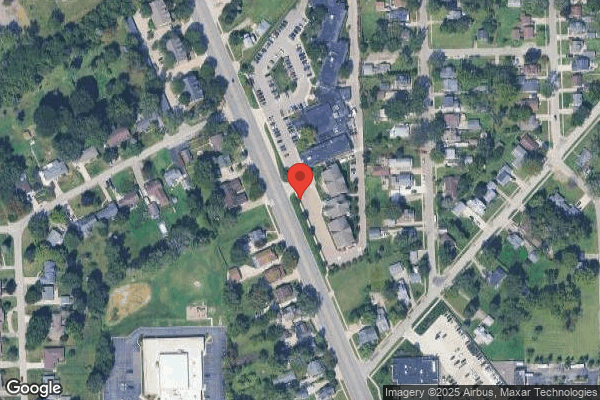

Fraser Villa

33300 Utica Road, Fraser, MI 48026 (586) 293-3300
Non profit - Corporation 111 Beds TRINITY HEALTH Data: November 2025
Trust Grade
90/100
#23 of 422 in MI
Last Inspection: January 2025

Within standard 12-15 month inspection cycle. Federal law requires annual inspections.

Overview

Fraser Villa has received an impressive Trust Grade of A, indicating excellent quality and a highly recommended facility for care. It ranks #23 out of 422 nursing homes in Michigan, placing it in the top half of the state, and is the top facility among 30 options in Macomb County. However, the facility's trend is concerning as it has worsened, increasing from two issues in 2024 to three in 2025. Staffing is a relative strength, with a 4/5 star rating and a low turnover rate of 30%, which is better than the state average. On the downside, while there have been no fines, the facility has been cited for several issues, including improper food storage that could lead to health risks and a failure to adequately supervise a resident who exited the facility, which indicates lapses in safety and care protocols.

Trust Score
A
90/100
In Michigan
#23/422
Top 5%
Safety Record
Low Risk
No red flags
Inspections
Getting Worse
2 → 3 violations
Staff Stability
○ Average
30% turnover. Near Michigan's 48% average. Typical for the industry.
Penalties
✓ Good
No fines on record. Clean compliance history, better than most Michigan facilities.
Skilled Nurses
⚠ Watch
Each resident gets only 28 minutes of Registered Nurse (RN) attention daily — below average for Michigan. Fewer RN minutes means fewer trained eyes watching for problems.
Violations
✓ Good
Only 5 deficiencies on record. Cleaner than most facilities. Minor issues only.
★★★★★
5.0
Overall Rating
★★★★☆
4.0
Staff Levels
★★★★☆
4.0
Care Quality
★★★★★
5.0
Inspection Score
Stable
2024: 2 issues
2025: 3 issues

The Good

  • 4-Star Staffing Rating · Above-average nurse staffing levels
  • 4-Star Quality Measures · Strong clinical quality outcomes
  • Full Sprinkler Coverage · Fire safety systems throughout facility
  • No fines on record
  • Staff turnover below average (30%)

    18 points below Michigan average of 48%

Facility shows strength in staffing levels, quality measures, fire safety.

The Bad

Staff Turnover: 30%

15pts below Michigan avg (46%)

Typical for the industry

Chain: TRINITY HEALTH

Part of a multi-facility chain

Ask about local staffing decisions and management

The Ugly 5 deficiencies on record

Feb 2025 1 deficiency
CONCERN (D) 📢 Someone Reported This

A family member, employee, or ombudsman was alarmed enough to file a formal complaint

Potential for Harm - no one hurt, but risky conditions existed

Accident Prevention (Tag F0689)

Could have caused harm · This affected 1 resident

This intake pertains to Intake: MI00149945. Based on interview and record review, the facility failed to supervise, prevent an elopement, and operationalize the policies and procedures for a missing r...

Read full inspector narrative →
This intake pertains to Intake: MI00149945. Based on interview and record review, the facility failed to supervise, prevent an elopement, and operationalize the policies and procedures for a missing resident for one resident, (R901) of three residents reviewed for elopement. Findings include: A review of information reported to the State Agency revealed the following, Resident was observed by the receptionist exiting the facility with appropriate outerwear and a suitcase and a bag at approximately 2:30 PM. Receptionist was not aware that [R901] was a resident residing in the rehab building . A review of R901's medical record revealed they were admitted into the facility on 1/8/25, with diagnoses that included, Hemiplegia following Cerebral Infarction affecting right dominant side, Aphasia, Dysphagia and Muscle Weakness. Further review revealed upon admission to the facility, the resident was assessed to be significantly cognitively impaired due to their Aphasia (inability to speak), and required the use of a front wheeled walker for gait instability. On 2/4/25 at 11:27 AM, Unit Manager A was interviewed regarding R901 eloping from the building on 1/28/25, and she explained at approximately, 4:15pm she was informed by R901's assigned nurse that they were going to administer medications to the resident, but had not seen them. Unit Manager A explained she began looking for the resident by calling to the therapy department, going to look in the beauty salon, and in the great room where activities are held, but could not locate the resident. Unit Manager A further explained then she contacted the resident's son via phone, and he advised the resident was with him. Unit Manger A acknowledged at that time, she was unaware the resident had left the building on their own. On 2/4/24 at 11:38 AM, Receptionist B was asked about R901's exit from the facility, and she explained she was speaking to a visitor while at the front desk, and saw someone who she thought was a family member walking toward the door wearing their coat, pulling a suitcase, with a purse on their shoulder. Receptionist B explained she unlocked the door allowing R901 to exit not realizing they were a resident of the facility. Receptionist B explained the procedure for allowing residents and guests in and out the facility requires them to sign in and out at the desk, but acknowledged this procedure was not completed on this date. On 2/4/25 at 11:48 AM, an interview was completed with Nurse C, assigned nurse to R901 on the afternoon shift. Nurse C explained she arrived for her shift at 3:00pm, was given shift report, and at that time, had not laid eyes on the resident. At approximately 4:00pm, Nurse C explained she began passing medications and upon arriving to administer medications to R901, noted they were not in their room. Nurse C explained she reported this information to Unit Manager A and from there, attempts to locate the resident in the therapy gym, beauty salon, and common area was completed. Nurse C explained Unit Manager A contacted the resident's son who indicated that he was with the resident. On 2/4/25 at 12:02 PM, Nurse E, assigned nurse for R901 on the day shift was asked about the resident eloping from the facility, and she confirmed she had last laid eyes on the resident between 1:10pm and 1:15pm, as she had provided the resident with pain medication, and wanted to ensure it had been effective. On 2/4/25 at 12:43 PM, Social Worker F was asked about R901, and communication she had with the resident's son regarding discharge. Social Worker F explained the resident and their son were not in agreement regarding discharge plans and upon the final determination after the elopment, the resident would not be returning to the facility. Social Worker F was asked if she was aware how the resident was able to get home from the facility, and explained the resident's son said the resident walked home. A review of R901's medical record revealed the resident lived approximately 1.7 miles away from the facility, which was approximately a 37-minute walk. On 2/4/25 at 1:15 PM, Certified Nursing Assistant (CNA) D was interviewed regarding R901 eloping from the facility, and she explained she started her shift at 3:00pm and at approximately 4:15pm she hadn't seen the resident, and informed the assigned nurse. CNA D explained oftentimes, residents are in therapy or getting their hair done around that time. On 2/4/25 at 1:28 PM, the Nursing Home Administrator (NHA) was asked about the incident involving R901, and explained she received a call from Unit Manager A about the resident, and she in turn contacted the resident's son who explained R901 had returned to their residence, and at that time was not physically with the resident, but indicated when they were, they would contact the NHA back. The NHA explained that a well-being check was completed by the local police department to ensure the resident's safety, and she was not aware of how the resident got home. On 2/4/25 at 1:37 PM, an interview was completed with Physical Therapy staff G who worked with R901, and was asked about the resident's ability to walk without their walker. Physical Therapy staff G explained the resident had demonstrated they could walk 200 feet with the walker, but had never been assessed to walk without the walker. On 2/4/25 at 2:08 PM, Unit Manager A was interviewed again regarding the date of the incident with R901, and explained upon learning R901 wasn't in their room at approximately 4:15pm, it took approximately 15-20 minutes to look for the resident, and the resident's son was eventually contacted at approximately 4:40pm. Unit Manager A confirmed a missing person code/communication had not been completed as it is common family members will take residents out without informing nursing staff. A review of the Facility Reported Incident folder was reviewed and documented the resident was last seen by facility staff at approxiamtely 2:30pm, and a well-being check to confirm the safety and whereabouts of the resident was completed at approximtely 5:55pm. Further review also revealed a full count of residents was not conducted following the elopement of the resident to ensure all residents had been accounted for. On 2/4/25 at 4:00 PM, the NHA was asked about the facility's outcome regarding R901 leaving the facility, and acknowledged the resident left the facility without signing out or without an appropriate discharge. A review of the facility's Elopement-Missing Resident policy revealed, 3. Should an employee become aware that a resident is missing from the community he/she should a) Determine if the resident in on an authorized leave or pass. If not; b) Shift Supervisor, Director of Nursing or designee assigns direct care staff to look for the resident by dividing teams assigned to look inside and outside the community by area, including, but not limited to, all locked/unlocked rooms, bathrooms, closets, stairwells, elevators, storage spaces, outbuildings, parking lots, and exterior campus. c) Notify the Nurse Manager/Director of Nursing and Administrator d) If the resident is not located in the buildings or on the grounds within 15 minutes, the following process is initiated: 1. The Shift Supervisor, Director of Nsg or designee Notifies: -Police Dept -Legal Guardian -Physician -Medical Director - Communication/code alert is made related to the missing resident with the proper code that staff has been educated on to alert staff on the search . A review of the facility's Signing out of Elders/Residents policy revealed the following .1. Each elder/resident leaving the premises must be signed out .
Jan 2025 2 deficiencies
CONCERN (D)

Potential for Harm - no one hurt, but risky conditions existed

Drug Regimen Review (Tag F0756)

Could have caused harm · This affected 1 resident

**NOTE- TERMS IN BRACKETS HAVE BEEN EDITED TO PROTECT CONFIDENTIALITY** Based on interview and record review, the facility failed to ensure the pharmacy medication regimen review was completed monthly...

Read full inspector narrative →
**NOTE- TERMS IN BRACKETS HAVE BEEN EDITED TO PROTECT CONFIDENTIALITY** Based on interview and record review, the facility failed to ensure the pharmacy medication regimen review was completed monthly for three (R45, R52, R60) out of seven residents reviewed for unnecessary medications. Findings include: R45 A review of R45's record revealed they were admitted to the facility on [DATE] with a diagnosis of peripheral vascular disease and depression. A review of R45's Brief Interview for Mental Status revealed a score of three, indicating cognitive impairment. Further review of R45's record revealed there was no medication regimen review (MRR) documented for February 2024. R52 A review of R52's record revealed that they were admitted to the facility on [DATE] with a diagnosis of dementia. A review of R52's Brief Interview for Mental Status revealed a score of seven, indicating cognitive impairment. Further review of R52's record revealed there was no MRR documented for July 2024 or October 2024. R60 A review of R60's record revealed they were admitted to the facility on [DATE] with a diagnosis of dementia and depression. A review of R60's Brief Interview for Mental Status revealed a score of nine, indicating cognitive impairment. Further review of R60s record revealed there was no MRR documented for July 2024 or October 2024. On 1/15/25 at 8:33 AM, The Director of Nursing (DON) explained that the pharmacy should do monthly medication reviews on all residents, then will make recommendations to be followed up on by the physician. The DON explained that the purpose of the reviews is to make sure there are no unnecessary medications or any interactions and to make sure certain medications are not negatively impacting the resident's organ function. On 1/15/25 at 9:43 AM, the DON confirmed that the above mentioned missing MRRS were not done. The DON provided an email communication from the pharmacist which revealed the following: audit revealed gaps in reviews completed. Below is a list of those gaps. (R45) February 2024, (R52) July 2024, October 2024, (R60) July 2024, October 2024. A review of the facility's policy titled Medication Regimen Review revealed the following: 1. The consultant pharmacist will conduct MRRs if required under a pharmacy consultant agreement and will make recommendations based on the information made available in the resident's health record. 2. The facility and consultant [pharmacist will follow guidance outlined in the CMS state operations manual Appendix PP and current practice guideline, for the appropriate provision of pharmaceutical care.
CONCERN (F)

Potential for Harm - no one hurt, but risky conditions existed

Food Safety (Tag F0812)

Could have caused harm · This affected most or all residents

Based on observation, interview, and record review, the facility failed to ensure resident food items brought in from outside the facility were dated, and failed to maintain the resident refrigerators...

Read full inspector narrative →
Based on observation, interview, and record review, the facility failed to ensure resident food items brought in from outside the facility were dated, and failed to maintain the resident refrigerators in a sanitary manner. This deficient practice had the potential to affect all residents that consume food in the facility. Findings include: On 1/13/25 between 9:15 AM-9:30 AM, the resident refrigerators were observed with Dining Services Director A. In the Candlewood Unit refrigerator, there was a pizza dated 12/23, a container of soup dated 1/3, an undated container of cinnamon rolls, a container with an unidentified food item dated 12/21-12/24, and an opened, undated bottle of ranch dressing. In the Meadow Lane refrigerator, there was an undated pizza slice, an undated container of salad, and the freezer was soiled with food spillage. In the Rehab 1 refrigerator, there was a container of chicken dated 1/9. In the Rehab 2 refrigerator, there was an undated jello salad, an undated container of cut fruit, and the freezer was soiled with a large pooled area of a brown substance. Dining Services Director A confirmed that all items should be dated and discarded after 3 days. Review of the facility's undated policy Resident Food From the Outside Community noted: All prepared/perishable food or beverages brought by resident, family or visitors for resident's use will be labeled with the resident's name and the date the item was stored.
Jan 2024 2 deficiencies
CONCERN (D)

Potential for Harm - no one hurt, but risky conditions existed

Deficiency F0645 (Tag F0645)

Could have caused harm · This affected 1 resident

**NOTE- TERMS IN BRACKETS HAVE BEEN EDITED TO PROTECT CONFIDENTIALITY** Based on interview and record review, the facility failed to ensure a Level I Preadmission Screening (PAS)/Annual Resident Revie...

Read full inspector narrative →
**NOTE- TERMS IN BRACKETS HAVE BEEN EDITED TO PROTECT CONFIDENTIALITY** Based on interview and record review, the facility failed to ensure a Level I Preadmission Screening (PAS)/Annual Resident Review (ARR) Mental Illness/Intellectual Disability/Related Conditions Identification was completed timely, accurately completed, and sent to the local community mental health (CMH) for a level II OBRA (Omnibus Budget Reconciliation Act of 1993) evaluation for two residents (R47 and R56) of three residents reviewed for PASARR's. Findings include: R47 A review of R47s medical record revealed that they were admitted into the facility on 3/1/23 with diagnoses that included BI-Polar Disorder, Dementia, Mood Disorder and Major Depression. Further review of R47's Minimum Data Set assessment dated [DATE] revealed a Brief Interview for Mental Status score of 9/15 indicating a moderately impaired cognition. Further review of R47's medical record revealed an ARR completed on 10/10/23, seven months following the resident's admission to the facility. On 1/10/24 at 10:45 AM, all of R47's PASARRS were requested from the facility. The facility provided an exemption form signed, but undated by a physician, and there was no additional information regarding contact had been made between the facility and the local community mental health (CMH). R56 A review of R56's medical record revealed that they were admitted into the facility on [DATE] with diagnoses that included Alzheimer's Disease, Congestive Heart Failure, Dysphagia, and Anxiety. Further review of the medical record revealed that the resident was severely cognitively impaired. Further review of the medical records revealed that a PASARR was completed on 12/9/22 by the acute care setting that referred the resident to the facility. On 1/10/24 at 10:45 AM, all of R56's PASARRs were requested from the facility, however the only documentation received was the 12/9/22 PASAAR, and an exemption form signed and undated by a facility physician. On 1/10/24 at 1:53 PM, the Social Work Director was asked about the facility's procedure for the completion and submission of PASARRs to CMH, and was unable to provide an answer. The Social Work Director was asked for confirmation that the PASARRS had been sent to CMH, however, this information was not provided by the end of survey. On 1/11/24 at 12:55 PM, the Director of Nursing (DON) was asked about the concerns regarding the PASARRS, and indicated that she would look further into it, but explained that they should be completed. On 1/10/24 at 10:45 AM, a facility policy regarding PASARRs was requested however, the Nursing Home Administrator explained that the facility did not have a policy.
CONCERN (D)

Potential for Harm - no one hurt, but risky conditions existed

Comprehensive Care Plan (Tag F0656)

Could have caused harm · This affected 1 resident

**NOTE- TERMS IN BRACKETS HAVE BEEN EDITED TO PROTECT CONFIDENTIALITY** Based on interview and record review, the facility failed to develop hospice care plan for one resident (R97) of two residents r...

Read full inspector narrative →
**NOTE- TERMS IN BRACKETS HAVE BEEN EDITED TO PROTECT CONFIDENTIALITY** Based on interview and record review, the facility failed to develop hospice care plan for one resident (R97) of two residents reviewed for care plans. Findings include: R97 A review of the medical record revealed that R97 admitted into the facility on [DATE] with the following diagnoses, Adult Failure to Thrive and Malignant Neoplasm of Colon. A review of the Minimum Data Set assessment revealed a Brief Interview for Mental Status score of 15/15 indicating an intact cognition. R97 also required assistance with bed mobility and transfers. A review of the progress notes revealed that R97 was admitted into the facility on hospice services. Further review of the medical record revealed that R97 did not have a facility developed care plan related to hospice care. On 1/11/2024 at 12:54 PM, an interview was conducted with the Director of Nursing (DON). The DON stated that developing the hospice care plan is collaborative. The DON stated that there should have been a facility care plan related to hospice. A review of a facility policy titled, Care Planning Process noted the following, Purpose: To outline and maintain the community's procedure as it relates to identification of problems and interventions for care needs for the individual resident.
Understanding Severity Codes (click to expand)
Life-Threatening (Immediate Jeopardy)
J - Isolated K - Pattern L - Widespread
Actual Harm
G - Isolated H - Pattern I - Widespread
Potential for Harm
D - Isolated E - Pattern F - Widespread
No Harm (Minor)
A - Isolated B - Pattern C - Widespread

Questions to Ask on Your Visit

  • "Can I speak with families of current residents?"
  • "What's your RN coverage like on weekends and overnight?"

Our Honest Assessment

Strengths
  • • Grade A (90/100). Above average facility, better than most options in Michigan.
  • • No major safety red flags. No abuse findings, life-threatening violations, or SFF status.
  • • No fines on record. Clean compliance history, better than most Michigan facilities.
  • • Only 5 deficiencies on record. Cleaner than most facilities. Minor issues only.
Concerns
  • • No significant concerns identified. This facility shows no red flags across CMS ratings, staff turnover, or federal penalties.
Bottom line: Generally positive indicators. Standard due diligence and a personal visit recommended.

About This Facility

What is Fraser Villa's CMS Rating?

CMS assigns Fraser Villa an overall rating of 5 out of 5 stars, which is considered much above average nationally. Within Michigan, this rating places the facility higher than 99% of the state's 100 nursing homes. This rating reflects solid performance across the metrics CMS uses to evaluate nursing home quality.

How is Fraser Villa Staffed?

CMS rates Fraser Villa's staffing level at 4 out of 5 stars, which is above average compared to other nursing homes. Staff turnover is 30%, compared to the Michigan average of 46%. This relatively stable workforce can support continuity of care.

What Have Inspectors Found at Fraser Villa?

State health inspectors documented 5 deficiencies at Fraser Villa during 2024 to 2025. These included: 5 with potential for harm.

Who Owns and Operates Fraser Villa?

Fraser Villa is owned by a non-profit organization. Non-profit facilities reinvest revenue into operations rather than distributing to shareholders. The facility is operated by TRINITY HEALTH, a chain that manages multiple nursing homes. With 111 certified beds and approximately 104 residents (about 94% occupancy), it is a mid-sized facility located in Fraser, Michigan.

How Does Fraser Villa Compare to Other Michigan Nursing Homes?

Compared to the 100 nursing homes in Michigan, Fraser Villa's overall rating (5 stars) is above the state average of 3.2, staff turnover (30%) is significantly lower than the state average of 46%, and health inspection rating (5 stars) is much above the national benchmark.

What Should Families Ask When Visiting Fraser Villa?

Based on this facility's data, families visiting should ask: "Can I visit during a mealtime to observe dining assistance and food quality?" "How do you handle medical emergencies, and what is your hospital transfer rate?" "Can I speak with family members of current residents about their experience?"

Is Fraser Villa Safe?

Based on CMS inspection data, Fraser Villa has a clean safety record: no substantiated abuse findings (meaning no confirmed cases of resident harm), no Immediate Jeopardy citations (the most serious violation level indicating risk of serious injury or death), and is not on the Special Focus Facility watch list (a federal program monitoring the lowest-performing 1% of nursing homes). The facility has a 5-star overall rating and ranks #1 of 100 nursing homes in Michigan. While no facility is perfect, families should still ask about staff-to-resident ratios and recent inspection results during their visit.

Do Nurses at Fraser Villa Stick Around?

Fraser Villa has a staff turnover rate of 30%, which is about average for Michigan nursing homes (state average: 46%). Moderate turnover is common in nursing homes, but families should still ask about staff tenure and how the facility maintains care continuity when employees leave.

Was Fraser Villa Ever Fined?

Fraser Villa has no federal fines on record. CMS issues fines when nursing homes fail to meet care standards or don't correct problems found during inspections. The absence of fines suggests the facility has either maintained compliance or corrected any issues before penalties were assessed. This is a positive indicator, though families should still review recent inspection reports for the full picture.

Is Fraser Villa on Any Federal Watch List?

Fraser Villa is not on any federal watch list. The most significant is the Special Focus Facility (SFF) program, which identifies the bottom 1% of nursing homes nationally based on persistent, serious quality problems. Not being on this list means the facility has avoided the pattern of deficiencies that triggers enhanced federal oversight. This is a positive indicator, though families should still review the facility's inspection history directly.