Medilodge of Gaylord
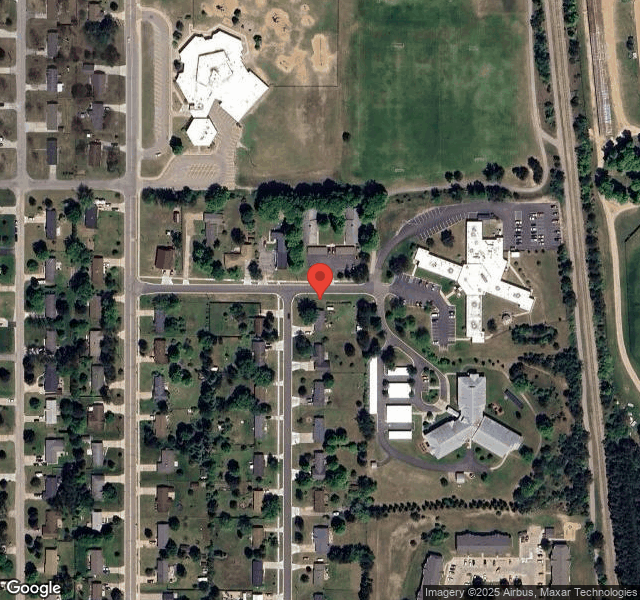

508 Random Lake, Gaylord, MI 49735 (989) 732-3508
For profit - Limited Liability company 96 Beds MEDILODGE Data: November 2025
Trust Grade
30/100
#300 of 422 in MI
Last Inspection: December 2024

Within standard 12-15 month inspection cycle. Federal law requires annual inspections.

Overview

Medilodge of Gaylord has received a Trust Grade of F, indicating significant concerns about the quality of care provided. Ranked #300 out of 422 facilities in Michigan, they are in the bottom half, and #2 out of 2 in Otsego County, meaning there is only one local option that is better. The facility is showing signs of improvement, having reduced issues from 20 in 2024 to just 1 in 2025. Staffing is a strength, with a 4 out of 5-star rating and a turnover rate of 41%, which is below the state average. However, there are serious concerns, including a recent incident of sexual abuse between residents and failures in infection control, which could pose risks to the safety and wellbeing of the residents.
Trust Score
F
30/100
In Michigan
#300/422
Bottom 29%
Safety Record
High Risk
Review needed
Inspections
Getting Better
20 → 1 violations
Staff Stability
○ Average
41% turnover. Near Michigan's 48% average. Typical for the industry.
Penalties
✓ Good
No fines on record. Clean compliance history, better than most Michigan facilities.
Skilled Nurses
✓ Good
Each resident gets 64 minutes of Registered Nurse (RN) attention daily — more than 97% of Michigan nursing homes. RNs are the most trained staff who catch health problems before they become serious.
Violations
⚠ Watch
39 deficiencies on record. Higher than average. Multiple issues found across inspections.
★★☆☆☆
2.0
Overall Rating
★★★★☆
4.0
Staff Levels
★★★★☆
4.0
Care Quality
★★☆☆☆
2.0
Inspection Score
Stable
2024: 20 issues
2025: 1 issues

The Good

  • 4-Star Staffing Rating · Above-average nurse staffing levels
  • 4-Star Quality Measures · Strong clinical quality outcomes
  • Full Sprinkler Coverage · Fire safety systems throughout facility
  • No fines on record
  • Staff turnover below average (41%)

    7 points below Michigan average of 48%

Facility shows strength in staffing levels, quality measures, fire safety.

The Bad

2-Star Overall Rating

Below Michigan average (3.1)

Below average - review inspection findings carefully

Staff Turnover: 41%

Near Michigan avg (46%)

Typical for the industry

Chain: MEDILODGE

Part of a multi-facility chain

Ask about local staffing decisions and management

The Ugly 39 deficiencies on record

1 actual harm
Aug 2025 1 deficiency 1 Harm
SERIOUS (G) 📢 Someone Reported This

A family member, employee, or ombudsman was alarmed enough to file a formal complaint

Actual Harm - a resident was hurt due to facility failures

Free from Abuse/Neglect (Tag F0600)

A resident was harmed · This affected 1 resident

**NOTE- TERMS IN BRACKETS HAVE BEEN EDITED TO PROTECT CONFIDENTIALITY** This citation pertains to intake 1234972Based on interview and record review, the facility failed to protect two Residents (#1 a...

Read full inspector narrative →
**NOTE- TERMS IN BRACKETS HAVE BEEN EDITED TO PROTECT CONFIDENTIALITY** This citation pertains to intake 1234972Based on interview and record review, the facility failed to protect two Residents (#1 and #2) of four resident reviewed for right to be free from sexual abuse. This deficient practice resulted in psychosocial harm including feelings of embarrassment, devastation, anxiety, feelings of being violated, and trauma based on a reasonable person standard.Findings include:Review of a facility five-day investigation summary, submitted to the State Agency (SA) on 7/8/25 at 6:45 p.m., revealed the following: The Director of Nursing (DON) was notified by the Certified Nurses Assistant (CNA) that R1 was found in R2's bed.R2 was wearing her t-shirt and had her brief off.R1 was disrobed from the waist down and kneeling in another resident's bed.Resident #1 (R1)Review of the Minimum Data Set (MDS) assessment, dated 6/14/25, revealed R1 was admitted to the facility on [DATE] with active diagnoses that included: Alzheimer's disease and depression. R1 scored a 2 of 15 on the Brief Interview for Mental Status (BIMS) assessment reflective of severe cognitive impairment.Resident #2 (R2)Review of the MDS assessment, dated 7/4/25, revealed R2 was admitted to the facility on [DATE], with active diagnoses that included dementia and Parkinson's disease. R2 scored a 99 on the BIMS assessment reflective of severe cognitive impairment.During an interview on 8/6/25 at 8:48 a.m., CNA A reported that R1 has tried to grab other residents breasts.we have to keep him away from the ladies.he does not prefer any particular resident, he will try with any of them.He has been sexually inappropriate and this behavior has increased over the last several months leading up to the incident with R2.During an interview on 8/6/25 at 8:55 a.m., CNA B reported R1 asks if he can touch woman's boobs and he has talked that way for a long time. I have worked here for 5 years, and he has been that way the whole time.During an interview on 8/6/25 at 9:02 a.m., Licensed Practical Nurse (LPN) C reported, I worked that night of the incident. When I walked into R2's room I couldn't believe what I was seeing, he was on her bed straddling her.R2 had no incontinence brief on.he (R1) was on his knees hovering over her. R2's legs were spread, if there was any abuse it was brief.she seemed embarrassed, and her face was flushed. R1 will make comments to the other residents and reach out to them, and we have had to watch him with other residents prior to this incident with R2.During an interview on 8/6/25 at 9:49 a.m., the DON reported, R1 was on the end of the bed on his knees and leaning over her.both R1 and R2's incontinence briefs were off, and they were naked from the waist down.During a phone interview CNA D reported, I was the one that found them that morning. When I went into her room he was on top of her and her legs were spread apart. Neither one of them had incontinence briefs on.I don't think R2 understood what was going on and R1 told me that they were making love.He has tried to touch other female resident's thighs and has been touchy with other residents in the past.During a phone interview on 8/6/25 at 10:47 a.m., Family Member E stated, My mom would be devastated and upset if she knew what had happened to her.she would have been in shock.she would have never done this with anyone, only my dad who was the only man she had ever been with.Review of the Electronic Medical Record (EMR) revealed R1 had sexually inappropriate behaviors on the following dates 1/3/25, 1/9/25, 2/13/25, 3/3/25, 4/9/25, 5/5/25, 5/7/25, 5/12/25, 6/2/25, 6/16/25 and 6/26/25.Review of Nurses notes dated 5/21/25 revealed R1 had been Touching and feeling the woman residents this shift. Resident (R1) asked another woman resident how many times she could do it tonight? The woman resident stated she doesn't know because she is old now, [R1] said so am I but I could do it three times tonight one at 9pm one at midnight and one at 3 am.During an interview on 8/6/25 at 10:59 a.m., Social Services worker F reported that she was unaware of the event on 5/21/25 and she was aware that R1 had sexual behaviors in the past, but the facility had not offered behavioral health services to the resident since 2019. Social Service worker F reviewed the EMR and reported there was not a care plan in place to keep the residents safe from R1's sexual inappropriate behaviors.During an interview on 8/6/25 at 12:00 p.m., the DON reported there was no trauma assessment completed on R2 following the incident. The DON acknowledged there was no care plan or interventions to monitor R2 for any catastrophic reactions (emotional or behavioral reactions) from R2.During an interview on 8/6/25 at 12:30 p.m., the Nursing Home Administrator (NHA) reported that she was aware R1 had sexual inappropriate behaviors with staff prior to the incident and was not aware of the event on 5/21/25. The NHA acknowledged there were no care plan interventions following the event for R2, the facility did not offer behavioral health services for R1, there were no care plan interventions prior to the incident for R1 regarding sexual inappropriate behaviors in order to keep other residents safe.Review of policy titled Abuse, Neglect, and Exploitation date reviewed/revised 1/10/24 read in part, .It is the policy of this facility to provide protections for the health, welfare, and rights of each resident by developing and implementing written policies and procedures that prohibit and prevent abuse.Abuse means the willful infliction of injury.willful means the individual must have acted deliberately .sexual abuse is nonconsensual sexual contact of any type with a resident.the facility will develop and implement .policies and procedures that prohibit and prevent abuse.
Dec 2024 12 deficiencies
CONCERN (D)

Potential for Harm - no one hurt, but risky conditions existed

Deficiency F0583 (Tag F0583)

Could have caused harm · This affected 1 resident

Based on observation, interview and record review, the facility failed to maintain personal privacy of medical information for one hallway of four hallways reviewed. This deficient practice resulted i...

Read full inspector narrative →
Based on observation, interview and record review, the facility failed to maintain personal privacy of medical information for one hallway of four hallways reviewed. This deficient practice resulted in Residents privacy being breached. Findings include: On 12/17/24 at 9:38 a.m., an observation was made of the D-hall medical cart computer. The D-hall medical cart computer was left with an open display for Resident 179 (R179), and visible on the computer screen were Physician Orders from the Electronic Medical Record program. The D-hall medical cart also had a clearly visible 'Controlled Substance Log' for R179 used to keep accurate count of controlled substances. Review of the facility's Federal Rights of Nursing Center Residents Requirements for Nursing Facilities given to each resident in the Hospitality Guide upon admission, read, in part, .(3) Privacy and Confidentiality. The resident has a right to personal privacy and confidentiality of his or her personal and medical records . An interview was conducted with the Director of Nursing (DON) on 12/17/24 at 12:45 p.m. The DON confirmed that the D-Hall medical cart computer display and other documentation should have been securely locked and closed.
CONCERN (D)

Potential for Harm - no one hurt, but risky conditions existed

Quality of Care (Tag F0684)

Could have caused harm · This affected 1 resident

**NOTE- TERMS IN BRACKETS HAVE BEEN EDITED TO PROTECT CONFIDENTIALITY** Based on observation, interview and record review, the facility failed to ensure appropriate care was provided for Moisture Asso...

Read full inspector narrative →
**NOTE- TERMS IN BRACKETS HAVE BEEN EDITED TO PROTECT CONFIDENTIALITY** Based on observation, interview and record review, the facility failed to ensure appropriate care was provided for Moisture Associated Skin Damage (MASD) according to professional standards of practice for one Resident (#47) of one resident reviewed for MASD. This deficient practice resulted in the potential for delayed wound healing, worsening of condition and pain. Findings include: Resident #47 (R47) R47 was admitted to the facility on [DATE] with diagnoses including cerebral infarction (stroke), neurogenic (nerve originating problem) bladder, and type 2 diabetes. A review of R47's most recent Minimum Data Set (MDS) assessment, dated 10/2/24, revealed R47 scored 2 out of 15 on the Brief Interview for Mental Status (BIMS), indicating severe cognitive impairment. R47 was rated as always incontinent of bowel and bladder. An observation on 12/16/24 at 11:45 a.m., revealed R47 lying in bed, with her lower body covered with a blanket visiting with her Durable Power of Attorney (DPOA). R47's DPOA stated R47 was recently diagnosed with MASD in her peri [area surrounding genitals]-area and believed there was an issue with checking and changing her brief during the night shift. R47's DPOA stated he has found R47 lying in bed soaked in urine with the same brief that she had on from the previous day, and also stated when he came in this morning, he found blood on her right hand and under her fingernails from scratching herself around her urine soaked brief. R47's DPOA stated it was discussed at the last care conference and R47 was to be checked and changed every two hours. Review of R47's Wound Evaluation dated 12/10/24 revealed the following entries: MASD - IAD Incontinence Associated Dermatitis; Right Gluteal Fold; In-House Acquired; Area 1.46 cm2 (centimeters squared); Length .75 cm; Width 5.54 cm MASD - IAD Incontinence Associated Dermatitis; Left Gluteus - Medial and Inferior; In-House Acquired; Area 11.8 cm2; Length 2.46 cm; Width 6.73 cm Review of R47's Physician Orders read, in part, Wound Care - bilateral buttocks/bilateral posterior upper thighs; cleanse with soap and water, rinse and pat dry. Apply Collagen powder to open areas (wound beds). Mix collagen powder w (with)/ Manuka Honey Ointment (nickel size) apply thin layer to excoriated area(s) Q (every)-shift and as needed, every shift for MASD/excoriation. Start Date: 12/6/24. An interview was conducted with Certified Nurse Aide (CNA) M on 12/17/24 at 12:35 p.m. CNA M stated staff document on a record sheet located in the hallway each time they do a check and change on R47. CNA M also stated they document in the electronic medical record (eMAR) sometimes, but not always. When asked to review R47's current record sheet for 12/17/24, CNA M verified with this Surveyor that R47 had been changed at 7 a.m. and 12:00 p.m. When asked where the old record sheets are kept, CNA M stated staff shred them at the end of the day. Review of R47's Care Plan read, in part, Resident has an ADL (Activities of Daily Living) self-care performance deficit .Toileting: Check and change q (every) 2 hours and prn (as needed) with 2 staff members at all times . An interview was conducted with the Director of Nursing (DON) on 12/17/24 at 12:45 p.m. The DON stated staff should be documenting in the eMAR for every check and changed performed on R47 and staff should not be destroying the record sheet at the end of each day. Review of the facility's Incontinence policy revised 10/26/23 read, in part, .all residents that are incontinent will receive appropriate treatment and services .Residents that are incontinent of bladder .will receive appropriate treatment to prevent infections .
CONCERN (D)

Potential for Harm - no one hurt, but risky conditions existed

Respiratory Care (Tag F0695)

Could have caused harm · This affected 1 resident

**NOTE- TERMS IN BRACKETS HAVE BEEN EDITED TO PROTECT CONFIDENTIALITY** Based on observation, interview, and record review, the facility failed to administer supplemental oxygen according to physician...

Read full inspector narrative →
**NOTE- TERMS IN BRACKETS HAVE BEEN EDITED TO PROTECT CONFIDENTIALITY** Based on observation, interview, and record review, the facility failed to administer supplemental oxygen according to physician orders, change and date respiratory equipment, appropriately store respiratory equipment, and clarify parameters for administration of supplemental oxygen for three Residents (#330, #331, and #43) of seven residents reviewed for respiratory care services. Findings include: Resident #331 (R331) R331 was admitted [DATE] with diagnoses of acute respiratory failure with hypoxia (low levels of oxygen), chronic obstructive pulmonary disease, dependence on supplemental oxygen, and others. On 12/15/24 at 10:56 a.m., R331 was observed wearing a nasal cannula (tube that delivers supplemental oxygen). The nasal cannula tubing was dated 12/3/24. The supplemental oxygen was set at a delivery rate of 10 liters per minute. On 12/15/24 at 10:56 a.m., a Bipap machine (a non-invasive, mechanical breathing device) was observed on R331's nightstand. A hand-written note taped to the machine read: Increase O2 [oxygen] to 10 L [liters] when Bipap is on at HS [bedtime]. Decrease O2 to 7 L when Bipap is off at AM [morning]. R331 said, that [Bipap] came off three or four hours ago when I woke up earlier. An unbagged, undated nebulizer mask (a drug delivery device used to administer medications into the lungs) was observed on 12/15/24 at 10:56 a.m. on R331's bedside stand without a barrier beneath it. The nebulizer and the tubing did not contain dates to indicate when the mask or tubing was changed. A receptacle was not available to place the nebulizer mask when not in use. Physician orders for R331 included an order that read Oxygen tubing/filter change every week . R331 had a physician's order that read Oxygen: run @ (at) 7 L/min (minute) via N/C (nasal cannula) during the day. Run at 10 L at NOC (night) while on Bipap . Resident #330 (R330) On 12/15/24 at 10:54 a.m., R330 was observed wearing a nasal cannula for delivery of supplemental oxygen. The nasal cannula tubing was undated. R330 said he was on oxygen when he was at home. R330 said he was recently admitted to the facility from home but could not recall if the nasal cannula was the same cannula R330 was wearing from prior to admission or if it was changed when R330 was admitted to the facility. Physician's orders for R330 included the order: Oxygen: RUN @ [2-5] L/MIN VIA [X]N/C . [X] CONTINUOUS . The order did not contain resident indicators or oxygen saturation parameters to direct nurses regarding the flow rate of the supplemental oxygen. During an interview on 12/16/24 at 2:32 p.m., Licensed Practical Nurse (LPN) B confirmed she was the nurse manager on the B unit where R330 resided. LPN B was asked the criteria for nurses to determine the number of liters for supplemental oxygen delivery if a range for liters per minute was provided in the order. LPN B said, it depends on if there is shortness of breath or difficulty breathing or the oxygen saturation. LPN B said, Nurses complete respiratory assessments every time they go into the room. When asked the frequency of respiratory assessments or where the assessments were documented, LPN B did not provide a response. LPN B confirmed there were no parameters for nurses to determine the flow rate of supplemental oxygen for R330. LPN B was asked regarding the storage of respiratory equipment when not in use, including nebulizers and cannulas. LPN B said nebulizers and nasal cannulas are required to be in a bag when not in use by the resident. LPN B was asked about changing and dating nebulizers, cannulas, and oxygen tubing. LPN B responded, they should be changed weekly and dated when they are changed. LPN B said the nurses on the night shift are responsible for dating and changing nebulizers and tubing each week. Resident #43 (R43) On 12/15/24 at 11:25 a.m., an unbagged, undated nebulizer was observed lying atop R43's bed without a barrier beneath it. The nebulizer and tubing did not contain dates to indicate when the nebulizer or tubing was changed. A receptacle was not available to place the nebulizer when not in use. An unbagged, undated nasal cannula was observed atop R43's nightstand without a barrier beneath it. On 12/16/24 at 9:08 a.m., Certified Nurse Aide (CNA) C was observed making R43's bed. The undated, unbagged nebulizer was atop R43's nightstand while CNA C was making the bed. After the bed was made, CNA C picked up the nebulizer from the nightstand and placed it atop the bed. CNA C was asked why the nebulizer was placed atop the bed. CNA C replied, I just put it back where I found it before I made the bed. The Director of Nursing (DON) was interviewed on 12/17/24 at 11:50 a.m. The DON was asked regarding the expectation for changing, dating, and storing nebulizers, cannulas, and oxygen tubing. The DON said, I haven't been trained on any of that but it's a standard of practice to be changed and dated weekly, and they should be in bags when not being used. The DON confirmed oxygen was expected to be administered according to physician orders. The policy Oxygen Administration dated as last reviewed/revised on 10/26/23 read, in part: .Infection control measures include: . b. Change oxygen tubing and mask/cannula weekly and as needed .e. Keep delivery devices covered in plastic bag when not in use . The policy Nebulizer Therapy dated as reviewed/revised on 5/15/24 read, in part: .Once completely dry, store the nebulizer cup and the mouthpiece in a zip lock bag. H. Change nebulizer tubing weekly . The policy CPAP/BiPAP/ NIPPV (Non-Invasive Positive Pressure Ventilation) Support dated as last reviewed/revised 1/1/21 read, in part: .Review the physician's order to determine the oxygen concentration or liter flow .
CONCERN (D)

Potential for Harm - no one hurt, but risky conditions existed

Pharmacy Services (Tag F0755)

Could have caused harm · This affected 1 resident

**NOTE- TERMS IN BRACKETS HAVE BEEN EDITED TO PROTECT CONFIDENTIALITY** Based on interview and record review, the facility failed to timely destroy discontinued scheduled II medication and dispensed m...

Read full inspector narrative →
**NOTE- TERMS IN BRACKETS HAVE BEEN EDITED TO PROTECT CONFIDENTIALITY** Based on interview and record review, the facility failed to timely destroy discontinued scheduled II medication and dispensed medication without a physician order for one Resident (#58) and failed to initiate a stop date on an as needed antianxiety medication for one Resident (#279) of eighteen residents reviewed for pharmacy services. Findings include: Resident #58 (R58) Review of R58's physician order, dated [DATE], revealed the following: Lorazepam tablet 0.5 mg (milligrams), give one tablet by mouth every eight hours as needed for anxiety related to adjustment disorder, with a discontinuation date of [DATE]. R58's as needed antianxiety medication should have been reevaluated after 14 days per the regulation and no evidence of reevaluation could be seen in the Electronic Medical Record (EMAR). Review of R58's controlled substance log, with the medication date received on [DATE], revealed R58 received a dose of the antianxiety medication on [DATE] after the medication was discontinued. Review of R58's electronic medication administration record (eMAR) and controlled substance log sign out sheet, dated [DATE] through [DATE], revealed the following; a.) Dispensed on [DATE] at 7:15 PM and not signed out on the eMAR, b.) Dispensed on [DATE] at 7:00 PM, not signed out on the eMAR and prior administration was at 4:20 PM (not within the as needed every four hours physician order), c.) Dispensed on [DATE] at 5:40 PM and not signed out on the eMAR and, d.) Dispensed on [DATE] at 2:42 PM and not signed out on the eMAR. Review of the A-hall medication cart on [DATE], revealed R58's discontinued antianxiety medication remained in the narcotic controlled lock box approximately three months after the medication was discontinued. Resident #279 (R279) Review of R279's physician order, dated [DATE], revealed the following: Alprazolam tablet 0.25 mg, give one tablet by mouth every four hours as needed for anxiety related to generalized anxiety, with no discontinuation date. R279's as needed antianxiety medication should have had a discontinued date after 14 days per the regulation and no evidence of reevaluation could be seen in the EMR. On [DATE] at 2:15 PM, an interview was conducted with the Director of Nursing (DON) who was asked how long discontinued medications should be left in the controlled substance lock box, if medications are given without a physician order, and if the medication administration should reflect the controlled substance log. The DON stated, If controlled substances are discontinued, they should be removed as soon as possible. Medications are not to be dispensed without a physician order. The residents electronic medical record should reflect what is given on the narcotic log sheets. Review of policy titled, Medication-Destruction of Unused Drugs, dated [DATE], read in part, Policy: All unused, contaminated, or expired prescription drugs shall be disposed of in accordance with state laws and regulations .Policy Explanation and Compliance Guidelines .6. Scheduled II, III, and IV controlled drugs must be destroyed by the Director of Nursing Services and another licensed nurse . Review of policy titled, Controlled Substance Administration and Accountability, dated [DATE], read in part, Policy: It is the policy of this facility to promote safe, high quality patient care, compliant with state and federal regulations regarding monitoring the use of controlled substances. The facility will have safeguards in place in order to prevent loss, diversion or accidental exposure. Policy Explanation and Compliance Guidelines . Review of policy titled, Medication Administration, dated [DATE], Read in part, Policy: Medications are administered by licensed nurses, or other staff who are legally authorized to do so in this state, as ordered by the physician and in accordance with professional standards of practice, in a manner to prevent contamination or infection. Policy Explanation and Compliance Guidelines .10. Review MAR to identify medication to be administered. 11. Compare medication source with MAR to verify resident name, medication name, form, dose, route, and time of administration .17. Sign MAR after administration . Review of policy titled, Medications - PRN, dated [DATE], read in part, Policy: PRN medications by staff who are legally authorized to do so through certification or licensure, in accordance with a physician's order .Policy Explanation and Compliance Guidelines .3. When administering a PRN medication: a. Verify physician's order for the medication .5. PRN orders for psychotropic drugs are limited to 14 days .
CONCERN (D)

Potential for Harm - no one hurt, but risky conditions existed

Medication Errors (Tag F0758)

Could have caused harm · This affected 1 resident

**NOTE- TERMS IN BRACKETS HAVE BEEN EDITED TO PROTECT CONFIDENTIALITY** Based on interview and record review, the facility failed to: 1) ensure non-pharmacological interventions attempted and failed ...

Read full inspector narrative →
**NOTE- TERMS IN BRACKETS HAVE BEEN EDITED TO PROTECT CONFIDENTIALITY** Based on interview and record review, the facility failed to: 1) ensure non-pharmacological interventions attempted and failed prior to the administration of as needed (prn) anxiolytic medication were documented; 2) ensure appropriate indication for use for an antipsychotic medication; and, 3) ensure consideration of a gradual dose reduction (GDR) of an anti-depressant medication, affecting three Residents (#68, #179, & #20) of five residents reviewed for unnecessary medications. Findings include: Resident #68 (R68) Review of the Minimum Data Set (MDS) assessment, dated 9/16/2024, revealed R68 was admitted to the facility on [DATE] and had diagnoses including dementia with behavioral disturbance, insomnia, hallucinations and depression. Further review of the MDS assessment revealed R68 had severe cognitive impairment. Review of R68's physician orders revealed the following: Diazepam [Valium, a controlled medication used to treat anxiety and insomnia] oral tablet 5 MG [milligram] . Give 1 tablet by mouth every 6 hours as needed for anxiety for 14 days. Start Date: 11/27/2024 1245 [12:45 p.m.]. Review of R68's December 2024 Medication Administration Record (MAR), accessed on 12/15/2024 at 12:08 p.m., revealed the medication was administered on the following dates without documentation in the electronic medical record (EMR) of attempted non-pharmacological interventions prior to the administration: 12/01/2024 at 8:58 a.m. and 2:54 p.m. 12/06/2024 at 12:25 p.m. and 7:40 p.m. 12/07/2024 at 11:15 a.m. and 5:39 p.m. 12/08/2024 at 8:12 a.m. and 6:23 p.m. 12/09/2024 at 6:19 p.m. 12/10/2024 at 2:27 p.m. and 8:30 p.m. 12/11/2024 at 1:25 p.m. 12/13/2024 at 2:00 p.m. and 8:36 p.m. 12/14/2024 at 6:46 a.m. and 5:23 p.m. 12/15/2024 at 8:07 a.m. During an interview on 12/27/2024 at 1:25 p.m., the Director of Nursing (DON) confirmed non-pharmacological interventions should be attempted prior to the administration of R68's prn diazepam (Valium) and the effectiveness of the interventions should be documented in the Resident's EMR. The DON stated keeping a record of interventions attempted and failed assists the physician to make determinations of needed changes to the medication regimen and to assist staff in revising the person-centered care plan. Review of the facility policy titled, Unnecessary Drugs - Without Adequate Indication for Use, last revised 10/26/2023, revealed the following, in part: It is the facility's policy that each resident's drug regimen is managed and monitored to promote or maintain the resident's highest practicable mental, physical and psychosocial well-being free from unnecessary drugs . When psychopharmacological medications are used as an emergency measure, adjunctive approaches, such as individualized, non-pharmacological approaches and techniques must be implemented . Surveyor: [NAME], [NAME] Resident #179 (R179) R179 was admitted to the facility on [DATE] with a primary diagnosis of a cutaneous (affecting the skin) abscess (a pus filled cavity) of the left lower leg. The medical record diagnoses tab contained no record of any psychotic related issues. The medication list for R179 included, SEROquel Oral Tablet (an antipsychotic medication) 25 MG (Quetiapine Fumarate) with indicated use of: Give 1 tablet by mouth at bedtime for sleep. The discharge instructions from the hospital stay prior to R179's admission to the facility read in part: Medications and Prescriptions: . QUEtiapine (SEROquel 25 mg oral tablet) 1 tab oral every day at bedtime. This record also included: Discharge Diagnosis 1. Abscess of left thigh. 2. Abscess - Leg (left) 3. Phlebitis (vein trauma) of left leg. 4. Staphylococcus infection.; Hyperlipidemia; Hypertension; Macular degeneration; PVD (peripheral vascular disease). The Transcribed Physician Progress Note of 12/13/2024 at 14:25 (2:25 PM) read in part: H&P (History and Physical) Patient is a pleasant [AGE] year old female recently admitted for therapy services s/p (after) hospitalization. She is participating with therapy as ordered. She continues nafcillin (antibiotic) until 12/27 for abscess of left thigh. All questions and concerns addressed as posed .Able to make wants and needs known. confusion noted .Hx: (History) Cutaneous abscess of left lower limb, peripheral vascular angioplasty status with implants and graphs, atherosclerosis of coronary artery bypass grafts without angina pectoris, PMH (Past Medical History): old myocardial infarction, essential primary hypertension, hyperlipidemia unspecified, unspecified macular degeneration, peripheral vascular disease unspecified, presence of cardiac pacemaker. Plan: Patient is counseled and encouraged to notify staff of needs. Practitioner gives no new orders. During an interview on 12/17/24 at 12:09 PM, the DON and Regional DON H discussed the issue of the prescribed antipsychotic medication being given since admission without a diagnosis or reason. The DON stated, I am not sure about the follow up we do on antipsychotic meds. The Regional DON H stated the facility should look at the diagnosis, why the physician ordered the medication, and monitor for signs and symptoms of effectiveness. The DON then reviewed the medical record and stated, I don't know why she (R179) is on this med. There is no diagnosis (for it's use). The facility policy titled Unnecessary Drugs-Without Adequate Indication for Use dated as last reviewed/revised on 10/26/23 read in part: The attending physician will assume leadership in medication management by developing, monitoring, and modifying the medication regimen in collaboration with residents and/or representatives, other professionals, and the interdisciplinary team. Each resident's drug regimen will be reviewed on an ongoing basis, taking into consideration the following elements: .c. Indications and clinical need for medication .Documentation will be provided in the resident's medical record to show adequate indications for the medication's use and the diagnosed condition for which it was prescribed. Resident #20 (R20) The medical record Minimum Data Set (MDS) assessment dated [DATE] listed an admission date for R20 of 12/20/23. Diagnoses for R20 included depression and cognitive communication deficit. The medication regimen for R20 included DULoxetine HCl (hydrochloride)Oral Capsule Delayed Release Particles 30 MG (Duloxetine HCl). Give 1 capsule by mouth in the morning related to MAJOR DEPRESSIVE DISORDER. This medication was ordered and started on 12/20/2023. The care plan for R20 included a focus of: Resident is at risk for alteration in psychosocial well-being related to diagnosis of depression, anxiety. The Social Service Progress Review dated 9/26/2024 contained a section listed as Psychoactive Medication Review with the question List the psychoactive medication name, related diagnosis and last GDR or contraindication. No medications were listed. No GDR or contraindications were noted. The Social Service Progress Review dated 6/27/2024 contained a section listed as Psychoactive Medication Review with the question List the psychoactive medication name, related diagnosis and last GDR or contraindication. Duloxetine was listed however no GDR or contraindications were noted. During an interview on 12/17/24 at 11:30 AM, the Nursing Home Administrator (NHA) stated she tracked the GDRs. The NHA reviewed the record for R20 and stated, We do not have a GDR for duloxetine. The facility policy Gradual Dose Reduction of Psychotropic Drugs dated as last reviewed/revised on 10/26/2023 read in part: Policy: Residents who use psychotropic drugs receive gradual dose reductions and behavioral interventions, unless clinically contraindicated, in an effort to discontinue these drugs . Within the first year in which a resident is admitted on a psychotropic medication or after the prescribing practitioner has initiated a psychotropic medication, the facility will attempt a GDR in two separate quarters (with at least one month between the attempts), unless clinically contraindicated. .
CONCERN (D)

Potential for Harm - no one hurt, but risky conditions existed

Medical Records (Tag F0842)

Could have caused harm · This affected 1 resident

Based on observation, interview, and record review, the facility failed to maintain an accurate record of wounds for one Resident (#15) of two residents reviewed for wound documentation, resulting in ...

Read full inspector narrative →
Based on observation, interview, and record review, the facility failed to maintain an accurate record of wounds for one Resident (#15) of two residents reviewed for wound documentation, resulting in the inaccurate reflection of the resident's condition and the potential for communication of inaccurate medical information to healthcare providers. Findings include: Resident #15 (R15) On 12/15/2024 at 9:14 a.m., R15 was observed lying in bed on her left side wearing an incontinence brief and shirt. Further observation revealed a large dark purple area covering R15's right hip. The center portion of the discolored area appeared boggy (soft, spongy texture indicative of a deep tissue injury). During an interview at the time of the observation, Licensed Practical Nurse (LPN) G reported R15 had three wounds at the present time. When asked the classification of the wounds, LPN G reported R15 was receiving hospice care and had skin failure. Review of R15's Wound Evaluation(s), abstracted from the electronic medical record (EMR), revealed R15 had wounds on rear left trochanter (hip, bony prominence), rear right trochanter and sacrum (bony prominence just above the intergluteal cleft). Review of R15's rear left trochanter Wound Evaluation, dated 12/10/2024, revealed the wound type was documented as Other - Not Set. Further review of the documentation revealed the wound was assessed as deteriorating and in-house acquired. Review of the photograph of the left hip wound included with the evaluation revealed a Stage 3 (full thickness tissue loss) pressure injury with slough (whitish-tan dead tissue) covering the wound bed and reddened, inflamed skin surrounding the wound. Measurement of the wound included with the evaluation were 2.27 centimeters (cm) long by 4.49 cm wide with a depth of 0.9 cm at the deepest point. Review of R15's initial rear left trochanter Wound Evaluation, dated 11/08/2024, revealed the wound was initially evaluated as a Stage 1 (area of non-blanchable skin indicative of pending tissue death) pressure injury. Review of R15's rear right trochanter Wound Evaluation, dated 12/10/2024 revealed the wound type was documented as Other - Not Set. Review of the photograph of the right hip wound included with the evaluation revealed a large, dark purple area indicative of a deep tissue pressure injury (a serious form of pressure injury that may progress rapidly to a full-thickness injury). Measurements of the wound were documented as 10.16 cm long by 7.61 cm wide with a depth of 0.1 cm. Review of R15's sacral Wound Evaluation, dated 12/10/2024, revealed the wound type was documented as Abrasion. Review of the photograph of the sacral wound included with the evaluation revealed a Stage 2 (partial-thickness tissue loss) pressure injury approximately two inches above and slightly to the right of R15's gluteal cleft. Measurements of the wound were documented as 1.48 cm long by 0.71 cm wide with a depth of 0.4 cm and undermining of 0.2 cm from 6 to 11 o'clock [location of wound undermining using a clock figure]. Review of R15's initial sacral Wound Evaluation, dated 10/14/2024, revealed the wound was initially evaluated as a Stage 2 pressure injury. During an interview on 12/17/2024 at approximately 10:00 a.m., the Nursing Home Administrator (NHA) reported R15's wounds were due to the Resident's terminal diagnosis and recent diagnosis of skin failure. Review of R15's Transcribed Physician Progress Note, dated 10/15/2024 at 12:03 p.m., revealed R15 was seen for a newly present stage ii {2} pressure ulcer to sacrum . Review of R15's hospice physician order, dated 12/08/2024 at 6:15 p.m. and obtained from R15's hospice communication binder, revealed R15's right hip wound was classified as unstageable, and the left hip wound was classified as a Stage 3 wound. During an interview on 12/17/2024 at 10:19 a.m., the facility's Certified Wound and Ostomy Nurse, LPN B was queried regarding the classification of R15's wounds. LPN B stated she was instructed by her regional management to classify R15's hip wounds as Other due to the Resident's diagnosis of Skin Failure. When asked if R15's wounds were pressure injuries, LPN B confirmed R15's right and left hip wounds were pressure injuries. During a review of R15's initial sacral wound evaluation, LPN B confirmed the wound to be a pressure injury. LPN B reported she was instructed by regional management to change the wound classification to abrasion. When asked why she would change her documentation, LPN G stated she was new in her role as wound care nurse and was following the direction of management. LPN B confirmed the importance of maintaining accurate wound assessments to ensure continuity of care and formulation of effective interventions to prevent worsening of the wounds and promote healing, when possible. LPN B acknowledged the possibility of ineffective treatment plans when incorrect information was documented and communicated to care teams and outside providers. During an interview on 12/17/2024 at approximately 10:25 a.m., anonymous Staff N reported clinical staff were at times directed to avoid documenting pressure injuries for Residents with a diagnosis of Skin Failure. Staff N stated Regional Clinical Staff O advised staff to change documentation from pressure injuries to Other, even when the etiology of the wounds was pressure. During an interview on 12/17/24 at 10:45 a.m., MDS Coordinator, Registered Nurse (RN) P reported information to complete R15's comprehensive assessment is gleaned from the EMR. When asked what information she uses to complete Section M - Skin Conditions, RN P reported she uses the Wound Evaluation(s), documentation to determine what to include in the assessments. RN P reported if wounds are not documented as pressure injuries in the Wound Evaluation(s), then the wounds would not be documented as pressure injuries on the comprehensive assessments. RN P confirmed R15's wounds were not documented as pressure injuries on the Wound Evaluation(s).
CONCERN (E)

Potential for Harm - no one hurt, but risky conditions existed

Transfer Notice (Tag F0623)

Could have caused harm · This affected multiple residents

**NOTE- TERMS IN BRACKETS HAVE BEEN EDITED TO PROTECT CONFIDENTIALITY** Resident #43 (R43) The medical record for R43 revealed a transfer to the hospital on [DATE]. The medical record did not document...

Read full inspector narrative →
**NOTE- TERMS IN BRACKETS HAVE BEEN EDITED TO PROTECT CONFIDENTIALITY** Resident #43 (R43) The medical record for R43 revealed a transfer to the hospital on [DATE]. The medical record did not document issuance of written notification for the reason for the transfer to R43 or R43's resident representative. On 12/17/24 at 2:45 p.m., Staff F confirmed she maintained the written notifications of bed holds and transfers in a binder. The binder contained dividers labeled by month with the written notifications filed by the month in which each resident was transferred to the hospital. The months of November 2024 and December 2024 were empty. Staff F said, It's a hit or miss if I receive them from nurses. I didn't receive any for November and December. Staff F said the expectations is for nurses to complete the written notifications and provide them to her the next business day to file in the binder. Staff F confirmed the notifications would be in the binder if they had been issued. The Transfer Discharge Policy dated as revised 10/30/23, read in part: .Provide transfer notice as soon as practicable to resident and representative . Social Services Director, or designee, shall provide notice of transfer to a representative of the Office of the State Long-Term care Ombudsman via monthly list . Resident #16 (R16) The medical record for R16 revealed a transfer to the hospital on 3/7/24 with readmission on [DATE]. The medical record did not indicate a written notification of transfer was given to R16. The Resident was on the ombudsman log as transferred but there was no indication on the log if the return was expected or the primary reason for the transfer. Resident #33 (R33) The medical record for R33 revealed a transfer to the hospital on 6/22/24 with readmission on [DATE]. The medical record did not indicate a written notification of transfer was given to R33 or the Resident's representative. The Resident was on the ombudsman log as transferred but there was no indication on the log if the return was expected or the primary reason for the transfer. Based on interview and record review, the facility failed to provide written transfer notifications to the resident/resident's representative and the Office of the State Long-Term care Ombudsman including reason, effective dates, and the location to which the resident was being transferred for four Residents (#5, #16, #33, #43) of seven residents reviewed for transfers out of the facility. Findings include: Resident #5 (R5) The medical record for R5 revealed a transfer to the hospital on [DATE] with readmission on [DATE]. The medical record did not indicate a written notification of transfer in October was given to R5 or sent to the resident's representative. The Resident was on the Office of the State Long-Term care Ombudsman log as transferred but there was no indication on the log if the return was expected and no primary reason for the transfer. (This data was missing for all 16 residents on the October ombudsman log.) On 12/17/24 at 10:41 AM, Administrative Staff F stated the written transfer notice for R5 was not in the transfer binder and had not been sent. Staff F stated no written transfer notices were sent for the 9 residents on the ombudsman log for November and none were sent in December as she had not received an information from nursing.
CONCERN (E)

Potential for Harm - no one hurt, but risky conditions existed

Deficiency F0625 (Tag F0625)

Could have caused harm · This affected multiple residents

**NOTE- TERMS IN BRACKETS HAVE BEEN EDITED TO PROTECT CONFIDENTIALITY** Based on interview and record review, the facility failed to ensure four Residents (#5, #16, #33, and #43) of eight residents re...

Read full inspector narrative →
**NOTE- TERMS IN BRACKETS HAVE BEEN EDITED TO PROTECT CONFIDENTIALITY** Based on interview and record review, the facility failed to ensure four Residents (#5, #16, #33, and #43) of eight residents reviewed for hospitalization were provided written notice of bed hold when the residents were transferred to the hospital. Findings include: Resident #43 (R43) The medical record for R43 revealed a transfer to the hospital on [DATE]. The medical record did not document issuance of the bed hold policy to R43 or R43's resident representative. Resident #16 (R16) The medical record for R16 revealed a transfer to the hospital on 3/7/24 with readmission on [DATE]. The medical record did not indicate a notice of the resident's bed hold policy had been given to R16 or the resident's representative. Resident #33 (R33) The medical record for R33 revealed a transfer to the hospital on 6/22/24 with readmission on [DATE]. The medical record did not indicate a notice of the resident's bed hold policy had been given to R33 or the resident's representative. Resident #5 (R5) The medical record for R5 revealed a transfer to the hospital on [DATE] with readmission on [DATE]. The medical record did not indicate a notice of the resident's bed hold policy had been given to R5 or the resident's representative. On 12/17/24 at 10:41 AM, Administrative Staff F stated the bed hold notice for R5 was not in the transfer binder and had not been given. On 12/17/24 at 2:45 p.m., Staff F confirmed she maintained the written notifications of bed holds and transfers in a binder. The binder contained dividers labeled by month with the written notifications filed by the month in which each resident was transferred to the hospital. The months of November 2024 and December 2024 were empty. Staff F said, It's a hit or miss if I receive them from nurses. I didn't receive any for November and December. Staff F said the expectations is for nurses to complete the written notifications and provide them to her the next business day to file in the binder. Staff F confirmed the notifications would be in the binder if they had been issued. The Transfer Discharge Policy dated as revised 10/30/23, read in part: . Provide a notice of the resident's bed hold policy to the resident and representative at the time of transfer, as possible, but no later than 24 hours of the transfer . .
CONCERN (F)

Potential for Harm - no one hurt, but risky conditions existed

Deficiency F0761 (Tag F0761)

Could have caused harm · This affected most or all residents

Based on observation and interview, the facility failed to properly store and dispose of expired medications, and log refrigerator temperatures for immunization and insulin medications for one of one ...

Read full inspector narrative →
Based on observation and interview, the facility failed to properly store and dispose of expired medications, and log refrigerator temperatures for immunization and insulin medications for one of one medication room and three of three medication carts reviewed for medication storage. Findings include: On 12/15/24 at 12:21 PM, Registered Nurse (RN) L was asked to open the medication room on D-hall. RN L was asked about refrigerator temperature logs and replied, I am not sure. I have never checked the temperature in the refrigerator. I was not aware we needed to do that. Inside the medication room an observation was made of one expired box of eight therapeutic nutrition powder supplement packages with a brand name, lot number 528092S00, and a use by date of 01NOV2024. No temperature log tracking sheet was placed/observed on the vaccination/medication refrigerator at the time of the observation. Review of the D-hall refrigerator temperature binder log, dated February 2024 through December 2024, revealed that temperatures for the medication refrigerator were not being completed twice daily as indicated on the tracking sheet findings include: a.) February temperature tracking sheet revealed 36 of 58 opportunities to record refrigerator temperature were not completed. b.) March temperature tracking sheet revealed 44 of 62 opportunities to record refrigerator temperature were not completed. c.) April temperature tracking sheet revealed 58 of 60 opportunities to record refrigerator temperature were not completed. (Last completed temperature check was on 4/14/24 no further temperatures recorded after this date). d.) May temperature tracking sheet revealed 62 of 62 opportunities to record refrigerator temperature were not completed. e.) June through December lacked any start of a tracking month/daily sheet to record refrigerator temperatures. On 12/15/24 at 12:25 PM, RN L unlocked the medication room on D-hall's refrigerator and inside the refrigerator an observation was made of one multi-use vial of influenza vaccine with an opened date of 11/9/24. RN L was asked how long the multi-use vial of influenza vaccine was good to use after it had been opened and replied, I am not sure. I would have to ask. Further inspection on the A-hall medication refrigerator revealed a second multi-use vial of tuberculosis testing solution with an opened date of 10/9/24 that was faded and worn. On the outside of the medication vial holder was a sticker for a date opened and expired that was not filled out. RN L again was not sure how long either vial was ok to use after it had been opened. On 12/15/24 at 12:34 PM, an observation was made of the medication cart on A-hall and revealed the following: a.) One name brand insulin pen with an opened date of 11/4/24 and an expiration date of 12/2/24. b.) One loose white oblong pill in the second drawer and identified as buspirone 15 milligrams (mg). c.) One inhaler (Umeclidinium/Vilanterol) opened with a count of 11 and undated. (Per pharmacy formulary only good for 42 days after opened). d.) One inhaler (Fluticasone/Umeclidinium/Vilanterol) opened with a count of 8 and undated. e.) One inhaler (Umeclidinium/Vilanterol) opened with a count of 7 and undated. On 12/15/24 at 1:00 PM, an observation was made of the medication cart on D-hall and revealed the following: a.) Three name brand insulin pens opened without an expiration date. b.) Two loose white pills with only one being identified as metoprolol 100 mg. c.) One nasal spray (Ipratropium Bromide) opened and undated. d.) Two empty boxes of name brand inhalers. e.) Three name brand inhalers opened and undated. On 12/15/24 at 1:08 PM, an interview was conducted with Licensed Practical Nurse (LPN) G who was asked where the inhalers were and replied, I am not sure. They should be in the boxes. LPN G was asked if medications needed an opened date and replied, I guess. I just started a few months ago. On 12/15/24 at 1:44 PM, an observation was made of the medication cart on B-hall and revealed the following: a.) An unlocked and unattended medication cart. No staff or nurse in sight. One resident in the hallway in a wheelchair with a family member visiting them. b.) Two loose pills in the second draw, one red capsule with imprint of mayne 330 unable to be identified, and one round yellow tablet identified as carbidopa-levodopa 25/100 mg. c.) One pill container with four compartments for morning, noon, evening, and bedtime. Pill container had six pills unidentified in the morning compartment, no pills in the noon compartment, two pills in the evening compartment, and three pills in the bedtime compartment. The pill container was not labeled with any resident name. On 12/15/24 at 1:50 PM, an interview was conducted with RN J who was responsible for the B-hall medication cart and was asked why the medication cart was unlocked and replied, I just forgot to lock it. I happen to do that from time to time. I know it should have been locked. I was just on a break. RN J was asked about the loose pills and pill container and replied, Yeah, the medication cart needs to be cleaned out. I am not sure who's pill container that is and it should have a name on it. On 12/15/24 at 2:05 PM, an interview was conducted with the Director of Nursing (DON), who was asked about the refrigerator in the medication room, dating medications, loose pills in the medication carts, and expired medications and replied, When medications are opened, they should be dated. Medication carts should be cleaned regularly. The medication refrigerator temperature needs to be checked twice daily. I was not aware that it was not being completed. The DON was asked how long multi-use vials were good to use after they had been opened and replied, I would have to check with pharmacy, but usually a month. Review of facility document titled, Vaccine Storage Temperature Log, dated March (2024) days 16-31, read in part, .Instructions: Place a (check mark) in the box that corresponds with the temperature (rows), day of the month, and am or pm (columns) for your temperature check. Then enter your initials and the time you monitored the temperature in the boxes at the top of the chart . Review of facility document titled, Did You Know, undated, read in part, .Open containers - Rule of thumb - Once drug products are opened and in use., they must be used within a specific time frame to avoid reduced stability, sterility and potentially reduced efficacy .A drug product's Beyond Use Date (BUD) is the manufacturers supplied expiration date OR the shortened date after opening, whichever comes first .TB (tuberculosis) solution: 30 days, refrigerated. Flu vaccine MDV (multi-dose vial): 28 days, refrigerated . Review of policy titled, Medication Storage, dated 1/30/24, read in part, Policy: It is the policy of this facility to ensure all medications housed on our premises will be stored according to the manufacturer's recommendations and sufficient to ensure proper sanitation, temperature, light, ventilation, moisture control, segregation, and security. Policy Explanation and Compliance Guidelines: 1. General Guidelines: a. All drugs and biologicals will be stored in locked compartments (i.e. medication carts .) .5. Refrigerated Products .b. Temperatures are maintained within 36 - 46 degrees F. Charts are kept on each refrigerator and temperature levels are recorded daily by the charge nurse or other designee .7. Unused Medications: The pharmacy and all medication rooms are routinely inspected by the consultant pharmacist for discontinued, outdated, defective, or deteriorated medications with worn, illegible, or missing labels. These medications are destroyed in accordance with our Destruction of Unused Drug Policy. Review of policy titled, Medication-Destruction of Unused Drugs, dated 1/18/24, read in part, Policy: All unused, contaminated, or expired prescription drugs shall be disposed of in accordance with state laws and regulations .
CONCERN (F)

Potential for Harm - no one hurt, but risky conditions existed

Infection Control (Tag F0880)

Could have caused harm · This affected most or all residents

Based on interview and record review, the facility failed to implement an infection prevention and control program (IPCP) to prevent, recognize, and control infections, and failed to update infection ...

Read full inspector narrative →
Based on interview and record review, the facility failed to implement an infection prevention and control program (IPCP) to prevent, recognize, and control infections, and failed to update infection control policies annually. This deficient practice resulted in the potential spread of infectious organisms and disease to all 82 residents residing in the facility. Findings include: On 12/15/24 at 12:43 p.m., the Director of Nursing (DON) was asked the name of the facility's Infection Preventionist (IP). The DON said the facility did not have an IP. The DON explained that someone from another building who was not employed at the facility was keeping up with infection control information at the facility. The DON said Registered Nurse (RN) D was the MDS nurse in the facility and had training in infection prevention and control, and any questions regarding the IPCP should be directed to RN D. The IPCP was reviewed with RN D on 12/17/24 at 9:09 a.m. RN D presented an IPCP binder divided by each month. The divider for December 2024 was empty. RN D was asked where December 2024 information was maintained. RN D said she did not know and said she would email the person who worked in a different building to obtain the December infection control monitoring and tracking. RN D explained that someone at another facility maintained their infection control program because they did not have an IP in the building. RN D was asked how the facility tracked residents who experienced signs and symptoms of infections. RN D said antibiotics are monitored on the dashboard in the electronic health records each day during morning meeting, but she did not know if or how they were documented for monitoring and tracking. RN D said the facility utilized McGeer Criteria (a minimum set of signs and symptoms which, when met, indicate a resident likely has an infection and may require an antibiotic). RN D was asked if nurses who work the floor had been educated on McGeer Criteria or if they had access to the McGeer Criteria. RN D said the nurses who work the floor were not provided education on McGeer Criteria nor did they have access to the McGeer Criteria to evaluate the likelihood of infections. Resident #60 (R60) R60 was prescribed the antibiotic Doxycycline in December 2024 for a respiratory infection. The respiratory symptoms persisted after the antibiotic course was completed and the Doxycycline was re-implemented as a second course of antibiotic therapy. During an interview with RN D on 12/17/24 at 9:09 a.m., RN D was asked about the Doxycycline for R60. RN D said, I think it's prescribed for osteomyelitis in his collar bone .or was that the amoxicillin? RN D was told the Doxycycline was documented as being for a respiratory infection. When asked why the same antibiotic was resumed if it was ineffective in resolving the infection after the first course of antibiotic therapy, RN D said, I do MDS. I've never been trained on the infection control policies. I don't really know anything about the infection control program . Resident #42 (R42)/Resident #329 (R329) RN D was asked about symptoms, monitoring, tracking, dates of positive testing, and mapping for two residents R42 and R329 who tested positive for COVID-19 in December 2024. RN D confirmed there was no information in the IPCP binder for R42 and R329. RN D reviewed the medical records of R42 and R329 and said nurses were documenting signs and symptoms. RN D was asked if testing of other residents had been completed when R42 and R329 tested positive. RN D said, I don't know. There was some talk in the morning meeting about doing testing on other residents, but I don't have a list if other residents who were tested, and I didn't take part in any testing. RN D was asked if a prevalent organism had been identified as the cause of infection for several residents with urinary tract infections. RN D admitted she did not know. RN D said nurse managers talked about urinary catheter care, pericare, and hand washing in the morning meeting, but said she didn't know if any documented education had been provided to the Certified Nursing Aides (CNA) who were responsible for providing direct care to residents. RN D admitted she did not know what was to be monitored, surveilled, tracked, evaluated, investigated, or documented for the IPCP. RN D said she is unfamiliar with the IPCP policies. RN D confirmed the IPCP policies that were provided were the most updated policies. The following infection control policies were not updated annually: 1. Pneumococcal Vaccine (Series) policy was dated as last reviewed/revised 10/30/23 2. Infection Preventionist policy was dated as last reviewed/revised 10/26/23 3. Influenza Vaccination policy was dated as last reviewed/revised 10/26/23 4. COVID-19 Vaccination policy was dated as last reviewed/revised 10/20/23. On 12/17/24 at 11:57 a.m., the DON was interviewed regarding the IPCP and said, we know infection control is a problem. The policy Infection Prevention and Control Program dated as reviewed/revised 12/27/23 read, in part: .The designated Infection Preventionist is responsible for the oversight of the program and serves as a consultant to our staff .The Infection Preventionist serves as the leader in surveillance activities, maintains documentation of incidents, findings, and any corrective actions made by the facility and reports surveillance findings .The facility shall conduct an annual review of the infection prevention and control program, including associated programs and policies and procedures .
CONCERN (F)

Potential for Harm - no one hurt, but risky conditions existed

Deficiency F0882 (Tag F0882)

Could have caused harm · This affected most or all residents

Based on interview and record review, the facility failed to ensure a qualified Infection Preventionist was employed at least part-time in the facility and was present to properly assess, implement, a...

Read full inspector narrative →
Based on interview and record review, the facility failed to ensure a qualified Infection Preventionist was employed at least part-time in the facility and was present to properly assess, implement, and manage the Infection Prevention and Control Program (IPCP). This deficient practice resulted in the potential for the spread of infection and communicable diseases to all 82 residents in the facility. Findings include: On 12/15/24 at 12:43 p.m., the Director of Nursing (DON) was asked the name of the facility's Infection Preventionist (IP). The DON said the facility did not have an IP. The DON explained that someone from another building who was not employed at the facility was keeping up with infection control information at the facility. The DON said Registered Nurse (RN) D was the MDS nurse in the facility and had training in infection prevention and control, and any questions regarding the IPCP should be directed to RN D. During an interview with RN D on 12/17/24 at 9:09 a.m., RN D was unable to answer questions regarding processes for identifying, monitoring, tracking, correlating, reporting, documenting, and controlling infections and communicable diseases for residents, staff, and other individuals in the facility. RN D said, I do MDS. I've never been trained on the infection control policies. I don't really know anything about the infection control program. An IP from another facility does our infection control. The Policy Infection Preventionist dated as reviewed/revised on 10/26/23 read, in part: .The facility will employ one or more qualified individuals with responsibility for implementing the facility's infection prevention and control program . The facility will designate a qualified individual as Infection Preventionist (IP) whose primary role is to coordinate and be actively accountable for the facility's infection prevention and control program to include the antibiotic stewardship program The IP will have the knowledge to perform the role .the IP must have the time necessary to properly assess, develop, implement, monitor, and manage the IPCP for the facility, address training requirements, and participate in required committees .The IP will physically work onsite in the facility .
MINOR (C)

Minor Issue - procedural, no safety impact

Staffing Information (Tag F0732)

Minor procedural issue · This affected most or all residents

Based on observation, interview and record review, the facility failed to ensure daily posting of nurse staffing information, resulting in the inability of residents, resident's representatives and vi...

Read full inspector narrative →
Based on observation, interview and record review, the facility failed to ensure daily posting of nurse staffing information, resulting in the inability of residents, resident's representatives and visitors to determine the number of staff available to provide resident care and had the potential to affect all 82 residents in the facility. Findings include: On 12/15/2024 at 9:02 a.m. the facility's, Daily Nurse Staffing Form, was observed posted on the wall in entrance hallway of the facility. Review of the staffing form revealed the form was dated 12/12/2024, three days prior to the observation. During an interview on 12/17/2024 at 11:47 a.m., the facility Staffing Coordinator, Staff A, reported she was responsible for completion and posting of the daily staffing levels using the Daily Nurse Staffing Form. Staff A reported she did not work from 12/13/2024 until 12/16/2024 and nursing staff were responsible for completion and posting of the forms in her absence. The Nursing Home Administrator (NHA), who was present during the interview, stated she was aware of the requirement for daily posting of staffing information. The NHA reported she believed nursing staff did not complete the staff posting because the form was not user-friendly, and they were confused about how to complete the form.
Aug 2024 1 deficiency
CONCERN (D) 📢 Someone Reported This

A family member, employee, or ombudsman was alarmed enough to file a formal complaint

Potential for Harm - no one hurt, but risky conditions existed

Quality of Care (Tag F0684)

Could have caused harm · This affected 1 resident

**NOTE- TERMS IN BRACKETS HAVE BEEN EDITED TO PROTECT CONFIDENTIALITY** This citation relates to Intake #MI00145643. Based on observation, interview, and record review, the facility failed to ensure ...

Read full inspector narrative →
**NOTE- TERMS IN BRACKETS HAVE BEEN EDITED TO PROTECT CONFIDENTIALITY** This citation relates to Intake #MI00145643. Based on observation, interview, and record review, the facility failed to ensure comprehensive and timely cardiac and respiratory assessments per professional standards of practice for two residents (R1, R2) of two residents reviewed with cardiac and respiratory conditions. Findings include: Resident 1 (R1): Review of R1's Minimum Data Set (MDS) assessment, dated [DATE], showed R1 was admitted to the facility on [DATE], with diagnoses including status post heart surgery, heart failure, hypertension (high blood pressure), shortness of breath, arteriosclerotic heart disease (hardening of the arteries), longstanding atrial fibrillation (heart rhythm disorder), and mixed hyperlipidemia (elevated cholesterol/fats). The assessment revealed R1 was independent with feeding and grooming, and required maximal assistance for toileting, dressing, bed mobility, and transfers. The cognitive assessment showed R1 was fully oriented with no mental status changes upon admission. The assessment revealed R1 had frequent pain and was taking an anticoagulant (to prevent blood clots), a diuretic (water pill to reduce edema), an opioid (controlled pain medication), and an anti-platelet (cholesterol) medication. The assessment revealed death in facility on [DATE], and R1 was not on hospice care. R1 was 75 tall, weighed 162 pounds, and had no communication impairment. Review of a complaint received by the State Agency on [DATE], read as follows: [R1] was transported [to the facility] on [DATE] via ambulance. [R1] was hospitalized for a triple bypass [heart] procedure on [DATE] and his cardiologist recommended [R1] to be transferred to a rehab facility to gain strength in order to be discharged home. [Family Member (FM) Q] followed him to the facility. Upon arrival, no vitals were taken. [R1's] oxygen was not evaluated. During his 48 hour or less stay, no physician seen [sic] [R1], no vitals were taken, and no assistance was provided .[FM Q] spoke to [R1] on the morning of [DATE] in which [R1] could barely speak. I sent [FM R] there. [FM R] called stating [R1] needed to be transferred from the facility due to lack of care and the condition [R1] was in now. Within minutes, I received a call from [FM R] stating [R1] collapsed in his arms .[R1] immediately passed away. Having a patient lie in bed after a heart surgery is unheard of. If no one listened to his chest, were his lungs congested? Doesn't lying [in bed] and no mobility result in blood clots . During a phone interview on [DATE] at 1:00 p.m. with the complainant, FM Q, they reiterated their concerns, and reported R1 was not wearing his TED hose compression stockings at the facility during their stay, from [DATE] through [DATE], when R1 passed at the facility, which concerned them. FM Q clarified they had seen them on once, when R1 had an incontinence episode, and they were not reapplied. FM Q reported R1 had been up in a chair and walking at the hospital and participated in therapy regularly, and stated they had not seen therapy working with R1 when they were at the facility on [DATE] and [DATE]. FM Q asked Surveyor to speak with FM R, who was reportedly at the facility when R1 passed. During a phone interview on [DATE] at 1:09 p.m. FM R confirmed they were at the facility when R1 passed and described how when they arrived (could not recall the time) they could not understand a word R1 said, and they had to feed R1 lunch, which was unusual, as R1 typically fed himself. FM R explained the physical therapist came by while R1 slept, and they could not get R1 out of bed. FM R described a few minutes later R1 tried to get up from bed for therapy and stopped breathing. FM R reported they screamed for the nursing staff to help, who they reported stood there 5 to 10 minutes not knowing what to do while R1 was turning white, instead of trying to get him to breathe. FM R stated they were asked to leave the room, and left, while staff were trying to lay down R1. FM R reported EMS [Emergency Medical Services] arrived next and told them soon after R1 had passed. FM R reported they had a video chat with R1 the day before (on [DATE]) and he was talking. FM R reported they or FM Q had not been notified R1 was struggling to talk and feed himself on [DATE], which they expected would have occurred. Review of R1's Care Plan, accessed [DATE], confirmed R1 had been independent with feeding, and required one person assistance with dressing, bed mobility and transfers. The Care Plan revealed R1's discharge plan was home with home health. Review of R1's Blood pressure summary, revealed blood pressure was logged twice by nursing during a three day stay, as follows: [DATE] at 16:59 [4:59 p.m.]: 107/64 [DATE] at 11:48 [11:48 a.m.]: 115/70. There was no documentation of why R1's blood pressure was only taken twice by nursing staff during their stay. It was noted therapy staff took R1's blood pressure on [DATE], before and after activity. There was no documentation in the nursing or therapy notes showing communication of the vitals between nursing and therapy. Respiration rate was documented taken twice, oxygen saturation was taken 5 times and pulse rate was taken three times. There was no mention of heart or lung assessments on [DATE]. Review of the Electronic Medical Record (EMR) revealed there was no vital monitoring upon admission to the facility on [DATE], until 16:59 p.m. (5:59 p.m.), which was over three hours after the documented time of arrival to the facility. Review of R1's Nursing admission Evaluation, Part 1 - V7, dated [DATE], revealed nine sections/assessment categories in the Electronic Medical Record (EMR), which included: Background, Activities of Daily Living (ADLs), Fall Risk Evaluation, Risk of Elopement and Wandering, Skin Assessment, Pain Assessment, Alcohol Abuse Assessment, Resident Education, and Nursing Evaluation Summary. It was noted there were no sections for cardiac or respiratory assessment completed/triggered on the date of admission. These two assessments, cardiac and respiratory, were found in the Nursing admission Evaluation, Part 2-V6, which was not completed until [DATE], two days after R1's admission to the facility. Review of R1's Nursing admission Evaluation, Part 2 - V6, Cardiovascular/circulatory Assessment, dated [DATE] at 11:52 a.m., was completed approximately two hours prior to R1 passing away at the facility. The assessment revealed R1 had a pulse of 94, deemed normal and their skin was described as pale, with no further explanation. R1 had bilateral lower extremity edema of 1+, which showed mild pitting edema. There was no narrative description of R1 noted under comments, including R1's presentation. There was no stethoscope assessment for heart sounds to assess the heart's rhythm and rate. Review of R1's Nursing admission Evaluation, Part 2 - V6, Respiratory/Safe Smoking Evaluation, was also not completed until [DATE] at 11:52 a.m., at the same time as the cardiac assessment. This assessment revealed R1 was checked for Labored, difficulty breathing, short of breath, respiratory medications ., with labored breathing and short of breath with exercise (activity) or when lying flat. It was noted there was no concern with lung sounds. This was the first notation of R1's lung sounds, two days after R1's transfer to the facility. Review of the Physician Orders revealed R1 was designated as a Full Code upon admission. Review of R1's nursing progress notes and nursing assessments throughout their stay revealed no description of clinical condition for R1. The EMR showed Physician A had been called and reviewed R1's orders and status with nursing staff. Review of R1's hospital discharge summary revealed R1 was a pleasant [AGE] year-old male who had a 3 vessel heart bypass on [DATE], due to cardiac artery blockages. Hospital admission was [DATE] and date of hospital discharge was [DATE] at 12:48 p.m. R1 remained in Atrial Fibrillation post the operation, which was addressed with medications. His CPAP (continuous positive airway pressure machine) was continued at night and R1 was placed on 2-3 Lpm (liters per minute) of O2 (Oxygen) throughout the day. The discharge summary showed R1's lungs sounds were decreased at the bilateral bases, and cardiovascular assessment revealed: irregular, controlled rate. R1's discharge diagnoses included coronary heart disease post bypass surgery, atrial fibrillation (abnormal heart rhythm), fluid volume excess heart failure with reduced heart function, morbid obesity, sleep apnea, high blood pressure, hyperlipidemia (high cholesterol), and physical deconditioning. Patient Discharge Condition was noted as: Stable to ECF [Extended Care Facility]. Activity level showed: PT/OT up in chair as much as tolerated. Review of R1's transfer discharge documentation (from the hospital) titled, Patient Transfer Form, dated [DATE] at 13:46 [1:46 p.m.] revealed, Surgical Procedure: (3 Vessel Heart Bypass), on [DATE]. Appliances or supports: TED hose [compression stockings] on during day, off at night, pulmonary push, ambulate 4 times a day, use incentive spirometer [to improve respirations] 10x (times) [day] when awake . signed by R1's hospital physician and hospital nurse. Review of R1's discharge instructions (from the hospital) titled, (Heart Bypass) Care After Surgery, dated [DATE], revealed on Page 13, .Care of Your Leg Incision: Wear your elastic [compression] stockings while you are up, for at least 4 weeks. Take them off at bedtime. They will help reduce swelling . Review of R1's admission physician orders for the facility, including all discontinued orders, revealed no order for TED hose or similar compression stockings during R1's stay at the facility, from [DATE] through [DATE]. During an interview on [DATE] at 2:47 p.m., Licensed Practical Nurse (LPN) E (R1's nurse on [DATE]) recalled R1 had open heart surgery. LPN E reported they observed R1 at 6:00 a.m. in his bed sleeping, with the head of bed elevated, and they awoke to take their medications, and had eaten breakfast. LPN E described R1 was able to carry on a conversation and stated, 'I am just tired today.' LPN E confirmed they did not take any vitals at that time. LPN E stated floor staff (certified nurse aides [cna's]) did this during their shift. LPN E reported the next time they saw R1 was when FM R called them into R1's room. LPN E reported FM R was holding R1 up, who was blue in the face, with his eyes rolled back, staring at the ceiling. LPN E stated they worked to get R1 onto the bed and a flat surface (to administer CPR), and performed life saving measures (Code Blue). Review of R1's vitals revealed R1's blood pressure and pulse were taken on [DATE] at 11:48 a.m., nearly six hours after R1 reported feeling tired. R1's oxygen saturation was not taken after LPN E's observations; the last documented O2 saturation was taken on [DATE] at 3:00 a.m. During an interview on [DATE] at 4:00 p.m., Unit Manager, LPN F, was asked why R1's cardiac assessment was not completed until Day 3 of their facility admission. LPN F reported a clinical narrative assessment (description of resident) including resident observations was typically completed upon admission and they could not explain why it would have been left blank. LPN F reported they could not explain why the cardiac and respiratory assessment did not trigger for completion in the EMR until Day 3. LPN F stated this assessment should have been completed on Day 1 during admission. LPN F was asked why no TED hose were ordered for R1. LPN F reviewed the EMR with this Surveyor, and confirmed there was no order in the EMR, on the Medication/Treatment Administration Records, and TED hose were not on the care plan. LPN F indicated the expectation would be the admitting nurse (Registered Nurse - RN I) makes sure admission orders are processed. LPN F acknowledged the concerns with orders not being entered accurately. During a phone interview on [DATE] at 4:47 p.m., RN G confirmed they were present when R1 passed, on [DATE]. RN G reported when they arrived at the room it appeared R1 was already deceased , and CPR was started immediately. RN G reported FM R stated R1 had just eaten lunch, started to feel sick, stopped talking, and got very shaky. RN G stated CPR was done for 30 minutes prior to the time of death being called. RN G described R1 as appearing pale, and stated they looked diaphoretic (excessive sweating), with skin cool and clammy to touch. RN G clarified R1 was not breathing and had no pulse, and was slumped over to the side, with their mouth open. When asked about the assessment documentation, RN G reported staffing of nurses was a concern at that time, and reported some nurses were working up to 70 hours per week, or two 16 hour shifts in a row, and they could not always complete their assessments timely, given the nursing staff shortages. RN G acknowledged this may have contributed to R1's incomplete and untimely nursing assessments, progress notes, and vital monitoring. During an interview on [DATE] at 8:30 a.m., the DON recalled R1 was short of breath, tired and deconditioned and could talk and communicate his needs on admission. The DON reported they had not seen R1 again until he coded and subsequently passed. During an interview on [DATE] at 9:00 a.m., RN I, who admitted R1 on [DATE], was asked if they recalled R1. RN I reported they did not recall a transfer form. RN I reported they would only have completed Section 1 of the nursing assessment (with no cardiac or respiratory assessment) of the three-part assessment as only Section 1 flagged on Day 1 of a residents' admission. RN I stated, It did not pop up for me. RN I reported since R1 was admitted several months ago, they could not recall this resident, or provide any observations or a description. RN I stated, We don't usually write a progress note on every single person. RN I stated they should have added a resident description to the nursing assessment, which they typically completed. RN I reported they had to work overtime on occasion, and were mandated to stay over their 12 hour shifts about twice a week. RN I stated they would get tired when working over, which may have affected their documentation. During an interview on [DATE] at 9:48 a.m., the DON was asked about the lacking order for the TED hose. The DON stated the expectation would have been for nursing staff to have found this order. The DON acknowledged the compression stockings would have been important to prevent leg clots and improve circulation after a bypass surgery. The DON was asked about the three-part admission assessment, and why it triggered to be completed on two or more different days, beyond the date of a resident's admission. The DON reported this was how the EMR documentation program triggered the assessments. The DON acknowledged the concern of hospital discharge medical conditions not being monitored appropriately and stated they would address the concern. During an interview on [DATE] at approximately 1:45 p.m. CNA L recalled working with R1 on [DATE] and [DATE]. CNA L stated, It seemed like [R1] was ok .I worked the next day [[DATE]], and the girls [other CNA's] told me [R1] declined super-fast after I left that day [[DATE]]. It was super surprising [R1] went [passed] so quick. CNA L reported his skin color was not good and did not recall R1 wearing TED hose. [R1] looked bad. We were concerned [nursing staff] and we were in and out of his room most of the day [[DATE]]. When I came in that next morning, one of my first questions was, did they send him to the hospital yet? I felt he should not have come to the [nursing facility] and they shipped him [to the facility] way too soon. [R1's] color was mostly pale when [R1] came in. [R1] should have been on vitals every shift because he was new, when asked about missing the vitals. CNA L reported R1 became short of breath later on during their stay. CNA L reported R1 was short of breath even at rest, and stated, [R1] would do better when the nurses like [LPN N and RN I] cranked up the oxygen, but [R1] was not doing good at all to begin with . During a phone interview on [DATE] at 3:47 p.m., LPN N reported they were working short staffed recently as nurses and said there were times when they had 50 residents in their care, so they could not easily recall all the residents they had cared for in the past. LPN N explained when they were running short with nursing staff, they could not complete all the nursing assessments or their progress note documentation. Resident 2 (R2): Review of R2's MDS, dated [DATE], revealed admission to the facility on [DATE], with diagnoses including atrial fibrillation (heart rhythm disorder), ventricular tachycardia (an irregular, rapid heart rate), coronary artery disease, chronic systolic heart failure, peripheral vascular disease (circulatory disorder), kidney disease, defibrillator (device shocking the heart into a normal rhythm), and sleep apnea (breathing interruptions during sleep). The assessment revealed R2 required minimal assistance for bed mobility, moderate assistance for transfers and fed himself. The Brief Interview of Mental Status (BIMS) assessment revealed a score of 9/15, which showed moderate cognitive impairment. On [DATE] at approximately 2:35 p.m., this Surveyor was informed R2 had coded (during the survey), and later was notified R2 had passed away at the facility from cardiac arrest. Review of R2's Nursing admission Evaluation - Part 1 - V8, dated [DATE] at 21:48 (9:48 p.m.), revealed, [R2] arrived via EMS [Emergency Medical Services] with 2 attendants. Heart and Lung Sounds good. Known to have orthostatic BP [low blood pressure] which happens in standing after sitting or lying down . Review of R2's Nursing admission Evaluation - Part 2 - V6, Cardiac evaluation, dated [DATE] at 1:08 (p.m.), revealed a pulse of 61, however there was no mention of heart sounds, and no description of type of pulse (pulse quality) or skin appearance (normal or other). These two categories were left blank. There was not a full set of vitals in the assessment, which was completed four days after R2's admission to the facility. Review of R2's Nursing admission Evaluation - Part 2 - V6, Respiratory evaluation, dated [DATE] at 1:08 (p.m.), was completed four days after admission to the facility. Review of R2's blood pressure logs revealed the following dates and times when R2's blood pressures were low, on at least seven occasions during their stay: [DATE]: 108/46 at 4:59 (a.m.) no position noted [DATE]: 90/52 at 5:38 (a.m.) no position noted [DATE]: 86/52 at 00:32 (12:32 a.m.) sitting [DATE]: 98/46 6:10 (a.m.) no position noted [DATE]: 98/46 6:26 (a.m.) lying [DATE]: 87/46 4:30 (a.m.) lying [DATE]: 90/42 9:48 (a.m.) no position noted No other sets of orthostatic blood pressures were documented. Review of R2's emergency room discharge instructions, dated [DATE], (during their stay) revealed discharge diagnoses of syncope (fainting caused by decreased blood supply to brain, often from low blood pressure), chronic orthostatic hypotension (longstanding low blood pressure), and chronic kidney disease. Pt Instructions were attached for syncope and hypotension, which included: Manage syncope .Check your blood pressure often. This is important if you take medicine to lower your blood pressure. Check your blood pressure when you are lying down and when you are standing. Ask [your provider] how often to check during the day. Keep a record of your blood pressure numbers. Your health care provider may use the record to help plan your treatment .Hypotension is a condition that caused your blood pressure (BP) to drop lower than it should be. Hypotension may be mild, serious, or life-threatening . Review of R2's EMR showed R2 had falls with injuries on the following dates: [DATE], [DATE], and [DATE]. Review of R2's progress note, dated [DATE] at 1:10 (a.m.), revealed R2 was observed sitting on floor next to foot of bed at 0032 (12:32 a.m.) hours. Pt c/o [complained of] bilateral hip pain, moving all extremities. VS [vitals signs]: 86/52 [blood pressure] .SaO2 78% [low oxygen saturation]. Oxygen applied at 4 lpm [liters per minutes], SaO2 at 99% [after receiving oxygen]. On call physician notified, ordered to send to hospital for further initiation .Pacemaker present . Review of R2's vitals revealed the BP was 90/52 on [DATE] at 5:38 (a.m.), with R2 experiencing hallucinations on [DATE] and [DATE]. There was no documentation of staff obtaining orthostatic blood pressures up to this date. R2 had documented low blood pressure, orthostatic hypotension and a syncopal episode requiring an ER visit on [DATE] related to orthostatic hypotension. Review of R2's Emergency Visit discharge instructions, dated [DATE], revealed diagnoses of fall, head contusion, and head injury defined in the report as A head injury is most often caused by a blow to the head. This may occur from a fall . Review of R2's progress note dated [DATE] at 5:01 a.m. revealed R2 was observed laying on floor next to bed on left side, c/o [complaint of] left hip pain. Pt stated was sitting on side of bed trying to go to the bathroom .VS 87/46 [blood pressure] ., showing low blood pressure. Review of R2's vitals revealed their BP was 87/46 at 4:30 a.m., a half hour before R2 fell. There was no documentation of any intervention after this low blood pressure was noted, or any orthostatic hypotension vital monitoring in the EMR up to this date. Review of R2's fall accident report, dated [DATE] at 5:21 a.m., revealed R2's pupils were uneven at the time of fall, with left pinpoint, and right dilated and non-reactive. This report revealed gait imbalance, recent change in medications/new medications, impaired memory, and ambulating without assist as contributing factors to falls. The narrative section of the revealed, Resident [R2] has had two falls since admission and both were related to [R2's] orthostatic hypotension .Medication review with provider and IDT [Interdisciplinary team] [showed] that falls are likely r/t [related to] orthostatic hypotension. New orders to increase parameters of midodrine [a medication for orthostatic hypotension]. Evaluate BP [blood pressure] in one week with provider. CP [Care Plan] updated. Review of R2's orders showed no increased vital monitoring, or the addition of orthostatic blood pressure monitoring following the IDT meeting from the fall sustained on [DATE] at 5:21 a.m. Orthostatic hypotension was identified as the root cause of R2's falls on [DATE] and [DATE]. Review of R2's Care Plan, revealed no mention of history of orthostatic hypotension, monitoring, or interventions. Review of R2's Emergency Visit discharge instructions, dated [DATE], revealed diagnoses of closed head injury, strain of left hip, fall. Review of R2's Physical Therapy (PT) evaluation and treatment notes showed no vital sign monitoring other than one session, on [DATE], of 22 PT sessions. It was noted on [DATE] the PT staff documented R2 was dizzy, however, there was no vital sign monitoring documented. There was no patient education provided regarding fall prevention and how to overcome the signs and symptoms of orthostatic hypotension, given syncope was listed in their precautions, and dizziness was reported, per professional standards of best practice. There was no orthostatic hypotension vital monitoring documented, which included during therapeutic activities, other than the [DATE] note, on the day R2 passed away. Review of R2's Occupational Therapy (OT) evaluation and treatment notes showed Orthostatic hypotension and shortness of breath with exertion were noted on the OT evaluation precautions. A progress note dated [DATE] revealed R2 became dizzy during therapy, however no vitals were taken before or after the incident. A progress note dated [DATE] showed R2 had a fainting episode and became less responsive. Nursing informed to check vitals. Review of R2's progress notes confirmed R2 passed away on [DATE], when they became unresponsive at 14:47 (2:27 p.m.) after an apparent fall. R2 had no vitals (breaths or pulse) and CPR was initiated. Review of the medical record revealed R2 was a full code. During an interview on [DATE] at 4:55 p.m., with the Nursing Home Administrator (NHA), DON, the Regional Director of Operations T, and Regional Clinical Director, RN U, concerns were reviewed related to R1's and R2's lack of comprehensive assessment for cardiac and respiratory assessments, lack of routine/comprehensive vitals, lack of documentation of regular cardiac or respiratory assessment, and orders not being carried over from the hospital discharge orders. The DON confirmed they understood the concerns, and explained R2 was also non-compliant with completing self-transfers. During a phone interview with the Medical Director, Physician A, on [DATE] at approximately 6:00 p.m., Physician A confirmed best practices for nursing staff would be to obtain a set of vitals immediately upon a resident's admission to the facility. Physician A agreed there was a clear indication for comprehensive cardiac and respiratory assessments and implementation of anti-embolic stockings if prescribed. Physician A stated they would expect a narrative description of residents upon admission, and as appropriate during the nursing assessments. Physician A also would have expected routine full vital sign monitoring for a newly diagnosed resident with orthostatic hypotension or a resident with chronic orthostatic hypotension and frequent falls with symptoms. Physician A acknowledged the concerns and stated they would address with their medical team at the facility. A policy was requested from the NHA and DON related to quality of care and standards of practice, with none received by survey exit. Review of the textbook, Textbook of Medical-Surgical Nursing, 14th Edition, by [NAME] L. Hinkle and [NAME] H. Cheever, Copyright 2018, Wolters Kluwer, revealed the following in part: Beginning on Page 486, an initial respiratory assessment should include the following: .Health history, breathing (including dyspnea - difficulty or labored breathing, breathlessness, and shortness of breath), cough, sputum production - nature of sputum (color and consistency), chest pain, wheezing (high pitched lung sound with breathing in or out), hemoptysis (coughing up blood), general appearance, including nail presentation and skin color, thoracic (outer lung area) inspection, thoracic percussion (physical examination) and thoracic auscultation (stethoscope listening to lung sounds for any abnormality). The assessment revealed pulse oximetry can also be used for evaluation of the blood oxygen saturation, to detect if the tissues are receiving enough oxygen, among other assessments. Beginning on Page 685, revealed Physical Assessment: Physical assessment is conducted to confirm information obtained from the health history to establish the patient's current or baseline condition, and in subsequent assessments, to evaluate the patient's response to treatment. Once the initial physical assessment is completed, the frequency of future assessments may be performed each time by the purpose of the encounter and the patient's condition. For example, a focused cardiac assessment should be performed each time the patient is seen in the outpatient setting, whereas patients in the acute care setting may require a more extensive assessment at least every 8 hours. During the physical assessment, the nurse evaluates the cardiovascular system for any deviations from normal . It was noted the assessment categories included: General Appearance [of the resident], which included the level of consciousness, mental status, patient presentation including any signs of distress such as shortness of breath, pain or discomfort, and anxiety, assessment of skin and extremities, which included skin color (including pallor - skin paleness), temperature, and texture, including for blood flow, edema, capillary (small blood vessel) refill time, hair and nail condition, blood pressure, including any postural (orthostatic) blood pressure changes, pulse rate (beats per minute), rhythm (for dysrhythmias), amplitude (strength of the pulse), heart inspection and palpation, and heart auscultation (using a stethoscope to auscultate (hear) heart sounds). Review of the article, Orthostatic Hypotension - StatPearls - NCBI Bookshelf (nih.gov), National library of Medicine, dated [DATE], accessed [DATE], revealed, .Orthostatic hypotension is defined as a sudden drop in blood pressure upon standing from a sitting or supine position to standing . Complications: Orthostatic hypotension leads to declining physical function and impaired balance to perform activities of daily living independently .Analysis reported an increased risk of the following with orthostatic hypotension: Falls, heart failure, coronary artery disease, stroke, atrial fibrillation, all-cause mortality (death).
Jan 2024 7 deficiencies
CONCERN (D)

Potential for Harm - no one hurt, but risky conditions existed

Pressure Ulcer Prevention (Tag F0686)

Could have caused harm · This affected 1 resident

**NOTE- TERMS IN BRACKETS HAVE BEEN EDITED TO PROTECT CONFIDENTIALITY** Based on observation, interview, and record review, the facility failed to complete treatments as ordered by the physician, adhe...

Read full inspector narrative →
**NOTE- TERMS IN BRACKETS HAVE BEEN EDITED TO PROTECT CONFIDENTIALITY** Based on observation, interview, and record review, the facility failed to complete treatments as ordered by the physician, adhere to physician's orders for frequency of dressing changes, and maintain infection control practices to promote the healing of pressure injuries for one Resident (#65) of two residents reviewed for pressure injuries. This deficient practice had the potential to result in infections, worsening of existing pressure injuries, and the development of additional wounds. Findings include: Resident #65 (R65) was admitted to the facility on [DATE] with diagnoses that included but were not limited to: urinary tract infection (UTI), muscle weakness, need for assistance with personal care, lack of coordination, convulsions, unspecified lack of expected normal physiological development in childhood, subarachnoid hemorrhage (bleeding in the brain), and cerebral palsy[. An admission Minimum Data Set (MDS) assessment dated [DATE] coded R65 as completely dependent on staff for Activities of Daily living (ADL) or coded 88 indicating the activity could not be attempted due to R65's medical condition and the safety of the resident. An ADL care plan documented, Resident has an ADL self-care performance deficit related to Cerebral Palsy, confined to a chair all or most time, incontinent of bladder, incontinent of bowel, traumatic subarachnoid hemorrhage, subluxation of C1-C2 vertebrae, tracheostomy, traumatic compression with herniation, convulsions, tube feeding. The MDS of 11/12/23 identified R65 with pressure injuries that included: one stage 2 (Partial-thickness loss of skin with exposed dermis, presenting as a shallow open ulcer) pressure injury, three stage 3 (Full-thickness loss of skin) pressure injuries, two stage 4 (Full-thickness skin and tissue loss with exposed or directly palpable fascia, muscle, tendon, ligament, cartilage or bone in the ulcer) pressure injuries, and 3 unstageable (full-thickness skin and tissue loss in which the extent of tissue damage within the ulcer cannot be confirmed because the wound bed is obscured) pressure injuries. On 1/10/24 at 11:19 a.m., Licensed Practical Nurse (LPN) A was observed completing treatments and dressing changes on the pressure injuries located on R65's right trochanter (hip bone) and right lateral malleolus (outer ankle). When preparing the supplies, LPN A placed the treatment and dressing supplies in a clear plastic bag then picked up a box of gloves and a canister of purple-topped sanitizing wipes. LPN A held the box of gloves and sanitizing wipes against her uniform to transport them into R65's room. LPN A placed the box of gloves and canister of sanitizing wipes on R65's un-sanitized bedside table and placed the bag of dressing supplies on top of R65's legs. LPN A announced R65's urinary catheter drainage bag was filled with urine and needed to be emptied before completing the treatments and dressing changes. LPN A emptied the content of the urinary drainage bag then removed the drainage bag from the side of the bed and placed it on top of the bag of treatment and dressing supplies that were on R65's legs. LPN A exposed R65's right side to reveal dressings on the right trochanter and right lateral malleolus that were dated 1/8/2024. LPN A said the dressings to the right trochanter and right lateral malleolus were ordered to be changed daily. LPN A then proceeded to complete the wound care. R65's physicians orders for wound care were reviewed. The treatment order for R65's right trochanter was cleanse wound with wound cleanser and pat dry. Apply [name brand ointment] to non-blanchable skin (skin that does not turn white when pressed) and cover with a silicone dressing. Change daily and PRN (as needed). The treatment order for R65's right lateral malleolus was Cleanse area with wound cleanser and pat dry. Apply [name brand ointment] to area and cover with a silicone dressing every day shift. A review of R65's January 2024 Treatment Administration Record (TAR) revealed holes (not signed as completed) in the treatment record for R65's right trochanter and right medial malleolus. The treatments on the TAR had not been initialed as completed for 2 of the 10 days in January. There were holes on the TAR for 1/5/24 and 1/9/24. TAR notations did not indicate the reason the treatments were not completed on these dates. Progress notes for 1/5/24 and 1/9/24 were reviewed for R65. There was no documentation regarding the reason treatments were not completed on 1/5/24 and 1/9/24. A progress note dated 1/9/24 at 11:17 a.m. was entered into the medical record by R65's physician and documented the physician visited R65 due to a recent visit to the emergency room and UTI. The physician did not enter any documentation indicating he was aware the treatments for R65's right trochanter and right medial malleolus were not completed as ordered on 1/5/24 and 1/9/24. A care plan for R65's risk for impaired skin integrity contained an intervention that read Preventative treatment(s) per orders. The facility policy Clean Dressing Change dated 12/28/23 read in part It is the policy of this facility to provide wound care in a manner to decrease potential for infection and/or cross-contamination. Physician's orders will specify type of dressing and frequency of changes. The holes in the TAR and the observations made during the treatment and dressing changes by LPN A were conveyed to the Director of Nursing (DON) on 1/10/24 at 2:25 p.m. The DON stated, A lot went wrong with that. We'll be working on that. The DON acknowledged concerns with breaches of infection control with the treatment and dressing change procedure and confirmed the treatment and dressing on R65's right trochanter and right lateral malleolus were to be completed daily.
CONCERN (D)

Potential for Harm - no one hurt, but risky conditions existed

Incontinence Care (Tag F0690)

Could have caused harm · This affected 1 resident

**NOTE- TERMS IN BRACKETS HAVE BEEN EDITED TO PROTECT CONFIDENTIALITY** Based on observation, interview, and record review, the facility failed to ensure a urinary drainage system was maintained in an...

Read full inspector narrative →
**NOTE- TERMS IN BRACKETS HAVE BEEN EDITED TO PROTECT CONFIDENTIALITY** Based on observation, interview, and record review, the facility failed to ensure a urinary drainage system was maintained in an aseptic manner for one Resident (#65) of 3 residents reviewed for catheters. This deficient practice resulted in the potential spread of infectious organisms, and the potential for R#65 to experience worsening of an existing urinary tract infection. Resident #65 (R65) was admitted to the facility on [DATE] with diagnoses that included but were not limited to: urinary tract infection (UTI), muscle weakness, need for assistance with personal care, lack of coordination, convulsions, unspecified lack of expected normal physiological development in childhood, subarachnoid hemorrhage (bleeding in the brain), and cerebral palsy. An admission Minimum Data Set (MDS) assessment dated [DATE] coded R65 as completely dependent on staff for Activities of Daily living (ADL) or coded 88 meaning the activity could not be attempted due to R65's medical condition and the safety of the resident. The MDS Section H coded R65 as having a urinary catheter. A physician's order dated 12/4/23 documented, Keep Foley catheter in place r/t (related to) stage 4 (Full-thickness skin and tissue loss with exposed or directly palpable fascia, muscle, tendon, ligament, cartilage or bone) pressure injury to sacrum. On 1/10/24 at 11:19 a.m., Licensed Practical Nurse (LPN) A was observed completing dressing changes to 2 areas of pressure injury on R65. Upon entering R65's room, LPN A placed a plastic bag containing dressing supplies on top of R65's legs. LPN A announced R65's urinary catheter drainage bag was filled with urine and needed to be emptied before completing the dressing changes. There was cloudy, amber-colored urine with sediment (particles or mucus made up of crystals, bacteria, or blood that are shed from the urinary tract) in the catheter drainage tubing. LPN A obtained a urinal and emptied the urine from the drainage bag by unclamping the drainage hose from the drainage bag and placing the drainage spigot directly against the inside rim of the urinal without sanitizing the drainage spigot. LPN A placed the urinal containing the drained urine directly on the floor next to the drainage bag to reconnect the drainage hose. There was no barrier on the floor when LPN A placed the urinal filled with urine on the floor. After emptying the urine from the drainage bag, LPN A removed the catheter drainage bag from the side of the bed and placed it on top of the bag of dressing supplies on R65's legs resulting in the drainage bag and drainage tubing being above the level of R65's bladder. The catheter drainage bag and tubing remained atop R65, above the level of the bladder, throughout the completion of dressing changes to the pressure injuries. A care plan for R65's indwelling catheter contained an intervention to Maintain drainage bag below the bladder level. The intervention was documented as initiated on 11/15/23. A form Pertinent Charting Initial - Infections/Signs Symptoms - V 2 dated 1/10/24 documented R65 developed signs and symptoms of a UTI on 1/8/24 and a urinalysis was obtained. The urinalysis was positive for UTI and R65's physician prescribed an injectable antibiotic to be administered daily starting 1/9/2024. A review of the physician's orders reflected R65 was prescribed ceftriaxone with an order to inject 1 gram intramuscularly at bedtime for UTI for 6 Days. The facility policy Catheter Care Procedure - Urinary dated 12/28/2023 stated in part Policy: it is the policy of this facility to provide catheter care to all residents that have an indwelling catheter in an effort to reduce bladder and kidney infections. (4) Catheters should be maintained to provide gravity drainage . According to the Centers for Disease Control (CDC) recommendations for proper techniques for urinary catheter maintenance to prevent catheter-associated urinary tract infections (CAUTI) (CAUTI Guidelines | Guidelines Library | Infection Control | CDC) Recommendation #III.B.2. read in part: Keep the collecting bag [drainage bag] below the level of the bladder at all times. Recommendation #III.B.3. stated in part: prevent contact of the drainage spigot with the nonsterile collecting container. The observations made during the treatment and dressing changes, including the catheter care and maintenance observations, were conveyed to the Director of Nursing (DON) on 1/10/24 at 2:25 p.m. The DON stated, A lot went wrong with that. We'll be working on that. The DON acknowledged breaches of infection control practices that could cause worsening of infections and agreed that catheter drainage bags were to be maintained below the level of the bladder.
CONCERN (D)

Potential for Harm - no one hurt, but risky conditions existed

Drug Regimen Review (Tag F0756)

Could have caused harm · This affected 1 resident

Based on interview and record review the facility failed to ensure pharmacist irregularities reported in the monthly medication review were addressed timely in the medical record by the physician for ...

Read full inspector narrative →
Based on interview and record review the facility failed to ensure pharmacist irregularities reported in the monthly medication review were addressed timely in the medical record by the physician for two Residents (R50 & R55) of five residents reviewed for drug regimen reviews. This deficient practice resulted in the potential for unnecessary medications, drug interactions and undesirable medication side effects. Findings include: Resident R50 Review of pharmacy Note to Attending Physician/Prescriber revealed the following pharmacist recommendations: 8/13/2023 - This Resident (R50) currently has an order for lorazepam (anti-anxiety medication) PRN (as needed). Please evaluate current diagnosis, behaviors and usage patterns and evaluate continued need. PRN psychotropic orders cannot exceed 14 days with the exception that the prescriber documents their rationale in the residents medical record and indicate the duration for the PRN order . Please consider .If PRN lorazepam is to be continued, please write a new PRN order and include the duration and rationale for continued use. The physician did not check the Agree, Disagree, or Other box on the form, and notated only in chart for the provision of rationale for the physician response. 12/4/2023 - This resident (R50) currently has an order for lorazepam PRN (as needed). Please evaluate current diagnosis, behaviors and usage patterns and evaluate continued need. PRN psychotropic orders cannot exceed 14 days with the exception that the prescriber documents their rationale in the residents medical record and indicate the duration for the PRN order . Please consider .If PRN lorazepam is to be continued, please write a new PRN order and include the duration and rationale for continued use. Physician signed 12/5/23 and stated, 'Pt req. approximately every other day with dementia with agitation x 30 days, 5 mg mornings'. This PRN order was written for 30 days, not the 14 as specified in the recommendation from the pharmacist with no rationale for the duration of the PRN order present. 5/2/23 - Resident (R50) has an order for cetirizine (allergy medication)10 mg daily, that can cause agitation and confusion. Consider tapering cetirizine to 5 mg daily. Monitor behaviors. Signed by physician on 5/4/23 - with no notation if he agreed, disagreed, or other. 7/5/23 - This Resident (R50) is diagnosed with dementia and receiving the antipsychotic risperidone 1 mg (milligrams) in the morning and 3 mg at bedtime. Depakote (antidepressant medication) was recently started for mood lability. Consider tapering risperidone to 1 mg in the morning and 2 mg at bedtime. If risperidone is to be continued, please indicate the appropriate clinical situation to support the continued use of this medication. Behavioral symptoms present a danger to the resident or to others, AND one or both of the following . Physician Signed 7/27/23 with no agreement, disagreement, or other box marked on the form and no rationale for continued use provided. Review of R50's Physician Orders revealed the following, in part: Order Ativan (Lorazepam) Oral Tablet 0.5 mg (Lorazepam) Directions: Give 1 tablet by mouth every 6 hours as needed for anxiety/agitation related to Unspecified dementia, unspecified severity, with other behavioral disturbance for 6 months. Start Date 1/3/2024, End Date 7/3/24, Revision Date 1/3/24. No rationale of the extension beyond 14 days was found in the complete medical record. During an interview on 1/10/24 at 1:58 p.m., the Director of Nursing (DON) confirmed the facility had used her PRN medications quite often because of behaviors. When the DON was asked where the documented rationale was located within R50's Electronic Medical Record (EMR) the DON stated, It (rationale for a 6 month PRN psychotropic medication) is probably not here. The DON reviewed R50's EMR and was unable to produce physician rationale for the 6 month PRN psychotropic medication. Resident R55 Review of R55's pharmacist Note to Attending Physician/Prescriber Medication Regimen Review Recommendations to change from a typical antipsychotic to a newer atypical antipsychotic beginning 2/2/23 with no change initiated until after the third recommendation from the pharmacist on 9/5/23, included the following, in part: 2/2/23: Resident (R55) has an order for haloperidol (typical antipsychotic) with a diagnosis of paranoid Schizophrenia, GAD (Generalized Anxiety Disorder) and MDD (Major Depression Disorder). This medication has a higher side effect profile than the newer atypical antipsychotic medications. Consider a cross titration to an atypical antipsychotic, perhaps olanzapine. Physician Response: Already given orders, signed 3/9/23. No agree, disagree or other signed. No rationale was provided. 3/2/23: . Recommendation: Resident (R55) has an order for haloperidol (typical antipsychotic) with diagnosis of paranoid Schizophrenia, GAD, and MDD. This medication has a higher side effect profile than the newer atypical (not usual) antipsychotic medications. Consider a cross titration to an atypical antipsychotic, perhaps olanzapine. Routed to Physician - NO was written by physician. Written included: Pt under care of psych, psych has control of those meds. Doctor signed with no date. 9/5/23: Resident (R55) has an order for haloperidol (typical antipsychotic) with a diagnosis of paranoid Schizophrenia, GAD, and MDD. This medication has a higher side effect profile than the newer atypical antipsychotic medications. A recent AIMS score was 2. Consider a cross titration to an atypical antipsychotic, perhaps olanzapine 5 mg PO daily. Physician Response 9/8/23. Decrease Haldol to 0.5 BID and start olanzapine 2.5 mg QD (daily). QD for 1 wk. Then d/c (discontinue) Haldol and increase olanzapine to 5 mg QD. and BCS/Psych consult. Report any ill effect and review with provider 2 wks (weeks). During an interview on 1/10/24 at 1:42 p.m. the DON acknowledged she had taken over the DON position three months ago and stated, The pharmacy recs (recommendations) were one of the first things I identified as an issue. I wasn't able to find the follow up (from the physician) so [the pharmacist] and I went through all of the recommendations . I would say that in the past it was not addressed timely. The DON agreed the physician should have provided rationale for psychotropic medications prescribed for a duration of greater than 14 days. The DON said she could not speak to what happened related to resident Gradual Dose Reductions (GDRs), and the DON acknowledged the facility was still in the investigation stage of determining resident GDR status. The DON agreed that it would be appropriate to say the GDR documentation was unavailable for review. The DON stated, I don't know where they were keeping that information prior to my employment here.
CONCERN (D)

Potential for Harm - no one hurt, but risky conditions existed

Medication Errors (Tag F0758)

Could have caused harm · This affected 1 resident

**NOTE- TERMS IN BRACKETS HAVE BEEN EDITED TO PROTECT CONFIDENTIALITY** . Resident 27 (R27) Upon review of the medical record, R27 was admitted on [DATE] with diagnoses including hypertension, persist...

Read full inspector narrative →
**NOTE- TERMS IN BRACKETS HAVE BEEN EDITED TO PROTECT CONFIDENTIALITY** . Resident 27 (R27) Upon review of the medical record, R27 was admitted on [DATE] with diagnoses including hypertension, persistent mood affective disorder, major depressive disorder, acute kidney failure and generalized anxiety disorder. The MDS assessment for R27 dated 11/20/23 revealed a BIMS score of 15 of 15 indicating R27 was cognitively intact. The current physician orders included: - Bupropion HCl Oral Tablet Extended Release 24 Hour 300 MG (milligrams) Give 1 tablet by mouth in the morning related to major depressive disorder, and anxiety disorder. Start Date 12/08/23. - Bupropion HCl 15 MG Give one tablet by mouth three times a day related to generalized anxiety disorder. Start Date 12/28/23. - Sertraline HCl Tablet 50 MG Give 3 tablet (sic) by mouth in the morning for depression related to generalized anxiety disorder Start Date 12/02/23. - Trazodone HCl Oral Tablet 50 MG Give 50 mg by mouth at bedtime related to generalized anxiety disorder. Start Date 12/1/23. - Alprazolam Oral Tablet 0.25 MG Give 1 tablet by mouth every 8 hours as needed for anxiety. Give ½ tab prn (as needed) q (every) 8 hours. Start Date 12/6/23. The medical record was reviewed and no consent or education on the risk/benefits for the psychotropic medications were found. On 1/10/24, the DON presented the pharmacist monthly medication review of R27's medications. The review dated 11/20/23 recommended the physician discontinue the PRN Alprazolam with the rationale that PRN orders for antipsychotic drugs are limited to 14 days . The physician signed that he agreed with the recommendation and discontinued the PRN medication. On 12/6/23 an order was written for Alprazolam oral tablet 0.25 MG Give 1 tablet every 8 hours as needed for anxiety. Give ½ tab prn (as needed) q (every) 8 hours. A review of the medication administration record revealed Alprazolam had continued past the 14 days and as of 1/10/23 had been administered six times in the month of January. During this time the DON was asked about consents for the antipsychotic medications for R27. During an interview on 1/10/24 at 3:30 PM, the DON said the facility had been auditing the consent process for psychotropic medications and R27 was on her audit and did not have a signed consent in place. She stated: The process was being looked at. The facility policy titled Medication-Psychotropic and dated as Reviewed/Revised: 10/30/23 read in part: 5. Residents and/or representatives shall be educated on the risks and benefits of psychotropic drug use, as well as alternative treatments/non-pharmacological intervention . 8.b. PRN orders for antipsychotic drugs are limited to 14 days and cannot be renewed unless the attending physician or prescribing practitioner evaluates the resident for the appropriateness of that medication. Based on interview and record review, the facility failed to adhere to 14-day PRN psychotropic and antipsychotic prescription durations and ensure gradual dose reductions were attempted, unless contraindicated, for three Residents (R50, R55, and R27) of five residents reviewed for unnecessary medications. This deficient practice resulted in the potential for the administration of unnecessary medications and risk of medication adverse side effects. Findings include: Resident R50 Review of pharmacy Note to Attending Physician/Prescriber revealed the following pharmacist recommendations: 8/13/2023 - This Resident (R50) currently has an order for lorazepam PRN (as needed). Please evaluate current diagnosis, behaviors and usage patterns and evaluate continued need. PRN psychotropic orders cannot exceed 14 days with the exception that the prescriber documents their rationale in the residents medical record and indicate the duration for the PRN order . Please consider .If PRN lorazepam is to be continued, please write a new PRN order and include the duration and rationale for continued use. The physician did not check the Agree, Disagree, or Other box on the form, and notated only in chart for the provision of rationale for the physician response. 12/4/2023 - This resident (R50) currently has an order for lorazepam PRN (as needed). Please evaluate current diagnosis, behaviors and usage patterns and evaluate continued need. PRN psychotropic orders cannot exceed 14 days with the exception that the prescriber documents their rationale in the residents medical record and indicate the duration for the PRN order . Please consider .If PRN lorazepam is to be continued, please write a new PRN order and include the duration and rationale for continued use. Physician signed 12/5/23 and stated, 'Pt req. (requests) approximately every other day with dementia with agitation x 30 days, 5 mg mornings'. This PRN order was written for 30 days, not the 14 as specified in the recommendation from the pharmacist with no indication for the duration of the PRN order present. Review of R50's Physician Orders revealed the following, in part: Order Ativan (Lorazepam) Oral Tablet 0.5 mg (Lorazepam) Directions: Give 1 tablet by mouth every 6 hours as needed for anxiety/agitation related to Unspecified dementia, unspecified severity, with other behavioral disturbance for 6 months. Start Date 1/3/2024, End Date 7/3/24, Revision Date 1/3/24. No rationale of the extension beyond 14 days was found in the complete medical record. During an interview on 1/10/24 at 1:58 p.m., the Director of Nursing (DON) confirmed the facility had used R50's PRN medications quite often because of behaviors. When the DON was asked where the documented rationale for an extended duration (greater than 14 days) was located within R50's Electronic Medical Record (EMR) the DON stated, It (rationale for a 6 month PRN psychotropic medication) is probably not here. The DON reviewed R50's EMR and was unable to produce physician rationale for the 6 month PRN psychotropic medication. Resident R55 Review of R55's pharmacist Note to Attending Physician/Prescriber Medication Regimen Review Recommendations to change from a typical antipsychotic to a newer atypical antipsychotic beginning 2/2/23 with no change initiated until after the third recommendation from the pharmacist on 9/5/23, included the following, in part: 2/2/23: Resident (R55) has an order for haloperidol (typical antipsychotic) with a diagnosis of paranoid Schizophrenia, GAD (Generalized Anxiety Disorder) and MDD (Major Depression Disorder). This medication has a higher side effect profile than the newer atypical (unusual) antipsychotic medications. Consider a cross titration to an atypical antipsychotic, perhaps olanzapine. Physician Response: Already given orders, signed 3/9/23. No agree, disagree or other signed. No rationale was provided. 3/2/23: . Recommendation: Resident (R55) has an order for haloperidol (typical antipsychotic) with diagnosis of paranoid Schizophrenia, GAD, and MDD. This medication has a higher side effect profile than the newer atypical antipsychotic medications. Consider a cross titration to an atypical antipsychotic, perhaps olanzapine. Routed to Physician - NO was written by physician. Written included: Pt under care of psych, psych has control of those meds. Doctor signed with no date. 9/5/23: Resident (R55) has an order for haloperidol (typical antipsychotic) with a diagnosis of paranoid Schizophrenia, GAD, and MDD. This medication has a higher side effect profile than the newer atypical antipsychotic medications. A recent AIMS score was 2. Consider a cross titration to an atypical antipsychotic, perhaps olanzapine 5 mg PO daily. Doctor addressed these three recommendations on 9/8/23. During an interview on 1/10/24 at 1:42 p.m. the DON agreed the physician should have provided rationale for psychotropic medications prescribed for a duration of greater than 14 days. The DON said she could not speak to what happened related to resident Gradual Dose Reductions (GDRs), and the DON acknowledged they (facility) were still in the investigation stage of determining resident GDR status. The DON agreed that it would be appropriate to say the GDR documentation was unavailable for review. The DON stated, I don't know where they were keeping that information prior to my employment here.
CONCERN (D)

Potential for Harm - no one hurt, but risky conditions existed

Deficiency F0849 (Tag F0849)

Could have caused harm · This affected 1 resident

Based on interview and record review, the facility failed to ensure the Hospice Plan of Care was retained in the facility for one Resident (R35) of one resident reviewed for Hospice care. This deficie...

Read full inspector narrative →
Based on interview and record review, the facility failed to ensure the Hospice Plan of Care was retained in the facility for one Resident (R35) of one resident reviewed for Hospice care. This deficient practice resulted in the potential for lack of continuity of care when the facility was not updated on the care and services planned and provided to R35. Findings include: During an interview on 1/10/24 at 10:45 a.m., R35's Hospice Plan of Care was requested from the Director of Nursing. The DON reviewed the Electronic Medical Record (EMR) and confirmed a Hospice Plan of Care was not scanned into the EMR. The DON stated that the [specific Hospice Agency] was not quite as organized as some of the other Hospice agencies and that is why they did not use them as regularly. The DON said the Hospice agency would be contacted to send the Plan of Care to the facility so that it could be placed into the Resident's Hospice Binder. When asked if she understood that it would be a concern not to have the printed Hospice Plan of Care available for review by facility staff, the DON stated, Yes I understand. I am still going to contact them and ask them to send the documentation so we have it in the file. The DON said she understood the deficiency concern and concurred with the Surveyor that the Plan of Care should have been available in the facility for staff review to be aware of the services, visits, and other programming that Hospice would be providing. Review of R35's EMR Hospice focus care plan, initiated 12/29/2024, provided by the facility on 1/10/24 at approximately 11:30 a.m., was not signed or initialed by the Hospice agency signifying acknowledgement and acceptance of the facility Hospice care plan by the Hospice agency when the Hospice Plan of Care was not maintained in the facility. Review of the Hospice policy revised 10/26/2023, revealed the following, in part: 1. The facility maintains written agreements with hospice providers that specify the care and services to be provided and the process for hospice and nursing home communication of necessary information regarding the resident's care. 2. The facility and hospice provider will coordinate a plan of care and will implement interventions in accordance with the resident's needs, goals, and recognized standards of practice in consultation with the Resident's attending physician/practitioner and resident's representative, to the extent possible. 3. The plan of care will identify the care and services that each entity will provide in order to meet the needs of the resident and his/her expressed desire for hospice care . 4. The facility will communicate with hospice and identify, communicate, follow and document all interventions put into place by hospice and the facility. 5. The facility will monitor and evaluate the resident's response to the hospice care plans. 6. The facility will maintain communication with hospice as it relates to the resident's plan of care and services to ensure each entity is aware of their responsibilities .
CONCERN (E)

Potential for Harm - no one hurt, but risky conditions existed

Transfer Notice (Tag F0623)

Could have caused harm · This affected multiple residents

**NOTE- TERMS IN BRACKETS HAVE BEEN EDITED TO PROTECT CONFIDENTIALITY** Resident #10 (R10) The medical record for R10 revealed a transfer to the hospital on [DATE]. The medical record did not indicate...

Read full inspector narrative →
**NOTE- TERMS IN BRACKETS HAVE BEEN EDITED TO PROTECT CONFIDENTIALITY** Resident #10 (R10) The medical record for R10 revealed a transfer to the hospital on [DATE]. The medical record did not indicate a written notification of transfer was provided to R10 or provided to the resident representative. Resident #65 (R65) The medical record for R65 revealed transfers to the hospital on [DATE] and 1/7/24. The medical record did not indicate a written notification of transfer was provided to R65 or provided to the resident representative for either date. Resident #21 (R21) The medical record for R21 revealed a transfer to the hospital on 9/25/23 with a return on 10/4/23. The medical record did not indicate a written notification of transfer was provided to R65 or sent to the resident representative. During an interview with the NHA on 1/10/24 at 9:05 a.m., the NHA said she did not have documentation of issuance of written notifications of transfer for facility-initiated resident transfers to the hospital. The NHA confirmed the facility did not have the required written notification information. On 1/10/24 at 10:05 a.m., the DON conveyed there were no written notifications of transfers provided when residents were transferred from the facility to the hospital. The DON stated that's something we will be working on. The DON stated it was a system the facility had audited and was a gap we are working on. The facility policy titled: Transfer and Discharge dated as reviewed 10/30/23 read in part: . j. Provide transfer notice as soon as possible to resident and representative. Based on interview and record review, the facility failed to provide written transfer notifications to the resident and/or resident's representatives including reason, effective dates, and the location to which the resident was being transferred for six Residents (R10, R11, R36, R39, R41, R65) of six residents reviewed for transfers out of the facility. This deficient practice resulted in the potential for residents and/or resident's representatives to be uninformed, as well as a potential for inappropriate discharge/transfers. Findings include: Resident #36 (R36) The medical record for R36 revealed a transfer to the hospital on [DATE] and again on 12/30/23. The medical record did not indicate a written notification of transfer was given to R36 or sent to her representative. Resident #39 (R39) The medical record for R39 revealed a transfer to the hospital on [DATE] and a return on 11/9/23. The medical record did not indicate a written notification of transfer was given to R39 or sent to her representative. Resident #41 (R41) During an interview on 1/8/24 at 3:53 PM, R41 stated she had been out to the hospital, but she was not sure when she had gone and did not have any records of the transfer. The medical record for R41 revealed two hospital transfers, first on 9/7/23 with a return on 9/9/23 and again on 9/25/23 with a return to the facility 9/29/23. The medical record did not indicate a written notification of transfer was given to R41 or sent to her representative for either of these transfers.
CONCERN (E)

Potential for Harm - no one hurt, but risky conditions existed

Deficiency F0625 (Tag F0625)

Could have caused harm · This affected multiple residents

**NOTE- TERMS IN BRACKETS HAVE BEEN EDITED TO PROTECT CONFIDENTIALITY** Resident #10 (R10) The medical record for R10 revealed a transfer to the hospital on [DATE]. The medical record did not indicate...

Read full inspector narrative →
**NOTE- TERMS IN BRACKETS HAVE BEEN EDITED TO PROTECT CONFIDENTIALITY** Resident #10 (R10) The medical record for R10 revealed a transfer to the hospital on [DATE]. The medical record did not indicate the facility bed hold policy was provided to R10 or provided to the resident representative. Resident #65 (R65) The medical record for R65 revealed transfers to the hospital on [DATE] and 1/7/24. The medical record did not indicate the facility bed hold policy was provided to R65 or provided to the resident representative for either date. Resident #21 (R21) The medical record for R21 revealed a transfer to the hospital on 9/25/23 with a return on 10/4/23. The medical record did not indicate the facility bed hold policy was provided to R65 or sent to the resident representative. During a discussion with the NHA on 1/10/24 at 9:05 a.m., the NHA stated she did not have documentation of issuance of the facility bed hold policy when residents were transferred from the facility. The NHA confirmed the facility did not have the bed hold notification information. During an interview on 1/10/24 at 12:09 PM, the Director of Nursing (DON) acknowledged the bed hold policy was not always included in the transfer process. The DON stated she would review the medical records for this documentation, but after review was unable to provide proof of bed hold documentation for these residents who had been transferred to the hospital. The facility policy titled: Bed Hold Prior to Transfer dated as reviewed 2/2/22 read in part: Policy: It is the policy of this facility to provide written information to the resident and/or the resident representative regarding bed hold policies prior to transferring a resident to the hospital . 1. The facility will have a process in place to ensure residents and/or their representatives are made aware of the facility's bed-hold and reserve bed payment policy well in advance of being transferred to the hospital . Based on interview and record review, the facility failed to ensure six residents (R10, R11, R36, R39, R41, R65) of six residents reviewed for hospital discharges, were provided written notification of the bed hold policy upon transfer. This deficient practice resulted in the potential for the residents and/or their responsible parties to be uniformed of the bed hold policy and their rights following a transfer to the hospital. Findings include: Resident #36 (R36) The medical record for R36 revealed a transfer to the hospital on [DATE] and again on 12/30/23. The medical record did not indicate the bed hold policy was provided to R36 or her representative. Resident #39 (R39) The medical record for R39 revealed a transfer to the hospital on [DATE] and a return on 11/9/23. The medical record did not indicate the bed hold policy was provided to R39 or her representative. Resident #41 (R41) During an interview on 1/8/24 at 3:53 PM, R41 stated she had been out to the hospital. The medical record for R41 revealed two hospital transfers, first on 9/7/23 with a return on 9/9/23 and again on 9/25/23 with a return to the facility 9/29/23. The medical record did not indicate the bed hold policy was provided to R41 or her representative for either of these transfers.
Jul 2023 1 deficiency
CONCERN (D) 📢 Someone Reported This

A family member, employee, or ombudsman was alarmed enough to file a formal complaint

Potential for Harm - no one hurt, but risky conditions existed

Deficiency F0602 (Tag F0602)

Could have caused harm · This affected 1 resident

**NOTE- TERMS IN BRACKETS HAVE BEEN EDITED TO PROTECT CONFIDENTIALITY** This citations relates to Intake #: MI00138092. Based on interview, and record review, the facility failed to prevent exploitat...

Read full inspector narrative →
**NOTE- TERMS IN BRACKETS HAVE BEEN EDITED TO PROTECT CONFIDENTIALITY** This citations relates to Intake #: MI00138092. Based on interview, and record review, the facility failed to prevent exploitation and the misappropriation of money for one Resident (#1) of seven Residents reviewed for abuse. This deficient practice resulted in financial loss and ongoing stress through continued contact with the perpetrator attempting to recover money. Findings include: Review of Resident #1's Minimum Data Set (MDS) assessment, dated 2/23/23, revealed Resident #1 was admitted to the facility on [DATE], with diagnoses including stroke, kidney disease, peripheral neuropathy (disease of nerves causing pain, weakness, and numbness), respiratory failure, and depression. Resident #1 required extensive, two-person assistance for bed mobility, transfers, and toileting. The mood assessment revealed no symptoms of depression, and the behavior assessment revealed no behaviors. The Brief Interview of Mental Status (BIMS) assessment revealed a score of 15/15, which showed Resident #1 was cognitively intact. The sensory assessment revealed no sensory impairment, and Resident #1 was able to make himself understood, and was able to understand others. Review of Resident #1's investigation summary, dated 6/22/23, provided by the Nursing Home Administrator (NHA), revealed Resident #1 reported he gave Certified Nurse Aide (CNA) N $600.00 to Certified Nurse Aide (CNA) I. Resident #1 stated to CNA I, this occurred before CNA N worked her last shift at the facility (in May 2023). The investigation summary indicated CNA I reported the incident to the NHA. During the follow-up interview by the NHA, Resident #1 confirmed he loaned CNA N money; however, it was $400.00 and clarified he did not feel pressured to loan CNA N the money. Resident #1 conveyed the expectation was to get the money back from CNA N. The investigation summary further clarified Resident #1 was his own responsible party, and local law enforcement was contacted on 6/22/23 due to the suspicion of a possible crime. Further investigation by the NHA revealed Resident #1 had loaned CNA N the money. Resident #1 indicated he gave CNA N his debit card with the PIN (personal identification number). During the interview of Resident #1 by the NHA, the NHA was shown a message exchange between Resident #1 and CNA N on [Name of Social Media platform]. In the message exchange, Resident #1 asked CNA N when they would be coming to see him, and CNA N responded they did not know when they were available. Resident #1 reported to the NHA, during this interview, he did not plan to press charges. A police report was made with local law enforcement, and the officer involved reported they would follow-up with Adult Protective Services (APS), and the facility could receive a copy of the report if requested in the event Resident #1 pressed charges. The report number was provided in the investigation report. Review of Resident #1's accident and incident report, requested 7/5/23 from the NHA, received 7/6/23, revealed, 06/30/2023: After it was determined that the amount allegedly borrowed was double what [Resident #1] reported, NHA contacted [local law enforcement officer] and informed him of the new information. ATM camera footage was requested .and [the officer] stated he would need to follow-up with the Detective Sergeant on the process moving forward . Review of the last timecard for CNA N, provided by the NHA, revealed the last day worked at the facility was 5/21/23, and showed CNA N worked from 6:38 a.m. to 6:44 p.m. During an interview on 6/22/23 at 2:13 p.m., the NHA confirmed the facility investigated the incident, and discovered Resident #1 had two $400.00 charges debited from his bank account on the same day, using his debit card, on May 13th, 2023. The NHA stated, given the two charges debited from his account, Resident #1 was reapproached about pressing charges and reported they . would like to think about . pressing charges towards CNA N. The NHA stated the facility's legal team was contacted. The NHA indicated their legal team advised, They said at this point we would press charges for him . The NHA stated the facility also contacted local law enforcement again, given Resident #1's statement. The NHA confirmed Resident #1 was a reliable reporter of the incident. The NHA reported CNA N was contingent status after 5/21/23 and was suspended and subsequently terminated after discovery of the misappropriation. The NHA indicated CNA N had received their abuse training including in Elder Abuse. When asked about CNA N's job training and performance, the NHA reported CNA N had no prior disciplinary action. Review of Resident #1's debit card transactions, provided by the NHA, revealed two $400.00 debits on 5/13/23 from a local gas station ATM near the facility. The debits were not timestamped on the report. The facility indicated these reports were obtained with Resident #1's permission prior to the survey. Review of a witness statement by Certified Nurse Aide (CNA) I, dated 6/22/23, revealed, [CNA I] came to NHA on 6/22/23 and reported that [Resident #1] had asked if [CNA I] heard from [CNA N] lately. [CNA I] said she hadn't and [Resident #1] told [CNA I] that [CNA N] owed [Resident #1] $600, which [CNA N] borrowed for rent . During an interview on 7/7/23 at 3:54 p.m., CNA I was asked about the incident on 6/22/23. CNA I confirmed Resident #1 reported CNA N had taken $600.00 from his bank debit card for her personal rent (living expenses). CNA I reported they were not surprised as CNA N had demonstrated unprofessional conduct at work and explained they had completed some of CNA N's resident care responsibilities. This included changing residents' bedding, as CNA N reportedly would leave residents in wet bedding and not complete her residents' showers. CNA I stated they would assume those responsibilities, as they were frequently covering residents care on the same hall. CNA I also reported CNA N would speak disrespectfully to staff and swore in the resident care hallways. CNA I reported they had told facility nurses [unnamed] of the ongoing concerns, as well as Staff M. CNA I stated, [CNA N] neglected the needs of her residents . During an interview on 7/7/23 at approximately 5:05 p.m., the NHA, with Surveyor present, asked Resident #1 regarding any missing money. The NHA, per request, led the interview, due to Resident #1 earlier reporting feeling stressed (prior to survey start) regarding the missing money, and local law enforcement was reportedly investigating the incident further. Resident #1 was interviewed briefly per NHA request; the interview lasted about 15 minutes. Resident #1 stated, There was a CF [clarified as certified nurse aide] . I leant her money from my ATM [debit] card. She went to the ATM and got [withdrew] $400.00. I'm not sure what I told her . Resident #1 clarified they had only agreed for CNA N to withdraw $400.00 from their account. Resident #1 had also learned from the NHA, CNA N had withdrawn an additional $400.00 from Resident #1's account, totaling $800. Resident #1 stated this bothered him but conveyed he had not decided on whether or not to press charges. Resident #1 stated his priority was getting his money back. Resident #1 confirmed per NHA questioning, the money was intended to be a loan to CNA N and did not feel pressured into giving money to CNA N. The NHA asked Resident #1 if he expected the money to be returned to him. Resident #1 replied, [CNA N] said she was going to pay the police, and then opened his cell phone screen to the NHA and Surveyor. The cell phone showed text messages from former staff, CNA N, on Tuesday (6/20/23), and an ongoing text communication thread between CNA N and Resident #1. CNA N indicated in text, they were going to return the money to Resident #1; however, they were trying to figure out the best way to return the money. Resident #1's text responses were brief, acknowledging receipts of the texts, and he did not appear to comment otherwise. Resident #1 was asked how this made him feel [receipt of the text messages from CNA N], and he responded, Stressed. The interview was stopped here by NHA and Surveyor, due to Resident #1's reported feelings of stress, and emotional support was provided by NHA and Surveyor. Resident #1 was not re-interviewed during the survey at the strong suggestion by the NHA to minimize any psychosocial impact to Resident #1 and avoid impedance of the ongoing law enforcement investigation. During the interview, the NHA offered Resident #1 use of a facility trust fund for his money. Resident #1 reported he would consider cutting up his bank card, and use cash in low amounts from the facility, given they had already lost a large amount of money to CNA N. Resident #1 expressed not being made aware this was an option, although they had reported the misappropriation to facility staff on 06/22/23. During a follow-up interview on 7/05/23 at approximately 5:20 p.m., the NHA was asked how they were going to protect Resident #1 from the ongoing exploitation by CNA N given continued contact was evident between CNA N and Resident #1. Resident #1 also still had his bank debit card on his person. Surveyor also reiterated Resident #1 reported feelings of psychosocial distress from these communications during the joint interview with the NHA. The NHA reported they were coming up with a plan to protect Resident #1 following the interview, which included nursing staff watching the facility entrance, and not allowing CNA N to enter the facility. The NHA did not mention contacting law enforcement despite the implications of this incident being a criminal matter, given the text messages showing CNA N admitted to taking money from Resident #1. Resident #1 still possessed their bank card, and the potential risk remained for additional exploitation and misappropriation. The NHA was asked if they had offered Resident #1 use of a facility trust fund prior, given Resident #1 verbalized interest in using a facility trust fund during the interview. The NHA explained they had not had time since the incident occurred on 6/22/23. The NHA verbalized it was within Resident #1's rights to do what he chose with his money. The NHA verbalized they would ensure the safety of Resident #1 post the interview. During an interview on 7/6/23 at approximately 8:00 a.m., the NHA was asked for any follow-up. The NHA reported they made sure Resident #1 was safe in the facility. The NHA however indicated they had not notified law enforcement of the newly reported communications between Resident #1 and CNA N. Review of the Electronic Medical Record (EMR) including Resident #1's Care Plan (accessed 07/05/23) revealed no progress notes or any documentation of the incident, including nursing or social services notes, to ascertain any psychosocial affect related to Resident #1's misappropriation of his money. Review of the EMR on 7/6/23 revealed no new care plan goals or interventions to protect Resident #1 from ongoing exploitation and continued contact by CNA N towards Resident #1. During an interview on 7/6/23 at 11:15 a.m., the Social Services (SS) designee, SS F, was asked if they were aware of the misappropriation of Resident #1's money by CNA N, and the ongoing contacts between them. SS F reported they were not made aware, and they would have followed up with Resident #1 had they known. SS F reported any incident and follow-up with the potential for abuse including misappropriation would typically be documented and included in the medical record. SS F clarified they would have provided psychosocial follow-up to ascertain any psychosocial affect, given this was an abuse allegation. SS F reviewed the EMR and their Social Services records, and confirmed they and the other facility social worker did not note the incident or provide any follow-up. SS F reported the Social Services Director (SSD) was on vacation, and the NHA reported earlier in the survey they were unavailable for interview, as they had traveled out of the country. Surveyor was unable to confirm if the SSD was aware of the incident, per NHA report. During an interview on 7/6/23 at 3:07 p.m., the NHA reported they had heard back from CNA N, and said they were planning on coming to the facility on 7/10/23 to return the $800.00 to Resident #1. As stated, prior, Resident #1 was only aware of CNA N having $400.00 belonging to Resident #1. The NHA clarified they arranged to meet CNA N in the parking lot to retrieve the money with another staff member and had not planned on notifying the police at the time of this interview. The NHA was also asked if they were going to consider obtaining screenshots show to the NHA and Surveyor, of Resident #1's text messages between Resident #1 and CNA N, with Resident #1's permission. The NHA reported they would consult with their legal team for clarification. The NHA soon after followed up with Surveyor, and stated they would not ask Resident #1 for screenshots, per their legal team. The NHA explained this would require a warrant by the police, and they had concerns regarding this being an ongoing investigation and did not want to cause Resident #1 more stress. The NHA reported they were not requesting the police report due to the cost and stated it would take up to two weeks to be made available. Review of an email thread, received from the NHA, showed communication from CNA N to the NHA. The email, dated 7/5/23, revealed CNA N acknowledged misappropriation of Resident #1's money by them, and stated, .I have [Resident #1's] money and planned to bring it up to him but life has been busy .I know I signed a contract, but I had a moment of weakness and thought I could just turn around and give it right back . During an interview on 7/7/23 at 3:28 p.m., Staff M confirmed CNA N was at times demeaning, had an attitude, and was very rude towards staff. They reported the concerns re unprofessional workplace conduct to the former NHA, who reportedly administered disciplinary action. Review of CNA N's employee personnel file with the NHA after the interview revealed no disciplinary action or write up in the file. Review of the policy, Abuse, Neglect, and Exploitation, revised 10/24/2022, revealed, Policy: It is the policy of this facility to provide for the health, welfare, and rights of each resident by developing and implementing written policies and procedures that prohibit and prevent abuse, neglect, exploitation, and misappropriation of resident property. Definitions: .Exploitation means taking advantage of a resident for personal gain through the use of manipulation, intimidation, threats, or coercion. Misappropriation of Resident Property means the deliberate misplacement, exploitation, or wrongful, temporary, or permanent, use of a resident's belongings or money .Mistreatment means inappropriate treatment or exploitation of a resident .Protection of Resident. The facility will make efforts to ensure all residents are protected from physical and psychosocial harm, as well as additional abuse, during and after investigation. Examples include but are not limited to: .C. Increased supervision of the alleged victim and residents .E. Protection from retaliation. F. Providing emotional support and counseling to the resident during and after the investigation .G. Revision of the resident's care plan .
Mar 2023 1 deficiency
CONCERN (D) 📢 Someone Reported This

A family member, employee, or ombudsman was alarmed enough to file a formal complaint

Potential for Harm - no one hurt, but risky conditions existed

Accident Prevention (Tag F0689)

Could have caused harm · This affected 1 resident

**NOTE- TERMS IN BRACKETS HAVE BEEN EDITED TO PROTECT CONFIDENTIALITY** This citation relates to Intake #MI00133430. Based on observation, interview, and record review, the facility failed to ensure ...

Read full inspector narrative →
**NOTE- TERMS IN BRACKETS HAVE BEEN EDITED TO PROTECT CONFIDENTIALITY** This citation relates to Intake #MI00133430. Based on observation, interview, and record review, the facility failed to ensure safe, operational mechanical lift equipment for one Resident (#5) of four residents reviewed for accidents. This deficient practice resulted in Resident #5 sustaining bruising to their chest and right axilla (armpit area), shoulder injury, a chest hematoma (abnormal pooling of blood from a broken blood vessel), increased pain, and potentially pectoralis tear. Findings include: Review of Resident #5's Minimum Data Set (MDS) assessment, dated [DATE], revealed Resident #5 was admitted to the facility on [DATE], with diagnoses including coronary artery disease, lung disease, diabetes, seizure disorder, and depression. Resident #5 required extensive, two-person assistance for bed mobility, dressing, toileting, and hygiene, and two-person total assistance for transfers. The assessment revealed Resident #5 was incontinent of bowel and bladder and had no range of motion impairment. The nutritional assessment showed Resident #5 was 71 tall and weighed 233 pounds. The pain assessment revealed Resident #5 experienced pain occasionally and the pain intensity was moderate. Resident #5 had no falls during the look-back period. The Brief Interview for Mental Status (BIMS) assessment revealed a score of 14/15, which indicated Resident #5 was cognitively intact. Review of Resident #5's confidential complaint intake to the State Agency, received [DATE], revealed on [DATE] Resident #5 was allegedly stuck in a mechanical lift for an unknown amount of time, with his right arm stuck up as the lift was stuck in the up position. The report described there were two physical therapists present with him. The complaint further read Resident #5 subsequently developed a hematoma on the right side of his chest. Resident #5 was sent to the hospital, x-rays were taken, and he was sent back to the nursing facility. On 08/14/(22), Resident #5 was described as unresponsive and went back to the hospital where he was admitted and was sent back to the nursing facility. During a phone interview on [DATE] at 11:33 a.m., Family Member (FM) D was asked about Resident #5's stay and care at the facility. FM D stated on [DATE] a mechanical lift was stuck in the upright position when Resident #5 was in the lift, causing bruising to the right upper arm and right side of his chest, and Resident #5 subsequently developed a large hematoma. FM D reported Resident #5 required a unit of blood and declined further after the incident, becoming unresponsive the next day and needed to go back to the hospital. FM D confirmed Resident #5 required a Hoyer lift for transfers during his time at the facility and was able to sit up in a regular wheelchair prior to the incident. FM D clarified Resident #5 was able to report to them the incident in the lift occurred with two physical therapists. FM D clarified they expected the lift to function, the lift should not have malfunctioned, and they did not want this to happen to another resident. FM D added while they did not believe the incident was directly the cause of Resident #5 passing away at the facility in September (2022), they did believe the incident escalated his medical decline, as Resident #5 worsened medically after the incident. Review of Resident #5's Investigation report, dated [DATE], by the former Director of Nursing, (DON) A, revealed, Resident [#5] complained of pain; nurse assessed and a bruise was noted and reported to DON. DON went to resident's room and assessed the resident [#5]. Resident [#5] stated that it must have happened when he was in the lift. Resident #5 denied falling, and reported the physical therapists stopped when he was in pain and put him back to bed, and there were no nursing care concerns noted. The report continued, DON interviewed therapists [Physical Therapist Assistant -PTA B] and Occupational Therapist - OT C] who noted they had to raise the bed while attempting to use the release on the lift, as the lift seemed to be moving slow as the battery had died. Therapist [PTA B] checked the battery prior to session; it was fine; however, they had [made] a few attempts at transfers .Therapist [unnamed] stated resident was in the lift approximately [sic] [no time noted] and the bed [sic] brought up to support him. Root cause: Resident was in the lift with two therapists and during therapy resident [#5] had stated he was in pain; the therapists stopped and were returning the resident to bed. The resident [sic] observed [by therapists] to be leaning on the lift strap in the appropriate area, with his body weight pushed against the sling area. Resident [#5] has poor trunk control [the bruise is consistent with where the therapists and the resident stated the sling was and where the bruise is located.] Resident [#5] is on Eliquis and Aspirin [anticoagulant medications] and his body habitus [build] (225.5 lbs. -pounds) contributed to the bruise. Review of Resident #5's SBAR [Situation, Background, Assessment and Recommendation] Communication Form, by Registered Nurse (RN) E, dated [DATE], revealed, .Shoulder pain after using the lift on 8/12 [2022]. The lift got stuck during a transfer and resident [#5] was positioned arms up for a short period of time .[with] swelling, pain, and bruising. [Resident #5] did have rotator cuff surgery in the past. Primary diagnosis: Chronic respiratory failure Respiratory: Labored breathing .Assessment: Shoulder injury, reoccurring shoulder injury due to past injury .Resident [#5] was being transferred with a lift when the lift got stuck and he was stuck in a position with his arms up. Resident [#5] has complained of pain on and off since yesterday [[DATE]] after the incident . An x-ray and transfer to the hospital was recommended. Review of Resident #5's progress note, dated [DATE], by RN E, revealed, Resident [#5] complained about pain in his shoulder and upon examination I found a bruise on his chest and armpit; his right side of his chest was swollen and hard. [Resident #5] said the pain was 10/10 [in severity, with 10 being the worst pain] and said he couldn't handle the pain. I was told by Dr [unnamed] on call to send [Resident #5] to hospital . Review of Resident #5's pain assessment, dated [DATE], revealed Resident #5 had pain which they rated as severe, and 9/10, in their right shoulder/arm and lower back and buttocks. Review of Resident #5's Accident and Incident report, dated [DATE] at 19:00 [7:00 p.m.], revealed, .Bruising observed to chest and R [right] axillary area .[Resident #5]: 'My shoulder hurts.' .Resident [#5] to [hospital] ER [emergency room] for evaluation. Injury type: Bruise: Injury location: Chest. Injury type: Bruise: Injury location: Right shoulder [front] .Mental Status: Oriented to person .Oriented to place .Predisposing environmental factors: Equipment .Predisposing physiological factors: Confused, incontinent, impaired memory .Predisposing situational factors: Use of [Brand name sit to stand mechanical] lift with therapy the day prior, utilized blood thinners . During an interview on [DATE] at 11:57 a.m., OT C was asked about Resident #5's injury in the [Brand name] sit to stand lift on [DATE]. OT C reported they recalled the incident and reported they provided standby assistance [no physical contact] for a bed to wheelchair transfer, with PTA B operating the controls of the [Brand name] mechanical sit to stand lift during PTA B's therapy session. OT C stated they were on the other side of the bed, and did not recall an incident with the transfer, but recalled the battery or lift malfunctioned. OT C clarified PTA B was having difficulty moving the lift the rest of the way up so he could safely complete the transfer, with Resident #5 partly standing in the lift. Since PTA B was not able to get the lift all the way back up, they used the emergency sit down function to set Resident #5 back down on the bed. OT C reported Resident #5's arms never fell off or slipped from the lift [handlebars]. Once seated, Resident #5 said his right arm hurt, and had said during the transfer, 'Put me down.' When asked to recall how long Resident #5 was suspended up in the lift, OT C said he could not specifically recall a specific amount of time but stated it was not a significant amount. OT C believed the lift malfunctioned likely as the battery ran out, as they did not recall the lift being taken off the floor or tagged for service. OT C reported there were no concerns with the sling. OT C explained they were not aware of a concern until the next day, when they learned Resident #5 went to the hospital, and reported they were injured from the lift. OT C confirmed Resident #5 was being trialed with the sit to stand mechanical lift to progress him from the use of the full body mechanical lift, per Resident #5's goal. OT C stated during the incident they were not in line of sight of the battery discharge indicator, and were not aware of a low battery, as PTA B was facing the battery discharge indicator and operating the lift and controls. OT C described how to visualize when the lift battery was running low by viewing the battery light indicator. OT C was asked if they had completed any written documentation about the incident, such as an incident report or witness statement, and confirmed they did not, as the DON had interviewed them. OT C did not recall which lift or sling was involved in the incident. During a phone interview on [DATE] at 12:54 p.m., PTA B was asked if they recalled the incident with Resident #5 being injured in the [Brand name] mechanical sit to stand lift on [DATE]. PTA B reported they recalled the incident and described how they and OT C transferred Resident #5 upright in the mechanical sit to stand lift during their therapy session, and the lift was in the up position briefly when Resident #5 started to say it was painful. When they went to place Resident #5 on the bed, the battery died, or there was a problem with the lift that wasn't allowing them to lower Resident #5 back down to the bed. PTA B reported the emergency stop button did not work when engaged, so they brought the bed up to Resident #5's height to place him on the bed. PTA B was asked how long Resident #5 was suspended upright in the lift with his arms on the lift, and reported they could not remember as it was months ago. PTA B reported they were working quickly as they were trying to keep Resident #5 comfortable because he was in pain. PTA B clarified when asked about pain, Resident #5 reported right shoulder pain, which was monitored, and the nurse was notified after the transfer. Resident #5 reportedly agreed to participate in therapy after, and went to the therapy gym, and conveyed nothing out of the ordinary. When asked how high Resident #5's arms (at the shoulder) were in the air during the time the lift stopped (while Resident #5 was holding the lift handle bars), PTA B reported they would have been above 90 degrees (shoulder height). When asked how they would know the battery was going to die, PTA B initially stated, .There is an indicator [visual battery light bar] to use. I don't think there was a way to know the battery was going to die. I wouldn't have looked [after the lift was in use], as the indicators [lights] are not accurate, and sometimes they did not work. PTA B clarified when the user turned the mechanical sit to stand lift on, the battery screen displayed five battery 'light' bars, and they would have looked at the machine initially and checked the battery light to see what it read. PTA B reported when the battery was dead, the lift would beep [an audible alert] but they were not aware of a warning for a low battery. PTA B reported the lift had enough battery initially but must have drained as they had done a couple transfers with Resident #5. PTA B reported they were competent using the mechanical sit to stand lift and full body lift as they had been using the facility lifts for six years with residents and had never had a concern with the lift prior. During an interview on [DATE] at approximately 3:40 p.m., the NHA reported they interviewed the therapists involved with the lift incident on [DATE] with Resident #5, after the incident was discovered, and both therapists told them they used the lift appropriately. The NHA stated Resident #5 reported his shoulder hurt briefly after the transfer, and the next day the nursing staff reviewed the incident and determined Resident #5's injuries (bruising and shoulder pain) led back to the incident with the lift on [DATE]. The NHA believed the anticoagulant medication Resident #5 was taking caused the bruise on Resident #5's right side and chest and stated Resident #5 was hospitalized with pneumonia. Surveyor asked about the battery/lift reportedly malfunctioning as earlier described, and the concern with the emergency stop button not engaging, per a staff interview regarding the incident. The NHA requested Surveyor follow up with the (former) DON A regarding these concerns, as they were not aware of this. Surveyor requested a staff member walk Surveyor through the mechanical sit to stand lift maintenance and operational processes, including inspections, battery charging and use, training/education, etc . The NHA shared their educator had recently left their position, and they had overseen this, and there was no contact person available for Surveyor to speak with respective to these processes at that time. During an observation on [DATE] at 11:57 a.m., OT C demonstrated proficient use of the [Brand name] mechanical sit to stand lift. OT C confirmed PTA B used a green sling with Resident #5 on [DATE], which was accurate for his weight on the [Brand name] sling sizing chart. OT C was asked to describe how high Resident #5's arms would have been positioned in the lift. OT C demonstrated when the lift was at the maximal height, for a person of Resident #5's height (which was similar to their height), the shoulder range of motion would be a maximum of 60 degrees (below shoulder height) while Resident #5 was holding onto the lift handles. When asked if the emergency release engaged during Resident #5's transfers, OT C recalled PTA B using the emergency release button and did not recall a concern. OT C clarified they then recalled the lift battery running out, and an aide obtained a new battery. OT C was not consistent with their recall of the events. Review of Resident #5's [Company Name] EMS [Emergency Medical Services] transportation report [to hospital ER], dated [DATE] at 14:42 [2:42 p.m.], revealed, .Dispatch Complaint: Traumatic Injury, Emergent .Complaint location: Chest, possible injury: Yes .Symptoms: Pain: shoulder, arm, hand. Other symptoms: Pain - chest wall [non-cardiac] . Provider impressions: Primary impression: Trauma/Injury: Shoulder or Upper arm. Other impressions: Trauma/Injury: Thorax/Chest. [EMS] dispatched via 911 [emergency phone number] for emergent [urgent] response to the above location for a male pt [patient - Resident #5] with a shoulder injury .male pt in room D4. Staff on scene stated that the pt [patient - Resident #5] was in a Hoyer lift yesterday when it malfunctioned. Pt [Patient] 'was stuck with his arms above his head for a long time'. Staff is unable to tell how long the pt was stuck in that position. Today the pt is having increased pain. Pt is lying supine in bed. Pt is on 8LPM [liters per minute] of O2 [oxygen] for respiratory failure .assessment .[assessment] finds pt to be alert and oriented to person, place, time, and events .pt has significant swelling and bruising to right shoulder and chest .There is no deformity or crepitus noted. Pt's right arm is secured with triangle bandage .Pt has some bruising just below sternum .pt has limited range of motion in all extremities . Review of Resident #5's [Hospital Name] ED [Emergency Department] report, dated [DATE], revealed, Time seen by provider: 16:45 [4:45 p.m.] .Stated complaint: Shoulder injury. PT [patient - Resident #5] was stuck in Hoyer Lift for unknown amount of time. [Resident #5] was in the lift and it got stuck in the up position with his right arm lifted up. Bruising to right upper arm and right side of chest . At facility for respiratory failure, on 8L [oxygen] with SPO2 [oxygen blood saturation] at 92% .Lots of swelling to the right side of chest wall and right arm. [Resident #5] is on Eliquis [a blood thinner]. [Resident #5] is in a homemade sling and is a DNR [Do Not Resuscitate]. [Resident #5] has no other injuries noted .Current severity: moderate .Quality: Aching. Location of pain: Right chest. Radiation: Right arm .Progress: [Resident #5] was given Morphine [strong opioid medication) for pain .[DIAGNOSIS]: Large chest wall hematoma that is not actively bleeding. [Facility] told to apply ice and give [an over the counter pain medication]. Review of Resident #5's CT chest report, dated [DATE], at 5:24 p.m., revealed, .Comparison: CT chest dated [DATE], .Impression: Large hematoma within right chest wall without evidence of acute fracture. Suspected recent trauma or pectoralis musculature [large muscle in the upper chest located from the chest to the shoulder] tearing .[earlier noted] Additional Comments: Hematoma is noted within the right chest wall involving the pectoralis region measuring up to 13.4 x 7 cm axial [horizontal anatomical plane location] and 14 cm craniocaudal [reference size from anatomical plane location head to foot] . Review of Resident #5's [Hospital] History and Physical, dated [DATE], revealed, admission diagnoses: 1. Hospital-acquired pneumonia. 2. Chest trauma with large right-side hematoma. The patient [Resident #5] is [AGE] year-old gentlemen, who resides at the [nursing facility], presented to the emergency room the day before [[DATE]] when he was caught in the Hoyer lift. The patient had a right arm and right chest-wall hematoma. [Resident #5] was seen in the emergency room and discharged back to the [facility]. At that time, the patient had some difficulty breathing .Today it seems that the patient got worse. [Resident #5's] oxygen requirement is increasing, and he appears to be in more pain .There was also some decrease in his hemoglobin concerning for enlarging hematoma on his chest wall .Imaging: CT scan showed possible left lower lobe [of lung] bilateral atelectasis [partial or complete collapse of lung] verses infiltrate [abnormal test showing a substance denser than air in the lung]. There is also a large hematoma on his right lateral chest wall. Assessment and Plan: 1. Bilateral pneumonia [lung infection] consistent with the finding on the CT scan, leukocytosis [elevated white blood cell count often indicative of infection], and increased lactate [a possible indicator of systemic infection] .2. Large chest hematoma with possible pulmonary contusion [bruised lung]. The patient is a DO NOT RESUSCITATE and for now he will be admitted to a monitored bed in the ICU [Intensive Care Unit]. Use BiPAP [a breathing machine which uses pressurized air to open the airway] if needed. Treatment will be supportive at this point .5. Anemia [low oxygenated red blood cells]. His hemoglobin [amount of protein in red blood cells to carry oxygen] dropped one point since yesterday, possibly bleeding into the hematoma. We will continue to monitor .Encounters: admitted Inpatient .Encounter diagnosis: Chest wall hematoma .HCAP [health care acquired pneumonia] .Leukocytosis .Sepsis [systemic infection of the bloodstream]. Review of Resident #5's [Hospital] Discharge Summary, signed [DATE] (for the admission on [DATE]), revealed: Final diagnoses: 1. Right chest wall hematoma. 2. Hospital acquired pneumonia with elevated lactic acidosis. 3. Acute renal [kidney] failure. 4. Sepsis with lactic acidosis. 5. Altered mental status, unspecified. 6. Acute blood loss anemia. 7. Chronic respiratory failure. 8. Pulmonary hypertension. 9. Seizure disorder. 10. Acute-on-chronic diastolic heart failure At the time of discharge, the patient is fairly comfortable. [Resident #5] looks as good as expected since I know this patient really well. [Resident #5] does have some pain in moving the right arm and chest wall still shows the hematoma, even though improving. These injuries are going to show symptoms for some time . During a phone interview on [DATE] at 2:37 p.m., the (former) DON A was asked about Resident #5's injury, discovered on [DATE] by nursing staff. DON A reported Resident #5 typically used a full body lift, and the therapists had been trialing a [Brand name] sit to stand lift, when Resident #5 said 'ow' to them when [he was] in the lift, and they [therapists] lowered him back down. DON A reported they observed bruising and confirmed it happened from the sit to stand lift sling, due to the placement of the sling on Resident #5's side in the location where the bruise was located. DON A indicated anticoagulant medication contributed to the bruising. DON A could not recall how long Resident #5 was suspended in the lift, as this was not in their investigation report. DON A reported the bruising was in the chest area and could not give an estimated size. DON A clarified the bruise was not discolored, swollen, and did not appear to be a hematoma. DON A confirmed Resident #5 complained of shoulder pain after the incident. When asked about Resident #5's arms being up in the air per nursing and hospital documentation, DON A reported they did not believe the lift could elevate the occupant's arms above shoulder height. DON A reported the lift batteries were changed on an as needed basis. DON A clarified when the battery discharge indicator light showed the battery was in the low range on the battery light bar, staff obtained a new battery. DON A reported they did annual lift training with nursing staff, reported slings were inspected daily by floor staff, and the lifts were inspected regularly by maintenance. During an interview on [DATE] at 3:24 p.m., the Maintenance Director, Staff F, was asked about the lift inspection process. Staff F reported there were five sit to stand mechanical lifts, and four full body mechanical lifts in the facility they inspected regularly. When asked about the battery charging process, Staff F reported when the battery was low, the green bars (on the battery discharge indicator initially viewed when the battery was full) started turning yellow, the user had to change the batteries. Staff F indicated the user should not wait until the battery indicator was in the red range, as this meant the battery was not safe for use as it was nearly or fully drained. Staff F clarified they had not heard about an incident with Resident #5 on [DATE], or any subsequent concerns. Staff F reported they were working at the facility when Resident #5 was a resident and had not inspected the lift or sling after the incident. Review of the manufacture's guidelines for the [Brand name] sit to stand lift, revealed on Page 7, Emergency Stop Button (red) .: If you have to immediately stop any powered movement [other than by releasing pressure on the bottom on the hand control], press the red emergency stop button located on the side panel above the battery . Page 17 revealed, Care and Preventative Maintenance, and a chart showed the slings should have daily, weekly, and annual checks, and the lift was designated to have weekly and annual checks, with inspection areas specified for both on this chart. Further review revealed on Page 13: The [brand name] incorporates a battery discharge indicator, situated on the rear of the battery/electronics compartment .It is recommended the battery is removed from the equipment and charged when the battery discharge indicator displays three filled segments [lights] and buzzer beeps once every 10 seconds, but lifting is possible until the display shows one filled segment and buzzer beeps continuously, at this point the battery must be charged as soon as possible .To ensure the [Brand name sit to stand lift] is always ready for use, it is recommended that a freshly charged battery pack is always available. This is achieved by having additional battery packs available and keeping one on charge while the other is in use . Review of the document, Work History Report, dated [DATE], provided on [DATE] by Maintenance Director, Staff F, (and reviewed with Staff F), revealed monthly lift inspections had been completed for all facility lifts by Staff F. Staff F described completing lift inspections monthly for all facility lifts, for the areas designated specifically in the [Brand name] mechanical sit to stand lift manufacturer's guidelines and was knowledgeable of the lift operation and battery usage. During an interview on [DATE] at approximately 9:30 a.m., the (former) DON A was asked for additional clarification regarding Resident #5's incident in the mechanical lift on [DATE]. When asked to confirm the Root cause of the bruising, DON A stated the bruising was in the exact presentation of the sling for the sit to stand lift. DON A clarified the full body mechanical lift sling would not have caused bruising, as it fully covered the body in this area, and their investigation yielded no other cause than the mechanical sit to stand lift and sling. DON A confirmed there was no additional investigation, other than their two-page investigation report, including no witness statements or other relevant documentation. The DON added the therapists had told her the lift had a charged battery when they started, and they had done multiple transfers with Resident #5. When asked how long the batteries should last on the mechanical sit to stand lift, the DON reported the batteries should last more than one shift however could not give a specific time range, as this depended on how often they were used. The DON confirmed the investigation report included all their investigation documentation, the root cause analysis, and their witness interviews (no witness statements), and there was no additional investigation documentation to provide Surveyor related to Resident #5's lift incident and injury investigation. A copy of an email dated [DATE] was provided to surveyor on [DATE] at 5:35 p.m., just prior to survey exit, by RN G. The email from PTA B to the (former) DON A was not found in record review or disclosed during the four days of the survey. The email was not mentioned by DON A during both interviews, PTA B, or any administrative, clinical, nursing, or management staff during multiple interviews and multiple facility-initiated communications with Surveyor to provide input and seek feedback related to the potential for deficient practice related to this investigation. The email showed a description of the incident on [DATE] per PTA B. The email revealed Resident #5 was participating in a therapy session with them, and they used the [Brand name] mechanical lift to stand with Resident #5 twice, using the green sling, when Resident #5 began to feel discomfort [unspecified] when he was seated on the edge of the bed. A third transfer was described, as follows: .On the third attempt the machines battery died, and the patient was left hanging in the [Brand name mechanical sit to stand] Lift a little longer, probably close to a minute before we were able to raise the bed to match the patient's bottom height and give him some relief from the sling . The email further described Resident #5 continued to participate in therapy with no complaints of chest pain, and some complaints of shoulder discomfort. It was unclear why the third transfer was initiated when Resident #5 felt discomfort after the second transfer, as Resident #5 was reportedly seated on the bed. During an interview on [DATE] at approximately 5:45 p.m., the NHA and RN G, were asked if they would like to provide any additional input upon further review of Resident #5's incident and injury from the mechanical sit to stand lift on [DATE]. The NHA confirmed there were no witness statements, only the DON's investigation report, and the accident and incident report, and there was no other documentation to provide related to the incident that had not been provided. The concerns related to the potential deficient practice were reviewed, including the battery running out of charge during Resident #5's transfer, increased pain, and shoulder injury from the mechanical lift, the development of a chest hematoma per the ER report (dated [DATE]), and lack of a thorough investigation related to Resident #5's injury. Surveyor reiterated earlier conveyed concern to the NHA regarding PTA B's description of the battery indicators reportedly not consistently working (or being read accurately) on the [Brand name] mechanical sit to stand lifts. There was also no evidence of reeducation or monitoring found or provided after the incident, and no lift inspection was completed. Review of the policy, Safe Lifting and Movement of Residents, dated [DATE], revised [DATE], revealed, Each resident is assessed through the Resident Assessment Instrument (RAI) and interdisciplinary team to determine lifting and movement assistance needs. At times, it is necessary to include the use of mechanical lifts to protect the safety and well-being of staff and residents, and to promote quality care. The manufacturer of purchased equipment shall provide initial staff training on the use of mechanical lifts, as well as on the routine checks and long-term maintenance of equipment. Subsequent training and retraining of staff on the use of mechanical lifting devices shall be conducted by designated team leaders.Mechanical lifts shall be made readily available and accessible to staff 24 hours a day. Back-up battery packs on remote chargers shall be provided so that lifts can be used 24 hours a day while batteries are being recharged .Mechanical lift equipment shall undergo routine checks and maintenance by the nursing and maintenance staff, respectively, to ensure that equipment remains in good working order. Review of the policy, Accidents and Supervision, revised [DATE], revealed, .Each resident will receive adequate supervision and assistive devices to prevent accidents. This includes: 1. Identifying hazard(s) and risk(s). 2. Evaluating and analyzing hazard(s) and risk(s). 3. Implementing interventions to reduce hazard(s) and risk(s). 4. Monitoring for effectiveness and modifying interventions when necessary. Definitions: Accident refers to any unexpected or unintentional incident, which results in injury or illness to a resident .Hazards refers to elements of the resident environment that have the potential to cause injury or illness. Risk refers to any external factor, facility, characteristic (e.g., staffing or physical environment) or characteristic of an individual resident that influences the likelihood of an accident .Identification
Dec 2022 16 deficiencies
CONCERN (D) 📢 Someone Reported This

A family member, employee, or ombudsman was alarmed enough to file a formal complaint

Potential for Harm - no one hurt, but risky conditions existed

Free from Abuse/Neglect (Tag F0600)

Could have caused harm · This affected 1 resident

**NOTE- TERMS IN BRACKETS HAVE BEEN EDITED TO PROTECT CONFIDENTIALITY** The citation pertains to intake MI00131233. Based on observation, interview and record review, the facility failed to ensure fre...

Read full inspector narrative →
**NOTE- TERMS IN BRACKETS HAVE BEEN EDITED TO PROTECT CONFIDENTIALITY** The citation pertains to intake MI00131233. Based on observation, interview and record review, the facility failed to ensure freedom from resident-to-resident abuse for two Residents (#17 and #322) of seven residents reviewed for abuse. This deficient practice resulted in the potential for physical and psychosocial injury. Findings include: Resident #17 Resident #17 was admitted to the facility on [DATE] and had diagnoses including dementia without behavioral disturbance and generalized weakness. A review of Resident #17's Minimum Data Set (MDS) assessment, dated 11/06/2022, revealed the Resident required supervision and oversight with walking in the corridors and in her room. Further review of the MDS assessment revealed Resident #17 scored four out of 15 (4/15) on the Brief Interview for Mental Status (BIMS), indicating she had severe cognitive impairment. An observation on 12/06/2022 revealed Resident #17 walking from the dining room on C-Hall to her room. Resident #17 entered her room and returned to the hallway to ask this Surveyor if her coat would be safe if she left it on the bed in her room. Resident #17 repeated this behavior twice before walking back toward the dining room. Resident #17 stopped to speak to this Surveyor in the hallway outside her room and expressed concern regarding if her belongings were safe before continuing down the hall to the dining room. A review of Resident #17's electronic medical record (EMR) revealed the following: 4/1/2022, 11:41 (a.m.), Pertinent Charting - Falls. Note Text: Date of Fall: 04/01/2022. Situation Details: resident was pushed to the ground by another resident. Resident fell backwards onto buttocks to the floor and then her head hit the floor as she fell backwards all the way . pain upon palpation to left hip/side. EMS (emergency medical services) . ordered to send to ER (emergency room) . Mitigating Factors: was pushed by another resident . A review of the facility's incident report regarding Resident #17's fall on 4/01/2022, provided by the Director of Nursing (DON), revealed the following: Date of Incident: 4/1/22. Time of Incident: 10:50 (a.m.). Was the incident witnessed? Yes. Brief Description: Resident was observed being shoved by another resident causing her to fall backwards onto her bottom and then hitting her head floor. A review of the facility Fall RCA (Root Cause Analysis) Investigation Tool, dated 4/1/2022, revealed the following: Factors observed at time of fall: resident pushed her. What was resident doing during or just prior to fall? Standing in (her) room. What type of assistance was resident receiving at time of fall? Alone and unattended. What did the resident say they were trying to do just before they fell? Standing in room telling the other resident not to touch her and that she wasn't going with him . description to re-create the life of the resident before the fall: Resident was in her room cleaning her room and herself up. Resident also ate breakfast in her room . Another resident trying to get her to go with that resident. When she said, no don't touch me and was yelling, that resident shoved her. Conclusion: Resident yelling at another resident who was in her room and grabbing at her. The other resident shoved her causing her to fall backwards and hitting her head. A review of the facility investigation documents provided by the Nursing Home Administrator (NHA) identified the resident who pushed Resident #17 to the floor was Resident #322. Further review revealed a witness statement, dated 4/1/2022 and signed by Certified Nurse Aide (CNA) V, revealed the following: Resident name: (Resident #17). Date and time of incident: 4/1/22, 10:45 (a.m.). Statement of witness: I was down (C-Hall) getting a bed (and) heard screaming (help). I ran to see who was screaming help (and) just as I got to the doorway (across the hall), I seen (Resident #322) shove (Resident #17) through the door. She (Resident #17) fell (and) landed on her butt first (and) then smacked her head on the floor. A review of a witness statement, dated 4/1/2022 and signed by CNA X, revealed the following: (Resident #17) was yelling for help. When I got there, (Resident #322) was pushing (Resident #17) in doorway. She fell on her butt and then fell back and hit her head. Resident #322 Resident #322 was admitted to the facility on [DATE] and had diagnoses including: Alzheimer's Disease, cognitive communication deficit, restlessness and agitation and mood disorder. A review of Resident #322's MDS assessment, dated 1/27/2022, revealed the Resident required supervision with setup help only for walking in the corridors and in his room. Further review of the MDS assessment revealed Resident #322 scored one out of 15 (1/15) on the BIMS, indicating he had severe cognitive impairment. A review of Resident #322's EMR from 3/14/2022 to the date of the incident on 4/01/2022, revealed the following behaviors were charted prior to the incident with Resident #17 on 4/01/2022: 3/14/2022 at 12:41 p.m. - redirected from others pt. personal space and room . 3/15/2022 at 6:41 a.m. - continues to wander and sleep on other people's beds . 3/16/2022 at 12:41 p.m. - resident very anxious and pacing on unit, going into other resident's rooms, very difficult to redirect . 3/18/2022 at 11:00 a.m. - resident noted to be wandering . attempted to redirect resident with no success, resident noted to be attempting to make negative statements to staff and residents . 3/19/2022 at 22:15 (10:15 p.m.) - resident slightly restless after dinner, pacing hallway and going into other resident's rooms, was observed in another residents bed . 3/20/22 at 16:38 (4:38 p.m.) - resident took another resident's walker, making the other resident upset, she asked for it back, resident walked toward her with the walker, the nurse attempted to remove walker as it seemed as through resident was going to run into other resident with it, he became aggressive and combative, grabbing the nurses hand and twisting it, would not let go, this nurse separated from resident and resident attempted to kick at this nurse . prior to incident, attempts to redirection were no effective . resident kept going into other resident's rooms . 3/22/2022 at 7:15 a.m. - wandering into other patient's rooms, not easily redirected, resident tried to hit staff member early . continues to wander into other people's rooms and beds. 3/22/2022 at 3:15 p.m. - resident attempted to kick another resident . 3/24/2022 at 9:16 p.m. - resident was wandering in and out of resident rooms earlier in shift, difficult to redirect at times . 3/29/2022 at 6:00 a.m. - resident hit CNA, knocked off her glasses, he continues to go into people's rooms and sit in wheelchairs, will not get out of them . A review of Resident #322's care plan revealed the following, in part: Focus: Resident can be physically/verbally aggressive . resident has (history) of pacing up and down the hall, in and out of other resident's rooms, rummages through items in other resident's rooms. Resident is known to become loud and yell at staff, push staff away at times . Date Initiated: 1/21/2021. Interventions: Intervene as necessary to protect the rights and safety of others . Date Initiated: 1/21/2021. Focus: The resident exhibits inappropriate social behavior . sexually inappropriate at times . Date Initiated: 9/18/2021. Interventions: Try to identify triggers for behaviors and intervene to remove trigger . Date Initiated: 9/18/2021. A review of Resident #322's facility incident report, dated 4/01/2022, revealed the following: Date of incident: 4/1/222. Time of incident: 10:50 (a.m.). Brief Description: Resident was in another resident's room and was observed shoving that resident causing that resident to fall to the ground . A review of the Fall RCA Investigation Tool, dated 4/01/2022, revealed the following: Factors observed at time of fall? Other resident yelling . Fall location? other resident's room . What was resident doing during or just prior to fall? Ambulating . What type of assistance was resident receiving at time of fall? Alone and unattended. What did the resident say they were trying to do just before they fell? Per other resident (#17) this resident (#322) was grabbing other resident and other resident was yelling at this resident and this resident shoved the other resident . description to re-create the life of the resident before the fall? Resident was in and out of other resident rooms, when taking back to his room or into an activity, just gets up and starts roaming again . resident (#322) was being yelled at by another resident (#17) . Conclusion: Resident (#322) in another resident (#17) room grabbing at that resident who began yelling at him, he shoved her causing her to fall to the ground and hit her head. During an interview on 12/08/2022 at 1:45 p.m., the DON confirmed Resident #322 had a history of intruding on other resident's private spaces and exhibiting aggressive behaviors toward staff and residents prior to the incident with Resident #17 on 4/01/2022. The DON stated she believed the trigger causing Resident #322 to shove Resident #17 to the ground on 4/01/2022 was when Resident #17 began yelling for help. The DON stated Resident #17 exhibited behaviors of paranoia related to her belongings and personal space which could have caused her to yell out when Resident #322 entered her room. The DON was unsure if staff could have intervened prior to the incident. A review of the facility policy titled Abuse, Neglect and Exploitation, last reviewed on 10/24/2022, revealed the following, in part: It is the policy of this facility to provide protections for the health, welfare, and rights of each resident by developing and implementing written policies and procedures that prohibit and prevent abuse . Prevention of abuse, neglect and exploitation - The facility will implement policies and procedure to prevent and prohibit all types of abuse . that achieves: Identifying, correcting and intervening in situations in which abuse . is more likely to occur with the deployment of trained and qualified, registered, licensed and certified staff on each shift in sufficient numbers to [NAME] the needs of the residents . The identification, ongoing assessment, care planning for appropriate interventions, and monitoring of resident with needs and behaviors which might lead to conflict or neglect.
CONCERN (D) 📢 Someone Reported This

A family member, employee, or ombudsman was alarmed enough to file a formal complaint

Potential for Harm - no one hurt, but risky conditions existed

Comprehensive Care Plan (Tag F0656)

Could have caused harm · This affected 1 resident

**NOTE- TERMS IN BRACKETS HAVE BEEN EDITED TO PROTECT CONFIDENTIALITY** Based on observation, interview and record review, the facility failed to develop a comprehensive, person-centered care plan for...

Read full inspector narrative →
**NOTE- TERMS IN BRACKETS HAVE BEEN EDITED TO PROTECT CONFIDENTIALITY** Based on observation, interview and record review, the facility failed to develop a comprehensive, person-centered care plan for one Resident (#17) of two residents reviewed for care planning. This deficient practice resulted in the potential for unmet care needs, fear and anxiety. Findings include: Resident #17 was admitted to the facility on [DATE] and had diagnoses including dementia without behavioral disturbance and generalized weakness. A review of Resident #17's Minimum Data Set (MDS) assessment, dated 11/06/2022, revealed the Resident required supervision and oversight with walking in the corridors and in her room. Further review of the MDS assessment revealed Resident #17 scored four out of 15 (4/15) on the Brief Interview for Mental Status (BIMS), indicating she had severe cognitive impairment. An observation on 12/06/2022 revealed Resident #17 walking from the dining room on C-Hall to her room. Resident #17 entered her room and returned to the hallway to ask this Surveyor if her coat would be safe if she left it on the bed in her room. Resident #17 repeated this behavior twice before walking back toward the dining room. Resident #17 stopped to speak to this Surveyor in the hallway outside her room and expressed concern regarding if her belongings were safe before continuing down the hall to the dining room. A review of the facility's incident report regarding Resident #17 falling on 4/01/2022, provided by the Director of Nursing (DON), revealed the following: Date of Incident: 4/1/22. Time of Incident: 10:50 (a.m.). Was the incident witnessed? Yes. Brief Description: Resident was observed being shoved by another resident causing her to fall backwards onto her bottom and then hitting her head floor. A review of the facility Fall RCA (Root Cause Analysis) Investigation Tool, dated 4/1/2022, revealed the following: Factors observed at time of fall: resident pushed her. What was resident doing during or just prior to fall? Standing in (her) room. What type of assistance was resident receiving at time of fall? Alone and unattended. What did the resident say they were trying to do just before they fell? Standing in room telling the other resident not to touch her and that she wasn't going with him . description to re-create the life of the resident before the fall: Resident was in her room cleaning her room and herself up. Resident also ate breakfast in her room . Another resident trying to get her to go with that resident. When she said, no don't touch me and was yelling, that resident shoved her. Conclusion: Resident yelling at another resident who was in her room and grabbing at her. The other resident shoved her causing her to fall backwards and hitting her head. A review of Resident #17's electronic medical record (EMR) revealed the following behavior documented prior to the incident on 4/01/2022: 1/12/2022 at 4:49 p.m. - Resident is very paranoid today, states everyone is stealing all my stuff . people are stealing all my money! Attempts to reassure are not successful . Further review of Resident #17's EMR for 11/01/2022 to 12/08/2022 revealed the following: 11/01/2022 at 12:00 p.m. - Resident tends to start arguing with female resident walking by her door. Afternoons she feels residents are trying to take her walker and items in her room . 11/03/2022 at 11:00 a.m. - Talks out [NAME] to self about others taking her belongings including her clothing . 11/09/2022 at 10:21 a.m. - Resident has been in her room most of the morning . States that people are taking my stuff. 11/10/2022 at 12:10 p.m. - Still believes others are taking her items . 11/13/2022 at 4:18 p.m. - Resident continues to state other resident are stealing her belongings. Hard to redirect . 11/14/2022 at 10:30 p.m. - Somewhat argumentative, accusing another resident of stealing he things and threatening to call the cops . 11/16/2022 at 11:30 a.m. - Resident continues to state that people are taking her clothing. Voices concern that everyone is against me. Further review of Resident #17's EMR revealed documentation of the Resident exhibiting behaviors or paranoia as follows: 11/17/2022 at 11:30 a.m. 11/23/2022 at 11:35 p.m. 11/24/2022 at 12:35 p.m. 11/26/2022 at 6:32 a.m. 11/29/2022 at 11:19 a.m. 11/29/2022 at 2:28 p.m. A review of Resident #17's care plan revealed no focus area goals or interventions related to Resident #17's expressions of fear related to her preoccupation regarding the safety of her belongings. During an interview on 12/08/2022 at 1:45 a.m., the DON confirmed Resident #17 often exhibited fear and paranoid behavior related to the safety of her belongings. The DON stated all behaviors should be documented in the EMR and noted on the Resident's care plan to allow staff to anticipate the Resident's needs and provide for appropriate care. A review of the facility policy titled Comprehensive Care Plans, last reviewed 6/30/2022, revealed the following, in part: It is the policy of this facility to develop and implement a comprehensive, person-centered care plan for each resident, consistent with resident rights, that includes measurable objectives and timeframes to meet a resident's medical, nursing, and mental and psychosocial needs . Person-centered care means to focus on the resident as the locus of control and support the resident in making their own choices and having control over their daily lives .
CONCERN (D) 📢 Someone Reported This

A family member, employee, or ombudsman was alarmed enough to file a formal complaint

Potential for Harm - no one hurt, but risky conditions existed

Deficiency F0679 (Tag F0679)

Could have caused harm · This affected 1 resident

Based on observation, interview and record review, the facility failed to provide meanigful activities for one Resident (#60) of one residents reviewed for meaningful activities. This deficient practi...

Read full inspector narrative →
Based on observation, interview and record review, the facility failed to provide meanigful activities for one Resident (#60) of one residents reviewed for meaningful activities. This deficient practice resulted in the potential for boredom and decreased quality of life. Findings include: Resident #60 During an interview and observation on 12/6/22 at 11:22 a.m., Resident #60 appeared frustrated and down. When asked if the facility provided Resident #60 with any meaningful activities, stated No. and relayed he had nothing to pass the time. When asked if anyone had come in from activities to talk with him about his interests, Resident #60 confirmed no one had come in to talk with him that he could remember. An interview was conducted on 12/08/22 at approximately 9:15 a.m., with Activities Director (AD) P and Activities Aide (AA) Q. AA Q stated Resident #60 used to get one-to-one visits, but he was not getting them recently. AA Q could not state why Resident #60 was no longer getting one-to-one visits now. When asked to see how she documented on one-to-one activities for Resident #60, AA Q stated, I am not sure why (Resident #60) hasn't been getting them(one-to-one visiting activity). AD P confirmed Resident #60 did not have one-to-one visits and stated AA Q was accurate in stating he had one-to-one visits in place at one time. AD P stated this intervention must have fallen off when Resident #60 went back to the hospital. AD P was asked to verify when Resident #60 was last in the hospital and when he returned. AD P confirmed Resident's last admission to the hospital was on 10/20/22 and he returned on 10/21/22. AD P and AA Q confirmed one-to-one activities visits have not been completed since that time. During an interview on 12/8/22 at approximately 9:20 a.m., the DON was informed of the issue of missing interventions since Resident #60's last readmission. The DON confirmed they facility has been having an issue with certain interventions for residents dropping off when they go out to the hospital and then return.
CONCERN (D) 📢 Someone Reported This

A family member, employee, or ombudsman was alarmed enough to file a formal complaint

Potential for Harm - no one hurt, but risky conditions existed

Quality of Care (Tag F0684)

Could have caused harm · This affected 1 resident

**NOTE- TERMS IN BRACKETS HAVE BEEN EDITED TO PROTECT CONFIDENTIALITY** Based on observation, interview, and record review the facility provided to provide necessary services according to professional...

Read full inspector narrative →
**NOTE- TERMS IN BRACKETS HAVE BEEN EDITED TO PROTECT CONFIDENTIALITY** Based on observation, interview, and record review the facility provided to provide necessary services according to professional standards of care pertaining to neurological assessments for two (Resident #8 and #45) of two residents reviewed. This deficient practice resulted in the potential for undetected neurological changes along with a delay or lack of treatment pertaining to these changes. Findings include: Resident #8 Resident #8's face sheet revealed a most recent admission date of 6/16/22 and medical diagnoses which included profound intellectual disabilities, developmental disorders of speech and language, and multiple muscle contractures. On 12/05/22 at 2:38 p.m., Resident #8 was observed to be in her bed, excessively grinding her teeth and demonstrating involuntary lip smacking. Further review of Resident # 8's Electronic Medical Record (EMR) included an an order dated 6/16/22 for olanazapine 5 mg (milligrams) daily. An Abnormal Involuntary Movement Scale (AIMS) test which was performed on 6/19/22 in which Resident #8 received a score of three (moderate) for the following question, Jaw, e.g. biting, clenching, chewing, mouth opening, lateral movement. The instruction for the AIMS test for a score of three included the following information, in part, A score of 3 or 4 in only one of the 7 body areas (items 1 to 7) - resident should be referred for a complete neurological exam . Neither a History and Physical nor a neurological assessment performed by a physician was present in Resident # 8's EMR to indicate provider awareness of Resident # 8's involuntary muscle movements. The following information pertaining to olanzapine side effects was obtained from Drugs. com, in part, High doses or long-term use of olanzapine can cause a serious movement disorder that may not be reversible. The longer you use olanzapine, the more likely you are to develop this disorder, especially if you are a woman or an older adult. retrieved on 12/15/22 from https://www.drugs.com/mtm/olanzapine.html On 12/06/22 at 3:28 p.m., the Director of Nursing (DON) was asked to provide additional information pertaining to neurological assessment and history and physical was requested. The DON acknowledged the potential for the olanzapine to cause involuntary muscle movements. On 12/07/22 at 9:46 a.m., the DON confirmed there was no history and physical or neurological exam performed by the provider. The facility's Use of Psychotropic Drugs and Gradual Dose Reductions policy did not include information pertaining to AIMS testing and physician follow up. Resident #45 Resident #45's face sheet revealed a most recent admission date of 1/31/20 and medical diagnoses which included schizoaffective disorder of the bipolar type, depression, PTSD (post traumatic stress disorder), intellectual disability,and obesity. Resident #45's MDS assessment dated [DATE] included a BIMS score of 8/15, indicating Resident #45 was moderately cognitively impaired. On 12/06/22 at 10:07 a.m., Resident #45 was observed in bed, with a faint bruise to her upper right forehead. Resident #45 said she had fallen from her wheelchair. Resident #45 was unable to provide any additional details regarding her fall. Further review of Resident #45's EMR included a nurse's note dated 8/12/22 1527 (3:27 p.m.) which contained the following information, Note Text: Therapist was walking by and noticed resident on the floor face down in front of her wheelchair in her room. An additional nurse's note written 8/12/22 at 1530 (3:30 p.m.) included the following information, CNAs {Certified Nurse Aide] and nurse used a hoyer to get her off the floor .Asked if she had pain she shook her head yes. PRN [as needed] [brand name for acetaminophen]given po [by mouth] and ice bag was placed on her head. Able to move all extremities. Notified Dr on call and family. The initial fall assessment documentation performed on 8/12/22 at 1445 (2:45 p.m.) contained the following information in part, New orders related to this fall? no, .Decreased level of consciousness or suspected head injury? yes .new complaint of headache? yes .Does resident have a new complaint of pain? yes ., describe pain including location. states headaches, ice applied .Any injury or suspected injury? yes describe injury, suspected injury. has a hematoma on her forehead, bruise to her left knee. There were no additional documentation of neurology assessments until a Fall Follow Up note which had been written on 8/12/22 at 2245 (10:45 p.m.). The note contained the following information, in part, Describe injury/suspected injury, large bruise to rt [right] forehead and swelling . On 12/07/22 at 9:19 a.m., the DON confirmed neurological checks were not performed every 15 minutes. The facility's policy was for neurological checks to be performed every shift (12 hours) unless the physician ordered more frequent neurological checks. The DON confirmed Resident #45 had a hematoma and complained of a headache but did not feel as though it placed Resident at a higher risk and did not believe closer neurological monitoring was necessary. The facility's Falls-Clinical Protocol policy with the most recent revision date of 1/1/22 included the following information, in part, Residents who have fallen and have been witnessed to hit their head, suspected to have hit their head, and all un-witnessed falls regardless of the resident's cognitive status should have neurochecks per MD orders or protocol. The following information was retrieved from the RN Journal website, in part, :The post-fall algorithm begins with a decision diamond that requires the nurse to determine if loss of consciousness has occurred and, if so, the nurse must immediately check circulation, airway, and breathing and call rapid response as needed. baseline information, including neurologic, cardiac, musculoskeletal, and integument assessment. Neurologic assessment includes blood sugar and assessment of Glasgow coma scale (pupils, speech, sensation, and level of consciousness). If there is no head trauma then vital signs should be taken every eight hours for the next 24 hours and then reassessed; if minor head trauma or head injury has occurred then neurologic vitals should occur every hour for at least four hours, then every eight hours for the first 24 hours prior to reassessment, or as indicated by the doctor or nurse practitioner. It is during the 24 hour reassessment period that the doctor or the nurse practitioner determines if further assessment should occur, thus termination of the protocol . Retrieved from https://rn-journal.com/journal-of-nursing/post-fall-care-nursing-algorithm#:~:text=The%20general%20scheme%20of%20the%20algorithm%20is%20as,and%20breathing%20and%20call%20rapid%20response%20as%20needed on 12/7/22. Additional information pertaining to post fall neurological monitoring of residents was reviewed on the Medleague Post Fall Assessment for a Head Injury website and contained the following information in part, Here's what should be done by a nurse in the assessment of a patient who has fallen, hit her head or had an unwitnessed fall. The first priority is to make sure the patient has a pulse and is breathing .The patient's Glasgow Coma Scale should be checked - the ability to open her eyes, respond verbally and use her muscles is rated on a scale from 3 at the lowest point to 15 (normal) .The nurse should watch for signs of deterioration: a headache, change in the level of consciousness, amnesia, vomiting, or weakness .Vital signs and neurological observations should be performed hourly for 4 hours and then every 4 hours for 24 hours, then as required .The attorney reviewing a fall case may see this series of steps break down in a couple of common areas: Failure to recognize signs of deterioration. For example, the staff may fail to make periodic assessments of the patient's level of consciousness. I've seen cases in which the staff did not differentiate between a person who is sleeping versus one who is in a coma . Retrieved from med league Post Fall Assessment for a Head Injury https://www.medleague.com/patient-falls-the-critical-role-of-post-fall-assessment-in-a-head-injury-slip/ on 12/8/22.
CONCERN (D) 📢 Someone Reported This

A family member, employee, or ombudsman was alarmed enough to file a formal complaint

Potential for Harm - no one hurt, but risky conditions existed

Pressure Ulcer Prevention (Tag F0686)

Could have caused harm · This affected 1 resident

**NOTE- TERMS IN BRACKETS HAVE BEEN EDITED TO PROTECT CONFIDENTIALITY** This citation pertains to intakes MI00132197 and MI00131127. Based on observation, interview and record review, the facility fai...

Read full inspector narrative →
**NOTE- TERMS IN BRACKETS HAVE BEEN EDITED TO PROTECT CONFIDENTIALITY** This citation pertains to intakes MI00132197 and MI00131127. Based on observation, interview and record review, the facility failed to implement appropriate positioning interventions to prevent worsening and promote healing of pressure injuries for one Resident (#4) of three resident reviewed for pressure injuries. This deficient practice resulted in the potential worsening of pressure injuries and delayed healing. Findings include: Resident #4 was admitted to the facility on [DATE] and had diagnoses including dementia and diabetes. A review of Resident #4's Minimum Data Set (MDS) assessment, dated 8/25/2022, revealed the Resident required extensive, two-person assistance with bed mobility and transfers. Further review of the MDS assessment revealed Resident #4 scored five out of 15 (5/15) on the Brief Interview for Mental Status (BIMS), indicating Resident #4 had severe cognitive impairment. An observation on 12/05/2022 at 11:42 a.m. revealed Resident #4 lying in bed, with the head of the bed elevated to approximately 80 degrees. Resident #4 was observed to be resting fully on her buttocks and yelling out for help. Resident #4 reported her butt hurt so bad. An observation on 12/05/2022 at 12:18 p.m. revealed Certified Nurse Aide (CNA) F enter Resident #4's room to offer assistance. CNA F called out to CNA E for help to transfer Resident #4 to her wheelchair per the Resident's request. CNA F assisted Resident #4 to sit up in the bed, facing the left side, with her left leg dangling off the bed toward the floor and her right leg positioned with her right knee bent and fully on the bed with her right foot hanging over the edge of the bed. CNA E placed a sling around Resident #4's upper torso for use with a sit-to-stand lift. Resident #4 called out stating her right knee was hurting. CNA E positioned her hand on the sling that was secured around the Resident's torso and pulled the Resident's buttocks across the bed, so the Resident's legs were both dangling over the side toward the floor. Upon transferring the Resident to a standing position, the Resident's incontinence brief was observed to be skewed fully to the left side of the Resident's body, leaving her right, outer buttock fully exposed. Resident #4 was then transferred to the bathroom for toileting. An observation immediately following Resident #4 being lifted from the toilet revealed two open wounds on Resident #4's left medial buttock and one open wound on her right medical buttock. All three wounds were actively bleeding, with bright red blood observed covering the wound beds. CNA F confirmed the wounds were bleeding while she cleansed the Resident's buttock with a peri-wipe. The Resident's brief was refastened without any barrier or dressing applied to the wounds. A review of Resident #4's Skin & Wound Evaluation(s), revealed the following: 11/29/2022 at 7:57 a.m. - Type: Pressure. Stage 3: Full thickness skin loss. Location: Right buttock. How long has the wound been present? New. Wound Measurements: Length 0.7 cm (centimeters), Width 1.0 cm, Depth 0.2 cm. 100% of wound bed covered, surface intact. Other (including bleeding): None. During an interview on 12/07/2022 at 11:48 a.m., the facility Wound Care Nurse, Registered Nurse (RN) A confirmed Resident #4 had a Stage 3 pressure injury on her right buttock. RN A stated the pressure injury was observed to be closed on her last observation (11/29/2022) but appeared to be open again as of 12/06/2022. RN A was queried if pulling a resident across the bed while the resident was resting fully on their buttocks could cause shearing (pressure injury caused by friction) to which she answered yes. RN A reported areas of healed pressure injuries such as Resident #4's right buttock wound, were more susceptible to future injury. RN A stated staff should be careful not to cause friction while repositioning and transferring residents to eliminate the risk of re-injuring the skin. A review of the facility policy titled Pressure Injury Prevention and Management, last reviewed 1/01/2022, revealed the following, in part: This facility is committed to the prevention of avoidable pressure injuries and the promotion of healing of existing pressure injuries. The facility shall establish and utilize a systematic approach for pressure injury prevention and management, including prompt assessment and treatment; intervening to stabilize, reduce or remove underlying risk factors; monitoring the impact of the interventions; and modifying the interventions as appropriate . Interventions for Prevention and to Promote Healing: Interventions will be based on specific factors identified in the risk assessment, skin assessment, and any pressure injury assessment .
CONCERN (D)

Potential for Harm - no one hurt, but risky conditions existed

Deficiency F0688 (Tag F0688)

Could have caused harm · This affected 1 resident

Based on observation, interview and record review, the facility failed to ensure the use of an orthotic splint device for one Resident (#10) of one resident reviewed for range of motion maintenance. T...

Read full inspector narrative →
Based on observation, interview and record review, the facility failed to ensure the use of an orthotic splint device for one Resident (#10) of one resident reviewed for range of motion maintenance. This deficient practice resulted in the potential for decline in hand function, contractures and skin impairment. Findings include: On 12/5/22 at 12:04 p.m., Resident #10 had observable contractures to bilateral hands. There was no splint observed in place for Resident #10. A right hand orthotic splint was observed located in the closet along with a picture of how it was to be applied which was affixed to the inside of the closed door. On 12/05/22 at 12:12 p.m., Certified Nurse Aide (CNA) R proceeded to provide incontinence care and turning/repositioning care for Resident #10. Once completed with cares, CNA R did not apply any orthotic splint to Resident #10. Registered Nurse (RN) T came in to assist with the care being provided and did not recognize Resident #10 did not have her right hand orthotic splint applied. A review of the orders section of the EMR revealed no order for the orthotic splint and when it was to be applied for Resident #10. The orthotic splint was also not care planned and not active as a task to be completed in the Electronic Medical Record (EMR). On 12/5/22 at 2:15 p.m., no orthotic splint was observed applied to Resident #10. On 12/6/22 at 11:15 a.m., no orthotic splint was observed applied to Resident #10. On 12/6/22 at 2:15 p.m., no orthotic splint was observed applied to Resident #10. On 12/6/22 at 5:00 p.m., no orthotic splint was observed applied to Resident #10. On 12/7/22 at 11:26 a.m., Resident # 10 had the right hand orthotic splint in place. During an interview on 12/7/22 at 3:15 p.m., Physical Therapy Assistant (PTA) S stated the therapy department had recommended Resident #10's orthotic hand splint, and that it should be applied every two hours and then taken off for two hours. PTA S stated he was not sure why the splint would not have been applied over the last couple of days. During an interview on 12/7/22 at 3:30 p.m., CNA R was asked if she knew about Resident #10 requiring the use of a right orthotic hand splint. CNA R stated she did not remember and had not put it on over the last couple of days. CNA R stated she had forgotten about it because it was not on the care plan tasks. CNA R stated the reason it was applied today was because she was working with a CNA who does restorative services for the residents and she had remembered to apply the orthotic splint. CNA R acknowledged the lack of it being in the care plan contributed to her not remembering to apply the splint. This would have presented a problem with other staff who are not familiar with Resident #10 caring for her. During an interview on 12/7/22 at 3:52 p.m., RN O and Regional Director of Clinical Operations (RDCO) U stated the problem was the task directing CNA's to apply the orthotic hand splint and the parameters for use was turned off due to a recent hospitalization. RN O and RDCO U stated the task was still in the Electronic Medical Record (EMR) system, but that it had just been turned back on. RN O and RDCO U explained that was why there was only charting for this day in the EMR since Resident #10 went out to the hospital. RN O and RDCO U acknowledged this as a root cause for interventions not being completed for resident needs related to restorative therapy. RN O and RDCO U stated when a resident gets transferred out to the hospital some of the tasks ended up getting turned off and they needed to be turned back on.
CONCERN (D)

Potential for Harm - no one hurt, but risky conditions existed

Incontinence Care (Tag F0690)

Could have caused harm · This affected 1 resident

**NOTE- TERMS IN BRACKETS HAVE BEEN EDITED TO PROTECT CONFIDENTIALITY** Based on observation, interview, and record review, the facility failed to provide appropriate services pertaining to infection ...

Read full inspector narrative →
**NOTE- TERMS IN BRACKETS HAVE BEEN EDITED TO PROTECT CONFIDENTIALITY** Based on observation, interview, and record review, the facility failed to provide appropriate services pertaining to infection control and resident safety for indwelling urinary catheters (a tube inserted into the bladder to accommodate bladder emptying) for two (Resident #1 and # 60) of five residents reviewed for indwelling catheters. This deficient practice resulted in the increased risk of infection and complications pertaining to dislodgement of the indwelling catheter. Findings include: Resident #1 A review of Resident #1's Electronic Medical Record revealed a most recent admission date of 5/19/22 and medical diagnoses which included multiple sclerosis, cerebral palsy, depression, and anxiety. Resident #1's Minimum Data Set (MDS) assessment dated [DATE] revealed Resident #1 had a Brief Interview for Mental Status (BIMS) score of 14/15 which indicated Resident #1 was cognitively intact. The MDS Bowel and Bladder assessment revealed Resident #1 had an indwelling suprapubic catheter. On 12/05/22 at 2:25 p.m., Resident #1 was observed in her bed, Resident #1's urinary collection bag was observed on the floor. On 12/07/22 at 2:55 p.m., Resident #1's urinary collection bag inside a privacy bag was observed on the floor. Certified Nurse Aide (CNA) I was asked to observe the urinary collection bag and said it should not be on the floor, even if it was inside a privacy bag. CNA I proceeded to wash her hands, don gloves, and pick up the collection bag from the floor. CNA I the proceeded to empty the urinary collection bag without removing her gloves and rewashing her hands. Resident #1's legs were observed with permission. A catheter secure strap (a device used to keep catheters in place to prevent the tubing from moving and dislodgement) was not present on either of Resident's #1's legs. Resident #1 said sometimes staff placed one on her legs and sometimes they did not. CNA I was unable to clarify why a catheter secure device was not present. On 12/07/22 at 3:05 p.m., Registered Nurse (RN) M said urinary collection bags should not be on the floor, even if they were in privacy bags and catheter secure devices should be in place. During an interview with the Director of Nursing (DON) on 12/07/22 at 3:21 p.m., the DON said urinary collection bags should not be on the floor and catheter secures should be in place. The DON said if a collection bag was inside a privacy bag, they could be on the floor because sometimes it was impossible to get them off the floor when they were in bed and the bed was in low position. This surveyor notified the DON that CNA I was able to position the collection bag off the floor when the bed was in the low position. The DON did not express any concerns regarding the collection bag getting stepped on or tripped over and becoming dislodged. The facility's Catheterization policy with the most recent revision date of 1/1/22 contained the following information, Urinary catheterizations will be performed in accordance with current standards of practice to minimize risk for bacterial contamination or urethral trauma .6. Indwelling urinary catheters (urethral or suprapubic) will be utilized in accordance with current standards of practice, with interventions to prevent complications to the extent possible. Possible complications include, but are not limited to :urinary tract infection, blockage of the catheter, expulsion of the catheter, pain, discomfort, and bleeding. The following information was obtained from the Center for Disease Control (CDC) website, in part, GUIDELINE FOR PREVENTION OF CATHETERASSOCIATED URINARY TRACT INFECTIONS 2009 .Proper Techniques for Urinary Catheter Maintenance Keep the collecting bag below the level of the bladder at all times. Do not rest the bag on the floor . Retrieved from https://www.cdc.gov/infectioncontrol/pdf/guidelines/cauti-guidelines-H.pdf on 12/13/22.
CONCERN (D) 📢 Someone Reported This

A family member, employee, or ombudsman was alarmed enough to file a formal complaint

Potential for Harm - no one hurt, but risky conditions existed

Tube Feeding (Tag F0693)

Could have caused harm · This affected 1 resident

**NOTE- TERMS IN BRACKETS HAVE BEEN EDITED TO PROTECT CONFIDENTIALITY** Based on observation, interview and record review, the facility failed to implement interventions to reduce complications of tub...

Read full inspector narrative →
**NOTE- TERMS IN BRACKETS HAVE BEEN EDITED TO PROTECT CONFIDENTIALITY** Based on observation, interview and record review, the facility failed to implement interventions to reduce complications of tube feeding according to professional standards of practice for three Residents (#34, #10 and #56) of three residents reviewed for tube feeding. This deficient practice resulted in the potential for aspiration of tube feeding contents and pneumonia. Findings include: Resident #34 Resident #34 was admitted to the facility on [DATE] and had diagnoses including stroke, dementia and chronic respiratory failure. A review of Resident #34's Minimum Data Set (MDS) assessment, dated 8/31/2022, revealed the Resident was fully dependent on staff for bed mobility and transfers. An observation on 12/06/2022 at 5:18 p.m., revealed Certified Nurse Aide (CNA) D and Licensed Practical Nurse (LPN) Y preparing Resident #34 to be repositioned in bed. CNA D was observed to be positioned on the right side of the Resident's bed, near a tube feeding pump that was observed to be delivering tube feeding formula to the Resident at 49 milliliters per hour (49 ml/hr). CNA D proceeded to lower the head of Resident #34's bed so the Resident was lying flat in the bed without pausing or turning off the tube feeding. LPN Y was observed standing on the left side of the Resident's bed and did not intervene or instruct CNA D to pause or turn off the Resident's tube feeding. This surveyor immediately queried CNA D and LPN Y as to why the Resident's tube feeding was not paused or turned off when the Resident was lying flat in the bed. CNA D reported she was instructed not to touch the tube feeding pump. CNA D added she was instructed by nursing the pump did not have to be paused or turned off when lying the Resident flat if we hurry. Upon this Surveyor's query, LPN Y walked to the right side of the Resident's bed and turned off the tube feeding. LPN Y confirmed the tube feeding should be paused or turned off when the Resident was lying flat to eliminate the risk of the Resident aspirating the tube feeding formula. Resident #10 A review of the Electronic Medical Record (EMR) face sheet for Resident #10, revealed admission to the facility on [DATE] with diagnoses including chronic respiratory failure, anoxic (lack of oxygen) brain damage, persistent vegetative state, tracheostomy (artificial airway exiting throat), ventilator dependence, dysphagia (difficulty swallowing), gastro-esophageal reflux disease, and a gastrostomy (skin surface opening to stomach). On 12/5/22 at 12:12 p.m., CNA R entered the room to perform cares and turn/reposition Resident #10. Registered Nurse (RN) T also came into the room to assist CNA R with the care being provided. CNA R lowered the head of the bed without turning off the tube feeding and/or asking the nurse to turn the tube feeding off. RN T also failed to recognize the tube feeding was not turned off prior to lowering the head of Resident #10 flat for care. On 12/5/22 at 12:19 p.m., CNA R completed the care of Resident #10 and placed the head of the bed back up to 35 degrees, and stated she needed to get a new bottom sheet for Resident #10. RN T was then asked if they forgot to do anything with the tube feeding while Resident #10 was laid flat in the bed. RN T acknowledged the tube feeding should have been shut off prior to lowering the head of the bed, but stated it didn't take that long to provide care so Resident #10 should be alright. The total time of care provided while the tube feeding was running was approximately 7 minutes. During a follow-up interview on 12/5/22 at 12:24 p.m., CNA R confirmed Resident #10 had been sent out to the hospital recently and thought it was related to pneumonia. When asked why the tube feeding was not turned off prior to lowering the head of Resident #10 flat, CNA R stated she wished there was a better way of doing things to prevent pneumonia for these residents. When asked to elaborate, CNA R stated she wished there was a better process for turning and repositioning residents with tube feeding because she cannot turn off the tube feeding. CNA R stated it was out of her scope of practice to turn the tube feeding off for care. When asked about having a nurse come in and turn the tube feeding off for care, CNA R stated she usually does that, but then stated this care didn't take that long. CNA R stated if the care was going to be longer, then she would have gotten a nurse to turn the tube feeding off. Of noted importance, RN T came into the room during the care being provided and was not asked to turn off the tube feeding for Resident #10. On 12/5/22 at 1:00 p.m., this Surveyor entered the room of Resident #10 to observe a bed sheet being changed. Upon entry, CNA R and Unit Manager, RN Z were observed in the midst of performing the bed sheet change. The tube feeding was observed on and running upon entry to the room. Resident #10 was already lying flat and turned to one side with sheet partially changed. RN Z made eye contact with this Surveyor and then reached for the feeding pump to turn the feeding off. On 12/5/22 at 1:17 p.m., a follow-up interview with RN Z was conducted. When asked if the tube feeding pump should have been shut off prior to lowering the head of the bed for Resident #10, RN Z confirmed the tube feeding should have been shut off prior to lying her flat. RN Z offered that CNA R was just too quick for her, which was why she failed to have the tube feeding turned off. A review of the .tube feeding via g-tube . care plan for Resident #10 with a revised date of 12/5/19, read in part: The resident needs the HOB (Head of Bed) elevated 30-45 degrees during and 30 minutes after tube feed. (Revision on: 4/26/22) Resident #56 A review of the EMR face sheet for Resident #56, revealed admission to the facility on 1/29/21 with diagnoses including chronic respiratory failure, persistent vegetative state, tracheostomy, ventilator dependence, functional quadriplegia, traumatic brain injury, shaken infant syndrome, pneumonia, and dysphagia. On 12/5/22 at 1:40 p.m., CNA W was observed performing care for Resident #56. Upon entry to the room CNA W had the head of the bed laid flat for Resident #56. The tube feeding was observed still running. CNA W finished the care she was providing including turning Resident #56 from side-to-side to remove soiled linens and then raised the head of the bed back to greater than 30 degrees approximately two minutes later. CNA W stated she needed to get help to lift and reposition Resident #56 from the nurse and left the room. CNA W returned with LPN Y at approximately 1:45 p.m. CNA W again laid Resident #56 flat without asking a LPN Y to place the feeding pump on hold. CNA W and LPN Y took approximately 5 minutes to reposition Resident #56 prior to elevated the head of bed back to greater than 30 degrees. The tube feeding was never placed on hold. A review of the .requires tube feeding as ordered r/t(related to) dysphagia care plan for Resident #56, revised on 2/10/21, read in part: The resident needs the HOB elevated 30-45 degrees during and thirty minutes after tube feed. (Revised 2/1/22) A review of the facility policy titled Feeding Tubes, last reviewed 6/30/2022, revealed the following, in part: Feeding tubes will be maintained in accordance with current clinical standards of practice, with interventions to prevent complications to the extent possible. It was noted the facility policy did not include procedures for staff to follow regarding status of tube feeding during Resident care and positioning of the Resident while the tube feeding was running.
CONCERN (D) 📢 Someone Reported This

A family member, employee, or ombudsman was alarmed enough to file a formal complaint

Potential for Harm - no one hurt, but risky conditions existed

Respiratory Care (Tag F0695)

Could have caused harm · This affected 1 resident

**NOTE- TERMS IN BRACKETS HAVE BEEN EDITED TO PROTECT CONFIDENTIALITY** Based on observation, interview and record review, the facility failed to ensure emergency equipment was readily available at th...

Read full inspector narrative →
**NOTE- TERMS IN BRACKETS HAVE BEEN EDITED TO PROTECT CONFIDENTIALITY** Based on observation, interview and record review, the facility failed to ensure emergency equipment was readily available at the bedside for two Residents (#10 & #56) of two residents reviewed for tracheostomy/mechanical ventilator care. This deficient practice resulted in the potential for emergency equipment not being readily available during respiratory related emergencies with the potential for worsening respiratory complications. Findings include: Resident #10 A review of the Electronic Medical Record (EMR) face sheet for Resident #10, revealed admission to the facility on [DATE] with diagnoses including chronic respiratory failure, anoxic (lack of oxygen) brain damage, persistent vegetative state, tracheostomy (artificial airway exiting throat), ventilator dependence, dysphagia (difficulty swallowing), gastro-esophageal reflux disease, and a gastrostomy (skin surface opening to stomach). On 12/5/22 at 12:06 p.m., a review of the room for Resident #10 revealed no observation of an ambu-bag or replacement trach at the bedside in case of a respiratory emergency. There was a yankauer-tip suction catheter attached to the suction machine tubing which was left uncovered and touching the environmental surface of a basket type structure connected to the respiratory equipment. The closet, bedside dresser and walls were checked for any emergency respiratory equipment and none were located. During a follow-up interview on 12/5/22 at 12:24 p.m., CNA R confirmed Resident #10 had been sent out to the hospital recently and thought it was related to pneumonia. A review of the EMR progress notes revealed Resident #10 was sent to the hospital on [DATE] for sepsis. A review of the progress note section for Resident #10, read in part: 11/24/2022 (4:52 p.m.) Progress Note-Respiratory . during a routine vital check it was brought to my attention (Resident #10's) sa02 (oxygen saturation) may be low . albuterol (respiratory medication) tx (treatment) given, sao2 did increase from 86(%) to 91(%) (Range 92-100%) with baging (use of a manual device to provide respirations) but decreased to 88(%) after. vt (fixed tidal volume [amount of air supplied to lungs]) increased to 600(ml) and 4 liter of 02 (oxygen) added. still only 89% o2 increased to 7 L (liters) and held at 90%. nurses called for transport and she was transported to hospital. Resident #56 A review of the EMR face sheet for Resident #56, revealed admission to the facility on 1/29/21 with diagnoses including chronic respiratory failure, persistent vegetative state, tracheostomy, ventilator dependence, functional quadriplegia, traumatic brain injury, shaken infant syndrome, pneumonia, and dysphagia. On 12/5/22 at 1:25 p.m., during an observation of the room for Resident #56, there was no ambu-bag or replacement tracheostomy tube kit able to be located readily available in the event of a respiratory emergency. A review of the EMR progress notes revealed Resident #56 was sent to the hospital on five occasions in the last 9 months for respiratory complications and most recently pneumonia related issues on 11/23/22. A review of the progress note section for Resident #56, read in part: 10/19/2022 (12:30 a.m.) Progress Note-Respiratory . (Resident #56) face flushed and swollen, temp(temperature) 103.6 HR(Heart Rate):132 RR(Respiratory Rate):22 (Resident #56) breathing quietly on vent(ventilator) Breath sounds bilat crackles bases. Sent to hospital to eval(evaluate) and treat in stable condition. A review of the Situation Backround Assessment Recommendation (SBAR) assessment, dated 11/23/22, revealed Resident #56 was sent out to the hospital for increased seizures, HR, RR, fever, pale, increased O2 (oxygen) need, change in secretions. Resident #56 was admitted to the hospital for PNA(pneumonia) HR(Heart Rate) 124, Temp(Temperature) 102.2, RR(Respiratory Rate) 28, B/P(Blood Pressure) 125/70, Sat (Oxygen Saturation) 84% following seizure. An order was given to send Resident #56 to the emergency room for suspected pneumonia. A review of SBAR dated 10/19/22 revealed Resident #56 had an elevated temp at 103 degrees, a rapid pulse at 132, and was flushed and lethargic. Resident #56's oxygen saturation was 92%. He was set to the emergency room and was treated for bilateral pneumonia. During an interview on 12/6/22 at 3:45 p.m., the Director of Nursing (DON) stated the expectation of the facility was emegency equipment for ventilator residents should be readily accessible at the bedside. When asked what type of emergency equipment should be available, the DON stated a back-up appropriate size tracheostomy kit, a suction machine, and ambu-bag. When asked to clarify readily accessible, the DON stated the items should be at the bedside, on a tray table, a bedside stand, or hanging from the mechanical ventilator stand, essentially within arm's reach. On 12/6/22 at 4:30 p.m., the DON confirmed Resident #10 did not have an ambu-bag present in her room, but was able to locate a replacement tracheostomy tube kit in her closet, within a drawer supply storage unit. The DON confirmed Resident #56 did not have an ambu-bag present in his room, but was able to locate a replacement tracheostomy tube kit in his closet, on the floor of the closet out of eyesight. The DON confirmed the lack of an ambu-bag for emergency airway maintenance and in the event of mechanical ventilator failure was not correct and that one should be at the bedside. A review of the facility policy, Ventilator Unit - Accidental Tracheal Decannulation, with a revised date of 1/1/21, read in part: 1. A replacement tracheostomy tube of same size or one size smaller must be readily available. 2. Resuscitation bag, mas, oxygen source, and suction must be available . A review of the facility policy, Tracheostomy Care, with a revised date of 1/1/22, read in part: The facility will ensure that residents who need respiratory care, including tracheostomy care and tracheal suctioning, is provided such care consistent with professional standards of practice, the comprehensive person-centered care plan and resident goals and preferences . 2. The facility will provide necessary respiratory care and services, such as oxygen therapy, treatments, mechanical ventilation, tracheostomy care and/or suctioning .
CONCERN (D)

Potential for Harm - no one hurt, but risky conditions existed

Deficiency F0713 (Tag F0713)

Could have caused harm · This affected 1 resident

**NOTE- TERMS IN BRACKETS HAVE BEEN EDITED TO PROTECT CONFIDENTIALITY** Based on interview and record review, the facility failed to ensure physician availability for prompt response to resident needs...

Read full inspector narrative →
**NOTE- TERMS IN BRACKETS HAVE BEEN EDITED TO PROTECT CONFIDENTIALITY** Based on interview and record review, the facility failed to ensure physician availability for prompt response to resident needs for one (Resident # 45) of one resident reviewed for physician services. This deficient practice resulted in the potential for lack of physician guidance and orders in potentially life threatening situations. Findings include: Resident # 45 Resident #45's Electronic Medical Record revealed a most recent admission date of 1/31/20 and medical diagnoses which included schizoaffective disorder of the bipolar type, depression, PTSD (post traumatic stress disorder), intellectual disability,and obesity. Resident #45's Minimum Data Set (MDS) assessment dated [DATE] included a Brief Interview for Mental Status (BIMS) score of 8/15, indicating Resident #45 was moderately cognitively impaired. A nurses' note written on 8/16/2022 at 17:48 (5:48 p.m.) contained the following information, Resident returned from [Name of Hospital] ED [Emergency Department] at approximately 1600 [4:00 p.m.]with a dx [diagnoses] of UTI [urinary tract infection]. A CT [cat scan] of head was performed at [Name of Hospital] ED and was negative . Called [Physician K] to review new order for Keflex and no answer. Will at call[Physician K] back. An additional nurse's note was written on 8/16/2022 18:41 (6:41 p.m.), and included the following information, in part, Off going nurse reported unable to reach MD on call,[Physician K and unable to leave message as has no voice mail set-up regarding new orders received from {name of hospital] Writer, RN attempted to contact [Physician K] on his cell phone with no answer and no voice mail setup and attempted to contact him on his home number;however, there was no answer and RN did not leave message on home voice mail. Will attempt to contact later in shift. A nurse's note written on 8/16/22 2350 (11:50 p.m.) contained the following information, in part, Writer, RN, attempted to contact MD on call to report resident's lab results, CT Head findings and prescription [hospital name] would like the resident to begin. No response, unable to leave voice mail; RN faxed esults to MD. Waiting for further instructions/orders from MD. On 12/7/22 at 9:20 a.m., Resident #45's nurse and physician/physician assistant progress notes were reviewed with the Director of Nursing (DON). The DON confirmed there was no response from Physician K regarding her readmission orders from the Emergency Department. The DON verified Resident #45's antibiotic orders did not get entered until Physician Assistant N entered them on 8/17/22 at 15:50 {3:50 p.m.). The DON confirmed there was approximately a 22 hour delay in Resident #45 starting her antibiotics for her urinary tract infection and said there was potential for Resident #45 to go septic, as well as other residents who possibly needed emergent treatment to not get physician response. The DON was unable to provide explanation as to why Physician K had not responded to his phone calls. The expectation was that physician was on call should respond to requests promptly, Physician on call schedule and on call policy requested. On 12/07/22 at 10:29 a.m., the DON provided this surveyor with the August 2022 physician on call schedule and confirmed Physician K would have been the provider on call during the evening and overnight hours on 8/16/22-8/17/22. The DON reported there was no provider on call policy available at this time. Additional information pertaining to provider on call such as contracts and agreements had not been provided during the survey.
CONCERN (D)

Potential for Harm - no one hurt, but risky conditions existed

Pharmacy Services (Tag F0755)

Could have caused harm · This affected 1 resident

Based on observation, interview and record review the facility failed to ensure controlled medications were reconciled for one Resident (#272) of eight residents reviewed for medication administration...

Read full inspector narrative →
Based on observation, interview and record review the facility failed to ensure controlled medications were reconciled for one Resident (#272) of eight residents reviewed for medication administration and one medication cart of two medication carts reviewed for medication storage. This deficient practice resulted in the potential for medication errors, untoward side effects of medication errors, and the potential for drug diversion. Findings include: Resident #272 Medication administration was observed for Resident #272 on 12/6/22 at 3:52 p.m., performed by Licensed Practical Nurse (LPN) AA. During this observation, LPN AA was observed pulling Ritalin 20 milligram (mg) tablet from the controlled medication locked cabinet. After LPN AA had removed the pill from the medication card, 15 tablets remained. The controlled medication log for this medication read 18 remaining. LPN AA explained she had forgotten to sign out two prior doses of this medication for Resident #272. LPN AA then proceeded to look back in the Electronic Medical Record (EMR) to determine what time the two other pills were removed from the controlled medication locked cabinet. An immediate interview with LPN AA was conducted. When asked when medications were supposed to be signed out during the administration process, LPN AA stated they were supposed to be signed out immediately. Medication Storage and Labeling A review of the D hall medication cart was conducted on 12/7/22 at 9:10 a.m. with LPN AA. A random audit of the medication card for Resident #64 containing Klonopin 0.5 mg tablets revealed three tablets were remaining per the controlled medication log, and upon inspection, only two tablets remained in the medication card. LPN AA stated she had forgotten to sign the medication out and offered that she was distracted because she had to propel Resident #64 to the dining room. LPN AA had just finished medication administration for another unidentified resident at the time of the medication cart review. During a follow-up interview on 12/7/22 at 9:15 a.m., LPN AA again confirmed medications should be signed out when removed for administration from the controlled medication locked cabinet. On 12/7/22 at 9:46 a.m., a request was made for the facility to provide a policy regarding procedure to sign out controlled substance medications for medication administration. A review of the facility policy titled Medication Administration, with a revised date of 1/1/22, read in part: . 15. Observe resident consumption of medication . 17. Sign MAR after administered . 18. If medication is a controlled substance, sign narcotic book (controlled medication log) .
CONCERN (D)

Potential for Harm - no one hurt, but risky conditions existed

Medication Errors (Tag F0758)

Could have caused harm · This affected 1 resident

**NOTE- TERMS IN BRACKETS HAVE BEEN EDITED TO PROTECT CONFIDENTIALITY** Based on interview and record review, the facility failed to ensure appropriate indications for the use of as-needed, anxiolytic...

Read full inspector narrative →
**NOTE- TERMS IN BRACKETS HAVE BEEN EDITED TO PROTECT CONFIDENTIALITY** Based on interview and record review, the facility failed to ensure appropriate indications for the use of as-needed, anxiolytic medication through documentation of target behavior and the use of non-pharmacological interventions for one Resident (#29) of five Residents reviewed for unnecessary medication. This deficient practice resulted in the potential for the unnecessary use of mind-altering medications, negative side-effects of medications and decreased quality of life. Findings include: Resident #29 was admitted to the facility on [DATE] and had diagnoses including chronic obstructive pulmonary disease (COPD), heart failure and anxiety disorder. A review of Resident #29's Minimum Data Set (MDS) assessment, dated 9/15/2022, revealed the Resident scored three out of 15 (3/15) on the Brief Interview for Mental Status, indicating she had severe cognitive impairment. A review of Resident #29's October 2022 Medication Administration Record (MAR) revealed the following orders: Lorazepam (controlled, anxiolytic medication) Tablet 0.5 MG (milligram). Give 1 tablet by mouth every 4 hours as needed for restlessness, anxiety and agitation. Start Date: 9/25/2022 . D/C Date: 10/17/2022 . Lorazepam Tablet 0.5 MG. Give 1 tablet by mouth every 4 hours as needed for restlessness, anxiety and agitation for 14 days. Start Date: 10/17/2022 . D/C Date: 10/26/2022 . Further review of Resident #29's October 2022 MAR, progress notes, assessments and behavior notes, revealed the as needed lorazepam 0.5 mg tablets were administered on the following dates and times, without nursing documentation of targeted behaviors or the use of non-pharmacological interventions prior to the administration: 10/01/2022 at 7:13 a.m. and 4:42 p.m. 10/02/2022 at 12:15 p.m. and 5:11 p.m. 10/03/2022 at 4:00 p.m. 10/04/2022 at 12:01 p.m. 10/06/2022 at 19:42 p.m. 10/08/2022 at 3:10 p.m. 10/09/2022 at 2:45 p.m. 10/10/2022 at 7:15 a.m. 10/12/2022 at 2:16 p.m. 10/13/2022 at 8:46 a.m. and 7:07 p.m. 10/14/2022 at 9:29 a.m. and 6:30 p.m. 10/15/2022 at 9:17 a.m. and 7:27 p.m. 10/16/2022 at 6:28 p.m. 10/17/2022 at 7:44 p.m. 10/18/2022 at 8:51 a.m. and 4:08 p.m. 10/19/2022 at 7:09 p.m. 10/20/2022 at 11:54 a.m. 10/22/2022 at 8:15 p.m. 10/23/2022 at 3:22 p.m. 10/25/2022 at 8:58 a.m. and 4:02 p.m. A review of Resident #29's November 2022 Medication Administration Record (MAR) revealed the following orders: Lorazepam tablet 0.5 MG. Give 1 tablet by mouth every 4 hours as needed for anxiety. Start Date: 11/22/2022. Further review of Resident #29's November 2022 MAR, progress notes, assessments and behavior notes, revealed the as needed lorazepam 0.5 mg tablets were administered on the following dates and times, without nursing documentation of targeted behaviors or the use of non-pharmacological interventions prior to the administration: 11/22/2022 at 8:33 p.m. During an interview on 12/08/2022 at 1:15 p.m., the Director of Nursing stated all doses of as needed anxiolytic medications administered should have corresponding behavior documented to justify administration of the medication. The DON reported without appropriate documentation of the need for the medication, the Resident's treatment plan could not be appropriately evaluated for efficacy and needed changes to the plan of care may be overlooked. The DON reported all behavior charting was completed in the electronic medical record and no paper charting occurred. A review of the facility policy titled Unnecessary Drugs - Without Adequate Indications for Use, last reviewed 10/24/2022, revealed the following, in part: Documentation will be provided in the resident's medical record to show adequate indications for the medication's use and the diagnosed condition for which it was prescribed . The Interdisciplinary team will evaluate the resident to identify his/her needs, goals, comorbid conditions, and prognosis to determine factors that are affecting signs. Symptoms, test results, selections of initial medications, non-pharmacological approaches when deciding on modification or discontinuation of a current medication . A medication initiated as a result of a time-limited condition will be discontinued when the conditions has resolved, or there is documentation indicating why continued use is relevant.
CONCERN (D)

Potential for Harm - no one hurt, but risky conditions existed

Unnecessary Medications (Tag F0759)

Could have caused harm · This affected 1 resident

Based on observation, interview and record review, the facility failed to prevent medication errors for three Residents (#224, #274, & #319) of eight residents reviewed for medication administration. ...

Read full inspector narrative →
Based on observation, interview and record review, the facility failed to prevent medication errors for three Residents (#224, #274, & #319) of eight residents reviewed for medication administration. This deficient practice resulted in 4 medication errors in 26 opportunities for error and a medication error rate of 11.54%. Findings include: Error 1 Medication administration was observed for Resident #224 on 12/7/22 at 8:15 a.m., performed by Registered Nurse (RN) CC. Olopatadine 0.2% eye drops were administered to the left eye as ordered. RN CC held the tip of the eye drop applicator too close to the eye of Resident #224 and his eye lashes came into contact with applicator tip. RN CC stated she did not realize she had held the eye drop applicator tip that close to the eye of Resident #224. Error 2 and 3 Medication administration was observed for Resident #274 on 12/6/22 at 4:10 p.m., performed by Licensed Practical Nurse (LPN) AA. Brimonidine 0.2% and Dorzolamide 2% eye drops were administered to Resident #274 in the right eye as ordered. LPN AA held the tip of the eye drop applicator too close to the eye of Resident #274 and his eye lashes came into contact with applicator tip. LPN AA stated she did not realize she had held the eye drop applicator tip that close to the eye of Resident #274. LPN AA also failed to hold the inner canthus following administration of each eye medication. Error 4 Medication administration was observed for Resident #319 on 12/6/22 at 2:20 p.m., performed by LPN BB. An Ativan 0.5 mg tablet was removed from the locked controlled medication storage, crushed, and placed in water for administration via enteral tube. LPN BB entered the room of Resident #319 and proceeded to administer the medication without first flushing the enteral tube with water. LPN BB was immediately interviewed following the observation. When asked if she recognized she forgot to flush the enteral tube with water prior to administration of the medication, LPN BB acknowledged the error. LPN BB also failed to check for tube placement prior to administration. A review of the facility policy, Medication Administration via Enteral Tube, with a revised date of 1/1/22, read in part: . 9. Procedure: . h. Enteral tube placement must be verified prior to administering any fluids or medication. (See Flushing a feeding tube policy) i. Flush enteral tube with at least 15 mL(milliliters) of water prior to administering medications unless otherwise ordered by prescriber . A review of the facility policy, Medication - Eye Drops or Ointments, with a revised date of 1/1/22, read in part: 5. Administration: . f. Avoid touching the tip of the bottle to the resident, lid, lashes, or surface of the eye. g. Instruct resident to close eyes slowly to allow for even distribution over the surface of the eye and apply gentle pressure to the tear duct (inner canthus) for one minute . The facility policy lacked any guidance on what to do with the eye drop medication if it becomes contaminated.
CONCERN (E)

Potential for Harm - no one hurt, but risky conditions existed

Transfer Notice (Tag F0623)

Could have caused harm · This affected multiple residents

**NOTE- TERMS IN BRACKETS HAVE BEEN EDITED TO PROTECT CONFIDENTIALITY** Resident #64 Review of Resident #64's Electronic Medical Record (EMR) revealed Resident #64 was admitted to the facility on [DAT...

Read full inspector narrative →
**NOTE- TERMS IN BRACKETS HAVE BEEN EDITED TO PROTECT CONFIDENTIALITY** Resident #64 Review of Resident #64's Electronic Medical Record (EMR) revealed Resident #64 was admitted to the facility on [DATE], and hospitalized on [DATE] for wound management. Review of Resident #64's Census report revealed Resident #64 was hospitalized from [DATE] through [DATE]. Review of Resident #64's EMR revealed there was no written transfer notification to Resident #64, or his guardian. Additionally, there was no Ombudsman notification of the acute transfer. Review of a blank form titled, Transfer Notice [Resident Expected to Return], received from the Director of Nursing (DON), revealed, Resident Name: .Transfer date: .Please take notice that due to circumstances noted below, the Resident listed above will be transferred from our facility IMMEDIATELY or a soon as appropriate arrangements for the transfer can be made. (In bold) It is anticipated the Resident will return to the facility after the circumstances requiring transfer are resolved. Transfer location: Reason for Transfer: (Check one and include resident symptoms): (Box) The Transfer is necessary for the Resident's welfare and the Resident's needs cannot be met in the Facility. (Box) The safety of individuals in the Facility is endangered. (Box) The health of individuals in the Facility would otherwise be endangered Appeal Rights .(described the right to appeal the decision, contacts) .Resident/Representative Signature: . Review of the Monthly Ombudsman Notification Form (blank), received from the DON, revealed, Facility: .City .Month .Resident Last Name .First Name .Transfer Date .Resident Return: [Choose either] Expected .Not Expected .Primary Reason for Emergency Transfer: [Choose either] Acute Care .Psychiatric or Mental Health . During an interview on [DATE] at 05:00 p.m., the NHA confirmed there was no written notification of hospital (acute) transfer or Ombudsman notification of the hospital transfer for Resident #64, and no process being completed for hospital transfers or Ombudsman notifications. Resident #66 A review of Resident #66's EMR revealed an admission date of [DATE] and medical diagnoses which included dementia, and anxiety. Residenet #66's progress notes revealed he developed complications from covid-19 and was transferrred out to the hospital. On [DATE] at 2:16 p.m., the Nursing Home Administrator (NHA) verified there is no process in place for ombudsman notification or notice of transfer, when residents are transferred out. Based on interview and record review, the facility failed to provide written notification of the reason for transfer to residents and resident representatived for six Residents (#10, #56, #60, #64, #66, & #319) of eight residents reviewed for notice before transfer. This deficient practice resulted in the potential for residents and/or representatives lack of understanding regarding course of treatment. Findings include: Resident #10 Resident #10 had an admission to the hospital on [DATE] with the following progress note below: [DATE] (4:52 p.m.) Progress Note-Respiratory . during a routine vital check it was brought to my attention (Resident #10's) sa02 (oxygen saturation) may be low . albuterol (respiratory medication) tx (treatment) given, sao2 did increase from 86(%) to 91(%) (Range 92-100%) with baging (use of a manual device to provide respirations) but decreased to 88(%) after. vt (fixed tidal volume [amount of air supplied to lungs]) increased to 600(ml) and 4 liter of 02 (oxygen) added. still only 89% o2 increased to 7 L (liters) and held at 90%. nurses called for transport and she was transported to hospital. Resident #56 A review of the Census tab in the Electronic Medical Record on [DATE] at 1:27 p.m., indicated Resident #56 was at the hospital on [DATE] and assigned a Discharge Return Expected (DRE) status. There was no written notification located indicating the reason for transfer to Resident #56's representative. Another hospitalization occurred on [DATE]: Progress Notes read, [DATE] (12:30 a.m.) Progress Note-Respiratory . (Resident #56) face flushed and swollen, temp(temperature) 103.6 HR(Heart Rate):132 RR(Respiratory Rate):22 (Resident #56) breathing quietly on vent(ventilator) Breath sounds bilat crackles bases. Sent to hospital to eval(evaluate) and treat in stable condition. A review of the Situation Backround Assessment Recommendation (SBAR) assessment, dated [DATE], revealed Resident #56 was sent out to the hospital for increased seizures, HR, RR, fever, pale, increased O2 (oxygen) need, change in secretions. Resident #56 was admitted to the hospital for PNA(pneumonia) HR(Heart Rate) 124, Temp(Temperature) 102.2, RR(Respiratory Rate) 28, B/P(Blood Pressure) 125/70, Sat (Oxygen Saturation) 84% following seizure. An order was given to send Resident #56 to the emergency room for suspected pneumonia. A review of SBAR dated [DATE] revealed Resident #56 had an elevated temp at 103 degrees, a rapid pulse at 132, and was flushed and lethargic. Resident #56's oxygen saturation was 92%. He was set to the emergency room and was treated for bilateral pneumonia. Resident #60 A review of the Progress Notes section of the EMR revealed the following: [DATE] (4:40 a.m.) Progress Note-Respiratory . (Resident #60) woke up out of a sound sleep acutely short of breath, SPO2(oxygen saturation): 82% to 86% on vent support w(with)/6L 02 bled in. Increased liter flow to 10, changed inner cannula and HME(Heat Moisture Exchanger), sxed(suctioned) for a moderate amount yellow secretions. In line neb(breathing treatment) given, breath sounds very diminished on R(right) with wheezes L(left). Shortness of breath not resolving, began ventilating (Resident #60) with AMBU(manual emergency ventilation equipment) @(at) 15L to maintain sats greater than 90%. BP and HR elevated, EMS(Emergency Medical Services) here to transfer for eval and treatment. [DATE] (9:95 a.m.) Progress Note-Respiratory . Called to resident's (#60) room by nurse. Resident (#60) lying in bed in semi-Fowlers position and appeared in distress. Resident (#60) stated he was having difficulty breathing. RR 28 on arrival with increased Tidal Volumes (Vt) and Minute Ventilation (MV). Pallor(Pale looking) somewhat ashen, Lung sounds diminished to absent throughout. Suction non-productive. SpO2 84% on 9 Lpm(Liter per minute) supplemental O2. O2 increased to 15 Lpm and SpO2 rose to >90%. Resident appeared to be more relaxed and Pallor improved to pink. resident (#60) shipped to hospital via EMS. Facility unable to continually maintain current resident requirement of 15 Lpm supplemental O2. [DATE] (4:20 p.m.) Nurses' Notes . Resident (#60) being sent to ER for right pneumothorax (abnormal air pocket in between lung sac and lung), identified on CXR(chest x-ray) today . [DATE] (9:27 a.m.) Nurses' Notes . At (7:00 a.m.), resident had SOB (shortness of breath), bluish color and could not get his SPO2 to increase. RT(Respiratory Therapy) in room, assessed resident, started to ambu-bag to increase SPO2 which was successful. His SPO2 at 92% on vent at that time. After RT bagged resident and reconnected to vent, resident was back at normal baseline for him. At approximately (7:30 a.m.), call light came on, RT answered call light and resident was on his commode next to his bed and noted to be turning blue with decreased LOC(level of conciousness) and SOB. Large BM(bowel movement) noted in commode. RT summoned assistance while he ambu bagged resident. Code blue (emergency life sustaining measures) was initiated, EMS was summoned. Staff assisted resident to the floor to start CPR(Cardiopulmonary Resuscitation). CPR and AED(Automated External Defibrillator) started, At this time resident did not have a pulse and was grey/blue. Several rounds of chest compressions performed and AED did not advise a shock. After approximately 10 minutes of CPR, resident noted to have a bounding pulse and was starting to retain his color and shallow breathing. EMS arrived and transferred resident to (local hospital emergency room) . Resident #319 A review of the EMR for Resident #319 per the EMR had a recent diagnosis of pneumonia on [DATE] with acute kidney failure. Resident #319 was was discharged to the hospital on [DATE] for this issue and readmitted to the faciility on [DATE]. Resident #319 was also discharged to the hospital on [DATE], [DATE], [DATE], and [DATE]. There were no written notifications of the need for transfer to the hospital provided to Resident #319 or the resident representative. During an interview on [DATE] at 11:52 a.m., Registered Nurse (RN) O stated there was no ombudsman log being completed for notifications regarding facility initiated discharges. During an interview on [DATE] at 3:10 p.m., the Nursing Home Administrator (NHA) acknowledged the facility was deficient in written notification of the reason for transfer to the resident or responsible party, bed hold notifications and notifications to the ombudsman. A review of the facility policy titled Involuntary Transfer and Discharge with a revised date of [DATE], read in part: The purpose of this policy is to establish uniform guidelines relating to the involuntary transfer/discharge process, to ensure the resident's rights are properly observed and proper notifications to all intrested parties occurs . 1. Facility initiated transfers and discharges are permitted when: a. The transfer or discharge is necessary for the resident's welfare and the resident's needs cannot be met in the facility . 2. Before an involuntary discharge or transfer notice may be issued, the facility will verify that the reason for the discharge or transfer is one of those listed above, and that there is appropriate and adequate documentation in the resident file supporting the transfer or discharge . 3. Notice concerning the transfer or discharge shall be provided to the resident, resident representative, long term care ombudsman, state survey agency, and the physician. A copy shall also be placed in the resident's file . 5. The notice shall be in writing that the resident/representative can understand, and shall include: a. An explanation of the reason for the transfer or discharge b. Whether the resident is expected to return to the facility c. The transfer or discharge location .
CONCERN (E)

Potential for Harm - no one hurt, but risky conditions existed

Deficiency F0625 (Tag F0625)

Could have caused harm · This affected multiple residents

**NOTE- TERMS IN BRACKETS HAVE BEEN EDITED TO PROTECT CONFIDENTIALITY** Resident #64 Review of Resident #64's Electronic Medical Record (EMR) revealed Resident #64 was admitted to the facility on [DAT...

Read full inspector narrative →
**NOTE- TERMS IN BRACKETS HAVE BEEN EDITED TO PROTECT CONFIDENTIALITY** Resident #64 Review of Resident #64's Electronic Medical Record (EMR) revealed Resident #64 was admitted to the facility on [DATE], and hospitalized [DATE] for wound management. Review of Resident #64's Census report revealed Resident #64 was hospitalized from [DATE] through [DATE]. The census showed Resident #64 returned to his former room post hospitalization. Review of Resident #64's EMR revealed there was no bed hold form for Resident #64. Review of a blank form titled, Center Room Change/Bed Change Policy, received from the DON, revealed, I [fillable line] acknowledge and understand that at the time of admission to [Facility Name], I was informed that I may be required to relocate to another room should the source of funds used to pay my expenses [payor source] change .Acknowledgement of Room Change/Bed Change Policy. By signing below, I acknowledged being informed of this at the time of admission, and consent to a future room change should it become necessary based on changes to my payor source. [fillable line]. Resident/responsible party signature and [fillable line] date signed. Attached was a form titled, Notice of Bed Hold ., which showed a Resident's bed would be held for hospital (acute) transfers for a specified period, given the facility census and other circumstances, including payor source and resident/representative wishes. During an interview on [DATE] at 05:00 p.m., the NHA confirmed there was no bed hold form for Resident #64, and no process being completed related to resident/representative notification of bed holds during acute transfers. Resident #66 A review of Resident #66's EMR revealed an admission date of [DATE] and medical diagnoses which included dementia, and anxiety. Residenet #66's progress notes revealed he developed complications from covid-19 and was transferrred out to the hospital. On [DATE] at 2:16 p.m., the Nursing Home Administrator (NHA) verified there is no process in place for bed hold notification when residents are transferred out. Based on interview and record review, the facility failed to provide written notification of the facility bed hold policy for six Residents/Resident Representatives (#10, #56, #60, #64, #66, and #319) of eight residents reviewed for written notification of bed hold policy. This deficient practice resulted in the potential for unexpected incurrment of charges and the potential for financial hardship. Findings include: Resident #10 Resident #10 had an admission to the hospital on [DATE] with the following progress note below: [DATE] (4:52 p.m.) Progress Note-Respiratory . during a routine vital check it was brought to my attention (Resident #10's) sa02 (oxygen saturation) may be low . albuterol (respiratory medication) tx (treatment) given, sao2 did increase from 86(%) to 91(%) (Range 92-100%) with baging (use of a manual device to provide respirations) but decreased to 88(%) after. vt (fixed tidal volume [amount of air supplied to lungs]) increased to 600(ml) and 4 liter of 02 (oxygen) added. still only 89% o2 increased to 7 L (liters) and held at 90%. nurses called for transport and she was transported to hospital. During an interview on [DATE] at 11:52 a.m., Registered Nurse (RN) O stated there was no ombudsman log being completed ombudsman log being completed for notifications regarding facility initiated discharges. During an interview on [DATE] at 3:10 p.m., the Nursing Home Administrator (NHA) acknowledged the facility was deficient in written notification of the reason for transfer to the resident or responsible party, bed hold notifications and notifications to the ombudsman. Resident #56 A review of the Census tab in the Electronic Medical Record on [DATE] at 1:27 p.m., indicated Resident #56 was at the hospital on [DATE] and assigned a Discharge Return Expected (DRE) status. No written notification of the reason for transfer to Resident #56's representative. Another hospitalization occurred on [DATE]: Progress Notes [DATE] (12:30 a.m.) Progress Note-Respiratory . (Resident #56) face flushed and swollen, temp(temperature) 103.6 HR(Heart Rate):132 RR(Respiratory Rate):22 (Resident #56) breathing quietly on vent(ventilator) Breath sounds bilat crackles bases. Sent to hospital to eval(evaluate) and treat in stable condition. [DATE] 11:32 AM A review of the Situation Backround Assessment Recommendation (SBAR) assessment, dated [DATE], revealed Resident #56 was sent out to the hospital for increased seizures, HR, RR, fever, pale, increased O2 (oxygen) need, change in secretions. Resident #56 was admitted to the hospital for PNA(pneumonia) HR(Heart Rate) 124, Temp(Temperature) 102.2, RR(Respiratory Rate) 28, B/P(Blood Pressure) 125/70, Sat (Oxygen Saturation) 84% following seizure. An order was given to send Resident #56 to the emergency room for suspected pneumonia. A review of SBAR dated [DATE] revealed Resident #56 had an elevated temp at 103 degrees, a rapid pulse at 132, and was flushed and lethargic. Resident #56's oxygen saturation was 92%. He was set to the emergency room and was treated for bilateral pneumonia. Resident #60 A review of the Progress Notes section of the EMR revealed the following: [DATE] (4:40 a.m.) Progress Note-Respiratory . (Resident #60) woke up out of a sound sleep acutely short of breath, SPO2(oxygen saturation): 82% to 86% on vent support w(with)/6L 02 bled in. Increased liter flow to 10, changed inner cannula and HME(Heat Moisture Exchanger), sxed(suctioned) for a moderate amount yellow secretions. In line neb(breathing treatment) given, breath sounds very diminished on R(right) with wheezes L(left). Shortness of breath not resolving, began ventilating (Resident #60) with AMBU(manual emergency ventilation equipment) @(at) 15L to maintain sats greater than 90%. BP and HR elevated, EMS(Emergency Medical Services) here to transfer for eval and treatment. [DATE] (9:95 a.m.) Progress Note-Respiratory . Called to resident's (#60) room by nurse. Resident (#60) lying in bed in semi-Fowlers position and appeared in distress. Resident (#60) stated he was having difficulty breathing. RR 28 on arrival with increased Tidal Volumes (Vt) and Minute Ventilation (MV). Pallor(Pale looking) somewhat ashen, Lung sounds diminished to absent throughout. Suction non-productive. SpO2 84% on 9 Lpm(Liter per minute) supplemental O2. O2 increased to 15 Lpm and SpO2 rose to >90%. Resident appeared to be more relaxed and Pallor improved to pink. resident (#60) shipped to hospital via EMS. Facility unable to continually maintain current resident requirement of 15 Lpm supplemental O2. [DATE] (4:20 p.m.) Nurses' Notes . Resident (#60) being sent to ER for right pneumothorax (abnormal air pocket in between lung sac and lung), identified on CXR(chest x-ray) today . [DATE] (9:27 a.m.) Nurses' Notes . At (7:00 a.m.), resident had SOB (shortness of breath), bluish color and could not get his SPO2 to increase. RT(Respiratory Therapy) in room, assessed resident, started to ambu-bag to increase SPO2 which was successful. His SPO2 at 92% on vent at that time. After RT bagged resident and reconnected to vent, resident was back at normal baseline for him. At approximately (7:30 a.m.), call light came on, RT answered call light and resident was on his commode next to his bed and noted to be turning blue with decreased LOC(level of conciousness) and SOB. Large BM(bowel movement) noted in commode. RT summoned assistance while he ambu bagged resident. Code blue (emergency life sustaining measures) was initiated, EMS was summoned. Staff assisted resident to the floor to start CPR(Cardiopulmonary Resuscitation). CPR and AED(Automated External Defibrillator) started, At this time resident did not have a pulse and was grey/blue. Several rounds of chest compressions performed and AED did not advise a shock. After approximately 10 minutes of CPR, resident noted to have a bounding pulse and was starting to retain his color and shallow breathing. EMS arrived and transferred resident to (local hospital emergency room) . Resident #319 A review of the EMR for Resident #319 per the EMR had a recent diagnosis of pneumonia on [DATE] with acute kidney failure. Resident #319 was was discharged to the hospital on [DATE] for this issue and readmitted to the faciility on [DATE]. Resident #319 was also discharged to the hospital on [DATE], [DATE], [DATE], and [DATE]. There were no written notifications of the need for transfer to the hospital provided to Resident #319 or the resident representative. During an interview on [DATE] at 11:52 a.m., Registered Nurse (RN) O stated there was no ombudsman log being completed ombudsman log being completed for notifications regarding facility initiated discharges. During an interview on [DATE] at 3:10 p.m., the Nursing Home Administrator (NHA) acknowledged the facility was deficient in written notification of the reason for transfer to the resident or responsible party, bed hold notifications and notifications to the ombudsman. A review of the facility policy titled Holding Bed Space, with a revised date of [DATE], read in part: Our facility shall inform residents upon admission and prior to a transfer for hospitalization or therapeutic leave of our bed-hold policy. 1. when a resident is transferred for hospitalization . a representative of the business office will provide information concerning our bed-hold policy to the resident , the resident representative and the state Ombudsman. 2. When emergency transfers are necessary, the facility will provide the resident, resident representative and the representative of the office of the State Ombudsman with information concerning our bed-hold policy. 3. The bed-hold information will include any time limits established by the State Medicaid Plan for which the facility will reserve a Medicaid resident's bed-space . 4. The maximum number of days that our State Medicaid Plan will pay for holding a Medicaid resident's bed varies by State and is fully explained in each respective Notice of Bed Hold Policy. 5. Bed-hold days in excess of our State Medicaid Plan are considered non-covered services. A Medicaid resident will be required to pay for any additional days that he/she wishes the facility to hold the bed. 6. Medicaid residents whose bed-hold days have expired will be required to provide the facility with written authorization to either reserve or release the bed space within 24 hours of the expiration of such bed-hold days, subject to the terms of the Notice of Bed Hold Policy. 7. Non-Medicaid residents will be required to provide the facility with written authorization to either reserve or release the bed space within 24 hours of the resident's tranafer from the facility. 8. The reason for dischare will be documented in the medical record and a copy of the resident's bed-hold or release record will be filed in the resident's medical record .
CONCERN (E) 📢 Someone Reported This

A family member, employee, or ombudsman was alarmed enough to file a formal complaint

Potential for Harm - no one hurt, but risky conditions existed

ADL Care (Tag F0677)

Could have caused harm · This affected multiple residents

**NOTE- TERMS IN BRACKETS HAVE BEEN EDITED TO PROTECT CONFIDENTIALITY** Resident #4 A review of Resident #4's most recent MDS assessment, dated 8/25/2022, revealed the Resident required extensive, two...

Read full inspector narrative →
**NOTE- TERMS IN BRACKETS HAVE BEEN EDITED TO PROTECT CONFIDENTIALITY** Resident #4 A review of Resident #4's most recent MDS assessment, dated 8/25/2022, revealed the Resident required extensive, two-person physical assistance with toileting, personal hygiene and bathing. An observation on 12/05/2022 at 12:18 p.m., revealed resident #4 being transferred to the bathroom by CNA E and CNA F using a sit-to-stand lift. Resident #4's hair was disheveled and knotty at the crown of her head. Upon rising from the bed, it was noted Resident #4's incontinence brief was skewed to the left side of her buttocks, leaving her right buttock exposed. Resident #4 began urinating while being assisted to standing position and was observed to have urine running down her right leg to the floor. After toileting Resident #4, CNA F provided peri-care to the Resident and proceeded to pull up her sweatpants. Resident #17's sweatpants were observed to have a large wet stain down the back of the right leg of her pants. CNA E changed Resident #17's pants with the assistance of CNA F. It was noted that Resident #17 was not provided with care to cleanse her right leg after the Resident was observed to have urine running down her right leg upon standing. A review of Resident #4's point of care documentation for bathing/showers from 09/01/2022 through 12/08/2022, revealed a task for ADL - Bathing: 2x/week and prn (two times per week and as needed). A review of the task documentation from 09/01/2022 through 12/06/2022 revealed the following: Resident #4 received two bed baths during the month of September: 9/01/22 at 8:45 p.m. and 9/06/2022 at 10:06 p.m., and one shower documented on 9/06/2022 at 2:20 p.m. Resident #4 had no documented refusals for bathing and showers for September 2022. Resident #4 had no documented baths or showers during the month of October 2022. Resident #4 had one documented refusal on 10/4/2022 at 10:20 p.m. Resident #4 had documented bed baths on 11/15/2022 at 9:50 p.m. and 11/25/2022 at 9:09 p.m. and two documented showers on 11/11/2022 at 8:08 a.m. and 4:00 p.m. It was noted the Resident's showers in November 2022 were both on the same day. Resident #4 had no documented refusals of bathing or showers for November 2022. Resident #4 had no documented baths or showers, or refusals of such, from 12/01/2022 through 12/06/2022 at 3:10 p.m. Resident #34 A review of Resident #34's most recent MDS assessment, dated 8/31/2022, revealed the Resident was totally dependent on staff for personal hygiene and bathing. An observation on 12/07/2022 at approximately 11:30 a.m., revealed Resident #34 being repositioned in bed by CNA E and Licensed Practical Nurse (LPN) B. Further observation revealed the toenails on both Resident #34's feet were overgrown past the end of all 10 of the Resident's toes. When asked how often nail care was provided to Resident #34, CNA E reported nail care was provided with every shower. Resident #34 did not know when they had last received a shower or bed bath. A review of Resident #34's point of care documentation for bathing/showers from 09/01/2022 through 12/08/2022, revealed a task for ADL - Bathing/Shower: 2x/week and prn (two times per week and as needed). A review of the task documentation for 9/01/2022 through 12/06/2022 revealed the following: Resident #34 had one documented bed bath on 9/17/2022 at 6:12 p.m. and no documented showers. The Resident had no documented refusals during September 2022. Resident #34 had no documented bed baths or showers during October 2022 and one documented refusal of such on 10/4/2022 at 6:03 a.m. Resident #34 had showers documented on 11/2/2022 at 1:21 p.m., 11/10/2022 at 12:49 p.m., 11/11/2022 at 8:11 a.m. and 11/24/2022 at 7:53 a.m. Resident #34 had no documented refusals for November 2022. Resident #34 had no documented bed baths or showers or refusals of such from 12/01/2022 through 12/06/2022 at 2:25 p.m. It was noted during the review of Resident #34's point of care documentation there was no task assigned for Resident #34's nail care from 9/01/2022 through 12/06/2022. Resident #54 A review of Resident #54's MDS assessment, dated 11/06/2022, revealed the Resident required extensive, one-person physical assistance for toileting and personal hygiene and was totally dependent on staff for bathing. An observation on 12/05/2022 at 12:55 p.m., revealed resident #54 in her bed lying in a fetal position on her left side. Resident #54 was not covered with a blanket and further observation revealed the bed underneath the Resident's hips, buttocks and thighs to be saturated and yellow. The saturated area was spread out toward the Resident's upper thigh with a dark dried area of demarcation surrounding the stain. It was noted during the observation, Resident #54 smelled strongly of urine. On 12/05/2022 at 1:04 p.m., CNA E was observed walking into Resident #54's room, turning to check on the Resident and promptly exited the Resident's room and was then observed assisting other residents in the dining room. Resident #54 continued sleeping in the urine-soaked bed. A review of Resident #54's point of care documentation for bathing/showers from 09/01/2022 through 12/06/2022, revealed a task for ADL - Bathing/Shower: 2x/week and prn (two times per week and as needed). A review of the task documentation revealed the following: Resident #54 had one documented shower on 9/17/2022 at 6:04 p.m. and no documented bed baths or refusals for September 2022. Resident #54 had no documented showers, bed baths and two refusals of such on 9/3/2022 at 11:15 p.m. and 9/4/2022 at 10:06 p.m. Resident #54 had documented showers on 11/07/2022 at 10:37 a.m. and 11/24/2022 at 1:58 p.m. Resident #54 had no bed baths or refusals of baths/showers for November 2022. Resident #54 had no documented showers, bed baths or refusals for 12/01/2022 through 12/06/2022 at 3:15 p.m. During an interview on 12/08/2022 at 1:45 p.m., the DON reported all showers and bed baths are documented in point of care task documentation. The DON stated if residents refused care, the refusal should be documented in the point of care task documentation and the resident should be reapproached to complete the task at a later time. This citation pertains to intakes MI00132197 and MI00131127 Based on observation, interview, and record review, the facility failed to provide adequate Activities of Daily Living (ADLs) services pertaining to bathing and nail care for seven (Resident #1, #4, #8, #13, #34, #45 and #54) of eight residents reviewed for ADL care. This deficient practice resulted in the potential for an increased risk of infection, embarrassment, and impaired self esteem due to poor hygiene. Findings include: Resident #1 Resident #1's face sheet revealed a most recent admission date of 5/19/22 and medical diagnoses which included multiple sclerosis, cerebral palsy, depression, and anxiety. Resident #1's Minimum Data Set (MDS) assessment dated [DATE] revealed Resident #1 had a Brief Interview Status for Mental Status (BIMS) score of 14/15 which indicated Resident #1 was cognitively intact. The MDS Functional Status assessment revealed Resident #1 required the assistance of two staff members to perform showering/bathing activities. During an observation of Resident #1 on 12/05/22 at 2:25 p.m., Resident #1's hair was greasy and uncombed. Resident #1 said there was a period of time where showers were not being provided consistently and being unclean had made her feel bad about herself. Further review of Resident #1's Electronic Medical Record (EMR) included a 30 day shower/bathing look back for 11/6/22 through 12/6/22. The look back revealed Resident #1 had received a shower on 11/14/22 and 12/1/22. Resident #1's care plan included the following information pertaining to ADLs, in part, The resident needs activities of daily living related to ms [multiple sclerosis] the resident requires the following amount of assistance [two person] for bathing Monday and Thursdays . Resident #8 Resident #8's face sheet revealed a most recent admission date of 6/16/22 and medical diagnoses which included profound intellectual disabilities, developmental disorders of speech and language, and multiple muscle contractures, Resident #8's MDS assessment dated [DATE] included a Functional Status assessment, which indicated Resident #8 required the assistance of two staff members to perform showering/bathing activities. On 12/05/22 at 2:38 p.m., Resident #8 was observed to have hair uncombed and greasy, disheveled and unkempt. Resident #8 was non verbal and was unable provide information pertaining to bathing. A 30 day shower/bathing task look back for the period of 11/1/22 through 11/30/22 revealed Resident #8 received one shower on 11/5/22. There were no further showers documented for this time period. Resident #13 Resident #13's face sheet revealed a most recent admission date of 8/19/21 and medical diagnoses which included depression, osteomyelitis (infection of the bone) diabetes with diabetic foot ulcer and charcot's joint. Resident #8's MDS assessment dated [DATE] included a BIMS score of 15/15, indicating Resident #13 was cognitively intact. Functional Status assessment, indicated Resident #13 required the assistance of two staff members to perform showering/bathing activities. During an interview with Resident #13 on 12/05/22 at 11:39 a.m., Resident #13 said she had received a shower the previous night, but it had been a couple of weeks between showers. When asked how not receiving her showers made her feel, Resident #13 said it made her feel gross and not good about herself. A 30 day shower/bathing task look back for the period of 11/4/22 through 12/4/22 revealed Resident #13 received one shower on 11/20/22 and 12/4/22, and had refused a shower on 11/17/22. There were no further showers documented for this time period. Resident #13's care plan dated 8/20/21 included the following information, in part, The resident needs activities of daily living assistance related to: Osteomyelitis of right foot, DM [diabetes mellitus], HTN [hypertension], decreased mobility and generalized weakness . BATHING/SHOWERING: 2x/week and prn [as needed] via 1 staff . Resident #45 Resident #45's face sheet revealed a most recent admission date of 1/31/20 and medical diagnoses which included schizoaffective disorder of the bipolar type, depression, PTSD (post traumatic stress disorder), intellectual disability,and obesity. Resident #45's MDS assessment dated [DATE] included a BIMS score of 8/15, indicating Resident #45 was moderately cognitively impaired. The Functional Status assessment, indicated Resident #45 was totally staff dependent for showering/bathing activities. A 30 day shower/bathing task look back for the period of 11/7/22 through 12/7/22 revealed Resident #45 received one shower on 11/17/22 and 12/5/22. There were no further showers documented for this time period. During an interview on 12/06/22 at 3:06 p.m., Certified Nurse Aide (CNA) H reported showers were not being provided to residents on a timely basis. CNA H said there was a shower tech who came in on Sunday 12/4/22 and gave some of the residents showers and then again yesterday to finish them because the State was here. Resident #1, #13, and #45's shower schedules were reviewed in the EMR. CNA H confirmed this was where showers were documented and the expectation was to document the showers in the EMR and not on shower logs. When asked what 'Not-appliable meant, CNA H replied it meant the residents had not received showers. When the residents care plans were reviewed, CNA H said she was not aware residents were on a schedule to receive showers. CNA H said, I can tell you, they {the reviewed residents} were not receiving showers twice a week. During an interview on 12/07/22 at 10:29 a.m., the Director of Nursing (DON) reported the expectation would be for residents to receive showers as scheduled and whenever they requested them. The DON said there had been a problem with residents receiving showers because the facility had only one shower room and they were not able to accommodate the residents because of this. The facility's Activity of Daily Living (ADLs) Policy with the most recent revision date of 1/1/22 included the following information, in part, The facility will ensure a resident's abilities in ADLs do not deteriorate unless deterioration is unavoidable 3. A resident who is unable to carry out activities of daily living will receive the necessary services to maintain good nutrition, grooming, and personal and oral hygiene .
Understanding Severity Codes (click to expand)
Life-Threatening (Immediate Jeopardy)
J - Isolated K - Pattern L - Widespread
Actual Harm
G - Isolated H - Pattern I - Widespread
Potential for Harm
D - Isolated E - Pattern F - Widespread
No Harm (Minor)
A - Isolated B - Pattern C - Widespread

Questions to Ask on Your Visit

  • "What safeguards are in place to prevent abuse and neglect?"
  • "Can I speak with families of current residents?"
  • "What's your RN coverage like on weekends and overnight?"

Our Honest Assessment

Strengths
  • • No fines on record. Clean compliance history, better than most Michigan facilities.
  • • 41% turnover. Below Michigan's 48% average. Good staff retention means consistent care.
Concerns
  • • Multiple safety concerns identified: Federal abuse finding, 1 harm violation(s). Review inspection reports carefully.
  • • 39 deficiencies on record, including 1 serious (caused harm) violation. Ask about corrective actions taken.
  • • Grade F (30/100). Below average facility with significant concerns.
Bottom line: This facility has a substantiated abuse finding. Extreme caution advised. Explore alternatives.

About This Facility

What is Medilodge Of Gaylord's CMS Rating?

CMS assigns Medilodge of Gaylord an overall rating of 2 out of 5 stars, which is considered below average nationally. Within Michigan, this rating places the facility higher than 0% of the state's 100 nursing homes. A rating at this level reflects concerns identified through health inspections, staffing assessments, or quality measures that families should carefully consider.
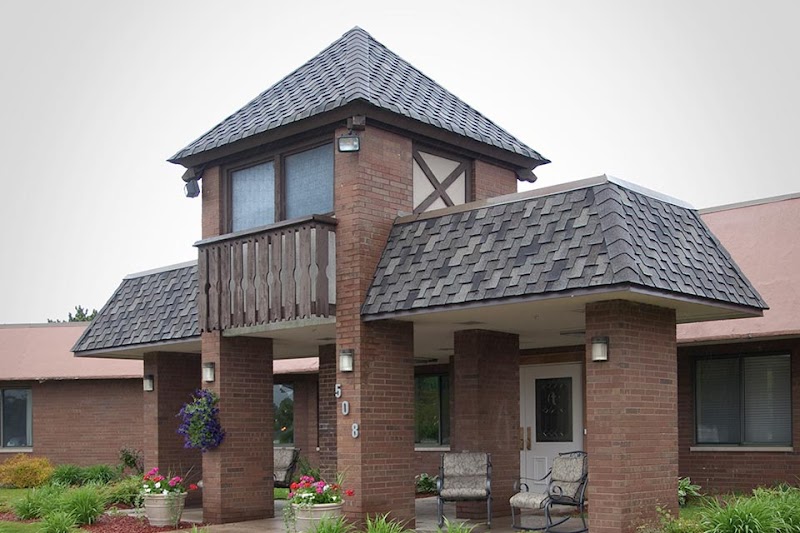
How is Medilodge Of Gaylord Staffed?

CMS rates Medilodge of Gaylord's staffing level at 4 out of 5 stars, which is above average compared to other nursing homes. Staff turnover is 41%, compared to the Michigan average of 46%. This relatively stable workforce can support continuity of care.

What Have Inspectors Found at Medilodge Of Gaylord?

State health inspectors documented 39 deficiencies at Medilodge of Gaylord during 2022 to 2025. These included: 1 that caused actual resident harm, 37 with potential for harm, and 1 minor or isolated issues. Deficiencies causing actual harm indicate documented cases where residents experienced negative health consequences.
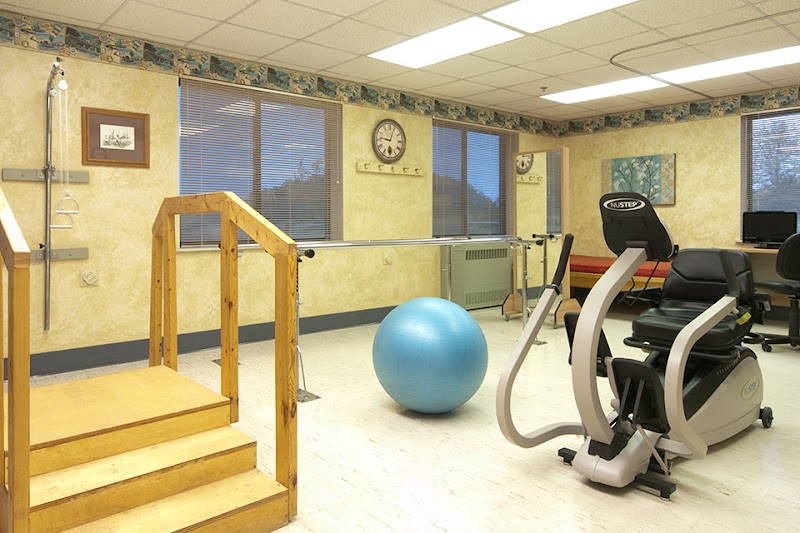
Who Owns and Operates Medilodge Of Gaylord?

Medilodge of Gaylord is owned by a for-profit company. For-profit facilities operate as businesses with obligations to shareholders or private owners. The facility is operated by MEDILODGE, a chain that manages multiple nursing homes. With 96 certified beds and approximately 84 residents (about 88% occupancy), it is a smaller facility located in Gaylord, Michigan.

How Does Medilodge Of Gaylord Compare to Other Michigan Nursing Homes?

Compared to the 100 nursing homes in Michigan, Medilodge of Gaylord's overall rating (2 stars) is below the state average of 3.1, staff turnover (41%) is near the state average of 46%, and health inspection rating (2 stars) is below the national benchmark.

What Should Families Ask When Visiting Medilodge Of Gaylord?

Based on this facility's data, families visiting should ask: "What safeguards and monitoring systems are in place to protect residents from abuse or neglect?" "Can I visit during a mealtime to observe dining assistance and food quality?" "How do you handle medical emergencies, and what is your hospital transfer rate?" "Can I speak with family members of current residents about their experience?" These questions are particularly relevant given the substantiated abuse finding on record.

Is Medilodge Of Gaylord Safe?

Based on CMS inspection data, Medilodge of Gaylord has documented safety concerns. The facility has 1 substantiated abuse finding (meaning confirmed case of resident harm by staff or other residents). The facility has a 2-star overall rating and ranks #100 of 100 nursing homes in Michigan. Families considering this facility should ask detailed questions about what corrective actions have been taken since these incidents.

Do Nurses at Medilodge Of Gaylord Stick Around?

Medilodge of Gaylord has a staff turnover rate of 41%, which is about average for Michigan nursing homes (state average: 46%). Moderate turnover is common in nursing homes, but families should still ask about staff tenure and how the facility maintains care continuity when employees leave.

Was Medilodge Of Gaylord Ever Fined?

Medilodge of Gaylord has no federal fines on record. CMS issues fines when nursing homes fail to meet care standards or don't correct problems found during inspections. The absence of fines suggests the facility has either maintained compliance or corrected any issues before penalties were assessed. This is a positive indicator, though families should still review recent inspection reports for the full picture.

Is Medilodge Of Gaylord on Any Federal Watch List?

Medilodge of Gaylord is not on any federal watch list. The most significant is the Special Focus Facility (SFF) program, which identifies the bottom 1% of nursing homes nationally based on persistent, serious quality problems. Not being on this list means the facility has avoided the pattern of deficiencies that triggers enhanced federal oversight. This is a positive indicator, though families should still review the facility's inspection history directly.