Medilodge at the Shore
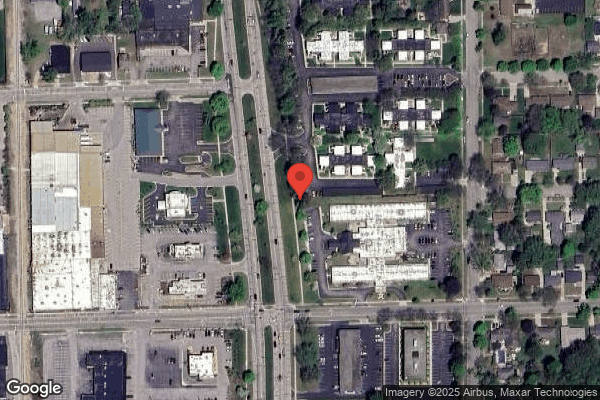
900 South Beacon Boulevard, Grand Haven, MI 49417 (616) 846-1850
For profit - Corporation 126 Beds MEDILODGE Data: November 2025
Trust Grade
40/100
#296 of 422 in MI
Last Inspection: August 2025

Inspected within the last 6 months. Data reflects current conditions.

Overview

Medilodge at the Shore has a Trust Grade of D, indicating below-average performance with some significant concerns. They rank #296 out of 422 nursing homes in Michigan, placing them in the bottom half of facilities, and #9 out of 11 in Ottawa County, meaning only two local options are worse. Unfortunately, the facility is worsening, with issues increasing from 14 in 2024 to 15 in 2025. Staffing is a concern, with a low rating of 2 out of 5 stars and a turnover rate of 57%, which is higher than the state average. However, they have not incurred any fines, suggesting compliance with regulations in some areas. Specific incidents included a resident sustaining a wrist fracture due to inadequate supervision and a failure to follow infection control protocols during care for another resident, highlighting both serious and concerning deficiencies in care. Overall, while there are no fines and some RN coverage, families should be aware of the staffing issues and the facility's declining trend in performance.
Trust Score
D
40/100
In Michigan
#296/422
Bottom 30%
Safety Record
Moderate
Needs review
Inspections
Getting Worse
14 → 15 violations
Staff Stability
⚠ Watch
57% turnover. Above average. Higher turnover means staff may not know residents' routines.
Penalties
✓ Good
No fines on record. Clean compliance history, better than most Michigan facilities.
Skilled Nurses
○ Average
Each resident gets 33 minutes of Registered Nurse (RN) attention daily — about average for Michigan. RNs are the most trained staff who monitor for health changes.
Violations
⚠ Watch
36 deficiencies on record. Higher than average. Multiple issues found across inspections.
★★☆☆☆
2.0
Overall Rating
★★☆☆☆
2.0
Staff Levels
★★☆☆☆
2.0
Care Quality
★★☆☆☆
2.0
Inspection Score
Stable
2024: 14 issues
2025: 15 issues

The Good

  • Full Sprinkler Coverage · Fire safety systems throughout facility
  • No fines on record

Facility shows strength in fire safety.

The Bad

2-Star Overall Rating

Below Michigan average (3.1)

Below average - review inspection findings carefully

Staff Turnover: 57%

11pts above Michigan avg (46%)

Frequent staff changes - ask about care continuity

Chain: MEDILODGE

Part of a multi-facility chain

Ask about local staffing decisions and management

Staff turnover is elevated (57%)

9 points above Michigan average of 48%

The Ugly 36 deficiencies on record

1 actual harm
Aug 2025 10 deficiencies
CONCERN (D)

Potential for Harm - no one hurt, but risky conditions existed

Deficiency F0658 (Tag F0658)

Could have caused harm · This affected 1 resident

**NOTE- TERMS IN BRACKETS HAVE BEEN EDITED TO PROTECT CONFIDENTIALITY** Based on interview and record review, the facility failed to follow professional standards for medication administration for 3 r...

Read full inspector narrative →
**NOTE- TERMS IN BRACKETS HAVE BEEN EDITED TO PROTECT CONFIDENTIALITY** Based on interview and record review, the facility failed to follow professional standards for medication administration for 3 residents (R124, R81 and R86) out of 8 residents reviewed for nursing professional standards of practice.Findings:Resident #124 (R124)Review of an admission Record revealed R124 was a [AGE] year-old male, admitted to the facility on [DATE].Review of R124's Order Summary dated 8/1/25-8/6/24 revealed, HYDROcodone-Acetaminophen (Norco) Oral Tablet 7.5-325 MG.Give 1 tablet by mouth every 4 hours as needed for breakthrough pain.Review of R124's Control Substance Record revealed that on 8/6/24 a dose of Norco was administered at 6:00 AM and a dose of Norco was administered at 9:00 AM. (Administered 3 hours apart).Review of R124's August Medication Administration Record revealed that the Norco was documented as administered for the 6:00 AM or the 9:00 AM doses.Review of R124's Electronic Medical Record revealed no documentation for a rationale for administering the Norco outside of the ordered 4 hours.Resident #81(R81)Review of an admission Record revealed R81 was a [AGE] year-old male, admitted to the facility on [DATE].Review of R81's Order Summary dated 7/7/25 revealed, Percocet Oral Tablet 10-325 MG (Oxycodone w/ Acetaminophen) Controlled Drug Give 1 tablet by mouth every 4 hours for pain. To be administered at 12:00 AM, 4:00 AM, 8:00 AM, 12:00 PM, 4:00 PM, and 8:00 PM.Review of R81's Control Substance Record revealed:*On 8/8/25 a dose of Percocet was administered at 5:36 PM (approximately 1.5 hours after it was due) and the subsequent dose administered at 7:50 PM. The doses of Percocet were administered approximately 2 hours apart.*On 8/10/25 a dose of Percocet was administered at 5:30 PM (approximately 1.5 hours after it was due) and the subsequent dose was administered at 7:25 PM. The doses of Percocet were administered approximately 2 hours apart.*On 8/11/24 a dose of Percocet was administered at 4:30 PM and the subsequent dose was administered at 7:00 PM. The doses of Percocet were administered approximately 2.5 hours apart.Review of R81's's Electronic Medical Record revealed no documentation for a rationale for administering the Percocet 2-2.5 hours apart instead of the ordered 4 hours.Resident #86 (R86)Review of an admission Record revealed R86 was a [AGE] year-old male, admitted to the facility on [DATE].Review of R86's Order Summary dated 2/3/25 revealed, Metoprolol Tartrate Tablet 50 MG Give 25 mg by mouth every morning and at bedtime for HTN (hypertension) Hold for systolic (top blood pressure number) < (less than) 100 or hold if HR (heart rate) < 60. To be administered in the morning and in the evening.Review of R86's Blood Pressure Summary, Pulse Summary, and August Medication Administration Record (MAR) revealed:*On 8/4/25 R86's blood pressure and pulse were not assessed prior to the evening dose of Metoprolol and morning results of the blood pressure and pulse assessments were documented in the MAR (indicating the assessments were completed prior to the evening dose of Metoprolol).*On 8/6/25 R86's blood pressure and pulse were not assessed prior to the evening dose of Metoprolol and morning results of the blood pressure and pulse assessments were documented in the MAR.*On 8/9/25 R86's blood pressure and pulse were not assessed prior to the evening dose of Metoprolol and morning results of the blood pressure and pulse assessments were documented in the MAR.During an interview via email on 08/15/2025 at 9:25 AM, Nursing Home Administrator (NHA) confirmed the above errors and reported there was no additional information/documentation to disprove the medication errors.Review of the facility policy Medication Administration dated 1/17/23 revealed, .8. Obtain and record vital signs, when applicable or per physician orders. When applicable, hold medication for those vital signs outside the physician's prescribed parameters.
CONCERN (D)

Potential for Harm - no one hurt, but risky conditions existed

Pressure Ulcer Prevention (Tag F0686)

Could have caused harm · This affected 1 resident

**NOTE- TERMS IN BRACKETS HAVE BEEN EDITED TO PROTECT CONFIDENTIALITY** Based on observation, interview and record review, the facility failed to follow policies and procedures and physician orders fo...

Read full inspector narrative →
**NOTE- TERMS IN BRACKETS HAVE BEEN EDITED TO PROTECT CONFIDENTIALITY** Based on observation, interview and record review, the facility failed to follow policies and procedures and physician orders for pressure ulcer care for 1 (R108) of 4 residents reviewed for pressure ulcers.Findings include:Review of a policy titled Pressure Injury Prevention and Management dated 3/20/24 revealed: . 4. Interventions for Prevention and to Promote Healing: a. the interdisciplinary team shall develop a relevant care plan that includes measurable goals for prevention and management of pressure injuries with appropriate interventions. b. Interventions will be based on specific factors identified in the risk assessment, skin assessment, and any pressure assessment . Basic or routine care interventions could include, but are not limited: i. Redistribute pressure (such as repositioning, protecting and/or offloading heels, ect.); . iii. Provide appropriate, pressure-redistributing, support surfaces; . f. Interventions will be documented in the care plan and communicated to all relevant staff. 5. Monitoring: a. The attending physician will be notified of: i. The presence of a new pressure injury upon identification. ii. The progression towards healing, lack of healing, or worsening of any pressure injuries weekly. Review of a Face Sheet revealed R108 has pertinent diagnoses of spastic quadriplegic cerebral palsy and neuromuscular scoliosis. Review of the Minimum Data Set (MDS) dated [DATE] for R108 revealed she is cognitively intact, nonverbal, bilateral upper and lower extremities are impaired, and is totally dependent on staff for care. R108 was at risk for pressure ulcers (PU) and had none at this time. R108 required nutrition through tube feeding. Review of a risk for impaired skin integrity care plan for R108 initiated on 12/23/23 and revised on 7/18/25 revealed on 7/18/25 a re-occurred stage 4 PU to sacrum. Interventions dated 12/23/23 included but not limited to: Assist resident with turning and repositioning as needed (does not indicate an objective time frame). On 1/5/24 If resident refuses interventions/treatments, encourage compliance to minimize skin impairment.Review of a Skin assessment dated [DATE] for R108 revealed a new stage 4 pressure ulcer reopened on her sacrum on 7/18/25. On 8/12/25 R108's wound measured 4.7 cm (centimeters) x 2.1 cm x 2.8 cm x 0.1 depth and on 7/18/25 the pressure ulcer measured < 0.1cm x 0.4 cm x 0.4 cm x 0.1 cm depth. A significant increase between 7/18/25 and 8/12/25.During an observation on 8/12/25 at 9:19 AM, R108 was observed sitting upright in the common area of the hallway in an electric wheelchair with tube feeding infusing. Shortly after observation, R108 was taken to her room for oral care and came back out to the common area sitting upright in her electric wheelchair.During the following observations on 8/12/25 at 12:00 PM, 1:50 PM, and 4:07 PM, R108 was observed in the same common area in her electric wheelchair sitting upright. During an observation on 8/13/25 at 8:15 and 8:42 AM, R108 was in her room lying on her back at a 45-degree angle with the tube feeding infusing. (this position puts pressure on sacrum)During an observation on 8/13/25 at 10:17 AM, Certified Nursing Assistant (CNA) F provided morning care for R108 and transferred her to her electric wheelchair. R108 observed sitting upright in the common area of the hallway when care was completed. During an observation and an interview on 8/13/25 at 2:24 PM, CNA K and CNA L were questioned about R108 observed in the common area all day without being repositioned. Both CNAs reported R108's wheelchair does recline back but if R108 reclined, she would not be able to people watch or see her iPad that R108 really enjoys. They indicated that R108 will get upset if she cannot do that. Review of the Nursing Progress notes for R108 revealed no documentation indicating resident refused to be repositioned. Review of the July 2025 Medication Administration and Treatment Administration Record (MAR/TAR) for R108 revealed on 7/19/25 an order to Cleanse sacral wound with wound cleanser. Apply small piece of calcium alginate to wound bed. Cover with foam dressing as needed for disruption, was discontinued on 7/23/25 and was not documented as done all 5 days before it was discontinued. On 7/23/25 a new order to cleanse sacral wound with soap and water, apply Triad wound paste, every dayshift was not documented as done on 7/24, and on 7/29 and 7/31 it was coded not done and to see the nursing notes. Review of the August 2025 MAR/TAR for R108 revealed the sacral wound care was not done on 8/2, 8/3, 8/7, and 8/8 with no supporting documentation as to why. Review of the nursing notes do not address the reason wound care was not done on the above indicated dates in July and August and no indication the physician was notified. Review of the Practitioner progress notes since the onset of R108's pressure ulcer on 7/23/25 revealed on 8/1/25 the resident was seen, and no practitioner oversight of the wound was documented. During an observation on 8/13/25 at 10:17 AM, Certified Nursing Assistant (CNA) F provided peri care for R108 when a 4x4 dressing was observed on R108's sacrum and the right lower corner of the dressing was not adhered to the resident. CNA F continued to dress R108 and transfer her to the wheelchair.In an interview on 8/14/25 at 11:29 AM, Registered Nurse (RN) G was questioned about R108's pressure ulcer and was not aware she had one and was not aware of any dressings that needed to be done until she looked in the medical record during this interview. RN G reported the float nurses provide wound care for the residents. RN G reported she was not aware that when she assisted R108 to the wheelchair the day before with CNA F that R108 had a dressing on her coccyx that was not adhered to the resident on one side. RN G reported she would expect the CNAs to report those things to her. RN G was not sure if R108 has a special cushion in her wheelchair for pressure ulcer care. When queried about R108 being up in her wheelchair all day and not being repositioned, RN G reported staff should be turning her every 2 hours. RN G reported R108's wheelchair does tilt back but the staff do not want to upset the resident by doing so.In an interview on 8/14/25 at 1:32 PM, the Director of Nursing (DON) reported R108 does have a recurrent pressure ulcer on her sacrum and is followed by their wound care team once a week. The DON reported R108 should be repositioned every 2 hours but does not like being laid down because she will scream and cry. Staff will reposition the best they can. The DON was informed that R108 was not repositioned after she got out of bed at approximately 10:00 AM the day before and the DON reported that R108 really likes her iPad and cannot use it when she is reclined back. When questioned about R108 only being able to visually engage in the iPad and positioning it so it is in her visual field, the DON did not have an answer. When asked about the CNAs documenting they repositioned R108 per the plan of care with several entries of the same time stamp, the DON reported it can be hard to document in real time. The DON did not know why dressing changes for R108 were missed and reported there is a breakdown in communication sometimes between the floor nurses and the float nurses.
CONCERN (D)

Potential for Harm - no one hurt, but risky conditions existed

Deficiency F0688 (Tag F0688)

Could have caused harm · This affected 1 resident

**NOTE- TERMS IN BRACKETS HAVE BEEN EDITED TO PROTECT CONFIDENTIALITY** Based on observation, interview and record review, the facility failed to follow physician orders and the care plan for 1 (R25) ...

Read full inspector narrative →
**NOTE- TERMS IN BRACKETS HAVE BEEN EDITED TO PROTECT CONFIDENTIALITY** Based on observation, interview and record review, the facility failed to follow physician orders and the care plan for 1 (R25) of one resident reviewed for range of motion. Findings include:Review of a Face Sheet revealed R25 had pertinent diagnoses of hemiplegia and hemiparesis (one sided weakness), vascular dementia, and pseudobulbar affect (uncontrolled episodes of crying). Review of the Minimum Data Set (MDS) dated [DATE] revealed R25 is moderately cognitively impaired and has an impairment on the upper and lower extremities on one side. Review of the Order Summary for R25 revealed on 2/3/25 an order for a splint to the left upper extremity is to be placed upon rising as the resident allows, removed for lunch, reapplied after lunch and removed at bedtime. During an observation on 8/12/25 at 10:17 AM, R25 was observed in bed with her left hand contracted. When asked if she had splints, R25 said they never did it and didn't know where they were. During an observation on 8/12/25 at approximately 1:00 PM after lunch, R25 did not have any splints on her left hand. During an observation on 8/13/25 at approximately 1:00 PM, R25 was observed not wearing her splint in her left hand. Review of the risk for impaired skin integrity Care Plan for R25 revealed: interventions that may contribute to wound development with use of braces to left hand and left leg/foot for contractures ., initiated 8/23/23. Interventions included: If resident refuses interventions/treatments, encourage compliance to minimize skin impairment, initiated 8/23/23. Review of the Resident has an impaired musculoskeletal status related to contractures of left elbow, left wrist, left hand, left ankle, abnormal posture, osteoporosis. Resident often declines/removes splint, last revised on 7/25/24. Interventions included but not limited to: Apply and remove splints as ordered, initiated on 8/23/23. During an observation and an interview on 8/13/25 at 1:11 PM, the Physical Therapy Director (PT) Z reported that according to R25's care plan, staff are to apply splints to R25's left extremity twice a day. PT Z was informed that R25 has not had them on for 2 days now and did not know where they were. At this time, PT Z went to R25's room and found the splint in her top drawer. R25 allowed PT Z to put them on without resistance or difficulty. Review of a 30-day documentation dated 7/14/25 to 8/12/25 for R25 regarding Splint/Brace assistance: L (left) hand orthotic (WHO) to left upper extremity to be applied in AM during morning care and removed at HS (bedtime) during care or per resident's tolerance (resident removes at times). During this time, there were 21 times it was documented Did not occur. There was no follow up documentation to show the resident was reapproached or the potential root cause of refusals by a licensed professional. In an interview on 8/14/25 at 11:29 AM, Registered Nurse (RN) G was questioned about R25 not wearing her splints. RN G reported that R25 can put up a fight at times when its time to put on her splints. RN G reported that she does expect the Certified Nursing Assistants (CNAs) to follow the care plan, and if the resident refuses, she expects them to tell her so she can reapproach or try another time. If the resident still refuses, the nurse should document it.
CONCERN (D)

Potential for Harm - no one hurt, but risky conditions existed

Tube Feeding (Tag F0693)

Could have caused harm · This affected 1 resident

**NOTE- TERMS IN BRACKETS HAVE BEEN EDITED TO PROTECT CONFIDENTIALITY** Based on observation, interview and record review, the facility failed to have policies and procedures for tube feed positioning...

Read full inspector narrative →
**NOTE- TERMS IN BRACKETS HAVE BEEN EDITED TO PROTECT CONFIDENTIALITY** Based on observation, interview and record review, the facility failed to have policies and procedures for tube feed positioning, follow standards of practice for positioning, and follow physician orders for 1 (R108) of 2 residents reviewed for tube feedings.Findings include:Review of a policy titled Feeding Tubes last revised 10/15/24 revealed: . 8. The plan of care will reflect the use of a feeding tube and potential complications. 9. The facility will utilize the Registered Dietician in estimating and calculating a resident's daily nutritional and hydration needs. This policy does not address the positioning of a resident while receiving tube feeding.Review of the Nutrients Journal, ([NAME], J. (2022). Enteral nutrition overview. Nutrients, 14(11th ed.), 11. https://doi.org/10.3390/nu14112180) revealed The head of the bed should be elevated 30-45 degrees, if possible, for any patient in the supine position who is at risk for aspiration [44-49].Review of a Face Sheet revealed R108 has pertinent diagnoses of spastic quadriplegic cerebral palsy and neuromuscular scoliosis. Review of the Minimum Data Set (MDS) dated [DATE] for R108 revealed she is cognitively intact, nonverbal, bilateral upper and lower extremities are impaired, and is totally dependent on staff for care. R108 was at risk for pressure ulcers (PU) and had none at this time. R108 required nutrition through tube feeding. During an observation on 8/13/25 at 10:17 AM, Certified Nursing Assistant (CNA) F was providing morning are for R108. At this time R108 was receiving a tube feeding (TF) at 50 mL (milliliters)/hour (hr). CNA F lowered the head of the bed flat while it was infusing. CNA F continued to clean and dress R108 alone and R108 was not able to assist. The tubing line was taut when R108 was turned to the left side with one hand of CNA F and his other hand was providing care. When CNA F completed care, the TF machine read complete, and the nurse came in to disconnect the TF. In an interview on 8/14/25 at 11:29 AM, Registered Nurse (RN) G was questioned about R108s tube feeding and reported that the TF should not be infusing when the head of the bed is lower than 30 degrees and the CNA should have informed the nurse so she could turn it off or disconnect the resident during care. When asked about R108 needing 2 staff for ADL (activities of daily living) care but observed only one staff providing care, RN G reported there would be less potential for mishaps if R108 had 2 staff providing care. RN G reported they have plenty of staff and it was just a matter of coordinating care with other staff. Review of a Nursing progress note dated 2/1/25 for R108 revealed a new event started on 1/23/25- Location of skin area being documented: peg tube site continues to be red with drainage present .Review of the Nursing progress notes dated 4/19/25 at 9:23 PM for R108 revealed: . While staff continued ADL care feeding tube became displaced. On-call provider notified and ok to send to ER for replacement.Review of a Practitioner progress note dated 6/17/25 for R108 revealed: . cerebral palsy, quadriplegia dysphagia with PEG tube. She is unable to provide any information. Reportedly had problems with her PEG tube and was sent to hospital and had that replaced. No reported issues since.Review of the July 2025 Medication Administration/Treatment Administration Record (MAR/TAR) for R108 revealed an order dated 6/16/25 to infuse Jevity 1.5 at 50 mL/hr (milliliters per hour) x 18 hours until a full dose of 900 mL was administered and was documented R108 received only 750 mLs from 7/1/25 to 7/31/25. No supporting documentation supporting the change in the amount received. Review of the August MAR/TAR for R108 revealed an order dated 7/17/25 to cleanse the gastrostomy tube (G-tube) site with soap and water daily and as needed. This was not done on 8/2, 8/3, 8/7, and 8/8. Another order dated 6/16/25 to infuse Jevity 1.5 at 50 mL/hr (milliliters per hour) x 18 hours until a full dose of 900 mL (milliliters) was administered and 8/1/25-8/7/25 only had 750 mL documented as administered. Review of the Nursing progress notes dated 7/30/25 at 8:19 AM for R108 revealed: Nurse found resident unhooked from tube feed this morning. Resident refusing to allow me to hook her up at this time. Tube flushing ok. No follow up documentation and incident report provided. Review of the Practitioner progress notes dated 8/5/25 revealed: Nurse reported yesterday evening that resident had a large emesis of TF formula. Pump was found to be set at a higher rate at that time, so TF was turned off and holding at this time. She was sitting up at time of emesis so at this time there is no concern for aspiration. Order given to hold x 2 hours, and if there were no further episodes of emesis, may resume TF @ the ordered 50ml/hr. Nurse then called back later to report that she obtained 260ml residual of feeding in stomach 2 hours after incident. Instructed to discard residual, give Zofran 4mg a6h as needed, then if no further emesis 1 hour after Zofran given, may resume TF. Nurse voiced understanding. Review of the Nursing progress notes dated 8/5/25 at 2:32 AM for R108 revealed: pt's (patient's) complaining of stomach pain, residual l volume came to 250 in PEG Tube. Tube feed is currently on hold. Called the on-call provider who gave verbal orders for Zofran 4mg q6 hours to help with stomach pain. Review of the Dietary Progress notes for R108 dated 8/8/25 revealed R108 had a stage 4 sacral pressure ulcer and requires enteral supplemental nutrition via percutaneous endoscopic gastric (PEG) tube and is to receive Jevity (tube feed supplement) 1.5 at 50 milliliters (mL) for 18 hours for a total of 900 mLs and 160 mLs of fluid 5 times a day before/after medications and tube feedings (TF).Review of the ADL Care Plan for R108 revealed she required 2 people to assist with care. Review of the overall Care Plan for R108 revealed it does not address the position of the HOB while the tube feeding is running.In an interview on 8/14/25 at 11:29 AM, Registered Nurse (RN) G reported R108 should be a 2 person assist with ADL care and bed mobility due to her tube feeding and her foley catheter. Having 2 staff assisting with care would reduce the chances of any mishaps while repositioning her. In an interview on 8/14/25 at 1:32 PM, the Director of Nursing (DON) reported the CNAs are to get the nurses to turn off the tube feeding prior to providing care that requires the HOB to be lower than 30 degrees and to wait a little longer after that.
CONCERN (D)

Potential for Harm - no one hurt, but risky conditions existed

Deficiency F0712 (Tag F0712)

Could have caused harm · This affected 1 resident

**NOTE- TERMS IN BRACKETS HAVE BEEN EDITED TO PROTECT CONFIDENTIALITY** Based on interview and record review, the facility failed to ensure that the physician, or non-physician practitioner conducted ...

Read full inspector narrative →
**NOTE- TERMS IN BRACKETS HAVE BEEN EDITED TO PROTECT CONFIDENTIALITY** Based on interview and record review, the facility failed to ensure that the physician, or non-physician practitioner conducted a face-to-face visit at least once every 60 days after the initial 90 days post-admission visits for 1 of 23 sampled residents (R7). Findings include:A review of R7's admission Record, dated 8/14/25, revealed they were a [AGE] year-old resident admitted to the facility on [DATE]. In addition, R7 had multiple diagnoses that included dementia, diabetes, bipolar disorder, depression, and hepatic encephalopathy (a loss of brain function when a damaged liver does not remove toxins from the blood). A review of R7's Minimum Data Set (MDS) (a tool used for assessing a resident's care needs), dated 7/11/25, revealed a Brief Interview for Mental Status (BIMS) (a scale used to determine a resident's cognitive status) score of 0 which revealed R7 was severely cognitively impaired. A review of R7's electronic medical record (EMR), dated 10/3/24 to 8/14/25, failed to reveal that a physician (or non-physician practitioner- a nurse practitioner, a physician assistant, or a clinical nurse specialist) had conducted face-to-face visit with R7 since 2/27/25 (over 5 months prior to the survey). During an interview on 08/14/2025 at 3:30 PM, the Director of Nursing (DON) was informed that R7 did not have any physician visits notes in their EMR after 2/27/25. The DON stated R7 also receives physician services from an outside company. She stated she would call them and see if they had any documentation that a physician or non-physician practitioner from that company had conducted a face-to-face visit with R7 since 2/27/25. During a second interview on 08/14/2025 at 4:00 PM, the DON stated the outside company that also provides physician services to R7 sent her documentation that a non-physician practitioner (a nurse practitioner) had conducted a face-to-face visit with R7 on 6/25/25, 7/16/25, and 8/6/25. The DON also stated that R7 had been hospitalized from [DATE] to 6/24/25. The DON verbally confirmed that R7 had not been seen by a physician or non-physician practitioner between 2/27/25 and 6/1/25 (a period of 93 days prior to hospitalization). The DON also confirmed that the facility did not have any documentation that R7 was seen by the facility's physician or non-physician practitioner during that time period. The DON verbally agreed with the surveyor that a physician or non-physician practitioner should have had a face-to-face visit with R7 by 4/27/25, but no later than 5/4/25.
CONCERN (D)

Potential for Harm - no one hurt, but risky conditions existed

Drug Regimen Review (Tag F0756)

Could have caused harm · This affected 1 resident

**NOTE- TERMS IN BRACKETS HAVE BEEN EDITED TO PROTECT CONFIDENTIALITY** Based on interview and record review, the facility failed to ensure the pharmacist sent a report for a medication recommendation...

Read full inspector narrative →
**NOTE- TERMS IN BRACKETS HAVE BEEN EDITED TO PROTECT CONFIDENTIALITY** Based on interview and record review, the facility failed to ensure the pharmacist sent a report for a medication recommendation/comment and/or a physician reviewed the pharmacy recommendation for 1 of 5 residents (R7) reviewed for monthly pharmacy medication regimen reviews. Findings include:A review of R7's admission Record, dated 8/14/25, revealed they were a [AGE] year-old resident admitted to the facility on [DATE]. In addition, R7 had multiple diagnoses that included dementia, bipolar disorder, and depression. A review of R7's Minimum Data Set (MDS) (a tool used for assessing a resident's care needs), dated 7/11/25, revealed a Brief Interview for Mental Status (BIMS) (a scale used to determine a resident's cognitive status) score of 0 which revealed R7 was severely cognitively impaired. A review of R7's Pharmacy Medication Review Progress Note, dated 3/31/25, revealed that the line for Comment/Recommendation noted-see report was checked. This indicated that the pharmacist had made a recommendation to the physician or had noted an irregularity in R7's medication regimen. A review of R7's electronic medical record (EMR), dated 3/1/25 to 8/14/25, failed to reveal documentation (e.g., a Physician Recommendations for, a Nursing Recommendation form, a progress note, a physician note) that would indicate what the pharmacy comment/recommendation was on 3/31/25. During an interview on 08/14/2025 at 3:18 PM, the Director of Nursing (DON) was informed that the pharmacist had made a comment/recommendation on 3/31/25, however the report and/or any other documentation that would indicate what the comment/recommendation was could not be located in R7's EMR. The DON stated the report should have been scanned into R7's EMR under the Miscellaneous (Misc) tab under the subheading Pharmacy. The DON stated she would look and see if she could locate the 3/31/25 pharmacy recommendation report and she would provide a copy to the surveyor, if she could locate it. During a second interview on 08/14/2025 at 3:30 PM, the DON stated she had called the outside company that also provides physician services to R7 to see if they had a copy of the pharmacy report that would indicate what their comment/recommendation was on 3/31/25. The DON indicated during the interview that the facility has had issues with the outside company providing documentation to them in the past, but she would provide copies of any documentation that they sent to the survey team. During a third interview on 08/14/2025 at 4:00 PM, the DON stated the outside company that also provides physician services to R7 had said they did not have a copy of the report that would reveal what the pharmacist's recommendation/comment was for 3/31/25. The DON stated because the facility did not have a copy of that report and the outside company did not have a copy of that report, then she had no way of knowing if the pharmacy sent a report, what the pharmacy recommendation/comment was, and if the physician was ever made aware of it. A review of the facility's Addressing Medication Regimen Review Irregularities policy, reviewed/revised 12/28/23, revealed, It is the policy of this facility to provide a Medication Regimen Review (MRR) for each resident to identify irregularities and respond in a timely manner to prevent the occurrence of an adverse drug event. 4. The pharmacist must report any irregularities to the attending physician, the facility's medical director and director of nursing, and the reports must be acted upon. Any irregularities noted by the physician during this review must be documented on a separate, written report which may be in paper or electronic form. The attending physician must document in the resident medical record that the identified irregularity has been reviewed and what, if any, action has been taken to address it. If there is to be no change in the medication, the attending physician should document his or her rationale in the resident's medical record. The report should be submitted to the DON within 10 working days of the review.
CONCERN (D)

Potential for Harm - no one hurt, but risky conditions existed

Deficiency F0761 (Tag F0761)

Could have caused harm · This affected 1 resident

Based on observation and interview, the facility failed to appropriately label medications in 1 of 2 medication carts inspected (Southwest Medication Cart).Findings include:During an inspection of the...

Read full inspector narrative →
Based on observation and interview, the facility failed to appropriately label medications in 1 of 2 medication carts inspected (Southwest Medication Cart).Findings include:During an inspection of the Southwest Medication Cart with Registered Nurse (RN) B on 08/12/2025 at 4:20 PM, the following observations and interview were made: - A box of Desmopressin Nasal Spray 10 mcg/ 0.1 ml (10 micrograms per 0.1 milliliters) was observed with Resident #7's name on it. However, the nasal spray container inside the box was not labeled with R7's name or any other identifying information that would indicate the spray was his if it became separated from the box. - A box of fluticasone and salmeterol was observed with Resident #32's name on it. However, the diskus inside the box was not labeled with R32's name or any other identifying information that would indicate the spray was hers if it became separated from the box. - RN B stated that the pharmacy usually labels the individual vials, inhalers, and diskus' in the boxes with the resident's name and other identifying information in case the vial/ inhaler/diskus becomes separated from the box. RN B stated if the vial/inhaler/diskus was not labeled by pharmacy, then she would label it with the resident's name. She also stated she does this in case the vial/inhaler/diskus becomes separated from their respective boxes, so she knows who they belong to. RN B further stated this was especially important if more than one resident had the same medications. She stated otherwise, It would be just plain gross if a resident used another resident's inhaler or diskus. During an interview on 08/13/2025 at 8:30 AM, Licensed Practical Nurse (LPN) D stated she labels the individual nasal sprays, diskus', and inhalers with the residents' names. LPN D stated the medication labels on the boxes contain a smaller label with the resident's identifying information that can be peeled off the larger label and placed on the individual nasal spray, diskus, and inhaler in the box. She further stated if a smaller label was not available, then she would write the resident's name on the individual inhaler, diskus, or nasal spray. LPN D stated the reason that the individual nasal sprays, inhaler, or diskus' should be labeled with the residents' name was in case they fall out of the box. That way I know whose they are. During an interview on 08/14/2025 at 2:25 PM, RN C stated medications in boxes in the medication cart should be labeled on the vial/inhaler/diskus with the resident's name and the date opened. She stated this should be done in case the vial/inhaler/diskus fell out of the box and they need to identify who the vial/inhaler/diskus belonged to.
CONCERN (D)

Potential for Harm - no one hurt, but risky conditions existed

Medical Records (Tag F0842)

Could have caused harm · This affected 1 resident

**NOTE- TERMS IN BRACKETS HAVE BEEN EDITED TO PROTECT CONFIDENTIALITY** Based on interview and record review, the facility failed to ensure the medical records for 1 of 23 sample residents (R7) was co...

Read full inspector narrative →
**NOTE- TERMS IN BRACKETS HAVE BEEN EDITED TO PROTECT CONFIDENTIALITY** Based on interview and record review, the facility failed to ensure the medical records for 1 of 23 sample residents (R7) was complete and accurate. Findings include:A review of R7's admission Record, dated 8/14/25, revealed they were a [AGE] year-old resident admitted to the facility on [DATE]. In addition, R7 had multiple diagnoses that included dementia, bipolar disorder, and depression. A review of R7's Minimum Data Set (MDS) (a tool used for assessing a resident's care needs), dated 7/11/25, revealed a Brief Interview for Mental Status (BIMS) (a scale used to determine a resident's cognitive status) score of 0 which revealed R7 was severely cognitively impaired. A review of R7's Pharmacy Medication Review Progress Note, dated 3/31/25, revealed that the line for Comment/Recommendation noted-see report was checked. This indicated that the pharmacist had made a recommendation to the physician or had noted an irregularity in R7's medication regimen. A review of R7's electronic medical record (EMR), dated 3/1/25 to 8/14/25, failed to reveal documentation (e.g., a Physician Recommendations for, a Nursing Recommendation form, a progress note, a physician note) that would indicate what the pharmacy comment/recommendation was on 3/31/25. During an interview on 08/14/2025 at 3:18 PM, the Director of Nursing (DON) was informed that the pharmacist had made a comment/recommendation on 3/31/25, however the report and/or any other documentation that would indicate what the comment/recommendation was could not be located in R7's EMR. The DON stated the report should have been scanned into R7's EMR under the Miscellaneous (Misc) tab under the subheading Pharmacy. The DON stated she would look and see if she could locate the 3/31/25 pharmacy recommendation report and she would provide a copy to the surveyor, if she could locate it. A second review of R7's EMR, dated 10/3/24 to 8/14/25, failed to reveal that a physician (or non-physician practitioner- a nurse practitioner, a physician assistant, or a clinical nurse specialist) had conducted a face-to-face visit with R7 since 2/27/25 (over 5 months prior to the survey). During a second interview on 08/14/2025 at 3:30 PM, the DON stated she had called the outside company that also provides physician services to R7 to see if they had a copy of the pharmacy report that would indicate what their comment/recommendation was on 3/31/25. She stated she could not locate this documentation in R7's EMR. The DON was also informed that R7 did not have any physician visits notes in their EMR after 2/27/25. The DON stated she would call the outside company again and see if they had any documentation that a physician or non-physician practitioner from that company had conducted a face-to-face visit with R7 since 2/27/25. The DON indicated during the interview that the facility has had issues with the outside company providing documentation to them in the past, but she would provide copies of any documentation that they sent to the survey team. During a third interview on 08/14/2025 at 4:00 PM, the DON stated the outside company that also provides physician services to R7 sent her documentation that a non-physician practitioner (a nurse practitioner) had conducted a face-to-face visit with R7 on 6/25/25, 7/16/25, and 8/6/25. The DON stated the facility did not have this documentation prior to the outside company sending it to her. She also stated that the outside company had said they did not have a report that would reveal what the pharmacist's recommendation/comment was for 3/31/25. Clear, accurate, and accessible documentation is an essential element of safe, quality, evidence-based nursing practice. Documentation of nurses' work is critical as well for effective communication with each other and with other disciplines. It is how nurses create a record of their services for use by payors, the legal system, government agencies, accrediting bodies, researchers, and other groups and individuals directly or indirectly involved with health care. It also provides a basis for demonstrating and understanding nursing's contributions both to patient care outcomes and to the viability and effectiveness of the organizations that provide and support quality patient care. Documentation is sometimes viewed as burdensome and even as a distraction from patient care. High quality documentation, however, is a necessary and integral aspect of the work of registered nurses in all roles and settings. Timely documentation of the following types of information should be made and maintained in a patient's EHR (electronic health record) to support the ability of the health care team to ensure informed decisions and high quality care in the continuity of patient care. Communications with other health care professionals regarding the patient. Order acknowledgement, implementation, and management. Patient documentation frequently is used by professionals who are not directly involved with the patient's care. If patient documentation is not timely, accurate, accessible, complete, legible, readable, and standardized, it will interfere with the ability of those who were not involved in and are not familiar with the patient's care to use the documentation. (ANA's (American Nursing Association) Principles for Nursing Documentation- Guidance for Registered Nurses, 2010, www.nursingworld.org, retrieved on 7/27/25).
CONCERN (E)

Potential for Harm - no one hurt, but risky conditions existed

Deficiency F0883 (Tag F0883)

Could have caused harm · This affected multiple residents

**NOTE- TERMS IN BRACKETS HAVE BEEN EDITED TO PROTECT CONFIDENTIALITY** Based on interview and record review, the facility failed to provide the influenza immunizations and pneumococcal immunization p...

Read full inspector narrative →
**NOTE- TERMS IN BRACKETS HAVE BEEN EDITED TO PROTECT CONFIDENTIALITY** Based on interview and record review, the facility failed to provide the influenza immunizations and pneumococcal immunization per consent and the recommendation by the Centers for Disease Control and Prevention (CDC) for 4 residents (Resident #124, #11, #96, and #1) out of 5 residents reviewed for immunizations, resulting in residents not receiving the pneumococcal and/or influenza immunization.Findings:Resident #124 (R124)Review of an admission Record revealed R124 was a [AGE] year-old male, admitted to the facility on [DATE]. R124 was his own responsible party. Review of R124's Electronic Medical Record revealed no documentation of R124's last influenza immunization or pneumococcal immunization. There was no consent or other supporting documentation of the last time it was administered, offered, or declined.During an interview on 08/14/2025 at 1:07 PM, Infection Control Preventionist (ICP) A reported that R124 was a new admission within the last 2 weeks and confirmed that she had not met with him to obtain the consent and/or declination for the influenza or the pneumococcal immunizations. ICP A reported she attempted to meet with new admissions within the first 2-3 weeks to obtain consents and administer the vaccinations. Resident #11 (R11)Review of an admission Record revealed R11 was a [AGE] year-old female, admitted to the facility on [DATE], with pertinent diagnoses which included: Type 2 Diabetes Mellitus.Review of R11's Electronic Medical Record revealed no documentation of R11's last pneumococcal immunization. There was no consent or other supporting documentation of the last time it was administered, offered, or declined.During an interview on 08/14/2025 at 1:07 PM, ICP A confirmed there was no pneumonia immunization administered, or consent obtained because R11 was not 60 and per the facility policy the pneumococcal immunization is recommended for all adults 65 years and older.Review of the CDC Adult Immunization Schedule (dated 7/2/25) revealed it was recommended for adults ages 50 years or older who had not previously received a dose of PCV13, PCV15, PCV20, or PCV21 or whose previous vaccination history is unknown to receive 1 dose of PCV15 or 1 dose of PCV20, or 1 dose PCV21.Resident #96 (R96)Review of an admission Record revealed R96 was a [AGE] year-old male, admitted to the facility on [DATE].Review of R96's Electronic Medical Record revealed no documentation of R96's pneumococcal immunization. There was no consent or other supporting documentation of the last time it was administered, offered, or declined.During an interview on 08/14/2025 at 1:07 PM, ICP A reported she was waiting to hear back from an outside entity regarding R96's immunization history and therefore did not know if R96 was due for any immunizations. ICP A reported that she did not have access to MCIR (Michigan immunization portal) to look up resident immunization history and reported only the MDS (Minimum Data Set) nurse was able to access that information. ICP A confirmed she had not obtained a MCIR report from the MDS nurse.Review of R96's Electronic Medical Record revealed an immunization history form from his admission documentation dated 7/15/25. The form revealed that R96 had never received a pneumococcal immunization. Further review of the immunization history revealed R96 was DUE NOW for PCV15/PCV20/PCV21.Resident #1 (R1)Review of an admission Record revealed R1 was a [AGE] year-old female, admitted to the facility on [DATE].Review of R1's immunization history revealed she received the PCV13 on 03/28/2018 and the PCV23 on 08/29/2014.Review of the CDC PneumoRecs Vax Advisor revealed a recommendation to give one dose of PCV20 or PCV21 at least 5 years after the last pneumococcal vaccine dose for residents that received the PCV13 and PCV23 prior to the age of 65.Review of R1's Electronic Medical Record revealed no consent or other supporting documentation that PCV20 or PCV21 had been administered, offered, or declined.During an interview on 08/14/2025 at 1:07 PM, ICP A reported she would follow up with R1 on receiving the additional recommended pneumococcal immunization.Review of the facility policy Pneumococcal Vaccine (Series) last reviewed/revised 10/30/23 revealed, .1. Each resident will be assessed for pneumococcal immunization upon admission. Self-report of immunization shall be accepted. Any additional efforts to obtain information shall be documented, including efforts to determine date of immunization or type of vaccine received. 2. Each resident will be offered a pneumococcal immunization unless it is medically contraindicated, or the resident has already been immunized. Following assessment for any medical contraindications, the immunization may be administered in accordance with physician-approved standing orders.5. The type of pneumococcal vaccine (PCV15, PCV20, or PPSV23/PPSV) offered will depend upon the recipient's age and susceptibility to pneumonia, in accordance with current CDC guidelines and recommendations.8. A pneumococcal vaccination is recommended for all adults 10-64 years' and older and based on the following recommendations: a. For adults 65 years' or older who have certain chronic medical conditions or other risk factors which may include.k. Diabetes mellitus. Review of the Infection Preventionist Checklist Playbook provided by ICP A revealed, .9.) Review influenza and pneumonia vaccines for residents a. Review new admits for completion of consent for pneumonia and influenza vaccines, offer accordingly. i. Utilize MCIR to monitor past administration and the (sic) document immunizations given.
CONCERN (F)

Potential for Harm - no one hurt, but risky conditions existed

Infection Control (Tag F0880)

Could have caused harm · This affected most or all residents

**NOTE- TERMS IN BRACKETS HAVE BEEN EDITED TO PROTECT CONFIDENTIALITY** Based on observation, interview, and record review the facility failed to implement their infection control programs policies an...

Read full inspector narrative →
**NOTE- TERMS IN BRACKETS HAVE BEEN EDITED TO PROTECT CONFIDENTIALITY** Based on observation, interview, and record review the facility failed to implement their infection control programs policies and procedures. Resident #6 (R6) Review of an admission Record reflected R6 admitted to the facility on [DATE] with diagnosis that included hemiplegia and hemiparesis following cerebral infarction affecting left non-dominant side, legal blindness, dysphagia following cerebral infarction and gastrostomy status (a feeding tube). Review of a quarterly Minimum Data Set (MDS) assessment dated [DATE] reflected R6 was severely cognitively impaired and is dependent on staff for care. Review of a Care Plan initiated 4/5/2024 reflected R6 required Enhanced Barrier Precautions related to feeding tube. The goal of the care plan was that R6 would have a reduced risk of acquiring an infection. During an observation on 08/13/2025 at 9:40 AM, Certified Nurse Aide (CNA) X and CNA Y were observed providing a bed bath for R6. Neither CNA X or CNA Y wore a gown, despite signage on R6's room and closet door indicating R6 required Enhanced Barrier Precautions (EBP). A feeding tube site was observed on R6's abdomen. R6's brief was soiled, and it was noted R6 was menstruating. CNA Y removed the soiled brief and continued bathing R6, never changing gloves between soiled activities and obtaining clean supplies. When CNA Y identified additional clean, dry washcloths were needed, CNA Y removed her soiled gloves, kept the soiled gloves in her hands, left the room, did not clean her hands, and proceeded down the hall to the supply room to retrieve additional supplies. Upon returning to the room, CNA Y then washed her hands with soap and water for less than 15 seconds, applied gloves and continued to provide incontinence care to R6, removing a menstrual discharge soiled cloth from R6's front perineal area when she was rolled onto her back and secured a clean brief and maxi-pad under her. CNA X and CNA Y then log rolled R6 over a feces soiled fitted sheet and draw sheet, pulled up her pants, placed a mechanical lift sling under her and completed a transfer of the resident into a Broda chair. During an interview after the observation on 8/13/2025 at 9:55 AM, CNA X and CNA Y said they both knew R6 was supposed to be in EBP, but they forgot to don appropriate personal protective equipment (PPE). When asked, both CNA's pointed out that the PPE (gown and gloves) were in a drawer next to the resident's bed. CNA Y said, The nurse told us to be sure to use enhanced barrier precautions, and we didn't. R108 Review of a Face Sheet revealed R108 has pertinent diagnoses of spastic quadriplegic cerebral palsy and neuromuscular scoliosis. Review of the Minimum Data Set (MDS) dated [DATE] for R108 revealed she is cognitively intact, nonverbal, bilateral upper and lower extremities are impaired, and is totally dependent on staff for care. R108 was at risk for pressure ulcers (PU) and had none at this time. R108 required nutrition through tube feeding and had a foley catheter. During an observation on 8/13/25 at 10:17 AM, Certified Nursing Assistant (CNA) “F” was observed providing morning ADL (activities of daily living) care for R108 with no PPE (personal protective equipment). The closet door inside the room had a sign that indicated R108 required enhanced barrier precautions while providing care. On the bedside table there was a plastic bag with clean, wet wash cloths. R108 was lying in bed with a tube feeding infusing and the foley urinary catheter was hanging on the side of the bed. CNA “F” started with providing peri/catheter care using a clean washcloth. When he was done with the washcloth, the CNA placed the soiled washcloth in the same clean bag with other clean washcloths and pulled out another “clean” washcloth to clean the stool from R108s buttocks. R108 also had a pressure ulcer dressing that was not adhered well to the skin on the lower right corner. When the CNA finished with cleaning R108s buttocks, he placed the soiled was cloth in the same “clean” bag with the now mixed clean/dirty washcloths. CNA “F” then proceeded to pull another “clean” washcloth from the bag and washed R108’s face. CNA “F” continued providing care using the same gloves moving from dirty to clean. CNA “F” continued to dress R108 and removed a hair clip from her hair with the same gloves and opened the nightstand to pull out toiletries. CNA “F” left the room after removing his gloves to get supplies down the hall with no hand hygiene. CNA “F” came back and emptied the foley urinary catheter, gathered the soiled linen bag, and left the room again after removing his gloves and no hand hygiene. CNA “F” returned to R108s room with Registered Nurse (RN) “G” who donned with a gown and gloves to assist CNA “F” who still did not don up with appropriate PPE and transferred R108 to her wheelchair. RN “G” did not direct CNA “F” to don up with the appropriate PPE. During an interview on 8/14/25 at 11:29 AM, RN “G” was aware that CNA “F” did not have the appropriate PPE on the day before while providing care for R108. When questioned about the nurses supervising the CNAs, RN “G” nodded her head yes, indicating they are to supervise/direct CNAs when needed. RN “G” reported CNA “F” is aware that EBP were needed when providing care for R108 and was re-educated. In an interview on 8/14/25 at 1:32 PM, the Director of Nursing (DON) was informed of the infection control concerns for R108 while care was provided the day before and the DON reported the CNAs do know they are to follow EBP for R108. Staff are not to clean residents starting with their peri care and then clean their faces. Staff are not to combine soiled linens with clean linens in the same bag while providing care. Staff are not to provide care moving from dirty to clean areas without removing gloves and appropriate hand hygiene. Staff are not to leave the room without appropriate hand hygiene. During an interview on 08/14/2025 at 1:07 PM, Infection Control Preventionist (ICP) “A” reported that the process for employee call ins was for the call in slip to be completed and forwarded to the Human Resources staff member and the scheduler. If the call in was illness related it was then forwarded to ICP “A.” ICP “A” confirmed that the “Call-In Log” did not identify the unit the staff member worked because she was familiar with the facility staff and knows where the staff are “typically assigned.” ICP “A” reported that if the reason for calling in was identified as illness related without specific symptoms she would call and follow up the staff member. ICP “A” reported that staff are aware of when they can return to work and an “Employee Illness signs and symptoms/return to work guideline” is available for review for all staff where they clock into work. Review of the July and August “Call-In Log” revealed: *On 7/6/25 Certified Nursing Assistant (CNA) “M” “left sick.” There was no additional follow up documentation for symptoms noted. *On 7/6/25 CNA “N” called in for vomiting. *On 7/7/25 CNA “O” called in for “??” (indicating an unknown reason). There was no additional follow up documentation for symptoms noted. *On 7/18/25 Licensed Practical Nurse (LPN) “P” called in for cough, sore throat, and body aches. *On 7/20/25 CNA “Q” called in for fever, vomiting, and diarrhea. *On 7/28/25 Housekeeping Aide (HA) “R” called in for “N/V” (nausea and vomiting). *On 8/4/25 CNA “S” called in for “not feeling well.” There was no additional follow up documentation for symptoms noted. *On 8/7/25 CNA “T” called in for “C/I” (call in). There was no additional follow up documentation for symptoms noted. *On 8/12/25 HA “U” called in for vomiting. *On 8/13/25 HA “V” called in for “nauseous.” *On 8/14/25 a CNA “W” called in for vomiting. *On 8/14/25 HA “V” called in for “nauseous.” There was no documentation that ICP “A” identified the unit the employees worked, the residents they came into contact with, the date they last worked, confirmed/suspected illness, or a date they could return to work in order to prevent the spread of infection to the vulnerable residents. During an interview on 08/15/2025 at 9:45 AM, ICP “A” confirmed the “Call-In Log” did not include the unit the staff members worked, the onset date of the symptoms, specific symptoms, or a return-to-work date. Review of the “Employee Call In/Absence Procedure” revealed, “…When the employee calls in to report off work the supervisor taking the call in will complete the call in sheet notating the reason for the call off. The call in sheet will be routed to the Infection Preventionist, and or DON (Director of Nursing) to review the line listing of staff and residents for any clusters of respiratory illness and take appropriate action. On weekends the call in information will be reported to the nurse manager on call. The call in sheet provides data collection and active monitoring of staff during suspected respiratory illness cluster or outbreak at a nursing home…” Review of the facility policy “Infection Surveillance” last revised 10/26/2023 revealed, “Policy: A system of infection surveillance serves as a core activity of the facility’s infection prevention and control program. Its purpose is to identify infections, monitor adherence to recommended infection prevention and control practices in order to reduce infections and prevent the spread of infection…6. The facility will collect data to properly identify possible communicable diseases or infections before they spread by identifying: a. Data to be collected, including how often and the type of data to be documented, including: i. The infection site, pathogen (if applicable), signs and symptoms, and resident location, including summary and analysis of the number of residents (and staff, if applicable) who developed infections…9. Employee, volunteer, and contract employee infections will be tracked, as appropriate, such as influenza or gastrointestinal infection outbreaks…” Review of the “Infection Preventionist Checklist Playbook” provided by ICP “A” revealed, “…3.) Enter staff infections into Infection Watch a. Transcribe staff info and symptoms into Infection Watch. 4.) Review line listing for outbreaks and trends…” Review of the “Infection Preventionist Checklist” provided by ICP “A” revealed, “DAILY Infection Watch…Enter staff infections into Infection Watch…”
Mar 2025 2 deficiencies
CONCERN (D) 📢 Someone Reported This

A family member, employee, or ombudsman was alarmed enough to file a formal complaint

Potential for Harm - no one hurt, but risky conditions existed

Deficiency F0658 (Tag F0658)

Could have caused harm · This affected 1 resident

**NOTE- TERMS IN BRACKETS HAVE BEEN EDITED TO PROTECT CONFIDENTIALITY** This citation is related to intake # MI00151188 Based on interview and record review, the facility failed to follow professional...

Read full inspector narrative →
**NOTE- TERMS IN BRACKETS HAVE BEEN EDITED TO PROTECT CONFIDENTIALITY** This citation is related to intake # MI00151188 Based on interview and record review, the facility failed to follow professional standards for medication administration for one of three residents (Resident #4) reviewed for medication errors. Findings: Resident #4 (R4) Review of an admission Record revealed R4 was a [AGE] year old male, admitted to the facility on [DATE], with pertinent diagnoses of recent brain bleed requiring an extensive hospital stay and resulting in left sided weakness and paralysis, chronic kidney disease-stage 4, morbid obesity, Insulin dependent diabetes mellitus, and need for a feed tube for nutrition. Review of an Electronic Medication Administration Record (Emar) for R4, dated January 2025 revealed an order for Clonidine transdermal patch 0.1 mg (milligrams)/24 hours to be given weekly. Documentation reflects that R4 had a patch placed on 01/20/25 and on 01/29/25. There was documentation present in the electronic health record (EHR) that indicated the Clonidine patch was not available on 01/27/25 and was not placed until 01/29/25. Further review of R4's EHR revealed that the facility had initiated a new order for the Clonidine transdermal patch on 01/20/25. R4 had not previously been prescribed this medication and no new monitoring was ordered to evaluate whether R4 had any side effects to the new medication. Review of a physician Progress Note for R4, dated 02/10/25, reflected .(R4) lying in bed sleeping upon entering the room, labored breathing, using accessory muscles to breath, unresponsive, unable to awaken with rubbing and calling his name .will send to ER for evaluation. Review of an emergency room Patient Record for R4, dated 02/10/25, revealed .patient came in from (a nursing home), he was found by staff with a decreased level of consciousness. When (R4) arrived to the ER (emergency room), RN (registered nurse) found 2 unidentified patches on each of (R4's) upper arms, one dated 1/20/25 and one dated 1/29/25. When the RN called (the nursing home), staff at (the nursing home) stated that they were old Clonidine patches that were supposed to be removed and admitted ly were not removed .this is quite concerning. Clonidine does have opiate like effects in higher doses. I did try Narcan with no change in his mental status .(R4) is extremely drowsy .difficult to arouse and is not responding .(R4) is having periods of apnea (not breathing). Review of the Fundamentals of Nursing revealed, The National Coordinating Council for Medication Error Reporting and Prevention (2018) defines a medication error as any preventable event that may cause inappropriate medication use or jeopardize patient safety. Medication errors include inaccurate prescribing, administering the wrong medication, giving the medication using the wrong route or time interval, administering extra doses, and/ or failing to administer a medication. Preventing medication errors is essential. [NAME], [NAME] A.; [NAME], [NAME] Griffin; Stockert, [NAME] A.; Hall, [NAME]. Fundamentals of Nursing - E-Book (p. 605). Elsevier Health Sciences. Kindle Edition.
CONCERN (D) 📢 Someone Reported This

A family member, employee, or ombudsman was alarmed enough to file a formal complaint

Potential for Harm - no one hurt, but risky conditions existed

Tube Feeding (Tag F0693)

Could have caused harm · This affected 1 resident

**NOTE- TERMS IN BRACKETS HAVE BEEN EDITED TO PROTECT CONFIDENTIALITY** This citation pertains to intake # MI00151188 Based on observation, interview, and record review, the facility failed to follow ...

Read full inspector narrative →
**NOTE- TERMS IN BRACKETS HAVE BEEN EDITED TO PROTECT CONFIDENTIALITY** This citation pertains to intake # MI00151188 Based on observation, interview, and record review, the facility failed to follow the standards of practice for two of two residents reviewed (Resident #7 and Resident #8) for tube feeding. Findings: Resident #7 (R7) Review of an admission Record revealed R7 was a [AGE] year old male, admitted to the facility on [DATE], with pertinent diagnoses of paraplegia, difficulty speaking, and protein-calorie malnutrition. During an observation on 03/19/25 at 3:10 PM, an irrigation container and syringe for R7's tube feed flushes sat on the bedside table. The plunger was inside the syringe and the syringe sat in the graduated container that contained a clear liquid. The date on the graduated container read 3/18/25. During an observation on 03/20/25 at 7:30 AM, R7's tube feed pump ran at 65 ml (milliliters) per hour. The bottle of Jevity 1.5 cal tube feed did not have the time the tube feed was initiated on 03/19/25. Review of an Electronic Medication Administration Record (Emar) for R7, dated March 2025, reflected the order .enteral feed order, every night shift change feeding syringe and/or container, daily (label with resident name and date). Resident #8 (R8) Review of an admission Record revealed R8 was a [AGE] year-old female, last admitted to the facility on [DATE], with a pertinent diagnoses of spastic quadriplegic cerebral palsy. R8 is dependent on a tube feed for all nutrition and hydration. During an observation on 03/20/25 at 7:20 AM, R8 laid in bed resting with her eyes closed and the tube feed pump ran. The bottle of tube feed solution did not have the ordered rate written on it nor did it have the date the tube feed was initiated. On the bedside table sat a cylinder with clear liquid in it and the syringe and plunger were not separated and sat in the cylinder in the clear liquid. During an interview on 03/20/25 at 8:08 AM, the Director of Nursing (DON) indicated that the tube feed solution bottles should contain the date and time the feed was initiated as well as the ordered rate and that the syringe and plunger should be separated, rinsed, and allowed to dry between uses. The DON reported that the facility did not have a policy to address these standards of practice discussed.
Jan 2025 3 deficiencies
CONCERN (D) 📢 Someone Reported This

A family member, employee, or ombudsman was alarmed enough to file a formal complaint

Potential for Harm - no one hurt, but risky conditions existed

Deficiency F0558 (Tag F0558)

Could have caused harm · This affected 1 resident

**NOTE- TERMS IN BRACKETS HAVE BEEN EDITED TO PROTECT CONFIDENTIALITY** This citation pertains to Intake Number MI00149340. Based on observation, interview, and record review, the facility failed to e...

Read full inspector narrative →
**NOTE- TERMS IN BRACKETS HAVE BEEN EDITED TO PROTECT CONFIDENTIALITY** This citation pertains to Intake Number MI00149340. Based on observation, interview, and record review, the facility failed to ensure that (1) Resident's needs were met timely and that (2) Call lights were within reach for two residents ( Resident #6, Resident #9) of four residents reviewed for accommodation of needs. Findings include: Resident #6 (R6): Review of an admission Record reflected R6 was a [AGE] year-old female, last admitted to the facility on [DATE], with pertinent diagnoses of Alzheimer's and rheumatoid arthritis. Review of a BIMS (Brief Interview for Mental Status) revealed R6 had severely impaired cognition. During an observation on 01/08/25 at 7:40 AM, the call light touch pad for R6 sat on the bedside table covered by a hat, out of sight and out of reach of the resident. During an observation on 01/08/25 at 9:35 AM, the call light touch pad for R6 remained on the bedside table, out of sight and out of reach of the resident, and covered by a hat. R6 sat up in bed eating breakfast. During an interview on 01/08/25 at 11:32 AM, CNAO indicated that placement of call lights and other items used frequently were to be checked anytime staff go into a room or walk by and look into a room. During an observation on 01/08/25 at 11:40 AM, R6 sat up in bed with very bright red lipstick on and the call light touch pad sat on the bedside table out of sight and out of reach of the resident. When asked how she would notify staff if she needed something, R6 looked around her bed and replied 'I don't know. During an observation on 01/08/25 at 3:27 PM, R6 remained in bed and the call light touch pad sat on the bedside table out of sight and out of reach of the resident and was no longer covered by the hat. During an observation on 01/09/25 at 7:54 AM, R6 laid in bed resting with her eyes open and the call light touch pad sat on the bedside table out of sight and out of reach of the resident. Review of the facility policy Call Lights: Accessibility and Timely Response, last reviewed 12/28/23, reflected .staff are educated in the proper use of the resident call system, including how the system works and ensuring resident access to the call light. Resident #9 (R9): Review of an admission Record revealed R9 was a [AGE] year-old male, originally admitted to the facility on [DATE], with pertinent diagnoses of multiple sclerosis and difficulty speaking and was dependent on staff for bathing and hygiene care. During an interview on 01/08/25 at 12:20 PM, R9 sat at a table in the dining area listening to music. R9 indicated that it took a long time for staff to answer his call light, especially on third shift and that many times when staff did answer the light, they would come in and turn off the light and not come back. During an interview on 01/08/25 at 12:50 PM, R9's roommate stated the following regarding third shift staff answering the call light for R9: if staff answer the light it takes along time, and they have told him (R9) things like you can wait and you are a two hour check and it hasn't been that long yet. During an interview with a confidential staff person (CSP-F) on 01/08/25 at 2:30 PM, the following was indicated: CSP-F has received such complaints from residents (1) nobody checked on me all night, (2) third shift staff were rough and rushed with cares, (3) call lights, if answered, takes a really long time, and (4) I have been soaked all night, please help me. During an interview with a confidential staff person (CSP-B) on 01/09/25 at 8:00 AM, CSP-B reported hearing comments from residents that third shift staff do not answer call lights or if they do, it takes a long time for them to be answered. Review of the facility policy Call Lights: Accessibility and Timely Response, last reviewed 12/28/23, reflected .any staff member who sees or hears an activated call light is responsible for responding.
CONCERN (D) 📢 Someone Reported This

A family member, employee, or ombudsman was alarmed enough to file a formal complaint

Potential for Harm - no one hurt, but risky conditions existed

Quality of Care (Tag F0684)

Could have caused harm · This affected 1 resident

**NOTE- TERMS IN BRACKETS HAVE BEEN EDITED TO PROTECT CONFIDENTIALITY** This citation is related to intake Number MI00149340. Based on observation, interview, and record review the facility failed to ...

Read full inspector narrative →
**NOTE- TERMS IN BRACKETS HAVE BEEN EDITED TO PROTECT CONFIDENTIALITY** This citation is related to intake Number MI00149340. Based on observation, interview, and record review the facility failed to provide quality care to two residents (Resident#1 and Resident #6) out of 5 residents reviewed. Findings include: Resident #1 (R1): Review of an admission Record revealed R1 was a [AGE] year-old female, originally admitted to the facility on [DATE], following a 30 day inpatient hospital stay for a cerebral aneurysm with a stent placement, right sided stroke, and required intubation due to hypoxia. R1 admitted to the facility with pertinent diagnoses of left sided weakness and paralysis after a stroke in May 2024 with subsequent difficulty speaking, swallowing and impaired vision, high blood pressure, restlessness, claustrophobia, overactive bladder, broken lumbar fusion hardware (rod) in her back, use of a tube feed for nutrition (placed during recent hospitalization on 12/11/24), and muscle weakness. Review of Hospital Wound Care orders for the new tube feed site: wash with dermal wound cleanser once daily (feeding tube site). Dry thoroughly especially under external bolster/bumper. During an interview on 01/08/25 at 3:00 PM, R1's daughter and guardian L reported visiting R1 on 01/06/25 and observed what looked like pus draining from the tube feed insertion site and it smelled awful. During an observation on 01/08/25 at 3:40 PM, R1's tube feed insertion site had pus like drainage (thick yellowish/brown). It hurts. R1 held the drain sponge and it was saturated with a thick brown substance. Review of an electronic medication administration record (Emar) for R1, dated January 2025, reflected an order for staff to clean the tube feed site with normal saline ( not a wound cleanser as listed on the hospital discharge wound care orders), dry, and apply a drain sponge daily and as needed. Resident #6 (R6): Review of an admission Record reflected R6 was a [AGE] year-old female, last admitted to the facility on [DATE], with pertinent diagnoses of Alzheimer's and rheumatoid arthritis. Review of a BIMS (Brief Interview for Mental Status) revealed R6 had severely impaired cognition. On 01/08/25 a review of nursing Progress Notes for R6 revealed the last two nursing notes entered into the EHR (electronic health record) were recorded on 12/03/24 and 11/07/24. The nursing progress note entered on 12/03/24 was a notation regarding a low blood pressure (100/46) that had been taken on 11/17/24. There was no documentation found that, at the time of the low blood pressure reading on 11/17/24, indicated that the physician was notified nor was R6's blood pressure re-checked until 11/21/24.
CONCERN (D) 📢 Someone Reported This

A family member, employee, or ombudsman was alarmed enough to file a formal complaint

Potential for Harm - no one hurt, but risky conditions existed

Deficiency F0761 (Tag F0761)

Could have caused harm · This affected 1 resident

This citation is related to Intake Number MI00147654 Based on observation, interview, and record review the facility failed to secure 1 of 4 unattended medication carts. Findings include: During an o...

Read full inspector narrative →
This citation is related to Intake Number MI00147654 Based on observation, interview, and record review the facility failed to secure 1 of 4 unattended medication carts. Findings include: During an observation on 01/08/25 at 7:20 AM, the unattended medication cart for rooms 1-15 displayed resident information on the computer screen. Upon further observation, the unattended medication cart was unlocked. Found in the second drawer down on the left side of the medication cart were 14 different loose unidentified pills. Found in the second drawer down on the right side of the medication cart was an unsecured metal box that contained controlled substances. During an interview on 01/08/25 at 7:25 AM, License Practical Nurse (LPN) A approached the unlocked medication cart and stated you busted me, I'm sorry. During an interview on 01/08/25 at 7:35 AM, LPN B indicated that medications carts and narcotic boxes were to be locked at all times when the nurse was not at the medication cart. Review of the facility policy Medication Storage last reviewed on 01/30/24 revealed: It is the policy of this facility to ensure all medications housed on our premises will be stored according to the manufacturer's recommendations and sufficient to ensure .security. All drugs will be stored in locked compartments (i.e., medication carts, drawers) .Schedule 2 drugs and back-up stock of schedule 3, 4, and 5 are stored under double lock and key.
Sept 2024 11 deficiencies 1 Harm
SERIOUS (G)

Actual Harm - a resident was hurt due to facility failures

Accident Prevention (Tag F0689)

A resident was harmed · This affected 1 resident

**NOTE- TERMS IN BRACKETS HAVE BEEN EDITED TO PROTECT CONFIDENTIALITY** Based on observation, interview, and record review, the facility failed to provide adequate supervision, conduct timely root cau...

Read full inspector narrative →
**NOTE- TERMS IN BRACKETS HAVE BEEN EDITED TO PROTECT CONFIDENTIALITY** Based on observation, interview, and record review, the facility failed to provide adequate supervision, conduct timely root cause analysis of fall incidents, implement appropriate interventions to prevent future falls and re-evaluate the effectiveness of interventions for 3 residents (R48, R102, and R456) out of 3 residents reviewed for falls, resulting in R48 falling and sustained a wrist fracture and R102 fell and sustained a laceration requiring emergency room treatment. Findings included: R48 Review of R48's face sheet dated 9/18/24 revealed she was a [AGE] year-old female admitted to the facility on [DATE] with diagnoses that included: Bipolar Disorder, epilepsy (seizure disorder), muscle weakness and diseases of intestine. R48 was listed as her own responsible party. Review of R48's care plan date initiated 2/20/24 and revision on 9/17/24 revealed, Resident has behavior (s) related to (SPECIFY: diagnosis/reason) as evidenced by makes accusatory statement, medication seeking, physically aggressive toward staff, refuses treatments, resistant to care, sexually inappropriate toward staff, throwing objects, Destruction and damaging property, Threatening or intimidating comments, removal of medical necessary devices. Transfers and ambulates independently when she is aware she needs assist. Review of R48's care plan date initiated 2/7/24 and revision on 9/17/24. Resident is at risk for falls/injury related to impaired mobility, weakness, chronic pain, incontinence, morbid obesity, epilepsy, osteoporosis, psychotropic med use, opioid pain medication. Transfers self and ambulates independently without asking for assist. Interventions included: anti-roll back to w/c (wheelchair) 9/12/24, Educate family on resident's safety interventions, 9/17/24, Educate resident and family to call for assistance before transferring, dated 9/19/24, Educate on safety interventions, dated 2/7/24, Encourage resident to keep needed items within reach, dated 2/7/24, Encourage resident to keep walker within reach, dated 9/17/24, Encourage resident to keep wheelchair accessible within reach, 9/17/24, monitor resident's position to reduce the risk of sliding/falling, dated 9/17/24, non-skid footwear to reduce the risk of slipping as the resident allows, dated 9/12/24, Keep bed at a safe transfer height. Disabling bed control so height can not be adjusted so residents bed will remain at the safe height at all times, dated 9/12/24. R48 was observed on 9/18/24 at 12:10 PM partially sitting on the edge of her bed. Resident (R48's) feet were on the floor (no shoes or socks on her feet). Resident (R48's) bed height appeared to be in the highest position. (higher than the surveyor waist and resident was not able to fully sit back on the mattress with her feet on the floor). R48 had her lunch tray in front of her and her curtain was pulled so she could not see her roommate. No staff in the room. R48 was not able to recall the last time she fell or any details of the fall that resulted in her wrist fracture. When the resident could not recall the answers, her roommate said she had fallen twice last week and said R48 does not remember to put on her call light. The roommate said she tries to put on the call light when she is aware R48 is walking independently. R48's roommate was very concerned about the falls last week because she thought she broke her hand. R48 confirmed that her left hand was sore and was not upset with her roommate answering questions for her. R48 did not deny any of the information her roommate provided. R48 denied knowing anything she should be doing differently to stay safe. Review of R48's incident and accident reports revealed she had 4 falls between 5/29/24 and 9/12/24. Review of R48's incident and accident report dated 5/29/24 at 3:25 AM revealed R48 was using the bathroom while the Certified Nurse Aide (CNA) was making her bed. R48 stood up using her walker independently, lost her balance and sat on the floor. Review of R48's Fall Assessment for R48's fall effective date of 5/29/24 at 3:36 AM revealed the only new care plan intervention was, Bed height adjustment. No investigation/witness statements or root cause analysis was located. Review of R48's incident and accident report dated 7/3/24 at 18:26 (6:26 PM) revealed R48 had an un-witnessed fall in her room. When the nurse entered her room, she was found laying on her stomach near her bed. R48 was barefoot, she was not using her walker, call light was on the bed but not in use. R48 said she came out of the bathroom because her phone rang. Bathroom call light was not on. Under Injuries Report Post Incident, Fracture Right Wrist. Review of R48's Fall Assessment for effective date 7/3/24 at 18:38 (6:38 PM) revealed no investigation or witness statements, no root cause analysis. The only new intervention listed was, change in footwear. Review of R48's progress note dated effective 7/3/24 at 18:38 revealed, the same fall information as the incident and accident report with the additional information the nurse received a telephone call from the emergency room reporting R48 had a right wrist fracture. Review of R48's incident and accident report for 9/11/24 at 7:40 AM revealed R48 was witnessed dropping to the floor onto her buttock while walking to her bed with her walker. R48 said she was trying to sit on her bed, but the bed was too high, and she dropped to the floor. A staff witness statement revealed, I was behind the resident, supporting her buttock, when she dropped suddenly to the floor, having tried to sit on her bed which was raised too high by the resident prior to ambulating to the bathroom independently. Review of R48's Fall Assessment for effective date 9/11/24 at 19:00 (7:00 PM) revealed no investigation or root cause analysis. The only new intervention listed was, bed height adjustment. (see observation 9/18/24 at 12:10 PM, R48 sitting on the edge of her bed, bed in high position, no staff in her room). This intervention was not implemented. Review of R48's incident and accident report dated 9/12/24 at 00:50 (12:50 AM) revealed R48 self-transferred from her walker to her wheelchair in her room. The wheelchair was not locked, and the resident tried to lock the wheelchair, but the wheelchair slipped and she fell to the floor. Under injuries observed at the time of the incident revealed, strain, right wrist. Under predisposing physiological factors, the boxes for confused, drowsy recent change in medication/new medications, sedated, gait imbalance, and weakness/fainted were all marked. Under predisposing situation factors the following boxes were marked, during transfer, improper footwear, using walker, using wheeled walker. No witness statements or investigation was found. Review of R48's Fall Assessment for effective date 9/12/24 at 1:23 AM revealed, no investigation or root cause. The only new intervention listed was change in footwear (see previous falls this was also an intervention). Change in footwear describe box listed, Must wear non-skid footwear. Review of an Interdisciplinary Team note for R48 dated 9/18/24 at 13:30 PM, for and effective date of 9/12/24 at 9:53 AM revealed the interdisciplinary team discussed R48's incident form 9/11/24. R48 often transfers and walks independently even though she needs assistance from staff. R48 frequently raises her bed to an unsafe high level. The root cause was identified to be R48 raising her bed to an unsafe level and then transferring independently. The new intervention was to have maintenance disable the up/down controls on the bed at a safe transfer level so when R48 self-transfers it will be safer. (See observation on 9/19/24 this intervention was not implemented). Root cause was completed during the survey process, 7 days post fall. Review of R48's Interdisciplinary Team note dated 9/18/24 at 13:34 (1:34 PM) for effective date 9/12/24 at 10:02 AM (meeting held during the survey) revealed the team discuss an incident that occurred on 9/12/24 where R48 was found on the floor. There was no mention of her confusion, drowsiness, medication changes, gait imbalance, sedation or weakness that were listed as predisposing physiological factors. The IDT team identified the root cause as the wheelchair not being locked. The new interventions identified were anti-lock brakes and non-skid footwear. On 9/17/24 at 11:11 AM the Director of Nursing (DON) provided 2 of R48's fall incident and accident reports and post fall assessment. The DON was asked again if these were all the fall reports and full investigations. The DON said the facility had identified a few weeks ago that they were not compliant with fall regulations and were currently in the process getting into compliance with falls. The DON was asked to briefly describe the issues they identified and the DON said it was the follow up information related to the falls and the root causes. Review of the facility Fall Policy dated 11/2/23 revealed, 8. For an individual who has fallen, staff should attempt to define possible causes within 24 hours of the fall. 9. Post fall analysis items to be considered. The A/I (accident incident), the nurses notes, review for med changes in the last 30-90 days, review for previous lab findings, review for acute changes, review staff and witness statements (to include last time resident seen, provided care and what type of care), Review of care plan and CNA (certified nurse aide) assignments/[NAME] that were in place at the time of the fall, observe any equipment involved (i.e. wheelchair, bed, commode, shower chair, etc.), observation of the resident's room or area of the fall, reenactment. 10. Analysis of the causative factors and rationale for interventions developed and implemented should be documented in the Standards of Care notes. R102 Review of R102's face sheet dated 9/18/24 revealed she was an [AGE] year-old female admitted to the facility on [DATE] and had diagnoses that included: congestive heart failure, dysphagia, pharyngeal phase (swallowing problem), cognitive communication deficit, unsteady on feet, muscle weakness, Alzheimer's disease, difficulty in walking and abnormal posture. R102 was not her own responsible party. Review of R102's falls care plan dated 3/17/24 with no revision date revealed R102 was at risk for falls related to bladder incontinence, decreased strength and endurance, functional problems and generalized weakness. The interventions included wheelchair anti-rollback dated 9/10/24 and place reminder to call signs in bathroom and resident area to room dated 9/10/24. Grip strips to floor next to bed dated 7/12/24, keep wheelchair locked at bedside when in bed dated 7/12/24, educate resident and family to call for assistance before transferring dated 3/17/24, educate on transfer and ambulation techniques as resident allows dated 9/16/24, encourage resident to keep needed items within reach dated 9/16/24, encourage resident to keep wheelchair in reach dated 9/16/24, non-skid footwear to reduce the risk of slipping as the resident allows, place call light in reach dated 9/16/24. (most of the interventions were placed during the survey, the inventions did not address the resident's memory deficits, history of falls and unsafe transfers, no interventions were located to determine how the facility was providing supervision due known safety issues and impaired cognition). R102 was observed on 9/18/24 at 12:20 PM eating lunch at a bedside table. The table was facing the room outside wall. R102 had no idea how long she had been here and no recall of any falls. There were no staff and no roommate in the room at that time. Review of R102's incident and accident reports revealed she had 4 falls between 3/26/24 and 9/9/24. Review of R102's incident and accident report dated 3/26/24 at 19:47 (7:47 PM) revealed she had an unwitnessed fall in her room. Her roommate witnessed the fall and reported she was waling towards her closet when she was about to sit in her wheelchair, the wheelchair wasn't locked she slid off. Predisposing psychological factors indicated R102 was confused. Predisposing situation indicated R102 was ambulating without assist. No staff witness statements were found, no investigation, no indication of previous care or condition prior to the fall was located. Review of R102's Fall Assessment for effective date 3/26/24 at 20:02 (9:02 PM) revealed. R102 was toileted at 18:00 (6:00 PM) and was in bed prior to the fall. No investigation of this event was located. Review of R102's incident and accident report dated 4/10/24 at 14:10 (2:10 PM) revealed R102 had a witnessed fall and was attempting to sit on her walker but forgot to lock the brakes. Predisposing Physiological Factors on the fall incident report indicated, gait imbalance, recent change in cognition, weakness/fainted. No statement or names of witnesses were located. Review of R102's Fall Assessment for effective date 4/10/24 at 14:36 (2:36 PM) revealed R102 was toileted at 14:00 (2:00 PM) 10 minutes before (R102) fell. The box for other was marked on new care plan interventions (no note for what this meant was located on this form). No witness names or statements were listed. No root cause was located. No interdisciplinary note was provided. Review of R102's incident and accident report dated 7/12/24 at 5:25 AM revealed she had an unwitnessed fall. She was found lying on the floor in her room on her left side. R102 said she fell walking to the bathroom. R102 had a laceration above her right eye actively bleeding. Under mental status was noted, Resident remained on the floor until EMS (emergency medical services) arrival. Resident transferred to stretcher via EMS and taken to ER (emergency room) for evaluation and treatment. Injury listed laceration to face. Predisposing Physiological Factors marked impaired memory. Predisposing Situation Factors marked ambulating without assistance and improper footwear. No statements, investigation or documentation of R102 condition prior to the fall were located. R102's Fall assessment dated effective 7/12/24 at 5:38 AM revealed they received physician orders to send R102 to the emergency room. R102 was toileted at 3:00 AM (2 hours and 25 minutes prior to finding her on the floor. New intervention listed as other. No witness or witness statements were located, no other information about R102's condition prior to the fall was located. No root cause analysis or interdisciplinary notes were provided. Review of R102's incident and accident report for 9/9/24 at 12:41 PM revealed the nurse heard R102's roommate call out and when she entered R102 was sitting on the floor on her bottom in the bathroom with the back of her head leaning on the wall. R102 had appropriate footwear with nonskid sole. R102 did not use the call light or indicate a need for help. R102 said she was attempting to use the bathroom. Predisposing Physiological Factors marked gait imbalance and impaired memory. Predisposing situation factors marked ambulating without assist. Under statement listed a resident name, Resident reported that R102 had entered the bathroom and stated she was going to wash her hands, resident then attempted to stand up and fell. Immediate action taken was, placed sign to use call light to help prevent self-transferring place in bathroom (R102 was cognitively impaired and there was no indication she could read posted signs) and resident room. Requested anti roll back for wheelchair. Review of R102's Fall Assessment effective date 9/9/24 at 12:42 PM revealed she was toileted at 11:30 AM (a little over 1 hour prior to the fall). New intervention marked other. Review of R102's Interdisciplinary note effective date 9/10/24 at 9:52 AM revealed the team discussed R102's fall that occurred on 9/9/24. Resident has poor gait and needs assistance with transfers and ambulation. Resident also has poor cognition and forgets to lock her breaks and ask for assistance. Root cause identified as resident attempting to transfer without assistance. New intervention for call light reminder signs in both her bathroom and her bedroom and request for anti-roll back device. There was no indication of how the facility planned to assess or increase her supervision or notes for her previous falls with injuries. Similar/Identical interventions were not successful at preventing unsafe transfers/ambulation. There was no indication of ongoing assessment for effectiveness of interventions. Review of the facility Fall Policy dated reviewed 11/2/23 revealed, 8. For an individual who has fallen, staff should attempt to define possible causes within 24 hours of the fall. 9. Post fall analysis items to be considered. The A/I (accident incident), the nurses notes, review for med changes in the last 30-90 days, review for previous lab findings, review for acute changes, review staff and witness statements (to include last time resident seen, provided care and what type of care), Review of care plan and CNA (certified nurse aide) assignments/[NAME] that were in place at the time of the fall, observe any equipment involved (i.e. wheelchair, bed, commode, shower chair, etc.), observation of the resident's room or area of the fall, reenactment. 10. Analysis of the causative factors and rationale for interventions developed and implemented should be documented in the Standards of Care notes. R465 Review of R465's face sheet dated 9/17/24 revealed he was an [AGE] year-old male admitted to the facility on [DATE] and diagnoses included kidney failure, dementia, macular degeneration (visual problem), dysphagia (swallowing problem) and cognitive communication deficit. R465 was not his own responsible party. Review of R465's activities of daily living care plan dated 9/11/24 revealed that he could not walk, he required assistance of one person for bed mobility, dressing, eating, hygiene, toileting, transfers, he needed encouragement to use his call light for assistance. Review of R465's fall care plan dated 9/11/24 revealed he was at risk for falls related to dementia, OA (osteoarthritis) macular degeneration (visual problems), CHF (congestive heart failure), HTN (hypertension), DDD (degenerative disc disease) compression fracture, edema (swelling). Interventions listed: foot pedals to be removed form wheelchair unless being propelled. Educated resident on safety interventions, encourage resident to keep needed items within reach, encourage resident to use call light, ensure resident's room is free from accident hazards (e.g., providing adequate lighting (not in place on 9/16/24 see incident and accident report), ensuring there are no trip hazards, providing assistive devices), PT/OT/SLP (physical therapy, occupational therapy, speech language pathology). No interventions for supervision were located. Review of R465's incident and accident report dated 9/13/24 at 14:38 (2:38 PM) revealed he had an un-witnessed fall. He was found sitting on the floor on his foot pedals of his wheelchair. Predisposing environmental factor marked poor lighting. Predisposing physiological factors marked admitted within last 72 hours. One staff statement was listed, I found the resident sitting on his wheelchair legs when I walked into the room. There was no information located as to who had provided care or what time last care was provided. No interdisciplinary note or root cause analysis was located. No new interventions were located. R465 was observed in bed awake on 9/16/24 at 9:23 AM. R465 wanted water but did not know how to use his call light. Resident was assisted by the Surveyor to put on his light as staff were not in the room. R465 was observed on 9/17/24 at 12:05 PM eating lunch. No staff in room and resident was requesting cold water but did not know how to put on the call light. Staff came in the room at 12:10 PM and left again attempting to get R465 thickened cold water. R465 was observed alone in his room eating breakfast on 9/18/24 at 9:29 AM. R465 was not aware of where he was and asked 5 times in approximately 5 minutes how the weather was outside today. R465 did not recall falling in the facility or recall how long he had been here.
CONCERN (D)

Potential for Harm - no one hurt, but risky conditions existed

Deficiency F0578 (Tag F0578)

Could have caused harm · This affected 1 resident

**NOTE- TERMS IN BRACKETS HAVE BEEN EDITED TO PROTECT CONFIDENTIALITY** Based on interview and record review, the facility failed to accurately assess/implement advanced directives (upon admission) fo...

Read full inspector narrative →
**NOTE- TERMS IN BRACKETS HAVE BEEN EDITED TO PROTECT CONFIDENTIALITY** Based on interview and record review, the facility failed to accurately assess/implement advanced directives (upon admission) for 2 Residents (R102 and R110) of 4 Residents reviewed for advanced directives. Findings include: R102 Review of R102's face sheet dated 9/18/24 revealed she was an [AGE] year-old female admitted to the facility on [DATE] and had diagnoses that included: congestive heart failure, dysphagia, pharyngeal phase (swallowing problem), cognitive communication deficit, unsteady on feet, muscle weakness, Alzheimer's disease, difficulty in walking and abnormal posture. R102 was not her own responsible party. Review of R102's electronic medical record revealed no signed copy of R102's advanced directive. During an interview with the Director of Nursing on 9/17/24 at 11:40 AM, the DON said the nurses complete the advanced directives on admission. The DON said R102's son was her Durable Power of Attorney. The DON could not find any information that validated R102's son was contacted about R102's advanced directives. On 9/17/24 at 11:47 AM, the DON had an advanced directive form for R102 dated today 9/17/24 that was signed by R102. The DON was not able to locate an advanced directive completed by R102's son. The DON confirmed that R102 was not her own responsible party, and she was not able to locate any information that R102's son had been contacted to complete R102's advanced directive. Review of R102's advanced directive dated 9/17/24 revealed that the box for I do not choose to formulate or issue any Advanced Directive at this point was marked. It was signed by R102 (R102 was not her own responsible party, see the face sheet). After the Facility Representative/Title it was signed by the facility social worker. R110 Review of R110 face sheet dated 9/16/24 revealed she was a [AGE] year-old female admitted on [DATE] and had diagnoses that included: acute respiratory failure, sepsis, pneumonia, diabetes mellitus 2, dysphagia (swallowing problems) and cognitive communication deficit. R110 was listed as her own clinical responsible party. Record review reveal no advanced directive on record for R110. During an interview with the DON on 9/17/24 at 10:30 AM the DON said they had identified issues with the nurses not completing new admission advanced directives. During an interview with the facility Social Worker (SW) N on 9/17/24 at 10:35 AM, SW N confirmed that R110 was still her own responsibility party and R110's husband had not provided the facility with a Durable Power of Attorney (DPOA) papers. During an interview with the Director of Nursing on 9/17/24 at 11:40 AM, the DON had located an advanced directive for R110 dated 8/29/24 that was signed by R110's husband. The DON said R110 is her own responsibility party and should have signed her own advanced directive. Review of R110's Advanced Directive revealed the box for I do not choose to formulate or issue any Advanced Directive at this time was marked. After resident signature was the husbands, signature dated 8/29/24.
CONCERN (D)

Potential for Harm - no one hurt, but risky conditions existed

PASARR Coordination (Tag F0644)

Could have caused harm · This affected 1 resident

**NOTE- TERMS IN BRACKETS HAVE BEEN EDITED TO PROTECT CONFIDENTIALITY** Based on interview and record review, the facility failed to ensure: 1) that a Pre-admission Screening and Resident Review (PASA...

Read full inspector narrative →
**NOTE- TERMS IN BRACKETS HAVE BEEN EDITED TO PROTECT CONFIDENTIALITY** Based on interview and record review, the facility failed to ensure: 1) that a Pre-admission Screening and Resident Review (PASARR) Level I was completed timely for the annual review and 2) that the PASARR Level II was completed for 1 of 2 residents (R71) reviewed. Findings include: A review of R71's admission Record, dated 9/16/24, revealed R71 was a [AGE] year-old resident admitted to the facility on [DATE]. In addition, Resident 71's admission Record revealed multiple diagnoses that included dementia, depression, anxiety, and schizophrenia. A review of R71's Minimum Data Set (MDS) (a tool used for assessing a resident's care needs), dated 6/7/24, revealed a Brief Interview for Mental Status (BIMS) (a scale used to determine a resident's cognitive status) score of 1 which revealed R71 was severely cognitively impaired. A review of R71's [name of State] Department of Health and Human Services letter, dated 7/14//23, revealed R71 needed a PASARR II Evaluation by 7/12/24. A review of R71's electronic medical record, dated 10/1/23 to 9/16/24, revealed the following: - PASARR Level I Screening, dated 8/12/24, revealed R71 required a PASARR Level II Evaluation (a comprehensive evaluation that is conducted to confirm or rule out a serious mental illness, intellectual disability, or related conditions and determine the need for nursing facility services). - No PASARR Level II Evaluation for 2024 was in the medical record. During an interview on 09/17/24 at 03:45 PM, Social Worker (SW) A stated she does not e-mail the OBRA (Omnibus Budget Reconciliation Act) Coordinator (the third party individual responsible for conducting the PASARR Level II Evaluation) to let them know when a PASARR Level I Screening was completed and that a resident requires a Level II Evaluation. She stated, I just put it in the system and does not do anything further. She stated she assumes the OBRA Coordinator sees the PASARR Level I Screening when she puts it in the system and they see that the resident needs a Level II Evaluation. However, SW A did not know for sure when the OBRA Coordinator received R71's PASARR Level I Screening and if they noticed that R71 needed a Level II Evaluation. She also stated she does not know when R71's PASARR Level II Evaluation will be completed because she has not heard from the OBRA Coordinator. SW A further stated she would e-mail the OBRA Coordinator today and ask them when R71's Level II Evaluation will be completed. The surveyor requested a copy of the e-mail that R71 sends to the OBRA Coordinator with their reply as to when they received R71's Level I Evaluation and when they plan to complete the Level II Evaluation. During an interview on 09/17/24 at 04:00 PM, the Director of Nursing (DON) stated she agreed that R71's PASARR Level II Evaluation was late. She stated the SW A should have heard from the OBRA Coordinator by now on when he was planning on completing R71's Level II Evaluation (the Level I Screening was completed on 8/14/24- one month prior to the interview). The DON further stated the SW A should have followed up with the OBRA Coordinator to see if he received the PASARR Level I Screening and when he was planning on completing the PASARR II Evaluation, especially since she had not heard from him in over 30 days. She stated it did not seem that the SW A had a system for submitting and following up with PASARR Level II Evaluations. During a second interview on 09/18/24 at 08:20 AM, The DON stated that she had an e-mail from the OBRA Coordinator that was sent to SW A on 7/8/24 notifying her (SW A) that R71's PASARR Level I Screening needed to be completed. She stated it appeared that the OBRA Coordinator had a system for tracking PASARR Level I Screenings and SW A did not. The DON verbally agreed that SW A should have a system for tracking PASARR Level I Screenings and should not depend on the OBRA Coordinator to notify her when they need to be completed. She also stated that the OBRA Coordinator instructed the SW A on where she could find the information in the system that he received PASARR Level I Screenings and where she can see that the Level II, if applicable, was scheduled and/or pending completion. The DON stated currently R71's PASARR Level II Evaluation was pending and did not have a scheduled time for completion. She stated she was hoping it would be completed soon since it was currently two months overdue according to the [name of State] Department of Health and Human Services letter, dated 7/14//23 (see above). A review of the e-mail from the OBRA Coordinator, dated 7/8/24, did not indicate when they (the OBRA Coordinator) had contacted SW A regarding R71 needing her annual PASARR Level I Screening. However, the e-mail was a reply from SW A to the OBRA Coordinator and in it SW A had indicated she would complete R71's PASARR Level I Screening (the 77- DCH (Department of Community Health) 3877 form) today (7/8/24). However, according to R71's PASARR Level I Screening, dated 8/12/24, it was not completed until 35 days later (31 days past the due date).
CONCERN (D)

Potential for Harm - no one hurt, but risky conditions existed

ADL Care (Tag F0677)

Could have caused harm · This affected 1 resident

**NOTE- TERMS IN BRACKETS HAVE BEEN EDITED TO PROTECT CONFIDENTIALITY** Based on observations interview and record review the facility failed to follow the care plan for 1 Resident (R465) for assistan...

Read full inspector narrative →
**NOTE- TERMS IN BRACKETS HAVE BEEN EDITED TO PROTECT CONFIDENTIALITY** Based on observations interview and record review the facility failed to follow the care plan for 1 Resident (R465) for assistance with eating. Findings included: Review of R465's face sheet dated 9/17/24 revealed he was an [AGE] year-old male admitted to the facility on [DATE] and diagnoses included kidney failure, dementia, macular degeneration (visual problem), dysphagia (swallowing problem) and cognitive communication deficit. R465 was not his own responsible party. Review of R465's activities of daily living care plan dated 9/11/24 revealed that he required assistance of one person for eating. R465 was observed on 9/17/24 at 12:05 PM eating lunch. No staff in room, resident was requesting cold water but did not know how to put on the call light. CNA L came in the room at 12:10 PM and left again attempting to get R465 thickened cold water. R465 still had his meal tray in front of him when CNA L left the room. R465 was observed up in his wheelchair in his room on 4/18/24 at 8:08 AM eating breakfast. No staff in the room. During an interview with RD J on 9/18/24 at 8:38 AM, RD J was informed of the observations of R465 eating independently in his room. RD J confirmed R465 was on a puree diet and thickened fluids and was being treated by Speech therapy for his swallowing problems. A request for the Speech therapy recommendation for feeding was made. R465 was observed alone in his room eating breakfast on 9/18/24 at 9:29 AM. Review of R465's Speech Therapy Progress note dated 9/16/24 revealed, Pt (patient) continues to present with impaired cognitive-communication functioning that negatively impacts the patient's ability to safely complete ADLs (Activities of Daily Living) and to communicate wants/needs/preferences for care. Also, pt (patient) with dysphagia (difficulty swallowing) and impaired swallowing functioning that negatively impacts pt's (patients) ability to meet basic nutrition and hydration needs with a regular-textured and thin liquid diet safely and independently.
CONCERN (D)

Potential for Harm - no one hurt, but risky conditions existed

Deficiency F0692 (Tag F0692)

Could have caused harm · This affected 1 resident

**NOTE- TERMS IN BRACKETS HAVE BEEN EDITED TO PROTECT CONFIDENTIALITY** Based on observation, interview, and record review, the facility failed to adequately assess one resident (R465) for hydration a...

Read full inspector narrative →
**NOTE- TERMS IN BRACKETS HAVE BEEN EDITED TO PROTECT CONFIDENTIALITY** Based on observation, interview, and record review, the facility failed to adequately assess one resident (R465) for hydration and food intake of 1 Resident reviewed for nutrition. Findings included: Review of R465's face sheet dated 9/17/24 revealed he was an [AGE] year-old male admitted to the facility on [DATE] and diagnoses included kidney failure, dementia, macular degeneration (visual problem), dysphagia (swallowing problem) and cognitive communication deficit. R465 was not his own responsible party. Review of R465's activities of daily living care plan dated 9/11/24 revealed that he required assistance of one person for eating. R465 was observed in bed awake on 9/16/24 at 9:23 AM. R465 wanted water but did not know how to use his call light. R465 did not have any drinks in his room. Resident was assisted by the Surveyor to put his light on as staff were not in the room. Certified Nurse Aide (CNA) L responded. R465 told CNA L he wanted cold water. CNA L returned to the room without any drinks. CNA L said R465 was on thickened liquids and the kitchen was currently out of cold thickened water. CNA L said water pass was at 7:00 AM, he did not recall if R465 had water at that time but said he did eat breakfast and had fluids with breakfast. R465 was observed on 9/17/24 at 12:05 PM eating lunch. No staff in room and resident was requesting cold water but did not know how to put on the call light. CNA L came in the room at 12:10 PM and left again attempting to get R465 thickened cold water. CNA L returned the room and reported the kitchen was out of cold thickened water. CNA L had cold thickened milk and R465 told him he does not drink milk. R465 again requested cold water or Pepsi. CNA L said the facility did not have Pepsi. During an interview with Registered Dietitian (RD) K on 9/17/24 at 12:20 PM the surveyor expressed concern about the facility not being able to provide cold thickened water for R465 on 9/16/24 and again at lunch today (9/17/24). RD K was able to locate cold thickened water and took it to R465. However, R465 wanted thin ice water and would not drink the thickened cold water. RD K also obtained a cold Pepsi and had it thickened. R465 did takes sips of the thickened Pepsi and requested thin Pepsi on ice. RD K explained he need thickened liquids due to his swallowing problems. Review of R465's fluid intake record revealed R465 had a fluid intake of 480 ounces on 9/17/24 at 8:40 AM. During an interview with CNA L on 9/17/24 at 1:20 PM, CNA L was asked about the amount of fluid R465 had that morning. CNA L said R465 drank his thickened orange juice and it was 120 ounces. He denied R465 had any other fluids that morning. The Surveyor questioned the 480 ounces that was recorded for 9/17/24 at 8:40 AM and CNA L said he was not able to get into the electronic documentation system and another CNA recorded that amount. CNA L was not able to recall the staff person that entered the 480 ounces of intake for 9/17/24 at 8:40 AM. The record review did not include the identification of the staff entering the information. During an interview with the Director of Nursing (DON) and CNA J on 9/17/24 at 1:25 PM. CNA J confirmed that she documented the 480 ounces of intake for R465 on 9/17/24 at 8:40 AM because CNA L was not able to get into the electronic system. CNA J said R465 had drank one large cup of something (she did not observe any intake just an empty cup). CNA J said the large drinking cups on the trays were 480 ounces. The DON corrected her and informed her they were 240 ounces. CNA J said she should have recorded 240 ounces. The DON was informed CNA L said R465 only drank 120 ounces of thickened orange juice that morning. The Surveyor expressed concern over the discrepancy of observations, interviews and record review of R465's fluid intake. The DON did not provide any additional information about the intake discrepancy upon exit. R465 was observed up in his wheelchair in his room on 9/18/24 at 8:08 AM eating breakfast. No staff in the room. R465 only took a few bites of the two scoops of food on his tray and did not eat any of the food in the bowl. R465 was sipping on thickened orange juice. CNA J came in the room at 8:25 AM. R465 also had an untouched cup of thickened milk on his tray. CNA J confirmed the empty cup she observed the morning of 9/17/24 and recorded at 8:40 AM was the 240-ounce cup not 480 ounces. CNA J said she just learned R465 did not like milk. On 4/18/24 at 8:28 AM, CNA H removed R465's. When CNA H was in the hall the surveyor asked if CNA H was going to record R465's food intake for this tray. CNA H said she was. When asked what she was going to record she said, 300 ounces of fluid and 75% for the food. Registered Nurse (RN) C was a few feet away from in the hall at the medication cart. RN C educated CNA H that the cups only held 240 ounces and since R465 left about an inch of fluid in the cup she should record 180 to 200 ounces. Due to only taking a few bites of food he informed CNA H that would be 25% for the food intake. During an interview with RD J on 9/18/24 at 8:38 AM, RD J was informed of the observations and interviews related to R465's fluid and food intake. RD J confirmed that the large cups on resident meal trays were 240 ounces and that it may be difficult to determine percentage of food eaten if the observer was not aware the portion size of the food served. No additional information about R465's fluid and food intake were provided upon exit.
CONCERN (D)

Potential for Harm - no one hurt, but risky conditions existed

Deficiency F0698 (Tag F0698)

Could have caused harm · This affected 1 resident

**NOTE- TERMS IN BRACKETS HAVE BEEN EDITED TO PROTECT CONFIDENTIALITY** Based on observations, interviews and record review, the facility failed to follow up on dialysis concerns for 1 Resident (R26) ...

Read full inspector narrative →
**NOTE- TERMS IN BRACKETS HAVE BEEN EDITED TO PROTECT CONFIDENTIALITY** Based on observations, interviews and record review, the facility failed to follow up on dialysis concerns for 1 Resident (R26) of 2 Residents reviewed for dialysis. Findings included: Review of R26's face sheet dated 9/17/24 revealed that she was a [AGE] year-old female admitted to the facility on [DATE] and had diagnoses that included: end stage renal disease, diabetes mellitus 2, congestive heart failure, bipolar disorder, epilepsy and major depressive disorder. R26 was her own responsible party. Review of R26's hemodialysis communication record dated 9/7/24 revealed a handwritten note in the section to be completed by dialysis center. c/o (complained of) intradialytic cramping. The section to be completed by facility upon return from dialysis was not completed. Review of R26's hemodialysis communication record dated 8/30/24 revealed a handwritten note, please put cream on full length of graft, Calcitriol 25 mg (medication to treat low calcium) and Novasource (renal nutritional supplement). Cramping end of treatment. This was in the section to be filled out by the dialysis center. The section to be completed by the facility upon return from dialysis was blank. Review of R26's hemodialysis communication record dated 8/14/24 revealed a handwritten note in the section to be completed by the dialysis center, symptomatic hypotension at end of run, 200 NS (normal saline) bolus. The section to be completed upon return from dialysis had partial vitals (blood pressure, pulse and respiration completed. No temperature. The part for site observation, port and residents' response to pain were not completed. There was no signature or return time. Review of R26's progress notes for these dates did not reveal any documentation of assessment after dialysis or acknowledgement of resident concerns listed by the dialysis staff. During an interview with R26's Unit Manager (UM) M, on 9/18/24 at 9:20 AM, the dialysis communication documents in R26's electronic medical record were discussed. UM M could not say who should address the dialysis communication or what the policy was at this time. During an interview the Director of Nursing (DON) on 9/18/24 at 10:42 AM the DON confirmed that she was not able to locate any documentation that the facility addressed R26's concerns listed on her dialysis communication forms. The DON said she had just started education that included staff are to complete the dialysis forms upon return. The DON said the dialysis was providing lidocaine cream (used to decrease pain sensation) to the facility and it was to be applied prior to going to dialysis. The DON did not have any validation that the facility was providing the lidocaine cream as directed by the dialysis center. The DON said she added this documentation to R26's electronic medical record today.
CONCERN (D)

Potential for Harm - no one hurt, but risky conditions existed

Drug Regimen Review (Tag F0756)

Could have caused harm · This affected 1 resident

**NOTE- TERMS IN BRACKETS HAVE BEEN EDITED TO PROTECT CONFIDENTIALITY** Based on interview and record review, the facility failed to ensure the pharmacist reported identified irregularities to the phy...

Read full inspector narrative →
**NOTE- TERMS IN BRACKETS HAVE BEEN EDITED TO PROTECT CONFIDENTIALITY** Based on interview and record review, the facility failed to ensure the pharmacist reported identified irregularities to the physician for 1 of 5 residents (R80) reviewed for monthly pharmacist Medication Regimen Reviews, resulting in the potential for the physician not being aware of drug irregularities. Findings include: A review of R80's admission Record, dated 9/18/24, revealed R80 was a [AGE] year-old resident admitted to the facility on [DATE]. In addition, Resident 80's admission Record revealed multiple diagnoses that included chronic kidney disease, diabetes, visual hallucinations, and bipolar disease. A review of R80's Pharmacy Medication Review Progress Notes, dated 10/1/23 to 9/18/24, revealed the following entries: - 2/29/24- Comment/Recommendation noted- see report. - 3/22/24- chart reviewed, one note to MD (physician). A review of R80's electronic medical record, dated 2/22/24 to 9/18/24, failed to reveal any reports and/or notes to the physician that detailed the recommendations and/or irregularities that the pharmacist had noted on their 2/29/24 and 3/22/24 medication reviews. During an interview on 9/18/24 at 12:30 PM, the Director of Nursing (DON) was informed that the surveyor could not find the pharmacist reports and/or notes describing the irregularities that were found by the pharmacist on 2/29/24 and 3/22/24 in R80's electronic medical record. The DON searched R80's electronic medical record with the surveyor and stated she also could not find R80's pharmacy recommendations for 2/29/24 and/or 3/22/24. She stated she was going to contact the pharmacist to get a copy of the recommendations for those dates. The surveyor requested copies of the pharmacy recommendations from the DON if the facility receives them. The DON verbalized understanding. During a second interview on 09/18/24 at 02:05 PM, the DON stated she still had not heard back from the pharmacist regarding their recommendations on 2/29/24 and 3/22/24 for R80. The surveyor again requested copies of the pharmacy recommendations from the DON if the facility receives them. The DON verbalized understanding. As of the completion of the survey and exit from the facility, the facility failed to provide any documentation related to the pharmacist's medication review recommendations/irregularities/findings for R80 on 2/29/24 and 3/22/24. A review of the facility's Addressing Medication Regimen Review Irregularities policy, reviewed/revised 12/28/23, revealed, It is the policy of this facility to provide a Medication Regimen Review (MRR) for each resident to identify irregularities and respond in a timely manner to prevent the occurrence of an adverse drug event . 2. The medication regimen of each resident must be reviewed by a licensed pharmacist at least once a month . 4. The pharmacist must report any irregularities to the attending physician, the facility's medical director and director of nursing, and the reports must be acted upon . b. Any irregularities noted by the pharmacist during this review must be documented on a separate, written report which may be in paper or electronic form. c. The report will be sent to the attending physician, the facility's medical director and director of nursing . d. The attending physician must document in the resident medical record that the identified irregularity has been reviewed and what, if any, action has been taken to address it. If there is to be no change in the medication, the attending physician should document his or her rationale in the resident's medical record 5. The report should be submitted to the DON within 10 working days of the review .
CONCERN (D)

Potential for Harm - no one hurt, but risky conditions existed

Deficiency F0760 (Tag F0760)

Could have caused harm · This affected 1 resident

Based on interview and record review, the facility failed to adhere to the physicians ordered time frame for administration of a controlled substance (Oxycodone) when administered five hours early to ...

Read full inspector narrative →
Based on interview and record review, the facility failed to adhere to the physicians ordered time frame for administration of a controlled substance (Oxycodone) when administered five hours early to one Resident (R63) of five residents reviewed for administration of controlled substances. Findings: Review of the Electronic Medical Record (EMR) revealed R63 initially admitted to the facility 5/16/23 with pertinent diagnoses that included chronic respiratory failure with hypoxia, asthma, and dementia. Review of the EMR Physicians Orders for R63 revealed an order entered 8/13/24 at 6:13 PM for Oxycontin Oral Tablet ER (extended release) 12-hour 30 milligram (mg) to be administered every 12 hours. Review of the facility document titled Controlled Substance Record for R63 for oxycontin ER 30mg reflected the medication was administered to the Resident at 12:00 AM on 9/15/24. The document reflected that the next dose was administered at 7:00 AM on 9/15/24, five hours before the Resident was due for the next dose. Review of the manufacturer's package insert for Oxycontin revealed this medication is a Schedule II controlled substance with an abuse liability similar to morphine. And OxyContin Tablets are NOT (bolded) intended for use as a prn (as needed) analgesic. The manufacturers package insert reflected Respiratory depression is the chief hazard from oxycodone. And Oxycodone should be used with extreme caution in patients with significant chronic obstructive pulmonary disease .having substantially decreased respiratory reserves .hypoxia, . or pre-existing respiratory depression as is included the EMR diagnoses of R63. The manufacturer's package insert went on to inform that In such patients, even usual therapeutic doses of oxycodone may decrease respiratory drive to the point of apnea (temporary cessation of respirations). On 9/18/24 at 11:58 AM the EMR Progress Notes for R63 were reviewed. The Progress Notes did not reveal any documentation since 9/13/24 at 11:36 AM. No documentation was found that a medication error had been identified, the physician had been contacted, or any incident, pain event, or respiratory monitoring of R63 had occurred on or about 7:00 AM on 9/15/24. On 9/18/24 at 1:07 PM the Director of Nursing (DON) reported that a medication with a scheduled time frame may be administered one hour before to one hour after the schedule time. The DON was asked about the administration of oxycontin to R63 on 9/15/24. The DON reported she would conduct a review of this administration episode. On 9/18/24 at 1:40 PM the DON reported I got nothing indicating that no information could be provided that this medication error had been identified or to explain how or why this had occurred. The policy provided by the facility titled Medication Administration last reviewed/revised 1/17/23 was reviewed. The facility policy reflected, Policy: Medications are administered by licensed nurses .with professional standards of practice . And 11. Compare medication source (blister card with label) with (Medication Administration Record) to verify resident name, medication name .and time of administration. And b. Administer within 60 minutes prior to or after scheduled time unless otherwise ordered by physician. As of survey exit no additional information had been provided.
CONCERN (D)

Potential for Harm - no one hurt, but risky conditions existed

Medical Records (Tag F0842)

Could have caused harm · This affected 1 resident

**NOTE- TERMS IN BRACKETS HAVE BEEN EDITED TO PROTECT CONFIDENTIALITY** R102 Review of the Face Sheet and Minimum Data Set (MDS) dated [DATE] revealed R102 admitted to the facility on [DATE] with diag...

Read full inspector narrative →
**NOTE- TERMS IN BRACKETS HAVE BEEN EDITED TO PROTECT CONFIDENTIALITY** R102 Review of the Face Sheet and Minimum Data Set (MDS) dated [DATE] revealed R102 admitted to the facility on [DATE] with diagnosis of (but not limited to) heart failure, high blood pressure and iron deficiency anemia. Brief Interview for Mental Status (BIMS) reflected a score of 12 out of 15 which represented R102 was cognitively intact. According to the progress notes dated 5/28/24, the Pharmacist documented a medication review and noted there was an irregularity that was reported to the physician. The electronic health record was reviewed to locate the irregularity report, but the Surveyor was unable to locate it. The Surveyor requested a copy of the irregularity report from the facility that the physician signed and responded to. During an interview and record review on 9/18/24 at 2:12 PM, the Director of Nursing (DON) provided a copy of Consult Pharmacist's Medication Regimen Review Recommendations Pending a Final Response for outcomes entered between 6/25/24 and 6/27/24 for review. A recommendation was made to monitor orthostatic blood pressures once monthly. The DON stated that these reports have multiple resident names on them and therefore not scanned into the electronic health record. The DON denied having a copy of the final report titled, Physician Recommendations that would include the physician signature who reviewed the recommendation. There was no evidence in the electronic record of the irregularity reported nor the physician response or acknowledgement. The facility provided a copy of the policy Addressing Medication Regimen Review Irregularities dated 10/30/2020 with a revised date of 12/28/23 for review. The policy reflected, d. The attending physician must document in the resident's medical record that the identified irregularity has been reviewed and what, if any, action as been taken to address it. If there is to be no change in the medication, the attending physician should document his or her rationale in the resident's medical record . Based on interview and record review, the facility failed to maintain complete medical record for 3 of 23 sampled residents (R71, R102, and R415), resulting in the potential for providers not having an accurate and complete picture of the resident's stay at the facility. Findings include: Resident #71 A review of R71's admission Record, dated 9/16/24, revealed R71 was a [AGE] year-old resident admitted to the facility on [DATE]. In addition, Resident 71's admission Record revealed multiple diagnoses that included dementia, depression, anxiety, and schizophrenia. R71's admission Record also revealed R71 was receiving hospice services. A review of R71's Minimum Data Set (MDS) (a tool used for assessing a resident's care needs), dated 6/7/24, revealed a Brief Interview for Mental Status (BIMS) (a scale used to determine a resident's cognitive status) score of 1 which revealed R71 was severely cognitively impaired. A review of R71's Hospice Consent Form, dated 4/2/24, revealed R71 began to receive hospice services on, or soon after, 4/2/24. A review of R71's electronic medical record, dated 6/17/24 to 9/17/24, failed to reveal any hospice aide visit notes. During an interview on 09/17/24 at 11:45 AM, the Director of Nursing (DON) stated she did not see the hospice aide visit notes in R71's electronic medical record. She stated she will check with the facility's medical records person to see if they may have the notes, but have not yet scanned them into R71's electronic medical record. She stated otherwise, she will have to contact the hospice company that provides services to R71 and get the notes from them. The surveyor requested a copy of R71's hospice aide visit notes, if the facility can locate them. The DON verbalized understanding. During a second interview on 09/17/24 at 01:00 PM, the DON stated she was still trying to get hospice notes. She stated their medical records person may have the notes scanned into a file in her computer and she (the medical records person) was still trying to locate them. The DON stated she will check with her and see if she found anything. She also stated that it is difficult to get hospice aide notes from the hospice company because they type everything into their system (the hospice company's). The DON stated the facility then must request those notes and they do not always get them. The DON stated the facility's medical records person cannot locate R71's hospice aide visit notes, then she (the DON) will contact the hospice company and request copies from them. The surveyor again requested a copy of R71's hospice aide visit notes, if the facility can locate them. The DON verbalized understanding. During a third interview on 9/17/24 at 4:00 PM, the DON stated the facility's medical records person could not locate any hospice aide visit notes for R71. However, she stated she was able to get the hospice aide visit notes from the hospice company, and they were scanned into R71's electronic medical record in two date range entries due to the volume of the documents. A review of R71's electronic medical record on 9/18/24 at 8:00 AM confirmed that R71's hospice notes were all scanned into R71's electronic medical record on 9/17/24. Resident #415 A review of R415's admission Record, dated 9/18/24, revealed R415 was a [AGE] year-old resident admitted to the facility on [DATE]. In addition, Resident 415's admission Record revealed multiple diagnoses that included Huntington's Disease, Alzheimer's Disease, and severe protein-calorie malnutrition. R415's admission Record also revealed R415 was receiving hospice services. A review of R415's MDS, dated [DATE], revealed a BIMS score of 10 which revealed R415 was moderately cognitively impaired. A review of R415's Nurse Practitioner Progress Note, dated 9/6/24, revealed R415 was admitted to the facility on hospice services. A review of R415's electronic medical record, dated 9/5/24 to 9/17/24, failed to reveal any hospice aide visit notes. During an interview on 09/17/24 at 11:38 AM, the DON stated hospice staff have been to the facility to visit R415. The DON was informed that the surveyor could not locate any hospice notes (e.g., hospice aide, hospice nurse, hospice social worker, etc.) in R415's electronic medical record from 9/5/24 to 9/17/24. The surveyor requested a copy of all of R71's hospice visit notes, especially the hospice nurse and aide visit notes from 9/5/24 to 9/17/24, if the facility can locate them. The DON verbalized understanding. During a second interview on 09/17/24 at 01:00 PM, the DON stated she was still trying to get hospice notes. She stated their medical records person may have the notes scanned into a file in her computer and she (the medical records person) was still trying to locate them. The DON stated she will check with her and see if she found anything. She also stated that it is difficult to get hospice aide notes from the hospice company because they type everything into their system (the hospice company's). The DON stated the facility then must request those notes and they do not always get them. The DON stated the facility's medical records person cannot locate R415's hospice aide visit notes, then she (the DON) will contact the hospice company and request copies from them. The surveyor again requested a copy of R415's hospice aide visit notes, especially the nurse and aide notes, if the facility can locate them. The DON verbalized understanding. During a third interview on 9/17/24 at 3:30 PM, the DON stated the facility's medical records person could not locate any hospice visit notes for R415. However, she stated she was able to get the hospice visit notes from the hospice company, and they were scanned into R415's electronic medical record. A review of R415's electronic medical record on 9/17/24 at 3:45 PM confirmed that R415's hospice notes were scanned into the medical record on 9/17/24. Timely documentation of the following types of information should be made and maintained in a patient's EHR (electronic health record) to support the ability of the health care team to ensure informed decisions and high quality care in the continuity of patient care . Patient documentation frequently is used by professionals who are not directly involved with the patient's care. If patient documentation is not timely, accurate, accessible, complete, legible, readable, and standardized, it will interfere with the ability of those who were not involved in and are not familiar with the patient's care to use the documentation. (ANA's (American Nursing Association) Principles for Nursing Documentation- Guidance for Registered Nurses, 2010, www.nursingworld.org).
CONCERN (D)

Potential for Harm - no one hurt, but risky conditions existed

Infection Control (Tag F0880)

Could have caused harm · This affected 1 resident

**NOTE- TERMS IN BRACKETS HAVE BEEN EDITED TO PROTECT CONFIDENTIALITY** Based on observation, interview, and record review, the facility failed to ensure Enhanced Barrier Precautions (EBP) were implem...

Read full inspector narrative →
**NOTE- TERMS IN BRACKETS HAVE BEEN EDITED TO PROTECT CONFIDENTIALITY** Based on observation, interview, and record review, the facility failed to ensure Enhanced Barrier Precautions (EBP) were implemented for one resident (R5) of 23 residents reviewed for infection control practices. Findings include: R5 Review of the Face Sheet and Minimum Data Set (MDS) dated [DATE] revealed R5 admitted to the facility on [DATE] with a readmission date of 9/1/24 with diagnosis of (but not limited to) sepsis, diabetes and a right femur fracture. Brief Interview for Mental Status (BIMS) reflected a score of 15 out of 15 which represented R5 was cognitively intact. R5 required extensive staff assistance of 1-2 with all activities of daily living. During an observation on 9/18/24 at approximately 9:15 AM, R5 had a stop sign posted on her door that indicated providers and staff must wear gloves and gowns for the following high-contact resident care activity, Dressing, bathing/showering, transferring, changing linens, providing hygiene, changing briefs or assisting with toileting, device care or use: central lines, urinary catheter, feeding tubes, tracheostomy, wound care: any skin opening requiring a dressing. After entering R5's room this Surveyor observed Certified Nurse Assistant (CNA) G and CNA H providing personal care to R5. Both CNA's were wearing gloves and no gown (as the sign on the door instructed). When asked if they needed gowns while providing AM personal cares, CNA G stated that they did not need to wear a gown and R5 was only on precaution for her IV. CNA G stated the nurse wears gloves and a gown when they administer medications through her IV line. When asked where the personal protective equipment (PPE) stand was kept for R5, CNA G searched the room and closet but was unable to find any in the room. During an observation, interview and record review on 9/18/24 at approximately 10:43 AM, this Surveyor and the Infection Control Preventionist (ICP) I observed the sign on R5's door. ICP I stated that R5 is on EBP's because of an IV line. ICP I stated that both CNA's should have had a gown on while providing personal cares to R5. ICP I searched R5's room and stated she was unable to locate the PPE stand and supplies for R5. ICP I stated she would re-educate the CNA's and place a PPE stand in R5's room.
CONCERN (D)

Potential for Harm - no one hurt, but risky conditions existed

Deficiency F0883 (Tag F0883)

Could have caused harm · This affected 1 resident

**NOTE- TERMS IN BRACKETS HAVE BEEN EDITED TO PROTECT CONFIDENTIALITY** Based on interview and record review, the facility failed to ensure immunizations were offered and provided to one resident (R29...

Read full inspector narrative →
**NOTE- TERMS IN BRACKETS HAVE BEEN EDITED TO PROTECT CONFIDENTIALITY** Based on interview and record review, the facility failed to ensure immunizations were offered and provided to one resident (R29) of 5 residents reviewed for immunizations. Findings include: R29 Review of the Face Sheet and Minimum Data Set (MDS) dated [DATE] revealed R29 admitted to the facility on [DATE] with diagnosis of (but not limited to) diabetes, heart failure and chronic obstructive pulmonary disease. Brief Interview for Mental Status (BIMS) reflected a score of 15 out of 15 which represented R29 was cognitively intact. The facility provided a copy of the Pneumococcal Vaccine (Series) policy dated 3/1/22 last revised on 10/30/23 for review. The policy reflected adults ages 19-64 who had diagnosis of (but not limited to) diabetes, heart failure or chronic obstructive pulmonary disease should be offered the pneumococcal vaccine upon admission to the facility. The policy reflected, 10. For adults 19-[AGE] years old who have only received PPSV23: Give 1 dose of PCV15 or PCV20. During an interview and record review on 9/18/24 at approximately 10:45 AM, Infection Control Preventionist (ICP) I reviewed R29's immunization record with this Surveyor. The record reflected that R5 received a PCV23 (type of pneumonia vaccine) on 12/16/11. When asked if R29, according to the facility policy should have been offered a PCV20 (type of pneumonia vaccine) upon admission to the facility (on 11/25/23), ICP I stated, Yes. ICP I stated that she had recently did an immunization audit and discovered that several residents should have been offered the PCV20 but were missed. ICP I stated that she was in the process of educating and getting consents signed to give them.
May 2024 1 deficiency
CONCERN (D) 📢 Someone Reported This

A family member, employee, or ombudsman was alarmed enough to file a formal complaint

Potential for Harm - no one hurt, but risky conditions existed

Quality of Care (Tag F0684)

Could have caused harm · This affected 1 resident

**NOTE- TERMS IN BRACKETS HAVE BEEN EDITED TO PROTECT CONFIDENTIALITY** This citation pertains to intake: MI00144606 Based on interview and record review, the facility failed to 1.) assess and monitor...

Read full inspector narrative →
**NOTE- TERMS IN BRACKETS HAVE BEEN EDITED TO PROTECT CONFIDENTIALITY** This citation pertains to intake: MI00144606 Based on interview and record review, the facility failed to 1.) assess and monitor pressure injuries/wounds, 2.) ensure pressure injury/wound assessments were complete, accurate, and documented in the resident record, 3.) notify the provider and the DPOA (Durable Power of Attorney) of new and deteriorating pressure injuries/wounds, and 4.) provide ordered wound treatments and ensure treatments were in place for pressure injuries/wounds for 1 of 3 residents (Resident #2) reviewed for alterations in skin integrity/pressure ulcers, resulting in incomplete and inaccurate wound assessment and a delay in wound treatment. Findings: Resident #2 (R2) Review of an admission Record revealed R2 was a [AGE] year-old male, admitted to the facility on [DATE], with pertinent diagnoses which included: stroke with Review of R2's hospital documentation Wounds-Active Wounds Moisture Associated Skin Damage Gluteal dated 4/10/24 and Toe Right Anterior dated 4/13/24 .Unclear wound on his abdomen, appears chronic. Wound care to see him . During an interview on 05/29/2024 10:37 AM, Family Member (FM) C stated R2's abdominal wound was due to an abscess they had to drain by his peg tube site. FM C reported there were no other wounds or pressure injuries other than the ones documented by the hospital at the time of R2's admission to the facility. Review of R2's Minimum Data Set (MDS) Section M-Skin Conditions dated 4/23/24 revealed, A. Resident has a pressure ulcer/injury, a scar over bony prominence, or a non-removable dressing/devise-YES .Does the resident have one or more unhealed pressure ulcers/injuries? NO .Surgical wound care-YES .Other open Lesion(s) on the foot-YES .Moisture Associated Skin Damage (MASD)-NO Confirming there was no pressure injury identified during the admission assessment. Review of R2's Care Plan revealed, Resident has an ADL (activities of daily living) self-care performance deficit related to hx. (history) of CVA (stroke), encephalopathy (change in brain function), non-verbal, mostly unresponsive, impaired mobility, B&B (bowel and bladder) incontinence .Date Initiated: 04/18/2024 Revision on: 04/30/2024 . AMBULATION: N/A .BATHING: 2 person assist in bed .BED MOBILITY: 2 person assist . TRANSFERS: with 2 person assist AND use of mechanical hoyer lift. Indicating R2 was fully dependent on staff assistance for all care including repositioning. During an interview on 05/29/2024 10:00 AM, Minimum Data Set Nurse (MDSN) A reported that A. Resident has a pressure ulcer/injury, a scar over bony prominence, or a non-removable dressing/devise was documented as YES because R2 had scar tissue present over a bony prominence but did not have an active pressure injury. Review of R2's Nursing admission Evaluation-Part 1 Section V-Skin dated 4/17/24 revealed excoriation on the sacrum and scrotum and a pink blanchable area on right outer ankle (no measurements), Right toe(s) unstageable (no specific toe identified), bilateral legs scars, open area on abdomen, and soft heels. There was no treatment ordered for the reddened area on the right outer ankle or bilateral heals to prevent the worsening of the skin injuries. (Only an intervention to wear heel boots while in bed was initiated). Review of R2's Skin & Wound Evaluation dated 4/17/24 (with a lock date of 5/10/24) revealed a wound on the coccyx measuring 6.5cm x 0.7 cm (no depth). Type (pressure, abrasion, etc) was blank. In house or present on admission was blank, length of time the wound had been present was blank, all wound descriptions were blank, and there was no treatment plan documented. Review of R2's Skin & Wound Evaluation dated 4/17/24 (with a lock date of 5/9/24) revealed a stage II pressure injury to R2's scrotum documented as Present on Admission measuring 5.5 x 3.7 cm (no depth). Review of R2's Electronic Health Record revealed no documentation that the physician and DPOA (Durable Power of Attorney) were notified of the skin injuries/wounds. Review of R2's Order Summary with a start date of 4/18/24 revealed, Cleanse bottom and scrotum with soap and water and apply Triad cream. every shift for excoriation. This was to be done three times a day. Review of R2's April Treatment Administration Record revealed the above order was not completed 2 times on 4/19/24, 1 time on 4/20/24, 1 time on 4/22/24, 1 time on 4/28/24, and 1 time on 4/29/24. (There was no documentation that R2 would refuse treatment.) Review of R2's Electronic Health Record revealed no documentation for a rationale for the lack of wound care. Review of R2's Provider Note dated 4/19/24 revealed Erythema (superficial reddening of the skin) on his buttocks was present. No other skin concerns were identified. Review of R2's Skin & Wound Evaluations revealed no evaluation was completed on 4/24/24. Review of R2's Skin Assessment dated 4/24/24 revealed, Left iliac crest (front) dressing intact .right toe(s) great toe .Sacrum red . There were no measurements or descriptions of the pressure/skin injuries. There was no documentation that the physician or DPOA were notified of the skin injury. There was no treatment in place regarding dressing intact and no new treatments were initiated at that time. Review of R2's Provider Note dated 4/29/24 revealed no documentation that they were aware of and/or assessed R2's wounds. Review of R2's Skin Assessments revealed no skin assessment was completed on 5/1/24. Review of R2's Skin & Wound Evaluation dated 5/1/24 revealed that R2 had a Stage III pressure injury on his coccyx that was in house acquired with the Exact Date: 5/1/24. The wound measured 8.1 x 5.9 cm with no depth measured with the progress of the wound New. A pain score of 3/10 was documented and grimaces with cleansing and care. The treatment documented was to cleanse the wound with normal saline/generic wound cleanser and cover with a foam dressing. Review of R2's Electronic Health Record revealed no documentation that the physician and DPOA were notified of the deterioration of the wound (increased pain) or that the DPOA was notified of a treatment change. Review of R2's Transfer Form dated 5/2/24 section G. Skin/Wound Care 1. Pressure ulcers (stage, location, appearance, treatments) revealed, sacral stage 2. There was no additional documentation related to the sacral pressure injury. There were no other pressure injuries/wounds documented. R2 was admitted to the hospital on [DATE]-[DATE]. Review of R2's Hospital Wound Consult dated 5/3/24 revealed, WOC (wound, ostomy, and continence) nurse consulted for multiple pressure injuries and other wounds present on admission to hospital. Patient nonverbal, dependent for care. Incontinent of bowel and bladder. He was assessed with the assistance of another WOC nurse. *Over the coccyx there is a large wound with a necrotic (death of tissue) base. The edges are purple and non attached. Surrounding skin non blanchable. Wound measures approximately 10x10 cm but has poorly defined borders. Triad paste applied. Impression: Evolving deep tissue injury, already full thickness with necrosis. *On the left hip there is an open wound with a pink smooth base. Wound edge purple and non attached. Minimal drainage. Wound measures 4.2x2.7 cm. Wound dressed with xeroform and a foam dressing. Impression: Evolving deep tissue injury, currently appears partial thickness . *BLE (bilateral lower extremities) with multiple areas of pressure injury and a wound on the right great toe with eschar present. Pressure injuries include: Right anterior ankle evolving deep tissue injury (identified on the admission assessment with no treatment ordered at that time). Left lateral pretibial area deep tissue injury Left anterior ankle deep tissue injury Left lateral foot and left lateral ankle deep tissue injuries Right Achilles deep tissue injury Right medial foot deep tissue injury . Review of R2's Order Summary revealed there was no wound treatment ordered for R2's [NAME] lateral ankle, Left lateral pretibial area, Left anterior ankle, Left lateral foot, left lateral ankle, Right Achilles deep tissue injury, or Right medial foot upon return to the facility. Review of R2's Electronic Health Record revealed no documentation that the physician and DPOA were notified of the multiple new wounds. Review of R2's Nursing Evaluation Summary dated 5/6/24 revealed, Resident readmitted from acute facility .Moisture related wound to sacrum 8.4x10.2x0.1 cm., moderate SS (serosanguinous) drainage, no odor or pain, irreg. (irregular) edges, TX (treatment) in place. Posterior scrotum has a moisture related area 2x1x0.1 cm., house barrier cream applied . There were no other pressure injuries/wounds documented. Review of R2's Nursing readmission Evaluation-Part 1 dated 5/6/24 revealed R2 had Moisture Associated Skin Damage to his scrotum and his sacrum. There were no other pressure injuries/wounds documented. Review of R2's Care Plans on 5/28/24 revealed they had not been updated to reflect R2's multiple pressure injuries following skin assessments, wound assessments, or the hospitalization from (5/2/24-5/6/24). The Care Plans did not reflect the wound consultant's recommendations from 5/8/24 of Elevate leg(s) .Limit sitting to 60 minutes/day .Turn in bed at least once every 2 hours if able .: Resident has impaired skin integrity as evidenced by: Wound to R (right) great toe Surgical wound to L (left) lower abdomen Excoriation of scrotum and buttocks. Date Initiated: 04/18/2024 Revision on: 04/30/2024 .Administer treatment(s) per orders Date Initiated: 04/18/2024 . Assist resident with turning and repositioning as needed Date Initiated: 04/18/2024 .Notify Physician/NP/PA of noted worsening skin condition or any new areas of skin impairment Date Initiated: 04/18/2024 . Resident is at risk for impaired skin integrity related to impaired mobility, decreased mobility, dependence on staff for mobility, B&B (bowel and bladder) incontinence Date Initiated: 04/18/2024 Revision on: 04/30/2024 . Assist resident with turning and repositioning as needed Date Initiated: 04/18/2024 . Complete skin inspection weekly and as needed Date Initiated: 04/18/2024. A consent for a wound consultant provider to evaluate and treat R2 was completed on 5/6/24. Review of R2's Skin & Wound Evaluation dated 5/7/24 revealed R2 had a Stage III pressure injury on his coccyx that measured 8.9 x 5.9 cm with no description of the wound bed or treatment completed and/or implemented. Review of R2's Skin & Wound-Total Body Skin Assessment dated 5/7/24 revealed 4 new wounds were identified. No further descriptions documented. Review of R2's Pertinent Charting Initial-Skin dated 5/7/24 revealed, 1. Date skin issue occurred: 5/6/24. 2. Location of skin area being documented: Coccyx, scrotum, right dorsum foot and 1st metatarsal phalangeal, left lower quad previous surgical site .Schedule for wound round PA (Physician Assistant) on 5/8/24 . Review of R2's Provider Note dated 5/7/24 revealed no documentation that they were aware of and/or assessed R2's newly identified wounds. Review of R2's Skin & Wound Evaluation dated 5/8/24 revealed R2 had a Stage III pressure injury on his coccyx that measured 9.9 x 5.9 with no depth measured. The wound bed was 40 % necrosis and 60 % granulation tissue. The treatment provided was cleansing the wound with normal saline and applying Honey Alginate cover (with) Silicone Bordered Gauze. Review of R2's Electronic Health Record revealed no documentation that the physician and DPOA were notified of the deterioration of the wound. Review of R2's Skin & Wound Evaluation dated 5/8/24 revealed R2 had a Stage III pressure injury on his Left lateral thigh documented as new and measuring 3.8 x 2.0 cm with no depth measurements. Review of R2's Wound Consultant Evaluation dated 5/8/24 revealed: (Wound) Location: left hip, right foot, scrotum, coccyx, abdomen Duration: since admission [DATE]) Context: pressure Associated Signs and Symptoms: Complaints of increased pain [AGE] year old male admitted to Medilodge Facility on 5/6/24. Wound specialist asked to evaluate and treat . *Wound #4 Posterior Scrotum is a Stage 2 Pressure Injury Pressure Ulcer and has received a status of Not Healed. Initial wound encounter measurements are 3cm length x 1cm width x 0.1 cm depth . *Wound #5 Sacral is a Stage 3 Pressure Injury Pressure Ulcer and has received a status of Not Healed. Initial wound encounter measurements are 7.6 length x 9.8cm width x 0.1 cm depth . *Wound #6 Left Hip is a Stage 3 Pressure Injury Pressure Ulcer and has received a status of Not Healed. Initial wound encounter measurements are 3.5cm length x 1.5 cm width x 0.1 cm depth . *Wound #7 Right, lateral Calf is a Stage 2 Pressure injury Pressure Ulcer and has received a status of Not Healed. Initial wound encounter measurements are 16cm length x 3.5cm width with no measurable depth . During an interview on 05/29/2024 at 11:26 AM, Corporate Clinical Nurse (CCN) B confirmed the Left Hip and Left Lateral thigh were the same pressure injury documented by the wound consultant and facility staff. Review of R2's Provider Note dated 5/8/24 revealed, .Skin .Perineum small pelvic partial-thickness wound. Right great toe with dry eschar dorsal aspect. Bilateral lower extremities multiple areas of pressure injury. Right anterior ankle involving deep tissue injury. Left lateral foot and left lateral ankle deep tissue injury. Right Achilles deep tissue injury. Right medial foot deep tissue injury . Review of R2's Skin & Wound Evaluation dated 5/10/24 revealed R2 had a Stage II pressure injury to his scrotum documented as Present on Admission and had been present for 1 week. The wound measured 3.7 x 2.6 cm with no depth documented. (Note: no other Skin & Wound Evaluations for his scrotum since 4/17/24). There were no locations, measurements, or descriptions of the pressure injuries/wounds. Review of R2's Electronic Health Record revealed no documentation that the DPOA was notified of scrotal wound or of any new treatments ordered. Review of R2's Skin Assessment dated 5/13/24 revealed there were no new areas of breakdown identified. Review of R2's Wound Consultant Evaluation dated 5/15/24 revealed: (Wound) Location: left hip, right foot, scrotum, coccyx, abdomen Duration: since admission Context: pressure Associated Signs and Symptoms: Complaints of increased pain *Wound #4 Posterior Scrotum is a Stage 2 Pressure Injury Pressure Ulcer and has received a status of Not Healed. Subsequent wound encounter measurements are 0.9cm length x 0.9cm width x 0.1 cm depth .The wound is improving *Wound #5 Sacral is a Stage 3 Pressure Injury Pressure Ulcer and has received a status of Not Healed. Subsequent wound encounter measurements are 8.5 length x 9cm width x 0.1 cm depth .The wound is deteriorating .(A debridement-removal of dead tissue-was completed at the bedside at that time. Post Debridement Measurements: 8.5cm length x 9cm width x 0.2cm depth .) *Wound #6 Left Hip is a Stage 3 Pressure Injury Pressure Ulcer and has received a status of Not Healed. Subsequent wound encounter measurements are 1.1cm length x 1.5 cm width with no measurable depth .the wound is improving . *Wound #7 Right, lateral Calf is a Stage 2 Pressure injury Pressure Ulcer and has received a status of Not Healed. Subsequent wound encounter measurements are 11.5cm length x 2.5cm width with no measurable depth .The wound is improving . NEW WOUNDS *Wound #8 Right, Lateral Ankle is a Stage 2 Pressure Injury Pressure Ulcer and has received a status of Not Healed. Initial wound encounter measurements are 3.7cm length x 3cm width x 0.1 cm depth .(This area was documented on admission as a pink blanchable area. No wound treatment was initiated when first identified. A treatment order was not initiated until 5/16/24.) *Wound #9 Right, Distal, Anterior Calf is a Stage 2 Pressure Injury Pressure Ulcer and has received a status of Not Healed. Initial wound encounter measurements are 0.4cm length x 0.5cm width x 0.1ccm depth . Review of R2's Electronic Health Record revealed no documentation that the physician and DPOA were notified of the new wounds. There was no documentation that the DPOA was notified of any new treatments ordered. Review of R2's Electronic Health Record revealed there were no Skin & Wound Evaluations completed on R2's coccyx or left lateral thigh on 5/15/24 or on 5/17/24 on R2's scrotum (1 week from previous assessment per the facility policy). There was no documentation and/or pictures of the newly identified wounds on R2's Right, Lateral Ankle or Right, Distal, Anterior Calf. Review of R2's IDT-Interdisciplinary Progress Note dated 5/16/24 revealed, IDT meeting- readmission 5/6/24 for a Cerebral Infarction and is LTC - He does not have any new wounds . Confirming the lack of communication from the licensed nurses to management and providers. Review of R2's May Medication Administration Record revealed: *Cleanse sacrum with normal saline or wound cleanser. Apply honey and Ca/Alginate and cover with Silicone Bordered foam. Change daily and as needed. This treatment was not completed on 5/13/24 or 5/16/24. (R2 was sent out of the facility for a procedure on 5/16/24 but the wound treatment was not completed upon his return). * Left Hip: cleanse with Normal saline or Wound Cleanser Apply collagen sheet to promote autolytic debridement; cover with Silicone Bordered Foam and change daily and as needed . This treatment was not completed on 5/13/24 or 5/16/24. *Posterior Scrotum: Cleanse with Normal Saline or Wound Cleanser, apply DermSeptin Ointment to scrotum and inner creases daily and as needed . This treatment was not completed on 5/13/24, 5/16/24, or 5/17/24. *Right, lateral Calf: Cleanse with Normal Saline or Wound Cleanser, Apply skin prep daily and as needed . This treatment was not completed on 5/13/24, 5/16/24, or 5/17/24. Review of R2's Electronic Health Record revealed no documentation that the provider was notified the treatments were not completed or a rationale for the lack of wound care. Review of R2's Nurses' Note dated 5/18/24 at 7:38 PM revealed, While doing my med pass, residents son asked me if I was his nurse, I explained that I was and I will be until 6 a.m., He said he would like his father sent to the ER ASAP, as he is running a temp and his wound on his coccyx is worse than it was yesturday (sic), I went and called (nurse practitioner name omitted) and explained the situation and request by the family, she agreed to send him to the ER .the daughter in law asked to see me, she was very nice, yet very concerned, and questioned me in great detail about the worsening of his wound and new tunneling she said she observed, she voiced many complaints and concerns of which I attempted to dis spell (sic) as well as assured her he is being checked and repositioned hourly, but could only speak for my 12 hours night shifts, she was very reluctant to believe me and appears to be very dis satisfied (sic) with his care .EMS arrived to transport resident . Review of R2's Emergency Department Progress Notes beginning on 5/18/24 at 9:06 PM revealed, .ED (Emergency Department) Course as of 5/18/24 2244 (10:44 PM) Patient seen examined. Patient is a [AGE] year-old male presenting to emergency department complaint of likely infected decubitus ulcer .Severe decubitus ulcer see picture .Patient's CT scan does result as described below. No evidence of osteomyelitis however there is noted some soft tissue emphysema. I did discuss this with the radiologist further and there is only this noted in the soft tissue area nothing deeper that be suggestive of a deeper space necrotizing fasciitis .Patient has numerous medical comorbidities and seeing the progression of the patient's wounds over the last couple of weeks the General surgery team feels that having wound care in person would be more appropriate for this patient thus requesting transfer to [NAME] Hospital .DIAGNOSIS at time of disposition: 1. Severe sepsis 2. Pressure injury of buttock, stage 4, unspecified laterality .ED Disposition: TRANSFER TO ANOTHER FACILITY . Review of R2's Hospital Inpatient Progress Notes beginning on 5/19/24 revealed: General Medicine History and Physical dated 5/19/24 at 4:39 AM revealed, .Severe sepsis d/t (due to) infected sacral decubitus and Concern for concurrent foot wounds .He went to Medilodge after his last admission and has since developed multiple pressure ulcers. He was admitted for this wound and concern for infection given fevers .He was transferred from (city) to (hospital) for wound evaluation. There was concern on the CT for subcutaneous emphysema in the wound and concern for necrotizing process. The wound has many little tunneling pockets under the eschar . Infectious Disease Consultation dated 5/21/24 revealed, .Plan: At this time, unclear source of sepsis/SIRS but likely from infected sacral decubitus ulcer . During an interview on 05/28/2024 at 3:03 PM, R2's DPOA confirmed that he had not been notified by the facility staff of R2's new and worsening pressure injuries and was made aware of the new and deteriorated wounds when R2 was admitted to the hospital from [DATE]-[DATE] and again on 5/18/24-current. During an interview on 05/28/2024 at 1:06 PM Licensed Practical Nurse (LPN) D reported that until the last 3 weeks there was no designated wound nurse for the facility and the floor nurses had been responsible for Skin Assessments and Skin & Wound Evaluations for their residents for the shift. LPN D reported that there were now Unit Managers that were responsible for ensuring all documentation was complete, wounds were measured, orders were implemented, treatments were completed as ordered, and would round with the wound consultant. LPN D reported it was working much better to have consistent staff following resident wounds. During an interview on 05/29/2024 at 11:26 AM, CCN B reported that facility management team had identified concerns with the wound management program which included late Skin Assessments and Skin & Wound Assessments, wound assessments being incomplete (no depth measurements and pictures) and/or late, wound assessments inconsistent with the wound consultant's assessment/measurements, and orders not implemented. CCN B reported that beginning on 5/7/24 facility licensed nurses and unit managers were educated on the skin and wound policies and procedures of the facility and systemic changes to the wound management program were initiated. Review of the facility policy Pressure Injury Prevention and Management last reviewed/revised 1/1/22 revealed, .2. The facility shall establish and utilize a systematic approach for pressure injury prevention and management, including prompt assessment and treatment; intervening to stabilize, reduce or remove underlying risk factors; monitoring the impact of the interventions; and modifying the interventions as appropriate. 3.Assessment of Pressure Injury Risk a. Licensed nurses will conduct a pressure injury risk assessment, using the [NAME] or Braden tool on all residents upon admission/re-admission, weekly x four weeks, then quarterly or whenever the resident's condition changes significantly. b. Licensed nurses will conduct a full body skin assessment on all residents upon admission/re-admission, weekly, and after any newly identified pressure injury. Findings will be documented in the medical record. c. Assessments of pressure injuries will be performed by a licensed nurse and documented in the medical record .4. Interventions for Prevention and to Promote Healing a. After completing a thorough assessment/evaluation, the interdisciplinary team shall develop a relevant care plan that includes measurable goals for prevention and management of pressure injuries with appropriate interventions .e. The goals and preferences of the resident and/or authorized representative will be included in the plan of care. f. Interventions will be documented in the care plan and communicated to all relevant staff. 5. Monitoring a. The attending physician will be notified of i. The presence of a new pressure injury upon identification. ii. The progression towards healing, or lack of healing, of any pressure injuries weekly. iii. Any complications (such as infection, development of a sinus tract, etc.) as needed. b. The effectiveness of current preventative and treatment modalities and processes will be discussed in accordance with the QAA Committee Schedule, and as needed when actual or potential problems are identified. 6. Modifications of Interventions .b. Interventions on a resident's plan of care will be modified as needed. Considerations for needed modifications include: i. Changes in resident's degree of risk for developing a pressure injury. ii. New onset or recurrent pressure injury development. iii. Lack of progression towards healing . Review of the facility policy Wound Treatment Management last reviewed/revised 10/26/23 revealed, .1. Wound treatments will be provided in accordance with physician orders, including the cleansing method, type of dressing, and frequency of dressing change. 2. In the absence of treatment orders, the licensed nurse will notify physician to obtain treatment orders. This may be the treatment nurse, or the assigned licensed nurse in the absence of the treatment nurse. 3. Dressing changes may be provided outside the frequency parameters in certain situations: a. Feces has seeped underneath the dressing. b. The dressing has dislodged. c. The dressing is soiled otherwise, or is wet. 4. Dressings will be applied in accordance with manufacturer recommendations. 5. Treatment decisions will be based on: a. Etiology of the wound: i. Pressure injuries will be differentiated from non-pressure ulcers, such as arterial, venous, diabetic, moisture or incontinence related skin damage .b. Characteristics of the wound: i. Pressure injury stage (or level of tissue destruction if not a pressure injury). ii. Size - including shape, depth, and presence of tunneling and/or undermining. iii. Volume and characteristics of exudate. iv. Presence of pain. v. Presence of infection or need to address bacterial bioburden. vi. Condition of the tissue in the wound bed. vii. Condition of peri-wound skin. c. Location of the wound. d. Goals and preferences of the resident/representative. 6. The effectiveness of treatments will be monitored through ongoing assessment of the wound.
Apr 2024 2 deficiencies
CONCERN (E) 📢 Someone Reported This

A family member, employee, or ombudsman was alarmed enough to file a formal complaint

Potential for Harm - no one hurt, but risky conditions existed

Infection Control (Tag F0880)

Could have caused harm · This affected multiple residents

This citation pertains to MI00140080 Based on observation, interview, and record review, the facility failed to ensure infection control practices were followed to ensure proper hand hygiene was perfo...

Read full inspector narrative →
This citation pertains to MI00140080 Based on observation, interview, and record review, the facility failed to ensure infection control practices were followed to ensure proper hand hygiene was performed 1). During tray meal pass on the Northwest Hall 2). during incontinence care for 1 resident (R11), resulting in the potential of cross-contamination and the spread of illness and disease. Findings include: Review of a policy titled Hand Hygiene last revised 12/13/23 revealed: All staff will perform proper hand hygiene procedures to prevent the spread of infection to other personnel, residents, and visitors. This applies to all staff working in all locations within the facility. Alcohol-based hand rub is not allowed to be used in the kitchen or other food preparation areas. Review of the Hand Hygiene Table included with the Hand Hygiene policy revealed when and how hands should be washed including: Between resident contacts; and After handling contaminated objects . Either Soap and Water or Alcohol Based Hand Rub (ABHR is preferred) During a meal pass observation of the Northwest Hallway on 4/15/24 between 12:27 and 12:37 PM, Registered Dietitian (RD) G and Certified Nursing Aide (CNA) A, Social Worker (SW) E were observed removing lunch trays from the cart and delivering them to resident rooms. Hallway observation failed to reflect hand washing taking place prior to passing lunch trays. Further observation revealed hand washing was not taking place upon entering or exiting resident rooms. Observation of the Northwest Hallway on 4/16/24 at approximately 8:42 AM, revealed two Certified Nursing Aides, and two aides in training were passing breakfast trays without hand washing taking place. During an interview on 4/16/24 at 9:25 AM, the DON (Director of Nursing) revealed the following expectations when it came to hand hygiene, I expect staff to wash their hands after resident contact and before they come in contact with another resident tray. Resident #11 (R11) Review of a Face Sheet revealed R11 has generalized weakness and colitis. During an observation on 4/15/24 at 11:00 AM, R11 is receiving incontinence care by Certified Nursing Assistant (CNA) A who used the same gloves to change the brief soaked with urine and stool to apply barrier cream, put on new brief, and touch clean surfaces. In an interview on 4/16/24 at 1:00 PM, CNA A reported she should have changed her gloves and done hand hygiene when going from dirty/soiled to clean surfaces.
CONCERN (F) 📢 Someone Reported This

A family member, employee, or ombudsman was alarmed enough to file a formal complaint

Potential for Harm - no one hurt, but risky conditions existed

Room Equipment (Tag F0908)

Could have caused harm · This affected most or all residents

This citation pertains to intake M100139912. Based on interview and record review, the facility failed to have a system in place to ensure routine monitoring of patient care equipment for safe and fun...

Read full inspector narrative →
This citation pertains to intake M100139912. Based on interview and record review, the facility failed to have a system in place to ensure routine monitoring of patient care equipment for safe and functional condition with the potential to affect the safety of all residents residing in the facility. Findings include: In an interview on 4/16/24 at 10:00 AM, the Director of Nursing (DON) reported they do not have a log of resident care equipment being monitored. The mechanical lifts get checked once or twice a year by the company, but the maintenance department does not have a log of patient care equipment being routinely monitored for function and safety including but not limited to wheelchairs, shower chairs, mechanical lifts, bed rails. They do have an electronic communication program in place to communicate to the maintenance department for equipment that needs to be fixed, but no formal system for preventative maintenance and monitoring of patient care equipment. Review of a policy titled Preventative Maintenance Program last revised 3/12/22 revealed A Preventative Maintenance Program shall be developed and implemented to ensure the provision of a safe, functional, sanitary, and comfortable environment for residents, staff, and the public.
Sept 2023 5 deficiencies
CONCERN (D)

Potential for Harm - no one hurt, but risky conditions existed

Deficiency F0692 (Tag F0692)

Could have caused harm · This affected 1 resident

**NOTE- TERMS IN BRACKETS HAVE BEEN EDITED TO PROTECT CONFIDENTIALITY** Based on observation, interview, and record review, the facility failed to respond to weight gain for one resident, Resident #88...

Read full inspector narrative →
**NOTE- TERMS IN BRACKETS HAVE BEEN EDITED TO PROTECT CONFIDENTIALITY** Based on observation, interview, and record review, the facility failed to respond to weight gain for one resident, Resident #88 (R88) reviewed for weight changes. This deficient practice resulted in a 17.3% (64 lbs.) weight/fluid gain in 30 days for R88 with the potential for decline in health status and comprised respiratory functioning. Findings include: The facility provided the policy/procedure for Weight Monitoring dated 10/30/2020 and revised on 1/1/2022 for review. The policy reflected, If clinically indicated - monitor weight daily .6. Weight Analysis: The newly recorded resident weight should be compared to the previous recorded weight. A significant change in weight is defined as: a. 5% change in weight in 1 month (30 days) . R88 Review of the Face Sheet and Minimum Data Set (MDS) dated [DATE] revealed R88 admitted to the facility on [DATE] and readmitted on [DATE] with diagnosis of (but not limited to) congestive heart failure, chronic kidney disease, and respiratory failure with a tracheostomy. Brief Interview for Mental Status (BIMS) reflected a score of 14 out of 15 which represented R5 was cognitively intact. During an interview and observation on 9/12/23 at 3:55 PM, R88 was observed seated in a wheelchair in his room. R88's left arm was notably edematous and resting on the armrest of the chair. When asked about it, R88 stated that he gets swelling sometimes but it seems to be more than usual. During an interview on 9/12/23 at approximately 4:00 PM, Registered Nurse (RN) J stated that she was aware of the edema to R88's left arm and the doctor had recently increased the diuretic because of it. Record review of the physician progress note dated 8/28/23 reflected an evaluation of the weight increase and the plan reflected, Will continue bumex (diuretic) as currently ordered, continue daily weights & trend . According to the August Medication Administration Record, Bumex 1 mg was ordered once daily (three times per week) on Monday, Wednesday, and Friday then on 8/30/23 it was changed to once daily each day. The weight measurements recorded in the electronic health record for R88 were reviewed on 9/13/23 at 4:20 PM: 8/14/23 371.4 lbs. (first weight recorded after return from the hospital on 8/10/23) 8/21/23 370.8 lbs. 8/28/23 386.2 lbs. at 10:37 AM 8/28/23 386.4 lbs. at 12:03 PM 9/4/23 392.0 lbs. 9/6/23 397.4 lbs. 9/10/23 407.5 lbs. 9/11/23 420.0 lbs. The weight on 8/28/23 of 386.4 lbs. and the weight on 9/11/23 of 420 lbs. reflects a 33.6 lb. weight/fluid gain in 14 days. The nursing progress notes were reviewed during that timeframe and there was no indication the physician was notified nor was the weight/fluid gain assessed. During an interview and record review on 9/14/23 at approximately 9:00 AM, the Surveyor reviewed the note the physician made on 8/28/23 to monitor weights daily with the Director of Nursing (DON). The daily weights were not obtained as the physician note reflected. When asked why, the DON stated she was unsure and stated that R88 would be evaluated by the physician today. Record review of the physician note dated 9/14/23 reflected, His weight was 436 lbs. today, 420 lbs. (9/11/23), was 386.4 lbs. (8/28/23). He is being weighed via hoyer (mechanical) lift. Staff has noticed that the sides of his abdomen are significantly more edematous than they have been . The physician increased the Bumex to 1mg, twice daily, daily weights, monitor vital signs closely and send to the emergency room for any signs of respiratory distress. According to the weight measured on 8/14/23 of 371.4 lbs. and on 9/14/23 of 436 lbs. which represents a 64.6 lbs (17.3%) weight/fluid gain in 30 days. The facility failed to obtain daily weights as clinically indicated according to the facility policy and report those findings timely to the physician to mitigate the weight/fluid gain and prevent potential decline in functioning.
CONCERN (D)

Potential for Harm - no one hurt, but risky conditions existed

Pharmacy Services (Tag F0755)

Could have caused harm · This affected 1 resident

Based on observation, interview, and record review, the facility staff failed to conduct a count on the controlled substance before taking possession of the keys to the medication cart for 2 of 4 medi...

Read full inspector narrative →
Based on observation, interview, and record review, the facility staff failed to conduct a count on the controlled substance before taking possession of the keys to the medication cart for 2 of 4 medication carts. This deficient practice resulted in the potential for misappropriation and diversion of resident medications. Findings included: The facility provided a copy of the policy/procedure for Controlled Substance Administration & Accountability dated 10/30/2020, last revised on 1/1/2022 for review. The policy reflected, 8. The Charge Nurse on duty will maintain the keys to controlled substance containers. The keys to this container should not be shared with other staff, including licensed staff without first conducting a complete controlled substance count . During an observation and interview on 9/14/23 at approximately 11:05 AM, Nurse K was asked if she was the Charge Nurse for the Southwest Unit and had possession of the keys to the medication cart and Nurse K stated, Yes, I took over at about 10:30 (AM). When asked if she counted with the outgoing nurse, Nurse K stated no and explained that the outgoing nurse counted off with Nurse M at 9:45 AM and she received the keys from Nurse M at approximately 10:30 AM. When asked if Nurse M counted with her before taking possession of the controlled substance keys, Nurse K stated that she did not. A record review of the Controlled Medication Sign Out Sheet (shift to shift counting of the controlled substances) was reviewed with Nurse K. The form reflected that Nurse L and Nurse M counted the medications at 9:45 AM. According to policy, Nurse M should have possession of the keys and transfer them to Nurse K after the count is confirmed and the log is signed by both nurses. During an interview and observation on 9/14/23 at 11:35 AM, Nurse N stated she had control of the keys to the Northwest medication cart. When asked if she counted with the offgoing nurse this morning, Nurse N stated, Yes at 6:00 AM. When asked if she could show this Surveyor their signatures on the log, Nurse N opened the book but there were no signatures listed for 9/14/23 at 6:00 AM. Nurse N stated they forgot to sign it this morning. Further review of the controlled substance log from 9/7/23 to 9/14/23 reflected the shift-to-shift count was missing signatures on 9/7/23 at 6:00 PM, 9/8/23 at 6:00 AM, and 9/11/23 at 2:00 PM. Nurse N confirmed that each nurse should sign the log. One signs for counting off and one for the oncoming nurse who takes over the possession of the keys.
CONCERN (D)

Potential for Harm - no one hurt, but risky conditions existed

Deficiency F0761 (Tag F0761)

Could have caused harm · This affected 1 resident

**NOTE- TERMS IN BRACKETS HAVE BEEN EDITED TO PROTECT CONFIDENTIALITY** Based on observation, interview, and record review, the facility failed to secure medications for 1 of 4 medication carts (South...

Read full inspector narrative →
**NOTE- TERMS IN BRACKETS HAVE BEEN EDITED TO PROTECT CONFIDENTIALITY** Based on observation, interview, and record review, the facility failed to secure medications for 1 of 4 medication carts (Southwest Unit) and medications for Resident #57 (R57), reviewed for medication storage. This deficient practice resulted in the potential for loss or diversion to occur. Findings include: The facility provided a copy of the policy/procedure for Medication Storage dated 10/30/2020, last revised on 1/1/2022 for review. The policy reflected, All drugs and biologicals will be stored in locked compartments (i.e., medication carts, cabinets, drawers, refrigerators, medication rooms) under proper temperature controls . R57 Review of the Face Sheet and Minimum Data Set (MDS) dated [DATE] revealed R57 admitted to the facility on [DATE] with diagnosis of (but not limited to) femur fracture, sepsis, and diabetes. Brief Interview for Mental Status (BIMS) reflected a score of 15 out of 15 which represented R57 was cognitively intact. During an observation on 9/12/23 at 12:00 PM, and 9/13/23 at 9:00 AM, this Surveyor noted that R57 had 3 medications on his bedside table. The medications were noted to be Polyvinyl Alcohol Solution 1.4% (eye drops), Flutlcasone Proplonate Suspension 5 MCG/ACT (nasal medication), and Ipratropium Bromide Solution 0.03% (nasal medication). During an observation on 9/14/23 at 10:52 AM and 11:00 AM, this Surveyor observed the medication cart on the Southwest Unit was unlocked and there were no licensed staff supervising the cart. During an observation and interview on 9/14/23 at approximately 11:05 AM, Nurse K was asked if she was the Charge Nurse for the Southwest Unit and had possession of the keys to the medication cart and Nurse K stated, Yes, I took over at about 10:30 (AM). When asked if this Surveyor could inspect the medication cart with her, Nurse K exited the nursing office and made her way down the hall to the medication cart. As we approached the cart the Surveyor stated that the cart appears to be unlocked and Nurse K confirmed the medication was unlocked and she must have forgotten to lock it. During an interview on 9/13/23 at approximately 1:35 PM, Nurse Unit Manager (NUM) P was asked if R57's eye drops and nasal sprays could be kept at bedside, NUM P stated, No they should be kept in the medication cart. When asked if the medication carts should be locked at all times when not attended, the NUM P stated, Yes.
CONCERN (D)

Potential for Harm - no one hurt, but risky conditions existed

Food Safety (Tag F0812)

Could have caused harm · This affected 1 resident

Based on observation and interview, the facility failed to ensure equipment and physical facilities were maintained in proper working order, potentially affecting all residents that receive food and b...

Read full inspector narrative →
Based on observation and interview, the facility failed to ensure equipment and physical facilities were maintained in proper working order, potentially affecting all residents that receive food and beverages from the dining rooms and kitchen. During a follow up kitchen tour on 09/13/23 at 11:02 AM with Dietary Manager (DM) R the following concerns were observed: 1.) The first basin of the 3-Compartment Sink was observed to not be functioning due to the drain lines being disconnected from the sink's basin. DM R stated our garbage disposal broke, and it was removed. 2.) The floor drain beneath the 3-Compartment Sink was observed not draining properly. As the water from the sink's basin was released it would back up in the drain and flow onto the flooring. 3.) The faucet on the 2-Compartment Sink had the handles turned to an off position, however, hot water was streaming continuously from the faucet. Review of the FDA 2017 Food Code Section, 5-205.15 System Maintained in Good Repair Reflected the following, A PLUMBING SYSTEM shall be: (A) Repaired according to LAW; P and (B) Maintained in good repair. The floors throughout the kitchen were observed to have an accumulation of grease, food residue, dust, dirt, and grime build-up. Further observation of the flooring standing water and embedded debris was observed in some of the low grout areas located between the tiles. Review of the FDA 2017 Food Code Section, 6-501.12 Cleaning, Frequency and Restrictions Reflected the following, (A) PHYSICAL FACILITIES shall be cleaned as often as necessary to keep them clean. Review of the FDA 2017 Food Code Section, 6-501.11 Repairing. Reflected the following, PHYSICAL FACILITIES shall be maintained in good repair. During an Environmental tour and interview on 9/14/23 at 10:00 AM, with Maintenance Director (MD) S it was observed that North Dining Room Ice Maker was visibly soiled with build-up. Review of the FDA 2017 Food Code Section, 4-601.11 Equipment, Food-Contact Surfaces, Nonfood-Contact Surfaces, and Utensils. Reflected the following, (A) EQUIPMENT FOOD-CONTACT SURFACES and UTENSILS shall be clean to sight and touch. Pf . (C) NONFOOD-CONTACT SURFACES of EQUIPMENT shall be kept free of an accumulation of dust, dirt, FOOD residue, and other debris.
CONCERN (D)

Potential for Harm - no one hurt, but risky conditions existed

Medical Records (Tag F0842)

Could have caused harm · This affected 1 resident

**NOTE- TERMS IN BRACKETS HAVE BEEN EDITED TO PROTECT CONFIDENTIALITY** Based on interview and record review, the facility failed to provide and document care and failed to implement the plan of care ...

Read full inspector narrative →
**NOTE- TERMS IN BRACKETS HAVE BEEN EDITED TO PROTECT CONFIDENTIALITY** Based on interview and record review, the facility failed to provide and document care and failed to implement the plan of care for one dependent Resident #82 (R82), resulting in scheduled personal hygiene not being performed and the potential for all facility residents to not be offered planned hygiene care and the potential for loss of self-worth. Findings: Review of the Electronic Medical Record (EMR) revealed R82 originally admitted to the facility 5/6/22 and has pertinent diagnoses that include Morbid Obesity, Cognitive Communication Deficit, and Hemiplegia/Hemiparesis (weakness or paralysis of one side of the body). The Minimum Data Set (MDS) dated [DATE] reflected R82 is severely cognitively impaired, is incontinent of bowel and bladder, and is totally dependent on two staff for hygiene and bathing. Review of the Care Plan reflected R82 requires the assistance of two staff for Bathing/Showering initiated 5/10/22 and is without revision. Review of the previous 30 days of the Task: ADL (activities of daily living) section of the EMR for R82 revealed Showers Tuesday and Friday 2nd shift; bed baths all other days. Question 4, Type of bath provided' revealed no Shower had been documented as given. One tub bath was provided on 8/29/23. All other documentation reflected only bed baths had been provided. Further review of the Task: ADL section of the EMR revealed Question 3, Bathing support Provided that, despite this Resident requiring two staff for Bathing/Showering as indicated by the Care Plan and the MDS, R82 received assistance of two for only 10 days and, for 3 days, did not receive any bathing support at all. All other days reflect documentation of assistance by one staff. On 9/14/at 9:41 AM a combined interview was conducted with Certified Nurse Aide (CNA) F and Licensed Practical Nurse (LPN) D. CNA F reported facility residents have set days for showers. CNA F reported that at the beginning of the shift the nurse informs the CNAs of the residents that are to be offered showers. CNA F indicated that it is reported to the nurse if a resident refuses a shower. LPN D reported that when the nurses are informed that a resident refuses a shower the nurse will approach the resident at least twice about accepting this shower. LPN D reported if the resident continues to refuse, this refusal is documented in the Progress Notes of the EMR. Review of the EMR Progress Notes for R82 from 5/14/23 to 9/14/23 did not reveal any documentation that R82 had refused any showers. On 9/14/23 at 10:02 AM an interview was conducted with the Director of Nursing (DON) in her office. The DON reported that, on admission, all residents are offered showers a minimum of two times a week. The DON reported that if a resident does not want to be offered showers, the resident will be Care Planned for bed baths only. The DON was informed that the EMR does not reflect that R82 was offered, received, or refused any showers on her scheduled days. On 9/14/23 at 10:50 AM the DON acknowledged that hygiene care documentation and Care Plan revisions were needed for this dependent Resident.
Mar 2023 2 deficiencies
CONCERN (D) 📢 Someone Reported This

A family member, employee, or ombudsman was alarmed enough to file a formal complaint

Potential for Harm - no one hurt, but risky conditions existed

Deficiency F0604 (Tag F0604)

Could have caused harm · This affected 1 resident

**NOTE- TERMS IN BRACKETS HAVE BEEN EDITED TO PROTECT CONFIDENTIALITY** This citation refers to MI00134836 and MI00134940. Based on interview and record review, the facility failed to ensure a residen...

Read full inspector narrative →
**NOTE- TERMS IN BRACKETS HAVE BEEN EDITED TO PROTECT CONFIDENTIALITY** This citation refers to MI00134836 and MI00134940. Based on interview and record review, the facility failed to ensure a resident was free from physical restraints for 1 of 16 residents (R3), resulting in R3 being physically restrained for staff convenience. Findings include: A review of R3's admission Record, dated 3/1/23, revealed R3 was a [AGE] year-old resident admitted to the facility on [DATE]. In addition, R3's admission Record revealed multiple diagnoses that included bipolar disorder, schizoaffective disorder, weakness, and a history of strokes. A review of R3's Minimum Data Set (MDS) (a tool used for assessing a resident's care needs), dated 1/4/23, revealed a Brief Interview for Mental Status (BIMS) (a scale used to determine a resident's cognitive status) assessment that indicated R3 had severely impaired cognitive decision-making skills with short-term and long-term memory problems. A review of R3's Nurses' Notes, dated 2/17/23, revealed, Resident was observed sitting in the lounge with a sheet tucked around and behind her in the wheelchair. She had been restless and taking her clothes off during the night. Resident was assessed with no injury, skin impairment or pain. A review of R3's Alleged Abuse incident report, dated 2/17/23, revealed, R3 was observed with a bed sheet draped around her waist loosely, that went behind her around the back of the wheelchair, with it tied around her. There was slack in both the front and the back of the sheet. The resident had been restless, taking off her clothes and brief and throwing her blankets on the floor prior to. The incident report further revealed R3 was only oriented to person, was confused, and had weakness at the time of the incident. A review of the facility's 5-Day Investigation documentation, undated but submitted to the state survey agency on 2/27/23, revealed, Description of Incident: On 2/17/23, at approximately 3:30 am [name of R3] was observed sitting in her wheelchair in the lounge with a sheet covering her torso and wrapping around the back of her wheelchair where it was tied into a double knot. The sheet was immediately removed and resident was assessed with no harm or injury Conclusion: [name of R3] was restless and removing her clothing throughout the shift. Staff placed her in the lounge so she could be supervised more easily and to keep her from falling, as she was crawling out of her bed. Multiple times throughout the shift, staff attempted to put her clothes back on and keep her covered. Eventually, she was able to calm down with the lights dimmed and she fell asleep in her chair in the lounge. The on-coming shift observed her resting comfortably, and since they had received in report that she had been restless, they left her there to rest. The location of where she was sitting in the lounge prevented others from seeing that the sheet covering her was tied behind the wheelchair until they went to provide care for her when she woke up and had removed her brief. The nurse aide, [name of certified nursing assistant (CNA) D], stated that she had placed the sheet over the resident from her knees upward covering her torso and then tucked the sheet behind the wheelchair and looped it. A review of CNA D's typed phone interview, dated 2/17/23 and signed by Director of Nursing (DON), revealed R3 was restless in bed at 10:20 PM. R3 was ripping her brief off, pulling her hair out, and trying to roll out of bed. CNA D stated R3 was throwing the sheets off the bed and when she was placed in the chair (wheelchair), she continued to be restless. She stated around midnight (2/17/23), she stood R3 up from the wheelchair with CNA L and CNA M and provided incontinence care to R3, put R3's clothes back on her, covered her with sheet (going from knees to torso), tucked the sheet in the back of the chair, and loosely tied and tucked the sheet. CNA D stated she loosely tied and tucked the sheet to keep her from being exposed to others. She stated she did not intentionally try to restrain R3 because she loosely tied the sheet so R3 could still move in her chair. CNA D stated she was just trying to keep R3 from being exposed in the common area and R3 was not safe in her room because of her restlessness. A review of CNA M's typed statement, dated 2/17/23 and signed by the Nursing Home Administrator (NHA), stated she did not care for R3 during the night. She stated she knew R3 was restless and removing her clothes. She did notice that R3 had different clothes on when CNA M came out of another room after providing care to different resident. CNA M also stated she was not aware of any type of restraint being used on R3. A review of Registered Nurse (RN) N's typed statement, dated 2/21/23 and signed by the DON, revealed he knew R3 was restless and kept taking off her clothes during the night shift on 2/16/23 to 2/17/23. He stated R3 had tried to climb out of bed, staff put her in a wheelchair, and placed her in the lounge. R3 continued to be restless and remove her clothes in the lounge and staff would re-dress her and attempt to cover her throughout the night to keep her from exposing herself to others. RN N stated sometime after midnight (he was not sure of the time) he observed R3 comfortably sleeping in the lounge covered with a sheet. He stated he was not aware that the sheet was tied behind her. RN N stated around 3:30 AM, CNA O notified him that when CNA B went to take R3 down the hallway to provide care, CNA B observed the sheet knotted behind R3's wheelchair. During an interview on 2/24/23 at 8:40 AM, CNA B stated when he came in at 2:00 AM (2/17/23), he received report from CNA O and was told R3 was restless. CNA B stated R3 was sleeping, so he left her alone until his 4:00 AM rounds. CNA B stated at 4:00 AM, he went to check on R3 in the day room on the North unit. R3 was in her wheelchair. CNA B stated he went behind R3's wheelchair and saw the sheet was tied around the back. CNA B stated R3 was restrained by the sheet through the wheelchair because the only way to undo it would have been to untie it from the back of the wheelchair. CNA B stated the knot did not appear to be loose enough that pulling the sheet from the front or sides could undo it. CNA B further stated, It was loose, but it could not be pulled loose from the front. CNA B stated after he untied the knotted sheet, he took R3 to the shower room to check and change her. He stated when he removed the sheet covering her, he noticed she was wearing a top and a brief, but no pants. CNA B stated after he changed R3, he reported the incident to RN N and showed him the picture of the knotted sheet. He stated he also showed the picture to the NHA and DON later on. During an interview on 2/24/23 at 8:40 AM, CNA B stated R3 had been covered by the sheet, so it looked like a cover-up, but the sheet was knotted in the back. He stated R3 was a resident who would strip herself, so they would lightly tuck the sheet on the sides of the wheelchair underneath the resident's buttocks or next to where the seat meets the sides of the wheelchair. However, they do not tie the sheet. That way it's not a restraint and the resident can pull it and get out if they want. In addition, CNA B stated the way the sheet was tied around the back of R3's wheelchair, she could not get out of it. During an interview on 2/24/23 at 10:00 AM, the DON stated between 2/16/23 and 2/17/23, R3 was restless and tried crawling out of bed. She stated the staff got her dressed, cleaned her up, put R3 in her wheelchair, and took her to the lounge for closer observation. The DON stated they did this because R3 was disrobing, too high of a fall risk, and was too restless to keep her in her room. The DON further stated that CNA D gave report to the on-coming shift aides, CNA B and CNA O. She stated that CNA B and CNA O were told that R3 was restless, was taking her clothes off, and CNA D put her in the lounge. CNA B and CNA O left R3 alone at this time (2:00 AM) because she was sleeping in the lounge area, but still able to be observed. The DON stated at around 3:30 AM to 4:00 AM, R3 woke up, took off her brief, and threw it on the floor next to her. She stated CNA B saw that R3 had done this and decided to take R3 to her room or the shower room. When CNA B went behind the wheelchair to push R3, he saw the sheet was draped across her front and it was looped together behind the wheelchair. The sheet ran from the front to the back of the wheelchair through the arm rests. It had slack in it, but was tied in the back. She stated CNA B immediately untied the sheet when he found it and provided care. The DON stated after CNA B had provided care to R3, R3's skin was assessed and there were not any signs of injuries or marks from the sheet being tied. During an interview on 2/24/23 at 10:00 AM, the DON stated during her investigation into the incident, she interviewed CNA D. CNA D told her she had tucked the sheet ends behind R3 and looped it because R3 kept pulling the sheet off and there were male residents in the area. The DON stated CNA D told her she had wanted to protect R3's dignity and keep her from exposing herself to others. The DON stated when she spoke with CNA D she (CNA D) stated her intention was not to restrain R3, but to preserve her dignity. The DON further stated CNA D told her she was aware of what a restraint was and she did not feel she restrained R3. CNA D had told her she did not intend to keep R3 from rising, getting out of her chair, or moving around. The DON stated when she interviewed all of the other staff that were working that night, none of them said they could see that the sheet was tied. She stated the staff stated because of the way R3 was positioned in the lounge, they said they could not see the back of the wheelchair. The DON stated, You had to actually go behind the wheelchair to see the knot. During an interview on 3/1/23 at 11:45 AM, CNA O stated when she came on shift on 2/17/23 at 2:00 AM, CNA D gave her report and told her that R3 was restless and not keeping her clothes on. CNA O stated this was common behavior for R3. CNA O stated that CNA D told her she had placed R3 in the lounge and R3 was still in the lounge when she received report. She stated R3 was in her wheelchair and facing toward the TV and she was calm, so CNA O did not see anything unusual with her. She stated the sheet was over R3 when she saw her and could not see that it was tied because she could not see the back of R3's wheelchair when she initially saw her. CNA O stated around 3:30 AM (on 2/17/23) CNA B approached her, told her that R3 had been tied to the wheelchair with a sheet when he checked her to see if she needed to be changed, and showed her a picture he had taken with his phone camera of the knot the sheet had been tied into. CNA O stated that after she spoke with CNA B, CNA B reported it to RN N. CNA O stated a little while later, she also reported the incident to RN O. She stated she wanted to make sure it was reported to someone since she did not witness CNA B reporting the incident to RN O. She stated the sheet was positioned below her ribs and above her waist. CNA O stated she has never seen R3 with a sheet on her. We just re-dress her. During an interview on 3/1/23 at 11:45 AM, CNA O stated it was unusual that R3 was tied to the wheelchair. She stated R3 does not try to get up, as far as she knows. She's just restless, puts her legs up in the air and expose herself, and she will strip. CNA O stated she did not see any reason why R3 would be tied to the wheelchair. She stated they do not tie residents to wheelchairs or restrain them in that way (sheet around their front and tied in the back). She stated staff do not tie a resident to the wheelchair because it's abuse. They have a right to get out of the chair. CNA O further stated, technically it was a restraint. But I think they were just trying to cover her and not restrain her. She stated she felt that if staff were trying to intentionally restrain her, the sheet would have been tied tighter, R3 would have been held back farther in the wheelchair, and she would have noticed that. During an interview on 3/1/23 at 2:20 PM, CNA L stated between 10:00 PM to 12:00 AM (on 2/16/23 to 2/17/23), she had to put R3's clothes back on her at least four times and I know the other aides did it at least two or three times each. She stated around midnight, she noticed R3 had a sheet on her. CNA L stated she believed CNA D had just put a brief on R3 and covered her up. She stated R3 calmed down after the sheet was placed on her. CNA L stated she did not see that the sheet was tied behind R3's wheelchair or any indication that R3's sheet was tied (e.g. tightness, R3 struggling to move). She also stated that R3's wheelchair was angled toward the TV and she could not see the back of her wheelchair from where she was sitting (she was taking a quick break in the lounge area since there were not any call lights going off). CNA L stated at the time that she observed R3 in the lounge area, the lights were low to keep it not so bright for the residents. CNA L stated she did see that R3's sheet was draped over her in the front and the sheet appeared to be tucked under R3. She stated she did not know that R3's sheet had been tied until two days later when she heard about it, because it was discovered tied after she left for the night. CNA L stated she has not seen any residents tied to their wheelchairs or tied down in the past (or currently). CNA L stated if she would have seen that R3's sheet was tied, she would have untied it and tucked it in. She would then have reported it to a nurse because it's a restraint. During an interview on 3/1/23 at 2:20 PM, CNA L stated she did not think that CNA D meant to restrain R3. She stated she feels that CNA D tied the sheet in order to preserve R3's dignity since there were two male residents in the area when she was taking her clothes off. CNA L further stated, I'm not saying it was right that they (CNA D) tied her (R3) up. But at least it got her to stop [taking her clothes and/or the sheet off]. A review of the facility's 5-Day Investigation documentation, undated but submitted to the state survey agency on 2/27/23, revealed, Conclusion: R3 was restless and removing her clothing throughout the shift. Staff placed her in the lounge so she could be supervised more easily and to keep her from falling, as she was crawling out of her bed. Multiple times throughout the shift, staff attempted to put her clothes back on and keep her covered. Eventually, she was able to calm down with the lights dimmed and she fell asleep in her chair in the lounge. The on-coming shift observed her resting comfortably, and since they had received in report that she had been restless, they left her there to rest. The location of where she was sitting in the lounge prevented others from seeing that the sheet covering her was tied behind the wheelchair until they went to provide care for her when she woke up and had removed her brief. The nurse aide, [name of CNA D], stated that she had placed the sheet over the resident from her knees upward covering her torso and then tucked the sheet behind the wheelchair and looped it. Her intention was to protect the resident's privacy and dignity from exposing herself to others, as there were other residents in the area. The sheet was loose around the resident and had slack in both the front and the back. There were no skin impairments observed. Although [name of CNA D] did not have any negative intentions when placing the sheet on the resident, it was a poorly executed decision to tie the sheet behind the resident, resulting in an unintentional restraint . Upon completion of this investigation it has been determined that the CNA's intention was never to restraint this resident however, she did tie the sheet to the back of the chair which is not acceptable. [Name of CNA D]'s employment has been terminated at this time. A review of CNA D's Performance Improvement Form, dated 2/24/23, revealed, On 2/17/23, a resident was observed with a sheet around her in the wheelchair, tucked behind her, and tied in a double knot . This action is against company procedure and professional standards that resulted in potential for inadvertent restraint to resident. Although there was no harm to the resident, there was potential for harm based on the actions, resulting in involuntary termination from employment.
CONCERN (D) 📢 Someone Reported This

A family member, employee, or ombudsman was alarmed enough to file a formal complaint

Potential for Harm - no one hurt, but risky conditions existed

Abuse Prevention Policies (Tag F0607)

Could have caused harm · This affected 1 resident

**NOTE- TERMS IN BRACKETS HAVE BEEN EDITED TO PROTECT CONFIDENTIALITY** This citation pertains to intake MI00131558 Based on observation, interviews and record review the facility failed to implement ...

Read full inspector narrative →
**NOTE- TERMS IN BRACKETS HAVE BEEN EDITED TO PROTECT CONFIDENTIALITY** This citation pertains to intake MI00131558 Based on observation, interviews and record review the facility failed to implement their abuse policy for 1 Resident (R10) of 15 Residents reviewed for abuse, resulting in R10 sustaining multiple injuries of unknown origin that were not reported, documented, investigated and having the potential for abuse to be ongoing or unnoticed. Findings include: Review of R10's Minimum Data Set (MDS) (a tool used by nursing to assess care needs) dated 12/30/22, revealed R10 was admitted to the facility on [DATE] and was [AGE] years old. R10 scored 0 out of 15 on his Brief Interview of Mental Status (BIMS), indicating he was severely cognitively impaired. Pertinent diagnoses included: Non-traumatic brain dysfunction, Alzheimer's Disease, Anxiety and depression. On 2/28/23 at 2:05 PM, R10 was observed in the facility activity room preparing to play bingo. R10 did not respond to calling his name. Activity Aide (AA) Z said R10 was hard of hearing. AA Z asked R10, How are you doing in a loud voice directly into his ear and R10 did not respond. R10 had his eyes open and a bingo card in front of him. He had an employee and 2 other residents at his table. R10 had an injury on his right lateral hand that was discolored and partially scabbed over. The injury was approximately 1 inch in diameter. AA Z was asked if she knew how R10 hurt his hand and AA Z said she did not know. On 2/28/23 at 2:20 PM the Surveyor reported the observation of a wound on R10's right hand to the Nursing Home Administrator (NHA) and requested copies of R10's incident and accident reports for the last year. During an interview with the Director of Nursing (DON) on 2/28/23 at 3:25 PM the DON was asked about the injury on R10's right hand. The DON could not find any documentation in R10's electronic medical record that indicated he had a wound or injury on his right hand. The NHA had provided 7 incident and accident reports for the year that did not include any recent injury to R10's right hand. The DON was asked why the other 7 injuries that were noted on incident and accidents were not reported to the State like the incident and accident report that was reported to the State on 8/22/22 (intake MI00131558) and the DON responded it was because of the location of the other injuries. The Surveyor pointed out that there was another injury to R10's eyes like the incident on 8/22/22 and larger injuries that were not witnessed that were not reported to the State. The DON said she would get back with more information. Review of R10's progress note dated 2/28/23 at 4:02 PM revealed the DON documented, Note Text: Event Date 02/28/2023. Location of skin area being documented: Resident was observed with a scab to the top of his right hand. Description: Resident has a l.1 x 0.3 scab to the outer side of the top of his right hand. He has no complaints of pain. Interventions: Apply lotion to bilateral upper extremities and hands twice daily to provide moisture and increased pliability to his thin, fragile skin. The physician and responsible party were notified. (This note was documented after the Surveyor notified the NHA of the observed injury). On 3/1/23 at 9:27 AM, the DON provided 11 incident and accident reports for R10 starting on 3/11/22. The DON was asked where the investigations of these injuries were documented as the incident reports did not provide any interviews or investigation information. The DON said they do not document the investigation. The DON was asked if R10's medical record documented these injuries and the root cause. The DON said she would check on the medical record documentation. On 3/1/23 at 9:38 AM the DON provided a timeline for R10's incident and accident reports that documented 11 injuries from 3/11/22 to 2/17/23. The incident and accident reports did not indicate any injury had occurred to R10's right hand recently. The last known injury to his right hand was on 9/15/22 when he was combative during care. The DON had root cause statements on her timeline. The DON was asked how she came up with the root cause and she said she came up with the root cause based on the information she found in the incident reports. The DON was asked how the facility came up with the information entered in the incident reports and the DON said the person completing the report talks to staff. When asked for the interviews where the facility obtained the information in the report the DON said they do not document the interviews. The DON said the facility does not document the incidents in the resident's medical records. Review of the typed incident and accident report timeline provided by the DON on 3/1/22 at 9:38 AM revealed one of the 11 incidents was observed. The report revealed, 9/15/22, no time, Two skin tears on his right hand. Staff was providing AM cares (morning care) and resident became combative. Resident was hitting staff with closed fists. He was sitting on the edge of the bed, and staff had to lie him back down for his safety so he would not fall before they were able to leave the room and be able to reapproach at a later time. Root cause: resident combative with care, which is not unusual for resident, resulting in skin tears to his right hand. R10's skin was observed during care on 3/1/23 at 10:32 AM. R10 had an injury on his right hand as observed on 2/28/23 at 2:05 PM. R10 had a dime-size purple area on his right small finger lateral side, a quarter-size purple area on his left upper chest, a band aid on his left upper arm dated 3/1/23, 3 dime-size bruises just below the band aide, his entire left elbow was bruised and he had a dressing on his right foot dated 3/1/23. Certified Nurse Aide (CNA) W said she got R10 dressed at 7:00 AM today and had noticed he had new injuries that she had not observed a few days ago. CNA W said she did not have time at 7:00 AM to report the new injures as she had a lot of residents to get ready for breakfast. CNA W said R10 does get combative with care and gets injuries easily. CNA W said she was going to leave R10 in bed for now and would report the new injuries now. During a confidential resident FF interview on 3/1/23 at 8:26 AM FF was asked how he gets along with R10. He responded that he gets frustrated at times because R10 yells at night and will hit things and makes it hard for him to sleep. When the staff do not respond to R10 yelling and hitting things he puts on his light and then they will put him (R10) in his chair in the hall. He went on to say R10 is inappropriate with the female staff, he asks to see their breasts and grabs their butts. When asked how R10 gets along with the other residents he said he curses at some of them and uses the F word which makes some of the residents mad. He said R10 has to be kept away from a resident (gave only first name and there were 3 residents with this name on the roster). He said R10 hit this resident at lunch a few weeks ago. R10 named the staff that observed R10 hit the other resident. This Resident provided 3 resident first names that have had altercations with R10. On 3/1/23 at 9:00 AM the NHA was asked for all of R10's resident-to- resident altercations for the last 3 months and where the hospice staff notes were located. The NHA returned and said she was not aware of any resident-to-resident altercations with R10 in the last 3 months. The NHA was informed a confidential Resident reported he had witness R10 hit another resident in the dining room a few weeks ago. The NHA said she would investigate this incident. The NHA was asked for hospice notes for R10 as there were no recent notes located in his electronic medical record. The NHA said the hospice staff document in a separate book and later they fax their records to the facility to be scanned in. The NHA said she would have the hospice company fax over their records. During a confidential employee interview (CE) U on 3/1/23 at 9:58 AM, CE U said R10 was observed hitting a resident in the main dining area 2 to 3 weeks ago but could not recall which resident he hit. CE U said it was reported but there was no change in care other than separating the residents at the time of the incident. CE U said she has witnessed R!0 having altercations with 3 residents in the past. CE U said R12 has also had physical contact with R10 and R12 is usually the agitator. R12 was observed moving herself independently down the hall near R10's room. CE U was asked if R10 and R12 had a care plan in place to avoid physical contact with each other and CE U said they were not care planned to keep away from each other. During an interview with a confidential employee (CE) X on 3/1/23 at 11:51 AM, CE X, reported R10 hit another resident at lunch a few weeks ago in the main dining room. R10 was immediately separated from that resident. CE X said she reported the incident to her charge nurse. The confidential employee said she has witnessed R10 hit other residents and the facility does not do anything because they are required to care for 12 to 15 residents and have a difficult time providing all the care they need so there is not enough staff to supervise R10. CE X could not recall which resident R10 hit on that day but said there were several residents that he has had altercations within the past. When asked how CE X knew the facility did not do anything when R10 hit the other resident she said they know they are supposed to do 1:1 care to start and he was not put on 1:1 care. Review of R10's Hospice Care Coordination Communication book revealed handwritten notes starting on 12/10/22 to 2/24/23 that indicated R10 was combative with care, had skin issues and injures. Review of R10's electronic medical records (EMR) revealed the information on these handwritten notes were not located anywhere in R10's EMR. Hospice note dated 12/10/22, no time, revealed, Gave routine shower. Pt (patient) is excoriated red on both sides of groin. Nursing notified. Hospice note dated 1/12/23, no time, revealed, Gave routine shower. Pt (patient) was combative with care. Hospice note dated 1/19/23, no time, revealed, Gave routine shower. Combative with shower. Nursing notified. Hospice note dated 1/26/23, no time, revealed, Gave routine shower. Pt (patient) was combative with showering. Notified nursing. Hospice note dated 2/2/23, no time, revealed, Gave routine shower. Pt (patient) had meds (medications) prior to bathing but was still combative with care. Open area on middle of his chest. Rough spots on both chins. Pt (patient) side of wrist has an open and purple area. Both sides of groin are red. Nursing notified. Review of the facility timeline of incident and accident reports for R10 revealed there was no incident report of any injuries on this date. The closest incident report dates were 1/5/23 and 2/17/23 and they did not describe any injuries similar to this report. Hospice note dated 2/16/23, no time, revealed, Gave routine shower, very agitated with care. Right hand on the side has an open area and (unknown word) arm bicep also. Red scrotum. Nursing notified. (this area matching the surveyor observation on 2/28/23 at 2:05 PM of a healing injury on his right lateral hand). There was an incident and accident report on the facility timeline dated 2/17/23 that revealed on that date R10 sustained a skin tear to his left upper arm. There was no indication in the incident and accident report on 2/17/23 that there was also an injury to his right hand. Hospice note dated 2/23/23, no time, revealed, Gave routine shower. No c/o (compliant of) pain. Lt (left) upper chest has a new purple mark. Lt (left) foot on top has a new open area. Lt (left) foot big toe on top has two rough spots. Nursing and CM (unknown) notified. No incident report or charting in R10's electronic medical record addressed these new injuries or that the hospice worker had reported these injuries. Review of the facility, Abuse, Neglect and Exploitation policy dated reviewed/revised 10/24/22 revealed, in section IV, B. Possible indicators of abuse include, but are not limited to: 3. Physical injuries of unknown source. Review of section V. revealed, A. An immediate investigation is warranted when suspicion of abuse, neglect or exploitation or reports of abuse, neglect or exploitation occur. B. Written procedures for investigations include: 1. Identifying staff responsible for the investigation. 2. Exercising caution in handling evidence that could be used in a criminal investigation (e.g., not tampering or destroying evidence). 3. Investigating different types of alleged violations. 4. Identifying and interviewing all involved person, including the alleged victim, alleged perpetrator, witnesses, and others who might have knowledge of the allegations. 5. Focusing the investigation on determining if abuse, neglect, exploitation, and/or mistreatment has occurred, the extent and cause. 6. Providing complete and thorough documentation of the investigation. Section VII Revealed, Reporting/Response. A. The facility will have written procedures that include: 1. Reporting of all alleged violation to the Administrator, state agency, adult protective services and to all other required agencies (e.g., law enforcement when applicable) within specified timeframes:
Understanding Severity Codes (click to expand)
Life-Threatening (Immediate Jeopardy)
J - Isolated K - Pattern L - Widespread
Actual Harm
G - Isolated H - Pattern I - Widespread
Potential for Harm
D - Isolated E - Pattern F - Widespread
No Harm (Minor)
A - Isolated B - Pattern C - Widespread

Questions to Ask on Your Visit

  • "Why is there high staff turnover? How do you retain staff?"
  • "Can I speak with families of current residents?"
  • "What's your RN coverage like on weekends and overnight?"

Our Honest Assessment

Strengths
  • • No fines on record. Clean compliance history, better than most Michigan facilities.
Concerns
  • • 36 deficiencies on record, including 1 serious (caused harm) violation. Ask about corrective actions taken.
  • • Grade D (40/100). Below average facility with significant concerns.
  • • 57% turnover. Above average. Higher turnover means staff may not know residents' routines.
Bottom line: Trust Score of 40/100 indicates significant concerns. Thoroughly evaluate alternatives.

About This Facility

What is Medilodge At The Shore's CMS Rating?

CMS assigns Medilodge at the Shore an overall rating of 2 out of 5 stars, which is considered below average nationally. Within Michigan, this rating places the facility higher than 0% of the state's 100 nursing homes. A rating at this level reflects concerns identified through health inspections, staffing assessments, or quality measures that families should carefully consider.
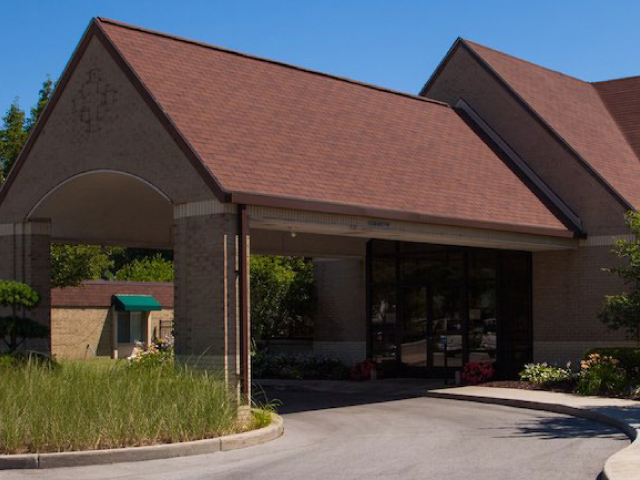
How is Medilodge At The Shore Staffed?

CMS rates Medilodge at the Shore's staffing level at 2 out of 5 stars, which is below average compared to other nursing homes. Staff turnover is 57%, which is 11 percentage points above the Michigan average of 46%. High turnover can affect care consistency as new staff learn residents' individual needs. RN turnover specifically is 71%, which is notably high. RNs provide skilled clinical oversight, so turnover in this role can affect medical care quality.

What Have Inspectors Found at Medilodge At The Shore?

State health inspectors documented 36 deficiencies at Medilodge at the Shore during 2023 to 2025. These included: 1 that caused actual resident harm and 35 with potential for harm. Deficiencies causing actual harm indicate documented cases where residents experienced negative health consequences.
Who Owns and Operates Medilodge At The Shore?

Medilodge at the Shore is owned by a for-profit company. For-profit facilities operate as businesses with obligations to shareholders or private owners. The facility is operated by MEDILODGE, a chain that manages multiple nursing homes. With 126 certified beds and approximately 108 residents (about 86% occupancy), it is a mid-sized facility located in Grand Haven, Michigan.

How Does Medilodge At The Shore Compare to Other Michigan Nursing Homes?

Compared to the 100 nursing homes in Michigan, Medilodge at the Shore's overall rating (2 stars) is below the state average of 3.1, staff turnover (57%) is significantly higher than the state average of 46%, and health inspection rating (2 stars) is below the national benchmark.

What Should Families Ask When Visiting Medilodge At The Shore?

Based on this facility's data, families visiting should ask: "How do you ensure continuity of care given staff turnover, and what is your staff retention strategy?" "Can you walk me through typical staffing levels on day, evening, and night shifts?" "Can I visit during a mealtime to observe dining assistance and food quality?" "How do you handle medical emergencies, and what is your hospital transfer rate?" These questions are particularly relevant given the facility's high staff turnover rate and the below-average staffing rating.

Is Medilodge At The Shore Safe?

Based on CMS inspection data, Medilodge at the Shore has a clean safety record: no substantiated abuse findings (meaning no confirmed cases of resident harm), no Immediate Jeopardy citations (the most serious violation level indicating risk of serious injury or death), and is not on the Special Focus Facility watch list (a federal program monitoring the lowest-performing 1% of nursing homes). The facility has a 2-star overall rating and ranks #100 of 100 nursing homes in Michigan. While no facility is perfect, families should still ask about staff-to-resident ratios and recent inspection results during their visit.

Do Nurses at Medilodge At The Shore Stick Around?

Staff turnover at Medilodge at the Shore is high. At 57%, the facility is 11 percentage points above the Michigan average of 46%. Registered Nurse turnover is particularly concerning at 71%. RNs handle complex medical decisions and coordinate care — frequent RN changes can directly impact care quality. High turnover means new staff may not know residents' individual needs, medications, or preferences. It can also be disorienting for residents, especially those with dementia who rely on familiar faces. Families should ask: What is causing the turnover? What retention programs are in place? How do you ensure care continuity during staff transitions?

Was Medilodge At The Shore Ever Fined?

Medilodge at the Shore has no federal fines on record. CMS issues fines when nursing homes fail to meet care standards or don't correct problems found during inspections. The absence of fines suggests the facility has either maintained compliance or corrected any issues before penalties were assessed. This is a positive indicator, though families should still review recent inspection reports for the full picture.

Is Medilodge At The Shore on Any Federal Watch List?

Medilodge at the Shore is not on any federal watch list. The most significant is the Special Focus Facility (SFF) program, which identifies the bottom 1% of nursing homes nationally based on persistent, serious quality problems. Not being on this list means the facility has avoided the pattern of deficiencies that triggers enhanced federal oversight. This is a positive indicator, though families should still review the facility's inspection history directly.