Holland Home - Raybrook Manor
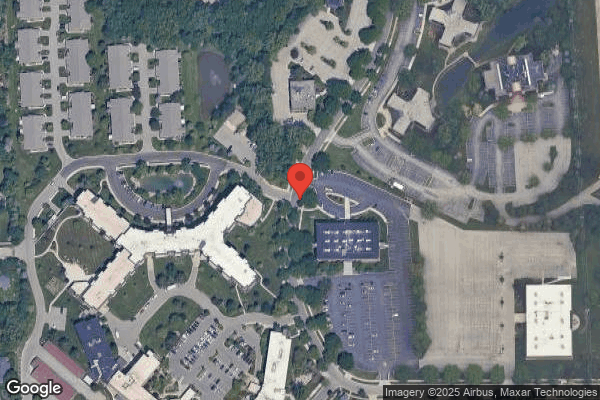
2121 Raybrook SE, Grand Rapids, MI 49546 (616) 235-5702
Non profit - Corporation 101 Beds Independent Data: November 2025
Trust Grade
75/100
#28 of 422 in MI
Last Inspection: February 2025

Within standard 12-15 month inspection cycle. Federal law requires annual inspections.

Overview

Holland Home - Raybrook Manor has a Trust Grade of B, indicating it is a good choice, though not without its issues. It ranks #28 out of 422 facilities in Michigan, placing it in the top half, and #6 out of 28 in Kent County, meaning only five local options are better. However, the facility is experiencing a worsening trend, with issues increasing from 6 in 2024 to 9 in 2025. Staffing is a strong point, rated 5 out of 5 stars with a turnover rate of 31%, which is lower than the state average. There have been no fines, which is a positive sign, but the average RN coverage means there is room for improvement in nursing oversight. On the downside, recent inspections revealed specific incidents of concern. For example, a resident fell and fractured a bone because the facility did not provide adequate supervision during transfers. Additionally, there were reports of staff entering a resident's room without knocking, which violated their privacy. There were also sanitation issues in the kitchen, with improperly labeled food and unclean storage areas, posing potential health risks. Overall, while there are strengths in staffing and no fines, the facility needs to address these concerning incidents and the increasing number of issues.

Trust Score
B
75/100
In Michigan
#28/422
Top 6%
Safety Record
Moderate
Needs review
Inspections
Getting Worse
6 → 9 violations
Staff Stability
○ Average
31% turnover. Near Michigan's 48% average. Typical for the industry.
Penalties
✓ Good
No fines on record. Clean compliance history, better than most Michigan facilities.
Skilled Nurses
✓ Good
Each resident gets 56 minutes of Registered Nurse (RN) attention daily — more than average for Michigan. RNs are trained to catch health problems early.
Violations
⚠ Watch
21 deficiencies on record. Higher than average. Multiple issues found across inspections.
★★★★★
5.0
Overall Rating
★★★★★
5.0
Staff Levels
★★★★★
5.0
Care Quality
★★★☆☆
3.0
Inspection Score
Stable
2024: 6 issues
2025: 9 issues

The Good

  • 5-Star Staffing Rating · Excellent nurse staffing levels
  • 5-Star Quality Measures · Strong clinical quality outcomes
  • Full Sprinkler Coverage · Fire safety systems throughout facility
  • No fines on record
  • Staff turnover below average (31%)

    17 points below Michigan average of 48%

Facility shows strength in staffing levels, quality measures, fire safety.

The Bad

Staff Turnover: 31%

15pts below Michigan avg (46%)

Typical for the industry

The Ugly 21 deficiencies on record

1 actual harm
Feb 2025 9 deficiencies 1 Harm
SERIOUS (G)

Actual Harm - a resident was hurt due to facility failures

Accident Prevention (Tag F0689)

A resident was harmed · This affected 1 resident

**NOTE- TERMS IN BRACKETS HAVE BEEN EDITED TO PROTECT CONFIDENTIALITY** Based on observation, interview, and record review, the facility failed to 1.) implement documented intervention and provide ade...

Read full inspector narrative →
**NOTE- TERMS IN BRACKETS HAVE BEEN EDITED TO PROTECT CONFIDENTIALITY** Based on observation, interview, and record review, the facility failed to 1.) implement documented intervention and provide adequate supervision to prevent a fall for 1 (Resident #8) resident and 2.) safely transport 2 (Resident #27 and #42) residents in their wheelchairs with foot pedals of 5 residents reviewed for accidents/hazards/falls, resulting in a fall with fracture and a significant change in health status (Resident #8) and the potential for falls for Resident #27 and #42. Findings include: Resident #8 Review of an admission Record revealed Resident #8 was a female, with pertinent diagnoses which included: fracture of nasal bones (1/23/25), other fracture of third [NAME] (lumbar) vertebra (1/23/25). Review of an Minimum Data Set (MDS) dated [DATE] revealed Resident #8 had a BIMS score of 10/15 indicating mild cognitive impairement and required supervision when transfering to the toilet, was occassionally incontinent of urine, and had late onset Alzheimer's disase. Review of the Significant Change in Status Minimum Data Set (MDS) assessment for Resident #8, with a reference date of 1/27/25 (conducted after Resident #8's fall) revealed a Brief Interview for Mental Status (BIMS) score of 2, out of a total possible score of 15, which indicated Resident #8 was severely cognitively impaired. Review of Resident #8's Incident Report dated 12/27/24 revealed, Describe the Incident .What was the resident trying to DO? Transferred without staff assistance .Resident's Description: Resident stated I just needed to go to the bathroom .Root Cause: Resident uses items with wheels as walker Was Care plan reviewed: yes Care plan revisions: Remove items with wheels . Review of Resident #8's Care Plan for the period beginning 10/7/24 revealed the focus of (Resident #8) is at a risk for falls and injury related to impaired mobility, hx (history) of falls, opioids, incontinence & (and) is high risk for falls & OK if I fall & die but does not desire to spend any time out of room on unit with a start date of 7/18/23 with the entirety of care planned interventions which included Be sure call light is within reach and encourage to use it for assistance as needed. Respond promptly to all requests for assistance (start 7/18/23), Keep personal items within reach (start 7/18/23), Keep room and environment free of barriers and clutter (start 7/18/23), Offer toileting with AM/PM (day/evening) care, before and after meals and at (Resident #8's) request (start 7/18/23), Encourage resident to find the O2 (oxygen) line manually, as her vision is limited (start 7/21/23), Ambulate & transfer w/one moderate assist for upper body support using 4ww (4-wheeled walker) & GB (gait belt) (start 10/10/23), Red Dot: Remind visitors to let staff know when they leave if visiting a resident in a resident's room (start 10/10/23), Sign to call for assistance placed on walker (start 11/27/23), Assist to bathroom around 1:00 p.m. daily (start 1/19/24), Non-skin strips to floor in front of toilet (start 2/12/24), Dycem (anti-slip mat) added to recliner to prevent slipping out of chair (start 5/17/24), Anti-rollbacks placed on WC (wheelchair) (Start 7/8/24), Clip placed on call light so that call light can be clipped to front of resident clothing when in bed or recliner (start 7/24/24), Functional activity level is Green. Please refer to Activities Care Plan for non-pharmacological interventions (start 10/30/24). The care plan did not reflect the documented intervention of remove items with wheels. Review of Resident #8's Incident Report dated 1/23/25 at 12:00pm revealed, Describe the Incident: Describe the environment of the incident: Resident lying on face down in front of recliner, tray table pushed forward. Resident wearing blanket. How was staff alerted to the fall? Alarm notified staff, manager ran into resident's room. Where/what was resident doing prior to fall? Resident in recliner eating lunch. What was the resident trying to DO? Attempted to ambulate without assistive device .Resident's Description: Resident unable to describe at this time .If applicable, please describe any abnormalities: Bruising along forehead and down nose, residentalso (sic) bleeding from nose .Resident transferred to hospital: Yes .OTHERS INVOLVED Staff (Registered Nurse (RN) II) Staff (RN-MDS MM) Staff (Certified Nurse Aide (CNA) EE) Was Care plan reviewed: yes Care plan revisions: Resident to be placed in area of Higher Visibility at all times when awake and offer functional activity . Review of Resident #8's History & Physical from (hospital name omitted) dated 1/23/25 at 4:33 PM revealed, .(Resident #8) is a [AGE] year-old female .presented to the ER (emergency room) after an unwitnessed GLF (ground level fall), with head injury but unclear if she had LOC (loss of consciousness). She was noted to have altered mental status, Baseline A&O (alert and oriented) x 2. On examination patient with obvious facial trauma with raccoon eyes, dried blood in both mouth and nose, no postnasal bloody drip .Imaging studies showed RLL (right lower lobe) atelectasis (collapsed lung) versus pneumonia. Also traumatic L1-3 (parts of the vertebra of the spine) transverse process (a bony projection on the side of the vertebrae) fractures, nasal bone fractures with deviation to right . Review of Resident #8's Physician Office Visit note dated 1/31/25 revealed, History and Physical Recent fall, nasal fracture and lumbar transverse process fractures, general weakness, status post hospitalization Subjective Patient is a very pleasant [AGE] year-old female with multiple medical problems .Patient recently did experience an unwitnessed fall. Due to injuries, she was transferred to the hospital for further evaluation .CT (computed tomography scan - a type of x-ray imaging) of spine did indicate displaced right L1-L3 transverse process fracture .CT maxillofacial (face, mouth, jaws, head, and neck) also showed .bilateral (both sides) nasal fractures with mild rightward displacement .Her DURABLE POWER OF ATTORNEY for healthcare was consulted, and she was admitted to hospice. She has now been discharged back to nursing facility under hospice care with goal of comfort care. Patient is now bed dependent, dependent on nursing staff for all of her ADLs (activities of daily living). She is unable to engage in any kind of conversation. She remains on oxygen . In an interview on 2/4/25 at 12:16 PM, RN-MDS MM reported when Resident #8 fell, she was sitting in her office and heard Resident #8's alarm activate. RN-MDS MM reported when she reached her office door, she heard a thud. RN-MDS MM reported when she got to Resident #8's room (which is located next to RN-MDS MM's office) Resident #8 was lying beside her recliner with her face on the floor on her right side with her right hand under her head and positioned on her right shoulder. RN-MDS MM reported Resident #8 was moaning and was trying to roll over. RN-MDS MM reported she asked an aide to get the nurse who then assessed the resident and got her up into her recliner chair. RN-MDS MM reported the nurse and the CNA took over from there. Review of the Urinary Incontinence care plan with a start date of 2/12/24 revealed Resident #8 was to be offererd toileting with morning/evening care and before and after meals. In an interview on 2/4/25 at 1:37 PM, CNA EE reported she had last seen Resident #8 approximately 20 minutes prior to her fall in her recliner chair when she delivered her lunch meal tray to her on her bedside table. CNA EE did not report having offered Resident #8 to go to the toilet prior to leaving the room after delivering her lunch. CNA EE reported Resident #8 was known to attempt to get up on her own. CNA EE reported at the time of Resident #8's fall, she was on the A hall delivering meal trays. CNA EE reported Resident #8 resided on the B Hall. CNA EE reported at the time of Resident #8's fall, the nurse assigned to B Hall was in the dining room assisting residents to eat. CNA EE reported neither the assigned CNAs nor the nurse were on B Hall at the time of Resident #8's fall and that RN-MDS MM had been in her office and heard Resident #8's alarm and responded. In an interview on 2/5/25 at 9:24 AM, RN II reported she had been in the dining room at the time of Resident #8's fall. RN II reported Resident #8 had been in her room and her lunch tray had just been delivered to her in her recliner chair. In an observation/interview on 2/5/25 at 9:30 AM, Registered Nurse Manager (RNM) DD was queried about Resident #8's 12/27/24 Incident Report with the root cause of Resident uses items with wheels as walker and the care plan revision to Remove items with wheels . RNM DD reported she had been on vacation at the time of the fall but that it was her understanding that Resident #8 had had her bedside table by her and had used that to basically get up and transport herself. At 2/5/25 at 9:40 AM, this surveyor accompanied RNM DD to Resident #8's room to observe her bedside table. The bedside table had wheels, without locks, and a foam lining around the tray portion of the bedside table. In a follow-up interview on 2/5/25 at 9:42 AM, RN-MDS MM reported she could not recall if Resident #8's tray table had wheels when she was found after her fall on 1/23/25 but that there was foam on the tray portion of the bedside table. In a follow-up interview on 2/5/25 at 10:10 AM, RNM DD reported Resident #8 preferred to eat in her room and would get mad when they encouraged her to come out of her room to eat. RNM DD reported because of Resident #8's history of falls, they had initiated an intervention to have her be in higher visibility areas, but that Resident #8 had been adamant about staying in her room. When queried about staff supervision at the time of Resident #8's fall, RNM DD reported CNA EE had been passing trays on the A Hall, the other CNA on duty on that hall had been in the dining room and RN II had been in the dining room, but that RN-MDS MM had been in her office which was next to Resident #8's room. Resident #27 Review of an admission Record revealed Resident #27, was originally admitted to the facility on [DATE], with pertinent diagnoses which included: unspecified dementia (a group of conditions characterized by impairment of at least two brain functions, such as memory loss and judgement) and repeated falls. Review of a Minimum Data Set (MDS) assessment for Resident #27, with a reference date of 1/3/25, revealed the resident could not complete a Brief Interview for Mental Status and his decision making was severely impaired. Section GG revealed Resident #27 used a wheelchair for all mobility. Review of a Care Plan for Resident # 27, with a reference date of 5/2/23, revealed problem/goal/interventions of: Problem: I am at a risk for falls and injury related to impaired mobility .chronic pain .confusion. Goal: I will remain free of injury .Interventions: wheelchair for mobility. During an observation on 2/3/25 at 11:47am, Resident #27 was seated in a wheelchair with his legs extended in front of him, no foot pedals were attached to his chair. CNA CC stated put your feet up as she began to push the resident's wheelchair. Certified Nursing Assistant (CNA) CC pushed him from his room to his seat in the dining room. Resident #27, while holding his legs outward, was maneuvered through 2 steel doorways, and around a group of tables, before he and his wheelchair were placed at table by the windows in the dining room. The distance from Resident #27's room to the table in the dining room was 50'. In an interview on 02/05/25 at 09:42am, Registered Nurse (RN) II reported Resident #27 should have his foot pedals on his wheelchair when staff push him to maintain his safety. RN II reported Resident #27 did not consistently follow directions and did not recognize potentially dangerous situations. During an observation on 2/5/25 at 9:48am, Resident #27 was seated in his wheelchair outside his room, no foot pedals were in place as Licensed Practical Nurse (LPN) CCC pulled the resident's wheelchair backwards approximately 6' before turning the wheelchair around. LPN CCC then pushed Resident #27 into his room, at which time the resident planted his feet on the floor to stop the movement of his wheelchair, and pushed his wheelchair backwards, back into the hallway. During an observation on 2/5/25 at 9:52am, Resident #27 sat in his wheelchair, faced the door of the dining room, and fidgeted with the doorknob. No foot pedals were in place on his wheelchair. CNA J approached the resident, instructed him to lift his feet, as the resident lifted his feet, CNA J turned Resident #27's wheelchair around, and pushed him from the far dining room door to his room with no foot pedals in place. Resident #42 Review of an admission Record revealed Resident #42, was originally admitted to the facility on [DATE], with pertinent diagnoses which included: dementia (a group of conditions characterized by impairment of at least two brain functions, such as memory loss and judgement) and localized edema (swelling caused by fluid buildup that causes a feeling of heaviness). Review of a Minimum Data Set (MDS) assessment for Resident #42, with a reference date of 1/24/25, revealed a Brief Interview for Mental Status (BIMS) score of 6/15 which indicated Resident #42 was severely cognitively impaired. Section GG revealed Resident #42 relied on a wheelchair for all mobility. Review of a Care Plan for Resident #42, with a reference date of 4/9/24, revealed a problem/goal/interventions of: (Resident #42) is at a risk for falls and injury related to impaired mobility, hx (sic)(history) of falls .depression. Goal: (Resident #42) will be remain free of injury secondary to falls. Interventions: .WC (wheelchair) for long distance. During an observation on 2/3/25 at 2:00pm, Resident #42 was seated in her wheelchair as CNA L pushed the resident from her room at the end of the hall, to the common area of the unit, a total distance of 75'. Resident #42's footrests were attached to her wheelchair, but the actual foot plates (platforms on which the user rests their feet) were folded up, perpendicular to the floor. Resident #42's feet hovered above the floor between the folded-up foot pedals as CNA L pushed her quickly down the hall. In an interview on 2/5/25 at 11:33am, Unit Manager (UM) T reported staff were expected to use foot pedals on resident wheelchairs any time they pushed a resident. UM T reported pushing a resident without proper foot pedals/proper use of foot plates was unsafe and could leave a resident at risk for falling from the chair or having other injuries. In an interview on 2/5/25 at 12:01pm, Director of Nursing (DON) B confirmed for safety purposes, staff should always use foot pedals on resident wheelchairs any time a resident is being pushed. Review of a Wheelchair Foot Pedal, Use of facility policy, with a reference date of 5/2023 revealed: Policy: To promote a safe environment, staff will use foot pedals when propelling residents in wheelchairs. Procedures: 1. Foot pedals must be used at all times when propelling a resident in a wheelchair, regardless of functional abilities. Review of Mosby's Textbook for Long-Term Care Nursing Assistants - E-Book by [NAME] A. [NAME], 6th Edition 2013 titled 'Wheelchair Safety revealed .Make sure the person's feet are on the footplates (foot pedals/rests) before moving the chair. The person's feet must not touch or drag on the floor when the chair is moving .
CONCERN (D)

Potential for Harm - no one hurt, but risky conditions existed

Resident Rights (Tag F0550)

Could have caused harm · This affected 1 resident

Based on interview and record review, the facility failed to maintain dignity and respond to a resident's call light in a timely manner in 1 (Resident #76) of 3 residents reviewed for dignity, resulti...

Read full inspector narrative →
Based on interview and record review, the facility failed to maintain dignity and respond to a resident's call light in a timely manner in 1 (Resident #76) of 3 residents reviewed for dignity, resulting in feelings of frustration and the potential for overall decline in quality of life. Findings include: Resident #76 Review of an admission Record revealed Resident #76 was a female, with pertinent diagnoses which included: anxiety disorder and depression. Review of a Minimum Data Set (MDS) assessment for Resident #76, with a reference date of 1/6/25 revealed a Brief Interview for Mental Status (BIMS) score of 13, out of a total possible score of 15, which indicated Resident #76 was cognitively intact. Further review of said MDS revealed Resident #76 was dependent on staff for toilet transfer (the ability to get on and off a toilet or commode). Review of Resident #76's current Care Plan revealed a focus of I am experiencing occasional urinary incontinence w/ (with) need for assistance to reach toilet, manage incontinent product & (and) LE (lower extremity) weakness associated w/Sciatica (nerve pain in sciatic nerve that runs down one or both legs) with a start date of 1/9/25. In an interview on 2/3/25 at 11:49 AM, Resident #76 reported at times, it had taken up to about an hour for staff to respond to her call light. Resident #76 reported it was frustrating because she often had to use the bathroom, and she could hear staff out in the hallway talking amongst themselves. Review of Resident #76's Alarm History Report revealed the following findings: On 1/2/25, Resident #76's alarm was activated at 7:49:08 AM and completed at 8:20:39 AM, indicating a response time of approximately 31 minutes. On 1/5/25, Resident #76's alarm was activated at 3:38:23 AM and completed at 4:06:01 AM, indicating a response time of approximately 27 minutes. On 1/9/25, Resident #76's alarm was activated at 12:50:39 PM and completed at 1:37:13 PM, indicating a response time of approximately 46 minutes. On 1/12/25, Resident #76's alarm was activated at 10:16:52 AM and completed at 10:44:28 AM, indicating a response time of approximately 27 minutes. On 1/20/25, Resident #76's alarm was activated at 2:16:11 PM and completed at 3:00:39 PM, indicating a response time of approximately 44 minutes. On 1/22/25, Resident #76's alarm was activated at 12:47:56 PM and completed at 1:50:00 PM, indicating a response time of approximately 62 minutes. On 1/27/25, Resident #76's alarm was activated at 6:00:10 PM and completed at 6:51:31 PM, indicating a response time of approximately 51 minutes. In an interview on 2/5/25 at 12:07 PM, Registered Nurse (RN) GG reported the goal for call light response time was less than 10 minutes, but we hope for better. In an interview on 2/5/25 at 12:13 PM, Director of Nursing (DON) B reported call light wait time should be 5 minutes or less but no later than 10 minutes.
CONCERN (D)

Potential for Harm - no one hurt, but risky conditions existed

Grievances (Tag F0585)

Could have caused harm · This affected 1 resident

**NOTE- TERMS IN BRACKETS HAVE BEEN EDITED TO PROTECT CONFIDENTIALITY** Based on interview and record review, the facility failed to resolve resident concerns for 1 (Resident #34) of 1 sampled residen...

Read full inspector narrative →
**NOTE- TERMS IN BRACKETS HAVE BEEN EDITED TO PROTECT CONFIDENTIALITY** Based on interview and record review, the facility failed to resolve resident concerns for 1 (Resident #34) of 1 sampled resident reviewed for resolution of concerns resulting in feelings of frustration and a potential decline in psychosocial and mental well-being. Findings include: Resident #34 Review of admission Record revealed Resident #34 was originally admitted to the facility on [DATE] with pertinent diagnosis which included functional urinary incontinence (a condition in which the bladder functions normally, but the individual is unable to reach the toilet in time due to physical or cognitive limitations.) Review of a Minimum Data Set (MDS) assessment for Resident #34, with a reference date of 12/6/24 revealed a Brief Interview for Mental Status (BIMS) score of 15/15 which indicated Resident #34 was cognitively intact. Review of Resident #34's Care Plan revealed, Problem (Resident #34) had urinary incontinence related to decreased mobility, pain, requires staff to assist with transfers and toileting. Interventions: Change/peri care Q2H (every two hours) w (with) rounds during night. WAKE HER UP! . Start date 2/15/24 . During an interview on 2/3/25 at 11:24 AM, Resident #34 reported that she had concerns with the way that some of the staff at the facility treated and cared for her. Resident #34 reported staff would often not change her and she would have to lay in a wet brief for hours at a time. Resident #34 was tearful and reported that some of the staff made her feel bad about herself. Resident #34 stated I can't help it that I need help with these things, I wish I could do them by myself. Resident #34 reported that she had voiced her concerns to management before, and she had no idea if they had done anything about it. Resident #34 confirmed that she was still frequently being left wet and soiled overnight. On 2/4/2025 at 10:52 AM, This writer requested all concern/grievance forms for Resident #34. Nursing Home Administrator (NHA) A did not have any concern/grievance forms for Resident #34, but did upload a copy of an email that NHA A had sent to the facility's Interdisciplinary Team (IDT). Review of the email that NHA A sent to the facility's IDT team dated 11/20/24 revealed, Hello all : (Resident #34) family (Names redacted) had a meeting [NAME] President of Operations (VPO) K to discuss care concerns not resolved . (Resident #34) stating she has been left 50 times soiled in bed for 3 to 5 hours, usually on night shift, just happened last weekend . (Staff that do not do a good job) Licensed Practical Nurse (LPN) F and Former Certified Nursing Assistant (CNA) AAA . During an interview on 2/4/25 at 1:05 PM, NHA A reported that he was made aware of Resident #34's concerns via email from VPO K. NHA A reported that he had forwarded the concerns that were reported to the IDT team and he believed that they addressed Resident #34's concerns during Resident #34's care conference. NHA A reported that Social Worker (SW) Z and Unit Manager (UM) GG were responsible for following up and resolving the concerns Resident #34 had. During an interview on 2/4/25 at 1:57 PM, SW Z reported that she had been made aware of Resident #34's concerns in November 2024. SW Z reported that she thought that she had met with Resident #34, but she was not able to provide documentation of her meeting with Resident #34, or documentation that she had worked to resolve Resident #34's concerns. During an interview on 2/4/25 at 2:05 PM, UM GG reported that she was responsible for following up on Resident #34's concerns. UM GG was not able to provide any documentation or examples of what she had done to resolve Resident #34's concerns. UM GG was unaware that Resident #34 still had concerns with being left wet and soiled. UM GG confirmed that the facility had the ability to review cameras to confirm how often staff were entering into Resident #34's room, but that she had not reviewed the cameras. UM GG reported that she had not investigated Resident #34's allegations of being left wet and soiled for 3-4 hours at a time. UM GG was unable to report why she had not documented Resident #34's concerns on a grievance form. When queried by this writer about Resident #34's concerns with LPN F and Former CNA AAA, UM GG reported that she thought that LPN F and Resident #34 had personality conflicts. UM GG reported that Former CNA AAA no longer worked at the facility, and that she had received disciplinary action, but she could not recall if it was related to Resident #34's concerns. UM GG reported that she had not followed up with Resident #34 to ensure that her concerns had been resolved. Review of CNA AAA's employee file revealed that on 12/2/24, CNA AAA received a Coaching Conversation for Attempting to leave mid cares. When a resident told her to come back CNA AAA told her to talk more nicely because I am helping out of the kindness of my heart . During an interview on 2/5/25 at 11:59 AM, Director of Nursing (DON) B reported that she was not involved in following up on Resident #34's concerns, and that she thought that NHA A had addressed Resident #34's concerns. During a follow up interview on 2/5/25 at 12:11 pm NHA A reported that he had shared Resident #34's concerns with UM GG and asked that Resident #34's concerns be addressed with a care conference. NHA A confirmed that no documentation was present in the medical record regarding a care conference to address the issues. NHA A reported he also had no documentation regarding any staff education or disciplinary action. NHA A confirmed that the staff members listed in the grievance continue to work at the facility . NHA A stated I'm not seeing that any of this was addressed. This writer attempted to contact Former CNA AAA and VPO K during the survey. Former CNA AAA and VPO K were unable to be reached prior to survey exit. Review of the facility's Complaint-Grievance Policy dated 12/2018 revealed, POLICY Residents have the right to voice complaints and grievances to the facility or other agency (as identified in #3 below) without discrimination or reprisal and without fear of discrimination or reprisal. Complaints and grievances can address care and treatment that has or has not been provided; the behavior of staff and of other residents; and other concerns regarding their skilled nursing facility (SNF) stay. DEFINITIONS Voice grievances are not limited to a formal, written grievance process but may include a resident's verbalized complaint to facility staff. Prompt efforts .to resolve includes the facility's acknowledgement of complaint/grievances and active working toward resolution of that complaint/grievance. Procedures: .4. All staff members are responsible for taking immediate action to prevent further potential violations of any resident while an investigation is taking place a. communicating complaints and grievances, either verbal or written, to their supervisor, including immediate reporting of all alleged violations involving neglect, abuse, injuries of unknown source, and/or misappropriation of resident property. (A Registry of Complaint Form may be used for this purpose. See Complaint_Registry of form.)b.maintaining confidentiality of all information associated with the grievance, including the identity of resident for those grievances submitted anonymously . 6. The grievance official of each facility will be the executive director/designee who is responsible for: a. overseeing the grievance process b. receiving and tracking grievances through to their conclusions c. leading and completing any necessary investigations by the facility d. maintaining the confidentiality of all information associated with grievances e. providing a written report if requested by the complainant f. coordinating with state and federal agencies as necessary in light of specific requirements. 7. Follow-up investigation and documentation will be completed as directed by the executive director/designee including: a. completion of investigation b. written submission of the investigative report or status thereof to the complainant, if requested 8. Written decisions must include: a. the date the grievance was received b. a summary statement of the resident's grievance c. steps taken to investigate the grievance d. a summary of pertinent findings or conclusions e. a statement as to whether grievance was confirmed or not confirmed f. any corrective action taken g. the date the written decision was issued 9. If the complainant is not satisfied with the investigation or action taken, the executive director/designee will arrange a meeting with the complainant. 10. Written complaint records and documentation of investigation evidence will be maintained for three (3) years .
CONCERN (D)

Potential for Harm - no one hurt, but risky conditions existed

Report Alleged Abuse (Tag F0609)

Could have caused harm · This affected 1 resident

**NOTE- TERMS IN BRACKETS HAVE BEEN EDITED TO PROTECT CONFIDENTIALITY** Based on interview and record review, the facility failed to report allegations of neglect to the State Agency in a timely manne...

Read full inspector narrative →
**NOTE- TERMS IN BRACKETS HAVE BEEN EDITED TO PROTECT CONFIDENTIALITY** Based on interview and record review, the facility failed to report allegations of neglect to the State Agency in a timely manner for 1 (Resident #34) of 1 resident reviewed for neglect, resulting in the potential for continued violations involving neglect going undetected, unreported, or without thorough investigation. Findings include: Resident #34 Review of admission Record revealed Resident #34 was originally admitted to the facility on [DATE] with pertinent diagnosis which included functional urinary incontinence (a condition in which the bladder functions normally, but the individual is unable to reach the toilet in time due to physical or cognitive limitations.) Review of a Minimum Data Set (MDS) assessment for Resident #34, with a reference date of 12/6/24 revealed a Brief Interview for Mental Status (BIMS) score of 15/15 which indicated Resident #34 was cognitively intact. Review of Resident #34's Care Plan revealed, Problem (Resident #34) had urinary incontinence related to decreased mobility, pain, requires staff to assist with transfers and toileting. Interventions: Change/peri care Q2H (every two hours) w (with) rounds during night. WAKE HER UP! . Start date 2/15/24 . During an interview on 2/3/25 at 11:24 AM, Resident #34 reported that she had concerns with the way that some of the staff at the facility treated and cared for her. Resident #34 reported staff would often not change her and she would have to lay in a wet brief for hours at a time. Resident #34 was tearful and reported that some of the staff made her feel bad about herself. Resident #34 stated I can't help it that I need help with these things, I wish I could do them by myself. Resident #34 reported that she had voiced her concerns to management before, and she had no idea if they had done anything about it. Resident #34 confirmed that she was still frequently being left wet and soiled overnight. On 2/4/2025 at 10:52 AM, this writer requested all concern/grievance forms for Resident #34. Nursing Home Administrator (NHA) A did not have any concern/grievance forms for Resident #34, but did upload a copy of an email that NHA A had sent to the facility's Interdisciplinary Team (IDT). Review of the email that NHA A sent to the facility's IDT team dated 11/20/24 revealed, Hello all : (Resident #34) family (Names redacted) had a meeting with [NAME] President of Operations (VPO) K to discuss care concerns not resolved . (Resident #34) stating she has been left 50 times soiled in bed for 3 to 5 hours, usually on night shift, just happened last weekend . During an interview on 2/4/25 at 1:05 PM, NHA A reported that he did not report Resident #34's concern of being left wet and soiled for hours at a time to the State Agency. NHA A reported that he had thought that Resident #34's concerns were more care related, and not considered neglect, so he did not think that he needed to get involved with reporting and investigating the concerns. NHA A reported that he could have missed what Resident #34's concerns were, because the concerns had gone through several lines of communication before reaching him. On 2/05/25 at 10:24 AM, this writer attempted to contact VPO K. VPO K was not able to be reached prior to survey exit. In a follow up interview on 2/5/25 at 12:11 pm, NHA A reported he did not consider an allegation as potential neglect unless there was an injury, another type of negative outcome, or if the resident voiced a feeling of being neglected. NHA A reported no investigation was completed regarding the concerns Resident #34 voiced. Review of the facility's Abuse and Neglect Policy dated 9/2022, revealed, POLICY Each resident has the right to be free from abuse and neglect. To provide a safe environment for residents, to promote respect, and to set standards of care, .will monitor for abuse and investigate all allegations of resident abuse, neglect, mistreatment, exploitation, and misappropriation of property.Definitions: Neglect - failure of the facility, its employees, or service providers to provide goods and services to a resident that are necessary to avoid physical harm, pain, mental anguish or emotional distress . 3. All alleged violations involving mistreatment, abuse, exploitation, neglect or misappropriation of property will be thoroughly investigated by the facility under the direction of the executive director / designee and in accordance with state law. 4.will adhere to State of Michigan reporting requirements as follows: a. Ensure that all alleged violations involving abuse, neglect, exploitation or mistreatment, including injuries of unknown source and misappropriation of resident property, are reported immediately, but not later than 2 hours after the allegation is made, if the events that cause the allegation involve abuse or result in serious bodily injury, or not later than 24 hours if the events that cause the allegation do not involve abuse and do not result in serious bodily injury, to the executive director/designee and to other officials (including to the State Survey Agency and adult protective services where state law provides for jurisdiction in long-term care facilities) in accordance with State law through established procedures .
CONCERN (D)

Potential for Harm - no one hurt, but risky conditions existed

Deficiency F0657 (Tag F0657)

Could have caused harm · This affected 1 resident

**NOTE- TERMS IN BRACKETS HAVE BEEN EDITED TO PROTECT CONFIDENTIALITY** Based on observation, interview and record review, the facility failed to revise a person-centered care plan to reflect resident...

Read full inspector narrative →
**NOTE- TERMS IN BRACKETS HAVE BEEN EDITED TO PROTECT CONFIDENTIALITY** Based on observation, interview and record review, the facility failed to revise a person-centered care plan to reflect resident care needs for 1 (Resident #60) of 18 residents reviewed for care planning, resulting in an inaccurate reflection of resident care needs, and a potential for further injury and avoidable pain. Findings include: Review of the Long-Term Care Facility Resident Assessment Instrument 3.0 User's Manual, v1.16, Chapter 2: Assessments for the Resident Assessment Instrument (RAI), revealed .the resident ' s care plan must be reviewed after each assessment .and revised based on changing goals, preferences and needs of the resident and in response to current interventions .Residents' preferences and goals may change throughout their stay, so facilities should have ongoing discussions with the resident and resident representative, if applicable, so that changes can be reflected in the comprehensive care plan . Resident #60 Review of an admission Record revealed Resident #60, was originally admitted to the facility on [DATE] with a pertinent diagnosis which included: dementia (a group of conditions characterized by impairment of at least two brain functions, such as memory loss and judgement). Review of a Minimum Data Set (MDS) assessment for Resident #60, with a reference date of 1/17/25 revealed a Brief Interview for Mental Status (BIMS) score of 2/15 which indicated Resident #60 was severely cognitively impaired. Review of a Care Plan for Resident # 60, with a reference date of 10/17/23, revealed a problem/goal/interventions of: Problem: Need for restorative nursing plan related to potential functional decline. Goal: Resident will maintain functional abilities; will actively participate in restorative program. Interventions: 3x week (3 times per week) ambulate with 4ww (4 wheeled walker, requiring use of both hands) x 80 feet, (exercise equipment name omitted) with BUE (both upper extremities) x 10min). During an observation on 2/3/25 at 9:48am, Resident #60 sat in a wheelchair, in the doorway of her room, a blue sling was noted on her right arm. In an interview on 2/3/25 at 11:27am Case Manager (CM) FFF reported Resident #60 had a recent right humerus (upper arm) fracture and should not exercise or bear weight on her right arm at this time. CM FFF reported the sling was to be used for comfort as the resident tolerated. In an interview on 2/3/25, at 2:45pm, Certified Nursing Assistant (CNA) CC reported she cared for Resident #60 on this date. CNA CC reporte the resident appeared apprehensive about doing anything that might cause pain in her right upper arm, and stated don't hurt me, don't hurt me during cares. CNA CC reported she was not sure if staff were supposed to provide any care that involved moving the resident's right arm, donning or doffing (putting on or taking off) Resident #60's sling. In an interview on 2/4/25 at 3:03pm, Unit Manager (UM) T reported Resident #60 suffered a right humerus fracture on 1/31/25 and per physician orders a sling was applied. UM T reported when a resident has an acute injury, and the physician orders an intervention, the floor nurse should update the care plan at that time. The care plan contained no guidance for staff regarding Resident #60's use of the sling or physical restrictions related to her fracture. UM T reported the Interdisciplinary Team (IDT) met to discuss Resident #60's needs due to her recent fracture and developed a plan for range of motion exercises, but the care plan was not updated. UM T reported it was her responsibility to update a resident's plan of care after the IDT met. UM T confirmed that the interventions listed in Resident #60's plan of care were no longer appropriate and could result in further injury and avoidable pain if they were carried out.
CONCERN (D)

Potential for Harm - no one hurt, but risky conditions existed

Deficiency F0810 (Tag F0810)

Could have caused harm · This affected 1 resident

**NOTE- TERMS IN BRACKETS HAVE BEEN EDITED TO PROTECT CONFIDENTIALITY** Based on observation, interview, and record review, the facility failed to ensure special eating utensils were provided during m...

Read full inspector narrative →
**NOTE- TERMS IN BRACKETS HAVE BEEN EDITED TO PROTECT CONFIDENTIALITY** Based on observation, interview, and record review, the facility failed to ensure special eating utensils were provided during meal times in 2 of 2 residents (Resident #55 & #30) reviewed for adaptive equipment, resulting in impaired ability to eat independently and the potential for weight loss. Findings include: Review of the policy/procedure Meal Delivery, revised November 2010, revealed .A defined meal delivery service is followed to ensure delivery of appropriate diet, a dignified dining atmosphere and necessary assistance to promote nutritional health .Nursing staff delivers the food trays to each resident and .Ensures that food items served match meal ticket .Assists with meal set-up .Assists resident as needed with eating, according to his or her Plan of Care .The (Registered Dietitian) or designee arranges and includes in the resident's Plan of Care specific variables to meal delivery to ensure that individualized dietary needs, meal services preferences, and special requests are provided . Resident #55 Review of a Profile Face Sheet revealed Resident #55 was a male, with pertinent diagnoses which included arthritis, depression, and dementia. Review of a current Care Plan for Resident #55 revealed the problem .I am at risk for alteration in nutrition and hydration status r/t (related to) multiple medical problems . with approaches which include .Diet: General, thin liquids .Built up silverware / cup w/ (with) lid for hot liquids . with a start date of 4/28/22. Review of a Quarterly Nutrition Assessment for Resident #55, dated 1/24/25, revealed .Adaptive equipment: cup w/ (with) lid for hot liquids and gray built up utensils .Feeds self w/ meal setup at lunch but staff do provide more assistance w/ dinner . Review of a Quarterly Nursing Note for Resident #55, dated 1/24/25, revealed .He needs set up and adaptive equipment for meals, spouse will assist at times when visiting . Review of a Quarterly Care Conference Note for Resident #55, dated 1/30/25, revealed .(Resident #55) has been eating well. (Registered Dietitian) ordered new built-up silverware for him .Plastic throwaway (utensils) have been put in place r/t an outbreak (of illness) on the floor. Wife voiced she does not like the plastic silverware but does help feed him as best she can . In an observation and interview on 2/3/25 at 12:51 PM, Resident #55 was noted in his recliner in his room with Family Member BBB sitting in a chair beside him. Observed Resident #55's lunch tray on the table nearby, which had been served in a foam container with disposable cutlery. Family Member BBB reported all food items are currently being served with disposable containers and cutlery due to an illness outbreak on the unit. Family Member BBB reported the dietary department has not been sending Resident #55's built-up silverware with his meals. In an observation on 2/4/25 at 11:57 AM, Resident #55 was noted in his recliner in his room. Noted Resident #55's lunch tray had just been delivered. Observed all food items were served in disposable containers, with only disposable plastic utensils provided. No built up utensils were provided to Resident #55 for his lunch meal. In an interview on 2/4/25 at 12:04 PM, Dietitian EEE reported due to the gastrointestinal illness outbreak within the facility, all residents are provided with disposable utensils only. Dietitian EEE reported no special eating utensils/adaptive equipment for meals are being provided at this time. In an observation on 2/5/25 at 8:19 AM, Resident #55 was noted in his recliner in his room. Noted no staff or family present in room at this time. Observed Resident #55's breakfast meal had been served in a foam container with disposable plastic utensils. No built up utensils were provided to Resident #55 for his breakfast meal. In an interview on 2/5/25 at 8:44 AM, Director of Nursing (DON) B reported the purpose of the disposable containers/utensils for meals was to minimize the risk for transmission of gastrointestinal illness. DON B reported residents should still receive special eating utensils/adaptive equipment as ordered or indicated in the care plan. Resident #30 Review of admission Record revealed Resident #30 was originally admitted to the facility on [DATE] with pertinent diagnoses which included dysphagia (difficulty swallowing foods) and parkisons disease. Review of a Minimum Data Set (MDS) assessment for Resident #30, with a reference date of 11/15/24 revealed a Brief Interview for Mental Status (BIMS) score of 15/15 which indicated Resident #30 was cognitively intact. Review of Resident #30's Care Plan revealed, Nutritional Status. (Resident #30) is at risk for alteration in nutrition/hydration status r/t (related to) multiple problems including Parkinson . Interventions: Diet: mech(mechanical) soft gluten and lactose free diet with nectar thick liquids. Cut up food. Supervision, recommended to eat in dining room or high traffic areas. No gravy on my foods. Suction divided plate, red foam on silverware . start date 6/20/24 . During an observation on 2/3/25 at 12:17 PM, Resident #30 was sitting in his wheelchair with his tray table in front of him eating lunch. Resident #30 was struggling to eat as food slipped off of his silverware before he could get the food to his mouth multiple times. Resident #30 also struggled to put more spoonfuls of food in his mouth. It was noted that Resident #30 did not have red foam (adaptive equipment) on his silverware. During an observation on 2/4/25 at 11:58 AM, Resident #30 was sitting in his wheelchair with his tray table in front of him eating lunch. It was noted that Resident #30 did not have red foam on his silverware. During an interview on 2/4/25 at 2:21 PM, Resident #30 reported that the facility had not been providing him with the red foam for on his silverware over the past week. Resident #30 confirmed that the red foam on his silverware made it easier for him to feed himself, and he had been struggling to eat without it. During an interview on 2/4/25 at 2:31 PM, Registered Nurse (RN) H reported that she had delivered Resident #30's lunch tray, and he did not have his red foam on his silverware. During an interview on 2/4/25 at 1:30 PM, Speech Language Pathologist (SLP) QQ reported that Resident #30 should always have the red foam on his, as it was what worked best for Resident #30 to assist him with eating. During an observation on 2/5/25 at 8:35 AM, was sitting in his wheelchair with his tray table in front of him eating breakfast. It was noted that Resident #30 did not have the red foam on his silverware. Resident #30 was struggling to use a spoon to eat cereal and was spilling food off of his spoon frequently.
CONCERN (D)

Potential for Harm - no one hurt, but risky conditions existed

Infection Control (Tag F0880)

Could have caused harm · This affected 1 resident

**NOTE- TERMS IN BRACKETS HAVE BEEN EDITED TO PROTECT CONFIDENTIALITY** During an interview on 2/05/2025 at 9:02 AM, Infection Preventionist (IP) N stated that when a resident was on Transmission Base...

Read full inspector narrative →
**NOTE- TERMS IN BRACKETS HAVE BEEN EDITED TO PROTECT CONFIDENTIALITY** During an interview on 2/05/2025 at 9:02 AM, Infection Preventionist (IP) N stated that when a resident was on Transmission Based Precautions (TBP), which included contact precautions (set of practices used to prevent the spread of infectious diseases through direct or indirect contact), Personal Protective Equipment (PPE) such as a gown and gloves should be worn by staff when going into the room whether it was to provide care, to deliver meal trays or just to talk to the resident. IP N said if a resident has gastrointestinal issues and was vomiting then staff should wear a mask too. She reported that with TBP rooms, PPE should be put on prior to entering the room and should be taken off prior to exiting the resident room. IP N stated that when staff was in a TBP room, they needed to wash their hands with soap and water before they exited the room. If staff was in a room that wasn't under TBP, IP N said hand sanitizer was acceptable to use unless the hands were visibly soiled and then soap and water must be used. Based on observation, interview and record review, the facility failed to successfully implement the use of personal protective equipment (PPE) and hand hygiene practices in resident rooms that were under transmission-based precautions (TBP), resulting in a potential for cross contamination and the spread of infectious diseases. This deficient practice has the potential to impact all residents of the facility. Findings include: Review of a facility policy Categories of Transmission Based Precautions(TBP) with a reference date of 7/2024, revealed: Policy: Transmission-based precautions .are used for residents who are known or suspected to have communicable diseases .C. Implement Contact Precautions for residents known or suspected to be infected with microorganisms .don (put on) gloves, gown prior to entering the room .remove and discard gloves and gown before leaving room; perform hand hygiene(if microorganism is known or suspected to be .norovirus, perform hand hygiene with soap and water only). During an observation on 2/3/25 at 11:04am, Unit Manager (UM) T placed a sign on the door frame of room [ROOM NUMBER] that stated: , VISITORS: PLEASE REPORT TO A NURSE BEFORE ENTERING THE ROOM Gloves - Wear gloves when entering the room. Remove gloves and discard before leaving the room. Gown - Wear a gown when you anticipate that your clothing will have substantial contact with resident or environmental surfaces, or when you are unable to contain the infective material. Handwashing- Wash hands before and after each resident encounter. These precautions are in addition to Standard Precautions which are always to be used. UM T also pulled a PPE cart closer to the door of room [ROOM NUMBER] at this time. During an observation on 2/3/25 at 11:02am, Certified Nursing Assistant (CNA) L entered room [ROOM NUMBER] without donning (putting on) a gown or gloves. CNA L placed her bare hands on a lift device the resident had used during toileting and brought the device to the hallway for disinfecting. In an interview on 2/3/25 at 11:15am, UM T reported she found the contact precautions sign for room [ROOM NUMBER] on the floor. UM T reported the resident in room [ROOM NUMBER] was placed in contact precautions for suspected norovirus on 2/1/25. UM T reported staff relied on the signs to tell them what precautions to use when providing cares to residents, but the signs were not staying affixed to the door frames. In an interview on 2/3/25 at 11:21am, CNA L confirmed she did not know the resident in room [ROOM NUMBER] was on contact precautions when she entered the room without the proper PPE. CNA L confirmed there was no sign on the doorframe of room [ROOM NUMBER] when she entered, and that UM T found the sign on the floor. In an interview on 2/3/25 at 11:41am, Licensed Practical Nurse (LPN) XX reported staff share information about resident's who are on precautions with oncoming staff based on the report sheet. LPN XX reported the report sheet for 2/3/25 did not indicate room [ROOM NUMBER] was under contact precautions. During an observation on 2/3/25 at 2:14pm, CNA HH entered room [ROOM NUMBER] using only a surgical mask for PPE. CNA HH assisted the resident of 440 to the restroom. CNA HH exited the restroom and transferred the resident back to his recliner at 2:21pm. At that time, CNA L walked to the doorway of room [ROOM NUMBER] and told CNA HH she needed to use a gown and gloves when caring for the resident of that room. In an interview on 2/3/25 at 3:01pm, CNA HH reported she did not know the resident of room [ROOM NUMBER] was in contact isolation precautions until she was told by CNA L. CNA HH reported she started her shift early on this date and did not receive report from the off going staff. When further queried, CNA HH reported she did not notice the small isolation sign on the door frame of room [ROOM NUMBER] and was confused because the PPE cart was next to his door. CNA HH reported several more residents had been placed in isolation precautions for suspected norovirus since the last time she worked, and she was shocked at how many residents had symptoms. CNA HH reported the facility had not provided any recent education about PPE use and hand hygiene during the facility's norovirus outbreak, but she knew from personal experience that it was necessary to use soap and water to cleanse her hands after caring for a resident with norovirus. In an interview on 2/3/25 at 2:45pm, CNA CC reported the facility had not provided any recent training regarding proper PPE use and hand hygiene when caring for residents with norovirus. When further queried regarding what method of hand hygiene was necessary after caring for a resident with suspected norovirus, CNA CC reported using hand sanitizer was sufficient if the staff member's hands were not visibly soiled. During an observation on 2/3/25 at 11:49 AM, it was noted that room [ROOM NUMBER] had a Contact Precautions (a set of practices used to prevent the spread of infectious diseases through direct or indirect contact) sign posted on the door. There was no Personal Protective Equipment (PPE) noted outside the door. Review of the posted sign on the door outside room [ROOM NUMBER] revealed, During an observation and interview on 2/3/25 at 12:05 PM, Certified Nurse Aide (CNA) X entered room [ROOM NUMBER] to deliver a meal tray. CNA X was wearing a surgical mask but did not don (put on) gloves nor a gown prior to entering the room. From the hallway, this surveyor overhead CNA X speaking to one of the residents in the room asking the resident if they were sick to which the resident reported that they were. CNA X looked outside the room for PPE and then exited the room. This surveyor queried CNA X if the resident was on Contact Precautions to which CNA X reported she had not seen PPE outside her room, but now saw from the sign that Contact Precautions were in place. When queried as to whether CNA X should have donned gloves and a gown prior to entering the room, CNA X reported she had only gone in the room to deliver a tray and then deferred to Licensed Practical Nurse (LPN) LL. In an interview on 2/3/25 at 12:15 PM, LPN LL was queried as to whether CNA X should have donned gloves and a gown prior to entering a room with Contact Precautions, LPN LL simply stated, I always wear a gown. In an interview on 2/3/25 at 12:28 PM, Registered Nurse (RN) GG reported when delivering a meal tray in a room where Contact Precautions were in place, the expectation was that a surgical mask, gloves, and gown were worn. In an interview on 2/4/25 at 12:02 PM, LPN F reported staff should be gowning up and wearing gloves when delivering a tray to a room with Contact Precautions. In an interview on 2/5/25 at 8:57 AM, Director of Nursing (DON) B reported when staff delivered a tray to a resident in Contact Precautions, staff needed to wear PPE which included a surgical mask, a gown, and gloves.
CONCERN (F)

Potential for Harm - no one hurt, but risky conditions existed

Deficiency F0583 (Tag F0583)

Could have caused harm · This affected most or all residents

**NOTE- TERMS IN BRACKETS HAVE BEEN EDITED TO PROTECT CONFIDENTIALITY** Resident #50 Review of an admission Record revealed Resident #50 was a female, with pertinent diagnoses which included: major de...

Read full inspector narrative →
**NOTE- TERMS IN BRACKETS HAVE BEEN EDITED TO PROTECT CONFIDENTIALITY** Resident #50 Review of an admission Record revealed Resident #50 was a female, with pertinent diagnoses which included: major depressive disorder and generalized anxiety disorder. Review of a Minimum Data Set (MDS) assessment for Resident #50 with a reference date of 12/5/24 revealed a Brief Interview for Mental Status (BIMS) score of 15, out of a total possible score of 15, which indicated Resident #50 was cognitively intact. In an interview on 2/3/25 at 12:31 PM, Resident #50 reported sometimes when she was in her room getting dressed, staff didn't always knock on the door prior to entering her room and had walked in on her while she was naked. Resident #50 described herself as a prude when she was naked and didn't like people to see her. Resident #50 also reported over the past weekend, Licensed Practical Nurse (LPN) DDD had rushed in to give her insulin while she was on the toilet. Resident #50 reported LPN DDD did end up giving her the insulin while she was on the toilet, and she felt it was very disrespectful to her privacy. Resident #50 reported she had complained to the social worker in the past about staff not always knocking on the door prior to entering her room, and had a meeting scheduled with the social worker to covey her concern about the nurse giving her insulin while she was on the toilet. Attempts were made on 2/4/25 at 2:26 PM and 2/5/25 at 11:41 AM to contact LPN DDD to no avail. In an interview on 2/5/25 at 12:16 PM, Social Worker (SW) Z reported Resident #50 had complained to her in the past that staff were coming into her room without knocking and the facility had put a sign up at one time. SW Z reported was not sure if the sign was still up and that Resident #50 may have taken it down. SW Z reported she had spoken with Resident #50 the day before and that Resident #50 had complained that a nurse had gone into her room to offer her insulin while she was in the bathroom. SW Z reported she did not know that the nurse gave the insulin to Resident #50 but that she assured Resident #50 that they would speak to LPN DDD. Based on observation, interview and record review, the facility failed to 1.) protect the residents right to privacy for 1 (Resident #50) of 1 resident reviewed for privacy when staff entered the resident's room without knocking or asking for permission, 2). maintain the confidentiality of the Protected Health Information (PHI) when the Electronic Medical Record (EMR) was left open and unattended in a common area of the facility, resulting in 1.) feelings of frustration and embarrassment (Resident #50) and 2.) potential for unauthorized access to unsecured resident protected health information. Findings include: Review of Nursing Home Resident Rights and Responsibilities, Leading Age Michigan, November 30, 2021, provided by the facility, revealed: This community is dedicated to meeting the highest standards of care and protecting the individual dignity of residents H. Privacy and Dignity: The resident has a right to personal privacy and confidentiality of his or her personal and medical records. During an observation on 2/4/25, at 9:02am, a laptop computer sat on top of a medication cart in the hallway outside room [ROOM NUMBER]. No staff were present in the hallway. The laptop screen was visible from passerby's and displayed the protected health information of an unidentified facility resident. The laptop remained unattended for 6 minutes as several individuals passed by. In an interview on 2/4/25, at 9:08am, Registered Nurse (RN) H reported she was responsible for the unsecured laptop on the medication cart outside room [ROOM NUMBER]. RN H reported the laptop was open with a resident's medical information displayed and should have been closed and locked before it was left unattended. RN H reported she had been busy and must have forgotten to close the laptop when she stepped away. In an interview on 2/5/25 at 11:59 AM, Director of Nursing (DON) B confirmed that an unattended laptop, with resident protected health information displayed in the hallway, was a breach of resident privacy and that staff were expected to ensure laptops were closed before leaving them unattended.
CONCERN (F)

Potential for Harm - no one hurt, but risky conditions existed

Food Safety (Tag F0812)

Could have caused harm · This affected most or all residents

**NOTE- TERMS IN BRACKETS HAVE BEEN EDITED TO PROTECT CONFIDENTIALITY** Based on observation, interview, and record review, the facility failed to maintain sanitary conditions in the dry storage area ...

Read full inspector narrative →
**NOTE- TERMS IN BRACKETS HAVE BEEN EDITED TO PROTECT CONFIDENTIALITY** Based on observation, interview, and record review, the facility failed to maintain sanitary conditions in the dry storage area and ensure proper labeling and dating of foods in the resident refrigerator in 2 dining rooms resulting in the potential to spread food borne illness to all residents that consume food from the kitchen and residents that store food in the dining room refrigerators. Findings include: During a kitchen tour on 2/04/2025 at 9:24 AM, the following items were observed: The dry storage area: 64 fluid ounce of white vinegar in a plastic bottle on the shelf was dripping by the cap onto the side of the container onto the shelf. A box of grape juice concentrate on the shelf was dripping outside of the container onto the box of apple juice concentrate on the shelf below. During a tour of the resident refrigerators in the main dining rooms on 2/04/2025 at 10:24 AM, the following was observed: The 3rd floor resident refrigerator: A plastic bag had room [ROOM NUMBER] written on it and had the following food items in it without a label that indicated the open date and use by date: bag of open baby carrots, open bag of lettuce, a small styrofoam cup half full of sweet potatoes. The 4th floor resident refrigerator: Blueberries were in a small styrofoam cup which was not covered. During the kitchen tour on 2/4/2025 in the morning, Dining Services Manager (DSM) W stated that the items in the dry storage area should have been thrown out. He also indicated that the items in the resident refrigerators in the main dining rooms should have been labeled and dated or thrown out if there wasn't a label and date on it. DSM W said that the nursing staff should be labeling and dating resident food items when putting it in the refrigerator but it's the kitchen's responsibility ultimately. According to the 2022 FDA Food Code section 6-501.12 Cleaning, Frequency and Restrictions. (A)PHYSICAL FACILITIES shall be cleaned as often as necessary to keep them clean . According to the 2022 FDA Food Code section 3-501.17 Ready-to-Eat, Time/Temperature Control for Safety Food, Date Marking. (A) Except when PACKAGING FOOD using a REDUCED OXYGEN PACKAGING method as specified under § 3-502.12, and except as specified in (E) and (F) of this section, refrigerated, READY-TOEAT, TIME/TEMPERATURE CONTROL FOR SAFETY FOOD prepared and held in a FOOD ESTABLISHMENT for more than 24 hours shall be clearly marked to indicate the date or day by which the FOOD shall be consumed on the PREMISES, sold, or discarded when held at a temperature of 5ºC (41ºF) or less for a maximum of 7 days. The day of preparation shall be counted as Day 1. (B) Except as specified in (E) -(G) of this section, refrigerated, READY-TO-EAT TIME/TEMPERATURE CONTROL FOR SAFETY FOOD prepared and PACKAGED by a FOOD PROCESSING PLANT shall be clearly marked, at the time the original container is opened in a FOOD ESTABLISHMENT and if the FOOD is held for more than 24 hours, to indicate the date or day by which the FOOD shall be consumed on the PREMISES, sold, or discarded, based on the temperature and time combinations specified in (A) of this section and: (1) The day the original container is opened in the FOOD ESTABLISHMENT shall be counted as Day 1; and (2) The day or date marked by the FOOD ESTABLISHMENT may not exceed a manufacturer's use-by date if the manufacturer determined the use-by date based on FOOD safety . According to the 2022 FDA Food Code section 3-302.11 Packaged and Unpackaged Food -Separation, Packaging, and Segregation. (A) FOOD shall be protected from cross contamination by . (4) Except as specified under Subparagraph 3-501.15(B)(2) and in (B) of this section, storing the FOOD in packages, covered containers, or wrappings . Review of the facility policy: Date Marking for Food Safety with a revision date of July 2019 revealed Procedures: Policy Explanation and Compliance Guidelines for Staffing: 2. The food shall be clearly marked to indicate the date or day by which the food shall be consumed or discarded. 3. The individual opening or preparing a food shall be responsible for date marking the food at the time the food is opened or prepared. 4. The marking system shall consist of a color-coded label, the day/date of opening, and the day/date the item must be consumed or discarded. Review of the facility policy: Sanitation Inspection with a revision date of July 2019 revealed Policy: It is the policy of this facility, as part of the department's sanitation program, to conduct inspections to ensure food service areas are clean, sanitary and in compliance with applicable state and federal regulations. Procedures: Policy Explanation and Compliance Guidelines:1. All food service areas shall be kept clean, sanitary . 3. Inspections will be conducted but not limited to the following areas: a. Dry storage.
Jan 2024 6 deficiencies
CONCERN (D) 📢 Someone Reported This

A family member, employee, or ombudsman was alarmed enough to file a formal complaint

Potential for Harm - no one hurt, but risky conditions existed

Free from Abuse/Neglect (Tag F0600)

Could have caused harm · This affected 1 resident

**NOTE- TERMS IN BRACKETS HAVE BEEN EDITED TO PROTECT CONFIDENTIALITY** This citation pertains to intake #MI00142031 Based on interviews and record review, the facility failed to protect the resident'...

Read full inspector narrative →
**NOTE- TERMS IN BRACKETS HAVE BEEN EDITED TO PROTECT CONFIDENTIALITY** This citation pertains to intake #MI00142031 Based on interviews and record review, the facility failed to protect the resident's right to be free from verbal, physical and psychosocial abuse by staff, resulting in abuse and the potential of psychosocial harm. Findings include: Review of an admission Record revealed Resident #80 was a female with pertinent diagnoses which included Alzheimer's disease, visual hallucinations, and dementia moderate with agitation, anxiety. Resident #80 spoke English as a second language. Review of the facility's incident findings report received on 12/24/23 at 9:32 PM, revealed, .Incident Summary: (Certified Nursing Assistant (CNA) F), C N A went to C Hall on the 4th floor after hearing a commotion to assist. (CNA F) reports that (CNA M), C N A, was yelling at (Resident #80), resident. (CNA F) stated that (CNA M) was yelling close to (Resident #80)'s face stating, you are not my only resident, why are you acting this way, I have no time for this. (CNA F) observed (CNA M) grab onto (Resident #80)'s scarf. (CNA F) intervened and removed (Resident #80) from the immediate area. (CNA F) stated she though (CNA Z), C N A observed the occurrence. (CNA M) gave a statement saying that she did say these things to (Resident #80) but did not yell and did not grab her scarf. (CNA M) placed on administrative leave and escorted out of the building. Investigation initiated. (Licensed Practical Nurse (LPN) S), charge nurse, completing skin check . Review of Progress Note dated 12/24/23, revealed, .CNA reports that she witnessed another CNA grab the resident by her scarf and yelled in the residents face, also an LPN reports that she was yelled at by the CNA as well. Initial intervention: resident was removed from CNA's care. Upon skin assessment, LPN and CNA noted 2 small purple bruises on right arm above elbow, and one small purple bruise on left arm above elbow. NP notified, family notified, (Administrator) notified, CNA escorted out of the building . In an interview on 1/15/24 at 11:39 AM, CNA F reported she heard a commotion down that hallway with lot of yelling and disagreement between CNA M and another private duty aide. CNA F reported she had been on break, and she had observed CNA M had Resident #80 by her religious scarf, screaming that she couldn't take care of her all the time, whipped her around in the wheelchair, with Resident #80 about to fall out. CNA F reported she had her by her scarf, pulled tight underneath her chin, screaming in her face - inches from her face. CNA F reported she took Resident #80 and the other resident all the way down the hallway by me. CNA F reported the situation escalated after that and how she had been behaving as she should not be on the floor working with residents. CNA F reported she bawled her eyes out as she had never witnessed that before, worked in long term care for a long time. CNA F reported when Resident #80 was shaking and speaking in her Pakistan language which happened when she was upset. CNA F reported CNA M could have come to any of them and say she needed help or assistance, or she might have needed to get off the floor for a break. In an interview on 1/25/24 at 2:18 PM, CNA Z reported she was standing on the C hall and observed CNA M yelling at the resident, shaking her with both hands on her upper arms, held down, and not able to defend herself. CNA Z reported she intervened, told CMA M to stop and attempted to get in between the two. CNA Z shared that she felt she was not able to protect her fast enough. CNA Z reported Resident #80 couldn't speak for herself, she spoke another language, she was getting agitated and has dementia, it was not just a behavior. CNA Z reported that was not how you would handle a resident with dementia with those types of behaviors, she did not deserve to be verbally, physically, and mentally abused. In an interview on 1/26/24 at 8:48 AM, Licensed Practical Nurse (LPN) S reported she had finished receiving report and a CNA F reported to me they had observed CNA M grabbed and yelled at Resident #80. LPN S reported she contacted the Administrator and informed him of the situation. By this time, CNA F had removed the resident from the area, and she was currently safe. LPN S reported she assessed the resident and completed a skin assessment. LPN S reported the Administrator informed her the accused CNA would need to leave the building. LPN S reported M was escorted out of the building but trying to get her to leave was a task .I was going to call the police .she was irate, kept saying it was her (LPN HH) fault for not helping her . LPN S reported she had to redirect her and told her she had to leave but she stayed yelling and venting and then she finally left. LPN S indicated she was unsure of the event happening because the CNA had a repore with Resident #80 and she adamant denial of events. LPN S reported she completed an assessment and skin assessment for Resident #80. During the skin assessment, LPN S reported she observed there were two small bruises on one arm and the other one had a small bruise, just across from under the deltoid (shoulders) on each side. LPN S reported Resident #80 mostly spoke another language and was alert to self only, so it was hard to determine the psychosocial affects it had on her. LPN S reported Resident #80 was placed in bed where she fell asleep after her assessment. In an interview on 1/26/24 at 9:55 AM, Certified Nursing Assistant (CNA) M reported it was Christmas Eve approximately 7:00 PM. CNA M reported she was on a one to one with Resident #80 and another aide was one to one with another resident. CNA M reported there were call lights on her assigned hallway, but she was unable to attend to them due to being one to one with Resident #80. CNA M reported the nurse on duty, LPN HH did not offer to watch the residents so the two CNAs could answer the call lights and CNA M reported she and LPN HH exchanged loud words because of the multiple call lights and the nurse not assisting the CNAs by supervising the two residents so they could answer the call lights. CNA M did report Resident #80 was seated in her wheelchair at the nurse's station with her chair pulled up to the desk. CNA M reported she had the wheelchair wheels locked as she would propel herself backwards and the resident had slid out/down the front of her chairs. CNA M reported she would pull her out from the desk and readjust her and place her back at the desk. CNA M reported she had gone to break and came back to the allegations of her abusing Resident #80. When this writer interviewed CNA M when asked about the allegation against her she denied the allegations. In an interview on 1/26/24 at 3:13 PM, This writer attempted to speak with Licensed Practical Nurse (LPN) HH in regard to the concern of abuse for Resident #80 and LPN HH stated to, get lost. Review of the written statement for LPN HH revealed, .I was working B cart on 12/24/23 3-11 .During my med pass I walked down to C nurses' station. I was ask by staff if we had an extra CNA to send down to C unit .I said that we had nobody extra but what did they need help with? .(CNA M) CNA yelled that she can't watch (Resident #80) and take care of other resident's needs .I delivered meds to my resident in RM [ROOM NUMBER], then went back (sic) to C Nurses station. (CNA M) continued to repeat that (Resident #80) is too much she can't get anything done .I offered 2 times to take (Resident #80) so that (CNA M) could take a break or tend to other residents on the 3rd try I told (CNA M) I felt she should leave the floor and take a break I would watch (Resident #80) .(CNA M) just got louder and ignored me .I went and got (LPN S) the nurse so she could address . Review of the facility's investigation dated 1/3/24 at 2:05 PM, revealed, .Investigation Summary Allegation: On 12-24-2023 at approximately 7:15 PM, (CNA F), C N A, heard yelling on the C Hall of the 4th floor and proceeded to provide assistance. (CNA F) observed (CNA M), C N A, yelling at (Resident #80), standing in front of her close to her face. (CNA F) gave a statement indicating (CNA M) was yelling in a disrespectful tone and volume you are not the only resident I have, why do you have to act like this, no time to deal with this. (CNA F) did not hear profanity, name calling or threats. (CNA F) did observe (CNA M) grab the resident's scarf around her head and shoulders. (CNA F) intervened and moved (Resident #80) to another unit and provided activities and notified the charge nurse (LPN S), LPN. (CNA F) had not witnessed (CNA M) be aggressive or yell at a resident previously. Other staff witness statements: (CNA Z), C N A, was the hall partner for (CNA M) on 12-24-2023 and was present for this occurrence. (CNA Z) gave a statement that she witnessed (CNA M) getting in the face of (Resident #80) and grab her scarf and stated in a raised voice, stop acting like that. (CNA Z) did not hear profanity, name calling or threats but described the tone as aggressive. (CNA Z) had not observed (CNA M) be aggressive or yell at a resident previously and considered her good with residents with dementia. (LPN HH), LPN, did not witness the occurrence, but did hear (CNA M) yelling and be disruptive and offered to give her a break to collect herself. (LPN HH) notified (LPN S), the charge nurse for A Hall, that (CNA M) had been disruptive. (LPN HH) had not witnessed (CNA M) be aggressive or yell previously at a resident. (LPN S), LPN, did not witness the occurrence as she was meeting with another nurse at this time, but did observe (CNA M) being disruptive with her peers. (CNA M) was given a break off the floor and (LPN S) contacted the Executive Director to report an allegation of verbal abuse. (LPN S) had not observed (CNA M) previously be aggressive or yell at a resident. (LPN J), LPN, was on duty on A Hall and did not witness the occurrence. (LPN J) had not witnessed (CNA M) be aggressive or yell at a resident previously. The Unit Managers, (Nurse Manager Q), RN and (Nurse Manager, I), RN, had no previous reports or observations of (CNA M) being aggressive with or yelling at residents. (LPN S) stated (CNA M) normally does well with residents with dementia and displayed insight on burn out prevention during a recent discussion in huddle meeting. None of the employees interviewed observed (CNA M) strike (Resident #80) or grab her body. Statement of the alleged employee: (CNA M) denies yelling at (Resident #80) or grabbing her scarf or causing any injury to her or striking her in any way. (CNA M) does admit she readjusted (Resident #80)'s scarf and warned (Resident #80) to stop as she was propelling backwards into a wall. (CNA M) did ask (Resident #80) in a respectful manner after (Resident #80) yelled out, if God would want her to behave that way? (CNA M) denies ever being aggressive with a resident. (CNA M) indicated that (CNA Z) was present in the area when this allegedly occurred and that a statement should be obtained from her. Resident and family statements: (Resident #80) is not interviewable and could not provide a statement. (Family Member R#80), DPOA for (Resident #80), was surprised to hear of the allegation as she had gotten to know (CNA M). (Family Member R380) had not witnessed (CNA M) yell or be aggressive or disrespectful to (Resident #80). (Family Member R#80) did state in retrospect that she noticed a correlation with (Resident #80) to be more likely to experience agitation and restlessness when (CNA M) cared for her. (Two residents), residents on the assignment, did not experience or witness yelling by (CNA M). Review of CCTV video surveillance (no audio): (Administrator), Executive Director, reviewed the video surveillance on the 4th floor for any corroboration of the allegation. At approximately 7:14 PM (CNA M) is observed in front of (Resident #80) with her face lowered and then making physical contact with the scarf with her right hand. Review of personnel file: The personnel file did not indicate any previous discipline or action plans for (CNA M). The file displays documentation of orientation in code of conduct, resident rights, and prevention of resident abuse. There was documentation of pertinent in-services including Dementia Journey on 2-15-2023, Positive Approach to Care on 2-27-2023, Dementia and the New Admit on 8-17-2023 and Abuse Neglect Prevention and Reporting on 10-11-2023. Action Taken (CNA F) and (LPN HH) intervened to protect the resident and separate (CNA M). A statement was taken and (CNA M) was placed on administrative leave and escorted by (LPN S) charge nurse from the building. A skin check was completed by (LPN S) , LPN, and two new small purple bruises on each arm above the elbow were discovered. The last weekly skin check was completed on 12-22-2023 by (Registered Nurse (RN) U), LPN, and no areas of concern were observed. (Social Worker MM),LLBSW, has met with and assessed (Resident #80) and has not observed changes in behaviors or routine with no memory and . Conclusion: there were two corroborating independent interviews ((CNA F), C N A and (CNA Z), C N A) with staff observing yelling and a grab of the resident's scarf with video surveillance corroborating these statements. In the CMS SOM Appendix PP on page 75, an example of mental/ verbal abuse is yelling or hovering over a resident with the intent to intimidate. The allegation of mental/ verbal abuse is substantiated. (CNA M) was discharged from employment on 12-26-2023, while on unpaid administrative leave, for violations of conduct for verbal abuse of a resident and being disruptive in a resident care area . In an interview on 01/26/24 at 02:15 PM, Certified Nursing Assistant (CNA) AA reported the staff had a green card with the information on abuse that was the size of their badges. CNA AA reported they would remove the resident from the situation to ensure their safety, find someone to tell such as the charge nurse, and make the call within two hours to the Nursing home administrator. The number was on the green card for the staff. In an interview on 01/26/24 at 02:22 PM, Certified Nursing Assistant (CNA) E reported they would intervene and take over the situation, inform the nurse, and the Director of Nursing (DON). CNA E reported the staff had green cards, which were given to them by the facility, with information on them for what to do in cases of abuse. In an interview on 01/26/24 at 02:27 PM, Social Worker (SW) MM reported she would ensure the resident was safe, call the Director of Nursing, and the police, if necessary, if she observed a resident being abused by another resident or staff member. In an interview on 01/26/24 at 02:30 PM, Winter CNA reported she received education on abuse and neglect prior to coming to the floor for CNA shadowing. In an interview on 01/26/24 02:44 PM, Nurse Manager, RN I reported first thing the staff member and the resident would be immediately separated, resident would be taken to a safe area, and report to the Administrator and DON immediately. The resident would be assessed for injuries, incident report completed, witness statements would be taken as well as other staff assigned on the hallway. Review of employee file showed the staff member, CNA M on 12/26/23 was terminated from employment. In an interview on 1/26/24 at 4:38 PM, Admininstrator reported he was the abuse coordinator and addressed the abuse concerns. Administrator reported he observed the video recording which did not have volume and he had observed CNA M in Resident #80's personal space, standing over her, flipped her scarf, and it was all disrespectful and intimidating. Administrator reported all the training in the world could not prevent poor judgment. Administrator reported staff receive training at hire, yearly, and usually there were other trainings for abuse as well as the green cards the facility provided to the staff. Review of policy, Abuse and Neglect - Guidelines and Responsibilities revised September 2022, revealed, .Each resident has the right to be free from abuse and neglect.
CONCERN (D)

Potential for Harm - no one hurt, but risky conditions existed

PASARR Coordination (Tag F0644)

Could have caused harm · This affected 1 resident

**NOTE- TERMS IN BRACKETS HAVE BEEN EDITED TO PROTECT CONFIDENTIALITY** Based on interview and record review, the facility failed to ensure a Level II Preadmission Screening and Resident Review (PASAR...

Read full inspector narrative →
**NOTE- TERMS IN BRACKETS HAVE BEEN EDITED TO PROTECT CONFIDENTIALITY** Based on interview and record review, the facility failed to ensure a Level II Preadmission Screening and Resident Review (PASARR) evaluation was completed for 1 (Resident #63) of 1 residents reviewed for PASARR Screening, resulting in the potential for unmet mental health and psychiatric care needs. Findings include: Resident #63 Review of Resident #63 Minimum Data Set (MDS) dated 12/23/23 revealed Resident #63, was originally admitted to the facility on [DATE] with pertinent diagnoses which included anxiety, depression, manic depression and post traumatic stress disorder. Review of Resident #63's Preadmission Screening (PAS) Annual Resident Review (ARR) Level I Screening dated 9/18/23 indicated the following: Resident #63 was listed as hospital exempted discharge Questions 1-3 in section II were marked Yes: 1. Resident #63 had a current diagnosis of mental illness. 2. Resident #63 had received treatment for mental illness. 3. Resident #63 had routinely received one or more prescribed antipsychotic or antidepressant medications within the last 14 days. The instructions at the bottom of the page indicated that if any answers to items 1-6 in Section II were marked YES to send one copy to the local Community Mental Health Services program (CMHSP), with a copy of form DCH-3878 if an exemption is requested . Review of Resident #63's Preadmission Screening (PAS) Annual Resident Review (ARR) Level II Screening dated 9/18/23 revealed, Instructions: Must be completed, signed, and dated by a nurse practitioner, physician's assistant, or physician. The patient being screened shall require a comprehensive LEVEL II evaluation UNLESS any of the exemption criteria below is met and certified by a physician's assistant, nurse practitioner, or physician. Indicate which exemption applies . Hospital Exempt discharge: Yes, I certify that the patient under consideration: 1. Is being admitted after a hospital stay, AND 2. requires nursing facility services for the condition for which he/she received hospital care 3. is likely to require less than 30 days of nursing services . During an interview on 1/25/24 at 2:18 PM, Social Worker (SW) LL reported that Resident #63 did not have any additional II PASARR's completed since 9/19/2023. SW LL reported that the facility should have completed a Level II PASARR as Resident # 63 had remained in the facility longer than 30 days, but this was missed.
CONCERN (D)

Potential for Harm - no one hurt, but risky conditions existed

Deficiency F0658 (Tag F0658)

Could have caused harm · This affected 1 resident

**NOTE- TERMS IN BRACKETS HAVE BEEN EDITED TO PROTECT CONFIDENTIALITY** Based on observation, interview, and record review the facility failed to ensure residents received care in accordance with prof...

Read full inspector narrative →
**NOTE- TERMS IN BRACKETS HAVE BEEN EDITED TO PROTECT CONFIDENTIALITY** Based on observation, interview, and record review the facility failed to ensure residents received care in accordance with professional standards of nursing practice for 2 residents (Resident #9 and #5) of 6 residents reviewed for standard of care when nursing staff failed to sign out narcotic medications after dispensing and administering the medications resulting in inaccurate documentation and the potential for health complications and mismanagement of narcotic medications. Findings include: Resident # 9 Review of an admission Record revealed Resident #9, was originally admitted to the facility on [DATE] with pertinent diagnoses which included low back pain. Review of Resident #9's Orders revealed, Order: Oxycodone (narcotic pain medication) 5 mg by mouth 4 times as day for pain. Order start date 1/16/24. During an observation on 1/25/24 at 11:31 AM, Registered Nurse (RN) G reviewed Resident #9's medication orders and removed 1 Oxycodone 5 mg tablet from Resident #9's blister pack and placed the medication into a cup with two other non-narcotic medications. It was noted that RN G did not verify the count of the medication in the blister pack with the count on the narcotic count sheet. RN G then placed the medication in a spoonful of pudding, locked her medication cart and computer, and walked to the location that Resident #9 was sitting at. RN G assisted Resident #9 in taking her medication, and then returned to the medication cart and marked the medication as administered in the electronic health record (EHR). RN G then moved on to review medication orders for the Resident #5. It was noted that RN G did not sign out the oxycodone on the narcotic count sheet after she dispensed or administered the oxycodone. Resident #5 Review of an admission Record revealed Resident #5, was originally admitted to the facility on [DATE] with pertinent diagnoses which included chronic pain. Review of Resident #5's Orders revealed, Order: Methadone ( narcotic pain medication) 10 mg tablet (generic) type MPN-Pain Management - 5 mg Oral By Mouth Four Times a Day for Pain. 5 mg PO (by mouth) QID (4 times daily). During an observation on 1/25/24 at 11:31 AM, Registered Nurse (RN) G reviewed Resident #5's medication orders and removed 1 Methadone tablet from the blister pack and placed the medication into a cup. It was noted that RN G did not verify the count of the medication in the blister pack with the count on the narcotic count sheet. RN G prepared two other non-narcotic medications and placed the medications in the same cup. RN G locked her medication cart and computer and went to the location that Resident #5 was at to administer the medication. RN G assisted Resident #5 in taking the medication, and then returned to the medication cart and marked the medication as administered in the electronic health record (EHR). RN G then moved on to review medication orders for the another resident. It was noted that RN G did not sign out the oxycodone on the narcotic count sheet after she dispensed or administered the oxycodone. During an interview on 1/25/24 at 11:40 AM, RN G reported that nurses were required to verify that the count of medication in the blister pack with the recorded count on the narcotic count sheet for any narcotic medication after they administer the medication. RN G reported that she had forgotten to check the count of the narcotic medications and write down the count on the narcotic count sheet. During an interview on 1/26/24 at 2:49 PM, RN Unit Manger (RN-UM) SS reported that nurses were required to verify the count of all narcotic medications and write down the count immediately after they dispense the narcotics from the blister packs to ensure the count matched the narcotic count sheet. RN-UM SS reported that nurses were expected to write down the narcotic count sheet prior to administering the medication to a resident, and not after.
CONCERN (D)

Potential for Harm - no one hurt, but risky conditions existed

Deficiency F0761 (Tag F0761)

Could have caused harm · This affected 1 resident

**NOTE- TERMS IN BRACKETS HAVE BEEN EDITED TO PROTECT CONFIDENTIALITY** Based on observation, interview, and record review, the facility failed to properly label, date, and store medications in 3 out ...

Read full inspector narrative →
**NOTE- TERMS IN BRACKETS HAVE BEEN EDITED TO PROTECT CONFIDENTIALITY** Based on observation, interview, and record review, the facility failed to properly label, date, and store medications in 3 out of 3 medication carts reviewed for medication storage and labeling resulting in the potential for decreased efficacy of medications and the exacerbation of medical conditions. Findings include: Review of the facility's Storage of Medication policy last revised on 01/2021, revealed, Policy: Medications and biologicals are stored safely, securely, and properly, following manufacture's recommendations or those of the supplier. Procedure: .2. All medications dispensed by the pharmacy will be stored in the container with the pharmacy label. 3. Medication containers that have soiled, illegible, worn, makeshift, incomplete, damaged, or missing labels will be returned to the pharmacy . 9. Process all discontinued, outdated, or deteriorated drugs or biological's per contracted pharmacy policy and procedure . During an observation on [DATE] at 7:48 AM, inspection of the medication cart for rooms 329-345 revealed an unopened bottle of the prescription for Travatan (prescription eye medication used to treat glaucoma) eye drops. The expiration date on the eye drops was [DATE]. The eye drops did not have a label on them to indicate which resident the eye drops were for. It was also noted that the cart contained one opened Ipratroprium bromide (medication used to treat chronic obstructive pulmonary disease and asthma) inhaler which did not have a label to indicate which resident the inhaler was for. During an interview on [DATE] at 7:48 AM, Registered Nurse (RN) TT reported that all prescription medications in the cart should have a label to indicate which resident the medication is for, and that this was missed with the eye drops and inhaler, and she was not able to identify which resident the medications belonged to. During an observation on [DATE] at 8:34 AM, inspection of the medication cart for rooms 300-316 revealed one opened medication bottle which contained liquid Nyastatin (Medication used to treat fungal infections). The medication bottle was labeled with a resident name and an dispense date of [DATE], but there was not an expiration date noted on the bottle. During an interview on [DATE] at 8:34 AM, RN UU reported that the resident that the Nyastatin medication was prescribed for was no longer taking the medication, and it should have been disposed of. During an observation on [DATE] at 11:26 AM, inspection of the medication cart for room [ROOM NUMBER]-445 revealed one open bottle of Guaifenesin (medication used to treat coughs) cough syrup with the dispense date of 10/2023, but no expiration date was noted on the medication. It was also noted that the cart had one Novolog (medication used to treat diabetes) insulin pen and one Glargine (medication used to treat diabetes) insulin pen which both were missing a label to identify which resident the medications were for. During an interview on [DATE] at 11:26 AM, RN G reported that she did not know when the Guaifenesin cough syrup was expired or when the medication should be disposed of. RN G reported that she had opened both the Novolog and Glargine pens on [DATE], but she had missed ensuring that the pens had a resident label on them. During an interview on [DATE] at 2:49 PM, RN Unit Manager TT reported that the facility expectation was for all prescription medications to include an open date, expiration date, and a label that identifies which resident the medication is for and that all medications should be discarded once the resident is no longer taking the medication.
CONCERN (D)

Potential for Harm - no one hurt, but risky conditions existed

Deficiency F0883 (Tag F0883)

Could have caused harm · This affected 1 resident

**NOTE- TERMS IN BRACKETS HAVE BEEN EDITED TO PROTECT CONFIDENTIALITY** Based on interview and record review, the facility failed to track and offer the pneumococcal vaccine for 3 (Resident #38, #47, ...

Read full inspector narrative →
**NOTE- TERMS IN BRACKETS HAVE BEEN EDITED TO PROTECT CONFIDENTIALITY** Based on interview and record review, the facility failed to track and offer the pneumococcal vaccine for 3 (Resident #38, #47, and #57) of 5 residents reviewed for immunizations, resulting in a delay in the residents being given the opportunity to receive or decline the pneumococcal vaccination. Findings include: According to the Centers for Disease Control and Prevention (CDC) PCV20 Vaccination for Adults 65 Years and Older dated 02/09/23, revealed, .Routine vaccination: Adults 65 years or older who have- Previously received both PCV13 and PPSV23, AND PPSV23 was received at age [AGE] years or older: Based on shared clinical decision-making, 1 dose of PCV20 at least 5 years after the last pneumococcal vaccine dose . www.cdc.gov/vaccines/hcp/admin/downloads/job-aid-SCDM-PCV20-508.pdf Resident #38: Review of an admission Record revealed Resident #38 was a male with pertinent diagnoses which included dementia, anemia, seizure disorder, Parkinson's, pressure ulcer left and right buttocks, muscle weakness, and pemphigus (blister disorder). Review of Pneumococcal Vaccine Informed Consent dated 5/3/22, revealed, .Type of Pneumococcal Vaccine: PCV13 .PPSV23 .Permission: Refused .Had both previously .signed on 5/3/22 . Note: No additional consent was completed for the PCV20. Resident #47: Review of an admission Record revealed Resident # 47was a female with pertinent diagnoses which included dementia, anemia, DVT (blood clot in a deep vein, usually in the legs), thyroid, osteoporosis (condition in which bones become weak and brittle), anxiety, depression, visual impairment, edema, and pain in left and right legs. Review of Pneumococcal Vaccine Informed Consent dated 1/18/23, revealed, .Type of Pneumococcal Vaccine: PCV13 .PPSV23 .Permission: Refused .Previously received .signed on 1/18/23 . Note: No additional consent was completed for PCV20. Resident #57: Review of an admission Record revealed Resident #57 was a female with pertinent diagnoses which included dementia, progressive supranuclear palsy (uncommon brain disorder that causes serious problems with walking, balance, and eye movements), pain in right knee, and ulcerative colitis (chronic inflammatory bowel disease that causes inflammation in the digestive tract). Review of Pneumococcal Vaccine Informed Consent dated 10/25/23, revealed, .Type of Pneumococcal Vaccine: PCV13 on 1/24/2017 .PPSV23 on 10/7/1999 .PCV15 .PCV20 .Permission: Refused .Had series .signed on 10/25/23 . Note: The PCV 15 or PCV 20 was not offered and declined, those boxed were left blank with no previous vaccination noted for PCV15 or PCV20. No additional consent was provided for the completion of the vaccines, or no declinations were provided. No signature was completed or a notation of contact by phone with the medical responsible party. Review of Immunization Report dated 7/1/23 to 1/25/24 for Influenza, PPSV23, PCV13, PCV15, and PCV20, revealed, .PPSV23: 1 .PCV13: 0 .PCV15: 0 .PCV20: 7 . In an interview on 01/26/24 at 10:40 AM, This writer and the IFP PP reviewed the immunization records for Residents #38, #47, and #57 in their medical records and it was determined they did not receive either the PCV15 or the PCV20 based on their pneumococcal immunization completion dates and timelines designated for the PCV15 or PCV20 immunizations to be provided following the completion of the pneumococcal immunizations. Infection Preventionist (IFP) PP reviewed the CDC (Centers for Disease Control and Prevention) website and reported the change for the pneumonia immunization implementation began on 9/21/23 per her review of the website and the residents should have been offered the additional immunization. Review of policy, Immunizations of Residents revised in July 2023, revealed, .All residents are offered immunizations and vaccinations that aid in preventing infectious diseases unless medically contraindicated, refused by resident/authorized representative, or otherwise ordered by the resident's attending physician or the facility's medical director .4. Pneumococcal Vaccinations - PCV20 and PCV15: a. For adults 65 years or older who have not previously received any pneumococcal vaccine: i) Give 1 dose of PCV15 or PCV20 .a) If PCV15 is used, this should be followed by a dose of PPSV23 at least one year later. The minimum interval is 8 weeks and can be considered in adults with an immunocompromising condition, cochlear implant, or cerebrospinal fluid lea. (sic) .b) If PCV20 is used, a dose of PPSV23 is NOT indicated .b. For adults 65 years or older who have only received a PPSV23: i) Give 1 dose of PCV15 or PCV20 .a)The PCV15 or PCV20 dose should be administered at least one year after the most recent PPSV23 vaccination. b)Regardless of whether PCV15 or PCV20 is given, an additional dose of PPSV23 is not recommended. c. For adults 65 years or older who have only received PCV13: i) Give PPSV23 as previously recommended a) For adults who have received PCV13 but have not completed their recommended pneumococcal vaccine series with PPSV23, one dose of PCV20 may be used if PPSV23 is not available. If PCV20 is used, their pneumococcal vaccinations are complete .7. Immunization Record - ongoing use of: b. Pneumococcal Vaccination -follow the directions as listed previously. Education and consent must be obtained with each vaccination. Thus, a new consent form must be obtained prior to any administration of the vaccine .
MINOR (B)

Minor Issue - procedural, no safety impact

Deficiency F0726 (Tag F0726)

Minor procedural issue · This affected multiple residents

Based on interview and record review, the facility failed to ensure 3 of 5 licensed nurses had the necessary skills and competencies to provide nursing care in accordance with professional standards, ...

Read full inspector narrative →
Based on interview and record review, the facility failed to ensure 3 of 5 licensed nurses had the necessary skills and competencies to provide nursing care in accordance with professional standards, resulting in the physical and psychosocial health and safety of residents being placed at risk. Findings include: On 01/26/2024 at 12:04 PM a request was made via email to the NHA for annual nurse competencies for Licensed Practical Nurse (LPN) J. The records received indicated that the most up to date competency evaluation was from 1/19/22. In an interview on 01/26/24 at 03:02 PM, Director of Nursing (DON) reported the there was a Quality and Education team that consisted of several nurses, and that they handle annual education and competency evaluations for the nursing staff. DON reported that the facility holds a skills fair every year, and this activity serves as the annual competency evaluation for nursing staff. This surveyor requested LPN J's annual competency evaluation, and DON reported that LPN J did not attend the skills fair this year (January 2024), did not attend last year (January 2023), and that the most recent competency evaluation was January 2022. DON reported that the Quality and Education team were responsible for providing the evaluations and tracking attendance. In an interview on 01/26/24 at 04:03 PM, Infection Control Preventionist (ICP) PP reported that she was part of the Quality and Education team, and that every year in January, nurses attended a skills fair and were evaluated for competency. ICP PP reported that she provided a report to the DON that detailed which nurses attended and which ones did not attend, and that it was the DON's responsibility to ensure that those nurses not in attendance were evaluated for competency. ICP PP reported that she did not keep track of nurse annual competency evaluations. On 01/26/24 at 3:54 PM via email to the NHA, this surveyor requested additional nurse competencies for 4 additional licensed nurses, to include LPN HH and LPN O. The documents received indicated no nurse competency evaluations for LPN HH and LPN O. In an interview on 01/26/24 at 04:13 PM, Registered Nurse (RN) D reported that she was part of the Quality and Education Department and that she had a list of nurses that did not attend the annual skills fair this year and that she was trying to set up a makeup date. RN D reported that she had only been in this position for a few months and was only familiar with this year's competency evaluations and from her records, LPN O, LPN HH, and LPN J did not attend the skills fair, and had not completed their annual competency evaluations that were scheduled earlier that month (January 2024). In an interview on 01/26/24 at 05:00 PM, DON reported that she had never been responsible for keeping track of competency evaluations for staff.
Nov 2023 3 deficiencies
CONCERN (D) 📢 Someone Reported This

A family member, employee, or ombudsman was alarmed enough to file a formal complaint

Potential for Harm - no one hurt, but risky conditions existed

Quality of Care (Tag F0684)

Could have caused harm · This affected 1 resident

**NOTE- TERMS IN BRACKETS HAVE BEEN EDITED TO PROTECT CONFIDENTIALITY** Resident #101 Review of an admission Record revealed Resident #101, was originally admitted to the facility on [DATE] with perti...

Read full inspector narrative →
**NOTE- TERMS IN BRACKETS HAVE BEEN EDITED TO PROTECT CONFIDENTIALITY** Resident #101 Review of an admission Record revealed Resident #101, was originally admitted to the facility on [DATE] with pertinent diagnoses which included alzheimer's disease and epilepsy (seizure disorder). Review of a Minimum Data Set (MDS) assessment for Resident #101, with a reference date of 10/6/23 revealed a Brief Interview for Mental Status (BIMS) was not conducted as Resident #101 was rarely/never understood, and Resident #101's Cognitive skills for daily decision making was severely impaired. Review of Resident #101's Fall with Neuro Checks Incident Report dated 6/24/23 revealed, . Describe the incident: Lying on her right side on the floor, on the side of the bed next to the recliner. Bare feet, wrapped in her comforter from bed. How was staff alerted to the fall? Cena (Certified Nursing Assistant) doing rounds. Where/what was resident doing prior to fall? Sleeping in bed. What was resident trying to do prior to the fall? Other. Please describe if you select Other, otherwise put NA: Resident rolled out of bed. Staff actions at the time of incident: .Neurological assessment initiated: Yes . Review of Resident #101's CNA Post Fall Incident Report revealed that the incident occurred at 00:00 (Midnight). Review of Resident #101's Fall charting note documented by Licensed Practical Nurse (LPN) E dated 6/24/23 at 00:49 (12:49 AM) revealed, cena (certified nursing assistant) found res (Resident #101) her lying on the side of her bed wrapped in her comforter. Vitals and neuros (Neurological Assessment) wnl (within normal limits). Two assisted ambulation back to bed. (Facility Doctor) notified, will notify family in the AM. No apparent injuries noted. Will continue to monitor this shift. Fall charting and neuros x 72 hours. Review of Resident #101's Neuro Assessments revealed documentation of completed neurological assessments on 6/24/23 for the following times: 8:50 AM, 10:20 AM, 3:33 PM and 7:42 PM. During an interview on 11/28/23 at 5:18 PM, LPN E reported that nursing staff were suppose to complete a neurological assessment (neuro check) on a resident immediately after an unwitnessed fall, which should be followed by hourly neuro checks for the next four hours,and then neuro checks every two hours. LPN E reported that she could not recall Resident #101's fall incident on 6/24/23, or if she had completed the neurological assessments. LPN E reported that any assessments that she had completed would have been documented in Resident #101's electronic medical record (EMR). During an interview on 11/20/23 at 1:05 PM, Director of Nursing (DON) B reported that she was not able to find any documentation for the neurological assessments that should have been completed on Resident #101 after her fall on 6/24/23 between the hours of 12:00 AM to 8:50 AM. DON B reported that the neurological assessments were missed. This citation pertains to intake MI00138827. Based on interview and record review, the facility failed to 1) adequately assess and notify the medical provider of a fall with head injury in a timely manner for 1 resident (Resident #106) of 4 residents reviewed for accidents and falls and 2) perform adequate monitoring and neurological checks after falls for 3 residents (Resident #106, #108, and #101) of 4 residents reviewed for accidents and falls, resulting in inadequate monitoring, a delay in emergency treatment, and the potential for unnoticed and untreated physical injury. Findings include: Resident #106 Review of a Face Sheet revealed Resident #106 admitted to the facility on [DATE]. Review of a Minimum Data Set (MDS) assessment for Resident #106, with a reference date of 7/21/2023 revealed a Staff Assessment for Mental Status score of 3, which indicated Resident #106 severely cognitively impaired. Review of a facility Fall with Neuro checks incident report for Resident #106 revealed Resident #106 fell in the hallway at 6:30 PM on 7/27/2023. Further review revealed .Were there injuries as a result of the fall: no . Does resident receive anticoagulants: No . Was the physician made aware of anticoagulant use: NA . Further review of the Investigation/Follow-Up portion of the incident report revealed Resident #106 was later sent to the local emergency department for further evaluation, but it is unclear from the report the time of transfer. In a telephone interview on 11/27/2023 at 2:23 PM, Certified Nursing Assistant (CNA) U reported Resident #106 stumbled backwards in the hallway, fell, struck his head on the door, and was unconscious and was snoring. CNA U reported Resident #106 came around when the nurse came to assist. CNA U reported she told the responding nurse Resident #106 fell and struck his head and was knocked out and snoring prior to his arrival. CNA U reported she was frustrated that the responding nurse did not send Resident #106 to the hospital at the time of his fall. In a telephone interview on 11/28/2023 at 2:12 PM, CNA P reported she heard a loud band while in a resident's room and rushed into the hallway to see Resident #106 on the floor by the exit sign. CNA P reported CNA U told her Resident #106 fell down backwards in the hallway as she was removing him from another resident's room and struck his head. CNA P reported she instructed the nurse that responded that Resident #106 had struck his head and had been snoring for a minute or two. In an interview on 11/28/2023 at 2:00 PM, Family member BB reported she was visiting her husband in his room when Resident #106 entered the room and began rummaging through her husband's clothing in the closet. Family member BB reported CNA U entered the room and Resident #106 struck her as she was escorting him out of the room. Family member BB reported Resident #106 tripped and fell backwards once in the hallway. Family member BB reported she heard a loud crack as Resident #106's head hit the wall. Family member BB reported staff rushed to take care of Resident #106 and she saw him up walking in the hallway later with staff near him. In an interview on 11/27/2023 at 3:00 PM, Licensed Practical Nurse (LPN) R reported he was taking care of Resident #106 the evening of 7/27/2023 when he fell. LPN R reported Resident #106 had a red spot on the back of his head at the time of the incident. LPN R reported the CNA told him Resident #106 fell backwards and hit his head but did not mention that he had passed out. LPN R reported Resident #106's behaviors escalated that evening and he contacted the on call medical provider a couple hours later to discuss the behaviors. LPN R reported the CNA told him later in the shift that Resident #106 had been knocked out and he contacted the on call provider again and sent Resident #106 to the local hospital for further treatment. LPN R reported he could not remember exactly when the fall occurred, when he contacted the on call provider, whether Resident #106 was on blood thinners, or when Resident #106 was sent to the local hospital for further treatment. Review of Resident #106's Interdisciplinary Notes, dated 7/28/2023 at 00:28 AM and written by LPN R, revealed LPN R assessed Resident #6 after his fall the evening of 7/27/2023 but did not mention the red spot on his head. Further review revealed LPN R documented Resident #106's neurological assessment was within normal limits at the time but did not describe the evaluation. Further review revealed LPN R received an order from the on call medical provider later that evening after he was told Resident #106 had been unconscious after striking his head. Further review of the electronic medical record revealed no further documentation of neurological checks prior to Resident #106 transferring to the local hospital for further evaluation and no documentation of the time of transfer. In an interview on 11/28/2023 at 8:59 AM, Registered Nurse (RN) Manager H reported Resident #106 fell and struck his head the evening of 7/27/2023 while staff were removing him from another resident's room. RN Manager H reported the nurse documented the neurological exam was normal at the time of the fall but the nurse did not complete the neurological check documentation tool and that staff are expected to use this tool when documenting neurological checks. RN Manager H reported she was not sure exactly when Resident #106 transferred to the hospital. RN Manager H reported Resident #106 was taking 81 mg's of Aspirin daily at the time of the fall. RN Manager H reported she would expect a resident who fell and lost consciousness to be sent to the local hospital to be evaluated. Review of Resident #106's Prehospital Care Report Summary, dated 7/27/2023, revealed emergency medical services received the call for Resident #106 to be transferred to the local hospital at 9:58 PM on 7/27/2023 and arrived to the scene at 10:05 PM. In an interview on 11/28/2023 at 9:23 PM, Director of Nursing (DON) B reported hourly neurological checks were not documented for Resident #106 from the time of his fall at 6:30 PM on 7/27/2023 until he transferred to the local hospital after 10:00 PM. DON B reported a resident who falls and loses consciousness should be sent to the local hospital for further evaluation. In a telephone interview on 11/28/2023 at 11:05 AM, Physician AA reported if he received a report that a resident fell and lost consciousness and was not in the care of hospice, he would recommend the resident be sent to the local hospital for further treatment. In a telephone interview on 11/28/2023 at 12:08 PM, Physician AA reported he received two calls from the facility the evening of 7/27/2023 regarding Resident #106. Physician AA reported he received the first call at 8:35 PM and was told Resident #106 was aggressive toward staff and walking into patient's rooms and barricading himself. Physician AA reported he received a second call from the facility at 9:54 PM and was notified of Resident #106's change of condition and loss of consciousness at which time he gave the order to send the resident to the local hospital for further treatment. Physician AA reported he did not have record of any contact being made from the facility prior to 8:35 PM. Review of facility policy/procedure Change in Resident's Condition, revised March 2021, revealed .The resident and/or resident representative and attending physician/designee are notified when the resident's condition, treatment, or status changes . The nurse/designee will immediately inform the resident, resident's physician and resident representative . when there is . an accident involving the resident, which results in injury and has the potential for requiring physician intervention . In a telephone interview on 11/28/2023 at 12:47 PM, LPN R reported he did not remember if he performed hourly neurological checks for Resident #106 from the time of his fall until he was sent to the local hospital later that evening. LPN R stated, I know I was busy, and he was having behaviors. I should have put them in there. Resident #108 Review of a Face Sheet revealed Resident #108 admitted to the facility on [DATE] with pertinent diagnoses which included anxiety and parkinson's disease. Review of Resident #108's Fall with Neuro checks incident report revealed Resident #108 fell on 9/30/2023 at 7:40 AM and neurological checks were initiated. Review of Resident #108's neurological check documentation revealed hourly neurological checks were not documented as completed until 10:53 AM on 9/30/2023, over 3 hours after her fall. In an interview on 11/29/2023 at 2:15 PM, DON B reported Resident #108 was missing several neurological checks from her fall on 9/30/2023. DON B reported some nurses are not aware of where the neurological checks are generated in the electronic medical record and how to document these. Review of facility policy/procedure Neuro Assessment/Head Trauma- Assessment & Treatment, revised March of 2023, revealed .All residents with suspected head trauma are assessed for immediate complications or monitored for delayed complications from head injury . Following suspected trauma to the head . the assessment will include . presence of obvious injury . change in level of consciousness . presence of pain . If assessment indicates potential need for acute care facility evaluation and/or treatment, the physician will be notified . Vital signs, range of motion, and . neuro checks . will be done by the nurse . neuro checks include . level of consciousness . pupil reaction . vital signs . movement of extremities . grips and pushes . neuro checks will continue according to the following: (total of 16 sets) . q 1 hr times 4 hr (total of 4 assessments) . q 2 hr times 4 hr (total of 2 assessments) . q 4 hr times 16 hours (total of 4 assessments) . q shift times 2 days .
CONCERN (E) 📢 Someone Reported This

A family member, employee, or ombudsman was alarmed enough to file a formal complaint

Potential for Harm - no one hurt, but risky conditions existed

Investigate Abuse (Tag F0610)

Could have caused harm · This affected multiple residents

**NOTE- TERMS IN BRACKETS HAVE BEEN EDITED TO PROTECT CONFIDENTIALITY** This citation pertains to intake MI00136996, MI00136998, and MI00140782. Based on interview and record review, the facility fail...

Read full inspector narrative →
**NOTE- TERMS IN BRACKETS HAVE BEEN EDITED TO PROTECT CONFIDENTIALITY** This citation pertains to intake MI00136996, MI00136998, and MI00140782. Based on interview and record review, the facility failed to thoroughly investigate allegations of abuse in 5 (Resident #101, #102, #103, #104, and #105) of 9 residents reviewed for abuse resulting in incomplete abuse investigations and the potential for future mistreatment and/or abuse. Findings include: Resident #101 Review of an admission Record revealed Resident #101, was originally admitted to the facility on [DATE] with pertinent diagnoses which included alzheimer's disease and epilepsy (seizure disorder). Review of a Minimum Data Set (MDS) assessment for Resident #101, with a reference date of 10/6/23 revealed a Brief Interview for Mental Status (BIMS) was not conducted as Resident #101 was rarely/never understood, and Resident #101's Cognitive skills for daily decision making was severely impaired. Resident #102 Review of an admission Record revealed Resident #102, was originally admitted to the facility on [DATE] with pertinent diagnoses which included anxiety. Review of a Minimum Data Set (MDS) assessment for Resident #102, with a reference date of 9/29/23 revealed a Brief Interview for Mental Status (BIMS) score of 9/15 which indicated Resident #102 was moderately cognitively impaired. Review of a Facility Reported Incident dated 4/15/23 at 1:18 PM revealed, Incident Summary CNA(Certified Nursing assistant T) reported to (Registered Nurse K), that she had observed (Resident #101) approach (Resident # 102). During the interaction (Resident #101) slapped (Resident #102) with an open hand and was immediately redirected. (Resident #101) has a history of being social and intrusive while communicating through physical means. (Resident #102) has had history of telling other residents in her area what to do. No injury is noted at this time. The care provider team will continue to monitor and redirect to prevent further altercation. Review of Facility Reported Incident Investigation Summary which was completed by Nursing Home Administrator (NHA) A and submitted on 4/21/23 revealed, . At approximately 12:00 PM on 4/15/23, (Resident #101) was observed by (Former CNA T) approaching (Resident #102) in the living room and slapped her right side of face and hand with an open hand. (Former CNA T) immediately redirected and observed that the physical contact did not have enough force to cause injury or bruising. A skin check completed by the Nurse Supervisor (Registered Nurse K) did not observe any injury or complaints of pain. (Resident #101) had a recent decrease of Neurontin (Anticonvulsant and nerve pain medication); she is not interviewable and did not recall any physical contact with another resident. (Resident #101) does display a pattern of using touch to communicate even when she is conversing as part of her dementia experience. Action taken: DPOA's (Durable power of attorney) and physician of both residents were notified. Staff redirected (Resident #101) if she approached other residents. (Resident #101) has a pattern of walking on unit and approaching staff and residents. Documentation following allegation indicates that (Resident #101) was approaching staff frequently. Staff will continue to monitor and redirect (Resident #101) as needed. (Social worker Y) completed a follow up evaluation and (Resident #102) does recall the incident of (Resident #101) slapping her but states she is not afraid and feels safe to live on (unit). (Social worker Y) indicates neither resident has not changed routine mood. Conclusion: the incident of physical contact was verified, but the allegation of physical abuse is not substantiated as the contact was redirectable, not intended to harm, and not the result of an altercation, but rather communication. It was noted that Facility Reported Incident Investigation Report did not provide documentation to address additional steps taken to investigate the allegation such as summaries of interviews with witnesses, staff, visitors, or other residents who may have had contact with Resident #101 on the date of the incident. The report did not include pertinent information related to Resident #101 and Resident #102's care plan, additional social service follow up notes, practitioner reports, skin assessments, or relevant details of Resident #101's behavior prior to the incident. The report did not include details of Resident #101 or Resident #102's behavior, habits, routines, or potential triggers which may have lead to the incident. The report did not provide identification of a root cause for the incident, and what corrective action/s were placed to ensure that further incidents would be prevented. During an interview on 11/29/23 at 8:58 AM, NHA A was not able to report an identified root cause from the investigation he conducted regarding the incident on 4/15/23 between Resident #101 and Resident #102. NHA A reported that the only intervention that was initiated to prevent further incidents was for staff to redirect Resident #101. NHA A confirmed that he had not conducted a thorough investigation into the incident between Resident #101 and Resident #102. Resident #103 Review of an admission Record revealed Resident #103, was originally admitted to the facility on [DATE] with pertinent diagnoses which included Alzheimer's Disease. Review of a Minimum Data Set (MDS) assessment for Resident #103, with a reference date of 7/17/23 revealed a Brief Interview for Mental Status (BIMS) score of 3/15 which indicated Resident #103 was severely cognitively impaired. Review of a Facility Reported Incident dated 4/27/23 revealed, Incident Summary (Resident #101) had been engaged by the (RN Unit Manager C) then walked over by another resident (Resident #103). (Resident #103) started talking to (Resident #101) and was heard saying don't hit me in the face. Staff in the immediate vicinity responded and redirected. There was no witness of physical contact, it is assumed based on the resident's response. (Resident #101) stated I am sorry, I really am when staff approached. Skin check completed by unit manager did not reveal any injury, redness, bruising or swelling with no complaints of pain. Staff to monitor and redirect. Review of Facility Reported Incident Investigation Summary which was completed by Nursing Home Administrator (NHA) A submitted on 5/4/23 revealed, .At approximately 3:30 PM on 4/27/23, (Resident #101) had an interaction with (RN Unit Manager C') near the nursing desk. (Resident #103) was heard soon after saying to (Resident #101) Don't hit me in the face. (RN Unit Manger C' and LPN Nurse Supervisor F ) responded immediately and redirected residents. Neither of the staff in the immediate vicinity observed physical contact. A skin was initially completed by (LPN Nurse Supervisor F) who observed no marks on (Resident #103's) face. A follow up skin check was completed by (RN S) revealed no bruising, scratches, or injury. (Resident #101) does display a pattern of using touch to communicate even when she is conversing with staff as part of her dementia experience. Action taken: DPOA's and physician of both residents were notified. Providers redirected (Resident #101) immediately and continued intervening if she approached other residents. Providers monitored resident for any residual effects from physical contact to prevent further escalation. (Resident #101) has a pattern of walking on unit and approaching staff and residents as she is very social. Providers will continue to monitor and redirect (Resident #101) as needed. (Social Worker Y) completed a follow up evaluation and (Resident #103) does not recall the incident and has had no change in routine or behavior. A medication review was completed and Abilify (antipsychotic) was increased to help with the pattern of identified impulsive and compulsive aspects of escalation physically with her interaction. Conclusion: the incident of physical contact was not witnessed but assumed it did occur based on the response of (Resident #103). The allegation of physical abuse is not substantiated as the contact was redirectable, not intended to harm, and not the result of an altercation, but rather communication of two residents with dementia. It was noted that Facility Reported Incident Investigation Report did not provide documentation to address additional steps taken to investigate the allegation such as summaries of interviews with staff, visitors, or other residents who may have had contact with Resident #101 on the date of the incident. The report did not include pertinent information related to Resident #101 and Resident #103's care plan, practitioner reports, or relevant details of Resident #101's behavior prior to the incident. The report did not include details of Resident #101 or Resident #103's behavior, habits, routines, or potential triggers which may have lead to the incident. The report did not provide identification of a root cause for the incident. During an interview on 11/29/23 at 8:58 AM, NHA A reported that during the time (the month of April 2023) that Resident #101 was involved in two resident to resident incidents, it seemed as though Resident #101 required constant supervision, which was not feasible. NHA A confirmed that the investigation he conducted was not thorough, and did not identify the root cause for the incident between Resident #101 and Resident #103. NHA A was not able to identify any interventions that's were utilized after the incident to prevent any further incidents from occurring. Resident #104 Review of an admission Record revealed Resident #104, was originally admitted to the facility on [DATE] with pertinent diagnoses which included restlessness and agitation and anxiety disorder. Review of a Minimum Data Set (MDS) assessment for Resident #104, with a reference date of 11/2/23 revealed a Brief Interview for Mental Status (BIMS) was not conducted as Resident #104 was rarely/never understood, and Resident #104's Cognitive skills for daily decision making was moderately impaired. Review of a Facility Reported Incident dated 10/28/23 revealed, Incident Summary (Resident #102) stated to (RN K) at approx 1:00 PM that another resident (Resident #104) had bit her on the left arm sometime during the morning. (RN K) assessed the arm and there is a red area but skin is not broken. Investigation initiated. Reason for the bite is unknown and was not witnessed. Review of Facility Reported Incident Investigation Summary which was completed by Nursing Home Administrator (NHA) A submitted on 11/1/23 revealed, . At approx. 1 PM on 10/28/23 (Resident #102) stated to (CNA DD) that Resident #104 bit her on the left arm earlier that day. (RNK) assessed her arm and observed redness area measuring 5x2 cm with skin intact and not broken. This occurrence was not witnessed. (Resident #104) was in the proximity of (Resident #102) in the hallway near the nurse desk. (Resident #104) was displaying anxiety and (Resident #102) approached her and asked how she was doing. (Resident #104) then allegedly bit (Resident #102) left arm resulting from over stimulation and being in (Resident #104's ) personal space. Action taken: DPOA's and physician notified. Skin assessment completed and no treatment was needed. Follow skin assessment completed by (RN Manager D) indicates that red area resolving and healing with (Resident #102) not complaining of discomfort. Staff are redirecting other residents from within reaching distance when (Resident #104) is displaying signs of anxiety to prevent further occurrence. (Resident #104) was displaying increased anxiety at time of occurrence. The occurrence was substantiated based on the account of (Resident #102) and the presence of an injury. (Resident #104 did not display intent to harm (Resident #102) and no altercation occurred; stimulation and personal space were factors and abuse was not substantiated. It was noted that Facility Reported Incident Investigation Report did not provide documentation to address additional steps taken to investigate the allegation such as summaries of interviews with witnesses, staff, visitors, or other residents who may have had contact with Resident #102 and Resident #104 on the date of the incident. The report did not include pertinent information related to Resident #102 and Resident #104's care plan, additional social service follow up notes, or practitioner reports. The report did not include details of Resident #102 or Resident #104's behavior, habits, routines, or potential triggers which may have lead to the incident. The report did not provide identification of a root cause for the incident, and what corrective action/s were placed to ensure that further incidents would be prevented. During an interview on 11/29/23 at 8:37 AM, SW Z reported that she had not followed up on the incident between Resident #102 and Resident #104. SW Z reported that the facility had social workers review resident to resident incidents to evaluate for any psychosocial changes, and to ensure that care plans were updated with interventions for staff to utilize to prevent further incidents from occurring. SW Z reported that she had not followed up on the incident or with either resident because she was the only social worker, and she had not had time to do it. During an interview on 11/29/23 at 8:58 AM, NHA A reported that he was unaware that Social Worker Z had not followed up on the incident. NHA A reported that the interventions that were put in place included to keep other residents from reaching distance when Resident #104 was displaying signs of anxiety. NHA A confirmed that he did not complete a thorough investigation of the incident, and that he was not able to identify a root cause for this incident. It was noted that Resident #104's care plan did not have any interventions noted regarding keeping residents out of reaching distance from her when she was displaying signs of anxiety. Resident #105 Review of a Face Sheet revealed Resident #105 admitted to the facility on [DATE] with pertinent diagnoses which included dementia and cerebrovascular disease. Review of a Minimum Data Set (MDS) assessment for Resident #105, with a reference date of 11/10/2023 revealed a Brief Interview for Mental Status (BIMS) score of 15, out of a total possible score of 15, which indicated Resident #105 was cognitively intact. Review of the facility Facility Related Incident (FRI) investigation report revealed Resident #105 reported on 9/28/2023 at 7:10 PM that a Certified Nursing Assistant (CNA) had made a crude gesture toward her and been verbally abusive toward her. Further review of the FRI investigation revealed no documentation that the facility had interviewed other residents or residents' family members to determine whether the CNA had similar interactions with other residents. In an interview on 11/29/2023 at 11:00 AM, Nursing Home Administrator (NHA) A reported he did not interview other residents or residents' family members while completing the investigation. NHA A reported that he should have interviewed other residents and residents' family members that had interacted with the CNA involved in the allegation of abuse.
CONCERN (E) 📢 Someone Reported This

A family member, employee, or ombudsman was alarmed enough to file a formal complaint

Potential for Harm - no one hurt, but risky conditions existed

Accident Prevention (Tag F0689)

Could have caused harm · This affected multiple residents

**NOTE- TERMS IN BRACKETS HAVE BEEN EDITED TO PROTECT CONFIDENTIALITY** This citation pertains to intake MI00136996, MI00136998, MI00140782 Based on interview and record review the facility failed to ...

Read full inspector narrative →
**NOTE- TERMS IN BRACKETS HAVE BEEN EDITED TO PROTECT CONFIDENTIALITY** This citation pertains to intake MI00136996, MI00136998, MI00140782 Based on interview and record review the facility failed to provide adequate supervision and implement interventions to prevent resident to resident physical altercations in 4 (Resident #101, #102, #103, and #104) of 9 residents reviewed for abuse, resulting in the potential for physical injury, unmet care needs, fear, anxiety, and a decline in psychosocial wellbeing. Findings include: Resident #101 Review of an admission Record revealed Resident #101, was originally admitted to the facility on [DATE] with pertinent diagnoses which included alzheimer's disease and epilepsy (seizure disorder). Review of a Minimum Data Set (MDS) assessment for Resident #101, with a reference date of 10/6/23 revealed a Brief Interview for Mental Status (BIMS) was not conducted as Resident #101 was rarely/never understood, and Resident #101's Cognitive skills for daily decision making was severely impaired. Review of Resident #101's Care Plan revealed, I (Resident #101) have a diagnosis of seizure d/o (disorder), early onset alzheimer's dementia with behaviors, organic delusional d/o, organic mood disorder: depressive type, agitation d/t (due to) dementia, anxiety, and visual hallucinations. Because of this I (Resident #101) can have some aggressive behaviors. I (Resident #101) slapped one my neighbors this quarter and did not cause injury. I was immediately redirected. Goal: I will not be aggressive with other neighbors I live with through the next period. Interventions: Staff should document any possible triggers which can cause me to become aggressive through facility charting. Start date: 4/21/23. Provide consistent routine. Start date: 4/21/23. I can become upset when in a highly stimulating environment including a lot of people, loud music, or loud talking. Please attempt to keep me free from these areas as I allow. Start date: 4/21/23. Social worker will visit weekly for the first three weeks and then as needed. Start date 4/21/23. If I am aggressive, yelling, upset, please redirect me away from neighbors to ensure my and their safety. Start date 4/21/23 . Resident #102 Review of an admission Record revealed Resident #102, was originally admitted to the facility on [DATE] with pertinent diagnoses which included anxiety. Review of a Minimum Data Set (MDS) assessment for Resident #102, with a reference date of 9/29/23 revealed a Brief Interview for Mental Status (BIMS) score of 9/15 which indicated Resident #102 was moderately cognitively impaired. Review of a Facility Reported Incident dated 4/15/23 at 1:18 PM revealed, Incident Summary CNA(Certified Nursing assistant T) reported to (Registered Nurse K), that she had observed (Resident #101) approach (Resident # 102). During the interaction (Resident #101) slapped (Resident #102) with an open hand and was immediately redirected. (Resident #101) has a history of being social and intrusive while communicating through physical means. (Resident #102) has had history of telling other residents in her area what to do. No injury is noted at this time. The care provider team will continue to monitor and redirect to prevent further altercation. Review of Facility Reported Incident Investigation Summary which was completed by Nursing Home Administrator (NHA) A submitted on 4/21/23 revealed, . At approximately 12:00 PM on 4/15/23, (Resident #101) was observed by (Former CNA T) approaching (Resident #102) in the living room and slapped her right side of face and hand with an open hand. (Former CNA T) immediately redirected and observed that the physical contact did not have enough force to cause injury or bruising. A skin check completed by the Nurse Supervisor (Registered Nurse K) did not observe any injury or complaints of pain. (Resident #101) had a recent decrease of Neurontin (Anticonvulsant and nerve pain medication; she is not interviewable and did not recall any physical contact with another resident. (Resident #101) does display a pattern of using touch to communicate even when she is conversing as part of her dementia experience. Action taken: DPOA's (Durable power of attorney) and physician of both residents were notified. Staff redirected (Resident #101) if she approached other residents. (Resident #101) has a pattern of walking on unit and approaching staff and residents. Documentation following allegation indicates that (Resident #101) was approaching staff frequently. Staff will continue to monitor and redirect (Resident #101) as needed. (Social worker Y) completed a follow up evaluation and (Resident #102) does recall the incident of (Resident #101) slapping her but states she is not afraid and feels safe to live on (unit). (Social worker Y) indicates neither resident has not changed routine mood. Conclusion: the incident of physical contact was verified, but the allegation of physical abuse is not substantiated as the contact was redirectable, not intended to harm, and not the result of an altercation, but rather communication. It was noted that Facility Reported Incident Investigation Report did not provide documentation to address additional steps taken to investigate the allegation such as summaries of interviews with witnesses, staff, visitors, or other residents who may have had contact with Resident #101 on the date of the incident. The report did not include pertinent information related to Resident #101 and Resident #102's care plan, additional social service follow up notes, practitioner reports, skin assessments, or relevant details of Resident #101's behavior prior to the incident. The report did not include details of Resident #101 or Resident #102's behavior, habits, routines, or potential triggers which may have lead to the incident. The report did not provide identification of a root cause for the incident, and what corrective action/s were placed to ensure that further incidents would be prevented. During an interview on 11/28/23 at 10:32 AM, RN K reported that he had been informed of the incident between Resident #101 and Resident #102 by Former CNA Y. RN K reported that Resident #101 had a history of being aggressive towards staff and residents, and would often get triggered by sounds. RN K reported that Resident #101 could become quickly agitated, and her behavior could escalate quickly. RN K reported that Resident #101 had a history of getting close to and touching residents. RN K reported that he was not sure what had caused Resident #101 to slap Resident #102 on 4/15/23, and did not believe that staff had identified potential triggers for Resident #101 that may have caused the incident. RN K reported that he was unaware of what interventions were put in place after the incident to prevent further incidents from occurring. RN K reported that nursing staff tried to keep Resident #101 close and redirect when needed, but it was not always possible. During an interview on 11/28/23 at 12:08 PM, RN Manager C reported that she was the manager responsible for reviewing the incident that had happened between Resident #101 and Resident #102. RN Manager C reported that nurse managers were to review the care plan after an incident and add interventions to prevent any further incident from happening again. RN Manager C was not able to report a root cause for Resident #101's behavior towards Resident #102. RN Manager C reported that the intervention that was put in place after the incident was to redirect Resident #101 as needed. During an interview on 11/29/23 at 3:23 PM, Social Worker (SW) Y reported that she was responsible for following up with Resident #102 and Resident #102 after the incident on 4/15/23. SW Y was not able to report what care plan interventions were put in place to prevent further incidents from occurring. During an interview on 11/29/23 at 8:58 AM, NHA A was not able to report an identified root cause from the investigation he conducted regarding the incident on 4/15/23 between Resident #101 and Resident #102. NHA A reported that the only intervention that was initiated to prevent further incidents was for staff to redirect Resident #101. NHA A confirmed that he had not conducted a thorough investigation into the incident between Resident #101 and Resident #102. Resident #103 Review of an admission Record revealed Resident #103, was originally admitted to the facility on [DATE] with pertinent diagnoses which included Alzheimer's Disease. Review of a Minimum Data Set (MDS) assessment for Resident #103, with a reference date of 7/17/23 revealed a Brief Interview for Mental Status (BIMS) score of 3/15 which indicated Resident #103 was severely cognitively impaired. Review of a Facility Reported Incident dated 4/27/23 revealed, Incident Summary (Resident #101) had been engaged by the (RN Unit Manager C) then walked over by another resident (Resident #103). (Resident #103) started talking to (Resident #101) and was heard saying don't hit me in the face. Staff in the immediate vicinity responded and redirected. There was no witness of physical contact, it is assumed based on the resident's response. (Resident #101) stated I am sorry, I really am when staff approached. Skin check completed by unit manager did not reveal any injury, redness, bruising or swelling with no complaints of pain. Staff to monitor and redirect. Review of Facility Reported Incident Investigation Summary which was completed by Nursing Home Administrator (NHA) A submitted on 5/4/23 revealed, .At approximately 3:30 PM on 4/27/23, (Resident #101) had an interaction with (RN Unit Manager C') near the nursing desk. (Resident #103) was heard soon after saying to (Resident #101) Don't hit me in the face. (RN Unit Manger C' and LPN Nurse Supervisor F ) responded immediately and redirected residents. Neither of the staff in the immediate vicinity observed physical contact. A skin was initially completed by (LPN Nurse Supervisor F) who observed no marks on (Resident #103's) face. A follow up skin check was completed by (RN S) revealed no bruising, scratches, or injury. (Resident #101) does display a pattern of using touch to communicate even when she is conversing with staff as part of her dementia experience. Action taken: DPOA's and physician of both residents were notified. Providers redirected (Resident #101) immediately and continued intervening if she approached other residents. Providers monitored resident for any residual effects from physical contact to prevent further escalation. (Resident #101) has a pattern of walking on unit and approaching staff and residents as she is very social. Providers will continue to monitor and redirect (Resident #101) as needed. (Social Worker Y) completed a follow up evaluation and (Resident #103) does not recall the incident and has had no change in routine or behavior. A medication review was completed and Abilify (antipsychotic) was increased to help with the pattern of identified impulsive and compulsive aspects of escalation physically with her interaction. Conclusion: the incident of physical contact was not witnessed but assumed it did occur based on the response of (Resident #103). The allegation of physical abuse is not substantiated as the contact was redirectable, not intended to harm, and not the result of an altercation, but rather communication of two residents with dementia. It was noted that Facility Reported Incident Investigation Report did not provide documentation to address additional steps taken to investigate the allegation such as summaries of interviews with staff, visitors, or other residents who may have had contact with Resident #101 on the date of the incident. The report did not include pertinent information related to Resident #101 and Resident #103's care plan, practitioner reports, or relevant details of Resident #101's behavior prior to the incident. The report did not include details of Resident #101 or Resident #103's behavior, habits, routines, or potential triggers which may have lead to the incident. The report did not provide identification of a root cause for the incident. Review of Resident #101's Interdisciplinary Notes dated 4/27/23 at 4:03 PM and documented by RN S revealed, Resident continuously wandering behind the nurses station taking papers and refusing to give them back to staff. Snacks and fluids offered and declined. Was able to get papers back form resident. Redirected resident with ambulating on the unit. This only held her attention for a short time. Will continue to redirect and monitor. During an interview on 11/28/23 at 11:21 AM, RN S reported that she had observed Resident #101 with continued behaviors later in the afternoon after Resident #101's incident with Resident #103. RN S reported that Resident #101 did display signs of aggression, and became territorial around the nurses station. RN S reported that Resident #101 could be redirected most of the time. RN S reported that she was not aware of what care plan interventions were in place to prevent Resident #101 from having further physical interactions with other residents. It was noted that Resident #101's Care Plan did not address that Resident #101 could become territorial and agitated when she was near the nurses station. During an interview on 11/28/23 at 11:23 AM, Licensed Practical Nurse (LPN) F reported that he could not recall what interventions were utilized after the incident with Resident #101 and Resident #103 to prevent any further physical interactions between Resident #101 and other residents. LPN F reported that Resident #101 was very impulsive, but seemed to be easy to redirect when she was giving office tasks to complete. It was noted that Resident #101's Care Plan did not address that Resident #101 enjoyed completing office tasks and that staff could utilize this as a redirection when Resident #101 was upset. During an interview on 11/28/23 at 12:08 PM, RN Manager C reported that she had been speaking with Resident #101 right before she allegedly hit Resident #103 in the face. RN Manager C reported that the facility had not added any non-pharmalogical interventions to address Resident #101's behaviors, and that Resident #101's care plan was not updated after the incident. During an interview on 11/28/23 at 3:23 PM, SW Y reported that the facility had completed a medication review for Resident #101 on 4/28/23 and increased her Abilify (antipsychotic medication), but the medication was decreased shortly after, so the facility was unable to determine if the medication was effective. SW Y was not able to report any other interventions that the facility had put in place after the incident to prevent further incidents from occurring. SW Y confirmed that Resident #101's care plan was not updated after the incident. During an interview on 11/29/23 at 8:58 AM, NHA A reported that during the time (the month of April 2023) that Resident #101 was involved in two resident to resident incidents, it seemed as though Resident #101 required constant supervision, which was not feasible. NHA A confirmed that the investigation he conducted was not thorough, and did not identify the root cause for the incident between Resident #101 and Resident #101. NHA A was not able to identify any interventions that's were utilized after the incident to prevent any further incidents from occurring. Resident #104 Review of an admission Record revealed Resident #104, was originally admitted to the facility on [DATE] with pertinent diagnoses which included restlessness and agitation and anxiety disorder. Review of a Minimum Data Set (MDS) assessment for Resident #104, with a reference date of 11/2/23 revealed a Brief Interview for Mental Status (BIMS) was not conducted as Resident #104 was rarely/never understood, and Resident #104's cognitive skills for daily decision making was moderately impaired. Review of a Facility Reported Incident dated 10/28/23 revealed, Incident Summary (Resident #102) stated to (RN K) at approx 1:00 PM that another resident (Resident #104) had bit her on the left arm sometime during the morning. (RN K) assessed the arm and there is a red area but skin is not broken. Investigation initiated. Reason for the bite is unknown and was not witnessed. Review of Facility Reported Incident Investigation Summary which was completed by Nursing Home Administrator (NHA) A submitted on 11/1/23 revealed, . At approx. 1 PM on 10/28/23 (Resident #102) stated to (CNA DD) that Resident #104 bit her on the left arm earlier that day. (RNK) assessed her arm and observed redness area measuring 5x2 cm with skin intact and not broken. This occurrence was not witnessed. (Resident #104) was in the proximity of (Resident #102) in the hallway near the nurse desk. (Resident #104) was displaying anxiety and (Resident #102) approached her and asked how she was doing. (Resident #104) then allegedly bit (Resident #102) left arm resulting from over stimulation and being in (Resident #104's ) personal space. Action taken: DPOA's and physician notified. Skin assessment completed and no treatment was needed. Follow skin assessment completed by (RN Manager D) indicates that red area resolving and healing with (Resident #102) not complaining of discomfort. Staff are redirecting other residents from within reaching distance when (Resident #104) is displaying signs of anxiety to prevent further occurrence. (Resident #104) was displaying increased anxiety at time of occurrence. The occurrence was substantiated based on the account of (Resident #102) and the presence of an injury.(Resident #104 did not display intent to harm (Resident #102) and no altercation occurred; stimulation and personal space were factors and abuse was not substantiated. It was noted that Facility Reported Incident Investigation Report did not provide documentation to address additional steps taken to investigate the allegation such as summaries of interviews with witnesses, staff, visitors, or other residents who may have had contact with Resident #102 and Resident #104 on the date of the incident. The report did not include pertinent information related to Resident #102 and Resident #104's care plan, additional social service follow up notes, or practitioner reports. The report did not include details of Resident #102 or Resident #104's behavior, habits, routines, or potential triggers which may have lead to the incident. The report did not provide identification of a root cause for the incident, and what corrective action/s were placed to ensure that further incidents would be prevented. Review of Resident #102's Care Plan revealed, Behavior Problem: .I (Resident #102) like to keep my distance from resident (Resident #104) for safety. Start date 11/1/23. It was noted that this was the only intervention added to Resident #102's care plan after the incident. Review of Resident #104's Care Plan revealed, Behavior Problem: .I (Resident #104) like to keep my distance from resident (Resident #102) for safety. Start date 11/1/23. It was noted that this was the only intervention added to Resident #104's care plan after the incident. During an interview on 11/28/23 at 9:45 AM, CNA DD reported that Resident #102 had informed her that Resident #104 had bit her earlier that morning on 10/28/23. CNA DD reported that she had observed Resident #102 and Resident #104 sitting near each other across from the nurse's station after breakfast on the date of the incident, so she assumed it happened during that time. CNA DD reported that after she reported the incident to the nurse, she did not hear anything else about the incident, and that she was not aware of what interventions were made after the incident to keep further incidents from happening. During an interview on 11/28/23 at 10:32 AM, RN K reported that he was the nurse caring for Resident #102 and Resident #104 the day that Resident #102 reported being bit by Resident #104. RN K reported that staff did not witness the incident, but he did note a red outline that resembled a bite mark on Resident #102's arm. RN K reported that Resident #104 had been experiencing anxiety that day, and was also noted to be restless and agitated. RN K was not aware of any interventions that were made after the incident to keep further incidents from happening. RN K was not able to recall if the facility was able to determine what the cause of Resident #104's behavior was related to on the date of the incident. During an interview on 11/29/23 at 8:27 AM, RN Manager D reported that nursing managers were responsible for reviewing and updating medical interventions in resident's care plans after an incident, and that the social worker was responsible for reviewing and updating psychosocial interventions. RN Manager D reported that the only intervention that was in place after the incident between Resident #102 and #104 was to keep the residents away from each other. RN Manager D was not able to identify a root cause to the incident, or what interventions were in place to prevent any further incidents from occurring. During an interview on 11/29/23 at 8:37 AM, SW Z reported that she had not followed up on the incident between Resident #102 and Resident #104. SW Z reported that the facility had social workers review resident to resident incidents to evaluate for any psychosocial changes, and to ensure that care plans were updated with interventions for staff to utilize to prevent further incidents from occurring. SW Z reported that she had not followed up on the incident or with either resident because she was the only social worker, and she had not had time to do it. During an interview on 11/29/23 at 8:58 AM, NHA A reported that he was unaware that Social Worker Z had not followed up on the incident. NHA A reported that the interventions that were put in place included to keep other residents from reaching distance when Resident #104 was displaying signs of anxiety. NHA A confirmed that he did not complete a thorough investigation of the incident, and that he was not able to identify a root cause for this incident. It was noted that Resident #104's Care Plan did not have any interventions noted regarding keeping residents out of reaching distance from her when she was displaying signs of anxiety.
Jan 2023 3 deficiencies
CONCERN (D)

Potential for Harm - no one hurt, but risky conditions existed

Deficiency F0813 (Tag F0813)

Could have caused harm · This affected 1 resident

Based on observation, interview, and record review, the facility failed to follow their policy regarding maintenance of personal refrigerator temperature logs for 1 of 1 resident (Resident #48) review...

Read full inspector narrative →
Based on observation, interview, and record review, the facility failed to follow their policy regarding maintenance of personal refrigerator temperature logs for 1 of 1 resident (Resident #48) reviewed for maintenance, resulting in temperatures not being monitored, unknown discard dates and potentially hazardous foods being held passed their discard date, increasing the risk of contamination and food borne illness to the resident who stored food in her room. Findings include: Resident #48 In an observation on 1/9/2023 at 1:44 PM, the temperature log on the personal refrigerator in Resident #48's room was filled out January 1st through January 3rd and missing 6 checks between the dates of January 4th and January 9th. In an interview on 1/11/2023 at 8:19 AM, Unit Secretary H reported that she performs personal refrigerator checks upon arrival to work every day. In an interview on 1/11/2023 at 10:43 AM, Registered Nurse Manager P reported that there is usually an electronic order in the computer for staff to complete daily personal refrigerator checks. Registered Nurse Manager P reported that an electronic order for personal refrigerator checks was not placed for Resident #48, leading to missed checks. Registered Nurse Manager P reported that personal refrigerator checks should be performed daily according to facility policy. Review of facility education provided to staff, dated 2/14/2022, revealed .Refrigerator logs . Residents w/refrigerators in their rooms should have monthly log . 3rd shift C.N.A.'s should be completing temperature logs and removing expired foods from fridges nightly . Night shift nurses are responsible for overseeing this is completed as well as completing the logs on the med room refrigerators, lab fridge and the pantry refrigerator . Missing a form? Let someone know . Review of facility policy/procedure Refrigerator- Resident, Personal, dated July 2018, revealed .In the skilled nursing facility (SNF), the refrigerators will be checked daily . Checks will include . temperature . food containment and quality . disposal of any outdated food items . cleaning . checking for ice build-up .
CONCERN (E)

Potential for Harm - no one hurt, but risky conditions existed

Accident Prevention (Tag F0689)

Could have caused harm · This affected multiple residents

Based on observation, interview and record review, the facility failed to develop a policy and procedure for staff response to exit door alarms, and to properly respond to a door alarm to ensure resid...

Read full inspector narrative →
Based on observation, interview and record review, the facility failed to develop a policy and procedure for staff response to exit door alarms, and to properly respond to a door alarm to ensure resident safety, resulting in the potential for residents to exit the facility unsupervised, and/or unbeknownst to facility staff. This deficient practice placed residents on the 3rd floor at risk. Findings include: Review of a facility policy related to staff response to unattended exit door alarms, revealed no policy available. During an observation on 01/11/23 at 10:38 A.M. it was observed that the facility door alarm system on the 3rd floor had been sounding loud and clear for approximately 5 minutes. This survey walked out of the conference room and into the hall and observed the door to exit the unit was alarming. Beyond this door was the elevator, the therapy room, and a sloped hallway that lead to an unknown area of the building. There were no staff observed in the hallways, and there were no staff responding to the door alarm. There was a family member of a resident standing in the hall asking this surveyor if someone could please turn the alarm off. At approximately 10:45 A.M. Registered Nurse (RN) KK and Nurse Manager (NM) L walked out of a resident room and into the hall, carrying a mattress. RN KK and NM L were discussing who had a key to turn the door alarm off. During an observation and interview on 01/11/23 at 10:45 the door alarm was still sounding on the hall. RN KK was walking towards the door that was alarming, and reported that the alarm gets triggered all the time by visitors. RN KK reported that the priority at that time was to get the alarm turned off and that a resident had not caused the door alarm to sound. RN KK reported that she was in a room when the alarm was triggered and stated, .I have no idea who did it .no residents went out . This surveyor prompted RN KK to confirm that a resident had not eloped. RN KK walked out of the alarming door and down the stairs and then reported that she did not find any residents off the unit. This surveyor prompted RN KK again to confirm that all residents were safe. RN KK reported that she could look in all the rooms and stated, .we don't do a head count when the door alarm goes off .the visitors set it off all the time . RN KK reported that she had not received any education related to the door alarms and performing a head count of residents. During an interview on 01/11/23 at 11:02 A.M., NM L reported that she was in a room with RN KK when the door alarm was triggered and she did not leave the room to respond or ensure that the door alarm was being responded to by another staff member. NM L reported that the facility doesn't know why the door alarm was triggered and that the only way at this point to ensure all residents were safe would be to perform a head count. At that time NM L and other facility staff performed a head count, and all residents were accounted for. During an interview on 01/11/23 11:15 A.M., NM L reported that she had spoken to Housekeeper (HSK) NN who then reported that HSK NN had opened the door for a visitor and caused the alarm to trigger. NM L reported that HSK NN had just reported this information to NM L. NM L reported that the door is normally locked, until a staff member scans their badge or someone holds down the door handle for 15 seconds, then the door opens. NM L reported that the door will alarm the same if it is held open too long and also if someone exits by holding the door handle down for 15 seconds. NM L reported that it was possible for a resident to open the door, but that their are no residents on the 3rd floor that are known elopement risks. NM L reported that 3rd floor staff occasionally work on the 4th floor, and that was where the residents with known exit seeking behaviors reside. During an interview on 01/11/23 at 12:46 P.M., Housekeeping Supervisor (HSK-S) EE reported that the housekeepers are expected to make sure that a resident doesn't follow them out the door and stated, .but they are not involved in the general response to door alarms, that would be the nurses . HSK-S EE reported that HSK NN had left the facility for the day. During an interview on 01/11/23 at 01:01 P.M., Certified Nursing Assistant (CNA) GG reported the he had heard the door alarm sounding earlier that day and stated, .I was busy in a room so I didn't leave to check it .normally it's just a visitor that sets the alarm off . CNA GG reported that in the past he has not done a head count of all residents when a door alarm goes off. During an interview on 01/11/23 at 02:06 P.M., DON reported that when a door alarm gets triggered that she would expect that the focus of all staff be on making sure that all residents are accounted for. DON reported that in an instance where it is unknown why a door alarm is triggered, staff would be expected to search in the area of the door, and if there is no answer to why the door alarmed, a head count of all residents should be done. During an interview on 01/11/23 at 02:47 P.M., NHA reported that staff response to door alarms was addressed in the education for a previous elopement, but that the facility did not have a policy. During an interview on 01/11/23 at 02:53 P.M., NM L reported that the last education regarding elopement and wandering that she has record of was assigned to staff in 2019 to complete online.
CONCERN (F)

Potential for Harm - no one hurt, but risky conditions existed

Food Safety (Tag F0812)

Could have caused harm · This affected most or all residents

Based on observation, interview, and record review the facility failed to: 1. Properly date mark potentially hazardous foods; and 2. Clean food and non-food contact surfaces to sight and touch. These ...

Read full inspector narrative →
Based on observation, interview, and record review the facility failed to: 1. Properly date mark potentially hazardous foods; and 2. Clean food and non-food contact surfaces to sight and touch. These conditions resulted in an increased risk of contaminated foods and an increased risk of food borne illness that affected 78 residents who consume food from the kitchen. Findings Include: 1. During the initial tour of the kitchen, starting at 9:07 AM on 1/9/23, with Dietary Manager (DM) LL, an interview found that the facility goes by a seven-day discard on all potentially hazardous foods. A review of the preparation walk-in cooler found a bag of diced chicken dated 12/28 to 1/6, DM LL discarded product. A review of the third-floor pantry, at 10:12 AM on 1/9/23, it was observed that two open containers of thickened lemon water were found with no date in the refrigeration unit. A review of the manufacturer's directions for the lemon water state May be kept up to 7 days . When asked who would be responsible for dating the thickened lemon water, DM LL stated, whoever opens the product, in this case it would be nursing staff. A review of the third-floor dining area, at 10:20 AM on 1/9/23, observation of the refrigeration unit, by the drink station, found an open container of thickened lemon water with no date. According to the 2017 FDA Food Code section 3-501.17 Ready-to-Eat, Time/Temperature Control for Safety Food, Date Marking. (A) Except when PACKAGING FOOD using a REDUCED OXYGEN PACKAGING method as specified under § 3-502.12, and except as specified in (E) and (F) of this section, refrigerated, READY-TOEAT, TIME/TEMPERATURE CONTROL FOR SAFETY FOOD prepared and held in a FOOD ESTABLISHMENT for more than 24 hours shall be clearly marked to indicate the date or day by which the FOOD shall be consumed on the PREMISES, sold, or discarded when held at a temperature of 5ºC (41ºF) or less for a maximum of 7 days. The day of preparation shall be counted as Day 1. (B) Except as specified in (E) -(G) of this section, refrigerated, READY-TO-EAT TIME/TEMPERATURE CONTROL FOR SAFETY FOOD prepared and PACKAGED by a FOOD PROCESSING PLANT shall be clearly marked, at the time the original container is opened in a FOOD ESTABLISHMENT and if the FOOD is held for more than 24 hours, to indicate the date or day by which the FOOD shall be consumed on the PREMISES, sold, or discarded, based on the temperature and time combinations specified in (A) of this section and: (1) The day the original container is opened in the FOOD ESTABLISHMENT shall be counted as Day 1; and (2) The day or date marked by the FOOD ESTABLISHMENT may not exceed a manufacturer's use-by date if the manufacturer determined the use-by date based on FOOD safety . 2. During a tour of the kitchen, at 9:32 AM on 1/9/23, it was observed that a white mechanical scoop with dried on food debris was found stored in the clean utensil drawer. Further review of the drawer found a blue mechanical scoop with chipping and scoring on the surface of the handle, leaving the scoop at risk of shedding debris when used. An interview, at 9:40 AM on 1/9/23, with Chef MM, found that the meat slicer gets used about once a week. At this time, observation of the meat slicer found it uncovered with some accumulation of small particle debris on the backside of the blade. Upon wiping the blade and top base of the unit, with a dry paper towel, it was found that white debris was evident on the surfaces of the slicer. During a tour of the third floor pantry, starting at 10:12 AM on 1/9/23, observation inside of the lower cabinets, to the left of the sink, found shelf stable products being stored among accumulation of crumb debris. During a tour of the third-floor dining area, at 10:20 AM on 1/9/23, it was found that melted ice cream accumulation was found in the freezer of the serving refrigeration unit and a food spill was evident in the door of the refrigeration unit located next to the drink station. During an initial observation of the third-floor ice machine, at 10:22 AM on 1/9/23, it was found that heavy black accumulation had formed around the perimeter of the dispensing portion of the ice machine. When asked who is responsible for cleaning the ice machine, DM LL stated, facilities takes care of the ice machines. A review of the log on the side of the unit found that the last cleaning was performed in August of 2022. During a tour of the fourth-floor dining area, at 10:27 AM on 1/9/23, it was found that accumulation of white crusted debris was evident around the grates and drain of the machine, leading to the spout. During an interview with Facilities Services Supervisor DD, at 1:00 PM on 1/9/23, found that the ice machines should get cleaned three times a year, and the facility has had a hard time hiring that maintenance position. According to the 2017 FDA Food Code section 4-601.11 Equipment, Food-Contact Surfaces, Nonfood-Contact Surfaces, and Utensils. (A) EQUIPMENT FOOD-CONTACT SURFACES and UTENSILS shall be clean to sight and touch. (B) The FOOD-CONTACT SURFACES of cooking EQUIPMENT and pans shall be kept free of encrusted grease deposits and other soil accumulations. (C) NonFOOD-CONTACT SURFACES of EQUIPMENT shall be kept free of an accumulation of dust, dirt, FOOD residue, and other debris.
Understanding Severity Codes (click to expand)
Life-Threatening (Immediate Jeopardy)
J - Isolated K - Pattern L - Widespread
Actual Harm
G - Isolated H - Pattern I - Widespread
Potential for Harm
D - Isolated E - Pattern F - Widespread
No Harm (Minor)
A - Isolated B - Pattern C - Widespread

Questions to Ask on Your Visit

  • "Can I speak with families of current residents?"
  • "What's your RN coverage like on weekends and overnight?"

Our Honest Assessment

Strengths
  • • No fines on record. Clean compliance history, better than most Michigan facilities.
  • • 31% turnover. Below Michigan's 48% average. Good staff retention means consistent care.
Concerns
  • • 21 deficiencies on record, including 1 serious (caused harm) violation. Ask about corrective actions taken.
Bottom line: Generally positive indicators. Standard due diligence and a personal visit recommended.

About This Facility

What is Holland Home - Raybrook Manor's CMS Rating?

CMS assigns Holland Home - Raybrook Manor an overall rating of 5 out of 5 stars, which is considered much above average nationally. Within Michigan, this rating places the facility higher than 99% of the state's 100 nursing homes. This rating reflects solid performance across the metrics CMS uses to evaluate nursing home quality.

How is Holland Home - Raybrook Manor Staffed?

CMS rates Holland Home - Raybrook Manor's staffing level at 5 out of 5 stars, which is much above average compared to other nursing homes. Staff turnover is 31%, compared to the Michigan average of 46%. This relatively stable workforce can support continuity of care.

What Have Inspectors Found at Holland Home - Raybrook Manor?

State health inspectors documented 21 deficiencies at Holland Home - Raybrook Manor during 2023 to 2025. These included: 1 that caused actual resident harm, 19 with potential for harm, and 1 minor or isolated issues. Deficiencies causing actual harm indicate documented cases where residents experienced negative health consequences.

Who Owns and Operates Holland Home - Raybrook Manor?

Holland Home - Raybrook Manor is owned by a non-profit organization. Non-profit facilities reinvest revenue into operations rather than distributing to shareholders. The facility operates independently rather than as part of a larger chain. With 101 certified beds and approximately 87 residents (about 86% occupancy), it is a mid-sized facility located in Grand Rapids, Michigan.

How Does Holland Home - Raybrook Manor Compare to Other Michigan Nursing Homes?

Compared to the 100 nursing homes in Michigan, Holland Home - Raybrook Manor's overall rating (5 stars) is above the state average of 3.2, staff turnover (31%) is significantly lower than the state average of 46%, and health inspection rating (3 stars) is at the national benchmark.

What Should Families Ask When Visiting Holland Home - Raybrook Manor?

Based on this facility's data, families visiting should ask: "Can I visit during a mealtime to observe dining assistance and food quality?" "How do you handle medical emergencies, and what is your hospital transfer rate?" "Can I speak with family members of current residents about their experience?"

Is Holland Home - Raybrook Manor Safe?

Based on CMS inspection data, Holland Home - Raybrook Manor has a clean safety record: no substantiated abuse findings (meaning no confirmed cases of resident harm), no Immediate Jeopardy citations (the most serious violation level indicating risk of serious injury or death), and is not on the Special Focus Facility watch list (a federal program monitoring the lowest-performing 1% of nursing homes). The facility has a 5-star overall rating and ranks #1 of 100 nursing homes in Michigan. While no facility is perfect, families should still ask about staff-to-resident ratios and recent inspection results during their visit.

Do Nurses at Holland Home - Raybrook Manor Stick Around?

Holland Home - Raybrook Manor has a staff turnover rate of 31%, which is about average for Michigan nursing homes (state average: 46%). Moderate turnover is common in nursing homes, but families should still ask about staff tenure and how the facility maintains care continuity when employees leave.

Was Holland Home - Raybrook Manor Ever Fined?

Holland Home - Raybrook Manor has no federal fines on record. CMS issues fines when nursing homes fail to meet care standards or don't correct problems found during inspections. The absence of fines suggests the facility has either maintained compliance or corrected any issues before penalties were assessed. This is a positive indicator, though families should still review recent inspection reports for the full picture.

Is Holland Home - Raybrook Manor on Any Federal Watch List?

Holland Home - Raybrook Manor is not on any federal watch list. The most significant is the Special Focus Facility (SFF) program, which identifies the bottom 1% of nursing homes nationally based on persistent, serious quality problems. Not being on this list means the facility has avoided the pattern of deficiencies that triggers enhanced federal oversight. This is a positive indicator, though families should still review the facility's inspection history directly.