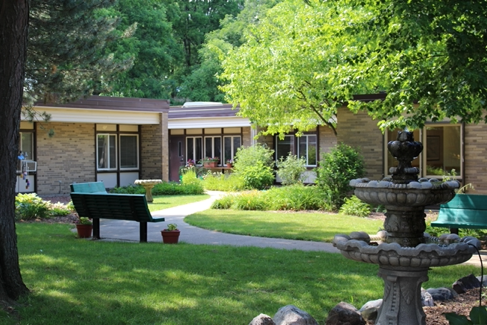
Medilodge of Grand Rapids
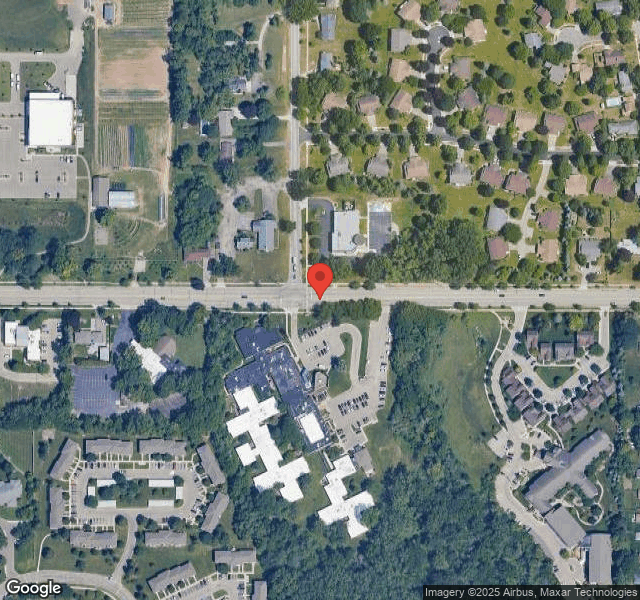
2000 Leonard NE, Grand Rapids, MI 49505 (616) 458-1133
For profit - Corporation 55 Beds MEDILODGE Data: November 2025 4 Immediate Jeopardy citations
Trust Grade
0/100
#385 of 422 in MI
Last Inspection: June 2025

Inspected within the last 6 months. Data reflects current conditions.

Overview

Medilodge of Grand Rapids has received an F grade for trust, indicating significant concerns about the quality of care provided. Ranking #385 out of 422 nursing homes in Michigan places the facility in the bottom half statewide, and #26 of 28 in Kent County suggests limited local options for better care. The facility is reportedly improving, with a reduction in issues from 23 in 2024 to 15 in 2025, but it has a concerning staffing turnover rate of 78%, which is much higher than the state average of 44%. Additionally, the facility has incurred fines totaling $68,841, which is higher than 90% of Michigan facilities, indicating ongoing compliance problems. Specific incidents include a resident suffering a stroke due to a failure to recognize and act on changes in their condition, and another resident choking on food when the facility did not provide the correct diet or assistance during mealtime. Overall, while there are some signs of improvement, serious safety and care issues remain a critical concern for families considering this facility.
Trust Score
F
0/100
In Michigan
#385/422
Bottom 9%
Safety Record
High Risk
Review needed
Inspections
Getting Better
23 → 15 violations
Staff Stability
⚠ Watch
78% turnover. Very high, 30 points above average. Constant new faces learning your loved one's needs.
Penalties
✓ Good
$68,841 in fines. Lower than most Michigan facilities. Relatively clean record.
Skilled Nurses
✓ Good
Each resident gets 46 minutes of Registered Nurse (RN) attention daily — more than average for Michigan. RNs are trained to catch health problems early.
Violations
⚠ Watch
68 deficiencies on record. Higher than average. Multiple issues found across inspections.
★☆☆☆☆
1.0
Overall Rating
★★★☆☆
3.0
Staff Levels
★★★☆☆
3.0
Care Quality
★☆☆☆☆
1.0
Inspection Score
Stable
2024: 23 issues
2025: 15 issues

The Good

  • Full Sprinkler Coverage · Fire safety systems throughout facility
  • No fines on record

Facility shows strength in fire safety.

The Bad

1-Star Overall Rating

Below Michigan average (3.1)

Significant quality concerns identified by CMS

Staff Turnover: 78%

31pts above Michigan avg (46%)

Frequent staff changes - ask about care continuity

Federal Fines: $68,841

Well above median ($33,413)

Moderate penalties - review what triggered them

Chain: MEDILODGE

Part of a multi-facility chain

Ask about local staffing decisions and management

Staff turnover is very high (78%)

30 points above Michigan average of 48%

The Ugly 68 deficiencies on record

4 life-threatening 2 actual harm
Jun 2025 6 deficiencies
CONCERN (D)

Potential for Harm - no one hurt, but risky conditions existed

Deficiency F0658 (Tag F0658)

Could have caused harm · This affected 1 resident

Based on observation, interview, and record review, the facility failed to follow professional standards of practice for medication administration via a feeding (enteral) tube in 1 of 5 residents (Res...

Read full inspector narrative →
Based on observation, interview, and record review, the facility failed to follow professional standards of practice for medication administration via a feeding (enteral) tube in 1 of 5 residents (Resident #16) reviewed for tube feeding care, resulting in the potential for discomfort and blockage. Findings include: Resident #16 Review of an admission Record revealed Resident #16 was a male, with pertinent diagnoses which included epilepsy (seizure disorder), stroke, and restlessness/agitation. Review of an Order Summary Report for Resident #16 revealed the active physician orders .clonazePAM Oral Tablet 1 MG (Clonazepam) Give 1 mg via PEG-Tube (feeding tube) three times a day for Agitation, combativeness . with a start date of 4/2/25, and .Topamax Oral Tablet 100 MG (Topiramate) Give 1 tablet via PEG-Tube three times a day for migraines . with a start date of 5/22/25. In an interview on 6/3/25 at 10:11 AM, Unit Manager K reported the facility policy is to utilize gravity for administration of medications via a feeding tube. In an observation on 6/2/25 at 1:21 PM, Registered Nurse (RN) D prepared and administered ordered medications to Resident #16 while he was in bed in his room. Observed RN D prepare one Clonazepam 1 mg tablet and 1 Topiramate 100 mg tablet in separate medication cups. RN D then crushed the medications, returned the medications to separate cups, and mixed the medications with water for administration via a feeding tube. Observed RN D flush Resident #16's feeding tube with water prior to medication administration using a syringe/plunger (not the gravity method). Observed RN D draw up each dissolved medication with the syringe/plunger and administer the medications using the plunger (not the gravity method), flushing with water in between. In an interview on 6/3/25 at 10:00 AM, RN D reported that when they first started working at the facility, they were trained to administer feeding tube medications with a syringe/plunger and stated .I've never seen it done any other way . In an interview on 6/3/25 at 10:09 AM, Licensed Practical Nurse (LPN) Y reported for medication administration via a feeding tube, they always utilize a syringe with a plunger, NOT the gravity method. In an interview on 6/3/25 at 10:18 AM, RN W reported for administration of medications via a feeding tube, each medication should be crushed and administered separately, allowing the medication to flow by gravity through the feeding tube. Review of the policy/procedure Enteral Tube Medication Administration, dated 8/2020, revealed .Medications will be administered in a safe and effective manner. The guidelines in this policy detail how to administer medication with an enteral tube .Remove the plunger from the 60 ml syringe and connect the syringe to the clamped tubing using the appropriate port .Administer each medication separately and flush the tubing between each medication .Place 15 ml (or the prescribed amount) of water in the syringe and flush the tubing using gravity flow .Pour dissolved/diluted medication in the syringe and unclamp tubing, allowing medication to flow by gravity .If complication occur during administration, manage them as necessary .If the feeding tube becomes clogged, intervene immediately. Flushing with warm water should be attempted first .Do not force-flush the tube or use a rigid object in an attempt to clear the tube. If the clog is persistent, contact the (physician) .
CONCERN (D)

Potential for Harm - no one hurt, but risky conditions existed

Tube Feeding (Tag F0693)

Could have caused harm · This affected 1 resident

**NOTE- TERMS IN BRACKETS HAVE BEEN EDITED TO PROTECT CONFIDENTIALITY** Based on observation, interview, and record review the facility failed to ensure appropriate tube feeding care was consistently ...

Read full inspector narrative →
**NOTE- TERMS IN BRACKETS HAVE BEEN EDITED TO PROTECT CONFIDENTIALITY** Based on observation, interview, and record review the facility failed to ensure appropriate tube feeding care was consistently provided for 2 (Resident #155 and Resident #3) of 4 residents reviewed for tube feeding, resulting in the potential risk for aspiration (something you swallow enters your airway or lungs) for Resident #155 and poor nutritional status for Resident #3. Findings include: Resident #155 During an observation on 06/02/25 at 11:36 AM, Resident #155 was laying on his back in bed in his room. The resident was unable to answer any questions and was nonsensical. The head of bed adjuster control was not within reach of the resident which indicated he would not have been able to alter the head of bed angle himself. The head of the bed angle was measured to be 20 degrees while tube feeding formula was actively being administered to Resident #155. There was no tool on the bed frame or in the room to measure the head of the bed angle. The tube feeding formula hanging and being administered via an electronic tube feeding pump at that time was Glucerna (tube feeding formula designed for blood sugar control) 1.5 (1.5 calories per milliliter) provided at 85 milliliters per hour. The pump indicated 735 milliliters had been administered since the formula was hung at 11:00 PM per the label on the tube feeding formula and the tube feeding formula container had approximately 50 milliliters of formula (nutrition) left in it. On Resident #155's bed side table was an unlabeled disposable enteral feeding (tube feeding) irrigation (flush) syringe and syringe container (measuring device and a fluid transfer device) that was to be used for water flushes. There was no date/time or resident name/room number written on the syringe/syringe container or a label to indicate when this equipment was first used, when it should be discarded, or which resident it was intended for. It is often recommended to change the syringe/container every 24 hours to prevent possible infection/bacterial growth. During an observation and interview on 06/02/2025 at 11:39 AM, Hospice Registered Nurse (RN) T was in Resident #155's room checking on the resident during the observation of the head of the bed angle being too low at 20 degrees. Hospice RN T confirmed she didn't adjust the head of the bed angle, and it was that way when she arrived. Hospice RN T reported the head of bed angle should be higher while tube feeding was being administered. Hospice RN T left the bed at a 20 degree angle, reported she would check with the facility on appropriate head of bed angle, and exited the room. Review of Resident #155's care plan, date initiated 5/30/25, stated, Resident (Resident #155) has an impaired gastrointestinal (stomach/intestines) status related to feeding tube .Interventions .Elevate head of bed while enteral feeding is administered. Review of Resident #155's activities of daily living care plan, dated 5/30/25, stated, Resident (#155) is dependent on staff for mobility and required 2 persons assist for bed mobility. This indicated that Resident #155 wouldn't have been able to sit up in bed and reach the head of bed controller at the foot of the bed to adjust. Review of Resident #155's hospital records, dated 5/29/25, stated, Diagnoses .Aspiration pneumonitis (lung infection) .You (Resident #155) were treated with antibiotics for a possible aspiration pneumonia. Resident #155 was admitted to the long-term care facility on 5/29/25 after the hospital visit. Review of the American Society for Parenteral (method of feeding that goes directly into the bloodstream through an intravenous (into a person's vein) line) and Enteral (nutrition provided through a tube to the person's digestive tract) Nutrition (ASPEN)'s ASPEN Safe Practices for Enteral Nutrition Therapy (https://aspenjournals.onlinelibrary.[NAME].com/doi/full/10.1177/0148607116673053), dated 11/4/2016, stated, .Maintain elevation of the HOB (head of bed) to at least 30 degree (head of bed angle) .The American Association of Critical-Care Nurses recommend the following to reduce the risk for aspiration (something that's intended to go to your stomach (for example, food) gets into the airway) : maintain the HOB 30 degrees-45 degrees .Water that is hung (or in the disposable syringe measuring container device) as a separate infusion to the EN (enteral nutrition; tube feeding) delivery device may also serve as a source for exponential microbial (bacterial) growth, especially when the water is hung for extended periods (eg (for example), >8-24 hours) . Review of the Academy of Nutrition and Dietetics' Pocket Guide to Enteral Nutrition second edition, released 9/21/2016, stated on page 154, .Maintain head of bed at minimum of 30 degrees. Review of the facility's Enteral Tube Medication Administration policy, revised 08/2020, stated, .Elevate the head of the bed to 30-45 degrees . During an interview on 06/03/25 at 03:26, Registered Nurse W reported there was no tool or device she was aware of that the facility had to measure the head of the bed angle. During an interview on 6/4/25 at 10:51 AM, Nursing Home Administrator A stated, .the angle is 30-45 degrees for what the head of the bed angle should be set at during tube feeding administration. Resident #3 Review of an admission Record revealed Resident #3 was originally admitted to the facility on [DATE] with pertinent diagnoses which included: oropharyngeal dysphagia (a swallowing disorder that involves difficulty moving food or liquid from the mouth into the esophagus) and diabetes mellitus (chronic condition in which the body's ability to regulate blood sugar levels in impaired). Review of a Minimum Data Set (MDS) assessment for Resident #3 with a reference date of 4/9/25, revealed a Brief Interview for Mental Status (BIMS) score of 99 which indicated Resident #3 was unable to complete the interview. Section K of the MDS revealed Resident #3 received all her nutrition through a tube feeding. Review of a Care Plan for Resident # 3 with a reference date of 4/2/25, revealed a focus/goal/interventions of: Focus: Resident is at risk for altered nutritional status .Goal: Resident will be free of complications related to feeding tube. Interventions .administer enteral nutrition per orders . Review of Physician Orders for Resident #3 with a reference date of 4/22/25, revealed 1. Enteral Feed Order: two times a day for enteral feed via J-tube (feeding tube inserted surgically into the jejunum, the second part of the small intestine)- (name brand of feeding) 1.5 @ 80ml(milliliters)/hr (hour)for 14 hours or until dose complete. Start at 2100(9pm), off at 1100(11am), 1120ml, 1680 kcal(calories), 68g pro(protein), 1142ml free water. 2. Two times a day flush tube with 50 ML H2O (water) before and after medication administration .3. Enteral Feed Order every 4 hours for hydration flush tube with 100 ML's H20 . Review of a Medication Administration Record for Resident #3 with a reference date of 6/2/25, revealed Enteral Feed Order every 4 hours for hydration flush tube with 100 ML's H20, 12:00 not completed. Enteral Feed Order two times a day for enteral feed via J-tube (name brand of feeding) 1.5 @80ml/hr for 14 hours or until dose complete .Start at 2100, off at 1100), marked as completed. During an observation on 6/2/25 at 10:57am, Resident #3's feeding pump was heard beeping from the hallway outside her room. The feeding pump screen stated, pump inactive, pump has been [NAME] for more than 10 minutes, press continue. 350ml of enteral feeding remained in the bottle and the feeding remained connected to Resident #3's feeding tube. During an observation on 6/2/25 at 11:02am, Resident #3's feeding pump continued to alarm. No staff were present. During an observation on 6/2/25 at 11:09am, Resident #3's feeding pump continued to alarm. No staff were present. During an observation on 6/2/25 at 11:18am, Resident #3's feeding pump continued to alarm. No staff were present. During an observation on 6/2/25 at 11:56am, Resident #3's feeding pump continued to alarm but made a different alarm sound which sounded like a chime. The pump screen read feeding tube blocked. No staff were present. During an observation on 6/2/25 at 12:51pm, Resident #3's feeding pump continued to alarm with the chiming sound and the screen read feeding tube blocked. During an observation on 6/2/25 at 12:58pm, Unit Manager/Licensed Practical Nurse (UM/LPN) K entered Resident #3's room, donned a gown, gloves and a mask. During observation and interview on 6/2/25 at 12:59pm, UN/LPN K reported she needed to check Resident #3's feeding tube. UN/LPN K attempted to flush Resident #3's feeding tube with water and a large syringe. After several attempts, UN/LPN K reported she was not successful with flushing the feeding tube and that the tube frequently clogged. During an observation and interview on 6/2/25 at 1:18pm, UN/LPN K and Director of Nursing (DON) B entered Resident #3's room, donned gowns, gloves and masks, and attempted to flush the resident's feeding tube with water and a large syringe. UN/LPN K reported Resident #3's feeding should have been completed at 11:00am and that the resident did not receive 350ml of the feeding. DON B reported the feeding tube appeared clogged and the resident would need to go to the hospital to have it cleared. In an interview on 6/4/25 at 10:11am Registered Dietitian (RD) R reported Resident #3's enteral feeding was ordered to begin at 9pm and end at 11am. RD R reported on 6/2/25, Resident #3 did not receive 525 calories (31%) of her nutritional needs. In an interview on 6/4/25 at 11:05am, LPN C reported when a resident's feeding pump stops during a feeding, it should be evaluated by a nurse quickly to avoid potential complications. LPN C also reported enteral feedings should be completed within 1 hour of the physician's ordered start/stop time. In an interview on 6/4/25 at 11:18am. UM/LPN K reported she went to Resident #3's room on 6/2/25 at 11:58am because she received report that the feeding pump was beeping. UM/LPN K reported she turned off Resident #3's feeding pump sometime between 9-10am when she provided the resident's morning medications. UM/LPN K reported she did not normally provide cares but was covering the floor that day because the regular nurse became ill and had to leave. UM/LPN K reported having a resident's feeding tube pump stopped for 2 hours during a feeding could result in improper nutrition and increase the risk for the tube becoming clogged. In an interview on 6/4/25 at 3:43pm, Nurse Practitioner (NP) X reported she placed an order for Resident #3 to go to the emergency room for evaluation on 6/2/25, after DON B reported the resident's feeding tube was clogged. Review of a Feeding Tubes policy with a reference date of 1/1/21 revealed Policy: Feeding tubes will be maintained in accordance with current clinical standards of practice, with interventions to prevent complications to the extent possible .Compliance Guidelines .7. Feeding tubes will be utilized according to physician orders .A resident who is fed by enteral means receives the appropriate treatment and services .and to prevent complications of enteral feeding including but not limited to aspiration pneumonia .
CONCERN (D)

Potential for Harm - no one hurt, but risky conditions existed

Deficiency F0742 (Tag F0742)

Could have caused harm · This affected 1 resident

**NOTE- TERMS IN BRACKETS HAVE BEEN EDITED TO PROTECT CONFIDENTIALITY** Based on observation, interview, and record review, the facility failed to ensure appropriate person-centered and individualized...

Read full inspector narrative →
**NOTE- TERMS IN BRACKETS HAVE BEEN EDITED TO PROTECT CONFIDENTIALITY** Based on observation, interview, and record review, the facility failed to ensure appropriate person-centered and individualized treatment and services were received by 1 resident (R25) of 2 residents reviewed for treatment and services to meet assessed needs, resulting in R25 experiencing psychosocial adjustment difficulty with a suicide plan that included wrapping a call-light cord around her neck threatening to kill herself. Findings include: According to the Minimum Data Set (MDS) dated [DATE], R25 scored 13/15 on her BIMS (Brief Interview Mental Status) indicating she was cognitively intact. Section D-Mood revealed R25 felt down, depressed or hopeless, with Section-N Medications revealed the resident received medications including antianxiety, antidepressant, and opioid medications. Her diagnoses included stroke, anxiety, and depression. Review of R25's Care Plan, initiated 12/13/2023, focused on the resident's behaviors including making comments about wanting to kill herself without a plan. The goal was to have no behavior problems utilizing interventions that included notifying the doctor, social services, and the Director of Nursing (DON) of any suicidal statements and to send R25 out to the hospital as needed. If resident became agitated and showed signs of escalation, staff were to re-approach later. A revision to R25's Care Plan was added on 6/3/25 to the focus of Behavior, that included Resident has made an attempt to wrap a cord around her neck. No immediate interventions were listed to remove or identify potential items that could be used to cause R25 harm or death. Review of R15's Progress Notes dated: -5/31/25 1:00 PM .Have noted an increase in agitation over the past couple of weeks . Review of R25's Behavioral Care Services notes dated, - 5/28/25 8:00 AM .Targeted behavior charting showed increased confusion, frustration, and one instance of suicidal thoughts .On 3/28/25, reported getting depressed and anxious sometimes stating It is hard to live in a place like this. - 5/27/25 9:15 AM .Judgment-marginal, demonstrated poor judgment in taking roommate's belongings .Impulse Control-Marginal becomes emotionally overwhelmed and exit situation, demonstrated impulsivity in taking roommate's belongings, became upset when asked to return item .Anxiety .perceived neglect from facility staff . Review of R25's Psychiatry Follow Up notes indicated the resident was seen monthly from 12/24 until 3/25 with no notes available in the resident's medical records for April or May 2025. During an observation and interview on 6/2/25 at 10:55 AM, R25 could be heard calling out for Help! I need to talk to someone! from out in the hall and common dining room. Upon entering R25's room, she was heard saying, I will commit suicide today. I must get out of this place because no one will listen to me. I will wrap this cord around my neck and kill myself. I'm dying and no one will listen to me. Surveyor assured R25 she would listen to her but must report the resident's vocalizations of threatening to kill herself. R25 stated, Go ahead and tell my nurse. She won't listen. She tried to give me my medications first thing this morning and I wasn't ready. The nurse told me great time to refuse my medications with State in the building. That was not a nice thing to say to me. I didn't refuse; I just didn't want my meds at that time. This surveyor went to the nursing station, where there was Registered Nurse (RN) D and two Certified Nursing Assistants (CNA). R25 could be heard from her room I need to talk to someone! RN D reported she marked R25's medications down as refusals that morning and then stated, State wasn't even in here yet when she refused. I don't know how she would have known State was coming today. CNA G, CNA J, and RN D went to R25's room to speak with her. R25's behavior intensified with her throwing objects and threatening to kill herself. R25 stating No one ever listens to me. My sisters are not coming to take me to lunch today. R25 continued to throw objects at CNAs who told her that was inappropriate. RN D brought Director of Nursing (DON) B to R25's room. CNA J reported this was the worse she had ever seen R25 behave. CNA J continued to state R25 had recently gotten into a disagreement with her roommate and now R25 was trying to wrap the call light cord around her neck which she had done this twice in the last few minutes. Observed on 6/2/25 at 11:29 AM, State Police and Mental Health Professional entered R25's room to speak with her. Resident was sent to area emergency room (ER) for evaluation soon after. During an observation and interview on 6/3/25 at 12:20 PM, Registered Nurse (RN) D reported R25 was released from the hospital on 6/2/25 in the evening for no medical reasons to keep her. RN D continued reporting R25 was kept on 1:1 observation by staff until the doctor came in this morning to evaluate her and finding no reason to keep her on 1:1 and released R25 from continuous monitoring. While standing behind the nursing station, RN D placed a call light cord and telephone handset with cord on the desk and shouted to R25 who was sitting at a dining table approximately 30 feet away, Here, come here and get your things. Here is your call light cord and telephone and cord. R25 looked up at the RN and put her hands in the air gesturing what am I supposed to do? During an observation and interview on 6/3/25 at 12:30 PM, R25 stated, I am so embarrassed about my behavior yesterday. I just wanted someone to talk to. Staff here called the State Police and brought in people then took me to the hospital. I was having a bad day. I have those every now and again and just want someone to talk to. I do have bad days and go through these feelings. Staff just watch me and send me to the hospital and the hospital sends me right back here again. Observed on 6/3/25 at 12:35 PM, R25's bed area. At the bedside was a purse with a long strap approximately 24 long. Two beaded strings each approximately 18 long were hanging on the wall next to R25's head of bed. Through out R25's bed area and her roommate's bed area were numerous items visible that could be used to harm oneself i.e., ink pens, pencils, and craft items. During an interview on 6/4/25 at 8:50 AM, Guardian P stated, Every other month, (R25) is going into the hospital for suicidal ideations. She I don't feel like they ever help her. I've talked to the facility and inpatient psychiatric treatment is not appropriate at the time. It is just (R25) making threats even though she attempted it this time. It is the first time she acted on it. I'm waiting for a phone call from the facility to see what the treatment plan will be for (R25). (R25) has no diagnoses of mental health issues. (R25's) triggers right now is she is unhappy to be in skilled nursing while I am trying to sell her condo so she can go to assisted living. Just recently there was a care conference where I told her about the condo sale falling through and it upset her. I'm not aware of her having suicidal ideations. Her Care Conference was 5/28/25 via ZOOM. We talked about her saying she was going to kill herself in the past, but it was so sporadic we (IDT and me) didn't think she needed more frequent visits from Behavior Care Solutions (BCS). During an interview on 6/4/25 at 9:54 AM, Social Worker (SW) E stated, (R25) has been having depression starting 2021. Her diagnosis was cancer. She does not have a diagnosis of dementia or mental illness. (R25) also has a history of cerebral infarction (stroke) with memory deficient. (R25) has had suicidal ideation before and this is not the first time talking about them, but the first time for suicidal attempts. (R25) began seeing Behavioral Health (BCS) starting in 2022. There is something more underlying than not being able to sell the condo that is causing (R25) to state she wants to kill herself. (R25's) Care Plan states she was on a 1:1 the other day from 6/2 to 6/3 (2025) I have been checking on her at least once a day. There is no order to check on her in her room. Nothing in her care plan to check on her. BCS was not called by me when this attempt happened. I have not called them to notify them of (R25's) attempt to kill herself. During an interview on 6/4/25 at 11:46 AM, BCS NP (Nurse Practitioner) Q stated, I was told today at 11:08 AM (6/4/25) by the facility social worker that (R25) was sent to the ER for suicidal ideations and wrapping a cord around her neck. Suicidal ideation and attempts should always be taken seriously. I understand (R25) had a plan with a cord to kill herself. I would have liked to know before this had happened to (R25). The facility is holding her until her condo is sold. I know there are things (R25) is not happy with at the facility, including her roommate and the facility should make a plan to help her. During an interview and record review on 6/4/25 at 12:43 PM, Nursing Home Administrator (NHA) A stated, I've been told when (R25) says she wants out of here she wants to kill herself. I'm her Caring Partner/Guardian Angels. Caring Partners are required to talk to assigned residents every day. Staff has orientation training in behaviors. NHA A then reviewed staff trainings, stating, There is no specific trainings regarding suicidal ideations. R25) is on periodic checks. I saw her today at 7:30 AM and 9 AM but she was still in bed. My expectations of staff are I guess staff should constantly check on her now that she wrapped a cord around her neck. During an interview on 6/4/25 at 1:15 PM, DON B and SS E reported R25 had a history of suicidal ideation and thoughts but had never followed through them. In (R25's) Care Plan, if staff were made aware of (R25's) threats of harming herself she would be sent to the ER for evaluation and then our medical director would come and assess her. (R25) did refuse her medications that morning. It is not always documented in the progress notes she refuses or that she wants to talk to someone. BCS is scheduled to meet with (R25) once a month. I do not know if staff have had training on how to work with (R25) when she has thoughts of suicide. It is care planned to send her to ER so that is what they do. On the day, 6/2/25, (R25) wrapped the cord around her neck the nurse took out the call light cord and telephone cord but didn't know everything to remove that could pose a problem for (R25) to use to hurt herself. During an interview on 6/4/25 at 12:32 PM, SS E stated, (R25) behaviors and interventions are in the care plan and have been. She was on 1:1 as soon as she wrapped the cord around her neck and on 1:1 when she came back from the hospital until the medical provider saw her and determined she was no harm to herself or others. She is seen by BCS each month. Staff currently checks on her on a regular basis but I cannot tell you exactly how often. I see her to say Hi then later in the day I'll talk to her. CNAs go on rounds and check in on her and she is open about her thoughts. There were no new interventions put in the care plan after (R25's) attempt to kill herself. But it was updated for the same interventions. I do not know what (R25) thinks so I do no knowt if and when she would try to hurt or kill herself again. It was noted, R25's was not immediately revised/updated until 6/3/25, one day after the resident's suicide attempt.
CONCERN (E) 📢 Someone Reported This

A family member, employee, or ombudsman was alarmed enough to file a formal complaint

Potential for Harm - no one hurt, but risky conditions existed

Deficiency F0725 (Tag F0725)

Could have caused harm · This affected multiple residents

**NOTE- TERMS IN BRACKETS HAVE BEEN EDITED TO PROTECT CONFIDENTIALITY** On 6/4/25 at 10:16 AM during a confidential group meeting, the group agreed there is not enough staffing on nights and weekend t...

Read full inspector narrative →
**NOTE- TERMS IN BRACKETS HAVE BEEN EDITED TO PROTECT CONFIDENTIALITY** On 6/4/25 at 10:16 AM during a confidential group meeting, the group agreed there is not enough staffing on nights and weekend to meet resident needs. They voiced concerns there would be times at nights and on weekends there may be 1 CNA (certified nursing assistant) on each hall and 1 or 2 nurses to run clinical cares in the entire facility. According to the group, this makes longer wait times to get medications and assistance with toileting, The group voiced disheartening concerns when discussing many of the CNAs and nurses they felt were good and caring had left employment while others had put in their notices to leave because of better offers and work conditions. Another concern the group brought to attention was laundry. They stated laundry had one person currently and residents might not get their clothes back until the following week. Wash cloths are sometimes made from cut up towels, sheets have holes, towels are rough, and tattered. R32 According to the MDS dated [DATE], R32 was cognitively intact with a score of 15/15 on her BIMS (Brief Interview Mental Status), with Section GG-Functional Status indicating a 2-person assist was required for transfers, dressing, and toileting. During an interview on 6/4/25 from 11:20 AM to 3:30 PM, R32 stated, My call light was on for a long time while I was sitting in pee. My leg was burning. I had to miss my therapy because CNAs did not get me up or change me. Therapy kept coming in to see why I wasn't up. The CNA would come to turn my light off and say she would come back to help. Then I would put the call light back on to say I was wet and needed to go to therapy and she would turn off the light and leave. That made me feel horrible because no one cared enough to have someone help me. During an interview on 6/4/25 at 11:10 AM, CNA H stated, I was assigned to (R32) and other residents in her area (HC2) yesterday, 6/3/25. Around 1 pm (R32) asked to get up to therapy. She needs 2 staff to get her up. I had 5 showers assigned to me and (R25) was on 1:1 monitoring with the other CNA assigned to that task. I had to do waters, pass trays, and on top of that the CNA assigned to 1:1 had to leave, and I had to monitor (R25) on 1:1 for a while. Management came to help pass trays but that still not enough help because they didn't know the residents. I was passing trays and still checking and changing residents while answering call lights. (R32) requires a 2-person mechanical lift and I did not have time to get her up. Until 10 or 11 AM (6/3/25) I was running by myself and (R32) said she would stay in bed until lunch trays were passed but she said she had to get up for therapy. I had every intention to get her up but I just didn't have the help. The first CNA assigned with me that morning (6/3/25) was transferred over to another unit. So, it was just me and the CNA on 1:1 monitoring until 10-11 AM when the first CNA came back to HC2 but the two of just couldn't get together to get (R32) up with the assignments we had. When my shift was done at 2:30 (PM), I asked the nurse to tell the oncoming CNA I was behind with the things I needed to do with the residents, and she told me to tell the oncoming CNA to get (R32) up. The nurse will offer to help with simple things but not help with transfers. I was out of time to get my all my residents taken care of. Management needs to know that the night shift CNAs sit around the desk and do not answer call lights. Management does not come to the back unit (HC2) to make sure staff is doing their jobs and helping. The other night I was doing showers on a split for Ridgewood and Pine Units and 3 call lights were on. The CNAs behind the desk did not answer the lights because the lights were my assigned residents. If I have a bad attitude it is because the other staff do not help. Showers are not getting done. Getting residents toileted and changed is not a problem but showers are. During an interview on 6/4/25 at 2:50 PM, Occupational Therapist (OT) Z stated, (R32) did refuse to have therapy to get her out of bed because it would have cut her walking time during therapy. (R32) wanted the CNA to get her cleaned up, dressed, and in her wheelchair but the CNA could not. (R32) is determined to get her entire therapy time to walk and exercise. It seemed busy on the unit (HC2) that day (6/3/25) and only one CNA was available to assist (R32). (R32) rescheduled her therapy to get the whole time for walking and exercising. Review of CNA schedule for HC2 on 6/3/25 indicated 3 CNAs were assigned to the facility from 6:30 AM to 2:45 PM. One was assigned to the 1:1 monitoring and 2- CNAs for the resident population of 49. Review of an email received on 6/4/25 at 12:00 PM from Nursing Home Administrator (NHA) A revealed 6 residents on the HC2 unit required 2-person assist with transfers. Based on observation, interview, and record review the facility failed to have sufficient staffing to ensure resident care needs were responded to timely for 4 (Residents #13, #1, #32, and #3) of 5 residents reviewed for sufficient staffing, 4 of 4 residents from a confidential resident council group meeting, and the potential to affect all those living at the facility of the facility census of 49 resulting in feeling awful, frustration, and/or discontent with one's living situation. Findings include: Resident #13: During an interview on 06/02/25 at 10:24 AM, Resident #13 reported the facility staff's call light response time was approximately 30-45 minutes. Resident #13 also reported waiting up to an hour and a half at least four times a month on average. During observations and interviews starting on 06/03/25 at 07:36 AM, Resident #13's private room (no roommate) call light was observed activated/the light on the ceiling outside the room indicated the resident had pressed his call light requesting staff assistance. The nurses' station call light monitor screen at that time indicated Resident #13's call light had been on for 50 minutes and 6 seconds. Upon returning to Resident #13's room Resident #13 confirmed his call light had been on for 50 minutes and no staff had stopped to check on him or answer his call light. Resident #13 reported when staff made him wait that long it made him feel awful. Resident #13 reported he needed to go to the bathroom, and he was visibly frustrated and uncomfortable. Approximately 3 minutes later Certified Nurse Aide (CNA) L responded to Resident #13's call light. CNA L confirmed 50 minutes was not an appropriate response time and the wait for a call light response shouldn't be that long. CNA L reported the facility didn't always have enough staff to accomplish all tasks and resident cares but sometimes they do. Review of Resident #13's most recent brief interview for mental status score, dated 2/24/25, was scored 14 which suggested he was cognitively intact. Review of Resident #13's activities of daily living (ADL) care plan, revised 12/11/2024, stated, Resident (Resident #13) has an ADL self-care performance deficit related to spondylosis (small crack between two vertebrae (bones in your spine) .paraplegia (type of paralysis that affects lower half of the body) .TOILETING: 1 person assist .Encourage resident to use call light when assistance is needed. Resident #1: During an interview on 06/02/25 at 10:50 AM, Resident #1 was in her room and reported facility staff's call light response times were often consistently longer than 15 minutes and closer to an average of 30 minutes. Review of Resident #1's most recent brief interview for mental status score, dated 5/16/25, was scored 14 which suggested she was cognitively intact. Review of Resident #1's activities of daily living (ADL) care plan, revised 5/22/2025, stated, Resident (Resident #1) has an ADL self-care performance deficit .TOILETING: .assist as needed .Encourage resident to use call light when assistance is needed. During an interview on 06/04/25 at 10:51 AM, Nursing Home Administrator A stated, Reasonable time for a call light should be 10-15 minutes. Review of the facility's Resident Council Minutes, dated 1/28/25, stated, .New Business Review/Action Plan: .Current Situation/Concern .call light .Actions Taken .concern form .Person Responsible .nursing .Outcome .Not Resolved - Action Needed . Review of the facility's Resident Council Minutes, dated 3/27/25, stated, .Clinical: .(Resident #24) says that he has to wait over an hour many nights to have his call light answered . Review of the facility's Resident Council Minutes, dated 4/16/25, stated, Old Business Review: (List unresolved old business from last meeting's minutes .Issue .Call lights not answered timely .Status Update .ongoing .New Business Review/Action Plan: Current Situation/Concern .Call lights not being answered timely .Actions Taken .Audits going . Review of the facility's Resident Council Minutes, dated 5/23/25, stated, Old Business Review: (List unresolved old business from last meeting's minutes .Issue .Call lights .Status Update .still on going .Person Responsible .nursing .New Business Review/Action Plan: Current Situation/Concern .Call lights taking so long to be answered . Review of the facility's call light accessibility and timely response policy, revised 12/28/2023, stated, .Call lights will directly relay to a staff member or centralized location to ensure appropriate response .Any staff member who sees or hears an activated call light is responsible for responding. If the staff member cannot provide what the resident desires, the appropriate personnel should be notified. Resident #3 In an interview on 6/2/25 at 1:58pm, Family Member/Durable Power of Attorney (FM/DPOA) S reported he visited Resident #3 several times per week and often waited more than 45 minutes for staff to respond after he activated the resident's call light. FM/DPOA S reported he frequently repositioned Resident #3 himself during his visits, after he waited more than 45 minutes for staff to respond. FM/DPOA S reported he always tried to find staff to assist Resident #3 with repositioning before completing the care himself but could not locate any nursing staff. In an interview on 6/4/25 at 11:05am, Licensed Practical Nurse (LPN) C reported nursing staff levels at the facility were horrible and she witnessed resident care needs going unmet. When further queried, LPN C reported in one instance, a resident who wanted to be assisted into a recliner immediately after meals was left sitting in a wheelchair because the staff needed to attend to the residents who were still eating. The resident fell while trying to transfer himself to a nearby recliner. LPN C stated he fell because he likes to get into a recliner right away after a meal and we couldn't assist him soon enough. LPN C reported the facility usually had 1.5 Certified Nursing Assistant's for her unit and that was not enough to meet the needs of the residents. LPN C stated The level of staffing we have is not enough based on the acuity of the residents. In an interview on 6/4/25 at 1:06pm, Nursing Home Administrator (NHA) A reported the facility needed to reduce the number of nursing staff absences but did not currently have a Quality Improvement Plan underway to address the issue. When further queried, NHA A reported the facility did not increase the number of nursing staff based on resident acuity and stated we make do with what we have.
CONCERN (F)

Potential for Harm - no one hurt, but risky conditions existed

Food Safety (Tag F0812)

Could have caused harm · This affected most or all residents

Based on observation, interview, and record review, the facility failed to maintain best practices in accordance with professional standards for food service safety. This deficient practice has the po...

Read full inspector narrative →
Based on observation, interview, and record review, the facility failed to maintain best practices in accordance with professional standards for food service safety. This deficient practice has the potential to result in food borne illness among all residents that consume food from the kitchen. Findings include: During the initial tour of the walk-in cooler, at 9:44 AM on 6/2/25, it was observed that an expediting cart with a few sheet pans of raw chicken breast were found stored over a sheet pan of ready to eat salads. When asked about the storage of food on the cart, Dietary Manager (DM) V stated that it was not stored properly and that the salads should be above the raw chicken. At this time DM V moved the salads to be above the raw chicken. According to the 2022 FDA Food Code section 3-302.11 Packaged and Unpackaged Food -Separation, Packaging, and Segregation. (A) FOOD shall be protected from cross contamination by: (1) Except as specified in (1)(d) below, separating raw animal FOODS during storage, preparation, holding, and display from: (a) Raw READY-TO-EAT FOOD including other raw animal FOOD such as FISH for sushi or MOLLUSCAN SHELLFISH, or other raw READY-TO-EAT FOOD such as fruits and vegetables,(b) Cooked READY-TO-EAT FOOD . During the initial tour of the kitchen, at 9:53 AM on 6/2/25, observation of the clean pots and pans rack found three large saucepans with dark black encrusted grease on the inside of the pans. Rubbing the inside of the pan found it to be textured and rough indicating excess carbon still on the pans surface. An interview with DM V found that they have some newer pans, but some of the pans have a hard time cleaning. At this time, it was observed that some larger utensils were hanging on the side of the clean pots and pan rack. A large spatula was observed with a large portion of the handle melted and deformed leaving edges and surfaces that could easily break off. DM V discarded spatula. During the initial tour of the kitchen, at 9:58 AM on 6/2/25, observation of the clean utensil drawers, found an increased accumulation of debris in the blue drawer inserts that help organize the utensils for spoons and tongs. Observation of the back of the blue inserts found dried food crumbs. According to the 2022 FDA Food Code section 4-601.11 Equipment, Food-Contact Surfaces, Nonfood-Contact Surfaces, and Utensils. (A) EQUIPMENT FOOD-CONTACT SURFACES and UTENSILS shall be clean to sight and touch. (B) The FOOD-CONTACT SURFACES of cooking EQUIPMENT and pans shall be kept free of encrusted grease deposits and other soil accumulations. (C) NonFOOD-CONTACT SURFACES of EQUIPMENT shall be kept free of an accumulation of dust, dirt, FOOD residue, and other debris. During the initial tour of the kitchen, at 10:07 AM on 6/2/25, it was observed that the data plate on the dish machine stated that the Wash Cycle needed to be a minimum of 160F and the Rinse Cycle needed to be a minimum of 180F. A review of the Dish Machine Log dated May 2025, found that the log states the temperature requirement on the wash cycle is 150F to 160F. A review of the logged wash and rinse temperatures for Breakfast, Lunch, and Dinner over the month of May found 31 wash temperatures recorded below the 150F standard on the log and almost all recorded wash temperatures were under the minimum requirement listed on the dish machine as 160F. A review of the rinse temperatures for the month of May found 14 hot sanitizing rinse cycles recorded below the minimum of 180F. The bottom of the log states, Always refer to manufactures guidelines regarding temperatures . and If temperature .does not meet parameters, stop washing, and alert manager . During the initial tour of the kitchen, at 10:10 AM on 6/2/25, three cycles of dishes were run through the dish machine, no loads were observed to have the wash gauge above the 160F requirement on the machine. An interview with DM V found that they get regular service on the dish machine and although they are waiting on a part to be installed, the vendor said the temperatures were fine. According to the 2022 FDA Food Code section 4-501.110 Mechanical Warewashing Equipment, Wash Solution Temperature. (A) The temperature of the wash solution in spray type warewashers that use hot water to SANITIZE may not be less than: .(3) For a single tank, conveyor, dual temperature machine, 71C (160F); . According to the 2022 FDA Food Code section 4-501.112 Mechanical Warewashing Equipment, Hot Water Sanitization Temperatures. (A) Except as specified in (B) of this section, in a mechanical operation, the temperature of the fresh hot water SANITIZING rinse as it enters the manifold may not be more than 90C (194F), or less than: .or (2) For all other machines, 82C (180F). According to the 2022 FDA Food Code section 4-501.15 Warewashing Machines, Manufacturers' Operating Instructions. (A) A WAREWASHING machine and its auxiliary components shall be operated in accordance with the machine's data plate and other manufacturer's instructions. (B) A WAREWASHING machine's conveyor speed or automatic cycle times shall be maintained accurately timed in accordance with manufacturer's specifications.
CONCERN (F)

Potential for Harm - no one hurt, but risky conditions existed

QAPI Program (Tag F0867)

Could have caused harm · This affected most or all residents

Based on interview and record review, the facility failed to maintain an effective system to obtain and use of feedback and input from direct care staff and residents to recognize and monitor for area...

Read full inspector narrative →
Based on interview and record review, the facility failed to maintain an effective system to obtain and use of feedback and input from direct care staff and residents to recognize and monitor for areas of improvement related to resident staffing concerns for 2 residents (Resident #3 and Resident #13) and 4 of 4 residents from a confidential resident council meeting, from a total census of 49 residents reviewed for Quality Assurance and Performance Improvement (QAPI), resulting in the potential for all residents to continue to not receive care to meet their highest practicable level well-being. Findings include: During an interview on 06/04/25 at 10:51 AM, Nursing Home Administrator A stated, Reasonable time for a call light should be 10-15 minutes. Review of the facility's Resident Council Minutes, dated 1/28/25, stated, .New Business Review/Action Plan: .Current Situation/Concern .call light .Actions Taken .concern form .Person Responsible .nursing .Outcome .Not Resolved - Action Needed . Review of the facility's Resident Council Minutes, dated 3/27/25, stated, .Clinical: .(Resident #24) says that he has to wait over an hour many nights to have his call light answered . Review of the facility's Resident Council Minutes, dated 4/16/25, stated, Old Business Review: (List unresolved old business from last meeting's minutes .Issue .Call lights not answered timely .Status Update .ongoing .New Business Review/Action Plan: Current Situation/Concern .Call lights not being answered timely .Actions Taken .Audits going . Review of the facility's Resident Council Minutes, dated 5/23/25, stated, Old Business Review: (List unresolved old business from last meeting's minutes .Issue .Call lights .Status Update .still on going .Person Responsible .nursing .New Business Review/Action Plan: Current Situation/Concern .Call lights taking so long to be answered . Review of the facility's call light accessibility and timely response policy, revised 12/28/2023, stated, .Call lights will directly relay to a staff member or centralized location to ensure appropriate response .Any staff member who sees or hears an activated call light is responsible for responding. If the staff member cannot provide what the resident desires, the appropriate personnel should be notified. On 6/4/25 at 10:16 AM during a confidential group meeting, the group agreed there is not enough staffing on nights and weekend to meet resident needs. They voiced concerns there would be times at nights and on weekends there may be 1 CNA (certified nursing assistant) on each hall and 1 or 2 nurses to run clinical cares in the entire facility. According to the group, this makes longer wait times to get medications and assistance with toileting, The group voiced disheartening concerns when discussing many of the CNAs and nurses they felt were good and caring had left employment while others had put in their notices to leave because of better offers and work conditions. Another concern the group brought to attention was laundry. They stated laundry had one person currently and residents might not get their clothes back until the following week. Wash cloths are sometimes made from cut up towels, sheets have holes, towels are rough, and tattered. Resident #3 In an interview on 6/2/25 at 1:58pm, Family Member/Durable Power of Attorney (FM/DPOA) S reported he visited Resident #3 several times per week and often waited more than 45 minutes for staff to respond after he activated the resident's call light. FM/DPOA S reported he frequently repositioned Resident #3 himself during his visits, after he waited more than 45 minutes for staff to respond. FM/DPOA S reported he always tried to find staff to assist Resident #3 with repositioning before completing the care himself but could not locate any nursing staff. Resident #13: During an interview on 06/02/25 at 10:24 AM, Resident #13 reported the facility staff's call light response time was approximately 30-45 minutes. Resident #13 also reported waiting up to an hour and a half at least four times a month on average. During observations and interviews starting on 06/03/25 at 07:36 AM, Resident #13's private room (no roommate) call light was observed activated/the light on the ceiling outside the room indicated the resident had pressed his call light requesting staff assistance. The nurses' station call light monitor screen at that time indicated Resident #13's call light had been on for 50 minutes and 6 seconds. Upon returning to Resident #13's room Resident #13 confirmed his call light had been on for 50 minutes and no staff had stopped to check on him or answer his call light. Resident #13 reported when staff made him wait that long it made him feel awful. Resident #13 reported he needed to go to the bathroom, and he was visibly frustrated and uncomfortable. Approximately 3 minutes later Certified Nurse Aide (CNA) L responded to Resident #13's call light. CNA L confirmed 50 minutes was not an appropriate response time and the wait for a call light response shouldn't be that long. CNA L reported the facility didn't always have enough staff to accomplish all tasks and resident cares but sometimes they do. In an interview on 6/4/25 at 1:06pm, Nursing Home Administrator (NHA) A reported the facility needed to reduce the number of nursing staff absences but did not currently have a Quality Improvement Plan underway to address the issue. When further queried, NHA A reported the facility did not increase the number of nursing staff based on resident acuity and stated we make do with what we have. Review of the facility survey history revealed the facility was cited at F725 for staffing concerns on an abbreviated survey exiting 1/10/25 and again at the annual survey exiting 7/25/24.
Jan 2025 7 deficiencies 1 IJ
CRITICAL (J) 📢 Someone Reported This

A family member, employee, or ombudsman was alarmed enough to file a formal complaint

Immediate Jeopardy (IJ) - the most serious Medicare violation

Quality of Care (Tag F0684)

Someone could have died · This affected 1 resident

**NOTE- TERMS IN BRACKETS HAVE BEEN EDITED TO PROTECT CONFIDENTIALITY** This citation pertains to intake #MI00148777 Based on interview and record review, the facility failed to implement treatment me...

Read full inspector narrative →
**NOTE- TERMS IN BRACKETS HAVE BEEN EDITED TO PROTECT CONFIDENTIALITY** This citation pertains to intake #MI00148777 Based on interview and record review, the facility failed to implement treatment measures when a change in condition was identified (acute stroke) in 1 (Resident #100) of 2 residents reviewed for change in condition, resulting in an Immediate Jeopary when on 1014/24, Resident #100 had sign and symptoms of a stroke and facility staff did not identify them resulting in the diagnosis of a cerebral infarction due to occlusion (Stroke caused by a blockage in a blood vessel) and a 27-day hospitalization. Findings include: The immediate jeopardy began on 10/14/2024 and was identified on 12/27/2024 due to the facility's failure to implement treatment measures when a change in condition was identified resulting in Resident #100 being hospitalized for 27 days and diagnosed with a cerebral infarction due to an occlusion (Stroke). On 12/27/24 at 4:06 PM., the Nursing Home Administrator was verbally notified and received written notification of the Immediate Jeopardy. The surveyor confirmed that the immediate Jeopardy was removed on 12/27/24 but noncompliance remains at the scope of isolated and severity of actual harm due to not all staff had not received the education and sustained compliance has not been verified by the State Agency. Resident #100 Review of an admission Record revealed Resident #100 had pertinent diagnoses which included: Cerebral infarction due to occlusion, epilepsy with simple partial seizures, (abnormal electrical impulses in the brain, seizure disorder), spastic diplegic cerebral palsy (neurological condition that causes disruption to normal movements and causes stiffness to arms and legs), and hydrocephalus (buildup of fluid in the cavities around the brain). Review of Nurses' Notes for Resident #100 dated 10/14/24 at 10:34 AM., authored by Registered Nurse (RN) N revealed Upon entering room to administer meds resident was noted to have eyes open with no tracking; looking straight forward. Vitals are WNL (within normal limits). When given heavy stimulation such as sternal rub and speaking very loudly; her eyes tracked. She is not speaking or answering questions at this time. No meds administered at this time. (Name Omitted) Medical Doctor (MD) and (Name Omitted) ADON (Assistant Director of Nursing) made aware of presentation. Review of Nurses' Notes for Resident #100 dated 10/14/24 at 19:01 (7:01 PM) authored by RN N revealed .no meals taken today. Resident more alert, but slow to respond. Review of Nurses' Note dated 10/14/24 at 20:48 (8:48 PM) authored by RN J revealed Resident continues to present as lethargic, and LOC (level of consciousness) decreased from baseline. Resident will track with eyes momentarily, and then continue to stare past writer; continues to not be willing or able to swallow medications . Review of Nurses' Note dated 10/14/24 at 6:11 AM authored by RN J revealed .has not voided (urinated) throughout shift, has had no oral intake in over 24 hours . During an observation on 12/26/24 at 9:54 AM., Resident #100 was noted lying in her bed with her eyes open, unfocused, and staring towards the television in the room. Resident #100 did not respond in any way (verbal or physical movement) when this surveyor spoke to her. In an interview on 12/26/24 at 11:15 AM., Certified Nurse Assistant (CNA) H reported Resident #100 was now non-verbal, and that she did talk before her stroke in October (2024). In an interview on 12/26/24 at 11:45 AM., Director of Nursing (DON) B reported Resident #100 was now non-verbal and was dependent on staff for all cares, including continuous tube feeding for nutrition and hydration needs. In an interview on 12/26/24 at 2:11 PM., RN N reported she thought that Resident #100's change in condition on 10/14/24 was a seizure, or that her shunt (a tube in the brain that redirects fluid) was malfunctioning. RN N reported she mentioned to the provider and the DON that Resident #100 was experiencing a change in condition, but she did not send her to the emergency room. RN N reported Resident #100 was sent frequently to the emergency room and the emergency room would do nothing and just send her back. RN N was asked if she contacted Resident #100's family when she noted the change in condition, and RN N stated I do not believe I contacted the family. RN N reported the process for a resident change in condition included a complete assessment, full vital signs, completion of the changed in condition assessment form, and a progress note needs to be completed. Also notify the provider, guardian/family/decision maker/ and then transfer to the emergency room. RN N reported she does not do the progress notes all the time due to things getting busy on the unit. RN N reported that both Medical Doctor (MD) Y and ADON C assessed Resident #100 on 10/14/24 and Resident #100 was not sent to the emergency room until the next day. In an interview on 12/26/24 at 2:35 PM., ADON C reported she was notified of Resident #100's change in condition and was asked to assess Resident #100. ADON C reported she was not aware of Resident #100's baseline status and was only advisory to RN N at the time. ADON C confirmed she did not document anything regarding Resident #100's condition on 10/14/24. In an interview on 12/27/24 11:37 AM., MD Y reported a couple of days before Resident #100 was sent to the emergency room, she assessed her, and nothing indicated that anything was different, there was nothing concrete that indicated Resident #100 needed to be seen by the ER (emergency room). MD Y reported she expected the nurses to monitor the resident and confirmed that she had not provided specifically what to monitor the resident for. MD Y reported she did not order Resident #100 be sent to the hospital; her family requested she be sent to the hospital. The MD Y was asked if she contacted the family to discuss Resident #100's condition and she replied she did not contact the family the nurse did. This surveyor asked MD Y about her documentation regarding assessment and visit to Resident #100 on 10/14/24 and MD Y stated I didn't document the visit. In an interview on 12/27/24 at 2:33 PM., DON B reported her expectations for a change in condition for a resident included the nurses performing a nursing assessment, vital signs, communication with the provider, contact family regarding the resident's condition, send the resident to the emergency room if indicated and that it be documented in the Resident's medical record. DON B stated If it wasn't documented it didn't happen. In a telephone interview on 12/27/24 at 2:07 PM., RN J reported she was told in shift-to-shift report on 10/14/24 about Resident #100 change in condition and that the provider was aware of the change, and she was to monitor Resident #100's condition. RN J reported that she documented Resident #100's condition during her shift and was concerned with Resident #100 ability to swallow and she did not provide anything to her orally during her shift. RN J reported there was no protocol in place for what to do if a resident has no noted oral intake for 24 hours. RN J reported she did not contact the provider during her shift. In a telephone interview on 12/27/24 at 5:48 PM., Licensed Practical Nurse (LPN) R reported she sent Resident #100 to the emergency room on [DATE]. LPN R reported she noticed something was wrong with Resident #100 and had been told in shift-to-shift report that the provider was aware, and the staff was to monitor Resident #100's condition. LPN R reported when Resident #100's family arrived at the facility on 10/15/24 in the evening and they reported something was clearly wrong with Resident #100 and asked for her to be sent to the emergency room. LPN R reported she called the provider on call for a verbal order and transferred Resident #100 to the emergency room. In an interview on 12/26/24 at 12:28 PM., Family Member (FM) Z reported Resident #100 was sent to the hospital per family request in October where the hospital determined Resident #100 had suffered a stroke. FM Z reported that he visited the resident on 10/15/24 in the evening after work, and noticed Resident #100 was not herself. FM Z reported he went to DON B and told her something was wrong with Resident #100 and DON B told him they we're monitoring Resident #100. FM Z reported he requested that Resident #100 be sent to the emergency room immediately. FM Z reported he was angry that the facility staff was aware that something was wrong with Resident #100 and had done nothing for her. FM Z reported he had not been made aware of the change in condition of Resident #100 until he arrived to see her on the same day she was transferred to the emergency room. Review of Resident #100's medical record revealed no noted documentation from MD Y, ADON C, nor DON B regarding any assessment of Resident #100's change in condition, any specific monitoring or follow up, or any treatment measures for Resident #100's condition, nor any noted documentation regarding Resident #100's transfer to the emergency room during the dates of 10/14/24 and 10/15/24. Review of facility policy titled Notification of Changes implemented on 10/30/2020 with a revision date of 8/29/24 revealed the purpose of this policy is to ensure that facility promptly informs the resident, consults the resident's physician; and notifies, consistent with his or her authority, resident's representative when there is a change requiring notification. Definitions: life-threatening conditions example-heart attack or stroke .circumstances requiring notification include .significant change in the resident's physical, mental or psychosocial condition such as deterioration in health, mental, or psychosocial status this may include a. life-threatening conditions . According to the Mayo Foundation for Medical Education and Research, 1998-2010, retrieved online on 10/22/10, It should be noted when signs and symptoms of a stroke begin, because the length of time they have been present may guide treatment decisions. Seek immediate medical attention if you notice any signs or symptoms of a stroke, even if they seem to fluctuate or disappear. Call 911 or your local emergency number right away. Every minute counts. Don't wait to see if symptoms go away. The longer a stroke goes untreated, the greater the potential for brain damage and disability. To maximize the effectiveness of evaluation and treatment, it's best that you get to the emergency room within 60 minutes of your first symptoms. The immediate Jeopardy that began on 10/14/2024 was removed on 12/27/2024 when the facility took the following actions to remove the immediacy: • On October 14, 2024, the facility identified that the resident had a change in condition. The resident was transferred to the emergency room for evaluation on October 15, 2024. • On December 27, 2024, the facility identified treatment was not implemented for a change in condition for Resident #100. • On December 27, 2024, the Director of Nursing and/or designee began education of the facility staff on signs and symptoms of a stroke, to include specifically decreased oral intake, unresponsiveness, inability to take medications and decreased level of consciousness. How to seek medical direction and treatment for urgent levels of care. Notification of family of change in condition. Physician/provider notification of change in condition. Documentation of notifications and assessments. How to identify acute changes in condition. No staff will not be permitted to work prior to receiving the education. • The DON and/or designee completed a chart audit of all residents on 12/27/24 to determine if any other residents had sustained an acute change of condition. No others were found. • The QAPI committee had reviewed the change in condition policy on 12/27/24 and deemed it appropriate. • The facility had an Ad Hoc QAPI Meeting, including the Medical Director on December 27, 2024, and deemed this removal plan appropriate.
SERIOUS (G) 📢 Someone Reported This

A family member, employee, or ombudsman was alarmed enough to file a formal complaint

Actual Harm - a resident was hurt due to facility failures

Accident Prevention (Tag F0689)

A resident was harmed · This affected 1 resident

**NOTE- TERMS IN BRACKETS HAVE BEEN EDITED TO PROTECT CONFIDENTIALITY** Based on observation, interview, and record review, the facility failed to provide adequate supervision to prevent falls with in...

Read full inspector narrative →
**NOTE- TERMS IN BRACKETS HAVE BEEN EDITED TO PROTECT CONFIDENTIALITY** Based on observation, interview, and record review, the facility failed to provide adequate supervision to prevent falls with injury in 1 (Resident #102) of 3 residents reviewed for accident hazards and supervision, resulting in Resident #102 suffering pain, a head laceration which required stitches, and a hematoma on his forehead. Findings include: Review of an admission Record revealed Resident #102 was originally admitted to the facility on [DATE] with pertinent diagnoses which included: muscle weakness, unsteadiness on feet, other abnormalities of gait (manner of walking) and mobility, disorientation, cognitive communication deficit, restlessness and agitation, and need for assistance with personal care. Review of a Minimum Data Set (MDS) assessment for Resident #102, with a reference date of 12/11/24 revealed a Brief Interview for Mental Status (BIMS) score of 12/15 which indicated Resident #102 was moderately cognitively impaired. Section GG of the MDS revealed Resident #102 required moderate (helper does less than half the effort) to transfer from bed to chair, transfer to the toilet, and to ambulate 10'. Section J revealed Resident #102 had a history of falls prior to his admission and had suffered a fall with injury since his admission to the facility. Review of a Care Plan for Resident # 102, with a reference date of 12/5/24, revealed a focus/goal/interventions of: Resident is at risk for falls .Goal: reduce the risk of injury through the next review. Interventions: .educate resident on safety interventions, encourage resident to keep needed items within reach, encourage resident to use call light . Review of an Incident Report dated 12/11/24 revealed Resident #102 was found lying on the floor of his room at 2:45pm. Resident #102 was bleeding from the right side of his head. A statement from a staff member who cared for Resident #102 on 12/11/24 indicated the resident had tried to stand and transfer on his own throughout the shift and multiple reminders were given to him. Review of an Initial Fall Evaluation for Resident #102, with a reference date of 12/11/24, revealed: pain evaluation: right side of head, pain level 5 .physical evaluation: right side head injury with bleeding .plan of care review .describe other interventions: constant reminders to use call light and to not self-transfer . Review of an After Visit Summary for Resident #102, with a reference date of 12/11/24 revealed the resident was diagnosed with: ground level fall, injury of head, laceration of scalp, at a local emergency room on this date. Review of an Interdisciplinary Progress Note for Resident #102, with a reference date of 12/12/24 revealed: Resident told staff he stood up from his wheelchair, did not use his call light and tipped over. Resident had laceration to right side of head and was sent to ER (emergency room) .upon return, staff determined a good intervention would be to provide more frequent checks on him . Review of an Incident Report dated 12/12/24, revealed Resident #102 was found lying on the floor in the common area after an unwitnessed fall. Review of an Initial Fall Evaluation for Resident #102, with a reference date of 12/12/24, revealed: Describe other interventions: Resident to be in common areas of staff .Resident is impulsive. Needs constant reminders and monitoring. Review of an Incident Report dated 12/13/24, revealed Resident #102 had an unwitnessed fall in his room at 4:34pm. Review of an Incident Report dated 12/15/24, revealed Resident #102 was found on the floor in the common area after an unwitnessed fall. Review of an Incident Report dated 12/16/24, revealed Resident #102 was found on the floor in his room after an unwitnessed fall. Review of an After Visit Summary dated 12/19/24, revealed Resident #102 was diagnosed with ground level fall, closed head injury, traumatic hematoma of forehead at a local emergency room on this date. During an observation on 12/26/24 at 9:07am, Resident #102 sat fully reclined in a recliner chair outside his room. A large hematoma with bruising surrounding it, was present on the right side of Resident #102's forehead. No staff were present during the 5-minute observation. In an interview on 12/26/24, at 12:03pm, Family Member (FM) CC reported Resident #102 needed more supervision to remain safe at the facility. FM CC reported she visited the resident daily and often times did not see any staff while she was visiting. FM CC stated He is falling more here than he did at home, because he's getting less supervision. FM CC reported she requested the resident get more supervision during his care conference because she was worried about his safety, and she was told the facility was in the process of hiring additional staff. FM CC reported Resident #102 had been sent to the emergency room twice in recent weeks because he fell and hit his head. The resident received stitches to his right forehead during both visits to the emergency room. FM CC stated They just need more staff to give him the supervision he needs. In an interview on 12/26/24, at 3:19pm, Registered Nurse (RN) W reported Resident #102 needed constant supervision to avoid falling. RN W reported she cared for Resident #102 on 12/19/24 and he fell after being left unsupervised. RN W reported although Resident #102 needed constant supervision to remain safe, the facility did not have enough staff to provide the supervision he needed. In an interview on 12/26/24 at 3:25pm, Registered Nurse (RN) N reported she had cared for Resident #102 in recent weeks and felt the facility did not provide the amount of supervision the resident needed to remain safe. RN N reported Resident #102 constantly attempted to stand up and when he did so, the resident would stand up and fall on his head. RN N reported the facility had provided Resident #102 with 1:1 supervision at times but did not have enough staff to always do so. In an interview on 12/27/24 at 9:19am, Certified Nursing Assistant (CNA) L reported on 12/19/24 while she was in another resident's room, she was alerted by Resident #102's roommate that he had fallen. CNA L reported she and another CNA found Resident #102 actively bleeding, lying on the floor in his room. CNA L reported she was aware Resident #102 was unsafe to be alone, but the staffing level did not allow for a staff member to always be with Resident #102 and she and the other CNA were caring for a resident that needed the assistance of 2 staff members, when Resident #102 fell. CNA K reported Resident #102's unit only had 2 CNA's at the time, one of which was a trainee, who could not be left alone with Resident #102. During an observation on 12/27/24 at 9:24am, Medical Records Coordinator (MR) I sat next to Resident #102 as he slept in a recliner chair in the common area of the facility. In an interview on 12/27/24 at 9:27sm, MR I reported she was providing supervision to Resident #102 as she sat with him on this date. MR I reported she was asked to provide supervision to Resident #102 for the first time on 12/26/24, was happy to help, but had not been asked previously. In an interview on 12/26/24 at 1:22pm, CNA V reported Resident #102 was supposed to be checked on frequently, but she was unsure exactly how often staff were expected to check on him. CNA V added, He moves so fast, unless you're right there, he will fall. In an interview on 12/26/24 at 2:29pm, Director of Nursing (DON) B reported Resident #102 required a lot of supervision to remain safe. DON B reported the resident was placed on frequent checks which meant he could not be expected to ask for help before attempting to get up and should be within line of sight of staff when he was awake. DON B reported the expectation was for Resident #102 to always be with staff when he was awake. When further queried about the amount of supervision the facility had provided to Resident #102, DON B became tearful and reported the facility had done what it could to provide the level of supervision Resident #102 needed and had been successful with providing supervision while the resident was awake in the last few days. No additional interventions beside supervision were discussed or considered. In an interview on 12/27/24 at 1:35pm, Registered Nurse (RN) W reported the facility recognized Resident #102 needed constant 1:1 supervision to remain safe at times, but there was not enough staff to provide that level of supervision. In an interview on 12/27/24 at 1:43pm, Confidential Informant (CI) DD reported Resident #102 needed 1:1 supervision to maintain his safety when he was restless. CI DD reported the facility staffing had suffered through a perfect storm in recent weeks due to open nursing positions, staff illness, and the recent holidays. When queried about the facility's ability to meet the supervision needs of Resident #102, CI DD stated All I can say is look at the nursing schedules. Review of the nursing schedules for (12/11, 12/12, 12/13, 12/15, 12/16, 12/19), each day/shift on which Resident #102 had a fall, revealed the facility was operating with less nursing staff than it deemed necessary for Resident #102's unit. Review of a facility policy, Fall Prevention Program with a reference date of 10/26/23 revealed Policy: Each resident will .receive care and services in accordance with the level of risk to minimize the likelihood of falls.
CONCERN (D) 📢 Someone Reported This

A family member, employee, or ombudsman was alarmed enough to file a formal complaint

Potential for Harm - no one hurt, but risky conditions existed

Resident Rights (Tag F0550)

Could have caused harm · This affected 1 resident

This citation pertains to intake #MI00148777 Based on observation, interview, and record review the facility failed to preserve resident dignity during care in 2 (Resident #100 and Resident #103) of 4...

Read full inspector narrative →
This citation pertains to intake #MI00148777 Based on observation, interview, and record review the facility failed to preserve resident dignity during care in 2 (Resident #100 and Resident #103) of 4 residents reviewed for dignity resulting in the potential for a reasonable person to experience feelings of embarrassment, shame and/or a loss of self-esteem. Findings include: Resident #100 Review of an admission Record revealed Resident #100 had pertinent diagnoses which included: Cerebral infarction due to occlusion, epilepsy with simple partial seizures, (abnormal electrical impulses in the brain, seizure disorder), spastic diplegic cerebral palsy, (neurological condition that causes disruption to normal movements, (causes stiffness to arms and legs)), and hydrocephalus (buildup of fluid in the cavities around the brain). On 12/26/24 at 9:54 AM., Resident #100 was observed in her bed and was noted to have significant facial hair, on her upper lip, chin, and both cheeks; a mustache and beard. Review of Care Plan for Resident #100 focus/goals/interventions: revealed Resident has an ADL (activity of daily living) self-care performance deficit .interventions: I prefer my facial hairs to be shaved daily with an initiation date of 5/14/2024. On 12/26/24 at 11:43 AM., Director of Nursing (DON) B and Certified Nurse Assistant (CNA) E were observed repositing Resident #100 in her bed. CNA E reported that Resident #100 gets a shower twice a week, and that facial shaving was done on shower days. DON B confirmed that shaving should be done on shower days. In an interview on 12/27/24 at 9:30 AM CNA G reported that shaving was done on shower days per the resident preference. CNA G reported that Resident #100's shower was scheduled today. During an interview on 12/27/24 at 10:00 AM., CNA O reported that male and female residents should be shaved on their shower days per their preferences. On 12/27/24 at 10:21 AM., Resident #100 was observed in the shower room with CNA O providing a shower. On 12/27/24 at 1:25 PM., Resident #100 was observed in her reclining wheelchair, in her room, and was noted to have significant facial hair, on her upper lip, chin, and both cheeks, a mustache and beard as observed previously. In an interview on 12/26/24 with Resident #100's family member, FM Z indicated Resident #100 was a beautiful caring woman, and should be treated as such, she should not have significant facial hair, and he believed that Resident #100 would be embarrassed when she was unshaven. FM Z reported often times he had to shave Resident #100's face when he visited. Resident #100 was non-verbal, and unable to verbally express her own thoughts due to her mental diagnoses, based on the reasonable person concept Resident #100 had the potential to experience feeding of embarrassment and decreased self-worth related to her unkempt appearance with significant facial hair. Resident #103 Review of an admission Record revealed Resident #103 had pertinent diagnoses which included: cerebral palsy and contractures of muscles (inability for muscles to stretch and retract as normal). On 12/26/24 at 11:12 AM., Director of Nursing (DON) B and Certified Nurse Assistant (CNA) H were observed from the hallway, transferring Resident #103 via a mechanical lift, into her recliner chair, in her, through an open doorway. In an interview on 12/26/24 at 11:12 AM., CNA H reported she should have closed the door to Resident #103's room and the curtain around her bed before the transfer and confirmed she did not close the door. Resident #103 had decreased ability to express her own thoughts due to her mental diagnosis and declined to engage in verbal conversation, based on reasonable person concept Resident #103 had the potential to experience feelings of decreased self-worth and embarrassment while being transferred with a mechanical lift with her room door open for anyone in the hallway to observe the care process. Review of facility policy titled Promoting/Maintaining Resident Dignity with an implementation date of 10/30/2020 wand a revision date of 10/26/2023 revealed 4. The residents' former lifestyle and personal choices will be considere4d when providing care and services to meet the residents' needs and preferences .9. Groom and dress residents according to resident preference . 12. Maintain resident privacy .
CONCERN (D) 📢 Someone Reported This

A family member, employee, or ombudsman was alarmed enough to file a formal complaint

Potential for Harm - no one hurt, but risky conditions existed

Notification of Changes (Tag F0580)

Could have caused harm · This affected 1 resident

This citation pertains to intake #MI00148777 Based on interview and record review, the facility failed to notify a resident's responsible party regarding a change in condition for 1 (Resident #100) of...

Read full inspector narrative →
This citation pertains to intake #MI00148777 Based on interview and record review, the facility failed to notify a resident's responsible party regarding a change in condition for 1 (Resident #100) of 2 residents reviewed for change in condition resulting in a delay in resident transfer to emergency room for evaluation and treatment. Findings include: Resident #100 Review of an admission Record revealed Resident #100 had pertinent diagnoses which included: Cerebral infarction due to occlusion, epilepsy with simple partial seizures, (abnormal electrical impulses in the brain, seizure disorder), spastic diplegic cerebral palsy, (neurological condition that causes disruption to normal movements, (causes stiffness to arms and legs)), and hydrocephalus (buildup of fluid in the cavities around the brain). Review of Nurses' Notes for Resident #100 dated 10/14/24 at 10:34 AM., authored by Registered Nurse (RN) N revealed Upon entering room to administer meds resident was noted to have eyes open with no tracking; looking straight forward. Vitals are WNL (within normal limits). When given heavy stimulation such as sternal rub and speaking very loudly; her eyes tracked. She is not speaking or answering questions at this time. No meds administered at this time. (Name Omitted) Medical Doctor (MD) and (Name Omitted) ADON (assistant director of nursing) made aware of presentation. Review of Nurses' Note dated 10/14/24 at 20:48 (8:48 PM) authored by RN J revealed Resident continues to present as lethargic, and LOC (level of consciousness) decreased from baseline. Resident will track with eyes momentarily, and then continue to stare past writer; continues to not be willing or able to swallow medications . During an interview on 12/26/24 at 2:11 AM., RN N reported she did not think she contacted Resident #100's family when she had a noted change in condition in October (2024). RN N confirmed the process for a resident change in condition included notifying the provider and guardian/family/decision maker. In an interview on 12/26/24 at 2:35 PM., ADON C reported she did not contact the family when Resident #100 had a noted change in condition on October 14, 2024. ADON C confirmed that family should be contacted when a resident has a change in condition. In an interview on 12/26/24 at 11:37 AM., MD Y reported she did not contact family when Resident #100 had a noted changed in condition on October 14, 2024. In a telephone interview on 12/27/24 at 2:07 PM., RN J reported she did not contact family when Resident #100 had a noted changed in condition on October 15, 2024. In an interview on 12/27/24 at 2:33 PM., Director of Nursing (DON) B reported her expectations were that family was notified when a resident was noted to have a change in condition. In a telephone interview on 12/27/24 at 5:49 PM., Licensed Practical Nurse (LPN) R reported she noticed something was wrong with Resident #100 and had been told in shift-to-shift report at the beginning of her shift that the provider was aware of the changed in condition, and the staff was to monitor Resident #100's condition. LPN R reported when Resident #100's family arrived at the facility on 10/15/24 in the evening and they reported something was clearly wrong with Resident #100. LPN 'R reported that Family Member (FM) Z was not aware of the change in condition for Resident #100 prior to his arrival to the facility. LPN R reported FM Z asked that Resident #100 be sent to the emergency room for evaluation. In an interview on 12/26/24 at 12:28 PM., FM Z reported he had not been made aware of the change in condition of Resident #100 until he arrived to see her on the same day she was transferred to the emergency room. FM Z reported that he visited the resident on 10/15/24 in the evening after work, and noticed Resident #100 was not herself. FM Z reported he went to DON B and told her something was wrong with Resident #100 and DON B told him they we're monitoring Resident #100. FM Z reported he requested Resident #100 be sent to the emergency room immediately. FM Z reported he was unable to instruct the facility to send Resident #100 to the emergency room for evaluation when the changed in condition was first noticed because he was never made aware of her change in condition. Review of Resident #100's medical record revealed no noted documentation that Resident #100's responsible party was notified when the facility staff identified a change in her condition on 10/14/24 and 10/15/24. Review of facility policy titled Notification of Changes implemented on 10/30/2020 with a revision date of 8/29/24 revealed the purpose of this policy is to ensure that facility promptly informs the resident, consults the resident's physician; and notifies, consistent with his or her authority, resident's representative when there is a change requiring notification. Definitions: life-threatening conditions example-heart attack or stroke .circumstances requiring notification include .significant change in the resident's physical, mental or psychosocial condition such as deterioration in health, mental, or psychosocial status this may include a. life-threatening conditions .
CONCERN (D) 📢 Someone Reported This

A family member, employee, or ombudsman was alarmed enough to file a formal complaint

Potential for Harm - no one hurt, but risky conditions existed

Deficiency F0658 (Tag F0658)

Could have caused harm · This affected 1 resident

**NOTE- TERMS IN BRACKETS HAVE BEEN EDITED TO PROTECT CONFIDENTIALITY** Based on observation, interview, and record review the facility failed to ensure wound care and compression stocking physician o...

Read full inspector narrative →
**NOTE- TERMS IN BRACKETS HAVE BEEN EDITED TO PROTECT CONFIDENTIALITY** Based on observation, interview, and record review the facility failed to ensure wound care and compression stocking physician orders were in place for 1of 3 residents (Resident#102) reviewed for professional standards, resulting in the resident receiving care without the direction of a physician, and the potential for worsening of medical conditions. Findings include: Review of an admission Record revealed Resident #102 was originally admitted to the facility on [DATE] with pertinent diagnoses which included: varicose veins (enlarged veins) of the bilateral (both) lower extremities with pain, chronic kidney disease (kidneys are damaged and can't filter blood the way they should), right bundle branch block (delayed electrical signal in heart's right bundle branch), and waldenstrom macroglobulinemia (cancerous changes to the white blood cells). Review of a Minimum Data Set (MDS) assessment for Resident #102, with a reference date of 12/11/24, section M revealed the resident had no skin issues at the time of the assessment. Review of a Care Plan for Resident #102, with a reference date of 12/5/24, revealed a focus/goal/interventions of: Resident is at risk for impaired skin integrity related to right bundle branch block, CKD (chronic kidney disease), Waldenstrom macroglobulinemia .Goal: Resident will have intact skin to the extent allowed .Interventions: .administer medications as ordered .notify Physician of any new areas of skin impairment . Review of physician orders for Resident #102 revealed no orders for wound care of his right hand or use of compression stocking for swelling of lower extremities. Review of a Nurses Note dated 12/24/24 revealed Resident grabbed gaitbelt (sic) from CNA and cut hand on metal teeth of gaitbelt (sic). Bandage applied . No notes were found regarding physician notification of the wound. During an observation on 12/26/24 at 2:14pm, Certified Nursing Assistant (CNA) V donned (putting on) thigh high compression stockings on Resident #102. Director of Nursing (DON) B then approached and completed a dressing change to Resident #102's right palm. In an interview on 12/26/24, at 2:29pm, DON B confirmed that Resident #102 did not have a physician's order in place for wound care to his right palm or for the use of compression stockings on his lower extremities. When further queried about the rationale for the compression stockings, DON B reported the resident's spouse requested them but added the resident really wasn't having any swelling to warrant the use. In an interview on 2/26/24 at 3:19pm, Registered Nurse (RN) W reported a resident with a wound should have physician orders in place to direct the care of the wound. RN W also reported physician orders were necessary prior to use of compression stockings because they are used to treat specific conditions and could cause circulation issues if they used inappropriately. Review of the Fundamentals of Nursing revealed, The health care provider (physician or advanced practice nurse) is responsible for directing medical treatment. Nurses follow health care providers' orders unless they believe that the orders are in error, violate agency policy, or are harmful to the patient. [NAME], [NAME] A.; [NAME], [NAME] Griffin; Stockert, [NAME]; Hall, [NAME]. Fundamentals of Nursing - E-Book (Kindle Locations 20717-20719). Elsevier Health Sciences. Kindle Edition.
CONCERN (E) 📢 Someone Reported This

A family member, employee, or ombudsman was alarmed enough to file a formal complaint

Potential for Harm - no one hurt, but risky conditions existed

Deficiency F0725 (Tag F0725)

Could have caused harm · This affected multiple residents

**NOTE- TERMS IN BRACKETS HAVE BEEN EDITED TO PROTECT CONFIDENTIALITY** Resident #100 Review of an admission Record revealed Resident #100 had pertinent diagnoses which included: Cerebral infarction ...

Read full inspector narrative →
**NOTE- TERMS IN BRACKETS HAVE BEEN EDITED TO PROTECT CONFIDENTIALITY** Resident #100 Review of an admission Record revealed Resident #100 had pertinent diagnoses which included: Cerebral infarction due to occlusion, epilepsy with simple partial seizures, (abnormal electrical impulses in the brain, seizure disorder), spastic diplegic cerebral palsy, (neurological condition that causes disruption to normal movements, (causes stiffness to arms and legs), and hydrocephalus (buildup of fluid in the cavities around the brain). In an interview on 12/26/24 at 9:35 AM., Registered Nurse (RN) W reported staffing on this day was two nurses and three Certified Nurse Assistants (CNA). Census was reported to be 54 residents. In an interview on 12/26/24 at 9:41 AM., CNA D reported he had been called in to help and that he was scheduled to work until 10:30 PM this day. CNA D reported he was called in to work early most of the days he was scheduled to work . In an interview on 12/26/24 at 9:45 AM., RN N reported staffing was terrible. RN N reported there was not enough staff to supervise residents, there was an increase in falls, behaviors, and meals and medications were late. On 12/26/24 at 11:05 AM., Director of Nursing (DON) B and CNA H were observed exiting a resident's room. DON B reported that she does have to work the floor to cover open shifts. CNA H reported she was the only CNA on the unit, and she needed another staff member to complete a mechanical lift transfer. CNA H reported staffing was short this day, there were only 3 CNAs and 2 nurses, and she was behind with resident's cares. In an interview on 12/26/24 at 11:15 AM., CNA H reported Resident #100 does not get out of bed and into her wheelchair on days when staffing was short. CNA H indicated that this dates, staffing was short with only 3 CNAs and that Resident #100 would not get out of bed this shift. Review of Care Plan for Resident #100 revealed Focus/Goal/Interventions: Resident has an ADL (activity of daily living) self-care deficit relate to activity intolerance, cognitive deficits, deconditioning, fatigue, impaired balance, limited mobility .have resident up between breakfast and lunch and again between lunch and dinner as tolerated, initiated on 12/11/2024. I prefer to have my facial hairs shaved daily initiated on 5/14/2024. On 12/26/24 at 11:43 AM., DON B and CNA E were observed repositioning Resident #100 in bed. In a telephone interview on 12/26/24 at 12:28 PM., Family Member (FM) Z reported DON B was working the cart on the units because the facility did not have enough staff to fill the open shifts. On 12/26/24 at 1:45 AM., the call light to room [ROOM NUMBER] on the birchwood unit was activated. On 12/26/24 at 1:50 PM., CNA H was observed entering a room [ROOM NUMBER] on the birchwood unit. Activity staff was noted on the unit engaging several residents in bingo in the dining area on the birchwood unit. No other staff was noted on the unit. On 12/26/24 at 2:05 PM., the call light to room [ROOM NUMBER] on the birchwood unit was still on, and a female voice could be heard yelling hello. On 12/26/24 at 2:11 PM., CNA H was noted to answer the call light for room [ROOM NUMBER] on the birchwood unit. The call light was noted to be active for 21 minutes. In an interview on 12/26/24 at 3:15 PM., CNA E reported staffing affects resident care. Shower are delayed or not done, call light wait times are longer for residents when staffing was short. On 12/26/24 during the times of 9:00 AM., and 4:00 PM., Resident #100 was not observed to have significant facial hair and was not out of her bed to sit in her wheelchair during these times. In an interview on 12/27/24 at 9:27 AM., CNA V reported staffing was an issue and directly affected resident showers, two person check and changed, and call light wait times. CNA V reported that bed baths were given in place of showers due to low staffing numbers. CNA V reported when only one CNA was on the unit, the call light wait times increased significantly because we cannot be in two places at once. On 12/27/24 at 9:40 AM., the alarm on Resident #100's feeding pump was sounding, and the screen displayed a message indicating flow error. In an interview on 12/27/24 at 9:50 AM., CNA O reported she needed a second staff member to assist Resident #100 into the shower. CNA O reported she does nothing with Resident #100's feeding pump, and she needed the nurse to silence the alarm that was still sounding and disconnect the feeding for the shower. On 12/27/24 at 10:00 AM., Resident #100's feeding pump alarm was acknowledged by RN N after sounding for 20 minutes. In an interview on 12/27/24 at 10:13 AM., CNA K reported that corners get cut when staffing was short. CNA K identified tasks that were eliminated during short staffing to be using PPE for enhanced barrier precautions, showers, oral care, and shaving. On 12/27/24 at 10:21 AM., Resident #100 was noted to be in the shower with CNA V. On 12/27/24 at 1:25 PM., Resident #100 was noted to be sitting in her reclining wheelchair in her room, dressed, but with significant facial hair noted. Based on observation, interview, and record review, the facility failed to ensure sufficient staffing to provide adequate care for 2 (Resident #102) of 4 residents reviewed for staffing. This deficient practice resulted in falls and avoidable pain for Resident #102 due to lack of supervision, Resident #100 not receiving proper grooming, and a potential for additional unmet care needs for residents who reside in the building. Findings include: Review of Association of Staffing Instability With Quality of Nursing Home Care, Mukamel, [NAME], [NAME], Journal of American Medical Association, January 2023, revealed: Conclusion: this study suggests that holding average staffing levels constant, day to day staffing stability, especially avoiding days of low staffing of licensed practical nurses and certified nurse aides, is a marker of better quality of nursing homes. Resident #102 Review of an admission Record revealed Resident #102 was originally admitted to the facility on [DATE] with pertinent diagnoses which included: muscle weakness, unsteadiness on feet, other abnormalities of gait (manner of walking) and mobility, disorientation, cognitive communication deficit, restlessness and agitation, and need for assistance with personal care. Review of a Minimum Data Set (MDS) assessment for Resident #102, with a reference date of 12/11/24 revealed a Brief Interview for Mental Status (BIMS) score of 12/15 which indicated Resident #102 was moderately cognitively impaired. Section GG of the MDS revealed Resident #102 required moderate (helper does less than half the effort) to transfer from bed to chair, transfer to the toilet, and to ambulate 10'. Section J revealed Resident #102 had a history of falls prior to his admission and had suffered a fall with injury since his admission to the facility. Review of a Care Plan for Resident # 102, with a reference date of 12/5/24, revealed a focus/goal/interventions of: Resident is at risk for falls .Goal: reduce the risk of injury through the next review. Interventions: .educate resident on safety interventions, encourage resident to keep needed items within reach, encourage resident to use call light . Review of an Initial Fall Evaluation for Resident #102, with a reference date of 12/11/24, revealed: pain evaluation: right side of head, pain level 5 .physical evaluation: right side head injury with bleeding .plan of care review .describe other interventions: constant reminders to use call light and to not self-transfer . Review of an After Visit Summary for Resident #102, with a reference date of 12/11/24 revealed the resident was diagnosed with: ground level fall, injury of head, laceration of scalp, at a local emergency room on this date. Review of an Initial Fall Evaluation for Resident #102, with a reference date of 12/12/24, revealed: Describe other interventions: Resident to be in common areas of staff .Resident is impulsive. Needs constant reminders and monitoring. Review of an Incident Report dated 12/13/24, revealed Resident #102 had an unwitnessed fall in his room at 4:34pm. Review of an Incident Report dated 12/15/24, revealed Resident #102 was found on the floor in the common area after an unwitnessed fall. Review of an Incident Report dated 12/16/24, revealed Resident #102 was found on the floor in his room after an unwitnessed fall. Review of an After Visit Summary dated 12/19/24, revealed Resident #102 was diagnosed with ground level fall, closed head injury, traumatic hematoma of forehead at a local emergency room on this date. During an observation on 12/26/24 at 9:07am, Resident #102 sat fully reclined in a recliner chair outside his room. A large hematoma with bruising surrounding it, was present on the right side of Resident #102's forehead. No staff were present during the 5-minute observation. In an interview on 12/26/24 at 9:12am, Registered Nurse (RN) N reported the facility was staff with 2 nurses and 3 Certified Nursing Assistants (CNA's) for the day shift on this date, which was below the minimum staffing level the facility had deemed necessary. RN N reported she was caring for 28 residents; each aide was caring for approximately 18 residents. RN N reported this staffing level was below the number of staff the facility had deemed necessary for the current resident population. In an interview on 12/26/24 at 9:18am, Certified Nursing Assistant (CNA) V reported she was the only CNA for Resident #102's unit today. When further queried, CNA V reported Resident #102 needed more supervision than she could provide given the current staffing level. In an interview on 12/26/24, at 12:03pm, Family Member (FM) CC she visited Resident #102 daily and often did not see any staff around during her visits. FM CC reported Resident #102 needed more supervision to remain safe at the facility. FM CC stated He is falling more here than he did at home, because he had less supervision at the facility. FM CC reported she requested the resident get more supervision during his care conference because she was worried about his safety, and she was told the facility was in the process of hiring additional staff. FM CC reported Resident #102 had been sent to the emergency room twice in recent weeks because he fell and hit his head and required 4 stitches to his right forehead during both visits to the emergency room. FM CC stated They just need more staff to give him the supervision he needs. During an observation on 12/26/24 at 3:15pm, Resident #102 was asleep in a recliner chair in the common area of the facility. No staff were present. In an interview on 12/26/24, at 3:19pm, Registered Nurse (RN) W reported Resident #102 needed constant supervision to avoid falling. RN W reported she cared for Resident #102 on 12/19/24 and he fell after being left unsupervised. RN W reported although Resident #102 needed constant supervision to remain safe, the facility did not have enough staff to provide the supervision he needed. RN W reported the facility had 2 nurses and 3 aides to provide care for 54 residents on this date which was far below the staffing level the facility had deemed necessary. In an interview on 12/26/24 at 3:25pm, RN V reported in recent weeks, Resident #102 had been constantly up and trying to walk. RN V reported the resident was confused and did not realize he was unable to safely walk, so he would literally stand up and fall on his head. RN V reported the facility provided some 1:1 supervision for the resident but did not have enough staff to always provide this level of supervision, and as a result, Resident #102 had fallen. In an interview on 12/26/24 at 3:32pm, CNA M reported she was currently the only CNA for Resident #102's unit and he needed more supervision than she could provide. CNA M reported she could not supervise Resident #102 while also providing cares for other residents privately. In an interview on 12/27/24 at 9:19am, Certified Nursing Assistant (CNA) L reported on 12/19/24 she was alerted by Resident #102's roommate, while she was in another resident's room, that Resident #102 had fallen. CNA L reported she and another CNA found Resident #102 actively bleeding, lying on the floor in his room. CNA L reported the facility was staffed with less nursing staff than it had deemed necessary for Resident #102's unit that day and all staff were busy caring for other residents when Resident #102 fell. CNA L reported the unit had 2 CNA's but 1 was a trainee who was not allowed to provide cares independently. In an interview on 12/26/24 at 1:22pm, CNA V reported Resident #102 was supposed to be checked on frequently, but she was unsure exactly how often staff were expected to check on him. CNA V added, He moves so fast, unless you're right there, he will fall. In an interview on 12/26/24 at 2:29pm, Director of Nursing (DON) B reported the facility had determined the necessary staffing levels to provide quality care were as follows: 3 nurses and 6 CNA's on day shift, 2 nurses until 10:30pm and 5 CNA's on afternoon shift, and 1 nurse, 3 CNA's overnight. DON B described the current staffing situation as the perfect storm in recent weeks. DON B reported the facility had several open schedule slots for the nursing staff due to open positions, staff illness, and the holidays. DON B reported she and other members of the leadership team were frequently working as floor staff, but some positions could not be filled. DON B reported Resident #102 should be with staff when he is awake due to his safety needs. When further queried about the amount of supervision the facility had provided to Resident #102, DON B became tearful and reported the facility had done what it could to provide the level of supervision Resident #102 needed and had been successful with providing supervision while the resident was awake in the last few days. Review of the nursing schedules for (12/11, 12/12, 12/13, 12/15, 12/16, 12/19), each day/shift on which Resident #102 had a fall, revealed the facility was operating with less nursing staff than it deemed necessary for Resident #102's unit. Review of a list of residents who were dependent (required assistance of 2 staff members for cares), provided by Nursing Home Administrator (NHA) A, revealed 21 of 53 residents required assist of 2 staff members for cares. A list of current open nursing positions for the facility was requested but not provided at the time of exit conference. In an interview on 12/27/24 at 9:27am, Activity Assistant (AA) Q reported she witnessed residents experiencing long waits for assistance and a lack of supervision of residents due to low nursing staffing. In an interview on 12/27/24 at 9:43am, Housekeeper (HSK) BB described the nursing staffing at the facility as horrible and reported she witnessed resident's waiting for more than 60 minutes to receive care.
CONCERN (F) 📢 Someone Reported This

A family member, employee, or ombudsman was alarmed enough to file a formal complaint

Potential for Harm - no one hurt, but risky conditions existed

Infection Control (Tag F0880)

Could have caused harm · This affected most or all residents

This citation pertains to intake #MI00148997 and MI000149141 Based on observation, interview, and record review the facility failed to 1. ensure proper use of personal protective equipment (PPE) for 2...

Read full inspector narrative →
This citation pertains to intake #MI00148997 and MI000149141 Based on observation, interview, and record review the facility failed to 1. ensure proper use of personal protective equipment (PPE) for 2 (Resident #100 and Resident #103) on enhanced barrier precautions and 2. properly clean resident shared equipment, resulting in the potential for the spread of infection, cross-contamination, and disease transmission for residents residing in the facility. Findings include: Resident #100 Review of an admission Record revealed Resident #100 had pertinent diagnoses which included: Cerebral infarction due to occlusion, epilepsy with simple partial seizures, (abnormal electrical impulses in the brain, seizure disorder), spastic diplegic cerebral palsy, (neurological condition that causes disruption to normal movements, (causes stiffness to arms and legs)), and hydrocephalus (buildup of fluid in the cavities around the brain). At 9:54 AM., on 12/26/24 signage was noted on Resident #100's door to her room indicating the resident was in enhanced barrier precautions and staff must perform hand hygiene, apply gloves and a gown prior to providing any care. Review of Care Plan for Resident #100 revealed Focus/goal/interventions: Resident requires enhanced barrier precautions related to feeding tube, use gown and gloves when providing direct care. Initiated 11/11/24. In an interview on 12/26/24 at 11:15 AM., Certified Nurse Assistant (CNA) H reported that Resident #100 was in enhanced barrier precautions and that meant staff was to wear a gown and gloves during cares. On 12/26/24 at 11:34 AM., Director of Nursing (DON) B was observed rehanging tube feeding formula for Resident #100 and was only wearing gloves when the procedure was performed. On 12/26/24 at 11:37 AM., DON B and CNA E were observed repositioning Resident #100 in her bed and neither staff member were wearing a gown as indicated by the signage on the door for enhanced barrier precautions. In an interview on 12/26/24 at 2:11 AM., Registered Nurse (RN) N reported Resident #100 was not in enhanced barrier precautions, but she should be. In an interview on 12/26/24 at 3:15 PM., CNA E reported staff was to wear a gown and gloves when providing cares to a resident who was in enhanced barrier precautions. CNA E reported that Resident #100 was not on enhanced barrier precautions. In an interview on 12/26/24 at 3:26 PM., RN W reported enhanced barrier precautions were indicated if a resident had a peg tube (feeding tube). RN W reported staff was to wear a gown and gloves during cares. During an observation and interview on 12/27/24 at 10:21 AM., Resident #100 was in the shower room and no PPE was noted available for use in the shower room. CNA V indicated there was no PPE stored in the shower room. Resident #103 Review of an admission Record revealed Resident #103 had pertinent diagnoses which included: cerebral palsy and contractures of muscles (inability for muscles to stretch and retract as normal). On 12/26/24 at 11:12 AM., DON B and CNA H were observed from the hallway, transferring Resident #103 via a hoyer lift (mechanical lift), into her recliner chair, in her room, through an open doorway. Noted on Resident #103's door was signage indicating that Resident #103 was in enhanced barrier precautions, indicating that staff must wear a gown and gloves during care activities including transferring. Neither staff member was wearing any PPE. CNA H was observed placing the hoyer lift in the hallway and did not clean it. In an interview on 12/26/24 at 11:12 AM., CNA H reported Resident #103 was on enhanced barrier precautions and staff needed to wear a gown and gloves during cares. CNA H reported enhanced barrier precautions did not include transfers. CNA H was observed reading the signage posted on Resident #103's door and stated, it does include transfers, I need to be better educated on enhanced barrier precautions. Review of Care Plan for Resident #103 revealed Focus/goal/interventions: Resident requires enhanced barrier precautions related to feeding tube, use gown and gloves when providing direct care. Initiated 4/8/24. In an interview on 12/26/24 at 3:35 PM., DON B reported her expectations we if the room was posted with enhanced barrier precautions signage that the PPE be worn by staff when providing cares. DON B initially indicated that PPE was not needed when performing transfers, then changed her mind, and transfers should be included, and staff should wear PPE when transferring residents. DON B confirmed that she was not wearing PPE when she administered the tube feeding and when she assisted with the repositioning of Resident #100, and she confirmed she was not wearing PPE when she assisted with the transfer for Resident #103. During an observation and interview on 12/27/24 at 9:27 AM., CNA G and CNA V were observed in the room with Resident #103, preparing to transfer her from her reclining wheelchair to her bed, when Staff Development/Infection Control (SD/IC) U entered Resident #103's room and instructed the CNAs to apply PPE. CNA G and CNA V confirmed they would have transferred Resident #103 without any PPE if SD/IC U had not instructed them to put PPE on. CNA G was observed exiting the room with the hoyer lift and placing it outside the room. CNA G did not clean the lift. In an interview on 12/27/24 at 9:34 AM., CNA V reported lifts should be cleaned before and after use for all residents. CNA V reported the lifts do not get cleaned as they should. CNA V confirmed she did not clean the lift after it was used for Resident #103. In an interview on 12/27/24 at 9:36 PM., CNA G reported she does not know anything about cleaning the lifts, she has never been instructed to clean the lift, and she confirmed she did not clean the lift after she used it with Resident #103. In an interview on 12/27/24 at 10:24 AM., Staff Development/Infection Control (SD/IC) U reported she was in training for the infection control and was not certified. SD/IC U reported DON B was certified for the building. SD/IC U confirmed she had educated the two CNAs transferring Resident #103 and she confirmed there was no PPE present in the shower room. SD/IC reported her expectations was that PPE should be worn during resident showers for those in enhanced barrier precautions. On 12/27/24 at 2:53 PM., the facility provided a copy of DON B certificate of completion for nursing home infection preventionist training course that was dated 12/27/24. During an observation on 12/26/24 at 9:14am, shared equipment stored in the hallway near the shower room of the Pineridge Unit was noted to be heavily soiled. A white shower chair had a dried, baseball sized, yellow liquid stain on the seat. 2 sit to stand machines were soiled with dust, hair, food crumbs, and debris on the foot platform, where resident's place their feet during transfers. One sit to stand machine had a whole almond and partial peanut on the foot platform. The bars on one machine, where the resident places their hands during a transfer, were soiled with a dried white liquid. During an observation on 12/27/24 at 9:37am, the shared equipment stored near the shower room of the Pineridge Unit was on the opposite side of the hallway from the previous day. The equipment was arrnaged in a different order than from the previous day.The equipment remained soiled. A mechanical lift labeled #11, had blue padded hand grips for the residents to hold. The hand grips of the lift were heaviliy soiled with dust and debris that covered their entire surface. In an interview on 12/27/24 at 9:39am, Certified Nursing Assistant (CNA) V reported the shared equipment stored by the shower room on Pineridge Unit was actively in use for residents, some of which had been used on this date.
Jan 2025 2 deficiencies 1 IJ
CRITICAL (J) 📢 Someone Reported This

A family member, employee, or ombudsman was alarmed enough to file a formal complaint

Immediate Jeopardy (IJ) - the most serious Medicare violation

Accident Prevention (Tag F0689)

Someone could have died · This affected 1 resident

**NOTE- TERMS IN BRACKETS HAVE BEEN EDITED TO PROTECT CONFIDENTIALITY** This citation pertains to Intake: MI00149223 Based on interview and record review, the facility failed to ensure 1 of 1 resident...

Read full inspector narrative →
**NOTE- TERMS IN BRACKETS HAVE BEEN EDITED TO PROTECT CONFIDENTIALITY** This citation pertains to Intake: MI00149223 Based on interview and record review, the facility failed to ensure 1 of 1 residents (Resident #100) reviewed for safety, received the correct food tray and assistance with eating on 12/3/24, resulting in an Immediate Jeopardy when Resident #100 choked on a piece of cauliflower and subsequently died. Findings include: The immediate jeopardy began on 12/03/24 and was identified on 01/03/25 due to the facility's failure to provide the correct diet tray and no assistance when eating resulting in Resident #100 choking on a piece of cauliflower and subsequent death. On 01/06/25 at 12:00 PM, the Nursing Home Administrator was verbally notified and received written notification of the Immediate Jeopardy. The surveyor confirmed by observation, interview, and record review that the Immediate jeopardy was removed on 1/6/25 but noncompliance remains at the scope of isolated and severity of actual harm due to not all staff had received the education and sustained compliance has not been verified by the State Agency. Dysphagia refers to difficulty swallowing. The causes and complications of dysphagia vary. Complications include aspiration pneumonia, dehydration, decreased nutritional status, and weight loss. [NAME], [NAME] A.; [NAME], [NAME]: Stockert, [NAME]; Hall, [NAME]. Fundamentals of Nursing - E-Book (Kindle Locations 64741-64743). Elsevier Health Sciences. Kindle Edition. Resident #100: Review of an admission Record revealed Resident #100 was a male with pertinent diagnoses which included paralysis on right dominant side, aphasia (loss of the ability to understand or express speech caused by brain damage, like with a stroke), cognitive communication deficit (progressive degenerative brain disorder resulting in difficulty with thinking and how someone uses language), dysphagia (damage to the brain responsible for production and comprehension of speech), need for assistance with personal care, intellectual disabilities, and cerebral infarction affecting right dominant side (blood flow to the brain is blocked, causing an area of tissue death in the brain . Review of Care Plan with 10/22/24, revealed the focus, .Resident has an ADL (Activities of daily living) self-care performance deficit related to CVA (cerebral vascular accident), epilepsy, dysphagia (damage to the brain responsible for production and comprehension of speech), pulmonary vascular congestion, hemiplegia . with the intervention .EATING: 1 person assist. Uses divided plate, built up utensils, and clothing protector as resident allows . Review of Order dated 10/22/24, revealed, .NDD (National Dysphagia Diet) Level 1 diet, Pureed Texture, Honey/Moderately Thick Consistency (a liquid that pours slowly, similar to honey, where it is thick enough to not easily flow out of a cup but can still be sipped from a spoon), oral care before and after each meal. No straws. Upright in wheelchair in dining room for all meals. DOUBLE PORTIONS . Review of Level 1 Dysphagia Puree received on 1/6/25, revealed, .ALL FOODS PUREED smooth without lumps and seeds .Cream of Wheat needs to be lump free, and oatmeal pureed .Cannot puree bacon or pepperoni unless stated otherwise .No pureed fruits with skim, pulp, or seeds .Sandwiches pureed as separate components .No sticky or chewy foods . Review of Summary of Daily Skilled Services dated 11/27/24, revealed, .Precautions: Fall risk, aphasia, PEG tube, low vision, NDD level 1 textures, honey-thick liquids, no straws .Pt (Patient) alert/awake in dining room. Pt cooperative with treatment session, in which recertification was completed. Pt continues on a NDD level 1 texture diet honey-thick liquids. Pt has been safely tolerating therapeutic trials of NDD level 2 textures, however, pt continues to require max cueing for implementation of safe swallowing strategies. Recommend continued education in strategies, including small bites/sips, alternate bites/sips, and eat slowly. No therapeutic trials of upgraded liquids have been trialed d/t (due to) no upgrade recommended until f/u VFSS. Pt implementing safe swallowing strategies with 75% accuracy given max verbal cues. Pt agreeable to continue to participate in skilled SLP (Speech Language Pathologist) services 3-4x/week for 30 days to continue to complete pharyngeal strengthening exercises and facilitate diet advancement as appropriate . Review of Incident Report dated 12/3/24, revealed, .Incident Description: Resident sitting in dining room on (Unit). New employee CENA delivered resident tray. Resident .diet/honey thick liquids but was served a regular tray accidentally by CENA. Was noted to be choking .nurse .Immediate Action Taken: RN immediately attempted Heimlich x3, resident turning blue and no air exchange noted, placed on floor, Heimlich .CPR initiated, 9-1-1 called. AED attached -no shock needed. No food noted in mouth. EMS arrived and took over .(Local Hospital) via EMS who were continuing to work on resident .Other Info: New CENA in orientation provided wrong diet to resident. Preceptor was assisting another resident and was not aware of wrong tray .noted resident in choking position with hands at throat . Review of Nurse's Notes dated 12/3/24 at 8:51 PM, revealed, .Witnessed choking event occurred. Approximately 1730 dinner trays passed by CNA's. Resident sitting in dining area on (Unit) in wheelchair. At 1735 RN (Registered Nurse) who was passing meds on (Unit) was alerted by CNA (Certified Nursing Assistant) F that resident was choking as resident put hands over throat and signaled to help. After rapidly attending to resident, this RN attempted Heimlich multiple times while in wheelchair without success. Resident rapidly turned blue in lips and gasping without any air exchange. Unable to visualize any food in mouth. Resident then assisted to floor and positioned supine. Heimlich reattempted without any success. 911 called after establishing no pulse. CPR started by this RN and assisted by CNA. After approximately 3 rounds of CPR EMS arrived. LMA (laryngeal mask airway) and IO (Intraosseous- procedure that involves injecting fluids, medications, or blood products directly into the bone marrow. This done when intravenous access (IV) is not available or feasible, such as in cardiac arrest or decompensated shock) iv placed per EMS and AED applied. Resident eventually transported to (Local Hospital) with no spontaneous pulse . Review of IDT-Interdisciplinary Progress Note dated 12/5/2024 at 2:38 PM, revealed, .IDT (Interdisciplinary Team), including RDC met to review choking incident. Resident on puree diet received the wrong tray of a regular diet that belonged to his roommate. (CNA G), CNA orientee, had mistakenly given (Resident #100) the dinner tray that should have gone to his roommate. (CNA F) was supervising the dining room when she noted that (Resident #100) had placed his hands at his throat indicating he was choking. She called for the nurse who immediately attended to the resident and performed the Heimlich maneuver with no results and called 911 and began CPR. Paramedics arrived and took over; he was then transported to (Local hospital) where he was later deceased . In an interview on 1/3/25 at 12:27, Registered Nurse (RN) E reported she was on a different hallway administering medications. RN E reported the facility only had two nurses on shift and when that happened, the unit Resident #100 was on was split between the nurses. RN E reported the incident occurred at dinner time and there was not a nurse down on that unit at that time. CNA F was the only CNA on the unit, and she had a trainee with her, CNA G who was employed by the facility but was orienting. CNA F yelled to me loudly (Resident #100) was choking, sprinted down there and he was sitting at the table in the dining room area. Resident #100 was seated in his wheelchair, he was trying to breath, he was gasping and totally occluded. He was starting to turn blue. RN E reported CNA F had been in that area, he raised his hand and grabbed his throat, she quickly yelled to me. RN E reported she tried Heimlich on him, he was a bigger guy, tall and heavier set guy. RN E reported she tried multiple times, and nothing was happening. He slumped over, RN E reported he was not ambulatory person, and he was in his wheelchair, she was behind him trying the Heimlich maneuver doing the best she could. RN E reported he had lost consciousness not sure how long it had been by the time she called me to come down to assist Resident #100. RN E reported she had to get him to the floor. CNA F and her got him to the floor and tried abdominal thrusts on him, looked in his airway and there was nothing there. RN E reported they had him on the floor in the middle of the dining room and she couldn't feel a pulse, she called 911 and then started cardiopulmonary resuscitation (CPR). RN E reported CNA H came down from another unit and grabbed the crash cart. RN E had called 911 and they told the staff to start CPR, and she was doing 30/2, 911 told her to stay on the phone and someone would be there right away, and then Fires rescue arrived, not sure how many rounds of CPR she had performed on Resident #100. RN E reported when Fire Rescue got there, they began running the code and soon after EMS arrived. CNA F had been assisting the other residents out of the dining room and back to their rooms. RN E reported the responders tried putting an oral airway in him but were unsuccessful and they ended up intubating him. RN E reported the AED reported a shock was not advised, and the code was ran for a good 30-40 minutes. RN E reported the incident happened at like 5:35 PM and the responders took him sometime after 6:00 PM. RN E reported it wasn't until she took a look at his tray, she realized the CNA had delivered the wrong tray to Resident #100. RN E reported there were chunks of cauliflower and penne pasta roasted on the tray. RN E reported had decompensated in the ICU (Intensive Care Unit) that night and had died. RN E' reported she was informed by the hospital it was the cauliflower caught in his throat. RN E reported CNA G didn't know the residents well and she fell apart when she realized she had given Resident #100 the wrong diet tray. Review of Risk Management Statement dated 12/6/24, revealed, CNA G wrote .Began passing trays, I delivered a tray to (Resident #100) that belonged to his roommate by mistake. (Resident #100) was seated at the table in the dining room. I then went to another unit to assist another resident with their meal. I returned to (Unit) to see the staff providing CPR to (Resident #100) . In an interview on 1/3/25 at 1:06 PM, CNA G reported she was training on (Unit) when it was dinner time, reported we were passing the trays out. CNA G reported she was told to pass out trays for Resident #100 and his roommate. CNA G reported she dropped the trays off and was to go to another hall and feed another resident. When CNA G came out of the room, she saw EMS giving him (Resident #100) CPR. CNA G reported she had only worked at the facility for approximately two weeks prior to this incident and she was still in training. CNA G reported she didn't' know who the residents were on that unit as she had only worked over there one other time. CNA G reported the staff were to check the meal ticket and she had mixed them up. CNA G reported she was supposed to check the kiosk if she did not know who the resident was and/or to verify the resident's diet order was correct, but she didn't have access to the charting system but if had access she could have checked the charting system. CNA G reported they were working short staffed and CNA F had other things to do and she told me here the tray go ahead and pass it. She had pointed the trays out to me and told me they went to the residents in Resident #100's room. CNA G reported she did not verify who she gave the meal tray too was correct as she had to go assist another resident with eating. CNA G stated, she felt, .Terrible for his family because of my mistake . Review of Risk Management Statement dated 12/6/24, revealed, .I, (CNA F), CNA was supervising the dining room when I saw and heard the resident placed his hand to his chest and give the sign that he was choking. I went right over to him, asked him if he was ok, he shook his head no, I immediately called out for the nurse, (RN E) ran to the resident and began the Heimlich maneuver. That was unsuccessful. 911 was called and we laid the resident to the floor and began CPR until paramedics arrived and they took over . This writer attempted to contact CNA F on 1/3/25 at 2:35 PM and 1/6/25 at 10:39 AM and was unable to reach her prior to the end of survey. Review of Risk Management Statement dated 12/6/24, revealed, .I, (CNA H), was in another room assisting a resident to eat their meal. I exited the room and walked to dining room area to see (RN E), RN and (CNA F), CNA performing the Heimlich maneuver on resident (Resident #100). I then went for emergency cart/AED and brought to the nurse. Paramedics then arrived as (RN E) and (CNA F) were performing CPR . In an interview on 1/3/25 at 12:16 PM, Family Member (FM) K reported they were in the building frequently and stated, .You don't know how many times the wrong trays are given to the wrong people, see it quite a bit . In an interview on 1/6/25 at 2:31 PM, CNA J reported Resident #100 was one person assist, and he needed to be watched when he ate as he ate too fast, he had built up silverware and he was getting better, but he was still on a pureed diet. In an interview on 1/6/25 at 4:17 PM, Director of Nursing (DON) C reported there were two residents who needed assistance on 12/3/24 and Resident #100 would have been one of them. In an interview on 1/3/24 at 2:07 PM, Director of Rehabilitation, Speech Language Pathologist (SLP) I reported Resident #100 admitted to the facility in August 24, he was originally NPO (nothing by mouth) with a peg tube. SLP I reported she saw him from August to October and he had a swallow study done on 10/18/24 and was upgraded to a Level I Pureed diet, thick liquids via cup only no straws. SLP I reported she had done some trials with Resident #100 with a Level II diet, mechanical soft and pretty mushy. SLP I reported she had only given him a little bite and she never felt comfortable upgrading his diet to Level II because he ate super, super fast and she wanted to do another swallow study before any upgrades. SLP I reported for the trails she used a very small piece of oatmeal cream pie cookie, didn't do a ton of trials as he ate too fast. SLP I reported she was working with Resident #100 4 days a week when he had dies. SLP I reported he was a new stroke still and that was part of what brought him here in August 24. SLP I reported on 11/27/24 note it was written, Resident #100 was safely tolerating of level textures, max cueing safe swallowing not recommended to upgrade. SLP I reported she saw Resident #100 for aphasia as well. Review of ED to Hosp-Admission note dated 12/3/24 at 7:37 PM, revealed, .HISTORY OF PRESENT ILLNESS: 75 yo M (male) who presents via EMS from (Long Term Care Facility) after he went down. Patient was eating dinner when he suddenly choked on his food. Patient was supposed to be eating a pureed diet but had solid food. He went down, lost pulses and CPR was started. EMS attempted to intubate however there was a food bolus passed the vocal cords they were unable to remove. I gel (airway device used to manage airway during resuscitation or anesthesia) was placed. They continued CPR and did get return of spontaneous circulation at 1 point. Estimated downtime of approximately 40-45 minutes. They did give 4 rounds of epinephrine .75 yo male with cardiac arrest due to acute airway obstruction after aspirating (inhalation of a foreign object into the lungs) on a piece of cauliflower. Downtime at least 40 minutes. Neurologic assessment unable to be obtained due to severe shock and hypoxia (absence of enough oxygen in the tissues to sustain bodily functions). Chest imaging with evidence of severe aspiration pneumonitis. Bronchoscopy (procedure that allows the doctor to examine the inside of the lungs, trachea, and bronchi using a thin, lighted tube called a bronchoscope) done at bedside with pulmonary hemorrhage, presuming due to trauma from CPR done while aspirated food content was lodged in airway. Etiology (cause or manner for a disease or condition) of shock likely due to severe acute lung injury and impending ARDS (acute respiratory distress syndrome). Review of policy, .Resident Meal Service reviewed/revised on 01/01/2022, revealed, .Each resident shall receive the correct diet, with preferences accommodated as feasible and shall receive prompt meal service and appropriate feeding assistance .2. Nursing personnel will ensure that residents ware served the correct food tray .3. Prior to service the food tray, the Nurse Aide/Feeding Assistant must check the tray card to ensure that the correct food tray is being served to the resident. IF there is doubt, the nurse supervisor will check the written physician's order . Review of policy, Tray Identification reviewed/revised on 01/01/2022, revealed, .3. Nursing staff shall check each food tray for the correct diet before serving the residents . The immediate jeopardy that began on 12/3/24 was removed on 1/6/25 when the facility took the following actions to remove the immediacy: On December 3,2024, the facility identified that a resident was given a regular diet instead of his ordered puree honey thick liquid diet. The resident began choking and ultimately requiring CPR. The facility identified that the CENA in orientation did not have her preceptor with her and did not know how to identify residents. On December 3, 2024, the Director of Nursing and/or designee began education of facility staff on providing accurate diet, not providing care without preceptor/Nurse in attendance until relieved from Orientation, and that preceptors will not leave or allow new employees to provide care until they are deemed competent to provide care without preceptor. Staff were also educated on utilizing the kiosk when needing to identify residents. NHA and DON were educated on 12/4/24 on orientation process and preceptor expectations as well as the policy for orientation. On 12/5/24 the facility implemented resident diet info binders to include diet terminology conversion, pictures of diets and allowable foods for texture, resident pictures who have altered diets. The facility implemented re-education on January 6, 2025, upon identification that staff were unable to verbalize use of resident diet info binders. The facility has 15 Licensed Nurses and 27 C.E.N.A.'s ·As of January 6, 2025, the facility had educated 6 of the 15 Licensed Nurses and 14 of the 27 C.E.N.A/s. ·Any staff not educated at the time would not be permitted to work a shift until education had been completed. ·The facility Medical Director was notified on January 6, 2025, at 1:55pm. ·The Director of Nursing and/or designee completed an audit on all residents with an altered diets to ensure orders are entered correctly and match the binders. This audit for accuracy was completed on January 6,2025 and no concerns notes. The QAPI committee has reviewed the Orientation policy, therapeutic diet orders and ADLs and has deemed them appropriate 1/6/25. The facility had an Ad hoc QAPI meeting including the Medical Director (via phone) on January 6,2025 and deemed this removal plan appropriate. The Administrator and Director of Nursing are responsible for continued compliance.
CONCERN (D) 📢 Someone Reported This

A family member, employee, or ombudsman was alarmed enough to file a formal complaint

Potential for Harm - no one hurt, but risky conditions existed

Report Alleged Abuse (Tag F0609)

Could have caused harm · This affected 1 resident

This citation pertains to intake: MI00149223 Based on interview and record review, the facility failed to implement facility policy and procedure for reporting an incident of neglect (resident choking...

Read full inspector narrative →
This citation pertains to intake: MI00149223 Based on interview and record review, the facility failed to implement facility policy and procedure for reporting an incident of neglect (resident choking and subsequent death due to recieving wrong meal tray) to the State Agency in 1 of 1 resident (Resident #100) reviewed for neglect, resulting in the potential for continued violations going unreported or without thorough investigation. Findings include: Review of an admission Record revealed Resident #100 was a male with pertinent diagnoses which included paralysis on right dominant side, aphasia (loss of the ability to understand or express speech caused by brain damage, like with a stroke), cognitive communication deficit (progressive degenerative brain disorder resulting in difficulty with thinking and how someone uses language), dysphagia (damage to the brain responsible for production and comprehension of speech), need for assistance with personal care, intellectual disabilities, and cerebral infarction affecting right dominant side (blood flow to the brain is blocked, causing an area of tissue death in the brain . Review of Care Plan with 10/22/24, revealed the focus, .Resident has an ADL (Activities of daily living) self care performance deficit related to CVA (cerebral vascular accident), epilepsy, dysphagia (damage to the brain responsible for production and comprehension of speech), pulmonary vascular congestion, hemiplegia . with the intervention .EATING: 1 person assist. Uses divided plate, built up utensils, and clothing protector as resident allows . Review of Order dated 10/22/24, revealed, .NDD (National Dysphagia Diet) Level 1 diet, Pureed Texture, Honey/Moderately Thick Consistency (a liquid that pours slowly, similar to honey, where it is thick enough to not easily flow out of a cup but can still be sipped from a spoon), oral care before and after each meal. No straws. Upright in wheelchair in dining room for all meals. DOUBLE PORTIONS . Review of Level 1 Dysphagia Puree received on 1/6/25, revealed, .ALL FOODS PUREED smooth without lumps and seeds .Cream of Wheat needs to be lump free and oatmeal pureed .Cannot puree bacon or pepperoni unless stated otherwise .No pureed fruits with skim, pulp, or seeds .Sandwiches pureed as separate components .No sticky or chewy foods . Review of Summary of Daily Skilled Services dated 11/27/24, revealed, .Precautions: Fall risk, aphasia, PEG tube, low vision, NDD level 1 textures, honey-thick liquids, no straws .Pt (Patient) alert/awake in dining room. Pt cooperative with treatment session, in which recertification was completed. Pt continues on a NDD level 1 texture diet honey-thick liquids. Pt has been safely tolerating therapeutic trials of NDD level 2 textures, however, pt continues to require max cueing for implementation of safe swallowing strategies. Recommend continued education in strategies, including small bites/sips, alternate bites/sips, and eat slowly. No therapeutic trials of upgraded liquids have been trialed d/t (due to) no upgrade recommended until f/u VFSS. Pt implementing safe swallowing strategies with 75% accuracy given max verbal cues. Pt agreeable to continue to participate in skilled SLP services 3-4x/week for 30 days to continue to complete pharyngeal strengthening exercises and facilitate diet advancement as appropriate . Review of Incident Report dated 12/3/24, revealed, .Incident Description: Resident sitting in dining room on (Unit). New employee CENA delivered resident tray. Resident .diet/honey thick liquids, but was served a regular tray accidentally by CENA. Was noted to be choking .nurse .Immediate Action Taken: RN immediately attempted Heimlich x3, resident turning blue and no air exchange noted, placed on floor, Heimlich .CPR initiated, 9-1-1 called. AED attached -no shock needed. No food noted in mouth. EMS arrived and took over .(Local Hospital) via EMS who were continuing to work on resident .Other Info: New CENA in orientation provided wrong diet to resident. Preceptor was assisting another resident and was not aware of wrong tray .noted resident in choking position with hands at throat . Review of Nurse's Notes dated 12/3/24 at 8:51 PM, revealed, .Witnessed choking event occurred. Approximately 1730 dinner trays passed by CNA's. Resident sitting in dining area on (Unit) in wheelchair. At 1735 RN (Registered Nurse) who was passing meds on (Unit) was alerted by CNA (Certified Nursing Assistant) F that resident was choking as resident put hands over throat and signaled to help. After rapidly attending to resident, this RN attempted Heimlich multiple times while in wheelchair without success. Resident rapidly turned blue in lips and gasping without any air exchange. Unable to visualize any food in mouth. Resident then assisted to floor and positioned supine. Heimlich reattempted without any success. 911 called after establishing no pulse. CPR started by this RN and assisted by CNA. After approximately 3 rounds of CPR EMS arrived. LMA (laryngeal mask airway) and IO (Intraosseous- procedure that involves injecting fluids, medications, or blood products directly into the bone marrow. This done when intravenous access (IV) is not available or feasible, such as in cardiac arrest or decompensated shock) iv placed per EMS and AED applied. Resident eventually transported to (Local Hospital) with no spontaneous pulse . Review of the State Agency reporting program revealed the incident resulting in the death of Resident #100 was not reported to the State Agency. In an interview on 1/3/25 at 2:31 PM, Admininstrator A reported they were told not to report the incident by corporate and it was not our call and the hospital would report it. In an subsequent interview on 1/3/25 at 4:11 PM, Administrator A reported as a team they did not feel that it was a reportable incident.
Jul 2024 17 deficiencies
CONCERN (D)

Potential for Harm - no one hurt, but risky conditions existed

Deficiency F0578 (Tag F0578)

Could have caused harm · This affected 1 resident

**NOTE- TERMS IN BRACKETS HAVE BEEN EDITED TO PROTECT CONFIDENTIALITY** Based on interview and record review, the facility failed to ensure accurate advanced directive information was in place for 1 o...

Read full inspector narrative →
**NOTE- TERMS IN BRACKETS HAVE BEEN EDITED TO PROTECT CONFIDENTIALITY** Based on interview and record review, the facility failed to ensure accurate advanced directive information was in place for 1 of 3 (Resident #21) residents reviewed for advanced directives (legal documents that allow a person to identify decisions about end-of-life care ahead of time), resulting in the potential for a resident's preferences for medical care to not be followed by the facility, or other healthcare providers. Findings include: Resident #21 Review of an admission Record revealed Resident #21 was originally admitted to the facility on [DATE] with pertinent diagnoses which included adult failure to thrive. Review of Resident #21's Code Status (a medical team that indicates what to do if resident experiences cardiac or respiratory arrest) in the electronic health record (EHR) revealed that resident was listed as full resuscitation. Review of Resident #21's Advance Directive dated [DATE] which was signed by Resident #21's guardian, indicated that Resident #21's end of life preference were for no person to attempt to resuscitate in the event that Resident #21's heart or breathing stopped. During an interview on [DATE] at 12:35 PM, Certified Nursing Assistant (CNA) JJ reported that staff would look at at a resident's Code Status in the EHR to determine how to care for the resident in the event of an emergency that may require cardiopulmonary resuscitation (CPR). CNA JJ reported that resident's code status could also be found on the printed daily report sheets. Review of the daily report sheet for Resident #21 revealed that Resident #21's code status was not indicated on the sheet. During an interview on [DATE] at 1:48 PM, Registered Nurse L reported that staff would look at at a resident's Code Status in the EHR to determine how to care for the resident in the event of an emergency that may require cardiopulmonary resuscitation (CPR). During an interview on [DATE] at 5:40 PM, Guardian BB reported that she had signed a do not resuscitate (DNR) order on 9/2023 because Resident #21's end of life wishes were to not receive CPR. During an interview on [DATE] at 2:50 PM, SW FF reported that the facility reviewed resident's code status at every care conference to ensure resident's end of life wishes were documented accurately in the EHR. SW FF was unable to report the date of Resident #21's most recent care conference. Social Worker (SW) FF reported that Resident #21's code status in the EHR did not reflect Resident #21's end of life wishes as indicated on his advance directive form, and that the facility had missed this error. Review of the facility's Do Not Resuscitate Order policy last revised [DATE] revealed, Policy: Our facility will not use cardiopulmonary resuscitation and related emergency measures to maintain life functions on a resident when there is a Do Not Resuscitate order in effect .5. The Interdisciplinary Care Planning Team will review advance directives with the resident during quarterly care planning sessions or with a significant change of condition to determine if the resident wishes to make changes in such directives .
CONCERN (D)

Potential for Harm - no one hurt, but risky conditions existed

PASARR Coordination (Tag F0644)

Could have caused harm · This affected 1 resident

**NOTE- TERMS IN BRACKETS HAVE BEEN EDITED TO PROTECT CONFIDENTIALITY** Based on interview and record review, the facility failed to ensure a Level II Preadmission Screening and Resident Review (PASAR...

Read full inspector narrative →
**NOTE- TERMS IN BRACKETS HAVE BEEN EDITED TO PROTECT CONFIDENTIALITY** Based on interview and record review, the facility failed to ensure a Level II Preadmission Screening and Resident Review (PASARR) evaluation was completed for 1 (Resident #20) of 2 residents reviewed for PASARR Screening, resulting in the potential for unmet mental health and psychiatric care needs. Findings include: Resident #20 Review of an admission Record revealed Resident #20 was originally admitted to the facility on [DATE] with pertinent diagnoses which included schizoaffective disorder, depressive type, major depressive disorder, and anxiety disorder, and suicidal ideations. Review of Resident #20s Preadmission Screening (PAS) Annual Resident Review (ARR) Level I Screening dated 3/26/24 indicated the following: Questions 1-4 in section II were marked Yes: 1. Resident #20 had a current diagnosis of mental illness. 2. Resident #20 had received treatment for mental illness. 3. Resident #20 had routinely received one or more prescribed antipsychotic or antidepressant medications within the last 14 days. 4. There is presenting evidence of mental illness or dementia, including significant disturbances in thought, conduct, emotions, or judgment. Presenting evidence may include, but is not limited to, suicidal ideations,hallucinations, delusions, serious difficulty completing tasks, or serious difficulty interacting with others. The instructions at the bottom of the page indicated that if any answers to items 1-6 in Section II were marked YES to send one copy to the local Community Mental Health Services program (CMHSP), with a copy of form DCH-3878 if an exemption is requested . Review of Resident #20's Electronic Health Record (EHR) did not reveal a Level II PASARR screening. During an interview on 7/24/24 at 2:01 PM, Regional Social Worker (RSW) GG reported that she was responsible for completing the resident PASARR screenings. RSW GG reported that she had completed the level II screening for Resident #20 and noted Resident #20 as dementia exempt. RSW G reported that the level II screening was awaiting review and signature from the facility's medical doctor to be completed. RSW G reported that she was not responsible for ensuring that the facility completed the process for the PASARR screenings, therefore, she was unaware that Resident #20's level II screening was still awaiting review from the facility medical doctor. During an interview on 7/25/24 at 10:30 AM, Medical Doctor (MD) EE reported that she had not reviewed Resident #20's PASARR level II screening because she had not been informed by the facility that she was responsible for reviewing PASARR screenings, and that she did not have a login to review the forms.
CONCERN (D)

Potential for Harm - no one hurt, but risky conditions existed

Comprehensive Care Plan (Tag F0656)

Could have caused harm · This affected 1 resident

**NOTE- TERMS IN BRACKETS HAVE BEEN EDITED TO PROTECT CONFIDENTIALITY** Resident #27(R27) Review of the Face Sheet and Minimum Data Set (MDS) dated [DATE] revealed R27 admitted to the facility on [DAT...

Read full inspector narrative →
**NOTE- TERMS IN BRACKETS HAVE BEEN EDITED TO PROTECT CONFIDENTIALITY** Resident #27(R27) Review of the Face Sheet and Minimum Data Set (MDS) dated [DATE] revealed R27 admitted to the facility on [DATE] with diagnoses of End Stage Renal Disease, Type 2 diabetes, and depression. Brief Interview for Mental Status (BIMS) reflected a score of 10 out of 15 which indicated R27 was cognitively impaired (8-12 moderately impaired). During an interview on 7/24/2024 at 8:36 AM, R27 stated that he goes to dialysis 3 days a week and he thinks it is going okay. Review of R27's physician orders revealed the following orders related to his dialysis: hemodialysis 3 days a week on Mondays, Wednesdays, and Fridays, also orders state AV (atrioventricular) shunt site-monitor every shift for signs and symptoms of infection/bleeding, AV shunt site upper arm. Monitor for thrill and bruit every shift, call provider if absent. Review of R27's care plan revealed that there wasn't a nursing care plan for his dialysis status. During an interview on 7/24/2024 at 2:01 PM, Registered Dietitian (RD) W and RD X stated they put the nutrition care plan upon admission related to dialysis but the nursing dialysis care plan is put in by nursing. During an interview on 7/24/2024 at 2:55 PM, Senior Director of Nursing (SDON) J stated that the nursing dialysis care plan should be completed by the Minimum Data Set (MDS) coordinator upon admission. During an interview on 7/24/2024 at 3:02 PM, MDS Coordinator F stated that the dialysis care plan can be put in by any nurse upon admission but it is usually the DON or herself that completes it. MDS Coordinator F stated that she just put a nursing dialysis care plan in that day under impaired genitourinary status. During an interview on 7/25/2024 at 10:38 AM, SDON J stated that the nursing dialysis care plan was put in the day before. Review of R27's care plan revealed a care plan for impaired genitourinary status related to end stage renal disease had an initiation date of 7/24/2024. Review of the Care Planning Special Needs-Dialysis Policy with an implementation date of 1/1/2021 and a review/revision date of 10/30/2020 revealed, Policy Explanation and Compliance Guidelines: 2. The care plan will reflect the coordination between the facility and the dialysis provider and will identify nursing home and dialysis responsibilities. 3. Interventions will include, but not limited to: a. Documentation and monitoring of complications b. Pre- and post- weights c. Assessing, observing, and documenting care of access sites, as applicable d. Nutrition and hydration, including the provision of meals and snacks on treatment days e. Lab tests f. Vital signs g. Provision of medications on dialysis treatment days, such as which medications are: i. Administered during dialysis ii. Held prior to dialysis iii. Given prior to dialysis iv. Administered by dialysis staff h. Transportation arrangements i. Addressing any identified psychosocial needs. Based on observation, interview, and record review, the facility failed to develop and implement a comprehensive, person-centered care plan for 2 (Resident #12 and Resident #27) of 14 sampled residents reviewed for care plans, resulting in an incomplete reflection of the residents' status and the potential for unmet care needs. Findings include: Resident #12 Review of an admission Record revealed Resident #12 was a female, with pertinent diagnoses which included: stiffness of right wrist, stiffness of left wrist, stiffness of right hand, and stiffness of left hand. Review of a Minimum Data Set (MDS) assessment for Resident #12, with a reference date of 6/11/24 revealed a Brief Interview for Mental Status (BIMS) score of 15, out of a total possible score of 15, which indicated Resident #12 was cognitively intact. In an interview on 7/23/24 at 10:19 AM, Resident #12 reported she had splints for her hands that she was to wear at night, but that staff did not remind her to do so, and she would forget. Resident #12 reported she needed assistance to put the splints on. In an interview on 7/24/24 beginning at 3:14 PM, Therapy Staff (TS) Q and TS P reported Resident #12 had bilateral hand splints due to contractures. TS Q reported staff needed to assist Resident #12 to apply the splints. TS Q and TS P reported Resident #12 did have a known history of non-compliance with therapy recommendations. In a follow-up interview on 7/25/24 at 1:06 PM, TS Q and TS P reported Resident #12 should be wearing the hand splints and that the purpose of the hand splints were to maintain Resident #12's current range of motion and prevent further contracture. Review of an Occupational Therapy (OT) Discharge Summary for treatment period 2/19/24 - 4/17/24 revealed, Pt/CG will demonstrate .B (bilateral) wrist hand orthoses (splints) to reduce contractures risk and retain functional use of each UE (upper extremity) .Discharge (4/17/24) discontinued per pt request Comments: discontinued per pt request .Assessment and Summary of Skilled Services Skilled Interventions .BUE, fit of B (bilateral) WHO (wrist hand orthosis), good fit and can be reinstated but pt has refused to wear at this time . In an interview on 7/25/24 beginning at 10:56 AM, Medical Doctor (MD) EE was not sure about the splints for Resident #12's hands. MD EE was queried as to Resident #12's reported non-compliance and reported refusal to wear the hand splints. MD EE reported staff would need to know about the hand splints and history of non-compliance in order to document Resident #12's refusals to wear the splints to assess and address alternate interventions if needed. In an interview on 7/25/24 at 2:30 PM, Senior Director of Nursing (SDON) J reported, therapy recommendations would be care planned. Review on 7/25/24 at 1:37 PM of Resident #12's current care plan with revision history from 8/1/23 to 7/25/24 revealed no care planned focus, goals, or interventions related to Resident #12's non-compliance with therapy recommendations or hand splints.
CONCERN (D)

Potential for Harm - no one hurt, but risky conditions existed

Quality of Care (Tag F0684)

Could have caused harm · This affected 1 resident

**NOTE- TERMS IN BRACKETS HAVE BEEN EDITED TO PROTECT CONFIDENTIALITY** Based on interview and record review, the facility failed to ensure residents received care in accordance with professional stan...

Read full inspector narrative →
**NOTE- TERMS IN BRACKETS HAVE BEEN EDITED TO PROTECT CONFIDENTIALITY** Based on interview and record review, the facility failed to ensure residents received care in accordance with professional standards in 1 (Resident #35) of 1 residents reviewed for quality of care, resulting in Resident #35 having dysuria (pain with urination) for approximately 2 weeks, due to the facility mishandling the lab specimen resulting in a significant delay in the treatment of vulvovaginits (infection or inflammation of the vagina or vulva) and the potential for a decline in overall physical, mental and psychosocial well being. Findings include: Resident #35 Review of an admission Record revealed Resident #35 was originally admitted to the facility on [DATE] with pertinent diagnoses which included adult failure to thrive. Review of a Minimum Data Set (MDS) assessment for Resident #35, with a reference date of 6/14/24 revealed a Brief Interview for Mental Status (BIMS) score of 15/15 which indicated Resident #35 was cognitively intact. Review of Resident #35's Orders revealed, . UA (urinalysis) w/reflex to C&S (culture and sensitivity) if appropriate. Start date: 7/12/24 . Review of Resident #35's Progress Notes dated 7/12/24 revealed, . Plan 15. Dysuria (pain with urination)/increased frequency. We will obtain and UA w/C&S if indicated, awaiting results . Review of Resident #35's Progress Notes dated 7/15/24 revealed, . (Resident #35) seen for regulatory visit on 7/12/24- at that time (Resident #35) had complaints of burning with urination and urinary frequency. Order was placed for UA with reflex culture. Spoke with (facility nurse) today- specimen was not collected over the weekend . During an interview on 7/23/24 at 1:18 PM, Resident #35 reported that she had been experiencing pain with urination for over two weeks. Resident #35 reported that the facility had taken a urine sample to check for a urinary tract infection on 7/12/24, but the facility did not get results from that urine sample. Resident #35 reported that she had been continuously reporting the discomfort she was experiencing to staff, but she felt that they were ignoring her concerns. Resident #35 reported that she had learned on 7/19/24 that the facility never received the results from the first urine sample when she was asked to provide another sample. During an interview on 7/24/24 at 4:08 PM, Registered Nurse (RN) HH reported that reported that Resident #35's urine sample that was obtained on 7/12/24 was sent to the wrong lab. RN HH reported that the facility had recently switched lab providers and the nurses were unclear on the new process was for obtaining labs. RN HH reported that nurses were responsible for monitoring for pending lab results, but this was missed for Resident #35. RN HH reported that a second urine sample was obtained from Resident #35 on 7/19/24. RN HH reported that nursing staff were responsible for assessing residents and reporting resident concerns to the provider. RN HH could not confirm if nursing staff were reporting Resident #35's continued reports of pain with urination to the provider from 7/12/24 through 7/19/24. During an interview on 7/25/24 at 10:14 AM, Medical Doctor (MD) EE reported that a urine sample was originally ordered for Resident #35 for suspected urinary tract infection on 7/12/24. MD EE reported that the facility did not obtain the second urine sample for Resident #35 until 7/19/24. MD EE reported that the facility had just started using a new lab provider, and the facility had a delay with the providers placing lab orders and nursing following the lab orders. MD EE reported that she was made aware that Resident #35 had been reporting pain with urinary symptoms on and off for the last two weeks, and that there was more urgency to her requests in the last week. MD EE confirmed that Resident #35 had not been assessed by a provider between 7/15/24 and 7/23/24. MD EE reported that she had been told by the facility's nurse practitioner that Resident #35 was in tears on 7/23/24 because of the pain she was experiencing, so she made the decision to start Resident #35 on a medication before the facility received the urinalysis results. MD EE reported that once the facility received the results from Resident #35's urinalysis, they were able to determine that Resident #35 did not have a urinary tract infection, and they began treatment for vulvovaginitis. MD EE confirmed that Resident #35's treatment was delayed because the first urine sample had gone missing. During an interview on 7/25/24 at 12:40 PM, Director of Nursing (DON) B reported that she was responsible for monitoring lab orders and ensuring the facility received results as the facility had just switched lab providers and some of the nurses had not yet received training on the new process. DON B reported that the facility switched to the new lab on 7/1/24. DON B was not able to confirm if she had monitored Resident #35's lab order on 7/12/24. DON B reported that it was her expectation that nurses were documenting resident assessments and reports of pain and then communicating those reports to the provider. DON B confirmed that Resident #35 did not have any documented assessments of symptoms in her electronic health record (EHR).
CONCERN (D)

Potential for Harm - no one hurt, but risky conditions existed

Deficiency F0688 (Tag F0688)

Could have caused harm · This affected 1 resident

Based on observations, interviews, and record review, the facility failed to reassess resident's preference for use of therapy-recommended positioning device for 1 (Resident #12) of 2 residents review...

Read full inspector narrative →
Based on observations, interviews, and record review, the facility failed to reassess resident's preference for use of therapy-recommended positioning device for 1 (Resident #12) of 2 residents reviewed for positioning, resulting in the potential for decreased range of motion and related complications, skin breakdown, worsening of contractures (hardening of the muscles, tendons, and other tissues) and pain. Findings include: Resident #12 Review of an admission Record revealed Resident #12 was a female, with pertinent diagnoses which included: stiffness of right wrist, stiffness of left wrist, stiffness of right hand, stiffness of left hand, and acquired absence (amputation) of right toe. Review of a Minimum Data Set (MDS) assessment for Resident #12, with a reference date of 6/11/24 revealed a Brief Interview for Mental Status (BIMS) score of 15, out of a total possible score of 15, which indicated Resident #12 was cognitively intact. During an observation and interview on 7/23/24 at 10:19 AM, Resident #12 was in her room and was seated in her wheelchair. This surveyor noted Resident #12 was wearing an AFO (ankle foot orthosis) brace on her right leg. Resident #12 reported this was because of her toe. This surveyor noted that Resident #12's fingers appeared to be stiff and bent. Resident #12 reported she had splints for her hands that she was to wear at night, alternating hands (meaning wear the splint on one hand one night and the other splint on the other hand the next night and so on), but that staff did not remind her to do so, and she would forget. Resident #12 reported she needed assistance to put the splints on. Resident #12 reported she believed her hands were getting worse. Review of a physician's order for Resident #12 revealed, OT Recertification: continue skilled OT 3x/week (3 times a week) for 30 days to address skilled ROM (range of motion) BUE (bilateral (both sides) upper extremities), therapeutic exercise, therapeutic activity, seating/positioning/accessory issues at wheelchair, manual therapy, pt/cg (patient/caregiver) training BUE wrist hand orthoses (splint) updated regimen) Active 3/19/24. Review of an Occupational Therapy (OT) Discharge Summary for treatment period 2/19/24 - 4/17/24 revealed, Pt/CG will demonstrate .for updated OT Regimen for B (bilateral) wrist hand orthoses (splints) to reduce contractures risk and retain functional use of each UE (upper extremity) .PLOF (prior level of function prior to onset) splints present and in good condition from last OT recert period Baseline (2/19/2024) Reduced use with CG turnover and need for updated training by OT team. update fit and ensure no redness of skin Previous (4/12/2024) will put in place this week of 4/15/24 to finalize. Discharge (4/17/24) discontinued per pt request Comments: discontinued per pt request .Assessment and Summary of Skilled Services Skilled Interventions .BUE, fit of B (bilateral) WHO (wrist hand orthosis), good fit and can be reinstated but pt has refused to wear at this time . In an interview on 7/24/24 beginning at 3:14 PM, Therapy Staff (TS) Q and TS P reported Resident #12 had bilateral hand splints due to contractures, specifically in her fingers. TS Q reported Resident #12's hand splint schedule was set up as every other night as she did not want to wear both splints on both hands every night because it was too hard for her to do anything with her hands in that case. TS Q reported she had posted a sign in Resident #12's room to alert staff that Resident #12 needed to wear the splints per that schedule. TS Q reported staff needed to assist Resident #12 to apply the splints. TS Q was queried regarding the Occupational Therapy (OT) Discharge Summary for treatment period 2/19/24 - 4/17/24 to which TS Q reported another therapist who no longer worked at the facility had done that discharge summary. TS Q and TS P reported Resident #12 did have a known history of non-compliance with therapy recommendations. In a follow-up interview on 7/25/24 at 1:06 PM, TS Q and TS P reported Resident #12 should be wearing the hand splints. TS Q and TS P reported the purpose of the hand splints were to maintain Resident #12's current range of motion and prevent further contracture. In an observation/interview on 7/25/24 beginning at 10:56 AM, Medical Doctor (MD) EE reported Resident #12 had an amputated toe and the facility had obtained diabetic shoes and an orthotic insert to address that. MD EE reported was not sure about the splints for Resident #12's hands. This surveyor explained that therapy staff had reported they had put a sign in the resident's room to notify staff of the need to apply Resident #12's hand splints on alternate hands each night. This surveyor, along with MD EE observed Resident #12's room and no such sign was found. MD EE was queried as to Resident #12's reported non-compliance and reported refusal to wear the hand splints. MD EE reported there should still be a physician's order in place for the splints and for staff to encourage and assist the resident with wearing them. MD EE reported staff would also be able to document Resident #12's refusal to wear the brace to assess and address alternate interventions if needed. MD EE reviewed Resident #12's physician orders to determine if there was an order in place for Resident #12's hand splints. No such order was found. In an interview on 7/25/24 at 2:30 PM, Senior Director of Nursing (SDON) J reported, depending on the recommendation from therapy, a physician order for the recommendation was needed and the recommendation would also need to be added to the care plan. Review on 7/25/24 at 1:37 PM of Resident #12's current care plan with revision history from 8/1/23 to 7/25/24 revealed no care planned focus, goals, or interventions related to Resident #12's non-compliance with therapy recommendations or hand splints.
CONCERN (D)

Potential for Harm - no one hurt, but risky conditions existed

Incontinence Care (Tag F0690)

Could have caused harm · This affected 1 resident

**NOTE- TERMS IN BRACKETS HAVE BEEN EDITED TO PROTECT CONFIDENTIALITY** Based on observation, interview, and record review, the facility failed to ensure appropriate supra-pubic catheter care for 1of ...

Read full inspector narrative →
**NOTE- TERMS IN BRACKETS HAVE BEEN EDITED TO PROTECT CONFIDENTIALITY** Based on observation, interview, and record review, the facility failed to ensure appropriate supra-pubic catheter care for 1of 2 residents (Resident #22) reviewed for catheter care, resulting in the potential for urinary tract infection and complications related to occlusion of catheter tubing. Findings include: Review of an admission Record revealed Resident #22, was originally admitted to the facility on [DATE] with pertinent diagnoses which included: tubulo-interstitial nephritis (inflammation of an area of the kidney), obstructive uropathy (condition that inhibits normal urine flow), unspecified hydronephrosis (excessive fluid in a kidney) and artificial openings of the urinary tract. Review of a Minimum Data Set (MDS) assessment for Resident #22, with a reference date of 5/23/24 revealed Section H of the MDS revealed Resident #22 had an indwelling urinary catheter. Review of a Care Plan for Resident #22, with a reference date of 12/18/23, revealed a focus/goal/interventions of: Focus: Resident has a need for indwelling catheter related to obstructive uropathy. Goal: Resident will have reduced catheter-related complications through the next review. Interventions: Observe for signs and symptoms of UTI and report to the Physician: blood in urine, cloudiness, foul smell . Change catheter and drainage system as clinically indicated per order(s). Observe for signs/symptoms of obstruction (leakage, increased sediment, etc.), infection, or if closed system was compromised. Review of a physician order for Resident #22 with a reference date of 6/1/24 revealed: Change Catheter PRN as clinically indicated s/s (signs and symptoms) of infection, obstruction (leakage, increased sediment), or if closed system was compromised. Review of a Treatment Administration Record revealed Resident #22's urinary catheter was last changed on 5/22/24. During an observation on 7/23/24 at 10:06am, Resident #22's urinary catheter tubing was filled with dark, orange-tinged urine and cloudy sediment was present. A strong smell of urine was present and could be detected before entering Resident #22's room but intensified near the resident. During an observation on 7/24/24 at 1:57pm, Resident #22's urinary catheter tubing contained dark yellow urine with cloudy white sediment. A strong smell of urine was present. In an interview, Registered Nurse (RN) H reported urinary catheter's should be changed when sediment is present. RN H observed the condition of the Resident #22's urinary catheter tubing and stated, It needs to be changed. When further queried, RN H reported the facility recently changed the catheter care protocol and catheters were no longer changed at the first of each month as they had been previously. When asked to determine when Resident #22's urinary catheter was last changed, RN H reported she did not know how to determine that information. When asked if the facility had developed a process for tracking the frequency urinary catheter replacement, RN H reported she did not know. In an interview on 7/24/24 at 2:22pm, Medical Director (MD) EE reported a urinary catheter should be changed when sediment or other symptoms of infection were present. MD EE reported Resident #22 having the same urinary catheter in place was too long and it could increase the risk of infection or other complications. MD EE reported she relied on the nursing staff to monitor the condition of Resident #22's urinary catheter and report any concerns to her. Review of a Catheter Care Procedure-Urinary policy with a reference date of 12/28/23 revealed: It is the policy of this facility to provide catheter care to all residents that have an indwelling catheter in an effort to reduce bladder and kidney infections .Catheter care may be provided by the nursing assistant and/or licensed nurse. Residents with indwelling urinary catheters will be provided catheter care in accordance with current clinical standards.
CONCERN (D)

Potential for Harm - no one hurt, but risky conditions existed

Tube Feeding (Tag F0693)

Could have caused harm · This affected 1 resident

**NOTE- TERMS IN BRACKETS HAVE BEEN EDITED TO PROTECT CONFIDENTIALITY** Based on observation, interview, and record review, the facility failed to ensure adequate care for residents who received enter...

Read full inspector narrative →
**NOTE- TERMS IN BRACKETS HAVE BEEN EDITED TO PROTECT CONFIDENTIALITY** Based on observation, interview, and record review, the facility failed to ensure adequate care for residents who received enteral nutrition (tube feeding) in 1 (Resident #21) of 2 residents reviewed for tube feeding, resulting in the potential for aspiration pneumonia and spoiled tube feeding. Findings include: Resident #21 Review of an admission Record revealed Resident #21 was originally admitted to the facility on [DATE] with pertinent diagnoses which included adult failure to thrive. Review of Resident #21's Orders revealed, Enteral Feed Order every shift related to dysphagia (difficulty swallowing) following cerebral infarction (stroke). Jevity (enteral feeding formula) 1.5 at 50 ml/hr continuous. Start date: 5/8/24. Review of Resident #21's Orders revealed, Head of bed elevated 30-45 degrees. Start date: 5/9/24. During an observation on 7/23/24 at 11:08 AM, Resident # 21 was lying in bed. It was noted that Resident #21's bed was not elevated to 30-45 degrees. Resident #21's tube feed was running at 50 ml/hr. The Jevity bottle was missing an open date, start date and time, and initials of the nursing staff member that started the tube feed on the bottle. During an observation on 7/25/24 at 8:15 AM, Resident #21 was lying in bed. It was noted that Resident #21's bed was not elevated to 30-45 degrees. Resident #21's tube feed was running at 50 ml/hr. The Jevity bottle was missing an open date, start date and time, and initials of the nursing staff member that started the tube feed on the bottle. During an observation and interview on 7/25/24 at 8:19 AM, Registered Nurse (RN) L entered Resident #21's room with surveyor and reported that Resident #21's head of bed was not elevated to 30-45 degrees and reported that Resident #21's Jevity bottle was missing an open date, start date and time, and initials of the nursing staff member that started the tube feed on the bottle. During an interview on 7/25/24 at 12:40 PM, Director of Nursing (DON) B reported that nurses were expected to ensure that residents were positioned with their head of bed elevated to 30-45 degrees during a tube feeding administration. Director of Nursing (DON) B reported that nurses were expected to ensure that tube feeding formula was labeled with the date and time that the formula was started. Review of the facility's Feeding Tube policy last revised. 6/30/22 revealed, .Feeding tubes will be maintained in accordance with current clinical standards of practice, with interventions to prevent complications to the extent possible .7. Feeding tubes will be utilized according to physician orders .
CONCERN (D)

Potential for Harm - no one hurt, but risky conditions existed

Respiratory Care (Tag F0695)

Could have caused harm · This affected 1 resident

**NOTE- TERMS IN BRACKETS HAVE BEEN EDITED TO PROTECT CONFIDENTIALITY** Based on observation, interview, and record review the facility failed to obtain physician orders for use of oxygen for 1 of 1 r...

Read full inspector narrative →
**NOTE- TERMS IN BRACKETS HAVE BEEN EDITED TO PROTECT CONFIDENTIALITY** Based on observation, interview, and record review the facility failed to obtain physician orders for use of oxygen for 1 of 1 resident (Resident #20) reviewed for respiratory care resulting in the potential for improper use, inaccurate settings, irregular cleaning, and respiratory infection. Findings include: Review of an admission Record revealed Resident #20 was originally admitted to the facility on [DATE] with pertinent diagnoses which included weakness. Review of Resident #20's Orders did not reveal orders for oxygen administration. Review of Resident #20's Care Plan did not reveal a care plan focus area related to oxygen use. During an observation on 7/23/24 at 12:55 PM, Resident #20 was in lying in her bed. Resident #20 was receiving oxygen via nasal cannula. The oxygen concentrator was noted to be running at 3 liters/minute. During an observation on 7/24/24 at 12:05 PM, Resident #20 was in lying in her bed. Resident #20 was receiving oxygen via nasal cannula. The oxygen concentrator was noted to be running at 3.5 liters/minute During an interview on 7/24/24 at 4:08 PM, Registered Nurse (RN) HH reported that Resident #20 wore oxygen at all times. RN HH reported that she was not able to find an order for oxygen in Resident #20's electronic health record (EHR) and therefore was not able to report how much oxygen Resident #20 was ordered to receive. During an interview on 7/25/24 at 12:40 PM, Director of Nursing (DON) B reported that the facility did not have standing orders for oxygen, and that all oxygen use required a physician's order. DON B reported that the facility had missed obtaining a physician order for oxygen for Resident #20. During an interview on 7/25/24 at 10:14 AM, Medical Doctor (MD) EE reported that she was unaware that facility staff had placed Resident #20 on oxygen, and that she had not approved any orders for oxygen for Resident #20.
CONCERN (D)

Potential for Harm - no one hurt, but risky conditions existed

Laboratory Services (Tag F0770)

Could have caused harm · This affected 1 resident

Based on interview and record review, the facility failed to ensure physician ordered laboratory diagnostic services were obtained and completed in a timely manner in 1 (Resident #35) of 1 residents r...

Read full inspector narrative →
Based on interview and record review, the facility failed to ensure physician ordered laboratory diagnostic services were obtained and completed in a timely manner in 1 (Resident #35) of 1 residents reviewed for laboratory services, resulting in delayed treatment/intervention related to lab results, increased pain/discomfort, and impaired coordination of care. Findings include: Review of Resident #35's Orders revealed, . UA (urinalysis) w/reflex to C&S (culture and sensitivity) if appropriate. Start date: 7/12/24 . Review of Resident #35's electronic health record (EHR) did not reveal any notes related to the delayed results of Resident #35's urinalysis that was ordered on 7/12/24. During an interview on 7/23/24 at 1:18 PM, Resident #35 reported that she had been experiencing pain with urination for over two weeks. Resident #35 reported that the facility had taken a urine sample to check for a urinary tract infection on 7/12/24, but the facility did not get results from that urine sample. Resident #35 reported that she had learned on 7/19/24 that the facility never received the results from the first urine sample when she was asked to provide another sample. During an interview on 7/24/24 at 4:08 PM, Registered Nurse (RN) HH reported that reported that she believed that Resident #35's urine sample that was obtained on 7/12/24 was sent to the wrong lab. RN HH reported that the facility had recently switched lab providers and the nurses were unclear on the new process was for obtaining labs. RN HH could not report how the facility tracked and monitored lab orders to ensure that they were completed and reviewed. During an interview on 7/25/24 at 10:14 AM, Medical Doctor (MD) EE reported that Resident #35's urine sample was first ordered on 7/12/24. MD EE reported that the facility had recently switched lab providers and there was a delay in orders being processed. MD EE reported that there was a lot of confusion among the nursing staff with the new lab ordering process. MD EE was not able to report how the facility was tracking and monitoring pending lab orders to ensure that they were completed. MD EE confirmed that Resident #35 experienced a delay in treatment and care due to the facility not ensuring the urine sample was sent to correct lab and following up on the urinalysis results. During an interview on 7/25/24 at 12:40 PM, Director of Nursing (DON) B reported that the facility had switched lab providers on 7/1/24. DON B reported that the facility was still working out the kinks and miscommunication on the new lab ordering process. DON B confirmed that education and training had not yet been provided to all nursing staff that were responsible for lab orders. DON B reported that she was currently responsible for monitoring all lab orders to ensure that they were completed. DON B could not confirm if she had followed Resident #35's lab order from 7/12/24, and she was unable to explain why Resident #35's lab order on 7/12/24 was not completed. Review of the Facility's Laboratory and Diagnostic Guidelines policy last revised 10/26/23 revealed, Policy:This guideline is set up to track the timely completion, reporting and monitoring of laboratory and diagnostic tests, results, and notifications which are used to monitor resident status and/or therapeutic medication levels .10. The physician should be notified if the lab/diagnostic test is unable to be completed, reason why, and request for new orders .12. All notifications, attempts at notifications, and response should be noted in the resident ' s medical record .
CONCERN (E)

Potential for Harm - no one hurt, but risky conditions existed

Deficiency F0561 (Tag F0561)

Could have caused harm · This affected multiple residents

Based on interview and record review, the facility failed to ensure resident dignity and rights to privacy were honored as reported by eight of nine residents during a confidential Resident Council me...

Read full inspector narrative →
Based on interview and record review, the facility failed to ensure resident dignity and rights to privacy were honored as reported by eight of nine residents during a confidential Resident Council meeting resulting in residents feeling frustrated and disrespected. Findings include: During a confidential Resident Council meeting on 7/25/2024 at 10:00 AM, eight of nine residents reported that they feel like their rights aren't respected and there is an ongoing issue related to privacy. One resident stated that she put a sign on her door so staff must knock when they enter her room and it was torn off the door and not replaced. Another resident said that his privacy isn't respected since staff walk into his room without knocking. Five of nine residents stated that on third shift, staff are often on their phones or tablets, have earbuds on and sometimes they will have conversations on the phone while in resident rooms. Review of the Resident Council minutes dated 5/22/2024 under the clinical department revealed (2 residents names omitted) said that people come in their rooms and don't even introduce themselves or say hello. During an interview on 7/25/2024 at 12:57 PM, Activities Director (AD) E stated that she wasn't aware of recent concerns regarding privacy and knocking. She said that there was a problem with knocking before and she thought it was rectified. During an interview on 7/25/2024 at 12:22 PM, Nursing Home Administrator (NHA) A stated that she thought privacy concerns showed an improvement through the audits that were completed.
CONCERN (E)

Potential for Harm - no one hurt, but risky conditions existed

Deficiency F0565 (Tag F0565)

Could have caused harm · This affected multiple residents

Based on interview and record review, the facility failed to address and resolve concerns/ grievances reported in Resident Council Meetings as reported by seven of nine residents during a confidential...

Read full inspector narrative →
Based on interview and record review, the facility failed to address and resolve concerns/ grievances reported in Resident Council Meetings as reported by seven of nine residents during a confidential Resident Council meeting resulting in unresolved concerns and unmet needs of residents. Findings include: During a confidential resident council meeting held on 7/25/2024 at 10:00 AM, seven of nine residents reported that concerns weren't getting resolved. They said sometimes management responds to grievances but there isn't a resolution. One resident said concerns such as showers, cold food and long call wait times have been brought up in Resident Council meetings and to various staff members and there still isn't a resolution. Another resident stated that the person in charge of grievances isn't doing a good job on follow up since they don't respond to concerns brought up. Review of the Resident Council minutes dated 1/23/2024 under the clinical department revealed (Resident name omitted) says he asks for something and is told to wait a sec (second). He says he has to keep asking as the time goes by. (Resident name omitted) said it takes sometimes 3 weeks before she gets a shower. (2 residents names omitted) say they know when their showers are supposed to be and they ask for them if they are offered to them. Under the dietary department, Many times food temp (temperature) is still an issue, being too cold. Review of the Resident Council minutes dated 2/20/2024 under the clinical department revealed (Resident name omitted) says her shower seems to be an issue almost weekly yet. Her schedule is Sundays and Wednesdays and nobody comes to offer her a shower. And when she brings it up the aide ignores her and makes an impression, he/she is too busy for it. (Resident name omitted) indicates she wants her shower very much twice weekly. Under the dietary department, Most all residents at this meeting said 75% of the time all the food is cold. Review of the Resident Council minutes dated 3/19/2024 under the clinical department revealed (Resident name omitted) says he has given up on the light and just yells for help until he is answered. Review of the Resident Council minutes dated 4/24/2024 under the clinical department revealed (Resident name omitted) commented that she had to wait 40-45 minutes before anyone comes to help her use the bathroom. Review of the Resident Council minutes dated 5/22/2024 under the clinical department revealed Ongoing complaint for (resident name omitted) who is not receiving her showers and being told they are understaffed or don't have time. She may be lucky to receive one a week and doesn't want to fight with anyone about it. Review of the Resident Council minutes dated 6/26/2024 under the clinical department revealed (Resident name omitted) said she sat on the toilet with the string pulled for 2 hours recently with no help. She says at times, there is no help. During an interview on 7/25/2024 at 11:14 AM, Activities Director (AD) E stated that during Resident Council meetings they discuss each department and she takes any concerns brought up to the managers who then follow up on them. When asked why old business was crossed off from the Resident Council minutes from January to June 2024, AD E stated that she reads the minutes from the previous month and discusses items that are not resolved and then goes back to the staff member responsible for resolution and goes to Nursing Home Administrator (NHA) A. AD E said she doesn't fill out grievances from resident council meetings unless it is for missing laundry items. During another interview on 7/25/2024 at 12:57 PM, AD E stated that she was aware that concerns regarding long call light wait times, showers and cold food that were brought up several times in Resident Council meetings and she gave those concerns to the appropriate department heads. Review of the Resident Council policy with an implementation date of 8/7/2020 and a review/ revision date of 10/20/2023 revealed, Policy Explanation and Compliance Guidelines: 9. Utilization of Response forms: a. A Resident Council Minutes and Quality Assistance Form will be utilized to track issues and their resolution. B. The facility department related to any issues will be responsible to address the item(s) of concern. 10. Council meetings Content: d. Follow-up on prior issues. 11. Administration Review of Council Minutes: a. The Administrator reviews the minutes to ensure i. All group concerns and grievances are investigated. ii. Any responses from departments within the facility are provided back to the council. B. Responses are presented at the next meeting, or sooner, if indicated. C. Individual concerns may be processed through the grievance procedure, 12. Relationship Between Resident Council and Quality Assurance: c. A Resident Council Minutes and Quality Assistance Form/Log will be utilized to track issues and their resolution. d. The facility department related to any issues will be responsible to address the item(s) of concern.
CONCERN (E)

Potential for Harm - no one hurt, but risky conditions existed

Safe Environment (Tag F0584)

Could have caused harm · This affected multiple residents

**NOTE- TERMS IN BRACKETS HAVE BEEN EDITED TO PROTECT CONFIDENTIALITY** During a confidential resident council meeting held on 7/25/2024 at 10:00 AM, seven of nine residents reported that there weren'...

Read full inspector narrative →
**NOTE- TERMS IN BRACKETS HAVE BEEN EDITED TO PROTECT CONFIDENTIALITY** During a confidential resident council meeting held on 7/25/2024 at 10:00 AM, seven of nine residents reported that there weren't enough towels, washcloths or linen to meet their needs. One resident stated that sometimes they have to use towels instead of washcloths since there wasn't enough supply of washcloths. Another resident said they don't have enough linen to change his bed when it's dirty. Resident Council members said they have brought this up to staff before but they still don't have enough supplies. Review of the Resident Council minutes dated 5/22/2024 under the housekeeping department revealed A few residents asked for hand towels to clean up with, they have to use big bath towels. Resident #18 Review of an Minimum Data Set (MDS) assessment revealed Resident #18 was originally admitted to the facility on [DATE] with pertinent diagnoses which included heart failure. Review of a Minimum Data Set for Resident #18, with a reference date of 4/21/24 revealed a Brief Interview for Mental Status (BIMS) score of 15/15 which indicated Resident #18 was cognitively intact. During an interview on 07/24/24 at 3:59 PM, Resident #18 reported that the facility was frequently running out of supplies. Resident #18 reported that it was common for the staff to not have enough wash cloths for resident care. Resident #18 reported that she had reported her concerns to management and anyone else that would listen but that the concern of low supplies had not been addressed. During an interview on 7/24/24 at 12:43 PM, Certified Nursing Assistant (CNA) M reported that the facility would frequently run out of linens, especially on the weekends. During an interview on 7/25/24 at 10:14 AM, Medical Doctor (MD) EE reported that the facility frequently ran out of supplies, especially bath linens. MD EE reported that the facility never had enough wash cloths for residents, and that staff had resorted to cutting towels to make wash cloths. Based on observation, interview, and record review, the facility failed to provide access to bath linens and maintain sanitary conditions for 2 (Resident #13 and Resident #18) of 14 residents sampled for home-like environment, and 7 of 9 residents during a confidential interview, resulting in feelings of frustration, potential delay in care due to limited supplies, and unsanitary conditions. Findings include: Resident #13 Review of an admission Record revealed Resident #13, was originally admitted to the facility on [DATE] with pertinent diagnoses which included: multiple sclerosis (chronic disease that affect the central nervous system causing weakness, loss of coordination, numbness, pain), need for assistance with personal care, and generalized anxiety disorder. Review of a Minimum Data Set (MDS) assessment for Resident #13, with a reference date of 6/22/24 revealed a Brief Interview for Mental Status (BIMS) score of 14/15 which indicated Resident #13 was cognitively intact. Section GG of the MDS revealed Resident #13 required dependent (helper does all the effort) to shower self. Section H of the MDS revealed Resident #13 was always incontinent of urine and bowel. Review of a Care Plan for Resident # 13, with a reference date of 3/16/24, revealed a focus/goal/interventions: Focus: Resident has episodes of bladder & bowel incontinence related to MS. Goal: Resident will be at reduced risk for complications from incontinence through next review. Interventions: check at regular intervals and change as needed, observe peri/rectal-area for redness, irritation, skin excoriation/breakdown; report, provide disposable incontinence products, provide peri-care after each incontinent episode. In an interview on 7/23/24 at 9:25am, Registered Nurse (RN) H reported the facility frequently ran out of linens, and as a result staff had resorted to buying their own wipes to care for residents. In an interview on 7/23/24 at 11:19am, Resident #13 reported the facility ran out of supplies like washcloths and the type of incontinence briefs that worked best for her. In an interview on 7/23/24 at 12:20pm, Certified Nursing Assistant (CNA) JJ reported the facility had a shortage of bariatric briefs and frequently ran out of washcloths for the residents. CNA JJ reported it was common for the day shift nursing staff to arrive and find no washcloths were available for resident care. CNA JJ reported it was the responsibility of the day shift to assist residents with getting washed up and dressed in the morning, but they did not have adequate supplies to do so. CNA JJ reported staff had resorted to cutting up towels to make washcloths at times. In an interview on 7/23/24 at 12:34pm, Certified Nursing Assistant (CNA) C reported the facility frequently ran out of washcloths and as a result, residents were not able to get washed up in the mornings. CNA C reported staff had resorted to buying their own wipes to care for the residents. CNA C reported there was also a shortage of the type of briefs that Resident # 13 preferred. CNA C reported 10 washcloths were delivered by laundry services this morning for care for the entire unit and that was not nearly enough. CNA C reported most of the residents on the unit were incontinent of bowel and bladder and required the use of several washcloths each time they were incontinent. CNA C reported at least 12 residents lived on the unit. CNA C reported the next linen delivery would not be until afternoon. During an observation on 7/23/24 at 12:42pm, 0 washcloths were available in the clean utility room for unit 3 of the healthcare center. During an observation on 7/23/24 at 1:15pm, laundry services restocked the clean utility closet on unit 3. During an observation on 7/23/24 at 1:17pm, a total of 10 washcloths were available in the clean utility closet of unit 3. In an interview on 7/25/24 at 10:59am, Certified Nursing Assistant (CNA) NN reported the facility frequently ran out of washcloths and bariatric sized briefs. CNA NN reported at times, staff taped 2 smaller briefs together to use for residents that needed the bariatric sized briefs and used pillowcases as washcloths, because the facility did not have the necessary supplies. In an interview on 7/25/24 at 1:19pm, Registered Nurse (RN) H reported the facility frequently ran out of bariatric sized incontinence briefs and the facility refused to purchase more. During an observation on 7/23/24 at 10:19am, 2 decorative artificial trees in the resident common area, near the bird aviary, were covered in a thick buildup of dust and debris that gave most of the leaves on both trees a fuzzy appearance. The collection of dust was approximately an 1/8 of an inch thick in several areas. Residents sat nearby watching television. During an observation on 7/23/24 at 10:33am, housekeeping staff performed cleaning tasks in the resident common area. During an observation on 7/25/24 at 2:07pm the artificial trees in the resident common area remained thickly coated with dust and debris. During a tour of the laundry area, at 1:46 PM on 7/23/24, it was observed that an accumulation of trash, paper debris, and a couple washcloths were found underneath the false bottoms used to move clean linen from the washer to the dryers to the folding table. An interview with Laundry Aide (LA) O found that laundry staff are having a hard time keeping up with maintaining washcloths on the units. When asked if there was a par count on the floor to help maintain a certain number of linens, LA O stated she was unsure. During a tour of the bulk linen room, at 1:57 PM on 7/23/24, it was observed that no clean bulk washcloths were observed in stock. A follow up interview with LA O, at 12:29 PM on 7/24/24, found that the lack of washcloths has been going on for two or so weeks. A revisit to the Health Center one clean linen room, at 12:29 PM on 7/24/23, found seven wash cloths on the storage rack. A revisit to the Health Center two clean linen room, at 12:33 PM on 7/24/24, found zero wash cloths in the closet. At this time LA O was adding linens to the closets and added a dozen wash cloths. An interview with the NHA, at 12:40 PM on 7/24/24, found that the facility has decided to stop using disposable wipes and have decided to increase the use of wash cloths in order to compensate. The NHA stated that the facility has ordered 100 dozen washcloths they are waiting on to come in. A revisit to Health Center 3 clean linen room, at 12:43 PM on 7/24/24, found one dozen wash cloths stacked up. A revisit to the bulk clean linen storage, at 12:50 PM on 7/24/24, found packed linens, but no packaged washcloths. An interview with EVS Account Manager N, at 12:55 PM on 7/24/24, found that there should be a par count for linens on the hallway in order to keep a minimum, and that last week they had created a par count list for the linen closets. At this time, an interview with Regional EVS Manager V, found that if the facility uses wipes there should be 3 wash cloths per resident and if the facility is not using wipes there should be 8 wash cloths per person (in the hallway linen closets).
CONCERN (E)

Potential for Harm - no one hurt, but risky conditions existed

ADL Care (Tag F0677)

Could have caused harm · This affected multiple residents

**NOTE- TERMS IN BRACKETS HAVE BEEN EDITED TO PROTECT CONFIDENTIALITY** During a confidential resident council meeting held on 7/25/2024 at 10:00 AM, seven of nine residents reported that they haven't...

Read full inspector narrative →
**NOTE- TERMS IN BRACKETS HAVE BEEN EDITED TO PROTECT CONFIDENTIALITY** During a confidential resident council meeting held on 7/25/2024 at 10:00 AM, seven of nine residents reported that they haven't been receiving showers. One resident said they change shower days often and they don't know when they are supposed to receive one. Another resident stated that she came in on 7/1/2024 and only had 2 showers since then. Residents said they seem to be forgotten and that makes them frustrated. Review of the Resident Council minutes dated 1/23/2024 under the clinical department revealed (Resident name omitted) said it takes sometimes 3 weeks before she gets a shower. (2 residents names omitted) say they know when their showers are supposed to be and they ask for them if they are offered to them. Review of the Resident Council minutes dated 2/20/2024 under the clinical department revealed (Resident name omitted) says her shower seems to be an issue almost weekly yet. Her schedule is Sundays and Wednesdays and nobody comes to offer her a shower. And when she brings it up the aide ignores her and makes an impression, he/she is too busy for it. (Resident name omitted) indicates she wants her shower very much twice weekly. Review of the Resident Council minutes dated 5/22/2024 under the clinical department revealed Ongoing complaint for (resident name omitted) who is not receiving her showers and being told they are understaffed or don't have time. She may be lucky to receive one a week and doesn't want to fight with anyone about it. During an interview on 7/25/2024 at 12:57 PM, Activities Director (AD) E stated that she was aware that concerns regarding showers was brought up several times in Resident Council meetings and she gave these concerns to the appropriate department head. During an interview on 7/25/2024 at 12:22 PM, Nursing Home Administrator (NHA) A stated that she thought shower concerns showed an improvement through the audits they completed. Resident #35 Review of an admission Record revealed Resident #35 was originally admitted to the facility on [DATE] with pertinent diagnoses which included adult failure to thrive. Review of a Minimum Data Set (MDS) assessment for Resident #35, with a reference date of 6/14/24 revealed a Brief Interview for Mental Status (BIMS) score of 15/15 which indicated Resident #35 was cognitively intact. During an interview on 7/23/24 at 1:18 PM, Resident #35 reported that she was supposed to get two showers a week, but she was often missing her showers. Resident #35 reported that she had recently gone 11 days without a shower. Resident #35 reported that she discussed her concerns of missing showers with facility management, but she was still missing showers. Review of Resident #35's Care Conference Note dated 7/5/24 revealed, .Summarize discussion on care plan conference: . (Resident #35) noted that when she first arrived there was about a week where she went without a shower. (Resident #35) was able to ask her schedule and found out that it was Thursday and Sunday. (Resident #35) reported that she did not get a shower yesterday . On 7/24/24 at 3:30 PM, a request for Resident #35's Shower Sheets was sent to the Nursing Home Administrator (NHA) A. The facility was not able to provide shower sheets for Resident #35. During an interview on 7/25/24 at 10:06 AM , Certified Nursing Assistant (CNA) K reported that CNA's were supposed to complete a shower sheet after each shower/bed bath, and if the resident refused a shower, that they would write refused on the shower sheet. CNA K reported that Resident #35 never refused showers. CNA K reported that residents were often missing showers because the facility did not have enough staff to assist residents with showers. CNA K reported that she knew that Resident #35 was frequently missing her showers, and she felt terrible about it. During an interview on 7/25/24 at 12:40 PM, Director of Nursing (DON) B reported that she was aware that residents were frequently missing their showers. DON B reported that the facility had recently discussed the issue at a staff meeting, but they had not yet implemented a new process to ensure residents were receiving their showers. Based on observation, interview, and record review, the facility failed to provide routine showers for 4 (Resident #11, Resident #13, Resident #22, and Resident #35) of 6 residents reviewed for showers, and 7 of 9 residents who attended a confidential meeting, resulting in feelings of frustration, disappointment, and embarrassment about their personal appearance and overall, body cleanliness. Findings include: Review of Fundamentals of Nursing-E-Book (kindle Locations 50742-50744), [NAME], [NAME] A.; [NAME], [NAME] Griffin; Stockert, [NAME]; Hall, [NAME] Elsevier, Health Services. Kindle Edition revealed: Personal hygiene affects patients' comfort, safety, and well-being. Hygiene care includes cleaning and grooming activities that maintain personal body cleanliness and appearance. Personal hygiene activities such as taking a bath or shower . also promote comfort and relaxation, foster a positive self-image, promote healthy skin, and help prevent infection and disease. Resident #11 Review of an admission Record revealed Resident #11, was originally admitted to the facility on [DATE] with pertinent diagnoses which included: multiple sclerosis (chronic disease that affect the central nervous system causing weakness, loss of coordination, numbness, pain), paraplegia (paralysis of the lower body), anxiety disorder, and dependence on wheelchair. Review of a Minimum Data Set (MDS) assessment for Resident #11, with a reference date of 6/30/24 revealed a Brief Interview for Mental Status (BIMS) score of 15/15 which indicated Resident #11 was cognitively intact. Section D of the MDS revealed Resident #11 experienced feeling down, depressed, or hopeless during 12-14 days of the 14-day assessment period. Section GG revealed Resident #11 was dependent (helper provided all the effort) for transferring from her bed to the wheelchair. Section H revealed Resident #11 was always incontinent of bowel. Review of a Care Plan for Resident #11, with a reference date of 9/15/23, revealed a focus/goal/interventions of: Focus: Resident has an ADL self-care performance deficit related to fatigue, fluctuating ADLs, generalized weakness, multiple sclerosis .paraplegia .Goal: Resident's Activities of Daily Living (ADL) needs will be met through next review. Interventions: .TRANSFERS: 2 person assist AND use the mechanical lift .BATHING: 1 person assist . Honor resident's choices and preferences whenever possible. In an interview on 7/23/24 at 10:03am, Resident #11 reported at times staff were not able to assist her with getting a shower twice as week as scheduled. Resident #11 reported her scheduled shower days were Wednesday and Saturday, but she was not always offered the opportunity to shower twice a week. Resident #11 expressed frustration about the lack of support to receive routine showers and reported she did not feel her hygiene needs were being met. Review of shower records for Resident #11, dated 4/24/24-7/24/24 revealed Resident #11 was not offered a shower during7 of 25 scheduled opportunities for that period. Resident #13 Review of an admission Record revealed Resident #13, was originally admitted to the facility on [DATE] with pertinent diagnoses which included: multiple sclerosis (chronic disease that affect the central nervous system causing weakness, loss of coordination, numbness, pain), generalized anxiety disorder, and spinal stenosis (narrowing of space between vertebra which may cause pressure on spinal cord). Review of a Minimum Data Set (MDS) assessment for Resident #13, with a reference date of 6/22/24 revealed a Brief Interview for Mental Status (BIMS) score of 14/15 which indicated Resident #13 was cognitively intact. Section GG of the MDS revealed Resident #13 required dependent (helper does all the effort) to shower self. Section H of the MDS revealed Resident #13 was always incontinent of urine and bowel. Review of a Care Plan for Resident # 13, with a reference date of 3/16/24, revealed a focus/goal/interventions of: Focus: Resident has an ADL self-care performance deficit related to multiple sclerosis . anxiety, depression . spinal stenosis .Goal: Resident's Activities of Daily Living (ADL) needs will be met through next review. Interventions: TRANSFERS: with 2 person assist AND use of mechanical lift. In an interview on 7/25/24, at 1:08pm, Resident #13 reported at times she was not offered the opportunity to shower twice a week. Resident #13 reported she felt frustrated and disappointed when staff did not offer her to opportunity to shower, and as the result of not having routine showers, she felt self-conscious about her appearance and overall personal hygiene. When further queried, Resident #13 reported showering was also important to her because it helped her maintain a better outlook and higher energy level. Review of shower records for Resident #13, dated 5/2/24-7/24/24, revealed Resident #13 was not offered a shower during 10 of 24 scheduled opportunities for that period. Resident #22 Review of an admission Record revealed Resident #22, was originally admitted to the facility on [DATE] with pertinent diagnoses which included: major depressive disorder, other specified anxiety disorders, cerebral infarction (stroke) with residual deficits, and chronic pain. Review of a Minimum Data Set (MDS) assessment for Resident #22, with a reference date of 5/23/24 revealed a Brief Interview for Mental Status (BIMS) score of 9/15 which indicated Resident #22 was moderately cognitively impaired. Section GG revealed Resident #22 was dependent (helper does all the effort) to transfer from her bed to the wheelchair. Section H revealed Resident #22 was always incontinent of bowel. Review of a Care Plan for Resident #22, with a reference date of 9/13/23, revealed a focus/goal/interventions of: Focus: Resident has an ADL self-care performance deficit related to anxiety, depression, cognitive impairment, depression .generalized weakness, history of falls .Goal: Resident's Activities of Daily Living (ADL) needs will be met through next review. Interventions: BATHING: 1 person assist, TRANSFERS: with 2 person assist AND use of mechanical lift, honor resident's choices and preferences whenever possible. During an observation on 7/23/24 at 10:06am, Resident #22 slept in her bed. Her hair appeared greasy and disheveled and strong smell of urine was noted. During an observation on 7/25/24 at 12:59pm, Resident #22 sat in her wheelchair in the hallway. The resident's hair appeared greasy with large portions clumped together. Resident #22's fingernails appeared jagged, and several had brown debris under the nail tips. In an interview on 7/25/24 at 1:00pm, Resident #22 reported she did feel she received showers as frequently as she needed them. Resident #22 reported being clean was always important to her and she missed being able to shower herself without help. When further queried, Resident #22 reported she worried about her appearance and was concerned she odorous. Review of shower records dated 5/1/24-7/24/24 revealed Resident #22 was not offered a shower during 11of 24 scheduled opportunities during that period. In an interview on 7/24/24 at 12:10pm Certified Nursing Assistant (CNA) K reported it resident's sometimes were not offered showers when only one CNA was working on the hall. CNA K reported she was aware of at least 4 showers that were missed recently. Review of a facility policy titled Activities of Daily Living (ADLs) with a reference date of 12/28/23 revealed: Compliance Guidelines: .A resident who is unable to carry out activities of daily living receives the necessary services to maintain .personal hygiene .
CONCERN (E)

Potential for Harm - no one hurt, but risky conditions existed

Deficiency F0725 (Tag F0725)

Could have caused harm · This affected multiple residents

**NOTE- TERMS IN BRACKETS HAVE BEEN EDITED TO PROTECT CONFIDENTIALITY** During a confidential resident council meeting held on 7/25/2024 at 10:00 AM, seven of nine residents reported that they waited ...

Read full inspector narrative →
**NOTE- TERMS IN BRACKETS HAVE BEEN EDITED TO PROTECT CONFIDENTIALITY** During a confidential resident council meeting held on 7/25/2024 at 10:00 AM, seven of nine residents reported that they waited for a long time for help. These residents stated that sometimes they have to wait 1 hour to 1 and 1/2 hours for help. Two residents stated that if they complain to an aide, they will take a longer time to help. Another resident stated that sometimes staff goes in the room and turns off the call light without meeting their needs. One resident stated that sometimes they have to change the shower day when they are shorthanded. They all agreed that it is harder to get help on third shift. Review of the Resident Council minutes dated 1/23/2024 under the clinical department revealed (Resident name omitted) says he asks for something and is told to wait a sec (second). He says he has to keep asking as the time goes by. Review of the Resident Council minutes dated 3/19/2024 under the clinical department revealed (Resident name omitted) says he has given up on the light and just yells for help until he is answered. Review of the Resident Council minutes dated 4/24/2024 under the clinical department revealed (Resident name omitted) commented that she had to wait 40-45 minutes before anyone comes to help her use the bathroom. Review of the Resident Council minutes dated 6/26/2024 under the clinical department revealed (Resident name omitted) said she sat on the toilet with the string pulled for 2 hours recently with no help. She says at times, there is no help. During another interview on 7/25/2024 at 12:57 PM, AD E stated that she was aware that concerns regarding long call light wait times was brought up several times in Resident Council meetings and she gave these concerns to the appropriate department head. Resident #18 Review of an Minimum Data Set (MDS) assessment revealed Resident #18 was originally admitted to the facility on [DATE] with pertinent diagnoses which included heart failure. Review of a Minimum Data Set for Resident #18, with a reference date of 4/21/24 revealed a Brief Interview for Mental Status (BIMS) score of 15/15 which indicated Resident #18 was cognitively intact. Review of a Minimum Data Set for Resident #18, with a reference date of 4/21/24 revealed that Resident #18 was dependent on staff for toileting, showering, and dressing. During an interview on 7/23/24 at 12:31 PM, Resident #18 reported that she had to frequently waited for long periods of time for staff assistance. Resident #18 reported that there were multiple occasions where she had to lay in soiled briefs while she waited for staff assistance. Resident #18 reported that the facility staff seemed short staffed and unable to complete care or answer call lights promptly nearly every day. Resident #35 Review of an admission Record revealed Resident #35 was originally admitted to the facility on [DATE] with pertinent diagnoses which included adult failure to thrive. Review of a Minimum Data Set (MDS) assessment for Resident #35, with a reference date of 6/14/24 revealed a Brief Interview for Mental Status (BIMS) score of 15/15 which indicated Resident #35 was cognitively intact. During an interview on 7/23/24 at 1:18 PM, Resident #35 reported that she had gone 11 days without a shower. Resident #35 reported that the facility staff were unable to assist her with showers because they did not have the staff to assist with showers. During an interview on 7/25/24 at 10:06 AM, Certified Nursing Assistant (CNA) K reported that residents were frequently missing their showers because the facility did not have the staff to provide showers. CNA K reported that the facility often had one CNA on each unit, and when there was only one CNA on each unit, they were unable to assist residents with showers. During an interview on 7/24/24 at 8:17 AM, Registered Nurse (RN) H reported that the staffing ratios at the facility were often challenging. RN H reported that the facility would frequently work with only two nurses for three units. RN H reported that when nursing had to split the third unit, it would make completing any tasks difficult, especially administering medications on time. During an interview on 7/24/24 at 12:43 PM, CNA M reported that the facility often scheduled one CNA per unit, which made caring for residents that required two person assistance difficult. CNA M reported that CNA's often struggled to complete their tasks, and residents were frequently left to wait for the CNA's to find someone to assist them with completing care. During an interview on 7/25/24 at 10:14 AM, Medical Doctor (MD) EE reported that the facility was often short staffed. MD EE reported that she had witnessed several staff members in tears due to being overwhelmed with their work load. Based on observation, interview, and record review the facility failed to provide adequate staff to meet resident needs for 6 (Resident #11, Resident #13, Resident #18, Resident #22, Resident #35 and Resident #12) of 14 residents sampled for sufficient staffing, and 7 of 9 resident who attended a confidential meeting. This deficient practice resulted in long call light wait times, lack of routine showers for dependent residents, limited resident supervision, staff burnout, and the potential for a decline in resident quality of life and/or quality of care. Findings include: Resident #11 Review of an admission Record revealed Resident #11, was originally admitted to the facility on [DATE] with pertinent diagnoses which included: multiple sclerosis (chronic disease that affect the central nervous system causing weakness, loss of coordination, numbness, pain), paraplegia (paralysis of the lower body), and anxiety disorder. Review of a Minimum Data Set (MDS) assessment for Resident #11, with a reference date of 6/30/24 revealed a Brief Interview for Mental Status (BIMS) score of 15/15 which indicated Resident #11 was cognitively intact. Section D of the MDS revealed Resident #11 experienced feeling down, depressed, or hopeless during 12-14 days of the 14-day assessment period. Section E of the MDS revealed Resident #11 did not refuse care during the 14-day assessment period. Review of a Care Plan for Resident #11, with a reference date of 9/15/23, revealed a focus/goal/interventions of: Focus: Resident has an impaired mood/psychiatric status related to anxiety, change in residence leading to loss of autonomy and poor self-esteem, .MS (multiple sclerosis). Goal: Resident will have reduced complications related to altered mood/psychiatric status through the next review. Interventions: Encourage participation from resident to make own decisions, observe mood to determine if problems (i.e., anxiety, distress, etc.) appear to be related to external causes ( .treatment .), Offer encouragement/assistance/support to maintain as much independence and control as possible, offer resident choices . to promote a feeling of self-worth and control over the environment. Review of an Activities Evaluation for Resident #11 with a reference date of 12/19/23 section 3 (Activity Patterns) revealed preferred wake up time in morning: early. In an interview on 7/23/24 at 10:02am, Resident #11 reported she felt frustrated about the delay she frequently experienced while waiting to get up in the morning. Resident #11 reported she preferred to get out of bed and get dressed around 10am each day but she often had to wait over an hour to get help. Resident #11 reported was also frustrated because some days the staff could not assist her with showers because there was not enough staff to care for other residents if one left the floor to assist her with a shower. Resident #11 reported it was common to have 1 nurse and 1 CNA working on her unit. During an observation on 7/23/24 at 11:32am, Resident #11 remained supported in bed when her husband arrived for a visit and began assisting her with getting dressed. In an interview on 7/23/24 at 12:21pm, Certified Nursing Assistant (CNA) JJ reported the facility consistently had open shift on the CNA schedule that went unfilled. CNA JJ reported when this happened resident showers took a hit because there was not enough staff to aid with showering. CNA JJ added today we have managers doing all sorts of stuff (resident care tasks), but that's not normal. During an observation on 7/24/24 at 11:19am, Resident #11 was in sleep clothing in bed. In an interview on 7/24/24 at 11:47am, Resident #11 reported had not been up yet and was frustrated because she requested help but because she needed 2 staff members for transfer assistance, she had to wait. Resident #11 reported she had been waiting approximately 20 minutes. Resident #11 stated It just makes me so mad that they're always shorthanded. Review of shower records for Resident #11, dated 4/24/24-7/24/24 revealed Resident #11 was not offered a shower during7 of 25 scheduled opportunities for that period. Resident #13 Review of an admission Record revealed Resident #13, was originally admitted to the facility on [DATE] with pertinent diagnoses which included: multiple sclerosis (chronic disease that affect the central nervous system causing weakness, loss of coordination, numbness, pain), generalized anxiety disorder, and spinal stenosis (narrowing of space between vertebra which may cause pressure on spinal cord). Review of a Minimum Data Set (MDS) assessment for Resident #13, with a reference date of 6/22/24 revealed a Brief Interview for Mental Status (BIMS) score of 14/15 which indicated Resident #13 was cognitively intact. Section GG of the MDS revealed Resident #13 required dependent (helper does all the effort) to shower self. Section E of the MDS revealed Resident #11 did not refuse care during the 14-day assessment period. Review of a Care Plan for Resident # 13, with a reference date of 3/16/24, revealed a focus/goal/interventions of: Focus: Resident has an ADL self-care performance deficit related to multiple sclerosis . anxiety, depression . spinal stenosis .Goal: Resident's Activities of Daily Living (ADL) needs will be met through next review. Interventions: TRANSFERS: with 2 person assist AND use of mechanical lift. During on observation on 7/23/24 at 11:17am, Resident #13 was dressed in pajamas and sat supported in bed. In an interview on 7/23/24 at 11:19am, Resident #13 reported she liked to get up and get dressed between 9-10am but often had to wait more than an hour because there were not enough staff to provide the 2 person assistance she needed to transfer out of bed. Resident stated I'm kinda stuck here (referring to being in bed) if they can't help me get cleaned up. Resident #13 reported the facility regularly did not have enough staff to assist her with getting in or out of bed when she wanted to. Resident #13 also reported she preferred to eat her meals in the assisted living dining area, but often could not get up in time to do so. In an interview on 7/23/24 at 12:34pm, Certified Nursing Assistant (CNA) C reported Resident #13's unit needed to have 2 CNA's on day shift because 9 residents on the unit required assistance of 2 staff members for transferring in and out of bed. CNA C reported Resident #13 asked to get up at 10:30am on this date but CNA C had not been able to assist her. In an interview on 7/24/24 at 9:25am, Registered Nurse (RN) H reported Resident #13 regularly had to wait to get out of bed because she needed the assistance of 2 staff members. RN H reported when the facility had 3 CNA's for the entire skilled nursing facility and 2-3 nurses, it was not possible to assist resident's who need assistance of 2 staff in a timely manner. When further queried, RN H reported due to the level of staffing, she could not adequately supervise a resident who frequently wandered into other resident's rooms, and she worried about the resident's safety as well as the other resident's who frequently got upset by her wandering. RN H stated We do the best we can with what we have. In an interview on 7/25/24, at 1:08pm, Resident #13 reported at times she was not offered the opportunity to shower twice a week. Resident #13 reported she felt frustrated and disappointed when staff did not offer her to opportunity to shower, and as the result of not having routine showers, she felt self-conscious about her appearance and overall personal hygiene. When further queried, Resident #13 reported showering was also important to her because it helped her maintain a better outlook and higher energy level. Review of shower records for Resident #13, dated 5/2/24-7/24/24, revealed Resident #13 was not offered a shower during 10 of 24 scheduled opportunities for that period. Resident #22 Review of an admission Record revealed Resident #22, was originally admitted to the facility on [DATE] with pertinent diagnoses which included: major depressive disorder, other specified anxiety disorders, cerebral infarction (stroke) with residual deficits, and chronic pain. Review of a Minimum Data Set (MDS) assessment for Resident #22, with a reference date of 5/23/24 revealed a Brief Interview for Mental Status (BIMS) score of 9/15 which indicated Resident #22 was moderately cognitively impaired. Section GG revealed Resident #22 was dependent (helper does all the effort) to transfer from her bed to the wheelchair. Section E revealed Resident #22 did not refuse care during the 14-day assessment period. Review of a Care Plan for Resident #22, with a reference date of 9/13/23, revealed a focus/goal/interventions of: Focus: Resident has an ADL self-care performance deficit related to anxiety, depression, cognitive impairment, depression .generalized weakness, history of falls .Goal: Resident's Activities of Daily Living (ADL) needs will be met through next review. Interventions: BATHING: 1 person assist, EATING: Supervision, TRANSFERS: with 2 person assist AND use of mechanical lift, honor resident's choices and preferences whenever possible. During an observation on 7/23/24 at 12:12pm, Resident #22 sat in the hallway with a bedside table in front of her and fed herself lunch. Resident noted to make throat clearing and gagging sound occasionally. During an observation on 7/24/24 at 12:28pm, Resident #22 sat in the hallway with a partially consumed lunch tray in front of her. Resident #22 made a gagging sound and was assisted back to her room by Registered Nurse (RN) H. In an interview on 7/24/24 at 2:03pm, Registered Nurse (RN) H reported Resident #22 had to eat in the hallway rather than in her room because she needed supervision while eating and there was not enough staff to supervise Resident #22 if she ate in her room. RN H reported she observed that Resident #22 was more comfortable and did not make a gagging sound when assisted with eating in her room, but the facility did not have enough staff to support her doing so. During an observation on 7/25/24 at 12:55pm, Resident #22 sat in the hallway with a partially consumed lunch tray on a bedside table in front of her. Resident #22's hair appeared extremely oily with thick strands stuck together across her entire scalp. Resident #22's fingernails were jagged with brown debris under several nails. In an interview on 7/25/24 at 1:01pm, Resident #22 reported she did not like being in the hallway/eating there and wanted to return to her room. Resident #22 voiced frustration and reported she was tired of waiting. When queried about her satisfaction with her hygiene, Resident #22 reported she felt she needed showers more regularly. Review of shower records dated 5/1/24-7/24/24 revealed Resident #22 was not offered a shower during 11of 24 scheduled opportunities during that period. In an interview on 7/23/24 at 12:21pm, Certified Nursing Assistant (CNA) JJ reported the facility consistently had open shifts on the CNA schedule that went unfilled. CNA JJ reported the facility had 1 CNA for each hall twice in the past week. CNA JJ reported when this happened resident showers took a hit because there was not enough staff to aid with showering. CNA JJ added today we have managers doing all sorts of stuff (resident care tasks), but that's not normal. In an interview on 7/24/24 at 9:25am, Registered Nurse (RN) H reported the facility had one nursing assistant for each hall during the day shift on this date. In an interview on 7/24/24 at 9:32am, Certified Nursing Assistant (CNA) M confirmed she was the only nursing assistant for the hall during the day shift on this date. In an interview on 7/24/24 at 12:10pm, Certified Nursing Assistant (CNA) K reported she had worked as the only CNA on a hall several times. CNA K reported when the facility only had 1 CNA on a hall, it was not possible to provide showers or adequate supervision to the residents. CNA K reported she seldom saw members of the management team assisting with resident care needs and categorized seeing it happen today as strange. CNA K confirmed she was the only nursing assistant working on her hall on this date. In an interview on 7/25/24 at 10:59am, Certified Nursing Assistant (CNA) NN reported on the facility regularly had less than the allotted number of CNA's on a shift and as a result, she had concerns about the amount of supervision the resident's received. CNA NN reported she voiced her concerns to management several times. In an interview on 7/24/24 at 11:53am, Nursing Scheduler (NS) MM reported the facility based the number of nursing staff on the facility's resident census. NS MM reported based on the census, the facility was allowed to schedule 6 nursing assistants (2 per hall) during the day shift and 3 nurses. NS MM reported the appropriate staffing for 3rd shift was 3 nursing assistants and 2 nurses. When further queried if the facility ever added extra staff based on resident acuity, NS MM reported that had not happened. NS MM reported it was her responsibility along with that of management and the floor nurses to try to fill staffing slots that opened as the result of staff calling in. NS MM reported sometimes the open positions went unfilled because other facility staff did not pick up the hours and the facility did not currently use contractual staff. NS MM reported the facility realized it was experiencing a high number of call ins and had recently implemented an attendance policy. In an interview on 7/25/24 at 2:59pm, Nursing Home Administrator (NHA) A confirmed the facility was not always operate with the number of staff deemed necessary. NHA A reported when this happened, the workload was redistributed amongst the staff that were present. NHA A reported number of staff allowed per day was based on the resident census and some resident acuity considerations, but she felt the facility did not have high acuity. NHA A reported several nursing staff members recently called her and voiced concerns related to the staffing level during a 30-minute telephone conversation. NHA A reported the nursing staff were working at the time of the call and she felt they might have been better able to meet resident needs on that day if they hadn't used that time to call her. NHA A reported she felt the facility did not need more staff, but the current staff needed to work better as a team. For additional information see citation F677. Resident #12 Review of an admission Record revealed Resident #12 was a female, with pertinent diagnoses which included: unsteadiness on feet and need for assistance with personal care. Review of a Minimum Data Set (MDS) assessment for Resident #12, with a reference date of 6/11/24 revealed a Brief Interview for Mental Status (BIMS) score of 15, out of a total possible score of 15, which indicated Resident #12 was cognitively intact. Review of Resident #12's current Care Plan revealed a focus of Resident has an ADL (activities of daily living) self-care performance deficit . last revised 2/7/24 with pertinent care planned interventions which included: TOILETING: 1 person assist PERSONAL HYGIENE: 1 person assist and TRANSFERS: 1 person assist all of which had a date initiated of 8/7/23. In an interview on 7/23/24 at 10:19 AM, Resident #12 reported she sometimes had to wait 1/2 hour to get on the toilet because of staff call offs and less staff available to assist. Resident #12 went on to report that she has a bowel condition and when she has waited that long for assistance and held her bowel movement in too long, it was uncomfortable and she felt constipated.
CONCERN (E)

Potential for Harm - no one hurt, but risky conditions existed

Deficiency F0804 (Tag F0804)

Could have caused harm · This affected multiple residents

**NOTE- TERMS IN BRACKETS HAVE BEEN EDITED TO PROTECT CONFIDENTIALITY** During a confidential resident council meeting held on 7/25/2024 at 10:00 AM, nine of nine residents reported that their food wa...

Read full inspector narrative →
**NOTE- TERMS IN BRACKETS HAVE BEEN EDITED TO PROTECT CONFIDENTIALITY** During a confidential resident council meeting held on 7/25/2024 at 10:00 AM, nine of nine residents reported that their food was cold whether they received it in their room or the main dining room. The residents agreed that drinks such as coffee and hot water were cold too. The residents stated that cold foods has been an issue for a while and it's not getting resolved. Review of the Resident Council minutes dated 1/23/2024 under the dietary department revealed, Many times food temp (temperature) is still an issue, being too cold. Review of the Resident Council minutes dated 2/20/2024 under the dietary department revealed Most all residents at this meeting said 75% of the time all the food is cold. Resident #15 (R15) Review of the Face Sheet and Minimum Data Set (MDS) dated [DATE] revealed R15 admitted to the facility on [DATE] with diagnoses of type 1 diabetes, anxiety, and depression. Brief Interview for Mental Status (BIMS) reflected a score of 15 out of 15 which indicated R15 was cognitively intact (13 to 15 cognitively intact). During an interview on 7/23/2024 at 11:21 AM, R15 stated that his food is almost always cold when he gets it in his room. R15 said he goes to the dining room at times and it is cold there too. Resident #27(R27) Review of the Face Sheet and Minimum Data Set (MDS) dated [DATE] revealed R27 admitted to the facility on [DATE] with diagnoses of End Stage Renal Disease, Type 2 diabetes, and depression. Brief Interview for Mental Status (BIMS) reflected a score of 10 out of 15 which indicated R27 was cognitively impaired (8-12 moderately impaired). During an interview on 7/24/202 at 8:42 AM, R27 stated that he eats in his room and the food is always cold. R27 also stated that the coffee is cold. During an interview on 7/25/2024 at 12:57 PM, AD E stated that she was aware that concerns regarding cold food was brought up several times in Resident Council meetings and she gave these concerns to the appropriate department head. During an interview on 7/25/2024 at 1:10 PM, Regional Dietitian (RD) W stated that sometimes residents aren't in their rooms when the tray is delivered and it sits there and when they get back to their room it's cold. RD W said that another tray should be requested at this time or nursing staff should notify the kitchen to deliver it later. Based on observation, interview, and record review the facility failed to provide food at a palatable temperature to 9 of 9 residents interviewed during resident council and 2 of 2 resident (Resident #15 and Resident #27) reviewed for food palatability, resulting in the potential for decreased food consumption and potential nutritional decline. Findings include: During a tour of lunch service, at 11:38 AM on 7/23/24, an interview with [NAME] QQ found that hot food on the steam table should be around 165F to stay hot for residents. At 11:48 AM on 7/23/24, a test stray of the regular meal was plated for the surveyor and placed on the health center one cart. At 11:52 on 7/23/24, the cart and test tray made it to the floor of Health Center one. At 12:07 PM on 7/23/24, all trays were passed from the health center one cart and the surveyor brought the test tray back to the conference room. At this time the following temperatures were found, Pasta/Meat was 122F and the peas were 121F. A revisit to the kitchen, at 8:03 AM on 7/24/24, found that the last breakfast cart of trays was sent out five minutes ago to health center one. A visit to Health Center one, with dietitian PP, found that a resident who had denied their breakfast tray and had their tray sitting on the meal cart. When asked when the cart came down to Health Center one, D PP stated that she timed stamped it at 7:58 AM. Once all the trays were taken from the Health Center one cart, the surveyor took the test tray back to the conference room and arrived at 8:10 AM and found the following temperatures of hot food: Scrambled egg was 124F, Sausage Links 103F and oatmeal was 125F. A revisit to the kitchen, at 8:23 AM on 7/24/24, found staff still plating assisted living residents for breakfast. At this time a temperature of the sausage links in the steam table were taken and found to be between 130F-140F.
CONCERN (E)

Potential for Harm - no one hurt, but risky conditions existed

Deficiency F0809 (Tag F0809)

Could have caused harm · This affected multiple residents

Based on interview and record review, the facility failed to consistently provide a nourishing nighttime snack to eight of nine residents who attended a confidential Resident Council meeting resulted ...

Read full inspector narrative →
Based on interview and record review, the facility failed to consistently provide a nourishing nighttime snack to eight of nine residents who attended a confidential Resident Council meeting resulted in the potential for residents to have more than 14 hours between a substantial evening meal and breakfast the following day, decreased oral intake, and the potential for weight loss. Findings include: During a confidential resident council meeting held on 7/25/2024 at 10:00 AM, eight of nine residents reported that they don't get snacks at bedtime and if they ask for it, they are often given only one choice. One resident stated that there weren't any healthy choices, the snacks are salty and not diabetic friendly and there weren't choices in what they get at night. Another resident said that she thinks staff is eating resident snacks. Review of the document Mealtimes revealed that breakfast is served 7:30-8:30 AM and dinner is from 5:30-6:30 PM. The time from the end of dinner to breakfast the next morning is approximately 13- 14 hours. Review of the Resident Council minutes dated 6/26/2024 under the dietary department revealed (Resident name omitted) said she watches CNAs (Certified Nursing Assistants) take pocketful of snacks for the residents and eat them all. She has confronted a few CNAs, but nothing changes. During an interview on 7/25/2024 at 12:15 PM, Registered Dietitian (RD) W stated that the dietary staff stock the nourishment room and fridge with a variety of snacks: cheez-its, creme pies, chips, pudding, cottage cheese, beverages, milk, ice cream, sandwiches-tuna, egg salad and turkey every day. RD W said that nursing staff hands out the snacks during the day and at night. During an interview on 7/25/2024 at 12:21 PM, Nursing Home Administrator (NHA) 'A stated that dietary stocks the nourishment room every day and CNAs are supposed to pass them out. Review of the Offering/Serving Bedtime Snacks Policy with an implementation date of 10/20/2020 and a review/revision date of 1/01/2022 revealed, Policy Explanation and Compliance Guidelines: 1. The nursing staff offers bedtime snacks to all residents in accordance with the resident's needs, preferences and requests on a daily basis. 2. All diabetic or special diet bedtime snacks are labeled and dated. Each label contains the resident's name and room number. 4. Nursing staff delivers and serve snacks to residents. 5. Intake of bedtime snacks is documented in the medical record.
CONCERN (F)

Potential for Harm - no one hurt, but risky conditions existed

Food Safety (Tag F0812)

Could have caused harm · This affected most or all residents

**NOTE- TERMS IN BRACKETS HAVE BEEN EDITED TO PROTECT CONFIDENTIALITY** Based on observation, interview, and record review, the facility failed to maintain sanitary conditions in the kitchen resulting...

Read full inspector narrative →
**NOTE- TERMS IN BRACKETS HAVE BEEN EDITED TO PROTECT CONFIDENTIALITY** Based on observation, interview, and record review, the facility failed to maintain sanitary conditions in the kitchen resulting in the potential to spread food borne illness to all residents that consume food from the kitchen. Findings include: During the initial tour of the facility, starting at 9:40 AM 7/23/24, a tour of the walk in cooler found a container of breakfast sausage tightly covered with saran wrap that was warm to the touch. At this time a temperature of the sausage links was taken and found to be 109F. An interview with [NAME] QQ, at 9:55 AM on 7/23/24, found that the sausage links were pulled from the breakfast line about an hour ago and placed in the walk-in cooler. An interview with Assistant Kitchen Manager OO, at 10:08 AM on 7/23/24, found that staff log cooling on a sheet on the cabinet. A review of the Cooling Temperature Log dated 2024, found that on 5/2 and 6/11 cooling for sausage was logged. Both items were stated to start cooling at 9:00 AM and by 11:00 AM both items were logged above 70F. During a revisit to the kitchen, at 10:58 AM on 7/23/24, an observation of the sausage links found them still tightly wrapped and covered in saran wrap. A temperature of the sausage links was found to be 78F at this time. An interview with Dietitian PP, found that the item will be discarded and the cook will be educated on proper cooling. According to the 2017 FDA Food Code section 3-501.14 Cooling. (A) Cooked TIME/TEMPERATURE CONTROL FOR SAFETY FOOD shall be cooled: (1) Within 2 hours from 57ºC (135ºF) to 21ºC (70°F); and (2) Within a total of 6 hours from 57ºC (135ºF) to 5ºC (41°F) or less . According to the 2017 FDA Food Code section 3-501.15 Cooling Methods. (A) Cooling shall be accomplished in accordance with the time and temperature criteria specified under § 3-501.14 by using one or more of the following methods based on the type of FOOD being cooled: (1) Placing the FOOD in shallow pans; (2) Separating the FOOD into smaller or thinner portions; (3)Using rapid cooling EQUIPMENT; (4) Stirring the FOOD in a container placed in an ice water bath; (5) Using containers that facilitate heat transfer; (6) Adding ice as an ingredient; or (7) Other effective methods. (B) When placed in cooling or cold holding EQUIPMENT, FOOD containers in which FOOD is being cooled shall be: (1) Arranged in the EQUIPMENT to provide maximum heat transfer through the container walls; and (2) Loosely covered, or uncovered if protected from overhead contamination as specified under Subparagraph 3-305.11(A)(2), during the cooling period to facilitate heat transfer from the surface of the FOOD. During the initial tour of the facility, at 9:42 AM on 7/23/24, observation of the walk in freezer found a box of raw hamburgers stored open and exposed to the elements. According to the 2017 FDA Food Code section 3-302.11 Packaged and Unpackaged Food -Separation, Packaging, and Segregation. (A) FOOD shall be protected from cross contamination by: (4) Except as specified under Subparagraph 3-501.15(B)(2) and in (B) of this section, storing the FOOD in packages, covered containers, or wrappings; During the initial tour of the kitchen, at 10:01 AM on 7/23/24, it was observed that one 14 inch sauce pan and two 12 inch sauce pans were found heavily encrusted with black carbon accumulation on the inside of the pans cooking surface. It was also noted that the surface of the pans were textured with an accumulation of encrusted carbon. An observation of the dish machine area, at 10:05 AM on 7/23/24, found the drain directly before trays into the dish machine was found to be loose and leaking water on the floor near the floor drain. According to the 2017 FDA Food Code section 4-501.11 Good Repair and Proper Adjustment. (A) EQUIPMENT shall be maintained in a state of repair and condition that meets the requirements specified under Parts 4-1 and 4-2. An observation of the dish machines data plate, at 10:06 AM on 7/23/24, found that it requires a minimum wash temperature of 160F. An observation of the wash temperature gauge at this time found it was reading 156F while Assistant Kitchen Manager OO was doing dishes. A record review of the facilities Dish Machine Temperature Log, dated July 2024, found that the majority of the 67 logged wash temps were logged below the 160F required minimum stated on the dish machines data plate. According to the 2017 FDA Food Code section 4-501.110 Mechanical Warewashing Equipment, Wash Solution Temperature. (A) The temperature of the wash solution in spray type warewashers that use hot water to SANITIZE may not be less than: (1) For a stationary rack, single temperature machine, 74oC (165oF); (2) For a stationary rack, dual temperature machine, 66oC (150oF); (3) For a single tank, conveyor, dual temperature machine, 71oC (160oF); or (4) For a multitank, conveyor, multitemperature machine, 66oC (150oF). (B) The temperature of the wash solution in spray-type warewashers that use chemicals to SANITIZE may not be less than 49oC (120oF). According to the 2017 FDA Food Code section 4-501.15 Warewashing Machines, Manufacturers' Operating Instructions. (A) A WAREWASHING machine and its auxiliary components shall be operated in accordance with the machine's data plate and other manufacturer's instructions. (B) A WAREWASHING machine's conveyor speed or automatic cycle times shall be maintained accurately timed in accordance with manufacturer's specifications. During the initial tour of the kitchen, at 10:10 AM on 7/23/24, observation of the two door [NAME] cooler found open containers of thickened apple, orange, and cranberry juices. A review of the containers state the items are only good for 7 days after opening. During a tour of Health Center 1 pantry, at 11:19 AM on 7/23/24, it was observed that one open container of Vanilla Med Pass 2.0 was found with no date to indicate discard. Review of the product label found it is good for three days after opening. Further review of the unit found a nutritional chocolate shake with no date and manufactures directions that state the item is good 14 from thaw. During a tour of the Health Center 2 Pantry, at 11:25 AM on 7/23/24, it was observed that an open container of thickened cranberry and a nutritional chocolate shake were found without dates to indicate discard. According to the 2017 FDA Food Code section 3-501.18 Ready-to-Eat, Time/Temperature Control for Safety Food, Disposition. (A) A FOOD specified in 3-501.17(A) or (B) shall be discarded if it: (1) Exceeds the temperature and time combination specified in 3-501.17(A), except time that the product is frozen; (2) Is in a container or PACKAGE that does not bear a date or day; or (3) Is inappropriately marked with a date or day that exceeds a temperature and time combination as specified in 3501.17(A) .
Apr 2024 6 deficiencies
CONCERN (D) 📢 Someone Reported This

A family member, employee, or ombudsman was alarmed enough to file a formal complaint

Potential for Harm - no one hurt, but risky conditions existed

Resident Rights (Tag F0550)

Could have caused harm · This affected 1 resident

**NOTE- TERMS IN BRACKETS HAVE BEEN EDITED TO PROTECT CONFIDENTIALITY** Based on observation, interview and record review, the facility failed to respect residents private space for 3 of 6 residents (...

Read full inspector narrative →
**NOTE- TERMS IN BRACKETS HAVE BEEN EDITED TO PROTECT CONFIDENTIALITY** Based on observation, interview and record review, the facility failed to respect residents private space for 3 of 6 residents (Resident #103, #107 & #111) reviewed for privacy/dignity,resulting in feelings of embarrassment and the potential for resulting in negative psychosocial outcomes. Findings include: Resident #103 Review of an admission Record revealed Resident #103, was originally admitted to the facility on [DATE] with pertinent diagnoses which included: history of stroke. Review of a Minimum Data Set (MDS) assessment for Resident #103, with a reference date of 3/21/24 revealed a Brief Interview for Mental Status (BIMS) score of 11/15 which indicated Resident #103 was mildly cognitively impaired. In an observation on 4/18/24 at 11:00 AM., Certified Nurse Aide (CNA) U performed catheter care and pericare for Resident #103. During Resident #103's catheter care a staff (Lead CNA K) knocked once on the door, opened it quickly and wide open and said to CNA U there is (restaurant name omitted) lunch for us . Resident #103's private parts were exposed as CNA U was finishing up catheter/pericare. In an interview on 4/18/24 at 11:30 AM., Resident #103 reported staff rarely knock, usually they just walk in. Resident #103 reported, it would be nice for them to answer the call light on time, but they don't do that either. During an interview on 4/18/24 at 3:45 PM., Lead CNA K reported earlier when he was letting (CNA U) know there was lunch available for staff, he should have knocked and waited for a response, and not interrupted another staff member to tell them something such as lunch waiting for staff Lead CNA K reported he did not follow procedure on resident privacy. Resident #107 Review of an admission Record revealed Resident #107, was originally admitted to the facility on [DATE] with pertinent diagnoses which included: lumbar fracture (lower back). Review of a Minimum Data Set (MDS) assessment for Resident #107, with a reference date of 2/15/24 revealed a Brief Interview for Mental Status (BIMS) score of 12/15 which indicated Resident #107 was cognitively intact. Further review of Resident #107's MDS-section Section GG - Functional Abilities and Goals revealed Resident #107 was coded as a #1 indicating C. Toileting hygiene: The ability to maintain perineal hygiene, adjust clothes before and after voiding or having a bowel movement. If managing an ostomy, include wiping the opening but not managing equipment In an observation/interview on on 4/16/24 at 1:15 PM., Resident #107 was being toileted in her bathroom with the assistance from CNA F, the bathroom door was open. While Resident #107 was seated on the toilet, one loud knock on the bedroom door was heard, and the door opened. CNA E hollered in for CNA F. CNA F stopped assisting Resident #107, went to the doorway with it being wide open along with the bathroom door open. CNA E began telling CNA F which vitals he was about to do for other residents. During an interview on 4/16/24 at 1:20 PM., CNA F reported staff are suppose to knock and wait for an answer from either the residents in the room, or if non-verbal or no answer knock again, and slowly open the door to check on the resident while announcing who is entering the residents room. CNA F reported when she heard the knock on the door from CNA E) she should have communicated by saying resident care which means do not enter/or open slowly as a resident might be exposed. During an interview on 4/16/24 at 1:55 PM., CNA E reported he should not have knocked and opened Resident #107's bedroom door until he heard an answer. CNA E reported the information that he conveyed to CNA F was not that important and could have waited for CNA F to finish assisting Resident #107. Resident #111 Review of an admission Record revealed Resident #111, was originally admitted to the facility on [DATE] with pertinent diagnoses which included: history of a stroke. Review of a Minimum Data Set (MDS) assessment for Resident #111, with a reference date of 2/24/24 revealed a Brief Interview for Mental Status (BIMS) score of 15/15 which indicated Resident #111 was cognitively intact. During an interview on 4/18/24 at 1:45 PM., Resident #111 reported the staff rarely knock when they come in, they walk in like the own the place. Resident #111 reported they don't respect privacy at all. Resident #111 reported he likes his door closed because it gets loud out in the hall and he's near the exit door. Resident #111 reported he enjoys his privacy, and would like if staff would at least knock, and wait until he answers that it is ok to come in. Review of a facility Policy titled Resident Rights with a revision date of 10/30/23 revealed: Policy:The facility will inform the resident both orally and in writing in a language that the resident understandsof his or her rights and all rules and regulations governing resident conduct and responsibilities during the stay in the facility. The facility will also provide the resident with prompt notice (if any) of changes in any State or Federal laws relating to resident rights or facility rules during the resident ' s stay in the facility. Receipt of any such information must be acknowledged in writing 11. The facility will ensure that all staff members are educated on the rights of residents and the responsibility of the facility to properly care for its residents further review of the document revealed no information on resident privacy rights.
CONCERN (D) 📢 Someone Reported This

A family member, employee, or ombudsman was alarmed enough to file a formal complaint

Potential for Harm - no one hurt, but risky conditions existed

Deficiency F0561 (Tag F0561)

Could have caused harm · This affected 1 resident

**NOTE- TERMS IN BRACKETS HAVE BEEN EDITED TO PROTECT CONFIDENTIALITY** This citation pertains to intake: MI00143109 Based on observation, interview, and record review, the facility failed to accommod...

Read full inspector narrative →
**NOTE- TERMS IN BRACKETS HAVE BEEN EDITED TO PROTECT CONFIDENTIALITY** This citation pertains to intake: MI00143109 Based on observation, interview, and record review, the facility failed to accommodate a resident's right to make choices that were consistent with their plan of care for 3 of 7 residents (Residents #107, #104 & #111) reviewed for resident choices and preferences, resulting in the potential for residents not meeting their highest practicable level of well-being. Findings include: Resident #107 Review of an admission Record revealed Resident #107, was originally admitted to the facility on [DATE] with pertinent diagnoses which included: lumbar fracture (lower back). Review of a Minimum Data Set (MDS) assessment for Resident #107, with a reference date of 2/15/24 revealed a Brief Interview for Mental Status (BIMS) score of 12/15 which indicated Resident #107 was cognitively intact. Further review of Resident #107's MDS-section Section GG - Functional Abilities and Goals revealed Resident #107 was coded as a #1 indicating 01. Dependent - Helper does ALL of the effort. Resident does none of the effort to complete the activity. Or, the assistance of 2 or more helpers is required for the resident to complete the activity C. Toileting hygiene: The ability to maintain perineal hygiene, adjust clothes before and after voiding or having a bowel movement . In an observation/interview on 4/16/24 at 1:15 PM., Resident #107 reported she has no briefs in her room, and she had been sitting in her brief which was soaked with urine since last night. Resident #107 reported she feels wet and dirty. Resident #107 reported she had asked a few staff and no one has helped her or told her where she could find a new brief. This surveyor and Resident #107 were speaking as Certified Nurse Aide (CNA) F walked by, Resident #107 said to CNA F .hey, I thought you were going to help me, and get me a new brief CNA F replied oh, yes head to your room, and I will be in there in a minute On the way to Resident #107's room the nurse said to CNA F . please let me know how her coccyx (upper buttock area) wound dressing looks like, and if it needs to be replaced this surveyor and Resident #107 entered her room. Resident #107 proceeded to go to the toilet, transferred herself from her wheelchair to the toilet. Resident #107 then (while standing and holding the stabilizer bar) began to pull down her pants. Resident #107 used her left hand to pull pants and brief down, and her right hand to hold onto the stabilizer bar. This surveyor observed Resident #107's brief which appeared heavy, and heavily soiled with visible yellow urine along with what appeared to be bowel movement smears. Resident #107 then sat down onto the toilet, urinated and had a bowel movement. CNA F entered the room, and proceeded to look around for Resident #107's briefs. CNA F reported she found one under some clothes in the closet . CNA F then approached Resident #107 while she was sitting on the toilet. CNA F then assisted removing Resident #107's brief by tearing the sides open, and removing it, then placing the brief into the garbage can. CNA F asked Resident #107 if she (Resident #107) was finished using the toilet. Resident #107 was attempting to wipe her bottom with toilet paper, noted on the toilet paper was streaks of bowel movement. Resident #107 responded to CNA F by asking if they (staff) are suppose to use a wipe or anything help her clean her after bowl movement. CNA F at no time offered to assist Resident #107 with cleaning up after having a bowel movement, or respond to the question Resident #107 had about a wipe. CNA F then told Resident #107 to use the red call cord when she was finished, and she would come back, CNA F then exited the room. Resident #107 was left on the toilet attempting to clean her bowel movement with multiple pieces of toilet paper. Resident #107 looked at this surveyor .started to laugh and said .Do it yourself or don't get it done . During an interview on 4/16/24 at 1:35 PM., CNA F reported she did not assist (Resident #107) with ensuring Resident #107's bowel movement was cleaned the way Resident #107 prefers. CNA F reported Resident #107 was a 1 person assist with toileting. CNA F reported she should have made sure Resident #107's buttock was clean before exiting the room. CNA F reported she did not check the wound dressing on Resident #107's coccyx area as the nurse requested because she forgot about it. Resident #104 Review of an admission Record revealed Resident #104, was originally admitted to the facility on [DATE] with pertinent diagnoses which included: chronic respiratory failure. Review of a Minimum Data Set (MDS) assessment for Resident #104, with a reference date of 2/25/24 revealed a Brief Interview for Mental Status (BIMS) score of 10/15 which indicated Resident #104 was mildly cognitively impaired. During an observation/interview on 4/16/24 at 12:30 PM., Resident #104 was awake in her bed watching TV. Resident #104 was dressed floral shirt, and covered with a blanket towards the end of the bed, and had a white flat sheet covering the lower half of her body. Resident #104 appeared disheveled, and she reported she had not received any care today. Resident #104 reported she does not always like to go to the shower room, but would like to be assisted with getting washed up every day. Resident #104 reported she does not get bed baths, and staff do not offer to get her items to clean herself up. Noted Resident #104's linens, and pillow case had blood stains in multiple areas on the top and bottom sheets. Resident #104's pillow case had multiple blood smears on it, some were noted to be a dark dried red, other areas appeared to be lighter color red (as in fresh blood). Resident #104 reported she would like her sheets changed more often especially because of her skin issue. During an interview on 4/16/24 at 1:10 PM., Registered Nurse (RN) P reported Resident #104's linens should be changed daily, especially because of her skin, the scaling and blood. RN P reported Resident #104's skin was dry and flaky, with areas that are open, and areas with scabbing due to her psoriasis. Resident #111 Review of an admission Record revealed Resident #111, was originally admitted to the facility on [DATE] with pertinent diagnoses which included: history of a stroke. Review of a Minimum Data Set (MDS) assessment for Resident #111, with a reference date of 2/24/24 revealed a Brief Interview for Mental Status (BIMS) score of 15/15 which indicated Resident #111 was cognitively intact. During an interview on 4/18/24 at 1:45 PM., Resident #111 reported the night staff are supposed to be checking on him and emptying his urinals. Resident #111 reported he has to urinate a lot, and has 2 urinals next to his bed. Resident #111 reported as he uses the urinals during the evening and night, by morning they are too full to use without spilling urine onto his bed, or his clothing. Review of Resident #111's Quality Assistance Forms revealed: a Quality Assistance Form dated 2/8/24 and signed by Nursing Home Administrator (NHA) A had a line through the area of Description in the are was written periodically urinals not emptied on 3rd shift . the form was not filled out in its entirety and the writing was not all legible Review of Resident Council Minutes from 1/3/24 through 3/19/24 revealed Resident concerns (all resident names omitted) were as follows: 1/3/24: Clinical .trouble getting ice water. (resident) asks for something he needs & is told wait a sec. He says he has to keep asking as the time goes by. (resident) says that her showers are not on a regular schedule & she doesn't ask about them either. But, she said that it takes sometimes 3 weeks before she gets a shower (residents) said that the dining tables are very dirty & its non-appetizing to eat at dirty tables. (resident) said he's noticed that the tables aren't routinely wiped down after each meal .housekeeping .(resident) mentions that her bed doesn't get cleaned under .Dietary .(residents) said that most times they do not get condiments or seasonings for their meals on the tray or sat on the table. Many times, food temp is still an issue, being too cold. (resident) said the serving sizes are too small . As stated last month & again this month, (resident) said that the chicken & rice could be served less & hopes for more variety in food .Resident Council Minutes dated 2/20/24 .Housekeeping: (resident same as 1/3/24) has asked month after month for her floor under her bed to be cleaned. She took me (activity staff) to her room to show me & under her bed is approx. 1/4 inch of gravel & dirt alongside the wall. (resident) also stated that the trash can in her room bath is overflowing every day .Dietary Everyone at the meeting agreed that the French fries are worthless & not eaten, as they arrive cold & disgusting. Several suggested they might as well be taken off the menu altogether if there is no way to arrive hot. Most all residents at this meeting said that 75% of the time all food is cold. (multiple residents) complained that breakfast is cold & the eggs are disgusting. (resident) spoke of her need for the protein egg & yet it's cold. Several complained of the mushy veggies, overcooked, or let sit in hot water too long. They asked if the veggies could be changed out for raw veggies with ranch dip, instead of mushy over cooked soggy veggies. Several said they could eat these raw veggies & dip every single day, plus it can arrive cold Also, many stated that the bread may or may not be placed in a baggie to keep it dry. Regardless of if it comes in a baggie & dry or if bread comes wet, there is no butter & it's like pulling teeth to get any butter Many residents at this meeting indicated that the aides tell them the pantry has no butter. The residents at this meeting are asking for fruit & snacks . any type of fresh fruit, apples, bananas, grapes, plus jello, pudding & ice cream . Resident Council Minutes dated 3/19/24 .Housekeeping . The remark by a few residents was that housekeeping comes & if the room looks clean, they do not touch it & leave Clinical (resident) says that he has given up on the (call) light & just yells for help until he is answered- This scares some residents .Dietary: The residents complained of the tiny chicken they received. And they received a very small amount of rice also. Too small of portions. Residents would like to have fresh fruit as they see & hear that AL (assisted living) is offered on a cart. Suggestion would be for them to ask for it & staff get it for them if there is trouble with leaving it out. They said they would LOVE fresh veggies & dip. Residents are asking for ice-cream & tacos also
CONCERN (D) 📢 Someone Reported This

A family member, employee, or ombudsman was alarmed enough to file a formal complaint

Potential for Harm - no one hurt, but risky conditions existed

Deficiency F0602 (Tag F0602)

Could have caused harm · This affected 1 resident

**NOTE- TERMS IN BRACKETS HAVE BEEN EDITED TO PROTECT CONFIDENTIALITY** This citation pertains to intake: # MI00142857 Based on interview, and record review, the facility failed to prevent misappropr...

Read full inspector narrative →
**NOTE- TERMS IN BRACKETS HAVE BEEN EDITED TO PROTECT CONFIDENTIALITY** This citation pertains to intake: # MI00142857 Based on interview, and record review, the facility failed to prevent misappropriation of a residents' narcotic (controlled substances) medications for 1 of 5 residents (Resident #102) reviewed for misappropriation of property resulting in missing pain medication, and the potential for uncontrolled pain and discomfort. Findings include: Review of a Facility Reported Incident (FRI) investigation dated 2/15/24 revealed: Incident Summary On 1-31-24 at 1830 the narcotic count sheet for Oxycodone IR 15 mg had a change made to count from 19 to 14 tabs. 2 nurses signatures were present indicating 4 tabs were wasted Licensed Practical Nurse (LPN Z) stated that while dispensing medications she noted that the blister pack had torn open and 4 pills were loose in the pack. She (LPN Z) stated she removed the 4 pills from the package and placed them in a medication cup to destroy with another nurse so they would not get lost. (LPN Z) stated she was busy so she locked them in the cart until she had time to get another nurse. She (LPN Z) added she signed the sign out sheet with the new number of medications and wrote the other nurses name in so she would remember to get her to destroy them when she had time. (LPN Z) said she continued to pass her medications and at some point she threw the medication cup with the tablets in it away inadvertently Although the facility cannot substantiate that (LPN Z) took the medications her employment was terminated for failure to follow narcotic destruction policy and falsifying a signature. The facility requested that 4 pills be sent from pharmacy as replacement for the pills that were destroyed and billed to the facility. The facility is unable to substantiate misappropriation occurred for the following reasons: 1. Residents, including (Resident #102) stated they are receiving their medications. 2. A review of all narcotics in the center revealed accurate and appropriate counts. 3. A reconciliation of delivery manifests and narcotics counts revealed all narcotics were accounted for . Resident #102 Review of an admission Record revealed Resident #102, was originally admitted to the facility on [DATE] with pertinent diagnoses which included: multiple sclerosis (MS). Review of a Minimum Data Set (MDS) assessment for Resident #102, with a reference date of 3/30/24 revealed a Brief Interview for Mental Status (BIMS) score of 15/15 which indicated Resident #102 was cognitively intact. Review of Resident #102's Physicians Orders dated 2/6/24 revealed: oxyCODONE HCl Oral Tablet 15 MG (Oxycodone HCl) Give 1 tablet by mouth four times a day for Chronic pain due to Multiple sclerosis . During an observation on 4/16/24 at 10:25 AM., observed medication carts and narcotic count sheets on 2 of 3 medication carts. No noted discrepancies were observed. In an interview on 4/16/24 at 2:30 PM., Resident #102 reported a few months ago she was informed by the nurse on duty that it was possible that some of her medications were not in the proper place, but assured her that there were back up medications that were available and she would not go without any pain medications. Resident #102 reported she does not have issues with getting her pain medications, and has not missed any doses. During an interview on 4/17/24 at 12:10 PM., Director of Clinical Services (DCS) C reported once the facility identified the discrepancy, we did a sweep of all residents that could have been affected. DCS C reported we went over every medication cart and audited and found no other concerns. DCS C reported we did training and audits with all nurses; we continue to have 2 nurses check in delivered medications from the pharmacy. DCS C reported we continue to use either the DON, or nurse managers to waste any controlled substances. DCS C reported we let the nurse (LPN X) go (terminated). DCS C reported the audits and education were ongoing, and no other medication discrepancies were found during the investigation and audits. In an interview on 4/17/24 at 12:50 PM., Registered Nurse (RN) I reported she informed the previous Director of Nursing (DON) that the narcotic count sheet for (Resident #102's) oxycodone was off back in late January. RN I reported she saw the count sheet and someone had used white out over documentation. RN I reported for controlled substances no white out should ever be used, so it left her confused on why anyone would use it. RN I reported the medication went from 19 tablets to 14 tablets with 2 nurses signatures and no explanation. RN I reported her and the former DON went over all the medications in the all medication carts, all narcotic medications and documentation for controlled substances. RN I reported that it turned out to be a (LPNZ) who signed off (Resident #102's) oxycodone. RN I reported after the review of the documentation it was discovered that (LPN Z) was the first signature listed. RN I reported once that was completed the DON and Nursing Home Administrator (NHA) A started the process of reporting it to the State Agency and an investigation was started. RN I reported during the investigation and education we (all nurses) went over protocols, counted everything again, they did audits, education and always 2 nurses at all times when counting controlled substances. RN I reported process went over there would be no white out used for anything, and only the DON or nurse management only to destroy controlled medications. In an interview on 4/17/24 at 1:19 PM, Licensed Practical Nurse (LPN) Y reported there have been multiple training's and audits of the medication carts, along with ensuring no white out is ever used, 2 nurses together always have to count and destruction of controlled substances are being done by nurse managers. LPN Y reported the pharmacy sends out the medication orders on night shift. LPN Y reported the 2 nurses must both go through pharmacy deliveries and place controlled substances in the medication cart together and both sign. Review of a facility Policy with a revision date of 10/26/23 revealed: Policy-It is the policy of this facility to promote safe, high quality patient care, compliant with state and federal regulations regarding monitoring the use of controlled substances. The facility will have safeguards in place in order to prevent loss, diversion or accidental exposure. Policy Explanation and Compliance Guidelines: 1. Only authorized licensed nursing and/or pharmacy personnel shall have access to controlled drugs maintained on premises. 2. The Director of Nursing Services will identify staff members who are authorized to handle controlled drugs. 3. Controlled substances must be counted upon delivery. The nurse receiving the delivery, along with the person delivering the medication order, must count the controlled substances together. Both individuals must sign the designated narcotic record. If a discrepancy in the amount delivered is not agreed upon by the deliverer and nurse, the nurse must refuse the delivery by noting refusal on the manifest and keeping a copy. In addition, the nurse must notify the pharmacy and Director of Nursing immediately of the discrepancy. 4. If the count is correct, a control count sheet which accompanies the medication will be placed in the controlled substance binder for the designated medication cart. The medication manifest will be sent to the Director of Nursing. The control count record should contain: a. Name of the resident; b. Name and strength of the drug; c. Quantity received; d. Number on hand; e. Name of physician; f. Prescription number; g. Name of issuing pharmacy; h. Date and time received; i. Time of administration; j. Method of administration; k. Signature of person receiving medication; and i. Signature of nurse administering medications m. Liquid controlled medications are often dispensed in multi-dose containers which indicate approximate volume. It should be noted that absolute accuracy in tracking volume and use of liquid controlled medication may not be possible. The general standard of practice for documenting usage of liquid controlled medications is to record the starting volume from the label, record each dose administered, subtract the dose administered from the previously recorded volume and record the amount 5 Each time a controlled substance and control count sheet is received, it should be added to the shift verification sheet column for number of control count sheets present. 6. Controlled substances must be stored under double lock, in the medication room in a locked container, separate from containers for any non-controlled medications. This container must remain locked at all times, except when it is accessed to obtain medications for residents. 7. All keys to controlled substance containers shall be on a single key ring that is different from any other keys. 8. The Charge Nurse on duty will maintain the keys to controlled substance containers. The keys to this container should not be shared with other staff, including licensed staff without first conducting a complete controlled substance count. The Director of Nursing Services will maintain a set of back-up keys for all drug storage areas including keys to controlled substance containers. 9. Unless otherwise instructed by the Director of Nursing Services, when a resident refuses a non-unit dose medication or it is not given, or receives partial tablets or single dose ampules, or it is not given, the medication shall be destroyed, and may not be returned to the container. 10. All destruction must be conducted in the presence of 2 licensed nurses or pharmacist. 11. Nursing staff must count controlled drugs at the end of each shift. The nurse coming on duty and the nurse going off duty must make the count together. They must document and report any discrepancies to the Director of Nursing Services or His/her designee immediately. Documentation should be made on the shift verification sheet. 12. When a resident with controlled substances is discharged from the facility, or the controlled substance is discontinued the remaining controlled substance and control count sheet will be delivered to the Director of Nursing or designee as soon as possible. This can be accomplished by: a Daily cart checks by the Director of Nursing or designee to retrieve discontinued or discharged controlled substances and control count sheets; 1. In this method the Director of Nursing or designee will sign the shift verification sheet along with the nurse on duty and note the remaining count sheets, b Designated one way lock box (in this instance two nurses must have counted and signed the control count sheet attesting to the amount remaining); 1. In this method the two nurses will sign and note the remaining control count sheets on the shift verification sheet, c Or other approved facility system. 1. In other systems a method to denote remaining control count sheets to the shift verification sheet should be made. 13. Any controlled medications removed from medication carts shall be logged into a destroyed medication ledger kept by the Director of Nursing. The ledger should contain at least the following information: a Name of resident; b Name of controlled substance; c Number/amount of controlled substance received; d Date received; e Date destroyed; f Method of destruction; g Two staff present during destruction During the onsite survey, past noncompliance (PNC) was cited after the facility implemented actions to correct the noncompliance which included process changes to prevent diversion of controlled medications, education with the nursing staff, and collaboration with the pharmacy related to the procedure for medication deliveries. The facility was able to demonstrate monitoring of the corrective action and maintained compliance.
CONCERN (D) 📢 Someone Reported This

A family member, employee, or ombudsman was alarmed enough to file a formal complaint

Potential for Harm - no one hurt, but risky conditions existed

Deficiency F0804 (Tag F0804)

Could have caused harm · This affected 1 resident

This citation pertains to intakes: #MI00143109 & MI00143578. Based on observation, interview and record review, the facility failed to provide palatable food for 3 of 5 residents (Resident's #102, #10...

Read full inspector narrative →
This citation pertains to intakes: #MI00143109 & MI00143578. Based on observation, interview and record review, the facility failed to provide palatable food for 3 of 5 residents (Resident's #102, #104 & #111) reviewed for food palatability, resulting in residents being dissatisfied with the quality, portion size, taste and temperature of their food and the potential weight loss. Findings include: During an observation/interview on 4/16/24 at 1:10 PM., noted the lunch carts in the 3 dining rooms. It was noted that many of the meal trays were observed to have approximately 50%-75% of the meal still on the plates. Certified Nurse Aide (CNA) U reported there have been a lot of issues with the kitchen and the staffing turnover in the dietary department. CNA U reported the residents complain about the food a lot, and don't eat some of the food items served. CNA U reported the residents complain that it is always the same thing, cold, and does not look or taste good. CNA U reported there was an alternative menu, but residents refuse to eat the same thing on that menu too, hamburgers, grilled cheese, peanut butter & jelly or hot dog. Resident #102 Review of a Minimum Data Set (MDS) assessment for Resident #102, with a reference date of 3/30/24 revealed a Brief Interview for Mental Status (BIMS) score of 15/15 which indicated Resident #102 was cognitively intact. In an interview on 4/16/24 at 2:30 PM., Resident #102 reported the facility does not have a lot of food items that are listed on the menus. Resident #102 reported the staff do not refresh her water as they are suppose to. Resident #102 reported about a week ago the facility had no milk. Resident #102 reported the food here is either the same thing over and over, cold or just not even worth eating. Resident #102 reported she has had food items on her meal tray that were served still frozen on the inside. Resident #104 Review of a Minimum Data Set (MDS) assessment for Resident #104, with a reference date of 2/25/24 revealed a Brief Interview for Mental Status (BIMS) score of 10/15 which indicated Resident #104 was mildly cognitively impaired. During an observation/interview on 4/16/24 at 12:15 PM., Resident #104 was in her room eating lunch. Resident #104 reports the food is not great today, and the staff do not served enough water throughout the day. Resident #104 reported the food is usually cold, bland and always the same thing. Resident #104 reported there was another menu she could order from with hamburgers, grilled cheese, and peanut butter and jelly. Resident #104 stated who wants to eat that everyday Resident #111 Review of a Minimum Data Set (MDS) assessment for Resident #111, with a reference date of 2/24/24 revealed a Brief Interview for Mental Status (BIMS) score of 15/15 which indicated Resident #111 was cognitively intact. In an interview on 4/18/24 at 1:45 PM., Resident #111 reported the food here is absolutely disgusting. Resident #111 reported it is cold, we have had chicken come back raw, or things served that are still frozen. Resident #111 reported they just don't pay attention to detail. Resident #111 reported they always serve chicken. Resident #111 reported we never get any kind of a good protein; the lasagna today was such a small portion he was still hungry. Resident #111 reported the kitchen ran out of milk recently, so everyone went without milk for a day or so. In an observation on 4/17/24 at 12:50 PM., this surveyor observed all 3 meal carts on the 3 units which were going to be taken back to the kitchen after lunch service was over. Noted the lunch service carts with many trays that had barely been touched by the residents. It was noted over half of the trays on each meal cart (approximately 12-20 meal trays) less than approximately 25% of the meals had been eaten by residents. In an interview on 4/17/24 at 1:00 PM., CNA H reported residents tell us the food is not very good at all. CNA H reports the dietary staff has been a struggle for a long time, and many residents either won't eat what is served, and they are tired of the same things on the alternative menu. CNA H reported we are suppose to have a lot on the alternative menu, but when we call the kitchen, the staff either does not answer, or tells us that the only options are hamburgers, grilled cheese, peanut butter and jelly, or hot dog. CNA H reported the alternative menu does look good, but the chances residents who reside on the Long Term Care (LTC) area of the facility, not in the Assisted Living area are able to get those items never happens. CNA H reported residents complain daily about the food, and personally she had to return frozen food to be cook more. In an interview on 4/18/24 at 12:10 PM., Regional Registered Dietician (RRD) J reported we're making some changes for the LTC portion of the facility. RRD J reported we were out of milk last week because a staff member left the entire cart of milk out including individual milk containers and all the gallons of milk. RRD J reported she agreed that the residents are not eating much down here due to the kitchen basing its menu off the Assisted Living (AL) residents. RRD J reported our long-term care (LTC) residents have much less tolerance for spicy foods, and some of the breading added to meats chicken etc . RRD J reported she has noticed a good majority of food not being eaten on the long term care units, and the amount of food on the trays coming back from LTC to the kitchen is alarming. RRD J reported the kitchen has been challenging due to the turnover of staff.
CONCERN (D) 📢 Someone Reported This

A family member, employee, or ombudsman was alarmed enough to file a formal complaint

Potential for Harm - no one hurt, but risky conditions existed

Safe Environment (Tag F0921)

Could have caused harm · This affected 1 resident

This citation pertains to intake: #MI00143109 & MI00143578. Based on observation, interview, and record review the facility failed to maintain a safe, functional, and sanitary environment by not prope...

Read full inspector narrative →
This citation pertains to intake: #MI00143109 & MI00143578. Based on observation, interview, and record review the facility failed to maintain a safe, functional, and sanitary environment by not properly cleaning resident rooms, common areas, and commonly touched items for 2 residents (Resident #102 & #104) of 7 reviewed for homelike environment, resulting in strong odors in the facility, and an increased potential of infection, affecting residents in the facility. Findings include: Review of Resident Council Minutes from 1/3/24 through 3/19/24 revealed: Resident concerns (all resident names omitted) were as follows: 1/3/24: (residents) said that the dining tables are very dirty & its non-appetizing to eat at dirty tables. (resident) said he's noticed that the tables aren't routinely wiped down after each meal .housekeeping .(resident) mentions that her bed doesn't get cleaned under .Resident Council Minutes dated 2/20/24 Housekeeping: (resident same as 1/3/24) has asked month after month for her floor under her bed to be cleaned. She took me (activity staff) to her room to show me & under her bed is approx. 1/4 inch of gravel & dirt alongside the wall. (resident) also stated that the trash can in her room bath is overflowing every day .Resident Council Minutes dated 3/19/24 .Housekeeping . The remark by a few residents was that housekeeping comes & if the room looks clean, they do not touch it & leave In an observation on 4/16/24 at 2:00 PM., noted on the Birchwood unit near the TV area. Observed multiple cloth reclining style chairs, and/or cloth fabric chairs. This surveyor walked by the area multiple times, and noted a strong smell of dried urine. The multiple chairs were noted to be visibly soiled on the seats, and arms with stains, dried crusted substances and an overall dirty/dingy appearance. Resident #102 Review of a Minimum Data Set (MDS) assessment for Resident #102, with a reference date of 3/30/24 revealed a Brief Interview for Mental Status (BIMS) score of 15/15 which indicated Resident #102 was cognitively intact. In an observation/interview on 4/16/24 at 2:30 PM., Resident #102 reported her room does not get cleaned daily, and usually does not get swept and mopped often, especially under her bed. Resident #102 reported she has given both nursing staff, as well as cleaning staff permission to move some of her belongings to properly clean. Resident #102 reported she can smell the stale urine from when staff does not clean up the urine that drips out when her catheter is emptied. This surveyor noted a strong smell of urine in Resident #102's room, and the floor was visibly soiled with dried urine spots, dust and debris. Noted a heavy accumulation of thick dust underneath Resident #102's bed. Resident #104 Review of a Minimum Data Set (MDS) assessment for Resident #104, with a reference date of 2/25/24 revealed a Brief Interview for Mental Status (BIMS) score of 10/15 which indicated Resident #104 was mildly cognitively impaired. In an observation/interview on 4/18/24 at 11:33 AM., noted Resident #104's bedroom floor which was visibly soiled with food crumbs, dust, debris, and random wrappers. The floor was noted to be sticky while walking on it. Resident #104 asked this surveyor if it was possible to find her TV remote control. This surveyor looked around, and then underneath Resident #104's bed. The TV remote was on the floor, under the bed near the head of the bed. The floor underneath the bed had a heavy accumulation of thick dust and debris. There were other random items under the bed which were also full of a thick dust. In an interview on 4/23/24 at 11:00 AM., Housekeeper (Hsk) W reported it was the housekeeping departments responsibly to clean residents rooms, and all common areas. Hsk W reported we usually don't double back unless someone (nurses or cnas) ask if we can help them clean something up. Hsk W reported the residents entire room should be wiped down, swept underneath everything that we can reach, and or the residents allow us to move for them. Hsk W reported underneath the beds should be swept daily, but the housekeeping department is short staffed so sometimes sweeping and mopping does not get completed for every resident. Review of a facility Policy with a revision date of 10/30//23 revealed: Policy: .Cleaning Schedules- It is the policy of this facility to identify the functional areas in the facility that require cleaning and to use cycle cleaning schedules to outline the frequencies and maintain regularly scheduled environmental service tasks Policy Explanation and Compliance Guidelines: 1. Routine cleaning of environmental surfaces and non-critical resident care items shall be performed according to a predetermined schedule and shall be sufficient enough to keep surfaces clean and dust free. 2. Surfaces that are frequently touched by hands of health care personnel and residents, may require more frequent cleaning. 3. The facility will have a routine schedule that designates the cycle of areas to clean. 4. Specific areas include: a. Hallways/Dayrooms/Dining Rooms b. Offices/Support Rooms/Exterior c. Showers/Utility/Bathrooms d. Resident Rooms 5. The frequency of cleaning and disinfection of the facility environment may vary according to the: a. Type of surface to be cleaned b. The number of individuals in the area c. Amount of activity in the area d. Risk to residents e. Amount of soiling .
CONCERN (E) 📢 Someone Reported This

A family member, employee, or ombudsman was alarmed enough to file a formal complaint

Potential for Harm - no one hurt, but risky conditions existed

Infection Control (Tag F0880)

Could have caused harm · This affected multiple residents

**NOTE- TERMS IN BRACKETS HAVE BEEN EDITED TO PROTECT CONFIDENTIALITY** Based on observation, interview, and record review, the facility failed to implement infection control practices to provide sani...

Read full inspector narrative →
**NOTE- TERMS IN BRACKETS HAVE BEEN EDITED TO PROTECT CONFIDENTIALITY** Based on observation, interview, and record review, the facility failed to implement infection control practices to provide sanitary conditions for resident shared equipment, and implement Enhanced Barrier Precautions (EBP) for a residents with an MDRO (multi drug resistant organism) during care for 3 of 4 residents (Resident #103, #104, & #107) reviewed for infection control, urinary catheter care, wound dressing changes, resulting in the potential for the spread of infection, cross-contamination, and disease transmission for residents residing in the facility. Findings include: Resident #103 Review of an admission Record revealed Resident #103, was originally admitted to the facility on [DATE] with pertinent diagnoses which included: history of stroke. Review of a Minimum Data Set (MDS) assessment for Resident #103, with a reference date of 3/21/24 revealed a Brief Interview for Mental Status (BIMS) score of 11/15 which indicated Resident #103 was mildly cognitively impaired. Review of Resident #103's Care Plan revealed: Focus- (Resident #103) requires enhanced barrier precautions (EBP) related to urinary catheter .Interventions: Use gown and gloves when providing direct care. Face protection may be needed if performing activity with risk of splash or spray. Utilize Enhanced Barrier Precautions when providing high contact resident care activities (dressing, bathing, transferring, personal hygiene, changing linens, changing briefs/assisting with toileting, device care: central lines, urinary catheters, feeding tubes, tracheostomy/ventilators, wound care, dialysis) Date Initiated: 04/08/2024 In an observation on 4/17/24 at 8:50 AM., Resident #103 was awake in his bed. Upon entering Resident #103's room, there was a strong smell of dried urine. Resident #103's bedside table visibly soiled with dried cup marks, crusted spillage and food crumbs. Resident #103's TV remote control was heavily soiled with grime on its entirety (channel buttons-volume-surface area). In an observation on 4/17/24 at 9:10 AM., Certified Nurse Aide (CNA) U performed catheter care and pericare for Resident #103. CNA U gathered supplies needed and set them up on the bedside table which was visibly soiled. CNA U went to the sink, washed her hands, put on gloves and proceeded to provide care to Resident #103. CNA U performed catheter care for Resident #103 wearing only gloves. CNA U did not don (put on) a gown, and or the required Personal Protective Equipment (PPE) per the Enhanced Barrier Precautions (EBP) guidelines at any time while providing care for Resident #103. During an interview/observation on 4/18/24 at 11:00 AM., CNA U reported she did not follow the new guidance for EBP while providing care to (Resident #103) who has a catheter. CNA U reported she had heard about EBP, but she has not receive any formal training on when EBP was suppose to be use. This surveyor and CNA U observed a Transmission Base Precautions (TBP) cart in Resident #103's room near the door. On the top of the cart it was noticed by both this surveyor and CNA U the recommendations for EBP. CNA U reported she did not notice the TBP cart, or sign until just now. Resident #104 Review of an admission Record revealed Resident #104, was originally admitted to the facility on [DATE] with pertinent diagnoses which included: psoriatic arthritis (symptoms that affect both the skin and the joints/ psoriatic arthritis often have psoriasis, a chronic skin condition characterized by red, scaly patches-skin lesions can appear anywhere. Review of a Minimum Data Set (MDS) assessment for Resident #104, with a reference date of 2/25/24 revealed a Brief Interview for Mental Status (BIMS) score of 10/15 which indicated Resident #104 was mildly cognitively impaired. Review of Resident #104's Care Plan revealed: Focus- Resident has impaired skin integrity as evidenced by: Psoriasis throughout body Interventions: Notify Nurse of any new areas of skin impairment noted during bathing or daily care (e.g., redness, blisters, bruises, discoloration, impairment related to medical device/tubing) .Notify Physician/NP/PA of noted worsening skin condition or any new areas of skin impairment Date Initiated: 02/19/2024 .Notify Physician/NP/PA of signs/symptoms of infection (new or change in type/amount/color of drainage, bleeding, foul odor) During an observation/interview on 4/16/24 at 12:30 PM., Resident #104 was awake watching TV in her bed. Noted Resident #104's linens, and pillow case had blood stains in multiple areas on the top and bottom sheets. Resident #104's pillow case had multiple blood smears on it, some were noted to be a dark dried red, other areas appeared to be lighter color red (as in fresh blood). Resident #104 reported she has psoriatic arthritis which is why she has scaly skin. Noted Resident #104's forehead had an open area with dried smeared blood. Resident #104's arms and lower legs had multiple open areas on her skin, multiple dried crusted areas of scabbing, and various degrees of healing. Resident #104's bedside table was visibly soiled with dried crusted substances, dried cup ring marks and food crumbs. (noted Resident #104's meal tray-lunch on the bedside table with the meals plate, cups, used items, and utensils none of which were placed on the actual bedside table where it was noted to be visibly soiled). Resident #104 reported staff do not changed her bedding very often. During an interview on 4/16/24 at 1:10 PM., Registered Nurse (RN) P reported Resident #104 was not on any sort of TBP for her psoriasis. RN P reported her skin has multiple areas of scaling, and at times the skin has areas that open and bleed. RN P reported Resident #104's linens should be changed daily, especially because of her skin, the scaling and blood. RN P reported she was not informed by anyone or educated on EBP for residents who have open areas on their skin. Resident #107 Review of an admission Record revealed Resident #107, was originally admitted to the facility on [DATE] with pertinent diagnoses which included: pressure ulcers of the sacral region (tail-bone), unstageable. Review of a Minimum Data Set (MDS) assessment for Resident #107, with a reference date of 2/15/24 revealed a Brief Interview for Mental Status (BIMS) score of 12/15 which indicated Resident #107 was cognitively intact. Review of Resident #107's Care Plan revealed: Focus-Resident requires enhanced barrier precautions (EBP) related to pressure ulcer .Interventions: Use gown and gloves when providing direct care. Face protection may be needed if performing activity with risk of splash or spray. Utilize Enhanced Barrier Precautions when providing high contact resident care activities (dressing, bathing, transferring, personal hygiene, changing linens, changing briefs/assisting with toileting, device care: central lines, urinary catheters, feeding tubes, tracheostomy/ventilators, wound care, dialysis) Date Initiated: 04/08/2024 In an observation on on 4/16/24 at 1:15 PM., Resident #107 was toileted by CNA F. CNA F assisted Resident #107 with removal of a urine soaked brief, and after a bowel movement. Resident #107 has a coccyx wound covered by a dressing, which can become soiled with a bowel movement. CNA F did not put on Personal Protective Equipment(PPE) which was observed in a cart near the doorway of Resident #107's bedroom door. This surveyor observed Resident #107's brief which appeared heavy, and heavily soiled with visible yellow urine along with what appeared to be bowel movement smears. CNA F approached Resident #107 while she was sitting on the toilet. CNA F then assisted removing Resident #107's brief by tearing the sides open, and removing it, then placing the brief into the garbage can. During an interview on 4/16/24 at 1:45 PM., Certified Nurse Aide (CNA) F reported she should have used a gown and the proper Personal Protective Equipment (PPE). CNA F reported Resident #107 was on EBP which require a gown, gloves and face mask. During an interview on 4/16/24 at 1:55 PM., CNA E reported staff who use the lifts were suppose to clean/sanitize the lifts and/or resident shared equipment before and after each use. CNA E reported the wipes are not always re-stocked in the plastic bags hanging on the lifts. CNA E reported they did not know who was suppose to restock the wipes, but they are rarely readily available, so at times the lifts are not sanitized between uses/residents. In an observation on 4/16/24 at 3:00 PM., noted an electric wheelchair which was heavily soiled and had strong smell of urine coming from the wheelchair seat cushion. The wheelchair seat cushion was visibly soiled with dried crusted substances. The frame, arm rests, base (mechanicals) were noted to have a heavy accumulation of dust, dried spillage, dark dried substances and overall, heavily soiled motorized wheelchair. In an observation on 4/16/24 at 3:55 PM., the bath-shower room near room [ROOM NUMBER] door was open upon entering the shower room it was noted 2 mechanical lifts (sit to stands) parked next to the tub. Both lifts were visibly soiled on the base with dust, debris and food crumbs. Noted on the knee area (where residents legs/shins are placed to stabilize during lift) were noted to have multiple areas of dried crusted substances, and were both visibly soiled with what appeared to be dry dead skin flakes and multiple strings of hair. On the floor in the shower room was a pair of blue gripper socks strewn about, with a soiled single blue glove on the floor near the garbage can. Both privacy curtains were noted to be soiled in various areas with dark spots/stains. On the tub was a pair of gray thick wool like gripper socks larger in size hanging over the end of the tub which were visibly soiled and had multiple strands of hair intertwined in the fabric. The tub itself was noted to be visibly soiled. 2 hairbrushes on the sink with heavy accumulation of hair noted on one with black bristles. A hoyer lift parked near sink was noted to be soiled on the base, handle, and frame. Noted a sit to stand in the hall near the clean linen and soiled utility room the base, and knee area (black noted to be visibly soiled with dust and debris. In an interview on 4/16/24 at 4:12 PM., CNA H reported cnas and nurses who use the lifts were suppose to clean them before and after each use. CNA H reported staff tries to sanitize them but cleansing wipes are not always available. In an observation on 4/18/24 at 10:30 AM., noted a sit to stand lift near room [ROOM NUMBER]. The base of the lift was visibly soiled with dust and debris, the knee pad black in color was visibly soiled with a dried white substance. Review of a facility Policy with a revision date of 12/27/23 revealed: Policy: Infection Prevention and Control Program- This facility has established and maintains an infection prevention and control program designed to provide a safe, sanitary, and comfortable environment and to help prevent the development and transmission of communicable diseases and infections as per accepted national standards and guidelines .e. Environmental cleaning and disinfection shall be performed according to facility policy. Staff have responsibilities related to the cleanliness of the facility and should report problems outside of their scope to the appropriate department .12. Linens: a. Laundry and direct care staff shall handle, store, process, and transport linens to prevent spread of infection .
Dec 2023 9 deficiencies
CONCERN (D) 📢 Someone Reported This

A family member, employee, or ombudsman was alarmed enough to file a formal complaint

Potential for Harm - no one hurt, but risky conditions existed

Employment Screening (Tag F0606)

Could have caused harm · This affected 1 resident

This citation pertains to MI00140929. Based on interview and record review, the facility failed to ensure one staff (Former Kitchen Worker LL) received a timely background check and fingerprinting, re...

Read full inspector narrative →
This citation pertains to MI00140929. Based on interview and record review, the facility failed to ensure one staff (Former Kitchen Worker LL) received a timely background check and fingerprinting, resulting in the potential for abuse and neglect for all residents. Findings include: In an interview on 12/7/2023 at 3:52 PM, Dietary Aide GG reported the facility hired a kitchen worker with a history of criminal sexual conduct without performing finger printing and later fired the employee after finger printing was completed. Dietary Aide GG reported she was concerned for the safety of residents. In an interview on 12/11/2023 at 10:05 AM, Human Resources (HR) staff EE reported he was responsible for completing background checks and fingerprinting at the facility. HR staff EE reported ideally background checks and fingerprinting are completed before hire. HR staff EE reported Former Kitchen Worker LL was hired on 9/7/2023 and missed several appointments for fingerprinting. HR staff EE reported Former Kitchen Worker LL was terminated on 10/16/2023 after fingerprinting returned and he was determined to be not eligible to work in a job that allows direct access to residents. Review of the employee file of Former Kitchen Worker LL revealed he disclosed his history of 2nd degree criminal sexual conduct on 8/25/2023 when he filled out the Michigan Workforce Background Check Consent and Disclosure. Further review revealed his initial background check was filed on 8/28/2023 and found no exclusionary findings. Further review revealed fingerprinting results returned for Former Kitchen Worker LL on 10/12/2023 and determined he was not eligible to work in a job that involves direct access to residents of a nursing home. In an interview on 12/11/2023 at 11:50 AM, Nursing Home Administrator (NHA) A reported a recent regional review revealed the facility was not performing fingerprinting in a timely manner and a Quality Assurance Performance Improvement (QAPI) Plan was completed to correct this deficiency. NHA A reported the facility had been in compliance since 12/8/2023. NHA A reported Former Kitchen Worker LL worked in the kitchen and had no direct contact with residents. In an interview on 12/12/2023 at 3:10 PM, HR staff EE reported he did not realize that Former Kitchen Worker LL disclosed the history of 2nd degree criminal sexual conduct on the Michigan Workforce Background Check Consent and Disclosure. HR staff EE reported he received recent training regarding the timeliness of background checks and fingerprinting. HR staff EE reported the background check must be filed prior to the employee's start date and fingerprinting must be completed within 10 days of hire. HR staff EE provided documentation of 4 long term care staff hired that day, all of which had background checks filed and fingerprinting either returned or pending results. Review of facility policy/procedure Criminal Background Checks, reviewed 1/1/2022, revealed .(company) requires all employees to complete a pre-employment Criminal Background Check . Locate the Criminal Background Check form . Background Check Administrator will file the form by start date . Applicant must be fingerprinted within 10 days of the Background Check Administrator signing the paperwork . During the onsite survey, PNC was cited after the facility implemented actions to correct the noncompliance which included 1) review of residents to determine no residents were negatively impacted from the deficiency, 2) employee files were audited to ensure background checks and fingerprinting were completed, 3) human resources staff were educated, 4) newly hired staff files will be audited monthly to ensure compliance, and 5) audit results will be presented at QAPI. The facility was able to demonstrate monitoring of the corrective action and maintained compliance.
CONCERN (D) 📢 Someone Reported This

A family member, employee, or ombudsman was alarmed enough to file a formal complaint

Potential for Harm - no one hurt, but risky conditions existed

Transfer Notice (Tag F0623)

Could have caused harm · This affected 1 resident

**NOTE- TERMS IN BRACKETS HAVE BEEN EDITED TO PROTECT CONFIDENTIALITY** This citation pertains to intake MI00139838. Based on interview and record review, the facility failed to notify the emergency c...

Read full inspector narrative →
**NOTE- TERMS IN BRACKETS HAVE BEEN EDITED TO PROTECT CONFIDENTIALITY** This citation pertains to intake MI00139838. Based on interview and record review, the facility failed to notify the emergency contact of the transfer of 1 resident (Resident #101) out of 6 residents reviewed for notification of changes, resulting in family not being aware that Resident #101 had transferred to the local hospital. Findings include: Review of an admission Record revealed Resident #101 admitted to the facility on [DATE] with pertinent diagnoses which included acute pancreatitis with infected necrosis and diabetes mellitus. Further review revealed Family Member Y was listed as Resident #101's Emergency Contact #1. In a telephone interview on 12/12/2023 at 10:10 AM, Family Member Y reported he was not contacted by the facility when Resident #101 was sent to the hospital. Review of Resident #101's electronic medical record Progress Notes, Orders-Administration Note, dated 9/29/2023 at 4:02 PM, revealed Resident #101 was sent to the local hospital emergency department to verify placement of his drain. Further review revealed no documentation that Resident #101's emergency contact was notified of his transfer. In an interview on 12/12/2023 at 10:20 AM, Nursing Home Administrator (NHA) A reported she did not see documentation that family was notified of Resident #101's transfer to the emergency department on 9/29/2023. NHA A reported this should have been documented in a progress note if it were done.
CONCERN (D) 📢 Someone Reported This

A family member, employee, or ombudsman was alarmed enough to file a formal complaint

Potential for Harm - no one hurt, but risky conditions existed

Deficiency F0657 (Tag F0657)

Could have caused harm · This affected 1 resident

**NOTE- TERMS IN BRACKETS HAVE BEEN EDITED TO PROTECT CONFIDENTIALITY** Based on observation, interview, and record review, the facility failed to update a care plan to reflect current interventions f...

Read full inspector narrative →
**NOTE- TERMS IN BRACKETS HAVE BEEN EDITED TO PROTECT CONFIDENTIALITY** Based on observation, interview, and record review, the facility failed to update a care plan to reflect current interventions for 1 resident, (Resident #109) of 13 residents reviewed for accuracy of care plans, resulting in the potential for staff to provide care that is inconsistent with the needs of the resident. Findings include: Review of an admission Record revealed Resident #109 admitted to the facility on [DATE] with pertinent diagnoses which included cerebral infarction, right sided weakness, and anemia. Review of a Minimum Data Set (MDS) assessment for Resident #109, with a reference date of 9/25/2023 revealed a Brief Interview for Mental Status (BIMS) score of 13, out of a total possible score of 15, which indicated Resident #109 was cognitively intact. Further review of same MDS assessment revealed Resident #109 required assistance with bed mobility. Review of a current risk for impaired skin integrity Care Plan intervention for Resident #109 on 12/13/2023 at 8:10 AM, with a revision date of 11/1/2023, directed staff to encourage and assist resident to elevate his heels off the mattress as tolerated. In an observation and interview on 12/13/2023 at 8:05 AM in Resident 109's room, Resident #109 was wearing blue boots while lying in his bed. Resident #109 reported staff began placing boots on him a few weeks ago when he developed a sore on his heel. In an interview on 12/13/2023 at 8:25 AM, Director of Nursing (DON) B reported Resident 109's current care plan was to float heels and not to wear boots. DON B reported Resident #109's care plan should be updated to reflect the current practice of using boots. In an interview on 12/14/2023 at 11:15 AM, Assistant Director of Nursing (ADON) J reported she could not see a care plan update in the electronic medical record for Resident #109's new intervention to wear boots. ADON J reported the care plan needed to be updated to reflect this current practice. Review of facility policy/procedure Comprehensive Care Plans, reviewed 6/30/2022, revealed .The comprehensive care plan will describe, at a minimum, the following . The services that are to be furnished to attain or maintain the resident's highest practicable physical, mental, and psychosocial well-being .
CONCERN (D) 📢 Someone Reported This

A family member, employee, or ombudsman was alarmed enough to file a formal complaint

Potential for Harm - no one hurt, but risky conditions existed

Deficiency F0658 (Tag F0658)

Could have caused harm · This affected 1 resident

**NOTE- TERMS IN BRACKETS HAVE BEEN EDITED TO PROTECT CONFIDENTIALITY** This citation pertains to intake MI00139838. Based on interview and record review, the facility failed to ensure accurate admiss...

Read full inspector narrative →
**NOTE- TERMS IN BRACKETS HAVE BEEN EDITED TO PROTECT CONFIDENTIALITY** This citation pertains to intake MI00139838. Based on interview and record review, the facility failed to ensure accurate admission orders were written for one resident (Resident #101) of 13 residents reviewed for accuracy of physician's orders, resulting in the delay of treatment and the potential for residents to not meet their highest practicable physical, mental, and psychosocial well-being. Findings include: Review of an admission Record revealed Resident #101 admitted to the facility on [DATE] with pertinent diagnoses which included acute pancreatitis with infected necrosis and diabetes mellitus. Review of local hospital documentation dated 9/20/2023 revealed Resident #101 was discharged from the local hospital to the facility on 9/20/2023 with physicians orders for blood glucose testing 3 times a day, amoxicillin-clavulanate 875-125 mg (antibiotic) twice a day, insulin lispro (short acting insulin) with meals, blood glucose checks three times a day, and orders to clean drain site with soap and water, apply triple antibiotic ointment, and cover with gauze daily. In an interview on 12/12/2023 at 10:10 AM, Family Member Y reported Resident #101 went days without some of his medications when he admitted to the facility and was sent back to the hospital because his pancreatic tube was leaking. Review of Resident #101's September 2023 Medication Administration Record (MAR) and Treatment Administration Record (TAR) revealed amoxicillin-clavulanate 875-125 mg was initially ordered on 9/20/2023 to be given every 7 days, and the order was corrected to be given twice a day on 9/25/2023 and the first dose was given the evening of 9/25/2023. Further review revealed the order to cleanse and flush Resident #101's drain was not placed until 9/25/2023. Further review revealed Humalog (short acting insulin) order was not placed until 9/25/2023. Review of Resident #101's Physician's Orders revealed blood sugar checks were not ordered until 9/25/2023. In an interview on 12/12/2023 at 10:20 AM, Nursing Home Administrator (NHA) A reported Resident #101 admitted to the facility on [DATE] at 6:15 PM. In an interview on 12/12/2023 at 1:10 PM, Director of Nursing (DON) B reported the facility identified admission orders as being an area needing improvement and completed PNC to correct this deficiency. In an interview on 12/14/2023 at 9:24 AM, Regional Nurse Consultant DD reported when reviewing Resident #101's admission orders on 9/25/2023 corrections needed to be made. Regional Nurse Consultant DD reported the order for amoxicillin-clavulanate 875-125 mg was ordered by the admitting nurse incorrectly for every 7 days instead of twice daily. Regional Nurse Consultant DD reported orders for drain care and flushing were not placed until 9/25/2023 and should have been placed on 9/20/2023 at admission. Regional Nurse Consultant DD reported blood sugar checks and short acting insulin was not ordered at admission on [DATE]. Review of facility policy/procedure Orders-Admission, reviewed 1/1/2022, revealed .written orders should include at a minimum . dietary . medication orders . routine care orders . The orders should allow facility staff to provide essential care to the resident consistent with the resident's mental and physical status on admission . During the onsite survey, PNC was cited after the facility implemented actions to correct the noncompliance which included 1) review of all admissions for accuracy of orders and treatments, 2) residents with indwelling tubes reviewed for appropriate orders and monitoring, 3) licensed nurses educated regarding admission orders and new orders, 4) weekly auditing of all new admissions for accuracy of orders, and 5) auditing of tube care until substantial compliance maintained. The facility was able to demonstrate monitoring of the corrective action and maintained compliance.
CONCERN (D) 📢 Someone Reported This

A family member, employee, or ombudsman was alarmed enough to file a formal complaint

Potential for Harm - no one hurt, but risky conditions existed

Quality of Care (Tag F0684)

Could have caused harm · This affected 1 resident

**NOTE- TERMS IN BRACKETS HAVE BEEN EDITED TO PROTECT CONFIDENTIALITY** This citation pertains to intake MI00139838. Based on interview and record review, the facility failed to 1) provide drain care,...

Read full inspector narrative →
**NOTE- TERMS IN BRACKETS HAVE BEEN EDITED TO PROTECT CONFIDENTIALITY** This citation pertains to intake MI00139838. Based on interview and record review, the facility failed to 1) provide drain care, 2) administer medications, and 3) perform blood glucose monitoring according to physician's orders for 1 resident (Resident #101) of 4 residents reviewed for quality of care, resulting in lack of treatment, monitoring, and care and the potential for residents to not meet their highest practicable physical, mental, and psychosocial well-being. Findings include: Review of an admission Record revealed Resident #101 admitted to the facility on [DATE] with pertinent diagnoses which included acute pancreatitis with infected necrosis and diabetes mellitus. Review of local hospital documentation dated 9/20/2023 revealed Resident #101 was discharged from the local hospital to the facility on 9/20/2023 with physicians orders for blood glucose testing 3 times a day, amoxicillin-clavulanate 875-125 mg (antibiotic) twice a day, insulin lispro (short acting insulin) with meals, insulin glargine (long acting insulin) 16 units in the afternoon, blood glucose checks three times a day, and orders to clean drain site with soap and water, apply triple antibiotic ointment, and cover with gauze daily. In an interview on 12/12/2023 at 10:10 AM, Family Member Y reported Resident #101 went days without some of his medications when he admitted to the facility and was sent back to the hospital because his pancreatic tube was leaking. In an interview on 12/12/2023 at 10:20 AM, Nursing Home Administrator (NHA) A reported Resident #101 admitted to the facility on [DATE] at 6:15 PM. Review of Resident #101's September 2023 Medication Administration Record (MAR) and Treatment Administration Record (TAR) revealed amoxicillin-clavulanate 875-125 mg was not given until the evening of 9/25/2023. Further review revealed Resident #101's drain was not cleaned, dressed, or flushed until 9/25/2023. Further review revealed Resident #101's Humalog (short acting insulin) was not administered until 9/25/2023. Further review revealed Resident #101's blood sugar was not monitored until the evening of 9/25/2023. Further review revealed Resident #101 was not administered insulin glargine (long acting insulin) until the afternoon of 9/22/2023. In an interview on 12/14/2023 at 9:00 AM, Regional Nurse Consultant DD reported Resident #101's amoxicillin-clavulanate should have begun the day after his admission, 9/21/2023. In an interview on 12/14/2023 at 9:24 AM, Director of Nursing (DON) B reported Resident #101's insulin glargine (long acting insulin) should have been pulled from stock and given the evening of 9/21/2023. Regional Nurse Consultant DD reported drain line care, blood sugar monitoring, and short acting insulin should have begun upon admission on [DATE] at not on 9/25/2023. Review of facility policy/procedure Medication Administration, reviewed 1/1/2022, revealed .Medications are administered . as ordered by the physician and in accordance with professional standards of practice .
CONCERN (D) 📢 Someone Reported This

A family member, employee, or ombudsman was alarmed enough to file a formal complaint

Potential for Harm - no one hurt, but risky conditions existed

Pressure Ulcer Prevention (Tag F0686)

Could have caused harm · This affected 1 resident

**NOTE- TERMS IN BRACKETS HAVE BEEN EDITED TO PROTECT CONFIDENTIALITY** Based on observation, interview, and record review the facility failed to 1) implement preventative pressure ulcer interventions...

Read full inspector narrative →
**NOTE- TERMS IN BRACKETS HAVE BEEN EDITED TO PROTECT CONFIDENTIALITY** Based on observation, interview, and record review the facility failed to 1) implement preventative pressure ulcer interventions consistent with professional standards of practice and 2) perform a skin assessment upon readmission from the local hospital for 1 resident (Resident #103) of 3 residents reviewed for pressure ulcer prevention and treatment, resulting in the potential for skin breakdown and overall deterioration in health status. Findings include: Review of an admission Record revealed Resident #103 admitted to the facility on [DATE] with pertinent diagnoses which included congestive heart failure, cerebral infarction, and dementia. Review of a Minimum Data Set (MDS) assessment for Resident #103, with a reference date of 9/21/2023 revealed a Brief Interview for Mental Status (BIMS) score of 4, out of a total possible score of 15, which indicated Resident #103 was severely cognitively impaired. Further review of same MDS assessment revealed Resident #103 required assistance with bed mobility. Review of a current Care Plan focus for Resident #103, with a revision date of 9/14/2023, revealed Resident #103 was at risk for impaired skin integrity related to confinement to his bed and incontinence and required assistance to reposition. Further review revealed interventions directing staff to apply barrier cream after episodes of incontinence, assist with turning and repositioning as needed, encourage to reposition self if able, and encourage or assist to elevate heels off the mattress as tolerated. Review of local hospital discharge records dated 12/1/2023 revealed Resident #103 was discharged back to the facility on [DATE]. Review of Resident #103's Nursing Evaluation Summary dated 12/2/2023 at 8:54 AM revealed Resident #103 arrived to the facility by stretcher and had a reddened spot on his right buttock. Further review of Resident #103's electronic medical record revealed no documentation of a full skin assessment or further evaluation or description of the reddened area. In an observation and interview on 12/11/2023 at 9:00 AM in Resident #103's room, Resident #103 was sitting up in bed eating breakfast. Resident #103 reported staff did not come into his room to reposition him. In an observation and interview on 12/11/2023 at 12:23 PM in Resident #103's room, Resident #103 was lying flat on his back. Resident #103 reported no staff had come to assist him with turning since our conversation earlier that morning. In an observation and interview on 12/11/2023 at 2:05 PM in Resident #103's room, Resident #103 was lying flat on his back. Resident #103 reported no staff had offered to help him turn or reposition. In an observation and interview on 12/12/2023 at 12:02 PM in Resident #103's room, Resident #103 was lying flat on his back in bed. Resident #103 reported staff had not discussed turning him and that he would like to turn to his side. In an observation and interview on 12/12/2023 at 12:12 PM in Resident #103's room, Non-certified Aide O performed incontinence care for Resident #103 after he had a bowel movement but did not apply barrier cream or encourage/assist him with repositioning or floating his heels. Resident #103 did not have any visible skin ulcers or breakdown on his buttocks. Non-certified Aide O reported she was not sure if Resident #103 required to be turned or repositioned or if he required the use of barrier cream. In an observation and interview on 12/12/2023 at 2:35 PM in Resident #103's room, Non-certified Aide O asked Resident #103 if he would like to reposition in bed. Resident #103 told Non-certified Aide O that he would like to turn and pointed to his left when she asked which side. Non-certified Aide O turned Resident #103 to his left side and placed pillows behind his back and stated, This is the first time I have done this with him. Non-certified Aide O did not encourage or assist Resident #103 to float his heels. In an interview on 12/13/2023 at 10:56 AM, Registered Nurse (RN) I reported she began Resident #103's admission documentation when he re-admitted from the local hospital but did not complete his full skin assessment for a few days. RN I reported Assistant Director of Nursing (ADON) J took report from her and was planning to complete the skin assessment the evening of his re-admission. In an interview on 12/13/2023 at 11:28 AM, ADON J reported it did not appear the skin assessment was completed when Resident #103 re-admitted to the facility. ADON J reported she took over from RN I that evening and Resident #103 had just admitted . ADON J stated, Maybe this wasn't completed. ADON J reported the skin assessment should have been performed within 4 hours of admission. In an interview on 12/13/2023 at 11:47 AM, RN I reviewed Resident #103's documentation including part 1 of his admission assessment that noted a pressure ulcer on his right buttock without measurements, which was not locked until 12/8/2023, and a skin assessment documented on 12/8/2023 noting no abnormal skin areas. RN I reported part 1 of the admission assessment was not completed at the time of his admission and the pressure ulcer identified in the document was not observed but rather noted from hospital paperwork. RN I reported when she performed a skin assessment on 12/8/2023, Resident #103's skin was clear and there was no pressure ulcer. In an interview on 12/13/2023 at 11:50 AM, Director of Nursing (DON) B reported admission skin assessments were required within 8 hours of admission. In an interview on 12/13/2023 at 11:55 AM, Regional Nurse Consultant reported the first documented skin assessment for Resident #103 after his readmission on [DATE] was performed on 12/8/2023. Positioning interventions redistribute pressure and shearing force to the skin. Elevating the head of the bed to 30 degrees or less decreases the chance of pressure ulcer development from shearing forces (WOCN, 2010). Change the immobilized patient's position according to tissue tolerance, level of activity and mobility, general medical condition, overall treatment objectives, skin condition, and comfort (NPUPA, EUPAP, PPPIA, 2014). A standard turning interval of to 2 hours does not always prevent pressure ulcer development. Consider repositioning the patient at least every 2 hours if allowed by his or her overall condition. When repositioning, use positioning devices to protect bony prominences (WOCN, 2010). The WOCN guidelines (2010) recommend a 30-degree lateral position (Figure 48-15), which should prevent positioning directly over the bony prominence. To prevent shear and friction injuries, use a transfer device to lift rather than drag the patient when changing positions (see Chapter 39). [NAME], [NAME] A.; [NAME], [NAME] Griffin; Stockert, [NAME]; Hall, [NAME]. Fundamentals of Nursing - E-Book (Kindle Locations 72244-72253). Elsevier Health Sciences. Kindle Edition. Review of facility/procedure Pressure Injury Prevention and Management, reviewed 1/1/2022, revealed .This facility is committed to the prevention of avoidable pressure injuries and the promotion of healing of existing pressure injuries . licensed nurses will conduct a full body skin assessment on all residents upon admission/re-admission . Findings will be documented in the medical record . After completing a thorough assessment/evaluation, the interdisciplinary team shall develop a relevant care plan . Evidence based interventions for prevention will be implemented for all residents who are assessed at risk or who have a pressure injury present. Basic or routine care interventions could include . Redistribute pressure (such as repositioning, protecting and/or offloading heels, etc.) .
CONCERN (D) 📢 Someone Reported This

A family member, employee, or ombudsman was alarmed enough to file a formal complaint

Potential for Harm - no one hurt, but risky conditions existed

Medical Records (Tag F0842)

Could have caused harm · This affected 1 resident

**NOTE- TERMS IN BRACKETS HAVE BEEN EDITED TO PROTECT CONFIDENTIALITY** Based on interview and record review, the facility failed to maintain an accurate health record for 1 resident (Resident #101) o...

Read full inspector narrative →
**NOTE- TERMS IN BRACKETS HAVE BEEN EDITED TO PROTECT CONFIDENTIALITY** Based on interview and record review, the facility failed to maintain an accurate health record for 1 resident (Resident #101) of 13 residents reviewed for accuracy of medical records, resulting in unclear documentation and the potential for miscommunication and an unclear picture of the resident's health care status. Findings include: Review of an admission Record revealed Resident #101 admitted to the facility on [DATE] with pertinent diagnoses which included acute pancreatitis with infected necrosis and diabetes mellitus. Review of Resident #101's September 2023 Medication Administration Record (MAR) revealed an order to inject Humalog (short acting insulin) 3 times a day per sliding scale and notify the physician if the blood glucose level was over 500. Review of Resident #101's blood sugar documentation revealed a blood sugar level of 520 at 4:05 PM on 9/26/2023, measured by Registered Nurse (RN) D. Review of Resident #101's electronic medical record and progress notes dated 9/26/2023 did not reveal documentation that the physician was notified of Resident #101's blood sugar level of 520. In an interview on 12/14/2023 at 10:50 AM, RN D reported she was sure she notified a medical provider of Resident #101's blood sugar of 520 on 9/26/2023. RN D reported she did not document this notification and should have. In an interview on 12/14/2023 at 9:24 AM, Director of Nursing (DON) B reported blood glucose readings requiring physician notification should be documented by nursing staff in progress notes in the electronic medical record.
CONCERN (E) 📢 Someone Reported This

A family member, employee, or ombudsman was alarmed enough to file a formal complaint

Potential for Harm - no one hurt, but risky conditions existed

Deficiency F0725 (Tag F0725)

Could have caused harm · This affected multiple residents

This citation pertains to intake MI00139838 and MI00139892. Based on interview and record review, the facility failed to provide sufficient nursing staff to meet the needs of 12 of 12 residents in the...

Read full inspector narrative →
This citation pertains to intake MI00139838 and MI00139892. Based on interview and record review, the facility failed to provide sufficient nursing staff to meet the needs of 12 of 12 residents in the Pinewood unit on the evening of 11/27/2023 and early morning of 11/28/2023, resulting in 12 residents on Pinewood not being checked and changed every two hours, delayed care, and the potential for residents to not meet their highest practicable physical, mental, and psychosocial well-being. Findings include: In an interview on 12/13/2023 at 9:40 AM, Certified Nursing Assistant (CNA) M reported there was a night a few weeks ago there were only two aides working, CNA T and CNA N, and the residents on Pinewood were neglected all night. CNA M reported all the residents on Pinewood the following morning were wet and raw. CNA M reported CNA T and CNA N did not perform check and changes on Pinewood that evening. In an interview on 12/13/2023 at 12:45 PM, Scheduler CC reported 11/27/2023 was the evening the facility was short staffed and CNA M complained Pinewood residents did not receive enough care. Review of the Pinewood unit census for 11/27/2023 revealed there were 12 residents on Pinewood the evening of 11/27/2023. In an interview on 12/18/2023 at 9:29 AM, Regional Nurse Consultant DD reviewed the facility census for 11/27/2023 and reported there were 46 residents at the facility and 10 of them required the assistance of two staff with care and transfers. Review of facility punch times for the evening of 11/27/2023 revealed 2 CNAs and 2 Licensed Practical Nurses (LPN) worked the evening of 11/27/2023 and early morning of 11/28/2023, CNA T, CNA N, Former LPN BB, and LPN E. In an interview on 12/23/2023 at 2:51 PM, CNA T reported she remembered the evening of 11/27/2023. CNA T reported she worked as one of only 2 aides about once every 2 weeks. CNA T reported Pinewood was the unit without an aide on 11/27/2023. CNA T stated, We didn't do any check and changes that night, I was sick and just answered call lights. CNA T reported she was ill, and the other CNA, CNA N, was pregnant, and they couldn't take care of more than one unit. CNA T reported the nurses and managers were aware, but she was not sure if the nurses provided any check and changes that evening. In a telephone interview on 12/13/2023 at 3:12 PM, LPN E reported she did not remember the evening of 11/27/2023 and could not remember whether nursing staff assisted with check and changes on Pinewood that evening. In an interview on 12/13/2023 at 4:00 PM, Nursing Home Administrator (NHA) A reported she was not contacted the evening of 11/27/2023 or she would have come in to assist staff. In a telephone interview on 12/12/2023 at 4:45 PM, Former LPN BB reported the other nurse working that evening, LPN E, had a seizure while working that evening. Former LPN BB reported she contacted Director of Nursing (DON) B, who said it was all right for LPN E to continue working that evening. Former LPN BB reported the two aides were planning to split Pinewood resident's care and check and changes. Former LPN BB reported there was no plan for nursing staff to cover the care of residents residing in Pinewood that evening. In an interview on 12/14/2023 at 9:00 AM, Regional Nurse Consultant reported she reviewed task documentation and could not see documentation of check and changes being completed for Pinewood residents the evening of 11/27/2023 and early morning of 11/28/2023. In an interview on 12/14/2023 at 9:24 AM, DON B reported she was contacted at 10:50 PM on 11/27/2023 regarding a CNA calling in and she had no staff to send for assistance. DON B reported the nurses on the floor were expected to manager their CNAs and make sure residents were taken care of in these circumstances. DON B reported she was aware CNA T was not feeling well but it was nothing contagious. DON B reported was notified LPN E had a seizure while working and spoke to LPN E. DON B reported LPN E told her she could work and continued working her shift. In an interview on 12/14/2023 at 11:45 AM, DON B reported she reviewed task documentation from the evening of 11/27/2023 and early morning of 11/28/2023 and there was no documentation of check and changes being completed for residents on Pinewood. In an interview on 12/14/2023 at 8:19 AM, Assistant Director of Nursing (ADON) AA reported resident check and changes should be completed every 2 hours. In an interview on 12/11/2023 at 6:35 AM, CNA S reported she felt 4 CNAs are needed on night shift as there are a lot of residents needing the assistance of 2 staff, and sometimes residents are required to wait for care while staff wait for a second hand. In an interview on 12/18/2023 at 8:30 AM, CNA P reported night shift is not safe with only 2 CNA's working. CNA P reported a lot of residents require the assistance of 2 staff and there are times when both CNAs are in one room and nurses are busy doing other things. CNA P reported at least 3 CNAs are required on third shift to provide adequate care. CNA P reported when he worked on day shift after there were only 2 CNAs on night shift, residents were soaked. In an interview on 12/18/2023 at 8:35 AM, Registered Nurse (RN) D reported there should always be at least 3 CNAs on night shift and preferably 4 because of the number of residents that required the assistance of two staff. RN D reported it was not safe to staff night shift with 2 CNAs. In an interview on 12/18/2023 at 8:40 AM, CNA W reported it was not safe or fair for residents or staff to have 2 CNAs working on night shift. CNA W reported when she came in to work on day shift after a night with only 2 CNAs working, residents were wet. CNA W reported too many residents require the assistance of 2 staff to get the work done safely with only 2 CNAs working. In an interview on 12/18/2023 at 8:47 AM, CNA R reported that residents were wet and soaked more often after night shifts when only 2 CNAs were working.
CONCERN (E) 📢 Someone Reported This

A family member, employee, or ombudsman was alarmed enough to file a formal complaint

Potential for Harm - no one hurt, but risky conditions existed

Infection Control (Tag F0880)

Could have caused harm · This affected multiple residents

**NOTE- TERMS IN BRACKETS HAVE BEEN EDITED TO PROTECT CONFIDENTIALITY** Based on observation, interview, and record review, the facility failed to 1) ensure proper hand hygiene, glove use, and handlin...

Read full inspector narrative →
**NOTE- TERMS IN BRACKETS HAVE BEEN EDITED TO PROTECT CONFIDENTIALITY** Based on observation, interview, and record review, the facility failed to 1) ensure proper hand hygiene, glove use, and handling of soiled linens during incontinence care and 2) ensure proper cleaning of shared medical equipment in between resident use for 2 residents (Resident #103 and #105) of 3 residents reviewed for infection control, resulting in the potential for cross-contamination, disease exposure, and the development and spread of infection to a vulnerable population. Findings include: Resident #103 Review of an admission Record revealed Resident #103 admitted to the facility on [DATE] with pertinent diagnoses which included congestive heart failure, cerebral infarction, and dementia. In an observation and interview on 12/12/2023 at 12:12 PM in Resident #103's room, Non-certified Aide O entered the room without performing hand hygiene and donned gloves prior to performing incontinence care. Non-certified Aide O removed Resident #103's brief and cleaned a large amount of stool from resident's perineum while dropping washcloths soiled with brown streaks of feces on the floor next to the trash can. Non-certified Aide O did not remove her soiled gloves or perform hand hygiene after contamination and prior to placing a clean brief on Resident #103. After Resident #103's incontinence care was complete, Non-certified Aide O bagged the soiled washcloths and trash, removed her gloves, and carried the soiled linens to the soiled utility room without performing hand hygiene. Non-certified Aide O did not perform hand hygiene after depositing the soiled linens in the soiled utility room. Non-certified Aide O reported she did not perform hand hygiene. Non-certified Aide O reported she should perform hand hygiene before care, if hands become dirty, and after care. In an observation on 12/12/2023 at 2:35 PM in Resident 103's room, Non-certified Aide O entered Resident #103's room and assisted him to reposition in bed without first performing hand hygiene. Resident #105 Review of an admission Record revealed Resident #105 admitted to the facility on [DATE] with pertinent diagnoses which included cerebral palsy, spinal stenosis, and a stage 4 pressure ulcer. In an observation on 12/12/2023 at 8:25 AM in Resident #105's room, Certified Nursing Assistant (CNA) P and CNA X transferred Resident #105 from her bed to her wheelchair using a shared hoyer lift without sanitizing the lift prior to use or after use and placed the lift in the hallway outside the room after care was completed. In an interview on 12/12/2023 at 8:40 AM, CNA X reported he believed lifts were sanitized once a week and they were not sanitized in between resident use. In an observation on 12/14/2023 at 7:48 AM across from resident room [ROOM NUMBER], a sit to stand lift was against the hallway wall with crumbs and food items on the footrests. In an interview on 12/14/2023 at 7:57 AM, CNA L reported he had never seen a lift sanitized since working at the facility. CNA L reported he did not sanitize lifts and was not aware of the facility process for sanitizing lifts. In an observation on 12/14/2023 at 8:01 AM, Registered Nurse (RN) F entered resident room [ROOM NUMBER] with a rolling vital sign cart without performing hand hygiene or sanitizing the vital sign machine, measured vital signs on a resident in the room, exited the room, and went to the medication cart to document without performing hand hygiene or sanitizing the vital sign machine. RN F then entered room [ROOM NUMBER] and measured a resident's pulse oximeter without performing hand hygiene before or after resident contact. In an interview on 12/14/2023 at 8:10 AM, RN F reported she believed the vitals machine was cleaned on third shift, and it was not cleaned in between resident use. RN F reported she did not sanitize her hands prior to entering room [ROOM NUMBER] and room [ROOM NUMBER] or after exiting. RN F stated, I should have. RN F reported hands are sanitized before and after every resident contact. In an interview on 12/14/2023 at 8:19 AM, Assistant Director of Nursing (ADON) AA reported hand hygiene should be performed prior to care, when gloves are changed, after care, if hands are soiled, and in between resident contact. ADON AA reported she was not sure how often shared lifts should be sanitized. In an interview on 12/14/2023 at 9:24 AM, Regional Nurse Consultant DD reported shared equipment including lifts should be sanitized in between resident contact. Review of facility policy/procedure Cleaning and Disinfection of Resident-Care Equipment, reviewed 10/30/2023, revealed .Multiple-resident use equipment shall be cleaned and disinfected after each use . Review of facility policy/procedure Hand Hygiene, reviewed 1/1/2022, revealed .All staff will perform proper hand hygiene procedures to prevent the spread of infection to other personnel, residents, and visitors . Staff will perform hand hygiene when indicated, using proper technique consistent with accepted standards of practice .
Aug 2023 1 deficiency 1 IJ
CRITICAL (J) 📢 Someone Reported This

A family member, employee, or ombudsman was alarmed enough to file a formal complaint

Immediate Jeopardy (IJ) - the most serious Medicare violation

Accident Prevention (Tag F0689)

Someone could have died · This affected 1 resident

**NOTE- TERMS IN BRACKETS HAVE BEEN EDITED TO PROTECT CONFIDENTIALITY** This citation pertains to intake: MI00138818. Based on interview and record review, the facility failed to ensure the safety and...

Read full inspector narrative →
**NOTE- TERMS IN BRACKETS HAVE BEEN EDITED TO PROTECT CONFIDENTIALITY** This citation pertains to intake: MI00138818. Based on interview and record review, the facility failed to ensure the safety and prevent elopement in 1 (Resident #100) of 5 residents reviewed for accidents/hazards, resulting in an Immediate Jeopardy when Resident #100, who had been assessed as an elopement risk and fall risk, had made multiple prior attempts to exit the facility, and had a Brief Interview for Mental Status (BIMS) of 3, exited the facility unbeknownst to facility staff and was located on 7/24/23 at 7:30 PM down the hill of the facility driveway on the sidewalk, located along a 35 mph, 4-lane divided road. Findings include: Resident #100 Review of an admission Record revealed Resident #100 was a female, originally admitted to the facility on [DATE], with pertinent diagnoses which included: Alzheimer's Disease (a form of dementia), unspecified mental disorder due to known physiological condition, major depressive disorder, and generalized anxiety disorder. Review of a Minimum Data Set (MDS) assessment for Resident #100, with a reference date of 7/19/23 revealed a Brief Interview for Mental Status (BIMS) score of 3, out of a total possible score of 15, which indicated Resident #100 was severely cognitively impaired. Review of a Facility Reported Incident (FRI) report revealed, Incident Summary: (Certified Nursing Assistant (CENA) R) walked by the patio off of (nursing unit name omitted) and noted (Resident #100) was on the patio. When she realized there was no staff with the resident staff exited the center and returned with (Resident #100) . Review of a Facility Investigation Report revealed, .On 7/24/23 at approximately 1930 (7:30 PM) (CENA R) walked past the patio off of (nursing unit name omitted) and noted (Resident #100) was outside. (CENA R) continued to walk past the patio to a resident room as she assumed (Hospitality Aide (HA) Q) had taken (Resident #100) outside for a walk as the alarm on the door had not sounded and he had been with her earlier. (CENA R) entered (resident room number omitted), which is directly next to the exit to the patio, assessed each resident and (sic) not having any needs and exited the room .Upon exiting the room (CENA R) saw (HA Q) inside the center but did not see (Resident #100) with him. When questioned as to where (Resident #100) was (HA Q) did not know. A missing resident code was announced and staff began searching the facility, including staff exiting the center from different exits. Once (CENA R) exited the center from the (nursing unit name omitted) exit she observed (Resident #100) on the sidewalk along the facility driveway. (Resident #100) walked back inside of the center with staff without any issues at 1934 (7:34 PM) . Review of Resident #100's Care Plan in place on at the time of the elopement on 7/24/23 revealed a focus of The resident is at risk for falls related Anxiety, receipt of to (sic) Alzheimer's with compromised safety awareness, OA (osteoarthritis), receipt of antidepressant medications with a date initiated of 7/13/23. Further review of said Care Plan revealed a focus of Resident has behaviors related to Alzheimer's with exit seeking, refuses medications, wandering throughout facility with no sense of direction with a date initiated of 7/19/23. Further review of said Care Plan revealed a focus of Resident is at risk for elopement related to exit seeking behavior, unsafe wandering with a date initiated of 7/19/23. Review of Resident #100's Behavior Tracking documentation for the period 7/17/23 (when tracking began) to 7/24/23 (when Resident #100 eloped) revealed 5 Yes responses for the question, TARGET BEHAVIOR 1: attempting to leave facility .Did Resident exhibit target behavior? indicating Resident #100 had made multiple attempts to exit the facility prior to 7/24/23. Review of CENA R's Witness Statement dated 7/24/23 at 10:19 PM revealed, I saw (Resident #100) on the patio outside of (nursing unit name omitted) door. I thought (HA Q) had been with her. I went to do a round in a room and when I walked back by, I didn't see her outside and I didn't see her inside so I told the other aide I couldn't find (Resident #100). That's when we started looking inside and outside and found her out front. I never heard the alarm go off. In an interview on 8/28/23 at 1:01 PM, Registered Nurse (RN) K reported was the nurse for Resident #100 on 7/24/23. RN K reported had just started her shift and it was the first time having met (Resident #100) before she eloped. RN K reported before Resident #100 got out of the building, she had been wandering and was thinking she needed to go pick up her son or somebody was going to pick her up. In an interview on 8/28/23 at 2:10 PM, CENA S reported Resident #100 was known to be an elopement risk before she eloped. CENA S stated she (referring to Resident #100) would never settle down .she would constantly try to escape .this was from the very first day she came to us. In an interview on 8/28/23 at 2:42 PM, Social Worker (SW) P reported Resident #100 exhibited severe sundowning (confusion that occurs late afternoon into the night) when she first admitted to the facility and would say that she had to go see her sister or her son. SW P reported Resident #100 would ask where the exit doors were because she said she needed to go out and that she would look for an exit. In an interview on 8/29/23 at 1:04 PM, HA Q reported Resident #100 had been trying to get out of the facility prior to her elopement on 7/24/23. HA Q reported earlier in the day on 7/24/23 Resident #100 had been asking what door she needed to go to in order to get out of the facility and that staff had redirected her as a preventative measure. HA Q recalled at one point earlier in the day on 7/24/23 having to stand between Resident #100 and the exit door and Resident #100 pushing on HA Q's arm thinking it was the door. When queried as to whether or not Resident #100 was put on increased supervision after that, HA Q reported did not believe so. HA Q reported had redirected Resident #100 at that time and continued with other work responsibilities. On 8/29/23 at 9:30 AM, Nursing Home Administrator (NHA) A was verbally notified and received written notification of the Immediate Jeopardy that began on 7/24/23 at approximately 7:30 PM due to the facility's failure to prevent the elopement of Resident #100. A written plan for removal for the Immediate Jeopardy was received on 8/29/23 and the following was verified on 8/29/23: * On 7/24/2023, The Hospitality aide was assigned to provide one to one support for the resident. She was assessed by the nurse for pain and skin concerns. All were within normal limits. * The facility provider, NHA and responsible party were notified on 7/24/2023. The NHA came back to the facility. * Additional interventions put in place at that time including initiating investigation and interviews, checking all doors and confirming they were in working order and reviewing the residents care plan on 7-24-23. * 7/26/2023 NHA provided supportive visit to the resident who was pleasant and cooperative and remained on one to one supervision. * A head count was completed on 7/24/2023 and no other residents were identified as unaccounted for. Door checks were completed on 7/24/2023 and no other door alarm issues were identified. * An Ad Hoc QAPI was held on 7/25/2023 to initiate a root cause analysis: Per investigation it was noted that the current alarm on the door out to the courtyard was not loud enough to hear if staff were in resident rooms. * Staffing was reviewed by the Administrator on 7/24/2023 and found not to be an issue. * All residents with a BIMS score of less than 10 were reassessed for elopement risk on 7/25/2023. The facility conducted an audit of all residents in the facility regarding their Elopement Risk assessments. Elopement Risk assessments/residents deemed to be at high risk were listed, care plans were updated accordingly and all high-risk residents were cross-referenced with the facility elopement books. * Elopement books found at the nurses' station and receptionist desk as well as the emergency tri folds were checked to ensure they included all the required information and were updated accordingly on 7/24/2023. * A padlock placed on the gate where resident was wandering 7/25/2023. This gives the appearance of the gate being locked however you are able to lift the handle and open the gate. * A perimeter walk through was completed; all doors were noted to be secured on 7/25/2023. * The volume on the enunciator was increased on the door that the resident exited on 7/25/2023. Additional enunciator was also installed for the door on 7/25/2023. All other doors enunciator's volumes were checked to ensure they were sufficient on 7/25/2023. * Doors were checked and working properly on 7/25/2023. * Resident continued on one to one. Resident had a skin assessment and pain assessment completed on 7/24/2023 by the licensed nurses on duty. No adverse effects were noted from any of the assessments. * Physician notified and assessed resident at next visit to the facility on 7-24-23. * Family notified 7-24-23 by (name omitted) RN and agreed to allow facility to find a dementia unit for resident. * Care plan was reviewed and updated 7/25/2023. * Door codes were changed 7/25/2023. Staff educated to not give families the codes and only Health Center staff were to let residents/families out of the unit. * Education was to continue on elopement. Staff elopement quizzes were re-implemented on 7/25/2023 and continue to be completed. 70 out of 70 employees were educated on the new exit door codes and not to share with any non-employees on 7-25-23. * Daily monitoring of doors to continue. * Elopement policy reviewed and deemed appropriately followed by NHA on 7/24/2023. * Education completed by Administrator/designee to the facility staff on (topics): a. Elopement Policies and Procedures b.Changes in resident behaviors/notification of Supervisor when changes are identified. c. Elopement Books d. Enunciator Board * The facility will conduct the following audits to ensure the deficient practice does not recur: a. Daily audit of all exterior doors b. Audit of Elopement books weekly for accuracy During the onsite survey, past noncompliance (PNC) was cited after the facility implemented actions to correct the noncompliance which included those items verified on the approved IJ removal plan dated 8/29/23 above. The facility was able to demonstrate monitoring of the corrective action and maintained compliance.
Jun 2023 18 deficiencies
CONCERN (D)

Potential for Harm - no one hurt, but risky conditions existed

Deficiency F0561 (Tag F0561)

Could have caused harm · This affected 1 resident

**NOTE- TERMS IN BRACKETS HAVE BEEN EDITED TO PROTECT CONFIDENTIALITY** Based on observation, interview, and record review, the facility failed to ensure activities of daily living (ADL) cares were pr...

Read full inspector narrative →
**NOTE- TERMS IN BRACKETS HAVE BEEN EDITED TO PROTECT CONFIDENTIALITY** Based on observation, interview, and record review, the facility failed to ensure activities of daily living (ADL) cares were provided per resident preference for 1 (Residents #6) of 19 residents reviewed for resident preferences, resulting in the potential for overall decline in sense of physical, mental, and psychosocial well-being. Findings include: Review of an admission Record revealed Resident #6 was originally admitted to the facility on [DATE]. Review of a Minimum Data Set (MDS) assessment for Resident #6, with a reference date of 3/31/23 revealed a Brief Interview for Mental Status (BIMS) score of 11, out of a total possible score of 15, which indicated Resident #6 was cognitively impaired. Review of the Functional Status revealed that Resident #6 required extensive assistance of 2 people with bed mobility. Review of Preferences for customary routine and activities indicated that choosing between bed bath or shower was somewhat important to Resident #6. Review of Resident #6's Care Plan revealed, .needs activities of daily living assistance related to: generalized weakness, presence of pain, shortness of breath, heart failure .Date initiated: 1/24/23 .Interventions: .the resident requires assistance of 1 to bathe. Date initiated: 1/24/23 .the resident requires mechanical lift hoyer with 2 or more staff assist for transfers . The care plan did not indicate the residents preference for bathing. During an observation and interview on 06/12/23 at 02:50 PM, Resident #6 was lying in bed, her hair was not combed and visibly greasy. Resident #6 reported that she used to get showers every couple days and stated, .I don't get showers anymore .its been quite a while now . During an observation and interview on 06/13/23 at 02:30 PM, Resident #6 was in her wheelchair in her room, fully dressed and her hair was visibly greasy. Resident #6 reported that she had just returned from an appointment with her cancer doctor. During an observation and interview on 06/14/23 at 11:07 AM, Resident #6 was lying in bed and her hair was extremely greasy. Resident #6 reported that she wanted a shower badly today, because she had an appointment the next day and did not want to go smelling bad. In an interview on 06/14/23 at 02:35 PM, Resident #6 reported that she had asked the nurse if she could get a shower that day. Resident #6 reported that she was supposed to get showers twice a week, but that staff tell her that they don't have time. Resident #6 reported that she prefers to be showered, but that staff will only give her bed baths. In an interview on 06/14/23 at 02:43 PM, Certified Nursing Assistant (CNA) E reported that she does not shower Resident #6 because she cannot get her into the shower chair and she will not fit in the shower bed. In an interview on 06/14/23 at 03:02 PM, DON reported that she was not aware that Resident #6 was not being showered, and that she should be getting a shower if that was what she wanted and stated, .there is no reason the resident can't have a shower . Review of Resident #6's Bathing task indicated that Resident #6 had received 5 bed baths in the past 30 days, with the most recent bath being done on 6/8/23. Resident #6 did not receive any showers in the past 30 days.
CONCERN (D)

Potential for Harm - no one hurt, but risky conditions existed

Deficiency F0578 (Tag F0578)

Could have caused harm · This affected 1 resident

**NOTE- TERMS IN BRACKETS HAVE BEEN EDITED TO PROTECT CONFIDENTIALITY** Based on interview and record review, the facility failed to update advance directive status in the electronic health record of ...

Read full inspector narrative →
**NOTE- TERMS IN BRACKETS HAVE BEEN EDITED TO PROTECT CONFIDENTIALITY** Based on interview and record review, the facility failed to update advance directive status in the electronic health record of one resident (Resident #33) of 3 residents reviewed for advance directives, resulting in the potential for end of life choices not being honored. Findings include: Resident #33 Review of an admission Record revealed Resident #33 admitted to the facility on [DATE] with pertinent diagnoses which included cognitive deficit following stroke and vascular dementia. Further review revealed the resident to be full code status. Review of a Minimum Data Set (MDS) assessment for Resident #33, with a reference date of 5/7/2023 revealed a Brief Interview for Mental Status (BIMS) score of 3, out of a total possible score of 15, which indicated Resident #33 was severely cognitively impaired. Review of Resident #33's active Physician's Orders on 6/12/2023 at 3:02 PM revealed Resident #33 was full code. Review of Resident #33's Limited Treatment Worksheet, dated 1/21/2021, revealed Resident #33's legal guardian determined she should not receive cardiopulmonary resuscitation. Review of Resident #33's Limited Treatment Worksheet, dated 1/27/2022, revealed Resident #33's legal guardian determined she should not receive cardiopulmonary resuscitation. In an interview on 6/13/2023 at 3:05 PM, Social Worker BB reported all residents in the facility were made full code in September of 2022 when the facility changed ownership until updated paperwork could be completed with residents and/or their representatives. Social Worker BB reported she was still working on clarifying advance directives since the change of ownership. Social Worker BB reported she received an email from Resident #33's guardian in April for resident to be DNR, but part of the form was cut off and she was not able to use it. Social Worker BB reported the email been deleted and she had not yet received clarification from Resident #33's guardian. In a telephone interview on 6/13/2023 at 10:34 AM, Guardian of Resident #33 NN reported she did not remember when advance directives were last discussed, but she would continue to recommend do not resuscitate (DNR) if Resident #33 was DNR in the past. In an interview on 6/12/2023 at 3:05 PM, Corporate Consultant C reported she was aware advance directives were not updated for some residents in the facility and they were working to clarify advance directives on the new forms. Corporate Consultant C reported resident #33 would continue to be full code until clarification was received from her guardian and the form was signed by the physician.
CONCERN (D)

Potential for Harm - no one hurt, but risky conditions existed

Deficiency F0583 (Tag F0583)

Could have caused harm · This affected 1 resident

**NOTE- TERMS IN BRACKETS HAVE BEEN EDITED TO PROTECT CONFIDENTIALITY** Based on observation, interview and record review, the facility failed to ensure privacy for 1 resident (Resident #44) of 1 resi...

Read full inspector narrative →
**NOTE- TERMS IN BRACKETS HAVE BEEN EDITED TO PROTECT CONFIDENTIALITY** Based on observation, interview and record review, the facility failed to ensure privacy for 1 resident (Resident #44) of 1 resident reviewed for privacy during bathing care, resulting in frustration and dissatisfaction with care. Resident #44 Review of an admission Record revealed Resident #44, was originally admitted to the facility on [DATE] with pertinent diagnoses which included post-traumatic stress disorder (PTSD), depression, and anxiety disorder. Review of a Minimum Data Set (MDS) assessment for Resident #44, with a reference date of 3/23/23 revealed a Brief Interview for Mental Status (BIMS) score of 15/15 which indicated Resident #44 was cognitively intact. In a care observation on 6/14/23 at 10:40 AM, Certified Nursing Assistant (CNA) D and CNA K were assisting Resident #44 with a bed bath. As CNA D and CNA K started bed bath care on Resident #44, it was noted that the window blinds in Resident #44's room were completely open. A sidewalk was approximately 10 feet from window with view of Resident #44's room. During bathing care, CNA D and CNA K removed Resident #44's gown, and began washing Resident #44's upper body. Resident #44's entire upper body was in view of the window. After washing Resident #44's upper body, CNA D and CNA K placed a gown on Resident #44's upper body, and then removed her brief and began to assist in washing Resident #44's lower body. Resident #44's entire lower body was in view of the window. The window blinds remained open in Resident #44's room for the entire duration of the bed bath. During an interview on 6/14/23 at 11:45 AM, Resident #44 reported feeling bothered when staff completed bathing care with the window blinds open. Resident #44 reported that she preferred staff to close her blinds so she did not have to worry about her body being visible from the window when she received care. Resident # 44 reported that CNA D and CNA K did not ask her if she wanted her window blinds closed before beginning the bed bath. During an interview on 6/14/23 at 12:12 PM, CNA K reported that she had not noticed that Resident #44's blinds were open, and that she had forgotten to ensure they were closed prior to beginning care on Resident #44. CNA K reported that leaving the window blinds open was a privacy concern for Resident #44.
CONCERN (D)

Potential for Harm - no one hurt, but risky conditions existed

Comprehensive Care Plan (Tag F0656)

Could have caused harm · This affected 1 resident

**NOTE- TERMS IN BRACKETS HAVE BEEN EDITED TO PROTECT CONFIDENTIALITY** Based on interview and record review, the facility failed to develop and implement a comprehensive, person-centered diabetic car...

Read full inspector narrative →
**NOTE- TERMS IN BRACKETS HAVE BEEN EDITED TO PROTECT CONFIDENTIALITY** Based on interview and record review, the facility failed to develop and implement a comprehensive, person-centered diabetic care plan for 1 Resident (Resident #4) of 1 Resident reviewed for care planning, resulting in a potential for unmet care needs. Resident #4 Review of Resident #4's admission Record revealed Resident #4, was originally admitted to the facility on [DATE] with pertinent diagnoses which included type 2 diabetes and cognitive communication deficit. Review of a Minimum Data Set (MDS) assessment for Resident #4, with a reference date of 2/10/23 revealed a Brief Interview for Mental Status (BIMS) score of 2/15 which indicated Resident #4 was severely cognitively impaired. Review of Resident #4's Care Plan did not reveal a care plan focus for Resident #4's diagnosis of diabetes. During an interview on 6/14/23 at 4:24 PM, Director of Nursing (DON) B' reported that she was unable to find any goals or interventions in Resident #4's care plan related to Resident #4's diabetes diagnosis. DON B reported that Resident #4 should have had a care plan in place for the diabetes diagnosis, and that it was missed.
CONCERN (D)

Potential for Harm - no one hurt, but risky conditions existed

Deficiency F0658 (Tag F0658)

Could have caused harm · This affected 1 resident

**NOTE- TERMS IN BRACKETS HAVE BEEN EDITED TO PROTECT CONFIDENTIALITY** Based on observation, interview, and record review, the facility failed to follow professional standards for medication administ...

Read full inspector narrative →
**NOTE- TERMS IN BRACKETS HAVE BEEN EDITED TO PROTECT CONFIDENTIALITY** Based on observation, interview, and record review, the facility failed to follow professional standards for medication administration for 2 (Resident #16, Resident #20) out of 7 residents reviewed for medication administration, from a total sample of 19 residents, resulting in the potential for worsening of health conditions and mismanagement of medications. Findings Include: Resident #16 Review of an admission Record revealed Resident #16 was originally admitted to the facility on [DATE], with pertinent diagnoses which included: Alzheimer's disease. Review of a Minimum Data Set (MDS) assessment for Resident #16, with a reference date of 6/6/23 revealed a Brief Interview for Mental Status (BIMS) score of 3, which indicated Resident #16 was cognitively impaired. During an observation on 06/13/23 at 01:51 PM in Resident #16's room, CNA D assisted Resident #16 with her pants and to change her incontinence brief. During the incontinence care, CNA D found oral medication on the bed underneath Resident #16. There were 2 pills, a round white pill and a clear gel capsule. In an interview on 06/14/23 at 02:14 PM, Registered Nurse (RN) Q reported that the white pill and gel capsule was likely Resident #16's Extra Strength Tylenol and Vitamin D supplement and reported that Resident #16 does not self administer her medications and does not refuse medications, and that the nurse should stay and watch the resident take all of the pills. In an interview on 06/14/23 at 02:23 PM, CNA D reported that she had given the pills that she found on 6/13/23 to the nurse on duty which at that time was RN I. An attempt was made to contact RN I via phone on 06/14/23 at 02:22 PM. A return call was not received prior to exit. Resident #20 Review of an admission Record revealed Resident #20 was originally admitted to the facility on [DATE], with pertinent diagnoses which included: diabetes (a condition where the body can ' t keep blood sugar at normal levels). Review of a Minimum Data Set (MDS) assessment for Resident #20, with a reference date of 3/14/23 revealed a Brief Interview for Mental Status (BIMS) score of 15, which indicated Resident #20 was cognitively intact. During an observation on 06/14/23 at 10:57 AM, Resident #20 was transferred from her wheelchair to her bed. Resident #20's tray table was observed with an insulin injection pen laying along side of personal items. Resident #20 reported that the nurse had administered insulin to her that morning. There was also a container of Miconazole Powder (anti-fungal) sitting on Resident #20's nightstand. During an observation on 06/14/23 at 11:40 AM, Licensed Practical Nurse (LPN) X was in the room to provide wound care when she noticed the insulin injection pen laying on the table. LPN X reported that the insulin pen should not be left in the room and then brought the injection pen to the nurse assigned to unit, Registered Nurse (RN) Q. In an interview and observation on 06/14/23 at 02:16 PM, RN Q reported that Resident #20 did not have an order for Miconazole Powder and stated, .but her roommate does, so maybe it was misplaced . In Resident #20's room, the container of Miconazole Powder was observed with a hospital label and Resident #20's name on it. Resident #20 reported that she had been applying the powder herself since she returned from the hospital. RN Q reported that there was no record of Resident #20 using the Miconazole Powder. Review of Resident #20's Medication Administration Record (MAR) revealed, .Insulin Lispro .Pen-injector .before meals. There was no order for Miconazole Powder.
CONCERN (D) 📢 Someone Reported This

A family member, employee, or ombudsman was alarmed enough to file a formal complaint

Potential for Harm - no one hurt, but risky conditions existed

Quality of Care (Tag F0684)

Could have caused harm · This affected 1 resident

**NOTE- TERMS IN BRACKETS HAVE BEEN EDITED TO PROTECT CONFIDENTIALITY** This citation pertains to intake #MI00137590. Based on observation, interview and record review the facility failed to ensure re...

Read full inspector narrative →
**NOTE- TERMS IN BRACKETS HAVE BEEN EDITED TO PROTECT CONFIDENTIALITY** This citation pertains to intake #MI00137590. Based on observation, interview and record review the facility failed to ensure residents received care in accordance with treatment orders for non-pressure wounds for 1 of 19 residents (Resident #20) reviewed for quality of care, resulting in the potential for infection and the worsening of medical conditions. Resident #20 Review of an admission Record revealed Resident #20 was originally admitted to the facility on [DATE], with pertinent diagnoses which included: Bullous Pemphigoid (skin blistering condition). Review of a Minimum Data Set (MDS) assessment for Resident #20, with a reference date of 3/14/23 revealed a Brief Interview for Mental Status (BIMS) score of 15, which indicated Resident #20 was cognitively intact. Review of Resident #20's Care Plan revealed, .potential impairment to skin integrity related to Bullous Pemphigoid. Open blisters on right upper dorsal thigh and right interior thigh. Revision: 5/5/23. Interventions: Keep skin clean and dry .Treatments as ordered by provider. Date initiated 5/22/23 . During an observation on 06/12/23 at 03:01 PM in Resident #20's room, CNA E was performing incontinence care. There were bandages observed covering the left coccyx area and a large bandage on the right thigh. Resident #20 complained of her buttocks being tender to the touch during the incontinence care. CNA E changed Resident #20's shirt and there was a significant amount of powder observed covering an open area under the residents left breast. The wound under Resident #20's left breast did not have a bandage covering it. During an observation and interview on 06/14/23 at 11:56 AM, Unit Manager-Licensed Practical Nurse (UM-LPN) X and Wound Physician Assistant (WPA) VV were completing a wound assessment and treatment for Resident #20. Resident #20 was lying in bed and underneath the left breast an open area was observed with white powder caked on the area; there was no dressing covering the wound. UM-LPN X reported that Resident #20 did not have orders for a powder and UM-LPN X was not sure where the Miconazole (fungal powder) that was on Resident #20's nightstand came from. Resident #20 reported that sometimes she does have a dressing on on the left breast wound, but not all the time. There was a large wound on Resident #20's right thigh that was not covered with a dressing. Resident #20 then began complaining of burning on her buttocks, and it was noted that she had urinated and/or had a large watery stool. Resident #20's buttocks were observed dark red, with an open area noted on left coccyx that was not covered with a dressing. Review of Resident #20's Wound Assessments indicated an open lesion under the left breast measuring 1.43 cm x 0.37 cm on 6/7/23, and then 2.2 cm x 0.75 cm on 6/14/23. The wound had increased in size. Review of Resident #20's Wound Assessments indicated an open lesion on left gluteus (buttock) measuring 1.2 cm x 0.4 cm on 6/7/23, and then measured 1.4 cm x 1.2 cm on 6/14/23. The wound had increased in size. Review of Resident #20's Treatment Administration Record (TAR) revealed, Cleanse wound under left breast with wound cleanser. Apply Xeroform to wound. Cover with non-adherent pad. Change daily every day shift. Start date 6/8/23. The record indicated missed day shift treatments on 6/9/23 and 6/13/23. Review of Resident #20's TAR revealed, Cleanse wounds right thigh and left buttock with wound cleanser, apply Xeroform to wounds, cover with bordered gauze, change daily every day shift. Start date 6/8/23. The record indicated missed day shift treatments on 6/9/23 and 6/13/23.
CONCERN (D) 📢 Someone Reported This

A family member, employee, or ombudsman was alarmed enough to file a formal complaint

Potential for Harm - no one hurt, but risky conditions existed

Pressure Ulcer Prevention (Tag F0686)

Could have caused harm · This affected 1 resident

**NOTE- TERMS IN BRACKETS HAVE BEEN EDITED TO PROTECT CONFIDENTIALITY** This citation pertains to intake #'s MI00136297 and MI00137590. Based on observation, interviews, and record review, the facili...

Read full inspector narrative →
**NOTE- TERMS IN BRACKETS HAVE BEEN EDITED TO PROTECT CONFIDENTIALITY** This citation pertains to intake #'s MI00136297 and MI00137590. Based on observation, interviews, and record review, the facility failed to ensure interventions were in place to prevent the development or worsening of pressure ulcers for 3 residents (Resident #14, #20 and #6), of 6 residents reviewed for pressure ulcers, resulting in the potential for development of avoidable and/or worsening pressure ulcers. Findings include: Resident #14 Review of an admission Record revealed Resident #14 was originally admitted to the facility on [DATE], with pertinent diagnoses which included: spastic quadriplegic cerebral palsy (paralysis of both arms and both legs, with muscle stiffness). Review of a Minimum Data Set (MDS) assessment for Resident #14, with a reference date of 5/22/23 revealed a Brief Interview for Mental Status (BIMS) score of 99, which indicated Resident #14 was cognitively impaired. Review of the Functional Status revealed that Resident #14 required extensive assistance of 2 people for bed mobility, completely dependent on 2 people for transfers and bathing, and extensive assistance of 1 person for eating. Review of Resident #14's ADL (activities of daily living) Care Plan revealed, .needs activities of daily living assistance .Date initiated: 12/29/22 .Interventions: .Please offer to get (Resident #14) up in recliner every day before lunch .Place one pillow under knees and calves to float heels .After 1 hour she should be repositioned (ensure there is no pressure on lower back wound). After 2 hours she should be transferred back to bed. Revised 4/4/23 .Toileting: incontinent of bowel and bladder. Date initiated 12/29/22 . Review of Resident #14's Pressure Ulcer Risk Care Plan revealed, .at risk for pressure ulcer development due to immobility, hx (history) of pressure ulcer .Revision: 4/17/22. Interventions: .Avoid positioning resident directly on sacrum (tailbone) .Float heels when in bed .Date initiated 12/29/22. Review of Resident #14's Actual Pressure Ulcer Care Plan revealed, .admitted with Stage 4 of the sacrum .Initiated 12/29/22. Interventions: .DPOA (durable power of attorney) wishes for resident to be laid down after 1 hour of being up in her chair .I need assistance to turn and reposition at least every 2 hours .Date initiated: 12/29/22. During an observation on 06/13/23 at 09:06 AM, Resident #14 was sitting in a reclining chair in her room, and Non-Certified Nursing Assistant (NCNA) F was feeding her breakfast, with the head of the chair between 45-90 degrees. During an observation on 06/13/23 at 11:00 AM, Resident #14 was sitting in a reclining chair in her room in the same position as previously observed. During an observation and interview on 06/13/23 at 01:31 PM, Resident #14 was in a reclining chair in her room, with the head of the chair between 30-45 degrees. Family Member (FM) JJ reported that Resident #14 was up in her chair before noon, when FM JJ arrived. In an interview on 06/13/23 at 01:39 PM, Certified Nursing Assistant (CNA) K reported that Resident #14 had been up in her chair since the start of first shift (6:30 AM) and reported that Resident #14 had not had her brief checked or changed since she was transferred into the chair early that morning. CNA K reported that Resident #14 was incontinent and had a pressure wound on her coccyx. CNA K reported that staff would lay Resident #14 down before they left if they had time, otherwise she would inform second shift that Resident #14 needed to be laid down. Resident #14 had been up in her recliner, and without incontinence care and/or offloading of coccyx pressure wound for greater than 6 hours. During an observation on 06/13/23 at 01:52 PM, CNA D and CNA K transferred Resident #14 into bed. Resident #14's incontinence brief was observed dry, but as soon as it was removed, Resident #14 began to urinate and had a large void. A wound dressing was observed covering Resident #14's coccyx area dated 6/13/23. CNA K reported that Resident #14 had a very large BM (bowel movement) that morning and the nurse had to change the wound dressing at that time. During incontinence care, there was dried brown smears on Resident #14's peri-area observed; CNA K reported that it was BM that was not cleaned off the resident's skin from that morning. Resident #14's buttocks were observed bright red and covered with wrinkles and crease marks. CNA D reported that the lines on Resident #14's buttocks were created from the incontinence brief pressing against the skin. The CNA's finished care and placed Resident #14's feet on a pillow, with her heels pressing directly on the surface and not floating to relieve pressure. Review of Resident #14's Braden Scale for Predicting Pressure Sore Risk dated 5/18/23 indicated at high risk. Resident #20 Review of an admission Record revealed Resident #20 was originally admitted to the facility on [DATE], with pertinent diagnoses which included: diabetes (a condition where the body can't keep blood sugar at normal levels). Review of a Minimum Data Set (MDS) assessment for Resident #20, with a reference date of 3/14/23 revealed a Brief Interview for Mental Status (BIMS) score of 15, which indicated Resident #20 was cognitively intact. Review of Resident #20's Pressure ulcer Risk Care Plan revealed, .at risk for pressure ulcer development to bony prominences .Date initiated 5/31/23. Interventions: .Float heels while in bed as I allow. Date initiated: 3/27/23 . There was no care plan related to left heel pressure injury. During an observation and interview on 06/12/23 at 02:35 PM, Resident #20 was lying in bed and her feet were laying flat on the surface of the bed. Resident #20 reported that she has a sore on her left heel. During an observation on 06/12/23 at 03:01 PM in Resident #20's room, Resident #20 reported that her left heel hurts from rubbing on the bed; the left heel was observed with discolored darkened brownish purple skin over the surface of the heel. During an observation on 06/14/23 at 10:57 AM, CNA TT and CNA WW transferred Resident #20 from her wheelchair, into bed for incontinence care. Afterwards, Resident #20 was left in bed without a brief, as CNA TT reported that the wound nurse would be in soon to change dressings. Resident #20's feet were left laying flat on the surface of the bed, and not floating. During an observation and interview on 06/14/23 at 11:56 AM (1 hour after the previous observation) Unit Manager-Licensed Practical Nurse (UM-LPN) X and Wound Physician Assistant (WPA) VV were completing a wound assessment and treatment for Resident #20. Resident #20 was lying in bed with her feet flat on the surface of the bed. Resident #20 began complaining of burning on her buttocks, and it was noted that she had urinated and/or had a large watery stool. Resident #20's buttocks were observed dark red, with a macerated open area noted on left coccyx that was not covered with a dressing and was actively bleeding. CNA K entered the room at 12:22 PM to assist with incontinence care. Resident #20's left heel was observed discolored blackish purple (like a bruise) on the middle and lateral side. Review of Resident #20's Wound Assessments dated 6/7/23 indicated Deep Tissue Injury (DTI) on the left heel, measuring 2.7cm x 1.8 cm. Review of Resident #20's Wound Assessments dated 6/14/23 indicated DTI on the left heel, measuring 4.5 cm x 1.8 cm and was Deteriorating. Indicating that the wound was worsening. Review of Resident #20's TAR revealed, Cleanse wounds right thigh and left buttock with wound cleanser, apply Xeroform (protective bandage) to wounds, cover with bordered gauze, change daily every day shift. Start date 6/8/23. The record indicated missed day shift treatments on 6/9/23 and 6/13/23. Review of Resident #20's TAR revealed, Apply skin prep (protectant) to left heel BID (twice a day) every day and evening for wound care. Start date 6/1/23. The record indicated missed day shift treatments on 6/8/23, 6/9/23 and 6/13/23. Review of Resident #20's TAR revealed, Left Heel Deep Tissue Injury: Apply bilateral offloading puffy boots to be worn at all times when in bed. as needed for Pressure Ulcer. 5/31/2023. This was a PRN (as needed) order and there was no documentation that the treatment had been performed. In an interview on 06/14/23 at 02:16 PM, Registered Nurse (RN) Q reported that Resident #20 does not have pressure relieving boots, but does have an order for skin prep ordered for her heels. RN Q reported that she did not know anything else that they could do for Resident #20's heels. During an observation and interview on 06/14/23 at 02:19 PM Resident #20 was lying in bed and her feet were laying directly on the surface of the bed. Resident #20 reported that she cannot lift her feet to put them onto a pillow herself, but would allow staff to do so. In an interview on 06/14/23 at 02:20 PM, CNA K reported that staff was supposed to put the blue cushion under Resident #20's legs so that her feet don't touch the bed. CNA K reported that she was not aware that Resident #20 had a pressure injury on her left heel. During an observation on 06/14/23 at 2:30 PM CNA WW was in Resident #20's room and placed a blue cushion under Resident #20's lower legs, so that her heels were floating. Resident #20 reported that it felt good. Resident #6 Review of an admission Record revealed Resident #6 was originally admitted to the facility on [DATE]. Review of a Minimum Data Set (MDS) assessment for Resident #6, with a reference date of 3/31/23 revealed a Brief Interview for Mental Status (BIMS) score of 11, out of a total possible score of 15, which indicated Resident #6 was cognitively impaired. Review of the Functional Status revealed that Resident #6 required extensive assistance of 2 people with bed mobility. Review of Resident #6's Care Plan revealed, .at risk for pressure ulcer development .Date initiated: 1/24/23 .Interventions: .Float heels while in bed as resident allows. Date initiated 1/24/23 . During an observation on 06/12/23 at 02:50 PM, Resident #6 was in bed with the HOB (head of bed) 90 degrees and her feet were laying flat against the bed. There were no pillows to off-load heels. There was one blue pressure relieving boot laying on the floor by the window. During an observation and interview on 06/13/23 at 02:30 PM, Resident #6 had returned from an outside doctor's appointment and was sitting in her wheelchair in her room. Resident #6 reported that she was very uncomfortable. Resident #6 was transferred to bed and incontinence care was provided. A very large surface area covering Resident #6's right upper thigh was macerated, raw and bleeding; CNA E applied barrier cream to the area. Resident #6 was left positioned on her back with her feet flat on the bed and the HOB at 45 degrees. In an interview on 06/13/23 at 3:06 PM, Resident #6 reported that her right buttock and thigh hurts really bad, especially when she urinates. Resident #6 reported that her feet are always sore and depending on which staff are working, she may get repositioned and stated, .the have those blue wedges that work good, but those are on the floor under my bed .sometimes they put my feet on pillows .I would be ok with every couple hours .I used to have boots for my feet but they went to the wash and never came back . During an observation on 06/14/23 at 11:07 AM, Resident #6 was lying in bed on her back and her feet were laying flat on the bed. Review of Resident #6's Wound Assessment dated 6/14/23 indicated, MASD (moisture associated skin damage) on the back of the right thigh. Review of Resident #6's Braden Scale for Predicting Pressure Sore Risk dated 5/25/23 indicated at moderate risk.
CONCERN (D) 📢 Someone Reported This

A family member, employee, or ombudsman was alarmed enough to file a formal complaint

Potential for Harm - no one hurt, but risky conditions existed

Deficiency F0688 (Tag F0688)

Could have caused harm · This affected 1 resident

**NOTE- TERMS IN BRACKETS HAVE BEEN EDITED TO PROTECT CONFIDENTIALITY** Based on observation, interview, and record review, the facility failed to ensure range of motion services for 1 resident (Resid...

Read full inspector narrative →
**NOTE- TERMS IN BRACKETS HAVE BEEN EDITED TO PROTECT CONFIDENTIALITY** Based on observation, interview, and record review, the facility failed to ensure range of motion services for 1 resident (Resident #12) of 2 residents reviewed for limited range of motion, resulting in the potential for decreased range of motion and residents to not meet their highest practicable physical, mental, and psychosocial well-being. Findings include: Resident #12 Review of an admission Record revealed Resident #12 admitted to the facility on [DATE] with pertinent diagnoses which included multiple sclerosis and paraplegia (paralysis of the legs). Review of a Minimum Data Set (MDS) assessment for Resident #12, with a reference date of 3/28/2023 revealed a Brief Interview for Mental Status (BIMS) score of 15, out of a total possible score of 15, which indicated Resident #12 was cognitively intact. Further review of same MDS assessment revealed Resident #12 required assistance with bed mobility. Review of a current activities of daily living Care Plan intervention for Resident #12, with a revision date of 4/13/2023, directed nursing staff to perform active and passive range of motion for Resident #12 twice a day. In an observation and interview on 6/12/2023 at 8:23 AM in her room, Resident #12 reported she was concerned that range of motion was not being done twice a day as ordered. Resident #12 reported range of motion was only being performed by staff at night when she asked for it. Resident #12 reported this range of motion is important for her legs and ankles. In an interview on 6/14/2023 at 9:50 AM, Resident #12 reported nurses were not performing active range of motion and aides rarely performed passive range of motion. In an interview on 6/14/2023 at 11:00 AM, Certified Nursing Assistant (CNA) W reported range of motion should be performed every shift for Resident #12. In an interview on 6/13/2023 at 2:56 PM, Doctor of Physical Therapy (DPT) FF reported the therapy department drives range of motion orders for residents. DPT FF reported Resident #12 had task orders for active range of motion every shift and passive range of motion twice a day. Review of Resident #12's active range of motion task documentation revealed 1 staff attempt to complete active range of motion on 5/17/2023, no attempts 5/18/2023 through 5/23/2023, 1 attempt on 5/24/2023, 1 attempt on 5/25/2023, no attempts 5/26/2023 through 5/29/2023, 1 attempt on 5/30/2023, 2 attempts on 5/31/2023, 1 attempt on 6/1/2023, 1 attempt on 6/2/2023, 2 attempts on 6/3/2023, 1 attempt on 6/4/2023, 1 attempt on 6/5/2023, no attempts on 6/6/2023, 1 attempt on 6/7/2023, no attempts on 6/8/2023, 2 attempts on 6/9/2023, no attempts 6/10/2023 through 6/11/2023, and 1 attempt on 6/12/2023. Review of Resident #12's passive range of motion task documentation revealed 1 attempt to complete passive range of motion on 5/17/2023, no attempts from 5/18/2023 through 5/23/2023, 1 attempt on 5/24/2023, 1 attempt on 5/25/2023, 1 attempt on 5/26/2023, no attempts from 5/27/2023 through 5/28/2023, 1 attempt on 5/29/2023, 2 attempts of 5/30/2023, 2 attempts on 5/31/2023, 1 attempt on 6/1/2023, 1 attempt on 6/2/2023, 2 attempts on 6/3/2023, 1 attempt on 6/4/2023, 2 attempts on 6/5/2023, 1 attempt on 6/6/2023, 1 attempts on 6/7/2023, 1 attempt on 6/8/2023, 2 attempts on 6/9/2023, 1 attempt on 6/10/2023, no attempts on 6/11/2023, and 1 attempt on 6/12/2023. In an interview on 6/14/2023 at 11:26 AM, Director of Nursing (DON) B reviewed range of motion task documentation and reported a lot of documentation is missing. DON B reported range of motion task orders are driven by physical therapy.
CONCERN (D)

Potential for Harm - no one hurt, but risky conditions existed

Accident Prevention (Tag F0689)

Could have caused harm · This affected 1 resident

**NOTE- TERMS IN BRACKETS HAVE BEEN EDITED TO PROTECT CONFIDENTIALITY** Based on observation, interview, and record review, the facility failed to provide adequate safety measures to ensure resident s...

Read full inspector narrative →
**NOTE- TERMS IN BRACKETS HAVE BEEN EDITED TO PROTECT CONFIDENTIALITY** Based on observation, interview, and record review, the facility failed to provide adequate safety measures to ensure resident safety in 2 residents (R150 and R151) of 19 residents reviewed for accidents and hazards, resulting in the potential for accidents and/or injuries. Findings include: R150 According R150's admission Record she had admitted to the facility on [DATE] and did not have a Minimum Data Set evaluation completed. During observations and interviews R150 was able to communicate with clear speech and understanding. During an observation and interview on 6/14/2023 at 11:10 AM, R150 was in her bathroom sitting in a wheelchair. Resident stated, I am waiting for someone to help me on the toilet. I have to use the bathroom. I just got done with therapy. They left me here. A staff person said they would come help me to the toilet, but no one has come back. R150 initiated her bathroom call light at 11:12 AM. Licensed Practical Nurse (LPN) G was in the common area with view of the call light over R150's door. LPN X was standing outside of the room talking with the Surveyor. Surveyor asked LPN X asked a Hospitality Aide if she could assist R150, the aide replied she could not because she was a hospitality aide. LPN X reported to Surveyor she did not know R150's transfer status but she could help the resident. Surveyor took a step away from LPN X but within sight of R150's room. LPN G walked over to LPN X, and they discussed R150's transfer status. LPN G stated, (R150) is a one-person transfer. (LPN X) is helping (R150) to use the toilet. LPN G then walked away from R150's room. During an interview on 6/14/23 at 11:55 AM, R150 stated, No one helped me from my wheelchair to the toilet. I transferred myself. I grabbed onto the railing, pulled myself up, put myself on the toilet. When I was done, the nurse (LPN X) wiped me off and I put myself back in my wheelchair. During an interview on 6/14/2023 at 11:57 AM, LPN G stated, (R150) is a one-person transfer from her wheelchair to the toilet. During an interview and record review on 6/14/23 at 12:11 PM, Director of Rehab EE, stated, (R150) transfer status is 1-person contact guide. She has been a 1-person transfer status since she has been here. She is not allowed to transfer on her own because of her left knee still bothering her. Reviewed medical chart with Director of Rehab stating, (R150) has been a max assist as of 1 since 5/29/2023. Max assist is more help, with at least 75% assistance. (R150) still cannot do a transfer on her own. A gait belts should always be used with a transfer. I have gait belts if anyone needs them. During an interview on 6/14/2023 at 12:30 PM, R150 stated, Staff came in to help me use the toilet, but I did it myself. I grabbed the railing, pulled myself up and sat on the toilet. When I was done, she wiped me, then I used the railing to stand up and put myself back into my wheelchair. She did not put a gait belt on me. Review of R150's Rehab Communication Sheet 5/29/2023 reported the resident was a fall risk and required a Max A (assist) x 1 (of 1 person). Review of R150's Care Plan reported the resident was at Risk for Falls related to and including pain in right hip, osteoarthritis right hip, weakness, urine urgency, and recent fall at home. The goal was to reduce the risk of serious injury in the event of a fall. Interventions to meet the goal included physical therapy/occupational therapy to evaluate and treat as ordered or as needed. Review of R150's Care Plan reported the resident's Activities of Daily Living assistance related to hip pain 5/28/2023. The goal was for the resident to improve her current level of function ( ). Interventions to meet the goal included Transfer: The resident requires (SPECIFY dependent or what assistance) staff to move between surfaces (SPECIFY FREQ) and as necessary. It was noted there was no resident-specific intervention for staff to know how to transfer R150. Review of R150's Physician Progress Note 6/8/2023 09:20 reported the resident was significant for osteopenia, osteoarthritis, who presented to the hospital on 5/25 (2023) following a GLF (ground level fall) with significant right hip pain and history of right total knee replacements. R151 According R151's admission Record she had admitted to the facility on [DATE] and did not have a Minimum Data Set evaluation completed. During observations and interviews R151 was able to communicate with clear speech and understanding. Review of R151's Medical Diagnoses included unspecified fracture of third thoracic vertebra, wedge compression fracture of unspecified lumbar vertebra, and weakness. During an observation and interview on 6/14/2023 at 11:05 AM, R151 was being pushed in her wheelchair without foot pedals by Certified Nursing Assistant (CNA) V out of her room and down the hall to the shower room with her feet skimming the floor. CNA stated, CNAs are competency evaluated. I asked (R151) if she preferred to have foot pedals on or not. She preferred not to have them on. I always ask the residents that can self-propel themselves if they prefer foot pedals or not. During an interview on 6/14/2023 at 11:57 AM, Licensed Practical Nurse (LPN) G stated, Anytime a staff member pushes a resident, any resident, in a wheelchair, there should be foot pedals on the wheelchair to prevent the resident's feet from going under the wheelchair. During an interview on 6/14/2023 at 12:11 PM, Rehab Director EE stated, Residents should have foot pedals on their wheelchairs or else they will pitch out of the chair and face plant. Residents do not have the reactionary time to stop from falling out of the wheelchair. Review of R151's Care Plan reported the resident needed assistance with activities of daily living (ADLs) 6/9/2023. The goal was anticipated decline to be managed by ongoing reassessments of ADLs. Interventions to meet this goal included TRANSFER: The resident requires (SPECIFY dependent or what assistance) staff to move between surfaces (SPECIFY FREQ) and as necessary. It was noted there was no resident-specific intervention for staff to know how to transfer R151.
CONCERN (D)

Potential for Harm - no one hurt, but risky conditions existed

Respiratory Care (Tag F0695)

Could have caused harm · This affected 1 resident

**NOTE- TERMS IN BRACKETS HAVE BEEN EDITED TO PROTECT CONFIDENTIALITY** Based on observation, interview and record review, the facility failed to provide supplemental oxygen therapy according to physi...

Read full inspector narrative →
**NOTE- TERMS IN BRACKETS HAVE BEEN EDITED TO PROTECT CONFIDENTIALITY** Based on observation, interview and record review, the facility failed to provide supplemental oxygen therapy according to physician's orders, the plan of care and professional standards for 1 resident (Resident #6) of 1 resident reviewed for oxygen use, resulting in the potential for hypoxemia (low oxygen in the blood). Findings include: Review of an admission Record revealed Resident #6 was originally admitted to the facility on [DATE] with pertinent diagnoses: asthma, heart failure, and sleep apnea (stop breathing during sleep). Review of a Minimum Data Set (MDS) assessment for Resident #6, with a reference date of 3/31/23 revealed a Brief Interview for Mental Status (BIMS) score of 11, out of a total possible score of 15, which indicated Resident #6 was cognitively impaired. Review of Special Treatments indicated the resident used Oxygen. During an observation on 06/12/23 at 02:50 PM, Resident #6 was in bed with the HOB (head of bed) 90 degrees and oxygen running via nasal cannula (delivers oxygen through the nose). The oxygen concentrator was set to deliver 4.25 liters of oxygen per minute (LPM). During an observation and interview on 06/13/23 at 02:30 PM, Resident #6 had returned from an outside doctor's appointment and was sitting in her wheelchair in her room. Resident #6 reported that she was very uncomfortable and short of breath. Resident #6 was wearing the nasal cannula tubing for her oxygen and it was connected to a portable tank of oxygen that was attached to the wheelchair. CNA E observed the portable oxygen tank to be completely empty. At 2:46 PM, after the Resident was transferred into bed, CNA E connected Resident #6's oxygen tubing to the concentrator in the room and set the liters to 3 liters of oxygen. Review of Resident #6's Physician Orders indicated that Oxygen was to be delivered at 2 liters continuously beginning on 3/2/23. During an observation on 06/13/23 at 03:10 PM, Registered Nurse (RN) I was in Resident #6's room administering medication. RN I did not check Resident #6's oxygen settings. During an observation on 06/14/23 at 11:07 AM, Resident #6 was lying in bed with her eyes closed and there is oxygen tubing via nasal cannula in her nose. The tubing is not hooked up to the oxygen concentrator, but is laying on the floor next to the bed. The oxygen concentrator is running. During an interview and observation on 06/14/23 at 11:09 AM, DON was in Resident #6's room and re-connected the oxygen tubing to the concentrator. DON reported that the physician order indicated 2 liters of Oxygen continuously, and therefore she adjusted the settings on the concentrator. DON reported that Resident #6 was known to desaturate (have decreased level of oxygen in her blood) if she went without oxygen for an extended period of time.
CONCERN (D)

Potential for Harm - no one hurt, but risky conditions existed

Deficiency F0742 (Tag F0742)

Could have caused harm · This affected 1 resident

**NOTE- TERMS IN BRACKETS HAVE BEEN EDITED TO PROTECT CONFIDENTIALITY** Based on observation, interview, and record review, the facility failed to develop a trauma informed care plan for 1 (Resident #...

Read full inspector narrative →
**NOTE- TERMS IN BRACKETS HAVE BEEN EDITED TO PROTECT CONFIDENTIALITY** Based on observation, interview, and record review, the facility failed to develop a trauma informed care plan for 1 (Resident #44) of 1 resident reviewed for trauma informed care, resulting in the potential for exposure to trauma triggers and re-traumatization. Findings include: Resident #44 Review of an admission Record revealed Resident #44, was originally admitted to the facility on [DATE] with pertinent diagnoses which included post- traumatic stress disorder (PTSD), depression, and anxiety disorder. Review of a Minimum Data Set (MDS) assessment for Resident #44, with a reference date of 3/23/23 revealed a Brief Interview for Mental Status (BIMS) score of 15/15 which indicated Resident #44 was cognitively intact. Review of Resident #44's Care Plan did not reveal a focused care plan goal that addressed Resident #44's PTSD diagnosis. Review of Resident #44's Initial Social Services History Assessment revealed, . Section H. Trauma Informed Care. 1. Does resident have a diagnosis of Post-Traumatic Stress Disorder? Yes. 2. Are your PTSD symptoms being managed effectively? Yes. 3. What are your known triggers? Did not tell. but stated too many people overwhelms her . During an interview on 6/13/23 at 12:22 PM, Social Worker (SW) BB reported that Resident #44 was admitted to the facility with the PTSD diagnosis, which was found in her hospital records. SW BB did not know what Resident #44's PTSD diagnosis was related to, and could not identify any care interventions in place for Resident #44's PTSD. SW BB reported that she usually would create a care plan for a PTSD diagnosis, but had overlooked it. SW BB reported that Resident #44 was not scheduled to see behavioral health services. During an interview on 6/14/23 at 11:45 AM, Resident #44 reported that her PTSD diagnosis was related to being a rape victim, and the accidental death of her son. Resident #44 reported that some triggers for her include loud noises, being handled in a rough manner, being ignored, not being listened to, and being around unknown males. Resident #44 reported that she had never been asked about her PTSD and triggers by any staff members at the facility.
CONCERN (D)

Potential for Harm - no one hurt, but risky conditions existed

Medication Errors (Tag F0758)

Could have caused harm · This affected 1 resident

**NOTE- TERMS IN BRACKETS HAVE BEEN EDITED TO PROTECT CONFIDENTIALITY** Based on interview and record review, the facility failed to ensure an as needed psychotropic medication was not prescribed for ...

Read full inspector narrative →
**NOTE- TERMS IN BRACKETS HAVE BEEN EDITED TO PROTECT CONFIDENTIALITY** Based on interview and record review, the facility failed to ensure an as needed psychotropic medication was not prescribed for longer than 14 days for one resident (R5) of three residents reviewed for unnecessary medications, resulting in the potential for unnecessary psychotropic medications ad adverse reactions. Findings include: According to the Minimum Data Set (MDS) dated [DATE], R5 scored 5/15 (severely cognitively impaired) on his BIMS (Brief Interview Mental Status). Section N: Medications reported R5 received antipsychotics were received on a routine basis with diagnoses that included generalized anxiety disorder. Review of R5's Order Summary reported on 5/19/2023 Lorazepam tablet 0.5 mg give 1 tablet by mouth every 8 hours as needed for gad (generalize anxiety disorder). It was noted 6/2/2023 was 14-days from order date with no new orders for the PRN Lorazepam 0.5 mg tablet. Review of R5's Medication Administration Record/Treatment Administration Record (MAR TAR) June 1, 2023 - June 30, 2023, reported the resident received a Lorazepam 0.5 mg tablet 14 times from 6/3/2023 through 6/14/2023. During an interview and record review of R5's medical chart on 6/14/23 at 3:41 PM, Social Worker (SW) BB stated, When (R5) was admitted , he had come with the Lorazepam ordered and PRN (as needed). His family wanted him to stay on the scheduled and PRN doses of Lorazepam as they felt he was more stable when taking it this way. It has been longer than 14 days for the PRN Lorazepam to be re-ordered. The Nurse Practitioner (NP) has regularly been putting in the PRN orders for (R5's) Lorazepam every 14 days. This has not been done. During an interview on 6/14/23 at 4:02 PM, Director of Nursing (DON) B stated, NP BB puts in all her own orders. All orders go into pending and whichever nurse reviews his orders would have verified them. (R5's) PRN Lorazepam was not reordered. On 6/14/2023 at 4:20 PM and 5:00 PM attempts to contact NP RR via two different telephone numbers received by the facility failed to connect. No contact was made with the NP by end of survey, 6/14/2023 at 5:30 PM.
CONCERN (D)

Potential for Harm - no one hurt, but risky conditions existed

Deficiency F0760 (Tag F0760)

Could have caused harm · This affected 1 resident

**NOTE- TERMS IN BRACKETS HAVE BEEN EDITED TO PROTECT CONFIDENTIALITY** Based on interview and record review, the facility failed to prevent a significant medication error in 1 (Resident #4) of 5 resi...

Read full inspector narrative →
**NOTE- TERMS IN BRACKETS HAVE BEEN EDITED TO PROTECT CONFIDENTIALITY** Based on interview and record review, the facility failed to prevent a significant medication error in 1 (Resident #4) of 5 residents reviewed for medication errors, resulting in Resident #4 receiving insulin (medication that controls blood sugar levels) at a greater frequency than ordered. Findings include: Resident #4 Review of Resident #4's admission Record revealed Resident #4, was originally admitted to the facility on [DATE] with pertinent diagnoses which included type 2 diabetes and cognitive communication deficit. Review of a Minimum Data Set (MDS) assessment for Resident #4, with a reference date of 2/10/23 revealed a Brief Interview for Mental Status (BIMS) score of 2/15 which indicated Resident #4 was severely cognitively impaired. Review of Resident #4's admission Record indicated that Resident #4 was admitted to the hospital on [DATE] and discharged on 4/5/23. Review of Resident #4's Hospital Record revealed, Trulicity (Insulin) 0.75 MG/0.5 ML Injection. Inject 0.75 mg under the skin every Saturday. Review of Resident #4's Medication Administration Record revealed, Trulicity Subcutaneous (under the skin) Solution Pen-injector 0.75 MG (milligrams)/0.5 ML(milliliters) (Dulaglutide- generic name) Inject 0.75 MG subcutaneously in the morning for DM (Diabetes Mellitus). Start Date: 4/6/23. D/C (discontinue) date: 4/10/23. Trulicity was documented as administered on 4/6/23, 4/7/23, 4/8/23, and 4/10/23. Trulicity was documented as not given on 4/9/23 by Licensed Practical Nurse (LPN) G. Review of Resident #4's Physician Progress Note dated 4/10/23 revealed, .Staff reports med error, Trulicity order placed for daily instead of weekly . Review of Resident #4's Incident report dated 4/10/23 revealed .Incident description: Resident readmit to facility post hospital stay for Covid, when renewing orders, the Trulicity was ordered inaccurately . During an interview on 6/14/23 01:41 PM, LPN Unit Manager/Wound Nurse (LPN UM) X reported that the Trulicity order was entered incorrectly by Corporate Consultant C when Resident #4 was readmitted to the facility from the hospital on 4/5/23. LPN UM X reported that when a medication error is discovered, is it expected that the nurse would notify the physician, nursing manager, and resident's representative. The nurse should also complete a risk management note. LPN UM X was not able to verify if Resident #4's representative was notified of the medication error. During an interview on 6/14/23 at 1:37 PM, LPN G reported that Trulicity insulin should not be given daily because Trulicity is always administered weekly. LPN G reported that she did not remember why she documented the Trulicity as not given, but assumed it was because she caught that the medication should not have been given daily. LPN G reported that she did not recall reporting this medication error. During an interview on 6/14/23 at 2:50 PM, Corporate Consultant (CC) C reported that she had entered the Trulicity medication in error. CC C reported that the medication should have been ordered for weekly administration, but was ordered to administer daily. CC C was unable to verify if Resident #4's representative was notified of the medication error. During an interview on 6/14/23 at 02:00 PM, Director of Nursing (DON) B reported that medication error occurred because the order was entered incorrectly by CC C. DON B was not aware if CC C had received any follow up education on entering medication orders. DON B was not aware if any education was completed for nursing staff on the medication error. DON B was not able to verify if Resident #4's representative was notified of the medication error.
CONCERN (D)

Potential for Harm - no one hurt, but risky conditions existed

Medical Records (Tag F0842)

Could have caused harm · This affected 1 resident

**NOTE- TERMS IN BRACKETS HAVE BEEN EDITED TO PROTECT CONFIDENTIALITY** Based on observation, interview and record review, the facility failed to maintain accurate medical records for 2 out of 19 resi...

Read full inspector narrative →
**NOTE- TERMS IN BRACKETS HAVE BEEN EDITED TO PROTECT CONFIDENTIALITY** Based on observation, interview and record review, the facility failed to maintain accurate medical records for 2 out of 19 residents (Resident #14 and #16) reviewed for medical records, resulting in inaccurate medical records and the potential for facility staff and providers to have inaccurate information related to the resident's nutritional status. Findings include: Resident #14 Review of an admission Record revealed Resident #14 was originally admitted to the facility on [DATE], with pertinent diagnoses which included: spastic quadriplegic cerebral palsy (paralysis of both arms and both legs, with muscle stiffness). Review of a Minimum Data Set (MDS) assessment for Resident #14, with a reference date of 5/22/23 revealed a Brief Interview for Mental Status (BIMS) score of 99, which indicated Resident #14 was cognitively impaired. Review of the Functional Status revealed that Resident #14 required extensive assistance of 1 person for eating. During an observation on 06/13/23 at 09:06 AM, Resident #14 was in a reclining chair in her room, and Non-Certified Nursing Assistant (NCNA) F was feeding her breakfast. At 9:15 AM, NCNA F reported that Resident #14 was asking for more oatmeal and had eaten all of her breakfast. Review of Resident #14's Amount of meal eaten task indicated that 50 % of the breakfast meal had been eaten. This was documented by Certified Nursing Assistant (CNA) D at 10:57 AM. This was not accurate. In an interview on 06/13/23 at 12:58 PM, NCNA F reported that Resident #14 ate more for breakfast that day than she usually did and stated, .I have not charted the meals yet .I didn't tell anyone what she ate .the person that feeds the resident should document .no one asked me how much she ate . Resident #16 Review of an admission Record revealed Resident #16 was originally admitted to the facility on [DATE], with pertinent diagnoses which included: Alzheimer's disease. Review of a Minimum Data Set (MDS) assessment for Resident #16, with a reference date of 6/6/23 revealed a Brief Interview for Mental Status (BIMS) score of 3, which indicated Resident #16 was cognitively impaired. Review of the Functional Status revealed that Resident #16 required extensive assistance of 1 person for bed mobility, transfers and required supervision, oversight, encouragement and cueing for eating. During an observation and interview on 06/13/23 at 09:09 AM, Resident #16 was lying in bed with her eyes closed and covered with blankets. There was a breakfast meal tray on the table untouched. Resident #16 woke up with this surveyors greeting and stated, .breakfast is here .oh no its probably gonna be cold .please help me sit up .just give me a hand . Resident #16 was not aware that her meal was waiting for her. During an observation on 9/13/23 at 9:16 AM, Resident #16 was in her room sitting on the edge of her bed with her breakfast tray in front of her. Resident #16 had eaten 100% of her eggs, biscuit, was drinking her beverages, and had not eaten her oatmeal yet. Review of Resident #16's Amount of meal eaten task indicated that on 9/13/23 20% of the breakfast meal was eaten. This was documented by an Payroll (PR) L at 9:16 AM that day. This was no accurate. In an interview on 06/13/23 at 09:28 AM, PR L reported that he was helping the CNA's document the meals and stated, .after they picked up the trays .I asked them (CNA's) how much was eaten .I did not see how much she (Resident #16) had eaten . PR L could not remember who told him that Resident #16 had eaten 20% of her breakfast, and was not aware that Resident #16 was at that time still eating her breakfast. PR L reported that he did not pass trays today. In an interview on 06/13/23 at 01:20 PM, Dietician P reported that breakfast was Resident #16's best eaten meal. Dietician P reported that the facility had a lot of ancillary staff passing meal trays and that those people would not know what the resident needs are related to assistance with meals. Dietician P reported that accuracy of the amount of meals eaten is pertinent to ensure accuracy of the nutritional assessment.
CONCERN (E) 📢 Someone Reported This

A family member, employee, or ombudsman was alarmed enough to file a formal complaint

Potential for Harm - no one hurt, but risky conditions existed

ADL Care (Tag F0677)

Could have caused harm · This affected multiple residents

**NOTE- TERMS IN BRACKETS HAVE BEEN EDITED TO PROTECT CONFIDENTIALITY** Resident #27 Review of an admission Record revealed Resident #27, was originally admitted to the facility on [DATE] with pertine...

Read full inspector narrative →
**NOTE- TERMS IN BRACKETS HAVE BEEN EDITED TO PROTECT CONFIDENTIALITY** Resident #27 Review of an admission Record revealed Resident #27, was originally admitted to the facility on [DATE] with pertinent diagnoses which included muscle weakness, unsteadiness on feet, and need for assistance with personal care. Review of a Minimum Data Set (MDS) assessment for Resident #27, with a reference date of 5/25/23 revealed a Brief Interview for Mental Status (BIMS) score of 15/15 which indicated Resident #27 was cognitively intact. Review of Resident #27's Care Plan revealed, The Resident needs activities of daily living assistance related to: endurance,generalized weakness, deconditioning, osteoarthritis, lumbar pain. Date initiated:11/18/22. Interventions .Bathing/Showering: The resident requires assistance to bathe with 1 staff. Date initiated: 12/29/22 . Review of Resident #27's Bathing Task Record indicated Resident #27 was scheduled to have bathing assistance every Monday and Thursday. One shower was documented as completed by staff between the dates of 5/22/23- 6/13/23. During an interview and observation on 6/12/23 at 8:35 AM, Resident #27 reported that she was scheduled to get showers twice a week and she (Resident #27) was only getting one shower a week if she was lucky. Resident #27 reported that if she didn't ask staff frequently for showers she would not get them at all. Resident #27's hair was tangled and greasy. During an interview on 6/12/23 at 10:25 AM, Family Member (FM) DLL reported that Resident #27 was suppose to get showers on Mondays and Thursdays and that they were frequently missed. FM DLL reported that she often had to call and ask staff to provide showers for Resident #27. During an interview and observation on 6/13/23 at 09:23 AM, Resident #27 reported that she did not get her scheduled shower the day before. Resident #27 was tearful during interview and reported that she didn't like that she had to constantly ask staff for a shower on her shower days. Resident #27's hair was tangled and greasy. Resident #44 Review of an admission Record revealed Resident #44, was originally admitted to the facility on [DATE] with pertinent diagnoses which included unsteadiness on feet, muscle weakness, and need for assistance with care. Review of a Minimum Data Set (MDS) assessment for Resident #44, with a reference date of 3/23/23 revealed a Brief Interview for Mental Status (BIMS) score of 15/15 which indicated Resident #44 was cognitively intact. Review of Resident #44's Care Plan revealed, The resident needs activities of daily living assistance related to: UTI (urinary tract infection), h/o (history of) falls, morbid obesity, DM2 (diabetes mellitus type 2), bilateral hip osteoarthritis, PTSD (post traumatic stress disorder), depression, cognitive communication deficit, anemia, vitamin D deficiency, h/o tobacco use, cocaine abuse, anxiety, GERD (gastroesopgheal disease), hyperlipidemia (high cholesterol), dysphagia (difficulty swallowing). Date initiated: 3/16/23. Interventions: .The resident requires the following amount of assistance to bathe (dependent) with (1) number of staff. Date initiated: 3/20/23 . Review of Resident #44's Bathing Task Record indicated that Resident #44 was scheduled to have bathing assistance every Tuesday and Saturday. Resident #44 had 4 bed baths documented as completed between the dates of 5/21/23-6/13/23. During an interview on 6/12/23 at 09:12 AM, Resident #44 reported that she felt neglected because staff were not adequately providing bathing care for her. Resident #44 reported that that since she was admitted to the facility in March, she had only received two showers, which was her preferred method of bathing. Resident #44 reported that she had not received bed baths often, even though she was suppose to receive bathing care twice a week. During an interview on 6/13/23 at 01:25 PM, CNA K reported that residents in the facility were still missing showers because the staff did not always have the time to complete bathing cares. During an interview on 6/14/23 at 11:45 AM, Resident #44 reported that she was never asked by staff if she would like bathing care on her scheduled days, and that she had to get upset and complain for the care to be completed. Resident #44 reported that she hated feeling like she was being difficult because she had to get upset in order to get her bathing care completed. This citation pertains to intake #'s MI00136297, MI00135104, MI00135459, and MI00137661. Based on observation, interview and record review, the facility failed to ensure assistance with Activities for Daily Living (ADL) care (showers, incontinence care, eating) was consistently provided for 4 residents (Resident #14, #16, #27 and #44) of 9 residents reviewed for ADL care, resulting in the potential for avoidable negative physical and psychosocial outcomes for residents who are dependent on staff for assistance. Findings include: Resident #14 Review of an admission Record revealed Resident #14 was originally admitted to the facility on [DATE], with pertinent diagnoses which included: spastic quadriplegic cerebral palsy (paralysis of both arms and both legs, with muscle stiffness). Review of a Minimum Data Set (MDS) assessment for Resident #14, with a reference date of 5/22/23 revealed a Brief Interview for Mental Status (BIMS) score of 99, which indicated Resident #14 was cognitively impaired. Review of the Functional Status revealed that Resident #14 required extensive assistance of 2 people for bed mobility, completely dependent on 2 people for transfers and bathing, and extensive assistance of 1 person for eating. Review of Resident #14's Care Plan revealed, .needs activities of daily living assistance .Date initiated: 12/29/22 .Interventions: .Please offer to get (Resident #14) up in recliner every day before lunch .Place one pillow under knees and calves to float heels. Use other pillow to support arms and sides as needed .After 1 hour she should be repositioned (ensure there is no pressure on lower back wound). After 2 hours she should be transferred back to bed. Revised 4/4/23 .Bathing/Shower: .dependent with 1 number of staff .Eating: dependent with 1 staff assistance. Toileting: incontinent of bowel and bladder. Date initiated 12/29/22 . During an observation on 06/12/23 at 10:18 AM, Resident #14 was lying in bed and her hair was very greasy. During an observation on 06/13/23 at 09:06 AM, Resident #14 was in a reclining chair in her room, and Non-Certified Nursing Assistant (NCNA) F was feeding her breakfast. Resident #14 was dressed and her hair was still very greasy. During an observation on 06/13/23 at 11:00 AM, Resident #14 was sitting in a reclining chair in her room. During an observation and interview on 06/13/23 at 01:31 PM, Resident #14 was in a reclining chair in her room, and her hair was very greasy. Her appearance had not changed since that morning. Family Member (FM) JJ reported that she had been requesting that Resident #14 have a shower and stated, .she has not had one in over a week . FM JJ reported that not getting regular showers had been an ongoing issue and at that time FM JJ will shower Resident #14 herself. FM JJ reported that Resident #14 was in up in her chair before noon, when FM JJ arrived. In an interview on 06/13/23 at 01:39 PM, Certified Nursing Assistant (CNA) K reported that Resident #14 had been up in her chair since the start of first shift (6:30 AM) and reported that Resident #14 did not have a shower that day, and had not had her brief checked or changed since she was transferred into the chair early that morning. CNA K reported that Resident #14 was incontinent and had a pressure wound on her coccyx. CNA K reported that she would inform second shift that Resident #14 needed a shower. Resident #14 had been up in her recliner, and without incontinence care for greater than 6 hours. In an interview on 06/14/23 at 09:56 AM, CNA TT reported that Resident #14 is a 2nd shift shower and that Resident #14 does not refuse showers and stated, .she does not tell you no . Review of Resident #14's Bath Task indicated that showers were to be given on Wednesday and Saturday on 2nd shift. In the past 30 days Resident #14 received some form of a bath 5 out of 8 opportunities, and 3 of those were showers. The last documentation was on 6/8/23, but did not indicate whether it was a shower or bed bath. It was documented that Resident #14 refused 2 times, and was not available on 6/11/23. Review of Resident #14's record indicated that she was in the facility on 6/11/23. Resident #16 Review of an admission Record revealed Resident #16 was originally admitted to the facility on [DATE], with pertinent diagnoses which included: Alzheimer's disease. Review of a Minimum Data Set (MDS) assessment for Resident #16, with a reference date of 6/6/23 revealed a Brief Interview for Mental Status (BIMS) score of 3, which indicated Resident #16 was cognitively impaired. Review of the Functional Status revealed that Resident #16 required extensive assistance of 1 person for bed mobility, transfers and required supervision, oversight, encouragement and cueing for eating. In an interview on 06/13/23 at 12:29 PM, Hospice Social Worker (HSW) UU reported that the hospice staff frequently find Resident #16 soaked with urine and feces when they arrive at the facility for visits. HSW UU reported that they visit Resident #16 more than the average visits per week because it seemed like the facility needed more assistance with taking care of the resident. During an observation on 06/12/23 at 10:22 AM, Resident #16 was lying in bed, dressed and with blankets over her. There was a strong smell of BM (bowel movement) in the room. In an interview on 06/12/23 at 02:30 PM, CNA TT reported that she had just finished cleaning up Resident #16 and reported that the resident was completely soaked through her clothes and the bedding. During an observation and interview on 06/13/23 at 09:09 AM, Resident #16 was lying in bed with her eyes closed and covered with blankets. There was a breakfast meal tray on the table untouched. Resident #16 woke up with this surveyors greeting and stated, .breakfast is here .oh no its probably gonna be cold .please help me sit up .just give me a hand . Resident #16 was not aware that her meal was waiting for her. NCNA F was feeding Resident #16's roommate, but did not respond to the situation. In an interview on 06/13/23 at 09:11 AM, CNA W reported that she is familiar with Resident #16 and reported that Resident #16 needed assistance to sit up in bed and to set up her tray, but then she could eat on her own. In an interview on 06/13/23 at 01:20 PM, Dietician P reported that Resident #16 is not difficult to arouse for meals, that breakfast was Resident #16's best eaten meal and stated, .she just needs a little help sitting up . Dietician P reported that the facility had a lot of ancillary staff passing meal trays and that those people would not know what the resident needs are related to assistance with meals.
CONCERN (E)

Potential for Harm - no one hurt, but risky conditions existed

Deficiency F0761 (Tag F0761)

Could have caused harm · This affected multiple residents

**NOTE- TERMS IN BRACKETS HAVE BEEN EDITED TO PROTECT CONFIDENTIALITY** Based on observation, interview, and record review, the facility failed to 1) secure resident medications and 2) discard expired...

Read full inspector narrative →
**NOTE- TERMS IN BRACKETS HAVE BEEN EDITED TO PROTECT CONFIDENTIALITY** Based on observation, interview, and record review, the facility failed to 1) secure resident medications and 2) discard expired medication, resulting in unsecured medication and the potential for decreased efficacy of medications and the exacerbation of resident medical conditions. Findings include: Unsecured Medication In an observation on [DATE] at 9:03 AM, Registered Nurse (RN) I left the Birchwood Hall medication cart unlocked and unsecured for approximately two minutes while she walked out of sight of the cart. In an observation on [DATE] at 9:22 AM, RN I left the Birchwood Hall medication cart unlocked and unsecured for approximately 10 minutes while passing medication in a resident room, out of sight of the cart. In an interview on [DATE] at 9:35 AM, RN I reported the medication cart should be locked any time she steps away from the cart. Medication Storage In an observation and interview on [DATE] at 8:21 AM during a tour of the Ridgewood Hall medication cart, a bottle of 500 mg oyster shell calcium was found with an expiration date of 5/23. During the observation, a patient specific bottle of Novolog insulin was dated opened on [DATE]. Corporate Consultant C reported insulin should be discarded 28 days after being opened. Corporate Consultant C observed the bottle of Novolog insulin dated [DATE] and instructed nursing staff to discard the bottle. Review of facility policy/procedure Medication Administration, revised [DATE], revealed .identify expiration date. If expired, notify nurse manager .
CONCERN (E)

Potential for Harm - no one hurt, but risky conditions existed

Infection Control (Tag F0880)

Could have caused harm · This affected multiple residents

**NOTE- TERMS IN BRACKETS HAVE BEEN EDITED TO PROTECT CONFIDENTIALITY** Based on observation, interview, and record review, the facility failed to 1) ensure appropriate hand hygiene and glove use duri...

Read full inspector narrative →
**NOTE- TERMS IN BRACKETS HAVE BEEN EDITED TO PROTECT CONFIDENTIALITY** Based on observation, interview, and record review, the facility failed to 1) ensure appropriate hand hygiene and glove use during incontinence care for 3 residents (Resident #21, #20, and #2) of 6 residents reviewed for incontinence care, 2) ensure appropriate infection control during tube feeding for 1 resident (Resident #43) of 1 resident reviewed for tube feeding, and 3) ensure appropriate hand hygiene during medication administration, resulting in the increased potential for the development and transmission of communicable diseases and infection in a vulnerable population. Findings include: Resident #21 Review of a Minimum Data Set (MDS) assessment for Resident #21, with a reference date of 5/22/2023 revealed a Brief Interview for Mental Status (BIMS) score of 9, out of a total possible score of 15, which indicated Resident #21 was moderately cognitively impaired. Further review of same MDS assessment revealed Resident #21 required assistance with toilet use and personal hygiene. In an observation on 6/12/2023 at 9:51 AM, Certified Nursing Assistant (CNA) K performed incontinence care for Resident #21. During incontinence care, CNA K failed to remove gloves, perform hand hygiene, and don clean gloves after cleaning anal area and prior to placing a clean brief on Resident #21 and applying peri guard. CNA K then touched bedding, the privacy curtain, and Resident #21's call light with soiled gloves prior to removing them. In an interview on 6/12/2023 at 10:57 AM, CNA K reported she never changes gloves after cleaning the perineum prior to finishing resident care. CNA K reported she has never been trained to do this. In an interview on 6/12/2023 at 11:07 AM, Corporate Consultant C reported staff should remove gloves, perform hand hygiene, and don fresh gloves after performing perineal care or soiling gloves prior to continuing care or touching anything in the room. Medication Administration In an observation on 6/13/2023 at 8:55 AM on Birchwood Hall, Registered Nurse (RN) I failed to perform hand hygiene after contact with a resident prior to entering another resident's room. RN I then set up medication at the medication cart without first performing hand hygiene. RN I then entered the resident room to administer medication. RN I washed her hands for 5 seconds in resident's bathroom prior to donning gloves and applying a lidocaine patch. In an interview on 6/13/2023 at 9:35 AM, RN I reported hand hygiene should be performed in between resident contact and when gloves are removed. RN I could not remember if she performed hand hygiene during the previous interaction. RN I reported hands should be washed with soap and water for 30 seconds. Resident #20 Review of an admission Record revealed Resident #20 was originally admitted to the facility on [DATE]. Review of a Minimum Data Set (MDS) assessment for Resident #20, with a reference date of 3/14/23 revealed a Brief Interview for Mental Status (BIMS) score of 15, which indicated Resident #20 was cognitively intact. During an observation on 06/12/23 at 03:01 PM in Resident #20's room. Certified Nursing Assistant (CNA) E donned gloves and was performing incontinence care, cleaning Resident #20's front side and then the buttocks. CNA E did not remove her soiled gloves and continued to care for Resident #20, applying barrier cream to the front and back peri-areas, and then touching the blankets, privacy curtains, bed remote, call light, and the nightstand drawers. In an interview on 06/12/23 at 03:22 PM, CNA E reported that she should change gloves if they are dirty, but did not think about removing her gloves after peri-care. During an observation on 06/14/23 at 10:57 AM, CNA TT and CNA WW transferred Resident #20 from her wheelchair, into bed for incontinence care. Resident #20's wheelchair seat cushion was observed wet and with BM on it. During an observation on 06/14/23 at 11:55 AM, Resident #20's wheelchair cushion was observed with dried BM on it, as previously observed. In an interview on 06/14/23 at 12:36 PM, CNA TT reported that Resident #20 had a large BM while sitting in her wheelchair that morning. CNA TT noted that the brown substance on Resident #20's wheelchair was BM and that she would take it into the bathroom and clean it off. CNA TT was observed disinfecting the wheelchair. R2 According to the Minimum Data Set (MDS) dated [DATE], R2 scored 15/15 (cognitively intact) on her BIMS (Brief Interview Mental Status), required extensive physical assistance of two-plus staff for incontinence care and positioning in bed. R2 was frequently incontinent of bowel, and always incontinent of urine. During an observation and interview on 06/12/23 at 7:42 AM, Certified Nursing Assistant (CNA) U and non-certified CNA Z prepared to do incontinence care for R2 whose brief was soiled with urine and bowel movement (BM) by donning clean gloves. During incontinence care, non-certified CNA Z was cleaning resident's bottom of BM stating, There is a lot of boo boo (BM). I always get it on my fingers. Observed the non-certified CNA with BM on her gloves. After cleaning the resident, non-certified CNA assisted CNA U with putting a clean brief under R2 without removing the visibly soiled gloves. Then the non-certified CNA took a tube of barrier cream off the resident's bedside dresser and applied a dab to her gloves. Hesitating before applying the barrier cream on R2, non-certified CNA Z removed the visibly BM soiled gloves and applied clean gloves without performing hand hygiene. R43 According to the Minimum Data Set (MDS) dated [DATE], R43 scored 15/15 (cognitively intact) on his BIMS (Brief Interview Mental Status) and received 51% or more nutrition via a feeding tube (PEG-Percutaneous endoscopic gastrostomy placement). Review of R43's Orders 4/24/2023 reported the resident received tube feeding. During an observation on 6/12/2023 at 11:22 AM, R43 was in bed with eyes closed. To the left of his bed was a tube feeding pole. Hanging from the pole was an empty tube feeding bottle, flush bag, and a pump. Splattered on the pump, pole, pole base, and the floor was a tan colored liquid resembling the tube feeding liquid During an observation on 6/13/2023 at 12:25 PM, R43 was in bed awake with tube feeding pole next to bed. Hanging from the pole was an empty tube feeding bottle, a full bag of flush, and a pump. Splattered on the pole, the base of the pole, the pump, and floor was a tan colored liquid resembling the tube feeding liquid. During an observation on 6/14/2023 at 12:20 PM, R43 was in bed awake with tube feeding pole next to bed. Hanging on the pole was a pump. Splattered on the pole, the base of the pole, the pump, and floor was a tan colored liquid resembling the tube feeding liquid. During an observation and interview on 6/14/2023 at 2:20 PM, Director of Nursing (DON) B looked at R43's feeding pole, pump, and pole base stating, These are dirty and should be cleaned for infection control purposes.
CONCERN (F)

Potential for Harm - no one hurt, but risky conditions existed

Food Safety (Tag F0812)

Could have caused harm · This affected most or all residents

Based on observation, interview, and record review the facility failed to ensure proper datemarking and discarding of potentially hazardous foods. These conditions resulted in an increased risk of con...

Read full inspector narrative →
Based on observation, interview, and record review the facility failed to ensure proper datemarking and discarding of potentially hazardous foods. These conditions resulted in an increased risk of contaminated foods and an increased risk of food borne illness that affected 49 residents who consume food from the kitchen. Findings Include: 1. During a tour of the kitchen, starting at 7:34 AM on 6/12/23, it was observed that some items were not dated or were held in the walk-in cooler past their discard dates. These items were a pan of lasagna dated 6/1 to 6/7, a large bowl of lasagna sauce dated 6/1 to 6/7, a container of hot dogs not dated, a container of chicken salad not dated, and a tray of 21 nutritional shakes not dated. A review of the manufacture directions on the shakes state the shakes can be held for up to 14 days from thaw. An interview with Dietary Manager SS, at 8:27 AM on 6/12/23, found that the nutritional shakes are normally tracked with a label on the tray, but one was not there. At this time, a further review of the walk-in cooler found a box of peeled and sliced potatoes that were vacuum packed. The box of sliced potatoes stated the item should be used by 17 May 2023. Another full box, unopened, of diced potatoes stated it had a use by date of 30 May 2023. A final box full of prepackaged apple slices was found with a use by date of 6/10/2023. During a tour of the Health Center One pantry, at 8:43 AM on 6/12/23, it was observed that the following items were held beyond their discard date. These items were Silk Almond milk dated 5/29 to 6/30 with manufactures directions state to use within 10 days of opening, Thickened Orange juice dated 5/29 to 6/4 with manufactures directions that state its good for 7 days after opening. A final review of the refrigeration unit found a small cup of vanilla ice cream that was in liquid form and had separated apart in the container. According to the FDA Food Code section 3-501.17 Ready-to-Eat, Time/Temperature Control for Safety Food, Date Marking. (A) Except when PACKAGING FOOD using a REDUCED OXYGEN PACKAGING method as specified under § 3-502.12, and except as specified in (E) and (F) of this section, refrigerated, READY-TO-EAT, TIME/TEMPERATURE CONTROL FOR SAFETY FOOD prepared and held in a FOOD ESTABLISHMENT for more than 24 hours shall be clearly marked to indicate the date or day by which the FOOD shall be consumed on the PREMISES, sold, or discarded when held at a temperature of 5ºC (41ºF) or less for a maximum of 7 days. The day of preparation shall be counted as Day 1. (B) Except as specified in (E) -(G) of this section, refrigerated, READY-TO-EAT TIME/TEMPERATURE CONTROL FOR SAFETY FOOD prepared and PACKAGED by a FOOD PROCESSING PLANT shall be clearly marked, at the time the original container is opened in a FOOD ESTABLISHMENT and if the FOOD is held for more than 24 hours, to indicate the date or day by which the FOOD shall be consumed on the PREMISES, sold, or discarded, based on the temperature and time combinations specified in (A) of this section and: (1) The day the original container is opened in the FOOD ESTABLISHMENT shall be counted as Day 1; and (2) The day or date marked by the FOOD ESTABLISHMENT may not exceed a manufacturer's use-by date if the manufacturer determined the use-by date based on FOOD safety . According to the 2017 FDA Food Code section 3-501.18 Ready-to-Eat, Time/Temperature Control for Safety Food, Disposition. (A) A FOOD specified in 3-501.17(A) or (B) shall be discarded if it: (1) Exceeds the temperature and time combination specified in 3-501.17(A), except time that the product is frozen; (2) Is in a container or PACKAGE that does not bear a date or day; or (3) Is inappropriately marked with a date or day that exceeds a temperature and time combination as specified in 3501.17(A) .
Mar 2023 2 deficiencies 1 IJ
CRITICAL (J) 📢 Someone Reported This

A family member, employee, or ombudsman was alarmed enough to file a formal complaint

Immediate Jeopardy (IJ) - the most serious Medicare violation

Deficiency F0691 (Tag F0691)

Someone could have died · This affected 1 resident

**NOTE- TERMS IN BRACKETS HAVE BEEN EDITED TO PROTECT CONFIDENTIALITY** This citation pertains to intake MI00132704. Based on interview and record review, the facility failured to monitor and care for...

Read full inspector narrative →
**NOTE- TERMS IN BRACKETS HAVE BEEN EDITED TO PROTECT CONFIDENTIALITY** This citation pertains to intake MI00132704. Based on interview and record review, the facility failured to monitor and care for nephrostomy tubes consistent with professional standards of practice, in one of one resident reviewed for nephrostomy care and services (Resident #10), resulting in an Immediate Jeopardy due to the likelihood for serious harm and/or death when Resident #10 required an emergency transfer to the hospital for appropriate care with intravenous fluids, replacement of nephrostomy tubes and antibiotic treatment for a serious infection. Findings include: Hospital Discharge Summary with admission date of 10/19/22 and discharge date of 10/25/22, indicated R10 was admitted for a urinary tract infection (UTI) and had two nephrostomy tubes (small catheter placed through the skin of the lower back into the kidney to drain urine; a portion of the catheter was connected on the outside to a drainage bag and secured with an adhesive clip to secure the catheter) placed approximately one month prior to admission. R10 had a past history of metastatic prostate cancer, obstructive uropathy (urine cannot drain through the urinary tract), diabetes mellitus, history of deep vein thrombosis (DVT, blood clot in a deep vein) in the right lower extremity in June 2022; and swelling and pain in lower extremities for two weeks prior to admission. Urine samples were obtained from both nephrostomy tubes and R10 received intravenous (IV) antibiotics to treat the infection during hospital stay. In review of R10's Hospital Medication Administration Report dated 10/25/22 through 10/27/22, Cephalexin (Keflex) (antibiotic) was ordered starting 10/24/22, 250 milligrams (mg) every 6 hours, until 11/02/22. The same report indicated R10 received one dose of Keflex in the hospital prior to discharge on [DATE]; and was to receive the next 3 doses at the nursing home on [DATE]. R10 was to receive a total of 36 doses of Keflex, 11 doses while at the hospital, and 25 doses at the nursing home. R10's Nursing admission Evaluation dated 10/28/22, under urinary continence, indicated he was continent of bladder, and urine was yellow without odor. Urinary care plan was blank, and there was no documentation that R10 had nephrostomy tubes. UTI in last 30 days box was not checked as a potential problem. R10's Minimum Data Set (MDS) assessment, with an assessment reference date (ARD) of 11/02/22 revealed he was [AGE] years old, admitted to the facility on [DATE] and had a Brief Interview for Mental Status (BIMS), a brief performance-based cognitive screener for nursing home residents, score of 13 (13-15 Cognitively Intact). R10 required extensive physical assistive of 2 plus persons in toilet use (how resident uses the toilet room, commode, bedpan, or urinal; transfers on/off toilet; cleanses self after elimination; changes pad; manages ostomy or catheter; and adjusts clothes, not including emptying of the catheter bag). The same MDS indicated R10 was frequently incontinent of bowel (2 or more episodes of bowel incontinence, but at least one continent bowel movement during the 7-day look-back period). In review of R10's October 2022 Medication Administration Record (MAR), he did not receive 3 doses of antibiotic on 10/27/22 at the nursing home. On 10/28/22 there was no documentation of R10 receiving Keflex on 10/28/22 at 6:00 PM. R10's record indicated he refused Keflex two times in October, on 10/29/22 and 10/31/22. In review of R10's October 2022 and November 2022 MAR, he received 20 out of 25 doses of the ordered Keflex. Nursing Home Administrator (NHA) A was interviewed on 2/27/23 at 10:22 AM and stated she did not know why Keflex wasn't started on day of admission for R10, and confirmed it was available to administer on the day of admission. On 2/27/23 at 11:45 AM Nurse Consultant (NC) C was interviewed and confirmed Nephrostomy Tube education did not occur prior or during R10's admission. Nephrostomy Care education was started after surveyor interviews that occurred on 2/16/23. NC C stated a resident's vital signs would be included on a Transfer Form from facility to the hospital. The Nephrostomy and Cystostomy (surgically inserted into bladder to divert urine from urethra) Tube Care and Maintenance Policy date reviewed/revised 1/01/22, indicated residents with nephrostomy tubes would receive care consistent with professional standards of practice, the comprehensive person-centered care plan, and the resident's goals and preferences. The same policy revealed the care and maintenance of nephrostomy tubes would be in accordance with physician orders; the order would specify the type and frequency of dressing changes and emptying of collection bags along with any special instructions. The residents goals and preferences for care and treatment of the tubes would be used to formulate a plan of care, including, but not limited to: 1. Frequency of dressing changes and emptying of collection bags. 2. Self/family care instructions. 3. Monitoring for and responding to any signs of resident's discomfort associated with the tubes. 4. Interventions to prevent complications included: a. Fluid preferences and need for increased fluid intake. b. Monitoring for symptoms of blockage (reduced or absent urinary output), urinary tract infection (fever, chills, back pain, new onset of confusion, foul smelling or cloudy urine), or dislodgement (tube falls out, leaking urine around tube, increase in tube length). c. Monitoring for skin breakdown or signs of infections (redness, warmth, swelling, abnormal drainage) around the insertion sites. d. Physical management of tubing and collection bags to prevent infection or dislodgement. 5. Procedure for irrigation if ordered by physician. Hospice Note dated 10/27/22 indicated R10 was admitted to hospice and the nursing home on [DATE] at 2:30 PM. Per Physician Narrative Notes R10's nephrostomy tubes were observed without dressings covering insertion sites; orders were left for dressings and securement devices per family request. The same note indicated family also requested drainage bags be changed as they had been in place for over a month. Communication Sheet dated 10/27/22 at 3:40 PM, revealed a physician's telephone order, signed by a Registered Nurse (RN), to cleanse both nephrostomy sites with alcohol or chlorhexidine (topical antiseptic), allow to air dry, cover with split gauze and transparent dressing (clear sterile dressing that keeps out water, dirt and germs) weekly. Secure both nephrostomy tubes to skin with stat lock (stabilization device) or similar device. Change both nephrostomy bags every other week with dressing change. In review of R10's Physician Order Summary Report, admission date of 10/27/22, and Medication/Treatment records, there were no orders for frequency of nephrostomy dressing changes, emptying of collection bag, irrigation, or any special instructions for care. The nephrostomy tube orders were not transcribed. Regional Director of Operations J was interviewed on 2/16/23 at 1:20 PM and indicated the facility did not complete skills checks/competencies of Agency staff; and they did not know what the agency checked, they no longer used agency staff. RDO J stated in the same interview, if agency staff had issues, they would ask them not to send them back to our facility. Facility Progress Note dated 10/31/22 at 1:33PM indicated family concern of decreased urine output from R10's nephrostomy tubes. Facility Progress Note dated 10/31/22 at 3:15 PM indicated Hospice nurse and facility nurse both attempted to flush R10's nephrostomy tubes and the right nephrostomy tube flushed easily, the left nephrostomy did not flush. There was no mention the physician was notified. There were no physician orders to flush the tubes. Hospice Note dated 10/31/22 at 10:00 PM indicated under nephrostomy tube care the facility staff were to weekly remove old dressings and cleanse site with alcohol or chlorhexidine, cover with gauze and transparent dressing. The same note under narrative notes revealed R10's family reported he had not been eating or drinking much and staff reported same. Facility nurse reported to hospice Registered Nurse (RN) that the right nephrostomy tube was flushed, and they were not able to flush the left nephrostomy tube. The same note indicated the hospice RN attempted to flush R10's left nephrostomy tube without success. The same note revealed family member reported R10's nephrostomy bag was cut or tore and requested a new one, the RN gave suggestions for that night and would try to find one the next day. The same note indicated the family asked about in-house hospice placement and the noted indicated it would be looked into. The note did not indicate a physician was notified. Facility Progress Note dated 10/31/22 at 4:45 PM indicated R10's glucose level was 251 and he was not eating or drinking at the time, orders were obtained to hold insulin. Hospice invoice dated 11/01/22 revealed drainage bags were ordered on 11/01/22 and shipped to the hospice nurse on 11/02/22. Hospice Narrative note dated 11/03/22 indicated the hospice nurse visited and reported to family R10 received the nephrostomy drainage bags. Physician Progress note dated 11/04/22 at 1:40 PM revealed it was reported by facility R10 was painful, had severe swelling, refused medications, and was hitting staff. The same note indicated R10 was unable to take pills because they were hard to swallow; pain medication was changed to liquid form. There were no mention nephrostomy tubes were assessed. Hospice note dated 11/04/22 at 5:15 PM indicated hospice RN spoke with facility nurse and aide and instructed to remove and replace catheter secure devices the next time R10 got up. In review of R10's medical record, there was no documentation of output from each catheter during R10's stay, there were no VS documented in the VS summary on 11/06/22 and 11/07/22. In review of R10's medical record under task charting, R10 refused all meals and liquids on 11/06/22, there was no indication the nurse was notified. Facility Progress Notes dated 11/07/22 at 5:03 AM indicated R10 slid down in his recliner chair when the Licensed Practical Nurse (LPN) G attempted to administer his scheduled medications. His weight was much for me so I let him slide on my feet and then yelled for help. R10 was put into bed with a total lift transfer device. LPN G was interviewed on 2/16/23 at 12:50 PM and stated on 11/07/22 when R10 slid from his chair she did not notice anything with his nephrostomy tubes, she was aware he had nephrostomy tubes, and did not check if he had dressings on sites and did not observe sites. LPN G stated in the same interview R10 rarely had drainage in bag. In review of NP note dated 11/07/22 at 1:35 PM indicated nursing reported increased pain and agitation that morning. The same note indicated R10's nephrostomy tubes were dislodged. VS were documented indicated R10's temperature was 97.7 degrees Fahrenheit, pulse was 52, respirations was 14, blood pressure was 116/48, and pulse oximetry was 94 percent (%) on room air. The VS were exactly the same on 11/05/22 at 10:09 PM. The same note indicated R10 was taking Lasix, a diuretic, 40 milligrams daily, for 5 days for leg swelling. In review of R10's November 2022 Medication Administration Record (MAR) Lasix was ordered on 11/05/22, the medication was documented as refused for 3 days. Nurse Practitioner (NP) H was interviewed on 2/16/23 at 11:50 AM and stated R10's nephrostomy tubes were dislodged and she did not assess if the tubes secured in place. NP H stated in the same interview she did not recall looking at the nephrostomy sites. NP H was interviewed 2/27/23 at 12:11 PM regarding R10's VS documented in her note on 11/07/22; NP H stated if the VS were exactly the same as on 11/05/22, then his VS were from 11/05/22 and not 11/07/22. NP H did not recall if she was notified that R10 did not receive the complete course of Keflex and no intake on 11/06/22; and if notified of such things, they would included in her progress note. RN F was interviewed on 2/27/23 at 12:48 PM and stated she was working on 11/07/22 when R10 was transferred to the hospital. RN F stated she didn't recall why VS were not taken that day (11/07/22), and thought there could have been only one nurse assistant working with her, as there usually was only one nurse assistant scheduled on the unit. RN F stated R10's nephrostomy catheter care orders did not show up on the MAR or Treatment Administration Record (TAR). RN F stated she wasn't aware the facility had a Transfer Form, that she gave a verbal report to Emergency Medical Services (EMS). RN F added staffing really was not safe for residents at the facility. In review of R10's hospice note dated 11/07/22 at 2:10 PM indicated R10 had reported a lot of pain and anxiety to staff prior to hospice visit and was given morphine (pain medication) and Ativan (anti-anxiety medication). The same note indicated the RN had spoke to R10's family member several times on this same day; before, after, and during the visit to update them on his nephrostomy tubes. The same note indicated it was reported to her R10's nephrostomy tubes were clogged or dislodged, they wanted them replaced. R10 was transferred to the hospital for nephrostomy tube assessment/placement. In review of R10's care plan, date initiated 11/08/22 (was discharged from facility before care plan was initiated) revealed I have nephrostomy catheter for prostate cancer, obstructive uropathy. I am at risk for complications related to urinary catheter use, including: Increased risk for urinary tract infection, sepsis, accidental dislodgement of my catheter, pain/irritation, trauma to insertion site, urethral injury, skin breakdown, and loss of dignity. The same care plan included intervention to monitor and document intake and output. Emergency Department note dated 11/07/22 revealed R10 received a total of 2 liters of IV normal saline. The same note indicated a family member reported she had been communicating with staff and the hospice nurse about the need to flush out the nephrostomy tubes and the hospice nurse did do that but then his other nephrostomy tube became plugged; he had been leaking around the tube and so they placed some type of garbage bag around the collection material and remained in place for several days. The same note indicated a concern about potential neglect at nursing home. R10 was ultimately admitted for IV antibiotic treatment. 11/07/22 at 8:30 PM social worker note revealed they met with R10 and his spouse in the emergency room (ER) due to plan to replace nephrostomy tubes due to leakage. Once at the ER R10 was found to have a significant amount of pus blocking the tubing with severe infection and high potassium levels. The same note indicated R10 would be admitted to the hospital and immediately started on IV antibiotics. The same note indicated R10's spouse was very upset and expressed he was not getting the care he needed and did not want R10 to return to the nursing home. On 2/27/23 at 2:00 PM, Nursing Home Administrator (NHA) A was notified of the Immediate Jeopardy, that was identified on 2/27/23 and determined beginning on 10/27/22, when the facility failed to educate facility/agency nursing staff and ensure competency in nephrostomy tubes consistent with standards of practice. On 2/28/23 the facility provided an acceptable plan to remove the Immediate Jeopardy as follows: 1. Identification of Residents Affected or Likely to be Affected: There have been no further admissions and no current residents with Nephrostomy tubes since 10/27/22. 2. Nurse Practitioner was notified on 2/16/23 that there was a concern related to nephrostomy tube care. 3. An audit was completed on all residents with indwelling catheters and/or IV sites on 2/16/23. Orders were reviewed for complete and accuracy. There have been no admissions with Nephrostomy tubes since 10/27/22, and no current residents with Nephrostomy tubes. 4. Residents with Indwelling Catheters and/or IV's had an assessment completed to ensure urine did not have S/S of infection, IV site was without S/S of infection. Vital signs were reviewed with no signs or symptoms of infection on 2/16/23. 5. A progress note was placed in the residents record 2/16/23 related to signs and symptoms of infection. 6. Care plans were reviewed on 2/16/23 for residents with indwelling catheters and/or IVs to ensure monitoring of catheter, care of catheter was care planned. 7. Director of Nursing (DON) or designee will complete education with licensed staff by 2/16/23 or next scheduled shift related to Nephrostomy tube care, indwelling catheter care and IV site care. 25 out of 32 nursing staff educated. Remaining staff to be educated prior to working. 8. Education was completed on 11/17/22 and 11/20/22 on new admission orders or new orders and the expectation that medications will be pulled from the automated dispensing machine and administer medication, if medication is not available, will call pharmacy and have medication drop shipped. 9 of 11 licensed nurses educated at this time. All licensed staff receive education on automated dispensing machine and electronic medical record program including physician orders on day 2 of general orientation. 9. The policy for nephrostomy tubes was reviewed by the DON and NHA and deemed appropriate on 2/16/23. 10. Ad Hoc Quality Assurance/Performance Improvement (QAPI) was completed to review action plan on 2/16/23. 11. DON will review findings in QAPI monthly for 3 months or until substantial compliance is maintained. 12. Facility was no longer utilizing agency staff as of 2/01/23. 13. All admissions will be reviewed for accuracy related to orders and necessary treatments for monitoring by IDT. 14. DON or designee will review all new admissions for accuracy related to orders ongoing 5 times a week. 15. DON or designee will complete audit with staff for return demonstration of care of indwelling tubing for infection control practices weekly for one month and then bi-monthly for one month and then monthly until substantial compliance was maintained. Although the Immediate Jeopardy was removed on 11/07/22, the facility remained out of compliance at a scope of isolated and severity of actual harm that is not Immediate Jeopardy due to sustained compliance had not been verified by the State Agency (SA).
SERIOUS (G) 📢 Someone Reported This

A family member, employee, or ombudsman was alarmed enough to file a formal complaint

Actual Harm - a resident was hurt due to facility failures

Quality of Care (Tag F0684)

A resident was harmed · This affected 1 resident

**NOTE- TERMS IN BRACKETS HAVE BEEN EDITED TO PROTECT CONFIDENTIALITY** This citation pertains to intake numbers MI00130859, MI00131145 Based on interview and record review the facility's pharmace fai...

Read full inspector narrative →
**NOTE- TERMS IN BRACKETS HAVE BEEN EDITED TO PROTECT CONFIDENTIALITY** This citation pertains to intake numbers MI00130859, MI00131145 Based on interview and record review the facility's pharmace failed to dispense pain medicine in a timely manner for one (#16) of three residents assessed for pain for one of one resident (#6) with congestive heart failure (CHF) resulting in increased pain, stress and anger for #16 and difficulty breathing, reoccurrence of CHF symptoms and hospitalization. Findings include: Resident (R)16 R16 was admitted to the facility on [DATE] with diagnoses that included fall with fractured right femur and knee, history of left hip and knee replacements, osteoarthritis, fibromyalgia, anxiety and depression. R16 had no cognitive impairment. A review of physician's orders reflected R16 was prescribed oxycodone-acetamenophen (opioid with Tylenol) 5 milligram (mg)-325 mg, one to two tablets every four hours as needed for pain. A review of R16's Controlled Substance Proof of Use documents reflected the following: On 8/23/22 at approximately 4:00 am, R16 wrote that they were given two oxycodone/Tylenol, and advised there was only one pill left. R16 requested more pills be ordered and the physician notified. On 8/23/22 at approximately 10:00 am, the last oxycodone/Tylenol was given to R16. The next two tablets were given to R16 on 8/24/22 at 2:15 am, a gap of 16 hours without pain medication and 22 hours without receiving both tablets as ordered. A review of R16's Medication Administration Record reflected sixteen doses of oxycodone/Tylenol were given between 8/20/22 and 8/24/22. R16's Based on interview and record review the facility failed to ensure one (#16) of three residents assessed for pain received pain medication in a timely manner resulting in continued pain, increased stress and anger. A review of R16's care plan for pain, dated 8/1/23, stated: I have or have potential for pain related to chronic pain, post-operative status, right femur fracture, right knee replacement, left hip replacement, fibromyalgia, varicose veins. I will verbalize satisfaction with my pain control regimen through the review date. Interventions were: Assess for cause of pain. Assist with mobility as needed. I will be assessed and/or asked every shift about my pain level. ;Pan care to give me adequate rest. Position for comfort. PT/OT [physical and occupational therapies]. On 2/14/23 at 1:30 pm, a message was left with R16 to call. R16 failed to return my call. A progress note in the facility's EMR reflected on 8/23/22 at 5:00 am reflected Registered Nurse M called the pharmacy for a refill of R16's oxycodone/Tylenol. There was no other documentation or reason to explain why the delivery failed to arrive at the facility until 8/24/22 at 2:00 am. There was no documentation of other calls made to the pharmacy due to delayed delivery of this medication. On 2/16/23 at 2:15 pm, Omni pharmacist Z was interviewed via phone. When asked if oxycodone/Tylenol 5-325 mg was kept in the facility's back-up medication supply, Pharmacist Z thought the medication was part of the back-up supply. Omni pharmacy provided pharmacy services to the facility during August 2022. To access this, facility staff had to fax a request to us and we would provide a number to access the back-up box. Deliveries left the pharmacy at 1:00 am and were at the facility around 2:00 am Monday through Friday. R16's prescription was initially written for 360 tablets and the pharmacy dispensed 30 tablets at a time to the facility. Pharmacy records reflected the following: On 8/11/22, thirty tablets were dispensed to the facility. On 8/19/22 a note reflected a facility nurse called for a refill of tablets just in time for the night delivery. On 8/23/22, records reflect a facility nurse called for a refill of R16's oxycodon/Tylenol around 5:00 am. There was no documentation after that. Pharmacist Z could think of no reason for the delay in delivery of the tablets to the facility until 5:00 am on 8/24/22. On 2/16/23 during the afternoon, Unit Manager Aa was interviewed as followed: they said pharmacy deliveries were early morning around 2:00 am. They believed oxycodone/Tylenol 5/325 mg was in the facility's back-up supply. On medication cards there was a line drawn across the card to tell the nurse to reorder the drug. I believe it's four days before the medication runs out. Someone missed that reminder. for R16, UM Aa said. When requested, Administrator A reported the facility does not have policies for management of controlled substances and/or reordering medications. R6 R6 was admitted to the facility on [DATE] with diagnoses that included congestive heart failure, chronic renal failure stage 4, anemia, edema, diabetes and hypo-osmolality (leads to edema) and hyponatremia (low blood sodium). R6 had mild cognitive impairment. TR6 was admitted to the facility on [DATE] and discharged to the emergency department (ED) on 9/12/22. On 2/14/23 at 1:35 pm, the complainant was interviewed was follows: [R6] was short of breath the day before they were sent to the ED. [R6] would always say the compression socks were not on correctly, but staff would ignore them if they mentioned it. Or staff would attempt to rotate and adjust the socks while they were still on [R6]. Wrinkles in the socks caused pain and more swelling. [R6] legs were always huge and swollen. The complainant called on the day they were sent to the ED, but they never mentioned [R6] was short of breath. On 2/15/23 at 1:15 pm. Registered Dietician (RD) D was interviewed as follows: No added sodium means we don't give them a salt packet. If highly needed, the resident was educated and foods to avoid are added to the dislikes list. RD D was unsure if the facility could serve a low sodium diet and would get back to me. If a low sodium diet was felt to be necessary, the interdisciplinary team would meet and discuss it. RD D stated the hospital discharge instructions ordered no added salt diet, not low sodium diet. After three more inquiries, RD D failed to provide any information about a low sodium diet at the facility. When interviewed, a nursing staff reported the following: R6 would say they were okay but would admit to difficulty breathing if asked directly. They had [NAME] the last night, they were panting. The compression stockings were hard to get on. On 12/16/23 at 11:50 am, Nurse Practitioner (NP) H was interviewed. When asked if the facility staff followed any current guidelines for CHF, NP H said no. [R6] was sent to the ED for significant difficulty breathing and significant edema. Weights were not done. Her kidney function and CHF were worsening. R6's Lasix was held for three days due to increasing kidney failure, but was resumed the day before R6 went to the ED. All the weights done for R6 were as follows: 9/2/22 @ 2:00 pm. 143.4 pounds (lb). 9/3/22 @ 1:30 pm. 146.4 lb. standing (double checked). 2 lb gain from admission weight. 9/5/22 @ 9:20 pm. 144 lb. chair. (chair scale or wheel chair?) 2 lb lost. 9/10/22 @ 1:20 pm. 146 lb standing. 2 lb gain. 9/11/23 @ 1:00 pm. 150.2 lb. standing 7 lb gain. On admission, 8/31/22, the nursing assessment reflected 1+ pitting edema and clear lung sounds. On 9/12/22 at approximately 6:00 am, R6 activated her call light and was observed sitting in bed at a 90-degree angle with difficulty breathing. R6 told the aide that they were having a hard time breathing and had called family to come and take them to the hospital. The aide told R6 that they had to get the nurse. The nurse went into the room and observed R6 sitting on the toilet. She told the nurse that they were sitting on the bed when they started having difficulty breathing and this was how it started when they had fluid in their lungs. The nurse assessed lung sounds as crackles in the bases of the lung sounds. Family arrived and took R6 to the ED. A review of a facility policy titled Weight Monitoring, revision date1/2/22, reflected: 5. A weight monitoring schedule will be developed upon admission for all residents: a. weights should be recorded at the time obtained. b. Newly admitted residents - monitor weight weekly for 4 weeks .d. If clinically indicated - monitor weight daily . CHF guidelines for weights was not mentioned in the policy. The facility does not have a policy for CHF. A review of a hospital document for R6 titled Discharge Instructions, printed on 8/31/22, reflected: This is a heart failure patient. Order: standing daily weights first thing in the morning after patient empties bladder . Please be sure weights are consistent in terms of shoes, clothes, prosthetic etc .Monitor the patient daily and notify facility provider for the following: Weight gain of 2-3 pounds in 1 day of 5 pounds in 1 week. Increased shortness of breath with activity, sleeping, [sic] or at rest. Unable to lay flat at night. Complaints of abdominal fullness, nausea, [sic] or change in appetite, increase swelling. Increased O2 needs from baseline or new oxygen requirement. Unable to tolerate medications (beta-blockers, diuretics, ACE/ARB/ARNI-enestro). Systolic blood pressure of less than 90 or over 140 for more than three consecutive readings .For any of these concerns, please notify the facility provider. A review of an article found online at aahfn.org/mpage/dailyweights (American Association of Heart Failure Nurses), Checking your weight is key to keeping an eye on your symptoms. Weight gain is one of the first signs of retaining fluid. Contact your doctor with weight gain or loss as directed .Changes in your weight may be a sign of fluid retention.
Understanding Severity Codes (click to expand)
Life-Threatening (Immediate Jeopardy)
J - Isolated K - Pattern L - Widespread
Actual Harm
G - Isolated H - Pattern I - Widespread
Potential for Harm
D - Isolated E - Pattern F - Widespread
No Harm (Minor)
A - Isolated B - Pattern C - Widespread

Questions to Ask on Your Visit

  • "What changes have you made since the serious inspection findings?"
  • "Why is there high staff turnover? How do you retain staff?"
  • "Can I speak with families of current residents?"
  • "What's your RN coverage like on weekends and overnight?"

Our Honest Assessment

Strengths
  • • Licensed and certified facility. Meets minimum state requirements.
Concerns
  • • Multiple safety concerns identified: 4 life-threatening violation(s), 2 harm violation(s), $68,841 in fines. Review inspection reports carefully.
  • • 68 deficiencies on record, including 4 critical (life-threatening) violations. These warrant careful review before choosing this facility.
  • • $68,841 in fines. Extremely high, among the most fined facilities in Michigan. Major compliance failures.
  • • Grade F (0/100). Below average facility with significant concerns.
Bottom line: This facility has 4 Immediate Jeopardy findings. Serious concerns require careful evaluation.

About This Facility

What is Medilodge Of Grand Rapids's CMS Rating?

CMS assigns Medilodge of Grand Rapids an overall rating of 1 out of 5 stars, which is considered much below average nationally. Within Michigan, this rating places the facility higher than 0% of the state's 100 nursing homes. A rating at this level reflects concerns identified through health inspections, staffing assessments, or quality measures that families should carefully consider.
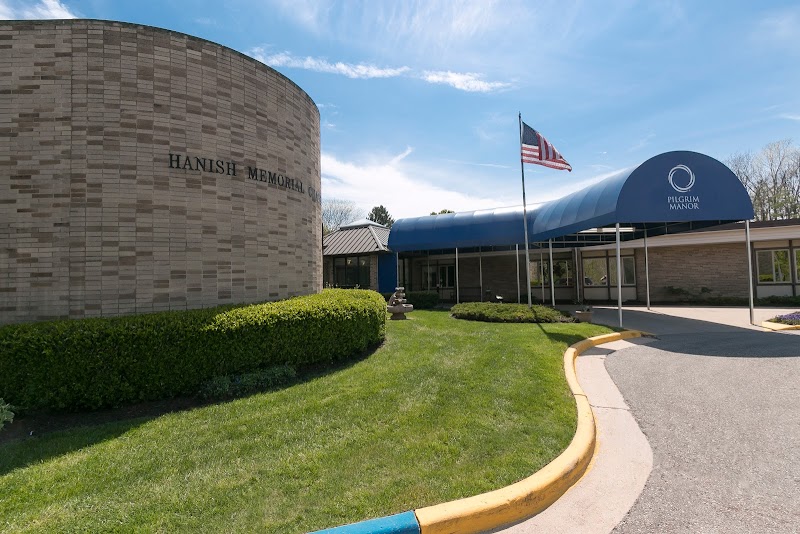
How is Medilodge Of Grand Rapids Staffed?

CMS rates Medilodge of Grand Rapids's staffing level at 3 out of 5 stars, which is average compared to other nursing homes. Staff turnover is 78%, which is 31 percentage points above the Michigan average of 46%. High turnover can affect care consistency as new staff learn residents' individual needs. RN turnover specifically is 77%, which is notably high. RNs provide skilled clinical oversight, so turnover in this role can affect medical care quality.

What Have Inspectors Found at Medilodge Of Grand Rapids?

State health inspectors documented 68 deficiencies at Medilodge of Grand Rapids during 2023 to 2025. These included: 4 Immediate Jeopardy (the most serious level, indicating potential for serious harm or death), 2 that caused actual resident harm, and 62 with potential for harm. Immediate Jeopardy findings are rare and represent the most serious regulatory concerns. They require immediate corrective action.
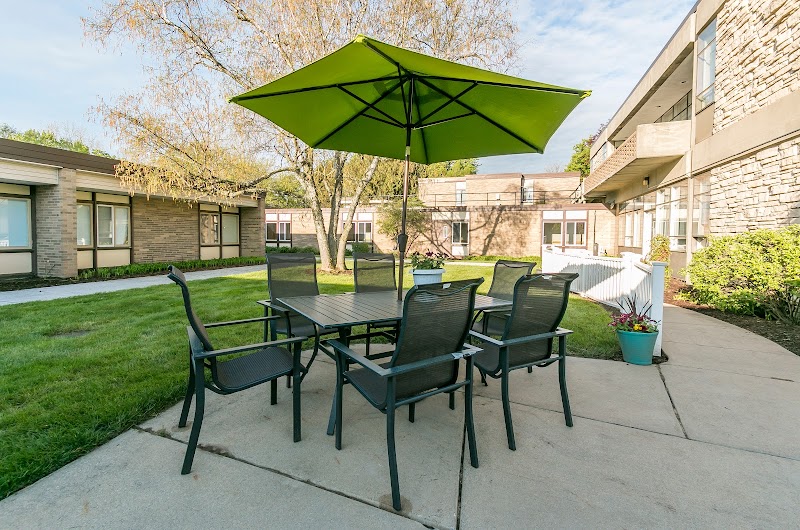
Who Owns and Operates Medilodge Of Grand Rapids?

Medilodge of Grand Rapids is owned by a for-profit company. For-profit facilities operate as businesses with obligations to shareholders or private owners. The facility is operated by MEDILODGE, a chain that manages multiple nursing homes. With 55 certified beds and approximately 49 residents (about 89% occupancy), it is a smaller facility located in Grand Rapids, Michigan.

How Does Medilodge Of Grand Rapids Compare to Other Michigan Nursing Homes?

Compared to the 100 nursing homes in Michigan, Medilodge of Grand Rapids's overall rating (1 stars) is below the state average of 3.1, staff turnover (78%) is significantly higher than the state average of 46%, and health inspection rating (1 stars) is much below the national benchmark.

What Should Families Ask When Visiting Medilodge Of Grand Rapids?

Based on this facility's data, families visiting should ask: "What changes have been made since the serious inspection findings, and how are you preventing similar issues?" "How do you ensure continuity of care given staff turnover, and what is your staff retention strategy?" "Can I visit during a mealtime to observe dining assistance and food quality?" "How do you handle medical emergencies, and what is your hospital transfer rate?" These questions are particularly relevant given the facility's Immediate Jeopardy citations and the facility's high staff turnover rate.

Is Medilodge Of Grand Rapids Safe?

Based on CMS inspection data, Medilodge of Grand Rapids has documented safety concerns. Inspectors have issued 4 Immediate Jeopardy citations (the most serious violation level indicating risk of serious injury or death). The facility has a 1-star overall rating and ranks #100 of 100 nursing homes in Michigan. Families considering this facility should ask detailed questions about what corrective actions have been taken since these incidents.

Do Nurses at Medilodge Of Grand Rapids Stick Around?

Staff turnover at Medilodge of Grand Rapids is high. At 78%, the facility is 31 percentage points above the Michigan average of 46%. Registered Nurse turnover is particularly concerning at 77%. RNs handle complex medical decisions and coordinate care — frequent RN changes can directly impact care quality. High turnover means new staff may not know residents' individual needs, medications, or preferences. It can also be disorienting for residents, especially those with dementia who rely on familiar faces. Families should ask: What is causing the turnover? What retention programs are in place? How do you ensure care continuity during staff transitions?

Was Medilodge Of Grand Rapids Ever Fined?

Medilodge of Grand Rapids has been fined $68,841 across 4 penalty actions. This is above the Michigan average of $33,767. Fines in this range indicate compliance issues significant enough for CMS to impose meaningful financial consequences. Common causes include delayed correction of deficiencies, repeat violations, or care failures affecting resident safety. Families should ask facility leadership what changes have been made since these penalties.

Is Medilodge Of Grand Rapids on Any Federal Watch List?

Medilodge of Grand Rapids is not on any federal watch list. The most significant is the Special Focus Facility (SFF) program, which identifies the bottom 1% of nursing homes nationally based on persistent, serious quality problems. Not being on this list means the facility has avoided the pattern of deficiencies that triggers enhanced federal oversight. This is a positive indicator, though families should still review the facility's inspection history directly.