Optalis Health & Rehabilitation at Kent-Crossing
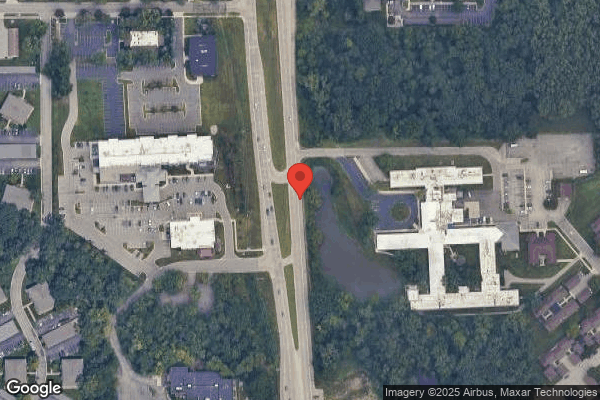
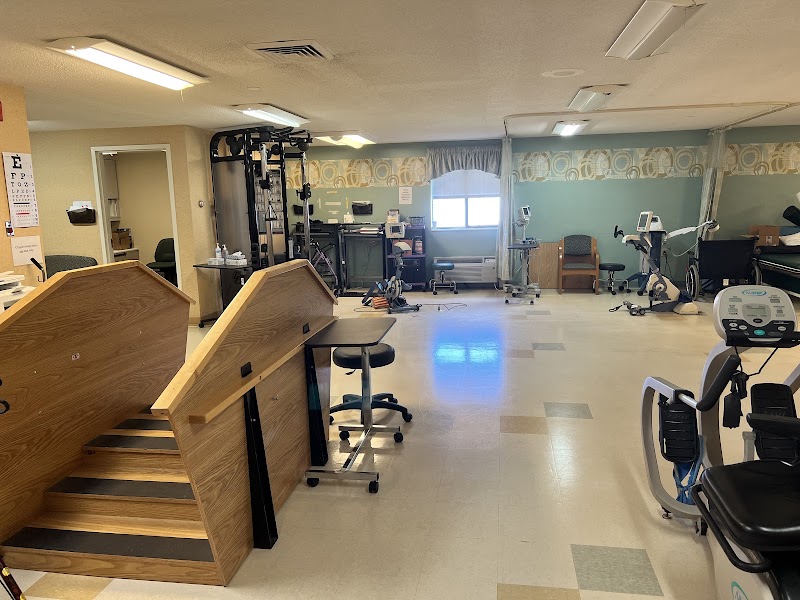
2320 E Beltline SE, Grand Rapids, MI 49546 (616) 949-3000
For profit - Corporation 182 Beds SKLD Data: November 2025
Trust Grade
25/100
#398 of 422 in MI
Last Inspection: January 2025

Within standard 12-15 month inspection cycle. Federal law requires annual inspections.

Overview

Optalis Health & Rehabilitation at Kent-Crossing has received a Trust Grade of F, indicating significant concerns about the quality of care, which places it among the bottom tier of facilities. It ranks #398 out of 422 in Michigan, meaning it is in the lower half of nursing homes in the state, and #27 out of 28 in Kent County, suggesting that only one local facility offers worse care. The facility is currently improving, having reduced its reported issues from 24 in 2024 to 22 in 2025. Staffing is a relative strength with a rating of 4 out of 5 stars and a turnover rate of 37%, which is better than the state average. However, there are serious concerns: inspections found that a resident's pressure ulcer worsened due to inadequate monitoring, another resident missed several doses of essential seizure medications, and the facility failed to ensure all staff were properly vaccinated against COVID-19, posing risks to vulnerable residents.
Trust Score
F
25/100
In Michigan
#398/422
Bottom 6%
Safety Record
High Risk
Review needed
Inspections
Getting Better
24 → 22 violations
Staff Stability
○ Average
37% turnover. Near Michigan's 48% average. Typical for the industry.
Penalties
✓ Good
No fines on record. Clean compliance history, better than most Michigan facilities.
Skilled Nurses
○ Average
Each resident gets 34 minutes of Registered Nurse (RN) attention daily — about average for Michigan. RNs are the most trained staff who monitor for health changes.
Violations
⚠ Watch
61 deficiencies on record. Higher than average. Multiple issues found across inspections.
★☆☆☆☆
1.0
Overall Rating
★★★★☆
4.0
Staff Levels
★★☆☆☆
2.0
Care Quality
★☆☆☆☆
1.0
Inspection Score
Stable
2024: 24 issues
2025: 22 issues

The Good

  • 4-Star Staffing Rating · Above-average nurse staffing levels
  • Full Sprinkler Coverage · Fire safety systems throughout facility
  • No fines on record
  • Staff turnover below average (37%)

    11 points below Michigan average of 48%

Facility shows strength in staffing levels, fire safety.

The Bad

1-Star Overall Rating

Below Michigan average (3.1)

Significant quality concerns identified by CMS

Staff Turnover: 37%

Near Michigan avg (46%)

Typical for the industry

Chain: SKLD

Part of a multi-facility chain

Ask about local staffing decisions and management

The Ugly 61 deficiencies on record

3 actual harm
Aug 2025 6 deficiencies
CONCERN (D) 📢 Someone Reported This

A family member, employee, or ombudsman was alarmed enough to file a formal complaint

Potential for Harm - no one hurt, but risky conditions existed

Notification of Changes (Tag F0580)

Could have caused harm · This affected 1 resident

This citation pertains to intake # 2568025.Based on interview, and record review, the facility failed to notify family of a change in resident condition requiring hospitalization in 1 of 3 residents (...

Read full inspector narrative →
This citation pertains to intake # 2568025.Based on interview, and record review, the facility failed to notify family of a change in resident condition requiring hospitalization in 1 of 3 residents (Resident #107) reviewed for notification of changes, resulting in family being unaware of a resident's decline with resulting hospitalization and the potential for emotional distress.Findings include:In an interview on 8/5/25 at 3:08 PM, Family Member Z reported Resident #107 was sent to the hospital on 7/18/25 due to difficulty breathing. Family Member Z reported she was the one to receive phone calls/notifications when changes occurred, but that day no one from the facility contacted her to inform her of Resident #107's change in condition or hospital transfer. Family Member Z reported she first became aware of Resident #107's condition when the hospital Social Worker called her to inform her that Resident #107 was unresponsive. Family Member Z stated .I never got a chance to speak to her (Resident #107) again .Resident #107Review of an admission Record revealed Resident #107 was a female, with pertinent diagnoses which included kidney disease, diabetes, and high blood pressure.Review of an Acute Care Transfer note for Resident #107, dated 7/18/25 at 7:18 AM, revealed .Observations and Assessment (Reason for Transfer) .Altered mental status, SOB (shortness of breath) .Patient/Representative Notification .self .Review of a Transfer Form for Resident #107, dated 7/18/25 at 7:31 AM, revealed .Resident Representative .(Family Member Z) .Contact Type .Emergency Contact .Notified of Transfer .No .In an interview on 8/6/25 at 3:36 PM, Licensed Practical Nurse (LPN) P reported she was the nurse who sent Resident #107 to the hospital on 7/18/25. LPN P reported Resident #107 complained that morning of not feeling well. LPN P stated, Her vitals were fine, but she wasn't looking like herself . LPN P reported the on-call was notified and orders were obtained to send Resident #107 to the hospital for further evaluation. LPN P reported when EMS (Emergency Medical Services) left with Resident #107, she was alert and responding. LPN P reported she did not contact Resident #107's emergency contact (Family Member Z) when Resident #107 was transferred to the hospital because .she was alert and able to call her own family and let them know what was going on .In an interview on 8/7/25 at 1:54 PM, Interim Agency Director of Nursing (DON) B reported in the event of a hospital transfer, a resident's family/emergency contact should be notified even if the resident is their own person.Review of the policy/procedure Change in Condition Notification, dated 8/9/23, revealed .It is the policy of the facility to notify the resident, his or her attending physician/practitioner, and the resident's designated representative of changes in the resident's medical/mental condition and/or status .The nurse will notify the resident, the resident's physician/practitioner, and the resident's designated representative when there is .A significant change in the resident's physical, mental, or psychosocial status, such as deterioration which includes life-threatening conditions or clinical complications .A need to transfer or discharge the resident from the facility .
CONCERN (D) 📢 Someone Reported This

A family member, employee, or ombudsman was alarmed enough to file a formal complaint

Potential for Harm - no one hurt, but risky conditions existed

ADL Care (Tag F0677)

Could have caused harm · This affected 1 resident

**NOTE- TERMS IN BRACKETS HAVE BEEN EDITED TO PROTECT CONFIDENTIALITY** This citation pertains to intake #2574473Based on observation, interview, and record review, the facility failed to provide time...

Read full inspector narrative →
**NOTE- TERMS IN BRACKETS HAVE BEEN EDITED TO PROTECT CONFIDENTIALITY** This citation pertains to intake #2574473Based on observation, interview, and record review, the facility failed to provide timely and consistent ADL (activities of daily living) care to 1 resident (Resident #109) of 3 reviewed for ADL care, resulting the resident experiencing back pain from remaining in bed, missing showers, feelings of frustration, and embarrassment.Findings include:Resident #109Review of an admission Record revealed Resident #109 was originally admitted to the facility on [DATE] with pertinent diagnoses which included: fracture of shaft of humerus (upper arm), left arm, fracture of fifth lumbar vertebra (lower spine), unspecified fall and encephalopathy (condition in which functioning of the brain is affected by an agent or condition).Review of a Minimum Data Set (MDS) assessment for Resident #109 with a reference date of 7/15/25, revealed a Brief Interview for Mental Status (BIMS) score of 11/15 which indicated Resident #109 was moderately cognitively impaired. Section F revealed Resident #109 reported it was very important for her to choose between a shower, bed bath, or sponge bath. Section GG of the MDS revealed Resident #109 was dependent (helper does all the effort) for bathing.Review of a Care Plan for Resident # 109 with a reference date of 7/12/25, revealed a focus/goal/interventions of: Focus: ADL (activities of daily living) self-care deficit related to impaired mobility secondary to fall with multiple fractures.Goal; will be clean, dressed, and well-groomed daily to promote dignity and psychosocial wellbeing. Interventions: Assist to bathe/shower as preferred per shower schedule and as needed.In an interview on 8/5/25, at 1:37pm, Family Member (FM) V reported Resident #109 often appeared disheveled, complained about not bathing, and expressed concern about her own appearance when she visited the resident. FM V reported Resident #109 had not been assisted with showering per the shower schedule and at times was only dressed in a hospital gown. FM V reported being dressed, well-groomed, and bathed had always been important to Resident #109. FM V reported on 7/19/25(Saturday) and 7/20/25 (Sunday) Resident #109 did not get out of bed and did not get dressed. FM V reported on 7/20/25 Resident #109 complained that her back hurt because she'd been in bed too long.Review of a Pain Scale Assessment for Resident #109 revealed the resident's pain level was assessed at a 3 at 7am 7/20/25. Resident #109's pain level was rated as high as a 3 only one other time at 7am, during 23 assessments. The remaining assessments indicated Resident #109's pain was at 0 20 times, and 1 once.In an interview on 8/6/25 at 10:22am, Licensed Practical Nurse (LPN) O reported the facility had recently experienced low nursing staffing levels and at times, staff had not had enough time to assist residents with getting dressed, groomed, showered and out of bed, particularly on weekends.In an interview on 8/6/25 at 10:39am, LPN J reported several residents complained to her that they were not assisted with grooming, dressing or showering recently, when nursing staffing was low.In an interview on 8/6/25 at 12:40pm, Housekeeper (HSK) U reported at times when nursing staffing was low, she observed residents who were dependent for grooming, dressing and bathing did not receive assistance with those cares. HSK U reported most of the residents remained in bed, in hospital gowns, and were not groomed or bathed on those days. HSK U reported Resident #109 told her it was important to her that she receive showers regularly because doing so helped her maintain a positive mood.In an interview on 8/6/25 at 12:33pm, Resident #109 stated I got a shower today then smiled and ran her right hand over her clean, brushed hair. Resident #109 reported she normally bathed every day prior to coming to the facility, because her appearance was important to her. When further queried, Resident #109 reported she had been frustrated and felt embarrassed about her appearance when she was not provided with the assistance she needed to shower.Review of a Task Schedule Report with a reference date of 8/6/25 revealed Resident #109 was scheduled to receive assistance with showering on Tuesday and Friday of each week.Review of a Bathing/Shower Task report with reference date range of 7/11/25-8/5/25, revealed Resident #109 had not been offered a shower for 3 of the 7 scheduled opportunities during that time frame.Review of a PRN (as needed) Shower Task report with a reference date range of 7/11/25-8/5/25 revealed Resident #109 had not been offered or received any unscheduled showers.Review of a Activities of Daily Living (ADL) facility policy with a reference date of 12/7/23 revealed Policy Overview: Residents will be provided with care, treatment, and services as appropriate to maintain or improve their ability to carry out activities of daily living (ADLs). Residents who are unable to carry out activities of daily living independently will receive the services necessary to maintain good nutrition, grooming, personal, and oral hygiene.
CONCERN (E) 📢 Someone Reported This

A family member, employee, or ombudsman was alarmed enough to file a formal complaint

Potential for Harm - no one hurt, but risky conditions existed

Deficiency F0567 (Tag F0567)

Could have caused harm · This affected multiple residents

Based on interview and record review the facility failed to ensure residents' personal funds held by the facility were accessible to residents for 40 residents in the facility, including 3 (Residents ...

Read full inspector narrative →
Based on interview and record review the facility failed to ensure residents' personal funds held by the facility were accessible to residents for 40 residents in the facility, including 3 (Residents #110, 104, and 114) out of the total facility census of 111 resulting in frustration and being upset without access to their money and the inability to make personal purchases.Findings include:Resident #110:During an interview on 8/6/25 at 9:48 AM, Resident #110 was visibly frustrated and upset as he reported he hasn't had access to his personal funds (money) held by the facility since the new company took over (The new ownership took over the facility on 7/1/25). Resident #110 reported that when he tried to access his money since the ownership switched, he was unable to receive his money. Resident #110 reported he wanted his money and didn't like knowing someone else had it and he couldn't access it.During an interview on 8/6/25 at 10:10 AM, Administrator in Training C confirmed residents didn't currently have access to their facility held money and the new company took over the building on 7/1/25.During an interview on 8/6/25 at 10:48 AM, Business Office Manager (BOM) G confirmed it has been about 2 weeks that residents haven't had access to petty cash and there was a check with 40 residents' facility held money that hadn't been transferred from the old ownership to the new ownership so the residents with funds held by the facility weren't accessible. BOM G reported the facility ran out of their own facility petty cash to cover resident fund requests the week of 7/7/25-7/11/25. BOM G confirmed since that week of 7/7/25-7/11/25 residents had been unable to access their personal funds or the ability to receive money from the facility. BOM G confirmed Resident #110 had no access to his money at that time and there was no current way to get residents money when they requested it from their personal money accounts held by the facility. BOM G confirmed the residents' fund check hadn't been cashed yet, resulting in residents being unable to access their funds. BOM G had confirmed the check hadn't been signed and/or cashed. During an interview on 8/6/25 at 4:06 PM, Business Office Manager G confirmed two grievances were filed regarding not being able to access their facility held funds for Residents #104 and #114.Review of the facility check, that hadn't been signed and/or cashed, (Resident funds; made out from the previous facility owner to the newer/current facility owner (Became the new owner starting oon 7/1/25) for $21,594.90)), dated 7/22/25, indicated 40 residents had varying levels of personal funds in their accounts. The check stated, .RESIDENT PETTY CASH ACCOUNT.Memo.TO CLOSE ACCOUNT. Resident #110 was noted to have $37.05 in his account as part of this $21,594.90 check.Resident #104: Review of Resident #104's Grievance and Satisfaction Form, dated 8/4/25, stated, Describe Grievance.Wants money - states he needs some things.Resident #114:Review of Resident #114's Grievance and Satisfaction Form, dated 8/4/25, stated, Describe Grievance.Upset that it is the 4th of the month and still does not have access to money.Review of the facility check, dated 7/22/25, Resident #114 was noted to have $92.24 in her account as part of this $21,594.90 check.Review of the facility's email correspondence between Business Office Manager G and corporate revenue staff regarding resident personal funds, dated 8/6/25, indicated the residents (The 40 residents listed on the check noted above) still didn't have their personal funds accessible to them that the facility held. Review of the Resident Trust Fund (Residents' personal fund accounts), revised 7/5/2024, stated, It is the policy of this facility to establish and maintain a system that ensures separate and complete accounting of residents' personal funds that are entrusted to the facility.When a resident requests a withdrawal from his/her Resident Trust Fund during posted hours, the funds should be distributed within a reasonable timeframe.
CONCERN (E) 📢 Someone Reported This

A family member, employee, or ombudsman was alarmed enough to file a formal complaint

Potential for Harm - no one hurt, but risky conditions existed

Free from Abuse/Neglect (Tag F0600)

Could have caused harm · This affected multiple residents

This citation pertains to intake # 1214940 & 2567893.Based on interview, and record review, the facility failed to protect the residents' right to be free from sexual and verbal abuse by a resident in...

Read full inspector narrative →
This citation pertains to intake # 1214940 & 2567893.Based on interview, and record review, the facility failed to protect the residents' right to be free from sexual and verbal abuse by a resident in 5 of 6 residents (Resident #101, #102, #104, #103 & #105) reviewed for abuse prevention, resulting in multiple instances of resident-to-resident sexual abuse, verbal abuse, and the potential for emotional distress.Findings include:In an interview on 8/5/23 at 10:53 AM, Confidential Informant (CI) GG reported there was an incident involving potential resident-to-resident sexual abuse at the facility in July where a male resident (Resident #104) kissed two female residents (Resident #101 & #102) who were unable to consent due to cognitive impairment. Resident #101 Review of an admission Record revealed Resident #101 was a female, with pertinent diagnoses which included schizoaffective disorder, depressive type, dementia, and insomnia. Noted Resident #101 was not her own responsible party. Review of a Minimum Data Set (MDS) assessment for Resident #101, with a reference date of 6/17/25, revealed a Brief Interview for Mental Status (BIMS) score of 3, out of a total possible score of 15, which indicated severe cognitive impairment. Review of a current Care Plan for Resident #101 revealed the focus Resident is at risk for changes in mood d/t (due to) a dx (diagnosis) of schizoaffective disorder and dementia. (Resident #101) has a history of hallucinating people in her room, paranoia and delusion that others are out to harm her . initiated 8/23/22. Review of a current Care Plan for Resident #101 revealed the focus (Resident #101) is at risk for having behaviors d/t a dx of unspecified dementia without behavior disturbances . with interventions which included Intervene as necessary to protect the rights and safety of others. Approach/Speak in a calm manner. Divert attention. Remove from situation and take to alternate location as needed . initiated 8/25/22. Review of a Social Work note for Resident #101, dated 7/7/25 at 1:16 PM, revealed SSD (Social Services Director) provided a supportive visit to this resident following an incident with another resident. (Resident #101) stated she did not have any concerns and didn't care about the other resident kissing her. SSD asked (Resident #101) to inform her if that changed, (Resident #101) agreed. SSD asked if she had any other concerns at this time and the resident did not . Review of a Social Work note for Resident #101, dated 7/8/25 at 8:07 AM, revealed SSD provided follow-up psychosocial visit following recent incident. SSD asked resident how she is doing today, resident responded I am just fine today, look at my hair. SSD and resident discussed preferred hairstyles, resident preferred the style she did today to others. SSD asked if resident recalled events that occurred yesterday and resident responded, oh well the lunch was no good, so I had grilled cheese. SSD asked if anything else occurred and resident stated, not that I can think of. Resident was smiling and rolling through the building. SSD informed her to let SSD know if she needs anything. Resident stated she would . No incident/accident report noted for Resident #101 involving a resident-to-resident incident on 7/7/25. Resident #102 Review of an admission Record revealed Resident #102 was a female, with pertinent diagnoses which included dementia with behavioral disturbance, depression, anxiety, history of stroke, and mild cognitive impairment. Noted Resident #102 was not her own responsible party. Review of a Minimum Data Set (MDS) assessment for Resident #102, with a reference date of 8/1/25, revealed a Brief Interview for Mental Status (BIMS) score of 9, out of a total possible score of 15, which indicated moderate cognitive impairment. Review of a current Care Plan for Resident #102 revealed the focus De-escalation preference assessment completed . with interventions which included (Resident #102) identified the following de-escalation preferences: female only staff . initiated 6/13/25. Review of a current Care Plan for Resident #102 revealed the focus (Resident #102) is at risk for changes in mood r/t (related to) a dx (diagnosis) of adjustment disorder with mixed anxiety and depression. Resident declined trauma screening but it is likely she has experienced trauma based on information noted over time. Resident is a female only caregiver . initiated 7/16/25. Review of a Social Work note for Resident #102, dated 7/7/25 at 1:20 PM, revealed SSD (Social Services Director) provided a supportive visit to (Resident #102) following incident with another resident. SSD asked (Resident #102) how her day has been, and she stated it was good. SSD asked if anything had happened today and she said no, I am just tired. SSD asked if resident had any abnormal interactions with other residents and resident stated she did not. Resident did not appear to remember incident of another resident kissing her. (Resident #102) has a trauma history so staff should continue to monitor for changes in behavior . No incident/accident report noted for Resident #102 involving a resident-to-resident incident on 7/7/25. Resident #104 Review of an admission Record revealed Resident #104 was a male, with pertinent diagnoses which included social pragmatic communication disorder (communication disorder characterized by persistent difficulties in the social use of verbal and nonverbal communication), schizoaffective disorder, bipolar type, and cognitive communication deficit (communication difficulties arising from impairments in cognitive functions). Review of a Minimum Data Set (MDS) assessment for Resident #104, with a reference date of 6/19/25, revealed a Brief Interview for Mental Status (BIMS) score of 15, out of a total possible score of 15, which indicated he was cognitively intact. Noted this assessment indicated Resident #104 had cognitive symptoms including inattention and disorganized thinking, along with physical/verbal behavioral symptoms directed towards others. Review of a current Care Plan for Resident #104 revealed the focus (Resident #104) has been diagnosed with a CVA (stroke) which likely impacts his cognition. According to Psychiatry notes from (Hospital Name) in 2008, there is suspect that resident has possible pervasive developmental disorder or intellectual disability. (Resident #104) has also been diagnosed with medication induced Parkinsonism and Schizoaffective Disorder, Bipolar Type .Cognition can lead to resident misunderstanding social cues including facial expressions of others. De-escalation tools should be used when able to in order to decrease these behaviors . with interventions which included Be conscious of resident position when in groups, activities, dining room to promote proper communication with others . initiated 3/26/25. Review of a current Care Plan for Resident #104 revealed the focus Per (Resident #104's) former SNF (Skilled Nursing Facility) .he has a history of yelling out when voicing needs or needing assistance. He is at risk for fluctuations in mood related to diagnosis of schizoaffective disorder; Bipolar Type, Parkinson's Disease as well as history of TIA (Transient Ischemic Attack)/CVA. (Resident #104) is prescribed psychotropic medication on a routine basis. (Resident #104) used to live at an AFC (Adult [NAME] Care) Home .but per his Guardian exceeded their level of care and required SNF placement. Resident reportedly struggled with verbal outbursts and boundary issues in this setting . with interventions which included Intervene as necessary to protect the rights and safety of others. Approach/Speak in a calm manner. Divert attention. Remove from situation and take to alternate location as needed . initiated 3/26/25. Review of a current Care Plan for Resident #104 revealed the focus (Resident #104) was historically able to engage in formal relationships within the facility. His Guardian had approved of his relationship with a female peer at the facility and requested that their relationship remain appropriate (approval to hold hands and kiss). However as of 7.7.25 (Resident #104's) guardian revoked consent for relationship due to (Resident #104's) behavior towards others. (Resident #104) continues to struggle (with) boundaries r/t (related to) his ex-partner as well as other residents in the facility. This has included touching others to heal them, kissing without consent, invading personal space, and now punching them . with interventions which included Encourage (Resident #104) to make appropriate choices when showing affection to others. Model/explain these appropriate alternatives .Notify his Guardian and IDT (Interdisciplinary Team) .of any concerns or potentially inappropriate behavior observed within the (facility) . initiated 5/7/25. Review of a Social Work note for Resident #104, dated 7/7/25 at 3:30 PM, revealed SSD (Social Services Director) received notice that this resident had kissed two other residents who both cannot legally consent. SSD provided follow-up psychosocial visit. The resident was sitting on the edge of the bed with his head down. SSD asked the (resident) to explain what happened. Resident stated the “nurses are against me for no reason.” SSD asked for a further explanation, and he stated that they just made a “big deal” about something and made him feel bad. SSD asked resident to be more direct about what occurred. Resident stated he kissed two other residents that he “shouldn’t have.” SSD asked if the nurses separated them for no reason or if there is a reason they did so. Resident responded, “there was a reason.” SSD explained that what occurred was sexual assault and guardians would be notified of what occurred. Resident stated he was “showing appreciation to them.” SSD explained that it was not appropriate and discussed appropriate ways to show appreciation. SSD asked resident to tell her what was not appropriate about his actions. Resident responded saying “kissing other people.” SSD asked if the nurses were worried for no reason or if resident felt embarrassed and lashed out, resident stated he “was embarrassed” and “knows better.” SSD reminded (Resident #104) he starts his relationships/consent course tomorrow where he can learn more about these things, but in the meantime, he needs to respect other people's boundaries . Noted that this Social Work note was struck out the following day (7/8/25) as a Data Entry Error. No incident/accident report noted for Resident #104 involving a resident-to-resident incidents on 7/7/25. In an interview on 8/6/25 at 11:38 AM, Licensed Practical Nurse (LPN) M reported she witnessed Resident #104 kiss Resident #101 on the lips in the hallway near the nurses' desk. LPN M stated Resident #101 .was in shock . and did not respond when the incident occurred. LPN M reported she immediately notified Administrator A of the potential incident of resident-to-resident abuse. LPN M stated, Not even a half hour later (Resident #104) kissed (Resident #102) in the dining room . LPN M reported Administrator A was notified of this potential abuse situation as well, and stated We have to report abuse right away . LPN M reported the nursing staff involved asked Administrator A how he wanted them to chart the incidents, and he said he would handle it. In an interview on 8/6/25 at 2:42 PM, Social Worker X reported she went to speak with Resident #104 after she was notified of the resident-to-resident incidents on 7/7/25. Social Worker X reported the kissing incidents involving Resident #104 were potential abuse allegations, and Administrator A was aware. Social Worker X reported Administrator A was unhappy with her progress note that mentioned sexual assault. Social Worker X reported the two women involved (Resident #101 and Resident #102) could not consent, therefore the resident-to-resident incidents on 7/7/25 were potential sexual abuse situations. Social Worker X reported she was particularly concerned for Resident #102, due to her past history of abuse and preference for no male caregivers. Social Worker X stated, Something like what happened could have really been a trigger for some additional behaviors for her (Resident #102) . In an interview on 8/7/25 at 10:54 AM, Physician Assistant (PA) Y reported they observed the resident-to-resident incident between Resident #101 and Resident #104 on 7/7/25. PA Y reported Resident #101 was self-propelling in her wheelchair near the Station 2 nursing desk when Resident #104 walked up to her and kissed her on the mouth. PA Y stated, (Resident #101) didn't have much reaction . PA Y reported prior to the incident, Resident #101 did not interact or initiate any contact with Resident #104, and stated, She was keeping to herself when it happened . PA Y reported LPN M acknowledged the incident, and Resident #104 stopped what he was doing and walked away. In an interview on 8/7/25 at 11:25 AM, Certified Nursing Assistant (CNA) H reported they witnessed the resident-to-resident incident between Resident #102 and Resident #104 in the dining room on 7/7/25. CNA H reported Resident #104 was rubbing Resident #102's arm, then started kissing up her arm. CNA H reported the residents were separated immediately. CNA H recalled another incident involving Resident #103 and stated, I called the abuse coordinator (Administrator A) on that one because she (Resident #103) was really offended and didn't want to go eat in the dining room anymore . CNA H stated, First (Resident #101), then (Resident #102), then (Resident #103). If you don't do anything he's going to keep doing it . CNA H reported the three resident-to-resident incidents were all potential abuse situations. In an interview on 8/7/25 at 2:58 PM, Administrator A reported the resident-to-resident incidents involving Resident #101, #102, and #104 were witnessed by staff on 7/7/25. Administrator A reported the residents had no negative outcome and stated, Eyewitnesses said not only were they fine with it, they reached up and hugged and kissed (Resident #104) back . Administrator A reported he assessed the residents himself for emotional distress or any anxiety/trauma response. Administrator A stated, If there is an injury or trauma response you need to report (to the State Agency). In this situation it was eye-witnessed as this being welcome contact .(which was) received warmly with benefit to psychosocial health . therefore, the incidents were not reported to the State Agency. Note none of the interviews completed with staff who witnessed the resident-to-resident incidents on 7/7/25 indicate that the alleged victims (Resident #101 & Resident #102) were welcoming of the contact. Review of the policy/procedure Abuse, dated 5/24/23, revealed Residents have the right to be free from abuse, neglect, exploitation, mistreatment, and misappropriation of resident property .The facility will develop and implement written policies and procedures that include .Prohibiting, Preventing, and Identifying abuse, neglect, mistreatment, exploitation, and misappropriation of resident property .Investigating allegations of abuse, neglect, misappropriation, mistreatment, and exploitation to include protecting residents during the investigation, and taking necessary actions as a result of the investigation .Prevention consists of facility systems designed to detect, identify, correct, and prevent the occurrence of abuse .The facility’s procedures include .Establishing a safe environment that supports, to the extent possible, a resident’s consensual sexual relationship and by establishing policies and protocols for preventing sexual abuse, such as how to identify the when, how, and by whom determinations of capacity to consent to a sexual contact will be made and where this documentation will be recorded; and the resident’s right to establish a relationship with another individual, which may include the development of or the presence of an ongoing sexually intimate relationship .Completing ongoing assessments and care planning for appropriate interventions, and monitoring of residents with behaviors, including but not limited to .Sexually aggressive behavior (inappropriate touching, grabbing, saying sexual things, etc.) .Any allegation of abuse must be immediately reported to the supervisor and the Abuse Prevention Coordinator. The Administrator initiates investigating any allegation of abuse against a patient .The facility will make efforts to ensure all residents are protected from physical and psychosocial harm during and after the investigation. Examples include but are not limited to .Providing a safe and secure environment for all patients .If a resident is the alleged perpetrator, the facility will ensure other residents are protected as determined by the circumstances, which may include but are not limited to resident room changes, increased supervision, or immediate transfer or discharge, if indicated . Resident #103: Resident #103’s most recent brief interview for mental status score, dated 5/30/25, was scored 15 which reflected she was cognitively intact. During an interview on 8/6/25 at 8:54 AM, Resident #103 reported some time last month (July 2025) she was in the activity room and was complaining about her back pain when Resident #104 said he could help her with her back. Resident #103 reported she had to tell Resident #104 several times that he could not fix her back and to not touch her, and Resident #104 held up both hands and made a squeezing motion with both hands towards her. Resident #103 reported she had heard from staff (Resident #103 was unable and/or unwilling to recall the staffs’ names) that Resident #104 had kissed other female residents in the facility and he had said something to Resident #105 that was mean, and it made Resident #105 cry. Resident #103 reported Resident #104 made her uncomfortable and had stopped going to the dining room for a little while after the incident last month because of Resident #104’s behavior/actions. During an interview on 8/6/25 at 1:53 PM, Resident #103 reported she has returned to eat some meals in dining room but now sits with her back to a wall or corner so that Resident #104 would be unable to sneak up or approach her from behind. Resident #103 reported it has been uncomfortable eating a meal in the dining room while having to monitor Resident #104 to ensure he didn’t unexpectedly approach her. Resident #105:During an interview on 8/5/25 at 1:26 PM, Resident #105 reported, a little after the 4th of July (2025), Resident #105 came to her room and called her a “b****” (profanity) and alleged she “cheated” on him. Resident #105 reported she never cheated on Resident #104 and his behavior and words towards her made her feel “Terrible”. Resident #105 reported she had heard from others (unnamed) that Resident #104 had kissed two other female residents in the facility around the same timeframe. Review of Resident #105’s social work progress note, dated 7/16/25, stated, “Resident (Resident #105) came to social services office to discuss (Resident #104) … (Resident #104) responded with calling (Resident #105) a b**** (profanity).”
CONCERN (E) 📢 Someone Reported This

A family member, employee, or ombudsman was alarmed enough to file a formal complaint

Potential for Harm - no one hurt, but risky conditions existed

Report Alleged Abuse (Tag F0609)

Could have caused harm · This affected multiple residents

This citation pertains to intake # 1214940 & 2567893.Based on interview, and record review, the facility failed to report allegations of resident-to-resident sexual and verbal abuse to the State Agenc...

Read full inspector narrative →
This citation pertains to intake # 1214940 & 2567893.Based on interview, and record review, the facility failed to report allegations of resident-to-resident sexual and verbal abuse to the State Agency in a timely manner in 5 of 6 residents (Resident #101, #102, #104, #103, & #105) reviewed for abuse prevention and reporting, resulting in the potential for incomplete investigations, and further instances of abuse to go unreported.Findings include:In an interview on 8/5/23 at 10:53 AM, Confidential Informant (CI) GG reported there was an incident involving potential resident-to-resident sexual abuse at the facility in July where a male resident (Resident #104) kissed two female residents (Resident #101 & #102) who were unable to consent due to cognitive impairment. CI GG reported Administrator A was notified of the abuse allegations but did not report the allegations to the State Agency. CI GG reported Resident #104 made inappropriate sexual statements to another resident (Resident #103) and Administrator A did not report the additional allegation to the State Agency. CI GG reported they believed if the first allegation of abuse had been reported to the State Agency and investigated in a timely manner, the other incidents could have been prevented. Resident #101 Review of an admission Record revealed Resident #101 was a female, with pertinent diagnoses which included schizoaffective disorder, depressive type, dementia, and insomnia. Noted Resident #101 was not her own responsible party. Review of a Minimum Data Set (MDS) assessment for Resident #101, with a reference date of 6/17/25, revealed a Brief Interview for Mental Status (BIMS) score of 3, out of a total possible score of 15, which indicated severe cognitive impairment. Review of a Social Work note for Resident #101, dated 7/7/25 at 1:16 PM, revealed SSD (Social Services Director) provided a supportive visit to this resident following an incident with another resident. (Resident #101) stated she did not have any concerns and didn't care about the other resident kissing her. SSD asked (Resident #101) to inform her if that changed, (Resident #101) agreed. SSD asked if she had any other concerns at this time and the resident did not . No incident/accident report noted for Resident #101 involving a resident-to-resident incident on 7/7/25. Resident #102 Review of an admission Record revealed Resident #102 was a female, with pertinent diagnoses which included dementia with behavioral disturbance, depression, anxiety, history of stroke, and mild cognitive impairment. Noted Resident #102 was not her own responsible party. Review of a Minimum Data Set (MDS) assessment for Resident #102, with a reference date of 8/1/25, revealed a Brief Interview for Mental Status (BIMS) score of 9, out of a total possible score of 15, which indicated moderate cognitive impairment. Review of a Social Work note for Resident #102, dated 7/7/25 at 1:20 PM, revealed SSD (Social Services Director) provided a supportive visit to (Resident #102) following incident with another resident. SSD asked (Resident #102) how her day has been, and she stated it was good. SSD asked if anything had happened today and she said no, I am just tired. SSD asked if resident had any abnormal interactions with other residents and resident stated she did not. Resident did not appear to remember incident of another resident kissing her. (Resident #102) has a trauma history so staff should continue to monitor for changes in behavior . No incident/accident report noted for Resident #102 involving a resident-to-resident incident on 7/7/25. Resident #104 Review of an admission Record revealed Resident #104 was a male, with pertinent diagnoses which included social pragmatic communication disorder (communication disorder characterized by persistent difficulties in the social use of verbal and nonverbal communication), schizoaffective disorder, bipolar type, and cognitive communication deficit (communication difficulties arising from impairments in cognitive functions). Review of a Minimum Data Set (MDS) assessment for Resident #104, with a reference date of 6/19/25, revealed a Brief Interview for Mental Status (BIMS) score of 15, out of a total possible score of 15, which indicated he was cognitively intact. Noted this assessment indicated Resident #104 had cognitive symptoms including inattention and disorganized thinking, along with physical/verbal behavioral symptoms directed towards others. Review of a current Care Plan for Resident #104 revealed the focus (Resident #104) was historically able to engage in formal relationships within the facility. His Guardian had approved of his relationship with a female peer at the facility and requested that their relationship remain appropriate (approval to hold hands and kiss). However as of 7.7.25 (Resident #104's) guardian revoked consent for relationship due to(Resident #104's) behavior towards others. (Resident #104) continues to struggle (with) boundaries r/t (related to) his ex-partner as well as other residents in the facility. This has included touching others to heal them, kissing without consent, invading personal space, and now punching them . with interventions which included Encourage (Resident #104) to make appropriate choices when showing affection to others. Model/explain these appropriate alternatives .Notify his Guardian and IDT (Interdisciplinary Team) .of any concerns or potentially inappropriate behavior observed within the (facility) . initiated 5/7/25. Review of a Social Work note for Resident #104, dated 7/7/25 at 3:30 PM, revealed SSD (Social Services Director) received notice that this resident had kissed two other residents who both cannot legally consent. SSD provided follow-up psychosocial visit. The resident was sitting on the edge of the bed with his head down. SSD asked the (resident) to explain what happened. Resident stated the “nurses are against me for no reason.” SSD asked for a further explanation, and he stated that they just made a “big deal” about something and made him feel bad. SSD asked resident to be more direct about what occurred. Resident stated he kissed two other residents that he “shouldn’t have.” SSD asked if the nurses separated them for no reason or if there is a reason they did so. Resident responded, “there was a reason.” SSD explained that what occurred was sexual assault and guardians would be notified of what occurred. Resident stated he was “showing appreciation to them.” SSD explained that it was not appropriate and discussed appropriate ways to show appreciation. SSD asked resident to tell her what was not appropriate about his actions. Resident responded saying “kissing other people.” SSD asked if the nurses were worried for no reason or if resident felt embarrassed and lashed out, resident stated he “was embarrassed” and “knows better.” SSD reminded (Resident #104) he starts his relationships/consent course tomorrow where he can learn more about these things, but in the meantime, he needs to respect other people's boundaries . Noted that this Social Work note was struck out the following day (7/8/25) as a Data Entry Error. In an interview on 8/6/25 at 11:38 AM, Licensed Practical Nurse (LPN) M reported she witnessed Resident #104 kiss Resident #101 on the lips in the hallway near the nurses' desk. LPN M stated Resident #101 .was in shock . and did not respond when the incident occurred. LPN M reported she immediately notified Administrator A of the potential incident of resident-to-resident abuse. LPN M stated, Not even a half hour later (Resident #104) kissed (Resident #102) in the dining room . LPN M reported Administrator A was notified of this potential abuse situation as well, and stated We have to report abuse right away . LPN M reported the nursing staff involved asked Administrator A how he wanted them to chart the incidents, and he said he would handle it. In an interview on 8/6/25 at 2:42 PM, Social Worker X reported she went to speak with Resident #104 after she was notified of the resident-to-resident incidents on 7/7/25. Social Worker X reported the kissing incidents involving Resident #104 were potential abuse allegations, and Administrator A was aware. Social Worker X reported Administrator A was unhappy with her progress note that mentioned sexual assault. Social Worker X reported the two women involved (Resident #101 and Resident #102) could not consent, therefore the resident-to-resident incidents on 7/7/25 were potential sexual abuse situations. Social Worker X reported she was particularly concerned for Resident #102, due to her past history of abuse and preference for no male caregivers. Social Worker X stated, Something like what happened could have really been a trigger for some additional behaviors for her (Resident #102) . In an interview on 8/7/25 at 10:54 AM, Physician Assistant (PA) Y reported they observed the resident-to-resident incident between Resident #101 and Resident #104 on 7/7/25. PA Y reported Resident #101 was self-propelling in her wheelchair near the Station 2 nursing desk when Resident #104 walked up to her and kissed her on the mouth. PA Y stated, (Resident #101) didn't have much reaction . PA Y reported prior to the incident, Resident #101 did not interact or initiate any contact with Resident #104, and stated, She was keeping to herself when it happened . PA Y reported LPN M acknowledged the incident, and Resident #104 stopped what he was doing and walked away. In an interview on 8/7/25 at 11:25 AM, Certified Nursing Assistant (CNA) H reported they witnessed the resident-to-resident incident between Resident #102 and Resident #104 in the dining room on 7/7/25. CNA H reported Resident #104 was rubbing Resident #102's arm, then started kissing up her arm. CNA H reported the residents were separated immediately. CNA H recalled another incident involving Resident #103 and stated, I called the abuse coordinator (Administrator A) on that one because she (Resident #103) was really offended and didn't want to go eat in the dining room anymore . CNA H stated, First (Resident #101), then (Resident #102), then (Resident #103). If you don't do anything he's going to keep doing it . CNA H reported the three resident-to-resident incidents were all potential abuse situations and should have been reported to the State Agency. In an interview on 8/7/25 at 2:21 PM, Nurse Manager CC reported the resident-to-resident incidents involving Resident #101, Resident #102, and Resident #104 on 7/7/25 were reportable to the State Agency, and stated, .It (was) assault . In an interview on 8/7/25 at 2:58 PM, Administrator A reported the resident-to-resident incidents involving Resident #101, #102, and #104 were witnessed by staff on 7/7/25. Administrator A reported the residents had no negative outcome and stated, Eyewitnesses said not only were they fine with it, they reached up and hugged and kissed (Resident #104) back . Administrator A reported he assessed the residents himself for emotional distress or any anxiety/trauma response. Administrator A stated, If there is an injury or trauma response you need to report (to the State Agency). In this situation it was eye-witnessed as this being welcome contact .(which was) received warmly with benefit to psychosocial health . therefore, the incidents were not reported to the State Agency. Note none of the interviews completed with staff who witnessed the resident-to-resident incidents on 7/7/25 indicate that the alleged victims (Resident #101 & Resident #102) were welcoming of the contact. Review of the policy/procedure Abuse, dated 5/24/23, revealed Residents have the right to be free from abuse, neglect, exploitation, mistreatment, and misappropriation of resident property .The facility will develop and implement written policies and procedures that include .Prohibiting, Preventing, and Identifying abuse, neglect, mistreatment, exploitation, and misappropriation of resident property .Reporting any allegations of abuse, neglect, mistreatment, exploitation, and misappropriation or resident property including reporting a reasonable suspicion of a crime to the State Survey Agency and other officials in accordance with state law .Investigating allegations of abuse, neglect, misappropriation, mistreatment, and exploitation to include protecting residents during the investigation, and taking necessary actions as a result of the investigation .Prevention consists of facility systems designed to detect, identify, correct, and prevent the occurrence of abuse .The facility’s procedures include .Establishing a safe environment that supports, to the extent possible, a resident’s consensual sexual relationship and by establishing policies and protocols for preventing sexual abuse, such as how to identify the when, how, and by whom determinations of capacity to consent to a sexual contact will be made and where this documentation will be recorded; and the resident’s right to establish a relationship with another individual, which may include the development of or the presence of an ongoing sexually intimate relationship .Completing ongoing assessments and care planning for appropriate interventions, and monitoring of residents with behaviors, including but not limited to .Sexually aggressive behavior (inappropriate touching, grabbing, saying sexual things, etc.) .Any allegation of abuse must be immediately reported to the supervisor and the Abuse Prevention Coordinator. The Administrator initiates investigating any allegation of abuse against a patient .The facility will make efforts to ensure all residents are protected from physical and psychosocial harm during and after the investigation. Examples include but are not limited to .Providing a safe and secure environment for all patients .If a resident is the alleged perpetrator, the facility will ensure other residents are protected as determined by the circumstances, which may include but are not limited to resident room changes, increased supervision, or immediate transfer or discharge, if indicated .The facility will ensure that all allegations involving abuse, neglect, exploitation, mistreatment, injuries of unknown source, misappropriation of resident property, and crimes are reported immediately to the Administrator and .Reported to the State Survey Agency immediately but not later than two hours after the allegation is made if the allegation involves abuse or results in serious bodily injury and to other officials (including adult protective services and/or law enforcement, when applicable) .Key to investigating abuse allegations is an environment that facilitates the reporting of such allegations. Once reported, the center conducts a timely, thorough, and objective investigation of any allegation of abuse. It is the Center’s policy to investigate all alleged violations involving Abuse, Neglect, Misappropriation of Resident Property, Exploitation or Mistreatment, including Injuries of Unknown Source to ensure that all individuals who report such incidents and allegations are free from retaliation or reprisal for reporting the incident. Prevent further potential abuse, neglect, exploitation, or mistreatment while the investigation is in progress. Report the results of all investigations to the administrator or designee and to the State Agency in accordance with State law . Resident #103: Resident #103’s most recent brief interview for mental status score, dated 5/30/25, was scored 15 which reflected she was cognitively intact. During an interview on 8/6/25 at 8:54 AM, Resident #103 reported some time last month (July 2025) she was in the activity room and was complaining about her back pain when Resident #104 said he could help her with her back. Resident #103 reported she had to tell Resident #104 several times that he could not fix her back and to not touch her, and Resident #104 held up both hands and made a squeezing motion with both hands towards her. Resident #103 reported she had heard from staff (Resident #103 was unable and/or unwilling to recall the staffs’ names) that Resident #104 had kissed other female residents in the facility and he had said something to Resident #105 that was mean, and it made Resident #105 cry. Resident #103 reported Resident #104 made her uncomfortable and had stopped going to the dining room for a little while after the incident last month because of Resident #104’s behavior/actions. During an interview on 8/6/25 at 1:53 PM, Resident #103 reported she has returned to eat some meals in dining room but now sits with her back to a wall or corner so that Resident #104 would be unable to sneak up or approach her from behind. Resident #103 reported it has been uncomfortable eating a meal in the dining room while having to monitor Resident #104 to ensure he didn’t unexpectedly approach her. Resident #103 was visibly concerned and asked if the facility reported these instances with R#104 to the State of Michigan. Resident #103 reported she wanted the surveyors to know since she wasn't sure if the facility was reporting these instances or not. Resident #105:During an interview on 8/5/25 at 1:26 PM, Resident #105 reported, a little after the 4th of July (2025), Resident #105 came to her room and called her a “b****” (profanity) and alleged she “cheated” on him. Resident #105 reported she never cheated on Resident #104 and his behavior and words towards her made her feel “Terrible”. Resident #105 reported she had heard from others (unnamed) that Resident #104 had kissed two other female residents in the facility around the same timeframe.
CONCERN (E) 📢 Someone Reported This

A family member, employee, or ombudsman was alarmed enough to file a formal complaint

Potential for Harm - no one hurt, but risky conditions existed

Deficiency F0725 (Tag F0725)

Could have caused harm · This affected multiple residents

**NOTE- TERMS IN BRACKETS HAVE BEEN EDITED TO PROTECT CONFIDENTIALITY** This citation pertains to intakes #1214940, 2568025, 2569731, and 2583148.Based on interview and record review the facility fail...

Read full inspector narrative →
**NOTE- TERMS IN BRACKETS HAVE BEEN EDITED TO PROTECT CONFIDENTIALITY** This citation pertains to intakes #1214940, 2568025, 2569731, and 2583148.Based on interview and record review the facility failed to ensure sufficient staffing to meet resident care needs for 7 (Residents #103, 105, 110, 111, 112, 106, and 109) of 14 residents reviewed for staffing, resulting in feelings of staff not knowing their needs, medications being administered late, extended call light wait times, and negative resident emotions. Findings include:Resident #103: During an interview on 8/6/25 at 8:54 AM, Resident #103 reported her experience living at the facility with staffing levels was “not good”. Resident #103 stated, “They (the facility staff) don’t respond to your call light timely” and reported there isn’t enough help from the staff. Resident #103 felt the staff numbers working each day were lower and worse than they were before the switch of the company/ownership last month (7/1/25; the facility switched ownership). Resident #103 reported the facility now had lots of agency staff, but the agency staff didn’t know hers or other residents’ needs like regular facility staff did. Resident #103 reported the average call light wait time (time from the moment the call light is activated until the care need was met) was 30 minutes to one hour on average with the longest wait exceeding an hour. Resident #103 reported staffing is more bad than good (regarding the staffing numbers and response to call light/care needs). Resident #103 reported she has had accidents of bowel movements in her brief when waiting for call lights to be responded to. Resident #103 reported on approximately 7/21/25 she had an accident (a bowel movement in her brief) while waiting a long time for staff to respond to her call light. Resident #103 reported it was uncomfortable waiting in her bowel movement because it “stings” her skin when fecal matter/bowel movement sat on her skin. Resident #103 reported she can’t always control her bowel movements. Review of Resident #103’s most recent brief interview for mental status score, dated 5/30/25, was scored 15 which reflected she was cognitively intact. Review of Resident #103’s activity of daily living (ADL) care plan, dated 1/21/25, stated, “(Resident #7) has an ADL self-care performance deficit r/t (related to) …pressure ulcer of sacral region (wound on area at base of the spine…generalized muscle weakness…”. Review of Resident #103’s pressure ulcer care plan, dated 1/27/25, stated, “The resident has an (a) stage 3 pressure ulcer to sacrum r/t (related to) type 2 DM (diabetes), Immobility, fecal (bowel movement) incontinence.” Resident #7’s care plan addressing alteration in musculoskeletal status to LLE (left lower extremity) r/t (related to) AKA (above knee amputation), dated 4/28/25, included an intervention of “Anticipate and meet needs. Be sure call light is within reach and respond promptly to all requests for assistance”. Resident #105: During an interview on 8/5/25 at 1:18 PM, Resident #105 reported that she waited on average 30 minutes for staff to respond to her call light and sometimes an hour. Resident #105 reported when the new owners took over the building they lost a lot of staff. Resident #105 reported waiting extended periods for her call light to be answered/care need to be met made her feel “bad”. Resident #110: During an interview on 8/6/25 at 9:48 AM, Resident #110, regarding facility staffing, stated, “They’re short staffed”, “They don’t have enough help”, “We don’t even have a staff”, “Staff are dropping like flies (quitting/leaving the facility), and reported the agency staff check on him less than regular facility staff. Resident #111: During an interview on 8/5/25 at 12:58 PM, Resident #111 reported the usual wait time for her call light to be answered by facility staff was 30 minutes to 1 hour. Resident #112: During an interview on 8/5/25 at 12:58 PM, Resident #112 reported the usual wait time for her call light to be answered by facility staff was 30 minutes to 1 hour. Review of Resident #112’s most recent brief interview for mental status score, dated 7/18/25, was scored 12 which indicated moderate cognitive impairment. Review of the facility’s “Resident Council Meeting Minutes”, dated 7/28/25, stated, “Discussion of New Business…Administration…Is there an issue you would like administration to resolve? Staffing concerns-Administrator stated that we are continually working on staffing.” In an interview on 8/5/25 at 11:02 AM, Ombudsman HH reported after a recent ownership change, there was a mass exodus of nursing staff which resulted in many calls from residents with staffing concerns. Ombudsman HH reported medication timeliness has been a major concern and stated .folks are having to wait hours and hours for medications . Ombudsman HH reported concerns with long call light wait times and staff availability in general. Ombudsman HH reported on one Sunday in July, there were only three nurses for the entire building for day shift. Resident #106 In an interview on 8/5/25 at 3:08 PM, Family Member Z reported issues with staffing and concerns with late medications for Resident #106. Family Member Z reported Resident #106 called her on Sunday 7/20/25 and reported there was not a nurse available to give her morning medications. Family Member Z reported they came to the facility and a nurse working down a different hallway had to give Resident #106 her morning medications, which at that point were late. Family Member Z reported the staffing issues were so concerning that she initiated a discharge for Resident #106 to another facility that day (7/20/25). Review of an admission Record revealed Resident #106 was a female, with pertinent diagnoses which included schizoaffective disorder, bipolar type, diabetes, high blood pressure, and muscle weakness. Review of a Minimum Data Set (MDS) assessment for Resident #106, with a reference date of 6/3/25, revealed a Brief Interview for Mental Status (BIMS) score of 15, out of a total possible score of 15, which indicated she was cognitively intact. Review of a Nursing - Discharge Summary note for Resident #106, dated 7/20/25, revealed .Residents family has been here in facility packing (Resident #106's) belongings. Family state they are working on moving her to another facility d/t (due to) concerns for her getting her medications on time without their reminders . Review of a Medication Admin (Administration) Audit Report for Resident #106, for July 2025, revealed the order Omeprazole Oral Capsule Delayed Release 40 MG (Omeprazole) Give 1 capsule by mouth one time a day for GERD (gastroesophageal reflux disease) . which was scheduled for administration at 4:00 AM, was documented as administered on 7/20/25 at 9:39 AM, more than five hours after the scheduled administration time. Review of a Medication Admin (Administration) Audit Report for Resident #106, for July 2025, revealed the orders Vitamin C 1000 MG Tablet Give 1 tablet by mouth one time a day for supplement .Valsartan Tablet 160 MG Give 1 tablet by mouth one time a day for high blood pressure .Multivitamin Oral Tablet (Multiple Vitamin) Give 1 tablet by mouth one time a day for supplement .amLODIPine Besylate Oral Tablet 5 MG (Amlodipine Besylate) Give 1 tablet by mouth one time a day for HTN (high blood pressure) .Saccharomyces boulardii Capsule 250 MG Give 1 capsule by mouth two times a day for probiotic .Tylenol 8 Hour Oral Tablet Extended Release 650 MG (Acetaminophen) Give 1 tablet by mouth two times a day for joint pain .Glucosamine Relief Oral Capsule 500 MG (Glucosamine Sulfate) Give 1 capsule by mouth one time a day for joint health .Sertraline HCl Oral Tablet 50 MG (Sertraline HCl) Give 1 tablet by mouth one time a day related to SCHIZOAFFECTIVE DISORDER, BIPOLAR TYPE . which were scheduled for administration at 7:00 AM, were documented as administered on 7/20/25 at 11:17 AM, more than four hours after the scheduled administration time. Review of a Medication Admin (Administration) Audit Report for Resident #106, for July 2025, revealed the orders Atropine Sulfate Ophthalmic Solution 1 % (Atropine Sulfate (Ophthalmic)) Give 2 drop sublingually three times a day for increased secretions .Valproic Acid Oral Solution 250 MG/5ML (Valproate Sodium) Give 10 ml by mouth three times a day for schizoaffective disorder .Propranolol HCl Tablet 10 MG Give 1 tablet by mouth three times a day for Tremors . which were scheduled for administration at 8:00 AM, were documented as administered on 7/20/25 at 11:17 AM, more than three hours after the scheduled administration time. In an interview on 8/5/25 at 1:15 PM, Licensed Practical Nurse (LPN) J reported after the recent ownership change there was a .huge loss of licensed nurses . LPN J reported the facility struggled to ensure sufficient staff to meet resident needs and stated .Finally, after the first week, they had to use Agency staff . to ensure coverage. In an interview on 8/6/25 at 11:38 AM, LPN M reported she worked on Sunday 7/20/25 during day shift. LPN M stated staffing has .been bad. It's really bad. We lost a lot of staff . LPN M reported there are normally six nurses on day shift, but that day (Sunday 7/20/25) there were only three nurses. LPN M reported on Sunday 7/20/25 the facility was also short Certified Nursing Assistants (CNAs). LPN M stated, We basically could not get anyone up .I had the whole hall, thirty-eight patients and one aid. We had to keep them safe. I was really behind on med pass trying to help the aid because we had so many patients that need assistance with meals. I don't want to make a mistake .it was horrible . LPN M reported issues passing medications timely due to short-staffing. In an interview on 8/6/25 at 12:18 PM, LPN L reported concerns with late administration of ordered medications due to staffing issues. LPN L stated, We have been really short nurses . LPN L reported a majority of the night shift nursing staff quit after the facility ownership change in July. In an interview on 8/7/25 at 11:47 AM, Nursing Staff Coordinator DD reported she had been in the scheduling position for approximately two weeks. Nursing Staff Coordinator DD reported typical staffing at the facility involves six nurses and 10 CNAs for day shift, and 4-5 nurses and 10 CNAs for night shift. Nursing Staff Coordinator DD reported prior to officially starting in her position, she was given a copy of the weekend schedule and asked to try and find staff to cover the holes (open positions). Nursing Staff Coordinator DD reported she was asked to do this on Thursday 7/17/25. Nursing Staff Coordinator DD reported she was supposed to be off on vacation over the weekend, but ended up coming in to work at the facility on Sunday 7/20/25 because .the building was not doing well . Nursing Staff Coordinator DD reported the master schedule indicated six nurses were scheduled for day shift on 7/20/25. Nursing Staff Coordinator DD reported two of the six nurses had quit prior to the weekend (but their names remained on the schedule). Nursing Staff Coordinator DD reported another nurse was listed on the schedule but absent that day. Nursing Staff Coordinator DD reported that day, only three of the six nurses listed on the schedule were present for day shift. Nursing Staff Coordinator DD stated, It was horrible. We've been short-staffed, but never to that extent . Nursing Staff Coordinator DD reported they were short CNAs that day, and only had eight when there should have been a minimum of ten. Nursing Staff Coordinator DD reported one of the night shift nurses ended up staying over for a few hours to try and help out but had to go home because she was at her maximum allowed hours. Nursing Staff Coordinator DD stated, You could feel the nurses' frustration. Nursing Staff Coordinator DD reported she assisted on Station 2, and they did not get anyone up out of bed because .we didn't want them to get stuck (up) in their wheelchairs . if there wasn't enough staff later in the day to assist them back to bed. Nursing Staff Coordinator DD reported at this point the facility did not have any contracts with staffing Agencies, so calling for Agency staff was not an option. Nursing Staff Coordinator DD reported Nurse Manager CC did end up coming in Sunday 7/20/25 in the afternoon to assist the nursing staff. Nursing Staff Coordinator DD reported Administrator A was aware prior to Sunday 7/20/25 that staffing was a concern. Nursing Staff Coordinator DD reported Administrator A did end up coming in that day (7/20/25) between 5:00-6:00 PM but did not assist staff on the floor. In an interview on 8/7/25 at 1:38 PM, LPN P reported she was not originally scheduled on 7/20/25, but picked up the shift to help out. LPN P reported staffing concerns on Sunday 7/20/25, which resulted in late medication administration on several units. In an interview on 8/7/25 at 1:54 PM, Interim Agency Director of Nursing (DON) B reported medications should be administered within one hour before or one hour after the scheduled administration time. In an interview on 8/7/25 at 2:21 PM, Nurse Manager CC reported she was contacted on Sunday 7/20/25 regarding staffing concerns at the facility and came in to assist. Nurse Manager CC reported when the facility changed ownership at the beginning of July, many licensed nurses quit. Nurse Manager CC reported nights are the hardest in terms of staffing. Nurse Manager CC reported the facility brought in Agency staff, however, they are not always reliable. Nurse Manager CC stated, We are just bleeding staff at this point . Nurse Manager CC reported residents have expressed concerns with medication timeliness and accuracy. In an interview on 8/7/25 at 2:58 PM, Administrator A reported after the change in facility ownership at the beginning of July, a significant amount of licensed nurses and staff quit. Administrator A stated, It was scaring the residents .The fear and the panic in the building has been crazy. They lost so many people so fast .just fear of the unknown .half of the full-time nursing staff (quit) .(The facility) had to get Agency staff to steady the ship . Administrator A stated, The scheduler just walked off so we were flying blind for 4-5 days until we could get the new schedule into the system .Since then, things are settling day by day . Review of the policy/procedure Medication Administration, dated 8/7/23, revealed POLICY OVERVIEW: To safely and accurately prepare and administer medication according to physician order, professional standards of practice, and resident needs .Medications are administered in accordance with the following rights of medication administration .Right time and frequency .Administer medication in accordance with frequency prescribed by physician and standards of practice . Review of the policy/procedure Staffing, dated 4/18/25, revealed POLICY OVERVIEW: The facility provides sufficient numbers of staff with the skills and competency necessary to provide care and services for the residents in accordance with the residents plan of care .Licensed nurses and nursing assistants are available 24 hours a day, seven days a week to provide competent resident care services including .Assuring resident safety .Attaining or maintaining the highest practicable level of physical, mental, and psychosocial well-being of the residents .Assessment, evaluating, planning and implementing resident care plans .Responding to resident needs .Staffing numbers and the skill requirements of direct care staff are determined by the needs of the residents based on each resident’s plan of care, the resident assessments, and the facility assessment .Factors considered in determining appropriate staffing ratios and skills include an evaluation of the diseases, conditions, physical or cognitive limitations of the resident population, and acuity . Review of the Facility Assessment, last updated 8/6/24, revealed an average daily census of 118, with a census range from 111 to 131. Noted the Staffing Plan indicated a total of 6 licensed nurses and 12 Certified Nursing Assistants (CNAs) for day shift, and 6 licensed nurses and 10 CNAs for night shift. Resident #109 Review of an admission Record revealed Resident #109 was originally admitted to the facility on [DATE] with pertinent diagnoses which included: fracture of shaft of humerus (upper arm), left arm, fracture of fifth lumbar vertebra (lower spine), unspecified fall and encephalopathy (condition in which functioning of the brain is affected by an agent or condition). Review of a Minimum Data Set (MDS) assessment for Resident #109 with a reference date of 7/15/25, revealed a Brief Interview for Mental Status (BIMS) score of 11/15 which indicated Resident #109 was moderately cognitively impaired. Section “GG” of the MDS revealed Resident #109 required assistance of 2 staff to transfer from the bed to the wheelchair. Review of a “Care Plan” for Resident # 109 with a reference date of 7/12/25, revealed a focus/goal/interventions of: “Focus: At risk for pain and/or has pain related to: multiple fractures from recent fall. Goal: Will express that pain management is within acceptable limits. Interventions: …encourage/assist to reposition to position of comfort…”. Review of a “Kardex” for Resident #109 revealed “Resident Care: ADL (activities of daily living) assist of 2 staff, encourage and assist resident up in w/c(wheelchair) as resident allows…POA (Power of Attorney) prefers resident to be dressed in own clothing instead of gown, encourage and assist as resident allows…” In an interview on 8/5/25, at 1:37pm, Family Member (FM) “V” reported Resident #109 often appeared disheveled, was dressed in a hospital gown rather than her own clothes and had dirty sheets on her bed. FM “V” reported she visited Resident #109 regularly and was concerned for her well-being due the lack of care the resident received. FM “V” reported on 7/19/25 and 7/20/25 Resident #109 did not get out of bed, and did not get dressed. FM “V” reported on 7/20/25 Resident #109 complained that her back hurt because she’d been in bed too long, but staff did not get her up. Review of a “Pain Scale Assessment” for Resident #109 revealed the resident’s pain level was assessed at a “3” at 7am 7/20/25. Resident #109’s pain level was rated as high as a “3” only one other time at 7am, during 23 assessments. The remaining assessments indicated Resident #109’s pain was at “0” 20 times, and “1” once. In an interview on 8/6/25 at 10:39am, LPN “J” reported when nursing staff levels were too low, she observed some residents who required assistance of 2 staff to safely transfer, were not given the opportunity to get out of bed, because there were not enough staff available to assist with transferring the resident. In an interview on 8/6/25 at 12:40pm, Housekeeper (HSK) “U” reported on 7/19/25 and 7/20/25 the facility only had 3 nurses for the entire building. On those days, HSK “U” reported residents were left in bed all day, didn’t get dressed, were not bathed, and didn’t get their bed linens changed. HSK “U” reported it was apparent showers were not getting done and bed linens were not getting changed because the only significant amounts of linens that came down to laundry were incontinence bed pads, which was atypical for the types of linens that passed through the laundry department every day. In an interview on 8/5/25 at 1:10pm, Licensed Practical Nurse (LPN) “K” reported the facility recently went through a “hellish time” with a lack of nursing staff. LPN “K” reported many residents voiced complaints about not receiving care and receiving their medications late during the last few weeks. LPN “K” reported the facility was supposed to be staffed with 6 nurses but recently only had 3 for the entire building. LPN “K” reported the acuity (medical needs) of the residents and the limited number of nurses created a potential for unmet care needs. In an interview on 8/6/25 at 10:22am, LPN “O” reported on 7/19/25 and 7/20/25 they were responsible for 5 medication carts and 3 groups of residents due to a lack of nursing staff at the facility. LPN “O” reported nursing care was not done on time for the residents, residents were left in bed all weekend, didn’t get dressed or bathed, and residents who needed assistance were fed cold food because their food sat for an hour before a staff member was available to assist them. LPN “O” reported residents also did not receive blood sugar checks and insulin in the manner they should have, which created a potential for residents to develop hypoglycemia (low blood sugar levels) or hyperglycemia (high blood sugar levels). LPN “O” reported residents were not properly cared for on those days. LPN “O” reported nursing schedules were developed at least 3 weeks in advance and the facility was aware for about a week that there would be a significant shortage of nurses on 7/19/25 and 7/20/25 but no other nurses were scheduled. In an interview on 8/5/25 at 1:24pm, Registered Nurse (RN) “Q” reported in recent weeks residents were not getting wound dressings changed as ordered by their physician, due to the facility not having enough nurses working. RN “Q” reported it was not uncommon recently to find that a resident’s wound dressing had not been changed in few days, despite physician’s orders for daily dressing changes.
Jan 2025 16 deficiencies
CONCERN (D)

Potential for Harm - no one hurt, but risky conditions existed

Deficiency F0558 (Tag F0558)

Could have caused harm · This affected 1 resident

**NOTE- TERMS IN BRACKETS HAVE BEEN EDITED TO PROTECT CONFIDENTIALITY** Based on observation, interview, and record review, the facility failed to ensure call lights were in reach for 1 (Resident #27)...

Read full inspector narrative →
**NOTE- TERMS IN BRACKETS HAVE BEEN EDITED TO PROTECT CONFIDENTIALITY** Based on observation, interview, and record review, the facility failed to ensure call lights were in reach for 1 (Resident #27) of 5 residents reviewed for accommodation of needs, resulting in the inability to call for staff assistance, and potential unmet care needs. Findings include: Resident #27 Review of admission Record revealed Resident #27 was originally admitted to the facility on [DATE] with pertinent diagnosis which included unsteadiness of feet. Review of Resident #27's Care Plan revealed, (Resident #27) has communication and/or comprehension concern r/t ( related to) Hearing deficit, deconditioning, diagnosis of Dementia. Date Initiated: 11/12/2024 .Interventions: Ensure/provide a safe environment: call light in reach . Date initiated: 11/12/2024 . During an observation on 1/27/25 at 9:52 AM, Resident #27 was lying in his bed. It was noted that Resident #27's touch pad call light was lying on the floor behind Resident #27's bed and out of his reach. Resident #27 reported that he would use his call light when staff remembered to place it in his reach. During an interview on 1/29/25 at 10:38 AM, Registered Nurse (RN) OO reported that Resident #27 did use his call light when he needed assistance from staff. During an interview on 1/29/25 at 12:34 PM, Certified Nursing Assistant (CNA) M reported that Resident #27 will use his call light when he needed assistance from staff. Review of the facility's Call Light policy dated 7/11/28 revealed, POLICY: It is the policy of this facility to provide the resident a means of communication with nursing staff .7. Be sure call lights are placed within reach of residents who are able to use it at all times. There is no reason to place the call light within the reach of a resident who is physically and cognitively unable to use the call light .
CONCERN (D) 📢 Someone Reported This

A family member, employee, or ombudsman was alarmed enough to file a formal complaint

Potential for Harm - no one hurt, but risky conditions existed

Report Alleged Abuse (Tag F0609)

Could have caused harm · This affected 1 resident

This citation pertains to Intake # MI00149017. Based on interview, and record review, the facility failed to report allegations of abuse to the State Agency in a timely manner in 2 of 2 residents (Res...

Read full inspector narrative →
This citation pertains to Intake # MI00149017. Based on interview, and record review, the facility failed to report allegations of abuse to the State Agency in a timely manner in 2 of 2 residents (Resident #115 & #127) reviewed for abuse and reporting, resulting in the potential for additional allegations of abuse and to go unreported and delayed investigation. Findings include: Review of the policy/procedure Abuse and Neglect, dated 3/24/23, revealed .Abuse (is) defined as the willful infliction of injury, unreasonable confinement, intimidation or punishment with resulting physical harm, pain or mental anguish .All allegations of abuse will be reported to the appropriate State Agencies immediately after the initial allegation is received . Resident #115 Review of an admission Record revealed Resident #115 was a female, with pertinent diagnoses which included adjustment disorder with mixed anxiety and depressed mood. Review of a Minimum Data Set (MDS) assessment for Resident #115, with a reference date of 11/4/24, revealed a Brief Interview for Mental Status (BIMS) score of 15, out of a total possible score of 15, which indicated she was cognitively intact. In an interview on 1/27/25 at 12:06 PM, Resident #115 stated .I was recently assaulted by a nurse . Resident #115 reported she was counting her pills during medication administration when the nurse grabbed her blankets/shirt and .slammed . her into bed, resulting in scratches to her chest. Resident #115 stated .She (referring to the nurse) went out the door and said I did this to myself . Resident #115 reported Administrator A spoke with her after the incident and felt like the entire situation was .swept under the rug . Resident #115 identified the alleged perpetrator as Licensed Practical Nurse (LPN) L. Review of a Grievance and Satisfaction Form for Resident #115, dated 1/4/25 at 11:00 AM, revealed .(LPN L) until (two) weekends ago would leave all my meds (medications) on my tray table for me to take whenever. Now she brings them in, flips on bright light, loudly tells me it (is) time for me to take my meds and when I wasn't fast enough for her she tried to physically .take my meds away from me telling me she is counting it as a refusal. When she grabbed me she badly scratched up my chest .Telling me this is her hallway and she would make sure I was gone from it . In an interview on 1/28/25 at 11:50 AM, Certified Nursing Assistant (CNA) AA reported Resident #115 had made an allegation that a nurse scratched her on the chest during medication administration. CNA AA reported Resident #115 was upset and crying when discussing the alleged incident, saying nobody listens to her side. CNA AA reported Director of Nursing (DON) B completed an investigation in regard to the allegation. In an interview on 1/28/25 at 12:39 PM, with Social Services Director N and Social Services Coordinator G, Social Services Director N reported they were aware of Resident #115's allegations involving LPN L. Social Services Director N reported Administrator A was notified and an investigation was completed. Social Services Director N reported LPN L is no longer assigned to Resident #115. Social Services Coordinator G reported all residents on the unit were interviewed to ensure they felt safe at the facility. In an interview on 1/28/25 at 1:48 PM, LPN LL reported during their shift on 1/4/25, Resident #115 made an allegation that the previous nurse (LPN L) had scratched her on the chest during medication administration. LPN LL reported management was notified of the allegation. In an interview on 1/28/25 at 4:18 PM, with Administrator A and DON B, Administrator A reported they were notified by LPN L on 1/4/25 that Resident #115 had a self-inflicted wound (scratch) on her chest. Administrator A reported later that day, management received the Grievance and Satisfaction Form from Resident #115 with the allegation involving LPN L. Administrator A reported Resident #115 alleged LPN L scratched her on the chest during medication administration. Administrator A reported an investigation was completed and other residents were interviewed with no concerns identified. Administrator A reported the allegation was not reported to the State Agency. Resident #127 Review of an admission Record revealed Resident #127 was a male, with pertinent diagnoses which included heart failure, obstructive lung disease, schizophrenia, and depression. Review of a Minimum Data Set (MDS) assessment for Resident #127, with a reference date of 11/15/24, revealed a Brief Interview for Mental Status (BIMS) score of 5, out of a total possible score of 15, which indicated severe cognitive impairment. Review of an Event Note for Resident #127, dated 12/16/24 at 3:20 PM, revealed .Resident observed by his hospice nurse to spill his cup of water on himself and the floor .she reports resident then got out of bed to clean up the water and was crawling on the floor. Facility staff put resident back to bed. No new injuries. Resident remains combative with cares and medication administration at this time . Review of a Grievance and Satisfaction Form for Resident #127, dated 12/16/24, revealed .Received from .(Hospice Name) .Describe Grievance .Care Concerns . Review of an email sent from (Hospice Name) to Director of Nursing (DON) B on 12/16/24 at 7:04 PM, regarding Resident #127, revealed the statement .(Resident #127) could be heard yelling from his room. I went to the room. His nurse (Licensed Practical Nurse (LPN) MM) was attempting to give (Resident #127) his haldol. (Resident #127) was thrashing around in the bed fighting her as she was trying to get the medication into his mouth. She had one arm on him and was trying to give him the medicine. She saw me and asked her to help hold him down. I refused to assist. (LPN MM) then had her CNA (Certified Nursing Assistant) that walked into the room right after assist. They then held him down and gave him the medication .Water was offered by (LPN MM) and he refused . In an interview on 1/27/25 at 3:50 PM, LPN MM reported Resident #127 was extremely restless and agitated, and would often become combative during care, attempting to hit and spit on staff members. LPN MM reported Resident #127 was often combative during medication administration and sometimes would spit medications back out after they were given. LPN MM reported in regard to the incident on 12/16/24, a hospice nurse reported to the facility that they felt she (LPN MM) did not act appropriately during medication administration for Resident #127. LPN MM reported she was suspended after the allegation pending investigation, and allowed to return to work the following day. Review of a Disciplinary Action Record for LPN MM, dated 12/16/24, revealed .Suspended pending investigation of abuse .brought back by next shift - claim unsubstantiated . In an interview on 1/28/25 at 12:56 PM, with Social Services Director N and Social Services Coordinator G, Social Services Director N reported Resident #127 experienced terminal restlessness near the end of his life, frequently crawling out of bed and becoming combative with staff during care. In an interview on 1/29/25 at 1:06 PM, Administrator A reported after the allegation regarding Resident #127 on 12/16/24, statements were obtained from the staff involved and interviews were completed with other residents on the unit to identify if there were any care concerns involving LPN MM. Administrator A reported the allegation made by hospice staff involving Resident #127 was not reported to the State Agency. In an interview on 1/29/25 at 2:18 PM, Director of Nursing (DON) B reported they received an email from the [NAME] President of Compliance from (Hospice Name) on 12/16/24 that the hospice nurse had care concerns involving Resident #127. DON B reported they immediately suspended the nurse involved and took a statement. DON B reported they questioned whether or not the care concerns were an allegation of abuse, which was why LPN MM was suspended during the investigation.
CONCERN (D)

Potential for Harm - no one hurt, but risky conditions existed

Assessment Accuracy (Tag F0641)

Could have caused harm · This affected 1 resident

**NOTE- TERMS IN BRACKETS HAVE BEEN EDITED TO PROTECT CONFIDENTIALITY** Based on interview, observation and record review, the facility failed to complete Minimum Data Set (MDS) assessments that accur...

Read full inspector narrative →
**NOTE- TERMS IN BRACKETS HAVE BEEN EDITED TO PROTECT CONFIDENTIALITY** Based on interview, observation and record review, the facility failed to complete Minimum Data Set (MDS) assessments that accurately reflect resident status in 1 of 25 residents (Resident #121), resulting in an inaccurate reflection of resident status and the potential for physical complications due to unidentified needs. Findings include: Resident #121 Review of an admission Record revealed Resident #121 was originally admitted to the facility on [DATE], with pertinent diagnoses which included: heart attack and tracheostomy (a surgical procedure that creates an opening in the front of the neck to provide airway and allow breathing) care. Review of a MDS assessment for Resident #121, with a reference date of 12/18/24 revealed the resident did not receive tracheostomy services while a resident. Review of Resident #121's Physician Orders revealed, Change all trach related supplies: nebulizer tubing, corrugated tubing, trach mask, overflow container, suction parts, etc. On Sunday night shift every week as needed for wet or soiled ties. During an observation on 01/27/25 at 10:40 AM in Resident #121's room, the resident was lying in bed and a tracheostomy tube was observed in place on Resident #121's neck. There were an abundance of tracheostomy care supplies at the bedside. In an interview on 01/28/25 at 02:39 PM, MDS Registered Nurse (MDS-RN) H reported that Resident #121 had a tracheostomy upon admission on [DATE]. MDS-RN H reported that Resident #121's MDS record was inaccurate and would need to be modified to reflect the resident's status. Review of the Long-Term Care Facility Resident Assessment Instrument 3.0 User's Manual, Version 1.19.1, October 2024, Chapter 3 Section O: Special Treatments, Procedures and Programs, revealed .The intent of the items in this section is to identify any special treatments, procedures, and programs that the resident received or performed during the specified time periods .The treatments, procedures, and programs listed in Item O0110, Special Treatments, Procedures, and Programs, can have a profound effect on an individual's health status, self-image, dignity, and quality of life .Reevaluation of special treatments and procedures the resident received or performed, or programs that the resident was involved in during the 14-day look-back period is important to ensure the continued appropriateness of the treatments, procedures, or programs . O0110E1, Tracheostomy care .Code cleansing of the tracheostomy and/or cannula in this item. This item may be coded if the resident performs their own tracheostomy care. This item includes laryngectomy tube care .
CONCERN (D)

Potential for Harm - no one hurt, but risky conditions existed

PASARR Coordination (Tag F0644)

Could have caused harm · This affected 1 resident

**NOTE- TERMS IN BRACKETS HAVE BEEN EDITED TO PROTECT CONFIDENTIALITY** Based on interview and record review, the facility failed to ensure a Level II Preadmission Screening and Resident Review (PASAR...

Read full inspector narrative →
**NOTE- TERMS IN BRACKETS HAVE BEEN EDITED TO PROTECT CONFIDENTIALITY** Based on interview and record review, the facility failed to ensure a Level II Preadmission Screening and Resident Review (PASARR) evaluation was completed for 1 (Resident #55) of 4 residents reviewed for PASARR Screening, resulting in the potential for unmet mental health and psychiatric care needs. Findings include: Resident #55 Review of admission Record revealed Resident # 55 was originally admitted to the facility on [DATE] with pertinent diagnoses which included psychotic disorder with delusions. Review of Resident #55s Preadmission Screening (PAS) Annual Resident Review (ARR) Level I Screening dated 2/5/24 indicated the following: Questions 1-4 in section II were marked Yes: 1. Resident #55 had a current diagnosis of mental illness and dementia. 2. Resident #55 had received treatment for mental illness. 3. Resident #55 had routinely received one or more prescribed antipsychotic or antidepressant medications within the last 14 days. 4. There is presenting evidence of mental illness or dementia, including significant disturbances in thought, conduct, emotions, or judgment. Presenting evidence may include, but is not limited to, suicidal ideations, hallucinations, delusions, serious difficulty completing tasks, or serious difficulty interacting with others. The instructions at the bottom of the page indicated that if any answers to items 1-6 in Section II were marked YES to send one copy to the local Community Mental Health Services program (CMHSP), with a copy of form DCH-3878 if an exemption is requested . During an interview on 1/28/25 at 12:13 PM, Social Serviced Director (SSD) N reported that she was responsible for coordinating the facility's PASSARR's screenings. SSD N was not able to find Resident #55's level II screening. In a follow up interview on 1/28/25 at 2:04 PM, SSD N reported that she was unable to locate Resident #55's level II PASSARR screening, so she spoke to the facility's physician, who found it in his online portal to be completed. SSD N confirmed that the PASSAR level II screening was not completed timely, and they had missed this.
CONCERN (D)

Potential for Harm - no one hurt, but risky conditions existed

Comprehensive Care Plan (Tag F0656)

Could have caused harm · This affected 1 resident

**NOTE- TERMS IN BRACKETS HAVE BEEN EDITED TO PROTECT CONFIDENTIALITY** Based on observation, interview, and record review, the facility failed to develop and implement comprehensive care plans in 3 o...

Read full inspector narrative →
**NOTE- TERMS IN BRACKETS HAVE BEEN EDITED TO PROTECT CONFIDENTIALITY** Based on observation, interview, and record review, the facility failed to develop and implement comprehensive care plans in 3 of 25 residents (Resident #73, #97, & #27) reviewed for comprehensive care plans, resulting in the potential for unmet medical, physical, mental, and psychosocial needs. Findings include: Review of the Long-Term Care Facility Resident Assessment Instrument 3.0 User's Manual, v1.19.1, Chapter 4: Care Area Assessment (CAA) Process and Care Planning, dated October 2024, revealed .the comprehensive care plan is an interdisciplinary communication tool. It must include measurable objectives and time frames and must describe the services that are to be furnished to attain or maintain the resident's highest practicable physical, mental, and psychosocial well-being. The care plan must be reviewed and revised periodically, and the services provided or arranged must be consistent with each resident's written plan of care . According to [NAME], [NAME] A.; [NAME], [NAME] Griffin; Stockert, [NAME]; Hall, [NAME]. Fundamentals of Nursing, Tenth Edition - E-Book (Kindle Location 15861 of 76897). Elsevier Health Sciences.A nursing care plan includes nursing diagnoses, goals and/or expected outcomes, individualized nursing interventions, and a section for evaluation findings .The plan promotes continuity of care and better communication because it informs all health care providers about a patient's needs and interventions and reduces the risk for incomplete, incorrect, or inappropriate care measures. Nurses revise a plan when a patient's status changes .The plan of care communicates nursing care priorities to nurses and other health care providers. It also identifies and coordinates resources for delivering nursing care . Resident #73 Review of an admission Record revealed Resident #73 was a female, with pertinent diagnoses which included stroke, dementia, pressure ulcers, and reduced mobility. Review of an Order Summary Report for Resident #73 revealed the active physician order .Apply offloading boots every shift . with a start date of 10/16/24. Review of a current Care Plan for Resident #73 revealed the focus .(Resident #73) has DTI (Deep Tissue Injury) pressure ulcer to her right heel r/t (related to) Immobility, dysphagia (difficulty swallowing), protein calorie malnutrition and adult failure to thrive . revised 1/6/25, with interventions which included .HEEL PROTECTORS: bilateral on while in bed . revised 11/12/24. In an observation on 1/27/25 at 4:12 PM, Resident #73 was noted in bed in her room, positioned onto her left side. Observed a padded boot (heel protector) on her left foot. No padded boot/heel protector noted on right foot. Noted Resident #73's right foot/heel was resting directly on the surface of the mattress. In an observation on 1/28/25 at 2:35 PM, Resident #73 was noted in bed in her room, positioned onto her left side. Observed a padded boot (heel protector) on her left foot. No padded boot/heel protector noted on right foot. Noted Resident #73's right foot/heel was resting directly on the surface of the mattress. In an interview on 1/28/25 at 2:35 PM, Certified Nursing Assistant (CNA) R reported Resident #73 wears a padded boot on her left foot due to a wound. CNA R stated Resident #73's right heel is .fine . and does not require a padded boot (heel protector). In an interview on 1/28/25 at 2:45 PM, Unit Manager QQ reported Resident #73 has a pressure wound on her right heel. Unit Manager QQ reported Resident #73 has padded boots to wear on her feet to relieve pressure on her heels. Resident #97 Review of an admission Record revealed Resident #97 was originally admitted to the facility on [DATE], with pertinent diagnoses which included: right side paralysis following a stroke. Review of a Minimum Data Set (MDS) assessment for Resident #97, with a reference date of 11/6/24 revealed that Resident #97 had functional limitations in range of motion (ROM) on one side of upper and lower extremities. During an observation on 01/27/25 at 11:19 AM Resident #97 was in his room and his right arm/hand was observed resting on a padded tray attached to his wheelchair. Resident #97 lifted his right hand/arm using his left hand/arm, but was not able to actively open his right hand. Resident #97 was not wearing a splint device on his right hand. During an observation on 01/28/25 at 02:18 PM Resident #97 was in his room, and there was no splint device observed on his right hand. In an interview on 01/28/25 at 03:04 PM, Certified Nursing Assistant (CNA) FFF reported that Resident #97 had a blue split that he is supposed to wear on his right hand, and proceeded to show this surveyor that it was sitting on his nightstand, and that he had worn it for about 45 minutes that morning. CNA FFF reported that she worked regularly with the resident, but not every day, and that the splint should be noted on Resident #97's care plan. CNA FFF reviewed Resident #97's care plan and reported that she did not see any mention of the hand splint. Review of Resident #97's Care Plan revealed, .limited physical mobility r/t (related to) hemiplegia and hemiparesis following cerebral infarction affecting right and left side .Interventions: .Skilled rehabilitation therapy evaluation and treatment as ordered . There was no record of limited range of motion, prevention of contractures (joint stiffness and inability to move), and/or hand splint orders in place. Review of Resident #97's Kardex revealed, no record of limited range of motion, contractures, and/or hand splint orders in place. In an interview on 01/28/25 at 04:13 PM, Therapy Director (TD) WW reported that Resident #97 was prescribed a right hand splint in May 2023 to prevent contractures. TD WW reported that the resident should have orders to wear the splint throughout the day and off at night. TD WW reported that she was not able to enter orders and did not see any record of the orders in Resident #97's medical record. TD WW reported that Resident #97 was recently on case load for general strengthening of upper and lower body, but that his right hand was not evaluated or treated due to the history of impaired mobility status. Review of Resident #97's Therapy Records provided by TD WW indicated on 5/22/23, .right sift (sic) hand split (sic) applied with patient able to tolerate for 30 minutes w/o (without) any signs of redness, discomfort, to prevent contractures . There was no other record of the hand splint, and or contracture of the right hand in the therapy notes that were provided, from 5/22/23-1/14/25. Resident #27 Review of admission Record revealed Resident #27 was originally admitted to the facility on [DATE] with pertinent diagnoses which included dementia. Review of Resident #27's Care Plan did not reveal a care plan focus for Resident #27's dementia diagnosis. During an interview on 1/29/25 at 11:02 AM, Social Services Director (SSD) N reported that she was responsible for creating care plans for residents in collaboration with the nursing manager, and that all residents with a diagnosis of dementia should have a dementia care plan. SSD N reviewed Resident #27's care plan with this writer and confirmed that Resident #27 did not have a care plan focus related to his dementia diagnosis. During an interview on 1/29/25 at 11:45 AM, Registered Nurse Unit Manager (RN-UM) QQ reported that social services were responsible for creating dementia care plans. RN-UM QQ confirmed that all residents in the facility with a diagnosis of dementia should have a dementia care plan in place.
CONCERN (D)

Potential for Harm - no one hurt, but risky conditions existed

Deficiency F0658 (Tag F0658)

Could have caused harm · This affected 1 resident

**NOTE- TERMS IN BRACKETS HAVE BEEN EDITED TO PROTECT CONFIDENTIALITY** Based on observation, interview, and record review, the facility failed to follow professional standards of practice for wound c...

Read full inspector narrative →
**NOTE- TERMS IN BRACKETS HAVE BEEN EDITED TO PROTECT CONFIDENTIALITY** Based on observation, interview, and record review, the facility failed to follow professional standards of practice for wound care and documentation of meal intake in 3 of 25 residents (Resident #230, #27, & #89) reviewed for professional standards, resulting in missed wound treatments and inaccurate documentation. Findings include: The health care provider (physician or advanced practice nurse) is responsible for directing medical treatment. Nurses follow health care providers' orders unless they believe that the orders are in error, violate agency policy, or are harmful to the patient. [NAME], [NAME] A.; [NAME], [NAME] Griffin; Stockert, [NAME]; Hall, [NAME]. Fundamentals of Nursing - E-Book (Kindle Locations 20717-20719). Elsevier Health Sciences. Kindle Edition. A health care provider's order for changing a dressing indicates the dressing type, the frequency of changing, and any solutions or ointments to be applied to the wound. [NAME], [NAME] A.; [NAME], [NAME] Griffin; Stockert, [NAME]; Hall, [NAME]. Fundamentals of Nursing - E-Book (Kindle Locations 72648-72650). Elsevier Health Sciences. Kindle Edition. Resident #230 Review of an admission Record revealed Resident #230 was a female, with pertinent diagnoses which included left lower limb cellulitis, peripheral vascular disease, kidney disease, and diabetes. Review of a Minimum Data Set (MDS) assessment for Resident #230, with a reference date of 1/21/25, revealed a Brief Interview for Mental Status (BIMS) score of 15, out of a total possible score of 15, which indicated she was cognitively intact. In an observation and interview on 1/28/25 at 8:36 AM, Resident #230 was noted in bed in her room. Observed dressings in place to her bilateral feet and left lower leg, dated 1/25/25. Resident #230 reported her wound dressings haven't been changed in two days. Observed visible wound drainage on the outside of the bandages. Review of a current Care Plan for Resident #230 revealed the focus .(Resident #230) has potential/actual impairment to skin integrity r/t (related to) .cellulitis of the lower left leg, bilateral diabetic/vascular foot ulcers . initiated 1/21/25. Review of an Order Summary Report for Resident #230 revealed the active physician order .Left lower (lateral)/posterior leg-Cleanse with wound cleanser or NS (Normal Saline) and pat dry. Apply Xerofoam (sic) in double layer to wound bed and cover with foam (dressing). Change daily and PRN (as needed) if (dressing) is soiled or falling off .every night shift for Wound healing . with interventions which included .Follow physician orders for treatment of skin impairments . both initiated 1/21/25. Review of an Order Summary Report for Resident #230 revealed the active physician order .Right/Left feet- Cleanse with NS or wound cleanser and pat dry. Next using a 4x4 gauze moisten with Dakin's solution .and fill toe amputation site (left foot great toe) with the gauze. Next apply Xerofoam (sic) in double layers to the top of both feet. Next cover with abd (a large gauze pad used to absorb discharge from heavily draining wounds) and wrap with gauze and secure with tape. Change daily and PRN if (dressing) is soiled or falling off .every night shift for Wound healing . with a start date of 1/21/25. Review of the January 2025 Treatment Administration Record (TAR) for Resident #230 revealed the physician order .Left lower (lateral)/posterior leg-Cleanse with wound cleanser or NS and pat dry. Apply Xerofoam (sic) in double layer to wound bed and cover with foam (dressing). Change daily and PRN if (dressing) is soiled or falling off .every night shift for Wound healing . was documented as completed on 1/26/25 (Note the dressing observed was dated 1/25/25). Noted no documentation (missed treatment) on 1/27/25. Review of the January 2025 Treatment Administration Record (TAR) for Resident #230 revealed the physician order .Right/Left feet- Cleanse with NS or wound cleanser and pat dry. Next using a 4x4 gauze moisten with Dakin's solution .and fill toe amputation site (left foot great toe) with the gauze. Next apply Xerofoam (sic) in double layers to the top of both feet. Next cover with abd and wrap with gauze and secure with tape. Change daily and PRN if (dressing) is soiled or falling off .every night shift for Wound healing . was documented as completed on 1/26/25 (Note the dressing observed was dated 1/25/25). Noted no documentation (missed treatment) on 1/27/25. In an interview on 1/28/25 at 2:45 PM, Unit Manager QQ reported Resident #230 admitted to the facility with the wounds to her bilateral lower extremities. Unit Manager QQ reported the treatments to Resident #230's bilateral feet and left lower leg should be completed once a day. In an interview on 1/29/25 12:04 PM, Licensed Practical Nurse (LPN) V reported Resident #230's bilateral feet and left lower leg wound treatments should be completed once a day and as needed per physician order and documented in the TAR. LPN V reported if a nurse was unable to complete ordered wound care, the physician should be notified and a Progress Note should be written regarding the situation. LPN V reported the oncoming shift may be asked to complete the treatment depending on the situation. Review of the Progress Notes for Resident #230 revealed no documentation to indicate why Resident #230's left lower leg/bilateral feet wound treatments were not completed on 1/27/25. Resident #27 Review of admission Record revealed Resident #27 was originally admitted to the facility on [DATE] with pertinent diagnosis which included unsteadiness of feet. Review of Resident #27's January 2025 Treatment Administration Record revealed, Order: Left Buttock: Cleanse wound with wound cleanser or NS (normal saline) and pat dry. Apply MANUKAhd Super Lite honey coated absorbent drsg (dressing) to wound and cover with silicone bordered superabsorbent (sic) drsg. Change Q hs (every night) and PRN (as needed) if drsg is soiled or falling off. every night shift for Wound healing. It was noted that there was missing documentation for this order on 1/4/25, 1/10/25, 1/16/25 and 1/27/25. Review of Resident #27's January 2025 Treatment Administration Record revealed, Right 1st and 2nd Toe Wound Paint wounds with Betadine to necrotic tissue (dead skin) let air dry, place 2x2 gauze pad between toes to keep them from rubbing together. Cover with gauze roll but leave toes OTA (open to air), secure with tape. Changes dressing daily on night shift. every night shift for Wound management. It was noted that there was missing documentation for this order on 1/4/25, 1/10/25, 1/16/25, 1/24/25, and 1/27/25. Review of Resident #27's January 2025 Treatment Administration Record revealed, Old Supra pubic catheter site- Cleanse with wound cleanser or NS and pat dry. Apply silicone bordered superabsorbent (sic) drsg q shift and PRN if drsg is soiled or falling off. every shift for Wound healing. It was noted that there was missing documentation for this order on 1/4/25, 1/10/25, 1/16/25, and 1/27/25. Resident #89 Review of admission Record revealed Resident #89 was originally admitted to the facility on [DATE] with pertinent diagnosis which included unspecified protein calorie malnutrition. Review of Resident #89's Meal Intake Documentation revealed that Resident #89 was missing meal intake documentation for the following dates; 1/2/25, 1/5/25, 1/10/25, 1/16/25, 1/22/25, 1/24/25, and 1/28/25. During an interview on 1/29/25 at 12:34 PM, Certified Nursing Assistant (CNA) M reported that CNA's were expected to document resident's meal intake for each meal when they removed the resident's trays from their room. CNA M reported that it was important for CNA's to document meal intake so the facility could monitor resident's nutrition status. During an interview on 1/29/25 at 12:47 PM, Director of Nursing (DON) B reported that the expectation for nursing staff to document when a treatment was administered or why the treatment was not administered. DON B reported that staff were also expected to document meal intake for each meal that resident consumed. DON B reviewed Resident #27's and Resident #89's electronic health record (EHR) and confirmed that staff had missed documenting Resident #27's wound care treatments and Resident #89's meal intake. DON B was unable to locate any further documentation from staff on why there was missing treatments for Resident #27. Review of the facility's Charting and Documentation policy dated 7/11/2018 revealed, POLICY: All services provided to the resident, progress toward the care plan goals, or any changes in the resident ' s medical, physical, functional or psychosocial condition, shall be documented in the resident ' s medical record. The medical record should facilitate communication between the interdisciplinary team regarding the resident ' s condition and response to care .
CONCERN (D)

Potential for Harm - no one hurt, but risky conditions existed

Quality of Care (Tag F0684)

Could have caused harm · This affected 1 resident

**NOTE- TERMS IN BRACKETS HAVE BEEN EDITED TO PROTECT CONFIDENTIALITY** Based on interview and record review, the facility failed to properly assess a resident after a fall in 1 (Resident #48) of 25 r...

Read full inspector narrative →
**NOTE- TERMS IN BRACKETS HAVE BEEN EDITED TO PROTECT CONFIDENTIALITY** Based on interview and record review, the facility failed to properly assess a resident after a fall in 1 (Resident #48) of 25 residents reviewed for quality of care, resulting in a potential for unidentified injuries after a fall. Findings include: Review of an admission Record revealed Resident #48 was originally admitted to the facility on [DATE] with pertinent diagnoses which included: unsteadiness on feet. Review of a Minimum Data Set (MDS) assessment for Resident #48, with a reference date of 11/19/24 revealed a Brief Interview for Mental Status (BIMS) score of 13/15 which indicated Resident #48 was cognitively intact. Section J revealed Resident #48 experienced almost constant pain and two or more falls during the assessment period. Review of a Care Plan for Resident # 48, with a reference date of 1/15/25, revealed a focus/goal/interventions of: (Resident #48) is at risk for falls .Goal: (Resident #48) will remain free from fall related injury .Interventions: .anti roll backs to wheelchair .gripper socks on at all times .keep personal items within reach . Review of a Physician's Assistant Progress Note with a reference date of 1/2/25 revealed: Chief Complaint: low back pain, radiates to bilateral (both) hips. Diagnoses: .Malignant neoplasm metastatic to bone (cancer spread to the bone that increases the risk of fracture) .Imaging: numerous lesions .involving the sacrum (tailbone) and visualized pelvis (portion of the body between the hips). During an observation on 1/28/25 at 12:18pm, a loud thud was audible 25' from Resident #48's room. Licensed Practical Nurse (LPN) MM yelled toward Resident #48's room, Are you on the floor?!. LPN MM and LPN DD entered Resident #48's room. During an observation on 1/28/25 at 12:19pm, LPN MM and LPN DD assisted Resident #48 from a seated position on the floor, back into his wheelchair. LPN MM and LPN DD provided physical lifting assistance to Resident #48 by hooking their forearms under Resident #48's armpits, and lifting him to the seat of his wheelchair. LPN MM and LPN DD then exited the room. No assessment for potential injuries was observed prior to moving Resident #48. In an interview on 1/28/25 at 1:12pm, LPN DD reported she and LPN MM picked Resident #48 up off the floor after he fell from the seat of his wheelchair. LPN DD reported the resident denied any pain. When asked if a resident should have a full assessment before being moved after a fall, LPN 'DD did not answer the question. It was noted that less than 1 minute elapsed from the time the Resident #48 fell until he was placed back in his chair. In an interview on 1/29/25 at 9:55am, Unit Manager (UM) QQ reported a nurse should complete a proper assessment, including range of motion for the extremities and a full set of vital signs before moving a resident after a fall. UM QQ confirmed that a proper post fall assessment could not be completed in less than 1 minute. UM QQ reported moving a resident after a fall, before properly assessing their injuries, could result in further injuries and complications. UM QQ confirmed that Resident #48 was at a greater risk of fractures in his pelvis and sacrum due to his diagnosis of metastasis. Unit Manager QQ confirmed that no vital signs were documented post-fall on 1/28/25 for Resident #48. Unit Manager QQ also confirmed that no post fall monitoring was ordered. UM QQ confirmed that post fall monitoring was important to ensure any symptoms of potentially unrecognized injuries were identified quickly and acted upon. In an interview on 1/29/25 at 11:19am, LPN DD confirmed there was no record of any post fall vital signs for Resident #48 on 1/28/25. When further queried, LPN DD confirmed she also did not initiate post fall monitoring. Review of a Nursing Administration Fall facility policy with a reference date of 7/11/18 revealed: POLICY: It is the policy of this facility to evaluate extent of injury after a fall, prevent complications and provide emergency care .Resident will not be moved until a nurse evaluates the resident's condition. Check the resident for any abnormalities: i.e. deformed, discolored or painful body parts, bumps, bruises, cuts, abrasions, scrapes, confusion .obtain vital signs, complete range of motion .
CONCERN (D)

Potential for Harm - no one hurt, but risky conditions existed

Deficiency F0699 (Tag F0699)

Could have caused harm · This affected 1 resident

**NOTE- TERMS IN BRACKETS HAVE BEEN EDITED TO PROTECT CONFIDENTIALITY** Based on interview and record review, the facility failed to ensure that a resident who was a trauma survivor received care and ...

Read full inspector narrative →
**NOTE- TERMS IN BRACKETS HAVE BEEN EDITED TO PROTECT CONFIDENTIALITY** Based on interview and record review, the facility failed to ensure that a resident who was a trauma survivor received care and services that addressed their psychosocial needs for 1 (Resident #39) of 25 residents reviewed for trauma-informed care, resulting in a potential for Resident #39 to experience re-traumatization. Findings include: Review of Trauma-Informed Therapy Explained, 2/16/24, PositivePsychology.com, revealed: Trauma-Informed care, a vital approach in mental health, acknowledges trauma's impact and aims to establish a safe, healing environment .trauma informed care involves being mindful of potential triggers to prevent re-traumatization . Resident #39 Review of an admission Record revealed Resident #39 was originally admitted to the facility on [DATE] with pertinent diagnoses which included: major depressive disorder (persistent sad or depressed mood that impacts daily life) anxiety disorder, and dementia (general term for loss of memory, language, problem solving or other abilities that are severe enough to interfere with daily life). Review of a Minimum Data Set (MDS) assessment for Resident #39, with a reference date of 1/20/25 revealed a Brief Interview for Mental Status (BIMS) score of 11/15 which indicated Resident #39 was moderately cognitively impaired. Review of a Care Plan for Resident #39, with a reference date of 1/22/16, revealed a focus/goal/interventions of: Focus: At risk for changes in mood r/t (related to) anxiety, depression. Goal: Will accept care and medication as prescribed. Interventions: Administer medication per physician orders, Assess for physical/environmental changes that may precipitate change in mood, regarding s/s (signs and symptoms) of anxiety/depression: encourage expression of feelings, provide support, elicit family support . Review of a Psychiatry Follow Up report for Resident #39 with a reference date of 11/13/24 revealed: Social History: Trauma History: Sexual abuse at age [AGE]. In an interview on 1/29/25 at 9:12am, Social Services Director (SSD) N reported if a resident had a history of trauma, they should have a care plan that outlined steps staff should use during cares to mitigate the risk of re-traumatization. SSD N reported the facility monitored contractual behavioral health services reports and hospital records to ensure it identified residents who had a history of trauma. SSD N reported a resident's history of trauma was also assessed during initial social work assessments, however, residents who were admitted more than a few years ago, were not assessed for trauma. When further queried regarding Resident #39, SSD N reported to her knowledge, the resident did not have a history of trauma. Upon reviewing Resident #39's Psychiatry Follow Up report, dated 11/13/24, SSD N reported the resident did have a history of trauma, but SSD N was unaware. SSD N confirmed Resident #39 had not been assessed for any triggers related to her trauma at this time. SSD N confirmed that it was important to know if a resident had a history of trauma/ triggers related to their trauma in order to avoid accidental re-traumatization during cares. In an interview on 1/29/25 at 1:30pm, Nursing Home Administrator (NHA) A reported the facility did not have a policy related to trauma informed care.
CONCERN (D)

Potential for Harm - no one hurt, but risky conditions existed

Dental Services (Tag F0791)

Could have caused harm · This affected 1 resident

**NOTE- TERMS IN BRACKETS HAVE BEEN EDITED TO PROTECT CONFIDENTIALITY** Based on interviews and record review, the facility failed to facilitate outside dental services in a timely manner for 1 of 1 r...

Read full inspector narrative →
**NOTE- TERMS IN BRACKETS HAVE BEEN EDITED TO PROTECT CONFIDENTIALITY** Based on interviews and record review, the facility failed to facilitate outside dental services in a timely manner for 1 of 1 residents (Resident #55) reviewed for dental care, resulting in Resident #55 having prolonged poor condition of teeth, and the potential for a life threatening infection. Findings include: Resident #55 Review of admission Record revealed Resident # 55 was originally admitted to the facility on [DATE] with pertinent diagnoses which included huntington's disease (a condition which causes nerve cells in the brain to break down over time). Review of a Minimum Data Set (MDS) assessment for Resident #55, with a reference date of 11/27/24 revealed a Brief Interview for Mental Status (BIMS) score of 99/15 which indicated Resident #55 was severely cognitively impaired. Review of Resident #55's Medical Practitioner Progress Note dated 6/6/24 and documented by Nurse Practitioner (NP) ZZ revealed, .(Resident #55) recently missed appointment with (local facility dental service provider) because he would not open his mouth for visit, per visit note. (Resident #55) is noted to have extensive periodontal disease (inflammation and infection in the gums and the bone that supports the teeth) . Review of Resident #55's Medical Practitioner Progress Note dated 6/28/24 and documented by NP ZZ revealed, (Resident #55's) legal guardian recently emails to give consent to pursue extraction of teeth with severe periodontal disease .Attempt BID (twice daily) toothbrushing. Monitor for decreased food intake or symptoms of dental pain . Increased risk of orofacial infections due to chronic periodontal disease. Guardian has consented to surgical extraction of teeth due to severe periodontal disease; follow up with specialist . Review of Resident #55's Medical Practitioner Progress Note dated 9/11/24 and documented by NP ZZ revealed, .I continue to work with clinical scheduler to seek local options for dental x-rays and tooth extraction due to behaviors .Guardian has consented to surgical extraction of teeth due to severe periodontal disease- scheduler seeking local options due to strain of long ride on (Resident #55) to the preferred option of (name redacted) as well as difficulty contacting the clinic; follow up with specialist . Review of Resident #55's Medical Practitioner Progress Note dated 9/18/24 and documented by NP ZZ revealed, . there is a tooth on his anterior lower gumline with significant erosion, gum swelling and erythema (redness). PCP (Primary Care Provider) notes history of dental infections progressing to sepsis and requiring hospitalization . PCP ordered Augmentin (antibiotic) . Review of Resident #55's Medical Practitioner Progress Note dated 10/7/24 and documented by NP ZZ revealed, (Resident #55) is seen for a follow up of dental infection. He completed the course of Augmentin without complication. His brother and guardian has (sic) consented to dental extraction of teeth, all of which have severe periodontal disease. (Resident #55) does not allow for toothbrushing during cares. He would require anesthesia for dental work to be completed, and so far have been unable to find providers to do the work locally. He was last seen by (facility dental provider) in July 2024, but exam was limited as he was not cooperative due to cognitive impairment . Review of Resident #55's Facility Dental Provider Summary Report dated 12/6/24 revealed, .(Resident #55) does have a couple of root tips present. Unable to determine precise location .X-rays not taken (Resident #55) unable to stay open . Review of Resident #55's Electronic Health Record (EHR) did not reveal any referrals to outside dental providers for dental services. During an interview on 1/29/25 at 9:09 AM, Family Member (FM) YY reported that he was not aware of any upcoming dental appointments or referrals for Resident #55. FM YY reported that he had left the decisions for Resident #27's dental care up to the facility to manage. During an interview on 1/29/25 at 7:52 AM, Licensed Practical Nurse (LPN) DD reported that Resident #55 had experienced ongoing issues with his teeth. LPN DD reported that Resident #55 would need antibiotics when his teeth would get infected. LPN DD reported that she could tell when Resident #55 was dealing with an infected tooth because his behavior would change, and he would show symptoms of being in pain. During an interview on 1/28/25 at 11:39 AM, Physician Assistant (PA) CCC reported that she was aware that Resident #55 had suffered from recent tooth infections, but she was not sure if he needed his teeth extracted. PA CCC reported that she did feel that Resident #55 would benefit from having his teeth extracted due to his severe periodontal disease. During an interview on 1/29/25 at 10:12 AM, RN Unit Manager (RN-UM) QQ reported that she did not believe that the facility was working on finding a dental provider for Resident #55. RN-UM QQ reported that she thought that the facility was waiting for Resident #55's guardian to provide consent for Resident #55 to have dental extractions completed. During an interview on 1/29/25 at 10:53 AM, Medical Records Coordinator (MRC) TT reported that she was the staff member responsible for scheduling dental appointments at the facility. MRC TT reported that Resident #55 had seen the facility's dental provider on 12/6/24 and she did not receive a referral for Resident #55 to be scheduled for extractions. MRC TT confirmed that the dental care that Resident #55 was able to receive from the facility's dental provider was limited as he struggled to open his mouth, and they were not able to complete a thorough exam due to this. MRC TT reported that she was unaware that NP ZZ had requested that Resident #55 be scheduled with a dental provider for extractions. During an interview on 1/29/25 at 11:35 AM, NP ZZ reported that Resident #55 did require dental extractions due to his severe periodontal disease. NP ZZ confirmed that the facility had to provide antibiotics for Resident #55 for tooth infections. NP ZZ reported that Resident #55 would require sedation for dental procedures due to his cognition and inability to keep his mouth open. NP ZZ reported that she had provided a referral to Unit Secretary (US) X and that US X had been actively working to try to find a dental provider to provide dental services to Resident #55. NP ZZ reported that Resident #55 was referred to (Name redacted) dental office, but that US X had been unable to reach the office to schedule. NP ZZ confirmed that she had received consent from Resident #55's guardian for Resident #55 to receive the dental extractions when they found a dental provider. During an interview on 1/29/25 at 12:40 PM, US X reported that she was not the staff member responsible for scheduling appointments for dental appointments, and she did not know anything about Resident #55's referral for dental services. US X reported that MRC TT was the staff member at the facility that coordinated all dental appointments. During an interview on 1/29/25 at 12:47 PM, Director of Nursing (DON) B reported that the facility was waiting for Resident #55's guardian to provide consent for the facility to move forward with scheduling with a dental provider. DON B reported that she was unaware that NP ZZ had obtained consent from Resident #55's guardian and had reported that the facility was trying to find a dental provider. DON B was unable to locate any information about Resident #55's referral for dental extractions, DON B confirmed that dental extractions had been recommended for Resident #55 since June 2024. DON B reported that she was going to investigate the situation and let this writer know what she discovered. During a follow up interview on 1/29/25 at 2:45 PM, DON B reported that she had talked to NP ZZ and that NP ZZ had confused residents, and that Resident #55 had not yet been referred to a dental provider. DON B was unable to report why NP ZZ had several notes documenting that Resident #55 had been referred to a dental provider and informed this writer that she would continue to investigate to determine why Resident#55's progress notes documented by NP ZZ were conflicting. No further information was provided by the facility prior to survey exit.
CONCERN (E) 📢 Someone Reported This

A family member, employee, or ombudsman was alarmed enough to file a formal complaint

Potential for Harm - no one hurt, but risky conditions existed

Resident Rights (Tag F0550)

Could have caused harm · This affected multiple residents

**NOTE- TERMS IN BRACKETS HAVE BEEN EDITED TO PROTECT CONFIDENTIALITY** This citation pertains to Intake MI00147770 Based on observation, interview and record review, the facility failed to maintain t...

Read full inspector narrative →
**NOTE- TERMS IN BRACKETS HAVE BEEN EDITED TO PROTECT CONFIDENTIALITY** This citation pertains to Intake MI00147770 Based on observation, interview and record review, the facility failed to maintain the dignity of 4 (Resident #26, Resident #55, Resident #57 and Resident #112) of 25 residents reviewed for dignity, and 3 of 6 residents who attended a confidential meeting, resulting in feelings of decreased self-worth, frustration, and residents receiving assistance with eating in a disrespectful manner. Findings include: Review of a Dignity and Respect facility policy, with a reference date of 7/11/18, revealed: The staff shall display respect for Resident's when speaking with, caring or (sic), or talking about them. Resident #26 Review of an admission Record revealed Resident #26, was originally admitted to the facility on [DATE] with pertinent diagnoses which included: major depressive disorder (persistent depressed mood causing significant impairment in daily life) and generalized anxiety disorder (severe, ongoing anxiety that interferes with daily activities). Review of a Minimum Data Set (MDS) assessment for Resident #26, with a reference date of 12/13/24 revealed a Brief Interview for Mental Status (BIMS) score of 15/15 which indicated Resident #26 was cognitively intact. Review of a Care Plan for Resident #26, with a reference date of 8/2/22, revealed a focus/goal/interventions of: Resident at risk for changes in mood r/t (related to) dx (diagnosis) of borderline personality disorder .Goal: Resident will exhibit indicators of depression .sad mood less than daily. Interventions: .allow resident to verbalize feelings, perceptions, and fears .monitor mood and determine if problems seem to be related to external causes .when conflict arises, remove resident to a calm safe environment . In an interview on 1/27/25, at 12:02pm, Resident #26 reported she often heard staff members talking about residents in a negative manner. Resident #26 reported she overheard staff saying certain residents were on their call light too much, complaining about having certain residents on their assignments, or complaining about not liking a resident. Resident #26 reported as a result of the staff comments she overheard, she often wondered about how staff felt about her and felt reluctant to ask for help because she didn't want to frustrate the staff. Resident #26 described the staff's behavior as exasperated due to burn out. In an interview on 1/29/25 at 11:19am, Registered Nurse (RN) EE reported she regularly overheard staff talking about residents in a disrespectful manner. RN EE reported the facility was aware of the incidents and had adjusted some assignments in effort to resolve the problem but it persisted. In a confidential meeting on 1/28/25 at 1:30pm, 3 of 6 residents reported staff were slow to respond to their call lights, resulting in a wait time of 45minutes or more. The residents reported at times, they overheard staff members talking about residents and socializing with each other before they responded to call lights. The residents reported they experienced feelings of frustration and a sense of decreased self-worth when the staff acted as though responding to their call light was not a priority. Resident #55 Review of admission Record revealed Resident # 55 was originally admitted to the facility on [DATE] with pertinent diagnosis which included huntington's disease (a condition which causes nerve cells in the brain to break down over time). Review of a Minimum Data Set (MDS) assessment for Resident #55, with a reference date of 11/27/24 revealed a Brief Interview for Mental Status (BIMS) score of 99/15 which indicated Resident #55 was severely cognitively impaired. Review of Resident #55's Care Plan revealed, (Resident #55) has an ADL self-care performance deficit r/t (related to) Aggressive Behavior, Confusion, Dementia, Fatigue, Impaired balance, Huntington's disease. Date Initiated: 03/02/2022. Interventions: Eating- 1 to 1 feeding assistance Date Initiated: 03/02/2022 . During an observation on 1/28/25 at 8:50 AM, Resident #55 was sitting near the nurses station in his geri chair (chair designed for people with limited mobility). Certified Nursing Assistant (CNA) O approached Resident #55 from behind his geri chair and out of his view and turned his chair around to face away from the nurse's station. CNA O did not speak to Resident #55 to let him know she was going to move him and did not interact with Resident #55 after she moved him. Resident #55 appeared startled and began to attempt to move his chair back to the position he was in prior to when CNA O moved him. Resident #57 Review of admission Record revealed Resident # 57 was originally admitted to the facility on [DATE] with pertinent diagnosis which included dementia. Review of a Minimum Data Set (MDS) assessment for Resident #57, with a reference date of 11/4/24 revealed a Brief Interview for Mental Status (BIMS) score of 99/15 which indicated Resident #57 was severely cognitively impaired. Review of Resident #57's Care Plan revealed, (Resident #57) has an ADL self-care performance deficit r/t hemiplegia/hemiparesis (paralysis and weakness) of right dominant side r/t hx of CVA, (cerebrovascular accident) and dementia .Date Initiated: 10/24/2023. Interventions: EATING: 1 to 1 feed. Date Initiated: 10/25/2023 . During an observation on 1/28/25 at 12:44 PM Resident #55 was being assisted to eat by CNA Q at one table in the dining room, and Resident #57 was being assisted to eat by CNA O at another table. It was noted that CNA Q and CNA O were having a loud personal conversation with each other and not interacting with Resident #55 or Resident #57. Using the reasonable person concept, though Resident #55 and Resident #57 had decreased ability to verbally express their own thoughts due to medical diagnoses, any reasonable person would likely feel a decreased sense of self-worth and frustration in the situations observed. Resident #112 Review of admission Record revealed Resident #112 was originally admitted to the facility on [DATE] with pertinent diagnoses which included muscle weakness. Review of a Minimum Data Set (MDS) assessment for Resident #112, with a reference date of 1/9/25 revealed a Brief Interview for Mental Status (BIMS) score of 15/15 which indicated Resident #112 was cognitively intact. Review of Resident #112 Care Plan revealed, (Resident #112) has an ADL (activities of daily living) self-care performance deficit r/t physical deconditioning, left foot drop, gout, acute hypoxemic respiratory failure, heart failure and bilateral lower extremity edema. Date Initiated: 04/18/2024. Interventions: TOILET USE: 2p (2 person staff assistance) Sara lift (device used to assist with transfers).Date Initiated: 07/01/2024 . During an interview on 1/27/25 at 2:17 PM, Resident #112 reported that in October she had turned on her call light to request staff assistance to go to the restroom. Resident #112 reported that Certified Nursing Assistant (CNA) R had answered her call light and told her that she had to wait 30 minutes for assistance because the staff were in the middle of passing lunch trays. Resident #112 reported that about 20 minutes later she saw CNA R on her cell phone in the hallway so she assumed she was free and she turned her call light back on. Resident #112 reported that CNA R entered Resident #112's room and told her You have 5 more minutes and turned off her call light. Resident #112 reported that she had talked to Former Social Worker (FSW) AAA about this interaction and had wanted to file a grievance form. Resident #112 reported that she did not hear anything else about the situation, and she was not sure if the facility followed up or not. During an interview on 1/29/25 at 9:25 AM, FSW AAA reported that she worked with Resident #112 frequently and she had reported concerns that Resident #112 had regarding the way that CNA'S spoke to her. FSW AAA reported that she had reported those concerns to Registered Nurse Unit Manager (RN-UM) QQ and Nursing Home Administrator (NHA) A to address. FSW AAA reported that she had recalled the day that Resident #112 and CNA R had the interaction that Resident #112 was upset about. FSW AAA reported that she was walking by Resident #112's room and overheard what seemed like an emotional interaction between Resident #112 and CNA R. FSW AAA reported that CNA R was leaving the room as she entered, and she could see that Resident #112 was visibly upset. FSW AAA reported that Resident #112 told her what CNA R had told her about needing to wait longer before she would help her, and that she had reported this concern to NHA A. FSW AAA reported that she had heard other CNA's make snarky comments about Resident #112, and that she had also observed CNA R ignore Resident #112's call light while sitting at the nursing station once and stated I can't with Resident #112 today. During an interview on 1/29/25 at 10:08 AM, RN-UM QQ reported that she was only aware of two incidents where Resident #112 had concerns with staff, and neither of those situations involved CNA R. RN-UM OO reported that she could not recall if FSW AAA had reported other concerns about the way that staff were speaking to Resident #112. During an interview on 1/29/25 at 9:41 AM, Nursing Home Administrator (NHA) A reported that she had not been made aware of any reports of Resident #112 having concerns with how staff had treated and spoke to her. On 1/29/25 at 10:06 AM, This writer attempted to contact CNA R. CNA R was not able to be reached prior to survey exit. Review of Disciplinary Action Record dated 11/28/23 for CNA R indicated that CNA R received a written warning for Not showing acceptable standards of respect and/or cooperation to residents, employees, and supervisors . Review of Disciplinary Action Record dated 9/22/24 for CNA R indicated that CNA R received a written warning for failing to perform job duties satisfactorily in accordance with the established job description. Review of the Facility's Dignity policy dated 7/11/18, revealed, POLICY: It is the policy of this facility that all residents be treated with kindness, dignity and respect. PROCEDURE: 1. The staff shall display respect for Resident ' s when speaking with, caring or, or talking about them, as constant affirmation of their individuality and dignity as human beings .
CONCERN (E)

Potential for Harm - no one hurt, but risky conditions existed

Deficiency F0679 (Tag F0679)

Could have caused harm · This affected multiple residents

**NOTE- TERMS IN BRACKETS HAVE BEEN EDITED TO PROTECT CONFIDENTIALITY** Based on observation, interview, and record review, the facility failed to provide individualized activities for 4 of 6 Resident...

Read full inspector narrative →
**NOTE- TERMS IN BRACKETS HAVE BEEN EDITED TO PROTECT CONFIDENTIALITY** Based on observation, interview, and record review, the facility failed to provide individualized activities for 4 of 6 Residents (Resident #26, Resident #39, Resident #42 and Resident #55) reviewed for activities, resulting in feelings of boredom, and a potential for a decline in physical, mental and psychosocial well-being. Findings include: Review of Revolutionizing the Experience of Home by Bringing Well-Being to Life: The [NAME] Alternative Domains of Well-Being, Copyright 2012, Rev. 2020, revealed The [NAME] Alternative defined one domain of wellness as Connectedness- the state of being connected; alive .engaged, involved . Without meaningful interactions the individual can become disconnected .develop loneliness, helplessness, and boredom. Review of Participating in Activities You Enjoy as You Age, published by the National Institute on Aging, 3/28/22, revealed: Research has shown that older adults with an active lifestyle: .may lower risk for developing some health problems, including dementia, heart disease, stroke, and some types of cancer . Studies looking at people's outlooks and how long they live show that happiness, life satisfaction, and a sense of purpose are all linked to living longer.Studies suggest that older adults who participate in activities they find meaningful, .say they feel happier and healthier .research suggests that participating in certain activities, such as those that are mentally stimulating or involve physical activity, may have a positive effect on memory - and the more variety the better . Review of a Activities-Resident's Choice policy provided by the facility, with a reference date of 8/1/19 revealed; POLICY: It is the policy of this facility that residents shall have the right to participate or not participate in leisure, recreation and social involvement of their choosing Residents will be invited to attend activities and will be provided the opportunity to participate in structured and individual programs. Preferences for residents who have Dementia will be determined through communication with the resident, family, friends and care givers. Assistance will be provided for residents who wish to participate but are not able to get to activities on their own. Residents who prefer not to participate in structured programs will be offered alternatives and necessary support/resources for meaningful individual pursuit of leisure interest. Resident #26 Review of an admission Record revealed Resident #26, was originally admitted to the facility on [DATE] with pertinent diagnoses which included: major depressive disorder (persistent depressed mood causing significant impairment in daily life) and generalized anxiety disorder (severe, ongoing anxiety that interferes with daily activities). Review of a Minimum Data Set (MDS) assessment for Resident #26, with a reference date of 12/13/24 revealed a Brief Interview for Mental Status (BIMS) score of 15/15 which indicated Resident #26 was cognitively intact. Review of a Care Plan for Resident #26, with a reference date of 10/25/23, revealed a focus/goal/interventions of: Focus:(Resident #26) needs encouragement to participate in activities .enjoys coffee time and doing puzzles independently or in a small group. Goal: The resident will express satisfaction with type of activities and level of activity involvement .Interventions: Activity staff to make sure puzzle table is stocked with puzzles, explain to the resident the importance of social interaction, leisure activity time. Encourage the resident's participation .visit 1:1 (one on one) with resident as she allows . Review of an Infection Control Closure list provided by Nursing Home Administrator (NHA) A revealed the facility had not provided group activities from 10/2/24-12/27/24 and from 1/17/25-1/28/25. Review of an Activity Interview for Daily and Activity Preferences for Resident #26, with a reference date of 6/25/24 revealed Resident #26 felt it was very important for her to have books, newspapers, and magazines to read, to be around animals such as pets, and to participate in religious activities. Review of Activity Participation records for Resident #26 revealed no involvement in religious activities or activities involving pets between 12/1/24-1/27/25. During an observation on 1/27/25 at 2:29pm, Resident #26 sat in her wheelchair in her darkened room. In an interview on 1/27/25, at 2:32pm, Resident #26 reported she often felt bored and lonely because the facility had not offered group activities for several weeks. When further queried, Resident #26 reported the facility offered 1:1 visits to residents who were room bound but had not provided any support for her to pursue independent leisure interests. Resident #26 reported she understood the facility was trying to reduce the risk of illness by limiting gathering of residents, but she felt her mental well-being was at risk due to her lack of leisure involvements. During an observation on 1/27/25 at 4:14pm, Resident #26 self propelled her wheelchair through the hallway. During an observation on 1/28/25 at 9:32am, Resident #26 self propelled her wheelchair through the hallway. In an interview on 1/28/25 at 9:33am, Resident #26 reported she was propelling her wheelchair in the hallway because she was bored. In an interview on 1/29/25 at 11:31am, Activity Assistant (AA) KK reported the facility had not offered group activities for several weeks during recent months, due to infection control concerns. AA KK reported during that time, the activities staff was doing the best we could, but we couldn't meet their (residents) needs . When further queried, AA KK reported residents who were seen for 1:1 visits should be seen at least twice a week to support leisure needs, but that had not been possible. Resident #39 Review of an admission Record revealed Resident #39, was originally admitted to the facility on [DATE] with pertinent diagnoses which included: major depressive disorder, anxiety disorder, dementia (general term for loss of memory, language, problem solving or other abilities that are severe enough to interfere with daily life), hemiplegia (loss of function on one side of the body). Review of a Minimum Data Set (MDS) assessment for Resident #39, with a reference date of 1/20/25 revealed a Brief Interview for Mental Status (BIMS) score of 11/15 which indicated Resident #39 was moderately cognitively impaired. Review of a Care Plan for Resident #39, with a reference date of 1/22/16, revealed a focus/goal/interventions of: Focus: Enjoys activities such as the Bible and religious activities, R&B music, pets, word search puzzles .group activities .socializing, games .Goal: Will participate in independent leisure activities of choice .Interventions: offer and encourage participation in activity program directed toward specific interests such as religious activities, cards/games, socials, patient has radio at bedside, assist with use, provide social visits and one on one visits as needed . Review of the most recent Activity Interview for Daily and Activity Preferences for Resident #39, with a reference date of 2/12/24 revealed the resident indicated it was very important to her to listen to music she liked, and somewhat important for her to do her favorite activities, including doing things with groups of people. During an observation and interview on 1/27/25, at 10:07am, Resident #39 was sitting in her bed, in a darkened room. Her television was playing but she was not watching it. Resident #39 reported she felt bored much of the time. In an interview on 1/27/25 at 2:41pm, Family Member (FM) BBB reported Resident #39 received little support with pursuing the leisure activities of interest to her. FM BBB reported she visited regularly and provided CD's, a CD player and headphones for Resident #39 but the staff did not assist her with listening to her music. FM BBB described Resident#39 as a people person and that she enjoyed watching basketball and reading in the past. FM BBB reported no one from the Activities Department had asked her about Resident #39's interests. FM BBB reported she worried Resident #39's mental health and physical strength was at risk for decline because she spent most of her time in bed with little activity. During an observation on 1/27/25 at 1:54pm, Resident #39 was in her bed, in a darkened room, with her television on. Resident #39 appeared to be asleep. During an observation on 1/28/25 at 2:56 pm, Resident #39 was dressed, lying awake in bed, no music was playing in her room. Resident #39 did not direct her attention toward the television that was playing. During an observation on 1/29/25 09:39am, Resident #39 was lying in bed, in a darkened room, her eyes were closed, no music was playing. During an observation on 1/29/25 at 10:59 am, Resident#39 was awake, remained in bed, her room was dark. No music was playing. Review of Activity Participation records for Resident #39 revealed the resident had no activity involvement for extended periods including: 10/22/24-11/4/24, 11/17/24-11/22/24, 11/28/24-12/13/24, and 12/24/24-1/20/25. Of the activities recorded, none reflected the resident listened to music. Group activities were not provided by the facility for 14 of the 16 weeks reviewed. Resident #42 Review of an admission Record revealed Resident #42, was originally admitted to the facility on [DATE] with pertinent diagnoses which included: adjustment disorder (excessive reaction to stress that involves negative thoughts, strong emotions, and behavioral changes). Review of a Minimum Data Set (MDS) assessment for Resident #42, with a reference date of 12/17/24 revealed a Brief Interview for Mental Status (BIMS) score of 5/15 which indicated Resident #42 was severely cognitively impaired. Section F of the MDS revealed Resident #42 reported it was very important to him to do his favorite activities. Review of a Care Plan for Resident #42, with a reference date of 12/21/22, revealed a focus/goal/interventions of: Focus: (Resident #42) is independent for meeting emotional, intellectual, physical, and social needs r/t (related to) .prefers independent (sic). Res (resident) enjoys time with dogs .has ipad in room, t.v. Goal: (Resident #42) will maintain involvement in cognitive stimulation, social activities as desired. Interventions: Ensure that adaptive equipment the resident needs is provided and is present and functional to be active with leisure interests, .offer social visits, encourage participation in room activities and provide leisure supplies as needed. Review of the most recent Activity Interview for Daily and Activity Preferences assessment for Resident #26, with a reference date of 11/20/23, revealed the resident indicated it was very important for him to listen to music he liked, somewhat important to be around pets, and somewhat important to do his favorite activities. During an observation and interview on 1/27/25, at 10:29am, Resident #42 was lying in his bed with the curtain pulled around him. His television was playing but he did not attend to it. When approached, Resident #39 began talking rapidly and reported he'd been waiting for someone to come into his room. The resident spoke for several minutes and indicated he wanted someone to stay with him. Resident #42 stated glad you're here. In an interview on 1/27/25, at 11:01am, Licensed Practical Nurse (LPN) DDD reported Resident #42 spent all his time in bed. During an observation on 1/28/25 at 2:59pm, Resident #42 was lying in bed, awake. His television was playing but he did not attend to it. When approached, Resident #42 quickly solicited social interaction and continued to talk for several minutes. During an observation on 1/29/25 at 9:40am, Resident #42 was lying in bed, awake. His television was playing but he did not attend to it. When approached, Resident #42 quickly solicited social interaction and stated I need to get ahold of my son. It's important. In an interview on 1/29/25 at 11:19am, Registered Nurse (RN) EE reported Resident #42 spent all of his time in bed and preferred in-room activities. RN EE reported Resident #42 previously had a computer tablet that he used frequently but his son had taken it several weeks ago and that was why the resident wanted to contact his son. RN EE reported Resident #42 asked staff about his tablet many times in recent months. In an interview on 1/29/25 at 11:31am, Activity Assistant (AA) KK reported the facility had tablets that residents could borrow to use in their rooms. AA KK motioned to 2 tablets and stated, we have these 2 available right now. When queried about Resident #42, AA KK reported she was unaware the resident's personal tablet was no longer available to him or that he had expressed a desire to use a tablet. AA KK reported Resident #42 was one of the resident's she was assigned to for 1:1 visits, that visits should be conducted a few times a week, but she had not been able to consistently provide those visits. AA KK reported she was not sure if Resident #42 could speak, but she would follow up with him about his needs. Review of Activity Participation records for Resident #42 reflected the resident had no activity involvement for extended periods, including the following dates: 10/1-10/16/24, 10/17-11/5/24, 12/4-12/18/24, and 12/18-1/14/24. The record reflected Resident #42 was last noted using his computer tablet on 11/5/24. None of the activity involvement documented for Resident #42 involved listening to music or being around pets, the interests he identified as important. Resident #55 Review of admission Record revealed Resident # 55 was originally admitted to the facility on [DATE] with pertinent diagnosis which included huntington's disease (a condition which causes nerve cells in the brain to break down over time). Review of a Minimum Data Set (MDS) assessment for Resident #55, with a reference date of 11/27/24 revealed a Brief Interview for Mental Status (BIMS) score of 99/15 which indicated Resident #55 was severely cognitively impaired. Review of Resident #55's Care Plan revealed, While in the facility, it is important to have opportunity to engage in daily routines that are meaningful relative to their preferences. Preferences Resident #55 enjoys/enjoyed reading on the computer, sports almanac, watching baseball/ foot ball (tigers, [NAME], mainstream/ Detroit metromusic ie [NAME] and Kid Rock, loves dogs. Try to engage him with helping with bird care in the aviary. Date Initiated: 05/18/2022. Interventions: Encourage and facilitate patients activity preferences. Date Initiated: 08/17/2021. enjoy listening to music and prefer [NAME] Forgery and Kid Rock. Date Initiated: 08/17/2021. I enjoy watching/listening to TV. Date Initiated: 08/17/2021 . Review of Resident #55's Activity Participation Log revealed that Resident #55 participated in 7 activities in October 2024, 3 activities in November 2024, and 6 activities in December 2024. During an observation on 1/27/25 at 11:01 AM, Resident #55 was sitting in his geri chair (chair designed for people with limited mobility) near the nurses station. Resident #55 appeared restless, and frequently looking around the area at staff and residents walking by. During an observation on 1/27/25 at 12:04 PM, Resident #55 was resting in his bed. Resident #55's eyes were open. It was noted that Resident #55 did not have any music playing, and no other sensory activities were noted. During an observation on 1/28/25 at 7:56 AM, Resident #55 was sitting in his geri chair near the nurse's station. Resident #55 was frequently repositioning himself and appeared restless. During an observation on 1/28/25 at 8:50 AM, Resident #55 was sitting near the nurse's station in his geri chair. He appeared restless and frequently looking around the area at staff and residents walking by. During an observation on 1/28/25 at 11:13 AM, Resident #55 was sitting near nurse's station in his geri chair. He appeared restless. There were several staff members at the nurses station talking, but they were not interacting with Resident #55. During an observation on 1/28/25 at 3:02 PM, Resident #55 was resting in bed. It was noted that his eyes were open. Resident #55 was not listening to music, and no other sensory activities were noted. During an observation on 1/29/25 at 7:52 AM, Resident #55 was sitting in his geri chair across from the nurse's station. During an observation on 1/29/25 at 11:09 AM, Resident #55 was sitting in his geri chair across from the nurse's station. Resident #55 appeared restless. During an observation on 1/29/25 at 12:44 PM, Resident #55 was sitting in his geri chair across from the nurse's station. During an interview on 1/29/25 at 7:52 AM, Licensed Practical Nurse (LPN) DD reported that Resident #55 spent most of his time sitting in his geri chair near the nurses station. LPN DD was not able to report what kinds of activities that Resident #55 had participated in. During an interview on 1/29/25 at 9:09 AM, Family Member (FM) YY reported that Resident #55 enjoyed sports and loved watching football, baseball, and boxing. FM YY reported that Resident #55 loved animals, and would benefit from animal visits. M YY reported that Resident #55 also loved rock music. FM YY reported that Resident #55 was very social and he felt that Resident #55 would benefit from being involved in group activities, even if he could not participate. FM YY' reported that the facility had never reached out to him to learn more about Resident #55's interests and hobbies. During an interview on 1/29/25 at 11:41 AM, Activity Director (AD) NN reported that Resident #55 would passively participate in group activities. When this writer queried on what kind of group activities the facility included Resident #55 in, AD NN reported watching television and movies. AD NN reported that the facility utilized a lot of music playing for a sensory activity for Resident #55. AD NN reported that she had never reached out to Resident #55's guardian to find out what kind of activities Resident #55 enjoyed/used to enjoy. During an interview on 1/29/25 at 12:14 PM, Activities Assistant (AA) KK reported that she was the activity aide that provided activities for Resident #55. AA KK reviewed Resident #55's activity participation log with this writer and reported that the facility had not been providing enough activities for Resident #55. AA KK reported that she struggled with including Resident #55 in activities because she could not transport Resident #55 in his geri chair. AA KK reported that she had not addressed her concerns with transporting Resident #55 to nursing or management. AA KK confirmed that Resident #55 spent most of his day sitting in the same spot at the nurses station in his geri chair. During a follow up interview on 1/29/25 at 12:20 PM, AD NN reported that she was responsible for completing quarterly activity assessments for residents. AD NN was unable to show this writer any activity assessments completed for Resident #55. During an interview on 1/29/25 at 12:47 PM, Director of Nursing (DON) B reviewed Resident #55's Electronic Health Record (EHR) and confirmed that Resident #55 had not had an activity assessment completed since 2023. DON B confirmed that AD NN should have been completing activity assessments for Resident #55 quarterly.
CONCERN (E)

Potential for Harm - no one hurt, but risky conditions existed

Deficiency F0692 (Tag F0692)

Could have caused harm · This affected multiple residents

**NOTE- TERMS IN BRACKETS HAVE BEEN EDITED TO PROTECT CONFIDENTIALITY** Resident #121 Review of an admission Record revealed Resident #121 was originally admitted to the facility on [DATE], with perti...

Read full inspector narrative →
**NOTE- TERMS IN BRACKETS HAVE BEEN EDITED TO PROTECT CONFIDENTIALITY** Resident #121 Review of an admission Record revealed Resident #121 was originally admitted to the facility on [DATE], with pertinent diagnoses which included: gastrostomy (an surgical opening in the stomach for a feeding tube to be inserted, allowing for direct route to administer nutrition and medications when by mouth method is not possible). Review of Resident #121's Physician Orders indicated that the resident received Enteral feeding (nutrients delivered through a tube to the stomach) via Peg Tube (the tube that is inserted through the skin into the stomach). Review of Resident #121's Nutritional Assessment dated 12/17/24 indicated that the resident was at risk for malnutrition. Review of Resident #121's Weight Record revealed on 12/12/24 the resident's weight was 155 pounds and then on 1/2/25 the resident's weight was 152.6 pounds, indicating a loss of 1.55%. There were no other weights recorded. In an interview on 01/29/25 at 10:44 AM, Registered Dietician (RD) P reported that she typically would write a progress note monthly for residents that are receiving tube feedings, but had not gotten a chance for Resident #121. RD P reported that all new admissions should be weighed weekly, and that Resident #121 had missed a couple weight checks. Based on interview and record review, the facility failed to ensure timely and consistent weight measurements; follow-up of residents at risk for altered nutrition status; and on-going nutritional assessment for 4 (Residents #59, #89, #111, and #121) of 5 residents reviewed for nutritional care and services, resulting in missed re-weights (Resident #59), incomplete nutrition status monitoring of a tube fed resident with a stage IV pressure ulcer (Resident #111), inconsistent weight measurements for a newly admitted resident (Resident #121), missed nutritional assessments (Resident #89, #111) and the potential for unidentified weight loss, nutritional status decline, and unmet nutritional needs for all residents. Findings include: Review of the policy Nutrition Monitoring & Management Program Adopted 7/11/2018 revealed, POLICY: It is the policy of this facility to ensure that all residents maintain acceptable parameters of nutritional status, such as body weight and protein levels; unless the resident's clinical condition demonstrates that is not possible .PROCEDURE Weights 1. Each resident is to be weighed within twenty-four (24) hours of admission, weighed weekly for four (4) weeks and weighed monthly and as needed thereafter .Dietary Evaluation 1. Each resident's nutritional status is assessed by the Registered Dietician or his/her designee on admission and at least quarterly thereafter, and following a change in condition .Clinical Evaluation .4. Any resident meeting the criteria for weight loss and any resident at risk will be weighed weekly, with the weight entered into the weekly weight change progress notes. Weekly weights will be reviewed each week during the meeting of the Nutrition Committee. A. Residents at risk include (but are not limited to) the following: .vi. Residents being tube fed . Resident #59 Review of an admission Record revealed Resident #59 was a male, with pertinent diagnoses which included: unspecified protein-calorie malnutrition, anemia unspecified, and dysphagia (swallowing difficulty) oral phase. Review of a Minimum Data Set (MDS) assessment for Resident #59, with a reference date of 1/7/25 revealed, Section K - Swallowing/Nutritional Status .K0300. Weight Loss of 5% or more in the last month or loss of 10% or more in last 6 months .2. Yes, not on physician-prescribed weight loss regimen . Review of Resident #59's weight history revealed the following entries: 1/2/25 .210.5 Lbs (pounds) - a decrease of 13.7% in 1 month = significant 12/5/24 .244.0 Lbs 11/3/24 .246.5 Lbs In an interview on 1/28/25 at 2:41 PM, Registered Dietitian (RD) P reviewed Resident #59's weight history with this surveyor and reported because Resident #59's weight showed a significant loss in 1 month, he should have been reweighed to confirm the loss. RD P reported she had requested a reweight from nursing on 1/8/25 in writing and had followed up again on 1/13/25, 1/15/25, and 1/17/25 to no avail. RD P reported the CNAs (certified nurse aides) were responsible for getting the reweights but the unit manager and the director of nursing assisted with facilitating the reweights. RD P reported the timeline for obtaining reweights should be within a day or two so that she could implement new nutritional interventions if indicated. RD P reported she believed Resident #59 has lost weight but wasn't certain if he had lost 34 pounds since his previous weight but was unable to confirm without the reweight. In an interview on 1/29/25 at 10:55 AM, CNA XX reported CNAs were responsible for obtaining resident weights and reweights. CNA XX reported the CNA should automatically obtain a reweight if they notice the resident weight has changed plus or minus 5 pounds since their previously recorded weight. CNA XX reported the RD would also give the CNAs a list of residents who needed a reweight. CNA XX reported when a reweight was requested, the CNA should get it for the requestor right away. In an interview on 1/29/25 at 11:00 AM, CNA CC reported if a resident weight was off from the previous weight between 3 - 5 pounds, a reweight should automatically be obtained. CNA CC reported the RD also asked for reweights and when the RD requested a reweight, it should be done right away within the day. Resident #111 Review of an admission Record revealed Resident #111 was a male, with pertinent diagnoses which included: dysphagia (swallowing problem), and pressure ulcer of sacral (tailbone) region. Review of a current Physician's Order for Resident #111 revealed, Enteral Feed Order every shift for NPO Continuous Enteral Feeding: Formula: Osmolite 1.5; Rate: 60mL/hour for 19 hours a day .Order Date 9/10/24 Review of Resident #111's Skin Alteration Evaluation dated 12/24/24 revealed, .AREA #1 Site .Sacrum (tailbone) Type Pressure Length 6.0 Width 5.0 Depth 2.0 Stage IV . Resident #111's electronic medical record was reviewed on 1/29/25 at approximately 10:30 AM for evidence of on-going nutritional assessment and monitoring given Resident #111's at risk nutritional status. There was one Dietary Evaluation Type Admission completed on 4/18/24 by RD P. No other dietary evaluation documentation was found. The last Nutrition/Weight Progress note found was dated 10/4/24. No subsequent nutrition/weight progress note was found. In an interview on 1/29/25 at 10:37 AM, RD P reported Resident #111 was considered high risk for alteration in nutritional status due to his tube feeding and that the RD should chart on his nutritional status monthly. RD P reviewed Resident #111's dietary evaluation history with this surveyor and reported the Dietary Evaluation Type Admission dated 4/18/24 was the only one done and that additional assessments should have been completed quarterly. RD P reported she did look at high risk residents, like Resident #111, monthly and she should be charting on them but that she couldn't keep up. Resident #89 Review of admission Record revealed Resident #89 was originally admitted to the facility on [DATE] with pertinent diagnoses which included unspecified protein calorie malnutrition. Review of Resident #89's Electronic Health Record (EHR) on 1/27/25 revealed that Resident #89 had one dietary evaluation completed on 6/11/24. There were no further dietary assessments documented since 6/11/24. Review of Resident #89's Weights revealed that Resident #89's weight had decreased from 190.4 pounds on 6/6/24 to 174.0 pounds on 1/1/25. During an interview on 1/28/25 at 11:39 AM, Physician Assistant (PA) CCC reported that she was not aware of Resident #89's weight loss. During an interview on 1/29/25 at 10:08 AM, Registered Nurse Unit Manager (RN-UM) QQ reported that she was not aware of Resident #89's weight loss. During an interview on 1/29/25 at 10:38 AM, Registered Nurse (RN) OO reported that nurses in the facility were responsible for reviewing resident's weights, and reporting weight loss to the facility dietician and physician. RN OO reported that she was unaware of Resident #89's weight loss. During an interview on 1/28/25 at 12:02 PM, Registered Dietician (RD) P reported that Resident #89 was overdue for nutrition assessments. RD P reported that she should have completed nutrition assessments for Resident #89 in September 2024 and December 2024, and that they were missed. RD P reported that the quarterly nutrition assessments would have evaluated Resident #89's weight loss. RD P reported that she had missed Resident #89's nutrition assessments because she was the only dietician in the facility, and she was unable to manage the case load of all residents in the facility. RD P reported that she had informed facility management that she was behind and unable to manage the work load, but that the facility had not made any changes to assist her with her work load. During an interview on 1/29/25 at 12:47 PM, Director of Nursing (DON) B reported that she was not aware that RD P had not completed a nutrition assessment for Resident #89 since June 2024. DON B reported that she was not aware that RD P had reported that she was unable to manage her work load.
CONCERN (E)

Potential for Harm - no one hurt, but risky conditions existed

Safe Environment (Tag F0921)

Could have caused harm · This affected multiple residents

**NOTE- TERMS IN BRACKETS HAVE BEEN EDITED TO PROTECT CONFIDENTIALITY** Based on observation, interview, and record review the facility failed to maintain a safe, functional, sanitary, and comfortable...

Read full inspector narrative →
**NOTE- TERMS IN BRACKETS HAVE BEEN EDITED TO PROTECT CONFIDENTIALITY** Based on observation, interview, and record review the facility failed to maintain a safe, functional, sanitary, and comfortable environment for residents, staff and the public. This resulted in an increased potential for contamination and a possible decrease in the satisfaction of living, affecting residents in following areas: Findings Include: During a tour of the facility, at 1:18 PM on 1/28/25, a review of empty resident room [ROOM NUMBER] found an accumulation of dust, dirt, sand, and dead ants under the register on the far side of the room. During a tour of the 600 hall spa room, by resident room [ROOM NUMBER], at 1:21 PM on 1/28/25, it was observed that the spa room was hot and humid upon entering the room. A temperature of the wall with an infra-red thermometer found it to be 82F with moisture dripping down the windowsills. Aluminum window frame was observed with black spots and accumulation of black debris. Black debris was able to be wiped away from the window frame with a paper towel. Further review of the spa room found open and exposed linens (three towels and a dozen wash cloths) laid out on a shower bed in the middle of the room. Observation of the storage cabinet found urine remover and personal hygiene products stored together on the same shelf. During a tour of the 600 linen closet, at 2:14 PM on 1/28/25, it was observed that two holes were found in the concrete wall where water fixtures used to service the room (One hole is roughly 7x 7 and the other is 9x 6). The water fixtures were observed capped off, but the wall was not patched. Air could be felt entering the room from the holes in the concrete. During a tour of the 100 hall clean utility room, at 2:44 PM on 1/28/25, it was observed that the floor juncture on the far right side of the floor was missing its vinyl coving and left a half to one inch gap in the bottom of the floor and the wall. During a tour of the 500 hall spa, at 3:22 pm on 1/28/25, it was observed that a cloth backed chair was in the spa room near the shower area. Further observation of the room found a used brief half hanging out of the trash receptacle next to the sink. Observation of the alarm cord, next to the commode, found a white braided string that faded to yellow and brown as it hung from the alarm and laid on the floor. A couple inches away from the commode call light was a smear of dried brown debris on the wall. During a tour of resident room [ROOM NUMBER], at 3:27 PM on 1/28/25, it was observed that the far outside wall was found to have an accumulation of sand, dirt, debris, and dead ants. During a tour of the 400 hall spa room, at 3:41 PM on 1/28/25, it was observed that a mostly full roll of toilet paper was on the ground next to the commode. A plastic cart with gloves and briefs was found stored next to the sink and commode. A box of Kleenex was found open on the sink. During a tour of the 600 hall spa, with Maintenance Director (MD) I at 9:00 AM on 1/29/25, an interview found that the facility has some exhaust ventilation that is currently down. When asked about the timetable on getting the exhaust repaired, MD I stated that he's been waiting to have some help to get this fixed. During a tour of the 600 hall Soiled Utility room, at 9:10 AM on 1/29/25, a foul odor was noticed when entering the room. A piece of paper towel was used to determine if the exhaust ventilation was working. It was not observed to be holding or pulling the paper towel into the vent. During a tour of the 200 hall janitor closet, at 9:17 AM on 1/29/25, it was observed that the janitors closet was found with an attached chemical pre-dispense and the water was left on and under constant back pressure. The faucet fixture has an internal vacuum breaker that is not approved for constant back pressure. During a tour of the 500 hall spa, at 9:58 AM on 1/29/25, it was observed that the stained alarm cord, dried brown debris next to the alarm, and the cloth backed chair, were all found in the same condition as the day before. An interview with MD I found that he can change the alarm cord out with something more cleanable. During a tour of the 400 hall shower, at 10:08 AM on 1/29/25, it was observed that a small pile of sand was noticed on the floor juncture where the wall and floor meet inside the shower. The sand was whiped away, and three ants were found coming from the area. When asked what the facility has been doing for ants, MD I stated that they have regular pest control come in and staff usually tell him when they find concerns. When asked if staff ever log pest occurrences, MD I stated that there is no log he is aware of, just what staff tell him about. During an observation on 01/27/25 at 01:44 PM room [ROOM NUMBER] had multiple large areas of peeling paint on the wall next to the resident's bed. During an observation on 1/17/25 at 11:32 AM in room [ROOM NUMBER], it was noted that there were several areas of chipped paint on the room walls. During an observation/interview on 1/27/25 at 12:48 PM in room [ROOM NUMBER], it was noted that there were several areas of chipped paint on the room walls. The border on the bottom of the wall next to the resident's bed at the floor was partially detached from the wall and falling off. There was a black streak on the wall at the head of the resident bed. The resident present in the room at the time of the observation reported that it bothered her that the walls were in such bad condition. During an observation/interview on 1/27/25 at 1:26 PM in room [ROOM NUMBER] Bed 2, it was noted that the personal fan that was on and blowing toward the resident, who was wearing oxygen, was caked with a significant amount of dust and debris on the grates and blades of the fan. Balls of dust, attached to the grates of the fan, were blowing outward toward the resident during the observation. The resident in room [ROOM NUMBER] Bed 2 reported she knew the fan was dusty because the dust blew into her eyes. The resident reported she had asked people to clean her fan, but nobody came to clean it. During an observation on 1/27/25 at 1:29 PM in room [ROOM NUMBER] Bed 1, it was noted that the personal fan sitting on the chair facing the resident was soiled with a moderate build-up of dust on the grates and blades of the fan. In an interview on 1/28/25 at 11:34 AM, Housekeeping Aide (HA) UU reported resident fans should be dusted at least 2 - 3 times per week. In an observation/interview on 1/28/25 at 11:38 AM, Housekeeping Account Manager (HAM) VV reported the housekeeping department was responsible for cleaning resident personal fans. HAM VV reported he usually did an audit once a month to check the fans and would take fans apart and clean them when needed. HAM VV reported resident personal fans should also be cleaned as needed in between that time. HAM VV accompanied this surveyor to room [ROOM NUMBER] and, after obtaining permission from the residents in the room, looked at the two personal fans in the room. The resident in room [ROOM NUMBER] Bed 2 reiterated to HAM VV that her fan was so dusty that the dust blew off onto her face and into her eyes. HAM VV confirmed the two fans should have been cleaned.
CONCERN (F)

Potential for Harm - no one hurt, but risky conditions existed

Deficiency F0680 (Tag F0680)

Could have caused harm · This affected most or all residents

Based on interview and record review, the facility failed to employ an Activity Director who possessed the required qualifications resulting in the potential for unmet psychosocial needs, feelings of ...

Read full inspector narrative →
Based on interview and record review, the facility failed to employ an Activity Director who possessed the required qualifications resulting in the potential for unmet psychosocial needs, feelings of boredom and a lack of person-centered activities. This citation has the potential to impact all 126 residents within the facility. Findings include: Review of certification standards of the National Certification Council for Activity Professionals revealed ADC (Activity Director Certified) Certification ensures an individual has the knowledge and skills to lead and direct an activities and life enrichment department. ADC Certification validates the competencies necessary to be an Activity Director including leadership, management, advocacy, care planning and documentation. Review of a Activities Director Job Description provided by the facility revealed: Education, Training, and Experience: .eligible for certification as a therapeutic recreation specialist or activities professional qualified Occupational Therapist .has completed a training course approved by the state . In an interview 1/29/25 at 11:31am, Activity Assistant (AA) KK reported the facility had been without an Activities Director for nearly a year until another Activity Assistant was allowed to take the role. AA KK reported during the time the facility did not have an Activities Director, she was responsible for completing resident assessments but found she was not successful in completing those tasks. On 1/29/25 at 12:02pm, when queried if the current Activities Director possessed the required qualifications for the role, Nursing Home Administrator (NHA) A responded via an email: She (Activities Director (AD) NN) does not have a certificate yet .we thought she could just take the test based on her career but they informed her she has not been a director long enough . In an interview on 1/29/25 at 1:30pm, NHA A reported the facility had been without a qualified Activities Director for a year. NHA A reported AD NN was allowed to take the role without having the qualifications and had not been supervised by a qualified individual. A facility policy regarding the overall Activities program and role of the director was requested, but was not provided at the time of the completion of the survey.
CONCERN (F)

Potential for Harm - no one hurt, but risky conditions existed

Food Safety (Tag F0812)

Could have caused harm · This affected most or all residents

During a tour of the kitchen, at 10:28 AM on 1/28/25, observation found the kitchen hot and humid compared to the rest of the facility. When asked if the exhaust system was working, FSD II, stated it ...

Read full inspector narrative →
During a tour of the kitchen, at 10:28 AM on 1/28/25, observation found the kitchen hot and humid compared to the rest of the facility. When asked if the exhaust system was working, FSD II, stated it has been down for a while. When asked if it stays this warm in the kitchen all the time, FSD II stated it was worse this summer. When asked what the issue was, FSD II stated that the roof top HVAC unit over the kitchen stopped working and so we have no kitchen exhaust or air conditioning. During an interview with Maintenance Director I, at 10:41 AM on 1/28/25, it was found that the exhaust roof top unit has been down awhile and it's been tricky getting it replaced. When asked if there was a timetable in place to get the unit replaced. MD I said its been discussed, but I am not sure. During a tour of the kitchen, at 10:40 AM on 1/28/25, an interview with Food Service Director (FSD)II found that that the floor mixer gets used every other day. Observation of the floor mixer found dried white crusted debris on the under arm of the unit. During a tour of the dish machine area, at 11:13 AM on 1/28/25, it was observed that a black hose was connected to a hose bib underneath the dirty side of the dish machine. At this time, the hose was flushing water into the floor drain with no atmospheric vacuum breaker protecting the potable water supply. During a tour of the 500-hall pantry, at 11:19 AM on 1/28/25, it was observed that an unopened fruit smoothie was in the refrigeration unit with a best by date of 12/11/24. Further review of the unit found an accumulation of white crusted debris around the spout of the ice machine and slime debris inside of the spout. When asked who takes care of the ice machines, FSD II stated, maintenance. During a tour of the 600-hall pantry, at 2:09 PM on 1/28/25, observation of the ice machine found increased accumulation of white crusted debris and a layer of slime debris inside of the spout of the machine. During a tour of the 100-hall pantry, at 2:34 PM on 1/28/25, a review of the refrigeration unit found that commercially prepared salsa and hummus with open dates of 12/31/24. Both items were labeled with discard dates coinciding with their manufactures discard when not opened. Further review of the 100-hall pantry found an open container of condiments, including packets of sugar, creamer, soy sauce, ketchup, relish, and single use straws. These items were found at risk of contamination due to being in proximity of the hand sink. During a tour of the 600-hall pantry, at 9:10 AM on 1/29/25, it was observed that the ice machine spout was in the same condition as yesterday. An interview with Maintenance Director I found that the facility has a vendor that comes out quarterly and would be due in February. According to the 2022 FDA Food Code section 3-305.11 Food Storage. (A) Except as specified in (B) and (C) of this section, FOOD shall be protected from contamination by storing the FOOD: (1) In a clean, dry location; (2) Where it is not exposed to splash, dust, or other contamination; and (3) At least 15 cm (6 inches) above the floor. According to the 2022 FDA Food Code section 6-501.12 Cleaning, Frequency and Restrictions. (A)PHYSICAL FACILITIES shall be cleaned as often as necessary to keep them clean . According to the 2022 FDA Food Code section 4-601.11 Equipment, Food-Contact Surfaces, Nonfood-Contact Surfaces, and Utensils. (A) EQUIPMENT FOOD-CONTACT SURFACES and UTENSILS shall be clean to sight and touch. (B) The FOOD-CONTACT SURFACES of cooking EQUIPMENT and pans shall be kept free of encrusted grease deposits and other soil accumulations. (C) NonFOOD-CONTACT SURFACES of EQUIPMENT shall be kept free of an accumulation of dust, dirt, FOOD residue, and other debris. According to the 2022 FDA Food Code section 3-501.17 Ready-to-Eat, Time/Temperature Control for Safety Food, Date Marking. (A) Except when PACKAGING FOOD using a REDUCED OXYGEN PACKAGING method as specified under § 3-502.12, and except as specified in (E) and (F) of this section, refrigerated, READY-TOEAT, TIME/TEMPERATURE CONTROL FOR SAFETY FOOD prepared and held in a FOOD ESTABLISHMENT for more than 24 hours shall be clearly marked to indicate the date or day by which the FOOD shall be consumed on the PREMISES, sold, or discarded when held at a temperature of 5ºC (41ºF) or less for a maximum of 7 days. The day of preparation shall be counted as Day 1. (B) Except as specified in (E) -(G) of this section, refrigerated, READY-TO-EAT TIME/TEMPERATURE CONTROL FOR SAFETY FOOD prepared and PACKAGED by a FOOD PROCESSING PLANT shall be clearly marked, at the time the original container is opened in a FOOD ESTABLISHMENT and if the FOOD is held for more than 24 hours, to indicate the date or day by which the FOOD shall be consumed on the PREMISES, sold, or discarded, based on the temperature and time combinations specified in (A) of this section and: (1) The day the original container is opened in the FOOD ESTABLISHMENT shall be counted as Day 1; and (2) The day or date marked by the FOOD ESTABLISHMENT may not exceed a manufacturer's use-by date if the manufacturer determined the use-by date based on FOOD safety . According to the 2022 FDA Food Code section 3-501.18 Ready-to-Eat, Time/Temperature Control for Safety Food, Disposition. (A) A FOOD specified in 3-501.17(A) or (B) shall be discarded if it: (1) Exceeds the temperature and time combination specified in 3-501.17(A), except time that the product is frozen; (2) Is in a container or PACKAGE that does not bear a date or day; or (3) Is inappropriately marked with a date or day that exceeds a temperature and time combination as specified in 3501.17(A) . According to the 2022 FDA Food Code section 6-304.11 Mechanical. If necessary to keep rooms free of excessive heat, steam, condensation, vapors, obnoxious odors, smoke, and fumes, mechanical ventilation of sufficient capacity shall be provided. According to the 2022 FDA Food According to the 2017 FDA Food Code section 5-205.15 System Maintained in Good Repair. A PLUMBING SYSTEM shall be: (A) Repaired according to LAW; and (B) Maintained in good repair. Based on observation, interview, and record review, the facility failed to prepare food in accordance with professional standards for food service safety. This deficient practice has the potential to result in food borne illness among all residents that consume food in the kitchen. Findings include: An initial kitchen/food service tour was conducted on 1/27/25 beginning at 9:46 AM with Food Service Director (FSD) II. The following observations/interviews were completed: At 9:50 AM in the freezer, it was noted that cases of hamburger patties, Salisbury steaks, and egg patties were opened but were not securely closed (to prevent contamination). FSD II reported the food products should have been securely closed after opening. There was a frozen pickle slice on the floor of the freezer, and it was noted that there was a buildup of dirt, grime, and debris underneath the food storage racks and in the corners of the floor. There was a plastic cover over the sprinkler head in the ceiling that was broken in half, part of which was on the freezer floor in the corner underneath a storage rack. FSD II reported that the freezer floor was cleaned monthly but swept weekly. FSD II reported the freezer floor should also be swept as needed and confirmed the freezer floor needed swept/cleaned. At 9:58 AM, in the reach-in cooler, it was noted that there was a rack with trays of prepared food product stored on it. The rack had a buildup of dried food product and debris. FSD II reported the rack was thoroughly cleaned monthly but should also be cleaned as needed. At 10:07 AM in the storeroom, there was a box of chocolate cake mix that was opened but not securely closed. There was a case of flaked coconut that was opened but not securely closed. The floor of the storeroom was noticeably soiled with debris, dried food product, and a buildup of dust in the corners of floor. FSD II reported the floor was swept and mopped on Mondays and Thursdays and would be done that day after stock was put away. At 10:18 AM in the 600-hall nourishment room, it was noted that there was a significant amount of lime buildup on the interior and exterior of the ice dispenser on the ice machine. There was dried spillage on the bottom of the refrigerator. There was a condiment tray with spilled sugar packets, one of which was stuck to the wall of the tray. FSD II reported maintenance was responsible for maintaining and cleaning the ice machine and housekeeping was responsible for cleaning the refrigerator. At 10:23 AM in the 300-hall nourishment room, it was noted that there was a lunchbox in the refrigerator that was not labeled or dated. There was dried spillage on the door of the refrigerator and underneath the drawers. There was a container of beef broth in the refrigerator that was labeled with an opened date of 1/9/25. FSD II reported the beef broth should have been discarded after 7 days once opened. There were two opened beverages (an energy drink and a bottle of cola) in the refrigerator that were not labeled with opened or discard dates. There was dried, frozen spillage in the freezer. Upon exiting the nourishment room, FSD II asked a CNA (certified nurse aide) whose lunchbox was in the refrigerator. The CNA reported it was hers. FSD II instructed that staff food should not have been stored in the nourishment room refrigerator.
CONCERN (F) 📢 Someone Reported This

A family member, employee, or ombudsman was alarmed enough to file a formal complaint

Potential for Harm - no one hurt, but risky conditions existed

Infection Control (Tag F0880)

Could have caused harm · This affected most or all residents

**NOTE- TERMS IN BRACKETS HAVE BEEN EDITED TO PROTECT CONFIDENTIALITY** DPS B Based on observation, interview, and record review, the facility failed to have an active and ongoing plan for reducing th...

Read full inspector narrative →
**NOTE- TERMS IN BRACKETS HAVE BEEN EDITED TO PROTECT CONFIDENTIALITY** DPS B Based on observation, interview, and record review, the facility failed to have an active and ongoing plan for reducing the risk of Legionella and other opportunistic pathogens of premise plumbing (OPPP). This deficient practice has the increased potential to result in water borne pathogens to exist and spread in the facility's plumbing system and an increased risk of respiratory infection among any or all the residents in the facility. Findings include: During an observation of the kitchen, at 10:32 AM on 1/28/25, it was observed that a water line was found coming out from behind the two-door reach in cooler where an ice machine used to be located. An interview with Maintenance Director (MD) I, at 10:42 AM on 1/28/25, in the kitchen, found that he was unaware of the water line. When asked about how the facility handles flushing stagnant water lines. MD I stated that he goes to vacant rooms to flush them once a month. When asked about minimal use or unused fixtures in the facility, MD I stated his focus has been on the vacant rooms. During a tour of the 700 hall, at 1:15 PM on 1/28/25, it was observed that a drinking fountain was observed with no cover or out of order sign. Upon pushing the drinking fountain to operate, no water came out of the unit. During a tour of the 600 hall Soiled Utility room, at 1:26 PM on 1/28/25, it was observed that brown water momentarily came out of the cold and hot valves in the fixture above the hopper. During a tour of the 600 hall spa tub room, at 2:25 PM on 1/28/25, it was found that black water and debris momentarily come out of the hot valve in the water fixture on the tub. At this time, the tub was found with equipment, briefs, and padding inside of its basin. During a tour of the 600 low Soiled Utility room, at 2:27 PM on 1/28/25, it was observed that brown water momentarily came out of the faucet when the hot and cold water was turned on. During a tour of the 100 hall Soiled Utility room, at 2:33 PM on 1/28/25, it was observed that the spray on the hopper did not work and was creating a stagnant water line. During a tour of the 500 hall Soiled Utility room, at 3:18 PM on 1/28/25, brown discolored water was found momentarily coming out of the hot water valve on the fixture over the hopper. During a tour of the 400 hall Soiled Utility room, at 3:38 PM on 1/28/25, it was observed that the water to the hopper did not turn on or flush, indicating a stagnant water line. During a tour of the facility, at 8:52 AM on 1/29/25, an interview with MD I found that they currently don't use or flush the drinking fountains around the facility, and they have a long-term plan to remove them. An interview with MD I, at 8:55 AM on 1/29/25, found that staff are doing monthly flushing's on vacant rooms. At this time, observation of the 600 high Soiled Utility found brown water still in the hopper basin from running the water yesterday, and momentarily, more brown water that was discharged from the faucet was observed. An interview with MD I, at 9:26 AM on 1/29/25, in the 600 low Spa, found that staff have not been flushing the tubs, but will add them to the list. An interview with MD I, at 10:48 AM on 1/29/25, regarding the facilities Water Management Plan found that the facility has been taking free chlorine samples. A review of the facilities logged samples found little deviation in results provided (even as the range of the municipality source water would deviate in chlorine concentration over the course of the year). While survey was onsite, MD I was unable to find the chlorine test kit he had been using to document results, so no verification of accuracy could be determined. A review of the facilities Water Management Plan found a document entitled, Operation, Maintenance, and Control Limits, not dated, that states Flush low-flow pipe runs, dead legs and infrequently used fixtures weekly. This citations contains two Deficient Practice Statements: DPS A Based on observation, interview, and record review, the facility failed to: 1.) maintain safe infection control practices in regards to hand hygiene (glove use) during direct care for 1 resident (Resident #121) and 2.) ensure that all staff consistently don proper PPE (personal protective equipment) prior to entering a room where Transmission Based Precautions are in place in 1 resident (Resident #112) of 25 residents reviewed for infection control, resulting in the potential for cross-contamination and the development and spread of bacteria. Findings include: Resident #121 Review of an admission Record revealed Resident #121 was originally admitted to the facility on [DATE], with pertinent diagnoses which included: tracheostomy (a surgical procedure that creates an opening in the front of the neck to provide airway and allow breathing) and a gastrostomy (an surgical opening in the stomach for a feeding tube to be inserted, allowing for direct route to administer nutrition and medications when by mouth method is not possible). Review of Resident #121's Physician Orders revealed the following relevant orders, Enhanced Barrier Precautions (EBP) for trach (tracheostomy) and TF (tube feeding) . Change all trach related supplies: nebulizer tubing, corrugated tubing, trach mask, overflow container, suction parts, etc. On Sunday night shift every week as needed . Enteral feeding (nutrients delivered through a tube to the stomach) . Peg Tube site (the tube that is inserted through the skin into the stomach) . In an interview on 01/28/25 at 12:14 PM, Licensed Practical Nurse (LPN) LL reported that Resident #121 was found with vomit coming out of her trach early that day, therefore the resident's tube feeding was on hold to allow her stomach to rest. LPN LL reported that she would be restarting Resident #121's tube feeding soon. During an observation on 01/28/25 at 12:19 PM in Resident #121's room, LPN LL donned gloves and a gown prior to direct care, per the signage indicating enhanced barrier precautions. While at the bedside, LPN LL used the bed control to raise the level of the bed, then pulled the resident's covers back to find the Peg tube. Then using a syringe, LPN LL held onto the Peg tube and inserted the syringe to check for residual stomach contents. Then LPN LL went to the water faucet, filled the syringe and then inserted the syringe back into the resident's Peg tube to flush the tube prior to restarting the tube feeding. LPN LL was still wearing the gloves that she had donned when she entered the room. Then LPN LL reprogrammed the tube feeding machine, attached the tubing to the resident's Peg tube, and restarted the feeding. Then using the same gloves, LPN LL removed gauze from the resident's tracheostomy that was soiled with thick mucus, then obtained clean gauze and repeatedly wiped around the trach to remove all mucus debris. LPN LL obtained supplies to replace the trach gauze, and humidifying mask that was covering the trach. Then with the same gloves that were donned upon entrance to the resident's room, LPN LL placed a clean gauze and oxygen mask around Resident #121's trach. After all care was finished, LPN LL removed her gloves and gown. In an interview on 1/28/25 at 12:26 PM, LPN LL reported that the resident was highly susceptible to infections due to having a trach and feeding tube. LPN LL reported that she did not change her gloves after touching potentially contaminated surfaces in the residents room, and/or prior to trach care. Resident #112 Review of admission Record revealed Resident #112 was originally admitted to the facility on [DATE] with pertinent diagnoses which included muscle weakness. Review of Resident #112's Orders revealed, Droplet precautions are ordered start date 1/17/25- 1/29/25. During an observation on 1/27/25 at 9:57 AM, Housekeeping Aide (HA) EEE donned (put on) a gown and gloves to enter Resident #112's room. It was noted that HA EEE did not put on eye protection. It was noted that the sign on Resident #112's door indicated that all staff were to don eye protection, gloves, gown, and mask before entering the room. At 10:00 AM, HA EEE exited Resident #112's room while wearing the gown. It was noted that HA EEE no longer had gloves on. HA EEE grabbed some items from her cleaning cart and re-entered Resident #112's room without gloves or eye protection on. At 10:06 AM, HA EEE exited Resident #112's room, Wearing the gown which she removed in the hallway, not in the resident's room prior to exit. It was noted that HA EEE did not wash her hands after she removed her gown. Review of the facility's Droplet Precaution policy dated 2/22/21 revealed, POLICY: It is the policy of this facility that Droplet Precautions shall be used in addition to standard precautions for residents with infections that can be transmitted by droplets. Droplet transmission involves contact of the conjunctiva or mucous membranes of the nose or mouth of a susceptible person with large-particle droplets containing microorganisms generated from a person who has a clinical disease or who is a carrier of the microorganism. Droplets may be generated by the resident's coughing, sneezing, talking, or during the performance of procedures, e.g. suctioning. A negative culture is required to remove the resident from Droplet Isolation if a MDRO is present. The facility will follow the MD orders for treatment and discontinuation of Isolation . PROCEDURE: . 3. Mask A. A mask should be worn when entering the resident ' s room. 4. Eye Protection A. Eye protection should be worn when entering a resident ' s room (e.g., goggle or face shield) .
Oct 2024 3 deficiencies
CONCERN (D) 📢 Someone Reported This

A family member, employee, or ombudsman was alarmed enough to file a formal complaint

Potential for Harm - no one hurt, but risky conditions existed

Deficiency F0625 (Tag F0625)

Could have caused harm · This affected 1 resident

**NOTE- TERMS IN BRACKETS HAVE BEEN EDITED TO PROTECT CONFIDENTIALITY** Based on interview and record review, the facility failed to provide written notification of the facility bed hold policy upon d...

Read full inspector narrative →
**NOTE- TERMS IN BRACKETS HAVE BEEN EDITED TO PROTECT CONFIDENTIALITY** Based on interview and record review, the facility failed to provide written notification of the facility bed hold policy upon discharge to an acute care hospital for 2 (Resident #102 and #103) of 3 residents reviewed for emergency hospital transfer resulting in the potential for unanticipated expense or the loss of desired room placement in the facility. Findings include: Resident #102 Review of an admission Record revealed Resident #102 was originally admitted to the facility on [DATE] with pertinent diagnoses which included muscle weakness. Review of Resident #102's Acute Care Transfer note dated 10/18/24 revealed, (Resident #102) transferred to hospital .Statement that Bed Hold Policy & Facility Initiated Transfer for Nursing Home forms Provided? Medication list and facesheet sent with (Resident #102) . It was noted that there was no documentation noted to indicate written notification of the facility bed hold policy was provided upon discharge. Resident #103 Review of an admission Record revealed Resident #103 was originally admitted to the facility on [DATE] with pertinent diagnoses which included insomnia. Review of Resident #103's Progress Notes dated 9/26/24 revealed, (Resident #103) went to (medical specialty appointment). (Medical specialty provider) sent (Resident #103) to (local hospital) It was noted that there was no documentation noted to indicate written notification of the facility bed hold policy was provided upon discharge. On 10/24/24 at 8:53 AM, surveyor requested Resident #102's bed hold policy from Resident #102's hospitalization on 10/18/24 and Resident #103 's bed hold policy form from Resident #103's hospitalization on 9/26/24. During an interview on 10/24/24 at 10:07 AM, Nursing Home Administrator (NHA) A reported that the facility was not able to provide the bed hold policy forms for Resident #102 and Resident #103. During an interview on 10/24/24 at 2:11 PM, Director of Nursing (DON) B reported that the facility nurses were expected to provide the bed hold policy form to residents when they transferred to the hospital . DON B reported that the facility had missed providing the bed hold policies to Resident #102 and Resident #103.
CONCERN (D) 📢 Someone Reported This

A family member, employee, or ombudsman was alarmed enough to file a formal complaint

Potential for Harm - no one hurt, but risky conditions existed

Quality of Care (Tag F0684)

Could have caused harm · This affected 1 resident

**NOTE- TERMS IN BRACKETS HAVE BEEN EDITED TO PROTECT CONFIDENTIALITY** This citation pertains to Intake: MI00147492 Based on interview and record review, the facility failed to address an acute chang...

Read full inspector narrative →
**NOTE- TERMS IN BRACKETS HAVE BEEN EDITED TO PROTECT CONFIDENTIALITY** This citation pertains to Intake: MI00147492 Based on interview and record review, the facility failed to address an acute change of condition and notify the physician of symptoms of increased lethargy (abnormal drowsiness), right upper extremity weakness, asymmetry (unequal) on the right side of face, decreased grip strength, increased pain, warmth, and swelling in the right knee in 1 (Resident #101) of 3 residents reviewed for quality of care, resulting in the delay of treatment and interventions in the diagnosis of subacute cerebral vascular accident (CVA) (Stroke) and acute RLE (right lower extremity) DVT (deep vein thrombosis). Findings include: According to the Mayo Foundation for Medical Education and Research, It should be noted when signs and symptoms of a stroke begin, because the length of time they have been present may guide treatment decisions. Seek immediate medical attention if you notice any signs or symptoms of a stroke, even if they seem to fluctuate or disappear. Call 911 or your local emergency number right away. Every minute counts. Don't wait to see if symptoms go away. The longer a stroke goes untreated, the greater the potential for brain damage and disability. To maximize the effectiveness of evaluation and treatment, it's best that you get to the emergency room within 60 minutes of your first symptoms. Resident #101 Review of an admission Record revealed Resident #101 was originally admitted to the facility on [DATE] with pertinent diagnoses which included Aphasia language disorder that affects a person's ability to communicate) following cerebral infarction (stroke). Review of Resident #101's Incident Report dated 9/29/24 revealed, .Incident Description: (Resident #101) observed on the floor face down, in front of wheelchair .Immediate action taken: Assessed for injuries, neuro (neurological) evaluation started .No injuries observed at time of incident .Notes: . (Resident #101) had a change in LOC (level of consciousness) a day post fall. Sent to ED (Emergency Department) for further evaluation. CT and X-rays were negative . Review of Resident #101's Progress Note dated 9/30/24 documented by Physician Assistant (PA) I revealed, .(Resident #101) is seen today after a fall that occurred on 9/29/24 at approximately 2:00 PM. (Resident #101) was observed face down on the floor in front of her wheelchair. No head trauma, pain with ROM (range of motion), or injuries, VSS (vital signs stable), afebrile (no fever), neuro checks at baseline. Today nurse reports that (Resident #101's) mentation has declined from baseline, she has a blank stare, and isn't providing verbal answers to questions. She is also guarding her right hip and is declining to get out of bed. Sent to (local hospital) for further evaluation and management . Review of Resident #101's Hospital Visit notes dated 9/30/24 revealed, .Diagnosis: Contusion (bruising) of right hip . hip x-rays were negative . CT of the pelvis and hip did not show any acute fracture. (Resident #101) discharged in stable condition . CT of head without IV contrast: 1. No acute intracranial abnormality . Review of Resident #101's Progress Note dated 10/1/24 and documented by PA I revealed, . (Resident #101) seen today after ER visit on 9/30 s/p (status post) fall. AVS (After visit summary ) reviewed . CT head showed no intracranial abnormality .She remains more lethargic than baseline but answers simple questions appropriately and follows commands.Physical exam: .Notes: Decreased responsiveness from baseline .Eyes: PERRLA (Pupils equal, round, and reactive to light and accommodation), EOMI (extraoccular movements intact) . Bilateral upper extremity strength equal . Assessment and plan: .Continues to be more lethargic than baseline. ER work up grossly negative. Repeat labs ordered for tomorrow .Pain in right knee: Order placed for x-ray of the right knee, femur and tib/fib (tibia and fibula) .closely monitor and work up as needed . Review of Resident #101's Progress Note dated 10/1/24 and documented by Nurse Practitioner (NP) J revealed, .She (Resident #101) is found sleeping in her room and rousable to questioning. She states she has severe right hip pain and moans when I attempt to remove the right foot sock. She declined to extend the right leg due to the right hip pain. Minimally responsive to commands, attributed to drowsiness . Signs and symptoms: . Head/Eyes: No findings reported. Muscoskeletal: right hip pain .pertinent findings: guarding and decreased ROM (range of motion) of right hip, increased pain, warmth, and swelling of right knee. Generally decreased muscle tone . Neurology: No physical findings pertinent to this encounter . Assessment: acute unresolved pain .Plan: PCP placed x-ray .scheduled Tylenol 1g (gram) TID (three times a day) for 10 days and lidocaine patch. If pain is not adequately controlled, add low dose oxycodone (opioid pain medication) 2.5 mg and titrate dose up slowly as tolerated .Closely monitor and work up as indicated . Review of Resident #101's Progress note dated 10/2/24 and documented by PA I revealed, . (Resident #101) is seen today after x-ray review of right knee, femur, and tib/fib. Results show mild degenerative changes with no evidence of significant evidence of joint space narrowing or fracture or dislocation or significant joint space in the right knee. She continues to have significant swelling and tenderness to the right knee and declines to extend it due to pain . Exam findings: . Positive: Awake, appears comfortable, Alert .Eyes: Positive: (PERRLA), (EOMI) .Muscle: ROM per baseline .bilateral upper extremity strength equal .notes: positive for guarding and decreased ROM of right hip. Increased pain, warmth, and swelling of right knee .Plan: scheduled Tylenol 1g (gram) TID (three times a day) for 10 days and lidocaine patch Closely monitor and work up as indicated . Review of Resident #101's Progress Note dated 10/7/24 and documented by PA I revealed, .(Resident #101 . She continues to hold her right hip and knee in a flexed and internally rotated position and declines to straighten them due to pain. Her right knee is observed to be edematous (abnormally swollen) and tender to palpitation. She declines to give verbal responses and is only nodding yes or no .Exam Findings: Positive: Awake, appears comfortable, Alert .Eyes: Positive: (PERRLA), (EOMI) .Muscle: ROM per baseline, decreased muscle tone, bilateral upper extremity strength equal .notes: positive for guarding and decreased ROM of right hip. Increased pain, warmth, and swelling of right knee .Plan: Increased Oxycodone from 2.5 mg QID to 5 mg TID x 14 days. Adjust as indicated .continue Tylenol 1 gram x10 days . continue to work with PT/OT (Physical and Occupational therapy) . Review of Resident #101's Progress Note dated 10/8/24 and documented by NP J revealed, .(Resident #101) presents for follow up fall and acute right and hip pain . pain was not completely controlled with Tylenol and diclofenac gel (topical gel used to treat pain), and lidocaine patch. On 10/4, Oxycodone (opioid pain medication) 2.5 mg q6 (every six hours) was scheduled . This dose was tolerated and pain appears to be incompletely controlled. She continues to hold her right hip and knee in a flexed and internally rotated position and declines to straighten them due to pain. Swelling and TTP (tender to palpitation) to her right knee and hip are present . She appears to be in pain when attempting to move her leg, grimacing. She is less conversant than before fall. AAO (Alert and oriented x1), only nodding yes or no to questions . she spends more time in bed. Before the fall she was often in her wheelchair in communal areas .Physical exam: .pertinent findings: positive for guarding, and decreased ROM of right hip. Increased pain, warmth, and swelling of the right knee . neurology: less cooperative following commands for neuro exam today . It was noted that there were no changes to the plan of care. Review of Resident #101's Progress Note dated 10/10/24 and documented by PA I revealed, (Resident #101) is seen today for increased weakness and lethargy. Initially on exam, She (Resident #101) presented with right upper extremity weakness and asymmetry on her right side of her face. She was awake but did not provide verbal responses to questions. She favored her left upper extremity with decreased grip strength on her right side . On repeat exam, her asymmetry on her right side of her face had improved and she was able to follow commands. Grip strength improved but she continued to favor her left upper extremity. NP J evaluated and felt that she was at her baseline. She has experienced a functional decline since her recent fall and she is on scheduled oxycodone for her right hip and knee pain, which may be contributing to her progressive weakness. She now requires assistant with eating and frequent cueing to chew and swallow . Assessment and plan: Noted to have a functional decline. She has remained in bed a majority of the time since her fall and now requires assistance with eating .Closely monitor for neurological changes. Low threshold to send to ER for stroke rule out . Review of Resident #101's General Progress Note dated 10/10/24 and documented by Licensed Practical Nurse (LPN) W revealed, Nurse (LPN W) with (PA I) assessed (Resident #101) this AM. (Resident #101) unable to open twitching right eye. Right side of face appeared to be dropping. (Resident #101) nonverbal (baseline (Resident #101) able to verbalize needs before and after fall). (Resident #101) hand grips baseline were equal, today (Resident #101) unable to grab with right hand. (Resident #101) appeared to be pocketing food with fluids dripping out of right side of mouth. CENA (Certified Nursing Assistant) states (Resident #101) has been drooling foods/fluids for days now. (Resident #101) expresses pain currently with facial grimace. Providers aware. (NP J) stated this was baseline for (Resident #101) . Review of Resident #101's Progress Note dated 10/11/24 and documented by PA I revealed, (Resident #101) is seen today for follow up of increased weakness and lethargy. She is resting in bed and opens her eyes to verbal stimuli. No facial asymmetry observed. She slowly nods yes or no to questions but does not follow verbal commands .BP soft (blood pressure low) at 100/83 .Low threshold to send to ER for decline in condition if she shows no improvement . Review of Resident #101's Progress Notes dated 10/11/24 and documented by NP J revealed, (Resident #101) presents with functional decline since her 9/30 fall. She has not had a BM (bowel movement) in 4 days and has notable decrease in oral intake of foods and fluids with 1 on 1 assistance feeding . she continues to grimace in pain with turns and cares .Order obstruction series as indicated if no BM by Monday after bowel regimen initiated, or exam findings such as nausea, vomiting, or guarding abdomen. For poor oral intake of food and water: initiate NS 75 mL/hr. (local EMS provider) called for IV placement reviewed plan with (Director of Nursing (DON) B and (Unit Manager (UM) H) . Review of Resident #101's Progress Noted dated 10/11/24 revealed, This nurse spoke with (Resident #101's )guardian regarding current status. With increased decline, guardian wants (Resident #101) sent to the ED for further eval . Review of Resident #101's Progress note dated 10/11/24 and documented by LPN-UM H revealed, At 10:00 AM spoke with (Medical Director (MD) K) about sending Resident #101 to hospital for a CT scan. However, (Medical Director) K recommended UA (urinalysis) specimen to assess for UTI (urinary tract infection). Unable to obtain UTI due to dehydration. Notify (Medical Director K) and (PA I). Recommended hypodermoclysis. Reported that Resident #101 hasn't been eating, drinking, or engaging in activities. Upon assessment of Resident #101, observed right side facial drooping, right eye twitching. (Resident #101) is nonverbal, prior to fall Resident #101 was able to verbalize needs and wants. No bowel movement report in 4 days .Spoke with (NP J), (NP J) stated this is resident's current baseline, no evaluation recommended at this time. At 2:16 PM, contacted on call provider of significant change in status, provider ordered to send resident to ED for evaluation . Review of Resident #101's Hospital Notes dated 10/11/24 revealed, . Physical Exam: Eyes: Right eye: Nystagmus (rapid, uncontrollable eye movement) present .Left eye: left pupil not reactive: left beating .Musculoskeletal: Limited passive ROM RUE (right upper extremity) with some stiffness and grimacing from patient. Grimacing also with passive movement of either LE (lower extremity) . Neurological: .Motor: weakness present. Comments: Spontaneous eye opening and LUE (left upper extremity) movement. right facial weakness. RUE weak with LROM (limited range of motion) and weaker grip. Clonus bilateral feet. (an abnormal reflex response that involves involuntary and rhythmic muscle contractions) .nonverbal and no attempts to speak .Details of hospital stay: (Resident #101) is a female with prior history of CVA (cerebrovascular accident-stroke) (2011, no residual deficits) . who presented from (facility) after staff noted right sided weakness and decline in mental status and several days of decreased intake. Of note the patient presented on 9/30/25 after a fall and head CT at that time was reported to be negative .new since 9/30/24 evolving lacunar infarction in the superior cerebellar artery distribution on the right (stroke), likely subacute .USV (ultrasound) showed acute RLE DVT. (right lower extremity deep vein thrombus) . During an interview on 10/23/24 at 1:46 PM, Guardian BB reported that the facility had contacted her on 10/11/24 and informed her of Resident #101's change in condition. Guardian BB reported that she told the facility that she wanted Resident #101 sent to the hospital. Guardian BB reported that she felt like the facility did not send Resident #101 to the hospital as soon as they should have because of Resident #101's history of strokes. Guardian BB reported that she was informed by the hospital that Resident #101 had a stroke, and that there was concern related to the delay in care. Guardian BB reported that when the facility had contacted her and told her about changes with Resident #101 prior to 10/11/24, they had only reported that they were only concerned with the continued pain Resident #101 was experiencing, and they did not disclose the neurological changes that she was experiencing. Guardian BB reported that if she had been made aware of the neurological changes, she would have asked the facility to send Resident #101 to the hospital sooner. During an interview on 10/23/24 at 12:01 PM, Licensed Practical Nurse (LPN) W reported that she frequently cared for Resident #101 and was familiar with Resident #101's baseline. LPN W reported that she had returned from a few days off of work on 10/10/24 and was concerned with her assessment of Resident #101. LPN W reported that when she went to administer Resident #101's morning medications she had noted that Resident #101 was not communicating at all, that her face appeared to be drooping on the right side, her hand grips were not equal, and Resident #101 was pocketing food in the side of the mouth and seemed to be unable to swallow. LPN W reported that she had been informed by a Certified Nursing Assistant (CNA) that Resident #101 had been struggling to swallow food and liquids for a few days. LPN W reported her concerns to PA I. LPN W reported that PA I assessed Resident #101 with LPN W and then spoke with NP J about the assessment. LPN W reported that she had been told that Resident #101 did not need to be sent to hospital because NP J felt that the assessment findings that LPN W noted were Resident #101's baseline. LPN W reported that she had concerns that Resident #101 was experiencing stroke symptoms, but since she had not seen Resident #101 for a few days and NP J reported this was her new baseline, she did not do anything further for Resident #101 that day. During an interview on 10/23/23 at 3:55 PM, LPN Unit Manager (LPN-UM) H reported that she had contacted the Medical Director (MD) K on 10/11/24 regarding Resident #101's decline in the morning on 10/11/24. LPN-UM H reported at that time MD K thought it was appropriate to continue to keep Resident #101 in the facility, and he ordered a urinalysis (UA) to check to see if Resident #101 had a urinary tract infection. LPN-UM H reported that they were not able to obtain a UA on Resident #101, so she notified PA I, who recommended the facility start hypodermoclysis on Resident #101. LPN-UM H reported that around 1:30 pm in the afternoon she went to assess Resident #101 and noted that Resident #101's face was drooping, her right eye was twitching, and she was not able to communicate. LPN-UM H reported that she was concerned that Resident #101 was having a stroke and reported her concerns to NP J. LPN-UM H reported that NP J assessed Resident #101 and did not want to send Resident #101 to the hospital because she felt that Resident #101 did not have a change in condition and was at her baseline. LPN- UM H reported that she then contacted Director of Nursing (DON) B and reported her concerns with Resident #101 because she was not comfortable with NP J's recommendation and she did not feel that Resident #101 was at her baseline. LPN-UM H reported that DON B agreed with her concerns and they contacted the on call provider and obtained an order to send Resident #101 to the hospital. LPN-UM H reported that she also contacted Resident #101's guardian and informed her of Resident #101's condition. LPN-UM H reported that Resident #101's guardian asked for Resident #101 to be sent to the hospital. LPN-UM H reported that Resident #101's stroke like symptoms began on 10/10/24. LPN-UM H confirmed that Resident #101 did have a stroke. LPN-UM H reported that she felt like the facility should have acted sooner on Resident #101's change in condition. During an interview on 10/24/24 at 9:06 AM, DON B reported that she was aware of Resident #101's decline after her fall on 9/30/24. DON B confirmed that she did not have any staff approach her on 10/10/24 to inform her of Resident #101's change in condition, and she had learned about the changes noted in assessments on 10/10/24 on 10/11/24 when she was reviewing charts. DON B confirmed that she asked NP J to assess Resident #101 on 10/11/24. DON B reported that NP J assessed Resident #101 and did not feel that she needed to go the hospital. DON B reported that shortly after that, LPN-UM H' approached DON B and voiced her concern about Resident #101 needing to go to the hospital. DON B reported that LPN-UM H reported that Resident #101 had a more pronounced facial droop, and that her symptoms were advancing. DON B confirmed that she called the on call provider and they obtained an order to send Resident #101 to the hospital. DON B confirmed that the expectation for nursing and providers was that they they would send a resident out immediately if they were experiencing neurological changes. DON B confirmed that the facility was not equipped to manage an acute change in condition such as a stroke. DON B confirmed that Resident #101 was diagnosed with a stroke in the hospital. DON B reported that the longevity provider (NP J) was part of a collaborative team, and the other providers in the facility were able to send residents to the hospital without NP J 's consent. During an interview on 10/23/24 at 12:36 PM, PA I reported that she had assessed Resident #101 on 10/10/24 after nursing staff reported concerns about a change in Resident #101's condition. PA I reported that when she assessed Resident #101 on 10/10/24 around 9:00 AM she noted that Resident #101 had increased weakness, a twitch in her right eye and that her right eye was opening spontaneously which she noted to be an acute change for Resident #101. PA I confirmed that she had also noted facial asymmetry and increased weakness in Resident #101's right arm, as well as unequal grip strength and guarding of her right leg. PA I confirmed that due to Resident #101's history of strokes, she was concerned that Resident #101 may have been experiencing a stroke. PA I reported that she notified NP J of her concerns, and that NP J felt that Resident #101 was at her baseline and did not need to be sent to the hospital. PA I reported that she did not order for Resident #101 to be sent to the hospital since NP J did not want to send her, and that NP J had more authority to make that decision. PA I reported that she did reassess Resident #101 a few hours later and she seemed like she had improved, so she did not think it was necessary to escalate her concern to MD K. PA I confirmed that Resident #101 presented with the same assessment the next day and was sent to the hospital. PA I confirmed that Resident #101 did have a stroke. PA I confirmed that Resident #101 had been reporting pain, warmth, and swelling in her right leg since her fall on 9/30/24. PA I confirmed that the facility did not order any testing to for DVT. PA I reported that she had not considered that Resident #101 may have had an DVT. PA I confirmed that pain, swelling, and redness are symptoms for DVT. PA I reported that she was unaware that Resident #101 was diagnosed with a DVT at the hospital. PA I confirmed that she felt that Resident #101 should have been sent to the hospital sooner, and that the facility had delayed treatment and care for her. During an interview on 10/23/24 at 4:26 PM, NP J reported that she had been caring for Resident #101 for the last few months. NP J reported that since Resident #101's right knee x-ray was negative for a fracture, she referred her to physical therapy and ordered pain medication for her. NP J confirmed that Resident #101 continued to report increased pain, swelling, and redness in her right leg. NP J' confirmed that she did not order any testing to assess for a DVT. NP J was unaware that Resident #101 was diagnosed with a DVT. NP J reported that had not assessed Resident #101 on 10/10/24 because she had not been notified about a change in condition. NP J reported that she assessed Resident #101 on 10/11/24 and that she did not feel that Resident #101 was experiencing a change on condition and she did not think it was necessary for Resident #101 to be sent to the hospital. NP J reported that when she assessed Resident #101 on 10/11/24, Resident #101 would occasionally open her eyes, and that she noticed her face was asymmetrical, but that she had attributed that to Resident #101 laying on her right side. NP J reported that she was not able to test Resident #101's grip strength. NP J reported that she was supposed to have the decision in sending residents to the hospital because she was the longevity provider. (Provider specializing in longevity medicine and preventative care). NP J confirmed that Resident #101 had been diagnosed with having a stroke at the hospital. During an interview on 10/23/24 at 4:59 PM, MD K reported that he had not been made aware of Resident #101's potential stroke symptoms. MD K reported that if he had been made aware that Resident #101 was experiencing facial drooping, right eye twitching, and decreased grip strength, he would have ordered for Resident #101 to be sent to the hospital for stroke-like symptoms. MD K reported that it was his expectation that nurses and providers send any resident experiencing stroke like symptoms to the emergency room immediately. MD K confirmed that the facility was not equipped to handle acute neurological changes. .
CONCERN (D) 📢 Someone Reported This

A family member, employee, or ombudsman was alarmed enough to file a formal complaint

Potential for Harm - no one hurt, but risky conditions existed

Accident Prevention (Tag F0689)

Could have caused harm · This affected 1 resident

**NOTE- TERMS IN BRACKETS HAVE BEEN EDITED TO PROTECT CONFIDENTIALITY** Based on observation, interview, and record review, the facility failed to ensure resident safety with eating assistance for 1 (...

Read full inspector narrative →
**NOTE- TERMS IN BRACKETS HAVE BEEN EDITED TO PROTECT CONFIDENTIALITY** Based on observation, interview, and record review, the facility failed to ensure resident safety with eating assistance for 1 (Resident #101) of 4 residents reviewed for accidents/hazards resulting in the potential for accidents and serious injury. Findings include: Resident #101 Review of an admission Record revealed Resident #101 was originally admitted to the facility on [DATE] with pertinent diagnoses which included aphasia (language disorder that affects a person's ability to communicate) following cerebral infarction (stroke) and dysphasia (difficulty swallowing). Review of Resident #101's Orders revealed, Regular Diet: Dysphagia/pureed/NDD1 (National Dysphagia 1 Diet) texture, regular fluid, thin consistency, 1:1: assist, 1 tsp at a time. Order start date: 10/21/24 . Review of Resident #101's Kardex (care plan orders for Certified Nursing Assistants) revealed, Foods/Fluids: .Ensure (Resident #101's) HOB (head of bed) is elevated at 90 degrees for all meals. Pureed diet, all thin liquids given with spoon. NO STRAWS Review of Resident #101's Speech Therapy Evaluation note dated 10/16/24 revealed, .Precautions: Precautions Details: liquids via tsp only, upright, 1:1 assist with feeding, cues to swallow, and wait time between sips. Review of Resident #101's Speech Therapy note dated 10/18/24 revealed, Precautions Details: liquids via tsp only, upright, 1:1 assist with feeding, cues to swallow, and wait time between sips .(Resident #101) seen in room .SLP (Speech Language Pathologist) trialed puree via spoon. (Resident#101) opened mouth to receive food, and demonstrated adequate transit on 5/10 attempts, requiring cues and wait time for other reps . Spoke with unit manager (LPN-UM H) and staff on updates and developed a visual aid with changes. Updated staff on upgrade of puree and thin liquids given by spoon only . Review of Resident #101s Speech Therapy note dated 10/21/24 revealed, Precautions Details: liquids via tsp only, upright, 1:1 assist with feeding, cues to swallow, and wait time between sips .(Resident #101) seen in room . Educated(Certified Nursing Assistant) CNA R on precautions . (Resident #101) is tolerating puree and thin liquids via tsp only . Review of Resident #101s Speech Therapy note dated 10/23/24 revealed, Precautions Details: liquids via tsp only, upright, 1:1 assist with feeding, cues to swallow, and wait time between sips .(Resident #101) seen in room .(Resident #101) required increased wait time and cues to swallow, then after the 8th swallow, pt fell asleep and did not wake for attempts . Nursing aids aware and will attempt to continue meal later. Continue POC (plan of care) . During an observation on 10/24/24 at 10:09 AM, Resident #101 was in her bed. It was noted that Resident had a cup of water on her tray dated 10/24/24 with a straw in the cup and two sip cups which were full of some type of juice. During an interview on 10/24/24 at 12:02 PM, CNA's E and R reported that Resident #101 used sip cups to drink, and used a sip cup or straws to drink. During an observation and interview on 10/24/24 at 12:28 PM, CNA E was observed exiting Resident #101's room with her meal tray. When this surveyor queried about Resident #101's meal intake, CNA E reported that she had provided Resident #101 apple juice with her lunch via a sip cup and that Resident did much better with a sip cup than a teaspoon. It was noted that Resident #101 had a new cup with a straw in it dated 10/24/24 on her tray table. During an interview on 10/24/24 at 12:34 PM, SLP L reported that she had been working with Resident #101 to assist her in improving her swallowing. SLP C confirmed that Resident #101 was only supposed to receive liquids via teaspoon because Resident #101's cognition to swallow had been impacted and she needed frequent cues to swallow. SLP L reported that Resident #101 would be at a great risk for choking if staff used a straw or sip cup to provide liquid to Resident #101. SLP L reported that Resident #101's feeding assistance orders were in her Orders and Kardex and that she communicated the orders to staff. SLP L confirmed that Resident #101's orders had been in place since 10/16/24. During an interview on 10/24/24 at 1:20 PM, CNA V reported that she had noticed a sign above Resident #101's bed that noted the orders for Resident #101 to not have straws and for liquids to be given via teaspoon on 10/21/24. CNA V reported the orders were also in Resident #101's Kardex. which was where staff should look for resident care orders. CNA V confirmed that she was using a sip cup on 10/21/24 to give Resident #101 liquids until she saw the sign. CNA V reported that she had noticed that Resident #101 was not tolerating the sip cup well because she could not open her mouth up wide enough for the cup. During an interview on 10/24/24 at 1:44 PM, Kitchen Manager (KM) CC reported that Resident #101's meal ticket was noted to have sip cup as an adaptive equipment to send on Resident #101's meal tray. KM CC reported that the kitchen staff did not place straws on trays. During an interview on 10/24/24 at 1:53 PM, Licensed Practical Nurse(LPN-UM) H reported that Resident #101 was not supposed to have straws or sip cups in her room, and that staff had been educated on this. LPN-UM H reported that Resident #101 had orders in her chart that noted no straws or sip cups, and there was also a sign in her room. LPN-UM H went to Resident #101's room with surveyor and noted that there were two sip cups and a cup with a straw on Resident #101's tray table. During an interview on 10/24/24 at 2:11 PM, Director of Nursing (DON) B reported that the facility had not yet updated Resident #101's eating assistance orders because SLP L had just made the recommendations for Resident #101 on 10/23/24.
Oct 2024 3 deficiencies
CONCERN (D) 📢 Someone Reported This

A family member, employee, or ombudsman was alarmed enough to file a formal complaint

Potential for Harm - no one hurt, but risky conditions existed

Accident Prevention (Tag F0689)

Could have caused harm · This affected 1 resident

This citation pertains to Intake #MI00146336. Based on interview, and record review, the facility failed to provide adequate supervision to prevent elopement and respond appropriately to the alarm sys...

Read full inspector narrative →
This citation pertains to Intake #MI00146336. Based on interview, and record review, the facility failed to provide adequate supervision to prevent elopement and respond appropriately to the alarm system in 1 of 3 residents (Resident #103) reviewed for wandering/elopement, resulting in Resident #103 exiting the facility unbeknownst to staff and the potential for injury. Findings include: Review of the policy/procedure Elopement, dated 2/5/20, revealed .It is the policy of this facility that all residents are afforded adequate supervision to provide the safest environment possible. All residents will be assessed for behaviors or conditions that put them at risk for wandering/elopement. All residents so identified will have these issues addressed in their individual plan of care .Residents who have been assessed at risk for elopement/wandering shall be provided at least one of the following safety precautions by the facility .An adult electronic monitoring safety device will be used to notify/alert staff by sounding an alarm when the resident enters the perimeter around an alarmed door .Door alarms placed on facility exits .At no times shall a door alarm be turned off, without the continual supervision of the exit .When a door alarm sounds, staff members shall immediately respond to determine the cause of the alarm .The staff person responding to the alarm will check the outside of the building/vicinity of the area to determine if a resident has exited the building . Review of an admission Record revealed Resident #103 was a male, with pertinent diagnoses which included metabolic encephalopathy (a condition which results in impaired brain function), kidney disease, high blood pressure, heart disease, obstructive lung disease, and altered mental status. Review of a Minimum Data Set (MDS) assessment for Resident #103, with a reference date of 9/24/24, revealed a Brief Interview for Mental Status (BIMS) score of 3, out of a total possible score of 15, which indicated severe cognitive impairment. Review of a Wandering Risk Scale assessment for Resident #103, with a reference date of 6/25/24, revealed he was considered High Risk for wandering/elopement. Review of a Care Plan for Resident #103 revealed the focus .(Resident #103) has a history of and exhibits wandering and exit-seeking behavior in the facility. (Resident #103) will ask when he can exit the facility and return home. His wandering behavior is likely related to recent SNF (Skilled Nursing Facility) placement, desire to return to the community, paired with cognitive impairment (DX (diagnosis): Metabolic Encephalopathy, Altered Mental Status) and labile mood . initiated 6/25/24 and revised 7/18/24, with interventions which included .WANDER ALERT (electronic monitoring safety device) .Check for placement q (every) shift and function per policy . initiated 6/25/24. Review of a General Progress Note for Resident #103, dated 7/16/24 at 7:11 PM, revealed .Resident is wandering and going into resident's rooms. He also attempted to (open) the exit doors . Review of an Incident Report for Resident #103, dated 7/17/24 at 7:45 PM, revealed .A resident (another resident) approached the nurse, stating that the front desk staff let a resident who was not supposed to be outside by themselves out of the front entrance. The nurse proceeded to the entrance and exit from the hall, where she noticed (Resident #103) almost off the facility campus, headed to the main road at the far end of the parking lot. The nurse asked the front desk staff how she let (Resident #103) out of the facility, to which she responded I thought he was a visitor, and he asked to go to the parking lot. The nurse informed the front desk staff that the resident did not have an LOA (Leave of Absence) order to leave independently, so he had the bracelet on his left leg. It was alarming when the nurse helped him back into the facility .Reported by (Witness Y) to (Registered Nurse (RN) DD) - (Resident #103) was let out the front door after he asked the receptionist how to get out to the parking lot. (Resident #103) was not asked to sign out and did not have approved LOA. Resident reporting this to RN (Witness Y) was alarmed something wasn't right because (they) noticed he had a tether on, a white bracelet on his ankle, the receptionist got up and punched in the code to make the alarm stop and then went back to her seat and continued to look at her cell phone. RN was informed by (Witness Y) immediately after incident . Review of a General Progress Note for Resident #103, dated 7/17/24 at 8:30 PM, revealed .(A resident) notified the nurse a resident was outside with (an) alarm on (WANDER ALERT) .The nurse proceeded to the entrance and exit from the hall, where she noticed (Resident #103), walking to the driveway, toward the road. Noted the front desk clerk was at the desk, and the alarm did sound and the (WANDER ALERT) was observed on his left leg. Immediately the nurse went to (Resident #103) to assist him back to the facility .(Resident #103) (was asked) where he was going and responded that he was looking for a cab or bus to get home .(WANDER ALERT) expiration and function (checked) and in good working order .All doors (checked) for function, alarming appropriately. Immediate intervention: placed on 1:1 (direct supervision) and (Care Plan) updated . Review of a Physician Progress Note for Resident #103, dated 7/18/24, revealed .He is seen today after an episode of elopement that occurred yesterday evening. He had a functioning (WANDER ALERT) in place but he was allowed out by front desk staff. He was found in the far end of the parking lot by nursing staff and was redirected back into the building without incident .he was placed on 1:1 supervision . In an interview on 10/10/24 at 3:11 PM, Witness Y, a resident at the facility, reported they observed Resident #103 approach the receptionist at the front desk on 7/17/24, ask how to get out of the building, then exit through the front door. Witness Y reported the receptionist at the desk .didn't try to stop him or nothing. I told the nurse . Witness Y stated .I said that's not a visitor. The front desk girl didn't even care . Witness Y reported a door alarm did sound when Resident #103 exited the facility. Attempted to contact RN DD via phone on 10/10/24 at 3:50 PM for an interview. Phone number provided no longer in service. In an interview on 10/10/24 at 4:24 PM, with Administrator A and Director of Nursing (DON) B, Administrator A and DON B reported Witness Y approached RN DD to report what they had observed. Administrator A and DON B reported RN DD responded immediately, and at that point Resident #103 was outside the building in the parking lot. Administrator A and DON B reported Resident #103 was able to be redirected back inside the facility, his WANDER ALERT bracelet was in place, and the door alarms did sound. Administrator A reported she spoke with Receptionist M about the incident and discovered Receptionist M heard the alarm go off but did not respond appropriately. In an interview on 10/11/24 at 1:47 PM, Licensed Practical Nurse (LPN) X reported Resident #103's elopement on 7/17/24 occurred within an hour of evening shift change. LPN X reported RN DD approached to notify her that Resident #103 had eloped and went out into the parking lot. LPN X reported when she approached Resident #103 after he was brought back into the facility, he was sitting calmly at the desk with a WANDER ALERT bracelet in place. LPN X stated .The receptionist heard the alarm and didn't react . LPN X reported after Resident #103's elopement on 7/17/24, 1:1 supervision was initiated. Review of an Employee Statement from Receptionist M, dated 7/17/24, revealed .Can you tell me what happened? I was at (the) front desk and the resident approached the door I opened it and he walked out. Did you know he was a resident? No, we get new residents all the time how am I supposed to know who is a visitor and who is a resident? Did he sign out as visitor or resident? No. When you heard the alarm going off did you check to see if he was a resident who was not supposed to go (outside)? No that thing makes noise all the time (indicating the alarm system) so I just turned it off . The facility was granted a Past Non-Compliance at the time of exit due to no further like incidents had occurred, the facility re-trained pertinent staff, the Elopement policy was reviewed and deemed appropriate, and the facility had achieved sustained compliance. Therefore, no plan of correction will be required.
CONCERN (D) 📢 Someone Reported This

A family member, employee, or ombudsman was alarmed enough to file a formal complaint

Potential for Harm - no one hurt, but risky conditions existed

Medical Records (Tag F0842)

Could have caused harm · This affected 1 resident

**NOTE- TERMS IN BRACKETS HAVE BEEN EDITED TO PROTECT CONFIDENTIALITY** This citation pertains to Intake # MI00146994. Based on observation, interview, and record review, the facility failed to mainta...

Read full inspector narrative →
**NOTE- TERMS IN BRACKETS HAVE BEEN EDITED TO PROTECT CONFIDENTIALITY** This citation pertains to Intake # MI00146994. Based on observation, interview, and record review, the facility failed to maintain complete and accurate medical records in 1 of 4 residents (Resident #107) reviewed for accuracy of medical records, resulting in an inaccurate behavior record and the potential for providers to not have an accurate picture of resident status and condition. Findings include: According to [NAME], [NAME] A.; [NAME], [NAME] Griffin; Stockert, [NAME]; Hall, [NAME]. Fundamentals of Nursing.High-quality documentation is necessary to enhance efficient, individualized patient care. Quality documentation has five important characteristics: it is factual, accurate, complete, current, and organized . Accessed from: Kindle Locations 24106-24108). Elsevier Health Sciences. Kindle Edition. Review of an admission Record revealed Resident #107 was a male, with pertinent diagnoses which included dementia, high blood pressure, malnutrition, chronic pain, and a history of falls. Review of a Minimum Data Set (MDS) assessment for Resident #107, with a reference date of 8/22/24, revealed a Brief Interview for Mental Status (BIMS) score of 12, out of a total possible score of 15, which indicated moderate cognitive impairment. Review of a Wandering Risk Scale assessment for Resident #107, dated 7/18/24, revealed he was At Risk for wandering/elopement. Review of a Care Plan for Resident #107 revealed the focus .Resident is an elopement risk and/or exhibits wandering behavior . initiated 6/16/23 and revised 8/1/24, with interventions which included .WANDER ALERT (electronic monitoring safety device) .Check for placement q (every) shift and function per policy . initiated 6/16/23 and revised 8/1/24. Review of a Care Plan for Resident #107 revealed the focus .Resident is/has potential to be verbally aggressive towards staff due to ineffective coping skills, mental/emotional illness, poor impulse control. (Resident #107) enjoys coloring/drawing and voices enjoying sharing his artwork with others. Some days his artwork is a successful intervention to keep him busy while other days he voices frustration regarding need for facility placement . initiated 9/19/23 and revised 10/10/23, with interventions which included .Monitor behavior and document observation and attempted interventions per facility protocol . initiated 9/19/23. In an observation and interview on 10/4/24 at 12:10 PM, Resident #107 was noted in bed in his room. Resident #107 stated .I would like to get out of here .There is nothing wrong with my legs. I can walk and talk. I just want to get out of here . Observed a WANDER ALERT bracelet on Resident #107's right ankle. In an email sent to Administrator A and Director of Nursing (DON) B on 10/4/24 at 1:06 PM, requested all incident/accident reports for Resident #107 for the past six months. No incident/accident reports were provided. In an interview on 10/10/24 at 9:15 AM, Social Services Director I reported Resident #107 attempted to elope from the facility in July 2024 and stated .staff had to run after him down the street . Social Services Director I reported Resident #107 has a history of wandering/elopement behaviors and wears a WANDER ALERT bracelet. Social Services Director I later clarified that the attempted elopement occurred on 7/28/24. In an interview on 10/10/24 at 1:25 PM, Administrator A reported when Resident #107 attempted to elope from the facility on 7/28/24, he was never out of sight of staff. Administrator A reported Resident #107 exited through the front door and Receptionist K yelled for help and kept eyes on him while nursing staff responded. Administrator A reported Resident #107 often enjoys sitting in the front lobby area, but that day .took off . out the door. In an interview on 10/10/24 at 1:37 PM, Certified Nursing Assistant (CNA) J reported she was charting at the desk when Receptionist K notified her that Resident #107 had exited the facility. CNA J reported when she got outside, Resident #107 was in the driveway, not far from the main entrance. CNA J reported Resident #107 had followed another resident out while the doors were open and stated .he knew what he was doing . CNA J reported Resident #107 continued to walk away from the facility and she followed. CNA J reported Resident #107 was agitated and resistant to redirection. CNA J reported Resident #107 walked out along the main road, and ended up crossing the four-lane, divided street. CNA J stated .I followed him the whole time but didn't get too close because he seemed threatened. I had eyes on him the whole time . CNA J reported she instructed Licensed Practical Nurse (LPN) L, who had also came to assist, to get her car and help bring him back inside. CNA J reported LPN L was able to redirect Resident #107 to get into the vehicle and return to the facility. CNA J reported she did not document the incident in Resident #107's medical record or write a statement about what had occurred. In an interview on 10/10/24 at 1:58 PM, LPN L reported the morning of Resident #107's attempted elopement on 7/28/24, he was in the hallway more than usual. LPN L reported she and CNA J redirected him to his room for breakfast. LPN L reported after breakfast, Resident #107 was sitting in one of the chairs in the main entryway. LPN L reported Receptionist K got CNA J's attention to tell her Resident #107 had exited the facility while the doors were open for another resident. LPN L reported CNA J immediately went after Resident #107 and she (LPN L) followed after them. LPN L reported after Resident #107 left the property, she (LPN L) went to get her vehicle while CNA J continued to follow Resident #107 on foot. LPN L reported she was ultimately able to redirect Resident #107 into the vehicle and bring him back to the facility. LPN L reported she did not document the incident/attempted elopement and stated .I was told if we were in visual sight of the individual that I didn't need to do anything further . LPN L reported documentation for escalation of behaviors is typically completed in the Progress Notes. In an interview on 10/10/24 at 2:45 PM, LPN L reported Resident #107 had removed his WANDER ALERT bracelet prior to his attempted elopement on 7/28/24. LPN L reported she put a new WANDER ALERT bracelet on his right ankle that day and updated the Physician Orders. Review of the Progress Notes for Resident #107 revealed no documentation on 7/28/24 related to his escalation of behaviors, including the removal of his WANDER ALERT bracelet and attempted elopement. Review of the Standard Assessments list for Resident #107 revealed no assessments were completed on 7/28/24. Review of the electronic Treatment Administration Record (TAR) for Resident #107, for July 2024, revealed the order .BEHAVIOR TRACKING: Document # of hallucinations/delusions .every shift .Complete based on individual observation of patient and discussion with other care team members . had no documentation (was blank) for 7/28/24 day shift. In an interview on 10/10/24 at 3:55 PM, Receptionist K reported she was at the front desk when Resident #107 attempted to elope on 7/28/24. Receptionist K reported another resident in a wheelchair signed out and was going out the front door when Resident #107 got up from a nearby chair and went out the door. Receptionist K stated .I tried to stop him, telling him he didn't sign out . Receptionist K reported Resident #107 waved her off and continued out the building. Receptionist K reported she notified CNA J and LPN L who went after Resident #107 into the parking lot and brought him back to the building a short time later. Receptionist K reported a door alarm did not sound when Resident #107 exited the building on 7/28/24. In an interview on 10/10/24 at 4:24 PM with Administrator A and Director of Nursing (DON) B, DON B reported she was notified of Resident #107's attempted elopement on 7/28/24, shortly after it occurred. DON B reported the intention was to sit down with the staff involved and document what happened in an Interdisciplinary Team (IDT) note, and complete an incident report. DON B stated .I missed making sure it was done .I got caught up in something else .
CONCERN (D) 📢 Someone Reported This

A family member, employee, or ombudsman was alarmed enough to file a formal complaint

Potential for Harm - no one hurt, but risky conditions existed

Infection Control (Tag F0880)

Could have caused harm · This affected 1 resident

Based on observation, interview, and record review, the facility failed to implement posted transmission-based precautions and don required Personal Protective Equipment (PPE) prior to entering COVID-...

Read full inspector narrative →
Based on observation, interview, and record review, the facility failed to implement posted transmission-based precautions and don required Personal Protective Equipment (PPE) prior to entering COVID-19 positive resident rooms in 2 of 2 rooms reviewed for transmission-based precautions, resulting in the potential for cross-contamination and the development and spread of infection to a vulnerable population. Findings include: Review of the policy/procedure COVID-19 Core Practices, dated 5/11/23, revealed .The facility will follow recommended routine infection prevention and control (IPC) practices during the COVID-19 pandemic .Resident placement for suspected or confirmed SARS-CoV-2 (COVID-19) .It is recommended that the door to the room remain closed to reduce transmission of SARS-CoV-2 .Staff members entering a resident room with suspected or confirmed SARS-CoV-2 should use all recommended PPE, which includes use of a NIOSH approved N95 or equivalent or higher-level respirator, eye protection (eye goggles or a face shield that covers the front and sides of the face), gloves, and gown . In an observation on 10/4/24 at 11:23 AM, noted a resident room with an open door and an activated call light on the 600 Hall. Observed signage on the door which indicated Special Droplet/Contact Precautions were in place. Per the signage, staff were to wear a N-95 mask, eye protection (face shield or goggles), and don a gown and gloves prior to entering the room. Noted the sign stated KEEP DOOR CLOSED. Observed Certified Nursing Assistant (CNA) H respond to the activated call light wearing a surgical mask. Noted CNA H did not change to a N-95 mask, or don any additional PPE prior to entering the room. Noted the PPE bin in the hallway outside the room only contained disposable gowns. No N-95 masks, gloves, or eye protection available. In an interview on 10/4/24 at 11:30 AM, CNA H reported she was not aware that any additional transmission-based precautions were in place for the room with the posted Special Droplet/Contact Precautions sign on the 600 Hall. CNA H reported she did not see the sign because the door to the room was open. CNA H reported for a room with Special Droplet/Contact Precautions in place, PPE should be worn into the room for the care of either resident (regardless of infection status). In an observation on 10/4/24 at 11:33 AM, Licensed Practical Nurse (LPN) V donned a gown, in addition to a surgical mask already worn, prior to entering a resident room with signage on the door that indicated Special Droplet/Contact Precautions were in place on the 600 Hall. Note this was the same room previously entered by CNA H. Per the signage, staff were to wear a N-95 mask, eye protection (face shield or goggles), and don a gown and gloves prior to entering the room. No N-95 mask, gloves, or eye protection utilized by LPN V while in the Special Droplet/Contact Precautions room. In an interview on 10/4/24 at 11:37 AM, LPN V reported the room on the 600 Hall with the Special Droplet/Contact Precautions in place had two residents, one who had a current COVID-19 infection and the other who had tested negative for COVID-19. LPN V reported the policy is to shelter COVID-19 positive residents in place to reduce the risk of contaminating someone else. LPN V reported staff try and keep the door to the room closed .as much as possible . LPN V reported PPE required in the Special Droplet/Contact Precautions room was a N-95 mask and gown. LPN V reported gloves were worn if they came in contact with the resident. LPN V reported she only wore a surgical mask into the Special Droplet/Contact Precautions room because she went to speak with the COVID-19 negative resident, and did not provide any care to the resident who was COVID-19 positive. LPN V reported when she entered the room, N-95 masks were not available in the PPE bin. LPN V acknowledged the required PPE should be worn when entering the Special Droplet/Contact Precautions room, not just specifically for the care of the COVID-19 positive resident. In an interview on 10/10/24 at 11:49 AM, CNA P reported residents who test positive for COVID-19 are placed on Special Droplet/Contact Precautions which require the use of PPE, which included a gown, gloves, eye protection, and N-95 mask. In an observation on 10/11/24 at 1:33 PM, noted a resident room with an open door on the 400 Hall. Observed signage on the door which indicated Special Droplet/Contact Precautions were in place. Per the signage, staff were to wear a N-95 mask, eye protection (face shield or goggles), and don a gown and gloves prior to entering the room. Noted the sign stated KEEP DOOR CLOSED. Observed Activity Director W talking with a resident in the room, while wearing only a surgical mask for PPE. Noted the resident she was speaking with was currently COVID-19 positive. In an observation and interview on 10/11/24 at 1:38 PM, Activity Director W exited the COVID-19 positive resident room. Noted Activity Director W continued to wear the surgical mask previously worn within the COVID-19 positive resident room. Activity Director W indicated the signage on the door listing PPE was only for direct care or when there was the chance to come into contact with body fluids. Noted after exiting the room, Activity Director W left the door to the room open. In an interview on 10/11/24 at 3:02 PM, Director of Nursing (DON)/Infection Preventionist B reported residents who test positive for COVID-19 are placed on Special Droplet/Contact Precautions, which require the use of a N-95 mask, gown, gloves, and goggles or a face shield. DON/Infection Preventionist B reported if one resident tests positive for COVID-19, and the other negative in the same room, the facility shelters the residents in place and places both residents on Special Droplet/Contact Precautions. DON/Infection Preventionist B reported the PPE required for both the COVID-19 positive and COVID-19 negative resident in the Special Droplet/Contact Precautions room was the same.
Apr 2024 5 deficiencies
CONCERN (D) 📢 Someone Reported This

A family member, employee, or ombudsman was alarmed enough to file a formal complaint

Potential for Harm - no one hurt, but risky conditions existed

Deficiency F0554 (Tag F0554)

Could have caused harm · This affected 1 resident

Based on observation, interview, and record review, the facility failed to assess and ensure the right to safe self-administration of medication in 1 (Resident #105) of 3 residents reviewed for medica...

Read full inspector narrative →
Based on observation, interview, and record review, the facility failed to assess and ensure the right to safe self-administration of medication in 1 (Resident #105) of 3 residents reviewed for medication administration, resulting in the potential for unsafe self-administration of medication, medication errors, and medications not being stored in a secure manner. Findings include: Resident #105 Review of an admission Record revealed Resident #105 was a male, with pertinent diagnoses which included: anemia in other chronic diseases; hemiplegia (muscle weakness or partial paralysis on one side of the body), unspecified affect; dysphagia (swallowing difficulty), oropharyngeal phase; and bipolar disorder, unspecified. Review of a Minimum Data Set (MDS) assessment for Resident #105, with a reference date of 4/1/24 revealed a Brief Interview for Mental Status (BIMS) score of 15, out of a total possible score of 15, which indicated Resident #105 was cognitively intact. During an observation and interview on 4/23/24 at 10:54 AM, Resident #105, who granted permission for this surveyor to enter his room, was in his room, seated on his bed. There was a small plastic cup of water and a medication cup with 2 round tablets (one tablet was round and white and the other tablet was round and yellow) on the bedside table next to Resident #105's bed. Resident #105 reported that the tablets were his Vitamin B12 and Folic Acid. Resident #105 explained that he couldn't take the tablets when the nurse brought them to him because he needed to take them with food so they just leave them here for me so I can take them with my food. Resident #105 reported he would have already taken them with his breakfast, but he didn't care for his breakfast that morning and was waiting for lunch to come to take them. Review of a Physician's Order for Resident #105 revealed, Folic Acid Oral Tablet 1 MG (milligram) (Folic Acid) Give 1 tablet by mouth one time a day for supplement .Active Order Date 02/29/24. Review of a Physician's Order for Resident #105 revealed, Thiamine HCl Oral Tablet 50 MG (Thiamine HCl) Give 1 tablet by mouth one time a day for Supplement .Active Order date 02/29/24 (Note that Thiamine is Vitamin B1 and not Vitamin B12; there was no order for Vitamin B12). In an interview on 4/25/24 at 9:39 AM, Director of Nursing (DON) B reported if a resident desired to self-administer their medications, the facility would evaluate the resident to ensure they were physically able to take the medication and to do so safely, ensure the resident could correctly identify the medications they were taking, and to review any past behaviors that might prevent safe self-administration. DON B reported once the evaluation was completed and the resident was approved to self-administer their medications, the care plan would be updated to reflect the self-administration status. DON B was requested to show this surveyor the evaluation for Resident #105 to self-administer his medications. DON B reviewed Resident #105's medical record and reported Resident #105 had not been assessed to self-administer medications and should not have had the medications at bedside. In an interview on 4/25/24 at 10:37 AM, Registered Nurse Unit Manager (RNUM) K reported if a resident requested to have their medications at bedside, an assessment would have to be completed to make sure the resident was safe to self-administer. RNUM K reported if a resident was able to self-administer their medications, the care plan would reflect the self-administration status. RNUM K reported it was not okay to leave medications at bedside if the resident had not been assessed. A record review of Resident #105's current Care Plan was conducted on 4/25/24 at 10:20 AM. There was no care planned focus, goals, or interventions documented that Resident #105 could self-administer medications.
CONCERN (D) 📢 Someone Reported This

A family member, employee, or ombudsman was alarmed enough to file a formal complaint

Potential for Harm - no one hurt, but risky conditions existed

Deficiency F0573 (Tag F0573)

Could have caused harm · This affected 1 resident

This citation pertains to intake: MI00143463. Based on interview and record review, the facility failed to respond timely to a request for medical records in 1 (Resident #105) of 6 residents reviewed ...

Read full inspector narrative →
This citation pertains to intake: MI00143463. Based on interview and record review, the facility failed to respond timely to a request for medical records in 1 (Resident #105) of 6 residents reviewed for resident rights, resulting in delayed access to the resident's medical records and resident frustration. Findings include: Resident #105 Review of an admission Record revealed Resident #105 was a male, with pertinent diagnoses which included: PTSD (post-traumatic stress disorder). Review of a Minimum Data Set (MDS) assessment for Resident #105, with a reference date of 4/1/24 revealed a Brief Interview for Mental Status (BIMS) score of 15, out of a total possible score of 15, which indicated Resident #105 was cognitively intact. In an interview on 4/23/24 at 10:54 AM, Resident #105 reported that on 2/12/24, he had asked one of the nurse aides how to get a copy of his medical records. Resident #105 went on to say that the aide explained the process to him, he followed the protocol, but didn't get any response. Resident #105 reported he waited a few days and still didn't get any response, so he called the corporate office to tell them about his medical records request. Resident #105 reported he thought corporate must have said something to the facility because after that, a bunch of people came to talk to me. (Resident #105 was unable to name the people that talked to him.) Resident #105 reported he has an appointment in May to see his previous primary care physician (PCP) and wanted to be able to have the medical records from the facility for the PCP. Resident #105 reported he also wanted to see his medical records for himself because he wanted to know what was going on with his condition. Resident #105 reported he has asked for the social worker to talk to him about getting his medical records but had not heard anything from them either. Resident #105 stated I have been waiting. Resident #105 confirmed that he had not received copies of his medical records, nor has he been provided with access to his medical records as of this date. In an interview on 4/24/24 at 1:58 PM, Social Services Director (SSD) C reported she was not aware that Resident #105 had been asking for his medical records. SSD C reported that the normal process to request medical records would be to talk to the medical records department and fill out a request. SSD C reported she knew there was a process but was not certain of all the steps. In an interview on 4/25/24 at 8:51 AM, Medical Records Coordinator (MRC) M reported has been the MRC since December. MRC M reported the process for residents to obtain copies of their medical records was to fill out a Medical Records Request form and submit it to Medical Records Office who then got Nursing Home Administrator approval and fulfilled the request. MRC M reported there was a cost to the requestor for the copies. MRC M reported Resident #105 had called her back in February and she went down and spoke to him in person. MRC M reported Resident #105 had wanted her to send his entire medical record to his phone, and MRC M had explained to Resident #105 that cellular phones didn't hold that much data. MRC M reported she had tried to explain to Resident #105 that there was a cost involved in making the copies and that his entire medical record would likely be thousands of pieces of paper. MRC M reported at one point had reached out to SSD C to have her explain to Resident #105 how the process worked. MRC M reported that, after a while, things quieted down and didn't hear anything else about it so nothing more was done with the request. MRC M reported she had assumed that he didn't need them anymore MRC M was queried as to process for the resident to have access to their medical records without having to pay for copies. MRC M stated there would not have been another way without printing the records and then stated, that is a good question. In a follow up interview on 4/25/24 at 9:12 AM, SSD C reported after the conversation with this surveyor on 4/24/24, she had spoken with Resident #105 about his medical records request and had explained to him that there was a cost involved in printing them. SSD C reported was not sure what the option would be if the resident couldn't afford to pay for the medical record copies and would have to defer to MRC M for advice on another option for a situation like that. In an interview on 4/25/24 at 9:39 AM, Nursing Home Administrator (NHA) A reported was not aware that Resident #105 had made a request for his medical records until yesterday. NHA A reported had asked MRC M about it that morning and that MRC M had explained that she had informed Resident #105 that there was a cost involved in making copies of his medical records. NHA A reported it was her understanding that MRC M felt that Resident #105 had not wanted to go that route (meaning paying for the copies) and thought that was the end of it. NHA A reported if she would have known about Resident #105's request, she would have made alternate arrangements for Resident #105 to have access to his medical records. NHA A reported had not been aware until yesterday that Resident #105 had contacted the corporate office about his medical records request when MRC M had shown her a copy of the email exchange from the corporate admissions person.
CONCERN (D) 📢 Someone Reported This

A family member, employee, or ombudsman was alarmed enough to file a formal complaint

Potential for Harm - no one hurt, but risky conditions existed

Investigate Abuse (Tag F0610)

Could have caused harm · This affected 1 resident

**NOTE- TERMS IN BRACKETS HAVE BEEN EDITED TO PROTECT CONFIDENTIALITY** This citation pertains to intake: MI00143329. Based on interview and record review the facility failed to implement their Abuse ...

Read full inspector narrative →
**NOTE- TERMS IN BRACKETS HAVE BEEN EDITED TO PROTECT CONFIDENTIALITY** This citation pertains to intake: MI00143329. Based on interview and record review the facility failed to implement their Abuse and Neglect policy following an incident of visitor to resident verbal abuse in 1 (Resident #104) of 6 residents reviewed for abuse resulting in a delay in reporting the Facility Reported Incident (FRI) to the State Agency and a delay in the removal of the visitor pending an investigation. Findings include: Resident #104 Review of an admission Record revealed Resident #104 was a male, with pertinent diagnoses which included: acquired absence of left leg (amputation), acquired absence of right leg (amputation) major depressive disorder, and cognitive communication deficit. Review of a FRI Intake Information report revealed, Date of Alleged Event: 02/29/2024 Time: 3:00 PM .Facility incident report received via online submission on: 3/1/24, 2:58 PM .Investigation Summary .Date of Incident: 2/29/2024 @ (at) 3:00 pm Brief Description of Event: At approximately 3:00 pm on 2/29/2024, (Resident #104) was sitting in the dining room after the activity; a guest visiting a family member wanted to move a table around (Resident #104). Thus, the guest asked (Resident #104) to move, and he did not respond quickly enough based on the guests actions with attempts to move around (Resident #104). At one point, while the activity director was turned around, the resident and guest started arguing, and (Resident #104) was upset that the guest was in his way. The choice of language they used toward each other was a mix of slang and cursing; the activity director separated (Resident #104) and the guest. (Resident #104) had calmed down .Interviews and investigations: Activity Director: (Resident #104) had stopped talking to another resident as a visitor was trying to move a table, and (Resident #104) was in the way. The visitor said excuse me. (Resident #104) didn't move after she repeated Excuse me three times. Eventually it progressed into the raising voice (sic) at each other about respect. (Resident #104) Statement: I was talking to my roommate, and (guest name omitted) started moving tables next to me. I told her, Let me get out of your way. She started moving the tables before I could get out of the way. Then we started shouting at each other. Then (guest name omitted) walked away . In an interview on 4/23/24 at 8:52 AM, Nursing Home Administrator (NHA) A reported the incident had been reported to the State Agency late because the Activity Director had not brought it up until the next day in the morning meeting. NHA A reported they had developed a plan of correction and presented this surveyor with documentation of the steps taken to correct the deficiency. NHA A reported after the Activity Director had reported the incident in the morning meeting, the guest (visitor) had been contacted and was notified not to come to the facility pending the investigation. On 4/23/24 at 2:39 PM, this surveyor attempted to interview Resident #104 about the incident that had occurred on 2/29/24 between himself and a guest. Resident #104 reported he did not remember the details of the incident and declined to answer further questions regarding the matter. In an interview on 4/24/24 at 1:11 PM, Activity Director (AD) I reported she had witnessed the incident that occurred on 2/29/24 between Resident #104 and (guest name omitted). AD I reported the incident occurred in the dining room. AD I reported (Resident #104) was seated next to a table speaking with another resident when, instead of going around the other side of the table, (guest name omitted), who was trying to move a table, tried to walk between the two residents. AD I reported (guest name omitted) said excuse me 4 times. AD I reported her back had been toward the residents and (guest name omitted) when she heard the guest tell Resident #104 that she was a [AGE] year-old woman and deserved respect and then told Resident #104 don't talk to me like that. AD I reported the guest was telling Resident #104 to shut up and that if he had any respect, he wouldn't be in the wheelchair. AD I reported after that, she (AD I) was just trying to get Resident #104 to move on, but he was angry that this lady (guest name omitted) was coming in and telling him to move, so, after it happened, we separated him from the situation. AD I reported the guest did stay with the resident she was visiting in the dining room, talking with other residents, and was not asked to leave following the incident. AD I reported did not report the incident to the abuse coordinator right away but did bring it up in the morning meeting the next day. AD I reported it was a late report because she was still learning but she had received a teachable moment education from the NHA afterward. In an interview on 4/24/24 at 1:34 PM, Activity Assistant (AA) O reported that she was present in the dining room at the time of the incident on 2/29/24 between Resident #104 and (guest name omitted). AA O reported all she remembered was that the guest was telling Resident #104 that she was a grown (profanity omitted) woman and that he (Resident #104) needed to have respect, that his legs were like that because he did not respect women, and then pointed out that he was a double amputee. AA O reported could tell that Resident #104 was upset and surprised that the guest was yelling at him. AA O reported after the incident, the guest stayed with the resident she was visiting and was talking with other residents at the table who had been in the dining room. AA O reported none of the residents seemed upset by the incident. AA O reported did not ask (guest name omitted) to leave following the incident. Review of the State Operations Manual revealed .§483.12(c)(1) Ensure that all alleged violations involving abuse, neglect, exploitation or mistreatment, including injuries of unknown source and misappropriation of resident property, are reported immediately; but not later than 2 hours after the allegation is made . Review of the facility policy Abuse and Neglect last revised 6/17/2019 revealed, POLICY: It is the policy of this facility to provide professional care and services in an environment that is free from any type of abuse, corporal punishment, involuntary seclusion, misappropriation of property, exploitation, neglect or mistreatment. The facility follows the federal guidelines dedicated to prevention of abuse and timely and thorough investigations of allegations .Abuse includes: 2) Verbal . During the onsite survey, past noncompliance (PNC) was cited after the facility implemented actions to correct the noncompliance which included: * Visitor-notification to not come to the facility during the investigation. * Re-education to the Activity Director to report allegations of abuse timely. * The administrator reported the abuse allegations to the appropriate state agencies. * The administrator investigated the allegation of abuse which included interviewing staff who worked the day of the reported allegation of abuse. * A skin and pain assessment was completed on the resident. * The abuse allegation was reported to the attending physician. * The facility called the resident's family/guardian to report the allegation of abuse. 1:1 (one to one) * Residents with a BIMS (brief interview of mental status) of 10 and above were interviewed to rule out abuse. * Residents with BIMS 9 and below pain assessments and skin assessments completed. * Administrator contact information posted in the facility and (public posting) board. * The Administrator and Director of Nursing reviewed the abuse and prevention policy and deemed it met clinical standards. * The Regional Clinical Consultant re-educated the facility administrator on abuse prevention/reporting and investigation. * The administrator/designee re-educated all staff on abuse and reporting to ensure all allegation of abuse/neglect are reported timely, including abuse test for understanding. *The administrator/designee conducted random audits on five residents' weekly times four weeks and then monthly after that times one month to ensure all allegations of abuse/neglect are reported timely . * The administrator/designee completed five staff members' abuse education validations weekly for four weeks and then monthly one a month to verify understanding of abuse P/P (policy and procedure). * The results of the audits will be presented to the QAA (quality) Committee for review and consideration of further corrective actions. The facility was able to demonstrate monitoring of the corrective action and maintained compliance.
CONCERN (D) 📢 Someone Reported This

A family member, employee, or ombudsman was alarmed enough to file a formal complaint

Potential for Harm - no one hurt, but risky conditions existed

Pressure Ulcer Prevention (Tag F0686)

Could have caused harm · This affected 1 resident

Based on observation, interview, and record review, the facility failed to implement care planned interventions or document refusals of care planned interventions to prevent further skin breakdown for...

Read full inspector narrative →
Based on observation, interview, and record review, the facility failed to implement care planned interventions or document refusals of care planned interventions to prevent further skin breakdown for 1 (Resident #109) of 3 residents reviewed for pressure ulcer prevention, resulting in the potential for further skin breakdown, worsening of existing pressure ulcers, infection, and overall deterioration in health status. Findings include: Resident #109 Review of an admission Record revealed Resident #109 was a male, with pertinent diagnoses which included: end-stage renal (kidney) disease, type 2 diabetes mellitus (a condition where the body is not able to properly use sugar from the blood), and pressure ulcer of other site, unstageable. Review of a Minimum Data Set (MDS) assessment for Resident #109, with a reference date of 4/8/24 revealed a Brief Interview for Mental Status (BIMS) score of 14, out of a total possible score of 15, which indicated Resident #109 was cognitively intact. Review of Resident #109's current Care Plan revealed a focus of The resident has DTI (deep tissue injury) pressure ulcer L (left) greater toe r/t (related to) Immobility created on 4/17/24 with interventions which included HEEL PROTECTORS: (bilateral/Right/Left) on while in bed with a date initiated of 4/17/24. Review of Resident #109's current Care Plan revealed a focus of The resident has DTI pressure ulcer 2nd L toe inner r/t Immobility/ toes overlay created on 4/17/24 with interventions which included HEEL PROTECTORS: (bilateral/Right/Left) on while in bed with a date initiated of 4/17/24. Review of Resident #109's current Care Plan revealed a focus of The resident has DTI pressure ulcer L heel r/t Immobility created on 4/17/24 with interventions which included HEEL PROTECTORS: (bilateral/Right/Left) on while in bed with a date initiated of 4/17/24. During an observation/interview on 4/23/24 at 11:59 AM, Resident #109 was lying in his bed watching television. This surveyor noted that the heel protectors (also referred to as blue boots) were not on the resident; rather, they were located on the windowsill in the room. Resident #109's heels were directly on the mattress of the bed and were not offloaded in any way. Resident #109 reported he did not know when the blue boots were supposed to be on. During an observation on 4/24/24 at 10:19 AM, Resident #109 was lying in his bed watching television. Resident was not wearing the heel protectors (which remained on the windowsill) and his heels were not offloaded. During an observation/interview on 4/25/24 at 10:32 AM, Resident #109 was lying in his bed watching television. His feet were offloaded and propped under a pillow. Resident #109 was not wearing the heel protectors (which remained on the windowsill). This surveyor commented that his feet were propped up and Resident #109 reported this had just happened today and he confirmed that his feet were usually directly on the mattress. In an interview on 4/25/24 at 11:02 AM, Licensed Practical Nurse Unit Manager (LPNUM) F reported Resident #109 was immobile and would sit with the heel of his right foot on top of the toes of the left foot which caused the tissue injury and skin breakdown on his feet. LPNUM F reported Resident #109 should have the blue boots on both feet while he was in bed. LPNUM F reported Resident #109 refuses a lot of stuff and often refused to be repositioned. LPNUM F reported when a resident refused treatments/interventions, it should be documented in their medical record in the nursing notes or by the CNAs. LPNUM F reviewed Resident #109's nursing notes with this surveyor present and reported there is nothing there about refusals. LPNUM F did not indicate what alternative methods to prevent skin breakdown had been discussed to use for Resident #109 if he did often refuse to wear the blue boots. In an interview on 4/25/24 at 11:31 AM, Certified Nurse Aide (CNA) N reported she worked with Resident #109 sometimes. CNA N stated his foot is messed up. CNA N reported Resident #109 had blue boots that he had to wear but he refused to wear them a lot of the time. In an interview on 4/25/24 at 2:13 PM, CNA J reported Resident #109 had blue boots that he was supposed to wear when he was in bed or in the chair and then the boots were to come off at night. CNA J reported when Resident #109 refused to wear the boots, there was no place for CNA's to document that in the chart so she would just tell the nurse that he refused. In an interview on 4/25/24 at 2:19 PM, Registered Nurse (RN) L reported she worked on all of the units and just met Resident #109 last week. RN L reported if a nurse was supposed to check to see an intervention was done for a resident or to check if the resident refused, it would show up in the computer for them to document. RN L reported did not remember seeing an order yesterday to document for Resident #109's refusals of his heel protectors but that it did show up today when the order was put in. RN L reported she didn't know Resident #109 needed the boots until the order came in today. Review of Resident #109's Order Summary revealed, Document refusals to wear blue boots every shift .Order Date 4/25/24 . and Toe Seperators (sic) between 1st and 2nd digit every night .Order Date 4/25/24.
CONCERN (D) 📢 Someone Reported This

A family member, employee, or ombudsman was alarmed enough to file a formal complaint

Potential for Harm - no one hurt, but risky conditions existed

Deficiency F0692 (Tag F0692)

Could have caused harm · This affected 1 resident

**NOTE- TERMS IN BRACKETS HAVE BEEN EDITED TO PROTECT CONFIDENTIALITY** This citation pertains to intake: MI00142037. Based on interview and record review, the facility failed to ensure timely and con...

Read full inspector narrative →
**NOTE- TERMS IN BRACKETS HAVE BEEN EDITED TO PROTECT CONFIDENTIALITY** This citation pertains to intake: MI00142037. Based on interview and record review, the facility failed to ensure timely and consistent documented follow-up by a qualified nutrition professional following significant weight loss and skin breakdown in 1 (Resident #101) of 3 residents reviewed for nutritional care resulting in undocumented re-evaluation and assessment of resident nutritional needs and care and the potential for unmet nutritional needs. Findings include: Resident #101 Review of an admission Record revealed Resident #101 was a male, admitted on [DATE] and discharged on 2/3/24, with pertinent diagnoses which included: multiple sclerosis. Review of a Mini Nutritional Assessment for Resident #101 dated 12/28/23 and completed by Registered Dietitian (RD) D revealed a risk score of 10 which indicated resident was at risk of malnutrition. Review of a Dietary Evaluation for Resident #101 completed by RD D on 1/8/24 revealed, .II B. Most Recent Weight 191.0 Date 12/27/23 C. Most Recent Height 70.0 Date 1/2/24 .IV. Caloric Evaluation .1798-2125 kcals (calories)/day .87-104 g (grams) protein/day .1798-2125 mL (milliliters)/day .F. Does patient have any skin integrity concern that could effect nutritional needs? 2. No .Additional Information, Summary of needs, goal and plan of care: (Resident #101) is a 70 y/o year old male who was admitted on 12/22 d/t (due to) inability to care for himself. The patient is w/c (wheelchair) bound .Braden Score -14.0 (indicating moderate risk for pressure ulcer development) .Appetite: (Resident #101) reports that his appetite has diminished over the last few years. Intake: fair to good .UBW (usual body weight) unknown per resident, he feels he may have lost some wt (weight) recently but is unsure. Reports he would like to maintain his wt at this time CBW (current body weight): 191.0# (pounds), weekly wts (weights) in place for monitoring .Goal is for wt stabilization at this time . Review of a Care Plan for Resident #101 revealed a focus of (Resident #101) has nutritional problem or potential nutrition problem r/t (related to) dx (diagnosis) of multiple sclerosis, HLD (hyperlipidemia - high levels of fat in the blood), and HTN (hypertension - high blood pressure). Date Initiated 1/2/24. Care planned interventions initiated on 1/2/24 included: DIET: regular, regular texture, thin liquids. ALTERNATIVES: Offer resident alternatives at mealtime if dislike or intolerance of served items. Provide, serve diet as ordered. Monitor intake and record q (every) meal. Report changes in consumption to nurse and/or dietician. RD to evaluate and make diet change recommendations PRN (as needed). Weigh resident per facility protocol, maintaining consistency in type of scale, time of day, etc. as able. Review of a Weight Summary report for Resident #101 revealed the following complete list of entries: 12/27/2023 .191.0 Lbs (pounds) Mechanical Lift 1/17/2024 .187.0 Lbs Mechanical Lift 1/17/2024 .175.5 Lbs Mechanical Lift 1/24/2024 .175.5 Lbs Wheelchair 1/24/2024 .175.5 Lbs Wheelchair (8% Weight Loss since admission = significant) Review of a Skin Timeline for Resident #101 provided by facility at this surveyor's request revealed, 12/27/23 Skin intact Pressure relieving mattress .1/4/24 Left hip unstageable L (length) 6.5 cm (centimeters) W (width) 4 cm D (depth) 0 .1/16/24 Sacrum Stage 1 L-3cm W-1cm D-0 .1/23/24 Sacrum (Stage 3) L-5cm W-3cm D-0.1 .2/3/24 Left ankle stage 1 L-1.8 W-1.6cm D-0 .2/3/24 Right ankle stage 1 L-1.6cmW-0.5cm D-0 .2/3/24 Left heel stage 1 L-1.8 W-1.4 D-0 2/3/24 Right heel stage 1 L1.8 W-1.6 D-0 . A review of Resident #101's complete medical record was conducted on 4/24/24 at 3:12 PM for evidence of Registered Dietitian follow-up, monitoring, or reassessment of nutritional needs following Resident #101's significant weight loss and development of skin breakdown. It was noted that Resident #101's Care Plan focus (Resident #101) has nutritional problem or potential nutrition problem r/t (related to) dx (diagnosis) of multiple sclerosis, HLD (hyperlipidemia - high levels of fat in the blood), and HTN (hypertension - high blood pressure) was revised on 1/16/24 to include Altered skin integrity. A care planned intervention of Provide and serve supplements as ordered. Refer to physician orders for specifics. Notify nurse and/or RD (Registered Dietitian) of changes in consumption, adherence with intakes, etc. was initiated on 1/16/24. There was no further documentation from the Registered Dietitian beyond the Dietary Evaluation for Resident #101 completed by RD D on 1/8/24 found. In an interview on 4/24/24 at 2:20 PM, RD D reported Resident #101 was admitted on [DATE] and a mini nutritional assessment was completed to determine Nutrition Risk. RD D reported the actual dietary assessment was completed to assess the resident's nutritional status and to determine the nutritional needs at that point. RD D reported tried to do a 2-week follow-up on everybody but was unable to provide evidence of follow-up on Resident #101. RD D reported weight monitoring was done on all newly admitted residents such that they were weighed the day they were admitted , and then weekly for 4 weeks, and then, if weight stabilized, once per month thereafter. RD reported thought Resident #101 had refused his weekly weight between 12/27/23 and 1/17/24, but there was no documentation to that effect. RD D reported resident nutritional status was reassessed quarterly but if a resident lost weight, was not eating, or had skin breakdown, they would need to be reassessed as soon as that occurred, and the nutritional reassessment would need to be documented in the medical record. RD D reported that she had followed up with Resident #101 after his skin breakdown and had added a nutrition supplement for extra calories and protein but did not document any follow-up or nutritional reassessments in the chart.
Jan 2024 13 deficiencies
CONCERN (D)

Potential for Harm - no one hurt, but risky conditions existed

Deficiency F0558 (Tag F0558)

Could have caused harm · This affected 1 resident

**NOTE- TERMS IN BRACKETS HAVE BEEN EDITED TO PROTECT CONFIDENTIALITY** Based on observation, interview, and record review, the facility failed to ensure call lights were in reach for 1(Resident #105 ...

Read full inspector narrative →
**NOTE- TERMS IN BRACKETS HAVE BEEN EDITED TO PROTECT CONFIDENTIALITY** Based on observation, interview, and record review, the facility failed to ensure call lights were in reach for 1(Resident #105 ) of 2 residents reviewed for accommodation of needs resulting in the resident's inability to call for staff assistance with the potential for unmet care needs. Findings include: Resident #105 Review of an admission Record revealed Resident #105 was originally admitted to the facility on [DATE] with pertinent diagnoses which included difficulty in walking and muscle weakness. Review of Resident #105's Care Plan revealed, (Resident #105) is at risk for falls r/t (related to) left-sided paralysis and expressive aphasia (difficulty producing speech) r/t MVA (motor vehicle accident). Date initiated: 11/15/22 .Interventions .Be sure call light is within reach, provide cueing and reminders for use as appropriate due to level of cognition. Date initiated: 4/12/23 . Review of Resident #105's Care Plan revealed, (Resident #105) has a communication and/or comprehension concern r/t Receptive Aphasia and expressive aphasia due to TBI (Traumatic brain injury). She does nod her head yes and no appropriately. Dated initiated: 3/2/23 . Interventions: Ask yes/no questions in order to determine the resident's needs . During an observation on 1/10/24 at 3:14 PM, Resident #105 was sitting in her bed waving her arms and yelling out. This writer entered the room and asked Resident #105 if she needed help. Resident #105 nodded her head yes. It was noted that Resident #105's call light was hanging from a pole in the room and out of Resident #105's reach. This writer asked Resident #105 if she could reach her call light, she nodded her head no. During an interview on 1/11/24 at 11:07 AM, Licensed Practical Nurse (LPN) AA reported that Resident #105 did use a call light when she needed assistance from staff. During an interview on 1/11/24 at 11:16 AM, Certified Nursing Assistant (CNA) Y reported that Resident #105 did use her call light when she needed assistance from staff.
CONCERN (D) 📢 Someone Reported This

A family member, employee, or ombudsman was alarmed enough to file a formal complaint

Potential for Harm - no one hurt, but risky conditions existed

Deficiency F0578 (Tag F0578)

Could have caused harm · This affected 1 resident

**NOTE- TERMS IN BRACKETS HAVE BEEN EDITED TO PROTECT CONFIDENTIALITY** Based on interview and record review, the facility failed to obtain a resident's advanced directive (Code status) for 1 resident...

Read full inspector narrative →
**NOTE- TERMS IN BRACKETS HAVE BEEN EDITED TO PROTECT CONFIDENTIALITY** Based on interview and record review, the facility failed to obtain a resident's advanced directive (Code status) for 1 resident (R228) of 25 residents reviewed for advanced directives resulting in the potential for failing to follow the resident's code status wishes. Findings include: According to the admission Record, R228 was admitted on [DATE] with diagnoses that included acquired absence of right leg, diabetes mellitus, hypertension, and chronic kidney disease. During an interview on 1/11/2024 at 10:30 AM, R228 stated, No one has asked me what I wanted for code status when I was admitted . It was noted during conversations, the resident was alert, oriented (person, place, time, date, and why he was at the facility), and able to hold a sensical conversation with humor. During an interview and record review on 1/11/2024 at 1:30 PM, Social Worker (SW) U stated when reviewing R228's medical records, It was brought to my attention today, that (R228's) code status was not done. The admission nurse usually does advance directives. During an interview on 1/11/2024 at 3:20 PM, Director of Nursing (DON) B stated, The facility's goal is to obtain code status immediately. I did not know (R228's) code status was not done until today. It is important to have the code status to follow a resident's wishes. The time to look for it (code status) is not during an emergency. Review of R228's Order Summary did not have documentation of code status. Review of R228's Progress Notes from 1/8/2024 21:12 (9:12 PM) through 1/9/2024 00:00 (midnight) did not have documentation of code status. Review of facility policy, Advance Directives Updated 03/22/2021, reported, It is the policy of this facility to .Provide written information to residents at time of admission regarding .Their right under State Law to accept or refuse medical treatment and the right to formulate Advance Directives such as the Natural Death Act, Durable Power of Attorney for Health Care Decision, or living will, in accordance with the Resident Self Determination Act .PROCEDURE .Upon admission .Designated staff will review and explain the specified State Law addressing Advance Directives options and Life Sustaining Treatment with the resident and/or representative .Staff will provide the resident and/or representative with information regarding advance care planning which will address types of Advance Directives, treatment options and refusal of treatment .Information will be reviewed and the resident and/or representative will be asked to sign and acknowledge that they have received the information on Advance Care Planning .An Advance Directive form (as provided by the healthcare facility) shall be completed with resident and/or legal representative to verify treatment options as well as code status .Appropriate information will be added to Physician Order Sheet (POS) .Discussion of Advance Directives and treatment options/refusals will be addressed in appropriate chart documentation as well as care planned during the admission process, as indicated .The facility shall maintain copies of all Advance Directives .
CONCERN (D)

Potential for Harm - no one hurt, but risky conditions existed

Notification of Changes (Tag F0580)

Could have caused harm · This affected 1 resident

**NOTE- TERMS IN BRACKETS HAVE BEEN EDITED TO PROTECT CONFIDENTIALITY** Based on interview, and record review, the facility failed to notify the responsible party of a change in resident condition in ...

Read full inspector narrative →
**NOTE- TERMS IN BRACKETS HAVE BEEN EDITED TO PROTECT CONFIDENTIALITY** Based on interview, and record review, the facility failed to notify the responsible party of a change in resident condition in 1 of 25 residents (R99) reviewed for notification of changes, resulting in the resident representative not being made aware of a dental abscess resulting in the lack of ability to participate in timely medical decision-making. Findings include: According to the Minimum Data Set (MDS), dated [DATE], R99 was cognitively impaired with a score of 5/15 on his BIMS (Brief Interview Status). Diagnoses included Alzheimer's disease, dementia, and depression. Section J-Pain Management reported the resident had not been on a scheduled, PRN (as needed), or non-medication intervention for pain management regimen in the last 5 days of the quarterly OBRA quarterly review. Section L-Dental did not have documentation regarding R99's dental status. Further review of R99's MDS admission assessment dated , 6/19/2023, reported that the resident did have tooth fragments or missing natural teeth (edentulous), broken natural teeth, mouth or facial pain, discomfort, or difficulty with chewing, or that the resident was unable to be examined. During an observation and interview on 1/9/2024 at 12:00 PM, R99 was sitting on his bed. The lower left side of his face appeared swollen. R99 stated, My tooth hurts. During a telephone interview on 1/9/2024 at 12:00 PM, Guardian III stated, No one at the facility is working with me. The facility does not tell me anything. They do not tell me when they change medications or anything. During an interview on 1/11/2024 at 11:30 AM, Guardian III stated, The social worker is to get ahold of me about (R99). I have not talked to her since September 2023. They (referring to the facility) do not give me information. The only person that told me (R99) is having tooth pain is my uncle when he called me on Tuesday (1/9/2024). No staff has called me to tell me (R99) has another infected tooth. The staff was to call me and let me know what they are going to do for him and again no one is calling. Not the nurses or the social worker. During an interview and record review on 1/11/2024 at 1:39 PM, Social Worker (SW) U stated, About 7 weeks ago the prior social worker left employment with the facility and I became the social work director. I know the guardian is new to (R99). ISW reviewed R99's medical chart, stating, On 12/24/2023, a nurse manager spoke with R99's guardian at the nurse desk regarding resident's care. That is the last documentation (R99's) guardian was contacted. I have not the time to look into all the residents and their needs.
CONCERN (D)

Potential for Harm - no one hurt, but risky conditions existed

PASARR Coordination (Tag F0644)

Could have caused harm · This affected 1 resident

**NOTE- TERMS IN BRACKETS HAVE BEEN EDITED TO PROTECT CONFIDENTIALITY** Resident #105 Review of an admission Record revealed Resident #105 was originally admitted to the facility on [DATE] with pertin...

Read full inspector narrative →
**NOTE- TERMS IN BRACKETS HAVE BEEN EDITED TO PROTECT CONFIDENTIALITY** Resident #105 Review of an admission Record revealed Resident #105 was originally admitted to the facility on [DATE] with pertinent diagnoses which included difficulty in walking and muscle weakness. Review of Resident #105's Preadmission Screening (PAS)/Annual Resident Review Level 1 Screening dated 7/11/22 revealed, Resident #105 was listed as Hospital Exempt Discharge with the following the criteria: 1. Resident #105 was being admitted after a hospital stay, and 2. required nursing facility services for the condition for which he/she received hospital care and 3. was likely to require less than 30 days of nursing services . Review of Resident #105's record did not reveal a Level I Screening (PAS)/Annual Resident Review for the year of 2023. In an interview on 1/10/2024 at 1:18 PM, Social Worker U reported annual PASARR evaluations were not completed in 2023 for Resident #66 or Resident #105. Review of Resident #105''s OBRA PASARR Correspondence dated 8/10/22 revealed that Based on a review of the available information, the recipient (Resident #105) does not meet criteria for a serious mental illness, developmental disability, intellectual disability, or related condition under the PASARR provisions but may have a less than serious mental illness. The recipient (Resident #105) may be admitted to or remain in the nursing facility and receive mental health services . This does not alter the nursing facility ' s requirement for completing the annual Level I (DCH-3877) or reporting significant changes to the CMHSP or their contract agency . Based on interview and record review, the facility failed to ensure annual PASARR assessments were completed timely for 3 residents (Resident #66, #76, and #105) of 5 residents reviewed for PASARR, resulting in the potential for residents to not meet their highest practicable psychosocial well-being. Findings include: Resident #66 Review of an admission Record revealed Resident #66 admitted to the facility on [DATE] with pertinent diagnoses which included depression, anxiety, and adjustment disorder. Review of a Minimum Data Set (MDS) assessment for Resident #66, with a reference date of 12/21/2023 revealed a Brief Interview for Mental Status (BIMS) score of 11, out of a total possible score of 15, which indicated Resident #66 was moderately cognitively impaired. Review of Resident #66's OBRA PASARR Correspondence, dated 11/19/2021, revealed .The recipient may be admitted to or remain in the nursing facility and receive mental health services. Further PASARR Level II Evaluations (Annual Resident Reviews) are not required . This does not alter the nursing facility's requirement for completing the annual Level I (DCH-3877) . Further review of the electronic medical record revealed no annual Level I (DCH-3877) completed in 2023. In an interview on 1/11/2024 at 9:10 AM, Nursing Home Administrator (NHA) A reported the facility was aware PASARR evaluations were behind and they were working to complete these. Resident #76 Review of an admission Record revealed Resident #76 was a male, with pertinent diagnoses which included: mild cognitive impairment and psychotic disorder with delusions. On 1/10/24 at 1:08 PM, Resident #76's medical record was reviewed for evidence of facility coordination with OBRA (Omnibus Budget Reconciliation Act) for Preadmission Screening and Annual Review (PASARR) Level II screening. A review of a document dated 9/12/22 from State of Michigan Department of Health and Human Services for Resident #76 revealed, To Whom It May Concern: (OBRA Representative name omitted) completed an OBRA Level II Evaluation on the above-named individual and made the recommendation on placement and services. Based on the information provided by this agency, The State of Michigan Department of Health and Human Services made the following .If the above-named individual remains in the nursing facility, a Level II Evaluation is needed by September 11, 2023. A review of Resident #76's medical record revealed no subsequent Level II Evaluation had been completed. In an interview on 1/11/24 at 9:20 AM, Social Worker (SW) U confirmed that no subsequent OBRA Level II Evaluation had been completed for Resident #76 in 2023 but that there should have been one completed. SW U reported the social worker who had been licensed and responsible for coordinating the PASARRs no longer worked at the facility. SW U reported she had conducted audits of the PASARRs and discovered that they were not being done as required. SW U reported after that discovery, the facility made a plan to get the required PASARRs completed moving forward but at the present time, they were not up to date on the required evaluations.
CONCERN (D) 📢 Someone Reported This

A family member, employee, or ombudsman was alarmed enough to file a formal complaint

Potential for Harm - no one hurt, but risky conditions existed

Deficiency F0660 (Tag F0660)

Could have caused harm · This affected 1 resident

This citation pertains to intake MI00141497. Based on interview, and record review, the facility failed to implement an effective discharge planning process and complete an accurate discharge plan of ...

Read full inspector narrative →
This citation pertains to intake MI00141497. Based on interview, and record review, the facility failed to implement an effective discharge planning process and complete an accurate discharge plan of care in 1 of 2 residents (R128) reviewed for discharge, resulting in the resident being discharged without planned housing or medical care. Findings include: During an interview on 1/04/2024 at 3:14 PM, Complainant JJJ stated, (R128) did not have discharge papers or a discharge plan when he came here. He is an older man and would die on the streets if he had no other place to go. When (name of facility) discharged him, he had to walk across 4 lanes of a very busy divided road (name of a State of Michigan highway) while using a walker. He then used every cent of money he had on a hotel room. The manager from that hotel called us (name of a transitional housing for homeless men). (R128) came with no medications, no clothes, no doctor; just came with the clothes on his back and a walker. He was told by the facility his insurance days were up. My facility has taken other residents from them with discharge paperwork and medications. I have no idea why they did not call this time for (R128). He was so beyond himself because he spent one night at a homeless shelter and did not feel safe there. He needs medications and is going to need long term care. He is super skinny, has eczema, a lot of arthritis with a lot of pain. He thought he was going to live at the facility when he was admitted there and was surprised he was let go. During an interview on 1/11/2024 at 1:30 PM Social Worker (SW) U stated, I started working with (R128) after he got his notice of not meeting level of care, LOCD. He received that on 10/4/2023 with a discharge date of 11/4/2023. He was very independent and took LOAs (leave of absence) on his own. On May 11, 2023, when Covid waivers were lifted, the facility had to do new LOCD reviews and he did not meet requirements for long-term care. He had history of alcohol abuse, fatty liver, and polyosteoarthritis and walked with a walker. He ended up going to the hotel across the street. It is a busy divided 4-lane road. It was on a weekend. The former facility social worker worked with him to get on an apartment list. But nothing was followed through with that person. (R128) told me he did not want to go to the homeless shelter. On November 4 (2023) I was the On-Call manager and was in the facility. He gave me a list of apartments that he got from the former social worker, and he thought we were sending him to one of those that day. No housing was set up for him. I told him if he had money, he could get a hotel room. I gave him a shelter resource list and he would have to find someplace to go. His last date was that day (11/4/2023) he could be in the facility, and it was a weekend. He had to leave the facility. SW U reviewed R128's medical records stating, His discharge instructions said he could not have home health care due to no permanent address. There was no PCP (primary care provider) appointment made for him. He was to call a doctor within 2 weeks of discharge. The facility gave him a LOA pass to reserve a hotel room and he did not come back. He did not get discharge medications. A progress note from a nurse did not mention he got medications. The PA (physician's assistant) can prescribe medications but (R128) did not have a pharmacy to call medications to. He was taking medications for pain, inflammation, BPH, Magnesium, Melatonin, medication for GERD, Zinc, and Miralax (for constipation). The former social worker should have found housing for him. He had nowhere to go. He was such a nice man. He did not have anywhere to go. According to the Minimum Data Set (MDS), 8/20/2023, R128 was cognitively intact with a score of 13/15 on his BIMS (Brief Interview Mental Status), was independent in walking but did not attempt to walk 10 feet on uneven surfaces due to medical condition or safety concerns. His diagnoses included GERD (gastroesophageal reflux disease), BPH (benign prostatic hyperplasia), arthritis, primary nondisplaced neck and radius fracture, and joint replacement.
CONCERN (D)

Potential for Harm - no one hurt, but risky conditions existed

Quality of Care (Tag F0684)

Could have caused harm · This affected 1 resident

**NOTE- TERMS IN BRACKETS HAVE BEEN EDITED TO PROTECT CONFIDENTIALITY** Based on observation, interview, and record review, the failed to 1.) perform neurological checks after falls for 2 (Resident #1...

Read full inspector narrative →
**NOTE- TERMS IN BRACKETS HAVE BEEN EDITED TO PROTECT CONFIDENTIALITY** Based on observation, interview, and record review, the failed to 1.) perform neurological checks after falls for 2 (Resident #110 and #70) of 25 sampled residents, and 2.) ensure that a provider assessment was completed when requested by the Registered Dietician for 1 (Resident #70) of 25 sampled residents reviewed for quality of care resulting in the lack of assessment, monitoring, and documentation and the potential for the worsening of a medical condition and the delay in treatment. Findings include: Resident #110 Review of an admission Record revealed Resident #110, was originally admitted to the facility on [DATE] with pertinent diagnoses which included muscle weakness and difficulty in walking. Review of Resident #110's eINTERACT SBAR Summary for Providers note dated 1/8/24 revealed, Situation: The change in condition/s reported on this CIC evaluation are/were: Fall .Outcomes of physical assessment: no information was entered. Positive findings reported on the resident/patient evaluation for this change in condition were: Mental Status Evaluation: no changes observed. Functional Status Evaluation: Fall. Behavioral Status Evaluation: no information entered. Respiratory Status Evaluation: no information entered. Cardiovascular Status Evaluation: no information entered. Abdominal/GI Status Evaluation: no information entered. GU/Urine Status Evaluation: no information entered. Skin Status Evaluation: no information entered. Pain Status Evaluation: Does the resident/patient have pain? no information entered. Neurological Status Evaluation: Nursing observations, evaluation, and recommendations are: none. Primary Care Provider Feedback: Primary Care Provider responded with the following feedback: A. Recommendations: neuron (sic) B. New Testing Orders: No Testing Orders: no information entered. C. New Intervention Orders: no information entered . Review of Resident #110's Post Fall Assessment revealed, .Previous interventions: none. New interventions: none. Fall checklist Y. Initiated neurological assessment for an unwitnessed fall or fall resulting in head injury? Yes . During an interview on 1/11/24 12:12 PM, Unit Manger (UM) DDD reported that Resident #110 had a fall on 1/8/23. UM DDD reported that Resident #110 was found on the floor in his room on his back. UM DDD reported that nurses were responsible for completing the neuro assessment form and giving it to her. UM DDD reported that the nurse missed completing the neuro assessment and she did not have the form for review. During an interview on 1/11/24 at 2:47 PM, Registered Nurse (RN) CCC reported that she was the nurse caring for Resident #110 when he fell on 1/8/24. RN CCC reported that Resident #110 fell out his wheelchair in his room. RN CCC reported that she thought she had completed and documented neurological assessments on a neurological assessment form, but she could not report where she placed the form or why the facility did not have the form to review. Review of the facility's Fall Policy dated 7/11/2018 revealed, Policy: It is the policy of this facility to evaluate extent of injury after a fall, prevent complications and to provide emergency care. Procedure: .5. Initiate neurological checks for any fall where a resident hit his/her head or for any unwitnessed fall . Review of Resident #110's Weights revealed that Resident #110's weight had decreased from 165.4 pounds to 153.4 pounds from 11/1/23 to 1/10/24. Review of Resident #110's Nutrition/Weight note dated 11/30/23 and documented by Registered Dietician (RD) L revealed, (Resident #110) Resident triggering for weight loss, but not significant per nutrition standards .(Resident #110) continues with a regular diet, mechanical soft texture. He is now dependent for feeding. (Resident #110) reports an alright appetite. Intakes fair to good, average of 78.9%. Attempted to obtain preferences, the only change (Resident #110) requested was adding chocolate milk to his meals. Weekly weights in place for monitoring until weight stabilizes. Referral sent to PA (physician assistant) and MD (medical doctor) for further evaluation. Weight alert cleared. RD (Registered Dietician) to continue monitoring, will make adjustments as needed . During an interview on 1/11/24 at 10:44 AM, RD L reported that she did place a referral for one of the facility providers to assess Resident #110 due to his triggered weight loss. RD L reported that the providers would typically follow up with the resident within a few days from the referral. RD L reported that she was not sure if any provider had followed up with Resident #110. RD L reported that the she would typically check to ensure the resident had been assessed by the provider within a week, and that she had missed this for Resident #110. During an interview on 1/11/24 at 2:01 PM, Physician Assistant (PA) EEE reported that she did receive a request from RD L to evaluate Resident #110 for weight loss due to his weight loss. PA EEE reported that Resident #110 was not assessed by her or any other provider in the facility for his weight loss after RD L had requested on 11/30/23. Resident #70 Review of an admission Record revealed Resident #70 admitted to the facility on [DATE] with pertinent diagnoses which included alzeheimer's, cerebral infarction, and repeated falls. Review of a Minimum Data Set (MDS) assessment for Resident #70, with a reference date of 10/19/2023 revealed a Brief Interview for Mental Status (BIMS) score of 4, out of a total possible score of 15, which indicated Resident #70 was severely cognitively impaired. In an observation and interview on 1/9/2024 at 1:40 PM in Resident #70's room, Resident #70's right eye was bruised and discolored. Resident #70 reported he lost his balance recently and fell while walking to the sink. Resident #70 reported he struck his eye on his wheelchair when he fell. Review of Resident #70's electronic medical record on 1/11/2024 at 9:57 AM revealed no documentation of a recent fall or bruising of right eye. Further review revealed the last documented resident fall took place on 12/8/2023. In an interview on 1/11/2024 at 10:32 AM, Certified Nursing Assistant (CNA) X reported she noticed Resident #70's black eye. CNA X reported he told her he fell out of bed the prior day when she was not working and struck his eye on the chair. In an interview on 1/11/2024 at 10:36 AM, Licensed Practical Nurse (LPN) HH reported she noticed Resident #70's right eye bruise today and discussed this with LPN Unit Manager V. In an interview on 1/11/2024 at 10:39 AM, LPN Unit Manager V reported she discovered Resident #70's eye injury on 1/8/2024 and disussed this with the team at the morning meeting. LPN Unit Manager V reported Resident #70 told her he struck his eye on his wheelchair and told others that he had fallen. LPN Unit Manager V reported she notified family and the Physician's Assistant of the event, but neurological checks were not completed. LPN Unit Manager V reported neurological checks should have been completed and stated, That's on me. In an interview on 1/11/2024 at 10:56 AM, Director of Nursing (DON) B reported the team discussed Resident #70's eye injury on Monday or Tuesday but failed to follow up. DON B reported neurochecks should have been completed after this head injury.
CONCERN (D)

Potential for Harm - no one hurt, but risky conditions existed

Respiratory Care (Tag F0695)

Could have caused harm · This affected 1 resident

**NOTE- TERMS IN BRACKETS HAVE BEEN EDITED TO PROTECT CONFIDENTIALITY** Based on observation, interview, and record review, the facility failed to clean and store BiPAP (bilevel positive airway pressu...

Read full inspector narrative →
**NOTE- TERMS IN BRACKETS HAVE BEEN EDITED TO PROTECT CONFIDENTIALITY** Based on observation, interview, and record review, the facility failed to clean and store BiPAP (bilevel positive airway pressure) equipment (a treatment used for sleep apnea - pressurized air is provided through a mask to prevent collapse of the airway) according to the physician's order for 1 resident (Resident #91) of 1 resident reviewed for respiratory care, resulting in an increased potential for respiratory infection and respiratory distress. Findings include: Review of an admission Record revealed Resident #91 admitted to the facility on [DATE] with pertinent diagnoses which included obesity, chronic obstructive pulmonary disorder, and obstructive sleep apnea. Review of a Minimum Data Set (MDS) assessment for Resident #91, with a reference date of 11/13/2023 revealed a Brief Interview for Mental Status (BIMS) score of 11, out of a total possible score of 15, which indicated Resident #91 was moderately cognitively impaired. Review of Resident #91's active Physician's Order, started 8/3/2023, revealed .Cleanse BiPAP equipment . Wash with warm soapy water and rinse in AM, leave out to dry for nighttime use . Once dry cover and place inside drawer . In an observation and interview on 1/9/2023 at 1:25 PM in Resident #91's room, Resident #91's BiPAP mask was resting uncovered and dry on his bedside table. Resident #91 reported his mask is often left out by staff. In an observation on 1/10/2023 at 8:36 AM in Resident #91's room, Resident #91's BiPAP mask was sitting on his bedside table uncovered and dry. In an interview on 1/11/2024 at 11:00 AM, Licensed Practical Nurse (LPN) O reported BiPAP masks were cleaned on night shift when taken off and left out on the bedside table. LPN O checked the phyicician's order and reported the order was to wash the mask and store it covered in the bedside drawer. In an observation and interview on 1/11/2024 at 11:05 AM in Resident #91's room, Resident #91's BiPAP mask was sitting on his bedside table uncovered and dry. Resident #91 reported his mask was not washed that morning and was always stored out on the table and not in his drawer. Resident #91 reported his mask was washed about once a week. In an interview on 1/11/2024 at 11:16 AM, LPN O reported she did not wash Resident #91's mask that day. LPN O reported she did not cover Resident #91's mask or store it in the drawer. In an interview on 1/11/2024 at 11:23 AM, Director of Nursing (DON) B reported BiPAP masks should be washed and then stored covered in the drawer after they are dry, per the physician's order.
CONCERN (D)

Potential for Harm - no one hurt, but risky conditions existed

Deficiency F0697 (Tag F0697)

Could have caused harm · This affected 1 resident

**NOTE- TERMS IN BRACKETS HAVE BEEN EDITED TO PROTECT CONFIDENTIALITY** Based on observation, interview, and record review the facility failed to ensure adequate pain monitoring and management for 1 r...

Read full inspector narrative →
**NOTE- TERMS IN BRACKETS HAVE BEEN EDITED TO PROTECT CONFIDENTIALITY** Based on observation, interview, and record review the facility failed to ensure adequate pain monitoring and management for 1 resident (R99) of 25 residents reviewed for pain management, resulting in unrelieved dental pain that impacted the resident's eating and functional status of life. Findings included: According to the Minimum Data Set (MDS), dated [DATE], R99 was cognitively impaired with a score of 5/15 on his BIMS (Brief Interview Status). Diagnoses included Alzheimer's disease, dementia, and depression. Section J-Pain Management reported the resident had not been on a scheduled, PRN (as needed), or non-medication intervention for pain management regimen in the last 5 days of the quarterly OBRA quarterly review. Section L-Dental did not have documentation regarding R99's dental status. Further review of R99's MDS admission assessment dated , 6/19/2023, reported that the resident did not have tooth fragments or missing natural teeth (edentulous), broken natural teeth, mouth or facial pain, discomfort, or difficulty with chewing, or that the resident was unable to be examined. Review of R99's Care Plans did not have a resident-specific plan of care for dental-specific pain management. During an observation and interview on 1/9/2024 at 11:58 AM, R99 was sitting in his bed visiting with Family Member (FM) FFF while talking on speaker phone with his Guardian III. Guardian III stated, (R99) took antibiotics for 7 days for his mouth. He has an infected tooth; I think it is a left molar. FM FFF observed R99 with Surveyor. R99 sat himself to the edge of his bed, opened his lunch tray, and ate all the ice cream while placing it in the right side of his mouth. The lower left side of his face appeared swollen. The resident did not eat any other of his food. R99 stated, My tooth hurts. I cannot eat anything else. During an observation and interview on 1/09/2024 at 12:34 PM, FM FFF went to the nurse's station to let CNA (certified nursing assistant) EE know (R99) could not eat because of a painful tooth. The CNA and LPN (licensed practical nurse) O went to observe the resident. CNA EE stated, (R99) will not eat his banana. He has not been eating because of his tooth ache for the last week or so. He has complained to me for the past week, and I tell the nurse that is caring for him. He will eat soft foods, but he cannot eat anything else. He will take a protein shake or ice cream. He looks to be in pain. It was noted on R99's MAR/TAR 1/1/2024-1/31/2024 that antibiotics were not ordered or administered prior to this interview. During an interview on 1/9/2024 at 12:43 PM, LPN O stated, (R99) has not eaten in a week. During an interview and record review on 1/10/2024 at 9:19 AM, Unit Manager (UM) D stated, In November (2023) (R99) started having tooth symptoms and not eating. He has orders for PRN (as needed) Tylenol. The facility can monitor for pain and try to keep him comfortable. UM D reviewed R99's MAR/TAR for the months of November 2023, December 2023, and January 2024, stating, It was documented that (R99) was only given Tylenol once in November. During an observation and interview on 1/11/2024 at 10:30 AM, R99 was bed with his breakfast tray next to him set up, with sausage and eggs that were cut up. None of the solid food had been eaten. Resident's left jaw appeared swollen compared to right. At the left corner of resident's mouth was a dried substance appearing to be bloody discharge. Resident was soft spoken, with eyes lowered. He touched his left jaw stating, It hurts to eat and chew. I can't eat those eggs. During an interview on 1/11/2024 at 10:35 AM, LPN LL stated, I am taking care of (R99) today. I did not know he had dental pain. During an interview on 1/11/2024 at 3:20 PM, Director of Nursing (DON) B stated, He is being treating for dental pain with Tylenol. I'm looking at his notes and the nurses have not charted his pain, and he has not gotten any Tylenol since November 2023. I rely on documentation, and it is not there. Review of R99's Order Summary, 6/12/2023, revealed, Tylenol (acetaminophen) (pain reducer) oral tablet 325 mg, give 2 tablets by mouth every 4 hours as needed for pain. Review of R99's Medication Administration Record/Treatment Administration Record (MAR/TAR) 1/1/2024-1/31/2024 revealed, Tylenol Oral Tablet 325 mg (acetaminophen) give 2 tablets by mouth every 4 hours as needed for pain. It was noted the pain reducing medication had not been documented as administered from 1/1/2024 through 1/10/2024 at 14:34:18 ET (Eastern Time).
CONCERN (D)

Potential for Harm - no one hurt, but risky conditions existed

Deficiency F0790 (Tag F0790)

Could have caused harm · This affected 1 resident

**NOTE- TERMS IN BRACKETS HAVE BEEN EDITED TO PROTECT CONFIDENTIALITY** Based on observation, interview, and record review, the facility failed to coordinate dental extraction services, for 1 resident...

Read full inspector narrative →
**NOTE- TERMS IN BRACKETS HAVE BEEN EDITED TO PROTECT CONFIDENTIALITY** Based on observation, interview, and record review, the facility failed to coordinate dental extraction services, for 1 resident (R99) of 1 resident reviewed for dental care, resulting in delayed dental services and treatment, on-going tooth pain, and an abscessed tooth. Findings include: According to the Minimum Data Set (MDS), dated [DATE], R99 was cognitively impaired with a score of 5/15 on his BIMS (Brief Interview Status). Diagnoses included Alzheimer's disease, dementia, and depression. Section J-Pain Management reported the resident had not been on a scheduled, PRN (as needed), or non-medication intervention for pain management regimen in the last 5 days of the quarterly OBRA quarterly review. Section L-Dental did not have documentation regarding R99's dental status. Further review of R99's MDS admission assessment dated , 6/19/2023, reported that the resident did not have tooth fragments or missing natural teeth (edentulous), broken natural teeth, mouth or facial pain, discomfort, or difficulty with chewing, or that the resident was unable to be examined. Review of R99's Care Plans did not have a resident-specific plan of care for dental management. During an interview on 1/09/24 at 11:58 AM, Guardian III stated, (R99) has an infected tooth, I think it is a left molar. During an observation and interview on 1/9/2024 at 12:00 PM, Family Member (FM) FFF observed R99 with Surveyor. R99 sat himself to the edge of his bed. The left side of his face appeared swollen. R99 stated, My tooth hurts. During an interview on 1/09/2024 at 12:43 PM, Licensed Practical Nurse (LPN) O stated, (R99) has to be sedated to be seen by the dentist and that does not happen here. The facility is waiting for his guardian to make an appointment. She wanted to have the appointment closer to her. During an interview and record review on 1/10/2024 at 9:19 AM, Unit Manager (UM) D stated, (R99) has had a tooth abscess. He will not let the dentist look in his mouth he has to be sedated. In November he started having symptoms and not eating. The facility's PA (Physician's Assistant) wanted to do bloodwork on (R99) before antibiotics were ordered and the daughter did not want to wait so she took him to an Urgent Care. Their recommendation was a tooth extraction. The daughter said she wanted to find a place that would accept him. The scheduler at that time is not here anymore. That scheduler said she might be able to get him into a dental office that sedates. But that did not happen. She suggested the daughter try to find him a place. There is a new scheduler (Medical Records GG) but we have not spoken about (R99). The scheduler is responsible to find a place to treat (R99). During an interview and record review on 1/10/24 at 10:05 AM, Medical Records GG stated, I do central supply, stock supplies, and schedule for ancillary services including dental. I did not know anything about (R99) needing an appointment for dental extraction with sedation. He is not on my list. He does receive ancillary visiting dental services. Medical Records GG reviewed services available to facility residents stating, I have one dental service that provides sedation that is not our current dentist. They accept Medicaid and our residents can go there. They are good about taking residents in but it may take a few months to get them in, but I have not had to ask if they will quickly take a resident with tooth abscess. As soon as I get an order from PA I can schedule an appointment (R99). During an interview on 1/10/2024 at 10:25 AM, ancillary Dentist (DDS) OOO stated, (R99) is not on my list to be seen today. I am providing treatment to residents that are on the list from scheduling. I come to the facility to treat residents. During an interview on 1/10/2024 at 3:45 PM, Director of Nursing (DON) B stated, In passing today, I told (Medical Records GG) we would talk about getting (R99) a dental appointment. During an interview on 1/10/2024 at 3:48 PM, Medical Records GG stated, I have not seen (DON B) all day. I've been in the back of the facility putting away supplies. During an observation and interview on 1/11/2024 at 10:30 AM, R99 was sitting in his bed with a blanket over his head. He took the blanket off his head. R99's left jaw appeared swollen compared to his right jaw. At the left corner of resident's mouth was a dried substance appearing to be bloody discharge. Resident was soft spoken, with eyes lowered. He touched his left jaw stating, It hurts to eat and chew. During an interview on 1/11/2024 at 10:40 AM, LPN L stated, I checked with nursing management and (R99's) family is to make an appointment with a dentist that does sedation. During an interview on 1/11/2024 at 11:30 AM, FM III stated, Facility staff told me the dentist comes to the facility to see (R99) and he refuses. Twice he had the infection in the same tooth. The facility is to find a dentist see him. (UM D) told me the facility was going to find him a dentist that took his insurance and could see him. I have taken him to the emergency room (ER) for a tooth infection. The ER told me to talk to the facility to have it taken care of. The ER told me to tell the facility I wanted to have the tooth removed it. If the facility tells me he refuses I am to tell the facility I am his guardian and I want it pulled. The facility is not waiting on me for anything (referring to arranging a dental appointment for R99). I would take him, but the facility told me they were going to get (R99) an appointment. During an interview and record review on 1/11/2024 at 1:39 PM, Social Worker (SW) U stated, I heard yesterday, 1/10/2023, that (R99) needed a dental appointment. Prior to that I knew nothing. During an interview and record review on 1/11/2024 at 3:20 PM, Director of Nursing (DON) B stated, I looked into (R99's) medical chart and the medical records coordinator had retired. Medical Records GG took over about a month ago. He was seen by the ancillary visiting dentist, and they saw the root exposed. They said the tooth needed to be extracted. Ultimately, he needs the tooth out. The disconnect began with the former medical records that did not hand off her information to the new Medical Records GG. Review of R99's Summary Report (dental appointment) dated 12/4/2023, reported the resident was seen and completed a comprehensive oral evaluation including radiographs (xrays) that revealed a retained root for tooth #14 (upper left molar). Review of facility policy Dental Services, adopted 7/11/2028, reported, It is the policy of this facility to ensure routine and emergency dental services are available to meet the resident's oral health services in accordance with the resident's assessment and plan of care .Routine and 24-hour emergency dental services are provided to our residents through a contract agreement with a licensed dentist .Referral to community dentists or Referral to other health care organizations that provide dental services. A list of community dentists will be made available upon request .Social services representatives will assist residents with appointments, transportation arrangements, and for reimbursement of dental services under the state plan, if eligible .
CONCERN (D)

Potential for Harm - no one hurt, but risky conditions existed

Deficiency F0805 (Tag F0805)

Could have caused harm · This affected 1 resident

**NOTE- TERMS IN BRACKETS HAVE BEEN EDITED TO PROTECT CONFIDENTIALITY** Based on observation, interview, and record review, the facility failed to ensure a resident received food in an appropriate tex...

Read full inspector narrative →
**NOTE- TERMS IN BRACKETS HAVE BEEN EDITED TO PROTECT CONFIDENTIALITY** Based on observation, interview, and record review, the facility failed to ensure a resident received food in an appropriate texture to optimize intake and meet individual needs for 1 resident (R99) of 25 residents reviewed for food and drink, resulting in food being difficult to chew and decreased food acceptance. Findings include: According to the Minimum Data Set (MDS), dated [DATE], R99 was cognitively impaired with a score of 5/15 on his BIMS (Brief Interview Status). Diagnoses included Alzheimer's disease, dementia, and depression. During an observation and interview on 1/9/2024 at 12:00 PM, Family Member (FM) FFF observed R99 with Surveyor. R99 sat himself up to the edge of his bed, opened his lunch tray. He opened an ice cream cup, place it in the right side of his mouth. The lower left side of his face appeared swollen. The resident did not eat any other food. R99 stated while placing his hand on the left side of his face, My tooth hurts. I cannot eat anything else. During an observation and interview on 1/09/24 at 12:34 PM, FM FFF went to the 400-hall nurse's station to let CNA (certified nursing assistant) EE know (R99) could not eat because of a painful tooth. The CNA and LPN (licensed practical nurse) O went to observe R99. LPN O stated, The facility has already treated his tooth. I gave him medicine this morning. The CNA stated, He will not eat his banana. He has not been eating because of his tooth ache for the last week or so. He has complained to me for the past week, and I tell the nurse that is caring for him. He will eat soft foods, but he cannot eat anything else. He will take a protein shake or ice cream. During an interview on 1/09/24 at 12:43 PM, LPN O stated, (R99) has not eaten in a week. During an observation and interview on 1/1/2024 at 10:30 AM, R99 was in bed with his breakfast tray next to him set up. The sausage and eggs were cut up. A glass of juice was empty. None of the solid food appeared eaten. R99's left jaw appeared swollen compared to right. R99 touched his left jaw stating, It hurts to eat and chew. I can't eat those eggs. I want something sweet to eat. It was noted nothing sweet was on the tray. Review of R99's Order Summary, 6/12/2023, reported the resident was on a regular diet-regular texture. During an interview on 1/11/2024 at 3:20 PM, Director of Nursing (DON) B stated, Dietary was told he is having issues chewing in morning meetings and to give easier foods to chew but I don't see it in his notes. Review of R99's Baseline/Interim Care Plan, 6/13/2023, reported his diet order was a regular diet, regular texture, and thin liquids. Nutritional concerns had been identified on evaluation/assessment, but none were listed. The focus and goal were a nutritional problem or the potential for nutritional problem related to medical conditions that affected intake. It was noted the medical conditions were not identified. Interventions to meet the goal included monitoring intake and record every meal, and report changes in consumption to nurse and/or dietician. Review of R99's Care Plan, Nutritional Problem or Potential Nutritional Problem (revision 12/28/2023), related to diagnoses that included Alzheimer's disease, with a history of variable/poor intakes with weight loss. The Goal was to maintain adequate nutritional status. Interventions to meet these goals included obtaining preferences frequently, offer alternatives at mealtime if dislike or intolerance of served items, serve diet as ordered, and the RD (registered dietician) was to evaluate and make diet change recommendations PRN (as needed). It was noted no dietary preferences were identified. Review of R99's Dietary Evaluation-Admission, 6/16/2023, reported the resident was to have regular diet texture, with no dislikes, but really liked dessert. Staff were to offer/provide alternatives as needed. Resident had natural teeth denying difficulty chewing/swallowing, and facility would continue to monitor intake. It was noted no further dietary evaluations had been completed. Review of R99's Dental Summary Report, 12/4/2023, reported the resident received a comprehensive oral evaluation, including radiographic images with missing 9 teeth (edentulous) (#s 1, 2, 9, 17-19, and 30-32) and a retained root (#14).
CONCERN (D)

Potential for Harm - no one hurt, but risky conditions existed

Medical Records (Tag F0842)

Could have caused harm · This affected 1 resident

**NOTE- TERMS IN BRACKETS HAVE BEEN EDITED TO PROTECT CONFIDENTIALITY** Based on interview and record review, the facility failed to maintain complete and accurate medical records in 1 (Resident #24) ...

Read full inspector narrative →
**NOTE- TERMS IN BRACKETS HAVE BEEN EDITED TO PROTECT CONFIDENTIALITY** Based on interview and record review, the facility failed to maintain complete and accurate medical records in 1 (Resident #24) of 25 residents reviewed for accuracy of medical records, resulting in the potential for providers to not have an accurate picture of resident status and condition. Findings include: Review of an admission Record revealed Resident #24 was a female, with pertinent diagnoses which included: hemiplegia and hemiparesis (muscle weakness or partial paralysis on one side of the body), vascular dementia, and type 2 diabetes mellitus (a condition where the body is not able to properly use sugar from the blood). Review of a Physician's Order for Resident #24 revealed, Blue boot to right foot while in bed as tolerated every shift for DTI (deep tissue injury) Verbal Active Order Date 09/26/2023 Start Date 09/27/2023 Review of Resident #24's MAR/TAR (Medication Administration Record / Treatment Administration Record) for October, 2023 revealed opportunities (check boxes) for documentation of application of the boot daily at 7 AM and 7 PM. Of the 62 opportunities (31 days x 2 times per day) for boot application in October, 4 check boxes were left blank (no documentation). Review of Resident #24's MAR/TAR (Medication Administration Record / Treatment Administration Record) for November, 2023 revealed opportunities (check boxes) for documentation of application of the boot daily at 7 AM and 7 PM. Of the 60 opportunities (30 days x 2 time per day) for boot application in November, 4 check boxes were left blank (no documentation). Review of Resident #24's MAR/TAR (Medication Administration Record / Treatment Administration Record) for December, 2023 revealed opportunities (check boxes) for documentation of application of the boot daily at 7 AM and 7 PM. Of the 62 opportunities (31 days x 2 times per day) for boot application in December, 3 check boxes were left blank (no documentation). Review of Resident #24's MAR/TAR (Medication Administration Record / Treatment Administration Record) for January 1 - January 10, 2024 revealed opportunities (check boxes) for documentation of application of the boot daily at 7 AM and 7 PM. Of the 20 opportunities (10 days x 2 times per day) for boot application in January, 2 check boxes were left blank (no documentation). Review of a Physician's Order for Resident #24 revealed, Right Medial Heel wound: Cleanse with NSS/Wound cleanser. Apply betadine to 2x2, cover ABD, wrap with kerlix. right medial heel every night shift for DTI (deep tissue injury) Verbal Active Order Date 12/21/2023 Start Date 12/21/2023 Review of Resident #24's MAR/TAR (Medication Administration Record / Treatment Administration Record) for January 1 - January 10, 2024 revealed opportunities (check boxes) for documentation of ordered wound treatment to right medical heel daily at 7 PM. Of the 10 opportunities (10 days x 1 time per day) in January, 1 check box was left blank (no documentation). In an interview on 1/11/24 at 2:57 PM, Director of Nursing (DON) B reviewed Resident #24's MAR/TAR documentation with this surveyor and agreed that there was missed items, holes in the documentation but should not be. In an interview on 1/11/24 at 3:28 PM, Nursing Home Administrator (NHA) A reviewed Resident #24's MAR/TAR documentation with this surveyor and agreed that documentation was missing in some areas for the ordered interventions/treatments. According to [NAME], [NAME] A.; [NAME], [NAME] Griffin; Stockert, [NAME]; Hall, [NAME]. Fundamentals of Nursing.High-quality documentation is necessary to enhance efficient, individualized patient care. Quality documentation has five important characteristics: it is factual, accurate, complete, current, and organized . Accessed from: Kindle Locations 24106-24108). Elsevier Health Sciences. Kindle Edition.
CONCERN (E) 📢 Someone Reported This

A family member, employee, or ombudsman was alarmed enough to file a formal complaint

Potential for Harm - no one hurt, but risky conditions existed

Transfer Notice (Tag F0623)

Could have caused harm · This affected multiple residents

Based on interview and record review, the facility failed to provide a written reason and/or give notifications of the transfer/discharge for 3 residents (#48, #72, & #115 ) reviewed for hospitalizati...

Read full inspector narrative →
Based on interview and record review, the facility failed to provide a written reason and/or give notifications of the transfer/discharge for 3 residents (#48, #72, & #115 ) reviewed for hospitalizations/transfers/discharges, resulting in the Long-Term Care Ombudsman not being notified of transfers/discharges and the potential for residents and/or family being un-informed of the reason for transfer/discharge. Findings include: Resident #48 Review of Resident #48's Electronic Medical Record (EMR) revealed: Progress note: on 7/6/2023 Resident #48 was transferred to the Emergency Room (ER) for Acute Care Transfer .Observations and Assessment (Reason for Transfer): (Resident #48) hypotensive/dizzy post unwitnessed fall. Medical Provider Notification and Orders: (send to) ER for evaluation Review of Resident #48's Electronic Medical Record (EMR) revealed: Progress note: on 7/20/2023 Resident #48 was transferred to the Emergency Room (ER) for Acute Care Transfer .Observations and Assessment (Reason for Transfer): (Resident #48) abnormal vital signs: hypotensive, tachycardic, febrile, hypoxia .Actual Transfer Time, Transfer Location and Transportation Route: transferred at 0815 by (Emergency Medical Services) EMS via stretcher Resident #72 Review of Resident #72's Electronic Medical Record (EMR) revealed: Progress note: on 1/2/24 at 13:32 Resident #72 was transferred to the Emergency Room (ER) for Acute Care Transfer .Observations and Assessment Review of Resident #72's Electronic Medical Record (EMR) revealed: Progress note: on 12/4/23 at 13:32 (Resident #72) was transferred to the Emergency Room (ER) for altered mental status Resident #115 Review of Resident #115's Electronic Medical Record (EMR) revealed: Progress note: on 10/2/2023 at 10:17 (Resident #115) was transferred to the Emergency Room (ER) for Acute Care Transfer .Observations and Assessment In an interview on 1/11/24 at 10:32 AM., Local Ombudsman (Omb) BBB reported the local ombudsman's office and herself (Omb BBB) have not received the required monthly Emergency Transfer/Discharge information from the facility or Social Worker (SW) responsible for sending the information to her (Omb BBB) since last year from May 2023 to present day (1/11/24) this information has not been sent to the ombudsmans office . In an interview on 1/11/24 at 12:29 PM., Nursing Home Administrator (NHA) A reported the Social Worker (SW) was responsible for sending monthly notifications of transfers/discharges/hospitalizations to the local ombudsman. NHA A reported the Social Worker who was responsible no longer works at the facility, and was not completing the notifications to the ombudsman for quite some time. NHA A reported she was unaware this was not being completed until last week.
CONCERN (E)

Potential for Harm - no one hurt, but risky conditions existed

Infection Control (Tag F0880)

Could have caused harm · This affected multiple residents

**NOTE- TERMS IN BRACKETS HAVE BEEN EDITED TO PROTECT CONFIDENTIALITY** In an observation on 1/9/2024 at 12:08 PM in room [ROOM NUMBER], Certified Nursing Assistant (CNA) S passed a lunch tray to the ...

Read full inspector narrative →
**NOTE- TERMS IN BRACKETS HAVE BEEN EDITED TO PROTECT CONFIDENTIALITY** In an observation on 1/9/2024 at 12:08 PM in room [ROOM NUMBER], Certified Nursing Assistant (CNA) S passed a lunch tray to the resident in 618-1, retrieved a tray from the hallway cart without performing hand hygiene and passed a tray to the resident in 618-2, hands coming into contact with items on the resident's tray tables. CNA S then left the room and without performing hand hygiene took another tray from the cart in the hallway and entered another resident's room down the hall to set up another lunch tray. In an interview on 1/9/2024 at 12:57 PM, CNA S reported staff are required to perform hand sanitization in between every resident contact. During an observation on 1/9/24 at 3:01 PM, noted rooms [ROOM NUMBERS] each had signage on the room doors that read, Special Droplet/Contact Precautions - In addition to Standard Precautions - Only essential personnel should enter this room - If you have questions ask nursing staff - Everyone Must: (including visitors, doctors, staff) Clean hands when entering and leaving room Wear face mask. Wear eye protection. Gown and glove at door. N95 Respirator. Keep Door Closed. Use patient dedicated or disposable equipment. Clean and disinfect shared equipment. Contact infection control prior to discontinuing precautions There were plastic bins next to the doorways outside of both rooms [ROOM NUMBERS] that contained Personal Protective Equipment (PPE) supplies. A thorough search of both the said plastic PPE supply bins revealed that no N95 Respirators were present so that staff could doff their N95 and don a new one when exiting the rooms. Based on observation, interview and record review the facility failed to follow standards of practice and ensure 1.) proper hand hygiene was completed during meal services, as well as when staff entered and exited resident rooms which included Transmission Based Precaution (TBP) rooms for residents with infections including but not limited to Covid-19 2.) failed to ensure required PPE supplies/equipment were available to staff and visitors for use prior to entering TBP rooms, resulting in the potential for the introduction of infection, cross-contamination, and disease transmission. Findings include: During an observation on 1/09/24 at 2:08 PM in the hall outside of room [ROOM NUMBER] the hand sanitizer machine was not working properly. According to the admission Record, R228 was admitted on [DATE] with diagnoses that included acquired absence of right leg, diabetes mellitus, hypertension, and chronic kidney disease. During an observation and record review on 1/9/2024 at 2:10 PM, R228's door had signage stating, Special Droplet/Contact Precautions In addition to Standard Precautions. Everyone must: Including visitors, doctors, and staff: clean hands when entering and leaving room. Wear mask Fit tested N95 or higher required when doing aerosolizing procedures. Wear eye protection (face shield or goggles) Gown and glove at door. Keep Door closed. Use patient dedicated or disposable equipment. Clean and disinfect shared equipment. Observed Director of Rehab (DOR) NN, Social Work Director (SW) U, and Registered Dietician (RD) L wearing N95 masks, don disposable gowns. None of the staff used hand sanitizer or donned gloves prior to entering the room. At 2:21 PM, the 3 staff exited R228's room. None of the staff changed out their N95 mask to a new, clean mask. DOR NN, SW U, and RD L stated, We have been trained on PPE infection control for Covid. We saw (R228), he is a new admit. His roommate is on precautions because he is Covid positive. We did not use hand sanitizer before we donned our gowns because there was no hand sanitizer available outside the room. We did not don gloves before we entered the room because there were no gloves in the isolation cart. We did not put on clean masks or change masks when we went in the room or exited it. Observed the 3 staff walk down the 400 hall and through the facility. Observed directly across the hall a box of gloves sitting on the chair rail. During an observation and interview on 1/09/24 at 2:17 PM, Certified Nursing Assistant (CNA) JJ, donned a disposable gown and gloves without using hand sanitizer or eye protection and entered room [ROOM NUMBER] that had Special Droplet/Contact Precautions signage on the door. She was wearing a N95 mask she had on when entering the hall. Upon exiting the room, CNA JJ did not put on a new, clean N95 mask, stating, I did not put on eye protection when I entered the room or change my N95 mask. The CNA continued down the hall delivering waters to other residents. During an observation and interview on 1/09/24 at 2:30 PM, Licensed Practical Nurse (LPN) O stated, I was putting goggles in isolation carts because none of them had them. There is no hand sanitizer in isolation carts for room [ROOM NUMBER], 412, 409, and 410. They are Covid rooms. I have been trying to get clarification on isolation room precautions. It is not clear from management on how long residents need to be on isolation. The residents are asking too. When going into a Covid positive/special precautions room, staff should use hand sanitizer, don gown, gloves, eye protection, and wear a N95 mask. When exiting rooms, we are to change out masks and put a new one on. During an observation and interview on 1/09/24 at 2:37 PM, CNA JJ entered room [ROOM NUMBER] a designated Special Droplet/Contact Precautions room, donning disposable gown, gloves, and eye protection with using hand sanitizer. Hand sanitizer was not available outside of the room. Upon exiting the room, she had doffed her gown and gloves, and used hand sanitizer that was just inside the door. She did not change out her N95 mask and entered room [ROOM NUMBER], a designated Special Droplet/Contact Precautions room. At 2:59 PM, the CNA exited the room wearing eye protection and a N95 mask. She did not change out her N95 mask. CNA stated, I did not change out my N95 mask. I have not been told to change it out when exiting Covid positive rooms. Observed on 1/09/24 at 3:08 PM, rooms 409, 410, 411, and 412 had Special Droplet/Contact Precautions signage on door. rooms [ROOM NUMBER] had isolation carts with no gloves. During an observation on 1/09/24 at 3:12 PM, room [ROOM NUMBER] had Neutropenic Precautions signage on the door with no isolation cart outside of door. During an interview on 1/11/24 at 3:20 PM, Director of Nursing (DON) B stated, I am the Infection Control Preventionist. When staff enter a Covid positive room you can wear the N95 mask you had on, but on exit you would doff it, put it in the garbage and don a new one. This is CDC (Centers for Disease Control) guidance which our policy matches. Staff has been trained to remove the N95 masks upon exiting a room. By not doing this it increases the transmission rate of Covid-19 to residents and themselves.
Oct 2023 2 deficiencies 1 Harm
SERIOUS (G) 📢 Someone Reported This

A family member, employee, or ombudsman was alarmed enough to file a formal complaint

Actual Harm - a resident was hurt due to facility failures

Pressure Ulcer Prevention (Tag F0686)

A resident was harmed · This affected 1 resident

**NOTE- TERMS IN BRACKETS HAVE BEEN EDITED TO PROTECT CONFIDENTIALITY** This citaiton pertains to intake number MI00134147. Based on interview and record review, the facility failed to monitor and tre...

Read full inspector narrative →
**NOTE- TERMS IN BRACKETS HAVE BEEN EDITED TO PROTECT CONFIDENTIALITY** This citaiton pertains to intake number MI00134147. Based on interview and record review, the facility failed to monitor and treat pressure ulcers per nursing professional standards for 1 resident (R110) of 3 reviewed for pressure ulcers, resulting in the worsening of a pressure ulcer with the potential for infection and overall deterioration of health status. Findings include: According to the admission Record, R110 admitted to the facility on [DATE] as his own person with diagnoses that included fracture of left femur fracture, protein-calorie malnutrition, megacolon, heart failure, and chronic kidney disease stage 3/4. Review of R110's Nursing admission Screening/History 12/9/2022 reported the resident's cognition was intact with a 3 cm (centimeter) x 3 cm area on groin, 1 cm x 8 redness on right iliac crest, and 1 cm x 8 redness on left iliac crest. Review of R110's Order Summary order date 1/16/2023 start date 1/18/2023 bilateral buttocks open area cleanse with NS (normal saline), pat dry, apply collagen to wound bed and cover with foam boarder dressing. Change M-W-F and PRN (as needed) every day shift every day shift every Mon for MASD (moisture associated skin damage). Review of R110's Order Summary Review order date 1/16/2023 start date 1/18/2023 bilateral buttocks open area cleanse with NS (normal saline), pat dry, apply collagen to wound bed and cover with foam boarder dressing. Change M-W-F and PRN (as needed) every night shift every Wed, Fri for MASD. Review of R110's Order Summary order/start date 12/27/2022 Nystatin External Powder 100000 Unit/GM apply to affected areas topically every shift for fungal rash for 30 days please apply to left abdominal fold. It was noted there was no order to apply the Nystatin External Powder to the resident's right abdominal fold. Review of R110's Medication Administration Record/Treatment Administration Record (MAR/TAR) 12/1/2022-12/31/2022 revealed Hydrocortisone External Cream 2.5% apply to affected areas topically two times a day for rash on medial right thigh for 7 days start/order date 12/15/2022. It was noted, this is not an order for the resident's buttock or groin. Further review of R110's MAR/TAR 12/1/2022-12/31/2022 revealed Hydrocortisone External Cream 2.5% was reported to be scheduled for application at 7 AM and 18:00 (6:00 PM) and was applied topically to the resident's groin without an order on: -12/16/2022 at 10:13 (AM) -12/16/2022 at 04:24 (AM) -12/17/2022 at 15:40 (3:40 PM) -12/18/2022 at 00:34 (AM) -12/18/2022 at 09:17 (AM) -12/19/2022 at 07:38 (AM) Review of R110's MAR/TAR 1/1/2023-1/31/2023 revealed - Review of R110's Order Summary order/start date 12/27/2022 Nystatin External Powder 100000 Unit/GM apply to affected areas topically every shift for fungal rash for 30 days please apply to left abdominal fold. It was noted there was no order to apply the Nystatin External Powder to the resident's right abdominal fold. Further review of R110's MAR/TAR 1/1/2023-1/31/2023 revealed that the Nystatin External [NAME] 100000 Unit/GM was applied to the right abdominal fold without an order. Review of R110's Skin Observation Tool: -12/10/2022 Intergluteal cleft 4.0 x 0.2 x 0.0, Intergluteal cleft with MASD -12/21/2022 no new changes in skin integrity -12/28/2022 no new changes in skin integrity -1/4/2023 no new changes in skin integrity -1/11/2023 no new changes in skin integrity -1/16/2023 right buttock MASD 2.5 x 2.5 x 0 Stage II, in-house acquired During an interview on 10/11/2023 at 3:08 PM, Director of Nursing (DON) B stated, There was a QAPI done because skin issues were being missed. After the facility audited for skin issues, we found there were spots in the system that had to be fixed. During an interview on 10/12/2023 at 10:30 AM, Nursing Home Administrator (NHA) A stated, On 1/27/2023, the facility discovered there was an issue with wounds, in-house acquired pressure ulcers were noted but not reported to the licensed nurse and non-licensed staff were practicing outside the scope of standards. An Action Plan was started. On 2/22/2023 we discovered a nurse had made errors, so the Action Plan was changed again to reflect what the facility needed to do to correct these issues. On 3/8/2023, I feel the issue was resolved. Review of R110's Progress Note 12/9/2023 13:30 (1:30 PM) revealed, .barrier cream to bil (bilateral) buttocks to monitor. It was noted there was no order for barrier cream to be applied to resident's buttocks. Review of R110's Progress Note 12/11/2022 03:07 (AM) revealed, .Resident was noted with Intergluteal MASD 4.0 x 0.2 cm, pink blanching base, scant serous drainage, no malodor, peri-wound intact. Cleaned with NS, applied zinc oxide cream. Resident aware. Physician aware. Review of R110's Physician Note 12/12/2022 00:00 (AM) was noted the physician did not discuss the resident's Intergluteal MASD, that was said to have been brought to their attention. Review of R110's Progress Note 12/ 12/2022 13:06 (1:06 PM) Late Entry: revealed, .He has MASD to bottom and treatment is in place . It was noted there were no treatment orders for the resident's bottom. Review of R110's History and Physical Note 12/13/2022 00:00 (AM) was noted the physician did not discuss the resident's Intergluteal MASD, that was said to have been brought to their attention. Review pf R110's Progress Note 12/18/2022 02:39 (AM) reported Dressing to right abdomen changed without an issue. It was noted there was no order for the dressing. Review of R110's Progress Note 12/20/2022 00:00 (AMA) Physician's Note did not report skin issues to Intergluteal fold or abdomen. Review of R110's Progress Note 12/26/2022 00:00 (AM) revealed, .Abdominal .has bandage over RLQ (right lower quadrant over opening (not quite fistula) . It was noted there was no order for a dressing nor was Intergluteal fold skin issue discussed. Review of R110's Progress Note 12/27/2022 11:54 (AM) Left abdominal fold is red .Requested order for Nystatin powder . Review of Progress Note 1/15/2023 15:51 (1:51 PM) .CNA reported to nurse that patient had skin alteration to buttocks .open area to right and left buttocks. Wound bed is red/pink with some blanching noted, skin is peeling, and scant blood noted at edges of peeling skin. Site is tender when touched per patient (resident) R (right) buttocks - 4 x 3 x 0.1, L (left) buttocks 3 x 3.5 x 0.1 . Review of R110's Progress Note 1/17/2023 00:00 (AM) revealed, . MASD on bilateral buttocks .wound team will follow and resident was seen today. Left buttock measures 2.5 x 2.5 x 0.1 and right buttock measures 2.5 x 2.5. 0.1 . Review of R110's Progress Note 1/18/2023 15:37 (1:37 PM) revealed, .abdominal fold open area inferior to umbilicus, [NAME] x 6 cm x 0.1 cm. Left abdominal fold open 0.5 cm x 3 cm x 0.1 cm.Left buttock open area 3 cm x 3 cm x 0.1 cm. Right buttock open area 5 cm x 3 cm x 0.1 cm . Review of R110's Progress Note 1/23/2023 17:30 (5:30 PM) revealed, .Addendum to initial skin alteration note, MASD incorrectly added, actual diagnosis is Stage 2 pressure to bilateral buttocks. Review of R110's Progress Note 1/23/2023 18:04 (6:04 PM) revealed, .being admitted to (name of hospital) . Review of R110's ED to Hospital admission dated 1/23/2023 revealed, .Diagnosis .failure to thrive in adult . urinary tract infection without hematuria .hospitalized presenting with abnormal labs .white blood cell count (WBC) 19 (reference range 4.0-10.0) .multiple superficial sacral ulcers .WOC (wound on-call) nurse consulted for wound on left buttock and coccyx along with groin skin fold and mid lower abdominal wound. Incontinent of bowel and bladder, immobile at baseline. Over the left buttock a partial thickness open wound remains with a pick base .Another open area is present over the midline coccyx, pink in color and partial thickness .left buttock stage 2 pressure injury. Coccyx stage 2 pressure injury .Midline lower abdominal wound present, patient unclear of cause but likely form moisture. Wound bed red, small amount of serosang drainage .area m easures 1.3 x0.2 cm .left groin fold with small linear open area . During the onsite survey, past noncompliance (PNC) was cited after the facility implemented actions to correct the noncompliance which included audits, education, and trainings. The facility was able to demonstrate monitoring of the corrective action and maintained compliance.
CONCERN (D) 📢 Someone Reported This

A family member, employee, or ombudsman was alarmed enough to file a formal complaint

Potential for Harm - no one hurt, but risky conditions existed

Deficiency F0698 (Tag F0698)

Could have caused harm · This affected 1 resident

**NOTE- TERMS IN BRACKETS HAVE BEEN EDITED TO PROTECT CONFIDENTIALITY** This citation pertains to MI00132640. Based on interview and record review, the facility failed to ensure post dialysis communic...

Read full inspector narrative →
**NOTE- TERMS IN BRACKETS HAVE BEEN EDITED TO PROTECT CONFIDENTIALITY** This citation pertains to MI00132640. Based on interview and record review, the facility failed to ensure post dialysis communication, assessment, and monitoring for 1 Resident (Resident #115) of 11 resident reviewed for quality of care, resulting in the potential for the resident to not meet her highest practicable physical, mental, and psychosocial well-being. Findings include: Review of an admission Record revealed Resident #115 admitted to the facility on [DATE] with pertinent diagnoses which included end stage renal disease and dependence on renal dialysis. Review of a current Care Plan focus for Resident #115, with a revision date of 1/5/2022, revealed resident #115 required hemodialysis for end stage renal disease. Review of current dialysis Care Plan interventions for Resident #115, initiated 1/5/2022, revealed staff were directed to monitor Resident #115's shunt site and vitals signs as directed and as needed. In a telephone interview on 10/10/2023 at 10:49 AM, Family Member Y reported they visited Resident #115 the afternoon of 5/2/2022 after she returned from hemodialysis and staff had left her in her room for hours without checking on her. Review of Resident #115's May of 2022 Treatment Administration Record and Progress Notes showed no record Resident #115 had been evaluated or monitored upon return from dialysis on 5/2/2022. In an interview on 10/10/2023 at 11:59 AM, Licensed Practical Nurse (LPN) E reported she was taking care of Resident #115 on 5/2/2022. LPN E reported Resident #115 returned to the facility at about 1:00 PM. LPN E reported there may have been a period of time between when Resident #115 arrived back to the facility from hemodialysis and when she evaluated the resident, but she was not sure how much time. LPN E reported the dialysis communication paperwork is handed to staff upon return from dialysis, and she would normally review the documentation. LPN E reported she could not remember whether dialysis communication paperwork was reviewed for Resident #115 after she returned from dialysis on 5/2/2022. LPN E reported she would normally evaluate the resident at a certain point upon return from dialysis when she is in the resident's room. LPN E reported she did not necessarily evaluate residents upon return from dialysis and she did not check the dialysis site. LPN E reported she relied on other staff to tell her if there were any concerns with residents upon their return from dialysis. LPN E reported vitals signs are not taken upon residents return from dialysis. In an interview on 10/10/2023 at 2:36 PM, LPN Unit Manager N reported nursing staff review dialysis communication paperwork when residents return from dialysis and are expected to check on the resident to ensure that they are all right and evaluate the dialysis site to ensure that it is not bleeding. LPN Unit Manager N reported she expects nursing staff to lay eyes on residents immediately when they return from dialysis and take vitals signs if needed or if anything is wrong. Review of email communication received from Director of Nursing (DON) B on 10/10/2023 at 1:17 PM revealed the facility had no record of Resident #115's hemodialysis communication sheet from her dialysis on 5/2/2022. Review of facility policy/procedure Nursing Administration, Care and Treatment of Dialysis, updated 2/3/2023, revealed .It is the policy of this facility that staff will coordinate with the dialysis center, in individual cares for residents receiving dialysis services and will complete duties and obligations as agreed upon by the facility and the dialysis center .Procedure .Nursing staff will monitor port site for signs of bleeding and infection .Nursing staff will monitor for bruits and thrills at port site .Nursing staff will obtain copy of communication sheet from dialysis center .
Nov 2022 13 deficiencies 2 Harm
SERIOUS (G) 📢 Someone Reported This

A family member, employee, or ombudsman was alarmed enough to file a formal complaint

Actual Harm - a resident was hurt due to facility failures

Deficiency F0760 (Tag F0760)

A resident was harmed · This affected 1 resident

**NOTE- TERMS IN BRACKETS HAVE BEEN EDITED TO PROTECT CONFIDENTIALITY** Resident #113 Review of an admission Record revealed Resident #113 admitted to the facility on [DATE] with pertinent diagnoses w...

Read full inspector narrative →
**NOTE- TERMS IN BRACKETS HAVE BEEN EDITED TO PROTECT CONFIDENTIALITY** Resident #113 Review of an admission Record revealed Resident #113 admitted to the facility on [DATE] with pertinent diagnoses which included epilepsy and generalized anxiety disorder. Review of a Minimum Data Set (MDS) assessment for Resident #113, with a reference date of 10/14/2022 revealed a Brief Interview for Mental Status (BIMS) score of 13, out of a total possible score of 15, which indicated Resident #113 was cognitively intact. In an interview on 11/16/2022 at 9:43 AM, Resident #113 reported that staff failed to give him 5 of his seizure medications on Monday night. Resident #113 reported that staff told him that his medications were not in the drawers or in backup. Review of Resident #113's November 2022 Medication Administration Record revealed the following missed doses of medication: Cenobamate 150 mg, give 2 tablet my mouth at bedtime related to epilepsy was not given on 11/14/2022 and 11/15/2022. Lacosamide (Vimpat) Tablet 200 mg, give 3 tablets by mouth at bedtime related to epilepsy was not given on 11/13/2022 and 11/14/2022. Brivaracetam (Briviact) tablet 100 mg, give 2 tablets by mouth two times a day for seizures was not given the evening of 11/11/2022 and on 11/12/2022. Review of Drugs.com revealed, Vimpat is an anti-epileptic drug. Do not stop using Vimpat suddenly or you may have increased seizures. Titrate in increments of 100 mg (50 mg twice a day) no more frequently than once a week based on clinical response and tolerability Briviact is used to treat partial onset seizures in people with epilepsy. Do not stop using Briviact suddenly, even if you feel fine. Stopping suddenly may cause serious medical problems or increased seizures. Follow your doctor's instructions about tapering your dose Cenobamate is used to treat partial-onset seizures in adults. Do not stop using cenobamate suddenly. Stopping suddenly may cause increased seizures or unpleasant withdrawal symptoms. Follow your doctor's instructions about tapering your dose Titration of Cenobamate: 25 mg orally once a day for weeks 3 and 4; 50 mg orally once a day for weeks 5 and 6; 100 mg orally once a day for weeks 7 and 8; 150 mg orally once a day for weeks 9 and 10 .titration should not be exceeded because of the potential for serious adverse reactions Review of the hospital Emergency Department record dated 11/15/22 revealed, pt (Patient) a/ox4 (alert and oriented times 4) called EMS because he woke up from a nap stating he urinated himself, which he says happens when he has a seizure. Pt states SKLD didn't have some of his seizure meds for the last two days. Missing five doses. Pt hx of seizure and has brain shunt .Patient is a [AGE] year-old male with extensive history of seizures, has shunt in place, presenting from a skilled nursing facility because he did not receive his antiepileptic medications since last night. Patient is worried because he has a history of status epilepticus including a 4 month stay last year. Patient notes that remote monitoring shows that he has a seizure every day, but the shunt is able to suppress it. Patient is concerned about not receiving his antiepileptic medications, and has no other questions or concerns today . In short, this is a [AGE] year-old male with a history of seizures who takes for seizure medications daily. At his facility last night, a couple of his medications were not given to him and he had a seizure this morning. The previous resident spoke to neurology and they would like to give all for of his medications now since it is not clear which once he missed. The plan is after he gets his medication doses he can go back to the facility. Patient care is contacting the facility to discuss why he missed his doses in to make sure that does not happen again. Currently, patient is in stable condition and back to baseline. Patient received his seizure medications. Care management spoke to the patient and is going to work out a plan to possibly have him transferred to a different care facility. Patient is stable to discharge after getting his seizure medications because his seizures were most likely caused by missing doses of his medicine last night and his seizures were unlikely to be caused by a secondary source. Patient has a history of status epilepticus so we did not want to delay providing patient with anti epileptic medications and risk a seizure or status epilepticus. According to John's Hopkins medicine, status epilepticus is defined as A seizure that lasts longer than 5 minutes, or having more than 1 seizure within a 5 minutes period, without returning to a normal level of consciousness between episodes is called status epilepticus. This is a medical emergency that may lead to permanent brain damage or death. In an interview on 11/18/2022 at 11:26 AM, Nursing Home Administrator (NHA) A reported that at the time of these medication issues the facility was switching to a new pharmacy and working through issues. NHA A reported that Resident #113's missed doses of medications were documented as not being available. NHA A reported that nursing staff attempted to contact the pharmacy but did not document this. This citation pertains to intake MI00130809. Based on interview and record review, the facility failed to prevent the significant medication errors in 2 of 2 sampled residents (Resident #281 and Resident #113) reviewed for medication errors, resulting in Resident #281 becoming unresponsive, requiring emergency transport and admission to a hospital with intubated and placed on a ventilator and Resident #113 having a seizure after not recieving his medications for epilepsy. Findings include: According to the Minimum Data Set (MDS) dated [DATE], R281 scored 12/15 (moderately cognitively impaired) on her BIMS (Brief Interview Mental Status) with diagnoses that included coronary artery disease, ischemic cardiomyopathy, hypertension, diabetes mellitus, stroke, and obstructive sleep apnea. R281 required extensive assistance with all her ADLs (activities-of-daily-living) with the exemption of eating. Review of R281's eINTERACT 10/1/2022 00:45 (AM) reported the resident was sent to the hospital on [DATE] at 00:52 (AM) due to being unresponsive. Review of R281's Progress Note 10/1/2022 01:41 (AM) revealed, On 10/1/2022 at 00:15 (AM) the nurse went into resident room to pass midnight medication and resident was unresponsive. Vital signs were B (blood pressure) 52/32, HR (heart rate) 64, Resp (Respirations) 18 with a brief period of apnea, BS (blood sugar) 118, O2 sat 87%, sternal rub was ineffective .called 911 and resident was transferred by Life EMS paramedics to (name of hospital ER). Review of R281's Hospital Emergency Summary 10/1/2022 2:36 AM reported, Chief Complaint: low blood pressure with a diagnosis of altered mental status and acute respiratory failure. The resident's history of present illness to be resident was found unresponsive and apneic (temporary cessation of breathing). Found to be hypotensive at 50/30 with agonal respirations. Hypothermic at 95 degrees Fahrenheit. R281 arrived at the ER via EMS (emergency medical service/ambulance) with a continued GCS of 3 (Glasgow Coma Scale 3 the lowest possible score and is associated with an extremely high mortality rate) with infrequent spontaneous respiration. There was no evidence of gag reflex, corneal reflex, (brainstem reflexes) on exam with concern for failure to protect her airway and episodes of apnea, the ER elected to proceed with intubation. Labs did not indicate sepsis, elevated CO2, or shock. CT scans did not have abnormal findings. R281 was then transferred to the ICU for further evaluation. Review of R281's Hospital ICU Summary 10/2/2022 reported the resident had encephalopathy with a comprehensive drug screen result with medications not listed on her medication record. Polypharmacy with drug screen positive for cannabinoids and clozapine/mirtazapine (Clozapine (use for schizophrenia) may occasionally cause serious cardiovascular side effects such as low blood pressure and cardiac or respiratory arrest) (mirtazapine (Remeron) atypical antidepressant) (not part of her home medications). During an interview on 11/16/2022 at 3:30 PM, Nursing Home Administrator (NHA) A stated, The facility did a thorough investigation regarding the medication. The facility found that the nurse gave (R281) her roommate's (R110's) medications in error. The nurse that mixed up the medications has been let go. During an interview on 11/17/22 at 4:51 PM NHA A stated, I believe the nurse may have preset meds. We monitored (R110) for adverse effects of possibly getting (R281's) medications. Director of Nursing (DON) B stated, The nurse told us she gave (R110) the medications first then went to (R281) and gave her medications. These were HS (bedtime) medications. During an interview on 11/18/22 at 8:31 AM Licensed Practical Nurse (LPN) RRR stated, I was the nurse on September 30th (2022). I worked the night shift. I only work once in a while. I still work there as needed. I gave medications to (R110) first then I gave (R281) her medication. (R281) was a diabetic. I gave (R281) her medications in applesauce. I usually do not preset medications. I could not give (R110 and R281) medications at the same time because (R281's) insulin stuff is in a basket and my hands would be full. I would do not do (R110 and R281) medications at the same time anyways because the electronic MAR (Medication Administration Record) is not set to room number order. It is set by resident, so I did not give (R110's) medications to (R281). Review of R110's MAR dated 9/30/2022 revealed LPN RRR documented she administered Clozaril (clozapine) 100 mg Give 300 mg by mouth at bedtime for schizophrenia and Mirtazapine Tablet 15 mg Give 15 mg by mouth at bedtime for appetite stimulant. Review of R281's Medication Administration Record (MAR) dated 9/30/2022 revealed LPN RRR documented she administered at bedtime: -Gabapentin 300 mg 1 capsule for neuropathy pain -Insulin Glargine solution for diabetes mellitus -Melatonin 3 mg 1 tablet for insomnia -Rosuvastatin calcium 40 mg 1 tablet for lipid control -Apixaban 5 mg 1 tablet anticoagulant -Losartan potassium 50 mg 1 tablet for hypertension -Acetaminophen 500 mg 2 tablets for pain (2200/10:00 PM) Review of R281's [DATE]/30/2022 revealed the side effects for psychotropic medication (antidepressant) of any medication classification; including, but not limited to increased sedation, drowsiness, lightheadedness, syncope . was not documented as being done for the evening shift, 7:15 PM.
SERIOUS (G)

Actual Harm - a resident was hurt due to facility failures

Deficiency F0888 (Tag F0888)

A resident was harmed · This affected 1 resident

Based on interview, and record review, the facility failed to operationalize policies and procedures to ensure all staff were fully vaccinated for COVID-19 or possessed an approved exemption in a time...

Read full inspector narrative →
Based on interview, and record review, the facility failed to operationalize policies and procedures to ensure all staff were fully vaccinated for COVID-19 or possessed an approved exemption in a timely manner, in 2 of 20 staff members reviewed for COVID-19 vaccination status, resulting in the potential for transmission of COVID-19 to a vulnerable population. Findings include: Review of a COVID-19 Staff Vaccination Matrix, provided by the facility on 11/17/22, revealed Receptionist FF was highlighted in red (indicating exempt per the document key), with no COVID-19 vaccination information or exemption information documented on the form. Review of a COVID-19 Staff Vaccination Matrix, provided by the facility on 11/17/22, revealed Registered Occupational Therapist (OTR) FFF was highlighted in red (indicating exempt per the document key), with no COVID-19 vaccination information or exemption information documented on the form. In an interview on 11/17/22 at 1:54 p.m., Director of Nursing (DON) B reported eight residents had tested positive for COVID-19 since 11/12/22. DON B reported all current COVID-19 positive residents were placed on Transmission-Based Precautions on the 300 Hall. DON B reported no hospitalizations or deaths related to the current COVID-19 outbreak at the facility. Requested vaccination/exemption documentation for Receptionist FF and OTR FFF, along with additional sampled staff members, on 11/17/22 at 3:10 p.m. via email. Reviewed vaccination/exemption documentation provided by facility staff via email. Noted no documentation provided for Receptionist FF. Noted a request for a religious exemption for OTR FFF, however, no documentation provided to verify whether or not the request was approved. In an interview on 11/18/22 at 2:52 p.m., with Administrator A and DON B, Administrator A stated in regard to the documentation requested for Receptionist FF .It appears she applied for an exemption and it was not approved . Administrator A and DON B reported there was no follow-up after the exemption was denied. Administrator A and DON B reported Receptionist FF had applied for the exemption in January of 2022. DON B stated in regard to OTR FFF's request for a religious exemption .I reached out to our Director of Rehab .I asked for something that says whether it is approved or denied .She is waiting for her company to get back to her . No additional vaccination/exemption documentation provided for Receptionist FF and OTR FFF prior to survey exit. Review of the policy/procedure Mandatory COVID-19 Vaccinations, dated 10/10/22, revealed .It is the policy of this facility/company to require all staff members to comply with the COVID19 vaccination requirements, in conjunction with all state and/ or federal requirement(s) .PURPOSE: To prevent the spread of the COVID19 virus and to ensure the health and safety of residents and staff members .As a condition of employment all staff members must receive the COVID19 vaccination or possess an approved exemption .If a staff member declines immunization because it conflicts with held religious beliefs, the staff member must complete the Staff- Covid Vaccine Religious Accommodation Request and Response Form .Exemptions will be approved or disapproved based on the EEOC Compliance Handbook .The approval or disapproval of the Medical or Religious Exemptions will be communicated back to the staff member via email .The facility/company will track all staff members vaccination statuses or exemption statuses on a Vaccination Tracking Tool .The facility/company will validate and obtain the vaccination cards or exemptions for all current staff members by 01/27/2022 .The facility/company will obtain documentation of a granted exemption from vaccination to include the type of exemption and the supporting documentation .
CONCERN (D) 📢 Someone Reported This

A family member, employee, or ombudsman was alarmed enough to file a formal complaint

Potential for Harm - no one hurt, but risky conditions existed

Resident Rights (Tag F0550)

Could have caused harm · This affected 1 resident

**NOTE- TERMS IN BRACKETS HAVE BEEN EDITED TO PROTECT CONFIDENTIALITY** Based on observation, interview, and record review, the facility failed to provide care and services to promote dignity and resp...

Read full inspector narrative →
**NOTE- TERMS IN BRACKETS HAVE BEEN EDITED TO PROTECT CONFIDENTIALITY** Based on observation, interview, and record review, the facility failed to provide care and services to promote dignity and respect in one (1) of 11 residents (R19) reviewed for dignity/respect, resulting in a long wait time to be assisted with eating and the potential for feelings of diminished self-worth, sadness, and frustration. Findings include: According to the Minimum Data Set (MDS) dated [DATE], R19 scored 12/15 (moderately cognitively impaired), had clear speech making his needs known, able to understand others, required extensive assistance for eating, with diagnoses that included progressive neurological conditions of cerebral palsy, quadriplegia, multiple sclerosis, and seizure disorder. During an observation and interview on 11/15/22 at 1:02 PM, R19 was in bed awake with his lunch tray on the bedside table directly in front of him. Resident stated, I am waiting to be fed. My lunch has been here for over an hour or more. It sucks to have to wait. During an observation and interview on 11/15/22 at 1:14 PM CNA K was walking past R19's room stating, (CNA UUU) is assigned to (R19). (Licensed Practical Nurse (LPN) MM) is the nurse for (R19). CNA K walked away. CNA UUU walked up and stated, To the best of my knowledge, (R19) has been fed. CNA UUU with Surveyor entered and observed R19 in his bed with his lunch tray on the bedside table directly in front of him. CNA UUU stated, His (R19) lunch tray arrived at 11:40 AM. When a resident needs assistance to eat, their tray is left on the meal cart, so it is not sitting in front of them waiting to be fed. It is a dignity issue. (R19's) tray should have never been left in front of him without being helped to eat. I had no idea it was in there. It has been a while since I've been in his room. During an interview on 11/15/22 at 1:48 PM LPN MM stated, There are 8 feeders (residents that require assistance with eating). (Certified Nursing Assistant (CNA) UUU) asked another CNA if (R19) had been fed and was told yes. During an interview on 11/17/22 at 5:04 PM Nursing Home Administrator (NHA) A stated, The process for assisting residents to eat, is the meal tray is to stay on the tray cart, so staff know who needs to be fed. (R19) needs total assistance from staff to eat. On that day (R19) did not get assistance to eat, a NHA from a sister facility came to help and helped to pass trays. (R19) should have been fed sooner than he was. With him not being checked on for 2 hours, that is on us (referring to the facility).
CONCERN (D)

Potential for Harm - no one hurt, but risky conditions existed

Deficiency F0554 (Tag F0554)

Could have caused harm · This affected 1 resident

Based on observation, interview, and record review, the facility failed to ensure medications were administered safely for one (1) resident (R97), of 31 residents reviewed for medications, resulting i...

Read full inspector narrative →
Based on observation, interview, and record review, the facility failed to ensure medications were administered safely for one (1) resident (R97), of 31 residents reviewed for medications, resulting in the potential for unsafe-self administration of medications, medication errors, and the mismanagement of medications. Findings include: According to R97's Minimum Data Set (MDS) dated , 10/5/2022, the resident scored 11/15 (moderately cognitively impaired) on his BIMS (Brief Interview Mental Status) was independent with eating after set-up, with diagnoses that included anemia, hypertension, ESRD (end-stage renal disease), diabetes mellitus, arthritis, stroke, depression, ulcerative colitis, constipation, acquired absence of both lower legs, pain, suicidal ideation, and cognitive communication deficit. During an observation and interview on 11/15/22 at 10:57 AM R97 was sitting in his wheelchair watching television in his room. On a bedside table in front of resident, was a medicine cup filled with pills. R97 stated, I got the pills about a 1/2 hour ago. Usually, I take them with my lunch. The resident poured the medications out on the table, without prompting, and showed them to the Surveyor. 1-small white round scoreable table, 1-small round white tablet, 1-small yellow round tablet, 1-oblong green tablet, 2- red round coated pills, 1- larger oblong white tablet, 1-small round peach tablet, 2- large round white tablets (10 total). During an interview on 11/17/2022 at 12:00 PM, Licensed Practical Nurse (LPN) X stated, I gave (R97) his morning medications on 11/15/2022. He was eating his breakfast and had a mouthful of food. I left the medications with him because he said he would take them after he got done with the food in his mouth. During an interview on 11/17/22 at 4:56 PM with Nursing Home Administrator (NHA) A, Director of Nursing (DON) B, NHA-in-training C, DON B stated, (R97) had an assessment and is not able to self-administer meds (medications) because at times he leaves his room does not take them, he falls asleep, and meds fall on floor, or meds go back to kitchen because he leaves them on his meal tray. His care plan is updated to say he cannot take his meds by himself. Review of R97's Self-Administration of Medications Evaluation 9/16/2022 reported the resident wanted to self-administer his medications. It was documented the resident was not able to demonstrate the ability for safe self-administration of medications. R97 was reported to leave medications at bedside; not taking all medication in time allotted. The resident was not a candidate for safe-administer medications (sic). R97 signed on 9/16/2022 he wished to have his medications administered to him. Review of R97's Order Summary 10/4/2022, revealed, Please supervise narcotic intake and perform mouth checks after admin (administration) every shift for pain management. Review of R97's MAR (Medication Administration Record) November 1, 2022 - November 30, 2022, reported the resident was administered 11 medications on 11/15/2022 for morning medications: -Amlodipine Besylate 10 mg 1 tablet for hypertension -Aspirin EC 81 mg 1 tablet for blood thinner -Cinacalcet HCL 30 mg 1 tablet for metabolite -Furosemide 20 mg 1 tablet for hypertension, hyperkalemia -Lisinopril 20 mg 1 tablet for hypertension -Metoprolol Tartrate 25 mg 1 table for hypertension -Senna-Docusate Sodium 8.6-50 mg 2 tablets for constipation -Lanthanum Carbonate 500 mg 2 tablets for GERD -Sevelamer Carbonate 800 mg 1 table for ESRD (end stage renal disease) Review of R97's Progress Note 9/16/2022 14:15 reported the resident can no longer self-administer medications. Review of R97's Progress Note 9/16/2022 14:20 reported the DPOA (durable power of attorney) was made aware resident will no longer be administering his own medications. DPOA agreed.
CONCERN (D)

Potential for Harm - no one hurt, but risky conditions existed

Grievances (Tag F0585)

Could have caused harm · This affected 1 resident

**NOTE- TERMS IN BRACKETS HAVE BEEN EDITED TO PROTECT CONFIDENTIALITY** Based on observation, interview and record review, the facility failed to ensure staff implemented facility policy for grievance...

Read full inspector narrative →
**NOTE- TERMS IN BRACKETS HAVE BEEN EDITED TO PROTECT CONFIDENTIALITY** Based on observation, interview and record review, the facility failed to ensure staff implemented facility policy for grievances regarding missing items for 2 of 2 residents (Resident #55 & #115) reviewed for grievances, resulting in the potential for residents to not meet their highest practicable level of wellbeing due to not having clothing of their own. Findings include: Resident #55 Review of an admission Record revealed Resident #55 was originally admitted to the facility on [DATE]. Review of a Minimum Data Set (MDS) assessment for Resident #55, with a reference date of 9/12/22 revealed a Brief Interview for Mental Status (BIMS) score of 13, out of a total possible score of 15, which indicated Resident #55 was cognitively intact. Review of the Functional Status revealed that Resident #55 required extensive assistance of 2 persons for bed mobility and dressing, and total dependence on staff for transfers and locomotion while in wheelchair. During an observation and interview on 11/15/22 at 02:02 P.M. Resident #55 was lying in his bed, and without a shirt on. Resident #55 reported that the facility had lost all of his pants and shirts and stated, .they didn't put my name on them . Resident #55 reported that he had at least 4 pair of pants, and that his son brought a couple more when the first few were lost. Resident #55 reported that he only has a pair of shorts and a tee shirt and stated, .its too cold out for those .I don't need clothes if I stay in bed . Observation of Resident #55's closet revealed 1 tee shirt, 1 pair of shorts and a jacket. Review of Resident #55's Grievances revealed one dated 2/8/22 related to a jacket, that was returned to the resident. There were no missing item reports for clothing. Review of Resident #55's Personal Property, Resident Inventory List dated 2/1/21 indicated that upon admission Resident #55 had 3 pair of pants and 4 shirts. In an interview on 11/17/22 at 08:30 A.M., Resident #55 reported that there were many reasons that he was not getting out of bed anymore and stated, .I don't have anything to wear and when I get up they forget about me .I'd like to be somewhere other than my room .I can't move myself . In an interview on 11/17/22 at 01:26 P.M., Certified Nursing Assistant (CNA) EE reported that Resident #55's family had taken all of his clothes home a long time ago in anticipation of discharge. In an interview on 11/17/22 at 03:20 P.M., Social Worker (SW) Q reported that she was not aware that Resident #55 was missing clothing, and that he didn't have a wheelchair. SW Q reported that she would contact family immediately to investigate the concerns, and would also follow-up with the resident. In an interview on 11/17/22 at 11:53 A.M., Housekeeping Supervisor (HS) HHH reported that when a resident reports a missing item, the housekeeping department looks through the no name clothes and stated, .we would not fill out a grievance form .the nurses should be completing those . HS HHH reported that they were not aware of any missing items for Resident #55. In an interview on 11/18/22 at 10:13 A.M., CNA WW reported that she knows Resident #55 well, but she did not know why Resident #55 didn't like to get out of bed and stated, .he always laughs it off when we ask him . CNA WW reported that Resident #55 does not have a wheelchair, and he only has a pair of shorts and a tee shirt of his own and stated, .he has never told me that he was missing clothing . In an interview on 11/18/22 at 10:30 A.M., Resident #55 reported that someone from the facility had just been in his room and they said that they were going to look for his clothes. Resident #55 reported that if he had clothes and a wheelchair that he would like to get out of bed and get out and about. In an interview on 11/18/22 at 10:40 A.M., UM LL reported that she was not sure if Resident #55 had a wheelchair at this time and stated, .I thought he had a broda (therapeutic) chair and a wheelchair .I don't know what happened to it . Resident #115 Review of an admission Record revealed Resident #115 was originally admitted to the facility on [DATE]. Review of a Minimum Data Set (MDS) assessment for Resident #115, with a reference date of 9/18/22 revealed a Brief Interview for Mental Status (BIMS) score of 9, out of a total possible score of 15, which indicated Resident #115 was cognitively moderately impaired. During an observation and interview on 11/15/22 at 11:30 A.M. Resident #115 was dressed in a tee shirt and a fleece pair of pants with Christmas print on them that appeared too small. Resident #115 reported that the facility had lost 2 pair of his sweatpants and stated, .they say forest service across the thighs .I reported it to lots of people .they say that they can't find them .that's not unusual here . Resident #115 reported that the pants he was wearing were not his and they were too tight. Review of Resident #115's Grievance revealed no record of missing sweatpants. Review of Resident #115's Personal Property, Resident Inventory List dated 4/5/22 indicated that upon admission Resident #115 had 2 pair of sweatpants. In an interview on 11/17/22 at 11:21 A.M., Resident #115 reported that he had still not gotten his sweatpants back. In an interview on 11/17/22 at 11:51 A.M., Housekeeper (HSK) III reported that he was aware that Resident #115 was missing 2 pair of sweatpants and stated, .I have been looking, just about everyday .its been a long time that he has been telling me about them being missing . HSK III reported that he had not notified anyone else about Resident #115's missing clothes. In an interview on 11/17/22 at 01:21 P.M., CNA EE reported that when Resident #115 gets out of bed, she goes to laundry to find clothes for him to wear and stated, .I don't know why he doesn't have his own clothes .he has never reported missing clothes . In an interview on 11/17/22 at 03:12 P.M., SW Q reported that she was aware that Resident #115 was missing clothes and stated, .I wasn't the one handling it .
CONCERN (D)

Potential for Harm - no one hurt, but risky conditions existed

Deficiency F0688 (Tag F0688)

Could have caused harm · This affected 1 resident

**NOTE- TERMS IN BRACKETS HAVE BEEN EDITED TO PROTECT CONFIDENTIALITY** Based on observation, interview and record review, the facility failed to implement interventions to prevent worsening of contra...

Read full inspector narrative →
**NOTE- TERMS IN BRACKETS HAVE BEEN EDITED TO PROTECT CONFIDENTIALITY** Based on observation, interview and record review, the facility failed to implement interventions to prevent worsening of contractures for 1 of 2 residents (Resident #55) reviewed for range of motion resulting in the potential for worsening of left hand contracture. Findings inlcude: Review of an admission Record revealed Resident #55 was originally admitted to the facility on [DATE], with pertinent diagnoses which included: contracture of left hand and wrist, and cerebral infarction (stroke). Review of a Minimum Data Set (MDS) assessment for Resident #55, with a reference date of 9/12/22 revealed a Brief Interview for Mental Status (BIMS) score of 13, out of a total possible score of 15, which indicated Resident #55 was cognitively intact. Review of the Functional Status revealed that Resident #55 required extensive assistance of 2 persons for bed mobility and dressing, and total dependence on staff for transfers and locomotion while in wheelchair. Review of Resident #55's Care Plan revealed no problems or interventions related to the resident's contractures. During an observation and interview on 11/15/22 at 02:02 P.M. Resident #55's left hand was contracted, with the index finger and thumb being the only fingers that the resident was able to use. Resident #55 reported that therapy gave him a hand brace to wear, but it came up missing and stated, .I haven't worn it in a year . In an interview on 11/16/22 at 04:25 P.M., Director of Rehab (DOR) EEE reported that Resident #55's therapy ended in January of 2022, and at that time a left hand palmar (front palm-side of hand) guard was recommended to be worn 8 hours a day. DOR EEE was not aware that Resident #55 did not have a palmar guard to wear. Review of Resident #55's Occupational Therapy Discharge Summary from start of care 12/28/21-end of care 1/26/22 revealed, .Treatment Diagnosis: .Lack of coordination, Contracture, unspecified shoulder, Contracture left wrist, Contracture left hand .Prosthetic/Orthotic use: The patient will tolerance (sic) left palmar guard wear to 30 minutes w/o (without) s/s (signs symptoms) pain, discomfort or redness in order to promote skin health, hygiene and integrity .End of Goal Status as of 1/26/22: Goal Met - DC'd (discontinued) on 1/17/22 . Review of Resident #55's current Physician Orders on 11/16/22 at 4:30 P.M. revealed no orders related to a left hand palmar guard. In an interview on 11/17/22 at 08:30 A.M., Resident #55 reported that his left hand was not able to open up as much as before and stated, .I can use my thumb and index finger to pick things up . Resident #55 did not know where his palmar hand guard was and stated, .no one has talked to me about it . In an interview on 11/17/22 at 08:49 A.M., Unit Manager (UM) LL reported that someone from therapy gave Resident #55 a palmar guard last night and stated, .he took it off during the night and doesn't know where it is now . UM LL reported that she created an order on 11/16/22 for staff to apply the palmar guard and stated, .I ordered it as soon as I knew about it, which was yesterday .he was supposed to have it a long time ago I don't know why it wasn't in the orders . In an interview on 11/17/22 at 08:53 A.M., Certified Nursing Assistant (CNA) EE reported that she worked with Resident #55 often and had not seen a palmar hand guard and stated, .I think therapy gives him something to hold . During an observation and interview on 11/17/22 at 08:54 A.M. Resident #55 was wearing a palmar hand guard on his left hand; the device appears to be brand new. Resident #55 reported that the therapist was just in and found it in the closet. In an interview on 11/17/22 at 08:55 A.M., Licensed Practical Nurse (LPN) GG (working on Resident #55's hall) reported that if a resident is supposed to wear a palmar hand guard, it should be in the physician orders and stated, .I think I have seen (Resident #55) with something on his hand . In an interview on 11/17/22 at 10:00 A.M., DOR EEE reported that upon further investigation, Resident #55 did not have his left palmar guard in place and stated, .I gave him one yesterday and talked to him today and he is tolerating it well . Review of Resident #55's Physician Orders revealed, Left hand- Apply palm splint on daily, off at hs (bedtime). every shift. Start Date of 11/16/2022 at 19:15 (7:15 P.M.).
CONCERN (D)

Potential for Harm - no one hurt, but risky conditions existed

Accident Prevention (Tag F0689)

Could have caused harm · This affected 1 resident

**NOTE- TERMS IN BRACKETS HAVE BEEN EDITED TO PROTECT CONFIDENTIALITY** Based on interview and record review, the facility failed to ensure care planned fall prevention interventions were in place for...

Read full inspector narrative →
**NOTE- TERMS IN BRACKETS HAVE BEEN EDITED TO PROTECT CONFIDENTIALITY** Based on interview and record review, the facility failed to ensure care planned fall prevention interventions were in place for 1 (Resident #308) of 1 resident reviewed for accidents/hazards, resulting in an unwittnessed fall. Findings include: Resident #308 Review of a Face Sheet revealed Resident #308 was a female, with pertinent diagnoses which included: hemiplegia and hemiparesis (muscle weakness or partial paralysis on one side of the body), muscle weakness, and dementia. Review of a current Care Plan for Resident #308 revealed a focus of The resident is at risk for falls r/t (related to) shoulder stiffness, lack of coordination, anxiety, history of falling, muscle weakness, HTN (high blood pressure), use/side effects of medication, insomnia . with care planned interventions which included Resident has scoop mattress Date Initiated: 6/1/21 and Revision on 1/17/23. Review of Resident #308's General Progress Note dated 1/16/23 at 7:51 PM and created by Registered Nurse (RN) J revealed, Note Text: This nurse entered room and observed resident laying on floor. Positioned on right side, head at foot of bed, perpendicular to bed. Brief soiled with BM. No injuries noted. Resident unable to explain how she fell. States she was getting papers from the kitchen. No papers in room. Body part that hit floor unknown. Denies hitting head. Denies pain. Pain assessment completed. Neurological assessments initiated. Skin assessment completed. Brief changed .Scoop mattress care planned, not in place. Staff instructed to position resident with pillows until scoop mattress is available. In an interview on 1/18/23 at 10:46 AM, RN J reported had gone into Resident #308's room and found her on the floor. RN J reported Resident #308 had said she was looking for some papers but there were no papers in the room. RN J reported Resident #308 was assessed following the fall and was found to have no injuries, but that Resident #308 did have a history of periods of confusion and was confused at the time she was found on the floor. RN J reported Resident #308 did not have a scoop mattress in place at the time of the fall. RN J reported after a fall, nursing staff was supposed to put a new intervention in place on the resident's care plan and had thought a scoop mattress would be good for Resident #308. RN J reported when got into Resident #308's Care Plan, saw that there was already an intervention in place for Resident #308 to have a scoop mattress but she didn't have one. RN J reported Resident #308 had had a lot of room changes and thought maybe she had previously had a scoop mattress but that it might have got lost in the shuffle when she was moved to her current room. In an interview on 1/18/23 at 3:10 PM, Nursing Home Administrator (NHA) A reported had investigated Resident #308's fall and it was discovered that Resident #308's scoop mattress had been discarded because it was old and torn but there had not been another scoop mattress at the facility to replace it with. NHA A reported since the fall investigation, staff were reeducated, more scoop mattresses were ordered, all resident care guides (also referred to as [NAME]) were reviewed to ensure fall prevention equipment was in place, and housekeeping staff was educated on who to notify and what to do when a resident mattress was discarded. The facility was granted a Past Non-Compliance at the time of exit due to no further like incidents had occurred, the facility re-trained pertinent staff, the fall policy was reviewed and deemed appropriate, and the facility had achieved sustained compliance. Therefore, no plan of correction will be required.
CONCERN (D)

Potential for Harm - no one hurt, but risky conditions existed

Deficiency F0692 (Tag F0692)

Could have caused harm · This affected 1 resident

**NOTE- TERMS IN BRACKETS HAVE BEEN EDITED TO PROTECT CONFIDENTIALITY** Based on observation, interview, and record review the facility failed to provide adequate nutritional care and services for 2 (...

Read full inspector narrative →
**NOTE- TERMS IN BRACKETS HAVE BEEN EDITED TO PROTECT CONFIDENTIALITY** Based on observation, interview, and record review the facility failed to provide adequate nutritional care and services for 2 (Resident #110 and Resident #51) of 2 residents reviewed for weight loss, resulting in weight changes/inconsistencies not assessed and followed up with, food preferences not honored, and the potential for altered nutrition status and nutritional decline. Findings include: Resident #110 Review of an admission Record revealed Resident #110 was originally admitted to the facility on [DATE], with pertinent diagnoses which included: Dysphagia (difficulty swallowing), GERD (gastroesophageal reflux disease), diabetes, and hyperlipidemia (high levels of fat particle in the blood). Review of a Minimum Data Set (MDS) assessment for Resident #110, with a reference date of 9/20/22 revealed a Brief Interview for Mental Status (BIMS) score of 10, out of a total possible score of 15, which indicated Resident #110 was cognitively moderately impaired. Review of the Functional Status revealed that Resident #110 required set up and supervision for eating. Review of Resident #110's Care Plan revealed, .Resident has nutritional problem or potential nutritional problem r/t (related to) T2DM (type 2 diabetes), CKD (chronic kidney disease) stage 3, Schizoaffective D/O (disorder) , Acute Cystitis (bladder inflammation), Squamous Cell Carcinoma (skin cancer) on left lower leg, Hyperlipidemia, constipation, sig (significant weight loss) weight loss, dysphagia with need of mechanically altered diet, variable intake, dislike of facility supplements, need of adaptive equipment for feeding, hx (history) of refusing feeding assistance. Date Initiated: 10/18/2021 Created on: 10/18/2021 Revision on: 08/31/2022 . There was no record of vegetarian preference. In an interview on 11/15/22 at 01:03 P.M., Resident #110 reported that she had lost a lot of weight because she is a vegetarian and the facility always serves her meat and stated, .they need to give me more roughage . Resident #110's plate was observed with a small serving of vegetables and a large pile of spaghetti with meat sauce that was pushed off the side of the plate onto the tray. Resident #110 reported that several people have spoken to her about her food preferences, but that the kitchen seems to just do what they want and stated, .I will not eat that . Review of Resident #110's recorded intake for meals indicated 100% of lunch was eaten on 11/15/22. In an Interview on 11/16/22 at 02:45 P.M., Certified Nursing Assistant (CNA) E reported that Resident #110 goes back and forth between being vegetarian and stated, .right now she isn't eating meat .it still comes on her tray, but she doesn't eat it .I don't know why the kitchen puts it on her tray . Review of Resident #110's Weight Record revealed the following: 11/8/2022 at 16:44 (4:44 P.M.) 122.4 Lbs (pounds) 10/28/2022 at 16:27 (4:27 P.M.) 129.0 Lbs 9/9/2022 at 14:00 (2:00 P.M.) 138.0 Lbs 8/18/2022 at 15:58 (3:58 P.M.) 138.4 Lbs 7/8/2022 at 10:50 A.M. 142.0 Lbs 6/10/2022 at 15:12 (3:12 P.M.) 140.0 Lbs 5/7/2022 at 08:28 A.M. 146.0 Lbs 4/7/2022 at 10:28 A.M. 149.8 Lbs 3/8/2022 at 09:21 A.M. 157.0 Lbs 2/28/2022 at 09:40 A.M. 155.6 Lbs Review of Resident #110's most recent Nutritional Progress Note dated 9/30/2022 at 16:55 (4:55 P.M.) revealed, Nutrition/Weight Note Text: Significant Weight Change: Value: 138.0 Vital Date: 2022-09-09 at 14:00 (2:00 P.M.) -10.0% change .Resident triggering for significant weight loss over 6 months .She continues with a regular diet, mechanical soft texture. Intakes improving, average of 64.4%. Appetite stimulant in place. Assistance as resident allows with feeding initiated last month. Resident more dependent for feeding this past month per documentation. Resident has trialed (sic) and declined all facility supplements. She receives milk TID (three times a day), yogurt BID (twice a day), cottage cheese BID and ice cream BID for added kcals (calorie) and protein. Combined these provide an extra 998 kcals and 58 g protein. Resident referred to PA (physician assistant). Goal is for gradual gain towards a healthier BMI (body mass index) (24-29). No new interventions in place at this time, continue current. See previous nutrition/weight notes. Weight alert cleared, RD to continue monitoring. In an interview on 11/17/22 at 10:37 A.M., Registered Dietician (RD) G reported that Resident #110 goes between a vegetarian diet and meat and stated, .when she refuses meat, the staff should offer an alternate . RD G reported that staff are suppose to obtain weights during the first week of every month and stated, (Resident #110) was never re-weighed from her 10/28/22 weight loss .the 11/8/22 was a monthly weight . RD G reported that when a resident triggers for weight loss it has been difficult to assess due to staff not getting the needed re-weights and stated, .I verbally tell them .but they should automatically know to do it when there is a 5 pound or more loss from the previous month . RD G reported that Resident #110's weight loss had not been followed up on and stated, .I lost track of it after I requested the re-weigh . RD G reported that she would immediately visit Resident #110 to discuss her dietary preferences. In an interview on 11/17/22 at 12:55 P.M., CNA N reported that Resident #110 was not listed to be re-weighed and stated, .we get them at the beginning of the month .we are all set right now . CNA N reported that the CNA's just know to get the monthly weights done and stated, .its not really anyone's job in particular . During an observation on 11/17/22 at 01:10 P.M. Resident #110's lunch tray was observed in the meal cart with a large helping of chicken fried steak and broccoli on the plate, uneaten and covered with a napkin. The meal ticket read small portion of ground chicken fried steak with gravy, and broccoli was crossed off. In an interview on 11/17/22 at 01:11 P.M., CNA L reported that Resident #110 picked at her lunch and didn't eat any of the main course and stated, .I did not offer an alternative menu item . In an interview on 11/18/22 at 10:39 A.M., Unit Manager (UM) LL reported that she was not aware that the nursing staff was supposed to automatically re-weigh residents if there was a 5 pound loss/gain and stated, .I thought that the dietician would let us know when we needed a re-weigh . Resident #51 Review of an admission Record revealed Resident #51 was originally admitted to the facility on [DATE], with pertinent diagnoses which included: Dysphagia, GERD, and sarcoidosis (a condition that causes small patches of swollen tissue). Review of a Minimum Data Set (MDS) assessment for Resident #51, with a reference date of 8/29/22 revealed a that Resident #51 required extensive assistance of 1 person for eating. During an observation and interview on 11/16/22 at 08:41 A.M. Resident #51 was sitting up in bed with breakfast in front of her. Resident #51 was not being supervised or assisted. Resident #51 reported that she had lost her appetite and that was the reason for her weight loss. Review of Resident #51's Weight Record revealed the following: 11/8/2022 at 16:43 (4:43 P.M.) 131.6 Lbs 10/13/2022 at 14:21 (2:21 P.M.) 144.1 Lbs 10/3/2022 at 12:58 P.M. 149.0 Lbs 9/27/2022 at 08:00 A.M. 149.2 Lbs 9/13/2022 at 10:45 A.M. 157.4 Lbs. In an interview on 11/16/22 at 02:42 P.M., CNA E reported that Resident #51 feeds herself and eats good and stated, .the dietician looks up weights and would let us know if we needed to re-weigh someone . Review of Resident #51's most recent Nutritional Note dated 10/18/2022 at 10:38 A.M. revealed, Nutrition/Weight Note Text: Trigger for significant weight change. Weights reviewed. Noted weight on 09/13/2022 was an outlier. Weight of 157.4# struck out d/t disputed value. Weight loss of 16#/10.3% in 2 weeks is not feasible .Resident has had a slow gradual weight lose since d/c (discontinue) of tube feeding .Weight loss is unavoidable as resident refuses further tube feeding, refuses supplements and has poor oral intake (30.23% avg over 30 days) on a regular diet, mechanical soft texture, nectar thick liquids .(Resident #51) has 17 refusals and 4 not available over the past 30 days. Resident requires 1:1 assistance with oral intake. She does have days she is able to feed herself as well. Spoke with resident regarding her wishes related to nutrition support. (Resident #51) states she is not sure. This RD to follow up .Interventions: 1. Speak with RN and guardian regarding change in advanced directive and assess for preferences related to altered nutrition support. 2. Add 1:1 feeding/supervision to task list. 3. Continue with current plan of care. RD following along. In an interview on 11/17/22 at 11:01 A.M., RD G reported that Resident #51 was put on an appetite supplement in October, refuses assistance with meals, but is eating well on her own at this time based on the documentation from staff. RD G reported that she had not received the re-weight that she had requested after (Resident #51) triggered for weight loss on 11/8/22, therefore she has not completed follow up documentation. RD G reported that she relies on the nursing staff to get the re-weighs when needed. Review of a facility policy Nutrition Monitoring & Management Program adopted 7/11/2018 revealed, .1. Each resident is to be weighed within twenty-four (24) hours of admission, weighed weekly for four (4) weeks, and weighed monthly and as needed thereafter. The weight will be entered into the resident's medical record. a. Weights should be obtained at or about the same time of day on each weigh date. b. Weights should be obtained via the same device on each weigh date .3. Monthly weights are to be completed by the 7th day of each month and reviewed by the Nutrition Committee within a reasonable period of time thereafter .Dietary Evaluation: 1. Each resident's nutritional status is assessed by the Registered Dietician or his/her designee on admission and at least quarterly thereafter, and following a change in condition .Clinical Evaluation: 1. In connection with the above assessment of the Registered Dietician, the IDT will further assess nutritional needs and goals of the resident in the context of his/her overall condition .2. Any resident weight that varies from the previous reporting period by 5% in 30 days, 7.5% in 90 days and 10% in 180 days will be evaluated by the Interdisciplinary Team to determine the cause of weight loss/gain and the intervention(s) required .4. Any resident meeting the criteria for weight loss and any resident at risk will be weighed weekly, with the weight entered into the weekly weight change progress notes. Weekly weights will be reviewed each week during the meeting of the Nutrition Committee. a. Residents at risk include (but are not limited to) the following: i. Significant weight loss or gain identified in a 30, 90 and 180-day period .
CONCERN (D)

Potential for Harm - no one hurt, but risky conditions existed

Drug Regimen Review (Tag F0756)

Could have caused harm · This affected 1 resident

Based on interview and record review the facility failed to ensure that Pharmacist's monthly Medication Regimen Reviews, which noted irregularities or recommendations, were addressed or acted upon by ...

Read full inspector narrative →
Based on interview and record review the facility failed to ensure that Pharmacist's monthly Medication Regimen Reviews, which noted irregularities or recommendations, were addressed or acted upon by the facility for 3 residents (Resident #42, #114, and #112) of 4 residents reviewed for unnecessary medication, resulting in the potential for residents to receive medications longer than recommended, unnecessary medications, negative medication side effects, or medication interactions to go unaddressed. Finding include: Resident #42 Review of Resident #42's Medication Regimen Review from the Consultant Pharmacist, dated 6/10/2022, revealed a Note to Attending Physician/Prescriber, .(Resident #42) is receiving a Vitamin B-12 supplement on Monday-Wednesday-Friday of each week and had a recent serum B-12 level that was elevated at over 2000 mg/dl on 05/12/2022 .Please evaluate continued need for Vitamin B-12 supplementation secondary to recent level . The Physician/Prescriber Response on the bottom of the form was blank, showing no documentation or proof that this Medication Regimen Review had been addressed by the Physician/Prescriber. Review of Resident #42's Medication Regimen Review from the Consultant Pharmacist, dated 7/14/2022, revealed a Note to Attending Physician/Prescriber, .(Resident #42) is receiving a Vitamin B-12 supplement on Monday-Wednesday-Friday of each week and had a recent serum B-12 level that was elevated at over 2000 mg/dl on 05/12/2022 .Please evaluate continued need for Vitamin B-12 supplementation secondary to recent level . The Physician/Prescriber Response on the bottom of the form was blank, showing no documentation or proof that this Medication Regimen Review had been addressed by the Physician/Prescriber. Review of Resident #42's Medication Regimen Review from the Consultant Pharmacist, dated 8/12/2022, revealed a Note to Attending Physician/Prescriber, .(Resident #42) is receiving a Vitamin B-12 supplement on Monday-Wednesday-Friday of each week and had a recent serum B-12 level that was elevated at over 2000 mg/dl on 05/12/2022 .Please evaluate continued need for Vitamin B-12 supplementation secondary to recent level . The Physician/Prescriber Response on the bottom of the form was blank, showing no documentation or proof that this Medication Regimen Review had been addressed by the Physician/Prescriber. Review of Resident #42's Medication Regimen Review from the Consultant Pharmacist, dated 9/15/2022, revealed a Note to Attending Physician/Prescriber, .(Resident #42) is receiving a Vitamin B-12 supplement on Monday-Wednesday-Friday of each week and had a recent serum B-12 level that was elevated at over 2000 mg/dl on 05/12/2022 .Please evaluate continued need for Vitamin B-12 supplementation secondary to recent level . The Physician/Prescriber Response on the bottom of the form was blank, showing no documentation or proof that this Medication Regimen Review had been addressed by the Physician/Prescriber. In an email sent on 11/18/2022 at 3:55 PM to Nursing Home Administrator A, Nursing Home Administrator in training C, and Director of Nursing B, any documented follow up to Medication Regimen Reviews dated 6/10/2022, 7/14/2022, and 8/12/2022 was requested for Resident #42 and never received. In an interview on 11/18/2022 at 3:42 PM, Nursing Home Administrator A reported that she has not been reviewing Medication Regimen Reviews as she has been busy handling other matters. Review of facility policy/procedure Medication Regimen Review, dated 7/11/2018, revealed .The drug regimen of each resident must be reviewed at least once a month by a licensed pharmacist . The pharmacist must report any irregularities to the attending physician, facility medical director and the Director of Nursing Services . These reports must be acted upon . The report is provided by the Pharmacist or facility to the responsible physicians and the Director of Nursing Services within seven (7) working days of review . The physician provides a written response to the report to the facility within one (1) month after the report is sent . Resident #114 Review of an admission Record revealed Resident #114 was originally admitted to the facility on _____ , with pertinent diagnoses which included: Cerebrovascular accident (CVA: stroke). Review of Resident #114's Care Plan revealed, .Resident uses anti-anxiety medications r/t (related to) a dx (diagnosis) of anxiety disorder Date Initiated: 06/22/2022 .Resident is on anticoagulant therapy Apixaban with risk for abnormal bleeding r/t history of CVA Date Initiated: 07/11/2022 .Resident uses antidepressant medication r/t a dx of major depressive disorder. Date Initiated: 08/02/2022 . Review of Resident #114's MRR dated 11/7/2022 indicated to see a separate report for noted irregularities and/or recommendations. There was no report attached. This surveyor requested documentation on 11/18/22 at 02:41 P.M., confirming that Resident #114's MRR noted irregularities and/or recommendations were reviewed and followed up with by a physician. In an interview on 11/18/22 at 03:11 P.M., NHA reported that the facility switched to a new pharmacy November 1st and stated, .they are supposed to send the recommendations by email .but they had the email address incorrect, so we never got them . NHA reported that Resident #114's MRR from 11/7/22 had not been reviewed by a physician. In an interview on 11/18/22 at 03:34 P.M., Physician Assistant (PA) TTT reported that she reviews pharmacy recommendations, but only documents follow-up if she agrees and makes a change to the residents medication regimen. Resident #112 Review of an admission Record revealed Resident #112 was a female, with pertinent diagnoses which included bipolar disorder, anxiety, dementia, insomnia, kidney disease, and high blood pressure. Review of a current Care Plan for Resident #112 revealed the focus .Resident uses anti-psychotic medications r/t (related to) a dx (diagnosis) of bipolar disorder . initiated 1/27/22, with interventions which included .Complete AIMS (Abnormal Involuntary Movement Scale) for potential TD (Tardive Dyskinesia) side effects per facility protocol . and .Consult with pharmacy, MD (Physician) to consider dosage reduction when clinically appropriate at least quarterly . both initiated 1/27/22. Review of an Order Summary Report for Resident #112 revealed an active physician order for .OLANZapine (Zyprexa) Tablet 10 MG Give 1 tablet by mouth at bedtime . with a start date of 5/25/22. Review of a Note To Attending Physician/Prescriber for Resident #112, dated 7/14/22, revealed .The Medication Regimen Review was conducted within the possible limitations imposed by COVID-19 .(Resident #112) is receiving Zyprexa. Epidemiological studies suggest an increased risk of hyperglycemia-related adverse effects during atypical antipsychotic use. These agents, have been associated with extreme cases of hyperglycemia, ketoacidosis, hyperosmolar coma, and death. In post-marketing clinical trials, elevations in total cholesterol (primarily LDL) have been observed. It is advisable to monitor cholesterol and triglyceride levels periodically in patients receiving antipsychotics, particularly those with pre-existing hypercholesterolemia or hypertriglyceridemia .Recommendation: Please consider obtaining a glycosylated hemoglobin level on the next convenient lab day and then periodically thereafter . The section Physician/Prescriber Response at the bottom of the document was blank, with no documentation to indicate whether the Medication Regimen Review had been addressed by the Physician/Prescriber. Review of a Note To Attending Physician/Prescriber for Resident #112, dated 8/11/22, revealed .The Medication Regimen Review was conducted within the possible limitations imposed by COVID-19 .(Resident #112) receives Zyprexa, a medication which may cause involuntary movements including tardive dyskinesia (TD), but an AIMS or DISCUS assessment is not documented in the resident record within the previous 6 months .Recommendation: Please consider monitoring for involuntary movements by using one of the available scales (DISCUS, AIMS, etc.) now and then at least every six months thereafter (or per facility protocol) . The section Physician/Prescriber Response at the bottom of the document was blank, with no documentation to indicate whether the Medication Regimen Review had been addressed by the Physician/Prescriber. Review of a Note To Attending Physician/Prescriber for Resident #112, dated 9/14/22, revealed .The Medication Regimen Review was conducted within the possible limitations imposed by COVID-19 .(Resident #112) is receiving Zyprexa. Epidemiological studies suggest an increased risk of hyperglycemia-related adverse effects during atypical antipsychotic use. These agents, have been associated with extreme cases of hyperglycemia, ketoacidosis, hyperosmolar coma, and death. In post-marketing clinical trials, elevations in total cholesterol (primarily LDL) have been observed. It is advisable to monitor cholesterol and triglyceride levels periodically in patients receiving antipsychotics, particularly those with pre-existing hypercholesterolemia or hypertriglyceridemia .Recommendation: Please consider obtaining a glycosylated hemoglobin level on the next convenient lab day and then periodically thereafter . The section Physician/Prescriber Response at the bottom of the document was blank, with no documentation to indicate whether the Medication Regimen Review had been addressed by the Physician/Prescriber. Review of a Note To Attending Physician/Prescriber for Resident #112, dated 10/11/22, revealed .The Medication Regimen Review was conducted within the possible limitations imposed by COVID-19 .(Resident #112) is receiving Zyprexa. Epidemiological studies suggest an increased risk of hyperglycemia-related adverse effects during atypical antipsychotic use. These agents, have been associated with extreme cases of hyperglycemia, ketoacidosis, hyperosmolar coma, and death. In post-marketing clinical trials, elevations in total cholesterol (primarily LDL) have been observed. It is advisable to monitor cholesterol and triglyceride levels periodically in patients receiving antipsychotics, particularly those with pre-existing hypercholesterolemia or hypertriglyceridemia .Recommendation: Please consider obtaining a glycosylated hemoglobin level on the next convenient lab day and then periodically thereafter . The section Physician/Prescriber Response at the bottom of the document was blank, with no documentation to indicate whether the Medication Regimen Review had been addressed by the Physician/Prescriber.
CONCERN (D)

Potential for Harm - no one hurt, but risky conditions existed

Unnecessary Medications (Tag F0759)

Could have caused harm · This affected 1 resident

Based on observation, interview, and record review, the facility failed to maintain a medication error rate of less than five percent in 1 of 12 residents (Resident #30) reviewed for medication admini...

Read full inspector narrative →
Based on observation, interview, and record review, the facility failed to maintain a medication error rate of less than five percent in 1 of 12 residents (Resident #30) reviewed for medication administration, resulting in a medication error rate of 18.5% (5 errors from a total of 27 opportunities for error). Findings include: Review of the policy/procedure Administration of Drugs, dated 12/19/19, revealed .It is the policy of this facility that medications shall be administered as prescribed by the attending physician .Medications must be administered in accordance with the written orders of the ordering/prescribing physician .Medications should be administered in accordance to meet the needs of the resident. Facilities that follow standard med pass models, medications may not be set up in advance and must be administered within one (1) hour before or after their prescribed time .Unless otherwise specified by the resident's ordering/prescribing physician, routine medications should be administered as scheduled .Should a drug be withheld, refused, or given other than the scheduled time, the nurse must enter an explanatory note . Review of the policy/procedure Medication Errors, dated 7/11/18, revealed .Medication errors are generally defined as doses administered to a patient that deviates from the physician's orders .Since medication errors are the most common drug related problem in a long-term care setting, every action you take which lowers the potential for errors is a significant step in improvement of the quality of care for residents .Types of Errors .Wrong Time- Administration of medications more than one hour before, or one hour after prescribed time .Wrong Dose- other than prescribed dose administered . Review of an admission Record revealed Resident #30 was a female, with pertinent diagnoses which included diabetes, depression, arthritis, and high blood pressure. Review of an Order Summary Report for Resident #30 revealed an active physician order for .Voltaren Gel 1 % (Diclofenac Sodium) Apply to right and left knees topically every 8 hours for bilateral knee osteoarthritis apply 4 gm to right knee and 4 gm to left knee every 8 hours . with a start date of 8/4/21. Review of an Order Summary Report for Resident #30 revealed an active physician order for .Gabapentin Capsule 400 MG Give 1 capsule by mouth every 12 hours for polyneuropathy . with a start date of 12/16/21. Review of an Order Summary Report for Resident #30 revealed an active physician order for .Sertraline HCl Tablet 100 MG Give 2 tablet by mouth one time a day . with a start date of 11/11/21. Review of an Order Summary Report for Resident #30 revealed an active physician order for .Losartan Potassium Oral Tablet 50 MG (Losartan Potassium) Give 1 tablet by mouth one time a day for HTN (High Blood Pressure) . with a start date of 11/11/22. Review of an Order Summary Report for Resident #30 revealed an active physician order for .HumaLOG KwikPen Solution Pen-injector 100 UNIT/ML (Insulin Lispro (1 Unit Dial)) Inject 6 unit subcutaneously with meals for DM (Diabetes Mellitus) hold if glucose less than 100, call if glucose less than 70 or greater than 350 . with a start date of 1/11/22. In an observation on 11/17/22 at 10:18 a.m., Registered Nurse (RN) LL prepared medications for Resident #30 at the medication cart. Observed RN LL prepare .Diclofenac Sodium 1% Gel ., one .Gabapentin Capsule 400 MG ., two .Sertraline HCl Tablet 100 MG ., one .Losartan Potassium Oral Tablet 25 MG . (Wrong Dose), and 6 units of .Insulin Lispro ., along with the remainder of Resident #30's morning medications, and administer the medications to Resident #30, in the resident's room. Note the .Diclofenac Sodium 1% Gel ., .Gabapentin Capsule 400 MG ., and .Sertraline HCl Tablet 100 MG . were scheduled for 8:00 a.m., and administered over an hour late (outside the designated time frame). The 6 units of .Insulin Lispro . for Resident #30 was scheduled for 7:30 a.m., and administered over one and a half hours late (outside the designated time frame). In an interview on 11/18/22 at 9:46 a.m., Licensed Practical Nurse (LPN) Z reported the facility has both a liberalized medication administration schedule, and some medications scheduled for specific times. LPN Z reported for medications scheduled at specific times, the time frame for administration is one hour before to one hour after the scheduled time. In an interview on 11/18/22 at 9:50 a.m., LPN MM reported the facility utilizes a liberalized schedule for medication administration. LPN MM reported there are certain medications scheduled for specific times, which should be administered between one hour before and one hour after the scheduled time. In an interview on 11/18/22 at 10:04 a.m., RN R reported some physician ordered medications are scheduled for specific times because they are .time sensitive . RN R reported the designated time frame for medication administration, for those scheduled for a specific time, is within one hour before, and one hour after the scheduled medication time. In an interview on 11/18/22 at 10:10 a.m., Director of Nursing (DON) B reported the facility utilizes both scheduled and liberalized medication administration times. DON B stated medications that are scheduled for specific times are .those that have to be given a certain time apart . DON B reported for medications scheduled at specific times, the time frame for administration is within one hour before and one hour after the scheduled time.
CONCERN (D)

Potential for Harm - no one hurt, but risky conditions existed

Deficiency F0919 (Tag F0919)

Could have caused harm · This affected 1 resident

**NOTE- TERMS IN BRACKETS HAVE BEEN EDITED TO PROTECT CONFIDENTIALITY** Based on observation and interview, the facility failed to ensure access to a call light system in 1 of 31 residents (Resident #...

Read full inspector narrative →
**NOTE- TERMS IN BRACKETS HAVE BEEN EDITED TO PROTECT CONFIDENTIALITY** Based on observation and interview, the facility failed to ensure access to a call light system in 1 of 31 residents (Resident #58) reviewed for call lights, resulting in the potential for unmet care needs and emergent needs not being addressed. Findings include: Review of an admission Record revealed Resident #58 was originally admitted to the facility on [DATE], with pertinent diagnoses which included: end stage renal (kidney) disease. Review of a Minimum Data Set (MDS) assessment for Resident #58, with a reference date of 11/3/22 revealed a Brief Interview for Mental Status (BIMS) score of 15, out of a total possible score of 15, which indicated Resident #58 was cognitively intact. Review of the Functional Status revealed that Resident #58 required extensive assistance of 1 person to physically assist with transfers. During an observation and interview on 11/16/22 at 09:09 A.M. Resident #58 was attempting to transfer herself into her wheelchair. Resident #58 reported that she did not have a call light to ask for help. This surveyor inspected Resident #58's room and the call light outlet; there was no call light observed. After hearing Resident #58 attempting to transfer, her roommate pressed her call light and then began attempting to assist Resident #58 into her chair. Resident #58 reported that she has not had a call light since she was moved to the room on 10/21/22. In an interview on 11/16/22 at 09:24 A.M., Licensed Practical Nurse (LPN) Z reported that Resident #58 was independent to transfer and stated, .she should call for assistance if needed .she uses her call light . LPN Z observed Resident #58's room and concluded that the resident did not have a call light. Resident #58 stated, I have never had one . LPN Z reported that he could obtain a call light from the storage room and install it. In an interview on 11/16/22 at 9:40 A.M., Director of Maintenance (DOM) SSS from a sister facility reported that he was in the facility helping during the survey and was not aware that Resident #58 did not have a call light, but that it was an easy fix.
MINOR (C)

Minor Issue - procedural, no safety impact

Deficiency F0582 (Tag F0582)

Minor procedural issue · This affected most or all residents

**NOTE- TERMS IN BRACKETS HAVE BEEN EDITED TO PROTECT CONFIDENTIALITY** Based on interview and record review, the facility failed to issue a Notice of Medicare Non-Coverage (NOMNC) in a timely manner ...

Read full inspector narrative →
**NOTE- TERMS IN BRACKETS HAVE BEEN EDITED TO PROTECT CONFIDENTIALITY** Based on interview and record review, the facility failed to issue a Notice of Medicare Non-Coverage (NOMNC) in a timely manner prior to termination of Medicare benefits in 1 resident (Resident #98) of 3 residents reviewed for notification of financial liability and appeal rights, from a total sample of 31, resulting in the resident not being fully informed of her Medicare right to appeal the decision of non-coverage. Findings include: Resident #98 Review of an admission Record revealed Resident #98 admitted to the facility on [DATE] for a Medicare Part A covered stay. Review of the medical record revealed no Notice of Medicare Non-Coverage (NOMNC) letter was provided to Resident #98 prior to her discharge on [DATE]. In an interview on 11/16/2022 at 11:05 AM, Nursing Home Administrator A reported that a Notice of Medicare Non-Coverage (NOMNC) letter was required for Resident #98 but not completed due to recent staffing challenges. In an interview on 11/18/2022 at 12:27 PM, Therapy Director EEE that a discharge date of 10/11/2022 was set for Resident #98. Therapy Director EEE reported that the social worker usually completes the Notice of Medicare Non-Coverage (NOMNC) letter. In an interview on 11/18/2022 at 12:33 PM, Medical Social Worker Q reported that Notice of Medicare Non-Coverage (NOMNC) letters have not been completed for a period of about 5 months. Review of facility policy/procedure Advanced Beneficiary Notice, dated 7/11/2018, revealed .Purpose . To ensure traditional Medicare Beneficiaries are appropriately notified, per Medicare guidelines, of their options when the facility has determined that skilled services are no longer necessary . Procedure . Identify those residents using traditional Medicare benefits as coverage for skilled services . Obtain last date of treatment for skilled service from Therapy/Nursing via the weekly Medicare meeting . Go over form with resident describing options and costs and obtain resident's choice on how they wish to proceed .
MINOR (C)

Minor Issue - procedural, no safety impact

Deficiency F0625 (Tag F0625)

Minor procedural issue · This affected most or all residents

**NOTE- TERMS IN BRACKETS HAVE BEEN EDITED TO PROTECT CONFIDENTIALITY** Based on interview and record review, the facility failed to provide written notification of the facility bed hold policy upon t...

Read full inspector narrative →
**NOTE- TERMS IN BRACKETS HAVE BEEN EDITED TO PROTECT CONFIDENTIALITY** Based on interview and record review, the facility failed to provide written notification of the facility bed hold policy upon therapeutic leave to an acute care hospital for one resident (R281) of one (1) resident reviewed for bed hold, resulting in possible unanticipated expense or the loss of desired room placement in the facility. Findings include: According to the Minimum Data Set (MDS) dated [DATE], R281 scored 12 /15 (moderately cognitively impaired) on her BIMS (Brief Interview Mental Status). Review of R281's admission Record reported the resident had two (2) DPOA/HC surrogate proxys listed. Review of R281's eINTERACT Transfer Form V5 reported on 10/1/2022 the resident was sent to an acute care hospital for further evaluation. Review of R281's medical records did not reveal a Bed Hold had been completed and given to R281 or her responsible party regarding her transfer to an acute care hospital on [DATE]. During an interview on 11/17/2022 at 5:02 PM, Director of Nursing (DON) B stated, (R281) Bed Hold was not documented as given when she was transferred to the hospital on [DATE].
Understanding Severity Codes (click to expand)
Life-Threatening (Immediate Jeopardy)
J - Isolated K - Pattern L - Widespread
Actual Harm
G - Isolated H - Pattern I - Widespread
Potential for Harm
D - Isolated E - Pattern F - Widespread
No Harm (Minor)
A - Isolated B - Pattern C - Widespread

Questions to Ask on Your Visit

  • "Can I speak with families of current residents?"
  • "What's your RN coverage like on weekends and overnight?"

Our Honest Assessment

Strengths
  • • No fines on record. Clean compliance history, better than most Michigan facilities.
  • • 37% turnover. Below Michigan's 48% average. Good staff retention means consistent care.
Concerns
  • • Multiple safety concerns identified: 3 harm violation(s). Review inspection reports carefully.
  • • 61 deficiencies on record, including 3 serious (caused harm) violations. Ask about corrective actions taken.
  • • Grade F (25/100). Below average facility with significant concerns.
Bottom line: Trust Score of 25/100 indicates significant concerns. Thoroughly evaluate alternatives.

About This Facility

What is Optalis Health & Rehabilitation At Kent-Crossing's CMS Rating?

CMS assigns Optalis Health & Rehabilitation at Kent-Crossing an overall rating of 1 out of 5 stars, which is considered much below average nationally. Within Michigan, this rating places the facility higher than 0% of the state's 100 nursing homes. A rating at this level reflects concerns identified through health inspections, staffing assessments, or quality measures that families should carefully consider.
How is Optalis Health & Rehabilitation At Kent-Crossing Staffed?

CMS rates Optalis Health & Rehabilitation at Kent-Crossing's staffing level at 4 out of 5 stars, which is above average compared to other nursing homes. Staff turnover is 37%, compared to the Michigan average of 46%. This relatively stable workforce can support continuity of care.

What Have Inspectors Found at Optalis Health & Rehabilitation At Kent-Crossing?

State health inspectors documented 61 deficiencies at Optalis Health & Rehabilitation at Kent-Crossing during 2022 to 2025. These included: 3 that caused actual resident harm, 56 with potential for harm, and 2 minor or isolated issues. Deficiencies causing actual harm indicate documented cases where residents experienced negative health consequences.
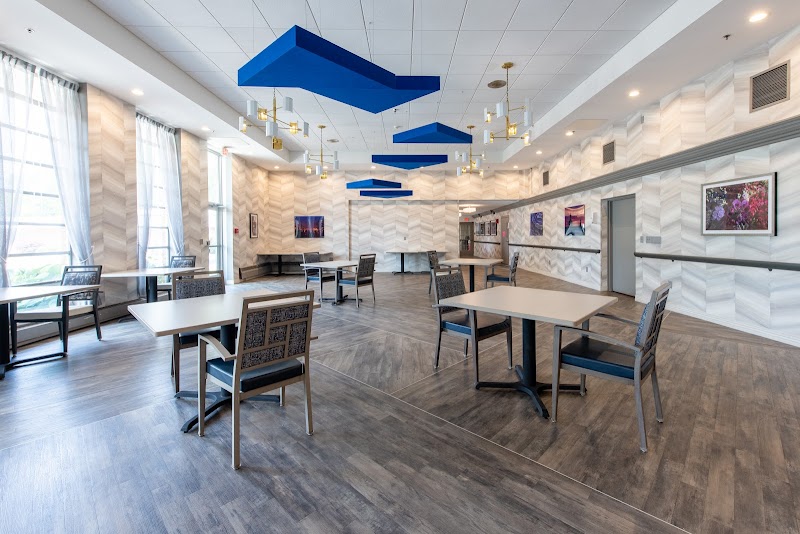
Who Owns and Operates Optalis Health & Rehabilitation At Kent-Crossing?

Optalis Health & Rehabilitation at Kent-Crossing is owned by a for-profit company. For-profit facilities operate as businesses with obligations to shareholders or private owners. The facility is operated by SKLD, a chain that manages multiple nursing homes. With 182 certified beds and approximately 115 residents (about 63% occupancy), it is a mid-sized facility located in Grand Rapids, Michigan.

How Does Optalis Health & Rehabilitation At Kent-Crossing Compare to Other Michigan Nursing Homes?

Compared to the 100 nursing homes in Michigan, Optalis Health & Rehabilitation at Kent-Crossing's overall rating (1 stars) is below the state average of 3.1, staff turnover (37%) is near the state average of 46%, and health inspection rating (1 stars) is much below the national benchmark.

What Should Families Ask When Visiting Optalis Health & Rehabilitation At Kent-Crossing?

Based on this facility's data, families visiting should ask: "Can I visit during a mealtime to observe dining assistance and food quality?" "How do you handle medical emergencies, and what is your hospital transfer rate?" "Can I speak with family members of current residents about their experience?"

Is Optalis Health & Rehabilitation At Kent-Crossing Safe?

Based on CMS inspection data, Optalis Health & Rehabilitation at Kent-Crossing has a clean safety record: no substantiated abuse findings (meaning no confirmed cases of resident harm), no Immediate Jeopardy citations (the most serious violation level indicating risk of serious injury or death), and is not on the Special Focus Facility watch list (a federal program monitoring the lowest-performing 1% of nursing homes). The facility has a 1-star overall rating and ranks #100 of 100 nursing homes in Michigan. While no facility is perfect, families should still ask about staff-to-resident ratios and recent inspection results during their visit.

Do Nurses at Optalis Health & Rehabilitation At Kent-Crossing Stick Around?

Optalis Health & Rehabilitation at Kent-Crossing has a staff turnover rate of 37%, which is about average for Michigan nursing homes (state average: 46%). Moderate turnover is common in nursing homes, but families should still ask about staff tenure and how the facility maintains care continuity when employees leave.

Was Optalis Health & Rehabilitation At Kent-Crossing Ever Fined?

Optalis Health & Rehabilitation at Kent-Crossing has no federal fines on record. CMS issues fines when nursing homes fail to meet care standards or don't correct problems found during inspections. The absence of fines suggests the facility has either maintained compliance or corrected any issues before penalties were assessed. This is a positive indicator, though families should still review recent inspection reports for the full picture.

Is Optalis Health & Rehabilitation At Kent-Crossing on Any Federal Watch List?

Optalis Health & Rehabilitation at Kent-Crossing is not on any federal watch list. The most significant is the Special Focus Facility (SFF) program, which identifies the bottom 1% of nursing homes nationally based on persistent, serious quality problems. Not being on this list means the facility has avoided the pattern of deficiencies that triggers enhanced federal oversight. This is a positive indicator, though families should still review the facility's inspection history directly.