Valley View Care Center
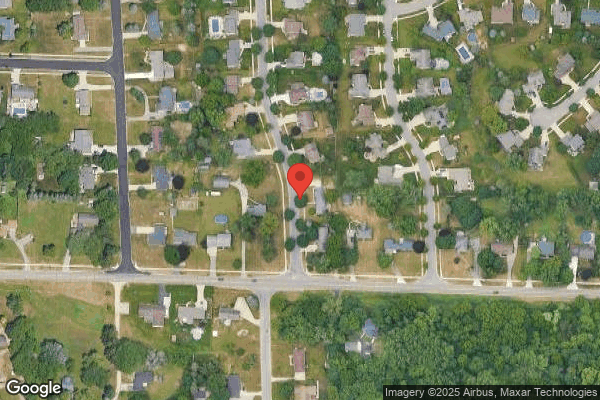
1050 Four Mile NW, Grand Rapids, MI 49544 (616) 784-0646
For profit - Limited Liability company 139 Beds NEXCARE HEALTH SYSTEMS Data: November 2025
Trust Grade
30/100
#349 of 422 in MI
Last Inspection: October 2024

Within standard 12-15 month inspection cycle. Federal law requires annual inspections.

Overview

Valley View Care Center has received a Trust Grade of F, indicating significant concerns and a poor overall rating. It ranks #349 out of 422 nursing homes in Michigan, placing it in the bottom half of facilities statewide, and #23 out of 28 in Kent County, meaning there are only a handful of local options that are better. Although the facility is showing an improving trend, reducing issues from 17 in 2024 to 6 in 2025, there are still serious issues that need addressing. Staffing is relatively stable with a rating of 4 out of 5 stars and a turnover rate of 42%, which is slightly below the state average, allowing for better continuity of care. However, the facility has been fined $43,876, which is concerning and suggests ongoing compliance problems, and there have been significant incidents, including medication errors that led to hospitalization and inadequate wound care resulting in worsened conditions for multiple residents.

Trust Score
F
30/100
In Michigan
#349/422
Bottom 18%
Safety Record
High Risk
Review needed
Inspections
Getting Better
17 → 6 violations
Staff Stability
○ Average
42% turnover. Near Michigan's 48% average. Typical for the industry.
Penalties
✓ Good
$43,876 in fines. Lower than most Michigan facilities. Relatively clean record.
Skilled Nurses
○ Average
Each resident gets 32 minutes of Registered Nurse (RN) attention daily — about average for Michigan. RNs are the most trained staff who monitor for health changes.
Violations
⚠ Watch
52 deficiencies on record. Higher than average. Multiple issues found across inspections.
★★☆☆☆
2.0
Overall Rating
★★★★☆
4.0
Staff Levels
★★★★☆
4.0
Care Quality
★★☆☆☆
2.0
Inspection Score
Stable
2024: 17 issues
2025: 6 issues

The Good

  • 4-Star Staffing Rating · Above-average nurse staffing levels
  • 4-Star Quality Measures · Strong clinical quality outcomes
  • Full Sprinkler Coverage · Fire safety systems throughout facility
  • No fines on record
  • Staff turnover below average (42%)

    6 points below Michigan average of 48%

Facility shows strength in staffing levels, quality measures, fire safety.

The Bad

2-Star Overall Rating

Below Michigan average (3.1)

Below average - review inspection findings carefully

Staff Turnover: 42%

Near Michigan avg (46%)

Typical for the industry

Federal Fines: $43,876

Above median ($33,413)

Moderate penalties - review what triggered them

Chain: NEXCARE HEALTH SYSTEMS

Part of a multi-facility chain

Ask about local staffing decisions and management

The Ugly 52 deficiencies on record

3 actual harm
Aug 2025 1 deficiency
CONCERN (D) 📢 Someone Reported This

A family member, employee, or ombudsman was alarmed enough to file a formal complaint

Potential for Harm - no one hurt, but risky conditions existed

Resident Rights (Tag F0550)

Could have caused harm · This affected 1 resident

Based on interview and record review, the facility failed to provide care and services to promote dignity and respect in 2 (Resident #106 and #107) of 3 residents reviewed for dignity/respect, resulti...

Read full inspector narrative →
Based on interview and record review, the facility failed to provide care and services to promote dignity and respect in 2 (Resident #106 and #107) of 3 residents reviewed for dignity/respect, resulting in feelings of frustration and the potential for decreased self-esteem and decreased quality of life.Findings include:Resident #106Review of an admission Record revealed Resident #106 was a female, with pertinent diagnoses which included: major depressive disorder, recurrent, unspecified. Review of a Brief Interview for Mental Status (BIMS) assessment for Resident #106, with a reference date of 6/30/25 revealed a BIMS score of 15, out of a total possible score of 15, which indicated Resident #106 was cognitively intact.In an interview on 8/25/25 at 11:36 AM, Resident #106 reported call light wait time could be as much as 1/2 hour. Resident #106 reported she has had to wait so long for staff to answer her call light that she has soiled her brief. Resident #106 reported she has also had to wait a long time for staff to change her brief, and it made her feel degraded.In an interview on 8/25/25 at 11:46 AM, Certified Nurse Aide (CENA) F reported Resident #106 does not refuse cares.In an interview on 8/26/25 at 1:07 PM, CENA T reported Resident #106 does not refuse cares. Resident #107Review of an admission Record revealed Resident #107 was a female, with pertinent diagnoses which included: other specified depressive episodes. Review of a Brief Interview for Mental Status (BIMS) assessment for Resident #107, with a signed date of 8/20/25 revealed a BIMS score of 11, out of a total possible score of 15, which indicated Resident #107 was moderately cognitively impaired.In an interview on 8/25/25 at 11:46 AM, Resident #107 reported she has had to wait a long time for staff to change her brief. Resident #107 stated, last night, it seemed like I sat there forever. Resident #107 reported it made her feel like an old lady having to wait to get her brief changed.In an interview on 8/25/25 at 2:34 PM, CENA U reported resident #107 does not refuse cares.In an interview on 8/26/25 at 3:03 PM, Licensed Practical Nurse (LPN) R reported residents sometimes complained about long call light wait times.In an interview on 8/26/25 at 3:05 PM, CENA V reported there had been some residents who complained to her about long call light wait times.
Mar 2025 5 deficiencies
CONCERN (D) 📢 Someone Reported This

A family member, employee, or ombudsman was alarmed enough to file a formal complaint

Potential for Harm - no one hurt, but risky conditions existed

Deficiency F0551 (Tag F0551)

Could have caused harm · This affected 1 resident

**NOTE- TERMS IN BRACKETS HAVE BEEN EDITED TO PROTECT CONFIDENTIALITY** This citation pertains to intake# MI001500378 Based on observation, interview and record review, the facility failed to follow t...

Read full inspector narrative →
**NOTE- TERMS IN BRACKETS HAVE BEEN EDITED TO PROTECT CONFIDENTIALITY** This citation pertains to intake# MI001500378 Based on observation, interview and record review, the facility failed to follow the court appointed resident representative decisions as the rights of the resident who was adjudged incompetent by the court in 1 (Resident #4) of 1 resident reviewed for abuse, resulting in Resident #4 (who functioned at the level of a 6 year old child) experiencing feelings of frustration, confusion, and anger after witnessing ongoing conflict between facility staff and her family members/representatives. Findings include: Review of an admission Record revealed Resident #4 was originally admitted to the facility on [DATE] with pertinent diagnoses which included: moderate intellectual disabilities (observable developmental delays, which may be accompanied by physical impairments), cerebral palsy (congenital disorder of movement, muscle tone, or posture) and major depressive disorder (persistent sad mood that impacts daily living). Further review revealed Family Member (FM) TT and FM UU served as co-guardians for Resident #4. Review of the court document labeled Letter of Co-Guardianship of individual with Developmental Disability dated as amended on 2/12/25 (for financial language) revealed FM TT and FM UU were appointed as plenary guardian of Resident #4. According to the American Bar Association, Generally, if a court determines a person has a disability, they may appoint (1) a guardian of the person, if it has been properly shown that because of their disability they lack sufficient understanding or capacity to make or communicate responsible decisions concerning the care of themselves .A plenary guardianship is a guardianship in which the court gives the guardian the power to exercise all legal rights and duties for the ward, after the court finds the ward to be incapacitated. People often mistake the guardian of the person as referring only to the authority to make healthcare decisions. However, the scope of these duties is far more extensive. The guardian of the person may make medical decisions, oversee the residential placement of their ward (with court approval), ensure that the ward receives proper professional services . Review of a Speech Therapy Evaluation for Resident #4 with a reference date of 2/21/25 revealed Clinical Impressions .Pt (patient) is goal directed .Pt's thinking is concrete .problem solving abilities are impaired and pt has limited insight .pt has difficulty with understanding problems, hazards or precautions. Review of a Comprehensive Level II Evaluation for Resident #4 with a reference date of 4/29/24 revealed Strengths and Resources: (Resident #4's) guardians appear to be strong advocates in ensuring she is receiving appropriate care and remains happy . (Resident #4) meets DSM (Diagnostic and Statistical Manual) criteria for Intellectual Disability .deficits in intellectual functions .adaptive functioning .onset of deficits was during developmental period. Review of a Minimum Data Set (MDS) assessment for Resident #4 with a reference date of 1/3/25, revealed Section D of the MDS revealed Resident #4 expressed feeling down, depressed, or hopeless during 7-11 days of the 14-day assessment period. Review of an MDS assessment for Resident 34 with a reference date of 10/3/24 revealed Resident #4 expressed feeling down, depressed, or hopeless never or less than 1 day during the 14-day assessment period. Review of a Care Plan for Resident #4 with a reference date of 7/2/24, revealed a focus/goal/interventions of: Focus(es). I have an alteration in my MOOD state r/t (related to) depression. When staff explain boundaries or rules, I will frequently make accusations against staff .I frequently tell different stories to different people. Goal: I will communicate my feelings. Interventions: .Do not interview resident and sister in presence of each other .as they have a HX (history) of feeding off each other .involve resident in decisions related to care . Review of a Behavioral Care Provider Note for Resident #4 with a reference date of 9/5/24 revealed .Her (Resident #4) sister is her guardian .She denies depression or anxiety .(Resident #4) has presented with manipulative behaviors such as telling her sister one account and staff another, which causes friction between all parties .Interventions staff could implement .Do not involve (Resident #4) in discussions between her sister and staff as it upsets (Resident #4). Review of a Social Services Initial Assessment for Resident #4 with a reference date of 7/3/24 revealed The patient is capable of making her basic needs and preferences known. Her guardian is tasked with complex decision making regarding the patient's health and wellbeing .The patient has a very supportive and involved family . In an interview on 3/17/25 at 10:55am, FM TT' reported she had voiced several concerns to the facility about Resident #4 spending time with a facility staff member (Scheduler EE), receiving notes of affection from Scheduler EE, and being referred to by Scheduler EE as her goddaughter but the facility had not intervened. FM TT reported she felt the relationship was inappropriate and that she had concerns for Resident #4's psychosocial wellbeing. FM TT reported one thing she hoped to avoid for Resident #4 was overhearing the staff gossip that took place while staff members interacted with Scheduler EE. FM TT reported Resident #4 repeated the information she heard and when asked, Resident #4 reported she heard it while Scheduler EE was checking staff in. FM TT reported although Resident #4 often didn't understand everything, she always paid close attention to what other's said and could pick up on the emotion involved in statements. FM TT reported during one meeting, in which Resident #4 was present, Director of Nursing (DON) B accused her of sucking the life out of (Resident #4). FM TT reported she felt the comment was inappropriate and added to Resident #4's emotional distress. In an interview on 3/17/25 at 11:20am, FM TT reported she also told the facility she was not comfortable with Scheduler EE referring to herself as Resident #4's godmother or calling the resident her goddaughter. FM TT reported using those terms would be confusing to Resident #4 as they would imply the scheduler was a family member. Review of an email written by FM TT to DON B dated 12/23/24 revealed (Resident #4) is mentally disabled .She must not hang out in (Scheduler EE s) office. Review of an email written by FM TT to DON B dated 12/24/24 revealed .as far as (Scheduler EE), it all started out good but not letters to god daughter from god mother I think is going a little bit to (sic) far . Review of an email written by FM TT to DON B dated 2/10/25 revealed I am requesting (Resident #4) not be in (Scheduler EE s) office .I feel that is a completely inappropriate relationship between (facility name) staff and a (facility name) resident .As (Resident #4's) guardian all private interactions between (Scheduler EE) and (Resident #4) must cease immediately. This includes but not limited to (Resident #4) being in (Scheduler EE s) office alone and (Scheduler EE) passing notes to (Resident #4). During an observation on 3/17/25 at 3:21pm, Resident #4 sat next to Scheduler EE in the scheduler's office. No other staff were present. In an interview on 3/17/25 at 3:38pm, Nursing Home Administrator (NHA) A reported FM TT had made several complaints about Resident #4 spending time with Scheduler EE, receiving notes from staff members and Resident #4 being referred to as Scheduler EE s goddaughter. NHA A reported FM EE felt the situations were inappropriate. NHA A then reported she felt FM TT doesn't want anything that makes (Resident #4) happy. NHA A reported based on Resident #4 voiced that she wanted to be called goddaughter but then added her (Resident #4's) wishes would go back and forth. NHA A reported the facility did not comply with FM TT s directions related to Resident #4 spending time alone with Scheduler EE, receiving notes from staff, or being referred to as Scheduler EE s goddaughter. NHA A reported Resident #4 had been present for a meeting with FM TT and facility staff and had become really upset during conflicts. In an interview on 3/17/25 at 10:40am, Scheduler EE reported Resident #4 regularly spent time in her office, and Scheduler EE enjoyed talking with her. Scheduler EE stated (Resident #4) brings me joy. Scheduler EE reported she liked to help Resident #4 manage her stress by helping her express her thoughts in a journal. Scheduler EE reported she transcribed Resident #4's thoughts in the journal for her. Scheduler EE reported she felt Resident #4 functioned as a [AGE] year-old child, rather than a 6-year-old as was documented in her medical record. Scheduler EE reported Resident #4 called her Godmother and she referred to Resident #4 as Goddaughter. Scheduler EE reported the facility allowed her to continue writing notes to Resident #4, and that she gave Resident #4 a note on this date that read BEE HAVE. In an interview on 3/17/25 at 1:11pm, Ombudsman QQ reported she had met with Resident #4 on several occasions. Ombudsman QQ confirmed that Resident #4 was inconsistent with statements regarding her wishes but had voiced that she enjoyed seeing Scheduler EE. In an interview on 3/18/25 at 2:19pm, FM TT reported Resident #4's mood had declined in recent months, and she began demonstrating behaviors she had never had before including breaking her cell phone three times, bouts of anger, refusal to see family members. In an interview on 3/18/25 at 2:54pm, Regional Director of Operations (RDO) RR reported staff members should fill out a concern form anytime a resident or family member had a concern. RDO RR reported the expectation was that the NHA would work to resolve any concerns and that the NHA kept him informed when concerns arose. RDO RR reported he was not aware FM TT wanted the staff to stop writing notes to Resident #4 and he expected that the NHA would have ensured the staff stop writing notes to the resident immediately. RDO RR reported he was aware that the stress of the situation impacted Resident #4 negatively. In an interview on 3/19/25 at 9:18am, FM UU reported Resident #4 was very soft hearted and could be easily lead astray. FM UU reported in recent months Resident #4's temperament had changed, and she'd become irritable, broken 3 cell phones, and at times refused to see FM UU and FM TT. FM UU reported until recently, she and Resident #4 were always very close, and Resident #4 would talk to her about her stressors. FM UU stated (Resident #4) is a different person in the last few months. FM UU reported she was concerned Resident #4 had become stressed and confused by the statements she'd heard facility staff say during meetings with her family. FM UU reported during one meeting DON B said Resident #4's family member was sucking the life out of her by not allowing her to do certain things. FM UU reported Resident #4 did not have the capacity to understand the complicated situation related to her family's concerns. FM UU described the environment for Resident #4 as unhealthy because she could not understand it when facility staff told her she had certain rights that she did not understand. In an interview on 3/19/25 at 10:51am, Social Work Director (SW) P reported Resident #4's mood had declined in recent months, and she appeared exhausted and defeated. SW P reported during a meeting with several facility staff, Resident #4's family members and Resident #4, a staff member told her she had the right to be friends with whomever she liked. SW P reported when she was asked what her wishes were, Resident #4 burst out crying and said she did not know what she wanted. When queried regarding non-direct care staff taking measures to attempt to assist a resident with their stress level, SW P reported it was not appropriate for those staff members to do so. In an interview on 3/19/25 at 12:02pm Medical Director (MD) SS reported Resident #4 did not have the capacity to consent to a relationship because she could not distinguish between a healthy versus a dysfunctional relationship. MD SS confirmed Resident #4 functioned as a 6-year-old child and as a result, he would expect the facility to honor the wishes of her guardians, including taking steps to ensure Resident #4 did not interact with Scheduler EE. In a second interview on 3/19/25 at 12:27pm, Scheduler EE reported Resident #4 displayed extreme mood swings in recent months and voiced she was stressed about the conflicts between the family and the staff. Scheduler EE reported she was aware FM TT did not want Resident #4 to receive notes from staff or spend time with her, but she felt Resident #4 enjoyed those things, so she wanted to continue those activities. Scheduler EE stated I feel it's inappropriate, regarding FM TT s wishes for Resident #4. Scheduler EE reported the facility developed a daily schedule for Resident #4 to spend time in her office doing tasks with her and required that the door be kept open. When further queried about how Resident #4 began completing tasks for her, Scheduler EE confirmed no member's of the Interdisciplinary Team had initiated that as a part of her plan of care. In an interview on 3/19/25 at 12:56pm, DON B reported she was aware that Resident #4 continued to receive notes from and spend time with Scheduler EE almost daily. DON B reported the facility allowed these activities to continue despite the wishes of Resident #4's guardian/family member because DON B felt it was within the resident's rights. DON B then stated, If it makes (Resident #4) happy, then FM TT is going to squelch it. DON B then stated, I'm not a psychiatrist, but I think (FM TT) has (name of psychiatric condition omitted) and I think she needs professional help. DON B confirmed that FM TT clearly expressed she did not want Resident #4 to spend time with Scheduler EE, did not want Resident #4 to be referred to as the goddaughter of Scheduler EE, and did not want staff to write notes to the resident. DON B confirmed no steps had been taken to follow these requests. When further queried, DON B confirmed the facility had not pursued any options for meeting Resident #4's needs while also complying with FM TT's wishes. DON B confirmed that Resident #4 cannot consistently make decisions for herself, and the facility should follow the wishes of the guardian. DON B confirmed FM TT did not want Resident #4 to take part in meetings regarding her care, that a behavioral health provider had recommended the resident should not be included, but DON B had been present for more than 1 meeting of this type in which Resident #4 was present. When further queried, DON B reported the facility felt Resident #4 had a right to be present for meetings regarding her care. DON B confirmed the meetings involving Resident #4's family and facility staff were intense at times and that Resident #4 had become emotionally upset during the meetings. When queried regarding DON B making a comment that her family member was sucking the life out of her, DON B stated I don't recall those words, but I did say she was draining the fun out of everything for (Resident #4). Using the reasonable person concept, though Resident #4 had decreased ability to verbally express her emotional distress due to her developmental barriers, she clearly experienced frustration, mental anguish and confusion from the ongoing conflict between the facility and the resident's family members, as well as the comments made in her presence. This mental anguish has the potential to continue well past the date of the incidents based on the reasonable person concept.
CONCERN (D) 📢 Someone Reported This

A family member, employee, or ombudsman was alarmed enough to file a formal complaint

Potential for Harm - no one hurt, but risky conditions existed

Deficiency F0658 (Tag F0658)

Could have caused harm · This affected 1 resident

This citation pertains to Intake #MI00149109 Based on interview and record review the facility failed to maintain professional standards of nursing practice related to medication administration for 2 ...

Read full inspector narrative →
This citation pertains to Intake #MI00149109 Based on interview and record review the facility failed to maintain professional standards of nursing practice related to medication administration for 2 (Resident #2 and Resident #9) of 11 residents reviewed or professional standards of nursing practice resulting in both Resident #2 and Resident #9 being administered another resident's medications. Findings include: Resident #2 Review of Medication Error Report for Resident #2, dated 12/8/24 at 19:58 pm, (7:58 pm) completed by Registered Nurse (RN) II revealed . Resident administered roommate's (Resident #5) medications . In a telephone interview on 3/17/25 at 3:45 pm, RN II reported that on 12/8/24, Licensed Practical Nurse (LPN) T came from another hall to help her pass medications. RN II reported she was pulling medications (preparing them from the medication cart per the orders in the EMAR (electronic medication administration record) and giving the prepared medications to LPN T who was then administering the medication to the residents. RN II reported that she prepared all of Resident #5's evening medications, handed the medication cup to LPN T who then administered Resident #5's medications to Resident #2. RN II reported that the documentation in Resident #2 and Resident #5's EMAR were her initials indicating that she had administered Resident #2 and Resident #5's medications to them on 12/8/24, but it was LPN T who was administering mediations to residents. RN II reported that the nurse that prepares the medications should be the nurse who administers and documents the medications according to the 5 rights of medication administration. RN II reported passing medications with another nurse has not happened since. In an interview on 3/18/25 at 10:15 am, LPN T reported on 12/8/24 she was assisting RN II to administer medications and she administered them to the wrong resident. LPN T reported RN II prepped Resident #5's medications, gave them to her and she gave Resident #5's medications to Resident #2. When queried about medication administration practices, LPN T reported the nurse who pulls the medication should administer them and the nurses need to use the 5 rights, such as right resident, right medication. LPN T stated I will never help anyone pass meds again. In an interview on 3/18/25 at 11:05 am, DON B reported her understanding of the medication error was that LPN T went to help RN II and they were dividing and conquering to pass the medications. LPN T was given the cup of medications after RN II pulled the medications, and LPN T when into the room. DON B reported that the nurse who pulls the medications should be the nurse who administers the medications. DON B reported she expected the nurses to use the rights of medication administration. DON B reported that she spoke to both LPN T and RN II and assigned education to only LPN T for a one-to-one education on the topic of medication administration. Review of LPN T documented one-to-one education dated 12/10/24 revealed education included regarding medication errors: nurse must verify meds with 2 identifiers, ensure correct dose, frequency, time, route, patient, drug and documentation, take your time. The one-to-one education was signed by LPN T. Also included in LPN T one-to-one education was a form that revealed 10 rights of drug administration right drug, right patient, right dose, right route, right time and frequency, documentation, history and physical, drug approach and right to refuse, drug-drug interaction and evaluation, education and information There was no one-to-one education provided for RN II by the time of exit. Resident #9 Review of Medication Error Report for Resident #9 dated 1/10/2025 at 10:31 am, completed by RN S revealed after giving am medication realized that I had given another resident's medication to (Name Omitted) Resident #9 . In a telephone interview on 3/18/25 at 1:01 pm, RN S reported she mixed up the identity of Resident #9 with Resident #10. RN S reported that Resident #9 and Resident #10 both use reclining wheelchairs, were both in the dining room, and they were in close proximity to each other when she administered the wrong medications to Resident #9. RN S reported she knows who Resident #9 and Resident #10 are. RN S reported she received one-to-one education, and it included the 5 rights of medication administration. RN S reported that right resident was one of the rights to medication administration. In an interview on 3/18/25 at 12:44 pm, DON B reported when the medication error occurred for Resident #9, RN S was distracted by behaviors and other residents while she was in the middle of her medication pass. DON B reported that RN S had worked with Resident #9 for a long time and knew the residents in that part of the building well. DON B reported her one-to-one education for RN S was more detailed than the education for the medication error that occurred in December (for Resident #2's medication error), because there were different circumstances. Review of one-to-one education for RN S dated 1/10/2025 revealed .ensure the five rights of medication administration are adhered to. Every time you administer a dose, it's important to keep the five rights of medication in mind. This is one of the easiest ways to prevent medication errors in nursing and should be reviewed upon each administration of medication. These rights' include: the right resident .the right drug .the right dose .the right route .the right time . RN S is noted to have signed the one-to-one education. In an interview on 3/19/25 at 1:40 pm, Life Enrichment Aide (LEA) V reported that Resident #9 did not speak, and she did not believe she would be able to verbalize her own name. In an interview on 3/19/25 at 1:45 pm, Clinical Care Coordinator/Licensed Practical Nurse (CCC/LPN) DD reported he did not believe Resident #9 would verbalize her own name. CCC/LPN DD reported to identify a resident for medication administration the nurse should look at the picture in the medical record, and the name on the door of their room. When queried, regarding how to identify a resident who was unable to answer or verbalize or confirm their own name, CCC/LPN DD stated that's a good question, let's go ask the nurse, I would like to know how to also. In an interview on 3/19/25 at 1:50 pm, LPN C reported to identify a resident for medication administration she would look at the picture in the medical record and use the name on the door and administer medication per the 5 rights. In an interview on 3/19/25 at 1:55 pm, RN I reported to identify a resident for medication administration she would use the name on the door and then ask another staff if she did not know the resident. In an interview on 3/19/25 at 2 pm, DON B reported she would verify the name and picture in the medical record, and make sure the name on the medications matched. DON B reported she would use the resident name on the room door, and make sure the face in the bed matches. DON 'B stated the nurses who work the long-term halls know who the residents are. DON B reported that her expectations were that the nurses' verified the identity of the residents before they administered medications and administered medications they had prepared. Review of facility policy Section IID: Specific Medication Administration Procedures with a revision date of January 2015, revealed . 6. The person who prepares the dose for administration is the person who administers the dose. 7. Residents are identified before medication is administered. Methods of identification include: .b. checking photograph attached to medical record . c. if necessary, verifying resident identification with other facility personnel .C. Documentation .The individual who administers the medication dose records the administration on the resident's MAR directly after the medication is given . Lippincott's online Nursing Center 2015 reflected 8 rights of medication administration: 1. Right patient 5. Right time 2. Right medication 6. Right documentation 3. Right dose 7. Right reason 4. Right route 8. Right response
CONCERN (D) 📢 Someone Reported This

A family member, employee, or ombudsman was alarmed enough to file a formal complaint

Potential for Harm - no one hurt, but risky conditions existed

Deficiency F0760 (Tag F0760)

Could have caused harm · This affected 1 resident

**NOTE- TERMS IN BRACKETS HAVE BEEN EDITED TO PROTECT CONFIDENTIALITY** This citation pertains to Intake #MI00149109 Based on observation, interview, and record review the facility failed to ensure th...

Read full inspector narrative →
**NOTE- TERMS IN BRACKETS HAVE BEEN EDITED TO PROTECT CONFIDENTIALITY** This citation pertains to Intake #MI00149109 Based on observation, interview, and record review the facility failed to ensure that residents were free from significant medication errors in 2 (Resident #2 and Resident #9) of 2 residents reviewed for significant medication errors resulting in Resident #2 experiencing an altered level of consciousness, lethargy (decreased alertness and response), decreased oral intake, decreased blood pressure, and the need for supplemental oxygen. Findings include: Resident #2 Review of an admission Record revealed Resident #2 was a female who was originally admitted to the facility on [DATE] and had pertinent diagnoses which included: Type 2 diabetes (a long-term condition where the body does not use insulin properly and there is too much sugar circulating in the blood), hypertension (high blood pressure), and dementia. Review of a Minimum Data Set (MDS) assessment for Resident #2, with a reference date of 1/2/2025 revealed a Brief Interview for Mental Status (BIMS) score of 13/15 which indicated Resident #2 was cognitively intact. (BIMS score 13-15 indicates cognitively intact). Review of Medication Error Report for Resident #2, dated 12/8/24 at 19:58 pm, (7:58 pm) completed by Registered Nurse (RN) II revealed . Resident administered roommate's (Resident #5) medications .(including) buspirone HCl tablet 10mg x 2, (anti-depressant), clonazepam oral tablet 0.25 mg (anti-psychotic), apixaban oral tablet 5 mg (anti-coagulant/blood thinner), Senna oral tablet 8.6 mg (laxative), senna- plus 8.6-50 mg (laxative/stool softener), Tropism Chloride oral tablet 20 mg (treats over active bladder and urinary incontinent), Atorvastatin 20 mg (cholesterol medication), insulin 8 units injection subcutaneous (diabetes/high blood sugar), Latuda oral tablet 40 mg (depression associated with bipolar disorder), Melatonin 3 mg x 2 (two tablets) (sleep aid), Morphine Sulfate 15 mg (narcotic pain medication) . In a telephone interview on 3/13/25 at 12:10 pm, Family Member (FM) MM reported he was notified via telephone on 12/8/24 at about 7:45 pm by Licensed Practical Nurse (LPN) T, a nurse who was working at the facility that night and was told that she had administered Resident #2's roommates'(Resident #5) medications to Resident #2. FM MM reported he inquired as to what medication was given to his mother, Resident #2 and LPN T denied answering that question. FM MM reported the facility had never communicated to him what medications Resident #2 received that day. FM MM reported for 3 days he attempted to reach staff, including Nursing Home Administrator (NHA) A and Director of Nursing (DON) B, at the facility to get an update on Resident #2's condition and had to leave messages, or was rushed off the phone by staff. FM MM reported he felt as if he was being brushed off, ignored, and that Resident #2's condition was not a concern for the staff. FM MM' reported he was frustrated by the lack of communication from the facility, as he resides out of state and was not able to visit Resident #2. FM MM reported he had to reach out to Resident #2's hospice provider to assess Resident #2 and to receive an update on her condition via a telephone call after Resident #2 was assessed, where he was assured by a hospice nurse that Resident #2 was doing ok and was coming out of it (the adverse effects of the medication error). During an interview on 3/13/25 at 1:05 pm, Resident #2 greeted this surveyor and stated her name. When queried, Resident #2 reported she recalled a time a while back when she was out of it but she did not recall any further details. In a telephone interview on 3/13/25 at 2:48 pm, FM NN reported she visited her mother, Resident #2 on Tuesday, December 10, 2024, two days after the medication error occurred and Resident #2 was completely out of it, hallucinating, hard to wake up, unable to stay awake. FM NN stated my mother did not know who I was. FM NN reported that Resident #2 knew all her children on sight and was usually very talkative. FM NN reported on that day Resident #2 was wearing oxygen and that Resident #2 had not needed oxygen in several months. FM NN reported she felt completely helpless when she saw Resident #2 in that condition and was not sure Resident #2 would come out of it. In a telephone interview on 3/17/25 at 9:34 am, FM OO reported he visited his mother, Resident #2 the day after the medication error occurred and Resident #2 was in never never land. FM OO reported Resident #2 appeared to be spaced out and could not comprehend who he was or what he was saying. FM OO reported he spoke to Clinical Care Coordinator/Licensed Practical Nurse (CCC/LPN) DD and was assured that the medications Resident #2 received were not that potent and that Resident #2 would come out of it in about 8 hours. FM OO reported it was two and a half weeks before Resident #2 was completely coherent during visits again. In an interview on 3/17/25 at 1:30 pm, LPN BB reported that Resident #2 did have a medication error a few months back. LPN BB reported two nurses were working together to pass the medications to the residents on the hall and Resident #2 got Resident #5's evening medications. LPN BB reported she had not received any education regarding medication administration after that incident. In a telephone interview on 3/17/25 at 3:45 pm, RN II reported she had stayed over to help out into the evening shift to cover the hall where Residents #2 and #5 resided as there was not a staff member for the assignment. RN II reported that she was behind with the medication pass, and that LPN T came from another hall to help her. RN II reported she was pulling medications (preparing them from the medication cart per the orders in the EMAR (electronic medication administration record)) and giving the prepared medications to LPN T who was then administering the medication to the residents. RN II reported that she prepared all of Resident #5's evening medications, handed the medication cup to LPN T who then administered Resident #5's medications to Resident #2. RN II reported Resident #5 takes several medications in the evening, and that she had prepared all of Resident #5's medication that were due at that time and gave them to LPN T to administer. RN II reported they were most concerned with Resident #2 reaction to receiving insulin and morphine sulfate. Review of Resident #2's medical record revealed no noted documentation regarding her being administered the wrong medications on 12/8/24. Review of Nurses Notes for Resident #2 revealed 12/9/24 17:37 (5:37 pm) Resident was tired today-she would respond to questions and would wake up upon asking questions but the minute we left the room she went back to sleep. Denied breakfast and lunch . 12/9/24 23:25 (11:25 pm) Resident lethargic this shift. Resting in bed sleeping with even respirations noted. No facial grimacing or groaning, resident does not seem to be in any pain. Vitals assessed with low BP (blood pressure) of 96/60 but resident remains stable. Remains on 2L O2 (2 liters of oxygen) via NC (nasal cannula) with sat (oxygen saturation) of 97 (90-100 indicates adequate oxygenation). Resident was able to take all scheduled medications PO (by mouth) with meds crushed in pudding . 12/10/24 4:25 am Resident remains lethargic, however every time resident awakes for vital checks she gradually seems more alert VSS (vital signs stable) and documented throughout shift. Review of Resident #2's medical record revealed no noted documentation of a provider visit following the medication error that occurred on 12/8/24. Review of Facility Visit and Collaboration Form for Resident #2 dated for 12/10/24 at 19:40 (7:40 pm) revealed .PRN (as needed) visit per son's request . indicating Resident did not look good today . her RR (respiratory rate) was 17 bpm (beats per minute), slightly irregular .oxygen at 2L via nasal cannula .she focused on this RN throughout visit, but did not say any words .offered her a some water with a cup and straw . did not appear to know how to use the straw .spoke with Competency-Evaluated Nursing Assistant (CENA) AA and CENA HH who reported that (Resident #2) has been more tired and out of it these past few days . In an interview on 3/18/25 at 11:05 am, DON B reported her understanding of the medication error was that LPN T went to help RN II pass medications, it's a long hall (indicating there are many residents on that hallway) and I don't remember what happened, and they were dividing and conquering to pass the medications, LPN T was never assigned to work that hall, and LPN T got the cup of medications after RN II pulled the medications, and LPN T when into the room. Resident #2 was on one side, and Resident #5 was on the other side and LPN T gave Resident #5's medications to Resident #2. DON B stated there didn't appear to be any negative outcome. DON B reported that she spoke to both LPN T and RN II and assigned education to only LPN T for a one-to-one education on the topic of medication administration. When queried, DON B reported that all nursing staff were not educated on medication administration at that time, but it was a topic of the all-staff meeting on 1/15/25. Review of LPN T documented one-to-one education dated 12/10/24 revealed education included regarding medication errors: nurse must verify meds with 2 identifiers, ensure correct dose, frequency, time, route, patient, drug and documentation, take your time. The one-to-one education was signed by LPN T. Also included in LPN T one-to-one education was a form that revealed 10 rights of drug administration right drug, right patient, right dose, right route, right time and frequency, documentation, history and physical, drug approach and right to refuse, drug-drug interaction and evaluation, education and information There was no one-to-one education provided for RN II by the time of exit. Resident #9 Review of an admission Record revealed Resident #9 was a female who originally admitted to the facility on [DATE] and had pertinent diagnoses which included: alzheimer's disease and dementia. Review of Medication Error Report for Resident #9 dated 1/10/2025 at 10:31 am, completed by RN S revealed after giving am medication realized that I had given another resident's medication to (Resident #9). (Resident #9) received losartan 25 mg (blood pressure medication), magnesium 400 mg (vitamin), metformin 1000 mg (diabetes medication), pantoprazole DR 40 mg (stomach acid reducer), Senna-Docusate 8.6-50 mg (laxative and stool softener) two tabs . Review of Active Discharge Planning Note for Resident #9 dated 1/10/25 at 10:51 am revealed (Resident #9) received Losartan 25 mg, Magnesium 400 mg, Metformin 1000mg, Pantoprazole DR 40mg, Senna-Docusate 8.6-50 mg 2 tabs this am. Doctor informed, ordered to recheck VS (vital signs) in 4 hours. Will continue to monitor. No other documentation noted in Resident #9's medical record regarding Resident #9 receiving wrong medications on 1/10/25 or continued monitoring. In an interview on 3/18/25 at 12:44 pm, DON B reported when the medication error occurred for Resident #9, RN S was distracted by behaviors and other residents while she was in the middle of her medication pass and RN S informed DON B immediately after it happened. DON B reported her one-to-one education for RN S was more detailed than the education for the medication error that occurred in December (for Resident #2's medication error), because there were different circumstances. DON B reported that all staff were educated on 1/15/25 regarding medication errors during an all-staff meeting. In a telephone interview on 3/18/25 at 1:01 pm RN S reported she mixed up the identity of Resident #9 with Resident #10. RN S stated there are always things going on and there is a resident who is after everyone else's food, there are a lot of behaviors, and the television can be too loud, all those things can distract from medication administration. RN S reported that Resident #9 and Resident #10 both use reclining wheelchairs, were both in the dining room, and they were in close proximity to each other when she administered the wrong medications to Resident #9. RN S reported that she received one-to-one education regarding the medication error. In an interview on 3/19/25 at 9:45 am, DON B provided a typed word document that revealed Timeline for medication errors .12/8/24 .Resident #2 administered incorrect medication .root cause: did not verify resident identity .12/10/24 LPN T one-to-one education .1/10/25 .Resident #9 administered incorrect medication root cause: did not verify resident identity .1/15/25 nurses educated at monthly staff meeting . DON B confirmed that she had just created this documented timeline for the multiple medication errors that had occurred. In an interview on 3/19/25 at 2 pm, DON B reported that her expectations were that the nurses' verified the identity of the residents before they administered medications. Review of facility policy Section IID: Specific Medication Administration Procedures with a revision date of January 2015, revealed . 6. The person who prepares the dose for administration is the person who administers the dose. 7. Residents are identified before medication is administered. Methods of identification include: .b. checking photograph attached to medical record . c. if necessary, verifying resident identification with other facility personnel .C. Documentation .The individual who administers the medication dose records the administration on the resident's MAR directly after the medication is given .
CONCERN (D) 📢 Someone Reported This

A family member, employee, or ombudsman was alarmed enough to file a formal complaint

Potential for Harm - no one hurt, but risky conditions existed

Infection Control (Tag F0880)

Could have caused harm · This affected 1 resident

**NOTE- TERMS IN BRACKETS HAVE BEEN EDITED TO PROTECT CONFIDENTIALITY** Based on observation, interview, and record review the facility failed to ensure staff implemented infection control measures by...

Read full inspector narrative →
**NOTE- TERMS IN BRACKETS HAVE BEEN EDITED TO PROTECT CONFIDENTIALITY** Based on observation, interview, and record review the facility failed to ensure staff implemented infection control measures by: 1). Implementing enhanced barrier precautions (EBP) for a resident with a urinary catheter in 1 (Resident #2) of 1 resident reviewed for EBP implementation and 2.) provide adequate storage of a CPAP (continuous positive airway pressure) mask for 2 (Resident #5 and Resident #6) of 2 resident reviewed for CPAP mask use, resulting in the potential for the introduction of infection, cross contamination, and disease transmission. Findings include: Resident #2 Review of an admission Record revealed Resident #2 was a female who was originally admitted to the facility on [DATE]. On 3/13/25 at 1:05 pm, a urinary drainage bag was noted on Resident #2 bed frame, indicating the use of a urinary catheter. No signage was noted outside of the room indicating the use of enhanced barrier precautions. Review of Order Summary for Resident #2 on 3/13/25 revealed Foley catheter 16 fr (French) for buttock wound, started on 2/14/25 . there was no noted order for EBP. Review of Care Plan for Resident #2 on 3/13/25 revealed no noted care plan for EBP. On 3/17/25 at 10:27 am, Resident #2 was observed being transferred via a mechanical lift from bed into a shower chair by Competency- Evaluated Nurses Assistant (CENA) M' and Hospice Aide (HA) JJ. Neither staff member was wearing a gown. On 3/17/25 at 10:56 am, HA JJ was observed in Resident #2's room, removing the sheet from the bed and was not wearing a gown or gloves. In an interview on 3/18/25 at 9:50 am, CENA N and CENA Q reported that EBP was implemented for any resident who had a catheter. CENA N reported that staff should wear a gown and gloves during care when they will touch the resident, such as showers, incontinent care, transferring, and wound care. In an interview on 3/18/25 at 10:44 am, Infection Preventionist/Registered Nurse (IP/RN) J reported a resident who had a foley catheter should be in EBP. In an interview on 3/18/24 at 10:59 am, IP/RN J was queried regarding when Resident #2 was placed into EBP and IP/RN J stated about a half an hour ago. IP/RN J reported she had missed when Resident #2's foley catheter was ordered and did not update Resident #2 EBP status. IP/RN J reported she had entered the order for EBP and had updated Resident #2 care plan as well. Resident #5 Review of an admission Record revealed Resident #5 was a female who was originally admitted to the facility on [DATE]. Review of a Minimum Data Set (MDS) assessment for Resident #5, with a reference date of 12/26/2024 revealed a Brief Interview for Mental Status (BIMS) score of 11/15 which indicated Resident #5 was moderately cognitively impaired. (BIMS score 8-12 indicates moderate cognitive impairment). On 3/13/25 at 1:09 pm, Resident #5's CPAP mask was noted to be laying on the floor between the bed and the wall. On 3/17/25 at 10:28 am, Resident #5's CPAP mask was noted to be laying on the over the bed table with no barrier and the mask appeared to be smudged with oil. In an interview on 3/17/25 at 2:55 pm, Resident #5 reported she uses her CPAP nightly, and the staff assist her to put it on. Resident #5 reported the staff takes care of her CPAP mask when she takes it off in the morning. Resident #6 Review of an admission Record revealed Resident #6 was a male who was originally admitted to the facility on [DATE] and had pertinent diagnoses which included obstructive sleep apnea. On 3/13/25 at 12:50 pm, Resident #6's CPAP mask was noted to be laying uncovered on the top of the dresser with no barrier under it. In an interview on 3/13/25 at 12:55 pm, Resident #6 reported his CPAP machine was brand new and he had never used it and he didn't' know anything about how it worked. Review of Order Summary for Resident #6 revealed .CPAP on at night, off in the am with a start date of 3/10/25. On 3/17/25 at 9:05 am, Resident #6's CPAP mask was noted to be lying on top of the dresser, with a washcloth and towel covering it. Resident was noted to be wearing a gown and sleeping in bed. In an interview on 3/17/25 at 3:30 pm, CENA X and CENA FF reported they did nothing with resident CPAP masks. In an interview on 3/17/25 at 3:12 pm, LPN K reported that CPAP masks should be stored in a bag or in a basin when not in use. In an interview on 3/18/25 at 11:15 am, Director of Nursing (DON) B reported her expectations were that CPAP masks were stored with a barrier of some kind when not in use.
CONCERN (F) 📢 Someone Reported This

A family member, employee, or ombudsman was alarmed enough to file a formal complaint

Potential for Harm - no one hurt, but risky conditions existed

Deficiency F0865 (Tag F0865)

Could have caused harm · This affected most or all residents

Based on interview and record review the facility failed to maintain Quality Assurance and Performance Improvement Program (QAPI) that developed and implemented effective corrective actions and conduc...

Read full inspector narrative →
Based on interview and record review the facility failed to maintain Quality Assurance and Performance Improvement Program (QAPI) that developed and implemented effective corrective actions and conduct meaningful surveillance to prevent adverse effects from medication erros in 2 of 2 residents (Resident #2 and Resident #9) reviewed for QAPI, resulting in the potential for serious adverse outcomes for all residents who receive medications from facility staff. Findings include: Review of Medication Error Report for Resident #2, dated 12/8/24 at 19:58 pm, (7:58 pm) completed by Registered Nurse (RN) II revealed . Resident administered roommate's (Resident #5) medications .(including) buspirone HCl tablet 10mg x 2, (anti-depressant), clonazepam oral tablet 0.25 mg (anti-psychotic), apixaban oral tablet 5 mg (anti-coagulant/blood thinner), Senna oral tablet 8.6 mg (laxative), senna- plus 8.6-50 mg (laxative/stool softener), Tropism Chloride oral tablet 20 mg (treats over active bladder and urinary incontinent), Atorvastatin 20 mg (cholesterol medication), insulin 8 units injection subcutaneous (diabetes/high blood sugar), Latuda oral tablet 40 mg (depression associated with bipolar disorder), Melatonin 3 mg x 2 (two tablets) (sleep aid), Morphine Sulfate 15 mg (narcotic pain medication) . Review of Medication Error Report for Resident #9 dated 1/10/2025 at 10:31 am, completed by RN S revealed after giving am medication realized that I had given another resident's medication to (Resident #9). (Resident #9) received losartan 25 mg (blood pressure medication), magnesium 400 mg (vitamin), metformin 1000 mg (diabetes medication), pantoprazole DR 40 mg (stomach acid reducer), Senna-Docusate 8.6-50 mg (laxative and stool softener) two tabs . Review of the facility QAPI records revealed no documentation that the facility identified deficient practice related to medication errors, no process for analysis of the cause of medication errors, no plan for to correct the deficient practice, and no indication the facility would monitor, evaluate, or audit the correction. In an interview on 3/18/25 at 11:33 am, Director of Nursing (DON) B reported medication errors are a general topic for all QAPI meetings. DON B reported the medication errors that occurred in December and January were mentioned in the monthly QAPI meetings. When queried, DON B reported that nothing further was done to analyze the cause of medication errors. In an interview on 3/19/24 at 9:04 am, DON B, Nursing Home Administrator NHA A and Regional Clinical Nurse (RCN) PP were present in DON B office and NHA A reported that the mention of medication errors occurred in both January and February QAPI meetings, but there was no analysis into why it occurred or how to prevent medication errors from occurring in the future. NHA A reported all nursing staff was educated regarding medication errors at the all-staff meeting on January 15, 2025, and that there had not been an all-staff meeting in December. In an interview on 3/19/25 at 9:45 am, DON B provided a typed word document that revealed Timeline for medication errors .12/8/24 .administered incorrect medication .root cause: did not verify resident identity .1/10/25 .administered incorrect medication root cause: did not verify resident identity . DON B confirmed that she had just created this documented timeline for the multiple medication errors that had occurred. The facility was unable to provide any root cause analysis created by the QAPI team by the time of exit.
Oct 2024 13 deficiencies
CONCERN (D) 📢 Someone Reported This

A family member, employee, or ombudsman was alarmed enough to file a formal complaint

Potential for Harm - no one hurt, but risky conditions existed

Resident Rights (Tag F0550)

Could have caused harm · This affected 1 resident

**NOTE- TERMS IN BRACKETS HAVE BEEN EDITED TO PROTECT CONFIDENTIALITY** Based on observation, interview, and record review, the facility failed to provide an environment that promoted and resident dig...

Read full inspector narrative →
**NOTE- TERMS IN BRACKETS HAVE BEEN EDITED TO PROTECT CONFIDENTIALITY** Based on observation, interview, and record review, the facility failed to provide an environment that promoted and resident dignity in 2 (Resident #60 and #71) of 3 residents reviewed for dignity, resulting in the potential of feelings of humiliation, embarrassment, and loss of self-worth, and a negative psychosocial outcome for the residents impacting their quality of life. Findings include: Resident #60: Review of current Care Plan for Resident #60, revised on [DATE], revealed the focus, .Risk of falls r/t (related to) COPD, HTN (high blood pressure), PVD (peripheral vascular disease) . with the intervention .Septic arthritis of right ankle .WBAT (weight bearing as tolerated) with RLE (right lower extremity with surgical boot .Ambulation with 1 PA (physical assist) . In an interview on [DATE] at 02:48 PM, Resident #60 reported the staff took a long time to come to assist him when he needed to use the restroom and he soiled himself and needed to have his clothes changed. Resident #60 was upset by this as he can use the bathroom and needed their help to get there because of his foot/ankle was broken. Resident #60 reported he was also receiving antibiotics by IV in his PICC line (Peripherally inserted central catheter (PICC) was a thin flexible tube that's inserted into a vein in the upper arm and threaded into a large vein near the heart). In an interview on [DATE] at 02:07 PM, Licensed Practical Nurse (LPN) T reported the call lights' were sent to pagers for the CNAs, there were screens which informed the staff of the call lights for any room in the building and could hop around the corner to assist. LPN T reported the staff try to answer the call light within 15 minutes at the most. The screens let staff know how long the call light had been activated. In an interview on [DATE] at 02:10 PM, Certified Nursing Assistant (CNA) NN reported the staff should have an immediate response to the call light sytem. CNA NN reported the call light system was for the residents to alert staff they needed assistance, it could be for several things, like water or ADL (activities of daily living) care. In an interview on [DATE] at 02:11 PM, Clinical Care Coordinator (CCC) F reported the expectation to answer within 10-15 minutes. The CNAs were alerted via the pager system. The call light system used to ensure patient needs were met when they arise. Resident #71: Review of an admission Record revealed Resident #71 was a female with pertinent diagnoses which included cerebral palsy with spastic quadraplegia, depression, legal blindness, and moderate intellectual disabilities. Review of current Care Plan for Resident #71, revised on [DATE], revealed the focus, .I have a history of trauma .I have an alteration in my MOOD state r/t (related to) depression . with the intervention .Allow me to express my feelings, observe for any changes in my mood and my response to treatment, make a referrla to psych services/supportive therapy as needed .provide me reassurance when I am feeling anxious, depressed, tearful, or angry . In an interview on [DATE] at 12:04 PM, Family Member (FM) YY reported on Sunday ([DATE]) she was contacted by Licensed Practical Nurse (LPN) Q and he told me what he had said to her. LPN Q told her that he said to (Resident #71) that her sister died last night. FM YY reported she did not understand what made him randomly say that to her. Resident #71 reported, That was a cruel joke .He made me cry .Make me upset I think about it all the time .I had a hard time sleeping thinking about it This writer obseved Resident #71 attempt not to cry. FM YY reported we requested a couple months ago for her to see someone and now she had been traumatized again. In an interview on [DATE] 03:08 PM, Director of Nursing (DON) B reported she had receieved a phone call from LPN HHH informed Resident #71 was crying and upset as LPN Q had told her, her sister had passes away last night per Resident #71. DON B reported she spoke to LPN Q and he informed her they were bantering back and forth and with his odd sense of humor had told her sister had passed away, she didn't like that and told him it was not funny, she became angry and she wheeled back to her hallway. DON B informed LPN Q the allegation would need to be investigated, he asked if he should call FM YY and inform her of the incident and to apologize. DON B reported he contacted FM YY and apologized. In an interview on [DATE] at 03:39 PM, Licensed Practical Nurse (LPN) Q reported he blurted it out to Resident #71, he heard her sister passed and it was thoughtless bantered back and forth, darkest of humor blurted it out and said he reported he immediately said he was just joking, LPN Q reported (Resident #71) smiled and wheeled away. LPN Q reported shortly after he heard she was crying, upset, and prett worked up. LPN Q asked if I could give her a hug, as she was a [NAME], but she told me, No. LPN Q reported he was told later she had the brain function like a child and he did not realize that as he doesn't work with her. LPN Q reported he had crossed the line, and it was below the belt.
CONCERN (D)

Potential for Harm - no one hurt, but risky conditions existed

Deficiency F0558 (Tag F0558)

Could have caused harm · This affected 1 resident

**NOTE- TERMS IN BRACKETS HAVE BEEN EDITED TO PROTECT CONFIDENTIALITY** Resident #126 Review of an admission Record revealed Resident #126 was originally admitted to the facility on [DATE] with pertin...

Read full inspector narrative →
**NOTE- TERMS IN BRACKETS HAVE BEEN EDITED TO PROTECT CONFIDENTIALITY** Resident #126 Review of an admission Record revealed Resident #126 was originally admitted to the facility on [DATE] with pertinent diagnoses which included history of falling. Review of Resident #126's Care Plan revealed, Focus Area: (Resident #126) Risk for falls r/t (related to) Recent UTI, vascular dementia with psychotic disturbance, HTN (hypertension-high blood pressure), Seizures, diastolic dysfunction, Hx (history) of CVA (Cerebrovascular accident -stroke), Hx of falls Date Initiated: 08/16/2024. Goal: Minimize risk for injury r/t falls. Date Initiated: 08/16/2024. Interventions: .Call light accessible. Date Initiated: 08/16/2024 . Review of a Minimum Data Set (MDS) assessment for Resident #126, with a reference date of 8/22/24 revealed a Brief Interview for Mental Status (BIMS) score of 11/15 which indicated Resident #126 was moderately cognitively impaired. During an observation and interview on 10/08/24 at 9:28 AM, Resident #126 was lying in bed. When this writer entered Resident #126's room, Resident #126 asked for water and to have her brief changed. Resident #126 reported that she was very thirsty, felt like she had a wet brief, and had been waiting for someone to come help her. Resident #126 reported that she did not know where her call light was to call for staff assistance. It was noted that Resident #126's call light was at the end of Resident #126's bed and out of Resident #126's reach. During an observation and interview on 10/09/24 at 8:47 AM, Resident #126 was lying in her bed. When this writer entered Resident #126's room, Resident #126 reported that she was in pain and needed help right away. Resident #126 reported that she did not know where her call light was to call for staff assistance. It was noted that Resident #126's call light was lying on the floor under the bed and out of Resident #126's reach. During an interview on 10/09/24 at 8:56 AM, Certified Nursing Assistant (CNA) GG reported that Resident #126 did use her call light to request assistance from staff. Review of the facility's Call Light Policy last revised on 5/1/17 revealed, POLICY: Call lights will receive consistent and adequate response in order to best meet the individual needs of each resident. PROCEDURE: 1. Call lights will be placed within reach of the resident . Based on observation, interview, and record review, the facility failed to ensure call lights were in reach for 2 (Resident #82 & #126) of 27 residents reviewed for accommodation of needs, resulting in the inability to call for staff assistance and the potential for unmet care needs. Findings include: Resident #82 Review of a Minimum Data Set (MDS) assessment for Resident #82, with a reference date of 9/10/24 revealed a Brief Interview for Mental Status (BIMS) score of 12, out of a total possible score of 15, which indicated Resident #82 was moderately cognitively imparied. Review of Resident #82's Care Plan revealed, .Focus: Due to my Parkinson's, I hold my arms close to my chest and hand closed and shake up and down my chest .I have an actual ADL (activities of daily living) deficit R/T (related to): Parkinson's .Resident is cognitively intact .Risk for falls R/T Parkinson's .Interventions: .Call light accessible. Date initiated: 12/07/2023 . During an observation on 10/09/24 at 09:54 AM in Resident #82's room, he was lying flat in his bed, and requested that this surveyor raise the head of the bed. Resident #82 reported that he did not know where his call light was located because he did not have good eye sight, and was not able to reach his table. Resident #82's eyes were closed, both arms were bent, hands were closed and laying on his chest. A soft touch call light pad was observed laying on the over the bed table approximately 3 feet out of Resident #82's reach. Resident #82 attempted to reach for the call light, but had limited movement in his right arm, and was shaking. In an interview on 10/09/24 at 10:02 AM, Registered Dietician (RD) K reported that she did not know if Resident #82 used a call light, but that she could raise the head of the bed for him. In an interview on 10/09/24 at 10:05 AM, Certified Nursing Assistant (CNA) II reported that Resident #82 does not use his call light because he cannot reach it, due to his arms being contracted (tightening of muscles and difficulty moving joints). CNA II reported that if the call light was placed closer to Resident #82, that he would be able to reach and activate it to call for assistance.
CONCERN (D)

Potential for Harm - no one hurt, but risky conditions existed

Deficiency F0578 (Tag F0578)

Could have caused harm · This affected 1 resident

**NOTE- TERMS IN BRACKETS HAVE BEEN EDITED TO PROTECT CONFIDENTIALITY** Based on interview and record review, the facility failed to ensure accurate code status (a physician's order that determines th...

Read full inspector narrative →
**NOTE- TERMS IN BRACKETS HAVE BEEN EDITED TO PROTECT CONFIDENTIALITY** Based on interview and record review, the facility failed to ensure accurate code status (a physician's order that determines the type of medical treatment a person will receive if their heart or breathing stop) was in place for 1 (Resident #62) of 27 residents reviewed for advanced directives (legal documents that allow a person to identify decisions about end-of-life care ahead of time), resulting in the potential for a resident's preferences for medical care to not be followed by the facility, or other healthcare providers. Findings include: Review of an admission Record revealed Resident #62 was originally admitted to the facility on [DATE] with pertinent diagnoses which included chronic obstructive pulmonary disease (a lung disease that blocks airflow and makes it difficult to breathe). Review of a Minimum Data Set (MDS) assessment for Resident #62, with a reference date of [DATE] revealed a Brief Interview for Mental Status (BIMS) score of 15/15 which indicated Resident #62 was cognitively intact. Review of Resident #62's Orders revealed that Resident #62's code status was CPR (cardiopulmonary resuscitation) which indicated that if Resident #62's heart or breathing stopped, that staff would initiate CPR. Date initiated: [DATE]. Review of Resident #62's Code Status form dated [DATE] revealed that Resident #62 had marked Do not resuscitate (DNR). The form was signed by Resident #62 and the facility's physician. It was noted that the form was missing two witness signatures. Review of Resident #62's Code status form dated [DATE] revealed that Resident #62 had marked Do not resuscitate. The form was signed by Resident #62, the facility's physician, and two witnesses. Review of Resident #62's Care Conference note dated [DATE] revealed, . Summary: . Code Status: CPR . During an interview on [DATE] at 10:04 AM, Social Worker (SW) H reported that she was responsible for reviewing and ensuring the accuracy of resident's advance directives when they were admitted to facility and at the resident's quarterly care conferences. SW H confirmed that she had participated in Resident #62's care conference on [DATE] and that the code status for Resident #62 was updated to CPR. SW H reported that she did not know why Resident #62's code status was updated to CPR when Resident #62 had signed a DNR order. SW H was not able to confirm what Resident #62's end of life wishes were. SW H confirmed that ensuring the accuracy of Resident #62's code status had been missed. During an interview on [DATE] at 11:18 AM, Resident #62 reported that she would want the facility to follow the orders of do not resuscitate (DNR) if her heart or breathing stopped. Resident #62 reported that she did not have the desire to receive CPR due to her age and health, and that she had never indicated to the facility that she wanted to change her code status to from DNR.
CONCERN (D)

Potential for Harm - no one hurt, but risky conditions existed

Assessment Accuracy (Tag F0641)

Could have caused harm · This affected 1 resident

**NOTE- TERMS IN BRACKETS HAVE BEEN EDITED TO PROTECT CONFIDENTIALITY** Based on interview, and record review, the facility failed to accurately complete Minimum Data Set (MDS) assessments in 1 (Resid...

Read full inspector narrative →
**NOTE- TERMS IN BRACKETS HAVE BEEN EDITED TO PROTECT CONFIDENTIALITY** Based on interview, and record review, the facility failed to accurately complete Minimum Data Set (MDS) assessments in 1 (Resident #131) of 27 residents reviewed for accuracy of assessments, resulting in an inaccurate reflection of the resident's discharge status. Findings include: Resident #131 Review of an admission Record revealed Resident #131 was originally admitted to the facility on [DATE], and discharged to (name of a different nursing home) on 7/26/24. Review of a MDS assessment for Resident #131 with a reference date of 7/26/24 revealed, Resident #131 discharged to a short-term general hospital on 7/26/24. This information was not consistent with the resident's admission record. Review of Resident #131's Progress Note dated 7/26/2024 at 09:13 AM revealed, D/c (discharge) instructions given to patient; he verbalized understanding. Resident dc with dc instructions and belongings via (another nursing home) transportation. In an interview on 10/10/24 at 02:03 PM, MDS Nurse L reported that Resident #131 discharged to a different nursing home on 7/26/24, and that the MDS assessment that was submitted upon discharge inaccurately indicated a discharge to the hospital.
CONCERN (D)

Potential for Harm - no one hurt, but risky conditions existed

Deficiency F0645 (Tag F0645)

Could have caused harm · This affected 1 resident

**NOTE- TERMS IN BRACKETS HAVE BEEN EDITED TO PROTECT CONFIDENTIALITY** Based on observation, interview, and record review, the facility failed to confirm the Pre-admission Screening and Resident Revi...

Read full inspector narrative →
**NOTE- TERMS IN BRACKETS HAVE BEEN EDITED TO PROTECT CONFIDENTIALITY** Based on observation, interview, and record review, the facility failed to confirm the Pre-admission Screening and Resident Review (PASARR) Level II determination request was sent to the Community Mental Health Services Program (CMHSP) for a Level II OBRA review and/or evaluation for 2 (Resident #49 and #26) of 3 residents, resulting in the potential for the residents to not receive or have delayed mental health services. Findings include: Review of OBRA - Specialized Nursing Homes dated 2023, revealed, .This review process begins with the completion of a screening form (Level I DCH-3877) usually by a nursing facility, hospital, or community agency/provider. If the responses to the questions on the form indicate the presence of a mental illness and/or an intellectual/developmental disability (or a related condition), the person is referred to the local community mental health services program (your local OBRA Coordinator) to assess if a comprehensive evaluation (Level II) is needed. This evaluation and the evaluator's recommendation are reviewed by the State OBRA office and a final determination is made as to whether the person is appropriate for nursing facility admission/stay and whether specialized services mental health care is required . https://www.michigan.gov/mdhhs/keep-mi-healthy/mentalhealth/mentalhealth/obra Resident #49: A review of R49's admission Record, revealed R49 was a [AGE] year-old resident admitted to the facility on [DATE] with multiple diagnoses that included schizoaffective disorder, bipolar type and major depressive disorder. Review of R49's care plan dated 2/13/24, revealed, .I have an alteration in my MOOD state r/t (related to) Major depression disorder, schizoaffective disorder, Insomnia. I am currently prescribed psychotropic medication .Trauma History: Resident have a Trauma History of a car accident and a very stressful event/experience. Trauma triggers may include; loud noises/crashes and increased stress . with the intervention .Follow PASAR recommendations. Annual Record Review required by 11/3/24 .Revision on: 11/21/2023 . In an interview on 10/09/24 03:09 PM, Director of Social Services (DSS) Porsche reported she had not seen level II in the records, she was reaching out to the OBRA contact to request a level II for Resident #49. In an interview on 10/09/24 at 03:22 PM, SWD H reported the contact at the local community mental health agency reported he was not aware R49 was back in the nursing home. SWD H reported it appeared the last one done for R49 was in 2021. In an interview on 10/10/24 10:26 AM, SWD H reported she had heard back from the contact at the local community mental health agency and she was due November 2023 to have a Level II, 3878 Screening completed. Resident #26: A review of R26's admission Record, revealed R26 was a [AGE] year-old resident admitted to the facility on [DATE] with multiple diagnoses that included bipolar disorder, anxiety, and depression. Review of R26's care plan dated 8/22/24, revealed, I have an alteration in my MOOD state r/t (related to) Vascular Dementia, Bipolar, Anxiety & Depression. I am currently prescribed psychotropic medication .I have a history of trauma; experienced a fire or explosion, physical assault, sexual assault, sudden violent death . with the intervention .Follow PASAR recommendations. Annual Assessment due by 5/23/24 . Revision on: 11/21/2023 . Review of Preadmission SCREENING (PAS)/ANNUAL RESIDENT REVIEW (ARR) Level I Screening dated 11/16/23, revealed, .Change in Condition .Section II: Screening Criteria: 1. (X)Yes .The person has a current diagnoses of (X) Mental Illness or ( ) Dementia .2. (X)Yes .The person has received treatment for(X) Mental Illness or ( ) Dementia .3. (X)Yes .The person has routinely received one or more prescribed antipsychotic or antidepressant medications within the last 14 days .DISTRIBUTION: If any answer to items 1 - 6 in SECTION II is Yes, send ONE copy to the local Community Mental Health Services Program (CMHSP), with a copy of form DCH-3878 (Level II Screening) if an exemption is requested. The nursing facility must retain the original in the patient record and provide a copy to the patient or legal representative . Review of Department of Health and Human Services letter dated 5/25/2023, revealed, .(County Community Mental Health Service) completed a PAS-OBRA Level II Evaluation on the above-named individual and made a recommendation on placement and services. Based on the information provided by this agency, the Stal of Michigan Department of Health and Human Services made the following: 1. DETERMINATION: Nursing Facility - Specialized Mental Health Services. The individual qualifies for the level of services provided by a nursing facility and requires specialized mental health/developmental disabilities services .2. RESULT OF THE DETERMINATION: The individual may be admitted to a nursing facility and may choose to receive specialized mental health/developmental disabilities services. The local community mental health services agency will discuss with the individual, the individual's legal representative and the nursing facility a plan for the provision of specialized services .3. REASON FOR THE DETERMINATION: The individual's physical, mental and psychosocial needs can be adequately met in a nursing facility .If the above-named individual remains in the nursing facility, a Level II Evaluation is needed by May 23, 2024 . In an interview 10/10/24 02:27 PM, Social Work Director (SWD) H SS reported a change of condition Level I evaluation was completed for R26 when it was determined she was assigned a guardian. The Level II was due in May, 2024.
CONCERN (D) 📢 Someone Reported This

A family member, employee, or ombudsman was alarmed enough to file a formal complaint

Potential for Harm - no one hurt, but risky conditions existed

Comprehensive Care Plan (Tag F0656)

Could have caused harm · This affected 1 resident

**NOTE- TERMS IN BRACKETS HAVE BEEN EDITED TO PROTECT CONFIDENTIALITY** Based on observation, interview and record review, the facility failed to implement a comprehensive, person-centered care plan f...

Read full inspector narrative →
**NOTE- TERMS IN BRACKETS HAVE BEEN EDITED TO PROTECT CONFIDENTIALITY** Based on observation, interview and record review, the facility failed to implement a comprehensive, person-centered care plan for 1 (Resident #11) of 3 residents reviewed for pressure ulcer prevention, resulting in an incomplete reflection of the resident's care and monitoring needs for pressure ulcer preventative Findings include: Review of an admission Record revealed Resident #11 was originally admitted to the facility on [DATE] with pertinent diagnoses which pressure ulcers stage 4. Review of Resident #11's Kardex (individualized-personalized resident care guide for staff use) with no date revealed: (Resident#11) I need my soft heel offloading boots on both of my feet at all times, remove for morning and evening care and for skin inspection . During an observation on 10/08/24 at 4:55 PM., on 0/09/24 at 12:30 PM., and on 10/09/24 at 2:10 PM Resident #11 was laying in his bed. It was noted Resident #11 was not wearing any sort of soft boot, nor were any soft boots noted in and or around Resident #11's room. Review of Physicians Orders dated 5/30/24 revealed: Order Summary: (Resident #11) Wound care to right heel: Cleanse site NS (normal saline), pat dry, apply foam border dressing to site. Ensure PRAFO (name brand-soft boots) boots are applied when in and out of bed During an observation on 10/10/24 at 9:19 AM., on 10/10/24 at 9:55 AM, and on 10/10/24 at 10:30 AM, Resident #11 was laying in his bed. It was noted Resident #11 was not wearing any sort of soft boot, nor were any soft boots noted in and or around Resident #11's room. During an observation on 10/10/24 at 10:50 AM., Registered Nurse (RN) V was completing wound dressing change for Resident #11's right heel. It was noted no offloading boots were on Resident #11. It was noted no soft boots around Resident #11's bed, or areas visible in his room. In an interview on 10/10/24 at 11:20 AM., RN V reported he was unsure where Resident #11's soft boots were. RN V looked around Resident #11's room, closet and drawers. No soft boots were found in Resident #11's room. RN V reported
CONCERN (D)

Potential for Harm - no one hurt, but risky conditions existed

Deficiency F0657 (Tag F0657)

Could have caused harm · This affected 1 resident

**NOTE- TERMS IN BRACKETS HAVE BEEN EDITED TO PROTECT CONFIDENTIALITY** Based on interview and record review, the facility failed to revise a comprehensive care plan with new interventions after a fal...

Read full inspector narrative →
**NOTE- TERMS IN BRACKETS HAVE BEEN EDITED TO PROTECT CONFIDENTIALITY** Based on interview and record review, the facility failed to revise a comprehensive care plan with new interventions after a fall in 1 (Resident #15) of 2 residents reviewed for falls resulting in an inaccurate reflection of the resident's care needs and the potential for unmet medical, physical, mental, and psychosocial needs. Findings include: Resident #15 Review of an admission Record revealed Resident #15 was originally admitted to the facility on [DATE] with pertinent diagnoses which included muscle weakness. Review of Resident #15's Incident Report dated 7/4/24 revealed Incident description: Called to room by CENA (Certified Nursing Assistant).(Resident #15) was observed sitting on the floor with her legs bent at the knees and her lower legs alongside her buttocks, in front of her chair. Her tray table had also tipped over and she was sitting between the tray table and the chair, leaning to the left with her arm pressed and lower back pressed up against the tray table . notes: 30 minutes after incident (Resident #15) was taken by ambulance to be evaluated at (local hospital) .Other info: (Resident #15) was sitting in the recliner when another resident sat on the remote control for the recliner and resident chair moved to getting up and position and resident slid down on the floor. The tray table was caught by the moving recliner and knocked over so (Resident #15) was between the tray table and the chair . Review of Resident #15's Fall Assessment dated 7/4/24 revealed, . Describe: (Resident #15) only fell b/c (because) another resident sat on her remote control to chair and it lifted her out of the chair .Summarize the impact of this problem/need on the resident. (Include complication, risk factors and root cause analysis) : . Root Cause Analysis: fall was related to another resident sitting on the remote control to the electric recliner and resident fell to the floor. Remote was not within resident's reach. Intervention: Family insisted to send to ED. IDT (Interdisciplinary team) Day 1: ED. IDT Day 2: hospitalized . IDT Day 3: hospitalized . During an interview on 10/10/24 at 10:37 AM, Clinical Care Coordinator (CCC) G reported that the facility's IDT team met after each resident fall to review the fall and ensure that a new intervention was in place to attempt to prevent further falls. CCC G reported that he thought the facility had updated Resident #15's care plan to ensure that her chair remote was tucked into her recliner when she was sitting in the recliner. CCC G reviewed Resident #15's care plan with this writer and reported that the facility did not have the care plan intervention added to Resident #15's chart. During an interview on 10/10/24 at 3:05 PM, CCCD reported that the facility did not initiate any fall interventions or update the care plan for Resident #15 after her fall on 7/4/24 because Resident #15's family had insisted that she was sent to the hospital after her fall, and Resident #15 was admitted to the hospital for a few days.
CONCERN (D)

Potential for Harm - no one hurt, but risky conditions existed

ADL Care (Tag F0677)

Could have caused harm · This affected 1 resident

**NOTE- TERMS IN BRACKETS HAVE BEEN EDITED TO PROTECT CONFIDENTIALITY** Based on observation, interview, and record review, the facility failed to ensure dependent residents received assistance with a...

Read full inspector narrative →
**NOTE- TERMS IN BRACKETS HAVE BEEN EDITED TO PROTECT CONFIDENTIALITY** Based on observation, interview, and record review, the facility failed to ensure dependent residents received assistance with activities of daily living (ADL), specifically personal hygiene and getting out of bed were provided for 2 (Resident #19 & #20) of 4 residents reviewed for ADL care, resulting in unmet care needs and the potential for avoidable declines in overall health and wellness. Findings include: Resident #19 Review of an admission Record revealed Resident #19 was originally admitted to the facility on [DATE], with pertinent diagnoses which included: parkinsons (a disorder of the central nervous system (brain and spinal cord) that causes difficulty with movement.) Review of a Minimum Data Set (MDS) assessment for Resident #19, with a reference date of 8/8/24 revealed a Brief Interview for Mental Status (BIMS) score of 15, out of a total possible score of 15, which indicated Resident #19 was cognitively intact. Review of Resident #19's Care Plan revealed, Focus: .At risk for urinary/bowel incontinence r/t (related to) parkinson's .I have actual ADL (activities of daily living) deficit r/t parkinson's .Interventions: .non ambulatory, bed bath/shower: Monday & Thursday 1st shift, Transfer 1 PA (person assist) .Bed mobility 1 PA . During an observation and interview on 10/08/24 at 11:55 AM in Resident #19's room, the resident was lying flat in his bed, his pants were visibly wet and there was a strong odor of urine. Resident #19 reported that when he asks staff for assistance, they tell him that they will be right back, but they never do. During an observation and interview on 10/10/24 at 11:36 AM in Resident #19's room, the resident was lying flat in his bed, with a sheet wrapped around the bottom half of his body, and there was a strong odor of urine in the room. Resident #19 reported that he preferred a shower vs. bed bath, but had not gotten a shower yet this week, and that he likely would not get it that day either. In an interview on 10/10/24 at 12:03 PM, Certified Nursing Assistant (CNA) AA reported that at times Resident #19 would decline assistance, but that she had not gotten a chance to check in with him yet that day. CNA AA reported that she started her shift at 6:30 AM and tried to get into Resident #19's room before noon, but that she had no time that day. CNA AA reported that Resident #19 toileted himself, but was also incontinent. CNA AA reported that Resident #19 was supposed to get a shower that morning. During a subsequent observation and interview on 10/10/24 at 01:42 PM in Resident #19's room, the resident was lying in bed and there was still a strong odor of urine. Resident #19 reported that he had not received any assistance yet that day and stated, .my requests have been put in, and that's usually all that happens .it would be nice to get some attention and get cleaned up. Review of Resident #19's Shower Task indicated that he had received 3 showers since 9/12/24. Resident #20 Review of an admission Record revealed Resident #20 was originally admitted to the facility on [DATE], with pertinent diagnoses which included: paraplegic (inability to move lower body), myasthenia gravis (skeletal muscle weakness) and osteomyelitis (bone infection) of the lower spine. Review of a Minimum Data Set (MDS) assessment for Resident #20, with a reference date of 8/29/24 revealed a Brief Interview for Mental Status (BIMS) score of 15, out of a total possible score of 15, which indicated Resident #20 was cognitively intact. Review of Resident #20's Care Plan revealed, Focus: Skin Management - At risk for additional skin breakdown .hx (history) of Stage 4 sacral ulcer, hx of Stage 4 pressure ulcer right medial foot .MASD (moisture associated skin damage) buttocks to my intergluteal cleft .Interventions: .assist me with floating my heels .Please help me get turned and repositioned while in bed or in my wheelchair as needed .Focus: I have actual ADL deficit .Interventions: .non-ambulatory .bed mobility 2 PA . During an observation and interview on 10/08/24 at 12:01 PM in Resident #20's room, the resident was lying in his bed. Resident #20 reported that he would like to get up into his chair everyday, but that there is not enough staff to help him. Resident #20 reported that when he presses his call light, the staff shut it off and say that they will be right back, but don't come back. Resident #20 reported that he would like to get out and/or see what they have going on in activities, but its such a big ordeal to get him in and out of bed, that he rather not even try. During an observation and interview on 10/10/24 at 11:47 AM Resident #20 was lying in his bed, positioned on his left side with a pillow tucked under his right side, wearing a facility gown. Resident #20 reported that he was up in his chair the day before for a couple hours, and when he wanted to lay back down, there was no one available, but that eventually staff from another hall came to help. Resident #20 reported that he could not stand to sit in his chair for more than a couple hours, because his bottom hurt. Resident #20 reported that he had not had any cares provided yet that day, and that he had been in the same position since the day before. Resident #20 reported that he didn't think the wounds on his back side would ever heal, because he did not get proper wound care, and/or repositioning. Resident #20 reported that his room was always the last room that staff come to when they do their rounds, and sometimes they don't come at all. In an interview on 10/10/24 at 12:03 PM, CNA AA reported that she had not gotten a chance to check on Resident #20 yet that day. CNA AA reported that the resident had wounds on his back side, he should be repositioned every 2 hours, and that she usually asked the nurse to assist with turning so that his wound dressing can be changed if needed. In an interview on 10/10/24 at 12:11 PM, Clinical Care Coordinator (CCC) G reported that Resident #19 and #20 are roommates, and both require assistance with ADL care, or at least rounding every 2 hours. CCC G reported that Resident #19 is incontinent, self-transfers to the toilet, but is not able to effectively clean himself. CCC G reported that Resident #20 required assistance with repositioning due to his history of a Stage 4 pressure ulcers and MASD. During an observation on 10/10/24 at 01:02 PM in Resident #20's room, CNA AA was preparing to provide cares and get the resident out of bed and into his wheelchair. At 1:16 PM Licensed Practical Nurse (LPN) P entered the room to assist with turning and incontinence care. There was a foul odor when Resident #20 was rolled onto his side. Resident #20's soaker pad, underneath him was observed soiled with brown and red liquid substance, the bottom sheet was soiled, and his incontinence brief had blue lines, indicating that it was wet.
CONCERN (D)

Potential for Harm - no one hurt, but risky conditions existed

Pressure Ulcer Prevention (Tag F0686)

Could have caused harm · This affected 1 resident

**NOTE- TERMS IN BRACKETS HAVE BEEN EDITED TO PROTECT CONFIDENTIALITY** Based on observation, interview and record review, the facility failed to implement interventions to prevent skin breakdown for ...

Read full inspector narrative →
**NOTE- TERMS IN BRACKETS HAVE BEEN EDITED TO PROTECT CONFIDENTIALITY** Based on observation, interview and record review, the facility failed to implement interventions to prevent skin breakdown for residents at risk for pressure ulcers, for 1 (Resident #20) of 5 residents reviewed for pressure ulcers, resulting in the potential for the development of an avoidable pressure ulcer, infection, and overall deterioration in health status. Findings include: Resident #20 Review of an admission Record revealed Resident #20 was originally admitted to the facility on [DATE], with pertinent diagnoses which included: paraplegic (inability to move lower body), myasthenia gravis (skeletal muscle weakness) and osteomyelitis (bone infection) of the lower spine. Review of a Minimum Data Set (MDS) assessment for Resident #20, with a reference date of 8/29/24 revealed a Brief Interview for Mental Status (BIMS) score of 15, out of a total possible score of 15, which indicated Resident #20 was cognitively intact. Review of Resident #20's Braden Assessment (used to predict risk of pressure ulcers) dated 9/12/24 indicated that the resident was at moderate risk. Review of Resident #20's Care Plan revealed, Focus: Skin Management - At risk for additional skin breakdown .hx (history) of Stage 4 sacral ulcer, hx of Stage 4 pressure ulcer right medial foot .MASD (moisture associated skin damage) buttocks to my intergluteal cleft .Interventions: .assist me with floating my heels .Please help me get turned and repositioned while in bed or in my wheelchair as needed .Focus: I have actual ADL deficit .Interventions: .non-ambulatory .bed mobility 2 PA . During an observation and interview on 10/10/24 at 11:47 AM Resident #20 was lying in his bed, positioned on his left side with a pillow tucked under his right side, and wearing a facility gown. Resident #20 reported that he was up in his chair the day before for a couple of hours, and when he wanted to lay back down, there was no one available, but that eventually staff from another hall came to help. Resident #20 reported that he can't stand to sit in his chair for more than a couple hours, because his bottom hurts. Resident #20 reported that he had not had any cares provided yet that day, and that he had been in the same position since the day before. Resident #20 reported that he didn't think the wounds on his back side would ever heal, because he did not get proper wound care, and/or repositioning. Resident #20 reported that his room is always the last room that staff come to when they do their rounds, and sometimes they don't come at all. In an interview on 10/10/24 at 12:03 PM, CNA AA reported that she had not gotten a chance to check on Resident #20 yet that day. CNA AA reported that the resident had wounds on his back side, he should be repositioned every 2 hours. In an interview on 10/10/24 at 12:11 PM, Clinical Care Coordinator (CCC) G reported that Resident #20 required assistance with repositioning due to his history of a Stage 4 pressure ulcer and MASD. During an observation on 10/10/24 at 01:02 PM in Resident #20's room, CNA AA was preparing to provide cares and get the resident out of bed and into his wheelchair. At 1:16 PM Licensed Practical Nurse (LPN) P entered the room to assist with turning and incontinence care. There was a foul odor when Resident #20 was rolled onto his side. Resident #20's soaker pad, underneath him was observed soiled with brown and red liquid substance, the bottom sheet was soiled, and his incontinence brief had blue lines, indicating that it was wet. There was a large dressing covering the majority of Resident #20's middle buttocks, that was not completely adhered on the very bottom. There were multiple areas on the residents lower buttocks and upper thighs that were open and weeping blood. In a subsequent interview on 10/10/24 at 1:35 PM, CNA AA reported that the brief and pad was saturated due to the wound draining. In an interview on 10/10/24 at 01:40 PM, LPN P reported that the foul odor was typical for Resident #20, and that the incontinence brief and pad were wet from the incontinence cream that gets applied when staff provide cares, and from the other open areas on his buttocks and thighs. In a subsequent interview on 10/10/24 at 01:55 PM, CCC G reported that with Resident #20's history of Stage 4 pressure wound and significant MASD, the odor and drainage reported during the resident's incontinence care was concerning. Review of Resident #20's Wound Note dated 10/9/24 at 10:03 AM indicated, MASD located on intergluteal cleft, measuring 10.2 cm x 6.3 cm, bleeding, with light drainage.
CONCERN (D) 📢 Someone Reported This

A family member, employee, or ombudsman was alarmed enough to file a formal complaint

Potential for Harm - no one hurt, but risky conditions existed

Medical Records (Tag F0842)

Could have caused harm · This affected 1 resident

**NOTE- TERMS IN BRACKETS HAVE BEEN EDITED TO PROTECT CONFIDENTIALITY** This citation pertains to intake MI00146660. Based on interview and record review, the failed to ensure documentation of reside...

Read full inspector narrative →
**NOTE- TERMS IN BRACKETS HAVE BEEN EDITED TO PROTECT CONFIDENTIALITY** This citation pertains to intake MI00146660. Based on interview and record review, the failed to ensure documentation of resident medical records were completed for 2 (Resident #17 and #43) residents, of total sample of 27, reviewed for comprehensive and accurate medical records, resulting in an inaccurate reflection of the resident's medical treatments administered resulting in the potential for providers to not have an accurate picture of resident status and condition. Findings include: Resident #17 Review of an admission Record revealed Resident #17 was originally admitted to the facility on [DATE] with pertinent diagnoses which included hypertension (high blood pressure). Review of Residents Treatment Administration Record (TAR) revealed, Orders: Cleanse right heel with normal saline, pat dry, apply foam dressing. Change every 3 days and PRN (as needed). One time a day every 3 day(s). Start Date: [DATE]. It was noted that on [DATE], and [DATE] and [DATE], there was missing documentation that the treatment had been completed or missed. Order: Cleanse sacral wound with soap and water, pat dry, fill wound with iodosorb (gel used to treat pressure ulcers) and cover with dry dressing. Change daily and PRN. In the morning. Start date [DATE]. It was noted that on [DATE] there was missing documentation to indicate that the treatment had been completed or missed. Order: Left shin cleanse with soap and water, pat dry, apply foam dressing. Change every 3 days and PRN. in the morning every 3 day(s) for wound care. Start date: [DATE]. It was noted that on [DATE] there was missing documentation to indicate that the treatment had been completed or missed. During an interview on [DATE] at 10:57 AM, Clinical Care Coordinator (CCC) G reported that he was responsible for reviewing documentation of Nursing staff and ensuring they completed documentation. CCC G reported that he checked the electronic health record (EHR) system daily for reports of missing documentation, and would follow up with staff that had not completed the documentation. This writer reviewed Resident #17's TAR with CCC G and queried about the missing documentation of Resident #17's treatments in September and [DATE]. CCC G reported that he was unaware that Resident #17 had multiple missing documentation for treatments in September and October. CCC G confirmed that he had not reached out to the staff members responsible for the missing documentation of Resident #17's treatments in September and [DATE]. Resident #43 Review of an admission Record revealed Resident #43 was originally admitted to the facility on [DATE] with pertinent diagnoses which included alzheimer's disease. Review of Resident #43's EHR revealed no documentation of care tasks completed by CNA's from 11:30 PM- 6:00 AM on [DATE] through [DATE]. During an interview on [DATE] at 8:56 AM, CNA GG reported that CNA's were required to document care tasks for every resident each shift. CNA GG reported that some of the required documentation for every resident included the resident's toileting status and if the resident had a bowel movement on their shift. During an interview on [DATE] at 8:48 AM, CCC D reported that the facility's CCC's would monitor the facility's EHR daily to ensure that staff were completing all required documentation on residents. CCC D showed this writer the outstanding charting report in the EHR that was utilized for the CCC's to monitor outstanding documentation. It was noted that toilet use was a required task monitored in this report. This writer queried about Resident #43's toilet use documentation, and why there was not any documentation available from 11:30 PM through 6:00 AM on [DATE] to [DATE]. CCC D reported that the charting for the toilet use task was to be completed by exception. CCC D could not report why the toilet use task order was noted to be completed every shift if the facility only required this task to be charted by exception. CCC D could not explain why the facility would receive outstanding reports for this task if it was not required to be documented for each shift. CCC D reported that she was not able to explain why Resident #43 did not have any CNA tasks documentation in her EHR from 11:30 PM through 6:00 AM on [DATE] to [DATE]. During an interview on [DATE] at 10:57 AM, CCC G reported that the CCC's were responsible for reviewing the outstanding documentation of CNA tasks. CCC G reviewed Resident #43's toilet use task with this writer and reported that CNA's were expected to document under the toilet use task every shift. CCC G was not able to report why Resident #43 did not have any CNA tasks documentation in her EHR from 11:30 PM through 6:00 AM on [DATE] to [DATE]. During an interview on [DATE] at 12:43 PM, CNA LL reported that she was the CNA responsible for caring for Resident #43 from 11:30 PM through 6:00 AM on [DATE] to [DATE]. CNA LL reported that she had not completed any documentation on Resident #43 because she did not have access to the facility's EHR system, so she was not able to document on any residents that she had provided care for that night. CNA LL reported that she had reached out to scheduler RR to gain access to the EHR. During an interview on [DATE] at 1:00 PM, Scheduler RR confirmed that she was notified by CNA LL on [DATE] that she did not have access to the facility's EHR to document resident cares. Scheduler RR reported that CNA LL had not worked since July, so her password had expired. Scheduler RR reported that she had to contact another facility staff member to assist CNA LL with gaining access to the EHR, which she got on [DATE]. Scheduler RR confirmed that CNA LL worked on [DATE], [DATE], and [DATE] without access to the facility's EHR to document on all of the residents that she had cared for. During an interview on [DATE] at 2:09 PM, CCC G reported that he was not aware that CNA LL had worked three shifts without access to document on any of the residents that she had cared for. During an interview on [DATE] at 3:05 PM, CCC D reported that she was not aware that that CNA LL had worked three shifts without access to document on any of the residents that she had cared for. Review of the Facility's Medical Record Documentation dated [DATE] revealed, PURPOSE: To assure care provided is accurately described in the medical record. POLICY: Licensed staff will document care provided in the medical record which shall include the name and credentials of additional licensed personal when dual signatures are not available in the electronic medical record .
CONCERN (D)

Potential for Harm - no one hurt, but risky conditions existed

Infection Control (Tag F0880)

Could have caused harm · This affected 1 resident

**NOTE- TERMS IN BRACKETS HAVE BEEN EDITED TO PROTECT CONFIDENTIALITY** During an observation on 10/08/24 at 10:25 AM, this writer observed a bariatric wheelchair in the hallway between room [ROOM NUM...

Read full inspector narrative →
**NOTE- TERMS IN BRACKETS HAVE BEEN EDITED TO PROTECT CONFIDENTIALITY** During an observation on 10/08/24 at 10:25 AM, this writer observed a bariatric wheelchair in the hallway between room [ROOM NUMBER]-511, there was a thick black pad, the frame of the chair was dirty with dirt and debris, the right arm rest was torn away on the right outer side, the left arm rest was tearing away on the right inside. The sit to stand in the hallway between 511 and 509, the foot rest area had dirt and debris on it and the left arm of the U which surrounded the front of the resident had a brown stain smeared on it. Resident #79: During an observation on 10/08/24 at 10:55 AM, this writer was standing in the hallway and spoke to Resident #79 he had dirt and debris built up on his wheelchair spokes. Resident #40: During an observation on 10/08/24 at 11:10 AM, Resident #40 had a flap on the back of her wheelchair and it was turned up. In the flap was dirt and debris inside the fold. During an observation on 10/08/24 at 10:38 AM, observed Certified Nursing Assistant (CNA) PP come out of a resident's room with a the hoyer, placed it along the all in the hallway, and did not wipe it down with sanitizing wipes. observed no wipes on the machine to wipe it down. The other CNA who assisted left the room and headed the other way down the hallway and did not sanitize the hoyer. In an interview on 10/10/24 at 02:10 PM, CNA DD reported the hoyer and/or sit to stands were to be disinfected after use because of the potential for contamination and shared infections/germs with another resident. Review of policy, Cleaning and Disinfection of Resident Care Items and Equipment revised October 2009, revealed, .Resident-care equipment, including reusable items and durable medical equipment will be cleaned and disinfected according to current CDC recommendations for disinfection and the OSHA Bloodborne Pathogens Standard Cleaning/Disinfecting Durable Medical Equipment: 3. Durable medical equipment (DME) must be cleaned and disinfected before reuse by another resident . Based on observation, interview, and record review, the facility failed to implement infection control practices for proper hand hygiene, maintain clean resident wheelchairs for 2 (Resident #79, #40) of 2 residents, and sanitize resident shared equipment creating unsanitary conditions for commonly touched/utilized items reviewed for infection control practices resulting in the potential for the spread of infection, cross-contamination, and disease transmission for all residents residing in the facility. Findings include: In an observation on 10/08/24 at 10:30 AM., noted a sit to stand lift the base (where residents plant their feet while being raised from a seated to a standing position for transfers to and from chairs, beds, toilets. etc ) was heavily soiled with dust, debris and food crumbs. During an observation on 10/09/24 at 4:04 PM., Licensed Practical Nurse (LPN) U was observed exiting a resident room after assisting Certified Nurse Aide (CNA) Z. LPN U exited the resident room without using hand sanitizer which was noted on the wall in the resident room. LPN U approached her medication cart, and began documenting/charting on a laptop. LPN U did not use hand sanitizer before touching the laptop, or after she finished documenting. LPN U then noticed a call light on and proceeded to go answer the call light, simultaneously both CNA Z and LPN U had recognized the call light on. LPN U did not use hand sanitizer before entering the room. CNA Z used hand sanitizer prior to entering the room which was a personal sized hand sanitizer attached to her uniform scrub top and noted to be an acceptable alcohol base hand sanitizer. CNA Z tended to the resident, and LPN U was not needed to assist. LPN U then exited the resident room, without using hand sanitizer at any time, then returned to her medication cart. LPN U pulled her medication cart keys out of her pocket, unlocking the medication cart. LPN U then logged back into the laptop to begin checking for medications to be set up and administered. LPN U at no time used hand sanitizer before starting to pull medications from the medication drawer. In an interview on 10/09/24 at 4:20 PM. LPN U reported she did not follow proper hand hygiene techniques by failing to use hand sanitizer and/or washing her hands before and after exiting resident rooms. LPN U reported it is standard of practice and policy at the facility to wash in/wash out meaning either use hand sanitizer or wash hands before and after entering/exiting rooms, touching surfaces, and setting up medications. LPN 'U reported she did not realize she did not use hand sanitizer that was readily available on the units, in resident rooms and on her medication cart. In an observation on 10/10/24 11:24 AM., noted a sit to stand lift the base was heavily soiled with dust, debris and food crumbs. In an interview on 10/10/24 at 12:10 PM., CNA P reported staff are suppose to wipe down all resident shared equipment between uses. CNA P reported a times the sanitizing wipes are not always readily available attached to the lifts, and shared equipment. CNA P reported the reason the food and crumbs are located on the base of the sit to stands is due to residents being lifted after meals and food crumbs falls onto the base of the lifts, and then the residents step on it the crumbs, they become stuck on. CNA P reported there are no hand held small broom/dust pans, or small hand vacuums to easily sweep up/vacuum the food, dust and debris on the bases and the rim prevents it from just falling off on its own. CNA P reported all staff should notice any item and shared equipment, commonly touched high surface areas that need to be clean, and are responsible to either clean it, or ask for housekeeping to assist with cleaning the equipment, item or area.
CONCERN (E) 📢 Someone Reported This

A family member, employee, or ombudsman was alarmed enough to file a formal complaint

Potential for Harm - no one hurt, but risky conditions existed

Deficiency F0725 (Tag F0725)

Could have caused harm · This affected multiple residents

This citation pertains to intake MI00146660. Based on observation, interview, and record review, the facility failed to provide sufficient staff to meet resident needs for 6 (Resident #19, Resident #2...

Read full inspector narrative →
This citation pertains to intake MI00146660. Based on observation, interview, and record review, the facility failed to provide sufficient staff to meet resident needs for 6 (Resident #19, Resident #20, Resident #71, Resident #333, Resident #51, and Resident #60 ) of 3 residents and residents from the confidential group interview reviewed for staffing, from a total sample of 27 residents, resulting in long call light wait times and resident care needs not being consistently met with the potential for unmet care needs for all residents residing in the facility. Findings include: During an interview on 10/10/24 at 1:00 PM, Scheduler RR reported that she was responsible for scheduling nurses and certified nursing assistants (CNA's) in the facility based on the acuity and needs of the residents. Scheduler RR reported that she had received workload concerns from the facility staff all the time. Scheduler RR reported that she had received the most complaints about staffing on the facility's 200 and 500 hall, which seemed to have the heaviest workload for staff. This writer informed Scheduler RR of the observations of residents on the 200 hall that had not received any morning care by 12:30 PM. Scheduler RR reported that she felt that the residents needs not being met timely on the 200 hall was not a staffing issue, but an issue with one particular CNA. Scheduler RR reported that there was one CNA that was very precise with care, and did everything the right way and took more time with each resident than she should. This writer queried on how much time Scheduler RR felt was appropriate for a CNA to spend with each resident, and Scheduler RR reported that she was not able to report how much time she felt was appropriate. Scheduler RR reported that she was not a clinical staff member, so she did not know what kind of care assistance each resident on the 200 hall required, or an estimated time that should be allotted for staff assignments. Scheduler RR reported that she had never gone to the hall to observe cares and assignments for staff, and that this would be something that nursing management would need to do. Scheduler RR reported that she would never consider moving the CNA to another hall with residents that required less care because the residents on the 200 hall loved her because she did a good job. Scheduler RR confirmed that the CNA that she felt took too long had also voiced concerns to her about not being able to manage the workload on the hall. Scheduler RR reported that she did not have the pull to adjust the schedule to accommodate the halls that had a heavier work load with more staff, and that was up to nursing management. In a confidential interview for resident council on 10/10/24 at 11:08 AM, Thirteen residents reported the call light wait times were long, and the facility was short staffed especially on nights and weekends. Nurses were having to cover two hallways and report they can't get to the resident's requests for assistance. Medications were being delivered late because of the staffing issue. Four residents reported they had to wait for someone to take them to the restroom and were concerned about soiling themselves. Residents reported they were told to go to the bathroom in their briefs. One resident reported that was degrading to soil their brief on purpose and they were not a child. It was reported there were times the call light wasn't answered for approximately an hour. Multiple residents reported the staff shut off the call light and say they will come back and then they don't come back to assist the resident. Resident #71: Review of an admission Record revealed Resident #71 was a female with pertinent diagnoses which included cerebral palsy with spastic quadriplegia, depression, legal blindness, and moderate intellectual disabilities. In an interview on 10/9/24 at 12:12 PM, Family Member (FM) YY reported the staff were not doing rounds every two hours as they were supposed to do, Resident #71 had redness and a rash due to not being taken to the restroom and not being changed. Resident #71 reported second shift was not very good at toileting or changing her every two hours. Resident #333: During an observation on 10/08/24 at 11:52 AM, Resident #333 was observed seated in her wheelchair. In an interview, Resident #333 reported she required staff assistance to get into bed and she had to wait until 12:30 -1:00 AM before staff came and assisted her to bed. She reported she had turned on her call light and was told that she didn't need to turn it on again. Resident #333 reported she thought her call light had been turned off or it was not working since no one had come to assist her to bed. Resident #51: Review of an admission Record revealed Resident #51 was a female with pertinent diagnoses which included ulcer of right lower extremity, lymphedema, kidney disease, chronic pain, deep vein thrombosis (blood clot) and migraine. In an interview on 10/09/24 at 08:50 AM, Resident #51 reported the facility did have short staffing, sad that staff had to work by themselves on this unit. Resident #51 reported on the weekends the facility was short staffed all three shifts. Resident #51 reported she had an injury to her ankle one Sunday as the CNA was rushing to get me ready for church and she was the only one, that should never happen that she had to be by herself. We were rushing and she was helping me get dressed for church and get out of here on time to go to church. My ride was here and we were rushing to get the entrance and my foot got caught in the wheelchair and my ankle was hurt. Review of Physician's Note dated 9/30/24 at 1:37 PM, revealed, .ASSESSMENT/PLAN: Right ankle pain -patient noted injury one week ago where ankle was caught in her wheelchair. Suspected to be sprain at that time. Patient noting continued pain with ambulation and movement. Will order x-ray to r/o (rule out) acute process or occult fracture -encourage supportive care, rest and elevation .-continue pain regimen as seen below .-monitor for improvement . Resident #60: Review of an admission Record revealed Resident #60 was a male with pertinent diagnoses which included stroke, cognitive communication deficit, pain in right ankle and joints of right foot, cellulitis of right lower limb, and muscle weakness. Review of current Care Plan for Resident #60, revised on 9/5/24, revealed the focus, .Risk of falls r/t (related to) COPD, HTN (high blood pressure), PVD (peripheral vascular disease) . with the intervention .Septic arthritis of right ankle .WBAT (weight bearing as tolerated) with RLE (right lower extremity with surgical boot .Ambulation with 1 PA (physical assist) . Review of Physician's Note dated 10/8/24 at 3:28 PM, .Continue to assist with ADLs as needed and provide a safe environment . In an interview on 10/08/24 at 02:48 PM, Resident #60 reported the staff took a long time to come to assist him when he needed to use the restroom and he soiled himself and needed to have his clothes changed. Resident #60 was upset by this as he can use the bathroom and needed their help to get there because of his foot/ankle was broken. Resident #60 reported he was also receiving antibiotics by IV in his PICC line (Peripherally inserted central catheter (PICC) was a thin flexible tube that's inserted into a vein in the upper arm and threaded into a large vein near the heart). In an interview on 10/10/24 at 02:07 PM, Licensed Practical Nurse (LPN) T reported the call lights' were sent to pagers for the CNAs, there were screens which informed the staff of the call lights for any room in the building and could hop around the corner to assist. LPN T reported the staff try to answer the call light within 15 minutes at the most. The screens let staff know how long the call light had been activated. In an interview on 10/10/24 at 02:10 PM, Certified Nursing Assistant (CNA) NN reported the staff should have an immediate response to the call light system. CNA NN reported the call light system was for the residents to alert staff they needed assistance, it could be for several things, like water or ADL (activities of daily living) care. In an interview on 10/10/24 at 02:11 PM, Clinical Care Coordinator (CCC) F reported the expectation to answer within 10-15 minutes. The CNAs were alerted via the pager system. The call light system used to ensure patient needs were met when they arise. Resident #19 Review of a Minimum Data Set (MDS) assessment for Resident #19, with a reference date of 8/8/24 revealed a Brief Interview for Mental Status (BIMS) score of 15, out of a total possible score of 15, which indicated Resident #19 was cognitively intact. Review of Resident #19's Care Plan revealed, Focus: .At risk for urinary/bowel incontinence r/t (related to) parkinson's .I have actual ADL (activities of daily living) deficit r/t parkinson's (a disorder of the central nervous system (brain and spinal cord) that causes difficulty with movement.) .Interventions: .non ambulatory, bed bath/shower: Monday & Thursday 1st shift, Transfer 1 PA (person assist) .Bed mobility 1 PA . During an observation and interview on 10/08/24 at 11:55 AM in Resident #19's room, the resident was lying flat in his bed, his pants were visibly wet and there was a strong odor of urine. Resident #19 reported that when he asks staff for assistance, they tell him that they will be right back, but they never do. Resident #19 reported that he wasn't going to ask for assistance anymore, unless it was an emergency because all the good staff don't work in the facility anymore, and there's not enough of the other staff. Resident #19 reported that he would not be getting out of bed either, because there was never anyone available when he wanted to lay back down. During an observation and interview on 10/10/24 at 11:36 AM in Resident #19's room, the resident was lying flat in his bed, with a sheet wrapped around the bottom half of his body, and there was a strong odor of urine in the room. Resident #19 reported that he preferred a shower vs. bed bath, but had not gotten a shower yet this week, and that he likely would not get it that day either. In an interview on 10/10/24 at 12:03 PM, Certified Nursing Assistant (CNA) AA reported that at times Resident #19 would decline assistance, but that she had not gotten a chance to check in with him yet that day. CNA AA reported that she started her shift at 6:30 AM and tried to get into Resident #19's room before noon, but that she had no time that day. CNA AA reported that Resident #19 was supposed to have gotten a shower that morning. During a subsequent observation and interview on 10/10/24 at 01:42 PM in Resident #19's room, the resident was lying in bed and there was still a strong odor of urine. Resident #19 reported that he had not received any assistance yet that day and stated, .my requests have been put in, and that's usually all that happens .it would be nice to get some attention and get cleaned up. Review of Resident #19's Shower Task indicated that he had received 3 showers since 9/12/24. Resident #20 Review of a Minimum Data Set (MDS) assessment for Resident #20, with a reference date of 8/29/24 revealed a Brief Interview for Mental Status (BIMS) score of 15, out of a total possible score of 15, which indicated Resident #20 was cognitively intact. Review of Resident #20's Care Plan revealed, Focus: Skin Management - At risk for additional skin breakdown .hx (history) of Stage 4 sacral ulcer, hx of Stage 4 pressure ulcer right medial foot .MASD (moisture associated skin damage) buttocks to my intergluteal cleft .Interventions: .assist me with floating my heels .Please help me get turned and repositioned while in bed or in my wheelchair as needed .Focus: I have actual ADL deficit .Interventions: .non-ambulatory .bed mobility 2 PA . During an observation and interview on 10/08/24 at 12:01 PM in Resident #20's room, the resident was lying in his bed. Resident #20 reported that he would like to get up into his chair everyday, but that there is not enough staff to help him. Resident #20 reported that when he presses his call light, the staff shut it off and say that they will be right back, but don't come back. Resident #20 reported that staff talk about being short handed, and that he hears them talking in the hall about who has enough time to do things, or which resident's that they still need get to. Resident #20 reported that occasionally staff will offer him to get out of bed, but then make it sound like its going to be a difficult task, so he doesn't always ask. Resident #20 reported that he would like to get out and/or see what they have going on in activities, but its such a big ordeal to get him in and out of bed, that he rather not even try. During an observation on 10/08/24 at 02:49 PM Resident #20 was observed in his wheelchair in his room. During an observation and interview on 10/10/24 at 11:47 AM Resident #20 was lying in his bed, positioned on his left side with a pillow tucked under his right side, wearing a facility gown. Resident #20 reported that he was up in his chair the day before for a couple of hours, and when he wanted to lay back down, there was no one available, but that eventually staff from another hall came to help. Resident #20 reported that he had not had any cares provided yet that day, and that he had been in the same position since the day before. Resident #20 reported that his room is always the last room that staff come to when they do their rounds, and sometimes they don't come at all. In an interview on 10/10/24 at 12:03 PM, CNA AA reported that she had not gotten a chance to check on Resident #20 yet that day. CNA AA reported that there were 3 aides on the hall that day, and she still did not have time to get to every resident, every 2 hours. In an interview on 10/10/24 at 12:11 PM, Clinical Care Coordinator (CCC) G reported that there was sufficient staff that day, and that Resident #19 and #20 both should have been rounded on and provided cares 2-3 times since 6:30 AM that day. During an observation on 10/10/24 at 01:02 PM in Resident #20's room, CNA AA was preparing to provide cares and get the resident out of bed and into his wheelchair. At 1:16 PM Licensed Practical Nurse (LPN) P entered the room to assist with turning and incontinence care. There was a foul odor when Resident #20 was rolled onto his side. Resident #20's soaker pad, underneath him was observed soiled with brown and red liquid substance, the bottom sheet was soiled, and his incontinence brief had blue lines, indicating that it was wet.
CONCERN (F)

Potential for Harm - no one hurt, but risky conditions existed

Food Safety (Tag F0812)

Could have caused harm · This affected most or all residents

Based on observation, interview, and record review, the facility failed to store, prepare, distribute, or serve food in accordance with professional standards for food service safety. This deficient p...

Read full inspector narrative →
Based on observation, interview, and record review, the facility failed to store, prepare, distribute, or serve food in accordance with professional standards for food service safety. This deficient practice has the potential to result in food borne illness among all residents who consume food from the kitchen. Findings include: During an initial tour of the kitchen, at 9:31 AM on 10/8/24, an open bottle of lemon juice was found stored on a dry storage shelf with spices and seasonings. Observation of the bottle found that roughly 20% of the contents was left. The contents were observed milky and discolored and further observation of the manufacturer's label found that the item states Refrigerate After Opening. The bottle was shown to Dietary Manager (DM) EEE and was discarded at this time. According to the 2017 FDA Food Code section 3-501.16 Time/Temperature Control for Safety Food, Hot and Cold Holding. (A) Except during preparation, cooking, or cooling, or when time is used as the public health control as specified under §3-501.19, and except as specified under (B) and in (C ) of this section, TIME/TEMPERATURE CONTROL FOR SAFETY FOOD shall be maintained: (1) At 57C (135F) or above, except that roasts cooked to a temperature and for a time specified in 3-401.11(B) or reheated as specified in 3-403.11(E) may be held at a temperature of 54C (130F) or above; or (2) At 5C (41F) or less. During a tour of the kitchen, at 9:36 AM on 10/8/24, it was observed that four full pans were found stacked and stored wet on the clean pots and pans storage rack. When asked if there was a drying rack that staff would use, DM EEE stated that staff should let the pots and pans fully dry on the rack by the three-compartment sink. According to the 2017 FDA Food Code section 4-901.11 Equipment and Utensils, Air-Drying Required. After cleaning and SANITIZING, EQUIPMENT and UTENSILS: (A) Shall be air-dried or used after adequate draining as specified in the first paragraph of 40 CFR 180.940 Tolerance exemptions for active and inert ingredients for use in antimicrobial formulations (food-contact surface SANITIZING solutions), before contact with FOOD . During a tour of the meal service, starting at 11:32 AM on 10/8/24, it was observed that [NAME] FFF was found to be plating residents meals wearing gloves and having artificial fingernails roughly an inch in length. After plating numerous resident meals, some of [NAME] FFF nails were found to have broken through her gloves and were observed protruding through the finger tips. The surveyor watched as more than a dozen plates were plated while [NAME] FFF had her nails coming out of her gloves. During this time, it was also observed that the handle of the mechanical scoop used for Mac and Cheese and the tongs for the green beans, occasionally fell into the product between plating and stayed in the dishes until each product was needed on another plate. During meal service, at 12:25 PM on 10/8/24, it was observed that [NAME] GGG stepped in to start serving food on the line. During this service it was observed that cook GGG had plated green beans and realized that the resident's meal ticket would need a different vegetable, discarded the green beans back into the steam table and continued plating the resident's tray as needed. According to the 2017 FDA Food Code section 2-302.11 Maintenance of Fingernails (A) FOOD EMPLOYEES shall keep their fingernails trimmed, filed, and maintained so the edges and surfaces are cleanable and not rough. (B) Unless wearing intact gloves in good repair, a FOOD EMPLOYEE may not wear fingernail polish or artificial fingernails when working with exposed FOOD. According to the 2017 FDA Food Code section 3-304.12 In-Use Utensils, Between-Use Storage. During pauses in FOOD preparation or dispensing, FOOD preparation and dispensing UTENSILS shall be stored: (A) Except as specified under (B) of this section, in the FOOD with their handles above the top of the FOOD and the container . According to the 2017 FDA Food Code section 3-307.11 Miscellaneous Sources of Contamination. FOOD shall be protected from contamination that may result from a factor or source not specified under Subparts 3-301 -3-306.
Mar 2024 4 deficiencies 1 Harm
SERIOUS (G) 📢 Someone Reported This

A family member, employee, or ombudsman was alarmed enough to file a formal complaint

Actual Harm - a resident was hurt due to facility failures

Deficiency F0760 (Tag F0760)

A resident was harmed · This affected 1 resident

**NOTE- TERMS IN BRACKETS HAVE BEEN EDITED TO PROTECT CONFIDENTIALITY** This citation pertains to intake MI0014870. Based on interview and record review, the facility failed to prevent significant med...

Read full inspector narrative →
**NOTE- TERMS IN BRACKETS HAVE BEEN EDITED TO PROTECT CONFIDENTIALITY** This citation pertains to intake MI0014870. Based on interview and record review, the facility failed to prevent significant medication errors for 2 (R102 and R105) of 3 residents reviewed for medication errors, resulting in a change in condition, emergent transfer, and hospitalization for R102 and the potential for change in condition for R105. Findings include: According to R102's medical records diagnoses included multiple sclerosis (MS) (chronic, typically progressive disease involving damage to the sheaths of nerve cells in the brain and spinal cord), and epilepsy (seizure). According to Seizures and multiple sclerosis more than an epidemiological association (Review) - PMC (nih.gov), Multiple sclerosis (MS), the most common inflammatory pathology of the central nervous system (CNS) . MS is associated with significant comorbidities .neurological disorders such as epilepsy, have a higher prevalence in patients with MS . Review of R102's Order Summary [DATE], reported: - Levetiracetam (Keppra)oral tablet 1000 mg, give 2 tablets by mouth 2 times a day (BID) related to epilepsy -Clobazam oral tablet 10 mg, give 1 tablet by mouth at bedtime (HS) related to epilepsy -Glatiramer Acetate subcutaneous (under the skin) solution prefilled syringe 20mg/ml. Inject 1 ml subcutaneously one time a day related to Multiple Sclerosis . epilepsy. Review of R102's Medication Administration Record (MAR), dated [DATE]-[DATE], reported the resident did not decline/miss any doses of Clobazam, or Levetiracetam. However, she was documented as refusing a dose of Glatiramer on [DATE]. Review of R102's MAR, dated [DATE]-[DATE], reported the resident did not decline/miss any doses of Clobazam, or Levetiracetam. However, she was documented as refusing a dose of Glatiramer on [DATE] and [DATE]. It was noted both on the January and February 2024 MAR the same nurse documented the medication refusal for Glatiramer with no other medications, all by mouth, refused. Review of R102's Care Plan revision [DATE], reported a focus on ADL (activities of daily living) deficit related MS and seizure disorder, with refusing at times care, medication, and meals. The goal was to actively participate in activities using interventions that included reapproaching with refusals. Review of R102's Progress Note [DATE] 10:15 (AM) reported speaking with the resident's daughter who had concerns about her mother's medication. Review of R102's Progress Note [DATE] 12:53 (PM) reported the resident was having multiple seizures that morning and one the night before. The on-call physician had been notified and gave the okay to send to the ED (emergency room). Daughters were notified at this time. Review of R102's Progress Note [DATE] 19:12 (7:12 PM), reported a daughter came into the facility and picked up 5 Glatiramer Acetate injections as hospital is unable to get them. Review of R102's Progress Note [DATE] 13:15 (1:15 PM), reported a daughter returned 5 vials of medication. Review of a Concern/Grievance Form for R102 reported the date of concern occurred on [DATE]. The person receiving the concern was NHA A on [DATE]. R102's daughters came to the facility to discuss with NHA A possible missed medication administration and lack of communication from the facility. An investigation/review/and action taken reported the facility was only able to confirm documented missed doses of any medications. The facility shared with the family members R102 only refused her Glatiramer injections once in February (2024). It was noted there was no mention of the two missed doses in January (2024). Review of R102's Emergency Department (ED) to Hospital admission notes, dated: -[DATE], reported the ED physician described the resident as disoriented and was concerned for intracranial (brain) process given the recurrent seizures. Diagnosis at time of hospital admission was 1. Seizures 2. Subdural hemorrhage (bleeding in the brain) possibly related to seizure activity; no trauma suspected. Keppra (antiseizure medication) level was below therapeutic level at 2.5. EMS reported the nursing facility noted 12 seizures in total since morning ([DATE]). EMS was informed by the facility R102 no reported missed dose of her seizure medications. EMS noted 3 seizures enroute with right-sided tonic-clonic movement with altered mental status (AMS). Reportedly R102 had no missed doses of medications however, Keppra dose was low on labs drawn in the ER (<2.5). She was admitted for further medical management. -Updated note [DATE]: Keppra level undetectable on admission which is likely cause of break through seizures .She is now residing in a facility that administers her medications so unclear why she would not be receiving Keppra . -Patient's seizure secondary to noncompliance to medications .It was noted there was no documented refusals of Keppra in R102's MAR for January and February 2024. During an interview on [DATE] at 2:15 PM, Family Member (FM) D stated, My mother (R102) has taken Glatiramer shots daily for 20 years for MS. She has seizures because of the MS. Before my mother was fully admitted to the facility, we were told by (Director of Nursing (DON) B) the facility would not pay for it, that me or my sister (co-guardians) would have to get the medication from a pharmacy and bring it to the facility. Glatiramer comes to a special pharmacy in a cooler, and I take it to the facility. It must be kept in the refrigerator. (Licensed Practical Nurse (LPN) I) called me at 8:30 AM on [DATE], telling me my mother was having seizures that started during the night. I asked why my mother was having seizures. (LPN I) said when she left on Wednesday ([DATE]) the same number of Glatiramer shots were in the refrigerator when she came back after a day or two off along with a full box. Each box holds 30 shots. The medications have lot numbers that I keep track of. The facility never asked for any paperwork for lot# or quantity. (LPN I) told me there had been 4 shots from the previous lot number plus another full box. Each box has 30 shots. She told me she had broken a syringe and had to use another one so there were 2 left of lot #4 and a full box of lot #5 on [DATE]. So that would be 32 shots on [DATE]. Fifteen minutes after (LPN I) first called me 15 minutes later she called me back and said the facility was not able to stop the seizures and was sending my mother to the hospital. EMS (Emergency Medical Services) came to the facility to get our mother. My mother was admitted to the ER (Emergency Room/Hospital) at 9:45 AM. I talked directly to the intake nurse at the hospital who told me the facility shared with EMS they witnessed 12 seizures. Then EMS witnessed 3 seizures during transport. I went to the facility the day or so and took 5 of the Glatiramer shots from the full box lot #5 up to the hospital because I did not know if they would have them. The hospital said they already had them, so I took them back to the facility. I had a conversation then with (Nursing Home Administrator (NHA) A and the Assistant Director of Nursing (ADON) who said she put them in the refrigerator. They told me my mother was refusing her medications. No one told me she was refusing. No one at the facility told me she was not getting her medication. The only time my mom has had seizures like this before. She had seizures on [DATE] but not 12. The only time a seizure would be provoked if she did not get her medications. My mother was at the hospital from [DATE] until [DATE]. The hospital found a brain bleed during testing and was then admitted . The staff there talked to my sister about her seizures and said there was an advancement with her MS. My overall frustration with the facility lies with lack of their communication. Every time my mom has a seizure it puts her 10 steps back. Her last seizure was on her birthday last year. Her husband had recently died, and she was pretty upset. But she did not have multiple seizures. The facility was so complacent with thinking a sorry would help. There are other people's parents in the facility. We are putting our trust in people to take care of our parent. It was clearly my mother was not getting her medication for months. To know there was a whole month plus longer of shots that my mom went without is scary. That box with lot #5 should have been used. The facility never gave me a receipt when I delivered the medications. Lot #4 was for the month of January. I had just recently gone to the facility for a care conference on [DATE]. They said she was stable at that time. I state, lot #4 and lot #5 because when I get the boxes, they had printed on them Lot # A 080004 had 4 as the last number. It was dated for [DATE] with a quantity of 30 shots. The next shipment was to be for [DATE]. On [DATE] she would have had a week of shots left over but she had 30 left over. My mother was not cared for like she was supposed to be. They caused my mother harm and caused her to have multiple seizures. During an interview on [DATE] at 10:00 AM, Pharmacist K stated MS is a degenerative disease of the myelin sheath (insulating layer, or sheath that forms around nerves, including those in the brain and spinal cord) around nerves which causes the body to attack the nerves as a foreign body. Glatiramer acts like a substitute insulator/replacement around the nerves, so the body is less likely to attack the nerves. The medication is an amino acid that replaces sheaths of the nerves and alters the antigen. It is possible the medication could help the body not to have seizures. Not getting the Glatiramer will cause the gradual degeneralization of the nerve sheath. Not getting medication is not ideal. During an interview and record review on [DATE] at 1:32 PM, Corporate Clinical Consultant (CCC) L, NHA A, ADON M and Director of Nursing (DON) B reviewed R102's medical chart with DON B stating, (R102) had medication refusals on [DATE], [DATE], and February 2 (2024) all by the same nurse. When a nurse documents DD in the MAR/TAR, is means the medication was declined and that auto-populates a progress note that states the resident declined the medication. I do not see any other medications were declined that day. I am not familiar with (R102) giving any reason for refusing. When (R102) first came to the facility, the facility could not get the medication (Glatiramer) through our pharmacy or the specialized pharmacy, so the family supplied it. The family brought the medication in on 200 hall where the resident lived. It had to refrigerated. The facility let (Family Member (FM) D) take 5 syringes of the medication on [DATE] and then she returned them on [DATE]. I investigated the reason 1-box of 30 syringes and 4-syringes were left. There was a total of 25 medication syringes left with no explanation why. There was an issue of why the medications were left over. It appeared typically (LPN I) was on when new boxes came in. The boxes were not dated when they came in, but there were always a few syringes left and 1 new box. Documentation does not show of any other medication refusals only the three we already talked about. The on-coming nurse said (R102) had a seizure, one, during the night from the information she got from the night (NOC) nurse. (LPN I) was the on-coming, she documented (R102) had multiple seizures that morning per her progress note. She called the on-call physician with the okay to send to the ER. DON B reviewed the progress notes and physician orders to verify. ADON M reviewed the order stating, The order to send (R102) to the ER was not put in medical records until [DATE]. Further review of R102's medical records with NHA A, CCC L, ADON M and DON B, DON B stated, (LPN) J was the NOC nurse on [DATE] assigned to (R102). She did not document in (R102) medical records about the seizure. Nor did she contact the guardians. If it is in the middle of the night and unless it was a Grand Mal seizure, I would not call and wake up the family and would wait and tell them in the morning. (R102) did not have frequent seizures. NHA A stated, The daughters came in the Monday after. 2/12 (2024) and expressed their number #1 concern was communication to call (FM E) first, then call (FM D). DON B stated, There was no documented missed doses of her Keppra or Topamax (anti-seizure medications) in January or February (2024). Policy states we do not have to notify the physician unless the refusal is two consecutive days. During an interview on [DATE] at 2:40 PM, LPN I stated, I work at the facility and took care of (R102). The family would bring in the Glatiramer syringes about every month or two. I would write on the box to contact family when getting low. I never dated or numbered the box when it came in. The family's pharmacy would label it with her name. When I got report on 2/10 (2024) from the NOC nurse, I was told she had a seizure during the night. Around 7:15-7:30 AM an aide told me she was having a seizure, it was more a focal seizure (nerve cells in the brain send out sudden, excessive, uncontrolled electrical signals). She had more seizures, probably a good handful, maybe five. The aides told me she would start shaking. She would tell me to call her daughters. I called the on-call doctor and was told to continue to monitor her. (R102) continued to have seizures so I messaged the doctor and sent her to ER. I did not put the order in. I forget to do that. I called the family after she had the first or second seizure for me. They were surprised she had a seizure because they were not called during the night. They were pretty upset she had seizures. They were upset because she had not had a seizure in a long time. I cannot assume a nurse did not give a medication and document they did. However, I am aware of a nurse, (LPN N) not giving medications. I brought it up to the Unit Manager (UM O), that other residents complain (LPN N) does not give medications and documents she does. If a resident refuses medication, the nurse is to document the reason why. After two refusals in a row, the doctor is to be called. The computer generates a progress note of refusal. I told (NHA A) and (DON B) during the time of (R102's) incident about (LPN N). I showed the DON the card stock that 2 days prior to [DATE], another nurse, (UM O) signed she administered medications that were not in the facility. It was (R105's) methocarbamol that was the card stock. Another resident told me she was not getting medications from (LPN N) and I told (UM O) within the last few months. I was not asked to, nor did I fill out any forms or statements for any of this. R105 Review of R105's medical records revealed the resident had a diagnosis of rheumatoid arthritis. Review of R105's Order Summary reported [DATE], Methocarbamol ((Robaxin) muscle spasms/pain) oral tablet 500 mg give 1 table BID. Review of R105's MAR, [DATE]-[DATE] reported Methocarbamol was documented as OS (out-of-stock) on consecutive days and scheduled times 2/3 and 2/4 (2024), was given on both scheduled times on 2/5, then documented as OS on consecutive days and scheduled times 2/6 and 2/7 (2024). A telephone call was placed on [DATE] at 3:13 PM to LPN N with no answer and a message was left to call surveyor back. No return call was made by end of survey, [DATE] at 5:30 PM. During an interview on [DATE] at 3:17 PM, LPN P stated, If a resident refuses a note is made in the eMAR (electronic medical record system). DD means a resident declined medication and a progress note is auto-populated. I typically let the physician know verbally in the unit each morning. They have a red communication folder the nurse the can write a note in there. I do not know if all the nurses use it. I received an education in the last month about calling guardians when a resident refuses medication. I regularly cared for R102, and she did not like taking the shot medication. I could [NAME] with her with ice cream or snacks. She had refused meds from me a few times. I am very thorough in my documentation. I recall the January and February 2024 refusals of the injection. I let the MAR document in the progress note of the refusal. I do not remember if I reapproached the resident. She told me around Christmas time she did not like being poked. I do not know if I documented that. I noticed just prior before she (R102) left the facility, (LPN N was hired and was put on the 200 hall with (R102). That was the time I noticed more of the Glatiramer syringes were left than should have been. There were never more than 2 boxes in the refrigerator. (LPN I) and I noticed there were more than normal. I do not recall telling (UM O or DON B) of the extra doses There was higher volume of stock of Glatiramer syringes in the refrigerator than normal. During an interview and record review on [DATE] at 3:53 PM, DON B stated, (LPN N) was officially let go today. She has not worked here at all this month. DON B texted the facility's scheduler for the last day the LPN worked which was [DATE]. DON B continued stating, At no time before (R102's) incident did I know (LPN N) was not passing medications. I was looking closely at her. I asked (LPN I) who brought it to my attention after [DATE] that the Glatiramer syringes were not being used. I asked (LPN I) directly if she had any ideas about the quantity of the Glatiramer that was left. She told me there was more there than should be. She thought (LPN N) was not giving the medications because there was more than should be. (LPN N) did not work at all in November (2023) and came back [DATE] (2023). She worked 5 times on (R102's) unit. She worked 10 times in [DATE]. After I questioned (LPN N) about the over number of syringes she started calling in. (LPN I) asked me to look into (LPN N) if she was giving mediations or not giving them because she speculated (LPN N) was not giving the medication. (LPN I) did not mention (R105) not getting medications from (UM O). I asked (LPN I) if she shared it with anyone else. She said she had not. I talked to her about she should have shared this earlier. It was either (LPN N or LPN I) giving (R102) the daily shot. I did not think it might be (LPN I) not giving it. I cannot think of any other nurse that talked to me about (LPN N) not giving medications. I asked (LPN N) some questions about medications, and she last worked [DATE]. She had inconsistencies in her job performance. Her work was getting sloppy. During an interview on [DATE] at 4:16 PM, UM O stated, I was the Unit Manager while (R102) was here at the facility. I did not know anything about her not getting her MS medication. No one said anything to me about her not getting it or of any other residents not getting their medications. I do fill in to give medications. During an interview on [DATE] at 4:30 PM, R105 reported she thought she was getting her medications. I'm not sure really what I get. I trust the nurse to give me what I need.
CONCERN (D) 📢 Someone Reported This

A family member, employee, or ombudsman was alarmed enough to file a formal complaint

Potential for Harm - no one hurt, but risky conditions existed

Notification of Changes (Tag F0580)

Could have caused harm · This affected 1 resident

This citation pertains to intake MI0014870. Based on interview, and record review, the facility failed to notify the responsible party of a change in resident condition in 1 of 5 residents (R102) revi...

Read full inspector narrative →
This citation pertains to intake MI0014870. Based on interview, and record review, the facility failed to notify the responsible party of a change in resident condition in 1 of 5 residents (R102) reviewed for notification of changes, resulting in the resident representative not being made aware of a seizure, resulting in the lack of ability to participate in timely medical decision-making. Findings include: According to R102's medical records diagnoses included multiple sclerosis (MS) (chronic, typically progressive disease involving damage to the sheaths of nerve cells in the brain and spinal cord), and epilepsy (seizure). Review of R102's Order Summary 4/7/23, reported Glatiramer Acetate subcutaneous (under the skin) solution prefilled syringe 20mg/ml. Inject 1 ml subcutaneously one time a day related to Multiple Sclerosis . epilepsy. Review of R102's Medication Administration Record (MAR), dated 2/1/24-2/29/24, reported a documented refusal dose of Glatiramer on 2/4/24. Review of R102's MAR, dated 1/1/24-1/31/24, reported a documented dose of Glatiramer on 1/15/24 and 1/30/24. During an interview on 3/6/24 at 2:15 PM, Family Member (FM) D stated, I was called on 2/10/24 at 8:30 AM, by (Licensed Practical Nurse (LPN) I) who told me my mother was having seizures. The night nurse had told (LPN I) my mother was having them during the night. Neither my sister nor I were notified my mother had seizures the night before on 2/9/24. I had a conversation with (Nursing Home Administrator (NHA) A and the Assistant Director of Nursing (ADON). They told me my mother was refusing her medications. No one told me she was refusing. No one at the facility told me she was not getting her medication. My overall frustration lies with lack of communication from the facility. During an interview on 3/7/24 at 1:32 PM, NHA A stated, I had a conversation with the daughters regarding (R102's) 2/10/24 incident, about communication, missed medications, and seizures. It was put in (R102's) chart to notify (FM E) first then (FM D) with each missed medication, seizure, or any change in condition at any time. It was not in the chart to call the family at any time before the seizure incident. The resident did not come back to the facility after she went to the hospital. During an interview on 3/7/2024 at 1:32 PM, DON B stated, (LPN J) did not document in (R102's) medical chart about having a seizure on 2/9/24. (R102's) daughters came in the Monday after the incident on 2/9/(2024) and expressed their number one concern was lack of communication and to call (FM E) first then (FM D). During an interview on 3/7/24 at 2:40 PM, LPN I stated, When I got report on 2/10 (2024) from the NOC (night) nurse, I was told (R102) had a seizure during the night. Around 7:15-7:30 AM an aide told me she was having another seizure. I called the family after she had the first or second seizure for me. They were surprised she had a seizure because they were not called during the night. They were pretty upset she had seizures. (LPN J) did not ask me to call (R102's) family. Typically, a nurse would call with a change in condition. Review of R102's Progress Note, 2/10/2024 12:53 (PM) reported the resident had a seizure on night shift. Review of a Concern/Grievance Form for R102 reported the date of concern occurred on 2/10/24. The person receiving the concern was NHA A on 2/12/24. R102's daughters came to the facility to discuss with NHA A lack of communication from the facility. An investigation/review/and action taken reported the facility was only able to confirm documented missed doses of any medications.
CONCERN (D) 📢 Someone Reported This

A family member, employee, or ombudsman was alarmed enough to file a formal complaint

Potential for Harm - no one hurt, but risky conditions existed

Report Alleged Abuse (Tag F0609)

Could have caused harm · This affected 1 resident

**NOTE- TERMS IN BRACKETS HAVE BEEN EDITED TO PROTECT CONFIDENTIALITY** This citation pertains to MI00142998. Based on interview and record review, the facility failed to report mistreatment to the St...

Read full inspector narrative →
**NOTE- TERMS IN BRACKETS HAVE BEEN EDITED TO PROTECT CONFIDENTIALITY** This citation pertains to MI00142998. Based on interview and record review, the facility failed to report mistreatment to the State Agency for one (Resident #101) of three residents reviewed for abuse, resulting in the potential for the resident not being protected from abusive individuals. Findings include: Resident #101 (R101) Review of the Face Sheet and Minimum Data Set (MDS) dated [DATE] revealed R101 admitted to the facility on [DATE] and had diagnoses of cerebrovascular vascular accident with left side weakness, delusional disorder, and mild cognitive impairment. Brief Interview for Mental Status (BIMS) score was a 14 which indicated his cognition was intact (13-15 cognitively intact). Resident was discharged to the hospital on 2/23/2024 and didn't return to the facility. Review of R101's chart revealed a Social Service Note from 2/14/2024 Resident has called APS (Adult Protective Service) stating he is being mistreated. SW (Social Worker) called resident APS Worker and left a message to call this SW in regard to this resident. SW to follow up. Review of Social Service Note dated 2/15/2024 revealed a conversation with the APS worker about R101 discharge plans but nothing related to his call to the APS worker related to his mistreatment. Review of Social Service Note dated 2/19/2024 revealed a conversation with R101 regarding a transfer to another facility but nothing about his mistreatment. Further review of R101's chart revealed no other documentation regarding his allegation of mistreatment. Review of R101's care plan indicated I have an alteration in my mood state r/t (related to) delusional disorder. Also, Resident states staff is mistreating him. During an interview on 3/7/2024 at 1:25 PM, Social Work Director (SWD) F stated that R101 called his APS worker several times during his stay and told him he was being mistreated. SWD F stated that she did not report this to Nursing Home Administrator (NHA) A since she heard it second hand. SWD F said she couldn't remember who told her about R101's allegation of mistreatment and she thought it happened over second shift when she wasn't at the facility. When asked if follow up was done with R101 regarding his comment, SWD F stated that R101 has delusions and thinks he is being mistreated at the facility. SWD F was asked why 911 was called several times when R101 was living at the facility and she said he called 911 almost every day since he was at the facility because he said he was being mistreated and wanted to go home. When asked if NHA A was aware of R101's allegation of mistreatment, SWD F stated that she couldn't remember if NHA A was told or who said what in a morning management meeting. During an interview on 3/7/2024 at 2:40 PM, NHA A and Director of Nursing (DON) B both stated that they weren't aware of R101's allegation of mistreatment. When asked if a discussion happened in their morning management meeting NHA A and DON B said they did discuss him in their IDT (interdisciplinary) meeting. NHA 'A and DON B reported that R101's mistreatment was not related to staff at the facility but due to the fact he didn't want to be there at the facility. NHA A stated the incident wasn't reported to the State Agency but follow up was done. When asked where follow up documentation and investigation notes could be located, NHA A said there wasn't any documentation of notes or conversations and I am usually good at documenting. He (R101) wasn't here very long and by the time we had time to process and follow up on things he was discharged . Review of Abuse, Neglect and/or Misappropriation of Resident Funds or Property Policy with an Origination Date of 5/13/2014 and a Revision Date of 9/22/2020 under procedure d i) revealed, The Administrator and/or Director of Nursing (DON) must be notified of all alleged violations involving abuse, neglect, exploitation or mistreatment including injuries of unknown origin and misappropriation of resident property immediately. If the events that cause the allegation involve abuse or result in serious bodily injury, the facility administrator or DON will report to appropriate licensing agencies and local officials immediately but not later than 2 hours and not later than twenty four (24) hours if the events that cause the allegation does not involve abuse and did not result in serious bodily injury.
CONCERN (D) 📢 Someone Reported This

A family member, employee, or ombudsman was alarmed enough to file a formal complaint

Potential for Harm - no one hurt, but risky conditions existed

Investigate Abuse (Tag F0610)

Could have caused harm · This affected 1 resident

**NOTE- TERMS IN BRACKETS HAVE BEEN EDITED TO PROTECT CONFIDENTIALITY** This citation pertains to MI00142998. Based on interview and record review, the facility failed to ensure the protection of othe...

Read full inspector narrative →
**NOTE- TERMS IN BRACKETS HAVE BEEN EDITED TO PROTECT CONFIDENTIALITY** This citation pertains to MI00142998. Based on interview and record review, the facility failed to ensure the protection of other residents by thoroughly investigating allegations of mistreatment for one (Resident #101) of three reviewed for abuse, resulting in the potential for abuse to occur with other residents. Findings include: Resident #101 (R101) Review of the Face Sheet and Minimum Data Set (MDS) dated [DATE] revealed R101 admitted to the facility on [DATE] and had diagnoses of cerebrovascular vascular accident with left side weakness, delusional disorder, and mild cognitive impairment. Brief Interview for Mental Status (BIMS) score was a 14 which indicated his cognition was intact (13-15 cognitively intact). Resident was discharged to the hospital on 2/23/2024 and didn't return to the facility. Review of R101's chart revealed a Social Service Note from 2/14/2024 Resident has called APS (Adult Protective Service) stating he is being mistreated. SW (Social Worker) called resident APS Worker and left a message to call this SW in regard to this resident. SW to follow up. Review of Social Service Note dated 2/15/2024 revealed a conversation with the APS worker about R101 discharge plans but nothing related to his call to the APS worker related to his mistreatment. Review of Social Service Note dated 2/19/2024 revealed a conversation with R101 regarding a transfer to another facility but nothing about his mistreatment. Further review of R101's chart revealed no other documentation regarding his allegation of mistreatment. Review of R101's care plan indicated I have an alteration in my mood state r/t (related to) delusional disorder. Also, Resident states staff is mistreating him. During an interview on 3/7/2024 at 1:25 PM with Social Work Director (SWD) F stated that R101 called his APS worker several times during his stay and told him he was being mistreated. SWD F stated that she did not report this to Nursing Home Administrator (NHA) A since she heard it second hand. SWD F said she couldn't remember who told her about R101's allegation of mistreatment and she thought it happened over second shift when she wasn't at the facility. When asked if follow up was done with R101 regarding his comment, SWD F stated that R101 has delusions and thinks he is being mistreated at the facility. SWD F was asked why 911 was called several times when R101 was living at the facility and she said he called 911 almost every day since he was at the facility because he said he was being mistreated and wanted to go home. When asked if NHA A was aware of R101's allegation of mistreatment, SWD F stated that she couldn't remember if NHA A was told or who said what in a morning management meeting. During an interview on 3/7/2024 at 2:40 PM, NHA A and Director of Nursing (DON) B both stated that they weren't aware of R101's allegation of mistreatment. When asked if a discussion happened in their morning management meeting NHA A and DON B said they did discuss him in their IDT (interdisciplinary) meeting. NHA 'A and DON B reported that R101's mistreatment was not related to staff at the facility but due to the fact he didn't want to be there at the facility. NHA A stated the incident wasn't reported to the State Agency but follow up was done. When asked where follow up documentation and investigation notes could be located, NHA A said there wasn't any documentation of notes or conversations and I am usually good at documenting. He (R101) wasn't here very long and by the time we had time to process and follow up on things he was discharged . Review of Abuse, Neglect and/or Misappropriation of Resident Funds or Property Policy with an Origination Date of 5/13/2014 and a Revision Date of 9/22/2020 under procedure e) investigation revealed i) Time Frame for Investigation (1) The investigation shall be initiated immediately, after the Administrator has knowledge of the incident, but in no event shall the investigation take longer than five (5) working days. ii) Investigation Protocol (1) As part of the investigation, the Administrator, or his/her designee, shall take the following action: (a) Interview the resident, the accused (if employee, suspend until investigation complete), and all witnesses. Witnesses shall include anyone who (1) witnessed or heard the incident; (2) came in close contact with either the resident the day of the incident (including other residents, family members, etc.); (3) employees who worked closely with the accused employee(s) and/or alleged victim the day of the incident. To the extent possible, all interviews should be summarized into a written statement, which is signed and dated. b) Obtain all medical reports and statements from physicians and/or hospitals, if applicable. (c) Review the resident's records. (d) If the accused is an employee, then review his/her employment records. (e) Review the Unusual Occurrence Report and complete the sections identified to be completed by the Administrator. Optional - The Administrator also has the option to complete the Investigation Summary Checklist.
Oct 2023 12 deficiencies 1 Harm
SERIOUS (G)

Actual Harm - a resident was hurt due to facility failures

Quality of Care (Tag F0684)

A resident was harmed · This affected 1 resident

**NOTE- TERMS IN BRACKETS HAVE BEEN EDITED TO PROTECT CONFIDENTIALITY** Based on observation, interview, and record review, the facility failed to 1.) provide appropriate wound care treatment and prev...

Read full inspector narrative →
**NOTE- TERMS IN BRACKETS HAVE BEEN EDITED TO PROTECT CONFIDENTIALITY** Based on observation, interview, and record review, the facility failed to 1.) provide appropriate wound care treatment and preventions for 2 residents (Resident #112 and #4) of 2 residents reviewed for non-pressure related skin conditions and 2.) adequately identify and monitor a foot injury for 1 resident (Resident #109) of 1 resident reviewed for accident hazards, resulting in the actual worsening of diabetic ulcers for Resident #112, the potential of worsening wounds for Resident #4, and a delay in treatment for a foot injury for Resident #109. Findings include: Resident #112 Review of an admission Record revealed Resident #112 admitted to the facility on [DATE] with pertinent diagnoses which included cellulitis of left lower limb and diabetes mellitus with foot ulcer. Review of a Minimum Data Set (MDS) assessment for Resident #112, with a reference date of 8/28/2023 revealed a Brief Interview for Mental Status (BIMS) score of 10, out of a total possible score of 15, which indicated Resident #112 was moderately cognitively impaired. Further review of same MDS assessment revealed Resident #112 required the assistance of one person with personal hygiene and bed mobility. Review of a current skin management Care Plan focus for Resident #112, initiated 8/22/2023, revealed resident was admitted to the facility with diabetic foot ulcers. Review of a current skin management Care Plan intervention for Resident #112, initiated 8/22/2023, revealed staff were directed to assist Resident #112 with floating his heels. Review of Resident #112's current active Physician's orders on 10/2/2023 at 3:07 PM revealed .paint (2nd) toe on right foot with betadine and cover with dry dressing change (every day) and (as needed) . betadine paint to bilateral heels (twice a day) . In an observation and interview on 10/2/2023 at 3:07 PM in Resident #112's room, Resident #112 was resting in bed with no dressing on his left or right foot. Resident #112's left foot heel had a black wound, and his left 2nd toe was black. Resident #112's heel and toe appeared to have betadine painted on them. Resident #112's heels were not floated. Registered Nurse (RN) JJ reported he painted betadine about 20 minutes ago and needed to check the order to verify whether a dressing was indicated. RN JJ reviewed the active orders and reported he would add a dry dressing. RN JJ reported the order for right 2nd toe dressing appeared to be incorrect and he would review this with the Assistant Director of Nursing (ADON). In an interview on 10/4/2023 at 8:46 AM, RN JJ reported Resident #112 did not have a dressing on his left 2nd toe wound on 10/2/2023 when he arrived that morning. RN JJ reported this was his first time taking care of Resident #112. RN JJ reported he had cleansed the wounds with normal saline and applied betadine paint upon arrival and was planning to check the treatment orders. In an interview on 10/2/2023 at 3:42 PM, ADON C reported the physician's order was placed incorrectly for the right 2nd toe and she was correcting the order to read the left 2nd toe. In a wound care observation and interview on 10/3/2023 at 7:47 AM in Resident #112's room, Wound Doctor H reported Resident #112 had significant vascular problems with his legs and could not feel his pedal pulses. Wound Doctor H reported resident had been referred for a vascular consult and wound treatment would continue as betadine on affected areas and covering the toes on left foot. Resident #112's heels were not floated. ADON C reported resident's wounds had worsened since admission, with the left 4th toe also being newly reddened. In an observation on 10/3/2023 at 3:41 PM in Resident #112's room, heels were not floated. In an interview on 10/4/2023 at 9:40 AM, ADON C reviewed Resident #112's wound measurement progression provided in a wound timeline. ADON C reported Resident #112's left heel and left 2nd toe have worsened. Review of wound measurements indicated Resident #112's left heel wound measured 2.2 by 2.3 cm when he admitted to the facility on [DATE] and measured 5.56 by 6.89 cm on 10/3/2023. In an interview on 10/4/2023 at 11:01 AM, ADON C reported Resident #112's order for right 2nd toe dressings was incorrect and this order was corrected on 10/2/2023 to the left 2nd toe. Resident #112's September Treatment Administration Record (TAR) revealed wound care was not documented as completed on 9/15/2023, 9/17/2023, 9/18/2023, 9/19/2023, the morning of 9/21/2023, the morning of 9/22/2023, the evening of 9/24/2023, or the morning of 9/26/2023. ADON C reported there is no documentation in the electronic medical record of these wound treatments being performed and there was no rationale documented regarding why they were not performed. ADON C reported she is managing wounds currently at the facility but is busy with many other duties as the facility is currently down 2 unit managers. ADON C reported she is responsible for placing all wound orders and is also the unit manager for the entire facility, with the help of the Director of Nursing. In an observation on 10/4/2023 at 11:21 AM in Resident #112's room, Resident #112 had no dressing on his left foot and his heels were not floated. In an interview on 10/4/2023 at 11:22 AM, Licensed Practical Nurse (LPN) S reported she was not aware the dressing was not in place. LPN S reported the nurse practitioner had looked at Resident #112's foot that morning but did not tell her that the wounds were left open to the air. In an observation on 10/4/2023 at 2:21 PM in Resident #112's room, Resident #112's heels were not floated. In an interview on 10/4/2023 at 2:30 PM, Certified Nursing Assistant (CNA) OO reported she was taking care of Resident #112. CNA OO reported she was not aware of any interventions being done for resident's feet or heels. CNA OO stated I don't know, the nurse would know. CNA OO stated I haven't seen his heels floated. In an interview on 10/4/2021 at 2:32 PM, LPN S reported she was not aware of any interventions for Resident #112 to float his heels. Resident #4 Review of an admission Record revealed Resident #4 admitted to the facility on [DATE] with pertinent diagnoses which included diabetes mellitus and chronic venous insufficiency. Review of a Minimum Data Set (MDS) assessment for Resident #4, with a reference date of 8/8/2023 revealed a Brief Interview for Mental Status (BIMS) score of 14, out of a total possible score of 15, which indicated Resident #4 was cognitively intact. Review of a current skin management Care Plan focus for Resident #4, with a revision date of 8/14/2023, revealed Resident #4 was receiving treatment for chronic venous ulcers to his lower extremities. Review of Resident #4's Physician Orders active 10/2/2023 revealed .wash bilateral legs with soap and water, apply xeroform to open areas, apply ABD and wrap with kerlix, light compression ace wrap to legs at all times remove with cares, change daily and (as needed) . In an observation and interview on 10/2/2023 at 1:36 PM in Resident #4's room, Resident #4 reported staff had not changed his leg dressings in over 3 days. Resident #4 reported his dressings were ordered to be changed daily, but this was not taking place. Resident #4's legs were observed to have socks over ace wraps, with the top of the ace wraps stained with yellow and brown drainage. In an interview on 10/3/2023 at 8:36 AM, ADON C reported Resident #4 told her on 10/2/2023 that his dressings had not been changed since Thursday. Review of Resident #4's Treatment Administration Record (TAR) revealed Resident #4's leg dressings were not documented as being completed or attempted on 9/8/2023, 9/9/2023, 9/15/2023, 9/16/2023, 9/20/2023, 9/22/2023, 9/23/2023, and 10/1/2023. In an interview on 10/4/2023 at 9:55 AM, ADON C reported Resident #4's leg dressings are ordered to be completed daily. Review of facility policy/procedure Wound Management Program, revised 8/17/2023, revealed .Purpose . To eliminate, modify, or minimize factors that place residents at risk for skin breakdown . Policy . To assure that residents who are admitted with, or acquire, wound receive treatment and services to promote healing, prevent complications and prevent new skin conditions from developing . initiate treatment according to physician guidance . update care plan to reflect new risks and interventions . Resident #109 Review of an admission Record revealed Resident #109 was originally admitted to the facility on [DATE], with pertinent diagnoses which included: type 2 diabetes mellitus (too much sugar in the blood) with diabetic neuropathy (nerve damage in legs and feet that causes pain). Review of a Minimum Data Set (MDS) assessment for Resident #109, with a reference date of 8/9/23 revealed a Brief Interview for Mental Status (BIMS) score of 14, out of a total possible score of 15, which indicated Resident #109 was cognitively intact. In an interview and observation on 10/03/23 at 09:09 AM, Resident #109 was tearful and reported that her left foot and left big toe really hurt and stated, .I hurt it a couple months ago .I was lowering my bed and I smashed my foot . Observation of Resident #109's left foot revealed the end of the foot and the toes were purple. Resident #109 reported that she reported the injury immediately and had been telling facility staff for weeks that it wasn't getting better . Review of Resident #109's Physician's Note dated 7/14/2023 at 10:04 PM revealed, .Patient was seen for an persistent acute issues .Resident also reports that she injured her left great toe several days ago and now is having pain and swelling of her foot .ASSESSMENT/PLAN: .Left foot pain .Will place order for buddy taping left great toe and 2nd toe as well as icing TID (3 times a day) for 7 days. Continue tramadol (narcotic pain medication) as scheduled and acetaminophen (over-the-counter pain medication) . Discussed elevation of LLE (left lower extremity). Will continue to monitor. Review of Resident #109's Nurses Notes dated 7/28/2023 at 6:00 PM revealed, Late Entry: This resident c/o (complains of) pain in her right (sic) great toe. Noted the right (sic) great toe is swollen, purple in color and moderately painful. Medical provider to follow up with resident. In an interview on 10/04/23 at 11:01 AM, Resident #109 reported that her left foot and toe hurt all the time and she had not heard from facility staff about what the doctor was going to do. In an interview on 10/04/23 at 11:13 AM, Licensed Practical Nurse (LPN) F reported that Resident #109 injured her left foot about a month ago, and complains of pain frequently on second shift. LPN F reported that she asked Nurse Practitioner (NP) J about it on 9/29/23 and NP J was going to order an x-ray, but LPN F noticed as of that day the x-ray had not been completed. LPN F reported that she had spoke to NP J again and the orders were now in place for an x-ray. Review of Resident #109's Physician Orders revealed, 10/04/23 at 10:20 AM, review of new orders put in today: ok for right (sic) foot xray due to injury 2 mths (months) ago with persistent pain, discoloration, and swelling. No directions specified for order. Pending Confirmation. 10/4/2023 . In an interview on 10/04/23 at 11:17 AM, NPJ reported that she had seen Resident #109 a week ago and that was when the resident had first reported the foot injury that occurred 2 months ago. NP J reported that she ordered an x-ray and to apply ice and elevate the foot. NP J reported that she did not enter the orders in the computer until today. NP J did not recall having known about the injury previously, but then remembered once this surveyor referenced the visit notes from July 2023. In an interview on 10/04/23 at an unknown time, DON reported that NP J had changed Resident #109's x-ray to a STAT (immediate) order for today, and corrected the body site to left foot.
CONCERN (D)

Potential for Harm - no one hurt, but risky conditions existed

Resident Rights (Tag F0550)

Could have caused harm · This affected 1 resident

**NOTE- TERMS IN BRACKETS HAVE BEEN EDITED TO PROTECT CONFIDENTIALITY** Based on interview and record review, the facility failed to ensure residents were treated with dignity and respect in 1 (Reside...

Read full inspector narrative →
**NOTE- TERMS IN BRACKETS HAVE BEEN EDITED TO PROTECT CONFIDENTIALITY** Based on interview and record review, the facility failed to ensure residents were treated with dignity and respect in 1 (Resident #87) of 3 residents reviewed for dignity and respect, resulting in feelings of frustration. Findings include: Resident #87 Review of an admission Record revealed Resident #87, was originally admitted to the facility on [DATE] with pertinent diagnoses which included heart failure and anxiety disorder. Review of a Minimum Data Set (MDS) assessment for Resident #87, with a reference date of 7/27/23 revealed a Brief Interview for Mental Status (BIMS) score of 15/15 which indicated Resident #87 was cognitively intact. During an interview on 10/02/23 at 10:49 AM, Resident #87 reported concerns with the way staff treated her. Resident #87 reported that two staff members, Certified Nursing Assistant (CNA) X and CNA LL were often rude and abrupt when caring for Resident #87, and would complain about working, and answering Resident #87's call lights in front of her. Resident #87 also reported that CNA X and CNA LL were loud at night in the hallway near Resident #87's room, which would wake her up. Resident #87 reported that she had reported her concerns to nursing staff, the Assistant Director of Nursing (ADON), and the Director of Nursing (DON), but did not feel that the conflict between the staff members and Resident #87 had improved. Resident #87 reported that she felt frustrated and upset anytime CNA X and CNA LL cared for her. During an interview on 10/03/23 at 1:47 PM, Resident #87 reported that there had been an incident about a month prior to the date where Resident #87 had asked Certified Nursing Assistant (CNA) PP to speak with Social Worker (SW) NN to find out when the facility's Podiatrist would be in the facility, because she wanted to be included on the list of residents that the Podiatrist would visit. Resident #87 reported that CNA PP had told her that SW NN would not tell her when the Podiatrist would be returning, and told CNA PP that Resident #87 Could walk down to SW NN office herself if she wanted to be scheduled to see the Podiatrist. Resident #87 reported that she was very upset by this, and felt that SW NN did not care to help her. During an interview on 10/04/23 at 10:03 AM, CNA PP reported that Resident #87 had frequently reported concerns with the way that some of the staff had treated her. CNA PP reported that Resident #87 had mentioned to her that that CNA X and CNA LL were rude to her, and she could hear them talking about her in the hallway at night. CNA PP reported that Resident #87 told her she heard CNA LL state that she (Resident #87) could help her self, and didn't need to turn her call light on. CNA PP reported that she had told Registered Nurse (RN) E and DON B about Resident #87's concerns numerous times. CNA PP was unaware if management had ever done anything to resolve the issue. CNA PP reported that she had tried to talk to SW NN about Resident #87 getting placed on the schedule to see the Podiatrist, and that SW NN told her that If Resident #87 wanted to see the Podiatrist, she should walk down to the office herself to ask. CNA PP reported that she did tell Resident #87 what SW NN said, and asked her if she wanted to speak to DON B, but Resident #87 declined at the time. CNA PP reported that she did not report her interaction with SW NN to anyone. During an interview on 10/04/23 at 10:17 AM, RN E reported that Resident #87 had reported concerns to her about the way she felt that staff treated her several times. RN E reported that Resident #87 had mentioned feeling like some of the staff were rude and short with her, loud in the halls,and that she (Resident #87) had heard staff talking about her. RN E reported that she had talked directly to CNA X and CNA LL regarding Resident #87's concerns, and also informed the Assistant Director of Nursing (ADON) C and DON B at least two or three times. RN E was not aware if ADON C or DON B had done anything to resolve Resident #87's concerns. During an interview on 10/04/23 at 11:20 AM, RN JJ reported that Resident #87 had reported concerns about the way staff had treated her frequently, but he had not reported the concerns. During an interview on 10/04/23 at 11:29 AM, ADON C reported that she had received complaints from staff regarding Resident #87's concerns about how she felt some staff members had treated her. ADON C could not recall which staff had told her about Resident #87's concerns. ADON C reported that she had reported Resident #87's concerns to the Nursing Home Administrator (NHA) A. ADON C reported that she had not followed up after reporting the concerns to NHA A to find out if the concerns had been resolved. During an interview on 10/04/23 at 11:40 AM, NHA A reported that she was unaware of Resident #87's concerns regarding how she felt some staff had treated her. NHA A reported that she had not received any reports from staff that Resident #87 had any concerns. During an interview on 10/04/23 at 12:00 PM, DON B reported that she had not received any reports from staff regarding Resident #87's concerns about how staff had treated her, and was unaware that Resident #87 had any concerns.
CONCERN (D)

Potential for Harm - no one hurt, but risky conditions existed

Grievances (Tag F0585)

Could have caused harm · This affected 1 resident

Based on interview and record review, the facility failed to resolve resident concerns for 1 (Resident #87) of 1 sampled residents reviewed for resolution of concerns resulting in feelings of frustrat...

Read full inspector narrative →
Based on interview and record review, the facility failed to resolve resident concerns for 1 (Resident #87) of 1 sampled residents reviewed for resolution of concerns resulting in feelings of frustration and a potential decline in psychosocial and mental well-being. Findings include: Review of a Minimum Data Set (MDS) assessment for Resident #87, with a reference date of 7/27/23 revealed a Brief Interview for Mental Status (BIMS) score of 15/15 which indicated Resident #87 was cognitively intact. Review of Resident #87's Concern/Grievance Form dated 7/21/23 did not reveal any concerns related to Resident #87's report of staff treatment towards her. Review of Resident #87's Concern/Grievance Form dated 8/8/23 did not reveal any concerns related to Resident #87's report of staff treatment towards her. During an interview on 10/02/23 at 10:49 AM, Resident #87 reported concerns with the way staff treated her. Resident #87 reported that she had reported her concerns to nursing staff, the Assistant Director of Nursing (ADON), and Director of Nursing (DON), but did not feel that the conflict between the staff members and Resident #87 had improved. Resident #87 reported that she felt frustrated and upset with the facility for not addressing her concerns. Resident #87 reported that she had never completed a grievance form regarding the way that she felt some staff had treated her. During an interview on 10/03/23 at 1:47 PM, Resident #87 reported that there had been an incident about a month prior to the date that involved Social Worker NN and something she had said about her (Resident #87) to Certified Nursing Assistant (CNA) PP which she felt was rude and unprofessional. Resident #87 reported that she had asked to file a grievance/concern form over this interaction, but was not provided with the form to do so. During an interview on 10/04/23 at 10:03 AM, CNA PP reported that Resident #87 had frequently reported concerns with the way that some of the staff had treated her. CNA PP reported that she had told Registered Nurse (RN) E and DON B about Resident #87's concerns numerous times. CNA PP was unaware if management had ever done anything to resolve the issue. CNA PP reported that she did tell Resident #87 about an unprofessional statement that SW NN said regarding Resident #87, and asked her if she wanted to speak to DON B, but Resident #87 declined at the time. CNA PP reported that she did not report her interaction with SW NN to anyone. CNA PP reported that she had not assisted Resident #87 in completing any concern forms related to how she (Resident #87) felt some staff members had treated her. During an interview on 10/04/23 at 10:17 AM, RN E reported that Resident #87 had reported concerns to her about the way she felt that staff treated her several times. RN E reported that she had informed the ADON C and DON B at least two or three times of Resident #87's concerns. RN E was not aware if ADON C or DON B had done anything to resolve Resident #87's concerns. RN E reported that she had never helped Resident #87 complete a concern form related to how she (Resident #87) felt staff were treating her. During an interview on 10/04/23 at 11:20 AM, RN JJ reported that Resident #87 had reported concerns about the way staff had treated her frequently. RN JJ reported he had not assisted Resident #87 in completing any concern forms. During an interview on 10/04/23 at 11:29 AM, ADON C reported that she had been notified by staff of Resident #87's concerns about how staff members had treated her. ADON C could not recall which staff had told her about Resident #87's concerns. ADON C reported that she had reported Resident #87's concerns to the Nursing Home Administrator (NHA) A. ADON C reported that she had not followed up after reporting the concerns to NHA A to find out if the concerns were resolved. During an interview on 10/04/23 at 11:40 AM, NHA A reported that she was unaware of Resident #87's concerns regarding how she felt staff had treated her. NHA A reported that she had not received any reports from staff that Resident #87 had any concerns. NHA A reported that the facility policy was for staff to complete concern forms when when residents reported concerns, so that the concern could be addressed and resolved. During an interview on 10/04/23 at 12:00 PM, DON B reported that she had not received any reports from staff regarding Resident #87's concerns about how staff had treated her, and was unaware that Resident #87 had any concerns.
CONCERN (D)

Potential for Harm - no one hurt, but risky conditions existed

Report Alleged Abuse (Tag F0609)

Could have caused harm · This affected 1 resident

**NOTE- TERMS IN BRACKETS HAVE BEEN EDITED TO PROTECT CONFIDENTIALITY** Based on interview and record review, the facility failed to report a incident of neglect (failure to follow the care plan) caus...

Read full inspector narrative →
**NOTE- TERMS IN BRACKETS HAVE BEEN EDITED TO PROTECT CONFIDENTIALITY** Based on interview and record review, the facility failed to report a incident of neglect (failure to follow the care plan) causing rib fractures in 1 resident (Resident #79) of 3 resident reviewed for accidents, resulting in a fall with major injury after staff did not follow a care plan and it was not reported to the state survey agency within the two-hour required timeframe. Findings include: Review of an admission Record revealed Resident #79 admitted to the facility on [DATE] with pertinent diagnoses which included quadriplegia, depression, and anxiety. Review of a Minimum Data Set (MDS) assessment for Resident #79, with a reference date of 9/13/2023 revealed a Brief Interview for Mental Status (BIMS) score of 13, out of a total possible score of 15, which indicated Resident #79 was cognitively intact. Further review of same MDS assessment revealed Resident #79 was totally dependent on 2 persons with bed mobility. Review of a current activities of daily living Care Plan intervention for Resident #79, initiated 3/12/2021, directed staff that Resident #79 required the assistance of 2 persons with bed mobility. Review of facility fall investigation revealed Resident #79 fell from her bed to the floor on 6/2/2023 at 6:20 AM while former Certified Nursing Assistant (CNA) TT was attempting to roll resident in her bed to provide care without the assistance of a second staff member. Further review revealed Resident #79 was transported to a local hospital by Emergency Medical Services and admitted for treatment left scalp bruising and scrape and left 2nd and 3rd rib fractures. Review of a statement provided by former CNA TT revealed . I approached (Resident #79) and told her we have to do a complete bed change she said okay as I rolled her towards the window holding (the) soaker pad and her thighs in my hand her top half of the body started sliding off the bed so I tried holding onto her legs to push her back into the bed I noticed her tube feed was caught wrapped around her so as I was unwrapping the tube feed (Resident #79) had fallen . Further review of the fall investigation revealed Director of Nursing (DON) B educated former CNA TT and the other CNA working that morning on the need for assistance of 2 staff when turning a resident away from themselves, the risk of the resident falling out of bed, and the requirement to follow the care plan. In an interview on 10/3/2023 at 1:57 PM, DON B reported Resident #79 fell out of bed to the floor on 6/2/2023 when CNA TT rolled Resident #79 in her bed during care without the help of a second person. DON B reported Resident #79 was admitted to a local hospital and treated for a hematoma on her head and rib fractures. In an interview on 10/3/2023 at 3:36 PM, DON B reported the facility did not report Resident #79's fall to the state because the injury was not of unknown origin. Review of facility policy/procedure Abuse, Neglect and/or Misappropriation of Resident Funds or Property, revised 3/15/2023, revealed .Neglect is defined . as the failure of the facility, its employees or service providers to provide goods and services to a resident that are necessary to avoid physical harm, pain, mental anguish or emotional distress. Neglect occurs when the facility is aware of, or should have been aware of, goods or services that a resident(s) requires but the facility fails to provide them to the resident(s), that has resulted in or may result in physical harm, pain, mental anguish, or emotional distress . If the event that cause the allegation involve abuse or result in serious bodily injury, the facility administrator or DON will report to appropriate licensing agencies and local officials immediately but not later than 2 hours .
CONCERN (D)

Potential for Harm - no one hurt, but risky conditions existed

Deficiency F0645 (Tag F0645)

Could have caused harm · This affected 1 resident

**NOTE- TERMS IN BRACKETS HAVE BEEN EDITED TO PROTECT CONFIDENTIALITY** Based on interview and record review, the facility failed to ensure an annual Level I evaluation was completed for 1 (Resident #...

Read full inspector narrative →
**NOTE- TERMS IN BRACKETS HAVE BEEN EDITED TO PROTECT CONFIDENTIALITY** Based on interview and record review, the facility failed to ensure an annual Level I evaluation was completed for 1 (Resident #82) of 3 residents reviewed for Preadmission Screening and Resident Review (PASARR), resulting in the potential for unmet mental health and psychiatric care needs. Findings include: Review of an admission Record revealed Resident #82, was originally admitted to the facility on [DATE] with pertinent diagnoses which included major depressive disorder, anxiety, and schizoaffective disorder. Review of Resident #82's Preadmission Screening (PAS)/Annual Resident Review (ARR) dated 6/15/22 indicated the following. Questions 1-4 in section II were marked Yes: 1. Resident #82 had a current diagnosis of mental illness. 2. Resident #82 had received treatment for mental illness. 3. Resident #82 had routinely received one or more prescribed antipsychotic or antidepressant medications within the last 14 days. 4. There is presenting evidence of mental illness or dementia, including significant disturbance in thought, conduct, emotions or judgement. Presenting evidence may include, but is not limited to, suicidal ideations, hallucinations, delusions, serious difficulty completing tasks, or serious difficulty interacting with others. The instructions at the bottom of the page indicated that if any answers to items 1-6 in Section II were marked YES to send one copy to the local Community Mental Health Services program (CMHSP), with a copy of form DCH-3878 if an exemption is requested . Review of Resident #82's OBRA PASARR Correspondence dated 8/23/22 revealed that that Resident #82 may be admitted to or remain in the nursing facility and receive mental health services. Further PASARR Level II Evaluations (Annual Resident Reviews) are not required unless a significant change has been reported by the nursing facility. This does not alter the nursing facility's requirement for completing the annual Level I (DCH-3877) or reporting significant changes to the CMHSP or their contract agency . During an interview on 10/03/23 at 2:50 PM, Social worker (SW) NN reported that she had completed the Annual Level I PASARR for Resident #82, but had not uploaded the document into the electronic chart yet, so she would need to locate it. During an interview on 10/03/23 at 4:41 PM, SW NN presented a completed Annual Level dated 10/3/23. SW NN reported that she had completed the assessment on 10/3/2023, and that the assessment was past due and had been missed.
CONCERN (D) 📢 Someone Reported This

A family member, employee, or ombudsman was alarmed enough to file a formal complaint

Potential for Harm - no one hurt, but risky conditions existed

Deficiency F0658 (Tag F0658)

Could have caused harm · This affected 1 resident

**NOTE- TERMS IN BRACKETS HAVE BEEN EDITED TO PROTECT CONFIDENTIALITY** This citation pertains to intake MI00137950. Based on interview and record review the facility failed to administer prescribed m...

Read full inspector narrative →
**NOTE- TERMS IN BRACKETS HAVE BEEN EDITED TO PROTECT CONFIDENTIALITY** This citation pertains to intake MI00137950. Based on interview and record review the facility failed to administer prescribed medication in a timely manner after admission for 1 resident (Resident #329) of 6 residents reviewed for medication orders, resulting in the resident not receiving prescribed medication for over 24 hours and the potential for the resident to not meet her highest practicable physical, mental, and psychosocial well-being. Findings include: Review of an admission Record revealed Resident #329 admitted to the facility on [DATE] with pertinent diagnoses which included depression, anxiety, schizoaffective disorder, and hypertension. Review of Resident #329's Nurses Note, dated 6/12/2023 at 6:13 PM, revealed Resident #329 admitted to the facility at 6:01 PM on 6/13/2023. Review of Resident #329's June 2023 Medication Administration Record revealed several of her ordered prescription medications did not begin until the evening of June 14th or the morning of June 15th, over 24 hours after she admitted to the facility, including Allopurinol (acid reducer), Aripiprazole (antipsychotic), Copper Caps (used to treat weak bones), Fluticasone Propionate Nasal Suspension (inhaled steriod treatment), Gabapentin (used to treat nerve pain), Myrbetriq (treat overactive bladder), Turmeric, Clonazepam (anxiety and seizure medication), Doxycycline (tetracycline antibiotic), and Norco (pain medication). In an interview on 10/3/2023 at 2:54 PM, Director of Nursing (DON) B reported Resident #329 did not begin receiving her prescribed medication until the evening of June 14, 2023 except for the medications that were available from stock. DON B reported nursing staff failed to request a drop shipment from the pharmacy when Resident #329 was admitted the evening of 6/13/2023 and failed to document notes explaining what they did regarding her missed medications. DON B reported the failure of staff to request a drop shipment of Resident #329's medications resulted in her medications not being delivered to the facility until 6/14/2023 at 12:49 PM. DON B reported that nursing staff working with Resident #329 the evening of 6/13/2023 were educated regarding this. No additional education for nursing staff was provided by end of survey.
CONCERN (D)

Potential for Harm - no one hurt, but risky conditions existed

Deficiency F0679 (Tag F0679)

Could have caused harm · This affected 1 resident

**NOTE- TERMS IN BRACKETS HAVE BEEN EDITED TO PROTECT CONFIDENTIALITY** Based on observation, interview and record review, the facility failed to provide consistent, meaningful, and person-centered ac...

Read full inspector narrative →
**NOTE- TERMS IN BRACKETS HAVE BEEN EDITED TO PROTECT CONFIDENTIALITY** Based on observation, interview and record review, the facility failed to provide consistent, meaningful, and person-centered activities for 1 resident (Resident #67), from a total sample of 26 residents, resulting in the potential for loss of interaction, connectedness, creativity, pleasure, and comfort. Findings include: Review of an admission Record revealed that Resident #67 originally admitted to the facility on [DATE], with pertinent diagnoses which included: Down Syndrome and Alzheimer's Disease. Review of a Minimum Data Set (MDS) assessment for Resident #67, with a reference date of 6/8/23 revealed a Staff Assessment for Mental Status indicated that Resident #67 was severely cognitively impaired. Review of Resident #67's Life Enrichment (LE) Preferences Care Plan revealed, .such as reading, television, strolls, being read to, sensory items, common area, spending time with roommate, social events, music groups. Date initiated 6/6/23 .Interventions: Encourage guest to participate in common area activities for group activities, LE staff will provide 1:1 visits, LE staff will provide any leisure materials upon request. Date initiated 6/6/23 . Review of Resident #67's LE assessment dated [DATE] revealed, .Resident has had no changes in relation to leisure preferences and activity participation. Individual leisure interests she continues to enjoy looking at picture books, watching television, being read to, sensory items such as stuffed animals, staying connected to family through visits, and spending time in the common area. Group activities of preference she continues to attend on rare occasion include music group. LE staff will continue to assist with/encourage participation in group activities of preference and provide any leisure materials upon request. During an observation on 10/02/23 at 09:55 AM Resident #67 was sitting in her broda (therapeutic) chair by a table at the end of the hall with her eyes closed. Resident #67 was alone at the table and the TV on. No staff were observed interacting with Resident #67. During an observation on 10/02/23 at 11:45 AM Resident #67 was sitting in her broda chair by the table as previously observed. When greeted by this surveyor, Resident #67 smiled and reached out her hand. During an observation on 10/02/23 at 01:38 PM Resident #67 was sitting in her broda chair with her eyes closed, by the table as previously observed. There were no residents or staff in the area and/or interacting with Resident #67. During an observation on 10/02/23 at 2:30 PM Resident #67 was lying in bed with her eyes wide open, and her arms moving around. In an interview on 10/02/23 at 02:35 PM, Resident #67's roommate reported that facility staff put Resident #67 in her chair and push her to the end of the hall every morning, and then they lay her down either after lunch or dinner. During an observation on 10/03/23 at 09:05 AM Resident #67 was sitting in her broda chair, in front of the TV at the end of the hall. Resident #67 had her eyes closed, and there were no staff or other residents in the vicinity. During an observation on 10/03/23 at 10:27 AM Resident #67 was sitting in her broda chair, in front of the TV at the end of the hall. No staff or other residents were in the area and/or interacting with Resident #67. During observations of Resident #67 on 10/04/23 at 09:43 AM, 10:26 AM, and 11:41 AM Resident #67 was sitting in her broda chair at the end of the hall in front of the TV. Resident #67 is staring up at the ceiling. There were no staff or other residents in the area. In an interview on 10/04/23 at 10:42 AM, Certified Nursing Assistant (CNA) R reported that Resident #67 usually gets up into her chair for breakfast, and then sits at the table at the end of the hall until after lunch. In an interview on 10/04/23 at 10:53 AM, Life Enrichment Aide (LE) T reported that the goal is for Resident #67 to receive 1:1 visits 3 times a week and stated, .we have not seen her this week . LE T reported that Resident #67 is almost always at least set up in front of the TV and stated, .the CNA's are good about that . In an interview on 10/04/23 at 11:50 AM, CNA II reported that Resident #67 sits at the end of the hall because that is where there is the most activity going on and stated, .and our charting room is right there . In an interview on 10/04/23 at 02:44 PM, Life Enrichment-Director (LE-D) O reported that Resident #67 went outside that afternoon with staff, but had not had any other activities that week. LE-D O reported that Resident #67 should be receiving 1:1 visits 3-5 times a week. Review of Resident #67's 1:1 (one to one visit with a staff member) log revealed from 9/1/23-10/3/23, there were 5 documented 1:1 visits (9/2/23, 9/7/23, 9/14/23, 9/15/23, 9/16/23). There were not any 1:1 visits documented from 9/17/23-10/4/23. Review of Resident #67's TV/Electronics log revealed from 9/1/23-10/3/23, there were 17 documented set up entries. Review of Resident #67's Group Activities log revealed from 9/1/23-10/3/23, there were activities documented on 3 days (9/15/23, 9/16/23, and 9/19/23).
CONCERN (D)

Potential for Harm - no one hurt, but risky conditions existed

Deficiency F0685 (Tag F0685)

Could have caused harm · This affected 1 resident

**NOTE- TERMS IN BRACKETS HAVE BEEN EDITED TO PROTECT CONFIDENTIALITY** Based on interview and record review, the facility failed to ensure a resident received proper treatment to maintain hearing abi...

Read full inspector narrative →
**NOTE- TERMS IN BRACKETS HAVE BEEN EDITED TO PROTECT CONFIDENTIALITY** Based on interview and record review, the facility failed to ensure a resident received proper treatment to maintain hearing abilities for 1 of 1 resident (Resident #44), reviewed for hearing services, resulting in the inability of the resident to attain or maintain the highest practicable level of physical, mental, and psychosocial well-being. Findings include: Review of an admission Record revealed Resident #44 was originally admitted to the facility on [DATE], with pertinent diagnoses which included: cognitive communication deficit. Review of a Minimum Data Set (MDS) assessment for Resident #44, with a reference date of 8/2/23 revealed a Brief Interview for Mental Status (BIMS) score of 14, out of a total possible score of 15, which indicated Resident #44 was cognitively intact. In an interview on 10/02/23 at 01:21 PM, Resident #44 reported that she had concerns because she could not hear well even with her hearing aides and stated, .someone was supposed to come back and clean my ears .its been a while . Review of Resident #44's Audiology Consult dated 9/19/23 revealed, .Complains of newly decreased hearing. Newly decreased participation in social activities including decreased interaction .Recommendations for attending M.D./Nursing Staff: .Wax Removal: wax needs removal-both ears .there is risk of dizziness, ear pain, tinnitus (ringing) and/or ear infections with long term cerumen occlusion; continue with current means of communication; patient to be seen post CM (cerumen removal), please contact (Ear Care Provider-name omitted) to coordinate services . In an interview on 10/03/23 at 02:10 PM, Certified Nursing Assistant (CNA) ZZ reported that Resident #44 occasionally complained about not being able to hear. In an interview on 10/03/23 at 02:14 PM, Licensed Practical Nurse (LPN) G reported that Resident #44 had progressive hearing loss, and when they first noticed the hearing loss the doctor prescribed Debrox (ear wax removal). LPN G reported that when the hearing loss persisted, Resident #44 was referred to audiology (a health care provider that specializes in hearing), and stated, .she does not need her ears cleaned . In an interview on 10/04/23 at 08:44 AM, Director of Nursing (DON) reported that Resident #44 has hearing aides and frequently takes them out. DON reviewed Resident #44's visit notes from the audiologist and stated, .it does say that follow up was needed and there is no indication from the notes that anything was done .normally we do Debrox for a few days and then irrigate (wash out) the ears .
CONCERN (D)

Potential for Harm - no one hurt, but risky conditions existed

Pressure Ulcer Prevention (Tag F0686)

Could have caused harm · This affected 1 resident

**NOTE- TERMS IN BRACKETS HAVE BEEN EDITED TO PROTECT CONFIDENTIALITY** Resident #79 Review of an admission Record revealed Resident #79 admitted to the facility on [DATE] with pertinent diagnoses whi...

Read full inspector narrative →
**NOTE- TERMS IN BRACKETS HAVE BEEN EDITED TO PROTECT CONFIDENTIALITY** Resident #79 Review of an admission Record revealed Resident #79 admitted to the facility on [DATE] with pertinent diagnoses which included quadriplegia, depression, and anxiety. Review of a Minimum Data Set (MDS) assessment for Resident #79, with a reference date of 9/13/2023 revealed a Brief Interview for Mental Status (BIMS) score of 13, out of a total possible score of 15, which indicated Resident #79 was cognitively intact. Further review of same MDS assessment revealed Resident #79 was totally dependent on 2 persons with bed mobility. Review of a current skin management Care Plan focus for Resident #79, with a revision date of 9/15/2023, revealed resident had current stage 3 pressure injury on right heel and on coccyx. Review of Resident #79's active physician orders on 10/3/2023 revealed .cleanse pressure wound to coccyx with normal saline and apply xeroform to wound bed cover with sacral foam dressing change daily and (as needed) . cleanse right heel with wound cleanser or (normal saline), pat dry, apply skin prep around wound apply xeroform and cover with foam dressing change (every day) and (as needed) . In a wound care observation and interview on 10/3/2023 at 8:12 AM in Resident #79's room, Assistant Director of Nursing (ADON) C and Wound Doctor H removed dressing from Resident #79's right heel that had no xeroform. ADON C reported the current order for right heel was for dressing to have xeroform. ADON C removed dressing from coccyx wound dated 10/1/2023. ADON C reported current order was for daily dressing changes and should have been changed on 10/2/2023. In an interview on 10/4/2023 at 8:06 AM, ADON C reported she performed counseling with the nurse who did not use xeroform on Resident #79's heel dressing. ADON C reported the daily dressing change for the coccyx order was not placed correctly by her and did not show up on the treatments. ADON C reported this error has been corrected. Review of facility policy/procedure Wound Management Program, revised 8/17/2023, revealed .Purpose . To eliminate, modify, or minimize factors that place residents at risk for skin breakdown . Policy . To assure that residents who are admitted with, or acquire, wound receive treatment and services to promote healing, prevent complications and prevent new skin conditions from developing . initiate treatment according to physician guidance . update care plan to reflect new risks and interventions . Review of Fundamentals of Nursing ([NAME] and [NAME]) 10th edition revealed, A health care provider's order for wound care indicates the dressing type, the frequency of changing, and any solutions or ointments to be applied to the wound. [NAME], [NAME] A.; [NAME], [NAME] Griffin; Stockert, [NAME] A.; Hall, [NAME]. Fundamentals of Nursing - E-Book (p. 1262). Elsevier Health Sciences. Kindle Edition. Based on observation, interview and record review, the facility failed to provide preventative care consistent with professional standards of practice and follow physician ordered treatment for pressure injury/wound care, for 3 of 3 residents (Resident #67, #21 and #79) reviewed for pressure ulcers, resulting in the potential for development of avoidable pressure ulcers for Resident #67, the potential for worsening and/or recurrent pressure ulcers for Resident #21, the delay in wound treatment for Resident #79. Findings include: Resident #67 Review of an admission Record revealed that Resident #67 originally admitted to the facility on [DATE], with pertinent diagnoses which included: down syndrome and alzheimer's disease. Review of a Minimum Data Set (MDS) assessment for Resident #67, with a reference date of 6/8/23 revealed a Staff Assessment for Mental Status indicated that Resident #67 was severely cognitively impaired. Review of Resident #67's Care Plan revealed, Potential for skin management r/t (related to) cognitive impairment .incontinence .non-ambulatory .Date initiated: 10/28/20 Revision on: 6/9/23. INTERVENTION: .CNA's (Certified Nursing Assistant) will check my skin daily .Encourage and assist me with positioning while in bed, pressure relieving mattress, treatments/medication as ordered, weekly skin assessment. There were no interventions related to Resident #67's time spent in her chair. During an observation on 10/02/23 at 09:55 AM Resident #67 was sitting in her Broda (therapeutic) chair at the end of the hall in a common area. During an observation on 10/02/23 at 11:45 AM Resident #67 was sitting in her Broda chair as previously observed. During an observation on 10/02/23 at 01:38 PM Resident #67 was sitting in her Broda chair as previously observed. Resident #67 had been in her chair for approximately 4 hours. In an interview on 10/02/23 at 02:35 PM, Resident #67's roommate reported that facility staff get Resident #67 out of bed first thing in the morning, push her down to the end of the hall, and then put her back in bed in the afternoon, sometimes as late as 5:00 or 6:00 PM. During an observation on 10/03/23 at 09:05 AM Resident #67 was sitting in her Broda chair at the end of the hall in the common area. During an observation on 10/03/23 at 10:27 AM Resident #67 was sitting in her Broda chair as previously observed. During an observation on 10/04/23 at 09:43 AM Resident #67 was sitting in her Broda chair at the end of the hall in the common area. During an observation on 10/04/23 at 10:26 AM Resident #67 was sitting in her Broda chair as previously observed. In an interview on 10/04/23 at 10:42 AM, CNA R reported that Resident #67 gets up into her chair first thing in the morning (approximately 7:00 AM) and then lays down after lunch. CNA R reported that Resident #67 did not require pressure ulcer prevention, and stated, .her skin is great . During an observation on 10/04/23 at 11:41 AM Resident #67 was sitting in her Broda chair as previously observed. Resident #67 had been in her chair for approximately 4 hours. In an interview on 10/04/23 at 11:50 AM CNA II reported that Resident #67 was transferred into her chair before breakfast that morning and would be laid down after lunch. CNA II reported that Resident #67 was incontinent, but not a heavy wetter, therefore did not require a regular check and change. CNA II reported that Resident #67 was not at risk for pressure ulcers. In an interview on 10/04/23 at 12:56 PM, Assistant Director of Nursing (ADON) C reported that Resident #67 was at risk for pressure injuries, should have a pressure relieving cushion in her chair and should be laid down between meals to relieve pressure and incontinence care. Review of Resident #67's Braden Scale for Predicting Pressure Sore Risk dated 8/21/23, indicated that Resident #67 was at High Risk. Review of Fundamentals of Nursing ([NAME] and [NAME]) 10th edition revealed, Repositioning (turning) patients is a consistent element of evidence-based pressure injury prevention (EPUAP, NPIAP, PPPIA, 2019a). The twofold aim of repositioning should be to reduce or relieve pressure at the interface between bony prominence and support surface (bed or chair) and to limit the amount of time the tissue is exposed to pressure (Maklebust and [NAME], 2016). Elevating the head of the bed to 30 degrees or less decreases the chance of pressure injury development from shearing forces (WOCN, 2016). Change the immobilized patient's position according to tissue tolerance, level of activity and mobility, general medical condition, overall treatment objectives, skin condition, and comfort (EPUAP, NPIAP, PPPIA, 2019a). A standard turning interval of 1.5 to 2 hours does not always prevent pressure injury development; repositioning intervals are based on patient assessment. Some patients may need more frequent position changes, while other patients can tolerate every-2-hour position changes without tissue injury. When repositioning, use positioning devices to protect bony prominences (WOCN, 2016). [NAME], [NAME] A.; [NAME], [NAME] Griffin; Stockert, [NAME] A.; Hall, [NAME]. Fundamentals of Nursing - E-Book (p. 1255). Elsevier Health Sciences. Kindle Edition. Resident #21 Review of an admission Record revealed Resident #21 originally admitted to the facility on [DATE], with pertinent diagnoses which included: Rheumatoid Arthritis (a chronic inflammatory disorder affecting the joints causing physical disabilities.) Review of a Minimum Data Set (MDS) assessment for Resident #21, with a reference date of 7/20/23 revealed a Brief Interview for Mental Status (BIMS) score of 13, out of a total possible score of 15, which indicated Resident #21 was cognitively intact. Review of the Functional Status revealed that Resident #21 was completely dependent and required the assistance of 2 people for bed mobility. Review of Resident #21's Care Plan revealed, Skin Management .nonambulatory, generalized muscle weakness .incontinence of bowel and bladder .Date initiated: 10/17/22. INTERVENTIONS: .Assist me with floating my heels, Encourage me to make small, frequent shift in my position Date initiated 6/30/23 .Please help me get turned and repositioned while in bed .Date initiated: 10/17/22 . During an observation and interview on 10/02/23 at 11:50 AM Resident #21 was lying in bed on his back with the head of the bed (HOB) positioned at approximately 45 degrees, with a large cushion wedge under his upper legs/knees and his feet laying on a pillow. Resident #21's heels were directly on the surface of the pillow and not visible. Resident #21 reported that he had a wound on his buttocks and staff are supposed to reposition him and change his brief every 2 hours. During an observation on 10/03/23 at 02:25 PM Resident #21 was lying in bed on his back with the HOB approximately 30 degrees, with a cushion wedge under his legs and his feet/heels laying on a pillow. Resident #21's heels were not floating. During an observation on 10/04/23 at 09:45 AM Resident #21 was lying in bed on his back with the HOB approximately 45 degrees, and a cushion wedge under his legs, his feet/heels laying on a pillow. Resident #21 was slouched down in the bed and his heels were not floating. In an interview on 10/04/23 at 09:46 AM, CNA CC reported that she and CNA R had checked and changed Resident #21 that morning and repositioned him onto a side. In Resident #21's room, CNA CC reported that the cushion and pillows under Resident #21's legs and feet are for comfort, and that Resident #21 did not have any wounds. At 10:24 AM CNA CC reported that she was mistaken and that she got Resident #21 confused with another resident, and reported that she (CNA CC) was not familiar with Resident #21 and had not assisted with his cares that day. In an interview and observation on 10/04/23 at 09:58 AM, Licensed Practical Nurse (LPN) F reported that Resident #21 had a pressure wound on his coccyx area that is not healing well, and a history of wounds on his heels. LPN F reported that Resident #21 is a very heavy wetter and requires frequent incontinence care and repositioning. LPN F reported that Resident #21's heels are treated with skin prep (protectant) every day and should be kept up off of the bed. In an observation in Resident #21's room, LPN F stated, .oh no that pillow should not be under his feet its should be used to float his heels .the pillow next to him isn't doing anything .he is laying right on his back . In an interview and observation on 10/04/23 at 10:36 AM, CNA R reported that Resident #21 refused cares that morning at about 9:00 AM, so his last care was provided on third shift and stated, .he doesn't like to be changed or moved . In Resident #21's room, CNA R observed that there was no pillow in place to off load Resident #21's coccyx wound, and reported that the position Resident #21 was in at that time, was the way he was when she started work that day and stated, .I don't know if his heels need to be floated . In an interview on 10/04/23 at 01:53 PM, ADON reported that Resident #21 heels should be floating at all times when he is in bed. ADON reported that Resident #21 does decline cares at times, but could not describe how the declining of care was being addressed. Review of Resident #21's most recent Wound Evaluation dated 10/3/23 revealed, .Pressure, Stage 3, Coccyx, 3.79 cm x 1.29 cm, slow healing . Review of Resident #21's Wound Evaluation dated 7/19/23 revealed, .Pressure, Stage 3, Right heel, resolved . Review of Resident #21's Wound Evaluation dated 7/19/23 revealed, .Pressure, Stage 1, Left heel, improving .
CONCERN (D)

Potential for Harm - no one hurt, but risky conditions existed

Accident Prevention (Tag F0689)

Could have caused harm · This affected 1 resident

**NOTE- TERMS IN BRACKETS HAVE BEEN EDITED TO PROTECT CONFIDENTIALITY** Based on interview and record review, the facility failed to provide maintain the safety and implement the care plan causing a f...

Read full inspector narrative →
**NOTE- TERMS IN BRACKETS HAVE BEEN EDITED TO PROTECT CONFIDENTIALITY** Based on interview and record review, the facility failed to provide maintain the safety and implement the care plan causing a fall in 1 of 3 residents (Resident #79) reviewed for accidents, resulting in a fall to the floor from the bed and rib fractures. Findings include: Review of an admission Record revealed Resident #79 admitted to the facility on [DATE] with pertinent diagnoses which included quadriplegia, depression, and anxiety. Review of a Minimum Data Set (MDS) assessment for Resident #79, with a reference date of 9/13/2023 revealed a Brief Interview for Mental Status (BIMS) score of 13, out of a total possible score of 15, which indicated Resident #79 was cognitively intact. Further review of same MDS assessment revealed Resident #79 was totally dependent on 2 persons with bed mobility. Review of a current activities of daily living Care Plan intervention for Resident #79, initiated 3/12/2021, directed staff that Resident #79 required the assistance of 2 persons with bed mobility. Review of facility fall investigation revealed Resident #79 fell from her bed to the floor on 6/2/2023 at 6:20 AM while former Certified Nursing Assistant (CNA) TT was attempting to roll resident in her bed to provide care without the assistance of a second staff member. Further review revealed Resident #79 was transported to a local hospital by Emergency Medical Services and admitted for treatment left scalp bruising and scrape and left 2nd and 3rd rib fractures. Review of a statement provided by former CNA TT revealed . I approached (Resident #79) and told her we have to do a complete bed change she said okay as I rolled her towards the window holding Lindas soaker pad and her thighs in my hand her top half of the body started sliding off the bed so I tried holding onto her legs to push her back into the bed I noticed her tube feed was caught wrapped around her so as I was unwrapping the tube feed (Resident #79) had fallen . Further review of the fall investigation revealed Director of Nursing (DON) B educated former CNA TT and the other CNA working that morning on the need for assistance of 2 staff when turning a resident away from themselves, the risk of the resident falling out of bed, and the requirement to follow the care plan. In an interview on 10/3/2023 at 1:57 PM, DON B reported Resident #79 fell out of bed to the floor on 6/2/2023 when CNA TT rolled Resident #79 in her bed during care without the help of a second person. DON B reported Resident #79 was admitted to a local hospital and treated for a hematoma on her head and rib fractures. Review of facility policy/procedure Falls Reduction Program, revised 9/25/2016, revealed . Purpose . To provide a safe environment for residents, modify risk factors, and reduce risk of fall-related injury . Procedure . Implement and indicate individualized interventions on Care Plan/[NAME] .
CONCERN (D)

Potential for Harm - no one hurt, but risky conditions existed

Deficiency F0692 (Tag F0692)

Could have caused harm · This affected 1 resident

**NOTE- TERMS IN BRACKETS HAVE BEEN EDITED TO PROTECT CONFIDENTIALITY** Based on observation, interview, and record review, the facility failed to consistently provide thickened liquids for 1 resident...

Read full inspector narrative →
**NOTE- TERMS IN BRACKETS HAVE BEEN EDITED TO PROTECT CONFIDENTIALITY** Based on observation, interview, and record review, the facility failed to consistently provide thickened liquids for 1 resident (Resident #122) of 2 residents reviewed for nutrition, resulting in the potential for aspiration and the resident to not meet her highest practicable physical, mental, and psychosocial well-being. Findings include: Review of an admission Record revealed Resident #122 admitted to the facility on [DATE] with pertinent diagnosis of dysphagia (difficulty swallowing). Review of a Minimum Data Set (MDS) assessment for Resident #122, with a reference date of 8/21/2023 revealed a Brief Interview for Mental Status (BIMS) score of 15, out of a total possible score of 15, which indicated Resident #122 was cognitively intact. Review of a current nutrition Care Plan intervention for Resident #122, with a revision date of 8/17/2023, indicated Resident #122 was to have honey thick liquids. Review of Resident #122's active Physician Orders, active 8/15/2023 revealed regular diet, mechanical soft texture, honey consistency. In an observation and interview on 10/2/2023 in Resident #122's room, Resident #122 reported unit staff regularly bringing her coffee and water that had not been thickened. Resident #122 pointed to a cup of coffee within reach on her tray table and reported that staff had brought this to her. Observed this cup of coffee to be not thickened. Resident #122 reported the liquids brought from the kitchen on her tray are thickened appropriately, but fluids brought to her by unit staff are often not thickened. In an interview on 10/3/2023 at 2:36 PM, Certified Nursing Assistant (CNA) YY reported staff should not give out fluids without first checking the [NAME] to determine if a resident requires fluids to be thickened. In an observation and interview on 10/4/2023 at 11:47 AM in Resident #122's room, Resident #122 reported she was given water by staff on 10/3/2023 that was not thickened. A can of Thick and Easy liquid thickening powder was observed on resident's bedside table dated 9/6/2023. Resident #122 reported she mixes thickening powder into her fluids on her own sometimes, but she was not confident in her ability to do this. In an interview on 10/4/2023 at 11:55 AM, Director of Nursing DON B reported Resident #122 should not be mixing powder into her own fluids and she was not aware that a jar of Thick and Easy was at her bedside. DON B reported staff should be thickening fluids for Resident #122.
CONCERN (D) 📢 Someone Reported This

A family member, employee, or ombudsman was alarmed enough to file a formal complaint

Potential for Harm - no one hurt, but risky conditions existed

Deficiency F0699 (Tag F0699)

Could have caused harm · This affected 1 resident

This citation pertains to Intake # MI00139511. Based on interview, and record review, the facility failed to identify and eliminate/mitigate triggers related to a history of abuse/trauma in 1 of 1 res...

Read full inspector narrative →
This citation pertains to Intake # MI00139511. Based on interview, and record review, the facility failed to identify and eliminate/mitigate triggers related to a history of abuse/trauma in 1 of 1 resident (Resident #47) reviewed for trauma-informed care, resulting in the potential for re-traumatization. Findings include: According to National Alliance on Mental Illness (NAMI) .Post-traumatic stress disorder (PTSD) is an anxiety disorder that can occur after someone experiences a traumatic event that caused intense fear, helplessness, or horror. PTSD can result from personally experienced traumas (e.g., rape, war, natural disasters, abuse, serious accidents, and captivity) or from the witnessing or learning of a violent or tragic event .While it is common to experience a brief state of anxiety or depression after such occurrences, people with PTSD continually re-experience the traumatic event; avoid individuals, thoughts, or situations associated with the event; and have symptoms of excessive emotions. People with this disorder have these symptoms for longer than one month and cannot function as well as they did before the traumatic event. PTSD symptoms usually appear within three months of the traumatic experience; however, they sometimes occur months or even years later . https://namimi.org/mental-illness/ptsd According to the National Institute on Mental Health, 2019, .PTSD is a disorder that some people develop after experiencing a shocking, scary, or dangerous event. It is natural to feel afraid during and after a traumatic situation. This fear triggers many split-second changes in the body to respond to danger and help a person avoid danger in the future. The fight or flight response is typical reaction meant to protect a person from harm. Nearly everyone will experience a range of reactions after trauma, yet most people will recover from those symptoms naturally. Those who continue to experience problems may be diagnosed with PTSD (Post Traumatic Syndrome). People who have PTSD may feel stressed or frightened even when they are no longer in danger . https://www.nimh.nih.gov/health/publications/post-traumatic-stress-disorder-ptsd/ptsd-508-05172017_38054.pdf Review of the policy/procedure Trauma Informed Care, dated 11/22/19, revealed .PURPOSE: To ensure that residents who are trauma survivors receive culturally competent, trauma informed care in accordance with professional standards of practice accounting for resident experiences and preferences in order to eliminate or mitigate triggers that may cause re-traumatization .PROCESS .Social Services will complete an assessment to identify Life Events that may impact resident quality of life upon Admission. Assessment should include Record review (as available) and resident/family interviews .Care Plans will be initiated based on assessment, resident experiences/preferences to reduce risk of triggers that may cause re-traumatization .Behavioral Health professionals and other professional resources may be utilized with resident/representative approval to assist with culturally appropriate care planning interventions .Documentation of trauma, specific triggers, and approaches will be documented in the medical record .Interventions will be evaluated routinely, at least quarterly and with significant changes and approaches will be modified as needed . Review of an admission Record revealed Resident #47 was a female, with pertinent diagnoses which included bipolar disorder (a mental health condition that causes extreme mood swings), adjustment disorder with mixed anxiety and depressed mood, nightmare disorder (a pattern of repeated frightening/vivid dreams), generalized anxiety disorder, chronic fatigue, borderline personality disorder (a mental disorder characterized by unstable moods/behaviors), post-traumatic stress disorder, attention-deficit hyperactivity disorder, and chronic pain. Review of a Minimum Data Set (MDS) assessment for Resident #47, with a reference date of 7/13/23, revealed a Brief Interview for Mental Status (BIMS) score of 15, out of a total possible score of 15, which indicated she was cognitively intact. Further review of this MDS assessment for Resident #47 revealed a PHQ-9 (Depression Assessment) score of 11, out of a total possible score of 27, which indicated moderate depression, along with the behavior daily rejection of care. In an interview on 10/3/23 at 9:48 AM, Resident #47 reported recent sadness related to the passing of a family member. Resident #47 discussed a conversation she had at the end of July with Social Worker WW, where they discussed her family history and her childhood. Resident #47 reported a history of abuse as a child, including past sexual abuse. Resident #47 reported a few days after this discussion with Social Worker WW, she was transferred to a psychiatric facility for evaluation/treatment out of state. Resident #47 reported she did not know/understand why she was transferred to this out of state facility. In an interview on 10/4/23 at 11:41 AM, Ombudsman VV reported she attended a care conference for Resident #47 at the end of July 2023. Ombudsman VV reported Social Worker WW discussed Resident #47's voiced symptoms of depression, and indicated that she (Social Worker WW) and Resident #47 would start doing therapy sessions together the following week. Ombudsman VV reported Resident #47 instead was transferred to a psychiatric facility out of state for evaluation/treatment on 8/2/23. Ombudsman VV reported a transfer to a psychiatric facility was not discussed at Resident #47's care conference. Ombudsman VV stated in regard to Resident #47 .I just don't feel like she is heard well enough. She's an individual with a history of physical, sexual, and verbal abuse. They should know that and have a care plan in place .She (Resident #47) is not a closed book. She is very open to talking with people . Review of a current Care Plan for Resident #47 revealed no focus, triggers, or specific interventions related to her past history of abuse. No trauma-informed care plan in place. Review of a Trauma Informed Consent assessment for Resident #47, dated 10/11/22, revealed .Listed below are a number of difficult or stressful things that sometimes happen to good people. For each event, check one or more of the boxes to the right to indicate that .(0) it happened to you personally .(1) you witnessed it happen to someone else .(2) you learned about it happening to a close family member or close friend .(3) you were exposed to it as a part of your job .(4) you're not sure if it fits .or (5) it doesn't apply to you. Be sure to consider your entire life (growing up as well as adulthood) as you go through the list of events . Under the sections Sexual assault, for example: rape, attempted rape, made to perform any type of sexual act through force or threat of harm . and .Other unwanted or uncomfortable sexual experience . Resident #47 had indicated that these events .Happened to me . No specific triggers or interventions indicated in assessment to prevent re-traumatization. No additional details related to history of abuse. Review of a Trauma Informed Consent assessment for Resident #47, dated 7/27/23, revealed .Listed below are a number of difficult or stressful things that sometimes happen to good people. For each event, check one or more of the boxes to the right to indicate that .(0) it happened to you personally .(1) you witnessed it happen to someone else .(2) you learned about it happening to a close family member or close friend .(3) you were exposed to it as a part of your job .(4) you're not sure if it fits .or (5) it doesn't apply to you. Be sure to consider your entire life (growing up as well as adulthood) as you go through the list of events . Under the sections Sexual assault, for example: rape, attempted rape, made to perform any type of sexual act through force or threat of harm . and .Other unwanted or uncomfortable sexual experience . Resident #47 had indicated that these events .Happened to me . No specific triggers or interventions indicated in assessment to prevent re-traumatization. No additional details related to history of abuse. Review of a Social Service Note for Resident #47, dated 7/29/23, revealed .SW (Social Worker WW) was called in after being informed that a bed became available at (Psychiatric Hospital Name) to complete petition for resident to transfer .Ultimately, resident refused to go to (Psychiatric Hospital Name) .SW stayed after to speak with both ombudsman and resident to discuss the (resident's) upset feelings of recent events. SW then stayed a while after Ombudsman ended call and spoke with resident about feelings, where resident spoke to SW in depth about history of resident growing up . In an interview on 10/4/23 at 1:41 PM, Director of Nursing (DON) B reported Resident #47 had a history of abuse documented in her Trauma Informed Care assessment, dated 7/27/23. DON B stated .That's in the notes here. She reports a variety (related to history of abuse) . DON B stated in regard to care plan interventions specific to history of abuse and potential trauma triggers .She has not shared a specific statement .(We) can only be as specific as what she provides .(Resident #47) has not provided any additional details . DON B reported that there was no Trauma-Informed Care Plan due to Resident #47 not providing details about her history of abuse. DON B stated .She doesn't give us any information . Review of a Behavioral Care note for Resident #47, dated 5/1/23, revealed .Patient states she's feeling very depressed lately, .Patient also spent time talking about previous therapists she's had and ways in which they helped her understand her family dynamics and her sexual trauma . Noted specific details within the note related to past traumatic events and history of sexual abuse. This document was located in Resident #47's electronic medical record. In an interview on 10/4/23 at 2:38 PM, Social Worker UU reported she was unaware of any history of abuse/trauma for Resident #47. Social Worker UU reported when a Trauma Informed Consent assessment is completed, often the residents will discuss their responses to the questions and give staff more information. Social Worker UU reported any additional information should be added to the progress notes, and a Trauma-Informed Care Plan should be triggered. Social Worker UU reported a history of abuse may require staff to change their approach toward the resident. Social Worker UU reported a Trauma-Informed Care Plan should identify potential triggers for trauma and assist staff to provide care to prevent re-traumatization.
Jul 2023 4 deficiencies
CONCERN (D) 📢 Someone Reported This

A family member, employee, or ombudsman was alarmed enough to file a formal complaint

Potential for Harm - no one hurt, but risky conditions existed

Transfer Requirements (Tag F0622)

Could have caused harm · This affected 1 resident

**NOTE- TERMS IN BRACKETS HAVE BEEN EDITED TO PROTECT CONFIDENTIALITY** This citation pertains to Intake: MI00135709 Based on interview and record review, the facility failed to prevent a facility ini...

Read full inspector narrative →
**NOTE- TERMS IN BRACKETS HAVE BEEN EDITED TO PROTECT CONFIDENTIALITY** This citation pertains to Intake: MI00135709 Based on interview and record review, the facility failed to prevent a facility initiated discharge for a resident who had no written orders or physician assesment for a discharge in 1 (Resident #109) of 3 residents reviewed for transfer/discharge, resulting in the resident being discharged , without ample prior notification, to a homeless mission that could not meet their medical needs. Findings include: Review of a Face Sheet revealed Resident #109 was a female, with pertinent diagnoses which included: acute and chronic respiratory failure with hypoxia (low levels of oxygen in the blood), major depressive disorder, anxiety, pulmonary hypertension (a type of high blood pressure that affects arteries in the lungs and heart), and chronic obstructive pulmonary disease (copd - a lung disease that results in difficulty breathing). Review of a Physician's Note for Resident #109 dated 1/16/23 at 9:00 PM revealed, .ASSESSMENT/PLAN Frequent falls, weakness and debility, Failure to thrive -patient will need significant SW (Social Work) support in order [NAME] (sic) for discharge as she is currently homeless and requiring supplemental O2 (oxygen) . Review of a Physician's Note for Resident #109 dated 1/24/23 at 2:42 PM revealed, .HISTORY OF PRESENT ILLNESS .The patient states she needs rehab. Thepatient (sic) is hoping that she does not need to go into a homeless situation .ASSESSMENT AND PLAN: .2. Chronic obstructive pulmonary disease (copd), O2 (oxygen) dependent. Continue with formoterol (an inhaler used to treat symptoms caused by copd) and monitor breathing status .This patient is moderately-to highly complex due to multiple organ systems involved in patient psychiatric situation . Review of a Physician's Note for Resident #109 dated 1/25/23 at 10:11 PM revealed, .seen today for follow of therapy and medical concerns. The patient tells me that she will be staying here until stable housing can be found and she is very happy with that plan .ASSESSMENT/PLAN: Frequent falls Weakness and debility Failure to Thrive -patient will need significant SW (Social Work) support in order to be safe for discharge as she is currently homeless and requiring supplement O2 (oxygen) . Review of a Social Service Note for Resident #109 dated 2/10/23 at 4:27 PM revealed, DOCUMENT QUARTERLY/ANNUAL NOTE, RESIDENT ISSUES/CONCERNS and FOLLOW-UP, ROOM CHANGES: (Resident #109) WILL DISCHARGE AT 11 AM SATURDAY, FEBUARY 11TH, 2023 TO (Mission Name and Location Omitted). PLEASE HELP HER PACK. (Medical Equipment Company Name Omitted) IS ASKING FOR US TO GIVE HER A TANK FROM STORAGE OF O2 SOSHE (sic) CAN BE TRANSPORTED TOMORROW. (Medical Equipment Company Name Omitted) WILL PICK THE TANK UP AT (Mission Name Omitted) AND REPLACE IT WITH A CONCENTRATOR AND A PORTABLE TANK Review of a Nurses Note for Resident #109 dated 2/11/23 at 3:21 PM and authored by Licensed Practical Nurse LPN N revealed, DOCUMENT RELEVANT INFORMATION ABOUT THE RESIDENT:: D/ced (discharged ) via public transport to (Mission Name Omitted). Recieved (sic) a call from (Mission Staff Name Omitted) @ (Mission Name Omitted) indicating 02 (oxygen) use was prohbited (sic) at that entity. Returned via private transport to room (Room Number Omitted), brother and administrator notified. In an interview on 7/25/23 at 11:10 AM, Social Worker (SW) W reported had just started working at the facility soon before Resident #109 was discharged on 2/11/23. SW W reported had made the arrangements for Resident #109 to discharge to (Mission Name Omitted) because the former Director of Nursing had said Resident #109 hadn't met the level of care determination to stay at the facility. SW W reported didn't have all the pieces to do a proper discharge and when Resident #109 arrived at her destination, the facility would not admit her because of her oxygen. SW W reported Resident #109's choice was not to go to (Mission Name Omitted). SW W reported there had been a lot of pressure from the former management (NHA and DON) to discharge Resident #109. Review of Resident #109's Medication Review Report revealed a Physician Order with an order date and start date of 2/10/23 for Oxygen 2L/min (2 liters per minute) via Nasal Cannula every shift related to CHRONIC OBTRUCTIVE PULMONARY DISEASE This surveyor attempted to contact former NHA via telephone on 7/25/23 at 10:42 AM and 7/26/23 at 8:44 AM. Voicemail messages were left requesting a call back from former NHA. No return call was received from former NHA prior to survey exit on 7/26/23. In an interview on 7/25/23 at 10:20 AM, Long-Term Care Ombudsman (LTCO) BB reported SW W had arranged for Resident #109 to discharge to a homeless shelter (Mission Name Omitted). LTCO BB reported that had not been Resident #109's discharge plan. LTCO BB reported when Resident #109 arrived at the mission, they could not take her due to her medical needs (meaning the need for supplemental oxygen). LTCO BB stated She (Resident #109) sat there for hours. She was petrified. LTCO BB reported met with Resident #109 and the facility approximately one week after this discharge had occurred and the facility owned up to the discharge being wrong and that it should have never happened. In an interview on 7/26/23 at 9:18 AM, Mission (Mission Name Omitted) [NAME] Advocate (MPA) CC reported Resident #109's oxygen therapy needs could not have been met and were not permitted to be in use at the mission. On 7/25/23 at 2:18 PM, this surveyor reviewed Resident #109's Electronic Medical Record for evidence of Resident Involvement with or knowledge of discharge plan or impending placement, physician documentation of clearance for resident to be discharged , or physician order for discharge. No such evidence was found. On 7/26/23 at 10:46 AM, NHA A was requested by SA to provide evidence of a pre-discharge physician visit to Resident #109 prior to the 2/11/23 discharge and a Physician's Order for Resident #109's discharge on [DATE]. Response received from NHA A on 7/26/23 at 1:24 PM indicated there was no Physician's Order for Resident #109's discharge on [DATE]. Response also referenced a physician visit Progress Note dated 2/7/23 at 11:44 AM, in which there was no mention of Resident #109's impending discharge on [DATE], no documentation of Resident #109's suitability for discharge, and no assessment of Resident #109's medical needs upon discharge.
CONCERN (D) 📢 Someone Reported This

A family member, employee, or ombudsman was alarmed enough to file a formal complaint

Potential for Harm - no one hurt, but risky conditions existed

Transfer Notice (Tag F0623)

Could have caused harm · This affected 1 resident

**NOTE- TERMS IN BRACKETS HAVE BEEN EDITED TO PROTECT CONFIDENTIALITY** This citation pertains to Intake: MI00135709 Based on interview and record review, the facility failed to provide a timely, writ...

Read full inspector narrative →
**NOTE- TERMS IN BRACKETS HAVE BEEN EDITED TO PROTECT CONFIDENTIALITY** This citation pertains to Intake: MI00135709 Based on interview and record review, the facility failed to provide a timely, written notification of discharge to the resident and State Long-Term Care Ombudsman (LTCO) Office for 1 (Resident #109) of 3 residents reviewed for transfer/discharge, resulting in the resident being discharged , without ample prior notification, to a homeless mission that could not meet their medical needs and said resident not adequately notified of discharge and appeal rights. Findings include: Review of a Face Sheet revealed Resident #109 was a female, with pertinent diagnoses which included: acute and chronic respiratory failure with hypoxia (low levels of oxygen in the blood), major depressive disorder, anxiety, pulmonary hypertension (a type of high blood pressure that affects arteries in the lungs and heart), and chronic obstructive pulmonary disease (copd - a lung disease that results in difficulty breathing). Review of a Physician's Note for Resident #109 dated 1/16/23 at 9:00 PM revealed, .ASSESSMENT/PLAN Frequent falls, weakness and debility, Failure to thrive -patient will need significant SW (Social Work) support in order [NAME] (sic) for discharge as she is currently homeless and requiring supplemental O2 (oxygen) . Review of a Physician's Note for Resident #109 dated 1/24/23 at 2:42 PM revealed, .The patient states she needs rehab. Thepatient (sic) is hoping that she does not need to go into a homeless situation .ASSESSMENT AND PLAN: .This patient is moderately-to highly complex due to multiple organ systems involved in patient psychiatric situation . Review of a Physician's Note for Resident #109 dated 1/25/23 at 10:11 PM revealed, .seen today for follow of therapy and medical concerns. The patient tells me that she will be staying here until stable housing can be found and she is very happy with that plan . Review of a Social Service Note for Resident #109 dated 2/10/23 at 4:27 PM revealed, . (Resident #109) WILL DISCHARGE AT 11 AM SATURDAY, FEBUARY 11TH, 2023 TO (Mission Name and Location Omitted). PLEASE HELP HER PACK . In an interview on 7/25/23 at 11:10 AM, Social Worker (SW) W reported had made the arrangements for Resident #109 to discharge to (Mission Name Omitted) because the former Director of Nursing had said Resident #109 hadn't met the level of care determination to stay at the facility. SW W reported when Resident #109 arrived at her destination, the facility to which Resident #109 was discharged would not admit her because of her oxygen. SW W reported Resident #109's choice was not to go to (Mission Name Omitted). SW W reported there had been a lot of pressure from the former management (NHA and DON) to discharge Resident #109. In an interview on 7/25/23 at 10:20 AM, Long-Term Care Ombudsman (LTCO) BB reported for a facility-initiated discharge, the discharging facility was required to provide the resident with a 30-day notice unless it was an emergency. LTCO BB reported the facility did not provide Resident #109 with a notice nor did the facility provide the LTCO Office with a copy of a notice. LTCO BB reported met with Resident #109 and the facility approximately one week after this discharge had occurred and the facility owned up to the discharge being wrong and that it should have never happened. On 7/25/23 at 12:32 PM, Nursing Home Administrator (NHA) A was requested by State Agency (SA), via electronic correspondence, to provide All Discharge Planning documentation and Notification to Resident (referring to Resident #109) related to Discharge of 2/11/23, Signed Discharge Paperwork or documentation of resident refusal to do so. Response received from NHA A on 7/25/23 at 3:31 PM indicated the facility did not have documentation of Notification to Resident #109 regarding the discharge and no Signed Discharge Paperwork for Resident #109.
CONCERN (D) 📢 Someone Reported This

A family member, employee, or ombudsman was alarmed enough to file a formal complaint

Potential for Harm - no one hurt, but risky conditions existed

Deficiency F0658 (Tag F0658)

Could have caused harm · This affected 1 resident

**NOTE- TERMS IN BRACKETS HAVE BEEN EDITED TO PROTECT CONFIDENTIALITY** This citation pertains to intake #MI00131364. Based on interview and record review, the facility failed to obtain a physician or...

Read full inspector narrative →
**NOTE- TERMS IN BRACKETS HAVE BEEN EDITED TO PROTECT CONFIDENTIALITY** This citation pertains to intake #MI00131364. Based on interview and record review, the facility failed to obtain a physician order for treatment provided for 3 residents (Resident #101, #112, and #109) of 19 sampled residents, resulting in the potential for the residents to have received inappropriate or inadequate care, lack of communication among care providers, and the potential for the residents to not meet their highest practicable physical, mental, and psychosocial well-being. Findings include: Resident #101 Review of an admission Record revealed Resident #101 admitted to the facility on [DATE] with pertinent diagnoses which included heart failure and obstructive uropathy. Review of a Nurses Note for Resident #101, dated 9/10/2022 at 9:22 AM, revealed Resident #101 had a foley urinary catheter in place after returning from a hospital admission. Review of Physician's Orders for Resident #101 revealed no order for Foley catheter care documentation in September of 2022 until 9/16/2022. Review of Resident #101's Treatment Administration Record, dated September 2022, revealed no Foley catheter care documentation in September until 9/16/2022. Resident #112 Review of an admission Record revealed Resident #112 admitted to the facility on [DATE] with pertinent diagnoses which included chronic obstructive pulmonary disorder and urinary retention. Review of a Minimum Data Set (MDS) assessment for Resident #112, with a reference date of 5/22/2023 revealed a Brief Interview for Mental Status (BIMS) score of 11, out of a total possible score of 15, which indicated Resident #112 was moderately cognitively impaired. In an interview on 7/24/2023 at 12:25 PM, Resident #112 reported urinary catheter care was being performed by nursing staff about every other day. Review of Physician's Orders for Resident #112 revealed no order for suprapubic urinary catheter care from 7/10/2023 through 7/24/2023. In an interview on 7/25/2023 at 9:09 AM, Licensed Practical Nurse (LPN) HH reviewed the electronic medical record and could not find any physician order for the cleaning and maintenance of Resident #112's suprapubic urinary catheter. LPN HH reported she normally cleans the catheter with normal saline and covers the site with split gauze when she is in Resident #112's room. In an interview on 7/25/2023 at 9:22 AM, Registered Nurse (RN) Clinical Care Coordinator DD reviewed the electronic medical record and reported she did not see any current orders for the cleaning and maintenance of Resident #112's suprapubic urinary catheter. RN Clinical Care Coordinator DD reported she would expect to see physician's orders to clean the site daily with normal saline or wound cleanser and to cover it with split gauze. Review of facility policy/procedure Physician Orders, revised 8/7/2019, revealed .Resident medications and treatments must be ordered by the physician. Charge nurses are responsible to receive, transcribe, change, and discontinue physician orders per standard of nursing practice . Resident #109 Review of a Face Sheet revealed Resident #109 was a female, with pertinent diagnoses which included: acute and chronic respiratory failure with hypoxia (low levels of oxygen in the blood), pulmonary hypertension (a type of high blood pressure that affects arteries in the lungs and heart), and chronic obstructive pulmonary disease (copd - a lung disease that results in difficulty breathing). Review of Resident #109's Nurses Note dated 1/14/23 at 10:23 AM revealed, .Resident was admiteed (sic) for resp (respiratory) failure, copd, pulmonary htn (hypertension), anxiety .LS (lung sounds) remain diminished throughout, 02 @ 2liters (oxygen at 2 liters) continuous . Review of Resident #109's Nurses Note dated 1/15/23 at 9:38 AM revealed, .Resident was admiteed (sic) for resp (respiratory) failure, copd, pulmonary htn (hypertension), anxiety .LS (lung sounds) remain diminished throughout, 02 @ 2liters (oxygen at 2 liters) continuous . Review of Resident #109's Nurses Note dated 1/16/23 at 11:07 AM revealed, .Resident was admiteed (sic) for resp (respiratory) failure, copd, pulmonary htn (hypertension), anxiety .LS (lung sounds) remain diminished throughout, 02 @ 2liters (oxygen at 2 liters) continuous . Review of Resident #109's Nurses Note dated 1/22/23 at 12:10 AM revealed, .She admitted with respiratory failure with hypoxia. Lung Sound diminished and continues to receive neb (nebulizer) treatments and wears oxygen via nasal cannula . Review of Resident #109's Nurses Note dated 1/23/23 at 11:23 AM revealed, .Resident was admiteed (sic) for resp (respiratory) failure, copd, pulmonary htn (hypertension), anxiety .LS (lung sounds) remain diminished throughout, 02 @ 2liters (oxygen at 2 liters) continuous . Review of Resident #109's Nurses Note dated 1/25/23 at 2:43 PM revealed, .Resident was admiteed (sic) for resp (respiratory) failure, copd, pulmonary htn (hypertension), anxiety .LS (lung sounds) remain diminished throughout, 02 @ 2liters (oxygen at 2 liters) continuous . Review of a Resident #109's Nurses Note dated 1/26/23 at 3:44 AM revealed, .admitted DX (diagnosis) Resp failure, Copd, Pulmonary htn. Compliant with medication administration & care. O2 is at 2 liters continuously via nasal cannula . Review of Resident #109's Medication Review Report revealed a Physician Order with an order date and start date of 2/10/23 for Oxygen 2L/min (2 liters per minute) via Nasal Cannula every shift related to CHRONIC OBTRUCTIVE PULMONARY DISEASE. (Note - No Physician Order for oxygen for Resident #109 prior to the order on 2/10/23 was found). In an interview 7/26/23 at 12:02 PM, Regional Nurse Consultant (RNC) EE reported if a was resident on oxygen, there should be a physician order in place for it. On 7/26/23 at 10:43 AM, facility was requested, via electronic correspondence to provide Resident #109's Physician Order for oxygen received prior to the Physician's Order for oxygen that was dated 2/10/23. No such physician order was submitted to State Agency (SA) prior to survey exit on 7/26/23.
CONCERN (D) 📢 Someone Reported This

A family member, employee, or ombudsman was alarmed enough to file a formal complaint

Potential for Harm - no one hurt, but risky conditions existed

Incontinence Care (Tag F0690)

Could have caused harm · This affected 1 resident

**NOTE- TERMS IN BRACKETS HAVE BEEN EDITED TO PROTECT CONFIDENTIALITY** This citation pertains to intake #MI00131364. Based on observation, interview, and record review, the facility failed to provide...

Read full inspector narrative →
**NOTE- TERMS IN BRACKETS HAVE BEEN EDITED TO PROTECT CONFIDENTIALITY** This citation pertains to intake #MI00131364. Based on observation, interview, and record review, the facility failed to provide urinary catheter care for 2 residents (Resident #101 and #112) of 19 sampled residents, resulting in an increased risk of infection and the potential for the residents to not meet their highest practicable physical, mental, and psychosocial well-being. Findings include: Resident #101 Review of an admission Record revealed Resident #101 admitted to the facility on [DATE] with pertinent diagnoses which included heart failure and obstructive uropathy. Review of a Nurses Note for Resident #101, dated 9/10/2022 at 9:22 AM, revealed Resident #101 had a Foley urinary catheter in place after returning to the facility from a hospital admission. Review of Physician's Orders for Resident #101 revealed no order for Foley catheter care documentation in September of 2022 until 9/16/2022. Review of Resident #101's Treatment Administration Record, dated September 2022, revealed no Foley catheter care documentation in September until 9/16/2022. Resident #112 Review of an admission Record revealed Resident #112 admitted to the facility on [DATE] with pertinent diagnoses which included chronic obstructive pulmonary disorder and urinary retention. Review of a Minimum Data Set (MDS) assessment for Resident #112, with a reference date of 5/22/2023 revealed a Brief Interview for Mental Status (BIMS) score of 11, out of a total possible score of 15, which indicated Resident #112 was moderately cognitively impaired. In an interview on 7/24/2023 at 12:25 PM, Resident #112 reported urinary catheter care was being performed by nursing staff about every other day. Review of Physician's Orders for Resident #112 revealed no order for suprapubic urinary catheter care from 7/10/2023 through 7/24/2023. Review of Resident #112's Treatment Administration Record, dated July 2023, revealed no suprapubic urinary catheter care documentation from 7/10/2023 through 7/24/2023. In an observation and interview on 7/25/2023 at 9:17 AM in Resident #112's room, Resident #112's suprapubic urinary catheter site was exposed to the air with no dressing and covered by her disposable brief. Resident #112 reported the suprapubic catheter site is being cleaned about once every other day but not consistently. In an interview on 7/25/2023 at 9:09 AM, Licensed Practical Nurse (LPN) HH reviewed the electronic medical record and could not find any physician order for the cleaning and maintenance of Resident #112's suprapubic urinary catheter. LPN HH reported she normally cleans the catheter with normal saline and covers the site with split gauze when she is in Resident #112's room. In an interview on 7/25/2023 at 9:22 AM, Registered Nurse (RN) Clinical Care Coordinator DD reviewed the electronic medical record and reported she did not see any current orders for the cleaning and maintenance of Resident #112's suprapubic urinary catheter. RN Clinical Care Coordinator DD reported she would expect to see physician's orders to clean the site daily with normal saline or wound cleanser and to cover it with split gauze. In an interview on 7/27/2023 at 2:00 PM, DON B reported she began working on an audit of residents in the facility with urinary catheters and began educating staff. Review of facility policy/procedure Catheter Care (Indwelling Catheter and Suprapubic), revised 8/17/2017, revealed .to reduce the risk of infection or irritation . Procedure for indwelling catheter . Cleanse area at catheter insertion with cleanser or warm soap and water . Wash from front to back . Rinse well with warm water and pat dry gently with clean towel . Procedure for suprapubic catheter . Clean area around catheter with cleanser or warm soap and water . Rinse and dry area well .
Feb 2023 3 deficiencies
CONCERN (D) 📢 Someone Reported This

A family member, employee, or ombudsman was alarmed enough to file a formal complaint

Potential for Harm - no one hurt, but risky conditions existed

Abuse Prevention Policies (Tag F0607)

Could have caused harm · This affected 1 resident

Based on interview and record review, the facility failed implement their policy to report an injury of unknown origin to the state survey agency timely for 1 of 3 residents (Resident #1) reviewed for...

Read full inspector narrative →
Based on interview and record review, the facility failed implement their policy to report an injury of unknown origin to the state survey agency timely for 1 of 3 residents (Resident #1) reviewed for accidents, out of a total sample of 3 residents, resulting in an injury of unknown origin not being reported to the state survey agency within the two-hour required timeframe. Findings include: Review of a Minimum Data Set (MDS) assessment for Resident #1, with a reference date of 5/14/2022 revealed a Brief Interview for Mental Status (BIMS) score of 0, out of a total possible score of 15, which indicated Resident #1 was severely cognitively impaired. Review of EMR (electronic medical record) Nurses Note documentation for Resident #1, dated 11/2/2022 at 6:56 PM, revealed Licensed Practical Nurse (LPN) E noticed a wound on Resident #1 and contacted the medical doctor, clinical care coordinator, and daughter of Resident #1. In a telephone interview on 2/27/2023 at 1:43 PM, LPN E reported that she found a wound on the forehead of Resident #1 on the evening of 11/2/2022 but initially was not sure where the wound had come from. LPN E reported that she could not remember what interventions were put into place, but she notified the oncoming nurse, texted the on-call doctor, and contacted a nursing supervisor. In a telephone interview on 2/27/2023 at 4:27 PM, LPN E reported that she did not have knowledge of Resident #1's reported fall when she initially documented on the skin issue on the evening of 11/2/2022 and completed her notifications. LPN E reported that another resident who she could not remember reported that Resident #1 fell to her during shift change. LPN E reported that this alleged fall was reported by the resident to herself and LPN I. LPN E reported that she thought third shift LPN I was planning to follow up regarding Resident #1's reported fall. In a telephone interview on 2/28/2023 at 2:08 PM, third shift LPN I reported that LPN E notified her at shift change on 11/2/2022 that Resident #1 had an abrasion on her forehead. LPN I denied being aware of an alleged fall. LPN I reported that she saw the abrasion in bed that night. LPN I reported that she did not see Resident #1's injury again until the next morning at shift change when swelling and bruising was noted. LPN I reported that day shift was planning to follow up with Resident #1's injury. LPN I reported that she did not know the origin of Resident #1's head injury. Review of EMR (electronic medical record) Nurses Note documentation for Resident #1, dated 11/3/2022 at 7:00 AM, revealed .Resident noted to have swelling just above her left eye brow and left eye swollen above and below her left eye. Also an abrasion noted on forehead . spoke to . CCC . DON . Spoke with . NP . In an interview on 2/27/2023 at 2:18 PM, Registered Nurse (RN) H reported that the CNA working the morning of 11/3/2022 came to her and said, (Resident #1's) face is really messed up. RN H reported that Resident #1's face was really bruised, and she contacted Clinical Care Coordinator (CCC) Q, Former DON C, and Nurse Practitioner (NP) R regarding the injury. RN H reported that she was not notified by third shift LPN I of the injury or any monitoring of Resident #1. In a telephone interview on 2/27/2023 at 3:57 PM, Former DON C reported that she was contacted the evening of 11/2/2022 by LPN E and notified of an abrasion found on Resident #1's forehead and bridge of nose of unknown origin. Former DON C reported that she could not remember what interventions were put into place that evening. Former DON C reported that she was not notified of Resident #1's alleged fall until the following morning during the morning meeting at which time she assessed Resident #1 and initiated neurological checks. Former DON C did not report any interventions or further steps taken the evening of 11/2/2022 when the head injury was found on Resident #1's forehead. Review of facility policy/procedure Abuse, Neglect And/Or Misappropriation Of Resident Funds Or Property, revised 9/22/2022, revealed .Injury of Unknown Origin- is an injury that was not observed and could not be easily explained by resident and the injury is suspicious do the severity, location, or the number of injuries at once or over time .Reporting . for . injuries of unknown source . the Center will report immediately but not later than two hours .
CONCERN (D) 📢 Someone Reported This

A family member, employee, or ombudsman was alarmed enough to file a formal complaint

Potential for Harm - no one hurt, but risky conditions existed

Deficiency F0658 (Tag F0658)

Could have caused harm · This affected 1 resident

**NOTE- TERMS IN BRACKETS HAVE BEEN EDITED TO PROTECT CONFIDENTIALITY** This citation pertains to intake MI00133535. Based on observation, interview, and record review, the facility failed to ensure s...

Read full inspector narrative →
**NOTE- TERMS IN BRACKETS HAVE BEEN EDITED TO PROTECT CONFIDENTIALITY** This citation pertains to intake MI00133535. Based on observation, interview, and record review, the facility failed to ensure staff met the professional standars of quality and implement the facility policy regarding initiation of neurological checks after head injuries for two residents (Resident #1 and #2) reviewed for neurological assessments, out of a total sample of 3 residents, resulting in inadequate monitoring and the potential for unnoticed and untreated complications of head injuries. Findings include: Resident #1 Review of an admission Record revealed Resident #1 admitted to the facility on [DATE] with pertinent diagnoses which included Alzheimer's Disease, dementia, and anxiety. Review of a Minimum Data Set (MDS) assessment for Resident #1, with a reference date of 5/14/2022 revealed a Brief Interview for Mental Status (BIMS) score of 0, out of a total possible score of 15, which indicated Resident #1 was severely cognitively impaired. Review of EMR (electronic medical record) Nurses Note documentation for Resident #1, dated 11/2/2022 at 6:56 PM, revealed Licensed Practical Nurse (LPN) E noticed a wound on Resident #1 and contacted the medical doctor, clinical care coordinator, and daughter of Resident #1. In a telephone interview on 2/27/2023 at 1:43 PM, LPN E reported that she found a wound on the forehead of Resident #1 on the evening of 11/2/2022 but initially was not sure where the wound had come from. LPN E reported that she could not remember what interventions were put into place, but she notified the oncoming nurse, texted the on-call doctor, and contacted a nursing supervisor. In a telephone interview on 2/27/2023 at 4:27 PM, LPN E reported that she did not have knowledge of Resident #1's reported fall when she initially documented on the skin issue on the evening of 11/2/2022. LPN E reported that another resident who she could not remember reported that Resident #1 fell to herself during shift change. LPN E reported that this alleged fall was reported by the resident to herself and LPN I. LPN E reported that she thought third shift LPN I was planning to follow up regarding Resident #1's reported fall. In a telephone interview on 2/28/2023 at 2:08 PM, third shift LPN I reported that LPN E notified her at shift change on 11/2/2022 that Resident #1 had an abrasion on her forehead. LPN I denied being aware of an alleged fall. LPN I reported that she saw the abrasion in bed that night. LPN I reported that she did not begin neurological checks. LPN I reported that she did not see Resident #1's injury again until the next morning at shift change when swelling and bruising was noted. LPN I reported that day shift was planning to follow up with Resident #1's injury. In an interview on 2/27/2023 at 2:18 PM, Registered Nurse (RN) H reported that the CNA working the morning of 11/3/2022 came to her and said, (Resident #1's) face is really messed up. RN H reported that Resident #1's face was really bruised, and she contacted Clinical Care Coordinator (CCC) Q, Former DON C, and Nurse Practitioner (NP) R regarding the injury. RN H reported that she was not comfortable with Resident #1's head injury and pushed to send her to the hospital for further evaluation. RN H reported that she was not notified by third shift LPN I of the injury or any monitoring of Resident #1. In a telephone interview on 2/27/2023 at 3:57 PM, Former DON C reported that she was contacted the evening of 11/2/2022 by LPN E and notified of an abrasion found on Resident #1's forehead and bridge of nose. Former DON C reported that she was not notified of Resident #1's alleged fall until the following morning during the morning meeting at which time she assessed Resident #1 and initiated neurological checks. Former DON C did not report any interventions or further steps taken the evening of 11/2/2022 when the head injury was found on Resident #1's forehead. In a telephone interview on 2/28/2023 at 12:50 PM, Former PA (Physician's Assistant) R reported that she evaluated Resident #1 and determined that she should be sent to the hospital to be evaluated. Former PA R reported that it is facility protocol to initiate neurological checks on residents after head injuries. In a telephone interview on 2/27/2023 at 11:54 AM, Family Member O reported that LPN E contacted her on the evening of 11/2/2022 and reported that Resident #1 had fallen and just had a few scrapes. Family Member O reported that Former DON C called her the following morning on 11/3/2022 and reported that Resident #1 had a horrific fall but they believed she would be all right. Family Member O reported that she immediately went to the facility, found extensive bruising on Resident #1's face, and transported her to the hospital to be evaluated 5 or 6 hours later. Resident #2 Review of an admission Record revealed Resident #2 admitted to the facility on [DATE] with pertinent diagnoses which included severe intellectual disabilities, epilepsy, and anxiety. Review of a Minimum Data Set (MDS) assessment for Resident #2, with a reference date of 1/31/2023 revealed a Brief Interview for Mental Status (BIMS) score of 0, out of a total possible score of 15, which indicated Resident #2 was severely cognitively impaired. In an observation on 2/27/2023 at 9:45 AM, a healing abrasion was visible on Resident #2's left forehead. Review of the EMR (electronic medical record) Fall Report for Resident #2, dated 2/19/2023 at 8:45 PM, revealed Resident #2 was witnessed by staff falling out of her wheelchair, struck her forehead on the handrail, and sustained an abrasion above her left eyebrow. Further review of the EMR revealed that neurological checks were not initiated for Resident #2 at the time of this documented head injury. In an interview on 2/28/2022 at 1:20 PM, NP (Nurse Practitioner) W reported that staff should initiate neurological checks immediately if a resident sustains a head injury. In an interview on 2/28/2023 at 3:50 PM, DON B reported that neurological checks do not need to be performed for all head injuries. Review of Resident #1's neurological check documentation in the electronic medical record revealed that neurological checks were not initiated until 11/2/2022 at 9:00 AM. Changes in vital signs alone rarely indicate neurologic compromise and any changes should be related to a complete neurologic assessment. Because vital signs are controlled at the medullary level, changes related to neurologic compromise are ominous. (Diseases: Causes and Diagnosis Current Therapy Nursing Management (2nd ed.). Pennsylvania: Springhouse). Review of facility policy/procedure Neurological Assessment, dated 9/23/2019, revealed .call attending physician and resident's family if a head injury is suspected . Implement neurological check assessment form with the following minimum frequency . every 15 minutes times 4 . every 1 hour times 4 . every 2 hours times 2 . Every shift times 24 .
CONCERN (D) 📢 Someone Reported This

A family member, employee, or ombudsman was alarmed enough to file a formal complaint

Potential for Harm - no one hurt, but risky conditions existed

Quality of Care (Tag F0684)

Could have caused harm · This affected 1 resident

**NOTE- TERMS IN BRACKETS HAVE BEEN EDITED TO PROTECT CONFIDENTIALITY** This citation pertains to intake MI00133535. Based on interview and record review, the facility failed to adequately monitor res...

Read full inspector narrative →
**NOTE- TERMS IN BRACKETS HAVE BEEN EDITED TO PROTECT CONFIDENTIALITY** This citation pertains to intake MI00133535. Based on interview and record review, the facility failed to adequately monitor residents in need of emergency care for 1 resident (Resident #1) reviewed for emergency care out of a total sample of 3 residents, resulting in inadequate monitoring, a delay of emergency treatment, and the potential for unnoticed and untreated physical injury. Findings include: Resident #1 Review of an admission Record revealed Resident #1 admitted to the facility on [DATE] with pertinent diagnoses which included Alzheimer's Disease, dementia, and anxiety. Review of a Minimum Data Set (MDS) assessment for Resident #1, with a reference date of 5/14/2022 revealed a Brief Interview for Mental Status (BIMS) score of 0, out of a total possible score of 15, which indicated Resident #1 was severely cognitively impaired. Review of local hospital emergency department documentation for Resident #1, dated 11/3/2022 at 8:37 PM revealed that Resident #1 was evaluated approximately 24 hours after suffering a suspected fall complaining of pain in her head and chest. CT scans of Resident #1's head, face, abdomen, chest, and spine were completed, revealing a facial hematoma (collection of blood) but no fractures. Review of EMR (electronic medical record) Nurses Note documentation for Resident #1, dated 11/2/2022 at 6:56 PM, revealed Licensed Practical Nurse (LPN) E noticed a wound on Resident #1 and contacted the medical doctor, clinical care coordinator, and daughter of Resident #1. In a telephone interview on 2/27/2023 at 1:43 PM, LPN E reported that she found a wound on the forehead of Resident #1 on the evening of 11/2/2022 but initially was not sure where the wound had come from. LPN E reported that she could not remember what interventions were put into place, but she notified the oncoming nurse, texted the on-call doctor, and contacted a nursing supervisor. In a telephone interview on 2/27/2023 at 4:27 PM, LPN E reported that she did not have knowledge of Resident #1's reported fall when she initially documented on the skin issue on the evening of 11/2/2022. LPN E reported that another resident who she could not remember reported that Resident #1 fell to herself during shift change. LPN E reported that this alleged fall was reported by the resident to herself and LPN I. LPN E reported that she thought third shift LPN I was planning to follow up regarding Resident #1's reported fall. In a telephone interview on 2/28/2023 at 2:08 PM, third shift LPN I reported that LPN E notified her at shift change on 11/2/2022 that Resident #1 had an abrasion on her forehead. LPN I denied being aware of an alleged fall. LPN I reported that she saw the abrasion in bed that night. LPN I reported that she did not begin neurological checks. LPN I reported that she did not see Resident #1's injury again until the next morning at shift change when swelling and bruising was noted. LPN I reported that day shift was planning to follow up with Resident #1's injury. Review of EMR (electronic medical record) Nurses Note documentation for Resident #1, dated 11/3/2022 at 7:00 AM, revealed .Resident noted to have swelling just above her left eye brow and left eye swollen above and below her left eye. Also an abrasion noted on forehead . spoke to . CCC . DON . Spoke with . NP . In an interview on 2/27/2023 at 2:18 PM, Registered Nurse (RN) H reported that the CENA working the morning of 11/3/2022 came to her and said, (Resident #1's) face is really messed up. RN H reported that Resident #1's face was really bruised, and she contacted Clinical Care Coordinator (CCC) Q, Former DON C, and Nurse Practitioner (NP) R regarding the injury. RN H reported that she was not comfortable with Resident #1's head injury and pushed to send her to the hospital for further evaluation. RN H reported that she was not notified by third shift LPN I of the injury or any monitoring of Resident #1. In a telephone interview on 2/27/2023 at 3:57 PM, Former DON C reported that she was contacted the evening of 11/2/2022 by LPN E and notified of an abrasion found on Resident #1's forehead and bridge of nose. Former DON C reported that she could not remember what interventions were put into place that evening. Former DON C reported that she was not notified of Resident #1's alleged fall until the following morning during the morning meeting at which time she assessed Resident #1 and initiated neurological checks. Former DON C did not report any interventions or further steps taken the evening of 11/2/2022 when the head injury was found on Resident #1's forehead. Review of EMR Physician's Note for Resident #1 dated 11/2/2022 at 10:58 AM revealed the following documentation by Former Physician's Assistant R: female seen today per request for a laceration to the forehead . She does not know how the injury happened . Staff report concerns that she is not herself today . This morning it was noted that there was more than just the open area but there is facial swelling, an abrasion to her nose as well . There is an inch long abrasion to the R forehead without drainage or bleeding, open to air. There is a lump above the left brow which is tender to palpation. There is an abrasion on the bridge of the nose and swelling around the face . on Xarelto . unclear cause, likely a fall . patient with decreased LOC per staff . will transfer to ED for further evaluation and treatment . In a telephone interview on 2/28/2023 at 12:50 PM, Former PA (Physician's Assistant) R reported that she evaluated Resident #1 and determined that she should be sent to the hospital to be evaluated. Former PA R reported that she remembered that family wanted to wait until later in the day to take Resident #1 to the hospital. Former PA R reported that it is facility protocol to initiate neurological checks on residents after head injuries. In a telephone interview on 2/27/2023 at 11:54 AM, Family Member of Resident #1 O reported that LPN E contacted her on the evening of 11/2/2022 and reported that Resident #1 had fallen and just had a few scrapes. Family Member of Resident #1 O reported that Former DON C called her the following morning on 11/3/2022 and reported that Resident #1 had a horrific fall but they believed she would be all right. Family Member of Resident #1 O reported that she immediately went to the facility, found extensive bruising on Resident #1's face, and transported her to the hospital to be evaluated 5 or 6 hours later. In an interview on 2/28/2022 at 1:20 PM, NP (Nurse Practitioner) W reported that staff should initiate neurological checks immediately if a resident sustains a head injury. In an interview on 2/28/2023 at 3:50 PM, DON B reported that neurological checks do not need to be performed for all head injuries. Review of Resident #1's neurological check documentation in the electronic medical record revealed that neurological checks were not initiated until 11/2/2022 at 9:00 AM. Changes in vital signs alone rarely indicate neurologic compromise and any changes should be related to a complete neurologic assessment. Because vital signs are controlled at the medullary level, changes related to neurologic compromise are ominous. (Diseases: Causes and Diagnosis Current Therapy Nursing Management (2nd ed.). Pennsylvania: Springhouse). Review of facility policy/procedure Neurological Assessment, dated 9/23/2019, revealed .call attending physician and resident's family if a head injury is suspected . Implement neurological check assessment form with the following minimum frequency . every 15 minutes times 4 . every 1 hour times 4 . every 2 hours times 2 . Every shift times 24 .
Sept 2022 10 deficiencies 1 Harm
SERIOUS (G)

Actual Harm - a resident was hurt due to facility failures

Accident Prevention (Tag F0689)

A resident was harmed · This affected 1 resident

**NOTE- TERMS IN BRACKETS HAVE BEEN EDITED TO PROTECT CONFIDENTIALITY** DPS B Based on interview and record review, the facility failed to ensure resident safety in regards to fall prevention in 1 of ...

Read full inspector narrative →
**NOTE- TERMS IN BRACKETS HAVE BEEN EDITED TO PROTECT CONFIDENTIALITY** DPS B Based on interview and record review, the facility failed to ensure resident safety in regards to fall prevention in 1 of 12 residents (Resident #327) reviewed for falls, when Resident #327 was not assessed for fall risk, the care plan was not adequately developed for current fall risk status and staff did not have sufficient knowledge of resident care needs, resulting in a fall, surgery and hospitalization for cervical (neck) spine fractures, and the potential for further decline in physical, mental and psychosocial well-being. Findings include: Review of an admission Record revealed Resident #327 was originally admitted to the facility on [DATE], with pertinent diagnoses which included: Right BKA (below knee amputation), muscle weakness and history of falling. Review of a Minimum Data Set (MDS) assessment for Resident #327 was not available due to short 7 day stay. Review of Resident #327's Electronic Health Record indicated that he had a previous short stay in the facility and was discharged on 4/10/2020. Review of Resident #327 Incident Report dated 8/29/22 at 00:05 (12:05 A.M.) revealed, Patient yelling help. Nurse entered room, patient on floor. Patient fell out of bed, bed was high-had bed remote in hand. Patient was observed on back, complained of head and neck pain. Resident had been assisted with care approximately 10 minutes prior and staff had lowered bed to lowest position 911 called . Review of Resident #327's Hospital Records dated 8/29/22 revealed, ED (emergency department) to Hospital admission (CURRENT) .Chief Complaint: FALL, Assessment/Plan: DIAGNOSIS at time of disposition: 1. Fall from ground level .fracture of seventh cervical vertebra (spine) .fracture of first cervical vertebra . In an interview on 09/01/22 at 09:51 A.M., Licensed Practical Nurse (LPN) II reported that she heard a noise from Resident #327's room that sounded like the bed being raised up and stated, .I went in there and he was on the floor .his bed was very high . LPN II reported that Resident #327 said that he'd hit his head but did not complain of any pain, and his ROM (range of motion) and neuro's (neurological check) were normal. LPN II reported that she had never taken care of Resident #327 prior to that day, was not aware of his fall risk status, and in report she was told that he was confused and calling out for help a lot that day. In an interview on 08/31/22 at 03:25 P.M., Certified Nursing Assistant (CNA) GG reported that she was working when Resident #327 fell on 8/29/22 and stated, .I had just saw him on rounds around 11-11:30 P.M I didn't go in the room . CNA GG reported that she was not familiar with the residents that she was assigned to that night and stated, .the second shift CNA (CNA OO) and (LPN II) weren't familiar with the residents either . CNA GG reported that at the time of Resident #327's fall, she was on another hall talking to other staff and stated, .I was asking them if they knew anything about the patients . CNA GG reported that LPN II yelled for help from Resident #327's room and stated, .she (LPN II) wanted me to help her get him up off the floor .(LPN II) said that she was going to check him out .I knew better than to try to stand him up . CNA GG reported that she had trouble finding a hoyer lift that worked; CNA GG and CNA NN retrieved a hoyer lift and tried to transfer Resident #327 into bed, but he started saying that his head hurt and that he thought he needed a neck brace. CNA GG reported that she went and got LPN II and that's when they decided to send him to the hospital. This surveyor attempted to interview CNA OO on 09/01/22 at 08:44 A.M. CNA OO did not return the call. In an interview on 08/31/22 at 02:43 P.M., CNA U reported that Resident #327 was only in the facility for about a week before he fell and went to the hospital and stated, .he was very anxious .always calling out for help .he was scared . In an interview on 09/01/22 at 12:30 P.M., DON reported that she received a call from LPN II on 8/29/22 after Resident #327 was sent to the emergency room reporting that she had observed him on the floor. DON stated, .(Resident #327) has a lot of behaviors .he would call out for help a lot .he didn't like to be alone .I don't believe the behaviors contributed to his fall at all . DON reported that Resident #327 did not have a fall assessment on record and the care plan was not updated for falls. Review of Resident #327's Fall Risk Assessment, no fall risk assessment completed. Review of Resident #327's Fall Care Plan revealed, Risk for falls r/t (related to) hx (history) of Falls, Rt BKA. Date Initiated: 03/20/2020 Revision on: 08/25/2022. INTERVENTIONS: Assess and treat pain. Date Initiated: 03/20/2020 Revision on: 08/25/2022. Call light accessible. Date Initiated: 03/20/2020. labs/xrays. Date Initiated: 03/20/2020 Revision on: 08/25/2022. Orient to surroundings Date Initiated: 03/20/2020 Revision on: 08/25/2022. The care plan was revised from Resident #327's previous stay (>2 years ago). Review of Resident #327's Behavior Care Pan revealed, Behavior Trauma Date Initiated: 03/25/2020 Revision on: 03/25/2020. INTERVENTIONS: Concerns Include - Transportation Accident, Physical Assault, Severe Illness Triggers for Trauma Care include: persons with Alzheimer's Disease, bad weather Date Initiated: 03/25/2020 Revision on: 03/25/2020. There was no care plan related to Resident #327's current behaviors. Review of Resident #327's admission Assessment dated 8/23/22 at 18:23 (6:23 P.M.) revealed, .legally blind .ADL's .Bed mobility: Extensive Assist, Transfer: Total dependence .Pain: 4/10 .Location: buttocks .What makes the pain worse? laying in one spot .Mobility/Safety: .RT (right) BKA, use mech lift (hoyer lift) . Review of Resident #327's Nurses Note dated 8/28/2022 at 15:10 (3:10 P.M.) revealed, Resident having behaviors throughout late morning and early afternoon. Frequently yelling out for help, not using call light and being disruptive. RN tried talking to resident to stop behaviors and use call light. Talk ineffective as resident keeps yelling out for help. Review of Resident #327's Nurses Note dated 8/28/2022 at 12:01 P.M. revealed, Resident resting in bed. Less noted behaviors today, but still frequently cries out for help, and becomes emotional . Review of Resident #327's Nurses Note dated 8/27/2022 at 12:36 P.M. revealed, Resident crying and moaning during lunch, states he feels like he is going to throw up. Nurse went to get Zofran (medicine for nausea) while aide began changing resident. Resident became very agitated and upset with staff, stating he doesn't want to be man-handled twisted in knots or have someone shove their finger up my (word omitted). Staff educated resident that his brief was soiled with stool and that staff had to turn him to clean him up. Resident states he wants to call the state department and shut us down for not taking care of him. Resident also refusing Zofran because he doesn't know what he is being given, then begins crying . This citation pertains to intakes MI00129553, MI00129553, MI00129554, and MI00128817. This citation has 2 DPS Statements DPS A Based on interview and record review the facility failed to ensure a gait belt was used for 2 (Resident #273 and #53) of 12 residents reviewed for accidents and hazards resulting in bruising, and sprained right knee and hip. Findings include: Resident #273: During an interview on 08/31/22 04:08 PM, Director of Nursing (DON) B confirmed a gait belt should be used to get a resident off the floor or when assisting to stand up from a chair. DON B confirmed staff shouldn't have done either transfer (off the floor or out of chair) by grabbing Resident #273's wrists. Review of Resident #273's skin alteration assessment (incident/accident report; bilateral wrist bruising investigation), dated 6/27/22, stated, .Resident observed to have bruises to bilateral inner wrists .Resident states staff member placed hands of (on) wrists to assist her out of chair . Education provided to staff on proper transfers .Injuries Observed at Time of Incident .Injury Type .Bruise .Notes: Resident noted to have a small bruise on the thumb side of her right and left wrist. Review of Resident #273's nurse progress note, dated 6/28/22, .Resident states that she was assisted up from her reclining chair. Resident states that she then observed slight bruising to her wrist the next day .Orders per MD (medical doctor) to observe area and monitor for healing. Review of Resident #273's physician progress note, dated 6/27/22, stated, .Staff states that she fell recently while up ambulating on her own .Was also noted that when the patient was lifted off the floor staff grasped bilateral wrist to pull her up and she now has bruising on the wrist. Patient notes minimal pain of the wrist .Injury to bilateral wrists with ecchymosis (discoloration of skin; typically bruising). Review of Resident #273's nurse progress note, dated 6/28/22, stated, Reported that cena (certified nurse aide) found 2 bruises dark purple to left and right wrist. resident (Resident #273) not sure what happen. Cena noted them yesterday. Review of Resident #273's activities of daily living care plan, revised 7/7/22, stated, transfer 1PA (one person assist) . Review of Resident #273's brief interview for mental status score, dated 4/16/22, was scored 5 which reflected severe cognitive impairment. Review of the facility's transfer techniques policy, dated 7/1/2008, stated, Purpose: To transfer a resident safely .Use gait belt or other transfer devices . R53 According to the Minimum Data Set (MDS) dated [DATE], R53 scored 12/15 on her BIMS (Brief Interview Mental Status) had clear speech making her needs known, understood others, required extensive assistance of two-plus persons physical assistance to transfer on/off toilet, was not steady moving from a seated to standing position; only able to stabilize with staff assistance, used a walker or wheelchair for locomotion, had no impairment in her upper or lower extremities, with diagnoses that included bipolar disease, COVID-19, and morbid obesity. Review of R53's Incident Report #1215 dated 6/30/2022 14:36 (2:36 PM) reported the resident had a fall in her bathroom during transfer. CNAs stated they lowered the resident to the floor when resident's legs got weak. R53 stated her right knee was twisted and refused to allow staff to get her up. Resident requested EMT and visit to ER. R53 is her own person. An ambulance was called. Level of pain was 3/10 and was ambulatory with assistance after incident. Resident was oriented to person, situation, place, and time. Review of R53's Care Plan 4/8/2022 Risk for Falls related to hypertension, osteoarthritis, and OAB. Reported the goal set was to minimize injury related to falls by assessing and treating pain. Review of R53's Care Plan 5/3/2022 ADL (Activities-of-Daily Living) deficit, reported the goal set was to participate in ADLs daily with an intervention that included Hoyer (mechanical lift) for transfers initiated 4/8/2022 and revised on 7/19/2022 (transfer specify 1, 2 PA (person assist), full lift, sit to stand (mechanical lift) initiated 4/8/2022). During an interview on 8/31/2022 at 2:30 PM R53 stated, I fell in the bathroom while not wearing a gait belt. I needed to go to the bathroom. (CNA O and CNA N) came to help me. I told them I could not walk but I could walk before I got Covid a few weeks before. I still cannot walk. With the CNAs, I stood up to pivot and asked them for a gait belt right away. They told me no, it was almost time to pass trays. I kept insisting for a gait belt and they said they did not have time. I used the bathroom then turned on the red call light and waited. It took me a while to use the bathroom and that was okay; they went to pass lunch trays. I do not know how long it was. When (CNA O and N) came back to help me I stood up and I tried to pivot. I did not have a gait belt on. I could not move my legs or the walker. My right knee went out and I went down. The CNAs said I did not fall. I did not want the mobile x-ray to come to me. I did not want facility staff to evaluate me. The ambulance, fire department, and EMS came. I am obese so the fire department got me up. I went to the ER, and they did an x-ray on my knee and hip and told me I had a knee and hip sprain. I know it was the facility's fault I fell. They did not put a gait belt on me. During an interview on 9/01/22 at 11:43 AM, DON B stated, (CNAs O and N) were transferring (R53) from the toilet to her wheelchair. The resident told the staff her legs were getting weak, and staff slid her to the ground. Depending on resident's wishes, a gait belt is used. If a resident does not want a gait belt, they do not have to have one used. I do not know if a gait belt was used when (R53) fell in the bathroom. I do not remember her being on the toilet for one and a half hours. During an interview on 9/01/22 at 12:58 PM, CNA N stated, (R53) said she had to use the bathroom while (CNA O) and I were passing lunch trays. We told her we were passing lunch trays, but she insisted she go to the bathroom, so we put her on the toilet. (R53) rang the call light from the bathroom within 10 minutes. (R53) did not fall. (CNA O) was in front of the resident and I was behind her with the wheelchair. We told her to step back into the chair. She said No, I'm going to fall to the ground, and we guided her down. We did not use a gait belt with her. I do not know what her transfer status was then but now she is officially a mechanical lift. During an interview on 9/01/22 at 1:36 PM Registered Nurse (RN) I stated, (R53) was lowered to the floor by two CNAs (N and O) in the bathroom. I was not in with the resident during the incident but right after it happened. (R53) was being transferred from the toilet to the wheelchair by the two CNAs without a gait belt. There should always be a gait belt in use when a resident is being transferred when not using a mechanical lift. The resident did not want staff to move her or evaluate her. I evaluated her the best I could and what she would allow. EMS came to move her off the floor and took her to the hospital. Review of R53's Progress Note Review of R53's Progress Note 6/30/2022 14:47 (2:47 PM) reported the resident had a fall in bathroom during a transfer. The CNA's stated they lowered the patient to the floor. Resident stated her right knee twisted. Patient refused staff to get her up. Patient requests EMT and visit to ER to assess knee. Review of R53's Progress Note 6/30/2022 21:02 (9:02 PM) Physician's Note .Staff reported the patient was sitting on the toilet for approximately an hour and a half. When staff went to help her get up and get back into bed, she had a fall. She states she landed on her right knee and is having significant pain there .Staff attempted to get the patient off the floor, but she refused. Patient feels unsafe with anyone but EMT getting her off the floor. She is requesting to be transferred to the emergency department .sitting on the restroom floor .There is tenderness with palpation and patient yells out with attempts at range of motion .Fall with pain to the right knee. I did encourage the patient to allow staff to get her off the floor and to obtain an x-ray in-house. Patient refused this recommendation and requested transport to the emergency department. EMS was called for transfer and further evaluation workup in the ED (emergency department) . Review of R53's Hospital After Visit Summary dated 6/30/2022 reported the resident sustained a sprained right knee and hip for a fall at the facility.
CONCERN (D)

Potential for Harm - no one hurt, but risky conditions existed

Deficiency F0625 (Tag F0625)

Could have caused harm · This affected 1 resident

Based on interview and record review, the facility failed to provide written notification of the facility bed hold policy upon discharge to an acute care hospital for 3 of 4 residents (Resident #22, #...

Read full inspector narrative →
Based on interview and record review, the facility failed to provide written notification of the facility bed hold policy upon discharge to an acute care hospital for 3 of 4 residents (Resident #22, #63, #87) reviewed for bed hold, resulting in possible unanticipated expense or the loss of desired room placement in the facility. Findings include: Resident #22: Review of an admission Record revealed Resident #22 was a female with pertinent diagnoses which included fracture of femur, dementia, muscle weakness, cognitive communication deficit, stress incontinence, and adult failure to thrive. Review of a Minimum Data Set (MDS) assessment for Resident #22, with a reference date of 46/24/22 revealed a Brief Interview for Mental Status (BIMS) score of 9 out of a total possible score of 15, which indicated Resident #22 was moderately cognitively impaired. Review of Nurses Notes dated 6/14/22 at 9:57 AM, revealed, .Reviewed x-ray report with PA (physician assistant) and the resident was sent via ambulance to (Local hospital) ER for eval . Review of Nurses Notes dated 6/18/22 at 3:52 PM, revealed, .Resident re-admitted via stretcher/life . Resident #63: Review of an admission Record revealed Resident #63 was a female with pertinent diagnoses which included kidney disease, diabetes, stroke, cognitive communication deficit, muscle weakness, fracture of 3rd thoracic vertebra, fracture of 4th thoracic vertebra, traumatic subdural hemorrhage, traumatic hemorrhage of cerebrum, and fracture of 1st metacarpal bone, right hand, and dementia. Review of a Minimum Data Set (MDS) assessment for Resident #63, with a reference date of 7/16/22 revealed a Brief Interview for Mental Status (BIMS) score of 5 out of a total possible score of 15, which indicated Resident #63 was severely cognitively impaired. Review of Nurse Notes dated 7/6/2022 at 11:25 PM, revealed, .Resident observed in her room sitting on the floor with her legs extended had fallen when trying to get up by herself and lost her balance Res hit her head and has a hematoma on the right side of her head No other c/o of any injuries noted. ROM was within normal limits. helped into bed after Res denying having to use the BR. DON notified and the on-call PA (physician assistant) also son sending Res to (Local Hospital) to eval and tx (treatment). V/S 212/82 70 18 98.6 SpO2 95% . Review of Nurses Notes dated 7/6/22 at 11:25 PM, revealed, .DON (Director of Nursing) notified and the on-call PA .sending res to (local hospital) to eval and tx (treatment). Review of Nurses Notes dated 7/10/22 at 10:00 PM, revealed, .Resident returned to the facility per the previous nurse @ approx. 6:30 PM transported by EMS via w/c (wheelchair) . Resident #87: Review of an admission Record revealed Resident #87 was a female with pertinent diagnoses which included fracture of right femur, muscle weakness, Alzheimer's disease, high blood pressure and anxiety. Review of a Minimum Data Set (MDS) assessment for Resident #87, with a reference date of 6/1/22 revealed a Brief Interview for Mental Status (BIMS) score completed by staff indicated Resident #87 was severely cognitively impaired. Review of Nurses Note dated 5/20/2022 at 6:31PM, .Heard a yell and resident was observed lying in the hallway flat on her back. Resident stated that she had fallen. Assessed resident. Alert and oriented to baseline. VS and neuro checks started and within normal range. Able to move all extremities but right hip painful with any movement of that leg. Assisted off the floor to chair. (Nurse Practitioner Q) NP called and informed and xray of right hip ordered. (Clinical Care Coordinator D) RN and (Administrator A) also informed of incident. Husband (Resident #87) informed of fall and plan to have x-ray of right hip and in agreement with this plan . Review of Nurses Notes dated 5/20/2022 at 7:55 PM, revealed, .Res cont to be painful and Daughter requested that res be sent to ER for eval and tx. Daughter was with res. E.D. and DON aware . Review of Nurses Notes dated 5/21/2022 at 7:35 AM, revealed, .admitted to (Local Hospital) with hip pain per report . Review of the policy, Bed Holds and Readmission revealed, .Bed Hold Policy: ***Procedure: 1. Within 24 hours of discharge from the facility, The Resident, Resident Representative, and/or Guarantor will be contacted by a representative of this facility via phone and/or written letter to determine if a bed hold is desired. This notification and the decision will be documented in the medical record . In an interview on 9/01/22 at 2:47 PM, Administrator A reported the resident(s), resident representative(s), and/or guarantor(s) were not contacted to determine if a bed hold was desired and now the business office would be contacting those individuals and documenting in the medical record.
CONCERN (D)

Potential for Harm - no one hurt, but risky conditions existed

Comprehensive Care Plan (Tag F0656)

Could have caused harm · This affected 1 resident

Based on observation, interview, and record review, the facility failed to implement resident comprehensive care plans for 1 resident of 24 (Resident #22) reviewed for care planning resulting in a lac...

Read full inspector narrative →
Based on observation, interview, and record review, the facility failed to implement resident comprehensive care plans for 1 resident of 24 (Resident #22) reviewed for care planning resulting in a lack of service for residents to maintain their highest practicable physical, mental, and psychosocial well-being. Findings include: Review of the Long-Term Care Facility Resident Assessment Instrument 3.0 User's Manual, v1.16, Chapter 1: Resident Assessment Instrument (RAI) revealed .The RAI helps nursing home staff in gathering definitive information on a resident's strengths and needs, which must be addressed in an individualized care plan. It also assists staff with evaluating goal achievement and revising care plans accordingly by enabling the nursing home to track changes in the resident's status. As the process of problem identification is integrated with sound clinical interventions, the care plan becomes each resident's unique path toward achieving or maintaining his or her highest practical level of well-being .The MDS contains items that reflect the acuity level of the resident, including diagnoses, treatments, and an evaluation of the resident's functional status . Resident #22: Review of an admission Record revealed Resident #22 was a female with pertinent diagnoses which included fracture of femur, dementia, muscle weakness, cognitive communication deficit, stress incontinence, and adult failure to thrive. Review of a Minimum Data Set (MDS) assessment for Resident #22, with a reference date of 46/24/22 revealed a Brief Interview for Mental Status (BIMS) score of 9 out of a total possible score of 15, which indicated Resident #22 was moderately cognitively impaired. Review of current Care Plan for Resident #22, revised on 5/19/22, revealed the focus, .Risk for falls r/t (related to) depression, adult failure to thrive, stress incontinence, left hip fracture . with the intervention .pillows to define edge/boarder of her bed . Review of Fall Assessment dated 5/19/22 at 6:55 AM, revealed, .IDT (interdisciplinary team) met to review occurrence on 5/19/2022. Resident observed lying on the floor near her bed. Resident stated she rolled out of bed. 2 inch laceration to the Left side of her head. ROM (range of motion) was assessed by licensed nursing staff and remains in normal limits for this resident. Resident had previously observed lying in bed with eyes closed approximately VSS. minutes prior by CNA staff. Neuro checks WNL (within normal limits). New/long term interventions; use pillows to define the edge of her bed. Care plans reviewed and updated to reflect appropriate interventions to assist in maintain resident's optimal functional status and safety . During an observation on 8/30/22 at 1:07 PM, Resident #22 was observed lying in bed and she did not have pillows on her bed to define the edge of her bed. During an observation on 8/31/22 at 10:00 AM, Resident #22 was observed lying in her bed on her back and she did not have pillows on her bed to define the edge of her bed. During an observation on 8/31/22 at 11:20 AM, Resident #22 was observed lying in her bed on her back and she did not have pillows on her bed to define the edge of her bed. During an observation on 9/01/22 09:34 AM, Resident #22 was observed lying in her bed on her back and she did not have pillows on her bed to define the edge of her bed. During an observation on 9/01/22 at 10:34 AM, Resident #22 was observed lying in her bed on her back and she did not have pillows on her bed to define the edge of her bed. Review of Risk Management document provided on 9/1/22, revealed, .Select Resident .Add which type of incident .Provide description of incident (what was observed, where was it observed, what did the resident state they were attempting to do) .Under description of incident/action taken .All incidents need an immediate intervention added to the risk report .All immediate interventions must be added to the care plan . In an interview on 9/01/22 at 10:08 AM, Director of Nursing (DON) B reported the care plans were reviewed by the Interdisciplinary Team in the clinical meeting, during care conferences, and other meetings with the facility staff throughout the week. DON B reported the nurses on the floor had the capability to update the care plans and nursing staff can review the care plan interventions in the medical record.
CONCERN (D)

Potential for Harm - no one hurt, but risky conditions existed

Deficiency F0657 (Tag F0657)

Could have caused harm · This affected 1 resident

**NOTE- TERMS IN BRACKETS HAVE BEEN EDITED TO PROTECT CONFIDENTIALITY** Resident #16 Review of an admission Record revealed Resident #16 admitted to the facility on [DATE] with pertinent diagnoses whi...

Read full inspector narrative →
**NOTE- TERMS IN BRACKETS HAVE BEEN EDITED TO PROTECT CONFIDENTIALITY** Resident #16 Review of an admission Record revealed Resident #16 admitted to the facility on [DATE] with pertinent diagnoses which included Alzheimer's disease, anxiety, and dementia. Review of a Minimum Data Set (MDS) assessment for Resident #16, with a reference date of 7/16/2022, revealed a Brief Interview for Mental Status (BIMS) score of 0, which indicated that Resident #16 was severely cognitively impaired. Review of a Falls Assessment for Resident #16, dated 7/10/2022 revealed .New/long term intervention: floor mat to bedside while resident in bed and bed in lowest position to reduce risk of injury. Care plans reviewed and updated to reflect appropriate interventions . Review of a current fall risk Care Plan intervention for Resident #16, with a revision date of 9/1/2022, revealed that the care plan was not updated to include bed low position, floor matt to bed side when in bed until 9/1/2022. In an interview on 9/1/2022 at 11:57 AM, Director of Nursing (DON) B reviewed Resident #16's care plan and reported that the new interventions from the 7/10/2022 Falls Assessment were not added to the care plan until 9/1/2022. Based on observation, interview, and record review, the facility failed to update and revise the person-centered care plan in a timely manner with appropriate interventions for the prevention of undefined care concerns for 2 residents (Resident #16 and #94), from a total sample of 24 residents, with the potential for physical, mental, and psychosocial unmet care needs and harm. Findings include: Review of the Long-Term Care Facility Resident Assessment Instrument 3.0 User's Manual, v1.16, Chapter 2: Assessments for the Resident Assessment Instrument (RAI), revealed .the resident's care plan must be reviewed after each assessment .and revised based on changing goals, preferences and needs of the resident and in response to current interventions .Residents' preferences and goals may change throughout their stay, so facilities should have ongoing discussions with the resident and resident representative, if applicable, so that changes can be reflected in the comprehensive care plan . Review of the Long-Term Care Facility Resident Assessment Instrument 3.0 User's Manual, v1.16, Chapter 4: Care Area Assessment (CAA) Process and Care Planning, revealed .the comprehensive care plan is an interdisciplinary communication tool. It must include measurable objectives and time frames and must describe the services that are to be furnished to attain or maintain the resident 's highest practicable physical, mental, and psychosocial well-being. The care plan must be reviewed and revised periodically, and the services provided or arranged must be consistent with each resident 's written plan of care . Resident #94: Review of an admission Record revealed Resident #94 was a female with pertinent diagnoses which included dementia, anxiety, Alzheimer's disease, and disorders of bone density and structure. Review of a Minimum Data Set (MDS) assessment for Resident #94, with a reference date of 5/24/22 revealed a Brief Interview for Mental Status (BIMS) score completed by staff indicated Resident #94 was severely cognitively impaired. Review of current Care Plan for Resident #94, revised on 8/11/22, revealed the focus, .Risk for falls r/t muscle weakness, dementia with behavioral disturbance, anxiety, B&B incontinence, balance deficits, contractures, functional limitations, impaired balance, poor safety awareness, confusion, impaired muscle tone, impaired coordination, difficulty expressing self, decreased mobility, requires assistance with cares, impulsiveness, intentionally places self on floor and scoots across floor, potential medication s/e's (sic), Hx of falls . with the intervention .Activity staff to offer sensory activity before lunch when resident restless .antiroll backs for wheelchair .bed against wall per resident/poa preference .call light within reach .do no awaken resident for care unless already awake .encourage resident to sit in common areas when restless for better observation .Encourage resident to wear non-skis footwear .Have resident sit in hall by nurse when staff not available to be in dining room with resident .Increased activities to engage residents during increased restlessness .Lower, extension type bed to extend parameters of edge of her bed and assess/rearrange bed near window .offer toileting after meals .perimeter mattress with egress platform applied to bed to provide a tactile definition of bed boundaries .PT/OT to eval and treat as indicated .Staff to be present when resident is toileted .Staff to offer resident assist to get up into w/c daily after afternoon rest period if resident is accepting .Staff will offer rest period daily between breakfast and lunch . During an observation on 8/31/22 at 9:22 AM, Resident #94 was observed in her bed with the mattress next to her bed. Resident #94 had a weighted blanket on her while in bed. During an observation on 8/31/22 at 10:22 AM, Resident #94 was observed lying in her bed in her room with the weighted blanket over her body with mattress next to bed. During an observation on 8/31/22 at 11:34 AM, Resident #94 was observed lying in her bed with mattress next to bed. Family Member KK was talking with LPN H to get resident up for lunch. LPN H reported Resident #94 was very sleepy and she had her weighted blanket on her while in bed. During an observation on 9/01/22 9:03 AM, Resident # 94 did not have the mattress next to her bed while in bed. It was placed between her bed and the wall. During an observation on 9/1/22 at 9:45 AM, Resident #94 was observed lying in her bed in her room and the mattress was placed behind the head of the bed. In an interview on 9/1/22 at 10:04 AM, Director of Nursing (DON) B reported following review of Resident #94's medical record there were no interventions in the care plan for the use of the mattress next to Resident #94's bed and no intervention for the use of a weighted blanket. DON B reported orders were not always entered for items as the mattress or weighted blanket. Review of Resident #94's care plan interventions with DON B revealed, Resident #94 had a fall mat in place until 8/22/22 when that intervention was discontinued. DON B reported the fall mat was different than the mattress she had next to her bed. In an interview on 9/01/22 at 10:08 AM, Director of Nursing (DON) B reported the care plans were reviewed by the Interdisciplinary Team in the clinical meeting, during care conferences, and other meetings the facility staff throughout the week. DON B reported the nurses on the floor had the capability to update the care plans. Review of Risk Management document provided on 9/1/22, revealed, .Select Resident .Add which type of incident .Provide description of incident (what was observed, where was it observed, what did the resident state they were attempting to do) .Under description of incident/action taken .All incidents need an immediate intervention added to the risk report .All immediate interventions must be added to the care plan .
CONCERN (D)

Potential for Harm - no one hurt, but risky conditions existed

ADL Care (Tag F0677)

Could have caused harm · This affected 1 resident

**NOTE- TERMS IN BRACKETS HAVE BEEN EDITED TO PROTECT CONFIDENTIALITY** Based on observation, interview and record review, the facility failed to ensure assistance with Activities for Daily Living (AD...

Read full inspector narrative →
**NOTE- TERMS IN BRACKETS HAVE BEEN EDITED TO PROTECT CONFIDENTIALITY** Based on observation, interview and record review, the facility failed to ensure assistance with Activities for Daily Living (ADL) care was provided for 1 of 4 residents (Resident #61) reviewed for ADL care, resulting in the potential for avoidable negative physical and psychosocial outcomes for resident's who are dependent on staff for assistance. Findings include: Resident #61 Review of an admission Record revealed Resident #61 was originally admitted to the facility on [DATE], with pertinent diagnoses which included: hemiplegia (paralysis) following Cerebrovascular disease (stroke) affecting left non-dominant side. Review of a Minimum Data Set (MDS) assessment for Resident #61, with a reference date of 8/9/22 revealed a Brief Interview for Mental Status (BIMS) score of 14, out of a total possible score of 15, which indicated Resident #61 was cognitively intact. Review of the Functional Status revealed that Resident #61 required extensive assistance of 1 person to physically assist with oral care. In an interview on 08/31/22 at 09:25 A.M., Resident #61 reported that she had not had her teeth brushed today and stated, .there's only 1 person that will help me .she did it yesterday . Resident #61's teeth were observed with food residue caked between them; she reported that she wasn't able to do a good job when she brushed her teeth on her own. Resident #61 reported that she preferred to have her teeth brushed twice a day, after breakfast and lunch. In an interview on 08/31/22 at 02:50 P.M., Resident #61 reported that she had not had her teeth brushed, and that the last time it was done was on Monday (8/29/22). In an interview on 09/01/22 at 08:47 A.M., Resident #61 reported that she had still not had her teeth brushed since the last time I had asked and stated, No to staff offering to brush her teeth. In an interview on 09/01/22 at 11:40 A.M., Clinical Care Coordinator (CCC) D reported that if a resident was assessed for extensive assistance of 1 person, that it would be expected that staff offer to assist with oral care and also make sure that it is done well. In an interview on 09/01/22 at 11:49 A.M., Certified Nursing Assistant (CNA) LL working on Resident #61's hall reported that they had not provided oral care to Resident #61, and were unaware of her needs and/or preferences. In an interview on 09/01/22 at 11:53 A.M., CNA MM reported that she had not provided oral care for Resident #61 and stated, .I just set her up .after lunch .she is very independent . Review of Resident #61's Care Plan revealed, I have a potential/actual ADL deficit .Date Initiated: 11/03/2021 . There was no information related to personal hygiene needs. Review of Resident #61's Kardex (care guide for CNA's) revealed no oral care needs. Review of Resident #61's Tasks in the electronic medical record revealed, RESOLVED: Personal Hygiene CNA Every Shift There was no current record for oral care. In an interview on 09/01/22 at 02:14 P.M., Resident #61 reported that CNA MM brushed her (Resident #61's) teeth after lunch and stated, .thank you .
CONCERN (D)

Potential for Harm - no one hurt, but risky conditions existed

Quality of Care (Tag F0684)

Could have caused harm · This affected 1 resident

**NOTE- TERMS IN BRACKETS HAVE BEEN EDITED TO PROTECT CONFIDENTIALITY** This citation pertains to intake #'s MI00128817 & MI00129985. Based on observation, interview and record review the facility fai...

Read full inspector narrative →
**NOTE- TERMS IN BRACKETS HAVE BEEN EDITED TO PROTECT CONFIDENTIALITY** This citation pertains to intake #'s MI00128817 & MI00129985. Based on observation, interview and record review the facility failed to ensure residents received care in accordance with professional standards in 1 of 24 residents (Resident #54) reviewed for quality of care, when Resident #54 was left wet and soiled and without repositioning, resulting in Resident #54 developing non-pressure wounds, MASD (moisture associated skin damage) on her buttocks. Findings include: Review of an admission Record revealed Resident #54 was originally admitted to the facility on [DATE], with pertinent diagnoses which included: Cerebral infarction (stroke), overactive bladder and retention of urine. Review of a Minimum Data Set (MDS) assessment for Resident #54, with a reference date of 7/25/22 indicated a Functional Status of extensive assist of 1 person for bed mobility, total dependence of 1 person for toileting. The Skin Conditions indicated that Resident #54 was at risk for pressure ulcers and had no wounds or MASD. Review of Resident #54's Skin Care Plan revealed, .decreased mobility r/t (related to) overactive bladder .I currently have MASD. Date Initiated: 08/21/2019 Revision on: 08/18/2022. INTERVENTIONS: .CNA's (Certified Nursing Assistant) will check my skin daily with care and report anything unusual they notice to the nurse. Date Initiated: 08/21/2019, Encourage repositioning with care rounds Date Initiated: 08/21/2019 Revision on: 04/26/2021, Foley Cath (catheter: a tube inserted to drain urine from the bladder) in place at current Date Initiated: 08/18/2022, I have pressure relieving mattress on my bed. Date Initiated: 08/21/2019 Revision on: 04/02/2021 . During an observation on 08/30/22 at 02:08 P.M. Resident #54 was lying in bed on her backside with HOB at approximately 20 degrees. During an observation on 08/30/22 at 04:29 P.M. Resident #54 was lying in bed on her backside with HOB approximately 45 degrees. Resident #54's Family Member (FM) UU was in the room visiting. During an observation and interview on 08/31/22 at 08:28 A.M., Resident #54 was observed lying in bed, flat on her back, with the HOB (head of bed) at approximately. Family Member (FM) RR reported that she visits Resident #54 every day and frequently finds Resident #54 in the same clothes as the previous day, lying in a soiled brief, and in the same position all day long, especially on the weekends and stated, .they tell me that they don't have to reposition her anymore because of her mattress .and she has a catheter so they don't change her diaper unless she has a BM (bowel movement) . FM RR reported that Resident #54 developed wounds on her buttocks and a (UTI) urinary tract infection last month after being left all night in a wet diaper and stated, .it was healed and now it's back again . FM RR reported that Resident #54 is always on her back and she has never seen pillows used to reposition her off the wound. FM RR reported that staff have been in the room multiple times since the surveyors arrived, and have since increased her wound dressing changes to twice a day. FM RR reported that the nurses were last in to provide care at about 7:30 A.M. During an observation and interview on 08/31/22 at 10:04 A.M., Resident #54 was in bed, lying flat on her back. FM RR reported that staff had not been in to check on her since about 7:30 A.M. During an observation and interview on 08/31/22 at 11:38 A.M., Resident #54 was in bed, lying flat on her backside with the HOB at 45 degrees. FM RR reported that staff were in at 10:25 A.M. to provide incontinence care, but they left her on her back. FM RR reported that Resident #54 got the APM (alternating pressure mattress: used to assist with relieving pressure) yesterday, but that staff do not reposition Resident #54. FM RR reported that CNA R is assigned to the hall and is not familiar with Resident #54 care needs. In an interview on 08/31/22 at 11:51 A.M., Hospice Nurse (HN) RR was in to visit Resident #54 and reported that the APM adjusts pressure automatically, therefore eliminates the need to reposition Resident #54 and stated, .(Resident #54) cannot turn herself .the mattress does it for us . HN RR reported that Resident #54's skin breakdown could have been prevented and stated, .we don't expect it to heal now .she is in the dying process .the goal is to not have the wound worsen and not have infection set in . During an observation on 08/31/22 at 01:35 P.M. Resident #54 was in bed lying flat on her backside with the HOB 45 degrees. Resident #54 was in the same position as she was prior to lunch. There was no family in the room. In an interview on 08/31/22 at 01:48 P.M., Registered Nurse (RN) TT reported that Resident #54 had new breakdown on her bottom discovered a few days ago, and a previous one that healed very quickly. RN TT reported that Resident #54 has a catheter due to urine retention and stated, .she can be continent of bowel .she lets us know when she has to go . During an observation on 08/31/22 at 02:26 P.M., Resident #54 was lying in bed on her backside with the HOB 45 degrees. There was no family in the room. Resident #54 had been in that position for approximately 4 hours. In an interview on 08/31/22 at 02:27 P.M., CNA VV reported that residents that are at risk or pressure ulcers should be repositioned regardless of them having an APM. In an interview on 08/31/22 at 02:30 P.M., CNA R reported that Resident #54's wound was new and stated, .I worked with (Resident #54) this morning after breakfast .she was on her back .I think her family put a pillow under her feet . During an observation on 08/31/22 at 02:39 P.M. Resident #54 was lying in bed on her backside with the HOB 45 degrees. Resident #54 did not have visitors in the room and CNA R had left for the day. The resident had been in that position for approximately 4 hours. During an observation and interview on 09/01/22 at 08:07 A.M. Resident #54 was lying in bed on her backside with HOB 45-90 degrees. There were no pillows observed for repositioning or offloading of the wound on her sacrum. FM RR was feeding Resident #54 breakfast. During an observation on 09/01/22 at 09:24 A.M. Resident #54 was lying in bed on her backside with HOB at 45 degrees. CNA MM and CNA LL were preparing to bring Resident #54 to the shower. Resident #54's buttocks are observed with a large dressing covering the sacral area, the surrounding skin on the buttocks was red with deep pressure creases from the brief and/or bedding. Resident #54's back was also very red and creased. In an interview on 09/01/22 at 11:14 A.M., Director of Infection Control (DIC) W reported that Resident #54 had a history of frequent UTI's, her catheter not draining right, and urine saturating her incontinence brief. DIC W reported that she had recently educated staff about UTI prevention. In an interview on 09/01/22 at 11:29 A.M., Clinical Care Coordinator (CCC) DD reported that Resident #54 had developed her wounds within the past month and stated, .an area on the left side, that was gone in a few days .I was notified on Monday (8/29/22) that it had opened back up . CCC DD reported that Resident #54's wounds are due to moisture and stated, .she is a big wetter .she is incontinent so there's a lot of moisture there . CCC DD reported that he had not thought about Resident #54 having a catheter. CCC DD reported that staff should be repositioning Resident #54 along with the APM for pressure ulcer prevention. In an interview on 09/01/22 at 12:08 P.M., DON reported that on 7/22/22 Resident #54's family had concerns about her being left in her chair all night and in a wet brief and stated, .I spoke with (3rd shift CNA) and she said that she had gotten (Resident #54) up in her chair that morning . DON reported that Resident #54's catheter had been leaking, which caused the brief to be saturated. DON reported that Resident #54 had developed a wound on her buttocks that had completely healed on 8/23/22, and then on 8/25/22 staff had identified a new opening on Resident #54's buttocks, and there was an order placed for dressing changes. DON reported that repositioning with care rounds every 2 hours is standard practice and expected for Resident #54. Review of Resident #54's Nurses Note dated 07/22/2022 at 13:30 (1:30 P.M.) revealed, Patient was found sitting up in chair sleeping in the AM upon shift change, presumably where she slept throughout the night; family voiced concerns. Patient presented with bilateral peripheral pitting edema in lower extremities, as well as a reportedly wet protection pad under her in the chair. Foley catheter was assessed for patency (proper flow); patency observed in supine position . Review of Resident #54's Total Body Skin Assessment dated 8/29/22 indicated 0 (zero) new wounds. Review of Resident #54's Physician's Note dated 08/30/2022 at 10:19 A.M. revealed, . HISTORY OF PRESENT ILLNESS: The patient is under hospice care. The patient per family has pressure ulcers on her buttocks. The patient is resting comfortably in a chair. PHYSICAL EXAMINATION .The patient does have pressure ulcers on her buttocks. ASSESSMENT AND PLAN: .2. Pressure ulcers stage II, which are decubitus (a bedsore). The patient has an air mattress. We will add protein shakes to the patient's diet. The patient will increase supplementation Review of Resident #54's Nurses Note dated 08/30/2022 at 12:33 P.M. revealed, aquacel foam (padded bandage) sacral (tail bone) dressing changed. 2 open areas, wound bed dark on right side. left side pink. tender to touch when cleansed. New APM received and placed on her bed . Review of Resident #54's Wound Evaluation dated 8/30/22 at 17:54 (5:54 P.M.) revealed, .Right Buttock, New - minutes old, In-house acquired, 3.1 cm length x 2.01 cm width x 0.1 cm depth .30 % slough (dead cells that accumulate in the wound drainage) . The image within the document revealed an open area, filled with red tissue, and a dark brown dried center, surrounded by defined wound edges and dark red skin in the entire sacral area. Review of Resident #54's Wound Evaluation dated 8/30/22 at 17:53 (5:53 P.M.) revealed, .left buttock, 14 days old, Deteriorating (worsening), In-house acquired, 1.19 cm length x 1.02 width x 0.1 cm depth . The image within the document revealed a superficial open area. Review of Resident #54's Nurses Note dated 8/31/2022 at 12:50 P.M. revealed, dressing changed to sacral area this morning, some slough remains to right side but improved from yesterday. tender to touch .
CONCERN (D)

Potential for Harm - no one hurt, but risky conditions existed

Pressure Ulcer Prevention (Tag F0686)

Could have caused harm · This affected 1 resident

**NOTE- TERMS IN BRACKETS HAVE BEEN EDITED TO PROTECT CONFIDENTIALITY** This citation has 2 Deficiency Practice Statements, A & B DPS A Based on interview and record review the facility failed to prov...

Read full inspector narrative →
**NOTE- TERMS IN BRACKETS HAVE BEEN EDITED TO PROTECT CONFIDENTIALITY** This citation has 2 Deficiency Practice Statements, A & B DPS A Based on interview and record review the facility failed to provide adequate care for a resident with a deep tissue injury in 1 of 4 residents (Resident #327) reviewed for pressure ulcers, resulting in the lack of monitoring and assessment of a pressure ulcer, and no baseline care plan in place to prevent potential worsening of the deep tissue injury in a newly admitted resident. Findings include: Review of an admission Record revealed Resident #327 was originally admitted to the facility on [DATE], with pertinent diagnoses which included: Right BKA (below knee amputation), muscle weakness and history of falling. Review of a Minimum Data Set (MDS) assessment for Resident #327 was not available due to short stay of 7 days in the facility. Review of Resident #327's Electronic Health Record indicated that he had a previous short stay in the facility and was discharged on 4/10/2020. Review of Resident #327's admission Assessment dated 8/23/22 at 18:23 (6:23 P.M.) revealed, .legally blind .ADL's .Bed mobility: Extensive Assist, Transfer: Total dependence .Skin Integrity: .SDTI (suspected deep tissue injury) to sacral area .SDTI: Purple or maroon localized area of discolored intact skin or blood-filled blister due to damage of underlying soft tissue from pressure and/or shear. The area may be preceded by tissue that is painful, firm, mushy, boggy, warmer or cooler as compared to adjacent tissue .Type: Pressure .7 cm x 3 cm .Pain: 4/10 .Location: buttocks .What makes the pain worse? laying in one spot .Mobility/Safety: .RT (right) BKA (below knee amputation), use mech lift (hoyer lift) . This assessment indicated that Resident #327 had a pressure injury. Review of Resident #327's Total Body Skin Assessment dated 8/23/22 at 19:04 (7:04 P.M.) revealed no new wounds. This assessment was performed 30 minutes after Resident #327's admission assessment. In an interview on 09/01/22 at 12:08 P.M., DON reported that Resident #327's Total Body Skin Assessment did not note the pressure injury because it was already captured on the admission Assessment. DON reported that a care plan should have been developed immediately upon admission for pressure injury, agreeing that pressure injuries can develop and worsen in a matter of hours. DON reported that Resident #327 had not been assessed by the physician or wound nurse prior to discharge on [DATE]. DON reported that there was no documentation of Resident #327's pressure injury status following admission. Review of Resident #327's Care Plan revealed, SKIN MANAGEMENT Decreased Mobility r/t (related to) Rt (right) BKA. Date Initiated: 03/20/2020 Revision on: 03/20/2020 . INTERVENTIONS: CNA's will check my skin daily with care and report anything unusual they notice to the nurse. Date Initiated: 03/20/2020 Encourage me to make small, frequent shifts in my position Date Initiated: 03/20/2020 I have pressure reducing device on wheelchair. Date Initiated: 03/20/2020 Revision on: 08/25/2022 Labs as ordered. Date Initiated: 03/20/2020 Revision on: 08/25/2022 RD (registered dietician) consult. Date Initiated: 03/20/2020 Revision on: 08/25/2022. Supplements as ordered. Date Initiated: 03/20/2020 Revision on: 08/25/2022. Treatments/medication as ordered Date Initiated: 03/20/2020 . The care plan was revised from Resident #327's previous stay (>2years ago). There was no pressure injury care plan on record. Review of Resident #327's Physician Orders revealed no orders for monitoring of the pressure injury. Review of Resident #327's Progress Notes for nursing or physician documentation of monitoring or assessment of the pressure injury following admission on [DATE]. No documentation found. Review of Resident #327's Braden Scale for Predicting Pressure Sore Risk dated 8/23/22 at 19:03 (7:03 P.M.) revealed a score of 14, indicating a moderate risk. In an interview on 09/01/22 at 09:51 A.M., Licensed Practical Nurse (LPN) II reported that she could not recall if Resident #327 had a pressure injury. In an interview on 09/01/22 at 02:58 P.M., DON reported that Resident #327 did not have any treatments ordered, nor did he have a care plan for his DTI (deep tissue injury). DON reported that the facility does not order treatments for DTI injury, but that it should have been being monitored for worsening. Review of a document provided by DON revealed, Suspected Deep Tissue Injury (sDTI): .sDTI in evolution are likely to rapidly decline despite appropriate care .Remove the cause of pressure .Provide a moisture barrier or skin sealant, Observe at least daily for any changes and treat appropriately. Provide Education to patient, healthcare decision maker, and care-giver regarding anticipated changes/decline . DPS B This citation pertains to intake #'s MI00128817 & MI00129985. Based on observation, interview and record review the facility failed to ensure residents received care to prevent pressure ulcers in 1 of 24 residents (Resident #54) reviewed for pressure ulcers, resulting in Resident #54 developing a pressure ulcers when Resident #54 was left wet and soiled and without repositioning. Findings include: Review of an admission Record revealed Resident #54 was originally admitted to the facility on [DATE], with pertinent diagnoses which included: Cerebral infarction (stroke), overactive bladder and retention of urine. Review of a Minimum Data Set (MDS) assessment for Resident #54, with a reference date of 7/25/22 indicated a Functional Status of extensive assist of 1 person for bed mobility, total dependence of 1 person for toileting. The Skin Conditions indicated that Resident #54 was at risk for pressure ulcers and had no wounds or MASD. Review of Resident #54's Skin Care Plan revealed, .decreased mobility r/t (related to) overactive bladder .I currently have MASD. Date Initiated: 08/21/2019 Revision on: 08/18/2022. INTERVENTIONS: .CNA's (Certified Nursing Assistant) will check my skin daily with care and report anything unusual they notice to the nurse. Date Initiated: 08/21/2019, Encourage repositioning with care rounds Date Initiated: 08/21/2019 Revision on: 04/26/2021, Foley Cath (catheter: a tube inserted to drain urine from the bladder) in place at current Date Initiated: 08/18/2022, I have pressure relieving mattress on my bed. Date Initiated: 08/21/2019 Revision on: 04/02/2021 . During an observation on 08/30/22 at 02:08 P.M. Resident #54 was lying in bed on her backside with HOB at approximately 20 degrees. During an observation on 08/30/22 at 04:29 P.M. Resident #54 was lying in bed on her backside with HOB approximately 45 degrees. Resident #54's Family Member (FM) UU was in the room visiting. During an observation and interview on 08/31/22 at 08:28 A.M., Resident #54 was observed lying in bed, flat on her back, with the HOB (head of bed) at approximately. Family Member (FM) RR reported that she visits Resident #54 every day and frequently finds Resident #54 in the same clothes as the previous day, lying in a soiled brief, and in the same position all day long, especially on the weekends and stated, .they tell me that they don't have to reposition her anymore because of her mattress .and she has a catheter so they don't change her diaper unless she has a BM (bowel movement) . FM RR reported that Resident #54 developed wounds on her buttocks and a (UTI) urinary tract infection last month after being left all night in a wet diaper and stated, .it was healed and now it's back again . FM RR reported that Resident #54 is always on her back and she has never seen pillows used to reposition her off the wound. FM RR reported that staff have been in the room multiple times since the surveyors arrived, and have since increased her wound dressing changes to twice a day. FM RR reported that the nurses were last in to provide care at about 7:30 A.M. During an observation and interview on 08/31/22 at 10:04 A.M., Resident #54 was in bed, lying flat on her back. FM RR reported that staff had not been in to check on her since about 7:30 A.M. During an observation and interview on 08/31/22 at 11:38 A.M., Resident #54 was in bed, lying flat on her backside with the HOB at 45 degrees. FM RR reported that staff were in at 10:25 A.M. to provide incontinence care, but they left her on her back. FM RR reported that Resident #54 got the APM (alternating pressure mattress: used to assist with relieving pressure) yesterday, but that staff do not reposition Resident #54. FM RR reported that CNA R is assigned to the hall and is not familiar with Resident #54 care needs. In an interview on 08/31/22 at 11:51 A.M., Hospice Nurse (HN) RR was in to visit Resident #54 and reported that the APM adjusts pressure automatically, therefore eliminates the need to reposition Resident #54 and stated, .(Resident #54) cannot turn herself .the mattress does it for us . HN RR reported that Resident #54's skin breakdown could have been prevented and stated, .we don't expect it to heal now .she is in the dying process .the goal is to not have the wound worsen and not have infection set in . During an observation on 08/31/22 at 01:35 P.M. Resident #54 was in bed lying flat on her backside with the HOB 45 degrees. Resident #54 was in the same position as she was prior to lunch. There was no family in the room. In an interview on 08/31/22 at 01:48 P.M., Registered Nurse (RN) TT reported that Resident #54 had new breakdown on her bottom discovered a few days ago, and a previous one that healed very quickly. RN TT reported that Resident #54 has a catheter due to urine retention and stated, .she can be continent of bowel .she lets us know when she has to go . During an observation on 08/31/22 at 02:26 P.M., Resident #54 was lying in bed on her backside with the HOB 45 degrees. There was no family in the room. Resident #54 had been in that position for approximately 4 hours. In an interview on 08/31/22 at 02:27 P.M., CNA VV reported that residents that are at risk or pressure ulcers should be repositioned regardless of them having an APM. In an interview on 08/31/22 at 02:30 P.M., CNA R reported that Resident #54's wound was new and stated, .I worked with (Resident #54) this morning after breakfast .she was on her back .I think her family put a pillow under her feet . During an observation on 08/31/22 at 02:39 P.M. Resident #54 was lying in bed on her backside with the HOB 45 degrees. Resident #54 did not have visitors in the room and CNA R had left for the day. The resident had been in that position for approximately 4 hours. During an observation and interview on 09/01/22 at 08:07 A.M. Resident #54 was lying in bed on her backside with HOB 45-90 degrees. There were no pillows observed for repositioning or offloading of the wound on her sacrum. FM RR was feeding Resident #54 breakfast. During an observation on 09/01/22 at 09:24 A.M. Resident #54 was lying in bed on her backside with HOB at 45 degrees. CNA MM and CNA LL were preparing to bring Resident #54 to the shower. Resident #54's buttocks are observed with a large dressing covering the sacral area, the surrounding skin on the buttocks was red with deep pressure creases from the brief and/or bedding. Resident #54's back was also very red and creased. In an interview on 09/01/22 at 11:14 A.M., Director of Infection Control (DIC) W reported that Resident #54 had a history of frequent UTI's, her catheter not draining right, and urine saturating her incontinence brief. DIC W reported that she had recently educated staff about UTI prevention. In an interview on 09/01/22 at 11:29 A.M., Clinical Care Coordinator (CCC) DD reported that Resident #54 had developed her wounds within the past month and stated, .an area on the left side, that was gone in a few days .I was notified on Monday (8/29/22) that it had opened back up . CCC DD reported that Resident #54's wounds are due to moisture and stated, .she is a big wetter .she is incontinent so there's a lot of moisture there . CCC DD reported that he had not thought about Resident #54 having a catheter. CCC DD reported that staff should be repositioning Resident #54 along with the APM for pressure ulcer prevention. In an interview on 09/01/22 at 12:08 P.M., DON reported that on 7/22/22 Resident #54's family had concerns about her being left in her chair all night and in a wet brief and stated, .I spoke with (3rd shift CNA) and she said that she had gotten (Resident #54) up in her chair that morning . DON reported that Resident #54's catheter had been leaking, which caused the brief to be saturated. DON reported that Resident #54 had developed a wound on her buttocks that had completely healed on 8/23/22, and then on 8/25/22 staff had identified a new opening on Resident #54's buttocks, and there was an order placed for dressing changes. DON reported that repositioning with care rounds every 2 hours is standard practice and expected for Resident #54. Review of Resident #54's Nurses Note dated 07/22/2022 at 13:30 (1:30 P.M.) revealed, Patient was found sitting up in chair sleeping in the AM upon shift change, presumably where she slept throughout the night; family voiced concerns. Patient presented with bilateral peripheral pitting edema in lower extremities, as well as a reportedly wet protection pad under her in the chair. Foley catheter was assessed for patency (proper flow); patency observed in supine position . Review of Resident #54's Total Body Skin Assessment dated 8/29/22 indicated 0 (zero) new wounds. Review of Resident #54's Physician's Note dated 08/30/2022 at 10:19 A.M. revealed, . HISTORY OF PRESENT ILLNESS: The patient is under hospice care. The patient per family has pressure ulcers on her buttocks. The patient is resting comfortably in a chair. PHYSICAL EXAMINATION .The patient does have pressure ulcers on her buttocks. ASSESSMENT AND PLAN: .2. Pressure ulcers stage II, which are decubitus (a bedsore). The patient has an air mattress. We will add protein shakes to the patient's diet. The patient will increase supplementation Review of Resident #54's Nurses Note dated 08/30/2022 at 12:33 P.M. revealed, aquacel foam (padded bandage) sacral (tail bone) dressing changed. 2 open areas, wound bed dark on right side. left side pink. tender to touch when cleansed. New APM received and placed on her bed . Review of Resident #54's Wound Evaluation dated 8/30/22 at 17:54 (5:54 P.M.) revealed, .Right Buttock, New - minutes old, In-house acquired, 3.1 cm length x 2.01 cm width x 0.1 cm depth .30 % slough (dead cells that accumulate in the wound drainage) . The image within the document revealed an open area, filled with red tissue, and a dark brown dried center, surrounded by defined wound edges and dark red skin in the entire sacral area. Review of Resident #54's Wound Evaluation dated 8/30/22 at 17:53 (5:53 P.M.) revealed, .left buttock, 14 days old, Deteriorating (worsening), In-house acquired, 1.19 cm length x 1.02 width x 0.1 cm depth . The image within the document revealed a superficial open area. Review of Resident #54's Nurses Note dated 8/31/2022 at 12:50 P.M. revealed, dressing changed to sacral area this morning, some slough remains to right side but improved from yesterday. tender to touch .
CONCERN (D)

Potential for Harm - no one hurt, but risky conditions existed

Deficiency F0810 (Tag F0810)

Could have caused harm · This affected 1 resident

**NOTE- TERMS IN BRACKETS HAVE BEEN EDITED TO PROTECT CONFIDENTIALITY** Resident #423 Review of an admission Record revealed Resident #423 admitted to the facility on [DATE] with pertinent diagnoses w...

Read full inspector narrative →
**NOTE- TERMS IN BRACKETS HAVE BEEN EDITED TO PROTECT CONFIDENTIALITY** Resident #423 Review of an admission Record revealed Resident #423 admitted to the facility on [DATE] with pertinent diagnoses which included stroke, anxiety disorder, and Parkinson's Disease. In an observation and interview on 8/30/2022 at 11:35 AM, Family Member QQ reported that the facility is not delivering Resident #423's built up utensils as ordered. Observed built up utensils sitting on Resident #423's bedside table. Family Member QQ reported that she bought these utensils and brought them to the facility because built up utensils were never on Resident #423's tray as ordered. In an observation on 8/30/2022 at 12:08 PM, Resident #423's lunch tray was delivered with normal utensils. Observed Resident #423 use the built up utensils that her family brought to the facility. Observed that the meal slip on Resident #423's lunch tray noted the order for built up utensils. In an interview on 9/1/2022 at 10:34 AM, Dietary Staff JJ reported that a report is generated to notify kitchen staff which residents require built up utensils. Dietary Staff JJ reported that trays should be checked against this report prior to leaving the kitchen to confirm that orders are followed. Review of Resident #423's Physician's Orders revealed an active diet order, started 8/15/2022, with the directions built up utensils. Review of a current nutrition Care Plan intervention for Resident #423, with a revision date of 8/11/2022, notified staff that Resident #423 used built up utensils for eating. Review of facility policy/procedure Adaptive Eating Devices, dated 2013, revealed .Adaptive eating devices are available for those who need them . A physician order is obtained for adaptive devices . Adaptive devices are noted on each individual's meal identification (ID) card/ticket and medical record . The culinary service department is responsible for ensuring that each individual receives the appropriate feeding devices for each meal . Based on observation, interview, and record review the facility failed to provide adaptive dining equipment for 2 (Residents #8 and 423) of 122 residents reviewed for dining resulting in the potential for weight loss, decreased meal independence, and/or decreased self-worth. Findings include: Resident #8: During an observation on 08/31/22 at 08:48 AM, Resident #8 was eating breakfast in his room and was provided a regular spoon, but his meal ticket indicated an adaptive dining curved spoon should be provided. Review of Resident #8's nutritional progress note, dated 8/23/22, stated, Receives .curved spoon at meals to facilitate independence with self feeding. Inconsistent PO (by mouth) intake per FAR (food acceptance record). Review of Resident #8's nutrition care plan included an intervention, revised 4/2/2021, which stated, I use spoon curved left . Review of Resident #8's Dietary Profile assessment, dated 7/18/22, stated, Utensils .Dining Aides .curved spoon . Review of Resident #8's medical diagnoses, dated 8/19/2019, included hemiplegia and hemiparesis (paralysis of one side of the body) following unspecified cerebrovascular disease affecting left non-dominant side.
CONCERN (E)

Potential for Harm - no one hurt, but risky conditions existed

Tube Feeding (Tag F0693)

Could have caused harm · This affected multiple residents

**NOTE- TERMS IN BRACKETS HAVE BEEN EDITED TO PROTECT CONFIDENTIALITY** Resident #86: Review of an admission Record revealed Resident #86 admitted to the facility on [DATE] with pertinent diagnoses wh...

Read full inspector narrative →
**NOTE- TERMS IN BRACKETS HAVE BEEN EDITED TO PROTECT CONFIDENTIALITY** Resident #86: Review of an admission Record revealed Resident #86 admitted to the facility on [DATE] with pertinent diagnoses which included difficulty swallowing, quadriplegia, and malnutrition. Review of a Minimum Data Set (MDS) assessment for Resident #86, with a reference date of 5/26/2022 revealed a Brief Interview for Mental Status (BIMS) score of 3, which indicated that Resident #86 was severely cognitively impaired. In an observation on 8/30/2022 at 12:48 PM, Resident #86 was in her bed with enteral nutrition being administered at 50 milliliters per hour with the head of her bed elevated to 25 degrees according to the level installed on the bed frame. In an observation and interview on 8/30/2022 at 12:55 PM, agency nurse PP entered Resident #86's room and reported that the resident's head of bed should be above 30 degrees while enteral nutrition is running and adjusted the head of the bed to 37.5 degrees. Agency nurse PP reported that she was not sure who left the head of the bed down. Review of the facility's tube feeding policy, dated 01/20, stated, If resident is in bed, elevate head of bed to an approximate 30 to 45-degree angle . Based on observation, interview, and record review the facility failed to ensure the head of the bed was maintained at an appropriate angle during tube feeding administration for 3 (Residents #77, 86, and 120) of 3 reviewed for tube feeding resulting in the potential for aspiration. Findings include: Resident #77: During an observation on 08/30/22 at 11:56 AM, Resident #77 was lying in bed with her tube feeding pump actively running and infusing tube feeding formula at 60 milliliters per hour with 793 milliliters already fed. The head of the bed looked visibly below 30 degrees and the bed frame's head of bed angle measuring tool indicated it was at 15 degrees. During an observation on 08/31/22 at 08:10 AM, Resident #77 was asleep in her bed and the bed frame's head of bed angle measuring tool indicated it was 15 degrees. The tube feeding formula was infusing at 60 milliliters per hour. During an observation on 09/01/22 at 08:08 AM, Resident #77 was asleep in her bed and the bed frame's head of bed angle measuring tool indicated it was 21 degrees. The tube feeding formula was infusing at 60 milliliters per hour. Resident #77's nutrition care plan, revised 6/7/22, stated, NPO (no food by mouth) and enteral nutrition (tube feeding) via PEG tube (stomach tube). I (Resident #77) meet all nutrition/hydration needs via enteral nutrition support (tube feeding) and had an intervention, revised 9/19/19, that stated, Keep HOB (head of bed) elevated, not less than 30 degrees during and 1 hour after tube feeding. Review of Resident #77's skin care plan, revised 6/8/2021, stated .assistance needed to turn and reposition. Resident #120: During an observation on 08/31/22 at 08:09 AM, Resident #120 was lying in bed with her tube feeding pump actively running and infusing tube feeding formula. The head of the bed looked visibly below 30 degrees and was measured to be 23 degrees. Review of Resident #120's nutrition care plan, revised 8/18/22, stated, I have a feeding tube . Keep HOB (head of bed) elevated, not less than 30 degrees during and 1 hour after tube feeding.
CONCERN (E)

Potential for Harm - no one hurt, but risky conditions existed

Medical Records (Tag F0842)

Could have caused harm · This affected multiple residents

**NOTE- TERMS IN BRACKETS HAVE BEEN EDITED TO PROTECT CONFIDENTIALITY** Based on interview and record review, the facility failed to maintain complete and accurate medical records in 2 of 24 sampled r...

Read full inspector narrative →
**NOTE- TERMS IN BRACKETS HAVE BEEN EDITED TO PROTECT CONFIDENTIALITY** Based on interview and record review, the facility failed to maintain complete and accurate medical records in 2 of 24 sampled residents (Resident #423 and Resident #104) reviewed for medical records, from a total sample of 24 residents, resulting in the potential for miscommunication and an unclear picture of the resident's health care status. Findings include: Resident #423 Review of an admission Record revealed Resident #423 admitted to the facility on [DATE] with pertinent diagnoses which included stroke, anxiety disorder, and Parkinson's Disease. Review of Resident #423's Code Status Form revealed a Do-Not-Resuscitate Order signed by her health care power of attorney on [DATE]. Review of Resident #423's electronic medical record on [DATE] at 8:59 AM revealed no alert or Physician's Order for Do-Not-Resuscitate. In an interview on [DATE] at 8:45 AM, Director of Nursing (DON) B reviewed the electronic medical record and reported that there was no Do-Not-Resuscitate order or alert. In an interview on [DATE] at 1:00 PM, Regional Consultant C reported that in the event of a Do-Not-Resuscitate order being signed by a resident or resident representative, the facility should immediately contact the physician and place an order and alert in the medical record. Regional Consultant C reviewed Resident #423's medical record and reported that a Do-Not-Resuscitate order was not placed into the medical record at the time the Code Status Form was signed. Review of facility policy/procedure Resident Code Policy, revised [DATE], revealed .Purpose . To respect each resident's individual, informed decision regarding code status . To initiate Cardiopulmonary Resuscitation/CPR (using an AED device if available) for residents requesting full code or withholding cardiopulmonary resuscitation for residents who have declared a no-code status/DNR . Procedure . If DNR is requested . Following notification and verification of the Code Status Form, the nurse will notify the physician, request a DNR order, and document the order in the electronic medical record . Resident #104: Review of an admission Record revealed Resident #104 was a female with pertinent diagnoses which included fracture of dementia, depression, anxiety, and bipolar disorder. Review of a Minimum Data Set (MDS) assessment for Resident #104, with a reference date of [DATE] revealed a Brief Interview for Mental Status (BIMS) score of 9 out of a total possible score of 15, which indicated Resident #104 was moderately cognitively impaired. Review of current Care Plan for Resident #104, revised on [DATE], revealed the focus, .I have an alteration in my mood state r/t (related to) dementia, depression . with the intervention .Make a referral to psych services/supportive therapy as needed .Provide me reassurance when I am feeling anxious, depressed, tearful, or angry .re-approach or redirect me as needed .Sometimes when I get anxious I will pound on the exit doors and yell . Review of Physician Notes for Resident #104, dated [DATE] at 1:46 PM, revealed, .Patient was seen today for an acute concern. She is currently lying in bed and appears comfortable. She is agreeable to an exam and is able to answer questions appropriately. Per nursing staff, the patient reportedly had some behaviors recently that seem to come on quickly. She reportedly scratched her roommate. Nursing states she can get angry quite quickly and by the next day she will have forgotten about the altercation . Review of incident reports requested for Resident #104 received an email from Administrator A on [DATE] at 11:12 AM, revealed, no incident reports for Resident #104 for the previous six months. In an interview on [DATE] at 11:05 AM, Licensed Practical Nurse (LPN) H reported when an incident occurred, she would report it, would create a progress note and an incident report. LPN H reported if it was a resident-to-resident incident she would document in both of the resident's medical records and would perform assessments on the residents and follow other processes when such incident occurs. LPN H reported she would contact the Administrator and the Director of Nursing seeking direction on what they would want her to do. In an interview on [DATE] at 12:23 PM, Licensed Practical Nurse (LPN) H reported the physician note dated [DATE] indicated there was a resident-to-resident incident that occurred. In an interview on [DATE] at 12:48 PM, Registered Nurse (RN) V reported Resident #104 was not able to understand some residents wander and don't intentionally enter her room uninvited. RN V reported she only understands it is my room and no one should be coming into my room. RN V reported she would open an incident, create a progress note, and following all the procedures and processes for the incident. In an interview on [DATE] at 11:22 PM, Director of Nursing (DON) B reported she had responded to the incident mentioned in the physician's note dated [DATE] as she was here when the incident occurred. DON B reported she did not place a note in the medical record of either resident on her follow up on the incident and with her conversation with both residents. DON B stated, .Nothing really happened, there was nothing to report . DON B reported (Resident #27) wandered into (Resident #104)'s room. (Resident #104) was telling (Resident #27) to get out of her room. DON B stated (Resident #27) was not scratched when (Resident #104) responded by reacting to (Resident #27) coming into her room .She was trying to get (Resident #27) out of her room .It wasn't intentional .No red mark . Review of Risk Management document provided on [DATE], revealed, .Select Resident .Add which type of incident .Provide description of incident (what was observed, where was it observed, what did the resident state they were attempting to do) .Under description of incident/action taken .All incidents need an immediate intervention added to the risk report .All immediate interventions must be added to the care plan .
Understanding Severity Codes (click to expand)
Life-Threatening (Immediate Jeopardy)
J - Isolated K - Pattern L - Widespread
Actual Harm
G - Isolated H - Pattern I - Widespread
Potential for Harm
D - Isolated E - Pattern F - Widespread
No Harm (Minor)
A - Isolated B - Pattern C - Widespread

Questions to Ask on Your Visit

  • "Can I speak with families of current residents?"
  • "What's your RN coverage like on weekends and overnight?"

Our Honest Assessment

Strengths
  • • 42% turnover. Below Michigan's 48% average. Good staff retention means consistent care.
Concerns
  • • Multiple safety concerns identified: 3 harm violation(s), $43,876 in fines, Payment denial on record. Review inspection reports carefully.
  • • 52 deficiencies on record, including 3 serious (caused harm) violations. Ask about corrective actions taken.
  • • $43,876 in fines. Higher than 94% of Michigan facilities, suggesting repeated compliance issues.
  • • Grade F (30/100). Below average facility with significant concerns.
Bottom line: Trust Score of 30/100 indicates significant concerns. Thoroughly evaluate alternatives.

About This Facility

What is Valley View Care Center's CMS Rating?

CMS assigns Valley View Care Center an overall rating of 2 out of 5 stars, which is considered below average nationally. Within Michigan, this rating places the facility higher than 0% of the state's 100 nursing homes. A rating at this level reflects concerns identified through health inspections, staffing assessments, or quality measures that families should carefully consider.

How is Valley View Care Center Staffed?

CMS rates Valley View Care Center's staffing level at 4 out of 5 stars, which is above average compared to other nursing homes. Staff turnover is 42%, compared to the Michigan average of 46%. This relatively stable workforce can support continuity of care.

What Have Inspectors Found at Valley View Care Center?

State health inspectors documented 52 deficiencies at Valley View Care Center during 2022 to 2025. These included: 3 that caused actual resident harm and 49 with potential for harm. Deficiencies causing actual harm indicate documented cases where residents experienced negative health consequences.

Who Owns and Operates Valley View Care Center?

Valley View Care Center is owned by a for-profit company. For-profit facilities operate as businesses with obligations to shareholders or private owners. The facility is operated by NEXCARE HEALTH SYSTEMS, a chain that manages multiple nursing homes. With 139 certified beds and approximately 131 residents (about 94% occupancy), it is a mid-sized facility located in Grand Rapids, Michigan.

How Does Valley View Care Center Compare to Other Michigan Nursing Homes?

Compared to the 100 nursing homes in Michigan, Valley View Care Center's overall rating (2 stars) is below the state average of 3.1, staff turnover (42%) is near the state average of 46%, and health inspection rating (2 stars) is below the national benchmark.

What Should Families Ask When Visiting Valley View Care Center?

Based on this facility's data, families visiting should ask: "Can I visit during a mealtime to observe dining assistance and food quality?" "How do you handle medical emergencies, and what is your hospital transfer rate?" "Can I speak with family members of current residents about their experience?"

Is Valley View Care Center Safe?

Based on CMS inspection data, Valley View Care Center has a clean safety record: no substantiated abuse findings (meaning no confirmed cases of resident harm), no Immediate Jeopardy citations (the most serious violation level indicating risk of serious injury or death), and is not on the Special Focus Facility watch list (a federal program monitoring the lowest-performing 1% of nursing homes). The facility has a 2-star overall rating and ranks #100 of 100 nursing homes in Michigan. While no facility is perfect, families should still ask about staff-to-resident ratios and recent inspection results during their visit.

Do Nurses at Valley View Care Center Stick Around?

Valley View Care Center has a staff turnover rate of 42%, which is about average for Michigan nursing homes (state average: 46%). Moderate turnover is common in nursing homes, but families should still ask about staff tenure and how the facility maintains care continuity when employees leave.

Was Valley View Care Center Ever Fined?

Valley View Care Center has been fined $43,876 across 2 penalty actions. The Michigan average is $33,518. While any fine indicates a compliance issue, fines under $50,000 are relatively common and typically reflect isolated problems that were subsequently corrected. Families should ask what specific issues led to these fines and confirm they've been resolved.

Is Valley View Care Center on Any Federal Watch List?

Valley View Care Center is not on any federal watch list. The most significant is the Special Focus Facility (SFF) program, which identifies the bottom 1% of nursing homes nationally based on persistent, serious quality problems. Not being on this list means the facility has avoided the pattern of deficiencies that triggers enhanced federal oversight. This is a positive indicator, though families should still review the facility's inspection history directly.