Corewell Health Greenville Hospital Rehabilitation
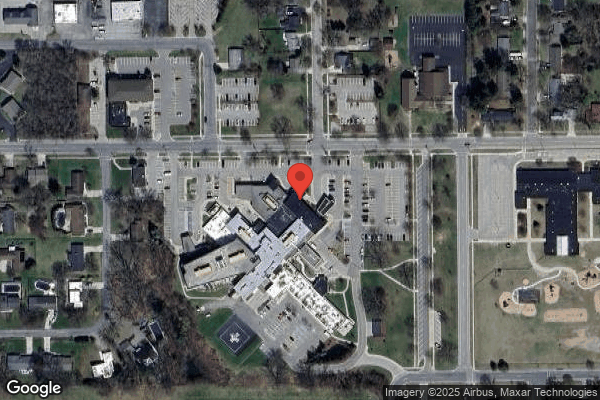
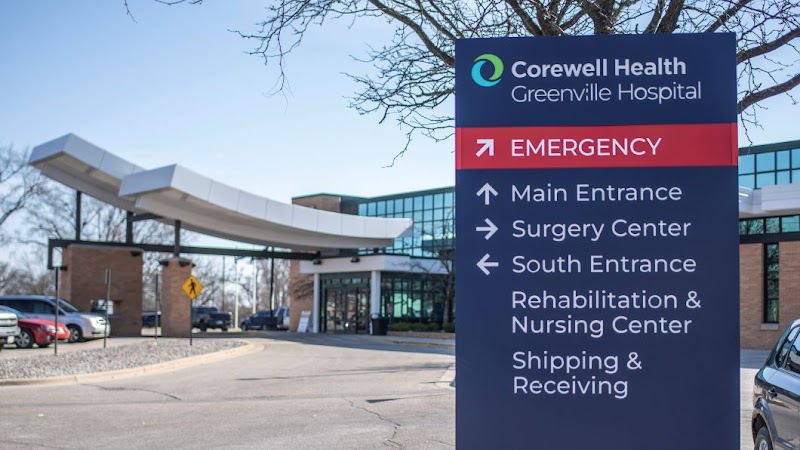
615 South Bower Street, Greenville, MI 48838 (616) 225-6590
Non profit - Corporation 39 Beds COREWELL HEALTH Data: November 2025
Trust Grade
95/100
#14 of 422 in MI
Last Inspection: April 2025

Within standard 12-15 month inspection cycle. Federal law requires annual inspections.

Overview

Corewell Health Greenville Hospital Rehabilitation has an impressive Trust Grade of A+, indicating it is an elite facility with top-tier care. It ranks #14 out of 422 nursing homes in Michigan, placing it in the top half of all facilities, and it is the best option out of three in Montcalm County. The facility shows a stable trend in quality, having reported two issues in both 2023 and 2025, which suggests consistent performance over time. Staffing is a strong point, with a perfect rating of 5 out of 5 stars and only 24% turnover, significantly lower than the state average, indicating that staff members are experienced and familiar with the residents' needs. However, there are some concerns, such as incidents involving unsafe hot water temperatures that could lead to scalding and reports of delayed responses to call lights, which led to residents experiencing discomfort. Overall, while the facility excels in many areas, families should be aware of these specific concerns when considering care options.

Trust Score
A+
95/100
In Michigan
#14/422
Top 3%
Safety Record
Low Risk
No red flags
Inspections
Holding Steady
2 → 2 violations
Staff Stability
✓ Good
24% annual turnover. Excellent stability, 24 points below Michigan's 48% average. Staff who stay learn residents' needs.
Penalties
✓ Good
No fines on record. Clean compliance history, better than most Michigan facilities.
Skilled Nurses
✓ Good
Each resident gets 66 minutes of Registered Nurse (RN) attention daily — more than 97% of Michigan nursing homes. RNs are the most trained staff who catch health problems before they become serious.
Violations
✓ Good
Only 4 deficiencies on record. Cleaner than most facilities. Minor issues only.
★★★★★
5.0
Overall Rating
★★★★★
5.0
Staff Levels
★★★★★
5.0
Care Quality
★★★★★
5.0
Inspection Score
Stable
2023: 2 issues
2025: 2 issues

The Good

  • 5-Star Staffing Rating · Excellent nurse staffing levels
  • 5-Star Quality Measures · Strong clinical quality outcomes
  • Low Staff Turnover (24%) · Staff stability means consistent care
  • Full Sprinkler Coverage · Fire safety systems throughout facility
  • No fines on record
  • Staff turnover is low (24%)

    24 points below Michigan average of 48%

Facility shows strength in staffing levels, quality measures, staff retention, fire safety.

The Bad

Chain: COREWELL HEALTH

Part of a multi-facility chain

Ask about local staffing decisions and management

The Ugly 4 deficiencies on record

Apr 2025 2 deficiencies
CONCERN (E)

Potential for Harm - no one hurt, but risky conditions existed

Resident Rights (Tag F0550)

Could have caused harm · This affected multiple residents

**NOTE- TERMS IN BRACKETS HAVE BEEN EDITED TO PROTECT CONFIDENTIALITY** Based on observation, interview, and record review, the facility failed to provide dignified care for three residents (R8, R4, R...

Read full inspector narrative →
**NOTE- TERMS IN BRACKETS HAVE BEEN EDITED TO PROTECT CONFIDENTIALITY** Based on observation, interview, and record review, the facility failed to provide dignified care for three residents (R8, R4, R30) of four residents reviewed for dignity. Findings include: Resident #8 (R8) Review of the Minimum Data Set (MDS) dated [DATE] reflected R8 was admitted to the facility 1/14/22 and had a history of stroke and hemiplegia (weakness to one side of the body). The MDS reflected R8 required maximum assist with chair and toilet transfers. The MDS reflected R8 was frequently incontinent of urine but always continent of stool. The MDS reflected a Brief Interview for Mental Status (BIMS) score of 15 out of 15 which indicated R8 was cognitively intact. On 4/15/25 at 9:14 AM an interview was conducted with R8 in his room. R8 reported he had experienced slow call light response resulting in soiling himself because of the delay. R8 reported incidents when staff had responded timely but leave after turning off the light promising to return but fail to. R8 was asked how often this had happened and R8 stated, more often than I like. On 4/17/25 at 10:29 AM a follow up interview was conducted with R8 in his room. R8 reported a common time for delayed response was during shift change times in the morning and afternoon. R8 stated no more at one time than the other. R8 reported that staff tell him they are busy and do not offer any other reason or apologize. R8 was asked if he had complained of this. R8 stated what are you going to do when you poop your pants? and no sense in getting mad about it. Resident #4 (R4) Review of the MDS dated [DATE] reflected R4 originally admitted to the facility 2/14/24 with diagnoses that included obstructive uropathy and a history of stroke. This MDS reflected R4 experienced occasional urinary incontinence and required moderate assistance with transferring on and off the toilet. The MDS reflected a BIMS score of 13 out of 15 which indicated R4 was cognitively intact. On 4/15/25 at 8:52 AM an interview was conducted with R4 in his room. R4 reported delayed call light response by staff in the morning. R4 reported I have to sit here and wait .I pee my pants. R4 reported this makes him feel bad. Resident #30 (R30) Review of an Face Sheet revealed Resident #30 (R30) admitted to the facility on [DATE] with pertinent diagnoses which included multiple fractures and pain. Review of a Minimum Data Set (MDS) (a tool used for assessing a resident's care needs) assessment for R30, with a reference date of 3/10/2025 revealed a Brief Interview for Mental Status (BIMS) (a scale used to determine a resident's cognitive status) score of 12, out of a total possible score of 15, which indicated R30 was moderately cognitively impaired. Further review of same MDS assessment revealed R30 required assistance with toileting. Review of R30's Resident Care Summary active 4/17/2025 revealed R30 required the assistance of two staff with transferring and toileting. In an interview on 4/15/2025 at 10:04 AM, R30 reported long call light wait times at the facility caused her to have episodes of incontinence. R30 reported she was continent as long as staff were able to provide assistance in a timely manner. R30 reported last week on second shift about dinner time she was up in her chair after visiting with family and pressed her call light because she needed to use the bathroom. R30 reported a Certified Nursing Assistant came into the room and told her she would return as soon as she was able to provide assistance. R30 reported it took 30 minutes for staff to come back to her room to provide assistance and by that time she had been incontinent of urine and stool. R30 stated the episode made her feel terrible, very embarrassed. R30 reported she has had incontinent episodes related to long call wait times on multiple occurrences since being admitted to the facility. Review of facility policy/procedure Resident Rights- Continuing Care, effective 10/30/2023, revealed .Every resident shall be entitled to humane care and treatment provided with dignity and respect . Review of facility policy/procedure Call Light Accessibility, Use and Response- Continuing Care, effective 9/23/2022, revealed .The purpose of this policy is to ensure each resident call light is accessible, functional for use and responded to appropriately . process for responding to call lights . listen to resident's request and respond accordingly . Inform the resident if you cannot meet the need and assure them that you will notify the appropriate personnel . Call light should remain on, or be turned back on, until the resident's needs are met .
CONCERN (E)

Potential for Harm - no one hurt, but risky conditions existed

Deficiency F0658 (Tag F0658)

Could have caused harm · This affected multiple residents

**NOTE- TERMS IN BRACKETS HAVE BEEN EDITED TO PROTECT CONFIDENTIALITY** Based on interview and record review, the facility failed to administer antibiotics according to the provider's order for one re...

Read full inspector narrative →
**NOTE- TERMS IN BRACKETS HAVE BEEN EDITED TO PROTECT CONFIDENTIALITY** Based on interview and record review, the facility failed to administer antibiotics according to the provider's order for one resident (R88) of two residents reviewed for antibiotic use. Findings: Review of the medical record reflected R88 admitted to the facility on [DATE] with pertinent diagnoses that included Complicated Urinary Tract Infection and Chronic Indwelling Foley Catheter. On 4/15/25 at 12:39 PM a review of the Electronic Medical Record (EMR) for R88 reflected a Doctor's Order (DO) for cefdinir 300 milligrams (mg) (a cephalosporin antibiotic) to be administered 2 times daily. The DO reflected Product Instructions. Take at least 2 hours before or 2 hours after antacids or iron supplements (including those found in multivitamins) with a start date of 4/9/25. The EMR review of 4/15/25 at 12:39 PM also reflected a DO for ferrous sulfate tablet (iron supplement) 325 mg to be administered 2 times a day with a start date of 4/9/25. Review of the Medication Administration Record (MAR) documentation for R88 reflected the cefdinir and the ferrous sulfate were administered at the same time regularly. The documentation of the MAR did not reflect these two medications were separated by at least 2 hours as indicated in the Product instructions of the DO for the cefdinir. On 4/16/25 at 2:01 PM during an interview on 4/16/2025 at 2:01 PM, Infection Preventionist (IP) N was asked about the documented concurrent administration of the cefdinir 300 mg capsules and the ferrous sulfate 325 mg tablets. IP N reported that the concurrent administration would likely effect the absorption of the cefdinir. Review of the manufacturer's product information sheet for cefdinir capsules reflected Iron supplements, including multivitamins that contain iron, interfere with the absorption of cefdinir. If iron supplements are required during (cefdinir) therapy, (cefdinir) should be taken at least 2 hours before or after the supplement. The policy provided by the facility titled Medication Management effective 4/21/23 was reviewed. The policy reflected 1. Purpose, 1.1 The purpose is to ensure each resident's drug regimen is managed and monitored to promote or maintain the resident's highest practicable mental, physical, and psychological well-being, free of unnecessary drugs and outline the process for safe administration and storage of medication. And 2. Definitions .2.2 Independent Doublecheck (IDC): Process by which two licensed personnel separately (e.g. independently) check each component of the work process, prior to medication administration. An IDC included comparison with the prescriber's order as well as additional cognitive checks outlined below. 2.2.1 Comparison with prescriber's order ., This section included Right drug ., Right dose ., Right route ., Right resident . and Right time - Is this the prescribed frequency/time for drug administration? Review of the MAR for R88 for 4/9/25 through 4/16/25 reflected multiple licensed staff members had documented administration of the cefdinir and ferrous sulfate concurrently over seven days despite the prescriber's order to separate the two medications by at least 2 hours. This indicated that licensed staff did not check each component of the work process, prior to medication administration as directed by the policy provided by the facility. On 4/17/25 at 10:06 AM the Director of Nursing (DON) was asked for any additional documentation that could be provided that would indicate the cefdinir and the ferrous sulfate had been administered at least 2 hours apart. The DON reported that she would review the documentation but would likely will not be able to provide additional documentation. As of survey exit no additional documentation had been received from the facility.
Apr 2023 2 deficiencies
CONCERN (E)

Potential for Harm - no one hurt, but risky conditions existed

Deficiency F0761 (Tag F0761)

Could have caused harm · This affected multiple residents

**NOTE- TERMS IN BRACKETS HAVE BEEN EDITED TO PROTECT CONFIDENTIALITY** During an observation on 04/05/23 at 12:31 PM, the medication cart near the nurses station was unlocked and unattended. LPN H in...

Read full inspector narrative →
**NOTE- TERMS IN BRACKETS HAVE BEEN EDITED TO PROTECT CONFIDENTIALITY** During an observation on 04/05/23 at 12:31 PM, the medication cart near the nurses station was unlocked and unattended. LPN H indicated that she had stepped away from the cart to take a phone call. Based on observation, interview, and record review the facility failed to operationalize the facility Medication Management policy when a medication cart was left unlocked and unattended, resulting in prescription medications readily accessible, and controlled substances not double locked resulting in the potential for diversion of medication, and inadvertent self-administration of medication by cognitively impaired residents. Findings: The policy provided by the facility titled Medication Management effective 1/19/23 was reviewed. Section 4.5 Storage and Security of Medications reflected, The following principles apply to the storage and security of medications: and included 4.5.5. All medications and biologicals, including treatment items, are securely stored in a locked cabinet/cart or locked medication room that is inaccessible by residents and visitors. And 4.5.18.2. Schedule II-V and controlled substances and other medications deemed by Facility to be at risk for abuse or diversion are immediately placed into a double locked secured storage. The CMS form 672 titled Resident Census and Conditions of Residents completed by the facility and dated 4/5/23 was reviewed. The CMS form 672 reflected the facility reported a resident census of 27 residents with 19 residents diagnosed with dementia/cognitive deficits. On 4/5/23 at 8:35 AM an unattended and unlocked medication cart was observed in the hall outside of room [ROOM NUMBER]. A review was conducted of the medication cart which revealed insulin pens in the top drawer and multiple packages of resident prescription medications in the second drawer. The Narcotic drawer, while locked, was not double locked in accordance with facility policy. After several minutes Licensed Practical Nurse (LPN) H stepped to the door of room [ROOM NUMBER] and stated I can't believe I did that (left the cart unattended and unlocked). I always lock it. LPN H then return to the interior of room [ROOM NUMBER] and the surveyor continued the review of the medication cart. Subsequently LPN H returned to the medication cart. LPN H acknowledged the medication cart is to be locked when left unattended.
CONCERN (F)

Potential for Harm - no one hurt, but risky conditions existed

Accident Prevention (Tag F0689)

Could have caused harm · This affected most or all residents

**NOTE- TERMS IN BRACKETS HAVE BEEN EDITED TO PROTECT CONFIDENTIALITY** DPS #2 Based on observation, interview, and record review, the facility failed to monitor and maintain resident hot water temper...

Read full inspector narrative →
**NOTE- TERMS IN BRACKETS HAVE BEEN EDITED TO PROTECT CONFIDENTIALITY** DPS #2 Based on observation, interview, and record review, the facility failed to monitor and maintain resident hot water temperatures at a safe temperature, resulting in the potential for scalding water temperatures, affecting all residents in the facility. Findings include: On 4/5/23 at 1:18 PM, the hand sink located in room [ROOM NUMBER] bathroom was observed to feel hot to the touch. On 4/5/23 between 1:50 PM and 2:08 PM, the following water temperatures were taken using a digital probe thermometer: room [ROOM NUMBER] handsink hot water measured 123.8 degrees F. room [ROOM NUMBER] handsink hot water measured 121.6 degrees F. room [ROOM NUMBER] handsink hot water measured 122.5 degrees F. Shared Shower Room handsink hot water measured 123.3 degrees F; the shower head hot water measured 122.2 degrees F. During an interview on 4/5/23 at 2:30 PM, Maintenance Supervisor T stated that the facility has an automated computer monitoring system that monitors the domestic hot water temperatures. At this time, the monitoring system was only monitoring the returning hot water from the facility's water supply. Maintenance Supervisor T discovered that the hot water set point for distribution at the mixing valve was set to 125 degrees F. Maintenance Supervisor T was queried on if the maintenance staff ever monitors the hot water temperatures at the point of use and they said they haven't done that since they implemented the computer monitoring system. During an interview on 4/5/23 at 3:00 PM, the Administrator stated that they have no incident or accident reports regarding hot water scalding. According to the Resident Census and Conditions of Residents, of the 27 residents in the facility, 19 were identified to have a diagnosis of Dementia or Alzheimer's Disease. This citation has two DPS's. DPS #1 Based on interview and record review, the facility failed to follow care guide instructions during the transfer of one resident (Resident #13), resulting in a fall. Resident #13 (R13) Review of a Face Sheet revealed R13 was a [AGE] year old female, originally admitted to the facility on [DATE], with pertinent diagnoses of dementia, seizure disorder, muscle weakness, at risk for falls, and gait abnormalities. Review of a Care Plan for R13 related to mobility and required assistance .interventions .extensive assist of 2 for transfers. Review of an Incident/Accident Report for R13, dated 03/17/23, reflected .(R13) is a two-person transfer. (R13) was transferred by one person. During an interview on 04/06/23 at 1:50 PM, the Director of Nursing (DON) stated that the incident/accident report related to the fall on 03/17/23 was not finished, that R13 was a two person transfer, and only one staff person transferred R13 at the time of the fall. The DON identified the staff person who made the transfer as Certified Nurse Aide U. Attempts were made to contact CNA U for comment via telephone call and the surveyor could not leave a message.
Understanding Severity Codes (click to expand)
Life-Threatening (Immediate Jeopardy)
J - Isolated K - Pattern L - Widespread
Actual Harm
G - Isolated H - Pattern I - Widespread
Potential for Harm
D - Isolated E - Pattern F - Widespread
No Harm (Minor)
A - Isolated B - Pattern C - Widespread

Questions to Ask on Your Visit

  • "Can I speak with families of current residents?"
  • "What's your RN coverage like on weekends and overnight?"

Our Honest Assessment

Strengths
  • • Grade A+ (95/100). Above average facility, better than most options in Michigan.
  • • No major safety red flags. No abuse findings, life-threatening violations, or SFF status.
  • • No fines on record. Clean compliance history, better than most Michigan facilities.
  • • Only 4 deficiencies on record. Cleaner than most facilities. Minor issues only.
Concerns
  • • No significant concerns identified. This facility shows no red flags across CMS ratings, staff turnover, or federal penalties.
Bottom line: Generally positive indicators. Standard due diligence and a personal visit recommended.

About This Facility

What is Corewell Health Greenville Hospital Rehabilitation's CMS Rating?

CMS assigns Corewell Health Greenville Hospital Rehabilitation an overall rating of 5 out of 5 stars, which is considered much above average nationally. Within Michigan, this rating places the facility higher than 99% of the state's 100 nursing homes. This rating reflects solid performance across the metrics CMS uses to evaluate nursing home quality.

How is Corewell Health Greenville Hospital Rehabilitation Staffed?

CMS rates Corewell Health Greenville Hospital Rehabilitation's staffing level at 5 out of 5 stars, which is much above average compared to other nursing homes. Staff turnover is 24%, compared to the Michigan average of 46%. This relatively stable workforce can support continuity of care.

What Have Inspectors Found at Corewell Health Greenville Hospital Rehabilitation?

State health inspectors documented 4 deficiencies at Corewell Health Greenville Hospital Rehabilitation during 2023 to 2025. These included: 4 with potential for harm.

Who Owns and Operates Corewell Health Greenville Hospital Rehabilitation?

Corewell Health Greenville Hospital Rehabilitation is owned by a non-profit organization. Non-profit facilities reinvest revenue into operations rather than distributing to shareholders. The facility is operated by COREWELL HEALTH, a chain that manages multiple nursing homes. With 39 certified beds and approximately 36 residents (about 92% occupancy), it is a smaller facility located in Greenville, Michigan.

How Does Corewell Health Greenville Hospital Rehabilitation Compare to Other Michigan Nursing Homes?

Compared to the 100 nursing homes in Michigan, Corewell Health Greenville Hospital Rehabilitation's overall rating (5 stars) is above the state average of 3.2, staff turnover (24%) is significantly lower than the state average of 46%, and health inspection rating (5 stars) is much above the national benchmark.

What Should Families Ask When Visiting Corewell Health Greenville Hospital Rehabilitation?

Based on this facility's data, families visiting should ask: "Can I visit during a mealtime to observe dining assistance and food quality?" "How do you handle medical emergencies, and what is your hospital transfer rate?" "Can I speak with family members of current residents about their experience?"

Is Corewell Health Greenville Hospital Rehabilitation Safe?

Based on CMS inspection data, Corewell Health Greenville Hospital Rehabilitation has a clean safety record: no substantiated abuse findings (meaning no confirmed cases of resident harm), no Immediate Jeopardy citations (the most serious violation level indicating risk of serious injury or death), and is not on the Special Focus Facility watch list (a federal program monitoring the lowest-performing 1% of nursing homes). The facility has a 5-star overall rating and ranks #1 of 100 nursing homes in Michigan. While no facility is perfect, families should still ask about staff-to-resident ratios and recent inspection results during their visit.

Do Nurses at Corewell Health Greenville Hospital Rehabilitation Stick Around?

Staff at Corewell Health Greenville Hospital Rehabilitation tend to stick around. With a turnover rate of 24%, the facility is 21 percentage points below the Michigan average of 46%. Low turnover is a positive sign. It means caregivers have time to learn each resident's needs, medications, and personal preferences. Consistent staff also notice subtle changes in a resident's condition more quickly. Registered Nurse turnover is also low at 11%, meaning experienced RNs are available to handle complex medical needs.

Was Corewell Health Greenville Hospital Rehabilitation Ever Fined?

Corewell Health Greenville Hospital Rehabilitation has no federal fines on record. CMS issues fines when nursing homes fail to meet care standards or don't correct problems found during inspections. The absence of fines suggests the facility has either maintained compliance or corrected any issues before penalties were assessed. This is a positive indicator, though families should still review recent inspection reports for the full picture.

Is Corewell Health Greenville Hospital Rehabilitation on Any Federal Watch List?

Corewell Health Greenville Hospital Rehabilitation is not on any federal watch list. The most significant is the Special Focus Facility (SFF) program, which identifies the bottom 1% of nursing homes nationally based on persistent, serious quality problems. Not being on this list means the facility has avoided the pattern of deficiencies that triggers enhanced federal oversight. This is a positive indicator, though families should still review the facility's inspection history directly.