CRITICAL
(J)
📢 Someone Reported This
A family member, employee, or ombudsman was alarmed enough to file a formal complaint
Immediate Jeopardy (IJ) - the most serious Medicare violation
Accident Prevention
(Tag F0689)
Someone could have died · This affected 1 resident
**NOTE- TERMS IN BRACKETS HAVE BEEN EDITED TO PROTECT CONFIDENTIALITY** This deficiency pertains to Facility Reported Incident (FRI) MI00141290.
Based on observation, interview, and record review, the...
Read full inspector narrative →
**NOTE- TERMS IN BRACKETS HAVE BEEN EDITED TO PROTECT CONFIDENTIALITY** This deficiency pertains to Facility Reported Incident (FRI) MI00141290.
Based on observation, interview, and record review, the facility failed to provide adequate supervision to prevent an elopement which resulted in the likelihood of serious harm, injury, impairment, or death to one Resident (R102) out of one resident reviewed for safety and supervision.
Review of the facility Investigation Summary Conclusion: [R102] exited the main door of Woodland Haven (secured Alzheimer's unit) unattended . [R102] was observed to have exited the (main entrance) of the building .He was outside of the building for a total of one minute and thirty-four seconds .
Review of R102's Minimum Data Set (MDS) assessment, dated 9/13/23, revealed R102 was admitted to the facility on [DATE] with current, active diagnoses of non-traumatic brain dysfunction, Alzheimer's dementia, and depression. R102 scored 5 of 15 on the Brief Interview for Mental Status (BIMS) reflective of severely impaired cognition. R102 was independent with ambulation.
Review of facility surveillance showed the following movement of R102 on 11/28/23 following his unobserved and unattended exit through the alarmed secured Alzheimer's unit main entrance/exit doors:
11:57:08 p.m. - R102 pushed on the alarmed (30 second) egress bar on the door, attempted to push buttons on the keypad to the right of the door, wheelchair maintains contact with the egress bar and the door opens.
12:00:00 a.m. - R102 walks out the first set of main entrance/exit doors from the facility. The interior door to the small foyer, and the exterior door are not alarmed.
12:01:00 a.m. - R102 exits the foyer out of the building through the second set of entrance/exit doors.
12:01:14 - Registered Nurse (RN) Y walks to the secured Alzheimer's unit exit door and is observed re-setting a sounding door alarm. RN Y leans to the left and the right as she appears to look outside the exit door through a narrow window. RN Y did not open the secured Alzheimer's unit exit door to look for any potential resident elopement from the facility. R102 is seen exiting out of the facility as RN Y is re-setting the door alarm in the secured Alzheimer's unit.
12:02:37 - R102 comes back inside the foyer between the first and second sets of entrance/exit doors. R102 is unable to get back inside the facility because the second set of entrance doors were locked, with no method of contacting facility staff present inside the small foyer. R102 is seen repeatedly pulling on the interior entrance door for the following seven minutes, unable to enter the facility.
12:08:00 - Pharmacy Technician (who had delivered medications to the facility) exited the interior entrance/exit door pushing a cart. R102 holds the door open for the Pharmacy Technician, who says thank you as observed by her mouth movements, and confirmed by IT Director S, present during the electronic surveillance review.
12:09:10 - R102 re-enters the facility interior entrance door he was holding open, and the door closes behind him.
12:10:59 - R102 sits down in a chair in the front sunroom.
12:19:52 - R102 gets up and moves to a loveseat in view of the nurses' station on the 1st floor.
12:21:36 - House Supervisor/RN U positioned near the elevators, sees R102 and approaches him.
12:23 - RN U uses her phone to telephone (presumably) secured Alzheimer's unit staff.
12:24:34 - RN Y leaves secured Alzheimer's unit to retrieve R102 from the front lobby.
12:29:30 - R102 was returned to the secure Alzheimer's unit by RN Y.
Following review of all surveillance video pertaining to R102's elopement from the facility on 11/28/23, in the presence of IT Director S, it was confirmed R102 was unattended and unsupervised for 21 minutes following exit from the secured Alzheimer's unit.
Review of Wunderground.com for daily weather history near the facility at; wunderground.com/history/daily/us/mi/[city name]/[air navigation identifier]/date 2023-11-28, revealed a temperature of 18 degrees Fahrenheit with a wind speed of 18 miles per hour (mph) gusting to 26 mph, resulting in a wind chill temperature of 2.4 degrees Fahrenheit as calculated on the National Weather Service Wind Chill Calculator at the time (12:00 a.m. on 11/28/23) of R102's elopement from the facility.
Review of RN Y's Witness Statement Form and accompanying phone interview conducted by the DON, dated 11/29/23, revealed the following, in part:
When putting away meds (medications) away after delivery she heard like a faint dog whistle sound. Opened conf. (conference) room door to alarm going off. She (RN Y) walked to door, turned off code. No one was in hall .didn't know Res (R102) was outside, just thought he was in the lobby . Code alert on placed (on R102) at 0700 (7:00 a.m.) .
Review of the facility Code Alert/Resident Elopement policy, last revised 06/2023, revealed the following, in part:
Elopement occurs when a resident leaves the premises or a safe area without authorization . and/or any necessary supervision to do so. It is the policy of this facility to assure a safe environment and well-being for residents residing in our facility. Staff members are responsible to immediately respond when the Code Alert/Door Alarm system is activated .
ELOPEMENT RISK ASSESSMENT: .A code alert transmitter will be applied, as appropriate to any resident deemed at risk for elopement . 5. A photo of the resident will be maintained in the MAR (Medication Administration Record) for reference by staff if consent to photo is obtained. An additional copy should be placed in facility Elopement Risk books/binders. 6. All Residents residing in (secured Alzheimer's unit) are considered at elopement risk being that it is a lock down unit. Colored pictures are on file in the MAR for reference if photo was allowed. No Elopement risk binder needed for this area.
ELOPEMENT PREVENTION: 1. Residents identified to be at risk for elopement will have a Code Alert transmitter placed on them unless otherwise determined by the Interdisciplinary Team. 2. Each nursing unit will maintain a list of residents wearing Code Alerts. 3. Nursing staff will document any elopement attempts or other wandering behavior as needed. 4. The Interdisciplinary Team will monitor each resident's mood and behavior and revise care plans as needed .
RESPONSE TO CODE ALERT/DOOR ALARMS: 1. When the Code Alert/Door Alarm sounds, the nearest staff from any location should immediately respond: a. Immediately check the area around the alarmed door. B. Look inside and proceed out the door to the surrounding areas on all sides as application. C. Go around corners and be sure no resident exited the building. 2. If no one is in sight, thoroughly check the perimeter (walk around the entire building checking surrounding parking areas). Check adjacent lots also. 3. If no one is found around the alarmed door or outside, account for all residents on each nursing unit by visual check. Someone must physically see each and every resident and report whereabouts to the licensed nurse in charge .
RETURN OF RESIDENT: A licensed nurse will place a Code Alert transmitter on the resident if one is not already in place .
Review of an email correspondence from Unit Manager/RN U to the DON (Director of Nursing) on 11/28/23 at 3:27 a.m., revealed the following, in part: During night shift tonight - 0015 (12:15 a.m.) I was heading to the main elevator and noticed someone sitting in the front lobby. I went to check out the situation. I recognized that it was [R102] who resides in (secured Alzheimer's unit). He was sitting on the couch, wearing his boots and light weight jacket. He had his walker sitting in front of him with his shoes and socks sitting on seat of the walker . I called (secured Alzheimer's unit) nurse on my [Name Brand] phone and alerted her that he was in the lobby. She was un-aware (sic) he was missing .He is not listed in our facility Elopement Risk Binder and doesn't wear a code alert. Wanted to bring this to your attention. Signed by RN U on 11/29/23.
Review of emails to the DON on 11/28/23 revealed facility head counts, as directed in the facility elopement policy were not performed to ensure all facility residents were present in the facility, including secured Alzheimer's unit, until 9:30 a.m. on two units, and 9:45 a.m. on the remaining unit.
Family Member (FM) T was not notified of the elopement of R102 from the building until 11/28/23 at 11:45 a.m.
During an interview on 12/5/23 at 3:11 p.m., the DON confirmed, after their review of all surveillance video, staff needed additional training on the Code Alert/Resident Elopement policy. The DON stated, If an alarm is going off you do not stop; you continue until you find who set off the alarm . The alarm was going off - she was sorting off her (pharmacy) delivery, (and) she (RN Y) did not see who went out the door (secured Alzheimer's unit alarmed exit door). She (RN Y) should have told the aides [Certified Nurse Aides (CNAs)] to get a head count, and I would have ran (sic) until I found out who set the alarm off .
During an observation and interview on 12/6/23 at 7:49 a.m., Maintenance Director V and Maintenance (Staff) W performed alarm testing of the alarmed egress door from secured Alzheimer's unit in the presence of this Surveyor. Egress from secured Alzheimer's unit was timed and verified to be a 30 second, delayed release. Maintenance Director V said the egress door was also equipped with a code alert alarm, which would activate and prevent the door from opening, if the resident had a Code Alert alarm in place on them. When asked if residents would be visible if they were in the outer hallway (outside of the egress door), Maintenance Director V stated, No, they would not be visible. When asked about the outside egress door, Maintenance Director V said the interior facility entrance door had a Code Alert alarm but would only sound and prevent the door from opening if the resident was wearing a Code Alert. When asked what would happen if a resident got outside, Maintenance Director V stated, That would not be good, and confirmed the resident would be unable to re-enter the building at night as the button to sound the alarm was located on the outside of the building and no button or staff contact information was present in the foyer. Maintenance Director V said the interior egress door at the front entrance locked at 8:00 p.m. each night and were not unlocked until 8:00 a.m. in the morning.
During a telephone interview on 12/6/23 at 9:37 a.m., Family Member (FM) T was asked if there were any concerns related to R102's care in the facility. FM T stated, They (administrative staff) addressed the 'Alcatraz escape' (11/28/23 elopement from the facility). When things happen like this, they do not call us right away. They call the next day. Quite a bit of time goes by (before we are notified) .They said he had been putting on his boots and jacket and saying I got to go they are coming to get me. He walked outside. We were in the middle of that winter storm .It was one minute 34 seconds he was outside .The whole time of his escape was 31 and 1/2 minutes .He was only unsupervised for 9 minutes they told me .
During an interview on 12/6/23 at 12:20 p.m., when asked to review the facility Code Alert/Resident Elopement policy, the Nursing Home Administrator (NHA) said he interpreted the policy to mean all (secured Alzheimer's unit) residents are considered elopement risks and therefore should have a Code Alert placed to prevent elopement from the facility.
During an interview on 12/7/23 at 8:36 a.m., secured Alzheimer's unit Resident Care Coordinator/MDS/RN M was asked for R102's Care Plans and any knowledge she had regarding R102's elopement on 11/28/23. RN M stated, I was out of town. I woke up to an email (regarding R102's elopement and said (to myself) 'How, how, how?' (did R102 elope). RN M said R102's Elopement Care Plan was initiated on 11/29/23, and prior to that date R102 did not have an elopement care plan. RN M stated, If I had known he was having multiple elopement attempts I would have put a code alert on him.
Review of R102's Progress Notes revealed the following Behavior Note entries related to exit-seeking behaviors by R102 during November of 2023, prior to the elopement:
11/4/23 - 13:00 (1:00 p.m.), Resident with some exit seeking behaviors. Walked to Home 2, telling staff, I couldn't open the door. Walked around looking for a way out .
11/13/23 - 21:37 (9:37 p.m.), Resident seen by home one entrance doors, when asked if he needed something resident responded I'm trying to get out, I can't get out .
11/24/23 - 18:42 (6:42 p.m.), Resident exit seeking this evening. Found standing behind home one doors and trying to keep them open when someone enters .
During an interview on 12/7/23 at 11:15 a.m., when asked to review R102's Behavior Notes, Assistant Director of Nursing (ADON) L acknowledged that R102 did have exit-seeking behaviors in November 2023, prior to the elopement, which did not prompt the development or implementation of an elopement Care Plan or interventions.
During a telephone interview on 12/11/23 at 11:42 p.m., CNA X, who was working in the facility at the time of R102's elopement, was asked to describe any details she recalled about the incident. CNA X said she was on break and did not know anything was going on until the nurse popped her head in the door and said [R102] got out . the next day I had talked to [the DON] and I heard he had gotten outside. When asked about completion of a head count, CNA X stated, No, we did not do a headcount. At the time the protocol would be to do a headcount; go out the door and look around. When I found out what was going on he had already been found . I talked to the administrator. I think anybody that comes over to the (secured Alzheimer's unit) - everyone should have a Code Alert. If he would have had one of those (Code Alert) on, he would not have gotten out. I think everyone in (secured Alzheimer's unit) should have a Code Alert .
The Immediate Jeopardy began on 11/28/23 at 12:00 a.m., when inadequate supervision and failure to implement the elopement policy resulted in R102's elopement from the facility outside into inclement weather. The Nursing Home Administrator (NHA) was notified of the Immediate Jeopardy on 12/6/23 at 12:20 p.m. This Surveyor confirmed, by observation and interview, that the Immediate Jeopardy was removed on 12/6/23 at 4:30 p.m., but noncompliance remained at the potential for more than minimal harm due to sustained compliance that has not been verified by the State Agency.
The Immediate Jeopardy that began on 11/28/23 at 12:00 a.m., was removed on 12/6/23 at 4:30 p.m., when the facility took the following actions to remove the immediacy:
1. Education Coordinator was provided with a new form that will be given to all new oncoming nurses and contract nurses with pertinent information for daily floor nursing.
2. Code alerts applied to all residents that reside in (secured Alzheimer's unit), care plans updated.
3. Additional education to all staff in regard to the closure of (secured Alzheimer's unit) main doors.
4. All staff education complete.
5. Several elopement drills continue to be completed since elopement and will continue to be reviewed in QAPI (Quality Assurance Process Improvement).
Date Facility Asserts likelihood for Serious Injury or Death No Longer Exists: 12/6/2023.
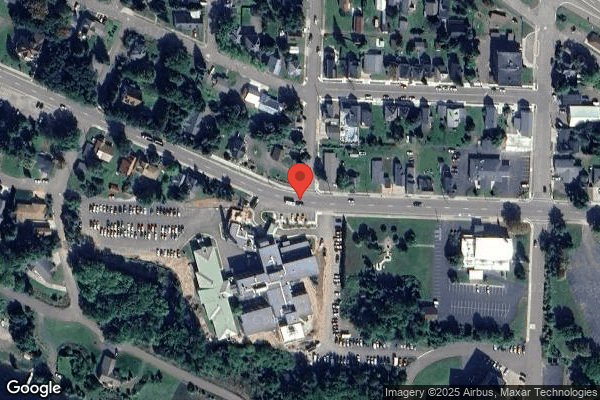
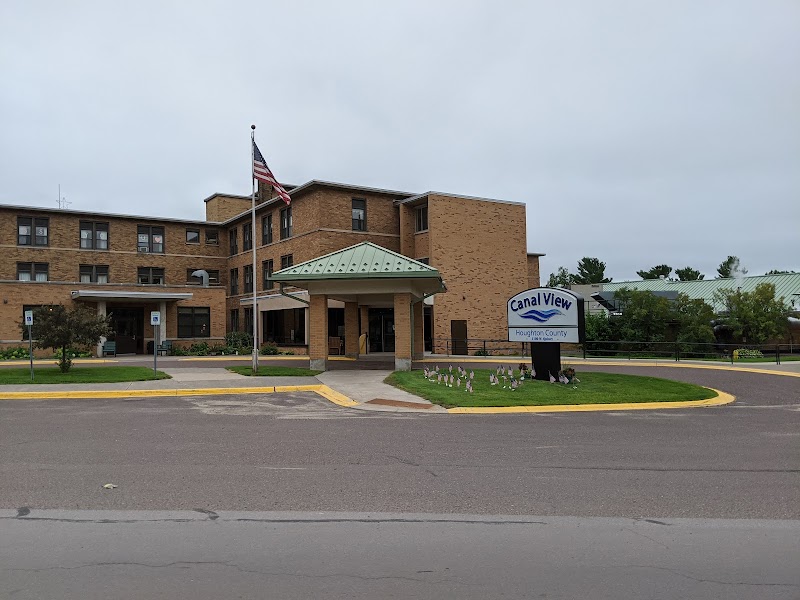
On 12/06/23 at 7:02 AM, an attempt to enter the facility via the front/main entrance was made. The door from the outside opened into a foyer area where another door leading into the building was found locked and inaccessible. A search for information regarding entry was conducted with no signs or other sources of information available indicating how entry to the building was to be accomplished. Located on the outside of the building and to the left of the doors, a door bell button was located. This button was pushed multiple times. No staff responded to the bell. A return to the foyer and additional search for information regarding entry was made. The interior door remained locked with no staff responding to the door bell. Approximately 8 minutes after the attempted and failed entry, as staff person entered the foyer and stated she had witnessed the attempted entry, and offered to use her key to open the door. On 12/6/23 at approximately 7:16 AM the Nursing Home Administrator (NHA) arrived near the door. An interview was conducted at this time. The NHA stated visitors coming to the building when the doors were locked, were supposed to the call the nurses' station on first floor. No information regarding a phone number or instructions for contacting the nurses' station could be found. At 11:13 AM, an interview with Receptionist Staff B was conducted related to the locking of the main entrance doors. Staff B stated the doors are generally locked at 8:00 PM and are unlocked the following morning around 8:00 AM. Staff B was not aware of any communication procedure to allow visitors access after the doors were locked.
SERIOUS
(G)
Actual Harm - a resident was hurt due to facility failures
Pressure Ulcer Prevention
(Tag F0686)
A resident was harmed · This affected 1 resident
**NOTE- TERMS IN BRACKETS HAVE BEEN EDITED TO PROTECT CONFIDENTIALITY** Based on observation, interview, and record review, the facility failed to provide necessary treatment and services to promote h...
Read full inspector narrative →
**NOTE- TERMS IN BRACKETS HAVE BEEN EDITED TO PROTECT CONFIDENTIALITY** Based on observation, interview, and record review, the facility failed to provide necessary treatment and services to promote healing of a pressure injury and prevent the development of an additional pressure injury for one resident (R73) of two residents reviewed for wounds. This deficient practice resulted in harm when R73 developed a stage 3 pressure injury to the coccyx in addition to an existing facility-acquired pressure injury on the coccyx. Findings include:
Resident 73 (R73) was admitted to the facility on [DATE] with diagnoses that included but were not limited to: need for assistance with personal care, contracture of the right shoulder, contracture of the left shoulder, dependence on wheelchair, symptoms and signs involving cognitive functions and awareness, catatonic schizophrenia, dementia with psychotic disturbance, and others.
The quarterly Minimum Data Set (MDS) assessment dated [DATE] coded R73 as not having any pressure injuries. The MDS assessed R73 with functional limitation in range of motion to both arms and legs. The MDS coded R73 as being fully dependent on staff for ADL (activities of daily living) tasks and functional mobility, including but not limited to toileting hygiene, bed mobility, sitting, and transfers. R73 was assessed on the MDS as always incontinent of bowel and bladder.
On 12/7/23 at 7:30 a.m., R73 was observed in the dining room sleeping in her wheelchair prior to breakfast. A cushion was observed on the seat of the wheelchair. R73 had a palm protecting orthotic device in her left hand and an elbow extension orthotic device on her left upper arm. There was a full-body mechanical lift sling directly under R73. Registered Nurse C (RN C) was questioned regarding the condition of R73's skin. RN C stated R73 had a SDTI wound (Suspected Deep Tissue Injury) on the coccyx (tailbone). RN C said [brand name dressing, an adhesive foam dressing] was being used to treat the wound in accordance with facility standing orders. RN C further said the wound was on R73's coccyx (tailbone). RN C said she completed R73's treatment and dressing change the evening of 12/6/23.
On 12/7/23, a document in R73's medical record, WOUND - WEEKLY OBSERVATION TOOL, dated 12/5/23, was reviewed. The document noted the following assessment information: R73's coccyx wound was acquired on 12/5/23. The wound was identified as SDTI pressure injury with granulation tissue (beefy, red tissue) and necrotic tissue (brown, black, leather, scab-like). The wound had a small amount of serosanguineous (fluid that is light pink to red) drainage and measured 7.5 cm (centimeters) x 2.5 cm x unable to determine depth. Under the evaluation section of the document, First observation was entered. There were no additional wound forms or documents noted during this review on 12/7/23.
On 12/7/23 R73's current physician orders were reviewed. There was no treatment order for the pressure injury on R73's coccyx. The Treatment Administration Record (TAR) for December 2023 contained the order, Check [brand name dressing] to coccyx every shift. Change every 3 days and PRN (as needed) every shift. D/C (discontinue) when resolved. The treatment order had a start date of 12/2/23 and a D/C date of 12/5/23. The treatment was last signed out on day shift 12/5/23. There were no other orders for treatments or dressing changes on the TAR for the pressure injury on R73's coccyx.
The Director of Nursing was interviewed on 12/7/23 at 12:32 p.m. regarding expectations and standard of practice when a standing order was implemented. The DON said she would expect the order to be documented in the medical record on the Medication Administration Record (MAR) or the TAR, depending on the order to be initiated. The DON stated her expectation is that the order would be added to the MAR or TAR and signed out on the MAR or TAR but not documented in progress notes.
R73's medical record was reviewed with the following progress note entries:
12/2/23 at 11:43 p.m.: Res. Coccyx is moist and fragile. [Brand name foam dressing] placed for protection.
12/3/23 at 04:46 a.m.: Repositioning every 2 hours. 12/5/23 at 03:49 a.m.: Continuing to off-load pressure and reposition every 2 hours. [Brand name foam dressing] to coccyx area remains CDI. 12/5/23 at 7:13 p.m.: Resident has current skin issues. Skin issue: pressure ulcer/injury. Skin issue location: coccyx. Pressure ulcer/injury stage: suspect deep tissue injury - depth unknown.
On 12/07/23 at 1:58 p.m., R73's wound care was observed being completed by RN C with Certified Nursing Assistant D (CNA D) assisting with positioning of R73 to a right side-lying position. There were areas of redness observed across R73's back, buttocks, and upper posterior thighs. These areas were indented and coincided with the straps and edges of the mechanical lift sling. RN C assessed the areas and said they were caused by R73 sitting up too long in the wheelchair. CNA D said R73 was in her wheelchair before breakfast. CNA D admitted she had not provided any incontinence care or pressure-reducing endeavors such as repositioning to R73 from the time R73 was placed in her wheelchair before breakfast until R73 was placed in bed for wound treatment observation at 1:58 p.m.
During treatment observation on 12/07/23 at 1:58 p.m., RN C removed a dressing with an unreadable date from R73's coccyx. There were two pressure injuries observed: one pressure injury (PI #1) on the superior coccyx near the sacrum, and one pressure injury (PI #2) on the inferior coccyx approximately two centimeters below PI #1. The dressing RN C had removed from PI #1 contained no exudate or drainage. There was no dressing on PI #2. RN C measured PI #1 and determined the wound to be 7.5 cm x 2.5 cm. P1 #1 presented as an unstageable pressure injury with yellow, stringy slough (yellow, stringy tissue) adhering to approximately 2.5 cm x 1.0 cm of the wound bed which obscured the depth of the wound. RN C stated the treatment was a [brand name dressing]. When asked regarding the treatment of PI #2, RN C appeared surprised. The surveyor informed RN C there was a second wound inferior to PI #1. RN C assessed R73's coccyx and said PI #2 was brand new. She stated, I didn't notice it when I did the dressing change this morning. RN C measured PI #2 with surveyor observing. RN C stated, it's a stage 3. Surveyor observed PI #2 measurement as 1.0 cm x 0.8 cm. PI #2 was located on the coccyx below PI #1 and had no drainage. PI #2's wound base contained an area of yellow slough approximately 0.2 cm x 0.2 cm in the inferior portion of the wound. RN C said she was going to use [brand name dressing] on PI #2 based on standing orders for wound care. RN C then completed treatments for PI#1 and PI#2 using [brand name dressing]. RN C said [brand name dressing] is not a good choice for these wounds. And said she planned on contacting the NP or physician for a change in treatment orders. Surveyor informed RN C that there was no treatment order for PI #1 or PI #2. RN C said she would ensure orders were obtained and entered onto R73's TAR.
Facility standing orders were reviewed. The physician signature and date lines of the standing orders form were blank. The standing orders contained directives for pressure injury treatments for stage 1, stage 2, and stage 3/stage 4 pressure injuries. SDTI was not mentioned or addressed in the standing orders. The standing orders for a stage 3 pressure injury were: notify physician for treatment and/or wound consult orders. There was no mention of [brand name dressing] for stage 3 or stage 4 pressure injuries.
A progress note was entered into R73's medical record on 12/7/23 at 2:24 p.m. The note read, Situation: Call placed to [name of nurse practitioner] who is taking calls for [name of physician] at this time. Updated on new stage 3 wound on coccyx just inferior to wound #1 on coccyx. Inquiring about what dressing to utilize. Background: Current dressing is [brand name dressing] per standing order. Has wound care consult for wound #1 on coccyx. Assessment/Appearance: New stage 3 wound inferior to coccyx wound #1. Measures 1cm x 0.8cm x <0.1 cm. Full thickness wound with 100% serosanguineous. Surrounding skin with black color an scaly. No foul odor. See wound UDA for details. Recommendations: [name of nurse practitioner] ordered wound consult for new wound #2 on coccyx. She will also consult wound care for new dressing orders, and call us back.
A WOUND - WEEKLY OBSERVATION TOOL, dated 12/7/23, was entered into R73's medical record. The document assessed PI #2 as a stage 3 pressure injury inferior to PI #1 on the coccyx, measuring 1.0 cm x 0.8 cm x 0.1 cm with black, scaly peri-wound tissue. The evaluation section documented that the 12/7/23 assessment of PI #2 was new wound, first observation.
The policy Care of Pressure Sores [injury], dated as effective 10/2023, was reviewed. The policy said, in part: 1. Change the resident's position as least every 2 hours, depending on the resident's need. Some residents will need to be turned more frequently. Chair-bound residents should be repositioned/encouraged to off-load every hour.
CONCERN
(E)
Potential for Harm - no one hurt, but risky conditions existed
Report Alleged Abuse
(Tag F0609)
Could have caused harm · This affected multiple residents
**NOTE- TERMS IN BRACKETS HAVE BEEN EDITED TO PROTECT CONFIDENTIALITY** Based on interview and record review, the facility failed to report resident-to-resident incidents involving physical altercatio...
Read full inspector narrative →
**NOTE- TERMS IN BRACKETS HAVE BEEN EDITED TO PROTECT CONFIDENTIALITY** Based on interview and record review, the facility failed to report resident-to-resident incidents involving physical altercations for seven Residents (R50, R52, R66, R84, R119, R102, and R120) of nine residents reviewed for reporting of abuse. This deficient practice had the potential for undetected abuse, and adverse outcomes. Findings include:
R50
Review of the Minimum Data Set (MDS) assessment, dated 11/02/23, revealed R50 was admitted to the facility on [DATE], with diagnoses including dementia, anxiety, and depression. The Brief Interview for Mental Status (BIMS) assessment revealed a score of 8/15, which indicated moderate cognitive impairment. R50 required moderate assistance with toileting and was independent with walking and transfers.
Review of R50's progress note, dated 10/17/23 at 1:56 p.m., revealed, [R50] was sitting on the couch in the TV (day) room when a male resident [R119] walked behind her and hit her on the top of the head. Staff reports .male resident [R119] started hollering and a CNA [unnamed] witnessed a male resident strike [R50] on the top of the head. [R50] states, 'A man hit me. I was just sitting here watching TV and I never even looked at him and he hit me. It scared me .' The note indicated R50 was fearful of R119.
R119:
Review of R119's MDS assessment, dated 9/19/23, revealed admission to the facility on 9/13/23, with diagnoses including Alzheimer's disease, arthritis, and insomnia. R119 required one-person assistance for toileting, and supervision for transfers and walking. R119 was unable to participate in the BIMS cognitive assessment and was rarely or never understood nor understood others. The behavioral assessment revealed R119 demonstrated physical and verbal behaviors directed at others, other behaviors not directed at others, wandering behaviors, and rejection of care behaviors which significantly intruded on the privacy of others, and significantly disrupted care or the living environment.
Review of R119's progress note, dated 10/16/23 at 4:01 p.m. showed R119 was aggressive towards facility staff, including, .[R119] hit her [CNA unnamed] with a flat hand to the head and attempted to put his hands around her neck. [Nurse] put up hands up between the [CNA] and the resident and tried to divert his attention .[R119] [swore] and [R119] hit me in the back of the head .
Note: This staff incident occurred a day before the incident between R50 and R119.
R52
Review of R52's MDS assessment, dated 8/16/23, revealed R52 was admitted to the facility on [DATE] with diagnoses including dementia, depression, and mild intellectual difficulties. R52 required supervision with toileting and walking and was independent with transfers. The BIMS assessment revealed a score of 4/15, which showed R52 had severe cognitive impairment. The behavior assessment showed R52 had verbal behaviors one to three days a week during the look-back period.
Review of R52's Accident and Incident report, dated 9/24/23 at 9:15 p.m. provided by the Director of Nursing (DON), revealed, .[R52] was in the sunroom. Another resident was walking the unit .and had an interaction with [R52]. Camera footage noted on Page 2 showed the following: .[R119] reaches down a [sic] slaps [R52] on her left knee and [R52] kicks [R119] in the left leg .
R66
Review of R66's MDS assessment, dated 10/25/23, revealed R66 was admitted to the facility on [DATE], with diagnoses including Alzheimer's disease and depression. The assessment revealed R66 was independent with transfers, walking and toileting. The BIMS assessment revealed a score of 12/15, which indicated moderate cognitive impairment.
Review of R66's progress note, dated 11/24/2023 at 3:33 p.m., revealed, .This nurse was called to the Home 2 [secured unit] dining room by a CNA, saying that a lady punched another resident. This resident [R66] had been sitting at a table when a male resident [R119] was walking by her and started rubbing her arm. [R66] said I punched him .
R84
Review of R84's MDS assessment, dated 5/5/23, revealed R84 was admitted to the facility on [DATE], with diagnoses including Alzheimer's disease and osteoporosis (brittle bone disease). The assessment revealed R84 required supervision with transfers, toileting, and walking. The BIMS assessment revealed a score of 4/15, which revealed severe cognitive impairment. The behavioral assessment revealed other behaviors not directed at others one to three times during the look-back period.
Review of R84's Accident and Incident report, dated 11/27/23, revealed .Observed [R84] upset that .resident [R120 - a second resident] was in her room sitting on her bed. [R84] stated, [R120] hit me; get him away from me. [R120] was very confused and difficult to redirect. Writer and CNA [unnamed] assisted [R120] to stand and escorted him out of the room . R84 sustained two scratches on her face from the physical altercation.
R120
Review of R120's MDS assessment, dated 10/3/23, revealed R120 was admitted to the facility on [DATE] with diagnoses including dementia with behavioral disturbance, arthritis, and cognitive communication deficit. R120 required set up with toileting and was independent with walking and transfers. R120 was unable to participate in the BIMS assessment and was rarely or never understood nor understood others. The behavioral assessment revealed R120 demonstrated physical and verbal behaviors directed at others, other behaviors not directed at others, wandering behaviors, and rejection of care behaviors which significantly intruded on the privacy of others, and significantly disrupted care or the living environment.
Review of a progress note, dated 10/8/23, revealed, [R120] wandering/pacing .[R120] wandering from room to room, lying in other resident's beds. Was in a female resident's bed .[R120] out [of his room] to another man's bed near his room. A roommate of that other resident [unnamed] found this resident in the wrong bed and said he chased [R120] out. [R120] spit toward him .This is not a new behavior for [R120] .
Review of R120's progress note, dated 10/15/23, revealed, This nurse [unnamed] [was informed] by staff that [R120] initiated physical aggression toward another resident [R102] .
R102
Review of camera footage transcript, dated 10/18/23, provided by the DON, revealed R102 pushed R120 away.
During an interview on 12/8/23 at approximately 2:00 p.m., the DON and the Assistant Director of Nursing (ADON), RN L, were asked about each of the physical resident-to-resident incidents perpetrated by male residents R119 and R120 towards residents on the secured memory care unit. Surveyor reviewed concerns regarding several residents involved in resident-to-resident physical altercations, and the lack of reporting the incidents involving residents R50, R52, R66, R84, and R102 to the State Agency. Both reported they understood the concern and the need to report resident-to-resident physical altercations to the State Agency.
Review of the policy, Abuse, Neglect, Exploitation, and Misappropriation of Resident Property, revised 03/2023, revealed, [Facility] will not tolerate Abuse, Neglect, and Exploitation of its residents . All incidents and allegations of Abuse, Neglect, and Exploitation, Mistreatment of a Resident .incidents that result in serious injury, and all injuries of Unknown Source must be reported immediately to the Administrator and Director of Nursing .b. [State Agency]. If abuse or serious bodily injury is alleged. If the event that caused the allegation involves an allegation of abuse or serious bodily injury, it should be reported to [State Agency] immediately, but not later than two hours after the allegation is made .The Administrator, Director of Nursing, or designee will notify [State Agency] of all other alleged violations that do not involve abuse or serious bodily injury, as soon as possible, but in no event later than twenty-four hours from the time the incident/allegation was made known to the staff member .
CONCERN
(E)
Potential for Harm - no one hurt, but risky conditions existed
Investigate Abuse
(Tag F0610)
Could have caused harm · This affected multiple residents
**NOTE- TERMS IN BRACKETS HAVE BEEN EDITED TO PROTECT CONFIDENTIALITY** .
Based on interview and record review, the facility failed to fully investigate resident-to-resident incidents involving physic...
Read full inspector narrative →
**NOTE- TERMS IN BRACKETS HAVE BEEN EDITED TO PROTECT CONFIDENTIALITY** .
Based on interview and record review, the facility failed to fully investigate resident-to-resident incidents involving physical altercations for seven Residents (R50, R52, R66, R84, R119, R102, and R120) of nine residents reviewed for investigating abuse allegations. This deficient practice had the potential for undetected abuse, and adverse outcomes. Findings include:
R50
Review of the Minimum Data Set (MDS) assessment, dated 11/2/23, revealed R50 was admitted to the facility on [DATE], with diagnoses including dementia, anxiety, and depression. The Brief Interview for Mental Status (BIMS) assessment revealed a score of 8/15, which showed R50 had moderate cognitive impairment. R50 required moderate assistance with toileting and was independent with walking and transfers. The behavioral assessment showed no behaviors.
Review of R50's progress note, dated 10/17/23 at 1:56 p.m., revealed, [R50] was sitting on the couch in the TV (day) room when a male resident [R119] walked behind her and hit her on the top of the head. Staff reports .male resident [R119] started hollering and a CNA [unnamed] witnessed a male resident strike [R50] on the top of the head. [R50] states, 'A man hit me. I was just sitting here watching TV and I never even looked at him and he hit me. It scared me .
R119
Review of R119's MDS assessment, dated 9/19/23, revealed R119 was admitted to the facility on [DATE], with diagnoses including Alzheimer's disease, arthritis, and insomnia. R119 required one-person assistance for toileting, and supervision for transfers and walking. R119 was unable to participate in the BIMS cognitive assessment and was rarely or never understood nor understood others. The behavioral assessment revealed R119 demonstrated physical and verbal behaviors directed at others, other behaviors not directed at others, wandering behaviors, and rejection of care behaviors which significantly intruded on the privacy of others, and significantly disrupted care or the living environment.
Review of R119's progress note, dated 10/16/23 at 4:01 p.m. showed R119 was aggressive towards facility staff, including, .[R119] hit her [CNA unnamed] with a flat hand to the head and attempted to put his hands around her neck. [Nurse] put up hands up between the [CNA] and the resident and tried to divert his attention .[R119] [swore] and [R119] hit me in the back of the head .
R52:
Review of R52's MDS assessment, dated 8/16/23, revealed R52 was admitted to the facility on [DATE] with diagnoses including dementia, depression, and mild intellectual difficulties. R52 required supervision with toileting and walking and was independent with transfers. The BIMS assessment revealed a score of 4/15, which showed R52 had severe cognitive impairment. The behavior assessment showed R52 had verbal behaviors one to three days a week during the look-back period.
Review of R52's Accident and Incident report, dated 9/24/23 at 9:15 p.m., provided by the Director of Nursing (DON), revealed, .[R52] was in the sunroom. Another resident was walking the unit .and had an interaction with [R52]. Camera footage noted on Page 2 showed the following: [R119] reaches down a [sic] slaps [R52] on her left knee and [R52] kicks [R119] in the left leg .
R66:
Review of R66's MDS assessment, dated 10/25/23, revealed R66 was admitted to the facility on [DATE], with diagnoses including Alzheimer's disease and depression. The assessment revealed R66 was independent with transfers, walking and toileting. The BIMS assessment revealed a score of 12/15, which indicated moderate cognitive impairment.
Review of R66's progress note, dated 11/24/2023 at 15:33 (3:33 p.m.), revealed, .This nurse was called to the Home 2 [secured unit] dining room by a CNA, saying that a lady punched another resident. This resident [R66] had been sitting at a table when a male resident [R119] was walking by her and started rubbing her arm. [R66] said I punched him .
R84:
Review of R84's MDS assessment, dated 5/5/23, revealed R84 was admitted to the facility on [DATE], with diagnoses including Alzheimer's disease and osteoporosis (brittle bone disease). The assessment revealed R84 required supervision with transfers, toileting, and walking. The BIMS assessment revealed a score of 4/15, which revealed severe cognitive impairment. The behavioral assessment revealed other behaviors not directed at others one to three times during the look-back period.
Review of R84's Accident and Incident report, dated 11/27/23, revealed .Observed [R84] upset that .resident [R120 - a second resident] was in her room sitting on her bed. [R84] stated, '[R120] hit me; get him away from me.' [R120] was very confused and difficult to redirect. Writer and CNA [unnamed] assisted [R120] to stand and escorted him out of the room . R84 sustained two scratches on her face from the physical altercation.
R120
Review of R120's MDS assessment, dated 10/03/23, revealed R120 was admitted to the facility on [DATE] with diagnoses including dementia with behavioral disturbance, arthritis, and cognitive communication deficit. R120 required set up with toileting and was independent with walking and transfers. R120 was unable to participate in the BIMS assessment and was rarely or never understood or could understand others. The behavioral assessment revealed R120 demonstrated physical and verbal behaviors directed at others, other behaviors not directed at others, wandering behaviors, and rejection of care behaviors which significantly intruded on the privacy of others, and significantly disrupted care or the living environment.
Review of a progress note, dated 10/8/23, revealed, [R120] wandering/pacing .[R120] wandering from room to room, lying in other resident's beds. Was in a female resident's bed .[R120] out [of his room] to another man's bed near his room. A roommate of that other resident [unnamed] found this resident in the wrong bed and said he chased [R120] out. [R120] spit toward him .This is not a new behavior for [R120] .
Review of R120's progress note, dated 10/15/23, revealed, This nurse [unnamed] [was informed] by staff that [R120] initiated physical aggression toward another resident [R102] .
R102
Review of camera footage transcript, provided by the Director of Nursing (DON), dated 10/18/23, revealed R102 pushed R120 away.
During an interview on 12/08/23 at approximately 2:30 p.m., the DON and the Assistant Director of Nursing (ADON), RN L, were asked about each of the physical resident-to-resident incidents perpetrated by male residents R119 and R120 towards residents on the secured memory care unit. Survey team reviewed concerns regarding several residents involved in resident-to-resident physical altercations, and the lack of completed investigations involving the victims, residents R50, R52, R66, R84, and R102. Both reported they understood the concern, had no formal analysis of the data they collected (such as a root cause analysis), or a statement of conclusion, including if abuse and/or allegations of abuse were substantiated or unsubstantiated, per their policy.
Review of the policy, Abuse, Neglect, Exploitation, and Misappropriation of Resident Property, revised 03/2023, revealed, [Facility] will not tolerate Abuse, Neglect, and Exploitation of its residents . It is the facility's policy to investigate all alleged violations involving abuse, neglect, exploitation, mistreatment of a resident .as well as injuries of unknown source, in accordance with policy .The Director of Nursing is the Chief Investigative Officer. In the absence of the Director of Nursing, the ADON and/or Nursing Supervisor assumes the role of chief Investigative Officer. 1. Time frame for investigation. The investigation must be completed within five (5) working days, unless there are special circumstances causing the investigation to continue beyond 5 working days .Investigation protocol. The investigation of the incident shall generally take the following actions: Interview the resident, the accused, and all witnesses .Obtain a statement from the resident, if possible, the accused, and each witness .Obtain all medical reports and statements from physicians and/or hospitals, if applicable .Documentation: Evidence of the investigation shall be documented. Reach a conclusion. After completion of the investigation, all of the evidence should be analyzed, and the Administrator (or his/her designee) will make a determination regarding whether the allegation or suspicion is substantiated Timing: The results of the investigation will be reported to the Administrator, and a final report will be submitted to [State Agency] no later than five (5) working days after discovery of the incident (excluding holidays, Saturday, and Sunday). The final report should include sufficient detail of the investigation to show the facility conducted a thorough investigation. The outcome of the investigation should state what effect the incident had on the resident. The facility should identify corrective actions (e.g., disciplinary action, in-service to staff, care plans updated, etc.) .
CONCERN
(E)
Potential for Harm - no one hurt, but risky conditions existed
Deficiency F0761
(Tag F0761)
Could have caused harm · This affected multiple residents
Based on observation, interview, and record review, the facility failed to maintain medication storage areas free of expired medications and securely store medications, for one of two medication rooms...
Read full inspector narrative →
Based on observation, interview, and record review, the facility failed to maintain medication storage areas free of expired medications and securely store medications, for one of two medication rooms and three of three medication carts reviewed for medication storage. This deficient practice resulted in the potential for administration of lessened efficiency medications. Findings include:
On 12/6/23 at 4:30 PM, medication cart B on the first floor was inspected. In the second drawer beneath the medication cards an observation was made of several loose pills identified as; one quetiapine 25 mg (milligrams), one pantoprazole 40 mg, one acetaminophen 325 mg, one baclofen 5 mg, and two other pieces of unidentified pills. In the first drawer an observation was made of a bottle of cetirizine with a worn, unreadable expiration date. Registered Nurse (RN) C confirmed night shift routinely cleaned medication carts, and no loose pills or pieces should be left in the medication cart and should be stored accordingly.
On 12/6/23 at 4:45 PM, the medication store room on the first floor was inspected with RN F. In the cupboard an observation was made of 38 expired acetaminophen suppositories with lot number 0G6671 and expiration date 6/2023. RN F verified the medication was expired and no expired medications were to be kept in the medication storage room if expired.
On 12/6/23 at 4:55 PM, RN F provided this Surveyor with a check list titled, Monthly Expiration Checklist for the first floor medication room and was incomplete for the month of December. A second document was provided titled, Med Room/Med Cart Weekly Audit for the first floor and was dated completed on December 3rd, 2023. RN F was asked if the audits for expired medications and clean medication cart were being performed, and why there were still expired medications and loose pills in the medication carts and replied, There should not be any.
On 12/6/23 at 5:00 PM, medication cart A on the first floor was inspected. In the second drawer beneath the medication cards an observation was made of one loose lisinopril 20 mg.
On 12/6/23 at 5:30 PM, medication cart B on the third floor was inspected. In the second drawer beneath the medication cards an observation was made of loose pills identified as; one sertraline 50 mg, one metoprolol 50 mg, and one other piece of an unidentified pill. In the third drawer an observation was made of two bottles of glucose control solution, one for high range and the other for low range with both dated as opened on 8/30/23. In the first drawer an observation was made of a bottle of cetirizine with a worn, unreadable expiration date.
On 12/6/23 at 5:45 PM, an interview was conducted with RN G. RN G was asked how long the glucose control solution was good for after opening it and replied, I am not sure I would have to check. I think until it expires. I will find out. RN H Unit Manger was asked how long the solution was good for and replied, I will find out from pharmacy. Both RN G and RN H confirmed that the glucose testing solution was only good for 3 months after opening and that the solution was no longer ok to use to ensure the glucometer was calibrated properly and was past expiration for almost a week. RN H also confirmed night shift routinely cleaned medication carts, and no loose pills or pieces should be left in the medication cart and should be stored accordingly.
On 12/7/23 at 8:50 AM, an interview was conducted with the Nursing Supervisor for the third floor RN E. RN E provided a document titled, Monthly Expiration Checklist for the third floor medication room and was incomplete for the months of March, June, November and December 2023. A second document was provided titled, Med Room / Med Cart Weekly Audit for the third floor, was dated December 2023, and was incomplete for the first week. RN E was asked if the audits for expired medications and clean medication cart were being performed, and why there were still loose pills in the medication carts and replied, Carts should be cleaned regularly, and medications should not be loose.
Review of facility document titled, Common Short Date Medication Expirations and Labeling, read in part, .Stock Items .Glucometer Test Strips and Control Solutions .Expiration 3 months .
Review of facility policy titled, Medication Storage, dated 11/2023, read in part, Policy: It is the policy of this facility to ensure all medications housed on our premises will be stored in the pharmacy and/or medication rooms according to the manufacturer's recommendations and sufficient to ensure proper sanitation, temperature, light, ventilation, moisture control, segregation, and security .The pharmacy and all medication rooms are routinely inspected by the consultant pharmacist for discontinued, outdated, defective, or deteriorated medications with worn, illegible, or missing labels. These medications are destroyed in accordance with our Destruction of Unused Drugs Policy.
CONCERN
(F)
Potential for Harm - no one hurt, but risky conditions existed
Food Safety
(Tag F0812)
Could have caused harm · This affected most or all residents
**NOTE- TERMS IN BRACKETS HAVE BEEN EDITED TO PROTECT CONFIDENTIALITY** Based on observation, interview and record review, the facility failed to store, prepare, distribute, and serve food in accordan...
Read full inspector narrative →
**NOTE- TERMS IN BRACKETS HAVE BEEN EDITED TO PROTECT CONFIDENTIALITY** Based on observation, interview and record review, the facility failed to store, prepare, distribute, and serve food in accordance with professional standards for food service safety as evidenced by:
1. Failing to ensure four packages of lunch meat were disposed of after the expiration date stamped by the packager.
2. Failing to ensure resident care staff on the locked units were wearing hair restraints when they entered the kitchen, during meal service.
These deficient practices have the potential to result in food borne illness among any and all 124 residents of the facility. Findings include:
1. On 12/05/23 at approximately 1:35 PM, observations were made in the walk in cooler in the main kitchen on ground floor. Four packages of lunch meat were observed on a shelf in the walk in cooler, two containing ham and two containing roast beef. The packages of ham had use by/freeze by date of 11/6/23, and the two roast beef packages had use by/freeze by date of 11/20/23. Both packages were bloated. An interview with Certified Dietary Manager (CDM) A was conducted at this time who acknowledged the packages of lunch meat should have been discarded.
The FDA Food Code 2017 states: 3-101.11 Safe, Unadulterated, and Honestly Presented. FOOD shall be safe, unadulterated,
2. On 12/05/23 at approximately 5:05 PM, the evening meal was observed in the locked unit's dining areas. An open steam table was being used to hold hot food in a kitchen area. Direct care staff were observed in and around the steam table, while the food was uncovered, [NAME] about. None of these staff had their hair restrained.
CONCERN
(F)
Potential for Harm - no one hurt, but risky conditions existed
Deficiency F0838
(Tag F0838)
Could have caused harm · This affected most or all residents
Based on interview and record review, the facility failed to complete a comprehensive facility-wide assessment that included an assessment and determination of staffing levels based on resident acuity...
Read full inspector narrative →
Based on interview and record review, the facility failed to complete a comprehensive facility-wide assessment that included an assessment and determination of staffing levels based on resident acuity, and training programs that would be provided to facility staff. This deficient practice resulted in the potential for insufficient staff and staff training necessary to care for residents. Findings include:
Review of the 43 page Facility Assessment 2023-2024 provided by the Nursing Home Administrator (NHA) on 12/5/23 at 15:49 (3:49 p.m.) revealed Section II. Staffing, Training, Services & Personnel were all documented as Evaluated with the following Sufficiency Analysis Summary, in part: Staffing patterns have been reviewed on [Staffing Name Program]. The facility continues to utilize [Name Brand] Learning platform for annual and supplemental training . For additional information see attachments . No attachments were present with the Facility Assessment. Staffing levels based on acuity were not delineated in the Facility Assessment, nor were the required staff trainings offered to facility staff.
During an interview on 12/8/23 at 1:00 p.m., the NHA confirmed the Facility Assessment provided on 12/5/23 did not have any of the required staff trainings specified within the document. The NHA said he had updated the Facility Assessment, that same day 12/8/23, to include all of the required staff trainings. The NHA also acknowledged the Facility Assessment did not include the staffing levels required and or currently utilized based on resident acuity. Necessary staffing level needs were neither numerically nor verbally described in the Facility Assessment document. The NHA said he had not updated the Staffing section of the assessment but would be working on inclusion of the information in the updated Facility Assessment. The NHA said he was aware that this information was to be completed and part of the Facility Assessment, but he had only been employed by the facility since September 2023 and there were many tasks to accomplished in the last several months.
CONCERN
(F)
Potential for Harm - no one hurt, but risky conditions existed
Deficiency F0868
(Tag F0868)
Could have caused harm · This affected most or all residents
.
Based on interview and record review, the facility failed to ensure that the Quality Assurance and Performance Improvement (QAPI) committee met at least quarterly with the required committee members...
Read full inspector narrative →
.
Based on interview and record review, the facility failed to ensure that the Quality Assurance and Performance Improvement (QAPI) committee met at least quarterly with the required committee members. This deficient practice resulted in the potential for ineffective coordination of medical care and delayed resolution of facility issues, placing all 124 residents in the facility at risk for quality care concerns. Findings include:
During an interview on 12/08/23 at 11:00 the QAPI process was discussed with the Nursing Home Administrator (NHA). The NHA stated the QAPI team met at least quarterly and as needed to coordinate and evaluate quality assessment program activities. The attendance documents were reviewed for the 1/27/23, 4/27/23, and 10/28/23 meetings. No attendance documentation was found between April and October. The NHA had assumed his role recently and could not speak to the attendance during that time frame.
The facility Quality Assurance Performance Improvement (QAPI) Plan dated as last approved 12/2023, read in part The QA & A (Quality Assurance) Committee reports to the Administrator and Governing Body and is responsible for: 1) Meeting, at minimum, on a quarterly basis, more frequently if necessary .
MINOR
(C)
Minor Issue - procedural, no safety impact
Staffing Information
(Tag F0732)
Minor procedural issue · This affected most or all residents
Based on observation, interview, and record review, the facility failed to post the required accurate daily nursing staffing information. This deficient practice resulted in the inability of residents...
Read full inspector narrative →
Based on observation, interview, and record review, the facility failed to post the required accurate daily nursing staffing information. This deficient practice resulted in the inability of residents and visitors to determine the number of nursing staff available to provide resident care and had the potential to affect all 124 facility residents. Findings include:
During an observation on 12/6/23 at 1:06 p.m., the staffing posting was observed at the facility entrance with Registered Nurse (RN) R. There was no differentiation between the number of RN's working and the number of Licensed Practical Nurses (LPNs) working, to show whether an RN was scheduled to work in the facility for eight hours a day. This was noted on both the day and the night shift posting for 12/06/23.
Review of nursing staff postings, provided by the Director of Nursing (DON), from 11/21/23 through 12/5/23, showed a similar presentation, with no differentiation between RN and LPN coverage during the day and night shifts.
During an interview on 12/8/23 at approximately 1:45 p.m., the Assistant Director of Nursing (ADON), RN L, confirmed the facility had not been differentiating how many RNs verses LPNs worked in the facility daily via the nursing staff postings. RN L reported they understood the concern and had already worked on making a correction to the current nursing staff postings.
Review of the policy, Nursing Services and Sufficient Staff, revised 10/2023, revealed, It is the policy of this facility to provide sufficient staff with appropriate competencies and skill sets to assure resident safety and attain or maintain the highest practicable physical, mental, and psychosocial well-being of each resident. The facility's census, acuity, and diagnoses of the resident population will be considered based on the facility assessments. The facility will supply services by sufficient numbers of each of the following personnel types on a 24-hour basis to provide nursing care to all residents in accordance with resident care plans. A. Except when waived, licensed nurses. B. Other nursing personnel, including but not limited to nurses aides .6. Except when waived, the facility must use the services of a Registered Nurse for at least 8 consecutive hours a day, 7 days a week. 7. The Director of Nursing or designee will post the daily nursing staff numbers in the front lobby of the facility .