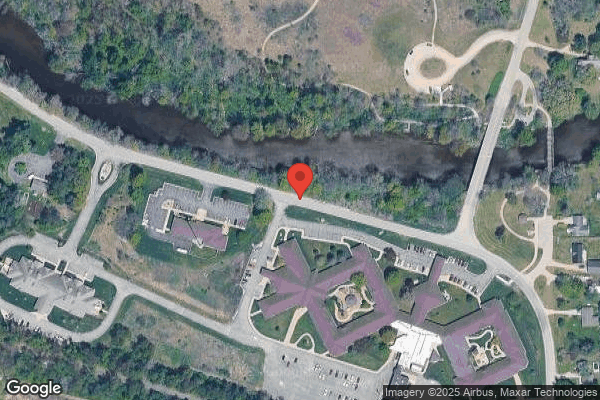
Thornapple Manor

2700 Nashville Rd, Hastings, MI 49058 (269) 945-2407
Government - County 161 Beds Independent Data: November 2025
Trust Grade
70/100
#95 of 422 in MI
Last Inspection: March 2025

Within standard 12-15 month inspection cycle. Federal law requires annual inspections.

Overview

Thornapple Manor in Hastings, Michigan has a Trust Grade of B, indicating it is a good choice for families seeking care, as it is solidly positioned within the middle range of facilities. It ranks #95 out of 422 statewide, placing it in the top half of Michigan facilities, and #1 out of 2 in Barry County, meaning it is the best option locally. The facility is improving, with the number of issues decreasing from 9 in 2024 to 5 in 2025. Staffing is a strong point, rated 5/5 stars, with a turnover rate of 41%, which is below the state average, suggesting that staff members are likely to remain and build relationships with residents. There have been no fines reported, which is a positive sign, and while RN coverage is average, the facility has faced serious incidents, including a failure to prevent falls that resulted in significant injuries for two residents. Additionally, there were concerns regarding cleanliness in the kitchen, which could potentially affect food safety for residents. Overall, while Thornapple Manor has strengths in staffing and a good overall rating, families should consider the serious incidents reported and the need for improved supervision.

Trust Score
B
70/100
In Michigan
#95/422
Top 22%
Safety Record
Moderate
Needs review
Inspections
Getting Better
9 → 5 violations
Staff Stability
○ Average
41% turnover. Near Michigan's 48% average. Typical for the industry.
Penalties
✓ Good
No fines on record. Clean compliance history, better than most Michigan facilities.
Skilled Nurses
✓ Good
Each resident gets 50 minutes of Registered Nurse (RN) attention daily — more than average for Michigan. RNs are trained to catch health problems early.
Violations
⚠ Watch
21 deficiencies on record. Higher than average. Multiple issues found across inspections.
★★★★★
5.0
Overall Rating
★★★★★
5.0
Staff Levels
★★★★★
5.0
Care Quality
★★★☆☆
3.0
Inspection Score
Stable
2024: 9 issues
2025: 5 issues

The Good

  • 5-Star Staffing Rating · Excellent nurse staffing levels
  • 5-Star Quality Measures · Strong clinical quality outcomes
  • Full Sprinkler Coverage · Fire safety systems throughout facility
  • No fines on record
  • Staff turnover below average (41%)

    7 points below Michigan average of 48%

Facility shows strength in staffing levels, quality measures, fire safety.

The Bad

Staff Turnover: 41%

Near Michigan avg (46%)

Typical for the industry

The Ugly 21 deficiencies on record

2 actual harm
Sept 2025 2 deficiencies 1 Harm
SERIOUS (G) 📢 Someone Reported This

A family member, employee, or ombudsman was alarmed enough to file a formal complaint

Actual Harm - a resident was hurt due to facility failures

Accident Prevention (Tag F0689)

A resident was harmed · This affected 1 resident

This citation pertains to Intake # 2605454.Based on interview, and record review, the facility failed to implement care plan interventions to ensure safety and thoroughly document/investigate a fall i...

Read full inspector narrative →
This citation pertains to Intake # 2605454.Based on interview, and record review, the facility failed to implement care plan interventions to ensure safety and thoroughly document/investigate a fall in 1 of 4 residents (Resident #102) reviewed for safety and fall prevention, resulting in a fall with a right fibula fracture for Resident #102, and the potential for additional falls/injuries.Findings include:Resident #102Review of an admission Record revealed Resident #102 was a female, with pertinent diagnoses which included cerebral palsy (a congenital disorder of movement, muscle tone, or posture), Alzheimer's disease, dementia, depression, osteoporosis (a condition in which the bones become weak and brittle), and arthritis.Review of a Minimum Data Set (MDS) assessment for Resident #102, with a reference date of 7/11/25, revealed a Brief Interview for Mental Status (BIMS) score of 11, out of a total possible score of 15, which indicated moderate cognitive impairment.Review of a Care Guide for Resident #102, dated 8/11/25, revealed TOILETING .2 ASSIST WITH GAIT BELT TO STAND AT GRAB BAR IN BATHROOM WHILE COMMODE IS PLACED BEHIND HER .In an interview on 9/3/25 at 12:48 PM, Certified Nursing Assistant (CNA) F reported she responded to Resident #102's room on 8/17/25 at approximately 9:30 PM after CNA U called over the walkie for assistance. CNA F reported when she arrived at the room, she observed both Resident #102 and CNA U on the floor in the bathroom, with the CNA's right arm and right leg underneath the resident. CNA F reported she was told by CNA U that Resident #102 was lowered to the floor and did not hit her head. CNA F reported Resident #102 did not complain of pain at that time, and after Licensed Practical Nurse (LPN) K assessed Resident #102, she (CNA F) and LPN K used a gait belt to transfer Resident #102 up into her wheelchair, then into bed. CNA F reported a few hours later, Resident #102 put her call light on and complained of a cramp in her leg. CNA F stated, I rubbed it a little bit but that didn't help. CNA F reported she then notified the nurse of the new pain complaint. CNA F reported staff should always check the Care Guide before providing care to a resident. CNA F reported when an incident like this occurs, the nurse will typically complete an incident report. CNA F reported after the incident involving Resident #102 on 8/17/25, LPN K did not complete an incident report.In an interview on 9/3/25 at 1:15 PM, CNA U reported on 8/17/25 at approximately 9:30 PM she was assisting Resident #102 to the bathroom and stated .I did not realize she was a two-person (assist) . CNA U reported Resident #102 stood at the grab bar and she (CNA U) cleaned Resident #102 up and removed the commode from behind her. CNA U reported Resident #102 then stated, Oh no! and started to tilt sideways, losing her balance. CNA U reported she held up Resident #102's pants and lowered her to the floor, and stated, I was kind of underneath her. I slowly lowered her to the floor because I couldn't get to my walkie. I called once she was on the floor . CNA U reported after she called for assistance, CNA F and LPN K responded. CNA U reported LPN K assessed the resident and checked her vital signs. CNA U reported initially Resident #102 did not complain of pain, but once Resident #102 was transferred to bed she started complaining of a leg cramp. CNA U reported they did have a Fall Huddle in the room but reported she was unsure if an incident report was completed. CNA U reported she learned after the incident that Resident #102 was a two-staff assist in the bathroom, and that this change to her Care Guide had occurred a few days prior to the incident. CNA U reported the Care Guide should be checked before providing care to a resident and acknowledged that she did not check the Care Guide prior to assisting Resident #102 to the bathroom on 8/17/25.In an interview on 9/3/25 at 2:00 PM, CNA G reported on 8/18/25 she was assisting Resident #102 with morning care, and the resident complained of pain in her right leg. CNA G reported when Resident #102 was rolled onto her left side, her right leg hurt more. CNA G reported staff ended up using a dependent lift on 8/18/25 to transfer Resident #102 to her wheelchair due to the pain, which was unusual for Resident #102. CNA G stated, I could tell in her face that it hurt. CNA G reported Resident #102 was able to stand at the grab bar later in the afternoon on 8/18/25 and reported her right leg was still sore, but she was able to put pressure on it. CNA G reported Care Guides provide guidance on how to care for the residents and are posted in the closets. CNA G reported the Care Guide should always be checked before providing care to a resident.In an interview on 9/4/25 at 8:17 AM, CNA H reported on 8/19/25 Resident #102 complained of right leg pain when being assisted with bed mobility. CNA H reported she did not observe any visible injuries, and when asked Resident #102 could not recall a cause or reason for the pain in her right leg.In an interview on 9/4/25 at 11:18 AM, LPN K reported on 8/17/25 at approximately 9:30 PM, CNA U called via a walkie for assistance in Resident #102's room. LPN K reported when she arrived at Resident #102's room, she observed Resident #102 on the floor in the bathroom on her right side, with CNA U sitting beside the resident. LPN K reported she asked what had happened and CNA U told her the resident was lowered to the ground. LPN K stated, I should have done an incident report. LPN K reported Resident #102 did not complain of any pain and did not appear to have any visible injuries upon assessment. LPN K reported CNA U had completed a one-person assist with toileting when the resident required two-staff assist with toileting per her Care Guide.In an interview on 9/4/25 at 1:07 PM, Registered Nurse (RN) Team Lead P reported on 8/22/25, Resident #102 was complaining of pain in her right leg. RN Team Lead P reported staff had identified/documented Resident #102's complaints of leg pain earlier in the week and had notified the doctor to assess the resident. On 8/22/25, Resident #102 did not want to get up for BINGO, which was unusual for her, so she (RN Team Lead P) went to the room to assess Resident #102. RN Team Lead P stated, When I flexed her (right) knee she was immediately painful . RN Team Lead P reported there were no recent incidents or falls noted in the medical record. RN Team Lead P reported the physician was notified and orders were obtained for an X-ray.Review of a Health Status note for Resident #102, dated 8/22/25 at 12:17 PM, revealed .Resident is reporting pain R (right) buttocks which continues down through to the right foot. Resident is unable to show exact area, but during assessment knee is bothered when moving. R leg does have increase in swelling. While resident using leg to propel wheelchair it is causing pain .any bending at the knee is also causing pain. Physician on call contacted and (X-ray) ordered .Review of a Radiology Report for Resident #102, dated 8/22/25, revealed .REASON FOR EXAM: PAIN .Results: Right knee .Conclusion: Fracture of the proximal fibula .Results: Right tibia and fibula .Conclusion: Fracture of the proximal fibula .Review of a Health Status note for Resident #102, dated 8/23/25 at 12:33 PM, revealed (Family Member) called back and discussed new orders with this nurse. (Family Member) brought up that she was here on (8/18/25) and she talked with this writer at that time about resident having pain in RLE (right lower extremity), which she had stated she thought was arthritis. She thanked staff for getting (the X-ray) and also asked if we knew when the injury occurred. This writer informed her that we are unaware of an incident that caused this .Review of a facility investigation revealed On 8/22/25 .(Director of Nursing (DON) B) was notified that a resident (Resident #102) had a fractured right fibula. Per staff and records review there was no known fall or other cause of the injury .It was noted that Monday, 8/18/25 was when (Resident #102) first started c/o (complaining of) pain and having decreased mobility. The statements reveal that Monday morning she required the use of the mechanical lift .Cameras were reviewed and it was noted that on the evening of 8/17/25, staff .were seen reporting to the resident's room quickly with the fall-huddle clip board and the vital cart machine at approximately (9:32 PM). Upon interviewing the staff, there was an incident of the resident being lowered to the floor in her bathroom on 8/17/25 .Results of the investigation and interviews (revealed that Resident #102) was lowered to the floor by (CNA U) on 8/17/25. (CNA U) was using a gait-belt and commode as is per the resident's plan of care. She did however transfer (Resident #102) by herself .(Resident #102's) plan of care was changed on 8/11/25, prior to the incident to .2 assist with gait belt to stand at grab bar in bathroom while commode is placed behind her .Review of an Incident/Accident Report for Resident #102, dated 8/17/25 at 9:34 PM, revealed .I (LPN K) was called into resident's room to see resident lying on her right side in the bathroom. Resident was on the commode before this. (CNA U) was with her and stated that resident did not fall and that she lowered her down to the floor. CNA was sitting on the floor with resident. The resident had a pillow under her head .Resident was assessed and no pain was noted. I asked resident if she hit her head and she stated no. I asked resident if she got hurt and she said no she didn't get hurt. CNA and I helped her back into her wheelchair with her gait belt and another staff member put her wheelchair underneath her. I had help with a CNA and assisted resident into bed using her pivot disc . Note this Incident/Accident report was not created/completed until after Resident #102's fracture was identified.Review of the policy/procedure Maintaining and Establishing Care Guides, dated 9/2025, revealed .A care guide/kardex is a quick reference tool based off the resident's individualized plan of care that was developed by the resident and members of the interdisciplinary team. This information should be easily located and used by staff to assist the resident with their direct care needs .Review of the policy/procedure Incident Reports, dated 8/2025, revealed It is the policy of (Facility Name) to complete an investigation i.e. incident report (IR) when a resident falls or sustains an injury. The purpose of the IR is to complete a thorough assessment of the incident, identify the root cause, and a corrective action in hopes of preventing the incident from re-occurring. An Accident/Incident Report must be completed on the shift in which the accident/incident occurred .An incident report will be completed by the nurse whom the incident is reported to or identified by .The incident report will include the (resident's) recollection (when available) and .A description of what happened, including staff/witness statements .In the event of a fall, a Fall Huddle will be completed .The (nurse's) assessment and description of the medical treatment administered .A description of the corrective actions and/or preventive measures implemented to prevent such accident/incident from recurring .A comprehensive investigation will be completed by the Risk Management nurse as soon as possible .During the onsite survey, past noncompliance (PNC) was cited after the facility implemented actions to correct the noncompliance which included education to all staff on checking the care guide before providing care or assistance, re-education to the nursing staff on the policy/procedure Maintaining and Establishing Care Guides as well as the importance of checking the care guide before providing any care, and a process change to how changes in the care guides are communicated to nursing staff via the huddle board. The policy/procedure Incident Reports was updated to better define a fall, and nurses were educated on this policy/procedure and when an incident report must be completed. The facility was able to demonstrate monitoring of the corrective action and maintained compliance. Compliance date of 9-3-25.
CONCERN (D) 📢 Someone Reported This

A family member, employee, or ombudsman was alarmed enough to file a formal complaint

Potential for Harm - no one hurt, but risky conditions existed

Deficiency F0602 (Tag F0602)

Could have caused harm · This affected 1 resident

This citation pertains to Intake # 2606671.Based on interview, and record review, the facility failed to protect the resident's right to be free from misappropriation of property in 1 of 4 residents (...

Read full inspector narrative →
This citation pertains to Intake # 2606671.Based on interview, and record review, the facility failed to protect the resident's right to be free from misappropriation of property in 1 of 4 residents (Resident #103) reviewed for misappropriation of property, resulting in the resident's money being taken by a staff member without the resident's consent.Findings include:Resident #103Review of an admission Record revealed Resident #103 was a female with pertinent diagnoses which included anxiety.Review of a Minimum Data Set (MDS) assessment for Resident #103, with a reference date of 6/20/25, revealed a Brief Interview for Mental Status (BIMS) score of 14, out of a total possible score of 15, which indicated she was cognitively intact.Review of a facility investigation revealed (Resident #103) reported to Life Enrichment staff .she was missing a small zippered purse/pouch with about $10 worth (of) quarters in it and that a second change pouch was empty that had previously had about $10 worth of quarters in it as well. She reported to the staff that she had them both on Friday when she put away her bingo money, and that she noticed them missing Monday morning. She reports that they were in her night stand drawer side by side and the missing zippered purse was a black/blue colored pouch with a small flap and a logo on it .An investigation was immediately started with the review of camera footage .Camera footage was reviewed for the weekend, starting Friday afternoon after (Bingo). Saturday 8/9/25 at 3:18:55pm an agency staff is seen entering the resident's room and comes out at 3:20:47pm. It is noted that when she comes out it appears that she has something heavy and full in her right pocket of her scrub top. Camera footage follows her up the hall where she pulls out a dark colored pouch from her right pocket, unzips it, and appears to insert something small into it. She then goes back into the employee area and takes money out of a pouch and purchases a bag of chips at approximately 3:25 (PM) then starts to leave but comes back to the vending machine and purchases a Gatorade using the same pouch. When she turns around the pouch is clearer on the camera and is a dark blue/purple in color. The footage of the pouch/purse was shown to the resident and she confirms that it is her missing change purse .In an interview on 9/3/25 at 2:43 PM with Administrator A and Director of Nursing (DON) B, camera footage was reviewed to confirm the evidence summarized within the facility investigation. Administrator A and DON B reported while reviewing the camera footage during the investigation, they observed Agency Certified Nursing Assistant (CNA) T enter Resident #103's room on 8/9/25 at approximately 3:18 PM, then exit a few minutes later. Administrator A and DON B confirmed Resident #103 was not in her room at that time, and when Agency CNA T exited the room at approximately 3:20 PM, the front pocket of her scrub top appeared weighed down (as if something heavy was in the pocket). Administrator A and DON B reported Agency CNA T then proceeded to the service hallway and purchased some items from the vending machines. Administrator A and DON B were able to capture a still from the camera footage showing Agency CNA T holding a small, dark-colored bag in her hand. Administrator A and DON B reported Resident #103 was shown the still from the camera footage and identified the small, dark-colored bag as her missing change purse.In an interview on 9/4/25 at 11:57 AM, Resident #103 reported she had two small bags with quarters in her nightstand in her room. Resident #103 reported one was a blue stuffed bird with approximately ten dollars of quarters inside, and the other was a small, dark-colored purse with an additional ten dollars of quarters. Resident #103 reported she recalled adding some money to one of the small bags (the blue stuffed one) and stated On Saturday morning (8/9/25) it was so full .I remember thinking I'm going to have to remove some quarters . Resident #103 reported on Monday, 8/11/25, she realized the small, dark-colored purse was missing and the blue stuffed bird bag was empty. Resident #103 reported she notified staff, and they searched her room with no bag or quarters found. Resident #103 reported the facility completed an investigation into her missing bag/money and showed her a photo of Agency CNA T holding a small bag near the vending machines. Resident #103 identified the small purse in the photo as her missing coin purse, and stated, They showed me her hand, and she was holding the bag . Resident #103 stated, I felt really bad. I was hurt because this is my home .I want to feel safe here. I didn't want to accuse anyone . Resident #103 recalled her interactions with Agency CNA T and described her as standoffish. Resident #103 reported she did not recall Agency CNA T ever assisting her (Resident #103) with care and stated she (Resident #103) makes her own bed and there was no reason for Agency CNA T to be in her (Resident #103's) room on 8/9/25.In an interview on 9/4/25 at 1:19 PM, Director of Social Services C reported on 8/11/25 there was a staff meeting and a life enrichment staff member reported Resident #103 had some missing money. Director of Social Services C reported Administrator A and DON B were notified and an investigation was initiated. Director of Social Services C reported Resident #103 reported a small change purse was missing which had contained approximately ten dollars of quarters, and a second fuzzy bag which contained another ten dollars of quarters was empty. Director of Social Services C reported they reviewed the camera footage and observed Agency CNA T enter Resident #103's room on 8/9/25 at approximately 3:18 PM. Director of Social Services C reported Agency CNA T was in the room for approximately 2-3 minutes. Director of Social Services C reported when Agency CNA T exited the room, one of her pockets looked puffier and different than in previous camera views. Director of Social Services C reported they pulled pictures from the camera footage and showed them to Resident #103, who was able to identify the bag in Agency CNA T's hand as her missing change purse.Review of the policy/procedure Abuse, Neglect and Exploitation, dated 11/2024, revealed .Each resident has the right to be free from abuse, neglect, misappropriation of resident property and exploitation . Misappropriation of Resident Property means the deliberate misplacement, exploitation, or wrongful, temporary or permanent, use of a resident's belongings or money without the resident's consent .
Mar 2025 3 deficiencies
CONCERN (D)

Potential for Harm - no one hurt, but risky conditions existed

Comprehensive Care Plan (Tag F0656)

Could have caused harm · This affected 1 resident

**NOTE- TERMS IN BRACKETS HAVE BEEN EDITED TO PROTECT CONFIDENTIALITY** Based on observation, interview, and record review, the facility failed to implement care plan interventions to prevent falls in...

Read full inspector narrative →
**NOTE- TERMS IN BRACKETS HAVE BEEN EDITED TO PROTECT CONFIDENTIALITY** Based on observation, interview, and record review, the facility failed to implement care plan interventions to prevent falls in 1 of 28 residents (Resident #114) reviewed for comprehensive care plans, resulting in the potential for falls and injury. Findings include: Review of an admission Record revealed Resident #114 was a male, with pertinent diagnoses which included dementia, heart failure, diabetes, and high blood pressure. Review of a Fall Risk Assessment for Resident #114, dated 1/21/25, revealed he was at High Risk for falls. Review of a current Care Plan for Resident #114 revealed the focus .I AM AT RISK FOR FALLS R/T (related to) A HIGH FALL RISK ASSESSMENT SCORE AND FELL ATTEMPTING TO TRANSFER OUT OF THE RECLINER WITH THE FOOTREST ELEVATED . with interventions which included .NON-SKID STRIPS IN FRONT OF RECLINER . both revised 1/24/25. In an observation on 3/17/25 at 11:59 AM, Resident #114 was in his recliner in his room. Noted non-skid strips on the floor under the recliner, sticking out along the left side (not in front of the recliner). In an observation on 3/17/25 at 4:25 PM, Resident #114 was in his recliner in his room with the footrest elevated. Noted non-skid strips on the floor under the recliner, sticking out along the left side (not in front of the recliner). In an observation on 3/18/25 at 4:03 PM, Resident #114 was in his recliner in his room with the footrest elevated, apparently asleep with his eyes closed. Noted non-skid strips on the floor under the recliner, sticking out along the left side (not in front of the recliner). In an observation on 3/19/25 at 8:50 AM, Resident #114 was not present in his room. Observed Resident #114's recliner and noted non-skid strips on the floor under the recliner, sticking out along the left side (not in front of the recliner). In an interview on 3/19/25 at 1:13 PM, Registered Nurse (RN) JJ reported Resident #114 was independent with transfers and ambulation, but did have a history of falls. RN JJ reported the non-skid strips to the floor in front of Resident #114's recliner were added as an intervention after a fall to provide additional traction when transferring out of the recliner. RN JJ reported the non-skid strips should be positioned in front of the recliner. In an observation on 3/19/25 at 1:21 PM, Resident #114 was in his recliner in his room with the footrest elevated, visiting with family. Noted non-skid strips on the floor under the recliner, sticking out along the left side (not in front of the recliner). Review of the Long-Term Care Facility Resident Assessment Instrument 3.0 User's Manual, v1.19.1, Chapter 4: Care Area Assessment (CAA) Process and Care Planning, dated October 2024, revealed .the comprehensive care plan is an interdisciplinary communication tool. It must include measurable objectives and time frames and must describe the services that are to be furnished to attain or maintain the resident's highest practicable physical, mental, and psychosocial well-being. The care plan must be reviewed and revised periodically, and the services provided or arranged must be consistent with each resident's written plan of care . According to [NAME], [NAME] A.; [NAME], [NAME] Griffin; Stockert, [NAME]; Hall, [NAME]. Fundamentals of Nursing, Tenth Edition - E-Book (Kindle Location 15861 of 76897). Elsevier Health Sciences.A nursing care plan includes nursing diagnoses, goals and/or expected outcomes, individualized nursing interventions, and a section for evaluation findings .The plan promotes continuity of care and better communication because it informs all health care providers about a patient's needs and interventions and reduces the risk for incomplete, incorrect, or inappropriate care measures .The plan of care communicates nursing care priorities to nurses and other health care providers. It also identifies and coordinates resources for delivering nursing care .
CONCERN (D)

Potential for Harm - no one hurt, but risky conditions existed

Respiratory Care (Tag F0695)

Could have caused harm · This affected 1 resident

**NOTE- TERMS IN BRACKETS HAVE BEEN EDITED TO PROTECT CONFIDENTIALITY** Resident #117 Review of an admission Record revealed Resident #117 was a male, with pertinent diagnoses which included heart dis...

Read full inspector narrative →
**NOTE- TERMS IN BRACKETS HAVE BEEN EDITED TO PROTECT CONFIDENTIALITY** Resident #117 Review of an admission Record revealed Resident #117 was a male, with pertinent diagnoses which included heart disease, high blood pressure, and cancer. Review of a Minimum Data Set (MDS) assessment for Resident #117, with a reference date of 1/17/25, revealed a Brief Interview for Mental Status (BIMS) score of 13, out of a total possible score of 15, which indicated he was cognitively intact. Review of an Order Summary Report for Resident #117 revealed the active physician order .Oxygen 2 Liters NC (nasal cannula) prn (as needed) for SOB (shortness of breath) as needed . with a start date of 7/15/24. In an observation on 3/17/25 at 2:44 PM, Resident #117 was in bed in his room. Observed an oxygen concentrator along the wall beside his bed, not in use. Observed the oxygen tubing (nasal cannula) laying directly on the floor, not stored in a plastic bag. No date noted on the oxygen tubing to indicate when it was last changed. In an observation and interview on 3/18/25 at 3:56 PM, Resident #117 was in bed in his room. Observed an oxygen concentrator along the wall beside his bed, not in use. Observed the oxygen tubing (nasal cannula) laying directly on the floor, not stored in a plastic bag. No date noted on the oxygen tubing to indicate when it was last changed. Resident #117 reported he has not required supplemental oxygen for several weeks, and stated .they kept it (the oxygen concentrator and tubing) there in case I needed it . In an interview on 3/19/25 at 1:19 PM, Registered Nurse (RN) JJ reported oxygen tubing should be changed weekly. Review of the policy/procedure Oxygen Use & Storage, revision date 12/2024, revealed .Policy: To provide oxygen therapy in a safe and clean method per each resident's individual need .Gather, label, date, and change, equipment i.e. concentrator, oxygen tank, nasal cannula, or mask, and if needed extension tubing for the resident .Nursing Assistants are expected to check the oxygen flow liter and poundage gauge whenever they are providing care to the resident .Change cannula, mask, plastic bags, and if present the humidifier bottle weekly on midnight shift according to schedule. Nursing Assistant's will label tubing with a sticker, which indicates liter flow rate ordered, date opened, and their initials .Oxygen tubing cannulas and/or masks are to be stored in the plastic bags when residents are not using the equipment . Based on observation, interview, and record review, the facility failed to provide appropriate and adequate oxygen management and tubing care for 3 of 3 residents (R19, R53, and R117) reviewed for respiratory and oxygen care, resulting in the potential of a vulnerable population being at risk for infection and harm. Findings include: R19 According to R19's Minimum Data Set (MDS) dated [DATE], the resident had a diagnosis of debilitating cardiorespiratory conditions and received oxygen therapy. Review of R19's Diagnoses dated 4/1/24, revealed, Dependence on supplemental oxygen. Review of R19's Order Summary dated 3/28/225 revealed, Continuance oxygen at 2L/Min (liters per minute) via Nasal cannula (NC). Review of R19's Medication/Treatment Administration dated 3/1/25-3/31/25 indicated the resident received 2L/MIN via nasal cannula on day and night shifts from 3/1/25 throughout the survey, 3/19/25. Review of R19's eMAR (electronic chart) Kardex (CNA (certified nursing assistant) guide to resident-specific cares) dated, as of 2/13/25 revealed, O2 (oxygen) w/ (with) Liter Flow-Oxygen continuous oxygen at 2L/MIN via nasal cannula. During an observation and interview on 3/17/25 at 10:49 AM, R19 was being transferred from toilet to wheelchair by Certified Nursing Assistant (CNA) U who asked resident if she wanted to be put on her room oxygen concentrator. A portable tank was on the back of resident's wheelchair with tubing not labeled. R19's room oxygen concentrator was set at 2 lpm (liters per minute) with tubing dated 3/3/25. R19 stated, I wear oxygen 24/7 and I feel dry, and my nose runs. During an interview on 3/18/25 at 8:15 AM, Licensed Practical Nurse (LPN) EE stated, Usually day-shift nurses and CNAs check oxygen tubing to make sure it has been dated within the week for infection control purposes. During an observation on 3/18/25 at 10:51 AM, R19's room oxygen concentrator tubing dated 3/3/25. During an observation and interview on 3/18/25 at 10:56 AM, R19 was in the common area wearing her portable oxygen via a nasal cannula. The portable tank indicated the tank was empty with the arrow pointing in the red. The tubing was not labeled. The tank had a label card indicating it belonged to R19, with a start date of 3/17/25, at a liter flow of 2 lpm (liters per minute). R19 stated, I wear oxygen all the time. If I don't wear it I get out of breath. The resident was audibly wheezing slightly. During an observation and interview on 3/18/25 at 11:02 AM, CNA DD stated, Agency CNA staff got (R19) up into her wheelchair this morning. All nursing staff are responsible for checking on oxygen levels in the portable tanks. It takes a badge to go out the doors and into the oxygen storage areas. Agency does not have a badge to get into the oxygen storage areas. CNA DD replaced R19's portable tank with a full one and continued using the unlabeled tubing. CNA reported night shift replaces the oxygen tubing. During an interview on 3/18/25 at 2:15 PM, CNA W stated, I am here through a staffing agency. I have a badge, but I am not sure if it gets me into the oxygen storage. If a resident needs a new oxygen tank, I have to inform another CNA or nurse and they would tell me to go get a tank or they would go get one. I got (R19) ready this morning by looking at her Kardex in her closet. It said to put on her portable oxygen at 2 liters so that is what I did. Review of CNA W Agency Certified Nursing Orientation Checklist dated 12/6/24 indicated was oriented to Oxygen Room/Humidifier Bottles. During an interview on 3/18/25 at 2:25 PM, CNA V stated, I am here through a staffing agency. I have a badge, but I've never tried in 5 months I've been here to use it to get into the oxygen storage area. Usually, a facility CNA will go get portable oxygen tanks if they are needed. Review of CNA V Agency Certified Nursing Orientation Checklist dated 2/7/25 indicated was oriented to Oxygen Room/Humidifier Bottles. Observed on 3/18/25 at 2:30 PM R19's Kardex in her closet indicated the resident was to wear oxygen at 2 lpm. The resident was napping in a recliner wearing oxygen running from the concentrator via a nasal cannula that was dated 3/3/25 2L. R46 According to R46's Minimum Data Set (MDS) dated [DATE], the resident scored 13/15 (cognitively intact) on her BIMS (Brief Interview Mental Status) with diagnoses that included debilitating cardiorespiratory conditions that required oxygen therapy. Review of R46's Diagnoses included chronic obstructive pulmonary disease, unspecified (COPD), dependence on supplemental oxygen, chronic respiratory failure with hypoxia (low level of oxygen in body tissues) Review of R46's Order Summary dated 5/14/2021, revealed, O2 2 to 4 liters NC continuous with Humidifier for SOB (shortness of breath) Review of R46's Medication/Treatment Administration Record (MAR/TAR) March 2025 revealed no orders for oxygen use. Review of R46's Care Plan dated 1/13/2025, LTC (long term care) due to a previous left hip fracture with repair and CHF (congestive heart failure) with goals of showing no declines with ADLs (activities of daily living) AEB (as evidenced by) no significant changes, and using interventions that included O2 liter flow-2 to 4 liters O2 via nasal cannula/humidifier continuously. Review of R46's Kardex as of 3/18/25 revealed, O2 liter flow - 2 TO 4 liters O2 via nasal cannula/humidifier continuously. During an observation on 3/17/25 at 9:20 AM, R46 was wearing oxygen via a portable oxygen tank with tubing that was not labeled. The oxygen concentrator that was next to the resident's bed had tubing that was not labeled with a humidifier bottle that was dated 2/25/25. During an observation and interview on 3/18/25 11:13 AM, R46 was in her room sitting in her wheelchair wearing oxygen connected to a portable oxygen tank via tubing. The portable oxygen tank was empty as indicated by the pressure gauze with the arrow in the red. CNA Z stated, I put (R46) in the wheelchair this morning and looked at her oxygen tank (portable). Now, I see It is empty. I changed the tank at 7:30-8:00 am this morning. She should be put on the concentrator when she is in her room. I don't know who last looked in on her. CNA Z left the room to get another portable oxygen tank and a pulse oximeter (measures oxygen in body) R46 stated, I feel like heck. I am tired out. The resident then self-ambulated out of her room and headed to the dining room. She was breathing with audible gasps. During an observation and interview on 3/18/25 at 11:21 AM, CNA 'Z brought a portable tank to R46 in the hall outside of the resident's room and checked her pulse ox. During this time, Registered Nurse (RN) LL came to R46's side and stated, The oxygen tubing is dated 3/11/25) and R46 is on between 2 to 4 liters per minute depending on what the resident wants and needs. CNA Z then assisted R46 into her room where she placed a new portable oxygen tank to R46's wheelchair and read the pulse ox to be 95%. After reading the pulse ox, CNA Z connected R46 to the portable oxygen via a nasal cannula and set the flow rate to 3 lpm per R46 request. R46 stated to CNA Z and surveyor, I'm sleepy then self-ambulated to the dining room where breakfast was being served. Observed in R46's closet a resident-specific Kardex that indicated O2 liter flow 2 to 4 liters O2 via nasal cannula/humidifier continuously. During an interview on 3/19/25 at 11:28 AM, Infection Control Preventionist (IPC) MM and Director of Nursing (DON) B stated, Oxygen tubing should be changed out every Tuesday night by night shift. Humidifiers should also be changed out with tubing weekly. Our policy reflects this.
CONCERN (D)

Potential for Harm - no one hurt, but risky conditions existed

Infection Control (Tag F0880)

Could have caused harm · This affected 1 resident

**NOTE- TERMS IN BRACKETS HAVE BEEN EDITED TO PROTECT CONFIDENTIALITY** Based on observation, interview, and record review, the facility failed to ensure 1.) implementation of Enhanced Barrier Precaut...

Read full inspector narrative →
**NOTE- TERMS IN BRACKETS HAVE BEEN EDITED TO PROTECT CONFIDENTIALITY** Based on observation, interview, and record review, the facility failed to ensure 1.) implementation of Enhanced Barrier Precautions (EBP) per standards of practices for 1 of 6 residents (R53) all reviewed for infection control, and 2.) adequate handling of soiled linen, resulting in the potential for cross-contamination, harborage of bacteria, and increased infections in a vulnerable population. Findings include: According to R53's Minimum Data Set (MDS) dated [DATE], the resident had diagnoses that included non-traumatic brain dysfunction requiring her to be dependent for all cares including toileting and unhealed stage 3 and stage 4 pressure ulcers. During an observation and interview on 3/17/25 at 10:23 AM, R53 was in bed being prepared for a brief change by two Certified Nursing Assistants (CNA) BB and TT Inside the resident's room on the wall next to the door was CDC (Centers for Disease Control) signage indicating the resident was on Enhanced Barrier Precautions with gown and gloves to be worn with direct cares. CNA BB stated, (R53) has one wound on her coccyx that is deep. She also has a small wound on her ankle. CNA TT stated, I am an agency CNA. Both CNAs donned gloves but did not don gowns before starting the brief change for R53. R53's soiled brief was removed after which a bandage dated 3/16 was seen on the resident's coccyx. After removing the soiled brief neither CNA changed their gloves throughout the process and applying a clean brief and pants. Part way through the brief change, CNA BB stated, We (both CNAs) were supposed to wear a gown because of (R53's) open wound. CNA TT stated, I'm used to the PPE sign and supplies being on the door before you enter a room. I've been here since October 2024. During an interview on 3/17/25 at 10:49 AM, CNA U stated, I am on my 3rd shift in the facility. I am used to Enhanced Barrier Precautions being noted on the resident's door by a sign and PPE on the door in a cart as your first walk in. During an interview and record review on 3/19/25 at 8:20 AM, Licensed Practical Nurse (LPN) EE reviewed R53's [NAME] in the resident's closet. The [NAME] did not specifically say resident was on Enhanced Barrier Precautions but indicated gown and gloves were to be worn during high-contact cares. During an interview on 3/19/25 at 11:28 AM, Infection Control Preventionist (IPC) MM and Director of Nursing (DON) B stated During brief change, gloves should be changed out when going from dirty to clean. Every morning all nursing staff have a meeting and residents on EBP is discussed. There is a huddle board at each nursing station that has a list of residents on EBP. The DON stated, I don't want the EBP signs on the outside of resident's door to make them feel like they are in isolation because this is their home. There is a [NAME] for each resident in their closet where staff can view their needs. On the [NAME] is does not say specifically Enhanced Barrier Precautions. But does say within a paragraph among other things to wear gown and gloves. The Charge Nurses do weekly audits to make sure the whole care guide is followed by nursing staff. Review of facility policy Enhanced Barrier Precautions effective date 10/2023, revealed, It is the policy of (name of facility) to follow the CDC's guidance on Implementation of Personal Protective Equipment (PPE) Use in Nursing Homes to Prevent the Spread of Multidrug Resistant Organisms (MDROs). Enhanced Barrier Precautions (EBP) refer to the use of gown and gloves during high-contact resident care activities for residents known to be colonized or infected with a targeted MDRO who do not meet the criteria for Contact Precautions, as well as those at increased risk of targeted MDRO acquisition (e.g., residents with wounds or indwelling medical devices) .PROCEDURE: Staff will receive training on EBP upon hire and annually and are expected to comply with designated precautions .The new Enhance Barrier Precautions sign hanging above the gown and glove holder inside the resident's room .Indwelling medical devices (e.g. central lines, hemodialysis catheters, urinary catheters, feeding tubes, tracheostomies) even if the resident is not known to be infected or colonized with a MDRO. Chronic Wounds. Examples may include but are not limited to: Pressure Injuries/Pressure Ulcers . During an observation on 3/17/25 at 10:49 AM, observed CNA U carrying soiled and dirty linen in a clear plastic bag to the hamper room holding the bag in ungloved hands and against her clothes in the 200 Hall. Review of facility policy, Laundry Transportation revised date 12/2023, revealed, Policy .This policy is to ensure the appropriate transporting of clean, dirty and infectious linen to minimize the risk of infection throughout the facility . Contaminated linen and laundry bags are not held close to the body or squeezed when transporting to hamper/utility room . Review of the facility policy, Nursing Standards of Care revised date 2/2025, revealed, .The employee will wear appropriate PPE (see policy: Standard precautions) when handling, cleaning or transporting soiled material .Following the residents individualized care guide/[NAME] (resident specific care guide) is extremely important to providing safe quality care while meeting our resident's needs. In the care guide there is a section labeled Safety Interventions all staff should ensure these interventions are in place prior to leaving the resident .
Nov 2024 1 deficiency
CONCERN (D) 📢 Someone Reported This

A family member, employee, or ombudsman was alarmed enough to file a formal complaint

Potential for Harm - no one hurt, but risky conditions existed

Report Alleged Abuse (Tag F0609)

Could have caused harm · This affected 1 resident

**NOTE- TERMS IN BRACKETS HAVE BEEN EDITED TO PROTECT CONFIDENTIALITY** This citation pertains to intake MI00147758. Based on interview and record review, the facility failed to recognize and report ...

Read full inspector narrative →
**NOTE- TERMS IN BRACKETS HAVE BEEN EDITED TO PROTECT CONFIDENTIALITY** This citation pertains to intake MI00147758. Based on interview and record review, the facility failed to recognize and report an injury of unknown origin for 1 (Resident #101) of 3 residents, reviewed for reporting, resulting in the lack of reporting and the potential for a delay in the investigation. Findings include: Resident #101 Review of an admission Record revealed Resident # 101 was originally admitted to the facility on [DATE] with pertinent diagnoses which included dementia. Review of Resident #101's Progress Note dated 10/28/24 at 4:10 PM revealed, Nurse was called to (Resident #101) room by staff member, noted a 9.5 cm x 9 cm bruise to right bicep. (Resident #101) is unable to describe what happened, but states It hurts, it hurts!. Order placed to monitor for s/sx (signs and symptoms) of infection x 5 days. Review of Resident #101's Progress Note date 10/28/25 AT 11:15 PM revealed, (Resident #101) is being monitored r/t (related to) bruise noted on bicep. S/s of pain noted as (Resident #101) was observed cradling and protecting area as well as when asked if she was hurting (Resident #101) violently nodded head and said yes. Swelling at the site is noted but (Resident #101) was not well compliant with allowing staff to fully inspect area. No signs of worsening condition of the bruise. Some noted swelling to the arm itself during visual assessment. (Resident #101) would not allow staff members to do a physical assessment. Scheduled pain medication administered, and (Resident #101) informed she could have prn (as needed) administration if needed . Review of Resident #101's Progress Note dated 10/29/24 at 1:06 PM revealed, Bruise has spread from right arm to chest. (Resident #101) continues to guard arm and been given PRN Morphine (pain medication) in between scheduled doses. Review of Resident #101's Progress Note dated 10/29/24 at 7:00 PM revealed, CNA'S (Certified Nursing Assistant) called the nurse to room . A 5 cm (centimeters) x open area on rt (right) of neck, 0.3 cm open area on left side of neck. Open area on left side of neck 1 cm. A bruise on left jaw 1 cm x 1 cm. Redness to left side of neck. Bruise to right top of hand 4.5 x 4 cm, with swollen fingers. Left lower extremity below knee is swollen. Bruises to third and fourth toe and to right third toe. Bruise to right elbow measuring 4 cm x 4 cm. (Resident #101) is unable to give a description as to what happened. (Resident #101) assessed for pain and other injuries. No other injuries noted at this time. The ADON (Assistant Director of Nursing) and DON (Director of Nursing) as well as Social Work. (Resident #101 Family Member) notified. Statements gathered from all staff present at that time that provided care, and changed to a 2 person assist at all times per DON. Review of Resident #101's Progress Note dated 10/30/24 at 3:29 PM revealed, Bruise on toes has spread to left foot. Swelling on left lower extremity under knee is bruising. (Resident #101) continues to be painful with arm guarding and facial grimacing . Review of Resident #101's Progress Note dated 10/30/24 at 4:41 PM revealed, Bruise noted to bottom of left foot. 4.5 cm x 4 cm. Review of Resident #101's Progress Note dated 10/30/24 at 5:57 PM revealed, Resident #101 passed away at 1702 (5:02 PM). Review of Resident #101's Progress Note dated 10/31/24 at 8:56 AM revealed, Following my arrival for shift I was joined by (Hospice Nurse E) to be made aware that (Resident #101's Power of Attorney) requested an examination of (Resident #101) and that a Medical Examiner would be coming to complete an assessment . During an interview on 11/14/24 at 10:37 AM, Licensed Practical Nurse (LPN) H revealed that she had been notified by a CNA after lunch on 10/28/24 that Resident #101 had a bruise. LPN H reported that she noted that the bruise was on Resident #101's inner arm and was about 9 x 9.5 cm. LPN H reported that she reported that Resident #101 was complaining of pain and that Resident #101 continued to yell out that her arm was broken. LPN H reported that she immediately reported the bruise to the DON B , ADON C, and social worker. LPN H reported that she had no idea how Resident #101 had obtained the bruise on her right arm. During an interview 11/14/24 at 2:10 PM, CNA O reported that she had observed bruising on Resident #101's toes and scratches on her neck when she and CNA J went to assist Resident #101 in the afternoon. CNA O reported that she immediately reported Resident #101's scratches and bruises to LPN Q who then came to assess Resident #101. CNA O confirmed that she witnessed DON A and ADON B come down to assess Resident #101. CNA O reported that she had not observed Resident #101 with bruising to her feet or scratches to her neck prior to the observation made on 10/29/24 in the afternoon. CNA O reported that she did not know how Resident #101 obtained the bruises or scratches. During an interview on 11/14/24 at 2:34 PM, CNA J reported that she and CNA O had cared for Resident #101 in the afternoon. CNA J reported that when she and CNA O were laying Resident #101 down, she noted that Resident #101 appeared to be in a lot of pain. CNA J reported that Resident #101 had scratches on her neck that looked fresh. CNA J reported that she also noticed that Resident #101's knee was very swollen, and that her knee had not looked swollen earlier in the day. CNA J reported that she also noted bruising on Resident #101's toes on both of her feet. CNA J reported that she did not know how Resident #101 had obtained the bruises or scratches, but she thought it happened in between lunch and dinner, as she did not note any bruises or scratches on Resident #101 earlier in the day. CNA J confirmed that she reported the bruising and scratches she found on Resident #101 immediately to LPN Q. During an interview on 11/14/24 at 12:01 PM, LPN Q reported that she had been notified by CNA's on 10/29/24 that Resident #101 had bruising and scratching that she did not have earlier that day. LPN Q reported that she first noticed bruises on Resident #101 toes, so she completed a full skin assessment and noted scratches on each side of Resident #101's neck, a bruise on the right side of Resident #101's jaw that was dark purple in color and an another area that was starting to bruise on the left side of Resident #101's jaw. LPN Q reported that she also noticed a bruise on the top of Resident #101's hand, and bruising on both of Resident #101's toes that were dark blue to purple in color. LPN Q reported that Resident #101's fingers were also swollen in between her index finger and her thumb on her right hand and that her left lower leg below her knee was also swollen. LPN Q reported that she immediately reported her assessment to the DON B and had all staff working that day with Resident #101 write statements. LPN Q did not know how Resident #101 had obtained the scratches or bruises on her body. During an interview on 11/14/24 at 3:17 PM, LPN P reported that she had been informed by LPN Q that Resident #101 had a bruise on her arm and that the facility did not know how Resident #101 had obtained the bruise. LPN P reported that she had observed the bruise on Resident #101's arm and that the bruise had spread to Resident #101's chest. LPN P reported that Resident #101 was in a lot of pain, and would not allow LPN P to touch her arm. LPN P reported that when she returned to work on 10/29/24 she had learned from LPN Q that new bruises and scratches were discovered on Resident #101. LPN P reported that when she went to assess Resident #101, and that Resident #101 was experiencing a significant amount of pain, so she contacted Resident #101's hospice nurse and requested that he come assess Resident #101. LPN P reported that Hospice Nurse (HN) E came to the facility on [DATE] to assess Resident #101's bruising and swelling, and made the decision to increase her pain medication to keep her more comfortable. LPN P reported that she had observed swelling on Resident #101's right hand and left leg, bruising on both feet and toes which was fresh purple in color and swelling in the left knee. LPN P reported that DON A had observed Resident #101 that evening, and informed LPN P that she thought Resident #101 was experiencing mottling (A skin condition that occurs when blood flow to tiny vessels under skin is disrupted). LPN P reported that she also worked on 10/30/24 after Resident #101 had passed away. LPN P reported that HN E had returned to the facility and spoke with Resident #101's family member. LPN P reported that HN E had informed LPN P that Resident #101's family member had requested a medical examiner assessment of Resident #101. LPN P reported that HN E remained at the facility with a police officer until the Medical Examiner arrived and the facility released Resident #101's body to the Medical Examiner. LPN P was not able to report how Resident #101 had obtained bruises and scratches. During an interview on 11/15/24 at 8:36 AM, HN E reported that he had been contacted by LPN P on 10/29/24 and asked to come to the facility and assess Resident #101 for the new bruises, scratches and uncontrolled pain that Resident #101 had. HN E reported that he noted that Resident #101 was in a lot of pain and appeared very uncomfortable. HN E reported that he noted lacerations on both sides of Resident #101's neck. HN E reported that the laceration on the right side of Resident #101 neck was 3 centimeter long and 1 centimeter long on the right side. HN E' reported that Resident #101 had bruising noted on her right upper arm and across her chest, bruising and swelling on her right hand, swelling and bruising on her left knee and bruising on the third toe on both of her feet. HN E reported that he was very concerned with the bruising and lacerations that he observed on Resident #101. HN E reported that he did not feel that any of the bruising appeared to be mottling or end of life progression. HN E' reported that he was concerned that the facility had not reported any kind of fall or reason that Resident #101 had the multiple bruises and lacerations. HN E reported that when he saw Resident #101 the following night, he also noted additional bruising on the top of her left foot, left knee, left hip and left check, and neck. HN E reported that the hospice aide had cared for Resident #101 on 10/28/24 and did not report any concerns or skin conditions. HN E reported that Resident #101's family had opted to have Resident #101 examined by a medical examiner due to the extent of her injuries that the facility could not provide a reason for how they were obtained. During an interview on 11/15/24 at 8:12 AM, DON B reported that she had been made aware of Resident #101's bruise on 10/28/24 and the new and additional bruising and lacerations on 10/29/24. DON B reported that she felt that Resident #101's injuries were related to her end stages of life. DON B confirmed that the facility did not contact the facility provider to assess Resident #101. DON B reported that she had completed an investigation on Resident #101's injuries, but she did not report the injuries of unknown origin to the State Agency because she did not feel that the injuries were related to abuse. During an interview on 11/15/24 at 10:48 AM, Nursing Home Administrator (NHA) A reported that she had been made aware of Resident #101's bruise on 10/28/24 and the new and additional bruising and lacerations on 10/29/24. NHA A reported that she did not report Resident #101's injuries of an unknown origin because she did not feel that the injuries were related to abuse. Review of the facility policy Abuse, Neglect, and Exploitation revealed the abuse policy did not define nor indicate what the facility should do regarding an injury of unknown orgin per the Code of Federal Regulations, State Operations Manual.
Feb 2024 8 deficiencies
CONCERN (D)

Potential for Harm - no one hurt, but risky conditions existed

Accident Prevention (Tag F0689)

Could have caused harm · This affected 1 resident

**NOTE- TERMS IN BRACKETS HAVE BEEN EDITED TO PROTECT CONFIDENTIALITY** Based on observation, interview, and record review the facility failed to provide adequate supervision for 1 resident (Resident ...

Read full inspector narrative →
**NOTE- TERMS IN BRACKETS HAVE BEEN EDITED TO PROTECT CONFIDENTIALITY** Based on observation, interview, and record review the facility failed to provide adequate supervision for 1 resident (Resident #38) of 7 residents reviewed for accidents/hazards resulting in the potential for residents to sustain a fall injury which have the potential to negatively affect the residents highest practicable physical, mental, and psychosocial well-being. Findings include: Review of an admission Record revealed Resident #38 was a female with pertinent diagnoses which included stroke, paralysis on left side, osteoporosis (condition in which bones become weak and brittle), long term use of anticoagulant, dementia, disorders of bone density and structure, sciatica (pain runs down one or both legs from the lower back), pain in right leg, difficulty in walking, neuralgia (nerve pain usually caused by inflammation, injury, or infection), and abnormalities of gait and mobility. Review of current Care Plan for Resident #38, revised on 10/3/23, revealed the focus, .I am here r/t (related to) dementia and require assistance with my ADL's. Please update my care guide as my needs change . with the intervention .AMBULATION: Supervision with walker . Review of Fall Risk Assessment dated 9/1/23, revealed, .3. History of Falls within last six months .2. 1-2 times .Medication use: Antihypertensives, Psychotropics .Gait Analysis: Uses an assistive device e.g. cane, walker, etc Moderate Risk . Review of Incident report dated 11/26/23 at 2:45 PM, revealed, .Nurse was called over to room [ROOM NUMBER] ASAP and bring a vital cart, when nurse arrived, resident was noted to be laying halfway in her bedroom doorway on her left side. Nurse asked if resident was in any pain, and she replied with just my pride, Resident denied hitting her head. Was wearing tennis shoes, glasses on, call light was not on, no incontinence, and walker was still in the bathroom .Resident Description: Resident said that she was trying to go to the bathroom but could not bear any weight on her left leg as it felt too weak, causing her to slide down onto the floor in the bathroom just in front of the sink area. She also said that she had crawled from the bathroom to her bedroom doorway to try and call for help.Immediate Action Taken: VS (vital signs) were taken and were all within normal limits and did not show any orthostatic hypotension. Resident was assessed for any injuries, and none were noted at the time of assessment. Staff was educated on not leaving the floor unless another staff member is there to relieve you so there is always eyes and ears present . Review of Fall Huddle Report dated 11/26/23 at 2:45 PM, revealed, .2 O'clock checks were done late. Hospitality aide ended up leaving at the end of her shift without someone relieving her (was watching the floor at the time while someone was on break) Interventions: Staff education . Review of Health Status dated 11/28/2023 at 04:27 AM, revealed, .Resident has no c/o beyond her baseline prior to fall. She has been ambulating with walker assist throughout the night. plan of care ongoing, no acute concerns at this time . In an interview on 02/01/24 at 02:46 PM, Certified Nursing Assistant (CNA) EEE reported she was completing room checks and saw her hand at the doorway to her room. CNA EEE reported the resident had lost her balance and could not reach her call light and crawled to her doorway. CNA EEE reported she went into the room and got her walker, call the nurse and completed vitals on the resident. CNA EEE reported the resident had reported she got a knot in her muscle. CNA EEE reported someone was always supposed to be there to supervise and monitor the residents. CNA EEE stated, I was on the other side of the building, and it was just me on the floor at the time other than the nurse. In an interview on 02/02/24 at 11:48 AM, CNA SS reported staff should always be on the floor to supervise the residents. During an observation on 02/02/24 at 11:45 AM, observed Resident #38 seated at the dining room table with her walker next to her on the right. Other residents were observed seated at the table as well. There were no staff present in the kitchen, dining, living, or office on the 600 unit. During an observation on 02/02/24 at 11:47 AM, Resident Care Coordinator DDD returned to the unit from break via the employee entrance with her drink in her hand and proceeded to the office. In an interview on 02/02/24 at 01:15 PM, CNA II reported it's important for all staff members to be on the floor because if there is a fall, two person assist, or if someone has to go to the hospital, one person cannot do it alone. If there is a fall, someone has to stay with the resident before they are assisted up. Falls could be prevented if the staff was using the safety measures such as gait belts, fall mats, and beds in low position and making sure they are answering call light quickly. We were taught to walk the hall to determine the location of the residents. In an interview on 02/02/24 at 01:36 PM, Licensed Practical Nurse (LPN) N reported we would want to have someone present at all times in case there was an emergency or if anything happens. You need a staff member present in case something happens. In an interview on 02/02/24 at 02:00 PM, Assistant Director of Nursing (ADON) DD reported there should be staff on the floor at all to times to supervise residents to ensure their safety.
CONCERN (D)

Potential for Harm - no one hurt, but risky conditions existed

Incontinence Care (Tag F0690)

Could have caused harm · This affected 1 resident

**NOTE- TERMS IN BRACKETS HAVE BEEN EDITED TO PROTECT CONFIDENTIALITY** Based on observation, interview, and record review the facility failed to position a urinary catheter collection bag to facilite...

Read full inspector narrative →
**NOTE- TERMS IN BRACKETS HAVE BEEN EDITED TO PROTECT CONFIDENTIALITY** Based on observation, interview, and record review the facility failed to position a urinary catheter collection bag to facilite drainage for 1 resident (Resident #22) of 4 residents reviewed for urinary catheter care, resulting in the increased risk of urinary tract infections and the potential for residents to not meet their highest practicable physical, mental, and psychosocial well-being. Findings include: Review of an admission Record revealed Resident #22 admitted to the facility on [DATE] with pertinent diagnoses which included dementia and urinary retention. Review of a Minimum Data Set (MDS) assessment for Resident #22, with a reference date of 10/27/2023 revealed a Brief Interview for Mental Status (BIMS) score of 4, out of a total possible score of 15, which indicated Resident #22 was severely cognitively impaired. Review of a current hospice services Care Plan intervention for Resident #22, with a revision date of 11/14/2023, directed staff that Resident #22 required the extensive assistance of 1 or 2 staff with bed mobility. Review of a current foley catheter Care Plan intervention for Resident #22, with a revision date of 8/12/2020, directed staff that Resident #22 required the use of a urinary leg bag at all times. In an observation and interview on 1/31/2024 at 2:22 PM in Resident #22's room, Resident #22 was resting in his bed with his urinary leg bag attached to his upper leg with his legs elevated and the urinary drainage bag above the level of his bladder. Licensed Practical Nurse (LPN) YY reported Resident #22 used a leg bag 24 hours a day and while in bed. LPN YY reported the leg bag has an anti-reflux valve to prevent backflow. In an observation and interview on 2/1/2024 at 2:27 PM in Resident #22's room, Resident #22 was in his bed with his leg bag attached to his upper leg with his legs elevated. Resident #22's urinary leg drainage bag was positioned approximately 3 inches above the level of his bladder. LPN YY reported she was taught in nursing school that urinary catheter drainage bags should be placed below the level of the bladder to facilitate drainage. LPN YY reported the facility had residents who used urinary leg bags 24 hours a day. In an interview on 2/1/2024 at 2:35 PM, Registered Nurse Team Leader BBB reported she was not sure how completely Resident #22's urinary catheter leg drainage bag was emptying while he was in bed with the bag strapped to his leg. Review of email correspondence from Director of Nursing (DON) B, received 2/1/2024 at 6:06 PM, revealed Resident #22 was treated for a urinary tract infection in July of 2023 and in October of 2023. In a telephone interview on 2/2/2024 at 1:35 PM, Registered Nurse Urology Clinic Practice Manager Y reported if urinary leg bags were full or if the legs or drainage bag were elevated above the level of the bladder the urine would not drain appropriately as drainage was facilitated by gravity. Registered Nurse Urology Clinic Practic Manager Y reported urine not draining completely would increase the risk of urinary tract infections. Review of facility policy/procedure Nursing Standards of Care, Revised June of 2023, revealed .Catheter Care . Tubing and drainage bag will be positioned to allow for proper drainage .
CONCERN (D)

Potential for Harm - no one hurt, but risky conditions existed

Deficiency F0698 (Tag F0698)

Could have caused harm · This affected 1 resident

Based on interview and record review the facility failed to ensure that a written agreement/policy between the facility and the dialysis provider (Name Omitted) was established and maintained for 1 re...

Read full inspector narrative →
Based on interview and record review the facility failed to ensure that a written agreement/policy between the facility and the dialysis provider (Name Omitted) was established and maintained for 1 resident (Resident #108) of 1 reviewed for dialysis services resulting in the potential for disruption in the continuity of care and /or the interruption of dialysis treatments. Findings include: Review of an admission Record revealed Resident #108 had pertinent diagnoses which included: end stage renal disease (disease when the kidneys no longer work as they should), dependence on renal dialysis (blood purifying treatment when the kidneys no long work at optimum function), and type 2 diabetes mellitus (disease that causes high blood sugar levels). During an interview on 1/31/24 at 10:01 AM., Nursing Home Administration (NHA) A was asked for a copy of the facilities' contract or agreement with their chosen dialysis provider(s) and NHA A reported that the facility had no dialysis contract or agreement with any dialysis provider. NHA A reported that the facility used a local dialysis facility for their residents. During an interview on 1/31/24 at 10:01 AM., Director of Nursing (DON) B reported that the facility had never had a contract or agreement for dialysis services with any company. Review of Physician Orders for Resident #108 with an order date of 1/31/24 revealed, . (Name Omitted) to perform dialysis at 6:00 am every Monday, Wednesday, and Friday . Review of Care Plan for Resident #108 with a revision date of 3/21/2023 revealed, Focus: I need hemodialysis related to renal failure. I have a fistula in my left forearm that is being used . Goal: I will have no signs or symptoms of complications from dialysis . Interventions: contact (Name Omitted) dialysis center with any concerns . Dialysis on Monday, Wednesday, Friday . Encourage resident to go to the scheduled dialysis appointments . During an interview on 1/31/24 at 2:28 PM., Resident #108 reported that he received dialysis at (Name Omitted) Dialysis provider on Monday, Wednesday, and Friday every week. During an interview on 2/2/23 at 1:15 PM., NHA A reported that there was not any kind of contract or agreement between the facility and the (Name Omitted) Dialysis provider. NHA A reported she had another place to look to locate a contract or agreement. During an interview on 2/2/24 at 2:05 PM., NHA A' reported that she could not locate any contract or agreement between the facility and the (Name Omitted) Dialysis provider. No contract or agreement between the facility and the (Name Omitted) Dialysis provider was provided prior to exit.
CONCERN (D)

Potential for Harm - no one hurt, but risky conditions existed

Deficiency F0699 (Tag F0699)

Could have caused harm · This affected 1 resident

Based on observation, interview, and record review the facility failed to identify post-traumatic stress disorder (PTSD) triggers and develop individualized care plan interventions to mitigate trigger...

Read full inspector narrative →
Based on observation, interview, and record review the facility failed to identify post-traumatic stress disorder (PTSD) triggers and develop individualized care plan interventions to mitigate triggers for 2 (Resident #33 and #90) of 3 residents reviewed for trauma informed care, resulting in the potential of re-traumatization due to staff not being informed and knowledgeable of the resident's past trauma. Findings include: Resident #33: Review of an admission Record revealed Resident #33 was a female with pertinent diagnoses which included schizoaffective disorder, Alzheimer's disease, anxiety, tremor, auditory hallucinations, psychosis, and post-traumatic stress disorder (PTSD). Review of current Care Plan for Resident #33 revealed no focus or interventions which addressed the post-traumatic stress disorder diagnosis. Review of Resident #33's medical record revealed no Brief Trauma Questionnaire completed by staff for the diagnosis of post-traumatic stress disorder. During review of Resident #33's medical record, revealed a diagnosis provided by the county community mental health agency for post-traumatic stress disorder with no mention of the resident's trauma or triggers. In an interview on 02/02/24 at 12:44 PM, Social Services (SS) D reported there was not an assessment in Resident #33's record for PTSD. Review of the resident's care plan with SS D revealed she did not have interventions for PTSD. SS D reported the brief trauma questionnaire was completed at admission and when the resident's annual MDS assessment was completed a new brief trauma questionnaire would be completed as well, every year, and she was missed. Resident #90: Review of an admission Record revealed Resident #90 was a male with pertinent diagnoses which included sleep terrors (night terrors), post-traumatic stress disorder (PTSD), dementia, and anxiety. Review of current Care Plan for Resident #90, revealed no focus or interventions for Resident #90's diagnoses of night terrors or PTSD. Review of Resident #90's medical record revealed no Brief Trauma Questionnaire completed by staff for the diagnosis of post-traumatic stress disorder. Review of Order Summary dated 8/22/23, revealed, .Xanax Oral Tablet 0.25 MG (Alprazolam) *Controlled Drug* .Give 0.25 mg by mouth at bedtime for INSOMIIA related to SLEEP TERRORS [NIGHT TERRORS] (F51.4) .indefinite end date: Time range: 1800-2100 . Review of Health Status dated 12/14/2023 at 3:28 PM, revealed, .Note was put into provider from pharmacy to consider dose reduction on Xanax. Provider disagrees with changing the therapy. Faxed to pharmacy and social work . In an interview on 02/01/24 at 02:15 PM, Director of Social Services (SSD) Y reported the brief trauma questionnaire was completed on admission and done on an annual basis when the MDS was reviewed. SSD Y reported Resident #90 does not like to discuss his history. SSD Y reported he was on a PRN (as needed) order for the Xanax but the provide did a scheduled order for him as he had been doing well. SSD Y reported family indicated they would prefer to not bring up the reasons for his night terrors or PTSD, and he has not had those (night terrors) since he had been at the facility. In an interview on 02/01/24 at 02:21 PM, Social Services (SS) D reported Resident #90 entered the facility for rehabilitation prior to being moved to long term care. SS D reported Resident #90's son reported his father reported he had night terrors, but the son had never observed him have them. SS D reported Resident #90 lived with his wife and she had passed away prior to him coming to the facility. According to, National Alliance on Mental Illness (NAMI) Post-traumatic stress disorder (PTSD) is an anxiety disorder that can occur after someone experiences a traumatic event that caused intense fear, helplessness, or horror. PTSD can result from personally experienced traumas (e.g., rape, war, natural disasters, abuse, serious accidents, and captivity) or from the witnessing or learning of a violent or tragic event .While it is common to experience a brief state of anxiety or depression after such occurrences, people with PTSD continually re-experience the traumatic event; avoid individuals, thoughts, or situations associated with the event; and have symptoms of excessive emotions. People with this disorder have these symptoms for longer than one month and cannot function as well as they did before the traumatic event. PTSD symptoms usually appear within three months of the traumatic experience; however, they sometimes occur months or even years later . https://namimi.org/mental-illness/ptsd
CONCERN (E)

Potential for Harm - no one hurt, but risky conditions existed

Deficiency F0761 (Tag F0761)

Could have caused harm · This affected multiple residents

Based on observation and interview the facility failed to properly secure medications in a treatment cart (1 of 5 medication carts) resulting in the potential for compromise of medications and/or misa...

Read full inspector narrative →
Based on observation and interview the facility failed to properly secure medications in a treatment cart (1 of 5 medication carts) resulting in the potential for compromise of medications and/or misappropriation of medications, and accidental ingestion. Findings include: During on observation on 2/2/24 between 9:27am-9:32am, a treatment cart sat unlocked and unattended near the 400-hall nurse's station. No staff were in the area. Several residents were in the dining room approximately 25' away and were noted to be mobile without assistance. The cart consisted of 4 drawers, all were unlocked and contained an assortment of prescription ointments and chemicals. A nurse was asked to come to the location. In an interview on 2/2/24 at 9:33am, Licensed Practical Nurse (LPN) L reported she was the nurse for the 400 hall and had not accessed the treatment cart since the beginning of her shift, a few hours earlier. LPN L reported the cart should have been locked to avoid any potential for compromise of the medications, and/or misappropriation, and accidental ingestion. LPN L reported she could not say how long the treatment cart had been left unlocked. LPN L confirmed that prescription medications used for the treatment of skin conditions, as well as: acetic acid (a corrosive liquid), menthol gel, diclofenac gel were present in the cart and could pose a hazard if ingested. In an interview on 2/2/24 at 11:37am Registered Nurse (RN) DD reported the treatment cart should always be locked when not attended by a nurse. RN DD confirmed that leaving the cart unlocked and unattended created a potential for compromise of the medications, misappropriation, and accidental ingestion.
CONCERN (E)

Potential for Harm - no one hurt, but risky conditions existed

Deficiency F0804 (Tag F0804)

Could have caused harm · This affected multiple residents

**NOTE- TERMS IN BRACKETS HAVE BEEN EDITED TO PROTECT CONFIDENTIALITY** Resident #51 Review of an admission Record revealed Resident #51, was originally admitted to the facility on [DATE] with pertine...

Read full inspector narrative →
**NOTE- TERMS IN BRACKETS HAVE BEEN EDITED TO PROTECT CONFIDENTIALITY** Resident #51 Review of an admission Record revealed Resident #51, was originally admitted to the facility on [DATE] with pertinent diagnoses which included quadriplegia (paralysis of all four limbs). During an interview on 2/01/24 at 12:55 PM, Resident #51 reported that she had concerns with the food that the facility served. Resident #51 reported that the food she received was often cold which affected the taste and quality of the food. Resident #51 reported that she had reported her concerns of being served cold food to management and the NHA, but that she was still receiving cold food frequently, and she did not feel that her concern had been addressed. Resident #13 Review of an Admissions Record dated 8/1/23 revealed Resident #13 was admitted to the facility with the following pertinent diagnoses: type 2 diabetes and major depressive disorder. Review of a Care Plan dated 1/29/24 for Resident #13 revealed a focus/goal/interventions as follows: Focus: My weight may fluctuate .I am receiving hospice services .these are my daily food preferences to assist with my daily meal planning. Goals: My intake will remain adequate. I will be offered meaningful choices in meals that are .satisfying to me. Interventions: I often enjoy having the following foods: sandwiches, meat loaf, potatoes, meat. In an interview on 2/1/24 at 8:53am, Resident #13 reported he usually ate in the dining room, but was one of the last residents served, and his food was often cold when it was brought to him. Resident #13 reported he frequently had to ask for the meal to be heated up which was frustrating because he had already waited to eat. Resident #13 reported sometimes when his meal arrived cold, he left the dining room in frustration, and did not eat. In an observation on 2/2/24 at 12:44pm, Dietary Aide (DA) RR plated a hot meal near the end of the meal service in the 300-hall dining room. Upon request, DA RR placed a food thermometer in the entrée. The thermometer registered 126-130 degrees. In an interview on 2/2/24 at 12:46pm, DA RR reported she noticed that near the end of meal services, the food was sometimes under 135 degrees. DA RR reported she felt the warming pan did not keep the food heated adequately. Based on observation, interview, and record review the facility failed to provide food at a palatable temperature for 4 of 28 sampled residents (Resident #21, #84, #13, and #51) reviewed for food palatability, resulting in dissatisfaction with meals and the potential for decreased food consumption and nutritional decline. Findings include: Resident #21 Review of an admission Record revealed Resident #21 was a female, with pertinent diagnoses which included: type 2 diabetes mellitus (a condition where the body is not able to properly use sugar from the blood) and depression. In an interview on 1/31/24 at 11:12 AM, Resident #21 reported she ate her meals in her room and in the dining room, depending on her preference for that meal. Resident #21 reported no matter where she ate, the food was not warm enough. In a follow-up interview on 2/2/24 at 9:22 AM, Resident #21 reported lunch and dinner the day before and breakfast today was not hot enough. Resident #21 stated, It's never hot enough. Resident #84 Review of an admission Record revealed Resident #84 was a female, with pertinent diagnoses which included: type 2 diabetes mellitus with hyperglycemia (a condition where the body is not able to properly use sugar from the blood with high blood sugar levels) and major depressive disorder. In an interview on 2/1/24 at 9:03 AM, Resident #84 reported food was not hot enough when she received her meals. In a follow-up interview on 2/2/24 at 8:55 AM, Resident #84 reported she thought the reason her meals tended to be cold by the time she received them in her room was because her room was one of the last hall trays to be served so things have time to get cool. In an interview on 2/1/24 at 12:56 PM, Registered Dietitian (RD) F reported residents have brought up the issue of food temperatures. In an interview on 2/2/24 at 8:46 AM, Certified Nurse Aide (CENA) K reported residents have complained to them about their food not being hot enough sometimes.During lunch service observations in the Sugarbush kitchen, at 11:55 PM on 1/31/24, an interview with Director of Dining Sservices (DDS) R found that hot food on the steam table should be 150F or above. When asked if the facility performs test trays or tray audits, DDS R stated that staff take the temperature of the food before it is served, and then take the temperature of all the product on the last regular meal sent out. When asked if there was a temperature that she would expect hot food to be when it gets to a resident, DDS R stated 135F. At this time, the surveyor asked that a test tray be provided after all residents have been served. At 12:00 PM on 1/31/24, an interview with DDS R found that the left steam well is down and they are currently waiting on it to get repaired. In the meantime, there are two cambro wick heating elements under that well keeping it warm. At 12:17 PM on 1/31/24, Dietary Aid (DA) E took a temperature of the last regular resident meal sent out and found that the mashed potatoes were only 111F. When she realized this, she heated up a cup of mashed potatoes in the microwave before serving the plate. After this was done, DA E made a regular test tray for the surveyor, and placed it in the microwave. When asked why she was putting the test tray in the microwave, DA E stated that she didn't want it to be cold. A review of the cooks sheet found that the temperature of the mashed potatoes was recorded over 160F at the start of service. During a review of the cook's log in the Coldwater kitchen, at 11:30 AM on 2/1/24, it was found that the breakfast meat served on 1/29/24 was logged at 109F at the beginning of service and at 105F at the end of service.
CONCERN (E)

Potential for Harm - no one hurt, but risky conditions existed

Infection Control (Tag F0880)

Could have caused harm · This affected multiple residents

**NOTE- TERMS IN BRACKETS HAVE BEEN EDITED TO PROTECT CONFIDENTIALITY** Resident #98 Review of an admission Record revealed Resident #98, was originally admitted to the facility on [DATE] with pertine...

Read full inspector narrative →
**NOTE- TERMS IN BRACKETS HAVE BEEN EDITED TO PROTECT CONFIDENTIALITY** Resident #98 Review of an admission Record revealed Resident #98, was originally admitted to the facility on [DATE] with pertinent diagnoses which included chronic obstructive pulmonary disease. Review of Resident #98's Orders revealed, Order: Droplet precautions related to influenza. Start date 2/1/24. Review of Resident #98's Care Plan revealed, I (Resident #98) have Influenza aeb; Positive Influenza Date Initiated: 02/01/2024. Interventions: . Initiate transmission based precautions. A. Resident (#98) will be placed in private room if possible .E. Attach sign visitors and staff before entering contact nurse for instruction on residents door. Date initiated 2/1/24 . Wear a mask upon entering room and throw in waste basket on your way out. Date initiated: 2/1/24 . During an observation on 2/01/24 08:45 AM, Physical Therapy Assistant (PTA) BB entered Resident #98's room wearing a face mask and eye shield. It was noted that PTA BB did not wash his hands prior to entering Resident #98's room and did not don gloves or an isolation gown. PTA BB delivered a breakfast tray and assisted the resident in setting up the tray. PTA BB then exited Resident #98's room without doffing his face mask or washing his hands. During an interview on 2/01/24 at 8:48 AM, PTA BB reported that he did not know that he was required to wear a gown and gloves when entering Resident #98's room because she was on isolation precautions. PTA BB reported that he missed the sign on Resident #98's door with instructions on what PPE (personal protective equipment) was required for entering and exiting Resident #98's room. Review of the facility's Isolation Guidelines policy last revised 4/2021 revealed, POLICY: To provide a consistent approach to prevent the spread of infection and reduce the risk of transmittable infectious diseases to residents, employees, visitors, &/or volunteers. PROCEDURE: Isolation Guidelines are implemented when a resident has an infectious or communicable disease necessitating the use of Transmission Based Precautions (TBP), in addition to Standard Precautions, to interrupt the route of transmission of the illness. TBP are always used in addition to Standard Precautions .b.DROPLET OR MULTI-ROUTE TRANSMISSION PRECAUTIONS: A. Multi-route Transmission-Based Precautions would include any combination CDC definitions of airborne, droplet, or contact transmission based precautions. B. Are intended to prevent transmission of pathogens spread through close respiratory or mucous membrane contact with respiratory secretions as well as infectious agents spread by direct or indirect contact with the resident's environment. C. Single resident room is preferred; in semi-private room, maintain spatial separation of 6 feet. D. Wear an isolation gown, gloves, eye protection, and mask upon room entry for all interactions . Based on observation, interview, and record review the facility failed to: 1.) promptly implement isolation precautions for a symptomatic resident, 2. ) implement wearing of Personal Protective Equipement (PPE) in a room where a resident had a contagious disease in 2 of 26 sampled residents (Resident #34 and #98), and 3.) properly sanitize shared equipment, reviewed for infection control, resulting in a potential for the transmission/transfer of pathogenic organisms and cross contamination between residents and staff. Findings include: Resident #34 Review of an admission Recorddated 2/15/23 revealed Resident #34 was admitted to the facility with the following pertinent diagnoses: resistance to vancomycin (condition in which the individual's body has the presence of drug resistant bacteria, making bacterial infections more difficult to effectively treat). Review of a laboratory services test result report revealed a swabbed specimen was collected from Resident #34's nose at 2:53pm on 1/31/24, subsequent testing revealed the resident tested positive for Influenza A on 2/1/24 at 1:32am. Review of a care plan for Resident #34 revealed a focus/goal/interventions dated 2/1/24: Focus: I have influenza: Positive influenza. Goal: I will exhibit resolution of influenza .Interventions: All trash must be bagged at end of every shift .initiate droplet transmission precautions .a resident will be placed in private room if possible . on [NAME] (care guide) under special alert section add droplet transmission precautions .attach sign visitors and staff before entering contact nurse for instructions on resident's door .limit the use of noncritical care equipment to resident .put soiled linen in green plastic bags and remove at end of every shift .resident to remain in room until afebrile (fever free) for 24 hours without the use of extra analgesics .wear a mask upon entering room . During on observation on 1/31/24 at 12:35pm, Resident #34 sat in her room, no isolation precautions were posted on her door and staff entered and exited the room without wearing personal protective equipment. In an interview on 1/31/24 at 12:37pm, Resident #34 reported she did not feel well, had complained of a sore throat for several days, and was frustrated because steps had not been taken to address her needs. Resident #34 reported she told at least 2 nurses about her symptoms, both looked at her throat and said she did not have lesions on the back of her throat, but nothing else was done. Resident #34 said They (the nurses) just said it's not strep and left it at that. It ticks me off because my throat is on fire, I'm coughing, and I don't feel good. Resident #34 confirmed she was not in isolation precautions, and that she needed physical assistance which required staff to be very close to her for several minutes at a time. In an interview on 1/31/24 at 3:45pm, Registered Nurse Supervisor (RN) CCC reported 5 residents on Resident #34's hall had been placed in isolation due to flu-like symptoms. In an interview on 2/1/24 at 2:29pm, Licensed Practical Nurse (LPN) S reported she became aware of Resident #34's complaint of a sore throat on 1/31/24. LPN S reported that residents who develop 1 or more symptoms of a potentially infectious illness, including but not limited to a sore throat, should be immediately be placed in isolation, and tested for influenza and covid. In an interview on 2/2/24 at 8:54am, LPN Z reported she became aware of Resident #34's complaint of a sore throat on 1/30/24. LPN Z reported she examined the resident's throat but did not initiate any further evaluation such as taking the resident's vital signs, completing a covid/flu screening. LPN Z reported Resident #34's throat did not have lesions on it, like strep. LPN Z reported isolation precautions were not implemented at that time despite the resident demonstrating at least one symptom of a potential contagious infection. LPN Z reported 8 residents were now in isolation on Resident #34's hall due to potential exposure or diagnosis of an Influenza A. In an interview on 2/2/24 at 1:52pm, Registered Nurse (RN) DD reported a resident with a sore throat, or any other symptom of an infection should immediately be placed in isolation precautions, and additional evaluations should be initiated, including assessing body temperature and other vital signs. In an interview on 2/2/24 at 2:11pm, Infection Preventionist (IP) U reported any resident who has at least one symptom of infectious illness, including a sore throat, should be immediately placed in isolation and the protocol should be initiated. When further queried about Resident #34 experiencing a sore throat on 1/30/24 and no isolation being implemented, IP U reported the nurse should have implemented a screening for illness, assessed the resident's vital signs (including body temperature and pulse) and isolation precautions should have been implemented. Review of physician's orders for Resident #34 revealed an order for droplet precautions related to influenza with a start date of 2/1/24 at 6am. Review of a Temperature Summary report for Resident #34 revealed no data was documented from 1/9/24-2/1/24 regarding the resident's body temperature. Review of a Pulse Summary report for Resident #34 revealed the resident's pulse was not documented on 1/30/24 or 1/31/24. Review of Prevention Strategies for Seasonal Influenza in Healthcare Settings, published by the Centers for Disease Control and Prevention, published 5/13/21, section 5 revealed droplet precautions should be implemented for patients with suspected or confirmed influenza for 7 days after onset of illness. Review of Clinical Signs and Symptoms of Influenza published by the Centers for Disease Control and Prevention, published 10/3/22, revealed uncomplicated influenza is typically characterized by the abrupt onset of constitutional and upper respiratory tract signs and symptoms (fever .cough .malaise .sore throat .). In an observation and interview on 1/31/2024 at 1:41 PM i room [ROOM NUMBER] and room [ROOM NUMBER], Certified Nursing Assistant (CNA) FF exited room [ROOM NUMBER] after using a mechanical lift, went directly into room [ROOM NUMBER] and used the lift to transfer another resident without sanitizing the lift in between use. CNA FF left the mechanical lift in room [ROOM NUMBER] and did not sanitize the lift after using it on the second resident. CNA FF reported she forgot to sanitize the lift after using it in room [ROOM NUMBER] and room [ROOM NUMBER]. CNA FF reported mechanical lifts should be sanitized after every use. CNA FF stated, I forgot, I should have. In an interview on 2/2/2024 at 12:16 PM, Registered Nurse AAA reported mechanical lifts are required to be cleaned in between every resident use. Review of facility procedure Examples of Shared Medical Equipment and High Touch Surfaces, provided 2/1/2024 at 8:46 AM, revealed .Shared Medical Equipment: Bleach containing wipe/cleaner . Nursing to clean between uses . Mechanical lift .
CONCERN (F)

Potential for Harm - no one hurt, but risky conditions existed

Food Safety (Tag F0812)

Could have caused harm · This affected most or all residents

Based on observation, interview, and record review the facility failed to: 1. Clean food and non-food contact surfaces to sight and touch; 2. Ensure general repair of kitchen areas; 3. Ensure proper w...

Read full inspector narrative →
Based on observation, interview, and record review the facility failed to: 1. Clean food and non-food contact surfaces to sight and touch; 2. Ensure general repair of kitchen areas; 3. Ensure proper working order of dish machines; and 4. Use sanitizer in a manner that minimizes the risk of contamination. These conditions resulted in an increased risk of contaminated foods and an increased risk of food borne illness that affected 142 residents who consume food from the kitchen. Findings Include: 1. During a tour of the facility, at 10:15 AM on 1/31/24, an interview with Director of Dining Services (DDS) R found that the slicer gets used a couple times a week for slicing up meats. Observation of the slicer found some dried accumulation of meat shavings on the top and bottom backside of the blade. During a tour of the clean utensil bins, at 10:18 AM on 1/31/24, it was observed that the clean utensil bin containing spatulas was found with a white crusted stain in the bottom of the bin. An interview with DDS R found that the bins should get cleaned weekly. During a tour of the Mill Pond drink station, at 10:56 AM on 1/31/24, orange and brown accumulation was found on non-food contact portions of the juice machine's underside corners. Observation of the ice machine found black accumulation on the perimeter of the inside spout. When asked who takes care of the ice machines, DDS R stated that a vendor services the machines and maintenance would have records. During a tour of Cloverdale drink station, at 11:10 AM on 1/31/24, it was observed that the front underside portion of the juice machine was found with an accumulation of dried juice. Observation of the ice machine spout found that inside chute had some crusted white accumulation, and the outside perimeter of the chute was found to have an accumulation of black debris. During a tour of the Coldwater drink station, at 11:20 AM on 1/31 24, it was observed that the ice machine spout had black and white accumulation on the outside perimeter of the chute. During a tour of Sugarbush drink station, at 11:25 AM on 1/31/24, it was observed that the ice machine spout had black and white accumulation on the outside perimeter of the chute. During a tour of the Lighthouse Cove drink area, at 1:40 PM on 1/31/24, it was observed that the underside of the coffee spout was found with an accumulation of stuck on debris. During an interview with Facilities Services Manager M, at 2:40 PM on 1/31/24, found that the vendor that cleans the ice machines usually does two a month which gets every machine done every 6 months or more. According to the 2017 FDA Food Code section 4-601.11 Equipment, Food-Contact Surfaces, Nonfood-Contact Surfaces, and Utensils. (A) EQUIPMENT FOOD-CONTACT SURFACES and UTENSILS shall be clean to sight and touch. (B) The FOOD-CONTACT SURFACES of cooking EQUIPMENT and pans shall be kept free of encrusted grease deposits and other soil accumulations. (C) NonFOOD-CONTACT SURFACES of EQUIPMENT shall be kept free of an accumulation of dust, dirt, FOOD residue, and other debris. 2. During a tour of the kitchen, at 10:23 AM on 1/31/24, it was observed that the steam kettle fill was leaking water onto the ground on the cook line. When asked how long the fill had been leaking, DDS R stated it was new to her. During a tour of the main dish machine area, at 10:28 AM on 1/31/24, it was observed that heavy accumulation of debris was evident on the ventilation shaft for the dish machine. During a tour of the Whispering Way kitchen pod, at 10:34 AM on 1/31/24, it was observed that the microwave in this area was found with a half dollar size rusted pit on the inside ceiling. When shown to DDS R, she stated it would get replaced. Further review of the pod found chipping and flaking of the cabinet surfaces on doors and drawers. The cabinet doors to the right of the dish machine were found in poor condition with the left door was loose due to a weak top hinge. The tops of these cabinet doors were found with open and exposed wood from the chipping and flaking of the Formica surface. During a tour of the Mill Pond kitchen pod, at 10:50 AM on 1/31/24, observation of the clean utensil drawers found some degradation of the inside back wall of the drawers. This degradation was starting to leave small bits of particle board to flake off as staff open and close the drawers. According to the 2017 FDA Food Code section 6-501.11 Repairing. PHYSICAL FACILITIES shall be maintained in good repair. 3. During a tour of the Whispering Way kitchen pod, at 10:40 AM on 1/31/24, a review of logged dish machine temperatures for the week, found that both the breakfast and noon meal temperatures, dated 1/31/24, were found to be 175F, below the required minimum of 180F. During a tour of the Mill Pond kitchen pod, at 10:55 AM on 1/31/24, it was observed that the sanitizing rinse temperature logged for breakfast was only 179F. A review of the Daily Data Sheet, dated 1/31/24, for the Lighthouse kitchen, at 1:20 PM on 1/31/24, found that the recorded dish machine rinse temperature for the noon submission was 177F. A review of the Daily Data Sheet, dated 1/31/24, for the Harbor Bay kitchen, at 1:40 PM on 1/31/24, found the recorded dish machine rinse temperature for the noon submission was 178F. According to the 2017 FDA Food Code section 4-501.112 Mechanical Warewashing Equipment, Hot Water Sanitization Temperatures. (A) Except as specified in (B) of this section, in a mechanical operation, the temperature of the fresh hot water SANITIZING rinse as it enters the manifold may not be more than 90C (194F), or less than: .(2) For all other machines, 82C (180F). 4. During a tour of the Harbor Bay kitchen, starting at 1:18 PM on 1/31/24, an interview with DDS R found that staff look for sanitizer to be in a concentration of 200 parts per million (ppm). At this time, the surveyor tested the quaternary ammonium sanitizer with the facilities QT-40 Hydrion test strips, and found it to be well over the 500 ppm max concentration on the test strip. Upon testing, it was also observed that the bucket was roughly half full. When asked how much water should be in the bucket, DDS R stated it should be near the top of the bucket, because the wiping cloths we use contain sanitizer, so if there is not enough water, the concentration will be too high. According to the 2017 FDA Food Code 7-204.11Sanitizers, Criteria. Chemical SANITIZERS, including chemical sanitizing solutions generated on-site, and other chemical antimicrobials applied to FOOD-CONTACT SURFACEs shall: (A)Meet the requirements specified in 40 CFR 180.940Tolerance exemptions for active and inert ingredients for use in antimicrobial formulations (Food-contact surface sanitizing solutions), or(B)Meet the requirements as specified in 40 CFR180.2020 Pesticide Chemicals Not Requiring a Tolerance or Exemption from Tolerance-Non-food determinations.
Dec 2023 2 deficiencies 1 Harm
SERIOUS (G) 📢 Someone Reported This

A family member, employee, or ombudsman was alarmed enough to file a formal complaint

Actual Harm - a resident was hurt due to facility failures

Accident Prevention (Tag F0689)

A resident was harmed · This affected 1 resident

**NOTE- TERMS IN BRACKETS HAVE BEEN EDITED TO PROTECT CONFIDENTIALITY** This citation pertains to MI00141167. Based on observation, interview, and record review, the facility failed to provide adequat...

Read full inspector narrative →
**NOTE- TERMS IN BRACKETS HAVE BEEN EDITED TO PROTECT CONFIDENTIALITY** This citation pertains to MI00141167. Based on observation, interview, and record review, the facility failed to provide adequate supervision to prevent a fall with major injury, and ensure that assistive devices (a gait belt) were used according to the care plan during a transfer for 1 (Resident #103) of 3 residents reviewed for falls, resulting in major injury when Resident #103 sustained a fall with a head laceration, multiple rib fractures, right scapular fracture, and an ADL (activities of daily living) decline. Findings include: .A gait belt provides a secure way to steady or guide patients who need assistance with ambulation when transferring or walking . [NAME], [NAME] A.; [NAME], [NAME] Griffin; Stockert, [NAME]; Hall, [NAME]. Fundamentals of Nursing - E-Book (Kindle Locations 25912-25913). Elsevier Health Sciences. Kindle Edition. Review of an admission Record revealed Resident #103 was originally admitted to the facility on [DATE], with pertinent diagnoses which included: alzhiemer's disease and muscle weakness. Review of a Minimum Data Set (MDS) assessment for Resident #103, with a reference date of 9/15/23 revealed a Brief Interview for Mental Status (BIMS) score of 12, out of a total possible score of 15, which indicated Resident #103 was cognitively impaired. Review of the Functional Status revealed that Resident #103 required limited assistance of 1 person for transfers and walking in her room. Review of the Health Conditions section revealed that Resident #103 had 1 fall since admission. Review of Resident #103's ADL Care Plan revealed, .I am here for LTC (long-term care) d/t (due to) Alzheimer's disease and do need assistance with my ADLS . Date Initiated: 3/22/23 .Interventions: .Transfers 1 assist with gait belt (ask resident most comfortable placement due to multiple right side rib fractures) NWB (non-weight bearing) right UE (upper extremity). Revision on: 12/4/23 . Prior to Resident #103's fall, Transfers-1 assist with gait belt. May use walker. Resident needs extra time and cueing to push up to stand and keep weight forward. 2 assist as needed during night time. Review of Resident #103's Fall Care Plan revealed, I had a fall with fracture. Date initiated 12/1/23. Interventions: Assist with transfers per [NAME] (care guide). Keep w/c (wheelchair) (brakes locked) within reach when not in it. Therapy orders. Date initiated: 12/1/23. During an observation and interview on 12/6/23 at 11:05 AM Resident #103 was in her room, sitting in her recliner. Resident #103 was grimacing and restless. Resident #103 reported that she was in pain and could not get comfortable. Resident #103 had just finished with therapy. In an interview on 12/6/23 at 11:14 AM, Certified Occupational Therapy Assistant (COTA) E reported that day was the first time that she had worked with Resident #103, and that the goal was standing tolerance, balance and transfers in her room and stated, .she is non-weight bearing with her right arm due to a fracture . In an interview on 12/6/23 at 11:16 AM, Physical Therapy Assistant (PTA) C reported that Resident #103 required more assistance with transfers than she did prior to her fall on 11/22/23. Review of Resident #103's Fall Report dated 11/22/23 at 6:18 AM revealed, .nurse was called to room by CNA upon entering observed resident on floor sitting up with her back towards toilet. CNA was holding a wash cloth against her head which was bleeding. 0.6 x <0.1 laceration noted. Resident Description: Resident states I don't know .Laceration to left forehead cleansed and 3 steri strips applied No injuries observed post incident .Notes: 11/22/23: On 11/22 at 6:24 AM (Resident #103) had a fall in her bathroom. Per staff interview: The CNA was in her room at the time, she had just assisted (Resident #103) with her post toileting hygiene and pulled her pants up. The CNA stated (Resident #103) was standing with her walker in the bathroom when she (the CNA) stepped out of the bathroom to grab (Resident #103's) w/c (wheelchair) that was by the desk in her room. The CNA then reported as she turned around, (Resident #103) began to lose her balance and fall backwards. Following the fall (Resident #103) began to c/o (complain of) increased pain to her (R) (right) hip area, nursing contacted her PCP (primary care provider) and obtained x-ray orders. The (R) hip xray was later discontinued as she reported she was no longer painful with ROM (range of motion) in her (R) leg and was able to bear weight without difficulty during transfers. Mobile xray .No fracture or pneumothorax (abnormal amount of air in chest cavity) seen. 12/1/23: .On 11/24 the nurse observed a yellowing bruised area between her (R) rib and hip area with a moderate section of crepitus (a grating sound or sensation produced by friction between bone and cartilage or the fractured parts of a bone) just under the skin .The nurse called (Nurse Practitioner) to notify her of the above information along with she wasn't eating/drinking well;verbal orders were received for her to be sent to ER (emergency room) for evaluation. Hospital radiology report on 11/24 showed: Acute minimally displaced right scapular (shoulder blade) fracture, acute comminuted (multiple bone splinters) and mildly displaced right posterior lateral rib fractures involving 5-10, acute superior endplate compression fracture of the T10 (thoracic (mid back) vertebra (spine) #10) and a small right hydropneumothorax (abnormal presence of air and fluid surrounding the lungs). (Resident #103) requires assist with transfers/ambulation and the CNA that was assisting her did not use a gait belt and stepped away from her to grab the w/c. The CNA was educated at the time of the fall on following her plan of care and has since been disciplined accordingly. (Resident #103) returned on 11/30 with therapy orders and her plan of care has been updated to meet her current needs . Review of Resident #103's Hospital Trauma Assessment dated 11/28/23 revealed, .Assessment and Plan: .Injuries: RT (right) 5-10 posterolateral (back-side) rib fx (fracture), RT hemopneumothorax (abnormal amounts of both air and blood in the chest cavity), Extensive RT subcutaneous emphysema, T10 superior endplate fx, RT TP (transverse process: side of vertebra) fractures of T6 and T10, RT scapular fx .Plan: .pleural drain (chest tube to drain fluid) .Multimodal (several different) pain regimen and prn (as needed) antimetics (helps nausea), aggressive pulmonary toilet (attempts to remove fluid from lungs) .Daily CXR (chest xray) . In an interview on 12/6/23 at 1:31 PM, Certified Nursing Assistant (CNA) F reported that Resident #103 lost her balance and fell on [DATE], after CNA F had assisted her to stand up from the toilet and walked away to retrieve Resident #103's wheelchair. CNA F reported that she had not used a gait belt during the transfer and then left Resident #103 unattended standing up in the bathroom. CNA F reported that Resident #103's care guide indicated to use a gait belt with transfers. CNA F reported that she had written a statement immediately following the incident and handed presented it to Registered Nurse (RN) H, Risk Management-RN B went over the details of the fall with her at about 1:00 PM on 11/22/23, and that CNA F worked a full shift that day. CNA F reported that Assistant Director of Nursing (ADON) A called her at home on [DATE] and informed her that she was suspended from working, pending an investigation due to them discovering that Resident #103 had sustained multiple fractures from the fall. Then on 11/26/23 Director of Nursing (DON) called her and terminated employment due to having previous write-ups related to resident falls due to CNA F's failure to follow the care plan. Review of CNA F's Statement dated 11/22/23 revealed, I was transferring the resident (Resident #103) from the toilet to her w/c using her walker. When I went to go grab her w/c she started walking, lost balance and fell backwards towards the toilet, hitting her head on the toilet paper holder and back on the toilet. In an interview on 12/6/23 at 2:31 PM, ADON A reported that the facility determined the root cause of Resident #103's fall on 11/22/23 was due to CNA F leaving the resident unattended and without a gait belt on, and the CNA was educated on the spot, and then suspended from working after further review of Resident #103's injuries. ADON A reported that CNA F had multiple past incidents related to not following resident care plans in the past. In an interview on 12/7/23 at 11:27 AM, RN H reported that she assessed Resident #103 following the fall on 11/22/23, and she was complaining of pain in her hip and her head was bleeding. RN H reported that CNA F reported at that time, that Resident #103 fell while CNA F had stepped away from her for a moment to grab the wheelchair. RN H reported that she had discussed the details of the fall with Risk Management-RN B at about 8:00 AM on the morning of the fall. In an interview on 12/7/23 at 12:04 PM, Risk Management-RN B reported that she spoke with CNA F on 11/22/23 and that the CNA reported that she didn't use a gait belt and had left the Resident #103 unattended in the bathroom. RN B reported that CNA F was re-educated at that time. RN B reported that the facility held a nursing in-service on 11/30/23 to discuss the importance of following care guides and using a gait belt. RN B reported that she had provided the fall information to ADON later that same day, along with CNA F being written up. In an interview on 12/7/23 at 12:36 PM, Director of Rehab (DR) D reported that the therapy department had picked up Resident #103 for PT (physical therapy) and OT (occupational therapy) after returning from the hospital, due to a fall. DR D reported that Resident #103 had declined since pre-fall status, and that prior to the fall she required minimal to moderate assistance with bed mobility, transfers and dressing, but since the fall she was requiring moderate to maximum assistance. Review of Resident #103's Physical Therapy Evaluation and Plan of Treatment dated 12/1/23-12/30/23 revealed, .Reason for referral/current illness: .following fall .pt (patient) now has deficits in bed mobility, transfers, and ambulation .Fall Risk Assessment: History of Falls: Has patient fallen in past year? yes .Exact number unknown .Steadiness: Does patient feel unsteady when standing? yes. Does patient feel unsteady when walking? yes. Fear of falling: Does patient worry about falling? yes . In an interview on 12/7/23 at 12:50 PM, CNA P was working first shift that day, and reported that she had not received any re-education after Resident #103's fall, because the nursing in-service was held during the workday and only half of the CNA's could attend. In an interview on 12/7/23 at 12:55 PM, DON reported that the facility provided an in-person educational in-service for all nursing staff on 11/30/23 related to several issues which included following care plans and gait belt use. DON reported that the nursing staff that were not in attendance, had until 12/11/23 to complete the online version of the education. Review of a sign-in sheet for education November 2023 Nursing Staff in-Service indicated that 21 of 108 staff that were listed had attended the education on 11/30/23. Review of a course completion log for Resident hosted bed-making and Careguide reminders November 2023 indicated that 34 nursing staff and 1 housekeeping staff had completed the education. In an interview on 12/7/23 at 1:33 PM, ADON A reported that when it was discovered that CNA F had not provided the needed assistance, which resulted in Resident #103 falling, the facility did not formally assess all residents in the facility and/or educate all nursing staff and stated, .we terminated the CNA, so there would be no more residents effected . ADON A reported that on 11/27/23 she had asked the therapy director (DR D) to review all resident care guides to ensure that they were clear and that everything matched, so that the resident needs were clearly written for the CNA's to follow. ADON A reported that the nurses on the floor are required to perform one audit of CNA care weekly, and that was an ongoing facility procedure, not something that was implemented as a result of Resident #103's fall.
CONCERN (D) 📢 Someone Reported This

A family member, employee, or ombudsman was alarmed enough to file a formal complaint

Potential for Harm - no one hurt, but risky conditions existed

Report Alleged Abuse (Tag F0609)

Could have caused harm · This affected 1 resident

**NOTE- TERMS IN BRACKETS HAVE BEEN EDITED TO PROTECT CONFIDENTIALITY** This citation pertains to intake #MI0014167 and MI00140487. Based on interview and record review, the facility failed to immedia...

Read full inspector narrative →
**NOTE- TERMS IN BRACKETS HAVE BEEN EDITED TO PROTECT CONFIDENTIALITY** This citation pertains to intake #MI0014167 and MI00140487. Based on interview and record review, the facility failed to immediately report incidents of abuse (resident to resident) and neglect in 3 (Resident #101, #102, and #103) of 3 residents, when Resident #102 struck Resident #101 multiple times with a closed hand causing bruises, and Resident #103 sustained a fall with multiple fractures after staff failed to provide adequate supervision and assistive devices (gait belt) according to the care plan, resulting in the potential for continued abuse and neglect. Findings include: Resident #101 Review of an admission Record revealed Resident #101 was originally admitted to the facility on [DATE], with pertinent diagnoses which included: difficulty walking. Review of a Minimum Data Set (MDS) assessment for Resident #101, with a reference date of 10/26/23 revealed a Brief Interview for Mental Status (BIMS) score of 13, out of a total possible score of 15, which indicated Resident #101 was cognitively intact. Resident #102 Review of an admission Record revealed Resident #102 was originally admitted to the facility on [DATE], with pertinent diagnoses which included: dementia with behavioral disturbance. Review of a Minimum Data Set (MDS) assessment for Resident #102, with a reference date of 11/10/23 revealed a Brief Interview for Mental Status (BIMS) score of 3, out of a total possible score of 15, which indicated Resident #102 was severely cognitively impaired. Review of a Facility Reported Incident received via online on 10/24/23 at 2:44 PM revealed, .Date of Alleged Event 10/23/23 at 4:10 PM .Per camera review .4:08pm (Resident #101) enters the (dining room) and heads to the drink station then heads to his table located on the right side of the dining room. (Resident #102) is sitting at her table to the left of (Resident #101's) table. (Resident #102) is sitting with two other residents .and was watching the television. 4:10:11 (Resident #101) rolls up to his table. (Resident #102's) back is to (Resident #101). 4:10:19 (Resident #102) begins to look around and looks to be speaking to (another resident), who then points at (Resident #102). 4:10:21 (Resident #102) turns her wheelchair towards (Resident #101). 4:10:26 At this time, it appears (Resident #102 & Resident #101) are speaking to each other. (Resident #102) then raises her right hand & balls up her fist. (Resident #101) raises his left arm in defensive move, and (Resident #102) swings her fist and strikes (Resident #101) on his left forearm several times- this lasts until 4:10:36 (9 seconds total) . The facility reported the incident approximately 26 hours after it occurred. In an interview on 12/6/23 at 1:00 PM, Hospitality Aide (HA) M reported that she was present in the dining room and witnessed the resident to resident altercation between Resident #101 and Resident #102 on 10/23/22 just before dinner. HA M reported that Resident #102 started yelling at Resident #101, and then rolled over to him and started hitting him really hard. HA M reported that the residents were immediately separated and that was the end of it. HA M reported that Resident #102 frequently yelled out and hit staff, but that was the first time that she had ever hit another resident. In an interview on 12/7/23 at 11:44 AM, Director of Social Services (DSS) N reported that she came into the facility on [DATE] to investigate the resident to resident incident between Resident #101 and Resident #102, after she received a call from the nurse. DSS N reported that she called the DON and NHA on her way in to the facility to inform them of the incident that was reported. DSS N reported that after reviewing the cameras and interviewing the residents, she again called the DON to discuss her findings. DSS N reported that Resident #102 was just joking around with Resident #101 about her hat, and that Resident #101 responded by yelling and hitting him; Resident #102 yelled for Resident #101 to stop hitting him and defended himself by raising up his arm, until staff were able to deescalate things. In an interview on 12/7/23 at 11:15 AM, DON reported that she and ADON A are responsible for reportables to the state agency. DON reported that she was made aware of the resident to resident abuse between Resident #101 and Resident #102 late in the evening on 10/23/23, but thought that she 24 hours to report to the state, due to no serious bodily injury. Resident #103 Review of an admission Record revealed Resident #103 was originally admitted to the facility on [DATE], with pertinent diagnoses which included: alzheimer's disease and muscle weakness. Review of a Facility Reported Incident received via online submission on 11/24/23 at 11:07 PM indicated that Resident #103 fell on [DATE] at 6:24 AM, as the result of a CNA leaving the resident unattended and without use of a gait belt during a transfer. Review of Resident #103's Fall Report dated 11/22/23 at 6:18 AM revealed, .nurse was called to room by CNA upon entering observed resident on floor sitting up with her back towards toilet. CNA was holding a wash cloth against her head which was bleeding. 0.6 x <0.1 laceration noted .Laceration to left forehead cleansed and 3 steri strips (helps to keep the laceration closed) applied No injuries observed post incident .Notes: 11/22/23: On 11/22 at 6:24 AM (Resident #103) had a fall in her bathroom. Per staff interview: The CNA was in her room at the time, she had just assisted (Resident #103) with her post toileting hygiene and pulled her pants up. The CNA stated (Resident #103) was standing with her walker in the bathroom when she (the CNA) stepped out of the bathroom to grab (Resident #103's) w/c (wheelchair) that was by the desk in her room. The CNA then reported as she turned around, (Resident #103) began to lose her balance and fall backwards. Following the fall (Resident #103) began to c/o (complain of) increased pain to her (R) (right) hip area .Mobile xray .No fracture or pneumothorax (abnormal amount of air in chest cavity) seen. 12/1/23: .On 11/24 the nurse observed a yellowing bruised area between her (R) rib and hip area with a moderate section of crepitus (a grating sound or sensation produced by friction between bone and cartilage or the fractured parts of a bone) just under the skin .Hospital radiology report on 11/24 showed: Acute minimally displaced right scapular (shoulder blade) fracture, acute comminuted (multiple bone splinters) and mildly displaced right posterior lateral rib fractures involving 5-10, acute superior endplate compression fracture of the T10 (thoracic (mid back) vertebra (spine) #10) and a small right hydropneumothorax (abnormal presence of air and fluid surrounding the lungs). (Resident #103) requires assist with transfers/ambulation and the CNA that was assisting her did not use a gait belt and stepped away from her to grab the w/c . In an interview on 12/6/23 at 1:31 PM, Certified Nursing Assistant (CNA) F reported that Resident #103 lost her balance and fell on [DATE], after CNA F had assisted her to stand up from the toilet and walked away to retrieve Resident #103's wheelchair. CNA F reported that she had not used a gait belt during the transfer and then left Resident #103 unattended standing up in the bathroom. In an interview on 12/6/23 at 2:31 PM, ADON A reported that the facility had determined immediately that the root cause of Resident #103's fall on 11/22/23 was due to CNA F leaving the resident unattended and without a gait belt on, and the CNA was educated on the spot, and then suspended from working after further review of Resident #103's injuries on 11/24/23. ADON A reported that CNA F had multiple past incidents related to not following resident care plans in the past, and was ultimately terminated on 11/26/23. ADON reported that she reported Resident #103's fall to the state, after the facility received results from the hospital xrays on 11/24/23, which indicated that Resident #103 had sustained multiple fractures from the fall. In an interview on 12/7/23 at 11:15 AM, DON reported that she and ADON A are responsible for reportables to the state agency. DON reported that ADON A did not report Resident #103's 11/22/23 fall, until the resident was hospitalized with multiple fractures on 11/24/23. DON reported that the fall was a result of the CNA not following the care plan, but it was reported to the state due to the resulting serious bodily injury that was identified. In an interview on 12/7/23 at 11:27 AM, RN H reported that she assessed Resident #103 following the fall on 11/22/23, and CNA F reported that Resident #103 fell while CNA F had stepped away from her for a moment to grab the wheelchair. RN H reported that she had discussed the details of the fall with Risk Management-RN B at about 8:00 AM on the morning of the fall. In an interview on 12/7/23 at 12:04 PM, Risk Management-RN B reported that she spoke with CNA F on 11/22/23 and that the CNA reported that she didn't use a gait belt and had left the Resident #103 unattended in the bathroom. RN B reported that CNA F was re-educated at that time, and continued to work the rest of that day. RN B reported that she had provided the fall information to ADON A later that same day, along with CNA F being written up. RN B reported that she did not report the incident to the state, as that was not her responsibility. In an interview on 12/7/23 at 1:33 PM, ADON A reported that when it was discovered that CNA F had not provided the needed assistance, which resulted in Resident #103 falling, the facility did not formally assess all residents in the facility and/or educate all nursing staff and stated, .we terminated the CNA, so there would be no more residents effected .
Oct 2023 2 deficiencies
CONCERN (D) 📢 Someone Reported This

A family member, employee, or ombudsman was alarmed enough to file a formal complaint

Potential for Harm - no one hurt, but risky conditions existed

Report Alleged Abuse (Tag F0609)

Could have caused harm · This affected 1 resident

**NOTE- TERMS IN BRACKETS HAVE BEEN EDITED TO PROTECT CONFIDENTIALITY** This citation pertains to Intake # MI00133911. Based on interview, and record review, the facility failed to immediately report ...

Read full inspector narrative →
**NOTE- TERMS IN BRACKETS HAVE BEEN EDITED TO PROTECT CONFIDENTIALITY** This citation pertains to Intake # MI00133911. Based on interview, and record review, the facility failed to immediately report an elopement incident (a situation involving possible neglect involving a system failure) to the State Survey Agency in 1 of 3 residents (Resident #101) reviewed for elopement/supervision, resulting in the potential for a delayed/incomplete investigation. Findings include: Review of the policy/procedure Abuse, Neglect and Exploitation, dated 11/2019, revealed .Each resident has the right to be free from abuse, neglect, misappropriation of resident property and exploitation .The Abuse Coordinator in the facility is the Administrator, Director of Nursing or facility appointed designee. Report allegations or suspected abuse, neglect or exploitation immediately to .Administrator .State Survey and Certification agency through established procedures .Neglect means failure of the facility, its employees, or service providers to provide goods and services to a resident that are necessary to avoid physical harm, pain, mental anguish, or emotional distress .Ensure that all alleged violations involving abuse, neglect, exploitation or mistreatment, including injuries of unknown source and misappropriation of resident property, must be reported no later than 2 hours after the allegation is made if the events involved abuse or result in serious bodily injury. If the event that caused the allegation did not involve abuse or bodily injury, the report must be made no later than 24 hours to the administrator of the facility and to other officials, including the State Survey Agency, adult protected services, and local law enforcement, in accordance with State law . Review of an admission Record revealed Resident #101 was a female, originally admitted to the facility on [DATE], with pertinent diagnoses which included dementia with behaviors, anxiety, depression, insomnia, heart disease, anemia (a condition with not enough healthy red blood cells), hypothyroidism, Raynaud's syndrome (a condition that causes small arteries to constrict excessively when exposed to cold temperatures, limiting blood supply), and arthritis. Review of a Minimum Data Set (MDS) assessment for Resident #101, with a reference date of 12/26/22, revealed a Brief Interview for Mental Status (BIMS) score of 6, out of a total possible score of 15, which indicated severe cognitive impairment. Further review of this MDS assessment revealed Resident #101 had behavioral symptoms which included hallucinations/delusions, physical/verbal behavioral symptoms directed toward others, and wandering. Review of a Care Plan for Resident #101 revealed the focus .I have a diagnosis of Vascular dementia and adjustment disorder with anxiety and depressed mood. I am prescribed medication to help with my anxiety and mood. I may try and bite and try and leave. I am an elopement risk ., with the goal .I will leave the premises only when accompanied by family or staff ., and interventions which included .Wander guard sensor to my left ankle . all initiated 12/22/22. Review of an Elopement Risk Assessment for Resident #101, dated 12/19/22, revealed .Is the resident cognitively impaired and displays poor safety awareness? Yes .Is the resident able to move around independently with or without assistive devices, such as a wheelchair or walker? Yes .Are there relevant factors from the resident's history, such as elopement from previous home, history of leaving the premises unsupervised or without signing out? .Yes .family states she has tried to get out of building at previous facility .Wanderguard to left ankle . Review of an Incident/Accident Report for Resident #101, dated 12/23/22 at 7:27 PM, revealed .At 7:45pm the resident was brought to the (Unit Name) dining room door by two staff members as they found her outside on the ground by the sidewalk in the front parking lot .Resident was assessed for injury, wrapped in warm blankets, and V/S (Vital Signs) were obtained .DON (Director of Nursing) .notified .No Injuries .Recent admission with dementia and behavior issues, wanderguard was in place . Review of a BFNP Note for Resident #101, dated 12/29/22 at 10:10 AM, revealed .On 12/23/22 per camera review resident exited the East Ambulance entrance- after holding the crash bar down for 15 seconds- at 7:30pm. She walked around the building along the side of the road and into the front parking lot, where she attempts to get on he sidewalk, but falls. She is seen attempting to get up on her own when staff come to her and assist at 7:43pm. She re-enters the (Unit Name) dining room door with staff at 7:45pm. They then place her in a w/c (wheelchair) and wrap her in blankets. Staff last visually checked on her at 7:15pm which she was noted to be in bed resting. V/S (Vital Signs) returned to normal limits within 15 minutes of the incident. It was further noted by ADON (Assistant Director of Nursing) that the arial devices (used by staff to identify activated call lights/alarms) were clearing themselves of the egress door alarms for the ambulance entrances only every (2 minutes)- the IT (Information Technology) director was contacted and able to correct this, so that they will continue to show on the devices, this is why staff was not able to see/respond sooner to the door alarm on 12/23/22 as they were in rooms with other residents providing care. Resident did have a wanderguard in place and it was found to be in proper working order on the night of the incident. Resident's individualized plan of care was updated to have the resident be one-on-one within line of sight supervision, (as she) does have aggression towards staff at times. She was also moved to (Room Number) to be closer to the nurse's station and further away from an exit door . In an interview on 10/10/23 at 1:20 PM, Director of Nursing (DON) B reported she was notified of Resident #101's elopement on 12/23/22 at approximately 8:00 PM. DON B reported she completed interviews and reviewed the camera footage to verify what happened. DON B reported Resident #101 was identified as an elopement risk upon admission, and a wanderguard was initiated. DON B reported Resident #101 had only been at the facility for .a few days . prior to her elopement on 12/23/22. DON B reported Resident #101 exited the facility through the East Ambulance Exit, by pushing on the crash bar for 15 seconds to release the door lock. DON B reported an audible alarm sounded at the exit door, however, staff on the unit were in rooms providing resident care at the time. DON B reported an alert was also sent to the staff arial devices, however, the alert cleared automatically after two minutes so staff believed someone had responded. DON B reported the exit door alarm was still sounding when staff completed resident care, and they responded to the alarming door at the same time Resident #101 returned to the building through the dining room door. In an interview on 10/11/23 at 1:22 PM, Administrator A and DON B reported they were both contacted on 12/23/22 in regard to Resident #101's elopement from the facility. DON B stated there was .No harm, no allegation of abuse, no neglect, no major injury . and that was why the incident was not reported to the State Agency.
CONCERN (D) 📢 Someone Reported This

A family member, employee, or ombudsman was alarmed enough to file a formal complaint

Potential for Harm - no one hurt, but risky conditions existed

Accident Prevention (Tag F0689)

Could have caused harm · This affected 1 resident

**NOTE- TERMS IN BRACKETS HAVE BEEN EDITED TO PROTECT CONFIDENTIALITY** This citation pertains to Intake # MI00133911. Based on interview, and record review, the facility failed to provide adequate su...

Read full inspector narrative →
**NOTE- TERMS IN BRACKETS HAVE BEEN EDITED TO PROTECT CONFIDENTIALITY** This citation pertains to Intake # MI00133911. Based on interview, and record review, the facility failed to provide adequate supervision and respond timely to an alarming exit door to prevent an elopement in 1 of 3 residents (Resident #101) reviewed for elopement/supervision, resulting in Resident #101 exiting the facility without staff supervision/awareness, exposure to the elements, and the potential for injury. Findings include: Review of the policy/procedure Possible Elopement/Missing Resident, dated 12/2018, revealed .This facility ensures that residents who exhibit wandering behavior and/or are at risk for elopement receive adequate supervision to prevent accidents, and receive care in accordance with their person-centered plan of care addressing the unique factors contributing to elopement . Review of an admission Record revealed Resident #101 was a female, originally admitted to the facility on [DATE], with pertinent diagnoses which included dementia with behaviors, anxiety, depression, insomnia, heart disease, anemia (a condition with not enough healthy red blood cells), hypothyroidism, Raynaud's syndrome (a condition that causes small arteries to constrict excessively when exposed to cold temperatures, limiting blood supply), and arthritis. Review of a Minimum Data Set (MDS) assessment for Resident #101, with a reference date of 12/26/22, revealed a Brief Interview for Mental Status (BIMS) score of 6, out of a total possible score of 15, which indicated severe cognitive impairment. Further review of this MDS assessment revealed Resident #101 had behavioral symptoms which included hallucinations/delusions, physical/verbal behavioral symptoms directed toward others, and wandering. Review of a Care Plan for Resident #101 revealed the focus .I have a diagnosis of Vascular dementia and adjustment disorder with anxiety and depressed mood. I am prescribed medication to help with my anxiety and mood. I may try and bite and try and leave. I am an elopement risk ., with the goal .I will leave the premises only when accompanied by family or staff ., and interventions which included .Wander guard sensor to my left ankle . all initiated 12/22/22. Review of an Elopement Risk Assessment for Resident #101, dated 12/19/22, revealed .Is the resident cognitively impaired and displays poor safety awareness? Yes .Is the resident able to move around independently with or without assistive devices, such as a wheelchair or walker? Yes .Are there relevant factors from the resident's history, such as elopement from previous home, history of leaving the premises unsupervised or without signing out? .Yes .family states she has tried to get out of building at previous facility .Wanderguard to left ankle . Review of a Health Status Note for Resident #101, dated 12/20/22 at 10:38 AM, revealed .Family and I team here for meet and greet meeting. (Resident #101) has transferred from (Long-Term Care Facility Name) .The family did mention that at the other facility at one time she did attempt to leave the facility, so we have placed a wander guard on her upon admission . Review of a Health Status Note for Resident #101, dated 12/21/22 at 5:08 PM, revealed .Resident is exit seeking and yelling at staff . Review of a Health Status Note for Resident #101, dated 12/21/22 at 6:25 PM, revealed .Resident came into the dining room asking if she went out the door if she could get to (City Name). Resident walked off the hallway to the main hall and refused to come back. Staff followed her to try (and) redirect her back to (Unit Name) but she was trying (to slap) staff and yelling at us . Review of an Incident/Accident Report for Resident #101, dated 12/23/22 at 7:27 PM, revealed .At 7:45pm the resident was brought to the (Unit Name) dining room door by two staff members as they found her outside on the ground by the sidewalk in the front parking lot .Resident was assessed for injury, wrapped in warm blankets, and V/S (Vital Signs) were obtained .DON (Director of Nursing) .notified .No Injuries .Recent admission with dementia and behavior issues, wanderguard was in place . Review of a Health Status Note for Resident #101, dated 12/23/22 at 9:15 PM, revealed .At 7:45pm the resident was brought to the (Unit Name) dining room door by two staff members as they found her outside on the ground by the sidewalk in the front parking lot. Resident was assessed for injury, wrapped in warm blankets, and V/S (Vital Signs) were obtained .DON (Director of Nursing) .notified . Review of a BFNP Note for Resident #101, dated 12/29/22 at 10:10 AM, revealed .On 12/23/22 per camera review resident exited the East Ambulance entrance- after holding the crash bar down for 15 seconds- at 7:30pm. She walked around the building along the side of the road and into the front parking lot, where she attempts to get on he sidewalk, but falls. She is seen attempting to get up on her own when staff come to her and assist at 7:43pm. She re-enters the (Unit Name) dining room door with staff at 7:45pm. They then place her in a w/c (wheelchair) and wrap her in blankets. Staff last visually checked on her at 7:15pm which she was noted to be in bed resting. V/S (Vital Signs) returned to normal limits within 15 minutes of the incident. It was further noted by ADON (Assistant Director of Nursing) that the arial devices (used by staff to identify activated call lights/alarms) were clearing themselves of the egress door alarms for the ambulance entrances only every (2 minutes)- the IT (Information Technology) director was contacted and able to correct this, so that they will continue to show on the devices, this is why staff was not able to see/respond sooner to the door alarm on 12/23/22 as they were in rooms with other residents providing care. Resident did have a wanderguard in place and it was found to be in proper working order on the night of the incident. Resident's individualized plan of care was updated to have the resident be one-on-one within line of sight supervision, (as she) does have aggression towards staff at times. She was also moved to (Room Number) to be closer to the nurse's station and further away from an exit door . In an interview on 10/10/23 at 12:52 PM, Licensed Practical Nurse (LPN) F reported she was the nurse assigned to Resident #101 on 12/23/22 at the time of her elopement from the facility. LPN F reported Resident #101's room was near an exit door. LPN F reported she became aware that Resident #101 had exited the facility when she heard knocking on the dining room door and two staff members brought Resident #101 back into the facility from outside. LPN F reported Resident #101 said she was cold, so they wrapped her in warm blankets and gave her a warm beverage. LPN F reported after the incident, Resident #101 was moved to a room on a different unit and placed on one-on-one supervision. In an interview on 10/10/23 at 1:20 PM, Director of Nursing (DON) B reported she was notified of Resident #101's elopement on 12/23/22 at approximately 8:00 PM. DON B reported she completed interviews and reviewed the camera footage to verify what happened. DON B reported Resident #101 was identified as an elopement risk upon admission, and a wanderguard was initiated. DON B reported Resident #101 had only been at the facility for .a few days . prior to her elopement on 12/23/22. DON B reported Resident #101 exited the facility through the East Ambulance Exit, by pushing on the crash bar for 15 seconds to release the door lock. DON B reported an audible alarm sounded at the exit door, however, staff on the unit were in rooms providing resident care at the time. DON B reported an alert was also sent to the staff arial devices, however, the alert cleared automatically after two minutes so staff believed someone had responded. DON B reported the exit door alarm was still sounding when staff completed resident care, and they responded to the alarming door at the same time Resident #101 returned to the building through the dining room door. DON B reported the arial device system was a newer system at the time of the elopement, and the time frame for automatic clearing of the door alarm was corrected once the issue was identified. DON B reported the facility also added additional alarms at each nurses station to extend the range of the audible door alarms. In an interview on 10/10/23 at 2:23 PM, Hospitality Aide U reported she was working on the unit at the time of Resident #101's elopement on 12/23/22. Hospitality Aide U reported she was in the dining room preparing waters when she found out Resident #101 was outside. Hospitality Aide U reported the staff that found Resident #101 outside knocked on the window of the dining room and were let inside by a staff member. Hospitality Aide U reported she did not recall hearing any audible alarms at the time of Resident #101's elopement. In an interview on 10/10/23 at 2:36 PM, Registered Nurse (RN) K reported she was the Over House Nurse (Supervisor) on 12/23/22 at the time of Resident #101's elopement from the facility. RN K reported she heard an overhead page, and when she arrived to the unit Resident #101 was sitting in a wheelchair, wrapped in blankets. RN K reported Resident #101 was assessed and found to have no injuries. RN K stated .I think she was cold but we had her wrapped in warm blankets . RN K reported there was no evidence of frostbite. RN K reported Resident #101 was moved that night to a room on a different unit, and placed on one-on-one supervision. In an interview on 10/10/23 at 4:19 PM, Housekeeper E reported she was in the locker room at the end of her shift when Resident #101 eloped from the facility on 12/23/22. Housekeeper E reported a former dietary staff member was waiting for family to pick her up .because it was a blizzard . outside. Housekeeper E reported the family member called to report an elderly woman outside the building in the snow. Housekeeper E reported she and Housekeeper C went outside to the front of the building and found Resident #101 in the parking lot, crawling towards the (Unit Name) dining room. Housekeeper E stated .I picked her up and we carried her up to the building. (LPN F) came and opened the door . Housekeeper E reported staff assisted Resident #101 into a wheelchair, and brought her inside to get warmed up. In an interview on 10/11/23 at 10:28 AM, Certified Nursing Assistant (CNA) M reported she was working on the unit on 12/23/22 at the time of Resident #101's elopement. CNA M reported Resident #101 often wandered and pushed on exit doors prior to the elopement. CNA M reported Resident #101's room was on the back hall, around the corner of the main section of the unit, near the living room. CNA M stated in regard to Resident #101 .we were checking on her regularly . CNA M reported she did not recall hearing the audible exit door alarm that evening, and stated .That was the complete opposite side of the unit. At that time, alarms only sound by the (exit) door . CNA M reported the audible door alarm could only be heard at the nurse's desk if .everything was quiet . CNA M reported after the elopement, audible alarms were added to the nurse's stations to make the door alarms easier to hear. CNA M reported when Resident #101 exited the facility on 12/23/22, she was in another resident's room assisting with care. CNA M stated .My partner (CNA W) came out of a room and that is when she heard the alarm going off. She told me and went to check the door .(She) looked outside and didn't see anyone . CNA M reported (CNA W) then went and checked Resident #101's room and realized the resident was not there. CNA M stated .By the time I got out of the resident's room I was in and got to the dining room to start looking they (Housekeeper E, Housekeeper C, and Resident #101) were already at the door . CNA M reported they obtained heated blankets from the spa to get Resident #101 warmed up, gave her a warm beverage, and LPN F completed an assessment. CNA M stated .She was feeling better within ten minutes . Attempted to contact CNA W via phone on 10/11/23 at 10:26 AM and 10/11/23 at 2:27 PM with no answer. Unable to leave a message to return the call as the mailbox was full. No response received prior to survey exit. In an interview on 10/11/23 at 11:02 AM, Housekeeper C reported she was in the locker room at the end of her shift when Resident #101 eloped from the facility on 12/23/22. Housekeeper C reported when she and Housekeeper E were notified that an elderly woman was outside, they went out into the parking lot immediately. Housekeeper C stated .It was an exceptionally cold night that night .She (Resident #101) was on her hands and knees in the snow . Housekeeper C reported she and Housekeeper E helped Resident #101 up from the ground, brought her to the (Unit Name) dining room doors, and knocked on the window for help. Housekeeper C reported staff brought Resident #101 back into the facility and assisted her into a wheelchair.
Dec 2022 3 deficiencies
CONCERN (D)

Potential for Harm - no one hurt, but risky conditions existed

Quality of Care (Tag F0684)

Could have caused harm · This affected 1 resident

**NOTE- TERMS IN BRACKETS HAVE BEEN EDITED TO PROTECT CONFIDENTIALITY** Based on observation, interview, and record review the facility failed to properly assess and monitor a skin condition for 1 res...

Read full inspector narrative →
**NOTE- TERMS IN BRACKETS HAVE BEEN EDITED TO PROTECT CONFIDENTIALITY** Based on observation, interview, and record review the facility failed to properly assess and monitor a skin condition for 1 resident (Resident #13) of 2 residents reviewed for skin conditions, resulting in lack of assessment, monitoring, and documentation and the potential for worsening of condition and delay of treatment. Findings include: Resident #13 Review of an admission Record revealed Resident #13 admitted to the facility on [DATE] with pertinent diagnoses which included dementia and anxiety. Review of a Minimum Data Set (MDS) assessment for Resident #13, with a reference date of 9/6/2022 revealed a Brief Interview for Mental Status (BIMS) score of 8, out of a total possible score of 15, which indicated Resident #13 was moderately cognitively impaired. In an observation and interview on 12/6/2022 at 1:48 PM in Resident #13's room, Resident #13 had a bandaid on her forehead. Certified Nursing Assistant (CNA) O reported that she was not sure why the bandaid was there. CNA O reported that the bandaid has been there for a couple months, stating I think there is a skin issue. In an interview on 12/8/2022 at 1:59 PM, Registered Nurse QQ reported that she believed the scabbed area on Resident #13's forehead has been there for a while and has been discussed with family. Registered Nurse QQ was unable to find any documentation in the electronic medical record regarding the skin condition. Registered Nurse QQ reported that nursing staff reported the skin condition on Resident #13's forehead to the medical provider on 12/7/2022 when I asked staff about the treatment of this skin condition. Review of Physician's Communication Facsimile Sheet for Resident #13, dated 12/7/2022 revealed . Please assess area (scab) on forehead. Area is increasing in size, with the response by the medical provider Refer to Dermatology. In an interview on 12/8/2022 at 2:15 PM, Director of Nursing (DON) B reported that the team is aware of the skin condition on Resident #13's forehead. DON B reported that she would look for documentation regarding the identification and treatment of this skin condition. In an interview on 12/8/2022 at 3:00 PM, Assistant Director of Nursing (ADON) C reported that the skin condition on Resident #13's forehead was noted as dry skin on the Weekly Resident Body Check/Skin Assessment on 8/7/2022. ADON C reported that there is no documentation that the skin condition has been evaluated or addressed by the facility since then. Review of Resident #13's Weekly Resident Body Check/Skin Assessment dated 8/17/2022 revealed a scabbed area of dry skin on her forehead.
CONCERN (D)

Potential for Harm - no one hurt, but risky conditions existed

Accident Prevention (Tag F0689)

Could have caused harm · This affected 1 resident

**NOTE- TERMS IN BRACKETS HAVE BEEN EDITED TO PROTECT CONFIDENTIALITY** Based on observation, interview, and record review, the facility failed to utilize wheelchair footrests for safe wheelchair tran...

Read full inspector narrative →
**NOTE- TERMS IN BRACKETS HAVE BEEN EDITED TO PROTECT CONFIDENTIALITY** Based on observation, interview, and record review, the facility failed to utilize wheelchair footrests for safe wheelchair transport in 2 of 2 residents (Resident #34 & Resident #68) reviewed for accidents and hazards, resulting in the potential for falls and injury. Findings include: Resident #34 A review of an admission Record revealed Resident #34 was originally admitted to the facility on [DATE], with pertinent diagnoses which included Alzheimer's Disease (progressive disease that destroys memory and mental functions), severe dementia (progressive mental deterioration) with psychotic disturbance (disconnection from reality). A review of a Minimum Data Set (MDS) assessment for Resident #34, with a reference date of 09/06/2022, revealed a Brief Interview for Mental Status (BIMS) score of 99, which indicated Resident #34 was unable to complete the interview due to a severe cognitive impairment. The MDS assessment, section GG, revealed Resident #34 required substantial/maximal assistance to propel a wheelchair. A review of a Care Plan for Resident #34, revised on 09/16/2022, revealed a focus, I am here for long term care related to Alzheimer's and require assistance with my Activities of Daily Living (ADLs). This is my care guide on how to meet my needs. An intervention listed for this focus stated W/C (wheelchair) locomotion: assist as needed to (Resident #34's) destinations. During an observation on 12/06/22, at 2:03 p.m., Resident #34 was observed being pushed from behind, in a wheelchair with no footrests, by Certified Nursing Assistant (CENA) Y. Resident #34 abruptly stopped the wheelchair by forcefully placing both feet on the floor. A squeaking sound was made as Resident #34's nonskid socks hit the floor. In an interview on 12/08/22 at 10:56 a.m., Physical Therapy Assistant (PTA) L reported to avoid a potential foot injury or fall, staff must ensure residents feet are on the footrests before the staff member pushes the wheelchair. Resident #68 A review of an admission Record revealed Resident #68 was originally admitted to the facility on [DATE], with pertinent diagnoses which included Alzheimer's Disease (progressive disease that destroys memory and mental functions), vascular dementia (progressive mental deterioration) with behavioral disturbances, age related osteoporosis (condition in which bones become brittle and fragile) with current pathological fractures (broken bones caused by a pre-existing condition rather than trauma). A review of a Minimum Data Set (MDS) assessment for Resident #68, with a reference date of 11/18/2022, revealed a Brief Interview for Mental Status (BIMS) score of 99, which indicated Resident #68 was unable to complete the interview due to a severe cognitive impairment. The MDS assessment, section GG, revealed Resident #68 required supervision assistance to propel a wheelchair. A review of a Care Plan for Resident #68, revised on 09/01/2022, revealed a focus, I am here for long term care related to my dementia and require assistance with my Activities of Daily Living (ADLs). This is my care guide on how to meet my needs. An intervention listed for this focus stated w/c locomotion- able to propel short distances, needs assist to meals and activities, auto-locking brakes. During an observation on 12/06/22, at 2:04 p.m., Resident #68 was observed being pushed from behind, in wheelchair with no footrests, by Certified Nursing Assistant (CENA) II. In an interview on 12/08/22 at 9:38 a.m., Licensed Practical Nurse (LPN) J, reported if staff pushes a resident's wheelchair from behind, staff must make sure the resident's feet are on the footrests to avoid a potential foot injury. A record review of a fall prevention document provided by the facility, titled The 8 P's of Fall Prevention revealed .Pedals (Do not push wheelchairs without foot pedals. REMOVE foot pedals from the wheelchair when leaving a resident . A review of Mosby's Textbook for Long-Term Care Nursing Assistants - E-Book by [NAME] A. [NAME], 6th Edition 2013 titled Wheelchair Safety revealed .Make sure the person's feet are on the footplates (foot pedals/rests) before moving the chair. The person's feet must not touch or drag on the floor when the chair is moving .
CONCERN (F)

Potential for Harm - no one hurt, but risky conditions existed

Food Safety (Tag F0812)

Could have caused harm · This affected most or all residents

Based on observation, interview, and record review the facility failed to: 1. Properly date mark potentially hazardous foods; 2. Have the means to test sanitizer and use approved sanitizing products; ...

Read full inspector narrative →
Based on observation, interview, and record review the facility failed to: 1. Properly date mark potentially hazardous foods; 2. Have the means to test sanitizer and use approved sanitizing products; 3. Store raw animal product in a manner to reduce the risk of contamination; 4. Clean food and non-food contact surfaces to sight and touch; and 5. Ensure proper working order of a dish machine. These conditions resulted in an increased risk of contaminated foods and an increased risk of food borne illness that affected 128 residents who consume food from the kitchen. Findings Include: 1. During a tour of the walk-in cooler #3, at 9:20 AM on 12/6/22, it was observed that a two gallon container of ham was open and dated 11/28 to 12/28. When asked if this was the appropriate date for the product, Assistant Food Service Director (AFSD) RR placed item away for discard. During a tour of the Coldwater dining area, at 10:13 AM on 12/6/22, it was observed that the drink refrigeration unit contained an open Dairy Beverage and an open container of thickened Orange Juice, both items were dated 12/3 to 12/28. A review of the manufactures requirements of the products found that the dairy beverage is good for 4 days after opening and the thickened orange juice states it is good for 10 days after opening. According to the 2017 FDA Food Code section 3-501.17 Ready-to-Eat, Time/Temperature Control for Safety Food, Date Marking. (A) Except when PACKAGING FOOD using a REDUCED OXYGEN PACKAGING method as specified under § 3-502.12, and except as specified in (E) and (F) of this section, refrigerated, READY-TOEAT, TIME/TEMPERATURE CONTROL FOR SAFETY FOOD prepared and held in a FOOD ESTABLISHMENT for more than 24 hours shall be clearly marked to indicate the date or day by which the FOOD shall be consumed on the PREMISES, sold, or discarded when held at a temperature of 5ºC (41ºF) or less for a maximum of 7 days. The day of preparation shall be counted as Day 1. (B) Except as specified in (E) -(G) of this section, refrigerated, READY-TO-EAT TIME/TEMPERATURE CONTROL FOR SAFETY FOOD prepared and PACKAGED by a FOOD PROCESSING PLANT shall be clearly marked, at the time the original container is opened in a FOOD ESTABLISHMENT and if the FOOD is held for more than 24 hours, to indicate the date or day by which the FOOD shall be consumed on the PREMISES, sold, or discarded, based on the temperature and time combinations specified in (A) of this section and: (1) The day the original container is opened in the FOOD ESTABLISHMENT shall be counted as Day 1; and (2) The day or date marked by the FOOD ESTABLISHMENT may not exceed a manufacturer's use-by date if the manufacturer determined the use-by date based on FOOD safety . 2. During a tour of the kitchen, at 9:30 AM on 12/6/22, an interview with the AFSD RR found that the kitchen stopped using quaternary ammonium as their main sanitizer when covid started. AFSD RR stated that, We used bleach for a while, but it was ruining some of our surfaces, so we started using these Purell Healthcare Surface Disinfectant Wipes. When asked if the facility had a means to test the concentration of these wipes to determine an accurate concentration over time, AFSD RR stated, I don't believe so. A review of the manufacturer's directions found that the Purell Healthcare Surface Disinfecting Wipes state that This product is approved for food contact surfaces. During a tour of the Harbors Bay kitchen, at 11:45 AM on 12/6/22, a review of the preparation counter found a container of Purell Professional Surface Disinfecting Wipes, which are a scented product, and does not state for use on food contact surfaces. Staff removed the wipes from the kitchen at this time. According to the 2017 FDA Food Code section 4-302.14 Sanitizing Solutions, Testing Devices. A test kit or other device that accurately measures the concentration in MG/L of SANITIZING solutions shall be provided. According to the 2017 FDA Food Code section 7-204.11 Sanitizers, Criteria. Chemical SANITIZERS, including chemical sanitizing solutions generated on-site, and other chemical antimicrobials applied to FOOD-CONTACT SURFACEs shall: (A)Meet the requirements specified in 40 CFR 180.940Tolerance exemptions for active and inert ingredients for use in antimicrobial formulations (Food-contact surface sanitizing solutions), or(B)Meet the requirements as specified in 40 CFR180.2020 Pesticide Chemicals Not Requiring a Tolerance or Exemption from Tolerance-Non-food determinations. 3. During a tour of the Sugar [NAME] kitchen, at 10:00 AM on 12/6/22, it was observed that two flats of pasteurized shell eggs were found on the bottom shelf of the refrigeration unit next to whole apples found loosely stored in the fridge. When asked about the storage of the eggs next to ready to eat food, AFSD RR stated that there was a shelf in the unit that helped with separation, but its missing. During a tour of the Harbor Bay Cottage, at 10:45 AM on 12/6/22, a review of the kitchen found a half pan chaffing dish filled with raw chicken on the floor of the unit placed next to a flat of pasteurized eggs. According to the 2017 FDA Food code section 3-302.11 Packaged and Unpackaged Food -Separation, Packaging, and Segregation. (A) FOOD shall be protected from cross contamination by: (1) Except as specified in (1)(d) below, separating raw animal FOODS during storage, preparation, holding, and display from: (a) Raw READY-TO-EAT FOOD including other raw animal FOOD such as FISH for sushi or MOLLUSCAN SHELLFISH, or other raw READY-TO-EAT FOOD such as fruits and vegetables .(2) Except when combined as ingredients, separating types of raw animal FOODS from each other such as beef, FISH, lamb, pork, and POULTRY during storage, preparation, holding, and display by: (a) Using separate EQUIPMENT for each type, or (b) Arranging each type of FOOD in EQUIPMENT so that cross contamination of one type with another is prevented . 4. During a tour of the Coldwater kitchen, at 10:13 AM on 12/6/22, it was observed that an accumulation of dried coffee debris was evident on the underside of the coffee machines dispensing mechanism. During a tour of the Millpond Point kitchen, at 10:26 AM on 12/6/22, it was observed that accumulation of black debris was evident on the top portion of the gasket on the FWE single door cooler. Further review of the kitchen found three mechanical scoops, with dried on food debris, stored in the clean utensil drawer. A review of the drink station area found accumulation of sticky debris around the underside corners of the juice machine and dark accumulation underneath the coffee machines dispensing mechanism. According to the 2017 FDA Food Code section 4-601.11 Equipment, Food-Contact Surfaces, Nonfood-Contact Surfaces, and Utensils. (A) EQUIPMENT FOOD-CONTACT SURFACES and UTENSILS shall be clean to sight and touch. (B) The FOOD-CONTACT SURFACES of cooking EQUIPMENT and pans shall be kept free of encrusted grease deposits and other soil accumulations. (C) NonFOOD-CONTACT SURFACES of EQUIPMENT shall be kept free of an accumulation of dust, dirt, FOOD residue, and other debris. 5. During a tour of the Harbor Bay kitchen, at 10:55 AM on 12/6/22, it was observed that the rinse pressure of the high temperature dish machine was found to be seven to eight pressure per square inch (psi) once the final stage of the rinse cycle starts. A review of the CMA-180UC dish machines operational requirements, state that the optimum flow pressure is 20 psi. An interview with AFSD RR, at 10:55 AM on 12/7/22, found that a vendor was able to adjust a pressure valve for the dish machine, but noted that it still was not reaching proper pressure. AFSD RR went on to state that she placed a work order in for the facilities maintenance staff to investigate the problem on their water supply end. During a revisit to the Harbor Bay kitchen, at 11:21 AM on 12/7/22, a rack of dishes was observed in the dish machine. Upon the surveyor running another cycle, it was noted that the dish machine was still only reaching seven to eight psi during the final rinse. According to the 2017 FDA Food Code section 4-203.13 Pressure Measuring Devices, Mechanical Warewashing Equipment. Pressure measuring devices that display the pressures in the water supply line for the fresh hot water SANITIZING rinse shall have increments of 7 kilopascals (1 pound per square inch) or smaller and shall be accurate to ±14 kilopascals (±2 pounds per square inch) in the range indicated on the manufacturer's data plate.
Understanding Severity Codes (click to expand)
Life-Threatening (Immediate Jeopardy)
J - Isolated K - Pattern L - Widespread
Actual Harm
G - Isolated H - Pattern I - Widespread
Potential for Harm
D - Isolated E - Pattern F - Widespread
No Harm (Minor)
A - Isolated B - Pattern C - Widespread

Questions to Ask on Your Visit

  • "Can I speak with families of current residents?"
  • "What's your RN coverage like on weekends and overnight?"

Our Honest Assessment

Strengths
  • • No fines on record. Clean compliance history, better than most Michigan facilities.
  • • 41% turnover. Below Michigan's 48% average. Good staff retention means consistent care.
Concerns
  • • 21 deficiencies on record, including 2 serious (caused harm) violations. Ask about corrective actions taken.
Bottom line: Mixed indicators with Trust Score of 70/100. Visit in person and ask pointed questions.

About This Facility

What is Thornapple Manor's CMS Rating?

CMS assigns Thornapple Manor an overall rating of 5 out of 5 stars, which is considered much above average nationally. Within Michigan, this rating places the facility higher than 99% of the state's 100 nursing homes. This rating reflects solid performance across the metrics CMS uses to evaluate nursing home quality.

How is Thornapple Manor Staffed?

CMS rates Thornapple Manor's staffing level at 5 out of 5 stars, which is much above average compared to other nursing homes. Staff turnover is 41%, compared to the Michigan average of 46%. This relatively stable workforce can support continuity of care.

What Have Inspectors Found at Thornapple Manor?

State health inspectors documented 21 deficiencies at Thornapple Manor during 2022 to 2025. These included: 2 that caused actual resident harm and 19 with potential for harm. Deficiencies causing actual harm indicate documented cases where residents experienced negative health consequences.

Who Owns and Operates Thornapple Manor?

Thornapple Manor is owned by a government entity. Government-operated facilities are typically run by state, county, or municipal agencies. The facility operates independently rather than as part of a larger chain. With 161 certified beds and approximately 153 residents (about 95% occupancy), it is a mid-sized facility located in Hastings, Michigan.

How Does Thornapple Manor Compare to Other Michigan Nursing Homes?

Compared to the 100 nursing homes in Michigan, Thornapple Manor's overall rating (5 stars) is above the state average of 3.2, staff turnover (41%) is near the state average of 46%, and health inspection rating (3 stars) is at the national benchmark.

What Should Families Ask When Visiting Thornapple Manor?

Based on this facility's data, families visiting should ask: "Can I visit during a mealtime to observe dining assistance and food quality?" "How do you handle medical emergencies, and what is your hospital transfer rate?" "Can I speak with family members of current residents about their experience?"

Is Thornapple Manor Safe?

Based on CMS inspection data, Thornapple Manor has a clean safety record: no substantiated abuse findings (meaning no confirmed cases of resident harm), no Immediate Jeopardy citations (the most serious violation level indicating risk of serious injury or death), and is not on the Special Focus Facility watch list (a federal program monitoring the lowest-performing 1% of nursing homes). The facility has a 5-star overall rating and ranks #1 of 100 nursing homes in Michigan. While no facility is perfect, families should still ask about staff-to-resident ratios and recent inspection results during their visit.

Do Nurses at Thornapple Manor Stick Around?

Thornapple Manor has a staff turnover rate of 41%, which is about average for Michigan nursing homes (state average: 46%). Moderate turnover is common in nursing homes, but families should still ask about staff tenure and how the facility maintains care continuity when employees leave.

Was Thornapple Manor Ever Fined?

Thornapple Manor has no federal fines on record. CMS issues fines when nursing homes fail to meet care standards or don't correct problems found during inspections. The absence of fines suggests the facility has either maintained compliance or corrected any issues before penalties were assessed. This is a positive indicator, though families should still review recent inspection reports for the full picture.

Is Thornapple Manor on Any Federal Watch List?

Thornapple Manor is not on any federal watch list. The most significant is the Special Focus Facility (SFF) program, which identifies the bottom 1% of nursing homes nationally based on persistent, serious quality problems. Not being on this list means the facility has avoided the pattern of deficiencies that triggers enhanced federal oversight. This is a positive indicator, though families should still review the facility's inspection history directly.