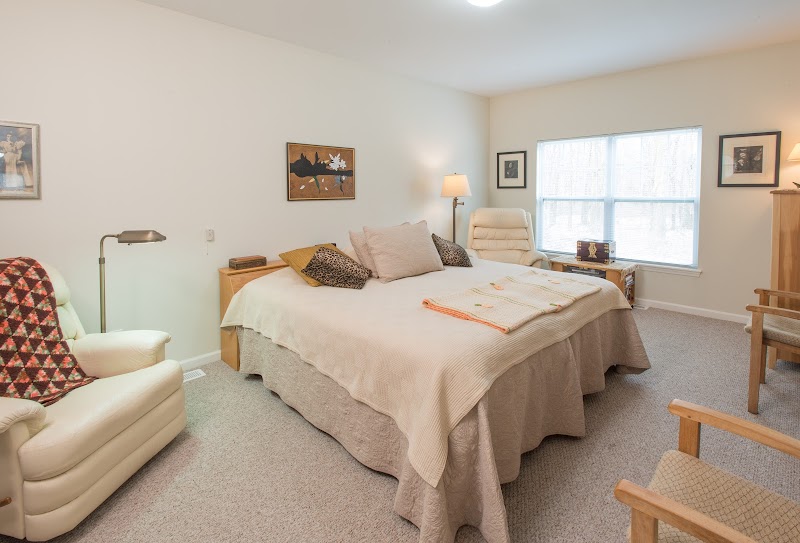
Friendship Village

1400 N Drake Rd, Kalamazoo, MI 49006 (269) 381-0560
Non profit - Corporation 57 Beds Independent Data: November 2025
Trust Grade
83/100
#24 of 422 in MI
Last Inspection: January 2025

Within standard 12-15 month inspection cycle. Federal law requires annual inspections.

Overview

Friendship Village in Kalamazoo, Michigan, has a Trust Grade of B+, which means it is recommended and above average in quality. It ranks #24 out of 422 facilities in the state, placing it in the top half, and #1 out of 9 in Kalamazoo County, indicating it is the best local option available. The facility's performance is stable, with 7 issues reported in both 2024 and 2025. Staffing is a strong point with a 5-star rating and only 26% turnover, well below the state average, which suggests that staff are familiar with the residents. However, there are some concerns, such as a lack of proper food safety practices, which could lead to foodborne illnesses, and issues with incomplete staffing data submission, raising questions about overall care consistency. On the positive side, there are no fines reported, and the facility has more RN coverage than 86% of Michigan facilities, ensuring that residents receive attentive care.

Trust Score
B+
83/100
In Michigan
#24/422
Top 5%
Safety Record
Low Risk
No red flags
Inspections
Holding Steady
7 → 7 violations
Staff Stability
✓ Good
26% annual turnover. Excellent stability, 22 points below Michigan's 48% average. Staff who stay learn residents' needs.
Penalties
✓ Good
No fines on record. Clean compliance history, better than most Michigan facilities.
Skilled Nurses
✓ Good
Each resident gets 86 minutes of Registered Nurse (RN) attention daily — more than 97% of Michigan nursing homes. RNs are the most trained staff who catch health problems before they become serious.
Violations
⚠ Watch
21 deficiencies on record. Higher than average. Multiple issues found across inspections.
★★★★★
5.0
Overall Rating
★★★★★
5.0
Staff Levels
★★★★☆
4.0
Care Quality
★★★★☆
4.0
Inspection Score
Stable
2024: 7 issues
2025: 7 issues

The Good

  • 5-Star Staffing Rating · Excellent nurse staffing levels
  • 4-Star Quality Measures · Strong clinical quality outcomes
  • Low Staff Turnover (26%) · Staff stability means consistent care
  • Full Sprinkler Coverage · Fire safety systems throughout facility
  • No fines on record
  • Staff turnover is low (26%)

    22 points below Michigan average of 48%

Facility shows strength in staffing levels, quality measures, staff retention, fire safety.

The Bad

No Significant Concerns Identified

This facility shows no red flags. Among Michigan's 100 nursing homes, only 1% achieve this.

The Ugly 21 deficiencies on record

Jan 2025 7 deficiencies
CONCERN (D)

Potential for Harm - no one hurt, but risky conditions existed

Resident Rights (Tag F0550)

Could have caused harm · This affected 1 resident

**NOTE- TERMS IN BRACKETS HAVE BEEN EDITED TO PROTECT CONFIDENTIALITY** Based on observation, interview, and record review the facility failed to provide a dignified dining experience for 2 (Resident ...

Read full inspector narrative →
**NOTE- TERMS IN BRACKETS HAVE BEEN EDITED TO PROTECT CONFIDENTIALITY** Based on observation, interview, and record review the facility failed to provide a dignified dining experience for 2 (Resident #14 and #21) of 2 residents reviewed for dignity resulting in the potential for feelings of diminished self-worth, sadness, and frustration. Findings include: Resident #14 Review of Resident #14's admission Record revealed Resident #14 was originally admitted to the facility on [DATE] with pertinent diagnoses which included depression. Review of Minimum Data Set (MDS) assessment for Resident #14, with a reference date of 10/22/24 revealed a Brief Interview for Mental Status (BIMS) score of 5/15 which indicated Resident #14 was severely cognitively impaired. Review of Resident #14's Care Plan revealed, (Resident #14) is at nutritional risk due to receiving hospice care, needs assistance at meals-primarily dependent on staff . Resident #21 Review of Resident #21's admission Record revealed Resident #21 was originally admitted to the facility on [DATE] with pertinent diagnoses which included depression and anxiety. Review of Minimum Data Set (MDS) assessment for Resident #21, with a reference date of 11/7/24 revealed a Brief Interview for Mental Status (BIMS) score of 1/15 which indicated Resident #21 was severely cognitively impaired. Review of Resident #21's Care Plan revealed, (Resident #21) is nutritionally at risk r/t (related to) . primarily totally dependent on staff at meals . In an dining observation on 1/22/25 at 8:52 AM, Resident #14 and #21 sat at a table together and were assisted with eating their meal by Certified Nursing Assistant (CNA) X. CNA X was talking loudly to Dietary Staff (DS) KK about her plans for when she got out of work. CNA X was overheard by this writer stating, I am so ready to go home, I don't want to be here all day, I don't really want to be here at all today. DS KK and CNA X continued to carry on a personal conversation with each other for several minutes. It was noted that CNA X and DS KK did not interact with Resident #14 or Resident #21 at all during the meal. In an dining observation on 1/22/25 at 12:32 PM, Resident #21 was being assisted with eating by CNA X. CNA X was sitting at the table next to Resident #21 and CNA W. It was noted that CNA X had turned her back to Resident #21 and would only turn towards Resident #21 when she was assisting her with bites of food. It was also noted that CNA X was having a personal conversation with CNA W, and would only stop to offer Resident #21 bites of food when CNA W would begin interacting with the resident that he was assisting to eat. In an interview on 1/21/25 at 9:52 AM, Family Member (FM) N reported that they felt like the staff could improve on how they assist residents with eating in the dining room. FM N reported that they felt like the staff rushed residents, and did not take the time to interact with the residents when they were assisting them to eat. In an interview on 1/23/25 at 11:15 AM, Food Service Manager (FSM) LL reported that she supervised the dining area and would observe meal times frequently. FSM LL reported that she had previously voiced concerns with management about the way that staff behaved and interacted with and in front of the residents as they were eating in the dining room. FSM LL reported that she had witnessed staff using their phones, wearing ear buds, and ignoring residents they were assisting frequently in the dining room. FSM LL reported that she had voiced her concerns to management and they had posted signs about not using phones in the dining room, but she felt that improvement was still needed on how staff interacted with the residents as they were eating. FSM LL confirmed that CNA X was a staff member that she had observed ignoring the residents as she assisted them to eat on multiple occasions. In an interview on 1/23/25 at 12:18 PM, Health Care Manager (HC-M) E' reported that she had been made aware of staff using phones in the dining room while assisting residents in the past, but she was not aware that there were still concerns with the way that staff were interacting with residents in the dining room during meals. Using the reasonable person concept, though Resident #14 and Resident #21 had decreased ability to verbally express their own thoughts due to medical diagnoses, any reasonable person would likely feel a decreased sense of self-worth and frustration in the situations observed. Review of the facility's Dignity Policy last revised February 2021 revealed, Policy Statement: Each resident shall be cared for in a manner that promotes and enhances his or her sense of well-being, level of satisfaction with life, and feelings of self-worth and self-esteem .Policy Interpretation and Implementation: 1. Residents are treated with dignity and respect at all times .5. When assisting with care, residents are supported in exercising their rights. For example, residents are: .e. provided with a dignified dining experience .
CONCERN (D)

Potential for Harm - no one hurt, but risky conditions existed

Comprehensive Care Plan (Tag F0656)

Could have caused harm · This affected 1 resident

**NOTE- TERMS IN BRACKETS HAVE BEEN EDITED TO PROTECT CONFIDENTIALITY** Resident #21 Review of Resident #21's admission Record revealed Resident #21 was originally admitted to the facility on [DATE] w...

Read full inspector narrative →
**NOTE- TERMS IN BRACKETS HAVE BEEN EDITED TO PROTECT CONFIDENTIALITY** Resident #21 Review of Resident #21's admission Record revealed Resident #21 was originally admitted to the facility on [DATE] with pertinent diagnoses which included depression and anxiety. Review of Minimum Data Set (MDS) assessment for Resident #21, with a reference date of 11/7/24 revealed a Brief Interview for Mental Status (BIMS) score of 1/15 which indicated Resident #21 was severely cognitively impaired. Review of Resident #21s Care Plan revealed, (Resident #21) is nutritionally at risk . Interventions: Per families request, please provide a straw with every meal. Start date: 9/18/23 . Review of Resident #21's Care Plan revealed, ( Resident #21) is at risk for alteration in skin integrity . Interventions: . Geri Sleeves (Skin protectors that can be worn on the arms and legs to protect against skin tears and friction) to bilateral upper extremities, ON in the AM and OFF in the PM. Date initiated: 6/13/23 . In an dining observation on 1/22/25 at 12:32 PM, Resident #21 was being assisted by Certified Nursing Assistant (CNA) X. CNA X held a cup of juice for Resident #21 and gave her sips in between bites of food. It was noted that Resident #21's cup did not have a straw. In an observation on 1/22/25 at 1:00 PM, Resident #21 was sitting in her wheelchair in the dining room. It was noted that Resident #21 was not wearing geri sleeves on either of her arms. In an observation on 1/23/25 at 10:01 AM, Resident #21 was sitting in her wheelchair in her room. It was noted that that Resident #21 was not wearing geri sleeves on either of her arms. In an interview on 1/23/25 at 10:10 AM, CNA BB reported that she did not think that Resident #21 had ordered for geri sleeves. CNA BB reported that Resident #21 was supposed to have a straw with her drinks at meals, because her daughter had noticed that she drinks more fluids when she has a straw. In an interview on 1/23/25 at 11:15 AM, Food Service Manager (FSM) LL reported that Resident #21's Care Plan noted that she required a straw with her drinks per her daughter's request, and that the expectation was that staff would provide a straw for all drinks at every meal for Resident #21. In an interview on 1/23/25 at 12:12 PM, Registered Nurse (RN) GG reported that she did not think that Resident #21 needed to wear geri sleeves if she had a long sleeve shirt on. In an interview on 1/23/25 at 12:18 PM, Health Care Manager (HC-M) E reported that Resident #21's care plan indicated that she required geri sleeves to be worn every day, and that she also required a straw with drinks at meals. HC-M E reported that Resident #21's care plan did not indicate that she could wear long sleeve shirts instead of geri sleeves. HC-M E reported that it was her expectation that staff would be applying the geri sleeves every day for Resident #21 and providing straws with all of Resident #21's drinks. Based on observation, interview, and record review the facility failed to implement care plan interventions for 2 (Resident #30 and Resident #21) of 12 residents reviewed for care plan implementation, resulting in the potential for skin breakdown for Resident #30 who's heel protectors (a padded cushion for a heel to rest in to prevent pressure caused from a heel resting directly on a mattress) not being consistently applied while in bed and Geri sleeves (sleeves worn to protect fragile skin from tearing) not being consistently applied for Resident #21 and Resident #30, and Resident #21 not consistently receiving a straw in her drinks at meals. Findings include: Resident #30 Review of an admission Record revealed Resident #30 had pertinent diagnoses which included: Alzheimer's disease, restlessness and agitation, and repeated falls. Review of Order Summary for Resident #30 revealed Geri-sleeves to bilateral upper extremities (both arms) ON in AM and OFF in PM two times a day for fragile skin ordered on 9/5/2024. Review of Care Plan for Resident #30 revealed problem: is at risk for impaired skin integrity related to impaired mobility .intervention/task-heel protectors on when resident is in bed and float heels off of bed initiated 7/03/24 .Geri-sleeves to bilateral upper extremities ON in AM and OFF in PM initiated 9/4/24. During an observation on 1/21/25 at 9:04 AM., Resident #30 was in bed, her feet were uncovered. Resident #30's left foot was bare, with a noted scab on the top of the second toe, and her right foot had a non-skid sock in place. Neither foot had a heel protector on, and both heels were resting directly on the mattress. Resident #30's heel protectors were observed in the tan recliner on the other side of the room. At this same time, Resident #30's tan geri sleeves were observed balled together on top of the end table beside the soft brown recliner chair in her room. In an interview on 1/21/25 at 12:11 PM., Certified Nurse Assistant (CNA) V reported Resident #30 should wear heel protectors when in bed and they were not on Resident #30's feet when she got her ready today. In an observation on 1/21/25 at 12:12 PM., Resident #30's Geri sleeves were observed balled together on top of the end table beside the soft brown recliner chair that Resident #30 was sitting in, in her room. Resident #30's geri sleeves were in the same position they had been in earlier this day. During an observation on 1/22/25 at 8:08 AM., Resident #30 was in bed, sleeping, and her heel protectors were observed in the soft brown recliner in her room and not on her feet. In an interview on 1/22/25 at 12:11 PM., CNA CC reported Resident #30 should wear heel protectors while in bed and geri-sleeves when she is up. In an observation on 1/22/25 at 12:14 PM., Resident #30 was in her soft brown recliner chair in her room and her geri sleeves were noted on the end table next to her. In an observation and interview on 1/23/25 at 9:27 AM., Resident #30 was sitting at a table in the dining room waiting for breakfast to be served. Resident #30 did not have her Geri sleeves on. This surveyor asked Resident #30 about her geri sleeves and Resident #30 stated I guess we forgot them today. In an interview on 1/23/25 at 9:45 AM., CNA Y reported that Resident #30 should wear heel protectors when in bed and geri sleeves when she gets up. CNA Y reported that Resident #30 was assisted this morning by a hospice aide and CNA Y confirmed that Resident #30 was not wearing her geri sleeves. CNA Y obtained a new pair and applied Resident #30's geri sleeves. In an interview on 1/23/25 at 10:43 AM., Health Center Manager (HCM) E reported her expectations were that the care plan interventions and physician orders were followed, and that Resident #30 should have heel protectors on when in bed and geri sleeves on when up. HCM E reported Resident #30 does refuse to wear heel protectors and geri sleeves at times. HCM E reported that refusal to wear should be documented. Review of Treatment Administration Record for Resident #30 for the dates of 1/21/25, 1/22/25, and 1/23/25 revealed on 1/21/25 'Licensed Practical Nurse (LPN) JJ documented Resident #30 geri sleeves were on. On 1/23/25 Registered Nurse (RN) GG documented Resident #30 geri sleeves were on. On both dates, Resident #30 was observed without her geri sleeves on. In an interview on 1/23/25 at 11:51 AM Director of Nursing (DON) B reported her expectation was that the care plan interventions were followed by staff. Review of facility policy Care Plans, Comprehensive Person-Centered with a revision date of March 2022 revealed . Each resident's comprehensive person-centered care plan is consistent with resident's rights to participate in the development and implementation of his or her plan of care . receive the services and/or items included in the plan of care .
CONCERN (D)

Potential for Harm - no one hurt, but risky conditions existed

Deficiency F0657 (Tag F0657)

Could have caused harm · This affected 1 resident

**NOTE- TERMS IN BRACKETS HAVE BEEN EDITED TO PROTECT CONFIDENTIALITY** Based on interview and record review, the facility failed to revise the nutrition care plan of one resident (Resident #344) of 1...

Read full inspector narrative →
**NOTE- TERMS IN BRACKETS HAVE BEEN EDITED TO PROTECT CONFIDENTIALITY** Based on interview and record review, the facility failed to revise the nutrition care plan of one resident (Resident #344) of 12 residents reviewed for comprehensive care plans resulting in confusion regarding the diet and fluid restriction. Findings include: Resident #344(R344) Review of the admission Record and Minimum Data Set (MDS) dated [DATE] revealed R344 admitted to the facility on [DATE] with diagnoses including Stage 4 chronic kidney disease (kidney failure) and congestive heart failure (condition where the heart doesn't pump blood as it should). Brief Interview for Mental Status (BIMS) reflected a score of 13 out of 15 which indicated R344 was cognitively intact (13 to 15 cognitively intact). During an interview on 1/21/2025 at 10:23 AM, R344 reported that she had fluid retention in her legs which is an ongoing problem and she wishes it would go away. R344 also stated that she went to the hospital shortly after admission at the facility for fluid retention from congestive heart failure and renal disease. Review of R344's physician orders revealed 2 different nutrition orders. The first nutrition order revealed No concentrated sweets diet, Regular level 7 texture, regular/thin liquids (level 0) consistency. Under directions No added salt, 2000 ml (milliliter) fluid restriction qd (every day). The second order revealed No concentrated sweets diet, Regular level 7 texture, regular/thin liquids (level 0) consistency, fluid restriction 2000 ml/day. Dietary 1500 ml/day and nursing 500 ml/day. Under directions two times a day 2000 ml fluid restriction qd (every day). Review of the Dietary/Nutrition Evaluation-V 2.0 dated 1/10/2025 revealed Diet orders/Types specific to this resident: No added salt, NCS (no concentrated sweets) fluid restriction: yes, nursing fluid allowed per day (cc-cubic centimeter in volume; same as ml): 360, dietary fluid allowed per day (cc) :1140 6. Interventions fluid restriction 1500 ml qd no water at bedside. Review of R344's nutrition care plan revealed encourage fluids fluid Restriction: 2000ml per day, no water at bedside. Review of R344's individual service plan (ISP) that the certified nursing assistants (CNAs) have access to revealed Diet as ordered, honor food preferences as able. NCS diet, Regular texture, and regular/thin consistency liquids, Encourage fluid intake Fluid Restriction 2000 ml per day, no water pitcher at bedside, may have ice chips at bedside. Review of the Nutrition Note on 1/15/2025 completed by Food Service Manager (FSM) LL who was also the Certified Dietary Manager (CDM) revealed Per nursing/therapy: (R344) diet was upgraded to NAS/NCS (No added salt/No concentrated sweets) diet, regular texture and regular/thin consistency liquids Fluid restrictions was upgraded from 1500ml QD to 2000ml QD. Orders, care plan, [NAME] have been updated. CDM will continue to monitor weights, labs, and FARS (food acceptance records). CDM will consult with IDT (interdisciplinary team) and RD (registered dietitian) as necessary. During an interview on 1/22/2025 at 1:04 PM, FSM LL stated that R344 should be on a NAS, NCS diet and 2000ml fluid restriction per day. FSM LL agreed that the care plan was confusing since it stated, encourage fluids and then has 2000 ml fluid restriction and stated she would talk to the Registered Dietitian. FSM LL agreed that on R344's ISP, NAS was missing on the diet since it wasn't on the care plan and didn't carry over. She also stated that she usually divides up fluid restriction between nursing and dietary and forgot to update it on the care plan which would show up on the ISP. FSM LL reported that nursing should get 360 ml of fluid a day and dietary should have 480 ml with each meal which leaves 200 ml for any other fluid during the day such as soups. During the interview, FSM LL updated the care plan and ISP to indicate she was on a NAS diet and fluid restriction divided between nursing and dietary and took out encourage fluids. During an interview on 1/23/2025 at 8:58 AM, Rehab Nurse Manager (RNM) F stated that she agreed that the care plan and ISP were confusing indicating to encourage fluids and then she was on a fluid restriction. RNM F reported that nursing was giving different amounts of fluid than what FSM LL had noted. RNM F stated she would talk to the FSM LL and the Registered Dietitian and make sure the care plan and ISP are updated to reflect the correct diet and fluid restriction. Review of the Care Plans, Comprehensive Person-Centered Policy with a revision date of March 2022 revealed Policy Interpretation and Implementation 11. Assessments of residents are ongoing and care plans are revised as information about the residents and the residents' conditions change.
CONCERN (D)

Potential for Harm - no one hurt, but risky conditions existed

ADL Care (Tag F0677)

Could have caused harm · This affected 1 resident

**NOTE- TERMS IN BRACKETS HAVE BEEN EDITED TO PROTECT CONFIDENTIALITY** Based on observation, interview, and record review, the facility failed to provide assistance with eating for 1 (Resident #5) of...

Read full inspector narrative →
**NOTE- TERMS IN BRACKETS HAVE BEEN EDITED TO PROTECT CONFIDENTIALITY** Based on observation, interview, and record review, the facility failed to provide assistance with eating for 1 (Resident #5) of 12 residents reviewed for activities of daily living (ADL) care resulting in the potential for avoidable negative physical outcomes for resident's who are dependent on staff for assistance. Findings include: Resident #5 Review of Resident #5's admission Record revealed Resident #5 was originally admitted to the facility on [DATE] with pertinent diagnoses which included dementia. Review of Resident #5's Care Plan revealed, (Resident #5) is at nutritional risk r/t (related to) receiving hospice care, gradual weight loss over past year, continued gradual weight loss in past 30 days, physical debility/decreased muscle mass . date revised on 10/26/24. Interventions: Offer set-up assist and verbal cues and encouragement q (every) meal. Date initiated: 6/14/23 Review of Resident #5's LCS Dietary/Nutrition Profile Note dated 10/25/24 revealed, .H. Oral Status. 2. Eating: The ability to use suitable utensils to bring food and/or liquid to the mouth and swallow food and/or liquid once the meal is placed before the resident. E. Substantial/maximal assistance. 3. Adaptive Equipment: needing up to total assistance in the past 7 days . K. Nutritional Risk . 2. At risk for unintentional weight loss: yes. 3. If yes, please explain: Receiving Hospice care and showing gradual weight losses . Needing increased assistance at meals . In a interview on 1/21/25 at 9:52 AM, Family Member (FM) N reported that they had concerns with the facility's process for assisting residents in the dining room. FM N reported that they had frequently noticed residents in the dining room that needed more assistance with their meals than the facility provided. FM N reported concerns that the facility did not have enough staff in the dining room to monitor and assist residents when they ate. In an interview on 1/21/25 at 12:45 PM, CNA V reported that Resident #5 only needed verbal reminders from staff to eat. In an dining observation on 1/21/25 at 12:53 PM: Resident #5 was sitting at a table with her lunch plate in front of her untouched. It was noted that Resident #5 was closing her eyes. Certified Nursing Assistant (CNA) V approached Resident #5 and offered and assisted Resident #5 to take a spoonful of her meal. Resident #5 ate the spoonful of food that CNA V offered her. After Resident #5 ate the spoonful of food, CNA V left Resident #5's table to assist another resident out of the dining room. It was noted that after CNA V left Resident #5, she did not continue to eat and sat looking at her plate of food. Resident #5 was noted to attempt to take a drink of water from her cup, but her hands were too shaky for her to hold the cup, and she was unable to bring the cup to her mouth. At 12:57 PM, CNA V returned to Resident #5 and offered her a spoonful of her lunch which Resident #5 accepted. After CNA V offered and assisted Resident #5 with one spoonful of food, she left to assist another resident. It was noted that once CNA V left Resident #5, she did not continue to eat, and stared at her plate of food again. In an observation on 1/22/25 at 12:11 PM, CNA EE reported that she was unable to identify all the residents that required assistance with eating. CNA EE reported that most of the residents required assistance and that staff did the best they could to assist everyone that needed help. In an interview on 1/22/25 at 12:15 PM, CNA AA reported that Resident #5 did not require assistance with eating. In an observation on 1/22/25 at 12:17 PM, Resident #5 was sitting at the dining room table with a full plate of food in front of her that included mashed potatoes, vegetables, turkey, stuffing. Resident #5 also had a parfait dessert in a plastic cup. Resident #5 was sitting at the table staring at her plate with her food untouched. Resident #5 grabbed a fork and attempted to gather some of the turkey and mashed potatoes onto her fork, but was not able to. Resident #5 tried to maneuver her fork to get food onto it for a few minutes before she put the fork down and continued to stare at her plate. At 12:32 PM, CNA AA approached Resident #5 and verbally reminded Resident #5 to eat and then left Resident #5 seated at the table unassisted. Resident #5 continued to stare at her plate of food. At 12:51 PM, CNA W approached Resident #5 and verbally reminded Resident #5 to eat and asked if she was not hungry. Resident #5 told CNA W that she needed more time. CNA W left Resident # 5 and she continued to stare at her plate. At 12:59 PM, CNA AA approached Resident #5 and verbally reminded her to eat and offered to assist her. It was noted that with the assistance of CNA AA, Resident #5 began to take spoonfuls of her dessert parfait. After Resident #5 began to take spoonfuls of her parfait, CNA AA left Resident #5. Resident #5 continued to attempt to eat her parfait. It was noted that Resident #5 struggled to get the spoonfuls of food to her mouth, and spilled a lot of the food onto her lap and the floor. At 1:09 PM, CNA AA returned to Resident #5 and asked if she was ready to go back to her room. Resident # 5 agreed and left the dining room. It was noted that her plate of mashed potatoes, vegetables, turkey and stuffing remained untouched. In an interview on 1/23/25 at 10:10 AM, CNA BB reported that Resident #5 needed frequent verbal reminders to eat during meals because she would just sit there until she falls asleep. CNA BB did not think that staff needed to assist resident with eating. In an interview on 1/23/25 at 11:15 AM, Food Service Manager (FSM) LL reported that she did not think that Resident #5 required assistance with eating. FSM LL reported that staff needed to provide verbal reminders to Resident #5 because she would sometimes fall asleep at the table. When this writer queried about Resident #5's most recent LCS Dietary/Nutrition Profile Note dated 10/25/24 which indicated that Resident #5 had required up to total assistance, FSM LL was unable to report why Resident #5 had not been receiving more assistance at meals based on that note. FSM LL was unable to report what the expectation was for how often staff should be observing and reminding Resident #5 to eat. FSM LL confirmed that she had noticed that when Resident #5 was more lethargic, she did require more assistance. FSM LL reported that it was challenging for the facility to meet the needs of all of the residents in the dining room that required assistance with eating. FSM LL reported that she had voiced her concerns about this challenge to management, but that she was told that they had adequate staff in the facility to assist with dining. In an interview on 1/23/25 at 12:18 PM, Health Care Manager (HC-M) E reported that she did frequently observe dining, but she had not observed Resident #5 recently, and was unaware that Resident #5 required assistance with eating.
CONCERN (D)

Potential for Harm - no one hurt, but risky conditions existed

Accident Prevention (Tag F0689)

Could have caused harm · This affected 1 resident

**NOTE- TERMS IN BRACKETS HAVE BEEN EDITED TO PROTECT CONFIDENTIALITY** On 1/22/25 at 12:45 PM., Certified Nurse Assistant (CNA) AA was observed walking with Resident #13 from the dining room down hal...

Read full inspector narrative →
**NOTE- TERMS IN BRACKETS HAVE BEEN EDITED TO PROTECT CONFIDENTIALITY** On 1/22/25 at 12:45 PM., Certified Nurse Assistant (CNA) AA was observed walking with Resident #13 from the dining room down hall 1. CNA AA was holding on to left sleeve of Resident #13's fleece jacket, while Resident #13 used a front wheeled walker to ambulate. Resident #13 was not wearing a gait belt. Based on observation, interview and record review, the facility failed to ensure gait belt (a strap with a buckle that helps residents who have trouble walking or standing. Gait belts are used to support patients and help them move safely) use while ambulating one resident (Resident #343) of two residents reviewed for falls resulting in a fall and potential for injury. Findings include: Resident #343(R343) Review of the admission Record and Minimum Data Set (MDS) dated [DATE] revealed R343 admitted to the facility on [DATE] with diagnoses including tibia fracture (shinbone fracture), left patellar fracture (broken kneecap) and nondisplaced bilateral S4 fracture (sacral fracture, a triangular shaped bone at the base of the spine that hasn't moved out of place). Brief Interview for Mental Status (BIMS) reflected a score of 15 out of 15 which indicated R343 was cognitively intact (13 to 15 cognitively intact). During an interview on 1/21/2025 at 10:49 AM, R343 stated that she fell and had fractures prior to coming to the facility and then she fell 2 times after she was admitted to the facility. R343 stated that a gait belt wasn't used for one of the falls when she was walking with her walker to the bathroom with a Certified Nursing Assistant (CNA). She said the CNA tried catching her and she fell to the ground. Review of the fall report dated 1/12/2025 revealed Resident SBA (stand by assist) with walker to bathroom per therapy, resident walking with CENA, resident fell backwards, staff member lowered her to the ground. upon assessment resident sitting on the floor in front of bathroom door with walker and CNA, Resident ASSESSED NO INJURY v/s (vital signs) WNL (within normal limits). Current Status: (R343) requires up to the following staff assist: Substantial/maximum level of assist x1 for bed mobility, dressing, toilet use, personal hygiene and bathing, Substantial/maximum level of assist x1 for transfers and ambulation using gait belt/ Wheelchair. Use of a gait belt wasn't indicated on the fall report. Review of the post fall evaluation dated 1/12/2025 revealed walking unsteady gait, increased weakness and inability to sustain balance while walking, resident also stated she likes to hurry and has to remind herself to slow down. Review of R343's fall risk evaluation dated 1/12/2025 revealed Fall Risk: History of falls (past 3 months): 1-2 falls in past 3 months . Notes: FALL WITH FRACTURES Gait / balance: Balance problem while walking. Gait / balance: Decreased muscular coordination. Gait / balance: Change in gait pattern when walking through doorway. Gait / balance: Jerking or unstable when making turns. Gait / balance: Requires use of assistive devices (i.e. cane, wheelchair, walker, furniture). Gait / balance: Balance problem while standing . Fall Risk Score: 18.0 which indicates she was a high risk for falls. Review of R343's fall risk evaluation dated 1/9/2025 revealed Fall Risk: History of falls (past 3 months): 1-2 falls in past 3 months . Gait / balance: Requires use of assistive devices (i.e. cane, wheelchair, walker, furniture). Gait / balance: Balance problem while standing . Fall Risk Score: 12.0 which indicated she was a high risk for falls. During an interview on 1/23/2025 at 9:46 AM, CNA Z reported that she was the CNA with R343 when she fell on 1/12/2025. CNA Z stated that she was taking R343 out of the bathroom and R343 was using her walker and she was walking by her side with the wheelchair and she didn't use a gait belt. CNA Z said she received gait belt training but she doesn't think about using a gait belt with residents and is used to transferring residents without one. During an interview on 1/23/2025 at 11:09 AM, Director of Nursing B and Health Center Nurse Manager (HCNM) E stated that that they don't have a gait belt policy but gait belts should be used with all transfers. During an interview on 1/23/2025 at 11:17 AM, Rehab Director (RD) Q stated that a gait belt should be used with transfers when a resident needs assistance from a staff member. During an interview on 1/23/2025 at 11:27 AM, Occupational Therapist (OT) M stated that a gait belt should always be used when a resident is a 1-person assistance with staff. OT M stated that R343 needed assistance so a gait belt should always be used with her. OT M also said that R343 told her that staff wasn't using a gait belt when she fell on 1/12/2025. During an interview on 1/23/2025 at 12:15 PM, CNA T stated that a gait belt should always be used for transfers or when ambulating a resident when they need assistance. During an interview on 01/23/2025 at 12:29 PM CNA BB reported that a gait belt should always be used for transfers or when ambulating a resident when they need assistance. Review of CNA Z's Skills Fair Required Learning Stations on 1/7/2025 revealed 7. Lift and Gait Belt Training: demonstrate proper use of a sit to stand lift and hoyer lift. Demonstrate proper gait belt placement and transfer technique. The box was checked to show it was completed. Review of CNA Z's Transfer Training and Ergo (Ergonomics) quiz dated 11/19/2024 revealed that CNA Z answered the questions appropriately regarding use of a gait belt 3. True: use a gait belt with all transfers unless contraindicated. Review of CNA Z s new hire paperwork revealed transfers and gait belts skills were completed on 10/29/2024. During another interview on 1/23/2025 at 12:28 PM, DON B stated she wasn't aware that a gait belt wasn't used with R343's fall on 1/12/2025.
CONCERN (D)

Potential for Harm - no one hurt, but risky conditions existed

Respiratory Care (Tag F0695)

Could have caused harm · This affected 1 resident

Based on observation, interview, and record review the facility failed to ensure accurate oxygen administration via nasal cannula (a tube with prongs into the nostrils of the nose to deliver additiona...

Read full inspector narrative →
Based on observation, interview, and record review the facility failed to ensure accurate oxygen administration via nasal cannula (a tube with prongs into the nostrils of the nose to deliver additional oxygen to a body's blood) to 1 (Resident #4) of 1 reviewed for respiratory care, resulting in the resident not consistently receiving her oxygen at the level ordered. Findings include: Resident #4 Review of an admission Record revealed Resident #4 had pertinent diagnoses which included: acute respiratory failure with hypoxia (caused when lungs cannot deliver enough oxygen or remove enough carbon dioxide from the body's blood). Review of Order Summary for Resident #4 revealed PRN (as needed), shortness of breath, wheezing O2 (oxygen) @ (at) 3L (liters) via nasal cannula, high flow cannula .as needed for hypoxia . started 8/27/2024 . Titrate Oxygen to keep O2 sat (blood oxygenation readings) @ 2-3 L via nasal cannula .< (greater than) 90% (percent). two times a day . started 7/23/2024. Review of Care Plan for Resident #4 revealed problem, oxygen therapy r/t (related to) Hypoxia . intervention/tasks . administer oxygen as ordered. On 1/21/25 at 10:43 AM., Resident #4 was observed sitting in her wheelchair, in her room, with a nasal cannula on her face and connected to the oxygen concentrator (machine that delivers oxygen) with the setting of 2L for oxygen delivery. On 1/22/25 at 8:40 AM., Resident #4 was observed lying in her bed in her room with a nasal cannula on her face and connected to the oxygen concentrator with the settings of 1.5L for oxygen delivery. On 1/22/25 at 12:07 PM., Resident #4 was observed sitting in her wheelchair in the dining room with a portable tank of oxygen present on the back of her wheelchair, with a nasal cannula connected to the tank and on the resident's face, with the setting on the tank of 1.5L for oxygen delivery. A tag was noted on the oxygen tank that revealed Resident #4's oxygen delivery settings were 1.5L. In an interview on 1/22/25 at 12:31 PM., Certified Nurse Assistant (CNA) X reported Resident #4's oxygen settings was 1L. CNA X reported that the oxygen settings were written on the tag present on the oxygen tank on the Resident's wheelchair. CNA X reported the tag was the only place she knew to get the oxygen settings for a resident. CNA R was present during this interview, and when CNA X reported Resident #4's oxygen settings were 1L CNA R asked CNA X Are you sure? and then CNA R stated I don't think so as her response to Resident #4's oxygen settings being 1L. CNA R reported she would have to confirm with the nurse what Resident #4's oxygen setting should be. In an interview on 1/23/25 at 8:24 AM., CNA T reported Resident #4's oxygen settings was 1L, and that was what was written on the tag on the oxygen tank on the back of Resident #4's wheelchair. CNA T reported the setting on the oxygen concentrator for Resident #4 was whatever it is when you turn it on. On 1/23/25 at 8:30 AM., Resident #4's oxygen tank on the back of her wheelchair, while she was eating breakfast in the dining room revealed a tag with 1.5L written on it and the tank dial turned to 1.5L of oxygen to be delivered through her nasal cannula. In an interview on 1/23/25 at 9:50 AM., Licensed Practical Nurse (LPN) FF reported Resident #4's oxygen orders were for 2L PRN via nasal cannula. LPN FF reported that Resident #4's oxygen liter flow could be adjusted per the assessment of her oxygen sats (reading that indicated how much oxygen was in the body) that was completed and documented by the nurse. In an interview on 1/23/25 at 9:57 AM., LPN FF reviewed the oxygen orders for Resident #4 and confirmed there were two active orders, and the orders included 2L or 2-3L. LPN FF reported that the nurses could titrate (adjust the flow of oxygen up or down) Resident #4's oxygen according to her O2 sats. LPN FF confirmed with this surveyor that Resident #4's oxygen concentrator in her room was set to 1.5L and Resident #4 was wearing the nasal cannula that was connected to the concentrator. LPN FF also confirmed that the tag attached to the oxygen tank on back of Resident #4's wheelchair did indicate that the tank setting was to be 1.5L. LPN FF reported she had no idea who changed the orders. Review of Treatment Administration Record (TAR) for Resident #4 for dates 1/22/25, and 1/23/25 revealed LPN FF documented that Resident #4's oxygen was titrated to maintain O2 sats <90%. No noted documentation of Resident #4's O2 sats was in the TAR. Review of O2 Sats Summary for Resident #4 revealed no O2 Sat documentation for 1/22/25 nor 1/23/25. In an interview on 1/23/25 at 10:55 PM., Health Center Manager (HCM) E reported Resident #4's oxygen order was PRN, and there was an order to titrate her oxygen as needed. HCM E reported she was aware there was an issue with the order, and it was now cleared up with the provider. New orders were being entered. In an interview on 1/23/25 at 12:03 PM., Director of Nursing (DON) B reported her expectation was that physician orders were followed. DON B reported she discussed Resident #4's oxygen orders with the provider and the order was changed immediately. Review of facility policy Medication Order with a revision date of November 2014, revealed oxygen orders-when recording orders for oxygen, specify the rate of flow, route and rationale.
CONCERN (D)

Potential for Harm - no one hurt, but risky conditions existed

Medical Records (Tag F0842)

Could have caused harm · This affected 1 resident

**NOTE- TERMS IN BRACKETS HAVE BEEN EDITED TO PROTECT CONFIDENTIALITY** Based on observation, interview, and record review, the facility failed to accurately document meal intake for 2 (Resident #5 an...

Read full inspector narrative →
**NOTE- TERMS IN BRACKETS HAVE BEEN EDITED TO PROTECT CONFIDENTIALITY** Based on observation, interview, and record review, the facility failed to accurately document meal intake for 2 (Resident #5 and Resident #30) of 12 residents reviewed for complete and accurate medical records resulting in an inaccurate reflection of the resident's meal intakefor Resident #5 and an inaccurate reflection of care provided for Resident #30. Findings include: Review of Resident #5's admission Record revealed Resident #5 was originally admitted to the facility on [DATE] with pertinent diagnoses which included dementia. Review of Resident #5's Care Plan revealed, (Resident #5) is at nutritional risk r/t (related to) receiving hospice care, gradual weight loss over past year, continued gradual weight loss in past 30 days, physical debility/decreased muscle mass . date revised on 10/26/24. Interventions: Monitor food consumption and offer sub (substitution) if 50% or more is uneaten, document intake of meals. Date initiated: 6/14/23 . In an observation on 1/22/25 at 12:17 PM, Resident #5 was sitting at the dining room table with a full plate of food in front of her that included mashed potatoes, vegetables, turkey, stuffing. Resident #5 also had a parfait dessert in a plastic cup. Resident #5 was sitting at the table staring at her plate with her food untouched. Resident #5 grabbed a fork and attempted to gather some of the turkey and mashed potatoes onto her fork, but was not able to. Resident #5 tried to maneuver her fork to get food onto it for a few minutes before she put the fork down and continued to stare at her plate. At 12:32 PM, CNA AA approached Resident #5 and verbally reminded Resident #5 to eat and then left Resident #5 seated at the table unassisted. Resident #5 continued to stare at her plate of food. At 12:51 PM, CNA W approached Resident #5 and verbally reminded Resident #5 to eat and asked if she was not hungry. Resident #5 told CNA W that she needed more time. CNA W left Resident # 5 and she continued to stare at her plate. At 12:59 PM, CNA AA approached Resident #5 and verbally reminded her to eat and offered to assist her. It was noted that with the assistance of CNA AA, Resident #5 began to take spoonfuls of her dessert parfait. After Resident #5 began to take spoonfuls of her parfait, CNA AA left Resident #5. Resident #5 continued to attempt to eat her parfait. It was noted that Resident #5 struggled to get the spoonfuls of food to her mouth, and spilled a lot of the food onto her lap and the floor. At 1:09 PM, CNA AA returned to Resident #5 and asked if she was ready to go back to her room. Resident # 5 agreed and left the dining room. It was noted that her plate of mashed potatoes, vegetables, turkey and stuffing remained untouched. Review of Resident #5's Amount Eaten tasks revealed that on 1/22/25 staff had documented that Resident #5 had eaten 51-75% of her lunch. It was noted that this documentation occurred at 12:43 PM, but Resident # 5 had not finished eating until 1:09 PM. In an interview on 1/23/25 at 11:15 AM, Food Service Manager (FSM) LL reported that a plate of food that was untouched and a half eaten dessert parfait would not be considered 51-75% intake of a meal. FSM LL reported that the facility did not have any guidance on how staff should determine what percentage of meal intake they should be documenting, and that they just used best judgement. FSM LL confirmed that it was her expectation that her staff were not documenting meal intake prior to the resident finishing the meal. FSM LL confirmed that the facility relied on accurate documentation of meal intake to monitor resident's nutritional needs. Resident #30 Review of an admission Record revealed Resident #30 had pertinent diagnoses which included: Alzheimer's disease, restlessness and agitation, and repeated falls. Review of Order Summary for Resident #30 revealed Geri-sleeves to bilateral upper extremities (both arms) ON in AM and OFF in PM two times a day for fragile skin ordered on 9/5/2024. Review of Care Plan for Resident #30 revealed problem: is at risk for impaired skin integrity related to impaired mobility .intervention/task-heel protectors on when resident is in bed and float heels off of bed initiated 7/03/24 .Geri-sleeves to bilateral upper extremities ON in AM and OFF in PM initiated 9/4/24. During an observation on 1/21/25 at 9:04 AM., Resident #30 was in bed, her feet were uncovered. Resident #30's left foot was bare, with a noted scab on the top of the second toe, and her right foot had a non-skid sock in place. Neither foot had a heel protector on, and both heels were resting directly on the mattress. Resident #30's heel protectors were observed in the tan recliner on the other side of the room. At this same time, Resident #30's tan geri sleeves were observed balled together on top of the end table beside the soft brown recliner chair in her room. In an observation on 1/21/25 at 12:12 PM., Resident #30's Geri sleeves were observed balled together on top of the end table beside the soft brown recliner chair that Resident #30 was sitting in, in her room. Resident #30's geri sleeves were in the same position they had been in earlier this day. In an interview on 1/22/25 at 12:11 PM., CNA CC reported Resident #30 should have geri-sleeves on when she is up. In an observation on 1/22/25 at 12:14 PM., Resident #30 was in her soft brown recliner chair in her room and her geri sleeves were noted on the end table next to her. In an observation and interview on 1/23/25 at 9:27 AM., Resident #30 was sitting at a table in the dining room waiting for breakfast to be served. Resident #30 did not have her Geri sleeves on. This surveyor asked Resident #30 about her geri sleeves and Resident #30 stated I guess we forgot them today. In an interview on 1/23/25 at 9:45 AM., CNA Y reported that Resident #30 should wear geri sleeves when she gets up. CNA Y reported that Resident #30 was assisted this morning by a hospice aide and CNA Y confirmed that Resident #30 was not wearing her geri sleeves. CNA Y obtained a new pair and applied Resident #30's geri sleeves. Review of Treatment Administration Record for Resident #30 for the dates of 1/21/25, 1/22/25, and 1/23/25 revealed on 1/21/25 'Licensed Practical Nurse (LPN) JJ documented Resident #30 geri sleeves were on. On 1/23/25 Registered Nurse (RN) GG documented Resident #30 geri sleeves were on. On both dates, Resident #30 was observed without her geri sleeves on. Review of the facility's Charting and documentation policy last revised July 2017 revealed, Policy Statement: All services provided to the resident, progress toward the care plan goals, or any changes in the resident ' s medical, physical, functional or psychosocial condition, shall be documented in the resident ' s medical record. The medical record should facilitate communication between the interdisciplinary team regarding the resident ' s condition and response to care .Policy Interpretation and Implementation .3. Documentation in the medical record will be objective (not opinionated or speculative), complete, and accurate . According to Legal and Ethical Issues in Nursing, 4th Edition, ([NAME], G, 2006), A major responsibility of all health care providers is that they keep accurate and complete medical records. From a nursing perspective, the most important purpose of documentation is communication. The standards for record keeping attempt to ensure patient identification, medical support for the selected diagnoses, justification of the medical therapies used, accurate documentation of that which has transpired, and preservation of the record for a reasonable time period. Documentation must show continuity of care, interventions used, and patient responses. Nurses' notes are to be concise, clear, timely, and complete.
Feb 2024 7 deficiencies
CONCERN (D)

Potential for Harm - no one hurt, but risky conditions existed

Comprehensive Care Plan (Tag F0656)

Could have caused harm · This affected 1 resident

Based on interview and record review, the facility failed to develop and implement a person-centered comprehensive care plan for a high-risk medication for 1 (Resident #32) of 13 sampled residents rev...

Read full inspector narrative →
Based on interview and record review, the facility failed to develop and implement a person-centered comprehensive care plan for a high-risk medication for 1 (Resident #32) of 13 sampled residents reviewed for care plans, resulting in an incomplete reflection of the residents' care needs. Findings include: Resident #32 Review of an admission Record revealed Resident #32 was a female, with pertinent diagnoses which included: respiratory failure and heart failure. Review of an active Physician's Order for Resident #32 revealed, Torsemide Oral Tablet 10 MG (milligrams) Give 10 mg by mouth one time a day . with a start date of 10/3/23. Review of a current Care Plan for Resident #32 revealed no care planned focus, goals, or interventions related to Resident #32's diuretic (Torsemide) use. In an interview on 2/29/24 at 9:34 AM, Nurse Manager (NM) E reported she was responsible for developing the resident care plans for diuretic use, among other things. NM E was requested to show this surveyor a care plan for Resident #32's diuretic use. NM E reviewed Resident #32's current care plan and reported there was no care plan in place for her diuretic use but there should have been. NM E reported it was important to care plan diuretic use due to increased urination and risk for dehydration.
CONCERN (D)

Potential for Harm - no one hurt, but risky conditions existed

Accident Prevention (Tag F0689)

Could have caused harm · This affected 1 resident

Based on observation, interview, and record review, the facility failed to ensure safe transport of a resident in a wheelchair footrests were in place, or properly used, in 1 (Resident #6) of 13 sampl...

Read full inspector narrative →
Based on observation, interview, and record review, the facility failed to ensure safe transport of a resident in a wheelchair footrests were in place, or properly used, in 1 (Resident #6) of 13 sampled residents, resulting in the potential for an accident or an injury to occur during transport. Findings include: Resident #6 Review of an admission Record revealed Resident #6 had pertinent diagnoses which included: dementia, weakness, and repeated falls. Review of a Minimum Data Set (MDS) assessment for Resident #6, with a reference date of 2/14/24 revealed a Brief Interview for Mental Status (BIMS) score of 8/15 which indicated Resident #6 was moderately cognitively impaired. During an observation on 2/28/24 at 12:19 PM., Certified Nurse Assistant (CENA) U was observed pushing Resident #6 in a wheelchair near the nurse's station and down the hallway to Resident #6's room. Resident #6's wheelchair did not have any footrests in place. Resident #6 was observed holding her feet off the floor while in motion. During an observation on 2/28/24 at 12:21 PM., CENA U was observed pushing Resident #6 in a wheelchair down the hallway from Resident #6's room to a snack cart in the dining room. Resident #6's wheelchair did not have any footrests on her wheelchair. Resident #6 was observed holding her feet off the floor while in motion. CENA U did not provide any instructions to Resident #6 before pushing on her wheelchair. During an observation on 2/28/24 at 12:22 PM., CENA U was observed pushing Resident #6 in a wheelchair from the snack cart in the dining room to a table in the dining room. Resident #6's wheelchair did not have any footrests in place. Resident #6 was observed holding her feet off the floor while in motion. CENA U did not provide any instructions to Resident #6 before CENA U pushed on Resident #6's wheelchair. During an interview on 2/28/24 at 12:28 PM., CENA U reported that Resident #6 does not use footrests on her wheelchair. CENA U reported that for safety residents should not be pushed in their wheelchair without footrests in place. CENA U confirmed when asked that she did push Resident #6 to her room, from her room, and to her table without footrests on her wheelchair. During an interview on 2/28/24 at 12:32 PM., CENA R reported that no resident should be pushed in a wheelchair without their footrests in place. During an interview on 2/28/24 at 12:38 PM., Licensed Practical Nurse (LPN) BB reported that no resident should be pushed in a wheelchair without their footrests in place. During an interview on 2/28/24 at 3:15 PM., Nurse Manager (NM) E reported that no resident should be transported in their wheelchair without their footrests in place. During an interview on 2/28/24 at 3:20 PM., Director on Nursing (DON) B reported that her expectation is that no resident should be transported in their wheelchair without their footrests in place. During an observation on 2/29/24 at 12:08 PM, noted Resident #6 was wheeling down the hall in her wheelchair. Foot pedals were on her wheelchair, but footrests were folded up. Licensed Practical Nurse (LPN) Z, who was seated at the nurses' station, noticed Resident #6 wheeling down the hall and called to her that she was going down the wrong hall. LPN Z then walked over to Resident #6 and told her she would take her to the hall where she resides. LPN Z then pushed Resident #6 in her wheelchair back down the wrong hall and over to the hall where the resident resides. LPN Z did not unfold the footrests and put them down so the resident could rest her feet on them. Resident #6 was able to hold her feet up part of the time she was being pushed in her wheelchair by LPN Z and then rested her feet on the floor for an approximate distance of 15-20 feet while being pushed.
CONCERN (D)

Potential for Harm - no one hurt, but risky conditions existed

Tube Feeding (Tag F0693)

Could have caused harm · This affected 1 resident

Based on observation, interview, and record review, the facility failed to ensure proper care and services related to tube feeding management in 1 (Resident #3) of 1 resident reviewed for tube feeding...

Read full inspector narrative →
Based on observation, interview, and record review, the facility failed to ensure proper care and services related to tube feeding management in 1 (Resident #3) of 1 resident reviewed for tube feeding management, resulting in the potential for decreased feeding tube patency, feeding tube damage, and/or resident infection or injury. Findings include: Resident #3 Review of an admission Record revealed Resident #3 had pertinent diagnoses which included: dementia, gastrostomy (feeding tube), and dysphagia (difficulty swallowing). Review of a Minimum Data Set (MDS) assessment for Resident #3, with a reference date of 1/05/24 revealed a Brief Interview for Mental Status (BIMS) score of 5/15 which indicated Resident #3 was severely cognitively impaired. Review of Physician Orders for Resident #3 revealed . tube feeding diet . osmolyte 1.5 Cal oral liquid (nutritional supplement) give 30ml via G-tube (tube into the stomach for nutritional supplement) two times a day, to run continuously at 30 ml/hour . During an observation on 2/28/24 at 12:39 PM., Licensed Practical Nurse (LPN) BB was unable to administer a water flush to Resident #3's feeding tube. LPN BB stated I'm going to get a stick, we have de-cloggers to use for this. During an observation on 2/28/24 at 12:51 PM., LPN BB inserted into a syringe attached to Resident #3's feeding tube a device that was white in color, had a grey molded handle that was attached to a very thin piece of plastic and was all one piece. LPN BB reported that this device was called a de-clogger. This de-clogger was long enough to pass through the opening of the syringe and into the feeding tube that was inserted into Resident #3's stomach. LPN BB was then observed vigorously inserting and retracting the de-clogger in Resident #3's feeding tube. LPN BB was unable to administer a water flush to Resident #3's feeding tube. LPN BB was then observed vigorously inserting and retracting the de-clogger in Resident #3's feeding tube. LPN BB was then unable to administer water flush to Resident #3's feeding tube. During an observation on 2/28/24 at 12:57 PM., LPN BB was unable to administer a water flush to Resident #3's feeding tube. LPN BB then inserted the de-clogger into the syringe attached to Resident #3's feeding tube and was observed vigorously inserting and retracting the de-clogger in Resident #3's feeding tube. LPN BB was unable to administer a water flush to Resident #3's feeding tube. LPN BB stated I need coke and exited Resident #3's room. During an observation on 2/28/24 at 1:05 PM., LPN BB entered Resident #3's room with a can of carbonated cola beverage. LPN BB then opened the cola, poured some into the syringe attached to Resident #3's feeding tube. LPN BB then inserted the de-clogger into the syringe attached to Resident #3's feeding tube and was observed vigorously inserting and retracting the de-clogger in Resident #3's feeding tube. LPN BB was unable to administer the cola to Resident #3's feeding tube. During an observation on 2/28/24 from 1:08 PM until 1:13 PM. LPN BB vigorously inserted and retracted the de-clogger through a syringe and into Resident #3's feeding tube. During an observation on 2/28/24 at 1:13 PM., LPN BB stated I got 10 cc of coke to flow, now we wait. During an interview on 2/28/24 at 1:20 PM., when asked LPN BB reported that the de-clogging sticks and coke is what we have always used for Resident #3's clogged feeding tube. When asked, LPN BB was not sure if there was a physician order or if they needed a physician order to use those interventions. During an interview on 2/28/24 at 1:53 PM., Director of Nursing (DON) B reported that the facilities policy and procedure to unclog a feeding tube should be followed. DON B reported that her expectation for a clogged feeding tube was to stop the procedure, notify the physician, and obtain an order to use the de-clogger stick or any other order that the physician provided. Review of Care plan for Resident #3 revealed no listed intervention for the use of a de-clogger in the feeding tube nor the use of a carbonated cola beverage in the feeding tube to remove a clog. Review of Physician Orders for Resident #3 revealed no order for the use of a de-clogger in the feeding tube nor the use of a carbonated beverage in the feeding tube to remove a clog. During an interview on 2/28/24 at 2:06 PM., Infection Preventionist/Registered Nurse (IP/RN) H reported that a physician order was needed to use a de-clogger in a feeding tube. During an interview on 2/28/24 at 3:15 PM., Registered Nurse/Nurse Manager (RN/NM) E reported that Resident #3 did not have care plan interventions to use a de-clogger or a carbonated cola beverage to unclog her feeding tube. During an interview on 2/28/24 at 3:20 PM., DON B reported that her expectations were that care plan interventions or physician orders should be in place to use a de-clogger or carbonated cola beverage to unclog a feeding tube. Review of facility policy Maintaining Patency of a Feeding Tube (Flushing) with a revision date of November 2018 revealed .for opening a clogged feeding tube . use warm water for initial declogging efforts. Do not use cranberry juice or carbonated beverages .
CONCERN (E)

Potential for Harm - no one hurt, but risky conditions existed

Deficiency F0658 (Tag F0658)

Could have caused harm · This affected multiple residents

**NOTE- TERMS IN BRACKETS HAVE BEEN EDITED TO PROTECT CONFIDENTIALITY** Resident #3 Review of an admission Record revealed Resident #3 had pertinent diagnoses which included: dementia, gastrostomy (f...

Read full inspector narrative →
**NOTE- TERMS IN BRACKETS HAVE BEEN EDITED TO PROTECT CONFIDENTIALITY** Resident #3 Review of an admission Record revealed Resident #3 had pertinent diagnoses which included: dementia, gastrostomy (feeding tube), and dysphagia (difficulty swallowing). Review of a Minimum Data Set (MDS) assessment for Resident #3, with a reference date of 1/05/24 revealed a Brief Interview for Mental Status (BIMS) score of 5/15 which indicated Resident #3 was severely cognitively impaired. During an observation on 2/28/24 at 12:39 PM., Licensed Practical Nurse (LPN) BB placed a medication cup of crushed medications in water on a chair in Resident #3's room. LPN BB began to administer a water flush to Resident #3's feeding tube, experienced difficulties, and stated I'm going to get a stick. I'll be right back. During an observation on 2/28/24 at 12:49 PM., LPN BB exited Resident #3's room. A cup of medications dissolved in water were noted on a chair in Resident #3's room. During an observation on 2/28/24 at 12:51 PM., LPN BB entered Resident #3's room. During an observation on 2/28/24 from 12:49 PM to 12:51 PM a cup of medications dissolved in water were noted to be sitting on a chair in Resident #3's room, unattended, with no staff noted in the room. During an observation on 2/28/24 at 12:57 PM., LPN BB stated we need coke to unclog this tube . I'll be back shortly .Are you going to ding me if I leave these medications in here? During an interview on 2/28/24 at 1:14 PM., LPN BB reported there were 4 medications dissolved in water in the cup for Resident #3. LPN BB reported medications should not be left unattended. LPN BB confirmed she left the cup of medications dissolved in water unattended. During an interview on 2/28/24 at 1:53 PM., Director of Nursing (DON) B reported that the expectation was that mediations were not left unattended. Based on observation, interview, and record review, the facility failed to follow professional standards of practice for (1) documentation of medication administration in 3 of 7 residents (Resident #1, #37, & #145) reviewed for medication administration, and (2) medication handling/storage in 1 of 8 residents (Resident #3) reviewed for medication storage, resulting in medications being left unsupervised at the bedside, and the potential for medication errors. Findings include: According to [NAME], [NAME] A.; [NAME], [NAME] Griffin; Stockert, [NAME]; Hall, [NAME]. Fundamentals of Nursing.High-quality documentation is necessary to enhance efficient, individualized patient care. Quality documentation has five important characteristics: it is factual, accurate, complete, current, and organized . Accessed from: Kindle Locations 24106-24108). Elsevier Health Sciences. Kindle Edition. Resident #1 Review of an admission Record revealed Resident #1 was a female, with pertinent diagnoses which included heart failure, kidney disease, vitamin D deficiency, vitamin B12 deficiency anemia, atrial fibrillation (an abnormal heart rhythm that results in poor blood flow), joint pain, edema (swelling), high blood pressure, esophageal reflux (heartburn), arthritis, and constipation. Review of an Order Summary Report for Resident #1 revealed active physician orders for .Acetaminophen Oral Tablet 500 MG (Acetaminophen) Give 2 tablet orally three times a day . with a start date of 6/13/23, .CeleBREX Oral Capsule 50 MG (Celecoxib) Give 1 capsule by mouth two times a day . with a start date of 2/26/24, .Eliquis Oral Tablet 5 MG (Apixaban) Give 1 tablet orally two times a day . with a start date of 6/13/23, .Furosemide Oral Tablet 40 MG (Furosemide) Give 1 tablet orally one time a day . with a start date of 6/13/23, .MagOx 400 Oral Tablet (Magnesium Oxide (Mg Supplement)) Give 1 tablet orally one time a day every 2 day(s) . with a start date of 6/13/23, .Metoprolol Succinate ER Oral Tablet Extended Release 24 Hour 50 MG (Metoprolol Succinate) Give 1 tablet orally one time a day . with a start date of 6/13/23, .Oyster Shell Calcium + D Oral Tablet 500-5 MG-MCG (Calcium Carbonate-Cholecalciferol) Give 1 tablet orally one time a day . with a start date of 6/13/23, .Potassium Chloride ER Oral Capsule Extended Release 10 MEQ (Potassium Chloride) Give 1 capsule orally one time a day . with a start date of 6/13/23, .Omeprazole Oral Capsule Delayed Release 20 MG (Omeprazole) Give 1 capsule orally one time a day . with a start date of 6/13/23, .Senna Plus Oral Tablet 8.6-50 MG (Sennosides-Docusate Sodium) Give 1 tablet orally one time a day . with a start date of 6/13/23, .Vitamin D3 Oral Capsule 25 MCG (1000 UT) (Cholecalciferol) Give 1 capsule orally one time a day . with a start date of 6/13/23, and .Cyanocobalamin Oral Tablet 500 MCG (Cyanocobalamin) Give 2 tablet orally one time a day . with a start date of 6/13/23. In an observation on 2/28/24 at 8:21 AM, Licensed Practical Nurse (LPN) BB prepared scheduled medications for Resident #1. Observed LPN BB prepare two tablets of Acetaminophen Oral Tablet 500 MG, one CeleBREX Oral Capsule 50 MG, one Eliquis Oral Tablet 5 MG, one Furosemide Oral Tablet 40 MG, one Magnesium Oxide 400 MG oral tablet, one Metoprolol Succinate ER Oral Tablet Extended Release 24 Hour 50 MG, one Oyster Shell Calcium + D Oral Tablet 500-5 MG-MCG, one Potassium Chloride ER Oral Capsule Extended Release 10 MEQ, one Omeprazole Oral Capsule Delayed Release 20 MG, one Senna Plus Oral Tablet 8.6-50 MG, one Vitamin B-12 1000 MCG oral tablet, and one Vitamin D3 1000 IU oral capsule for Resident #1. LPN BB placed all ordered medications in a medication cup for administration. LPN BB then documented the medications as given (signed the Medication Administration Record (MAR)) prior to administration to Resident #1. In an interview on 2/28/24 at 8:21 AM, LPN BB reported she generally documents medications as administered before they are taken. LPN BB stated .it's a habit . and reported if the medications are refused or not taken for any reason, she would go back and modify the documentation. In an interview on 2/28/24 at 8:54 AM, Registered Nurse (RN) H reported medications should not be documented as given/signed until after administration. In an interview on 2/28/24 at 12:00 PM, RN DD reported administration of medication is documented after the medication is given. Resident #37 Review of an admission Record revealed Resident #37 was a female, with pertinent diagnoses which included diabetes and joint replacement surgery. Review of an Order Summary Report for Resident #37 revealed an active physician order for .Gabapentin Oral Capsule 400 MG (Gabapentin) Give 2 capsule by mouth three times a day . with a start date of 2/13/24. In an observation on 2/28/24 at 12:36 PM, RN DD prepared a scheduled medication for Resident #37. Observed RN DD prepare two capsules of Gabapentin 400 MG for Resident #37. RN DD placed the ordered medication in a medication cup for administration. RN DD then documented the medication as given (signed the MAR) prior to administration to Resident #37. Resident #145 Review of an admission Record revealed Resident #145 was a female, with pertinent diagnoses which included nerve pain, diabetes, spinal stenosis (a condition that can put pressure on the spinal cord and nerves that travel through the spine), and spinal fusion. Review of an Order Summary Report for Resident #145 revealed an active physician order for .Gabapentin Oral Capsule 100 MG (Gabapentin) Give 2 capsule by mouth three times a day for pain . with a start date of 2/16/24. In an observation and interview on 2/28/24 at 12:45 PM, RN DD prepared a scheduled medication for Resident #145. Observed RN DD prepare two capsules of Gabapentin 100 MG for Resident #145. RN DD placed the ordered medication in a medication cup for administration. RN DD then documented the medication as given (signed the MAR) prior to administration to Resident #145. RN DD reported controlled medications are documented as administered prior to being given, so that the times in the MAR match the times on the controlled medication count sheets. In an interview on 2/29/24 at 10:00 AM, Director of Nursing (DON) B reported the expectation for the nursing staff would be to document medications as given after administration. Review of the policy/procedure Documentation of Medication Administration, dated 11/2022, revealed .A medication administration record is used to document all medications administered .A nurse or certified medication aide (where applicable) documents all medications administered to each resident on the resident's medication administration record (MAR) .Administration of medication is documented immediately after it is given .
CONCERN (E)

Potential for Harm - no one hurt, but risky conditions existed

Infection Control (Tag F0880)

Could have caused harm · This affected multiple residents

**NOTE- TERMS IN BRACKETS HAVE BEEN EDITED TO PROTECT CONFIDENTIALITY** Resident #3 Review of an admission Record revealed Resident #3 had pertinent diagnoses which included: dementia, gastrostomy (f...

Read full inspector narrative →
**NOTE- TERMS IN BRACKETS HAVE BEEN EDITED TO PROTECT CONFIDENTIALITY** Resident #3 Review of an admission Record revealed Resident #3 had pertinent diagnoses which included: dementia, gastrostomy (feeding tube), and dysphagia (difficulty swallowing). Review of a Minimum Data Set (MDS) assessment for Resident #3, with a reference date of 1/05/24 revealed a Brief Interview for Mental Status (BIMS) score of 5/15 which indicated Resident #3 was severely cognitively impaired. Review of Physician Orders for Resident #3 revealed, . Enhanced barrier precautions, ordered on 11/17/2023 . Review of Care plan for Resident #3 revealed, . Problem-Risk for infection r/t (related to) G-tube (feeding tube inserted into the stomach for nourishment) site .goal- Resident will show no signs or symptoms of infection . Interventions-precautions per physician order . initiated on 6/27/2023. During an observation on 2/27/24 at 10:00 AM., it was noted outside of Resident #3's room was signage indicating enhanced barrier precautions be used when entering the room. The signage revealed that anyone entering the room should perform hand hygiene, apply a gown and gloves before entering the room. Noted outside of Resident #3's room was a grey in color upright storage container with drawers that contained a box masks, boxes of gloves, and folded gowns. Hand sanitizer bottles were noted in a wire basket on the wall outside of Resident #3's room. During an interview on 2/27/24 at 10:12 AM., Registered Nurse (RN) EE reported that staff were to use enhanced barrier precautions when caring for Resident #3. RN EE reported that enhanced barrier precautions meant staff should wear a gown and gloves when providing care to Resident #3. During an interview on 2/27/24 at 10:32 AM., Certified Nurse Assistant (CENA) X reported that the signage and the storage bin containing personal protective equipment (PPE) outside of Resident #3's room indicated that staff should wear a gown and gloves when providing care to Resident #3. During an interview on 2/27/24 at 10:45 AM., CENA Q reported that the signage and the storage bin containing PPE outside of Resident #3's room indicated that staff should wear a gown and gloves when providing care to Resident #3. During an observation and interview on 2/28/24 at 11:35 AM., Licensed Practical Nurse (LPN) BB entered Resident #3's room. LPN BB did not perform hand hygiene, put on a gown or gloves before entering Resident #3's room. When asked, LPN BB reported she should have applied PPE before entering Resident #3's room. During an observation on 2/28/24 at 11:40 AM., CENA Y opened the door of Resident #3's room and spoke to the other staff in the room. Through the open-door, CENA Q was observed without a gown on in Resident #3's room. CENA Y entered Resident #3's room without applying any PPE. During an observation and interview on 2/28/24 at 11:43 AM., CENA Y exited Resident #3's room. When asked, CENA Y reported that Resident #3 was on enhanced barrier precautions and the signage posted outside of Resident #3's room indicated to staff they should apply PPE before providing care. CENA Y reported she did not apply PPE and that she was in the room assisting with personal care for Resident #3. During an interview on 2/28/24 at 11:57 AM., CENA Q reported that the signage posted outside of Resident #3's room indicated to staff they should wear a gown when providing care to Resident #3. CENA Q reported she was not wearing a gown when she provided care to Resident #3. During an interview on 2/28/24 at 3:15 PM., Director of Nursing (DON) B reported that the expectation was that if a resident was in precautions, staff would wear the appropriate PPE every time they provided care. Review of Facility Policy Isolation- Categories of Transmission-Based Precautions with a revision date of September 2022 revealed, .appropriate notification is placed on the room entrance door and on the front of the chart so that personnel and visitors are aware of the need for and the type of precaution. The signage informs the staff of the type of CDC (Centers for Disease Control) precaution (s), instructions for use of PPE . During an interview on 2/28/24 at 10:24 AM., Laundry Aide (LA) OO reported that a gown should be worn to sort soiled laundry. When asked, LA OO reported that she does not always wear a gown when sorting soiled linen. During an interview on 2/28/24 at 10:45 AM., Housekeeper (HK) PP reported that a gown was supposed to be worn when sorting soiled linen. During an observation and interview on 2/29/24 at 9:26 AM., LA OO was not wearing a gown in the dirty laundry room while sorting soiled linen. LA OO reported that she only wears a gown to sort contaminated linen. During an interview on 2/29/24 at 9:38 AM., Environmental Service Manager (ESM) NN reported that the expectation is that staff will wear gloves and a gown or apron when sorting soiled linen in the dirty laundry room. Review of Facility Policy Laundry and Bedding, Soiled with a revision date of September 2022, revealed, .handling .all used laundry is handled as potentially contaminated using standard precautions (e.g., gloves, and gowns when sorting) . This citation has two Deficiency Practice Statements, 1 & 2. Deficiency Practice Statement 1: Based on observation, interview, and record review, the facility failed to: (1) perform hand hygiene when moving between resident rooms after performing resident care; (2) sanitize resident shared equipment between resident use; (3) wear appropriate PPE (personal protective equipment) while sorting soiled laundry, including laundry from transmission-based precaution isolation rooms; and (4) implement precautions and utilize appropriate PPE per physician order in 1 of 3 residents (Resident #3) reviewed for transmission-based precautions. These deficient practices resulted in the potential for cross-contamination, disease exposure, and the development and spread of infection to a vulnerable population. Findings include: During an observation/interview on 2/27/24 beginning at 11:38 AM, noted Certified Nurse Aide (CENA) T entered room [ROOM NUMBER] with a vitals machine, and checked the temperature, pulse oximetry (saturation of oxygen in the blood), and blood pressure of the resident in the room. CENA T then exited room [ROOM NUMBER] with the vitals machine, entered room [ROOM NUMBER] and began checking the blood pressure of the resident in room [ROOM NUMBER]. CENA T did not sanitize the vitals machine between the two residents. CENA T did not perform hand hygiene after exiting room [ROOM NUMBER] or before entering room [ROOM NUMBER]. While measuring the blood pressure of the resident in room [ROOM NUMBER], CENA T looked up and noticed this surveyor observing and stated oh no. CENA T then removed the blood pressure cuff from the resident in room [ROOM NUMBER], walked into the bathroom and washed her hands for 10 seconds. CENA T then exited room [ROOM NUMBER] with the vitals machine, obtained a sanitizing wipe from the dispenser on the wall in the hallway, and began sanitizing the vitals machine. This surveyor queried CENA T as to why she looked up and said oh no and CENA T reported it was because she forgot to sanitize the vitals machine after using it on the resident in room [ROOM NUMBER]. When queried about hand hygiene between residents and the length of time she washed her hands, CENA T reported when she realized she had not hand sanitized between resident care, she went into the bathroom in room [ROOM NUMBER] and washed her hands. CENA T reported she did not know for sure how long she washed her hands but agreed that it was probably less than 20 seconds. During an observation/interview on 2/29/24 at 11:19 AM, noted CENA QQ retrieved a vitals machine located next to the nurses' station on the 400 hall. CENA QQ took the vitals machine to room [ROOM NUMBER]. This surveyor obtained permission from the resident to observe her vitals being taken. CENA QQ measured the blood pressure of the resident with the blood pressure monitor and reported did not think the machine was working. CENA QQ then measured the pulse oximetry of the resident and reported did not think that was working either and explained to the resident that she was going to get some different equipment. This surveyor followed CENA QQ as she exited room [ROOM NUMBER] with the vitals machine and returned it to the 400 hallway next to the nurses' station. CENA QQ did not sanitize the vitals machine before or after use. CENA QQ then retrieved a pink bag from the nurses' station overhead file cabinet and returned to room [ROOM NUMBER]. CENA QQ explained to this surveyor that the pink bag belonged to one of the nursing staff and contained the same equipment as the vitals machine (a thermometer, a pulse oximeter, and a blood pressure monitor.) Using the equipment from the pink bag, CENA QQ then measured the temperature, pulse ox, and blood pressure of the resident in room [ROOM NUMBER]. After use, CENA QQ put the equipment back in the pink bag without sanitizing it. This surveyor followed CENA QQ as she then returned the pink bag to the nurses' station overhead file cabinet. In an interview on 2/28/24 at 2:00 PM, Infection Preventionist (IP) H reported that handwashing should be performed for at least 20 seconds and that proper handwashing was important to prevent the chain of infection. IP H went on to say that proper hand hygiene was the number one way to prevent the spread of infection. IP H reported vitals machines/equipment should be wiped down in between resident use to prevent the spread of infection. In an interview on 2/29/24 at 11:35 AM, Licensed Practical Nurse (LPN) Z reported vitals machines/equipment should be sanitized between resident use. LPN Z reported you should wash your hands for 20 seconds or more. In an interview on 2/29/24 at 11:42 AM, CENA SS reported vitals equipment should be cleaned after each resident use and handwashing should be done for at least 20 seconds. DPS 2 Based on interview and record review, the facility failed to have an active plan for reducing the risk of legionella and other opportunistic pathogens of premise plumbing (OPPP). This deficient practice has the increased potential to result in water borne pathogens to exist and spread in the facility's plumbing system and an increased risk of respiratory infection among any or all of the residents in the facility. Findings include: During an interview with Director of Plant Operations (DPO) TT, at 2:20 PM on 2/28/24, it was found that the facility does not currently test their water supply for any type of control measure, but has started the process of working with a vendor to help update the plan and get it going. When asked if there was a regular flushing schedule for minimum use or unused fixtures, DPO TT stated that currently there is no regular schedule for flushing in the health center or rehab, but rooms don't stay vacant for very long. When asked if he knew if there were minimum use fixtures that should be regularly flushed, DPO TT was unsure. A review of the Water Management Plan, with DPO TT, found no assigned water management team or sign off, of an annual review of the plan. No completed CDC Tool kit was found in the documentation. A review of the facilities Water Management Policy, dated 2017, found that . control measures will be established to address potential hazards .including physical controls, temperature management, disinfectant level control, visual inspections, or environmental testing for pathogens .Testing protocols and acceptable ranges (control limits) will be established for each control measure. Further review found that, The facility will conduct an annual review of the water management program .
CONCERN (F)

Potential for Harm - no one hurt, but risky conditions existed

Food Safety (Tag F0812)

Could have caused harm · This affected most or all residents

Based on observation, interview, and record review, the facility failed to properly label, date, and discard opened food products. These conditions resulted in an increased risk of food borne illness ...

Read full inspector narrative →
Based on observation, interview, and record review, the facility failed to properly label, date, and discard opened food products. These conditions resulted in an increased risk of food borne illness that affected all residents who consume food from the kitchen. Findings include: On 2/27/24 beginning at 9:05 AM, an initial tour of the kitchen/food service was conducted with Director of Culinary Services (DCS) K. The following observations/interviews occurred during this initial tour: At 9:10 AM in the main kitchen dairy cooler, noted the following: an opened container of nonfat Greek yogurt that was not labeled with an opened date or discard date and an opened container of sour cream labeled with an opened date of 2/18/24 and a discard date of 2/24/24. At 9:20 AM in the cook's cooler, noted an opened container of hummus labeled with an opened date of 2/16/24 and a discard date of 2/22/24. At 9:37 AM in the skilled nursing kitchenette drink cooler, there was an opened container of soy milk labeled with an opened date of 2/5/24 and a discard date of 2/12/24 (8 days total). At 9:38 AM in the skilled nursing kitchenette nursing cooler (of which DCS K reported residents have access to), there was an opened container of applesauce that was not labeled with an opened date or discard date. At approximately 9:42 AM, DCS K reported that the opened food products identified should have been labeled with an opened date and a discard date and that food items past the discard date should have already been discarded. DCS K reported they needed to do some work on labeling, dating, and discarding of food products. According to the 2017 FDA Food Code section 3-501.17 Ready-to-Eat, Time/Temperature Control for Safety Food, Date Marking. (A) Except when PACKAGING FOOD using a REDUCED OXYGEN PACKAGING method as specified under § 3-502.12, and except as specified in (E) and (F) of this section, refrigerated, READY-TOEAT, TIME/TEMPERATURE CONTROL FOR SAFETY FOOD prepared and held in a FOOD ESTABLISHMENT for more than 24 hours shall be clearly marked to indicate the date or day by which the FOOD shall be consumed on the PREMISES, sold, or discarded when held at a temperature of 5ºC (41ºF) or less for a maximum of 7 days. The day of preparation shall be counted as Day 1. (B) Except as specified in (E) -(G) of this section, refrigerated, READY-TO-EAT TIME/TEMPERATURE CONTROL FOR SAFETY FOOD prepared and PACKAGED by a FOOD PROCESSING PLANT shall be clearly marked, at the time the original container is opened in a FOOD ESTABLISHMENT and if the FOOD is held for more than 24 hours, to indicate the date or day by which the FOOD shall be consumed on the PREMISES, sold, or discarded, based on the temperature and time combinations specified in (A) of this section and: (1) The day the original container is opened in the FOOD ESTABLISHMENT shall be counted as Day 1; and (2) The day or date marked by the FOOD ESTABLISHMENT may not exceed a manufacturer's use-by date if the manufacturer determined the use-by date based on FOOD safety . According to the 2017 FDA Food Code section 3-501.18 Ready-to-Eat, Time/Temperature Control for Safety Food, Disposition. (A) A FOOD specified in 3-501.17(A) or (B) shall be discarded if it: (1) Exceeds the temperature and time combination specified in 3-501.17(A), except time that the product is frozen; (2) Is in a container or PACKAGE that does not bear a date or day; or (3) Is inappropriately marked with a date or day that exceeds a temperature and time combination as specified in 3501.17(A) .
CONCERN (F)

Potential for Harm - no one hurt, but risky conditions existed

Staffing Data (Tag F0851)

Could have caused harm · This affected most or all residents

Based on interview and record review, the facility failed to submit complete and accurate direct care staffing data for the 4th quarter of 2023 (July, August, and September). Findings include: Review...

Read full inspector narrative →
Based on interview and record review, the facility failed to submit complete and accurate direct care staffing data for the 4th quarter of 2023 (July, August, and September). Findings include: Review of PBJ (Payroll Based Journal) Staffing Data Report revealed no RN (registered nurse) hours and failed to have licensed nursing coverage 24 hours/day categories were triggered for every single day during the months of July, August, and September of 2023 (4th Quarter). During an interview on 2/27/24 at 3:40 PM., Nursing Home Administrator (NHA) A reported that he is responsible for submitting PBJ staffing data. NHA A reported that during the 4th quarter of 2023 only half of the staffing data was submitted to CMS (Centers for Medicare and Medicaid). Review of an electronic communication that included NHA A and Director of Nursing (DON) B as recipients dated 10/24/2023 at 1:41 PM., the body text revealed .the PBJ report did not have all our staffing information included in the 2nd quarter report .that is why we are 1-star in staffing .
Jun 2023 1 deficiency
CONCERN (D) 📢 Someone Reported This

A family member, employee, or ombudsman was alarmed enough to file a formal complaint

Potential for Harm - no one hurt, but risky conditions existed

Accident Prevention (Tag F0689)

Could have caused harm · This affected 1 resident

**NOTE- TERMS IN BRACKETS HAVE BEEN EDITED TO PROTECT CONFIDENTIALITY** This citation pertains to intake MI00135557. Based on interview and record review, the facility failed to follow the care plan i...

Read full inspector narrative →
**NOTE- TERMS IN BRACKETS HAVE BEEN EDITED TO PROTECT CONFIDENTIALITY** This citation pertains to intake MI00135557. Based on interview and record review, the facility failed to follow the care plan in one of three residents reviewed for falls (Resident #1), resulting in a large laceration and hematoma to her head, transfer to the emergency department, and pain. Findings include: Resident #1 (R1) R1's care plan notes dated 11/17/22 revealed she was admitted to the facility on [DATE], her cognition was severely impaired and had the diagnoses of dementia, severe depression, anxiety, and history of a stroke. R1's same care plan notes revealed she was at low risk for falls and had no falls that quarter. R1's fall risk care plan dated 2/12/19 revealed her bed was to be in the lowest position and locked when in bed. R1's annual Minimum Data Set (MDS) assessment dated [DATE] indicated she was completely dependent on staff for bed mobility and transfers. R1's Clinical notes dated 1/27/23 at 7:02 PM revealed she fell from her bed on 1/27/23 at 4:45 PM. R1 was found on the floor next to her bed, laying on her left side, face down, with blood surrounding her head. The nurse's note indicated she was unsure where R1's blood was coming from at that moment. 911 was called and pressure was applied to stop the bleeding. The same note revealed R1 was complaining of severe pain in her head, knees, hips, hands, mouth, neck, and elbows. R1 had a large hematoma and abrasion. The root cause of the fall was that R1 rolled out of bed; the immediate intervention was to keep her bed in lowest position. Nursing Notes dated 1/27/23 at 11:07 PM revealed R1 had returned from the emergency room with a large hematoma on her left forehead that was 2 to 2.5 inches in circumference. R1 was also noted with a bruise and bleeding from her lip. The same note indicated the nurse applied multiple wound closer strips to her head to stop the bleeding and dressed the area with gauze pads. Nursing Notes dated 1/28/23 at 3:39 PM revealed R1 had a hematoma on her right hand with a small skin tear on her knuckle. A skin tear to her right elbow was noted from the fall. R1 had bruises on her lips and left eye and left side of her head. Her lips were very swollen and painful to the touch. R1's left eye could not open, so pupil reaction was not assessed on her left eye. The hematoma on the left side of her head was oozing a small amount of blood. Wound closer strips were in place, the nurse removed the old abdominal dressing pad and gauze wrap and applied new dressings. R1 was still complaining of pain in her legs, knees, arms, and head. Nursing Note dated 1/29/23 at 10:11 AM revealed R1 was in bed, bruising was noted to the left side of her face and lips. R1 stated she was in pain. Nursing note dated 1/30/23 at 2:21 AM revealed R1 was lying in bed crying out and moaning and reported she was in pain. Repositioning and scheduled acetaminophen was ineffective. Morphine was administered at 11:00 PM, R1 continued to yell out and moan; another dose was administered a 1:00 AM. Nursing Note dated 1/30/23 at 6:35 PM revealed R1 was heard crying out at approximately 8:20 AM, of Morphine pain medication was also administered at 11:30 AM, 3:00 PM, and 5:30 PM, due to R1 crying out in pain and at times was effective. Dietary note dated 2/01/23 at 10:54 AM revealed R1 had a fall on 1/27/23 resulting in facial injury and since her fall her oral intake of diet had decreased and was eating 25 percent of meals. Supplements were being offered with every meal. Certified Nurse Assistant (CNA) D was contacted via telephone on 6/01/23 at 1:35 PM and confirmed she was the CNA that was assigned to R1 at the time of her fall on 1/27/23. CNA D stated she was not able to be interviewed at that time as she was driving and would not be able until the following Monday. CNA D stated she had been called in for the investigation of R1's fall and she had written the details of the event in a statement. Registered Nurse Manager (RN) C was interviewed on 6/01/23 at 2:55 PM and stated R1's bed was not left in low position at the time of her fall on 1/27/23. Director of Nursing (DON) B was interviewed on 6/01/23 at 3:00 PM and stated she was not able to locate CNA D's statement following R1's fall on 1/27/23. DON B stated CNA D left R1's bed in high position after providing care prior to R1's fall. DON B stated CNA D had been educated to follow R1's care plan.
Mar 2023 6 deficiencies
CONCERN (D)

Potential for Harm - no one hurt, but risky conditions existed

Resident Rights (Tag F0550)

Could have caused harm · This affected 1 resident

**NOTE- TERMS IN BRACKETS HAVE BEEN EDITED TO PROTECT CONFIDENTIALITY** Based on observation and interview, the facility failed to maintain the dignity of 3 (Residents #8, #9 and #25) of 12 Residents ...

Read full inspector narrative →
**NOTE- TERMS IN BRACKETS HAVE BEEN EDITED TO PROTECT CONFIDENTIALITY** Based on observation and interview, the facility failed to maintain the dignity of 3 (Residents #8, #9 and #25) of 12 Residents reviewed for dignity, resulting in the potential for residents to experience feelings of embarrassment and humiliation. Findings Include: Resident #8 A review of a Face Sheet for Resident #8 dated 8/22/15, revealed a pertinent diagnosis of: Alzheimer's Disease (a disease that causes progressive mental deterioration), dysphagia (difficulty swallowing), and depression. A review of a Minimum Data Set (MDS) assessment for Resident #8, dated 12/22/22, section G, Functional Status revealed Resident #8 scored an 8 for eating which indicated staff provided care 100% of the time for the activity. During an observation on 03/13/23 at 12:35 PM, Resident #8 was seated at a table in the dining room. Certified Nursing Assistant (CENA) T loaded Resident #8's spoon with food, stood next to the Resident and brought the food to Resident #8's mouth,which resulted in Resident #8 eating in a child like situation. During an observation on 03/14/23 at 12:25 PM, Resident #8 was seated at a table in the dining room. Certified Nursing Assistant (CENA) LL approached Resident #8, stood next to the Resident, loaded a spoon with food and brought the spoon to Resident #8's mouth, which resulted in Resident #8 eating in a child like situation. Resident #9 A review of a Face Sheet for Resident #9 dated 3/9/23, revealed a pertinent diagnosis of: Alzheimer's Disease (a disease that causes progressive mental deterioration) and anxiety disorder. During an observation on 03/14/23 at 9:24 AM, Resident #9 was observed in her room, sitting at the edge of the bed, calling for help. Resident #9 was dressed in an open gown that had fallen off her shoulders, leaving her breasts exposed. Resident #9 was observed from the hallway during this incident. Registered Nurse (RN) AA approached Resident #9's doorway, donned PPE and left Resident #9's door opened widely while doing so, which resulted in Resident #9 being left naked and viewable from the hallway. In an interview on 03/15/23 at 8:15AM, Resident #9 described herself as a modest person and stated of course I'd want my door closed . when undressed. R25 According to the Minimum Data Set (MDS) dated [DATE], R25 scored 7/15 (cognitively impaired) on his BIMS (Brief Interview Mental Status) and required a feeding tube. During an observation and interview on 3/14/23 at 12:30 PM CNA Y was pushing R25 back to his room in a wheelchair. CNA stated, (R25) is a tube feeder. R25 lowered his head looking sad and embarrassed, stated, I can eat food. Lunch was not very good.
CONCERN (D)

Potential for Harm - no one hurt, but risky conditions existed

Deficiency F0582 (Tag F0582)

Could have caused harm · This affected 1 resident

Based on interview and record review, the facility failed to provide a Skilled Nursing Facility Advance Beneficiary Notice (SNFABN) to 1 of 3 residents (Resident #39) reviewed for SNFABN/NOMNC, result...

Read full inspector narrative →
Based on interview and record review, the facility failed to provide a Skilled Nursing Facility Advance Beneficiary Notice (SNFABN) to 1 of 3 residents (Resident #39) reviewed for SNFABN/NOMNC, resulting in the potential for the inability to appeal the discharge in the time frame allotted by Medicare. Findings include: Review of a document for Resident #39 titled, SNF Beneficiary Protection Notification Review dated 3/15/23 reflected, Was an SNF ABN, Form CMS-10055 provided to the resident? No .Other .Unaware that ABN form was to be issues to resident . was noted in handwriting. SNF ABN form should have been provided to the resident. Received from electronic correspondence with Administrator A on 3/15/23 at 1:23 PM, revealed, .I just wanted to let you know that when our Clinical consultant came in January of this year she is the one that informed us that we should be issuing the ABN form when Med A residents stay in our community after they come off their Med A benefits. That is why (Resident #39) did not get one .
CONCERN (E)

Potential for Harm - no one hurt, but risky conditions existed

MDS Data Transmission (Tag F0640)

Could have caused harm · This affected multiple residents

Based on interview and record review, the facility failed to ensure Minimum Data Set (MDS) discharge assessments were transmitted the Centers for Medicare and Medicaid Services (CMS) for 4 (R#'s 2, 33...

Read full inspector narrative →
Based on interview and record review, the facility failed to ensure Minimum Data Set (MDS) discharge assessments were transmitted the Centers for Medicare and Medicaid Services (CMS) for 4 (R#'s 2, 33, 40 and 41) of 7 Residents reviewed for automated data processing requirements, resulting in the potential for inaccurate tracking of resident's assessments and discharges. Findings include: Resident #2 A review of the admission and discharge records revealed Resident #2 was discharged from the facility on 9/28/22. However, a review of Minimum Data Set (MDS) data revealed a discharge assessment had not been submitted. Resident # 33 A review of the admission and discharge records revealed Resident #33 was discharged from the facility on 10/18/22. However, a review of Minimum Data Set (MDS) data revealed a discharge assessment had not been submitted. Resident #41 A review of the admission and discharge records revealed Resident #41 was discharged from the facility on 10/18/22. However, a review of Minimum Data Set (MDS) data revealed a discharge assessment had not been submitted. In an interview with Director of Nursing (DON) B' confirmed that Minimum Data Set (MDS) assessments are required at various intervals of a Residents' stay. DON B could not identify the specific situations/timeframes in which MDS assessments must be completed and submitted. In an interview on 3/15/23 at 4:26pm with Interim Minimum Data Set Coordinator (MDS Coordinator) K, it was revealed that a discharge assessment should be submitted to the Center for Medicare and Medicaid Services (CMS) for each Resident. The deadline for submission is within 31 days of the discharge. MDS Coordinator K could not provide a reason regarding the missing discharge assessments. Resident #40: In an interview on 3/14/23 at 11:43 AM, MDS Coordinator UU reported the facility currently has an interim MDS Coordinator who comes from an agency. MDS Coordinator UU reported the prior MDS Coordinator left in December 2022 and the interim MDS Coordinator K was working to get the MDS assessments caught up. Review of Resident #30's medical record revealed, Resident #30 was discharged from the facility on 10/21/22. Review of MDS Assessments for Resident #30 revealed no MDS Discharge assessment was completed. Review of Nursing Note dated 10/21/22 at 2:29 PM, revealed, .Reviewed discharge instructions and medication list with (Resident #40) and daughter (first name of daughter), they verbalized understanding. copy given to (Resident #40). dressing supplies sent with them and new medications. no further needs identified . Review of electronic correspondence with RAI/MDS &OASIS Education Coordinator(OEC) VV on 3/15/23 at 5:16 PM, revealed, .This resident also had 2 assessments. Entry record with the target date 10/07/2022 and OBRA admission assessment with the target date of 10/13/2022. There is no other assessment in the system for this resident. If the resident is still in the facility he should have the quarterly assessment or if discharged , he must have an discharge assessment. Which neither was completed .
CONCERN (E)

Potential for Harm - no one hurt, but risky conditions existed

Deficiency F0726 (Tag F0726)

Could have caused harm · This affected multiple residents

Based on interviews and record review, the facility failed to ensure that 5 of 32 Certified Nursing Assistants (CENA's) had the required annual competency training, resulting in the potential for the ...

Read full inspector narrative →
Based on interviews and record review, the facility failed to ensure that 5 of 32 Certified Nursing Assistants (CENA's) had the required annual competency training, resulting in the potential for the delivery of nursing and related services that did not support the attainment or maintenance of the Resident's highest practicable physical, mental, and psychosocial well-being. Findings include: In an interview on 3/15/23 at 9:35am, Infection Assistant EE revealed nursing staff education was tracked via a spreadsheet. A copy of the spreadsheet was requested for later review. A record review of a spreadsheet titled CERT, provided by Infection Assistant EE revealed 5 of 32 Certified Nursing Assistants (CENA's) had not completed required annual training in the last 12 months. In a follow up interview on 3/15/23 at 1:05pm, Infection Assistant EE confirmed that all 5 of the Certified Nursing Assistants (CENA's) who had not completed the required annual training, continued to work at the facility. Infection Assistant EE reported that although the education was required to ensure appropriate care was provided, the facility struggled with staffing issues and could not remove the staff from the schedule or provide them with the training within the last 12 months.
CONCERN (E)

Potential for Harm - no one hurt, but risky conditions existed

Infection Control (Tag F0880)

Could have caused harm · This affected multiple residents

**NOTE- TERMS IN BRACKETS HAVE BEEN EDITED TO PROTECT CONFIDENTIALITY** Resident #9 A review of physician orders dated 3/9/23 revealed Resident #9 was required contact precautions (precautions used fo...

Read full inspector narrative →
**NOTE- TERMS IN BRACKETS HAVE BEEN EDITED TO PROTECT CONFIDENTIALITY** Resident #9 A review of physician orders dated 3/9/23 revealed Resident #9 was required contact precautions (precautions used for diseases that can be transmitted during contact with the Resident or the Resident's environment). A review of a Personal Protective Equipment (PPE) sign on Resident #9's door on 10/13/23 at 10:22 am, revealed the following instructions: anyone entering the room must donn the following PPE: gown, gloves, surgical mask. During an observation on 10/13/23 at 10:24am, Resident #9 was sitting on the edge of her bed, calling out I need help! Unit Clerk PP stood in the doorway to Resident #9's room and spoke to Resident #9 (who displayed no obvious emergent need), then entered and assisted the Resident to the bathroom without donning a gown or gloves. In an interview with Unit Clerk PP on 10/13/23 at 10:25am it was confirmed that the proper personal protective equipment was not donned prior to entering Resident #9's room. Unit Clerk PP did not offer an explanation regarding entering the room without donning proper Personal Protective Equipment (PPE) but acknowledged the use PPE was to keep staff and other residents safe. Enhanced Barrier Precautions: Resident #44: Review of an admission Record revealed Resident #44 was a male with pertinent diagnoses which included retention of urine, surgical afercare follwing surgery on his face and jaw, reduced mobility, urinary tract infection, and foley catheter. In an interview on 03/13/23 at 11:07 AM, Licensed Practical Nurse (LPN) XX reported Resident #44 was placed on enhanced barrier precautions due to his long standing foley catheter and anyone entering the room should gown up even if they are not providing care to him as it is for his protection. During an observation of the sign on Resident #44's door revealed, .Everyone Must: Clean their hands, including before entering and when leaving the room. Providers and Staff Must Also: Wear gloves and gown for the following High Contact Resident Care Activities, Dressing, Bathing/Showering, Transferring, Changing Linens, Providing Hygiene, Changing briefs or assisting with toileting .Device Care or use: Central line, urinary catheter, feeding tube, tracheostomy .Wound care: any skin opening requiring a dressing .Do Not Wear the same gown and gloves for the care or more than one person . During an observation on 03/14/23 09:43 AM, CNA O proceeded to enter Resident #44's room without donning personal protective equipment (PPE). CNA O proceeded to the resident's bathroom to assist the resident and did not perform hand washing prior to leaving the room. CNA O performed hand sanitization utilizing hand sanitizer. After he assisted Resident #44, CNA O proceeded to sit with Resident #352 and assist her with her meal. During an observation on 03/14/23 at 09:54 AM, Physical Therapist (PT) OO entered Resident #44's room without donning PPE. The PPE cart outside of the resident's room was not covered with the plastic bag. Resident #44 was observed seated in his recliner and PT OO was knelt on the floor in front of the resident and it appeared as he was assisting the resident with the placement of a device, asking the resident, How does it feel. PT OO was walking with Resident #44 as he self-propelled with his walker, while he still had on his clothing protector. PT OO did not perform hand hygiene when he exited the room with Resident #44. Review of policy, Hand Hygiene revealed, .All staff will perform proper hand hygiene procedures to prevent the spread of infection to other personnel, residents, and visitors. This applies to all staff working in all locations within the facility .Definitions: Hand hygiene is a general term for cleaning your hands by handwashing with soap and water or the use of an antiseptic hand rub, also known as alcohol-based hand rub (ABHR) . Based on observation, interview, and record review, the facility failed to ensure adequate infection control measures were in place to 1) ensure proper PPE (Personal Protection Equipment) and hand hygiene was performed for residents (R25, R44, R352, and R9) on Enhanced Barrier Precautions, 2) keep resident specific equipment (R21, R25, R22, and R306) and resident-shared equipment clean and disinfected between use, 3) ensure clean laundry and linens were transported properly, and 4) staff fingernails were groomed per policy, for 12 residents reviewed for infection control, resulting in an increased potential for cross-contamination of disease and harborage of bacteria in a vulnerable population of 41 residents living within the facility. Findings include: PPE Observed a sign on the entrance door to the rehabilitation unit Welcome to Rehab Stop and Read me! Anyone entering Must at a minimum wear a surgical mask and a face shield or goggles when entering the unit! Observe signs on resident's door for additional PPE use. During an interview on 3/13/23 at 11:45 AM Nursing Home Administrator (NHA) A stated, The Rehab (rehabilitation) unit requires anyone entering to wear eye protection because of the high positivity rate for Covid-19 in the community. During an observation and interview on 3/13/23 at 11:55 AM Unit Manger G was wearing her eye protection on top of her head stating, I usually do not work the floor. In an interview of 3/13/23 at 11:57 AM, Administrator A reported since the county has a high transmission rate and the facility recently had COVID, anyone who would be within 6 feet of residents would be required to wear a face shield or goggles, and the facility would not allow the safety glass type attachments to the sides of a pair of glasses. In an observation on 03/14/23 09:24 AM, Unit Manager G was observed on the rehab unit walked towards her office and she did not have on goggles or a face shield. Rehab Manager G went into her office came out without goggles or a face shield, went to the nurse's station. During an observation on 3/13/23 at 11:59 AM Certified Nursing Assistant (CNA) P was not wearing eye protection while providing direct cares to residents on the rehabilitation unit. CNA stated, I have had training on what PPE to wear during Covid-19. During an observation and interview on 3/14/2023 at 12:20 PM CNA Y was pushing R25 to his room from the dining area. CNA stated, (R25) is on enhanced barrier precautions which means anyone that provides direct contact must wear gown, gloves, mask, shield, (IPC C) told staff if we go in to one of these rooms just to see what the resident wants we do not have to wear a gown. I assume I will be doing something direct, so I wear all the PPE. During an observation on 3/13/23 at 12:48 PM Unit Manager G entered R25's room to perform direct cares with her eye protection on top of her head. R25 had an Enhanced Barrier Precautions sign on his door with an isolation cart in hall just outside of the door. During an observation and interview on 3/14/23 at 12:38 PM, Unit Manager G stated, I am not vaccinated. The policy states I must wear a surgical mask and eye protection like all other staff per CDC recommendations. I can either wear a face shield or goggles that should be over the eyes and not on top of head. During an interview on 3/14/23 at 12:42 PM, Unit Manager G stated, When staff are having direct contact with the resident they should be gowning up. It says right on the sign on the door, wear gloves and gown. When transferring a resident staff should gown up as well. (R25) has a Foley, so direct care requires wearing a gown, gloves, and goggles. Staff do not have to gown up just walking in to turn off call light, but when residents request any type of direct care staff must gown up. During an interview on 3/15/2023 at 7:30 AM ICP C stated, Gown and gloves should be donned with residents that are on Enhanced Barrier Precautions when staff is performing direct cares. If the staff is going in to hand off water or see what the resident wants to eat, then no, they do not have to don gown and gloves. No matter what the reason a staff is entering a resident's room, no matter if they are on EBP (Enhanced Barrier Precautions) or not, the surgical mask and eye protection still must be worn over the eyes not on top of the head. Hands should be sanitized before entering a room and upon exiting to prevent infection. During an observation and interview on 3/15/2023 at 1:58 PM Music Therapist N entered a hospice resident's room not wearing eye protections. The therapist stated, No one told me I had to wear eye protection while working with a resident. During interview and record review on 3/15/2023 at 2:48 PM Infection Control Preventionist (ICP) C and Staff Development EE stated, Staff know how and when to wear PPE by signs and isolation carts posted outside each resident room. The nurses know right away when a resident is placed on precautions because they put in the order. Staff has access of how-to don and doff PPE from the CDC signs that are posted throughout the facility. Staff are reminder of precaution requirements when each resident is placed on any type of precautions. Review of a sign posted at the Rehabilitation charting station for CNAs, that stated, Employees Must continue to Wear Shields at this Time. During an observation on 03/14/09:42 AM, Certified Nursing Assistant (CNA) O was observed seated at the desk across from the living/TV room with his goggles resting on the top of his head. During an observation on 3/14/23 at 10:58 AM, CNA O was observed with his goggles on his head, entered room [ROOM NUMBER] without performing hand hygiene prior to entering the room. CNA O exited the room and did not perform hand hygiene, grabbed something out of a closet, and did not perform hand hygiene when he entered back into the room. During an observation on 03/14/23 at 10:27 AM CNA O was observed with his goggles placed on the top of his head while he was speaking with CNA Y near the main entrance to rehab by the corner to the living/tv room area. During an observation on 03/14/23 at 10:29 AM, CNA Q was observed entering the rehab unit and he did not have any goggles or face shield on his face. CNA Q was observed to be pushing a chair used to take resident's weights. During an observation on 03/14/23 at 10:38 AM, Observed CNA Q come out of room [ROOM NUMBER], which was under Enhanced Barrier Precautions, and he did not don or doff PPE prior to entering the room and exiting the room. During an observation on 03/14/23 at 10:41 AM, MDS Coordinator UU walked out of the MDS office, and she did not have on goggles or a face shield. In an interview on 03/14/23 at 10:47 AM, MDS Coordinator UU reported she was the new MDS nurse. MDS Coordinator UU reported she was told to only don goggles or a face shield when she goes into patient rooms. During an observation on 3/14/23 at 10:58 AM, Occupational Therapy Assistant (OTA) ZZ exited room [ROOM NUMBER], which was under Enhanced Barrier Precautions, went over to the storage closet in the reception area, looked in and then then returned to room [ROOM NUMBER] without donning or doffing PPE or performing hand hygiene. OTA ZZ exited the room with the male resident from room [ROOM NUMBER]. The resident was observed walking with a walker while OTA ZZ was observed holding a gait belt which was wrapped around his waist. RESIDENT EQUIPMENT R21 During an observation on 3/13/2023 at 9:50 AM R21 was in her room sitting in a wheelchair while visiting with family. The cushion in the wheelchair had splattered stains and dried substances on it. The wheelchair frame was sticky and also had dried substances on it. During an interview on 3/15/2023 at 7:30 AM ICP C stated, Resident shared equipment should be cleaned and or disinfected between residents for infection control. Wheelchairs are cleaned on night shift. Reviewed at Rehab charting station for CNAs, sign posted 2nd and 3rd Shift Aides: Please turn your wheelchair cleaning sheets into name of staff. You can just lay them on her desk. We need this to chart on every day. Thanks. R25 Observed on 03/13/23 at 12:45 PM R25's tube feeding pump was attached to a pole at bedside. Dried substances resembling tube feeding was on the pole and base. Observed on 03/14/23 at 12:22 PM R25's tube feeding pump was attached to a pole at bedside. Dried substances resembling tube feeding was on the pole and base. During an interview on 3/15/2023 at 7:30 AM Infection Control Preventionist (ICP) C stated, If tube feeding supplement is spilled on the tube feeding pole or pump, it should be wiped off for infection control. During an observation and interview on 3/15/2023 at 8:45 AM R25's tube feeding pump was attached to the pole with splatters of a congealed substance resembling tube feeding supplement. R22 During an observation on 3/13/23 at 11:28 AM, R22's had splatters of a dried substance resembling tube feeding supplement on the feeding pump, pole, and base. During an observation and interview on 3/14/2023 at 2:55 AM R22's tube feeding pole and base had splatters of dried substance resembling tube feeding supplement. On the pump attached to the tube feeding pole were splatter of a congealed substance resembling tube feeding supplement. During an observation and interview 3/14/2023 at 4:10 PM R22 was in her sitting watching television. Resident stated, I got this PEG (tube placed into stomach for supplemental feeding) because I have esophageal diverticulum. I could not swallow. I get tube feedings all night. Staff take care of it all for me. During an observation and interview on 3/15/2023 at 8:50 AM R22's tube feeding pole and base had splatters of dried substance resembling tube feeding supplement. On the pump attached to the tube feeding pole were splatter of a congealed substance resembling tube feeding supplement. During an observation on 03/14/23 at 11:05 AM, CNA O was observed with his goggles on his head. CNA O proceeded to gather the vitals machine and enter room [ROOM NUMBER]. CNA O proceeded to place the blood pressure cuff on the resident and when finished he did not perform sanitization of the cuff and placed in back on the vitals machine basket. CNA O exited room [ROOM NUMBER] and entered room [ROOM NUMBER] took blood pressure cuff and placed it on his arm, he did not don PPE prior to entering the room nor did he sanitize the vitals machine or bp cuff prior to entering his room. CNA O completed the vitals and placed the BP cuff back into the basked on the vitals machine without performing sanitization. CNA O exited the room and proceeded to room [ROOM NUMBER] and did not complete hand hygiene prior to entering the room. CNA O proceeded to take the resident's blood pressure and other vitals. During an observation on 03/14/23 at 11:19 AM, CNA O did not perform hand hygiene when exiting the room nor did he perform sanitization of the vitals machine, basket, BP cuff, pulse oximeter, thermometer before walking to room [ROOM NUMBER]. During an observation on 03/14/23 at 11:19 AM, CNA O went into room [ROOM NUMBER] and did not perform hand sanitization prior to entry. CNA O was observed taking the resident's blood pressure, temperature and pulse ox. Once finished, placed the BP cuff, thermometer, and pulse oximeter back on the basket of the vitals machine. No sanitization of the machine was performed. No wipes were observed on the vitals machine. In an interview on 3/14/23 11:28 AM, CNA O reported he did not wipe the vitals between each resident after each use. CNA O reported the staff were to use the wipes which were hanging on the wall in various locations throughout the unit. CNA O reported he did not don personal protective equipment when he entered a resident's room who was under Enhanced Barrier Precautions. In an interview on 03/14/23 at 11:29 AM, Unit Manager G reported the vitals machine and the BP cuff, pulse oximeter, and thermometer where to be cleaned using the wipes hanging on the wall in the buckets. Rehab Manager G reported hand hygiene was to be performed when entering the room and exiting the room. In an interview on 03/14/23 at 11:46 AM, Registered Nurse (RN) CC reported the buckets on the wall with the wipes were to be used to sanitize shared equipment, hand hygiene would be performed when entering a room and exiting a room, and PPE should be donned prior to entering a room of a resident who was on enhanced barrier precautions. In an interview on 03/15/23 at 10:04 AM, Infection Preventionist (IFP) C reported staff were educated on enhanced barrier precautions in July and it was performed again in the fall as we had some issues in the fall. IFP C reported yearly staff received training on the different precautions, donning/doffing PPE and hand hygiene. In an interview on 03/15/23 at 10:07 AM, Infection Assistant (IA) EE reported staff received training a few months back during an all-day training. IA EE reported staff receive their annual required trainings on their anniversary date of hire and during initial orientation. Review of policy, Cleaning and Disinfecting Non-Critical Resident Care Items revised June, 20211, revealed, .C. Non-critical items are those that come in contact with intact skin but not mucous membranes .1. Non-critical resident-care items include bedpans, blood pressure cuffs, crutches and computers. 2. Most non-critical reusable items can be decontaminated where they are used (as opposed to being transported to a central processing location). d. Reusable items are cleaned and disinfected or sterilized between residents (e.g., stethoscopes, durable medical equipment) . CPAP R22 According to the Minimum Data Set (MDS) dated [DATE], R22 scored 13/15 (cognitively intact) on her BIMS (Brief Interview Mental Status) and required the use of a CPAP (Continuous positive airway pressure from a type of mask). Review of R22's Orders reported on 2/9/2023 the resident was to wear a CPAP machine each night for sleep apnea. During an observation on 3/13/23 at 11:28 AM, R22's CPAP mask was on her bed's enabler bar with the machine on a bedside dresser. During an observation and interview on 3/14/2023 at 4:10 PM R22's CPAP mask was on her bedside table. Resident stated, The nurse or aide will take the CPAP off in the morning, but they do not clean it. R306 According to R306's Medical Diagnoses, the resident had sleep apnea and required the use of a CPAP. Review of R306's Medication Administration Record - Treatment Administration Record (MAR TAR) dated March 2023 reported on 3/7/2023, the resident was to wear a CPAP machine each night for sleep apnea with the nurse to clean it weekly on Tuesdays. Review of R306's Care Plan reported the resident required the use of a CPAP related to sleep apnea. During an interview on 3/15/2023 at 7:30 AM, Infection Control Preventionist (ICP) C stated, A CPAP mask can be taken off in the morning by a CNA and then should be taken care of the nurse and charted in the resident's electronic medical chart. When the resident first comes with a CPAP it is put on their care plan. Review of facility policy CPAP/BiPAP Support revised 2015 revealed, .Masks, pillows, and tubing: clean daily . LAUNDRY During an observation and interview on 3/13/23 at 12:21 PM, Laundry Aide I was pushing a clean linen cart through the rehabilitation unit to deliver linens without a cover over the top. Laundry Aide stated, I have come from laundry down here to Rehab pushing this cart with no cover on it. I have had training on what PPE to wear for Covid, and infection control. During an observation on 03/13/23 at 10:59 AM, observed clean laundry inside of a yellow bin with clothes hanging off the sides of the bin with no cover over the clean laundry. During an observation on 03/15/23 at 08:08 AM, Laundry personnel were entering the LTC area from the service hallway and she had 3-4 clothing items on hangers draped over her left arm with no coverage over the items. In an interview on 03/15/23 at 09:29 AM, Housekeeping Supervisor GG reported the laundry should be transported with the covered carts and laundry staff were not to walk around with the laundry uncovered or draped over their arm. HS GG reported it the laundry was in a yellow bin, the bin should be covered for infection control purposes. FINGERNAILS During an observation and interview on 3/13/23 at 12:29 PM CNA S was wearing bright red fingernails extending 1/4 inch past her fingertips on both hands. CNA stated, I am wearing acrylic nails. Is that bad? I do not know what the policy says. (R25) has a catheter (urinary) and yes, I have helped him today with cares. During an interview on 3/14/2023 at 12:46 PM Unit Manager G stated, Staff that do direct care are not to wear fingernails 1/4-inch past fingertips. I believe staff can wear artificial nails just not 1/4-inch past fingertips. There is a risk of infection and bacterial contamination. During an interview on 3/15/2023 at 7:30 AM Infection Control Preventionist (ICP) C stated, Staff should not be wearing fingernails past their fingertips or wear artificial nails due bacteria and infection control.
CONCERN (F)

Potential for Harm - no one hurt, but risky conditions existed

Food Safety (Tag F0812)

Could have caused harm · This affected most or all residents

**NOTE- TERMS IN BRACKETS HAVE BEEN EDITED TO PROTECT CONFIDENTIALITY** Based on observation, interview, and record review the facility failed to: 1. Protect open and exposed food; 2. Date and discard...

Read full inspector narrative →
**NOTE- TERMS IN BRACKETS HAVE BEEN EDITED TO PROTECT CONFIDENTIALITY** Based on observation, interview, and record review the facility failed to: 1. Protect open and exposed food; 2. Date and discard potentially hazardous foods; 3. Upkeep general repair; 4. Clean food and non-food contact surfaces to sight and touch; and 5. Use proper concentration of sanitizer and have test strips available. These conditions resulted in an increased risk of contaminated foods and an increased risk of food borne illness that affected 41 residents who consume food from the kitchen. Findings Include: 1. During an initial tour of the kitchen, starting at 9:10 AM on 3/13/23, it was observed that a sheet pan, filled with individual cups of Panna [NAME], were found open and exposed near the bottom of an expediting rack. When asked if these items were stored properly, Dining Director (DD) QQ stated that they should be covered. According to the 2017 FDA Food Code section 3-302.11 Packaged and Unpackaged Food -Separation, Packaging, and Segregation. (A) FOOD shall be protected from cross contamination by .storing the FOOD in packages, covered containers, or wrappings; . 2. During an initial tour of the facility, at 9:12 AM on 3/13/23, it was observed that an open bag of spinach, opened on 3/12, was found with a manufacture best by date of 3/5/23. During an initial tour of the facility, at 9:21 AM on 3/13/23, observation of the dairy walk-in cooler found three unopened gallons of apple cider with best by dates of 1/11/23. It was also observed that an opened gallon container of whole milk was found with a best by date of 3/12/23, a large container of ranch dressing was dated 3-1 to 4-1. When asked if they make the ranch dressing in house DD QQ stated yes. During an initial tour of the facility, at 9:26 AM on 3/13/23, observation of the cooks cooler found a bag labeled cut up lettuce with no date, and an opened bag of spinach dated 3/9 to 3/13 with a best by date of 3/5. Further review of the cooler found a container of Greek salad dressing dated for 4/6/23. When asked if this was an in house prepared product, Executive Chef (EC) RR stated it was. During an initial tour of the facility, at 11:19 AM on 3/13/23, observation of the front of house service area found an opened gallon of whole milk dated 3-6 to 3-10. During the initial tour of the health center serving kitchen, at 11:44 AM on 3/13/23, it was found that an open gallon of whole milk was found dated 3/13 to 3/18 with a best by date of 3/13. According to the 2017 FDA Food Code section 3-501.17 Ready-to-Eat, Time/Temperature Control for Safety Food, Date Marking. (A) Except when PACKAGING FOOD using a REDUCED OXYGEN PACKAGING method as specified under § 3-502.12, and except as specified in (E) and (F) of this section, refrigerated, READY-TOEAT, TIME/TEMPERATURE CONTROL FOR SAFETY FOOD prepared and held in a FOOD ESTABLISHMENT for more than 24 hours shall be clearly marked to indicate the date or day by which the FOOD shall be consumed on the PREMISES, sold, or discarded when held at a temperature of 5ºC (41ºF) or less for a maximum of 7 days. The day of preparation shall be counted as Day 1. (B) Except as specified in (E) -(G) of this section, refrigerated, READY-TO-EAT TIME/TEMPERATURE CONTROL FOR SAFETY FOOD prepared and PACKAGED by a FOOD PROCESSING PLANT shall be clearly marked, at the time the original container is opened in a FOOD ESTABLISHMENT and if the FOOD is held for more than 24 hours, to indicate the date or day by which the FOOD shall be consumed on the PREMISES, sold, or discarded, based on the temperature and time combinations specified in (A) of this section and: (1) The day the original container is opened in the FOOD ESTABLISHMENT shall be counted as Day 1; and (2) The day or date marked by the FOOD ESTABLISHMENT may not exceed a manufacturer's use-by date if the manufacturer determined the use-by date based on FOOD safety . According to the 2017 FDA Food Code section 3-501.18 Ready-to-Eat, Time/Temperature Control for Safety Food, Disposition. (A) A FOOD specified in 3-501.17(A) or (B) shall be discarded if it: (1) Exceeds the temperature and time combination specified in 3-501.17(A), except time that the product is frozen; (2) Is in a container or PACKAGE that does not bear a date or day; or (3) Is inappropriately marked with a date or day that exceeds a temperature and time combination as specified in 3501.17(A) . 3. During an initial tour of the facility, at 9:16 AM on 3/13/23, the surveyor had noticed new lights in the kitchen and asked about improvements that had been done. DD QQ stated that about a year ago they were able to get all new lights and ceiling tiles for the kitchen, along with some new equipment. Upon observation of the ceiling, it was noted a few areas where ceiling tiles were already showing distress with moisture accumulation. When asked about issues with the ceiling tiles accumulating moisture, DD QQ stated that about a month after installation they started to develop these issues in a couple areas of the ceiling and have not been able to find a good long-term solution. At this time it was noted that ceiling tiles near the end of the cook line, near the ice machine, and over the preparation area near the mixers, show tiles that have been observed to be continually saturated and dried over time. According to the 2017 FDA Food Code section 6-501.11 Repairing. PHYSICAL FACILITIES shall be maintained in good repair. 4. During an initial tour of the facility, at 9:43 AM on 3/13/23, observation of the four door traulson refrigeration unit found increased amounts of debris on the gaskets and seals of the unit. During an initial tour of the facility, at 9:52 AM on 3/13/23, observation of the ice scoop holder found with an accumulation of black debris in the bottom of the holder. When shown to DD QQ, it was taken to the dish area to be washed. During an initial tour of the facility, at 10:00 AM on 3/13/23, observation of the mechanical scoop drawer found excess crumb debris. When asked when staff would clean these areas, EC RR stated they should be doing a nightly check. During an initial tour of the facility, at 10:29 AM on 3/13/23, observation of the 3 door [NAME] unit, in the receiving room, was found with an increase of crumb debris and accumulation inside of the unit. During an initial tour of the facility, at 11:18 AM on 3/13/23, observation of the main drink station found heavy accumulation of sticky debris under the spouts of the juice machine. During an initial tour of the health center serving kitchen, at 11:43 AM on 3/13/23, it was found that an increased amount of accumulation was found on the underside of the juice dispensers. According to the 2017 FDA Food Code section 4-601.11 Equipment, Food-Contact Surfaces, Nonfood-Contact Surfaces, and Utensils. (A) EQUIPMENT FOOD-CONTACT SURFACES and UTENSILS shall be clean to sight and touch. (B) The FOOD-CONTACT SURFACES of cooking EQUIPMENT and pans shall be kept free of encrusted grease deposits and other soil accumulations. (C) NonFOOD-CONTACT SURFACES of EQUIPMENT shall be kept free of an accumulation of dust, dirt, FOOD residue, and other debris. 5. During an initial tour of the health center serving area, at 11:35 AM on 3/13/23, it was observed that [NAME] TT was pouring bleach into a sanitizer bucket to make sanitizer. When asked if they had bleach test strips, [NAME] TT was unsure. During an interview with Dietary Manager (DM) SS, at 11:40 AM on 3/13/23, it was found that staff do not have bleach test strips to ensure proper concentration of sanitizer. When asked how strong the bleach sanitizer should be, DM SS stated 50 parts per million (ppm). The surveyor tested the bleach solution with his test strips and found it to be 150 -200 ppm. According to the 2017 FDA Food Code section 4-302.14 Sanitizing Solutions, Testing Devices. A test kit or other device that accurately measures the concentration in MG/L of SANITIZING solutions shall be provided.
Understanding Severity Codes (click to expand)
Life-Threatening (Immediate Jeopardy)
J - Isolated K - Pattern L - Widespread
Actual Harm
G - Isolated H - Pattern I - Widespread
Potential for Harm
D - Isolated E - Pattern F - Widespread
No Harm (Minor)
A - Isolated B - Pattern C - Widespread

Questions to Ask on Your Visit

  • "Can I speak with families of current residents?"
  • "What's your RN coverage like on weekends and overnight?"

Our Honest Assessment

Strengths
  • • Grade B+ (83/100). Above average facility, better than most options in Michigan.
  • • No major safety red flags. No abuse findings, life-threatening violations, or SFF status.
  • • No fines on record. Clean compliance history, better than most Michigan facilities.
  • • 26% annual turnover. Excellent stability, 22 points below Michigan's 48% average. Staff who stay learn residents' needs.
Concerns
  • • 21 deficiencies on record. Higher than average. Multiple issues found across inspections.
Bottom line: Generally positive indicators. Standard due diligence and a personal visit recommended.

About This Facility

What is Friendship Village's CMS Rating?

CMS assigns Friendship Village an overall rating of 5 out of 5 stars, which is considered much above average nationally. Within Michigan, this rating places the facility higher than 99% of the state's 100 nursing homes. This rating reflects solid performance across the metrics CMS uses to evaluate nursing home quality.

How is Friendship Village Staffed?

CMS rates Friendship Village's staffing level at 5 out of 5 stars, which is much above average compared to other nursing homes. Staff turnover is 26%, compared to the Michigan average of 46%. This relatively stable workforce can support continuity of care.

What Have Inspectors Found at Friendship Village?

State health inspectors documented 21 deficiencies at Friendship Village during 2023 to 2025. These included: 21 with potential for harm.

Who Owns and Operates Friendship Village?

Friendship Village is owned by a non-profit organization. Non-profit facilities reinvest revenue into operations rather than distributing to shareholders. The facility operates independently rather than as part of a larger chain. With 57 certified beds and approximately 46 residents (about 81% occupancy), it is a smaller facility located in Kalamazoo, Michigan.

How Does Friendship Village Compare to Other Michigan Nursing Homes?

Compared to the 100 nursing homes in Michigan, Friendship Village's overall rating (5 stars) is above the state average of 3.2, staff turnover (26%) is significantly lower than the state average of 46%, and health inspection rating (4 stars) is above the national benchmark.

What Should Families Ask When Visiting Friendship Village?

Based on this facility's data, families visiting should ask: "Can I visit during a mealtime to observe dining assistance and food quality?" "How do you handle medical emergencies, and what is your hospital transfer rate?" "Can I speak with family members of current residents about their experience?"

Is Friendship Village Safe?

Based on CMS inspection data, Friendship Village has a clean safety record: no substantiated abuse findings (meaning no confirmed cases of resident harm), no Immediate Jeopardy citations (the most serious violation level indicating risk of serious injury or death), and is not on the Special Focus Facility watch list (a federal program monitoring the lowest-performing 1% of nursing homes). The facility has a 5-star overall rating and ranks #1 of 100 nursing homes in Michigan. While no facility is perfect, families should still ask about staff-to-resident ratios and recent inspection results during their visit.

Do Nurses at Friendship Village Stick Around?

Staff at Friendship Village tend to stick around. With a turnover rate of 26%, the facility is 20 percentage points below the Michigan average of 46%. Low turnover is a positive sign. It means caregivers have time to learn each resident's needs, medications, and personal preferences. Consistent staff also notice subtle changes in a resident's condition more quickly. Registered Nurse turnover is also low at 13%, meaning experienced RNs are available to handle complex medical needs.

Was Friendship Village Ever Fined?

Friendship Village has no federal fines on record. CMS issues fines when nursing homes fail to meet care standards or don't correct problems found during inspections. The absence of fines suggests the facility has either maintained compliance or corrected any issues before penalties were assessed. This is a positive indicator, though families should still review recent inspection reports for the full picture.

Is Friendship Village on Any Federal Watch List?

Friendship Village is not on any federal watch list. The most significant is the Special Focus Facility (SFF) program, which identifies the bottom 1% of nursing homes nationally based on persistent, serious quality problems. Not being on this list means the facility has avoided the pattern of deficiencies that triggers enhanced federal oversight. This is a positive indicator, though families should still review the facility's inspection history directly.