Harold and Grace Upjohn Community Care Center
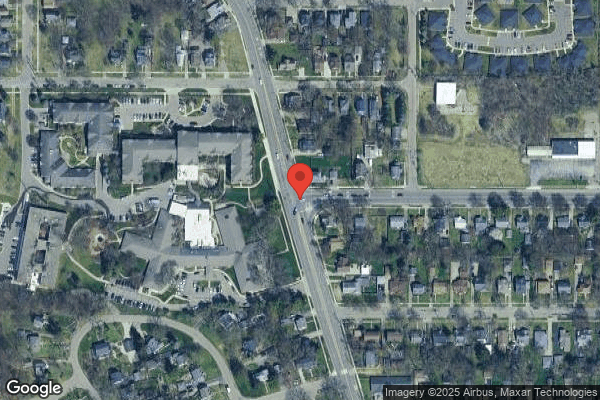
2400 Portage St, Kalamazoo, MI 49001 (269) 381-4290
Non profit - Corporation 87 Beds Independent Data: November 2025 2 Immediate Jeopardy citations
Trust Grade
21/100
#282 of 422 in MI
Last Inspection: March 2025

Within standard 12-15 month inspection cycle. Federal law requires annual inspections.

Overview

Harold and Grace Upjohn Community Care Center has received a Trust Grade of F, which indicates significant concerns and a poor reputation overall. Ranking #282 out of 422 nursing homes in Michigan places it in the bottom half of facilities in the state, though it is #3 out of 9 in Kalamazoo County, meaning there are only two local options that are better. Unfortunately, the facility's performance is worsening, with the number of issues increasing from 15 in 2024 to 17 in 2025. Staffing is a relative strength here, rated 4 out of 5 stars with a turnover rate of 43%, which is slightly below the state average, indicating that many staff members remain in their positions. However, there are serious concerns, including a critical incident where a resident suffered a burn due to inadequate immediate care and another where a cognitively impaired resident wandered away from the facility because of a non-functional alarm system. Additionally, expired food items were found on the premises, reflecting lapses in basic care standards. Overall, families should weigh the strengths in staffing against the serious safety and care deficiencies.

Trust Score
F
21/100
In Michigan
#282/422
Bottom 34%
Safety Record
High Risk
Review needed
Inspections
Getting Worse
15 → 17 violations
Staff Stability
○ Average
43% turnover. Near Michigan's 48% average. Typical for the industry.
Penalties
✓ Good
$31,186 in fines. Lower than most Michigan facilities. Relatively clean record.
Skilled Nurses
✓ Good
Each resident gets 51 minutes of Registered Nurse (RN) attention daily — more than average for Michigan. RNs are trained to catch health problems early.
Violations
⚠ Watch
53 deficiencies on record. Higher than average. Multiple issues found across inspections.
★★☆☆☆
2.0
Overall Rating
★★★★☆
4.0
Staff Levels
★★★★☆
4.0
Care Quality
★★☆☆☆
2.0
Inspection Score
Stable
2024: 15 issues
2025: 17 issues

The Good

  • 4-Star Staffing Rating · Above-average nurse staffing levels
  • 4-Star Quality Measures · Strong clinical quality outcomes
  • Full Sprinkler Coverage · Fire safety systems throughout facility
  • No fines on record
  • Staff turnover below average (43%)

    5 points below Michigan average of 48%

Facility shows strength in staffing levels, quality measures, fire safety.

The Bad

2-Star Overall Rating

Below Michigan average (3.1)

Below average - review inspection findings carefully

Staff Turnover: 43%

Near Michigan avg (46%)

Typical for the industry

Federal Fines: $31,186

Below median ($33,413)

Moderate penalties - review what triggered them

The Ugly 53 deficiencies on record

2 life-threatening
Sept 2025 3 deficiencies
CONCERN (D) 📢 Someone Reported This

A family member, employee, or ombudsman was alarmed enough to file a formal complaint

Potential for Harm - no one hurt, but risky conditions existed

Notification of Changes (Tag F0580)

Could have caused harm · This affected 1 resident

**NOTE- TERMS IN BRACKETS HAVE BEEN EDITED TO PROTECT CONFIDENTIALITY** This citation pertains to intake #2591271. Based on interview and record review, the facility failed to notify a resident's emer...

Read full inspector narrative →
**NOTE- TERMS IN BRACKETS HAVE BEEN EDITED TO PROTECT CONFIDENTIALITY** This citation pertains to intake #2591271. Based on interview and record review, the facility failed to notify a resident's emergency contact regarding emergency incidents including 1) A resident fall, 2) resident injury, 3) An emergency transfer to an acute care hospital for 1 resident (Resident #3) of 4 residents reviewed for falls resulting in Resident #3's emergency contact being unaware of her fall, injury and subsequent transfer to an acute care hospital for evaluation and treatment. Findings include: Resident #3 (R3)Review of the admission Record and Minimum Data Set (MDS) dated [DATE] revealed R3 admitted to the facility on [DATE] with pertinent diagnoses including dementia (decline in cognitive abilities, memory and thinking skills that interfere with daily life), repeated falls, anxiety and depression. Brief Interview for Mental Status (BIMS) reflected a score of 7 out of 15 which indicated R3 was severely cognitively impaired (00 to 07 is severe cognitive impairment).Review of R3's fall report dated 8/5/2025 at 1:45 AM revealed Heard loud noise and resident yelling help. Walked in resident room with CNA (Certified Nursing Assistant) and observed resident lying on back behind door. Asked resident what she was trying to do prior to fall, resident stated I do not know. Assisted resident to standing position with staff assistance x 2 (2 staff member helping to get her up). Assessed resident and observed bleeding to back of head from a gash .Immediate action taken: Resident Taken to the Hospital: Y (yes). Agencies/ People Notified: Physician 8/5/2025 at 2:00 AM). The family was not notified per the fall report. Review of R3's concern form dated 8/5/2025 revealed Details of concern: Received VM (voicemail) from resident's DIL (daughter-in-law) requesting callback. Spoke with (DIL) and she was upset and asking how to get resident moved to another facility. DIL stated resident fell at 1:45 AM and was sent to ED (emergency department). They were not notified by UCRC (Upjohn Community Care Center) staff until 6:30 AM when being D/C (discharged ) from hospital w/ (with) staples. Director of Nursing (DON) B completed the follow-up which revealed Action taken. was able to speak with resident's spouse and son and apologized for the breakdown in communication.staff will be reeducated on the importance of contacting family for emergency situations. Date contacted family: 8/5/2025. Another concern form was filled out on 8/5/2025 which revealed Details of concern: family requested to see someone regarding resident's care. Family was upset because they were not notified that resident had a fall at 1:45 AM. Residents spouse states he was not called until 6:30 AM. Action taken: Apologized to resident and resident's spouse. Provided direct contact information for Director of Nursing and Unit Manager for any other concerns.During an interview on 9/15/2025 at 11:55 AM, R3 stated that she didn't remember having a fall at the facility.During an interview on 9/16/2025 at 1:39 PM, FM X stated that they were not notified of R3's fall when she fell at 1:30 AM and they were called when R3 was leaving the hospital after receiving staples in her head. FM X stated that R3 always had a family member with her when she went to the hospital so she must have been scared to be by herself. FM X said that the facility can call them anytime of the day or night if anything comes up. During an interview on 9/16/2025 at 2:27 PM, Nursing Home Administrator (NHA) A and DON B' stated that they weren't sure why family wasn't notified of R3's transfer to the hospital but Registered Nurse (RN) Z was reeducated on the policy on 8/6/2025. Review of the Notification of Changes Policy with an implementation date of 3/5/2024 revealed .Compliance Guidelines: The facility must inform the resident, consult with the resident's physician and /or notify the resident's family member or legal representative when there is a change requiring such notification. Circumstances requiring notification include:1. Accidents a. Resulting in injury. b. Potential to require physician intervention .4. A transfer or discharge of the resident from the facility.Additional considerations: 1. Competent individuals: a. The facility must still contact the resident's physician and notify resident's representative, if known.2. Residents incapable of making decisions: a. The representative would make any decisions that have to be made.
CONCERN (D) 📢 Someone Reported This

A family member, employee, or ombudsman was alarmed enough to file a formal complaint

Potential for Harm - no one hurt, but risky conditions existed

Pressure Ulcer Prevention (Tag F0686)

Could have caused harm · This affected 1 resident

**NOTE- TERMS IN BRACKETS HAVE BEEN EDITED TO PROTECT CONFIDENTIALITY** This citation pertains to intake #2591271 and #2581648. Based on observation, interview, and record review, the facility failed ...

Read full inspector narrative →
**NOTE- TERMS IN BRACKETS HAVE BEEN EDITED TO PROTECT CONFIDENTIALITY** This citation pertains to intake #2591271 and #2581648. Based on observation, interview, and record review, the facility failed to ensure a resident received the necessary care and services, consistent with professional standards of practice to identify and promote the healing of a pressure ulcer in 1 resident (Resident #6) of 3 residents reviewed for pressure ulcers/skin conditions resulting in the potential for worsening and/or reoccurrence of pressure injuries due to not having the appropriate treatment in place to help with wound healing. Findings include:In an observation on 9/17/25 at 1:50 PM, observed Resident #6 in bed. DON “B” and resident rolled to right side. Observed on both left and right buttocks quarter size stage II healing pressure ulcers. Resident reported no pain with touch. Noted blanching in the surrounding area. No drainage noted. Resident #6 (R6)Review of the admission Record and Minimum Data Set (MDS) dated [DATE] revealed R6 admitted to the facility on [DATE] with pertinent diagnoses including morbid obesity, edema (fluid retention), venous insufficiency (improper functioning of the vein valves in the legs causing swelling and skin changes) and hypothyroidism (underactive thyroid hormone which regulates metabolism, growth and other bodily functions). Brief Interview for Mental Status (BIMS) reflected a score of 15 out of 15 which indicated R6 was cognitively intact (13 to 15 cognitively intact). During an interview on 9/15/2025 at 4:20 PM, R6 stated that she developed a pressure ulcer on her buttocks at the facility and had it for a long time. When further queried, R6 stated that she had it for many months. Review of R6's Physician orders revealed “Mepilex (absorbent foam wound dressing) to right buttock open area after NS (normal saline) cleanse. Change every 2 days and PRN (as needed).every night shift every 2 day(s). Active 2/11/2025 (start date).” Review of R6's MDS assessment dated [DATE] revealed that she was at risk for developing pressure ulcers/injuries and did not have any unhealed pressure ulcers/injuries. Review of all R6's care plans revealed a care plan for skin breakdown but nothing about risk for pressure ulcers or history of pressure ulcers. Further review of R6's chart revealed that there were no specific weekly wound notes related to her buttocks from 2/1/2025 to 9/16/2025. Review of provider {physician and nurse practitioner (NP)} notes from 2/1/2025 to 9/17/2025 revealed that there was no skin issues on her buttocks. Review of Registered Dietitian (RD) note dated 8/12/2025 revealed “…Wounds: No PI/PU (pressure injury/pressure ulcer) …” Review of RD note dated 5/13/2025 revealed “….red buttocks…” Review of RD note on 2/12/2025 revealed “…skin intact…” Review of R6's skin assessments dated 8/19/2025 and 8/26/2025 revealed “…Any skin conditions requiring treatment or monitoring, including any current area receiving treatment or monitoring: Yes….Site: Right buttocks. Description: Treatment in place. Cleanse with normal saline. Apply mepilex to right buttocks open area. Change every 2 days and PRN.” Wound bed, exudate, description of area and interventions, and odor was blank. Review of R6's skin assessments dated 8/5/2025 and 8/12/2025 revealed “…Any skin conditions requiring treatment or monitoring, including any current area receiving treatment or monitoring: Yes….Site: Other. Description: Right and left buttocks. Treatment in place. Wound bed, exudate, description of area and interventions, and odor was blank. Review of R6's skin assessments dated 7/29/2025 “…Any skin conditions requiring treatment or monitoring, including any current area receiving treatment or monitoring: Yes….Site: Coccyx. Description: Red spot on butt, placed barrier cream on.” Wound bed, exudate, description of area and interventions, and odor was blank. Review of R6's wound log revealed “Date observed: 8/12/2025. Obtained on admit: No. Site: buttocks. Wound: pressure.” Stage, measurement and exudate were blank. “Date observed: 8/19/2025. Obtained on admit: No. Site: buttocks. Wound: pressure. Measurement: scabbed. Exudate: None.” Stage was left blank. “Date observed: 8/26/2025. Obtained on admit: No. Site: buttocks. Wound: pressure. Measurement: scabbed. Exudate: None.” Stage was left blank. “Date observed: 9/3/2025. Obtained on admit: No. Site: buttocks. Wound: pressure. Measurement: scabbed. Exudate: None.” Stage was left blank. During an interview on 9/15/2025 at 3:41 PM, NP “BB” stated that she didn't think R6 had a pressure ulcer. During an interview on 9/16/2025 at 9:15 AM, Registered Nurse (RN) “E” stated that she was aware that R6 had a pressure ulcer but didn't know how long she had it. During an interview on 9/17/2025 at 7:55 AM, Certified Nursing Assistant (CNA) “AA” stated she works with R6 a lot and she had had an area on her bottom for a while. During an interview on 9/17/2025 at 8:00 AM, Licensed Practical Nurse (LPN) “K” stated she didn't know if R6 had a pressure ulcer or not. During an interview on 9/16/2025 at 10:37 AM, Care Manager who was also the Minimum Data Set Coordinator (MDS) “R” stated that skin assessments have been a problem at the facility. When asked about R6 and whether she had a wound, MDS “R” said that she wasn't sure since there have been many changes with Unit Managers (UMs). MDS “R” stated that wound notes should be documented in the chart every week and she looked in R6's chart and couldn't find any wound notes. When discussing MDS dated [DATE], MDS “R” stated that UM “L” told her that R6 didn't have a pressure ulcer, that it was shearing (force that occurs when the skin and underlying tissues are pulled in opposite directions causing damage from the inside out) so she didn't code the MDS as a pressure ulcer. During an interview on 9/16/2025 at 11:20 AM, Nursing Home Administrator (NHA) “A” was asked how it was determined that R6 had a Stage II pressure ulcer (partial thickness skin loss involving the epidermis and dermis, presenting as a shallow open wound with a red or pink moist base, or as a serum filled blister that is intact or open) which was indicated on the wound log and he stated that he googled scabbed area and saw it had to labeled as a Stage II. NHA “A” said he couldn't see the wound since he wasn't a nurse. When asked if DON “B” could look at the wound and be able to stage it, he said “probably.” During an interview on 9/16/2025 at 4:50 PM, R6 stated that the NP saw her that afternoon and noted a small brown area. NP “BB” put a new physician order on 9/16/2025 at 7 PM “Cleanse left buttocks with normal saline, pat dry, and apply circular area of xerofoam to Stage 2 area (cut to size) and cover with foam boarder dressing. Change dressing daily.” During an interview on 9/16/2025 at 2:35 PM, DON “B” was asked about when and how R6 obtained her wound at the facility and she referred this surveyor to talk to LPN “L”. She said they don't have an incident report for when it was identified. DON “B” stated that LPN “L” updates the wound log weekly and R6 doesn't have a pressure ulcer at this time. DON “B” said its MASD (Moisture Associated Skin Damage) and said former Assistant Director of Nursing (Staff) “W” put it in wrong when she filled in for LPN “L” that week. During an interview on 9/17/2025 at 8:10 AM, Unit Manager LPN “L” stated that R6 was first observed to have a pressure ulcer on 10/4/2024 and it was more a mix of shearing and excoriation (shallow scratch or abrasion on the skin causing by mechanical force resulting in partial thickness loss) so barrier cream was started and then the wound opened up to a stage II and R6 was started on mepilex. When discussing the wound log and why there was no date for when R6 acquired the pressure ulcer and why the log started on 8/12/2025, LPN “L” stated that Staff “W” did the wound log that week and put R6 as having a pressure wound to her buttocks and no measurements were put in. LPN “L” said that she saw R6's wound the following week on 8/19/2025 and it was a scabbed area and she didn't see any open areas. LPN “L” said she should have taken pressure out of the wound log at that point and it was her mistake. When asked if she followed up with Staff “W” and her observation of R6 having a pressure wound, LPN “L” said “No.” LPN “L” said R6 did not have a pressure area prior to 8/12/2025 so the log started that day. LPN “L” stated that she observed the wound every week. LPN “L” said the Interdisciplinary Team (IDT) discusses wounds in the morning meeting Monday through Fridays and whether treatments are working or not and if wounds are getting better or worse. When asked if she gives weekly wound logs to staff, LPN “L” stated she gives copies/they have access to the log. When discussing the new order put in by NP “BB” the day before on 9/16/2025 at 7PM which indicated R6 had a Stage II area to her left buttocks, LPN “L” said her assessment with DON “B” that morning was that it wasn't a pressure wound but if the NP “BB” says her buttocks is a Stage II pressure area then it must be a Stage II . During another interview with LPN “L” on 9/18/2025 at 9:40 AM, LPN “L” stated that she didn't receive any formal training with wounds/pressure ulcers. When this surveyor mentioned that the last weekly skin assessment was completed on 8/26/2025, LPN “L” said she wasn't sure what happened and it was just reinstated that morning. When discussing the last log on the wound log dated 9/3/2025, LPN “L” said she was behind and was going to update the log. Review of R6's shower sheets from February to September revealed a shower sheet on 6/6/2025 “Describe and indicate location on body outline below, report to nurse. Note any patches on residents body (location).” The left buttocks had a dot on it, was circled and Certified Nursing Assistant (CNA) “H” wrote “red, open.” During a phone interview on 9/17/2025 at 10:13 AM, CNA “H” stated that she had worked with R6 many times and the area on her buttocks opens and closes and “cracks” every so often. When discussing the shower sheet from 6/6/2025, CNA “H” said that her buttocks must have been open that day if she put it on the shower sheet. CNA “H” said the nurse Registered Nurse (RN) “CC” signed off on the shower sheet that day. During a phone interview on 9/17/2025 at 11:26 AM, RN “CC” stated that R6 had an open area/pressure ulcer on 6/6/2025 and she did not notify anyone about the open area and continued with the normal treatment of mepilex. RN ‘CC” said she saw the wound on 9/16/2025 in the evening and it wasn't open and didn't look like a pressure ulcer. Review of R6's chart on and around 6/6/2025 revealed that there was no weekly skin assessment that day, no progress note indicating she had a pressure ulcer and nothing noted by the provider on 6/13/2025. During an interview on 9/16/2025 at 2:10 PM, Registered Dietitian (RD) “V” and Director of Health and Wellness (DHW) “U” stated that they haven't seen a wound log. DHW “U” said she was the contract RD before RD “V” started and she didn't see a wound log since she started there. They were both unaware of R6's wound. During another interview on 9/17/2025 at 2:11 PM, DON “B” stated that she wasn't sure why NP “BB” was not aware of R6 having a wound until conversation with this surveyor and why the mepilex order was started in February. DON “B” stated she didn't agree with NP “BB's” assessment of the wound because it didn't look like a Stage II since the areas are blanchable (redness or altered skin area that turns white or pale when pressure is applied and then returns to its original color promptly). DON “B” said she will talk to NP “BB” and see what the best treatment would be. Review of the Skin Assessment Policy dated 3/7/2024 revealed “…Policy Explanation and Compliance Guidelines: …7. Documentation of skin assessment: a. Include date and time of the assessment, your name, and position title. b. Document observations (e.g. skin conditions, how the resident tolerated the procedure, etc.). c. Document type of wound. d. Describe wound (measurements, color, type of tissue in wound bed, drainage, odor, pain). e. Document if resident refused assessment and why. f. Document other information as indicated or appropriate.” Review of Wound Management Policy dated 3/7/2024 revealed “…Policy Explanation and Compliance Guidelines: …c. Licensed nurses will conduct a full body skin assessment on all residents upon admission/re-admission, weekly, and after any newly identified pressure injury. Findings will be documented in the medical record. d. Assessments of pressure injuries will be performed by a licensed nurse and documented on the Push Tool 3.0. The staging of pressure injuries will be clearly identified to ensure correct coding on the MDS… 4. Interventions for Prevention and to Promote Healing: a. After completing a thorough assessment/evaluation, the interdisciplinary team shall develop a relevant care plan that includes measurable goals for prevention and management of pressure injuries with appropriate interventions….5. Monitoring: a. The Unit Manager, or designee, will review all relevant documentation regarding skin assessments, pressure injury risks, progression towards healing, and compliance at least weekly, and document a summary of findings in the medical record. b. The attending physician will be notified of: i. The presence of a new pressure injury upon identification. ii. The progression towards healing, or lack of healing, of any pressure injuries weekly. iii. Any complications (such as infection, development of a sinus tract, etc.) as needed. c. A Focused Incident Review will be performed on each pressure injury that develops in the facility. Findings will be reported in the monthly QAA Committee Meeting. d. The effectiveness of current preventative and treatment modalities and processes will be discussed in accordance with the QAA Committee Schedule, and as needed when actual or potential problems are identified.”
CONCERN (D) 📢 Someone Reported This

A family member, employee, or ombudsman was alarmed enough to file a formal complaint

Potential for Harm - no one hurt, but risky conditions existed

Medical Records (Tag F0842)

Could have caused harm · This affected 1 resident

**NOTE- TERMS IN BRACKETS HAVE BEEN EDITED TO PROTECT CONFIDENTIALITY** This citation pertains to intake #2591271.Based on interview and record review, the facility failed to maintain accurate documen...

Read full inspector narrative →
**NOTE- TERMS IN BRACKETS HAVE BEEN EDITED TO PROTECT CONFIDENTIALITY** This citation pertains to intake #2591271.Based on interview and record review, the facility failed to maintain accurate documentation in resident medical records in 1 resident (Resident #1) of 4 residents reviewed for ADLs (activities of daily living) resulting in not knowing whether the resident received or refused a shower.Findings include:Resident #1 (R1)Review of the admission Record and Minimum Data Set (MDS) dated [DATE] revealed R1 admitted to the facility on [DATE] with pertinent diagnoses including type 2 diabetes, bipolar disorder, anxiety and depression. Brief Interview for Mental Status (BIMS) reflected a score of 15 out of 15 which indicated R1 was cognitively intact (13 to 15 cognitively intact). Resident discharged from the facility on 3/17/2025.During an interview on 9/17/2025 at 11:22 AM, R3's Family Member (FM) Y stated that she had several concerns when R3 was at the facility and had a meeting with management. One of her concerns was whether R3 was receiving showers/bed baths to check her skin for yeast/rashes. Review of R1's shower sheets revealed that there was documentation that R1 received 4 showers/bed baths and refused 2 showers/bed baths during her stay. Only 6 showers/bed baths out of 12 possible showers during her stay had documentation on shower sheets. During an interview on 9/17/2025 at 12:05 PM, Nursing Home Administrator (NHA) A provided a late entry progress note written by the nurse dated 3/3/2025 after a family meeting on 3/2/2025 which revealed Late Entry: Spoke with resident daughter per request. Resident received a bed bath on 2/26/25 with no skin issues reported. Resident also declined a bed bath and shower on 2/28/25 when approached X3. When NHA was asked where the Unit Manager got her information from since there were no shower sheets or other documentation to support the bed bath on 2/26/2025 and the refusals of the bed bath/shower on 2/28/2025, he said he didn't know.Review of the Documentation in Medical Record Policy with an implementation date of 3/13/2024 revealed Policy: Each resident's medical record shall contain an accurate representation of the actual experiences of the resident and include enough information to provide a picture of the resident's progress through complete, accurate, and timely documentation. Policy Explanation and Compliance Guidelines: .2. Documentation shall be completed at the time of service, but no later than the shift in which the assessment, observation, or care service occurred.
Aug 2025 2 deficiencies
CONCERN (D) 📢 Someone Reported This

A family member, employee, or ombudsman was alarmed enough to file a formal complaint

Potential for Harm - no one hurt, but risky conditions existed

Abuse Prevention Policies (Tag F0607)

Could have caused harm · This affected 1 resident

This citation pertains to Intake: 2575125 Based on interview and record review, the facility failed to implement the abuse policy for reporting and response to allegations of abuse in 1 of 3 residents...

Read full inspector narrative →
This citation pertains to Intake: 2575125 Based on interview and record review, the facility failed to implement the abuse policy for reporting and response to allegations of abuse in 1 of 3 residents (Resident #102) reviewed for abuse, resulting in the potential for further allegations of abuse to be unreported. Findings include:Resident #101Review of an admission Record revealed Resident #101 was a male, with pertinent diagnoses which included: unspecified dementia, unspecified severity, without behavioral disturbance, psychotic disturbance, mood disturbance, and anxiety; mild cognitive impairment of uncertain or unknown etiology; and cognitive communication deficit. Review of a Minimum Data Set (MDS) assessment for Resident #101, with a reference date of 5/1/25 revealed a Brief Interview for Mental Status (BIMS) score of 3, out of a total possible score of 15, which indicated Resident #101 was severely cognitively impaired. Resident #102Review of an admission Record revealed Resident #102 was a male, with pertinent diagnoses which included: legal blindness, as defined in USA; essential (primary) hypertension (high blood pressure). Review of a Minimum Data Set (MDS) assessment for Resident #102, with a reference date of 5/21/25 revealed a Brief Interview for Mental Status (BIMS) score of 12, out of a total possible score of 15, which indicated Resident #102 was moderately cognitively impaired.Review of Resident #102's Progress Note dated 7/28/25 at 3:41 PM and authored by Nursing Home Administrator (NHA) A revealed, Note Text: Regarding a possible altercation between this resident and another resident (referring to Resident #101) over the weekend. This resident said that another resident (referring to Resident #101) was saying some things that this resident found annoying and that was frustrating. This resident said he put his hands up to shoo the other resident away. This resident said no hotting (sic), slapping, or contact of any kind happened. Abuse could not be substantiated.Review of Resident #102's Case Management Progress Note dated 7/29/25 at 9:00 AM and authored by Case Manager (CM) F revealed, Note Text: Went down to check on (Resident #102) after the events of the weekend. I asked him about what happened and he stated that (Resident #101) came to his table in the dining room and started talking to him about the (group name omitted) and racial accusations. He stated that he was upset bythe (sic) conversation and wanted (Resident #101) to stop talking and swearing. When (Resident #101) wouldn't stop he hit (Resident #101) in the stomach because he felt frustrated.I asked him if he actually hit him, actually made contact with him and he said yes, in the stomach.Review of Resident #102's Social Services Progress Note dated 7/29/25 at 1:49 PM and authored by Manager of Case Management (MCM) G revealed, Note Text: Psychosocial visit after weekend events. Met with (Resident #102) to f/u (follow up) regarding peer-to-peer interactions. Reports he was frustrated with what peer (referring to Resident #101) was saying including racial and rude comments. (Resident #102) states he was trying to get him away and hit him. This writer asked if made physical contact, (Resident #102) confirmed he did.In an interview on 8/4/25 at 3:15, NHA A reported he initially had not been made aware of the interaction between Resident #101 and Resident #102 because it had occurred on a Sunday and he had not been made aware of it until the following Monday. NHA A reported when they were made aware of the interaction, Director of Nursing B had interviewed Resident #102 and he had said that he didn't slap Resident #101 but he was using his hands to shoo him away. NHA A reported the nurse (LPN N) who had responded was unaware that it needed to be reported immediately because she had not seen it happen. NHA A reported the interaction had not originally been reported to the State Agency because when he was made aware of it on that Monday morning, Resident #102 had reported he had not slapped Resident #101 but had been using his arms to shoo Resident #101 away. NHA A reported he had been made aware that Resident #102 actually hit Resident #101 today and would submit the incident to the State Agency. In an interview on 8/5/25 at 8:36 AM, Licensed Practical Nurse (LPN) N reported she had responded to the altercation between Resident #101 and Resident #102. LPN N reported she had not actually witnessed the altercation herself because she was on the unit passing medications at the time but what was told to her was that Resident #101 was calling Resident #102 a racist and then Resident #102 slapped Resident #101. LPN N reported when she arrived, the residents were no longer in a confrontation, and she addressed them both and told them they both lived at the facility and had to be respectful of one another. LPN N reported she then addressed Resident #102 and told him under no circumstances was anybody to lay hands on somebody else. LPN N reported she then had to go back to passing her medications. LPN N reported she did not report the incident to anyone that Resident #102 had hit Resident #101. LPN N stated that was my error. LPN N reported she should have reported the incident to NHA A within 2 hours but she totally forgot about it.Review of the facility policy Abuse Prohibition, Protection, Investigation and Reporting Protocol revealed, POLICY STATEMENT Residents have the right to be free from mistreatment, abuse, neglect, involuntary seclusion, exploitation and misappropriation of property.REPORTING PROCEDURE 1. An employee.who become aware of any act of abuse, neglect, misappropriation, or alleged abuse to a resident by a resident, employee, visitor, or other individual shall report the incident immediately to the Administrator/Community Director, Director of Nursing or supervisor designee.
CONCERN (D) 📢 Someone Reported This

A family member, employee, or ombudsman was alarmed enough to file a formal complaint

Potential for Harm - no one hurt, but risky conditions existed

Accident Prevention (Tag F0689)

Could have caused harm · This affected 1 resident

This citation pertains to Intake: 2575125 Based on interview and record review, the facility failed to provide adequate supervision to prevent a resident-to-resident altercation for 2 (Resident #101, ...

Read full inspector narrative →
This citation pertains to Intake: 2575125 Based on interview and record review, the facility failed to provide adequate supervision to prevent a resident-to-resident altercation for 2 (Resident #101, Resident #102) of 3 residents reviewed for abuse, resulting in Resident #101 making racial accusations to Resident #102 and Resident #102 hitting Resident #101 in the stomach. Findings include:Resident #101 Review of an admission Record revealed Resident #101 was a male, with pertinent diagnoses which included: unspecified dementia, unspecified severity, without behavioral disturbance, psychotic disturbance, mood disturbance, and anxiety; mild cognitive impairment of uncertain or unknown etiology; and cognitive communication deficit. Review of a Minimum Data Set (MDS) assessment for Resident #101, with a reference date of 5/1/25 revealed a Brief Interview for Mental Status (BIMS) score of 3, out of a total possible score of 15, which indicated Resident #101 was severely cognitively impaired.Review of Resident #101's Care Plan in place on 7/27/25 (at the time of the altercation) revealed, I have a potential for mood/behavior problem r/t (related to) ETOH (alcohol) abuse.I may yell out at staff or peers. last revised 1/23/25 with care planned interventions which included Remove resident from areas with other residents, as needed, when he is exhibiting inappropriate behaviors Date Initiated: 10/31/23. Resident #102 Review of an admission Record revealed Resident #102 was a male, with pertinent diagnoses which included: legal blindness, as defined in USA; essential (primary) hypertension (high blood pressure). Review of a Minimum Data Set (MDS) assessment for Resident #102, with a reference date of 5/21/25 revealed a Brief Interview for Mental Status (BIMS) score of 12, out of a total possible score of 15, which indicated Resident #102 was moderately cognitively impaired.In an interview on 8/4/25 at 2:28 PM, Resident #102 reported he had an incident with another resident (Resident #101) about a week ago. Resident #102 reported Resident #101 had come up to him making racial accusations. Resident #102 reported he tried to tell Resident #101 to leave but he wouldn't. Resident #102 reported a friend at another table had kept telling Resident #101 to shut up. Resident #102 reported he got tired of what Resident #101 was saying and hit him in the belly. Resident #102 reported he was angry because Resident #101 wouldn't leave his table. Resident #102 reported he wasn't doing anything except waiting for his food to come when Resident #101 started all that. Review of Resident #102's Case Management Progress Note dated 7/29/25 at 9:00 AM and authored by Case Manager (CM) F revealed, Note Text: Went down to check on (Resident #102) after the events of the weekend. I asked him about what happened and he stated that (Resident #101) came to his table in the dining room and started talking to him about the (group name omitted) and racial accusations. He stated that he was upset bythe (sic) conversation and wanted (Resident #101) to stop talking and swearing. When (Resident #101) wouldn't stop he hit (Resident #101) in the stomach because he felt frustrated.I asked him if he actually hit him, actually made contact with him and he said yes, in the stomach. Review of Resident #102's Social Services Progress Note dated 7/29/25 at 1:49 PM and authored by Manager of Case Management (MCM) G revealed, Note Text: Psychosocial visit after weekend events. Met with (Resident #102) to f/u (follow up) regarding peer-to-peer interactions. Reports he was frustrated with what peer (referring to Resident #101) was saying including racial and rude comments. (Resident #102) states he was trying to get him away and hit him. This writer asked if made physical contact, (Resident #102) confirmed he did. In an interview on 8/5/25 at 8:36 AM, Licensed Practical Nurse (LPN) N reported she had not witnessed the altercation between Resident #101 and Resident #102 but responded to it. LPN N reported she had been on the unit passing medications at the time when somebody reported there had been an altercation between Resident #101 and Resident #102. LPN N reported it was a super busy day. In an interview on 8/5/25 at 8:48 AM, Dietary Aide (DA) E reported he had been preparing drinks for the lunch meal when he heard Resident #102 yell to Resident #101 that is racist. DA E reported at that point he went into the kitchen and told Sous Chef (SC) L what was happening. DA E reported he did not think there was any other staff in the dining room at the time. In an interview on 8/5/25 at 10:03 AM, SC L reported the serving staff (referring to DA E) had come to her during the middle of serving lunch and reported that Resident #101 and Resident #102 were arguing. SC L reported by the time she got to the dining room, the altercation had ended. In an interview on 8/5/25 at 11:00 AM, Unit Manager (UM) J reported on 7/27/25 when the altercation occurred between Resident #101 and Resident #102 during the lunch meal, Certified Nurse Aide (CNA) I and LPN M had been assigned to the dining room. UM J reported there was supposed to be 2 CNAs and 1 nurse in the dining room but there was only the 1 aide and the nurse that day because they had been down 1 aide and another aide had left at 11:00 AM. In an interview on 8/5/25 at 11:18 AM, CNA I reported she had not been in the dining room at the time of the altercation between Resident #101 and Resident #102 because she had been taking residents back to their rooms from the dining room after they were done eating. CNA I reported there had only been 4 aides scheduled on the East unit that day which meant only 1 aide, herself, was in the dining room with the nurse during the lunch meal. CNA I confirmed there were no other aides in the dining room during the lunch meal service that day. In an interview on 8/5/25 at 11:31 AM, LPN M reported she had not witnessed the altercation between Resident #101 and Resident #102 because she was taking another resident to the restroom at the time. LPN M reported they had been down an aide and would normally have 2 aides in the dining room plus the nurse but that day they only had the 1 aide and the nurse. In an interview on 8/4/25 at 3:15, Nursing Home Administrator (NHA) A reported regarding the altercation between Resident #101 and Resident #102, DA E had been the first person who heard the residents getting into it. NHA A reported DA E had been going in and out of the dining room and when he heard the residents, he went to get SC L which was when the alleged slapping occurred. NHA A reported the dietary staff went to get LPN N. NHA A reported there had been an aide (CNA I) who was assigned to the dining room, but she had stepped out to attend to another resident at the time. NHA A reported there should be somebody in the dining room at all times. NHA A reported it sounded like no staff were in the dining room at the time of the incident.
Mar 2025 12 deficiencies
CONCERN (D)

Potential for Harm - no one hurt, but risky conditions existed

Deficiency F0583 (Tag F0583)

Could have caused harm · This affected 1 resident

**NOTE- TERMS IN BRACKETS HAVE BEEN EDITED TO PROTECT CONFIDENTIALITY** Based on observation, interview, and record review, the facility failed to ensure confidential resident health information was p...

Read full inspector narrative →
**NOTE- TERMS IN BRACKETS HAVE BEEN EDITED TO PROTECT CONFIDENTIALITY** Based on observation, interview, and record review, the facility failed to ensure confidential resident health information was protected and private for 1 of 1 (Residents #71) residents reviewed for privacy and federally regulated HIPAA (Healthcare Insurance Portability and Accountability Act). Findings include Review of an admission Record revealed Resident # 71 was originally admitted to the facility on [DATE] with pertinent diagnoses which included type 2 diabetes. During an observation on 3/12/25 at 10:30 AM, Licensed Practical Nurse (LPN) K was preparing medications at her medication cart. After preparing medications, LPN K walked away from her cart and entered a resident's room. It was noted that the computer screen was left open, with multiple resident names noted on the screen in view of anyone that walked down the hallway and past the medication cart. LPN K was noted to be away from the cart for 6 minutes. During an observation on 3/12/25 at 10:42 AM, LPN K was preparing medications at her medication cart. After preparing medications, LPN K walked away from her cart and entered a resident's room. It was noted that the computer screen was left open, with multiple resident names noted on the screen in view of anyone that walked down the hallway and past the medication cart. LPN K was noted to be away from the cart for 5 minutes. During an observation on 3/12/25 at 10:50 AM, LPN K was preparing medications at her medication cart. After preparing medications, LPN K walked away from her cart and entered a resident's room. It was noted that the computer screen was left open, with multiple resident names noted on the screen in view of anyone that walked down the hallway and past the medication cart. LPN K was noted to be away from the cart for 5 minutes. During an observation on 3/12/25 at 12:37 PM, LPN K was preparing medications at her medication cart. After preparing medications, LPN K walked away from her cart and entered a resident's room. It was noted that the computer screen was left open with Resident #71's medical information noted on the screen and in view of anyone that walked down the hallway and past the medication cart. LPN K was noted to be away from the cart for 10 minutes. It was noted that several staff members walked past the open screen when Resident #71's medical information was open to view. During an interview on 3/12/25 at 12:47 PM, LPN K reported that she knew that she was supposed to lock her computer screen when she was not at her cart to keep resident medical information secure, but she just forgets sometimes.
CONCERN (D)

Potential for Harm - no one hurt, but risky conditions existed

Transfer Notice (Tag F0623)

Could have caused harm · This affected 1 resident

Based on interview and record review, the facility failed to provide written notification to the State Long-Term Care (LTC) Ombudsman of facility-initiated transfers/discharges in November 2024 and De...

Read full inspector narrative →
Based on interview and record review, the facility failed to provide written notification to the State Long-Term Care (LTC) Ombudsman of facility-initiated transfers/discharges in November 2024 and December 2024 resulting in the potential for all residents to be discharged without an advocate who can inform them of their options and rights. Findings include: On 3/6/25 at 1:40 PM, Ombudsman XX reported that the facility had not been consistently sending notices of transfers and discharges. During an interview on 3/12/25 at 9:52 AM, Manager of Case Management (MCM) MM reported that she was the staff member responsible for sending the transfer and discharge information to the ombudsman. MCM MM reported that she was unsure if she had missed sending any in the last year. This writer requested that MCM MM provide documentation of the transfer notices that she had sent to the ombudsman. On 3/11/25 at 2:01 PM, a picture was sent to this writer of MCM MM 's emails that were sent to the ombudsman with the subject transfer report. It was noted that MCM MM did not send a report in November 2024 and December 2024. During an interview on 3/12/25 at 2:04 PM, MCM MM reported that she had just missed sending the reports, and did not have a rationale for why.
CONCERN (D)

Potential for Harm - no one hurt, but risky conditions existed

Quality of Care (Tag F0684)

Could have caused harm · This affected 1 resident

Based on observation, interview and record review the facility failed to ensure adequate assessment for 1 (R237) of 1 resident reviewed for quality of care when, resulting in R237 receiving a delay in...

Read full inspector narrative →
Based on observation, interview and record review the facility failed to ensure adequate assessment for 1 (R237) of 1 resident reviewed for quality of care when, resulting in R237 receiving a delay in treatment for abrasions. Findings include: According to R237's medical record, the resident's BIMS (Brief Interview Mental Status) dated 3/4/24, score was 13/15 (cognitively intact). R237's diagnoses included fracture of left femur (thigh bone) start date 1/2/25, history of falling start date 10/22/16. Review of R237's Incident Fall Report dated 3/9/25 at 11:50 AM indicated the resident was noted on the floor face forward and had stated he had slid off wheelchair. The resident was assessed for injuries and pain then assisted back to his wheelchair. Injuries included a skin tear 2.5 cm x 2.5 cm to forehead, and both the right and left knee along with bruises to right side of face, neck, and chest. Review of R237's Order summary dated 3/10/25, revealed, Monitor steri strips (thin adhesive bandages to close wound) to right knee skin tear for placement - allow to naturally remove. every morning and at bedtime for wound care. Review of R237's Medication/Treatment Administration Record (MAR/TAR) dated 3/10/25 at 7:00 PM, revealed, Monitor steri strips to right knee skin tear for placement - allow to naturally remove. every morning and at bedtime for wound care -Start Date 03/10/2025 1900 (7:00 PM). During an observation and interview on 3/10/25 at 11:13 AM, Family Member (FM) PP and R237 were in the resident's room. The resident had a head and bilateral (both) knee wounds covered with blood saturated dressings. The knee dressings were not dated. R237 stated, I fell asleep in my wheelchair and fell out and hit my head and knees. Observed the resident's pillow and sheets were stained with blood. During an observation on 3/10/25 at 11:55 AM Registered Nurse (RN) M entered R237's room to assess the resident's head wound that was bleeding through the bandage. The RN stated she had changed the bandage on R237's head earlier that morning but not his knees. It was observed R237's right knee was bleeding through the bandage and staining the sheet and blanket with blood. RN M left the room stating she was going to talk with the nurse practitioner (NP). During an observation on 3/10/25 at 12:12 PM, RN M entered R237's room and spoke with the resident and FM PP stating she had new orders from the NP for R237's head wound but did not talk to the NP about the wounds on R237's knees because they were not charted on his post-fall documentation. During an interview on 3/12/25 at 10:16 AM, Director of Nursing (DON) B stated, My expectations of staff with a resident fall is to do a head-to-toe fall assessment. The staff would follow the fall policy and document findings in the resident's progress note. During an interview on 3/12/25 at 1:22 PM, Unit Manager (UM) BB stated, My expectations of nurses doing a fall assessment is they would do a skin assessment to find out if there were any injuries. (RN P) told me (R237's) knees were not bleeding when she pulled up his pant legs doing the fall assessment she did. (RN VV) was also there after (R237) fell and told me she did a full skin assessment put it in (R237's) medical chart. I have full faith in the thoroughness in both nurse's assessments. During an interview on 3/12/25 at 2:44 PM, CNA GG stated, I found (R237) on the floor. He was next to the bed in between the wheelchair and nightstand. He had scrapes on his knees and grazed his head. I saw later when another staff and I put back in the bed for the night and put him in the gown that he had a scrape on his right knee and his head was bleeding.
CONCERN (D)

Potential for Harm - no one hurt, but risky conditions existed

Deficiency F0685 (Tag F0685)

Could have caused harm · This affected 1 resident

**NOTE- TERMS IN BRACKETS HAVE BEEN EDITED TO PROTECT CONFIDENTIALITY** Based on observation, interview, and record review, the facility failed to ensure a resident received proper treatment to mainta...

Read full inspector narrative →
**NOTE- TERMS IN BRACKETS HAVE BEEN EDITED TO PROTECT CONFIDENTIALITY** Based on observation, interview, and record review, the facility failed to ensure a resident received proper treatment to maintain vision abilities for 1 of 1 resident (Resident #4), reviewed for vision services, resulting in the inability of the resident to attain or maintain the highest practicable level of physical, mental, and psychosocial well-being. Findings include: Resident #4 Review of an admission Record revealed Resident #4 was originally admitted to the facility on [DATE] with pertinent diagnoses which included type 1 diabetes. Review of a Minimum Data Set (MDS) assessment for Resident #4, with a reference date of 2/18/25 revealed a Brief Interview for Mental Status (BIMS) score of 12/15 which indicated Resident #4 was moderately cognitively impaired. Review of Resident #4's Care Plan revealed, I (Resident #4) have impaired visual function. Start date: 11/18/24. Interventions: Arrange consultation with eye care practitioner as required. Date initiated: 11/18/24 . Review of Resident #4's Orders dated 12/30/24 and documented by Medical Director (MD) JJ revealed, Consult the visiting optometrist. (Resident #4) has low vision. The magnifier on his left glasses lens is clouded; reducing vision further. See if optometrist can check and prescribe for new glasses. It was noted that this order did not have a completion date. Review of Resident #4's Progress notes dated 2/2/25 and documented by Licensed Practical Nurse (LPN) U revealed, The resident brought his bifocal that is attached to his eye glass to this writer, it was placed in the nurses cart in two medication cups, taped together, labeled with his name. During an observation and interview on 3/10/25 at 2:32 PM, Resident #4 was sitting in his room. Resident #4 reported that the bifocal (type of lens) on his glasses had been broken for months and the facility had told him they would fix it, but he had not heard anything about why he had not seen an eye doctor yet. Resident #4 reported he needed his glasses to see, and it was becoming harder for him to complete daily tasks with broken glasses. It was noted that Resident #4's glasses appeared to have only one bifocal lens, which was cloudy. During an interview on 3/12/25 at 10:12 AM, Medical Records Assistant (MRA) II reported that she was the staff member responsible for scheduling appointments for residents. MRA II reported that she had not received any orders for Resident #4 to see an optometrist, so she had not scheduled Resident #4 for an appointment. During an interview on 3/12/25 at 11:02 AM, Unit Manager (UM) FF reported that she was unaware that Resident #4 had broken glasses and needed to see an optometrist. UM FF reviewed Resident #4's orders with this writer and reported that the order that was placed by MD JJ for Resident #4 to see an optometrist was placed incorrectly, and therefore it was missed. When this writer queried about the note on 2/28/25 documented by LPN U, UM FF reported that she was not made aware of that incident. UM FF reported that she typically reviews progress notes daily, but she must have missed that note. UM FF confirmed that Resident #4 never saw an eye doctor, and did not have an appointment scheduled. During an interview on 3/12/25 at 11:26 AM, MD JJ reported that he had placed an order for Resident #4 to see an optometrist because he had broken glasses, and was overdue for a diabetic eye exam. MD JJ reported that he was unaware that Resident #4 had not yet been scheduled for an vision appointment.
CONCERN (D)

Potential for Harm - no one hurt, but risky conditions existed

Incontinence Care (Tag F0690)

Could have caused harm · This affected 1 resident

**NOTE- TERMS IN BRACKETS HAVE BEEN EDITED TO PROTECT CONFIDENTIALITY** Based on observation, interview and record review, the facility failed to provide coordination of care and services for a Foley ...

Read full inspector narrative →
**NOTE- TERMS IN BRACKETS HAVE BEEN EDITED TO PROTECT CONFIDENTIALITY** Based on observation, interview and record review, the facility failed to provide coordination of care and services for a Foley catheter (flexible tube inserted through the urethra and into the bladder to drain urine) according to professional standards of practice for urinary catheters for 1 of 2 residents (Resident #42) reviewed for catheter care, resulting in Resident #42 continuing to experience urinary tract infections (UTI) with the potential for complications related to urinary tract infections. Findings include: Resident #42 Review of an admission Record revealed Resident #42 was originally admitted to the facility on [DATE] with pertinent diagnoses which included obstructive and reflux uropathy (a condition where urine flow is blocked and can back up in the kidneys). Review of Resident #42's Care Plan revealed, I have an indwelling catheter: Neurogenic bladder (a condition that occurs when the nervous system connection to the bladder is disrupted, causing bladder control issues). Date initiated: 10/4/24. Interventions: Monitor for s/s (signs and symptoms) of discomfort on urination and frequency. Date initiated: 10/4/24 . Review of Resident #42's Orders revealed, Change the foley catheter after 48 hours due to UTI (urinary tract infection). Antibiotics starting today x 14 days. Start date 1/8/25. It was noted that this order did not have a completion date. Review of Resident #42's Physician Progress Notes dated 1/8/25 and documented by Medical Director (MD) JJ revealed, .Chief complaint: I am seeing the patient (Resident #42) today because of a urinary tract infection. He had a recent UA (urinalysis) which was abnormal and positive culture for UTI. He has been started on ciprofloxacin (antibiotic) . Physical Exam: .He has an indwelling Foley catheter. There is a lot of sediment (buildup of crystals, minerals, and salts from urine that can cause blockages within the catheter and drainage system) in the tubing .ASSESSMENT/PLAN: 1. Urinary tract infection with Pseudomonas aeruginosa and Enterococcus species (type of bacteria). Also heavy yeast . After 48 hours the Foley catheter will be changed. At that point the antibiotic levels will be established and will remove the whole catheter so it does not reinfect the bladder Review of Resident #42's Physician Progress Notes dated 2/13/25 and documented by Nurse Practitioner (NP) WW revealed, .Subjective: Seen in follow-up for abnormal urinalysis .Plan: Acute cystitis; treat with nitrofurantoin twice daily x 5 days, push fluids and encouraged him to drink cranberry juice. Staff to exchange Foley . During an observation on 3/10/25 at 2:16 PM, Resident #42 was lying in his bed. Resident #42's catheter was attached to his bed and the bottom of the catheter bag was sitting on the floor. Heavy sediment was noted in Resident #42's catheter tubing. During an interview on 3/11/25 at 12:06 PM, Unit Manager (UM) FF reported that she was unaware that Resident #42 had an order placed in 1/2025 for his catheter to be changed. UM FF reviewed the order dated 1/8/25 and confirmed that the order had not been completed. UM FF reviewed Resident #42's medical record and reported that she could not find any documentation that Resident #42's catheter had been changed. UM FF reported that she would reach out to Resident #42's hospice nurse to see if he had changed Resident #42's catheter. During an interview on 3/11/25 at 12:45 PM, Assistant Director of Nursing (ADON) G reported that she had discovered that MD JJ was entering orders incorrectly, and so the facility had not been aware that MD JJ had ordered for Resident #42's catheter to be changed on 1/8/25. ADON G' confirmed that Resident #42 had had an additional UTI in February 2025. During an interview on 3/11/25 at 3:21 PM, Hospice Nurse (HN) RR reported that he had not changed Resident #42's catheter. HN RR confirmed that he was unaware that MD JJ had placed an order to have Resident #42's catheter changed. During an interview on 3/12/25 at 11:26 AM, MD JJ reported that he had placed an order on 1/8/25 for Resident #42's catheter to be changed. MD JJ reported that he was aware that the facility had not changed the catheter.
CONCERN (D)

Potential for Harm - no one hurt, but risky conditions existed

Drug Regimen Review (Tag F0756)

Could have caused harm · This affected 1 resident

Based on interview, and record review, the facility failed to ensure the physician reviewed and responded to the licensed pharmacist's monthly medication regimen review recommendations in a timely man...

Read full inspector narrative →
Based on interview, and record review, the facility failed to ensure the physician reviewed and responded to the licensed pharmacist's monthly medication regimen review recommendations in a timely manner in 1 of 5 residents (Resident #14) reviewed for unnecessary medications, resulting in the potential for medication interactions and adverse side effects. Findings include: Resident #14 Review of an admission Record revealed Resident #14 was a male, with pertinent diagnoses which included diabetes, insomnia, anxiety, and depression. Review of a pharmacy Consultation Report for Resident #14, dated 1/10/25, revealed .(Resident #14) frequently requires insulin per sliding scale (despite) a routine basal-bolus insulin regimen. The patient is averaging 105 units of insulin daily between the basal-bolus insulin regimen and sliding scale .Recommendation: Please discontinue the sliding scale, change insulin glargine to 54 units daily (50% of total daily insulin), change insulin Lispro to 17 units TID (three times per day) (50% of total daily insulin / 3 meals) and draw QID (four times per day) blood glucose readings until dosage adjustments have been made and regimen has stabilized. Dosage adjustments will most likely be needed and can be done in as little as every 3 days . Noted the Physician responded to the recommendation on 3/12/25, more than two months later. Review of a pharmacy Consultation Report for Resident #14, dated 1/10/25, revealed .(Resident #14) receives a leukotriene receptor antagonist, Montelukast Sodium, and has a diagnosis of insomnia, requiring treatment with zolpidem at a higher dose than what is recommended by the manufacturer. The FDA (U.S. Food and Drug Administration) issued a black box warning (a label required for medications with serious safety risks) for montelukast due to increased neuropsychiatric side effects, including insomnia .Recommendation: Please discontinue the montelukast . Noted the Physician responded to the recommendation on 3/12/25, more than two months later. Review of a pharmacy Consultation Report for Resident #14, dated 2/6/25, revealed .(Resident #14) has two routine orders and one additional PRN (as needed) order for Miralax, exceeding the maximum daily dosage of 34 grams .Recommendation: Please reevaluate the need for both agents, perhaps giving consideration to discontinuing use of the PRN and one additional routine order . Noted the Physician responded to the recommendation on 3/12/25, over a month later. Review of a pharmacy Consultation Report for Resident #14, dated 2/6/25, revealed .(Resident #14) receives a tricyclic antidepressant, Doxepin Hydrochloride .6 mg Give 1 tablet by mouth one time a day for anxiety, which should be avoided in older adults due to the risk of syncope, orthostatic hypotension, and strong, sedating anticholinergic properties .Recommendation: Please reduce Doxepin Hydrochloride to 3 mg QD (once daily) with the end goal of discontinuation . Noted the Physician responded to the recommendation on 3/12/25, over a month later. In an interview on 3/12/25 at 12:52 PM, Director of Nursing (DON) B reported pharmacy Consultation Reports should be given to the physician to either agree or disagree with the recommendations made. DON B reported physician orders should be placed as necessary based on the recommendations. Review of the policy/procedure Medication Regimen Review, dated 4/24/24, revealed .The drug regimen of each resident is reviewed at least once a month by a licensed pharmacist and includes a review of the resident's medical chart .Medication Regimen Review (MRR), or Drug Regimen Review, is a thorough evaluation of the medication regimen of a resident, with the goal of promoting positive outcomes and minimizing adverse consequences and potential risks associated with medication. The MRR includes .Review of the medical record in order to prevent, identify, report, and resolve medication-related problems, medication errors, or other irregularities .The pharmacist shall document, either manually or electronically, that each medication regimen review has been completed .The pharmacist shall communicate any irregularities to the facility in the following ways .Written communication to the attending physician, the facility's Medical Director, and the Director of Nursing .Timelines and responsibilities for Medication Regimen Review .The pharmacist shall communicate any recommendations and identified irregularities via written communication within 10 working days of the review .Facility staff shall act upon all recommendations according to procedures for addressing medication regimen review irregularities .
CONCERN (D)

Potential for Harm - no one hurt, but risky conditions existed

Deficiency F0810 (Tag F0810)

Could have caused harm · This affected 1 resident

**NOTE- TERMS IN BRACKETS HAVE BEEN EDITED TO PROTECT CONFIDENTIALITY** Based on observation, interview, and record review the facility failed to provide adaptive dining equipment for 2 (Residents #3 ...

Read full inspector narrative →
**NOTE- TERMS IN BRACKETS HAVE BEEN EDITED TO PROTECT CONFIDENTIALITY** Based on observation, interview, and record review the facility failed to provide adaptive dining equipment for 2 (Residents #3 and #4) of 2 residents reviewed for adaptive dining equipment resulting in spills, frustration, decreased independence with eating and drinking, and the potential for weight loss or dehydration. Findings include: Resident #3 During an observation and interview on 03/10/25 at 12:56 PM, Resident #3 was lying in bed with her bedside table over her. The bedside table had a disposable foam cup (no handles) with lid and straw that contained what appeared to be water. There was also a dual handled cup with spout lid containing another beverage. Resident #3 reported she used the dual handled cup because she is blind and it helps her drink and avoid spilling on herself which she reported she had done previously with other cups. Resident #3 confirmed the dual handled cup helps her drink independently. During an observation and interview on 03/11/25 at 12:46 PM, Certified Nurse Aide (CNA) EE was observed putting on personal protective equipment to be able to enter and take Resident #3's lunch to her. Resident #3's meal ticket indicated to provide a dual handled cup and a scoop plate, but neither adaptive dining device was provided with the meal. The beverage on Resident #3's tray was a can of cola. CNA EE confirmed Resident #3 had a dual handled cup in her room already but it contained water so there wasn't a dual handled cup to put the soda in. CNA EE also confirmed the lunch was served in a disposable divided foam container and there was no scoop plate. The food's container wasn't a scoop plate and couldn't serve the same function as a scoop plate. During an interview on 03/11/25 at 04:05 PM, Licensed Practical Nurse CC reported the reason Resident #3 didn't receive the adaptive dining equipment, dual handled cup and scoop plate, was because Resident #3 was on droplet precautions and the facility doesn't give adaptive dining equipment to residents when they are on transmission based precautions. Resident #3's nutrition care plan, revised 11/11/2024, stated, .a nutrition risk related to .legally blind .use of adaptive equipment at meals . and an intervention, revised 2/6/2025, Scoop plate and two handled cup for meals, assist with tray set-up, orientation to food on tray. Review of Resident #3's physician order, active date 3/5/25-3/12/25, stated, Isolation precautions: Droplet precautions every shift for Suspected influenza for 7 Days. Resident #4 Review of an admission Record revealed Resident #4 was originally admitted to the facility on [DATE] with pertinent diagnoses which included type 1 diabetes. Review of a Minimum Data Set (MDS) assessment for Resident #4, with a reference date of 2/18/25 revealed a Brief Interview for Mental Status (BIMS) score of 12/15 which indicated Resident #4 was moderately cognitively impaired. Review of Resident #4's Care Plan revealed, I (Resident #4) have a nutritional problem or potential nutritional problem . uses adaptive equipment .legally blind- food in bowls to promote self feeding . Date initiated: 11/19/24. Interventions: OT (Occupational Therapy) to screen and provide equipment for feeding as needed; uses blue handled built up utensils, food in bowls. Date initiated: 2/19/25 . During an interview on 03/10/25 at 2:32 PM, Resident #4 reported that he was frustrated that the facility had not been providing him with his adaptive silverware and bowls since he was placed in isolation precautions. Resident #4 reported that the facility told him that he could not have them in isolation, and so he had been struggling to eat his food. During an observation and interview on 3/11/25 at 9:10 AM, Resident #4 was sitting in his room attempting to eat breakfast. Resident #4 had two fried eggs and oatmeal in a styrofoam container. Resident #4 was attempting to use a plastic fork to eat his eggs, and was unable to get the eggs onto his fork. Resident #4 dropped one egg with yolk onto his laptop, and said see this is why I need my silverware. I can't use the plastic stuff. During an interview on 3/12/25 at 9:14 AM, Occupational Therapist (OT) DD reported that it was recommended by therapy for Resident #4 to use adaptive silverware and have his food placed in bowls to assist with his visual deficits and knowing where things were. OT DD reported that staff should always be giving Resident #4 his adaptive silverware and meals in bowls. During an interview on 3/11/2025 at 1:39 PM, Dining Services Manager (DSM) R stated when a resident was in isolation, paper products and plastic utensils are sent out on meal trays. DSM R also said adaptive cups and utensils aren't sent out during the time of isolation to prevent infection from spreading. DSM R stated Certified Nursing Assistants (CNAs) should be helping to assist those residents that need adaptive equipment during that time. During an interview on 3/11/2025 at 2:01 PM, Assistant Director of Nursing who was also the Infection Preventionist (IP) G stated when a resident was in isolation, foam containers, foam trays and disposable cups and utensils are sent out at meals. IP G said any adaptive equipment such as cups and utensils should be sent out along with a plastic bag from the kitchen for CNAs to put the cups and utensils in the bag after use, and to send them back to the kitchen for cleaning and disinfecting. Review of the Centers for Disease Control and Prevention's 2007 Guideline for Isolation Precautions: Preventing Transmission of Infectious Agents in Healthcare Settings, found at https://www.cdc.gov/niosh/docket/archive/pdfs/niosh-219/0219-010107-[NAME].pdf, stated, Part II: Fundamental elements needed to prevent transmission of infectious agents in healthcare settings .II.M. Dishware and eating utensils .The combination of hot water and detergents used in dishwashers is sufficient to decontaminate dishware and eating utensils. Therefore, no special precautions are needed for dishware (e.g., dishes, glasses, cups) or eating utensils . Review of the facility's adaptive dining equipment policy, dated reviewed/revised 3/12/25, stated, Residents requiring assistance in feeding are potential candidates for .adaptive utensil use, as determined by the occupational therapist .Appropriate utensils should be placed on the resident's food tray, at each meal, and returned to the dietary department, on the food tray, for sanitization.
CONCERN (D)

Potential for Harm - no one hurt, but risky conditions existed

Deficiency F0868 (Tag F0868)

Could have caused harm · This affected 1 resident

Based on interview and record review, the facility failed to ensure that Quality Assessment and Process Improvement (QAPI) meetings had the Medical Director as a mandatory attendee at least quarterly ...

Read full inspector narrative →
Based on interview and record review, the facility failed to ensure that Quality Assessment and Process Improvement (QAPI) meetings had the Medical Director as a mandatory attendee at least quarterly resulting in the potential for the Medical Director to not be notified of quality deficiencies occurring in the facility. Findings include: During an interview on 3/12/25 at 1:35 PM, Nursing Home Administrator (NHA) A reported that he had been the interim NHA since 2/2025. NHA A reported that facility had recently changed their QUAPI meetings to quarterly and adding an ad hoc (when necessary) when they determined a need to meet. NHA A reported that the facility had an ad hoc QUAPI meeting on 3/6/25 which Medical Director (MD) JJ attended. NHA A was able to provide a sign in sheet to verify MD JJ's meeting attendance for 3/6/25. When this writer asked to review the sign in sheets for the facility's quarterly QUAPI meetings in the past year, NHA A reported that he did not know where they were and that he would need to look for them. In a follow up interview on 3/12/25 at 2:35 PM, NHA A was able to provide documentation of sign in sheets that confirmed MD JJ attended QUAPI meetings on 7/23/2024, 8/27/2024, and 2/25/2025. NHA A reported that after August 2024, the facility switched to meeting quarterly instead of monthly. NHA A reported that he had confirmed with MD JJ that he did not attend the facility's next quarterly QUAPI meeting in November 2024. NHA A reported that Nurse Practitioner (NP) WW attended the November 2024 meeting, but that he was unable to locate a sign in sheet for this meeting.
CONCERN (D)

Potential for Harm - no one hurt, but risky conditions existed

Infection Control (Tag F0880)

Could have caused harm · This affected 1 resident

**NOTE- TERMS IN BRACKETS HAVE BEEN EDITED TO PROTECT CONFIDENTIALITY** Resident #38 Review of an admission Record revealed Resident #38 was a female, with pertinent diagnoses which included Parkinson...

Read full inspector narrative →
**NOTE- TERMS IN BRACKETS HAVE BEEN EDITED TO PROTECT CONFIDENTIALITY** Resident #38 Review of an admission Record revealed Resident #38 was a female, with pertinent diagnoses which included Parkinson's disease, dementia, diabetes, high blood pressure, and muscle weakness. Review of current Care Plan for Resident #38 revealed the focus .Enhanced Barrier Precautions are an infection control intervention designed to reduce transmission of multidrug resistant organisms (MDRO). The resident must be placed in isolation (enhanced) due to the resident at risk of spreading MDRO's via an indwelling device, chronic/non healing wound . with interventions which included .Staff are to wear PPE (Personal Protective Equipment) before entering room if they are providing high contact care . both initiated 6/17/24. Review of an Order Summary Report for Resident #38 revealed the active physician order .Enhanced Barrier Precautions are in place to prevent the spread of MDRO's every shift for Safety All staff are to wear Gown and Gloves when providing high contact care . with a start date of 6/17/24. In an observation on 3/11/25 at 1:32 PM, Certified Nursing Assistant (CNA) NN and CNA Q entered Resident #38's room to assist her with bed mobility prior to the lunch meal. Noted signage on Resident #38's door indicating Enhanced Barrier Precautions were in place. Observed CNA NN and CNA Q don gloves prior to repositioning Resident #38 and boosting her up in bed. No gowns were utilized by CNA NN and CNA Q while assisting Resident #38 with bed mobility. Noted both CNA's clothing came into contact with Resident #38's bed linens multiple times throughout care. In an observation on 3/11/25 at 3:02 PM, Registered Nurse (RN) H and Hospice RN RR entered Resident #38's room to complete wound care. Noted signage on Resident #38's door indicating Enhanced Barrier Precautions were in place. Observed RN H and Hospice RN RR don gowns and gloves prior to completion of wound care for Resident #38. Observed RN H remove and discard her gown and gloves and exit the room to obtain additional wound supplies for Hospice RN RR. Upon returning to Resident #38's room, RN H donned gloves but no gown. When wound care was complete, RN H assisted Hospice RN RR with repositioning Resident #38 and a brief change. Noted RN H did not wear a gown while assisting Resident #38 with bed mobility and a brief change. Observed Resident #38 pulling on RN H's shirt collar while being repositioned in bed. In an interview on 3/11/25 at 3:19 PM, RN H reported gowns and gloves were only required to be worn when performing catheter care or wound care for Resident #38. RN H reported gown use was not indicated with bed mobility or brief changes for a resident on Enhanced Barrier Precautions. In an interview on 3/12/25 at 9:20 AM, CNA UU reported Enhanced Barrier Precautions (gowns and gloves) were only required for Resident #38 when completing catheter care. In an interview on 3/12/25 at 1:44 PM, Infection Preventionist G reported for residents on Enhanced Barrier Precautions, gowns and gloves were required for any high contact resident care, which included brief changes and bed mobility. Based on observation, interview, and record review the facility failed to: 1.) use appropriate personal protective equipment for enhanced barrier precautions and/or appropriate infection control practices for 2 (Resident #38 and #42) of 3 residents reviewed for high contact care activities and catheter care and 2.) don appropriate personal protective equipment for 1 (Resident #27) of 5 residents reviewed for transmission based precautions, resulting in the potential for spread of infection. Findings include: Resident #27 During an observation and interview on 03/10/25 at 11:16 AM, Hospice Registered Nurse (RN) RR was observed entering Resident #27's room whose door had a transmission based precaution sign indicating the room was under droplet precautions. The droplet precaution signage on the door stated, Droplet Precautions .EVERYONE MUST: .Make sure their eyes, nose and mouth are fully covered before room entry and had pictures showing use of a face shield or appropriate eye goggles. This sign was noted to be produced by the Centers for Disease Control and Prevention. Hospice RN RR entered the droplet precaution room wearing only a surgical mask with no eye protection. When Hospice RN RR exited the resident room Hospice RN RR confirmed no personal protective equipment was put on except for the surgical mask. During an interview on 03/10/25 at 11:26 AM, Unit Manager FF reported to enter a droplet precaution room one must put on a gown, mask, and eye protection noting the mask should be an N95 (mask/respirator). During an observation on 03/10/25 at 11:42 AM, Hospice Aide SS was observed entering Resident #27's room with that had a droplet precaution sign on the door indicating a mask and eye protection must be worn to enter. Hospice Aide SS entered the room wearing a gown, surgical mask, and personal eyeglasses (not an approved piece of personal protective equipment for the eyes). Review of the facility's infection control policy, revised 3/10/25, stated, Isolation Protocol (Transmission-Based Precautions): a. A resident with an infection or communicable disease shall be placed on transmission-based precautions as recommended by current CDC (Centers for Disease Control and Prevention) guidelines. Review of the Centers for Disease Control and Prevention's droplet precaution signage, https://www.cdc.gov/infection-control/media/pdfs/droplet-precautions-sign-P.pdf, undated, stated, Droplet Precautions .EVERYONE MUST: .Make sure their eyes, nose and mouth are fully covered before room entry .(and included two infographics showing a person wearing a face shield or a goggle/eye protector). Resident #42 Review of an admission Record revealed Resident #42 was originally admitted to the facility on [DATE] with pertinent diagnoses which included obstructive and reflux uropathy (a condition where urine flow is blocked and can back up in the kidneys). Review of Resident #42's Care Plan revealed, I have an indwelling catheter: Neurogenic bladder (a condition that occurs when the nervous system connection to the bladder is disrupted, causing bladder control issues). Date initiated: 10/4/24. Interventions: Monitor for s/s (signs and symptoms) of discomfort on urination and frequency. Date initiated: 10/4/24 . Review of Resident #42's Orders revealed, Flush foley catheter with 60 ml (milliliters) of normal saline once daily. Start date: 12/16/24. During an observation on 3/10/25 at 2:16 PM, Resident #42 was lying in his bed. Resident #42's catheter was attached to his bed and the bottom of the catheter bag was sitting on the floor. Heavy sediment was noted in Resident #42's catheter tubing. During an observation on 3/11/25 at 1:41 PM, Registered Nurse (RN) O entered Resident #42's room with medications and supplies to flush Resident #42's catheter. RN O placed all of the supplies on Resident #42's tray table. It was noted that Resident #42's tray table was visibly soiled with some kind of liquid. RN O proceeded to give Resident #42 his oral medication and administer insulin into Resident #42's arm. After administering medications, it was noted that RN O adjusted Resident #42's blanket. It was noted that Resident #42's blanket was soiled with several pieces of food and paper. RN O then prepared to flush Resident #42's catheter by opening the saline solution to place into the syringe. It was noted that RN O did not wash her hands or change her gloves prior to handling the syringe. RN O then used the syringe to flush Resident #42's catheter. After RN O flushed Resident #42's catheter, she then grabbed antiseptic wipes and began to wipe the tip of Resident #42's penis. It was noted that RN O did not change her gloves or wash her hands prior to wiping Resident #42's penis. During an interview on 3/12/25 at 10:06 AM, Infection Preventionist (IP) G reported that she had not recently completed any catheter care education or audits of catheter care with staff. IP G reported that nurses were expected to wash their hands prior to completing care, and that if the nurse had to touch anything that is soiled, they should change their gloves prior to completing catheter care.
CONCERN (D)

Potential for Harm - no one hurt, but risky conditions existed

Deficiency F0887 (Tag F0887)

Could have caused harm · This affected 1 resident

**NOTE- TERMS IN BRACKETS HAVE BEEN EDITED TO PROTECT CONFIDENTIALITY** Based on interview and record review, the facility failed to ensure COVID-19 consents or declinations were obtained for 1 reside...

Read full inspector narrative →
**NOTE- TERMS IN BRACKETS HAVE BEEN EDITED TO PROTECT CONFIDENTIALITY** Based on interview and record review, the facility failed to ensure COVID-19 consents or declinations were obtained for 1 resident (Resident #71) of 5 residents reviewed for immunizations resulting in residents/family members not being aware of the vaccination and the risks/benefits of having it administered. Findings include: Resident #71(R71) Review of the admission Record and Minimum Data Set (MDS) dated [DATE] revealed R71 admitted to the facility on [DATE] with diagnoses including type 2 diabetes (condition in which the body has trouble controlling blood sugar and using it for energy) and surgery of the digestive system. Brief Interview for Mental Status (BIMS) reflected a score of 6 out of 15 which indicated R71 was severely cognitively impaired (00 to 07 is severe cognitive impairment). Review of R71's immunization record revealed that COVID-19 wasn't listed and as a result it was unknown whether R71 received or refused the vaccine. Review of the facility list titled Covid Vaccine Resident List dated 10/24 (2024) revealed Consent: Yes; Refused: Refused. Further review of R71's medical record revealed that R71 had a guardian due to her cognition status. There was no documentation that R71's guardian was contacted regarding consent or declination of the COVID-19 vaccination nor that education on the risks/benefits was given. During an interview on 3/11/2025 at 2:15 PM, Assistant Director of Nursing who was also the Infection Preventionist (IP) G reviewed R71's chart and could not locate the consent/ declination of the COVID vaccination and could not find documentation that her guardian was called and educated on the risks/benefits of the vaccine. Review of the COVID-19 Vaccination Policy with a review date of 3/10/2025 revealed Policy Explanation and Compliance Guidelines . 14. The facility will educate and offer the COVID-19 vaccine to residents, resident representatives and staff and maintain documentation of such 17. Residents or their representatives and staff will sign the consent form prior to administration of the COVID-19 vaccine. This information will be retained in the resident's medical record or the staff's medical file .21. The resident's medical record will include documentation of the following: a. Education to the resident or resident representative regarding the risks, benefits, and potential side effects of the COVID-19 vaccine; b. Each dose of the vaccine administered to the resident, or c. If the resident did not receive the COVID-19 vaccine due to medical contraindication or refusal.
CONCERN (E) 📢 Someone Reported This

A family member, employee, or ombudsman was alarmed enough to file a formal complaint

Potential for Harm - no one hurt, but risky conditions existed

Resident Rights (Tag F0550)

Could have caused harm · This affected multiple residents

**NOTE- TERMS IN BRACKETS HAVE BEEN EDITED TO PROTECT CONFIDENTIALITY** Resident #36 Review of an admission Record revealed Resident #36 was a male, with pertinent diagnoses which included dementia, a...

Read full inspector narrative →
**NOTE- TERMS IN BRACKETS HAVE BEEN EDITED TO PROTECT CONFIDENTIALITY** Resident #36 Review of an admission Record revealed Resident #36 was a male, with pertinent diagnoses which included dementia, anxiety, diabetes, depression, and a history of falls. Review of a Minimum Data Set (MDS) assessment for Resident #36, with a reference date of 12/24/24, revealed a Brief Interview for Mental Status (BIMS) score of 12, out of a total possible score of 15, which indicated moderate cognitive impairment. In an observation and interview on 3/10/25 at 4:08 PM, Resident #36 was noted in bed in his room, covered with a blanket. Resident #36 stated .Is my call light working? Observed the call light screen at the nurses' desk, which indicated Resident #36 had activated his call light at 3:33 PM. Noted two staff members sitting at the nurses' desk working on paperwork. In an observation and interview on 3/10/25 at 4:10 PM, Resident #36 was noted in bed in his room, covered with a blanket. Noted Resident #36's call light remained activated. Resident #36 reported he had been waiting for staff to respond to his activated call light for an extended period of time. Resident #36 reported he was hungry and would like something to eat. After a few minutes, Resident #36 got up independently from his bed, walked out of his room, and left the unit to try and find a staff member for assistance. In an observation on 3/10/25 at 4:18 PM, Certified Nursing Assistant (CNA) GG responded to Resident #36's activated call light. At this time, Resident #36 was no longer in the room. Observed CNA GG turn off Resident #36's call light and exit the room. Noted Resident #36's call light was activated for a total of 45 minutes. R237 According to R237's medical record, the resident's BIMS (Brief Interview Mental Status) dated 3/4/24, score was 13/15 (cognitively intact). Review of R237's Order Summary, dated 2/28/25, indicated the resident had a urinary catheter related to urinary retention. During an observation and interview on 03/10/25 at 11:13 AM, R237 and Family Member (FM) PP were in the resident's room with the call light turned on at bedside. FM PP stated, I have had the call light on since 11:00 AM. I am here quite a bit because staff does not get (R237) dressed and up out of bed early like he likes to be. Today, I got here at 10:30 AM and staff have not gotten him up yet. Observed resident in bed wearing a gown. On his forehead was a blood-soaked bandage. The pillow and sheet under the resident's head had wet blood on it. Observed on 3/10/25 at 11:37 AM the call light still not answered. FM PP stated, I want those bandages to be changed because they are leaking all over his gown. Observed on 3/10/25 at 11:43 AM the call light still not answered. FM PP stated she was told by a nurse when the resident was first admitted (2/28/25), call lights do not come on over door that they are digital on a screen at the nursing desk. At this time the surveyor walked out of the room and looked up at the call light above the door. Registered Nurse (RN) M saw the surveyor look at the call light but did not come to assist resident. The wound on R237's head continued to bleed through the bandage onto the pillow and sheet. Observed on 3/10/25 11:49 AM, Certified Nursing Assistant (CNA) HH entered R237's room. FM PP told CNA HH R237 was bleeding and needed to get dressed and out of bed. The CNA stated she would tell the nurse and brought in clean linens and towels, left them on a chair and walked out. Observed on 3/10/25 at 11:54 AM, FM PP leaving R237's room to find staff because the resident had to use the bathroom. Observed on 3/10/25 at 12:12 PM, RN M came into R237's room with CNA HH and the resident telling them he needed to have a bowel movement and did not want to have an accident. CNA HH stated she would assist him to the bathroom when she found another CNA to assist her. It was noted the two CNAs came back to assist R237 within five minutes. Review of facility policy, Call Lights dated 3/7/2024, revealed, .Call lights will directly relay to a staff member or centralized location to ensure appropriate response .Staff will ensure the call light is within reach of resident and secured, as needed .All staff members who see or hear an activated call light are responsible for responding. If the staff member cannot provide what the resident desires, the appropriate personnel should be notified . Based on observation, interview, and record review, the facility failed to respond timely to call lights to maintain resident dignity for 5 (Residents #4,#10, #22, #36 and #237) of 7 residents reviewed for dignity, resulting in episodes of incontinence and feelings of frustration and loss of self-worth with the potential for overall deterioration of psychological well-being. Findings include: Resident #4 Review of an admission Record revealed Resident #4 was originally admitted to the facility on [DATE] with pertinent diagnoses which included type 1 diabetes. Review of a Minimum Data Set (MDS) assessment for Resident #4, with a reference date of 2/18/25 revealed a Brief Interview for Mental Status (BIMS) score of 12/15 which indicated Resident #4 was moderately cognitively impaired. During an interview on 3/10/25 at 2:32 PM Resident #4 reported that he was frustrated with the long call light wait times. Resident #4 reported that he had recently had to wait almost an hour for staff assistance after he had a bowel movement and needed help getting cleaned up. Resident #10 Review of an admission Record revealed Resident # 10 was originally admitted to the facility on [DATE] with pertinent diagnoses which included overactive bladder. Review of a Minimum Data Set (MDS) assessment for Resident #10, with a reference date of 12/30/24 revealed a Brief Interview for Mental Status (BIMS) score of 9/15 which indicated Resident #10 was moderately cognitively impaired. During an interview on 3/10/25 at 2:46 PM, Resident #10 reported concerns with long call light wait times. Resident #10 reported that she frequently had to wait for up to an hour for staff assistance, and it made her feel like staff did not care about her. Resident #22 Review of an admission Record revealed Resident #22 was originally admitted to the facility on [DATE] with pertinent diagnoses which included history of falling. Review of a Minimum Data Set (MDS) assessment for Resident #22, with a reference date of 12/18/24 revealed a Brief Interview for Mental Status (BIMS) score of 15/15 which indicated Resident #22 was cognitively intact. During an interview on 3/10/25 at 12:47 PM, Resident #22 reported that the facility often had long call light wait times, which was frustrating. During an interview on 3/12/25 at 11:08 AM, Unit Manager (UM) FF reported that she was aware that many residents had concerns with long call light wait times in the past, but she thought that the situation had improved since the facility had completed education with staff. UM FF reported that she reviewed call light reports weekly to ensure that residents were not waiting for extended periods of time. UM FF reported that it was her expectation that a call light be answered within 15 to 20 minutes at the latest. This writer requested any maintenance orders for Resident #4, Resident #10 and Resident #22's call lights in the past 30 days and education that was provided to staff on call light response time in the past 3 months. During an interview on 3/12/25 at 1:35 PM, Nursing Home Administrator (NHA) A reported that the facility staff had not had recent education on call light response time. The facility was unable to provide any work orders to show potential call light errors for Resident #4, Resident #10 and Resident #22 prior to survey exit.
CONCERN (F)

Potential for Harm - no one hurt, but risky conditions existed

Food Safety (Tag F0812)

Could have caused harm · This affected most or all residents

**NOTE- TERMS IN BRACKETS HAVE BEEN EDITED TO PROTECT CONFIDENTIALITY** During an observation on 03/10/25 at 11:46 AM, in the activity/dining room across from room [ROOM NUMBER] inside the cabinet on ...

Read full inspector narrative →
**NOTE- TERMS IN BRACKETS HAVE BEEN EDITED TO PROTECT CONFIDENTIALITY** During an observation on 03/10/25 at 11:46 AM, in the activity/dining room across from room [ROOM NUMBER] inside the cabinet on the wall were expired food items. The expired shelf stable items observed were two peach fruit cups dated, Best By [DATE] and Best By [DATE]. There were also mixed fruit cups expired and dated, Best By [DATE], Best by: 20240919 (September 19, 2024), Best By [DATE], Best By [DATE], and best by: 20250210 (February 10, 2025). During an interview on 03/10/25 at 11:55 AM, Licensed Practical Nurse C confirmed the fruit cups found in the activity/dining room cupboard were expired and she discarded them in the trash. During an observation on 03/11/25 at 12:09 PM, in the nourishment room near the central nurses' station in the top left shelf of the supplement cupboard there were two expired [Brand Name] nutritional supplement puddings dated, EXP (expired) BY 29 [DATE] and EXP BY 14 [DATE]. Based on observation, interview, and record review, the facility failed to prepare and store food in accordance with professional standards for food service safety. This deficient practice has the potential to result in food borne illness among all residents that consume food from the kitchen. Findings include: During a tour of the walk-in cooler, at 10:40 AM on 3/10/25, it was observed that a 3 gallon container of chicken breast, and two single gallon containers of rice and gravy, were found in the walk in cooler dated for 3/9. The containers were found with noticeable condensation on the inside with a temperature of 42F. An interview with Dining Services Manager (DSM) R found that staff should log cooling when it is done. An interview with [NAME] YY, at 10:43 AM on 3/10/25, found that the chicken breasts were cooked yesterday and left out on the counter for awhile until she placed them in the cooler. When asked if she logged any times or temperatures to ensure the food properly cooled, [NAME] YY stated no. A record review of the Kitchen Policy 6.004 Food Safety and Infection Control, dated 9/7/22, found that 8. A Cooling Log must be utilized to track all cooling potentially hazardous food items. According to the 2017 FDA Food Code section 3-501.14 Cooling. (A) Cooked TIME/TEMPERATURE CONTROL FOR SAFETY FOOD shall be cooled: (1) Within 2 hours from 57ºC (135ºF) to 21ºC (70°F); and (2) Within a total of 6 hours from 57ºC (135ºF) to 5ºC (41°F) or less . According to the 2017 FDA Food Code section 3-501.15 Cooling Methods. (A) Cooling shall be accomplished in accordance with the time and temperature criteria specified under § 3-501.14 by using one or more of the following methods based on the type of FOOD being cooled: (1) Placing the FOOD in shallow pans; (2) Separating the FOOD into smaller or thinner portions; (3)Using rapid cooling EQUIPMENT; (4) Stirring the FOOD in a container placed in an ice water bath; (5) Using containers that facilitate heat transfer; (6) Adding ice as an ingredient; or (7) Other effective methods. (B) When placed in cooling or cold holding EQUIPMENT, FOOD containers in which FOOD is being cooled shall be: (1) Arranged in the EQUIPMENT to provide maximum heat transfer through the container walls; and (2) Loosely covered, or uncovered if protected from overhead contamination as specified under Subparagraph 3-305.11(A)(2), during the cooling period to facilitate heat transfer from the surface of the FOOD. During a tour of the clean utensil drawers, at 10:52 AM on 3/10/25, an interview with DSM R found that staff clean the drawers out weekly. Observation of the mechanical scoop drawer found two scoops with heavy stuck on dried yellow food debris. During a tour of the dining room drink station, at 11:23 AM on 3/10/25, observation of the underside corners of the juice dispenser found dried splatter. Observation of the pop dispensers found an accumulation of debris on the underside spout for tea. During a tour of the east Nourishment room, at 11:43 AM on 3/10/25, it was found that an accumulation of food and dried debris was evident in the microwave. According to the 2017 FDA Food Code section 4-601.11 Equipment, Food-Contact Surfaces, Nonfood-Contact Surfaces, and Utensils. (A) EQUIPMENT FOOD-CONTACT SURFACES and UTENSILS shall be clean to sight and touch. (B) The FOOD-CONTACT SURFACES of cooking EQUIPMENT and pans shall be kept free of encrusted grease deposits and other soil accumulations. (C) NonFOOD-CONTACT SURFACES of EQUIPMENT shall be kept free of an accumulation of dust, dirt, FOOD residue, and other debris. During a tour of the cook line, at 10:53 AM on 3/10/25, it was observed that an open container of grape jelly was found on the preparation counter. Review of the product found that it stated Refrigerate After Opening. According to the 2017 FDA Food Code section 3-501.16 Time/Temperature Control for Safety Food, Hot and Cold Holding. (A) Except during preparation, cooking, or cooling, or when time is used as the public health control as specified under §3-501.19, and except as specified under (B) and in (C ) of this section, TIME/TEMPERATURE CONTROL FOR SAFETY FOOD shall be maintained: (1) At 57C (135F) or above, except that roasts cooked to a temperature and for a time specified in 3-401.11(B) or reheated as specified in 3-403.11(E) may be held at a temperature of 54C (130F) or above; or (2) At 5C (41F) or less. During a tour of the walk-in cooler, at 10:34 AM on 3/10/25, it was observed that a large container of hard-boiled eggs was found dated 3/8 to 3/24. When asked if that was an appropriate dating of the item. DSM R stated it shouldn't be that long. During an observation of the three-door cooler, at 10:48 AM on 3/10/25, it was observed that a box of nutritional shakes were found half full. When asked how they keep track of these nutritional supplements, DSM R stated that they usually put a date on the box, but as of late we have been going through them so quick they don't last very long. Delivery date on the box stated 2/20/25. Review of the product states its good for 14 days after thaw. During a tour of the [NAME] Suite, at 11:31 AM on 3/10/25, it was found that an open container of flavored thickened water was found with no date, Item states its good for seven days after opening. A container of chicken soup leftovers were found dated for [DATE]. During a tour of the East Suite, at 11:41 AM on 3/10/25, observation of the refrigeration unit found a leftover container of cheese bread with no date, a leftover container of spaghetti dated 2/25/25, and an open package of bologna wrapped in paper towel with no date. According to the 2017 FDA Food Code section 3-501.17 Ready-to-Eat, Time/Temperature Control for Safety Food, Date Marking. (A) Except when PACKAGING FOOD using a REDUCED OXYGEN PACKAGING method as specified under § 3-502.12, and except as specified in (E) and (F) of this section, refrigerated, READY-TOEAT, TIME/TEMPERATURE CONTROL FOR SAFETY FOOD prepared and held in a FOOD ESTABLISHMENT for more than 24 hours shall be clearly marked to indicate the date or day by which the FOOD shall be consumed on the PREMISES, sold, or discarded when held at a temperature of 5ºC (41ºF) or less for a maximum of 7 days. The day of preparation shall be counted as Day 1. (B) Except as specified in (E) -(G) of this section, refrigerated, READY-TO-EAT TIME/TEMPERATURE CONTROL FOR SAFETY FOOD prepared and PACKAGED by a FOOD PROCESSING PLANT shall be clearly marked, at the time the original container is opened in a FOOD ESTABLISHMENT and if the FOOD is held for more than 24 hours, to indicate the date or day by which the FOOD shall be consumed on the PREMISES, sold, or discarded, based on the temperature and time combinations specified in (A) of this section and: (1) The day the original container is opened in the FOOD ESTABLISHMENT shall be counted as Day 1; and (2) The day or date marked by the FOOD ESTABLISHMENT may not exceed a manufacturer's use-by date if the manufacturer determined the use-by date based on FOOD safety . According to the 2017 FDA Food Code section 3-501.18 Ready-to-Eat, Time/Temperature Control for Safety Food, Disposition. (A) A FOOD specified in 3-501.17(A) or (B) shall be discarded if it: (1) Exceeds the temperature and time combination specified in 3-501.17(A), except time that the product is frozen; (2) Is in a container or PACKAGE that does not bear a date or day; or (3) Is inappropriately marked with a date or day that exceeds a temperature and time combination as specified in 3501.17(A) . During a tour of the ice machine area in the main kitchen, at 11:08 AM on 3/10/25, an interview with DSM R found that the facility uses coolers for ice dispensing on the halls. Observation of the coolers found that they did not allow for self-draining of the ice and instead would allow for water to gather and mix with the ice in the coolers as they melted. According to the 2017 FDA Food Code section 3-303.12 Storage or Display of Food in Contact with Water or Ice.(B) Except as specified in (C) and (D) of this section, unPACKAGED FOOD may not be stored in direct contact with undrained ice .
Dec 2024 1 deficiency
CONCERN (E) 📢 Someone Reported This

A family member, employee, or ombudsman was alarmed enough to file a formal complaint

Potential for Harm - no one hurt, but risky conditions existed

Infection Control (Tag F0880)

Could have caused harm · This affected multiple residents

**NOTE- TERMS IN BRACKETS HAVE BEEN EDITED TO PROTECT CONFIDENTIALITY** This citation pertains to Intake MI00146941. Based on observation, interview, and record review, the facility failed to 1.) Foll...

Read full inspector narrative →
**NOTE- TERMS IN BRACKETS HAVE BEEN EDITED TO PROTECT CONFIDENTIALITY** This citation pertains to Intake MI00146941. Based on observation, interview, and record review, the facility failed to 1.) Follow enhanced barrier and contact precautions for 2 (Resident #104 and #105) of 5 sampled residents reviewed for infection prevention and control 2.)Provide notification of confirmed Covid-19 infections in the facility and 3.) Wear personal protective equipment (PPE) appropriately resulting in the potential for the development and transmission of communicable diseases and infections. Findings include: Resident #104 Review of an admission Record revealed Resident #104 was originally admitted to the facility on [DATE] with pertinent diagnoses which included dementia. Review of Resident #104's Orders revealed, Enhanced Barrier Precautions (EBP) are in place to prevent the spread of MDRO'S (Multidrug-resistant organisms) every shift. For safety all staff are to wear gown and Gloves when providing high contact care. Start date: 6/17/24. During an observation on 12/27/24 at 9:24 AM, Resident #104's room was noted to have a sign on the door that stated Enhanced Barrier Precautions. There was a cart next to Resident #104's door with gowns and gloves available. Resident #104's door was open and Registered Nurse (RN) L was observed from the hallway administering medications to Resident #104. RN L told Resident #104 I am now going to flush your catheter. RN L flushed Resident #104's catheter. It was noted that RN L was not wearing a gown as she flushed Resident #104's catheter. During an interview on 12/27/24 at 9:25 AM, Registered Nurse (RN) L confirmed that Resident #104 had orders in place for enhanced barrier precautions. RN L reported that all staff were supposed to wear gloves and gowns when providing direct care for Resident #104. RN L confirmed that she did not wear a gown while she was providing care for Resident #104's catheter. RN L reported that she was busy with administering medications and chose to not take the time to put it on. RN L confirmed that staff not following EBP increased the risk of spreading MDRO's in the facility. Resident #105 Review of an admission Record revealed Resident #105 was originally admitted to the facility on [DATE] with pertinent diagnoses which included heart failure. Review of Resident #105's Orders revealed, I am on Contact Isolation for my UTI (Urinary Tract Infection) every shift for Entercoccus (type of bacteria that has the potential to cause a serious infection of it spreads to other areas of the body) until 1/3/25. Start date: 12/27/24. During an observation on 12/27/24 at 9:29 AM, Resident #105's room door was noted to have a sign on it that stated Contact Precautions: Everyone Must put on gloves before room entry and discard before room exit. Put on gown before room entry and discard gown before room exit. Do not wear the same gown and gloves for the care of more than one person. Use dedicated or disposable equipment. Clean and disinfect reusable equipment before use on another person. At 9:30 AM, Life Enrichment Aide (LEA) O entered Resident #105's room without donning (putting on) a gown or gloves. LEA O delivered a newspaper to Resident #105 and took his meal tray from the room. It was noted that LEA O did not wash her hands after exiting Resident #105's room. During an interview on 12/27/24 at 9:25 AM, RN L reported that she was the nurse caring for Resident #105, but that she did not know why he had orders for contact precautions. RN L confirmed that all staff entering Resident #105's room were suppose to don gloves and a gown prior to entering Resident #105's room. During an observation on 12/27/24 at 12:36 PM, Certified Nursing Assistant (CNA) G enters Resident #105's room to deliver a meal tray. It was noted that CNA G did not don a gown and gloves prior to entering Resident #105's room. During an interview on 12/27/24 at 1:36 PM, CNA G confirmed that she had entered Resident #105's room without donning gloves and gown. CNA G reported that she was unaware that Resident #105 was on contact precautions. CNA G confirmed that facility staff were supposed to don gloves and gowns prior to entering a resident room if the resident was on contact precautions. During an observation and interview on 12/26/24 at 10:00 AM, this surveyor entered the facility and noted that there were no signs on the facility door or entrance area informing visitors of positive Covid-19 infections in the facility. Occupational Therapist (OT) Q reported that she thought one unit in the facility was required to wear masks due to residents with confirmed cases of Covid-19 on that unit. OT Q was not able to to provide this surveyor with any further information. During an interview on 12/26/24 at 10:33 AM, RN M reported that she knew that the facility had residents that had recently tested positive for Covid-19, but she did not know any further information. When this surveyor queried to what kind of precautions were in place and what kind of PPE should be worn on the other unit, RN M reported that she did not know. During an observation on 12/26/24 at 10:35 AM, The West unit was noted to be closed, but there was no sign on the door to indicate that there were confirmed Covid-19 infections on the unit, or what kind of PPE should be worn beyond the closed doors. During an interview on 12/26/24 at 10:38 AM, Licensed Practical Nurse (LPN) E reported that staff were required to wear a mask on the [NAME] unit. LPN E reported that she did not know why there were not signs on the door of the unit to indicate the mask requirement. During an interview on 12/26/24 at 10:47 AM, LPN H reported that she was did not know any information about the facility's requirements for PPE on the [NAME] unit where there were residents with confirmed Covid-19 infections. It was noted that LPN H was working on the [NAME] unit. During an interview on 12/26/24 at 10:50 AM, RN C reported that all staff on the [NAME] unit were supposed to wear surgical masks in all areas of the [NAME] unit. During an observation on 12/26/24 at 10:54 AM, CNA J was noted to be in the common area of the [NAME] unit without a mask on. During an interview won 12/26/24 at 11:08 AM, CNA J reported that she was not wearing a mask on the unit because she did not know that she was required to. CNA J reported that she had not been informed by any staff that she needed to wear a mask and there was no sign indicating that masks were required to be worn. CNA J confirmed that she was caring for the residents on the unit that had Covid-19. During an observation on 12/26/24 at 1:10 PM, CNA J was walking down the hall on the [NAME] unit wearing a surgical mask improperly and exposing her nose. During an observation on 12/26/24 at 1:11 PM, RN C was sitting at the nurses station on the [NAME] unit wearing a surgical mask improperly and exposing her nose. During an observation on 12/26/24 at 1:17 PM, It is noted that there was a medical equipment service provider walking out of the [NAME] unit without a mask on. During an observation on 12/26/24 at 1:24 PM, Medical Doctor (MD) P was noted walking down the hall on the [NAME] unit wearing a surgical mask improperly and exposing his nose. During an observation on 12/26/24 at 1:38 PM, Medical Records (MR) S staff member was noted sitting at the nurses station on the [NAME] union wearing his surgical mask improperly and exposing his nose and mouth. During an observation on 12/26/24 at 1:58 PM, CNA D was assisting a resident to reposition in a chair on the [NAME] unit in the common area. It was noted that CNA D was wearing her surgical mask improperly exposing her nose and mouth. During an observation on 12/26/24 at 2:01 PM, RN S exited a resident room on the [NAME] unit wearing her surgical mask improperly exposing her nose. She went to the medication cart and grabbed some items and then returned to the residents room with her mask on improperly. During an observation on 12/26/24 at 2:05 PM, It was noted that there were two men on the [NAME] unit completing repairs to the facility's dining area that were not wearing masks. During an interview on 12/26/24 at 2:30 PM, Infection Preventionist (IP) K reported that the facility did have multiple cases of Covid-19 in August through September 2024. IP K confirmed that during the outbreak in August-September 2024 she completed audits of staff and did observe breaches in infection control practices, including improperly wearing PPE. IP K reported that the facility's educator completed re-education with the staff on PPE and hand hygiene during the previous outbreak. IP K reported that the facility had a resident test positive for Covid-19 on 12/20/24, and there were three more residents that tested positive after the first resident. IP K confirmed that the facility should have put signs up to ensure that staff and visitors of the facility were aware that the [NAME] unit had residents with Covid-19, and that this was missed. IP K reported that nurses were responsible for communicating infection control requirements on the units and all nurses should have been aware of what the requirements were when residents in the facility have Covid-19. IP K confirmed that the facility required all staff members to wear surgical masks in all areas of the [NAME] unit when there were residents with Covid-19. IP K confirmed that she had not completed any infection control audits of staff since residents began to test positive on 12/20/24 for Covid-19. IP K confirmed that staff were expected wear surgical masks over there nose and mouth at all times, and that wearing masks below the nose and mouth was not effective. During a follow up interview on 12/26/24 at 4:05 PM, IP K reported that she had re-educated all staff working on the [NAME] unit about proper infection control practices and wearing PPE correctly. During an observation on 12/27/24 at 11:50 AM, RN F was sitting at the nurses station on the [NAME] unit wearing her surgical mask improperly, exposing her nose and mouth. During an interview on 12/27/24 at 1:09 PM, RN F reported that she did not recall the re-education on infection control in August or September 2024. RN F reported that she was not aware of any other recent infection control education. RN F confirmed that staff were supposed to wear surgical masks on the [NAME] unit, and that they were suppose to be worn to cover their nose and mouth. Review of the facility's Enhanced Barrier Precautions dated 6/11/24, revealed, Policy: It is the policy of this facility to implement enhanced barrier precautions for the prevention of transmission of multidrug-resistant organisms .3. Implementation of Enhanced Barrier Precautions: .b.PPE for enhanced barrier precautions is only necessary when performing high-contact care activities and may not need to be donned prior to entering the resident's room [ROOM NUMBER]. High-contact resident care activities include: .Device care or use: central lines, urinary catheters, feeding tubes, tracheostomy/ventilator tubes .9. Enhanced barrier precautions should be used for the duration of the affected resident's stay in the facility or until resolution of the wound or discontinuation of the indwelling medical device that placed them at higher risk . Review of the facility's Transmission Based Precautions policy dated 2024, revealed, Policy: It is our policy to take appropriate precautions to prevent transmission of pathogens, based on the pathogens' modes of transmission. For training and quick referencing purposes, a summary of precautions is contained at the end of this policy .10. Contact Precautions-a. Intended to prevent transmission of pathogens that are spread by direct or indirect contact with the resident or the resident's environment .c. Healthcare personnel caring for residents on Contact Precautions wear a gown and gloves for all interactions that may involve contact with the resident or potentially contaminated areas in the resident's environment .d. Donning personal protective equipment (PPE) upon room entry and discarding before exiting the room is done to contain pathogens, especially those that have been implicated in transmission through environmental contamination (e.g. VRE, C. difficile, noroviruses and other intestinal tract pathogens, RSV) . Review of the Facility's COVID-19 Prevention Response and Reporting policy dated 2023, revealed, It is the policy of this facility to ensure that appropriate interventions are implemented to prevent the spread of COVID-19 and promptly respond to any suspected or confirmed COVID-19 infections. COVID-19 information will be reported through the proper channels as per federal, state and/or local health authority guidance .4. The facility will establish a process to identify and manage individuals with suspected or confirmed SARS-CoV-2 infection to include: a. Ensuring that everyone is aware of the recommended IPC practices in the facility by posting visual alerts (e.g., signs, posters) at the entrance and in strategic places to include instructions about current IPC recommendations . Review of the Facility's Infection Prevention and Control Program policy dated 6/11/24 revealed, This facility has established and maintains an infection prevention and control program designed to provide a safe, sanitary, and comfortable environment and to help prevent the development and transmission of communicable diseases and infections as per accepted national standards and guidelines .Standard Precautions .c. All staff shall use personal protective equipment (PPE) according to established facility policy governing the use of PPE .13. Resident/Family/Visitor Education and Screening: .c. Isolation signs are used to alert staff, family members, and visitors of transmission-based precautions .16. Staff Education: .b.All staff shall demonstrate competence in relevant infection control practices. C. Direct care staff shall demonstrate competence in resident care procedures established by our facility .
May 2024 11 deficiencies
CONCERN (D)

Potential for Harm - no one hurt, but risky conditions existed

Resident Rights (Tag F0550)

Could have caused harm · This affected 1 resident

Resident #331 Review of an admission Record revealed Resident #331 had pertinent diagnoses which included: fracture of unspecified part of neck of right femur, presence of right artificial hip joint, ...

Read full inspector narrative →
Resident #331 Review of an admission Record revealed Resident #331 had pertinent diagnoses which included: fracture of unspecified part of neck of right femur, presence of right artificial hip joint, history of falling. Review of a Minimum Data Set (MDS) assessment for Resident #331, with a reference date of 5/17/24 revealed a Brief Interview for Mental Status (BIMS) score of 11/15 which indicated Resident #331 was mildly cognitively impaired. In an interview on 5/21/24 at 11:47 AM., Family Member (FM) O reported that a couple of days ago when she arrived to visit Resident #331, Resident #331 told FM O that she needed to use the bathroom and she was waiting for help. FM O reported that the red light on the wall indicating the call light was turned on was lit, but FM O pushed the call light button again, requesting assistance to the bathroom for Resident #331. FM O reported that she waited with Resident #331's in her room for over 20 minutes for staff to respond to the call light. FM O reported that Resident #331 had an incontinent (no control over loss of urine or stool) episode of stool outside of her bathroom. FM O reported that Resident #331 was angry and embarrassed after the incontinent episode. During an observation on 5/21/24 at 4:20 PM., Certified Nursing Assistant (CNA) GG requested assistance to answer call lights from CNA VV. CNA GG was overheard stating to CNA VV, . there are so many call lights on I can't answer them all myself . In an interview on 5/21/24 at 4:21 PM., CNA GG reported that there was one CNA and one nurse scheduled on each hall on the west unit. CNA GG reported that she did have to wait for another CNA to be available when a resident requires two people to assist them with care. CNA GG reported that when she had to wait for another staff member for assistance, it delayed being able to answer any call lights that were on during that time. In an interview on 5/21/24 at 4:27 PM., Resident #331 reported that she had been in the facility few days. Resident #331 reported she had a fall, she had broken her hip in the fall, and had come to the facility for rehabilitation. Resident #331 reported that she had a situation the other day when she had to wait more than 30 minutes for her call light to be answered. Resident #331 reported that because she waited so long for help, she had an incontinent episode of stool on the way to the bathroom when she did get help. Resident #331 reported that she was frustrated that she waited so long and embarrassed that she had an incontinent episode. In an interview on 5/22/24 at 8:19 AM., Registered Nurse (RN) XX reported that on the west unit, call lights do not display above the doors. RN XX reported that call light notifications go to a mobile phone the CNAs carry in their pocket and to a display screen at the nurses' station. RN XX reported that the nurses working on the floor do not get call light notifications. RN XX reported that when a CNA was busy with a resident, they are unable to communicate with other staff any call light notifications they received. RN XX reported the display screen was not visible to staff when they were away from the nurses station. During an observation on 5/22/24 at 2:55 PM., 3 nurses and 1 unit clerk were sitting at the west unit nurses station. The monitor that displays call light notifications showed 5 rooms had the call light activated, indicating that the residents in those rooms had requested assistance. In an interview on 5/23/24 at 8:00 AM., Licensed Practical Nurse (LPN) E reported that there was one CNA assigned to each of the three halls on the west unit. LPN E reported that the CNAs complete assigned showers and assist with meals as needed by the residents on their assigned halls. LPN E stated .it gets ugly when there is a call in and then the nurse will be called to help In an interview on 5/23/24 at 9:35 AM., Director of Nursing (DON) B reported that when a resident pushes the call light in their room, a notification was displayed on the screen at the nurses' station and the mobile phones were pinged. DON B reported that Quality Improvement Coordinator (QIC) D was the one that discovered that the phones don't always work. DON B reported that CNAs should carry the phones. DON B stated .but, staff don't use the phones. DON B reported that the call light notification system was not used on the nurse's tablets. DON B reported that CNAs should be doing rounds and the unit clerk should notify nurses when call lights are on. DON B reported that word of mouth was used on the unit when a resident needed assistance or was calling out for help. During an observation on 5/23/24 at 10:29 AM., 2 nurses and 1 unit clerk were sitting at the west unit nurses station. The monitor that displayed call light notifications showed 7 rooms had the call light activated, indicating the residents in those rooms had requested assistance. During an observation on 5/23/24 at 10:31 AM., a therapy staff member asked RN XX who was sitting at the west nurses station, if Resident #331's call light was on. RN XX replied Yes, it came on at 10:30 AM. During an observation on 5/23/24 at 10:34 AM., a visitor in Resident #331's room stated aloud .they will be here to get you . RN XX was observed walking down A hall on the west unit with a piece of paper in her hand and stated . so many lights are on! RN XX did not enter Resident #331's room. In an interview on 5/23/24 at 10:36 AM., CNA VV reported that she had a mobile phone in her pocket that call light notifications were supposed to go to. CNA VV reported that the phones disconnected frequently, and when the phone disconnected, the notifications did not go through. CNA VV reported that when there was an interruption in the internet connection the call light notifications did not work on the mobile phone. CNA VV reported that the phone would alarm and then required a reset, when that happened the call light notifications did not go through. In an observation on 5/23/24 at 10:37 AM., Resident #331's call light was answered. In an interview on 5/23/24 at 10:46 AM., QIC D reported that CNAs were the only staff that had phones for call light notifications and everyone could see the display screen for call light notifications at the nurses' station. QIC D reported that the CNAs were the only staff with access to the call light notifications. QIC D reported that nurses should help to answer call lights. Resident #6: Review of an admission Record revealed Resident #6 was a male with pertinent diagnoses which included dementia, stroke, muscle weakness, dysphagia (damage to the brain responsible for production and comprehension of speech), pigmentary retinal dystrophy (rare, inherited disease causes the retina's light sensitive light cells to slowly break down leading to vision loss), repeated falls, anxiety, and monoplegia (complete or partial paralysis of a single limb). Review of current Care Plan for Resident #6, revised on 4/23/24, revealed the focus, .I have a nutritional problem r/t (related to) medical DX (diagnoses) .Legally blind .Receives altered textures, needs feeding assistance and cueing at meals, prefers finger foods at lunch/dinner . with the intervention .Supervision with meals .divided plate when not requiring assistance with feeding . During an observation on 05/21/24 at 03:58 PM, Resident #6 was observed lying in bed with blue wedges on his left side, supine position, bed was not low, fall mat next to bed, and resident was very odorous and had on a blue t-shirt with dried food on the upper chest area. During an observation on 05/21/24 at 12:55 PM, Resident #6 was lying in his bed and staff delivered his lunch, offered him a clothing protector, and placed his lunch on the rolling beside table. Observed at 05/21/24 at 01:00 PM, Resident #6's lunch tray was sitting on the rolling table. At 01:11 PM, Certified Nursing Assistant (CNA) L entered the room to provide assistance with Resident #6's lunch. In an interview on 05/23/24 at 08:59 AM, CNA Y reported those needed assistance with meals would receive their meal tray last. CNA Y reported the only resident who needed assistance with meals who eats on the unit was Resident #6 and he would receive assistance by his assigned CNA. In an interview on 05/23/24 at 09:27 AM, Quality Improvement Coordinator (QIC) D reported the meal tray for a resident who needs assistance would not be placed in the room and left. The resident who required assistance with meals would receive their meal tray and assistance with eating after all the other residents had received theirs on the unit. Based on observation, interview, and record review, the facility failed to ensure timely care and services to promote dignity and ensure a dignified environment during meal times in 3 of 5 residents (Resident #10, #331, & #6) reviewed for dignity/respect, resulting in long call light wait times with incontinence, meals left in front of a resident without timely assistance provided, and the potential for feelings of diminished self-worth, sadness, and frustration. Findings include: Review of the policy/procedure Promoting/Maintaining Resident Dignity, dated 3/5/24, revealed .It is the practice of this facility to protect and promote resident rights and treat each resident with respect and dignity as well as care for each resident in a manner and in an environment, that maintains or enhances resident's quality of life by recognizing each resident's individuality .All staff members are involved in providing care to residents to promote and maintain resident dignity and respect resident rights .Respond to requests for assistance in a timely manner . Resident #10 Review of an admission Record revealed Resident #10 was a female, with pertinent diagnoses which included back pain, stroke with right sided weakness, diabetes, arthritis, depression, and anxiety. Review of a Minimum Data Set (MDS) assessment for Resident #10, with a reference date of 4/25/24, revealed a Brief Interview for Mental Status (BIMS) score of 15, out of a total possible score of 15, which indicated she was cognitively intact. Review of a current Care Plan for Resident #10 revealed the focus .I have an ADL (Activities of Daily Living) deficit and need assistance with daily care r/t (related to) weakness Impaired balance, Impaired Gait, Impaired mobility, Weakness / Debility . revised 12/12/23, with interventions which included .ADL care to meet my needs . initiated 7/23/23. In an interview on 5/21/24 at 1:38 PM, Resident #10 reported issues with long call light wait times at the facility, and stated .Sometimes I have to wait an hour for them to get me to the bathroom . Resident #10 reported she has experienced bowel incontinence due to long wait times, and stated .I feel bad about it. As though, like I'm nothing .
CONCERN (D)

Potential for Harm - no one hurt, but risky conditions existed

Deficiency F0561 (Tag F0561)

Could have caused harm · This affected 1 resident

**NOTE- TERMS IN BRACKETS HAVE BEEN EDITED TO PROTECT CONFIDENTIALITY** Based on observation, interview, and record review, the facility failed to accommodate a resident's right to make choices that w...

Read full inspector narrative →
**NOTE- TERMS IN BRACKETS HAVE BEEN EDITED TO PROTECT CONFIDENTIALITY** Based on observation, interview, and record review, the facility failed to accommodate a resident's right to make choices that were consistent with their assessment and plan of care for 1 of 20 sampled residents (Resident #61) reviewed for resident choices, resulting in the resident not meeting their highest practicable level of well-being. Findings include: Resident #61: Review of an admission Record revealed Resident #61 was a male with pertinent diagnoses which included stroke, dialysis, dementia, anxiety, peripheral vascular disease (circulatory condition in which narrowed blood vessels reduce blood flow to the limbs), aphasia (loss of the ability to understand or express speech caused by brain damage, like with a stroke), apraxia (neurological condition that makes it difficult or impossible to make certain movements), diabetes, and high blood pressure. In an interview on 05/22/24 at 08:10 AM, Resident #61 reported he only gets a shower once a week. He reported he was able to get up and go to the restroom to wash himself in the sink. Resident #61 reported he preferred to take a bath and had not been offered one while a resident. He reported he likes to take a bath to soak, it helped with his body pain. Review of the facility on 5/22/24 at 10:12 AM, this writer discovered there were two bath tubs on the rehabilitation side of the facility. In an interview on 05/22/24 at 01:08 PM, Family Member (FM) EEE reported she had spoken to Resident #61 and he had expressed to her he preferred to take a bath instead of a shower. In an interview on 05/23/24 at 08:34 AM, Certified Nursing Assistant (CNA) ZZ reported the CNAs would go by the resident's preference, some residents had a shower once a week, but most opt in for twice a week. When she bathed a resident she would ask the resident which one they preferred, a shower or a bath. CNA ZZ reported for those who were able to tell the aide which bathing preference, she would ask them. CNA ZZ reported for most residents she was aware of their preference for bathing, we know our residents. In an interview on 05/23/24 at 08:58 AM, CNA Y reported she would ask the resident what they preferred for bathing. CNA Y reported some residents preferred bed baths, some were able to take a bath on the bathing gurney. CNA Y reported when a resident would refuse, she would ask them again up to three times, and if they still refused she would let the nurse know and document on the shower sheet they completed for bathing. In an interview on 05/23/24 at 01:51 PM, CNA YY reported she asked the resident if they preferred a shower or bath. CNA YY reported it was documented on the [NAME] for the residents preferences. According to Fundamentals of Nursing 9th edition by [NAME] & [NAME], Patients have individual preferences about when to perform hygiene and grooming care. Some patients prefer to shower, whereas other prefer to bathe. Patients select different hygiene and grooming products according to personal preferences. Knowing patient's personal preferences promotes individualized care. [NAME], [NAME] A.; [NAME], [NAME] Griffin; Stockert, [NAME], Hall, Amy; Fundamentals of Nursing - E book (Kindle Locations: 50858-50860). Elsevier Health Sciences. Kindle Edition. According to Your Rights and Protections as a Nursing Home Resident revealed, .At a minimum, Federal law specifies that nursing homes must protect and promote the following rights of each resident. You have the right to .Be Treated with Respect: You have the right to be treated with dignity and respect, as well as make your own schedule and participate in the activities you choose . https://downloads.cms.gov/medicare/your_resident_rights_and_protections_section.pdf
CONCERN (D) 📢 Someone Reported This

A family member, employee, or ombudsman was alarmed enough to file a formal complaint

Potential for Harm - no one hurt, but risky conditions existed

Transfer Notice (Tag F0623)

Could have caused harm · This affected 1 resident

This citation pertains to intake MI00144151 Based on interview and record review the facility failed to provide written notice of transfer for 1 (Resident #15) of 1 resident reviewed for hospitalizati...

Read full inspector narrative →
This citation pertains to intake MI00144151 Based on interview and record review the facility failed to provide written notice of transfer for 1 (Resident #15) of 1 resident reviewed for hospitalization resulting in the potential for the resident and/or the resident's representative to be unaware of the resident's transfer out of the facility, the reason for the resident's transfer out of the facility, and/or the resident's rights. Findings include: Resident #15 Review of an admission Record revealed Resident #15 had pertinent diagnoses which included: Type two diabetes mellitus without complications, bipolar disorder, and insomnia. Review of a Minimum Data Set (MDS) assessment for Resident #15, with a reference date of 3/20/24 revealed a Brief Interview for Mental Status (BIMS) score of 15/15 which indicated Resident #15 was cognitively intact. Review of Health Status Note for Resident #15 dated 4/19/24 at 11:41 AM., revealed .referral has been placed to (Name Omitted) hospital and has been accepted for admission today. Secured transport for 1300 . Review of Health Status Note for Resident #15 dated 4/19/24 at 13:28 PM., revealed . Resident left facility via wheelchair .report called to (Name Omitted) general voicemail box and message left . In an interview on 5/22/24 at 12:49 PM., Resident #15 reported that neither he nor his daughter received a notice for transfer before he transferred to (Name Omitted) hospital in mid-April. In an interview on 5/22/24 at 1:28 PM., Manager of Case Management (MCM) AAA reported that paperwork provided to a resident or their representative during a transfer included a medication list, face sheet, progress notes, and advance directives. In an interview on 5/22/24 at 3:01 PM., Registered Nurse (RN) XX, Unit Manager (UM) KK and RN X reported that the paperwork that accompanied a resident transfer out of the facility should include a face sheet, physician orders, MAR (medication administration record), E-interact transfer assessment form, advance directives, and if needed progress notes. The transferring nurse should also call report to the receiving hospital. In an interview on 5/22/24 at 3:08 PM., Director of Nursing (DON) B reported that the paperwork for a resident transfer to an acute care hospital should be a face sheet, medication list, and the transferring nurse should call report to the receiving hospital. In an interview on 5/23/24 at 8:44 AM., MCM AAA reported that she did not know if nurses sent transfer notices with the resident when a resident was transferred to an acute care setting. In an interview on 5/23/24 at 8:49 AM., Medical Records Assistant (MRA) F reported that Resident #15 did not have a transfer notice in his electronic medical record from the transfer on April 19, 2024. In an interview on 5/23/24 at 9:48 AM., RN XX reported that she did not send a transfer notice with any resident that transfers out of the facility. RN XX reported she had never been informed that she needed to send a transfer notice and that she did not know what a transfer notice was. Facility staff were unable to provide documentation of a written transfer notice given to Resident #15 when he was transferred out of the facility on April 19, 2024, by the time of survey exit.
CONCERN (D) 📢 Someone Reported This

A family member, employee, or ombudsman was alarmed enough to file a formal complaint

Potential for Harm - no one hurt, but risky conditions existed

Deficiency F0625 (Tag F0625)

Could have caused harm · This affected 1 resident

This citation pertains to intake MI00144151 Based on interview and record review the facility failed to provide written notice of bed hold policy for 1 (Resident #15) of 1 resident reviewed for hospit...

Read full inspector narrative →
This citation pertains to intake MI00144151 Based on interview and record review the facility failed to provide written notice of bed hold policy for 1 (Resident #15) of 1 resident reviewed for hospitalization resulting in the potential for the resident and/or the resident's representative to be unaware of the facility's bed hold policy, including duration, expense, and return process. Findings include: Resident #15 Review of an admission Record revealed Resident #15 had pertinent diagnoses which included: Type two diabetes mellitus without complications, bipolar disorder, and insomnia. Review of a Minimum Data Set (MDS) assessment for Resident #15, with a reference date of 3/20/24 revealed a Brief Interview for Mental Status (BIMS) score of 15/15 which indicated Resident #15 was cognitively intact. Review of Health Status Note for Resident #15 dated 4/19/24 at 11:41 AM., revealed .referral has been placed to (Name Omitted) hospital and has been accepted for admission today. Secured transport for 1300 . Review of Health Status Note for Resident #15 dated 4/19/24 at 13:28 PM., revealed . Resident left facility via wheelchair .report called to (Name Omitted) general voicemail box and message left . In an interview on 5/22/24 at 12:49 PM., Resident #15 reported that neither he nor his daughter received a written bed hold policy before he transferred to (Name Omitted) hospital in mid-April. In an interview on 5/23/24 at 8:44 AM., Manager of Case Management (MCM) AAA reported that bed hold policies were sent with the resident when they transfer out of the facility. MCM AAA reported that the bed hold policies were scanned into the resident's medical record. When asked for Resident #15's bed hold policy from his transfer on 4/19/24, MCM AAA provided a bed hold policy that was undated and unsigned but did have Resident #15's name written on it. In an interview on 5/23/24 at 8:49 AM., Medical Records Assistant (MRA) F reported that the last bed hold policy scanned into Resident #15's medical record was scanned 2/7/24 and the bed hold policy was not dated and not signed. MRA F reported that he had written Resident #15's name on that bed hold policy when he transferred out of the facility in February. MRA F reported that Resident #15 did not sign a bed hold policy before he transferred out of the facility on 4/19/24. MRA F reported that Resident #15 did not have a bed hold policy in his electronic medical record from the transfer on April 19, 2024. In an interview on 5/23/24 at 9:40 AM., Director of Nursing (DON) B reported that bed hold policies signed by the resident or the resident's representative should be scanned into the resident's medical record. DON B reported that she assumed the nurse transferring the resident out of the building was to complete the bed hold policy. In an interview on 5/23/24 at 9:48 AM., RN XX reported that bed hold policies should be completed by the resident before they transferred out of the building. Facility staff were unable to provide documentation of a written bed hold policy given to Resident #15 when he was transferred out of the facility on April 19, 2024, by the time of survey exit. Review of facility policy Bed Hold Policy with an approved date of 5/8/24 revealed .At the time of transfer for hospitalization or therapeutic leave, the facility will provide to the resident and/or the resident representative written notice which specifies the duration of the bed-hold policy and addresses information explaining the return of the resident to the next available bed .
CONCERN (D)

Potential for Harm - no one hurt, but risky conditions existed

Assessment Accuracy (Tag F0641)

Could have caused harm · This affected 1 resident

**NOTE- TERMS IN BRACKETS HAVE BEEN EDITED TO PROTECT CONFIDENTIALITY** Based on interview and record review, the facility failed to accurately complete a Minimum Data Set (MDS) assessment for 2 (Resi...

Read full inspector narrative →
**NOTE- TERMS IN BRACKETS HAVE BEEN EDITED TO PROTECT CONFIDENTIALITY** Based on interview and record review, the facility failed to accurately complete a Minimum Data Set (MDS) assessment for 2 (Residents #41 and #43) of 20 sampled residents reviewed for MDS accuracy, resulting in an inaccurate reflection of the residents' health status. Findings include: Resident #41 Review of an admission Record revealed Resident #41 was a female, admitted to the facility on [DATE], with pertinent diagnoses which included: post-traumatic stress disorder, unspecified. Review of a Minimum Data Set (MDS) assessment for Resident #41, with a reference date of 4/17/24 revealed, .Section I - Active Diagnoses in the last 7 days - Check all that apply . The check box next to Psychiatric/Mood Disorder .I6100. Post Traumatic Stress Disorder (PTSD) was not checked (indicating that the diagnosis did not apply to this resident). In an interview on 5/22/24 at 2:54 PM, MDS Coordinator (MDSC) LL reported she had completed Resident #41's MDS assessment dated [DATE], with input from other pertinent disciplines. MDSC LL reviewed said MDS with this writer and confirmed that PTSD had not been checked for Resident #41 but that it should have been checked because Resident #41 had a diagnosis of PTSD. MDSC LL reported the Active Diagnoses documented on the MDS assessment typically pulled over from the electronic medical record but for some reason the PTSD had not pulled over for Resident #41. MDSC LL reported the completed MDS documents were checked for accuracy before they were submitted to CMS (Centers for Medicare & Medicaid Services) but not every diagnosis/question was reviewed. MDSC LL reported she would have to correct Resident #41's MDS assessment and resubmit it because it was not accurate. Resident #43 Review of an admission Record revealed Resident #43 was a male, with pertinent diagnoses which included: other lack of coordination. Review of a Minimum Data Set (MDS) assessment for Resident #43, with a reference date of 5/1/24 revealed a Brief Interview for Mental Status (BIMS) score of 15, out of a total possible score of 15, which indicated Resident #43 was cognitively intact. Further review of said MDS revealed, Section M - Skin Conditions .M0210. Unhealed Pressure Ulcers/Injuries Does this resident have one or more unhealed pressure ulcers/injuries? (There was a 1' in the box next to this question indicating Yes) .M0300B1. Number of Stage 2 pressure ulcers .Enter Number 1 (indicating Resident #43 had 1 Stage 2 pressure ulcer) .M0300B2. Number of these Stage 2 pressure ulcers that were present upon admission/entry or reentry Enter Number 0 (indicating that Resident #43 had acquired this pressure ulcer while at the facility). Review of a Skin/Wound Note dated 4/29/2024 at 15:24 (3:24 PM) revealed, Note Text: Resident has an open area to right ankle 0.5x0.5. NP (nurse practitioner) notified .Tx: (treatment) clean with NS (normal saline) apply Xeroform and band aid daily. In an interview on 5/21/24 at 12:21 PM, Resident #43 reported he did not have any pressure ulcers. In an interview on 5/22/24 at 11:27 AM, Assistant Director of Nursing (ADON) H reported the open area on Resident #43's right ankle was not a pressure ulcer. ADON H reported Resident #43 had a transport wheelchair and that he kept hitting his ankle on the wheel of the wheelchair which caused an injury to his right ankle. ADON H reported they had tried to give Resident #43 a different wheelchair, but that he had refused. ADON H reported she did not believe that Resident #43 had ever had a pressure ulcer. In an interview on 5/22/24 at 12:01 PM, MDSC Z reported she had completed Resident #43's MDS assessment dated [DATE]. This writer queried MDSC Z about the Stage 2 pressure ulcer that was coded under Section M - Skin Conditions of said MDS. MDSC Z reported she had thought the ankle wound was a pressure ulcer and coded it as such on Resident #43's MDS but realized yesterday that it was not a pressure ulcer, but rather was an injury caused by Resident #43 bumping his ankle on his wheelchair. MDSC Z reported she would have to modify Resident #43's MDS assessment and resubmit it because it was not accurate.
CONCERN (D)

Potential for Harm - no one hurt, but risky conditions existed

Comprehensive Care Plan (Tag F0656)

Could have caused harm · This affected 1 resident

**NOTE- TERMS IN BRACKETS HAVE BEEN EDITED TO PROTECT CONFIDENTIALITY** Based on observation, interview, and record review, the facility failed to implement resident comprehensive care plans for 1 (Re...

Read full inspector narrative →
**NOTE- TERMS IN BRACKETS HAVE BEEN EDITED TO PROTECT CONFIDENTIALITY** Based on observation, interview, and record review, the facility failed to implement resident comprehensive care plans for 1 (Resident #6) of 20 residents reviewed for care planning resulting in a lack of service for residents to maintain their highest practicable physical, mental, and psychosocial well-being. Findings include: Review of the Long-Term Care Facility Resident Assessment Instrument 3.0 User's Manual V1.17, Chapter 4, revealed, .the facility must develop a comprehensive care plan for each resident that includes measurable objectives and timetables to meet a resident's medical, nursing, and mental and psychosocial needs that are identified in the comprehensive assessment. The services that are to be furnished to attain or maintain the resident's highest practicable physical, mental, and psychosocial well-being . Resident #6: Review of an admission Record revealed Resident #6 was a male with pertinent diagnoses which included dementia, stroke, muscle weakness, dysphagia (damage to the brain responsible for production and comprehension of speech), pigmentary retinal dystrophy (rare, inherited disease causes the retina's light sensitive light cells to slowly break down leading to vision loss), repeated falls, anxiety, and monoplegia (complete or partial paralysis of a single limb). Review of current Care Plan for Resident #6, revised on 7/19/22, revealed the focus, .I am at High risk for falls r/t hx of falls, muscle weakness, pigmentary retinal dystrophy with legal blindness . with the intervention .Bed in low position, 9/1/23 .Make sure my glasses are within reach on my bedside tray, 7/3/23 .Hipsters to be worn over brief at all times .when I am in my broda chair I prefer to have the head of my chair all the way down almost touching the floor, 1/26/2024 . During an observation on 05/21/24 at 11:55 AM, Resident #6 was observed lying in bed, had blue wedges on the left side of his bed, bed was not low to the ground, his shirt had dried food on the chest area, rolled up towel behind his neck, knees bent upwards with his feet flat on the bed, his pillows were on the right side of the bed by the wall and not in use, and he was not positioned in the middle of the bed. During an observation on 05/22/24 at 07:58 AM, Resident # 6 was up out of his bed, seated in his broda chair at approximately 80 degrees. During an observation on 05/22/24 at 08:52 AM, Resident #6 was up in his broda chair in his room, staff had covered him with a blanket. He was saying he wants to lay down but no one was in the hallway to hear him. During an observation and interview on 05/23/24 at 08:41 AM, Resident #6 was lying in bed and his bed was not in a low position. There was no fall mattress next to his bed, no blue wedges on the side of the bed and it was folded and placed at the foot of the bed. His glasses were not in reach on the tray table, they were on the night stand out of his reach. The blue wedges were on the dresser at the foot of his bed. In an interview on 05/23/24 at 08:58 AM, Certified Nursing Assistant (CNA) Y reported Resident #6 was a fall risk and she had placed the call light by the side of the resident's legs. During an observation on 05/23/24 09:41 AM Resident #6 was observed in his room lying in his bed and his bed was not low, the fall mat was in place next to his bed, the blue wedges were not on the side of the bed, no hipsters in place and his glasses were located on the night stand out of his reach. In an interview on 05/23/24 at 09:23 AM, Quality Improvement Coordinator (QIC) D reported the CNAs would review the [NAME] for any interventions on how to take care of the resident, and would ensure the interventions were in place prior to leaving the room for the potential of falling for the resident. In an interview on 05/23/24 at 11:28 AM, Director of Nursing (DON) B reported she relied on the unit managers to ensure the care plan interventions were in place and the staff to anticipate the needs of the residents. DON B reported all of the management staff reviewed the care plan interventions, rounded and ensured those interventions were in place.
CONCERN (D)

Potential for Harm - no one hurt, but risky conditions existed

Deficiency F0658 (Tag F0658)

Could have caused harm · This affected 1 resident

**NOTE- TERMS IN BRACKETS HAVE BEEN EDITED TO PROTECT CONFIDENTIALITY** Based on interview and record review the facility failed to ensure residents received care in accordance with professional stand...

Read full inspector narrative →
**NOTE- TERMS IN BRACKETS HAVE BEEN EDITED TO PROTECT CONFIDENTIALITY** Based on interview and record review the facility failed to ensure residents received care in accordance with professional standards of nursing practice for 2 of 20 residents (Resident #6, #61) reviewed for physician orders and documentation, resulting in the potential for the worsening of a condition and a delay in treatment. Findings include: Review of the Fundamentals of Nursing revealed, Patient care requires effective communication among members of the health care team. The medical record is an important means of communication because it is a confidential, permanent, legal documentation of information relevant to a patient's health care. The record is a continuing account of a patient's health care status and is available to all members of the health care team. [NAME], [NAME] A.; [NAME], [NAME] Griffin; Stockert, [NAME]; Hall, [NAME]. Fundamentals of Nursing - E-Book (Kindle Locations 24088-24091). Elsevier Health Sciences. Kindle Edition. Resident #6: Review of an admission Record revealed Resident #6 was a male with pertinent diagnoses which included dementia, stroke, muscle weakness, dysphagia (damage to the brain responsible for production and comprehension of speech), pigmentary retinal dystrophy (rare, inherited disease causes the retina's light sensitive light cells to slowly break down leading to vision loss), repeated falls, anxiety, and monoplegia (complete or partial paralysis of a single limb). Review of current Care Plan for Resident #6, revised on 11/21/23, revealed the focus, .The resident has recurrent Urinary Tract Infections and has prophylactic antibiotic in place . with the intervention .Encourage adequate fluid intake .Give antibiotic therapy as ordered. Monitor/document for side effects and effectiveness .Give antipyretics, analgesics and antispasmodics as ordered/PRN. Monitor/document for side effects and effectiveness .Monitor/document/report to MD PRN for worsening s/sx of UTI: Frequency, Urgency, Malaise, foul smelling urine, dysuria, Fever, nausea and vomiting, flank pain, Supra-pubic pain, Hematuria, Cloudy urine, Altered mental status, Loss of appetite, Behavioral changes . Review of Health Status Note dated on 3/29/2024 at 06:27 AM, revealed, .Catheter changed 14 fr; 5cc green, heavy sediment, pain with urination, and discolored. On coming staff and Md made aware of present assessment. Once placed there was a copious amount or (sic) return. Noted dry urine stains to bed sheets as if urine flowed around the indwelling cath . Review of Physician's Progress Note dated 4/1/2024 at 3:48 PM, revealed, .Associated Diagnoses: Hallucinations; Acute UTI (urinary tract infection); Urinary retention; Foley catheter present; Chronic kidney disease (CKD), stage III (moderate) .Seen in f/u with abnormal urinalysis .This is a [AGE] year-old male history of generalized weakness, schizophrenia, urinary retention with indwelling Foley catheter, hypertension, hyperlipidemia who is a long-term resident at skilled nursing facility .Hx of recurrent UTI infections - behavioral changes during this is hallucinations which prompted U/A .U/A show >180 wbc, + bacteria, + nitrates, + leuk esterase and 14 RBC Culture grew > 100K Proteus mirabilis and 10K -50K Kleb pneum .Resistant to Cipro in which he was previously started on and changing antibiotic therapy based on culture & Sensitivity .Results review: Lab results: 03/29/2024 06:00 EDT Source, UA U StraightCath .Color, UA Yellow Clarity, UA Cloudy Spec Gravity UA 1.015 pH Urine 9.0 HI Protein, UA 3+ .Hemoglobin, UA Trace Nitrite, UAPositive Leuk Esterase 3+ RBC, UA 14 /HPF HI WBC, UA >180 /HPF HI Bacteria, UAPresent .Documentation reviewed: Reviewed prior records .Case discussed with: nursing staff and resident .Impression and Plan: Diagnosis: Hallucinations, Acute UTI (urinary tract infection), Urinary retention, Foley catheter present, Chronic kidney disease (CKD), stage III (moderate) .Plan: Hallucinations secondary to urinary tract infection started on ceftriaxone which is susceptible to both organisms .Mix ceftriaxone with 2.1 mL of 1% lidocaine prior to administration .Encouraged and push fluids .Underlying urinary retention with Foley catheter and monitor urinary output .Does have underlying CKD stage III .Monitor vital signs and mentation for changes, if noted notify provider . Review of Infection Note dated 4/23/2024 at 2:02 PM, revealed, .Resident on Bactrim for UTI. Resident afebrile at 98.4 degrees. Catheter flushed with medicine as ordered. Continue plan of care . Review of Infection Note dated 4/29/2024 at 6:08 PM, revealed, .Resident on Bactrim for UTI; has foley catheter. Resident afebrile and foley flushed. No adverse reactions to Bactrim noted. Continue plan of care . Review of Physician's Progress Note dated 5/6/2024 at 3:11 PM, revealed, .DATE OF SERVICE: May 06, 2024 .SUBJECTIVE/INTERVAL: CC: Abnormal labs .This is a [AGE] year-old male history of urinary retention with indwelling Foley catheter, hypertension, hyperlipidemia who is a long-term resident at skilled nursing facility .C/O hallucinations - fearful and scary, intermittently throughout the day for the past few days .ASSESSMENT AND PLAN: 1. Hallucination .Check u/a with culture and sensitivity . Review of Health Status Note dated 05/6/2024 at 6:28 PM, revealed, .Urine specimen obtained and sent . Review of Urinalysis dated 5/6/24 revealed, .Source: U Clean Catch .Clarity, UA Cloudy .Nitrite, UA Positive .RBC UA, 9 .WBC, UA 52, Bacteria UA Present, Ca Oxal Cry, UA Present . Initialed by Nurse Practitioner (NP) DDD on 5/7/24 .Pending C&S . Review of Microbiology dated 5/7/24 at 2:56 PM, revealed, .Preliminary Report: Possible contamination . Initialed by Medical Director (MD) WW. Review of Microbiology dated 5/8/24 at 7:57 AM, revealed, .Final Report: Multiple bacterial species present; possible contamination; suggest appropriate recollection, with timely delivery to the laboratory, if clinically indicated . Initialed by NP DDD on 5/13/24. In an interview on 05/23/24 08:20 AM, Registered Nurse (RN) PP reported if she received notification of a contaminated urinalysis, she would contact the provider and obtain a new sample right away, and find out how they wanted her to proceed. RN PP reported she would normally remove the catheter, insert a straight cath to get a new sample from the resident and insert a new foley. RN PP reported if a urinalysis was needed for a resident, the foley was changed to obtain a sample. RN PP reported she would document this in the medical record. During an observation on 05/23/24 08:18 AM, Resident #6 was lying in his bed and there was thick, white milky urine with sediment in the urine as well as encrustations along the sides of the catheter tubing. In an interview on 05/23/24 at 09:14 AM, Quality Improvement Coordinator (QIC) D reported the urine sample should not had been taken from the catheter bag and the nurse would utilize the port to obtain the sample. The nurse would not change out the catheter unless an order was written by the provider to do so. QIC D reported when the urinalysis was received the nurse would speak to the provider to determine how they would like to proceed. This would be documented in the medical record by the nurse. QIC D reported no catheter would be changed out unless an order was received by the provider. QIC D reviewed the urinalysis report and determined the report was reviewed by Nurse Practitioner (NP) DDD. In an interview on 05/23/24 at 09:21 AM, QIC D reported to empty the catheter bag completely, wait 30 minutes and would have pulled the urine via the port on the catheter. QIC D reported the results would be reported to the physician and seek further direction. In an interview on 05/23/24 11:02 AM, Unit Manager (UM) SS reported the provider reported to her they decided not to treat or recollect a urinalysis as Resident #6 had no fevers, to suggest treatment further, and had spoken to the nurses and determined there was no reason to treat the resident. UM SS reported the conversation between the provider and the nurse should have been documented in the resident's medical record. QIC D reported when a result was reviewed by the provider they would initial the document. UM SS reviewed Resident #6's medical record and reported there was no documentation from the nurses on how the outcome of the conversation with the provider following the contaminated urine sample results on 5/8/24. In an interview on 05/23/24 10:45 AM, Unit Manager (UM) SS reported the nurses received the lab results prior to her. The nurses would contact the provider for hos to proceed. Reviewed Resident #6's medical record and reported there would be a notation and progress notes which indicated the UA was back, the NP (nurse practitioner) notified NP, obtained new orders at this time, notified the family results came back and the documented how the NP wanted to proceed. UM SS if it was determined to be urgent due to symptoms a broad spectrum antibiotic would be started until the culture and sensitivity (C&S) came back. However, the provider waited until the C&S came back to prescribe antibiotics. In an interview on 05/23/24 11:02 AM, Unit Manager (UM) SS reported the provider reported to her they decided not to treat or recollect a urinalysis as Resident #6 had no fevers, to suggest treatment further, and the provider had spoken to the nurses and determined there was no reason to treat the resident. UM SS reported the conversation between the provider and the nurse should have been documented in the resident's medical record. UM SS reviewed Resident #6's medical record and reported there was no documentation from the nurses on how the outcome of the conversation with the provider following the contaminated urine sample results on 5/8/24. Review of Urine Sample Collection revised on 1/15/24, revealed, .To promote accurate diagnosis and treatment of a resident's medical conditions, staff will obtain urine samples in accordance with established standards of practice .4. c. Indwelling Catheter specimen for urinalysis: i. Preferred: empty urine from tubing and catheter bag, disinfect the needleless sampling port and aspirate fresh urine with a sterile syringe/cannula adapter .6. Notify the physician of results, and file results in the resident's medical record . Resident #61: Review of an admission Record revealed Resident #61 was a male with pertinent diagnoses which included stroke, dialysis, dementia, anxiety, peripheral vascular disease (circulatory condition in which narrowed blood vessels reduce blood flow to the limbs), aphasia (loss of the ability to understand or express speech caused by brain damage, like with a stroke), apraxia (neurological condition that makes it difficult or impossible to make certain movements), diabetes, and high blood pressure. Review of the Fundamentals of Nursing revealed, The health care provider (physician or advanced practice nurse) is responsible for directing medical treatment. Nurses follow health care providers' orders unless they believe that the orders are in error, violate agency policy, or are harmful to the patient. [NAME], [NAME] A.; [NAME], [NAME] Griffin; Stockert, [NAME]; Hall, [NAME]. Fundamentals of Nursing - E-Book (Kindle Locations 20717-20719). Elsevier Health Sciences. Kindle Edition. During an observation on 05/22/24 at 08:10 AM, Resident #61 was observed dipping his finger into a small medication cup with green gelatinous material in it and rubbed it on his shins of both legs and then proceeded to rub it on his forearms. Resident #61 reported the green gelatinous material was Biofreeze and he would also rub it on his neck, shoulder, and abdomen area as well as his legs and arms. In an interview on 05/22/24 at 01:03 PM, Registered Nurse (RN) G reported Resident #61 did have an order for Biofreeze because she reported she applied it on him. RN G conducted a review of Resident #61's record and it revealed no order for bio freeze. RN G reported Resident #61 would need to be assessed to self administer his medications and an order would be required for the Biofreeze and since it had been in a medicine cup staff must have provided it for him. Review of Order Summary for Resident #61 revealed, .Biofreeze External Gel 4 % (Menthol (Topical Analgesic)) .Apply to left thigh topically three times a day for pain .Discontinued: 1/30/2024 21:00 (9:00 PM) .Biofreeze External Gel 4 % (Menthol (Topical Analgesic)) .Apply to neck topically three times a day for pain .Discontinued: 1/27/2024 14:00 (2:00 PM) . During an observation on 05/22/24 at 01:24 PM, RN G was observed entering Resident #61's room and was searching his room. RN G exited the room without any items. In an interview on 05/23/24 at 09:25 AM, Quality Improvement Coordinator (QIC) D reported the facility conducted assessments to determine if a resident had the ability to self administer medications. QIC D reported the Biofreeze would require an order. QIC D reviewed the medical record and reported there was no order for the Biofreeze and no assessment for Resident #61 to self administer medications.
CONCERN (D)

Potential for Harm - no one hurt, but risky conditions existed

Drug Regimen Review (Tag F0756)

Could have caused harm · This affected 1 resident

Based on interview and record review, the facility failed to ensure the attending physician reviewed and responded to the registered pharmacist's monthly medication regimen review recommendations in a...

Read full inspector narrative →
Based on interview and record review, the facility failed to ensure the attending physician reviewed and responded to the registered pharmacist's monthly medication regimen review recommendations in a timely fashion for 1 (Resident #41) of 5 residents reviewed for medication regimen review, resulting in the registered pharmacist's recommendations not being addressed timely, and the potential for negative medication side effects or unnecessary medications as a result of the delayed response. Findings include: Review of an admission Record revealed Resident #41 was a female, with pertinent diagnoses which included: saddle embolus of pulmonary artery without acute cor pulmonale (a blood clot in the lungs). Review of a progress note dated 5/6/24 at 9:16 PM revealed, Type: Medication Regimen Review Note Text: Monthly medication regimen review performed __x__ Comment/Recommendation noted - see report . electronically signed by contracted pharmacist (name omitted). On 05/22/24 at 3:30 PM, Resident #41's electronic medical record was reviewed for evidence of the pharmacist's report as mentioned in the 5/6/24 Medication Regiment Review progress note. No such document was found. This writer requested said report from Director of Nursing (DON) B at that time. DON B reported would have to get back to this writer. On 5/23/24 at 8:49 AM, 2 pharmacist Consultation Reports pertaining to Resident #41 were provided to this writer by DON B. Review of a pharmacist Consultation Report revealed, .Recommendation date: 05/06/2024 .Comment: (Resident #41) has a PRN (as needed) order for diphenhydramine. Anticholinergic antihistamines have strong, sedating anticholinergic properties and should be avoided in older adults. Recommendation: Please discontinue diphenhydramine and if appropriate, initiate PRN loratadine .Physician's Response: I decline the recommendation(s) above and do not wish to implement any changes due to the reasons below. Rationale: need for rash with itching - PRN . The response was signed and dated by Nurse Practitioner (NP) DDD on 5/23/24. Review of a pharmacist Consultation Report revealed, .Recommendation date: 05/06/2024 .Comment: (Resident #41) receives Eliquis (a blood thinner) and Aspirin Low Dose 81. Recommendations: Please discontinue the aspirin. Rationale for Recommendation: Concomitant use of apixaban (Eliquis) or edoxaban and select medications may further increase the risk for serious, potentially fatal bleeding. Combination therapy with an antiplatelet agent may be an appropriate choice in select higher risk individuals .Physician's Response: I decline the recommendation(s) above and do not wish to implement any changes due to the reasons below. Rationale: hx (history) of PE (pulmonary embolism) . The response was signed and dated by Nurse Practitioner (NP) DDD on 5/23/24. In an interview on 5/23/24 at 8:57 AM, with Nursing Home Administrator (NHA) A and DON B, DON B reported she had received the pharmacists Consultation Reports for Resident #41 on 5/8/24 via electronic mail. DON B reported once received, the Consultation Reports should be printed off and placed in the medical provider's mailbox for review. DON B reported once the medical provider reviewed the reports, they either accepted or declined the pharmacist's recommendations, signed and dated the report, and gave it back to DON B or designee to be scanned into the resident's electronic medical record. DON B reported the recommendations for Resident #41 should have been addressed sooner. NHA A reported there was a kink in the process that needed to be looked at.
CONCERN (D)

Potential for Harm - no one hurt, but risky conditions existed

Safe Environment (Tag F0921)

Could have caused harm · This affected 1 resident

**NOTE- TERMS IN BRACKETS HAVE BEEN EDITED TO PROTECT CONFIDENTIALITY** During an observation on 5/21/24 at 12:09 PM, noted a broda chair (a high-back positioning chair) located in the hallway outside...

Read full inspector narrative →
**NOTE- TERMS IN BRACKETS HAVE BEEN EDITED TO PROTECT CONFIDENTIALITY** During an observation on 5/21/24 at 12:09 PM, noted a broda chair (a high-back positioning chair) located in the hallway outside of room [ROOM NUMBER]. There was a significant amount of dirt and grime around the wheels and wheel casters. There was unidentified dried spillage on the seat and both arm rests. Also noted was a hoyer lift machine (a device used to lift and transfer a person from one surface to another) outside of room [ROOM NUMBER] that had dried red spillage on the bottom frame of the machine. During an observation on 5/22/24 at 08:34 AM, noted a broda chair (a high-back positioning chair) located in the hallway outside of room [ROOM NUMBER]. There was a significant amount of dirt and grime around the wheels and wheel casters. There was unidentified dried spillage on the seat and both arm rests. Also noted was a hoyer lift machine (a device used to lift and transfer a person from one surface to another) outside of room [ROOM NUMBER] that had dried red spillage on the bottom frame of the machine. In an interview on 5/23/24 at 12:02 PM, Infection Preventionist (IP) H reported resident shared equipment should be cleaned before and after each use. Based on observation and interview the facility failed to ensure a sanitary environment for 1 of 1 (Resident #6) and personal and shared medical equipment reviewed for sanitary conditions, resulting in the potential for cross-contamination, infections, and bacterial harborage. Findings include: During an observation on 05/22/24 at 08:35 AM, outside of room [ROOM NUMBER] there was a broda chair left arm rest area inside had dried liquid/soiled, the back had a black pad and it was soiled with dirt and needed to be cleaned and wiped down, the foot rest had dirt/debris on it, the black thick cushion on the seat had white specks on it, the black pad on the left side lower area had a white dried smear and on the bottom middle area. Dirt and debris was in the crevice between the two blue pads. The left inside of the side guard armrest area had white material smeared on it. The blue pad behind the black pad on the seat on had splatters of dried brown/tan/white specks over the top of it. During an observation on 05/23/24 at 08:29 AM, the broda chair had MID1808114 on the handle on the back of the chair and it was located between room [ROOM NUMBER] and 25. The back rest had white streaks down at the bottom of the pad, where the blue back pad and black seat pad meet there was smeared dirt/material. The armrest on the left side had dirt/debris in the seams that connected to the blue padding on the side to the seat. Under the black seat pad was food crumbs, dirt and debris. The hoyer lined up along the wall behind it had purple wipes in a plastic bag. The recliner seat by room [ROOM NUMBER] had a noted number of 55182550161 on the spindle of the back the chair. The black seat pad had dried white and brown material on it, scattered across it. The arm rest had a box under it with the suppliers name on it and between the arm rest and that box was dirt and debris which had lined it. Resident #6: Review of an admission Record revealed Resident #6 was a male with pertinent diagnoses which included dementia, stroke, muscle weakness, dysphagia (damage to the brain responsible for production and comprehension of speech), pigmentary retinal dystrophy (rare, inherited disease causes the retina's light sensitive light cells to slowly break down leading to vision loss), repeated falls, anxiety, and monoplegia (complete or partial paralysis of a single limb). During an observation on 05/22/24 at 07:58 AM, Resident # 6 was up and in his broda chair, approximately 80 degrees. His catheter was hanging from the front left side under the chair, the right side of the broda chair, the space from front to back had dried white splattered material on it, the wall side of his bed had brown liquid splatters which were dried, there were black/grey streaks down the wall. The fall mat needed to be cleaned. There were the light blue wedges in the room on the dresser which needed cleaning, there were various locations of spots on the wedges, the corners were soiled, there was a spot where tape had been and the adhesive was still there all splotchy with dirt/debris. In an interview on 05/23/24 at 08:59 AM, Certified Nursing Assistant (CNA) Y reported she normally was assigned to work the night shift. CNA Y reported on the night shift the staff would clean the resident's wheelchairs. There was a schedule when each room was completed. In an interview on 05/23/24 at 01:52 PM, CNA JJ reported the fall mats were usually cleaned by housekeeping but if there was something spilled on it she would clean it up. In an interview on 05/23/24 at 01:58 PM, Licensed Practical Nurse (LPN) E reported the wheelchairs and broda chairs were cleaned on third shift and there was a schedule for staff to follow. LPN E reported it was everyone's responsibility to ensure the fall mats were cleaned. Review of Cleaning and Disinfection of Resident Care Equipment approved on 05/08/2024, revealed, .Policy: Resident-care equipment can be a source of indirect transmission of pathogens. Reusable resident-care equipment will be cleaned and disinfected in accordance with current CDC recommendations in order to break the chain of infection .2. Staff shall follow established infection control principles for cleaning and disinfecting reusable, non-critical equipment. General guidelines include: Verify whether the equipment is single-use or reusable. Discard single-use items after use .Each user is responsible for routine cleaning and disinfection of multi-resident items .Direct care staff are responsible for cleaning single-resident equipment when visibly soiled, and according to routine schedule (where applicable) .Most equipment may be cleaned/disinfected in the areas in which the equipment is used .
CONCERN (E)

Potential for Harm - no one hurt, but risky conditions existed

Deficiency F0698 (Tag F0698)

Could have caused harm · This affected multiple residents

Based on interview and record review the facility failed to ensure that an agreement between themselves (the facility) and the dialysis provider (Name Omitted) was established and maintained, for 4 re...

Read full inspector narrative →
Based on interview and record review the facility failed to ensure that an agreement between themselves (the facility) and the dialysis provider (Name Omitted) was established and maintained, for 4 residents (Resident #61, #28, #20, & #75) of 4 reviewed for dialysis services resulting in the potential for disruption in the continuity of care and/or the interruption of dialysis treatments. Findings include: Resident #61: Review of an admission Record revealed Resident #61 was a male with pertinent diagnoses which included stroke, dialysis, dementia, anxiety, peripheral vascular disease (circulatory condition in which narrowed blood vessels reduce blood flow to the limbs), aphasia (loss of the ability to understand or express speech caused by brain damage, like with a stroke), apraxia (neurological condition that makes it difficult or impossible to make certain movements), diabetes, and high blood pressure. Resident #28: Review of an admission Record revealed Resident #28 was a female with pertinent diagnoses which included stroke, anemia, heart failure, high blood pressure, end stage renal disease, diabetes, paralysis, respiratory failure, acquired absence of left leg below the knee, and dependence on renal dialysis. Resident #20: Review of an admission Record revealed Resident #20 was a male with pertinent diagnoses which included acute kidney failure with tubular necrosis, dependence on renal dialysis, heart failure, COPD, paralysis on right side following a stroke, anxiety, and dementia. Resident #75: Review of an admission Record revealed Resident #75 was a female with pertinent diagnoses which included Heart failure, anemia, renal insufficiency, diabetes, anxiety, respiratory failure, encephalopathy (brain disease that alters brain function or structure), fluid overload, and dependence on renal dialysis. During an interview on 5/21/24 at 11:33 AM., during entrance conference with NHA A the agreement between the facility and the (Name Omitted) Dialysis provider was requested. During an interview on 5/22/24 at 01:50 PM, NHA A reported she had looked for the contract/agreement and was unable to locate it. NHA A reported she had reached out to the dialysis provider to obtain a copy from them. During an interview on 5/23/24 at 8:42 AM, NHA A reported the facility was unable to contact anyone at the dialysis provider but had not had any luck yet. No contract or agreement between the facility and the (Name Omitted) Dialysis provider was provided prior to exit.
CONCERN (E)

Potential for Harm - no one hurt, but risky conditions existed

Infection Control (Tag F0880)

Could have caused harm · This affected multiple residents

**NOTE- TERMS IN BRACKETS HAVE BEEN EDITED TO PROTECT CONFIDENTIALITY** Resident #5 (R5) Review of the Face Sheet and Minimum Data Set (MDS) dated [DATE] revealed R5's original admit date to the facil...

Read full inspector narrative →
**NOTE- TERMS IN BRACKETS HAVE BEEN EDITED TO PROTECT CONFIDENTIALITY** Resident #5 (R5) Review of the Face Sheet and Minimum Data Set (MDS) dated [DATE] revealed R5's original admit date to the facility was on 3/22/2024 with a diagnosis of neurogenic bladder. Brief Interview for Mental Status (BIMS) score was a 15 which indicated that she was cognitively intact (13-15 cognitively intact). She was admitted to Hospice care on 5/7/2024. During initial screening on 5/21/2024 at 1:06 PM, it was observed that R5 had an indwelling medical device (catheter) and didn't have an enhanced barrier precaution sign posted outside her door or personal protective equipment (PPE). Review of R5's chart revealed the following physician order Monitor foley catheter 16 fr (French size) /10cc (volume) balloon r/t (related to) neurogenic bladder. Change PRN (as needed) for obstruction every shift for infection control/hygiene AND as needed for infection control, hygiene. During an interview on 5/23/2024 at 11:15 AM, R5 stated that staff wears gloves while providing care but they don't wear a gown or mask. During an interview on 5/23/2024 at 10:42 AM, Hospice Aide (HA) V stated that he was aware R5 had a catheter but he didn't use additional PPE beyond standard precautions while taking care of her. Resident #77 (R77) Review of the Face Sheet and Minimum Data Set (MDS) dated [DATE] revealed R77 was admitted to the facility on [DATE] with a diagnosis of retention of urine. Brief Interview for Mental Status (BIMS) score was a 12 which indicated her cognition was moderately impaired (8-12 moderately impaired). During initial screening on 5/21/2024 in the afternoon, it was observed that R77 had an indwelling medical device (catheter) and didn't have an enhanced barrier precaution sign posted outside her door or personal protective equipment (PPE). Review of R77's chart revealed the following physician order Monitor foley catheter 16 fr (French size) /10cc (volume) balloon r/t (related to) neurogenic bladder. Change PRN (as needed) for obstruction every shift for infection control/hygiene AND as needed for infection control, hygiene. On 5/23/2024 at 7:50 AM, Certified Nursing Assistant (CNA) CCC was observed going into R77's room without putting PPE on to get her ready for a shower. During an interview on 5/23/2024 at 10:30 AM, R77 stated that staff wears gloves while providing care but they don't wear a gown or mask. During an interview on 5/23/2204 at 10:40 AM, Licensed Practical Nurse (LPN) E stated that there weren't any residents on her hall that staff needed to wear additional PPE with beyond standard precautions. During an interview on 5/23/2024 at 11:13 AM, CNA CCC stated that there weren't any residents she had to wear additional PPE beyond standard precautions while providing care. CNA CCC said that she only wears gloves when emptying a catheter. Based on observation, interview, and record review the facility failed to: 1.) implement proper infection control protocols and practices that included Enhanced Barrier Precautions (EBP) per national standards of practice for 8 (Resident #43, #335, #65, #69, #6, #44, #5, #77) of 8 residents reviewed for infection control, and 2.) ensure that infection control policies were reviewed and/or updated on an annual basis. These deficient practices resulted in 1.) the increased potential for the spread of infection, bacterial harborage, cross contamination, and disease transmission for residents residing in the facility and 2.) the potential for facility infection control policies/procedures not being updated with current standards of practice for infection control. Findings include: Enhanced Barrier Precautions Review of Centers for Disease Control and Prevention (CDC) dated March 20,2024, revealed, .Enhanced Barrier Precautions (EBP) refer to an infection control intervention designed to reduce transmission of multidrug-resistant organisms that employs targeted gown and glove use during high contact resident care activities .EBP are used in conjunction with standard precautions and expand the use of PPE (personal protective equipment) to donning of gown and gloves during high-contact resident care activities that provide opportunities for transfer of MDROs (multi-drug resistant organisms) to staff hands and clothing .EBP are indicated for residents with any of the following: *Infection or colonization with a CDC-targeted MDRO when Contact Precautions do not otherwise apply; or *Wounds and/or indwelling medical devices even if the resident is not known to be infected or colonized with a MDRO .Effective Date: April 1, 2024 . Resident #43 Review of an admission Record revealed Resident #43 was a male, with pertinent diagnoses which included: benign prostatic hyperplasia (enlargement of the prostate gland, BPH) with lower urinary tract symptoms. Review of a Minimum Data Set (MDS) assessment for Resident #43, with a reference date of 5/1/24 revealed a Brief Interview for Mental Status (BIMS) score of 15, out of a total possible score of 15, which indicated Resident #43 was cognitively intact. Review of an active physician order for Resident #43 revealed, Maintain 16 French Foley catheter with 30ml (milliliters) [NAME] r/t (related to) Urinary Obstruction secondary to BPH. Change PRN (as needed) for obstruction. Every shift for Urinary Obstruction, BPH .Start Date 08/02/2023. In an observation/interview on 5/21/24 at 12:21 PM, Resident #43 was seated in his room in his recliner chair and agreed to speak with this writer. Resident #43 reported he had a catheter and that staff assisted him to maintain it. It was noted that there was no signage posted or personal protective equipment (PPE) for EBP despite resident having an indwelling medical device (the catheter). In an interview on 5/23/24 at 8:27 AM, Certified Nursing Assistant (CNA) JJ reported none of the residents were currently on EBP and no residents required additional PPE beyond standard precautions. In an interview on 5/23/24 at 12:02 PM, Infection Preventionist (IP) H reported the facility had not yet initiated the Enhanced Barrier Precautions Program. IP H reported the policy had been written and she was waiting for upper management to approve it. IP H reported once the policy was approved, she would conduct staff education. IP H estimated the program could be implemented within the next 2 months. Annual Review of Infection Control Policies Review of the facility policy Antibiotic Stewardship revealed a last reviewed/revision date of 5/21/19. Review of the facility policy Influenza Vaccination Policy revealed a last reviewed/revision date of 5/20/19. Review of the facility policy COVID-19 Vaccination revealed a last reviewed/revision date of 4/17/23. In an interview on 5/23/24 at 12:02 PM, Infection Preventionist (IP) H reported the infection control policies and procedures were currently being updated because they were outdated and had not been reviewed annually for a while. In an interview on 5/23/24 at 12:43 PM, Nursing Home Administrator (NHA) A reported the facility policies were in the process of being revamped and that the facility had started working on the infection control policies at the beginning of this month. NHA A reported every policy was supposed to be reviewed annually. This writer queried NHA A as to the reviewed/revision dates documented for the Antibiotic Stewardship, Influenza Vaccination, and COVID-19 Vaccination policies to which NHA A reported if the policy has a reviewed/revision date on it, that is the date they were last reviewed. Resident #69: Review of admission Record revealed Resident #69 was a male with pertinent diagnoses which included orthopedic after care following surgical amputation, gangrene, diabetes, cognitive impairment, open wound right foot, sepsis, and dementia. Review of Skin/Wound Note dated 5/7/2024 at 6:22 PM, revealed, .Resident was seen on this day by UM (unit manager). Resident is being followed d/t left foot 1-5-digit amputation. Left foot is improved. Wound measured 1.0x0.6x0.2 wound dehiscence. POC reviewed and updated. Resident denied pain before, during and after assessment and tolerated assessment well. Resident had consented to being seen and is aware that he will be seen weekly until site heals; RP is aware. Current pain 0/10, Braden 16. Facility NP aware. Appropriate interventions are in place to aide in the healing process . Review of Order Summary dated 5/14/24, revealed, .Cleanse left foot with NS (normal saline) & pat dry. Pack with Iodoform gauze. Cover with dry gauze & secure with tape. Change on Monday & Thursday .every day shift every Mon, Thu for Amputation of left toes . Review of Order Summary for Resident #69 revealed no order for Enhanced Barrier Precautions. Review of Skin/Wound Note dated on 5/14/2024 1:27 PM, revealed, .Resident was seen on this day by UM. Resident is being followed d/t left foot 1-5-digit amputation. Left foot is improved. Wound measured 1.0cm x 0.6cm x0.2 wound dehiscence. Treatment orders changed per advanced vascular, Treatment: pack with iodoform cover with dry gauze change 2x a week. Resident denied pain before, during and after assessment and tolerated assessment well. Resident had consented to being seen and is aware that he will be seen weekly until site heals; RP is aware. Current pain 0/10, Braden 16. Facility NP aware. Appropriate interventions are in place to aide in the healing process. During an observation on 05/21/24 at 12:39 PM, Resident #69 was observed lying in his bed. No enhanced barrier precautions warning signs on the door or wall outside of the resident's room. No personal protective equipment (PPE) was observed outside of the resident's room or inside the room. During an observation on 05/21/24 at 12:56 PM, Registered Nurse (RN) RR entered Resident #69's room to bring his lunch tray. RN RR did not don PPE prior to entry. In an interview on 05/23/24 at 12:10 PM, Unit Manager (UM) SS reported vascular wanted him to still be on a treatment as he did have an open area still with some scabbing. Resident #6: Review of current Care Plan for Resident #6, revised on 10/24/23, revealed the focus, .I have an Indwelling Catheter d/t history of BPH (benign prostatic hyperplasia) . with the intervention .CATHETER: I have 14fr/10cc Catheter). Position catheter bag and tubing below the level of the bladder and away from entrance room door .Change foley catheter leg securement device every night shift every Sun for trauma prevention .Check tubing for kinks each shift . Review of current Care Plan for Resident #6, revised on 10/24/23, revealed the focus, .I have an Indwelling Catheter d/t history of BPH . with the intervention .CATHETER: I have 14fr/10cc Catheter). Position catheter bag and tubing below the level of the bladder and away from entrance room door .Change foley catheter leg securement device every night shift every Sun for trauma prevention D .Check tubing for kinks each shift . During an observation on 05/21/24 11:47 AM, Resident #6 was lying in his bed. There was no warning sign for enhanced barrier precautions on the wall or the door to the room. No PPE was available outside the room or inside. During an observation on 05/21/24 at 12:55 PM, Resident #6 was lying in his bed and staff delivered his lunch, offered him a clothing protector, and placed his lunch on the rolling beside table. Observed at 05/21/24 at 01:00 PM, Resident #6's lunch tray was sitting on the rolling table. At 01:11 PM, Certified Nursing Assistant (CNA) L entered the room to provide assistance with Resident #6's lunch. Resident #44: Review of admission Record revealed Resident #44 was a male with pertinent diagnoses which included malignant neoplasm of prostate (prostate cancer), acute kidney failure, hydroureter (ureter - tube that carries urine from the kidneys, becomes abnormally enlarged due to blockage), and high concentration of sodium in the blood. Review of current Care Plan for Resident #44 revealed the focus, .I have an Indwelling Catheter (foley: 16Fr/10cc) d/t malignant neoplasm of prostate, urinary retention, hydroureter, obstructive and reflux uropathy with the intervention . The resident will be/remain free from catheter-related trauma through review date .Check tubing for kinks each shift .Dignity bag .Monitor for s/sx of discomfort on urination and frequency .Monitor/document for pain/discomfort due to catheter .Monitor/record/report to MD for s/sx UTI: pain, burning, blood tinged urine, cloudiness, no output, deepening of urine color, increased pulse, increased temp, Urinary frequency, foul smelling urine, fever, chills, altered mental status, change in behavior, change in eating patterns .Position catheter bag and tubing below the level of the bladder and away from entrance room door . Review of Medicare Note dated 5/20/2024 at 12:04 PM, revealed, .NP (Nurse Practitioner DDD) notified, new order UA C&S d/t dark urine, odor, and sediment report results to NP when available . Review of Health Status Note dated 5/22/2024 at 12:10 PM, revealed, .Resident refuses to let nurse change his catheter and collect UA . Review of Orders for Resident #44 revealed no orders for Enhanced barrier precautions. In an interview on 05/23/24 at 08:20 AM, Registered Nurse (RN) RR reported Resident #44 needed to have a urinalysis conducted and he had refused to allow for the nurse to change out his foley to obtain the sample. During an observation on 05/21/24 at 12:33 PM, no enhanced barrier precautions warning signs were observed on the door to the resident's room and no personal protective equipment (PPE) was noted outside the room or inside the room. During an observation on 05/21/24 at 12:59 PM, Resident #44 was brought lunch by Certified Nursing Assistant (CNA) AA. CNA AA did not don PPE prior to entering the room. Resident #335 Review of an admission Record revealed Resident #335 was a male, with pertinent diagnoses which included osteomyelitis of vertebra (bone infection), bacteremia (bacteria in the blood), sepsis (an immune response triggered by an infection), and diabetes. Review of an Order Summary Report for Resident #335 revealed the active physician order .cefTRIAXone Sodium Injection Solution Reconstituted 2 GM (Ceftriaxone Sodium) Use 2 gram intravenously one time a day . with a start date of 5/20/24. No active physician order noted for Enhanced Barrier Precautions (EBP). Review of a current Care Plan for Resident #335 revealed the focus .I am on IV (intravenous) Medications for osteomyelitis . revised 5/20/24. Review of an admission Summary note for Resident #335, dated 5/16/24 at 6:31 PM, revealed .Resident arrived with left PICC (peripherally inserted central catheter) line that is clean dry and intact . In an observation and interview on 5/22/24 at 9:27 AM, Registered Nurse (RN) X and Licensed Practical Nurse (LPN) I administered scheduled medications to Resident #335 in his room. Observed Resident #335 sitting in a chair in his room. Noted no signage on the door to indicate if additional Enhanced Barrier Precautions were required for care. No Personal Protective Equipment (PPE) noted near the entrance to Resident #335's room. RN X reported Resident #335 has a PICC line for administration of IV antibiotics. Observed RN X and LPN I administer Ceftriaxone Sodium Injection Solution 2 GM/100 mL . via PICC line for Resident #335. Noted RN X and LPN I wore gloves for administration of IV medication, however, no additional PPE was utilized. In an interview on 5/23/24 at 9:24 AM, Certified Nursing Assistant (CNA) EE reported no additional PPE is required when completing care for Resident #335. CNA EE reported if additional precautions were in place, there would be a sign on the door to indicate the type of precautions and PPE in a bin nearby. Resident #65 Review of an admission Record revealed Resident #65 was a female, with pertinent diagnoses which included dementia, anxiety, high blood pressure, kidney disease, a history of falls, rhabdomyolysis (a breakdown of muscle tissue), and lymphedema (swelling caused by a lymphatic system blockage). Review of an Order Summary Report for Resident #65 revealed the active physician order .Cleanse Left buttock with Normal saline, apply Medi honey and cover with mepilex. every day shift for optimal wound healing . with a start date of 4/10/24. Review of an Order Summary Report for Resident #65 revealed the active physician order .cleanse right buttock with Normal Saline, apply Medi honey, cover with mepilex. every day shift for optimal healing . with a start date of 4/10/24. Review of an Order Summary Report for Resident #65 revealed the active physician order .Cleanse Right Medial Heel with Normal saline, apply Medi honey and cover with mepilex. every day and night shift for optimal healing . with a start date of 4/18/24. No active physician order noted for Enhanced Barrier Precautions (EBP). Review of a current Care Plan for Resident #65 revealed the focus .I have Left buttock pressure ulcer or potential for pressure ulcer development r/t (related to) Disease process . revised 4/18/24. Review of a current Care Plan for Resident #65 revealed the focus .I have Right Medial heel pressure ulcer or potential for pressure ulcer development r/t Disease process . revised 4/18/24. Review of a current Care Plan for Resident #65 revealed the focus .I have Right Buttock pressure ulcer or potential for pressure ulcer development r/t Disease process . revised 4/18/24. In an observation on 5/21/24 at 1:58 PM, Certified Nursing Assistant (CNA) DD provided toileting care for Resident #65 in her room. Noted CNA DD donned gloves to assist Resident #65 with toileting, however, no additional PPE was utilized. Noted no signage on the door to indicate if additional Enhanced Barrier Precautions were required for care. No Personal Protective Equipment (PPE) noted near the entrance to Resident #65's room. In an interview on 5/23/24 at 9:04 AM, Licensed Practical Nurse (LPN) J reported she completed Resident #65's wound care early in the morning. LPN J reported she utilized gloves for wound care, and reported no other PPE was required.
Apr 2024 3 deficiencies 1 IJ
CRITICAL (J) 📢 Someone Reported This

A family member, employee, or ombudsman was alarmed enough to file a formal complaint

Immediate Jeopardy (IJ) - the most serious Medicare violation

Quality of Care (Tag F0684)

Someone could have died · This affected 1 resident

This citation pertains to Intake # MI00143491. Based on observation, interview, and record review, the facility failed to immediately treat a hot liquid burn per professional standards of practice in ...

Read full inspector narrative →
This citation pertains to Intake # MI00143491. Based on observation, interview, and record review, the facility failed to immediately treat a hot liquid burn per professional standards of practice in 1 of 5 residents (Resident #103) reviewed for quality of care, resulting in an Immediate Jeopardy when on 2/22/24 Resident #103 spilled a cup of hot liquid on her lap. Facility staff did not immediately apply cool liquid to the site to stop the burn, resulting in additional skin breakdown, prolonged healing, infection requiring IV (intravenous) antibiotics, and ongoing pain. Findings include: Review of an admission Record revealed Resident #103 was a female, with pertinent diagnoses which included second-degree burn of thigh, skin infection, stroke with left sided weakness, peripheral vascular disease, dementia, and anxiety. Review of a Minimum Data Set (MDS) assessment for Resident #103, with a reference date of 2/8/24, revealed a Brief Interview for Mental Status (BIMS) score of 5, out of a total possible score of 15, which indicated severe cognitive impairment. In an observation and interview on 4/10/24 at 9:57 AM, Resident #103 was in bed in her room, eating independently from her breakfast tray. No hot liquids observed on breakfast tray. Resident #103 reported she used to drink hot tea, but had a spill in the dining room which resulted in burns. Resident #103 reported her burns are still healing, and she goes out to the wound clinic for treatment. Review of an Incident/Accident report for Resident #103, dated 2/22/24 at 10:30 AM, revealed .Nurse was informed that resident spilled hot liquid on her lap while eating breakfast .Immediate Action Taken .Nurse had resident taken to the room where she resides and did a full skin assessment on her and the finding was red skin . Review of a Skin Assessment for Resident #103, dated 2/22/24 at 11:30 AM, revealed .Inner thighs have a red area to the skin due to a hot beverage getting spilled on her legs. Will continue to monitor the area until no longer red . No additional interventions noted. In an interview on 4/10/24 at 10:29 AM, Family Member LL reported Resident #103 had a hot liquid spill in the dining room on 2/22/24. Family Member LL reported Resident #103 spilled a cup of hot tea on her lap, which resulted in burns to both her legs and her buttocks. Family Member LL reported Resident #103 had to go to the wound clinic for care, and has treatments completed twice a day. Family Member LL reported Resident #103's wounds are painful, and stated .She still cries because it is so painful . Family Member LL reported staff did not know how to respond to the hot liquid spill, and stated .She sat in the (hot) water. They didn't know how to treat it . Review of a Health Status Note for Resident #103, dated 2/22/24 at 12:41 PM, revealed .Resident went to kitchen and asked for a cup of coffee. Kitchen manager gave resident a cup of coffee with a lid on the cup. Resident then took the lid off the cup of coffee and was trying to drink from the cup. Resident spilled the cup of coffee on her lap. Resident was immediately taken to her room to do a skin assessment of the area. Inner thighs had a red area to it. Cream was applied to the red area and clothes were changed. Resident was re-educated on the importance of keeping the lid on hot beverages. Staff will continue to monitor the area until it is healed . Note, no cool water was applied to stop the burning process prior to placing cream on the burns. Review of a Health Status Note for Resident #103, dated 2/22/24 at 4:46 PM, revealed .Resident was drinking hot liquids in the dining room for breakfast and spilled the hot beverage on her legs. A full skin assessment was performed after the incident. The finding was red area on the inner thigh. Resident c/o (complained of) pain at the area. Another skin assessment was performed at (4:00 PM) and the finding was blisters noted on the inner thighs all the way back to the buttocks. (Nurse Practitioner J) assessed the areas and gave orders to the nurse to start for wound care. Will continue to monitor the area until healed . Review of a Health Status Note for Resident #103, dated 2/22/24 at 5:40 PM, revealed .Measurement for blisters on inner thighs. Left thigh and buttocks blister 36cm (this runs all the way across left buttocks.) 36cm x 8cm. Right inner thigh 10.5cm x 5.5cm blister. skin tear below right thigh blister 5.5cm x 2.5cm . Review of a Physician's Progress Note for Resident #103, dated 2/23/24 at 11:39 AM, revealed .Apparently yesterday she was drinking hot tea and spilled her tea in her lap - subsequently skin was burned and nursing requesting evaluation .Second degree burns with two large blisters of left thigh - one intact and the second one has opened with pink wound bed .Second degree burns on right thigh with long nearly circumferential blister that is fluid filled and three additional circular burns with fluid filled blisters .Plan: Second degree burns on thighs after tea spilled in her lap. Cover open blister with TAO (triple antibiotic ointment) and sterile dressing, changing dressing daily and monitoring for drainage. Monitor fluid filled blisters and try to keep blisters intact - avoid friction or rubbing . In an observation on 4/10/24 at 12:24 PM, Assistant Director of Nursing (ADON) W and Licensed Practical Nurse (LPN) Q completed wound care for Resident #103. Observed extensive burns to Resident #103's right and left thighs, with reddened wound bases and a small amount of blood-tinged drainage. Observed Resident #103 flinch as the old dressings were removed from the wounds, and state .ow, ow, ow . while holding her hand over her mouth. In an interview on 4/10/24 at 2:53 PM, Registered Nurse (RN) AA reported she was Resident #103's assigned nurse on 2/22/24 when the hot liquid spill occurred. RN AA reported staff brought Resident #103 to the unit from the dining room immediately after the hot liquid spill. RN AA stated Resident #103 .had removed the top from her coffee cup and it had spilled on her lap . RN AA reported she brought Resident #103 to her room and removed her pants to assess the affected area. RN AA stated .There was slightly red skin . when the area was initially assessed. RN AA reported no other treatment or intervention was done at that time, and stated .just the assessment of the skin . RN AA reported later on that day, Resident #103 was complaining of pain. RN AA reported she completed another assessment of Resident #103's skin, and noted blisters had formed on her thighs. In an interview on 4/10/24 at 3:20 PM, Server DD reported she served Resident #103 a cup of hot tea with a lid on 2/22/24. Server DD stated .Next thing you know I hear her screaming .She had spilt it all over herself . Server DD reported she and Server EE immediately brought Resident #103 to her assigned nurse. Server DD reported that since the incident, she was educated that cool liquid should be immediately applied to the burned area. Server EE stated .I didn't know that was what we were supposed to do . In an interview on 4/10/24 at 4:01 PM, ADON W reported she was working the day Resident #103's burns occurred. ADON W reported after staff notified her of the incident, she went in to assess Resident #103's skin to determine the severity of the burn. ADON W stated when she assessed Resident #103's skin .It wasn't blistered at the time .It looked like a dark area on her skin . ADON W reported Resident #103 reported pain from the affected area. In an interview on 4/11/24 at 9:05 AM, Nurse Practitioner (NP) J reported she was notified after Resident #103's hot liquid spill on 2/22/24. NP J reported when she assessed the wounds, she noted second-degree burns on Resident #103's thighs. NP J reported after the incident, Resident #103 complained of increased pain and was sent out to the hospital on 2/25/24. NP J reported Resident #103 returned to the facility with orders to be seen at the wound clinic. NP J reported Resident #103's wounds began draining, her wound was cultured, and she was started on IV antibiotics. NP J reported topical lidocaine was initiated during dressing changes .because she is so painful . and a Foley catheter was placed for wound management. NP J reported Resident #103's wounds were .more than just superficial break down . Review of a Hospital After Visit Summary for Resident #103, dated 2/25/24, revealed .has second-degree burns on the inner thighs .A referral was placed to the burn clinic for follow-up . Review of a Burn and Wound Center note for Resident #103, dated 2/27/24, revealed .Chief Complaint .evaluation and management of second degree burn on thighs .Location: bilateral thighs .Burn occurred due to staff handing pt (patient) a cup of hot tea and she spilled it on her lap .Wound #1 status is Open. Original cause of wound was Thermal Burn. The date acquired was: 2/22/2024. The wound is currently classified as a Partial Thickness wound with etiology of 2nd degree Burn and is located on the Right, Circumferential Upper Leg. The wound measures 26cm length x 23 cm width x 0.1cm depth .There is Fat Layer (Subcutaneous Tissue) exposed .There is a large amount of serous drainage noted. There is medium (34-66%) red granulation within the wound bed. There is a medium (34-66%) amount of necrotic tissue within the wound bed including Eschar .Wound #2 status is Open. Original cause of wound was Thermal Burn. The date acquired was: 2/22/2024. The wound is currently classified as a Full Thickness Without Exposed Support Structures wound with etiology of 2nd degree Burn and is located on the Left, Circumferential Upper Leg. The wound measures 8.5cm length x 18.5cm width x 0.1cm depth .There is Fat Layer (Subcutaneous Tissue) exposed .There is a large amount of serous drainage noted. There is medium (34-66%) red, pale granulation within the wound bed. There is a medium (34-66%) amount of necrotic tissue within the wound bed including Eschar . Review of a Burn and Wound Center note for Resident #103, dated 3/5/25, revealed Chief Complaint .evaluation and management of second degree burns on thighs .Pt has bilateral thigh burns due to a cup of hot water spilling on her thighs. The kitchen staff took pt back to her room which may have contributed to the burns depth . Review of a Health Status Note for Resident #103, dated 3/11/24 at 5:42 PM, revealed .Observed green drainage from burns on left and right thigh and buttocks. NP notified. Order to culture wound completed . Review of a Physician's Progress Note for Resident #103, dated 3/14/24 at 11:14 AM, revealed .Recent burns on upper thighs after spilling hot liquid - blistered - treated with antibiotic therapy Keflex and appeared to be improving .additionally going to the wound clinic .2 days ago nursing reported malodorous green discharge from wounds - wound cultures and grew Pseudomonas aeruginosa, E. coli, providencia stuartii, and Pseudomonas aeruginosa #2 .Wound dressings are changed twice daily according to wound clinic treatment .Increased pain noted with wound dressing changes .Plan: Burns on bilateral inner thigh now infected with multiple organisms. Ordered Midline placement by access RN .Cefepime IV twice daily for 10 days .Topical lidocaine prior to dressing changes and Tramadol . Review of a Burn and Wound Center note for Resident #103, dated 3/19/24, revealed .Chief Complaint .evaluation and management of second degree burns on thighs .Wound #1 status is Open. Original cause of wound was Thermal Burn .The wound is currently classified as a Full Thickness Without Exposed Support Structures wound with etiology of 2nd degree Burn and is located on the Right, Circumferential Upper Leg. The wound measures 32cm length x 14cm width x 0.1cm depth .There is Fat Layer (Subcutaneous Tissue) exposed. There is a large amount of serous drainage noted. There is small (1-33%) red granulation within the wound bed. There is a large (67-100%) amount of necrotic tissue within the wound bed including Eschar and Adherent Slough .(note, this necrotic tissue had increased in size) .Wound #2 status is Open. Original cause of wound was Thermal Burn .The wound is currently classified as a Full Thickness Without Exposed Support Structures wound with etiology of 2nd degree Burn and is located on the Left, Circumferential Upper Leg. The wound measures 14cm length x 15cm width x 0.1cm depth .There is Fat Layer (Subcutaneous Tissue) exposed .There is a large amount of serous drainage noted. There is small (1-33%) red, pale granulation within the wound bed. There is a large (67-100%) amount of necrotic tissue within the wound bed including Eschar and Adherent Slough (note, this necrotic tissue had increased in size) .Per caregiver, Patient now on IV (intravenous) Cefepime . In an interview on 4/11/24 at 10:45 AM, Server EE reported he was present at the time of Resident #103's hot liquid spill on 2/22/24. Server EE stated .I heard her yell and then turned and rushed her to the nurses' station . Server EE reported cool water was not applied to Resident #103's burned area. In an interview on 4/11/24 at 3:36 PM, RN AA reported in regard to treatment immediately after a hot liquid spill, cool liquid should be applied to the affected area. RN AA reported in regard to Resident #103's burns that occurred on 2/22/24 cool liquid was not applied to the affected area immediately after the hot liquid spill occurred. RN AA stated this intervention .Wasn't anything I was thinking of at the time . Review of a WebMD article titled Thermal Burns Treatment, dated 2024, revealed .For All Burns .Stop Burning Immediately .Put out the fire or stop the person's contact with hot liquid, steam, or other material .Remove hot or burned clothing. If clothing sticks to the skin, cut or tear around it .Remove Constrictive Clothing Immediately .Take off jewelry, belts, and tight clothing. Burns can swell quickly. Then take the following steps: For First-Degree Burns (Affecting Top Layer of Skin) 1. Cool Burn .Hold burned skin under cool (not cold) running water or immerse in cool water until the pain subsides. Use compresses if running water isn't available .For Second-Degree Burns (Affecting Top 2 Layers of Skin) 1. Cool Burn .Immerse in cool water for 10 or 15 minutes. Use compresses if running water isn't available. Don't apply ice. It can lower body temperature and cause further pain and damage . Obtained from https://www.webmd.com/first-aid/thermal-heat-or-fire-burns-treatment Review of a Cleveland Clinic article titled Second-Degree Burn, dated 2022, revealed .Care and Treatment .Use cool water to gently wash your burn. Try to keep your burn area under water for at least five minutes, up to 30 minutes. Gently pat the burn dry with a clean towel . Obtained from https://my.clevelandclinic.org/health/symptoms/24527-second-degree-burn Review of an American Family Physician article titled Outpatient Burn Care: Prevention and Treatment, dated 2020, revealed .Most patients with burn injuries are treated as outpatients. Two key determinants of the need for referral to a burn center are burn depth and percentage of total body surface area involved. All burn injuries are considered trauma, prompting immediate evaluation for concomitant injuries. Initial treatment is directed at stopping the burn process. Superficial (first-degree) burns involve only the epidermal layer and require simple first-aid techniques with over-the-counter pain relievers. Partial-thickness (second-degree) burns are subdivided into two categories: superficial and deep. Superficial partial-thickness burns extend into the dermis, may take up to three weeks to heal, and require advanced dressings to protect the wound and promote a moist environment. Deep partial-thickness burns require immediate referral to a burn surgeon for possible early tangential excision .Pruritus, hypertrophic scarring, and permanent hyperpigmentation are long-term complications of partial-thickness burns. Burn injuries are more likely to occur in children and older people .Burn injuries are dynamic in nature, and even minor-appearing injuries can worsen with time (burn wound conversion) and need to be reassessed in 24 to 72 hours. Superficial partial-thickness burns can deepen spontaneously to deep partial-thickness or full-thickness involvement within 48 hours. Depth can also increase because of inadequate treatment or superinfection .For all types of minor burn injuries, the goals of initial treatment are to minimize the extent of the burn, clean the wound, and address pain. For scalds, immediate clothing removal lessens burn injury .Active cooling of the burn surface with running tap water (at 46.4°F [8°C] to 77°F [25°C]) for at least 20 minutes has been shown to reduce burn depth, improve healing time, and decrease grafting requirements. Cooling should commence within 30 minutes of the initial burn, but emerging evidence suggests this benefit may be achieved up to three hours after the burn. Wet dressings are not effective at cooling wounds. Ice should not be used because of its vasoconstrictive effects and risk of further tissue injury . Obtained from https://www.aafp.org/pubs/afp/issues/2020/0415/p463.html On 4/11/24, Administrator A was notified of an Immediate Jeopardy that began on 2/22/24 when the facility failed to immediately treat Resident #103's hot liquid burn per professional standards of practice. On 4/12/24, this surveyor verified the facility completed the following to remove the Immediate Jeopardy: 1. Resident #103 was assessed by the Licensed Nurse and Nurse Practitioner on 2/22/2024 with new orders for continued assessment of the reddened area. On 2/23/24 new orders were obtained for wound treatment. Based upon continued nursing assessment, Resident #103 was sent to the ER (Emergency Room) for evaluation on 2/25/24 and was referred to the Wound Clinic to obtain further treatment orders. Facility staff are trained, based upon the policy, to apply cool liquid immediately after a hot liquid spill and take the resident to a licensed nurse for further assessment and treatment. Per protocol, nurses report to the provider and obtain orders for treatment. 2. Residents residing in the community were reassessed for safety with hot liquids by the Director of Nursing or designee by 3/01/2024. Care plans were updated to reflect appropriate interventions. Hot liquid evaluations were added to the admissions checklist to ensure residents are assessed upon admission. 3. The policy/procedure for Hot Liquid Safety was reviewed by Administrator A on 2/23/2024 with updates as necessary. 4. On 2/23/2024 education was initiated for all active staff on the policy/procedure for Hot Liquid Safety through the Relias platform (a computer-based training system). This education includes directions to pour cool liquid on the spill immediately and escort the resident to their nurse. The policy also ensures nursing staff assess the area for 24 hours after the incident. Nursing staff should take direction from the provider for further treatment of the area. Education has been completed by 142 out of 157 employees. Employees who have not yet completed their education have not worked the floor since 3/01/2024. 5. The Director of Nursing or designee will conduct a daily audit of residents, Monday through Friday, during meal service to ensure appropriate interventions for hot liquid spills are in place per resident care plan. During the weekend, licensed professionals on shift should continue to follow the policy by offering clothing protectors to all residents and providing a lid for all hot liquids. This audit will continue for 12 weeks. 6. The Dining Services Manager will conduct a daily audit of the coffee machine for 12 weeks to ensure temperatures of hot liquids are not greater than 140 degrees based upon the policy. This policy was adopted via The Compliance Store, and has references observed: Centers for Medicare and Medicaid Services. State Operations Manual, Appendix PP: Guidance to Surveyors, F-689 Free of Accidents Hazards / Supervision / Devices. Should a resident request their hot liquids be hotter than what is indicated in the policy, the community would utilize the Resident Assessment process where the Interdisciplinary Team would review the request, assess the resident, assess the staff ability to accommodate the request, and if the accommodation can be made, discuss how to provide that service in a safe manner. All documentation would then go into the resident care plan. 7. Results of the audits will be brought to the Quality Assurance Performance Improvement Committee meetings for review. Any changes to the auditing process will be determined by the QAPI Committee. The Administrator is responsible for attaining and maintaining compliance. Compliance was attained by 3/01/2024. The facility was granted a Past Non-Compliance at the time of exit due to no further like incidents had occurred, the facility re-trained pertinent staff, the Hot Liquid Safety policy was developed and implemented, and the facility had achieved sustained compliance. Therefore, no plan of correction will be required.
CONCERN (D) 📢 Someone Reported This

A family member, employee, or ombudsman was alarmed enough to file a formal complaint

Potential for Harm - no one hurt, but risky conditions existed

Incontinence Care (Tag F0690)

Could have caused harm · This affected 1 resident

This citation pertains to Intake # MI00143491. Based on observation, interview, and record review, the facility failed to ensure catheter tubing was secured to prevent pulling per physician order in 1...

Read full inspector narrative →
This citation pertains to Intake # MI00143491. Based on observation, interview, and record review, the facility failed to ensure catheter tubing was secured to prevent pulling per physician order in 1 of 2 residents (Resident #103) reviewed for indwelling catheter care, resulting in the potential for dislodgement of the catheter tubing, the potential for urethral damage, and pain/discomfort. Findings include: Review of an admission Record revealed Resident #103 was a female, with pertinent diagnoses which included second-degree burn of thigh, skin infection, stroke with left sided weakness. Review of a Minimum Data Set (MDS) assessment for Resident #103, with a reference date of 2/8/24, revealed a Brief Interview for Mental Status (BIMS) score of 5, out of a total possible score of 15, which indicated severe cognitive impairment. In an observation and interview on 4/10/24 at 9:57 AM, Resident #103 was in bed in her room, eating independently from her breakfast tray. Resident #103 reported she used to drink hot tea, but had a spill in the dining room which resulted in burns. Resident #103 reported her burns are still healing, and she goes out to the wound clinic for treatment. A Foley catheter bag was observed hanging on the side of Resident #103's bed. Review of an Order Summary Report for Resident #103 revealed the active physician order .Change foley catheter leg securement device every night shift every Sun (Sunday) for trauma prevention . with a start date of 3/17/24. In an observation on 4/10/24 at 12:24 PM, Assistant Director of Nursing (ADON) W and Licensed Practical Nurse (LPN) Q completed wound care for Resident #103. Noted a Foley catheter in place, with no securement device observed to prevent pulling/tugging on the catheter tubing. ADON W and LPN Q assisted Resident #103 to roll onto her left side. Noted the Foley catheter tubing was taut in this position, with the drainage bag hanging on the right side of Resident #103's bed. In an interview on 4/11/24 at 9:05 AM, Nurse Practitioner (NP) J reported she was notified after Resident #103's hot liquid spill on 2/22/24. NP J reported topical lidocaine was initiated during dressing changes .because she was so painful . and a Foley catheter was placed for wound management. Review of a Health Status Note for Resident #103, dated 3/15/24 at 1:57 PM, revealed .Resident has wounds to bilateral thighs, buttocks. Due to the wounds NP has ordered to insert a foley catheter until wounds have healed . In an observation and interview on 4/17/24 at 8:54 AM, Certified Nursing Assistant (CNA) X and CNA V completed morning care for Resident #103. Observed a Foley catheter drainage bag hanging on the side of Resident #103's bed. Observed CNA V empty Resident #103's Foley catheter drainage bag, with clear yellow urine noted in the tubing. No catheter securement device noted to prevent pulling/tugging on the catheter tubing. CNA X reported typically residents with catheter have a strap on their leg to hold the catheter tubing in place. CNA X reported she is unsure why Resident #103 does not have a catheter securement device. In an observation and interview on 4/17/24 at 10:07 AM, ADON W and Unit Manager R completed wound care for Resident #103. Noted Resident #103 had a Foley catheter in place, with no securement device in use. ADON W reported Resident #103 .used to . use a strap style catheter securement device, however, she complained the strap was irritating her skin .so we took it off . ADON W reported she inquired yesterday (4/16/24) if a different style of catheter securement device could be ordered. Observed ADON W and Unit Manager R turn Resident #103 onto her left side. Noted Resident #103's catheter tubing appeared taught throughout care. Review of the Medication Administration Record (MAR) for Resident #103, for April 2024, revealed the order .Change foley catheter leg securement device every night shift every Sun for trauma prevention . was documented as .5=Hold/See Nurse Notes . on 4/7/24 and 4/14/24. Review of an Administration Note for Resident #103, dated 4/8/24 at 5:29 AM, revealed .Change foley catheter leg securement device .every night shift every Sun for trauma prevention .Awaiting from purchasing . Review of an Administration Note for Resident #103, dated 4/15/24 at 5:19 AM, revealed .Change foley catheter leg securement device .every night shift every Sun for trauma prevention .awaiting new device from purchasing . In an interview on 4/17/24 at 4:05 PM, Unit Manager R reported on 4/7/24, the regular catheter securement device was not available on the unit, so Resident #103's catheter securement device could not be changed. Unit Manager R reported on 4/14/24, nursing staff determined Resident #103 required a different style of catheter securement device, so a new style was ordered. Review of a Purchase Order revealed the facility placed an order for catheter securement devices on 4/16/24. Review of a Centers for Disease Control and Prevention (CDC) presentation titled Indwelling Urinary Catheter Insertion and Maintenance, no date, revealed .Maintenance: Catheter Care Essentials .Properly secure catheters to prevent movement and urethral traction .Maintain Unobstructed Urine Flow . Use a catheter securement device to anchor the catheter . Retrieved from https://www.cdc.gov/infectioncontrol/pdf/strive/CAUTI104-508.pdf
CONCERN (D) 📢 Someone Reported This

A family member, employee, or ombudsman was alarmed enough to file a formal complaint

Potential for Harm - no one hurt, but risky conditions existed

Deficiency F0697 (Tag F0697)

Could have caused harm · This affected 1 resident

This citation pertains to Intake # MI00143491. Based on observation, interview, and record review, the facility failed to implement physician orders for pain management during wound care in 1 of 5 res...

Read full inspector narrative →
This citation pertains to Intake # MI00143491. Based on observation, interview, and record review, the facility failed to implement physician orders for pain management during wound care in 1 of 5 residents (Resident #103) reviewed for medication administration, resulting in pain during wound care and the potential for decreased quality of life. Findings include: Review of an admission Record revealed Resident #103 was a female, with pertinent diagnoses which included second-degree burn of thigh and skin infection. Review of a Minimum Data Set (MDS) assessment for Resident #103, with a reference date of 2/8/24, revealed a Brief Interview for Mental Status (BIMS) score of 5, out of a total possible score of 15, which indicated severe cognitive impairment. In an observation and interview on 4/10/24 at 9:57 AM, Resident #103 was in bed in her room, eating independently from her breakfast tray. Resident #103 reported she used to drink hot tea, but had a spill in the dining room which resulted in burns. Resident #103 reported her burns are still healing, and she goes out to the wound clinic for treatment. In an interview on 4/10/24 at 10:29 AM, Family Member LL reported Resident #103 had a hot liquid spill in the dining room on 2/22/24. Family Member LL reported Resident #103 spilled a cup of hot tea on her lap, which resulted in burns to both her legs and her buttocks. Family Member LL reported Resident #103 had to go to the wound clinic for care, and has treatments completed twice a day. Family Member LL reported Resident #103's wounds are painful, and stated .She still cries because it is so painful . Review of a Physician's Progress Note for Resident #103, dated 3/14/24 at 11:14 AM, revealed .Recent burns on upper thighs after spilling hot liquid - blistered - treated with antibiotic therapy Keflex and appeared to be improving .additionally going to the wound clinic .2 days ago nursing reported malodorous green discharge from wounds - wound cultures and grew Pseudomonas aeruginosa, E. coli, providencia stuartii, and Pseudomonas aeruginosa #2 .Wound dressings are changed twice daily according to wound clinic treatment .Increased pain noted with wound dressing changes .Plan .Topical lidocaine prior to dressing changes and Tramadol . Review of a Health Status Note for Resident #103, dated 3/14/24 at 12:09 PM, revealed .NP ordered lidocaine ointment 5% to be applied to wounds 10-15 minutes prior to treatment. This nurse put new orders in with an arrival date of medication tonight . Review of an Order Summary Report for Resident #103, revealed the active physician order .Lidocaine External Ointment 5 % (Lidocaine) Apply to Burns topically two times a day for Treatment to burns Apply lidocaine to wounds 10-15 mins (minutes) prior to treatment . with a start date of 3/15/24. In an observation and interview on 4/10/24 at 12:24 PM, Assistant Director of Nursing (ADON) W and Licensed Practical Nurse (LPN) Q completed wound care for Resident #103. Observed extensive burns to Resident #103's right and left thighs, with reddened wound bases and a small amount of blood-tinged drainage. Observed Resident #103 flinch as the old dressings were removed from the wounds, and state .ow, ow, ow . while holding her hand over her mouth. After Resident #103's wounds were cleaned and dried, Lidocaine External Ointment 5% was applied to the perimeter of Resident #103's wounds. Resident #103 stated .It hurts, it hurts so much . LPN Q then wiped off the excess Lidocaine External Ointment 5% from the perimeter of Resident #103's wounds, and Hydrogel was applied to the wound beds. Noted nursing staff did not wait 10-15 minutes for the Lidocaine External Ointment 5% to take effect prior to completion of wound care for Resident #103. LPN Q reported Resident #103 receives scheduled Tylenol for pain, 1000 mg three times a day. LPN Q reported Resident #103 has PRN (as needed) Tramadol available as well, however this medication .doesn't really make a difference for (Resident #103) with the wound care . In an interview on 4/11/24 at 9:05 AM, Nurse Practitioner (NP) J reported she was notified after Resident #103's hot liquid spill on 2/22/24. NP J reported when she assessed the wounds, she noted second-degree burns on Resident #103's thighs. NP J reported after the incident, Resident #103 complained of increased pain and was sent out to the hospital on 2/25/24. NP J reported Resident #103 returned to the facility with orders to be seen at the wound clinic. NP J reported topical lidocaine was initiated during dressing changes .because she was so painful . NP J reported Resident #103's wounds were .more than just superficial break down . NP J reported in regard to the ordered lidocaine, the wound should be cleaned/dried and the lidocaine should be applied around the edges of the wound. NP J reported the lidocaine should be left on the area, and nursing staff should wait 8-10 minutes for the lidocaine to take effect. NP J stated .The goal is obviously for pain management . In an observation on 4/17/24 at 10:07 AM, ADON W and Unit Manager R completed wound care for Resident #103. Resident #103 stated .oh that hurts . as the old dressings were removed and the sites were cleaned. ADON W applied Lidocaine Ointment 5% to the perimeter of Resident #103's bilateral thigh wounds. Unit Manager R stated to Resident #103 .We are just going to let the lidocaine sit for a little bit .So you can get all numbed up . Noted ADON W waited approximately five minutes before application of Resident #103's wound dressing to the top portions of her thighs. As the new dressing was applied, Resident #103 stated .It hurts, it hurts . ADON W and Unit Manager R turned Resident #103 onto her left side, and applied Lidocaine Ointment 5% to the perimeter of the wound on the bottom of her left thigh. Noted ADON W waited approximately one minute before application of Resident #103's wound dressing to the bottom of her left thigh. In an interview on 4/17/24 at 2:42 PM, LPN M reported in regard to Resident #103's order for lidocaine ointment to be applied to the wounds .I think they want you to wait 10-15 minutes . before completion of wound care. Review of the policy/procedure Pain Management, dated 3/29/24, revealed .The facility must ensure that pain management is provided to residents who require such services, consistent with professional standards of practice, the comprehensive person-centered care plan, and the residents' goals and preferences .
Nov 2023 6 deficiencies 1 IJ
CRITICAL (J) 📢 Someone Reported This

A family member, employee, or ombudsman was alarmed enough to file a formal complaint

Immediate Jeopardy (IJ) - the most serious Medicare violation

Accident Prevention (Tag F0689)

Someone could have died · This affected 1 resident

**NOTE- TERMS IN BRACKETS HAVE BEEN EDITED TO PROTECT CONFIDENTIALITY** This citation pertains to Intake # MI00137543. Based on observation, interview, and record review, the facility failed to provid...

Read full inspector narrative →
**NOTE- TERMS IN BRACKETS HAVE BEEN EDITED TO PROTECT CONFIDENTIALITY** This citation pertains to Intake # MI00137543. Based on observation, interview, and record review, the facility failed to provide adequate supervision to prevent elopement and ensure a functional alarm system was in place in 1 of 5 residents (Resident #103) reviewed for wandering/elopement, resulting in an Immediate Jeopardy when on [DATE] at approximately 5:50 PM, Resident #103, who was cognitively impaired, exited the facility unbeknownst to facility staff and traveled on foot along a busy four lane road with a speed limit of 30 miles per hour to a store to purchase a beverage. Resident #103 was found by a staff member who was driving in to work between 6:00 PM-6:15 PM. The resident had an alarm bracelet in place, however, it was not functional. The facility had initiated 15-minute checks prior to the elopement. The last observation of Resident #103 was at 5:48 PM. This deficient practice placed 5 additional residents identified as at risk for elopement, at risk for serious harm, injury, and/or death. Findings include: Review of a Health Status Note for Resident #103, dated [DATE] at 5:53 PM, revealed .Resident was found walking around outside. Activity personnel saw resident walk outside and immediately started going out to talk to him. this nurse witnessed the resident walking by the front door. This nurse immediately went outside to bring the resident back inside and noticed the activity personnel was heading towards him as well. No injuries occurred. Skin assessment was completed. This nurse asked the resident where he was going, and he stated for a walk. this nurse informed the resident that he needs to notify someone if he wants to go for a walk. Wander guard was placed on the left ankle. Family was notified. Administrator was notified . Review of an Elopement Assessment for Resident #103, dated [DATE], revealed a score of 14, which indicated Resident #103 was At Risk for elopement. Per the assessment, a Wander Guard (alarm bracelet used to alert staff when a resident attempts to exit the building) was in place. Review of a Behavior Note for Resident #103, dated [DATE] at 5:51 PM, revealed .Wanderguard alarm went off for main entrance. Resident was found sitting in chair in area between the doors. He said, I am cold. This RN (Registered Nurse) asked the resident to please come back in the building. Resident went to his room . Review of a Health Status Note for Resident #103, dated [DATE] at 6:29 PM, revealed .Resident took a shower at (5:45 PM), got dressed and went down to dining room for dinner at (5:48 PM). This nurse laid eyes on resident in dining room eating. At (5:48 PM) resident was in the facility. Resident at some point walked out of the facility. Resident (may) have walked to the store and walked back to the facility. Resident is safe in bed room at this time. Resident has no new skin concerns or pain noted. Will (continue) to monitor for changes . In an interview on [DATE] at 9:49 AM, LPN Q reported she was assigned to Resident #103 on [DATE]. LPN Q reported they were doing 15-minute checks on Resident #103 because the Wander Guard bracelet he had on was not working. That's why he was on around the clock checks, because we were waiting for a new shipment (of Wander Guard bracelets) to come in . LPN Q reported Resident #103 had a shower, and then went to the dining room for dinner. LPN Q reported she last saw Resident #103 in the dining room on [DATE]. LPN Q reported at some point after that he left the building, purchased a beverage at the store, and returned. LPN Q reported another staff member found him outside and brought him back in through the front door. LPN Q reported at the time he exited the facility on [DATE], he was wearing two alarm bracelets. LPN Q stated in regard to Resident #103 .He gets mistaken for a visitor . LPN Q reported when Resident #103 returned to the facility on [DATE] a new alarm bracelet was applied. LPN Q reported she completed an incident report in regard to Resident #103's elopement on [DATE]. In an observation on [DATE] at 11:56 AM, noted the road in front of the facility had four lanes of traffic, with a speed limit of 30 miles per hour. Noted the nearest gas station was 0.5 miles away and a ten minute walk in one direction. In an interview on [DATE] at 2:37 PM, RN F reported in regard to Resident #103's elopement on [DATE] she was driving into work and observed Resident #103 on the sidewalk outside of the facility, along the four lane road. RN F reported Resident #103 told her he went to the store to get a pop. RN F reported she was unsure what time this occurred, and estimated it was around 6:00 PM. RN F reported she was not asked to provide a statement after the incident. RN F reported she notified Resident #103's assigned nurse, the manager, and Administrator A. In an interview on [DATE] at 3:09 PM, LPN Q reported Resident #103 returned to the facility on [DATE] between approximately 6:00 PM and 6:15 PM. In an observation and interview on [DATE] at 10:18 AM, noted the front entrance door to the facility was locked and required a code for entry. Administrative Assistant C reported the code to unlock the doors has not been changed for .years . Noted the front entrance door utilized a Wander Guard alarm system. Review of a Health Status Note for Resident #103, dated [DATE] at 6:57 PM, revealed .Resident has new (Wander Guard) on left ankle. (Wander Guard) is functioning, resident in bed room with call light at reach . In an observation and interview on [DATE] at 3:40 PM, Licensed Practical Nurse (LPN) G reported the front entrance door utilizes a Wander Guard system, and it is the only exit door at the facility that has this system in place. LPN G reported if the door is opened when a resident wearing a Wander Guard alarm bracelet is near, an alarm will sound. Observed LPN G demonstrate the functioning of the front entrance door Wander Guard system. LPN G reported there is a separate alarm system for the back door near the rehabilitation room, which requires a second bracelet be worn for residents at risk for elopement. LPN G reported this second bracelet does not sound an alarm, but instead sends a notification to the call light system that the resident is in the back section of the facility. LPN G stated in regard to Resident #103 .He might know the code . to unlock the doors. LPN G reported all the exit doors at the facility utilize the same code. In an interview on [DATE] at 9:47 AM, Registered Nurse (RN) GG reported residents at risk for elopement generally wear only one alarm bracelet. RN GG reported all of the exit doors at the facility utilize a Wander Guard system, which alarms at the doors and sends a notification to the call light system. Note this information is different than what was reported by LPN G. In an interview on [DATE] at 12:21 PM, RN E reported a resident with a Wander Guard bracelet will have a Physician Order to check function and placement of the bracelet daily. RN E reported the batteries in the newer bracelets last longer, and require a magnet to check function, while the older bracelets utilize a special device to check function. RN E reported she was unsure if residents at risk for elopement were required to wear two alarm bracelets and stated .I don't know if they have to have both of them on or not . In an observation on [DATE] at 12:50 PM, RN E checked Resident #103 for function/placement of alarm bracelets. Noted two bracelets on Resident #103's left ankle, a Wander Guard bracelet (for the front entrance) and a [NAME] bracelet (for the back door by the rehabilitation room). In an interview on [DATE] at 2:52 PM, with Administrator A and Director of Nursing (DON) B, DON B reported residents at risk for elopement should have two alarm bracelets in place, the Wander Guard bracelet and the [NAME] bracelet. DON B reported the front entrance door utilizes the Wander Guard alarm system, and the back door by the rehabilitation room utilizes the [NAME] system. DON B reported those two doors are the only ones with alarms linked to resident bracelets. The remaining exit doors have a 15-second egress system or key code entry. Administrator A reported Resident #103 had an incident where he exited the facility without supervision on [DATE] to go for a walk. Administrator A reported Resident #103 was re-assessed for elopement risk at that time, and a Wander Guard bracelet was added as a new intervention. Review of an admission Record revealed Resident #103 was a male, with pertinent diagnoses which included kidney disease, high blood pressure, obstructive lung disease, and Alzheimer's disease. Review of a Social Services Note for Resident #103, dated [DATE] at 7:54 AM, revealed .CC (Care Conference) held on [DATE] with (Family Member V) via phone .Had concerns regarding (Resident #103's) elopement risk and wandering behaviors . Review of a Minimum Data Set (MDS) assessment for Resident #103, with a reference date of [DATE], revealed a Brief Interview for Mental Status (BIMS) score of 4, out of a total possible score of 15, which indicated severe cognitive impairment. Review of a current Care Plan for Resident #103 revealed the focus .I have impaired cognitive function/dementia or impaired thought processes r/t (related to) Dementia . initiated [DATE]. Review of a current Care Plan for Resident #103 revealed the focus .I am a wanderer and like to go outside for fresh air and to walk. I sometimes go outside to the courtyard, I sometimes walk with someone from activities or nursing department and sometimes I walk outside by myself in a straight line to the gas station and back for fresh air and a soda. POA (Power of Attorney) aware and in agreement with plan. POA has later requested a Wanderguard for his dad which has been reapplied . initiated [DATE] and revised [DATE], with interventions which included .WANDER GUARD to the left ankle . initiated [DATE]. Review of an Administration Note for Resident #103, dated [DATE] at 11:18 AM, revealed .Wanderguard is not functional. There is not currently a replacement in the facility. Med rooms on both halls and the purchasing room were searched .Notified on call, awaiting instructions on how to proceed . Review of an Administration Note for Resident #103, dated [DATE] at 12:00 PM, revealed .On call provided orders for every 15 minute whereabout checks . Review of an Order Summary Report for Resident #103 revealed an order to .check residents whereabouts every 15 minutes due to non functioning (Wander Guard) . with a start date of [DATE]. Noted this order was discontinued on [DATE]. Review of an Administration Note for Resident #103, dated [DATE] at 10:18 AM, revealed .(Wander Guard) not functional .Fifteen minute check implemented . In an interview on [DATE] at 12:09 PM, Agency LPN T reported he identified Resident #103's Wander Guard bracelet was not working in August during a routine check for placement/function. Agency LPN T reported he attempted to locate a replacement Wander Guard bracelet, but there were none available. Agency LPN T stated .I checked everywhere in the building . Agency LPN T reported since there were no functional Wander Guard bracelets available .we implemented 15-minute checks . Agency LPN T stated .The system is kind of weird. Some bracelets work for the other doors and some work for the front doors . Agency LPN T reported he did not remove the non-functional Wander Guard bracelet from Resident #103, and stated he .thought it would be to our advantage if he (Resident #103) thinks it (the Wander Guard bracelet) works . In an interview on [DATE] at 12:55 PM, DON B reported she was not aware that Resident #103's Wander Guard bracelet was non-functional. DON B reported there was an order placed for more Wander Guard bracelets at one point, however they were on backorder. DON B reported she had a conversation with Family Member V in early October where they discussed Resident #103 going outside. DON B reported she and Family Member V agreed that it was OK for Resident #103 to be outside of the facility without supervision for ten minutes. DON B stated .He (Family Member V) was fine with that and agreed . DON B clarified that this conversation occurred after Resident #103 exited the facility without supervision on [DATE]. DON B reported she was unsure where Resident #103 had went on [DATE] to purchase a beverage, and stated .He may have gone to the dollar store .I heard gas station . DON B reported an incident/accident report was not completed in regard to Resident #103's elopement on [DATE]. In regard to the Health Status Note for Resident #103, dated [DATE] at 6:57 PM, DON B stated .The staff sometimes call the pendant (Beacon alarm) the Wander Guard . In an interview on [DATE] at 8:41 AM, Family Member V reported he was not notified that Resident #103 had exited the facility without supervision on [DATE]. Family Member V stated .The next day I was there and someone came to talk to me about it . When asked if he was OK with Resident #103 walking outside of the facility without supervision, Family Member V stated .No, not really . Family Member V reported Resident #103 admitted to the facility due to Alzheimer's dementia and stated .I had concerns that he would get lost if he were alone. That's the reason why he was there . Family Member V reported when Resident #103 first admitted to the facility, he had a Wander Guard in place which was later removed. Family Member V reported a Wander Guard bracelet was reapplied in [DATE] after a staff member saw him (Resident #103) attempt to leave the facility. Family Member V stated .Then it seems like the Wander Guard died or ran out of battery. For a while, when I went to go pick him (Resident #103) up and take him out (on a leave of absence) the alarm would not go off. I kept telling them it was not working . Family Member V reported the incident where Resident #103 eloped from the facility on [DATE] was during the period of time where the Wander Guard bracelet was not working. Family Member V stated DON B .was asking me that day ([DATE]) if I was OK with him going outside by himself. She told me that he seems to be aware enough where he would be able to go out for a walk by himself. I was hesitant because again I'm not sure (what) the risk would be. What if he takes a wrong turn? I think we kind of left it as I am a little skeptical about that (going out of the facility without supervision). Only in a very controlled way. She was saying like we could let him out and have him back in ten minutes. I was just not sure. I said I would be OK but I would need more details . Review of a Health Status Note for Resident #103, dated [DATE] at 4:45 PM, revealed .Writer spoke with resident's son regarding resident's desire to walk outside and get fresh air at times when the weather is nice. Resident has a slight language barrier and son is POA (Power of Attorney); son was able to translate conversation to resident and resident was able to understand and converse back. Son mentioned that he likes when someone from activities walks with him as he worries about resident getting lost but is ok with resident going outside on his own, with staff knowing when he leaves and when he returns (if someone from activities is not available). Son agrees that a 10 minute walk is ok as resident states that he likes to get fresh air and per resident, he only goes in a straight line and likes to get soda. Resident showed son that he does have a couple dollars in his wallet for the soda but son said it's not about the soda, it's about the walk. Writer and son also spoke about encouraging resident to walk when family visits and also within facility and utilize the courtyard for fresh air; son thought that was a great idea. IDT (Interdisciplinary Team), NP (Nurse Practitioner) made aware of communication with son/resident. Staff aware . In an interview on [DATE] at 2:00 PM, Life Enrichment Staff X reported she would often take walks with Resident #103 outside of the facility. Life Enrichment Staff X described the route taken with Resident #103, and stated .It was a long walk. We could have went even further. He is a good walker . Life Enrichment Staff X reported in regard to whether or not Resident #103 was safe to walk outside without supervision .I don't know .I did not determine that but someone else did. I was still trying to walk with him as much as possible . In an interview on [DATE] at 3:59 PM, CNA N reported in regard to Resident #103's elopement on [DATE] .it happened so quick .We did his shower .Must have been right after dinner . CNA N reported a third shift nurse came and asked if Resident #103 was still a resident at the facility. CNA N reported this nurse saw him walking on the sidewalk along the street and brought him back to the facility. CNA N stated .(Resident #103) went to the store and got a pop and came back . CNA N reported Resident #103 was on 15-minute checks at the time of the elopement on [DATE]. CNA N reported a nurse applied a Wander Guard bracelet after the elopement on [DATE]. CNA N reported was unsure why Resident #103 was on 15-minute checks, and stated it was .probably the attempts to escape . In an interview on [DATE] at 4:10 PM, CNA R reported she was assigned to Resident #103 at the time of his elopement on [DATE]. CNA R reported Resident #103 had just taken a shower, and gone down to the dining room for dinner. CNA R stated .One of our nurses came running in asking if he was still a resident . CNA R reported Resident #103 walked through the front door with a pop. CNA R reported they asked Resident #103 why he went outside and he stated for some .fresh air . CNA R reported Resident #103 told her he went to the gas station which was a .significant walk . CNA R reported Resident #103 was on 15-minute checks at the time of his elopement on [DATE], and that he was gone from the building for approximately 15 minutes. CNA R stated after Resident #103's elopement on [DATE] .They took his 15-minute checks more seriously . and a new alarm bracelet was applied, a [NAME] alarm. CNA R reported a couple days after the elopement, it was determined that Resident #103 could go outside for a walk as long as a staff member was present. Review of the policy/procedure Elopement Prevention/Procedure/Reporting, dated [DATE], revealed .(Company Name) will strive to provide a safe and secure environment for its residents at all times. It is the policy of (Company Name) to assess all residents upon admission, as well as after a significant change in condition and quarterly for possible elopement risks. Residents found to be at risk will remain in a safe environment at all times .The safety and well-being of residents who live in our communities is a priority .Definition of Elopement: When a cognitively impaired resident leaves the premises or a safe area without authorization and/or necessary supervision to do so .ELOPEMENT PREVENTION .Residents will be assessed upon admission, upon exhibiting exit seeking behaviors and/or with a change in condition and reviewed quarterly for elopement risk utilizing the elopement assessment form .Residents found to be at risk shall be identified to the staff .A Plan of Care will be developed for those residents assessed as being at risk for elopement including interventions to prevent elopement .Residents determined to be at risk for elopement will have a wander guard signaling device as appropriate. The wander guard may be worn around a wrist or ankle and in unique situations on an assistive device. The wander guard is an electronic monitoring system with an audible warning signal for entrance/exit doors that is activated by a signaling device worn by a resident .Residents identified as being at risk for elopement will have placement of wander guard verified each shift and initialed in the Residents MAR (Medication Administration Record). Proper functioning of the residents signaling device will be checked daily (every 24 hours) and initialed in the residents MAR .The facility is equipped with door locks/alarms to help avoid elopements. Alarms are not a replacement for necessary supervision .After an elopement .the Resident Incident/Unusual Occurrence report will be completed and reviewed by the inter-disciplinary and behavior symptom management teams .for appropriateness of the care plan, corrective measures and current interventions . On [DATE], Administrator A was notified of an Immediate Jeopardy that began on [DATE] when Resident #103, who was identified as an elopement risk, exited the facility, unbeknownst to facility staff. On [DATE], this surveyor verified the facility completed the following to remove the Immediate Jeopardy: 1) Resident #103 no longer resides in the community. 2) On [DATE] Elopement Education was initiated in the Relias platform to include the difference between wander guards and beacon bracelets. As of [DATE] at 4:00 PM, 54 staff of 176 have completed this education. Education must be completed prior to working on [DATE]. 3) On [DATE] the Elopement Policy and Procedure was reviewed by the Administrator, and education was initiated in the Relias platform. As of 4:00 PM on [DATE], 39 staff of 176 have completed this education. Education must be completed prior to working on [DATE]. 4) On [DATE] the community modified the front door system to be locked at all times with key-pad entry. 5) On [DATE] Like residents were assessed by the LMSW to ensure elopement assessment, physician orders, and care plans for each resident were accurate and up to date for appropriate supervision. 6) On [DATE] Like residents had both wander guard and beacon bracelets tested by the DON to ensure proper function with no concerns noted. 7) On [DATE] All egress doors were assessed by the Administrator to ensure proper function with no concerns observed. 8) Beginning [DATE], The Director of Nursing and/or designee will audit the MAR to ensure all wander guard and beacon alarm systems are in place and functional according to Physician order. This audit will be completed daily X12 weeks. Results of the audits will be brought to the QAPI Committee Meeting monthly for review. Any changes to the auditing process will be made by the QAPI Committee. 9) The Administrator is responsible for attaining and maintaining compliance. Although the immediate jeopardy was removed on [DATE], the facility remained out of compliance at a scope of isolated and severity of no actual harm with the potential for minimal harm that is not Immediate Jeopardy due to the fact that all education had not yet been completed and sustained compliance had not yet been verified by the State Agency.
CONCERN (D) 📢 Someone Reported This

A family member, employee, or ombudsman was alarmed enough to file a formal complaint

Potential for Harm - no one hurt, but risky conditions existed

Deficiency F0561 (Tag F0561)

Could have caused harm · This affected 1 resident

**NOTE- TERMS IN BRACKETS HAVE BEEN EDITED TO PROTECT CONFIDENTIALITY** This citation pertains to Intake # MI00140204. Based on interview, and record review, the facility failed to provide showers per...

Read full inspector narrative →
**NOTE- TERMS IN BRACKETS HAVE BEEN EDITED TO PROTECT CONFIDENTIALITY** This citation pertains to Intake # MI00140204. Based on interview, and record review, the facility failed to provide showers per resident preference and plan of care in 1 of 4 residents (Resident #106) reviewed for Activities of Daily Living (ADL) care, resulting in dissatisfaction with care and the potential for poor hygiene, skin breakdown, and infection. Findings include: Personal hygiene affects patients' comfort, safety, and well-being. Hygiene care includes cleaning and grooming activities that maintain personal body cleanliness and appearance. Personal hygiene activities such as taking a bath or shower and brushing and flossing the teeth also promote comfort and relaxation, foster a positive self-image, promote healthy skin, and help prevent infection and disease. [NAME], [NAME] A.; [NAME], [NAME] Griffin; Stockert, [NAME]; Hall, [NAME]. Fundamentals of Nursing - E-Book (Kindle Locations 50742-50744). Elsevier Health Sciences. Kindle Edition. Review of an admission Record revealed Resident #106 was a male, with pertinent diagnoses which included diabetes, high blood pressure, kidney disease, and muscle weakness. Review of a Minimum Data Set (MDS) assessment for Resident #106, with a reference date of 9/20/23, revealed a Brief Interview for Mental Status (BIMS) score of 15, out of a total possible score of 15, which indicated he was cognitively intact. Review of a current Care Plan for Resident #106 revealed the focus .I have an ADL deficit and need assistance with daily care r/t (related to) Impaired balance, Impaired Gait, Impaired mobility, Weakness / Debility . initiated 12/26/22. In an interview on 11/16/23 at 2:52 PM, Resident #106 reported he was supposed to receive a shower twice a week, on Tuesdays and Fridays. Resident #106 reported he has had multiple missed showers/baths over the past several months, and stated .the system they have setup doesn't work. If they miss my day, they don't make it up . Resident #106 reported he tracks when his showers/baths are completed on a spreadsheet on his computer. Review of a [NAME] (A tool used by Certified Nursing Assistant (CNA) staff to guide care) for Resident #106, dated 11/20/23, revealed .ADL - Bathing 1 assist at night time . Review of the facility Shower Schedule, last updated 10/16/23, revealed Resident #106 was scheduled for a shower/bath on Tuesdays and Fridays. Reviewed the shower/bath documentation provided by the facility from 9/1/23 to 11/20/23 for Resident #106. Noted missed showers/baths (no documentation) on Tuesday 9/5/23, Friday 9/8/23, Friday 9/15/23, Tuesday 9/26/23, Tuesday 10/3/23, Tuesday 10/10/23, Tuesday 10/17/23, Friday 10/20/23, Friday 10/27/23, Tuesday 10/31/23, Friday 11/3/23, Tuesday 11/7/23, and Friday 11/10/23. Noted the shower/bath scheduled for 11/17/23 was documented as refused. In an interview on 11/20/23 at 12:52 PM, Licensed Practical Nurse (LPN) G reported showers/baths are generally scheduled for residents twice a week. LPN G reported showers/baths are documented on shower sheets, and the CNA staff chart in the electronic medical record whether or not the care was completed. LPN G reported all of the shower sheets go to the Unit Managers for review. LPN G reported shower/bath refusals would be documented additionally in the progress notes. Review of the Progress Notes for Resident #106 revealed no documentation of a refusal of a shower/bath on 11/17/23. In an interview on 11/20/23 at 1:27 PM, Resident #106 stated in regard to his shower/bath schedule .If I had my way I'd have a shower every day. That is what I used to do . Resident #106 reported he would prefer to have his showers in the afternoons, and reported the facility staff often complete his showers/baths .later than what I would prefer . Resident #106 reported his shower scheduled on 11/17/23 was missed, and clarified that he did not refuse a shower that day.
CONCERN (D) 📢 Someone Reported This

A family member, employee, or ombudsman was alarmed enough to file a formal complaint

Potential for Harm - no one hurt, but risky conditions existed

Notification of Changes (Tag F0580)

Could have caused harm · This affected 1 resident

**NOTE- TERMS IN BRACKETS HAVE BEEN EDITED TO PROTECT CONFIDENTIALITY** This citation pertains to Intake # MI00137543. Based on interview, and record review, the facility failed to notify the responsi...

Read full inspector narrative →
**NOTE- TERMS IN BRACKETS HAVE BEEN EDITED TO PROTECT CONFIDENTIALITY** This citation pertains to Intake # MI00137543. Based on interview, and record review, the facility failed to notify the responsible party of a change in condition in a timely manner in 1 of 5 residents (Resident #103) reviewed for notification of changes, resulting in the responsible party being unaware of an elopement on the date of occurrence, and the potential for the responsible party to not be fully informed and involved in care decisions. Findings include: Review of a Health Status Note for Resident #103, dated [DATE] at 6:29 PM, revealed .Resident took a shower at (5:45 PM), got dressed and went down to dining room for dinner at (5:48 PM). This nurse laid eyes on resident in dining room eating. At (5:48 PM) resident was in the facility. Resident at some point walked out of the facility. Resident (may) have walked to the store and walked back to the facility. Resident is safe in bed room at this time. Resident has no new skin concerns or pain noted. Will (continue) to monitor for changes . In an interview on [DATE] at 9:49 AM, LPN Q reported she was assigned to Resident #103 on [DATE]. LPN Q reported they were doing 15-minute checks on Resident #103 because the Wander Guard bracelet he had on was not working. That's why he was on around the clock checks, because we were waiting for a new shipment (of Wander Guard bracelets) to come in . LPN Q reported Resident #103 had a shower, and then went to the dining room for dinner. LPN Q reported she last saw Resident #103 in the dining room on [DATE]. LPN Q reported at some point after that he left the building, purchased a beverage at the store, and returned. LPN Q reported another staff member found him outside and brought him back in through the front door. LPN Q reported at the time he exited the facility on [DATE], he was wearing two alarm bracelets. LPN Q stated in regard to Resident #103 .He gets mistaken for a visitor . LPN Q reported when Resident #103 returned to the facility on [DATE] a new alarm bracelet was applied. In an interview on [DATE] at 12:55 PM, DON B reported she was not aware that Resident #103's Wander Guard bracelet was non-functional. DON B reported there was an order placed for more Wander Guard bracelets at one point, however they were on backorder. DON B reported she had a conversation with Family Member V in early October where they discussed Resident #103 going outside. DON B reported she and Family Member V agreed that it was OK for Resident #103 to be outside of the facility without supervision for ten minutes. DON B stated .He (Family Member V) was fine with that and agreed . DON B clarified that this conversation occurred after Resident #103 exited the facility without supervision on [DATE]. In regard to the Health Status Note for Resident #103, dated [DATE] at 6:57 PM, DON B stated .The staff sometimes call the pendant (Beacon alarm) the Wander Guard . In an interview on [DATE] at 8:41 AM, Family Member V reported he was not notified that Resident #103 had exited the facility without supervision on [DATE]. Family Member V stated .The next day I was there and someone came to talk to me about it . When asked if he was OK with Resident #103 walking outside of the facility without supervision, Family Member V stated .No, not really . Family Member V reported Resident #103 admitted to the facility due to Alzheimer's dementia and stated .I had concerns that he would get lost if he were alone. That's the reason why he was there . Family Member V reported when Resident #103 first admitted to the facility, he had a Wander Guard in place which was later removed. Family Member V reported a Wander Guard bracelet was reapplied in [DATE] after a staff member saw him (Resident #103) attempt to leave the facility. Family Member V stated .Then it seems like the Wander Guard died or ran out of battery. For a while, when I went to go pick him (Resident #103) up and take him out (on a leave of absence) the alarm would not go off. I kept telling them it was not working . Family Member V reported the incident where Resident #103 eloped from the facility on [DATE] was during the period of time where the Wander Guard bracelet was not working. Family Member V stated DON B .was asking me that day ([DATE]) if I was OK with him going outside by himself. She told me that he seems to be aware enough where he would be able to go out for a walk by himself. I was hesitant because again I'm not sure (what) the risk would be. What if he takes a wrong turn? I think we kind of left it as I am a little skeptical about that (going out of the facility without supervision). Only in a very controlled way. She was saying like we could let him out and have him back in ten minutes. I was just not sure. I said I would be OK but I would need more details . Review of a Health Status Note for Resident #103, dated [DATE] at 4:45 PM, revealed .Writer spoke with resident's son regarding resident's desire to walk outside and get fresh air at times when the weather is nice. Resident has a slight language barrier and son is POA (Power of Attorney); son was able to translate conversation to resident and resident was able to understand and converse back. Son mentioned that he likes when someone from activities walks with him as he worries about resident getting lost but is ok with resident going outside on his own, with staff knowing when he leaves and when he returns (if someone from activities is not available). Son agrees that a 10 minute walk is ok as resident states that he likes to get fresh air and per resident, he only goes in a straight line and likes to get soda. Resident showed son that he does have a couple dollars in his wallet for the soda but son said it's not about the soda, it's about the walk. Writer and son also spoke about encouraging resident to walk when family visits and also within facility and utilize the courtyard for fresh air; son thought that was a great idea. IDT (Interdisciplinary Team), NP (Nurse Practitioner) made aware of communication with son/resident. Staff aware . Review of an admission Record revealed Resident #103 was a male, with pertinent diagnoses which included kidney disease, high blood pressure, obstructive lung disease, and Alzheimer's disease. Review of a Minimum Data Set (MDS) assessment for Resident #103, with a reference date of [DATE], revealed a Brief Interview for Mental Status (BIMS) score of 4, out of a total possible score of 15, which indicated severe cognitive impairment. Review of an Elopement Assessment for Resident #103, dated [DATE], revealed a score of 14, which indicated Resident #103 was At Risk for elopement. Per the assessment, a Wander Guard (alarm bracelet used to alert staff when a resident attempts to exit the building) was in place. Review of a current Care Plan for Resident #103 revealed the focus .I am a wanderer and like to go outside for fresh air and to walk. I sometimes go outside to the courtyard, I sometimes walk with someone from activities or nursing department and sometimes I walk outside by myself in a straight line to the gas station and back for fresh air and a soda. POA (Power of Attorney) aware and in agreement with plan. POA has later requested a Wanderguard for his dad which has been reapplied . initiated [DATE] and revised [DATE], with interventions which included .WANDER GUARD to the left ankle . initiated [DATE]. Review of a current Care Plan for Resident #103 revealed the focus .I have impaired cognitive function/dementia or impaired thought processes r/t (related to) Dementia . initiated [DATE]. Review of a Social Services Note for Resident #103, dated [DATE] at 11:27 AM, revealed .Annual note. (Resident #103) is currently in SNF (Skilled Nursing Facility) for LTC (Long Term Care). Has DX (diagnosis) of Dementia and unable to make own medical decisions. POA is (Family Member V). (Family Member V) is very involved and supportive. Currently taking Aricept for Dementia, no other psychotropic medications. At risk for elopement . Review of the policy/procedure Notification of Changes, dated [DATE], revealed .The facility must inform the resident, consult the resident's physician and /or notify the resident's family member or legal representative when there is a change requiring such notification .Circumstances requiring notification include .Accidents .Potential to require physician intervention .Circumstances that require a need to significantly alter treatment. This may include .New treatment .Residents incapable of making decisions .The representative would make any decisions that have to be made . Review of the policy/procedure Elopement Prevention/Procedure/Reporting, dated [DATE], revealed .(Company Name) will strive to provide a safe and secure environment for its residents at all times. It is the policy of (Company Name) to assess all residents upon admission, as well as after a significant change in condition and quarterly for possible elopement risks. Residents found to be at risk will remain in a safe environment at all times .The safety and well-being of residents who live in our communities is a priority .Definition of Elopement: When a cognitively impaired resident leaves the premises or a safe area without authorization and/or necessary supervision to do so .WHEN THE RESIDENT IS FOUND .Contact the residents attending physician, responsible party/family/DPOA and inform of status .
CONCERN (D) 📢 Someone Reported This

A family member, employee, or ombudsman was alarmed enough to file a formal complaint

Potential for Harm - no one hurt, but risky conditions existed

Report Alleged Abuse (Tag F0609)

Could have caused harm · This affected 1 resident

**NOTE- TERMS IN BRACKETS HAVE BEEN EDITED TO PROTECT CONFIDENTIALITY** This citation pertains to Intake # MI00137543. Based on interview and record review, the facility failed to immediately report a...

Read full inspector narrative →
**NOTE- TERMS IN BRACKETS HAVE BEEN EDITED TO PROTECT CONFIDENTIALITY** This citation pertains to Intake # MI00137543. Based on interview and record review, the facility failed to immediately report an elopement incident (a situation involving possible neglect and a system failure) to the State Survey Agency in 1 of 5 residents (Resident #103) reviewed for elopement/supervision, resulting in the potential for a delayed/incomplete investigation. Findings include: In an interview on 11/13/23 at 12:55 PM, DON B reported she was not aware that Resident #103's Wander Guard bracelet was non-functional. DON B reported there was an order placed for more Wander Guard bracelets at one point, however they were on backorder. DON B reported she had a conversation with Family Member V in early October where they discussed Resident #103 going outside. DON B reported she and Family Member V agreed that it was OK for Resident #103 to be outside of the facility without supervision for ten minutes. DON B stated .He (Family Member V) was fine with that and agreed . DON B clarified that this conversation occurred after Resident #103 exited the facility without supervision on 10/2/23. DON B reported Resident #103's elopement on 10/2/23 was not reported to the State Agency. In an interview on 11/13/23 at 12:09 PM, Agency LPN T reported he identified Resident #103's Wander Guard bracelet was not working in August during a routine check for placement/function. Agency LPN T reported he attempted to locate a replacement Wander Guard bracelet, but there were none available. Agency LPN T stated .I checked everywhere in the building . Agency LPN T reported since there were no functional Wander Guard bracelets available .we implemented 15-minute checks . Review of a Health Status Note for Resident #103, dated 10/2/23 at 6:29 PM, revealed .Resident took a shower at (5:45 PM), got dressed and went down to dining room for dinner at (5:48 PM). This nurse laid eyes on resident in dining room eating. At (5:48 PM) resident was in the facility. Resident at some point walked out of the facility. Resident (may) have walked to the store and walked back to the facility. Resident is safe in bed room at this time. Resident has no new skin concerns or pain noted. Will (continue) to monitor for changes . In an interview on 11/13/23 at 9:49 AM, LPN Q reported she was assigned to Resident #103 on 10/2/23. LPN Q reported they were doing 15-minute checks on Resident #103 because the Wander Guard bracelet he had on was not working. That's why he was on around the clock checks, because we were waiting for a new shipment (of Wander Guard bracelets) to come in . LPN Q reported Resident #103 had a shower, and then went to the dining room for dinner. LPN Q reported she last saw Resident #103 in the dining room on 10/2/23. LPN Q reported at some point after that he left the building, purchased a beverage at the store, and returned. LPN Q reported another staff member found him outside and brought him back in through the front door. LPN Q stated in regard to Resident #103 .He gets mistaken for a visitor . In an interview on 11/13/23 at 2:37 PM, RN F reported in regard to Resident #103's elopement on 10/2/23 she was driving into work and observed Resident #103 on the sidewalk outside of the facility, along the four lane road. RN F reported Resident #103 told her he went to the store to get a pop. RN F reported she was unsure what time this occurred, and estimated it was around 6:00 PM. RN F reported she notified Resident #103's assigned nurse, the manager, and Administrator A. RN F reported the facility policy when a resident elopes from the facility is to notify management immediately .because they have to report it (to the State Agency) . In an interview on 11/13/23 at 3:09 PM, LPN Q reported Resident #103 returned to the facility on [DATE] between approximately 6:00 PM and 6:15 PM. In an interview on 11/16/23 at 3:49 PM, Administrator A and DON B reported an incident/accident report was not completed in regard to Resident #103's elopement on 10/2/23 because Resident #103 had been outside with staff and this was not a new behavior. Administrator A reported Resident #103 was .highly independent . and stated .If you are doing it safely (walking outside) and returning safely why would we not allow you to do that? Administrator A reported Resident #103 was not his own person, and Family Member V was his primary decision maker. Administrator A and DON B reported Resident #103's elopement on 10/2/23 was not reported to the State Agency because they did not consider it an issue. Review of an admission Record revealed Resident #103 was a male, with pertinent diagnoses which included kidney disease, high blood pressure, obstructive lung disease, and Alzheimer's disease. Review of a Minimum Data Set (MDS) assessment for Resident #103, with a reference date of 8/4/23, revealed a Brief Interview for Mental Status (BIMS) score of 4, out of a total possible score of 15, which indicated severe cognitive impairment. Review of a current Care Plan for Resident #103 revealed the focus .I have impaired cognitive function/dementia or impaired thought processes r/t (related to) Dementia . initiated 10/31/22. Review of a current Care Plan for Resident #103 revealed the focus .I am a wanderer and like to go outside for fresh air and to walk. I sometimes go outside to the courtyard, I sometimes walk with someone from activities or nursing department and sometimes I walk outside by myself in a straight line to the gas station and back for fresh air and a soda. POA (Power of Attorney) aware and in agreement with plan. POA has later requested a Wanderguard for his dad which has been reapplied . initiated 5/26/23 and revised 11/7/23, with interventions which included .WANDER GUARD to the left ankle . initiated 5/26/23. Review of an Elopement Assessment for Resident #103, dated 7/31/23, revealed a score of 14, which indicated Resident #103 was At Risk for elopement. Per the assessment, a Wander Guard (alarm bracelet used to alert staff when a resident attempts to exit the building) was in place. Review of an Administration Note for Resident #103, dated 8/26/23 at 11:18 AM, revealed .Wanderguard is not functional. There is not currently a replacement in the facility. Med rooms on both halls and the purchasing room were searched .Notified on call, awaiting instructions on how to proceed . Review of an Administration Note for Resident #103, dated 8/26/23 at 12:00 PM, revealed .On call provided orders for every 15 minute whereabout checks . Review of an Order Summary Report for Resident #103 revealed an order to .check residents whereabouts every 15 minutes due to non functioning (Wander Guard) . with a start date of 8/26/23. Noted this order was discontinued on 10/3/23. Review of an Administration Note for Resident #103, dated 8/27/23 at 10:18 AM, revealed .(Wander Guard) not functional .Fifteen minute check implemented . Review of the policy/procedure Elopement Prevention/Procedure/Reporting, dated 2/12/20, revealed .Definition of Elopement: When a cognitively impaired resident leaves the premises or a safe area without authorization and/or necessary supervision to do so .REGULATORY AGENCIES .The administrator or director of nursing is responsible for contacting any regulatory agencies should this be necessary. Per CMS, elopement may be considered neglect, so refer to the Abuse Prohibition Policy for reporting guidelines . Review of the policy/procedure Abuse Prohibition, Protection, Investigation and Reporting Protocol, dated 9/26/22, revealed .All cases of abuse or alleged abuse shall be investigated and reported to proper authorities in a timely manner .Neglect means failure of the facility, its employees or service providers to provide goods and services to a resident that are necessary to avoid physical harm, pain, mental anguish, or emotional distress .If the events that cause the allegation involving neglect, abuse, exploitation or mistreatment, including injuries of unknown source and misappropriation of resident property, the Administrator/designee will report immediately (but no later than 2 hours after allegation made) if the events that cause the allegation involve abuse or result in serious bodily injury to the State Agency .
CONCERN (D) 📢 Someone Reported This

A family member, employee, or ombudsman was alarmed enough to file a formal complaint

Potential for Harm - no one hurt, but risky conditions existed

Investigate Abuse (Tag F0610)

Could have caused harm · This affected 1 resident

**NOTE- TERMS IN BRACKETS HAVE BEEN EDITED TO PROTECT CONFIDENTIALITY** This citation pertains to Intake # MI00137543. Based on interview and record review, the facility failed to thoroughly investiga...

Read full inspector narrative →
**NOTE- TERMS IN BRACKETS HAVE BEEN EDITED TO PROTECT CONFIDENTIALITY** This citation pertains to Intake # MI00137543. Based on interview and record review, the facility failed to thoroughly investigate situations involving potential neglect in 1 of 5 residents (Resident #103) reviewed for elopement/supervision, resulting in an incomplete facility investigation and a lack of documentation. Findings include: Review of a Health Status Note for Resident #103, dated 10/2/23 at 6:29 PM, revealed .Resident took a shower at (5:45 PM), got dressed and went down to dining room for dinner at (5:48 PM). This nurse laid eyes on resident in dining room eating. At (5:48 PM) resident was in the facility. Resident at some point walked out of the facility. Resident (may) have walked to the store and walked back to the facility. Resident is safe in bed room at this time. Resident has no new skin concerns or pain noted. Will (continue) to monitor for changes . In an interview on 11/13/23 at 2:37 PM, RN F reported in regard to Resident #103's elopement on 10/2/23 she was driving into work and observed Resident #103 on the sidewalk outside of the facility, along the four lane road. RN F reported Resident #103 told her he went to the store to get a pop. RN F reported she was unsure what time this occurred, and estimated it was around 6:00 PM. RN F reported she was not asked to provide a statement after the incident. RN F reported she notified Resident #103's assigned nurse, the manager, and Administrator A. In an interview on 11/13/23 at 3:09 PM, LPN Q reported Resident #103 returned to the facility on [DATE] between approximately 6:00 PM and 6:15 PM. In an interview on 11/13/23 at 9:49 AM, LPN Q reported she was assigned to Resident #103 on 10/2/23. LPN Q reported they were doing 15-minute checks on Resident #103 because the Wander Guard bracelet he had on was not working. That's why he was on around the clock checks, because we were waiting for a new shipment (of Wander Guard bracelets) to come in . LPN Q reported Resident #103 had a shower, and then went to the dining room for dinner. LPN Q reported she last saw Resident #103 in the dining room on 10/2/23. LPN Q reported at some point after that he left the building, purchased a beverage at the store, and returned. LPN Q reported another staff member found him outside and brought him back in through the front door. LPN Q stated in regard to Resident #103 .He gets mistaken for a visitor . Requested the past 6 months of incident/accident reports for Resident #103 on 11/13/23 at 9:45 AM. No incident report provided for Resident #103 related to an elopement on 10/2/23. No witness statements provided. In an interview on 11/13/23 at 12:55 PM, DON B reported she was not aware that Resident #103's Wander Guard bracelet was non-functional. DON B reported there was an order placed for more Wander Guard bracelets at one point, however they were on backorder. DON B reported she had a conversation with Family Member V in early October where they discussed Resident #103 going outside. DON B reported she and Family Member V agreed that it was OK for Resident #103 to be outside of the facility without supervision for ten minutes. DON B stated .He (Family Member V) was fine with that and agreed . DON B clarified that this conversation occurred after Resident #103 exited the facility without supervision on 10/2/23. DON B reported she was unsure where Resident #103 had went on 10/2/23 to purchase a beverage, and stated .He may have gone to the dollar store .I heard gas station . DON B reported an incident/accident report was not completed in regard to Resident #103's elopement on 10/2/23. DON B reported in regard to whether or not interviews were completed with staff involved .I believe the Unit Manager did, to find out what happened . In an interview on 11/16/23 at 3:49 PM, Administrator A and DON B reported an incident/accident report was not completed in regard to Resident #103's elopement on 10/2/23 because Resident #103 had been outside with staff and this was not a new behavior. Administrator A reported Resident #103 was .highly independent . and stated .If you are doing it safely (walking outside) and returning safely why would we not allow you to do that? Administrator A reported Resident #103 was not his own person, and Family Member V was his primary decision maker. Review of an Administration Note for Resident #103, dated 8/26/23 at 11:18 AM, revealed .Wanderguard is not functional. There is not currently a replacement in the facility. Med rooms on both halls and the purchasing room were searched .Notified on call, awaiting instructions on how to proceed . Review of an Order Summary Report for Resident #103 revealed an order to .check residents whereabouts every 15 minutes due to non functioning (Wander Guard) . with a start date of 8/26/23. Noted this order was discontinued on 10/3/23. Review of an Administration Note for Resident #103, dated 8/27/23 at 10:18 AM, revealed .(Wander Guard) not functional .Fifteen minute check implemented . In an interview on 11/13/23 at 12:09 PM, Agency LPN T reported he identified Resident #103's Wander Guard bracelet was not working in August during a routine check for placement/function. Agency LPN T reported he attempted to locate a replacement Wander Guard bracelet, but there were none available. Agency LPN T stated .I checked everywhere in the building . Agency LPN T reported since there were no functional Wander Guard bracelets available .we implemented 15-minute checks . Review of a Minimum Data Set (MDS) assessment for Resident #103, with a reference date of 8/4/23, revealed a Brief Interview for Mental Status (BIMS) score of 4, out of a total possible score of 15, which indicated severe cognitive impairment. Review of an Elopement Assessment for Resident #103, dated 7/31/23, revealed a score of 14, which indicated Resident #103 was At Risk for elopement. Per the assessment, a Wander Guard (alarm bracelet used to alert staff when a resident attempts to exit the building) was in place. Review of the policy/procedure Abuse Prohibition, Protection, Investigation and Reporting Protocol, dated 9/26/22, revealed .All cases of abuse or alleged abuse shall be investigated and reported to proper authorities in a timely manner .If an incident of abuse is witnessed, reported or alleged, an investigation will be implemented immediately and action shall be taken to prohibit further potential abuse .Neglect means failure of the facility, its employees or service providers to provide goods and services to a resident that are necessary to avoid physical harm, pain, mental anguish, or emotional distress .INVESTIGATION PROCEDURE .All alleged neglect or alleged abuse, whether physical, verbal, sexual, involuntary, mental, exploitation or misappropriation, will be cause for a thorough investigation conducted immediately by (Company Name) management .The Director of Nursing or Nursing Supervisor will notify the Administrator of the allegation .The Nursing Supervisor or designee will examine the resident and document findings in the clinical report .The Director of Nursing or Nursing Supervisor will complete the investigation with all persons involved .The investigation materials will be forwarded to the Administrator immediately (no later than 24 hours of first report). A complete investigation will be conducted by the Director of Nursing and the Administrator within 5 days .Interview the resident regarding the incident and document the contents of the interview in the investigation notes. Monitor the resident concerning his/her feelings regarding the incident. Ongoing monitoring, if indicated, will continue until the resident indicates verbal or nonverbal feelings of comfort and safety and this shall be documented in the investigation notes. Care Plan will be updated and appropriate interventions implemented .An investigation shall be completed and action shall be taken to correct the situation and prohibit repeat incidents .The investigation shall include the following .A. Completion of the Facility Incident Report B. Documented interviews of all persons involved or who have first hand knowledge C. Complete description of the incident, including dates and time. D. Investigative steps and findings. E. Action taken . Review of the policy/procedure Elopement Prevention/Procedure/Reporting, dated 2/12/20, revealed .WHEN THE RESIDENT IS FOUND .The person discovering the resident is to notify other personnel .The supervisor/nurse will .notify all staff that the resident has been found .perform a thorough physical assessment of the resident for injuries .and document findings in the clinical record .Contact the residents attending physician, responsible party/family/DPOA and inform of status .Complete the incident/accident/unusual occurrence report .Investigate the causal factors related to the elopement and provide a corrective action .
CONCERN (E) 📢 Someone Reported This

A family member, employee, or ombudsman was alarmed enough to file a formal complaint

Potential for Harm - no one hurt, but risky conditions existed

Safe Environment (Tag F0921)

Could have caused harm · This affected multiple residents

**NOTE- TERMS IN BRACKETS HAVE BEEN EDITED TO PROTECT CONFIDENTIALITY** This citation pertains to Intake # MI00137543. Based on interview, and record review, the facility failed to ensure a functional...

Read full inspector narrative →
**NOTE- TERMS IN BRACKETS HAVE BEEN EDITED TO PROTECT CONFIDENTIALITY** This citation pertains to Intake # MI00137543. Based on interview, and record review, the facility failed to ensure a functional alarm system was in place in 1 of 5 residents (Resident #103) reviewed for elopement/supervision, resulting in the potential for elopement. Findings include: Review of the policy/procedure Elopement Prevention/Procedure/Reporting, dated [DATE], revealed .Definition of Elopement: When a cognitively impaired resident leaves the premises or a safe area without authorization and/or necessary supervision to do so .ELOPEMENT PREVENTION .A Plan of Care will be developed for those residents assessed as being at risk for elopement including interventions to prevent elopement .Residents determined to be at risk for elopement will have a wander guard signaling device as appropriate. The wander guard may be worn around a wrist or ankle and in unique situations on an assistive device. The wander guard is an electronic monitoring system with an audible warning signal for entrance/exit doors that is activated by a signaling device worn by a resident .Residents identified as being at risk for elopement will have placement of wander guard verified each shift and initialed in the Residents MAR (Medication Administration Record). Proper functioning of the residents signaling device will be checked daily (every 24 hours) and initialed in the residents MAR .The facility is equipped with door locks/alarms to help avoid elopements. Alarms are not a replacement for necessary supervision . Review of a Minimum Data Set (MDS) assessment for Resident #103, with a reference date of [DATE], revealed a Brief Interview for Mental Status (BIMS) score of 4, out of a total possible score of 15, which indicated severe cognitive impairment. Review of a current Care Plan for Resident #103 revealed the focus .I am a wanderer and like to go outside for fresh air and to walk. I sometimes go outside to the courtyard, I sometimes walk with someone from activities or nursing department and sometimes I walk outside by myself in a straight line to the gas station and back for fresh air and a soda. POA (Power of Attorney) aware and in agreement with plan. POA has later requested a Wanderguard for his dad which has been reapplied . initiated [DATE] and revised [DATE], with interventions which included .WANDER GUARD to the left ankle . initiated [DATE]. Review of an Elopement Assessment for Resident #103, dated [DATE], revealed a score of 14, which indicated Resident #103 was At Risk for elopement. Per the assessment, a Wander Guard (alarm bracelet used to alert staff when a resident attempts to exit the building) was in place. In an interview on [DATE] at 12:09 PM, Agency LPN T reported he identified Resident #103's Wander Guard bracelet was not working in August during a routine check for placement/function. Agency LPN T reported he attempted to locate a replacement Wander Guard bracelet, but there were none available. Agency LPN T stated .I checked everywhere in the building . Agency LPN T reported since there were no functional Wander Guard bracelets available .we implemented 15-minute checks . Agency LPN T reported he did not remove the non-functional Wander Guard bracelet from Resident #103, and stated he .thought it would be to our advantage if he (Resident #103) thinks it (the Wander Guard bracelet) works . Review of an Administration Note for Resident #103, dated [DATE] at 11:18 AM, revealed .Wanderguard is not functional. There is not currently a replacement in the facility. Med rooms on both halls and the purchasing room were searched .Notified on call, awaiting instructions on how to proceed . Review of an Administration Note for Resident #103, dated [DATE] at 12:00 PM, revealed .On call provided orders for every 15 minute whereabout checks . Review of an Order Summary Report for Resident #103 revealed an order to .check residents whereabouts every 15 minutes due to non functioning (Wander Guard) . with a start date of [DATE]. Noted this order was discontinued on [DATE]. Review of an Administration Note for Resident #103, dated [DATE] at 10:18 AM, revealed .(Wander Guard) not functional .Fifteen minute check implemented . Review of a Health Status Note for Resident #103, dated [DATE] at 6:29 PM, revealed .Resident took a shower at (5:45 PM), got dressed and went down to dining room for dinner at (5:48 PM). This nurse laid eyes on resident in dining room eating. At (5:48 PM) resident was in the facility. Resident at some point walked out of the facility. Resident (may) have walked to the store and walked back to the facility. Resident is safe in bed room at this time. Resident has no new skin concerns or pain noted. Will (continue) to monitor for changes . In an interview on [DATE] at 3:40 PM, Licensed Practical Nurse (LPN) G reported the front entrance door utilizes a Wander Guard system, and it is the only exit door at the facility that has this system in place. LPN G reported if the door is opened when a resident wearing a Wander Guard alarm bracelet is near, an alarm will sound. In an interview on [DATE] at 9:49 AM, LPN Q reported she was assigned to Resident #103 on [DATE]. LPN Q reported they were doing 15-minute checks on Resident #103 because the Wander Guard bracelet he had on was not working. That's why he was on around the clock checks, because we were waiting for a new shipment (of Wander Guard bracelets) to come in . LPN Q reported Resident #103 had a shower, and then went to the dining room for dinner. LPN Q reported she last saw Resident #103 in the dining room on [DATE]. LPN Q reported at some point after that he left the building, purchased a beverage at the store, and returned. LPN Q reported another staff member found him outside and brought him back in through the front door. In an interview on [DATE] at 12:55 PM, DON B reported she was not aware that Resident #103's Wander Guard bracelet was non-functional. DON B reported there was an order placed for more Wander Guard bracelets at one point, however they were on backorder. In an interview on [DATE] at 8:41 AM, Family Member V reported when Resident #103 first admitted to the facility, he had a Wander Guard in place which was later removed. Family Member V reported a Wander Guard bracelet was reapplied in [DATE] after a staff member saw him (Resident #103) attempt to leave the facility. Family Member V stated .Then it seems like the Wander Guard died or ran out of battery. For a while, when I went to go pick him (Resident #103) up and take him out (on a leave of absence) the alarm would not go off. I kept telling them it was not working . Family Member V reported the incident where Resident #103 eloped from the facility on [DATE] was during the period of time where the Wander Guard bracelet was not working.
Apr 2023 15 deficiencies
CONCERN (D)

Potential for Harm - no one hurt, but risky conditions existed

Resident Rights (Tag F0550)

Could have caused harm · This affected 1 resident

Based on observation, interview, and record review, the facility failed to provide an environment that promoted and enhanced resident dignity in 1 (Resident #42) of 20 residents reviewed for dignity, ...

Read full inspector narrative →
Based on observation, interview, and record review, the facility failed to provide an environment that promoted and enhanced resident dignity in 1 (Resident #42) of 20 residents reviewed for dignity, resulting in the likelihood of feelings of humiliation, embarrassment, and loss of self-worth, and a negative psychosocial outcome for the residents impacting their quality of life. Findings include: According to Your Rights and Protections as a Nursing Home Resident revealed, .At a minimum, Federal law specifies that nursing homes must protect and promote the following rights of each resident. You have the right to .Be Treated with Respect: You have the right to be treated with dignity and respect, as well as make your own schedule and participate in the activities you choose . https://downloads.cms.gov/medicare/your_resident_rights_and_protections_section.pdf Resident #42: Review of an admission Record revealed Resident #42 was a female with pertinent diagnoses which included dementia, pain, polyneuropathy (numbness, tingling, pain in hands and feet due to nerve damage), macular degeneration (loss in the center of the field of vision), pain, and repeated falls. Review of a Minimum Data Set (MDS) assessment for Resident #42, with a reference date of 1/29/23 revealed total dependence with a two+ person assist for toileting. Review of current Care Plan for Resident #42, revised on 1/24/23, revealed the focus, .I am at risk for falls r/t (related to) moving to a new environment, impaired safety awareness and dependence on staff for assist with mobility . with the intervention .Anticipate my needs, round to my room frequently and ask if there is anything I need . During an observation on 4/17/23 at 10:44 AM, Resident #42 was observed standing at the nurse's station and requested to use the bathroom, no staff at the nurse's station acknowledged her request and did not look her way. Resident #42 requested another time, staff at the nurse's station again did not acknowledge her request and did not look her way. When queried if the three staff who were sitting at the nurse's station were nursing staff, this surveyor was given a confirmation. Licensed Practical Nurse (LPN) BB stated, .I am trying to call her aide . This surveyor queried if they were all nursing staff. LPN BB proceeded to get up from the desk mumbling she had no patience for this as she assisted Resident #42 to her room to assist her with toileting. In an interview on 04/17/23 at 10:54 AM, Unit Manager (UM) JJ reported the expectation was for staff to acknowledge the resident and assist with completing their request.
CONCERN (D)

Potential for Harm - no one hurt, but risky conditions existed

Deficiency F0554 (Tag F0554)

Could have caused harm · This affected 1 resident

**NOTE- TERMS IN BRACKETS HAVE BEEN EDITED TO PROTECT CONFIDENTIALITY** Based on observation, interview, and record review the facility failed to perform a resident assessment for self-administration ...

Read full inspector narrative →
**NOTE- TERMS IN BRACKETS HAVE BEEN EDITED TO PROTECT CONFIDENTIALITY** Based on observation, interview, and record review the facility failed to perform a resident assessment for self-administration of prescription medication for 1 resident (Resident #23) of two residents reviewed for self-administration of medication, resulting in the potential for the mismanagement of medication and adverse side effects. Findings include: Resident #23 Review of an admission Record revealed Resident #23 admitted to the facility on [DATE] with pertinent diagnoses which included end stage renal disease, dependence on dialysis, and metabolic encephalopathy. Review of a Minimum Data Set (MDS) assessment for Resident #23, with a reference date of 4/2/2023 revealed a Brief Interview for Mental Status (BIMS) score of 14, out of a total possible score of 15, which indicated Resident #23 was cognitively intact. Review of Resident #23's Electronic Health Record on 4/19/2023 at 8:55 AM revealed no physician order or care plan for Resident #23 to administer medication to herself. In an observation and interview on 4/17/2023 at 11:00 AM, 4 pills were sitting in a med cup within Resident #23's reach on her bedside table. Resident #23 reported that nurses routinely leave her prescription medications in her room and she takes them with her breakfast. In an interview on 4/17/2023 at 11:05 AM, LPN Z reported that Resident #23 is able to take her own medications and confirmed that the 4 pills in Resident #23's med cup were prescription medications. LPN Z reported that she was not aware whether Resident #23 had been assessed to determine that she was safe to self-administer her prescription medications. LPN Z stated, I probably shouldn't have left them there. In an interview on 4/18/2023 at 12:48 PM, RN Unit Manager II reported that Resident #23 had not yet been evaluated by the team for self-administration of prescription medication. RN Unit Manager II reported that nursing staff should remove medication from the room if Resident #23 refuses to take them and reattempt or readdress later. RN Unit Manager II reported that nursing staff should not leave prescription medication unattended in a resident's room unless they have been assessed and determined able to self-administer medication. In an interview on 4/18/2023 at 1:05 PM, DON B reported that she was not aware whether Resident #23 had been assessed and determined safe to self-administer prescription medications. DON B reported that medications should not be left with residents until they have been evaluated and determined safe to self-administer medications by the inter-disciplinary team. DOB B reported that she would look for documentation that Resident #23 had been evaluated to self- administer medication and forward this to me if she found anything. DON B did not provide any documentation that Resident #23 had been evaluated to self-administer medications prior to the end of the survey. Review of facility policy/procedure Self-Administration of Medications by Residents, revised 3/12/2029, revealed .The facility will not provide bedside medications or biologicals without a Physician/Prescriber order and approval by the IDT . A care plan for the self-administering of medications will be written to assure the safe and appropriate use of the medications and the safety of other residents in the facility when a resident chooses to self-administer medications .
CONCERN (D) 📢 Someone Reported This

A family member, employee, or ombudsman was alarmed enough to file a formal complaint

Potential for Harm - no one hurt, but risky conditions existed

Free from Abuse/Neglect (Tag F0600)

Could have caused harm · This affected 1 resident

This cite pertains to intake MI00132425 Based on interview and record review, the facility failed to prevent staff to resident abuse for 1 (Resident #6) of 3 residents reviewed for abuse, resulting in...

Read full inspector narrative →
This cite pertains to intake MI00132425 Based on interview and record review, the facility failed to prevent staff to resident abuse for 1 (Resident #6) of 3 residents reviewed for abuse, resulting in verbal and physical abuse, an environment not free from abuse. Findings include: Review of an admission Record revealed Resident #6 was a female with pertinent diagnoses which included stroke, dementia, muscle weakness, legal blindness, PTSD, depression, and polyneuropathy (peripheral nerves are damaged and affects nerves in skin, muscles, and organs). Review of a Minimum Data Set (MDS) assessment for Resident #6, with a reference date of 2/8/23 revealed a Brief Interview for Mental Status (BIMS) score of 3 out of 15 which indicated Resident #3 was severely cognitively impaired. Review of the facility reported incident revealed on 09/24/22 at 10:00 AM, Staff had reported that Agency Nurse, (Agency Nurse QQ) had been inappropriate with resident (Resident #6). Staff witnessed (Resident #6) attempting to refuse a blood pressure check, and (Agency Nurse QQ) held (Resident #6's) arm against her chest to obtain the blood pressure regardless of the refusal. Staff attempted to intervene, and the nurse left the room after documenting her BP. Staff reported that during the incident, (Agency Nurse QQ) had also made the statement, The faster you shut up, the faster it will be over. Review of the facility investigation report revealed, .On 09/24/22 at 10:38am the Administrator was notified of an incident. Staff had reported that agency nurse, (Agency Nurse QQ) had been inappropriate with resident (Resident #6). Staff witnessed (Resident #6) attempting to refuse a blood pressure check, and (Agency Nurse QQ) holding (Resident #6's) arm against her chest to obtain the blood pressure reading. Staff intervened at this time, and the nurse left the room. (CNA M), CNA, reported the incident. Staff reported that during the incident, (Agency Nurse QQ) had also made the statement, The faster you shut up, the faster it will be over. (Agency Nurse QQ) was immediately removed from the building, and investigation was initiated. At approximately 11:15am the Administrator interviewed (Resident #6) regarding the incident. When asked what happened, (Resident #6) stated, I got my arm twisted. (Resident #6) described the incident by stating that the nurse grabbed her right arm and put it behind her back. When asked what happened prior to this, (Resident #6) stated, I threw my pills at her. (Resident #6) stated she did not want to take her pills when they were brought to her, and that she did not like the attitude of the nurse. (Resident #6) stated that after she threw her pills, the nurse threw liquid on her, and so she threw her breakfast on the ground. (Resident #6) stated after this happened, the nurse came back in and, grabbed my arm and twisted it. When asked if there were any words exchanged during this incident, (Resident #6) stated, We both called each-other names like lazy and rude. (Resident #6) stated that her right arm was sore. No redness or bruising was observed at this time. Administrator reassured (Resident #6) that the nurse in question would no longer be working in the building, and that we initiated an investigation with the State of Michigan and the local police department . The facility investigation report revealed, . At approximately 11:20am, the Director of Nursing interview (Agency Nurse QQ) regarding the allegation. (Agency Nurse QQ) stated that around 1030 she went into (Resident #6)'s room to give her morning meds and (Resident #6) was in her wheelchair with her breakfast in front of her. (Agency Nurse QQ) stated that she needed to get her blood pressure and (Resident #6) was compliant. Once the cuff started inflating (Resident #6) began to yell that the (Agency Nurse QQ) was trying to break her arm and was waving her hands around. (Agency Nurse QQ) stated that she tried talking to (Resident #6) and attempted to calm her down. (Agency Nurse QQ) stated, I was saying, I am only trying to get your blood pressure, not trying to break your arm. An aide came in the room at that time. The aide tried to calm (Resident #6) as well. (Agency Nurse QQ) stated that (Resident #6) was making racial slurs and demeaning comments. The blood pressure was obtained, and (Agency Nurse QQ) handed her the med cup and asked her to take her meds. (Resident #6) said to just leave them, and (Agency Nurse QQ) told her that she can't do that and asked that she please take them with her present. (Resident #6) then threw her med cup, and her food tray and (Agency Nurse QQ) exited the room and was going to reapproach. (Agency Nurse QQ) stated that she informed the aid that the food needed to be cleaned up and went on to another resident to pass their meds. The Director of Nursing notified the Staffing Agency of the incident involving (Agency Nurse QQ) and terminated her contract. Review of the facility investigation report revealed, .(CNA M), CNA, was also interviewed related to the incident. She went into the room because she heard a commotion. (CNA M), stated that she heard (CNA N) trying to calm (Resident #6) down. I heard (Agency Nurse QQ) tell (Resident #6) to shut up. (CNA M) stated that she approached (Agency Nurse QQ) a few moments later about a resident request for pain medication. (CNA M) stated that (Agency Nurse QQ) told her that (Resident #6) had thrown her medications across the room, and that she threw juice on her. (CNA M) went into (Resident #6's) room to help (CNA N) clean up and she observed breakfast and pills on the floor of the resident room. In an interview on 04/19/23 at 09:10 AM, Certified Nursing Assistant (CNA) M reported it as the Orange Juice incident. CNA M reported the nurse had come to me and was saying, That be getting on my nerves, so upset, and I took the juice and chucked it in her face. CNA M reported she went back in and checked on (Resident #6). CNA M reported she was so upset and ready to go. CNA M reported the nurse was taking (Resident #6's) blood pressure and didn't explain to her what she was doing, the resident was asleep and was caught off guard. CNA M reported Resident #6 told the nurse to leave me alone. CNA M reported the nurse told the resident to just be still and it will be over. CNA M reported Resident #6 was really mad she threw her food on the floor. CNA M reported what the nurse did was uncalled for. Review of the facility investigation report revealed, . (CNA N) was interviewed regarding the incident. (CNA N) observed (Agency Nurse QQ) telling (Resident #6) she needed to get her blood pressure. (Resident #6) was saying, You're hurting my arm. (Agency Nurse QQ) told (Resident #6) The faster you shut up, the faster it will be over. (CNA N) stated she was trying to deescalate the situation. (CNA N) observed (Resident #6) moving her arm trying to refuse, and (Agency Nurse QQ) held (Resident #6's) right arm to her chest to try to get her blood pressure. This writer attempts to contact Agency Nurse GG and CNA N were unsuccessful during the survey. In an interview on 04/19/23 at 10:47 AM, Family Member (FM) RR reported he was contacted in regards the abuse incident. FM RR stated, .I do not think she (the nurse) should be able to work at the facility or any facility again . In an interview on 04/19/23 at 01:38 PM, Administrator A reported she received a phone call from a staff member who had concerns about the nurse speaking in appropriately to the resident. Administrator A reported the staff member was very upset. Administrator A reported she made the decision to remove the nurse from the building until an investigation could be conducted. Administrator A reported this was the first time Agency Nurse QQ had work for the facility and she was not familiar with her. Administrator A reported the police were contacted and a report was made, as well as the resident's son. Administrator A reported Resident #6 informed her that she doesn't like her and to never be in here again.
CONCERN (D)

Potential for Harm - no one hurt, but risky conditions existed

Report Alleged Abuse (Tag F0609)

Could have caused harm · This affected 1 resident

Based on interview and record review, the facility failed to report suspected abuse timely for 1 resident (Resident #32) of 3 residents reviewed for abuse, resulting in abuse allegations not being rep...

Read full inspector narrative →
Based on interview and record review, the facility failed to report suspected abuse timely for 1 resident (Resident #32) of 3 residents reviewed for abuse, resulting in abuse allegations not being reported to the state survey agency within the two-hour required timeframe. Findings include: Resident #32 Review of facility investigation of FRI #48331 revealed that Resident #32's neighbor reported to the facility Nurse Practitioner on 9/20/2022 at 11:00 AM that she heard someone go into Resident #32's room and tell her to shut up. Further review revealed the Nursing Home Administrator submitted this report of suspected abuse to the State Agency on 9/20/2022 at 3:42 PM. In an interview on 4/18/2023 at 11:31 AM, NHA A reported that it took over 4 hours to submit the report for FRI #48331 because it took time to perform the interviews for the initial investigation. NHA A reported that she thought she had 24 hours to submit the report to the State Agency. Review of facility policy/procedure Abuse Prohibition, Protection, Investigation and Reporting Protocol, reviewed 7/24/2018, revealed .the Administrator/designee will report immediately (but no later than 2 hours after allegation made) if the events that cause the allegation involve abuse or result in serious bodily injury to the State Agency .
CONCERN (D)

Potential for Harm - no one hurt, but risky conditions existed

Deficiency F0625 (Tag F0625)

Could have caused harm · This affected 1 resident

Based on interview and record review, the facility failed to ensure a copy of the bed hold policy was given to the resident or responsible party upon transfer to the hospital for 1 of 1 residents (Res...

Read full inspector narrative →
Based on interview and record review, the facility failed to ensure a copy of the bed hold policy was given to the resident or responsible party upon transfer to the hospital for 1 of 1 residents (Resident #6) reviewed for bed holds resulting in the potential for being unable to be readmitted to the facility and incurring unexpected financial liability from not having been explained their rights in regard to transfer to the hospital. Findings include: Review of an admission Record revealed Resident #6 was a female with pertinent diagnoses which included stroke, dementia, muscle weakness, legal blindness, PTSD, depression, and polyneuropathy (peripheral nerves are damaged and affects nerves in skin, muscles, and organs). Review of a Minimum Data Set (MDS) assessment for Resident #6, with a reference date of 2/8/23 revealed a Brief Interview for Mental Status (BIMS) score of 3 out of 15 which indicated Resident #3 was severely cognitively impaired. Review of Health Status Note dated 1/10/2023 at 05:30 AM, revealed, .Report called to (Receiving RN Name) at (Local Hospital) ER. Sent to ER via (Ambulance Service Company) ambulance. Review of Health Status Note dated 1/10/2023 at 04:35 AM, revealed, .(Name of Nurse Practitioner) NP on call updated. OK to send resident to hospital . Review of admission Summary dated 1/24/2023 at 2:48 PM, revealed, .Resident re-admitted to facility at approximately 1355 from (Local Medical hospital) hospital. Resident was transported via ambulance and transferred into bed by stretcher . Review of electronic correspondence received on 04/18/23 at 09:04 AM, Family Member RR was not provided bed holds when Resident #6 was sent to the hospital on 1/10/23 and 1/17/23. Review of policy Bed Hold/Return to Facility reviewed/revised on 5/17/2017, revealed, .Policy Statement: We, Upjohn Care and Rehabilitation Center (UCRC), recognize your (the resident or resident representative in accordance with State Law) desire to return to our center following a temporary leave for hospitalization or non-medical (therapeutic) reasons. You have the right to return as described in this policy .Procedure/Guidelines: Hospitalizations: When you are transferred to the hospital, we give you the option of holding your bed. We ask you or your representative to sign the attached form to authorize it to be held and agreeing to pay as described below .
CONCERN (D)

Potential for Harm - no one hurt, but risky conditions existed

Deficiency F0655 (Tag F0655)

Could have caused harm · This affected 1 resident

**NOTE- TERMS IN BRACKETS HAVE BEEN EDITED TO PROTECT CONFIDENTIALITY** Based on observation, interview, and record review the facility failed to provide an adequate baseline care plan to address adap...

Read full inspector narrative →
**NOTE- TERMS IN BRACKETS HAVE BEEN EDITED TO PROTECT CONFIDENTIALITY** Based on observation, interview, and record review the facility failed to provide an adequate baseline care plan to address adaptive dining equipment for one resident (Resident #281) of 20 residents reviewed for care plans, resulting in inappropriate care and decreased quality of life. Findings include: Resident #281 Review of an admission Record revealed Resident #281 admitted to the facility on [DATE] with pertinent diagnoses which included metabolic encephalopathy, urinary tract infection, and macular degeneration. Review of Resident #281's active Physician's Orders and Care Plan in the Electronic Health Record on 4/18/2023 at 9:45 AM revealed no orders or interventions for adaptive dining equipment. In an interview on 4/17/2023 at 2:00 PM, Resident #281 reported that he was blind and staff have not been delivering his meals on his specialty red plate that he gave to the facility upon admission. Resident #281 reported that it is difficult to eat on a regular plate as he cannot see the food well and it slides off the plate. In an observation and interview on 4/18/2023 at 9:01 AM, Resident #281 was eating breakfast in his bed with his adaptive red plate. Resident #281 reported that staff delivered his breakfast on a regular plate but brought it back to him on his specialty red plate at his request. In an interview on 4/18/2023 at 9:05 AM, CNA (Certified Nursing Assistant) S reported that Resident #281's breakfast was delivered on a normal plate this morning. CNA S reported that she took Resident #281's tray back to the kitchen and brought it back on his on his personal red plate at his request. In an observation and interview on 4/19/2023 at 9:14 AM, Resident #281 was sitting up in his bed eating breakfast from a regular plate. Resident #281 reported that staff brought his breakfast to him on a normal plate instead of his specialty red plate with raised edges. Resident #281 reported that he did not understand why the kitchen was not using the red plate that he brought to the facility. In an interview on 4/19/2023 at 9:24 AM, LPN Z reported that she caring for Resident #281 and was not aware that he required any type of adaptive dining equipment. In an interview on 4/19/2023 at 9:27 AM, RN Unit Manager II reported that she would follow up with the dietician and make sure that Resident #281's adaptive dining equipment was added to his orders and care plan. In an interview on 4/19/2023 at 9:29 AM, RN Case Manager H reported that the kitchen should have followed up with the dietician or unit manager once given Resident #281's red adaptive plate to ensure that proper orders were placed. In an interview on 4/19/2023 at 9:35 AM, Dining Services Director D reported that he was not aware of Resident #281's need for an adaptive dining plate. In an interview on 4/19/2023 at 9:37 AM, Lead Server HH reported that Resident #281's red adaptive plate was delivered to the kitchen on 4/12/2023 when he admitted to the facility. Lead Server HH reported that she wrote a note on the kitchen white board to notify staff of Resident #281's need for his adaptive red plate and notified Former Unit Manager LL. Lead Server HH reported that Former Unit Manager LL never added the adaptive plate to Resident #281's meal ticket and kitchen staff did not always send his meals with the appropriate adaptive plate. In an interview on 4/19/2023 at 9:55 AM, DON B reported that she was not aware of Resident #281's need for an adaptive red plate. DON B reported that she would want to see the resident's provided plate used if this was his desire. DON B reported that the case manager or dietician should have added the order and updated the meal ticket and care plan once brought to their attention. Review of facility policy/procedure Baseline and Comprehensive Care Plans, reviewed 10/24/2019, revealed .An initial nursing assessment will be completed by licensed nursing staff upon admission of a resident. A Baseline Resident Care Plan will be developed based on this assessment and placed in the medical record within 48 hours of admission . The Baseline Care Plan will include . Physician orders . Dietary orders . Therapy Services . Activities of Daily Living .
CONCERN (D)

Potential for Harm - no one hurt, but risky conditions existed

ADL Care (Tag F0677)

Could have caused harm · This affected 1 resident

**NOTE- TERMS IN BRACKETS HAVE BEEN EDITED TO PROTECT CONFIDENTIALITY** Resident #44 Review of an admission Record revealed resident #44 was originally admitted to the facility on [DATE] with pertinen...

Read full inspector narrative →
**NOTE- TERMS IN BRACKETS HAVE BEEN EDITED TO PROTECT CONFIDENTIALITY** Resident #44 Review of an admission Record revealed resident #44 was originally admitted to the facility on [DATE] with pertinent diagnoses which included: Type 2 Diabetes with diabetic neuropathy, breast cancer, and osteoarthritis (degenerative joint disease). Review of a Minimum Data Set (MDS) assessment for Resident #44, with a reference date of 02/01/2023 revealed a Brief Interview for Mental Status (BIMS) score of 15/15 which indicated Resident #44 was cognitively intact. The MDS assessment also indicated that Resident #44 was completely dependent on one staff member for for personal hygiene and bathing. During an observation and interview on 4/17/23 at 12:09 PM., Resident #44 was lying her bed, her hair was not combed and was greasy, and there was food caked between her upper teeth. Resident #44 reported that she preferred bed baths instead of showers to avoid the use of the hoyer (mechanical) lift, but that the last time she had a bed bath was a few weeks ago, and the last time she had assistance to brush her teeth was about a week ago. During an observation and interview on 4/18/23 at 11:15 AM. Resident #44 was lying in her bed, her hair was not combed, was greasy and her teeth were caked with food, as previously observed on 4/17/23. Resident #44's fingernails were long with chipped polish, and brown substance underneath her nails. Resident #44 reported that staff woke her early that morning for wound care. Review of Resident #44's Oral Care Record revealed, no documentation in the past 30 days. Review of Resident #44's Bathing Record indicated that Resident #44 received 5/20 scheduled baths since 12/18/22. Review of Resident #44's Progress Notes revealed no documentation of refusals for bathing from 12/18/22-4/15/2023. In an interview on 4/18/23 at 01:32 PM., Certified Nursing Assistant (CNA) K reported that Resident #44 did not refuse care. In an interview on 4/18/23 at 02:47 PM., CNA Q reported that Resident #44 did not refuse showers, but sometimes needed encouragement. In an interview on 4/19/23 at 08:53 AM., CNA I reported that the CNA's document in the resident record and complete a shower sheet for each bath that a resident received. CNA I reported that if a resident refused a bath that would also be documented. In an interview on 4/19/23 at 09:51 AM., Licensed Practical Nurse Unit Manager (LPN-UM) JJ reported that CNA's were expected to complete a shower sheet each time that a resident received a shower/bath, and that the nurses are responsible for ensuring the shower sheets were completed and that refusals are documented. LPN-UM JJ reported that Resident #44 had only one shower sheet for April and March. LPN-UM JJ reported that she was responsible for following up on any missed shower/bath. Review of Resident #44's Shower Sheet dated 4/8/23 indicated that Resident #44 refused a shower/bath. Based on interview and record review, the facility failed to ensure a resident was provided daily personal hygiene care in 1 of 3 residents (Resident #44) reviewed for activities of daily living, resulting in unmet personal hygiene needs. Findings include:
CONCERN (D)

Potential for Harm - no one hurt, but risky conditions existed

Pressure Ulcer Prevention (Tag F0686)

Could have caused harm · This affected 1 resident

**NOTE- TERMS IN BRACKETS HAVE BEEN EDITED TO PROTECT CONFIDENTIALITY** Resident #24: Review of an admission Record revealed Resident #24 was a female with pertinent diagnoses which included dementia...

Read full inspector narrative →
**NOTE- TERMS IN BRACKETS HAVE BEEN EDITED TO PROTECT CONFIDENTIALITY** Resident #24: Review of an admission Record revealed Resident #24 was a female with pertinent diagnoses which included dementia, bipolar, anxiety, physical debility, traumatic brain injury, and abnormalities of gait and mobility. Review of a Minimum Data Set (MDS) assessment for Resident #24, with a reference date of 1/6/23 revealed a Brief Interview for Mental Status (BIMS) score of 4 out of 15 which indicated Resident #24 was severely cognitively impaired. Review of current Care Plan for Resident #24, revised on 7/10/2018, revealed the focus, .I have a pressure ulcer development r/t Immobility to right heel .I have a scabbed area to my right big toe . with the intervention .Administer medications as ordered. Monitor/document for side effects and effectiveness .Administer treatments as ordered and monitor for effectiveness .Follow facility policies/protocols for the prevention/treatment of skin breakdown .I require supplemental protein, amino acids, vitamins, minerals as ordered to promote wound healing .Monitor/document/report to MD PRN changes in skin status: appearance, color, wound healing, s/sx of infection, wound size (length X width X depth), stage .Obtain and monitor lab/diagnostic work as ordered. Report results to MD and follow up as indicated .The resident needs monitoring/reminding/assistance) to turn/reposition at least every 2 hours, more often as needed or requested . Review of Orders revealed, .Follow facility policies/protocols for the prevention/treatment of skin breakdown .Initiated: 03/31/2023 .Monitor/document/report to MD PRN changes in skin status: appearance, color, wound healing, s/sx of Infection, wound size (length X width X depth), stage .Initiated: 03/31/2023 .The resident needs monitoring/reminding/assistance) to turn/reposition at least every 2 hours, more often as needed or requested .Revision on: 03/31/2023 .Apply betadine to right heel cover with aquacel foam border every shift for pressure sore .Initiated: 04/14/23 . Review of Braden Scale for Predicting Pressure Sore Risk dated 2/4/2023, revealed, Resident #24 was at moderate risk for developing a pressure ulcer. Review of Physician Communication Note dated 3/31/2023 at 2:17 PM, revealed, .Resident has a coccyx excoriation that is healing very slowly, has a new wound to right heel, old abrasion to right big toe . Review of Skin Assessment dated 4/10/23 at 2:12 PM, revealed, .Skin issues .Yes .Describe area and interventions: treatment in place for right great toe, right heal, left buttocks . Review of Health Status Note dated 4/13/2023 at 4:06 PM, revealed, .Residents heel has a pressure sore that is stable. No changes to the area. Measurement is 3.2cm x 3.0cm x UTS. The area has a blister to the area. Order was changed to betadine and aquacel foam border every day. the coccyx area is healing, the area is superficial with redness to the area. The big toe has a scabbed area to the top of the big toe. that area is being monitored until healed . Review of Task: Bathing for March 2023, revealed. Nine instances for Resident #24 to receive bathing/shower and was only provided four instances of the resident receiving a bath/shower. Review of Wound and Skin Condition Record dated 2/14/23, revealed, .Site: Coccyx .Category: Pressure .FTW (Full Thickness Wound): Tissue Destruction extending through the dermis involving the subcutaneous layer; may involve muscle and bone .2/14: Status: new .Length/Width/Depth in CM .0.5x0.5x0.1 .2/21: stable, 2/28: stable .3/7: 6x4xSF .3/14: 6x4xSF .3/21: 6x4xSF .3/28: 6x4xSF .4/13: 6x4xSF .4/18: Healed . Review of Wound and Skin Condition Record dated 3/31/23, revealed, .Site: R (right) toe .PTW: (Partial Thickness Wound): Loss of epidermis and partial loss of dermis . Length/Width/Depth in CM .0.5x0.4x0 .4/7: 0.5x0.4x0.2 .4/13: Scabbed over .4/18: Scab . Review of Wound and Skin Condition Record dated 3/31/23, revealed, .Site: R Heel .Pressure . FTW (Full Thickness Wound): Tissue Destruction extending through the dermis involving the subcutaneous layer; may involve muscle and bone .3/31: New .3.3x3.0xUTD .Color: Purple .4/7: 3.5x3.0xUTD .Color: Purple .4/11: 3.5x3.0xUTD .Color: Purple .4/13: 3.2x3.0xUTD .Color: Purple .4/18: 3.0x3.0xUTD .Color: Purple . Category/Stage 2: Partial thickness: Partial thickness loss of dermis presenting as a shallow open a ulcer with a red pink wound bed, without slough. May also present as an intact or open/ruptured serum-filled or serosanguinous filled blister. Presents as a shiny or dry shallow ulcer without slough or bruising. This category should not be used to describe skin tears, tape burns, incontinence associated dermatitis, maceration or excoriation. Bruising indicates deep tissue injury. http: //www. npuap.org/resources/educational-and-clinical-resources/npuap-pressure-ulcer-stagescategories/ Category/Stage 3: Full thickness skin loss: Full thickness tissue loss. Subcutaneous fat may be a visible but bone, tendon or muscle are not exposed. Slough may be present but does not obscure the depth of tissue loss. May include undermining and tunneling. The depth of a Category/Stage 3 pressure ulcer varies by anatomical location. The bridge of the nose, ear, occiput and malleolus do not have (adipose) subcutaneous tissue and Category/Stage 3 ulcers can be shallow. In contrast, areas of significant adiposity can develop extremely deep Category/Stage 3 pressure ulcers. Bone/tendon is not visible or directly palpable. http:/Vwww.npuap.orgAesources/educational- and-clinical-resources/npuap-pressure-ulcer-stagescategories/ Category/Stage 4: Full thickness tissue loss: Full thickness tissue loss with exposed bone, a tendon or muscle. Slough or eschar may be present. Often includes undermining and tunneling. The depth of a Category/Stage 4 pressure ulcer varies by anatomical location. The bridge of the nose, ear, occiput (back of head) and malleolus (ankle) do not have (adipose/fat) subcutaneous tissue and these ulcers can be shallow. Category/Stage 4 ulcers can extend into muscle and/or supporting structures (e.g., fascia, tendon or joint capsule) making osteomyelitis or osteitis likely to occur. Exposed bone/muscle is visible or directly palpable. http://www.npuap.org/resources/educational-and-clinical-resources/npuap-pressure-ulcer- stagescategories/ During an observation on 04/18/23 at 11:14 AM, Resident # 24 had foot/heel protector boots lying on the top of her bed and she was not in her room at this time. During an observation on 04/18/23 a 11:33 AM Resident #24 was observed seated in her wheelchair at a table in the tv/dining room area with socks and tennis shoes on her feet. During an observation on 04/18/23 at 11:55 AM, Resident # 24 was observed seated in her wheelchair in the tv/dining room area with socks and tennis shoes on her feet. During an observation on 04/18/23 at 12:14 PM, Resident #24 was observed seated in the main dining room in her wheelchair with socks and shoes on her feet. During an observation on 04/18/23 at 02:19 PM, Resident #24 was observed lying in her bed, supine position without the foot/heel protector boots. Resident #24's blanket was tucked in under her feet, pressed against the foot board of the bed. During an observation on 04/18/23 at 04:02 PM, Resident #24 was observed lying in her bed, on her back, head of the bed was approximately 25 degrees. Resident #24's feet were at the end of the bed pressed against the foot board of the bed, no offloading was observed for her feet, and not foot/heel boots were noted to be on the resident. During an observation on 04/18/23 at 04:27 PM, Resident #24 was observed lying in her bed, on her back, head of the bed was approximately 25 degrees. Resident #24's feet were at the end of the bed pressed against the foot board of the bed, no offloading was observed for her feet, and no foot/heel boots were noted to be on the resident's feet. Resident #24 was observed with socks on her feet, which were pulled taunt to the toes. During an observation on 04/19/23 at 08:08 AM, Resident #24 was observed lying in her bed, on her back with her feet pressed against the foot board of the bed and the blanket was taunt over her toes at the end of the bed. During an observation on 04/19/23 11:46 AM Resident #24 was observed lying in bed, on her back with a blanket over her covering her feet and toes with no foot/heel boots on her feet. During an observation and interview on 04/19/23 at 01:48 PM, Resident #24 was observed lying on her back in her bed, had a foot/heel boot on her right foot with socks taunt on both of her feet. Observed her big toe on her right side, observed two circular pencil top eraser size scabs next to each other on the top of her big toe under the two wounds was observed with a circular deep purple pencil top eraser sized area. Registered Nurse (RN) GG reported there were no instructions for Resident #24 to not wear her socks or her shoes. RN GG reported Resident #24 did not always have on the foot/heel boot. Review of the facility policy Standards of Care dated 1/25/22 revealed, It is the policy of (facility name) that there will be a guideline to standards of care that the nursing staff will incorporate for their residents unless otherwise further directed by the plan of care .3. Float heels while in bed if dependent for care .4.Turn side to side when in bed every 2 hours if dependent for turning .5. Reposition while up in the chair every hour and as needed . 7. Offer fluid with each interaction in bedroom unless medically contraindicated . Review of Fundamentals of Nursing ([NAME] and [NAME]) 9th edition revealed, .Usually the time that a patient sits uninterrupted in a chair is limited to 1 hour. This interval is shortened in patients who are at very high risk for skin breakdown. Reposition patients frequently because uninterrupted pressure causes skin breakdown. Teach patients to shift their weight in a chair every 15 minutes .The presence and duration of moisture on the skin increases the risk of ulcer formation. Moisture reduces the resistance of the skin to other physical factors such as pressure and/or shear force. Prolonged moisture softens skin, making it more susceptible to damage. Immobilized patients who are unable to perform their own hygiene needs depend on nurses to keep the skin dry and intact. Skin moisture originates from wound drainage, excessive perspiration, ad fecal or urinary incontinence . Based on observation, interview and record review, the facility failed to provide pressure ulcer preventative care, consistent with professional standards of practice for 2 of 20 residents (Resident #65 and #24) reviewed for pressure ulcer prevention and treatment, resulting in the potential for the development of an avoidable pressure ulcer, worsening of pressure wounds, and overall deterioration in health status. Findings include: Resident #65 Review of an admission Record revealed Resident #65 was originally admitted to the facility on [DATE]. Review of a Minimum Data Set (MDS) assessment for Resident #65, with a reference date of 2/17/23 revealed that Resident #65 was completely dependent on staff for mobility in bed (turning side to side and repositioning). Review of Resident #65's Care Plan revealed, .at risk for skin breakdown related to incontinence and dependence of staff for assist with bed mobility. I am on hospice .Revised 11/9/21. Interventions: .Standards of care for pressure relief and skin breakdown prevention. Initiated 9/14/21. Soft boots to bilateral feet while in bed. Initiated 12/15/21 . Review of Resident #65's Braden (to predict pressure ulcer risk level) Assessment dated 4/16/23 indicated at high risk for pressure ulcer development. During an observation on 04/17/23 at 11:48 A.M. Resident #65 was sitting in her Broda chair (a specialized wheelchair to enhance positioning) in the hall, across from the nurses station. During an observation on 04/17/23 at 1:00 P.M. Resident #65 was in the hall, just across from the nurses station, and Certified Nursing Assistant (CNA) R was assisting Resident #65 with lunch. During an observation on 04/17/23 at 01:44 P.M. Resident #65 was in her Broda chair in the hall, just across from the nurses station, as before, but was now leaning to the right. During an observation on 04/17/23 at 02:25 P.M. Resident #65 was in her Broda chair in the same location as previously observed, but was now leaning forward in her chair with her eyes closed. During an observation on 04/17/23 at 04:18 P.M. Resident #65 was in the same position and location as previously observed. During an observation on 04/17/23 at 04:36 P.M. Resident #65 was in the same position and location as previously observed and no staff were observed providing any type of communication and or assistance to the resident. In an interview on 04/17/23 at 04:45 P.M., CNA R reported that Resident #65 stays up in her chair all day and stated, .from breakfast until after dinner .she sleeps in her chair .she does not lay down . CNA R reported that Resident #65 doesn't usually require incontinence care. At this surveyors request, CNA R brought Resident #65 to her room and checked Resident #65's incontinence brief while the resident was still in the chair and stated, .she is not wet .I don't know if she had a BM (bowel movement) .she is not on the put-down (lay down) list . CNA R then brought Resident #65 back out into the hall near the nurses station. During an observation on 04/18/23 at 08:45 A.M. Resident #65 was dressed and sitting in her Broda chair in the dining room. During an observation on 04/18/23 at 09:34 A.M. Resident #65 was sitting in her Broda chair in the dining room. Staff reported that Resident #65 had just finished her breakfast, and moved Resident #65 away from the table and to the other side of the dining room. During an observation on 04/18/23 at 10:45 A.M. Resident #65 was sitting in her Broda chair in the dining room as previously observed. There was no staff observed in the dining room. During an observation on 04/18/23 at 11:25 A.M. Resident #65 was sitting in her Broda chair in the same location as previously observed. Resident #65 was leaning significantly to her right side with both legs pressed tightly together and there were no pillows observed for comfort or positioning. During an observation on 04/18/23 at 12:14 P.M. Resident #65 was sitting in her Broda chair in the same location as previously observed, leaning to the right with her eyes open and facial grimacing. During an observation on 04/18/23 at 12:37 P.M. Resident #65 was sitting in her Broda chair in the same location as previously observed, with her eyes open and talking non-sensical. The lunch meal had not yet arrived in the dining room. During an observation on 04/18/23 at 12:59 P.M. Resident #65 was observed in the same position and location as previously observed, and being assisted by CNA J with the lunch meal. During an observation on 04/18/23 at 01:41 P.M. Resident #65 was observed in the same position and location as previously observed, and staff were collecting meal trays. During an observation on 04/18/23 at 01:50 P.M. CNA M was observed pushing Resident #65 in her Broda chair out of the dining room and then placing Resident #65 in the hall near the nurses station. Resident #65 had her eyes closed and was leaning significantly to the right in her chair. This surveyor conducted constant observations until 2:57 P.M. and there was no staff that had any type of communication and or provided any care or repositioning to Resident #65. In an interview on 04/18/23 at 02:57 P.M., Licensed Practical Nurse - Unit Manager (LPN-UM JJ reported that all residents with a risk for pressure ulcers should receive repositioning and incontinence care every 2 hours. LPN-UM JJ reported that residents should be transferred from wheelchair to bed for incontinence care and repositioning needs. During an observation on 04/18/23 at 03:15 P.M. Resident #65 was observed in the same location, and positioned as previously observed. During an observation on 04/18/23 at 3:44 P.M. Resident #65 was lying on her back in bed, with facial grimacing, no pillows observed for comfort and no pressure relieving boots on Resident #65's feet. In an interview and observation on 04/18/23 at 03:46 P.M. in Resident #65's room, CNA M reported that she did not normally work on Resident #65's hall and that CNA K was assigned to Resident #65's care that day. CNA M reported that she had laid Resident #65 down because she noticed that Resident #65 had been up in her chair for a long time. CNA M reported that Resident #65 had been incontinent of urine and that her bottom was red and stated, .I put zinc paste on it . This surveyor requested to observe Resident #65's bottom and observed redness across the entire surface, pressure creased skin, and a dime size superficial opening on Resident #65's right buttocks. CNA M reported that Resident #65 did not have pressure relieving boots in the room. In an interview on 04/19/23 at 09:05 A.M., Hospice Registered Nurse (HRN) MM reported that he visited Resident #65 three times a week, and that Resident #65 was very frail, could only move her arms and legs, was receiving comfort care measures, and should not be left in one position for more than 2 hours at a time due to her risk for pressure ulcers.
CONCERN (D)

Potential for Harm - no one hurt, but risky conditions existed

Accident Prevention (Tag F0689)

Could have caused harm · This affected 1 resident

**NOTE- TERMS IN BRACKETS HAVE BEEN EDITED TO PROTECT CONFIDENTIALITY** Based on observation, interview, and record review, the facility failed to ensure residents were free from accident hazards for ...

Read full inspector narrative →
**NOTE- TERMS IN BRACKETS HAVE BEEN EDITED TO PROTECT CONFIDENTIALITY** Based on observation, interview, and record review, the facility failed to ensure residents were free from accident hazards for 3 of 20 residents (Resident #65, #67 and #6) reviewed for safe transfers, resulting in the potential for serious injury from a fall when care plan interventions were not implemented for transfers, and residents were pushed in wheelchairs without foot pedals in place. Findings Include: Resident #65 Review of an admission Record revealed Resident #65 was originally admitted to the facility on [DATE]. Review of a Minimum Data Set (MDS) assessment for Resident #65, with a reference date of 2/17/23 revealed that Resident #65 was completely dependent on 2 staff for transfers between all surfaces. Review of Resident #65's Care Plan revealed, .ADL (activities of daily living) deficit need assistance with daily care r/t (related to) overall decline and dependence on staff for adls and mobility . Revised 11/9/21 . Interventions: .Transferring 2A (2 person assist) hoyer (a mechanical lift). Revised 1/23/23 . During an observation on 04/17/23 at 11:43 A.M. Resident #65 was lying in bed and Certified Nursing Assistant (CNA) R was working alone, performing incontinence care for Resident #65. This surveyor was in the room, on the other side of the privacy curtain interviewing Resident #65's roommate, and heard rustling and a plop sound. This surveyor then turned to see that CNA R had transferred Resident #65 from her bed to the Broda chair (a specialized wheelchair to enhance positioning). There was no hoyer lift, sit to stand and or gait belt observed. At 11:48 A.M. CNA R reported that Resident #65 does not bear weight during transfers, and that CNA R had transferred Resident #65 by physically lifting her into the chair and stated, .a one person transfer is the easiest, but sometimes we use a hoyer . During an observation on 04/18/23 at 01:50 P.M. CNA M was observed pushing Resident #65 in her Broda chair out of the dining room and then placing Resident #65 in the hall near the nurses station. Resident #65 had her eyes closed and was leaning significantly to the right in her chair. During an observation on 04/18/23 at 3:44 P.M. Resident #65 was lying on her back in bed. In an interview and observation on 04/18/23 at 03:46 P.M. in Resident #65's room, CNA M reported that she did not normally work on Resident #65's hall and that CNA K was assigned to Resident #65's care that day. CNA M reported that she had laid Resident #65 down because she noticed that Resident #65 had been up in her chair for a long time. CNA M reported that she transferred Resident #65 by herself using a sit to stand machine and stated, .she does not stand .but does ok if you go real quick . CNA M reported that she did not ever work with Resident #65 and did not know Resident #65's transfer status. In an interview on 04/18/23 at 04:06 P.M., LPN-UM JJ reported that CNA's are expected to review each resident's transfer status which was found on the CNA worksheets, in the resident's electronic record, and in the [NAME] (care guide) book at the nurses station. Review of a CNA Worksheet indicated that Resident #65 required a hoyer lift for transfers. In an interview on 04/19/23 at 09:05 A.M., Hospice Registered Nurse (HRN) MM reported that he visited Resident #65 three times a week, and that Resident #65 was very frail, could only move her arms and legs, was receiving comfort care measures, and required a hoyer lift for transfers. Resident #67 During an observation on 04/18/23 at 9:49 A.M. Resident #67 was observed being pushed briskly in his wheelchair down the hall, holding his feet in the air and no foot pedals observed on the chair. CNA NN wheeled Resident #67 out of the facility and into a transportation van. During an observation and subsequent interview on 04/18/23 at 12:06 P.M. Resident #67 was observed being pushed briskly in his wheelchair down the hall and into his room with no foot pedals. CNA NN reported that Resident #67 had gone out the the facility for an appointment and stated, .I didn't even realize it .he normally walks himself . Resident #6 During an observation and subsequent interview on 04/19/23 at 12:03 P.M. Resident #6 was being pushed in her wheelchair by Student Nurse (SN) OO down the hall and into the dining room without foot pedals and with her feet almost touching the ground. SN OO reported that she had to get Resident #6 out of her room fast for maintenance staff to come in. In an interview on 04/18/23 at 02:52 P.M., LPN-UM JJ reported that staff are expected to ensure that residents have foot pedals on the wheelchair prior to pushing them and stated, .no exceptions . Review of Mosby's Textbook for Long-Term Care Nursing Assistants, 6th Edition 2014 revealed, wheelchair safety .Position the person's feet on the footplates (foot pedals). Make sure the persons feet are on the foot plates before moving the chair (wheelchair). Never push a person in a wheelchair without feet resting on footplates.
CONCERN (D)

Potential for Harm - no one hurt, but risky conditions existed

Incontinence Care (Tag F0690)

Could have caused harm · This affected 1 resident

**NOTE- TERMS IN BRACKETS HAVE BEEN EDITED TO PROTECT CONFIDENTIALITY** Based on observation, interview, and record review the facility failed to ensure the foley catheter (a tube inserted through the...

Read full inspector narrative →
**NOTE- TERMS IN BRACKETS HAVE BEEN EDITED TO PROTECT CONFIDENTIALITY** Based on observation, interview, and record review the facility failed to ensure the foley catheter (a tube inserted through the urethra to drain urine out of the body from the bladder) tubing was secured to prevent pulling, the tubing and bag were below the level of the bladder to allow gravity to drain, and maintain sanitary storage of catheter drainage bags in 1 (Resident #7) of 4 residents reviewed for catheter care resulting in the potential of urinary tract infections, cross contamination, and development/spread of infection. Findings include: According to the Infection Preventionist's Guide to Long-Term Care published by the Association for Professionals in Infection Control and Epidemiology, Inc. (APIC) in 2013 revealed on page 101 under Table 6.2: Nursing Care to Prevent Infections with Indwelling Urinary Catheters, .8. Keep the collecting bag below the level of the bladder at all times. Do not place the bag on the floor . Review of an admission Record revealed Resident #7 was a male with pertinent diagnoses which included urinary tract infection, kidney failure, stroke, repeated falls, muscle weakness, retention of urine. Review of current Care Plan for Resident #7, revised on 3/27/23, revealed the focus, .Acute renal failure .I have an Indwelling Catheter d/t (due to) history of BPH . with the intervention .Catheter: I have 14 fr/10cc Catheter. Position catheter bag and tubing below the level of the bladder and away from the entrance room door .Check tubing for kinks each shift . Review of Orders dated 3/27/23, revealed, .Routine foley care 16fr/10ml every shift for History of BPH record output . Review of medical record for Resident #7 revealed, Resident #7 was diagnosed with UTI on 3/13/23. Review of Infection Note dated 3/23/2023 at 02:14 AM, revealed, .Continuous on amoxicillin antibiotic for UTI with no adverse reaction .Foley catheter draining clear yellow urine. Fluids encouraged . Review of Physician's Progress Note dated 3/23/2023 at 3:39 PM, revealed, .Subjective: Seen in f/u with hallucinations .This is a [AGE] year-old male history of generalized weakness, schizophrenia, urinary retention with indwelling Foley catheter, hypertension, hyperlipidemia who is a long-term resident at skilled nursing facility .He has been on amoxicillin now for 5 days after being found positive for urinary tract infection with greater than 100,000 Enterococcus group D .Culture also grew between 50 and 100,000 Morganella and between 10,000 and 50,000 Pseudomonas though these are typically not treated as they are less than 100,000 .He remains to have hallucinations and has 2 days left of his amoxicillin. These hallucinations are non fearful therefore he reports resting and waiting for them to go away -typically associated with infectious process .Results review: Lab results 03/13/2023 4:35 PM EDT Source, UA U Clean Catch .Color, UA Yellow .Clarity, UA Cloudy .Spec Gravity UA 1.006 .pH Urine 6.0 .Hemoglobin, UA 2+ .Leuk Esterase 3+ .Plan: UA with culture and sensitivity previously showing Enterococcus group D treating with amoxicillin though this does not cover the gram-negative bacteria .We will add Invanz for gram-negative coverage IM daily for 10 days .Hallucinations likely to resolve after course of antibiotics is complete .He does have chronic UTIs and is on prophylactic antibiotics which will resume once infectious process has resolved . Review of Health Status Note dated 3/25/2023 at 10:40 AM, revealed, .Resident continue antibiotic Amoxicillin 500mg two times a day for five days and Ertapenem Sodium one gram at night time for five days due to dx of UTI. No adverse reactions observed while resident is taking medication . Review of Infection Note dated 3/31/2023 at 05:15 AM, revealed, .Resident continues on Ertapenem for UTI .Resident received Abx to Left Buttock, tolerated well. Urine continues to be odorous, dark amber in color .Will continue to monitor . Review of Health Status Note dated 3/28/2023 at 6:32 PM, revealed, .Resident continues with Ertapenem 1gm IM at bedtime x 10 days. No adverse reaction noted during this shift . Review of Infection Note dated 4/2/2023 at 05:00 AM, revealed, .Patient continue antibiotic Amoxicillin and Ertapenem for UTI. No adverse reactions to noted. Vital signs are within normal limits. Urine clear yellow in foley cath . During an observation on 04/17/23 at 3:30 PM. Resident #7 was being seen by the nurse practitioner and she was discussing whether Resident #7 was continuing to have hallucinations following his urinary tract infection diagnosis. The nurse practitioner informed the resident they would give it another week of treatment to see if it helps. During an observation on 04/18/23 at 02:17 PM, Resident #7 was lying in his bed with his eyes closed, the catheter bag was hanging on the side of the bed viewed from the door, the catheter tubing was placed across the foot of the bed and appeared to come from under Resident #7's lower legs/calf area and it was stretched out, taunt. During an observation on 04/18/23 at 04:07 PM, Resident #7 was observed lying in his bed, eyes closed and covered with a blanket, the catheter bag was no longer hanging from the left side of the bed nor was it hanging from the end of the bed. Resident's right side of the bed was placed up against the wall and the catheter bag was not observable on the bed. During an observation on 04/19/23 at 08:05 AM, Resident #7 was observed lying in his bed, the catheter bag tubing was draped over the bolster (used to prevent falling out of the bed) above the level of the bladder. The catheter bag was lying on the fall mat next to his bed which was covered with dirt, debris, white splatters, and a dried white liquid smear. The catheter tubing was observed filled with urine and his catheter bag was empty. In an interview on 04/19/23 at 08:37 AM, Certified Nursing Assistant (CNA) M reported the resident's catheter bag should not have been on the floor, as well as the catheter tubing should not be over the bolster when he was lying in bed as the urine could flow back to his bladder. In an interview on 04/19/23 at 08:46 AM, In the shower room as CNA M was placing his catheter bag inside the privacy bag, Resident #7 reported he was not surprised he had a urinary tract infection right now, he stated I always have one. Resident #7 reported when the nursing staff don't flush the tubing, the catheter would cause him pain. During an observation of Resident #7 when he was speaking, he had a dry mouth with white mucous stretching from his top lip to his bottom lip. Resident #7 was seated back in the dining room with no water or other drinks. In an interview 04/19/23 at 08:50 AM, Registered Nurse (RN) GG reported Resident #7's catheter bag should not be on the floor due to contamination, the tubing should not be over the bolster as it backs up and can contribute to a urinary tract infection.
CONCERN (D)

Potential for Harm - no one hurt, but risky conditions existed

Respiratory Care (Tag F0695)

Could have caused harm · This affected 1 resident

**NOTE- TERMS IN BRACKETS HAVE BEEN EDITED TO PROTECT CONFIDENTIALITY** Based on observation, interviews, and record review, the facility failed to implement physician orders for medications for 1 of ...

Read full inspector narrative →
**NOTE- TERMS IN BRACKETS HAVE BEEN EDITED TO PROTECT CONFIDENTIALITY** Based on observation, interviews, and record review, the facility failed to implement physician orders for medications for 1 of 4 residents (Resident #26) reveiwed for medication administration, resulting in Resident #26 missing two doses of an inhaler and the potential for respiratory distress. Findings include: Resident #26 Review of an admission Record revealed Resident #26 was originally admitted to the facility on [DATE] with pertinent diagnoses which included: Pneumonia. Review of a Minimum Data Set (MDS) assessment for Resident #26, with a reference date of 03/22/2023 revealed a Brief Interview for Mental Status (BIMS) score of 14/15 which indicated Resident #26 was cognitively intact. Review of Resident #26's Medication Administration Record (MAR) revealed, Ipratropium- Albuterol Inhalation Aerosol Solution (inhaler) 20-100 MCG/ACT- 1 puff orally two times a day for wheezing. Order start date 03/07/23. In an observation and interview on 4/18/23 at 09:27 AM, Registered Nurse (RN) FF was preparing medications to administer for Resident #26. RN FF reported that Resident #26's Albuterol inhaler was not in the medication cart and stated, .it looks like it was re-ordered on 4/14/23 (4 days ago), but I will put a note in and call the pharmacy. In a follow up interview on 4/18/23 at 12:31 PM., RN FF reported that Resident #26's Albuterol had not been delivered at that time and that she was unsure if Resident #26 had missed any doses of the inhaler and stated, .I am going to call and check with pharmacy right now. Review of Resident #26's MAR indicated that 2 of 2 doses of Ipratroprium-Albuterol Inhalation Aerosol Solution scheduled upon rising and at 7:00 PM, were not given on 4/18/23. Review of Resident #26's Progress Note dated 4/18/23 at 09:45 AM revealed, orders- Ipratroprium-Albuterol Inhalation Aerosol Solution 20-100 MCG/ACT: unable to give, will call pharmacy. Review of Resident #26's Progress Note dated 4/18/23 at 7:00 PM revealed, orders: Ipratroprium- Albuterol Inhalation Aerosol Solution 20 MCG/ACT: awaiting pharmacy. In an interview on 4/19/23 at 09:03 AM, Resident #26 reported that she was unsure of why she used the inhaler, but that it helped her breathe better. In an interview on 4/19/23 at 9:50 AM, LPN-UM JJ reported that the nurses should call the pharmacy for an urgent delivery of medications, if the medication was not available in the facilities back up supply. LPN-UM JJ stated It is the expectation that our residents do not miss any doses of medication . In an interview on 4/19/23 at 10:26 AM, Pharmacy Technician (PT) KK reported that a refill request for Resident #26's Ipratroprium-Albuterol Inhalation Aersol Solution was received electronically on 4/17/23 at 4:04 PM. PT KK reported that there was no record that the facility had called for an urgent delivery of the medication, therefore the medication would be sent with the normal delivery the following evening.
CONCERN (D)

Potential for Harm - no one hurt, but risky conditions existed

Deficiency F0697 (Tag F0697)

Could have caused harm · This affected 1 resident

**NOTE- TERMS IN BRACKETS HAVE BEEN EDITED TO PROTECT CONFIDENTIALITY** Based on observation, interview and record review, the facility failed to ensure that residents received adequate treatment and ...

Read full inspector narrative →
**NOTE- TERMS IN BRACKETS HAVE BEEN EDITED TO PROTECT CONFIDENTIALITY** Based on observation, interview and record review, the facility failed to ensure that residents received adequate treatment and care for pain management for 1 of 1 resident (Resident #44) reviewed for pain, resulting in ineffective care planning, pain management, and the potential to affect activities of daily living (ADL). Findings include: Review of an admission Record revealed resident #44 was originally admitted to the facility on [DATE] with pertinent diagnoses which included: Type 2 Diabetes with diabetic neuropathy, breast cancer, and osteoarthritis (degenerative joint disease). Review of a Minimum Data Set (MDS) assessment for Resident #44, with a reference date of 02/01/2023 revealed a Brief Interview for Mental Status (BIMS) score of 15 out of 15 which indicated Resident #44 was cognitively intact. Review of Resident #44's Care Plan revealed, . I have pain related to ostearthritis and breast ca Goal: I will have relief from any pain on a daily basis, as evidenced by my statement, observation, and documentation. Interventions: .evaluate continued appropriateness for self-administration of meds per facility policy, offer me pain meds one hour prior to me getting up in wheelchair or going to appointments, pain evaluation as needed, ask me if I have any pain, monitor the pain . In an interview on 04/17/23 at 12:09 PM., Resident #44 reported that she experienced frequent pain which had made it difficult to participate in physical therapy. Resident #44 reported that staff used a hoyer lift to transfer her and stated, .I can't get up because it hurts too much .it's too painful and scary . Resident #44 reported that last time she was transferred out of bed using the hoyer she was screaming and her teeth were chattering. Resident #44 reported that she self-administered Tylenol (pain reliever) and stated, .I keep it in my room . Review of Resident #44's Medication Administration Record revealed, Tylenol 8 hour tablet extended release 650 mg give one tablet by mouth every 6 hours as needed for pain. Start date: 3/18/21 This record indicated that Resident #44 had not received any doses of the medication during the current month. Review of Resident #44's Physician Orders indicated that a pain assessment was ordered to be performed by licensed staff on a monthly basis. Review of Resident #44's Pain Assessments indicated that the most recent assessment was performed on 5/5/22 which revealed, .How much of the time have you experienced pain or hurting over the last 5 days? Frequently .Over the last 5 days have you limited your day to day activities because of pain: Yes .Pain intensity: 7 (out of 10) .Pain management: .has PRN (as needed) Tylenol that she keeps at bedside and self administers so is not documented . In an interview on 04/18/23 at 01:32 PM., Certified Nursing Assistant (CNA) K reported that Resident #44 did not refuse care, but preferred not to move around or get out of bed. In an interview on 04/18/23 at 02:47 PM., CNA Q reported that Resident #44 was very sensitive, did not like using the hoyer lift and stated, .you can hear her scream through the whole building when we try to get her up . In an interview on 04/19/23 at 09:09 AM, Rehabilitation Manager (RM) DD reported that Resident #44 wanted physical therapy and had received therapy services several times since her admission, but that the resident did not want to get out of bed, therefore services were discontinued. In an interview on 04/19/23 at 02:41 PM, Registered Nurse Case Manager (RN-CM) reported that she was pretty sure that Resident #44's pain was controlled with Tylenol. Record review of Resident #44's Case Management Progress note dated 2/21/22 written by RN-CM H revealed, .(Resident #44) started to complain about the care and the fact that she wants to go home but doesn't can't (sic) get better .she complained about the pain . In an interview on 04/19/23 at 02:22 PM, Director of Nursing (DON) B reported that the facility did not monitor Resident #44's self-administration of Tylenol and/or the effectiveness of the medication and stated, .(Resident #44) should be telling staff when she is taking it . In an interview on 04/19/23 at 02:29 PM, Licensed Practical Nurse (LPN) Y reported that Resident #44 complains of pain, but that there was no where in the record to document it. LPN Y reported that Resident #44 had Tylenol in her room, but that the resident did not notify staff when she took the medication. In an interview on 04/19/23 at 02:31 P.M., Licensed Practical Nurse Unit Manager (LPN-UM) JJ that Resident #44 had complained of pain when she cared for her in the past, and that Resident #44 had been self-administering Tylenol for pain, but that there was no documentation of how much Tylenol the resident was using. LPN-UM JJ reported that the facility had not been monitoring the effectiveness of Tylenol to control pain for Resident #44's. LPN-UM JJ reported that Resident #44 had physician orders for a monthly pain assessment to be completed, and that Resident #44's most recent pain assessment was on 5/5/22.
CONCERN (D)

Potential for Harm - no one hurt, but risky conditions existed

Deficiency F0810 (Tag F0810)

Could have caused harm · This affected 1 resident

**NOTE- TERMS IN BRACKETS HAVE BEEN EDITED TO PROTECT CONFIDENTIALITY** Based on observation, interview, and record review the facility failed to provide adaptive dining equipment consistently for 1 o...

Read full inspector narrative →
**NOTE- TERMS IN BRACKETS HAVE BEEN EDITED TO PROTECT CONFIDENTIALITY** Based on observation, interview, and record review the facility failed to provide adaptive dining equipment consistently for 1 of 1 resident (Resident #281) resident reviewed for adaptive dining equipment, resulting in the potential for decreased independence with food consumption and weight loss. Findings include: Review of an admission Record revealed Resident #281 admitted to the facility on [DATE] with pertinent diagnoses which included metabolic encephalopathy, urinary tract infection, and macular degeneration. Review of Resident #281's active Physician's Orders and Care Plan in the Electronic Health Record on 4/18/2023 at 9:45 AM revealed no orders or interventions for adaptive dining equipment. In an interview on 4/17/2023 at 2:00 PM, Resident #281 reported that he was blind and staff have not been delivering his meals on his specialty red plate that he gave to the facility upon admission. Resident #281 reported that it is difficult to eat on a regular plate as he cannot see the food well and it slides off the plate. In an observation and interview on 4/18/2023 at 9:01 AM, Resident #281 was eating breakfast in his bed with his adaptive red plate. Resident #281 reported that staff delivered his breakfast on a regular plate but brought it back to him on his specialty red plate at his request. In an interview on 4/18/2023 at 9:05 AM, CNA (Certified Nursing Assistant) S reported that Resident #281's breakfast was delivered on a normal plate this morning. CNA S reported that she took Resident #281's tray back to the kitchen and brought it back on his on his personal red plate at his request. In an observation and interview on 4/19/2023 at 9:14 AM, Resident #281 was sitting up in his bed eating breakfast from a regular plate. Resident #281 reported that staff brought his breakfast to him on a normal plate instead of his specialty red plate with raised edges. Resident #281 reported that he did not understand why the kitchen was not using the red plate that he brought to the facility. In an interview on 4/19/2023 at 9:24 AM, LPN Z reported that she caring for Resident #281 and was not aware that he required any type of adaptive dining equipment. In an interview on 4/19/2023 at 9:27 AM, RN Unit Manager II reported that she would follow up with the dietician and make sure that Resident #281's adaptive dining equipment was added to his orders and care plan. In an interview on 4/19/2023 at 9:29 AM, RN Case Manager H reported that the kitchen should have followed up with the dietician or unit manager once given Resident #281's red adaptive plate to ensure that proper orders were placed. In an interview on 4/19/2023 at 9:35 AM, Dining Services Director D reported that he was not aware of Resident #281's need for an adaptive dining plate. In an interview on 4/19/2023 at 9:37 AM, Lead Server HH reported that Resident #281's red adaptive plate was delivered to the kitchen on 4/12/2023 when he admitted to the facility. Lead Server HH reported that she wrote a note on the kitchen white board to notify staff of Resident #281's need for his adaptive red plate and notified Former Unit Manager LL. Lead Server HH reported that Former Unit Manager LL never added the adaptive plate to Resident #281's meal ticket and kitchen staff did not always send his meals with the appropriate adaptive plate. In an interview on 4/19/2023 at 9:55 AM, DON B reported that she was not aware of Resident #281's need for an adaptive red plate. DON B reported that she would want to see the resident's provided plate used if this was his desire. DON B reported that the case manager or dietician should have added the order and updated the meal ticket and care plan once brought to their attention.
CONCERN (E)

Potential for Harm - no one hurt, but risky conditions existed

Safe Environment (Tag F0921)

Could have caused harm · This affected multiple residents

**NOTE- TERMS IN BRACKETS HAVE BEEN EDITED TO PROTECT CONFIDENTIALITY** During an observation on 04/19/23 at 08:05 AM, Resident #7 was observed lying in his bed, the catheter bag was lying on the fall...

Read full inspector narrative →
**NOTE- TERMS IN BRACKETS HAVE BEEN EDITED TO PROTECT CONFIDENTIALITY** During an observation on 04/19/23 at 08:05 AM, Resident #7 was observed lying in his bed, the catheter bag was lying on the fall mat next to his bed which was visibly dirty, white spots splattered across the mat, and a dried white liquid smeared on the fall mat. The fall mat's colored cover in all four corners were peeling back from the corners. Resident #7's wheelchair seat pad was covered with dried food and liquid material, the left side seat and frame were covered with dried food and liquid material, the frame of the wheelchair was covered with dirt and debris, the spokes of the wheels contained dirt and debris. Resident #7's tray table base was covered with dried food and liquid material as well as dirt and debris. In front of the wheelchair was a black power bar/charging station which was covered with dried food and liquid, dirt, and debris. During an observation on 04/18/23 at 02:56 PM, Resident #7's fall mat next to his bed which was visibly dirty, white spots splattered across the mat, and a dried white liquid smeared on the fall mat. The fall mat's colored cover in all four corners were peeling back from the corners. Resident #7's wheelchair seat pad was covered with dried food and liquid material, the left side seat and frame were covered with dried food and liquid material, the frame of the wheelchair was covered with dirt and debris, the spokes of the wheels contained dirt and debris. Resident #7's tray table base was covered with dried food and liquid material as well as dirt and debris. In front of the wheelchair was a black power bar/charging station which was covered with dried food and liquid, dirt, and debris. During an observation on 04/19/23 at 08:24 AM, Resident #49 was lying in her bed. The fall mat next to her bed had the edges of all four corners peeling away from the foam mat. There were white splatters scattered all over the fall mat. During an observation on 04/19/23 at 01:48 PM, Resident #24's wheelchair pad was covered with dried food material, the seat, frame and spokes, wheels on the wheelchair are dirty covered with dirt and debris. The wheelchair wheel spokes were filthy dirty covered with dirt and debris. During an observation on 04/19/23 at 02:09 PM, Resident #7's fall mat next to his bed was observed to be visibly dirty, white spots splattered across the mat, and a dried white liquid smeared on the fall mat. The fall mat's colored cover in all four corners were peeling back from the corners. Resident #7's wheelchair seat pad was covered with dried food and liquid material, the left side seat and frame were covered with dried food and liquid material, the frame of the wheelchair was covered with dirt and debris, the spokes of the wheels contained dirt and debris. Resident #7's tray table base was covered with dried food and liquid material as well as dirt and debris. In front of the wheelchair was a black power bar/charging station which was covered with dried food and liquid, dirt, and debris. In an interview on 04/19/23 at 09:16 AM, Certified Nursing Assistant (CNA) T reported there was a list of when the wheelchairs would be cleaned. CNA T reported the third shift staff would clean the residents' wheelchairs. CNA T reported at times the lifts would get cleaned as well. CNA T reported the lifts were cleaned after used with each resident to clean them of any contamination. During an observation on 04/17/23 at 02:14 P.M. room [ROOM NUMBER]-B's nightstand was observed cluttered and with thick dust covering the visible surface. The window blinds were observed with missing pieces and there were broken blinds on the window ledge. In an interview on 04/19/23 at 10:42 A.M., HSK PP reported that all surfaces are wiped down in resident rooms on a daily basis, including nighstands, tray tables, and call lights. HSK PP reported that she had already cleaned room [ROOM NUMBER]-B today. During an observation on 04/19/23 at 01:21 P.M. room [ROOM NUMBER]-B nightstand was still cluttered and with a thick dust covering the visible surface, unchanged from 4/17/23. HSK PP had not cleaned the nightstand. During an observation on 04/17/23 at 11:08 A.M. room [ROOM NUMBER]-B window blinds were observed with broken pieces that were laying on the window sill. The window sill was covered with dust and crumbs. The hand rail on the bed was observed with brown smeared substance. During an observation on 04/18/23 at 11:36 A.M. room [ROOM NUMBER]-B the window blinds and handrail were observed unchanged from the previous day. During an observation on 04/17/23 at 11:10 A.M. room [ROOM NUMBER]-B wall next to the bed was observed with deep gouges and missing paint. The floor had dirt, debri and food crumbs covering the entire room and under the beds. Both nightstands were cluttered with multiple boxes of gloves and disposable wipes. During an observation on 04/17/23 at 01:54 P.M. room [ROOM NUMBER]-C was missing 5 vertical blinds. A wheelchair at the bedside was observed with a large amount of thick brown substance covering the wheels and other areas of the chair, and the cushion had large tears. During an observation on 04/19/23 at 01:22 P.M. room [ROOM NUMBER]-C was still in the same condition as observed on 4/17/23. In an interview on 04/19/23 at 10:02 A.M., Housekeeper (HSK) W reported that all surfaces in the resident rooms are cleaned and dusted on a daily basis, including the nightstands. In an interview on 04/19/23 at 01:18 P.M., NHA reported that all wheelchairs should be cleaned once a week and as needed and stated, .third shift has a weekly rotating schedule to clean wheelchairs . Review of Wheelchair Cleaning Log indicated that room [ROOM NUMBER] wheelchairs were scheduled to be cleaned on Mondays. Based on observation, interview, and record review the facility failed to maintain general cleanliness for some resident rooms, shared equipment and spa rooms. This resulted in an increased potential for contamination and a possible decrease in the satisfaction of living, affecting residents in following areas: Findings Include: During a tour of the facility, at 3:00 PM on 4/17/23, observation of the Spa room, by resident room [ROOM NUMBER], found matted hair and a penny size smudge of bowel movement on the shower drain. During a tour of the facility, at 3:20 PM on 4/17/23, observation of the spa room, by resident room [ROOM NUMBER], found a pile of wet towels on the floor next to a shower chair. Under the shower chair it was observed that a large ball of dried bowel movement was found on the floor. At this time it was also observed that the shower floor was dry to sight and blue cleaner was found in the commode.
CONCERN (F)

Potential for Harm - no one hurt, but risky conditions existed

Food Safety (Tag F0812)

Could have caused harm · This affected most or all residents

**NOTE- TERMS IN BRACKETS HAVE BEEN EDITED TO PROTECT CONFIDENTIALITY** Based on observation, interview, and record review the facility failed to: 1. Properly date mark and discard potentially hazardo...

Read full inspector narrative →
**NOTE- TERMS IN BRACKETS HAVE BEEN EDITED TO PROTECT CONFIDENTIALITY** Based on observation, interview, and record review the facility failed to: 1. Properly date mark and discard potentially hazardous foods; 2. Ensure adequate cleaning, lighting, and repair of the walk-in cooler. 3. Clean food and non-food contact surfaces to sight and touch; and 4. Ensure proper working order of the dish machine. These conditions resulted in an increased risk of contaminated foods and an increased risk of food borne illness that affected 80 residents who consume food from the kitchen. Findings Include: 1. During an initial tour of the kitchen, starting at 9:30 AM on 4/17/23, observation of the walk-in cooler found the following items held passed their discard date: a container with a chunk of ham dated 4/10 to 4/16, two unopened packages of sliced smoked turkey with a manufacture use by date of [DATE], an open bag of spinach with a manufacture best by date of 3/26/23. During an observation of the three-door refrigeration unit, at 9:48 AM on 4/17/23, it was found that two open whole gallons of milk were found with best buy dates of 4/17/23 and dated for discard on 4/19 and 4/20. Further observation found thickened Cranberry juice with an open date of 4/3, with a review of the manufacturer's directions finding that the product is good for 10 days after opening. During a tour of the west nourishment room, at 10:49 AM on 4/17/23, an interview with Dining Services Director (DSD) D, it was found that staff come daily to stock the refrigeration unit. A review inside of the refrigeration unit found two open Med Pass 2.0 not dated, with manufacturer's directions stating to use within 4 days of being open; two open containers of thickened cranberry and orange juice not dated, with manufacturer's directions that state the item is good for 10 days after opening; orange boost beverage with a use by date of [DATE]; two opened thickened orange juice containers not dated with manufacturer's directions that state the item is good for 7 days under refrigeration. During a tour of the east nourishment room, at 10:59 AM on 4/17/23, a review of the refrigeration unit found the following items: a bag of two pizza slices not dated, an open thickened dairy beverage not dated with manufacturer's directions that state use within 4 days after opening, a bag of sliced ham with a sell by date of 3/27, an open container of thickened orange juice with no date, and an open container of Med Pass 2.0 with no date. According to the 2017 FDA Food Code section 3-501.17 Ready-to-Eat, Time/Temperature Control for Safety Food, Date Marking. (A) Except when PACKAGING FOOD using a REDUCED OXYGEN PACKAGING method as specified under § 3-502.12, and except as specified in (E) and (F) of this section, refrigerated, READY-TO EAT, TIME/TEMPERATURE CONTROL FOR SAFETY FOOD prepared and held in a FOOD ESTABLISHMENT for more than 24 hours shall be clearly marked to indicate the date or day by which the FOOD shall be consumed on the PREMISES, sold, or discarded when held at a temperature of 5ºC (41ºF) or less for a maximum of 7 days. The day of preparation shall be counted as Day 1. (B) Except as specified in (E) -(G) of this section, refrigerated, READY-TO-EAT TIME/TEMPERATURE CONTROL FOR SAFETY FOOD prepared and PACKAGED by a FOOD PROCESSING PLANT shall be clearly marked, at the time the original container is opened in a FOOD ESTABLISHMENT and if the FOOD is held for more than 24 hours, to indicate the date or day by which the FOOD shall be consumed on the PREMISES, sold, or discarded, based on the temperature and time combinations specified in (A) of this section and: (1) The day the original container is opened in the FOOD ESTABLISHMENT shall be counted as Day 1; and (2) The day or date marked by the FOOD ESTABLISHMENT may not exceed a manufacturer's use-by date if the manufacturer determined the use-by date based on FOOD safety . According to the 2017 FDA Food Code section 3-501.18 Ready-to-Eat, Time/Temperature Control for Safety Food, Disposition. (A) A FOOD specified in 3-501.17(A) or (B) shall be discarded if it: (1) Exceeds the temperature and time combination specified in 3-501.17(A), except time that the product is frozen; (2) Is in a container or PACKAGE that does not bear a date or day; or (3) Is inappropriately marked with a date or day that exceeds a temperature and time combination as specified in 3501.17(A) . 2. During the initial tour of the kitchen, starting at 9:30 AM on 4/17/23, it was observed that the floor of the walk-in cooler was found with an increased amount of debris, around the perimeter of the unit, and pool of blood on the floor that leaked from raw ground beef stored on the open wire rack. Further review of the walk-in freezer found excess amounts of debris and paper trash on the floor. An interview with Dining Services Manager (DSM) E found that the walk-in coolers should be cleaned once a week. It was noted at this time that the unit was dark and dim, with only one light near the door of the walk in. During a tour of the walk-in cooler, at 12:30 PM on 4/19/23, it was observed that the lighting was not giving adequate exposure to ensure proper cleaning of the unit. Using a digital lux meter, positioned roughly 30 inches from the middle of the floor, the area was found to have less than 2 foot candles of light, out of a required 10 foot candles. Further review of the unit with a flashlight found numerous areas where the floor was pitted out and had holes in the stainless-steel flooring allowing moisture to be absorbed into the subfloor over time. According to the FDA Food Code section 6-303.11 Intensity. The light intensity shall be: (A)At least 108 lux (10 foot candles) at a distance of 75 cm (30 inches) above the floor, in walk-in refrigeration units and dry FOOD storage areas and in other areas and rooms during periods of cleaning; . According to the FDA Food Code section 6-501.12 Cleaning, Frequency and Restrictions. (A)PHYSICAL FACILITIES shall be cleaned as often as necessary to keep them clean. 3. During a tour of the facility, at 9:56 AM on 4/17/23, an interview with DSD D found that the clean utensil drawers should get cleaned once a week. A review of the clean utensil drawers on the cook line found two mechanical scoops with dried stuck on food debris and a couple metal bins with clean utensils that were found with increased amounts of crumb and food debris. During a tour of the kitchen, at 10:09 AM on 4/17/23, it was observed that a chopper was stored on the top portion of a wire rack. A review of the chopper found dried food debris from the previous use. During a tour of the drink area, at 10:13 AM on 4/17/23, it was observed that an increased amount of dried sticky debris was evident on the underside spouts of the juice machine. During a tour of the dry storage area, at 10:25 AM on 4/17/23, an interview with DSM E found that the dietary staff clean the main ice machine. Observation of the ice machine found pink and black accumulation on the bottom lip of the plastic shield. Further review found accumulation of white crusted debris on the inside of the ice scoop holder. When shown to DSM E, the ice scoop and holder were taken to the dish area. During a tour of the east nourishment room, at 10:47 AM on 4/17/23, it was observed that the pull-out drawers and the inside of the door of the area's refrigeration unit, was found with dried staining accumulation. According to the 2017 FDA Food Code section 4-601.11 Equipment, Food-Contact Surfaces, Nonfood-Contact Surfaces, and Utensils. (A) EQUIPMENT FOOD-CONTACT SURFACES and UTENSILS shall be clean to sight and touch. (B) The FOOD-CONTACT SURFACES of cooking EQUIPMENT and pans shall be kept free of encrusted grease deposits and other soil accumulations. (C) NonFOOD-CONTACT SURFACES of EQUIPMENT shall be kept free of an accumulation of dust, dirt, FOOD residue, and other debris. 4. During a tour of the dish machine area, at 10:11 AM on 4/17/23, observation of the hot water sanitizing dish machines data plate, found that it requires a minimum of 160F for the wash cycle in order to effectively wash away fats, oils, and greases. At this time the machine ran three cycles and was unable to achieve a 160F or higher during the wash cycle. A review of the facilities Dish Machine Temps Log, dated April 2023, found that no time this month had the unit achieved a proper wash of 160F or higher after logging temperatures for breakfast, lunch, and dinner through 4/16/23. An interview with DSD D found that they have been having a hard time thoroughly deliming the machine and that may be contributing to the lack of temperature on the wash cycle. It was noted that the sanitizing rinse temperature was still being achieved. According to the 2017 FDA Food Code section 4-501.110 Mechanical Warewashing Equipment, Wash Solution Temperature. (A) The temperature of the wash solution in spray type warewashers that use hot water to SANITIZE may not be less than: .(3) For a single tank, conveyor, dual temperature machine, 71C (160F) .
Understanding Severity Codes (click to expand)
Life-Threatening (Immediate Jeopardy)
J - Isolated K - Pattern L - Widespread
Actual Harm
G - Isolated H - Pattern I - Widespread
Potential for Harm
D - Isolated E - Pattern F - Widespread
No Harm (Minor)
A - Isolated B - Pattern C - Widespread

Questions to Ask on Your Visit

  • "What changes have you made since the serious inspection findings?"
  • "Can I speak with families of current residents?"
  • "What's your RN coverage like on weekends and overnight?"

Our Honest Assessment

Strengths
  • • 43% turnover. Below Michigan's 48% average. Good staff retention means consistent care.
Concerns
  • • Multiple safety concerns identified: 2 life-threatening violation(s), $31,186 in fines, Payment denial on record. Review inspection reports carefully.
  • • 53 deficiencies on record, including 2 critical (life-threatening) violations. These warrant careful review before choosing this facility.
  • • $31,186 in fines. Higher than 94% of Michigan facilities, suggesting repeated compliance issues.
  • • Grade F (21/100). Below average facility with significant concerns.
Bottom line: Trust Score of 21/100 indicates significant concerns. Thoroughly evaluate alternatives.

About This Facility

What is Harold And Grace Upjohn Community Care Center's CMS Rating?

CMS assigns Harold and Grace Upjohn Community Care Center an overall rating of 2 out of 5 stars, which is considered below average nationally. Within Michigan, this rating places the facility higher than 0% of the state's 100 nursing homes. A rating at this level reflects concerns identified through health inspections, staffing assessments, or quality measures that families should carefully consider.

How is Harold And Grace Upjohn Community Care Center Staffed?

CMS rates Harold and Grace Upjohn Community Care Center's staffing level at 4 out of 5 stars, which is above average compared to other nursing homes. Staff turnover is 43%, compared to the Michigan average of 46%. This relatively stable workforce can support continuity of care.

What Have Inspectors Found at Harold And Grace Upjohn Community Care Center?

State health inspectors documented 53 deficiencies at Harold and Grace Upjohn Community Care Center during 2023 to 2025. These included: 2 Immediate Jeopardy (the most serious level, indicating potential for serious harm or death) and 51 with potential for harm. Immediate Jeopardy findings are rare and represent the most serious regulatory concerns. They require immediate corrective action.

Who Owns and Operates Harold And Grace Upjohn Community Care Center?

Harold and Grace Upjohn Community Care Center is owned by a non-profit organization. Non-profit facilities reinvest revenue into operations rather than distributing to shareholders. The facility operates independently rather than as part of a larger chain. With 87 certified beds and approximately 83 residents (about 95% occupancy), it is a smaller facility located in Kalamazoo, Michigan.

How Does Harold And Grace Upjohn Community Care Center Compare to Other Michigan Nursing Homes?

Compared to the 100 nursing homes in Michigan, Harold and Grace Upjohn Community Care Center's overall rating (2 stars) is below the state average of 3.1, staff turnover (43%) is near the state average of 46%, and health inspection rating (2 stars) is below the national benchmark.

What Should Families Ask When Visiting Harold And Grace Upjohn Community Care Center?

Based on this facility's data, families visiting should ask: "What changes have been made since the serious inspection findings, and how are you preventing similar issues?" "Can I visit during a mealtime to observe dining assistance and food quality?" "How do you handle medical emergencies, and what is your hospital transfer rate?" "Can I speak with family members of current residents about their experience?" These questions are particularly relevant given the facility's Immediate Jeopardy citations.

Is Harold And Grace Upjohn Community Care Center Safe?

Based on CMS inspection data, Harold and Grace Upjohn Community Care Center has documented safety concerns. Inspectors have issued 2 Immediate Jeopardy citations (the most serious violation level indicating risk of serious injury or death). The facility has a 2-star overall rating and ranks #100 of 100 nursing homes in Michigan. Families considering this facility should ask detailed questions about what corrective actions have been taken since these incidents.

Do Nurses at Harold And Grace Upjohn Community Care Center Stick Around?

Harold and Grace Upjohn Community Care Center has a staff turnover rate of 43%, which is about average for Michigan nursing homes (state average: 46%). Moderate turnover is common in nursing homes, but families should still ask about staff tenure and how the facility maintains care continuity when employees leave.

Was Harold And Grace Upjohn Community Care Center Ever Fined?

Harold and Grace Upjohn Community Care Center has been fined $31,186 across 2 penalty actions. This is below the Michigan average of $33,391. While any fine indicates a compliance issue, fines under $50,000 are relatively common and typically reflect isolated problems that were subsequently corrected. Families should ask what specific issues led to these fines and confirm they've been resolved.

Is Harold And Grace Upjohn Community Care Center on Any Federal Watch List?

Harold and Grace Upjohn Community Care Center is not on any federal watch list. The most significant is the Special Focus Facility (SFF) program, which identifies the bottom 1% of nursing homes nationally based on persistent, serious quality problems. Not being on this list means the facility has avoided the pattern of deficiencies that triggers enhanced federal oversight. This is a positive indicator, though families should still review the facility's inspection history directly.