Medilodge of Capital Area
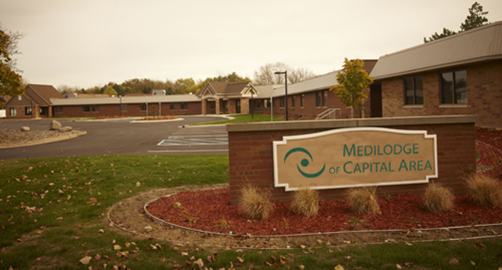

2100 E Provincial House Drive, Lansing, MI 48910 (517) 272-4029
For profit - Corporation 120 Beds MEDILODGE Data: November 2025 2 Immediate Jeopardy citations
Trust Grade
16/100
#139 of 422 in MI
Last Inspection: August 2025

Inspected within the last 6 months. Data reflects current conditions.

Overview

Medilodge of Capital Area has received a Trust Grade of F, indicating significant concerns with the facility's operations and care. It ranks #139 out of 422 nursing homes in Michigan, placing it in the top half, and #3 out of 9 in Ingham County, which suggests only two local options are better. However, the facility is showing signs of improvement, with issues decreasing from 18 in 2024 to 9 in 2025. Staffing is a strength, earning a 5/5 rating with a turnover rate of 41%, which is below Michigan's average of 44%. Unfortunately, the facility has incurred $69,933 in fines, which is higher than 77% of Michigan facilities and indicates ongoing compliance issues. While the RN coverage is average, recent critical incidents are concerning. There was a tragic case where a resident died after using an unassessed electric scooter, which suggests a failure to prevent accidents. Additionally, there was a severe incident of sexual abuse involving a cognitively impaired resident, raising serious safety concerns. Overall, while there are some strengths in staffing and recent improvements, families should weigh these against the serious safety issues and fines before making a decision.
Trust Score
F
16/100
In Michigan
#139/422
Top 32%
Safety Record
High Risk
Review needed
Inspections
Getting Better
18 → 9 violations
Staff Stability
○ Average
41% turnover. Near Michigan's 48% average. Typical for the industry.
Penalties
⚠ Watch
$69,933 in fines. Higher than 89% of Michigan facilities, suggesting repeated compliance issues.
Skilled Nurses
✓ Good
Each resident gets 47 minutes of Registered Nurse (RN) attention daily — more than average for Michigan. RNs are trained to catch health problems early.
Violations
⚠ Watch
53 deficiencies on record. Higher than average. Multiple issues found across inspections.
★★★★☆
4.0
Overall Rating
★★★★★
5.0
Staff Levels
★★★★★
5.0
Care Quality
★★☆☆☆
2.0
Inspection Score
Stable
2024: 18 issues
2025: 9 issues

The Good

  • 5-Star Staffing Rating · Excellent nurse staffing levels
  • 5-Star Quality Measures · Strong clinical quality outcomes
  • Full Sprinkler Coverage · Fire safety systems throughout facility
  • No fines on record
  • Staff turnover below average (41%)

    7 points below Michigan average of 48%

Facility shows strength in staffing levels, quality measures, fire safety.

The Bad

Staff Turnover: 41%

Near Michigan avg (46%)

Typical for the industry

Federal Fines: $69,933

Well above median ($33,413)

Moderate penalties - review what triggered them

Chain: MEDILODGE

Part of a multi-facility chain

Ask about local staffing decisions and management

The Ugly 53 deficiencies on record

2 life-threatening 1 actual harm
Aug 2025 5 deficiencies
CONCERN (D)

Potential for Harm - no one hurt, but risky conditions existed

Deficiency F0578 (Tag F0578)

Could have caused harm · This affected 1 resident

**NOTE- TERMS IN BRACKETS HAVE BEEN EDITED TO PROTECT CONFIDENTIALITY** Based on interview and record review, the facility failed to obtain a physician order an advanced directive/ Do Not Resuscitate,...

Read full inspector narrative →
**NOTE- TERMS IN BRACKETS HAVE BEEN EDITED TO PROTECT CONFIDENTIALITY** Based on interview and record review, the facility failed to obtain a physician order an advanced directive/ Do Not Resuscitate, for one resident (resident #8) of one reviewed. Findings include: Review of the clinical record, including the Minimum Data Set, dated [DATE] revealed Resident #8 was admitted to the facility on [DATE]. R8 scored 9 out of 15 (moderate cognitive impairment) on the Brief Interview for Mental Status (BIMS). Further record review revealed R8 had a full legal guardian in place to make health and medical care decisions. R8's advanced directives revealed the legal guardian signed an advanced directive form on [DATE] that reflected Do Not Resuscitate (DNR) / No CPR (cardiopulmonary resuscitation which is an emergency procedure that combines chest compressions and rescue breathing to restart a person's breathing and heartbeat. The form included 2 witnesses, and the Physician signature dated [DATE]. During a record review on [DATE] it was revealed there was no Physician order in place to implement the DNR. On [DATE] at 1:04 PM, during an interview with Social Services Assistant O she reported there should be a physician order that would reflect the wishes of the resident/guardian but could not comment any further as Social Worker P handles advanced directives.Social Woker P was not working during the survey time frame and unavailable to be interviewed. During an interview with Assistant Director of Nursing (ADON) E on [DATE] 2:50 PM reported the process was Social Worker P notifies her to have orders changed/updated, ADON E stated she did not recall Social Worker P notifying her that R8's guardian had signed any advanced directives.
CONCERN (D)

Potential for Harm - no one hurt, but risky conditions existed

Assessment Accuracy (Tag F0641)

Could have caused harm · This affected 1 resident

**NOTE- TERMS IN BRACKETS HAVE BEEN EDITED TO PROTECT CONFIDENTIALITY** Based on observation, interview and record review, the facility failed to complete a change in condition, Minimum Data Set (MDS)...

Read full inspector narrative →
**NOTE- TERMS IN BRACKETS HAVE BEEN EDITED TO PROTECT CONFIDENTIALITY** Based on observation, interview and record review, the facility failed to complete a change in condition, Minimum Data Set (MDS) Assessment for two (Resident #6 and Resident #15) of two residents reviewed for pressure ulcers. Findings include: Review of the medical record reflected R6 was admitted to the facility on [DATE] and readmitted on [DATE], with diagnoses that included muscle weakness and anxiety. The Minimum Data Set (MDS), with an Assessment Reference Date (ARD) of 6/27/25, reflected R6 scored 15 out of 15 (cognitively intact) on the Brief Interview for Mental Status (BIMS-a cognitive screening tool). Review of the MDS indictors revealed that R6 was coded as having a tracheostomy. On 08/04/2025 at 12:19 PM, R6 was observed in her room watching television. No tracheostomy equipment was observed at the bedside, no tracheostomy was observed on R6. R6 denied having a tracheostomy. Review of R6's Five-day MDS revealed under Section O- Special Treatments, Procedures, and Programs, R6 required Tracheostomy Care. On 08/05/2025 at 3:27 PM, MDS Licensed Practical Nurse A stated that R6 does not require tracheostomy care and that the MDS was incorrect. Review of the medical record reflected that R15 was admitted to the facility on [DATE] and was readmitted to the facility on [DATE]. Diagnoses of Traumatic Brain Injury, Schizoaffective Disorder, Dementia, Parkinson’s Disease, Muscle weakness, and Dysphagia. The most recent Minimum Data Set (MDS), with an Assessment Reference Date (ARD) of 06/02/2025 revealed R15 had a Brief Interview of Mental Status (BIMS) of 12 (cognitively impaired) out of 15. Under section G0100, Activities of Daily Living (ADL) Assistance reveals R15 needs moderate assistance with eating and oral care. Dependent on showers, getting dressed, and all hygiene care, sitting to laying, laying to sitting, chair to bed, tub/shower transfers. During an interview and observation on 08/05/2025 at 9:22 AM, R15 lifted his feet up off the bed so this writer could see his pressure ulcer on his left heel. During an interview on 08/05/2025 at 9:24 AM, Registered Nurse (RN) “G” stated R15 did have a pressure ulcer on his heel, added she had not changed the dressing yet this morning. RN “G” stated they ask R15 if he would like lotion on his legs and feet, and if he does, they will apply it on him. During an interview on 08/05/2025 at 12:14 PM, Wound Care Nurse/Licensed Practical Nurse “J” stated R15's left heel pressure ulcer was now healed. Wound Care Nurse/Licensed Practical Nurse “J” stated she would do daily skin sweep, using a new skin assessment/sweep, asking 3 questions, was there new skin breakdown, if so, was a risk management started, was treatment started. During an interview on 08/05/2025 at 3:23 PM, Minimal Data Set (MDS) nurse “L” stated that MDS had a schedule on which resident was due for an assessment on which day. Writer asked how she gathered information for this assessment, she stated she went down to talk to the nurse, then the resident and or family. MDS nurse “L” stated when the next assessment was due, she read nursing progress notes and talks to the resident while they are out walking in the hall, getting around on the unit, during use of the bathroom, etc. MDS nurse “L” stated she used the skin assessment and communicated with the wound care nurse or provider. Writer asked MDS nurse “L” when R15’s left foot pressure ulcer developed. MDS nurse “L” stated 04/07/2025. Writer asked MDS nurse “L” if that would be a change in condition for a new pressure ulcer developed. MDS nurse “L” stated it should have been, but one did not get done. MDS nurse “L” added that an MDS assessment had to be done within 7 days of the change in condition, there was not a change in condition assessment completed.
CONCERN (D)

Potential for Harm - no one hurt, but risky conditions existed

Deficiency F0657 (Tag F0657)

Could have caused harm · This affected 1 resident

**NOTE- TERMS IN BRACKETS HAVE BEEN EDITED TO PROTECT CONFIDENTIALITY** Based on observation, interview, record review, the facility failed to update/revise individualized, person-centered care plans ...

Read full inspector narrative →
**NOTE- TERMS IN BRACKETS HAVE BEEN EDITED TO PROTECT CONFIDENTIALITY** Based on observation, interview, record review, the facility failed to update/revise individualized, person-centered care plans to reflect the changing care needs for 1 resident (R5) of 23 residents reviewed for care plans, resulting in the potential for unmet care needs. Findings include: Resident #5: Observation on 8/4/2025 during the initial screen process of the healthcare survey revealed Resident #5 to be located in the 300-unit hall resting in bed. Resident #5 had a perimeter mattress and bilateral fall mats placed at bedside. Resident #5 was able to make eye contact, although could not respond appropriately to surveyor questions. Record review of Resident #5's Minimum Data Set (MDS) dated [DATE] revealed an elderly resident with severe impaired cognitive ability of a Brief Interview of Mental status (BIMs) score of 1 out of 15. Medical diagnosis included dementia, anxiety and depression. Record review of Resident #5's care plans pages 1-42 noted on page 36 a care plan of: Resident resides on secure care unit (100-unit) for therapeutic environment related to dementia. Started 1/29/2025. In an observation, record review and interview on 08/06/2025 at 8:01 AM with Licensed Practical Nurse (LPN) I the 300-hall unit manager, of Resident #5 during wound observation revealed the resident was noted to reside on the 300-hall unit. Record review on 08/06/2025 at 8:05 AM with LPN I of Resident #5's care plans and medical record revealed on July 17th the resident was removed from the secured dementia 100-unit hall to the 300-unit hall. LPN I stated that the Interdepartmental team (IDT) team meets and reviews changes of the residents. The care plan update was missed. Record review of the facility 'Comprehensive Care Plans' policy dated 6/30/2022 revealed it is the policy of the facility to develop and implement a comprehensive person-centered care plan for each resident, consistent with resident rights, that includes measurable objectives and timeframes to meet a resident's medical, nursing, and mental and psychological needs.
CONCERN (D)

Potential for Harm - no one hurt, but risky conditions existed

ADL Care (Tag F0677)

Could have caused harm · This affected 1 resident

**NOTE- TERMS IN BRACKETS HAVE BEEN EDITED TO PROTECT CONFIDENTIALITY** Based on observation, interview and record review, the facility failed to ensure activity of daily living skills were maintained...

Read full inspector narrative →
**NOTE- TERMS IN BRACKETS HAVE BEEN EDITED TO PROTECT CONFIDENTIALITY** Based on observation, interview and record review, the facility failed to ensure activity of daily living skills were maintained for one of five residents reviewed (Resident #74). Findings include:Review of the clinical record, including the Minimum Data Set (MDS) dated [DATE] revealed R74 scored 12 out of 15 (cognitively intact) on the Brief Interview for Mental Status. Review of R74's care plan dated 6/24/25 revealed he required one person assist for hygiene, there was no documentation in R74's clinical record that reflected refused or was resistant to care. On 08/04/2025 at 11:14 AM, during the initial screening process Resident #74 was observed in dining/former therapy room, hair was observed greasy and not combed, mustache was very long and went into his mouth. R74 was observed wearing blue jogging pants with food and debris on them. On 08/05/2025 9:17 AM observed sitting at side of bed, wearing same soiled blue jogging pants as they day prior, R74's hair was observed messy and greasy, the same observation was made again on 8/05/25 at 1:25 pm 08/06/2025 10:23 R74 was observed in activities, hair was unkempt. At 10:26 am, during an interview with Certified Nursing Assistant (CNA) M stated R74 very cooperative, never refused care, change of clothes or showers. CNA M elaborated that R74 gets jealous when staff provided care or spent too much time with roommate. CNA M stated R74 had been asking about a haircut, but the facility has been without a beautician for about 6 months. On 08/06/2025 11:26 AM, during an interview with CNA and Restorative staff N she reported that during R74's restorative therapy session yesterday, R74 asked her for assistance with his facial hair as mustache was so long it was getting into his mouth. CNA and Restorative staff N stated R74 was very cooperative with care, and that he liked being with other people and liked attention and was desperate to get a haircut. On 08/06/2025 12:08PM during an interview with Assistant Director of Nursing (ADON) E she reported she was not aware that R74's mustache was so long he was growing into his mouth or that he was wearing the same dirty clothes for two days. ADON E stated R74's family wanted R74 to be Independent and do things himself but agreed it was ultimately facility's responsibility to ensure care needs were met.
CONCERN (D)

Potential for Harm - no one hurt, but risky conditions existed

Pressure Ulcer Prevention (Tag F0686)

Could have caused harm · This affected 1 resident

**NOTE- TERMS IN BRACKETS HAVE BEEN EDITED TO PROTECT CONFIDENTIALITY** Based on observation, interview, and record review, the facility failed to prevent the development of facility-acquired pressure...

Read full inspector narrative →
**NOTE- TERMS IN BRACKETS HAVE BEEN EDITED TO PROTECT CONFIDENTIALITY** Based on observation, interview, and record review, the facility failed to prevent the development of facility-acquired pressure ulcer injuries for one resident (R5) of three residents reviewed, resulting in facility-acquired (in-house) development of pressure ulcer/injuries, pain, discomfort, and likelihood for prolonged illness or hospitalization. Findings include: Resident #5:Record review of Resident #5's Minimum Data Set (MDS) dated [DATE] revealed an elderly resident with severe impaired cognitive ability of a Brief Interview of Mental status (BIMs) score of 1 out of 15. Medical diagnosis included dementia, anxiety and depression. Section M: Skin noted a stage II pressure ulcer upon re-entry to the facility.Observation on 08/05/2025 at 9:19 AM of Resident #5 was lying in bed on her back. Resident was noted to have a small green positioning wedge device pushed off the bed and on the floor. Record review of Resident #5's ‘Skin/Wound' assessments revealed on 5/16/2025 a Right Gluteal 100% epithelial measuring length 0.9cm X width 0.7cm X depth 0.1cm. Record review of Resident #5's Skin/Wound' assessment dated [DATE] revealed the right gluteal pressure ulcer resolved. Observation on 08/05/2025 1:09 PM Resident #5 is lying flat on her back there are no pillows in the room to use as positioning devices. Resident sleeping with bilateral fall matts at bedside. [NAME] positioning wedge located under residents left arm. Record review of Resident #5's July 14th, 2025 ‘Skin/Wound' assessment noted a pressure ulcer stage III full thickness skin loss sacrum, in-house acquired measuring length 1.2cm X width 1.1cm X depth 0.1cm 100% granulation (tissue) light exudate (drainage) of serous fluid. Form noted: Resident had a recent decrease in mobility. Record review of resident #5's nursing progress notes from April 1st 2025 through August 5th 2025 revealed that there was no mention of sacrum area skin redness, if it was blanchable, or if there was any missing dermis until July 14th when there is a Stage III full thickness pressure ulcer noted. In an observation and interview on 08/06/2025 at 8:01 AM with Licensed Practical Nurse (LPN) I 300-hall unit manager an observation of # #5s bilateral heels, observation of sacrum region with no dressing noted to the area. Record review of Resident #5's medical record with LPN I revealed the sacrum pressure ulcer wound started while the resident resided on the secured dementia unit on 7/14/2025 and then on 7/17/25 the resident was moved off the secured unit to the 300-unit hall. LPN I was asked about Resident #5's new stage III pressure ulcer found on July 14th going from intact skin to a stage III with no notes. LPN I stated that there should have been a red area noted first. LPN I described the pressure ulcer Progression of skin with pressure, stating first is redness stage I Blanchable, then Stage II still redness with denuding of dermis, and at Stage III full thickness loss of tissue with open area. In an interview and record review on 08/06/2025 at 8:45 AM with Licensed Practical Nurse (LPN)/Wound Care (LPN) J reviewed Resident #5's medical record. LPN J Stated on July 14th, 2025, it was reported that resident #5 had a stage III pressure ulcer. LPN J described the pressure ulcer Progression of skin injury. LPN J stated that Resident #5's Stage III pressure ulcer was not a Kennedy ulcer, and that now that the area had already been open it will re-open. LPN J was asked if the pressure ulcer was Avoidable? LPN J stated yes, we should have caught that earlier, we could have caught it and put the air mattress in place sooner. Air mattress was placed on 7/17/2025, I first saw the pressure ulcer on the 14th. Wound rounds are on Mondays and we do the treatments and photos on those days. In an interview and record review on 08/06/2025 at 9:29 AM with Registered Nurse (RN) Assistant Director of Nursing (ADON) presented an AdHOC quality assurance protected form and timeline for Resident #5's facility acquired pressure ulcer. This reflected on 5/21/2025 right gluteal stage II pressure ulcer upon return from hospital. Which resolved 6/2/2025. On 7/14/2025 staff identified stage III wound to sacrum region, and the facility educated the Interdepartmental team (IDT) team/Managers for interventions to be put in place prior to this time. In an interview and record review on 08/06/2025 at 10:13 AM with Registered Nurse (RN) Assistant Director of Nursing (ADON) stated when resident #5 came back from the hospital, the resident was put an low air loss (LAL) mattress in place on 5/20/2025 and the facility had healed the stage II pressure ulcer from the hospital, then management changed Resident #5's mattress to a perimeter mattress on 6/15/2025. Observation on 08/06/2025 at 10:35 AM of Resident #5 was observed seated up in a high back wheelchair in the activities room with no cushion noted to chair, seated on her bottom with legs extended out in front of her. Record review of the facility's ‘Pressure Ulcer/Skin Breakdown-Clinical Protocol' dated 3/20/2024 revealed a resident receives care consistent with professional standards of practice, to prevent pressure ulcers and does not develop pressure ulcers unless the individuals clinical condition demonstrates that they were unavoidable; and a resident with pressure ulcers receives necessary treatment and services, consistent with professional standards of practice to promote healing, prevent infection, and prevent new ulcers from developing.
Apr 2025 2 deficiencies
CONCERN (D) 📢 Someone Reported This

A family member, employee, or ombudsman was alarmed enough to file a formal complaint

Potential for Harm - no one hurt, but risky conditions existed

Deficiency F0804 (Tag F0804)

Could have caused harm · This affected 1 resident

This citation pertains to intake MI00151282 Based on observation, interview, and record review the facility failed to serve food at the preferred temperature for two resident (#2, #4) of three residen...

Read full inspector narrative →
This citation pertains to intake MI00151282 Based on observation, interview, and record review the facility failed to serve food at the preferred temperature for two resident (#2, #4) of three resident reviewed for food palpability resulting in dissatisfaction during meals. Findings Included: Resident #2 (R2): Review of the medical record revealed R2 was admitted to the facility 12/13/2024 with diagnoses that included kidney failure, acute cystitis (inflammation of the bladder), dissection of thoracic aorta, chronic ischemic heart disease, hyperkalemia (high potassium level), muscle weakness, anemia (low red blood count), post-traumatic stress disorder (PTSD), mood disorder, depression, and myalgia (muscle pain). The most recent Minimum Data Set (MDS), with an Assessment Reference Date (ARD) of 03/21/2025, revealed R2 had a Brief Interview of Mental Status (BIMS) of 15 (cognitively intact) out of 15. During observation and interview on 04/08/2025 at 08:20 a.m. R2 was observed walking from his bathroom back to his bed. R2 explained that he has not had a hot meal since he was admitted to the facility. R2 explained that at best, the meals are warm. R2 also explained that he rarely had received hot tea, and the iced tea is rarely cold. R2 explained that the meat are over cooked and sometimes under cooked. Resident #4 (R4) Review of the medical record revealed R4 was admitted to the facility 04/14/2021 with diagnoses that included cerebral infarction (stroke), type 2 diabetes mellitus, hyperlipidemia (high fat content in blood), hypertension, cervical disc degeneration (cushioning disc in neck breaks down over time), memory deficit, difficulty walker, dysphagia (difficulty swallowing), insomnia, cognitive communication deficit, dementia, and depression. The most recent Minimum Data Set (MDS), with an Assessment Reference Date (ARD) of 01/10/2025, revealed R4 had a Brief Interview of Mental Status (BIMS) of 9 (severely impaired cognition) out of 15. During observation and interview on 04/08/2025 at 11:27 a.m. R4 was observed lying down in bed. R4 explained that he frequently received his meals in his room. R4 explained that the food he received was never really warm. During observation on 04/08/2025 at 12:07 p.m. the food cart for the 300 hall was observed to arrive on the unit. On 04/08/2025 at 12:11 p.m. it was observed that 4's food tray was delivered to his room. R4 explained that he did not want his food tray because he was going to an appointment and would like something to eat when he returned. R4's lunch tray was removed and the Dietary Manager in training G was asked to obtain temperatures of R4's food tray. Dietary Manger in training G demonstrated the following temperatures: Quiche temperature was 108.3 F(Fahrenheit), peas temperature 120.4F, coffee temperature was 128.0F, and ice cream was 42.0F. The Dietary Manager in training G explained that R4's food tray should have had ice cream that was below 40.0F, the quiche temperature, the pea temperature, and the coffee temperature should have been closer to 165.0F. During observation on 04/09/2025 at 08:36 a.m. the food cart for the 300 hall was observed to arrive on the unit. On 04/09/2025 at 08:38 a.m. R4's food tray was taken into his room. R4 was observed lying in bed. Dietary Account Manager I was asked to obtain temperatures of R4's food. Dietary Account Manager I demonstrated the following temperatures: oatmeal 154.0F (Fahrenheit), hash browns 99.0F, biscuit 87.0F, coffee 87.0F, juice 51.0F, and milk 46.0F. R4 was observed to taste his hash browns and stated he explained that his has browns were not warm enough. Dietary Account Manager I was not observed to offer R4 warmer hash browns and then was observed to leave R4's room.
CONCERN (D) 📢 Someone Reported This

A family member, employee, or ombudsman was alarmed enough to file a formal complaint

Potential for Harm - no one hurt, but risky conditions existed

Deficiency F0806 (Tag F0806)

Could have caused harm · This affected 1 resident

This citation pertains to intake MI00151282 Based on observation, interview, and record review the facility failed to provide food preferences for one Residents (#2) of three sampled Residents resulti...

Read full inspector narrative →
This citation pertains to intake MI00151282 Based on observation, interview, and record review the facility failed to provide food preferences for one Residents (#2) of three sampled Residents resulting in frustration and an unpleasant dining experience. Findings Included: Resident #2 (R2): Review of the medical record revealed R2 was admitted to the facility 12/13/2024 with diagnoses that included kidney failure, acute cystitis (inflammation of the bladder), dissection of thoracic aorta, chronic ischemic heart disease, hyperkalemia (high potassium level), muscle weakness, anemia (low red blood count), post-traumatic stress disorder (PTSD), mood disorder, depression, and myalgia (muscle pain). The most recent Minimum Data Set (MDS), with an Assessment Reference Date (ARD) of 03/21/2025, revealed R2 had a Brief Interview of Mental Status (BIMS) of 15 (cognitively intact) out of 15. During observation and interview on 04/08/2025 at 08:20 a.m. R2 was observed walking from his bathroom back to his bed. R2 explained that he had issues with getting the food items that were listed on his food tag. R2 also explained that he either received the food that he did not like or did not receive the food items he had requested. R2 provided the following meal tickets that demonstrated that the facility had not honored his preferences: 1. 03/24/2025: Lunch- had not received tossed salad w/dressing and did not receive hot tea but coffee (item listed on his dislike list). 2. 4/01/2025 - Breakfast- had not received assorted yogurt cup, cold cereal of choice, and 2 %milk. 3. 4/02/2025- Dinner-had not received potato chips. 4. 4/03/2025-Dinner- had not received ketchup. 5. 4/05/2025 -Lunch-had not received homestyle turkey and gravy. Instead, he had received pot roast beef stew (food ticket demonstrated No Beef Products. 6. 4/6/2025- Lunch- had not received hot tea but had received coffee (item listed on his dislike list). R2 also explained that he had completed several Quality Assistance Forms that explained the issues regarding his food preference and food ticket concerns. R2 explained that he had been meeting with the dietary manager but that the issues were still occurring as demonstrated by the food tickets he had provided. Review of R2 medical record demonstrated that he had a physician diet order that stated, Regular diet, regular texture, regular fluid, thin consistency, which was written 12/13/2024. Review of Quality Assistance Form's that had been completed by R2 demonstrated the following: 1. 02/03/2025- Resident stated, his tickets are not matching his meals and receiving his dislikes 2. 03/06/2025- says ever meal tray is missing something (today breakfast missing yogurt and cereal) says taco only had meat no cheese, etc. 3. 03/19/2025 - Resident stated that he has saved his meal tickets and that 19 out of 20 meals have been wrong or inedible In an interview on 04/08/2025 at 08:38 a.m. Nursing Home Administrator (NHA) A explained that the facility had identified that residents were not receiving the appropriate food items and had started a performance improvement plan. NHA A explained that an assigned dietary staff was check each resident tray during all meals. In an interview on 04/09/2025 at 09:10 a.m. Dietary Account Manager I explained that dietary manager or staff would review the meal trays and compare them to the meal ticket prior to the food being taken to the resident. Dietary Account Manager I was asked to review the meal tickets of R2 that he had provided above. Dietary Account Manager could not explain why R2 had continued to receive coffee in place of hot tea. Dietary Account Manager could not explain why items were not provided as listed on the meal tickets. In an interview on 04/09/2025 at 09:23 a.m. Nursing Home Administrator (NHA) A explained, after reviewing R2's meal tickets, the facility was not compliant with meeting R2's food preferences. NHA A explained that she was not aware of R2's food issues as demonstrated on the meal tickets listed above. NHA A explained that she felt that the facility performance improvement plan needed further adjustment to meet the food preferences of the residents.
Mar 2025 1 deficiency
CONCERN (D) 📢 Someone Reported This

A family member, employee, or ombudsman was alarmed enough to file a formal complaint

Potential for Harm - no one hurt, but risky conditions existed

Quality of Care (Tag F0684)

Could have caused harm · This affected 1 resident

**NOTE- TERMS IN BRACKETS HAVE BEEN EDITED TO PROTECT CONFIDENTIALITY** This citation pertains to intake #MI00150230 Based on observation, interview and record review, the facility failed to follow Ph...

Read full inspector narrative →
**NOTE- TERMS IN BRACKETS HAVE BEEN EDITED TO PROTECT CONFIDENTIALITY** This citation pertains to intake #MI00150230 Based on observation, interview and record review, the facility failed to follow Physician's Orders for medications for one Residents (Resident #10) of 4 reviewed for physician orders. Findings include: Review of the medical record reflected R10 was admitted to the facility on [DATE], with diagnoses that included type two diabetes and cirrhosis of the liver. The Minimum Data Set (MDS), with an Assessment Reference Date (ARD) of 2/14/25, reflected R10 scored 15 out of 15 (cognitively intact) on the Brief Interview for Mental Status (BIMS-a cognitive screening tool). R10 no longer resided in the facility. Review of the physician orders revealed an order initiated on 1/26/25 for Lactulose oral solution 10 grams (GM)/15 milliliters (ML) to be administers three times a day. Review of the Physician orders revealed an order initiated on 1/24/25 for Glimepiride Oral tablet 2 milligrams (mg) to be administered one time a day and an order for Isosorbide Dinitrate oral tablet 10 mg to be administered three times a day. Review of a Quality Assurance form dated 1/29/25 revealed R10's family member had a concern stating the following medications were not available, glimepiride, isosorbide, lactulose. All of [R10's] other medications were pulled from backup (backup supply). Review of the Medication administration record for January confirmed R10's Lactulose, Glimepiride, and Isosorbide Dinitrate were not consistently administered on 1/28/25 and 1/29/25. Review of Nurses Note dated 1/29/25 at 5:53 PM revealed R10's glimepiride, lactulose, and isosorbide medications were delivered from pharmacy. Review of a Interdisciplinary Progress Note dated 1/31/24 at 12:17 PM revealed R10 did not get consistent doses of her lactulose, glimepiride, and Isosorbide since admission. Medications have been delivered now, and resident is on continuous monitoring . Phone calls were placed to speak to the staff that did not provide the medication, however, phone calls were not returned by survey exit. In an interview on 3/5/25 at 10:36 AM, Director of Nursing (DON) B stated that she had discovered the concern when R10's family filled out a Quality Assurance form. DON B stated that she called the pharmacy regarding the missing medication and the pharmacy provided the facility with a STAT delivery of the missing medications. DON B stated that the expectation would have been to pull the medication from backup or ensure that the timely delivery of medication occurred. During the onsite survey, past noncompliance (PNC) was cited after the facility implemented actions to correct the noncompliance which included ensuring that all new admissions had received their medication per ordered, conducting facility wide education which included ensuring medications were available and notifying the Physician for missed medication doses, and auditing carts to ensure completeness. The concern was brought to Quality Assessment and Process Improvement to monitor compliance. The facility was able to demonstrate monitoring of the corrective action and maintained compliance.
Feb 2025 1 deficiency
CONCERN (D) 📢 Someone Reported This

A family member, employee, or ombudsman was alarmed enough to file a formal complaint

Potential for Harm - no one hurt, but risky conditions existed

Quality of Care (Tag F0684)

Could have caused harm · This affected 1 resident

This citation pertain to intake: MI00149478, MI00149576, and MI00149772 Based on observation, interview, and record review the facility failed to follow acceptable professional guidelines, by using PD...

Read full inspector narrative →
This citation pertain to intake: MI00149478, MI00149576, and MI00149772 Based on observation, interview, and record review the facility failed to follow acceptable professional guidelines, by using PDI Sani-Cloth Germicidal Disposable Wipes while performing incontinent bowel care for one resident (#101) out of three residents reviewed. Findings Included: Resident #101 (R101) Review of the medical record reviewed R101 was admitted to the facility 07/17/2020 with diagnoses that included traumatic brain injury, schizoaffective disorder, dementia, hypertension, speech and language deficits, Parkinson's disease, gastro-esophageal reflux, dysphagia (difficulty swallowing), muscle spasm, and dysarthria (slurred speech). The most recent Minimum Data Set (MDS) with an Assessment Reference Date (ARD) of 12/02/2024, revealed a Brief Interview for Mental Status (BIMS) of 11 (moderate cognitive impairment) out of 15. During an interview on 02/10/2025 at 02:44 p.m. Certified Nurse Aide (CNA) D explained that on 01/06/2025 at 11:30 a.m. she had requested Staff Development Coordinator (SDC) I to assist her in providing activities of daily living (ADL) care to R101. CNA D explained that SDC I pulled back R101's brief and he had been incontinent of bowel. CNA D explained that SDC I stated not to use a towel or washcloth to clean R101's bottom but to use the bleach wipes, because they could be thrown away. CNA D explained that she then witnessed SCD I take bleach wipes from a container with an orange top that was labeled Sani-Cloth Germicidal disposable Wipe and proceeded to wipe R1's buttock, groan, leg, and penis. CNA D explained that many wipes were used to complete ADL care for R101. CNA D explained that she knew it was not acceptable to use bleach wipes on a resident and reported this occurrence to the Assistant Director of Nursing (ADON) E. CNA D also explained that she had reported the incident to Nursing Home Administrator (NHA) A on her way home from work after her shift that day. CNA D also explained that she was questioned by Director of Nursing (DON) B several days later and she had reported the same facts to DON B. CNA D explained that she did not know of the outcome or corrective action that had occurred with SCD I related to using bleach wipes to provide incontinent care to R101. During observation and interview on 02/10/2025 at 02:58 p.m. R101 was observed lying in bed. R101 explained that he did remember that staff had cleaned him up with bleach wipes after he had been incontinent of bowel. R101 could not recall the date of when bleached wipes were used and could not recall the person that used bleach wipes. He could not identify if he had pain during that encounter any more than usually because his bottom was always sensitive when staff provided incontinent care. During an interview on 02/10/2025 at 03:28 p.m. Assistant Director of Nursing (ADON) E explained that she had been informed that Staff Development Coordinator (SDC) I had used bleach wipes while providing incontinent care to R101. ADON E explained that this was reported to her by Certified Nurse Aide (CNA) D. ADON E explained that she did not report this to Director of Nursing (DON) B at that time but explained that she knew DON B was aware of the report because she had been notified by Nursing Home Administrator (NHA) A later that evening. Review of R101's facility incident report dated 01/06/2025 at 02:00 p.m. demonstrated Resident had a large episode of BM (Bowel Movement). While cleaning resident, disinfectant wipes were used to wipe his groin and bottom area. Review of the same incident report demonstrated a witness statement from Staff Development Coordinator (SDC) I which stated I went to help (name of Certified Nurse Aide D) when I hear (R101) was not letting anyone change him. When I got in there, his bed was covered in poop and it when all the way up his back. I felt awful seeing him like that. We stayed in there and cleaned him up for almost an hour. We used maybe 10 washcloths and there was still poop everywhere, even soaking into the mattress. So I saw the disinfectant wipes in his room, rinsed it out and used it to wipe his mattress while he was rolled over. As I was wiping, I didn't think about it much, I saw there was still some poop on his back and I wiped it off with the wipe. When he rolled over to the other side, I noticed that there was a lot of buildup of dirt caked on peri area from the fact that he frequently refused for caregivers to provide cares or wipe him properly. So I figured the wipes would do a better job at removing the dirt from his peri area. Not that I think back on it, I know it was not a wise choice to make and I should not have used those wipes. Review of R101's medical record demonstrated skin assessments that had been completed 01/07/2025 which demonstrated no new skin issues. During an interview on 02/10/2025 at 03:45 p.m. Director of Nursing (DON) B explained that it had been reported to her that Staff Development Coordinator (SDC) I had used disinfectant wipes to wipe a R101's skin after an incontinent bowel episode. DON B explained that it was substantiated that SDC I had used disinfectant wipes while providing care to R101. DON B explained that SDC I had received remedial education. DON B also explained that Skin Assessments had been completed for R101 and all other Residents in the facility. DON B explained that education had been initiated for all other nursing staff but was not completed as of the time of this interview. During an interview on 02/10/2025 at 04:32 p.m. Certified Nurse Aide (CNA) H explained that she worked at the facility for about a year. CNA H also explained that she worked the afternoon shift on a full-time basis. CNA H was asked if she recently had received training that included not to use bleach wipes during incontinent care of residents. CNA H explained that she had just received that education on 02/10/2025 at 02:30 p.m. CNA H could not explain why she had not received education regarding not to use bleach wipes prior to this date and time. During an interview on 02/11/2025 at 09:13 a.m. Staff Development Coordinator (SDC) I explained that she was a Registered Nurse who had been employed at the facility since December 2024. When SDC I was asked to explain the incident that occurred on 01/06/2025 with R101 she explained that R101 had a large incontinent bowel movement. SDC I explained that during R101's care he was rolled over to his side and she was wiping the mattress with a bleach wipe, and it must have made contact with his skin. SCD I could not explain why the witness statement provided in R101 incident report dated 01/06/2025 regarding the incident include her wiping R101 back, buttock and peri area. SCD I explained that she had used orange top bleach wipes during this occurrence and stated that she had owned up to my mistake and should not have used bleach wipes to provide personal care for R101. Observation of the orange top germicidal disposable wipes demonstrated a label that stated PDI Sani-Cloth Bleach Germicidal Disposable Wipe and it was observed on the label to state not a skin or baby wipe. Review of the Safety Data Sheet for PDI Sani-Cloth Bleach Germicidal Disposable Wide, dated December 12, 2027, demonstrated recommended use: Use as a disinfectant on hard, no-porous surfaces. The same safety date sheet demonstrated Description of First Aide Measures: Skin- No first aid should be required. Wash skin with water. Get medical attention if irritation develops or persist.
Dec 2024 1 deficiency 1 IJ
CRITICAL (J) 📢 Someone Reported This

A family member, employee, or ombudsman was alarmed enough to file a formal complaint

Immediate Jeopardy (IJ) - the most serious Medicare violation

Free from Abuse/Neglect (Tag F0600)

Someone could have died · This affected 1 resident

**NOTE- TERMS IN BRACKETS HAVE BEEN EDITED TO PROTECT CONFIDENTIALITY** This citation pertains to Intake Numbers MI00148941, MI00148966 and MI00149186 Based on observation, interview and record review...

Read full inspector narrative →
**NOTE- TERMS IN BRACKETS HAVE BEEN EDITED TO PROTECT CONFIDENTIALITY** This citation pertains to Intake Numbers MI00148941, MI00148966 and MI00149186 Based on observation, interview and record review the facility failed to protect the resident's (R505) right to be free from sexual abuse by another resident (R501) of 7 sampled residents reviewed for abuse resulting in sexual assault of R505 who was cognitively impaired and also resulted in the likelihood of physical harm, infection, and emotional pain and suffering, based on the reasonable person concept. The Director of Nursing (DON) was interviewed on 12/18/2024 at 10:10 AM. and confirmed viewing the facility surveillance video captured on 12/12/24. The video taken on 12/12/24 at 7:42 PM showed R501 ushered R505 into R501's room. At 9:09 PM, R501 was seen on video looking up the hallway before ushering R505 back to her room. On 12/13/2024, R505 was sent to the emergency room for further examination due to soiled underwear and suspected sexual assault. The DON stated the video was no longer available for review. The facility did not save a copy nor had the facility recorded the incident's surveillance video on 12/12/24. Further interview with the staff revealed R501 barricaded the door of his room to prevent anyone from entering. The Immediate Jeopardy began on 12/12/2024 when the facility failed to prevent the sexual assault of R505 by R501. The Immediate Jeopardy was identified on 12/26/2024 at 3:30 PM. The facility Administrator was notified in writing of the Immediate Jeopardy on 12/26/2024 at 4:45 PM, and a plan for the removal was requested. It was confirmed by interview and record review on 12/30/24, that the Immediate Jeopardy was removed on 12/13/24, but non compliance remained at actual harm due to sustained compliance that had not been verified by the State Agency. Findings include: The DON was interviewed on 12/18/24 at 10:10 AM. The DON confirmed viewing the facility's surveillance video captured on 12/12/24. According to the DON, the incident had been reported to the state involving a resident-to-resident encounter for a possible sexual assault. The DON described the incident that occurred on 12/12/24, and the timeline was based on after they viewed the facility's video surveillance that was captured on 12//12/24. The DON indicated they first knew about the incident when the staff called them because they were concerned and suspected sexual abuse may have occurred. On 12/12/24 at approximately 7:42 PM to 9:09 PM, Staff noticed that R505 was not in her room for over an hour. After R505 returned to her room, the staff suspected she may have been in R501's room. It was later verified and confirmed, as seen via surveillance camera, that R505 went into R501's room for 1 hour and 27 minutes. The DON stated she watched the video and she saw R501 entered R505's room, but the conversation could not be heard because there was no audio. R501 approached R505's room, stood by the door, and gestured towards his room right across from R505's room. A few minutes later, R505 followed R501 to his room. The DON stated, after the Administrator and the DON watched the video, they immediately called the police and sent R505 to the hospital for a Rape Kit evaluation and further assessment. On 12/19/24 at approximately 10:00 AM, the surveyor requested to review the video footage pertaining to 12/12/24. The DON stated that the video was no longer available for review. The facility did not save a copy nor had they recorded the incident's surveillance video on 12/12/24. According to the daughter/POA (Power of Attorney), during an in-person interview at the facility on 12/18/24 at 3:45 PM, she revealed that she was at the hospital bedside during the hospital physical examination performed by the Forensic Nurse Examiner (FNE) and had asked for a consent to the examination because she was R505's POA. The POA indicated the FNE revealed to her that there was evidence of vaginal bleeding and apparent vaginal tearing present. The daughter/POA also revealed to the nurse, R505's medical history showed R505 had not had periods since about 10 years ago when R505 had a hysterectomy. The daughter mentioned, according to the police, they had assured R505's daughter there was enough evidence to implicate R501 for what he had done to her mother. When asked how her mother was doing, she said they would keep her until after the holiday and wouldn't return until the PPO (Personal Protection Order) was implemented against R501. An interview with the [NAME] Detective (LD) was conducted by phone on 12/19/24 at 10:11 AM. LD stated there was a 99.9% (percent) the sexual encounter occurred. There was enough evidence to incriminate this man (referring to R501). The Detective Investigation Report was reviewed on December 26, 2024, at 3:20 PM. It revealed the incident occurred on 12/12/2024 at approximately 1905 hours. It wrote: I (detective) reviewed the camera footage with the Administrator and CNA B. They advised the camera footage's time is one (1) hour ahead due to the system not accepting daylight saving time changes. With the correct time stamps, the incident occurred as follows: 1. At 1904 hours, both R505 and R501 are seen speaking with each other in the hallway. 2. At 1905 hours, both parties enter their respective rooms (room [ROOM NUMBER] and room [ROOM NUMBER]). 3. At 1942 hours, R501 exits his room, goes to R505's door, and gestures to his room. R501 is seen guiding R505 into R501's room. R501 is then seen closing R505's door and placing the stop sign back in place. 4. At 2011 hours, CNA B attempted to enter R501's room to take his vitals and finds it barricaded. 5. At 2020 hours, CNA B entered R505)'s room and advised she was not inside. 6. At 2105 hours, CNA B makes contact with R501 and does not observe R505 inside his room. 7. At 2106 hours, CNA B leaves. 8. At 2109 hours, R501 is seen guiding R505 out of his room and back into her room. 9. At 2111 hours, CNA B enters into R505's room, and R501 attempts to follow. The report by the detective further described: On 12/13/2024 at approximately 0100 hours, I (LD) was dispatched to the facility (name of the facility mentioned and address) in reference to a suspicious situation. Dispatch advised the male in room [ROOM NUMBER] (referring to R501) had barricaded himself and another resident in his room. Dispatch stated the other resident, [R505 (name mentioned)], who has Dementia, is mentally incapacitated, and is unable to make decisions for herself. Dispatch said that the staff was concerned a sexual assault took place. On 12/13/2024, at approximately 1215 PM, I (detective) spoke to the Administrator for the facility (facility name mentioned) via text and obtained her statement. Administrator's statement: I (detective) spoke to the Administrator (actual name mentioned) via TX (text). She explained last night at approximately 1942 hours, [R501 (mentioned resident's name)], the accused, coaxed [R505 (mentioned R505's name)] into coming into his room. The Administrator explained that he (R501) barricaded himself in the room with [R505 (resident's name mentioned)], but the staff did not know she was there with him. At 2105 hours, he left the staff to do his vitals at his bedroom door, but they did not go into the room and were unable to see [R505 (name mentioned)] in the room. At 2109 hours, [R501 (Resident's name mentioned)] was seen taking [R501(resident's name)] back to her room. She (Administrator) explained that [R505(name mentioned)] had a guardian and does want to prosecute charges. On 12/13/2024 at approximately 0100 hours, officers responded to the facility (facility named) in regards to a report of a possible sexual assault. I (detective) spoke with the accused, [R501 (name mentioned)], who denied the accusations. On 12/19/24 at 2:30 PM, a review of the nearby hospital emergency room (ER) records with the arrival date of 12/13/24 at 0157. Chief Complaint: The patient arrives via EMS from the facility, staff requesting a rape kit from the incident. Per staff, the patient was missing for 1 hour and found to be in a male resident's room. The patient has severe Dementia and does not know what happened or why she is at the hospital. Visit Diagnoses: Encounter for screening examination Z13.9 (primary), Assault Y09. On 12/13/24 at 3:49 AM: Forensic Nurse Examiner to bedside. Medical forensic exam completed w (with)/ pt's (patient's) daughter present as her support person. Pt (patient) is alert and oriented x (times) self only and is not able to provide a history. I reviewed the exam process w/ the pt at cognitively appropriate level. Pt assented to the exam. Pt reports no pain during the exam. Vaginal bleeding was noted during the exam. Pt. has a scant amount of bright red blood present on swabs and with tissue when wiping after using the restroom. No other injuries were noted. See the Medical forensic chart for all findings of the medical forensic exam. Clothing was collected by FNE except for socks and shoes. The patient was given new clothing, including undergarments . Pad applied to underwear due to vaginal bleeding.,.Clothing was collected by FNE except for socks and shoes. Pt was given new clothing, including undergarments and FNE assisted the pt with changing into new clothing. Pad applied to underwear due to vaginal bleeding. SANE (Sexual Assault Nurse Examiner) discharge instructions were reviewed with/ the patient's daughters, including the guardian. Pt to follow up with her Pt. for STI (Sexually Transmitted Infections)/HIV (Human Immunodeficiency Virus) testing and to reassess vaginal bleeding. The patient's family was advised to refer to the Primary MD (Medical Doctor) if the bleeding persists or worsens; they should seek care w/ PCP (Primary Care Physician) or return to the ED (Emergency Department). The family, including the guardian, verbalized understanding. The patient's daughter was given a SANE discharge pack. At 05:45 AM, (Resident 505) was discharged to the hospital emergency room. (Resident 505 guardian) decided to bring her home until after Christmas. ER (Emergency Room) Physician and the Nurse Practitioner were notified, including STI/HIV prophylaxis and discharge planning were deferred to the Dr (Doctor) and NP (Nurse Practitioner). Resident #501 (R501) R501 was [AGE] years old and admitted to the facility on [DATE] with the diagnosis of Adjustment Disorder with Anxiety, Insomnia, Irritability and Anger, Bipolar Disorder, and Narcissistic Personality Disorder, in addition to other diagnoses. According to the PASARR (Preadmission Screening/Annual Resident Review) Level 1 dated 11/19/2024, R501 was not receiving any treatments and no current medications per his preference. R501 has a BIMS (Brief Interview for Mental Status) Score of 15/15, assessed on November 29, 2024, and was deemed his own responsible person. On 12/18/24, a review of R501's care plan did not reflect interventions in place for precautions or monitoring residents related to the past history of sexual activities and his conviction. R501 was independent with Activities of Daily Living (ADLs). R501 used a motorized wheelchair for mobility and ambulation, especially for long-distance ambulation but was independent during transfers to and from the toilet and bed transfers to the chair. He requires very minimal assistance from staff for ADLs. The Plan of Care does not include any monitoring or activity of intimacy or involvement with consensual sexual relationships/interactions with other residents or visitors/guests. An interview with R501 conducted on 12/18/24 at 9:36 AM. During this particular interview with R501, R501 denied touching R505 nor having sex with R505. R505 was [AGE] years old and admitted to the facility on [DATE] with a diagnosis of diverticulitis of the intestine, contact with and exposure to COVID-19, Alzheimer's disease, and dementia with other behavioral disturbance in addition to other diagnoses. R505's current BIMS Score of 03/15 (severe cognitive impairment) assessment was done on December 2, 2024. She is oriented to self only. Resident has a legal guardian, conservator, and Medical POA (Power of Attorney). She requires minimal assistance with ADLs and is independent with ambulation. R505 Care Plan printed on 12/19/24 was reviewed for impaired cognitive function related to Alzheimer's disease, Dementia and was at risk for falls. On 12/30/24 at 3:30 PM, the surveyor met with R505 in her room. She was pleasant and welcomed the surveyor to her room. R505 remained pleasant and did not show any emotional distress. R505 stated no when asked if she is afraid or felt harmed. An interview with the Administrator was conducted on 12/18/24 at 12:20 PM. They do have an Abuse Policy that covers detailed information about sexual assault or abuse. The Administrator also justified the provision of privacy and honoring residents' rights, which confused staff. The administrator asserted that because R501 was his own responsible party, R501 had the right to approve guests in his room or restrict entry. According to Certified Nurse Aide CNA B on 12/23/24 at 8:17 AM, He recalled he was doing his vitals at that time and noticed R501's room was barricaded. CNA B explained that he tried to push the door to open gently, but it felt like there was something heavy by the door, and the door would not open. CNA B stated, The door was stuck and shut. CNA B further revealed that he could only visualize an inch of R501's room and did not see R501 or anyone else inside. CNA B could hear R501 respond from inside the room and told him that he would come out and find him in about 15 minutes. CNA B noticed across the hall that R505 was not in her room but did not suspect anything because the stop sign was placed by her door until over an hour later when R505 had returned. CNA B expressed that he felt weird and disgusted and reported the suspicion to the nurse. That was when they called and reported it to the DON and Administrator. CNA B continued to recall that the nurse assessed and examined R505 later in her room. The nurse said that she saw the blood stain or what may appear to be a blood smear in R505's underwear during her physical and skin assessment right after R505 was missing for over one hour. CNA B stated, (R505) was not an elopement risk, so I did not think she was missing. I just thought she may have visited another hall to visit friends. Although I saw (R505) friendly to (R501) that day, I assumed they were friends for a while. When CNA B was asked when he reported R505 missing? He explained that he did not report her missing because she could be visiting her friends in other halls. CNA B also recalled that he had to get other resident's vitals that night. So he was looking for her but also tried to get to complete the vitals task that was due in his set. R501 also told him that she was last seen heading towards 200 Hall. It was not until after R505 returned to her room that he felt something was wrong. He reported to Nurse A immediately. CNA B said he did not pursue getting in R501's closed door because he was his own person and had the right to privacy. They did not have special instructions on what to do or a care plan specific for residents who are sex offenders. Nurse A was interviewed on 12/23/24 at 8:13 AM. She indicated that she was not notified that R505's whereabouts were unknown for 1 hour and 27 minutes. Nobody had reported to her that she was missing. CNA B only told her when R505 had returned to her room at 2109. Nurse A would have actively looked for R505. Nurse A immediately called the DON and Administrator, assessed R505, and sent her to the ER. R501 was a known sex offender but denied the sexual encounter and stated it did not happen. Nurse A admitted she found some stains in R505's underwear upon physical assessment but was not sure and was not further confirmed as R505 started to get agitated and did not want me to proceed with the examination. We decided to have R505 keep the clothes and underwear on her way to the ER to have her SANE/Rape Kit Test. R505 left at around 1:00 AM on 12/13/24. R501, on the other hand, was placed under one-on-one supervision. An interview by phone with Nurse C was conducted on 12/18/24 at 2:38 PM. Nurse C indicated she had not seen or heard anything. All she recalled on 12/12/24 was CNA B came to 200 Hall, where she was, and asked if she had seen R505. CNA B did not mention R505 was missing then. CNA B came twice, and then he went away. Nurse C recalled, when in 400 hall to do split jobs with medication pass, she did not notice seeing R501 or R505. Nurse C revealed Nurse A was assigned to the 400 Hall, where both R501 and R505 resided. Nurse C was asked how they monitor residents in the sex offender registry and what to monitor. She said they did not have a policy that she knew of. The Registered OT (Occupational Therapist) staff was interviewed on 12/18/24 at 2:15 PM, she indicated R501 used a motorized wheelchair for mobility to move around long distance in the community. His safety awareness is not a problem when he was evaluated in May 2024. He was evaluated and was independent with ADLs, especially during his transfers, walking going to the toilet, pivoting from bed to chair to toilet. He had no problems doing all these independently. Missing resident policy (undated) reviewed on 12/30/24 at 2:30 PM. Missing Person Policy Code Yellow .Nursing personnel must report and investigate all reports of missing residents. If the resident is discovered to be missing, a search shall begin immediately, per the missing person/s protocol. ¢ The Nurse will assign a staff member to begin a headcount of all current residents. ¢ The Nurse will designate a search leader ¢ Assigning staff to conduct an interior search of the facility to also include closets, storage rooms, offices, and any other accessible interior area . According to Nurse A on 12/23/24 at 8:13 AM, during an interview conducted by phone, the Missing Resident Policy or Code Yellow was not activated because it was not reported to her that R505 was missing for over an hour on 12/12/24. Abuse Policy (date revised on 01/10/2024) was reviewed on 12/19/24 at 3:00 PM. Policy: It is the policy of this facility to provide protections for the health, welfare, and rights of each resident by developing and implementing written policies and procedures that prohibit and prevent abuse, neglect, exploitation, and misappropriation of resident's property . . Sexual Abuse (definition) is non-consensual sexual contact of any type with a resident . Criminal Sexual Abuse (definition) is serious bodily injury/harm shall be considered to have occurred if the conduct causing the injury is conduct described in section 2241 (relating to aggravated sexual abuse) or section 2242 (relating to sexual abuse) of Title 18, United States Code, or any similar offense under the State Law. In other words, serious bodily injury includes sexual intercourse with a resident by force or incapacitation or through threats of harm to the resident who is incapable of declining to participate in the sexual act or lacks the ability to understand the nature of the sexual act . .Prevention of Abuse . The facility will implement policies and procedures to prevent and prohibit all types of abuse, neglect, misappropriation of resident property, and exploitation that achieves: A. Establishing a safe environment that supports, to the extent possible, a resident consensual sexual relationship and by establishing policies and protocols for preventing sexual abuse. This may include identifying when, how, and by whom determinations of capacity to consent to a sexual contact . B. Identifying, correcting, and intervening in situations in which abuse, neglect, exploitation, and /or misappropriation of resident property is more likely to occur with the deployment of trained and qualified, registered, licensed, and certified staff on each shift in sufficient numbers to meet the needs of residents, and assure that the staff assigned have knowledge of the individual residents' care needs and behavioral symptoms Immediate Jeopardy Removal: The Immediate Jeopardy that began on 12/12/24 was removed on 12/13/24 when the facility took the following actions to remove the immediacy: As a result of the finding of Immediate Jeopardy by the survey team on 12/12/24 related to Resident #501 and Resident #505 the facility has reviewed the below to determine causation. Findings include: Element #1 Resident #505 was transferred to hospital on [DATE] and was provided a SANE examination. This exam identified no external injuries with vaginal bleeding, scant blood present on tissue when wiping. She was discharged to care of DPOA on 12/13/24. Resident readmitted to the facility on [DATE]. Social Services/designee will complete wellness visits and offer psychosocial support and services. Resident #501 admitted to having resident #505 present in his room to watch a movie on 12/12/24. Beginning on 12/13/2024, he was placed on 1:1 supervision until discharged from the facility on 12/18/24. Element #2 Beginning on 12/12/2024, Female residents with a BIMS 10 or less had skin assessments completed with no concerns identified. Female residents with a BIMS 10 or higher were interviewed regarding any concerns with other residents in the facility and if they feel safe. On 12/13/2024 Social Services Director completed an audit of sex offender registry for residents in facility. Three additional residents were identified. These residents were placed on one to one supervision and assessed regarding risk factors (date of charges, degree of severity, any history of behaviors in facility, cognition and ADLS status or ability move independently throughout the facility). Resident's interventions/supervision updated as deemed appropriate based on risk factors. Care plans updated. These residents had sex offender registration audited to ensure current address was present, any discrepancies were reported to the registry. Element #3 Beginning on 12/12/2024 Facility staff were re-educated on the facility Abuse, Neglect and Exploitation Policy to include Criminal Sexual Abuse. Administrator, Director of Nursing and Social Services Director educated on ensuring that Active sex offenders within the facility have appropriate supervision and interventions initiated and have ongoing monitoring. Beginning on 12/13/2024 Facility staff were educated on signs of potential sexual abuse and also actions to take if sexual abuse is suspected or has occurred. Facility staff were also educated on following the [NAME] / care plan regarding interventions placed for resident who are active registered sex offenders. Systemic Changes Include: • Sexual Abuse education will be completed during ongoing facility orientation. • Residents who are on the sex offender list will be care planned with discussion and agreement, to allow entry when staff has a need to verify the whereabouts of another resident. Should a suspected or confirmed sexual abuse occur, the facility staff will: • Immediately intervene and stop contact between residents • Perpetrator will be placed on one to one supervision in the interim • Notify the Administrator • Notify Police as appropriate • Nurse will complete a physical assessment • Ad hoc QAPI initiated on 12/13/2024. Element #4 Beginning on 12/13/2024 Current residents in facility with a sex offender history will be reviewed by the Social Services Director or designee and IDT (Interdisciplinary Team) weekly for any new behaviors and to ensure current interventions remain in place and are appropriate. The Medical Director/designee was notified of the event on 12/13/2024 has been notified of the Immediate Jeopardy
Jun 2024 15 deficiencies
CONCERN (D)

Potential for Harm - no one hurt, but risky conditions existed

Report Alleged Abuse (Tag F0609)

Could have caused harm · This affected 1 resident

**NOTE- TERMS IN BRACKETS HAVE BEEN EDITED TO PROTECT CONFIDENTIALITY** Based on observation, interview, and record review the facility failed to immediately report an injury of unknown origin for one...

Read full inspector narrative →
**NOTE- TERMS IN BRACKETS HAVE BEEN EDITED TO PROTECT CONFIDENTIALITY** Based on observation, interview, and record review the facility failed to immediately report an injury of unknown origin for one out of six residents (Resident #25), resulting in the potential for further injuries of unknown origin to not be reported, and facility corrective action to not be taken. Findings Included: Per the facility face sheet R25 had been a resident at the facility since 11/16/2023 with a recent readmission on [DATE]. Review of an incident report dated 6/20/2024, revealed R25 was noted to have a small bruise that measured 0.5 inches by 0.5 inches on her forehead at her hairline. The report revealed R25 preferred to rest her head on the wall when standing in the bathroom while being changed. It was documented on the report, resident often leans forward and places head on wall. The report also revealed R25 was not able to give a description or stated what had happened that caused the bruising. The incident report did not describe the color of the bruise or the stage of healing the bruise was in. Further review review of the report revealed Certified Nurse Aid (CNA) L gave a statement that when R25 was changed in the bathroom she would lean her head on the wall and would sometimes does it (leans it) a little harder on the wall while standing up. Another statement documented on the incident report from Licensed Practical Nurse (LPN) M revealed R25 would rest her head on the wall in the bathroom and tap her head on the wall. The incident report, under notes revealed that Director of Nursing (DON) B observed a 0.5 by 0.5 inch bruise at R25's hairline on her forehead. DON B documented R25 would stand in the bathroom and rest her head on the wall while being changed and tap her head repeatedly against the wall while standing. The report revealed that Administrator A and DON B were notified at 4:01 PM of the bruise. Record review of R25's progress notes dated 6/20/2024 at 2:45 PM, revealed R25 had a bruise that was yellow in color on her left forehead with no redness in the surrounding area. There was no other documentation related to the bruise in R25's electronic medical record (EMR). In an observation on 6/26/2024 at 2:45 PM, R25 was observed in the activity room up in her wheelchair. R25 was observed to have an approximately six centimeter (or approximately 2 inches) round yellow, (with no blue, purple green color that would indicate it was a newer bruise, but rather a healing bruise) bruise above her left eye. R25 was not able to state how the bruise occurred. In an interview on 6/26/2024 at 2:51 PM, Administrator A stated that the bruise on R25's forehead was not reported to the state agency because it was determined the bruise was caused from R25 leaning and tapping her head on the bathroom wall. Administrator A said DON B watched the CNA's perform toileting and peri care in the bathroom with R25 and determined that was how the bruise occurred. Administrator A said DON B reported her investigation outcome to her at 3:56 PM. Administrator A then stated that it was not DON B who reported it to her and she could not recall who it was that reported it to her. Administrator A stated she would confirm who the staff member was and the timeline of events and provide that information. As of 6/27/2024 at 4:00 PM at the time of exit Administrator A had not provided the information. In an interview on 6/27/2024 at 8:45 AM, CNA N stated that when she toileted R25 she never saw R25 rest her head on the wall in the bathroom when receiving assistance for toileting. In an interview on 6/27/2024 at 8:55 AM, CNA O stated it was about a week ago R25 started to rest her head on the wall in the bathroom when standing while receiving toileting assistance. CNA O said R25 never tapped her head on the wall, and said if R25 did lean her forehead on the wall she always put her hand in between R25's head and the wall for protection. CNA O also stated that about one week ago was when the bruise first showed up, and said it was a purple/blue in color. In an interview on 6/27/2024 at 9:16 AM, LPN M, who was the Unit Manager of the 100 hall, stated that the bruise on R25's forehead happened about two weeks ago. LPN M said R25 would rest her head on the wall while being assisted with toileting. In an interview on 6/27/2024 at 9:42 AM, CNA L said few CNAs noticed about a week ago a yellow bruise under R25's hairline on her left forehead. CNA L said she never observed a purple or blue bruise on R25's forehead, and said R25 had the habit of resting her head on the bathroom wall for at least the past month. CNA L said she had know idea what the cause of the bruise was, and said we (CNAs) were all trying to figure it out. In an interview on 6/27/2024 at 9:53 AM, Registered Nurse (RN) H said she was told about the bruise when it was noted on 6/20/2024 and when she observed the bruise she saw a yellowish greenish light purple fresher bruise about 0.5 X 0.5 inch at R25's hairline, and said she asked the CNAs how the bruise occurred. RN H said the CNAs told her that R25 would lean her head against the wall in the bathroom. RN L said she then reported the bruise right away to Administrator A and DON B because the bruise was an injury of unknown origin which was required to be reported. RN H said she did an investigation and reported to Administrator A and DON B that she thought the origin of R25's bruise was from leaning her head on the bathroom wall. RN H said Administrator A and DON B then agreed with her. In an interview on 6/27/2024 at 12:08 PM, DON B said she went to look at R25, and upon interviewing the CNA's she discovered R25 would lean her forehead on the bathroom wall. DON B said she thought the bruise was from the bathroom wall, and said staff reported to her R25 would sort of bang her head on the wall when she was being changed in the bathroom.
CONCERN (D)

Potential for Harm - no one hurt, but risky conditions existed

Investigate Abuse (Tag F0610)

Could have caused harm · This affected 1 resident

**NOTE- TERMS IN BRACKETS HAVE BEEN EDITED TO PROTECT CONFIDENTIALITY** Based on observation, interview, and record review the facility failed to ensure a thorough investigation was conducted for one ...

Read full inspector narrative →
**NOTE- TERMS IN BRACKETS HAVE BEEN EDITED TO PROTECT CONFIDENTIALITY** Based on observation, interview, and record review the facility failed to ensure a thorough investigation was conducted for one out of six residents (R25) sampled for alleged abuse resulting in the potential for abuse to occur, and necessary actions to not take place for resident protection. Findings Included: Per the facility face sheet R25 had been a resident at the facility since 11/16/2023 with a recent readmission on [DATE]. Review of an incident report dated 6/20/2024, revealed R25 was noted to have a small bruise that measured 0.5 inches by 0.5 inches on her forehead at her hairline. The report revealed R25 preferred to rest her head on the wall when standing in the bathroom while being changed. It was documented on the report, resident often leans forward and places head on wall. The report also revealed R25 was not able to give a description or stated what had happened that caused the bruising. The incident report did not describe the color of the bruise or the stage of healing the bruise was in. Further review review of the report revealed Certified Nurse Aid (CNA) L gave a statement that when R25 was changed in the bathroom she would lean her head on the wall and would sometimes does it (leans it) a little harder on the wall while standing up. Another statement documented on the incident report from Licensed Practical Nurse (LPN) M revealed R25 would rest her head on the wall in the bathroom and tap her head on the wall. The incident report, under notes revealed that Director of Nursing (DON) B observed a 0.5 by 0.5 inch bruise at R25's hairline on her forehead. DON B documented R25 would stand in the bathroom and rest her head on the wall while being changed and tap her head repeatedly against the wall while standing. The report revealed that Administrator A and DON B were notified at 4:01 PM of the bruise. Record review of R25's progress notes dated 6/20/2024 at 2:45 PM, revealed R25 had a bruise that was yellow in color on her left forehead with no redness in the surrounding area. There was no other documentation related to the bruise in R25's electronic medical record (EMR). In an observation on 6/26/2024 at 2:45 PM, R25 was observed in the activity room up in her wheelchair. R25 was observed to have an approximately six centimeter (or approximately 2 inches) round yellow, (with no blue, purple green color that would indicate it was a newer bruise, but rather a healing bruise) bruise above her left eye. R25 was not able to state how the bruise occurred. In an interview on 6/26/2024 at 2:51 PM, Administrator A stated that the bruise on R25's forehead was not reported to the state agency because it was determined the bruise was caused from R25 leaning and tapping her head on the bathroom wall. Administrator A said DON B watched the CNA's perform toileting and peri care in the bathroom with R25 and determined that was how the bruise occurred. Administrator A said DON B reported her investigation outcome to her at 3:56 PM. Administrator A then stated that it was not DON B who reported it to her and she could not recall who it was that reported it to her. Administrator A stated she would confirm who the staff member was and the timeline of events and provide that information. As of 6/27/2024 at 4:00 PM at the time of exit Administrator A had not provided the information. In an interview on 6/27/2024 at 8:45 AM, CNA N stated that when she toileted R25 she never saw R25 rest her head on the wall in the bathroom when receiving assistance for toileting. In an interview on 6/27/2024 at 8:55 AM, CNA O stated it was about a week ago R25 started to rest her head on the wall in the bathroom when standing while receiving toileting assistance. CNA O said R25 never tapped her head on the wall, and said if R25 did lean her forehead on the wall she always put her hand inbetween R25's head and the wall for protection. CNA O also stated that about one week ago was when the bruise first showed up, and said it was a purple/blue in color. In an interview on 6/27/2024 at 9:16 AM, LPN M, who was the Unit Manager of the 100 hall, stated that the bruise on R25's forehead happened about two weeks ago. LPN M said R25 would rest her head on the wall while being assisted with toileting. In an interview on 6/27/2024 at 9:42 AM, CNA L said few CNAs noticed about a week ago a yellow bruise under R25's hairline on her left forehead. CNA L said she never observed a purple or blue bruise on R25's forehead, and said R25 had the habit of resting her head on the bathroom wall for at least the past month. CNA L said she had know idea what the cause of the bruise was, and said we (CNAs) were all trying to figure it out. In an interview on 6/27/2024 at 9:53 AM, Registered Nurse (RN) H said she was told about the bruise when it was noted on 6/20/2024 and when she observed the bruise she saw a yellowish greenish light purple fresher bruise about 0.5 X 0.5 inch at R25's hairline, and said she asked the CNAs how the bruise occurred. RN H said the CNAs told her that R25 would lean her head against the wall in the bathroom. RN L said she then reported the bruise right away to Administrator A and DON B because the bruise was an injury of unknown origin which was required to be reported. RN H said she did an investigation and reported to Administrator A and DON B that she thought the origin of R25's bruise was from leaning her head on the bathroom wall. RN H said Administrator A and DON B then agreed with her. In an interview on 6/27/2024 at 12:08 PM, DON B said she went to look at R25, and upon interviewing the CNA's she discovered R25 would lean her forehead on the bathroom wall. DON B said she thought the bruise was from the bathroom wall, and said staff reported to her R25 would sort of bang her head on the wall when she was being changed in the bathroom. There were no other staff interviews, or statements, there were no other resident interviews or assessments of other residents for injuries of unknown origins, there was no documentation prior to 6/20/2024 and no further documentation of bruise after 6/20/2024. The incident report was the only document received regarding the bruise on R25's forehead above her left eye, and only had two staff witness statements, one from the Unit Manager and one from the restorative CNA.
CONCERN (D)

Potential for Harm - no one hurt, but risky conditions existed

Comprehensive Assessments (Tag F0636)

Could have caused harm · This affected 1 resident

Based on observation, interview, and record review the facility failed to accurately complete a comprehensive assessment for one (Resident #254) of twenty residents reviewed resulting in the potential...

Read full inspector narrative →
Based on observation, interview, and record review the facility failed to accurately complete a comprehensive assessment for one (Resident #254) of twenty residents reviewed resulting in the potential for unmet care needs. Finding Included: Resident #254 (R254) Review of the medical record demonstrated R254 was admitted to the facility 06/10/2024 with diagnoses that included Parkinson's Disease, type 2 diabetes, chronic obstructive pulmonary disease (COPD), Epilepsy (disorder of the brain characterized by repeated seizures), schizoaffective disorder, atrial fibrillation, anxiety, insomnia, dementia, hypertension, depression, anemia (low red blood cells), orthostatic hypotension, and stroke. Review of the Minimum Data Set (MDS), with an Assessment Reference Date (ARD) of 06/16/2024, revealed R254 had a Brief Interview for Mental Status (BIMS) of 11 (moderate cognitive impairment) out of 15. Section M (skin conditions) of the MDS, with the same ARD, demonstrated that R254 did not have a pressure ulcer. During observation and interview on 06/25/2024 at 01:14 p.m. R254 was observed lying in bed. R254 explained that he had pressure ulcer, and that the facility was performing the treatments to the area as directed by the physician. Review of R254 medical record demonstrated a facility assessment entitled Skin & Wound Evaluation V7.0 had been completed 06/11/2024 at 10:41 a.m. The assessment demonstrated that R254 had been admitted with a pressure ulcer, stage 3 (Full-thickness skin loss) to his right Ischial tuberosity. The pressure ulcer was documented to be 0.8 cm2 (centimeters squared) in surface area, 1.2 cm (centimeters) in length, and 0.9cm in length. R254's medical record also demonstrated that the pressure ulcer had been healed on 06/24/2024. In an interview on 06/26/2024 Minimum Data Set (MDS) Coordinator R explained that the MDS was to be completed after reviewing the medical record of the residents during the MDS assessment period. MDS Coordinator R confirmed that R254's medical record demonstrated a Skin & Wound Evaluation V7.0 had been completed 06/11/2024 and had identified that R254 was admitted with a stage 3 pressure ulcer to his right ischial tuberosity. MDS Coordinator R could not explain why R254's MDS, with an Assessment Reference Date (ARD) of 06/16/2024, section M (skin conditions) did not list the stage 3 pressure ulcer to his right ischial tuberosity. In an interview on 06/26/2024 at 03:00 p.m. Minimum Data Set (MDS) Nurse Q explained that she had completed section M (skin conditions) of the MDS, with an Assessment Reference Date (ARD) of 06/16/2024. MDS Nurse Q confirmed that R254's medical record demonstrated a Skin & Wound Evaluation V7.0 had been completed 06/11/2024 and had identified that R254 was admitted with a stage 3 pressure ulcer to his right ischial tuberosity. MDS Nurse Q could not explain why she had not documented R254's stage 3 pressure ulcer to his right ischial tuberosity.
CONCERN (D)

Potential for Harm - no one hurt, but risky conditions existed

Comprehensive Care Plan (Tag F0656)

Could have caused harm · This affected 1 resident

**NOTE- TERMS IN BRACKETS HAVE BEEN EDITED TO PROTECT CONFIDENTIALITY** Based on observation, interview, and record review, the facility failed to develop and implement resident care plans in two of 2...

Read full inspector narrative →
**NOTE- TERMS IN BRACKETS HAVE BEEN EDITED TO PROTECT CONFIDENTIALITY** Based on observation, interview, and record review, the facility failed to develop and implement resident care plans in two of 20 residents reviewed for care plans, resulting in the likelihood for the development of pressure ulcers and injuries (Resident #34) and a delay in dental care (Resident #36). Findings Include: Resident #34 (R34): R34's Minimum Data Set (MDS), with assessment reference date of 3/22/24 revealed she was admitted to the facility on [DATE], and her cognitive skills for daily decision making was severely impaired (never/rarely made decisions). The same MDS assessment revealed R34 was dependent in activities of daily living (ADL) care and, at the time of the assessment, had a facility acquired Stage 3 pressure ulcer (full tissue thickness loss; subcutaneous fat may be visible, but bone, tendon or muscle was not exposed; slough [devitalized tissue] may be present but does not obscure the depth of tissue loss; may include undermining [erosion under wound edges] and tunneling [passageways underneath the skin]). The same MDS assessment indicated R34 had the diagnoses of non-traumatic brain dysfunction, dementia, anxiety, depression, arthritis, and history of a hip fracture. In review of R34's ADL care plan dated 10/25/23 and risk for impaired skin integrity dated 12/08/23; interventions included: transfer with mechanical lift and 2 person assist with a shower sling, orthotic boot to the right heel for off-loading and protection; pillow placed between her knees, and soft boots at all times. The same care plan instructed to document all refusals. On 6/25/24 at 3:48 PM, R34 was observed sitting in a specialty wheelchair in the television room, a lift sling with green binding (not a shower sling) was observed under the resident. R34 was wearing socks on both feet. R34 did not have a pillow between her knees. On 6/26/24 at 8:44 AM, R34 was observed sitting in a specialty wheelchair in the dining room; socks were noted on both feet, no pillow was observed between her legs, and a lift sling with green binding (not a shower sling) was noted under the resident. On 6/27/24 at 8:35 AM R34 was observed lying in bed with her legs crossed at her knees. R34 had a raised bruise on the right side of her forehead. Resident Aide (RA) J and Certified Nurse Aide (CNA) I provided morning ADL care. Staff Development Registered Nurse (SDRN) C entered R34's room to perform a competency check-off for the mechanical lift transfer while surveyor was observing care. RA J placed a transfer sling with green binding under R34. RA J was guided by CNA I on how to don the sling and attach the sling to the mechanical lift transfer device (Maxi Lift). R34 was lifted from her bed in the sling without her head supported and her lower trunk was not fully supported in the sling. RA I and CNA J lowered R34 back to her bed, readjusted the sling, and attempted the transfer again. R34's head was not supported and middle of sling was not in line with R34's spine. R34 was transferred into a Broda chair (specialty wheelchair). R34's forehead was touching the spreader bar when she was seated into the Broda chair. SDRN C was interviewed on 6/27/24 following the observation of R34's transfer and stated she had concerns regarding correctly donning the transfer sling and spreading of the lift legs. SDRN C stated she had not observed the transfer technique with R34 after a hematoma/bruise were discovered on 6/21/24 until after surveyor requested observation of R34's transfer on 6/27/24. SDRN C stated there were no assessments completed regarding correct sling size, and it was up to the CNA to select the correct size. SDRN C was not sure of the sling size that was used during the transfer with R34 that she had just observed. SDRN agreed R34 was not transferred with a shower sling. SDRN C stated R34 was 57.5 inches (4.79 feet). R34's Activities of Daily Living (ADL) care plan dated 10/25/23, and intervention initiated 12/08/23, instructed to transfer with assist of two persons and use of Hoyer lift with shower sling. There was no shower sling size recommended or torso size on R34's care plan. In review of the ARJO Slings User Guide dated March 2005, the maxi lift, sling sizing guide was only an approximation, other factors considered when selecting the appropriate sling were distribution of body weight, i.e. hips; thighs, upper body, height, torso length and physical condition. The same manual indicated the green binding color sling was a size large, appropriate for a weight range of 154 to 264 pounds. In review of R34's progress note dated 6/20/23 at 1:00 AM, her weight was 129.8 pounds. Incident Report titled Injury of Unknown Cause dated 6/19/24 at 8:30 AM revealed a CNA reported to the nurse that R34 had a bump on her right forehead which was not observed previously. The bump on R34's forehead was 5.0 centimeters (cm) by 4.0 cm. The nurse performed a full skin assessment and noted a red fresh bruise on R34's right ear lobe and blanchable redness on her right knee. The same report indicated R34 was crossing her legs and redness was likely from crossing legs. Nursing Home Administrator (NHA) A and Director of Nursing (DON) B were interviewed on 6/27/24 at 11:08 AM. NHA A stated R34 had a bump on her forehead and bruising to her ear that was observed on 6/19/24; and it was determined R34's injury could have been caused by a staff member not following the mechanical lift transfer policy. The staff member transferred R34 without 2 persons, was suspended and had not returned to work. DON B stated they audited staff using mechanical lifts, but was not able to confirm R34's transfer was evaluated after injuries were noted and before surveyor observation. In review of Facility Past Non-Compliance Checklist dated 6/27/24, description of deficient practice (why and how did it happen); transfer with mechanical lift, incorrect sling size. Staff just completed the CNA class did not have mechanical lift competency validated upon beginning training on the floor. In review of R34's electronic medical record from 6/25/24 through 6/27/24 at 8:04 AM, there were no documented refusals of orthotic boot, pillow between knees, soft boots, or floating heels. Certified Nurse Assistant (CNA) I stated during an observation/interview on 6/27/24 at 8:35 AM a lot of staff forget to don R34's boots, and she previously had a sore on her heel that smelled bad. Resident #36 (R36) R36 was observed sitting in his bed on 6/26/24 at 8:27 AM and stated he had sores in his mouth, like blisters, that caused him pain. R36 complained that he was supposed to see another dentist but was not aware if an appointment had been scheduled. R36's MDS with ARD dated of 3/07/24, revealed he was admitted to the facility on [DATE] and had a Brief Interview for Mental Status (BIMS, cognitive screener) score of 10 (08-12 Moderate Impairment). In review of R36's care plans on 6/26/24, there were no care plans regarding dental issues or oral care. R36's Dental visit notes dated 3/28/24 revealed R36 had the diagnoses of dementia, obstructive sleep apnea, and lung disease. R36 had generalized soreness in his mouth, including burning sensations. R36 had a very low attached maxillary anterior frenum (tissue connecting upper lip to the upper gums and attached too close to the teeth) and had two round, 1 millimeter (mm) by 1 mm, indurated (hardened areas) nodules (growth or lump). The same visit notes indicated the nodules get very sore at times, but don't seem to drain. The soreness seemed to start after R36 had eye surgery that found a cancerous lesion. It was recommended R36 follow-up with an oral surgeon to remove the frenum nodules. The same note indicated after removal of the nodules, R36 would like to receive upper and lower dentures if possible. The same note indicated action required by nursing home staff included: (1) continue daily oral care and (2) refer to oral surgeon for the removal of the two nodules on the maxillary anterior frenum. Unit Manager Registered Nurse (UMRN) H was interviewed on 6/26/24 at 2:18 PM and stated when a resident had a referral, she would write a note, put in an order, print it out and give it to the scheduler. The care plan would be updated as needed. UMRN H confirmed the referral was sent to the scheduler on 5/28/24 and the dental appointment was not scheduled yet. UMRN H was not sure why R36's dental appointment was not attempted to be scheduled between 3/28/24 through 5/28/24. R36's dental/oral care plan, developed following surveyor interview, was dated 6/27/24 and revealed Resident has a dental problem related to missing teeth, no dentures. R36's nodules noted by the dentist were not included in the care plan. R36's goal was Resident will have reduced complications related to dental/oral issues through the next review; his goal to receive upper and lower dentures were not added to the care plan.
CONCERN (D)

Potential for Harm - no one hurt, but risky conditions existed

Deficiency F0679 (Tag F0679)

Could have caused harm · This affected 1 resident

**NOTE- TERMS IN BRACKETS HAVE BEEN EDITED TO PROTECT CONFIDENTIALITY** Based on observation, interview and record review, the facility failed to provide a meaningful, diverse, and engaging activity p...

Read full inspector narrative →
**NOTE- TERMS IN BRACKETS HAVE BEEN EDITED TO PROTECT CONFIDENTIALITY** Based on observation, interview and record review, the facility failed to provide a meaningful, diverse, and engaging activity program for one resident (#44) of one resident reviewed for activities. Findings include: Resident #44 (R44) Review of the clinical record, including the Minimum Data Set (MDS) dated [DATE] reflected Resident # 44 (R44) was a admitted to the facility on [DATE] with diagnoses that included dementia and resided on the facility's secured memory care unit. R44 scored 00 on the Brief Interview for Mental Status indicating severe cognitive impairment. Review of R44's activity assessment dated [DATE] reflected R44 enjoys music, talk radio, walking and pet visits. The assessment reflected R44 had severe cognitive impairment and will make sounds but not normally words. Section 2 of the same assessments reflected materials would be provided as needed or requested. Section 4 of the assessment reflected R44 was cheerful, anxious/depressed and a passive observer. Review of R44's activity care plan initiated 8/16/23 with revisions dated 12/27/23 reflected R44 would maintain their current activity level and actively participate in diversional activities daily. Interventions included needs and wants must be anticipated due to cognition, provide R44 with an activity calendar, encourage participation in group activities, and Feeling others and objects, touching things on the wall. Walking. Being social. Playing with dolls and being social. On 06/25/24 at 10:03 AM, R44 was observed wandering up and down hall carrying a balloon. R44 was observed to make eye contact and smile at others. R44 was observed throughout the day ambulating alone on the memory care unit. On 06/26/24 at 12:48 PM, R44 was observed wandering around the memory care unit and approached the desk and started fumbling through papers. 06/27/24 09:09 AM Resident # 44 observed walking up and down hall. 06/27/24 at 10:32 AM the Activity Calendar scheduled activity titled Coffee and [NAME] at 10:30 R44 was observed ambulating up and down the hall there was no attempt by staff on the unit to encourage R44 to participate. On 06/27/24 01:28 PM Resident # 44 observed walking up and down hall on unit, the patio area had an activity of music playing, there was no attempt made by staff to involve R44. On 06/27/24 at 02:13 PM , during an interview with Activity Director D she reported working at the facility for 10 months. Activity Director D reported R44 liked to grab things from the wall and sensory things, along with pet visits. Review of R44 activity participation record for June 2024 did not reflect any pet visits in the last 30 days - nor does R44's activity care plan and most recent activity assessment reflect an interest in pet therapy. Activity Director D
CONCERN (D)

Potential for Harm - no one hurt, but risky conditions existed

Accident Prevention (Tag F0689)

Could have caused harm · This affected 1 resident

**NOTE- TERMS IN BRACKETS HAVE BEEN EDITED TO PROTECT CONFIDENTIALITY** Based on observation, interview, and record review, the facility failed to safely transfer Resident #34 with a mechanical lift, ...

Read full inspector narrative →
**NOTE- TERMS IN BRACKETS HAVE BEEN EDITED TO PROTECT CONFIDENTIALITY** Based on observation, interview, and record review, the facility failed to safely transfer Resident #34 with a mechanical lift, in one of four residents reviewed for accidents, resulting in a hematoma and bruises. Findings Include: Resident #34 (R34) On 6/27/24 at 8:35 AM R34 was observed lying in bed with her legs crossed at her knees. R34 had a raised bruise on the right side of her forehead. Resident Aide (RA) J and Certified Nurse Aide (CNA) I provided morning activities of daily living (ADL) care. Staff Development Registered Nurse (SDRN) C entered R34's room to perform a competency check-off for the mechanical lift transfer while surveyor was observing care. RA J placed a transfer sling with green binding under R34. RA J was guided by CNA I on how to don the sling and attach the sling to the mechanical lift transfer device (Maxi Lift). R34 was lifted from her bed in the sling without her head supported and her lower trunk was not fully supported in the sling. RA I and CNA J lowered R34 back to her bed, readjusted the sling, and performed the transfer again. R34's head was not supported and middle of sling was not in line with R34's spine. R34 was transferred into a Broda chair (specialty wheelchair). R34's forehead was touching the spreader bar when she was seated into the Broda chair. SDRN C was interviewed on 6/27/24 at 9:12 AM, following the observation of R34's transfer and stated she had concerns regarding correctly donning the transfer sling and spreading of the lift legs. SDRN C stated she had not observed transfer technique with R34 after a hematoma/bruise were discovered on 6/21/24 until after surveyor requested observation of R34's transfer on 6/27/24. SDRN C stated there were no assessments completed regarding correct sling size, and it was up to the CNA to select the correct size. SDRN C stated she was not sure what sling size was used during the transfer with R34 that she had just observed. SDRN agreed R34 was not transferred with a shower sling. SDRN C stated R34 was 57.5 inches (4.79 feet) tall. R34's ADL care plan dated 10/25/23, intervention initiated 12/08/23, instructed to transfer with assist of two persons with a Hoyer lift (mechanical total lift) with shower sling. There was no shower sling size recommended or torso size on R34's care plan. In review of the ARJO Slings User Guide dated March 2005, the maxi lift, sling sizing guide was only an approximation, other factors considered when selecting the appropriate sling were distribution of body weight, i.e. hips; thighs, upper body, height, torso length and physical condition. The same manual indicated the green binding color sling was a size large, appropriate for a weight range of 154 to 264 pounds. In review of R34's progress note dated 6/20/23 at 1:00 AM, her weight was 129.8 pounds. RA J was interviewed on 6/27/24 at 9:20 AM and stated she was not checked off for competency on mechanical lift transfer before surveyor observation and had just completed the CNA class last Friday (6/21/24). R34's Minimum Data Set (MDS) assessment, with assessment reference date of 3/22/24 revealed she was admitted to the facility on [DATE], and her cognitive skills for daily decision making was severely impaired (never/rarely made decisions). The same MDS assessment revealed R34 was dependent in ADL care and had a facility acquired Stage 3 pressure ulcer (full tissue thickness loss; subcutaneous fat may be visible but bone, tendon or muscle was not exposed; slough [devitalized tissue] may be present but does not obscure the depth of tissue loss; may include undermining [erosion under wound edges] and tunneling [passageways underneath the skin]). The same MDS assessment indicated R34 had the diagnoses of non-traumatic brain dysfunction, dementia, anxiety, depression, arthritis, and history of a hip fracture. Incident Report titled Injury of Unknown Cause dated 6/19/24 at 8:30 AM revealed a CNA reported to the nurse that R34 had a bump on her right forehead which was not observed previously. The bump on R34's forehead was 5.0 centimeters (cm) by 4.0 cm. The nurse performed a full skin assessment and noted a red fresh bruise on R34's right ear lobe and blanchable redness on her right knee. The same report indicated R34 was crossing her legs and redness was likely from crossing legs. Nursing Home Administrator (NHA) A and Director of Nursing (DON) B were interviewed on 6/27/24 at 11:08 AM. NHA A stated R34 had a bump on her forehead and bruising to her ear that was observed on 6/19/24; and it was determined R34's injury could have been caused by a staff member not following the mechanical lift transfer policy. The staff member transferred R34 without 2 persons, was suspended and had not returned to work. DON B stated they audited staff using mechanical lifts, but was not able to confirm R34's transfer was evaluated after injuries were noted and before surveyor observation. In review of Facility Past Non-Compliance Checklist dated the same date, 6/27/24, description of deficient practice (why and how did it happen); transfer with mechanical lift, incorrect sling size. Staff just completed the CNA class did not have mechanical lift competency validated upon beginning training on the floor.
CONCERN (D)

Potential for Harm - no one hurt, but risky conditions existed

Unnecessary Medications (Tag F0759)

Could have caused harm · This affected 1 resident

**NOTE- TERMS IN BRACKETS HAVE BEEN EDITED TO PROTECT CONFIDENTIALITY** Based on observation, interview, and record review, the facility to ensure their medication error rate was below 5% when three m...

Read full inspector narrative →
**NOTE- TERMS IN BRACKETS HAVE BEEN EDITED TO PROTECT CONFIDENTIALITY** Based on observation, interview, and record review, the facility to ensure their medication error rate was below 5% when three medication errors were observed from a total of 27 opportunities for one resident (Resident #81) of seven reviewed resulting in a medication error rate of 11.11%. Findings include: On 06/26/24 at 9:05 AM, Licensed Practical Nurse (LPN) K was observed preparing and administering medications to R81. LPN K administered Metoprolol (used to treat hypertension/high blood pressure) 25 milligrams (mg) , two Senna Plus (senna 8.6 mg (laxative) with docusate sodium 50 mg (stool softener)) , and 25 milliliters (mL) of ClearLax (Miralax/laxative). LPN K measured the ClearLax in a plastic pill cup. When asked how much was being administered, LPN K reported 25 milliliters (mL). R81 was admitted to the facility on [DATE] with diagnoses that included thoracic spine injuries. Review of R81's Physician's Order dated 6/6/24 revealed R81 was ordered to receive Metoprolol 25 mg half tablet (12.5 mg) twice a day for hypertension. R81 received a whole tablet. Review of the Physician's Order dated 3/15/24 revealed an order for Senna 8.6 mg, two capsules twice a day for constipation. R81 did not have an order for docusate sodium. Review of the Physician's Order dated 5/15/24 revealed an order for Glycolax (Miralax) 17 grams (g) twice a day for constipation. Review of the ClearLax instructions revealed the bottle top is a measuring cap marked to contain17 grams of powder when filled to the indicated line (white section in cap). In an interview on 06/26/24 at 9:20 AM, LPN K was asked about R81's Metoprolol. LPN K pulled the medication out of the medication cart. The pills sent from pharmacy were full tablets of Metoprolol 25 mg. When asked about the order, LPN K confirmed that R81's order was for a half tablet and that they administered a full tablet. When asked about the Senna Plus, LPN K reported R81 preferred the Senna Plus versus the regular Senna. LPN K confirmed the order was for Senna and not Senna Plus. When asked about measuring the Miralax, LPN K reported they usually measured the Miralax in a plastic pill cup. When asked about using the top of the container to measure 17 g, LPN K reported they sometimes measured it that way. When asked how they knew the pill cup was 17 g, LPN K stated I just put it in the cup and look. In an interview on 06/26/24 at 1:32 PM, Director of Nursing (DON) B reported the facility completed medication error reports for R81 regarding the Metoprolol and Senna Plus. DON B reported the ClearLax/Miralax bottles had a measuring cup on the top of the container, and she was not aware of an instance where a plastic pill cup would be used to measure 17 grams.
CONCERN (D)

Potential for Harm - no one hurt, but risky conditions existed

Dental Services (Tag F0791)

Could have caused harm · This affected 1 resident

**NOTE- TERMS IN BRACKETS HAVE BEEN EDITED TO PROTECT CONFIDENTIALITY** Based on observation, interview, and record review, the facility failed to promptly schedule a dental referral, in one of one re...

Read full inspector narrative →
**NOTE- TERMS IN BRACKETS HAVE BEEN EDITED TO PROTECT CONFIDENTIALITY** Based on observation, interview, and record review, the facility failed to promptly schedule a dental referral, in one of one resident reviewed for dental care (Resident #36), resulting in continued pain and a delay meeting resident goals. Findings include: Resident #36 (R36) R36 was observed sitting in his bed on 6/26/24 at 8:27 AM and stated he had sores in his mouth, like blisters, that caused him pain. R36 complained that he was supposed to see another dentist but was not aware if an appointment had been scheduled. R36's MDS with ARD dated of 3/07/24, revealed he was admitted to the facility on [DATE] and had a Brief Interview for Mental Status (BIMS, cognitive screener) score of 10 (08-12 Moderate Impairment). In review of R36's care plans on 6/26/24, there was no care plans regarding dental issues or oral care. R36's Dental visit notes dated 3/28/24 revealed R36 had the diagnoses of dementia, obstructive sleep apnea, and lung disease. R36 had generalized soreness in his mouth, including burning sensations. R36 had a very low attached maxillary anterior frenum (tissue connecting upper lip to the upper gums and attached too close to the teeth) and had two round, 1 millimeter (mm) by 1 mm, indurated (hardened areas) nodules (growth or lump). The same visit notes indicated the nodules get very sore at times, but don't seem to drain. The soreness seemed to start after R36 had eye surgery that found a cancerous lesion. It was recommended R36 see an oral surgeon to remove the frenum nodules. After that R36 would like to receive upper and lower dentures if possible. The same form indicated action required by nursing home staff included: (1) continue daily oral care and (2) refer to oral surgeon for the removal of the two nodules on the maxillary anterior frenum. Unit Manager Registered Nurse (UMRN) H was interviewed on 6/26/24 at 2:18 PM and stated when a resident had a referral, she would write a note, put in an order, print it out and give it to the scheduler. The care plan would be updated as needed. UMRN H confirmed the referral was sent to the scheduler on 5/28/24 and the dental appointment was not scheduled yet. UMRN H was not sure why R36's dental appointment was not attempted to be scheduled between 3/28/24 through 5/28/24. R36's care plan dated 6/27/24 revealed Resident has a dental problem related to missing teeth, no dentures. R36's nodules noted by the dentist were not included in the care plan. R36's goal was Resident will have reduced complications related to dental/oral issues through the next review; his goal to receive upper and lower dentures were not added to the care plan.
CONCERN (D)

Potential for Harm - no one hurt, but risky conditions existed

Deficiency F0810 (Tag F0810)

Could have caused harm · This affected 1 resident

Based on observation, interview, and record review the facility failed to provide adaptive equipment for one resident (#30) out of twenty residents, resulting the potential for decrease independence w...

Read full inspector narrative →
Based on observation, interview, and record review the facility failed to provide adaptive equipment for one resident (#30) out of twenty residents, resulting the potential for decrease independence with preparing meals and eating. Findings Included: Resident #30 (R30) Review of the medical record demonstrated R30 was admitted to the facility 04/30/2024 with diagnoses that included osteomyelitis (inflammation of bone caused by infection) of left ankle an foot, type 2 diabetes, arthritis, myocardial infarction (hear attack), heart disease, uropathy (disease affecting urinary flow), absence right leg below knee, urinary retention, cognitive communication deficit, depression, atherosclerosis (build-up of fats, cholesterol in and on the artery walls), peripheral vascular disease (PVD), hypertension, hyperlipemia (high fat content in blood), insomnia, and stroke. Review of the Minimum Data Set (MDS), with an Assessment Reference Date (ARD) of 05/05/2024, revealed R30 had Brief Interview for Mental Status (BIMS) of 15 (cognitively intact) out of 15. During observation and interview on 06/26/2024 at 08:18 a.m. R30 was observed lying down in bed. He explained that facility was supposed to provide him with built up eating utensils. He explained that they are providing a fork and spoon but that never provide him with a knife. He explained that a knife was necessary to prepare his food prior to him eating. He explained that he had repeatedly asked for a built up knife but had not been provide one yet. Review of R30's medical record demonstrated a plan of care stating Resident has an ADL (Activity of Daily Living) self-care performance deficit related to multiple CVA (stroke). Care plan intervention list the intervention Built up handles for utensils at meals. During observation and interview on 06/27/24 at 08:26 a.m. R30 was observed sitting up in bed. Observed his breakfast tray to include scramble eggs, a piece of toast, butter, jam, and a drink. It was also observed that a built up handle spoon and fork were present on the resident's tray. No built up knife was present on his tray. R30 explained that he had to use his spoon and fork to butter his toast and apply jam on his toast. In an interview on 06/27/2024 at 08:33 a.m. Dietary Manager (DM) G explained that residents at the facility are provided adaptive silver if a resident needs those devices to assist them with eating their food. He was asked if this included knives and he responded that the facility also had adaptive knives to be provided to the residents. He explained that dietary staff would review the meal ticket, which would inform the dietary staff if adaptive eating utensils or devices should be provided. DM G was asked if R30 required built up utensils for eating to be provide on his dining tray. He explained that he would have to review R30's meal ticket. In an interview on 06/27/2024 at 08:40 a.m. Dietary Manager (DM) G returned with R30's meal ticket. R30's meal ticket was observed to state Built up utensils. DM G could not explain why R30 had not received a built up knife on his meal tray. He explained that it was his expectation that a built up knife should be provided on his meal tray every meal.
CONCERN (D)

Potential for Harm - no one hurt, but risky conditions existed

Deficiency F0849 (Tag F0849)

Could have caused harm · This affected 1 resident

Based on observation, interview, and record review the facility failed to ensure proper communication/documentation of Hospice services provided to one resident's responsible person (Resident #56) of ...

Read full inspector narrative →
Based on observation, interview, and record review the facility failed to ensure proper communication/documentation of Hospice services provided to one resident's responsible person (Resident #56) of one resident reviewed for Hospice services, resulting in a lack of coordination of comprehensive services and care provided. Findings Included: Resident #56 (R56) Review of the medical record demonstrated R56 was admitted to the facility 02/15/2024 with diagnoses that included dementia, traumatic subdural hemorrhage (brain bleed), type 2 diabetes, osteoarthritis (type of arthritis that occurs when flexible tissue at the ends of bones wears down), atrial fibrillation, urine retention, gastro-esophageal reflux, Alzheimer's Disease, depression, hyperlipidemia (high fat content blood), and hypertension. Review of the Minimum Data Set (MDS), with an Assessment Reference Date (ARD) of 05/26/2024, revealed R56 had a Brief Interview for Mental Status (BIMS) of 00 (sever cognitive impairment) out 15. The same MDS demonstrated section O-Special, Treatments, Procedures, and Programs demonstrated that R56 was receiving hospice care. In a telephone interview on 06/25/2024 at 11:35 a.m. R56's Durable Power of Attorney (DPOA) P explained that she was aware that she had approved R56 to receive hospice services. She explained that she was told that someone would contact her regarding which disciplines were providing services and the frequency of those services but that she had not been contacted. Review of R56's medical record demonstrated a physician order that hospice services were to be started 05/22/2024. Review of R56's plan of care demonstrated that he was to receive Hospice Aide two times weekly, Nurse one time weekly and as needed, Social Services one time weekly and as needed, and a Chaplin two times monthly and as needed. During observation and attempted interview on 06/25/2024 at 10:04 a.m. R56 was observed lying down in bed. R56 did not respond to verbal questions. No hospice calendar, which would explain which disciplines would visit and what days those services were to be provide, was observed in R56's room. Review of R56's medical record did not demonstrate that R56's Durable Power of Attorney (DPOA) P received any notification of what hospice disciplines were to be involved in R56's hospice services or when those services were to be provided. R56's medical record demonstrated one Care Plan Conference Summary V5 that was conducted 06/24/2024 but did not include any information of hospice services and did not demonstrate that R56's DPOA P was provided the information discussed at the conference. In an interview on 06/27/2024 at 08:10 a.m. Licensed Practical Nurse (LPN) V explained that nursing staff knew which residents received hospice services because it is listed in the residents' medical record. She explained that each resident who was receiving hospice services had a Hospice Notebook at the nurses station. Review of R56's Hospice Notebook, which was located at the nurses station, did not demonstrate a calendar of when the disciplines visits were to occur. In an interview on 06/27/2024 at 09:41 a.m. Nurse Manager (NM) H explained that when a resident starts on hospice services, they or their responsible party would be informed in an admission meeting for the hospice services. She explained that it would be explained which hospice disciplines and frequency of those visits would be explained at that meeting. NM H could not locate any documentation that a hospice admission meeting had occurred with R56's Durable Power of Attorney (DPOA) P. NM H could not verbalize or provide documentation demonstrating when hospice services where to be provided. In an interview on 06/27/2024 at 10:15 a.m. Social Worker (SW) W explained that she was involved in monthly meetings with the hospice agency that occurred monthly. She explained that those meetings were recorded in the resident's medical record. She explained that the hospice visit calendar was in a resident's medical record. SW W could not demonstrate that a hospice meeting had been conducted with R56 in which his Durable Power of Attorney (DPOA) had been involved. During this interview R56's medical record demonstrated a hospice calendar for the week of 05/26/2024 but was not scanned into the medical record until 05/28/204, a hospice calendar for the week of 06/16/2024 but was not scanned into the medial record until 06/18/2024, and a hospice calendar for the week of 06/23/2024 but was not scanned into the medical record until 06/27/2024. No hospice calendar was present for the week of 06/03/2024 or 06/10/2024. SW W' explained that the hospice agency would forward the calendar to medical records and then medical records would scan it into the residents medical record. SW W could not explain why the calendar was not scanned into the medical record prior to the hospice visits. SW W could not explain if R56's DPOA P had received any hospice calendar of visits that were provided. Review of provided facility policy entitled Hospice, implemented 10/20/2020 and a last revision date of 10/26/2023, demonstrated #2 which stated The facility and hospice provider will coordinate a plan of care and will implement interventions in accordance with the resident's needs, goal, and recognized standards of practice in consultation with the resident's attending physician/practitioner and resident's representative, to the extent possible.
CONCERN (D)

Potential for Harm - no one hurt, but risky conditions existed

Deficiency F0883 (Tag F0883)

Could have caused harm · This affected 1 resident

**NOTE- TERMS IN BRACKETS HAVE BEEN EDITED TO PROTECT CONFIDENTIALITY** Based on interview and record review the facility failed to administer pneumococcal immunizations in accordance with the Center ...

Read full inspector narrative →
**NOTE- TERMS IN BRACKETS HAVE BEEN EDITED TO PROTECT CONFIDENTIALITY** Based on interview and record review the facility failed to administer pneumococcal immunizations in accordance with the Center for Disease Control and Prevention (CDC) recommendations for one resident (#25) of five residents reviewed resulting in the potential for server illness and complications from pneumococcal disease Findings Included: Resident #25 (R25) Review of the medical record demonstrated that R25 was admitted to the facility 11/18/2023 with diagnoses that included dementia, chronic kidney disease, anxiety, hyperlipidemia (high fat content in blood), sever protein-calorie malnutrition, hypertension, depression, muscle weakness, insomnia, irritable bowel syndrome, and spinal stenosis. Review of the Minimum Data Set (MDS), with an Assessment Reference Date (ARD) of 05/25/2024, revealed R25 had a Brief Interview for Mental Status (BIMS) of 2 (severe cognitive impairment) out of 15. Review of R25's medical record demonstrated a date of birth of [DATE]. R25's medical record demonstrated that she had received Pneumococcal Conjugate Vaccine (PCV)13 05/23/2017 and PCV23 12/05/2018. No documentation was present that PCV20 had been given. According to Center for Disease Control and Prevention (CDC) guidelines on PneumoRecs Vax Advisor, for person over the age of 65, one dose of PCV20 at least 5 years after last pneumococcal vaccination dose. In an interview on 06/27/2024 at 02:50 p.m. Infection Preventionist (IP) C explained that pneumococcal vaccinations are offered to the residents based on the guidelines that are provided by Center for Disease Control and Prevention (CDC). IP C confirmed that R25 had not offered or received Pneumococcal Conjugate Vaccine (PCV)20 at least 5 years after her last pneumococcal vaccination. IP C explained that she was not aware of the CDC guidelines suggested that R25 receive PCV20. Review of facility policy entitled Pneumococcal Vaccine (Series), with an implementation date of 03/01/2022 and last revised 10/30/2023, demonstrated #5 which stated: The type of pneumococcal vaccine (PCV15, PCV20, or PPSV23/PPSV) offered will depend on recipient's age and susceptibility to pneumonia, in accordance with current CDC guidelines and recommendations.
CONCERN (E)

Potential for Harm - no one hurt, but risky conditions existed

Deficiency F0680 (Tag F0680)

Could have caused harm · This affected multiple residents

Based on observation, interview and record review the facility failed to ensure the Activities Director had minimum qualifications to perform the duties of the position effectively involving residents...

Read full inspector narrative →
Based on observation, interview and record review the facility failed to ensure the Activities Director had minimum qualifications to perform the duties of the position effectively involving residents on the memory care unit with a current census of 20 residents. Findings include: On 06/25/24 at 10:03 AM during the initial tour of the facility's memory care unit, (census of 20) several residents were observed in bed. Nine residents were observed sitting in lounge/ TV area 7 of 9 residents were sleeping. No observed activity throughout the unit was in progress. On 06/26/24 at 12:48PM Eight residents were observed in day area, TV was on but residents were looking around and nodding off. On 06/27/24 at 09:09 AM, the day room area had the TV was on, 9 residents were present 4 were asleep and the other 5 residents were looking around the room. At 9:33 4 of the 6 residents continued to sleep the television was still on and none of the residents were watching it. The memory care Activity Calendar for 6/27/24 reflected a scheduled activity titled Coffee and Cocoa at 10:30 at 10:35am Activity Director D entered unit and addressed the 7 residents in the room (2 were sleeping) Hey Friends, where is the balloon at 10:36 am Activity Director D played balloon toss for a total of 2 minutes (balloon toss stopped at 10:38 am) and announced it was time to take a break, at this time she went around the circle of 7 asking if they would like coffee or cocoa. Activity Director D then left the unit, Activity Aide (AA) E was present watching the group drink their beverages, one resident addressed Activity Aide E stating she liked AA E jeans, AA E responded These aren't jeans. After the beverages were consumed the activity was over there was no attempt at conversation or attempts to engage with the group. On 06/27/24 at 11:40 am, the memory care unit activity calendar reflected Dance to Dine at 11:30 am, which did not occur, what was observed was the television on with a black and white movie on. On 06/27/24 at 01:36 PM, 8 residents were observed sitting on the patio listening to music, AA F was observed for several minutes sitting in a chair looking down on a cell phone, upon entering the patio area AA F put the phone in her pocket and at that time started to engage with the residents. On 06/27/24 at 02:13 PM , during an interview with Activity Director D she reported working at the facility for 10 months. When queried about the observations made throughout the week Activity Director D offered no explanation. When queried for additional information for things on the activity calendar such as church service that was explained as being on on television, when queried about coffee and cocoa or sparkling cider , Activity Director D stated hydration was important. When queried about how its determined for meaningful activities of interest and how that was individualized on the memory care unit, Activity Director D reported the residents like to sleep and watch a lot of television. Activity Director D reported she was not a recreational or occupational therapist. When queried about her educational background she reported she was currently taking the MEPAP (Modular Education for Program Activity Professional) class to become certified in Activities but had not completed it as of yet. When queried if she held any certifications she reported no. When queried about experience in an Activities department she reported this was her first position as an Activity Director which (August of 2023) she had 3 months experience as an Activity Aide at a sister facility.
CONCERN (E)

Potential for Harm - no one hurt, but risky conditions existed

Deficiency F0804 (Tag F0804)

Could have caused harm · This affected multiple residents

**NOTE- TERMS IN BRACKETS HAVE BEEN EDITED TO PROTECT CONFIDENTIALITY** Based on observation, interview, and record review the facility failed to serve food at the preferred temperature for one reside...

Read full inspector narrative →
**NOTE- TERMS IN BRACKETS HAVE BEEN EDITED TO PROTECT CONFIDENTIALITY** Based on observation, interview, and record review the facility failed to serve food at the preferred temperature for one resident (#57) and six residents (confidential resident group) and failed to provide condiments, food accuracy, preferred food palatability, preferred eating utensils, and preferred food items for six residents (confidential resident group) resulting in dissatisfaction during meals. Findings Included: Resident #57 (R57) Review of the medical record demonstrated that R57 was admitted [DATE] with diagnoses that included spinal stenosis, neoplasm (abnormal mass) related pain, malignant (cancer) neoplasm of the cervix, malignant neoplasm of bone, chronic obstructive pulmonary disease (CPOD), cognitive communication deficit, insomnia, mood disorder, depression, and back pain. Review of the Minimum Data Set (MDS), with an Assessment Reference Date (ARD) of 04/30/2024, revealed R57 had a Brief Interview of Mental Status (BIMS) of 14 (cognitively intact) out of 15. During observation and interview on 06/25/2024 at 10:02 a.m. R57 was observed lying in bed. She explained that every time she receives her meal it is cold. R57 explained that staff had explained to her that they could not re-heat her food. Review of R57's medical record demonstrated at R57 was to receive a regular diet with thin liquids. During observation and interview on 06/26/2024 at 08:33 a.m. R57 was observed to be lying in bed. It was observed that Certified Nursing Aide (CNA) J brought in R57's breakfast tray. The tray was uncovered and was observed to be sausage gravy over a biscuit and hash browns. R57 placed her finger in the food and told CNA J that the food was cold. CNA J explained to R57 that she could not re-heat her food but could go to the kitchen and have a new tray provided or she could have an alternative morning breakfast. R57 explained that she would like a new tray to be provided. CNA J removed the entire tray with metal silverware observed. In an interview on 06/26/2024 at 08:38 a.m. Certified Nursing Aide (CNA) J explained that direct care staff was not allowed to re-heat food for the residents if they had ben informed that the food was cold. She explained that residents could be provided an alternative or staff would need to get a new tray from the kitchen. In an interview on 06/26/2024 at 08:46 a.m. Dietary Manager (DM) G explained that direct staff were not allowed to re-heat food if a resident had a concern that the food was cold. He explained that direct staff must take it back to the kitchen, at which time the food would be destroyed and a new food tray would be prepared. When asked how long a tray replacement was provided, he explained it usually took between five and ten minutes. On 06/26/2024 at 08:53 a.m. it was observed that Certified Nursing Aide (CNA) J returned with the food tray for R57. The food tray was observed to contain sausage gravy on a biscuit and a plastic spoon. R57 proceeded inquire about the hash browns. CNA J explained that the kitchen did not have any more hashbrowns. R57 also inquired why she was given a plastic spoon and requested metal silverware. R57 placed her finger in her food and explained that it was warm enough now. CNA J left the room and did not offer R57 any replacement for the hashbrowns. At the end of the observed interaction between R57 and CNA J, CNA J exited the room. On 06/26/2024 at 08:59 a.m. Certified Nursing Aide (CNA) J returned to R57's room and provided her with metal silverware. It was observed that because of the above listed events R57 was not able to initiate consumption of her breakfast tray for 27 minutes from when she first received her breakfast tray. On 6/26/24 at 12:25 PM, Resident 99 lunch tray was aquired as a test tray while staff were approximately half way through distributing the lunch trays from the rolling cart. The following temperatures were noted using a digital probe thermometer: Meatloaf - 113 degrees F, Mashed potatoes - 133 degrees F, Corn - 125 degrees F. The meatloaf was observed to be luke warm. During the confidential group meeting help on 6/27/24 at 11:00 am, 6 of 6 confidential group participants reported they had chronic food concerns ranging from cold food temperatures, to soggy bread/rolls from vegetables not being drained and accuracy. All six participants reported that on a daily basis there is an issue with tray accuracy, preferences not being followed. One participant presented her meal ticket from last nights dinner and the ticked read add 2 packets of mayo the confidential group member reported she received 0 packets of mayonnaise. Another resident reported she will get toast but no butter or jelly and on another day will get jelly and butter but no toast, another resident reported that last week she did not receive any silverware. All 6 group participants reported things had been a long standing ongoing issue with some improvement but not enough. On 06/27/24 at 01:58 PM, during an interview with Dietary Manager G stated he was aware of the issues and was taking measure to correct things such as audits which he thought were going well.
CONCERN (F)

Potential for Harm - no one hurt, but risky conditions existed

Food Safety (Tag F0812)

Could have caused harm · This affected most or all residents

Based on observation, interview, and record review, the facility failed to maintain plumbing and refrigeration equipment, resulting in the potential for an increased risk of foodborne illness, affecti...

Read full inspector narrative →
Based on observation, interview, and record review, the facility failed to maintain plumbing and refrigeration equipment, resulting in the potential for an increased risk of foodborne illness, affecting all residents that consume food from the kitchen. Findings include: On 6/25/24 at 9:58 AM, water was observed to be leaking from the in-line water filter provided for the coffee maker. At this time, water accumulation was observed on the floor. According to the 2017 FDA Food Code Section 5-205.15 System Maintained in Good Repair. A PLUMBING SYSTEM shall be: (A) Repaired according to LAW; P and (B) Maintained in good repair. On 6/25/24 at 10:19 AM, the Arctic Air reach-in cooler was observed to be holding temperature at around 52 degrees Fahrenheit, read from the internal ambient air thermometer. At this time, Certified Dietary Manager (CDM) G stated that staff were just in the cooler and that the temperature hasn't dropped down yet since the door was open. Peanut butter jelly sandwiches, individually portioned salads, and meat and cheese sandwiches were observed in the cooler. During an interview on 6/25/24 at 11:24 AM, CDM G stated that they discarded the food from the warm reach-in cooler, as the temperature was not coming down. According to the 2017 FDA Food Code Section 3-501.16 Time/Temperature Control for Safety Food, Hot and Cold Holding. (A) Except during preparation, cooking, or cooling, or when time is used as the public health control as specified under §3-501.19, and except as specified under (B) and in (C ) of this section, TIME/TEMPERATURE CONTROL FOR SAFETY FOOD shall be maintained: (1) At 57oC (135oF) or above, except that roasts cooked to a temperature and for a time specified in 3-401.11(B) or reheated as specified in 3-403.11(E) may be held at a temperature of 54oC (130oF) or above; P or (2) At 5ºC (41ºF) or less. P . According to the 2017 FDA Food Code Section 4-501.11 Good Repair and Proper Adjustment. (A) EQUIPMENT shall be maintained in a state of repair and condition that meets the requirements specified under Parts 4-1 and 4-2. (B) EQUIPMENT components such as doors, seals, hinges, fasteners, and kick plates shall be kept intact, tight, and adjusted in accordance with manufacturer's specifications. (C) Cutting or piercing parts of can openers shall be kept sharp to minimize the creation of metal fragments that can contaminate FOOD when the container is opened. On 6/25/24 at 10:21 AM, the atmospheric vacuum breaker (AVB) (a device commonly used in plumbing that prevents backflow/backsiphonage of contaminated water into the potable water supply), was observed to be provided for the mop sink. At this time, the water supply was in the open position with a shutoff valve below the AVB, leaving the AVB under constant pressure. According to the 2017 FDA Food Code Section 5-202.14 Backflow Prevention Device, Design Standard. A backflow or backsiphonage prevention device installed on a water supply system shall meet American Society of Sanitary Engineering (A.S.S.E.) standards for construction, installation, maintenance, inspection, and testing for that specific application and type of device. P
CONCERN (F)

Potential for Harm - no one hurt, but risky conditions existed

Deficiency F0925 (Tag F0925)

Could have caused harm · This affected most or all residents

Based on observation, interview, and record review, the facility failed to control pests in the kitchen and reduce harborage conditions, resulting in uncontrolled pests in the facility, affecting all ...

Read full inspector narrative →
Based on observation, interview, and record review, the facility failed to control pests in the kitchen and reduce harborage conditions, resulting in uncontrolled pests in the facility, affecting all residents in current facility census of 99 residents. Findings include: On 6/25/24 at 10:03 AM, a swarm of gnats were observed in the dry storage room, surrounding the bread rack, which is located directly next to a drainage pipe. At this time, Certified Dietary Manager (CDM) G stated that the pest control operator has provided them with floor and drain cleaner which is supposed to help with the gnats. On 6/25/24 at 10:15 AM, a swarm of gnats were observed flying around the grease trap by the three-compartment sink. On 6/25/24 at 11:35 AM, gnats were observed to be flying around the dish machine area. On 6/25/24 at 11:44 AM, a cart in the dining room was observed to be holding breakfast trays, while residents were in the dining room waiting for their lunch trays. The breakfast trays were observed to be attracting gnats, with multiple gnats observed on the leftover breakfast foods. On 6/26/24 at 1:51 PM, countless gnats were observed to be crawling on the wall adjacent to the hand sink. At this time, CDM G stated they cleaned the grease trap area which may have made the gnats move to a different area of the kitchen. According to the 2017 FDA Food Code Section 6-501.111 Controlling Pests. The PREMISES shall be maintained free of insects, rodents, and other pests. The presence of insects, rodents, and other pests shall be controlled to eliminate their presence on the PREMISES by: (A) Routinely inspecting incoming shipments of FOOD and supplies; (B) Routinely inspecting the PREMISES for evidence of pests; (C) Using methods, if pests are found, such as trapping devices or other means of pest control as specified under §§ 7-202.12, 7-206.12, and 7-206.13; Pf and (D) Eliminating harborage conditions. A review of the Pest Control Operator's, Service Report, dated for 6/5/24 and 5/2/24, notes no mention of gnats/drain flies/fruit flies or treatment applications thereof.
Mar 2024 1 deficiency
CONCERN (D) 📢 Someone Reported This

A family member, employee, or ombudsman was alarmed enough to file a formal complaint

Potential for Harm - no one hurt, but risky conditions existed

Resident Rights (Tag F0550)

Could have caused harm · This affected 1 resident

**NOTE- TERMS IN BRACKETS HAVE BEEN EDITED TO PROTECT CONFIDENTIALITY** Based on interview, observation and record review the facility failed to honor residents rights for one resident #4 (R4) of one ...

Read full inspector narrative →
**NOTE- TERMS IN BRACKETS HAVE BEEN EDITED TO PROTECT CONFIDENTIALITY** Based on interview, observation and record review the facility failed to honor residents rights for one resident #4 (R4) of one resident reviewed for resident rights resulting in increased anxiety, PTSD symptoms, decreased self-worth and psychosocial wellbeing. Findings Include; Resident #4 (R4) Review of the medical record revealed Resident #04 (R04) was admitted to the facility on [DATE] and readmitted on [DATE] with diagnoses that included chronic obstructive pulmonary disease, acute kidney failure, pressure ulcer of sacral region, malignant neoplasm of connective and soft tissue, major depression, anxiety, post-traumatic stress disorder, acquired absence of left hip joint, absence of left leg, segmental and somatic dysfunction of upper extremity and polyneuropathy. According to Resident #04 (R04)'s Minimum Data Set (MDS) dated [DATE], revealed R04 scored 15 out of 15 (cognitively intact) on the Brief Interview for Mental Status (BIMS- a cognitive screening tool) and had no behaviors. R04 requires 2 persons for turning and repositioning, 1 person for assistance with personal care due to functional limitation in Range of Motion (ROM) in upper body. Use of a mechanical lift for transfers requires two persons. During an interview on 03/28/24 at 09:20 AM, R4 stated there had been times she had to wait for her call light to be answered and she had care planned female caregivers only. Also stated that they did not always staff two females on her hall so a female caregiver would have to go to another hall to find another female to help her. R4 stated that facility had made changes to her care plan requiring two people to provide all care even when answering the call light. R4 stated the facility was not honoring her wishes for only one caregiver at times when two is not needed. R4 stated the reason they are doing this is because she made an acquisition that an occupational therapist (OT) left bruises on R4's right upper arm turning and repositioning her. R4 stated her right shoulder is painful and had an old tear and the OT left bruises with the way she placed her hand on the right arm. R4 also stated the facility investigated it and found no wrongdoing. R4 stated due to this event, the facility is accusing her of making false allegations and brought it up all the time. R4 also stated the facility stated the two persons entering her room together is to protect her, but R4 stated she did not need protecting. R4 stated she had talked to the ombudsman about having her rights violated and the facility not letting her do self-determination over what she wants and doesn't want. Record review revealed the Care plan Focus: Resident is at risk for alterations in psychosocial wellbeing related to diagnosis of depression, anxiety, post-traumatic stress disorder, life changes/housing insecurity, clinical concerns. Initiated 10/04/23. Goal: Resident will be to express and/or show acceptance of current physical limitations through the next review. Initiated 10/04/23. Intervention: Offer resident choices whenever possible to promote a feeling of self-worth and control over her environment and care delivery. Encourage participation from resident to make own decisions. Interventions include give non-judgmental support. Offer resident choices whenever possible to promote a feeling of self-worth and control over the environment and daily care. Encourage participation from resident to make own decisions. Record review revealed on 11/24/2023 16:04 Social Services Progress Note stated .Social Services Director (SSD) E and Nursing Home Administrator (NHA) A met with resident related to cares and incident with OT. Resident adamantly denied any feelings of abuse, states she is safe and I take care of me. Resident upset related to 2 persons assist for her safety due to accusations of abuse. NHA A and SSD E attempted to explain 2 persons assist is for her safety due to her accusations of abuse and resident requesting to make police report that OT touched her shoulder during repositioning .Resident multiple times told SSD E to stop talking, I don't want to hear it, when attempting to discuss that 2 persons assist is for her safety, with resident stating I'm a private person, I don't need someone else in here when I'm being taken care of . Record review revealed on 11/30/2023 10:38 Alert note . Resident yelling and swearing at Certified Nursing Assistant (CNA) related to the 2 person cares. Resident required 2 persons assist for all cares provided per care plan . Record review revealed on 11/30/2023 15:23 SSD and UM nurse met with resident related to current care planning and 2 persons assist related to inconsistent statements and accusations of abuse. Resident agitated, yelling at SSD and interrupting SSD when explanation for rationale of care planning was attempted to be given. Resident eventually allowed SSD to state that due to accusations of abuse and later statements claiming that she has never been abused and contradictory statements to multiple staff by resident, witnesses are needed to ensure her safety and ensure staff are accountable resident then began yelling further at SSD stating I've never said I've never been abused! I would never make a false accusation; I don't try to get people in trouble! You're a liar! Liar! Liar! Look me in my face when you lie to me! GET OUT YOU'RE A LIAR. SSD attempted to remind resident that SSD and NHA were present together last week when she stated she had never been abused and the conversation was documented. Resident yelled you need to get me out of here, find me somewhere to go! SSD attempted to ask resident where she would like to go, where referrals should be sent, etc, resident interrupted and yelled I'm not going to talk to you about this! Get out! Don't talk to me! Resident was informed that ombudsman will be visiting next week and that shortly after that a care conference will occur the following week. Resident stated I know I talk to the ombudsman every day! GET OUT!. NHA informed of outcome of conversation . Record review revealed on 12/2/2023 11:56 Nurses' Notes . Attempted to enter room to get vitals and blood sugar about 1140 with CNA. CNA was going to obtain vitals. Resident raised her voice in a manner that made it known she didn't wanted staff in her room. When trying to explain we were attempting to perform blood sugar and vitals. she said, get out. Nurse and CNA left room without obtaining vitals or blood sugar. Record review revealed on 12/7/2023 14:44 Social Services Progress Note . SSD and UM nurse met with resident today related to scheduled care .Resident requesting to postpone the care conference today in favor of the care conference that's scheduled for 12/13/23 with ombudsman. Resident then showed UM nurse a photo of a small bruise in the healing stages on her RUE (near the back of her upper arm). UM nurse asked if it could be from insulin and resident denies it was an insulin injection but did confirm that she receives her insulin near the affected area. Resident indicated that she will be pursuing the police report r/t previous allegation toward OT staff, incident was documented and reported to appropriate authorities at the time of the incident. UM nurse then assisted resident with getting ready for scheduled therapy while SSD spoke with resident regarding previous incidents/allegations, resident apologized to SSD for her previous behavior/yelling. SSD and resident explored resident's mood, s/sx of her anxiety which include anger as previously noted and care planned, as well as her PTSD dx and potential triggers related to the events that lead to PTSD (being beaten up in high school bathrooms, past abusive relationships). SSD provided active listening and validation. Following conversation resident indicated she wanted to give SSD a hug, SSD provided hug to resident. Care plan reviewed and updated with new known triggers for PTSD. Record review revealed on 12/8/2023 10:38 Behavior Late Entry: IDT/SOC met to review resident related to behavioral status. Resident verbally aggressive at times related to anxiety/PTSD. Resident had history of behaviors of making unsubstantiated statements of abuse or accusatory statements, verbal aggression, will request cares/services at a specific time, then later decline to participate . Interventions attempted: Reassurance, 2 persons assist for all cares related to safety/abuse prevention . Resident at times gets upset/verbally aggressive related to not wanting 2 persons' assist. Intervention revision: Awaiting care conference with ombudsman. Resident prefers to verbalize and direct her care needs. Will at times become verbally aggressive, self-reports it's due to anxiety and PTSD. Current interventions remain in place. Resident at times will voice complaints, staff continue to attempt to meet resident's voiced needs. At times may decline medications. Continues to receive therapy. Will continue current POC . Record review revealed on 2/14/2024 09:35 Nurses' Notes Note Text: Resident was asked if she would like for her wound vac treatment to be changed. Resident refused telling writer No I'm going to the wound clinic . Record review revealed on 2/14/2024 16:00 Nurses note . Resident was aggressive screaming and yelling at CNA, and this LPN, resident was given all her medication and care on time. Resident was sad, she yelled and screamed, and she says sorry. resident request to get blood drawn asap but it was drawn in morning. resident wanted foley changed and UA collected so it was notified to unit manager, and she went to check on resident . Record review revealed on 2/16/2024 10:16 Appointment/Transportation Note: .Resident refuses to go to appointment today at neurology with Dr. [NAME] to go over CT and MRI results. resident said she already went to an appointment this week- which was wound care. she states she can only handle 1 appointment per week . Record review revealed on 2/22/2024 16:36 Nurses' Notes . While providing wound care resident wanted her door completely to shut, nurse informed resident that a second person was waiting by the door and reminded her that she is care planned for two people to be present while providing care. Resident became upset and was verbalizing that this gives her anxiety and that she needs to find a different place to stay. This writer apologized that she is feeling this way. Completed wound care, when finished client was calm and comfortable in bed . Record review revealed on 3/4/2024 19:13 Nurses' Notes . resident skin assessment was done by wound nurse in morning. resident was rude while providing care by the staff. resident keeping on asking for one specific CNA to provide care. Resident need 2 person assist to provide care and resident request for one CNA to provide care . Record review revealed on 3/11/2024 10:20 Nurses' Note: .Resident has been asked multiple times to get a weight obtained on her. Resident keep refusing to have weight obtained . Record review revealed on 3/13/2024 16:07 Nurses' Notes: Resident refused Sacral wound dressing change. Wound Vac is currently off due to order for alternative dressing placed and changed daily until 03/16. Alternative dressing was placed on Tuesday 03/12. Resident mentioned not wanting to put any pressure on her shoulders. Dressing change would require her to lay on her side. Resident educated on possible infection if wound is not cleansed, and dressing changed as ordered. Resident verbalized understanding and mentioned that her shoulders are more important. Resident educated that the order after her cortisone injection states to not lift more than 5# and does not mention rolling or pressure, resident verbalized that she was told to not put any pressure on her shoulders. Nurse manager notified of refusal . Record review revealed on 3/22/2024 15:01 Nurses' Notes: Resident was offered her restorative program (ROM) by restorative aid, at agreed time of 3pm. Resident refused ROM stating that her shoulders hurt too much, the wound nurse took too long, she had her wound vac applied, and that she had just finished her lunch. Offered resident to do ROM at a later time today and she has declined, stating that maybe tomorrow she would do it. During an interview on 03/27/24 at 4:30 PM, Ombudsman G stated she had met with R4 a few times related to R4 not having her voice heard on exercising her residents rights. Ombudsman stated that R4 had voiced the right to facilitate her own care as well as refuse care. R4 is of sound mind, her own person and should be able to direct her care in the fashion she wishes to. R4 is aware of her rights for self-determination as well, even though they are not being honored. Ombudsman stated R4 becomes very upset when the facility does not allow her to make her own choices, even if they are not the best choices, that was her right. Writer asked Ombudsman if she thought R4's rights were being violated, and she responded yes. During an interview and observation on 03/28/24 at 11:30 AM, R4 stated the facility is making her have 2 persons for all care, even to answer the call light. R4 also stated they did not care about her rights and do not listen to what she wants. R4 stated the compromise was to have the second person stand outside her door, left open so they can hear all the conversations in the room. R4 stated she has no privacy in her own room. R4 stated she is very private and every time they come in her room in numbers it makes her anxious and her PTSD flares up. R4 stated they will do her case conference in her room and there are several people standing there staring at her, and she becomes anxious and gets agitated. R4 added that the staff keep calling her agitation and her getting upset as behaviors. R4 stated I would not have to get to that point if they would let her make her own choices. R4 then stated she had the right to refuse care, decline 2 people in her room at all times, but staff try telling her it was for her own safety. R4 stated she could take care of herself and doesn't need someone else look out for her safety, she can do it. During an Observation and interview on 03/28/24 at 2:00 PM, R4 was to receive wound care by wound care nurse D. Unit manager F came in to R4's room holding a container of santi-wipes and stood at the right end of R4's bed with wound care nurse D at the side of the bed to provide care. R4 became upset that 2 people came in there and they were violating her privacy. Unit manager F just stood there staring at R4, who became upset and tearful about the violation of her privacy. R4 also stated this was wrong and they know how it affected her mental health. R4 was visibly emotionally distressed. R4 stated this was supposed to be her home and she wasn't allowed to do so. Stated if this was her home, people wouldn't just walk in her house like they do here. R4 asked wound care nurse D to close her door. R4 became very tearful, and upset, repeated how she is violated, nobody cares about her mental health. R4 stated she feels like a child in her room but leave her door open so everyone can hear what's going on in here. Wound care nurse D provided emotional support to the R4. R4 stated she did not like the interventions the social worker put on her care plan for 2 people to be present for all care. R4 stated they put anything they want on the care plan even though she did not want in on her care plan. R4 stated the social worker kept repeating the need for 2 persons care and when she would tell them she does not need 2 persons at all times, they disagree with her and then she got upset again and they told her she is having behaviors. R4 stated they know what her triggers were for her PTSD and anxiety, and they continued to ignore the triggers and got her worked up. During an interview on 03/28/24 at 0300 PM, DON B stated those intervention were put in place by the previous administrator. DON B stated R4 had a couple of reportable allegations of abuse. Wanted to provide a way to protect the resident. DON B stated this had been an ongoing conversation including the ombudsman. DON B stated R4 wasn't a fan of the 2 persons in her room. DON B stated R4 compromised with a person standing behind the curtain, or outside of the door with the door cracked open. During an interview on 03/28/24 at 3:15 PM, Social Services Director (SSD) E stated due to R4's alleged allegations they had implemented 2 persons at all times for care. SSD E stated R4 had made allegations, then retracted them, said she did not get care needs addressed when she did. SSD E stated all staff go in her room together from care, IDT, call lights, everything. SSD Stated that R4 was not thrilled with this plan but had come around to be more accepting. Writer asked if R4 was allowed to exercise her rights about the need for 2 persons in her room at all time. SSD E stated it was to keep her safe. SSD E also stated that R4 refuses care at times even when given explanation for care. SSD E also stated they were monitoring her behaviors and will re-evaluate at next IDT. During an interview on 03/28/24 at 336 PM, NHA A, stated she reviewed R4's care plan and stated it was put place to protect her and the staff. NHA A stated she didn't know how agreeable R4 was to the 2 persons assist being put on her care plan. NHA A stated she would do the right thing and R4 would get upset, focused on the interventions, and then wanting to meet with ombudsman for 2 hours. Writer asked if this was limiting a resident's autonomy for freedom of choice, decisions regarding the resident's wishes and preferences. NHA A stated no.
Feb 2024 1 deficiency
CONCERN (D) 📢 Someone Reported This

A family member, employee, or ombudsman was alarmed enough to file a formal complaint

Potential for Harm - no one hurt, but risky conditions existed

Laboratory Services (Tag F0770)

Could have caused harm · This affected 1 resident

This citation pertains to intake: MI00142444 Based on observation, interview, and record review the facility failed to obtain a timely urinary analysis for one resident (#7) of three residents reviewe...

Read full inspector narrative →
This citation pertains to intake: MI00142444 Based on observation, interview, and record review the facility failed to obtain a timely urinary analysis for one resident (#7) of three residents reviewed for timely laboratory services. Findings Included: Resident #7 (R7) Review of the medical record revealed R7 was admitted to the facility 05/24/2023 with diagnoses that included sepsis, bacterial infections, type 2 diabetes, chronic obstructive pulmonary disease (COPD), pressure ulcer sacral region, malignant neoplasm (cancer) of connective and soft tissue, depression, anxiety, adjustment disorder, post-traumatic stress disorder (PTSD), hypertension, and urinary tract infection. The most recent Minimum Data Set (MDS), with an Assessment Reference Date (ARD) of 11/20/2023, demonstrated a Brief Interview for Mental Status (BIMS) of 15 (cognitively intact) out of 15. R7's MDS, with the same ARD, section H-Bowel and Bladder, demonstrated that she has an indwelling urinary catheter. During observation and interview on 02/13/2024 at 11:47 a.m. R7 was observed lying down in bed. Observed urinary drainage bag hanging on the right side of the bed. Urine appeared clear. R7 explained that she has a urinary indwelling catheter which was recently replaced so that staff could obtain a urinary sample to send to lab for analysis. She explained that she has a history of chronic urinary tract infections and was currently having symptoms that suggest that she has a urinary tract infection. R7 explained that she had informed the staff on 02/02/2024 that she was having symptoms of a urinary tract infection, and the staff obtained an order to obtain a urinary analysis but that the urine was not collected until 05/07/2028 She explained that she did not understand why it took so long to obtain the urine after the order was obtained on 05/02/2024. Review of the R7's medical record demonstrated a physician order that was written 02/02/2024 at 10:37 a.m. that stated CBC (complete blood count), BMP (Basic Metabolic Panel), UA (Urine Analysis) with culture if indicated. Exchange foley catheter. Review R7's laboratory results only demonstrated the results of a urinary analysis that was collected on 02/07/2024. The medical record demonstrated that R7's urine was negative. R7's medical record demonstrated a Physician progress noted dated 02/12/20244 which demonstrated Results of U/A C&S reviewed with pt and requested she not be started on an abx (antibiotic) by a facility provider asking results be sent to . ID (infectious disease. R7's medical record demonstrated a physician order for Doxycycline Hyclate 100mg(milligrams) twice per day for suppressive therapy had been given since 11/13/2023. During an interview on 02/14/2024 at 10:43 a.m. Nurse Manager I explained that she knew that R7 was being tested for a possible urinary track infection. She acknowledged that an order was written on 02/02/2024. Nurse Manger I explained that R7 could have refused to have the urine collected prior to being obtained on 02/07/2023 but could not demonstrated any documentation supporting that opinion. Nurse Manager I explained that R7 had a chronic urinary tract infection and was being followed by Infectious Disease for the treatment. During an interview on 02/14/2024 at 11:33 a.m. Director of Nursing (DON) B explained that it was her expectations that laboratory test that are routine orders should be collected and sent to the laboratory on the next day that the laboratory is at the building. She explained that laboratory services are at the building three times per week. DON B confirmed that R7 had a laboratory order for a urinalysis that was ordered 02/02/2024 and was not collected 02/07/2024. DON B explained that laboratory would have been in the building on 02/05/2023 and could not answer why the urinalysis was not collected on that date. DON B could not provide any documentation explaining the delay in the collection of an urinary analysis for R7.
Oct 2023 1 deficiency
CONCERN (D) 📢 Someone Reported This

A family member, employee, or ombudsman was alarmed enough to file a formal complaint

Potential for Harm - no one hurt, but risky conditions existed

Grievances (Tag F0585)

Could have caused harm · This affected 1 resident

Based on interview and record review the facility failed to accurately record grievances for one resident (#1) out of three residents resulting in the potential for unresolved resident grievances. Fi...

Read full inspector narrative →
Based on interview and record review the facility failed to accurately record grievances for one resident (#1) out of three residents resulting in the potential for unresolved resident grievances. Findings Included: Resident #1 (R1) Review of the medical record revealed R1 was admitted to the facility 06/28/2023 with diagnoses that included infection following a surgical procedure, chronic obstructive pulmonary disease (COPD), asthma, ankylosis (abnormal stiffening and immobility of joints), right tibial (leg bone) tendinitis, adjustment disorder, anxiety, overactive bladder, chronic kidney disease, edema (swelling), ankle contracture (tissue tightening causing deformity), left tibial tendinitis, carpal tunnel syndrome of the left upper limb, and hypertension. The most recent Minimum Data Set (MDS), with an Assessment Reference Date (ARD) of 07/03/2023, revealed R1 had a Brief Interview of Mental Status (BIM) of 15 (cognitively intact) out of 15. Section M-Skin Conditions of the MDS, with the same ARD, revealed that R1 had a surgical wound. R1 was discharged from the facility 08/06/2023. Review of R1's complaint allegation revealed that she had two surgical wounds on her left foot. The allegation revealed that on 08/02/2023 she had difficulty with facility staff changing her wound dressings and it was necessary for her to seek 911 for assistance. In an interview on 10/03/2023 at 01:35 p.m. Director of Nursing (DON) B explained that she had been aware that R1 had placed a call to 911 related to her left foot dressing not being changed by facility staff. DON B explained that she had a meeting with R1, which at this time R1 explained to her that the facility staff had refused to complete her dressing change and that when Emergency Services Technicians (EMT) arrived at the facility, they completed her dressing change. DON B explained that she had a meeting with the staff that worked that night and was informed that R1 had refused to have the dressing changed earlier in the evening, after a shower, she wanted to wait to have her dressing changed until later. When R1 was ready for the dressing change she had requested to have it changed and the nurse had collected the supplies and came to the lobby of the facility to meet with R1. At this point R1 had gone outside to smoke a cigarette, at which time, she had called 911. DON B explained that it was the facilities policy to complete a Quality Assistance Form when residents had concerns regarding the facility, which is part of the facility grievance procedure. DON B' explained that a Quality Assistance Form was not completed and could not explain if R1 was aware of the allegation conclusion. In a telephone interview on 10/03/2023 at 02:28 p.m. Licensed Practical Nurse (LPN) K explained that she was working on 08/02/2023. She explained that R1 had approached her at the main nursing station and had requested to have her foot dressing changed. She explained to R1 that she currently could not perform the dressing change but would contact another nurse to complete the dressing. LPN K explained that contacted LPN N to complete R1's dressing. LPN K explained that she was aware that R1 had called 911. LPN K could not explain if a Quality Assistance Form had been completed. In a telephone interview on 10/04/2023 at 07:40 a.m. Licensed Practice Nurse (LPN) N explained that she was working on the midnight shift of 08/02/2023 and she was contacted by LPN K requesting to complete R1's dressing. She explained that she had collected the supplies for the dressing change and then proceed to the lobby to inform R1 that she could complete the dressing change. LPN N explained that when she arrived in the lobby R1 was being assisted to her room by the EMT's, as R1 had contacted them. She explained that the EMT's took R1 to her room and changed the foot dressing. In an interview on 10/04/2023 at 09:06 a.m. Nursing Home Administrator (NHA) A explained that she was aware of the situation regarding R1 that occurred on the midnight shift of 08/02/2023. NHA A explained that she was aware that R1 had called 911 because of her wound dressing not being changed. NHA A could not provide a Quality Assistance Form'' that would have recorded demonstrated R1's concern and what action had been taken to address her concerns. NHA A could not explain why a Quality Assistance Form' had not been but explained that in hindsight the facility should have completed this form. Review of R1's medical record revealed a nursing progress note, dated 08/03/2023 at 03:17 a.m., which stated, Resident did not want dressing changed earlier by writer. Called 911 and fire dept responded to call and resident brought back to room per fire dept. staff. Review of R1 physician orders demonstrated Wound left medial and lateral foot incisions-cleanse with NS, pat dry, apply betadine moistened 4x4 gauze to wound bed, cover with ABD pad, wrap with kerlix gauze roll and secure with tape. Review of the facility policy entitled Quality Assistance Procedure , with an implementation date of 10/18/2020 and last revised date of 01/01/2022, revealed: 1. Any resident, his or her representative (sponsor), family member, or resident advocate may file a Quality Assistance Form concerning treatment, medical care, behavior of other residents, staff members, theft of property, etc., without fear of threat or reprisal in any form. 2. Upon admission, residents are provided with written information on how to file a Quality Assistance Form. 3. Quality Assistance forms will be placed in areas of the facility for easy access by those wishing to issue a concern 4. Quality Assistance request may be submitted orally or in writing. The administrator may delegate the responsibility of Quality Assistance investigation to appropriate department manager 5. Upon receipt of a written Quality Assistance Form/request, the department manager will investigate the allegations and submit a written report of such findings to the administrator 6. The administrator will review the findings with the person investigating the complaint to determine what corrective actions, if any, need to be taken 7. The resident, or person filing the Quality Assistance Form on behalf of the resident, will be informed of the findings of the investigation and the actions that will be taken to correct any identified problems.
Jul 2023 1 deficiency
CONCERN (D) 📢 Someone Reported This

A family member, employee, or ombudsman was alarmed enough to file a formal complaint

Potential for Harm - no one hurt, but risky conditions existed

Accident Prevention (Tag F0689)

Could have caused harm · This affected 1 resident

**NOTE- TERMS IN BRACKETS HAVE BEEN EDITED TO PROTECT CONFIDENTIALITY** Based on observation, interview and record review, the facility failed to prevent a fall for one (Resident #1) of three reviewed...

Read full inspector narrative →
**NOTE- TERMS IN BRACKETS HAVE BEEN EDITED TO PROTECT CONFIDENTIALITY** Based on observation, interview and record review, the facility failed to prevent a fall for one (Resident #1) of three reviewed for accidents, resulting in R1 sustaining a fall during a transfer in the shower room. Findings include: Review of the medical record reflected Resident #1 (R1) was admitted to the facility on [DATE], with diagnoses that included Type 2 Diabetes, morbid obesity, acquired absence of right leg below knee and major depressive disorder. The admission Minimum Data Set (MDS), with an Assessment Reference Date (ARD) of 5/19/23, reflected R1 scored 15 out of 15 (cognitively intact) on the Brief Interview for Mental Status (BIMS-a cognitive screening tool). According to the MDS, R1 required support of two or more staff for bathing. In an interview on 7/19/23 at 3:04 PM, R1 reported that he had recently sustained a fall in the 200 Hall shower room while transferring. R1 stated that he was transferring from the shower chair to his wheelchair after his shower. During the transfer, the shower chair moved backwards and then the towel he was standing on started to slide. R1 reported that he has a shower shoe that he uses for transfers but at the time, the shoe was across the shower room near his clothing, out of reach. Review of a Nurses' Note dated 6/19/23 at 7:34 PM revealed Resident was transferring from the wheelchair to the shower chair holding the rail and when he went to sit on the chair of the shower chair rolled backwards. resident did not have on a shoe in the towel went out from under him resident fell to the floor . Review of an Incident Report dated 6/19/23 at 4:30 PM revealed R1 was in the shower in the shower chair moved when he tried to transfer to the shower chair the towel that was under his left foot slipped out . after investigation it is reasonable to conclude root cause of fall is related to resident transferring from shower chair when his foot slipped. Intervention; have breaks checked on shower chairs and ensure resident is wearing shower shoe . In an interview on 7/19/23 3:54 PM, Certified Nursing Assistant (CNA) C revealed that R1 was transferring from the shower chair to his wheelchair when the towel he was standing on slid out from under his foot. CNA C reported that the towel R1 was standing on at the time of the fall was a dry bath towel. In an interview on 7/20/23 at 11:12 AM, Interim Director of Nursing (DON) B reported that residents should not have a bath towel under their feet on the floor of the shower room while transferring residents. DON B also reported that it is staff responsibility to obtain the shower shoe that is out of reach of the resident. In an interview on 7/20/23 at 12:10 PM, Assistant Nursing Home Administrator (NHA) A reported that normally the process for showers is to use towels to use wipe up moisture but the towel should not be left on the ground for resident transfer.
May 2023 17 deficiencies 1 IJ (1 affecting multiple)
CRITICAL (K)

Immediate Jeopardy (IJ) - the most serious Medicare violation

Accident Prevention (Tag F0689)

Someone could have died · This affected multiple residents

**NOTE- TERMS IN BRACKETS HAVE BEEN EDITED TO PROTECT CONFIDENTIALITY** Based on observation, interview, and record review the facility failed to prevent accidents, failed to adequately investigate ac...

Read full inspector narrative →
**NOTE- TERMS IN BRACKETS HAVE BEEN EDITED TO PROTECT CONFIDENTIALITY** Based on observation, interview, and record review the facility failed to prevent accidents, failed to adequately investigate accidents, determine root cause of accident for one resident (#75) resulting in death and to prevent potential accidents with harm in six residents (#22, #26, #29, #36, #46, #84) of seven residents reviewed, resulting in Immediate Jeopardy when resident #75 was using an unassessed electric scooter, fell, suffered a left hip fracture, and died related to complication of the fall and failed to prevent the potential of serious harm to other residents that are using electric wheelchairs and scooters in a current facility census of 83. Findings Include: Resident #75 (R75) Review of the medical record revealed R75 was admitted to the facility originally admitted to the facility [DATE] with diagnoses that included atherosclerosis of arteries of right leg, social phobia, gastroesophageal reflux, hyperparathyroidism of renal origin, acquired absence of left below the knee, anxiety, insomnia, multiple bilateral rib fractures, ascites, dependence on renal dialysis, chronic kidney disease, type 2 diabetes, end stage renal disease, depression. R75 was discharge to the hospital following a fall (resulting in left hip fracture) at the facility [DATE] and was re-admitted to the facility [DATE] after receiving a closed reduction percutaneous pinning of left femoral neck fracture at the hospital. R75 died at the facility [DATE]. The most recent Minimum Data Set (MDS), with an Assessment Reference Date (ARD) of [DATE], revealed R75 had a Brief Interview for Mental Status (BIMS) of 15 (intact cognition) out of 15. Review of the medical record revealed that R75 was transported to an appointment, outside the facility, on [DATE] and was transported by means of the facility transport van. R75 was using a four wheeled scooter as his mode of mobility to get on the facility transport van and attend the outside appointment. Review of the incident report dated [DATE] and timed 11:13 a.m. revealed that Resident getting off transport van. Backing up and went too far to one side and rolled out of electric wheelchair. Backing up while talking and did not pay attention. In the same incident report, documented as witness statement from Transportation Aide AA, stated Resident back wheel reversed over edge of ramp of the van causing tire to elevate and having resident fall out of electric wheelchair. Review of the medical record revealed R75 progress note (dated [DATE] at 06:30 p.m.) stated, Received results from x-ray to left hip. FX (fracture) femoral neck to left hip. The medical record revealed that R75 was then sent to the hospital. R75's medical record revealed that R75 returned to the facility [DATE]. Review of the Discharge summary, dated [DATE], revealed that while at the hospital R75 had a closed reduction percutaneous pinning of left femoral neck fracture [DATE] closed left hip fracture. Review of the medical record revealed that on [DATE] at 06:25 a.m. R75 was observed laying on his back with his eyes closed. R75 was not responding and was absent of pulse, cardiopulmonary resuscitation (CPR) was started by the staff. 911 was called and upon arrival EMS continued with CPR. CPR was unsuccessful at reviving R75, and he was pronounced dead at 06:55 a.m. Review of R75's Certificate of Death revealed that the section listed as Manner of Death- Accident with a date of injury listed as [DATE]. The section listed as Describe how injury occurred was documented Fell from electric scooter. R75's Certificate of Death also listed contributing factors of death complications of left hip fracture. In an interview on [DATE] at 09:38 a.m. Nursing Home Administrator (NHA) A was asked if she had knowledge of the fall on of R75 on [DATE]. She explained that she was aware of the fall. She was asked if she had knowledge of R75's cause of death and she explained that she could not speak to his cause of death. The investigation file regarding this incident on [DATE] was requested. In an interview on [DATE] at 10:10 a.m. Transportation Aide AA explained that he witnessed the fall of R75 on [DATE] and was the person that was transporting him to and from an appointment. Transportation Aide AA explained when R75 returned from his appointment, that R75 was setting on his electric four wheeled scooter while exiting the transportation van. He explained that R75 moved himself, while on the four wheeled scooter, onto the mechanical lift ramp of the transportation van. Once R75 was on the mechanical lift ramp, he lowered the mechanical lift ramp. Transportation Aide AA explained that he had told R75 that he could not exit the ramp. He explained that as R75 was navigating the electric four wheeled scooter independently and he was standing right beside R75 on the electric four wheeled scooter. He explained that R75 then started navigating the electric four wheeled scooter backwards of the ramp. Transportation Aide AA explained that during that time R75 turned the handlebars of his electric four-wheel scooter while backing up and the right tire went over the side guards of the ramp and R75 and the electric four-wheel scooter tipped to the left side. He explained that R75 then fell to the pavement, still sitting on the scooter and landing on his left side. Transportation Aide AA explained that he did not have time to prevent R75 or the scooter from tipping onto the pavement. During observation of the facility transportation van on [DATE] at 10:34 a.m., while Transportation Aide AA demonstrated operation of the mechanical lift, it was observed that the lift had a metal strip, along each side of the ramp platform. The metal strip was approximately 3 inches in height from the bottom of the platform and extended the entire length on both sides. In an interview on [DATE] at 12:23 p.m. Program Director for Therapy BB explained that she was an Occupational Therapist, as well as the Program Director of Therapy. She explained that this department included physical, occupational, and speech therapy for the facility. She explained that her department is responsible for completing wheelchair assessments for all residents at the facility. This assessment included the appropriateness of a resident with the use of a manual wheelchair, electric wheelchair, and electric scooter. Program Director for Therapy BB explained that the facility used a document entitled Power-Mobility Indoor Driving Assessment. That assessment included questions regarding driving the device safely both inside and outside of the facility. She also explained that the assessment included the use of a ramp on the facility transportation van. Program Director for Therapy BB explained that she was aware of R75's fall that occurred on [DATE]. She explained that R75 had ordered an electric power scooter from e-bay and that it was delivered to the facility. The power electric scooter was four wheeled scooter and was delivered to the Therapy gym once it had been assembled by the maintenance department. She explained that she conducted a Power-Mobility Indoor Driving Assessment for R75 on [DATE]. She explained that the assessment was not completed because it had been raining outside that day making it impossible to complete the outdoor or transportation ramp portion of the assessment. She also explained that the electric four wheeled scooter did not have a seat belt and that she had recommended that one be applied to the chair. She further explained that she had explained to R75 that he was unable to use the electric four wheeled scooter until the evaluation was completed and the seat belt was applied. Program Director for Therapy BB explained that she had removed the electric four wheeled scooter on [DATE] from R75's room and locked it in the therapy gym. She explained that she had not documented that the electric four-wheeled scooter was removed and locked in the therapy gym or that the use of the scooter was unsafe at that present time. Program Director for Therapy BB' explained that R75 was given back the scooter on [DATE] by the therapy staff that was working on the weekend. She explained that she was not aware that the scooter had been returned to R75 for use until after the fall had occurred on [DATE]. In an interview on [DATE] at 12:37 p.m. Program Director for Therapy BB explained that she and another occupational therapist had completed a Power-Mobility Indoor Driving Assessment on all residents that used an electric wheelchair or electric scooter. She explained that these assessments had been completed after the incident involving R75 on [DATE]. She could not provide dates in which they had been completed or the name of the residents completed. She explained that she gave all of the documents to Assistant Nursing Home Director G once the Power-Mobility Indoor Driving Assessment had been completed. In an interview on [DATE] at 01:46 p.m. Physical Therapist Assistant (PTA) CC explained that she was the therapy staff member that was working at the facility on [DATE]. She explained that on [DATE] that she was told by the Program Director of Therapy BB that R75 had a Power-Mobility Indoor Driving Assessment initiated on [DATE] but that it was not completed. She explained that Program Director of Therapy BB' told her that R75 would want to use the scooter on Saturday and that it was ok for her to give him the scooter. She also explained she was told to watch him during use and if she felt R75 was safe to let him continue using it. PTA CC explain that she watched R75 using the scooter and thought he was safe. PTA CC explained that she had not documented anything in R75's medical record. Review of the investigation file (provided by Nursing Home Administrator (NHA) A) revealed a typed and signed statement from Transportation Aide AA , which signature was not dated. The file also included a written statement by Director of Nursing (DON) 'B dated [DATE]. The file also included a census of resident, that appeared to be generated on [DATE]. The resident list demonstrated which resident at the facility used an electric wheelchair. Nine residents were listed as using an electric wheel chair on the census. In an interview on [DATE] at 01:57 p.m. Nursing Home Administrator (NHA) A reviewed the investigation file of the incident on [DATE] with this surveyor. She explained that a Power-Mobility Indoor Driving Assessment was to be completed on all resident that were currently using an electric wheelchair or scooter at the facility. NHA A was unable to produce any Power-Mobility Indoor Driving Assessment that had been completed at this time. She explained that Assistant Nursing Home Administrator G had not received the completed Power-Mobility Indoor Driving Assessment. NHA A was unable to provide any other witness statements, a timeline of the investigation, or a root cause analysis of the investigation. During observation on [DATE] at 02:40 p.m. in the Program Director of Therapy BB 's office it was observed that Nursing Home Administrator (NHA) A was talking with Program Director of Therapy BB. NHA A was requesting Power-Mobility Indoor Driving Assessment that had been completed following the incident with R75 on [DATE]. As Program Director of Therapy BB was looking for documentation in the computer NHA A picked up a pile of papers that were located to the left of Program Director of Therapy BB current location in the office. NHA A explained that these appear to be the requested Power-Mobility Indoor Driving Assessment. She further explained that she would need to verify these were completed. A copy of those Power-Mobility Indoor Driving Assessment was requested. All those documents (Power-Mobility Indoor Driving Assessment) were not provided by the time of exit. Resident #22 (R22) Review of the medical record revealed R22 was admitted to the facility [DATE] with diagnoses that included peripheral vascular disease (PVD), type 2 diabetes, Chronic Obstructive Pulmonary Disease (COPD), anemia (low volume of blood), acquired absence of left leg below the knee, acquired absence of right leg below the knee, hypotension, cognitive communication deficit, depression, insomnia, urinary retention, osteomyelitis (bone infection), osteoporosis (bone thinning), occlusion and stenosis of bilateral carotid arteries, osteoarthritis, chronic back pain, atherosclerotic heart disease, hypertension, hyperlipidemia (high fat levels in blood), gastro-esophageal reflux, anxiety. The most recent Minimum Data Set (MDS), with an Assessment Reference Date (ARD) of [DATE], revealed R22 had a Brief Interview for Mental Status (BIMS) of 15 (intact cognition) out of 15. Review of the medical record revealed R22 had a plan of care intervention which stated, Resident uses a motorized wheelchair to get around the facility. Resident to use seatbelt while operating motorized wheelchair. That intervention was add to the plan of care [DATE]. An Power-Mobility Indoor Driving Assessment was not located in the medical record. During observation and interview [DATE] at 09:50 a.m. R22 was observed lying in bed. An electric wheelchair was observed to the right of R22's bed. R22 explained that she used her electric wheelchair to move around the facility. She explained that facility completed a wheelchair test the other day. She explained that the test consisted of mobility around cones, safe use of the wheelchair backing up, and even went outside and used the lift on the van. She could not identify the exact day that she received that evaluation. Resident #26 (R26) Review of the medical record revealed R26 was admitted to the facility [DATE] with diagnoses that included end stage renal disease, type 2 diabetes, acquired absence of right leg below the knee, acquired absence of left leg below the knee, anemia (low volume of blood), anxiety, depression, and sepsis (systemic infection). The most recent Minimum Data Set (MDS), with an Assessment Reference Date (ARD) of [DATE], revealed R26 had a Brief Interview for Mental Status (BIMS) of 15 (intact cognition) out of 15. Review of the medical record revealed R26 had a plan of care intervention which stated Resident uses a motorized scooter to get around the facility. Resident to use seatbelt while operating motorized scooter. Resident uses standard wheelchair for attending appointments or transportation via facility van or other facility provided transportation. That intervention was added [DATE] and revised [DATE]. A Power-Mobility Indoor Driving Assessment was not located in the medical record. During observation and interview on [DATE] at 09:53 a.m. R26 was observed setting on a four wheeled scooter in the doorway of his room. R26 explained that he had just had to take a scooter test. He explained he thought the test was a week ago or last week. He explained that the scooter test' they made him go outside and use the lift on the van. R26 explained that he passed the test. Resident #29 (R29) Review of the medical record revealed R29 was admitted to the facility [DATE]with diagnoses that included type 2 diabetes, asthma, hyperlipidemia (high fat levels in blood), obstructive sleep apnea, osteoarthritis, pain in left knee, bipolar disorder, gout (buildup of uric acid in bone joints), Parkinson's disease, obesity, and major depression. The most recent Minimum Data Set (MDS), with an Assessment Reference Date (ARD) of [DATE], revealed R29 had a Brief Interview for Mental Status (BIMS) of 15 (intact cognition) out of 15. Review of the medical record revealed R29 had a plan of care intervention which stated, Resident uses motorized wheelchair independently throughout the facility. This intervention was date [DATE]. The intervention was update [DATE] to state, resident uses motorized wheelchair independently throughout the facility. Resident to use seatbelt while operating motorized wheelchair. A Power-Mobility Indoor Driving Assessment was not located in the medical record. During observation and interview on [DATE] at 09:57 a.m. R29 was observed sitting at the side of bed in an electric wheelchair. She explained that she had taken a wheelchair test at 08:00 p.m. on [DATE]. It included going outside and using the ramp for the van. Resident #36 (R36) Review of the medical record revealed R36 was admitted to the facility [DATE] with diagnoses that included spastic quadriplegic cerebral palsy, dysarthria (difficulty speaking because of weak muscle), anarthria (inability to articulate speech), anoxic (lack of oxygen) brain damage, adjustment disorder, dysphagia (difficulty swallowing), contracture (shortening or hardening of muscle) of left knee, contracture of right knee, and osteoarthritis. The most recent Minimum Data Set (MDS), with an Assessment Reference Date (ARD) of [DATE], revealed R36 had a Brief Interview for Mental Status (BIMS) of 15 (intact cognition) out of 15. Review of the medical record revealed R29 had a plan of care intervention which stated, Locomotion in Power Wheelchair independently. Encourage resident to keep his distance from other residents while driving w/c (wheelchair) independently. Staff assist prn (as needed). Resident to use seatbelt while operating motorized wheelchair. That intervention was initiated [DATE] and revised [DATE]. A Power-Mobility Indoor Driving Assessment was not located in the medical record. During observation and interview on [DATE] at 10:15 a.m. R 36 was observed lying in bed. An electric wheelchair was observed beside the bed. R36 did not respond to verbal questions. Resident #46 (R46) Review of the medical record revealed R46 was admitted to the facility [DATE] with diagnoses that included infective endocarditis (inflammation of the heart valve), displacement of intraocular (within the eye ball) lens, fracture of right orbital (forms the roof of the maxillary sinus) floor, congestive heart failure (CHF), urinary retention, obstructive sleep apnea, bullous pemphigoid (disease causing fluid filled blisters on the skin), insomnia, hyperlipidemia (high fat levels in blood), and abnormal posture. The most recent Minimum Data Set (MDS), with an Assessment Reference Date (ARD) of [DATE], revealed R46 had a Brief Interview for Mental Status (BIMS) of 15 (intact cognition) out of 15. Review of the medical record revealed R46 had a plan of care intervention which stated, Resident uses electric w/c (wheelchair) for mobility throughout the facility. Resident will utilize seat belt on wheelchair at time per preference, is able to secure and unsecure seat belt independently on command. That intervention was initiated [DATE]. A Power-Mobility Indoor Driving Assessment was not located in the medical record. During observation and interview [DATE] at 10:03 a.m. R84 was observed lying in bed. An electric wheelchair was observed at the side of his bed. R84 explained the facility had given him a wheelchair test on [DATE]. He explained that he had to go outside and demonstrate using his electric wheelchair in the parking lot, on the sidewalks, going across the street, and using the van lift. During an interview on [DATE] at 2:33 PM, Director of Nursing (DON) B stated she did not know why R84's wheelchair evaluation was ordered on [DATE] and not completed until [DATE]. DON B stated she would investigate it but did not have a rational prior to or during survey exit on [DATE] at 4:00 PM. Resident #84 (R84) R84's admission Minimum Data Set (MDS) assessment with assessment reference date (ARD) of [DATE], revealed he was admitted to the facility on [DATE] and had a Brief Interview for Mental Status (BIMS), a short cognitive screener for nursing home (NH) residents, score of 15 (13-15 Cognitively Intact). The same MDS assessment indicated it was very important to go outside to get fresh air weather the weather was good. R84's care plan indicated he had a diagnosis of right below-the-knee amputation (BKA), major depression disorder and diabetes mellitus. R84 was at risk for falls and required one person assist with slide board and gait belt for transfers between surfaces. R84's care plan indicated therapy was to evaluate for safety for use of electric wheelchair on [DATE]. Progress note dated [DATE] at 6:29 PM and incident report dated [DATE] at 2:20 PM, indicated R84 reported that between 1:00 PM and 3:00 PM, while he was off campus, he was crossing the street near a busy street, with his electric wheelchair and a truck cut him off. R84 stated that no contact was made with the truck. R84 stated he fell over and scraped his forehead and left knuckles. R84 stated good Samaritans stopped to help and assisted him back onto his wheelchair. R84 stated that they offered to call paramedics, but that he denied needing to go to the hospital. R84's wounds were treated, and intervention was to have therapy assess for safety with electric wheelchair. Physician's order dated [DATE] at 10:06 AM revealed therapy order to evaluate R84 for electric wheelchair. In an interview with Nursing Home Administrator (NHA) A on [DATE] at approximately 2:00 PM, the first electric wheelchair evaluation was on [DATE]. In review of R84's [DATE] electric wheelchair evaluation, it was recommended he decrease speed for safety. On [DATE] at 05:27 p.m. Nursing Home Administrator (NHA) A was notified of the Immediate Jeopardy that began on [DATE] and was identified on [DATE] due to the facilities failure to ensure that residents are free of accident hazards/supervision/devices. Immediate Jeopardy was removed on [DATE] when the facility had the following in place: As of [DATE] the Administrator educated the Director of Rehab on the completion of Power-Mobility Indoor Driving assessment mobility device and driver Experience check list for resident with electric scooter or electric wheelchairs. As of [DATE] the Director of Rehab began immediate education of the therapy department staff on the completion of Power-Mobility Indoor Driving assessment mobility device and driver experience check list for residents with electric scooters or electric wheelchairs. As of [DATE] the Therapist who removed the electric wheelchair/scooter from its locked up location in the therapy gym was educated on the completion of Power-Mobility Indoor Driving assessment mobility device and driver Experience check list, including the need to keep electric scooter/wheelchair in a locked location after training and until the completion of the Power-Mobility Indoor Driving assessments mobility device and driver Experience check list, and the resident has been deemed safe to drive As of [DATE] the facility van driver will be re-educated on the safety process of the facility vehicle (bus) prior to the start of his next shift. As of [DATE] the Director of Rehab completed 6 of 6 Power Mobility indoor driving assessment mobility device and driver experience check list for residents with electric scooters or electric wheelchairs and deemed safe for using an electric wheelchair or scooter. As of [DATE] the facility educated 3 of 3 contracted Licensed Physical Therapist/Occupational Therapist staff. As of [DATE] The facility Medical Director was notified. As of [DATE] The IDT (Interdisciplinary team) completed a chart audit on the 6 residents who use an electric scooter or electric wheelchair ensuring physician orders are complete, care plans reviewed to ensure resident care planned of the use of electric wheelchair or scooter and matches therapy Power-Mobility Indoor Driving assessment. Although the Immediate Jeopardy was removed on [DATE], the facility remained out of compliance at a scope of pattern and a severity of no actual harm with potential for more than minimal harm that is not Immediate Jeopardy due to the fact that sustained compliance had not yet been verified by the State Agency.
CONCERN (D)

Potential for Harm - no one hurt, but risky conditions existed

Assessment Accuracy (Tag F0641)

Could have caused harm · This affected 1 resident

**NOTE- TERMS IN BRACKETS HAVE BEEN EDITED TO PROTECT CONFIDENTIALITY** Based on observation, interview, and record review the facility failed to ensure the accuracy of 2 out of 18 residents (R72 and ...

Read full inspector narrative →
**NOTE- TERMS IN BRACKETS HAVE BEEN EDITED TO PROTECT CONFIDENTIALITY** Based on observation, interview, and record review the facility failed to ensure the accuracy of 2 out of 18 residents (R72 and R16) Minimum Data Set (MDS) assessment, out of a total sample of 18, resulting in the potential for inaccurate assessment information, and resident care needs not being met. Findings included: Resident 72 (R72) Review of the medical record reflected R72 was an initial admission to the facility on [DATE]. Diagnoses of Alzheimer's disease, Chronic Viral Hepatitis C, unspecified mood disorder, symptoms of and signs involving cognitive functions and awareness, psychotic disorder with delusions due to known physiological condition, cognitive communication deficit and anxiety. The most recent Minimum Data Set (MDS), with an Assessment Reference Date (ARD) of 02/09/2023, revealed R72 had a Brief Interview of Mental Status (BIMS) of 00 (severely impaired) out of 15. Under section G0110, Activities of Daily Living (ADL) Assistance reveals R72 requires extensive assistance with care provided, independent with ambulating, and total dependence on bathing. Record review of MDS assessment dated [DATE] revealed R72 was on a medication for depression 7 days a week, R72 did not have a diagnosis of depression. During an interview on 04/25/23 at 11:58 AM, Minimum Data Set (MDS) nurse [NAME], stated Trazodone was classified as an antidepressant and she had to go by the classification. Writer stated that it appeared to be used as a sleeping aide. MDS nurse stated I had to document what the medication is used for. Record review of MDS assessment dated [DATE] revealed R72 was on a medication for depression 7 days a week, R72 did not have a diagnosis of depression at that time. Record review of MDS assessment dated [DATE] revealed R72 was on a medication for depression 7 days a week, R72 did not have a diagnosis of depression at that time. Record review of MDS admission assessment dated [DATE] revealed R72 was on a medication for depression 7 days a week, R72 did not have a diagnosis of depression. Record review of physician's progress note dated 12/21/22 by Nurse Practitioner (NP) T documented Trazodone was being used for insomnia. Record review of physician's progress note dated 12/02/22 by NP T documented Trazodone was being used for depression, which R72 did not have a diagnosis of Depression. Record review physician's progress note dated 10/27/22 by Medical Director (MD) U documented Trazodone was being used for insomnia. Record review physician's progress note dated 09/22/22 by NP T documented Trazodone was being used for insomnia. Record review of the hospital discharge date d 05/03/22 did not include the diagnosis of depression. Discharge medication list dated 05/03/22 did not include the medication Trazodone. Resident #16 According to the clinical record, including the Minimum Data Set (MDS) dated [DATE], Resident # 16 (R16) was [AGE] year old and had resided at the facility for one year with diagnoses that included chronic obstructive pulmonary disease, morbid obesity and hypertension. R16 scored 15 out of 15 (cognitively intact) on the Brief interview for Mental Status (BIMS). Further review of the clinical record reflected section K of the MDS dated [DATE] was coded for significant weight loss (5% loss in one month or 10% loss in 6 months). Review of R16's medical record reflected, on 12/09/2022, the R16 weighed 346.8 pounds. On 01/05/2023, the resident weighed 347 pounds which is a 0.06 % Gain. R16's recorded weight on 07/01/22 was 347 pounds thus over a 6 month period, R16 had a 0% weight loss. On 04/25/23 at 09:43 AM Registered Dietician (RD) E whom completed the section K of the 1/06/23 MDS was interviewed and reported she coded R16's MDS as a significant weight loss because over the 6 month period she thought R16 had a significant loss. R16's weights were reviewed with RD E whom acknowledged there was not significant loss in 30 days or 6 months of the 1/06/23 MDS.
CONCERN (D)

Potential for Harm - no one hurt, but risky conditions existed

Deficiency F0657 (Tag F0657)

Could have caused harm · This affected 1 resident

**NOTE- TERMS IN BRACKETS HAVE BEEN EDITED TO PROTECT CONFIDENTIALITY** Based on observation, interview, and record review the facility failed to revise care plans for 1 resident (resident #16) of 18 ...

Read full inspector narrative →
**NOTE- TERMS IN BRACKETS HAVE BEEN EDITED TO PROTECT CONFIDENTIALITY** Based on observation, interview, and record review the facility failed to revise care plans for 1 resident (resident #16) of 18 residents reviewed for care plans, resulting in the potential for mismanaged care and unmet nutritional goals for resident 16. Findings include: According to the clinical record, including the Minimum Data Set (MDS) dated [DATE], Resident # 16 (R16) was [AGE] year old and had resided at the facility for one year with diagnoses that included chronic obstructive pulmonary disease, morbid obesity and hypertension. R16 scored 15 out of 15 (cognitively intact) on the Brief interview for Mental Status (BIMS). Review of Registered Dietician (RD) E progress notes dated 2/20 and 2/21/23 reflected R16 weighed 378 pounds and verbalized to RD E that R16 had desired to lose weight. Review of R16's nutritional care plan dated 4/04/22 with a revision date of 3/13/23, did not identify morbid obesity as a problem, was not updated include a goal for weight loss or approaches on how the facility would assist R16 achieve that goal. On 04/25/23 at 09:43 AM RD E was interviewed, R16's nutritional care plan was reviewed and RD E acknowledged it was not updated and individualized to R16's current status. RD E stated she had not updated the nutritional care plan because R16 may not meet any weight loss goals. RD E further acknowledged that with time, reassessments and monitoring, goals can and have changed at which time the revision of care plans were appropriate.
CONCERN (D)

Potential for Harm - no one hurt, but risky conditions existed

Deficiency F0679 (Tag F0679)

Could have caused harm · This affected 1 resident

**NOTE- TERMS IN BRACKETS HAVE BEEN EDITED TO PROTECT CONFIDENTIALITY** Based on observation, interview and record review, the facility failed to provide meaningful, individualized activities to 1 res...

Read full inspector narrative →
**NOTE- TERMS IN BRACKETS HAVE BEEN EDITED TO PROTECT CONFIDENTIALITY** Based on observation, interview and record review, the facility failed to provide meaningful, individualized activities to 1 resident (R13) of 18 reviewed for activities, from a total sample of 18 residents, resulting in the potential for loneliness, boredom and feelings of lack of self-worth. Findings include: Resident 13 (R13) Review of the medical record reflected R13 was initially admitted to the facility on [DATE] and then admitted to hospice on 10/12/21. Diagnoses of Alzheimer's disease, peripheral vascular disease, muscle weakness, major depression and anxiety. The most recent Minimum Data Set (MDS), with an Assessment Reference Date (ARD) of 01/20/2023, revealed R13 had a Brief Interview of Mental Status (BIMS) of 03 (severe impairment) out of 15. Under section G0110, Activities of Daily Living (ADL) Assistance reveals R13 requires extensive assistance to dependent with all care provided. Observation of activities listed on the white board for 04/25/23 revealed 10:30 Am coffee and cocoa, 1:30 pm movie, 3:00 pm activity cart, 4:00 pm dart balls, 6:30 pm sensory wind down on hall 100. Observation on 04/25/23 at 09:49 AM of R13 resting in her bed, no 1-1 visits being made. Strong smell of urine from R13's bed. During an Interview and observation on 04/25/23 at 01:00 PM Activity Aide (AA) H stated there were two AA's right now. Also stated Assistant Administrator G was overseeing the activity program right now. AA H stated it was hard to get to everyone room in the morning's because of getting residents up and ready for breakfast. R13 was in her room alone, not able to get out of bed without maximum assistance, no 1-1 visits observed taken place. During an observation on 04/25/23 at 01:56 PM of 15 residents watching a movie We bought a zoo 11 of the residents had been sitting in the common room watching TV all morning, went to lunch and returned to the common area in front of the TV. Observation of R13 in her room alone, no 1-1 visits observed had taken place. During an observation on 04/25/23 at 02:47 PM, five residents were sitting in the common area, two were watching TV and three sleeping with the TV playing. Observation of R13 in her room alone, no 1-1 visits observed. During an interview and observation on 04/25/23 at 02:00 PM, AA I stated they had two activity aides right now. They work different shifts, overlapping each other. I stated she tries to cover the 200, 300 and 400 halls by providing activities to whoever can come to the activity room. Also stated she tries to provide activities to the 100 hall but could not make it down there this morning. During an observation on 04/25/23 at 03:00 PM in her room alone, no 1-1 visits observed. During an observation on 04/25/23 at 03:46 PM, R13 was resting in her bed, her door was propped open, no 1-1 visits observed. During an observation on 04/26/23 at 10:28 AM, the white activity board on 100 hall had (04/25/23) yesterday's agenda on it. Also observed eight residents sitting on the couch and five residents sitting in their wheelchair facing the TV. During an interview and observation on 04/26/23 at 01:14 PM, AA H stated she sat and talked with R13. Also added she just finished reading a book with her this last week. Sometimes R13 would come out of her room. H stated she tried to get into R13's room on Tuesday, Wednesday, Thursday. AA H also stated she did 1-1 visits at 3:00 PM for up to 15 mins each visit, sometimes R13 fell asleep on her. AA H also stated hospice CNA comes in on and off, R13 received 2 home health aide visits 2 times weekly, pastoral care once weekly and used to get music therapy. Observation and interview 04/26/23 at 01:18 PM, R13 daughter J was here to visit, stated she came in to visit her mom 2-3 times weekly. J stated R13 was a 1-1 feeding assistant, hadn't seen anyone feeding her. Observation of J putting the dirty laundry in a bag to take home. J commented her bedding was soaked with urine that morning. During an interview and observation on 04/26/23 at 01:25 PM, R13 stated she got lonely and would like more staff to come and visit with her more, to spend time with her. During an interview on 05/01/23 at 12:30 PM, Licensed Nursing Administrator (LNA) A stated the activity aides had different hours (9:00am-5:30PM and 12:00Pm-8:00PM). A also added they were orienting the receptionist for activities. LNA A stated they had a current full time opening for an activity director and another activity aide. During the same interview, Assistant Administrator G stated she was overseeing the activity program. Also included,100 hall activity aides can help to get the residents on the 100 hall involved earlier in the day. NLA A stated, even if they didn't like the activity posted on the white board, we got them to go something they enjoy. Assistant Administrator G met with resident council president and would be making changes based on residents' preferences. NLA A stated hospice would come in and do certain activities on the 100 hall, those may or may not be on the calendar that they are coming. NLA A also stated she would be reviewing resident council meeting minutes to follow up on desires. Assistant Administrator G stated she was involving residents in planning events. G stated she will educate activity aides to make morning visits instead of afternoon.
CONCERN (D)

Potential for Harm - no one hurt, but risky conditions existed

Quality of Care (Tag F0684)

Could have caused harm · This affected 1 resident

**NOTE- TERMS IN BRACKETS HAVE BEEN EDITED TO PROTECT CONFIDENTIALITY** Based on observation, interview and record review, the facility failed to 1) follow Physician's Orders for medications for two R...

Read full inspector narrative →
**NOTE- TERMS IN BRACKETS HAVE BEEN EDITED TO PROTECT CONFIDENTIALITY** Based on observation, interview and record review, the facility failed to 1) follow Physician's Orders for medications for two Residents (R15 and R55) of 18 reviewed for physician orders; 2) ensure appropriate monitoring of blood glucose (sugar) levels for one Resident (R15) of one reviewed for assessment and monitoring; and 3) ensure insulin was administered according to Physician's Orders for one Resident (R15) reviewed for medications, resulting in medications not being administered according to Physician's Orders and/or manufacturer instructions, and lack of appropriate monitoring and management of diabetes. Findings include: Resident #15(R15) Review of the Face Sheet and Minimum Data Set (MDS) dated [DATE], reflected R15 was a [AGE] year old female admitted to the facility on [DATE], with diagnoses that included hypertension (high blood pressure), renal failure, diabetes with use of insulin, falls, depression and anxiety. The MDS reflected R15 had a BIM (assessment tool) score of 14 which indicated her ability to make daily decisions was cognitively intact, and she required two person physical assist with bed mobility, transfers, dressing, toileting, and one person physical assist with locomotion on unit, hygiene, and bathing. During an observation and interview on 4/24/23 at 1:28 PM, R15 was sitting in bed watching television and appeared able to answer questions without difficulty. R15 complained of late blood sugar monitoring and insulin administration. R15 reported had not received physician ordered nicotine patches for several days and was unsure why. R15 reported orthopedic physician refused to do surgery during most recent hospital staff if she did not quit smoking and needs left knee replacement. R15 reported knows she can not smoke but wants to. Review of the Medication Administration Record(MAR), dated 4/1/23 through 4/25/23, reflected R15 had missed last five days of nicotine 14 mg patches(4/21/23 through 4/25/23). Review of the Nursing Progress Notes, dated 4/21/23 though 4/25/23, reflected R15's Nicotine 14 mg patches were not available to administer with no evidence that physician had been notified. During an observation and interview on 4/25/23 at 11:08 AM, Registered Nurse (RN) D opened both of the two medication carts on the 500 hall and verified no nicotine patches were located for R15. RN D reported R15 was not scheduled to receive nicotine patches on her shift. During an observation and interview on 4/25/23 at 11:11 AM, Unit Manager (UM) X unlocked the 100 hall medication room with with pharmacy back up system and over the counter medications located inside. UM X verified no nicotine patches were located in medication room and reported nicotine patches should be located in the medication carts on the floor or central supply. At 11:20 am, UM X unlocked Central Supply and Director of Nursing (DON) B and UM X verified no nicotine patches were located. UM X reported plan to check 500 hall medication cart and verified no nicotine patches were on either of the 500 carts(R15 hall). Central Supply (CS) Y staff walked up to the 500 hall medication cart with nicotine patches and reported they had been delivered with all 3 dose in one box. CS Y reported was unable to get patches from usual supply company so ordered from amazon. UM X verified R15 had missed five days of physician ordered 14 mg nicotine patches. UM X reported would expect facility to obtain patches from local store and/or call physician to notify of missed doses. During an interview on 4/25/23 at 1:05 PM, Registered Nurse(RN) Z reported about a week ago ran out of R15 21 mg nicotine patch and talked about lowering to 14 mg dose that the facility was out of as well but had not worked past four days and was currently working on a different hall. Review of the facility Grievance Log, dated 1/1/23 through current, reflected 26 medication concerns. Review of the Grievance Form, dated 3/22/23, reflected R15 reported concerns with timing of blood sugar monitoring and insulin and concerns of no getting nicotine patches. The form reflected findings that reflected R15 was receiving insulin and blood sugar monitoring as ordered and nicotine patches had not been ordered and started on 3/29/23. The form follow up was completed by UM X. Review of the Medication Audit Report, dated 3/15/23 through 3/22/23, reflected R15 had physician orders for accu-checks before meals and as needed for blood sugar monitoring and insulin two times daily at 9:00 a.m. and 9:00 p.m. Continued review of the report reflected R15 had nine times blood sugar was obtained late(more than one hour after physician orders), including up to 3.5 hours after physician order. The report reflected R15 was administered insulin late(over an hour after physician order) on six occasions including over four hours. (Days prior to R15 Grievance Form related to late accu-checks and insulin administration that indicated physician orders were followed.) Review of the Nursing Progress Notes, dated 3/15/23 through 3/22/23, reflected no evidence that physician was notified of late accucheck or insulin administration. During an interview on 4/26/23 at 4:08 PM, UM X reported was responsible for reviewing R15 Grievance Form, dated 3/22/23, related to accu-checks and insulin timing and nicotine patches. UM X reported determined R15 did not have a physician order for Nicotine patches at the time of admission and obtained order on 3/29/23. UM X reported reviewed R15's March Medication Administration Record(MAR) that reflected check marks that R15 received accu-checks and insulin. UM X reported was not aware a report existed to review actual times nurses completed physician order(Medication Audit Report) until this week. UM X verified observed medication pass on 4/25/23, with this surveyor, was over four hours late and indicated a check mark on the MAR and verified was not evidence that medication was given on time per physician orders. During an interview on 4/27/23 at 11:00 AM, Nursing Home Administrator (NHA) A reported would expect residents to report ongoing concerns if not resolved after completing a concern form. NHA A reported was not aware of ability to run medication audit reports prior to that week related to resident concerns of late medications. NHA A reported recent plan of correction date related to grievances was dated 3/6/23. Requested all medication grievances from 3/7/23 to current. Review of the Grievance Forms, dated 3/7/23 through 4/27/23, reflected 10 different complaints of medication timeliness of medications with plans that included staff education and several with no evidence of resident follow up to verify plan was effective. Resident #55(R55) According to the clinical record, including the Minimum Data Set (MDS) dated [DATE] , Resident # 55 (R55) was admitted to the facility on [DATE] with diagnoses that included spinal stenosis, anxiety. R55 scored 15 out of 15 (cognitively intact) on the Brief Interview for Mental Status (BIMS). On 04/24/23 at 10:17 AM, during a bedside interview with R55 it was reported every time Licensed Practical Nurse (LPN ) C was on duty misses dose of scheduled pain medication and medications with a physician ordered administration time of 8:00 am was frequently not administered until 11:00 am or later if LPN C was the assigned nurse. Review of the facility grievance log for the last 90 days revealed R55 submitted written grievances on 2/26/23, 4/10/23 and 4/21/23. Each grievance addressed LPN C by name and concern with missing doses of pain medication and medications administered being late. Review of the 2/26/23 form reflected DON B reviewed and provided staff education. The February concern form was addressed on 3/10/23 which included an in-service on medications being administered timely along with a sign in sheet. Of note LPN C name/signature was not on the list. The 4/10 grievance included R55 request to no longer have LPN C as a nurse and the form indicated LPN C received a 1:1 education. Review of the Medication Audit Reports, dated 2/25/23 and 2/26/23, reflected R55 was administered medications late(over one hour after physician ordered time) on 18 occasions including medication on 2/25/23 and 2/26/23 administered three to four hours after physician ordered times. The report indicated LPN C administered Baclofen 15 mg at 12:25 p.m. and 2:37 p.m. on 2/25/23(orders for Baclofen 15 mg five times daily including scheduled at 9:00 a.m. and 2:00 p.m.)(Baclofen 30 mg within three hours). Continued review of the report indicated LPN C administered R55 two doses of Methocarbamol 1500 mg at 12:25 p.m. and next dose at 4:46 p.m. on 2/25/23. (3000 mg at one time and 4500 mg within four hours)(orders scheduled five times a day including at 9:00 a.m., 1:00 p.m. and 5:00 p.m.) Continued review of the report indicated LPN C administered Baclofen 15 mg at 1:19 p.m. and 1:22 p.m. on 2/26/23(30 mg dose instead of physician ordered 15 mg dose). Continued review of the report indicated LPN C administered R55 two doses of Methocarbamol 1500 mg at 1:19 p.m. on 2/26/23(3000 mg at one time). According the Mayo Clinic, Baclofen and Methocarbamol are muscle relaxer and missed doses should not be given together. Review of the Medication Audit Reports , dated 4/8/23, reflected evidence R55 missed a dose of Methocarbamol by LPN C as indicated on R55 Grievance Report dated 4/10/23. Review of the Medication Audit Reports, dated 4/19/23 to 4/21/23, reflected, several late medication administrations for R55 up to seven hours late. Review of the MAR, dated 3/10/23 through 4/27/23, reflected LPN C administered medications to R55 on 10 days following request to longer have LPN C as nurse. Review of the Electronic Medical Record, 2/25/23 through 4/21/23, reflected no evidence R55 physician was notified of late medications or medication errors. Review of R55 Controlled Substance Records(CSR), dated 2/2023 through 4/2023, reflected several discrepancies when compared to the Medication Audit Reports and the MAR. Review of the CSR for Gabapentin 400 mg, dated 2/20/23 through 2/23/23, reflected R55 had an order for three capsules every eight hours. The record reflected R55 received a dose on 2/20/23 at 1:20 p.m. with the next dose given on 2/21/23 at 6:00 a.m.(no evidence of dose given on 2/20/23 at 9:00 p.m.(R55 MAR reflected received dose of Gabapentin 400 mg on 2/20/23 at 9:00 p.m. as indicated by signed by nurse as given). During an interview on 4/27/23 at 12:56 PM, DON B reported had been in position for about two months. DON B reported would expect nurses to follow physician orders and administer medications within one hour prior or one hour after physician orders and if not, communicate with physician and document in resident medical record. DON B reported would expect staff to obtain accu-checks before meals if ordered by physician and document at that time. DON B reported was aware of resident concerns with late medication and moving forward planned to focus more on monitoring medication timing. During an interview on 5/01/23 at 1:30 PM, DON B reported again would expect nurse to administer medications 1 hour prior or after order and document at that time. DON B reported would expect CSR documentation to match MAR. DON B reported no knowledge of diversion. DON B reported receives CSR sheets from nurse and then given to medical records and reported was not reviewing CSR for accuracy. DON B reported if the counts are not correct nurse are expected to contact DON and report discrepancies.
CONCERN (D)

Potential for Harm - no one hurt, but risky conditions existed

Deficiency F0692 (Tag F0692)

Could have caused harm · This affected 1 resident

**NOTE- TERMS IN BRACKETS HAVE BEEN EDITED TO PROTECT CONFIDENTIALITY** Based on observation, interview, and record review the facility failed to ensure two out of three residents (Resident #16 and 77...

Read full inspector narrative →
**NOTE- TERMS IN BRACKETS HAVE BEEN EDITED TO PROTECT CONFIDENTIALITY** Based on observation, interview, and record review the facility failed to ensure two out of three residents (Resident #16 and 77) maintained an acceptable nutritional status and identifying potential causes for weight loss and gain resulting in the potential for further weight loss and/or gain. Findings Included: Resident #77 (R77): Per R77's electronic medical record (EMR) R77 was admitted to the facility on [DATE]. Diagnoses included open wounds to lower back, pelvis, left foot, and gangrene. In an interview on 4/24/2023 at 12:11 PM, R77 stated he had lost 40lbs (pounds) since he was admitted to the facility. During the interview with R77 a staff member entered his room to pick up his lunch tray. The staff member asked R77 if he was going to eat, and R77 said no he was not hungry. R77's food tray was observed during the interview which revealed R77 did not take one bite of his food. Review of R77's documented weights revealed that upon his admission on [DATE], R77 weighed 220 lbs., and on 04/13/2023, R77 weighed 179 pounds which was an, 18.64 % weight Loss of 41lbs. since admission, and in three months' time. On 03/06/2023 R77 weighed 192 lbs., and on 04/13/2023, R77 weighed 179 pounds which is a -6.77 % Loss of 13lbs. in 37 days. No further weights were documented as obtained on R77, as of 4/26/2023 at 2:27 PM. Record review of Physician's orders dated 1/20/2023, revealed R77 was ordered to receive Ensure (a nutritional supplement) every evening. Another Physician's order dated 1/20/2023, also revealed that R77 was ordered to receive the House Supplement (protein) two times a day mixed with 8oz (ounces) of fluid, and in addition to Prostat (high protein drink) AWC (advanced wound care) two times a day. Record review of another Physician's order revealed that on 4/2/2023 R77 was ordered to receive a health shake (more protein and increased calories) two times a day for weight maintenance. Again R77 weighed 184.6 on 4/1/2023, and on 4/13/2023, R77 weighed 179lbs, which revealed R77 continued to loss with another 6lb weight loss. Record review of Registered Dietician (RD) E's progress notes dated 4/24/2023, revealed R77 had experienced a significant weight loss related to poor food intake, multiple wounds, and noncompliance to care. The note further revealed, Resident (R77) states his appetite is not great consuming 40-90% of meals mostly .with multiple noted refusal. Resident states he doesn't have an emphasis on food like he used to. Review of another notation documented by RD E dated 4/9/2023, revealed R77, .continues to have poor appetite/POI r/t (related to) not liking food available at facility also complains of smell r/t colostomy (bag attached to abdomen that collects stool). Resident refuses to learn how to properly care for colostomy per nursing. Supplement acceptance of high protein supplements avg (average) 50%. Resident educated on the importance of proper nutrition and protein intake to aid in wound healing. Resident demonstrated understanding however states I do not like the taste. RD suggested having juice or favorite drink to follow intake of Prostat to aid in palatability. Record review of a pain assessment dated [DATE] revealed, R77's appetite was affected due to pain that R77 reported was in his stomach and that his pain caused him to eat less. The assessment under section F, Pain Care Planning revealed interventions to be check marked to be placed on R77's care plan of. The intervention to Monitor/record/report to nurse loss of appetite, refusal to eat and weight loss. was not checked. Review of a pain assessment dated [DATE], revealed, R77's appetite was affected due to pain that R77 reported was in his stomach. The assessment under section F, Pain Care Planning revealed interventions to be check marked to be placed on R77's care plan of. The intervention to Monitor/record/report to nurse loss of appetite, refusal to eat and weight loss. was not checked. Review of a pain assessment dated [DATE] revealed, R77's appetite was affected due to pain that R77 reported was in his legs. The assessment under section F, Pain Care Planning revealed interventions to be check marked to be placed on R77's care plan of. The intervention to Monitor/record/report to nurse loss of appetite, refusal to eat and weight loss. was not checked. Review of a care plan titled, The resident (R77) has/is at risk for acute/chronic pain related to post op (operation) debridement (removal of dead tissue) of scrotum and perineal areas, DMII (diabetes type 2), Gout (painful inflammation due to too much uric acid), Wounds, CHF (congestive heart failure), HTN (hypertension)., that was dated1/14/2023 and last revised on 2/8/2023, revealed no intervention to, Monitor/record/report to nurse loss of appetite, refusal to eat and weight loss. nor was there an intervention on the care plan that addressed R77's appetite affected by pain. Review of a care plan dated 1/18/2023 and revised on 4/2/2023, titled, The resident (R77) is at risk for nutritional declines (including unintentional weight loss, fluid volume deficits, and impaired skin integrity) r/t: .Wound, BMI (body mass index), therapeutic Diet, Nutritionally-pertinent diagnosis: type 2 diabetes, .gangrene, chronic gout, wound to lower back and pelvis, heart failure, lymphedema (excess fluids), dementia, open wound to left foot, HTN, Resident-specific tendencies (e.g., denture status, meal-skipping preference, etc.), hx (history) of edema, only wants cereal, milk, fruit and yogurt for breakfast, snacks on outside food such as cheese puffs, doesn't like potato chips, doesn't like supplements but agreed to try ensure, Significant weight loss 3/30 (date), placed on SOC (start of care). revealed no intervention to, Monitor/record/report to nurse loss of appetite, refusal to eat and weight loss., nor was there an intervention on the care plan that addressed R77's appetite affected by pain. In an interview on 4/25/2023 at 3:48 PM, RD E stated that she spoke with R77 due to his intake was slowly trending down. RD E said R77 told her that his appetite was down because his colostomy smelled. RD E stated that she figured R77 had lost weight because he was admitted with swelling and received medication to get rid the extra fluid. RD E said she was able to get R77 to accept Prostat on 3/6 or 3/7/2023. RD E stated that R77 was to be weighed every week and acknowledged that R77's last documented weight was on 4/13/2023. RD E stated she did not find in R77's documentation that he refused to be weighed the week of 4/16-4/22/2023. RD E said nursing nor R77 had reported to her that his pain affected his appetite. In an interview on 4/26/2023 at 12:42 PM, Director of Nursing (DON) B stated that her expectation was that RD E would be made aware by word of mouth informally, or formally that his pain affected his appetite. Resident #16 According to the clinical record, including the Minimum Data Set (MDS) dated [DATE], Resident # 16 (R16) was [AGE] year old and had resided at the facility for one year with diagnoses that included chronic obstructive pulmonary disease, morbid obesity and hypertension. R16 scored 15 out of 15 (cognitively intact) on the Brief interview for Mental Status (BIMS). Further review of the clinical record reflected section K of the MDS dated [DATE] was coded for significant weight loss (5% loss in one month or 10% loss in 6 months). Review of R16's medical record reflected, on 12/09/2022, the R16 weighed 346.8 pounds. On 01/05/2023, the resident weighed 347 pounds which is a 0.06 % Gain. R16's recorded weight on 07/01/22 was 347 pounds thus over a 6 month period, R16 had a 0% weight loss. Review of section K on the 4/13/2023 MDS reflected R16 was coded for an unplanned significant weight gain. Weights reflected on 09/22/2022, R16 weighed 283.4 pounds. On 03/09/2023, R16 weighed 382 pounds which is a 34.79 % weight gain in 6 months. Further review of the Dietary/ Nutritional progress notes reflected on 8/19/22 R16 weighed 279.2 pounds. There was no further dietary/nutritional progress notes until 12/09/22 which reflected R16 weighed 346.8 pounds. There was no offered explanation or acknowledgement of the 67.6 pounds gained during that time frame. On 04/25/23 at 09:43 AM Registered Dietician (RD) E reported she started employment at the facility in November and could not account for 4 month lapse in progress notes and could not comment on the 67.6 pound weight gain for R16, but had focused on R16 weight on 11/01 was 399.8 and on 12/9/22 weighed 346.8.
CONCERN (D)

Potential for Harm - no one hurt, but risky conditions existed

Deficiency F0710 (Tag F0710)

Could have caused harm · This affected 1 resident

**NOTE- TERMS IN BRACKETS HAVE BEEN EDITED TO PROTECT CONFIDENTIALITY** Based on interview and record review the facility failed to ensure the physician was made aware and involved in significant weig...

Read full inspector narrative →
**NOTE- TERMS IN BRACKETS HAVE BEEN EDITED TO PROTECT CONFIDENTIALITY** Based on interview and record review the facility failed to ensure the physician was made aware and involved in significant weight losses and gains for one resident (R16) of 3 residents reviewed for nutritional status. This deficient practice resulted into R16's significant weight gains and losses going unevaluated and treated by the physician. Findings include: Resident #16 (R16) According to the clinical record, including the Minimum Data Set (MDS) dated [DATE], Resident # 16 (R16) was [AGE] year old and had resided at the facility for one year with diagnoses that included chronic obstructive pulmonary disease, morbid obesity and hypertension. R16 scored 15 out of 15 (cognitively intact) on the Brief interview for Mental Status (BIMS). Further review of the clinical record reflected section K of the MDS dated [DATE] was coded for significant weight loss (5% loss in one month or 10% loss in 6 months). Review of R16's medical record reflected, on 12/09/2022, the R16 weighed 346.8 pounds. On 01/05/2023, the resident weighed 347 pounds which is a 0.06 % Gain. R16's recorded weight on 07/01/22 was 347 pounds thus over a 6 month period, R16 had a 0% weight loss. Review of section K on the 4/13/2023 MDS reflected R16 was coded for an unplanned significant weight gain. Weights reflected on 09/22/2022, R16 weighed 283.4 pounds. On 03/09/2023, R16 weighed 382 pounds which is a 34.79 % weight gain in 6 months. Further review of the Dietary/ Nutritional progress notes reflected on 8/19/22 R16 weighed 279.2 pounds. There was no further dietary/nutritional progress notes until 12/09/22 which reflected R16 weighed 346.8 pounds. There was no offered explanation or acknowledgement of the 67.6 pounds gained during that time frame. On 04/25/23 at 09:43 AM Registered Dietician (RD) E reported she started employment at the facility in November and could not account for 4 month lapse in progress notes and could not comment on the 67.6 pound weight gain for R16, but had focused on R16 weight on 11/01 was 399.8 and on 12/9/22 weighed 346.8. When queried if she had notified R16's physician of the 67.6 weight gain and or 53 pound loss, RD E stated she had not notified the physician. Record review of physician progress notes from 6/30/22 to the most recent progress notes dated 1/04/23 do not address or acknowledge R16's weight gain or loss.
CONCERN (D)

Potential for Harm - no one hurt, but risky conditions existed

Drug Regimen Review (Tag F0756)

Could have caused harm · This affected 1 resident

**NOTE- TERMS IN BRACKETS HAVE BEEN EDITED TO PROTECT CONFIDENTIALITY** Based on interview and record review, the facility failed to ensure the physician reviewed and acted upon identified medication ...

Read full inspector narrative →
**NOTE- TERMS IN BRACKETS HAVE BEEN EDITED TO PROTECT CONFIDENTIALITY** Based on interview and record review, the facility failed to ensure the physician reviewed and acted upon identified medication regimen irregularities for one (Resident #16) of seven reviewed for unnecessary medications, resulting in the potential for unnecessary medications and adverse reactions. Findings include: According to the clinical record, including the Minimum Data Set (MDS) dated [DATE], Resident # 16 (R16) was [AGE] year old and had resided at the facility for one year with diagnoses that included chronic obstructive pulmonary disease, morbid obesity and hypertension. R 16 scored 15 out of 15 (cognitively intact) on the Brief interview for Mental Status (BIMS). Further review of the clinical record reflected the pharmacy reviewed R16's medication regimen and documented their recommendations the progress note in the electronic record reflected (see recommendation) further review of the clinical did not have the recommendations/ pharmacy report scanned in for the following dates: 6/14/22, 8/09/22, 12/11/22, 1/11/23, 2/09/23 and 3/14/23. On 04/25/23 at 03:23 PM, during an interview with Nursing Home Administrator (NHA) A reported she had contacted the former Director of Nursing (DON) to find Pharmacy recommendations, however they were unable to locate them. NHA A offered no explanation as to why they were not in the clinical record. On 04/25/23 at 03:52 PM, during an interview with current DON B she reported she was new to the DON role since February 2023 and was not aware of what her role was between pharmacy and the physician. According to the facility policy titled Addressing Medication Regimen Review Irregularities with a revision date of 01/01/22, read in part Policy Explanation and Compliance Guidelines: 1.The facility will utilize a systematic approach for reviewing each resident ' s medication regimen which includes preventing, identifying, reporting, and resolving medication-related problems, medication errors,or other irregularities, and collaborating with other members of the interdisciplinary team. 2.The medication regimen of each resident must be reviewed by a licensed pharmacist at least once a month(or more frequently, as indicated by the resident ' s condition). 3.The review must include a review of the resident ' s medical chart. 4.The pharmacist must report any irregularities to the attending physician, the facility ' s medical director anddirector of nursing, and the reports must be acted upon. a.Irregularities include, but are not limited to, any drug that meets the criteria for F757 unnecessarydrugs. b.Any irregularities noted by the pharmacist during this review must be documented on a separate,written report which may be in paper or electronic form. Policy Addressing Medication Regimen Review Irregularities c. The report will be sent to the attending physician, the facility ' s medical director and director of nursing and lists, at minimum, the resident ' s name, the relevant drug, and the irregularity the pharmacist identified. d. The attending physician must document in the resident ' medical record that the identified irregularity has been reviewed and what, if any, action has been taken to address it. If there is to be no change in the medication, the attending physician should document his or her rationale in the resident ' s medical record. e. The pharmacist does not need to document a continuing irregularity in the report each month if the attending physician has documented a valid clinical rationale for rejecting the pharmacist ' s recommendation. f. If no irregularities were identified during the review, the pharmacist includes a signed and dated statement to that effect. 5. The report should be submitted to the DON within 10 working days of the review. 6. Timeliness of notification of irregularities depends on factors including the potential for or presence of serious adverse consequences (for example, immediate notification is indicated in cases of bleeding in a resident who is receiving anticoagulants or in cases of possible allergic reactions to antibiotic therapy). 7. If the pharmacist should identify an irregularity that requires urgent action to protect a resident, the DON or designee is informed verbally. a. The facility shall immediately act upon the recommendation, contacting the physician no later than midnight of the next calendar day. b. The response shall be documented in the resident ' s medical record or on a form designated by the facility. 8. Upon conducting the MRR, the pharmacist may identify and report irregularities in one or more of the following categories: a. The use of a medication without identifiable evidence of adequate indications for use, such as, the use of a medication to treat a clinical condition without identifiable evidence that safer alternatives or more clinically appropriate medications have been considered; b. The use of homeopathic or herbal options (e.g., St. [NAME] ' s [NAME]) that may interfere with the effectiveness of clinically appropriate medications; c. The use of an appropriate medication that is not helping attain the intended treatment or resident ' s goals because of timing of administration, dosing intervals, sufficiency of dose, techniques of administration, or other reasons; d. The use of a medication in an excessive dose (including duplicate therapy) or for excessive duration, thereby placing the resident at greater risk for adverse consequences or causing existing adverse consequences; e. The presence of an adverse consequence associated with the resident ' s current medication regimen; f. The use of a medication without evidence of adequate monitoring; i.e., either inadequate monitoring of the response to a medication or an inadequate response to the findings; g. Presence of medication errors or the risk for such errors; h. Presence of a clinical condition that might warrant initiation of medication therapy; and i. A medication interaction associated with the current medication regimen. 9. Ongoing assessments will be conducted by nursing staff for identification of acute changes in a resident ' s condition that could possibly be medication-related.
CONCERN (D)

Potential for Harm - no one hurt, but risky conditions existed

Unnecessary Medications (Tag F0759)

Could have caused harm · This affected 1 resident

Based on observation, interview, and record review the facility failed to ensure a medication error rate less than five percent when 13 medication errors were observed from a total of 27 opportunities...

Read full inspector narrative →
Based on observation, interview, and record review the facility failed to ensure a medication error rate less than five percent when 13 medication errors were observed from a total of 27 opportunities for two resident (R8 and R18) of seven residents observed during medication administration, resulting in a medication error rate of 48.15%. Findings include: During medication pass task observation, interview and record review on 4/25/23 at 1:51 PM, Unit Manager X reported was not the nurse assigned to the 200 hall medication cart but was asked by management a few minutes prior to assist Licensed Practical Nurse (LPN) F. UM X reported LPN F was nurse on 200 hall and half of 300 hall today from 6:30 a.m. to 7:00 p.m. and was currently working on 300 hall and had no knowledge of any emergencies that day that would have delayed scheduled medication pass. UM X unlocked the 200 hall medication cart and prepared 13 medication two supplements for R8 that included: -allopurinal 100mg one tablet -vitamin c 500mg 2 tablets -aspirin 81mg 1 tablet -bumex 1mg 2 tablets -vitamin D 1000iu 1 tablet -eliqist 5mg 1 tablet -Ipratropium-Albuterol Solution 0.5-2.5 (3) MG/3ML -magnesium oxide 400 mg-held because not able to locate, UM X called physician and obtained new order for 500mg tablet -omeprazole 20mg 1 tablet -sotalol 80 mg 1 tablet -prostat 30ml liquid (supplement) -arginaid powder cherry-30 cal, 4.5gm (order Arginaid Extra orange flavor)(Supplement) -gabapentin 100mg 1 tablet -lidocaine transdermal patch UM X entered R8 room at 2:06 p.m. who refused nebulizer treatment and lidocaine patch. UM X administered oral medications. UM X verified, after reviewing R8's physician orders, R8's medications were ordered to be given at 9:00 a.m. and should have administered at 10:00 a.m. Review of R8's Nursing Progress Notes, dated 4/25/23, reflected no evidence that the physician had been notified of R8's late medicaitons on 4/25/23. Review of the Medication Administration Audit report, dated 4/25/23, reflected evidence that several residents on the 200 and 300 hall did not received medications as ordered by physician. During an observation and interview on 4/26/23 at 8:49 AM, Registered Nurse (RN) N reported plan to administer R18 an intramuscular(IM) injection. RN N opened the Invega Sustenna 234mg injection kit that included a pre-filled syringe and two needles(one blue and one gray). RN N attached the gray 1 1/2 inch 22 gauge needle. RN N entered R18 room and administered IM injection to R18's right gluteal area. RN N exited room and documented medications as given. RN N provided manufacture instructions(packaged with Invega injection) to surveyor as requested. Review of the Invega Sustenna extended-release injectable suspension manufacture instructions, packaged with R18 injection kit, reflected, Instructions for use .Shake the syringe vigorously for minimum of 10 seconds to ensure a homogeneous suspension . RN N did not shake R18's Invega injection prior to administration. During an interview on 4/27/23 at 12:56 PM, DON B reported had been in position for about two months. DON B reported would expect nurses to follow physician orders and administer medications within one hour prior or one hour after physician orders, and if not, communicate with physician and document in resident medical record. DON B reported was aware of late medication pass on 4/25/23 and was asked about factors that may have contributed to late medication administration for several residents on 200 hall on morning of 4/25/23 and was unable to answer. Review of R18's Medication Administration orders, dated 4/1/23 through 4/30/23, reflected a physician order for Invega Sustenna 234mg Intramuscular Injection monthly. During an interview on 5/01/23 at 1:30 PM, DON B reported would expect nurse to follow manufacture instructions for R18 monthly Invega injection. Facility did not provided evidence physician had been notified of several late medications observed on 4/25/23 prior to survey exit on 5/1/23.
CONCERN (D)

Potential for Harm - no one hurt, but risky conditions existed

Deficiency F0760 (Tag F0760)

Could have caused harm · This affected 1 resident

**NOTE- TERMS IN BRACKETS HAVE BEEN EDITED TO PROTECT CONFIDENTIALITY** Based on observation, interview, and record review, the facility failed to monitor medication administration to ensure medicatio...

Read full inspector narrative →
**NOTE- TERMS IN BRACKETS HAVE BEEN EDITED TO PROTECT CONFIDENTIALITY** Based on observation, interview, and record review, the facility failed to monitor medication administration to ensure medications were administered timely and according to professional standards of practice in 2 of 18 residents reviewed for medications (Resident #2 & #244), resulting in the potential to cause resident discomfort (Resident #2) and the potential to jeopardize health (Resident #2 & #244). Findings include: Resident #2 (R2) R2 was observed sitting in a wheelchair in the activity room [ROOM NUMBER]/25/23 at 12:21 PM. R2's Minimum Data Set (MDS) dated [DATE] revealed she admitted to the facility on [DATE], had a Brief Interview for Mental Status (BIMS), a short performance-based cognitive screener for nursing home (NH) residents, score of 15 (13-15 Cognitively Intact), required extensive assistance for personal hygiene, and was admitted with a Stage 3 pressure ulcer (full thickness tissue loss), high blood pressure, diabetes mellitus, multiple sclerosis (causes nerve dysfunction), and pulmonary disease. Licensed Practical Nurse (LPN) F was observed passing medication on 4/25/23 at approximately 1:15 PM, and between residents, this surveyor requested to observe dressing change ordered for R2; LPN F replied she had not administered R2's medications yet that day and she was trying to get caught up. LPN F stated she had not administered insulin yet that day or checked her blood sugar at 11:30 AM. A medication administration audit report for R2 was requested from Nurse consultant (NC) K. Shortly after the medication administration audit report was requested, NC K left the office and went to speak with LPN F. On 4/25/23 at approximately 1:30 PM, LPN F was still at the medication cart, with 2 tablets dispensed into a medication cup. LPN F stated it was Gabapentin for R2. R2's Gabapentin Controlled Substance Record indicated there were 5 tablets, LPN stated the nurse consultant had just instructed her that she couldn't give 2 tablets of Gabapentin together, the 9:00 AM dose and 1:00 PM dose. LPN F stated she had not signed out the 2 Gabapentin tablets she had removed. In review of R2's physician orders/April 2023 Medication Administration Record (MAR), the following medications were ordered to be administered: 4/25/23 at 6:00 AM, 12:00 PM, 6:00 PM, 12:00 AM: Baclofen 10 milligrams (mg) (spasms) 4/25/23 at 7:00 AM, 8:00 PM: Dimethyl Fumarate 240 mg (prevents nerve damage) 4/25/23 at 7:00 AM: Lisinopril 5 mg (high blood pressure) 4/25/23 at 7:00 AM, 8:00 PM: Corvedilol 6.25 mg (high blood pressure) 4/25/22 at 7:00 AM: Zoloft 150 mg (depression) 4/25/23 at 9:00 AM, 1:00 PM and 5:00 PM: Gabapentin 100 milligrams (mg) (nerve pain) Medication Administration Policy dated 1/01/22 indicated to administer medication within 60 minutes prior to or after scheduled time unless otherwise ordered by physician. In review of R2's April 2023 MAR on 4/25/23, R2 did not receive Baclofen at 6:00 AM. In review of R2's Controlled Substance Record, Gabapentin 100 mg capsule was signed out twice, at 1:00 PM and 5:00 PM. In review of R2's medical record, there was no note of the omission of 9:00 AM dose of Gabapentin. R2's blood pressure had not been documented since 4/13/23. On 4/13/23 at 10:29 AM, R2's blood pressure was 174/92. (normal was less than 120/80). R2's blood sugar on 4/25/23 at 7:22 AM was 125 mg/ deciliter (dl) (normal fasting blood sugar for person with diabetes was 80 to 130 mg/dl). R2's next blood sugar entry was on 4/25/23 at 1:23 PM was 125 mg/dl. R2's April 2023 MAR indicated on 4/25/23 her blood sugar was 247 mg/dl at 11:30 AM. In review of R2's Medication Administration Audit Report dated 4/25/23 at 2:30 PM, the 6:00 AM Baclofen was not documented that it was administered. Blood sugars were ordered before each meal and at bedtime; R2's Blood sugar check at 11:30 AM was blank. Humalog KwickPen 100 units/milliliter, instructed to administer per sliding scale based on blood sugars before meals was blank at 11:30 AM. Director of Nursing (DON) B was interviewed on 05/01/23 at 2:33 PM and was not aware R2 received 2 doses of Gabapentin instead of 3 on 4/25/23. DON B stated she would look into that and did not have any additional information prior to survey exit at 4:00 PM. Resident #244 (R244): Per the facility face sheet R244 was admitted to the facility on [DATE], and had a diagnosis of INFECTION AND INFLAMMATORY REACTION DUE TO UNSPECIFIED INTERNAL JOINT PROSTHESIS . In an observation on 4/24/2023 at 12:30 PM, R244 was observed to have a bag of an intravenous (IV) antibiotic hanging on an IV pole in her room. The bag was observed to hold 100ml (milliliters) of sodium chloride solution, and three grams of Ampicillin (an antibiotic). The bag was observed to have approximately 20-30ml of the antibiotic solution left in the bag, was disconnected from R244's picc (peripherally inserted central catheter) line (IV site), and no longer infusing. Review of the IV bag revealed the label stated, Ampicillin 3gm in 100cc sodium chloride, to infuse at 100cc per hour every six hours. Record review of R244's physician's orders dated 4/20/2023, revealed an order that R244 was to receive three grams of Ampicillin via IV infusion every six hours, and was discontinued on 4/24/2023. Another Physician's order dated 4/24/2023 revealed R244 was to received three grams of Ampicillin every six hours until 6/1/2023 for a prosthetic joint infection, left knee. In an observation and interview on 4/24/2023 at 1:17 PM, Licensed Practical Nurse (LPN) C was observed to remove the old IV bag and tubing in order to start a new infusion of the antibiotic. During the observation LPN C was asked to pour from the IV bag she took down the residual antibiotic solution into a 30cc medication cup, which revealed 30cc of the antibiotic had not been infused. LPN C said that staff would forget to add an extra 30cc to be infused in addition to the 100cc to make certain that all the antibiotic was administered. During the same observation and interview LPN C was asked if she thought R244 had received all the ordered three grams of Ampicillin due to the 30cc residual remaining in the bag. LPN C did not answer the question and only stated the volume to be infused on the IV pump needed to be programed to infuse an extra 30cc in order to ensure the antibiotic had fully infused. In another observation and interview on 4/25/2023 at 12:40 PM, R244's IV antibiotic that was administered at 12:00 PM revealed the infusion was complete and disconnected from R244's picc line. The IV bag was observed to have a residual of approximately 20cc of antibiotic. Registered Nurse (RN) E, the nurse who administered R244 the antibiotic, was asked to empty the residual antibiotic solution that was in the IV bag into a medication cup, which was measured to be 15cc. RN E stated the only thing that needed to be programmed on the pump, when a new bag of antibiotic was administered was the volume to be infuse. RN E stated that she sets the pump at 100cc for the volume to be infused. In an interview on 4/25/2023 at 1:27 PM, Director of Nursing (DON) B stated that her expectation was what the provider ordered, and whatever the nurses' programmed the volume to be infused was what the nurses infused. DON B said she expected that the provider was made aware from the nurses that there was residual antibiotic left over when the infusion was completed. DON B further stated her expectation was that the pharmacy should know there would be a residual of antibiotic solution in the IV bag after infusion. DON B did not directly answer questions that were asked, and did not identify that R244 possibly did not receive the full dose of 3 grams of Ampicillin the physician ordered due to the residual antibiotic solution observed in two IV bags upon completion of infusion. According to: www.ncbi.nlm.nih.gov/pmc/articles/PMC3971104/ Understanding and Managing Intravenous Container Overfill; Potential Dose Confusion - PMC (nih.gov), Variables related to other processes with medication use can also affect the actual dose delivered to the patient .Many nurses are unaware of the potential overfill in an infusion bag or bottle and may stop the infusion of an intermittent dose of medication as soon as the stated volume (eg, 150 mL) has been infused, as programmed in an infusion pump. Further, nurses who recognize that overfill might be present in a pharmacy-prepared infusion bag or bottle have often misunderstood the extra solution as a pharmacy accommodation for the amount of drug lost in the tubing. Thus, the 20 to 25 mL of solution in pump tubing sets, which may account for a significant portion of the total dose, will not be received because the bag would not be completely infused.
CONCERN (D)

Potential for Harm - no one hurt, but risky conditions existed

Deficiency F0883 (Tag F0883)

Could have caused harm · This affected 1 resident

During observation, interview, and record review the facility failed to provide influenza vaccinations to two residents (#77, #84) out of five residents reviewed for influenza vaccination resulting in...

Read full inspector narrative →
During observation, interview, and record review the facility failed to provide influenza vaccinations to two residents (#77, #84) out of five residents reviewed for influenza vaccination resulting in the exposure of serious illness to the residents. Findings Included: Resident #77 (R77) Review of the medical record revealed R77 was admitted to the facility 01/13/2023 with diagnoses that included Fournier gangrene (bacterial infection of scrotum, penis, or perineum), type 2 diabetes, wound to left foot, gout (increase of uric acid in bone joints), wound to lower back, congestive heart disease (CHF), lymphedema (swelling of body caused by abnormal accumulation of lymph), dementia, and hypertension. The most recent Minimum Data Set (MDS), with an Assessment Reference Date (ARD) of 01/19/2023, revealed R77 had a Brief Interview for Mental Status (BIMS) of 15 (intact cognition) out of 15. During observation and interview on 04/26/2023 at 08:32 a.m. R77 was observed lying in bed. R77 explained that he had not received the influenza vaccination at the facility but that he was interested in receiving that vaccination. He further explained that two different people had approached him yesterday to inquire if he was interested in the vaccination. During record review of R77 immunization status it was documented that R77 consent refused. Review of R77's Influenza Vaccination-informed consent document revealed that it was signed by R77 01/14/2023. The document included a space to verify if the influenza vaccination had been declined. This space was blank on the Influenza Vaccination -Informed consent document that R77 had signed 01/14/2023. In an interview on 04/25/2023 at 04:00 pm. Infection Preventionist (IP) Registered Nurse (RN) L explained that Influenza vaccinations are offered on admission to all residents of the facility between the influenza season (October 2022-March 2023). He further explained that monitoring for compliance was completed by himself, the nurse manager of the units, and the Director of Nursing. IP RN L reviewed R77's immunizations in the medical record and confirmed it was recorded as consent refused. IP RN L reviewed R77's Influenza Vaccination-informed consent document and confirmed that it was not documented that R77 had refused the influenza vaccination. IP RN L explained that according to the document R77 should have received the influenza vaccination. IP RN L could not explain why R77 had not received the influenza vaccination. Resident #84 (R84) Review of the medical record revealed R84 was admitted to the facility 02/10/2023 with diagnoses that included type 2 diabetes, metabolic acidosis (too much acid in the body), morbid obesity, right below the knee amputation, lymphedema (swelling of body caused by abnormal accumulation of lymph), venous insufficiency (improper function of vein valves), insomnia, diabetic polyneuropathy, hyperlipidemia (high fat content in the blood), and depression. The most recent Minimum Data Set (MDS), with an Assessment Reference Date (ARD) of 02/16/2023, revealed R84 had a Brief Interview for Mental Status (BIMS) of 15 (intact cognition) out of 15. During observation and interview on 04/26/2023 at 08:42 a.m. R84 was observed lying down in bed. R84 explained that he was interested in receiving the influenza vaccination, but the facility did not offer him the vaccination on admission. R84 explained that he was just offered the vaccination yesterday and he signed a consent for the influenza vaccination. During record review of R84's immunization status it was documented that R84's influenza immunization was document as immunization required. Review of R84's medical record did not contain a facility Influenza Vaccination -Informed consent. In an interview on 04/25/2023 at 04:00 p.m. Infection Preventionist (IP) Registered Nurse (RN) L confirmed that R84 was admitted to the facility 02/10/2023. IP RN L explained that the Influenza Vaccination -Informed consent was not offered on admission. He did explain that the influenza vaccination was offered today. IP RN L could not explain why the influenza vaccination was not offered on admission. In an interview on 04/23/2023 at 04:24 p.m. Director of Nursing (DON) B explained that it was her expectation that influenza vaccinations are offered to resident upon admission during the influenza season. DON B could not explain why R77 and R84 had not received the influenza vaccination.
CONCERN (D)

Potential for Harm - no one hurt, but risky conditions existed

Deficiency F0887 (Tag F0887)

Could have caused harm · This affected 1 resident

During observation, interview, and record review the facility failed to provide Covid-19 vaccinations to two residents (#15, #84) out of five residents reviewed for Covid-19 vaccination resulting in t...

Read full inspector narrative →
During observation, interview, and record review the facility failed to provide Covid-19 vaccinations to two residents (#15, #84) out of five residents reviewed for Covid-19 vaccination resulting in the exposure of serious illness to the residents. Findings Included: Resident #15 (R15) Review of the medical record revealed R15 was admitted to the facility 03/14/2023 with diagnoses that included type 2 diabetes, chronic kidney disease, hyperlipidemia (high fat content in the blood), anxiety, and depression. The most recent Minimum Data Set (MDS), with an Assessment Reference Date (ARD) of 03/20/2023, revealed R15 had a Brief Interview for Mental Status (BIMS) of 14 (intact cognition) out of 15. During observation and interview on 04/26/2023 at 08:35 a.m. R15 was observed sitting on the side of her bed. She explained that she was not offered a Covid-19 immunization when she was admitted to the facility. R15 explained that she was interested in the Covid-19 immunization and had been offered it yesterday. She also explained that a nurse had told her that she was going to get the Covid-19 immunization ordered by the physician. During record review of R15's immunization status is demonstrated no documentation that she had received a Covid-19 vaccination. Review of R15's consent documentation in her medical record did not demonstrate that a consent for Covid-19 vaccination was scanned into the medical records. In an interview on 04/25/2023 at 04:00 p.m. Infection Preventionist (IP) Registered Nurse (RN) L confirmed that R15 was admitted to the facility 03/14/2023. IP RN L explained that Covid-19 vaccinations are offered to residents upon admission. IP RN L confirmed that R15 did not have Covid-19 vaccination recorded in her medical record and no consent for a Covid-19 vaccination was present in her medical record. IP RN L could not explain why a Covid-19 vaccination was not offered on admission. Resident #84 (R84) Review of the medical record revealed R84 was admitted to the facility 02/10/2023 with diagnoses that included type 2 diabetes, metabolic acidosis (too much acid in the body), morbid obesity, right below the knee amputation, lymphedema (swelling of body caused by abnormal accumulation of lymph), venous insufficiency (improper function of vein valves), insomnia, diabetic polyneuropathy, hyperlipidemia (high fat content in the blood), and depression. The most recent Minimum Data Set (MDS), with an Assessment Reference Date (ARD) of 02/16/2023, revealed R84 had a Brief Interview for Mental Status (BIMS) of 15 (intact cognition) out of 15. During observation and interview on 04/26/2023 at 08:42 a.m. R84 was observed lying down in bed. R84 explained that he was interested in receiving the Covid 19-vaccination, but the facility did not offer him the vaccination on admission. R84 explained that he had never experience Covid-19. During record review of R84's immunization status it was documented that R84's Covid-19 vaccination status was documented as consent required. Review of R84's consent for in his medical record did not demonstrate that a consent for Covid-19 vaccination was scanned into the medical record. In an interview on 04/25/2023 at 04:00 p.m. Infection Preventionist (IP) Registered Nurse (RN) L confirmed that R84 was admitted to the facility 02/10/2023. After reviewing R84's medical record a Covid-19 vaccination was not offered to him at the time of admission. IP RN L could not explain why a Covid-19 vaccination was not offered on admission. In an interview on 04/23/2023 at 04:24 p.m. Director of Nursing (DON) B explained that it was her expectation that a Covid-19 vaccination be are offered to resident upon admission. DON B could not explain why R15 and R84 were not offered a Covid-19 vaccination or why a Covid-19 consent was not present in their medical record.
CONCERN (E)

Potential for Harm - no one hurt, but risky conditions existed

Grievances (Tag F0585)

Could have caused harm · This affected multiple residents

**NOTE- TERMS IN BRACKETS HAVE BEEN EDITED TO PROTECT CONFIDENTIALITY** Resident #15(R15) Review of the Face Sheet and Minimum Data Set (MDS) dated [DATE], reflected R15 was a [AGE] year old female ad...

Read full inspector narrative →
**NOTE- TERMS IN BRACKETS HAVE BEEN EDITED TO PROTECT CONFIDENTIALITY** Resident #15(R15) Review of the Face Sheet and Minimum Data Set (MDS) dated [DATE], reflected R15 was a [AGE] year old female admitted to the facility on [DATE], with diagnoses that included hypertension (high blood pressure), renal failure, diabetes with use of insulin, falls, depression and anxiety. The MDS reflected R15 had a BIM (assessment tool) score of 14 which indicated her ability to make daily decisions was cognitively intact, and she required two person physical assist with bed mobility, transfers, dressing, toileting, and one person physical assist with locomotion on unit, hygiene, and bathing. During an observation and interview on 4/24/23 at 1:28 PM, R15 was sitting in bed watching television and appeared able to answer questions without difficulty. R15 complained of late blood sugar monitoring and insulin administration. R15 reported had not received physician ordered nicotine patches for several days and was unsure why. R15 reported orthopedic physician refused to do surgery during most recent hospital staff if she did not quit smoking and needs left knee replacement. R15 reported knows she can not smoke but wants to. Review of the Medication Administration Record(MAR), dated 4/1/23 through 4/25/23, reflected R15 had missed last five days of physician ordered nicotine 14 mg patches(4/21/23 through 4/25/23). Review of the facility Grievance Log, dated 1/1/23 through current, reflected 26 medication concerns. Review of the Grievance Form, dated 3/22/23, reflected R15 reported concerns with timing of blood sugar monitoring and insulin and concerns of no getting nicotine patches. The form reflected findings that reflected R15 was receiving insulin and blood sugar monitoring as ordered and nicotine patches had not been ordered and started on 3/29/23. The form follow up was completed by Unit Manager (UM) X. Review of the Medication Audit Report, dated 3/15/23 through 3/22/23, reflected R15 had physician orders for accu-checks before meals and as needed for blood sugar monitoring and insulin two times daily at 9:00 a.m. and 9:00 p.m. Continued review of the report reflected R15 had nine times blood sugar was obtained late(more than one hour after physician orders), including up to 3.5 hours after physician order. The report reflected R15 was administered insulin late(over an hour after physician order) on six occasions including over four hours. (Days prior to R15 Grievance Form related to late accu-checks and insulin administration that indicated physician orders were followed.) Review of the Nursing Progress Notes, dated 3/15/23 through 4/27/23, reflected no evidence that physician was notified of late accu-check or insulin administration. Continued review of notes reflected, dated 4/21/23 through 4/25/23, reflected R15's Nicotine 14 mg patches were not available to administer with no evidence that physician had been notified. During an observation and interview on 4/25/23 at 2:06 p.m., UM X entered resident room [ROOM NUMBER] after preparing several physician ordered medications ordered to be given at 9:00 a.m. UM X administered medications to resident. UM X reported was unsure why medication pass was five hours late and reported was notified by management about 30 minutes prior that nurse who was assigned to the 200 hall needed assistance and reported was not made aware and had been available at nurse station all morning. During an interview on 4/26/23 at 4:08 PM, UM X reported was responsible for reviewing R15 Grievance Form, dated 3/22/23, related to accu-checks and insulin timing and nicotine patches. UM X reported determined R15 did not have a physician order for Nicotine patches at the time of admission and obtained order on 3/29/23. UM X reported reviewed R15's March Medication Administration Record(MAR) that reflected check marks that R15 received accu-checks and insulin. UM X reported was not aware a report existed to review actual times nurses completed physician order(Medication Audit Report) until this week. UM X verified observed medication pass on 4/25/23, with this surveyor, was over four hours late and indicated a check mark on the MAR and verified was not evidence that medication was given on time per physician orders. During an interview on 4/27/23 at 11:00 AM, Nursing Home Administrator (NHA) A reported would expect residents to report ongoing concerns if not resolved after completing a concern form. NHA A reported was not aware of ability to run medication audit reports prior to that week related to resident concerns of late medications. NHA A reported recent plan of correction date related to grievances was dated 3/6/23. Requested all medication grievances from 3/7/23 to current. Review of the Grievance Forms, dated 3/7/23 through 4/27/23, reflected 10 different complaints of medication timeliness of medications with plans that included staff education and several with no evidence of resident follow up to verify plan was effective. During an interview on 4/27/23 at 12:56 PM, DON B reported had been in position for about two months. DON B reported would expect nurses to follow physician orders and administer medications within one hour prior or one hour after physician orders and if not, communicate with physician and document in resident medical record. DON B reported would expect staff to obtain accu-checks before meals if ordered by physician and document at that time. DON B reported was aware of resident concerns with late medication and moving forward planned to focus more on monitoring medication timing. Resident #84 (R84) R84's admission Minimum Data Set (MDS) assessment with assessment reference date (ARD) of 2/16/23, revealed he was admitted to the facility on [DATE] and had a Brief Interview for Mental Status (BIMS), a short performance-based cognitive screener for nursing home (NH) residents, score of 15 (13-15 Cognitively Intact). R84's care plan indicated he had a diagnosis of right below-the-knee amputation (BKA), major depression disorder and diabetes mellitus. Quality Assistance (QA) Form dated 3/11/23 indicated R84 requested no blanket be used on his bed when changing linen, and staff were not following preferences. The same form indicated staff were educated, and concern was resolved on 3/11/23. QA Form dated 3/15/23 indicated R84 kept being told they were out of sheets and did not like staff to place blankets under him. Plan indicated staff education and was signed resolved on 3/15/23. QA Form dated 3/15/23 (different form than above) revealed R84 had concern that second and third shift always tell him there were no clean sheets and had to sit in wheelchair or on soiled sheets. The same form was signed on 3/15/23. QA Form dated 4/21/23 indicated R84 had concern there was not enough linen. QA Form dated 4/21/23 indicated R84 had concern aids were not always changing the bottom sheet when wet and using the wrong sheet for bed. Staff education on changing sheets was completed and form signed on 4/21/23. In review of R84's care plan, there was no information regarding bed making preference. Resident #18 (R18) R18's MDS dated [DATE] revealed she was admitted to the facility on [DATE], had a BIMS score of 15, did not have physical, verbal or other behaviors during the 7-day look-back period. The same MDS revealed she had the diagnoses of diabetes mellitus, dementia, anxiety, depression, and schizophrenia. During an observation and interview on 4/26/23 at 10:35 AM, R18 stated another resident, Resident #33 (R33) had hit her three times, that she had discussed the occurrences with the assistant nursing home administrator (ANHA) G. R18 stated the last incident occurred the week prior to this interview, when R33 hit her at the nurse's station. R18 stated ANHA G stated she would view camera footage but did not know if she ever did. R18 stated ANHA G had shared that she interviewed the witness she had named and interviewed Licensed Practical Nurse (LPN) M and they did not witness R33 hitting her at the nurse's station. R18 stated she had not told ANHA G that LPN M witnessed the altercation. R18 stated she was worried when R33 was near her. R18 stated the same resident, R33 took valentines and pictures off the door to her room; and she was told it would be better if she took the items off her door. R18 stated she tried to understand but was concerned about her rights. R18 stated the plan was to display her pictures in a display cabinet; and ANHA G had her sign the quality assistance form. R18 stated the display cabinet was too small, and thought it was for her own use. R18 stated when she voiced her concern, she was told she had signed the form indicating she was satisfied. Incident Report dated 2/23/23 indicated R18 reported sometime a week prior, she attempted to walk around R33 resident who was standing in the doorway in front of the activity room and the resident pushed her arm as she walked by. R33's progress note dated 4/10/23 at 11:20 AM revealed it was reported to nurse while R33 was in the activities room, she set her books down in front of another resident loudly/roughly. When the other residents commented on R33's behavior, R33 shook stuffed rabbit in other resident's face. When Activities Director placed self between R33 and other resident, R33 swung stuffed rabbit towards Activities Directors face while speaking word salad aggressively. R33's Progress note dated 4/14/23 at 11:24 AM revealed R33 was having intermittent episodes of agitation and care refusals. R33 also took colored pictures from peers' doorway. R33 had a history of similar behaviors that fluctuate. Interventions attempted: R33 had increase of Depakote (for mood stabilization) on 2/24/23, had activity props (stuffed animals, coloring supplies, etc.) that she often carried around. Encouraged peer to remove colored photos from her wall and purchased a display case for facility to keep peer photos safe. Peer declined to remove photos from doorway at this time. New labs ordered. QA Form dated 4/15/23 indicated R18 had a concern that R33 had stood in front of her door, R18 had asked her to move several times, that it was her room, and then R33 put her fist in R18's face, R18 covered her face and R33 hit her hand. The same form indicated an investigation was in process and reported to state agency, the issue was resolved, the facility was in the process of ordering a display case for R18 and other residents' artwork. R33's progress note dated 4/15/23 at 2:27 PM indicated R33 was having increased agitation, refusals of care, shaking stuffed animals at staff/peers, taking items off peer doorways, had resident to resident after peer told her to move away from a door. Plan included for staff to continue to monitor while in groups and redirect as needed. Registered Nurse (RN) N was interviewed on 4/27/23 at 4:44 PM and stated R33 hit him in the face on 4/18/23. In review of R33's progress notes dated 4/18/23 at 10:53 AM, when discussing antibiotic dosing with fellow staff nurse, R33 stepped into personal space within 1 foot and yelled out non understandable vocalization, this nurse stepped back and stated, I was speaking to another nurse, before getting nurse all the way out, R33 closed handed slapped this nurses face with papers in hand. This nurse sustained a small skin tear due to paper or other object on or about R33's hand. During an interview with LPN M on 4/27/23 at 4:12 PM, she stated R33 was more upset and anxious on 4/18/23. R18's QA Form not dated at top of form and under findings that investigation was pending was dated 4/19/23. The same form under details indicated R33 was walking by R18 and hit her with her arm; that her Valentine's heart was missing, and another resident had witnessed the event. The back of the form was blank and indicated no resolution with R18 was completed. The form was observed on 4/26/23. Progress note dated 4/25/23 at 12:12 PM indicated R33 was sitting in the activity room during planned group activity, then began to yell aggressively and gesturing broadly. ANHA G was interviewed on 4/27/23 at approximately 1:00 PM and stated she had not had time to meet with R18 regarding her concern dated 4/19/23 but her investigation was completed on 4/26/23. ANHA G stated the facility cameras were not working and it was not a regulation to have cameras. During an interview on 5/01/23 at 12:42 PM, regarding R84's linen concerns, ANHA G stated no linen count was completed, and no staff were interviewed regarding the availability of linen. ANHA G stated R18 was satisfied with displaying her artwork in the cabinet. Based on observation, interview and record review the facility failed to ensure that grievances were promptly investigated, and resolved for five of five Residents( resident #'s 15, 18, 33, 55 and 84) reviewed for grievances, resulting in anger and frustration. Findings include: Resident 55(R55) According to the clinical record, including the Minimum Data Set (MDS) dated [DATE] , Resident # 55 (R55) was admitted to the facility on [DATE] with diagnoses that included spinal stenosis, anxiety. R55 scored 15 out of 15 (cognitively intact) on the Brief Interview for Mental Status (BIMS). On 04/24/23 at 10:17 AM, during a bedside interview with R55 it was reported every time Licensed Practical Nurse (LPN ) C was on duty misses dose of scheduled pain medication and medications with a physician ordered administration time of 8:00 am was frequently not administered until 11:00 am or later if LPN C was the assigned nurse. R55 stated the complaints have been verbalized on multiple occasions to management staff and have been put in writing (grievance/concern forms) on several occasions and nothing was to done resolve the issue. R55 reported it was upsetting not getting medications on time and missing doses of medications and very frustrating not being heard and taken seriously by management staff. R55 further stated that LPN C must be the assigned nurse for today because there had been no nurse to check on her, her roommate, and morning medications have not been administered. R55 elaborated she sees and has had her medications by this time of day when LPN C was not assigned to the room. On 04/24/23 at 11:31 AM, LPN C was observed outside of R55's room with the medication cart. LPN Cwas interviewed and reported she was just now finishing her morning medication pass. LPN C stated she started med pass at 8:00 am, stated she was assigned 1/2 of the residents on the 300 hall and all of the 500 hall. LPN C reported passing medications for her was time consuming and she was more concerned with accuracy than time. When queried if late medications counted in the accuracy of the Physician order , LPN C stated it could. Review of the facility grievance log for the last 90 days revealed R55 submitted written grievances on 2/26/23, 4/10/23 and 4/21/23. Each grievance addressed LPN C by name and concern with missing doses of pain medication and medications administered being late. The February concern form was addressed on 3/10/23 which included an inservice on medications being administered timely along with a sign in sheet. Of note LPN C name/signature was not on the list. The 4/10 grievance reflected LPN C received a 1:1 education and the 4/21/23 complaint was not addressed by exit day of the survey 05/01/23. On 04/25/23 at 03:56 PM, Director of Nursing (DON) B was interviewed and offered no explanation as to why LPN C was not part of the education on 3/10/23 since LPN C was the subject of the complaint. DON B further stated she had no record / documentation for the 4/10/23 complaint , and had not yet addressed R55's grievance dated 4/21/23. When queried about the facility policy for grievances/ concerns, DON B stated she was not familiar with what the policy was.
CONCERN (E)

Potential for Harm - no one hurt, but risky conditions existed

Deficiency F0761 (Tag F0761)

Could have caused harm · This affected multiple residents

Based on observation, interview, and record review, the facility failed to (1. ensure multi-dose insulin pens were dated upon opening in 1 of 3 medication carts; (2. label open multi-dose prescription...

Read full inspector narrative →
Based on observation, interview, and record review, the facility failed to (1. ensure multi-dose insulin pens were dated upon opening in 1 of 3 medication carts; (2. label open multi-dose prescription eye drop with open date and resident name in 1 of 3 medication carts reviewed for labeling, dating and expiration of medications; (3. dispose of expired medications and/or medical supplies in 2 of 3 medication carts reviewed; and 4.) maintain secure treatment cart. This deficient practice resulted in the potential for administration of expired medications and decreased therapeutic effects of administered medications, the potential for cross contamination, and medication errors in a current facility census of 83. Findings include: During an observation and interview on 4/24/23 at 1:09 PM, Licensed Practical Nurse (LPN) C opened the 500B medication cart. One opened bottle of Folic Acid 400 mg with manufacturer expiration(manf. exp) date of 7/22, one open bottle of Vitamin D3 50000iu with manufacture expiration date 9/22 and one opened bottle of Allergy Relief Cetrizine Hyero 10mg with manuf. exp. of 3/23 were observed. An open unlabeled multi-dose levemir flex pen with open date 4/3/23. LPN C verified no name was located on the levemir flex pen and reported should be labeled with resident name. One open, undated Lantus insulin. LPN C verified was open with no open date and should reflect open date because must discard after 28 days. During an observation and interview on 4/24/23 at 1:39 PM, LPN C opened the 500B medication cart that revealed one open bottle of Mucus Relief 400 mg with manf. exp. date of 3/23, and bleach wipes with manf. exp. dated of 12/22. LPN C reported expired medications should be disposed of after the manf. exp. date. During an observation on 2/24/23 at 1: 39 p.m., 500 hall treatment cart was observed unlocked and unsecured as evidenced by drawers opening. During an observation on 4/25/23 at 12:45 PM, 500 hall treatment cart was unlocked. 500 hall Nurse was observed leaving 500 hall. During an observation on 4/25/23 at 1:44 PM, 500 hall treatment care observed unlocked and observed DON B walk past unsecured treatment cart. During an observation on 4/25/23 at 4:16 PM, 500 hall treatment care observed unlocked. During an observation on 4/26/23 at 11:45 am, RN N opened 300a medication cart. The following items were observed; open unlabeled eye drops and RN N verified no name or open date was located on the bottle. RN N reported bottle should be labeled with open date and name. Continued review of the cart reflected an open undated bottle of accu check(glucose monitoring) strips and RN N verified and reported should be labeled with open date. Continued review reflected several single use triple antibiotic packets with manufacture expiration date of 7/2022, an open unlabeled orajel with no name. RN N reported was unsure who it belonged to and should be labeled with open date and name. During an interview on 4/26/23 04:08 PM, Unit Manager UM X reported would expect medication and treatment carts to remain locked if nurse not at the carts. UM X reported would expect items in cart to labeled with name and open date. During an interview on 4/27/23 at 12:56 PM, Director of Nursing (DON) B reported would expect medication cart and treatment carts to remain locked if nurse not at the cart.
CONCERN (F)

Potential for Harm - no one hurt, but risky conditions existed

Food Safety (Tag F0812)

Could have caused harm · This affected most or all residents

Based on observations, interviews, and record reviews, the facility failed to remove/discard expired ready-to-eat food products, effecting 81 residents that consume meals from the facility kitchen, re...

Read full inspector narrative →
Based on observations, interviews, and record reviews, the facility failed to remove/discard expired ready-to-eat food products, effecting 81 residents that consume meals from the facility kitchen, resulting in the increased likelihood for cross-contamination, bacterial harborage, and resident foodborne illness. Findings include: On 04/24/23 at 08:40 AM, during the initial kitchen tour with facility cook S the first cooler container d a bag of sliced ham, the bag was opened and not dated, an open container of not labeled or dated contained 5 loose hot dogs, and a large zip lock bag was observed to have 8 sandwich size bags that contained 1/2 peanut butter and jelly sandwiches, none of the bags were labeled or dated. The second cooler contained a container of sliced cheese with a use by date of 4/23. There were 2 pitchers of liquid, one yellow one pinkish red, neither were labeled or dated. The freezer was observed to have a clear bag of meatballs 2.5 pounds was printed on the bag, but the bag was not labeled or dated. 5 packages of frozen waffles Freezer #5 in the row- 5 separate packages of waffles were observed in plastic packaging, freezer burn was observed, the plastic packaging was not labeled or dated, 4 angel food cakes were observed in clear plastic wrap and were not labeled or dated. The dry storage room a clear container of macaroni was observed with the lid not on securely. A rack of hot dog and hamburger buns were not labeled or dated. [NAME] S offered no explanation for the findings. On 04/25/23 at 01:01 PM, during the follow up review of the Kitchen, the dish machine was observed running, during an interview with Dietary Aide W, she reported the facility used to run test strips in the machine at each meal to ensure the dishes were properly cleaned and sanitized, Dietary Aide further stated dietary staff used to show the strip to the former dietary manager, but since the turn over they no longer do the test strips. On 04/25/23 at 01:24 PM with Certified Food Manager (CFM) R he reported he started employment at the facility last week, CFM R reported he was not able to locate a log of dish machine , which was a high temperature with a chemical rinse. A log of test strips to ensure cleanliness and sanitation have not been initiated, though the expectation was test strips for the machine should be done at each meal. The 2017 FDA Model Food Code section 3-501.17 states: (A) Except when PACKAGING FOOD using a REDUCED OXYGEN PACKAGING method as specified under § 3-502.12, and except as specified in (E) and (F) of this section, refrigerated, READY-TO-EAT, TIME/TEMPERATURE CONTROL FOR SAFETY FOOD prepared and held in a FOOD ESTABLISHMENT for more than 24 hours shall be clearly marked to indicate the date or day by which the FOOD shall be consumed on the PREMISES, sold, or discarded when held at a temperature of 5ºC (41ºF) or less for a maximum of 7 days. The day of preparation shall be counted as Day 1. According to the facility policy titled Food Receiving and Storage with a revision date of 01/01/22. #7. Food stored in the refrigerator or freezer will be covered, labeled and dated (opened on and use by date).
CONCERN (F)

Potential for Harm - no one hurt, but risky conditions existed

Infection Control (Tag F0880)

Could have caused harm · This affected most or all residents

Based on observation, interview, and record review, the facility failed to; 1) maintain the physical plant and, 2) provide infection surveillance for 83 residents, resulting in the potential spread of...

Read full inspector narrative →
Based on observation, interview, and record review, the facility failed to; 1) maintain the physical plant and, 2) provide infection surveillance for 83 residents, resulting in the potential spread of harmful microorganisms and placing staff and other residents at potential risk of infection. Findings Included: During a tour of the facility laundry facility on 04/26/2023 at 08:46 a.m., with the Manager of Laundry and House Keeping O, it was observed that the two washing units were in the soiled section of the laundry room. Several containers of laundry solution was observed to be stored between one washing machine and a wall. Behind the containers it was observed that gypsum board had been removed from the wall and aluminum studs could be viewed. The gypsum board on the opposite side of the aluminum studs could be seen. A film of dark black substance and rust was visible on the aluminum studs. A film of dark black substance could be seen on the gypsum board on the other side of aluminum studs. A film of dark black substance could also be seen on the floor. The opening of the gypsum board on the wall appeared to have been cut out and measured approximately four feet by eight feet. In an interview on 04/26/2023 at 08:46 a.m. with the Manager of Laundry and Housekeeping O she explained that the washing machine had been leaking in the past and that was the result of water damage. She could not provide an exact date for the leak but explained it occurred in December of 2022 or January of 2023. She could not explain why the gypsum board was still missing on the wall. When inquired Manger of Laundry and Housekeeping O if maintenance or Nursing Home Administrator (NHA) A was aware of the damage to the wall, she could not provide an answer. During a tour of the laundry facility on 04/26/23 09:00 a.m., with the Nursing Home Administrator (NHA) A and the Director of Maintenance P, it was observed gypsum board had been removed from the wall and aluminum studs could be viewed. The gypsum board on the opposite side of the aluminum studs could be seen. During that tour NHA A explained she was not aware of the water leak or why the wall had not been repaired. During that tour Director of Maintenance P explained that he was not aware of the water leak or why the wall had not been repaired. During a tour of the laundry facility on 04/26/2023 at 09:11 a.m. with Infection Preventionist (IP) Registered Nurse (RN) L it was observed that gypsum board had been removed from the wall and aluminum studs could be viewed. IP RN L explained that the dark black substance observed on the gypsum board, the floor, and the aluminum studs appeared to be mold. IPRN L explained that the area need to be sealed to prevent the spread of mold spores. IPRN L explained that laundry should be stopped immediately, the area should be cleansed, and the wall should be repaired before washing and drying of laundry could be continued. In an interview on 04/26/2023 at 02:08 p.m. Infection Preventionist (IP) Registered Nurse (RN) L was asked if the facility conducted infection control surveillance rounds? IPRN L explained that each department was responsible to conduct infection surveillance rounds in their own department. He explained if there was an issue the Department Manger would notify IPRN L of any issues. He explained that he was not aware if the facility had a document demonstrating infection surveillance rounds at the facility. He explained that he was not aware of the potential of mold, because of water damage, in the laundry area. IPRN L explained that he could not provide any documentation that infection surveillance was conducted in the laundry area or any other area in the facility. Review of the policy entitled Infection Surveillance with an implementation date of 08/20/2020 and a revision date of 10/24/2022 demonstrated a policy statement which stated, A system of infection surveillance serves as core activity of the facility's infection prevention control program. The same policy demonstrated number 10 Data to be used in surveillance activities may include: but are not limited to: g. Rounding observation data.
CONCERN (F)

Potential for Harm - no one hurt, but risky conditions existed

Safe Environment (Tag F0921)

Could have caused harm · This affected most or all residents

Based on observation, interview, and record review the facility failed to effectively clean and maintain the physical plant affecting 83 residents resulting in unsanitary conditions and the potential ...

Read full inspector narrative →
Based on observation, interview, and record review the facility failed to effectively clean and maintain the physical plant affecting 83 residents resulting in unsanitary conditions and the potential harborage of micro-organisms and the potential of decreased air quality. Findings Included: During a tour of the facility laundry facility on 04/26/2023 at 08:46 a.m., with the Manager of Laundry and House Keeping O, it was observed that the two washing units were in the soiled section of the laundry room. Behind the two washers, in an area approximately 6 feet by 12 feet, it was observed that the area contained old PVC (synthetic resin) pipe under the current washer drain. It was also observed that the floor was soiled and appeared to be un-uncleaned. A heating register was also observed to have a significant amount of what appeared to be rust on the register guard. An exhaust fan, which exited the building, was also observed to a significant amount of lint on the fan blades and around the inner guard of the unit. In an interview on 04/26/2023 at 08:46 a.m. with the Manager of Laundry and House Keeping O she explained that it was housekeeping's responsibility to clean behind the washers. She could not provide information for when the last time the area behind the washers was cleaned. During a tour of the laundry facility behind the facility dyer units on 04/26/23 09:05 a.m., with the Nursing Home Administrator (NHA) A and the Director of Maintenance P, a large amount of dryer lint was observed on the walls and floors. It was possible to move the lint with a foot and not had collected all the lint present. In an interview with the Nursing Home Administrator (NHA) A on 04/26/2023 at 08:46 a.m. she acknowledged that there was a significant amount of lint behind the dryers and on the exhaust fan. She explained that it was the responsibility of maintenance to clean behind the dryers and housekeeping to clean the exhaust fan behind the washer. She could not explain when the last time both were completed and could not explain how often the cleaning was completed. In an interview on 04/26/2023 at 09:06 a.m. the Director of Maintenance P explained that that he thought the cleaning behind the dryer was completed once per month but would have to check. He explained that the facility TELS (a computerized web platform) would notify the facility of when that cleaning behind the dryers was to be completed. Completion of that cleaning would be documented in TELS. A copy of that last cleaning was requested. He also explained that the housekeeping department cleaned the exhaust fan but could not provide an answer when it was last cleaned. In an interview on 04/26/2023 at 02:19 p.m. with Nursing Home Administrator (NHA) A she provided a document that demonstrated that cleaning behind the dryers last occurred on 03/01/2023. She explained that the cleaning was schedule to occur sometime within that month but could not speak to the number of days between each cleaning. She explained that the dryer area, behind the washers, and the exhaust fan were currently being cleaned.
Apr 2023 4 deficiencies 1 Harm
SERIOUS (G) 📢 Someone Reported This

A family member, employee, or ombudsman was alarmed enough to file a formal complaint

Actual Harm - a resident was hurt due to facility failures

Quality of Care (Tag F0684)

A resident was harmed · This affected 1 resident

**NOTE- TERMS IN BRACKETS HAVE BEEN EDITED TO PROTECT CONFIDENTIALITY** Resident #4 (R4) Review of an admission Record revealed Resident #4 (R4) admitted to the facility on [DATE] with pertinent diagn...

Read full inspector narrative →
**NOTE- TERMS IN BRACKETS HAVE BEEN EDITED TO PROTECT CONFIDENTIALITY** Resident #4 (R4) Review of an admission Record revealed Resident #4 (R4) admitted to the facility on [DATE] with pertinent diagnoses which included osteomyelitis, multiple sclerosis, hypertension, anxiety, and major depressive disorder. The admission Minimum Data Set (MDS), with an Assessment Reference Date (ARD) of 11/2/22, reflected R4 scored 14 out of 15 (cognitively intact) on the Brief Interview for Mental Status (BIMS-a cognitive screening tool). The same MDS reflected R4 required extensive assistance of two or more people person to toilet, transfer, dress and for bed mobility. R4 no longer resided in the facility. Review of R4's Wound assessment dated [DATE] revealed R4 admitted to the facility with a Stage 4 Sacral Pressure Ulcer that measured 32.57 centimeters (cm) x 7.62 cm x 5.91 cm with the depth of the wound measuring 2.2 cm. Treatment for the Pressure Ulcer included continuous wound vacuum therapy. Review of a Nurse's note dated 1/3/23 at 2:18 PM revealed Resident [R4] VS [vital signs] out of normal range today. NP [Nurse Practitioner] Nurse Practitioner (NP) D asked for VS [vital signs] to be monitored frequently. Resident wife arrived asking for resident to be sent out. Resident diaphoretic, Tachypneic, hypotensive and tachycardic. NP [nurse practitioner] notified of wife's request to send resident out to ER [emergency department] at 1350 [1:50 PM]. DON [Director of Nursing] notified at 1352 [1:52 PM] of same. [Local transportation service] notified of need for transfer at 1354 [1:54 PM]. Stated they had no units and would turn call over to [Local Emergency Medical Service] arrived at 1410 [2:10 PM] and departed at 1420 [2:20 PM] enroute to [Local Emergency Department] for eval [evaluation] and treatment . Review of a Physician Note dated 1/3/23 revealed a [AGE] year-old male with chronic medical conditions including MS [multiple sclerosis], sacral decubitus ulcer, overall decline since his most recent hospitalization. Staff notes patient had a temperature yesterday evening T-max 102.1. T-max today 101.1. Staff notes COVID negative. Staff reports patient is otherwise stable and patient continues to tolerate room air. Staff reports patient is tolerating Foley catheter. Patient is a questionable historian, however, he is able to respond to direct question. He reports he does not feel well. He notes he has a cough. He denies chills/fever. Staff notes poor oral intake .COVID negative. I will order stat labs CBC, CMP as well as stat radiology to do chest x-ray. UA pending .We will continue to monitor closely, q.[every] hour vital signs. Increase fluid if able. Patient is high risk for decompensation. Review of the Electronic Medical Record revealed the following vital signs: 1/2/23 7:21 PM 102.1 degrees Fahrenheit temperature; 146 / 100 Blood pressure 1/3/23 5:02 AM 101.1 degrees Fahrenheit temperature; 118/76 blood pressure 1/3/23 9:29 AM 98.0 degrees Fahrenheit temperature; 116/71 blood pressure The last set of vital signs was obtained at 9:29 AM which indicated no evidence of frequent monitoring of R4's vital signs as requested by Nurse Practitioner D. In an interview on 4/11/23 at 2:10 PM, Family Member (FM) E reported R4 went to the wound clinic about once a month for management of his sacral pressure ulcer. Family Member E reported that she visited R4 almost every day and at times she would come in and discover that R4's wound vacuum was not operating because the staff could not get the wound vacuum to seal so they wouldn't put it back on or she would observe the wound vacuum unplugged. FM E reported that the wound vacuum unit that R4 had could not hold a charge so in order to be functional, R4's wound vacuum had to be plugged in at all times. FM E reported that the day of 1/3/23 she had called the facility multiple times in an attempt to speak to R4 but did not get an answer from the facility, so FM E got around and went up to the facility to visit R4. Upon arrival to R4's room, FM E stated she recognized immediately that something was wrong with R4 because he was not able to answer FM E or recognize her, which was abnormal from his baseline. FM E inquired with the nurse in charge and was told that the nurse in charge was in contact with the doctor and the doctor reported to just monitor [R4] every half hour. I said absolutely not . send him to the hospital . FM E stated that the wound vacuum was not running when she arrived at the facility on 1/3/23 and that it had been off for a few days. FM E also stated that the reservoir on the wound vacuum had dark, dried blood in it and the wound smelled terrible, it made [R4'S] entire room smell terrible. Review of the Patient Care Record dated 1/3/23 at 2:09 PM obtained from the local Emergency Medical Service that assessed and transported R4 to the local Emergency Department revealed Upon arrival [staff] reports the patient is being sent to the ER (Emergency Department) because [R4'S] vital signs have been changing often which is abnormal for the patient. Staff reports the males wife (FM 'E') has requested he is sent out of the facility. Staff states the male has been diaphoretic today and is concerned this may be due to his changing vital signs. Upon making contact with the patient [R4], patients family reports that the patients [R4] wound vac (vacuum) has not been turned on as it is supposed to and feels that the patients wound now has an odor to it .Patient (R4) appears to be unbathed and appears to have dried vomit on his face. Patients (R4's) sheets are also saturated. Family reports the patient is in the facility for osteomyelitis of his vertebrae which is why the patient has a wound vac (vacuum). Family states the patient is usually alert and oriented x4 and has found today that he is not oriented and not acting like himself .Patient alert and not oriented. Patient displays stupor and is found to be diaphoretic, pale and with skin hot the the [sic] touch. Patient displays labored breathing .patients wound vac (vacuum) is found with a small amount of dried blood that is almost black in color inside of the vac (vacuum) reservoir . R4 was transported Priority 2. Review of the same Patient Care Record revealed R4 had the following vital signs: 2:25 PM- 151/128 Blood Pressure, 110 Pulse, 24 Respiratory Rate, 82 percent oxygen saturation on room air, 101.5 degrees Fahrenheit temperature 2:25 PM- 151/128 Blood Pressure, 110 Pulse, 24 Respiratory Rate, 101.5 degrees Fahrenheit temperature Review of the Medical Records from R4's 1/3/23 hospitalization revealed Upon arrival (to the Emergency Department) [R4] was hypertensive with the blood pressure of 170/120, a heart rate of 120 . and an oxygen saturation of 82 percent on room air . Patient has had a cough .also has a wound to his coccyx and is supposed to have a wound vac (vacuum) but has not been turned on for the last two days according to the [family member E] who was at the nursing home. She requested transfer to the hospital due to his altered mental status. The physical exam revealed mucous membranes dry, core temperature was obtained . and was 39.8 (103.6 degrees Fahrenheit) rectally after evaluation I (emergency room Physician) am most concerned about sepsis .his white (blood) cell count was over 26,000 .his chest x ray shows bilateral pneumonia . patient has acute kidney injury with a significantly elevated creatine (indicating that the kidneys were not working as well as they should) .also has this infected wound . R4 was admitted to the local hospital in critical condition with diagnoses that included Septic Shock, Urinary Tract Infection, Pneumonia, Acute Kidney Injury secondary to dehydration, acute encephalopathy (permanent or temporary brain damage, disorder, or disease), acute hypoxic respiratory failure (not enough oxygen in your body or too much carbon dioxide), and lactic acidosis. Review of the Wound Consultation Notes from the same Medical Records revealed R4 had new necrotic tissue in the wound bed that was not present in the photographs from the prior wound clinic visit that occurred on 12-29-22 and a foul odor coming from the wound. Upon arrival to the Emergency Department, it was noted that the wound was assessed and discovered fecal matter in the wound. R4 underwent a wound debridement of his sacral pressure ulcer during his hospitalization. Review of the same medical records revealed R4 became hemodynamically unstable shortly after arrival to the local Emergency department. R4 required vasopressor medications (medication to elevate blood pressure) and a central venous catheter (a long, flexible tube your provider inserts into a vein in your neck, chest, arm or groin. It leads to your vena cava, a large vein that empties into your heart) in an attempt to ensure R4 stabilized medically. In an interview on 4/12/23 at 11:15 AM, Registered Nurse F reported that R4's wound vacuum would often give staff members trouble with both battery issues and issues with getting the vacuum to seal over the sacrum wound. RN F reported that the wound vacuum would not hold a charge and required to be always plugged in to remain powered on. RN F reported that a couple of times R4 would return from his Wound Clinic appointments and staff would not notice it so the Wound Vacuum would not get plugged back in and powered on. This would go unnoticed for a few hours. RN F also reported that she observed fecal matter in R4's sacrum wound a couple of times. In an interview on 4/13/23 at approximately 11:30 AM, LPN G reported that R4's wound vacuum was difficult to keep in place .we had some newer nurses and some of them didn't know how to do them (wound vacuum). (R4) was bowel incontinent and the stool would go right up underneath the plastic which would loosen the seal . at times it lost suction and the staff would have to redo the dressing change. LPN F also reported that it would take up to 40 minutes to complete R4's dressing change. When asked if staff had any additional education regarding the wound vacuum, LPN F stated that she had gone through several classes specific to wound vacuums but none at the facility. No classes on wound vacuums or additional education were offered at the current facility. LPN F also reported that if she has a resident that looks like they are feeling ill, best practice is to send the resident out to the hospital. We can't diagnose them so send them out, I'm not going risk their lives because someone doesn't want to send them out . if the resident needs to be sent out emergent, I would not use (transportation ambulance service) them at all, I would call 911 . In an interview on 4/13/23 at 2:24 PM, Director of Nursing B was unsure if a head-to-toe assessment was performed on R4 the day he was requested to be sent out to the hospital or who may have performed the head-to-toe assessment. In an interview on 4/12/23 at 12:27 PM, Paramedic H reported that the local transportation service initially contacted when R4 was requested to be sent to the hospital on 1/3/23 is used just for transport, they can't do EMS (emergency medical services). [The local transport service] can be contacted for any kind of Priority 3 calls or scheduled transfers, but anything that requires urgent/emergent response, those types of calls would require EMS services. Review of the Tri-County Emergency Medical Control Authority Systems Protocol dated 3/1/13 revealed Priority One and Priority Two patients are for patients whose conditions could reasonable be expected to worsen without immediate intervention. Priority 3 would be reserved for non-life-threatening calls. Resident #5 Review of an admission Record revealed Resident #5 (R5) admitted to the facility on [DATE] and readmitted on [DATE] with pertinent diagnoses which included urinary tract infection, acute kidney failure, malignant neoplasm of bladder, personal malignant neoplasm of prostate, major depressive disorder, and restless leg syndrome. The admission Minimum Data Set (MDS), with an Assessment Reference Date (ARD) of 9/19/22, reflected R5 scored 13 out of 15 (cognitively intact) on the Brief Interview for Mental Status (BIMS-a cognitive screening tool). The same MDS reflected R5 required extensive assistance of two or more people to toilet and transfer. R5 no longer resided in the facility. R5 was admitted to a local Hospice shortly after admission to the facility. Review of a Physician Note dated 9/16/2022 at 10:47 AM revealed Staff notes patient (R5) was found to have his suprapubic catheter (surgically created connection between the urinary bladder and the skin used to drain urine from the bladder in individuals with obstruction of normal urinary flow) dislodged. Staff notes patient is otherwise stable and afebrile. Staff notes Hospice is aware. Staff reports patient's nephrostomy tubes (drains urine directly from your kidney into a bag outside your body into a bag) appear to be functioning . Review of the Progress Notes revealed no other mention of an incident report and/or assessments regarding the dislodgment of the suprapubic catheter. Review of a Nurse's Note dated 9/20/23 at 6:53 AM revealed R5 was observed on the floor next to bed. Resident was assisted back into bed. No injuries . Review of the Progress Notes revealed no mention of an assessment to ensure the patency of the suprapubic catheter and/or the nephrostomy tubes. Review of a Physician Note dated 10/3/2022 at 12:34 PM revealed Patient (R5) was transferred to the hospital after his nephrostomy tube was dislodged. Patient was found to have lactic acidosis and leukocytosis, he was started on empiric antibiotics, he was also given blood transfusion for anemia. Patient is currently under Hospice care . His nephrostomy tube was replaced. He was transitioned to oral antibiotics and discharged back to our facility . Review of the Care Plan revealed that R5 had no Care Plan implemented for the nephrostomy tubes. Review of the Physician Orders revealed R4 had an order in place since admission to change the drain sponges on both nephrostomy tubes daily as well as an order to clean and change the split 4 x 4 dressings on R4's suprapubic catheter daily and as needed. In an interview on 4/10/23 at 12:23 PM, Hospice Nurse Practitioner (NP) K reported that the lack of care for R4 was very concerning. We attempted to have several care conferences with the facility, but we never actually ever were able to meet in person with the Director of Nursing (DON), I only spoke with her on the phone about wanting to set up a care conference but it never happened. We had several meetings with staff at the facility regarding providing adequate care for R4, especially his nephrostomy tubes. [R4] had multiple ER [Emergency Department] trips for dislodges tubes. Often times, we [Hospice NP and RN] would arrive and [R4] would have no dressing on his nephrostomy or suprapubic tubes and he would be sitting in stool with his bed saturated in urine. The urine would be there for so long that at times, the urine would be dried on the sheets. [R4] should not have been in this condition. On one occasion one nephrostomy tube was leaking and been pulled out and the aide [Certified Nursing Assistant] said she had notified the nurse a couple days ago. We evaluated it and at that time there was an actual dressing on it [the nephrostomy tube] because I put it on during a previous visit and dated it . I know one time I had the DON at the meeting, it was actually someone that was sitting in for the DON at the time, I had him come down and provided education on how to appropriately dress these nephrostomy tubes which was a daily clean and change, several days later that date was still on the dressing. It was saturated, the [nephrostomy] tube was pulled out and not in position. We had to send [R4] to the ER. I saw [R4] way more often than I typically do just because of everything that was going on. Before care conferences we [hospice staff] would have to come in and spend a good 20 to 30 minutes getting [R4] cleaned up to get him ready up for his wife. The bed linens were constantly soaked and [R4] would be sitting in soiled briefs. I spoke to the DON about doing check and changes, the additional visits that myself and the nurses made because the facility wasn't doing care and tried to educate the facility so we could collaborate to give him the best care. I've been in several facilities, and this is the worst I've ever seen. Review of the Hospice Notes for R4 dated 9/28/22 revealed had just left facility care conference with social worker, LPN (Licensed Practical Nurse) filling in for Nursing Manager, Activities Director, Hospice Social Worker, Hospice Nurse Practitioner, and patients wife along with two advocates .our concerns were addressed with patient not being given the care that he needs, especially with dressing changes for the suprapubic and the nephrostomy tubes. Multiple disciplines have all been in from hospice, all stating that patient was not clean, and dressings were not on the drain sites. After the care conference Nurse Practitioner .went to patients room. Patient looked drastically different than 10 days ago when [hospice] saw him last. Patient looks thinner, pale, a beard starting to grow. Hospice nurse assessed and found he was alert and oriented to self only, 10 days earlier he was alert and oriented x 3 .patients sheets, mattress, blankets, and clothing saturated with urine. Upon further assessment discovered that right nephrostomy tube was almost an inch out from sutures and coiled . there was a scant amount of urine in right nephrostomy tube drain bag but floor RN (Registered Nurse) .was unable to confirm the last time it was drained .[hospice staff] gave patient a full bed bath, cleaned the bowel from his bottom, and did complete clothing, dressing, and bed sheet change . Review of the same Hospice Note dated 9/28/23 revealed Care conference at facility .meeting was brief as facility stated they needed to get to another meeting. Concerns were expressed about the need for daily dressing changes on the nephrostomy tubes as hospice staff have found dressings almost a week old or no dressing at all .after care conference saw PT [patient] laying in bed with no shirt on hands dirty, hair disshelved, sitting in stool and bed linens with large amount of dried urine. Assessment of right nephrostomy tube revieled [sic] a saturated dressing, removed dressing and noted nephrostomy tube was out by atleast 1in. small amount of urine in bag of right nephrostomy tube. Per aide (certified nursing assistant) she noted bed was soaked yesterday too .explained to patient and [family member] that patient needed to go to the hospital to have the right nephrostomy tube replaced . PT [patient] is AAOX1 [only recognizable to self] today, was AAOX3 [alert and responsive to their environment, and knows who they are, where they are, and the approximate time] on admission. Has not received any PRN (as needed) doses of the Morphine or Ativan. Review of a Nurse Note dated 9/28/22 at 6:02 PM revealed R5 was transferred to the hospital. Review of the Hospital Record dated 9/28/22 revealed R5 had a dislodged right sided nephrostomy tube and endorsed being in a significant amount of pain. R5 could not recall how the nephrostomy tube was dislodged. R5 had an elevated white blood cell count (indicative of infection) and blood loss anemia. R5's computed tomography imaging scans confirmed that the right nephrostomy tube was nearly completed withdrawn from the skin and the left side of R5's abdomen had fluid collection under the skin consistent with urinoma (a collection of urine under the skin). Additionally, the left side of R5's abdomen was moderately distended with concern for left sided kidney hemorrhage (bleed). R5 was also diagnoses with an acute kidney injury secondary to obstruction with the right sided nephrostomy tube being dislodged. R5 received 4 grams of Zosyn (antibiotic) for the possible peritoneal fluid infection. R5 was given three units of packed red blood cells to correct the anemia. The same Hospital Note revealed R5 was not being cared for well at the facility and the Physician noted she would work with the hospital Case Manager to find different placement. In an interview on 4/12/23 at 1:54 PM, Family Member Q stated he [R5] wasn't getting good care .they let him lay in his poop . I would come in and see and smell that he wasn't cleaned up . In an interview on 4/11/23 at 2:10 PM, Registered Nurse (RN) F reported that staffing was an issue related to R5's dressing change. When asked if staffing shortages was the issue for ensuring dressing changes were completed as ordered, RN F reported absolutely I did not have enough time to do those [dressing change]. It was difficult enough trying to get medications done on top of everything else. I did not have enough time to do the dressing changes . I would always try to do dressing changes and they would be late or just not done and I had to pass the responsibility off to the next shift. When asked if the facility provided any additional education regarding the nephrostomy and suprapubic dressing changes, RN F stated no, In an interview on 4/13/23 at approximately 11:30 AM, LPN G reported that she was aware of the concerns with Hospice regarding care and dressing changes but did not receive additional education. In an interview on 4/13/23 at 4:00 PM, Former Director of Nursing (DON) R reported that she was aware of the care concerns that Hospice brought forward to the facility. DON R reported that staff was provided additional education and competencies regarding nephrostomy and suprapubic dressing changes. Personal files including education and competencies were requested and reviewed on 4/13/23 for Licensed Practical Nurses G, R, S, T, and U, nurses that commonly cared for R5. After review of the files, it was determined that none of the aforementioned employees received any additional education related to the care of R5, including dressing changes, suprapubic tube care, and nephrostomy tube care. Resident #17 Review of an admission Record revealed Resident #17 (R17) admitted to the facility on [DATE] and readmitted to the facility on [DATE] with pertinent diagnoses which included hypertension, type two diabetes, quadriplegic, neuromuscular dysfunction of bladder, depression, and muscle weakness. The admission Minimum Data Set (MDS), with an Assessment Reference Date (ARD) of 3/27/23, reflected R17 scored 15 out of 15 (cognitively intact) on the Brief Interview for Mental Status (BIMS-a cognitive screening tool). The same MDS reflected R17 required extensive assistance of two or more people person to toilet, and dress and total dependence to transfer. Review of the Electronic Medical Record revealed that R17 admitted to the facility with an indwelling urinary catheter related to the diagnosis of neuromuscular dysfunction of the bladder. Review of R17's Care Plan revealed that there was no Care Plan implemented for R17's indwelling Urinary Catheter. Review of a Nurses' Note dated 10/18/22 at 12:58 PM revealed Resident complained on [sic] burning upon urination, frequency, and has blood in urine. Contacted NP (Nurse Practitioner) Review of a Nurses' Note dated 10/18/22 at 10:37 PM revealed Resident [R17] c/o (complaining off) pain with urination. CNA (Certified Nursing Assistant) was putting resident to bed and noticed residents' penis was very swollen and notified writer. Upon examination writer noticed that the foley cath [catheter] balloon had been dislodged into the shaft of the penis. Resident did tell writer that when getting up for the day it was accidentally pulled on . Review of a Nurses' Note dated 10/20/22 at 5:02 AM revealed Resident c/o (complaining off) pain in the urethra. Observed blood in foley bag and large cloths in tubing. Urine unable to pass, changed catheter. Large clot observed in catheter that was removed . Review of a Nurses' Note dated 10/20/22 at 7:18 AM revealed resident presents with red blood in catheter, c/o (complained of) suprapubic pain, nurse from night shift changed catheter, after having no output .no output since 4am . notified doctor, advised to flush catheter again .resident requested to be sent out to the hospital. Review of the Hospital Records dated 10/20/22 revealed R17 presented to the hospital on [DATE] for [complaint] of hematuria (blood in urine) and anasarca ( severe and generalized form of edema, with subcutaneous tissue swelling throughout the entire body) of unknown etiology. Patient has a chronic foley catheter since February 2022 .patient states that he feels pain during urination and states that he had never had this problem in the past . R17 was ultimately diagnosed with hemorrhagic cystitis (bleeding and inflammation of the bladder) and underwent a procedure to have a suprapubic catheter placed (surgically created connection between the urinary bladder and the skin used to drain urine from the bladder in individuals with obstruction of normal urinary flow). Review of a Nursing Evaluation Summary Note dated 11/8/22 at 2:17 AM revealed R17 returned to the facility. Review of R17's Care Plan revealed the Indwelling and Suprapubic Catheter Care Plan was initiated on 11/9/22. Interventions included having a catheter anchor in place and maintain patency of both catheter. Review of the Physician Order's revealed there was no order set pertaining to the surgical wound care and management for R17. Review of a NP/PA Progress Note dated 11/15/22 at 10:02 PM revealed .nurse reports patient [R17] has been becoming increasingly confused for the last few days. Nurse observed yellow and greed [sic] discharge around indwelling catheter. Oxygen sat [saturation] 81% (percent). Temp (temperature) 101.7 (degrees Fahrenheit) .send to ER (Emergency Department) to be further evaluated. Review of a Nurses' Note dated 11/15/22 at 11:16 PM revealed R17 had increased confusion and had some yellow/green drainage from R17's penis and suprapubic site. The Nurses' note also revealed that there was some odor with the drainage. R17 was transferred to the Emergency Department. Review of a Physician Progress Note dated 11/16/22 at 7:27 PM revealed that R17 was evaluated at the Emergency Department and discharged back to the facility with an antibiotic. Review of the Treatment Administration Record revealed R17 had an order to cleanse suprapubic insertion site with wound cleanser; apply split gauze dressing every evening shift that was not initiated until 11/22/22, 14 days after returning to the facility with a newly surgically placed suprapubic catheter. In an interview on 4/13/23 2:24 PM, Director of Nursing B reported that she did not think that R17 had a catheter securement device and stated that he may have refused it. Documentation was requested of the refusal, but was not provided. Director of Nursing B could not speak further on the hospitalization and suprapubic catheter care of R17. This citation pertains to intake MI00133592, MI00134607, MI00132301, and MI00134412. Based on observation, interview, and record review, the facility failed to monitor, provide care and treatments according to professional standards of practice, the care plan, and resident choice in 6 of 6 residents reviewed for care and services (Resident #2, #4, #5, #12, #14, & #17), resulting in the medications, treatments or care not provided (Resident #2, #4, #5, #12, #14,#17), emergency room transfers (Resident #4, #5, #17), a delay in treatment (Resident #5), and treatment for infection (Resident #5). Findings include: Resident #2 (R2) R2's hospital history and physical dated 2/09/23, indicated she was alert and oriented to person, place and time; had fallen at home at an assisted living facility and had a humeral (large bone of upper arm) fracture. R2's history and physical revealed she had the diagnoses of chronic back pain, heart failure and diabetes mellitus. R2's entry Minimum Data Set (MDS) assessment indicated she admitted to the facility on a Friday, 2/10/23. R2's discharge MDS indicated she was discharged on 2/14/23. In review of R2's admission assessment, it was not completed until Monday, 2/13/23. R2's care plans were not initiated until 2/13/23. In review of R2's February 2023 Medication Administration Record (MAR), Aspart insulin, 7 units with meals not given on 2/10/23 at dinner and 2/11/23 at dinner. Aspart insulin was discontinued on 2/12/23 with no rapid acting insulin administered on 2/12/23, Aspart insulin was re-ordered on 2/13/23, but not administered on 2/13/23 and 2/14/23. R2 did not receive coumadin on 2/10/23. R2 did not receive Levemir insulin at night on 2/10/23. In review of R2's Inventory of Personal Effects dated 2/10/23, 2 insulin pens were given to the nurse. Director of Nursing (DON) B was interviewed on 4/13/23 at 2:40 PM and stated the facility had insulin in their back-up supply. Social Services director O was interviewed on 4/13/23 at 3:48 PM and stated R2 was transferred to a different facility. Resident #12 (R12) R12's MDS dated [DATE] revealed he admitted to the facility on [DATE], had a Brief Interview for Mental Status (BIMS), cognitive screener, score of 5 (00-07 severe cognitive impairment). In review of Medication Reconciliation Summary dated 11/01/22, active medications included Cyancoabalmin1000 milligrams (mg)daily (Vitamin B12) and Cholecalciferol 10 micrograms (mg) (D3 400 units). In review of R12's November 2022 Medication Administration Record (MAR) Cyanocobalamin 1000 mg was not transcribed to the MAR and Cholecalciferol 10 mcg (D3 400 units) was transcribed as Cholecalciferol 1000 units. Licensed Practical Nurse unit manager (LPN) P was interviewed on 4/13/23 at 4:11 PM and stated R12's medication list had active and suspended medications listed and caused confusion with her and the facility physician. LPN P stated she did not call the facility that sent the medication list for clarification. Nurse Consultant Q was interviewed on 4/13/23 at 3:59 PM and stated she talked to R12's spouse at one point regarding medication concerns and the physician changed the medications. R12's blood pressures ranged 139 to 179/70-104 from 11/24/22 to 1/03/23. Lisinopril-hydrochlorothiazide was listed on the Medication Reconciliation Summary dated 11/01/22 as suspended. Nurses Notes dated 1/11/23 at 2:44 PM indicated R12's Lisinopril-hydrochlorothiazide Tablet 10-12.5 MG was updated to twice daily per wife stating that he had previously taken it twice a day. Unit manager called and clarified with Physician and got the order updated. R12 was discharged from the facility on 1/04/23. Resident #14 (R14) During an observation on 4/12/23 at 4:30 PM, Nurse Assistant L assisted R14 turn from his back to his right side; R14's catheter bag was hooked on the bed frame on the left side of the bed. R14 did not have a catheter securement device and pulling was observed. NA L assist R14 to his back, removed the catheter from the bed frame, and then turned him back onto his right side to observe his wound dressing on his coccyx. R14's coccyx pressure ulcer dressing was observed and [TRUNCATED]
CONCERN (D) 📢 Someone Reported This

A family member, employee, or ombudsman was alarmed enough to file a formal complaint

Potential for Harm - no one hurt, but risky conditions existed

Resident Rights (Tag F0550)

Could have caused harm · This affected 1 resident

**NOTE- TERMS IN BRACKETS HAVE BEEN EDITED TO PROTECT CONFIDENTIALITY** Resident #1 Review of an admission Record revealed Resident #1 (R1) admitted to the facility on [DATE] and readmitted on [DATE] ...

Read full inspector narrative →
**NOTE- TERMS IN BRACKETS HAVE BEEN EDITED TO PROTECT CONFIDENTIALITY** Resident #1 Review of an admission Record revealed Resident #1 (R1) admitted to the facility on [DATE] and readmitted on [DATE] with pertinent diagnoses which included type two diabetes, asthma, hypertension, and Parkinson's disease. The admission Minimum Data Set (MDS), with an Assessment Reference Date (ARD) of 3/27/23, reflected R1 scored 15 out of 15 (cognitively intact) on the Brief Interview for Mental Status (BIMS-a cognitive screening tool). The same MDS reflected R1 required extensive assistance of two or more people person to toilet, and transfer and extensive assistance of one or more person to dress. In an observation and interview on 4/10/23 at 4:11 PM, R1 was in her room seated in her Powerchair. An observation of R1's closet was made, and it appeared that R1 had a closet full of clothing which includes several blouses, sweaters, and pants. R1 reported that the weekend of 3/3/23, the Certified Nursing Assistants (CNA's) dug through the laundry, the lost and found I suppose, and found me a pair of pants for each day, just enough to get by on a daily basis. They said the washer went out again. As many clothes as I had its hard to believe that I didn't have pants. I do not see the laundry service here on the weekend. I had filed grievance forms and put them in the concern box, talked to the activities director about not having the clothes, finally I got up the nerve and went to the front office on a Sunday or a Monday . I think a Monday. I said I got a problem, I wet my pants and I don't have anything to change into. [ANHA] went down to laundry and found me a pair of my pants. I had 5 pairs of long pants, 5 pairs of capris. In fact, I still have items missing. They tell me to make a list of my missing items including the sizes and colors. I had a list if missing items and I gave it to the laundry lady but I can't recall all the colors of all my missing items and I shouldn't have to! When I moved in here, I had my name on my clothing and they tell us to make sure we notify someone if we have new clothing so we can get our names put on them. This shirt I'm wearing . I saw the lady across the hall wearing it once. I told staff that she's wearing my shirt and they said when they would make sure it got back to me after it was washed. When asked how often clean laundry is delivered to R1's room, she stated that clean laundry used to get delivered daily, now, it's maybe twice a week. Review of R1's Inventory List revealed R1 had purchased 5 pairs of capri pants and 6 pairs of pants within the past year. In an interview on 4/12/23 at 12:35 PM, Laundry and Housekeeping Supervisor reported that the facility washing machine was down for a month or so. We were taking it to a sister facility. We managed. Laundry and Housekeeping Supervisor N also reported that staffing in laundry is staggered. There are two staff members that typically work Monday through Friday. Review of a Quality Assistance Form (Concern Form) dated 3/8/23 revealed R1 stated to the Assistant Nursing Home Administrator (ANHA) C that she was upset at seeing a resident on 500 hall get clothes delivered and she hasn't seen hers yet. [R1] said she contacted the state and the ombudsman. ANHA C found a pair of R1's pants and returned them to her on Monday 3/6/23. ANHA C presented R1 with a shirt/pants set donated to the facility, with R1'S permission, ANHA C hung up the set in the closet. There were other shirts and a nightgown in the closet and 2 other open front sweaters hanging beside the closet. [R1] accepted the shirt and pants set on 3/8/23 . There was no mention of pants hanging in R1's closet, only tops and a nightgown. The concern was marked as resolved and a description was provided that stated the reminder of R1's clothing was delivered to her room on 3/12/23. In an interview on 4/13/23 at 4:27 PM, ANHA C reported that R1 did have pants during the weekend and the remainder of her clothing was delivered to R1 on 3/6/23 despite the Quality Assistance form stating that the clean clothing was delivered on 3/12/23. Further review of Quality Assistance Forms revealed similar issues with multiple other residents within the facility, some stating clothing items missing for periods of time and being located in the soiled laundry again and some clothing items never located. This citation pertains to intake MI00134466 and MI00134986. Based on observation, interview and record review, the facility failed to ensure clothing was laundered and returned to the resident in a reasonable time frame in three of three residents reviewed for lost clothing (Resident #1, #3 & #15), resulting in dissatisfaction. Findings include: Resident #3 (R3) On 4/10/23 at 12:00 PM R3 was observed walking in the dining room. In a review of Quality Assistance Form dated 2/24/23, R3's clothing was lost including: 3 moo-[NAME] (loose dress, cross between shirt and a robe), About 18 pants, 3 sweatpants, 5 to 6 tops (gray Michigan top), 2 or 3 sets of pajamas (blue with flowers, flowery, and pink). Under findings on the same form indicated 3 sweatpants, 1 black dress pant, 4 shirts, and 1 black gown with pattern were returned. There were no further actions documented on the form to locate the rest of R3's missing clothing or to reimburse R3 for clothing that was lost by the facility. During an interview with family member (FM) M on 4/10/23 at 1:00 PM they stated missing laundry was still a problem, 17 pairs of pants were still missing. FM M stated the nursing home administrator didn't offer reimburse for lost clothes and requested the family buy more pants for R3. FM M also stated R3 had worn the same clothes for 3 days in a row. Resident Council (RC) minutes dated 1/11/23 indicated the washing machine should be fixed soon and until then clothing would be taken to a sister facility to be cleaned. RC minutes dated 3/08/23 indicated a resident was dissatisfied with the lack of clean clothes. The same form indicated the washer was fixed and laundry staff would work evening shifts at a sister facility until caught up. The same form indicated residents agreed to give laundry more time to catch up. Resident #15 (R15) During an observation and interview on 4/13/23 at 12:00 PM, R15 stated the facility had fixed the washing machine, but she still was missing clothing, and there was no offer for reimbursement. R15's Minimum Data Set (MDS) assessment dated [DATE], introduced a Brief Interview for Mental Status (BIMS), a short performance-based cognitive screener for NH residents, score of 15 (13-15 Cognitively Intact). R15's MDS revealed she had diagnoses of diabetes mellitus, seizure disorder, depression, anxiety and pulmonary disease. The same MDS indicated R15 did not reject care during the look-back period. 4/12/23 at 12:35 PM Laundry Supervisor (LS) N was interviewed and stated the washing machine was not working for a month or so and they had a turnaround time of 48 to 72 hours for resident clothing to be laundered and returned. LS N stated some clothes were poorly marked or missing a name label. LS N stated she applied a label on some resident clothing, but the labels fall off after 2 drying cycles. LS N had not considered using fabric markers to label clothing. On 4/13/23 at 4:27 PM Nursing Home Administrator assistant C was interviewed and stated R2's family member according to the quality assistance form was happy with the results, even though not all her clothes were returned.
CONCERN (D) 📢 Someone Reported This

A family member, employee, or ombudsman was alarmed enough to file a formal complaint

Potential for Harm - no one hurt, but risky conditions existed

Comprehensive Care Plan (Tag F0656)

Could have caused harm · This affected 1 resident

**NOTE- TERMS IN BRACKETS HAVE BEEN EDITED TO PROTECT CONFIDENTIALITY** Based on observation, interview, and record review, the facility failed to develop and implement comprehensive care plans for 1 ...

Read full inspector narrative →
**NOTE- TERMS IN BRACKETS HAVE BEEN EDITED TO PROTECT CONFIDENTIALITY** Based on observation, interview, and record review, the facility failed to develop and implement comprehensive care plans for 1 (Resident #17) of 1 reviewed, resulting in the potential for unmet care needs. Findings include: Resident #17 Review of an admission Record revealed Resident #17 (R17) admitted to the facility on [DATE] and readmitted to the facility on [DATE] with pertinent diagnoses which included hypertension, type two diabetes, quadriplegic, neuromuscular dysfunction of bladder, depression, and muscle weakness. The admission Minimum Data Set (MDS), with an Assessment Reference Date (ARD) of 3/27/23, reflected R17 scored 15 out of 15 (cognitively intact) on the Brief Interview for Mental Status (BIMS-a cognitive screening tool). The same MDS reflected R17 required extensive assistance of two or more people person to toilet, and dress and total dependence to transfer. Review of the Electronic Medical Record revealed that R17 admitted to the facility with an indwelling urinary catheter related to the diagnosis of neuromuscular dysfunction of the bladder. Review of R17's Care Plan revealed that there was no Care Plan implemented for R17's indwelling urinary catheter. Review of a Nurses' Note dated 10/18/22 at 12:58 PM revealed Resident complained on [sic] burning upon urination, frequency, and has blood in urine. Contacted NP (Nurse Practitioner). Review of a Nurses' Note dated 10/18/22 at 10:37 PM revealed Resident [R17] c/o (complaining off) pain with urination. CNA (Certified Nursing Assistant) was putting resident to bed and noticed residents' penis was very swollen and notified writer. Upon examination writer noticed that the foley cath [catheter] balloon had been dislodged into the shaft of the penis. Resident did tell writer that when getting up for the day it was accidentally pulled on . Review of a Nurses' Note dated 10/20/22 at 5:02 AM revealed Resident c/o (complaining off) pain in the urethra. Observed blood in foley bag and large clots in tubing. Urine unable to pass, changed catheter. Large clot observed in catheter that was removed . Review of a Nurses' Note dated 10/20/22 at 7:18 AM revealed resident presents with red blood in catheter, c/o (complained of) suprapubic pain, nurse from night shift changed catheter, after having no output .no output since 4am . notified doctor, advised to flush catheter again .resident requested to be sent out to the hospital . Review of the Hospital Records dated 10/20/22 revealed R17 presented to the hospital on [DATE] for [complaint] of hematuria (blood in urine) and anasarca (severe and generalized form of edema, with subcutaneous tissue swelling throughout the entire body) of unknown etiology. Patient has a chronic foley catheter since February 2022 .patient states that he feels pain during urination and states that he had never had this problem in the past . R17 was ultimately diagnosed with hemorrhagic cystitis (bleeding and inflammation of the bladder) and underwent a procedure to have a suprapubic catheter placed (surgically created connection between the urinary bladder and the skin used to drain urine from the bladder in individuals with obstruction of normal urinary flow). Review of a Nursing Evaluation Summary Note dated 11/8/22 at 2:17 AM revealed R17 returned to the facility. Review of R17's Care Plan revealed the Indwelling and Suprapubic Catheter Care Plan was initiated on 11/9/22. Interventions included having a catheter anchor in place and maintain patency of both catheters. Review of the Physician Order's revealed there was no order set pertaining to the surgical wound care and management for R17. Review of a NP/PA Progress Note dated 11/15/22 at 10:02 PM revealed .nurse reports patient [R17] has been becoming increasingly confused for the last few days. Nurse observed yellow and greed [sic] discharge around indwelling catheter. Oxygen sat [saturation] 81% (percent). Temp (temperature) 101.7 (degrees Fahrenheit) .send to ER (Emergency Department) to be further evaluated. Review of a Nurses' Note dated 11/15/22 at 11:16 PM revealed R17 had increased confusion and had some yellow/green drainage from R17's penis and suprapubic site. The Nurses' note also revealed that there was some odor with the drainage. R17 was transferred to the Emergency Department. Review of a Physician Progress Note dated 11/16/22 at 7:27 PM revealed that R17 was evaluated at the Emergency Department and discharged back to the facility with an antibiotic. Review of the Treatment Administration Record revealed R17 had an order to cleanse suprapubic insertion site with wound cleanser; apply split gauze dressing every evening shift that was not initiated until 11/22/22, 14 days after returning to the facility with a newly surgically placed suprapubic catheter. In an interview on 4/13/23 2:24 PM, Director of Nursing B reported that she did not think that R17 had a catheter securement device and stated that he may have refused it. Documentation was requested of the refusal, but was not provided. Director of Nursing B could not speak further on the hospitalization and suprapubic catheter care of R17.
CONCERN (E) 📢 Someone Reported This

A family member, employee, or ombudsman was alarmed enough to file a formal complaint

Potential for Harm - no one hurt, but risky conditions existed

Deficiency F0725 (Tag F0725)

Could have caused harm · This affected multiple residents

**NOTE- TERMS IN BRACKETS HAVE BEEN EDITED TO PROTECT CONFIDENTIALITY** This citation pertains to intake MI00130902. Based on observation, interview and record review, the facility failed to provide s...

Read full inspector narrative →
**NOTE- TERMS IN BRACKETS HAVE BEEN EDITED TO PROTECT CONFIDENTIALITY** This citation pertains to intake MI00130902. Based on observation, interview and record review, the facility failed to provide sufficient nursing staff to meet resident needs, as reported by resident council, in 2 of 3 residents interviewed regarding staffing concerns (Resident #15 & #18,), and in a census of 88 residents, resulting in decreased quality of care, missed or late treatments and medications. Findings include: Resident #15 (R15) During an observation and interview on 4/13/23 at 12:00 PM, R15 stated she had a concern related to staffing; call light response average was 45 minutes to 1 hour, her medications were administered late. R15's Minimum Data Set (MDS) assessment dated [DATE], introduced a Brief Interview for Mental Status (BIMS), a short performance-based cognitive screener for NH residents, score of 15 (13-15 Cognitively Intact). R15's MDS revealed she had diagnoses of diabetes mellitus, seizure disorder, depression, anxiety and pulmonary disease. The same MDS indicated R15 did not reject care during the look-back period. Resident #18 (R18) R18 was observed sitting up in bed watching television and was interviewed on 4/13/23 at 1:30 PM. R18 stated he had his leg amputated two months ago and was at the facility for rehabilitation. R18 reported concerns that his medications were not delivered to him on a regular basis. R18 stated he had Flomax scheduled at 5:00 PM and would receive the medication at 5:00 PM, other times he would get it at 1:00 AM. R18 stated he had submitted complaints regarding his medications on 4 quality assistance forms, the facility would say sorry it would never happen again, now that we are on complaint number 4, they are trying to say it was a figment of my imagination. R18 stated in the same interview the nurses were always griping when they have to work on multiple halls but did not blame the nurses. R18 stated he cannot be the only resident not getting meds at the time they were scheduled. R18's MDS dated [DATE], revealed he was admitted to the facility on [DATE], had a BIMS score of 15 (13-15 Cognitively Intact), did not rejection evaluation or care assistance during the 7-day look-back period. R18's same MDS had two stage 3 (full-thickness tissue loss) upon admission to the facility. R18's MDS revealed he had the diagnoses of diabetes mellitus, renal insufficiency, and depression. Progress Note dated 4/11/23 at 1:00 PM revealed recent hospitalization for high blood sugar crisis. Care Plan Conference Summary note dated 4/12/23 at 3:15 PM indicated medication issues were discussed as he believed he did not always receive medications and the plan included to educate the staff. Dietary Progress note dated 4/12/23 at 10:10 AM indicated R18 blood sugars ranged from 145 to 562 milligram (mg)/deciliter (dl), (capillary blood glucose test, normal fasting blood glucose test was 70 to 99 mg/dl) related to poor adherence to diabetic health/nutrition. The same note indicated R18 was at risk for additional comorbidities related to uncontrolled diabetes/blood sugars. R18's care plan indicated he had a recent right leg below the knee amputation. R18's nutrition risk care plan dated 2/14/23 indicated resident was concerned about his blood sugars. R18's diabetes care plan dated 3/07/23 indicated his goal was to have no complications related to diabetes. In review of R18's March 2023 Medication Administration Record (MAR), Levemir insulin was scheduled to be administered at 7:00 AM and 9:00 PM; Novolog was to be administered with meals at 8:00 AM, 12:00 PM and 5:00 PM; an Novolin N was to be administered per sliding scale at 7:30 AM, 11:30 AM, 4:30 PM and 9:00 PM. R18's March 2023 reflected examples of dates/times insulin was administered late: 3/01/23 the 7:00 AM scheduled dose was administered at 8:25 AM 3/02/23 the 9:00 PM scheduled dose was administered at 11:22 PM 3/02/23 the 7:00 AM scheduled dose was administered at 12:07 PM 3/03/23 the 7:00 AM scheduled dose was administered at 10:48 AM 3/03/23 the 7:30 AM schedule dose was administered at 10:45 AM 3/06/23 the 8:00 AM schedule dose was administered at 10:31 AM 3/06/23 the 7:00 AM scheduled dose was administered at 10:34 AM 3/06/23 the 4:30 PM scheduled dose was administered at 5:54 PM 3/07/23 the 7:30 AM dose was administered at 9:56 AM 3/07/23 the 4:30 PM dose was administered at 6:24 PM 3/09/23 the 4:30 PM dose was administered at 5:55 PM 3/10/23 the 9:00 PM dose was administered on 3/11/23 at 12:48 AM 3/11/23 the 7:00 AM scheduled dose was administered at 10:06 AM 3/11/23 the 7:30 AM scheduled dose per scale was administered at 9:48 AM, his blood sugar was 388 mg/dl 3/11/23 the 11:30 AM dose was administered at 1:01 PM 3/11/23 the 4:30 dose was administered at 5:51 PM 3/12/23 the 9:00 PM scheduled dose was administered on 3/13/23 at 1:02 AM 3/13/23 the 9:00 PM scheduled dose was administered at 11:00 PM 3/15/23 the 7:00 AM scheduled dose was administered at 10:29 AM 3/21/23 the 8:00 AM dose was administered at 10:13 AM 3/26/23 the 7:00 AM dose was administered at 11:26 AM 3/26/23 the 8:00 AM dose was administered at 10:51 AM 3/27/23 the 7:00 AM dose was administered at 9:07 AM Resident Council (RC) Minutes dated 1/11/23, under old business review, instructed to list unresolved old business from last meetings minutes, status update, and identify the person responsible. The 1/11/23 RC minutes form revealed long call light times, 300 Hall, under unresolved issue. The status update indicated ongoing and the person responsible was left blank. The same form instructed to move resolved issues to new business. Under new business, on the same 1/11/23 RC form, indicated no concerns. The same form did not indicate actions or plan taken in response to the long call light times. RC Minutes dated 2/16/23, under old business revealed call light times 300 ongoing. The old business was not moved to new business and no actions to resolve or investigate the concern were documented. The 2/16/23 RC minutes form indicated wait times were too long for medications on the evening shift. The actions taken indicated a quality assistance (QA) form was written; Person Responsible was left blank and Outcome was left blank. RC Minutes dated 3/08/23, under old business, revealed long call light times on 300 hall, status update was ongoing, and person responsible was again left blank. Long call light times on 300 hall was not moved to new business. A new concern on the same form indicated a resident was dissatisfied with resolution of previous issue; actions taken, person responsible, and outcome were left blank. The next concern indicated a resident stated medication delivery was late by first shift nurse; actions taken, person responsible, and outcome were left blank. In review of the quality assistance/grievance log, the resident council concerns were not included on the log. During a confidential nurse interview with staff F during survey from 4/10/23 to 4/13/23, they stated they did not get a break, just a quick toilet break and that was it during a 12-hour shift. Staff F stated they had stayed over multiple times to finish charting. Staff F stated they absolutely did not have enough time to complete dressing changes, and it was difficult enough trying to get medications done on top of everything else. Staff F stated they were assigned 30 to 40 residents per nurse. On the weekends, one nurse one certified nurse assistant (CNA) per hall during the day was assigned. Staff F stated they had to prioritize, medications first, including intravenous medication, then try to complete dressing changes and they would be late or just not done, have had to pass it off to next shift. Staff F stated there were no incentives for picking up shifts. Staff F stated 2 nurses had quit last year due to cuts in overtime. Confidential staff J was interviewed during survey from 4/10/23 to 4/12/23 and stated it was not rare to work with 1 C NA on a hall and 1 nurse. Staff J stated nurses do answer some call lights and if asked the nurse would help with resident transfers/repositioning. Staff J stated it was strenuous to get showers completed depending on the day and how many were scheduled. Staff J stated residents had complained of lost clothing and late medications. Confidential staff G was interviewed during the survey from 4/10/22 to 4/13/23 and stated staffing had been rough. Staff G stated has had late lunch breaks because they wanted to finish passing medications first. Staff G stated the facility did not offer incentives or bonus when staffing. During an interview on 4/12/23 at 2:30 PM, Scheduler I stated staff were mandated as needed, no employee worked more than 16 hours in a day. If there were call in's, staff were asked to pick up, the on-call manager would be contacted as well as the Director of Nursing (DON), and they would decide on staffing needs for the shift. Scheduler I stated the facility did not offer a bonus to pick up a shift. DON B was interviewed on 4/13/23 at 2:40 PM and confirmed that the facility had some resident concerns regarding late medications, but resid)ents had signed quality assistance forms indicating they we satisfied. DON B stated staffing numbers were not good, call-ins were a factor. On 4/13/23 at 4:27 PM Nursing Home Administrator assistant C was interviewed and the entire facility staff have understanding that we all answer lights; they do rounds to make sure call lights were answered but did not complete audits.
Mar 2023 3 deficiencies
CONCERN (D) 📢 Someone Reported This

A family member, employee, or ombudsman was alarmed enough to file a formal complaint

Potential for Harm - no one hurt, but risky conditions existed

Grievances (Tag F0585)

Could have caused harm · This affected 1 resident

This Citation Pertains To Intake # MI00134598 Based on observation, interview, and record review the facility failed to accurately record grievances for one resident (#1) out of three residents resul...

Read full inspector narrative →
This Citation Pertains To Intake # MI00134598 Based on observation, interview, and record review the facility failed to accurately record grievances for one resident (#1) out of three residents resulting in the potential for unresolved resident grievances. Findings Included: Resident #1 (R1) Review of the medical record revealed R1 was admitted to the facility 06/23/2022 with diagnoses that included anemia (lack of blood), atrial fibrillation, type 2 diabetes, delirium (confusion due to underlying disease), dementia, chronic obstructive pulmonary disease (COPD), sleep apnea, hypothyroidism (low thyroid hormone), hyperlipidemia (high lipids in blood), benign hyperplasia (enlargement) with lower urinary tract symptoms, urinary retention, insomnia, protein calorie malnutrition, esophagitis (esophagus inflammation), and neuromuscular dysfunction of bladder. The most recent Minimum Data Set (MDS), with an Assessment Reference Date (ARD) of 12/28/2022, revealed R1 had a Brief Interview of Mental Status (BIMS) of 14 (intact cognitive response) out of 15. During observation and interview on 02/28/2023 at 12:01 p.m. Resident R1 was observed setting up in his wheelchair, at the side of his bed. R1 explained that approximately two to three weeks ago he had concerns that the facility sewer system was not working, and he could not use the toilet in his room. R1 explained that he was told that the sewer drains had become frozen related to the cold weather. R1 explained that he had voiced his concerns with the facility Assistant Nursing Home Administrator C and that he had also informed her that he had place a call to the Public Health Department. R1 could not recall if he had been offered or completed any facility concerns forms regarding his concerns. During record review of the facility Quality Assistance Form (Facility Resident concern form) log, that was provided by Nursing Home Administrator A, did not demonstrate the completion of any Quality Assistance Forms, by R1 that were related to sewer or toilet concerns. In an interview on 02/28/2023 at 02:10 p.m. Nursing Home Administrator (NHA) A explained that she was aware of the concerns that had been expressed by R1. She further explained that she was aware that the Assistant Nursing Home Administrator C had met with R1 but could not demonstrate that a Quality Assistance Form had been completed regarding R1's concerns with the sewer system or toilets at the facility. In an interview on 02/28/23 at 02:30 p.m. Assistant Nursing Home Administrator C explained she had met with R1 regarding a concern he had with the sewer system of the facility. She could not provide a date or time of the meeting with R1. She also explained that she had informed R1 that the facility was aware of the issue and that the issue was related to a frozen sewer line caused by the cold weather. Assistant Nursing Home Administrator C could not remember the date that the concern was voiced by R1. She explained that R1 had informed her at the time of the concern that he had called the Health Department. She further explained that once the issue was resolved she returned to R1 and explained that the situation had been resolved. Assistant Nursing Home Administrator could not recall if she had completed a Quality Assistance Form for R1's concern. In an interview on 02/28/2023 at 03:35 p.m. Assistant Nursing Home Administrator C explained that she had not completed a Quality Assistance Form for R1's concerns. She could not explain why she had not completed a Quality Assistance Form which would have been used to demonstrate that R1's concerns were acknowledged and corrected.
CONCERN (D) 📢 Someone Reported This

A family member, employee, or ombudsman was alarmed enough to file a formal complaint

Potential for Harm - no one hurt, but risky conditions existed

ADL Care (Tag F0677)

Could have caused harm · This affected 1 resident

**NOTE- TERMS IN BRACKETS HAVE BEEN EDITED TO PROTECT CONFIDENTIALITY** Resident #3(R3) Review of the medical record revealed R3 was admitted to the facility 01/05/2023 with diagnoses that included mu...

Read full inspector narrative →
**NOTE- TERMS IN BRACKETS HAVE BEEN EDITED TO PROTECT CONFIDENTIALITY** Resident #3(R3) Review of the medical record revealed R3 was admitted to the facility 01/05/2023 with diagnoses that included multiple sclerosis, type 2 diabetes, acute kidney failure, ileus (inability for the intestine to contract), neuromuscular dysfunction of bladder, gastro-esophageal reflux, hypertension, depression, tachycardia, hyperlipidemia (high lipids in blood), anemia (lack of blood), osteoporosis, urine retention, and adult failure to thrive. The most recent Minimum Data Set (MDS), with an Assessment Reference Date (ARD) of 01/24/2023, revealed R3 had a Brief Interview of Mental Status (BIMS) of 15 (intact cognitive response) out of 15. Section G0120A Bathing of the MDS with the same ARD revealed that R3 required one-person physical assist in part of her bathing. During observation and interview on 03/01/2023 at 07:46 a.m. R3 explained that she received a bath twice per week. She explained that many times she only receives a bed bath. R3 explained that a bed bath was not adequate, and she preferred to have a shower. She explained that many times she is tired at the time that the facility staff offer her a shower, therefore she tells them to just give her a bed bath. R3 explained that she had informed the facility staff of other times she would be available for a shower. She explained that the facility continues to schedule her shower at times that are convenient for the staff and not convenient for her. During medical record review of R3's plan of care it revealed that R3 required extensive assist by 1 staff with showering, 2 times each week and as necessary. Review of R3's Visual Bedside [NAME] Report (document used by certified nursing assistance to direct resident care) revealed that R3 required extensive assist by 1 staff with showering, 2 times each week and as necessary. Review of R3' shower task documentation, for the last 30 days, revealed that R3 had received a bed bath on 02/01/2023, 02/08/2023, 02/11/2023, 02/15/2023, 02/22/2023, and 2/25/2023. R3's shower task documentation, showed she only received a shower, in the last 30 days, on 02/02/2023. In an interview on 03/01/2023 at 08:40 a.m. Director of Nursing (DON) B explained that it was her expectation that resident received a shower or bath at least twice per week. She further explained that the facility documentation did not provide any place for the certified nursing assistance to document why a bed bath would have been given in place of a shower. DON B confirmed that R3 had six bed baths and one shower in the last 30 days. DON B could not explain why R3 had only received one shower in the last 30 days. This Citation Pertains To Intake # MI00134598 and MI00134611 Based on observation, interview and record review, the facility failed to ensure residents received showers according to their personal preferences for 2 residents (#'s 2 and 3) of 3 residents reviewed for hygiene and grooming , resulting in missed showers and the potential for inadequate hygiene and feelings of embarrassment. Findings include: Resident #2 Review of the clinical record, including the Minimum Data Set (MDS) with an Assessment Reference dated of 2/02/23 reflected Resident #2 (R2) was readmitted on [DATE] after a brief hospitalization, diagnoses included diabetes, depression and a left below the knee amputation. R2 's MDS reflected he required total assistance with bathing with the assistance of one staff. R2 scored 15 out of 15 (cognitively intact) on the Brief Interview for Mental Status (BIMS) . On 2/28/23 11:13 am, during a bedside interview with R2 he reported he doesn't get showers at the facility anymore. I used to, but not since I got back from the hospital, just a bed bath. R2 was asked his preference and he reported he'd like to have a real shower but he doesn't think the facility does that any more. R2 elaborated he especially would like a shower not a bed bath since he was prescribed an antibiotic which had given him loose stools. Further record review reflected R2 had not had a shower from his readmission date of 2/2 through 3/01/23 (exit date of survey) and had not had one a single shower. Bed bath only as described by R2. R2's activity of daily living care plan dated 1/13/23 with a revision date of 2/07/23 reflected Provide a sponge bath when a full bath or shower cannot be tolerated. During an interview with Unit Manager /Registered Nurse (UM/RN) E on 2/28/23 at 1:30 PM, UM/RN E reported there was no medical reason R2 could not have a shower and agreed there was no documentation in the clinical record that R2 had refused a shower. UM/RN E elaborated he was not aware R2 had not had a shower during the entire month of February and further acknowledge there was no documentation that reflected R2 wanted bed bathes opposed to showers. When the activity of daily living care plan was reviewed with UM/RN E he was unable to provide any evidence that a full bath or shower could not be tolerated by R2 for the month of February. On 03/01/23 at 8:40 am, Director of Nursing (DON) B offered no explanation as to why R2 had not had a full bath or shower for the month of February. DON B further reported preferences should be clearly outlined and if residents refuse care that too should be documented.
CONCERN (F) 📢 Someone Reported This

A family member, employee, or ombudsman was alarmed enough to file a formal complaint

Potential for Harm - no one hurt, but risky conditions existed

Food Safety (Tag F0812)

Could have caused harm · This affected most or all residents

Based on observation, interview, and record review, the facility failed to properly disinfect the kitchen physical facilities after a sewer backup event, resulting in the potential spread of infectiou...

Read full inspector narrative →
Based on observation, interview, and record review, the facility failed to properly disinfect the kitchen physical facilities after a sewer backup event, resulting in the potential spread of infectious diseases, affecting all residents and staff in the facility. Findings include: According to the 2017 FDA Food Code Section 1-201.10 Statement of Application and Listing of Terms. Sewage means liquid waste containing animal or vegetable matter in suspension or solution and may include liquids containing chemicals in solution. During an interview on 2/28/23 at 1:53 PM, Dietary Manager (DM) F said that the kitchen had a back up of the sewer line during a cold spell and that the floor drains by the cookline and the dish machine were affected. Dietary Manager F continued to say that the back up was isolated to only those two drains and did not spread much further than the perimeter of the drains. DM F described the cleaning process and said that they discarded any exposed food, cleaned the floor and lower level shelves, then sanitized with quaternary ammonia sanitizer, and did a final floor clean with floor sanitizer. DM F was queried on the sanitizer concentration and said that they used the quaternary ammonia from the three-compartment sink dispenser, calibrated for sanitizing food-contact surfaces when dispensed. A review of the manufacturer's label of the quaternary ammonia sanitizer noted, To SANITIZE food utensils, food serving equipment, dishes, glasses, bar glasses and silverware in a three-compartment sink: 1. Prior to application, thoroughly wash or flush objects with a detergent followed by a potable water rinse. 2. Dilute this product to 0.27 -0.55 fl. Oz/gal in up to 500 ppm hard water. Expose all surfaces to the sanitizing solution by immersion for a period of not less than 1 minute. Continued from the manufacturer's label, To DISINFECT Hard, Non-Porous, Non-Food Contact Surfaces: 1. Dilute this product to 1.37 - 1.41 fl. Oz/gal in up to 400 ppm hard water. 2. Surfaces must be pre-cleaned with this product prior to disinfecting . According to the Michigan Emergency Management's Emergency Action Plans for Retail Food Establishments, Version 2017, Page 41-42, it notes, . Use a detergent solution to clean floors, equipment, and other affected areas followed by a clean water rinse. Sanitize the floor and any other affected areas by using a clear water sanitizer solution (eight ounces of bleach per five gallons of water = 500 part per million chlorine solution . During an interview on 3/1/23 at 9:35 AM, DM F was queried on the floor sanitizer and stated that they don't have test strips for the chemical and was unsure if they were even available from the manufacturer. At this time, the floor sanitizer was observed to be a concentrate that is dispensed and diluted by water. The concentration of the solution can not be reliably measured at the dilution point. During an interview on 3/1/22 at 4:43 PM, the Director of Nursing, as the Infection Preventionist, was queried if they had any oversight of the disinfection of the kitchen physical facilities and stated that they did not oversee the cleaning and disinfecting process.
Understanding Severity Codes (click to expand)
Life-Threatening (Immediate Jeopardy)
J - Isolated K - Pattern L - Widespread
Actual Harm
G - Isolated H - Pattern I - Widespread
Potential for Harm
D - Isolated E - Pattern F - Widespread
No Harm (Minor)
A - Isolated B - Pattern C - Widespread

Questions to Ask on Your Visit

  • "What changes have you made since the serious inspection findings?"
  • "What safeguards are in place to prevent abuse and neglect?"
  • "Can I speak with families of current residents?"
  • "What's your RN coverage like on weekends and overnight?"

Our Honest Assessment

Strengths
  • • 41% turnover. Below Michigan's 48% average. Good staff retention means consistent care.
Concerns
  • • Multiple safety concerns identified: Federal abuse finding, 2 life-threatening violation(s), 1 harm violation(s), $69,933 in fines, Payment denial on record. Review inspection reports carefully.
  • • 53 deficiencies on record, including 2 critical (life-threatening) violations. These warrant careful review before choosing this facility.
  • • $69,933 in fines. Extremely high, among the most fined facilities in Michigan. Major compliance failures.
  • • Grade F (16/100). Below average facility with significant concerns.
Bottom line: This facility has a substantiated abuse finding. Extreme caution advised. Explore alternatives.

About This Facility

What is Medilodge Of Capital Area's CMS Rating?

CMS assigns Medilodge of Capital Area an overall rating of 4 out of 5 stars, which is considered above average nationally. Within Michigan, this rating places the facility higher than 99% of the state's 100 nursing homes. This rating reflects solid performance across the metrics CMS uses to evaluate nursing home quality.
How is Medilodge Of Capital Area Staffed?

CMS rates Medilodge of Capital Area's staffing level at 5 out of 5 stars, which is much above average compared to other nursing homes. Staff turnover is 41%, compared to the Michigan average of 46%. This relatively stable workforce can support continuity of care.

What Have Inspectors Found at Medilodge Of Capital Area?

State health inspectors documented 53 deficiencies at Medilodge of Capital Area during 2023 to 2025. These included: 2 Immediate Jeopardy (the most serious level, indicating potential for serious harm or death), 1 that caused actual resident harm, and 50 with potential for harm. Immediate Jeopardy findings are rare and represent the most serious regulatory concerns. They require immediate corrective action.
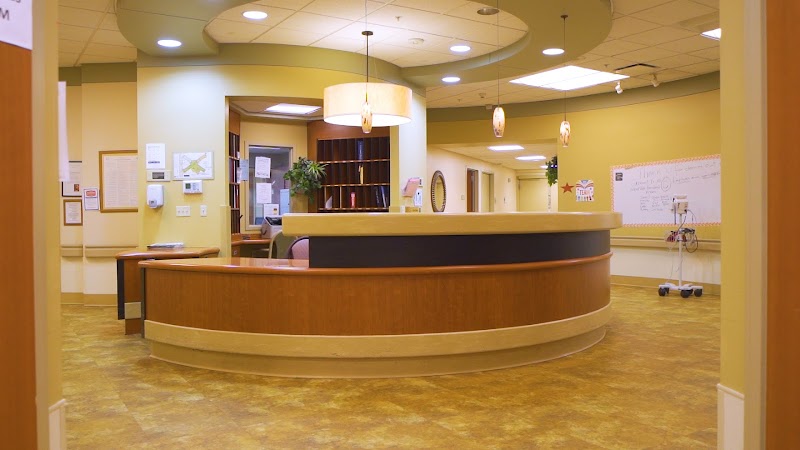
Who Owns and Operates Medilodge Of Capital Area?

Medilodge of Capital Area is owned by a for-profit company. For-profit facilities operate as businesses with obligations to shareholders or private owners. The facility is operated by MEDILODGE, a chain that manages multiple nursing homes. With 120 certified beds and approximately 109 residents (about 91% occupancy), it is a mid-sized facility located in Lansing, Michigan.

How Does Medilodge Of Capital Area Compare to Other Michigan Nursing Homes?

Compared to the 100 nursing homes in Michigan, Medilodge of Capital Area's overall rating (4 stars) is above the state average of 3.1, staff turnover (41%) is near the state average of 46%, and health inspection rating (2 stars) is below the national benchmark.

What Should Families Ask When Visiting Medilodge Of Capital Area?

Based on this facility's data, families visiting should ask: "What changes have been made since the serious inspection findings, and how are you preventing similar issues?" "What safeguards and monitoring systems are in place to protect residents from abuse or neglect?" "Can I visit during a mealtime to observe dining assistance and food quality?" "How do you handle medical emergencies, and what is your hospital transfer rate?" These questions are particularly relevant given the facility's Immediate Jeopardy citations and the substantiated abuse finding on record.

Is Medilodge Of Capital Area Safe?

Based on CMS inspection data, Medilodge of Capital Area has documented safety concerns. The facility has 1 substantiated abuse finding (meaning confirmed case of resident harm by staff or other residents). Inspectors have issued 2 Immediate Jeopardy citations (the most serious violation level indicating risk of serious injury or death). The facility has a 4-star overall rating and ranks #1 of 100 nursing homes in Michigan. Families considering this facility should ask detailed questions about what corrective actions have been taken since these incidents.

Do Nurses at Medilodge Of Capital Area Stick Around?

Medilodge of Capital Area has a staff turnover rate of 41%, which is about average for Michigan nursing homes (state average: 46%). Moderate turnover is common in nursing homes, but families should still ask about staff tenure and how the facility maintains care continuity when employees leave.

Was Medilodge Of Capital Area Ever Fined?

Medilodge of Capital Area has been fined $69,933 across 2 penalty actions. This is above the Michigan average of $33,778. Fines in this range indicate compliance issues significant enough for CMS to impose meaningful financial consequences. Common causes include delayed correction of deficiencies, repeat violations, or care failures affecting resident safety. Families should ask facility leadership what changes have been made since these penalties.

Is Medilodge Of Capital Area on Any Federal Watch List?

Medilodge of Capital Area is not on any federal watch list. The most significant is the Special Focus Facility (SFF) program, which identifies the bottom 1% of nursing homes nationally based on persistent, serious quality problems. Not being on this list means the facility has avoided the pattern of deficiencies that triggers enhanced federal oversight. This is a positive indicator, though families should still review the facility's inspection history directly.