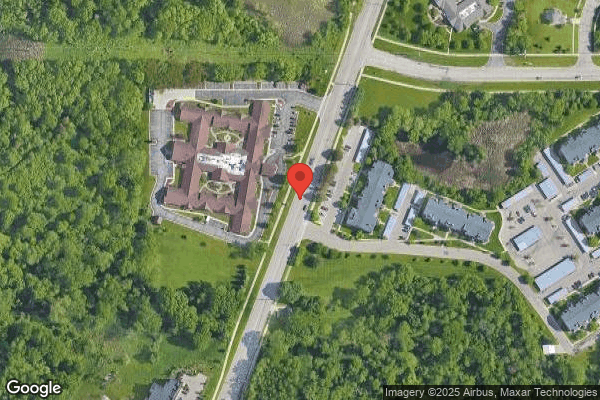
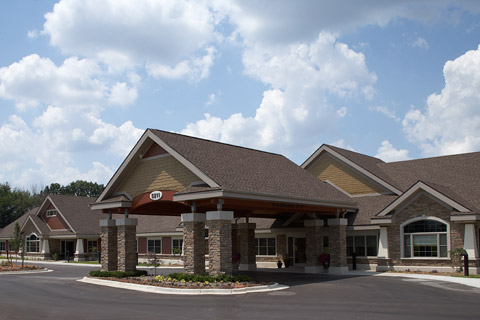

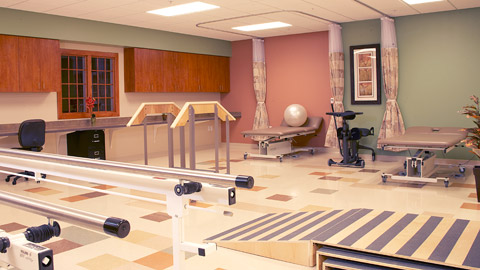

Medilodge of Okemos

5211 Marsh Road, Okemos, MI 48864 (517) 319-1400
For profit - Limited Liability company 100 Beds MEDILODGE Data: November 2025
Trust Grade
80/100
#51 of 422 in MI
Last Inspection: September 2024

Within standard 12-15 month inspection cycle. Federal law requires annual inspections.

Overview

Medilodge of Okemos has a Trust Grade of B+, indicating it is above average and recommended for families considering care options. It ranks #51 out of 422 facilities in Michigan, placing it in the top half, and is #2 out of 9 facilities in Ingham County, meaning there is only one better local option. The facility is improving, with the number of issues decreasing from 10 in 2023 to 5 in 2024. Staffing is a strong point, earning a 5/5 star rating with only a 30% turnover, which is significantly lower than the state average. While there are no fines on record, there have been some concerning incidents, such as residents waiting too long for meals, which can impact their well-being, and a failure to ensure timely access to opioid-reversing medication for one resident. Overall, Medilodge of Okemos has many strengths, but families should be aware of these specific issues.

Trust Score
B+
80/100
In Michigan
#51/422
Top 12%
Safety Record
Low Risk
No red flags
Inspections
Getting Better
10 → 5 violations
Staff Stability
○ Average
30% turnover. Near Michigan's 48% average. Typical for the industry.
Penalties
✓ Good
No fines on record. Clean compliance history, better than most Michigan facilities.
Skilled Nurses
✓ Good
Each resident gets 69 minutes of Registered Nurse (RN) attention daily — more than 97% of Michigan nursing homes. RNs are the most trained staff who catch health problems before they become serious.
Violations
⚠ Watch
22 deficiencies on record. Higher than average. Multiple issues found across inspections.
★★★★★
5.0
Overall Rating
★★★★★
5.0
Staff Levels
★★★★☆
4.0
Care Quality
★★★★☆
4.0
Inspection Score
Stable
2023: 10 issues
2024: 5 issues

The Good

  • 5-Star Staffing Rating · Excellent nurse staffing levels
  • 4-Star Quality Measures · Strong clinical quality outcomes
  • Full Sprinkler Coverage · Fire safety systems throughout facility
  • No fines on record
  • Staff turnover below average (30%)

    18 points below Michigan average of 48%

Facility shows strength in staffing levels, quality measures, fire safety.

The Bad

Staff Turnover: 30%

16pts below Michigan avg (46%)

Typical for the industry

Chain: MEDILODGE

Part of a multi-facility chain

Ask about local staffing decisions and management

The Ugly 22 deficiencies on record

Sept 2024 5 deficiencies
CONCERN (D)

Potential for Harm - no one hurt, but risky conditions existed

Quality of Care (Tag F0684)

Could have caused harm · This affected 1 resident

**NOTE- TERMS IN BRACKETS HAVE BEEN EDITED TO PROTECT CONFIDENTIALITY** DPS 2) Based on observation, interview and record review the facility failed to ensure an as needed narcan order was in place fo...

Read full inspector narrative →
**NOTE- TERMS IN BRACKETS HAVE BEEN EDITED TO PROTECT CONFIDENTIALITY** DPS 2) Based on observation, interview and record review the facility failed to ensure an as needed narcan order was in place for one (Resident #348) of 19 reviewed for quality of care resulting in the potential to not receive the opioid reversing medication in a timely manner. Resident #348 (R348) Review of an admission Record revealed Resident #348 (R348) admitted to the facility on [DATE] with diagnoses which included chronic pain syndrome and spinal stenosis. The admission Minimum Data Set (MDS), with an Assessment Reference Date (ARD) of 9/3/24, reflected R348 scored 15 of out 15 (cognitively intact) on the Brief Interview for Mental Status (BIMS-a cognitive screening tool). On 9/10/24 at 10:11 AM, R348 was observed in bed. R348 explained that he had frequent pain and was prescribed medications for pain control. Review of R348's Physician Orders revealed active orders for Morphine Sulfate ER (extended release) oral tablet 15 MG (milligrams), Hydrocodone-Acetaminophen Oral Tablet 10-325 MG (Hydrocodone-Acetaminophen), and Dilaudid Oral Tablet 4 MG (Hydromorphone HCl) which are all medications containing opioids. Further review of the Physician order revealed no PRN (as needed) order for Narcan (medication that can reverse opioid overdose). In a interview on 9/13/24 at 9:57 AM, a confidential nursing staff member reported that she was familiar with R348's care and verified that R348 received multiple opioid containing medications. The staff member confirmed that typically PRN Narcan would be ordered as a safe guard. In an interview on 09/13/24 at 11:08 AM, Director of Nursing (DON) B stated that any medication that is administered to a resident must have a Physician order. In an interview on 9/13/24 at 12:47 PM, Nursing Home Administrator (NHA) A confirmed the facility's policy and stated that Resident R348 should have an active Narcan order. However, NHA A was unable to locate a current Narcan order for R348. This citation two DPS statements 1 of 2: DPS 1) Based on observation, interview, and record review, the facility failed to provide services that met the acceptable standards of clinical practice for peripherally inserted central catheter (PICC) line dressings in 2 of 2 sampled resident (R348 and R350) reviewed for PICC lines, from a total sample of 19 resident, resulting in the increased likelihood for infection. Findings include: Resident #348 (R348) Review of the Face Sheet and Minimum Data Set (MDS) dated [DATE], reflected R348 was a [AGE] year old male admitted to the facility on [DATE], with recent diagnosis that included osteomyelitis (infection of the bone) left ankle, diabetes mellitus, atrial fibrillation(irregular heart rhythm), hypertension (high blood pressure), spinal stenosis, chronic pain, anxiety disorder, bipolar disorder and depression. The MDS reflected R348 a BIM (assessment tool) score of 15 which indicated his ability to make daily decisions was intact. The MDS reflected R348 had no behaviors including rejection of care. During an observation and interview on 9/10/24 at 10:11 AM, R348 was laying in bed with an external fixator on left ankle and lower leg area., reported he ran out of pain medicine yesterday. R348 appeared calm and able to answer questions without difficulty. R348 reported had long history of issues with left lower leg infection and was currently on Intravenous (IV) antibiotics four times daily. R348 had a single lumen PICC located in the left upper arm with dressing dated 8/31/24. R348 reported was diabetic and blood sugars had not been controlled since admission to the facility. During an observation on 9/10/24 at 1:50 PM, R348 was laying in bed with family present in room. Observed R348 PICC dressing that continued to be dated 8/31/24. Review of the Physician Orders, dated 8/29/24, reflected R348 had an order that included, Transparent dressing change every 7 days and as needed. Document in progress notes any concerns such as changes to site, s/s infection, or complications. every day shift every 7 day(s) Supplementary documentation includes: Arm circumference in cm. (ACC) Catheter Length in cm. (CL) . Review of the Treatment Administration Record(TAR), dated 8/28/24 through 9/10/24, reflected R348 had an order that included, Transparent dressing change every 7 days and as needed. Document in progress notes any concerns such as changes to site, s/s infection, or complications. every day shift every 7 day(s) Supplementary documentation includes: Arm circumference in cm. (ACC) Catheter Length in cm. (CL) . Continued review of the TAR reflected R348 had documentation that reflected R348 did not received scheduled PICC dressing change on 9/5/24 as reflected by, 5, which indicated to see progress notes, with no additional documentation of dressing changes completed, including on 8/31/24. Review of R348 PICC care plan, dated 8/29/24, reflected interventions that included, IV catheter care, maintenance, and dressing changes per orders . During an observation and interview on 9/12/24 at 10:10 AM, R348 was observed in bed with PICC dressing to left upper arm dated 9/11/24 with PICC insertion site covered by gauze border of transparent dressing(within 1 centimeter of edge of dressing). During an observation and interview on 9/12/24 at 10:26 AM, Registered Nurse Unit Manager (RNUM) R reported if residents have PICC line on admission nurse would assess and verify when PICC dressing change was due to be changed and would expect dressing to be changed every seven days or as needed and PICC site to be assessed with each IV medication administration including for signs and symptoms of infection at insertion site. RNUM R reported R348 was admitted [DATE] and staff attempted to change PICC dressing on 9/5/24 with Progress Note that reflected was recently changed and schedule was not adjusted and should have been to ensure dressing was changed every 7 days. RNUM R reported R348 PICC dressing should have been changed every 7 days and reported that nurse on 9/10/24 changed R348's PICC dressing that was dated 8/31/24.(10 days since last dressing change). RNUM R entered R348 room and observed R348's dressing on left upper arm and verified was dated 9/11/24 and insertion site was not visible through dressing. Resident #350 (R350) Review of the Face Sheet and Minimum Data Set (MDS) dated [DATE], reflected R350 was a [AGE] year old female admitted to the facility on [DATE], with recent diagnosis that included osteomyelitis(infection of the bone) right ankle, thrombocytopenia, anemia, and muscle weakness. The MDS reflected R350 a BIM (assessment tool) score of 15 which indicated her ability to make daily decisions was intact. The MDS reflected R350 had no behaviors including rejection of care. During an observation and interview on 9/10/24 at 1:14 PM, R350 was observed in room laying in bed and appeared well groomed and able to answer questions without difficulty. R350 reported was recently admitted to the facility for right foot infection with need for IV antibiotics every four hours. R350 had a single lumen PICC with dressing dated 8/31/24 with serosanguinous drainage noted at insertion site through transparent dressing. Review of the Physician orders, dated 8/24/24, for R348, reflected, Transparent dressing change every 7 days and as needed . Review of R350 PICC care plan, dated 8/24/24, reflected interventions that included, IV catheter care, maintenance, and dressing changes per orders . During an interview and record review on 9/12/24 at 10:26 AM RNUM R reported R350's PICC dressing change should be changed every seven days and verified was changed 9/10/24 and had been dated 8/31/24. RNUM R reported R350's TAR reflected PICC dressing was not changed as reflected by a hole (blank) on the TAR (no documentation) on 9/7/24. RNUM R reported R350 had a physician order to change PICC dressing change every 7 days. During an interview on 9/12/24 at 2:15 PM, Director of Nursing (DON) B reported would expect staff to follow PICC policy including PICC dressings should be changed every 7 days and assess daily for signs and symptoms of infection including insertion site for redness that must be visible. According to Clinical Nursing Skills & Techniques, 6th edition, ([NAME], A., [NAME], P. 2006. page 937), A transparent dressing should be changed with annual site rotation and immediately if integrity of the dressing is compromised. Gauze dressings should be changed routinely every 48 hours and immediately if integrity is compromised. Gauze used underneath a transparent dressing is considered a gauze dressing and should be changed every 48 hours. According to the publication American Nurse Today, dated May 2014, volume 9, number 5, under PICC line dressing changes: Change a transparent dressing every 7 days, if the dressing is no longer intact, oozing or has become bloody or contaminated, change it as soon as possible. Review of the facility, Care and Maintenance of Central Venous Catheter, dated12/13/23, reflected, Policy: The facility will adhere to accepted standards of practice regarding the care and maintenance of central venous catheters .5. Assess the central line daily: a. Assess the site for signs of infection: redness, tenderness, pain or swelling at the insertion site .Change dressings routinely using aseptic technique, based on the type of dressing .
CONCERN (D)

Potential for Harm - no one hurt, but risky conditions existed

Deficiency F0688 (Tag F0688)

Could have caused harm · This affected 1 resident

**NOTE- TERMS IN BRACKETS HAVE BEEN EDITED TO PROTECT CONFIDENTIALITY** Based on observation, interview and record review, the facility failed to provide restorative services or enabler bars for three...

Read full inspector narrative →
**NOTE- TERMS IN BRACKETS HAVE BEEN EDITED TO PROTECT CONFIDENTIALITY** Based on observation, interview and record review, the facility failed to provide restorative services or enabler bars for three residents (R18, R73 and R75) of three residents reviewed for restorative care, out of a total sample of 19 residents, resulting in the potential for residents to decline in their current highest functioning level losing their independence and leading to withdrawal, depression and complications of immobility. Findings Include: Resident #18 (R18) Medical record revealed Resident #18 (R18) was admitted to the facility on [DATE] and readmitted on [DATE] initially with diagnoses that included Acute and Chronic Respiratory Failure with Hypoxia, Congestive Heart Failure, Diabetes, Chronic Kidney Disease, Pressure Ulcer of Sacral Region, stage 3, Obesity, Gastrointestinal Hemorrhage, Other Intervertebral Disc Degeneration Lumbar Region and a Spinal Cord injury. According to R18's Minimum Data Set (MDS) dated [DATE], revealed R18 scored 14 out of 15 (cognitively intact) on the Brief Interview for Mental Status (BIMS- a cognitive screening tool) and had no behaviors. MDS section GG0120 Mobility Devices used by R18 include a manual or electric wheelchair, 2 person transfer using a mechanical lift. Record review of the care plan for R18 had a focus of; resident would benefit from a restorative range of motion program related to decreased strength in upper extremities. Interventions included, observe for verbal and nonverbal signs and symptoms of pain during splint application and removal. Provide range of motion program (ROM). Active ROM and strengthening. Bilateral shoulder/elbow. 2-3 lb hand weights as tolerated. 2 x 10 reps 5x a week on Mon-Fri. Record review also revealed the task sheet for the last 30 days, did not reflect that R18 receive restorative care. Reason for not receiving was marked with response not required, resident not available or resident out of the facility. During an interview on 09/12/24 at 10:35 AM, Physical Therapy Director (PTD) O stated the restorative program can include exercise, bikes, activities to maintain function. PTD O also stated that once the residents are discharged from therapy services, they make recommendations for each resident and then it is handed over to the nursing department. PTD O also stated that if the resident is unable to follow the program, Assistant Director of Nursing (ADON) P will let them know, otherwise therapy does not follow up. During an interview on 09/12/24 at 10:40 AM, ADON P stated physical therapy department would give her a form completed with the recommendations, she would put it on task sheet to be completed. ADON P stated she had 2 Certified Nursing Assistants (CNA) that do this program. This writer asked ADON P if the restorative program was being done on this resident. ADON P stated she needed to look through the task sheet and check on it. ADON P stated R18 just started on a program, and depending on if he is in the mood he may or may not participation. ADON P stated she meets with the 2 CNA'S monthly to discuss who is participating and who is not. Writer asked for the documentation showing R18 did or did not receive restorative treatment. During an interview on 09/12/24 at 10:58 AM, ADON P stated that R18 was not available in the facility for restorative treatment, added that he gets up in his wheelchair late morning and he is busy with activities, or sitting out in the sun. Writer asked if they went back to try at a different time, ADON P stated she did not know. ADON P also stated that the CNA's did not have any documentation to validate the reason the program was not followed, if it was refused or if they reapproached R18 at a different time during the day. ADON P stated she did not know if CNAs could document that in the program or not. Record review revealed the facility did not follow the recommendations from the physical therapy department to maintain R18's highest functional level. Resident #75 (R75) Medical record revealed Resident #75 (R75) was admitted to the facility on [DATE] initially with diagnoses that included Atrial Fibrillation, Chronic Kidney Disease, Chronic Pain Syndrome, Wernicke's Encephalopathy, History of Pulmonary Embolism, History of [NAME] Blood Embolism, Acute Gastric Ulcer with Hemorrhage, Osteoarthritis, Muscle Weakness, Difficulty Walking, and repeated falls. According to R2's Minimum Data Set (MDS) dated [DATE], revealed R75 scored 14 out of 15 (cognitively intact) on the Brief Interview for Mental Status (BIMS- a cognitive screening tool) and had no behaviors. MDS section GG0120 Mobility Devices used by R75 was a walker, manual or electric. Record review revealed a task of Skilled Restorative Nursing: Range of Motion (active): Bilateral Upper Extremities (UE). Care flexion/reach forward, L + R rotation x 15 reps/2 sets as tolerated. 3x/week on M-W-F was on the task sheets. Record review also revealed R75 did not receive Restorative treatment on 09/02/24, 09/04/24, 09/06/24, and 09/09/24. During an interview on 09/12/24 at 10:35 AM, Physical Therapy Director (PTD) O stated the restorative program can include exercise, bikes, activities to maintain function. PTD O also stated that once the residents are discharged from therapy services, they make recommendations for each resident and then it is handed over the nursing department. PTD O also stated that if the resident is unable to follow the program, Assistant Director of Nursing (ADON) P will let them know, otherwise therapy does not follow up. During an interview on 09/12/24 at 10:40 AM, ADON P stated physical therapy department would give her a form completed with the recommendations, she would put it on task sheet to be completed. ADON P stated she had 2 Certified Nursing Assistants (CNA) that do this program. This writer asked ADON P if the restorative program was being done on this resident. ADON P stated she needed to look through the task sheet and check on it. ADON P stated R18 just started on a program, and depending on if he is in the mood he may or may not participation. ADON P stated she meets with the 2 CNA'S monthly to discuss who is participating and who is not. Writer asked for the documentation from August 1, 2024, through August 12, 2024, showing R75 did or did not receive restorative treatment. During an interview on 09/13/24 at 11:35 AM, ADON P stated she would have to go look to see why the treatments were not provided. ADON P did not provide this information prior to exit. Record review revealed the facility did not follow the recommendations from the physical therapy department to maintain R75's highest functional level. Resident #73 (R73) Per R73's diagnoses list R73 had a left femur fracture and muscle weakness diagnoses dated 7/23/2024. Record review of a Nursing to Therapy Communication note dated 9/3/2024, revealed that a therapy referral was required for the following reasons: Would like to have recommendation for enabler bars to bed to assist with bed mobility and transfers in and out of bed. The symptoms listed were increased difficulty in positioning in bed, increased difficulty getting in and out of bed, increased desired to get out of bed more, increased motivation to maneuver self in bed and/or room. No therapy assessment was noted in R73's electronic medical record (EMR). Observation on 9/12/2024 at 10:10 AM, revealed no enabler bars on R73's bed. In an interview on 9/12/2024 at 11:24 AM, Physical Therapy Assistant (PTA) O who was the Therapy Director said she thought she had received R73's nursing referral. PTA O said it was possible it was missed, but thought she had turned it in. After searching for the referral, PTAO stated she must have missed it because she could not find it. PTA O stated that nursing would give her the Nursing to Therapy Communication note in the morning meeting, and then stated that she did have the communication document for R73, and stated that R73 was already being seen by therapy but she had forgotten to screen R73 for bedrails as requested by nursing. In an interview on 9/12/2024 at 11:35 AM, Director of Nursing (DON) B stated she was the one who put in the therapy communication to see if R73 would benefit from the enabler bars. DON B said she wanted to see if the enabler bars would benefit R73 on getting her back to her status of one person limited assistance, and said now R73 was a two person extensive assistance for bed mobility and transfers. DON B said every morning in the morning meeting PTA O would get a copy of the Nursing to Therapy Communication note, if applicable, would then assess the resident, give their recommendations to nursing, who would then place the enabler bars on the resident's bed.
CONCERN (D)

Potential for Harm - no one hurt, but risky conditions existed

Unnecessary Medications (Tag F0759)

Could have caused harm · This affected 1 resident

**NOTE- TERMS IN BRACKETS HAVE BEEN EDITED TO PROTECT CONFIDENTIALITY** Based on observation, interview, and record review, the facility failed to ensure the medication error rate was less than 5% whe...

Read full inspector narrative →
**NOTE- TERMS IN BRACKETS HAVE BEEN EDITED TO PROTECT CONFIDENTIALITY** Based on observation, interview, and record review, the facility failed to ensure the medication error rate was less than 5% when two medication errors were observed from a total of 31 opportunities for two residents (Resident #43, #60), resulting in a medication error rate of 6.67%. Findings include: Resident #43 (R43) Review of the medical record revealed R43 was admitted to the facility on [DATE] with a diagnosis of chronic respiratory failure. A Physician order dated 10/1/23 included an order for Ayr Saline Nasal Drops Nasal Solution 0.65% (percent) to be administered once a day. Ayr Saline Nasal Drops are used to alleviate the symptoms of dry nostrils. On 9/11/23 at 08:15 AM, Registered Nurse (RN) K reported that she was preparing to administer medications to R43. RN K obtained a cotton tipped swab and Ayr nasal gel from the medication cart. RN K applied AYR nasal gel to the end of the cotton tip swab and assisted R43 with coating both nostrils with the AYR gel. Further review of R43's Physician orders revealed no order for AYR nasal gel. In an interview on 09/13/24 at 11:08 AM, Director of Nursing (DON) B stated that any medication that is administered to a resident must have a Physician order. DON B verified that there was no order for AYR nasal gel for R43. Resident #60 (R60) Review of the medical record revealed R60 was admitted to the facility on [DATE] with diagnoses that included type 2 diabetes mellitus without complications. Review of the Physician's Order dated 8/30/24 revealed an order for Lantus Solostar Subcutaneous (innermost layer of the skin) Solution Pen-injector 100 unit/ML (milliliter). On 9/11/24 at 8:04 AM, Registered Nurse (RN) K removed the Lantus SoloStar Subcutaneous Solution Pen-injector 100 UNIT/ML (Insulin Glargine) from the medication cart and applied the disposable cap containing the needle to the end of the Insulin Glargine pen-injector. RN K twisted the end of the pen to 60 units and verbally verified that the order for R60 was 60 units. RN K then proceeded to enter the room of R60, donned gloves, and approached R60 to explain that she was giving her Insulin Glargine. R60 lifted her left arm and RN K administered the Insulin Glargine to the subcutaneous tissue on R60's left arm. RN K was not observed priming the insulin pen (process of ensuring the pen is clear and functioning to ensure all ordered units are properly administered) prior to administration or utilizing an alcohol wipe to clean and disinfect the skin at the site of administration on R60's left arm prior to injecting the Insulin Glargine. In an interview on 09/13/24 at 11:08 AM, Director of Nursing (DON) B reported that the procedure for insulin administration would be to prime the pen and use an alcohol wipe to cleanse the site of injection prior to insulin injection.
CONCERN (D)

Potential for Harm - no one hurt, but risky conditions existed

Deficiency F0761 (Tag F0761)

Could have caused harm · This affected 1 resident

Based on observation, interview, and record review, the facility failed to ensure proper storage and labeling of medications in two resident rooms (Resident #38, #86) resulting in the potential for un...

Read full inspector narrative →
Based on observation, interview, and record review, the facility failed to ensure proper storage and labeling of medications in two resident rooms (Resident #38, #86) resulting in the potential for unsafe access to medications. Findings include: Resident #38 (R38) On 09/10/24 at 11:16 AM, a bottle of Flonase Nasal Spray was observed on R38's bedside table. The bottle was dated and contained the initials of R38. R38 reported that the Flonase spray was not normally stored in her room and that she does not have permission to store and/or administer medications to herself. Review of R38's Physician orders revealed that R38 had an active order for Fluticasone Propionate Suspension, 1 spray in each nostril in the morning for Rhinitis. Resident #86 (R86) On 09/10/24 at 1:33 PM, two boxes of Voltaren Gel were observed in R86's room. R86 reported that he does not administer the pain-relieving gel to himself and that the boxes were left in the room on a regular basis. Review of R86's Physician orders revealed that R86 had an active order for Voltaren External Gel 1 % (percent) (Diclofenac Sodium (Topical). In an interview on 09/13/24 at 11:08 AM, Director of Nursing (DON) B verified that R38 and R86 did not have an approved medication self administration assessment and that the medications observed in the resident's room should not have been there.
CONCERN (D)

Potential for Harm - no one hurt, but risky conditions existed

Dental Services (Tag F0791)

Could have caused harm · This affected 1 resident

Based on observation, interview, and record review the facility failed to ensure one out of one residents (Resident #42) received timely dental care to obtain a new set of dentures, resulting in embar...

Read full inspector narrative →
Based on observation, interview, and record review the facility failed to ensure one out of one residents (Resident #42) received timely dental care to obtain a new set of dentures, resulting in embarrassment and a difficult time eating. Findings Included: In an interview on 9/10/2024 at 2:20 PM, Resident #42 (R42) stated that she had seen the dentist about two months ago, and the dentist told her she needed to get new dentures. R42 said she had not seen the dentist since then and had not had any denture fitting done. R42 was observed to have no visible teeth. R42 stated she wanted dentures as soon as possible because she felt embarrassed having no teeth. Record review of R42's dental notes dated 5/30/2024, revealed the age of R42's dentures was six plus years, the condition of her teeth were poor, had moderate soft plaque/food debris buildup, moderate hard calculus deposits, moderate gingivitis inflammation/swollen bleeding gums. Review of the, Treatment notes: .Patient (R42) has upper complete denture that is very loose and worn. She is having trouble chewing, having also lost her lower partial denture. New dentures will benefit her nutrition and general health .Action Required by Nursing Home Staff, Continue Daily Oral Care; Please have Responsible Party sign Consent for Denture Form. Record review of R42's electronic medical record (EMR) revealed no consent for dentures was signed and in R42's EMR. In an interview on 9/12/2024 at 1:18 PM, Social Worker SW G stated she did receive the dental recommendation for R42's dentures, but said she never got the consent signed by R42's responsible party. SW G said she was the one who would have residents sign consents to be seen by the dentist, but stated she did not have the consent for R42 because it was missed.
Jul 2023 10 deficiencies
CONCERN (D)

Potential for Harm - no one hurt, but risky conditions existed

Deficiency F0637 (Tag F0637)

Could have caused harm · This affected 1 resident

Based on interview and record review, the facility failed to complete a timely Significant Change Minimum Data Set (MDS) assessment for one (Resident #5) of 18 residents reviewed for MDS assessments, ...

Read full inspector narrative →
Based on interview and record review, the facility failed to complete a timely Significant Change Minimum Data Set (MDS) assessment for one (Resident #5) of 18 residents reviewed for MDS assessments, resulting in the potential for untimely/inaccurate care plans and unmet care needs. Findings include: Review of the medical record revealed that Resident #5 (R5) was readmitted to facility 6/26/22 with diagnoses including chronic obstructive pulmonary disease and cerebrovascular disease. Review of the MDS with an Assessment Reference Date (ARD) of 6/24/23 revealed that R5 had a Brief Interview for Mental Status (BIMS-a cognitive screening tool) of 13 (cognitively intact). Section O of same the MDS indicated that R5 was receiving hospice care. Review of the Significant Change MDS with an ARD of 12/22/22 indicated that R5 received hospice care within the last 14 days. R5's Physician's Order dated 1/23/2023 stated, Admit to (name of hospice company) effective 12/6/22 . In an interview on 7/25/23 at 1:08 PM, Licensed Practical Nurse/Minimum Data Set Nurse (LPN/MDS Nurse) G stated that a Significant Change MDS Assessment was completed when either a significant improvement or decline in resident health status was noted in at least 2 areas or when a resident enrolled or disenrolled from hospice services. In the same interview, upon review of R5's medical record LPN/MDS Nurse G confirmed that R5 was admitted to hospice services on 12/6/22 and therefore the Significant Change MDS Assessment and Care Area Assessments should have been completed within14 days of that date. LPN/MDS Nurse G stated that she would have anticipated that the ARD date for the Significant Change MDS be set for 12/19/22 and not for 12/22/22 as that would have fallen outside of the assessment period and therefore completed late. In an interview on 7/25/23 at 1:42 PM, Regional MDS Coordinator K stated that when a resident was enrolled or disenrolled from hospice services, the MDS Assessment should be scheduled and completed by the 14th day of the resident signing on or off services. Regional MDS Coordinator K further stated that as R5 enrolled in hospice on 12/6/22, the Significant Change MDS assessment should have been completed by 12/19/22 and that the assessment and CAAs should have been signed as completed by that date, as well. However, the MDS Assessment was not signed as completed until 1/2/23 and the CAAs were not signed as completed until 1/4/23.
CONCERN (D)

Potential for Harm - no one hurt, but risky conditions existed

Assessment Accuracy (Tag F0641)

Could have caused harm · This affected 1 resident

Based on observation, interview and record review, the facility failed to ensure the Minimum Data Set (MDS) assessment was accurately coded for two (Resident #22, #30) of 18 residents reviewed for MDS...

Read full inspector narrative →
Based on observation, interview and record review, the facility failed to ensure the Minimum Data Set (MDS) assessment was accurately coded for two (Resident #22, #30) of 18 residents reviewed for MDS, resulting in the potential for inaccurate care plans and unmet care needs. Findings include: Resident #22 Review of the medical record revealed that Resident #22 (R22) was readmitted to facility 1/25/2021 with diagnoses including cerebral infarction, unsteadiness on feet, and muscle weakness. Review of the MDS with an Assessment Reference Date (ARD) of 4/18/23 revealed that R22 had a Brief Interview for Mental Status (BIMS-a cognitive screening tool) score of 12 (moderately impaired cognition). Section G of the same MDS reflected that R22 had functional limitations in upper and lower extremity range of motion (ROM) on one side. Annual MDS with an ARD of 10/16/2022 reflected that R22 had no functional limitation in ROM with assessments prior to (Quarterly MDS with ARD of 7/16/22) and after (Quarterly MDS with ARD of 1/6/23) reflecting that R22 had functional limitations in upper and lower extremity ROM on one side. In an observation and interview on 7/24/23 at 12:37 PM, R22 was observed sitting in wheelchair, in room, playing a game positioned on over the bed table directly in front of her. R22 stated that she had a stroke and did not have use of her right arm with R22's right upper arm observed to be positioned at her right side, bent at elbow, with right forearm and hand observed to rest on her right thigh. R22 observed to use left hand/arm to pick up and move right arm and then to open fingers on right hand with use of left hand/fingers. R22 also stated that although she had limited use of her right leg, she could walk with staff help. R22's Physician Progress Notes dated 9/28/22 stated, .PHYSICAL EXAMINATION .Neurovascular .hemiplegia (paralysis on one side of the body) . and 9/12/22, PHYSICAL EXAMINATION .Neurologic: Patient has motor deficits related to CVA (Cerebral Vascular Accident) with hemiparesis . In an interview on 7/26/23 at 11:29 AM, Licensed Practical Nurse/Minimum Data Set Nurse (LPN/MDS Nurse) G confirmed familiarity with R22 and stated that she was admitted to facility with right sided hemiplegia. Upon review of Section G of R22's Annual MDS with an ARD of 10/16/2022, LPN/MDS Nurse G acknowledged that the coding was incorrect as reflected that R22 had no functional limitation in ROM when she indeed did have limitation in both right upper and lower extremity ROM. In an interview on 7/26/23 at 11:38 AM, Senior MDS Coordinator J agreed that R22's Annual MDS with an ARD of 10/16/2022 was not coded correctly, stated that she was unsure if she was able to complete a modification that far back, verbalized plan to check with Regional MDS Coordinator K and if acceptable, would complete a modification to the Annual MDS with an ARD of 10/16/2022 to reflect R22's functional limitations in upper and lower extremity ROM on one side. Resident #30 Review of the medical record revealed that Resident #30 (R30) was admitted to facility on 1/4/23 with diagnoses including dependence on wheelchair, cerebral palsy, generalized muscle weakness, and history of falling. Review of the Quarterly MDS with an ARD of 4/12/23 revealed that R30 had a BIMS of 15 (cognitively intact). Section P of the same MDS indicated that R30 used a trunk restraint less than daily. In an observation and interview on 7/24/23 at 1:30 PM, R30 was observed sitting in a motorized wheelchair in her room. R30 stated that she had the motorized chair prior to her 1/4/23 facility admission, had a seat belt on the chair at some point but did not believe that the seat belt was still in place and if it was, had not used since prior to facility admission. A seat belt was observed to be in place on R22's motorized chair with each side tucked between the back and arm rest of the chair and visible from back of chair only. R22 confirmed that she could not reach the seat belt, had not used it, and did not even realize that it was still attached to her wheelchair. In an interview on 7/25/23 at 1:08 PM, LPN/MDS Nurse G stated that no resident in the facility currently had a restraint and that, from what she could recall, she had never coded anyone as having a restraint. LPN/MDS Nurse G confirmed familiarity with R30, stated that she did not currently, nor had she ever had a restraint, and that her MDS did not reflect restraint usage. Upon review of R30's Quarterly MDS with an ARD of 4/12/23, LPN/MDS Nurse G confirmed that she had completed, acknowledged that Section G of the MDS reflected Trunk restraint usage less than daily, stated that was coded in error and should reflect Not used and would be completing a modification to the Quarterly MDS with an ARD of 4/12/23 to correct. In an interview on 7/25/23 at 1:42 PM, Regional MDS Coordinator K confirmed that although R22's motorized wheelchair had a seat belt in place, as it had not been used, would not be considered a restraint and therefore should not have been coded as a restraint on the MDS. Regional MDS Coordinator K confirmed that the restraint was coded in error and stated that a modification would need to be completed for the Quarterly MDS with an ARD of 4/12/23.
CONCERN (D)

Potential for Harm - no one hurt, but risky conditions existed

Deficiency F0657 (Tag F0657)

Could have caused harm · This affected 1 resident

**NOTE- TERMS IN BRACKETS HAVE BEEN EDITED TO PROTECT CONFIDENTIALITY** Based on observation, interview, and record review, the facility failed to revise the care plan in 2 of 18 residents reviewed fo...

Read full inspector narrative →
**NOTE- TERMS IN BRACKETS HAVE BEEN EDITED TO PROTECT CONFIDENTIALITY** Based on observation, interview, and record review, the facility failed to revise the care plan in 2 of 18 residents reviewed for care plans (R29 and R54), resulting in unmet needs. Findings include: Resident # 54 (R54) Review of the Face Sheet and Minimum Data Set (MDS) dated [DATE], reflected R54 was a [AGE] year old male admitted to the facility on [DATE], with diagnoses that included peripheral neuropathy, diabetes mellitus, benign prostatic hyperplasia, anxiety, and depression. The MDS reflected R54 had a BIM (assessment tool) score of 15 which indicated his ability to make daily decisions was cognitively intact, and he required set up assist with all activities of daily living and occasional assistance with bathing and hygiene. R54's MDS reflected frequent incontinence(more than 7 episodes of incontinence). During an observation and interview on 7/24/23 at 3:05 PM, R54 was observed in hall self propelling in wheelchair. R54 entered his room and gave permission for this surveyor to enter room to discuss care concerns . R54 appeared well groomed, calm and pleasant mood and able to answer questions without difficulty. R54 reported had been having increased problems with urinary incontinence over past several months that was not present on admission the the facility and staff and physicians aware with no follow-up. R54 reported loss of sleep and unable to recall last time he had good night sleep related to frequent need to urinate during the night. R54 reported often needs frequent staff assistance toileting including incontinence care related to long call light response times at night. R54 reported very frustrating because he did not used to be incontinent. R54 reported was diagnosed with overactive bladder with medication for treatment that were not effective and recently missed a urology appointment and unsure if it had been rescheduled. Review of the Electronic Medical Record(EMR), reflected no evidence R54 had urology consult over the past twelve months. During an interview on 7/25/23 at 2:32 PM, Director of Nursing (DON) B reported physician consults were located in Miscellaneous tab of the EMR. During an interview on 7/25/23 at 3:20 PM, Medical Record staff (MR) L reported physician consults scanned into the EMR and verified was unable to locate R54's urology consult. Review of the Physician Provider note, dated 3/09/2023, for R54, reflected, Visit Type: Acute .Chief Complaint / Nature of Presenting Problem: Chronic urinary complaints History Of Present Illness: [AGE] year-old male here for long-term care patient with chronic urinary complaints requesting to see urologist. Patient having overactive bladder patient currently on oxybutynin 5 mg daily. Patient denies any dysuria or other urinary complaints .Plan: Patient continues to have urinary complaints we will hold sending to urology for the time being patient can increase oxybutynin to 10 mg and reevaluate in 2 weeks. Will order PSA and other labs and follow-up at that time as well. Patient on Flomax we will continue current dose .Follow-up 2 to 4 weeks or sooner as needed . Review of the Progress Notes, dated 4/19/2023, for R54, reflected, Appointment/Transportation Note Note Text: Referral sent to (name of) Urology with appointment scheduled on 5/24 at 1pm (name of ) Urology . Review of the Nursing Progress Note, 4/23/2023 at 4:36 p.m., reflected, [named R54] returns via EMS with a new order for an antibiotic for a UTI . Review of the facility, Urinary Continence Evaluation, dated 4/30/23, reflected R54 was continent of urine upon admission and had occasional incontinence(less than 7 days) that the time of the evaluation. Review of the Care Plans, dated 9/9/21 through current, reflected no mention of individualized continence treatment or services offered/provided for R54. The bladder incontinence care plan included two intervention that included, BRIEF USE: The resident uses disposable briefs. Check q 2 hours and change prn .Encourage fluids during the day to promote prompted voiding responses . No evidence of individualized continence treatment or services offered/provided for R54. Resident #29 (R29) R29 was observed in his room lying in bed on 7/26/23 at 10:46 AM and stated during an interview, that he goes to dialysis twice a week. R29's Minimum Data Set (MDS) assessment dated [DATE], revealed he admitted to the facility on [DATE], had a Brief Interview for Mental Status (BIMS), a short cognitive screener for nursing home residents, score of 14 (13-15 Cognitively Intact). The same MDS revealed R29 had the diagnoses of end stage renal failure (ESRD, kidney failure) with renal dialysis, high blood pressure and heart failure. In review of R29's hemodialysis care plan, revised 12/29/22, he required hemodialysis and often refused dialysis, especially due to the holidays. In review of R29's nutritional care plan, revised 4/18/23, he had dialysis on Tuesday and Saturday. In review of R29's potential for fluid deficit care plan, revised on 7/11/23, the focus statement indicated he had dialysis on Tuesday, Thursday and Saturday morning. On the same care plan, under intervention, R29 had dialysis twice a week on Tuesday and Saturday's. In review of the Care Planning Dialysis Special Needs policy, reviewed on 1/01/22, the care plan would be reviewed routinely and as needed for effectiveness and revised as needed. In review of physician orders dated 7/08/23, R29's dialysis communication form was to be completed every Tuesday and Saturday. R29's physician orders dated 6/24/23, revealed Ranolazine 500 milligrams (mg) (heart medication, can be used to treat chronic chest pain) was to be administered on Monday, Wednesday, Thursday, Friday and Sunday for angina (a type of chest pain caused by reduced blood flow to the heart). R29 also had an order for Norvasc 2.5 mg (used to treat high blood pressure and chest pain) to be administered on Monday, Wednesday, Thursday, Friday and Sunday. There were no instructions in R29's care plan or in the physician's orders to hold Ranolazine and Norvasc on Thursday if he went to dialysis. R29's Physician order dated 7/26/23 indicated Metoprolol Tartrate (Beta Blocker, used to treat high blood pressure) 50 MG twice a day every Monday, Wednesday, Friday, and Sunday. R29's physician's orders and care plans did not instruct the nurse to administer Metoprolol Tartrate on days he did not receive dialysis. In review of R29's July 2023 Medication Administration Record (MAR) and physician orders, dialysis was on Tuesday, Thursday, and Saturday, the start date was 7/13/23. Nurses note dated 7/13/23 at 10:28 AM indicated R29 refused dialysis and stated he was only going to go to dialysis twice a week. The Director of Nursing (DON) B was interviewed on 07/26/23 at 10:55 AM and stated R29 goes to dialysis twice a week. DON B stated R29 refused to go to dialysis three times a week for treatment in the past. DON B stated in the same interview R29 must have refused to go to dialysis on Thursday's, and would call the dialysis center for clarification. Progress note dated 7/26/23 at 11:29 AM revealed R29's order for Ranolazine extended release was changed to give one tablet every Monday, Wednesday, Thursday, Friday, and Sunday morning's; Hold on Thursday if goes to dialysis.
CONCERN (D)

Potential for Harm - no one hurt, but risky conditions existed

Incontinence Care (Tag F0690)

Could have caused harm · This affected 1 resident

**NOTE- TERMS IN BRACKETS HAVE BEEN EDITED TO PROTECT CONFIDENTIALITY** Based on observation, interview and record review, the facility failed to provide physician ordered services and assistance to r...

Read full inspector narrative →
**NOTE- TERMS IN BRACKETS HAVE BEEN EDITED TO PROTECT CONFIDENTIALITY** Based on observation, interview and record review, the facility failed to provide physician ordered services and assistance to restore bowel and bladder continence for one Resident (R54) of one reviewed for bowel and bladder, resulting in decrease quality of life, lost sleep, frustration and the potential worsening incontinence. Findings include: Review of the Face Sheet and Minimum Data Set (MDS) dated [DATE], reflected R54 was a [AGE] year old male admitted to the facility on [DATE], with diagnoses that included peripheral neuropathy, diabetes mellitus, benign prostatic hyperplasia, anxiety, and depression. The MDS reflected R54 had a BIM (assessment tool) score of 15 which indicated his ability to make daily decisions was cognitively intact, and he required set up assist with all activities of daily living and occasional assistance with bathing and hygiene. R54's MDS reflected frequent incontinence(more than 7 episodes of incontinence). During an observation and interview on 7/24/23 at 3:05 PM, R54 was observed in hall self propelling in wheelchair. R54 entered his room and gave permission for this surveyor to enter room to discuss care concerns . R54 appeared well groomed, calm and pleasant mood and able to answer questions without difficulty. R54 reported had been having increased problems with urinary incontinence over past several months that was not present on admission the the facility and staff and physicians aware with no follow-up. R54 reported loss of sleep and unable to recall last time he had good night sleep related to frequent need to urinate during the night. R54 reported often needs frequent staff assistance toileting including incontinence care related to long call light response times at night. R54 reported very frustrating because he did not used to be incontinent. R54 reported was diagnosed with overactive bladder with medication for treatment that were not effective and recently missed a urology appointment and unsure if it had been rescheduled. Review of the Electronic Medical Record(EMR), reflected no evidence R54 had urology consult over the past twelve months. During an interview on 7/25/23 at 2:32 PM, Director of Nursing (DON) B reported physician consults were located in Miscellaneous tab of the EMR. During an interview on 7/25/23 at 3:20 PM, Medical Record staff (MR) L reported physician consults scanned into the EMR and verified was unable to locate R54's urology consult. Review of the Physician Provider note, dated 3/09/2023, for R54, reflected, Visit Type: Acute .Chief Complaint / Nature of Presenting Problem: Chronic urinary complaints History Of Present Illness: [AGE] year-old male here for long-term care patient with chronic urinary complaints requesting to see urologist. Patient having overactive bladder patient currently on oxybutynin 5 mg daily. Patient denies any dysuria or other urinary complaints .Plan: Patient continues to have urinary complaints we will hold sending to urology for the time being patient can increase oxybutynin to 10 mg and reevaluate in 2 weeks. Will order PSA and other labs and follow-up at that time as well. Patient on Flomax we will continue current dose .Follow-up 2 to 4 weeks or sooner as needed . Review of the Physician Provider note, dated 4/11/2023, for R54, reflected, Visit Type: Follow Up .Chief Complaint/ Nature of Presenting Problem: Urinary complaints History Of Present Illness: [AGE] year-old male here for long-term care patient with history of urinary spasms recently increased oxybutynin no relief of symptoms. Patient would like consult to urology has seen urology in the past .Plan: Patient with chronic urinary complaints no relief with oxybutynin no signs or symptoms of UTI at this time will monitor closely consider urine culture and sensitivity as indicated . Review of the Progress Notes, dated 4/19/2023, for R54, reflected, Appointment/Transportation Note Note Text: Referral sent to (name of) Urology with appointment scheduled on 5/24 at 1pm (name of) Urology . Review of the Nursing Progress Note, 4/23/2023 at 4:36 p.m., reflected, [named R54] returns via EMS with a new order for an antibiotic for a UTI . Review of the Progress note, dated 5/24/2023, for R54, reflected, Appointment/Transportation Note Note Text: Cystoscopy scheduled for 6/12 at 2:45pm at (name of) Urology . Review of the Physician Orders, dated 5/26/23, reflected R54 had order for follow up appointment with Urology for Cystoscopy. Review of the Physician Provider note, 6/13/2023, for R54, reflected, Visit Type: Follow Up .Chief Complaint / Nature of Presenting Problem: Pain evaluation, urology complaints .Patient also with urinary complaints desires to see a urologist had one scheduled and was sent out to the hospital .Plan .Patient also continue ongoing evaluation with physical med and rehab here. Patient with urology complaints has urology appointment pending. Reviewed medications will continue as directed. Continue 24-hour care and assist with ADLs as indicated. Follow-up 2 to 4 weeks or sooner as needed . Review of the Physician Provider note, dated 7/10/2023, for R54, reflected, Visit Type: Regulatory .his chronic urinary symptoms for which he is seeing urology in the next few days . Review of the facility, Urinary Continence Evaluation, dated 4/30/23, reflected R54 was continent of urine upon admission and had occasional incontinence(less than 7 days) that the time of the evaluation. Review of the Care Plans, dated 9/9/21 through current, reflected no mention of individualized continence treatment or services offered/provided for R54. The bladder incontinence care plan included two intervention that included, BRIEF USE: The resident uses disposable briefs. Check q 2 hours and change prn .Encourage fluids during the day to promote prompted voiding responses . During a telephone interview on 7/25/23 at 3:34 PM, R54's Urology staff M reported R54 was seen at Urology office on 5/24/23 and then scheduled for Cystoscopy 6/12/23. Urology staff M reported R54 and facility were called to reschedule procedure for 7/12/23. Urology staff reported R54 did not show up for scheduled appointment on 7/12/23 and had not heard from facility until today, just prior to this call, to reschedule R54's procedure for August 2023(Two months after original scheduled procedure). Review of the Nursing Progress Notes, dated 7/25/23 at 3:08 p.m.(30 minutes after this surveyor requested R54's 5/24/23 Urology consult), DON B entered note that reflected, This writer spoke with [named] urology in regards to obtaining notes on the previous appts. Office is faxing over the notes for 5/24/23, states that the physician had an emergency and canceled the Cystoscopy scheduled for 6/12/23 and that the resident was a no show on 7/12/23. This writer stated to staff there that they had called resident himself and confirmed the appt and when he arrived there on 7/12 they told him he had no appt and sent him home. This writer is attempting to reschedule cystoscopy that has been cancelled twice. During an interview on 7/25/23 at 5:05 PM, DON B reported had contacted R54 urology office and was told was seen 5/24 and provided with consult note. DON B reported would expect staff to obtain consult note at the time the the visit. DON B verified had scheduled cyctoscope at the time for 6/12/23 and urology office rescheduled to 7/12/23. DON B reported R54 went to consult appointment and office sent him back and DON B verified no documentation was located to support. DON B reported was told by urology office that R54 was a no show on 7/12/23 and reported would expect staff to follow up either way and reschedule ordered cystoscope for R54. DON B verified was unable to locate evidence appointment had been rescheduled and requested appointment and was rescheduled for 8/23/23. Review of the Urology Consult, faxed to the facility 7/25/23, as evidence of time stamp, reflected R54 was seen of Urology consult on 5/24/23. The Consult reflected R54 reported up at least five times during night to urinate and R54 reported quality of life was, Terrible if he had to continue with urinary symptoms as they were currently. The Consult reflected to schedule cystoscope in office. According to the Centers for Medicare and Medicaid Services (CMS's) Long-Term Care Facility Resident Assessment Instrument (RAI) 3.0, Version 1.17.1, October 2019, manual, each resident who was incontinent or at risk of developing incontinence should be identified, assessed, and provided with individualized treatment (medications, non-medicinal treatments and/or devices) and services to achieve or maintain as normal elimination function as possible. The same source indicated many incontinent residents (including those with dementia) respond to a toileting program, especially during the day.
CONCERN (D)

Potential for Harm - no one hurt, but risky conditions existed

Unnecessary Medications (Tag F0759)

Could have caused harm · This affected 1 resident

Based on observation, interview, and record review, the facility failed to ensure a medication error rate of less than five percent when three medication errors were observed from a total of twenty-fi...

Read full inspector narrative →
Based on observation, interview, and record review, the facility failed to ensure a medication error rate of less than five percent when three medication errors were observed from a total of twenty-five opportunities for two residents (Resident #11 and #64) of six reviewed for medication administration, resulting in a medication error rate of 12% and the potential for reduced efficacy of medications and increased risk of adverse reactions/side effects. Findings include: Resident #11 On 7/25/23 at 8:29 AM, Registered Nurse (RN) C was observed preparing multiple medications for Resident #11 (R11) including four oral medications as well as an Albuterol Sulfate (Ventolin) and a Symbicort Inhaler. After entering R11's room and administering oral medications, RN C was observed to shake and then hand Albuterol Inhaler to R11 with R11 observed to place inhaler to and close lips around inhaler mouthpiece and self-administer 2 consecutive puffs prior to handing inhaler back to RN C. RN C proceeded to immediately shake and hand Symbicort Inhaler to R11 with R11 observed to place inhaler to and close lips around inhaler mouthpiece and self-administer 2 consecutive puffs and then immediately completed swish and spit mouth rinse with water provided by RN C. RN C then proceeded to document the medications as given in the electronic medical record. Throughout the administration of both the Albuterol and Symbicort Inhalers, R11 was not observed to exhale fully in preparation to breathe in medication, was not observed to hold breath after inhalations, and was not observed to wait prior to administration of second inhalation. In an interview following R11's medication administration, RN C initially stated that she had never really instructed anybody on Albuterol or Symbicort Inhaler usage, then stated that she couldn't think of what instruction she usually provided, and then stated that she knew she had forgotten but usually provided R11 with instruction to hold his breath for a few seconds after each inhalation. RN C confirmed that she generally provided inhalers to R11 so that he could self-administer, stated that he usually administered them rapidly, one puff after the other, so that she did not have time to remind him to wait between puffs but that, I would think he should wait at least 1 minute. Resident #64 On 7/25/23 at 8:50 AM, RN C was observed preparing multiple medications for Resident #64 (R64) including ten oral medications, an insulin injection, and Fluticasone Propionate Nasal Spray. After entering R64's room and administering oral medications, RN C was observed to shake and then hand Fluticasone Propionate Nasal Spray to R64 with instruction to go ahead and spray in each nostril. R64 was observed to place tip of Fluticasone Nasal Spray to base of right nostril, instill 1 spray and then to base of left nostril and instill one spray prior to handing back to RN C. RN C was then observed to administer R64's insulin injection prior to exiting room and documenting the medications as given in the electronic medical record. Throughout nasal spray administration, R64's head was observed to be positioned upright with R64 not observed to close opposite nostril with finger, inhale slowly through nostril with mouth closed or to breathe out slowly through mouth during administration or to tilt head back after administration of the nasal spray in either the right or left nostril. In an interview following R64's medication administration, RN C confirmed that she generally handed R64 his nasal spray for self-administration and stated, I usually tell him how many sprays to do in each nostril and after a short pause stated, I'm drawing a blank in reference to any additional instructions provided upon administration of R64's Fluticasone Propionate Nasal Spray. In an interview on 7/25/23 at 3:16 PM, Director of Nursing (DON) B stated that the expectation would be for the nurse to administer and provide instruction for inhalation techniques with both inhaler and nasal spray administration and that an assessment would be completed for self-administration with associated documentation within a resident specific medical record if the resident was going to be handed an inhaler or nasal spray for self-administration. Review of a facility policy titled Medication-Inhaler with a reviewed/revised date of 1/1/22 stated, Policy: Medications are administered as prescribed, in accordance with current nursing principles and practices and only by persons legally authorized to do so .Policy Explanation and Compliance Guidelines .6. Explain the procedure to the resident and answer any questions .7. Instruct resident to exhale away from device .8. Instruct resident to seal lips around the mouthpiece .9. Instruct resident to press down on canister while breathing in slowly and deeply .10. Instruct to hold breath for as long as possible to ensure deep instillation of medication .11. Remove inhaler from mouth and instruct to breathe out gently .12. Allow 1-2 minutes between inhalations . Review of facility policy titled Medication-Nasal Spray Administration with a reviewed/revised dated of 1/1/22 stated, Policy: Nasal spray medications are administered by licensed nurses as ordered by the physician and in accordance with professional standards of practice .Policy Explanation and Compliance Guidelines .2. Procedure .g. Occlude opposite nostril with your finger and insert tip of medication container into desired nostril .h. Spray medication into nostril while instructing resident to inhale with mouth closed. Instruct resident to exhale through the mouth .j. Instruct resident to tilt head back for several minutes, breathing through his or her nose. Instruct to not blow nose for several minutes .
CONCERN (D)

Potential for Harm - no one hurt, but risky conditions existed

Deficiency F0760 (Tag F0760)

Could have caused harm · This affected 1 resident

**NOTE- TERMS IN BRACKETS HAVE BEEN EDITED TO PROTECT CONFIDENTIALITY** Based on observation, interview and record review, the facility failed to ensure that prescribed medications were given on time ...

Read full inspector narrative →
**NOTE- TERMS IN BRACKETS HAVE BEEN EDITED TO PROTECT CONFIDENTIALITY** Based on observation, interview and record review, the facility failed to ensure that prescribed medications were given on time and per physician's orders for one resident (R6) of one reviewed for significant medication error, resulting in several missed doses of Physician ordered prescription eye drops, inaccurate dosing and the potential for preventable decline and/or loss of vision. Findings include: Review of the Face Sheet and Minimum Data Set (MDS) dated [DATE], reflected R6 was a [AGE] year old female admitted to the facility on [DATE], with diagnoses that included diabetes mellitus, schizoeffective disorder, chronic obstructive pulmonary disease, end stage renal disease with dialysis, anxiety, and depression. The MDS reflected R6 had a BIM (assessment tool) score of 15 which indicated her ability to make daily decisions was cognitively intact, and she required one person physical assist with transfers, dressing, hygiene, and bathing. During an observation and interview on 7/24/23 at 12:53 PM, R6 was sitting in 100 hall dining room in a wheel chair eating lunch with one other resident. R6 appeared well groomed, calm, pleasant and well developed eating independently. R6 requested this surveyor return after meal to room to discuss care concerns. During an interview and observation on 7/24/23 at 1:11 PM, R6 requested this surveyor enter room to discuss care concerns. R6 appeared mildly anxious but able to answer questions without difficulty. R6 reported planned to call family member to help resident report concerns. R6 reported family member was R6 advocate. R6 family N and R6 reported R6 had recent issue with right eye and reported was sent for eye consult. R6 family N and R6 reported on 6/30/23 was seen for eye consult and given eye drops for right eye to be given 2 drops every 4 hours and was given 14 vials. Reported facility administered eye drops 6/30/23 through 7/7/23 with no eye drops on 7/8/23 through 7/14/23(7 missed days). R6 family N reported spoke with the Director of Nursing (DON) B on 7/3/23 who reported would order more drops. R6 family N reported R6 had follow up eye consult 7/14/23 and was provided additional eye drops to re-start as originally directed and reported physician was no happy that eye drops had not been given for last 7 days. R6 reported right pain was painful by the time of follow up appointment 7/14/23. Review of the Electronic Medical Record(EMR), dated 6/1/23 through current, reflected no evidence of R6's eye Consult visit. Review of the Physician Orders, dated 6/30/23, reflected R6 had an order for Oxervate Ophthalmic Solution 0.002% Instill 1 drop in right eye every 2 hours for Corneal tear for 14 Days. Review of the Medication Administration Record(MAR), dated 6/30/23 through current(7/25/23), reflected R6 was given Oxervate Ophthalmic Solution one drop in right eye every two hours 6/30/23 through 7/8/23 around the clock(12 doses per day). The Record reflected R6 missed Oxervate every 2 hour eye drops 7/8/23 through 7/14/23 as evidenced by 9 documented on MAR as see documentation. Review of the Nursing Progress Notes, dated 7/1/23 through 7/14/23, reflected no evidence R6's eye consult physician had been contacted about missed doses of physician ordered prescription eye drops. During an interview on 7/26/23 at 2:20 PM, Unit Manager E reported R6 was prescribed specialty eye drops by eye specialist named Oxervate on 6/30/23 that cost $10,000. During a telephone interview on 7/26/23 at 4:30 PM, Accredo Pharmacy verified three shipments of 14 days each of Oxervate were sent for R6 of three 6/28/23, 7/11/23, and 7/21/23. During an telephone interview on 7/26/23 at 4:41 PM, Specialty Eye Clinic staff O reported facility had just called for R6 consult notes and were faxing at that time. During an interview on 7/26/23 at 5:05 PM, Assistant Director of Nursing (ADON) D verified was unable to located R6 Specialty Eye Consult visit notes in the EMR and requested copies. ADON D reported was unsure why facility did not have records in EMR and should be. During a telephone interview on 7/27/23 at 8:07 AM, Specialty Eye Clinic Manager P reported R6 was given physician order on 6/30/23 for Oxervate 1 drop right eye six times daily for eight weeks and was provided 14 days supply. During an interview on 7/27/23 at 8:36 AM, DON B and ADON D provided R6 Eye Consult notes. DON B reported did not receive records of visits until today and reported received two page document from R6 Eye Specialist on 6/30/23 that including next visit and medication orders that facility had not been able to locate. DON B verified R6 Oxervate was ordered as 6 times daily per consult note and verified they gave every 2 hours (12 times daily). During an interview on 7/27/23 at 9:08 AM DON B reported facility should have followed up to obtain consult notes. DON B reported it was expected that night shift prior to resident appointments prepare packets for consults that include page for notes to be written by consult office and if they do not write facility assumes no orders. DON B reported prior transportation staff used to follow up to obtain consult notes but had been gone since May.
CONCERN (D)

Potential for Harm - no one hurt, but risky conditions existed

Dental Services (Tag F0791)

Could have caused harm · This affected 1 resident

**NOTE- TERMS IN BRACKETS HAVE BEEN EDITED TO PROTECT CONFIDENTIALITY** Based on observation, interview, and record review, the facility failed to ensure timely coordination of dental services for one...

Read full inspector narrative →
**NOTE- TERMS IN BRACKETS HAVE BEEN EDITED TO PROTECT CONFIDENTIALITY** Based on observation, interview, and record review, the facility failed to ensure timely coordination of dental services for one (Resident #22) of one resident reviewed for dental services, resulting in the potential for untreated and unmet dental needs. Findings include: Review of the medical record revealed that Resident #22 (R22) was readmitted to facility 1/25/2021 with diagnoses including cerebral infarction, aphasia, and type 2 diabetes mellitus. Review of the Minimum Data Set (MDS) with an Assessment Reference Date (ARD) of 4/18/23 revealed that R22 had a Brief Interview for Mental Status (BIMS-a cognitive screening tool) score of 12 (moderately impaired cognition). Section L of the Annual MDS with an ARD of 10/16/2022 reflected that R22 had obvious or likely cavity or broken natural teeth. In an observation and interview on 7/24/23 at 12:46 PM, R22 stated that she had broken and loose teeth, denied seeing a dentist recently but verbalized need to do so, and although denied any chewing issues did admit to intermittent oral discomfort. Upon smiling, R22 was observed to have two upper front teeth broken off near gum line and black in color and was observed to jiggle loose bottom front teeth with her tongue. Review of R22's medical record completed with the following findings noted: Order dated 1/9/2023 for Amoxicillin Capsule 500 MG (milligrams) with instruction to give 1000 MG one time only and then 500 MG every 8 hours for 3 days for indication of Dental abscess. Order dated 1/9/2023 for Peridex Solution (an oral rinse used to help reduce redness and swelling of gums and to help control any gum bleeding) 0.12% (percent) twice daily for 30 days for indication of poor dentition. No associated physician or nursing note located within medical record to reflect initiation of Peridex Solution. Order dated 1/10/2023 for urgent dental visit due to dental caries/broken teeth, mouth pain. Order dated 1/26/2023 for Amoxicillin-Pot Clavulanate Tablet 875-125 MG every 12 hours for 10 days for indication of Dental caries. Physician Progress Note dated 1/26/2023 included no oral/dental assessment information or mention of restarting antibiotic therapy nor were any nursing progress notes located within R22's medical record until 1/30/2023 to reflect reimplementation of antibiotic therapy. Order dated 4/11/2023 for Augmentin Oral Tablet 875-125 MG every 12 hours for 10 days for indication of Dental caries. Order dated 4/11/2023 for Peridex Mouth/Throat Solution 0.12% twice daily for 30 days for indication of Dental caries. Order dated 6/28/2023 and discontinued 7/4/2023 for Lidocaine Viscous Mouth/Throat Solution (a local anesthetic used to relieve pain and discomfort from a sore mouth/throat) 2% with instruction to place and dissolve 1 application buccally (cheek region) two times a day. No indication for use was noted to be provided within order. Order dated 7/4/2023 and discontinued 7/20/23 for Lidocaine Viscous Mouth/Throat Solution 2% with instruction to place and dissolve 1 application buccally every morning and at bedtime. No indication for use was noted to be provided within order. Order dated 7/20/2023 and discontinued 7/24/2023 for Lidocaine Viscous Mouth/Throat Solution 2% with instruction to give 2.5ml (milliliters) by mouth every morning and at bedtime and to place on cotton tipped swab and swab broken tooth area for indication of pain. Physician Assistant (PA) Progress Noted dated 1/9/2023 stated, .CHIEF COMPLAINT .dental pain .HISTORY OF PRESENT ILLNESS .Patient also with poor dentition, has some dental pain complaints .IMPRESSION AND PLAN .2. Dental abscess .Patient does have dental abscess, poor dentition, tenderness. We will treat with amoxicillin 1 g (gram), then 500 mg (milligrams) q (every) 4h (hours) x (times) three days. Patient to see dentist at next available visit . Pertinent Charting-Infections/Signs Symptoms Note dated 1/11/2023 at 4:17 AM stated, .Site of infection: Dental abscess .edema and pain to gums/teeth .dental consultation in progress . SOC-Infection Note dated 1/11/2023 at 4:52 AM stated, Type of infections/Signs & symptoms: Dental abscess, pain and edema with rotting teeth present, assessed by practitioner . Pertinent Charting-Infections/Signs Symptoms Note dated 1/13/2023 at 10:40 AM stated, .At dentist currently having an extraction. Antibiotic complete at this time. No additional progress notes located in R22's medical record on or in the days following the 1/13/2023 entry to reflect tooth extraction and no consultation note located within R22's medical record from 1/13/2023 to reflect that dental appointment was completed. Physician Progress Note dated 1/16/23 at 2:38 PM stated, Late Entry .IMPRESSION AND PLAN .2. Dental caries .Continue Augmentin for 10 days for improvement of same. Awaiting dental evaluation . Review of both physician and nursing progress notes from 1/16/2023 through 1/29/2023 were not noted to include documentation regarding R22's oral/dental status. Pertinent Charting-Infections/Signs Symptoms Note dated 1/30/2023 at 10:17 AM stated, Event Date: 1/27/2023 .Site of Infection: Dental Infection .Reason on antibiotics/new signs & symptoms: Poor dentition. Has dental infection with swelling and mouth pain .Augmentin 875-125mg PO (by mouth) BID (twice daily) x 10 days . Review of both physician and nursing progress notes from 2/6/2023 through 4/10/2023 were not noted to include documentation regarding R22's oral/dental status. PA Encounter Note dated 4/11/2023 at 1:00 AM stated, .Problem .dental pain .patient complains of dental pain nursing requesting evaluation. Patient with poor dentition awaiting dental appointment .Physical Exam .Poor dentition with multiple caries redness swelling .Plan .Patient with poor dentition and multiple dental caries we will order Augmentin twice daily for 10 days .patient to be sent to dental for further evaluation extractions as indicated . Pertinent Charting-Infections/Signs Symptoms Note not noted until 4/13/2023 at 1:17 PM (although antibiotic therapy was restarted 4/11/2023) stated, Event Date: 4/11/2023 .Site of Infection: Dental caries .Augmentin BID (twice daily) x 10 days .Awaiting oral surgeon consultation for teeth extractions. Review of both physician and nursing progress notes from 4/25/2023 through 6/22/2023 reflected no documentation regarding R22's oral/dental status. Nurse Practitioner (NP) Encounter Note dated 6/28/2023 at 1:00 AM stated, .History of Present Illness .Seen today for cracked and missing teeth in the front top. She has many cracked teeth. States she has pain as well. She does not know how long this has been there. Makes it difficult to eat. Many dental caries noted .Physical Exam .multiple cracked teeth and dental caries, no signs of abscess .Assessment .Cracked tooth .Stat (immediate) referral to oral surgery for removal. Lidocaine swish and spit for pain . Nursing Evaluation Summary dated 7/15/2023 at 12:31 AM stated, .Res (resident) has several broken teeth and is awaiting an appt. (appointment) to have them removed. Continue on Lidocaine Viscous swish and spit for mouth discomfort . Appointment/Transportation Note dated 1/11/2023 at 10:44 AM stated, .Called (name of dental school) and they are able to get resident in on [DATE] at 9:30am. Appointment/Transportation Note dated 1/31/2023 at 8:27 AM stated, .Called the oral surgery department at (name of dental school) and was told that there had not been a referral sent to them. I was then transferred to the dental school. Asked them what the next steps were for resident and they said that she needed to be assigned a dental student yet. She was reaching out to that department and the student would be calling me to schedule an appointment. Appointment/Transportation Note dated 2/3/2023 at 12:04 PM stated, Received a call from (name of dental school) to schedule a follow-up appointment. Scheduled for 2/14 at 2pm. Appointment/Transportation Note dated 2/14/2023 at 12:55 PM stated, (Name of transportation company) called and canceled transport this morning .(Name of employee from transportation company) has been trying to reschedule the appointment but when he finally talked to the dental school they said at this time they did not have an available day/time for make up . Appointment/Transportation Note dated 2/14/2023 at 4:13 PM stated, .Dental school student called to scheduled appt for 2/22 at 9am . Appointment/Transportation Note dated 2/20/2023 at 11:47 AM stated, (Name of dental school) called .canceling all appointments this week. Resident's appointment was scheduled for 2/22. They said they would call back with a new appointment at a later date. Appointment/Transportation Note dated 3/16/2023 at 12:00 PM stated, (Name of dental school) called to schedule an appointment for resident. Scheduled for 4/3 at 9am. Appointment/Transportation Note dated 3/28/2023 at 8:17 AM stated, (Name of dental school) reached out yesterday to see if resident could come in on 3/31 instead of 4/3 .New appointment will be 3/31 at 9am . No additional progress notes located in R22's medical record on or in the days following the scheduled 3/31/23 appointment to reflect appointment completion and no consultation note located within R22's medical record from 3/31/2023 to reflect that dental appointment was completed. No appointment/transportation notes, physician notes or nursing notes located in R22's medical record from 3/28/23 (the date of the last Appointment/Transportation Note) through 7/25/2023 to reflect ongoing efforts to coordinate a dental appointment for R22 despite completion of 3 courses of antibiotic therapy (1/10/23-1/13/23, 1/26/23-2/5/23, 4/11/23-4/21/23), 2 courses of Peridex Solution (1/9/23-2/8/23, 4/11/23-5/11/23), and Lidocaine Viscous Mouth/Throat Solution treatment (6/26/23-7/24/23). Alert Note dated 7/25/2023 at 7:35 PM stated, Resident called to show me her loose tooth nurse notified. Resident has an appointment scheduled for 7/27/23 for her teeth to be removed. Review of consult note scanned into R22's medical record completed with the facility's ancillary dental group dated 6/14/23 indicated, .Patent needs restorations of teeth #6, 10, 11. Tooth #8 is fractured and not restorable. Teeth #23 and 26 are extremely mobile and being retained with calculus. Extraction can be performed in facility. Will need consent . A second ancillary dental group consult dated 6/28/23, and scanned into R22's medical record, reflected routine dental prophylaxis and pending teeth extraction. Review of ancillary dental services Consent for Extraction, dated 6/19/23, indicated R22's approval for recommended extractions. In an interview on 7/26/23 at 11:51 AM, Social Services (SS) I confirmed familiarity with R22, stated that she coordinated ancillary services (vision, dental, podiatry, audiology) within the facility, as well as assisted with coordination of outside appointments. Per SS I, the facility had transitioned to a new company for the provision of ancillary services in January 2023 with the prior company ending services mid November 2022. SS I stated that although some of the ancillary services with the new company began in January of 2023, the dental services did not start until June of 2023 and therefore the facility had no ancillary dental services from mid November 2022 (when the prior company ended all services, including dental) until June 2023 (when dental services were started with the current ancillary company). SS I stated that as R22 had received ancillary dental services from the prior company (last consult note was dated 5/2022) and as she was aware of R22's ongoing dental concerns, she facilitated dental services with the facility's new ancillary services. Upon reviewing R22's recent 6/14/23 and 6/28/23 ancillary dental consult notes as well as R22's 6/19/23 consent for extractions, SS I stated that she would be following up as, to her knowledge, no date had yet been scheduled for R22's extractions through the facility's ancillary dental company as she would have been the one to coordinate. Although SS I confirmed that she did assist with coordination of outside appointments, SS I denied knowledge as to whether R22 attended the scheduled 1/13/23 and 3/31/23 outside dental appointments and could not provide additional information as to why follow up had not been completed regarding these appointments or on the scheduling of any subsequent dental appointments at that time. Additionally, SS I denied knowledge of R22's pending 7/27/23 appointment for extractions as indicated within the Alert Note dated 7/25/23 at 7:35 PM. In an interview on 7/26/23 at 12:48 PM, Director of Nursing (DON) B stated that the Interdisciplinary Team had been working together to schedule resident appointments since the resignation of the prior facility scheduler on May 1, 2023. Upon review of R22's medical record, DON B confirmed that the chart contained no scanned consult notes from the scheduled 1/13/23 and 3/31/23 community dental appointments, acknowledged that since 3/28/23 no documentation contained within chart to reflect ongoing efforts to coordinate dental appointments despite recurrent antibiotic treatment for dental abscesses, verbalized surprise that the facility's ancillary dental services would complete extractions at the facility, and denied knowledge of R22's 7/27/23 dental appointment as indicated within 7/25/23 Alert Note. Upon referencing the facility's transportation log, DON B stated that the log reflected that R22 had a 7/27/23 8:00 AM appointment for oral surgery but denied knowledge of additional details surrounding appointment and verbalized plan to follow up to obtain additional details regarding both the 7/27/23 appointment and previously scheduled 1/13/23 and 3/31/23 appointments. On 7/26/23 at 4:04 PM, emailed correspondence received from DON B with indication that facility staff had contacted transportation company indicated on log for R22's oral surgery appointment scheduled for 7/27/23 and were informed that the facility's previous nursing staff scheduler had coordinated transportation services on 6/14/23 for the 7/27/23 appointment. DON B provided no additional details regarding facility efforts to coordinate R22's dental appointments between 3/28/23 and 6/14/23 nor were consult notes from the 1/13/23 or 3/31/23 outside dental appointments provided prior to survey end.
CONCERN (D)

Potential for Harm - no one hurt, but risky conditions existed

Medical Records (Tag F0842)

Could have caused harm · This affected 1 resident

**NOTE- TERMS IN BRACKETS HAVE BEEN EDITED TO PROTECT CONFIDENTIALITY** Based on interview and record review, the facility failed to maintain complete and accurate medical records for two Residents (R...

Read full inspector narrative →
**NOTE- TERMS IN BRACKETS HAVE BEEN EDITED TO PROTECT CONFIDENTIALITY** Based on interview and record review, the facility failed to maintain complete and accurate medical records for two Residents (R6 and R54)) of 18 reviewed for medical records, resulting in untimely entry of provider notes in the medical record, significant medication error and the potential for an inaccurate reflection of resident conditions. Findings include: Resident #6(R6) Review of the Face Sheet and Minimum Data Set (MDS) dated [DATE], reflected R6 was a [AGE] year old female admitted to the facility on [DATE], with diagnoses that included diabetes mellitus, schizoeffective disorder, chronic obstructive pulmonary disease, end stage renal disease with dialysis, anxiety, and depression. The MDS reflected R6 had a BIM (assessment tool) score of 15 which indicated her ability to make daily decisions was cognitively intact, and she required one person physical assist with transfers, dressing, hygiene, and bathing. During an observation and interview on 7/24/23 at 12:53 PM, R6 was sitting in 100 hall dining room in a wheel chair eating lunch with one other resident. R6 appeared well groomed, calm, pleasant and well developed eating independently. R6 requested this surveyor return after meal to room to discuss care concerns. During an interview and observation on 7/24/23 at 1:11 PM, R6 requested this surveyor enter room to discuss care concerns. R6 appeared mildly anxious but able to answer questions without difficulty. R6 reported planned to call family member to help resident report concerns. R6 reported family member was R6 advocate. R6 family N and R6 reported R6 had recent issue with right eye and reported was sent for eye consult. R6 family N and R6 reported on 6/30/23 was seen for eye consult and given eye drops for right eye to be given 2 drops every 4 hours and was given 14 vials. Reported facility administered eye drops 6/30/23 through 7/7/23 with no eye drops on 7/8/23 through 7/14/23(7 missed days). R6 family N reported spoke with the Director of Nursing (DON) B on 7/3/23 who reported would order more drops. R6 family N reported R6 had follow up eye consult 7/14/23 and was provided additional eye drops to re-start as originally directed and reported physician was no happy that eye drops had not been given for last 7 days. R6 reported right pain was painful by the time of follow up appointment 7/14/23. Review of the Electronic Medical Record(EMR), dated 6/1/23 through current, reflected no evidence of R6's eye Consult visit. During an interview on 7/26/23 at 5:05 PM, Assistant Director of Nursing (ADON) D verified was unable to located R6 Specialty Eye Consult visit notes in the EMR and requested copies. ADON D reported was unsure why facility did not have records in EMR and should be. During an interview on 7/27/23 at 8:36 AM, DON B and ADON D provided R6 Eye Consult notes. DON B reported did not receive records of visits until today and reported received two page document from R6 Eye Specialist on 6/30/23 that including next visit and medication orders that facility had not been able to locate. DON B verified R6 Oxervate was ordered as 6 times daily per consult note and verified they gave every 2 hours (12 times daily). During an interview on 7/27/23 at 9:08 AM DON B reported facility should have followed up to obtain consult notes. DON B reported it was expected that night shift prior to resident appointments prepare packets for consults that include page for notes to be written by consult office and if they do not write facility assumes no orders. DON B reported prior transportation staff used to follow up to obtain consult notes but had been gone since May. Resident #54(R54) Review of the Face Sheet and Minimum Data Set (MDS) dated [DATE], reflected R54 was a [AGE] year old male admitted to the facility on [DATE], with diagnoses that included peripheral neuropathy, diabetes mellitus, benign prostatic hyperplasia, anxiety, and depression. The MDS reflected R54 had a BIM (assessment tool) score of 15 which indicated his ability to make daily decisions was cognitively intact, and he required set up assist with all activities of daily living and occasional assistance with bathing and hygiene. R54's MDS reflected frequent incontinence(more than 7 episodes of incontinence). During an observation and interview on 7/24/23 at 3:05 PM, R54 was observed in hall self propelling in wheelchair. R54 entered his room and gave permission for this surveyor to enter room to discuss care concerns . R54 appeared well groomed, calm and pleasant mood and able to answer questions without difficulty. R54 reported had been having increased problems with urinary incontinence over past several months that was not present on admission the the facility and staff and physicians aware with no follow-up. R54 reported loss of sleep and unable to recall last time he had good night sleep related to frequent need to urinate during the night. R54 reported often needs frequent staff assistance toileting including incontinence care related to long call light response times at night. R54 reported very frustrating because he did not used to be incontinent. R54 reported was diagnosed with overactive bladder with medication for treatment that were not effective and recently missed a urology appointment and unsure if it had been rescheduled. Review of the Electronic Medical Record(EMR), reflected no evidence R54 had urology consult over the past twelve months. During an interview on 7/25/23 at 2:32 PM, Director of Nursing (DON) B reported physician consults were located in Miscellaneous tab of the EMR. During an interview on 7/25/23 at 3:20 PM, Medical Record staff (MR) L reported physician consults scanned into the EMR and verified was unable to locate R54's urology consult. Review of the Progress Notes, dated 4/19/2023, for R54, reflected, Appointment/Transportation Note Note Text: Referral sent to (name of) Urology with appointment scheduled on 5/24 at 1pm (name of) MSU Urology . During a telephone interview on 7/25/23 at 3:34 PM, R54's Urology staff M reported R54 was seen at Urology office on 5/24/23 and then scheduled for Cystoscopy 6/12/23. Urology staff M reported R54 and facility were called to reschedule procedure for 7/12/23. Urology staff reported R54 did not show up for scheduled appointment on 7/12/23 and had not heard from facility until today, just prior to this call, to reschedule R54's procedure for August 2023(Two months after original scheduled procedure). Review of the Nursing Progress Notes, dated 7/25/23 at 3:08 p.m.(30 minutes after this surveyor requested R54's 5/24/23 Urology consult), DON B entered note that reflected, This writer spoke with [named] urology in regards to obtaining notes on the previous appts. Office is faxing over the notes for 5/24/23, states that the physician had an emergency and canceled the Cystoscopy scheduled for 6/12/23 and that the resident was a no show on 7/12/23. This writer stated to staff there that they had called resident himself and confirmed the appt and when he arrived there on 7/12 they told him he had no appt and sent him home. This writer is attempting to reschedule cystoscopy that has been cancelled twice. During an interview on 7/25/23 at 5:05 PM, DON B reported had contacted R54 urology office and was told was seen 5/24 and provided with consult note. DON B reported would expect staff to obtain consult note at the time the the visit and add to EMR. DON B verified had scheduled cyctoscope at the time for 6/12/23 and urology office rescheduled to 7/12/23. DON B reported R54 went to consult appointment and office sent him back and DON B verified no documentation was located to support. DON B reported was told by urology office that R54 was a no show on 7/12/23 and reported would expect staff to follow up either way and reschedule ordered cystoscope for R54. DON B verified was unable to locate evidence appointment had been rescheduled and requested appointment and was rescheduled for 8/23/23.
CONCERN (D)

Potential for Harm - no one hurt, but risky conditions existed

Deficiency F0883 (Tag F0883)

Could have caused harm · This affected 1 resident

**NOTE- TERMS IN BRACKETS HAVE BEEN EDITED TO PROTECT CONFIDENTIALITY** Based on interview and record review, the facility failed to offer a pneumococcal vaccine in one of five residents reviewed for ...

Read full inspector narrative →
**NOTE- TERMS IN BRACKETS HAVE BEEN EDITED TO PROTECT CONFIDENTIALITY** Based on interview and record review, the facility failed to offer a pneumococcal vaccine in one of five residents reviewed for vaccinations (Resident #13) resulting in the increased potential for pneumococcal disease. Findings include: Resident #13 (R13) R13's Minimum Data Set (MDS) with assessment reference date of 5/26/23, revealed a Brief Interview for Mental Status (BIMS), a short cognitive screener for nursing home residents, score of 15 (cognitively intact); and he had the diagnoses of coronary artery disease (CAD, damage in hearts major blood vessels), high blood pressure, stroke, and asthma. During an interview with Infection Control Practitioner (ICP) D on 7/26/23 at approximately 1:00 PM she confirmed R13 had not been offered a pneumococcal vaccine five years after his last pneumococcal vaccine. ICP D stated R13 had signed an outdated consent form. Informed Consent for Pneumococcal Vaccine signed by R13 on 10/21/20, included parts of the document that were excerpted from Centers for Disease Control's (CDC) pneumococcal vaccination information from 2015. The same consent instructed to initial the appropriate response: they hereby give the facility permission to administer a pneumococcal vaccination, unless medically contraindicated; and have not received a pneumococcal vaccination in the past 5 years. The second option was to initial they did not give the facility permission to administer a pneumococcal vaccination. At the time the consent was signed, R13 had received the pneumococcal polysaccharide vaccine (PPSV23) within the last 5 years. In review of the facility's policy titled Pneumococcal Vaccine Series, reviewed 5/01/22, referenced CDC's recommendations from 1/24/22. CDC's website at http://www.cdc.gov/vaccines/vpd/pneumo/hcp/recommendations.html, instructed. there were two types of pneumococcal vaccines available in the United States: Pneumococcal conjugate vaccines (PCV13, PCV15, and PCV20), and PPSV23. For adults 65 years or older who have received PCV13 at any age and PPSV23 before age [AGE] years, CDC recommended you either: Give 1 dose of PCV20 at least 5 years after the last pneumococcal vaccine; or give 1 dose of PPSV23 at least 1 year after PCV13 dose and at least 5 years after the last PPSV23 dose. In review of R13's electronic immunization record, he received PPSV23 on 12/10/17 at age [AGE] and the PCV13 vaccination on 11/25/16. The same record indicated he was not eligible for PCV20 and PPSV23 was complete. On 7/26/23 at approximately 2:15 PM, ICP D stated R13 signed the new pneumococcal consent form, and she would be putting in orders for R13 to receive a pneumonia vaccine.
MINOR (C)

Minor Issue - procedural, no safety impact

Accident Prevention (Tag F0689)

Minor procedural issue · This affected most or all residents

Based on observation, interview, and record review, the facility failed to properly store hazardous chemicals (pesticide), resulting in potential access and exposure to chemicals by residents, affecti...

Read full inspector narrative →
Based on observation, interview, and record review, the facility failed to properly store hazardous chemicals (pesticide), resulting in potential access and exposure to chemicals by residents, affecting all residents who independently access the courtyard. Findings include: On 7/24/23 at 12:12 PM, a bulk chemical sprayer with a wand, that was 3/4 full, was observed to be stored on the sidewalk in the courtyard. At this time, no staff were observed to be in the courtyard, and pesticide was observed to have a small puddle underneath where the wand had dripped. During an interview on 7/24/23 at 3:30 PM, Nurse R was queried if any residents are able to access the courtyard independently and she stated, that they can. On 7/24/23 at 3:50 PM, the bulk chemical sprayer was observed to still be in the courtyard. At this time, Maintenance Director Q stated that the bulk chemical sprayer container grass and weed killer. Maintenance Director Q proceeded to remove the bulk chemical sprayer to a proper storage location.
Jul 2022 7 deficiencies
CONCERN (D)

Potential for Harm - no one hurt, but risky conditions existed

Deficiency F0657 (Tag F0657)

Could have caused harm · This affected 1 resident

**NOTE- TERMS IN BRACKETS HAVE BEEN EDITED TO PROTECT CONFIDENTIALITY** Based on observation, interview, and record review the facility failed to ensure one out of 16 residents (Resident #21) care pla...

Read full inspector narrative →
**NOTE- TERMS IN BRACKETS HAVE BEEN EDITED TO PROTECT CONFIDENTIALITY** Based on observation, interview, and record review the facility failed to ensure one out of 16 residents (Resident #21) care plans were revised with changes in care needs, resulting in the potential for unmet care needs. Findings Included: Per the facility face sheet Resident #21 (R21) was admitted to the facility on [DATE]. Diagnoses included dementia, lack of coordination, and muscle weakness. Record review of a Minimum Data Set (MDS) assessment, dated 5/16/2022, revealed R21 was admitted to the facility with one unstageable (not able to visualize the extent of tissue damage) pressure ulcer, required extensive assistance for turning side to side, and positioning while in bed, and did not ambulate or walk. Further review of the MDS revealed R21 had a pressure reducing device on her bed mattress, and was on a turning/repositioning program. Review of a care plan initiated on 5/11/2022, with a Focus of The resident (R21) has or actual impairment to skin integrity of the following location: pressure wound to coccyx (buttocks area) .generalized muscle weakness, deconditioning .impaired mobility. revealed an intervention was in place to, Monitor air mattress pressure to ensure mattress is functioning at appropriate level, and was dated 05/13/2022. Another intervention listed was, Utilized side positioning wedge (cushion used for propping one up on their side) aide in side to side turning, dated 6/8/2022. In an observation on 7/12/2022, at 11:08 AM, R21 was observed to not have an air mattress on her bed, and was observed to be propped up to the right side with a pillow and not the wedge which was care planned. The wedge was observed to be laying on the seat of a chair in R21's room. In an observation and interview on 7/13/2022, at 10:16 AM, while in R21's room it was observed that R21 did not have an air mattress in place on her bed, and the wedge was laying on the seat of the chair in R21's room. Non-Certified Nurse Aid (NCNA) Z stated R21 did not have an air mattress in place, and stated she had never known R21 to have an air mattress in place on her bed. Further observation of NCNA Z and NCNA AA revealed R21 had pillows under her right side while laying in bed. NCNA Z stated that R21 does have a wedge, but stated pillows were used to prop R21 and not the wedge. During an observation and interview on 7/13/2022, at 10:30 AM, of Registered Nurse (RN) N who was the wound nurse providing wound treatment and care to R21's coccyx pressure ulcer, RN N stated that the interventions in place for R21's pressure ulcer care was an air mattress that was currently in place. RN N was asked if the mattress on R21's bed was an air mattress. RN N was observed to then lift up the sheet on R21's mattress, and then stated it was a regular mattress and not an air mattress. RN N said she did not know what happened to R21's air mattress. RN N further stated that pillows were used to prop R21 side to side, and that a wedge was used for propping R21 at one time, but stated R21 may have refused to allow the use of it. Another review of R21's care plan that was in place, dated 5/11/2022, and with the focus of, The resident (R21) has or actual impairment to skin integrity of the following location: pressure wound to coccyx (buttocks area) .generalized muscle weakness, deconditioning .impaired mobility., revealed the care plan had no revisions related to the use of pillows instead of the wedge to prop R21 from side to side. In an observation on 7/14/2022, at 9:45 AM, R21 was observed in her room in her bed, and no air mattress was observed on R21's bed. Record review of Physician's orders, dated 6/9/2022, revealed an order to, Ensure resident (R21) positioned on L (left) and R (right) sides ONLY with side positioning wedge. Document refusals. and another Physician's order, dated 6/8/2022, revealed, Monitor air mattress pressure to ensure mattress is functioning at appropriate level. A Physician's order was not found to be have been written to use pillows and not the wedge to prop R21. Record review of a Treatment Administration Record (TAR) for the month of July 2022 revealed a treatment to, Ensure resident (R21) positioned on L and R sides ONLY with side positioning wedge. Document refusals every day and evening shift for pressure deduction to coccyx., dated 6/09/2022. The treatment was initialed on 7/12/2022 for the day and night shift that R21's wedge was in place. Further review of the TAR revealed and treatment to Monitor air mattress pressure to ensure mattress is functioning at appropriate level every day and night shift., dated 6/8/2022. The treatment was initialed on 7/12/2022, and 7/13/2022 for the day and night shift that R21's air mattress was in place and functioning at the appropriate level. Further review of R21's Minimum Data Set (MDS), dated [DATE], revealed R21 required one person limited assistance (resident highly involved in activity; staff provide guided maneuvering of limbs or other non-weight-bearing assistance) while eating, and weighed 167 pounds (lbs). Review of R21's care plans that were in place revealed a care plan, dated 5/12/2022 and last revised on 5/27/2022, with a focus that identified R21 was at risk for nutritional declines related to R21 was admitted with pressure wound, had a nutritionally pertinent diagnosis, Parkinson's disease, dementia, and mild protein and calorie malnutrition, and was identified from R21's MDS assessment to have weight loss. Review of R21's documented weights revealed the that last weight document was on 6/14/2022, which was 136.4 lbs, which was down from 155.0 lbs on 6/9/2022. No further weights were documented after 6/14/2022. The care plan revealed a goal dated 5/12/2022, that R21 would consume adequate nutrition on a daily basis without significant changes through the next review date. The goal has a target date on 5/30/2022. An intervention to, Monitor weights for significant changes. was put into place on 5/12/2022, with a revision date of 5/12/2022. no additional or revision of interventions were put into place to address R21's weight loss identified on 6/14/2022.
CONCERN (D)

Potential for Harm - no one hurt, but risky conditions existed

ADL Care (Tag F0677)

Could have caused harm · This affected 1 resident

**NOTE- TERMS IN BRACKETS HAVE BEEN EDITED TO PROTECT CONFIDENTIALITY** Based on observation, interview, and record review the facility failed to ensure one out of two residents (Resident #21) receive...

Read full inspector narrative →
**NOTE- TERMS IN BRACKETS HAVE BEEN EDITED TO PROTECT CONFIDENTIALITY** Based on observation, interview, and record review the facility failed to ensure one out of two residents (Resident #21) received feeding assistance to ensure adequate nutrition and maintenance of weight, resulting in the potential for undesired weight loss, and nutritional deficit. Findings Included: Per the facility face sheet Resident #21 (R21) was admitted to the facility on [DATE]. Diagnoses included dementia, lack of coordination, and muscle weakness Review of a Minimum Data Set (MDS), dated [DATE], revealed R21 required one person limited assistance (resident highly involved in activity; staff provide guided maneuvering of limbs or other non-weight-bearing assistance) while eating, and weighed 167 pounds (lbs). Review of R21's care plans that were in place revealed a care plan, dated 5/12/2022 and last revised on 5/27/2022, with a focus that identified R21 was at risk for nutritional declines related to R21 was admitted with pressure wound, had a nutritionally pertinent diagnosis, Parkinson's disease, dementia, and mild protein and calorie malnutrition, and was identified from R21's MDS assessment to have weight loss. The care plan revealed a goal dated 5/12/2022, that R21 would consume adequate nutrition on a daily basis without significant changes through the next review date. The goal has a target date on 5/30/2022. Review of a care plan in place for R21 revealed a focus of The resident (R21) needs activities of daily living assistance related to: generalized weakness, deconditioning, malnutrition, incontinence, Parkinson's, dementia, schizophrenia. Resident often refuses to get out of bed or get up into Broda chair at times. The care plan was dated with an initiated date on 5/11/2022, and revision dated of 7/11/2022. The care plan revealed an intervention, dated 5/13/2022, that R21 required for eating, Moderate assistance with eating and a scoop plate and square handled mugs-Extensive 1:1 assistance with meals.The intervention was last revised on 6/10/2022. In an observation on 7/14/2022 at 9:50 AM, R21 observed lying in bed asleep, with a breakfast tray sitting on the over the bed table. The plate had a lid on it, two glasses of liquids were full, and upon taking the top of the plate it was observed that R21 had not eaten any of the food on the plate at all. R21's meal ticket was also observed on the table, which revealed R21 required 1:1 assistance to eat with every meal. During the same observation, Certified Nurse Aid (CNA) X entered R21's room at 9: 57 AM to provide care. Upon CNA X completed the care and leaving R21's room CNA X also removed R21's breakfast tray from the room, which the food remained untouched. Furthermore, during CNA X providing care to R21, CNA X did not ask R21 is she wanted to eat her breakfast. In an observation on 7/14/2022, 12:21 PM, R21 was observed in the dining room for the lunch meal. At 12:22 PM R21's food was observed to be on the table she was sitting at in front of her, however her food plate remained un-covered and no assistance in feeding was being offered. At 12:26 PM R21 observed to remove her dentures, and place then on the table next to her food plate. At 12:34 PM R21 was observed to remain at the table in the dining with the lid on her food plate, and had not been observed to attempt to eat her food by herself. At 12:39 PM two additional staff members were observed to enter the dining room, however did not assist R21 to eat. At 12:40 PM CNA X was observed to sit down and begin to assist R21 to eat her food, 21 minutes after R21's food was placed on her table. In an interview on 7/14/2022, at 2:29 PM, CNA X stated R21 should be up out of bed for all her meals, and always required staff assistance to set up her plate, silverware, and food such as, cutting up her food, and taking the lid off her plate.
CONCERN (D)

Potential for Harm - no one hurt, but risky conditions existed

Pressure Ulcer Prevention (Tag F0686)

Could have caused harm · This affected 1 resident

**NOTE- TERMS IN BRACKETS HAVE BEEN EDITED TO PROTECT CONFIDENTIALITY** Based on observation, interview, and record review the facility failed to ensure one out of five residents (Resident #21) receiv...

Read full inspector narrative →
**NOTE- TERMS IN BRACKETS HAVE BEEN EDITED TO PROTECT CONFIDENTIALITY** Based on observation, interview, and record review the facility failed to ensure one out of five residents (Resident #21) received appropriate care and services to promote the healing of pressure ulcers, resulting in the potential for worsening of pressure ulcers and/or the development of new pressure ulcers. Findings Included: Per the facility face sheet Resident #21 (R21) was admitted to the facility on [DATE]. Diagnoses included dementia, lack of coordination, and muscle weakness. Record review of a Minimum Data Set (MDS) assessment, dated 5/16/2022, revealed R21 was admitted to the facility with one unstageable (not able to visualize the extent of tissue damage) pressure ulcer, required extensive assistance for turning side to side, and positioning while in bed, and did not ambulate or walk. Further review of the MDS revealed R21 had a pressure reducing device on her bed mattress, and was on a turning/repositioning program. Review of a care plan initiated on 5/11/2022, with a Focus of The resident (R21) has or actual impairment to skin integrity of the following location: pressure wound to coccyx (buttocks area) .generalized muscle weakness, deconditioning .impaired mobility. revealed the interventions in place were, Monitor air mattress pressure to ensure mattress is functioning at appropriate level, dated 05/13/2022, and Monitor/document location, size and treatment of skin injury. Report abnormalities, failure to heal, signs and symptoms of infection, maceration (broken down skin from moisture) etc to physician/provider. dated 5/11/2022, and Utilized side positioning wedge (cushion used for propping one up on their side) aide in side to side turning, dated 6/8/2022. Review of another care plan, dated 5/11/2022, that was in place revealed a Focus of The resident (R21) has and is at risk for pressure ulcer development to the following areas [coccyx, bony prominences]. Resident has an existing pressure wound to coccyx on admission .generalized muscle weakness, deconditioning .impaired mobility . included interventions to Administer treatments as ordered and evaluate for effectiveness, dated 5/11/2022, Evaluate/record/monitor wound healing (weekly) Measure length, width, and depth were possible. Evaluate and document status of wound perimeter, wound bed and healing progress. Report improvements and decline to the MD (medical doctor)., dated 5/11/2022, Monitor air mattress pressure to ensure mattress is functioning at appropriate level, dated 5/13/2022, and Utilized side positioning wedge to aide in side to side turning., dated 6/08/2022. In an observation on 7/12/2022, at 11:08 AM, R21 was observed to not have an air mattress on her bed, and was observed to be propped up to the right side with a pillow and not the wedge which was care planned. The wedge was observed to be laying on the seat of a chair in R21's room. In an observation and interview on 7/13/2022, at 10:16 AM, while in R21's room it was observed that R21 did not have an air mattress in place on her bed, and the wedge was laying on the seat of the chair in R21's room. Non-Certified Nurse Aid (NCNA) Z stated R21 did not have an air mattress in place, and stated she had never known R21 to have an air mattress in place on her bed. Further observation of NCNA Z and NCNA AA revealed R21 had pillows under her right side while laying in bed. NCNA Z stated that R21 does have a wedge, but stated pillows were used to prop R21 and not the wedge. During an observation and interview on 7/13/2022, at 10:30 AM, of Registered Nurse (RN) N who was the wound nurse and providing wound treatment and care to R21's coccyx pressure ulcer, revealed an ulcer that had depth observed with a visible wound bed that was observed to be pink. R21's pressure ulcer was also observed to have undermining (when the tissue under the wound edges becomes eroded, resulting in a pocket beneath the skin at the wound's edge) present. A small amount of dark tissue was observed in the undermining area at approximately the 3 oclock position of R21's wound, however did not obscure the visibility of the ulcer's wound bed. During the observation RN N was asked what stage R21's coccyx pressure ulcer was, however RN N stated that R21's ulcer was unstageable, and could not be staged because of the necrotic (the dark tissue) area at approximately the 3 o'clock position. RN N stated that the interventions in place for R21's pressure ulcer care was an air mattress that was currently in place. RN N was asked if the mattress on R21's bed was an air mattress. RN N was observed to then lift up the sheet on R21's mattress and stated it was a regular mattress and not an air mattress. RN N said she did not know what happened to R21's air mattress. RN N further stated that pillows were used to prop R21 side to side, and that a wedge was used for propping R21 at one time, but stated R21 may have refused to allow the use of it. In an interview on 7/13/2022, at 3:58 PM, RN N stated she was not going to stage R21 coccyx pressure ulcer because of the eschar (dead dark tissue) that was noted during R21's wound care, because that would make R21's ulcer unstageable. However, RN N stated that R21's pressure ulcer wound bed was visible. According to the Centers for Medicare and Medicaid Services (CMS) RAI (Resident Assessment Instrument) Version 3.0 Manual, Visualization of the wound bed is necessary for accurate staging 3. Pressure ulcers that have eschar (tan, black, or brown) or slough (yellow, tan, gray, green or brown) tissue present such that the anatomic depth of soft tissue damage cannot be visualized or palpated in the wound bed, should be classified as unstageable, as illustrated at http://www.npuap.org/wp-content/uploads/2012/03/NPUAP-Unstage2.jpg. 4. If the wound bed is only partially covered by eschar or slough, and the anatomical depth of tissue damage can be visualized or palpated, numerically stage the ulcer, and do not code this as unstageable. In an observation on 7/14/2022, at 9:45 AM, R21 was observed in her room in her bed, and no air mattress was observed on R21's bed. Record review of Physician's orders, dated 6/9/2022, revealed an order to, Ensure resident (R21) positioned on L (left) and R (right) sides ONLY with side positioning wedge. Document refusals. and another Physician's order, dated 6/8/2022, revealed, Monitor air mattress pressure to ensure mattress is functioning at appropriate level. Record review of a Treatment Administration Record (TAR) for the month of July 2022 revealed a treatment to, Ensure resident (R21) positioned on L and R sides ONLY with side positioning wedge. Document refusals every day and evening shift for pressure deduction to coccyx., dated 6/09/2022. The treatment was initialed on 7/12/2022 for the day and night shift that R21's wedge was in place. Further review of the TAR revealed and treatment to Monitor air mattress pressure to ensure mattress is functioning at appropriate level every day and night shift., dated 6/8/2022. The treatment was initialed on 7/12/2022, and 7/13/2022 for the day and night shift that R21's air mattress was in place and functioning at the appropriate level. Review of a wound assessment, dated 5/11/2022, revealed R21's coccyx pressure ulcer measured 7.2 cm x 3.0 cm x 2.4 cm in area, length, and width respectfully. The assessment revealed R21's pressure ulcers had 60% slough, was unstageable due to slough/eschar, and had a PUSH (pressure ulcer scale for healing, which is a tool used to score a pressure ulcer with a number on a scale of zero to 17, with zero equaling that the ulcer/wound is healed) score of 11. The assessment revealed the treatment in place for R21's pressure ulcer was the use of generic wound cleanser, a debridement autolytic (a dressing used to breakdown damaged tissue) dressing, a primary dressing of an antimicrobial Calcium Alginate (used during the repair phase of wound healing), and a secondary dressing of foam (top layer of the dressing). Review of a wound assessment, dated 5/19/2022, revealed R21's pressure ulcer measured 6.49 cm x 2.8 cm x 3.15 cm, was documented to be unstageable, with a PUSH score of 13, and the same treatment that was in place on the 5/11/2022 assessment of generic wound cleanser, a debridement autolytic dressing, a primary dressing of an antimicrobial Calcium Alginate, and a secondary dressing of foam. Review of a wound assessment, dated 5/26/2022, revealed R21's pressure ulcer measured 4.83 cm x 2.28 cm x 2.69 cm, with a push score of 12, and was documented to be unstageable. The treatment was the same. Review of R21's progress notes revealed that R21 was transferred to the hospital on 5/30/2022, and returned to the the facility on 6/7/2022. Review of a wound assessment, dated 6/8/2022 upon R21's return from the hospital, revealed R21's pressure ulcer had been debrided (medical removal of dead, damaged, or infected tissues to improve the healing potential of the remaining healthy tissue, which can result in enlarging the wound size) R21's pressure ulcer measured 10.38 cm x 3.59 cm x 3.9 cm, with a PUSH score of 15, with undermining (occurs when the tissue under the wound edges becomes eroded, resulting in a pocket beneath the skin at the wound's edges) present, however the treatment of R21's pressure ulcer did not change. Review of a wound assessment, dated 6/15/2022, revealed R21's pressure ulcer measured 15.63 cm x 4.18 cm x 4.75 cm, undermining of 2.3 cm, with a push score of 14, and was documented to be unstageable. The treatment to the wound bed was the same except for a Physician's order to add a thin layer of packing strip to the undermining area only of R21's wound. Review of a wound assessment, dated 6/22/2022, revealed R21's pressure ulcer measured 18.46 cm x 4.6 cm x 5.5 cm, undermining 3.5 cm, with a push score of 15. The treatment did not change. Review of a wound assessment, dated 6/29/2022, revealed R21's pressure ulcer measured 15.97 cm x 4.16 cm x 4.77 cm, undermining 3.8 cm, with a push score of 14. The treatment did not change. Review of a wound assessment, dated 7/6/2022, revealed R21's pressure ulcer measured 18.44 cm x 5.16 cm x 4.8 cm, undermining 6 cm, with a push score of 15. The treatment did not change. In an interview on 7/13/22, at 2:01 PM, Physician's Assistant (PA) P stated that he started on 6/6/2022 providing Physician services to resident at the facility. PA P said he been made aware of the increased size of R21's coccyx pressure ulcer wound, and stated the wound was getting worse. PA P stated that there had not been any changes to R21's wound treatment since he had started seeing resident on 6/6/2022. During the interview on 7/13/2022, at 3:58 PM, RN N stated that she did not understand or know what a PUSH score was not what it was used for. RN N said that she used her visual observation of R21's wound to determine if the wound was getting better or worse, and stated that R21's wound was getting better because during R21's treatment on 7/13/2022 the slough was not present in R21's wound. RN N stated that she agreed that R21's pressure ulcer wound was able to be staged at a stage four (4) (according to the CMS State operation Manual [SOM] a stage 4 pressure ulcer wound is defined as, Full-thickness skin and tissue loss with exposed or directly palpable fascia [connective tissue], muscle, tendon, ligament, cartilage or bone in the ulcer. Slough and/or eschar may be visible on some parts of the wound bed. Epibole (rolled edges), undermining and/or tunneling often occur . If slough or eschar obscures the wound bed, it is an unstageable PU/PI [pressure ulcer/pressure injury]. RN N further stated that she no received any training on the care and treatment of wounds, and she was not aware of any other nurse proving oversight of her wound assessment/treatment.
CONCERN (D)

Potential for Harm - no one hurt, but risky conditions existed

Deficiency F0692 (Tag F0692)

Could have caused harm · This affected 1 resident

**NOTE- TERMS IN BRACKETS HAVE BEEN EDITED TO PROTECT CONFIDENTIALITY** Based on observation, interview, and record review the facility failed to ensure one out of three residents (Resident #21) recei...

Read full inspector narrative →
**NOTE- TERMS IN BRACKETS HAVE BEEN EDITED TO PROTECT CONFIDENTIALITY** Based on observation, interview, and record review the facility failed to ensure one out of three residents (Resident #21) received assistance to eat, including monitoring, and modification of interventions for weight loss, resulting in the potential for continued undesirable weight loss. Findings Included: Per the facility face sheet Resident #21 (R21) was admitted to the facility on [DATE]. Diagnoses included dementia, lack of coordination, and muscle weakness Review of a Minimum Data Set (MDS), dated [DATE], revealed R21 required one person limited assistance (resident highly involved in activity; staff provide guided maneuvering of limbs or other non-weight-bearing assistance) while eating, and weighed 167 pounds (lbs). Review of R21's care plans that were in place revealed a care plan, dated 5/12/2022 and last revised on 5/27/2022, with a focus that identified R21 was at risk for nutritional declines related to R21 was admitted with pressure wound, had a nutritionally pertinent diagnosis, Parkinson's disease, dementia, and mild protein and calorie malnutrition, and was identified from R21's MDS assessment to have weight loss. The care plan revealed a goal dated 5/12/2022, that R21 would consume adequate nutrition on a daily basis without significant changes through the next review date. The goal has a target date on 5/30/2022. The Interventions listed on R21's care plan included, Monitor FAR (food administration record) and fluid intake and offer alternative choices for refused food and fluids PRN (as needed). The intervention was dated 5/12/2022, with the last revision on 5/12/2022. Another intervention in place was, Monitor for chewing or swallowing difficulties and consult SLP (Speech Language Pathologist) PRN. The intervention was Initiated on 5/12/2022, and last revised on 5/12/2022. An intervention to, Monitor weights for significant changes. was put into place on 5/12/2022, with a revision date of 5/12/2022. Another intervention in lace for R21 was to, Offer HS (at bedtime) snacks and additional snacks as desired. the intervention was initiated on 5/12/2022. An intervention in place for R21 was to, Provide diet as ordered: regular diet, regular texture, thin liquids, dated as initiated on 5/12/2022, and revised on 5/12/2022. The care plan listed further interventions that included, Provide supplements as ordered: Pro-stat SF (protein nutritional drink}, date as initiated on 5/12/2022, with a revision date on 5/12/2022. Another intervention in place revealed, RD (Registered Dietician) to provide diet education as indicated and PRN, dated as initiated on 5/12/2022. The care plan further revealed for R21's diet, The resident (R21) chooses own meals; staff assist with meal choices PRN, dated 5/12/2022. No interventions listed nor added to R21's care plan was dated with a revision date past the date of 5/12/2022. Review of a care plan in place for R21 revealed a focus of The resident (R21) needs activities of daily living assistance related to: generalized weakness, deconditioning, malnutrition, incontinence, Parkinson's, dementia, schizophrenia. Resident often refuses to get out of bed or get up into Broda chair at times. The care plan was dated with an initiated date on 5/11/2022, and revision dated of 7/11/2022. The care plan revealed an intervention, dated 5/13/2022, that R21 required for eating, Moderate assistance with eating and a scoop plate and square handled mugs-Extensive 1:1 assistance with meals.The intervention was last revised on 6/10/2022. Review of R21's documented weights revealed the that last weight document was on 6/14/2022, which was 136.4 lbs, which was down from 155.0 lbs on 6/9/2022. No further weights were documented after 6/14/2022. Upon review of R21's nutrition and activities of daily living care plans revealed no revision of interventions on or after the date of 5/25/2022 when R21 had a weight loss from 168.6 lbs to 138.7 lb, nor on or after the date of 6/14/2022 when R21 had another documented weight from 155.0 lbs to 136.4 lbs. Review of R21's dietary progress notes revealed a notation on 5/26/2022, in regards to R21's weight loss from the date of 5/23/2022, at 168.6 lbs to the date of 5/25/2022, at 138.7 lbs, that a re-weight was requested. Another review of R21's documented weights listed revealed that R21 was not weighed again until 5/28/2022 where R21's weight was documented to be 140.6 lbs. Further review of R21's dietary progress notes revealed that there was no further documentation that addressed R21's weight loss on the date of 5/25/2022 nor 5/28/2022. The next progress note was dated 6/1/2022, which revealed R21 was discharged . Review of progress notes, dated 5/30/2022, revealed R21 was transferred to the emergency room (ER), and per the progress notes R21 did not return to the facility until 6/7/2022. The dietician progress notes further revealed that on 6/8/2022, at 8:40 AM, a re-weight was requested due to R21's documented weight on 6/7/2022 of 156.0 lbs. However, R21's weight was not performed again until 6/9/2022, at 11:12 PM. The last notation made in R21's Electronic Medical Record (EMR) regarding nutritional status was on the date of 6/10/2022, which revealed R21's weight on 6/9/2022 was 155.0 lbs, and no further progress note were found in R21's EMR that addressed R21's weight loss of 19 lbs down from 155.0 lbs to 136. lbs. Review of a Physician's progress note, dated 6/17/2022, revealed R21's weight of 136 lbs was noted, however the progress did not address R21's weight loss. Review of R21's Physician order's revealed no order was written in regards to the Physician's progress note on 6/17/2022 that documented R21's weight of 136.0 lbs. In an observation on 7/14/2022 at 9:50 AM, R21 observed lying in bed asleep, with a breakfast tray sitting on the over the bed table. The plate had a lid on it, two glasses of liquids were full, and upon taking the top of the plate it was observed that R21 had not eaten any of the food on the plate at all. R21's meal ticket was also observed on the table, which revealed R21 required 1:1 assistance to eat with every meal. During the same observation, Certified Nurse Aid (CNA) X entered R21's room at 9: 57 AM to provide care. Upon CNA X completed the care and leaving R21's room CNA X also removed R21's breakfast tray from the room, which the food remained untouched. Furthermore, during CNA X providing care to R21, CNA X did not ask R21 is she wanted to eat her breakfast. In an interview on 07/14/2022, at 12:05 PM, Registered Dietician (RD) BB said she did not know when she last saw R21. RD BB said she did document in a progress note on 6/10/2022 R21's weight gain of 155 lbs on 6/9/2022. RD BB was asked to provide any further dietician progress notes after the date of 6/10/2022, but stated she was not able to provide any further dietician progress notes after the date of 6/10/2022. RD BB stated she was aware R21 had a weight loss of 6.5% over one month, and said she started R21 on a Pro-stat supplement. R21 said she had not received any further requests to see R21 for an assessment. RD BB said she did not see that she had ordered daily or weekly weights on R21 to track her weight loss. RD BB said residents who were newly admitted were weighed weekly times 4 weeks, but stated that if there was a significant change in a resident's weight then her expectation was that the resident's were weighed weekly. Review of Physician's orders revealed that on 6/10/2022 an order was written to administer to R21, Pro-stat Sugar Free every morning and at bedtime for supplement/promote wound healing Give 30mL with each administration . The order was written with the focus of wound healing, and not weight gain. In an observation on 7/14/2022, 12:21 PM, R21 was observed in the dining room for the lunch meal. At 12:22 PM R21's food was observed to be on the table she was sitting at in front of her, however her food plate remained un-covered and no assistance in feeding was being offered. At 12:26 PM R21 observed to remove her dentures, and place then on the table next to her food plate. At 12:34 PM R21 was observed to remain at the table in the dining with the lid on her food plate, and had not been observed to attempt to eat her food by herself. At 12:39 PM two additional staff members were observed to enter the dining room, however did not assist R21 to eat. At 12:40 PM CNA X was observed to sit down and begin to assist R21 to eat her food, 21 minutes after R21's food was placed on her table. In an interview on 7/14/2022, at 2:29 PM, CNA X stated R21 should be up out of bed for all her meals, and always required staff assistance to set up her plate, silverware, and food such as, cutting up her food, and taking the lid off her plate. In an interview on 7/14/2022, at 12:53 PM, Director of Nursing (DON) B said that her expectation for resident weights when a resident had loss of weight, was to weigh the resident weekly. DON B said RD BB would recommend weights to be done more frequently with a significant change in weight such as a weight loss.
CONCERN (D)

Potential for Harm - no one hurt, but risky conditions existed

Pharmacy Services (Tag F0755)

Could have caused harm · This affected 1 resident

Based on observation, interview, and record review the facility failed to ensure proper disposal of medications, resulting in the potential for unauthorized access to medications. Findings include: O...

Read full inspector narrative →
Based on observation, interview, and record review the facility failed to ensure proper disposal of medications, resulting in the potential for unauthorized access to medications. Findings include: On 7/13/22 at 9:06 AM, Unit Manager (UM) C prepared the following medications for administration: gabapentin (controlled substance) 100 milligrams (mg), hydrochlorothiazide 25 mg, acetaminophen 325 mg-two tablets, Cozar 25 mg, Lexapro 5 mg, oxybutynin liquid 5 mL (milliliters), and potassium chloride liquid 30 mL. The pills/capsules were mixed in applesauce and the liquids were in separate cups. The resident refused to take the medications at that time. UM C disposed of the liquid medications in a sink and placed the cup with applesauce and pills into the medication cart garbage container. On 7/13/22 at 9:34 AM, when asked about the disposal of medications, UM C reported she discarded the liquid in the sink and threw the pills and applesauce in the garbage. UM C reported normally pills should be placed in the drug destroyer located in the medication cart, but since they were mixed in applesauce, she normally placed them in the trash. When asked about a second nurse as a witness for the disposal of a controlled substance (gabapentin), UM C reported she did not do that but could remove the pills from the garbage and have that done. On 7/14/22 at 8:39 AM, Licensed Practical Nurse (LPN) E prepared medications and had to dispose of one folic acid and two levetiracetam tablets due to the tablets falling onto the medication cart. LPN E placed the medications in the medication cart garbage container. On 7/14/22 at 8:49 AM, when asked about the disposal of medications, LPN E reported medications should be disposed of in the sharps container or the drug buster. LPN E then collected the garbage bag, went to the soiled utility room, dug the pills out, and placed the pills in the sharps container. There was no cat litter observed in the sharps container. In an interview on 7/13/22 at 4:31 PM, Director of Nursing (DON) B reported the facility protocol was to use drug busters for wasting medications. DON B reported two nurses needed to sign off on the wasting of any controlled substance. DON B reported the medications in applesauce and the liquid medications should have been disposed of in the drug buster. Review of the facility's Medication-Destruction of Unused Drugs Policy dated 10/30/20 revealed 1. Drugs will be destroyed in a manner that renders the drugs unfit for human consumption and disposed of in compliance with all current and applicable state and federal requirements .6. Non-controlled and Schedule V controlled drugs must be destroyed in the presence of two (2) licensed nurses .9. Unless otherwise instructed, tablets, capsules, liquids, and contents of vials and ampules in a sharps container with Kitty Litter or other agent such as a drug destroyer.
CONCERN (E)

Potential for Harm - no one hurt, but risky conditions existed

Resident Rights (Tag F0550)

Could have caused harm · This affected multiple residents

**NOTE- TERMS IN BRACKETS HAVE BEEN EDITED TO PROTECT CONFIDENTIALITY** Based on observation and record review the facility failed to ensure resident dignity in the dinging room during meal time, resu...

Read full inspector narrative →
**NOTE- TERMS IN BRACKETS HAVE BEEN EDITED TO PROTECT CONFIDENTIALITY** Based on observation and record review the facility failed to ensure resident dignity in the dinging room during meal time, resulting in the potential for low self-esteem, anger, and resentment. Findings Included: During an observation on 7/12/2022, at 11:40 AM in the dining room [ROOM NUMBER] residents were observed sitting at the tables with no drinks or food. At 12:02 PM no drinks or food was observed to be served to the residents. Two residents were heard complaining that the food was taking to long to arrive and that maybe lunch would arrive at the dinner hour. Three staff members were observed to be in the dining room. At 12:04 PM drinks were observed to be served to the residents. At 12:07 PM a resident stated that eventually some food would come. At 12:15 PM, only one resident was observed to be served lunch. At 12:18 PM no other resident have been served their food. A resident was observed to pound on the table, and yell out multiple times that she was hungry, and the resident observed to be sitting at the same table with was the resident who was served her food 12:15 PM. At 12:20 PM no other resident had been served their food. A residents was heard to asked staff when their food was going to be served, and staff stated that the kitchen was still preparing the food, and it should be ready soon. At 12:23 PM another resident was observed to receive her food tray, and was assisted with eating At 12:25 PM no other residents had received their food. At 12:26 PM the food for all other residents was brought in to the dinging to be served. Review of the posted meals times in the dinging room revealed that lunch was at 12:00 PM.
CONCERN (F)

Potential for Harm - no one hurt, but risky conditions existed

Food Safety (Tag F0812)

Could have caused harm · This affected most or all residents

Based on observation and interview the facility failed to effectively date mark all potentially hazardous ready to use food products (milk) and maintain food service equipment (grill) effecting up to ...

Read full inspector narrative →
Based on observation and interview the facility failed to effectively date mark all potentially hazardous ready to use food products (milk) and maintain food service equipment (grill) effecting up to 65 residents, resulting in the potential of increased risk of foodborne illness. Findings included: On 07/12/2022 at 11:35 a.m. an initial tour of the kitchen was conduct with the Nursing Home Administrator (NHA) A and Dietary Manager F the following items were observed: The number one refrigerator contained a gallon container of milk that was not labeled with a date for which it had been opened and was not labeled with an expiration date. It was observed that approximately one quarter of the milk remained in the container. The container of milk was removed from the number one refrigerator by NHA A and instructed staff to dispose of the milk. NHA A explained that containers of food should be dated with date open and expiration date when stored in refrigeration. Walk-in refrigerator had raspberries stored on the top shelf of the unit. The container was approximately one quarter full of raspberries. The raspberries in the container appeared wilted. Dietary Manager F removed the container of raspberries and explained that she would destroy them as all containers with food should have been dated with an open date and dated with an expiration date. Dietary Manager F could not explain how long the raspberries had been in the walk-in refrigerator. The right side of the grill, below the cooking surface, had old deposits of grease dripping on the unit. [NAME] G explained that the surface of the grill is cleaned daily but could not explain when the sides of the grill are to be cleaned. NHA A explained that the side of the grill needed to be cleaned and would be completed after the current meal service.
Understanding Severity Codes (click to expand)
Life-Threatening (Immediate Jeopardy)
J - Isolated K - Pattern L - Widespread
Actual Harm
G - Isolated H - Pattern I - Widespread
Potential for Harm
D - Isolated E - Pattern F - Widespread
No Harm (Minor)
A - Isolated B - Pattern C - Widespread

Questions to Ask on Your Visit

  • "Can I speak with families of current residents?"
  • "What's your RN coverage like on weekends and overnight?"

Our Honest Assessment

Strengths
  • • Grade B+ (80/100). Above average facility, better than most options in Michigan.
  • • No major safety red flags. No abuse findings, life-threatening violations, or SFF status.
  • • No fines on record. Clean compliance history, better than most Michigan facilities.
  • • 30% turnover. Below Michigan's 48% average. Good staff retention means consistent care.
Concerns
  • • 22 deficiencies on record. Higher than average. Multiple issues found across inspections.
Bottom line: Generally positive indicators. Standard due diligence and a personal visit recommended.

About This Facility

What is Medilodge Of Okemos's CMS Rating?

CMS assigns Medilodge of Okemos an overall rating of 5 out of 5 stars, which is considered much above average nationally. Within Michigan, this rating places the facility higher than 99% of the state's 100 nursing homes. This rating reflects solid performance across the metrics CMS uses to evaluate nursing home quality.

How is Medilodge Of Okemos Staffed?

CMS rates Medilodge of Okemos's staffing level at 5 out of 5 stars, which is much above average compared to other nursing homes. Staff turnover is 30%, compared to the Michigan average of 46%. This relatively stable workforce can support continuity of care.

What Have Inspectors Found at Medilodge Of Okemos?

State health inspectors documented 22 deficiencies at Medilodge of Okemos during 2022 to 2024. These included: 21 with potential for harm and 1 minor or isolated issues.

Who Owns and Operates Medilodge Of Okemos?

Medilodge of Okemos is owned by a for-profit company. For-profit facilities operate as businesses with obligations to shareholders or private owners. The facility is operated by MEDILODGE, a chain that manages multiple nursing homes. With 100 certified beds and approximately 88 residents (about 88% occupancy), it is a mid-sized facility located in Okemos, Michigan.

How Does Medilodge Of Okemos Compare to Other Michigan Nursing Homes?

Compared to the 100 nursing homes in Michigan, Medilodge of Okemos's overall rating (5 stars) is above the state average of 3.2, staff turnover (30%) is significantly lower than the state average of 46%, and health inspection rating (4 stars) is above the national benchmark.

What Should Families Ask When Visiting Medilodge Of Okemos?

Based on this facility's data, families visiting should ask: "Can I visit during a mealtime to observe dining assistance and food quality?" "How do you handle medical emergencies, and what is your hospital transfer rate?" "Can I speak with family members of current residents about their experience?"

Is Medilodge Of Okemos Safe?

Based on CMS inspection data, Medilodge of Okemos has a clean safety record: no substantiated abuse findings (meaning no confirmed cases of resident harm), no Immediate Jeopardy citations (the most serious violation level indicating risk of serious injury or death), and is not on the Special Focus Facility watch list (a federal program monitoring the lowest-performing 1% of nursing homes). The facility has a 5-star overall rating and ranks #1 of 100 nursing homes in Michigan. While no facility is perfect, families should still ask about staff-to-resident ratios and recent inspection results during their visit.

Do Nurses at Medilodge Of Okemos Stick Around?

Medilodge of Okemos has a staff turnover rate of 30%, which is about average for Michigan nursing homes (state average: 46%). Moderate turnover is common in nursing homes, but families should still ask about staff tenure and how the facility maintains care continuity when employees leave.

Was Medilodge Of Okemos Ever Fined?

Medilodge of Okemos has no federal fines on record. CMS issues fines when nursing homes fail to meet care standards or don't correct problems found during inspections. The absence of fines suggests the facility has either maintained compliance or corrected any issues before penalties were assessed. This is a positive indicator, though families should still review recent inspection reports for the full picture.

Is Medilodge Of Okemos on Any Federal Watch List?

Medilodge of Okemos is not on any federal watch list. The most significant is the Special Focus Facility (SFF) program, which identifies the bottom 1% of nursing homes nationally based on persistent, serious quality problems. Not being on this list means the facility has avoided the pattern of deficiencies that triggers enhanced federal oversight. This is a positive indicator, though families should still review the facility's inspection history directly.