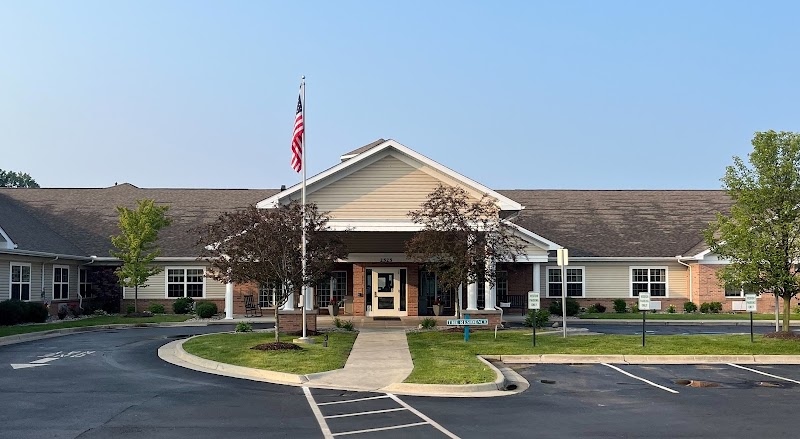
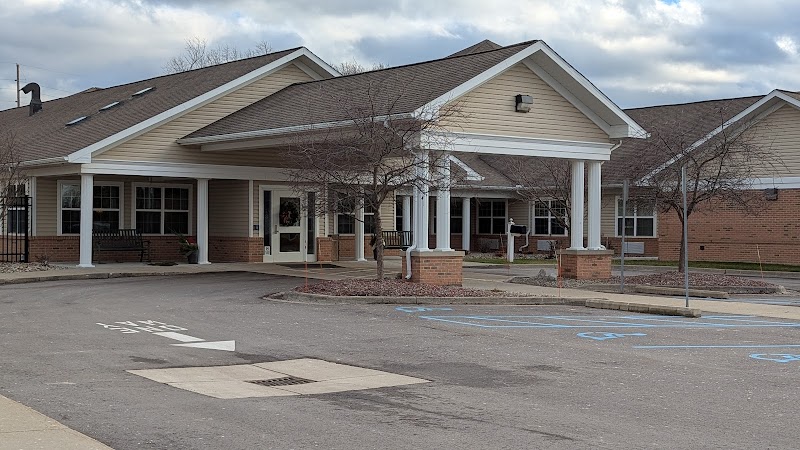
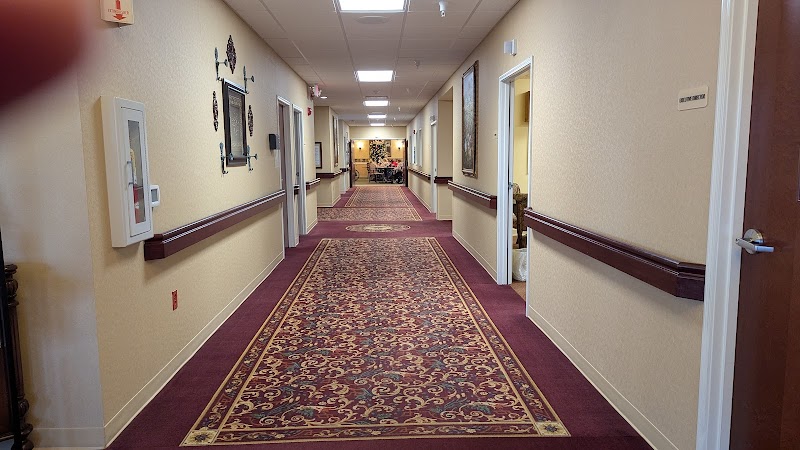
Stonegate Health Campus

2525 Demille Road, Lapeer, MI 48446 (810) 245-9300
For profit - Corporation 80 Beds TRILOGY HEALTH SERVICES Data: November 2025
Trust Grade
35/100
#238 of 422 in MI
Last Inspection: January 2025

Within standard 12-15 month inspection cycle. Federal law requires annual inspections.

Overview

Stonegate Health Campus in Lapeer, Michigan, has received a Trust Grade of F, indicating significant concerns about its care quality. Ranking #238 out of 422 in Michigan places it in the bottom half of facilities, and #3 out of 4 in Lapeer County suggests limited local options that are better. While the facility is showing improvement in reducing issues from 14 to 5 over the past year, it still faces challenges, as evidenced by $66,414 in fines, which is higher than 82% of Michigan facilities. Staffing is a relative strength with a 4/5 rating, although turnover stands at an average 49%. However, specific incidents raise serious concerns; for example, a resident developed severe pressure ulcers due to inadequate care procedures, and another resident suffered a fracture after an unauthorized exit, highlighting potential risks for residents. Overall, while there are some positive aspects, families should weigh these serious deficiencies carefully.

Trust Score
F
35/100
In Michigan
#238/422
Bottom 44%
Safety Record
High Risk
Review needed
Inspections
Getting Better
14 → 5 violations
Staff Stability
⚠ Watch
49% turnover. Above average. Higher turnover means staff may not know residents' routines.
Penalties
⚠ Watch
$66,414 in fines. Higher than 91% of Michigan facilities. Major compliance failures.
Skilled Nurses
✓ Good
Each resident gets 43 minutes of Registered Nurse (RN) attention daily — more than average for Michigan. RNs are trained to catch health problems early.
Violations
⚠ Watch
47 deficiencies on record. Higher than average. Multiple issues found across inspections.
★★★☆☆
3.0
Overall Rating
★★★★☆
4.0
Staff Levels
★★★★☆
4.0
Care Quality
★★★☆☆
3.0
Inspection Score
Stable
2024: 14 issues
2025: 5 issues

The Good

  • 4-Star Staffing Rating · Above-average nurse staffing levels
  • 4-Star Quality Measures · Strong clinical quality outcomes
  • Full Sprinkler Coverage · Fire safety systems throughout facility
  • No fines on record

Facility shows strength in staffing levels, quality measures, fire safety.

The Bad

3-Star Overall Rating

Near Michigan average (3.1)

Meets federal standards, typical of most facilities

Staff Turnover: 49%

Near Michigan avg (46%)

Higher turnover may affect care consistency

Federal Fines: $66,414

Above median ($33,413)

Moderate penalties - review what triggered them

Chain: TRILOGY HEALTH SERVICES

Part of a multi-facility chain

Ask about local staffing decisions and management

The Ugly 47 deficiencies on record

3 actual harm
Jan 2025 5 deficiencies
CONCERN (D) 📢 Someone Reported This

A family member, employee, or ombudsman was alarmed enough to file a formal complaint

Potential for Harm - no one hurt, but risky conditions existed

Deficiency F0602 (Tag F0602)

Could have caused harm · This affected 1 resident

**NOTE- TERMS IN BRACKETS HAVE BEEN EDITED TO PROTECT CONFIDENTIALITY** This Citation Pertains to Intake # MI00148568 Based on interview and record review the facility failed to prevent misappropriati...

Read full inspector narrative →
**NOTE- TERMS IN BRACKETS HAVE BEEN EDITED TO PROTECT CONFIDENTIALITY** This Citation Pertains to Intake # MI00148568 Based on interview and record review the facility failed to prevent misappropriation of resident property for one resident (#218) of one reviewed for abuse, resulting in Resident #218 missing $448.00 while at the facility. Findings Include: Resident #218 Personal Property A record review of the Face sheet and Minimum Data Set/MDS assessment indicated Resident #218 was admitted to the facility on [DATE] with diagnoses: Crohn's disease, colitis, acute kidney failure, chronic kidney disease, atrial fibrillation, arthritis, neuropathy, hearing loss, history of a mini stroke. The MDS assessment dated [DATE] revealed the resident had full cognitive abilities with a Brief Interview for Mental Status score of 15/15 and the resident needed some assistance with care. On 1/15/2025 at 11:44 AM, a Facility Reported Incident/FRI was reviewed for Resident #218 identifying the following: On 11/18/2024 Resident #218 reported she had $548.00 missing from her purse that was in a locked bedside drawer. The Administrator was notified, and the facility began an investigation. Including calling the local police and interviewing the resident, staff and family. An admission inventory list titled, Inventory of Personal Items, dated recorded on 10/28/2024 was included in the investigation file and indicated the resident had $440 in $20 bills, 1 $5 bill, 3 $1 bills=$448 dollars, in a wallet in her purse. Nurse Aide L documented on the form On admission reviewed guideline that the Facility cannot assume responsibility for valuables left in my possession (Nurse Aide L). This document was not signed by the resident. On 1/15/2025 at 4:35 PM, the Administrator was interviewed. She reviewed the FRI investigation for Resident #218's missing money. She said the resident was provided a key on a stretchy bracelet for a locked drawer in her bedside dresser. She said the resident said she placed her purse into the locked drawer and did not look into her purse again until 10/18/2025 when she identified the money was missing. The Administrator reviewed there were staff interviews documented in the FRI investigation folder and some of the staff had identified the resident did not always wear the bracelet and it had been seen on the bedside dresser. The resident had also confirmed that the key was on the bedside dresser at times. During the interview with the Administrator on 1/15/2025 at 4:35 PM, the Administrator was asked about the report from the local police as it was not included in the Investigation folder. The Administrator said a female police officer had arrived on 11/19/2025 to investigate. The Administrator said the officer interviewed the resident and did not pursue it further. The Administrator was asked to review the police report and she said there wasn't one because they weren't going to pursue it. Reviewed with the Administrator there would still be a police report identifying the complaint and results of the interview. On 1/15/2025 at 4:35 PM, during the interview with the Administrator she was asked what was done to ensure a similar incident didn't occur again and she said education had been provided to the staff after the incident. Reviewed it was not located in the FRI investigation. The Administrator was asked which staff were educated and what were they educated about related to the missing money. She said she would have to get a copy of the education. The Administrator was asked if she was notified on admission that Resident #218 admitted with a large amount of money. She said she had not been notified. She said the facility had a Trust fund that residents could place their money in and the resident chose not to do that. The Administrator was asked who provided this information to the resident, she said it was in the admission Packet. On 1/15/2025 at 4:58 PM, the Administrator obtained a police report for the interview with Resident #218. The report was written on 11/19/2024 after Officer M investigated the incident. The facility did not obtain a copy of the police report until asked about it during the survey on 1/15/2025, it had been 2 months since the incident. The investigation report titled Case Report indicated Officer M interviewed Resident #218 at the facility on 11/19/2024 at approximately 3:00 PM. Officer M indicated she spoke with the manager because a patient had reported a theft. The Officer said the manager said it was unclear when the money went missing or how much was missing. The manager told the Officer that the patient's/resident's family had been contacted and reported the resident had not given the money to them. The Officer indicated she was told the resident did not have memory issues. The Officer interviewed Resident #218 who told her she looked in her purse/wallet on 11/18/2024 and her money was missing. She said the purse was in a locked drawer, but there were times it may have been unlocked. The resident said she did not have need for money in the facility and was going to send some home with her son, but when she looked it was gone. The Officer said it was unclear how much money the resident had or when it went missing sometime between 10/28/2024-11/18/2024. On 1/16/2025 at 1:30 PM, the Administrator was asked to see the education provided to the staff related to Resident #218's missing money, she said she forgot, education was not provided to all of the staff but was reviewed with the Interdisciplinary Team/IDT during a Quality/QAPI meeting; no further information was provided related to the facility's plan to prevent other residents from missing money. On 1/16/25 at 2:56 PM, Confidential Person J was interviewed via telephone. The Confidential Person said Resident #218 had taken money to the facility and the resident said they counted it, and the resident said she kept it in a locked drawer, but when she looked on 11/18/2024 it was missing. The Confidential Person J said the resident did not have memory issues and she handled her own money that she kept with her. On 1/16/25 at 4:14 PM, the Director of Nursing/ DON was interviewed about Resident #218's missing money. The DON was asked who completed the Inventory of Personal Items when a resident was admitted to the facility. She said the Nurse Aides completed the inventory list on paper and then they handed it to the nurse who typed it into the electronic medical record. The DON was asked if the Nurse Aides received training related to the Resident's Trust Fund, so they would know the residents didn't have to keep their money in their room. The DON said the Nurse Aides did not have training on this. The DON was asked if she was made aware that Resident #218 had brought a large amount of money into the facility, and it was in her room. She said she was not aware of the money until it was reported missing. The DON was asked if any additional training for staff was provided or measures were enacted to ensure resident belongings including money were kept safe after Resident #218's money disappeared. She said she wasn't sure if anything else had been done. A record review of the facility admission Packet revealed it was a 38-page document provided to the residents or their representative on admission. The document included information about a Resident Trust Fund on page 14 which provided You may elect to open a resident trust fund with the business office. Please complete an authorization to open a trust with the Business Office manager if you are interested in this option . There was no mention of alternatives for safe storage of valuables, including money. A review of the facility policy titled, Abuse and Neglect Procedural Guidelines, dated updated 12/16/2024 provided, . Misappropriation of Property means the deliberate misplacement, exploitation, or wrongful, temporary, or permanent use of a resident's belongings or money without the resident's consent . Reporting/Response . A written report of the investigation outcome, including resident response and/or condition, final conclusion and actions taken to prevent reoccurrence, will be submitted to the applicable State Agencies .
CONCERN (D)

Potential for Harm - no one hurt, but risky conditions existed

Respiratory Care (Tag F0695)

Could have caused harm · This affected 1 resident

**NOTE- TERMS IN BRACKETS HAVE BEEN EDITED TO PROTECT CONFIDENTIALITY** Based on observation, interview and record review the facility failed to ensure safe and sanitary storage of respiratory equipme...

Read full inspector narrative →
**NOTE- TERMS IN BRACKETS HAVE BEEN EDITED TO PROTECT CONFIDENTIALITY** Based on observation, interview and record review the facility failed to ensure safe and sanitary storage of respiratory equipment for 3 residents (#3, #272, and #273)) and ensure oxygen was provided as ordered for 1 resident (#3) of 3 residents reviewed for respiratory care, resulting in the potential for exposure to infectious organisms for Residents #3, #272 and #273 and inappropriate treatment with potential for adverse reactions for Resident #3. Findings Include: Resident #3 Respiratory Care A record review of the Face sheet and Minimum Data Set/MDS assessment indicated Resident #3 was admitted to the facility on [DATE] with diagnoses: Heart failure, chronic respiratory failure, COPD, diabetes, morbid obesity, and obstructive sleep apnea. The resident had a Brief Interview for Mental status/BIMS score of 15/15, indicating full cognitive abilities. On 1/14/2025 at 10:06 AM, Resident #3 was observed lying in bed awake and talkative. He was wearing a nasal cannula with oxygen delivered from an oxygen concentrator. The oxygen was set at 5 liters a minute. When asked what it was normally set at the resident said it should be set at 5. Resident #3 said he had received oxygen for a while and was also receiving Hospice services. A one-gallon bottle of distilled water was approximately 30% empty and sitting on the floor by the bed. It was not dated when opened. A record review of the physician orders identified an order for oxygen at 4 liters via nasal cannula continuously. On 1/16/2025 at 2:30 PM, Resident #3 was observed in his room with his oxygen set at 5 liters a minutes. The resident said that is what he wanted it at. On 1/16/2025 at 4:15 PM, the Director of Nursing/DON was interviewed about Resident #3's oxygen setting of 5 liters/minute, but the physician order said the resident was to receive oxygen at 4 liters/minute. She said she would check into it. On 1/16/2025 at 4:45 PM, the DON provided a copy of a physician order for oxygen for Resident #3. The oxygen order was changed on 1/16/2025 at 4:41 PM per the following: Order set O2- Oxygen @ 2-6 L (liters) for comfort per nasal cannula continuous. A review of the facility policy titled, Administration of Oxygen, dated reviewed 12/13/24 provided, Guidelines to properly Administering Oxygen and any Respiratory procedure . 1. Verify physician's order for the procedure . Oxygen setting must be set and adjusted by a licensed nurse . Resident #272 On 1/14/25, at 2:20 PM, Resident #272 was lying in their bed. Their oxygen concentrator was dialed to 2 liters. Their nasal cannula was lying on the bed covers near the foot of the bed. Resident #272 was asked if they take their oxygen on and off and Resident #272, offered, I don't know. On 1/15/25, at 2:30 PM, a record review of Resident #272's electronic medical record revealed an admission on [DATE] with diagnoses that included Influenza, Acute respiratory failure and Hypertension. Resident #272 required assistance with all Activities of Daily Living. A review of the Physician orders revealed Order Set O2-Oxygen @ 2L (liters) per nasal cannula prn saturation under 93% . A review of the care plan revealed no interventions related to the Oxygen/nasal cannula. Resident #273 On 1/14/25, at 11:15 AM, Resident #273 was not in their room. The oxygen concentrator was on and running at 3 liters. The nasal cannula was resting on top of the covers on the bed. On 1/14/25, at 11:30 AM, CNA D entered Resident #273's room and was asked how Resident #273 gets out of bed. CNA D offered, the resident is a Hoyer lift with two staff and is unable to transfer themselves. On 1/15/25, at 2:00 PM, a record review of Resident #273's electronic medical record revealed an admission on [DATE] with diagnoses that included Dementia, Iron deficiency anemia and right leg fracture. Resident #273 required assistance with Activities of Daily Living. A review of the care plan revealed no intervention related to Oxygen/nasal cannula. On 1/16/25, at 8:43 AM, Resident #273 was resting in their wheelchair in their room. Their oxygen was on 3 liters via a nasal cannula. Resident #273 was asked if their oxygen bothers them or if they ever take it off and Resident #273 offered, no, I do not and explained, they might take it down towards their mouth but never takes it off. Resident #273 further explained, the staff always does it when they're helping me in and out of bed. A review of the facility provided Administration of Oxygen Approval Date: 5/2018 revealed . a nursing assistant may place the nasal cannula around the resident's ears and in the nose but should not adjust the setting on the concentrator or other administration device . Remove potentially flammable items, wool or nylon materials or other items that may potentiate static from immediate area where the oxygen is to be administered or stored . The facility failed to ensure oxygen supplies were stored in a safe and sanitary manner for R3, R272 and R273.
CONCERN (D)

Potential for Harm - no one hurt, but risky conditions existed

Deficiency F0806 (Tag F0806)

Could have caused harm · This affected 1 resident

Based on observation, interview and record review, the facility failed to ensure that food preferences were followed for one resident (Resident #271) of three residents reviewed for food preferences, ...

Read full inspector narrative →
Based on observation, interview and record review, the facility failed to ensure that food preferences were followed for one resident (Resident #271) of three residents reviewed for food preferences, resulting in unhappiness and decreased breakfast consumption. Findings include: Resident #271: On 1/15/25, at 9:06 AM, Resident #271 was sitting in their bed with their breakfast tray on their overbed table. There was a sausage patty on their plate. Resident #271 had consumed everything but the sausage. Resident #271 complained they don't like pork and had told them every day. Resident #271 was asked on a scale of 1 to 10 how upset they were regarding the pork on their plate and Resident #271 stated, 5, I don't like it all. On 1/15/25, at 9:10 AM, a record review of Resident #271's meal ticket on their tray revealed . 1/15/2025 Wednesday Breakfast . Dislikes Pork . On 1/15/25, at 12:30 PM, an observation of meal service in the main corridor was conducted. Kitchen staff R was reading the meal tickets and handing the trays out for delivery. Kitchen staff E was asked if they are ensuring dislikes and preferences are followed and Kitchen Staff E offered, yes, the tickets get triple checked. A record review of the facility provided Resident Dining and Food Preferences Effective Date: 11.29.2016 revealed OVERVIEW The Dining services and Clinical Nutrition Support teams have a continued commitment to ensure our residents have the best dining experience possible. One key way to achieve this is through the gathering of resident preferences and the completion of the Resident Dining and Nutrition Preference (DNP) form . Preferences will be obtained on all resident regardless of level of care .
CONCERN (D)

Potential for Harm - no one hurt, but risky conditions existed

Infection Control (Tag F0880)

Could have caused harm · This affected 1 resident

**NOTE- TERMS IN BRACKETS HAVE BEEN EDITED TO PROTECT CONFIDENTIALITY** Based on observation, interview and record review, the facility failed to ensure Infection Prevention and Control standards of p...

Read full inspector narrative →
**NOTE- TERMS IN BRACKETS HAVE BEEN EDITED TO PROTECT CONFIDENTIALITY** Based on observation, interview and record review, the facility failed to ensure Infection Prevention and Control standards of practice were followed for 1). Hand Hygiene during medication administration for 2 residents (#'s 40, #42); 2.) Personal Protective Equipment/PPE use for 1 resident (#38) in Transmission Based Precautions; and 3.) storage of resident care items to prevent water splash and contamination from the resident room sink for Resident #22, resulting in the potential for spread of infection, which could cause serious illness. Findings Include: FACILITY Infection Control Resident #22 A record review of the Face sheet and Minimum Data Set/MDS assessment indicated Resident #22 was admitted to the facility on [DATE] with diagnoses: history of a stroke, left sided weakness, difficulty swallowing, feeding tube, history of respiratory failure, anxiety, depression, and neuropathy. The MDS assessment dated [DATE] revealed the resident had full cognitive abilities with a Brief Interview for Mental Status score of 15/15 and she needed assistance with all care. On 1/14/2025 at 9:45 AM, Resident #22 was observed sleeping in bed. She shared a room with another resident and the sink was on her side of the room. The sink countertop was cluttered with open items including a toothbrush (unsure which resident's), an open package with a feeding tube declogger hanging out of the package, many personal items (unsure which resident) and medical supplies for the feeding tube in packages hanging over the sink. There was a graduated cylinder with a small connecting tube with a liquid yellow substance inside it. It was the only sink in the room and there was no way to use the sink to perform hand hygiene without dripping water or encountering a water splash onto the items around the sink. Resident #38 A record review of the Face sheet and MDS assessment indicated Resident #38 was admitted to the facility on [DATE] with diagnoses: Diabetes and heart disease. The MDS assessment dated [DATE] revealed the resident had moderate cognitive loss with a BIMS score of 8/15 and needed assistance with care. On 1/16/2025 at 8:00 AM, Resident #38 was observed to have Droplet Precaution and Contact Precaution signs posted outside her room door. A cart with Personal Protective Equipment/PPE was next to the door. The signs instructed anyone who entered the room to wear a mask and isolation gown with gloves prior to entry. Nurse Aide G was observed in Resident #38's room with a surgical mask worn incorrectly under her chin; it was not covering her nose or mouth. She was not wearing an isolation gown or gloves and was taking the resident's vital signs. When Nurse Aide G exited Resident #38's room, on 1/16/2025 at 8:05 AM, she was asked if Resident #38 was in Transmission-Based Precautions, based on the posted signs and PPE at the door. Nurse Aide G said the resident was not in precautions, that her roommate had been diagnosed with Covid-19 and moved out of the room and the roommate was in precautions. The Nurse Aide was asked about the mask under her chin and she said she wore it just in case she needed it. At 8:06 AM on 1/16/2025, Nurse H was asked if Resident #38 was in Transmission-Based Precautions and she stated, Yes, she is. I have to Covid test her again today. We are ruling out Covid. The Nurse was asked if PPE was required in Resident #38's room and she said it was. Medication Administration Resident #42 A record review of the Face sheet and MDS assessment indicated Resident #42 was admitted to the facility on [DATE] with diagnoses: Dementia, diabetes, heart disease, asthma, anxiety and depression. The MDS assessment dated [DATE] revealed the resident had full cognitive abilities with a BIMS score of 14/15 and needed some assistance with care. On 1/16/2025 at 8:10 AM, during an observation of medication administration with Nurse H, she was observed donning (putting on) gloves to test Resident #42's blood sugar level and removing the gloves and discarding them when she was finished. She did not perform hand hygiene before donning or removing the gloves. During a medication administration observation with Nurse H on 1/16/2025 at 8:15 AM, she was observed placing medications for Resident #42 in a medication cup and putting the cup in the top drawer of her medication cart. She said the medications were being held because the resident's vital signs were abnormal and were outside the parameters to give the medications. The nurse was asked what she was going to do with the medications being held and she said that if she had other residents' medications to hold, she would also put them in the cup until she was done passing medications and then she would dispose of them. She said if she had a narcotic to hold, she would also place it in the cup and then find another nurse to witness its disposal after she was finished passing medications. The top drawer of the medication cart was not able to be double locked to store narcotics. Nurse H was asked if this process was approved by the facility and she said, Doesn't it make sense?. Nurse H was asked if the process was documented in the facilities policies, and she said she didn't know but was told this was how it was supposed to be done. Resident #40 During a record review of the Face sheet and MDS assessment for Resident #40, it indicated he was admitted to the facility on [DATE] with diagnoses: End stage kidney disease, diabetes, dialysis, obesity, Crohn's disease, COPD, history of respiratory failure, and anemia. The MDS assessment dated [DATE] the resident had full cognitive abilities with a BIMS score of 14/15 and needed some assistance with care. On 1/16/2025 at 8:50 AM, Nurse H took the medication cup with the held medications out of the top drawer and said she needed to hold some of Resident #40's medications also. The nurse began adding medications for Resident #40 to the cup and then began removing medications from the cup with her bare hands. She said she wasn't sure if she had the right medications, and she placed several on the top of the medication cart as she tried to identify them with her phone. She then picked up the medications and placed some in the cup to be discarded and some in the cup to give to Resident #40. picking them up with bare hands and placing them into the cup to give to the resident. On 1/16/25 at 11:14 AM, during an interview with the Infection Prevention and Control/IPC Nurse F, she said Resident #38 was in Transmission-Based Precautions and PPE was to be worn in her room. The cluttered sink in Resident #22's room was also reviewed with the IPC and she said she would check on it. On 1/16/2025 at 3:00 PM, during an interview with the DON, the medication administration observation with Nurse H was reviewed, including Nurse H not performing hand hygiene as required and touching the residents' medications with her bare hands. She said re-education had been provided to the nurse. A review of the facility policies identified the following: Infection Prevention and Control Program, dated reviewed 12/17/24 provided, . Purpose: To establish and maintain and infection prevention and control program designed to provide a safe, sanitary and comfortable environment and to help prevent the development and transmission of communicable diseases . Guideline for Handwashing/Hand Hygiene, review date 12/17/24 provided, . Handwashing is the single most important factor in preventing transmission of infections. Hand hygiene is a general term that applies to either handwashing or the use of an antiseptic hand rub . All health care workers shall utilize hand hygiene frequently and appropriately . Health Care Workers (HCW) shall use hand hygiene at times such as: .Before/after having direct physical contact with residents . after removing gloves . Medication Administration-General Guidelines, revised 11/18 provided, Policy: Medications are administered as prescribed in accordance with good nursing principles and practices . Handwashing and Hand Sanitization: The person administering medications adheres to good hand hygiene- before beginning a medication pass, prior to handling any medication, after coming into direct contact with a resident . Guidelines for Droplet Precautions, review date 12/17/24 provided, . To provide precautions when indicated for resident infected with diseases . Examples of infections requiring Droplet Precautions include but are not limited to: . Confirmed/suspected Covid-19 . Guidelines for Contact Precaution, review date 12/17/24 provided, . To provide guidelines to prevent the spread of infectious disease organisms . Contact Precautions is a method designed to reduce the risk of transmission of microorganisms by direct or indirect methods .
CONCERN (E)

Potential for Harm - no one hurt, but risky conditions existed

Deficiency F0761 (Tag F0761)

Could have caused harm · This affected multiple residents

Based on observation, interview and record review the facility failed to ensure expired supplies were discarded and ensure that medications to be discarded were stored properly, resulting in expired s...

Read full inspector narrative →
Based on observation, interview and record review the facility failed to ensure expired supplies were discarded and ensure that medications to be discarded were stored properly, resulting in expired supplies and medications to be discarded being available for use and consumption. Findings include: FACILITY On 01/15/25 at 08:29AM, a review of the 200 Hall medication storage room was conducted and revealed the following expired items: -Four boxes of sterile gloves were observed with expiration dates of 09/27/23 and 12/10/23. One box of sterile gloves was unopened and contained fifty pairs, the remaining three boxes were opened and missing pairs of gloves. -One opsite wound dressing was expired as of 4-2024. -Findings were confirmed with the Director of Nursing (DON). On 01/15/25 at 10:27 AM, a review of the 100 Hall medication storage room was conducted and revealed the following expired items: -Two push button blood collection sets were observed to be expired as of 02/29/2024. -One winged blood collection kit, expired 01-31-2024. -One culture and sensitivity transfer straw kit, expired 12-2023. -One 22g intravenous catheter, expired 12-01-2024. -These findings were verified with Director of Sales A and Registered Nurse (RN) C. On 01/15/25 at 01:00 PM, a review of the 300 Hall medication storage room was conducted and revealed the following expired items.: -12 expired vacutainers for blood draws, expired 12/31/22. -Five normal saline syringes, 10ml, expired 12/08/24 and 12/20/24. -Two non coring needles, expired 9/11/24. -These findings were verified with Licensed Practical Nurse (LPN) B. Review of the policy titled, Medication Storage in the Facility, revised 11/18, revealed: Expiration Dating (Beyond-use dating): F. No expired medications will be administered to a resident. G. All expired medications will be removed from the active supply and destroyed in the facility, regardless of amount remaining. The medication will be destroyed in the usual manner. The policy provided by the facility does not reference the facility procedure for expired supplies. FACILITY Medication Administration During a medication administration observation with Nurse H on 1/16/2025 at 8:15 AM, she was observed placing medications for Resident #42 in a medication cup and putting the cup in the top drawer of her medication cart. She said the medications were being held because the resident's vital signs were abnormal and were outside the parameters to give the medications. The nurse was asked what she was going to do with the medications being held and she said that if she had other residents' medications to hold, she would also put them in the cup until she was done passing medications and then she would dispose of them. She said if she had a narcotic to hold, she would also place it in the cup and then find another nurse to witness its disposal after she was finished passing medications. The top drawer of the medication cart was not able to be double locked to store narcotics. Nurse H was asked if this process was approved by the facility and she said, Doesn't it make sense?. Nurse H was asked if the process was documented in the facilities policies, and she said she didn't know but was told this was how it was supposed to be done. On 1/16/2025 at 8:50 AM, Nurse H took the medication cup with the held medications out of the top drawer and said she needed to hold some of Resident #40's medications also. The nurse began adding medications for Resident #40 to the cup and then began removing medications from the cup with her bare hands. She said she wasn't sure if she had the right medications, and she placed several on the top of the medication cart as she tried to identify them with her phone. She then picked up the medications and placed some in the cup to be discarded and some in the cup to give to Resident #40. picking them up with bare hands and placing them into the cup to give to the resident. On 1/16/2025 at 10:00 AM, during an interview with Corporate Nurse K, the medication administration observation with Nurse H was reviewed. She said she would speak to the Director of Nursing/DON immediately and re-education on the appropriate process for medication administration and storage/disposal of held medications would be provided to Nurse H. On 1/16/2025 at 3:00 PM, during an interview with the DON, the medication administration observation with Nurse H was reviewed. She said re-education had been provided to the nurse. A review of the facility policy titled, Medication Storage in the Facility, dated revised 11/18 provided, Medications and biological's are stored safely, securely, and properly . The provider pharmacy dispenses medications in containers that meet regulatory requirements .Medications are kept in these containers .
Sept 2024 1 deficiency
CONCERN (D) 📢 Someone Reported This

A family member, employee, or ombudsman was alarmed enough to file a formal complaint

Potential for Harm - no one hurt, but risky conditions existed

Resident Rights (Tag F0550)

Could have caused harm · This affected 1 resident

**NOTE- TERMS IN BRACKETS HAVE BEEN EDITED TO PROTECT CONFIDENTIALITY** This Citation pertains to Intake Numbers MI00142107 and MI00144987. Based on observation, interview, and record review, the faci...

Read full inspector narrative →
**NOTE- TERMS IN BRACKETS HAVE BEEN EDITED TO PROTECT CONFIDENTIALITY** This Citation pertains to Intake Numbers MI00142107 and MI00144987. Based on observation, interview, and record review, the facility failed to ensure that residents were treated in a respectful and dignified manner for two residents (Confidential Resident #1 and Confidential Resident #2), who wished to remain as a confidential group of residents, from a facility census of 71 residents, resulting in a fear of accidents occurring due to call lights not being answered timely or call lights being turned off without completing the nursing task required, and residents' verbalizations of feelings of a lack of dignity, belittlement and discontentment. Findings include: CR1 and CR2 wished to remain confidential residents. Confidential Resident #1 (CR1): On 9/19/24 at 9:45 AM, CR1 was interviewed. CR1 revealed that she heard a nurse aide tell a resident: I'm busy, and you have a brief on, then just go and I'll be back. When CR1 was asked what the aide meant, CR1 further explained that since she has a diaper, she can just go. CR1 further stated, It is not verbal abuse but can be a dignity issue. CR1 indicated that the resident's daughter was present when this happened and heard this. They are both here today. Other issues brought up by CR1 were: 1. Lack of basic supplies:- Kleenex, Styrofoam cups, pull-ups One lady four days without her size- had to use a bigger 2. Not enough CNA- for example, during shower day They only have one CNA to do their residents care and all the showers scheduled for the day. Sometimes done late in the day or skipped. 3. The food is terrible. The food is not done, including Brussels sprouts and potatoes. No condiments were available. 4. Trays are passed at about 6:20 PM. Last night, CR1 claimed she ate dinner late at 7 PM because her potato was not ready. She was told to wait until all trays are passed before they can resolve her food issues. 5. During shift change- the outgoing staff would sometimes say, I'm not doing that, I'm not doing this. Passing on the job to the next shift. Confidential Resident #2 (CR2): CR2, on 9/19/24 at noon, was with her daughter in the visiting area and was observed with oxygen per nasal cannula. She was comfortable and was found not in any form of cardio-respiratory distress. CR2 said she pulled up instead of using a diaper preference, but they used the pads at the facility because they don't absorb much. She stated, I always feel bad because I pee a lot, and it gets all the sheets wet, and I did not want to have them change the entire bed sheet. I feel embarrassed. CR2 denied recalling the aide's name, who told her to Go ahead and go there. They come in, turn the call light off, and then say they will get somebody to help them. Then they forget to come back. If the aides don't turn the call light off, sometimes they may not return. Another incident, according to CR2, was just recently. CR2 described that an aide had set her up on the sink and left. CR2 realized she didn't have her oxygen on her. It is always on her, and she felt she should have it at that moment. CR2 decided to get someone and peeked out of the hall. When the staff asked what she needed, she felt dismissed when she was told by staff, It's over there. CR2 stated that she could see the nasal cannula, but she could not get through it because of obstacles while she was in her wheelchair. She could not reach for the O2 tubing and put it on her nose. She felt she was treated without dignity and was disrespected. CR2 said she felt angry and degraded. During an interview with CR2's daughter, on 10/19/24 at 12:20 PM, the daughter described that she was in her mother's room one day when her mother was in bed, and had the call light on to go to the bathroom. When the aide came, the aide told CR2 that she can just go if she had a brief on. The aide further explained that she was busy, and she will be back. CR2's daughter was even more concerned about other aides shutting off the call light and sometimes don't come back. They would just say, I forgot. On 9/19/24 at 1:30 PM, the facility's Call Light Policy and Dignity and Respect Policy was reviewed. The Guidelines for Answering Call Lights specified: . 5. Answer the resident's call light as quickly as possible. 6. Be courteous when answering the resident's call. 7. Ask permission to enter the room. 8. Call the resident by name: Mr. [NAME], how may I help you? 9. Provide privacy as needed by pulling the blinds, privacy curtains. 10. Provide the service the resident requested and turn off the call light. 11. If the service is unable to be provided do not turn off the call light until the appropriate staff is available to assist. 12. After the requested service has been provided ask Is there anything else I may do for you? 13. If nothing else is needed, return the call light to within reach of the resident. This policy was reviewed by the facility date: 12/31/23. The Resident Rights Guidelines specified: PURPOSE To ensure resident rights are respected and protected and provide an environment in which they can be exercised. PROCEDURES Procedure: 1. Residents shall not leave their individual personalities or basic human rights behind when they move to a health campus. The following is a list of rights recognized by staff at Trilogy Health Services: 2. Our residents have a right to . a. Be treated with dignity and respect b. Be given the information necessary to participate in decisions which affect them both individually and corporately. c. Have their records containing personal and financial information kept confidential. d. Privacy e. Freedom to talk with staff and express concerns/grievances without fear of reprisal f. Be treated fairly, courteously and with respect by all staff . This policy was reviewed by the facility on 12/31/23.
Jan 2024 13 deficiencies 2 Harm
SERIOUS (G) 📢 Someone Reported This

A family member, employee, or ombudsman was alarmed enough to file a formal complaint

Actual Harm - a resident was hurt due to facility failures

Pressure Ulcer Prevention (Tag F0686)

A resident was harmed · This affected 1 resident

**NOTE- TERMS IN BRACKETS HAVE BEEN EDITED TO PROTECT CONFIDENTIALITY** Based on observation, interview and record review, the facility failed to implement and operationalize procedures for pressure u...

Read full inspector narrative →
**NOTE- TERMS IN BRACKETS HAVE BEEN EDITED TO PROTECT CONFIDENTIALITY** Based on observation, interview and record review, the facility failed to implement and operationalize procedures for pressure ulcer (wounds caused by pressure) assessment, documentation, and management for one resident (Resident #272) of one resident reviewed, resulting in a lack of accurate and timely assessments, lack of implementation of meaningful interventions, and Resident #272 developing two unstageable (full thickness tissue loss with unknown depth) pressure ulcers and a Stage two (partial thickness loss of tissue presenting as a shallow open ulcer with a red pink wound bed, without slough) pressure ulcer, unnecessary pain, the likelihood for additional wound development/progression, and decline in overall health status. Findings include: Resident #272: An observation of Resident #272 was completed on 1/8/24 at 11:59 AM. Resident #272 was sitting in a wheelchair in their room with Family Members Witness A and Witness B. An interview was completed at this time. Resident #272 was noted to be pleasant, hard of hearing, and did not consistently respond to questions when asked. When queried regarding the reason they were admitted to the facility, Witness A revealed the Resident fell at home and went to the hospital where they were diagnosed with a small stroke which affected their left side, a UTI (Urinary Tract Infection), and problems with their coumadin (blood thinner medication). When queried how long they had been sitting up in the wheelchair, Resident #272 revealed staff got them up at 7:00 (AM). Resident #272 stated they ate in the dining room and had been up since. Family Member Witness A and Witness B both disclosed Resident #272 was sitting in their wheelchair when they arrived at the facility at 9:30 AM. The Resident's Left Upper Extremity (LUE) including their arm and hand were visibly edematous and a Hoyer (mechanical lift) sling was in place under them in the wheelchair. When queried, Resident #272 and Family Witness A and B revealed the Resident was unable to move themselves without assistance and had to be transferred using a mechanical lift. When asked if they had any pressure ulcers and/or wounds on their skin, Family Witness A stated, (Resident #272) does have something on their butt. It hurts them a lot. When asked if they had a wound or sore on their bottom, Resident #272 confirmed they did. Resident #272 was then asked if the sore hurt and replied, Yes. Resident #272 also verbalized complaints of discomfort in their legs and Witness B proceeded to complete assisted passive Range of Motion (ROM) to the Resident's lower legs. When queried if facility staff had assisted them to reposition in their wheelchair since they have been sitting up, Resident #272 disclosed they had not. Witness A and Witness B added that Resident #272 had not been repositioned since they had been at the facility. Record review revealed Resident #272 was admitted to the facility on [DATE]. Review of the Electronic Medical Record revealed no documentation of medical diagnoses. Review of Resident #272's admission Observation and Data Collection Assessment documentation, dated 1/5/24 at 4:42 PM, revealed the Resident was orientated to person and place only, required assistance to complete Activities of Daily Living (ADL), was incontinent of bowel, had an indwelling urinary catheter, and required a mechanical lift for transferring. Further review of Resident #272's admission Observation and Data Collection Assessment detailed the following, Skin Color: Normal . Temperature: Warm . Turgor: Normal . Skin Impairment: Skin events available; Bruise, Burn, Incision, Pressure-Stasis Diabetic, wound, Rash/Lesion, Skin Tear/Laceration: Yes, complete appropriate Wound Event for further assessment . Braden Scale for pressure ulcer predictability . Sensory Perception: 4. No Impairment . Moisture: 4. Rarely Moist . Activity: 1. Bedfast . Mobility: Completely Immobile . Nutrition: 2. Probably Inadequate . Friction and Shear: 2. Potential Problem . Score: 14 . low to moderate (pressure ulcer) risk . A Baseline Care Plan Goal- Resident will have intact skin or improving skin integrity was included in the admission Assessment. The baseline care plan included the interventions, Turn and reposition for comfort with care and Monitor fluid and nutrition intake. Resident #272 did not have a comprehensive care plan in place related to pressure ulcers and/or skin integrity. Further review of Resident #272's Electronic Medical Record (EMR) revealed no Wound Event documentation related to a pressure ulcer as indicated in the admission Observation and Data Collection. Review of progress note documentation in Resident #272's EMR revealed one note related to skin. The note, dated 1/5/24 at 7:10 PM, detailed, Skin Assessment: Resident has several bruising to bilateral upper extremities, chest, back of both hands, left shoulder, right shoulder, both antecubital area, left side of head, left side chin/neck, abrasion below left eye, bruise to right upper thigh and right knee, back of left knee, lateral right calf bruise and large bruise to buttock/coccyx and right hip. Both forearms are edematous and back of both hands have swelling . At 8:00 AM on 1/9/24, Resident #272 was observed in the restorative area in the main dining room of the facility. The Resident was sitting in their wheelchair with a Hoyer sling in place under them. Certified Nursing Assistant (CNA) G was assisting the Resident to eat. When queried how long they had been sitting up in their chair, Resident #272 revealed staff got them up around 7:00 AM for breakfast. A review of Resident #272's Health Care Provider orders, Medication Administration Record (MAR), and Treatment Administration Record (TAR) revealed no wound care orders and/or treatments. On 1/9/24 at 9:10 AM, Resident #272 was heard yelling out for help from the hallway. From the doorway of the room, Resident #272 was observed sitting in a stationary chair in their room. The Resident was fidgeting in the chair while yelling, Help, Help and Hello, Hello repeatedly and appeared uncomfortable. There were no staff were observed in the hallway. At 9:22 AM, Visitor Witness K arrived at the facility and entered Resident #272's room. This Surveyor entered the room at this time. A pressure reduction cushion was not observed in the stationary chair where Resident #272 was sitting. At 9:38 AM on 1/9/24, Certified Nursing Assistant (CNA) G entered Resident #272's room. An interview was completed at this time. CNA G was asked about Resident #272's skin integrity and revealed they did not know as they had not gotten the Resident out of bed. When asked about Resident #272's ADL care, CNA G revealed the Resident was dependent upon staff for all care, were unable to reposition themselves, and required a Hoyer lift for transferring. When queried if Resident #272 had a pressure reduction cushion in place on the stationary chair, CNA G replied, No. When asked if Resident #272 was at risk for pressure ulcer development, CNA G indicated they were. CNA G was then queried why the Resident did not have a pressure reduction cushion in place and was unable to provide an explanation. When asked, CNA G revealed the facility does have pressure reduction cushions for use on stationary chairs. When queried regarding the last time Resident #272 had been repositioned, CNA G indicated they the Resident was repositioned when they were transferred to the stationary chair from their wheelchair following breakfast. On 1/9/24 at 10:38 AM, an interview was conducted with CNA G. CNA G revealed they had observed Resident #272's skin and stated, Their coccyx area is opened up. It's still red and bruised. On 1/9/24 at 10:56 AM, Resident #272's call light was noted to be on, and the Resident could be heard from the hallway of the facility yelling out, Help, Help and Hello, Hello repeatedly. Multiple facility staff were observed walking past Resident #272's room without addressing and/or assisting the Resident. At 11:03 AM, a staff member was observed entering Resident #272's room and the Resident was heard saying they had a bowel movement from the hallway. The staff member proceeded to exit the room. A skin and peri-care observation for Resident #272 was completed on 11:16 AM on 1/9/24 with CNA G, Physical Therapist I, and Occupational Therapist J. Resident #272 was in bed, positioned on their back. Scattered bruises in various stages of healing were noted on their neck, chest, arms, legs, hips. Resident #272 had been incontinent of stool and CNA G CNA G prepared supplies to provide care. The Resident was turned on their side by the three staff present and incontinence care was provided. A white colored cream was present on the Resident's buttocks and coccyx area which was removed with incontinence care. A dark, deep purple colored and irregularly shaped area Deep Tissue Injury (DTI) unstageable pressure ulcer was observed on the Resident's right buttock/coccyx. The skin surrounding the wound bed was observed to be reddened. A separate dark purple/red unstageable pressure ulcer with a circular shape was present on the Resident's coccyx. This area extended towards the left buttocks where an open pressure ulcer/wound was present with exposed tissue and a scant amount of visible drainage. The open area was irregularly shaped and slightly larger than a quarter. CNA G was queried regarding the white colored cream and revealed Wound Care Registered Nurse (RN) D had assessed the Resident earlier in the day and applied the cream. When queried, Resident #272 revealed their bottom was painful. A clean brief was placed on the Resident, but a treatment was not applied. Review of Resident #272's EMR revealed the following assessment documentation dated 1/9/24: - Wound Management Detail Report . Pressure Ulcer . Right Buttocks . Date/Time Identified: 1/9/24 10:24 AM . Length: 3.5 (centimeters [cm]) . Width: 2 (cm) . Stage: Unstageable - Deep Tissue . Comments: Area noted upon admission and displays as intact purple discoloration, resident educated on the importance of repositioning, and floating heels to offload pressure . - Wound Management Detail Report . Unspecified Ulcer . Coccyx . Date/Time Identified: 1/9/24 10:39 AM . Length: 6 (cm) . Width: 5.5 (cm) . Tissue Type: Epithelial Tissue . Percent of wound covered by epithelialization tissue: 10 . Area noted upon admission, displays as 90% intact purple discoloration and 10% epithelial tissue noted near coccyx area extending into L buttock . An interview was conducted MDS RN C on 1/10/24 at 9:04 AM. When queried regarding Resident #272, MDS RN C revealed they had not started the Resident's electronic MDS. Resident #272's admission Assessment documentation was reviewed with RN C at this time. RN C was asked where Wound Event follow up documentation for skin impairment was located as indicated in Resident #272's admission Assessment documentation. After reviewing Resident #272's EMR, RN C stated there was No wound event documentation completed. When asked why wound event documentation was not completed, RN C was unable to provide an explanation. When queried if Resident #272 had a pressure ulcer when they were admitted to the facility, RN C revealed there was no documentation of indicating the Resident had a pressure ulcer when they were admitted . An interview was conducted with Wound Care RN D on 1/10/24 at 9:14 AM. When queried if Resident #272 had pressure ulcers, RN D confirmed they did. When asked if the pressure ulcers were facility acquired, RN D indicated the wounds were present when the Resident was admitted . RN D was then asked where documentation of a pressure ulcer upon admission was located and replied, They (nursing staff) documented as bruising with no open area. RN D was asked where documentation of bruising was completed and replied that the event documentation for bruising was deleted. RN D then stated the admission nurses skin note indicated the Resident had bruising. When queried if bruising was the same thing as an unstageable DTI pressure ulcer and/or an open wound, RN D replied they were not. When asked how they were able to discern the bruising documented in the note on 1/5/24 was the same area as the DTI pressure ulcers, RN D revealed they could not confirm it was the same. When queried regarding facility policy/procedure for Residents admitted with a pressure ulcer and/or wound, RN D revealed facility nursing staff open a Wound Event for a pressure ulcer but do not stage and/or measure pressure ulcers. When asked, RN D elaborated that staff identify pressure ulcers, initiate treatments/interventions, and notify them (wound care nurse) for evaluation and staging. RN D was asked about wound measurements and revealed they measure wounds weekly. When queried if the facility takes pictures of Resident wounds/bruising, RN D stated, No. RN D was then asked how they knew Resident #272's DTI pressure ulcers were not facility acquired when there was no detailed wound assessment documentation upon admission and no wound images, RN D verbalized understanding. When queried regarding one wound type not being identified in the wound assessment evaluation completed on 1/9/24, RN D revealed both wounds were pressure ulcers. When queried if the open pressure ulcer was a stage two, RN D revealed they did not specify the wound stage in the assessment because the area may be one large DTI pressure ulcer. When asked if the pressure ulcer opened while at the facility, RN D replied, Yes. When queried if Resident #272 was at a high risk for pressure ulcer development, RN D indicated they were. A review of the Braden Score assessment for pressure ulcer risk completed as part of Resident #272's admission assessment was conducted with RN D at this time. When queried if Resident #272's sensory perception being documented as No Impairment when the Resident was unable to turn and reposition themselves was accurate, RN D revealed they would have assessed the Resident as Slightly Limited. RN D was then asked if Rarely Moist was accurate, considering Resident #272's mobility and incontinence, and indicated Occasionally Moist would be more accurate. When queried regarding Friction and Shear, RN D relayed they would have selected Problem due to the Resident requiring a Hoyer lift for transfers. A calculation of the Braden Score with RN D's responses revealed a score of 11 which categorized the Resident as High to Very High-Pressure Ulcer Risk and directed staff to implement specific interventions as part of the baseline care plan. When queried regarding the discrepancies and accuracy of the Resident's pressure ulcer risk, RN D confirmed the discrepancies and revealed staff would be educated regarding Braden scale completion. When queried what interventions were implemented when Resident #272 was admitted for pressure prevention, RN D replied, All mattresses are pressure reduction and preventative ointment following incontinence was in place. RN D was asked about the preventive ointment and revealed it is a standard protective ointment applied by CNA staff for any resident who is incontinent. When queried why the ointment was not applied during observation of incontinence care, RN D did not provide an explanation. With further inquiry, RN D revealed no specific pressure reduction interventions were in implemented at the time of admission. When asked if the first time they assessed the Resident's pressure ulcers was four days after they were admitted on [DATE], RN D confirmed it was. RN D was queried why they did not assess Resident #272's skin/wounds sooner, RN D revealed they identified documentation of bruising during record review of Resident #272's admission and assessed the Resident's skin due to the location of the bruising. When queried regarding the frequency in which Resident #272 should be turned and repositioned, RN D revealed they should be repositioned every two hours. RN D was informed of observations and interviews of the Resident not being turned and repositioned. When queried why Resident #272 was not turned and repositioned every two hours, RN D did not provide an explanation. When asked if a pressure ulcer can develop in four days, RN D confirmed they can. RN D was then asked to provide documentation demonstrating Resident #272's pressure ulcers were present upon admission to the facility and revealed they were unable to provide documentation. When queried if the pressure ulcers would be considered facility acquired, RN D did not provide a response. Review of Resident #272's hospital Integumentary Assessment documentation dated 1/4/24 revealed the Resident was at high risk for pressure ulcer development (Braden Score 15), had pressure prevention interventions in place, and did not have a pressure ulcer. Review of hospital discharge medications and treatments, dated 1/5/24, revealed no pressure ulcer wound care orders/treatments. An interview was completed with the Director of Nursing (DON) on 1/10/24 at 2:38 PM. When queried regarding Resident #272's pressure ulcers and lack of detailed documentation of the Resident's skin upon admission to the facility, the DON stated, Could have been a bad choice of words or could have been a bruise. When queried regarding lack of implementation of meaningful interventions based upon the Resident's risk and accuracy of Braden scale assessment completion, the DON indicated they had been informed of the concern and would work to educate staff. When queried regarding lack of turning and repositioning and pressure reduction devices, the DON verbalized understanding but did not provide further explanation. A facility policy/procedure related to Pressure Ulcer Prevention and Care was requested on 1/8/24 at 3:56 PM but not received by the conclusion of the survey.
SERIOUS (G) 📢 Someone Reported This

A family member, employee, or ombudsman was alarmed enough to file a formal complaint

Actual Harm - a resident was hurt due to facility failures

Accident Prevention (Tag F0689)

A resident was harmed · This affected 1 resident

**NOTE- TERMS IN BRACKETS HAVE BEEN EDITED TO PROTECT CONFIDENTIALITY** This Citation pertains to Intake Numbers MI00138100 and MI00137191. Based on observation, interview and record review, the faci...

Read full inspector narrative →
**NOTE- TERMS IN BRACKETS HAVE BEEN EDITED TO PROTECT CONFIDENTIALITY** This Citation pertains to Intake Numbers MI00138100 and MI00137191. Based on observation, interview and record review, the facility failed to 1.) Prevent an unauthorized exit for Resident #222, 2.) Follow a care-planned transfer status for Resident #1, and 3.) Follow standards of practice with a removal of a sling underneath Resident #5 for three residents (Resident #1, Resident #5 and Resident #222) of six residents reviewed for accidents, supervision and falls, resulting in Resident #222 exiting the building without supervision with the potential for injury and bodily harm; Resident #1 sustaining a fracture, surgery and pain to the left lower leg, and decreased mobility; and Resident #5 with a fracture to the left thigh, pain and decreased mobility. Findings include: Resident #1: A review of Resident #1's medical record revealed an admission into the facility on 9/24/21 and readmission on [DATE] with diagnoses that included chronic obstructive pulmonary disease, kidney disease, heart failure, diabetes, obstructive sleep apnea, anxiety disorder, difficulty in walking, lateral subluxation of left patella, fracture of lower end of left femur, and periprosthetic fracture around internal prosthetic left knee joint. A review of the Minimum Data Set (MDS) assessment dated [DATE] revealed a Brief Interview of Mental Status (BIMS) score of 11/15 that indicated moderately impaired cognition and the Resident was dependent on staff for mobility and lower body dressing. On 1/8/24 at 11:31 AM, an observation was made of Resident #1 in her room sitting in their wheelchair. The Resident was observed to have a leg brace on her left leg. The Resident was interviewed, answered questions and engaged in conversation. The Resident was queried regarding having any falls at the facility. The Resident indicated she had a fall a couple months ago and stated, I broke the femur bone, had to redo the knee. I told them I felt I was going to fall, she (Certified Resident Care Associate) said no, you are not going to fall. I went down and my knee popped. When asked if the staff were using a gait belt, the Resident indicated they were not using a gait belt and stated, She was not holding onto me. The Resident indicated that before the fall, she was going anywhere, reported going out for outings and things, and voiced frustration of decreased mobility and stated, now I am stuck right here all the time. A review of Resident #1's progress notes revealed the Resident had a fall on 11/8/23 and on 11/13/23 with the following progress notes that revealed: -11/8/23 at 11:03 PM, Resident was toileting with CRCA (Certified Resident Care Associate aka (also known as) Certified Nursing Assistant (CNA)) at her side. Writer heard resident cry out, writer entered bathroom and observed resident sitting on the bathroom floor in front of the toilet bowl, holding on to the toilet roll dispenser. Writer laid resident head down on a pillow for comfort until other staff arrived to assist in getting resident off the floor. CRCA stated the resident was standing and beginning to pivot to sit on toilet, suddenly her legs must have buckled and she was assisted to a sitting position on the floor. Writer noted a bruised bump on right knee, possibly from bumping her knee on the toilet roll dispenser as she was falling to a sitting position. Monitor bump QS (every shift) x (times) 3 days for any changes. Writer noted w/c (wheelchair) was in locked position right behind resident, resident was wearing non skid footwear. Resident is upset but easily calmed, stating, It scared me I don't know why it happened . -11/10/23 at 10:06 AM, IDT (interdisciplinary team) fall review: Resident is being reviewed for fall event on 11/8. Resident was transferring from w/c to the toilet, knees buckled and resident was lowered to the floor with assistance. Small abrasion to right knee noted which is now resolved. No further injury noted. Resident denies pain and continues to move around in w/c with no issues. The goal is to prevent injury. New intervention implemented is to increase assistance with transfers from a 1 PA (physical assist) to 2PA (two-person physical assist) and refer resident to therapy for further evaluation. Increase assistance noted during transfer and ambulation. New referral in place. PD and plan of care updated. Will continue with current interventions in place . -11/13/23 at 10:43 PM, 10 pm resident was being transferred from w/c to bed by CRCA. Resident stood up and began to pivot, legs buckled, resident was lowered to floor with assistance. Left foot was observed against the bedside furniture. Resident c/o (complains of) pain to left ankle. (On call provider group) was notified, writer spoke with (Name) NP (nurse practitioner), N.O. (new orders) X-ray to left ankle 2 view; keep resident in bed until results and further orders . -11/14/23 at 12:49 PM, Resident x ray results . Left knee ½ views: Acute periprosthetic fracture of the distal femur . Resident notified of x-ray result. ACE wrap and ice applied to left knee. Tramadol and Tylenol given for pain . sending resident to ER (emergency room) . -11/21/23 at 10:21 PM, Resident returned from hospital following left femur fracture and left knee replacement surgery with brace to left leg . On 1/9/24 at 11:45 AM, an interview was conducted with the Director of Nursing (DON) and Clinical Support (CS) F regarding Resident #1's fall on 11/8 and 11/13. The DON indicated the fall on 11/8 was in the bathroom when the Residents knees buckled and the Resident was lowered to the floor. When asked about the Resident's transfer assistance at that time the DON indicated the Resident was a one person assist and after the fall on 11/8, the transfer intervention was changed to two-person assist. When asked about gait belt use the DON indicated the staff had the gait belt on the resident. When asked about hands on when using the gait belt, the DON and CS indicated that with a two person assist, both staff were to have hands on the Resident when transferring when the Resident was a 2 person assist with transfers. The CS indicated that when the fall occurred on 11/13, there was only one staff with hands on during the transfer and indicated that was the opportunity that we identified for doing education with the staff and audits of Residents' transfer status'. The CS reported the staff actually transferring the Resident was not aware that the Resident's transfer status changed after the previous fall on 11/8. The CS reported that it had been changed on the care plan, but the staff had not looked at it. On 1/9/24 at 6:05 PM, an interview was conducted with CRCA L regarding Resident #1's fall on 11/13/23. The CRCA indicated she was assigned care of the Resident that day and had been assigned the hall before. The CRCA indicated she was not made aware of a change in Resident transfer status at shift report and had not had time to review care plans for changes. The CRCA reported not being aware that the Resident had been made a two-person assist. The CRCA indicated that another CRCA was outside the room nearby but was not in the room to assist with the transfer of Resident #1 when she had fallen. The CRCA indicated she had a hold of the gait belt and lowered the Resident to the floor after the Resident's knees buckled. When queried regarding communication of changes with Resident status, the CRCA reported that care plans were to be checked but indicated that when they come in on the nightshift, they have dinner trays to pass and the time needed to review care plans was not available at the beginning of the shift. The CRCA indicated that she did not remember getting an update on transfer status for Resident #1 with report from the exiting shift CRCA. On 1/10/24 at 8:52 AM, an interview was conducted with CRCA O regarding Resident #1's fall on 11/13/23. The CRCA indicated she was not in the room when the fall occurred but was nearby the room. The CRCA indicated they were not aware that the transfer status for Resident #1 had changed to a two-person assist. The CRCA was asked about care plan review and reported we don't get time to look at the care plan upon start of the night shift, by the time we have time, it is time to chart and there was no time for charting until 10:00 PM. An interview was conducted with Confidential Staff Q when queried regarding CRCA allocated time to review care plan updates or changes, the Confidential Staff indicated that CRCA's, when coming onto shift at 6 PM, there was not time to review care plans and CRCA's don't always get updates on changes in report. The Confidential Staff indicated that upon coming into shift the CRCA's pass dinner trays immediately with no time to get to read the care plan and that care plans were not always updated with changes at the time the changes are made. Resident #5: A review of Resident #5's medical record revealed an admission into the facility on [DATE] with re-admission on [DATE] with diagnoses that included muscular dystrophy, depression, paraplegia, falls, contractures of bilateral knees, muscle wasting and atrophy, muscle weakness and fracture of lower end of left femur. A review of the MDS revealed a BIMS score of 15/15 that indicated intact cognition and the Resident dependent on staff for mobility such as roll left to right, sit to lying, lying to sitting, for transfers, bathing and dressing activities. On 1/7/24 at 11:03 AM, an observation was made of Resident #5 sitting up in his electric wheelchair. The Resident was dressed and well groomed. The Resident was interviewed, answered questions and engaged in conversation. The Resident was asked about any accidents that occurred in the last year. The Resident reported that he sustained a fracture in his left lower thigh area when staff were repositioning him in the bed and stated, They were trying to position me in bed, raised the head of the bed and two or three heave-ho, on one heave-ho, my leg felt like it snapped in two, my one heel dug into the mattress, they didn't do it in sequence, my leg popped loud. The Resident indicated he had x-rays done but did not get further testing done, had gone to the hospital, was in a lot of pain, and had to wear a black and blue Velcro cast on his leg. A review of Resident #5's progress notes in the electronic medical record revealed the following: -7/1/23 at 5:46 PM, CRCA's transferred resident into bed with mechanical lift. Per CRCA, resident asked them to lean him forward to get sling out from under him. Resident states he felt his knee pop and now it is painful. No redness or edema noted, no dislocation noted. Resident received PRN (as needed) Norco at 1707 (5:07 PM). (Provider service) notified and received order for left knee X-ray. -7/1/23 at 6:01 PM, Writer into see resident d/t (due to) increased pain to left knee. Resident does have Muscular Dystrophy and contractures to his bilateral knees. When asked what happened, he said after he was assisted to bed with x 2 assist CAN he was assisted to sit up to remove sling for positioning, he said he felt a pop in his left knee, and it was sore after. He rated pain 5/10 and his floor nurse in room for this conversation and obtained x-ray orders from Theoria. -7/2/23 at 9:15 AM, X-ray results: Cannot definitively exclude fracture of the distal femur. CT (computerized tomography) recommended. (On call provider service) notified and received orders to keep on bed rest until rounding provider can assess tomorrow. Resident notified and resident requesting to be transferred to ER . Resident c/o pain 8/10 to left knee, no redness or edema noted, PRN Norco administered at 0800 (8:00 AM). -7/2/23 at 3:07 PM, Resident returned from (Hospital) ED (emergency department). X-ray results: Examination is limited due to patient's body hiatus. Fracture of the distal left femur involving proximal aspect of the medial condyle, recommend further assessment with CT exam. Small to moderate suprapatellar joint effusion. Orders for follow up with ortho. Resident returned to facility with soft immobilizer to LLE (Left lower extremity), states pain is 7/10 at this time. (On call provider) notified. Received orders to leave resident on bed rest with immobilizer in place until rounding and therapy can assess tomorrow, increase Norco to 7.5/325 mg q(every) 4 h (hours) PRN. On 1/9/24 at 11:11 AM, an interview was conducted with the DON regarding Resident #5's fracture to the left femur that occurred when care provided during transferring Resident #5 on 7/1/23. The DON indicated that during a transfer with the mechanical lift to bed, the CRCA's had removed the sling from the Resident. The Resident requested to lean forward and take it out in the back of him and heard a pop to the left knee when leaning forward. The DON reported that the CRCA's were trying to make the Resident happy and followed his request on getting the sling out, but that they normally turn a Resident from side to side to remove the sling. The DON indicated the proper way was to remove the sling when turning the resident side to side and stated, despite Resident request always follow procedures. A review of the care plan did not reveal interventions or changes after the incident on 7/1/23. The DON indicated there was no update to the care plan at that time but reported the staff were educated and return demonstrations with mechanical lift transfers were done and the Resident was educated. Resident #222: Review of intake documentation dated as received on 5/9/23 revealed, On Sunday May 7th while visiting (different Resident) I overheard the staff bringing in a resident that had gotten into the parking lot. They discussed they won't report this, they cover up everything here. I don't know who they are. The patient seemed confused and ill . I just felt someone should know . another family member told me these things happen all the time . Please make sure (Resident #222) is ok. The intake further revealed a second complaint was received on 5/10/23 and attached to the original intake which detailed, We don't have adequate staff, so a resident got out of the building. Record review revealed Resident #222 was admitted to the facility on [DATE] with diagnoses which included atrial fibrillation (irregular heart rhythm), tobacco use, alcohol abuse, alcoholic fatty liver, altered mental status, and weakness. Review of the MDS assessment dated [DATE] revealed the Resident was moderately cognitively impaired and required supervision/touching to partial/moderate assistance with mobility. Resident #222 was discharged home with home health care on 5/12/23 and passed away on 12/12/23. Review of progress note documentation in Resident #222's Electronic Medical Record (EMR) revealed the following: - 5/7/23 at 3:38 PM Health Care Provider Note: Exit Seeking Event . Nurse advised (Resident #222) was observed outside the facility sitting on the curb this afternoon. The resident was escorted back to room. No reported injury. Staff will continue to monitor . Care team notified. - 5/7/23 at 4:18 PM Nurses' Note: IDT: Approx 3:05 PM informed by (Assisted Living Facility) RCA (Resident Care Aide) of this resident returned to room after being witnessed and assisted indoors from grassy area in center median of AL (Assisted Living) parking lot. Physical examination determines no apparent injury, resident denies discomfort, no skin impairments noted. Gait strong and even, ROM x 4. Resident observed ambulating within room and unit without assistive device. Resident states they 'decided to go for a walk because it was such a nice day' and that they intended to 'sit on a bench' but instead 'sat onto curb' and was 'looking for 4 leaf clovers.' Resident with BIMS (Brief Interview Mental Status Score) 9 (moderately cognitively impaired). Resident denies falling while outside, RCA reporting observing resident laying on ground then sitting up on curb. Neuro checks initiated and WNL, vital signs WNL and on-going. Safety discussed with resident and invited to explore facility courtyard areas, locations explained. Wander guard use explained and resident/son agreeable to placement . 15 min visual checks initiated x 24 hrs. ED (Executive Director) informed. - 5/7/23 at 4:45 PM Nurses' Note: Resident observed ambulating in 100-hallway with 2 CNA's (Certified Nursing Assistants) toward room at 3 PM. CNA's reported they were told resident was outside of building in the north parking lot. They went outside and observed resident sitting on the curb next to sidewalk. Aides assisted resident to standing and brought inside. Resident was observed at 2 PM by 100 hall aide. 100 hall nurse and aide were assisting other residents at the time. Resident was assessed by nurse. Resident had no skin issues or c/o (complain of) pain. Resident calm and cooperative. Stated went outside to see how nice it was and decided to sit down on the curb then was unable to stand . Wander guard placed on left ankle. Resident was agreeable to wander guard and was educated about letting staff know when would like to go outside. Son informed and agreed to wander guard. (Provider) notified as well as weekend supervisor. Resident has been calm and cooperative since event, ate snack and talked to (family) on phone in room. Resting quietly in bed at this time. 15-minute checks continue. - 5/8/23 at 1:17 PM and Edited 5/9/23 at 12:25 PM: The resident did not exit seek . planned to go outside for a walk and enjoy the sunshine. (Resident) stated lives alone at home and goes out when likes. She has had no actions noted or spoken word that wants to exit and leave the facility. (Resident) had agreed to have a bracelet (wander guard) applied that would alarm upon going for a walk as a reminder to sign self out . agreed. (Resident) is deciding if would like to keep this reminder . had reeducation provided by ED this date about letting us know when going out . agreed. Review of Assessment/Evaluation documentation in Resident #222's EMR revealed no documentation of wander/elopement assessment completion prior to or following the unauthorized facility exit on 5/7/23. Review of Resident #222's admission Observation and Data Collection assessment dated [DATE] at 4:03 PM detailed the Resident was at moderate risk for falls, used a wheelchair for mobility, and required assistance for transfers and ADL care completion. The assessment further included a section titled, Exit/Elopement Review which indicated the Resident was not a risk for exit/elopement. Review of Resident #222's care plans revealed a care entitled, Profile Care Guide (Start: 4/26/23; Revised: 5/10/23). The care plan included the interventions: - Safety: Encourage and assist (Resident #222) with transfers. Offer to take resident outside when it's nice. - Transfers and ambulation: Independent with 2ww (wheeled walker). Remind resident to use walker if does not have it . Another care plan entitled, Falls: Resident is a risk for falling R/T (related to): decreased mobility weakness, malnutrition, non-compliant with transfer status i.e. does not use walker at times was initiated on 5/3/23 and revised: 5/10/23 in Resident #222's EMR. The care plan included the interventions: - Staff to assist resident with transfers as needed (Start Date: 5/3/23) - Encouraged/remind resident to ask for assistance when wanting to go outside (Start Date: 5/8/23) Resident #222 did not have a care plan related to exit seeking/wandering and/or elopement. Review of Resident #222's Health care provider orders revealed the order, Transfer Status: 1PA (Person Assist) with gait belt and 2ww. Ambulation Status: to restroom with staff with gait belt and 2ww (Ordered: 4/26/23; Discontinued: 5/9/23). All Resident #222's Incident and Accident (I and A) forms and any applicable investigation documentation during their stay at facility were requested. Review of provided documentation revealed the following: - Safety Events . Exit Seeking Event . Event Date: 5/7/23 3:00 PM .Date Recorded: 5/7/23 3:29 PM . Closed Date: 5/8/23 . Description: Resident observed in AL parking lot . Was the Resident seen exiting the building? No . Where was the resident found? On property . When was the Resident found .? 5/7/23 3:00 PM . behaviors prior to exit seeking . ambulates hallways independently within (sic) assistive device . Mental Status . Confusion . Exit Seeking Risk Factors . alcohol abuse, tobacco abuse . Interventions . Wandering alert device applied . Evaluate medications . 15 min visual checks X 24 hours . Evaluation Notes: No exit seeking occurred . see note . Reported to State: No. - Safety Events . Fall Event . Event Date: 5/7/23 3:00 PM .Date Recorded: 5/12/23 7:41 PM . Description: Fall .Location .Outside on Facility Grounds . What was Resident doing just prior to fall? Ambulation . observed sitting on curb outside . Was fall witnessed? No- Initiate 'Neuro check' order set . Did Resident hit head? Unknown- Initiate neuro checks . Safety equipment in place and functioning at time of incident? Other . res did not use walker . No injury noted . Mental Status . No Changes . New Interventions . Wander guard applied . Physician Notified . 6/19/23 5:56 AM . No documentation of neuro checks following the incident on 5/7/23 were present in the EMR. No documentation of interviews and/or additional investigation documentation was provided. An interview was conducted with the Director of Nursing (DON) and Clinical Support Registered Nurse (RN) F on 1/9/24 at 3:15 PM. When queried regarding Resident #222's exit from the building on 5/7/23, RN F stated they believed it had occurred on Sunday, Mother's Day. The DON specified they were not employed at the facility when the incident occurred. When asked if the facility completed an investigation, as no investigation documentation had been included with the provided I and A forms, RN F indicated an investigation had been completed, they were trying to locate it, and would provide a copy. When asked if Resident #222 had an elopement/exit risk assessment completed following admission, RN F replied, No, the first admit assessment only unless there are behaviors displayed. When queried why the I and A report for the fall was completed on 5/12/23 and indicated the fall occurred on 5/7/23, RN F replied, They (nursing staff) weren't sure if (Resident #222) fell so I told them to do the fall (I and A). When queried if they told staff to complete the I and A on 5/12/23, after the I and A for the exit I and A had been closed, RN F was unable to recall the date submitted. RN F was asked where Resident #222 was found and replied, Out in the front parking lot. RN F was then asked to show this Surveyor where Resident #222 was outside, and a tour was completed. Resident #222 exited through the front/main facility door of the Assisted Living of the facility which faced [NAME] Road (heavily traveled and busy road). A desk with a staff member was present at the front/main entrance door. When if there was a staff member working at the entrance on 5/7/23 when Resident #23 exited the building, RN F stated, I am not sure. After exiting the building, RN F specified Resident #222 was seen sitting in the grassy area of the parking lot which separates the perpendicular parking spots by someone in the Assisted Living of the facility. RN F was asked where Resident #222 was sitting and pointed to the fifth or sixth parking spot (approximately 45 feet north and fifty feet west of the building entrance). Review of facility provided investigation documentation included the following: - Undated Summary Document: May 7, 2023, Event . Short Term . Any attempts to leave prior or request for early discharge? No. Fell in parking or did they sit down in parking lot? If unwitnessed complete the I&A. No injury, resident on (Assisted Living) saw (Resident) from the parking lot. 2:00 PM in room . 3:00 PM someone states (Resident #222) is in the parking lot . Sitting on curb walked back in . Smoker . Said they were going out for a walk. Explained process with requests to go outside. (Spouse) was a resident previously. Was (Resident #222) attempting to smoke due to smoking history? Ambulatory at baseline. Recommendations: Offer patch for smoking . Remove bracelet . is able to leave if chooses . Review the LOA (Leave of Absence) process . when would like to go outside . (Resident #222) does not want to feel like they are a prisoner here so let's ensure we make it clear they are not a prisoner, and we just want them to be safe. No history of elopement for hospital records . No risk factors noted here . - Individual 15 Minute Monitoring Log - Statement of Witness Form . RN EE . 5/7/23 . Resident observed ambulating in 100-hallway with two CNA's toward their room at 3:00 PM. CNA's reported they were told resident was outside of building in the north parking lot. They went outside and observed resident sitting on the curb next to sidewalk. Aides assisted resident to standing and brought inside. Resident was observed at 2:00 PM by the 100-hall aide. 100 hall aide RN and aide were assisting other residents at the time. Resident was assessed by RN . Stated went outside to see how nice it was and decide to sit down on the curb then was unable to stand . wander guard placed on left ankle. Resident was agreeable to wander guard and educated about letting staff know when they would like to go out. - Statement of Witness Form . Licensed Practical Nurse (LPN) EE . Weekend Supervisor . 5/7/23 . ADHS (Assistant Director of Health Services) notified at 3:08 PM of resident observed in grassy center median of AL parking lot; reported to writer at 3:05 PM. ADHS contacted (Administrator). Administrator spoke with writer at 3:24 PM details . Resident without apparent injury . wander guard left ankle with resident and son consent. - Completed Elopement Drill Records for March, April, May, and June 2023. On 1/9/24 at 4:17 PM, an interview was completed with the facility Administrator. When queried what occurred when Resident #222 exited the facility, the Administrator stated, I was notified that (Resident #222) was found outside. The Administrator was asked who notified them and replied, It was our weekend supervisor who is a PRN (casual status staff) now and a DON who is no longer here. When queried who had found the Resident, the Administrator revealed an individual residing on the AL side of the facility had seen the outside from their window. When asked if any facility staff were aware Resident #222 was outside of the building in the parking lot, the Administrator replied that staff were unaware Resident #222 had exited the building. The Administrator then stated, I know that (Resident #222) was out on an LOA (Leave of Absence) the day before with their family. When asked if Resident #222 exited from the same door on 5/7/23 as they did when they left to go on an LOA with their family, the Administrator verified it was the same door. When queried regarding Resident #222's ambulation status when they exited the facility, the Administrator specified the Resident was modified independent (independent with an assistive device) with a two wheeled walker and stated, (Resident #222) didn't always use their walker. When queried regarding the discrepancies identified in the Resident's Health Care Provider orders and care plan interventions related to ambulation and transferring, the Administrator stated, I would feel more comfortable asking MDS (staff). The Administrator was asked why Resident #222's fall care plan was not initiated until 5/3/23 when the Resident was admitted on [DATE] and replied, If we observed (Resident #222) without a walker or something but did provide further explanation. When queried if that was the reason the fall care plan was initiated for Resident #222, the Administrator validated it was. When queried how long Resident #222 had been outside prior to being seen by someone from the AL side of the facility, the Administrator revealed they did not know. The Administrator was then asked if the facility utilized video camera monitoring and revealed the facility does not have recording video camera surveillance at the exit doors. When queried regarding the Resident's risk factors for exit seeking/elopement including but not limited to BIMS indicating moderately impaired cognition, fall risk, history of alcohol abuse, tobacco use, ambulation status, and recent LOA, in addition to staff not knowing the Resident had exited the building, the Administrator replied, I understand what you're saying and verbalized confirmation of safety concerns. Review of facility provided investigation documentation included the following: - Undated Summary Document: May 7, 2023, Event . Short Term . Any attempts to leave prior or request for early discharge? No. Fell in parking or did they sit down in parking lot? If unwitnessed complete the I&A. No injury, resident on (Assisted Living) saw (Resident) from the parking lot. 2:00 PM in room . 3:00 PM someone states (Resident #222) is in the parking lot . Sitting on curb walked back in . Smoker . Said they were going out for a walk. Explained process with requests to go outside. (Spouse) was a resident previously. Was (Resident #222) attempting to smoke due to smoking history? Ambulatory at baseline. Recommendations: Offer patch for smoking . Remove bracelet . is able to leave if chooses . Review the LOA (Leave of Absence) process . when would like to go outside . (Resident #222) does not want to feel like they are a prisoner here so let's ensure we make it clear they are not a prisoner, and we just want them to be safe. No history of elopement for hospital records . No risk factors noted here . - Individual 15 Minute Monitoring Log - Statement of Witness Form . RN EE . 5/7/23 . Resident observed ambulating in 100-hallway with two CNA's toward their room at 3:00 PM. CNA's reported they were told resident was outside of building in the north parking lot. They went outside and observed resident sitting on the curb next to sidewalk. Aides assisted resident to standing and brought inside. Resident was observed at 2:00 PM by the 100-hall aide. 100 hall aide RN and aide were assisting other residents at the time. Resident was assessed by RN . Stated went outside to see how nice it was and decide to sit down on the curb then was unable to stand . wander guard placed on left ankle. Resident was agreeable to wander guard and educated about letting staff know when they would like to go out. - Statement of Witness Form . Licensed Practical Nurse (LPN) EE . Weekend Supervisor . 5/7/23 . ADHS (Assistant Director of Health Services) notified at 3:08 PM of resident observed in grassy center median of AL parking lot; reported to writer at 3:05 PM. ADHS contacted (Administrator). Administrator spoke with writer at 3:24 PM details . Resident without apparent injury . wander guard left ankle with resident and son consent. - Completed Elopement Drill Records for March, April, May, and June 2023. An interview was conducted with RN F following review of the pro[TRUNCATED]
CONCERN (D)

Potential for Harm - no one hurt, but risky conditions existed

Resident Rights (Tag F0550)

Could have caused harm · This affected 1 resident

**NOTE- TERMS IN BRACKETS HAVE BEEN EDITED TO PROTECT CONFIDENTIALITY** Resident #20: On 1/09/24, at 9:01 AM, Resident #20 was in bed eating their breakfast with the assistance with set up by Nurse W....

Read full inspector narrative →
**NOTE- TERMS IN BRACKETS HAVE BEEN EDITED TO PROTECT CONFIDENTIALITY** Resident #20: On 1/09/24, at 9:01 AM, Resident #20 was in bed eating their breakfast with the assistance with set up by Nurse W. Resident #20 was alert and stated breakfast was good. On 1/09/24, at 11:30 AM, a record review of Resident #20's electronic medical record revealed an admission on [DATE] with diagnoses that included Dementia, Anxiety Disorder and Heart Failure. Resident #20 had severely impaired cognition and required assistance with all Activities of Daily Living. On 1/10/24, at 9:25 AM, Resident #20 was overheard yelling, Help me. Help me while in their room. Upon entering Resident #20's room, the resident was lying flat with their covered breakfast tray on the over bed table in front of them. Resident #20 asked for help sitting up and complained they were hungry. Resident #20's call light was coiled up directly under the bed out of reach. Resident #20 offered that they couldn't reach their call light. On 1/10/24, at 9:28 AM, Nurse E entered Resident #20's room and was asked where the call light was and Nurse E stated, it's under the bed oh, I see the problem. Nurse E was asked if Resident #20 was able to reach her call light and Nurse E stated, no. Nurse E pulled the call light out from under the bed and offered it to the resident. Resident #20 was asked if they knew how to get help and Resident #20 stated, yes and pushed the red button on the call light. Based on observation, interview and record review, the facility failed to provide timely assistance and accessible call lights for two residents (Resident #20 and Resident #30) of three residents reviewed, resulting in a lack of timely care, residents yelling out for assistance, call lights not being in reach, and verbalization of feelings of humiliation and frustration. Findings include: Resident #30: On 1/8/24 at 10:47 AM, Resident #30 was heard from the hallway yelling out for help repeatedly from their room. Upon knocking and entering their room, Resident #30 was observed sitting in their wheelchair on the left side of their bed. Resident #30 was fidgeting and moving in their chair with a distressed appearance. When asked if they were okay, Resident #222 stated, I'm making a potty. I'm scared to go potty. When queried if they had turned on their call light to let staff know, Resident #30 indicated they did not know where it was, and the call light was observed on the floor. Resident #30 then stated, I don't want to have to beg. Resident #30 was queried how that made them feel and indicated it made them feel horrible. A Hoyer (mechanical lift) sling was observed under the Resident in the wheelchair. A staff member was observed in the hallway of the facility at 10:51 AM and entered the Resident's room. When queried regarding the call light on the floor, the staff member did not provide an explanation but quickly picked up the call light and began assisting the Resident. Record review revealed Resident #30 was admitted to the facility on [DATE] with diagnoses which included hemiplegia and hemiparesis (one sided paralysis) following cerebral infarction (stroke), dementia, depression, weakness, psychotic disorder, anxiety, and Urinary Tract Infections (UTI). Review of the Minimum Data Set (MDS) assessment dated [DATE] revealed the Resident was severely cognitively impaired and required partial/moderate to total assistance to complete Activities of Daily Living (ADL) with the exception of set-up assistance with eating. Review of Resident #30's Electronic Medical Record (EMR) revealed a care plan entitled, (Resident #30) has frequent episodes of incontinence R/T (related to): decreased mobility . (Start Date: 7/6/22; Revised: 12/22/23). The care plan included the interventions: - Offer and assist with toileting as needed and/or per request (Start Date: 7/6/22) - Provide incontinence care as needed (Start Date: 7/6/22) A second care plan entitled, Profile Care Guide (Start Date: 6/30/22; Revised: 12/29/23) was noted in Resident #30's EMR. This care plan included the intervention, Transfers: Transfer status: Hoyer 2 pa (person assist). Ambulation: therapy only. An interview was conducted with the Director of Nursing and Clinical Registered Nurse (RN) F on 1/10/24 at 1:01 PM. When queried if Resident call lights should be in reach, both the DON and RN F confirmed call lights should be within Residents reach. The DON and RN F were then told about observation of Resident #30 on 1/8/24. When queried regarding the Resident's statements including them saying they do not want to have to beg to use the restroom, the DON and RN F did not provide an explanation but verbalized understanding of the concern. Review of facility provided policy/procedure entitled, Resident Rights Guidelines (Review Date: 12/31/22) revealed, To ensure resident rights are respected and protected and provide an environment in which they can be exercised . Procedure . 2. Our residents have a right to . a. Be treated with dignity and respect .
CONCERN (D)

Potential for Harm - no one hurt, but risky conditions existed

Deficiency F0572 (Tag F0572)

Could have caused harm · This affected 1 resident

**NOTE- TERMS IN BRACKETS HAVE BEEN EDITED TO PROTECT CONFIDENTIALITY** Based on interview and record review, the facility failed to ensure that the provision of residents' rights were provided prior ...

Read full inspector narrative →
**NOTE- TERMS IN BRACKETS HAVE BEEN EDITED TO PROTECT CONFIDENTIALITY** Based on interview and record review, the facility failed to ensure that the provision of residents' rights were provided prior to or upon admission for one resident (Resident #272) of one resident reviewed, resulting in a delay of communication and receipt of residents' rights verbally or in writing, lack of Resident and/or Representative knowledge of rights, responsibilities, and a plan of care, verbalization of lack of knowledge, and the potential for misinterpretation and violation of residents' rights. Findings include: Resident #272: On [DATE] at 11:59 AM, Resident #272 was observed sitting in a wheelchair in their room with Family Members Witness A and Witness B. An interview was completed at this time. Resident #272 was noted to be hard of hearing and pleasantly confused. Resident #272 did not consistently respond when asked questions. Resident #272 was asked when they were admitted to the facility and looked at Witness A to answer. Witness A stated, We came in Friday ([DATE]) around 4:30 PM. When queried regarding the admission process including responsibilities, what to expect, and resident rights, Witness A stated, No. All they did was have (Resident #272) sign the CPR (code status) thing. Resident #272 shook their head in agreement. When asked if they received an admission packet with information about the facility in it, Witness A stated, No. When queried if they received any documentation when they were admitted , Witness A replied, No. They didn't give us any papers. Just had him sign that (CPR) one. Witness B then stated, We do not know what is going on and/or what the plan or schedule is. Witness B verbalized they were unsure what the Resident's financial obligation would be for their stay at the facility and had not been informed by facility staff. When asked, both Witnesses A and B revealed they visited Resident #272 over the weekend and had not received any additional information. Witness A stated, They (facility staff) told us they would do that (provide admission information) on Monday (today- [DATE]). When asked if they knew when staff were planning to review the admission information with them, Witnesses A and B revealed they had not heard anything and had been at the facility since 9:30 AM. On [DATE] at 3:50 PM, an interview was completed with Resident #272, Witness A, and Witness B in the Resident's room. When queried if staff reviewed resident rights and admission information with them yesterday (Monday [DATE]), Witness A revealed they did not receive any information and the resident rights were not received/reviewed until today ([DATE]). An interview was conducted with the facility Administrator on [DATE] at 6:18 PM. When queried regarding the facility admission process including the time frame in which residents' rights should be reviewed with and provided to newly admitted residents, the Administrator replied, Ideally within 24 hours. The Administrator continued, There are a couple things that the nurses do immediately like obtain a consent to treat and the code status. The Administrator was then informed that Resident #272 had not received their resident rights and/or admission information. When queried why, the Administrator revealed they would need to look into it and review the policy/procedure. A copy of the facility policy/procedure was requested at this time. A follow-up interview was completed with the Administrator on [DATE] at 8:28 AM. The Administrator was asked if they had an opportunity to follow-up regarding Resident #272's admission and provision of resident rights and replied, Our policy is vague and just says upon admission. The Administrator continued, We are looking into it to see if there is a more specific timeline somewhere. The requested policy/procedure had not been received and was requested again. The Administrator then stated, I think the resident rights are located in the welcome book in the room. The Administrator was informed that the welcome book had been reviewed and contained general contact numbers for facility staff and a map but not resident rights. The Administrator replied, May that would be a solution to add them there then. When queried, the Administrator verbalized understanding of the importance of receipt of resident rights and admission information. Review of facility provided policy/procedure entitled, Resident Rights Guidelines (Reviewed [DATE]) did not include information pertaining to informing resident of their rights verbally and in writing in a language they can understand. The policy also did not include timeframes in which the resident's would be informed/provided their resident rights. Review of Trilogy-Michigan HC admission Packet 6.22.23_Combined revealed, You have a right to be informed, orally and in writing . about your rights and responsibilities. This right applies when you are admitted and when you request information during your stay . You will receive a copy of your nursing home's rules and regulations and this summary of your rights when you are admitted .
CONCERN (D) 📢 Someone Reported This

A family member, employee, or ombudsman was alarmed enough to file a formal complaint

Potential for Harm - no one hurt, but risky conditions existed

Deficiency F0655 (Tag F0655)

Could have caused harm · This affected 1 resident

**NOTE- TERMS IN BRACKETS HAVE BEEN EDITED TO PROTECT CONFIDENTIALITY** Based on observation, interview and record review the facility failed to ensure that a baseline care plan for edema was created ...

Read full inspector narrative →
**NOTE- TERMS IN BRACKETS HAVE BEEN EDITED TO PROTECT CONFIDENTIALITY** Based on observation, interview and record review the facility failed to ensure that a baseline care plan for edema was created upon admission for one resident (Resident #272) of one resident reviewed resulting in a lack of monitoring, interventions, and the potential for unmet care needs. Findings include: Resident #272: An observation of Resident #272 was completed on 1/8/24 at 11:59 AM. Resident #272 was sitting in a wheelchair in their room with a Hoyer (mechanical lift) sling in place under them. The Resident's Left hand was positioned in their lap and their Upper Extremity (LUE- arm and hand) was extremely edematous. Family Members Witness A and Witness B were in the room and an interview was completed at this time. Resident #272 was noted to be pleasant, hard of hearing, and did not consistently respond to all questions when asked. When queried regarding the edema in their LUE and hand, Resident #272 revealed they were having difficulty moving their fingers because their hand was so swollen. Resident #272 proceeded to demonstrate moving their fingers but was unable to make a fist. When queried how long the edema had been present, Resident #272 looked at Witness A to respond. Witness A revealed the edema started when the Resident was in the hospital. Record review revealed Resident #272 was admitted to the facility on [DATE]. Review of the Electronic Medical Record revealed no documentation of medical diagnoses. Review of Resident #272's admission Observation and Data Collection Assessment documentation, dated 1/5/24 at 4:42 PM, revealed the Resident was orientated to person and place only, required assistance to complete Activities of Daily Living (ADL), was incontinent of bowel, and required a mechanical lift for transferring. Further review of Resident #272's admission Observation and Data Collection Assessment, dated 1/5/24, detailed the following, Left Lower Leg Edema: Pitting +1 . Right Lower Leg Edema: Pitting +1 . Left Upper Extremity Edema: Pitting +2 . Right Upper Extremity Edema: Pitting +1 . Skin Color: Normal . Temperature: Warm . Turgor: Normal . Skin Impairment: Skin events available; Bruise, Burn, Incision, Pressure-Stasis Diabetic, wound, Rash/Lesion, Skin Tear/Laceration: Yes, complete appropriate Wound Event for further assessment . Review of Resident #272's baseline and comprehensive care plans revealed no care plans were implemented related to edema. Review of progress note documentation in Resident #272's Electronic Medical Record (EMR) revealed the following: - 1/5/24 at 7:10 PM: Skin Assessment . Both forearms are edematous and back of both hands have swelling . There was not additional documentation related to Resident #272's Upper Extremity (UE) edema. An interview was completed with MDS Registered Nurse (RN) C on 1/10/24 at 8:57 AM. When queried why there were no diagnoses listed in Resident #272's EMR, RN C stated, There is an offsite coder who enters diagnoses. RN C was asked to clarify if they were saying facility staff do not enter Resident diagnoses in the EMR and replied that was correct. When queried how long it can take for diagnoses to be entered in the EMR, RN C replied, It can take a while. RN C did not provide a specific time frame. A review of Resident #272's EMR at this time revealed diagnoses had not been entered in the EMR. When asked if diagnoses not being in the EMR five days following admission was abnormal, RN C indicated it was not. When queried regarding care plans, RN C revealed facility MDS nursing staff complete and update Resident care plans. RN C was asked about baseline care plans and revealed baseline care plans are initiated by nursing staff. When queried if Resident #272 had a care plan and interventions in place related to edema and their upper extremity edema, RN C reviewed the Resident's EMR and confirmed they did not. When asked a care plan should be implemented for an abnormal assessment finding, RN C revealed a care plan should have been implemented for Resident #272's edema. No further explanation was provided. An interview was completed with the Director of Nursing (DON) on 1/10/24 at 2:38 PM. When queried regarding Resident #272's edema and lack of baseline care plan and ongoing assessment, the DON confirmed a care plan should have been implemented. No further explanation was provided. Review of facility provided policy/procedure entitled, Comprehensive Care Plan Guideline (Reviewed 12/31/22) revealed, 1. The 48-hour baseline care plan will be completed within 48 hours of admission and will be the temporary working care plan until the comprehensive care plan is completed . b. Care plan interventions should be reflective of risk area (s) or disease processes that impact the individual resident. C. Should new identified areas of concern arise during the resident's stay, they should be addressed on the care plan .
CONCERN (D) 📢 Someone Reported This

A family member, employee, or ombudsman was alarmed enough to file a formal complaint

Potential for Harm - no one hurt, but risky conditions existed

Deficiency F0657 (Tag F0657)

Could have caused harm · This affected 1 resident

**NOTE- TERMS IN BRACKETS HAVE BEEN EDITED TO PROTECT CONFIDENTIALITY** Based on observation, interview and record review, the facility to ensure that care plans were revised for one resident (Residen...

Read full inspector narrative →
**NOTE- TERMS IN BRACKETS HAVE BEEN EDITED TO PROTECT CONFIDENTIALITY** Based on observation, interview and record review, the facility to ensure that care plans were revised for one resident (Resident #57) of four residents reviewed, resulting in care plans not accurately reflecting current healthcare providers' orders, lack of staff communication, and the likelihood for the provision of inappropriate care, unmet care needs, and injury. Findings include: Resident #57: On 1/08/24 at 11:01 AM, an interview was conducted with Resident #57. The Resident was observed sitting in a wheelchair in their room. A full leg hinged fixed position knee brace was in place on the Resident's Right Lower Extremity (RLE). Bright colored tape with the words, Top and Bottom were present on the brace. The brace was inappropriately positioned with the hinged aspect of the brace lower than the knee and locked at a 45-degree angle. When queried, Resident #57 revealed the fell at home and experienced a spiral fracture of their femur. The Resident further revealed they fractured their right arm when they fell. The Resident's right arm was not immobilized, and their wrist appeared edematous with the bone prominent. When asked about their wrist, Resident #57 revealed they no longer had to wear an immobilizer but had limited mobility in their arm. Resident #57 was queried regarding the brace and indicated they needed to bear the brace all the time and only took it off to get dressed. When queried if staff assisted them with getting dressed and applying the brace, Resident #57 stated, The CNA's (Certified Nursing Assistants) don't know now to put it on. When asked to elaborate, Resident #57 revealed therapy staff had placed the tape with top and bottom on the brace because CNA staff had been putting it on upside down. Resident #57 continued, One CNA on night shift put it on wrong and was unhappy when they instructed them the correct way to place the brace. When asked how they had put it on wrong, Resident #57 revealed the brace was not high enough and the straps were not correct. Resident #57 disclosed they did not change when that CNA was working because they did not want the brace applied incorrectly. Resident #57 was asked how staff transferred them and revealed they just told them to stand and pivot from the wheelchair. When queried if staff used a gait belt when assisting them to transfer, Resident #57 replied, Sometimes. Throughout the interview, Resident #57 was observed attempting to pull up the brace. When queried, Resident #57 revealed the brace was lower than it should be and indicated it bothered them when it was not positioned correctly. Record review revealed Resident #57 was admitted to the facility on [DATE] with diagnoses which included diabetes mellitus, Transient Ischemic Attack (TIA- mini stroke) with no residual deficits, and fall with right femur shaft, right hip joint, right ulna and radius (lower arm bones) fractures. Review of the Minimum Data Set (MDS) assessment dated [DATE] revealed the Resident was moderately cognitively impaired and required partial/moderate to total assistance to complete Activities of Daily Living (ADL). Review of Resident #57's care plans revealed a care plan entitled, ADL's (Start Date: 11/6/23). The care plan included the interventions: - Resident requires extensive assistance with bed mobility, transfers, dressing, toileting, personal hygiene, bathing (fluctuations in ADL may occur) (Start Date: 11/14/23) - Transfer Status: 2PA (Person Assist), gait belt, 2ww (two wheeled walker), R (right) knee brace, partial WB (Weight Bearing) RLE. Ambulation Status: Therapy Only. WBAT right UE with platform walker. Transfers: two-person assist with platform walker and gait belt. WBAT right UE with platform walker. - Ambulation with PT therapy only (Start Date: 11/6/23) Another care plan entitled, Profile Care Guide (Start Date: 11/3/23) was noted in Resident #57's EMR. This care plan included the following approach/interventions: - Ted Hose/Splints: weight bearing brace on right leg- hinged knee brace locked at 30-degree flexion. Toe touch weight bear to RLE (Right Lower Extremity) with HKB (Hinged Knee Brace) on and locked in 30 degrees of flexion at all times. -Transfers: two-person assist with platform walker and gait belt. WBAT (Weight Bearing As Tolerated) right UE (Upper Extremity) with platform walker ambulation with PT (Physical Therapy) . only (Start Date: 11/3/23) - Transfer Status: 2PA (Person Assist), gait belt, 2ww (two wheeled walker), R (right) knee brace, partial WB (Weight Bearing) RLE. Ambulation Status: Therapy Only. WBAT right UE with platform walker when ambulation with PT otherwise NWB (Non-Weight Bearing) RUE (Start Date: 11/3/23) The care plan entitled, Profile Care Guide was duplicated in another section of the Electronic Medical Record (EMR) titled, Resident Profile. The Resident Profile was intended to be utilized and reviewed by Certified Nursing assistants (CNA's) as a guide for daily care. Review of Resident #57's EMR revealed a consultation from an external orthopedic physician. The consultation specified the Resident's RLE brace was to be locked at 45-degrees flexion. Review of Resident #57's Health Care Provider orders revealed the current order, Transfer Status: 2PA, gait belt, platform walker, R knee brace TTWB (Toe Touch Weight Bearing) RLE. Ambulation Status: Therapy Only (Start Date: 12/15/23). An interview was completed with Physical Therapy Assistant (PTA) V on 1/9/24 at 8:51 AM. When queried regarding Resident #57's brace, PTA V revealed the brace is set at 45-degrees flexion per the Resident's external orthopedic provider. PTA V was asked if Physical Therapy staff trained facility nurses and CNA staff how to apply and remove the brace and replied, Try to do (train) a couple (staff). When queried if night shift Nursing and CNA staff received education regarding brace application and use, PTA V replied, I don't work nights, but I try to catch a day and afternoon shift CNA. When asked how other staff know how to apply and ensure the brace is in an appropriate position, PTA V indicated the staff that have been trained by PT staff show other nursing staff. When asked if they had any concerns with the brace, PTA V replied, I had issues with staff putting it on upside down, so I labeled the brace. When asked if the hinge of the brace was supposed to be positioned at the Resident's knee, PTA V confirmed they frequently found the brace low on the Resident's leg. On 1/9/24 at 2:17 PM, an observation of Resident #57 occurred. The Resident was in their room sitting in their wheelchair with the brace in place on their RLE. The brace was mispositioned on their leg with the hinged knee of the brace below the Resident's knee. An interview was completed with MDS Registered Nurse (RN) C on 1/10/24 at 8:42 AM. When queried regarding Resident #57's current transfer status, RN C revealed they would need to reveal the Resident's EMR. RN C was asked to review the Health Care provider orders as well as the ADL and Profile Care Guide care plans. RN C reviewed the Resident's EMR and confirmed the care plans contained conflicting information. RN C stated, I will update the ADL care plan. When queried regarding the Profile Care guide care plan, RN C replied, That is what the CNA's look at. When asked how CNA staff knew what level of assistance and medical devices were necessary for Resident care when the care plans were conflicting and/or inaccurate, RN C was unable to provide an explanation but revealed they would update the Resident's care plans. RN C was then asked why the Resident's care plan specified the Resident's RLE brace was locked at 30-degree flexion when the brace was currently locked at 45 degrees, RN C replied, I don't know. RN C was asked if they reviewed external physician consultation documentation, RN C stated, No. When queried how they are notified of changes in order to update Resident care plans, RN C replied, There is a facility activity report and morning meeting. RN C was asked what is discussed during the weekday morning meeting and replied, We [NAME] up the new orders and talk to therapy. When asked why Resident #57's care plans had not been updated, RN C was unable to provide an explanation.
CONCERN (D)

Potential for Harm - no one hurt, but risky conditions existed

Incontinence Care (Tag F0690)

Could have caused harm · This affected 1 resident

**NOTE- TERMS IN BRACKETS HAVE BEEN EDITED TO PROTECT CONFIDENTIALITY** Based on observation, interview and record review, the facility failed to implement and operationalize policies and procedures o...

Read full inspector narrative →
**NOTE- TERMS IN BRACKETS HAVE BEEN EDITED TO PROTECT CONFIDENTIALITY** Based on observation, interview and record review, the facility failed to implement and operationalize policies and procedures of indwelling urinary catheter care for one resident (Resident #272) of two residents reviewed, resulting in inappropriate positioning of indwelling urinary catheter drainage tubing and bags and the likelihood for dislodgement, injury, infection, and decline in overall health status. Findings include: Resident #272: An observation of Resident #272 was completed on 1/8/24 at 11:59 AM. Resident #272 was sitting in a wheelchair in their room with Family Members Witness A and Witness B. An indwelling urinary catheter drainage bag was observed under the Resident's wheelchair. An interview was completed at this time. Resident #272 was noted to be hard of hearing, pleasant, and did not consistently respond when asked questions. When queried regarding the catheter drainage bag, Resident #272 did not respond and looked at Witness A. Witness A revealed Resident #272 came to the facility from the hospital with the catheter. Record review revealed Resident #272 was admitted to the facility on [DATE]. Review of the Electronic Medical Record revealed no documentation of medical diagnoses. Review of Resident #272's admission Assessment documentation revealed the Resident was orientated to person and place only, required assistance to complete Activities of Daily Living (ADL) and required a mechanical lift for transferring, and had an indwelling urinary catheter. Review of Resident #272's care plans revealed a care plan entitled, Bowel and Bladder: Resident uses a Foley catheter for dx of (Blank) . (Start Date: 1/6/24). The care plan included the interventions: - Leg strap in place to prevent residents catheter from being pulling out (Start Date: 1/6/24) - Provide assist with catheter care and change Foley catheter per physician orders (Start Date: 1/6/24) - Observe tubing and avoid any obstructions (Start Date: 1/6/24) - Maintain a closed system with urinary bag below the residents bladder and cover (Start Date: 1/6/24) A review of Resident #272's Resident Profile (care guide intended to be utilized and reviewed by Certified Nursing Assistants [CNA's]) did not specify the Resident had an indwelling urinary catheter and did not include any care/interventions related to the catheter. On 1/9/24 at 9:10 AM, Resident #272 was heard yelling out for help from the hallway. From the doorway of the room, Resident #272 was observed sitting in a stationary chair in their room. The Resident was fidgeting in the chair while yelling, Help, Help and Hello, Hello repeatedly. Resident #272's indwelling urinary catheter drainage bag was hooked on the left side of the chair and positioned directly on the floor. No staff were observed in the hallway. At 9:22 AM, Family Friend Witness K arrived at the facility and entered Resident #272's room. This Surveyor entered the room at this time. When queried where their call light was, Resident #272 indicated they did not know. Witness K proceeded to look and located Resident #272's call light positioned behind them, out of sight, and not within their reach. The call light was activated when it was located by Witness K. At 9:30 AM on 1/9/24, Certified Nursing Assistant (CNA) H entered Resident #272's room, spoke to Witness K, and turned off the call light. Prior to leaving the room, CNA H was stopped and asked if they assisted to get Resident #272 into the chair and replied, Yes. When queried if indwelling urinary catheter drainage bags should be positioned directly on the floor, CNA H stated, No. Why is it? CNA H was asked to look at Resident #272's catheter drainage bag and confirmed it was positioned directly on the floor. CNA H then hooked the indwelling urinary catheter drainage bag on the back of the Resident's wheelchair which was sitting next to the stationary chair. The drainage bag was positioned higher than the level of the bladder. When asked if urinary catheter drainage bags are supposed to be higher than the level of the bladder, CNA H stated, I suppose not. CNA H then moved the wheelchair and placed the urinary catheter drainage bag in the dignity bag under the wheelchair with the catheter tubing positioned directly on the floor and exited the room. An observation of incontinence and catheter care were completed on 1/9/24 at 11:24 AM with CNA G, Therapy Staff I, and Therapy Staff J. Resident #272 did not have an indwelling urinary catheter tubing securement device in place. CNA G was asked if catheters are supposed to have a securement device in place and replied, Yes. CNA G revealed they were unaware the Resident did not have a catheter securement device in place as the Resident was wearing pants. CNA G stated, I haven't done their care. On 1/9/24 at 6:00 PM, an interview was completed with the Director of Nursing (DON). When queried if it acceptable for indwelling urinary catheter drainage bags and tubing to be directly on the floor, the DON stated, No. The DON was then told about observations of Resident #272's urinary catheter drainage bag and tubing. When asked if indwelling urinary catheter tubing should be secured with a catheter securement device, the DON stated, Yes. Why didn't (Resident #272)? The DON was informed that Resident #272 did not have a catheter securement device in place but did not provide further explanation. When asked if urinary catheter drainage bags should be maintained below the level of the bladder, the DON confirmed they should. An interview was completed with CNA L on 1/9/24 at 6:15 PM. When queried how CNA staff know what individual resident care needs and level of assistance required is, CNA L revealed the Resident Profile is intended to be used by CNA staff for a quick view of Resident care needs. When asked, CNA L revealed staff frequently do not have time to review the Resident Profile prior to providing care. Review of facility policy/procedure entitled, Urinary Catheter Care (Dated 12/31/22) reviewed, Overview: To prevent infection of resident's urinary tract . 4. The urinary drainage bag should be help or positioned lower than the bladder to prevent the urine in the urine in the tubing and drainage bag from flowing back into the urinary bladder . 11. Be sure the catheter tubing and drainage bag are kept off the floor . 14. Ensure the catheter remains secured .
CONCERN (D)

Potential for Harm - no one hurt, but risky conditions existed

Deficiency F0692 (Tag F0692)

Could have caused harm · This affected 1 resident

**NOTE- TERMS IN BRACKETS HAVE BEEN EDITED TO PROTECT CONFIDENTIALITY** Based on observation, interview and record review, the facility failed to follow a physician's diet orders for one resident (Res...

Read full inspector narrative →
**NOTE- TERMS IN BRACKETS HAVE BEEN EDITED TO PROTECT CONFIDENTIALITY** Based on observation, interview and record review, the facility failed to follow a physician's diet orders for one resident (Resident #4), resulting in no fortified shake on the breakfast tray with the likelihood of continued weight loss. Findings include: Resident #4: On 1/07/24, at 12:24 PM, a record review of Resident #4's electronic medical record revealed an admission on [DATE] with diagnoses that included Stroke, right sided Hemiplegia and Diabetes. Resident had severely impaired cognition and required extensive assistance with Activities of Daily Living (ADL's.) A review of the physician orders revealed Diet . Special Instructions: fortified shakes with meals . Start Date 12/07/2023 . A review of the Dietary Progress Note 12/13/2023 . RD Review . Nutrition (Underweight) . Fortified Foods/Shakes w/meals, Magic Cup w/lunch for nutritional support . On 1/08/24, at 9:44 AM, Resident #4 was sitting up in their bed eating their breakfast meal. There was a Styrofoam cup filled with liquid. The cup was undated. CNA G entered the room and was asked what was in the Styrofoam cup and CNA G picked up the cup and stated it feels cold but poured it out as there was no date on the cup. The liquid appeared to be a nutritional shake. On 1/08/24, at 9:55 AM, Nurse W was asked if they had given Resident #4 ensure or a health shake and Nurse W stated, no and that the shakes come with the trays now and that they don't give out ensure anymore. On 1/10/24, at 9:19 AM, Resident #4 was in sitting in bed eating their breakfast meal. There was chopped up meat and a medium sized square of egg bake. There was no health shake on the tray. On 1/10/24, at 9:52 AM, Resident #4 was still eating their breakfast meal. Approximately half of the ground meat was gone. On 1/10/24, at 9:58 AM, Kitchen Director BB was asked if the kitchen provided the fortified shakes on the meal trays and Kitchen Director BB stated, yes. Kitchen Director BB was alerted that Resident #4 hadn't received their fortified shake and that on day 1 the CNA poured it out as there was no date on the cup. Kitchen Director BB planned to educate the kitchen staff.
CONCERN (D)

Potential for Harm - no one hurt, but risky conditions existed

Respiratory Care (Tag F0695)

Could have caused harm · This affected 1 resident

**NOTE- TERMS IN BRACKETS HAVE BEEN EDITED TO PROTECT CONFIDENTIALITY** Based on observation, interview and record review, the facility failed to ensure cleaning of a CPAP machine for one resident (Re...

Read full inspector narrative →
**NOTE- TERMS IN BRACKETS HAVE BEEN EDITED TO PROTECT CONFIDENTIALITY** Based on observation, interview and record review, the facility failed to ensure cleaning of a CPAP machine for one resident (Resident #1) of two residents reviewed for oxygen and respiratory care , resulting in the potential for harborage of infectious organisms and respiratory infections. Findings include: Resident #1: A review of Resident #1's medical record revealed an admission into the facility on 9/24/21 and readmission on [DATE] with diagnoses that included chronic obstructive pulmonary disease (COPD), kidney disease, heart failure, diabetes, obstructive sleep apnea, anxiety disorder, difficulty in walking, lateral subluxation of left patella, fracture of lower end of left femur, and periprosthetic fracture around internal prosthetic left knee joint. A review of the Minimum Data Set (MDS) assessment dated [DATE] revealed a Brief Interview of Mental Status (BIMS) score of 11/15 that indicated moderately impaired cognition and the Resident was dependent on staff for mobility and lower body dressing. On 1/8/24 at 11:31 AM, an observation was made of Resident #1 in her room sitting in their wheelchair. The Resident was interviewed, answered questions and engaged in conversation. An observation was made of a CPAP machine on the bedside table. When questioned, the Resident indicated she used it at night for sleep apnea. When asked about cleaning the CPAP machine, the Resident indicated she has not cleaned it and was unaware if staff had cleaned it on a weekly basis or set it out to dry out and stated, They have not cleaned it out, it's always put together, when the water goes down they just fill it back up. When queried regarding any cough or respiratory illness, the Resident indicated that she had a cough and was put in isolation, was negative for Covid-19, reported she had bronchitis and has a history of asthma and COPD. A review of Resident #1's care plan revealed a problem Resident has potential for complications, functional and cognitive status decline related to respiratory disease R/T (related to): COPD, with an approach CPAP at 11 cm H2O pressure with no O2 at NOC & as needed during the day. Mask and tubing should be cleaned weekly with soapy water and rinsed. Air dry and place mask in clean setup bag. A review conducted on 1/9/24, of Resident #1's Medication Administration History revealed no documentation in December of CPAP use or CPAP cleaning scheduled and documented. For January an order with a start date on 1/9/24, revealed, Assure CPAP is setup and applied at NOC (night); and fill with distilled H2O (water) as indicated, with no documented completion due to the order start date on 1/9/24. Review of the medical record revealed a lack of documentation that the CPAP machine had been cleaned weekly. On 1/9/24 at 2:30 PM, an interview was conducted with the Regional Support (RS) Nurse F and the Director of Nursing (DON). They were queried regarding the CPAP cleaning documentation. The Regional Support indicated staff were to document the cleaning and reviewed the medical record but was unable to find the cleaning schedule for Resident #1's CPAP and indicated they will review again and let you know. A review of the CPAP use was reviewed with the RS and DON but the medication administration record revealed no documentation of Resident #1's CPAP use. On 1/9/24 at 3:55 PM, an interview was conducted with the Infection Control Nurse (ICN)M regarding Resident #1's CPAP cleaning. The ICN was asked about facility policy on cleaning of the CPAP machine and indicated it was to be cleaned weekly. When asked about documentation that the cleaning was completed, the ICN indicated she checked weekly with the Nurses to make sure they are dated and cleaned, but indicated she had not documented on the rounds and did not know if the Nurses documented when it was completed. Prior to the exit of the survey, no documentation was received for documentation that the CPAP cleaning had been completed on a weekly basis. A review of the facility policy titled, Respiratory Specialists Policy and Procedure CPAP and BIPAP, Monthly, respiratory techs will change/clean filters. Rinse the filter in a steady stream of running water. Squeeze out the water with paper towel. Never install a wet filter into machine . Cleaning Unit Unplug the power cord from the wall outlet. Wipe the cabinet with a clean, damp cloth and mild dishwashing detergent weekly to keep dust free. Allow unit to dry completely before plugging into a power source. The air-inlet filter should be cleaned monthly. Wash the filter in a solution of warm water and dishwashing detergent and rinse with tap water. Allow the filter to dry completely. Cleaning Headgear and Mask: Weekly, nursing staff should: Hand wash the mask in warm water with a mild dishwashing detergent, Do not use bleach, alcohol, cleaning solutions containing alcohol or any strong household cleaners. Do not use cleaners containing conditioners or moisturizers. Rinse thoroughly. Air dry. Make sure the mask is dry before use. Inspect the mask after cleaning . Hand or machine wash the headgear and attached swivel clips with standard laundry detergent and warm water. Line dry or machine dry at medium heat setting. CPAP tubing-wash with mild dishwashing detergent, rinse with clean, warm tap water, and allow to dry before using. Hang the tubing vertically to allow the water to drain and completely dry.
CONCERN (D)

Potential for Harm - no one hurt, but risky conditions existed

Pharmacy Services (Tag F0755)

Could have caused harm · This affected 1 resident

Based on observation, interview and record review, the facility failed to safely secure medications and ensure Narcotic reconciliation was completed, resulting in the 300-Hall medication cart being le...

Read full inspector narrative →
Based on observation, interview and record review, the facility failed to safely secure medications and ensure Narcotic reconciliation was completed, resulting in the 300-Hall medication cart being left unlocked and unattended; incomplete and scribbled out numbers on the 200-Hall narcotic reconciliation sheets with the likelihood of narcotic diversion going unnoticed. Findings include: On 1/07/24, at 9:10 AM, Upon entering the facility, Nurse U walked away from the medication cart on the 300 hall, entered a residents room and closed the door. The medication cart lock mechanism was not engaged. Nurse U exited the residents room and was asked if they normally leave the medication cart unlocked and Nurse U stated, no. On 1/08/24, at 2:02 PM, a record review of the 200-medication NARCOTIC COUNT SHEET reconciliation form along with Nurse W was conducted. The following dates had scribbled numbers over top of other numbers: 12/9/23 12/19/23 12/20/23 12/27 12/28 1/4/24 For the date of 12/26/23 Time 6p the narcotic reconciliation count and signature for #med cntrs.(containers) #count sheets was left blank. During exit conference, the Director of Nursing (DON) offered that they had started education for the Narcotic reconciliation process and questioned the concern. The DON was asked when the education started and what the education was for. The DON responded for the scribbled numbers and for the missed signature. The DON was asked to clarify what date the education was provided to the nursing staff and the DON stated, the day before while the survey was in progress.
CONCERN (D) 📢 Someone Reported This

A family member, employee, or ombudsman was alarmed enough to file a formal complaint

Potential for Harm - no one hurt, but risky conditions existed

Deficiency F0757 (Tag F0757)

Could have caused harm · This affected 1 resident

**NOTE- TERMS IN BRACKETS HAVE BEEN EDITED TO PROTECT CONFIDENTIALITY** Based on interview and record review, the facility failed to ensure a non-viable TSH lab draw was followed up on and a Levothyro...

Read full inspector narrative →
**NOTE- TERMS IN BRACKETS HAVE BEEN EDITED TO PROTECT CONFIDENTIALITY** Based on interview and record review, the facility failed to ensure a non-viable TSH lab draw was followed up on and a Levothyroxine medication was given per standards of practice for one resident (Resident #14), resulting in a TSH level of 7, Levothyroxine given along with Calcium with the further likelihood of decreased absorption of the medication and increased signs and symptoms of Hypothyroidism. Findings include: Resident #14: On 1/10/24, at 1:59 PM, a review of Resident #14's electronic medical record revealed an admission on [DATE] with diagnoses that included Heart Attack, Heart failure and Hypothyroidism. Resident required assistance with Activities of Daily Living. A review of physician orders revealed the following medications were ordered together: Calcium 600 (calcium carbonate) tablet; 600 mg calcium (1,500 mg); amt: 600 mg; oral Twice A Day 06:00 AM - 10:00 AM . Levothyroxine tablet; 175 mcg; amt: 175 mcg; oral Special Instructions: Hypothryoidism; resident wants this time frame-does not want to be woken up to take Once A Day 06:00 AM - 10:00 AM Start Date 06/23/2023 . A record review of the most recent Thyroid Stimulating Hormone (TSH) lab was from June, 2023 which indicated a result of 7. The residents Levothyroxine medication was increased to the 175 mcg dose on 6/23/2023. A review of the resident's CCD summary revealed that both the calcium and Levothyroxine was given at 01/10/2024 08:08 AM along with all the other morning medications. The CCD summary also revealed that a TSH lab was drawn on TSH 11/21/2023 Unsatisfactory Age specimen no longer viable - please enter a new order and recollect. There was no follow-up noted of the old blood specimen and there was no other result of the TSH noted. A review of the care plan Problem Start Date: 10/18/2023 Resident had DX (diagnosis) of Hypothyroidism and at risk for complications Goal . Resident will be free of adverse effects of Hypothyroidism Approach Start Date: 10/18/2023 Administer my medications as ordered . Observe for symptoms of Hypothyroidism: cold intolerance, weight gain, coarse sparse hair, lethargy, constipation, muscle stiffness, diminished hearing and hoarseness and notify MD as needed . Approach Start Date: 10/18/2023 Obtain labs as ordered. There was no mention of the resident wanting to take his Levothyroxine mediation along with his Tums (calcium) at the same time. A review of the Problem Start Date: 01/08/2024 . Nutrition . revealed that . Resident has experienced a significant weight gain. On 1/10/24, at 1:47 PM, Nurse Practitioner (NP) CC was interviewed via a phone call. NP CC was asked what they planned to do with the TSH of 7 from June 2023 and NP CC stated, that they planned to monitor, adjust the medication and refer him out if the level stayed high. NP CC was asked if Levothyroxine is supposed to be given along with Calcium supplements and NP CC stated, they would have to look into it. During exit conference, the facility offered that they would send additional information on Resident #14 after NP CC's visit planned for the next day. A review of the additional information sent via egress after survey exit revealed: 01/11/2024 10:42 AM IDT note: Reviewed with (medical director) related to calcium carbonate is being taken at the same time with Levothyroxine and the need to change times if really need to be on med or to make it prn (as needed.) (medical director) gave orders to change med to prn at this time. Med changed to prn. Writer updated POA and nurse on shift. Will continue to monitor resident . 01/11/2024 10:45 AM Date of Service: [DATE] Singed by: (NP CC) . further plan of care of resident. Recent level of 7 for TSH and is not abnormal in elderly population. Will repeat labs for TSH today orders reflected in MAR. Continue with most current dosing of Levothyroxine that is given per resident request with other medications at 6 am. Standing orders in place for TSH to be obtained for every 6 months . According to the American Thyroid Association, The expected range for TSH is 0.4-4.0 milli-international units per liter . Thyroid disorders have no age limits, indeed, hypothyroidism is clearly more common in older than in younger adults . Older patients with thyroid disorders require special attention to gradual and careful treatment, and, as always, require lifelong follow-up. According to Mayoclinic.org, . Don't take calcium supplements or antacids at the same time you take thyroid hormone replacement. Take any products containing calcium at least four hours before or after taking thyroid hormone replacement .
CONCERN (E) 📢 Someone Reported This

A family member, employee, or ombudsman was alarmed enough to file a formal complaint

Potential for Harm - no one hurt, but risky conditions existed

ADL Care (Tag F0677)

Could have caused harm · This affected multiple residents

**NOTE- TERMS IN BRACKETS HAVE BEEN EDITED TO PROTECT CONFIDENTIALITY** Resident #4: On 1/07/24, at 9:54 AM, Resident #4 was in bed. There was fall mats to each side of the bed. Their wheelchair and w...

Read full inspector narrative →
**NOTE- TERMS IN BRACKETS HAVE BEEN EDITED TO PROTECT CONFIDENTIALITY** Resident #4: On 1/07/24, at 9:54 AM, Resident #4 was in bed. There was fall mats to each side of the bed. Their wheelchair and walker were in the corner of the room at the end of the bed. On 1/07/24, at 12:24 PM, a record review of Resident #4's electronic medical record revealed an admission on [DATE] with diagnoses that included Stroke, right sided Hemiplegia and Diabetes. Resident had severely impaired cognition and required extensive assistance with Activities of Daily Living (ADL.) A review Category: ADL's Profile Care Guide revealed . Safety . assist resident with toileting after meals . Place w/c near resident's bed with wheels locked for use in the event resident attempts to self-transfer . Approach Start Date: 07/22/2021 Transfer and Gait Status: 1 PA (person assist) with gait belt and 2 ww. Ambulation: therapy only . On 1/08/24, at 8:26 AM, Resident #4 was in their bathroom alone. The breakfast tray was on the bedside table. CNA X offered that they assisted the resident to the bathroom. On 1/08/24, at 2:27 PM, Resident #4 was in bed. The wheelchair was not near the bed and in the corner of the room. On 1/09/24, at 9:35 AM, Resident #4 was in bed. The wheelchair was not near the bed. On 1/09/24, at 2:39 PM, an observation of Resident #4's skin along with CNA Y was conducted. Resident #4 rolled to the right side of the bed put their feet on the floor and stood up while CNA Y was on the opposite side of the bed. CNA Y walked to the resident offered their 4 wheeled walker. CNA Y assisted the resident to the toilet after Resident #4 stopped to their dresser looking for undergarments. Once the resident was sitting on the toilet, CNA Y applied the gait belt to their waist. CNA Y assisted the resident back to their bed with use of the walker and gait belt. The wheelchair was in the corner of the room. Resident #6: On 1/10/24, at 9:04 AM, Resident #6 was sitting alone at a table in the main dining room. Their plate had breakfast scramble that appeared to be whole and untouched. Their water glass was tipped upside down. Their juice was in a glass goblet. Their coffee was in a coffee cup. They had a yogurt that was unopened. Their silverware was to the left of the plate on top of a napkin and appeared untouched. There was no staff in the dining room. The resident smiled when asked if she needed help. A review of Resident #6's meal ticket next to their plate revealed . Cut up all food BITE SIZED . Preferences ½ Cranberry ½ Orange juice Banana, Danish Coffee, 2 haz, 1 C mix for resident Scrambled eggs w/cut up sausage Yogurt + Beverages in Styrofoam Cup w/lid On 1/10/2024, at 9:15 AM, CNA entered the dining room and asked Resident #6 if they were done eating. The resident did not answer. CNA was asked who assisted Resident #6 in the dining room for breakfast and CNA the clinical staff should be getting their drinks. CNA was asked why her food was not cut up in BITE SIZED pieces and CNA food is supposed to be bite sized and no, that is not. Resident #6 attempted to pick up the goblet of juice and was unable to pick up the glass and pulled their arm back. CNA planned to get a new breakfast tray with the drinks in Styrofoam cups with lids and assist the resident in their room. Resident #35: On 1/07/24, at 10:13 AM, Resident #35 was standing alone in their room at bedside. Resident #35 offered that they make it to the bathroom on their own. There was no walker in the room. On 1/07/24, at 10:20 AM, Nurse E was asked if Resident #35 was safe standing on their own and Nurse E offered that the resident walks on their own. On 1/07/24, at 11:45 AM, observed Resident #35 ambulating into the dining room with CNA DD without a walker. On 1/08/24, at 9:27 AM, Resident #35 was standing up drinking coffee in their room. On 1/09/24, at 9:10 AM, Resident #35 was standing in their room pouring syrup onto their waffles. Resident had on orange pants and an orange sweater on. The resident was barefoot. Nurse W was at the end of the hall and was asked if Resident #35 normally stood up to eat their breakfast and Nurse W stated, yeah, that's her usual. On 1/09/24, at 10:57 AM, a review of Resident #35's electronic medical record revealed an admission on [DATE] with diagnoses that included chronic respiratory failure, Dementia and Anxiety disorder. Resident #35 had impaired cognition and required assistance with ADL's. A review of the Category: ADL's Resident requires staff assistance to complete ADL tasks completely and safely. Resident will have ADL needs met safely by staff. Resident requires limited assistance for bed mobility, toileting, set up/supervision for transfers, personal hygiene and extensive for bathing, (fluctuations in ADL may occur) Approach Start Date: 06/28/2023 1 person assist with gait belt and 2 ww (wheeled walker) Ambulation Status: with staff to restroom with gait belt and 2 ww . On 1/09/24, at 2:21 PM, CNA Z was asked how they assist Resident #35 to and from the bathroom and CNA Z stated, they don't usually assist her and that she's independent. On 1/09/24, at 2:25 PM, CNA Y was asked if Resident #35 required assistance and CNA Y stated, she's independent. On 1/09/24, at 3:37 PM, a record review along with Nurse D was conducted. Nurse D was asked what Resident #35's transfer status was and Nurse D stated, 1 person assist with gait belt and 2 wheeled walker. Nurse D was alerted that there wasn't a walker in Resident #35's room and that the staff were offering that Resident #35 was independent. On 1/10/24, at 9:43 AM, Resident #35 was standing at their bedside table that was pushed against the wall adjacent to their bed. Resident #35 had the same orange sweater on, no pants, barefoot and was stirring their coffee with a fork. Resident #35 backed up and sat on their bed without placing their hands back onto the bed. On 1/10/24, at 9:45 AM, CNA AA entered the residents room and assisted with socks and pants. CNA AA put the same orange pants on that the resident had on the day before. CNA AA was asked how do they know what the resident needs for assistance and CNA AA stated that they get report and stated no to having a report sheet. CNA AA was asked how they would ensure the resident was getting their needs per their care plan and CNA AA stated, we can look in the computer. There was no walker noted in the room again this day. Resident #6: A review of Resident #6's medical record revealed an admission into the facility on 9/3/22 and re-admission on [DATE] with diagnoses that included, heart failure, urinary tract infection, stroke, reduced mobility, muscle weakness, and need for assistance with personal care. A review of the Minimum Data Set (MDS) assessment revealed a Brief interview of Mental Status (BIMS) score of 10/15 which indicated moderately impaired cognition and needed substantial/maximal assistance with shower/bathe self, lower body dressing and partial/moderate assistance with personal hygiene. On 1/8/24 at 11:23 AM, an observation was made of Resident #6 in his room sitting in a wheelchair. The Resident was dressed. The Resident was interviewed, answered simple questions, engaged in conversation, though sometimes difficult to hear or understand when engaging in conversation, and sometimes responded with head shakes for 'no' and nods for 'yes'. The Resident was observed to have facial hair over his checks, neck, chin and upper lip area. The facial hair was longer than stubble and had some debris in the mustache area and in the beard on his chin. The Resident was queried if he liked to be close shaven and the Resident indicated he did while observed to be rubbing his beard and his chin. The Resident showed an electric razor among his belongings and reported that staff help him with it. When asked if staff offered shaving activity during his last shower, the Resident shook his head no. When asked if he refused to be shaven, the Resident indicated 'no' and shook his head 'yes' when asked if he liked to shave regularly. When asked if staff have not helped him with shaving for the last 3 or 4 days, the Resident indicated he had not gotten to shave. A review of Resident #6's care plan revealed a category: ADL's Resident requires staff assistance to complete ADL tasks completely and safely. Goal revealed, Resident will ADL needs met safely by staff assistance, with an approach Offer facial shaving on shower days, prn, or as requested. Document refusals. Resident #56: A review of Resident #56's medical record revealed an admission into the facility on [DATE] with diagnoses that included gastrostomy status, stroke, diabetes, heart disease, and muscle weakness. A review of the MDS revealed the Resident was cognitively intact and the Care Plan revealed a category for ADL's (activities of daily living) Resident requires staff assistance to complete self-care and mobility functional tasks completely and safely. The approaches included Offer facial shaving on shower days, prn (as needed) or as requested. Notify nursing of refusals. On 1/7/24 at 10:34 AM, an observation was made of Resident #56 lying in bed with the head of the bed elevated. The Resident had a Visitor R sitting in a chair at the Resident's foot of the bed. The Resident was observed to have long unshaven facial hair on cheeks, chin, upper lip and neck and the Resident's hair looked greasy and not combed. When asked about the Resident's preference the Resident indicated he liked to be clean shaven. The Visitor reported that the Resident was usually clean shaven and requested that the Resident get shaved. The Visitor indicated that family was going to come to shave him but would like for staff to shave the Resident if able. The Resident indicated he did not want to get up to the shower due to being so weak and no energy. When verbalized that staff can shave the Resident while he was in bed, the Resident was surprised they would do that. When asked if he has declined for staff to shave him, the Resident indicated that had they offered to shave while in bed that he would not refuse and stated, I would not decline if they would offer to give me a shave. When asked when they last washed his hair, the Resident reported he had not been up to shower. When asked when staff last washed his hair in bed, the Resident indicated they had done that before but was unsure when the last time was. On 1/8/24 at 10:51 AM, an observation was made of Resident #56 in a wheelchair in the hall, propelled by staff. The Resident was dressed, and an observation was made of the Resident unshaven with long facial hair. On 1/9/24 at 9:28 AM, an observation was made of Resident #56 lying in bed and was clean shaven. When queried, the Resident smiles, rubs his cheeks and said, Finally. The Resident indicated his daughter came in and gave him a shave. On 1/9/24 at 9:31 AM, an interview was conducted with Nurse S regarding Resident shaving facility policy. The Nurse reported that the Residents should be asked daily to shave or when needed. On 1/9/24 at 12:32 PM, an interview was conducted with CNA T regarding Resident #56 lack of shaving. The CNA indicated that the daughter came in to shave him. When asked why staff don't shave the Resident, the CNA stated, We do. When asked to see the shower sheets where the CNA indicated they would be documented, the binder at the nurses' station did not have any shower sheets in the binder for Resident #56. The CNA indicated that the staff should offer shaving with showers and that the Resident was to get bathing on Tuesday and Friday nights. On 1/9/24 at 4:24 PM, an interview was conducted with Regional Support F regarding Resident #56's lack of shaving. It was reviewed with the Regional Support that the daughter had shaven the Resident, there was no documentation of refusals, no shower sheets in the binder at the nurses' station and a request of shower sheets were asked for at this time. On 1/9/24 at 6:16 PM, CNA L was interviewed regarding Resident #56's shower and shaving activities. The CNA indicated that shaving was to be completed with showers and stated, If I shower them, I try my best to do that. When queried about Resident #56, the CNA indicated that his daughter would shave him, when asked if that was what the Resident said, the CNA indicated that information was passed on from another CNA. The CNA indicated that the Resident was very weak and did not like to sit. When asked if shaving can be completed while in bed, the CNA indicated that they could shave while the Resident was in bed. The CNA was asked about Resident #6's shaving. The CNA indicated that the Resident had an electric shaver and indicated that she plugs it in for him and he can shave himself after setting up to do so. When asked if the Resident had ever refused to shave, the CNA stated, He has not refused when I offered. On 1/10/24 at 10:52 AM, an interview was conducted with MDS Nurse C regarding Resident #56's ADL care plan. The MDS Nurse was asked about Resident #56's shaving and the daughter coming to shave the Resident. The MDS Nurse stated, If we knew the family were to shave, yes we would put that in there (ADL care plan). When asked about facility policy on refusals, the MDS Nurse indicated she was unsure, and the Refusal policy was requested. The MDS Nurse indicated that during CCM (clinical care meetings) if refusals that would come up, we would put a care plan about the refusal and intervention to identify what he (Resident #56) wants. A review of the care plan revealed no interventions or care plan for refusals or the family providing the shaving for Resident #56. On 1/10/24 at 12:51 PM, the lack of shaving and bathing activities was reviewed with the Director of Nursing (DON). The shower sheets for Residents #6 and #56 had not been received. The DON indicated they were not able to locate the shower sheets. The DON indicated she was not aware of Resident refusals and that if the Residents had refused, it should be documented and we would set up a care plan for it. The shower, shaving and ADL policy was requested. A review of the facility policies titled, Nursing ADL Documentation Guidelines, and Guidelines for Bathing Preference, was reviewed but did not give directives for the care of facial hair. This Citation pertains to Intake Number MI00137963. Based on observation, interview and record review, the facility failed to ensure the provision of Activities of Daily Living (ADL) care per residents' care needs and care plans for five residents (Resident #4, Resident #6, Resident #35, Resident #56, and Resident #272 ) of five residents reviewed, resulting in a lack of communication and knowledge of resident ADL care assistants' needs, lack of timely and appropriate ADL care per residents' needs and care plans, and the likelihood for the provision of an inappropriate level of assistance, unmet care needs, injury, and feelings of confusion and frustration. Findings include: Resident #272: On 1/9/24 at 8:04 AM, Resident #272 was observed in a separate, small dining room off the main dining room of the facility. The Resident was sitting in their wheelchair at a table. Certified Nursing Assistant (CNA) G was present in the small dining room. When queried regarding the small dining room area, CNA G stated it was Restorative dining for people who need assist with eating. After receiving a breakfast tray, CNA G cut Resident #272's food into small, bit sized pieces, opened their beverages, and assisted them to begin eating. After taking two bites, Resident #272 began asking for their spouse and said they were done eating. CNA G called another staff member to assist the Resident back to their room and ordered a breakfast tray to be taken to their room as the Resident had not eaten in the dining room. On 1/9/24 at 9:10 AM, Resident #272 was heard yelling out for help from the hallway. From the doorway of the room, Resident #272 was observed sitting in a stationary chair in their room. The Resident was fidgeting in the chair while yelling, Help, Help and Hello, Hello repeatedly. There were no staff were observed in the hallway. At 9:19 AM, a dietary staff member entered Resident #272's room with a breakfast tray. The staff member sat the tray on the over bed table in front of the Resident and walked out of the room. The staff member did not ask the Resident if they needed anything and did not cut/prepare the food, and/or open the beverages/packets. At 9:22 AM, Visitor Witness K arrived at the facility and entered Resident #272's room. This Surveyor entered the room at this time. Upon entering the room, Resident #272 had not ate any of the food on table in front of them. Witness K went to Resident and revealed there was no silverware on the tray. Witness K asked this Surveyor to verify, and inspection of the tray confirmed there was no silverware present. Witness K exited the room to get silverware and returned. Resident #272's call light was not observed near the Resident. When queried where their call light was, Resident #272 indicated they did not know. Witness K proceeded to look and located Resident #272's call light positioned behind them, out of sight, and not within their reach. The call light was activated when it was located by Witness K. At 9:38 AM on 1/9/24, CNA G entered Resident #272's room. An interview was completed at this time. When queried if Resident #272 needed their food cut up, CNA G stated, It's not on their (dining) ticket but it's common sense. Record review revealed Resident #272 was admitted to the facility on [DATE]. Review of the Electronic Medical Record revealed no documentation of medical diagnoses. Review of Resident #272's admission Assessment documentation revealed the Resident was orientated to person and place only, required assistance to complete Activities of Daily Living (ADL) and required a mechanical lift for transferring, and had an indwelling urinary catheter. An interview was completed with the Director of Nursing (DON) and Clinical Registered Nurse (RN) F on 1/9/24 at 6:00 PM. The DON and RN F were informed of observations of Resident #272 including the lack of silverware and the staff member simply placing the tray in front of them and not speaking to the Resident. When asked if that was acceptable, both the DON and RN F indicated it was not. When queried regarding the Resident yelling out and their call light not being in reach, RN F stated they would address all concerns.
CONCERN (F)

Potential for Harm - no one hurt, but risky conditions existed

Infection Control (Tag F0880)

Could have caused harm · This affected most or all residents

**NOTE- TERMS IN BRACKETS HAVE BEEN EDITED TO PROTECT CONFIDENTIALITY** On 1/7/24 at 9:10 AM, an observation was made upon initial tour of the facility in the 300 hall. An observation of Nurse U leavi...

Read full inspector narrative →
**NOTE- TERMS IN BRACKETS HAVE BEEN EDITED TO PROTECT CONFIDENTIALITY** On 1/7/24 at 9:10 AM, an observation was made upon initial tour of the facility in the 300 hall. An observation of Nurse U leaving her medication cart and entering room [ROOM NUMBER]. The room had PPE (personal protection equipment) in a cart outside the door to the room. Signs on the door to room [ROOM NUMBER] indicated contact and droplet precautions and gave instruction on the use of PPE upon entering the room. The Nurse came out of the room and was asked about the isolation precautions on the door. The Nurse reported she should have had PPE on and stated, I know I'm a bad girl, I should have had it on. The Nurse indicated that the Resident was in isolation precautions for symptoms of Covid-19/Flu and indicated she had tested the Resident this morning for Covid-19 and had tested negative. On 1/7/24 at 10:50 AM, an observation was made of Resident #23, who resided in room [ROOM NUMBER], with the door closed, PPE cart outside the Resident's door and isolation signs on the door with instruction for contact and droplet isolation precautions. Staff was observed to donning PPE prior to going into the room. On 1/10/24 at 10:25 AM, an interview was conducted with the Infection Control (IC) Nurse M regarding orders to discontinue isolation precautions on Resident #23. When queried regarding facility policy on discontinuation of isolation precautions, the Nurse indicated they need to communicate with the practitioner to review the negative results and the signs and symptoms then discontinue the precautions. The IC Nurse indicated that the Resident was tested but she was unsure if the Nurse had communicated with the NP (Nurse Practitioner) at the time of the observations made on 1/7/24 and stated, If she told you she was supposed to wear the isolation then she probable should have. The IC Nurse indicated that the Resident was discontinued from isolation precautions that morning after they had gotten here. The IC Nurse reiterated they need that communication with the provider to have the precautions discontinued. A review of Resident #23's medical record revealed the following progress notes: -Dated 1/5/24 at 11:09, RN notified (Name) NP of congestion, groggy feeling resident reports this AM. Voice hoarse, occasional forced cough, no other symptoms reported at this time to writer. Resident placed in TPB precautions per (Name) NP. Influenza A&B negative and Covid rapid negative . Resident remains in isolation at this time. -Dated 1/5/24 at 7:04 PM, Progress Note by NP, .Resident being seen for congestion and fatigue. Discussion with nurse fatigue and super congested. Resident also endorses not feeling well. Denies cp (chest pain) sob (shortness of breath) n/v/d (nausea/vomiting/diarrhea). Endorses fatigue and congestion . -Dated 1/7/24 at 11:50 AM, Progress Note by IC Nurse M, Resident Covid and Flu tests resulted negative. Resident's doses state her symptoms have improved since they began on 1/5. Order received from NP to discontinue ISO (isolation). Based on observation, interview and record review, the facility failed to implement and operationalize a comprehensive infection control program, encompassing outcome and process surveillance, accurate data collection/documentation/analysis and failed to ensure Personal Protective Equipment (PPE) use for transmission-based isolation precautions resulting in a lack of accurate and comprehensive infection control tracking, surveillance and data monitoring/analysis and the likelihood for spread of microorganisms and illness to all 64 facility residents. Findings include: During an interview with Resident #57 on 1/08/24 at 11:01 AM, the Resident disclosed they were recently diagnosed and treated for Influenza in December 2023. Review of the Resident's Electronic Medical Record (EMR) revealed the Resident was diagnosed with Influenza A in December 2023 at the facility. A copy of the prior six months of facility infection control data was requested from the facility Infection Control Registered Nurse (RN) M on 1/8/24 at 4:34 PM. Review of requested facility infection control data for December 2023 included a typed summary of the infection data, a written form titled, Line Listing of Resident Infections and a printed list titled, Antimicrobial Stewardship Transactions signed by the facility physician. Review of the provided information revealed the following: The summary detailed, For the month of December 2023 There were 22 total infections. 8 of those were nosocomial (facility acquired) and 14 were community acquired . Among our Nosocomial infections, 1 was respiratory, 1 was skin, and 6 were UTI (Urinary Tract Infection). The respiratory infection rate was 1.5%. Skin infection rate was 1.5%. UTI (Urinary Tract Infection) rate was 8.8%. December's Nosocomial infection rate (3.78%) increased from Novembers (2.48%). The UTI (Urinary Tract Infection) rate in Nov (sic) (8.8%) increased from November's (1.5%) . December's respiratory infection rate was 1.5% and was a decrease from Decembers (sic) 3%. There were no in-house GI, or system infections for November (sic). The summary indicated Covid-19 infections were not included. The summary did not identify infection trends, employee illnesses, influenza, possible infections not treated with antimicrobial medications, and/or actions taken to mitigate infection. There was no data related to Influenza infections included in the summary. The Antimicrobial Stewardship Transactions list contained names of four individuals with room numbers not which were not part of the Long-Term Care area of the facility. A comparison of the residents listed on the Line Listing of Resident Infections and the printed Antimicrobial Stewardship Transactions, with the four individuals whose listed room numbers where not part of the facility excluded, was completed. The following discrepancies were identified: - Two unsampled residents were included on the Line Listing of Resident Infections and listed as receiving antibiotics but were not listed on the Antimicrobial Stewardship Transactions list - Resident #57, Resident #59, Resident #68, and four unsampled Residents were listed on the Antimicrobial Stewardship Transactions list but not included on the Line Listing of Resident Infections. - Three Unsampled Residents, listed on the Line Listing of Resident Infections with specific antimicrobial medications listed had additional antimicrobial medications listed, with different dates, on the Antimicrobial Stewardship Transactions list. The Line Listing of Resident Infections for December 2023 did not include any resident infections who had not received antibiotic treatment, any influenza positive residents, and/or any carry over infections from the previous months. The listing further indicated all infections met McGeer Criteria including those receiving prophylactic antibiotics. The line listing details for individual residents listed did not identify the date infection symptoms began, diagnostic testing dates (as appropriate), the date of treatment initiation/discontinuation, and/or implementation of transmission-based precautions (as appropriate). An interview was completed with Infection Control Registered Nurse (RN) M at 1/10/24 at 9:50 AM. The facility provided Infection Control data for December 2023 was reviewed with RN M at this time. When queried regarding surveillance and tracking of Covid-19, RN M stated, Covid (tracking) is separate because they are not getting an antibiotic. RN M was asked about Covid-19 infections in the facility and revealed the facility had an outbreak during December 2023 which was reported to the health department. The facility Covid-19 surveillance data was requested at this time. When queried regarding the printed Antimicrobial Stewardship Transactions list, RN M specified the list was provided to the facility from the pharmacy and included all the antimicrobial medications ordered during a month. When queried regarding the four individuals included on the transaction list whose listed room numbers were not facility room numbers, RN M revealed the identified individuals resided in the Assisted Living and not in the long-term care area of the facility. With further inquiry regarding the above-mentioned discrepancies, RN M revealed they do not actually utilize the information on the list but had included it as it is maintained with their infection control data. When queried regarding the inconsistencies in the antibiotics ordered for the identified three Unsampled residents, RN M conveyed they did not have the answer and would need to review each individual resident's medical record. RN M was asked if Resident #57 had influenza during December 2023 and confirmed the Resident had tested positive for influenza at the facility. When queried if any other residents tested positive, RN M indicated there was one other positive flu. When queried why the residents were not included on the infection line listing, RN M stated they track flu on a separate line listing. The line listing with flu positive residents was requested for review. RN M revealed they would need to return to their office to get the list. After waiting approximately 20 minutes, RN M was located in their office. When queried regarding the list, RN M revealed they were unable to find the line listing. RN M stated, I sent it to the health department via fax and indicated they had contacted the health department to request a copy. Resident #62 was selected from the December 2023 Line Listing of Resident Infections to review with RN M. The line list data for the Resident included the following information: - Room number, Unit: 100, admission date: 10/16/23, Type of Infection: UTI (Urinary Tract Infection). If UTI was cath present? Y/N: N/A . Symptoms/Date: Blank . Cultures: Date/Site/Results: Proteus Vulgaris (gram negative bacterium found in soil, water, and fecal matter) 11/28 . Treatment: Cipro (antibiotic) 500 mg (milligrams) BID (twice a day) X 1w (week) . Other Actions: Increase Fluids . Pericare, F/U (follow-up) UA (urinalysis) . HAI (Healthcare Acquired Infection) . The form indicated the infection met McGeer Criteria. RN M was asked if Resident #62's UA was obtained on 11/28/23. After reviewing the Resident's medical record documentation, RN M stated, Culture return on 11/28. When asked when the antibiotic treatment was started, RN M reviewed the Resident's Electronic Medical Record (EMR) and stated, 12/4. RN M was asked why the antibiotic was not started until 12/4/23 when the culture was received on 11/28/23, RN M replied, The NP (Nurse Practitioner) reviewed on 12/4 and indicated treatment was started then. When queried if the Healthcare Provider was aware of the culture results prior to 12/4/23, RN M replied they did not know the reason for the delay in initiation of treatment. When asked if they reviewed and analyzed appropriate and timely treatment and interventions as part of their infection control program, RN M replied each resident's healthcare provider makes treatment determinations. When asked if they tracked/reported surveillance and tracking documentation in the infection control committee, RN M revealed they report the infection data related to percentages. When queried regarding Resident #62's signs/symptoms and when the symptoms began, RN M began reviewing the Resident's EMR. After several minutes, RN M had not provided a response and was asked if they maintain documentation of signs and symptoms of infection as part of their surveillance. RN M replied that they can always look in the EMR. When queried how they were able to identify potential spread, and trends timely, if they did not document and track signs and symptoms of infection in a manner that is easily accessible, RN M replied they understood the concern. An Unsampled Resident included on the December 2023 Line Listing of Resident Infections list was reviewed with RN M. The line listing detailed the following: - Room number, Unit: 100, admission date: 12/22/23, Type of Infection: Skin Prophy . Symptoms/Date: Prophylaxis . Cultures: Date/Site/Results: N/A . Treatment: Sulfasalazine (anti-inflammatory drug frequently used to treat ulcerative colitis and rheumatoid arthritis) 1000 mg (milligrams) BID . Other Actions: Monitor . Give meds as ordered . CAI (Community Acquired Infection) . The form indicated the infection met McGeer Criteria. When queried why the Resident was receiving the medication, RN M indicated the medication for being taking for skin prophylaxis. When queried the reason the medication was being taking prophylactically, RN M was unable to provide an explanation. RN M was then asked how the medication met McGeer criteria. After reviewing the documentation, RN M replied, It doesn't and indicated they made an error on the line list. Review of another Unsampled Resident on the Line Listing of Resident Infections for December 2023 revealed the following: - Room number, Unit: 200, admission date: 12/23/23, Type of Infection: UTI. If UTI was cath present? Y/N: N . Symptoms/Date: Re-admit on abx (antibiotics) . Cultures: Date/Site/Results: UTO (Unable to Obtain) X 3 . Treatment: Cefuroxime Axetil (antibiotic) 500 mg (milligrams) qd (every day) x 5 d (days) . Other Actions: Increase Fluids, monitor s/s (signs/symptoms . HAI (Healthcare Acquired Infection) . The form indicated the infection met McGeer Criteria. When queried if the Resident was readmitted on [DATE] on Cefuroxime, RN M reviewed the Resident's EMR and replied they were. RN M was queried regarding the Resident's readmission and indicated the Resident had been sent to the hospital and returned. When asked the date that the Resident was transferred to the hospital, RN M reviewed the EMR and stated, 12/20. RN M was asked if the Resident was sent to the hospital due to a UTI, RN M indicated they would need to review the Resident's EMR. After review, RN M disclosed the Resident was diagnoses with UTI and sepsis in the ER, admitted to the hospital, and returned to the facility on oral antibiotics. When asked why the infection was classified as CAI when it began in the facility, RN M indicated the infection was not diagnoses in the facility. RN M was asked if the infection began when the Resident was in the facility and the reason they were transferred to the hospital. RN M confirmed and revealed they did not realize the infection would be considered HAI if it was not diagnosed at the facility. When queried when the Resident began to display signs and symptoms of infection, RN M was unable to provide a timely response without completing a review of the Resident's EMR. When asked what UTO X 3 for the culture meant, RN M revealed they did not know the organism as the culture had been obtained in the hospital. When asked if the Culture and Sensitivity report was not obtained as part of the hospital medical record information received from the hospital, RN M replied they were unable to locate it. When asked, RN M revealed they frequently did not receive that information for residents admitted from the hospital. When queried how they were able to accurately track infections without the results, RN M did not provide a response. Another Unsampled Resident on the Line Listing of Resident Infections for December 2023. The line list indicated the resident was admitted on Cefuroxime Axetil (antibiotic) 250 mg BID for a UTI but did not include the Resident's room number, unit, admission date, antibiotic start date, signs/symptoms of infection, and/or any cultures. The form indicated the infection met McGeer Criteria. When queried regarding the lack of infection data of the line list, an explanation was not provided. When asked if they identified any infection trends during December 2023, RN M indicated there was an increase in UTI but that the infections were spread throughout the facility. When queried what they did in response to the increase in UTI, RN M indicated staff education would be completed. Review of the line list revealed two residents on the list in the 300 unit of the facility were identified as having UTI due to the microorganism Proteus mirabilis (gram negative bacteria). Another Resident was listed as having a UTI but the Culture results for the microorganism was listed as UTO X 3. Further review of the Line Listing of Resident Infections for December 2023 with RN M revealed other Residents who were transferred to the ER/hospital, diagnosed with an infection, and returned on antibiotics who were documented as CAI when the infection was HAI. When asked if any of the residents included on the list moved rooms or had transmission-based isolation precautions implemented, RN M was unable to provide a response without reviewing each Residents chart. When asked how they determined if there were trends and/or spread without knowing if there was movement of residents and/or appropriate precautions, RN M verbalized understanding. When queried if misidentification of HAI and CAI infections changed the infection control data reported, RN M confirmed it did. RN M was asked how they track potential infections and infections not treated with antimicrobial therapy and replied, I don't actually tract that. When queried regarding how the facility ensures comprehensive surveillance to identify, stop, and prevent the spread of possible infections when they do not track and have comprehensive system in place for surveillance, RN M verbalized understanding but was unable to provide an explanation. When queried regarding system for monitoring and tracking employee illness, RN M relayed they do not track employee call ins/illness. When asked how they identify potential transmission and/or trends of infection if they are not maintaining documentation of employee illness, RN M replied, Well, I track Covid for employees. When asked if there are infectious microorganisms, other than Covid-19, which can be transmitted from employees to Residents and vice versa, RN M replied there are. RN M verbalized they were not aware that they needed to track employee illness are part of the facility infection control program. RN M was then queried regarding process surveillance and if they complete audits and/or rounding to monitor staff and ensure compliance with infection control procedures, RN M revealed each department leader completes a check sheet monthly and gives it to them. When asked, RN M revealed they observe staff on the units as well. When queried regarding their involvement with environmental services to ensure appropriate cleaning/disinfectant products and procedures are utilized, RN M revealed they will need to be more actively involved in rounding and audits. When queried regarding the lack of comprehensive surveillance and accurate analysis of infections in the facility, RN M verbalized understanding of concerns and revealed they are new to the position. Review of facility provided policy/procedure entitled, Infection Prevention and Control Program (IPCP) (Reviewed 12/31/22) detailed, Purpose . establish and maintain an infection prevention and control program . to help prevent the development and transmission of communicable diseases and infections . Procedures: 1. The campus has a system for preventing, identifying, reporting, investigating, and controlling infections and communicable diseases that: a. Covers all residents, staff . 2. The campus shall designate a member of the clinical team to . perform surveillance to identify, investigate, control, and prevent the spread of infection . b. Surveillance activities to identify, investigate, control , and prevent the spread of infections shall be tracked per hall/unit, type of infection, and monitor lab reports to identify organism (s) . c. Reviews and critiques infection surveillance reports and statistics, recommending appropriate action for HAI and CAI. Not limited to documentation in resident's Electronic Health record, reports from lab . d. Monitors compliance with infection control practices and procedures. f. Ensures timely infection control education and training . g. Monitors health status of residents 6. Report and track staff illnesses and restrictions . 7. Outcome surveillance should be reviewed by the IPCP designee. Documentation shall be reviewed . to assist in identifying if the infection meets the McGeer Criteria .
Jun 2023 6 deficiencies
CONCERN (D) 📢 Someone Reported This

A family member, employee, or ombudsman was alarmed enough to file a formal complaint

Potential for Harm - no one hurt, but risky conditions existed

Abuse Prevention Policies (Tag F0607)

Could have caused harm · This affected 1 resident

This Citation pertains to Intake Number MI00135886. Based on interview and record review, the facility failed to operationalize the abuse policy and procedure by not reporting abuse allegations timely...

Read full inspector narrative →
This Citation pertains to Intake Number MI00135886. Based on interview and record review, the facility failed to operationalize the abuse policy and procedure by not reporting abuse allegations timely to the Abuse Coordinator and/or Administrator and failed to prevent staff from continuing with care after abuse allegations were made for one resident ( Resident #6) of six residents reviewed for abuse, resulting in allegations of abuse not being investigated timely, and the potential for abuse to go undetected and vulnerable residents not protected from potential abusive individuals. Finding include: Residents #6: A review of Resident #6's medical record revealed an admission into the facility on 9/2/16 with recent re-admissions on 3/20/23 and 3/27/23 with diagnoses that included depression, dementia, Alzheimer's disease, pain, contracture of left hand and left foot, arthritis, history of falling and fractures of ribs, sacrum, vertebra of the back and right femur. A review of the Minimum Data Set (MDS) assessment, dated 4/2/23, revealed a Brief Interview of Mental Status (BIMS) score of 5/15 that indicated the Resident had severely impaired cognition, and the Resident needed extensive assistance with two persons assist for bed mobility, and toilet use and needed extensive assistance for dressing, eating and personal hygiene. On 5/31/23 at 6:45 PM, an interview was conducted with Confidential Person (CP) K regarding Resident #6. The CP indicated that the Resident had a fall at the facility where she had sustained multiple fractures to her back, two ribs and femur, returned to the facility after hospitalization and was not a candidate for surgery to the hip to fix the femur fracture. The CP indicated she was with the Resident on 3/21/23, after the Resident had been readmitted into the facility on 3/20/23, and indicated staff had not come in to reposition or provide incontinence care for three to four hours and indicated they were to do that every two hours. The CP had talked to Nurse I about the lack of care and the Nurse had the CNA's (Certified Nursing Assistants) come into do the care. The CP reported that the CNA put the foot and head of the bed down too fast, the Resident was begging them to not lower the head and legs together and that they were going too fast. The CP reported she had asked them to go more slowly when the Resident started yelling in pain and had told them 'Please stop and explain to her what you are doing'. The CP indicated the CNA's were too rough with changing her when turning her with the Resident yelling out in pain with turning from side to side and had not verbalized their actions to the Resident prior to repositioning her. The CP indicated Nurse I came in to check on the Resident after the Resident had been yelling in pain which was near the end of the care provided by the CNA's. The CP told Nurse I that they had been too rough with Resident #6, caused her pain and would not stop when the CP had asked them to. The CP indicated she was distraught over seeing the way the CNA's had provided care and had left the room to try to calm down. The CP indicated she had approached Nurse S who was the Night Shift Supervisor that she needed to report abuse. The CP indicated that the Nurse said she could take her name and number and call the administrator in the morning and had not asked for any details. The CP indicated that she could call the Administrator herself in the morning. The CP indicated she had gone back to Resident #6's room and had talked to Nurse I about reporting abuse. The CP indicated that Nurse S came back and asked questions about the allegations of abuse. The CP stated, I told her the two aides came in and were rough with care and they did not stop when I asked them to, causing (Resident #6) pain. When asked what time this had occurred, the CP was unsure but that the care was provided about 10:00 PM or 11:00 PM on 3/21/23. The CP indicated Nurse I and Nurse S had come back in and indicated they had called the Administrator but there was no answer, with this occurring just after midnight on 3/22/23. When asked if the two CNA's had come back in to provide care, the CP reported not when I was there in the room but indicated the two CNA's (CNA N and CNA O) had been seen in the hall and continued with care to other residents. The CP indicated that Resident #6 was in too much pain, would not take her pain medication and was sent out to the hospital for uncontrolled pain. The CP reported she had told the EMS that (Resident #6) had been abused. The CP reported that Nurse I and Nurse S were nearby when she told the EMS personnel. The CP indicated she left the facility and went to the Emergency Department when Resident #6 was transferred to the hospital. The CP indicated that the Resident was admitted back into the hospital for pain control and that Hospice was consulted and she was accepted into Hospice services. The CP reported that the Administrator had not contacted her regarding the allegations of abuse, but she had sent an email to the Administrator regarding her concerns the morning after the occurrence. A review of the Facility Reported Incident for allegations of staff to Resident abuse for Resident #6's investigation revealed the following: -Email sent by Confidential Person K to the Clinical Support Nurse A, date 3/23/23 at 5:25 AM, that revealed, The two aides were (CNA O) & (CNA N). When ER arrived tonight the EMT driver was consoling me as I was visibly upset. He assured me she was in good hands. He asked why I continued to be upset & I told him the two aides abused my mom. The one girl and Those girls abused my mom. I said you did abuse her even after I asked numerous times. The other aide with the cast on her leg said, Bye and closed the door to a vacant room. I could hear them snickering & carrying on about my comment. The girl with the cast came out & when she passed me she said What?. Both the administrator and DON (Director of Nursing) did not respond to phone calls. You have two employees that abused my mother & think it is funny and leadership that could care less. -Summary of Incident: On March 23, 2023, at 4:35 am, (Confidential Person K) [daughter and activated power of attorney] requested that (Resident #6) be sent to the hospital for pain. (Resident #6) was expressing she was in pain and stated she was having difficulty breathing at that time. Upon arrival of ambulance daughter (name) became angry and started yelling at the staff in hallway and making accusatory statements to staff. She reported to the nurse that the aid did not know (Resident #6's name) plan of care and caused her pain and then left facility with (Resident #6) to accompany her to emergency department. -Investigation: Investigation began immediately following the nurse supervisor notifying Administrator at 6:25 am that daughter of (Resident #6) expressed concerns about aids not knowing plan of care. Administrator also notified at 6:30 am by clinical support nurse that she had received an email from (Confidential Person K) alleging abuse had occurred but further clarification was needed as daughter stated the incident occurred on 8/22/23 which was a future date. The daughter alleged via email that two aids aggressively change her brief and one aid was jabbing mom with their fingernails and that they continued to be extremely rough. At this time both aids were not in the facility as their shift had ended. Administrator spoke with both aids and they were suspended pending investigation. Aids reported in separate interviews that during brief change while the resident was in bed neither (Resident #6) nor daughter who was present requested they stop providing care. Aids stated that (Resident #6) expressed some pain with turning as she has fractured rib but that she did not appear to be in distress. At time of allegation (Resident #6) was having pain related to recent fractures following fall while self-transferring. Upon her return from the hospital on 3/27/2023 complete skin assessment was completed, and no new areas of bruising or injury were noted. (Resident #6's) cognition, mood, and behavior are at baseline at this time . -Conclusion: The facility finds mistreatment did not occur. Further findings include that the CNA's caring for (Resident #6) were informed by nurse of her condition and how to care for her. Ongoing resolution of concerns is in progress with daughter and help of long-term care ombudsman. -Statement of Witness Form, name of Interviewee: CNA O; Date of Interview 3/23/2023; Name and Title of Interviewer: Administrator. Date of Incident/Situation: During care that you provided with (CNA N) on 3/23/2023 did (Resident #6) or her daughter ask you to stop providing care? No. During care that your provided with (CNA N) on 3/23/2023 did (Resident #6) express she was in pain? No. The document was dated for care that occurred on 3/23/2023 but from surveyor interview, the occurrence was on 3/21/23 and 3/22/23. The document was not signed by CNA O. -Statement of Witness Form, name of Interviewee: CNA N; Date of Interview 3/23/2023; Name and Title of Interviewer: Administrator. Date of Incident/Situation: During care that you provided with (CNA N) on 3/23/2023 did (Resident #6) or her daughter ask you to stop providing care? No. During care that your provided with (CNA N) on 3/23/2023 did (Resident #6) express she was in pain? Just as it was related to her injury. She was having rib pain since her fall. Did you make the nurse aware she was having pain? Yes. The document was dated for care that occurred on 3/23/2023 but from surveyor interview, the occurrence was on 3/21/23 and 3/22/23. The document was not signed by CNA N. On 6/1/23 at 4:30 PM, an interview was conducted with CNA O, who no longer worked at the facility, regarding Resident #6 and the occurrence on 3/21/23 to 3/22/23. The CNA indicated she had started work at 10:00 PM that night. The CNA indicated that (CP K) had complained that the Resident had not been changed or repositioned for over three hours and that she had told her that she had just gotten to the facility. The CNA indicated that they had completed the change just before midnight. When asked if the Resident or CP had asked them to stop, the CP indicated they had not, but that the Resident was crying and said she was in pain, and reported the Resident was saying 'just get it done, just get it done.' The CNA indicated she was aware of the Resident's injuries. The CNA indicated that the next change and repositioning was at 2:00 AM, Nurse I and CNA N were going to change her but the Nurse said she was dry and the CP did not want her repositioned because she just got comfortable, and stated, I was there as standby to help if needed. The CNA indicated that the ambulance (EMS) had come about 4:00 AM and had gone into Resident #6's room. The CNA reported when EMS came out of the room with Resident #6, the CP had said that we abused her mother. When asked who had heard the allegation of abuse the CNA reported that everyone in the hall heard it that included CNA N, Nurse I and Nurse S and stated, She (CP K) claims we abused her mother. The CNA was asked if her and CNA N had been pulled off from doing Resident care and the CNA indicated they had not but finished the shift and was asked by Nurse S to write a statement before she left, which the CNA indicated she had done. On 6/3/23 at 5:55 AM, an interview was conducted with Nurse I regarding Resident #6 on 3/21/23 and 3/22/23. The Nurse indicated, on 3/21/23 in the evening, the CP had complained that care was not provided to Resident #6 timely and the Resident had not been changed or repositioned for the last three to four hours. She had gotten the CNA's (O and N) to have her changed and repositioned. The Nurse indicated that the CP had been riled up when the two CNA's were changing her and upset about the care. When asked when this had occurred, the Nurse indicated about 8:00 PM (3/21/23) when it started. The Nurse indicated that after the CNA's (CNA O and CNA N) had changed Resident #6, CP K had complained of rough care by the CNA's and complained of abuse. The Nurse indicated that after that, her and CNA N had gone in to reposition the Resident. The Nurse reported that they had gone in again about 3:30 AM and stated, She (Resident #6) was not as responsive, and had gotten Nurse S, who was the Supervisor, to come in and assess her, got a set of vitals, and called 911 to transfer her to the hospital and stated, Sent her out at 4 AM in so much pain. The Nurse was asked about what occurred when the EMT's were taking the Resident out of the room. The Nurse indicated that she had heard the CP's allegations of abuse, she had told the EMT's that her mother was abused. The Nurse indicated that they had tried to contact the Administrator and the Director of Nursing but no one answered. The Nurse indicated that the CP had left the building with the Resident. When asked what happened next, the Nurse indicated they had completed their shift and talked to the Administrator in the morning. When asked if the CNA's were pulled off the floor pending investigation, the Nurse reported the CNA's had finished up their shift and stated, I didn't know what to do. No one answered the phone. The Nurse indicated she had written a statement and had given one to the Administrator and one to the Director of Nursing. The Nurse indicated that the Administrator had questioned her over the phone regarding the incident. On 6/6/23 at 1:23 PM, an interview was conducted with Night Shift Nurse Supervisor, Nurse S regarding Resident #6 and Confidential Person K of allegations of abuse on 3/21/23-3/22/23. The Nurse indicated that Confidential Person K had come up to her and asked me about notifying the state and stated, She wanted to report abuse. The Nurse indicated that CP had not given any specifics and she had told her that she did not have the number to call the State but will get in contact with the higher ups and reported she had contacted the Administrator at 1:24 AM on 3/22/23 through our secure app, and reported no one called back immediately. When asked if she had called or tried to contact the Director of Nursing, the Nurse was unsure. After sending the message the Nurse indicated she had sought out the CP to talk to her regarding the allegations of abuse and reported that the CP had concerns that the CNA's had been too rough with her mom and didn't explain what they were doing when giving care. The Nurse reported she told the CP that she would discuss the concerns with the managers and the aides in the morning. When asked if CNA O and CNA N were suspended for the rest of the shift pending investigation, the Nurse reported the CNA's stayed in the building and indicated she had told the CNA's from another hall to assist the Resident as needed. The Nurse indicated that the CP had gone to Nurse I and reported that Resident #6 was in pain later in the shift on 3/22/23. Nurse S indicated she went in to assess the Resident with Nurse I. The Nurse was asked about her assessment and reported the Resident was very short of breath because she was in pain, I think she started vomiting. The Nurse was asked how she knew the Resident was in pain and the Nurse responded that the Resident kept saying 'Oh god it hurts'. The Nurse indicated that EMS was called and when they were loading her up, the CP was yelling at the CNA's and said they abused her mother. On 6/6/23 at 2:17 PM, an interview was conducted with the Administrator (NHA) and Administrator T, another facility Administrator in the same corporation, was present in the interview. The NHA was asked when staff had contacted her regarding the allegations of abuse from Confidential Person (CP) K regarding Resident #6 and CNA O and CNA N. The NHA indicated she had gotten a phone call at 6:25 am (3/22/23) from Corporate Clinical Support Nurse A because Nurse A had received an email from CP K. The NHA reported she had received a message from the Nurse on the app, but had not received a phone call from staff prior to that. When asked if the CNA's had been suspended pending investigation, the NHA indicated that they were no longer in the building in the morning and did not work again until after the investigation. The concern of the Administrator not contacted immediately following the allegations of neglect of care, allegations of rough care by the CNA's and the allegations of abuse voiced by the Confidential Person on 3/21/23 and 3/22/23 were reviewed with the NHA. The NHA indicated staff should call immediately and not use the app for communication for allegations of abuse. A review of the CNA's not pulled from Resident care after allegations of abuse was reviewed with the NHA. A review of the facility policy titled, Abuse and Neglect Procedural Guidelines, revealed, .Purpose: (Facility Corporation name) has developed and implemented processes, which strive to ensure the prevention and reporting of suspected or alleged resident abuse and neglect .Procedures: c. Prevention: .5. Staff is required to report concerns, incidents and grievances immediately to your manager and/or Executive Director and Director of Health Services. d. Identification . ii. Any person with knowledge of suspicion of suspected violations shall report immediately, without fear of reprisal . iii. The Shift Supervisor or Manager is identified as responsible for initiating and/or continuing the reporting process, as follows: iv. IMMEDIATELY notify the Executive Director. If the Executive Director is absent they may appoint a designee . e. Protection: .iv. Suspend suspected employee(s) pending outcome of investigation .
CONCERN (D) 📢 Someone Reported This

A family member, employee, or ombudsman was alarmed enough to file a formal complaint

Potential for Harm - no one hurt, but risky conditions existed

Investigate Abuse (Tag F0610)

Could have caused harm · This affected 1 resident

This Citation pertains to Intake Number MI00135886. Based on interview and record review, the facility failed to complete a thorough systemic investigation of allegations of abuse by interviewing all ...

Read full inspector narrative →
This Citation pertains to Intake Number MI00135886. Based on interview and record review, the facility failed to complete a thorough systemic investigation of allegations of abuse by interviewing all potential witnesses of an abuse investigation for one resident (Resident #6) of six residents reviewed for abuse, resulting in an incomplete investigation with a lack of information to determine if abuse was substantiated and the potential for continued abuse. Findings include: Resident #6: A review of Resident #6's medical record revealed an admission into the facility on 9/2/16 with recent re-admissions on 3/20/23 and 3/27/23 with diagnoses that included depression, dementia, Alzheimer's disease, pain, contracture of left hand and left foot, arthritis, history of falling and fractures of ribs, sacrum, vertebra of the back and right femur. A review of the Minimum Data Set (MDS) assessment, dated 4/2/23, revealed a Brief Interview of Mental Status (BIMS) score of 5/15 that indicated the Resident had severely impaired cognition, and the Resident needed extensive assistance with two persons assist for bed mobility, and toilet use and needed extensive assistance for dressing, eating and personal hygiene. On 5/31/23 at 6:45 PM, an interview was conducted with Confidential Person (CP) K regarding Resident #6. The CP indicated that the Resident had a fall at the facility where she had sustained multiple fractures to her back, two ribs and femur, returned to the facility after hospitalization and was not a candidate for surgery to the hip to fix the femur fracture. The CP indicated she was with the Resident on 3/21/23, after the Resident had been readmitted into the facility on 3/20/23, and indicated staff had not come in to reposition or provide incontinence care for three to four hours and indicated they were to do that every two hours. The CP had talked to Nurse I about the lack of care and the Nurse had the CNA's (Certified Nursing Assistants) come into do the care. The CP reported that the CNA put the foot and head of the bed down too fast, the Resident was begging them to not lower the head and legs together and that they were going too fast. The CP reported she had asked them to go more slowly when the Resident started yelling in pain and had told them 'Please stop and explain to her what you are doing'. The CP indicated the CNA's were too rough with changing her when turning her with the Resident yelling out in pain with turning from side to side and had not verbalized their actions to the Resident prior to repositioning her. The CP indicated Nurse I came in to check on the Resident after the Resident had been yelling in pain which was near the end of the care provided by the CNA's. The CP told Nurse I that they (CNA N and CNA O) had been too rough with Resident #6, caused her pain and would not stop when the CP had asked them to. The CP indicated she was distraught over seeing the way the CNA's had provided care and had left the room to try to calm down. The CP indicated she had approached Nurse S who was the Night Shift Supervisor that she needed to report abuse. The CP indicated that the Nurse said she could take her name and number and call the administrator in the morning and had not asked for any details. The CP indicated that she could call the Administrator herself in the morning. The CP indicated she had gone back to Resident #6's room and had talked to Nurse I about reporting abuse. The CP indicated that Nurse S came back and asked questions about the allegations of abuse. The CP stated, I told her the two aides (CNA N and CNA O) came in and were rough with care and they did not stop when I asked them to, causing (Resident #6) pain. When asked what time this had occurred, the CP was unsure but that the care was provided about 10:00 PM or 11:00 PM on 3/21/23. The CP indicated Nurse I and Nurse S had come back in and indicated they had called the Administrator but there was no answer, with this occurring just after midnight on 3/22/23. When asked if the two CNA's had come back in to provide care, the CP reported not when I was there in the room but indicated the two CNA's (CNA N and CNA O) had been seen in the hall and continued with care to other residents. The CP indicated that Resident #6 was in too much pain, would not take her pain medication and was sent out to the hospital for uncontrolled pain. The CP reported she had told the EMS that (Resident #6) had been abused and that Nurse I and Nurse S were nearby when she told the EMS personnel. The CP indicated she left the facility and went to the Emergency Department when Resident #6 was transferred to the hospital. The CP indicated that the Resident was admitted back into the hospital for pain control and that Hospice was consulted and she was accepted into Hospice services. The CP reported that the Administrator had not contacted her regarding the allegations of abuse, but she had sent an email to the Administrator regarding her concerns the morning after the occurrence. A review of the Facility Reported Incident investigation revealed the following: -Email sent by Confidential Person K to the Clinical Support Nurse A, date 3/23/23 at 5:25 AM, that revealed, The two aides were (CNA O) & (CNA N). When ER arrived tonight the EMT driver was consoling me as I was visibly upset. He assured me she was in good hands. He asked why I continued to be upset & I told him the two aides abused my mom. The one girl and Those girls abused my mom. I said you did abuse her even after I asked numerous times. The other aide with the cast on her leg said, Bye and closed the door to a vacant room. I could hear them snickering & carrying on about my comment. The girl with the cast came out & when she passed me she said What?. Both the administrator and DON (Director of Nursing) did not respond to phone calls. You have two employees that abused my mother & think it is funny and leadership that could care less. -Summary of Incident: On March 23, 2023, at 4:35 am, (Confidential Person K) [daughter and activated power of attorney] requested that (Resident #6) be sent to the hospital for pain. (Resident #6) was expressing she was in pain and stated she was having difficulty breathing at that time. Upon arrival of ambulance daughter (name) became angry and started yelling at the staff in hallway and making accusatory statements to staff. She reported to the nurse that the aid did not know (Resident #6's name) plan of care and caused her pain and then left facility with (Resident #6) to accompany her to emergency department. -Investigation: Investigation began immediately following the nurse supervisor notifying Administrator at 6:25 am that daughter of (Resident #6) expressed concerns about aids not knowing plan of care. Administrator also notified at 6:30 am by clinical support nurse that she had received an email from (Confidential Person K) alleging abuse had occurred but further clarification was needed as daughter stated the incident occurred on 8/22/23 which was a future date. The daughter alleged via email that two aids aggressively change her brief and one aid was jabbing mom with their fingernails and that they continued to be extremely rough. At this time both aids were not in the facility as their shift had ended. Administrator spoke with both aids and they were suspended pending investigation. Aids reported in separate interviews that during brief change while the resident was in bed neither (Resident #6) nor daughter who was present requested they stop providing care. Aids stated that (Resident #6) expressed some pain with turning as she has fractured rib but that she did not appear to be in distress. At time of allegation (Resident #6) was having pain related to recent fractures following fall while self-transferring. Upon her return from the hospital on 3/27/2023 complete skin assessment was completed, and no new areas of bruising or injury were noted. (Resident #6's) cognition, mood, and behavior are at baseline at this time . -Conclusion: The facility finds mistreatment did not occur. Further findings include that the CNA's caring for (Resident #6) were informed by nurse of her condition and how to care for her. Ongoing resolution of concerns is in progress with daughter and help of long-term care ombudsman. -Statement of Witness Form, name of Interviewee: CNA O; Date of Interview 3/23/2023; Name and Title of Interviewer: Administrator. Date of Incident/Situation: During care that you provided with (CNA N) on 3/23/2023 did (Resident #6) or her daughter ask you to stop providing care? No. During care that your provided with (CNA N) on 3/23/2023 did (Resident #6) express she was in pain? No. The document was dated for care that occurred on 3/23/2023 but from surveyor interview, the occurrence was on 3/21/23 and 3/22/23. The document was not signed by CNA O. -Statement of Witness Form, name of Interviewee: CNA N; Date of Interview 3/23/2023; Name and Title of Interviewer: Administrator. Date of Incident/Situation: During care that you provided with (CNA N) on 3/23/2023 did (Resident #6) or her daughter ask you to stop providing care? No. During care that your provided with (CNA N) on 3/23/2023 did (Resident #6) express she was in pain? Just as it was related to her injury. She was having rib pain since her fall. Did you make the nurse aware she was having pain? Yes. The document was dated for care that occurred on 3/23/2023 but from surveyor interview, the occurrence was on 3/21/23 and 3/22/23. The document was not signed by CNA N. On 6/1/23 at 4:30 PM, an interview was conducted with CNA O, who no longer worked at the facility, regarding Resident #6 and the occurrence on 3/21/23 to 3/22/23. The CNA indicated that the ambulance (EMS) had come about 4:00 AM on 3/22/23, and had gone into Resident #6's room. The CNA reported when EMS came out of the room with the Resident, the CP had said that we abused her mother. When asked who had heard the allegation of abuse the CNA reported that everyone in the hall heard it that included CNA N, Nurse I and Nurse S and stated, She claims we abused her mother. The CNA was asked if her and CNA N had been pulled off from doing Resident care and the CNA indicated they had not but finished the shift and was asked by Nurse S to write a statement before she left, which the CNA indicated she had done. On 6/3/23 at 5:55 AM, an interview was conducted with Nurse I regarding Resident #6 on 3/21/23 and 3/22/23. The Nurse indicated, on 3/21/23 in the evening, the CP had complained that care was not provided to the Resident #6 timely and had not been changed (incontinence care) or repositioned for the last three to four hours. She had gotten the CNA's (O and N) to have her changed and repositioned. The Nurse indicated that the CP had been riled up when the two CNA's were changing her and upset about the care. When asked when this had occurred, the Nurse indicated about 8:00 PM (3/21/23) when it started. The Nurse indicated that after the CNA's (CNA O and CNA N) had changed Resident #6, the CP had complained of rough care by the CNA's and complained of abuse. The Nurse indicated that after that, her and CNA N had gone in to reposition the Resident. The Nurse reported that they had gone in again about 3:30 AM and stated, She (Resident #6) was not as responsive, and had gotten Nurse S, who was the Supervisor, to come in and assess her, got a set of vitals, and called 911 to transfer her to the hospital and stated, Sent her out at 4 AM in so much pain. The Nurse was asked about what occurred when the EMT's were taking the Resident out. The Nurse indicated that she had heard the CP's allegations of abuse, she had told the EMT's that her mother was abused. The Nurse indicated that they had tried to contact the Administrator and the Director of Nursing but no one answered. The Nurse indicated that the CP had left the building with the Resident. When asked what happened next, the Nurse indicated they had completed their shift and talked to the Administrator in the morning. When asked if the CNA's were pulled off the floor pending investigation, the Nurse reported the CNA's had finished up their shift and stated, I didn't know what to do. No one answered the phone. The Nurse indicated she had written a statement and had given one to the Administrator and one to the Director of Nursing. The Nurse indicated that the Administrator had questioned her over the phone regarding the incident. On 6/6/23 at 1:23 PM, an interview was conducted with Night Shift Nurse Supervisor, Nurse S regarding Resident #6 and Confidential Person K of allegations of abuse on 3/21/23-3/22/23. The Nurse indicated that Confidential Person K had come up to her and asked me about notifying the state and stated, She wanted to report abuse. The Nurse indicated that CP had not given any specifics and she had told her that she did not have the number to call the State but will get in contact with the higher ups and reported she had contacted the Administrator at 1:24 AM on 3/22/23 through our secure app, and reported no one called back immediately. When asked if she had called or tried to contact the Director of Nursing, the Nurse was unsure. After sending the message the Nurse indicated she had sought out the CP to talk to her regarding the allegations of abuse and reported that the CP had concerns that the CNA's had been too rough with her mom and didn't explain what they were doing when giving care. The Nurse reported she told the CP that she would discuss the concerns with the managers and the aides in the morning. When asked if CNA O and CNA N were suspended for the rest of the shift pending investigation, the Nurse reported the CNA's stayed in the building and indicated she had told the CNA's from another hall to assist the Resident as needed. The Nurse indicated that the CP had gone to Nurse I and reported that Resident #6 was in pain. Nurse S indicated she went in to assess the Resident with Nurse I. The Nurse was asked about her assessment and reported the Resident was very short of breath because she was in pain, I think she started vomiting. The Nurse was asked how she knew she was in pain and the Nurse responded that the Resident kept saying 'Oh god it hurts'. The Nurse indicated that EMS was called and when they were loading her up, the CP was yelling at the CNA's and said they abused her mother. On 6/6/23 at 2:17 PM, an interview was conducted with the Administrator (NHA) and Administrator T, another facility Administrator in the same corporation, was present. The investigation for the Facility Reported Incident regarding abuse allegations made regarding Resident #6 was reviewed with the NHA. The NHA was asked about the lack of interviews with the person making the allegations, all staff involved and the Resident herself when she returned to the facility. The NHA indicated she had reached out to the daughter and had several conversations, but there was no interviews in the investigation and only communication in the investigation file was the email that had been sent from the CP. The NHA indicated she had interviewed the Resident when she returned and indicated the Resident could only answer simple questions at that point. The NHA indicated she had interviewed the staff. The two questions in the interview with CNA O and three questions with CNA N with the lack of a timeline of events or what had transpired on 3/21/23 and 3/22/23 was reviewed. The NHA left to get the Resident interview and returned with an interview from Resident #6 that she felt safe in the facility and a typed statement from Nurse I but did not have the written statements from the CNA's involved, or interviews with other staff or from EMS personnel. The lack of a thorough investigation was reviewed with the Administrator. Nurse I's, CNA O's and CNA N's written statements were requested but not received prior to the exit of the survey. A review of the facility policy titled, Abuse and Neglect Procedural Guidelines, revealed, .Procedures: .2. The Executive Director and Director of Health Services are responsible for the implementation and ongoing monitoring of abuse standards and procedures . f. Investigation: i. The Executive Director is accountable for investigating and reporting . iv. Identifying and interviewing all involved persons, including the alleged victim, alleged perpetrator, witnesses, and others who might have knowledge of the allegations . vi. Providing complete & thorough documentation of the investigation .
CONCERN (D) 📢 Someone Reported This

A family member, employee, or ombudsman was alarmed enough to file a formal complaint

Potential for Harm - no one hurt, but risky conditions existed

Accident Prevention (Tag F0689)

Could have caused harm · This affected 1 resident

This Citation pertains to Intake Number MI00135886. Based on interview and record review, the facility failed to provide a safe transfer after a fall and implement fall precautions upon return to the ...

Read full inspector narrative →
This Citation pertains to Intake Number MI00135886. Based on interview and record review, the facility failed to provide a safe transfer after a fall and implement fall precautions upon return to the facility from a transfer to the hospital after the resident had multiple fractures from a fall at the facility for one resident (Resident #6) of three residents reviewed for falls, resulting in the potential for falls and further serious injury and pain. Findings include: Resident #6: A review of Resident #6's medical record revealed an admission into the facility on 9/2/16 with recent re-admissions on 3/20/23 and 3/27/23 with diagnoses that included depression, dementia, Alzheimer's disease, pain, contracture of left hand and left foot, arthritis, history of falling and fractures of ribs, sacrum, vertebra of the back and right femur. A review of the Minimum Data Set (MDS) assessment, dated 4/2/23, revealed a Brief Interview of Mental Status (BIMS) score of 5/15 that indicated the Resident had severely impaired cognition, and the Resident needed extensive assistance with two persons assist for bed mobility, and toilet use and needed extensive assistance for dressing, eating and personal hygiene. On 5/31/23 at 6:45 PM, an interview was conducted with Confidential Person (CP) K regarding Resident #6. The CP voiced concerns of Resident safety and the facility not implementing fall precautions upon return to the facility after falling at the facility and sustaining multiple fractures. The CP indicated the Resident had been admitted back into the facility on 3/20/23 and she had been there on 3/21/23 and had concerns regarding the plan of care for Resident #6 and concerns the staff was not aware of interventions. The CP indicated that Nurse I had gone over the care plan and revealed the fall mats next to the Resident's bed were not in place and the bed was maintained at a high level. The CP indicated the Nurse had then implemented the interventions by placing the bed in a low position and brought in fall mats and placed them next to the bed. On 6/1/23 at 4:30 PM, an interview was conducted with CNA O, who no longer worked at the facility, regarding Resident #6. CNA O indicated she had been the CNA that found Resident #6 on the floor after she had fallen out of bed on 3/16/23 at 11:30 PM. The CNA reported she had heard the Resident screaming 'Help me, help me. and had gone into the Resident's room to find her sitting on the floor holding the blanket from the bed. The CNA reported that Nurse Q was summoned and came into the room, and they had gotten her off the floor and back into bed. The CNA was asked how they had gotten her back up, the CNA indicated that her and the Nurse had lifted the Resident under her arms and grabbed onto the Resident's brief, got her standing and walked a couple steps backwards into the wheelchair then lifted her again into the bed. The CNA was asked if a gait belt was used and the CNA said, No gait belt. When asked if they had used the Hoyer lift, the CNA indicated they did not. When asked how the Resident presented, the CNA stated, She was crying in pain after the fall. On 6/3/23 at 5:55 AM, an interview was conducted with Nurse I regarding Resident #6. The Nurse was asked about CP's concern of fall interventions. The Nurse indicated that on 3/21/23 in the evening, CP had concerns of the staff not knowing the change in the Resident plan of care after return from the hospital post fall and the injuries sustained from the fall. The Nurse indicated that the CNA's were aware of the fractures. The Nurse reported that she had reviewed the Residents chart for interventions and indicated the fall mats had not been placed. The Nurse indicated that she had brought the fall mats in and lowered the Resident's bed down to a lower position as per the interventions on 3/21/23. On 6/6/23 at 4:21 PM, an interview was conducted with Nurse Q regarding Resident #6's fall on 3/16/23. The Nurse indicated that CNA O had found the Resident on the floor. When she came into the room, the Nurse reported the Resident was sitting about a foot from her bed. The Nurse indicated she had assessed her and got vital signs and reported the Resident was not complaining of pain but stated the Resident was under distress. Her and the CNA had lifted her from under the arms and got her to the wheelchair and then lifted her again from under the arms and lifted her buttock to get her back into bed. The Nurse indicated the Resident had an abrasion on her back. The Nurse reported the Resident was checked on throughout the night and had sometimes slept thru being rolled and changed. The Nurse indicated that neuro checks had been completed without any issues identified. A review of Resident #6's orders revealed an order with a created date on 3/20/23 at 9:57 AM for Fall Prevention: Fall mats next to bilateral sides of bed. A review of Resident #6's care plan revealed a problem category for Falls: Resident is at risk for falling R/T (related to): impaired mobility secondary to weakness, pain, osteoporosis, dementia, depressive disorder, anemia, colitis, pain, vertigo, medications in use, Rst (resident) is frequent self transferring without asking for assistance, she has poor safety awareness. Resident had a fall on 3/16/23 self transferring stating she slipped out of bed, resulting in rib fractures, sacral spine fracture, and right femur fracture. Approaches/Interventions included, approach start date on 3/17/2023 for Fall intervention: (Resident #6's name) was sent to ER for eval due to having pain post fall; offer bedpan assist at HS (night); Fall mats next to bilateral sides of bed, encourage to wear gripper socks as she tolerates; make sure reacher is within reach to prevent resident from bending down to pick up objects On 6/6/23 at 4:47 PM, an interview was conducted with the Administrator (NHA) and Clinical Support Nurse A regarding Resident #6's fall and interviews from staff of transferring the Resident from the floor and back to bed by lifting under the arms. A review of the policy revealed no directive on transferring the Resident after a fall occurred. The NHA reported that transferring the Resident after a fall would depend on the assessment and reported the multiple fractures were not assessed and the Nurse indicated no injury. When questioned about safe transfer from under the arms, the NHA stated, That is not our process.
CONCERN (E) 📢 Someone Reported This

A family member, employee, or ombudsman was alarmed enough to file a formal complaint

Potential for Harm - no one hurt, but risky conditions existed

Deficiency F0553 (Tag F0553)

Could have caused harm · This affected multiple residents

**NOTE- TERMS IN BRACKETS HAVE BEEN EDITED TO PROTECT CONFIDENTIALITY** This citation pertains to Intake Number MI00135886. Based on observation, interview and record review, the facility failed to ho...

Read full inspector narrative →
**NOTE- TERMS IN BRACKETS HAVE BEEN EDITED TO PROTECT CONFIDENTIALITY** This citation pertains to Intake Number MI00135886. Based on observation, interview and record review, the facility failed to hold regularly scheduled care conferences for Residents and Resident Representatives for five residents (Residents #4, Resident #6, Resident #9, Resident #12 and Resident #13) of seven residents reviewed for care planning participation, resulting in Residents and Resident Representatives being uninformed and not involved in their plan of care or able to make choices for care at the facility. Findings include: Resident #4: A review of Resident #4's medical record revealed an admission into the facility on 9/30/22 with diagnoses that included sepsis due to Methicillin resistant Staphlococcus aureus, osteomyelitis, pressure ulcer of sacral region, stage 4, atrial fibrillation, diabetes, anxiety disorder and pain. A review of the Minimum Data Set (MDS) assessment revealed a Brief Interview of Mental Status (BIMS) score of 15/15 that indicated intact cognition, and the Resident needed extensive assistance with activities of daily living. A review of Resident #4's medical record of the document titled Resident First Meeting Minutes, dated with an observation date on 10/6/22, revealed the conference type was for admission, the Resident attended the meeting, but the Resident Representative did not attend the meeting and the document did not indicate if the Resident Representative declined to participate in the meeting. The Resident's Face Sheet revealed the Resident had a family member that was the Emergency Contact, Other Legal Oversight, Legal Guardian . The First meeting Minutes did not indicate that the Resident Representative declined to participate in the meeting, and it was unable to be determined if the Resident Representative had been invited to attend the meeting. There was no further documentation that the care conference was held quarterly from October 2022. Resident #6: A review of Resident #6's medical record revealed an admission into the facility on 9/2/16 with a recent re-admission on [DATE] with diagnoses that included depression, dementia, Alzheimer's disease, pain, contracture of left hand and left foot, arthritis, history of falling and fractures of ribs, sacrum, vertebra of the back and right femur. A review of the Minimum Data Set (MDS) assessment, dated 4/2/23, revealed a Brief Interview of Mental Status (BIMS) score of 5/15 that indicated the Resident had severely impaired cognition, and the Resident needed extensive assistance with two persons assist for bed mobility, and toilet use and needed extensive assistance for dressing, eating and personal hygiene. A review of Resident #6's document titled, Resident First Meeting Minutes, revealed a date of When Occurred: 3/21/23, and When Completed: 4/7/23, that indicated a care conference held where the Resident Representative, Ombudsman and facility staff attended the meeting and the Resident declined to attend. A review of Resident #6's medical record revealed the prior First Meeting Minutes to occur on 4/30/22 and completed on 5/2/22. The care conference was not documented as occurring on a quarterly basis. On 5/31/23 at 6:45 PM, an interview was conducted with Confidential Person K regarding Resident #6. The confidential Person reported that the facility did not have care conferences that she was aware of, and she was the Residents Responsible Party and Power of Attorney. The Confidential Person indicated frustration with the lack of being involved and informed of the Resident's care and had not been asked to attend care conferences in the last year. On 6/2/23 at 4:43 PM, an interview was conducted with Social Worker C and the Clinical Support Nurse A was in attendance. The Social Worker was asked about a care conference for Resident #6 and indicated the last care planning meeting was on 3/21/23 where the daughter attended by phone. When asked why the daughter attended by phone, the SW and Clinical Support Nurse indicated they had some problems with the daughter and had her banned from the facility for a short time. The Social Worker was asked when the prior Care Conference was held and after review of the medical record, it was determined that the prior care conference had been on 4/30/22. Resident #9: A review of Resident #9's medical record revealed an admission into the facility on 6/3/21 with diagnoses that included heart attack, heart disease, anxiety disorder, dementia, schizoaffective disorder, and contracture of the hand. A review of the MDS assessment, dated 4/10/23, revealed a BIMS score of 2/15 that indicated the Resident had severely impaired cognition, and the Resident needed extensive assistance with most activities of daily living. A review of Resident #9's document titled, Resident First Meeting Minutes, revealed an observation date on 9/16/21 and completed date on 9/25/21, and indicated a care conference occurred with facility staff, Resident, and two Resident Representatives attended. A review of Resident #9's medical record revealed the First Meeting Minutes were not completed on a quarterly basis. Resident #12: A review of Resident #12's medical record revealed an admission into the facility on 2/21/23 with diagnoses that included heart disease with heart failure, atrial fibrillation, liver disease, diabetes, depression, anxiety disorder, altered mental status, and physical debility. A review of the MDS assessment, dated 5/22/23, revealed a BIMS score of 6/15 that indicated the Resident had severely impaired cognition, and the Resident needed extensive assistance with most activities of daily living. A review of Resident #12's document titled, Resident First Meeting Minutes, revealed an observation date on 2/28/23 and indicated a care conference occurred with facility staff and the Resident. It was check marked for Resident/Resident Representative invited to attend meeting, but the document did not identify that the Resident Representative declined to participate in meeting. On 6/7/23 at 10:50 AM, an interview was conducted with Resident #12. The Resident was observed lying in bed and answered some questions and conversed in conversation, not all answers were reliable. The Resident was observed to be clean with hair clean and pulled back. The Resident was asked about care planning meetings but was unsure of what that was and did not recall having a meeting to talk about her care or that a Resident Representative had attended a meeting with her. Resident #13: A review of Resident #13's medical record revealed an admission into the facility on 6/29/22 with diagnoses that included urinary tract infection, dehydration, stroke, chronic atrial fibrillation, heart disease, diabetes, depression, cognitive communication deficit, psychotic disorder, delusional disorder, and encephalopathy. A review of the MDS assessment revealed a BIMS score of 5/15 that indicated the Resident had severely impaired cognition, and the Resident needed extensive assistance with most activities of daily living. A review of Resident #13's document titled, Resident First Meeting Minutes, revealed an incomplete document. The last completed Resident First Meeting Minutes was completed on 6/30/22 and was not documented as completed on a quarterly basis. On 6/2/23 at 4:43 PM, an interview was conducted with Social Worker C and the Clinical Support Nurse A was in attendance. When asked about care conferences the Social Worker indicated she attends and documents on the meeting. The Social Worker was asked about a care conference for Resident #6 and indicated the last care planning meeting was on 3/21/23 where the daughter attended by phone. When asked why the daughter attended by phone, the SW and Clinical Support Nurse indicated they had some problems with the daughter and had her banned from the facility for a short time. The Social Worker was asked when the prior Care Conference was held and after review of the medical record, it was determined that the prior care conference had been on 4/30/22. The Nursing Home Administrator (NHA) joined the interview and was asked about facility policy on when care conferences were to be conducted. The NHA indicated that care planning meetings were to be done on admission and then quarterly. The NHA indicated they had identified a concern with the leadership team after the concern about the lack of care conferences were voiced by Resident #6's daughter. The NHA indicated that they had done a past non-compliance regarding the lack of care conferences and had audited the long-term care residents to find out how many were due or late for care meetings. On 6/6/23 at 11:30 AM, an interview was conducted with the NHA and the Clinical Support Nurse A regarding the documentation given by the facility titled, Episodic Event/Past Non-Compliance, date of QAPI Review on 4/20/23. The NHA reported that they found an issue with care conferences for long term care residents not being done on a quarterly basis after a complaint was made by a family member of Resident #6. The document was reviewed with the NHA and included Completion Date: Will be completed by next quarterly ARD for long term residents. The NHA was asked if all the Residents that were missing quarterly care conferences had been completed. The NHA reported that due to the number of Residents that needed the care plan conference, the facility was doing them the next time the Resident's quarterly review was due and had not completed all the Residents at this time. The Residents added to investigate the lack of care conferences were reviewed. Through the review, it was reported that Resident #6 had not had a quarterly review, Resident #13 was reviewed and if was determined the last care conference was on 6/30/22 and the NHA stated, She is not done yet. A review of Resident #4 was reviewed and the NHA reported the last one done was in October of 2022, and Resident #9 was last done in April 2022. When asked if the Resident was due for a care conference, the NHA stated, She is due for a care conference, yes. Resident #12 was reviewed and the NHA reported the last one was 2/28/23 and stated, She is just past due, 5/28/23. We are still working on getting them caught up. So many out of compliance. Still in progress. A review of facility policy titled, Resident's First Meeting Guidelines, revealed, .Purpose: To facilitate communication and participation regarding the resident's plan of care, medical condition and care needs between the resident, family, resident representative and care givers. Procedures: . 2. Subsequent meeting for non-Medicare residents should be conducted at a minimum of quarterly and with significant change. 3. Subsequent meetings for Medicare residents should be conducted minimally quarterly and prior to discontinuing Medicare services or being discharged from facility . 9. At the meeting: . c. Solicit input from the resident and/or representative regarding care choices and changes to their routine . 10. Questions should be answered to the best of the team members' ability. The Resident First Meeting is a time to communicate information related to care needs and medical condition and seek input from the resident or representative .
CONCERN (E) 📢 Someone Reported This

A family member, employee, or ombudsman was alarmed enough to file a formal complaint

Potential for Harm - no one hurt, but risky conditions existed

Deficiency F0725 (Tag F0725)

Could have caused harm · This affected multiple residents

**NOTE- TERMS IN BRACKETS HAVE BEEN EDITED TO PROTECT CONFIDENTIALITY** This Citation pertains to Intakes Numbers MI00135391, MI00135787, MI00135886, and MI00136020, . Based on observation, interview ...

Read full inspector narrative →
**NOTE- TERMS IN BRACKETS HAVE BEEN EDITED TO PROTECT CONFIDENTIALITY** This Citation pertains to Intakes Numbers MI00135391, MI00135787, MI00135886, and MI00136020, . Based on observation, interview and record review, the facility failed to provide sufficient nursing staff for 78 residents who resided in the facility, resulting in sampled Residents #'s (2, 3, 6, 10, 14, 15, and 16), Resident Representatives, and Confidential Staffs' voiced complaints/concerns of short staffing, extended call light wait times, unmet care needs, incontinent episodes, cold food, incontinence care, turning and repositioning with the potential of wounds worsening. Findings include: Resident #2: A review of Resident #2's medical record revealed an admission into the facility on [DATE] and re-admission on [DATE] with diagnoses that included acute respiratory disease, cerebrovascular disease, muscle weakness, contracture of right hand, lack of coordination, physical debility, difficulty in walking, stroke, and history of falling. A review of the Minimum Data Set (MDS) assessment revealed the Resident was cognitively intact and needed extensive assistance with activities of daily living that included bed mobility, transfer, dressing, toilet use and personal hygiene. On 6/7/23 at 9:22 AM, the Resident was observed in his room, dressed and sitting in his wheelchair. The Resident answered questions and conversed in conversation. The Resident was asked about call light response from staff and state, Sometimes they come right away and sometimes not right away, and I have to wait. The Resident was asked if he had to wait more then 30 minutes after putting on his call light. The Resident laughed and stated, I won't answer that. When asked if his needs were met timely, the Resident stated, No. They need more staff. The Resident indicated that he calls for help to the bathroom, and stated, Just have to hold it till they get there, and called to get up out of bed, and to get breakfast that comes late a lot. Resident #3: A review of Resident #3's medical record revealed an admission into the facility on 1/5/23 with a re-admission on [DATE] with diagnoses that included urinary tract infection, sepsis, metabolic encephalopathy, heart failure, cellulitis of right lower limb, dementia, pressure ulcer of sacral region, unstageable, and pneumonia. A review of the Minimum Data Set assessment, dated 1/9/23, revealed the Resident had a Brief Interview of Mental Status (BIMS) score of 8/15 that indicated moderately impaired cognition and needed extensive assistance with two persons assist for bed mobility, transfer, dressing, and needed one-person extensive assistance with eating and personal hygiene. On 6/1/23 at 12:13 PM, an interview was conducted with Confidential Person E regarding concerns of Resident #3's care while at the facility. The Confidential Person (CP) reported the Resident had a pressure ulcer that worsened while at the facility. The CP reported coming in to visit the Resident and the Resident was usually laying on her back and had concerns that the pressure ulcer on her backside would not heal if she was laying on it and reported no one came to reposition the Resident while they visited. The CP reported they would come mid-day and the lunch meal would be sitting on her table and not touched and stated, no one helped her to eat. I would help her eat her dinner, to make sure she ate a meal. The CP reported the Resident came home on hospice services, the wound had been infected, was deep to the bone and died six days after being home. Resident #6: A review of Resident #6's medical record revealed an admission into the facility on 9/2/16 with recent re-admissions on 3/20/23 and 3/27/23 with diagnoses that included depression, dementia, Alzheimer's disease, pain, contracture of left hand and left foot, arthritis, history of falling and fractures of ribs, sacrum, vertebra of the back and right femur. A review of the Minimum Data Set (MDS) assessment, dated 4/2/23, revealed a Brief Interview of Mental Status (BIMS) score of 5/15 that indicated the Resident had severely impaired cognition, and the Resident needed extensive assistance with two persons assist for bed mobility, and toilet use and needed extensive assistance for dressing, eating and personal hygiene. On 5/31/23 at 6:45 PM, an interview was conducted with Confidential Person K regarding concerns of Resident #6's care while at the facility. The Confidential Person reported she had visited the Resident and staff would not come in to take care of the Resident while she was there. The Confidential Person voiced concerns of the CNA's not checking, changing and repositioning the Resident for three to four hours with the Resident in pain due to multiple fractures and becoming restless. The Confidential Person reported call light response times of a long time to answer with having to wait 60 minutes. The Confidential Person voiced concerns of insufficient staffing numbers, not staffing to acuity, and not meeting Resident needs in a timely manner. The Confidential Person voiced concerns of Nursing staff overwhelmed, too many Residents assigned care to Nurses and having multiple admissions with a large work assignment. Resident #10: A review of Resident #10's medical record revealed an admission into the facility on 5/1/23 with diagnoses that included arthritis, atrial fibrillation, chronic pain, fracture of right femur, fusion of spine, difficulty in walking, muscle weakness, irritable bowel syndrome and history of falling. A review of Resident #10's MDS, dated [DATE], revealed a BIMS score of 15/15 that indicated the Resident had intact cognition and needed two-person extensive assistance with bed mobility, transfer, and toilet use. On 6/7/23 at 10:15 AM, an observation was made of Resident #10 sitting up in her room. The Resident was interviewed, answered questions and conversed in conversation. The Resident was asked about sufficient staffing and replied that the facility was short staffed and stated, They ask way too much of these girls, and indicated the nursing staff. The Resident stated, You can't have 17 people and one girl for the whole hall by herself, one CNA down the whole hall. The Resident reported too many people needing help and the staff was unable to answer call lights timely. The Resident indicated she had asked for pain pills that came late and stated, It's not the Nurses fault, she just couldn't do everything. The Resident indicated she use the call light to get pain medication and to use the bathroom and reported having incontinence due to long call light wait times and stated, Oh yes that has happened, didn't answer the call light quick enough, not enough staff. The Resident was asked about the time of day that call light response times were an issue and indicated the night shift but also sometimes on the day shift and stated, They need to hire people. The Resident reported meal trays were sometimes late and indicated meals come warm sometimes and sometimes cold. The Resident voiced frustration when the meal was not delivered correctly and the CNA had to go back and get her salad and stated, So she (the CNA) is doing double duty, when having to go back to correct the meal. The Resident reported needing staff assistance when getting up into her wheelchair or into the bathroom and reported staff needed to assist her. Resident #14: A review of Resident #14's medical record revealed an admission into the facility on 9/13/22 and re-admission on [DATE] with diagnoses that included left femur fracture, left artificial hip joint, heart disease, kidney disease, anxiety, depression, pain, syncope and collapse, nonspecific low blood pressure reading, pressure ulcer, weakness, difficulty walking, and history of falling. A review of Resident #14's MDS, dated [DATE] revealed a BIMS score of 11/15 that indicated moderate cognitive impairment and the Resident required extensive assistance with bed mobility, transfer, dressing, toilet use and personal hygiene. On 6/7/23 at 9:14 AM, an observation was made of Resident #14 in her room. The Resident answered questions and engaged in conversation. The Resident was asked if she used the call light and indicated she did when she had to get to the bathroom, needing something or to get breakfast. When asked about call light response times, the Resident stated, You wait 30 minutes to an hour. The Resident was asked if she had incontinent episodes while waiting for the call light to be answered and stated, I have to hold it sometimes, I can hold it pretty good. They are short on help, and reported that short staffing issues were not a problem all the time. An observation was made of a sign in the Residents room that read Stop! Please use call light for help before standing. The Resident reported she has gotten up on her own when they didn't answer. Resident #15: A review of Resident #15's medical record revealed an admission into the facility on 3/31/23 and re-admission on [DATE] with diagnoses that included chronic obstructive pulmonary disease, acute respiratory failure with hypoxia and hypercapnia, heart disease, kidney disease, diabetes, hypotension, syncope and collapse, shortness of breath and heart attack. A review of Resident #15's MDS, dated [DATE], revealed a BIMS score of 15/15 that indicated the Resident had intact cognition and the Resident needed two-person extensive assistance with bed mobility, transfer, and toilet use. On 6/7/23 at 10:25 AM, an observation was made of Resident #15 sitting up in her room. The Resident was interviewed, answered questions, and conversed in conversation. The Resident was asked about sufficient staffing to meet the Resident needs. The Resident stated, They are short of people, each of the nurses have too many people to take care of. If too many people (residents assigned to nursing staff) they we don't get the care. The Resident reported using the call light to have the urinal emptied, when short of breath, and to sit on the toilet and stated, Come close to having an accident because they didn't get here. I have to wait till they get here, need help to get up. The Resident indicated there was not enough staff both days and nights and reported having to wait 30 minutes at times and voiced concern for safety because not enough staff. Resident #16: A review of Resident #16's medical record revealed an admission into the facility on 8/27/19 and re-admission on [DATE] with diagnoses that included heart failure, stroke affecting left non-dominant side, heart disease, kidney disease, chronic obstructive pulmonary disease, rib fractures, muscle weakness, difficulty in walking, abdominal aortic aneurysm, and history of falling. A review of Resident #16's MDS, dated [DATE], revealed a BIMS score of 15/15 that indicated the Resident had intact cognition and the Resident needed extensive assistance with bed mobility, transfer, dressing, personal hygiene and toilet use. On 6/7/23 at 11:45 AM, an observation was made of Resident #16 sitting up in their room. The Resident was interviewed, answered questions and conversed in conversation. The Resident was asked if he used the call light and the Resident indicated they use the call light. When asked about call light response time the Resident stated, 30 minutes or more. When asked about issues with slow response of staff to their call light, the Resident reported incontinent episodes and stated, They don't come fast enough. I called the aide and then have to wait and wait, then not come in time. When questioned about sufficient staff to meet Resident needs, the Resident stated, I don't think so, and indicated both CNA's and Nurses. When asked about issues resulting, the Resident reported medication not on time and you pee your pants. A review of complaints sent into the State Agency revealed issues of short staffing with Resident's left wet and soiled for extended periods, not adequately staffed to ensure residents are provided proper care, wounds worsening and an increasing number of Resident falls. During the survey, Confidential Staff were interviewed. Confidential Staff U reported a CNA assignment of hallways by themselves with difficulty in trying to get done everything that needed to be done, Nurses were to help out, but some would not, and other Nurses were just as busy. Confidential Staff U reported two-hour check and change would go longer then 2 or 3 hours. Confidential Staff V was interviewed. When asked about sufficient staffing, Confidential Staff V reported issues with short staffing occurring with issues of showers not done and stated, If they can squeeze one in, they can, cleanliness in rooms gets overlooked and stated, Don't have the time. Confidential Staff V indicated that checks and change (incontinence care) should be done every two hours but with the assignments, check and change was delayed to every 3 or 4 hours and with so many lights making medication pass later then scheduled. Confidential Staff W was interviewed and was asked about staffing concerns. Confidential Staff W voiced concerns with not enough staff and stated, Its very difficult to complete tasks that are required. The acuity does not match up, and indicated CNA's have too many Residents with brief changes and turning not timely, and stated, They need more help, not able to do them every two hours. Confidential Staff W voiced concerns of late meals being served at dinner and reported trying to answer call lights and get dinner out timely was an issue. On 6/7/23 at 12:19 PM, an interview was conducted with Staffing Coordinator R who indicated she did the scheduling and also had the required posted staffing sheets posted and the Clinical Support Nurse A was present during the interview and the Administrator was included later with staffing schedule concerns. The BIPA documents (required posting of nursing staffing hours) were compared to the staff schedules. The first five BIPA's that were reviewed, did not match the schedules that the facility reported as being on shift at that time for the day. The postings tended to have extra people accounted for and the hours of staff that were on the schedule did not match. Staffing schedules revealed not all call-ins, no-call-no-show, crossed off staff, or empty spots on the schedule were filled in with the staff that would have either stayed over, came in early or picked up a shift making the review of staff schedule difficult to assess. When an attempt was made to check for staffing, the NHA indicated that due to census and staff available, the CNA's and Nurses would vary and stated, It's a juggling act, between the number of nurses and CNA's scheduled. It was reviewed with the NHA that if the needs of the Residents' needs were not met or not met timely then there was a staffing concern. A review of the facility policy titled, Scheduling Standards Policy, revealed, Purpose: The purpose of this policy is to set standards for scheduling and establish best practices across the Company. Each schedule should be developed and planned to ensure adequate staffing levels to meet resident needs, to manage staff efficiently, to align the schedule with a census adjusted staffing budget, and to improve employee engagement and retention .
MINOR (C) 📢 Someone Reported This

A family member, employee, or ombudsman was alarmed enough to file a formal complaint

Minor Issue - procedural, no safety impact

Staffing Information (Tag F0732)

Minor procedural issue · This affected most or all residents

Based on interview and record review, the facility failed to ensure that required posting of daily nurse staffing was accurate and updated, resulting in a lack of accurate documentation of daily staff...

Read full inspector narrative →
Based on interview and record review, the facility failed to ensure that required posting of daily nurse staffing was accurate and updated, resulting in a lack of accurate documentation of daily staffing and a lack of accurate and readily accessible staffing information availability for all 78 Residents residing in the facility, residents' representatives, and visitors. Findings Include: On 6/7/23 at 12:19 PM, an interview was conducted with Staffing Coordinator R who indicated she did the scheduling and also had the required posted staffing sheets posted and the Clinical Support Nurse A was present during the interview. The Staffing Coordinator indicated that the data found on the staff posting document was autogenerated by the computer when the information of the scheduling was put in. If there are changes then the posting was updated when the changes were made to the schedule and a new sheet would be put up. The Staffing Coordinator indicated that if there was a no call no show, I would take that staff out of the system and that would update the BIPA (Benefits Improvement Protection Act) document. The BIPA documents were compared to the staff schedules. The first five BIPA's that were reviewed, did not match the schedules that the facility reported as being on shift at that time for the day. The postings tended to have extra people accounted for and the hours of staff that were on the schedule did not match. When questioned, the Staffing Coordinator was not aware that the posting documents were wrong and indicated the system was for days, afternoon and night shift but they usually ran a 12-hour shift. The Staffing Coordinator reported the system might have pulled from the Assisted Living side of the building. The Clinical Support Nurse indicated that they should not be including the staff from the Assisted Living. Further review of the required posted staffing document revealed inconsistencies with the number of Registered Nurses (RN) and Licensed Practical Nurses (LPN). The staff schedules did not consistently match the posted listing for RN's and LPN's. The Administrator (NHA) came into the conference room during the interview with the Staff Coordinator and a review of the inconsistencies with the required staffing information was reviewed with the NHA. The Staffing Coordinator indicated she would have to do the posting document (BIPA) by hand until they could figure out how to do the schedule for 12 hours instead of the 8 hours. A review of the facility policy titled, Scheduling Standards Policy, revealed, .3. Scheduling Practices . d. Daily Schedule updates should be entered in Smartlinx to maintain accurate schedules and reporting .
Oct 2022 22 deficiencies 1 Harm
SERIOUS (G)

Actual Harm - a resident was hurt due to facility failures

Accident Prevention (Tag F0689)

A resident was harmed · This affected 1 resident

**NOTE- TERMS IN BRACKETS HAVE BEEN EDITED TO PROTECT CONFIDENTIALITY** Resident #218: A review of Resident #218's medical record revealed an admission into the facility on 2/18/22 and died at the fac...

Read full inspector narrative →
**NOTE- TERMS IN BRACKETS HAVE BEEN EDITED TO PROTECT CONFIDENTIALITY** Resident #218: A review of Resident #218's medical record revealed an admission into the facility on 2/18/22 and died at the facility on 9/19/22. The Resident had diagnoses that included Covid-19 acute respiratory disease, Alzheimer's disease, dementia, cerebral ischemia, heart disease, atrial fibrillation, kidney disease, diabetes, stroke, anxiety disorder, retention of urine, and pain. The Resident had been under Hospice services. A review of Resident #218's Minimum Data Set assessments (MDS) for Resident #218 revealed the following: -Dated 2/24/22, OBRA admission assessment, Section C revealed the Brief Interview for Mental Status score of 4/15 that indicated severe cognitive impairment. Section G Functional Status for Activities of Daily Living (ADL) Assistance indicated the Resident needed extensive assistance with two-person physical assist with bed mobility and transfers. -Dated 5/26/22, OBRA Quarterly review, Section C revealed the Brief Interview for Mental Status score of 8/15 that indicated moderate cognitive impairment. Section G Functional Status for Activities of Daily Living (ADL) Assistance indicated the Resident needed extensive assistance with one-person physical assist with bed mobility and transfers. -Dated 8/15/22, OBRA Significant change in status assessment, Section C revealed the Resident had moderately impaired cognitive skills for daily decision making. Section G Functional Status for Activities of Daily Living (ADL) Assistance indicated the Resident needed extensive assistance with two-person physical assist with bed mobility and transfers. A review of Resident #218's progress notes revealed the following: -7/23/22 at 5:36 AM, .Writer assisted CRCA (Certified Resident Care Associate (CNA)) with patient care this shift; writer calmly and patiently approached resident with permission to care for him, res showed some resistance, but was easily convinced we would be quick and efficient . -7/24/22 at 4:59 AM, .Resident became agitated with HS (nighttime) cares but was easily redirected . -7/25/22 at 5:15 AM, .Resident became agitated with HS cares but was easily redirected . -7/26/22 at 3:49 AM, . early last shift res (resident) experienced some agitation, was easily redirected and allowed writer to collect bold pressure and check blood sugar . -7/29/22 at 5:05 AM, Resident continues on hospice care, Resident became combative with incontinence care in the night. Resident also became agitated this morning when writer woke resident up to check BP but was easily redirected. -7/31/22 at 10:30 AM, Writer called to resident's room in response to CNA calling out for her help. Upon entering room writer noted resident on floor on his stomach. ROM (range of motion) performed to all 4 extremities with no c/o (complaints of) pain resident assisted to his back and 3 abrasions to his forehead, 1 abrasion to the bridge of his nose, along with a bruise beginning to form to his right upper forehead. Resident c/o mild pain to his forehead but to no other areas of his body. Resident assisted x 3 to his w/c (wheelchair) and nurse performed neuro checks which were normal. (Physician) and hospice notified . -7/31/22 at 2:16 PM, IDT (interdisciplinary team) fall review: . Fall was witnessed by CRCA (Certified Resident Care Associate, (CNA)) who states during transfer from bed to w/c resident lost balance when attempting to turn and fell forward. Current transfer status 1 PA (physical assist) with gait belt, transfer status updated to 2 PA with gait belt due to staff reporting increase assistance needed with transfers . -8/1/22 at 9:39 AM, Resident observed with bruise around right thumb and wrist, unable to move thumb or wrist at this time. Nurse practitioner ordering x-ray . -8/1/22 at 3:39 PM, Resident x-ray shows mildly displaced intra-articular fx (fracture) at medial base of the first metacarpal right hand, (Physician group) informed and hospice informed. Wife informed. -8/6/22 at 10:57 AM, IDT met to discuss resident's fall on 7/31. Resident was being assisted with care. He was transferring into his wheelchair when he lost his balance. CRCA did attempt to stop resident from falling but was unable to. Resident's POC (plan of care) show he was a standby assist with transfers at the time of fall. The next day resident complained of pain to hand. X-ray showed fracture. Resident sent to hospital for treatment where he was casted and returned to facility. Facility contacted hospice and got order for PT (physical therapy) to evaluate for transfer status. At the time of the fall staff downgraded residents transfer status. This will remain in place until PT evaluation. At the time of the fall the POC was being followed. Reviewed by IDT . On 10/4/22 at 2:15 PM, an interview was conducted with the Director of Nursing (DON) and the Clinical Support Nurse (CSN) W regarding Resident #218's fall on 7/31/22 while the CNA was transferring the resident that resulted in facial abrasions and a fracture to the hand. The CSN indicated that the physician order was for one person assist with gait belt, but the CNA was following the care profile that indicated the Resident was a standby assist. The CSN indicated they had identified that there was a mismatch in the transfer orders between hospice and the care guide. The DON indicated that the care guide is what the CNAs use when caring for a resident and was what the care plan was. The CSN reported that they had educated the staff to ensure all care plans and orders matched and were up to date. Documentation of aggressive behavior from Resident #218 with care was reviewed. The DON was asked about assessment and re-evaluation from therapy for safe transfers with the change in the Resident and showing aggressive behaviors. The DON indicated that the aggressive behavior was with care and not during transfers and stated, I don't believe that would be a criteria to downgrade transfer status to 2 person assist. The DON was asked when did decline start occurring with Resident #218. The DON reviewed the medical record and stated, On 4/29 (4/29/22) that was my first note on his decline. When asked what kind of decline the Resident was experiencing, the DON reported stroke like symptoms, elevated blood pressures, drooping of the left side, not able to lift his arms, and explained that he would have episodes and that when he came back around, he would be slow to respond. The DON was asked if the Resident was showing these signs and symptoms during the transfer when the fall occurred. The DON indicated she did not know and reported that the episodes were isolated and stated, As his diagnoses progressed, they got more frequent. The CSN and DON were asked if a gait belt was in use during the time of the transfer and fall. The DON indicated she was unsure. The CSN reviewed documentation and indicated that a gait belt was not in use and reported that the matrix (MDS) was one person assist and the care plan/care profile was standby assist with the physician order that was a one person assist with gait belt. The CSN reported that the CRCA (CNA) can't see the orders, so they were following the care profile. On 10/5/22 at 10:01 AM, an interview was conducted with CNA G who had transferred Resident #218 when the fall occurred. The CNA indicated she had got him out of bed and reported the care guide had the Resident as a standby assistance. The CNA reported that when he transferred, he was confused with what he wanted to do, and stated, He was confused when he stood up and was confused on how to turn to get into the wheelchair. When asked about the Resident's history of confusion, the CNA reported the Resident was always confused with transferring, and needed cuing with directions. The CNA stated, He was so timid with how to do it. Usually, I grab his pants and guide him to where he is supposed to transfer to. The CNA indicated she had been cuing the Resident and when he went to sit down had missed the seat of the wheelchair. When asked about gait belt use, the CNA stated, Use of a gait belt is usually done with transfers. Usually, I use a gait belt on everyone. The care plan (for Resident #218) did not have it on there. On 10/5/22 at 10:40 AM, an interview was conducted with Therapy Director, QQ. The Therapy Director was asked about gait belt use and indicated that a gait belt was used for all transfers unless the Resident was independent or modified independent. The Therapy Director indicated that gait belts were available in the Resident rooms and that staff were to use them with transfers. The Therapy Director was asked if a gait belt were to be used with a standby assist for transfers and he had reported that a gait belt should be used for standby assistance. Based on observation, interview and record review, the facility 1) Failed to ensure that safe practices were in place to prevent a burn from hot coffee for one resident (Resident #14) and 2.) Failed to ensure fall that prevention measures were developed and implemented to prevent a fall for one resident (Resident #218), resulting in Resident #14 sustaining a burn injury on his right thigh without additional measures to ensure all residents were protected from similar burn injuries and Resident #218 falling without preventive measures identified and implemented to aid in preventing additional falls and a fracture to the hand. Findings Include: Resident #14: A record review of the Face sheet and Minimum Data Set (MDS) assessment indicated Resident #14 was admitted to the facility on [DATE] with diagnoses: history of a stroke, arthritis, neuralgia (nerve pain), left upper limb carpal tunnel syndrome, right shoulder pain, right hand stiffness, glaucoma, weakness, hypertension. The MDS assessment dated [DATE] revealed Resident #14 had full cognitive abilities and needed 1-person extensive assistance with dressing and hygiene and 1-person limited assistance with bathing. On 10/03/22 at 9:59 AM, during a tour of the facility, Resident #14 was observed sitting in a wheelchair in his room watching TV. He was alert and sociable and readily engaged in conversation. A review of an Event Report dated 9/5/2022 and Event Date: 9/4/2022, by Nurse GG revealed, Skin Integrity Events: Burn Event: . Location of Burn #: right thigh . Degree of Burn #1: Second Degree/Superficial Partial Thickness- Extends through the epidermis downward into the superficial into the dermal layer, dermal structures are intact. Characterized by large blisters, edema, pain shiny surface . Additional comments for Burn #1: Length 2 cm, width 4.5 cm, blister ruptured . Pain of burn . (nothing was recorded) . Activity during when burn occurred: (options were: drinking hot liquid; from appliance, describe; while eating; other, describe) nothing was checked; Skin risk re-assessment: (it was blank, no options were checked); New Interventions- Immediate Actions taken: (it was blank, no options were checked); Burn Re-assessment: Follow-up- Week 1 , Week 2 and Week 3 were blank. There was no documented Follow-up. On the Event Report dated 9/5/2022 for Resident #14, Treatments was documented Apply Xeroform to left outer thigh open area (burn) after NS (normal saline) cleanse. Cover with ABD (dressing) and secure with paper tape QD (daily), 9/5/2022-9/8/2022. A review of the progress notes for Resident #14 provided the following: 9/05/2022 at 2:55 PM, Pt (patient) reports to writer that on 9/04 in the evening approx. 930pm Pt had been carrying hot coffee on right side of chair and had tipped over causing burn to right thigh. Pt states he didn't tell anyone because It was late and there was nothing anyone could do about it. States, it was too late to call my son and have him go to the pharmacy. Writer educated res on notifying nursing staff so appropriate measures could be taken to assure no infection would take place. Informed res we order meds through our pharmacy. Area was assessed and noted with blistered area ruptured. Xeroform dressing applied after NS cleanse. Area covered and orders placed for treatments. NP (Nurse Practitioner) notified and will assess on 9/06. A provider note by NP, Sep 6, 2022, General: Patient is an [AGE] year old male with past medical history . CVA (stroke) who is a long term resident of the facility .Patient is being seen this morning for a burn to his right thigh. Patient states he accidentally dumped coffee on himself that resulted in a burn. Patient states this happened this morning. Patient states pain with palpation, mild in nature. Noted to have a second degree/partial thickness burn to outer right thigh. First presentation of burn possibly could be a deroofed blister from burn. Noncircumferential, less then 1 palm size of a burn. Reddened/erythema skin noted to base of wound. No drainage noted. Peeled skin is noted to outer layer of burn. Patient was noted to have a dressing on wound with antibiotic ointment. Will order Silvadene cream at this time, cleanse area with NS and apply Silvadene cream with abd and tape down. Wound to be monitored and dressing changed 1 time daily or as soiled . 9/7/2022, a progress note, CNA (nurse aide) assisted res with shower this am; hair washed. Nails cleaned. No trim. Right thigh with area of burn; skin appears open . 9/9/2022, a progress note by NP Q, .F/u (follow-up) on burn to right thigh . Patient is being seen this morning for follow up on burn to right thigh. It was noted from patient that he split hot coffee on his leg a few days ago. Patient was evaluated then with Silvadene (burn treatment) cream Ordered. On assessment patient is sitting in wheelchair getting cleaned up for the day. On assessment patient is denying any chest pain shortness of breath fever chills or cough. Patient states that he feels that his burn is trending towards improvement. Site is measured where it is 4cm x 4cm with surrounding erythema (redness), continues to be reddened at the base, with slight continuation of appearance of deroofed blister. Site is free from signs or symptoms of infection. Will continue with Silvadene BID (twice a day) and continue to monitor site . On 10/5/2022 at 10:15 AM, a Healthcare surveyor obtained the temperature of the coffee at the coffee and juice bar in the Town Square dayroom. The coffee temperature was 166.1 degrees Fahrenheit. O 10/5/2022 at 4:15 PM, the Food Service Director E and Corporate Food Service Director F were interviewed about the coffee temperatures at the coffee and juice bar, where residents were able to obtain their own coffee and they said they had temped the coffee and it was fine. Reviewed with them it had caused a 2nd degree burn on Resident #14's leg. They were asked if any additional measures were in place to prevent this from happening again and said the coffee was fine. An interview with the Director of Nursing/DON on 10/5/2022 at 10:45 PM, about Resident #14 developing a burn on his right thigh from a hot coffee spill, she said the resident had not notified anyone of the spill until the next day. She said he had a blister on his leg from the hot coffee and after a few days did not want a dressing on it any longer. The DON said the facility had provided the resident with a cup holder for his wheelchair and he tried it and said he didn't like it. The DON was asked if the facility had tried a different cup holder or any other measures to aid in preventing future hot coffee spills and she said she would have to check on it. During an interview with Nurse V on 10/5/2022 at 3:12 PM, about Resident #14's hot coffee spill and burn to his right thigh, the nurse stated All I know is when I came in the next day, they said he had spilled some coffee on his leg and there was a blister. He is usually eating his dinner about 6:30 PM; then later he propels in his wheelchair to Times Square where there is a coffee and juice bar. He usually goes there in the evening and gets a cup of coffee and propels himself back with the coffee. I believe they put a cup holder on the wheelchair. I asked him about it and he said, 'I don't like it.' I said it was for safety.' The Nurse was asked if any resident could go to the coffee and juice bar and get their own coffee and she said if they were able to, they could. On 10/10/22 at 9:15 AM, the DON and Clinical Support Nurse W were interviewed about the hot coffee burn that Resident #14 received. They were asked what interventions were put in place to ensure that it would not happen again. Both nurses talked about Resident #14 not liking the cup holder on his wheelchair. When asked if anything else had been tried, they said it hadn't. The nurses were asked if anything had been put in place so that other residents didn't receive a burn and there was no response. A review of the physician orders for Resident #14 did not identify any orders for prevention of burns from hot coffee. A review of the Care Plans for Resident #14 dated 9/6/2022 provided, Resident demonstrates non-compliance with physician orders and/or plan of care as evidenced by: [NAME] did not inform staff that he spilled hot coffee on his leg until the following day, dated 9/6/2022 with Interventions: 9/13/2022: Burn Intervention: intervention for burn includes adding a cup holder to chair; . (Resident #14) finally allowed cup holder to be attached to his wheelchair. Cup holder in place; 9/29/2022- per (Resident #14's) preference he states he does not need the cup holder on his wheelchair. 9/6/2022: Educate resident regarding physician orders and risk and benefits of compliance. 9/6/2022: Encourage resident to actively participate in care plan and decision making. 9/6/2022: Encourage resident to participate in decision making by offering choices . 9/6/2022: Staff educated (resident) to notify nursing staff immediately if he spills coffee on his self so appropriate measures can be taken to assure no infection will take place. The Care Plan did not offer any additional interventions to prevent Resident #14 from receiving another burn from hot coffee or other hot liquids. A policy for accidents was requested on 10/10/2022 at 1:30 PM and not received prior to exit on 10/10/2022 at 4:30 PM.
CONCERN (D)

Potential for Harm - no one hurt, but risky conditions existed

Resident Rights (Tag F0550)

Could have caused harm · This affected 1 resident

**NOTE- TERMS IN BRACKETS HAVE BEEN EDITED TO PROTECT CONFIDENTIALITY** On 10/06/22, at 9:59 AM, Resident #64 was lying in their bed. Kitchen Dietary Aide L entered the room and began to ask Resident ...

Read full inspector narrative →
**NOTE- TERMS IN BRACKETS HAVE BEEN EDITED TO PROTECT CONFIDENTIALITY** On 10/06/22, at 9:59 AM, Resident #64 was lying in their bed. Kitchen Dietary Aide L entered the room and began to ask Resident #64 if he would like popcorn chicken bowl and silk pie for lunch. Dietary Aide L was asked what other choices he had if he didn't like the popcorn chicken bowl and Dietary Aide L stated well, it depends if he goes to the dining room or not because they get all the choices as they pointed to the bottom of the choice list. Resident #42 stated they like to go to the dining room because they have hot soup. Resident #42 was asked if he wanted hot soup for lunch and Resident #42 stated he didn't know because you have to go to the dining room for the soup and didn't know what the soup was for the day. Dietary Aide L was asked if the residents who eat in their room get all the choices and Dietary Aide L stated, no that it was a corporate change about 3 or 4 months ago and that he will get the choices on the bottom of the meal ticket only if he goes to the dining room. Resident #42 was asked if they would like onion rings, French fries, chicken strips, grilled cheese and tomato soup (the choices on the bottom of the meal ticket that stated Dining room) and Resident #42 stated, I've never been offered those choices in my room. Resident #42 stated he wanted hot soup so he would get up today to go to the dining room. On 10/10/22, at 10:24 AM, Resident #42 was in their bed and was asked if he was having hot soup for lunch today and Resident #42 stated, well, I get worried about having a bowel movement once he's up in his chair as he uses a bed pan. Resident #42 further complained that he has to use the Hoyer to get out of bed and it all depends on if he gets up in time after using the bed pan. Based on observation, interview and record review, the facility failed to honor residents' rights and preferences in ordering food items from the menu when eating in their room. This deficient practice has the potential to affect all Residents who consumed food in the facility and who chose or were unable to attend meals in the dining area, resulting in Resident discrimination, feelings of frustration and anger and the potential for decreased food consumption and weight loss. Findings include: On 10/3/22 at 1:41 PM, dining observations were made in the 300 Unit of Residents eating the lunch meal served in the room. The meals were served on a tray with plates and silverware with drinks supplied with the meal. Two Residents were asked about eating in their room and indicated they prefer to eat in their room and chose not to go to the dining room. On 10/3/22 at 2:18 PM, an observation was made of Resident #28 sitting up in bed and had a basin at her side. A CNA had been in and was asking the Resident what she wanted to eat. The Resident had indicated she wanted to try broth. The Resident was interviewed, answered questions and conversed in conversation. When asked about the lunch meal, the Resident indicated she could not eat, had nausea, had her lunch meal sent back and could not bring herself to go to the dining area. When questioned about food choices, the Resident stated, The choice for the meal in the room is different then the choices in the dining room. The Resident explained that if you chose to eat in your room, then you would get the main dish or a salad or sandwich but if you went down to the dining room, you had a lot more choices. The Resident indicated that she ate both in her room and in the dining room, but sometimes wanted to eat in her room and stated, If I want what they have down there (food items served in the dining room), then I have to get up in my wheelchair and go get it then bring it back here to eat it. The Resident reported if she chose to eat in her room, they would not allow her to order off the in-dining room only part of the menu and indicated she had a poor appetite with many things she can't eat or doesn't like. The Resident voiced frustration with the limited items she could get when she ate in her room and stated, I should be able to get what they serve in the dining room, and indicated that she should be able to order any food off the menu not just the in-room choices. When asked if she knew why the facility would not allow a Resident to order from the whole menu, the Resident stated, They say they don't serve the fried food in the room, but they serve French fries and other things. The Resident expressed frustration about wanting to eat in her room sometimes but the only item that sounded good to her due to a poor appetite could only be received if she went to the dining room. A review of Resident #28's medical record revealed an admission on [DATE] with a readmission on [DATE] with diagnoses that included gastroenteritis and colitis, pneumonia, atrial fibrillation, arthritis, hyperlipidemia, Covid-19, sacral ulcer, protein-calorie malnutrition, nausea/vomiting and weakness. A review of the Minimum Data Set assessment revealed intact cognition and needed extensive assistance for bed mobility, transfers, dressing, toilet use and personal hygiene and was independent with setup help only for eating. On 10/4/22 at 9:21 AM, an observation was made of Certified Nursing Assistant (CNA) L who had gone into a Resident's room and asked for meal choices for the following day. The CNA was asked about the menu for Residents who ate in their room. The CNA reported there was a difference for what could be ordered if they choose to eat in the room rather than go to the dining room. The CNA indicated that for the lunch, they had a choice from the main entrée, salad or sandwich but if they chose to go to the dining room, they had the choice of other food items. When asked why, the CNA indicated she was told fried foods can't go down to the rooms. A review of the menu with the CNA revealed that the top of the menu with a main entrée, chef salad, fruit cottage cheese plate and Sandwich Choice Egg Salad or Turkey Sandwich or Ham Salad, served with lettuce and tomato on your choice of bread was indicated as In Room Choices, and the rest of the menu listed In dining room only had items of Chef Bob's Signature [NAME], Grilled Cheese & Tomato Soup, Burger, Chicken Tenders, Cod and coleslaw, and side options of cottage cheese, fruit cup, side salad, Jello, mac and cheese, apple sauce, onion rings, French fries and relish plate. The CNA indicated that from day to day the main entrée changed for each meal and the rest was mostly the same. The CNA was asked if a Resident chose or had to eat in their room and they didn't want the main entrée, the CNA indicated they could choose a sandwich or salad. When asked when a Resident went to the dining room, the CNA indicated they could order from the whole menu and stated, They don't let the Residents pick off the in-dining room menu if they don't go to the dining room. The CNA reported she has had Residents complain about not getting the choice when it was on the menu, and they wanted to eat in their rooms. The CNA stated, That would be hard if they have a broken hip or can't get out of bed. I am a picky eater so that would be bad for me (choosing from the in-room choices). They should be able to choose off the menu and not be limited. On 10/5/22 at 1:13 PM, an interview was conducted with Corporate Dietary Services (CDS) F regarding the Resident's right to choose menu items from the menu. When asked about in-room dining choices versus in-dining room only choices on the menu, CDS reported the Resident who ate in their room could choose from the in-room dining choices and a Resident who went to the dining room could choose from the whole menu. The CDS indicated they encouraged Residents to come to the dining area for their meals. When asked if a Resident chose to eat in their room or could not go to the dining room for meals, the CDS indicated the Residents that ate in their room had to choose from the in-room dining choices and were not given the options of the in-dining room options. When asked if that was discriminatory for the Residents who choose to eat in their rooms, the CDS indicated the Residents who ate in their rooms had choices but were not given the choices of the in-dining room only choices and if they wanted those choices, they would have to go to the dining room for their meals. When asked why the In-Dining Room Only options were not allowed for Residents that ate in their rooms, the CDS stated, The integrity of the food diminishes when it goes down the hall, and indicated the kitchen was unable to serve the food in the rooms that was offered in the dining area, The process does not allow for the integrity of the food to maintain when not served in the dining area. The issue of dignity and resident rights to be able to choose from the menu and not discriminate when a Resident eats in their room was reviewed with the CDS. On 10/5/22 an interview was conducted with Confidential Staff M regarding resident rights with menu choices when eating in their room. The Confidential staff indicated that Residents can't get the food in the dining room when they eat in their room and reported that a lot of Residents asked that and have had Residents complain to them. The Confidential Staff indicated that they encourage them to come down to the dining room for meals and stated, If they can't go down then they have to order from only the room service part of the menu. When asked what if a Resident can't get to the dining area, chooses not to go or is debilitated or bedridden, the Confidential Staff stated, They don't really make exceptions. I think it is not fair. If they don't like what's offered, they should be able to get something that another Resident is offered in the dining room. They should be able to get anything that they want on the menu, the whole menu. That's too much sometimes to be able to get to the dining room for someone who doesn't want to go down there, that's not right. We encourage them to go down to the dining room for the social aspect, but if they choose not to, they should be able to get anything that is being served. On 10/5/22 at 2:45 PM, an interview was conducted with Nurse I regarding in-room meal choices and in-dining room only meal choices. The Nurse indicated they have gotten many complaints that the Resident was not given the choice of the in-dining room only menu options when the Resident wanted to eat in their room. The Nurse indicated they encouraged Residents to eat in the dining room, but it was a choice for the Resident and stated, They should be able to choose anything on the menu. The Nurse reported that they don't make many exceptions and that some Resident had problems going to the dining room to for meals. The Nurse indicated that for example, a Resident with dementia, it might be overstimulating for the Resident to go to the dining room, it might be better for some to eat in their room, but then their choice of menu items was limited. On 10/6/22 at 1:53 PM, an interview was conducted with Resident #3 in the common area in the back of the 300 hall. The Resident was seated at a table and was eating a late lunch. When asked if the Resident ate in the dining room or in their room, the Resident indicated she would eat at both locations depending on her mood. When asked about menu choices, the Resident stated, If you go to the dining room, you get the good stuff, and reported that if you don't eat down there then you have to pick from sandwiches if you don't want the entrée item. The Resident expressed frustration and stated, you should be able to pick from whatever they have on the menu. Another Resident had come into the common area and joined in on the conversation. The Resident answered questions and conversed with the surveyor and Resident #3. The Resident indicated she ate both in the dining area and sometimes in her room. The Resident complained about the lack of menu choices offered when she ate in her room. She reported she would like the choice of choosing anything that was served and stated, its not right that you can't have something's if you eat in your room. A review of Resident #3's medical record revealed an admission into the facility on 3/1/17 with a re-admission on [DATE] with diagnoses that included encephalopathy, chronic kidney disease, heart failure, diabetes, chronic obstructive pulmonary disease, epilepsy, hypokalemia, anemia and protein-calorie malnutrition. A review of the MDS revealed intact cognition and needed extensive assistance with bed mobility, transfers, locomotion off unit, toilet use dressing and personal hygiene and was independent with setup help only for eating. On 10/6/22 at 3:36 PM, an interview was conducted with CNA C regarding the in-room menu choices versus the in-dining room only menu choices. The CNA indicated she had heard Residents complain about the lack of choices if they ate in their room. When asked why, the CNA stated, They can't have fried food down the hall, and indicated that was directions given by the Director of Food Services and the Director of Nursing. The CNA indicated the Residents get mad when they find out they can't have fried food when they choose to eat in their room and reported sometimes, they may want the cod or chicken tenders. A review of the facility policy titled, Resident Dining and Nutrition Preferences, reviewed 11/22/17, revealed, .Purpose-The Dining Services and Clinical Nutrition Support teams have a continued commitment to ensuring our residents have the best dining experience possible . A review of the facility admission Packet, revealed, .Resident Rights. 1. Resident rights. The resident has the right to a dignified existence, self-determination, and communication with and access to persons and services inside and outside the facility . a. The resident has the right to be free of interference, coercion, discrimination, and reprisal from the facility in exercising his or her rights and to be supported by the facility in the exercise of his or her rights . 5. Respect and dignity. The resident has a right to be treated with respect and dignity, including: .c. the right to reside and receive services in the facility with reasonable accommodation of resident needs and preferences . j. solely for the convenience of staff . 6. Self-determination. The resident has the right to, and the facility must promote and facilitate resident self-determination through support of resident choice, including but not limited to: .b. The resident has the right to make choices about aspects of his or her life in the facility that are significant to the resident .
CONCERN (D)

Potential for Harm - no one hurt, but risky conditions existed

Deficiency F0578 (Tag F0578)

Could have caused harm · This affected 1 resident

**NOTE- TERMS IN BRACKETS HAVE BEEN EDITED TO PROTECT CONFIDENTIALITY** Based on interview and record review, the facility failed to ensure an updated Advance Directive care plan with accurate code st...

Read full inspector narrative →
**NOTE- TERMS IN BRACKETS HAVE BEEN EDITED TO PROTECT CONFIDENTIALITY** Based on interview and record review, the facility failed to ensure an updated Advance Directive care plan with accurate code status information was located in the medical record for one resident (Resident #51) resident of 2 residents reviewed for Advance Directives, resulting in the potential for resident wishes related to end of life choices to not be honored. Findings Include: Resident #51: A record review of the Face Sheet and Minimum Data Set (MDS) assessment for Resident #51 revealed an admission date of [DATE] with diagnoses: history of a stroke, left sided weakness, heart disease, arthritis, anxiety, depression and high blood pressure. The MDS assessment dated [DATE] indicated the resident had mild cognitive loss and needed some assistance with all care. The resident was responsible in making his own decisions. On [DATE] at 1:01 PM, during an interview Social Services Director K, Resident #51's Advance Directive for Code Status was reviewed in the medical record. The Face sheet and CCD information document both said Full Code; meaning the resident wanted CPR and full measures for resuscitation if his heart were to quit beating and and/or he was not breathing. During the same interview on [DATE] at 1:01 PM, with the Social Services Director, the resident's care plan titled Social Aspects: provided Resident/representative have chosen the following advanced directives as reflected in medical record, dated [DATE]. The care plan did not identify the advance directives/code status preference. Interventions included: Advance Directives reviewed quarterly and Prn (as needed); Honor my right to change my advanced directive at any time; Provide treating entities with updated notification of advance directives . all dated [DATE]. There was no mention of the resident's code status preference to ensure his care preferences were followed and reviewed as needed. On [DATE] at 1:10 PM, during the interview with the Social Services Director K, she said she did not know why the care plan was incomplete and didn't mention Resident #51's preferences for Advance directives/code status. Discussed with the SS Director the care plan intervention, Advanced directives reviewed quarterly and prn, dated 6/6 2021, she said they were supposed to be reviewed quarterly, but the care plan still did not say what the advance directive was or if the code status had been reviewed quarterly.
CONCERN (D)

Potential for Harm - no one hurt, but risky conditions existed

Free from Abuse/Neglect (Tag F0600)

Could have caused harm · This affected 1 resident

**NOTE- TERMS IN BRACKETS HAVE BEEN EDITED TO PROTECT CONFIDENTIALITY** Based on observation, interview and record review, the facility failed to ensure that one resident (Resident #3) was free from n...

Read full inspector narrative →
**NOTE- TERMS IN BRACKETS HAVE BEEN EDITED TO PROTECT CONFIDENTIALITY** Based on observation, interview and record review, the facility failed to ensure that one resident (Resident #3) was free from neglect of 22 residents reviewed for abuse, resulting in Resident #3 being left in bed with incontinence and complaints of pain, inappropriate verbal interaction with staff, resident feelings of anger and frustration and the potential for skin breakdown and infection and continued pain. Findings include: Resident #3: A review of Resident #3's medical record revealed an admission into the facility on 3/1/17 with a re-admission on [DATE] with diagnoses that included encephalopathy, chronic kidney disease, heart failure, diabetes, chronic obstructive pulmonary disease, epilepsy, hypokalemia, anemia and protein-calorie malnutrition. A review of the MDS revealed the Resident had intact cognition and needed extensive assistance with bed mobility, transfers, locomotion off unit, toilet use dressing and personal hygiene and was independent with setup help only for eating. On 10/4/22 at 8:56 AM, an interview was conducted on the initial tour of the facility with Resident #3. The Resident was lying in bed in her room. The Resident answered questions and conversed in conversation. The Resident was asked if staff had made her feel afraid, humiliated, said mean things, or hurt her in any way. The Resident reported that a couple weeks ago a CNA had called her Bipolar and had left her in bed when she needed to be changed and wanted to get out of bed. The Resident voiced being upset and angry about being called Bipolar, and stated, I wasn't disrespectful to her, she shouldn't be disrespectful to me, I was upset that she called me bipolar. The Resident was asked what had happened and the Resident explained that around 5:00 in the morning, she rang her call light to get changed (incontinence care) and get out of bed, a Certified Nursing Assistant (CNA) answered her light but did not take care of her or get her out of bed. The Resident was asked why she wanted to get out of bed and indicated she had pain, that it was too painful to stay in bed and stated, I usually get up all hours if I hurt. The Resident reported she usually got up first thing in the morning, and indicated it helped her pain when she got up out of bed. The Resident reported that the CNA had come in and shut her light off and said she would be back and stated, She didn't come back. The Resident reported having to lay there until the next shift CNA came in and stated, I waited until 8 O'clock. When asked if she had put her call light on again, the Resident reported that after the CNA left, she could not find her call light and stated, Usually they put it right here, and pointed to the call light clipped to the Resident's clothing on her chest area. The Resident reported she was mad that the CNA said she would come back and never did. The Resident reported the CNA had come in the next day and she had asked her why she had not come back to get her up. The Resident reported the CNA started sputtering off when I asked her why she didn't come back about having a lot of Resident to work with. The Resident reported the CNA then left her room and the Resident stated, She was walking out, and she called me bipolar. The Resident indicated she had been upset and had told the Nurse who had gotten the supervisor (Weekend Supervisor, Nurse H) and the supervisor wrote it up. On 10/4/22 at 2:33 PM, an interview was conducted with the Director of Nursing (DON) and Clinical Support Nurse W regarding the allegations from Resident #3. The DON was asked if the incident had been investigated. The DON indicated that it had been investigated. The DON was asked about the investigation and indicated the CNA had been suspended pending investigation, still worked at the facility and had her assignment changed. The DON indicated the Resident did not want the CNA to take care of her and they had changed her assignment and stated, Nothing could be substantiated for any type of abuse. The Clinical Support Nurse reported that they identified the issue of misunderstanding and miscommunication and did education with the CNA involved. A review of facility investigation of Statement of Witness Forms revealed the following: Date of interview 9/23/22, Name of interviewee (name of Resident #3), interviewer: (Name of Nurse H), revealed the following statements: -I ' m having trouble with that girl out there -About 5:30 am I turned my light on bc (because) I was in pain and wanted to get up. She said she had to go get someone else but never came back. I couldn't find my call light so laid here in pain until 7:45 am -She came in tonight and I asked her about why she didn't come back and she called me a liar about the time then when she left my room she called me bi-polar -I don't want her in my room anymore. Date of interview 9/23/22, Name of Interviewee: (Name of Resident #3), revealed, 9 PM Nurse was collecting blood sugar test. Resident stated, I don't want that aide in here anymore, this morning at 5 AM she never returned to help me up. Just now she said I was Bipolar. Date of Interview 9/23/22, Name of Interviewee: (Name of CNA D) revealed, (CNA B) and I were assisting (Resident #3) to bed. Per usual we were all laughing and joking. (Resident #3) makes a comment about me not getting her up on the previous night. I explained to her that I was changing someone, and I will get to her ASAP (as soon as possible). [5:50 a.m.] first shift came I passed the message that she was ready to get up. Not once did she mention pain. Today while joking she said she was in pain not during the situation. I never had an issue getting (Resident's name) up. As we were walking away I said you can't be serious you are my girl she said I am serious shaking her fist saying she should punch me. I said Ok (Resident's name). (Name of CNA B) and I were walking out I said to (name of CNA B) this is Bi-polar we were literally laughing and joking. I ' m confused. I immediately went to my nurse (name of Nurse) and told him the situation and I said when my new partner comes I ' m going to switch off with (name of Resident #3) until she cools off. Date of Interview 9/23/22, Name of Interviewee: (Name of CNA B), revealed, Me and another aide was putting a resident to bed when they stated they were upset with the other aide. The Aide explained their reasoning, but the resident was still upset and called the aide a liar. The other then walks out the room and I finished putting them in bed. On 10/6/22 at 4:17 PM, an interview was conducted with CNA D regarding Resident #3 incident on 9/23/22. The CNA was asked about the incident in the morning of 9/23/22 with Resident #3. The CNA indicated the Resident had put her light on and had asked to get up, it was close to the change of shift and I told her I would come back or let the next shift know. The CNA indicated that she was with another CNA providing care with the Resident when the Resident said she was mad that I didn't come back and get her up in the morning. She said she wanted to punch me in the face. The CNA explained that they were laughing and joking prior to that and when she realized the Resident was serious and mad, she felt she should leave the room and diffuse the situation. The CNA reported they were almost done and when she left she reported she had said this whole situation is too much and stated, I said the situation was bi-polar, and indicated she did not call the Resident bipolar. When asked why the Resident wanted to get up, the CNA indicated the Resident had called and wanted to get up but had not mentioned pain. The CNA indicated that the Resident was sometimes more comfortable in her chair. When asked if she had passed on in report, the CNA indicated that the CNA assigned her care was charting and reported she had told that CNA and the day shift CNA who was coming in to work. CNA D indicated that the Resident had put her light on at about 5:55 AM and the next shift starts at 6:00 AM. When asked if she shut her light off without providing care and if the Resident had her light in reach, the CNA indicated she had turned the light off and that the Resident had access to the call light. On 10/10/22 at 3:47 PM, an interview was conducted with CNA A regarding Resident #3 on the morning of 9/23/22. The CNA was assigned care of Resident #3 for the day shift on 9/23/22. The CNA indicated that there were two CNA's that she had gotten report from in the morning at the beginning of her shift. When asked if she was notified that Resident #3 wanted to get up, the CNA indicated she was not made aware, and that the Resident's door was closed and thought she was still sleeping. The CNA indicated she had given a shower to a resident and was working with another Resident when the nurse asked for her to go into Resident #3's room straight away. The CNA reported she had finished what she was doing with the other Resident and went into see Resident #3. The CNA reported that the Resident wanted to get up and that her bed was saturated with urine and stated, She soaked her entire bed. When asked if the Resident had her call light, the CNA reported it was on the Resident's green pad, but the Resident did not have her call light or knew where it was. The CNA reported the Resident had told her she had put her light on at 5:00 AM and the CNA that answered said she was going to get help and that she never came back. The CNA reported that the Resident complained of waiting and waiting, complained of her bed wet and that she waited for three hours. When asked about the Resident's continence status, the CNA reported the Resident was usually continent and asked to use the restroom and stated, She is usually dry when we come in in the morning. On 10/10/22 at 3:54 PM, an interview was conducted with Weekend Supervisor, Nurse H regarding Resident #3's report of the interaction with CNA D. The Nurse reported that she had talked to the Resident about the incident that had happened in the morning on 9/23/22 and the interaction later that day. The Nurse reported the Resident had asked the CNA why she had not come back when she had put her call light on, and the CNA had indicated she would come back. The Nurse stated, The Resident told me the CNA (name of CNA D) had called her bipolar. The Nurse indicated she had called the DHS (Director of Health Services-DON) and the Executive Director (Administrator) and had gotten statements from the CNAs. A review of facility policy titled, Abuse and Neglect Procedural Guidelines, dated reviewed 12/1/21 revealed, .Purpose: (Facility Name) has developed and implemented processes, which strive to ensure the prevention and reporting of suspected or alleged resident abuse and neglect . 3. Definitions: .c. Deprivation of goods and services by staff: staff has the knowledge and ability to provide care and services, but choose not to do it, or acknowledge the request for assistance from a resident [s], which result in care deficits to a resident[s] . k. Neglect-is the failure of the facility, its employees or service providers to provide goods and services to a resident that are necessary to avoid physical harm, pain, metal anguish, or emotional distress .
CONCERN (D)

Potential for Harm - no one hurt, but risky conditions existed

Report Alleged Abuse (Tag F0609)

Could have caused harm · This affected 1 resident

**NOTE- TERMS IN BRACKETS HAVE BEEN EDITED TO PROTECT CONFIDENTIALITY** Resident #20: On 10/3/22, at 11:00 AM, Resident #20 was sitting in their wheelchair in the common area near her room. Resident #...

Read full inspector narrative →
**NOTE- TERMS IN BRACKETS HAVE BEEN EDITED TO PROTECT CONFIDENTIALITY** Resident #20: On 10/3/22, at 11:00 AM, Resident #20 was sitting in their wheelchair in the common area near her room. Resident #20 had an approximate 4 inch by 4 inch bandage that covered their right elbow. There was visible dried blood that had soaked through the bandage to the outside. There was no date on the dressing. Nurse Y was asked what they saw on Resident #20's right elbow and Nurse Y stated, a dressing. Nurse Y was asked if the dressing had a date on it and Nurse Y stated, no there isn't a date. 10/04/22 10:07 AM, Director of Nursing (DON) was interviewed regarding Resident #20's incident that involved another resident hitting her with a pool noodle during an activity. The DON was asked to provide all incidents for Resident #20. On 10/4/22, at 1:30 PM, a review of Resident #20's electronic medical record revealed an admission on [DATE]. Resident #20 had diagnoses that included development delay, cognition and communication deficits. Resident #20 had severely impaired cognition and required assistance with all Activities of Daily Living. A review of the progress notes from present back to 9/1/22 revealed the last documented incident was on 9/1/22 during an outing that did not result in her right elbow skin tears. A review of the care plan . Safety Resident has impaired cognition with associated short term memory impairment and risk for confusion, disorientation, altered mood, impaired or reduced safety awareness r/t: (related to) DEVELOPMENTAL DELAY/DEFECIT. Goal . Resident will remain safe and not injure self secondary to impaired decision making. Approach Start Date: 08/08/2019 Determine if decisions made by the resident endanger the resident or others . On 10/4/22, at 4:20 PM, Resident #20 was in the hallway near the main dining room. The undated dressing to their right elbow remained. The DON was asked to observe the dressing on Resident #20's right elbow. The DON stated, they would look into it. The DON was asked if they saw a date on it and the DON stated, no there is no date. The DON asked the resident what happened. On 10/5/22, at 9:00 AM, Resident #20 was sitting in their wheelchair. Resident #20 lifted up their right arm sleeve to reveal an approximate 2 cm(centimeter) by 1 cm raised skin tear that appeared old. The skin tear edges were dried and adhered to the surrounding skin. On 10/5/22, at 10:00 AM, the DON was asked again if Resident #20 had an incident report for the skin tear to their right elbow and the DON stated, no. The DON was asked if the incident on 9/1/22 could have resulted the skin tear and the DON stated, no. On 10/6/22, at 11:30 AM, further record review of Resident #20's electronic medical record revealed the following: . Skin Tear/Laceration Skin Event . Event Date: 10/05/2022 08:10AM . Date Recorded: 10/05/2022 08:10 AM . DESCRIPTION 1.3 x 0.7 skin tear right elbow . Evaluation Notes: Skin tear to R elbow resolved . Healing in process ? Yes . was check marked. Progress Note: DATE OF SERVICE: [DATE] SIGNED BY: (Nurse Practitioner (NP) Q) . Patient is being seen this morning for skin assessment. On assessment patient is noted to be in her wheelchair facing her bed. Patient denies pain with palpation to area. Skin tear to right elbow is noted . Patient states she thinks she hit it on furniture that was in her room . Laceration without foreign body of right elbow, initial encounter: Patient thinks she hit her arm on furniture in room. No pain with palpation to area . Created Date: 10/05/2022 12:00 AM . Based on observation, interview and record review, the facility failed to report to the State Agency, allegations of verbal abuse and neglect for Resident #3 and failed to investigate and report an injury of unknown origin for Resident #20, of twenty two residents reviewed for abuse, resulting in abuse/neglect to be unreported and the potential for abuse/neglect to go undetected, re-occur, continue and the lack of safety needs and provisions of a safe, secure environment. Findings include: Resident #3: A review of Resident #3's medical record revealed an admission into the facility on 3/1/17 with a re-admission on [DATE] with diagnoses that included encephalopathy, chronic kidney disease, heart failure, diabetes, chronic obstructive pulmonary disease, epilepsy, hypokalemia, anemia and protein-calorie malnutrition. A review of the MDS revealed the Resident had intact cognition and needed extensive assistance with bed mobility, transfers, locomotion off unit, toilet use dressing and personal hygiene and was independent with setup help only for eating. On 10/4/22 at 8:56 AM, an interview was conducted on the initial tour of the facility with Resident #3. The Resident was lying in bed in her room. The Resident answered questions and conversed in conversation. The Resident was asked if staff had made her feel afraid, humiliated, said mean things, or hurt her in any way. The Resident reported that a couple weeks ago a CNA had called her Bipolar and had left her in bed when she needed to be changed and wanted to get out of bed. The Resident voiced being upset and angry about being called Bipolar, and stated, I wasn't disrespectful to her, she shouldn't be disrespectful to me, I was upset that she called me bipolar. The Resident was asked what had happened and the Resident explained that around 5:00 in the morning, she rang her call light to get changed (incontinence care) and get out of bed, a Certified Nursing Assistant (CNA) answered her light but did not take care of her or get her out of bed. The Resident was asked why she wanted to get out of bed and indicated she had pain, that it was too painful to stay in bed and stated, I usually get up all hours if I hurt. The Resident reported she usually got up first thing in the morning, and indicated it helped her pain when she got up out of bed. The Resident reported that the CNA had come in and shut her light off and said she would be back and stated, She didn't come back. The Resident reported having to lay there until the next shift CNA came in and stated, I waited until 8 O'clock. When asked if she had put her call light on again, the Resident reported that after the CNA left, she could not find her call light and stated, Usually they put it right here, and pointed to the call light clipped to the Resident's clothing on her chest area. The Resident reported she was mad that the CNA said she would come back and never did. The Resident reported the CNA had come in the next day and she had asked her why she had not come back to get her up. The Resident reported the CNA started sputtering off when I asked her why she didn't come back about having a lot of Resident to work with. The Resident reported the CNA then left her room and the Resident stated, She was walking out, and she called me bipolar. The Resident indicated she had been upset and had told the Nurse who had gotten the supervisor (Weekend Supervisor, Nurse H) and the supervisor wrote it up. On 10/4/22 at 2:33 PM, an interview was conducted with the Director of Nursing (DON) and Clinical Support Nurse W regarding the allegations from Resident #3. The DON was asked if the incident had been investigated. The DON indicated that it had been investigated. The DON was asked about the investigation and indicated the CNA had been suspended pending investigation, still worked at the facility and had her assignment changed. The DON indicated the Resident did not want the CNA to take care of her and they had changed her assignment and stated, Nothing could be substantiated for any type of abuse. The Clinical Support Nurse reported that they identified the issue of misunderstanding and miscommunication and did education with the CNA involved. When asked if the State Agency had been notified of the allegations, the DON reported it had not been reported. When asked why the allegations were not reported, the DON reported there was no substantiated abuse and that the investigation was done the same day within the 24 hours and stated, So we did not report it to the state. A review of facility investigation of Statement of Witness Forms revealed the following: Date of interview 9/23/22, Name of interviewee (name of Resident #3), interviewer: (Name of Nurse H), revealed the following statements: -I ' m having trouble with that girl out there -About 5:30 am I turned my light on bc (because) I was in pain and wanted to get up. She said she had to go get someone else but never came back. I couldn't find my call light so laid here in pain until 7:45 am -She came in tonight and I asked her about why she didn't come back and she called me a liar about the time then when she left my room she called me bi-polar -I don't want her in my room anymore. Date of interview 9/23/22, Name of Interviewee: (Name of Resident #3), revealed, 9PM Nurse was collecting blood sugar test. Resident stated, I don't want that aide in here anymore, this morning at 5 AM she never returned to help me up. Just now she said I was Bipolar. Date of Interview 9/23/22, Name of Interviewee: (Name of CNA D ) revealed, (CNA B) and I were assisting (Resident #3) to bed. Per usual we were all laughing and joking. (Resident #3) makes a comment about me not getting her up on the previous night. I explained to her that I was changing someone, and I will get to her ASAP (as soon as possible). [5:50 a.m.] first shift came I passed the message that she was ready to get up. Not once did she mention pain. Today while joking she said she was in pain not during the situation. I never had an issue getting (Resident's name) up. As we were walking away I said you can't be serious you are my girl she said I am serious shaking her fist saying she should punch me. I said Ok (Resident's name). (Name of CNA B) and I were walking out I said to (name of CNA B) this is Bi-polar we were literally laughing and joking. I ' m confused. I immediately went to my nurse (name of Nurse) and told him the situation and I said when my new partner comes I ' m going to switch off with (name of Resident #3) until she cools off. Date of Interview 9/23/22, Name of Interviewee: (Name of CNA B), revealed, Me and another aide was putting a resident to bed when they stated they were upset with the other aide. The Aide explained their reasoning, but the resident was still upset and called the aide a liar. The other then walks out the room and I finished putting them in bed. On 10/10/22 at 3:54 PM, an interview was conducted with Weekend Supervisor, Nurse H regarding Resident #3's report of the interaction with CNA D. The Nurse reported that she had talked to the Resident about the incident that had happened in the morning on 9/23/22 and the interaction later that day. The Nurse reported the Resident had asked the CNA why she had not come back when she had put her call light on, and the CNA had indicated she would come back. The Nurse stated, The Resident told me the CNA (name of CNA D) had called her bipolar. The Nurse indicated she had called the DHS (Director of Health Services-DON) and the Executive Director (Administrator) and had gotten statements from the CNAs. A review of facility policy titled, Abuse and Neglect Procedural Guidelines, dated 12/1/21, revealed, .Purpose: (Facility Name) has developed and implemented processes, which strive to ensure the prevention and reporting of suspected or alleged resident abuse and neglect . g. Reporting/response: . ii. Ensure that all alleged violations involving abuse, neglect, exploitation or mistreatment, including injuries of unknown source and misappropriation of resident property, are reported immediately, but not later than 2 hours after the allegation is made, if the events that cause the allegation involve abuse or result in serious bodily injury, or not later than 24 hours if the events that cause the allegation do not involve abuse and do not result in serious bodily injury, to the administrator of the facility and to other officials [including to the State Survey Agency and adult protective services where sate law provides for jurisdiction in long-term care facilities] in accordance with State law through established procedures .
CONCERN (D)

Potential for Harm - no one hurt, but risky conditions existed

Comprehensive Care Plan (Tag F0656)

Could have caused harm · This affected 1 resident

**NOTE- TERMS IN BRACKETS HAVE BEEN EDITED TO PROTECT CONFIDENTIALITY** Based on observation, interview and record review, the facility failed to develop person-centered comprehensive care plans for t...

Read full inspector narrative →
**NOTE- TERMS IN BRACKETS HAVE BEEN EDITED TO PROTECT CONFIDENTIALITY** Based on observation, interview and record review, the facility failed to develop person-centered comprehensive care plans for two residents (Resident #14 and Resident #16) of twenty two residents reviewed for care plans, resulting in unmet care needs. Findings include: Resident #16: On 10/3/22, at 10:32 AM, Resident #16 was sitting in their wheelchair. Resident #16 was crying and looking for her son. Resident #16 exclaimed, I'm upset and continued complaining that she wanted her son and that he was in the hospital but didn't know where. On 10/5/22, at 1:49 PM, Resident #16 was sitting in their wheelchair and was asked for an observation of her skin. Resident #16 appeared skeptical and began asking surveyor What is your name? How do I know you? On 10/5/22, at 1:55 PM, an interview with CRCA T was conducted and CRCA T stated, that Resident #16 does have behaviors at times and can be scared. On 10/5/22, at 3:00 PM, a record review of Resident #16's electronic medical record revealed an admission on [DATE] with diagnoses that included hemiplegia and hemiparesis following cerebral infarction, depression and anxiety disorder. Resident #16 required assistance with Activities of Daily Living (ADL's) and had intact cognition. A review of Resident #16's care plans revealed no care plan for her depression. There was a care plan noted for her antipsychotic medication use that revealed . Resident is at risk for adverse consequences R/T (related to) receiving antipsychotic medication . Resident will not exhibit signs of drug related side effects or adverse drug reaction . Approach . There were no approaches/interventions for monitoring her depression or anxiety. A review of the care plan Problem Start Date: 07/12/2022 Resident has a pacemaker related to SSS (sick sinus syndrome) Goal . Resident will not experience signs of pacemaker failure as evidenced by: no signs of dizziness, faintness, palpitations, hiccups, or chest pain. Approach . Pacemaker checks per MD orders . Please assess pacemaker model, date of insertion, location of pulse generator, mode (chamber sensed & mode of response), pacemaker rate . Please avoid electromagnetic interference . Please observe for signs of pacemaker failure . Vital signs as ordered and report abnormalities to MD as needed. The pacemaker care plan did not state when the pacemaker was last checked, what type of pacemaker she had or what physician was monitoring the pacemaker. A review of the progress notes revealed the resident was seen by a contracted company for her mood 8/7/2022 . Complaint: Follow up for depression . seen . per standard of care in managing efficacy of psychotropic medications and ongoing treatment plan . On 10/5/22, at 3:30 PM, the Director of Nursing (DON) was asked to provide documentation of Resident #16's last pacemaker check and what company or cardiologist managed the pacemaker. The DON did not provide the documentation prior to exit. Resident #14: A record review of the Face sheet and Minimum Data Set (MDS) assessment indicated Resident #14 was admitted to the facility on [DATE] with diagnoses: history of a stroke, arthritis, neuralgia (nerve pain), left upper limb carpal tunnel syndrome, right shoulder pain, right hand stiffness, glaucoma, weakness, hypertension. The MDS assessment dated [DATE] revealed Resident #14 had full cognitive abilities and needed 1-person extensive assistance with dressing and hygiene and 1-person limited assistance with bathing. On 10/03/22 at 9:59 AM, during a tour of the facility, Resident #14 was observed sitting in a wheelchair in his room watching TV. He said he was having a problem with his toenails not being clipped. The resident said a podiatrist came in about 6 months prior, and that was the last time his toenails were clipped. The resident showed his left foot toenails. They were so long they were curled over the end of his toes, with some reaching to the back of the toe; the resident stated, They are almost growing into my skin. I almost can't sleep. On 10/5/22 at 9:00 AM, the Social Worker FF was interviewed about Podiatry services for Resident #14. The Social Worker said Resident #14 had asked to have his toenails clipped. She asked the nursing staff to check his toes to see if they could clip them and they said 'No, he needs to be seen by a podiatrist.' We scheduled an appointment for 10/17/22. A review of the care plans for Resident #14 did not identify a care plan that mentioned the resident's toenails or Podiatry visits. The Activities of Daily Living (ADL's) Care Plan titled, ADL's: Resident requires staff assistance to complete ADL tasks completely and safely . performance deficits of bathing, dressing, toileting, grooming/hygiene, transfers, functional mobility that results in activity limitations and/or participation restrictions, dated 11/7/2018. There were no interventions that mentioned toenail care. The care plan titled, Skin Integrity: At risk for skin breakdown relate to impaired bed and functional mobility related to muscle weakness . dated 11/7/2018, did not mention nail care to aid in preventing skin breakdown on the toes. A review of the facility policy titled, Comprehensive Care Plan Guideline, dated 5/22/2018 provided, Purpose: To ensure appropriateness of services and communication that will meet the resident's needs . Care plan interventions should be reflective of risk areas or disease processes that impact the individual resident .
CONCERN (D)

Potential for Harm - no one hurt, but risky conditions existed

Deficiency F0657 (Tag F0657)

Could have caused harm · This affected 1 resident

**NOTE- TERMS IN BRACKETS HAVE BEEN EDITED TO PROTECT CONFIDENTIALITY** Based on interview and record review, the facility failed to review and revise care plans with resident changes, to ensure inter...

Read full inspector narrative →
**NOTE- TERMS IN BRACKETS HAVE BEEN EDITED TO PROTECT CONFIDENTIALITY** Based on interview and record review, the facility failed to review and revise care plans with resident changes, to ensure interventions necessary for care and services were provided for 1 resident (Resident #169) of 22 residents reviewed for care plans, resulting in the potential for unmet care needs. Findings Include: Resident #169: A record review of the Face sheet and Minimum Data Set (MDS) indicated Resident #169 was admitted to the facility on [DATE] with diagnoses: Respiratory failure, heart failure, pulmonary hypertension, morbid obesity, lymphedema, anemia, depression, diabetes, chronic kidney disease, and atrial fibrillation. The MDS assessment dated [DATE] revealed full cognitive abilities with a Brief Interview for Mental Status (BIMS) score of 14/15 and the resident needed extensive 2-person assistance with bed mobility, transfers and dressing and extensive 1-person assistance with hygiene and bathing. In further review of the admission Observation and Data Collection, admission assessment dated [DATE] identified Activities of Daily Living : Bed Mobility- Extensive Assistance; Transfers- Extensive Assistance; Toilet use- Extensive Assistance . A review of the progress notes identified the following: 4/19/2022 at 5:40 PM by Nurse GG, Pt (patient) arrived at facility via stretcher; transferred via 2PA (2-person assist) to slide from gurney to bed . Alert and orient x 3; Skin assessed and slight redness/ fungal to bil (bilateral) groin; Apron. Bil (bilateral) buttocks with Areas of Ecchymosis (a bruise like injury) and denuded (a top layer of skin missing) tissue to center of areas, surrounding by redness slow to blanch . Pt reports history of pain to joints; hands, knees feet. Pt requires [NAME] (moderate) assist with positioning, fear of falling compromises mobility. Incont (incontinent) of bowel and bladder. 4/20/2022 at 3:01 PM, by Nurse LL, Writer to room to assess skin, required max X2PA 2-person assist) with bed mobility, res (resident) fearful . able to visualize dark purple areas to sacrum that appeared non blanching, noted areas of denuded skin to sacrum and buttocks. Res aware of areas to buttocks . Secura Cream Ordered to Sacrum and Buttocks . The next note to mention the resident's skin was on 4/25/2022 at 3:30 AM, by Nurse JJ Denuded skin on buttocks and sacral area has become red, excoriated and open in some spots. Extra protective cream applied. 4/26/2022 at 10:08 PM a note by NP HH revealed, Wound rounds: . Patient is being seen this morning for wound care rounds . he is being followed for a deep tissue injury that was present to his bilateral buttock and sacrum area upon admission to facility . DTI (Deep Tissue Injury) to bilateral buttocks has opened. Measures 10 cm x 6.5 cm. 90% slough and 10% granulation tissue . Pressure ulcer of sacral region, unstageable . small areas opening with slough present to majority of wound bed. We will have Triad cream applied daily . A note dated 5/12/2022 at 2:22 PM by Nurse MM provided, Resident encouraged to turn and reposition off buttocks while in bed, resident refuses to let staff assist him with turning on side. Educated resident and continues to refuse to turn on side. There was no mention if the resident was assessed for pain or if he received pain medication prior to the assistance with mobility. Initially the facility documented the resident was fearful with repositioning. There was no mention if the reason for this was identified and if so what interventions were attempted. 5/13/2022 at 1:21 PM, a note by Nurse MM Treatment applied to buttocks as ordered, resident continues to be noncompliant with turning and repositioning . The note does not mention the resident's sacrum and there is no mention of pain assessment or additional interventions. A provider progress note dated 5/17/2022 at 11:15 PM, written after the resident discharged home on 5/17/2022 at 3:18 PM, . Skin: Stage U (unstageable): Measures 4 cm x 3.5 cm. 80% slough, 20% granulation tissue. Small area of eschar to right side of wound. Edges thick and irregular. Moderate serosanguinous drainage. Peri-wound is red and blanching with macerated skin . A review of the care plans for Resident #169 provided the following: Resident has a DTI (deep tissue injury) pressure ulcer to Sacrum, any further breakdown unavoidable r/t (related to) res noncompliance, dated 4/21/2022 with interventions: Administer analgesics (pain medication) per MD order; Observe and report signs of infection (e.g. localized pain, redness, swelling, tenderness, drainage, odor and fever); Observe for and report signs of pain r/t pressure ulcer; Treatment per MD order. Notify MD if treatment is not effective; Weekly skin assessment, measurement, and observation of the pressure ulcer and record. All interventions were dated 4/21/2022. There was no indication additional interventions had been attempted. The Care Plan identified the Sacral wound as unavoidable and the resident was noncompliant, but the Care Plan had not been updated since it was created on 4/21/22, with additional measures to aid the resident with compliance and to prevent or improve skin breakdown A care plan titled, Skin Integrity: At risk for further skin breakdown r/t: decreased mobility, existing DTI, weakness, medication, (diabetes), lymphedema, non-compliance with repositioning . dated 4/22/2022 with all interventions dated 4/22/2022. There was no mention of reevaluation of the interventions as noncompliance was identified with repositioning. A review of the facility policies revealed the following: Comprehensive Care Plan Guideline: Purpose: To ensure appropriateness of services and communication that will meet the resident's needs, severity/stability of conditions . Comprehensive Care Plans need to remain accurate and current . Interventions should be reflective of the individual's needs and risk . New interventions will be added and updated . Guidelines for Pressure Prevention, effective date 8/2/2016 and revised 12/1/2021, Purpose: To maintain good skin integrity and avoid development of pressure ulcers. Procedures: Care plan interventions shall be implemented based on risk factors identified in the nursing assessment .
CONCERN (D)

Potential for Harm - no one hurt, but risky conditions existed

ADL Care (Tag F0677)

Could have caused harm · This affected 1 resident

**NOTE- TERMS IN BRACKETS HAVE BEEN EDITED TO PROTECT CONFIDENTIALITY** Resident #20: On 10/4/22, at 9:20 AM, Resident #20 was sitting in their wheelchair in the common area. A large number of facial ...

Read full inspector narrative →
**NOTE- TERMS IN BRACKETS HAVE BEEN EDITED TO PROTECT CONFIDENTIALITY** Resident #20: On 10/4/22, at 9:20 AM, Resident #20 was sitting in their wheelchair in the common area. A large number of facial whiskers was observed to her chin. On 10/4/22, at 1:30 PM, a review of Resident #20's electronic medical record revealed an admission on [DATE]. Resident #20 had diagnoses that included development delay, cognition and communication deficits. Resident #20 had severely impaired cognition and required assistance with all Activities of Daily Living. A review of the care plans revealed no intervention to assist Resident #20 with her facial hairs. Resident #42: On 10/3/22, at 2:26 PM, Resident #42 was lying in their bed. There were a large number of chin whiskers noted. Resident #42 was asked if it bothered her having the facial hair and Resident #42 stated, yes, It bothers me usually my kids take care of it for me. On 10/4/22, at 3:30 PM, a record review of Resident #42's electronic medical record revealed an admission on [DATE]. Resident #42 had diagnoses that included cervical myelopathy with quadriplegia, spinal stenosis and dementia. Resident #42 had intact cognition and required extensive assistance with Activities of Daily Living (ADL's.) A review of the care plans revealed Problem Start Date: 04/14/2018 . ADL's . requires assist with ADL care r/t (related to) impaired mobility . Resident will have ADL needs met safely by staff . Approach Start Date: 08/12/2021 Prefers assistance with facial hair. Offer to shave during shower days . Based on observation, interview and record review, the facility failed to assure grooming was provided for facial hair for four residents (Resident #20, Resident #34, Resident #42 and Resident #227) who were dependent upon staff for care, of twenty two residents reviewed for Activities of Daily Living (ADL) care, resulting in an unshaven face and the potential for feelings of frustration, embarrassment, and loss of dignity. Findings include: Resident #34: A review of Resident #34's medical record, revealed an admission into the facility on [DATE] with diagnoses that included muscular dystrophy, depression, paraplegia, mytonic muscular dystrophy, muscle wasting and atrophy, lack of coordination, and muscle weakness. A review of Resident #34's Minimum Data Set assessment, dated 8/3/22, revealed a Brief Interview of Mental Status (BIMS) score of 14/15 which indicated intact cognition and the Resident needed extensive assistance with bed mobility, dressing, personal hygiene and was total dependence with bathing. On 10/3/22 at 4:47 PM, an interview was conducted with Resident #34. The Resident was lying in bed, dressed. The Resident answered questions and conversed in conversation. An observation was made of Resident with whiskers on his cheeks, chin, neck and upper lip. The Resident was asked his preference of his beard and indicated he liked to be shaven and that it was longer than he liked it to be and stated, When it gets long, it irritates my chest or itches. The Resident indicated that he depended on staff for shaving and did not indicate that he had refused to be shaven. The Resident indicated that some of the aides will shave him on his shower days but stated, The ones that do it don't always work over here (on the 300 unit) or they don't have time to do it, not enough staff. On 10/4/22 at 9:32 AM, Resident #34 was observed in his room. An observation was made of whiskers on his face and had not been shaven. When asked about not being shaved, the Resident reported that the CNA that usually shaves him was working the 200 hall. A review of Resident #34's ADLs revealed the Resident had a partial bed bath on 9/28/22, complete bed bath on 9/30/22 with an amend reason of incorrect data without a note indicating the amend and a complete bed bath given on 10/3/22. A review of the facility document titled, Job Descriptions. Certified Resident Care Associate, dated 10/2009, revealed, . Overview: The Certified Resident Care Associate [CRCA] is primarily responsible to provide each of assigned residents with routine daily nursing care and services in accordance with the resident's assessment and care plan and as directed . Personal Nursing Care Functions . Shave male residents . Resident #227: A review of Resident #227's medical record revealed an admission into the facility on 9/26/22 with diagnoses that included Methicillin resistant Staphylococcus Aureus infection, Osteomyelitis of right ankle and foot, encephalopathy, diabetes, heart failure, foot ulcer, obesity and below the knee amputation of the left leg. A review of Resident #227's care plan revealed a category: ADL's, with a start date on 9/28/22, Resident requires staff assistance to complete ADL tasks completely and safely. The care plan goal Resident will have ADL needs met safely by staff. The care plan revealed, Profile Care Guide, with an approach, start date on 9/27/22, Showers: Offer Biweekly and prn, Resident mostly just likes to get a bed bath or wash up at the sink. A review of Resident #227's progress note dated 9/26/22 revealed, .Resident A&Ox 4 (alert and oriented times four), pleasant and cooperative. On 10/3/22 at 2:59 PM, an interview was conducted with Resident #227. The Resident was in bed and had a shirt on. The Resident answered questions and conversed in conversation. An observation was made of the Resident with long whiskers and long mustache hair that is curling around the Resident's lip and going into his mouth. When questioned about the long upper lip hair, the Resident reported that he could feel it and indicated he usually keeps it trimmed shorter and likes to be clean shaven. When asked if staff have offered to help him shave, the Resident reported no one offered a razor or offered to help with shaving. The Resident denied having an electric shaver. When asked if he refused to be shaved, the Resident reported that no one offered to help him with shaving. The Resident indicated he liked to bathe at the sink and not in the shower. The Resident's hair was observed to be long as well and the Resident voiced that he wanted a haircut. When asked if he let staff know, the Resident indicated he had told staff and stated, All they have to do is look at it. It needs to be cut, but reported that no appointment or plans were set up that he knows of. On 10/10/22 at 10:13 AM, an interview was conducted with the Director of Nursing (DON) regarding the lack of shaving assistance for Resident #227 and 34. The DON indicated that shaving should be provided during a shower. When asked about staff education on shaving, the DON reported if the CNA is certified, they are taught how to shave people. When asked about facility policy for offering showers/bathing activity, the DON reported that bathing was twice a week and as needed and stated, Shaving should be offered with every shower/bath/hygiene day.
CONCERN (D)

Potential for Harm - no one hurt, but risky conditions existed

Quality of Care (Tag F0684)

Could have caused harm · This affected 1 resident

**NOTE- TERMS IN BRACKETS HAVE BEEN EDITED TO PROTECT CONFIDENTIALITY** Based on observation, interview and record review, the facility failed to assess, monitor, notify the physician and provide skin...

Read full inspector narrative →
**NOTE- TERMS IN BRACKETS HAVE BEEN EDITED TO PROTECT CONFIDENTIALITY** Based on observation, interview and record review, the facility failed to assess, monitor, notify the physician and provide skin tear treatment for one resident (Resident #20) and failed to provide appropriate treatment for one resident (Resident #13), resulting in old dressings without dates, no wound assessment for 7 seven days, and no physician's assessment with the likelihood of infection going unnoticed. Findings include: Resident #13: On 10/4/22, at 4:26 PM, Resident #13 was sitting in their wheelchair in the common area. Resident #13 had a dressing to their left shoulder that was dated 9/27/22. Nurse R was asked what they saw on Resident #13's left shoulder and Nurse R stated, that's a dressing because she fell on that shoulder. Nurse R was asked what the date read on the outside of the dressing and Nurse R stated, 9/27/22 and offered they put the dressing on and was unsure why it hadn't been changed. Nurse R was asked if they normally leave a dressing on for 7 days without assessment and Nurse R stated, no. On 10/4/22, at 4:35 PM, a record review along with Nurse R of Resident #13's electronic medical record revealed a progress note on 09/27/2022 03:35 PM Resident found on floor in front if recliner, resident stated I was trying to take a walk, small abrasion to Lt shoulder 2 cm X 1.5 cm, son and DON notified, called and left a message with (doctor group) to call back. A review of the medical progress notes revealed 09/27/2022 11:14 PM . I am seeing her today for fall. Staff report fall from wheelchair and landed on L shoulder sustaining skin tear to posterior L shoulder . A review of the physician orders along with Nurse R revealed no order for treatment for the 9/27/22 skin abrasion. Resident #20: On 10/3/22, at 11:00 AM, Resident #20 was sitting in their wheelchair in the common area near her room. Resident #20 had an approximate 4 inch by 4 inch bandage that covered their right elbow. There was visible dried blood that had soaked through the bandage to the outside. There was no date on the dressing. Nurse Y was asked what they saw on Resident #20's right elbow and Nurse Y a dressing. Nurse Y was asked if the dressing had a date on it and Nurse Y stated, no there isn't a date. On 10/4/22, at 1:30 PM, a review of Resident #20's electronic medical record revealed an admission on [DATE]. Resident #20 had diagnoses that included development delay, cognition and communication deficits. Resident #20 had severely impaired cognition and required assistance with all Activities of Daily Living. A review of the physician orders revealed no order for the dressing to their right elbow. A review of the progress notes revealed no physician notification of the right elbow skin tear. On 10/4/22, at 4:20 PM, Resident #20 was in the hallway near the main dining room. The undated dressing to their right elbow remained. The DON was asked to observe the dressing on Resident #20's right elbow. The DON stated, they would look into it. The DON was asked if they saw a date on it and the DON stated, no there is no date. The DON asked the resident what happened. On 10/5/22, at 9:00 AM, Resident #20 was sitting in their wheelchair. Resident #20 lifted up their right arm sleeve to reveal an approximate 2 cm (centimeter) by 1 cm raised skin tear that appeared old. The skin tear edges were dried and adhered to the surrounding skin. On 10/5/22, at 10:00 AM, the DON was asked again if Resident #20 had an incident report for the skin tear to their right elbow and the DON stated, no. On 10/6/22, at 11:30 AM, further record review of Resident #20's electronic medical record revealed the following: . Skin Tear/Laceration Skin Event . Event Date: 10/05/2022 08:10AM . Date Recorded: 10/05/2022 08:10 AM . DESCRIPTION 1.3 x 0.7 skin tear right elbow . Evaluation Notes: Skin tear to R elbow resolved . Healing in process ? Yes . was check marked. Progress Note: DATE OF SERVICE: [DATE] SIGNED BY: (Nurse Practitioner (NP) ) . Patient is being seen this morning for skin assessment. On assessment patient is noted to be in her wheelchair facing her bed. Patient denies pain with palpation to area. Skin tear to right elbow is noted . Patient states she thinks she hit it on furniture that was in her room . Laceration without foreign body of right elbow, initial encounter: Patient thinks she hit her arm on furniture in room. No pain with palpation to area . Created Date: 10/05/2022 12:00 AM .
CONCERN (D)

Potential for Harm - no one hurt, but risky conditions existed

Deficiency F0687 (Tag F0687)

Could have caused harm · This affected 1 resident

**NOTE- TERMS IN BRACKETS HAVE BEEN EDITED TO PROTECT CONFIDENTIALITY** Based on observation, interview and record review, the facility failed to properly assess and identify the need for podiatry ser...

Read full inspector narrative →
**NOTE- TERMS IN BRACKETS HAVE BEEN EDITED TO PROTECT CONFIDENTIALITY** Based on observation, interview and record review, the facility failed to properly assess and identify the need for podiatry services for one resident (Resident #14) reviewed for foot care, resulting in resident frustration, the development of long toenails, curved toenails, inability to sleep at night due to pain and delay in needed treatment. Findings include: Resident #14: A record review of the Face sheet and Minimum Data Set (MDS) assessment indicated Resident #14 was admitted to the facility on [DATE] with diagnoses: history of a stroke, arthritis, neuralgia (nerve pain), left upper limb carpal tunnel syndrome, right shoulder pain, right hand stiffness, glaucoma, weakness, hypertension. The MDS assessment dated [DATE] revealed Resident #14 had full cognitive abilities and needed 1-person extensive assistance with dressing and hygiene and 1-person limited assistance with bathing. On 10/03/22 at 9:59 AM, during a tour of the facility, Resident #14 was observed sitting in a wheelchair in his room watching TV. He said he was having a problem with his toenails not being clipped. The resident said a podiatrist came in about 6 months prior, and that was the last time his toenails were clipped. He said Podiatry used to come in about every 2 weeks and All of a sudden he wasn't. Resident #14 stated, About three weeks ago he was in cutting someone else's nails. So I talked to the Social Worker. They are the ones who supposedly set these things up. When I talked to her she said 'You were probably not on the list,' I said, I was supposed to be. Aren't they one that is supposed to do that. The resident showed his left foot toenails. They were so long they were curled over the end of his toes, with some reaching to the back of the toe; the resident stated, They are almost growing into my skin. I almost can't sleep. On 10/5/22 at 9:00 AM, the Social Worker FF was interviewed about Podiatry services. She said there was a new Podiatrist that started in August 2022. She said Social Work received requests from nursing for residents to be seen. She said (Resident #14) asked to be seen 9/15/22. She said she told him she would check on dates, but the Podiatrist was not coming out for a while. She said they would see about a local podiatrist. The Social Worker said she asked the nursing staff to check his toes to see if they could clip them and they said 'No, he needs to be seen by a podiatrist.' A local doctor, Foot and Ankle, said because he didn't have a diabetes diagnosis he would need to pay out of pocket. He was upset about that. We scheduled an appointment for 10/17/22. The facility will pay the 45.00 fee and transport him. A review of the care plans for Resident #14 did not identify a care plan that mentioned the resident's toenails or Podiatry visits.
CONCERN (D)

Potential for Harm - no one hurt, but risky conditions existed

Deficiency F0688 (Tag F0688)

Could have caused harm · This affected 1 resident

Based on observation, interview and record review, the facility failed to provide appropriate services and treatment to maintain and promote the resident's abilities to maintain optimal physical funct...

Read full inspector narrative →
Based on observation, interview and record review, the facility failed to provide appropriate services and treatment to maintain and promote the resident's abilities to maintain optimal physical functioning for one resident (Resident #29), of three residents reviewed for mobility and Range of Motion (ROM), resulting in the potential of functional decline, reduction in Range of Motion, diminished mobility and decreased independence. Finding include: Resident #29: A review of Resident #29's medical record revealed an admission into the facility on 4/19/22 with diagnoses that included convulsions, traumatic brain injury, depression, neurogenic bowel, dysphagia, dorsalgia (back pain), and contracture of muscle, left hand. A review of the Minimum Data Set (MDS) assessment, dated 7/25/22, revealed a Brief Interview for Mental Status score of 14/15 which indicated intact cognition and the Resident needed extensive assistance with most Activities of Daily Living (ADLs). Further review of the MDS revealed the resident had impairment of functional limitation in range of motion of the upper extremity and lower extremity on one side and did not receive a Restorative nursing Program. A review of the Occupational Therapy, OT Discharge Summary, with dates of service 4/27/22 to 5/26/22, revealed, .Discharge Recommendations and Status . Discharge Recommendations: Patient will remain LTC (long term care) resident at this site with assistance available as needed . Functional Maintenance Program Established/Trained = Range of Motion Program. Range of motion Program Established/Trained: HEP (home exercise program) with ROM exercise provided . Prognosis to Maintain CLOF (current level of function) = Good with strong family support, Good with consistent staff follow-through . On 10/4/22 at 8:47 AM, an observation was made of Resident #29 sitting up in bed and indicated had had eaten breakfast. The Resident was watching TV in his room. The Resident was interviewed, answered questions and conversed in conversation. When asked about limited range of motion, the Resident reported his left side was no working and that he could not do much with his arm and leg. The Resident showed his left hand which his fingers were curled inwards. When asked if he could open his fingers up, he indicated he could sometimes but indicated they usually stayed in that position. When asked about a hand splint or brace, the Resident denied wearing a splint to that hand and denied having anything put in his hand to prevent further contracture. When asked if he received Physical Therapy, the Resident reported he did not but would like to do exercises. When asked if range of motion was performed on his left hand and fingers, the Resident indicated that he had care giver at home, and she would do ROM sometimes. On 10/5/22 at 10:26 AM, an interview was conducted with Certified Nursing Assistant (CNA G) regarding Resident #29's range of motion to his left hand. The CNA reported the Resident had a poor grasp on the left hand and had a hard time grabbing onto things. When asked about a Restorative Therapy program for the Resident, the CNA indicated the facility did not have any Restorative CNAs and stated, We only do range of motion if it is on the care plan. Not many have it on the care plan only a couple down the 300 hall (where Resident #29 resided). The CNA was asked if Resident #29 had a restorative therapy plan or ROM exercises on his care plan. The CNA indicated he did not and stated, He is one that would benefit from exercises. He tries to get that arm going and uses his other arm to move the bad arm. On 10/5/22 at 10:40 AM, an interview was conducted with Therapy Director (TD), QQ regarding Resident #29's plan after completing therapy. The TD indicated that the Resident had Occupational Therapy (OT) in May of 2022. The TD was asked about the plan when OT was completed. The TD reviewed therapy notes and reported the Resident on discharge from OT had ROM and home exercise program and stated, a program that he was going to do a ROM program and a splint. The TD reported that he had a personal caregiver and had been educated. The TD reported that the caregiver now worked at the facility. On 10/10/22 at 10:05 AM, an interview was conducted with the Director of Nursing (DON) regarding Resident #29 services for contractures and range of motion exercises. The DON indicated that the Resident did not have a Restorative Therapy program, but that ROM was to be done everyday with ADL care and stated, When we get them dressed, we provide the range of motion with care. The DON was asked for documentation of ROM performed with Resident #29. When asked about a hand splint, the DON reviewed the Resident's medical record and reported the Resident did not have a hand splint or brace for the left hand and stated, Contracture was addressed in therapy but there is nothing about a splint. Documentation of ROM performed with Resident #29 was not received prior to exit of the survey. Review of the facility document titled, Job Descriptions. Certified Resident Care Associate, dated 10/2009, revealed, . Special Nursing Care Functions . Provide daily Range of Motion Exercises. Record data as instructed .
CONCERN (D)

Potential for Harm - no one hurt, but risky conditions existed

Incontinence Care (Tag F0690)

Could have caused harm · This affected 1 resident

**NOTE- TERMS IN BRACKETS HAVE BEEN EDITED TO PROTECT CONFIDENTIALITY** Based on observation, interview and record review, the facility failed to perform hand hygiene, ensure a clean urinary catheter,...

Read full inspector narrative →
**NOTE- TERMS IN BRACKETS HAVE BEEN EDITED TO PROTECT CONFIDENTIALITY** Based on observation, interview and record review, the facility failed to perform hand hygiene, ensure a clean urinary catheter, notify the physician of a refusal of catheter change and complete a comprehensive person-centered care plan for one resident (Resident #40) of two residents reviewed for urinary catheters, resulting in a foul urine smell, sediment and drainage buildup, yellow discharge at catheter entry, a staff member touching the catheter tubing with dirty gloves with the likelihood of further complications and infection. Findings include: Resident #40: On 10/3/22, at 10:15 AM, Resident #40 was lying in their bed. They had a Foley catheter noted with large amount of white grayish sediment built up in the catheter tubing and chamber along with a cloudy urine appearance. There was a strong foul urine smell to the room. On 10/4/22, at 8:55 AM, CRCA N was asked if they could ensure Resident #40 had a catheter securement device on their leg. CRCA N was observed walking into Resident #40's room with gloves dangling out of their left back pocket. CRCA N did not perform hand hygiene and placed the gloves onto their hands. CRCA N pulled the blanket back and a securement device was noted on the resident. CRCA N was asked how often they take care of Resident #40 and CRCA N stated, that they normally did. Resident #40 had large cloudy urine along with sediment dried inside the catheter tubing. CRCA N offered that it's like that in the morning. CRCA N touched the catheter tubing in numerous spots, lifted the tubing to get the urine to drain down into the bag, CRCA N stated, that they normally disconnect the drainage bag and tubing from the catheter to get it to drain. CRCA N was asked to explain how they disconnected the tubing and CRCA N touched the tubing where it inserts into the catheter and stated, right here and exclaimed honestly, I think he needs a new one. There was a strong urine smell to the room. On 10/4/22, at 9:08 AM, Resident #40 was lying in their bed. The Director of Nursing (DON) was asked to come into Resident #40's room. The DON was asked if Resident #40's catheter normally had white/gray build up in the tubing and the bag chamber and the DON stated, well it should be flushed. The DON was asked if the buildup was sediment and the DON stated, yes. The DON left the room. CRCA N was asked if they performed catheter care and CRCA N pulled back the incontinent brief and stated, yes. There was a 1 inch by 1 inch moistened brown/green area to the brief the CRCA N just placed onto the resident. On 10/04/22, at 9:10 AM, Nurse O entered Resident #40's room. Nurse O was asked to observe the drainage inside the incontinent brief and Nurse O stated, I think it's drainage form the catheter tip. There was a slight amount of dried drainage around the catheter near the penile opening noted. Nurse O picked up the drainage bag assessed the sediment inside the bag chamber and stated, I will have to check the last time he had his catheter changed. Nurse O was asked what they saw in the bag chamber and Nurse O stated, it's gunky buildup. Nurse O was asked if they noticed a strong urine odor and Nurse O stated, yes. On 10/5/22, at 8:50 AM, a record review of Resident #40's electronic medical record revealed an admission on [DATE] with diagnoses that included chronic kidney disease, heart failure and dementia. Resident #40 required assistance with all Activities of Daily Living (ADL's) and had impaired cognition. A review of care plans revealed Problem Start Date: 08/20/2022 . Bowel and Bladder Resident uses a Foley catheter for dx of: BPH-obstructive uropathy . Resident will be free from adverse effects from catheter use . Approach Start Date: 08/20/2022 Maintain a closed system with urinary bag below the resident bladder and cover . Observe for any sign of complications such as UTI, urethral trauma, strictures, bladder calculi or silent hydronephrosis notify my doctor . Provide assist with catheter care and change Foley catheter per physician orders. The care plan was not updated with the refusal of the Foley catheter change. A review of the progress notes revealed the following: 08/23/2022 . Foley catheter removed per orders . 08/26/2022 . Order for Foley reinsertion received for urinary retention. 18 fr inserted using sterile procedure. Resident tolerated well-draining dark yellow urine. 10/04/2022 05:30 PM Resident with scant amount yellow drainage noted from penis tip earlier this am. Sediment and foul smell noted to catheter collection bag. Urine clear yellow. Resident has been afebrile. No c/o's pain or suprapubic discomfort. Administrative RN in and changed catheter bag. Resident would not allow full catheter to be changed at this time, but ok with collection bag being changed. Will continue to monitor and inform oncoming shift. A review of the October 2022 administration record revealed Order Change Foley catheter . Start/End Date 10/04/2022 . Comments Not Administered: Refused Comment: Allowed catheter bag to be changed only . There was no documentation noted educating the resident of the need or importance of the Foley catheter change. On 10/5/22, at 1:05 PM, Nurse P was asked if Resident #40 was under their care and Nurse P stated, yes. Nurse P was asked if they received any report of Resident #40 refusing their catheter change and Nurse P stated, no and that the resident normally doesn't refuse. On 10/5/22, at 1:08 PM, Nurse Practitioner (NP) Q was asked if they were aware Resident #40 refused their catheter change and NP Q stated, no, but hadn't read their emails that day. On 10/6/22, at 9:00 AM, a further record review of Resident #40's progress notes revealed that NP Q seen the resident on 10/5/22 for the catheter . DATE OF SERVICE: [DATE] . Follow up on Foley catheter . Patient is being seen this morning for follow up on Foley catheter. One day ago there was concern due to purulent discharge/sediment that was noted in catheter/Foley bag/tubing . Assessment this morning appearance of tubing, minimal to decreased amount of purulent drainage . Discussion with nursing staff patient did refuse changing of Foley catheter and only allowed to change the bag. Urine output in Foley bag appears to have no purulence noted in bag or sediment. Mild purulence also noted in Foley tubing .
CONCERN (D)

Potential for Harm - no one hurt, but risky conditions existed

Deficiency F0692 (Tag F0692)

Could have caused harm · This affected 1 resident

**NOTE- TERMS IN BRACKETS HAVE BEEN EDITED TO PROTECT CONFIDENTIALITY** Based on observation, interview and record review, the facility failed to follow care-planned interventions, assess assistance n...

Read full inspector narrative →
**NOTE- TERMS IN BRACKETS HAVE BEEN EDITED TO PROTECT CONFIDENTIALITY** Based on observation, interview and record review, the facility failed to follow care-planned interventions, assess assistance needs with meals timely for on resident (Resident #42) of five residents reviewed for nutritional status, resulting in weight loss, consumption of cold food with the likelihood of further weight loss and further consumption of food items at unsafe temperatures. Findings include: Resident #42: On 10/3/22, at 9:30 AM, during entrance conference, it was noted that meal times were as follows: Breakfast 7:30 AM; Lunch 11:00 AM and Dinner 4:30 PM. On 10/3/22, at 2:22 PM, Resident #42 was sitting up in their bed. Their lunch plated remained in front of them which contained carrots, cauliflower, mashed potatoes, cut up beef steak and small piece of chocolate cake. Resident #42 has food residue on both hands. Resident #42 was asked if their food was cold and Resident #42 stated, yeah. There was no staff assisting the resident. There was no container of yogurt. On 10/4/22, at 8:18 AM, Resident #42 was sitting up in their bed. Their breakfast tray was in front of her. There was a scoop plate noted with two pieces of toast and a bowl of oatmeal filled up to the top. Resident #42 was using their spoon with their left hand and appeared to be having trouble eating their oatmeal. There was no staff assisting the resident. Their toast was not cut up. On 10/4/22, at 1:59 PM, Resident #42 was sitting up in their bed. Their lunch meal was in front of her which consisted of tomato soup and two halves of grilled cheese. There were no bites taken out of the grilled cheese. The tomato soup had a straw in it and half had been consumed. There was no container of yogurt. Resident #42 was asked if their lunch meal was cold and Resident #42 stated, yes and asked the surveyor to warm it up for her. Upon leaving Resident #42's room there were two staff members sitting at the nurses station and one planned to get her a new warm lunch meal. On 10/5/22, at 1:54 PM, Resident #42 was sitting up in their bed with her head leaning forward resting with her eyes closed. Their lunch meal remained in front of them which consisted of tomato soup and grilled cheese. Half of the grilled cheese was consumed and the half of grilled cheese that remained was not cut up. There was a straw in the tomato soup which had about ¼ remaining. There was no container of yogurt. On 10/5/22, at 3:45 PM, a record review of Resident #42's electronic medical record revealed an admission on [DATE] with diagnoses that included Quadriplegia, Diabetes Mellitus Type 2 and Dementia. Resident #42 required extensive assistance with Activities of Daily Living (ADL's) and had intact cognition. A review of the Resident #42's weights revealed on going weight loss: 10/01/2022 . Weight 163 lbs 09/01/2022 . Weight 169.4 lbs 08/01/2022 . Weight 173 lbs 07/06/2022 . Weight 171.8 lbs 06/15/2022 . Weight 176.6 lbs 05/10/2022 . Weight 178.2 lbs 04/10/2022 . Weight 174.4 lbs A review of the nurse progress notes revealed no progress note alerting the physician or the dietician of her continued weight loss. There was no progress notes that the resident refused assistance with their meals or refused yogurt. A review of the Nutritional and ADL care plans revealed: Problem Start Date: 06/08/2022 Resident is at risk for malnutrition related to diagnoses, inadequate nutrient/energy intakes, and/or metabolic demands Goal . Consume adequate intakes to improve nutritional status, achieve and/or maintain an optimal weight range for Resident, and prevent any unwarranted significant weight changes, tolerate physician ordered diet and supplements as ordered, have personal food and dining preference met; promote and/or maintain skin integrity, and be without s/s (signs and symptoms) of any unfavorable nutrition outcome. Approach Start Date: 06/08/2022 Assist with meals as needed . Dietician to re-evaluate as indicated . Offer alternate food and beverage items as needed . Provided diet, supplements, medications and adaptive equipment as ordered Problem Start Date: 08/15/2021 Category: ADL's Goal . Communication . Approach Start Date: 04/05/2022 Encourage res to be up in wheelchair for all meals. Set up help with meals . encourage and assist (the resident) up in wheelchair for lunch. Approach Start Date: 08/15/2021 Diet: CCHO, NAS, regular texture(cut up all food), thin liquids Special Instructions: Scoop plate, Cut up all food for res; yogurt with lunch each day . A review of the Nutritional notes revealed the last entry was on 08/08/2022 that read Quarterly Nutrition Assessment. Wt (weight) 173#(pounds) (8/1/22) BMI (basic metabolic index) 29.69 (Overweight). No significant changes . Diet: CCHO/NAS, regular texture (cut up food), thin liquids, Special Instructions: yogurt w/lunch . continue with plan of care . A review of the most recent Minimal Data set Assessment revealed: 08/06/2022 . Section G . Eating 1 = supervision -oversight, encouragement and cueing 2 = One person physical assist . On 10/6/22, at 10:15 AM to 11:16 AM, Resident #42 was sitting in up in bed resting with their eyes closed. Their breakfast tray remained in front of them which had 2 poached eggs, two pieces of toast and bacon. No bites were taken of the breakfast meal. The toast was not cut up. No staff entered the room to offer assistance with their meal. On 10/6/22, at 11:16 AM, Surveyor left Resident #42's room and asked Nurse O to have a dietary staff to bring a thermometer to Resident #42's room. CRCA EE was sitting at the nurses station and stated that Resident #42 takes a long time to eat. On 10/6/22, at 11:25 AM, Director of Food Services E entered Resident #42's room and was asked to obtain the temperature of the poached eggs. The temperature of the poached eggs was 65.1 degrees Fahrenheit. Resident #42 woke up at this time and began to dunk her toast in the cold eggs. Director of Food Services E was asked if the eggs were a safe temperature for consumption and Director of Food Services E stated, no and that they would get her new food. Nurse O entered the room and stated that it takes her a while to eat. On 10/10/22, at 10:37 AM, Resident #42 was sitting up in their bed resting with her eyes closed. Their breakfast plate remained. Resident #42 had dried yellow running egg residue all over both hands and numerous food particles all over her chest. There was bacon on her plate. On 10/10/22, at 9:00 AM, a further medical record review revealed . Observation Date: 10/06/2022 . Description Nutrition concerns related to resident's ability to feed herself. Takes hours to complete meals. Food observed on resident and in bed . Clinical observations . Eating Weight loss Poor intakes Loss of food or fluids from mouth when eating Noted food around plate, on resident, or on floor Increased assistance needed for fluid intake or to feed self .
CONCERN (D)

Potential for Harm - no one hurt, but risky conditions existed

Respiratory Care (Tag F0695)

Could have caused harm · This affected 1 resident

**NOTE- TERMS IN BRACKETS HAVE BEEN EDITED TO PROTECT CONFIDENTIALITY** Based on observation, interview and record review, the facility failed to provide appropriate BIPAP care for one resident (Resid...

Read full inspector narrative →
**NOTE- TERMS IN BRACKETS HAVE BEEN EDITED TO PROTECT CONFIDENTIALITY** Based on observation, interview and record review, the facility failed to provide appropriate BIPAP care for one resident (Resident #64) of three residents reviewed for BIPAP use, resulting in the BIPAP not being stored in a sanitary condition with the likelihood of infection. Findings include: Resident #64: On 10/03/22, at 1:50 PM, Resident #64 was lying in their bed. Their BIPAP mask was lying face down on their bed. Resident #64 was asked who was cleaning their BIPAP mask and machine and Resident #64 stated, nobody. Resident #64 was asked if they wear their BIPAP and Resident #64 stated, oh yes, every night. On 10/4/22, at 8:47 AM, Resident #64 was lying in their bed. Their BIPAP mask was lying face down on the nightstand. There was a half-gallon of distilled water undated sitting on the nightstand. On 10/4/22, at 1:54 PM, Nurse R was asked if Resident #64 used their BIPAP and Nurse R stated, yes and that they assist the resident with rinsing the mask with soap and water. Nurse R was asked if the mask was normally stored face down on the nightstand and Nurse R stated, no. On 10/5/22, at 9:04 AM, a record review of Resident #64's electronic medical record revealed an admission on [DATE] with diagnoses that included Chronic obstructive pulmonary disease, respiratory failure and heart failure. Resident #64 required extensive assistance with Activities of Daily Living (ADL's) and had intact cognition. A review of the physician orders revealed a discontinue order for the BIPAP Order . BIPAP . to wear during NOC and as needed during day Frequency At Bedtime . Start/End date 09/03/2022 - 09/30/2022 (DC Date) There was a second order for the BIPAP noted Order Set . BIPAP . to wear during NOC and as needed during day. At Bedtime Start Date 10/05/2022 . A review of the care plan revealed Problem Start Date: 09/29/2022 . demonstrates non-compliance with physician orders and/or plan of care as evidenced by: (the resident) refuses to get weighed at times, refusing to wear BIPAP as recommended Edited: 10/07/2022 . Edit Reason none entered . Approach Start Date: 09/29/2022 Educate resident regarding physician orders and risk and benefits of compliance . A review of the progress notes revealed no documented education the facility offered for the needed compliance of wearing the BIPAP. On 10/6/22, at 9:53 AM, Resident #64 was lying in their bed. Their BIPAP mask was lying face down in their bed. Resident #64 stated, yes, I used it last night.
CONCERN (D)

Potential for Harm - no one hurt, but risky conditions existed

Deficiency F0726 (Tag F0726)

Could have caused harm · This affected 1 resident

Based on interview and record review the facility failed to ensure that nurses received completed yearly evaluations and competencies and training for two nurses R and Y of 5 nurses reviewed and 1 Cer...

Read full inspector narrative →
Based on interview and record review the facility failed to ensure that nurses received completed yearly evaluations and competencies and training for two nurses R and Y of 5 nurses reviewed and 1 Certified Nursing Assistant C of four aides reviewed for education and competencies, resulting in the potential for nurses and nurse aides to lack the necessary skills and qualifications to adequately care for the needs of the residents. Findings Include: On 10/06/22 at 4:22 PM, nurse and nurse aide documents indicating evaluations, and training were requested from Accounts Payable/Human Resources Staff PP. The HR Staff PP was asked if the staff files included an annual evaluation and she said No, we do not have that here. Upon review of the five nurses, two nurses R and Y had worked at the facility at least one year; three of the nurses had not yet worked at the facility for a year. Four nurse aides, including Certified Nursing Assistants C, D, and G and non-certified Nurse Aide N were reviewed for annual education and competencies it was identified that Certified Nursing Assistant C had worked at the facility for over a year. A review of the education, competency and yearly evaluations for nurses R and Y indicated they did not have yearly evaluations and/or competencies. Nurse R's last competency was dated 5/14/2020 and Nurse R did not have an annual evaluation. Nurse Y's last competency was dated 10/9/2021, but she did not have an annual evaluation. On further review of the Certified Nursing Assistant C's annual training, it was revealed that she did not have an annual evaluation. The other three nurse aides reviewed had not yet worked at the facility a year. On 10/10/2021 at 10:18 AM, during an interview with the Director of Nursing/DON, she was asked if the facility performed annual evaluations of the nursing staff to aid in identifying areas needed for education and competencies and she said she thought they did. Reviewed with the DON there was no yearly evaluation in Nurses R or Y's files or Certified Nursing Assistant C's file. The DON was asked if the facility had a Staff Educator and said, they did not. She said she filled that role as the Assistant Director of Nursing before becoming the DON. The Director of Nursing said she tried to provide education for the staff, but was also trying to perform the Infection Prevention and Control duties, as that was also part of her previous role as ADON. Upon exit from the facility on 10/10/22 at 4:30 PM, an annual evaluation for the two nurses R and Y and Certified Nursing Assistant C were not received, nor were competencies for Nurse R or Nurse Aide C. A review of the Facility Assessment, dated November 17, 2021 provided, Part 3: Facility Resources Needed to Provide Competent Support and Care for our Resident Population Every Day and During Emergencies: Staff Type: The following staff members, other health care professionals, and medical practitioners are available to provide support and care for residents . Assistant Director of Health Services (Assistant Director of Nursing- this position had been vacant since May 2022) . Staff Development . (this position was vacant) . Individual staff assignment . Campus considers census, resident acuity, resident preferences, and staff competencies . Staff training/education and competencies: Describe the staff training/education and competencies that are necessary to provide the level and types of support and care needed for your resident population . Nurses and Nurse aides are checked for competency at the time of hire, and at least annually per state and federal requirements .
CONCERN (D)

Potential for Harm - no one hurt, but risky conditions existed

Deficiency F0728 (Tag F0728)

Could have caused harm · This affected 1 resident

Based on interview and record review, the facility failed to ensure that one nurse aide (Nurse Aide N) of four nurse aides reviewed for nurse aide certification became certified within four months of ...

Read full inspector narrative →
Based on interview and record review, the facility failed to ensure that one nurse aide (Nurse Aide N) of four nurse aides reviewed for nurse aide certification became certified within four months of nurse aide training before continuing to provide resident care, resulting in the potential for inadequate or inappropriate resident care. This deficient practice had the potential to affect all residents that resided within the facility. Findings Include: Sufficient and Competent Nurse Staffing; On 10/06/22 at 4:22 PM, nurse aide documents indicating certification and training were requested from Accounts Payable/Human Resources Staff PP. Upon review of four nurse aides, it was identified that three had current certification: Certified Nursing Assistants C, D, and G were identified to have current Nurse Aide Certification in the State of Michigan: C valid until 7/31/2024, D valid until 1/31/2024, and G valid until 8/31/2024. Nurse Aide N did not have certification and was hired on 3/16/2022. On 10/10/2021 at 10:15 AM, during an interview with the Director of Nursing/DON, she was asked if Nurse Aide N was a Certified Nurse Assistant and she said she was not. The DON was asked if Nurse Aide N had been working in the Long-term care/skilled care part of the facility and she said she had been, but was now only working in the Assisted Living side of the building. The DON said Nursing Assistant N would not be able to work in the LTC/Skilled care part of the facility until she was certified. The DON was asked when Nurse Aide N had been hired and she said March or April 2022. A review of the Nursing schedules for 9/18/2022 to 9/29/2022, indicated Nurse Aide N had worked most recently in the Long-term care/Skilled Nursing facility on the following dates in September 2022: 9/19/22 on the 200 hall; 9/20/22 on the 200 hall; 9/21/22 on the 200 hall; 9/29/22 on the 200 hall. A review of the Certified Resident Care Associate: Job Description, The Certified Resident Care Associate (CRCA) is primarily responsible to provide each of assigned residents with routine daily nursing care and services . Required Skills, Education and Experience . Must be a licensed Certified Nursing Assistant in accordance with the laws of this state. Must be a Certified Nursing Assistant, having successfully completed a state approved training program and any necessary examination, and must provide documentation of such certification upon application for the position . The Centers for Medicare and Medicaid Services (CMS)provided the following memo on April 7, 2022: Center for Clinical Standards and Quality/Quality, Safety & Oversight Group: Ref: QSO-22-15-NH& NLTC & LSC: Date April 7, 2022 . Subject: Update to COVID-19 Emergency Declaration Blanket Waivers for Specific Providers: . Over the course of the COVID-19 PHE (Public Health Emergency), skilled nursing facilities/nursing facilities (SNF's/NF's) . have developed policies or other practices that we believe mitigates the need for certain waivers . CMS will end the specified waivers in two groups: 60 days from issuance of this memorandum . Emergency Declaration Blanket Waivers for Various Provider-Types Ending 60 days from Publication of this Memorandum: Training and Certification of Nurse Aides for SNF's/NFS-42 CFR &483.95(d) . We remind states that all nurse aides, including those hired under the above blanket waiver at 42 CFR&483.35(d), must complete a state approved Nurse Aide Competency Evaluation Program (NATCEP) to become a certified nurse Aide . we note that CMS did not waive the requirement that the individual employed as a nurse aide be competent to provide nursing and nursing related services at 42 CFR &483.35 (d)(1)(i) (which requires facilities to not use any individual working as a nurse aide for more than four months, on a full-time basis, unless that individual is competent to provide nursing and nursing-related services)and that requirement must continue to be met . The memo was updated on 8/29/2022 in respect to Nursing Homes and States requesting extensions to the waivers. The nursing home did not have an extension to the waiver.
CONCERN (D)

Potential for Harm - no one hurt, but risky conditions existed

Deficiency F0730 (Tag F0730)

Could have caused harm · This affected 1 resident

Based on interview and record review, the facility failed to ensure that one of four nurse aides reviewed for yearly competencies and mandatory 12 hours of yearly training, had the required training, ...

Read full inspector narrative →
Based on interview and record review, the facility failed to ensure that one of four nurse aides reviewed for yearly competencies and mandatory 12 hours of yearly training, had the required training, resulting in the potential for the nurse aides to not be able to safely provide the necessary care and services for the 70 residents of the facility. Findings Include: Sufficient and Competent Nurse Staffing: On 10/06/22 at 4:22 PM, nurse aide documents indicating certification and training were requested from Accounts Payable/Human Resources Staff PP. The HR Staff PP was asked if the staff files also included an annual evaluation and she said No, we do not have that here. Upon review of four nurse aides, including Certified Nursing Assistants C, D, and G and non-certified Nurse Aide N, it was identified that Certified Nursing Assistant C had worked at the facility since 8/17/2021. Upon review of the Certified Nursing Assistant C's annual training it was revealed, that she did not have an annual evaluation or the 12 hours of annual nurse aide training; she only had 7.5 hours of the required 12 hours of annual nurse aide training. The other three nurse aides reviewed had not yet worked at the facility a year. On 10/10/2021 at 10:18 AM, during an interview with the Director of Nursing/DON, she was asked if the facility performed annual evaluations of the nursing staff to aid in identifying areas needed for education and she said she thought they did. Reviewed with the DON there was no yearly evaluation in Certified Nursing Assistant C's file and upon review of a copy of the education documented received from HR PP the Certified Nursing Assistant C only had 7.5 hours of annual training. The DON said she was not aware of that. The DON was asked if the facility had a Staff Educator and said, they did not. She said she filled that role as the Assistant Director of Nursing before becoming the DON. The Director of Nursing said she tried to provide education for the staff, but was also trying to perform the Infection Prevention and Control duties, as that was also part of her previous role as ADON. Upon exit from the facility on 10/10/22 at 4:30 PM, an annual evaluation for Certified Nursing Assistant C was no received. A review of the facility CRCA (Certified Resident Care Associate: Job Description: Overview: The Certified Resident Care Associate (CRCA) is primarily responsible to provide each of assigned residents with routine daily nursing care and services in accordance with the resident's assessment and care plan and as directed . Staff Development: Attend and participate in scheduled training and educational classes to maintain current certification as a Nursing Assistant The Centers for Medicare and Medicaid Services provided the following memo on April 7, 2022: Center for Clinical Standards and Quality/Quality, Safety & Oversight Group: Ref: QSO-22-15-NH& NLTC & LSC: Date April 7, 2022 . Subject: Update to COVID-19 Emergency Declaration Blanket Waivers for Specific Providers: . Over the course of the COVID-19 PHE (Public Health Emergency), skilled nursing facilities/nursing facilities (SNF's/NF's) . have developed policies or other practices that we believe mitigates the need for certain waivers . CMS will end the specified waivers in two groups: 60 days from issuance of this memorandum; 30 days from issuance of this memorandum . Emergency Declaration Blanket Waivers for Various Provider-Types Ending 60 days from Publication of this Memorandum nurse Aide . In-Service Training for LTC Facilities- 42 CFR&483.95(g)(1): CMS modified the nurse aide training requirements for SNF's and NFS, which required the nursing assistant to receive at least 12 hours of in-service training annually . we note that CMS did not waive the requirement that the individual employed as a nurse aide be competent to provide nursing and nursing related services at 42 CFR &483.35 (d)(1)(i) (which requires facilities to not use any individual working as a nurse aide for more than four months, on a full-time basis, unless that individual is competent to provide nursing and nursing-related services)and that requirement must continue to be met .
CONCERN (D)

Potential for Harm - no one hurt, but risky conditions existed

Medication Errors (Tag F0758)

Could have caused harm · This affected 1 resident

**NOTE- TERMS IN BRACKETS HAVE BEEN EDITED TO PROTECT CONFIDENTIALITY** Based on interview and record review, the facility failed to provide physician oversight for an As Needed (PRN) Ativan (antipsyc...

Read full inspector narrative →
**NOTE- TERMS IN BRACKETS HAVE BEEN EDITED TO PROTECT CONFIDENTIALITY** Based on interview and record review, the facility failed to provide physician oversight for an As Needed (PRN) Ativan (antipsychotic) medication for one resident (Resident #66) of five residents reviewed for unnecessary medications, resulting in ongoing use of the PRN Ativan with unassessed anxiety. Findings include: Resident #66: On 10/4/22, at 1:10 PM, a record review Resident #66's electronic medical record revealed an admission on [DATE] with diagnoses that included Pneumonia, Chronic Obstructive Pulmonary Disease and Anxiety. Resident #66 required assistance with Activities of Daily Living (ADL's) and had intact cognition. A review of the Medication Administration Records revealed Resident #66 routinely received the PRN Ativan since admission on [DATE]. A review of the Physician Assistant's medical visit note on 8/29/22 revealed . ASSESSMENT: . Anxiety . Plan . Discussed available behavioral health services although he was not agreeable to psych assessment, strongly encouraged him to reconsider . A review of the physician progress notes dated 9/22/22, 9/9/22, 9/6/22, 8/31/22, 8/30/22 revealed no follow up on Resident #66's ongoing anxiety or the need for the PRN Ativan for anxiety. The progress note dated 9/15/22 revealed no follow up of Resident #66's anxiety although in the PLAN part of the progress note revealed . -Will order more Ativan 0.5 mg TID prn anxiety . On 10/05/22, at 1:40 PM, Resident #66 was sitting in their wheelchair in their room. Resident #66 complained they had anxiety and needed the as needed antipsychotic medication to help them sleep. On 10/6/22, at 11:00 AM and again on 10/10/22, at 1:22 PM, the facility was asked to provide the Psychotropic medication use policy which was not received prior to exiting the survey.
CONCERN (D)

Potential for Harm - no one hurt, but risky conditions existed

Deficiency F0761 (Tag F0761)

Could have caused harm · This affected 1 resident

**NOTE- TERMS IN BRACKETS HAVE BEEN EDITED TO PROTECT CONFIDENTIALITY** Based on observation, interview and record review the facility failed to label and store medications in accordance with acceptab...

Read full inspector narrative →
**NOTE- TERMS IN BRACKETS HAVE BEEN EDITED TO PROTECT CONFIDENTIALITY** Based on observation, interview and record review the facility failed to label and store medications in accordance with acceptable pharmaceutical standards of practice for one medication cart 300 hall/back, two medication rooms, and the 300 front hallway, resulting in the potential for incorrect administration of medications, a lack of therapeutic benefits necessary to promote healing for residents and decrease the potential for adverse effects, and resident, staff or visitor access to unsecured medications and hypodermic syringes. Findings Include: Medication Storage and Labeling: During an observation of medication administration on the back 300 hall, on [DATE] at 11:08 AM, a vial of ear drops for a resident on the 300 hall observed sitting on top of an isolation cart, in the hallway, unattended; out in the open. The resident had been placed in Transmission Based Precautions for rule out Covid-19 related to having a sore throat. Nurse NN was asked what the ear drops were doing in the hallway out in the open, where anyone could take them and said the drops should not have been sitting in the hallway. On [DATE] at 2:02 PM, a red metal cart was observed in the hall near the nurse's desk on the front 300 hall. It was accessible to residents, open/unlocked with 13 packs of hypodermic syringes with needles attached, 21 g, 30 ml syringes; they were in the top drawer of the unlocked cart. All of the drawers were unlocked and various items were stored in the cart. Nurse OO was asked what the cart was used for and she said she did not know; that it was new and just sitting there. The nurse was shown the packs of 30 ml syringes with attached hypodermic needles and stated, Those shouldn't be there. I don't know why they are. Upon entering the front 300 hall medication room with Nurse OO, there was no clear counter space for the nurses to use for obtaining and preparing medications. There were items piled on every surface including, the countertop and beside the sink. The sink was not useable to wash hands without contaminating medications and supplies as items were sitting into the sink. There were 4 boxes of a dietary supplement Arginaid on a metal stand that was resting into the sink. There were old resident medications on the counter for two Residents who no longer resided in the facility. A specimen collection swab kit was on the counter outdated [DATE]. Nurse OO was asked about the clutter and stated, You can't use the sink here. During the tour of the front 300 hall medication room refrigerator, hydromorphone liquid was observed in a bag in an open lock box. The lock box said it was to be used for Ativan. Nurse OO said the lock box should have been locked. She said she did not know why the medication was in there because the resident was no longer in the facility. She tried all of the keys on her medication key chain, and she did not have a key to the lock box. There was also another lock box labeled for Ativan and it was locked. The 300-hall medication room had a 100 count box of 1 cc, 27g TB syringes and an Epi pen expired February 2022. During a tour of the 200-hall medication room with Nurse O on [DATE] at 2:25 PM, there was a used Bi-pap machine on the counter in a large box by the sink. It was soiled, not cleaned, the tubing was soiled, the mask was soiled. There was no name on the box or device to designate who used it. Nurse O was unsure who it belonged to. There was water still in it. Also in the 200 hall medication room were multiple expired laboratory test tubes used to obtain blood samples for various resident testing: 4 green test tubes dated expired [DATE]; 21 blue top test tubes dated expired [DATE]; 12 purple top tubes dated expired [DATE]; 15 yellow top test tubes expired [DATE]. There was one Symbicort inhaler that was opened and undated for when it was opened. There was no name of the resident on the inhaler. On [DATE] at 10:00 AM, the Director of Nursing/DON was interviewed about the observations during medication administration and medication storage review. The DON said she had heard about it.
CONCERN (D)

Potential for Harm - no one hurt, but risky conditions existed

Deficiency F0813 (Tag F0813)

Could have caused harm · This affected 1 resident

Based on observation, interview and record review, the facility failed to fully implement a policy for food brought into the facility to ensure labeling of items with Resident-identifying information,...

Read full inspector narrative →
Based on observation, interview and record review, the facility failed to fully implement a policy for food brought into the facility to ensure labeling of items with Resident-identifying information, monitor refrigerator temperatures and ensure food items were not expired for two refrigerators in the common areas of the Town Square and back of the 300 Hall of two refrigerators reviewed for food items for Residents brought into the facility, resulting in the increased potential for food borne illness with the potential to affect all Residents who had food brought into the facility that needed refrigeration. Findings include: On 10/6/22 at 2:10 PM, a review of a small refrigerator in the common area in the back of the 300 hall was reviewed with Nurse I. The refrigerator had a couple of drink items that were not labeled with a Resident name. The Nurse was asked about the policy and indicated the items needed to be labeled to identify when the item came in and who the item belonged to. The Nurse was asked about a temperature log for the refrigerator. A review of the temperature log for October did not have temperatures for the AM shift on 10/3/22 and 10/4/22. When asked about facility policy, the Nurse reported that the temperatures were to be recorded twice a day. A review of the facility document titled Refrigerator Temp Log for the unit: 300 B for the month of September 2022, revealed 14 missed entries of monitored temperatures, with September 22, 2022, no temperatures recorded for that day. A review of the facility document titled Refrigerator Temp Log for the Unit: 300 B for August 2022, revealed 20 missed entries of monitored temperatures, with 8/17, 8/18, 8/24 and 8/29 no temperatures recorded for those days. On 10/6/22 at 2:43 PM, a review was conducted with Corporate Director of Food Services (CDFS), F of the refrigerator in the Town Square common area. There was a kitchenette in the common area with a refrigerator. The CDFS indicated that Residents' food can be stored in this refrigerator. The following observations were made: -Orange juice, single serving sizes, not labeled with a Resident name or date of when it came in. Three of the orange juices bottles expired 9/19/22 and one orange juice bottle had an expiration date on 7/11/22. When asked about the facility policy for food brought into the facility by family, visitors or Residents and labeling the items, the CDFS reported the orange juice was not from the facility and should be labeled with Resident identifying information and a date of when it was brought in. -Two lunch bags, one with food in it and the other with some used food bags on top and unable to see if food was underneath. The CDFS was asked if they were Residents or staff lunch bags. The CDFS was unsure but indicated that staff had an area to keep their food that was not the Town Square refrigerator. There was not Resident name or dates on the bags or on the food inside. After the review of the Town Square common area refrigerator, the CDFS reported that the bags had belonged to Residents and not staff. A facility policy on food brought into the facility by visitors for Residents was requested but was not received prior to exit of the survey.
CONCERN (F)

Potential for Harm - no one hurt, but risky conditions existed

Safe Environment (Tag F0584)

Could have caused harm · This affected most or all residents

**NOTE- TERMS IN BRACKETS HAVE BEEN EDITED TO PROTECT CONFIDENTIALITY** This Citation has 2 Deficient Practice Statements (DPS). Deficient Practice Statement 1: Based on observation, interview and rec...

Read full inspector narrative →
**NOTE- TERMS IN BRACKETS HAVE BEEN EDITED TO PROTECT CONFIDENTIALITY** This Citation has 2 Deficient Practice Statements (DPS). Deficient Practice Statement 1: Based on observation, interview and record review, the facility failed to ensure a clean, comfortable, homelike environment for all residents and failed to ensure that personal property was transferred with a room change for Resident #45, resulting in resident complaints of a dirty facility, urine odors, and a visually unappealing unkept environment, frustration with the likelihood of decreased moods for all residents. Findings include: Resident #17: On 10/3/22, at 2:22 PM, Resident #17 was lying in their bed. There was popcorn noted to the floor near the head of the bed. The floor was cluttered with briefs, incontinent wipes, a wash bin full of what appears to be nursing supplies along with books. On 10/4/22, at 8:18 AM, Resident #17 was lying in their bed. The room remained dirty in the same condition the day prior. On 10/05/22, at 1:32 PM, Resident #17 was sitting in the common area with their lunch tray in front of them on a bedside table. Resident #17 had severely impaired cognition. She pulled her lid off her cup and began blowing through her straw. A fruit fly was noted flying around her food and then landed on the rim of the cup. The fruit fly then flew over to the orange slices and landed onto an orange slice. The fruit fly was observed on the cup lid for 10 seconds and on the orange slice for 8 seconds. Resident #17 was unaware of the fruit fly. CRCA G walked up and was asked how often they see fruit flies and CRCA G stated, all day, every day by the sinks and by residents plates. Resident #42: On 10/3/22, at 11:00 AM, Resident #42 was lying in their bed and there was noted clutter on the floor in the corner. There was popcorn on the floor. Resident #42 was asked if they liked their books on the floor in the corner and Resident #42 stated, no I need a bookshelf and hopefully my daughter could help with that because I can't get back there to pick it up. On 10/5/22, at 2:01 PM, Environmental Director (ED) U was asked if they had a room cleaning schedule and ED U stated, we don't have a schedule because every room is cleaned every day. ED U was asked to enter room [ROOM NUMBER]. ED U was alerted that the piece of popcorn noted on the floor near the head of the bed had been there since survey entrance. Resident #42 was asked if their carpet gets vacuumed and Resident #42 stated, no. Resident #42 was asked if they wanted their carpet vacuumed and Resident #42 stated, I sure do. ED U stated, we will get the carpet cleaned right away. On 10/5/22, at 2:10 PM, Nurse V was asked to enter Resident #42's room. Nurse V was asked what the clutter was in the corner on the floor. Nurse V picked up a bag of incontinent briefs and incontinent cleansing wipes. There was a wash basin filled with numerous intravenous supplies, dressings, urinary catheters and nursing supplies. Nurse V was asked why the nursing supplies were stored on the floor and Nurse V stated, they had no idea and discarded the supplies. Resident #66: On 10/05/22, at 1:40 PM, Resident #66 was sitting in their room. Resident #66 was asked if they are ever bothered by fruit flies and Resident #66 stated, Yes, about three times a week it seems. Resident #66 complained that it is mostly while he is lying in bed and that it is bothersome and frustrating as they have to wave their hand to shoo them away. General Environment Observations: On 10/3/22, at 2:39 PM, on observation of room [ROOM NUMBER] was conducted. There were numerous personal items near the sink; 6 combs, 2 open toothpastes, 2 used razors, 2 large clippers. The personal items were cluttered underneath the paper towel holder. The sink laminate had numerous chips noted and there were chips in the brown sink face laminate also. The sink drain was noted with brown grime as well as the sink faucet. Inside the bathroom, there was a pile of clean linen stored inside the sink. CRCA DD entered the room and removed the linen and numerous used personal items. On 10/3/22, at 2:45 PM, an observation of Rooms 206, 207, 208 and 211 along with clinical support W revealed dirty grime buildup in the sink drains and around the faucets. On 10/4/22, at 9:17 AM, an observation of the 100 Hall common area was conducted that revealed the following: numerous stains on the carpet; food particles all over the couch; numerous white stains on a green chair. On 10/4/22, at 9:30 AM, an observation of room [ROOM NUMBER] revealed the bottom trim was worn away as well as the drywall leaving an unkept appearance. On 10/4/22, at 9:35 AM, an observation of the sink facing in room [ROOM NUMBER] revealed an approximate 1 inch by 1 inch chip in the laminate. On 10/4/22, at 2:00 PM, an observation of room [ROOM NUMBER] revealed the corner of base board and drywall was chipped away. There was a small grate on the wall that housed a light that was flickering on and off. The resident stated it's frustrating because I told them a while ago it was flickering and now the bathroom light is completely out. The small grate light in the bathroom was not working at all. On 10/4/22, at 2:15 PM, an observation of room [ROOM NUMBER] revealed dark stains to the carpet. There was a dark brown linear stain to the bench upholstery. There were numerous white stains all over the resident's recliner. On 10/4/22, at 2:30 PM, an observation of the yellow couch in the common area in times square revealed the upholstery on the left arm was worn away which revealed an approximate 4 inch long sharp piece of medal. On 10/5/22, at 1:30 PM, an observation of the 200 Hall common area revealed a dark stain on a green chair and white stains to the couch. Another chair noted to have plastic pieces frayed away. On 10/5/22, at 4:00 PM, an observation of the carpet in the common are in town square revealed numerous white paper flakes. Resident #10 was sitting in their wheelchair and offered, we asked for one of those vacuums that don't need electricity so we can clean up the area after an activity. Two activity staff were seen walking down the hall away from the dirty floor. On 10/6/22, at 9:13 AM, Housekeeper S was asked how often they work and Housekeeper S stated, full time but once in a while they get to go home early if everything gets done. On 10/6/22, at 9:18 AM, an observation of room [ROOM NUMBER] revealed numerous small, darkened stains to the carpet. On 10/06/22, at 9:43 AM, an observation of the spa in the 200 hall was conducted. CRCA X entered the spa. There were 2 sit to stand resident lifts noted with gross amounts of food, dirt and residue buildup to the foot platform. The one sit to stand had what appeared to be used tissue with brown edges adhered to the foot platform. CRCA X was asked what they thought it was and CRCA X stated, looks like used tissue, food and skin flakes to me. On 10/6/22, at 9:50 AM, an observation of the sunroom was conducted. A red chair and yellow chair had numerous dark stains noted. On 10/6/22, at 10:15 AM, an observation of the common area in the 100 Hall was conducted. The credenza had a brief as well as 3 boxes of gloves on top. Nurse O was asked if they normally store incontinent briefs out in the open and Nurse O stated, no, I don't know why that is there. On 10/3//22 at 1:58 PM, observations were made during the initial tour of the facility of Resident #33 and #30's bathroom and sink areas. The room had two sinks, one in the room and one in the bathroom. Resident #33 reported that she used the sink in the room and that Resident #30 used the bathroom in the bathroom. The sink in the room was cluttered with personal belongings with an electric toothbrush, that was not in a holder, positioned underneath the towel dispenser. The sink area in the bathroom was cluttered with personal belongings with some items near the towel dispenser. Staff or Resident that would be washing their hands would have the potential to drip on top of the personal items when dispensing a towel to dry hands. On 10/3/22 at 2:27 PM, an observation was made of Resident #225's bathroom and sink area. There was one sink in the room and the bathroom did not have a sink. The Resident had items cluttered on the sink area with a toothbrush and toothpaste positioned underneath the towel dispenser. On 10/3/22 at 2:39 PM, an observation was made, during the initial tour of the facility, of Resident #226's room. The Resident was dressed and lying in bed and conversed in conversation. The Resident had one sink in the room and the bathroom did not have a sink. An observation was made of the sink area cluttered with personal items. There was a basin with papers on top of other personal items like a box of facial tissues, a toothbrush and toothpaste. The papers were observed to be wrinkled with possible water droplets. The basin with the personal items was positioned underneath the towel dispenser. On 10/3/22 at 3:15 PM, an observation was made of Resident #5's room. The Resident had a sink in the room that was cluttered with personal items. An observation was made of a basin positioned under the paper towel dispenser. Inside the basin was a smaller kidney basin with a toothbrush in it and other personal items were inside the basin. The basin was positioned directly underneath the towel dispenser with the potential to drip water when reaching and dispensing a towel. On 10/3/22 at 4:25 PM, an interview was conducted with Resident #34 during the initial tour of the facility. An observation was made in Resident #34's room of a sink in the room and no sink in the bathroom. The sink area was cluttered with personal items. Underneath the towel dispenser was the Resident's toothbrush and toothpaste. The toothbrush was positioned where when reaching for a towel after washing hands, there was the potential to drip water on the toothbrush. On 10/4/22 at 8:52 AM, an observation was made during the initial tour of the facility of Resident #29's room. The Resident was lying in bed, eating breakfast. An observation was made of the Resident having one sink in the room and no sink in the bathroom. The sink was cluttered with personal items and an observation was made of a toothbrush and toothpaste in a basin directly below the towel dispenser. On 10/6/22 at 3:30 PM, an interview was conducted with Certified Nursing Assistant (CNA) C regarding resident's personal items around the sink area the potential for contamination when staff were washing hands. A review of observations made of personal items such as toothbrushes placed under the towel dispenser. The CNA stated, There should not be items under the towel dispenser, that's contamination. When asked where the items should be stored, the CNA was unsure and stated, They should not be under the towel rack or soap dispenser. Deficient Practice Statement 2: Based on observation, interview and record review, the facility failed to ensure that one resident's (Resident # 45) personal belongings were moved with her after a facility-initiated room transfer, resulting in Resident #45 not receiving access to her personal belongings until the 3rd day after she moved to a new room. Findings Include: Environment: During the tour of the facility on 10/3/22 at 9:30 AM on the 200 hall then 300 hall, many resident rooms were noted to have clutter on the room sinks that prevented anyone from washing their hands without contaminating the items on the sink and many resident items were stacked on the floors which could lead to accidents and uncleanliness: Room: 213- room sink surface covered with personal items, including items under the soap dispenser and paper towel dispenser. 214 B- a bag of garbage was tied and lying in the floor near the waste basket. There were resident items and refuse also on the floor. A urinal was sitting open on the resident's dresser; he was sitting next to it eating. The sink also had items stored on the counter and obstructed use of the sink. 215- room sink cluttered with items to prevent safe use. 217- room sink with resident items on every surface- a cord was stretched over the top of the handles to the sink from one side to the other. 319-room sink cluttered with personal items including a toothbrush uncovered, toothpaste uncapped, dentures, an opened denture container with water and another set of dentures. Soap and paper towel dispensers obstructed with items. 322- room sink cluttered with items including an uncovered toothbrush and spoon. 323- room sink cluttered with personal items. During a tour of the facility on 10/03/22 at 11:07 AM a strong smell of urine was noted in the hallway and sitting area on the back 300 hall. Upon entering room [ROOM NUMBER] the odor became much stronger and smelled of urine. The room was very cluttered, with the resident's personal items piled in stacks on the floor and all surfaces. There was also empty food containers and empty medication cup containers. You could not reach the in room sink, because there was clutter piled in stacks on the floor in front of it. The sink also had stacks of items piled on top of it and it was not useable. On 10/05/22 10:46 AM interviewed Housekeeping Aide Z about the smell of urine in room [ROOM NUMBER]. The Housekeeping Aide stated, It does, smell of urine. I assume because she wets. The housekeeper was asked if the room is cleaned routinely and she said Yes and they go in and clean the floor too. The Housekeeper acknowledged that the resident had items stored on the floor, surfaces and the sink was not accessible due to the clutter on the floor in front of it. She said housekeeping was not allowed to organize the resident's belongings. The Housekeeper thought it would be nursing. The Housekeeper was asked if anyone washed the mattress and replied, Yes, we do. While interviewing the Housekeeping Aide Z room [ROOM NUMBER] was observed without the resident in the room. It smelled strongly of urine. There were empty, med cups, empty Styrofoam cups, paper and debris on the floor; items were stacked/stored on the floor. A bottle of distilled water was on the floor; about 40% full, undated when opened. , was on the floor. On 10/6/22 at 2:00 PM, the resident in room [ROOM NUMBER] was observed not in the room. The hallway, common area and resident's room no longer smelled of urine. The facility housekeeping was observed cleaning, mopping, shampooing all rooms, hallways and common areas. Clutter was still observed on the room sink and in front of it; used drink cups were still present in the room. On 10/10/22 at 3:30 PM, a tour of the facility was conducted with Environmental Services Director U. Discussed the Director U about the urine smell in room [ROOM NUMBER] and that the smell was gone on 10/6/22 after it was cleaned. He said the room was cleaned and floor shampooed. Upon entering the room with the Environmental Services Director U the resident was not present and the smell of urine was strong again. The Director said all of the resident rooms were cleaned daily; asked him if there was an additional plan for cleaning in room [ROOM NUMBER], as the daily cleaning was not effective. He did not have an identified plan to improve the smell of the room. On 10/10/22 at 3:40 PM, during the facility tour with the Environmental Services Director room [ROOM NUMBER] was observed with paper refuse, cups, medication cups and wrappers on the floor. Items were still stacked in piles on the floor and the sink was still inaccessible. The Environmental Supervisor U said Housekeeping was not allowed to move the residents' personal belongings; nursing was responsible to assist the resident in organizing their belongings. 2.) Resident #45 Personal Property: A record review of the Face sheet and Minimum Data Set (MDS) assessment indicated Resident #45 was admitted to the facility on [DATE] with diagnoses: history of falls with hip fracture, dementia, diabetes, heart disease, chronic kidney disease, pulmonary hypertension, pain left knee, weakness. The MDS assessment dated [DATE] revealed Resident #45 had severe cognitive loss with a Brief Interview for Mental Status (BIMS) score of 4/15 and needed extensive assistance with all care. An interview with Confidential Person CC on 10/03/22 at 11:41 AM, I don't have any issues, but they move her a lot. They moved her just recently a couple days ago and they still don't have all of her personal belongings here, in the room. I don't know where they are. They said they are still in the other room. On 10/4/22 at 8:25 AM, housekeeping staff were observed packing up Resident #45's belongings from the 200 hall for transfer to room [ROOM NUMBER]. The housekeeping staff said they were not notified until 10/4/22 to move the resident's belongings. They said apparently the resident moved on Saturday to room [ROOM NUMBER], but no one notified housekeeping to move the belongings to the new room. When asked what the process was for moving a resident's belongings to their new room was, they said nursing would contact the Director of Nursing (DON), even on the weekend and she would contact the housekeeping supervisor. The housekeeping supervisor would then assign the housekeepers to move the belongings. The housekeepers' said nursing was assigned to move the resident to the new room and housekeeping always moves the belongings. They did not know why this didn't happen until 4 days after the resident moved. The housekeepers were observed moving a bed that was full of belongings from the closet and room on the 200 hall to room [ROOM NUMBER] where Resident was moved to on 10/1/22. On 10/4/22 at 1:45 PM, the DON was interviewed about Resident #45's belongings not being moved until 4 days after she moved to a new room, she said she received a call on the weekend, Saturday 10/1/22 that the resident was being moved to another hall to room [ROOM NUMBER]. She said she contacted the housekeeping supervisor by text, she said she received confirmation that he received the message at that time. She does not know why the belongings were not moved.
CONCERN (F)

Potential for Harm - no one hurt, but risky conditions existed

Deficiency F0882 (Tag F0882)

Could have caused harm · This affected most or all residents

**NOTE- TERMS IN BRACKETS HAVE BEEN EDITED TO PROTECT CONFIDENTIALITY** Based on interview and record review, the facility failed to ensure that, at least, a part time Infection Preventionist was in p...

Read full inspector narrative →
**NOTE- TERMS IN BRACKETS HAVE BEEN EDITED TO PROTECT CONFIDENTIALITY** Based on interview and record review, the facility failed to ensure that, at least, a part time Infection Preventionist was in place. This deficient practice resulted in the potential for an ineffective infection control program and placed the 70 Residents residing in the facility at risk for undetected infection control related issues and inadequate infection control surveillance. Findings include: On 10/6/22 at 10:30 AM, an interview was conducted with the Director of Nursing during the survey task for infection control. The Director of Nursing (DON) was asked about the facility designated staff as the infection preventionist who was responsible for the facility's Infection Prevention and Control Program. The DON reported that she was responsible for the Infection Control Program for the facility. When asked if she worked as the full time DON, the DON indicated she was the full time DON. When asked when she had assumed both roles, the DON indicated that she had been the Infection Control Preventionist prior to taking the role of full time DON in May of 2022. The DON indicated that the facility was planning on hiring an Assistant Director of Nursing who would be the designated Infection Control Preventionist, but no one had been hired from May to present time. The DON was asked if the DON position at the facility was a full-time position and the DON indicated that it was. When asked if there was another employee that was part or full time that was designated as the Infection Control Preventionist, the DON reported other department heads had taken the CDC Infection Control education provided online but the DON indicated that she was the designated Infection Control Preventionist. A review of the facility document titled, Facility Assessment Tool, with date of assessment or update on 11/17/2021, revealed, . Part 2: Services and Care We Offer Based on our Resident's Needs, . Resident support/care needs. 2.1 List the types of care that your resident population requires and that you provide for your resident population . General Care . Infection prevention and control . Specific Care or Practices . Identification and containment of infections, and prevention of infections [isolation] . [DATE] % of Pts (patients) . 93% . Under Part 3: Facility Resources needed to Provide Competent Support and Care for our Resident Population Every Day and During Emergencies. Staff type. 2.2 The following staff members, other health care professionals, and medical practitioners are available to provide support and care for residents . lacked identifying an Infection Preventionist in the list of staff members, health care professionals and medical practitioners. The list included: Activities Associate, Administrator, Payroll Coordinator, Assistant Director Health Services, Audiologist, Business Office Manager, Chaplin, Certified Resident Care Associate, Preceptors, Customer Service Specialist, Dentist, Dining Services Assistant Director, Floor Technician, Guest Relations, Licensed Practical Nurse, Life Enrichment Director, MDS Coordinator, Physical and Occupational Therapist, Physician, Rehabilitation Clinical Support, Staff Development/Scheduler, Unit Coordinator, Wound Care Nurse .
Understanding Severity Codes (click to expand)
Life-Threatening (Immediate Jeopardy)
J - Isolated K - Pattern L - Widespread
Actual Harm
G - Isolated H - Pattern I - Widespread
Potential for Harm
D - Isolated E - Pattern F - Widespread
No Harm (Minor)
A - Isolated B - Pattern C - Widespread

Questions to Ask on Your Visit

  • "Can I speak with families of current residents?"
  • "What's your RN coverage like on weekends and overnight?"

Our Honest Assessment

Strengths
  • • Licensed and certified facility. Meets minimum state requirements.
Concerns
  • • Multiple safety concerns identified: 3 harm violation(s), $66,414 in fines, Payment denial on record. Review inspection reports carefully.
  • • 47 deficiencies on record, including 3 serious (caused harm) violations. Ask about corrective actions taken.
  • • $66,414 in fines. Extremely high, among the most fined facilities in Michigan. Major compliance failures.
  • • Grade F (35/100). Below average facility with significant concerns.
Bottom line: Trust Score of 35/100 indicates significant concerns. Thoroughly evaluate alternatives.

About This Facility

What is Stonegate Health Campus's CMS Rating?

CMS assigns Stonegate Health Campus an overall rating of 3 out of 5 stars, which is considered average nationally. Within Michigan, this rating places the facility higher than 0% of the state's 100 nursing homes. This mid-range rating indicates the facility meets federal standards but may have areas for improvement.

How is Stonegate Health Campus Staffed?

CMS rates Stonegate Health Campus's staffing level at 4 out of 5 stars, which is above average compared to other nursing homes. Staff turnover is 49%, compared to the Michigan average of 46%.

What Have Inspectors Found at Stonegate Health Campus?

State health inspectors documented 47 deficiencies at Stonegate Health Campus during 2022 to 2025. These included: 3 that caused actual resident harm, 43 with potential for harm, and 1 minor or isolated issues. Deficiencies causing actual harm indicate documented cases where residents experienced negative health consequences.

Who Owns and Operates Stonegate Health Campus?

Stonegate Health Campus is owned by a for-profit company. For-profit facilities operate as businesses with obligations to shareholders or private owners. The facility is operated by TRILOGY HEALTH SERVICES, a chain that manages multiple nursing homes. With 80 certified beds and approximately 73 residents (about 91% occupancy), it is a smaller facility located in Lapeer, Michigan.

How Does Stonegate Health Campus Compare to Other Michigan Nursing Homes?

Compared to the 100 nursing homes in Michigan, Stonegate Health Campus's overall rating (3 stars) is below the state average of 3.1, staff turnover (49%) is near the state average of 46%, and health inspection rating (3 stars) is at the national benchmark.

What Should Families Ask When Visiting Stonegate Health Campus?

Based on this facility's data, families visiting should ask: "Can I visit during a mealtime to observe dining assistance and food quality?" "How do you handle medical emergencies, and what is your hospital transfer rate?" "Can I speak with family members of current residents about their experience?"

Is Stonegate Health Campus Safe?

Based on CMS inspection data, Stonegate Health Campus has a clean safety record: no substantiated abuse findings (meaning no confirmed cases of resident harm), no Immediate Jeopardy citations (the most serious violation level indicating risk of serious injury or death), and is not on the Special Focus Facility watch list (a federal program monitoring the lowest-performing 1% of nursing homes). The facility has a 3-star overall rating and ranks #100 of 100 nursing homes in Michigan. While no facility is perfect, families should still ask about staff-to-resident ratios and recent inspection results during their visit.

Do Nurses at Stonegate Health Campus Stick Around?

Stonegate Health Campus has a staff turnover rate of 49%, which is about average for Michigan nursing homes (state average: 46%). Moderate turnover is common in nursing homes, but families should still ask about staff tenure and how the facility maintains care continuity when employees leave.

Was Stonegate Health Campus Ever Fined?

Stonegate Health Campus has been fined $66,414 across 1 penalty action. This is above the Michigan average of $33,743. Fines in this range indicate compliance issues significant enough for CMS to impose meaningful financial consequences. Common causes include delayed correction of deficiencies, repeat violations, or care failures affecting resident safety. Families should ask facility leadership what changes have been made since these penalties.

Is Stonegate Health Campus on Any Federal Watch List?

Stonegate Health Campus is not on any federal watch list. The most significant is the Special Focus Facility (SFF) program, which identifies the bottom 1% of nursing homes nationally based on persistent, serious quality problems. Not being on this list means the facility has avoided the pattern of deficiencies that triggers enhanced federal oversight. This is a positive indicator, though families should still review the facility's inspection history directly.