Medilodge of Ludington
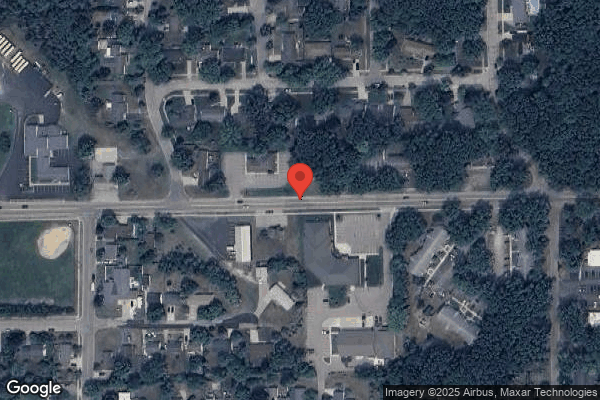
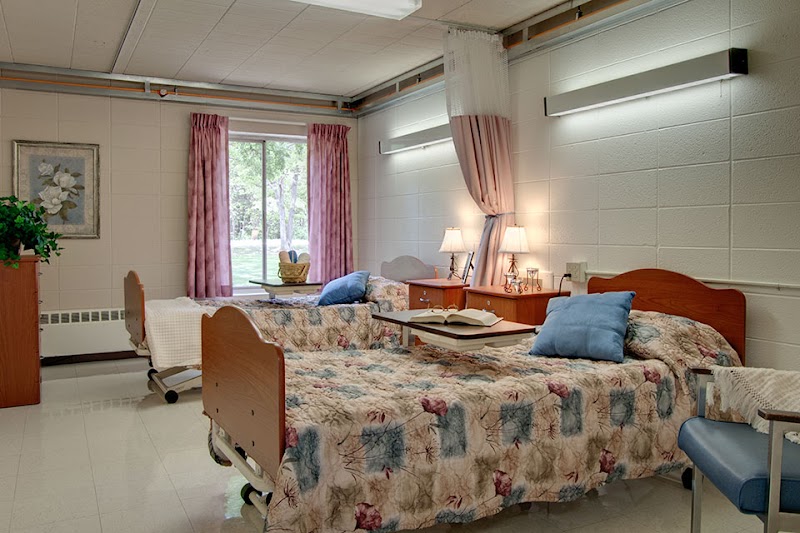
1000 East Tinkham Avenue, Ludington, MI 49431 (231) 845-6291
For profit - Corporation 93 Beds MEDILODGE Data: November 2025
Trust Grade
35/100
#302 of 422 in MI
Last Inspection: February 2025

Within standard 12-15 month inspection cycle. Federal law requires annual inspections.

Overview

Medilodge of Ludington has a Trust Grade of F, indicating significant concerns about the quality of care provided. It ranks #302 out of 422 nursing homes in Michigan, placing it in the bottom half of facilities in the state, and is the second of two options in Mason County. Although the facility is improving, as issues decreased from 13 in 2024 to 6 in 2025, it still has serious deficiencies, including failures in monitoring nephrostomy tubes for residents, which led to hospitalizations and infections. Staffing is a relative strength with a 4/5 rating and a 42% turnover rate, slightly below the state average, and there are no fines recorded, showing compliance in that area. However, specific incidents highlight serious care gaps, such as inadequate assessments after falls, which could delay necessary treatment for residents.
Trust Score
F
35/100
In Michigan
#302/422
Bottom 29%
Safety Record
High Risk
Review needed
Inspections
Getting Better
13 → 6 violations
Staff Stability
○ Average
42% turnover. Near Michigan's 48% average. Typical for the industry.
Penalties
✓ Good
No fines on record. Clean compliance history, better than most Michigan facilities.
Skilled Nurses
✓ Good
Each resident gets 70 minutes of Registered Nurse (RN) attention daily — more than 97% of Michigan nursing homes. RNs are the most trained staff who catch health problems before they become serious.
Violations
⚠ Watch
36 deficiencies on record. Higher than average. Multiple issues found across inspections.
★★☆☆☆
2.0
Overall Rating
★★★★☆
4.0
Staff Levels
★★☆☆☆
2.0
Care Quality
★★☆☆☆
2.0
Inspection Score
Stable
2024: 13 issues
2025: 6 issues

The Good

  • 4-Star Staffing Rating · Above-average nurse staffing levels
  • Full Sprinkler Coverage · Fire safety systems throughout facility
  • No fines on record
  • Staff turnover below average (42%)

    6 points below Michigan average of 48%

Facility shows strength in staffing levels, fire safety.

The Bad

2-Star Overall Rating

Below Michigan average (3.1)

Below average - review inspection findings carefully

Staff Turnover: 42%

Near Michigan avg (46%)

Typical for the industry

Chain: MEDILODGE

Part of a multi-facility chain

Ask about local staffing decisions and management

The Ugly 36 deficiencies on record

3 actual harm
Jul 2025 1 deficiency
CONCERN (D) 📢 Someone Reported This

A family member, employee, or ombudsman was alarmed enough to file a formal complaint

Potential for Harm - no one hurt, but risky conditions existed

Free from Abuse/Neglect (Tag F0600)

Could have caused harm · This affected 1 resident

**NOTE- TERMS IN BRACKETS HAVE BEEN EDITED TO PROTECT CONFIDENTIALITY** This citation pertains to Intake 1268402Based on observations, interview, and record review, the facility failed to ensure 1 res...

Read full inspector narrative →
**NOTE- TERMS IN BRACKETS HAVE BEEN EDITED TO PROTECT CONFIDENTIALITY** This citation pertains to Intake 1268402Based on observations, interview, and record review, the facility failed to ensure 1 resident (Resident#1) of 3 was free from verbal abuse when a staff member swore about the resident's behavior. Findings include:Review of Policy Abuse, Neglect and Exploitation last revised 1/10/24 revealed, It is the policy of this facility to provide protections for the health, welfare, and rights of each resident by developing and implementing written policies and procedures that prohibit and prevent abuse, neglect, exploitation, and misappropriation of resident property. The policy defined Abuse means the willful infliction of injury, unreasonable confinement, intimidation, or punishment with resulting physical harm, pain, or mental anguish, which can include staff to resident abuse and certain resident to resident altercations. Abuse also includes deprivation by an individual, including a caretaker, of goods or services that are necessary to attain or maintain physical, mental, and psychosocial well-being. Instances of abuse of all residents, irrespective of any mental or physical condition, cause physical harm, pain, or mental anguish. It includes verbal abuse, sexual abuse, physical abuse, and mental abuse including abuse facilitated or enabled through the use of technology.Findings:Review of an admission Record reflected Resident #1 (R1) admitted to the facility with pertinent diagnoses that include Bipolar Disorder, Obsessive Compulsive Disorder, persistent mood disorder, anxiety disorder and frontal lobe and executive function deficit (Damage to the frontal lobe can lead to deficits in functions resulting in difficulties with planning, organization, decision-making and emotional regulation.)During an interview on 7/08/25 at 9:10 AM, DON revealed R1 is behavioral, has hoarding tendencies, he scrubs his body raw while cleaning himself using the bathroom sink and floods the flooring. DON further revealed resident is afraid of the dark/night, has poor eyesight, is derogatory towards women, a germaphobe, and is followed by CMH (Community Mental Health).During an interview on 7/08/25 at 11:30 AM, NHA & DON provided past non-compliance for this intake. DON stated, We wrote ourselves up. On 7/08/2025 at 12:10 PM, Lunch was observed being delivered to R1's room. Resident was observed in bed wearing a brief and sheet. During the interview R1 stated, I am a sick, sick man. Staff come when I do not want to see them and don't come when I want to see them. Resident#1 was asked if staff came when he pushed his call light. R1 replied, of course staff come when I push my call light, they have to, it's their job. The resident further revealed he did not like 3rd shift, and that he did have a problem with someone, but she's gone. They have to wait on me and do everything I say cause it's their job. (Resident#1 became very loud and agitated during the interview.) Interview concluded when R1 started muttering under his breath, I'm done, done, done.During an observation/interview on 7/08/25 at approximately 12:15 PM, R1's Guardian D was observed sitting in a chair and stated, He is in a bad mood today. He is acting like he can't hear a thing. R1's Guardian D states her son likes the staff; he just does not like nights. Staff are very good overall & I have no issues with them communicating with me. She further stated that he needs to go away for a psyche stay. Review of an Incident Report dated 5/24/25 reflected that Certified Nurse Aide (CNA) L and Registered Nurse (RN) K witnessed/heard R1 yelling and swearing at CNA J in his room and the hallway about ice and ice water. R1 further yelled to CNA J she was to listen to him and no one else. CNA J responded to R1 stating you have the wrong butt wiper, and I don't F*cking care. CNA J then shut R1's door and walked to the desk. The report reflected initial actions taken were to ensure R1's safety, contact NHA, DON and guardian, remove/suspend staff member (CNA J), assess the resident and collect statements. Review of CNA J's written statement 5/23/25 at 12:30AM, I answered his call light with ice water in hand. I had gloves on, he opened the lid to the cup and said there is only four cubes in there, but the cup was full of ice, and so he was getting upset, I walked to his bathroom and cleaned up the wet linen and dried up the wet floor. He wanted a cup with just ice so I came out to get his ice and when I came back to his room the nurse was talking to me, and the resident was still in bed yelling at me about the ice. I couldn't hear the nurse, so I told him to wait a minute because I was talking to the nurse. He didn't like that and started yelling and cursing at me and saying I'm to only listen to him and no one else. So, I spoke his language and said I didn't F*cking care, and he didn't have to yell at me like that. He says I hurt him, but I don't see how, I was never close to him.Review of CNA L's handwritten statement on 5/24/25 at 12:30 AM, CNA L wrote I was sitting at the nurses' station when she heard patient and (Name of) CNA J arguing about ice in a cup. CNA L stated she was trying to tell CNA J how he liked it when he yelled to (Name of CNA J) to listen to him and not out there. She responded you got the wrong butt wiper. I don't F*cking care. As the patient was yelling, she shut the door and walked to the desk. He came out and stuck his head out yelling at her to get him ice and she needed to call (Name of NHA) and if she doesn't, he was going to call the police. She said, ok you do that and shut the door while he was by it. CNA L further stated I did not see if the door hit him or pulled him when she pulled the door shut. But he started yelling and screaming that she hurt his bad arm when she shut the door. As soon as this happened (Name of RN K) then went in and checked on patient. Patient was on the phone with his mom. Review RN K's written statement dated 5/24/25 at 12:30AM, I was sitting at nurse's station when I heard the patient and CNA ( J) start arguing about ice water. He was still yelling at her, and she told him he has got the wrong butt wiper, and she don't f*cking care. He said to get him ice, and she needed to call (Name of NHA), or he was going to call the police then she stated you go ahead and do that I don't care. She grabbed the door and shut it, he was on the other side shutting it and claimed it hurt his left inner arm. Because of it being slammed shut. RN K reported she talked to patient's mom, NHA and DON.Review of Certified Nurse Aide (CNA) M's written statement dated 5/24/25 (no time provided) I was charting on North and heard yelling coming from South, then I heard a door slam on South. I told my nurse (Name of Registered Nurse (RN) N) on North that something's going down there!Review of RN N's written statement dated 5/24/25(No time provided) I heard a man yelling from South. Could not understand what was being said.Review of a Facility Reported Incident (FRI) dated 5/24/25 reflected the facility reported an allegation of staff to resident abuse on 5/24/25 and the facility substantiated verbal abuse based on employee admission and corroborating witness accounts. No physical abuse was substantiated following medical assessment, reenactment, and resident report.During the onsite survey, past noncompliance (PNC) was cited after the facility implemented actions to correct the noncompliance which included:1. On 5/24/25 at approximately 1:30 AM, it was reported to the facility administrator that resident (Name of R1), wasn't a verbal altercation with the staff member (Name of CNA J). (Name of) CNA J was immediately suspended pending investigation. Dr. and Guardian notified.2. On 5/24, 5/25 and 5/26 skin and pain assessments were completed. No new concerns identified. 3. On 5/24/25 at 2:45 AM the incident was reported to the state by the facility administrator.4. On 5/24/25 Witness statements from staff were gathered.5. On 5/24/25 Residents in the immediate vicinity were interviewed regarding the incident. No Concerns identified.6. On 5/24/25 at approximately 11:00 AM DON and the Administrator spoke with the resident's mother/guardian, the witness statement completed.7. On 5/26/25 IDT review of resident Care Plan. Updated it with water preference and added a laundry basket to the resident room. It was determined that Resident's linen situation and water preference could increase his behaviors.8. 5/26/25 an audit of (Name of CNA J's) file was conducted. No concerns were identified.9. 5/26/25 Abuse PNC in place, residents with BIM's (Brief Interview for Mental Status) score >10 and staff audits are being conducted.10. 5/28/25 NHA and DON reviewed the policy and procedure for Abuse, neglect and Exploitation and deemed it appropriate.11. 5/29/25 An AD_HOC QAPI meeting was held and reviewed the abuse PNC plan.12. 5/30/25 [NAME] Police Department Notified and investigated.13. 6/2/25 Facility substantiated verbal abuse and (Name of CNA J) was terminated. On 7/09/2025, this surveyor reviewed documentation, conducted interviews and made observations the preceding interventions were completed prior to the abbreviated survey. A determination of past non-compliance was cited by the state agency as of 6/02/2025.The facility was able to demonstrate monitoring of the corrective action and maintained compliance.
Apr 2025 2 deficiencies 1 Harm
SERIOUS (G) 📢 Someone Reported This

A family member, employee, or ombudsman was alarmed enough to file a formal complaint

Actual Harm - a resident was hurt due to facility failures

Quality of Care (Tag F0684)

A resident was harmed · This affected 1 resident

**NOTE- TERMS IN BRACKETS HAVE BEEN EDITED TO PROTECT CONFIDENTIALITY** This citation pertains to intakes M100151387 and M100151421. Based on observation, interview and record review, the facility fai...

Read full inspector narrative →
**NOTE- TERMS IN BRACKETS HAVE BEEN EDITED TO PROTECT CONFIDENTIALITY** This citation pertains to intakes M100151387 and M100151421. Based on observation, interview and record review, the facility failed to prevent hospitalization, monitor, assess, intervene, document, and provide appropriate care of nephrostomy tubes for 2 (R1 and R2) of two residents reviewed for nephrostomy care, resulting in hospitalization and infection. Findings include: Resident #1 (R1) Review of a Face Sheet revealed R1 originally admitted to the facility on [DATE] and readmitted to the facility after a hospitalization on 3/31/25. Pertinent diagnoses include hydronephrosis (urine build up on kidney) with renal and ureteral calculous (kidney stones) obstruction (1/14/23), infection and inflammatory reaction due to nephrostomy catheter (3/31/25), acute pyelonephritis (kidney infection) (3/31/25), urinary tract infection (3/31/25), and Escherichia coli (E. coli, a bacterium that causes infection, 3/31/25). Review of the Minimum Data Set (MDS) dated [DATE] for R1 revealed she is cognitively intact had an assessment for mood/depression score of 00. No behaviors documented and required substantial/maximum assistance with lower body dressing and toileting. In an interview on 4/15/25 at 1:30 PM, the Registered Nurse (RN) A reported R1 had been in the hospital several times in the last few months to have her nephrostomy tube (catheter) replaced and expressed concern the facility is not competently providing nephrostomy care. On 3/20/25, R1 went to the hospital and the 3-way stopcock on the nephrostomy tube was in the off position and not draining. The exit site was red and had some drainage as well. Once the stopcock was opened, they were able to drain about a half liter of puss like drainage that later tested positive for E. coli bacterial infection. R1 was then transferred to another hospital for an inpatient stay for antibiotic therapy and monitoring. RN A reported R1 had a nephrostomy tube placed on 10/27/24 and exchanged on 11/20/24, exchanged again on 12/4/24, new replacement on 1/11/25 because it may have been pulled out, on 1/16/25 it was checked, changed and repositioned, on 2/5/24 it was dislodged, and 2 sutures were put in place. On 2/25/25 the facility called them about a suture not being intact with redness at the exit site and she had low urine output and was to go to Big Rapids and not sure if R1 went. On 3/11/25 the nurse at the facility called with concerns about the nephrostomy tube for R1 and then R1 was sent to the hospital on 3/20/25. The resident could not speak. Review of the Hospital Medical Records for R1 revealed: History of Present Illness: . chronic severe right hydronephrosis who had an IR (Interventional) appointment today to look at her nephrostomy tube which was found to not be draining, they replaced it and had 548 mL (milliliters) of purulent urine. Apparently, there was some concern about a possible fistula between the renal pelvis and duodenum and was sent to the emergency department for limited CT scan. Interventional Radiology documented: Findings: The stitches holding the nephrostomy catheter are noted to be intact. The stopcock was in the off position and purulent drainage was noted around the catheter. Aspiration yielded 540 cc (cubic centimeters) of green, purulent fluid. A sample was sent for culture. Impression: The nephrostomy tube was noted to be in the off position with purulent material draining from around the catheter. A large volume of purulent fluid was evacuated from the kidney. Contrast injection revealed a possible fistula between the renal pelvis and duodenum. Pictures provided revealed R1 had redness and drainage at the exit site upon arrival to the hospital. R1 had a low blood pressure of 98/43 and afebrile. (Not documented in the facility medical records.) Review of Hospital medical records for R1's hospital stay from 3/20/25 to 3/31/25 revealed: In regards to her pyelonephritis, she has a heavily infected kidney with frank purulence. She was identified to have ESBL (Extended-spectrum beta-lactamase (ESBL)-producing Enterobacterales are resistant to common antibiotics and may require complex treatments) producing E coli. She was seen in consultation with the infectious disease team and was started on meropenem as well as micafungin. The interventional radiology team, recommended flushing the tube, to help with drainage. Given the extent of infection as well as the concern for renal duodenal fistula, Urology was consulted, ultimately it was decided from Urology standpoint the patient was not felt to be a surgical candidate. Infectious Disease recommended changing from meropenem (broad spectrum antibiotic) and micafungin (antifungal) to ertapenem (antibiotic for severe infections). They recommended therapy through 3/31. There was discussion about PICC (peripherally inserted central catheter) line and outpatient IV (intravenous) ertapenem, but given limited access with HD (hemodialysis), she was kept inpatient to complete her abx (antibiotics) therapy. This was done without complication. No further concerns about fistula. Patient clinically improved with abx. Review of the Electronic Medical Records (EMR) for R1 revealed no ongoing assessing, monitoring, or output of nephrology tubing and exit site care. Review of the January Medication/Treatment Administration Record (MAR/TAR) for R1 revealed an order for a nephrostomy dressing change dated 11/20/24 to 2/6/25 25 Change Nephrostomy drain dressing daily, clean site with soap and water, apply a small amount of triple antibiotic, Cover with gauze. May shower-do not bath or submerge tube underwater. Change tube attachment or tape as needed to keep from pulling on tube. in the evening for Nephrostomy care. Care was documented/not documented as done on 1/7 (sleeping), 1/10 (no data entry), 1/11 (hospital), 1/13 (no data entry), 1/16 (other see nurses notes), 1/23 (other, see nurses notes), 1/24 (sleeping). Review of the Nursing Progress notes revealed no documentation to reflect 1/13, on 1/16 the nurse documented R1 was sleeping at this time and no follow up, and 1/23 no follow up documentation. Review of the Nursing Progress notes dated 1/10/25 for R1 revealed the resident went to dialysis and pulled out her nephrostomy tubing. On 1/11/25 R1 had it replaced. Review of the February Medication/Treatment Administration Record (MAR/TAR) for R1 revealed an order dated 11/20/24 to 2/6/25 Change Nephrostomy drain dressing daily, clean site with soap and water, apply a small amount of triple antibiotic, Cover with gauze. May shower-do not bath or submerge tube underwater. Change tube attachment or tape as needed to keep from pulling on tube. in the evening for Nephrostomy care. Care was documented/not documented as done on 2/7, 2/10, 2/11, 2/13, 2/16, 2/23, and 3/7. -An order for R1 dated 11/20/25 and discontinued on 2/6/25 to Empty and record nephrostomy drain and record output every shift. No documentation indicating the nephrostomy output was being monitored. No follow up documentation in the EMR to show any concerns of drainage or redness at the exit site before hospitalization on 3/20/25. Review of the March MAR/TAR for R1 revealed a continued order from February for dressing changes every other day and was discontinued on 3/11/25. A new order started on 3/12/25 to: Change the right Nephrostomy dressing, Do not pull on the tube. Do not use scissors for the dressing because you could cut the tube or the stitch. Wash the area with mild soap and water, rinse, and pat dry with a clean Washcloth. Look at the site after your dressing is removed. Check for redness around the tube exit site. Check for any discolored or odor. Inspect the suture to verify that it is still anchored in the skin. Place gauze around the tube where it exits the body and cover Tegaderm (sic) in the evening every other day. On 3/10 (sleeping, no follow up documentation or reapproached). After the dressing change on 3/8/25, the next dressing change was 3/12/25. -No orders to document or monitor the output from the nephrostomy tubing. Review of the April MAR/TAR for R1 revealed she had an order for a nephrostomy dressing change every other day and received a dressing change on 4/1/25 after readmission from the hospital. On 4/3 (refused), no documentation as to why and if reapproached, 4/5 (see nursing notes) and no nursing progress notes documented, 4/7 (sleeping) and no progress notes reflecting the resident was reapproached. R1 did not receive any dressing changes after 4/1/24 until 4/9/25. On 4/11 no dressing change was done, and the nursing progress notes reflected the nephrostomy tubing was out about 5 centimeters on 4/9/25 and 10 cm by 4/10/25 and documented as dislodged by the end of the day. No root cause documented, no anchoring or securing devices was documented as used and no frequent supervision of cares. -An order 4/1/25 to Record output to nephrostomy. Notify MD (physician) any abnormal urine output and change in Urine (cloudy, foul-smell, or bloody) every shift. Between 4/1 and 4/17 there were 30 shifts of 0 output and on 4/14 it is documented as n/a, See Nurses Notes. There were no nursing notes for 4/14/25. Review of a Nursing Progress note dated 4/9/25 for R1 revealed: nephrostoy (sic) tube appears to be pulled out approx. 5 cm (centimeters) as stitch is approx. that far out. Drng (dressing) (sic) is the bag, approx. 5 ml. Nephrologist paged via number on (R1's chart at this time. (R1) has no c/o (complaints of) pain, no bleeding, drng (sic) or redness at nephrostomy site. Review of a Nursing Progress note for R1 dated 4/9/25 revealed the on-call facility provider was notified her nephrostomy tube concerns and requested to watch closely and if the tube dislodges or has any drainage to call them immediately. Review of a Nursing Progress note dated 4/10/25 for R1 revealed advanced radiology was notified her nephrostomy tubing is out about 10 cm now and the sutures are no longer intact with no c/o (complaints of) pain or discomfort and very little output. Radiology to get an appointment as soon as possible. No more nursing progress notes addressing concern or if the resident was sent out to have her nephrostomy tube replaced. No follow up assessments. Review of a Skilled Daily-Medically Complex document dated 4/10/25 for R1 revealed: nephrostomy output appears clear to turbid light. without obvious red. resident denies pain. site without redness or site drainage. (sic) Review of a Medicare Coverage Evaluation for R1 dated 4/16/25 revealed: Dressing change ordered to nephrostomy site. Monitor amount of drainage. Nephrostomy tube became dislodged on 4/10/25, sent out to have it replaced in GR (Grand Rapids hospital). During an observation and an interview on 4/16/25 at 1:30 PM, RN C went to R1's room and reported her nephrostomy bag was draining because the pigtail of the stopcock was pointing towards the injection/flushing port even though we just saw another resident who had her nephrostomy stopcock pigtail pointing towards the drain bag tubing. RN C reported R1's dressing (which was an undated 22 gauze with tape and the tubing was not secured) and RN C reported her stitches securing the tubing was fine. The resident was lying in bed, and her pants were partially over the nephrostomy, but under the exit site potentially tugging on the tubing. In an interview on 4/16/25 at approximately 1:40 PM, RN B reported she has not heard of any concerns with R1 having her nephrology tubing displaced or replaced recently. RN B reported she did not know who last changed the nephrostomy dressing and acknowledged there was no date on it. RN B reiterated an earlier conversation of staff not getting treatments done as ordered and at times they are documenting they are done even if they did not complete them. RN B reported management is aware of concerns. In an interview on 4/16/25 at 3:33 PM, Unit Manager/Licensed Practical Nurse (UM/LPN) H reported R1 has pulled out her nephrostomy catheter several times because she has OCD (obsessive compulsive disorder, not listed as a diagnosis for R1 on her Face Sheet). UM H continued alleging R1 is non-compliant. UM H reported R1 had her nephrostomy tubing dislodged on 4/10 and went to [name of another city where second hospital was located] on 4/11 to have her tubing replaced. When asked if anchoring her tubing would help, UM H reported there is no order for one and did not think it would help. When queried about the hospitalization in March, UM H reported she did not know why R1 went into the hospital and started looking into the computer. UM H reported she is the Unit Manager but gets pulled to the floor to work often implying that is why she did not know what is going on with R1 and reiterated she has had her catheter dislodged several times but didn't know all the details. When asked about the lack of charting of care, assessments, and transfers outside the facility for R1 in the EMR, UM H reported she herself would put in a progress note and verified there was no transfer form in the computer when R1 went to the hospital on 3/20/25 and 4/11/25. UM H reported residents do not get a transfer form for outside appointments, but the MAR and the Face Sheet will get with the resident and the last set of vital signs. When asked about the standards of care for nephrostomy's, UM H reported the doctors do not usually order output monitoring unless the nurses ask for them and elaborated that after this last hospitalization, she did add the output monitoring to the nurses charting. UM H was questioned about the 0 output documented in the MAR and said they did not have parameters to notify the physician but expected nurses to know when to notify the physician for anything abnormal. When asked about the nurses being educated on nephrostomy care, UM H reported they get educated but thinks they may need more. When questioned about the stopcocks on the nephrostomy bags for R1 and R2, UM H reported that if there are instructions, they will put those instructions in the order as what needs to be done or will put them in an education binder for the nurses. During an observation and an interview on 4/16/25 at 3:35 PM, the Unit Manager/Licensed Practical Nurse (LPN) H was asked about the nephrology tubing for R1 and reported the pig tail of the stop cock was pointing toward the flushing/irrigation port. At this time, UM H did not know if the stopcock was opened or closed to draining. Resident #2 (R2) Review of a Face Sheet revealed R2 originally admitted to the facility on [DATE] and readmitted after a hospitalization on 4/6/25 and has pertinent diagnoses of Urinary tract infection, bacteremia (blood infection), methicillin resistant staphylococcus aureus infection, multiple sclerosis, hydronephrosis. During an observation and an interview on 4/16/25 at 11:35 AM, R2 was in bed and her nephrostomy tube was on her right side and R2 reported that hardly anything comes out. RN B reported the stopcock on the nephrostomy tube was draining and can tell the tubing is stable. The pigtail of the stop cock was facing the tubing of the drain bag. During an observation and an interview on 4/16/25 at 1:30 PM, RN C went to R2's room and reported the nephrostomy bag was draining because the pigtail of the stopcock was pointing toward the tubing of the drain bag which means it is on. During an observation and an interview on 4/16/25 at 3:25 PM, the Unit Manager/Licensed Practical Nurse (LPN) H was asked about the nephrostomy tubing for R2 and asked this surveyor if the attending nurse was questioned. When UM H was asked to look at R2's nephrostomy tubing, UM H looked at the stopcock and verified the pigtail of the stopcock was pointing toward the drain bag and said she would have to get her bifocals to read if it says it is in the off position because she was not sure at this time. When asked what a typical assessment would include, UM H reported the drainage and any color, pain, discomfort, sediment, and would look at the exit site. When asked what an abnormal reporting for this resident would be and what the expectations of staff would be, she reported she would document her findings, look at the history. UM H did report there was some scant sediment in the drain bag and small amount of blood fluid in the tubing, but no measurable amount of body fluid at this time. Review of the April MAR/TAR for R2 revealed an order to Empty nephrostomy bag and enter amount every shift dated 4/7/25 revealed until 4/17/25 there are 22 shifts of 0 output from the nephrostomy bag and one shift with no documentation. The highest output was 40 ml (milliliters) on 4/7/25 when the monitoring began post hospitalization. On the 4/17/25 night shift, after questioning the nephrostomy care, 575 ml of fluid output was documented. In an interview on 4/16/25 at 5:00 PM, UM H reported that stopcock for R1 which had the pig tail pointing towards the irrigation port was not in the right position and will educate her staff on the correct position which is towards the drain bag like it was for R2. Review of the Care Plan for R2 revealed no nephrostomy care plan or interventions. In an interview on 4/17/25 at 1:21 PM, the Director of Nursing (DON) reported they educated the nurses yesterday and all the nurses today before they start their shift on nephrostomy care and reported the nurses could demonstrate the appropriate positioning of a nephrostomy stopcock. The DON reported R1 has a history of pulling out her nephrostomy tubing and is always fidgeting with it. R1 and R2 are dialysis patients, and it is hard to know how much urine output they will have. The DON reported R1 is OCD with her tubes and other devices she has and just cannot leave them alone. The UM H made sure her dressing was secured with a Tegaderm, and the tubing was anchored well yesterday. The DON verified the dressing is to be secured with a Tegaderm and acknowledged it was not. The DON reported she thought there was an order to anchor the nephrostomy tubing in place but could not find it. When asked if dressings should be dated, the DON reported it is preferred. When asked if there were concerns that staff reported dressing changes were not being done but were charting, they were? The DON reported it had been a while but did not have anything solid to prove the nurses were doing this. When asked what was included in the nephrostomy care education the day before, the DON was to provide the information and reported the staff know which position the stopcock should be in to drain the nephrostomy. During an observation on 4/17/25 at 1:45 PM, Licensed Practical Nurse (LPN) I and surveyor went to R2's room and verified the stopcock was pointing towards the drain bag which meant that it is draining. Afterward, LPN I verified the stopcock was pointed toward the drain bag and said it was draining, but not confidently, with a little blood-tinged urine noticed in the bag. In an interview on 4/17/25 at 2:00 PM, the RN A reported the pigtail of the stopcock is the off position. Wherever that pigtail is pointing, that means it is blocking the flow to that area. It should always be pointing toward the irrigation port so the nephrostomy tubing can drain to the bag. RN A then reported if it is pointing toward the drain bag, it is not draining. In an interview on 2/17/25 at 2:19 PM, the DON reported she went to R2's room and saw the pigtail of the stopcock was pointed towards the drain bag and R1's pigtail was pointed towards the port. The DON reported UM H misunderstood what position the stopcock needed to be in and is going around re-educating staff right now. In an interview on 2/17/25 at 2:30 PM, the facility Staff Educator/RN U reported the staff were educated yesterday on the correct positioning of the stopcock for R1 and R2 and the pigtail should be pointing towards the flushing port. RN U reported she knew this yesterday and educated the staff by showing them a picture. RN U reported she went to R1's room yesterday and the stopcock was in the correct position, but today it was pointing towards the drain bag indicating it is not open. RN U reported she educated the staff and the Unit Manager by reviewing the policy and talking about it. The Unit Manager misunderstood and those she educated, were informed wrong. Today, the started to re-educate staff again with pictures of the stopcock and that the pigtail should always be pointed toward the flushing port for draining into the bag. Review of a policy titled Nephrostomy and Cystostomy Tube Care and Maintenance last revised on 1/1/22 revealed: Residents with nephrostomy or cystostomy tubes will receive care consistent with professional standards of practice, the comprehensive person-centered care plan, and the resident's goals and preferences. Policy Explanation and Compliance Guidelines: 1.As part of the comprehensive assessment and care planning process, the type of tube will be clearly documented in the resident's medical record. When the type of tube is not clear, the nurse will call the surgeon, other physicians, family members, or other individuals, as needed, to make the determination. 2.The care and maintenance of nephrostomy/cystostomy tubes shall be in accordance with physician orders. The orders shall specify the type and frequency of dressing changes and emptying of collection bags along with any special instructions. 3.Nephrostomy/cystostomy tubes shall be managed by licensed nurses. Nurse aides may handle the collection bags in accordance with facility procedures for handling urinary drainage bags. 4.The resident's goals and preferences for care and treatment of the tube(s) will be used to formulate a plan of care (i.e. self-care, dependent care, family caregiver). Interventions may include but are not limited to: a. Frequency of dressing changes and emptying of collection bags. b. Self/family care instructions, where applicable. c. Monitoring for and responding to any signs of resident's discomfort associated with the tube(s). d. Interventions to prevent complications or promote dignity associated with the tube(s). I. Fluid preferences, and need for increased fluid intake. ii. Monitoring for symptoms of blockage (reduced or absent urinary output), urinary tract infection (fever, chills, back pain, new onset delirium, foul smelling or cloudy urine), or dislodgement (tube falls out, leaking urine around tube, increase in tube length). iii. Monitoring for skin breakdown or signs of infection (redness, warmth, swelling, abnormal exudate) around the insertion site(s). iv. Physical management of tubing and collection bags to prevent infection or dislodgement. 6. Considerations for care: a. Check tube(s) frequently for kinks or obstructions. These are likely to occur if the resident lies on the insertion site. b. Keep the drainage bag below the level of the kidney at all times. Keep bags covered for dignity. c. Monitor output for changes in amount, color, clarity, or odor. d. Monitor for signs of urinary tract infection or infection of insertion site. e. Monitor resident for discomfort associated with the tube(s) or procedures. f. Record output from each tube. Specify location of output. g. Document abnormalities and report to physician immediately. According to Corona, L., [NAME], K., Lucas-[NAME], C., United Ostomy Associations of America, Inc. (UOAA), [NAME], Z. L., [NAME], S. C., [NAME], H. C., Advent Health Medical Group Urology, Kaiser Santa [NAME], & Double Nephrostomate. (n.d.). NEPHROSTOMY. https://www.ostomy.org/wp-content/uploads/2024/01/UOAA_Nephrostomy_Facts_Booklet_2024-01a.pdf, If your nephrostomy tube has a 3-way stopcock valve (the longest port is labeled off) (p. 9) . Tube blockage/obstruction: Signs and symptoms o Drainage has decreased or stopped, greater than 2 hours o Leakage of urine around insertion site If you think your tube is blocked or obstructed o Check to make sure the tube is not kinked - use a mirror to assess your back o Check to make sure the valve is open so urine can flow into the bag o Check to make sure the collection bag is not damaged. If it is, change it. o Attempt to flush the tube with no more than 10 cc of sterile water or sterile normal saline. Do not withdraw fluid after irrigation. If fluid does not go in easily you can try to gently pull back on the syringe to dislodge any obstructing particles. Reattempt flushing using gentle pressure. If you have any pain while attempting this intervention, stop. (See tube flushing) If none of these interventions produce normal urine flow, contact your physician or interventional radiologist.
CONCERN (E) 📢 Someone Reported This

A family member, employee, or ombudsman was alarmed enough to file a formal complaint

Potential for Harm - no one hurt, but risky conditions existed

Deficiency F0726 (Tag F0726)

Could have caused harm · This affected multiple residents

**NOTE- TERMS IN BRACKETS HAVE BEEN EDITED TO PROTECT CONFIDENTIALITY** This citation pertains to intakes M100151387 and M100151421. Based on observation, interview and record review, the facility fai...

Read full inspector narrative →
**NOTE- TERMS IN BRACKETS HAVE BEEN EDITED TO PROTECT CONFIDENTIALITY** This citation pertains to intakes M100151387 and M100151421. Based on observation, interview and record review, the facility failed to ensure staff were competent to manage care for two (R1 and R2) of two residents reviewed for nephrostomy care, resulting in hospitalization and repeated incompetent care. Findings include: Review of the State Operations Manual (SOM) 483.35(a)(3) reflected, The facility must ensure that licensed nurses have specific competencies and skill set necessary to care for residents' needs, as identified through .assessments and .in the plan of care. Resident #1 (R1) Review of a Face Sheet revealed R1 originally admitted to the facility on [DATE] and readmitted to the facility after a hospitalization on 3/31/25. Pertinent diagnoses include hydronephrosis (urine build up on kidney) with renal and ureteral calculous (kidney stones) obstruction (1/14/23), infection and inflammatory reaction due to nephrostomy catheter (3/31/25), acute pyelonephritis (kidney infection) (3/31/25), urinary tract infection (3/31/25), and Escherichia coli (E. coli, a bacterium that causes infection, 3/31/25). In an interview on 4/15/25 at 1:30 PM, the Registered Nurse (RN) A reported R1 had been in the hospital several times in the last few months to have her nephrostomy tube (catheter) replaced and expressed concern the facility is not competently providing nephrostomy care. On 3/20/25, R1 went to the hospital and the 3-way stopcock on the nephrostomy tube was in the off position and not draining. The exit site was red and had some drainage as well. Once the stopcock was opened, they were able to drain about a ½ liter of puss like drainage that later tested positive for E. coli bacterial infection. R1 was then transferred to another hospital for an inpatient stay for antibiotic therapy and monitoring. RN A reported R1 a nephrostomy tube placed on 10/27/24 and exchanged on 11/20/24, exchanged again on 12/4/24, new replacement on 1/11/25 because it may have been pulled out, on 1/16/25 it was checked, changed and repositioned, on 2/5/24 it was dislodged, and 2 sutures were put in place. On 2/25/25 the facility called them about a suture not being intact with redness at the exit site and she had low urine output and was to go to Big Rapids and not sure if R1 went. On 3/11/25 the nurse at the facility called with concerns about the nephrostomy tube for R1 and then was sent to the hospital on 3/20/25. Review of the Hospital Medical Records for R1 revealed: History of Present Illness: . chronic severe right hydronephrosis who had an IR (Interventional) appointment today to look at her nephrostomy tube which was found to not be draining, they replaced it and had 548 mL (milliliters) of purulent urine. Interventional Radiology documented: Findings: The stitches holding the nephrostomy catheter are noted to be intact. The stopcock was in the off position and purulent drainage was noted around the catheter. Aspiration yielded 540 cc (cubic centimeters) of green, purulent fluid. A sample was sent for culture. Impression: The nephrostomy tube was noted to be in the off position with purulent material draining from around the catheter. A large volume of purulent fluid was evacuated from the kidney. During an observation and an interview on 4/16/25 at 1:30 PM, RN C went to R1's room and reported her nephrostomy bag was draining because the pigtail of the stopcock was pointing towards the injection/flushing port even though we just saw another resident who had her nephrostomy stopcock pigtail pointing towards the drain bag tubing. RN C reported R1's dressing (which was an undated 22 gauze with tape and the tubing was not secured) and RN C reported her stitches securing the tubing was fine. The resident was lying in bed, and her pants were partially over the nephrostomy, but under the exit site potentially tugging on the tubing. In an interview on 4/16/25 at 3:33 PM, Unit Manager/Licensed Practical Nurse (UM/LPN) H reported R1 has pulled out her nephrostomy catheter several times because she has OCD (obsessive compulsive disorder, not listed as a diagnosis for R1 on her Face Sheet). UM H continued alleging R1 is non-compliant. UM H reported R1 had her nephrostomy tubing dislodged on 4/10 and went to [name of another city where second hospital was located] on 4/11 to have her tubing replaced. When asked if anchoring her tubing would help, UM H reported there is no order for one and did not think it would help. When queried about the hospitalization in March, UM H reported she did not know why R1 went into the hospital and started looking into the computer. UM H reported she is the Unit Manager but gets pulled to the floor to work often implying that is why she did not know what is going on with R1 and reiterated she has had her catheter dislodged several times but didn't know all the details. When asked about the lack of charting of care, assessments, and transfers outside the facility for R1 in the EMR, UM H reported she herself would put in a progress note and verified there was no transfer form in the computer when R1 went to the hospital on 3/20/25 and 4/11/25. UM H reported residents do not get a transfer form for outside appointments, but the MAR and the Face Sheet will get with the resident and the last set of vital signs. When asked about the standards of care for nephrostomy's, UM H reported the doctors do not usually order output monitoring unless the nurses ask for them and elaborated that after this last hospitalization, she did add the output monitoring to the nurses charting. UM H was questioned about the 0 output documented in the MAR and said they did not have parameters to notify the physician but expected nurses to know when to notify the physician for anything abnormal. When asked about the nurses being educated on nephrostomy care, UM H reported they get educated but thinks they may need more. When questioned about the stopcocks on the nephrostomy bags for R1 and R2, UM H reported that if there are instructions, they will put those instructions in the order as what needs to be done or will put them in an education binder for the nurses. During an observation and an interview on 4/16/25 at 3:35 PM, the Unit Manager/Licensed Practical Nurse (LPN) H was asked about the nephrology tubing for R1 and reported the pig tail of the stop cock was pointing toward the flushing/irrigation port. At this time, UM H did not know if the stopcock was opened or closed for draining. In an interview on 4/16/25 at 5:00 PM, UM H reported that stopcock for R1 which had the pig tail pointing towards the irrigation port was not in the right position and will educate her staff on the correct position which is towards the drain bag like it was for R2. Resident #2 (R2) Review of a Face Sheet revealed R2 originally admitted to the facility on [DATE] and readmitted after a hospitalization on 4/6/25 and has pertinent diagnoses of Urinary tract infection, bacteremia (blood infection), methicillin resistant staphylococcus aureus infection, multiple sclerosis, hydronephrosis. During an observation and an interview on 4/16/25 at 11:35 AM, R2 was in bed and her nephrostomy tube was on her right side and R2 reported that hardly anything comes out. RN B reported the stopcock on the nephrostomy tube was draining and can tell the tubing is stable. The pigtail of the stop cock was facing the tubing of the drain bag. During an observation and an interview on 4/16/25 at 1:30 PM, RN C went to R2's room and reported the nephrostomy bag was draining because the pigtail of the stopcock was pointing toward the tubing of the drain bag which means it is on. During an observation and an interview on 4/16/25 at 3:25 PM, the Unit Manager/Licensed Practical Nurse (LPN) H was asked about the nephrostomy tubing for R2 and asked this surveyor if the attending nurse was questioned. When UM H was asked to look at R2's nephrostomy tubing, UM H looked at the stopcock and verified the pigtail of the stopcock was pointing toward the drain bag and said she would have to get her bifocals to read if it says it is in the off position because she was not sure at this time. When asked what a typical assessment would include, UM H reported the drainage and any color, pain, discomfort, sediment, and would look at the exit site. When asked what an abnormal reporting for this resident would be and what the expectations of staff would be, she reported she would document her findings, look at the history. UM H did report there was some scant sediment in the drain bag and small amount of blood fluid in the tubing, but no measurable amount of body fluid at this time. Review of the April MAR/TAR for R2 revealed an order to Empty nephrostomy bag and enter amount every shift dated 4/7/25 revealed until 4/17/25 there are 22 shifts of 0 output from the nephrostomy bag and one shift with no documentation. The highest output was 40 ml (milliliters) on 4/7/25 when the monitoring began post hospitalization. On the 4/17/25 night shift, after questioning the nephrostomy care, 575 ml of fluid output was documented. After the first staff education on 4/16/25: In an interview on 4/17/25 at 1:21 PM, the Director of Nursing (DON) reported they educated the nurses yesterday and all the nurses this day before they start their shift on nephrostomy care and reported the nurses could demonstrate the appropriate positioning of a nephrostomy stopcock. The DON reported R1 has a history of pulling out her nephrostomy tubing and is always fidgeting with it. R1 and R2 are dialysis patients, and it is hard to know how much urine output they will have. The DON reported R1 is OCD with her tubes and other devices she has and just cannot leave them alone. The UM H made sure her dressing was secured with a Tegaderm, and the tubing was anchored well yesterday. The DON verified the dressing is to be secured with a Tegaderm and acknowledged it was not. The DON reported she thought there was an order to anchor the nephrostomy tubing in place but could not find it. When asked if dressings should be dated, the DON reported it is preferred. When asked if there were concerns that staff reported dressing changes were not being done but were charting, they were? The DON reported it had been a while but did not have anything solid to prove the nurses were doing this. When asked what was included in the nephrostomy care education the day before, the DON was to provide the information and reported the staff know which position the stopcock should be in to drain the nephrostomy. During an observation on 4/17/25 at 1:45 PM, Licensed Practical Nurse (LPN) I and surveyor went to R2's room and verified the stopcock was pointing towards the drain bag which meant that it is draining. Afterward, LPN I verified the stopcock was pointed toward the drain bag and said it was draining, but not confidently, with a little blood-tinged urine was noticed in the bag. In an interview on 4/17/25 at 2:00 PM, the RN A explained how the stopcock functions and reported the pigtail of the stopcock is the off position. Wherever that pigtail is pointing, that means it is blocking the flow to that area. It should always be pointing toward the irrigation port so the nephrostomy tubing can drain to the bag. RN A then reported if it is pointing toward the drain bag, it is not draining. In an interview on 2/17/25 at 2:19 PM, the DON reported she went to R2's room and saw the pigtail of the stopcock was pointed towards the drain bag and R1's pigtail was pointed towards the port. The DON reported UM H misunderstood what position the stopcock needed to be in and is going around re-educating staff right now. In an interview on 2/17/25 at 2:30 PM, the facility Staff Educator/RN U reported the staff were educated yesterday on the correct positioning of the stopcock for R1 and R2 and the pigtail should be pointing towards the flushing port. RN U reported she knew this yesterday and educated the staff by showing them a picture. RN U reported she went to R1's room yesterday and the stopcock was in the correct position, but today it was pointing towards the drain bag indicating it is not open. RN U reported she educated the staff and the Unit Manager by reviewing the policy and talking about it. The Unit Manager misunderstood and those she educated, were informed wrong. Today, the started to re-educate staff again with pictures of the stopcock and that the pigtail should always be pointed toward the flushing port for draining into the bag. Review of the April MAR/TAR for R2 revealed an order to Empty nephrostomy bag and enter amount every shift dated 4/7/25 revealed until 4/17/25 there are 22 shifts of 0 output from the nephrostomy bag and one shift with no documentation. The highest output was 40 ml (milliliters) on 4/7/25 when the monitoring began post hospitalization. On the 4/17/25 night shift, after questioning the nephrostomy care, 575 ml of fluid output was documented. Review of a Job Description for the Unit Manager revealed: Summary: Responsible for directing the entire operation of a nursing unit in a long-term facility. Essential Functions: Performs General Management Functions such as hiring, disciplining and evaluating employees Plans and facilitates meetings and committees to address resident care issues for the unit Manages area of responsibility with the goal of achieving and maintaining the highest quality of care possible. Participates in developing, implementing and evaluating programs that promote the recruitment, retention, development and continuing education of nursing staff members. Contacts physicians as necessary and ensures physicians interventions are timely and appropriate. Reviews staffing patterns and census of nursing units and reassigns personnel when necessary to ensure staffing meets resident needs and budgetary controls. Monitors the clinical operations of the unit and resident's conditions and ensures that appropriate and quality care is administered. Obtains medications, supplies and medical records needed to provide safe, efficient and therapeutic care to residents on a continuing basis. Assists in the orientation of new personnel, monitors their skills and guides and observes staff that may need assistance with procedures. Participates in facility QA program. Performs other tasks as assigned. Review of a Licensed Practical Nurse (LPN) Job Description revealed: Summary: Coordinates and provides nursing care for residents and provides supervision and guidance to clinical staff members. Scope of work may be modified by state specific rules under the Nurse Practice Act.Essential Functions: (included but not limited to): Documents the resident's condition and nursing needs. Accurately and promptly implements physicians' orders. Administers medications and performs treatments for assigned residents, and documents that treatment as required by Company, and local, state and federal rules and regulations. Assigns nursing care to team members in accordance with the resident's needs and the person's capabilities and qualifications. Reports and records pertinent observations and reactions regarding residents. Coordinates nursing care of residents when scheduled for therapy or procedures by other departments. Assists with or institutes emergency measures for sudden adverse developments in residents. Supervises nursing unit, which includes scheduling and directing the nursing staff to extent permitted by state practice act. Performs other tasks as assigned. Review of the Employee training files for Registered Nurse (RN) B, RN P, RN C and Licensed Practical Nurse (LPN)/Unit Manager LPN H revealed no education for nephrostomy care.
Feb 2025 3 deficiencies
CONCERN (D)

Potential for Harm - no one hurt, but risky conditions existed

Resident Rights (Tag F0550)

Could have caused harm · This affected 1 resident

**NOTE- TERMS IN BRACKETS HAVE BEEN EDITED TO PROTECT CONFIDENTIALITY** Based on observation, interview, and record review, the facility failed to provide needed services to ensure the dignified well-...

Read full inspector narrative →
**NOTE- TERMS IN BRACKETS HAVE BEEN EDITED TO PROTECT CONFIDENTIALITY** Based on observation, interview, and record review, the facility failed to provide needed services to ensure the dignified well-being of three residents (R47, R5, and R71) and the potential for all dependent residents to have unmet needs. Findings include: R47 The medical record reflected R47 admitted to the facility on [DATE] with diagnoses that included Parkinson's Disease and Protein Calorie Malnutrition. The Minimum Data Set (MDS) dated [DATE] reflected R47 was moderately cognitively intact, had a urinary catheter, was frequently incontinent of stool, and was receiving end-of-life care. On 2/11/25 at 10:20 AM an observation and interview were conducted with R47 in his room. A soft-touch call light was observed at his side and urinary catheter tubing and a collection bag were noted. R47 reported several instances when he had soiled himself and had to wait for over an hour for staff to help him. When asked about using his call light R47 reported If I can find it (the call light) that the response wait times were long and gave a thumbs-down sign when asked how this made him feel. R47 reported he doesn't get out of bed often because staff don't like working with him indicating staff feel he has a bad attitude. R47 reported he has complained to supervision about the wait for assistance but was told you just have to wait. R47 stated he wants to be home. R5 Review of the medical record reflected R5 admitted to the facility on [DATE] with medically complex conditions that included diabetes mellitus and a hip fracture. The MDS dated [DATE] reflected R5 was cognitively intact, frequently incontinent of bowel and bladder, required assistance with rolling side to side in bed, and was dependent on staff for transfers. On 2/12/25 at 8:58 AM an interview was conducted with R5 as she lay in bed. R5 reported, after initiating a call light, she often must wait a long time to be cleaned after wetting or soiling herself. R5 reported that there wasn't much (she) could do about it. R5 reported she has complained to staff that she has waited over an hour to be cleaned, and staff tell her, Well .we're busy. Review of the Resident council Minutes reflected documentation of resident complaints of delayed call light response times on third shift in October 2024, December 2024, and January 2025. R71 Review of the medical record reflected R71 admitted to the facility on [DATE] with diagnoses that included Dementia and Anxiety. The MDS dated [DATE] reflected R71 was severely cognitively impaired, frequently incontinent of bowel and bladder, and was dependent on staff for toileting and transfers. On 2/11/25 at 7:26 AM an observation of R71 was conducted in her room. R71 was observed in a Geri-chair (a high back wheelchair), dressed, and sitting in front of a television. R71 did not have a call light in reach as it was placed across the room. R71 was repeating help in a soft voice that could not be heard unless standing close to the Resident.
CONCERN (D)

Potential for Harm - no one hurt, but risky conditions existed

Transfer Requirements (Tag F0622)

Could have caused harm · This affected 1 resident

**NOTE- TERMS IN BRACKETS HAVE BEEN EDITED TO PROTECT CONFIDENTIALITY** Based on interview and record review, the facility failed to follow their policy for transfers for one (R61) of one resident rev...

Read full inspector narrative →
**NOTE- TERMS IN BRACKETS HAVE BEEN EDITED TO PROTECT CONFIDENTIALITY** Based on interview and record review, the facility failed to follow their policy for transfers for one (R61) of one resident reviewed for hospital transfers. Findings Include: Review of a policy titled Transfer and Discharge (including AMA (Against Medical Advice)) last reviewed/revised 10/30/23 revealed: Emergency Transfers/Discharges- . a. obtain physicians' orders for emergency transfer or discharge, stating the reason the transfer or discharge is necessary on an emergency basis. d. Complete and send with the resident (or provide as soon as practicable) a Transfer Form which documents: Review of a Face Sheet for R61 revealed she originally admitted to the facility on [DATE]. Review of the SBAR (Situation-Background-Assessment-Recommendation) dated 2/6/25 for R61 revealed she had a change of condition and was sent to the hospital. This form is to be sent with the resident to the hospital. Review of the Electronic Medical Record (EMR) for R61 revealed there were no physician orders to transfer to the hospital on 2/6/25 and no Transfer Form that provided a medication list to the hospital staff for the continuity of care. In an interview on 2/13/25 at 3:11 PM, the Director of Nursing (DON) reviewed R61's EMR and could not locate a Transfer Form for the resident's hospital visit on 2/6/25. The DON reported that the SBAR contained much of the relevant information about the resident's condition to accompany her to the hospital. However, the DON confirmed that the SBAR lacked R61's medication list and the EMR did not have an order for the resident's transfer.
CONCERN (D)

Potential for Harm - no one hurt, but risky conditions existed

Deficiency F0625 (Tag F0625)

Could have caused harm · This affected 1 resident

**NOTE- TERMS IN BRACKETS HAVE BEEN EDITED TO PROTECT CONFIDENTIALITY** Based on interview and record review, the facility failed to provide a bed hold policy to one (R61) of one resident reviewed for...

Read full inspector narrative →
**NOTE- TERMS IN BRACKETS HAVE BEEN EDITED TO PROTECT CONFIDENTIALITY** Based on interview and record review, the facility failed to provide a bed hold policy to one (R61) of one resident reviewed for hospitalization. Findings include: Review of a Face Sheet for R61 revealed she originally admitted to the facility on [DATE]. Review of the SBAR (Situation-Background-Assessment-Recommendation) dated 2/6/25 for R61 revealed she had a change of condition and was sent to the hospital. Review of the EMR (Electronic Medical Records) for R61 revealed no Bed Hold Policy was provided for her transfer to the hospital on 2/6/25. In an interview on 2/13/25 at 3:11 PM, the Director of Nursing (DON) reviewed R61's EMR and could not find documentation indicating that the resident received a Bed Hold Policy when she transferred to the hospital on 2/6/25, noting that she should have received one. Review of a policy titled Transfer and Discharge (including AMA (Against Medical Advice)) last reviewed/revised 10/30/23 revealed: Emergency Transfers/Discharges- . a. obtain physicians' orders for emergency transfer or discharge, stating the reason the transfer or discharge is necessary on an emergency basis. i. Prove a notice of the resident's bed hold policy to the resident and representative at the time of transfer, as possible, but no later than 24 hours of the transfer.
Oct 2024 3 deficiencies
CONCERN (E) 📢 Someone Reported This

A family member, employee, or ombudsman was alarmed enough to file a formal complaint

Potential for Harm - no one hurt, but risky conditions existed

Deficiency F0558 (Tag F0558)

Could have caused harm · This affected multiple residents

**NOTE- TERMS IN BRACKETS HAVE BEEN EDITED TO PROTECT CONFIDENTIALITY** This citation pertains to intake #MI00147480 Based on observation, interview, and record review, the facility filed to provide c...

Read full inspector narrative →
**NOTE- TERMS IN BRACKETS HAVE BEEN EDITED TO PROTECT CONFIDENTIALITY** This citation pertains to intake #MI00147480 Based on observation, interview, and record review, the facility filed to provide care to accommodate the needs of 5 of 5 residents reviewed. Findings: During an observation on 10/23/24 at 8:10 AM, the resident in bed 48-1 laid in bed resting with eyes closed. The call light was clipped to the privacy curtain out of sight and out of reach of the resident. During an observation on 10/23/24 at 8:20 AM, the following were noted for the resident in bed 2-1: (a) the touch pad call light laid on the residents lower right quadrant of his torso. The resident stated he could not reach the touch pad to call for assistance because he is a quadriplegic, (b) an empty cup with a straw sat on the over the bed table and the resident stated he was very thirsty but was not able to alert staff that he needed more water, (c) the resident's lips were dry and cracked, (d) both legs had contractures and there was not a pillow between his legs to reduce pressure, and (d) there were no pressure reducing boots or devices on or under the resident's feet/ankles. During an observation on 10/23/24 at 8:55 AM the resident in bed 25-1 laid in bed resting with her eyes closed, her left leg hung off the side of the bed, and her left foot rested on the floor. Certified Nurse Aide (CNA) K entered the room, removed the untouched breakfast tray and did not reposition the resident so that her leg was back up on the bed. During an observation on 10/23/24 at 8:54 AM, the resident in bed 13-1 called out help me help me. From the hallway the resident could be seen making two attempts to stand up on her own. A nurse stood just outside room [ROOM NUMBER] at the medication cart and did not respond to the call for help. When asked about the cognition of the resident in bed 13-1, the nurse indicated that both residents in room [ROOM NUMBER] had dementia and were very confused at baseline and that was why they had been placed in a room closer to the front of the hall, so that staff could keep a closer eye on them. During an observation on 10/23/24 at 9:00 AM, the resident in bed 2-1 did not have a pillow or any pressure reducing devices between his knees or under his feet. The empty cup of water, dated 10-22 sat on the over bed table. During an observation on 10/23/24 at 9:50 AM, the resident in bed 64-1 sat in bed awake. The cord for the light fixture above the resident hung behind the head board and on the floor, out of sight and out of reach. During an interview on 10/23/24 at 11:51 AM, CNA G reported that every time staff enter a room they are to check for call light placement, offer something to drink, and make sure things the resident might need are within reach. During an observation on 10/23/24 at 4:00 PM, the resident in bed 2-1 sat in bed and the call light touch pad laid on the bed next to his right hip, out of reach of the resident. The resident stated that he was hungry but could not call for staff to let them know. During an observation on 10/24/24 at 7:50 AM, the resident in bed 2-1 sat in bed and the call light touch pad sat on his chest. When asked if he could reach the touch pad, he attempted and stated that he could not. Review of the facility policy Resident Hydration last reviewed on 01/01/2022, revealed: The facility will endeavor to provide adequate hydration and to prevent and treat dehydration.
CONCERN (E) 📢 Someone Reported This

A family member, employee, or ombudsman was alarmed enough to file a formal complaint

Potential for Harm - no one hurt, but risky conditions existed

Deficiency F0761 (Tag F0761)

Could have caused harm · This affected multiple residents

This citation pertains to intake # MI00-147480 Based on observation, interview, and record review, the facility failed to secure 1 of 4 medication carts and failed to follow guidelines for preparing, ...

Read full inspector narrative →
This citation pertains to intake # MI00-147480 Based on observation, interview, and record review, the facility failed to secure 1 of 4 medication carts and failed to follow guidelines for preparing, storing, and dating medications. Findings: During an observation on 10/23/24 at 8:25 AM, the northeast medication cart was unlocked and not attended by nursing staff. During the same observation the following additional observations were made: (a) a small plastic and unlabeled medication cup sat in the top drawer of the unlocked med cart and contained 4 unidentified pills, (b) a novolin 70/30 insulin flex pen prescribed to the resident in bed 26-1 did not have a date identifying when it was opened, (c) a levemir insulin flex pen prescribed to the resident in bed 9-2 did not have a date identifying when it was opened, (d) a toujeo solostar insulin pen prescribed to the resident in bed 29-1 did not have a date identifying when it was opened, (e) a humalog insulin kwik pen prescribed to the resident in bed 22-2 did not have a date identifying when it was opened, (f) a basaglar insulin pen prescribed to the resident in bed 21-1 did not have a date identifying when it was opened, (g) a container of latanoprost 0.005% eye drops prescribed to the resident in bed 28-1 did not have a date identifying when it was opened, (h) a bottle of glargine insulin 100 units/1 milliliter prescribed to the resident in bed 29-2 did not have a date on it identifying when it was opened, and (i) an albuterol inhaler prescribed to the resident in bed 28-2 did not have a date on it identifying when it was opened. During an interview on 10/23/24 at 8:30 AM, Licensed Practical Nurse (LPN) D stated that the 4 pills in the small plastic unlabeled cup located in the top drawer of the unlocked medication cart were medications that were pre-set and should not have been. LPN D also stated that the medication cart should be locked when unattended by a nurse and that insulin, eye drops, and inhalers should be dated the day that they are opened. During an observation on 10/23/24 at 8:40 AM, the following were noted to be bedside for the resident in bed 25-1: a prescribed albuterol sulfate inhaler with no open date and stored in the box and another prescribed albuterol sulfate 90 micrograms that was attached to a spacer. Nursing staff were not present in the room. During an interview on 10/23/24 at 3:30 PM, Registered Nurse (RN) A indicated that pre-setting up medications was not an acceptable practice and led to medication errors. Review of the facility policy Medication Storage last reviewed 01/30/24, revealed the following guidelines: (a) all drugs and biological's will be stored in locked compartments i.e. medication carts .and (c) during a medication pass, medications must be under the direct observation of the person administering medications or locked in the medication area/cart. Review of an additional policy provided by the facility and named Storage of Medications last revised 08/2024, reflected the following: 1. General Guidance-(2) medication supplies are locked when they are not attended by persons with authorized access . 3. Expiration dating- (3) certain medications .such as multiple dose injectable vials and eye drops require an expiration date shorter than the manufacturer's expiration date once opened to ensure medication purity and potency .(5) when the manufacturer as specified a useable duration after opening (i.e. beyond use date) the nurse shall place a date opened sticker on the medication and record the date opened and the new date of expiration. Review of an Insulin Reference Guide, last updated February 2024, that provided manufacturer guidelines for how long insulin can be kept once the bottle/pen/or other device was opened, revealed that novolin, toujeo, humalog, and basaglar insulin's were good for 28 days after opening and levemir insulin was good for 42 days after opening.
CONCERN (E) 📢 Someone Reported This

A family member, employee, or ombudsman was alarmed enough to file a formal complaint

Potential for Harm - no one hurt, but risky conditions existed

Infection Control (Tag F0880)

Could have caused harm · This affected multiple residents

**NOTE- TERMS IN BRACKETS HAVE BEEN EDITED TO PROTECT CONFIDENTIALITY** This citation pertains to intake #MI00147635 Based on observation, interview, and record review, the facility failed to follow s...

Read full inspector narrative →
**NOTE- TERMS IN BRACKETS HAVE BEEN EDITED TO PROTECT CONFIDENTIALITY** This citation pertains to intake #MI00147635 Based on observation, interview, and record review, the facility failed to follow standards of practice for enhanced barrier precautions for 3 of 3 resident's reviewed and failed to follow infection control practices for oxygen storage for 1 of 3 resident's, and for laundry services. Findings: Enhanced Barrier Precautions: During an observation on 10/23/24 at 8:05 AM, the resident residing in bed 2-1 was found to have a urostomy (an indwelling medical device that evacuates urine directly from the kidneys to a bag outside the body) and a wound. There were no gowns or gloves readily available to the staff when performing high contact care activities for this resident. There were no signs near the room to alert staff that the resident in bed 2-1 was on enhanced barrier precautions (EBP). During an observation on 10/23/24 at 8:20 AM, the resident residing in bed 64-1 was found to have a PICC (peripherally inserted central catheter) and had returned to the facility last evening (10/22/24) with the new catheter. There were no gowns or gloves readily available to the staff when performing high contact care activities for this resident. There were no signs near the room to alert staff that the resident in bed 64-1 was on enhanced barrier precautions (EBP). During an observation on 10/23/24 at 8:25 AM, the resident residing in bed 58-1 was found to have a PICC (peripherally inserted central catheter). There were no gowns or gloves readily available to the staff when performing high contact care activities for this resident. There were no signs near the room to alert staff that the resident in bed 58-1 was on enhanced barrier precautions (EBP). During an interview on 10/23/24 at 9:00 AM Licensed Practical Nurse (LPN) R indicated that a resident who has a PICC should be placed on EBP's immediately upon return to the facility. During an interview on 10/23/24 at 9:05 AM, Certified Nurse Aide (CENA) J stated that she was not aware that the resident in bed 2-1 was on enhanced barrier precautions. During an interview on 10/23/24 at 12:05 PM Infection Control Preventionist (ICP) H stated that EBP signs and PPE (personal protection equipment) towers had been out near the rooms but did not know where they went. ICP H indicated that perhaps staff had removed them. ICP H also indicated that the resident in 64-1 should have been placed on EBP when returned from the hospital yesterday. During an interview on 10/23/24 at 12:40 PM the resident residing in room [ROOM NUMBER]-1 stated that since his admission to the facility on [DATE], staff have not worn gowns or gloves while providing high contact care. Review of the facility policy Enhanced Barrier Precautions last reviewed 03/26/24, reflected the following: It is the policy of this facility to implement enhanced barrier precautions for the prevention of transmission of multidrug-resistant organisms. Enhanced barrier precautions refers to an infection control intervention designed to reduce transmission of multidrug-resistant organisms, that employs targeted gown and glove use during high-contact resident care activities .the facility will have discretion on how to communicate to staff which residents require the use of EBP, as long as staff are aware of which residents require the use of EBP prior to providing high-contact care activities .an order for enhanced barrier precautions will be obtained for residents with any of the following: wounds and indwelling medical devices implementation may include but is not limited to making gowns and gloves readily available near or outside a resident's room. OXYGEN: During an observation on 10/23/24 at 8:50 AM the following were noted for the resident that occupied bed 25-1: (a) the resident laid in bed resting with her eyes closed and received oxygen via nasal cannula at 6 liters per minute, (b) the oxygen tubing did not have a date on it to indicate when it had last been changed, (c) the plastic bottle of fluid used to humidify the oxygen was dated 10-15-24, (d) the oxygen tubing between the concentrator and the nasal cannula sat coiled up in the waste basket that was next to the bed, and (e) visible garbage was noted in the waste basket. During an observation on 10/23/24 at 10:50 AM, the oxygen tubing for the resident in bed 25-1 had been removed from the garbage can. The oxygen tubing sat coiled on top of a bedside plastic 3 drawer tower. The oxygen tubing did not have a date on it, and therefore could not discern if the oxygen tubing was new or had been removed from the waste basket and placed on the bedside plastic tower. During an observation on 10/24/24 at 8:00 AM, the bottle of fluid to humidify the oxygen for the resident in bed 25-1 was dated 10/15/24. Review of the facility policy Oxygen Concentrator, last reviewed 05/21/24, reflected the following: (a) change oxygen tubing and cannula every 7 days and as needed if it becomes contaminated, and (b) change humidifier bottle when empty or every 72 hours. LAUNDRY: During an interview on 10/23/24 at 3:05 PM, Environmental Services Manager (ESM) C indicated that over the past several weeks there have been instances when (a) urine soaked briefs and briefs saturated with stool and (b) bed linens with solid stool material, had been placed in with the dirty linens and sent to the laundry. ESM C reported that he had immediately made the administrator, the infection control preventionist and nursing aware of the matter. ESM C also indicated that he was aware that over the past weekend (October 18,19, and 20th) there were two instances of this still occurring and stated that this practice could have serious infection control implications.
Sept 2024 4 deficiencies
CONCERN (D) 📢 Someone Reported This

A family member, employee, or ombudsman was alarmed enough to file a formal complaint

Potential for Harm - no one hurt, but risky conditions existed

Abuse Prevention Policies (Tag F0607)

Could have caused harm · This affected 1 resident

**NOTE- TERMS IN BRACKETS HAVE BEEN EDITED TO PROTECT CONFIDENTIALITY** Based on observation, interview, and record review, the facility failed to implement their abuse and neglect policy and procedur...

Read full inspector narrative →
**NOTE- TERMS IN BRACKETS HAVE BEEN EDITED TO PROTECT CONFIDENTIALITY** Based on observation, interview, and record review, the facility failed to implement their abuse and neglect policy and procedure for 1 resident (R8) of 4 residents reviewed for abuse and neglect from a total sample of 13 residents, resulting in allegations of neglect not being reported to the state survey agency, allegations of neglect not being thoroughly investigated, the potential for abuse and neglect to go undetected, and the potential for residents not being protected from ongoing abuse and neglect. Findings: Review of an admission Record reflected R8 admitted to the facility on [DATE] from a private home. Pertinent diagnoses included hemiplegia (complete paralysis) and hemiparesis (weakness or partial paralysis) on one side of the body due to a stroke; vascular dementia without behavioral disturbance, oropharyngeal dysphagia (swallowing problems), type 2 diabetes, and required the use of a suprapubic catheter to empty her bladder. Review of an admission Minimum Data Set (MDS) assessment dated [DATE] indicated R8 required setup or clean-up assistance with eating, was totally dependent on staff for oral hygiene, toileting, dressing, personal hygiene, bed mobility including rolling, sitting up, lying down from sitting and transfers. R8 required the use of an indwelling urinary catheter and oxygen. During an observation and interview on 9/23/24 at 3:30 PM, R8's Family Member (FM) B indicated she was currently on a video call with R8's Durable Power of Attorney (DPOA) A. R8 was lying in bed awake. FM B and DPOA A reported they had serious ongoing, unresolved concerns and were waiting to speak to the Director of Nursing (DON). FM B and DPOA A reported R8 was at serious risk for aspiration and the facility was leaving thin liquids with straws at the bedside which had been discovered during this visit. Additionally, it was reported staff did not change R8's clothes for 4 days last week and was again found to be wearing the same clothing she had been observed wearing on 9/22/24 (the day before) while on an outing with the family. It was reported R8 was to have her suprapubic catheter changed weekly and the facility was not following this order, nor were facility staff using pull-up style incontinence briefs that family supplied for the facility per the resident's preference. DPOA A reported that on 9/17/24, another family member visited at 7:00 PM and recognized that R8 was in her bed and had not been served dinner. When the visitor questioned nursing staff, R8's tray was discovered untouched in the dining room due to staff had not recognized R8 was not in the dining room for dinner where she could be assisted to eat. According to DPOA A, the nurse on duty at the time said R8 would not have eaten if the visitor had not noticed. On 9/23/24 at 3:40 PM, the DON entered the room during the video call and indicated she was there because family had requested to speak about the ongoing problems being reported. During an interview on 9/24/24 at 1:00 PM, the DON reported she had not completed a complaint/grievance form related to the issues reported by FM B and DPOA A the day before but thought Certified Nurse Aide (CNA)/Resident Voice (RV) G had done so last week. The DON reported that the Nursing Home Administrator (NHA) was given the complaint/grievance forms for review. During an interview on 9/24/24 at 1:05 PM, the NHA reported that she had just returned from taking a few days off and was not sure if any concern forms related to R8 were in her mailbox. The NHA reviewed the forms in front of her and identified two complaints related to R8. The NHA reported that if a concern or complaint specifically mentions abuse or neglect, the matter would be reported to the state agency and an investigation completed. The NHA said the facility had not submitted any allegations of abuse or neglect on behalf of R8. Review of Quality Assistance Form documents, each dated 9/18/2024 indicated FM B reported to CNA/RV G assistance was needed regarding Care. Details on the first form specified In the same clothing for 4 days, not properly dressed (pants not pulled up). The second form, also reported on behalf of R8 by FM B specified Not using cups given for bedside. Styrofoam cups with thin liquids at bedside. Each of the forms had been filled in by CNA/RV G. No further details were noted on the forms, including staff assigned to review the concerns, a consideration of whether the concern would be reportable to the State Agency and/or follow-up and reporter satisfaction. There was not a concern form pertaining to R8 not being showered regularly and not being served dinner on 9/17/24. During an interview on 9/24/24 at 3:25 PM, CNA/RV G said she completed the two Quality Assistance Forms on 9/18/24 after FM B made it clear there were serious concerns related to R8's care. CNA/RV G said she immediately asked for assistance from Social Services Director (SSD) H and MDS nurse I because the complaints were serious and could be considered neglect. CNA/RV G said that staff needed to investigate right away to make sure the complaints were not reportable to the state agency. CNA/RV G said she felt she followed the chain of command in reporting alleged abuse or neglect to management staff as the NHA and DON were not available at that time. During an interview on 9/25/24 at 8:15 AM, SSD H said that on 9/18/24 he was notified by CNA/RV G that FM B and DPOA A had serious concerns about R8's care that included leaving thin liquids at the bedside, showers not being done, clothes not being changed for several days, and the evening before (9/17/24) R8 had not been served dinner. SSD H said he did not report the allegations to the NHA. SSD H reviewed R8's Electronic Medical Record (EMR) and confirmed he did not enter a progress not about the allegations reported by FM B and DPOA A. During a follow-up interview on 9/25/24 at 10:25 AM, the NHA said she was the facility abuse preventionist and staff were expected to report all allegations of abuse or neglect to her immediately. The NHA said that if a concern was reported that did not include the terms abuse and/or neglect she would need to clarify with the resident and/or family to determine whether an allegation was reportable. The NHA said she did not get a report of the complaints related to R8 from 9/17/24 and did not report any allegations regarding R8's care to the state agency. The NHA did not have an investigation to determine why R8 did not have her clothes changed for 4 days the week before, wasn't getting showered, nearly missed a meal and was being served fluids that placed her at risk for complications from aspiration pneumonia. Review of the State Operations Manual (SOM) revealed An individual (e.g., a resident, visitor, facility staff) who reports an alleged violation to facility staff does not have to explicitly characterize the situation as abuse, neglect, mistreatment, or exploitation in order to trigger the Federal requirements at §483.12(c). Rather, if facility staff could reasonably conclude that the potential exists for noncompliance with the Federal requirements related to mistreatment, exploitation, neglect, or abuse, including injuries of unknown source, and misappropriation of resident property, then it would be considered to be reportable and require action under §483.12(c). Review of the facility policy Abuse, Neglect and Exploitation dated 10/24/2022 reflected Alleged Violation is a situation or occurrence that is observed or reported by staff, resident, relative, visitor, or others but has not yet been investigated and, if verified, could be indication of noncompliance with the Federal requirements related to mistreatment, exploitation, neglect, or abuse . The policy also specified B. Possible indicators of abuse include, but are not limited to: 1. Resident, staff, or family reports of abuse; . 8. Failure to provide care needs such as comfort, safety, feeding, bathing, dressing, turning and repositioning.
CONCERN (D) 📢 Someone Reported This

A family member, employee, or ombudsman was alarmed enough to file a formal complaint

Potential for Harm - no one hurt, but risky conditions existed

Deficiency F0676 (Tag F0676)

Could have caused harm · This affected 1 resident

**NOTE- TERMS IN BRACKETS HAVE BEEN EDITED TO PROTECT CONFIDENTIALITY** Based on observation, interview and record review, the facility failed to provide appropriate treatment and services and carry o...

Read full inspector narrative →
**NOTE- TERMS IN BRACKETS HAVE BEEN EDITED TO PROTECT CONFIDENTIALITY** Based on observation, interview and record review, the facility failed to provide appropriate treatment and services and carry out Activities of Daily Living (ADL) assistance for 1 resident (R8) of 2 residents reviewed for ADLs from a total sample for 13 residents. Findings: Review of an admission Record reflected R8 admitted to the facility on [DATE] from a private home. Pertinent diagnoses included hemiplegia (complete paralysis) and hemiparesis (weakness or partial paralysis) on one side of the body due to a stroke; vascular dementia without behavioral disturbance, oropharyngeal dysphagia (swallowing problems), type 2 diabetes, and required the use of a suprapubic catheter to empty her bladder. Review of an admission Minimum Data Set (MDS) assessment dated [DATE] indicated R8 required setup or clean-up assistance with eating, was totally dependent on staff for oral hygiene, toileting, dressing, personal hygiene, bed mobility including rolling, sitting up, lying down from sitting and transfers. R8 required the use of an indwelling urinary catheter and oxygen. During an observation and interview on 9/23/24 at 3:30 PM, R8's Family Member (FM) B indicated she was currently on a video call with R8's Durable Power of Attorney (DPOA) A. R8 was lying in bed awake. FM B and DPOA A reported they had serious ongoing, unresolved concerns and were waiting to speak to the Director of Nursing (DON). FM B and DPOA A reported R8 was at serious risk for aspiration and the facility was leaving thin liquids with straws at the bedside which had been discovered during this visit. Additionally, it was reported staff did not change R8's clothes for 4 days last week and was again found to be wearing the same clothing she had been observed wearing on 9/22/24 (the day before) while on an outing with the family. It was reported R8 was to have her suprapubic catheter changed weekly and the facility was not following this order, nor were facility staff using pull-up style incontinence briefs that family supplied for the facility per the resident's preference. DPOA A reported that on 9/17/24, another family member visited at 7:00 PM and recognized that R8 was in her bed and had not been served dinner. When the visitor questioned nursing staff, R8's tray was discovered untouched in the dining room due to staff had not recognized R8 was not in the dining room for dinner where she could be assisted to eat. According to DPOA A, the nurse on duty at the time said R8 would not have eaten if the visitor had not noticed. Review of Quality Assistance Form documents, each dated 9/18/2024 indicated FM B reported to CNA/RV G assistance was needed regarding Care. Details on the first form specified In the same clothing for 4 days, not properly dressed (pants not pulled up). The second form, also reported on behalf of R8 by FM B specified Not using cups given for bedside. Styrofoam cups with thin liquids at bedside. Each of the forms had been filled in by CNA/RV G. No further details were noted on the forms, including staff assigned to review the concerns, a consideration of whether the concern would be reportable to the State Agency and/or follow-up and reporter satisfaction. There was not a concern form pertaining to R8 not being showered regularly and not being served dinner on 9/17/24. During an interview on 9/25/24 at 8:15 AM, SSD H said that on 9/18/24 he was notified by CNA/RV G that FM B and DPOA A had serious concerns about R8's care that included leaving thin liquids at the bedside, showers not being done, clothes not being changed for several days, and the evening before (9/17/24) R8 had not been served dinner. SSD H said he did not report the allegations to the NHA. SSD H reviewed R8's Electronic Medical Record (EMR) and confirmed he did not enter a progress not about the allegations reported by FM B and DPOA A. Review of Shower Task documentation from 9/5/24-9/25/24 reflected R8 had been showered 3 times since admitting to the facility (9/5, 9/12 & 9/23/24). Review of all Progress Notes documented during R8's stay did not reveal any indication R8 refused showers or had family report concerns related to Assistance with Daily Living (ADL) care, nutrition or hydration.
CONCERN (D) 📢 Someone Reported This

A family member, employee, or ombudsman was alarmed enough to file a formal complaint

Potential for Harm - no one hurt, but risky conditions existed

Incontinence Care (Tag F0690)

Could have caused harm · This affected 1 resident

**NOTE- TERMS IN BRACKETS HAVE BEEN EDITED TO PROTECT CONFIDENTIALITY** Based on observation, interview, and record review, the facility failed to ensure appropriate treatment for the care of a suprap...

Read full inspector narrative →
**NOTE- TERMS IN BRACKETS HAVE BEEN EDITED TO PROTECT CONFIDENTIALITY** Based on observation, interview, and record review, the facility failed to ensure appropriate treatment for the care of a suprapubic catheter was carried out for 1 resident (R8) out of 13 residents reviewed for quality care, resulting in the potential for complications from infection and/or skin breakdown. Findings: Review of an admission Record reflected R8 admitted to the facility on [DATE] from a private home. Pertinent diagnoses included hemiplegia (complete paralysis) and hemiparesis (weakness or partial paralysis) on one side of the body due to a stroke; vascular dementia without behavioral disturbance, oropharyngeal dysphagia (swallowing problems), type 2 diabetes, and required the use of a suprapubic catheter to empty her bladder. Review of an admission Minimum Data Set (MDS) assessment dated [DATE] indicated R8 required setup or clean-up assistance with eating, was totally dependent on staff for oral hygiene, toileting, dressing, personal hygiene, bed mobility including rolling, sitting up, lying down from sitting and transfers. R8 required the use of an indwelling urinary catheter and oxygen. Review of a Care Plan initiated on 9/3/2024 indicated [R8] has an ADL (activities of daily living) self-care performance deficit related to history of CVA (stroke) affecting the right dominant side, dementia, anemia, suprapubic catheter, bowel incontinence. The care plan did not list interventions to care for R8's suprapubic catheter. Review of a Focus added to the Care Plan on 9/13/2024 indicated [R8] has a need for (indwelling suprapubic) catheter related of history of stroke. Goals of the focus area included Resident will have no signs of skin breakdown or irritation to peri-area through next review; resident will have reduced catheter-related complications through next review date. Interventions included, Report signs of peri-area redness, irritation, skin excoriation/breakdown to Physician/NP/PA. During an observation and interview on 9/25/24 at 9:37 AM, CNA N positioned R8 on her side and pulled down the incontinence brief. R8 had stool around her rectum, no barrier cream or residue from cream was on the skin. CNA N provided incontinence care, then positioned R8 on her back, a split drain sponge dated 9/20/24 (5 days prior) around the suprapubic catheter insertion site was visible. The dressing was soiled with brown and tan exudate, the skin around the catheter was reddened with partially dried and sticky tan mucous around the catheter tube insertion site. CNA N said she would report the observation to the nurse. Review of September 2024 Treatment Administration Record (TAR) reflected an order Remove dressing to s/p (suprapubic) cath (catheter) site, cleanse area and apply drain sponge to site daily and PRN (as needed) -Start Date- 9/5/24. The order was documented as being carried out one time on 9/13/24.
CONCERN (E) 📢 Someone Reported This

A family member, employee, or ombudsman was alarmed enough to file a formal complaint

Potential for Harm - no one hurt, but risky conditions existed

Deficiency F0658 (Tag F0658)

Could have caused harm · This affected multiple residents

**NOTE- TERMS IN BRACKETS HAVE BEEN EDITED TO PROTECT CONFIDENTIALITY** This citation pertains to intake #'s: MI00146057 and MI00145975 Based on interview and record review, the facility failed to fo...

Read full inspector narrative →
**NOTE- TERMS IN BRACKETS HAVE BEEN EDITED TO PROTECT CONFIDENTIALITY** This citation pertains to intake #'s: MI00146057 and MI00145975 Based on interview and record review, the facility failed to follow professional standards of nursing practice for medication administration for 5 of 11 residents (Resident #3, #7, #11, #13, and #2), reviewed for the provision of nursing services, resulting in medication errors and medications being administered outside of the physician ordered parameters. Findings: Resident #3 (R3) Review of an admission Record revealed R3 was a [AGE] year-old male, admitted to the facility on [DATE], with pertinent diagnoses which included: hypotension. Review of R3's Order Summary dated 9/3/24 revealed, Midodrine HCl Oral Tablet 10 MG (Midodrine HCl) Give 1 tablet by mouth with meals for hypotension Hold for systolic >120 (top number of blood pressure greater than 120). To be administered at 8:00 AM, 12:00 PM, and 6:00 PM (a blood pressure assessment was to be completed prior to each dose of Midodrine to ensure parameters were followed). Review of R3's September Medication Administration Record and Blood Pressure Summary revealed: *On 9/5/24 at 6:00 PM, R3's blood pressure was 128/79 and the Midodrine was administered. *On 9/8/24 R3's blood pressure was not assessed prior to the 6:00 PM dose of Midodrine but the Midodrine was held for the reason 4 = Vitals Outside of Parameters for Administration. *On 9/10/24 at 6:00 PM, R3's blood pressure was 134/93 and the Midodrine was administered. *On 9/11/24 R3's blood pressure was not assessed prior to the 6:00 PM dose of Midodrine and the blood pressure assessment obtained for the 12:00 PM dose was used. (A blood pressure of 88/55 was documented for the 12:00 PM and the 6:00 PM assessment and the Blood Pressure Summary reflected only 2 blood pressure assessments were obtained on 9/11/24.) *On 9/13/24 at 12:00 PM, R3's blood pressure was 127/84 and the Midodrine was administered. *On 9/14/24 R3's blood pressure was not assessed prior to the 8:00 Am dose of Midodrine and the blood pressure assessment obtained on 9/13/24 at 7:13 PM was used. Additionally, the 6:00 PM dose of Midodrine was held for 4 = Vitals Outside of Parameters for Administration however there was no blood pressure assessment documented. (A blood pressure of 115/72 was documented for the 6:00 PM dose on 9/13/24 and the 8:00 AM dose on 9/14/24. The Blood Pressure Summary reflected only 1 blood pressure assessment was obtained on 9/14/24.) *On 9/15/24 at 12:00 PM, R3's blood pressure was 140/80 and the Midodrine was administered. *On 9/17/24 at 8:00 AM, R3's blood pressure was 147/84 and the Midodrine was administered. *On 9/18/24 at 8:00 AM, R3's blood pressure was 131/70 and the Midodrine was administered. *On 9/19/24 at 8:00 AM, R3's blood pressure was 158/85 and the Midodrine was administered. Resident #7 (R7) Review of an admission Record revealed R7 was a [AGE] year-old female, admitted to the facility on [DATE], with pertinent diagnoses which included: type 2 diabetes. Review of R7's Order Summary dated 7/31/24 revealed, Lyumjev KwikPen 100 UNIT/ML Solution pen-injector Inject 2 unit subcutaneously two times a day for DM (Diabetes Mellitus) hold for glucose (blood sugar) < 110 (less than 110) . to be administered at 7:00 AM and 1:00 PM. Review of R7's Order Summary dated 7/31/24 revealed, Lyumjev KwikPen 100 UNIT/ML Solution pen-injector Inject 3 unit subcutaneously one time a day for DM hold for glucose <110 to be administered at 6:00 PM. (a blood sugar assessment was to be completed prior to each dose of Lyumjev to ensure parameters were followed-3 times a day). Review of R7's Blood Sugar Summary from 9/1/24-9/22/24 revealed: *There were no blood sugar assessments completed on 9/1/24, 9/3/24, 9/6/24, 9/7/24, 9/8/24, 9/10/24, 9/13/24, 9/14/24, 9/15/24, 9/19/24, or 9/20/24. *Only 1 blood sugar assessment was completed on 9/5/24, 9/9/24, 9/17/24, and 9/21/24. *Only 2 blood sugar assessments were completed on 9/2/24, 9/4/24, 9/11/24, 9/16/24, and 9/18/24. Review of R7's September Medication Administration Record revealed: *All 6:00 PM doses of Lyumjev were administered from 9/1/24-9/22/24 although a blood sugar assessment was not completed prior to the administration of each dose. *On 9/3/24 at 7:00 AM, R7 did not receive 2 units of Lyumjev for the reason 4 = Vitals Outside of Parameters for Administration although a blood sugar assessment was not completed. *On 9/6/24 at 1:00 PM, R7 did not receive 2 units of Lyumjev for the reason 4 = Vitals Outside of Parameters for Administration although a blood sugar assessment was not completed. *On 9/7/24 at 7:00 AM, R7 did not receive 2 units of Lyumjev for the reason 4 = Vitals Outside of Parameters for Administration although a blood sugar assessment was not completed. *On 9/8/24 at 7:00 AM, R7 did not receive 2 units of Lyumjev for the reason 4 = Vitals Outside of Parameters for Administration although a blood sugar assessment was not completed. *On 9/19/24 at 7:00 AM, R7 did not receive 2 units of Lyumjev for the reason 4 = Vitals Outside of Parameters for Administration although a blood sugar assessment was not completed. Resident #11 (R11) Review of an admission Record revealed R11 was a [AGE] year-old female, admitted to the facility on [DATE], with pertinent diagnoses which included: insomnia. Review of R11's Order Summary dated 8/24/24 revealed, Zaleplon Oral Capsule 5 MG (Zaleplon) Give 1 capsule by mouth at bedtime for insomnia. Review of R11's Control Substance Record revealed R11 did not receive a dose of Zaleplon on 9/14/24, 9/19/24, or 9/20/24. (The medication was not signed out confirming a dose was not removed from R11's medication supply to administer). Review of R11's September Medication Administration Record revealed that Zaleplon was documented as administered on 9/14/24, 9/19/24, and 9/20/24 (Indicated by a check mark and the nurses initials on date/time of administration.) Resident #13 (R13) Review of an admission Record revealed R13 was a [AGE] year-old female, admitted to the facility on [DATE], with pertinent diagnoses which included: anxiety, schizoaffective disorder, and delusional disorders. Review of R13's Order Summary dated 12/15/22 revealed, LORazepam Tablet 0.5 MG Give 1 tablet by mouth in the morning for anxiety. Review of R13's Order Summary dated 12/15/22 revealed, LORazepam Tablet 0.5 MG Give 2 tablet by mouth at bedtime for anxiety. Review of R13's Control Substance Record revealed that on 9/16/24 at 2:40 PM a nurse signed out 1 tablet of ativan indicating the medication was removed from R13's medication supply. Review of R13's September Medication Administration Record revealed R13 did not receive the morning or bedtime dose of lorazepam on 9/16/24 due to 7 = Sleeping. Review of R13's Electronic Medical Record revealed no documentation that a second nurse witnessed the waste of the lorazepam (disposing of a controlled drug requires a licensed nurse to witness the destruction of the medication to ensure licensed nurses do not divert narcotics). Resident #2 (R2) Review of an admission Record revealed R2 was a [AGE] year-old female, admitted to the facility on [DATE], with pertinent diagnoses which included: pressure injuries and osteoarthritis. Review of R2's Order Summary dated 9/13/24 revealed, oxyCODONE HCl Oral Tablet 10 MG (Oxycodone HCl) Give 1 tablet by mouth every 12 hours as needed for extreme pain. Review of R2's Control Substance Record revealed that on 9/1/24 at 9:30 AM, 9/2/24 at 7:30 AM, 9/6/24 at 9:00 AM, and 9/18/24 at 9:50 AM R2 received a dose of oxycodone. Review of R2's September Medication Administration Record did not reflect that R2 received the as needed doses of her pain medication on 9/1/24 at 9:30 AM, 9/2/24 at 7:30 AM, 9/6/24 at 9:00 AM, or 9/18/24 at 9:50 AM. (Documentation of the administration of an as needed pain medication is essential to ensure licensed nurses are aware of the last time the pain medication was administered and an additional dose of the controlled medication is not administered which could result in a medication error/overdose). During an interview on 09/24/2024 at 4:33 PM, Director of Nursing (DON) reported that the expectation for the licensed nurses was to follow the physician ordered parameters and administer medications following professional standards of practice. DON reported that the licensed nurses are responsible for ensuring the providers orders are reviewed to their entirety prior to the medication administration to ensure all assessments are completed. On 09/24/2024 at 3:54 PM and again on 09/25/2024 at 11:48 AM, Director of Nursing (DON) was notified via email of the above concerns and was asked to provide any additional documentation from the resident Electronic Medical Records that reflected the provider orders were followed, and documentation was competed. On 09/25/2024 at 7:42 PM, DON provided resident statements that medications were administered on time and pain was controlled for R2, and R11, and an observation that R13 was not exhibiting symptoms of pain, distress or anxiety. There was no supporting documentation/rationale provided related to medications being administered outside of ordered parameters for R3 or R7. There was no supporting documentation/rationale provided related to controlled medications not being administered following professional standards of practice. DON stated, .Room for improvement identified with medication documentation. Will schedule license nurse education for compliance of medication documentation. Review of the facility policy Medication Administration dated 1/17/23 revealed, .8. Obtain and record vital signs, when applicable or per physician orders. When applicable, hold medication for those vital signs outside the physician's prescribed parameters . 17. Sign MAR after administered. For those medications requiring vital signs, record the vital signs onto the MAR. 18. If medication is a controlled substance, sign narcotic book . Review of Fundamentals of Nursing ([NAME] and [NAME]) 11th edition revealed, (Nurses) are also responsible for documenting any preassessment data required with certain medications such as a blood pressure measurement for antihypertensive medications or laboratory values, as in the case of warfarin, before giving the medication. After administering a medication, immediately document which medication was given on a patient's MAR per agency policy to verify that it was given as ordered. Inaccurate documentation, such as failing to document giving a medication or documenting an incorrect dose, leads to errors in subsequent decisions about patient care. [NAME], [NAME] A.; [NAME], [NAME] G.; Stockert, [NAME] A.; Hall, [NAME]. Fundamentals of Nursing - E-Book (pp. 643-644). Elsevier Health Sciences. Kindle Edition. Review of Fundamentals of Nursing ([NAME] and [NAME]) 11th edition revealed, The seven rights of medication administration include the right medication, right dose, right patient, right route, right time, right documentation, and right indication. [NAME], [NAME] A.; [NAME], [NAME] G.; Stockert, [NAME] A.; Hall, [NAME]. Fundamentals of Nursing - E-Book (p. 705). Elsevier Health Sciences. Kindle Edition.
Jul 2024 2 deficiencies
CONCERN (D) 📢 Someone Reported This

A family member, employee, or ombudsman was alarmed enough to file a formal complaint

Potential for Harm - no one hurt, but risky conditions existed

Deficiency F0761 (Tag F0761)

Could have caused harm · This affected 1 resident

This Citation pertains to Intake Number MI00145415. Based on observation, interview, and record review, the facility failed to secure 1 of 5 medication carts (Southwest Medication Cart), resulting in ...

Read full inspector narrative →
This Citation pertains to Intake Number MI00145415. Based on observation, interview, and record review, the facility failed to secure 1 of 5 medication carts (Southwest Medication Cart), resulting in narcotics/controlled substances not being under double lock, resident medications not being secured, the potential for unauthorized individuals gaining access to the medication cart, and the potential for medication theft. Findings include: During an observation on 7/8/24 at 3:25 PM, the Southwest Medication Cart was observed in the hallway unlocked (the red dot on the locking mechanism was visible) and unattended. Staff were not within visual range of the medication cart at the time it was observed unlocked. Therefore, surveyor was able to open the drawers on the medication cart that contained individual residents' medications and floor stock medications (i.e., bottles that contained medications that could be used by multiple residents- e.g., Tylenol, general use multivitamins, antacids) unobserved by facility staff. The nurse assigned to the medication cart (Registered Nurse (RN) C) was in a resident's room administering medications at the time of the observation. During an interview on 7/8/24 at 3:45 PM, RN A stated she is supposed to lock her medication cart when she leaves it. She stated that prevents people from taking medications from it that are not theirs and without her knowledge. During an interview on 7/8/24 at 3:50 PM, RN B stated when she walks away from her medication cart she is supposed to lock the medication cart to prevent people who are walking by from opening it and taking medications from it. During an interview on 7/8/24 at 4:00 PM, RN C stated she is supposed to lock the medication cart when she is not at it to prevent people from accessing it and taking medications from it without her knowledge. She also stated sometimes she gets busy and may forget to lock the medication cart when she walks away from it to give residents their medications. A review of the facility's Medication Storage policy, dated 1/30/24, revealed, c. During a medication pass, medications must be under the direct observation of the person administering medications or locked in the medication storage area/cart. 2. Narcotics and Controlled Substances: a. Schedule II drugs and back-up stock of Schedule III, IV, and V medications are stored under double-lock and key .
CONCERN (E) 📢 Someone Reported This

A family member, employee, or ombudsman was alarmed enough to file a formal complaint

Potential for Harm - no one hurt, but risky conditions existed

Medical Records (Tag F0842)

Could have caused harm · This affected multiple residents

This Citation pertains to Intake Number MI00145415. Based on observation, interview, and record review, the facility failed to safeguard the confidentiality of medical records for 12 of 73 residents (...

Read full inspector narrative →
This Citation pertains to Intake Number MI00145415. Based on observation, interview, and record review, the facility failed to safeguard the confidentiality of medical records for 12 of 73 residents (R6, R7, R8, R9, R10, R11, R12, R13, R14, R15, R16, and R17), resulting in the potential for unauthorized access to residents' medical records and the potential for the loss of resident privacy and the confidentiality of their personal health information. Findings include: During an observation on 7/8/24 at 11:20 AM, the computer screen on top of the Northeast Wing Medication Cart (for Rooms 17 to 23- as identified by facility staff) was observed open to multiple residents' (R6, R7, R8, R9, R10, R11, R12, R13, R14, R15, R16, and R17) electronic Medication Administration Records (e-MAR), which included personal and health identifying information (i.e., residents' names, room numbers, and medical record numbers). This information was visible to anyone walking by the medication cart. In addition, anyone walking by the medication cart could have stopped and accessed any of the residents' medication records just by hovering over a resident's name and clicking a button. There were not any staff in sight of the medication cart at the time of the initial observation. During an interview immediately following the observation on 7/8/24 at 11:20 AM (within about 5 minutes while the surveyor was writing down the observed information), Registered Nurse (RN) A stated, Oh my. I'm sorry. I'm so sorry. Sorry. RN A stated she should not have left the computer screen open when she walked away from the medication cart to give a resident their medications. During an second interview on 7/8/24 at 3:45 PM, RN A stated she is supposed to lock her medication cart when she leaves it. She stated that prevents people from taking medications from it that are not theirs and without her knowledge. RN A also stated she is supposed to hide (close and lock) the computer screen on the medication cart (indicated by a hidden message on the screen) to protect residents' HIPPA ((Health Insurance Portability and Accountability Act- a federal law that sets a national standard for the protection of medical records and other personal health information) information. She stated she knew she was supposed to do that this morning when the surveyor saw the open computer screen. RN A further stated she got busy and forgot to do that. RN A stated, We're human. We make mistakes. During an interview on 7/8/24 at 3:50 PM, RN B stated when she walks away from her medication cart she is supposed to hide the computer screen on the medication cart. She stated she is supposed to do this to protect residents' privacy and HIPPA information. During an interview on 7/8/24 at 4:00 PM, RN C stated she walks away from her medication cart she is supposed to hide the computer screen to prevent people from viewing resident HIPPA information. She stated sometimes she gets busy and may forget to hide the computer screen. A review of the facility's Workforce Security Information System Access Control policy, dated 1/1/22, revealed, 15. When leaving a workstation, the user should properly log out of all applications and networks.
Jan 2024 4 deficiencies
CONCERN (D)

Potential for Harm - no one hurt, but risky conditions existed

Deficiency F0578 (Tag F0578)

Could have caused harm · This affected 1 resident

**NOTE- TERMS IN BRACKETS HAVE BEEN EDITED TO PROTECT CONFIDENTIALITY** Based on interview and record review, the facility failed to recognize and implement a Durable Power of Attorney, in a timely ma...

Read full inspector narrative →
**NOTE- TERMS IN BRACKETS HAVE BEEN EDITED TO PROTECT CONFIDENTIALITY** Based on interview and record review, the facility failed to recognize and implement a Durable Power of Attorney, in a timely manner for 1 resident (Resident #56) from a total sample of 18 residents reviewed for Advanced Directives, who demonstrated impaired decision making capacity and defer to the established Attorney-in-fact who could act in the best interest of the resident based on their wishes. Findings: Resident #56 (R56) Review of an admission Record reflected R56 admitted to the facility from home on [DATE] with diagnosis that included schizophrenia, bipolar disorder, drug induced parkinsonism, high blood pressure, muscle weakness, difficulty in walking, need for assistance with personal care, urine retention, presence of urogenital implants, and a personal history of breast cancer. Review of an admission Minimum Data Set (MDS) assessment dated [DATE] reflected R56 admitted from a Short-Term General Hospital. R56 was assessed as being severely cognitively impaired as evidenced by a Brief Interview for Mental Status (BIMS) score of 5/15. Section V - Care Area Assessment (CAA) Summary indicated Delirium (serious change in mental abilities that results in confused thinking and lack of awareness of someone's surroundings) was triggered but not care planned. Cognitive Loss/Dementia also triggered and was care planned. Review of a DCH-3877, Preadmission Screening (PAS)/Annual Resident Review (ARR) dated 9/27/23 reflected R56 did not have a court-appointed guardian or other legal representative, had a current diagnosis of a mental illness that had been treated in the past 24 months, routinely received one or more prescribed antipsychotic or antidepressant medications within the last 14 days and There is presenting evidence of mental illness or dementia, including significant disturbances in thought, conduct, emotions, or judgement. Presenting evidence may include, but is not limited to, suicidal ideations, hallucinations, delusions, serious difficulty completing tasks, or serious difficulty interacting with others. Review of a (State) Department of Health and Human Services Comprehensive Level II Evaluation dated 9/29/2023, reflected R56 did have a legal representative who was contacted for the review (Family Member, FM S). The assessment indicated R56 appeared to have minimal awareness of her current situation, has difficulty with remembering to do simple tasks and R56's cognition makes it difficult for her to maintain rational conversations. The evaluation also reflected (R56) has had a great decline in all areas of memory. Her short-term memory is poor, long-term memory is not necessarily accurate, and her executive functioning abilities have declined to the point she is unable to remember how to do tasks with multiple steps .(R56) gets confused very easily . has poor ability to express herself . The Functional Assessment indicated R56 relied on her brother for financial affairs and relied on her brother and sister for monitoring her own health status. The Mental Status Exam Findings revealed R56 appeared disheveled with poor eye contact. Presents with tardive dyskinesia (a side effect of antipsychotic medications), stiffness in psychomotor activity and shuffling gait. Mood is depressed with flat affect. Speech is pressured with incomplete thought processes. Thought content includes delusional thinking and suicidal ideations. Cognition presents with poor insight and inability to concentrate. The Recommendations indicated R56's psychiatric needs exceeded the capacity of the nursing facility but was stable under her current provider and should maintain this support and required skilled nursing care with specialized mental health treatment to include psychiatric support and nursing mental health monitoring. Review of a Nurses' Notes dated 10/23/2023 at 3:31 p.m. revealed (Names of 2 outside clinics/providers) do not have documentation of DPOA (Durable Power of Attorney) activation. Resident's (R56's) sister (FM S) also states she does not have activation paperwork . Review of an admission Encounter note documented by Physician (MD) T dated 10/31/2023 listed Cognitive Impairment in the Past Medical History and Chronic Conditions review. Past surgical, social and family history were not documented due to Unable to obtain history due to dementia. The history and physical indicated R56 was unable to give any history . Patient has cognitive impairment and is a poor historian. The physical exam indicated R56 had a flat affect and was confused. The note revealed Advanced Care Planning Consent indicated R56 and family agreed to discuss advanced directive. The patient (R56) has been deemed incompetent to make decisions on their behalf as documented by psychiatry and medical physicians. Discussion of advanced care planning was with DPOA/Guardian .preferred treatment option and DNR (Do Not Resuscitate) forms reviewed. (R56) is a DNR. Review of the Electronic Medical Record from R56's date of admission until date of survey exit (10/21/2023-1/24/2024) including assessments, consultation notes and pre-admission attachments did not reveal a determination of capacity had been documented by psychiatry and/or medical physicians, making it unclear where the information was obtained from. Review of a Durable Power of Attorney (DPOA) document signed by R56 and notarized on 2/22/2017, reflected R56 identified FM S as one of two named individuals to be her true and lawful Attorney-in-fact. The document specified This instrument is to be construed and interpreted as a general power of attorney .Inasmuch as it is intended that the Attorney-in-fact have all of the management I have, the Attorney-in-fact is hereby authorized and empowered without court order (and in additional to all other powers conferred by statute and by operation of law) and in sole and absolute discretion as to the exercise, non-exercise or manner of exercise (and the Attorney-in-fact is exonerated from any liability as the result of his exercise, non-exercise or manner of exercise of these powers, unless such exercise is due to fraud or bad faith; and the exercise , non-exercise or manner of exercise of the powers shall be binding upon all interested parties), and by way of example and not by way of limitation, as follows: .14. To become, without appointment of the Probate Court, and to act as Guardian and/or conservator of my person and/or estate in the event that I shall become mentally and/or physically incapacitated and to become vested with all of the rights, powers and authority as are allowed by Statue and otherwise; 15. To be authorized to establish my residence in a nursing home, or such other appropriate facility .I give and grant unto my attorney full power and authority to do and perform all and every act and thing whatsoever requisite and necessary to be done to accomplish the foregoing as fully, to all intents and purposes, as I might or could do if I was personally present and I do hereby ratify and confirm all that my attorney shall do or cause to be done or has previously done by virtue hereof. This Power of Attorney shall not be affected by disability of the principal and shall continue in effect until my death or otherwise revoked by me. Review of a 30-Day Follow Up Encounter note documented by Family Nurse Practitioner (FNP) on 11/22/23 reflected R56 had cognitive impairment, could not provide any medical history due to cognitive impairment, was a poor historian and presented as alert with normal mood and affect; poor memory. Review of a Behavioral Health Consultation report dated 11/27/23 reflected R56 observed to be confused this visit. The Mental Exam revealed R56 was only oriented to person and immediate and remote memory appears impaired. Review of a Behavioral Health Consultation report dated 12/30/23, reflected a Mental Exam that revealed R56 was only oriented to person and immediate and remote memory appears impaired. R56's mood was calm and pleasantly confused. During an interview on 1/23/2024 at 10:47 AM, FM S reported that she believed she was R56's DPOA from the time the DPOA form was signed in 2017. FM S said that she signed all the admission forms on behalf of R56 when she first admitted to the facility on [DATE] and then she was told the DPOA had not been activated and R56 had to sign all the admission documentation without her assistance. FM S said the facility would contact her with changes in condition most of the time but there were still issues she felt were not being deferred to her as R56's Attorney-in-fact. During an interview on 1/24/2024 at 7:49 a.m., Social Services Director (SSD) O reported he had been employed at the facility since September 2023 and was still familiarizing himself with the processes for Advanced Directive Planning and competency evaluations. SSD O said that typically a resident's cognitive assessment would guide decisions related to capacity and activation of a DPOA or Patient Advocate in order to obtain informed consent and make medical or financial decisions. SSD O did not know that R56 had been assessed as severely cognitively impaired during the admission MDS assessment. SSD O reported the behavioral health practitioner was planning to begin a competency evaluation of R56 in the next week (more than three months after R56 admitted to the facility). SSD O could not explain why R56's competency had not been evaluated already.
CONCERN (D)

Potential for Harm - no one hurt, but risky conditions existed

Deficiency F0847 (Tag F0847)

Could have caused harm · This affected 1 resident

**NOTE- TERMS IN BRACKETS HAVE BEEN EDITED TO PROTECT CONFIDENTIALITY** Based on interview and record review, the facility failed to obtain appropriate witness to certify 1 of 4 residents reviewed for...

Read full inspector narrative →
**NOTE- TERMS IN BRACKETS HAVE BEEN EDITED TO PROTECT CONFIDENTIALITY** Based on interview and record review, the facility failed to obtain appropriate witness to certify 1 of 4 residents reviewed for Binding Arbitration (Resident #56) from a total sample of 18 residents was of sound mind and competent to make informed consent for a facility staff member to initial and sign an Alternative Dispute Resolution Agreement (binding arbitration) on their behalf; failed to document the resident understood the terms of the binding arbitration agreement and waive their right to a trial by judge or jury to have some or all dispute claims heard in a court proceeding. Findings: Resident #56 (R56) Review of an admission Record reflected R56 admitted to the facility from home on [DATE] with diagnosis that included schizophrenia, bipolar disorder, drug induced parkinsonism, high blood pressure, muscle weakness, difficulty in walking, need for assistance with personal care, urine retention, presence of urogenital implants, and a personal history of breast cancer. Review of an admission Minimum Data Set (MDS) assessment dated [DATE] reflected R56 admitted from a Short-Term General Hospital. R56 was assessed as being severely cognitively impaired as evidenced by a Brief Interview for Mental Status (BIMS) score of 5/15. Section V - Care Area Assessment (CAA) Summary indicated Delerium (serious change in mental abilities that results in confused thinking and lack of awareness of someone's surroundings) was triggered but not care planned. Cognitive Loss/Dementia also triggered and was care planned. Review of a DCH-3877, Preadmission Screening (PAS)/Annual Resident Review (ARR) dated 9/27/23 reflected R56 did not have a court-appointed guardian or other legal representative, had a current diagnosis of a mental illness that had been treated in the past 24 months, routinely received one or more prescribed antipsychotic or antidepressant medications within the last 14 days and There is presenting evidence of mental illness or dementia, including significant disturbances in thought, conduct, emotions, or judgement. Presenting evidence may include, but is not limited to, suicidal ideations, hallucinations, delusions, serious difficulty completing tasks, or serious difficulty interacting with others. Review of a (State) Department of Health and Human Services Comprehensive Level II Evaluation dated 9/29/2023, reflected R56 did have a legal representative who was contacted for the review (Family Member, FM S). The assessment indicated R56 appeared to have minimal awareness of her current situation, has difficulty with remembering to do simple tasks and R56's cognition makes it difficult for her to maintain rational conversations. The evaluation also reflected (R56) has had a great decline in all areas of memory. Her short-term memory is poor, long-term memory is not necessarily accurate, and her executive functioning abilities have declined to the point she is unable to remember how to do tasks with multiple steps .(R56) gets confused very easily . has poor ability to express herself . The Functional Assessment indicated R56 relied on her brother for financial affairs and relied on her brother and sister for monitoring her own health status. The Mental Status Exam Findings revealed R56 appeared disheveled with poor eye contact. Presents with tardive dyskinesia (a side effect of antipsychotic medications), stiffness in psychomotor activity and shuffling gait. Mood is depressed with flat affect. Speech is pressured with incomplete thought processes. Thought content includes delusional thinking and suicidal ideations. Cognition presents with poor insight and inability to concentrate. The Recommendations indicated R56's psychiatric needs exceeded the capacity of the nursing facility but was stable under her current provider and should maintain this support and required skilled nursing care with specialized mental health treatment to include psychiatric support and nursing mental health monitoring. Review of a Nurses' Notes dated 10/23/2023 at 3:31 p.m. revealed (Names of 2 outside clinics/providers) do not have documentation of DPOA (Durable Power of Attorney) activation. Resident's (R56's) sister (FM S) also states she does not have activation paperwork . Review of an admission Encounter note documented by Physician (MD) T dated 10/31/2023 listed Cognitive Impairment in the Past Medical History and Chronic Conditions review. Past surgical, social and family history were not documented due to Unable to obtain history due to dementia. The history and physical indicated R56 was unable to give any history . Patient has cognitive impairment and is a poor historian. The physical exam indicated R56 had a flat affect and was confused. The note revealed Advanced Care Planning Consent indicated R56 and family agreed to discuss advanced directive. The patient (R56) has been deemed incompetent to make decisions on their behalf as documented by psychiatry and medical physicians. Discussion of advanced care planning was with DPOA/Guardian .preferred treatment option and DNR (Do Not Resuscitate) forms reviewed. (R56) is a DNR. Review of the Electronic Medical Record from R56's date of admission until date of survey exit (10/21/2023-1/24/2024) including assessments, consultation notes and pre-admission attachments did not reveal a determination of capacity had been documented by psychiatry and medical physicians. Review of a Durable Power of Attorney (DPOA) document signed by R56 and notarized on 2/22/2017, reflected R56 identified FM S as one of two named individuals to be her true and lawful Attorney-in-fact. The document specified This instrument is to be construed and interpreted as a general power of attorney .Inasmuch as it is intended that the Attorney-in-fact have all of the management I have, the Attorney-in-fact is hereby authorized and empowered without court order (and in additional to all other powers conferred by statute and by operation of law) and in sole and absolute discretion as to the exercise, non-exercise or manner of exercise (and the Attorney-in-fact is exonerated from any liability as the result of his exercise, non-exercise or manner of exercise of these powers, unless such exercise is due to fraud or bad faith; and the exercise , non-exercise or manner of exercise of the powers shall be binding upon all interested parties), and by way of example and not by way of limitation, as follows: .14. To become, without appointment of the Probate Court, and to act as Guardian and/or conservator of my person and/or estate in the event that I shall become mentally and/or physically incapacitated and to become vested with all of the rights, powers and authority as are allowed by Statue and otherwise; 15. To be authorized to establish my residence in a nursing home, or such other appropriate facility .I give and grant unto my attorney full power and authority to do and perform all and every act and thing whatsoever requisite and necessary to be done to accomplish the foregoing as fully, to all intents and purposes, as I might or could do if I was personally present and I do hereby ratify and confirm all that my attorney shall do or cause to be done or has previously done by virtue hereof. This Power of Attorney shall not be affected by disability of the principal and shall continue in effect until my death or otherwise revoked by me. Review of a 30-Day Follow Up Encounter note documented by Family Nurse Practitioner (FNP) on 11/22/23 reflected R56 had cognitive impairment, could not provide any medical history due to cognitive impairment, was a poor historian and presented as alert with normal mood and affect; poor memory. Review of a Behavioral Health Consultation report dated 11/27/23 reflected R56 observed to be confused this visit. The Mental Exam revealed R56 was only oriented to person and immediate and remote memory appears impaired. Review of a Behavioral Health Consultation report dated 12/30/23, reflected a Mental Exam that revealed R56 was only oriented to person and immediate and remote memory appears impaired. R56's mood was calm and pleasantly confused. During an interview on 1/22/2024 at 4:18 p.m., the Nursing Home Administrator (NHA) reported that she was responsible for facilitating Alternative Dispute Resolution if needed. The NHA said that she would provide a list of all residents currently living at the facility because every resident had consented to the binding arbitration agreement. The NHA explained that the binding arbitration agreement was offered to the residents or their representatives at the time of admission along with the admission contract, consents, notices and waivers. The NHA explained that the facility admissions coordinator or designee reviews the contract with the Resident or responsible party and the signatures are obtained electronically. Review of an Alternative Dispute Resolution Agreement dated 10/25/2024 revealed This Alternative Dispute Resolution Agreement (Agreement) demonstrates mutual intention of the undersigned parties to resolve disputes between them outside of court and the parties agree to submit their disputes to Alternative Dispute Resolution or ADR through mediation and/or arbitration. For further information on the benefits of ADR, please consult the Facility hospitality guide. The agreement included 19 terms, each requiring R56 to initial as proof of understanding. 19. YOU ACKNOWLEDGE AND AGREE; (I)THAT YOU HAVE FULLY READ, UNDERSTAND AND ARE VOLUNTARILY ENTERING INTO THIS AGREEMENT; AND (II) THAT, YOU HAVE HAD AN OPPORTUNITY TO ASK QUESTIONS BEFORE SIGNING THIS AGREEMENT. The last page (page 4) of the Alternative Dispute Resolution Agreement was a signature page. There was a line for Resident Signature (unless unable to sign):; two lines for Witness, if resident signed with a mark: a signature line for Responsible Party (if any). A box below the signature lines was to be checked if Resident/Resident's Agent declined to sign. The last signature line on the form was for the Facility Representative. The binding arbitration agreement had been electronically initialed with the letters of R56's first and last name at each of the 19 terms of the agreement. The Resident Signature line included R56's name in script with a note verbal consent and was dated 10/25/2023. No signatures indicating the binding agreement was witnessed due to R56's alleged inability to sign was noted. There were no witnesses to the verbal consent referenced on the form by the Facility Representative (Receptionist M). During an interview on 1/23/2024 at 3:22 p.m., the surveyor greeted R56 and asked if she recalled their meetings from the day before. R56 shook her head from side to side indicating she did not recall the encounters and chuckled. R56 could not recall signing papers or the admission process. R56 was asked if she knew what an Alternative Dispute Resolution or binding arbitration was, and she said she had no idea (what that meant). R56 shook her head again, smiled and ambulated down the hall with her walker. During an interview on 1/24/2024 at 9:13 a.m., Receptionist M reported that when the former Admissions Coordinator left her position, she and another staff member were trained to complete admission contracts and related paperwork with the residents. Receptionist M said that if a resident was blind or had the inability to write, she would get a verbal consent from the resident to sign on their behalf. The receptionist said she would email the DPOA/Resident Representative for Residents that did not have the capacity to consent or were cognitively impaired and have them sign the forms in the admission Contract. Receptionist M explained that she was not trained to assess cognitive status or determine a resident's ability to understand and/or capacity to give informed consent. Receptionist M said she did not know what a BIMS assessment was and did not know R56 had been asses as severely cognitively impaired. Receptionist M recalled R56 telling her she couldn't write. Receptionist M said she had reviewed the clinical record and determined there was not an activated DPOA for R56, therefore she did not include FM S in the signing of the Alternative Dispute Resolution Agreement and did not send an email to request her attention to the matter. Receptionist M was not able to fully explain what constitutes an activated DPOA. During an interview on 1/23/2024 at 10:47 a.m., FM S reported that she believed she was R56's DPOA from the time the DPOA form was signed in 2017. FM S said that she signed all the admission forms on behalf of R56 when she first admitted to the facility on [DATE] and then she was told the DPOA had not been activated. FM S reported she did not believe R56 was able to understand what a binding arbitration agreement/alternative dispute resolution was and could not make an informed consent. During an interview on 1/24/2024 at 7:49 a.m., Social Services Director (SSD) O reported he had been employed at the facility since September 2023 and was still familiarizing himself with the processes for Advanced Directive Planning and competency evaluations. SSD O said that typically a resident's cognitive assessment would guide decisions related to capacity and activation of a DPOA or Patient Advocate in order to obtain informed consent and make medical or financial decisions. SSD O did not know that R56 had been assessed as severely cognitively impaired during the admission MDS assessment. SSD O reported the behavioral health practitioner was planning to begin a competency evaluation of R56 in the next week (more than three months after R56 admitted to the facility).
CONCERN (E) 📢 Someone Reported This

A family member, employee, or ombudsman was alarmed enough to file a formal complaint

Potential for Harm - no one hurt, but risky conditions existed

Resident Rights (Tag F0550)

Could have caused harm · This affected multiple residents

**NOTE- TERMS IN BRACKETS HAVE BEEN EDITED TO PROTECT CONFIDENTIALITY** Based on observation, interview, and record review, the facility failed to ensure 3 residents (Residents #29, #57, and #60 ) wer...

Read full inspector narrative →
**NOTE- TERMS IN BRACKETS HAVE BEEN EDITED TO PROTECT CONFIDENTIALITY** Based on observation, interview, and record review, the facility failed to ensure 3 residents (Residents #29, #57, and #60 ) were cared for in a manner that enhanced their quality of life, promoted resident dignity, and assured equal access to quality care and services regardless of the level of staff support required when requests for assistance were not met in a timely manner. Findings: Resident #29 (R29) Review of a Progress Notes in the Electronic Medical Record (EMR) revealed R29 admitted to the facility on [DATE] after a hospitalization for exacerbation of Chronic Obstructive Pulmonary Disease (COPD) and Congestive Heart Failure (CHF) with diagnosis that included coronary artery disease (CAD), a history of a heart attack, high blood pressure, high cholesterol, chronic pain with a history of a compression fracture in her back, restless leg syndrome and was dependent on oxygen. Review of an admission Minimum Data Ser (MDS) assessment dated [DATE] reflected R29 was cognitively intact as evidenced by a BIMS score of 13/15, had functional impairment on both sides of the upper and lower extremities, required substantial/maximal assistance for bed mobility and was dependent on staff for toilet transfers and transfers to the tub/shower chair. During an interview on 1/23/2024 at 9:32 AM, R29 reported that it routinely takes staff 30-45 minutes to answer her call light. R29 said it made her nervous because she was not able to help herself all the time and worried that if there was an emergency, staff would not respond fast enough. Resident #57 (R57) Review of an admission Record reflected R57 admitted to the facility with diagnoses that included Congestive Heart Failure (CHF), Chronic Obstructive Pulmonary Disease (COPD), morbid obesity with alveolar hypoventilation, need for assistance with personal care, low back pain, obstructive sleep apnea, delusional disorders and anxiety. Review of a quarterly MDS assessment dated [DATE] reflected R57 was cognitively intact as evidenced by a Brief Interview for Mental Status (BIMS) score of 15/15 and required substantial /maximal assistance from staff for toileting, showering or bathing, and lower body dressing. R57 was dependent on staff for putting on footwear and transfers to and from bed to chair and tub/shower transfers. During an interview on 1/22/2024 at 3:28 p.m., R57 reported he regularly has to wait 30 minutes for staff to answer his call light and sometimes longer which frustrates him. R57 knows that 2 staff are needed to provide some of his care which means he has to wait until a second staff member is available. During a follow-up interview on 1/23/2024 at 9:50 a.m., R57 said he had to wait 45 minutes to get a cup of water that morning. R57 said he knew he had to wait 45 minutes for staff to bring him water because he can see the clock hanging on the wall in his room. R57 again expressed frustration with having to wait so long for something like a cup of water. Resident #60 (R60) Review of an admission Record reflected R60 admitted to the facility with pertinent diagnoses that included acute pancreatitis, Chronic Obstructive Pulmonary Disease (COPD), chronic respiratory failure with hypoxia, trigeminal neuralgia, end stage renal disease with dependence on renal dialysis, difficulty walking, depression, a history of a deep vein thrombosis, low back pain and dependence on supplemental oxygen. Review of an admission Minimum Data Set (MDS) assessment dated [DATE] reflected R60's mental status was assessed by staff who determined R60 did not have short- or long-term memory problems and was independent for making decisions regarding tasks of daily life. During an observation on 01/23/24 at 1:51 PM, R60's call light was already activated and it was unknown how long it had been on. At 1:54 PM Certified Nurse Aide (CNA) V responded to R60's call light, turned it off and told R60 that someone from the next shift would be in to get her. During an interview with R60, after CNA V left the room, the resident stated that she wanted to get up and out of bed so that she could go get her nails done. They will probably be gone by the time I get there. During an observation on 01/23/24 at 2:09 PM, the call light to R60's room was activated again. R60 stated that she turned the light back on otherwise they would forget about her. During an observation on 01/23/24 at 2:18 PM, the call light to R60's room was off however R60 remained in bed. R60 stated that staff came in again, shut the light off again, and told her that someone would be coming in to get her up. During an observation on 01/23/24 at 2:39 PM, staff assisted R60 out of bed.
CONCERN (E)

Potential for Harm - no one hurt, but risky conditions existed

Infection Control (Tag F0880)

Could have caused harm · This affected multiple residents

Based on interview and record review, the facility failed to implement adequate Infection Surveillance that included consistent tracking of employee, volunteer, and contract employee infections, as ap...

Read full inspector narrative →
Based on interview and record review, the facility failed to implement adequate Infection Surveillance that included consistent tracking of employee, volunteer, and contract employee infections, as appropriate, to monitor for trends, mitigate the potential for Outbreaks of infectious disease and aide in conducting outbreak investigations. Findings: Review of a policy Infection Surveillance last reviewed/revised 10/26/2023 reflected A system of infection surveillance serves as a core activity of the facility's infection prevention and control program. Its purpose is to identify infections, monitor adherence to recommended infection prevention and control practices in order to reduce infections and prevent the spread of infections. 'Infection Surveillance' refers to an ongoing systematic collection, analysis, interpretation, and dissemination of infection-related data. The policy specified that the surveillance would include infection site, pathogen (if available), signs and symptoms, location within the facility of the illness and a summary and analysis of the number of residents and staff who developed infections. All resident infections are to be tracked. Employee, volunteer, and contract staff illness would be tracked as appropriate to monitor for outbreaks such as gastrointestinal illness and influenza. During an interview on 1/24/2024 at 10:00 a.m., Registered Nurse (RN) L said she was the facility Infection Preventionist and oversaw the daily and cumulative infection control program activities with assistance from the Interdisciplinary Team (IDT), Medical Director, facility consultants, guidance from the local health department and others as needed. RN L said she used the information gathered from residents and staff to evaluate and monitor for compliance with antibiotic stewardship and to identify trends or outbreaks. RN L said trends could indicate a need for targeted audits and education for residents or staff as needed. RN L reported there had been one infectious disease outbreak that involved staff and residents in 2023 that was caused by the COVID-19 virus. The 2023 COVID-19 outbreak investigation was reviewed during the interview with RN L on 1/24/2024. The Outbreak Investigation did not include reference to any facility staff that had been diagnosed with COVID-19 during that timeframe. The line listing only specified residents who were diagnosed with the virus and when the illness resolved. A copy of the COVID-19 outbreak investigation was requested during the interview conducted with RN L on 1/24/2024 at 10:00 a.m. The facility submitted a 131 page Infection Control Employee Illness File for review. The details included in the documents indicated several staff were diagnoses with COVID-19 during the outbreak. The employee illnesses were not included in the Covid-19 outbreak investigation reviewed while onsite. During a follow-up interview on 1/24/2024 at 11:30 a.m., RN L reported that she usually sends messages to staff who call off from work due to illness, but did not have any proof of symptom tracking in the software used to track employee illness.
Oct 2023 1 deficiency
CONCERN (D) 📢 Someone Reported This

A family member, employee, or ombudsman was alarmed enough to file a formal complaint

Potential for Harm - no one hurt, but risky conditions existed

Quality of Care (Tag F0684)

Could have caused harm · This affected 1 resident

This citation pertains to intake MI-000138952 Based on interview and record review, the facility failed to completely transcribe admission orders and obtain clarification orders from a surgeon for one...

Read full inspector narrative →
This citation pertains to intake MI-000138952 Based on interview and record review, the facility failed to completely transcribe admission orders and obtain clarification orders from a surgeon for one resident (Resident #7), resulting in the potential for postoperative complications including wound infection and anemia. Findings: Resident #7 (R7) Review of an admission Record reflected R7 admitted to the facility from a hospital on 7/24/23 with pertinent diagnosis that included nondisplaced intertrochanteric fracture of left femur, subsequent encounter for closed fracture with routine healing, encounter for other orthopedic aftercare, acute posthemorrhagic anemia and other specified abnormal findings of blood chemistry. Review of a Care Plan initiated on 7/26/2023 reflected R7 had impaired skin integrity as evidenced by/related to a surgical incision. The goal of the care plan was that R7 would show signs of healing and/or improvement. Interventions included Labs as ordered; Notify Nurse of any new areas of skin impairment noted during bathing or daily care; Notify physician/NP (nurse practitioner)/PA (physician assistant) of noted worsening skin conditions or any new areas of skin impairment; Notify Physician/NP/PA of signs/symptoms of infection (new or change in type/amount/color of drainage, bleeding, foul odor). Review of transfer of care documentation from the hospital dated 7/24/23 reflected Follow up with orthopedics is 1-2 weeks, partial weight bearing on walker, enoxaparin 40 mg (a blood thinner) daily for 6 weeks, daily dry dressing changes as needed . The section of the transfer of care pertaining to wound care did not specify when staple or sutures were to be removed. The form included a section FUTURE STUDIES TO BE ORDERED that specified Patient (R7) should receive repeat blood draw to ensure the stability of hemoglobin within the next week. Review of a hospital Discharge Summary faxed to the facility on 8/7/2023 at 9:56 a.m. reflected an HPI (History of Present Illness) . Summary: (name of orthopedic surgeon) of orthopedic surgery performed an open reduction internal fixation of the left hip with a cephalomedulary nail on 7/20/2023. Surgery went without complication. Patient (R7) began working with physical and occupational therapy postoperatively. Pain was controlled with Tylenol and Norco. Patient was treated with Senokot to prevent constipation. Patient's hemoglobin dropped secondary to acute blood loss anemia and other causes such as dilution, production issues. She (R7) was given a unit of PRBC's (Packed Red Blood Cells) on 7/22/23. Her hemoglobin was stable at 9.3 on discharge. Patient did experience some hypotension postoperatively which resolved. She experienced some acute hypoxic respiratory failure which also resolved. Lab abnormalities such as leukocytosis, thrombocytopenia and hypophosphatemia all resolved as well by the time of discharge . She (R7) was discharged in stable and improved condition. (Name of orthopedic surgeon) recommends 6 weeks of Lovenox for DVT (Deep Vein Thrombosis) prophylaxis. She (R7) will follow-up with (name of orthopedic surgeon) in the outpatient setting for post-op follow-up. I would recommend repeat lab draw within the next week to ensure the stability of hemoglobin. This will need to be done in the outpatient setting. Review of the facility Electronic Medical Record (EMR) for R7 for the duration of her stay at the facility (7/24/23-8/6/23) did NOT reveal any labs had been ordered. Review of an Order Recap Report dated 07/01/2023-10/31/2023 reflected the order Cleanse incision to left hip with normal saline pat dry. Apply border gauze as needed was initiated on 7/24/2023(date of admission) and was discontinued on 8/07/2023 (the day after R7 discharged from the facility). The order recap report did NOT include any orders for laboratory analysis of R7's blood and did NOT include orders to remove R7's staples at the surgical incision site (left hip). Review of Treatment Administration Records (TAR) for the month of July and August 2023 reflected the order Cleanse incision to left hip with normal saline pat dry. Apply border gauze as needed -Start date- 7/24/2023 - D/C (discontinue) date - 8/07/2023. The MAR's reflected the dressing had never been changed. No other order for routine dressing changes were noted on the entire TAR for the duration of R7's stay at the facility (7/24/23-8/06/23). Review of the facility EMR for R7 for the duration of R7's stay from 7/24/23-8/6/23 did not reflect evidence the facility contacted the orthopedic surgeon for clarification of the orders, including staple removal from the surgical incision site, laboratory analysis or dressing changes. Review of the facility EMR for the duration of R7's stay at the facility from 7/24/23-8/6/23 reflected staff acknowledged R7 had a surgical incision site, however the documentation did not reflect an assessment of the actual surgical site was ever completed or was documented. The EMR did not reflect a licensed nurse, or the attending physician ever removed the original surgical dressing and observed the surgical incision or condition of the skin and staples was found. During an interview on 10/19/23 at 10:14 AM, Nurse Practitioner (NP) O reported he worked under the supervision of the orthopedic surgeon who repaired R7's hip fracture in the hospital prior to her arrival at the facility on 7/24/23. According to NP O, he saw R7 after her discharge from the facility on 8/9/2023. NP O reported that R7 still had staples in place at the surgical incision site. NP O said that staples are normally removed one week to 10 days after surgery. NP O could not explain why staple removal orders were not reflected on the discharge orders and said that if the facility had called them the orthopedic surgeon would have given them an order to remove the staples at the facility. R7 had the staples in place at the surgical site for a total of 20 days from the date of surgery (7/20/23). During an interview on 10/19/23 at 10:48 AM, Assistant Director of Nursing (ADON) A reviewed the EMR for R7 and internal calendar records and confirmed the documentation did not reflect a dressing change had ever been completed, labs were ordered or evidence any staff called the orthopedic surgeon for clarification orders. ADON A said that the orthopedic surgeon's office should have been called for clarification orders. During an interview on 10/19/23 at 11:15 AM, Unit Manager (UM) M said that the order to obtain labs for R7 was missed. UM M said that nurses will enter orders for a new admission after approval from the facility attending physician. The transcription is reviewed a second time to confirm there were no missed orders or errors by the Unit Manager. UM M acknowledged the order for repeat labs was missed and no evidence staff addressed the need for R7 to have staples removed from the surgical site was completed.
Apr 2023 9 deficiencies
CONCERN (D) 📢 Someone Reported This

A family member, employee, or ombudsman was alarmed enough to file a formal complaint

Potential for Harm - no one hurt, but risky conditions existed

Deficiency F0557 (Tag F0557)

Could have caused harm · This affected 1 resident

**NOTE- TERMS IN BRACKETS HAVE BEEN EDITED TO PROTECT CONFIDENTIALITY** This citation pertains to Intake Number MI00133542. Based on observation, interview and record review, the facility failed to tr...

Read full inspector narrative →
**NOTE- TERMS IN BRACKETS HAVE BEEN EDITED TO PROTECT CONFIDENTIALITY** This citation pertains to Intake Number MI00133542. Based on observation, interview and record review, the facility failed to treat residents in a respectful and dignified manner and assure that call lights were answered timely to avoid incontinent episodes that embarrassed residents for 1 resident (Resident #10) reviewed for dignity and respect resulting in the potential for feelings of embarrassment, frustration, and anger. Findings include: Resident #10: According to the admission Record, printed 11/5/2021, Resident #10 was admitted to the facility on [DATE] with diagnoses that included Chronic Obstructive pulmonary Disease, Lymphedema, anorexia, peripheral vascular disease, and chronic pain. R10 according to her last BIMS' assessment is cognitively intact and is her own responsible party. During a call light observation on 4/25/23 at 1:50 PM, Housekeeper (HK) Z was found working in the hallway outside of R10's room, the call light was on, and the resident was crying, sobbing, and yelling out. HK Z revealed that the Resident had to go to the bathroom, and she had been waiting well over a half hour. HK Z stated, It makes me upset that I can't do anything to help her. HK Z revealed that she had told staff the resident needed assistance. HK Z revealed they are often short staffed. During an interview and observation with R10 on 4/25/23 at 2:05 PM, R10's is observed to be visibly crying and shaking. R10 revealed, My call light has been on for over and hour and my bed, clothes and I am soaked. (Crying) R10 stated, I waited 30 minutes before I could not wait any more and now everything needs to be cleaned and changed. At approximately 2:11 PM an aide enters R10's room to assist with care. During an interview on 04/26/2023 at 9:00 AM, Resident #10 stated, I was just getting over being raw down there. My bottom was burning yesterday. The housekeep kept checking on me, she told the aide across the hall I was supposed to be next. After 45 minutes the housekeeper and maintenance went to look for someone. I was mad, emotional, and embarrassed because nobody was helping me. They had to put some kind of prescription on me to stop the burning.
CONCERN (D) 📢 Someone Reported This

A family member, employee, or ombudsman was alarmed enough to file a formal complaint

Potential for Harm - no one hurt, but risky conditions existed

Deficiency F0624 (Tag F0624)

Could have caused harm · This affected 1 resident

**NOTE- TERMS IN BRACKETS HAVE BEEN EDITED TO PROTECT CONFIDENTIALITY** This citation pertains to Intake Number MI00133232. Based on interview and record review the facility failed to discharge 1 Resi...

Read full inspector narrative →
**NOTE- TERMS IN BRACKETS HAVE BEEN EDITED TO PROTECT CONFIDENTIALITY** This citation pertains to Intake Number MI00133232. Based on interview and record review the facility failed to discharge 1 Resident (Resident #1) with his medications, resulting in not having medications available for home use, and potentially having medical complications when not being able to take medications as prescribed. Findings include: Resident #1 (R1): Review of R1's face sheet revealed he was a [AGE] year-old male admitted to the facility on [DATE] and had diagnoses that included: displaced intertrochanteric fracture of left femur, encounter for other orthopedic aftercare, blindness and muscle weakness. Review of R1's Discharge to Home/Community/AL V3 assessment dated [DATE] at 12:55 PM revealed, R1 was discharge home on [DATE] and a friend was going to pick him up between 1-3 PM. The form indicated he had scripts for medication sent to a pharmacy. There was no indication that the facility had some of R1's medication in the facility that he needed to take home. R1's medical record was reviewed with the Director of Nursing (DON) on 4/26/23 at 10:10 AM, the DON was not able to locate any records that showed the facility sent R1 home with any medications, however there was a progress note in his medical record several days after the R1 was discharge that R1 still had medication in the facility that belonged to him. The DON was not able to recall what medication the facility failed to send home with the resident. Upon exit the facility did not provide any additional information on discharge medications for R1.
CONCERN (D) 📢 Someone Reported This

A family member, employee, or ombudsman was alarmed enough to file a formal complaint

Potential for Harm - no one hurt, but risky conditions existed

Deficiency F0676 (Tag F0676)

Could have caused harm · This affected 1 resident

**NOTE- TERMS IN BRACKETS HAVE BEEN EDITED TO PROTECT CONFIDENTIALITY** This citation pertains to Intake Numbers MI00133909, MI00134027, and MI00135412 Based on interview and record review the facilit...

Read full inspector narrative →
**NOTE- TERMS IN BRACKETS HAVE BEEN EDITED TO PROTECT CONFIDENTIALITY** This citation pertains to Intake Numbers MI00133909, MI00134027, and MI00135412 Based on interview and record review the facility failed to provide adequate Activities of Daily Living (ADL) assistance to 2 Residents (R5 and R11) resulting in R5 not being provided meals or meal assistance and R11 not receiving showers as scheduled. Finding include: Resident #5 (R5): Review of R5's face sheet revealed she was a [AGE] year-old female admitted to the facility on [DATE] and had diagnoses that included: acute and chronic respiratory failure with hypoxia, pneumonia, sepsis, chronic obstructive pulmonary disease with (acute) exacerbation, diabetes mellitus II, and hemorrhage of anus and rectum. R5 was her own responsible party. During an interview with the Director of Nursing (DON) on 4/27/23 at 8:34 AM, it was discussed that there was an allegation that the facility did not provide meals to R5 on admission and prior to discharge the following day. The DON recalled she did the admission for R5 on 12/24/22 but the DON left for the day prior to 5:00 PM when dinner is normally served. The DON reviewed the food acceptance record for 12/24/22 and 12/25/22 and there was no indication R5 ate any food. Review of R5's ADL (activities of daily living) report revealed there was documentation for bed mobility, toilet use, dressing, transfers, walk in corridor, walk in room and personal hygiene. There was no documentation for eating. This area is use to document in the Minimum Data Set (MDS) a nursing assessment tool, the amount of assistance a resident needs to perform ADL's. Review of R5's progress note dated 12/24/22 at 2:33 PM revealed, Resident arrived at facility approx. 1350 (1:50 PM), via EMS (emergency medical services), Alert and oriented. Review of R5's progress note dated 12/25/23 at 7:08 PM revealed, nurse called to check on status of res. (resident) being admitted with exacerbation of COPD (chronic obstructive pulmonary disease.) There was no information found in R5's medical record that could confirm she was provided any food while she was in the facility. Resident #11(R11): Review of R11's face sheet, dated 4/26/23 revealed she was an [AGE] year-old female last admission date 12/06/22 and had diagnoses that include: adult failure to thrive, diabetes mellitus with diabetic retinopathy without macular edema, chronic obstructive pulmonary disease, hemiplegia and hemiparesis following cerebrovascular disease affecting left, non-dominant side and need for assistance with personal care. She was her own responsible party. R11 was observed during care on 4/25/23 at 2:30 PM, R11 complained of not receiving a shower for over a week. R11's hair was greasy and not combed. Review of R11's ADL (activities of daily living) Bathing task for a 14 day look back starting on 4/26/23 revealed the box for center staff was check on 4/24/23 at 15:54 (3:54 PM). The box was checked by Certified Nurse Aide (CNA) Q. The task indicated R11 was to get a bath on Mondays and Thursdays in the PM) During a telephone interview with CNA Q on 4/26/23 at 9:19 AM, CNA Q recalled she worked on 4/24/23 and confirmed that she did not provide R11 with a shower. CNA Q said she just did a bed bath. There was no way to document it the task if a shower was provided verses a bed bath.
CONCERN (D) 📢 Someone Reported This

A family member, employee, or ombudsman was alarmed enough to file a formal complaint

Potential for Harm - no one hurt, but risky conditions existed

Quality of Care (Tag F0684)

Could have caused harm · This affected 1 resident

**NOTE- TERMS IN BRACKETS HAVE BEEN EDITED TO PROTECT CONFIDENTIALITY** This citation pertains to Intake Numbers: MI00133909 and MI00134027 Based on interview and record review the facility failed to ...

Read full inspector narrative →
**NOTE- TERMS IN BRACKETS HAVE BEEN EDITED TO PROTECT CONFIDENTIALITY** This citation pertains to Intake Numbers: MI00133909 and MI00134027 Based on interview and record review the facility failed to provide medications as ordered for 1 resident( R5) and identify a significant change in condition for 1 resident (R6), resulting in R5 having the potential for medical complications when she was not provided medications as ordered and R6 having significant weight gain (fluid), developing chest pain and requiring hospitalization. Findings include: Resident #5 (R5): Review of R5's face sheet revealed she was a [AGE] year-old female admitted to the facility on [DATE] and had diagnoses that included: acute and chronic respiratory failure with hypoxia, pneumonia, sepsis, chronic obstructive pulmonary disease with (acute) exacerbation, diabetes mellitus II, and hemorrhage of anus and rectum. R5 was her own responsible party. Review of R5's physician orders revealed the following medications were ordered on admission, 12/24/23: Ditiazem HCL ER, Furosemide, Iron, Lidocaine External Patch, Lisinopril Oral table, Melatonin, Omeprazole, Sertaline HCL, Simvastain, Warfarin Sodium, Zinc Sulfate, Alprazolam and Amoxicillin-Pot Clavulanate. Review of R5's Medication Administration Record (MAR) for December 2022 revealed the following medications were not check as given for 12/24/22 or 12/12/25/22: Ditiamzem HCL ER, Furosemide, Iron, Lidocaine External Patch, and Lisinopril. During an interview with the Director of Nursing (DON) on 4/27/23 at 8:34 AM, R5's medication orders and MAR's were reviewed. The DON said she did not know why R5 did not receive all of her medication on 12/24/22 or 12/25/22. The DON said even if the pharmacy does not send the medication right away all of these medications were available in the back up. There was no indication in the medical record as to why these medications were not given. Review of R5's progress note dated 12/24/22 at 2:33 PM revealed, Resident arrived at facility approx 1350 (1:50 PM), via EMS (emergency medical services), Alert and oriented. Review of R5's progress note dated 12/25/22 at 7:08 PM revealed, nurse called to check on status of res (resident) being admitted with exacerbation of COPD. Resident #6 (R6): Review of R6's face sheet revealed she was a [AGE] year-old female admitted to the facility on [DATE] and had the following diagnoses: diabetes mellitus type 1, chronic kidney disease, stage 4, presence of insulin pump, and polyosteoarthritis. R6 was her own responsible party. Review of R6's progress note dated 12/26/22 at 10:52 AM revealed, This resident co (complained of) SOB (short of breath) she stated, I want to go to ER and want this fluid off of me. Resident sent to ER to be assessed. Review of R6's weights revealed she weighted 202 pounds on 12/2/22 (admission), 12/9/22 weight 202, 12/10/22 weight 200, 12/12/22 weight 215.6, and 12/21/22 weight 225.2. Weights done 12/12/22 and 12/21/22 both showed significant weight gain. During an interview with Registered Dietitian (RD) W, RD W reviewed R6's medical records and weights. RD W said R6 weight gain should have been address and there was no indication her physician was notified of her significant weight gain. During an interview with the DON on 4/26/23 at 1:41 PM the DON reviewed R6 medical record and was not able to locate any documentation that the facility addressed R6's significant weight gain.
CONCERN (D) 📢 Someone Reported This

A family member, employee, or ombudsman was alarmed enough to file a formal complaint

Potential for Harm - no one hurt, but risky conditions existed

Pressure Ulcer Prevention (Tag F0686)

Could have caused harm · This affected 1 resident

**NOTE- TERMS IN BRACKETS HAVE BEEN EDITED TO PROTECT CONFIDENTIALITY** This citation pertain to Intake Number MI00135412. Based on observation, interview and record review the facility failed to prev...

Read full inspector narrative →
**NOTE- TERMS IN BRACKETS HAVE BEEN EDITED TO PROTECT CONFIDENTIALITY** This citation pertain to Intake Number MI00135412. Based on observation, interview and record review the facility failed to prevent, assess, and follow standards of care for pressure relief for 3 Residents (R10, R11, R12) resulting in R12 developing skin break down and R10 and R11 having discomfort/pain and the potential for skin breakdown. Findings include: Resident #11 (R11): Review of R11's face sheet, dated 4/26/23 revealed she was an [AGE] year-old female last admission date 12/06/22 and had diagnoses that include: adult failure to thrive, diabetes mellitus with diabetic retinopathy without macular edema, chronic obstructive pulmonary disease, hemiplegia and hemiparesis following cerebrovascular disease affecting left, non-dominant side and need for assistance with personal care. She was her own responsible party. R11 was observed during care on 4/25/23 at 2:30 PM, R11 complained of long waits for help and being soiled for long periods of time when staff take a long time to respond to her call light. R11 had her call light on when the Surveyor entered the room. Staff did respond in 6 minutes, but the staff person had to find a 2nd person and a mechanical lift as R11 wanted to get out of bed after she received inconvenience care. It was approximately a 15-minute wait to get the second person. When Certified Nurse Aides (CNA's) Q and R provided incontinence care R11's entire upper thigh area and buttock were a dark purple color. Review of R11's medical records revealed her last skin assessment was completed in December of 2022. On 4/27/23 at 8:27 AM the DON was asked about the facility policy for skin assessments, she said all residents get weekly skin assessments. The DON reviewed R11's medical record and confirmed R11 had not had a skin assessment completed since December 2022. Resident #12 (R12): Review of R12's face sheet dated 4/26/23 revealed he was an [AGE] year-old male admitted to the facility on [DATE] and had diagnoses that included: displaced intertrochanteric fracture of left femur, diabetes mellitus II, chronic respiratory failure and tremor. He was not his own responsible party. On 4/25/23 at 3:00 PM R12 was observed in bed. R12's family member S was in the room, and she was very concerned about R12's skin on his buttock. S complained of the lack of staff and care. S said over the weekend R12 developed skin break down on his buttock and they started applying a cream to his butt when they provided care. S said R12 had not had inconsistence care that afternoon and put on the call light for assistance. CNA T responded to the call light. CNA T he just started to work this unit as he had a change in assignment. When CNA T removed R12's brief and an open area was observed on his left buttock near the gluteal fold. CNA T had Licensed Practical Nurse (LPN) J look at R12's buttock. LPN J said she was not able to apply any treatment to R12's buttock at this time as she needed to get a physician order. 5 tubes of a skin treatment medication were observed in R12 nightstand and family member S said staff use the medication that was in the 5 tubes over the weekend. 4/25/23 at Review of R12's physician orders dated. 4/25/23 at 9:00 PM, revealed, LPN J obtained, a physician order for., Apply to buttock where needed. Directions, every morning and at bedtime for Buttock This order did not say what to apply or give a diagnosis. On 4/27/23 during an interview with the Director of Nursing (DON), the DON followed up on an email request for more information related to R12's skin break down and treatment on his buttock. The DON confirmed that an assessment was done, and the wound was measured, and a treatment was now ordered. Resident #10 (R10): Review of R10's face sheet dated 4/26/23 revealed she was an [AGE] year-old female admitted to the facility on [DATE] and had diagnoses that included: lymphedema, severe protein-calorie malnutrition, and chronic pain. She was her own responsible party. R10 was observed in bed on 4/26/23 at 9:42 AM, R10 was frustrated with her care. R10 said the lack of staffing makes the staff rush and she does not always get the skin care she needs when they do her incontinence care. She said they never apply lotion to her legs and do not change her position all night. R10's legs were both very swollen as she has a diagnosis of lymphedema. R10 left leg was in full contact with the bed and her right lower leg was on a pillow. R10 said she had been in that position all night and had not received any care this morning. R10 said she is bedbound due to the swelling in her legs and pain. On 4/26/23 at 9:45 AM CNA GG came in to do incontinence care, CNA GG said she started at 6:00 AM and confirmed this was the first time R10 had received care since 6:00 AM. R10 had a small bowel movement (BM). R10 buttock was bright red in the area where the BM had been in contact with her skin. There was no evidence of a white (zinc) based cream on her buttock. The BM went all the way to the front of her brief. R10 said when the skin on the front of her peri area is red staff are to apply a powder. CNA GG applied a powder to this area and a zinc oxide ointment to her back side. R10 legs were red and purple where they were in contact with the bed a pillow. Review of R10's care plan dated 6/9/22 revealed, The resident has and/or is at risk for pressure ulcer development to the following areas: coccyx, bony prominences d/t malnutrition, lymphedema, PVD (peripheral vascular disease), incontinence, decreased mobility, resistance to turning and repositioning. Refuses to get out of bed. admitted with a pressure injury to sacrum healed. admitted with a pressure injury to left heel. -healed. Interventions included: Float heels when resident is in bed on pillows as tolerated. Resident needs (assistance) to turn/reposition at least every 2 - 3 hours, more often as needed or requested. (According to resident and CNA GG this care plan was not being followed.
CONCERN (D) 📢 Someone Reported This

A family member, employee, or ombudsman was alarmed enough to file a formal complaint

Potential for Harm - no one hurt, but risky conditions existed

Accident Prevention (Tag F0689)

Could have caused harm · This affected 1 resident

**NOTE- TERMS IN BRACKETS HAVE BEEN EDITED TO PROTECT CONFIDENTIALITY** This citation pertains to Intake Number MI00133542. Based on observation, interview, and record review, the facility failed to p...

Read full inspector narrative →
**NOTE- TERMS IN BRACKETS HAVE BEEN EDITED TO PROTECT CONFIDENTIALITY** This citation pertains to Intake Number MI00133542. Based on observation, interview, and record review, the facility failed to properly utilize resident equipment for two resident's (Resident #15 and Resident #11), resulting in the potential for serious injury from falls or entanglement for residents receiving assistance with propelling in wheelchairs and the electronic stand up lift. Findings include: Resident #15 (R15): R15 was admitted to the facility on [DATE], with diagnosis that include Type 2 diabetes mellitus, COPD, restless leg syndrome, and encounter for surgical aftercare. Record revealed that R15 is her own responsible party. The Minimum Data Set (MDS) dated [DATE] revealed R15 was moderately impaired. R15 required assistance of one staff member for Locomotion on and off the Unit. During an observation on 4/26/23 at 11:53 AM, Certified Nurse Aide (CNA) DD was pushing R15's wheelchair from outside, into the building and down the hallway to the residents' room. R#15's feet were shuffling back and forth in the air dangling just above the flooring. During an interview on 4/26/23 at 11:55 AM, Certified Nurse's Aide (CNA) AA, revealed that the resident was just coming back from an appointment. During an interview on 4/26/23 at 11:57 AM, Certified Nurse Aide (CNA) DD, revealed R15's foot pedals, were not put on when I took her to (Name of City) this morning for a doctor's appointment. CNA DD stated, I think she can use her legs. During an observation of R15's room on 4/26/23 at 12:00 PM, CNA AA entered R15's room stating, I think has foot pedals. After searching R15's room CNA AA further stated, There No foot pedals are in here, however, the resident usually uses her feet to walk around here. During an observation of R15's room on 4/26/23 at 12:00 PM, Therapist FF states (Name of Resident #15) usually walks on her own with either her wheelchair or walker. However, if residents are being pushed in their wheelchairs foot pedals are required to help prevent injuries. During an interview on 4/26/23 at 12:30 PM, DON stated, residents are not supposed to be pushed in their wheelchairs without food pedals. I expect staff to use foot pedals. Resident #11 (R11): Review of R11's face sheet, dated 4/26/23 revealed she was an [AGE] year-old female last admission date 12/06/22 and had diagnoses that include: adult failure to thrive, diabetes mellitus with diabetic retinopathy without macular edema, chronic obstructive pulmonary disease, hemiplegia and hemiparesis following cerebrovascular disease affecting left, non-dominant side and need for assistance with personal care. She was her own responsible party. During an observation of R11's care on 4/25/23 at 2:30 PM, Certified Nurse Aides (CNA) Q and R were assisting R11 out of bed using an electronic stand-up lift. The CNA's left R11's bed in a high position and move the lift in front of R11. R11's feet were 3 inches or more from the platform the feet sit on when being transferred. They hook the belt around R11's lower legs while her feet were not placed on the lift. (no way to ensure the strap wound be comfortable when standing as feet were not on any surface). They proceed to electronically lift R11 prior to the belt being properly placed around R11's lower legs. Review of the stand-up lift instruction book page 8, revealed, Lower Leg Straps: Accessory used to ensure that the lower parts of the resident's legs stay close to the knee support. They pass around the knee supports, then around the resident lower calves. To fasten, click the strap into it's socked as with a seatbelt. Ensure that the straps are firm but comfortable for the resident. The use of the stand-up lift was reviewed with the Director of Nursing (DON) on 4/27/23 at 9:56 AM. The DON verified that the residents' legs should have been supported on the lift prior to her standing. The DON was asked of staff training or competency with using the lift equipment and DON said she did not have any training or competency for staff.
CONCERN (D) 📢 Someone Reported This

A family member, employee, or ombudsman was alarmed enough to file a formal complaint

Potential for Harm - no one hurt, but risky conditions existed

Deficiency F0745 (Tag F0745)

Could have caused harm · This affected 1 resident

**NOTE- TERMS IN BRACKETS HAVE BEEN EDITED TO PROTECT CONFIDENTIALITY** This citation pertains to Intake Number MI00133232. Based on interview and record review the facility failed to assist 1 residen...

Read full inspector narrative →
**NOTE- TERMS IN BRACKETS HAVE BEEN EDITED TO PROTECT CONFIDENTIALITY** This citation pertains to Intake Number MI00133232. Based on interview and record review the facility failed to assist 1 resident (R1) with making an appointment for a medical appoint, resulting in R1 not receiving medical follow as ordered when he was admitted to the facility after surgery and the potential for medical complications. Findings include: Resident #1 (R1): Review of R1's face sheet revealed he was a [AGE] year-old male admitted to the facility on [DATE] and had diagnoses that included: displaced intertrochanteric fracture of left femur, encounter for other orthopedic aftercare, blindness and muscle weakness. Review of R1's electronic medical records revealed a hospital discharge instruction noted dated 11/25/22, the instructions included R1 was to have a follow-up appointment in one week. Review of R1's electronic medical records revealed no indication of the facility assisting R1 to make a follow-up appointment, reschedule or any assistance with locating transportation for this follow-up appointment. R1's medical record did not reveal he made it to a follow-up appointment. R1's medical record was reviewed with the Director of Nursing (DON) on 4/26/23 at 10:10 AM, the DON was not able to locate any records that showed the facility assisted R1 with making a follow-up to his surgeon or that he made it to a follow-up appointment with his surgeon. Upon exit no information was provided that showed R1 was assisted with medical appointments.
CONCERN (E) 📢 Someone Reported This

A family member, employee, or ombudsman was alarmed enough to file a formal complaint

Potential for Harm - no one hurt, but risky conditions existed

Safe Environment (Tag F0584)

Could have caused harm · This affected multiple residents

This citation pertains to Intake Number MI00135412. Based on observation and interview the facility failed to provide a clean, comfortable, homelike environment that support the needs of the 63 resid...

Read full inspector narrative →
This citation pertains to Intake Number MI00135412. Based on observation and interview the facility failed to provide a clean, comfortable, homelike environment that support the needs of the 63 residents, due to a lack of linens, wipes and briefs causing the potential for resident to be/feel uncomfortable in their own home. Findings include: During an environmental observation of the clean linen closet on the A-Hallway on 4/25/23 at 2:00 PM, was observed to be clean and for the contents. The contents used in caring for 25 residents was lacking. The supplies consisted of 9 wash cloths, 19 towels, 8 blankets, 0 sheets, and one hospital gown and 0 wipes. An environmental observation of the clean linen closet on the B- Hallway on 4/25/23 at 2:14 PM, was observed to be clean. The contents used in caring for approximately 18 residents was also lacking. The supplies consisted of 15 wash cloths, 29 towels, 1 pack of wipes, 7 pillowcases, 16 flat sheets, 0 fitted sheets, 3 gowns (size B) and 1 gown (size 40). An interview on 4/24/23 at 2:17 PM, with Certified Nurse's Aide (CNA Y) stated we must have run out of the fitted sheets, and the bariatric sheets. CNA Y revealed that they did not have enough linens to take of the residents. During the interview CNA Y further revealed, in prior months the facility had problems with getting wipes in. We did not ask family members to bring wipes in. When the families realized we didn't have any wipes they were bringing them in for their loved ones. During an interview on 4/26/23 at 9:00 AM, an anonymous cognitively intact resident revealed the following: we are always running out of sheets and wipes. It's like the wipes are made of gold around here. You have to hide the wipes, or they will get snatched (taken). We also ran out of briefs. All I know is that I wear a blue (medium) brief and they ran out and had to put a white (smaller sized) one on me. They did not fit. They had to put tape on the brief. It didn't stick and the whole thing was awful and ridiculous mess on me, my clothes, and sheets. Resident revealed she felt angry and frustrated. Resident stated they run out of wipes for weeks at a time, over and over. The Resident further revealed, My son has to buy me wipes so I have them. They are not as good as they have here. During an interview on 4/26/23 at 11:50 AM, Certified Nurse's Aide (CNA) AA revealed that they run out of wipes sometimes. CNA AA stated in order to clean the residents up I grab wash clothes and I will grab the peri spray and put it on the washcloth. CNA AA further revealed that they do not have enough sheets for the residents. During an interview on 4/26/23 at 12:10 PM, Certified Nurse's Aide BB revealed, we often run out of wipes and sheets. During an interview and observation of the supply room on 4/27/23 at 1:15 PM, with the DON and Medical Records (MR) CC revealed they receive 4 cases (48 packs) of wipes a week on Friday. DON further revealed they had run out of wipes in the past, but feels it's caused by staff using to many. The DON stated if they run out of wipes we use wash cloth, soap, and water. Numerous cases of briefs were observed in the storage area. DON further stated if they run out of any size brief they can run down to the store to buy more. During an interview with the House Keeping Supervisor (HKS) EE on 4/26/23 at 11:00 AM, EE review the orders she placed for supplies and linens. EE said she needs 3 sheets per bed as they need to have time to launder them. They currently have 110 ten regular sheets and 17 large sheets. She said she needs 180 regular sheets and 51 large sheets. EE said she has been doing her job for 3 years and the facility gives her a monthly amount she can spend. EE said she has never been able to order the amount of linen that is needed. On 4/25/23 at 3:00 PM Family Member (FM) S was complaining to the nursing staff J that she had to make her husbands bed with the top sheet as the facility did not make his bed and there were no fitted sheets available for his large bed. Nursing staff J took the surveyor to the linen closet and verified there were no fitted sheets available to fit the large beds. Nursing staff J said she has worked for the facility since last September and they always run out of sheets and frequently run out of other linens
CONCERN (E) 📢 Someone Reported This

A family member, employee, or ombudsman was alarmed enough to file a formal complaint

Potential for Harm - no one hurt, but risky conditions existed

Deficiency F0761 (Tag F0761)

Could have caused harm · This affected multiple residents

**NOTE- TERMS IN BRACKETS HAVE BEEN EDITED TO PROTECT CONFIDENTIALITY** This citation pertains to Intakes Numbers MI00133883 and MI00135796. Based on observation, interview and record review the facil...

Read full inspector narrative →
**NOTE- TERMS IN BRACKETS HAVE BEEN EDITED TO PROTECT CONFIDENTIALITY** This citation pertains to Intakes Numbers MI00133883 and MI00135796. Based on observation, interview and record review the facility failed to properly secure and maintain accountability and properly document narcotic use for seven residents (Residents R9, R12, R14, R18, R21, R22, and R23), failed to ensure medications were secure, and failed to ensure outdated and unpackaged medications were removed from a medication cart when expired for two residents (R19, R20) resulting in the diversion and loss of Scheduled narcotic medications and the potential for diversion of medication and the potential for administration of expired medications with decreased efficacy to all facility residents who receive medication from the facility. Findings include: Review of the Facility Reported Incident (FRI) report dated 4/6/23 reflected the facility identified the diversion of controlled substances. The FRI report reflected that on 4/5/23 at approximately 6:00 AM that the off-going, Registered Nurse (RN) L, had completed an end of shift narcotic count with the oncoming nurse, Assistant Director of Nursing (ADON) N for the Northeast medication cart. The FRI report reflected the narcotic count revealed a correct total count of packages on the Narcotic Shift Count Sheet but that a proof of use form was missing for one blister pack of the medication Gabapentin with 27 capsules remaining. The FRI report reflected that the nurses did not investigate what happened to the missing proof of use form since the total number of blister packs counted matched the total on the Narcotic Shift Count Sheet. The FRI report reflected ADON N assumed responsibility of the medication cart from RN L and RN L left the facility. The FRI report reflected that ADON N performed the medication pass using this cart and during the task discovered within a medication drawer a folded proof of use sheet for Tylenol with Codeine (a narcotic) for Resident (R) #9 (R9). ADON L also discovered that the corresponding medication was not accounted for in the locked narcotic drawer. The FRI report revealed that further inspection of the in-use Narcotic Shift Count Sheet, where the total number of narcotic packages had been recorded at the start of the shift, appeared to have been tampered with. On review it was determined that the Narcotic Shift Count Sheet should have had a starting number of 22 total narcotic cards but instead read 14. This revealed a discrepancy of 8 packages of narcotics from the Narcotic Shift Count Sheet from the previous shift. The FRI report further reflected a forged signature was on this Narcotic Shift Count sheet. The FRI report reflected the Nursing Home Administrator (NHA) and the Director of Nursing (DON) were notified and an investigation was initiated. Additional actions by the facility included notification of law enforcement and suspension of RN L pending investigation. The FRI report reflected the investigation resulted in the termination of employment of RN L and that RN L was reported to the state licensing agency. The FRI report asserted that no facility residents were denied any medication or incurred any cost because of the unaccounted-for narcotic medication. The FRI report reflected that audits were initiated, and no further concerns were identified. The facility investigation revealed the unaccounted-for narcotics included: Acetaminophen with codeine 300 -30 milligram (mg), 58 tablet for R9 who was admitted to the facility 3/22/23. Oxycodone IR 10 mg 30 tablets for R21 who was admitted to the facility 2/22/23 and has a current order for the medication. Hydrocodone 5/325 mg 30 tablets for R14 who was originally admitted to the facility 8/26/17 and has a current order for hydrocodone. Hydrocodone 10/325 mg 30 tablets for R22 who was admitted to the facility on [DATE]. Hydrocodone 10/325 mg 56 tablets for R23 who was admitted to the facility on [DATE] and has a current order for hydrocodone. The policy provided by the facility titled Controlled Substance Administration and Accountability, revised/reviewed 1/1/22 was reviewed. The policy reflected 4.a control count sheet which accompanies the medication (on delivery of the medication from the pharmacy to the facility) will be placed in the controlled substance binder (narcotic book) of the designated medication cart.The control count record should contain: a. Name of the resident; b. Name and strength of the drug; . d. Number on hand; .I. Time of administration. And 11. Nursing staff must count controlled drugs at the end of shift. The nurse coming on duty and the nurse going off duty must make the count together. They must document and report any discrepancies to the Director of Nursing Services or his/her designee immediately. Documentation should be made on the shift verification sheet. And 14. The Director of Nursing Services shall investigate any discrepancies in narcotic reconciliation to determine the cause and identify and responsibility (sic) parties, and shall give the Administrator a written report of such findings. The policy provided by the facility titled Medication Administration, last revised/reviewed 1/1/22 was reviewed. The policy reflected Medications are administered by licensed nurses .in accordance with professional standards. And 1. Keep medication cart clean, organized . And 12. Identify expiration date. If expired, notify nurse manager. The policy reflected 17. Sign MAR after administered . And 18. If medication is a controlled substance, sign narcotic book. And 20. Correct any discrepancies and report to nurse manager. R14 The facility document titled Controlled Substance Record (CSR, (also commonly known as a proof of use form)) for R14 for hydrocodone 10/325 for one tab every 6 hours as needed was reviewed and compared with the corresponding April 2023 Medication Administration Record (MAR). Review of the CSR revealed on 4/17/23 at 6:00 PM (1800) and on 4/22/23 at 12:00 PM (1200) doses were signed out but not recorded as administered on the MAR. No documentation was found on the CSR or the EMR that indicated the nurse manager, nor the Director of Nursing (DON) were notified or that an investigation was initiated in accordance with the facility policy titled Controlled Substance Administration and Accountability and the facility policy titled Medication Administration. Also, the time of medication removals from the locked narcotic box and administration documentation (MAR) were reviewed. This review revealed discrepancies between documented times of removal from the locked narcotic box and MAR administration times. First noted on 4/20/23 the hydrocodone was documented on the CSR as removed from the narcotic lock box at 0000 (midnight) but documented as administered at 12:29 AM, a difference of 29 minutes. Additionally, on 4/20/23 hydrocodone was documented as removed from the narcotic lock box 12:00 PM but documented as administered at 9:06 AM which is a difference of 2 hours and 54 minutes. Also, on 4/21/23 the CSR reflected documentation that the hydrocodone was removed from the locked narcotic box at 6:00 AM but documented as administered at 4:48 AM. Both reflect inaccurate documentation of narcotics by licensed staff. R12 Review of the EMR reflected R12 was admitted to the facility 3/22/23 and has a current Doctor's Order for Ativan 0.5 mg. Review of the facility CSR form for R12 for the medication Ativan 0.5 mg was reviewed and compared with the corresponding MAR for April 2023. On 4/24/23 the CSR reflects documentation that the medication was removed from the locked narcotic box at 2:00 AM but no documentation was found that the medication was administered to the Resident. The CSR and the EMR did not reflect the DON was notified or that an investigation of the discrepancy was initiated. Also, on 4/20/23 the MAR reflected the medication was documented as administered at 3:21 PM but documented on the CSR as removed from the narcotic lock box at 4:00 PM, a difference of 39 minutes. On 4/21/23 the MAR reflected documentation the medication was administered at 2:39 AM but the CSR revealed it was removed from the narcotic locked box at 4:10 AM - a difference of an hour and 30 minutes. On 4/21/23 the medication was documented as administered on MAR at 6:57 PM but documented on the CSR as removed from the narcotic lock box at 8:00 PM - a difference of an hour and 3 minutes. R18 Review of the EMR reflected R18 admitted to the facility 11/15/22 and has a current Doctor's Order for hydrocodone 7.5/325 mg. Review of the CSR and EMR MAR for R18 revealed documentation on the CSR that hydrocodone 7.5/325 mg that was removed from the locked narcotic box on 4/22/23 at 12:30 PM but the MAR does not reflect documentation the medication had been administered to R18. No documentation was found that the discrepancy was identified or investigated. On 4/26/23 at 4:45 PM an interview was conducted with the DON in the conference room. The DON reported an expectation that narcotic medications are to be documented in narcotic count book (CSR) when removed from the locked narcotic box then documented as administered on the MAR. The DON indicated there should just be a few minutes between the time documented that the narcotics are removed from the locked box and signed out as administered on the MAR. The above information for Residents R12, R14, and R18 was conveyed to the DON and was asked to review and provide any additional information. On 4/27/23 at 12:30 PM an interview conducted with the Nursing Home Administrator (NHA) and the DON in the office of the NHA. The DON was asked if she had any additional information regarding the discrepancies and unaccounted for narcotics for R12, R14, and R18 as discussed on 4/26/23. The DON reported that she did not have any additional information. As of survey exit on 4/27/23 at approximately 4:40 PM no additional information had been provided by the facility of the concerns identified by the surveyor or that these discrepancies had also been identified during facility audits. The policy provided by the facility titled Medication Storage reviewed/revised 1/1/2022 was reviewed. The facility policy reflected Policy: It is the policy of this facility to ensure all medications housed on the premises will be stored . according to manufacturer's recommendations and sufficient to ensure proper sanitation, temperature, light, ventilation, moisture control, segregation, and security. And 2. Narcotics and Controlled substances: a. Scheduled II drugs and back-up stock of Schedule III, IV and V medications are stored under double-lock and key. On 4/26/23 at 3:40 AM an interview was conducted with RN H and RN M at the North Hall nurses Station. The interview concluded at 4:27 AM and the surveyor followed RN H when she returned to her assigned area on the South Hall. On arrival at the South Hall, it was observed that both the Southeast and Southwest Halls medication carts were unlocked. Review of the Controlled Substance Record (Narcotic book) on the Southwest medication cart revealed Oxycodone had been pre-signed out for 6:00 AM for R21. RN H reported that she knew R21 was going to take the medication. Review of the top drawer of the Southwest medication cart revealed two vials of insulin, one for R19 (Humalog) dated 3/24/23 and another for R20 (Humulin 70/30) that was in use but undated. Additionally, in the second drawer of the Southwest cart six unidentified pills were found loose in the bottom of the drawer. In the Southeast medication cart three loose unidentified pills were found in the bottom of the second drawer. Review of the Manufacturer's product information sheet for Humalog 100 10 milliliter (ml) vial reflected that the vial is to be discard 28 days after it has been placed in use. This indicates that the Humalog for R19 dated 3/24/23 should have been discarded on 4/19/23 when it was discovered to be available for use 7 days after the manufacturer's recommended discard date. Review of the Manufacturer's product information sheet for Humulin 70/30 reflected the vial is to be discarded 31 days after it has been placed in use. The vial discovered in the top drawer of the Southwest medication cart was not dated therefore an expiration date of the vial in use could not be determined or known by the nursing staff administering the medication after it was initially placed in service. The findings of the Southeast and Southwest medication carts on 4/27/23 reflect ongoing non-compliance with regulatory requirements, accepted standards of care, and the facility policies titled Controlled Substance Administration and Accountability , Medication Administration and Medication Storage.
Jan 2023 3 deficiencies 1 Harm
SERIOUS (G) 📢 Someone Reported This

A family member, employee, or ombudsman was alarmed enough to file a formal complaint

Actual Harm - a resident was hurt due to facility failures

Quality of Care (Tag F0684)

A resident was harmed · This affected 1 resident

**NOTE- TERMS IN BRACKETS HAVE BEEN EDITED TO PROTECT CONFIDENTIALITY** This citation pertains to intake MI00133465. Based on interview and record review, the facility failed to appropriately assess, ...

Read full inspector narrative →
**NOTE- TERMS IN BRACKETS HAVE BEEN EDITED TO PROTECT CONFIDENTIALITY** This citation pertains to intake MI00133465. Based on interview and record review, the facility failed to appropriately assess, monitor, document, implement treatment/ resources, and notify the physician promptly for changes in condition for 2 (Resident #1 and Resident #4), resulting in both residents being hospitalized and one resident receiving pain medications potentially masking underlying condition. Findings include: Review of a policy titled Notification of Changes last reviewed [DATE] revealed The purpose of this policy is to ensure the facility promptly informs the resident, consults the resident's physician; and notifies, consistent with his or her authority, resident's representative when there is a change requiring notification. Resident #1 (R1) Review of a Face Sheet revealed R1 was a [AGE] year-old female who admitted to the facility on [DATE] with pertinent diagnoses of paraplegia, pressure ulcers, open wounds, history of bariatric surgery, and bipolar. Review of the Minimum Data Set (MDS) dated [DATE] revealed R1 was cognitively intact and required extensive assistance of two staff for transfers and extensive assistance of one staff for bed mobility. She had limited range of motion on one side of her upper extremity and impairment on bilateral lower extremities. She had 2 stage III pressure ulcers upon admission and one stage IV pressure ulcer upon admission. In an interview on [DATE], the complainant reported R1 complained of her stomach hurting really bad around [DATE] or [DATE] and had told several of the staff at the facility and family members several times. Concerned she was just given pain medications to cover the pain, but the root cause of her pain was not addressed. She was sent to the hospital and found out she had a bowel obstruction and died. She also had several pressure sores and a septic infection that spread. Concerned staff were nice but not doing appropriate care. Review of the Hospital Medical Records dated [DATE] revealed R1 went to the hospital emergency room around 6:30 PM with pertinent diagnoses of small bowel obstruction, peristomal hernia, and lactic acidosis. When she arrived, she had an elevated heart rate (tachycardic) in the 140s (60-100 is normal) and rapid breathing (tachypneic) and sweating (diaphoresis). She had abdominal pain with decreased colostomy output. Given patient's comorbidities and current critical illness it was recommended that patient be transferred to a higher level of care. However, general surgery at the higher level of care felt patient needed operative intervention sooner and recommended exploration prior to transfer in assessment for transfer postoperatively. In an interview on [DATE] at 1:13 PM, Licensed Practical Nurse (LPN) C reported the day R1 went to the hospital ([DATE]), she was the day shift nurse for her that day and was told in report that morning that R1 had some stomach aches which was normal for her and R1 wanted to see the doctor. Her vital signs were normal with the exception of a lower-than-normal temperature, and she just seemed to be acting out of sorts more than normal. She did have some bowel sounds, seemed weak and chilled. She had some pain but could not rate it because she was just kinda out of it. LPN C reported she called the doctor around 9-10:00 AM that day and had to leave a message for the doctor who did not return her call. The doctor came late that day around 5:00 PM or so. LPN C reported the doctor did not call back because she was going to be in later that day. LPN C reported she had not worked with R1 for a couple of days and does not always work in the same halls with the same residents to always know how the residents were during that week but reported R1 has not always been right. LPN C remembers R1 had some vaginal discharge that was an infection and sure the doctor did a vaginal swab. She also had a foley catheter. She had a colostomy that had different consistencies in her (fecal) output and would try different things to get her colostomy to flow nice. She did not have any output in her colostomy the day she went to the hospital and not sure what her output if any the day before. When the doctor saw R1, she didn't see any true problems, but LPN C insisted that this was not normal for the resident and that is when the doctor ordered the resident to be sent to the emergency room. Review of Physician Orders for R1 revealed on [DATE] an order for Norco 7.5-325 mg (milligrams) was ordered as needed twice a day for pain but not specifically indicated for what pain. On [DATE] one dose was given for pain rated 5/10 and discontinued on [DATE]. Acetaminophen 500 mg X 2 tablets was ordered to be given twice a day for pain (unspecific) starting [DATE] and discontinued on [DATE] when the resident was discharged . Another order for Acetaminophen 500 mg X 2 tablets as needed was ordered on [DATE] and given on [DATE] for pain rated 4/10 with no indication where or what the pain was. Review of Physician orders for R1 revealed on [DATE] an order for Norco (narcotic) 7.5-325 mg to be given one time a day for pain around 4:00 PM. This order discontinued on [DATE]. No indication what pain. Review of the Medication Administration Record (MAR) for [DATE] through [DATE] revealed she had an average pain rated at 0-6 when given Norco or acetaminophen. On [DATE] a pain rated 9/10, [DATE], pain 8/10. No follow up documentation or assessments as to where or what the pain was. Review of Physician orders for R1 revealed on [DATE] an order for Norco (narcotic) 7.5-325 mg to be given three times a day for pain around 4:00 PM and discontinued on [DATE]. Specific pain was not indicated, and neither was the times. R1 did receive 2 doses on [DATE] for pain rated 2/10. Review of Physician Orders for R1 revealed on [DATE] an order for Norco 7.5-325 mg was ordered once a day as needed for pain and discontinued [DATE]. Not specifically indicated for what pain. No doses of this order were given. Review of Physician Orders for R1 revealed on [DATE] an order for extra strength Tylenol (500 mg tablets X 2) was scheduled twice a day for pain but not specific to what pain. Review of a Physician Assistant Progress note for R1 dated [DATE] revealed the resident was seen for ulcers on her bilateral ischium and coccyx and stated the wounds on her bottom are painful at times. She offers no other complaints today. Resident is also noted to have vaginal discharge with an odor again, resident has recurrent vaginitis, will refer her to gynecology as the discharge makes it difficult for the dressings to be able to adhere. Review of a Physician Assistant Progress note for R1 dated [DATE] revealed the resident was seen for ulcers on bilateral ischium and coccyx only. Review of a Physician Progress note dated [DATE] for R1 revealed it was a Federal Regulatory Visit and there were no documented complaints of abdominal concerns or pain being addressed. Review of the Electronic Medical Records (EMR) for R1 revealed no Nursing Progress notes on [DATE] addressing R1s pain that was rated at an 8/10 or any follow up assessments and/or physician notifications. Review of a Physician Progress note dated [DATE] for R1 revealed: She's complaining of nausea and abd pain today. Not wanting to eat or take any meds. She had a vaginal ID test done and shows some BV, but that shouldn't cause these symptoms. By the time I could see her this evening, she was feeling much worse. Severe abd (abdominal) pain. I recommend send to ER. Review of an Order Summary for R1 revealed an order for a referral to Gynecology for recurrent vaginitis that was discontinued on [DATE]. Review of the EMR revealed no assessment, labs, or appointments for Gynecology or vaginitis. Pressure Ulcers Review of the September Medication Administration Record (MAR) for R1 revealed orders for bilateral ischial wounds dressing changes ordered [DATE] revealed 5 treatments not documented, Zinc oxide cream to coccyx every shift ordered [DATE] not documented done 4 times, and Prevalon boots to bilateral feet at all times not documented as done 4 times. Review of the October MAR for R1 revealed an order for Bilateral ischial wound treatment orders dated [DATE] and discontinued on [DATE] revealed 8 treatments were not done. Review of the November MAR for R1 revealed an order on [DATE] for Bilateral ischial wounds treatment once a day and the resident did not get treatment for 8 days. An order for the left medial thigh wound treatment ordered daily on [DATE] and discontinued [DATE] missed 2 days of treatments. Zinc oxide cream to coccyx every shift and as needed missed 6 treatments. Prevalon boots to bilateral feet every shift missed 6 opportunities. Review of a Care Plan for R1 revealed Focus: The resident has/is at risk for [chronic] pain related to paraplegic, osteomyelitis, chronic ulcer of back, pressure ulcers, osteoarthritis, impingement disorder of shoulder, calculus of ureter, chronic pain syndrome last revised [DATE] (after discharge). Interventions: Administer pain medications as ordered. 1. Give ½ hour before treatments or care, initiated [DATE], last revised and canceled on [DATE]. 2. Evaluate the effectiveness of pain interventions on the following frequency. Review for compliance, alleviating of symptoms, dosing schedules and resident satisfaction with results, impact on functional ability and impact on cognition, last revised and canceled on [DATE]. 3. Monitor/document/report to physician any side effects of pain medication. Observe for constipation; new onset or increased agitation, restlessness, confusion, hallucinations, dysphoria; nausea; vomiting; dizziness and falls last revised and canceled on [DATE]. 4. Monitor/record/report to Nurse any signs or symptoms of non-verbal pain, last revised and canceled on [DATE]. 5. Monitor/record/report to nurse loss of appetite, refusal to eat and weight loss last revised and canceled [DATE]. 6. Monitor/record/report to Nurse resident complaints of pain or requests for pain treatment, initiated [DATE] and last revised and canceled [DATE]. 7. NON-MEDICATION INTERVENTION FOR PAIN: offer repositioning to resident when having pain/discomfort, initiated [DATE] and last revised and canceled [DATE]. 8. Notify physician if interventions are unsuccessful or if current complaint is a significant change from resident's past experience of pain, initiated [DATE], last revised and canceled on [DATE]. 9. Observe and report changes in usual routine, sleep patterns, decrease in functional abilities, decrease movement or range of motion, withdrawal or resistance to care. 10. Observe and report changes in usual routine, sleep patterns, decrease in functional abilities, decrease movement or range of motion, withdrawal or resistance to care, last revised and canceled [DATE]. 11. Provide the resident and family with information about pain and options available for pain management. Discuss and record preferences, last revised and canceled [DATE]. 12. Provide the resident with reassurance that pain is time limited. Encourage resident to try different pain-relieving methods (i.e., positioning, relaxation therapy, progressive relaxation, bathing, heat and cold application, muscle stimulation, ultra-sound), last revised and canceled [DATE]. 13. Report to Nurse any change in usual activity attendance patterns or refusal to attend activities related to (signs or symptoms) or (complaints of) pain or discomfort, last revised and canceled [DATE]. Review of a bacterial vaginitis care plan for R1 initiated on [DATE] and resolved on [DATE]. In an interview on [DATE] at 2:37 PM, the DON reported R1 went to the resident council meeting the day before she was hospitalized , then on the morning of [DATE] she complained of not feeling well. The doctor came in around 10:00 AM and the resident kept progressing and feeling worse with generalized stomach pain. When the doctor came in, she said her pain was greater than a 10. Resident #4 (R4) Review of a Face Sheet revealed R4 is a [AGE] year-old female who originally admitted to the facility on [DATE] with pertinent diagnoses of end stage renal disease, diabetes, recent diagnoses of pulmonary embolism, hemiplegia, and hemiparesis (one sided weakness), and convulsions. Review of the MDS for R4 dated [DATE] revealed she was moderately cognitively impaired and required extensive assistance of 2 staff for bed mobility and totally dependent on staff for transfers. She had limited range of motion on the upper and lower extremity on one side. Review of hospital records dated [DATE] for R4 revealed she had an altered mental status, with 1. acute encephalopathy, 2. hypoglycemia, 3. Severe sepsis, 4. Seizures, 5. Hyperammonemia, 6. Hepatic steatosis and a bloody nose. Patient apparently had skipped dialysis on Friday, 3 days ago, because she did not want to go. When the nursing home went to wake her up for dialysis this morning, she had minimal responsiveness, and it was thought she may have had a seizure. They noticed blood around her mouth without any obvious trauma. EMS states the patient's blood sugar was in the 80s per their glucometer. Concern at this time is intracranial hemorrhage as she is on Eliquis, new liver disease, nonspecific sepsis but concerning for CNS disease, urinary tract infection, drug intoxication, or drug effect leading to the above etiology. Review of the December MAR for R4 revealed an order for 5 mg of Eliquis (anticoagulant) to be given twice a day for pulmonary embolism started on [DATE]. Buspirone 5 mg twice daily ordered [DATE] and again on [DATE]. Escitalopram 10 mg ordered [DATE] and again on [DATE]. Review of an Order Note for R4 revealed a severe drug interaction warning for Buspirone 5 mg twice daily and Escitalopram Oxalate 10 mg increasing the risk for serotonin syndrome. Another warning for 81 mg of aspirin concurrently taken with Escitalopram 10 mg has a moderate risk of an increase in upper gastrointestinal bleeding. No indication the physician was notified and addressed the interactions. Review of Nursing Progress Notes dated [DATE] revealed R4 refused to go to dialysis (a treatment to remove waste, chemicals, and fluid from your blood when the kidneys no longer function well.) Review of the EMR for R4 revealed no assessments done since refusals of dialysis or indication the social worker was notified. Review of a Nurses Progress note dated [DATE] at 5:10 AM for R4 revealed she was found unresponsive except to pain/sternal rub. Dried blood around mouth, she also had blood from her mouth yesterday afternoon but unsure where it came from in her mouth. No documentation indicating the resident was assessed and the physician was notified the of blood coming from her mouth the day before. In an interview on [DATE] at 1:13 PM, LPN C reported R4 went to the hospital earlier in December because she had a stroke and then was found unresponsive at 5:00 AM on [DATE] when they went to get her up for dialysis. The week before she went out, she was very upset with the passing of her roommate earlier that month because they were very close and felt her roommate gave her a purpose. She started to refuse care, dialysis, and activities. In an interview on [DATE] at 1:54 PM, the dialysis center reported the last dialysis treatment R4 received was on [DATE] at their facility. In an interview on [DATE] at 2:10 PM, Social Worker (SW) D reported she had not been at the facility since [DATE] when she found out that R4s roommate had passed away. SW D reported she was not aware of R4 not adjusting well after the passing of her roommate and was not sure who would have followed up with the resident after such a loss. In an interview on [DATE] at 2:37 PM, the Director of Nursing (DON) reported she expects nurses to document in the progress notes any changes in a resident and noted there are different assessments they can do. If a resident was found bleeding from her mouth, she would expect it to be documented so it would pull over on an interdisciplinary (IDT) note and put it in the doctors note. Would also expect an assessment to be done. If it is unknown where the bleeding was coming from, the DON would expect the physician to be called. If a resident refuses to go to dialysis, she would expect that an alternate day be arranged, and informing the physician of her refusals. The DON reported it would be great if the nurses would document when a resident refuses to go to dialysis. The medical record is a legal document and is used to protect the patient as well as the professional practice of those in healthcare. Documentation of the care you give is proof of the care you provide .Charting is objective, not subjective. This means chart only what you see, hear, feel, measure, and count - not what you infer or assume. All nurses know that if it wasn't charted, it wasn't done the patient's complete and accurate medical record the most reliable source of information on the care of that patient. Proper nursing documentation prevents errors and facilitates continuity of care. https://www.asrn.org/journal-chronicle-nursing/341-charting-and-documentation.html The Professional Standards of Quality for Staff Roles and Responsibilities in Monitoring Patients with Acute Changes of Condition for the nurse includes recognizing condition change early and assessing the patient's symptoms and physical function and document detailed description of observations and symptoms. (Process Guidelines for Acute Change of Condition, AMDA Clinical Process Guidelines, 2003). Nursing assessment is the deliberate and systematic collection of data of the residents' health and functional status and is the first step in Nursing Process. The data obtained in the assessment is communicated to other care givers and health professionals and is used to diagnose the problem and plan and implement care ([NAME], P. A. & [NAME], A. G. (2005) Fundamentals of Nursing (6th ed.). St. Louis: Mosby.). According to Legal and Ethical Issues in Nursing, 4th Edition, ([NAME], G, 2006), a major responsibility of all health care providers is that they keep accurate and complete medical records. From a nursing perspective, the most important purpose of documentation is communication. The standards for record keeping attempt to ensure, patient identification, medical support for the selected diagnoses, justification of the medical therapies used, accurate documentation of that which has transpired, and preservation of the record for a reasonable time period. Documentation must show continuity of care, interventions used, and patient responses. Nurses' notes are to be concise, clear, timely, and complete. A licensed nurse shall, in a complete, accurate and timely manner, report and document nursing assessments or observations, the care provided by the nurse for the client, and the patient or to recognize changes in a patient's condition. Failure to recognize the significance of changes or to communicate them clearly and promptly to the attending practitioner could endanger the patient. ([NAME] & Associates. Nursing Standards of Practice. HGExperts.com. Retrieved [DATE], from http://www.hgexperts.com/article.) Nursing judgment is critical when medications that are ordered PRN (as needed) are given. The nurse documents the assessment made and the time of medication administration. The nurse should make frequent evaluation of the effectiveness of the medication and record findings in the appropriate record ([NAME], P. A. & [NAME], A. G. (2005) Fundamentals of Nursing (6th ed.). St. Louis: Mosby
CONCERN (D) 📢 Someone Reported This

A family member, employee, or ombudsman was alarmed enough to file a formal complaint

Potential for Harm - no one hurt, but risky conditions existed

Deficiency F0710 (Tag F0710)

Could have caused harm · This affected 1 resident

**NOTE- TERMS IN BRACKETS HAVE BEEN EDITED TO PROTECT CONFIDENTIALITY** This citation pertains to intake MI00133465. Based on interview and record review, the facility failed to notify the physician f...

Read full inspector narrative →
**NOTE- TERMS IN BRACKETS HAVE BEEN EDITED TO PROTECT CONFIDENTIALITY** This citation pertains to intake MI00133465. Based on interview and record review, the facility failed to notify the physician for changes in pain and unexplained bleeding for 2 (Resident #1 and Resident #4), resulting in the physician not being informed timely to treat the residents accordingly. Findings include: Resident #1 (R1) Review of a Face Sheet revealed R1 was a [AGE] year-old female who admitted to the facility on [DATE] with pertinent diagnoses of paraplegia, pressure ulcers, open wounds, history of bariatric surgery, and bipolar. Review of the Minimum Data Set (MDS) dated [DATE] revealed R1 was cognitively intact and required extensive assistance of two staff for transfers and extensive assistance of one staff for bed mobility. She had limited range of motion on one side of her upper extremity and impairment on bilateral lower extremities. She had 2 stage III pressure ulcers upon admission and one stage IV pressure ulcer upon admission. In an interview on [DATE], the complainant reported R1 complained of her stomach hurting really bad around [DATE] or [DATE] and had told several of the staff at the facility and family members several times. Concerned she was just given pain medications to cover the pain, but the root cause of her pain was not addressed. She was sent to the hospital and found out she had a bowel obstruction and died. She also had several pressure sores and a septic infection that spread. Concerned staff were nice but not doing appropriate care. Review of the Hospital Medical Records dated [DATE] revealed R1 went to the hospital emergency room around 6:30 PM with pertinent diagnoses of small bowel obstruction, peristomal hernia, and lactic acidosis. When she arrived, she had an elevated heart rate (tachycardic) in the 140s (60-100 is normal) and rapid breathing (tachypneic) and sweating (diaphoresis). She had abdominal pain with decreased colostomy output. Given patient's comorbidities and current critical illness it was recommended that patient be transferred to a higher level of care. However, general surgery at the higher level of care felt patient needed operative intervention sooner and recommended exploration prior to transfer in assessment for transfer postoperatively. In an interview on [DATE] at 1:13 PM, Licensed Practical Nurse (LPN) C reported the day R1 went to the hospital ([DATE]), she was the day shift nurse for her that day and was told in report that morning that R1 had some stomach aches which was normal for her and R1 wanted to see the doctor. Her vital signs were normal with the exception of a lower-than-normal temperature, and she just seemed to be acting out of sorts more than normal. She did have some bowel sounds, seemed weak and chilled. She had some pain but could not rate it because she was just kinda out of it. LPN C reported she called the doctor around 9-10:00 AM that day and had to leave a message for the doctor who did not return her call. The doctor came late that day around 5:00 PM or so. LPN C reported the doctor did not call back because she was going to be in later that day. LPN C reported she had not worked with R1 for a couple of days and does not always work in the same halls with the same residents to always know how the residents were during that week but reported R1 has not always been right. LPN C remembers R1 had some vaginal discharge that was an infection and sure the doctor did a vaginal swab. She also had a foley catheter. She had a colostomy that had different consistencies in her (fecal) output and would try different things to get her colostomy to flow nice. She did not have any output in her colostomy the day she went to the hospital and not sure what her output if any the day before. When the doctor saw R1, she didn't see any true problems, but LPN C insisted that this was not normal for the resident and that is when the doctor ordered the resident to be sent to the emergency room. Review of R1 Medication Administration Records and Orders for [DATE]- [DATE] revealed orders for scheduled Norco and as needed orders as well as scheduled acetaminophen and as needed orders. All pain medication orders were nonspecific for what pain it is ordered for. On [DATE] a pain rated 9/10, [DATE], pain 8/10. No follow up documentation or assessments as to where or what the pain was and if the physician was notified. Review of a Physician Progress note dated [DATE] for R1 revealed: She's complaining of nausea and abd pain today. Not wanting to eat or take any meds. She had a vaginal ID test done and shows some BV, but that shouldn't cause these symptoms. By the time I could see her this evening, she was feeling much worse. Severe abd (abdominal) pain. I recommend send to ER. In an interview on [DATE] at 2:37 PM, the DON reported R1 went to the resident council meeting the day before she was hospitalized , then on the morning of [DATE] she complained of not feeling well. The doctor came in around 10:00 AM and the resident kept progressing and feeling worse with generalized stomach pain. When the doctor came in, she said her pain was greater than a 10. Resident #4 (R4) Review of a Face Sheet revealed R4 is a [AGE] year-old female who originally admitted to the facility on [DATE] with pertinent diagnoses of end stage renal disease, diabetes, recent diagnoses of pulmonary embolism, hemiplegia, and hemiparesis (one sided weakness), and convulsions. Review of the MDS for R4 dated [DATE] revealed she was moderately cognitively impaired and required extensive assistance of 2 staff for bed mobility and totally dependent on staff for transfers. She had limited range of motion on the upper and lower extremity on one side. Review of hospital records dated [DATE] for R4 revealed she had an altered mental status, with 1. acute encephalopathy, 2. hypoglycemia, 3. Severe sepsis, 4. Seizures, 5. Hyperammonemia, 6. Hepatic steatosis and a bloody nose. Patient apparently had skipped dialysis on Friday, 3 days ago, because she did not want to go. When the nursing home went to wake her up for dialysis this morning, she had minimal responsiveness, and it was thought she may have had a seizure. They noticed blood around her mouth without any obvious trauma. EMS states the patient's blood sugar was in the 80s per their glucometer. Concern at this time is intracranial hemorrhage as she is on Eliquis, new liver disease, nonspecific sepsis but concerning for CNS disease, urinary tract infection, drug intoxication, or drug effect leading to the above etiology. Review of an Order Note for R4 revealed a severe drug interaction warning for Buspirone 5 mg twice daily and Escitalopram Oxalate 10 mg increasing the risk for serotonin syndrome. Another warning for 81 mg of aspirin concurrently taken with Escitalopram 10 mg has a moderate risk of an increase in upper gastrointestinal bleeding. No indication the physician was notified and addressed the interactions. Review of a Nurses Progress note dated [DATE] at 5:10 AM for R4 revealed she was found unresponsive except to pain/sternal rub. Dried blood around mouth, she also had blood from her mouth yesterday afternoon but unsure where it came from in her mouth. No documentation indicating the resident was assessed and the physician was notified the of blood coming from her mouth the day before. In an interview on [DATE] at 2:37 PM, the Director of Nursing (DON) reported she expects nurses to document in the progress notes any changes in a resident and noted there are different assessments they can do. If a resident was found bleeding from her mouth, she would expect it to be documented so it would pull over on an interdisciplinary (IDT) note and put it in the doctors note. Would also expect an assessment to be done. If it is unknown where the bleeding was coming from, the DON would expect the physician to be called. If a resident refuses to go to dialysis, she would expect that an alternate day be arranged, and informing the physician of her refusals. The DON reported it would be great if the nurses would document when a resident refuses to go to dialysis.
CONCERN (D) 📢 Someone Reported This

A family member, employee, or ombudsman was alarmed enough to file a formal complaint

Potential for Harm - no one hurt, but risky conditions existed

Deficiency F0745 (Tag F0745)

Could have caused harm · This affected 1 resident

**NOTE- TERMS IN BRACKETS HAVE BEEN EDITED TO PROTECT CONFIDENTIALITY** This citation pertains to intake MI00133465. Based on interview and record review, the facility failed to provide psychosocial s...

Read full inspector narrative →
**NOTE- TERMS IN BRACKETS HAVE BEEN EDITED TO PROTECT CONFIDENTIALITY** This citation pertains to intake MI00133465. Based on interview and record review, the facility failed to provide psychosocial support for 1 (Resident #4) after her roommate died, resulting in refusals of care and treatment that resulted in a hospitalization. Findings include: Resident #4 (R4) Review of a Face Sheet revealed R4 is a [AGE] year-old female who originally admitted to the facility on [DATE] with pertinent diagnoses of end stage renal disease, diabetes, recent diagnoses of pulmonary embolism, hemiplegia, and hemiparesis (one sided weakness), and convulsions. Review of the MDS for R4 dated [DATE] revealed she was moderately cognitively impaired and required extensive assistance of 2 staff for bed mobility and totally dependent on staff for transfers. She had limited range of motion on the upper and lower extremity on one side. Review of hospital records dated [DATE] for R4 revealed she had an altered mental status, with 1. acute encephalopathy, 2. hypoglycemia, 3. Severe sepsis, 4. Seizures, 5. Hyperammonemia, 6. Hepatic steatosis and a bloody nose. Patient apparently had skipped dialysis on Friday, 3 days ago, because she did not want to go. When the nursing home went to wake her up for dialysis this morning, she had minimal responsiveness, and it was thought she may have had a seizure. They noticed blood around her mouth without any obvious trauma. EMS states the patient's blood sugar was in the 80s per their glucometer. Concern at this time is intracranial hemorrhage as she is on Eliquis, new liver disease, nonspecific sepsis but concerning for CNS disease, urinary tract infection, drug intoxication, or drug effect leading to the above etiology. Review of Nursing Progress Notes dated [DATE] revealed R4 refused to go to dialysis (a treatment to remove waste, chemicals, and fluid from your blood when the kidneys no longer function well.) In an interview on [DATE] at 1:13 PM, LPN C reported R4 went to the hospital earlier in December because she had a stroke and then was found unresponsive at 5:00 AM on [DATE] when they went to get her up for dialysis. The week before she went out, she was very upset with the passing of her roommate earlier that month because they were very close and felt her roommate gave her a purpose. She started to refuse care, dialysis, and activities. In an interview on [DATE] at 1:54 PM, the dialysis center reported the last dialysis treatment R4 received was on [DATE] at their facility. In an interview on [DATE] at 2:10 PM, Social Worker (SW) D reported she had not been at the facility since [DATE] when she found out that R4s roommate had passed away. SW D reported she was not aware of R4 not adjusting well after the passing of her roommate and was not sure who would have followed up with the resident after such a loss.
Dec 2022 4 deficiencies 1 Harm
SERIOUS (G) 📢 Someone Reported This

A family member, employee, or ombudsman was alarmed enough to file a formal complaint

Actual Harm - a resident was hurt due to facility failures

Quality of Care (Tag F0684)

A resident was harmed · This affected 1 resident

**NOTE- TERMS IN BRACKETS HAVE BEEN EDITED TO PROTECT CONFIDENTIALITY** This citation pertains to intake: MI00128848 and MI00132982 This citation has 2 Deficient Practice Statements (DPS) DPS 1 Based ...

Read full inspector narrative →
**NOTE- TERMS IN BRACKETS HAVE BEEN EDITED TO PROTECT CONFIDENTIALITY** This citation pertains to intake: MI00128848 and MI00132982 This citation has 2 Deficient Practice Statements (DPS) DPS 1 Based on interview and record review, the facility failed to accurately perform post fall assessments for 2 residents (Resident #57, and #218) reviewed for falls, resulting in the potential for neurological changes to go undetected and a delay in treatment. Findings: Resident #57 (R57) Review of an admission Record revealed R57 was a [AGE] year-old female, originally admitted to the facility on [DATE], with pertinent diagnoses which included: Alzheimer's Disease. Review of R57's Incident Report dated 10/19/22 revealed, Un-witnessed .Nurse heard resident yelling, nurse found resident sitting on her bottom in the bathroom in front of her WC (wheelchair), in front of sink .States she was trying to blow her nose cause it was bleeding and slipped . Review of R57's Progress Note dated 10/19/22 revealed, Resident was in bathroom after lunch, lost her footing and slipped onto floor, landed on her bottom; no inuuries, (sic). Review of R57's Fall-Initial assessment dated [DATE] at 1:34 PM revealed a neurological assessment was completed. (Neurological Assessment/neurological examination is completed to ensure no trauma/damage occurred following a fall). Review of R57's Fall-Follow-up assessment dated [DATE] at 7:57 PM revealed a neurological assessment was completed. Review of R57's Fall-Follow-up assessment dated [DATE] at 3:53 AM revealed a neurological assessment was completed. Review of R57's Fall-Follow-up assessment dated [DATE] at 9:18 PM revealed a neurological assessment was completed. Indicating a neurological assessment for R57 was not completed every shift x72 hours following a fall. (Neurological assessments were complete on all 3 shifts on 10/22/22). Review of R57's Incident Report dated 11/11/22 revealed, Un-witnessed .staff gathering residents for dinner noted resident sitting on her bathroom floor with back against the wall .resident stated 'I had to pee in the toilet. Review of R57's Progress Notes revealed no documentation of R57's fall on 11/11/22. Review of R57's Fall-Initial assessment dated [DATE] at 6:03 PM revealed a neurological assessment was completed. Review of R57's Fall-Follow-up assessment dated [DATE] at 11:03 AM revealed a neurological assessment was completed. Review of R57's Fall-Follow-up assessment dated [DATE] at 12:57 AM revealed a neurological assessment was completed. Review of R57's Fall-Follow-up assessment dated [DATE] at 12:57 PM revealed a neurological assessment was completed. Indicating a neurological assessment for R57 was not completed every shift x72 hours following a fall. No additional Fall-Follow-up assessments for R57 were received prior to survey exit. Resident #218 (218) Review of an admission Record revealed R218 was an [AGE] year-old male, originally admitted to the facility on [DATE], with pertinent diagnoses which included: dementia and unsteadiness on feet. Review of R218's Incident Report dated 8/11/22 revealed, Resident fell out of his wheelchair onto the floor. The fall was witnessed. He did not hit his head .Resident unable to give description . Review of R218's Progress Notes revealed no documentation of R218's fall on 8/11/22. Review of R218's Fall-initial dated 8/11/22 at 10:35 AM revealed a neurological assessment was completed. Review of R218's Fall-Follow-up dated 8/11/22 at 11:24 PM revealed, Follow up to fall that occurred on: 7/26/22. R218's neurological assessment was completed. Review of R218's Incident Report dated 8/12/22 revealed, Resident in the hall in his W/C (wheelchair) and slid out of his chair reaching down to get something. Witnessed by Cena (Certified Nursing Assistant) . Review of R218's Progress Notes revealed no documentation of R218's fall on 8/12/22. Review of R218's Fall-initial dated 8/12/22 at 9:46 AM revealed a neurological assessment was completed. Review of R218's Fall-Follow-up dated 8/12/22 at 6:24 PM revealed a neurological assessment was completed. Review of R218's Fall-Follow-up dated 8/13/22 at 10:24 AM revealed, Follow up to fall that occurred on: 7/26/22. R218's neurological assessment was completed. Indicating a neurological assessment for R218 was not completed every shift x72 hours following a fall on 8/11/22 and 8/12/22. No additional Fall-Follow-up assessments for R218 were received prior to survey exit. During an interview on 12/12/22 at 2:51 PM, Unit Manager (UM) L reported that following a witnessed or unwitnessed fall, neurological assessments are completed every shift for 72 hours unless ordered more frequently by the physician. During an interview via email on 12/13/22 at 11:21 AM, Regional Director of Operations (RDO) K reported that per the risk management program, any resident that experienced a fall/head injury would have neurological assessments completed every shift for 72 hours whether the incident was witnessed or unwitnessed. RDO K reported that facility nurses are required to complete the neurological assessments and document the assessment in the Fall-Initial assessment and the Fall-Follow-up assessments. RDO K reported that neurological assessments are completed every shift for 72 hours unless the physician orders the neurological assessments to be completed more frequently. Review of the facility policy Fall Prevention Program last revised 1/1/22 revealed, Policy: Each resident will be assessed for the risks of falling and will receive care and services in accordance with the level of risk to minimize the likelihood of falls .Policy Explanation and Compliance Guidelines: 1. The facility utilizes a standardized risk assessment for determining a resident's fall risk. 2. Upon admission, the nurse will complete a fall risk assessment along with the admission assessment to determine the resident's level of fall risk. 3. The nurse will indicate the resident's all risk and initiate interventions on the resident's baseline care plan, in accordance with the resident's level of risk. 4. When a resident who does not have a history of falling experiences a fall, the resident will be placed on the facility's Fall Prevention Program. 5. Each resident's risk factors and environmental hazards will be evaluated when developing the resident's comprehensive plan of care. a. Interventions will be monitored for effectiveness. b. The plan of care will be revised as needed. 6. When any resident experiences a fall, the facility will: a. Assess the resident. b. Complete a post-fall assessment. c. Complete an incident report. d. Notify physician and family. e. Review the resident's care plan and update as indicated. f. Document all assessments and actions. g. Obtain witness statements in the case of an injury. On 12/12/22 at 2:47 PM requested Fall Prevention Program policies in their entirety. No additional policies were provided prior to survey exit. Review of Fundamentals of Nursing ([NAME] and [NAME]) 10th edition revealed, The health care record provides a way for members of the interprofessional health care team to communicate about multiple aspects of patient care, including patient needs and response to care and therapies; clinical decision making; and the content and outcomes of consultations, patient education, and discharge planning. Information communicated in the health care record allows health care providers to know a patient thoroughly, facilitating safe, effective, timely, and patient-centered clinical decision making. The health care record is the most current and accurate, continuous source of information about a patient's health care status, allowing the plan of care to be clear to anyone who accesses the record. To enhance communication and promote safe patient care, you document assessment findings and patient information as soon as possible after you provide care (e.g., immediately after providing a nursing intervention or completing a patient assessment) . [NAME], [NAME] A.; [NAME], [NAME] Griffin; Stockert, [NAME] A.; Hall, [NAME]. Fundamentals of Nursing - E-Book (p. 366). Elsevier Health Sciences. Kindle Edition. DPS 2 Based on observation, interview, and record review the facility failed to provide quality care to one resident (R58) resulting in a fall, poor communication, unmet needs, unfulfilled choices and psychosocial harm for R58 and the potential for all facility residents to not have their needs met and choices honored. Findings: Review of the facility admission Record reflects R58 was admitted to the facility 8/8/22 with pertinent diagnosis that included: Amyotrophic Lateral Sclerosis (ALS), Adult Failure to Thrive, and Cognitive Communication Deficit. Review of the Minimum Data Set (MDS) dated [DATE] reflected a Brief Interview for Mental Status (BIMS) score of 15 out of 15 which indicated R58 was cognitively intact. Section G of the MDS reflected that R58 required 2+ staff for bed mobility and was non-ambulatory. Section G0300 reflected that when moving on and off the toilet R58 was not steady and could only stabilize with staff assist. Review of the Facility Reported Incident (FRI) received by the state agency on 11/13/22 reflected an allegation of neglect against CNA (Certified Nurse Aide) giving care. CNA was immediately suspended pending investigation. The FRI reflected that on 11/12/22 at approximately 7:15 PM R58 fell off the toilet. The FRI reflected a CENA (Competency Evaluated Nurse Aide, a term used in the industry for those trained and certified to provide direct care to residents in a health care setting) had transported R58 to the bathroom and toilet by herself using a mechanical lift. The FRI reflected that the CENA unhooked R58 from the mechanical lift and left him unattended on the toilet. The FRI alleged that R58 had told the CENA he wanted privacy. The FRI reflected the CENA was interviewed and acknowledged the fall but revealed that an Orientee had assisted her in using the mechanical lift to transport R58 to the toilet. Onsite review of documents provided by the facility reflected a summary of the incident after an investigation had been completed. The facility document titled Investigation Summary reflected a repeat of the information of the actions of the CENA and the orientee about the fall of R58. Further review of facility documents revealed the CENA and the orientee were not certified staff. The facility staff schedule reflected that the CENA involved was a Hospitality Aide and that the Orientee was orienting as a Hospitality Aide. Review of the undated Job Description for Hospitality Aide reflected, Note: The hospitality aide may not provide or assist with resident care. The facility document reflected no Experience was listed or Licenses/Certification for the position. The document did not list that Essential Functions included transferring residents, toileting residents or the use of mechanical lifts. The document reflected the entirety of listed Knowledge/Skills/Abilities for the position of Hospitality Aide were: Ability to communicate effectively with residents and their family members. Ability to learn infection control techniques. Ability to be patient and polite. The document provided by the facility revealed that the staff members that transferred and left R58 unattended were not qualified to perform the actions documented that occurred on 11/12/22. Review of the FRI and Investigation Summary submitted by the facility to the state agency did not include or attempt to convey information that the staff members involved in the fall of R58 were not trained or certified to perform the actions documented. On 12/7/22 at 2:53 PM an observation and interview were conducted with R58 in his room. R58 was observed in bed with both hands curled at the wrists toward his forearms. No splints or braces were observed on the Resident or in the room. No wheelchair was observed in the room. R58 was observed to be nonverbal and two communication boards about the size of large placemats were observed on an over-the-bed table. The communication boards had phrases, pictures, letters, and numbers that could be used to communicate with R58. R58 attempted to point towards characters on the communication board but the curled wrists made it unclear what R58 was pointing to. Communication was achieved through the nodding and shaking of the head for yes and no. R58 communicated that he remembered the fall from the toilet on 11/12/22. R58 communicated that the staff that transferred him at the time of the incident had done so several times before but not since the incident. R58 communicated that he did not want to be left alone on the toilet and fell because he could not support himself. R58 communicated that no call light was in reach. R58 also communicated other care issues. These included being left wet and soiled for extended periods. R58 indicated that although initial call light response may have been prompt staff would turn off the call light and may or may not return later. R58 communicated that staff did not perform range of motion (ROM) exercises with him and that he did not have splints or braces for his wrists and hands. R58 indicated that he gets shaved, and his nails cut but the rest of him does not get cleaned well. R58 conveyed that he would like a shower. R58 communicated that he would like to get out of bed occasionally. R58 communicated that the biggest problem that he has is communicating with staff. R58 indicated that he communicated well with only a few staff but that he is not able to communicate his needs or preferences to most staff. R58 indicated that most of his concerns could be resolved with improved communication with staff. Review of the MDS dated [DATE], Section G - functional status reflected that R58 required 2+ staff for bed mobility and was non-ambulatory. Section G0300 reflected that when moving on and off the toilet R58 was not steady and could only stabilize with staff assist. Review of the EMR at risk for falls Care Plan for R58 revealed that while in bathroom staff must be stand-by assist at all times was not implemented until 11/13/22 despite the findings documented in Section G of the MDS of 8/14/22. Review of the EMR documentation of Task - ADL (activities of daily living) toilet Use from 11/9/22 to 12/8/22 reflected documentation of 29 incidents of Total Dependence on staff for toilet use. Review of the Electronic Medical Record (EMR) for R58 reflected a Doctor's Order dated 10/14/22 for Restorative Nursing Program for 1) ROM, 2) Eating. No documentation was found in the EMR that ROM had been performed with R58. Review of the EMR Task ADL Bathing (showers Mon and Thurs AM) with a 30-day look-back period prior to 12/5/22 reflected no showers had been given. The documentation reflected in the 30-day time period reviewed 5 bed baths had been performed, and no resident refusals were documented. Review of the EMR revealed a Quarterly Social Services Review had been conducted on 11/28/22. The documentation reflected that R58 understands and is independent with daily decision-making skills, and documented that R58 is only sometimes understood. The Social Services Review reflected that in the section for Things that make you become anxious/agitated was documented Resident is nonverbal and does not reflect that an attempt was made to query R58 to complete this section. The section for Things that calm or soothe you was blank as are the sections for ADLs and Mobility. Section I for the topic of Social Services Intervention Status is also blank and does not identify the area of communication as a Problem to specifically address in this section despite documentation in this review that R58 is non-verbal, understands but is only sometimes understood. Review of the handwritten Quarterly Care Conference note dated 11/16/22 reflected that R58 is showered on Sundays and Thursdays despite EMR documentation of only bed baths. The Care Conference note reflects Activities are with the pad. The Care Plan note did not reveal active Resident involvement in the Care Conference despite that R58 is cognitively intact and, per the Social Services Review, is independent with daily decisions. On 12/7/22 at 4:47 PM an interview was conducted with Social Worker (SW) J. SW J reported that she, Hospice, and the Guardian for R58 were present for the Care Conference. SW I acknowledged that it was tough to communicate with R58. SW I reported that the Guardian had brought in an iPad (the pad) to assist R58 with communication. SW I indicated that R58 could not use the device and got disgusted with it. Review of the MDS dated [DATE] revealed Section C - cognitive patterns was not completed. Section G - functional status, reflected R58 had full range of motion of both upper and lower extremities and used a wheelchair for mobility. On 12/7/22 at 4:23 PM an interview was conducted with MDS Registered Nurse (RN) I who reported that the information for Section C of the 11/14/22 was not provided to her in time to be included in this MDS. MDS RN I was informed of the curled wrist of R58 observed throughout the survey and the findings of section G of this MDS. MDS RN I was informed that no wheelchair was found in the room of R58. MDS RN I reported that she doesn't always do in-person assessments of the residents when completing an MDS. MDS RN I reported she will visit a resident only if she is not able to complete the MDS by reviewing the documentation in the medical record. The interview continued at 5:07 PM when MDS RN I reported she went to the room of R58 and stated I saw what you saw about the curled wrists of R58. MDS RN I reported that she was able to do passive ROM with the hands and wrists of R58. The MDS RN reported she did find the Residents wheelchair as it had been stored in another room. On 12/8/22 at 2:12 PM a telephone interview was conducted with the Director of Nursing (DON) The DON was informed that R58 had conveyed that he did not want to be left alone on the toilet, that he wanted to get out of bed occasionally, that he wanted showers instead of bed baths. and that staff were turning off his call light and leaving him wet and soiled for extended periods. The DON was informed that R58 had conveyed that most staff do not communicate well with him, and that often his needs were not met. The DON was informed that R58 had conveyed that most of his concerns could be resolved with improved communication with staff. The DON was informed that the wrists of the Resident had been observed to be curled throughout the survey and that no braces or splints were observed to be in use. Also, that R58 indicated that staff do not do ROM with him. The DON reported that after the fall of 11/12/22 R58 had been able to point with his finger at the communication board and that the curled wrists was a change for him. The DON was informed that the EMR did not reveal documentation of this change. As of exit no further pertinent information was provided by the facility.
CONCERN (D)

Potential for Harm - no one hurt, but risky conditions existed

Deficiency F0625 (Tag F0625)

Could have caused harm · This affected 1 resident

**NOTE- TERMS IN BRACKETS HAVE BEEN EDITED TO PROTECT CONFIDENTIALITY** Based on interview and record review, the facility failed to ensure 1 resident (R29) reviewed for hospital discharge, were given...

Read full inspector narrative →
**NOTE- TERMS IN BRACKETS HAVE BEEN EDITED TO PROTECT CONFIDENTIALITY** Based on interview and record review, the facility failed to ensure 1 resident (R29) reviewed for hospital discharge, were given written notification of the bed hold policy following transfer to the hospital, resulting in the potential for R29 or their responsible party not being fully notified of the bed hold policy. Findings include: Review of face sheet dated 12/2/22 revealed R29 initially admitted to the facility on [DATE] and last readmitted on [DATE]. R29 is their own responsible party. Per review of R29's electronic medical record, they recently discharged from the facility on 9/18/22 and were hospitalized . Further review revealed no documentation a bed hold policy was provided upon discharge. A request was made for proof a bed hold policy was given to R29 upon his discharge. Regional Director of Operations, K, responded by email on 12/12/22 at 11:52 AM that proof of bed hold policy being provided could not be located.
CONCERN (D)

Potential for Harm - no one hurt, but risky conditions existed

Deficiency F0658 (Tag F0658)

Could have caused harm · This affected 1 resident

**NOTE- TERMS IN BRACKETS HAVE BEEN EDITED TO PROTECT CONFIDENTIALITY** Based on interview and record review, the facility failed to follow the physician ordered treatment/assessment for 2 residents (...

Read full inspector narrative →
**NOTE- TERMS IN BRACKETS HAVE BEEN EDITED TO PROTECT CONFIDENTIALITY** Based on interview and record review, the facility failed to follow the physician ordered treatment/assessment for 2 residents (Resident #57 and #16) reviewed for professional standards of practice, resulting in the lack of assessment and monitoring and the potential for the worsening of a medical condition and delay in treatment. Findings: Resident #57 (R57) Review of an admission Record revealed R57 was a [AGE] year-old female, originally admitted to the facility on [DATE], with pertinent diagnoses which included: Alzheimer's Disease. Review of R57's Incident Report dated 5/1/21 revealed, .Res (resident) went into room [ROOM NUMBER] after going to BR (bathroom) + sat down on 14 bed which was low to floor. Res fell back after sitting on bed + hit head on wall per 14 family .red spot to back of head . Review of R57's Pertinent Chart-Change in Condition note dated 5/1/22 at 9:05 PM revealed, Note Text: Event Date: 05/01/2022-Change identified: res sat down on a resident bed that was low to ground and fell back and hit head on wall-Assessment: Res hit head on 14-1 wall after sitting down on the bed that was low to ground .Comments: Dr stated to do neuros every shift. Review of R57's Electronic Health Record revealed no documentation of R57's neurological assessments every shift following the incident. During an interview via email on 12/13/22 at 12:49 PM, Regional Director of Operations (RDO) K reported that there were no neurological assessments located for R57 regarding the incident on 5/1/22. Resident #16 (R16) Review of an admission Record reflected R16 originally admitted to the facility from a hospital on [DATE] with diagnoses that included psoriatic arthritis, cirrhosis of the liver, chronic kidney disease, asthma, type 2 diabetes and a stage 3 pressure ulcer. Review of a Minimum Data Set (MDS) assessment dated [DATE] reflected R16 was cognitively intact and needed extensive assistance from one person for bed mobility, dressing and personal hygiene; was totally dependent on two staff for transfers and required extensive assistance from two people for toilet use. The MDS reflected R16 was at risk for pressure ulcers and currently had a stage three pressure ulcer that was being treated. Review of a Care Plan initiated 10/27/2021 and revised on 12/05/2021 reflected The resident (R16) has and/or is at risk for pressure ulcer development to the following areas: coccyx, bony prominences due to DM (diabetes mellitus), anemia, polyneuropathy, CKD (chronic kidney disease), OA (osteoarthritis), COPD (Chronic Obstructive Pulmonary Disease), existing PU (pressure ulcer) on admission, resistant to care, on antidepressant medication, on pain medications for chronic pain, incontinence, assist with mobility, Psoriasis, Hidradenitis Suppurativa, weight loss after hospital admission-admitted to facility with stage III to coccyx (thought to had been a pilonidal cyst)-resident non-compliant with turning and repositioning-resident is non-compliant with RD (registered dietician) recommendations regarding nutritional supplements-2 Cal discontinued per resident request The goal of the care plan was for R16 wound to heal without infection. Interventions included Administer treatments as ordered and evaluate for effectiveness; Follow facility policies/protocols for the prevention/treatment of skin breakdown Review of a Treatment Administration Record (TAR) for the month of October 2022 reflected the following orders: Coccyx wound: cleanse with saline and gauze, pack with ½ inch Iodoform packing strip and cover with a 4x4 comfort foam boarder dressing every day shift for pressure injury-Start Date- 9/29/2022 and Coccyx wound: cleanse with saline and gauze, pack with ½ inch Iodoform packing strip and cover with a 4x4 comfort foam boarder dressing as needed for soiled or disrupted dressing-Start Date-9/28/2022. The daily wound care was not documented as having been completed 7 out of the 31 days in the month without explanation or documented resident refusal. The PRN (as needed) order was only carried out twice and did not correlate with the dates of the missed daily treatments. Review of the TAR for the month of November 2022 reflected the same orders as detailed above. The document revealed that daily wound care was not documented as having been completed, without explanation, for 12 of 30 days (November 3, 4, 7, 8, 9, 10, 11, 13, 22, 26, 27 & 28). No PRN wound care was documented as having been completed. Review of R16's Progress Notes from 9/01/2022-12/09/2022 did not include any documentation to explain why the wound care and treatment orders were not carried out. A Dietary Progress Note dated 11/10/2022 at 10:39 AM reflected Note text: Wound care nurse notified dietician that his pressure ulcer had worsened . During an interview on 12/12/2022 at 1:42 PM, Registered Nurse (RN) Unit Manager L was asked to clarify why so many treatments had been missed. During a follow-up interview on 12/12/2022 at 2:21 PM, RN L said that in speaking to some of the nurses who were working on the days the treatments were not documented as completed she was told that they just forgot. It was unclear from the explanation if licensed nurses forgot to carry out the order or forgot to document the ordered treatment was completed. Review of Fundamentals of Nursing ([NAME] and [NAME]) 10th edition revealed, Health care provider- initiated interventions are dependent nursing interventions that require an order from a health care provider. The interventions are based on a physician's or nurse practitioner's choices for treating or managing a medical diagnosis .As a nurse you intervene by carrying out the health care provider's written and/ or verbal orders. [NAME], [NAME] A.; [NAME], [NAME] Griffin; Stockert, [NAME] A.; Hall, [NAME]. Fundamentals of Nursing - E-Book (p. 246). Elsevier Health Sciences. Kindle Edition. Review of Fundamentals of Nursing ([NAME] and [NAME]) 10th edition revealed, The information you enter into a patient's individual medical record communicates within the patient's integrated health record the type and frequency of patient care delivered and provides accountability for the care you implemented. This information is then available for all members of the health care team in all settings to review. [NAME], [NAME] A.; [NAME], [NAME] Griffin; Stockert, [NAME] A.; Hall, [NAME]. Fundamentals of Nursing - E-Book (p. 365). Elsevier Health Sciences. Kindle Edition.
CONCERN (E)

Potential for Harm - no one hurt, but risky conditions existed

Deficiency F0655 (Tag F0655)

Could have caused harm · This affected multiple residents

**NOTE- TERMS IN BRACKETS HAVE BEEN EDITED TO PROTECT CONFIDENTIALITY** Based on interview and record review, the facility failed to develop and implement baseline care plans within 48 hours of the ne...

Read full inspector narrative →
**NOTE- TERMS IN BRACKETS HAVE BEEN EDITED TO PROTECT CONFIDENTIALITY** Based on interview and record review, the facility failed to develop and implement baseline care plans within 48 hours of the new admission and provide copies of a baseline care plan to the resident or their representative for 4 residents (R19, R29, R32, R58) reviewed for baseline care plans, resulting in the potential for being uninformed of care and services and the potential for unmet care needs. Findings include: R19 Review of face sheet dated 12/7/22 revealed R19 admitted to the facility on [DATE] with diagnosis that included: chronic ulcer of back, paraplegia, asthma, borderline personality disorder, bipolar disorder and unspecified intellectual disabilities. R19 is their own responsible party. R29 Review of face sheet dated 12/12/22 revealed R29 initially admitted to the facility on [DATE] and last readmitted on [DATE] with diagnosis that included: congestive heart failure, chronic obstructive pulmonary disease, chronic kidney disease, dysphagia and vascular dementia. R29 is their own responsible party. R32 Review of face sheet dated 12/7/22 revealed R32 initially admitted to the facility on [DATE] and most recently admitted on [DATE] with diagnosis that included: aftercare following amputation of right leg below knee, diabetes mellitus type 2, chronic kidney disease, sepsis, and history of traumatic brain injury. R32 is their own responsible party. R58 Review of face sheet dated 12/12/22 revealed R58 initially admitted to the facility on [DATE] and most recently admitted on [DATE] with diagnosis that included: Amyotrophic Lateral Sclerosis (ALS), adult failure to thrive, depression, dysphagia, repeated falls and cognitive communication deficit. R58 is not their own responsible party. Review of the electronic medical records for R19, R29, R32 and R58 revealed no proof of a baseline care conference within 48 hours and no proof a copy of a baseline care plan was provided to the resident or their representative. A request was made to the facility to provide proof a care plan was completed and summary provided to the resident or their representative. On 12/12/22 at 01:50 PM an interview was completed with Regional Director of Operations, K regarding baseline care plans. K stated they identified that baseline care plans being properly documented and provided to the residents was an issue, and social work was educated on 11/16/22 about the process. However, K stated they did look at some recent admissions to the facility and realize they are still not in compliance with this concern and baseline care plans are not being completed and documented properly.
Understanding Severity Codes (click to expand)
Life-Threatening (Immediate Jeopardy)
J - Isolated K - Pattern L - Widespread
Actual Harm
G - Isolated H - Pattern I - Widespread
Potential for Harm
D - Isolated E - Pattern F - Widespread
No Harm (Minor)
A - Isolated B - Pattern C - Widespread

Questions to Ask on Your Visit

  • "Can I speak with families of current residents?"
  • "What's your RN coverage like on weekends and overnight?"

Our Honest Assessment

Strengths
  • • No fines on record. Clean compliance history, better than most Michigan facilities.
  • • 42% turnover. Below Michigan's 48% average. Good staff retention means consistent care.
Concerns
  • • Multiple safety concerns identified: 3 harm violation(s). Review inspection reports carefully.
  • • 36 deficiencies on record, including 3 serious (caused harm) violations. Ask about corrective actions taken.
  • • Grade F (35/100). Below average facility with significant concerns.
Bottom line: Trust Score of 35/100 indicates significant concerns. Thoroughly evaluate alternatives.

About This Facility

What is Medilodge Of Ludington's CMS Rating?

CMS assigns Medilodge of Ludington an overall rating of 2 out of 5 stars, which is considered below average nationally. Within Michigan, this rating places the facility higher than 0% of the state's 100 nursing homes. A rating at this level reflects concerns identified through health inspections, staffing assessments, or quality measures that families should carefully consider.
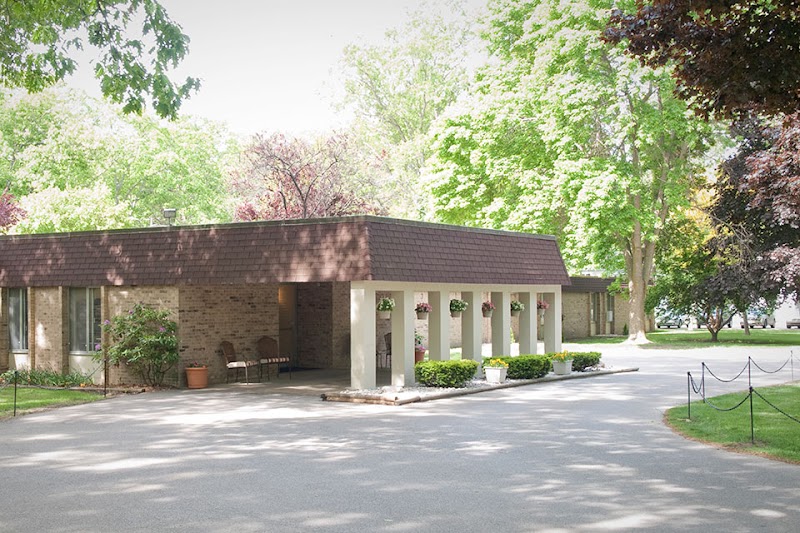
How is Medilodge Of Ludington Staffed?

CMS rates Medilodge of Ludington's staffing level at 4 out of 5 stars, which is above average compared to other nursing homes. Staff turnover is 42%, compared to the Michigan average of 46%. This relatively stable workforce can support continuity of care.

What Have Inspectors Found at Medilodge Of Ludington?

State health inspectors documented 36 deficiencies at Medilodge of Ludington during 2022 to 2025. These included: 3 that caused actual resident harm and 33 with potential for harm. Deficiencies causing actual harm indicate documented cases where residents experienced negative health consequences.
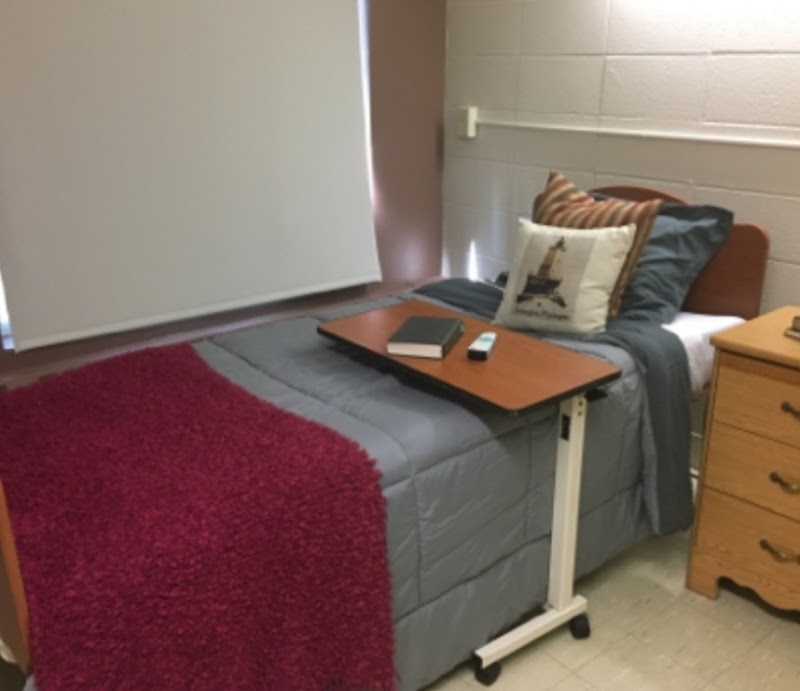
Who Owns and Operates Medilodge Of Ludington?

Medilodge of Ludington is owned by a for-profit company. For-profit facilities operate as businesses with obligations to shareholders or private owners. The facility is operated by MEDILODGE, a chain that manages multiple nursing homes. With 93 certified beds and approximately 85 residents (about 91% occupancy), it is a smaller facility located in Ludington, Michigan.

How Does Medilodge Of Ludington Compare to Other Michigan Nursing Homes?

Compared to the 100 nursing homes in Michigan, Medilodge of Ludington's overall rating (2 stars) is below the state average of 3.1, staff turnover (42%) is near the state average of 46%, and health inspection rating (2 stars) is below the national benchmark.

What Should Families Ask When Visiting Medilodge Of Ludington?

Based on this facility's data, families visiting should ask: "Can I visit during a mealtime to observe dining assistance and food quality?" "How do you handle medical emergencies, and what is your hospital transfer rate?" "Can I speak with family members of current residents about their experience?"

Is Medilodge Of Ludington Safe?

Based on CMS inspection data, Medilodge of Ludington has a clean safety record: no substantiated abuse findings (meaning no confirmed cases of resident harm), no Immediate Jeopardy citations (the most serious violation level indicating risk of serious injury or death), and is not on the Special Focus Facility watch list (a federal program monitoring the lowest-performing 1% of nursing homes). The facility has a 2-star overall rating and ranks #100 of 100 nursing homes in Michigan. While no facility is perfect, families should still ask about staff-to-resident ratios and recent inspection results during their visit.

Do Nurses at Medilodge Of Ludington Stick Around?

Medilodge of Ludington has a staff turnover rate of 42%, which is about average for Michigan nursing homes (state average: 46%). Moderate turnover is common in nursing homes, but families should still ask about staff tenure and how the facility maintains care continuity when employees leave.

Was Medilodge Of Ludington Ever Fined?

Medilodge of Ludington has no federal fines on record. CMS issues fines when nursing homes fail to meet care standards or don't correct problems found during inspections. The absence of fines suggests the facility has either maintained compliance or corrected any issues before penalties were assessed. This is a positive indicator, though families should still review recent inspection reports for the full picture.

Is Medilodge Of Ludington on Any Federal Watch List?

Medilodge of Ludington is not on any federal watch list. The most significant is the Special Focus Facility (SFF) program, which identifies the bottom 1% of nursing homes nationally based on persistent, serious quality problems. Not being on this list means the facility has avoided the pattern of deficiencies that triggers enhanced federal oversight. This is a positive indicator, though families should still review the facility's inspection history directly.