Oakview Medical Care Facility
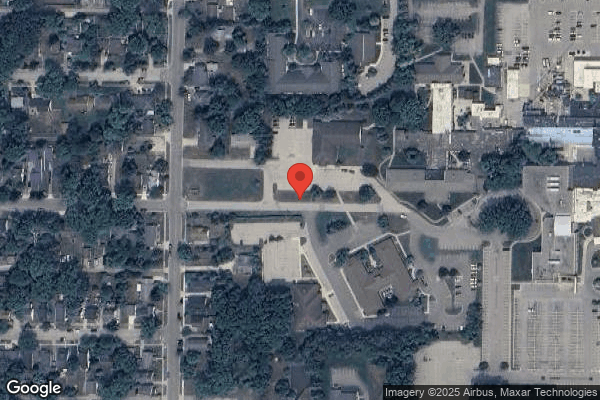
1000 Diana Street, Ludington, MI 49431 (231) 845-5185
Government - County 96 Beds Independent Data: November 2025
Trust Grade
90/100
#68 of 422 in MI
Last Inspection: February 2025

Within standard 12-15 month inspection cycle. Federal law requires annual inspections.

Overview

Oakview Medical Care Facility has received a Trust Grade of F, indicating significant concerns about the quality of care provided. It ranks #68 out of 422 facilities in Michigan, placing it in the top half, and #1 out of 2 in Mason County, meaning it is the best local option but still has serious issues. Unfortunately, the trend is worsening, with reported problems increasing from 2 issues in 2024 to 4 in 2025. Staffing at the facility is a strength, as it has a 5-star rating with only a 34% turnover, which is better than the state average. However, it is concerning that the facility has failed to maintain sanitary conditions, with observations of dirty kitchen areas and medication administration errors affecting multiple residents. Despite having no fines on record and good RN coverage, the facility's overall trustworthiness is significantly undermined by these critical issues.

Trust Score
A
90/100
In Michigan
#68/422
Top 16%
Safety Record
Low Risk
No red flags
Inspections
Getting Worse
2 → 4 violations
Staff Stability
○ Average
34% turnover. Near Michigan's 48% average. Typical for the industry.
Penalties
✓ Good
No fines on record. Clean compliance history, better than most Michigan facilities.
Skilled Nurses
✓ Good
Each resident gets 66 minutes of Registered Nurse (RN) attention daily — more than 97% of Michigan nursing homes. RNs are the most trained staff who catch health problems before they become serious.
Violations
○ Average
8 deficiencies on record. Average for a facility this size. Mostly minor or procedural issues.
★★★★★
5.0
Overall Rating
★★★★★
5.0
Staff Levels
★★★☆☆
3.0
Care Quality
★★★★☆
4.0
Inspection Score
Stable
2024: 2 issues
2025: 4 issues

The Good

  • 5-Star Staffing Rating · Excellent nurse staffing levels
  • Full Sprinkler Coverage · Fire safety systems throughout facility
  • No fines on record
  • Staff turnover below average (34%)

    14 points below Michigan average of 48%

Facility shows strength in staffing levels, fire safety.

The Bad

Staff Turnover: 34%

11pts below Michigan avg (46%)

Typical for the industry

The Ugly 8 deficiencies on record

Feb 2025 4 deficiencies
CONCERN (D)

Potential for Harm - no one hurt, but risky conditions existed

Deficiency F0657 (Tag F0657)

Could have caused harm · This affected 1 resident

**NOTE- TERMS IN BRACKETS HAVE BEEN EDITED TO PROTECT CONFIDENTIALITY** Based on interview and record review, the facility failed to update a care plan to reflect current treatment for 1 resident (R13...

Read full inspector narrative →
**NOTE- TERMS IN BRACKETS HAVE BEEN EDITED TO PROTECT CONFIDENTIALITY** Based on interview and record review, the facility failed to update a care plan to reflect current treatment for 1 resident (R13) of 18 residents reviewed for accuracy of care plans. Findings include: Review of an admission Record revealed R13 admitted to the facility on [DATE] with pertinent diagnoses which included cerebral infarction (stroke) and dementia. Review of R13's Physician's Orders active 2/11/2025 at 1:37 PM revealed R13 had a urinary catheter and was being treated for a pressure ulcer on her coccyx. Review of R13's nursing Progress Note, dated 1/10/2025 at 11:22 AM, revealed a urinary catheter was inserted per the physician because her coccyx wound was not healing. Review of R13's current Care Plan, active 2/12/2025, revealed her coccyx wound was documented as healed. Further review revealed no urinary catheter care plan. In an interview on 2/12/2025 at 2:03 PM, Wound Registered Nurse (RN) H reported R13's care plan should have been updated to reflect her coccyx wound as active when it reopened on 7/26/2024. Wound RN H reported required care plan updates were discussed at the daily team meetings and the Minimum Data Set (MDS) Coordinator was responsible to update these. In an interview on 2/12/2025 at 2:18 PM, MDS Coordinator I acknowledged R13's current active care plan stated her coccyx wound was healed. In an interview on 2/13/2025 at 9:30 AM, Wound RN H reported R13's urinary catheter was placed on 1/10/2025 to facilitate healing of her coccyx pressure ulcer. Wound RN H reported R13 did not have a urinary catheter care plan in place. In an interview on 2/13/2025 at 10:50 AM, the Director of Nursing (DON) reported care plans were expected to be updated to reflect current treatment. Review of facility policy/procedure Comprehensive Care Plans, revised 3/6/2024, revealed .It is the facility policy to develop and implement a comprehensive person-centered care plan for each resident consistent with resident rights that includes measurable objectives and timeframes to meet a resident's medical, nursing, and mental and psychosocial needs . The comprehensive care plan will describe, at a minimum, the following . The services that are to be furnished to attain or maintain the resident's highest practicable physical, mental, and psychosocial well-being .
CONCERN (D)

Potential for Harm - no one hurt, but risky conditions existed

Deficiency F0761 (Tag F0761)

Could have caused harm · This affected 1 resident

**NOTE- TERMS IN BRACKETS HAVE BEEN EDITED TO PROTECT CONFIDENTIALITY** Based on observation, interview, and record review, the facility failed to follow standards of practice for medication storage a...

Read full inspector narrative →
**NOTE- TERMS IN BRACKETS HAVE BEEN EDITED TO PROTECT CONFIDENTIALITY** Based on observation, interview, and record review, the facility failed to follow standards of practice for medication storage and labeling. Finding: During an observation on 02/11/25 at 10:02 AM, the treatment cart sat unlocked and unattended and contained prescription medications including insulin pens. A partially used humalog insulin pen that was prescribed to the resident in room [ROOM NUMBER]-2 was not dated to indicate when it had been opened. During an observation on 02/11/25 at 10:16 AM, the green hall medication cart's narcotic box was unlocked and a drinking straw had been intentionally placed through the back hinge of the narcotic box so that it would not latch and lock. During an interview at the same time, Registered Nurse (RN) J indicated that this was not an acceptable practice and that this should not have been done. During an observation on 02/11/25 at 10:39 AM a small plastic medication cup that contained chocolate pudding and a spoon, sat unattended and uncovered on the green hall medication cart. It was unclear if the pudding contained any prescribed medications. During an interview on 02/12/25 at 08:28 AM, RN K stated that medication carts are to be locked at all times and the controlled substance separate lock box was always locked. Review of the facility policy Medication Storage reflected the following: (A1) All drugs and biological's will be stored in locked compartments . and (C1a) Scheduled 2 controlled medications are stored under double-lock and key.
CONCERN (E)

Potential for Harm - no one hurt, but risky conditions existed

Deficiency F0658 (Tag F0658)

Could have caused harm · This affected multiple residents

**NOTE- TERMS IN BRACKETS HAVE BEEN EDITED TO PROTECT CONFIDENTIALITY** Based on interview and record review, the facility failed to follow professional standards of nursing practice for medication ad...

Read full inspector narrative →
**NOTE- TERMS IN BRACKETS HAVE BEEN EDITED TO PROTECT CONFIDENTIALITY** Based on interview and record review, the facility failed to follow professional standards of nursing practice for medication administration for 4 of 18 residents (Resident #29, #40, #42, and #49), reviewed for the provision of nursing services, resulting in lack of vital sign assessments prior to medication administration and medications administered outside of physician ordered parameters. Findings: Resident #29 (R29) Review of an admission Record revealed R29 was an [AGE] year-old female, admitted to the facility on [DATE], with pertinent diagnoses which included: hypertension and atrial fibrillation (abnormal beating of the heart) Review of R29's Order Summary dated 12/16/24 revealed, Metoprolol Succinate ER Oral Tablet Extended Release 24 Hour 25 MG Give 1 tablet by mouth two times a day .Hold if SBP (systolic blood pressure/top number) is less than 100, or DBP (diastolic blood pressure/bottom number) is less than 50 or HR (heart rate) is less than 60. To be administered at 9:00 Am and 9:00 PM. Review of R29's Pulse Summary revealed that from 1/1/25-1/31/25 R29's pulse was only assessed on 1/7/25, 1/14/25, 1/21/25, and 1/28/25. There were no other pulse assessments documented. Review of the January Medication Administration Record revealed that R29's metoprolol was administered twice a day from 1/1/25-1/31/25 despite the lack of a pulse assessments. Further review of R29's Pulse Summary and Medication Administration Record revealed that on 1/7/25 R29's pulse was documented as 58 and both doses of metoprolol were administered. Resident #40 (R40) Review of an admission Record revealed R40 was a [AGE] year-old male, admitted to the facility on [DATE], with pertinent diagnoses which included: hypertension. Review of R40's Order Summary dated 12/17/24-1/10/25 revealed, Lisinopril Oral Tablet 5 MG (Lisinopril)-Give 1 tablet by mouth one time a day .HOLD if SBP is less than 100, DBP is less than 50 or HR is less than 60. Review of R40's January Medication Administration Record revealed: *On 1/5/25 R40's pulse was 52 and the lisinopril was administered. *On 1/6/25 R40's pulse was 56 and the lisinopril was administered. *On 1/7/25 R40's pulse was 56 and the lisinopril was administered. *On 1/8/25 R40's pulse was 58 and the lisinopril was administered. *On 1/9/25 R40's pulse was 56 and the lisinopril was administered. Resident #22 (R22) Review of an admission Record revealed R22 was an [AGE] year-old female, admitted to the facility on [DATE], with pertinent diagnoses which included: hypertension. Review of R22's Order Summary dated 11/12/24 revealed, Lisinopril Oral Tablet 10 MG (Lisinopril)-Give 2 tablets by mouth one time a day .HOLD if SBP is less than 100, DBP is less than 50 or HR is less than 60. To be administered at 9:00 PM. Review of R22's Pulse Summary and Blood Pressure Summary revealed that on 1/22/25 R22's blood pressure was assessed at 5:24 PM and was documented as 111/63 with a pulse of 71. R22's blood pressure and pulse were not reassessed until 1/25/25 at approximately 8:00 PM. Review of R22's January Medication Administration Record revealed: *Lisinopril was administered on 1/22/25 with the blood pressure and pulse assessment of 111/63 and 71. *Lisinopril was administered on 1/23/25 with the blood pressure and pulse assessment of 111/63 and 71. *Lisinopril was administered on 1/24/25 with the blood pressure and pulse assessment of 111/63 and 71. Resident #49 (R49) Review of an admission Record revealed R49 was an [AGE] year-old female, admitted to the facility on [DATE], with pertinent diagnoses which included: orthostatic hypotension. Review of R49's Midodrine HCl Oral Tablet 5 MG (Midodrine HCl)-Give 1 tablet by mouth two times a day .Check STANDING Blood Pressure. HOLD if SBP is greater than 120. To be administered at 11:00 AM and 5:00 PM. Review of R49's January Medication Administration Record revealed: *On 1/8/25 R49's blood pressure was 132/66 and the 5:00 PM dose of midodrine was administered. *On 1/13/25 R49's blood pressure was 138/75 and the 5:00 PM dose of midodrine was administered. *On 1/14/25 R49's blood pressure was 126/72 and the 5:00 PM dose of midodrine was administered. During an interview on 02/13/25 at 11:11 AM, Director of Nursing (DON) confirmed the above medication errors. DON reported vital signs should be assessed prior to the administration of medications with ordered parameters followed.
CONCERN (F)

Potential for Harm - no one hurt, but risky conditions existed

Food Safety (Tag F0812)

Could have caused harm · This affected most or all residents

Based on observation, interview, and record review, failed to ensure 1) equipment was being maintained, 2) required information/reminders are being provided at hand sinks 3) maintain physical faciliti...

Read full inspector narrative →
Based on observation, interview, and record review, failed to ensure 1) equipment was being maintained, 2) required information/reminders are being provided at hand sinks 3) maintain physical facilities in sanitary conditions and in good repair potentially effecting 69 residents that receive food/water from the facility. Findings include: The following observations were observed on 02/11/25 between 10:29 AM to 1:50 PM, during tour of the kitchen/facility with Directory of Dietary (DOD) A. Observation of the dish washing area revealed a large area of the flooring had low grout, resulting in a build-up of food residues/debris, standing water and grime between the floor tiles. Observation of the (Name of Living Center's) Kitchenette found, 1) An employee handwashing reminder sign was not provided at the hand sink. 2) Ice machine's water filter was not labeled/dated. Observation of the shared hallway kitchenette revealed, ice machine did not have a water filter installed. During an interview on 2/12/25 at 10:02 AM, Maintenance Director (MD) D revealed he was unsure of when maintenance (filter change) had last taken place on the (Name of Living Center's) ice machine. MD D further revealed he was not sure why the other ice machine did not have a filter but would investigate it further. The 2017 FDA Model Food Code section 6-501.12 states: (A) PHYSICAL FACILITIES shall be cleaned as often as necessary to keep them clean. The 2017 FDA Model Food Code section 6-501.11 states: PHYSICAL FACILITIES shall be maintained in good repair. Review of the FDA 2017 Food Code Section, 6-301.14 Handwashing Signage. Reflected the following, A sign or poster that notifies FOOD EMPLOYEES to wash their hands shall be provided at all HANDWASHING SINKS used by FOOD EMPLOYEES and shall be clearly visible to FOOD EMPLOYEES. Review of the FDA 2017 Food Code Section, 5-204.13 Conditioning Device, Location. Reflected the following, A water filter, screen, and other water conditioning device installed on water lines shall be located to facilitate disassembly for periodic servicing and cleaning. Review of the FDA 2017 Food Code Section, 5-205.13 Scheduling Inspection and Service for a Water System Device. A device such as a water treatment device or backflow preventer shall be scheduled for inspection and service, in accordance with manufacturer's instructions and as necessary to prevent device failure based on local water conditions, and records demonstrating inspection and service shall be maintained by the PERSON IN CHARGE.
Jan 2024 2 deficiencies
CONCERN (D)

Potential for Harm - no one hurt, but risky conditions existed

Quality of Care (Tag F0684)

Could have caused harm · This affected 1 resident

**NOTE- TERMS IN BRACKETS HAVE BEEN EDITED TO PROTECT CONFIDENTIALITY** Based on interview and record review, the facility failed to provide complete and comprehensive assessments and notify the provi...

Read full inspector narrative →
**NOTE- TERMS IN BRACKETS HAVE BEEN EDITED TO PROTECT CONFIDENTIALITY** Based on interview and record review, the facility failed to provide complete and comprehensive assessments and notify the provider and guardian of a resident's reported seizure activity 1 of 18 residents (Resident #7) reviewed for quality of care. Findings: Resident #7 (R7) Review of an admission Record revealed R7 was a [AGE] year-old female, originally admitted to the facility on [DATE], with pertinent diagnoses which included: seizure disorder. Review of a Minimum Data Set (MDS) assessment for R7, with a reference date of 1/5/24 revealed a Brief Interview for Mental Status (BIMS) score of 15, out of a total possible score of 15, which indicated R7 was cognitively intact. Review of R7's Order Summary revealed R7 had current orders for Lacosamide 100 mg twice a day, Zonisamide 200 mg twice a day, and Oxcarbazepine 300 mg twice a day for her seizure disorder. Review of R7's Care Plans revealed, Dx. (diagnosis) of Seizure disorder with treatment at an acute Hospital for repeated seizures .Date Initiated: 09/10/2014. I report to staff when I have a seizure, but commonly I do not report them until my seizure has ended .Date Initiated: 09/10/2014. Started on Vimpat (lacosamide): December 2015 due to increased seizure activity. Revision on: 03/09/2017. (Confirming R7 had a history of seizures requiring hospitalization and had required an increased dose of antiepileptic medications to control seizure activity.) Review of R7's Nursing Note dated 10/22/2023 9:54 PM revealed, Resident at 19:15 (7:15 PM) reported to this writer and she stated, I had a small seizure while in my room. She denies knowing what triggered it. She was sitting in her recliner chair when seizure happened. No c/o (complaints of) mouth pain, she denies any pain or discomfort, or any dizziness or headaches. She was ambulating well with rolling walker and speech was normal, She was given her anti-seizure meds and other meds with no problem. Her V/s (vital signs) 97.8 (temperature)-68 (heart rate)-19 (respirations)-132/68 (blood pressure), 98% sats (oxygen level) on RA (room air) but Blood sugar was 507 and was given coverage. Will continue to monitor throughout the night. Review of R7's Progress Notes revealed no documentation that R7's guardian/DPOA (designated power of attorney) was notified of R7's reported seizure and no documentation of continued neurological or physical assessments following R7's reported seizure. The Nurses Note revealed the nurse would continue to monitor however, there was no additional assessments, interventions, and/or evaluations documented in the Electronic Health Record (EHR). Review of R7's EHR revealed no Seizure Tracking Order had been completed following the facility policy and procedure regarding seizures (see below). Review of R7's EHR revealed no documentation that the provider had been notified of R7's reported seizure on 10/22/23. R7's EHR did not contain a provider assessment regarding R7's reported seizure, orders for follow up testing and/or laboratory testing, or neurology consults. Review of R7's EHR revealed vital signs were assessed on 10/22/2023 at 9:32 PM with no other assessments documented until 10/23/2023 at 06:24 AM. During an interview via email on 01/24/24 at 11:54 AM, Director of Nursing (DON) stated, Nurse on duty did not follow facility protocol of starting seizure tracking, however resident reports her own seizures (refer to care plan) and would have reported further seizures. During an interview on 1/24/24 at 12:32 PM, DON reported that R7 had not had a neurology consult in the last few years and her seizure medications and seizure activity were monitored by the facility providers. DON reported that in the past, R7 had reported seizure activity for attention or extra TLC, however, the facility nurse should have followed the facility policy for seizures. (Review of R7's Care Plans revealed no documentation that R7 had a behavior of reporting seizure activity for attention). Review of the facility policy Seizure Precautions & Response last reviewed/revised 8/10/23 revealed, It is the policy of this facility to ensure a resident is protected from injury and managed in the event of a seizure or suspected seizure according to current standards of practice .(7) Documentation. Document the following in the medical record .Notification of practitioner and family and response. (8) Seizure or Suspected Seizure Monitoring. In the event of a known or suspected seizure, use the Seizure Tracking Order template in PCC for at least 1 month and/or as ordered by the practitioner .
CONCERN (E)

Potential for Harm - no one hurt, but risky conditions existed

Deficiency F0658 (Tag F0658)

Could have caused harm · This affected multiple residents

**NOTE- TERMS IN BRACKETS HAVE BEEN EDITED TO PROTECT CONFIDENTIALITY** Based on interview and record review, the facility failed to follow professional standards of nursing practice for medication ad...

Read full inspector narrative →
**NOTE- TERMS IN BRACKETS HAVE BEEN EDITED TO PROTECT CONFIDENTIALITY** Based on interview and record review, the facility failed to follow professional standards of nursing practice for medication administration for 1 of 18 residents (Resident #4), reviewed for the provision of nursing services, resulting in medications being administered outside of the physician ordered parameters. Findings: Resident #4 (R4) Review of an admission Record revealed R4 was a [AGE] year-old female, originally admitted to the facility on [DATE], with pertinent diagnoses which included: hypertension, atrial fibrillation (abnormal beating of the heart), and heart disease. Review of R4's Physician Order dated 4/6/23 revealed, amLODIPine Besylate Oral Tablet 2.5 MG (Amlodipine Besylate) Give 1 tablet by mouth one time a day related to ESSENTIAL (PRIMARY) HYPERTENSION. Hold of SBP (systolic blood pressure/top number) is < (less than)100 or HR (heart rate) < (less than) 60. Review of R4's September Medication Administration Record revealed R4's amlodipine was administered outside parameters (heart rate less than 60) on the following dates: 9/2/23 (HR 50), 9/3/23 (HR 46), 9/5/23 (HR 56), 9/6/23 (HR 47), 9/7/23 (HR 51), 9/14/23 (HR 47), 9/15/23 (HR 51), 9/16/23 (HR 51), 9/18/23 (HR 56), 9/19/23 (HR 52), 9/20/23 (HR 55), 9/21/23 (HR 51), 9/23/23 (HR 58), 9/24/23 (HR 56), 9/25/23 (HR 56), 9/27/23 (HR 58), 9/28/23 (HR 52), and 9/29/23 (HR 50). Total of 18 out of 30 administrations. Review of R4's October Medication Administration Record revealed R4's amlodipine was administered outside parameters (heart rate less than 60) on the following dates: 10/2/23 (HR 56), 10/3/23 (HR 51), 10/4/23 (HR 58), 10/5/23 (HR 52), 10/6/23 (HR 54), 10/7/23 (HR 56), 10/8/23 (HR 56), 10/9/23 (HR 53), 10/10/23 (HR 53), 10/13/23 (HR 53), 10/17/23 (HR 58), and 10/23/23 (HR 47). Total of 12 out of 31 administrations. Review of R4's November Medication Administration Record revealed R4's amlodipine was administered outside parameters (heart rate less than 60) on 11/2/23 (HR 56). (Amlodipine was discontinued on 11/9/23). Review of R4's Physician Order dated 11/30/23 revealed, Lisinopril Oral Tablet 2.5 MG (Lisinopril) Give 1 tablet by mouth every 24 hours as needed for Hypertension Administer QD: if SBP (systolic blood pressure/top number) is greater than 160 AND DBP (diastolic blood pressure/bottom number) is greater than 80. (As needed lisinopril was discontinued on 12/22/23). Review of R4's December Medication Administration Record revealed R4's as needed lisinopril was administered outside of parameters on 12/5/23 (177/70). During an interview on 01/24/24 12:32 PM, Director of Nursing (DON) reported that she had been auditing Medication Administration Records 5 times a week for compliance with physician ordered parameters for blood pressures but noncompliance with physician ordered heart rate parameters had not been identified as a concern. Review of the facility policy, Medication Administration last reviewed/revised 11/15/22 revealed, .(4) Obtain and record vital signs, when applicable or per physician orders. When applicable, hold medication for those vital signs outside the physician's prescribed parameters . Review of Fundamentals of Nursing ([NAME] and [NAME]) 10th edition revealed, Use vital sign measurements to determine indications for medication administration. For example, give certain cardiac drugs only within a range of pulse or BP (blood pressure) values .Know the acceptable vital sign ranges for your patients before administering medications . [NAME], [NAME] A.; [NAME], [NAME] Griffin; Stockert, [NAME] A.; Hall, [NAME]. Fundamentals of Nursing - E-Book (p. 467-468). Elsevier Health Sciences. Kindle Edition.
Jan 2023 2 deficiencies
CONCERN (D) 📢 Someone Reported This

A family member, employee, or ombudsman was alarmed enough to file a formal complaint

Potential for Harm - no one hurt, but risky conditions existed

Comprehensive Care Plan (Tag F0656)

Could have caused harm · This affected 1 resident

**NOTE- TERMS IN BRACKETS HAVE BEEN EDITED TO PROTECT CONFIDENTIALITY** Based on observation, interview, and record review the facility failed to ensure Care Planned safety measures were implemented f...

Read full inspector narrative →
**NOTE- TERMS IN BRACKETS HAVE BEEN EDITED TO PROTECT CONFIDENTIALITY** Based on observation, interview, and record review the facility failed to ensure Care Planned safety measures were implemented for a high fall risk resident (Resident #44 [R44]), resulting in delayed staff response to two falls and the potential for all facility residents who are at-risk for falls to not have Care Plan interventions implemented. Findings: Review of the Electronic Medical Record (EMR) Face Sheet reflected R44 was admitted to the facility 5/26/21 with diagnoses that included Alzheimer's Disease and Dementia. The EMR Face Sheet reflected that History of Falling was added to the diagnosis Information with an onset date of 3/29/22. Review of the Care Plan for R44 reflected a Focus concern of I am at high risk for falls (related to) Confusion, Deconditioning, Incontinence, Unaware of safety needs initiated 5/22/21. Review of the Interventions implemented to prevent R44 from falling included: High risk falls program initiated 5/24/21, and Do not leave on toilet unattended initiated 5/27/21. A Motion sensor alarm to entrance of bathroom was initiated 4/22/22. A motion sensor acts as an alarm and is activated on entry into the bathroom. Also, on 9/8/22 a Chair alarm was initiated. Review of the Quarterly Fall Risk assessment dated [DATE] reflected R44 was at high risk for falls with multiple falls over the previous six months. Review of the facility Resident Fall Report reflected on 10/1/22 at 2:40 PM R44 was found by a staff member on the floor of the bathroom. The Resident Fall Report reflected that the only alarm initiated was a chair alarm that was in the Resident's wheelchair. The Resident Fall Report did not indicate that the motion sensor alarm at the entrance of the bathroom, documented in the Resident's Care plan as initiated 4/22/22, had sounded or was in place and functioning at the time of the Resident's fall. This motion sensor alarm would have alerted staff when R44 had first entered the bathroom and before a self-transfer from the chair was attempted. Review of the Interdisciplinary (IDT) Note dated 10/24/22 at 9:38 AM reflected that safety interventions had been reviewed and revealed to .add motion sensor alarm to bathroom entrance at (wheelchair) level despite this intervention had been documented as initiated on 4/22/22 on the Care Plan of R44. Review of the facility Resident Fall Report reflected that on 12/25/22 at 10:55 AM, R44 was found by a staff member on the floor of the bathroom. The Resident Fall Report reflected that the chair alarm had malfunctioned and did not sound when the Resident had attempted to self-transfer. The Resident Fall Report did not indicate that the motion sensor alarm was in place at the entrance of the bathroom and was functioning. On 1/20/23 at 9:51 AM the Director of Nursing (DON) reported that on 12/25/22 R44 had returned from an isolation room in another area of the facility. The DON reported that the motion sensor alarm had not been moved before R44 had transferred back to the Resident's original room and had fallen in the bathroom. During an observation and interview conducted 1/19/23 at 12:14 PM at the bathroom of R44, a motion sensor alarm was observed attached to the wall approximately two feet from the floor at the entrance to the bathroom. The device did not alarm when entering the bathroom. Licensed Practical Nurse (LPN) J switched the device to the on position and reported that she would have to check the Care Plan to see if it only needed to be operating at night. On 1/19/23 at 3:19 PM an interview was conducted with the DON and the Assistant Director of Nursing (ADON) in the office of the DON. The DON and ADON were informed that the alarm was found to be turned off earlier in the day. The ADON reported that on 1/18/23 a Certified Nurse Aide (CNA) had informed her that the current roommate had been turning off the motion sensor alarm. The ADON reported that she had been previously aware that R44 and the roommate had been turning off the alarm. The ADON was asked, since she knew this, what measures had been implemented to ensure R44 had a functioning safety device in place. The DON reported that staff were supposed to be checking the alarms regularly. On 1/20/23 at 8:38 AM it was observed that the motion sensor alarm at the entrance to the bathroom in the room of R44 did not activate when passing in front of it. Review of the EMR reflected alarm checks had been an ongoing task in place prior to this survey. Review of the alarm check documentation reflected that the alarm had been checked at 7:16 AM on 1/20/23. No documentation was found in the EMR that indicated additional measures had been implemented to ensure all fall precautions for R44 were being implemented.
CONCERN (D) 📢 Someone Reported This

A family member, employee, or ombudsman was alarmed enough to file a formal complaint

Potential for Harm - no one hurt, but risky conditions existed

Accident Prevention (Tag F0689)

Could have caused harm · This affected 1 resident

**NOTE- TERMS IN BRACKETS HAVE BEEN EDITED TO PROTECT CONFIDENTIALITY** Based on observation, interview, and record review, the facility failed to implement safety measures and ensure staff were educa...

Read full inspector narrative →
**NOTE- TERMS IN BRACKETS HAVE BEEN EDITED TO PROTECT CONFIDENTIALITY** Based on observation, interview, and record review, the facility failed to implement safety measures and ensure staff were educated about the high risk fall program for 1 resident (Resident #52), resulting in the potential for additional falls and injuries. Findings: Resident #52 (R52) Review of an admission Record revealed R52 was a [AGE] year-old female, admitted to the facility on [DATE], with pertinent diagnoses of Alzheimer's Disease, muscle weakness, and had a history of a recent fall with major injury. Review of the facility policy/procedure Fall Monitoring and Mitigation, last reviewed on 07/13/22, indicated that residents assessed as High Risk Falls were identified by an orange tag on the name plate outside the resident's room and by an orange framed name badge holder on the back of the wheelchair. During an observation on 01/19/23 at 7:28 AM, Certified Nurse Aide (CNA) P pushed R52 in a wheelchair, in the common area of the unit, without the use of footrests. R52 had an orange framed name badge holder attached to the back of the wheelchair. During an interview on 01/19/23 at 9:30 AM, CNA P could not correctly identify the orange framed name tag attached to R52's wheelchair as part of the fall prevention program. CNA P stated that the orange tags were probably red ones that had faded, and that the tags were used to identify the resident by name and to list allergies. During an observation on 01/19/23 at 9:39 AM, CNA V pushed a male resident in a broda chair, in the common area. An orange framed name badge holder was attached to the back of the broda chair. When questioned, CNA V stated the orange framed name holder was used to identify the weight of the broda chair. This simplified the process for staff getting correct weights of the residents.
Understanding Severity Codes (click to expand)
Life-Threatening (Immediate Jeopardy)
J - Isolated K - Pattern L - Widespread
Actual Harm
G - Isolated H - Pattern I - Widespread
Potential for Harm
D - Isolated E - Pattern F - Widespread
No Harm (Minor)
A - Isolated B - Pattern C - Widespread

Questions to Ask on Your Visit

  • "Can I speak with families of current residents?"
  • "What's your RN coverage like on weekends and overnight?"

Our Honest Assessment

Strengths
  • • Grade A (90/100). Above average facility, better than most options in Michigan.
  • • No major safety red flags. No abuse findings, life-threatening violations, or SFF status.
  • • No fines on record. Clean compliance history, better than most Michigan facilities.
  • • 34% turnover. Below Michigan's 48% average. Good staff retention means consistent care.
Concerns
  • • No significant concerns identified. This facility shows no red flags across CMS ratings, staff turnover, or federal penalties.
Bottom line: Generally positive indicators. Standard due diligence and a personal visit recommended.

About This Facility

What is Oakview Medical Care Facility's CMS Rating?

CMS assigns Oakview Medical Care Facility an overall rating of 5 out of 5 stars, which is considered much above average nationally. Within Michigan, this rating places the facility higher than 99% of the state's 100 nursing homes. This rating reflects solid performance across the metrics CMS uses to evaluate nursing home quality.

How is Oakview Medical Care Facility Staffed?

CMS rates Oakview Medical Care Facility's staffing level at 5 out of 5 stars, which is much above average compared to other nursing homes. Staff turnover is 34%, compared to the Michigan average of 46%. This relatively stable workforce can support continuity of care.

What Have Inspectors Found at Oakview Medical Care Facility?

State health inspectors documented 8 deficiencies at Oakview Medical Care Facility during 2023 to 2025. These included: 8 with potential for harm.

Who Owns and Operates Oakview Medical Care Facility?

Oakview Medical Care Facility is owned by a government entity. Government-operated facilities are typically run by state, county, or municipal agencies. The facility operates independently rather than as part of a larger chain. With 96 certified beds and approximately 74 residents (about 77% occupancy), it is a smaller facility located in Ludington, Michigan.

How Does Oakview Medical Care Facility Compare to Other Michigan Nursing Homes?

Compared to the 100 nursing homes in Michigan, Oakview Medical Care Facility's overall rating (5 stars) is above the state average of 3.2, staff turnover (34%) is significantly lower than the state average of 46%, and health inspection rating (4 stars) is above the national benchmark.

What Should Families Ask When Visiting Oakview Medical Care Facility?

Based on this facility's data, families visiting should ask: "Can I visit during a mealtime to observe dining assistance and food quality?" "How do you handle medical emergencies, and what is your hospital transfer rate?" "Can I speak with family members of current residents about their experience?"

Is Oakview Medical Care Facility Safe?

Based on CMS inspection data, Oakview Medical Care Facility has a clean safety record: no substantiated abuse findings (meaning no confirmed cases of resident harm), no Immediate Jeopardy citations (the most serious violation level indicating risk of serious injury or death), and is not on the Special Focus Facility watch list (a federal program monitoring the lowest-performing 1% of nursing homes). The facility has a 5-star overall rating and ranks #1 of 100 nursing homes in Michigan. While no facility is perfect, families should still ask about staff-to-resident ratios and recent inspection results during their visit.

Do Nurses at Oakview Medical Care Facility Stick Around?

Oakview Medical Care Facility has a staff turnover rate of 34%, which is about average for Michigan nursing homes (state average: 46%). Moderate turnover is common in nursing homes, but families should still ask about staff tenure and how the facility maintains care continuity when employees leave.

Was Oakview Medical Care Facility Ever Fined?

Oakview Medical Care Facility has no federal fines on record. CMS issues fines when nursing homes fail to meet care standards or don't correct problems found during inspections. The absence of fines suggests the facility has either maintained compliance or corrected any issues before penalties were assessed. This is a positive indicator, though families should still review recent inspection reports for the full picture.

Is Oakview Medical Care Facility on Any Federal Watch List?

Oakview Medical Care Facility is not on any federal watch list. The most significant is the Special Focus Facility (SFF) program, which identifies the bottom 1% of nursing homes nationally based on persistent, serious quality problems. Not being on this list means the facility has avoided the pattern of deficiencies that triggers enhanced federal oversight. This is a positive indicator, though families should still review the facility's inspection history directly.