Maple Valley Nursing Home
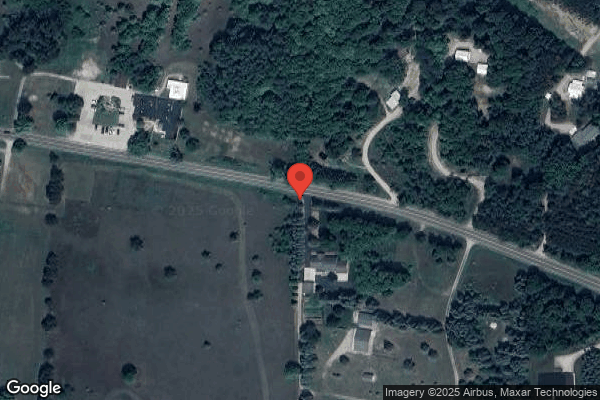

1086 W. Burdickville Road, Maple Valley, MI 49664 (231) 228-5895
For profit - Corporation 25 Beds Independent Data: November 2025 2 Immediate Jeopardy citations
Trust Grade
0/100
#381 of 422 in MI
Last Inspection: April 2025

Within standard 12-15 month inspection cycle. Federal law requires annual inspections.

Overview

Maple Valley Nursing Home has received a Trust Grade of F, indicating poor performance with significant concerns about the quality of care provided. It ranks #381 out of 422 facilities in Michigan, placing it in the bottom half of all nursing homes in the state, and #3 out of 3 in Leelanau County, meaning there is only one local option that is better. While the facility shows improvement in trend, reducing issues from 28 to 10 over the past year, it still faces serious challenges, having incurred $134,858 in fines, which is higher than all other facilities in Michigan. Staffing is a relative strength, with a 4 out of 5 star rating and good RN coverage, though the turnover rate of 63% is concerning and well above the state average. Specific incidents of concern include a resident being removed from the facility without authorization for 16 hours, a resident potentially aspirating due to improperly thickened liquids, and another resident suffering a serious burn injury from spilled soup, all highlighting critical areas for improvement.

Trust Score
F
0/100
In Michigan
#381/422
Bottom 10%
Safety Record
High Risk
Review needed
Inspections
Getting Better
28 → 10 violations
Staff Stability
⚠ Watch
63% turnover. Above average. Higher turnover means staff may not know residents' routines.
Penalties
⚠ Watch
$134,858 in fines. Higher than 76% of Michigan facilities, suggesting repeated compliance issues.
Skilled Nurses
✓ Good
Each resident gets 84 minutes of Registered Nurse (RN) attention daily — more than 97% of Michigan nursing homes. RNs are the most trained staff who catch health problems before they become serious.
Violations
⚠ Watch
62 deficiencies on record. Higher than average. Multiple issues found across inspections.
★☆☆☆☆
1.0
Overall Rating
★★★★☆
4.0
Staff Levels
★★★☆☆
3.0
Care Quality
★☆☆☆☆
1.0
Inspection Score
Stable
2024: 28 issues
2025: 10 issues

The Good

  • 4-Star Staffing Rating · Above-average nurse staffing levels
  • Full Sprinkler Coverage · Fire safety systems throughout facility
  • No fines on record

Facility shows strength in staffing levels, fire safety.

The Bad

1-Star Overall Rating

Below Michigan average (3.1)

Significant quality concerns identified by CMS

Staff Turnover: 63%

17pts above Michigan avg (46%)

Frequent staff changes - ask about care continuity

Federal Fines: $134,858

Well above median ($33,413)

Significant penalties indicating serious issues

Staff turnover is elevated (63%)

15 points above Michigan average of 48%

The Ugly 62 deficiencies on record

2 life-threatening 6 actual harm
Apr 2025 9 deficiencies
CONCERN (D)

Potential for Harm - no one hurt, but risky conditions existed

Resident Rights (Tag F0550)

Could have caused harm · This affected 1 resident

**NOTE- TERMS IN BRACKETS HAVE BEEN EDITED TO PROTECT CONFIDENTIALITY** Based on observation, interview, and record review, the facility failed to provide a dignified dining experience for three Resid...

Read full inspector narrative →
**NOTE- TERMS IN BRACKETS HAVE BEEN EDITED TO PROTECT CONFIDENTIALITY** Based on observation, interview, and record review, the facility failed to provide a dignified dining experience for three Residents (R5, R7, and R18) of twenty-one residents reviewed for dining experience. This deficient practice resulted in frustration and helplessness for those residents who were waiting for their meal to arrive. Findings include: On 4/8/25 between 11:30 AM and 1:00 PM, an observation was made in the main dining room where residents were eating lunch. Three staff members requested a lunch tray and kitchen staff made a lunch tray for them. After observing the three staff members receiving a lunch tray a tour was made of the facility where some remaining residents were observed in their rooms and the following observations and interviews were made. Resident #5 (R5) A review of R5's medical record revealed they admitted to the facility on [DATE] with medical diagnoses including Huntington's disease (neurogenerative disease that results in the lack of coordination and involuntary body movements), aphasia (inability to use spoken language), and dysphasia (impairment in the production of speech). A review of their 1/19/26 Minimum Data Set (MDS) assessment revealed they were dependent on staff for all activities of daily living (ADL's). On 4/8/25 at 1:02 PM, an observation was made of R5 lying in his bed in his room. An attempt was made to interview R5, but they were unable to speak related to their medical condition. R5 was observed moving his mouth open and closed and motioning with his right hand when asked if they were hungry. R5 did not received his meal until 1:45 PM, over two hours after lunch started to be served. On 4/8/25 at 1:50 PM, an interview was conducted with Certified Nurse Aide (CNA) C, who was asked if R5 received their lunch yet or if they were going to get them up to eat lunch. CNA C replied, No, (R5) did not get lunch yet. We need to get them up. We have been busy with other residents and had not been able to get to them yet. Resident #7 (R7) A review of R7's medical record revealed they admitted to the facility on [DATE] with medical diagnoses including diabetes mellitus type II, anxiety, and muscle wasting. A review of their 11/11/24 MDS assessment revealed they scored 8/15 on the Brief Interview for Mental Status (BIMS) assessment, indicating moderate cognitive impairment. On 4/8/25 at 1:05 PM, an observation was made of R7 in their room and lying in bed. R7 was asked if they ate lunch or if they had gone to the dining room to eat lunch yet. R7 replied, No, but I am hungry. I hope they bring it soon! Resident #18 (R18) A review of R18's medical record revealed they admitted to the facility on [DATE] with medical diagnoses including diabetes mellitus type II, bipolar disorder, and anxiety. A review of their 12/20/24 Minimum Data Set (MDS) assessment revealed they scored 15/15 on the Brief Interview for Mental Status (BIMS) assessment, indicating intact cognition. On 4/8/25 at 1:10 PM, an observation was made of R18 in their room, sitting on their bed. R18 was asked if they ate lunch or if they had gone to the dining room to eat lunch yet. R18 replied, No and I am hungry. Why haven't they brought me lunch yet? On 4/9/25 at 1:20 PM, an interview was conducted with the Director of Nursing (DON), who was asked about meal tray pass and staff being served prior to all residents' being served meal trays. The DON replied, It is our policy that all residents' are served before staff get a meal tray. Staff should be waiting until all the residents are served to get a meal. They all know that! On 4/10/25 at 12:25 PM, an interview was conducted with the Dietary Manger (DM) J, who was asked about meal service and if it was appropriate for staff to get a meal tray before all the residents were served a meal tray. DM J replied, No, and it would be helpful if management staff would come and assist during mealtimes with tray passes especially with the few residents' that choose to eat in their rooms. Review of the policy titled, Timely Meal Service, dated 2019, read in part, Policy: Food will be delivered promptly to assure safe, palatable, and high-quality food served at the proper temperature .
CONCERN (D) 📢 Someone Reported This

A family member, employee, or ombudsman was alarmed enough to file a formal complaint

Potential for Harm - no one hurt, but risky conditions existed

Deficiency F0658 (Tag F0658)

Could have caused harm · This affected 1 resident

**NOTE- TERMS IN BRACKETS HAVE BEEN EDITED TO PROTECT CONFIDENTIALITY** Based on observation, interview and record review, the facility failed to ensure the assessment of respiratory status prior to t...

Read full inspector narrative →
**NOTE- TERMS IN BRACKETS HAVE BEEN EDITED TO PROTECT CONFIDENTIALITY** Based on observation, interview and record review, the facility failed to ensure the assessment of respiratory status prior to the administration of an inhaled medication and according to professional standards for one Resident (#18) of five resident reviewed for medication administration. Findings include: Resident #18 (R18) Review of the Minimum Data Set (MDS) assessment, dated 12/20/2024, revealed R18 was admitted to the facility on [DATE] with diagnoses including chronic obstructive pulmonary disease (COPD). R18 was assessed as cognitively intact. On 4/10/2025 at 7:51 a.m., during an observation, R18 approached the medication cart where Licensed Practical Nurse (LPN) B was reviewing resident medication needs for the morning. R18 reported feeling short of breath to LPN B and requested to use her inhaler. LPN B was observed removing an albuterol (short-acting inhaled medication used to open the airway, commonly called rescue inhalers) inhaler from the medication cart to administer to R18. LPN B administered two puffs of the medication to R18 in the hallway near the medication cart without performing a respiratory assessment to assess base line lung sounds for later use to determine effectiveness of the medication. After administration of the inhaler, R18 walked to her room and LPN B returned the inhaler to the cart and began preparing the remainder of R18's morning medications. LPN B was accompanied and observed administering the remainder of R18's scheduled medications. LPN B did not conduct a respiratory assessment, including obtaining R18's oxygen saturations (O2 sats-measures blood oxygen percentage) prior to administration of the inhaler or in response to R18 reporting she felt short of breath. LPN B did not perform a respiratory assessment following administration of the inhaler to R18 to assess for the effectiveness of the medication administered. On 4/10/2025 at 8:30 a.m., LPN B was asked if a respiratory assessment should be completed for a resident reporting shortness of breath and requiring use of as needed (prn) inhaled medication. LPN B reported she should have done an assessment prior to administration of the inhaler to determine necessity and after to determine response to treatment. Review of R18's electronic medication record (EMR) on 4/10/2025 at 9:35 a.m., including the Medication and Treatment Administration Records (MAR/TAR), revealed no respiratory assessment or O2 sat documented for R18 on 4/10/2025. On 4/10/2025 at 10:52 a.m., the Director of Nursing (DON) reported nursing staff were expected to conduct respiratory assessments for residents reporting shortness of breath and prior to the administration of prn inhaled medications as well as after administration to assess the effectiveness of the treatment. The DON stated, it's a nursing standard. Review of the facility policy titled, Medication Administered by Inhaler, provided by the Director of Nursing (DON) and dated 7/28/2018, revealed the facility policy did not include instructions for obtaining respiratory assessments, including baseline lung sounds or O2 sats, prior to or after administering as needed inhaled medications to treat shortness of breath.
CONCERN (D)

Potential for Harm - no one hurt, but risky conditions existed

Deficiency F0678 (Tag F0678)

Could have caused harm · This affected 1 resident

**NOTE- TERMS IN BRACKETS HAVE BEEN EDITED TO PROTECT CONFIDENTIALITY** Based on interview and record review, the facility failed to ensure residents' code status was communicated and readily availabl...

Read full inspector narrative →
**NOTE- TERMS IN BRACKETS HAVE BEEN EDITED TO PROTECT CONFIDENTIALITY** Based on interview and record review, the facility failed to ensure residents' code status was communicated and readily available for staff in the event of an emergency for three Residents (R17, R12, and R16) of six residents reviewed for advanced directives. Findings include: Resident #17 (R17) R17 was admitted to the facility on [DATE] with a primary medical diagnosis of Huntington's Disease. R17 was deemed totally incapacitated and had a court-appointed guardian. A document titled Out of Hospital Do-Not-Resuscitate [DNR] Order was signed by R17's guardian, physician, and two witnesses on [DATE]. The document read, in part: .In the event of an emergency or critical situation where a decision about immediate medical intervention is required, appropriate clinical decisions will be made in light of the directive below that you have signed and dated . No Resuscitation. Illnesses will be treated aggressively, including hospitalization if indicated, but in the event of cardiac or respiratory arrest, CPR and emergency transportation to the hospital will not [sic] be carried out . The DNR document was filed under the miscellaneous tab in R17's Electronic Medical Record (EMR). The DNR code status was not entered electronically as a physician's order in R17's EMR nor was the DNR order entered in R17's informational data on the status bar of the EMR. The code status bar of the EMR was blank for the advanced directive. Resident #12 (R12) R12 was admitted to the facility on [DATE] with primary medical diagnoses of vascular dementia and adult failure to thrive. R12 was deemed totally incapacitated and had a court-appointed guardian. The document Out of Hospital Do-Not-Resuscitate [DNR] Order under the miscellaneous tab in the EMR was signed by R12's guardian, physician, and two witnesses on [DATE]. The DNR code status was not entered into R12's informational data on the status bar of the EMR. The code status bar of the EMR was blank for the advanced directive. Resident #16 (R16) R16 was admitted to the facility on [DATE] with a primary diagnosis of encephalopathy (disease or disorder that affects the brain's function or structure). The document Out of Hospital Do-Not-Resuscitate [DNR] Order under the miscellaneous tab in the EMR was signed by R16 and two witnesses on [DATE]. The EMR reflected the form was scanned into the record on [DATE]. The DNR code status was not entered electronically as a physician's order in R16's EMR nor was the DNR order entered into R16's informational data on the status bar of the EMR. The code status bar of the EMR was blank for the advanced directive. On [DATE] at 7:57 AM, Licensed Practical Nurse (LPN) B was asked the code status of R17. LPN B opened the EMR and checked the information data status bar and said, It [code status] should be right here and pointed to the code status bar of the informational data. LPN B reviewed physician's orders and said there wasn't an order for code status. LPN B then reviewed R17's dashboard in the EMR, the face sheet, the Medication Administration Record (MAR), and the profile before saying the code status wasn't found. After searching the EMR for approximately two minutes, LPN B found the document Out of Hospital Do-Not-Resuscitate [DNR] Order under the miscellaneous tab. LPN B was asked about the amount of time that had passed to find R17's code status. LPN B said, This would absolutely be way too long in the case of an emergency. It needs to be where the nurses can find it. LPN B was asked about the code status for R12. LPN B referenced the informational data on the status bar of the EMR and said, This is the same problem. It's not where it should be. I really need to tell [the Director of Nursing (DON)] about this because a lot of nurses wouldn't know the code status if there was an emergency, and it took me too long to find it and I've been working with [name of EMR system] for the seven years I've been a nurse. LPN B was asked the code status for R16. LPN B opened the miscellaneous tab in the EMR of R16, but the tab did not populate categories and LPN B said she did not know how to filter to get the categories to populate. LPN B was asked if there were any additional methods to obtain code status information in the event of an emergency. LPN B said there was a binder in the DON's office, and said she would find the key and get the binder. Approximately four minutes later, LPN B produced a binder with paper copies of Out of Hospital Do-Not-Resuscitate [DNR] Order documents for each resident, including R16's DNR document. The DON was interviewed on [DATE] at 9:17 AM. The DON said LPN B had made her aware of the concern with code status communication and lack of immediate availability of each resident's code status information. The DON said, The nurses should be aware of the code statuses, and they [code status] should be in the electronic record so the nurses can find the information immediately. The DON said each resident's code status should be under the Advanced Directive portion on the informational status bar in the EMRs. The undated, untitled policy for DNR contained the procedure for documenting DNR orders. The policy read, in part: . 6. [Name of facility] will document in the residents' chart [sic] if the resident has a Do Not Resuscitate (DNR) order so all staff are aware.
CONCERN (D)

Potential for Harm - no one hurt, but risky conditions existed

Quality of Care (Tag F0684)

Could have caused harm · This affected 1 resident

Based on interview and record review, the facility failed to ensure laboratory results were obtained and reviewed to monitor for adverse effects of anti-psychotic medications for one Resident (#4) of ...

Read full inspector narrative →
Based on interview and record review, the facility failed to ensure laboratory results were obtained and reviewed to monitor for adverse effects of anti-psychotic medications for one Resident (#4) of five residents reviewed. Findings include: Resident #4 (R4) Review of the Minimum Data Set (MDS) assessment, dated 1/19/2025, revealed R4 was admitted to facility on 4/18/2016 and had diagnoses including dementia, seizure disorder and schizophrenia. R4 was rated as having severe cognitive impairment. Review of R4's active medication orders revealed the following: Clozapine oral tablet 100 MG [milligram], give 1 tablet by mouth in the morning related to paranoid schizophrenia. Order date: 12/01/2023. Clozapine oral tablet 100 MG, give 3 tablets by mouth at bedtime related to paranoid schizophrenia. Order date: 12/01/2023. Further review of R4's electronic medical record (EMR) revealed the following active physician's order for laboratory testing, dated 11/4/2024: CBC with diff [complete blood count with differential] q [every] 30 days. The EMR for R4 revealed the most recent laboratory results, including CBC with diff were dated 12/27/2024. Review of R4's, Psychiatric Progress Note, dated 7/18/2024, revealed the following: . there was a period of time when she was unresponsive. They were instituting hospice. For that reason, I believe her CBCs were discontinued. The last one that was done was in May . [R4] is now much more responsive and doing well, so the hospice may be re-evaluated . if she graduates hospice, this should return to monthly monitoring. During an interview on 4/9/2025 at 12:48 p.m., Licensed Practical Nurse (LPN) B reported R18 was no longer receiving hospice services as of January 2025. Review of R4's physician progress noted, dated 2/28/25, revealed the following: . continues with clozapine, depakote, risperdal. continue clozapine monitoring with cbc and diff . Monitor labs . During an interview on 4/9/2025 at 4:15 p.m., the Director of Nursing (DON) was asked why there were no laboratory results found in R4's EMR since 12/27/2024. The DON presented laboratory results, included CBC with diff, dated 1/28/2025 and 4/03/2025. When asked for the results for February 2025 and March 2025, the DON reported R4's testing was missed due to staff failure to acquire R4's blood sample for testing. The DON reported when staff are too busy or just don't want to do it, the task is not completed and after three days the task no longer remains on the TAR. The DON reported when left uncompleted, the staff do not report the samples were never obtained. The DON reported she is working on a new system for ordering the laboratory samples, so the orders are not missed.
CONCERN (D)

Potential for Harm - no one hurt, but risky conditions existed

Drug Regimen Review (Tag F0756)

Could have caused harm · This affected 1 resident

**NOTE- TERMS IN BRACKETS HAVE BEEN EDITED TO PROTECT CONFIDENTIALITY** Based on interview and record review, the facility failed to ensure that Medication Regimen Reviews (MRR's) and pharmacy recomme...

Read full inspector narrative →
**NOTE- TERMS IN BRACKETS HAVE BEEN EDITED TO PROTECT CONFIDENTIALITY** Based on interview and record review, the facility failed to ensure that Medication Regimen Reviews (MRR's) and pharmacy recommendations were reviewed timely for one Resident (R18) out of five residents reviewed for MRR's. This deficient practice resulted in the potential for unnecessary medications or inappropriate durations of treatments. Findings include: Resident #18 (R18) A review of R18's medical record revealed they admitted to the facility on [DATE] with medical diagnoses including diabetes mellitus type II, bipolar disorder, and anxiety. A review of their 12/20/24 Minimum Data Set (MDS) assessment revealed they scored 15/15 on the Brief Interview for Mental Status (BIMS) assessment, indicating intact cognition. A review of a Pharmacy Consultation Report dated 10/24/24 revealed in part, (R18) Consider adding lab draws for A1C and Magnesium levels .Physician agrees and signed on 11/5/24. Review of R18's Medications and Treatment Administration Records and progress notes, dated October through December 2024, revealed no labs were ordered to be drawn, and no progress notes documented labs were drawn for R18. Review of R18's physician order, dated 11/30/24, revealed an order for: Routine Labs: A1C (If last A1C <8 Q6 mos., if >8 Q 3 mos.) (MAR, JUNE, SEPT, DEC). Directions: No directions specified for order. Active as of: 11/30/24. R18's last A1C was drawn in March of 2024 with a result of 6.3 and R18 should have had an A1C scheduled / drawn in September 2024 but it was never ordered. On 4/10/25 at 9:06 AM, an interview was conducted with the Director of Nursing (DON), who stated that lab draws are an issue related to orders being put in for only three days and then travel nurses not wanting to draw the labs and then not letting her know they weren't drawn and then they get missed. The DON admitted to the lab being missed was her fault and acknowledged there needs to be a better system. A review of Pharmacy Consultation Report, dated 12/26/24, revealed a note to nursing to please consider obtaining updated lab value. Review of policy titled, Consultant Pharmacist Monthly Reports, Documentation and Communication of Consultant Pharmacist Recommendations, undated, read in part, Policy: The consultant pharmacist will submit a compete (sic) written report documenting all aspects of that month's consultation within ten (10) business days of exit date. The consultant pharmacist works with the facility to establish a system whereby the consultant pharmacist observations and recommendations regarding residents' medication therapy are communicated to those with authority and / or responsibility to implement the recommendations and respond in an appropriate and timely fashion. Procedures .3. All procedural irregularities should be corrected as soon as possible by the facility staff or prescriber and note documenting that correction should be made in the DON's copy of the final report .
CONCERN (D) 📢 Someone Reported This

A family member, employee, or ombudsman was alarmed enough to file a formal complaint

Potential for Harm - no one hurt, but risky conditions existed

Deficiency F0760 (Tag F0760)

Could have caused harm · This affected 1 resident

**NOTE- TERMS IN BRACKETS HAVE BEEN EDITED TO PROTECT CONFIDENTIALITY** This citation pertains to intake MI00151466. Based on observation, interview and record review, the facility failed to ensure th...

Read full inspector narrative →
**NOTE- TERMS IN BRACKETS HAVE BEEN EDITED TO PROTECT CONFIDENTIALITY** This citation pertains to intake MI00151466. Based on observation, interview and record review, the facility failed to ensure the safe administration of medications for one Resident (#10) of six reviewed, resulting in a significant error when R10 was administered another resident's medications, leading to lethargy and confusion. Findings include: Resident #10 (R10) Review of the Minimum Data Set (MDS) assessment, dated 1/22/2025, revealed R10 was admitted to the facility on [DATE] and had diagnoses including hypertension, diabetes, stroke, and depression. R10 was assessed as cognitively intact and independent with most ADLs (activities of daily living) and ambulation. On 4/8/2025 at 3:06 p.m., R10 was observed standing at the sink in her room washing her hands, unassisted. R10 walked unassisted to her bed and sat down. During an interview at the time of the observation, R10 was asked about care in the facility, including medication management. R10 reported an occasion when she was administered another resident's medications leading to her feeling loopy and missing out on her shower day. R10 was unsure of the exact date of the occurrence or what medications she was administered. Review of R10's electronic medical record (EMR) revealed the following progress note: 1/28/2025 08:01 [8:01 a.m.]. Incident Note . Writer administered wrong medication to resident . Resident lethargic . Review of R10's, Medication Related Incident Report, provided by the Director of Nursing (DON) and dated 1/28/2025, revealed the following: I administered the wrong medications to this resident. I was pulling medications for one administration, multiple residents at med cart asking questions and I gave this resident [R10] the incorrect meds . Resident was lethargic . At lease one dose administered with a change in vital signs or other noticeable changes . Resident was lethargic for the majority of shift. It was noted the incident report did not include information regarding what medications R10 was incorrectly administered. On 4/10/2025 at 10:52 a.m. the DON was queried about the incident and asked what medications R10 were incorrectly administered. The DON reported R10 incorrectly received the following: Depakote (anti-convulsant medication used to treat seizures and bi-polar disorder) 125 milligrams (mg); Seroquel (anti-psychotic medication) 50 mg; and vitamin D3 25 micrograms (mcg). The DON stated the nurse was distracted, leading to administration of another resident's medications to R10. Review of the facility policy titled, Medication Administration, dated 5/19/2023, revealed the following: Keep in mind the Five Rights when giving medicines . 1. Right resident. 2. Right medication . Exercise care in giving medicine because there is an element of danger in every pill or drop of medicine . Pass medicines as quickly as possible without interruptions. It is the nurses' responsibility to ensure a safe and accurate medication pass .
CONCERN (D)

Potential for Harm - no one hurt, but risky conditions existed

Deficiency F0883 (Tag F0883)

Could have caused harm · This affected 1 resident

**NOTE- TERMS IN BRACKETS HAVE BEEN EDITED TO PROTECT CONFIDENTIALITY** Based on interview and record review, the facility failed to: 1. Educate residents/resident representatives on the pneumonia vac...

Read full inspector narrative →
**NOTE- TERMS IN BRACKETS HAVE BEEN EDITED TO PROTECT CONFIDENTIALITY** Based on interview and record review, the facility failed to: 1. Educate residents/resident representatives on the pneumonia vaccines currently available and recommended by the CDC for two residents (R10 and R72) of five residents reviewed for immunizations. 2. Administer a pneumococcal vaccination or document the clinical reasons for withholding the pneumococcal vaccination for one resident (R17) of five residents reviewed for immunizations. 3. Update vaccine consent forms and immunization policies with the pneumococcal vaccines (PCV15, PCV20 or PCV21) currently available and recommended by the Centers for Disease Control (CDC). Findings include: Resident #10 (R10) R10 was admitted to the facility on [DATE] with a primary diagnosis of diabetes with circulatory complications. A vaccination report from the [State] Care Improvement Registry (MCIR - State Agency Immunization Record) was reviewed on 4/10/25 and revealed R10 was overdue for pneumonia vaccination. The MCIR documented, in part: .Pneumococcal High Risk (HR)/Adult . Status: PCV15/PCV20/PCV21 - DUE NOW [sic] . A document titled Immunization Consent Form was signed by R10's resident representative on 10/15/24. The form included the statement: I have received a copy of the most current Vaccination Information Sheet (VIS) as published by the CDC. I have read or have had explained to me information of the above vaccines . The consent form did not indicate which VIS had been provided to the legal representative of R10. The consent form did not include the PCV15/PCV20/PCV21 vaccines. Documentation by R10's physician was not located in the Electronic Medical Record (EMR) regarding any contraindications of pneumococcal vaccination. No documentation could be found in the EMR by the physician or Infection Preventionist (IP) regarding vaccination discussions or education provided to the resident or resident representative on the benefits or risks of pneumococcal vaccination. Resident #72 (R72) R72 was admitted to the facility on [DATE] with a primary diagnosis of orthopedic aftercare following surgical amputation. A MCIR for R72 was reviewed on 4/10/25. The MCIR read, in part: . Pneumococcal High Risk (HR)/Adult . Status: Due 9/4/24. An Immunization Consent Form document was signed by the Resident Representative of R72 on 3/21/25. The form included the statement: I have received a copy of the most current Vaccination Information Sheet (VIS) as published by the CDC. I have read or have had explained to me information of the above vaccines . The consent form did not indicate which VIS had been provided to R72. The consent form did not include the PCV15/PCV20/PCV21 vaccines. Further review of the consent form for R72 revealed outdated recommendations for pneumococcal vaccination. The form erroneously stated the CDC recommended the use of the PCV13 and PPSV23 vaccines. The PCV13 vaccine ceased being recommended by the Centers for Disease Control (CDC) for routine use among adults aged 65 and older as of 11/22/19 (www.cdc.gov/mmwr/volumes/68/wr/mm6846a5.htm). Documentation by R72's physician was not located in the Electronic Medical Record (EMR) regarding contraindications of pneumococcal vaccination. No documentation could be found in the EMR by the physician or Infection Preventionist (IP) regarding vaccination discussions or education provided to the resident or resident representative on the benefits or risks of pneumococcal vaccination. On 4/10/25 at 10:40 AM, the Infection Preventionist (IP) was asked regarding the Vaccine Information Statement (VIS) provided to the Resident Representatives of R10 and R72. The IP provided a VIS for PPSV23 dated 10/30/19 that included the use of PPSV23 and PCV13. The IP confirmed no additional VIS were provided to R72 or the legal representatives of R10. The most current VIS published by the CDC was on 5/12/23 and included the recommendation for PCV15 and PCV20. The Representatives for R10 and R72 were not provided with the most current, updated recommendations and information to make informed decisions on pneumococcal vaccinations nor were the Representatives provided education on the benefits and potential side effects of these vaccinations. Resident #17 (R17) R17 was admitted to the facility on [DATE] with a primary diagnosis of Huntington's Disease. A MCIR for R17 was reviewed on 4/10/25 and revealed the resident had not received pneumococcal vaccination. A review of an Immunization Consent Form signed by R17's court-appointed legal guardian on 2/5/25 revealed the guardian requested and consented to pneumococcal vaccination for R17. On 4/10/25 at 10:40 AM, a progress noted dated 4/7/25 at 3:22 PM was reviewed with the IP. The note read: Consent obtained from resident's guardian [name of guardian] to give the current vaccinations that are due: Tetanus, COVID booster, and pneumonia. The Immunization Consent Form signed by R17's guardian on 2/5/25 was reviewed with the IP. The IP was asked if R17 received the pneumococcal vaccination. The IP said, I'm still working on it and confirmed R17 was not provided the pneumonia vaccination as requested despite R17's guardian consenting to the vaccination more than two months previously. No clinical consideration of contraindication of the vaccine was documented by R17's physician. The IP produced a document Standing Orders for Administering Pneumococcal Vaccine to Adults dated as revised 8/15/17 read, in part: Purpose: to reduce morbidity and mortality from pneumococcal disease by vaccinating all patients who meet the criteria established by the Centers for Disease Control . The CDC recommendations for adults ages 19 through 49 years read, in part: .The following guidance applies to adults younger than 50 years who have a risk condition. Never received any pneumococcal vaccine: Give 1 dose of PCV15, PCV20, or PCV21 . (www.cdc.gov/pneumococcal/hcp/vaccine-recommendations/risk-indications.html). The facility policy titled Immunization of Residents dated as updated 2/25/21 read, in part: .3. Residents without proof of previous pneumococcal vaccination should receive one (1) dose only of Pneumovax 23 .If under age [AGE] years and has been six years since last immunization, then repeat immunization .
CONCERN (F)

Potential for Harm - no one hurt, but risky conditions existed

Food Safety (Tag F0812)

Could have caused harm · This affected most or all residents

Based on observation, interview, and record review, the facility failed to store, prepare, distribute, and served food in accordance with professional standards for food service safety. This deficient...

Read full inspector narrative →
Based on observation, interview, and record review, the facility failed to store, prepare, distribute, and served food in accordance with professional standards for food service safety. This deficient practice has the potential to result in food borne illness among any and all 21 residents of the facility. Findings include: On 4/8/25 at 10:50 AM, an initial tour of the kitchen was conducted, and the following was identified: a.) In the upright refrigerator/freezer, in the freezer section was three English muffin breakfast sandwiches with sausage, cheese, and egg wrapped in saran wrap without a label or date. b.) In the walk-in large cooler, a bag of chicken breast without a label or date. On 4/8/25 at 10:55 AM, an observation was made of a sign posted to the right of the walk-in cooler that read in part, .Date foods that are taken out of the freezer to thaw with a Th and then the date . On 4/8/25 at 11:00 AM, an interview was conducted with the [NAME] J and Kitchen Staff D, who were asked about the undated and unlabeled food items observed. [NAME] 'J stated he just took of the chicken this morning from the freezer and was unaware it needed to be dated and labeled. Kitchen Staff D stated she was unsure of why the breakfast sandwiches were in the upright refrigerator / freezer and so was [NAME] J who also mentioned he had never seen them used. 3-302.12 Food Storage Containers, Identified with Common Name of Food. - Except for containers holding FOOD that can be readily and unmistakably recognized such as dry pasta, working containers holding FOOD or FOOD ingredients that are removed from their original packages for use in the FOOD ESTABLISHMENT, such as cooking oils, flour, herbs, potato flakes, salt, spices, and sugar shall be identified with the common name of the FOOD. - 3-307.11 Miscellaneous Sources of Contamination. FOOD shall be protected from contamination that may result from a factor or source not specified under Subparts 3-301 On 4/8/25, the following observations were made of the kitchen staff: a.) At 11:06 AM, [NAME] F was not wearing a beard net and had a beard that was approximately ¾ of an inch long. [NAME] F was preparing biscuits from scratch. b.) At 12:13 PM, Kitchen Staff D was preparing beverages for residents and did not wear gloves or sanitize her hands. There was also a plastic bun bag where Kitchen Staff D was putting her dirty used gloves in the bag on the clean prep counter. c.) At 12:30 PM, [NAME] F wore gloves that he had been serving with, used the ice scoop, and then prepared a sandwich with the now contaminated gloves. d.) At 12:41 PM, Kitchen Staff D was delivering meal trays with gloves on, returned to the kitchen, removed the top of a sandwich bun with the same dirty gloves, and then delivered another tray with the same dirty gloves. On 4/8/25 at 1:00 PM, an observation was made of a sign above the ice machine that read in part, Wash hands before using the ice scoop . On 4/9/25, the following observations were made of the kitchen staff: a.) At 7:46 AM, Kitchen Staff D washed her hands at the sink for only ten seconds and then turned the water off with bare hands. b.) At 8:03 AM, Kitchen Staff D delivered a drink to a resident, touch the resident, returned to the kitchen to get another drink and delivered the drink, returned to the kitchen and flipped an egg, went to the refrigerator, and then delivered another resident a drink while she was not wearing any gloves and failed to complete any hand hygiene. c.) At 8:17 AM, Kitchen Staff D washed her hands at the sink for only seven seconds and then turned the water off with bare hands. d.) At 8:43 AM, Kitchen Staff D was gathering dirty linen napkins, added them to the laundry cart, and then washed hands at the sink for ten seconds and turned the water off with her bare hands. e.) At 8:48 AM, Certified Nurse Aide (CNA) C delivered trays to two separate rooms (3, 6) and then went to the women's bathroom for residents and never performed any kind of hand hygiene. f.) At 8:55 AM, CNA C was with the meal tray cart in the hallway, removed a meal tray, entered room one, delivered and set up the tray, left room one without hand sanitization, removed another tray from the cart, delivered the tray to room five, left room five without hand sanitization, and then returned the cart to the kitchen. g.) At 10:15 AM, [NAME] F was preparing food in the kitchen for lunch without wearing a beard net. h.) At 11:35 AM, Kitchen Staff D washed her hands at the sink for ten seconds and then turned the water off with her bare hands. i.) At 11:45 AM, Kitchen Staff D was delivering food to three different residents wearing the same gloves, removed the gloves, did not use any hand hygiene, put something in the upright refrigerator, and then went to roll up silverware in cloth napkins. j.) At 11:50 AM, Kitchen Staff D grabbed a mug for coffee without gloves on, touched her face, poured the coffee, touched her face two more times, delivered the coffee with bare hands by grabbing the handle, and did not perform any type of hand hygiene. k.) At 11:54 AM, [NAME] F was preparing mechanical soft meals without a beard net on. l.) At 11:58 AM, [NAME] F touched several spices, washed his hands for ten seconds, and then turned the water off with bare hands. On 4/10/25, the following observations were made of the kitchen staff: a.) At 8:30 AM, Kitchen Staff D was flipping an egg with gloved hands, removed her gloves, no hand hygiene was performed and poured two cups of coffee, then removed the egg from the stove, put on gloves, made toast, delivered the egg and toast to a resident, returned to the kitchen with dirty items, removed her gloves, washed her hands for only ten seconds and turned the water off with bare hands, put on gloves, served a tray, removed gloves and again washed her hands for only ten seconds and turned the water off with bare hands. b.) At 8:34 AM, Kitchen Staff D was adjusting her clothing with bare hands, then grabbed three bowls to prepare mechanical soft meals, and did not perform hand hygiene. c.) At 8:40 AM, Kitchen Staff D washed her hands for ten seconds and turned the water off with bare hands. d.) At 11:45 AM, [NAME] F and Dietary Manager (DM) J were preparing lunch in the kitchen and neither one had a beard net on. DM J had a beard that was an inch and a half long. e.) At 12:04 PM, [NAME] F washed his hands at the sink for ten seconds and turned the water off with bare hands. f.) At 12:12 PM, Kitchen Staff D washed her hands for ten seconds and turned the water off with bare hands. g.) At 12:14 PM, DM J washed her hands for ten seconds and turned the water off with bare hands. h.) At 12:15 PM, Activities Aide M entered the dining room, did not perform hand hygiene, and passed out meal trays to two residents. The FDA Food Code 2017 states: 2-301.14 When to Wash. FOOD EMPLOYEES shall clean their hands and exposed portions of their arms as specified under § 2-301.12 immediately before engaging in FOOD preparation including working with exposed FOOD, clean EQUIPMENT and UTENSILS, and unwrapped SINGLE-SERVICE and SINGLE-USE ARTICLES and: (E) After handling soiled EQUIPMENT or UTENSILS (I) After engaging in other activities that contaminate the hands. On 4/10/25 at 12:25, an interview was conducted with the DM J, who was asked if he felt dietary staff changed gloves and performed hand hygiene enough during meal services. DM J replied, No, they don't change their gloves enough. They should be changing their gloves between each plate and each task. DM J was asked what the process for hand washing was. DM J replied, I don't know it by heart. I can't honestly tell you. DM J was asked if there were instructions near the kitchen hand washing sink on how the hand washing procedure should be completed. DM J replied, I think so. DM J was asked if beard nets should be worn in the kitchen. DM J replied, Yes (while he grabbed his own beard). On 4/10/25 at 12:30 PM, an observation was made of the kitchen hand washing sink and there were not instructions on the hand washing procedure near the kitchen hand washing sink. Review of policy titled, Food Storage, dated 2019, read in part, Policy: Sufficient storage facilities will be provided to keep foods safe, wholesome, and appetizing. Food will be stored in an area that is clean, dry and free from contaminants. Food will be stored, at appropriate temperatures and by methods designed to prevent contamination or cross contamination. Procedure .12. Refrigerated food storage .f. All foods should be covered, labeled and dated . Review of policy titled, Food Safety: Ice, dated 2019, read in part, Policy: Ice will be produced and handled in a manner to keep it free from contamination. Procedure .4. Staff will wash hands prior to handling ice . Review of policy titled, Hand Washing, dated 2019, read in part, Policy: Employees will wash hands as frequently as needed throughout the day using proper hand washing procedures .If chemical sanitizing gels are used, staff must first wash hands as outlined below. Procedure: Hands and exposed portions of arm .should be washed immediately before engaging in food preparation. 1.When to wash hands .b. After touching bare human body parts other than clean hands and clean, exposed portions of arms .f. After handling soiled equipment or utensils. g. During food preparation, as often as necessary to remove soil or contamination and to prevent cross contamination when changing tasks .i. Before donning disposable gloves for working with food and after gloves are removed .2. How to wash hands: a. Turn on the faucet using a paper towel to avoid contaminating the faucet. b. Wet hands and forearms with warm water .and apply an antibacterial soap. c. Scrub well with soap and additional water as needed, scrubbing all areas thoroughly .Scrub for a minimum of 10 to 15 seconds within the 20-second hand washing procedure .d. Rinse thoroughly. e. Dry hands with paper towel .f. Use the paper towel to turn the faucet off and open the door if needed and then discard it. Review of policy titled, Food Safety and Sanitation, dated 2019, read in part, Policy: All local, state and federal standards and regulations will be followed in order to assure a safe and sanitary food and nutrition services department. Procedure .Employees .c. Employees are required to have their hair styled so that it does not touch the collar, and to wear clean aprons, clothes and shoes .Beard nets are required when facial hair is visible . Review of policy titled, Bare Hand Contact with Food and Use of Plastic Gloves, dated 2019, read in part, Policy: Single-use gloves will be worn when handling food directly with hands to assure that bacteria are not transferred from the food handlers' hands to the food product being served. Bare hand contact with food is prohibited. Procedure .3. Gloved hands are considered a food contact surface that can get contaminated or soiled. If used, single use gloves shall be used for only one task .used for no other purpose, and discarded when damaged or soiled, or when interruptions occur in the operation. 4. Hands are to be washed when entering the kitchen and before putting on the single-use gloves (before beginning work with food) and after removing single use gloves
CONCERN (F)

Potential for Harm - no one hurt, but risky conditions existed

Infection Control (Tag F0880)

Could have caused harm · This affected most or all residents

Deficient Practice Statement #2 Based on observation, interview and record review, the facility failed to ensure implementation of enhanced barrier precautions (EBP) during resident care for one Resid...

Read full inspector narrative →
Deficient Practice Statement #2 Based on observation, interview and record review, the facility failed to ensure implementation of enhanced barrier precautions (EBP) during resident care for one Resident (#72) of one resident reviewed and appropriate hand hygiene during medication administration for five Residents (#14, #18, #6, #8 and #1) of five residents reviewed. Findings include: Resident #72 (R72) Review of the Minimum Data Set (MDS) assessment, dated 3/26/2025, revealed R72 was admitted to the facility from an acute care hospital on 3/21/2025 and had diagnoses including surgical amputation of left great toe. R72 was assessed as having four unhealed Stage Two (partial thickness tissue loss) pressure injuries and one unhealed surgical wound. R72 was dependent on staff for all care and had severe cognitive impairment. An observation on 4/8/2025 at 2:16 p.m., revealed a sign attached to the door of R72's room alerting staff to use EBP. Further review of the sign revealed staff were to don gown and gloves during high-contact care activities including transferring, providing hygiene, changing briefs or assisting with toileting, and wound care. Further observation revealed Registered Nurse (RN) A and Activity Aide/Certified Nursing Assistant (CNA) K enter the room to transfer R72 from her wheelchair to her bed using a total mechanical lift. It was noted neither RN A or CNA K wore a protective gown during the transfer. On 4/9/2025 at 11:00 a.m., R72 was observed being cared for by Occupational Therapist (OT) O, Physical Therapist (PT) P and CNA G. CNA G donned gloves and provided incontinence care for R72 by removing R72's brief and cleansing the resident's peri-area with foam cleanser and a washcloth. PT P stood on the right side of R72 and OT O stood to the left of the bed to assist in positioning for R72 while CNA G provided care. After placing a clean brief on R72, CNA G proceeded to apply lotion to R72's back and arms. CNA G, PT P and OT O were observed not wearing protective gowns. Review of R72's care plan on 4/9/25 at 11:31 a.m., revealed the following: Skin/Risk for Infection: Orthopedic aftercare following surgical amputation & other wound care . Enhanced barrier precautions. Review of R72's physician order, dated 3/31/2025 at 1:23 p.m., revealed the following: Enhanced Barrier Precautions until wounds are healed. During an interview on 4/9/2025 at 4:15 p.m., Licensed Practical Nurse (LPN) B reported R72 had open wounds on her buttocks and left heel. On 4/9/2025 at 2:09 p.m., CNA G was asked about the use of EBP during high-contact care activities for R72. CNA G was alerted to the sign on R72's door informing staff of the need to utilize EBP during care of R72. CNA G stated she was unsure why the sign was attached to the door of R72's room as she had not worked for an extended period, but she believed the sign to be left over from when the facility had a Covid-19 outbreak. When asked if she knew the difference between Transmission-based Precautions (TBP) and EBP, CNA G could not offer an answer. Review of the facility policy titled, Enhanced Barrier Precautions, dated 4/5/2024, revealed the following: Enhanced Barrier Precautions (EBP) are an infection control intervention designed to reduce transmission of multidrug-resistant organisms (MDROs) in nursing homes . involve gown and glove use during high-contact resident care activities for residents known to be colonized or infected with a MDRO as well as those at increased risk of MDRO acquisition (e.g., resident with wounds or indwelling medical devices). Residents #14 (R14), #18 (R18), #6 (R6), #8 (R8) and #1 (R1) On 4/10/2025 at 7:18 a.m., LPN B was accompanied into R14's room and was observed donning gloves to administer R14's oral medications. LPN B did not perform hand hygiene prior to donning gloves. After administration, LPN B removed the gloves, left R14's room and returned to the medication cart. No hand hygiene was performed by LPN B after removing the gloves or when returning to the medication cart. On 4/10/2025 at 7:51 a.m., R18 approached the medication cart and requested administration of an albuterol inhaler. LPN B donned gloves and proceeded to administer R18's inhaled medication by holding the inhaler to R18's mouth for inhalation. After administration, LPN B returned to the medication cart, cleansed the mouthpiece of the inhaler and returned the inhaler to the cart. LPN B removed the gloves and proceeded to prepare the remainder of R18's scheduled medication. LPN B was then accompanied to R18's room where she was observed donning gloves and administered R18's oral medications. Upon completion, LPN B removed the gloves and without performing hand hygiene returned to the medication cart and began preparing R6's medication for administration. On 4/10/2025 at 8:06 a.m., LPN B was accompanied to R6's room and was observed donning gloves to administer R6's oral medications. LPN B did not perform hand hygiene prior to donning gloves. Upon completion LPN B removed the gloves, returned to the medication cart without performing hand hygiene and proceeded to prepare R8's medications for administration. On 4/10/2025 at 8:10 a.m., LPN B was accompanied to R8's room and observed donning gloves to administer R8's oral medications. LPN B did not perform hand hygiene prior to donning gloves. Upon completion, LPN B removed the gloves, returned to the medication cart without performing hand hygiene and proceeded to prepare R1's medications for administration. On 4/10/25 at 8:20 a.m., LPN B was accompanied and observed donning gloves to administer R1's oral medications. LPN B did not perform hand hygiene prior to donning gloves. Upon completion, LPN B removed the gloves and returned to the medication cart without performing hand hygiene. An interview was conducted immediately following the medication administration observations. When asked about missed opportunities for hand hygiene during medication administration, LPN B confirmed she forgot to perform hand hygiene during the medication passes. LPN B stated I made sure I had it [hand sanitizer] on the cart yesterday. LPN B reported she should have been sanitizing her hands before and after each medication administration. Review of the facility policy titled, Medication Administration, dated 5/19/2023, revealed the following: Procedures for passing medications: Oral Medications . 1. Wash hands . 4. Place pills in mouth or instruct resident to place in mouth and swallow while giving fluids for ease of swallowing. 5. Wash hands. This deficiency contains two deficient practices: Deficient Practice #1 Based on interview and record review, the facility failed to establish and/or implement an Infection Prevention and Control Program (IPCP) and update IPCP policies annually. This deficient practice had the potential to affect all 21 residents residing in the facility. Findings include: The facility IPCP was reviewed with the Infection Preventionist (IP) on 4/9/25 at 12:45 PM. The IPCP was noted to be without infection surveillance for symptomatic residents for whom an infection had not been diagnosed, and methods for investigating infections. The IP was asked how symptomatic residents who do not meet the criteria for infections are monitored. The IP said there was no list of symptomatic residents and no method for monitoring or tracking symptomatic residents. When asked about infection surveillance, the IP said a line listing was posted in the medication room and the names of residents who were prescribed antibiotics were placed on the list. The IP presented a form titled Antibiotic Listing Report that contained dates, residents' names, and prescribed antibiotics. The IP was asked where symptoms were documented but did not provide an answer. The IP said the residents on the Antibiotic Listing Report were considered to have infections because they were placed on antibiotics regardless of meeting criteria for infections. When asked the criteria used for determining infections, the IP said the facility utilized McGeer Criteria (guidelines for infection surveillance) and produced a document for McGeer Criteria dated the year 2012 (month/date not indicated). The most recently published McGeer Criteria was in the year 2024. When asked how infections were investigated to track origin of infections, analyze clusters, and determine the organism and source of infection, the IP said, We don't do that. Review of the IPCP binder revealed employee illnesses were not tracked prior to January 2025. The IP was asked how correlation of illnesses and potential contagious diseases between residents and employees were monitored prior to January 2025. The IP said, I just learned I was supposed to be doing that. The policy titled Infection Control Program dated as updated (revised) 4/12/22 read, in part: . [name of facility] has established an Infection Control Committee . with responsibility for overall infection control in the facility. All representatives of the I.C.C. [Infection Control Committee] shall meet quarterly and shall prepare and maintain an agenda, minutes of meetings, and shall annually review same as well as policies and procedures for compliance. The policy documented the I.C.C. was responsible for the establishment, oversight, monitoring, and review of the facility's IPCP. Facility IPCP policies and procedures were reviewed with the IP in the presence of the Director of Nursing (DON) on 4/10/25 at 10:40 AM. The IP was asked about the I.C.C. The IP said they did not have an infection control committee or have infection control meetings. The DON explained the IP was new in the role and still learning. The IP said she required additional training on the expectations of the IPCP and how to conduct an effective IPCP. The DON and IP confirmed an effective IPCP was not implemented. The DON said, We know infection control isn't where it needs to be - we have a lot of work to do. The policy Infection Investigation and Control dated 4/22/13 read, in part: . [name of facility] investigates, and controls to [sic] transmission of infections in the facility through their Infection Control Program. Procedure: 1. Monitor and investigate causes of all infections . A. The infection control nurse will review the information given and fill out an Individual Resident Infection Worksheet. The IP provided a copy of the Individual Resident Infection Worksheet. The document contained information regarding infection source, date of onset, infection site, signs and symptoms of infection, culture results, isolation if indicated, and treatment plan. The IP said the worksheet had not been utilized as indicated in the policy. Review of the IPCP policies and procedures revealed the following outdated policies that had not been updated annually: Infection Control Program dated as updated 4/12/22 Infection Investigation and Control dated 4/22/13 Infection Control Laundry Services dated 3/17/14 Handwashing dated 3/12/13 Hand Hygiene Alcohol Based Hand Cleansing Products was undated Employee Absence dated as revised 3/9/20 Employee Health Policy dated 11/2/16 Isolation Precaution Policy was undated Standing Orders for Administering Pneumococcal Vaccine to Adults dated 8/15/17 Antibiotic Stewardship Program was undated Immunization of Residents dated 2/25/21 Prevention and Control of Influenza dated 4/12/23
Jan 2025 1 deficiency
CONCERN (D) 📢 Someone Reported This

A family member, employee, or ombudsman was alarmed enough to file a formal complaint

Potential for Harm - no one hurt, but risky conditions existed

Quality of Care (Tag F0684)

Could have caused harm · This affected 1 resident

**NOTE- TERMS IN BRACKETS HAVE BEEN EDITED TO PROTECT CONFIDENTIALITY** This deficiency pertains to Intake MI00149589. Based on interview and record review, the facility failed to conduct regular ski...

Read full inspector narrative →
**NOTE- TERMS IN BRACKETS HAVE BEEN EDITED TO PROTECT CONFIDENTIALITY** This deficiency pertains to Intake MI00149589. Based on interview and record review, the facility failed to conduct regular skin assessments for one Resident (#1) of three residents reviewed for quality of care resulting in the potential for untreated skin conditions. Findings include: Resident #1 (R1) Review of R1's electronic medical record (EMR) revealed initial admission to the facility on [DATE] with diagnoses including ischemic cardiomyopathy (a condition that reduces the heart's ability to pump blood due to decreased blood supply) and type two diabetes. Review of R1's most recent Minimum Data Set (MDS) assessment, dated 10/22/24, revealed a Brief Interview for Mental Status (BIMS) score of 15, indicative of intact cognition. On 1/22/25 at 11:25 AM, a telephone interview was conducted with R1's Guardian [A] regarding the care she received at the facility. Guardian A stated R1 had consistent redness and irritation in her skin folds around her stomach and groin area. Guardian A stated the facility was not addressing the concern. On 1/22/25 at 10:51 AM, an interview was conducted with R1 who verified redness and irritation in her skin folds. R1 stated the facility was not doing anything to address the discomfort. Review of R1's Plan of Care revealed a focus titled, Skin Breakdown, revised 10/16/24, which read, I have a history of skin breakdown near my coccyx area and red areas in skin folds. The following interventions were listed: Apply protective or barrier ointment after incontinence or in skin folds if they become red . CNA's to inspect skin daily and report any changes (redness, rashes, wounds .) to charge nurse . On 1/22/25 at 12:01 PM, an interview was conducted with Registered Nurse (RN) F regarding facility expectations with skin assessments. RN F stated each resident undergoes a skin assessment at least once per week, usually on shower days, which is documented in the Treatment Administration Record (TAR) and an associated progress note in the EMR. On 1/22/25 at 12:46 AM, an interview was conducted with Certified Nursing Assistant (CNA) D who verified she assisted R1 on four of her last six shower days. CNA D confirmed R1 frequently had redness and irritation near her underwear line. CNA D stated if skin integrity issues or abnormalities were noted, the facility protocol is to report the concern to the floor nurse. When asked if the skin redness and irritation for R1 was reported to the nurse, CNA D stated she was unable to recall. Review of R1's EMR revealed the only skin and wound progress note was written on 10/26/24, 11 days after her initial admission, which read, in part: Inflamed reddened macerated [broken down skin resulting from prolonged exposure to moisture] right groin rash . No other skin assessments were noted in the EMR. On 1/22/25 at 1:12 PM, an interview was conducted with the Director of Nursing (DON) regarding facility skin assessment expectations. The DON confirmed all residents should have a skin assessment performed at least once per week which should be documented in the TAR with a corresponding progress note. The DON confirmed R1 had a history of yeast infections in her skin folds and no documented skin assessment since 10/26/24. Review of the facility policy titled, Skin Integrity, dated 1/14/14, read, in part: .weekly skin assessments will be done on all residents .
Aug 2024 1 deficiency 1 Harm
SERIOUS (G) 📢 Someone Reported This

A family member, employee, or ombudsman was alarmed enough to file a formal complaint

Actual Harm - a resident was hurt due to facility failures

Accident Prevention (Tag F0689)

A resident was harmed · This affected 1 resident

This deficiency pertains to Facility Reported Incident (FRI) MI00145634. Based on observation, interview, and record review, the facility failed to prevent a serious burn injury for one Resident of 3 ...

Read full inspector narrative →
This deficiency pertains to Facility Reported Incident (FRI) MI00145634. Based on observation, interview, and record review, the facility failed to prevent a serious burn injury for one Resident of 3 residents reviewed for accidents and hazards. This deficient practice resulted in a second-degree burn sustained to the upper torso of Resident #1. Findings include: Resident #1 (R1): Review of R1's electronic medical record (EMR) revealed initial admission to the facility on 1/12/23 with diagnoses including dementia and fibromyalgia (a syndrome causing chronic widespread pain). Review of R1's most recent Brief Interview for Mental Status (BIMS) assessment, dated 5/26/24, revealed a score of 9, indicative of moderate cognitive impairment. Review of the facility investigation summary submitted to the State Agency (SA) read, in part: Date of Alleged Event: 7/1/24 .I was informed by [Certified Occupational Assistant (COTA) C] that [R1] had spilled soup on herself and was burned. I immediately went into [R1's] room. She was in bed lying at a 45-degree angle with her eyes closed and her bowl upside down on her upper abdomen. Her shirt was rolled up away from her skin. I noted a reddened area approximately 3 inches long x 4 inches wide .I interviewed [Certified Nursing Assistant (CNA) B] who delivered the tray. She told me that she brought tray in and left it, because [R1] seemed sleepy. She planned on coming back after she delivered the other trays . [Dietary Director (DD) F] stated that the soup was held at temperature of 173 f [Fahrenheit] in [the] steam table .Investigation determined resident was served soup that was hot enough to burn skin and was left unattended that was in reach of resident who was drowsy and grabbed the bowl to feed herself . On 8/19/24 at 10:30 AM, R1 was observed lying in bed, positioned to toward the right side. CNA D and CNA G were observed re-positioning R1 toward the center of the bed, as R1 was unable to complete the task independently. An interview was attempted and R1 was unable to answer specific questions related to the incident but was able to state, Yes when asked if she experienced a burn on her torso. Review of an incident report, dated 7/1/24, written by CNA B read, in part: I delivered [R1's] dinner .which was soup. I set up her soup to cool, but she was sleepy, so I left to deliver other trays . About five minutes later, the DON [Director of Nursing] grabbed me to inform me that [R1] got burnt by the soup. When we walked back into the room, she [R1] was still very sleepy and lethargic . On 8/19/24 at 12:14 PM, an interview was conducted with COTA C who verified she was treating R1's roommate at the time of the incident. COTA C stated, I was working with [R1's] roommate and the curtain was pulled between the beds, but I heard her [R1] yelling. She was shouting, 'It's hot!' COTA C stated she observed R1 in a reclined position, approximately 45 degrees, with a bowl of soup spilled on her upper torso. On 8/19/24 at 12:14 PM, an interview was conducted with CNA D regarding the proper position to place a resident when choosing to eat in bed. CNA D stated, The resident should be as close as possible to 90 degrees .you want them sitting all the way up. Review of a Skin/Wound Note, dated 7/2/24, written by Registered Nurse (RN) A read, in part: Wound to upper abdomen caused by hot liquid burn today assessed. Pain assessment completed - resident c/o [complains of] 6/10 pain at area, described as burning.Blistering present . On 8/19/24 at 12:21 PM, an interview was conducted with RN A who verified she assessed R1's burn following the incident. RN A confirmed blistering was present upon her assessment which classified the burn as a second-degree [a burn causing damage to the first and second layer of skin]. When asked about positioning expectations for meal consumption in bed, RN A stated, The angle of the bed should be upright to reduce risk of aspiration [choking] or spills. On 8/19/24 at 12:26 PM, an interview was conducted with the DON regarding the burn incident. The DON verified R1 was in a reclined position and a bowl of hot soup was left on a tray table placed over the bed. The DON stated the tray table should have been moved off to the side of the bed before CNA B left the soup unattended. The DON indicated her expectation is to place residents in an upright position should they chose to consume a meal in bed to reduce the risk of accidents. The DON confirmed the presence of blistering classified the burn as second-degree. Review of R1's EMR did not reveal any assessment for burn potential prior to the incident. Review of facility policy titled, Burns, revised 8/7/24, read, in part: [Facility Name] will prevent a burn from occurring . on admission and quarterly an assessment for burn potential will be done for all residents . Review of facility policy titled, Facility Safety Hazards P&P [Policy and Procedures], dated 3/28/24, read, in part: .Foods will be served at safe temperatures to prevent burns .
Apr 2024 26 deficiencies 1 IJ
CRITICAL (J)

Immediate Jeopardy (IJ) - the most serious Medicare violation

Free from Abuse/Neglect (Tag F0600)

Someone could have died · This affected 1 resident

**NOTE- TERMS IN BRACKETS HAVE BEEN EDITED TO PROTECT CONFIDENTIALITY** This Deficient Practice Statement (DPS) has two parts: A and B. DPS A: Based on observation, interview, and record review, the f...

Read full inspector narrative →
**NOTE- TERMS IN BRACKETS HAVE BEEN EDITED TO PROTECT CONFIDENTIALITY** This Deficient Practice Statement (DPS) has two parts: A and B. DPS A: Based on observation, interview, and record review, the facility failed to prevent the unauthorized removal of a resident from the facility for approximately 16 hours resulting in the likelihood for serious injury, serious psychosocial harm, or death for one Resident #9 (R9) of one resident reviewed for abuse. Findings Include: The Immediate Jeopardy began on 9/18/23 at 6:07 PM when the facility failed to prevent R9's unauthorized leave from the facility by two former terminated Certified Nurse Aides (CNAs). Former Registered Nurse (RN) M failed to ensure Former CNA/Perpetrator I and J had permission to take R9 from the facility to an unknown location for approximately 16 hours without any medication provided, including potentially necessary hospice medications, or a thickening agent for R9's prescribed therapeutic diet. The Director of Nursing (DON) was notified of the immediate jeopardy on 4/22/24 at 4:37 PM. At that time, a written removal plan was requested from the facility. This surveyor confirmed by interview and record review that the immediacy was removed on 4/22/24 at 11:30 AM, however, noncompliance remains at the potential for more than minimal harm due to sustained compliance which has not been verified by the State Agency (SA). Resident #9 (R9): Review of R9's electronic medical record (EMR) revealed admission to the facility on [DATE] with diagnoses including Huntington's disease (a progressive, fatal genetic disorder that affects the brain and causes involuntary movements, cognitive decline, and emotional problems), aphasia (difficulty processing, using, and/or understanding language), dysphagia (difficulty or inability to swallow), contracture of unspecified hand (a permanent shortening and tightening of muscle fibers that reduces flexibility and makes movement difficult), and alcohol abuse. Record review of R9's Minimum Data Set (MDS) assessment immediately preceding the unauthorized leave of absence (LOA) on 7/20/23, indicated R9 had severely impaired cognition - unable to complete BIMS [Brief Interview for Mental Status]. R9 was admitted to hospice services on 7/20/23. On 4/22/24 at 10:27 AM, R9 was observed sitting in a specialized wheelchair with anti-tip bars, a Velcro lap buddy, back leg rests, and a pressure reducing cushion. A pressure reducing mattress was noted in R9's room. On 4/22/24 at 11:47 AM, a phone interview was conducted with R9's Guardian [H], who disclosed two former facility staff members had taken R9 out overnight without his permission at some point the previous fall. Guardian H indicated the facility called him the morning following the LOA to ask if facility staff that worked the previous evening had asked him for consent prior to R9's departure. Guardian H indicated he did not give approval and was unaware of R9's exit from the facility. On 4/22/24 at 1:04 PM, a follow-up phone interview was conducted with Guardian H who stated the morning following R9's leave of absence, he received a call from the facility informing him that R9 was missing. Guardian H indicated the facility informed him Perpetrator I and Perpetrator J (later identified as former terminated Certified Nursing Assistants [CNAs] at the facility) had taken him out of the facility the previous night and had not returned. Guardian H stated, I was freaking out. I asked if we should file a report with the police. Guardian H reiterated the facility had not called him prior for permission for R9's departure, stating, I was upset with the nursing home and their lack of calling me. The nurse who called me the morning he was missing wasn't sure where [R9] was. I was shocked .shocked that the facility would let somebody out on hospice care and not even call to even verify if it was okay. Guardian H stated that since R9 signed with hospice on 7/20/23, nobody was authorized to take R9 from the facility due to his deteriorating physical and mental condition. Review of R9's progress notes revealed the following entries: 1. 9/18/23 at 18:07 [6:07 PM] written by former Registered Nurse (RN) M: LOA with [Perpetrator J] and [Perpetrator I] to [Perpetrator J's] house at 1807 [6:07 PM]. 2. 9/18/23 at 22:24 [10:24 PM] written by RN D: Resident's responsible party for LOA was called and did not answer. 3. 9/18/23 at 23:44 [11:44 PM] written by RN D: This writer attempted to call [Perpetrator J] and [Perpetrator I] and [Guardian H]. None of them answered. DON aware. 4. 9/18/23 at 23:49 [11:49 PM] written by RN D: This writer attempted to call [Perpetrator J] and [Perpetrator I] and [Guardian H] each multiple times. None of them answered. 5. 9/19/23 at 09:48 [9:48 AM] written by RN K: LOA Returned from [Perpetrator J's] house driven by [Perpetrator J] and [Perpetrator I]. On 4/22/24 at 1:55 PM, a phone interview was conducted with RN D who was asked why R9's responsible party was not called for approval of an LOA until after R9 had already exited the building for approximately 4.5 hours. RN D stated, I think I was expecting him to be back that night and that's why I called the responsible guardian [H] .or I wasn't certain if he was supposed to return so I was trying to figure it out. RN D was asked why he attempted several subsequent phone calls to Perpetrator J, Perpetrator I, and Guardian H as documented at 11:44 PM and 11:49 PM. RN D stated, I wasn't getting through to people, and I wasn't sure if [R9] was coming back at that time. RN D was asked the protocol for a resident going on a leave of absence. RN D indicated the responsible party would sign the resident out in the Release of Responsibility for Leave of Absence binder and the charge nurse would document the departure in the EMR. When RN D was asked if the process would differ for a resident with a guardian, he stated, If somebody were to want to take a resident and they weren't the guardian, I would contact the guardian to get permission .I'm not sure of the exact protocol, but I would put it into my LOA note [in the resident's EMR]. On 4/22/24 at 2:30 PM, a phone interview was conducted with former Director of Nursing (DON) RN M who verified that Perpetrator J and Perpetrator I came to the facility around 6:00 PM on 9/18/24. RN M stated Perpetrator J and Perpetrator I informed her that they were taking R9 out for a brief leave. RN M stated, They [Perpetrator J and Perpetrator I] had taken him out in the past and they would take him to [Perpetrator J's] house. They would take him over for dinner and bring him back. That's what I would have expected . I got a call from [Perpetrator J] saying that they got him [R9] back to the facility at 9:00 AM the next morning .I was furious. RN M was asked if Perpetrator J and Perpetrator I were authorized to take R9 on a LOA. RN M stated, I didn't look at it [the approved list of responsible parties] that day. When they [Perpetrator J and Perpetrator I] took him out of the facility, I just assumed they were on the approved list. RN M stated no necessary medications, equipment, or supplies per R9's plan of care or physician orders were sent upon his departure. On 4/22/24 at 2:54 PM, an interview was conducted with the Nursing Home Administrator (NHA) and the DON. The NHA verified that former CNAs, Perpetrator J and Perpetrator I, took R9 out of the facility on an unauthorized LOA and did not bring him back until the following morning. The NHA stated that although Perpetrator I did have permission at one time, Guardian H had since stopped anybody from removing R9 the facility following his admission to hospice (on 7/20/23) due to his declining condition. The NHA and DON both confirmed they were unaware of R9's absence from the building until arriving to the facility for work on the morning of 9/19/23. The NHA indicated they called local law enforcement after learning of the situation. The NHA stated, I didn't know what to do .What's the process for this? They basically kidnapped a resident. The NHA and DON stated they did not know why they were not contacted by RN D or former RN M on 9/18/23 after R9 left the facility and did not return. The NHA was asked if Perpetrator J or Perpetrator I had any previous history with R9. The NHA stated Perpetrator I had received disciplinary action in early 2021 after she shaved R9's legs, shaved a letter in the back of R9's hair, and drew inappropriate pictures and phrases on his skin with permanent marker. The NHA did not indicate Perpetrator I had any limited or altered contact with R9 following the incident as part of the remedial action. Review of CMS-2567 form dated 6/10/21 indicated Perpetrator I was, educated on resident's right, abuse and other policies regarding this type of behavior following the incident. The NHA verified Perpetrator I was subsequently terminated on 3/8/23 following a separate incident with a different resident per form CMS-2567 dated 7/3/23. The NHA confirmed Perpetrator J quit working as a CNA on 12/8/21 for reasons related to her vaccination status. Review of, [County Name] County Dispatch - Call Detail Report indicated Business Officer Manager (BOM) L filed a report on 9/19/23 at 9:24 AM that read, in part: Patient missing, two people came last night around 1800 HRS [6:00 PM], said they had paperwork to take him [R9] out . [Perpetrator I] .[Perpetrator J] . On 4/22/24 at 3:50 PM, a phone interview was conducted with Perpetrator J who stated, We just took him [R9] out for a good time . Me and [Perpetrator I] took him to my house for dinner and gave him a shower. Perpetrator J stated she informed the nurse on duty, RN M, that they were taking R9 on a LOA. Perpetrator J stated she didn't take any required medications, supplies, or equipment prior to departure besides a couple incontinence briefs. Perpetrator J indicated that she and Perpetrator I transferred R9 into her private vehicle without using the care-planned transfer technique and drove to her private residence. Once there, Perpetrator J indicated R9 ate some ground up stir fry, drank some water, and then she assisted him into the shower. Perpetrator J stated R9 slept in a recliner, propped up so he could breathe. Perpetrator J was asked if she had permission to take R9 on a LOA to which she replied, I had permission before he [R9] was on hospice. Since he was on hospice, the process was different, and I wasn't aware of that. Apparently, I was no longer cleared [to take R9 on a LOA]. Perpetrator J was asked if she was contacted by the facility after leaving with R9. Perpetrator J stated, Yes, that night the facility called me and asked what time R9 was going to be home. I told them, 'He'll be there when we get him there.' On 4/22/24 at 4:19 PM, a phone interview was conducted with Perpetrator I who stated she and Perpetrator J arrived at the facility around dinner time and notified RN M they were taking R9 on a LOA. Perpetrator I stated that CNA R packed R9 an overnight bag. Perpetrator I stated they took R9 to Perpetrator J's personal residence. Perpetrator I stated that R9 ate some pudding, tried a beer, but didn't like it, so he was switched to drinking pop. Perpetrator I verified R9 was given a shower at the residence because, he was covered in food and slop and slept in a recliner. Perpetrator I stated around 10:00 AM on the morning of 9/19/23, she received at text message from RN K asking when R9 was returning to the facility. Perpetuator I indicated to RN K that they were planning on returning R9, in a little bit until RN K stated that we had to bring him back immediately. Perpetrator I indicated that shortly after dropping R9 back off at the facility, she received a call from local law enforcement stating she was being charged with felony kidnapping. However, Perpetrator 'I stated the police officer ended up calling Perpetrator I back, stating R9's family no longer wished to press charges, and that they were instead upset at the facility for not knowing his whereabouts. On 4/22/24 at 4:58 PM, an interview was conducted with RN K who stated he arrived at the facility at the start of his shift around 6:30 AM on 9/19/23. RN K stated he received report from the midnight nurse, former RN M, who indicated R9 was not in the building. RN K stated, She [former RN M] seemed concerned. I don't think she was aware that R9 was going to be out overnight. RN K stated he tried calling Perpetrator J and Perpetrator I several times with no answer. RN K indicated he eventually got in contact with the NHA and BOM L who notified the police. Review of R9's MDS Assessment completed 7/20/23, revealed the following care area requirements: 1. Eating, toilet hygiene, upper body dressing, bed-to-chair transfer, toilet transfer, and car transfer: substantial/maximal assistant - helper does more than half the effort. 2. Shower/bathe self, lower body dressing: Dependent. Review of R9's Plan of Care revealed the following focuses: 1. TOILET USE, revised 3/29/23: 2 staff assist with gait belt, grab bar, place transport commode chair behind resident & assist to toilet. I am continent of bowel and occasionally incontinent of bladder. I need help with hygiene to prevent complications/infection. I am unsteady with poor balance coordination and require 2 staff CGA [contact guard assist] + gait belt with toileting. 2. TRANSFER, revised 3/15/23: I require 2 person extensive assist with gait belt during transfer to wheelchair. 3. FALL RISK - HIGH, revised 11/27/23. a. Scoop mattress to define edges of bed. Revision on: 2/6/2019 4. Nutrition Goal: Reduce my risk of aspiration, by following protocol for pureed food and (pudding) moderately thick liquids. Use small spoon and divider plate for my meals. a. Family and staff educated to provide me with pureed foods and moderately thick liquids, (Pudding consistency) for pureed food and drinks. Serve my meals in divided plate using smaller feeding spoons, and my drinks in nosey cups. Nurse to check to ensure fluids are Moderately thick. My liquids will be spooned to me. (Initiated 11/7/17). b. I am on a puree diet, HONEY thick liquids. Mouth must be kept clean. Pop and beer must be thickened (HONEY) and need to be given with supervision. Nursing staff to test consistency of liquids to ensure correct thickness prior to serving resident. (Initiated 6/28/18). Review of R9's Physician Orders revealed the following: 1. Monitor for use of Gait belt when transferring to and from wheelchair (Initiated: 3/16/23). 2. Adaptive equipment/Small feeding spoon as recommended by ST [speech therapy] to facilitate smaller bites due to dysphagia (Initiated: 3/3/23). 3. Prior to ANY consumption of liquids, nurse needs to verify it is thickened to HONEY consistency (Initiated: 2/28/23). On 4/22/24 at 5:11 PM, an interview was conducted with CNA R who stated Perpetrator J and Perpetrator I arrived at the facility around dinner time and stated they would return R9 to the facility around 8:00 PM. CNA R stated, 8:00 PM came around, and he [R9] didn't come back. Then it turned to 9:00 PM and everybody wanted to know, 'where is [R9]?' I tried calling both [Perpetrator J and Perpetrator I] with no answer. It turned to 11:00 PM .I left the facility after my shift but kept calling and texting with no response .I came back [to the facility] the next morning and he still wasn't there. CNA R stated she had not packed R9 an overnight bag because he was supposed to return to the facility that night. CNA R stated R9 was sent on the LOA with two briefs and approximately 6 wash cloths. CNA R stated R9 did not have food, liquid, a food/liquid thickener powder, a gait belt, eating adaptive equipment, medications, or any other medical supplies necessary per R9's plan of care when he left the building on 9/18/23. On 4/23/24 at 9:03 AM, a phone interview was conducted with former DON, N who verified she was the Director of Nursing at the time of R9's unauthorized LOA (9/18/23-9/19/23). DON N recalled she received a text message from RN D around midnight on 9/19/23 which indicated R9 left the previous evening and had not returned. Former DON N stated she arrived for work the next morning and was informed that R9 was still not at the facility. Former DON N was asked if she notified the NHA after she received the text message from RN D around midnight on 9/19/23 indicating R9 was not in the facility. Former DON N replied, I don't think I did because I was repeatedly told not to bother them .when [the NHA] arrived that morning, he was upset. He told me that this could be kidnapping, and he should have been notified immediately. Former DON N was asked if Perpetrator J and Perpetrator I had obtained permission to take R9 on a LOA. Former DON N stated, I know that the guardian in the past had given them permission to take him [R9] out, but I think that was an old, in-the-past type of deal. I think it was assumed by other staff that it was okay. Former DON N was asked if there was a protocol for residents going on a LOA to which she replied, There's a sign-out book. I'm sure there was a protocol, but I don't know if off-hand .if a resident had a guardian, I know the guardian needed to give permission . Former DON N stated she contacted R9's guardian the morning of 9/19/23 to inform him that the police had been notified of R9's unauthorized LOA. Former DON N stated, [R9's] guardian was not happy . he specifically said he did not give permission [to leave the facility]. Former DON N stated Perpetrator J and Perpetrator I were aware of R9's specialized diet but did not take thickener or any other necessary medical supplies with them. When former DON N was asked if either Perpetrator J or Perpetrator I received disciplinary action in the past regarding R9, she stated, I think the one did . I think she shaved his head or drew on him .it was something just bizarre. I believe she got reprimanded for that. On 4/23/24 at 11:01 AM, an interview was conducted with R9 who was able to answer some yes or no questions. R9 confirmed Perpetrator J and Perpetrator I took him on an overnight LOA in September 2023. R9 confirmed he drank pop on the LOA. When R9 was asked if the pop was thickened per his diet orders, he stated, No. When R9 was asked if Perpetrator J and Perpetrator I gave him a shower, he stated, Yes. A follow-up interview was attempted with Guardian H on 4/25/24 at 9:30 AM. A voicemail was left with no return call upon survey exit. Review of facility policy titled, Resident Leave of Absence dated 2/29/23 read, in part: Protocol: Residents may enjoy a leave of absence from the facility with a physician's order. The type and length of leave of absence (LOA) will be in accordance with the resident's assessed physical, mental and emotional ability and with resident and/or resident representative in involvement in requesting/obtaining the LOA . Physician's order should include type of LOA . No physician order for a LOA was identified in R9's EMR. Review of facility policy titled, Incident/Accident Report Policy and Procedure revised 4/27/23 read, in part: .An incident/accident report will be filled out completely by the charge nurse for any incident/accident involving a resident, employee, or visitor . Fill out incident/accident report on [EMR System] to include: a. Name of person involved in incident/accident. b. Date, hour, place of incident/accident. c. Name of person who observed incident/accident. This person shall be interviewed by CHARGE NURSE, DON, OR ADON [assistant director of nursing] for description of what occurred. d. Narrative of the incident and/or accident. Ask resident what happened and document their response or lack of response. e. Document results of initial exam. Include a full set of vital signs . Incident and Accident reports for R9 were requested on 4/23/24 at 11:30 AM. BOM L indicated there was no record for incident or accidents for R9 on 4/23/24 at 1:15 PM. Review of facility policy titled, Resident Abuse, Neglect Mistreatment or Misappropriation Prevention Program reviewed 3/20/24 read, in part: .The resident has the right to be free from verbal, sexual, physical and mental abuse, corporal punishment, and involuntary seclusion. Resident will not be subjected to abuse by any volunteers, staff or other agencies serving the resident, family members or legal guardians, friends, vendors or other individuals . abuse can be resident-to-resident, staff-to-resident, family-to resident, visitor-to-resident .suspected or substantiated cases of resident abuse, neglect, misappropriation of property, mistreatment, exploitation, involuntary seclusion, or any other adverse event shall by thoroughly invested and documented by the Administrator, and reported to the appropriate state agencies, physician, families, and/or representatives . The Immediate Jeopardy which began on 9/18/23 was removed on 4/22/24 when the facility submitted an acceptable removal plan and took the following actions to remove the immediacy. The Facility Removal Plan read as follows: 1. The facility will ensure that all persons requesting to take a resident out on LOA from facility will have a. Authorization either by resident or if deemed incompetent, the resident's guardian or DPOA [durable power of attorney]. b. Necessary medications, equipment, supplies, and instructions will be provided to person signing resident out to ensure the resident will be safe in the environment. c. Charge nurse will assess for appropriateness of LOA and resident's condition at time that request is made to facility. 2. This has the potential to effect [sic] all residents with ability to be taken out on LOA. 3. For resident involved facility no longer has approval by guardian for LOA's due to residents' deteriorating condition. To prevent reoccurrences, facility will write a policy and procedure to clarify what has to happen before a resident is allowed to go on LOA. This will include the items, meds [medications], supplies, and equipment that must be sent. It will include direction for checking and ensuring signed consent from resident or responsible party has been obtained. Procedures on assessing resident's condition before LOA is granted by Charge Nurse. It also will include instructions on assessing resident on return to facility. All charge Nurses will be trained on new Policy and Procedure on 4/22/24 and 4/23/24. Prior to their shift current DON [sic]. All other nursing staff will be trained individually during their current shift or if not scheduled, by 4/24/24. All training's will be done be current DON. A mandatory in-service will be held this month to explain our new policy to all staff. All staff not able to attend in-service will be instructed individually. Signed consents will be scanned into resident's electronic record. 4. The plan of correction will be monitored by DON daily times 2 wks [weeks] then monthly. This will be added to our QAPI [Quality Assurance and Performance Improvement] process. 5. Immediacy will be removed when all staff currently in working in building today are trained on new process. All staff coming in for their next shift will be educated prior to the start of their shift, all other staff will be required to be educated prior to working their next shift. DPS B: Based on observation, interview, and record review, the facility failed to prevent further resident to resident altercations for two residents (R17, R18) of three residents reviewed for abuse. This deficient practice resulted in R18 feeling helpless with her current living situation, and the potential for further incidents to occur amongst R17 and R18. Findings include: Review of R17 and R18 Facility Reported Incident dated 4/2/24 read, in part, Date/Time Incident Occurred 4/2/24 10:30 AM, Resident 1 (R17) was upset and yelled at her roommate Resident 2 (R18) because (R18) was trying to get into her own closet. (R17) believes it is her room and owns all of the belongings. (R17) started pushing (R18) and (R18) reacted and pushed back resulting in (R17) losing her balance and falling to the floor .Corrective actions, continue to work with [Community Mental Health Care Provider] and Medical Director for psychiatric assessment and recommendations, implement as ordered. When (R17) becomes agitated, separate her from other residents and provide diversional activities. On 4/22/24 at approximately 12:10 p.m. an observation was made of R17 attempting to elope from the facility front doors. R17 was noted to be agitated at staff trying to redirect her from the front door, stating that she was on her way to the bank. R17 became upset when she was told she was required to stay at the facility after she requested this Surveyor provide transportation to the bank. An interview was conducted with Social Services Director/Staff G on 4/24/24 at 2:57 p.m. Staff G was asked about the resident-to-resident altercation and stated, (R18) was still threatening (R17) after follow-up of the incident. (R18) would tell me that she would think about smashing (R17's) head against the wall. They (R17, R18) still argue with each other over the situation of the room set up, and how overwhelming it is. I did ask if either one wanted a room move and they both stated no. I felt that it was safe after discussion with both of them. An observation and interview with R18 were conducted on 4/24/24 at 3:05 p.m. R18 was observed to be sitting in a recliner chair in a small sitting room. During this interview, when R18 was asked about an incident between her and R17, R18 stated, I do not like her! She gets crazy and her eyes get really big! Today she yelled at me for no reason, and I had to tell her to back off. My room isn't my room anymore, it's hers and staff just cater to her and her demands! They brought her in a new chair and pushed all my things to the side. When asked if she is afraid of R17, she stated, I'm not afraid of her. I'm afraid of myself. I'm going to hurt her one day, I won't be able to stop myself. Review of the facility's Resident Abuse, Neglect, Mistreatment or Misappropriation Prevention Program - Facility Prevention Program reviewed 3/20/24, read, in part, .Resident will not be subjected to abuse by an volunteers, staff or other agencies serving the resident, family members or legal guardians, friends, vendors or other individuals .
SERIOUS (G)

Actual Harm - a resident was hurt due to facility failures

Accident Prevention (Tag F0689)

A resident was harmed · This affected 1 resident

**NOTE- TERMS IN BRACKETS HAVE BEEN EDITED TO PROTECT CONFIDENTIALITY** Resident #11 (R11) Review of R11's electronic medical record (EMR) revealed admission to the facility on 2/3/23 with diagnoses ...

Read full inspector narrative →
**NOTE- TERMS IN BRACKETS HAVE BEEN EDITED TO PROTECT CONFIDENTIALITY** Resident #11 (R11) Review of R11's electronic medical record (EMR) revealed admission to the facility on 2/3/23 with diagnoses including chronic obstructive pulmonary disease, mild cognitive impairment, and nicotine dependence. Review of R11's most recent Minimum Data Set (MDS) assessment dated [DATE] revealed a Brief Interview for Mental Status (BIMS) score of 12, indicative of moderate cognitive impairment. On 4/22/24 at 10:16 AM, an entrance conference was conducted with the Director of Nursing (DON). The DON stated there were two current smokers who resided at the facility (R11 and R21). When the DON was asked about designated smoking locations and times, she stated there are no official smoking locations but R11 and R21 preferred to smoke out by the garage or in the arbor. The DON stated there were no designated smoking times or direct staff supervision. On 4/22/24 at 11:13 AM, an interview was conducted with R11 during the initial tour of the building. R11 confirmed that he smoked cigarettes. R11 stated there are no designated smoking times and he prefers to smoke in the arbor near the entrance of the building. R11 was asked the protocol for staff notification prior to leaving the building to smoke to which he replied, I don't tell them [nursing staff] or sign out unless I'm leaving the property. On 4/22/24 at 11:17 AM, R11 was observed entering the door code at the exit on the west wing and exiting the building without staff observation or knowledge. R11 was subsequently observed sitting in the arbor in a patio area, smoking without supervision. On 4/23/24 at 10:46 AM, R11 was again observed sitting in the arbor, smoking without supervision. Review of R11's Plan of Care revealed the following focus imitated 2/7/23: I am aware that it is not good for me, but do wish to continue smoking with the following interventions: 1. Cigarettes and lighter kept in lockbox inside resident's room, initiated 2/7/23. 2. Resident will let staff know when he is going outside and staff will observe from afar that he is safe and in the designated smoking area, initiated 2/7/23. 3. Smoking assessment will be completed quarterly, initiated 2/7/23. Review of R11's orders revealed the following, initiated 3/20/23: Cigarettes and light to be locked in lock box in his room AT ALL TIMES when not in use. Please verify he is using the lock box q [every] shift and prn [as needed]. Review of R11's EMR revealed an initial smoking assessment was conducted on 2/6/23. A subsequent smoking assessment was conducted on 1/9/24, nearly a year after the original assessment. On 4/23/24 at 2:14 PM, this surveyor attempted to view the preferred smoking areas from the entrance/exit of the building. This surveyor was unable to visualize either the arbor patio area due to a tree and other vegetation obscuring the view nor the side of the garage which was blocked from view by support pillars to the entryway as well as a parked vehicle. On 4/24/24 at 8:24 AM, R11 was observed walking back into the facility from outside where he had just finished smoking a cigarette unsupervised. Upon entrance to R11's room, no lock box could be visualized. When asked if he had a lock box, R11 was unable to locate it and stated, I think it's around here somewhere. R11 demonstrated that he stored his cigarettes and lighter in the pocket of his coat when not in use. R11 confirmed he did not utilize a lock box and stated, I sleep with my feet on top of my coat so nobody can steal my cigarettes or lighter. On 4/24/24 at 2:45 PM, an interview was conducted with the DON who confirmed that smoking assessments were supposed to be completed upon admission as well as quarterly. The DON was asked why R11 went nearly a year without a smoking re-assessment. The DON stated this was brought to her attention and she began to educate staff in January 2024. The DON confirmed R11's next smoking assessment was due 4/9/24 to reach compliance with the quarterly re-assessment requirement but it somehow, was missed. The DON was asked how it was determined R11 was safe to smoke unsupervised without regular assessments to evaluate. The DON stated, [R11] goes all over the place . he hasn't been deemed incompetent, but we're [facility staff] seeing things that probably should indicate it . When [R11] first got here, we monitored him for signs of elopement, and he wasn't .I can't remember if he's an elopement risk right now. I know they [nursing staff] watch him from the back door. The DON was asked if it was possible to visualize R11 from the back door to which she replied, I guess it depends on which part of the arbor he's in .there is probably areas we can't watch him. When asked about cigarette and lighter storage the DON said, They're [smoking paraphernalia] supposed to be in a lock box in his drawer, but there's times when we catch him when they're not in the lock box and we have to remind him. Review of facility policy titled, Smoking Assessment Policy and Procedure read, in part: .Residents will not be permitted to engage in smoking activity unless they are assessed during the admission process, ongoing quarterly assessments and as needed to determine the level of supervision required . .Residents who are assessed as requiring supervision for smoking, will be provided with scheduled smoking times in a designated supervised area . .All smoking material or paraphernalia (including cigarettes, cigars, pipes, tobacco, matches, lighters, etc.) must be stored at the nurse's station at all times unless they have been approved for a lock box . DPS E: Based on interview and record review, the facility failed to provide adequate supervision to prevent an unauthorized leave of absence from the facility for one Resident (#9) of five residents reviewed for safety/supervision. This deficient practice resulted in two Former Certified Nursing Assistants (CNAs)/Perpetrator I and J removing R9 from the facility to an unknown location for approximately 16 hours without guardian approval or any potentially necessary hospice medications or medical supplies. Findings include: Review of R9's electronic medical record (EMR) revealed admission to the facility on [DATE] with diagnoses including Huntington's disease (a progressive, fatal genetic disorder that affects the brain and causes involuntary movements, cognitive decline, and emotional problems), aphasia (difficulty processing, using, and/or understanding language), dysphagia (difficulty or inability to swallow), contracture of unspecified hand (a permanent shortening and tightening of muscle fibers that reduces flexibility and makes movement difficult), and alcohol abuse. Record review of R9's Minimum Data Set (MDS) assessment immediately preceding the unauthorized leave of absence (LOA) on 7/20/23, indicated R9 had severely impaired cognition - unable to complete BIMS [Brief Interview for Mental Status]. R9 was admitted to hospice services on 7/20/23. On 4/22/24 at 11:47 AM, a phone interview was conducted with R9's guardian, Guardian H who disclosed two former facility staff members had taken R9 out overnight without his permission at some point the previous fall. Guardian H indicated the facility called him the morning following the LOA to ask if facility staff that worked the previous evening had asked him for consent prior to R9's departure. Guardian H indicated he did not give approval and was unaware of R9's exit from the facility. On 4/22/24 at 1:04 PM, a follow-up phone interview was conducted with Guardian H who stated the morning following R9's leave of absence, he received a call from the facility informing him that R9 was missing. Guardian H indicated the facility informed him Perpetrator I and Perpetrator J (later identified as formerly terminated CNAs] at the facility) had taken him out of the facility the previous night and had not returned. Guardian H stated, I was freaking out. I asked if we should file a report with the police. Guardian H reiterated the facility had not called him prior for permission for R9's departure, stating, I was upset with the nursing home and their lack of calling me. The nurse who called me the morning he was missing wasn't sure where [R9] was. I was shocked .shocked that the facility would let somebody out on hospice care and not even call to even verify if it was okay. Guardian H stated that since R9 signed with hospice on 7/20/23, nobody was authorized to take R9 from the facility due to his deteriorating physical and mental condition. Review of R9's progress notes revealed the following entries: 1. 9/18/23 at 18:07 [6:07 PM] written by former Registered Nurse (RN) M: LOA with [Perpetrator J] and [Perpetrator I] to [Perpetrator J's] house at 1807 [6:07 PM]. 2. 9/18/23 at 22:24 [10:24 PM] written by RN D: Resident's responsible party for LOA was called and did not answer. 3. 9/18/23 at 23:44 [11:44 PM] written by RN D: This writer attempted to call [Perpetrator J] and [Perpetrator I] and [Guardian H]. None of them answered. DON aware. 4. 9/18/23 at 23:49 [11:49 PM] written by RN D: This writer attempted to call [Perpetrator J] and [Perpetrator I] and [Guardian H] each multiple times. None of them answered. 5. 9/19/23 at 09:48 [9:48 AM] written by RN K: LOA Returned from [Perpetrator J's] house driven by [Perpetrator J] and [Perpetrator I]. On 4/22/24 at 1:55 PM, a phone interview was conducted with RN D who was asked why R9's responsible party was not called for approval of an LOA until after R9 had already exited the building for approximately 4.5 hours. RN D stated, I think I was expecting him to be back that night and that's why I called the responsible guardian [H] .or I wasn't certain if he was supposed to return so I was trying to figure it out. RN D was asked why he attempted several subsequent phone calls to Perpetrator J, Perpetrator I, and Guardian H as documented at 11:44 PM and 11:49 PM. RN D stated, I wasn't getting through to people, and I wasn't sure if [R9] was coming back at that time. RN D was asked the protocol for a resident going on a leave of absence. RN D indicated the responsible party would sign the resident out in the Release of Responsibility for Leave of Absence binder and the charge nurse would document the departure in the EMR. When RN D was asked if the process would differ for a resident with a guardian, he stated, If somebody were to want to take a resident and they weren't the guardian, I would contact the guardian to get permission .I'm not sure of the exact protocol, but I would put it into my LOA note [in the resident's EMR]. On 4/22/24 at 2:30 PM, a phone interview was conducted with former Director of Nursing (DON) RN M who verified that Perpetrator J and Perpetrator I came to the facility around 6:00 PM on 9/18/24. RN M stated Perpetrator J and Perpetrator I informed her that they were taking R9 out for a brief leave. RN M stated, They [Perpetrator J and Perpetrator I] had taken him out in the past and they would take him to [Perpetrator J's] house. They would take him over for dinner and bring him back. That's what I would have expected . I got a call from [Perpetrator J] saying that they got him [R9] back to the facility at 9:00 AM the next morning .I was furious. RN M was asked if Perpetrator J and Perpetrator I were authorized to take R9 on a LOA. RN M stated, I didn't look at it [the approved list of responsible parties] that day. When they [Perpetrator J and Perpetrator I] took him out of the facility, I just assumed they were on the approved list. RN M stated no necessary medications, equipment, or supplies per R9's plan of care or physician orders were sent upon departure. On 4/22/24 at 2:54 PM, an interview was conducted with the Nursing Home Administrator (NHA) and the DON. The NHA verified that former CNAs, Perpetrator J and Perpetrator I, took R9 out of the facility on an unauthorized LOA and did not bring him back until the following morning. The NHA stated that although Perpetrator I did have permission at one time, Guardian H had since stopped anybody from removing R9 the facility following his admission to hospice (on 7/20/23) due to his declining condition. The NHA and DON both confirmed they were unaware of R9's absence from the building until arriving to the facility for work on the morning of 9/19/23. The NHA indicated they called local law enforcement after learning of the situation. The NHA stated, I didn't know what to do .What's the process for this? They basically kidnapped a resident. The NHA and DON stated they did not know why they were not contacted by RN D or former RN M on 9/18/23 after R9 left the facility and did not return. The NHA was asked if Perpetrator J or Perpetrator I had any previous history with R9. The NHA stated Perpetrator I had received disciplinary action in early 2021 after she shaved R9's legs, shaved a letter in the back of R9's hair, and drew inappropriate pictures and phrases on his skin with permanent marker. The NHA did not indicate Perpetrator I had any limited or altered contact with R9 following the incident as part of the remedial action. Review of CMS-2567 form dated 6/10/21 indicated Perpetrator I was, educated on resident's right, abuse and other policies regarding this type of behavior following the incident. The NHA verified that Perpetrator I was subsequently terminated on 3/8/23 following a separate incident with a different resident per form CMS-2567 dated 7/3/23. The NHA confirmed Perpetrator J quit working as a CNA on 12/8/21 for reasons related to her vaccination status. Review of, [County Name] County Dispatch - Call Detail Report indicated Business Officer Manager (BOM) L filed a report on 9/19/23 at 9:24 AM that read, in part: Patient missing, two people came last night around 1800 HRS [6:00 PM], said they had paperwork to take him [R9] out . [Perpetrator I] . [Perpetrator J] . On 4/22/24 at 3:50 PM, a phone interview was conducted with Perpetrator J who stated, We just took him [R9] out for a good time . Me and [Perpetrator I] took him to my house for dinner and gave him a shower. Perpetrator J stated she informed the nurse on duty, RN M, that they were taking R9 on a LOA. Perpetrator J stated she didn't take any required medications, supplies, or equipment prior to departure besides a couple incontinence briefs. Perpetrator J indicated that she and Perpetrator I transferred R9 into her private vehicle without using the care-planned transfer technique and drove to her private residence. Once there, Perpetrator J indicated R9 ate some ground up stir fry, drank some water, and then she assisted him into the shower. After showering R9, Perpetrator I stated she cut his fingernails and cut his hair. Perpetrator J stated R9 slept in a recliner, propped up so he could breathe. Perpetrator J was asked if she had permission to take R9 on a LOA to which she replied, I had permission before he [R9] was on hospice. Since he was on hospice, the process was different, and I wasn't aware of that. Apparently, I was no longer cleared [to take R9 on a LOA]. Perpetrator J was asked if she was contacted by the facility after leaving with R9. Perpetrator J stated, Yes, that night the facility called me and asked what time R9 was going to be home. I told them, 'He'll be there when we get him there.' On 4/22/24 at 4:19 PM, a phone interview was conducted with Perpetrator I who stated she and Perpetrator J arrived at the facility around dinner time and notified RN M they were taking R9 on a LOA. Perpetrator I stated that CNA R packed R9 an overnight bag. Perpetrator I stated they took R9 to Perpetrator J's personal residence where they, sang karaoke and just kind of hung out. Perpetrator I stated that R9 ate some pudding, tried a beer, but didn't like it, so he was switched to drinking pop. Perpetrator I verified R9 was given a shower at the residence because, he was covered in food and slop and slept in a recliner. Perpetrator I stated around 10:00 AM on the morning of 9/19/23, she received at text message from RN K asking when R9 was returning to the facility. Perpetuator I indicated to RN K that they were planning on returning R9, in a little bit until RN K stated that we had to bring him back immediately. Perpetrator I indicated that shortly after dropping R9 back off at the facility, she received a call from local law enforcement stating she was being charged with felony kidnapping. However, Perpetrator 'I stated the police officer ended up calling Perpetrator I back, stating R9's family no longer wished to press charges, and that they were instead upset at the facility for not knowing his whereabouts. On 4/22/24 at 4:58 PM, an interview was conducted with RN K who stated he arrived at the facility at the start of his shift around 6:30 AM on 9/19/23. RN K stated he received report from the midnight nurse, former RN M, who indicated R9 was not in the building. RN K stated, She [former RN M] seemed concerned. I don't think she was aware that R9 was going to be out overnight. RN K stated he tried calling Perpetrator J and Perpetrator I several times with no answer. RN K indicated he eventually got in contact with the NHA and BOM L who notified to the police that R9 had not returned from a LOA. On 4/22/24 at 5:11 PM, an interview was conducted with CNA R who stated Perpetrator J and Perpetrator I arrived at the facility around dinner time and stated they would return R9 to the facility around 8:00 PM. CNA R stated, 8:00 PM came around, and he [R9] didn't come back. Then it turned to 9:00 PM and everybody wanted to know, 'where is [R9]?' I tried calling both [Perpetrator J and Perpetrator I] with no answer. It turned to 11:00 PM .I left the facility after my shift but kept calling and texting with no response .I came back [to the facility] the next morning and he still wasn't there. CNA R stated she had not packed R9 an overnight bag because he was supposed to return to the facility that night. CNA R stated R9 was sent on the LOA with two briefs and approximately 6 wash cloths. CNA R stated R9 did not have food, liquid, a food/liquid thickener powder, a gait belt, eating adaptive equipment, medications, or any other medical supplies necessary per R9's plan of care when he left the building on 9/18/23. On 4/23/24 at 9:03 AM, a phone interview was conducted with former DON, N who verified she was the Director of Nursing at the time of R9's unauthorized LOA (9/18/23-9/19/23). DON N recalled she received a text message from RN D around midnight on 9/19/23 which indicated R9 left the previous evening and had not returned. Former DON N stated she arrived for work the next morning and was informed that R9 was still not at the facility. Former DON N was asked if she notified the NHA after she received the text message from RN D around midnight on 9/19/23 indicating R9 was not in the facility. Former DON N replied, I don't think I did because I was repeatedly told not to bother them .when [the NHA] arrived that morning, he was upset. He told me that this could be kidnapping, and he should have been notified immediately. Former DON N was asked if Perpetrator J and Perpetrator I had obtained permission to take R9 on a LOA. Former DON N stated, I know that the guardian in the past had given them permission to take them out, but I think that was an old, in-the-past type of deal. I think it was assumed by other staff that it was okay. Former DON N was asked if there was a protocol for residents going on a LOA to which she replied, There's a sign-out book. I'm sure there was a protocol, but I don't know if off-hand .if a resident had a guardian, I know the guardian needed to give permission . Former DON N stated she contacted R9's guardian the morning of 9/19/23 to inform him that the police had been notified of R9's unauthorized LOA. Former DON N stated, [R9's] guardian was not happy . he specifically said he did not give permission [to leave the facility]. Former DON N stated Perpetrator J and Perpetrator I were aware of R9's specialized diet but did not take thickener or any other necessary medical supplies with them. When former DON N was asked if either Perpetrator J or Perpetrator I received disciplinary action in the past regarding R9, she stated, I think the one did . I think she shaved his head or drew on him .it was something just bizarre. I believe she got reprimanded for that. On 4/23/24 at 11:01 AM, an interview was conducted with R9 who was able to answer some yes or no questions. R9 confirmed Perpetrator J and Perpetrator I took him on an overnight LOA in September 2023. R9 confirmed he drank pop on the LOA. When R9 was asked if the pop was thickened per his diet orders, he stated, No. When R9 was asked if Perpetrator J and Perpetrator I gave him a shower, he stated, Yes. Review of facility policy titled, Resident Leave of Absence dated 2/29/23 read, in part: Protocol: Residents may enjoy a leave of absence from the facility with a physician's order. The type and length of leave of absence (LOA) will be in accordance with the resident's assessed physical, mental and emotional ability and with resident and/or resident representative in involvement in requesting/obtaining the LOA . Physician's order should include type of LOA . No physician order for a LOA was identified in R9's EMR. DPS C: Based on observation, interview, and record review, the facility ensure residents were safe to smoke, supervised, and smoking paraphernalia was kept in a secure location for two Residents (R21 and R11) of five sampled residents reviewed for accidents, hazards, and supervision. Findings include: Resident #21 (R21) Review of R21's face sheet, revealed an original admission into the facility on [DATE] with medical diagnoses of the following, in part: depression, bipolar disorder, paraplegia, and pressure ulcers. Review of R21's Minimal Data Set (MDS) assessment, dated 11/28/23, revealed that R21 was cognitively intact. Review of R21's physician order, dated 11/22/23, revealed the following, in part: attempt resuscitation/CPR [cardiopulmonary resuscitation]. Review of R21's hospital Discharge summary, dated [DATE], revealed the following allergies, in part: bee stings - anaphylactic reaction. On 4/22/24 at 10:30 AM, an interview was conducted with R21 in his room and was asked about smoking and his allergies and replied, I have been going outside to smoke by myself since I was admitted here back in November. I am allergic to bee stings. I was stung when I was younger a bunch of times and I had a sever reaction. R21 was observed to have a lock box in his room and inside the lock box was a set of keys for the lock box. R21 was asked where he kept his cigarettes and lighter and replied, They are in my jacket pocket. I don't know why I have that box because I never use it. Review of R21's progress note, dated 12/2/23 at 3:06 PM, read in part, Resident's brother came for a visit. Resident's brother brought in the following items: $50 cash .2 packs of Marlboro Menthol 100's, 2 Breeze Blueberry Vape pens . Review of R21's progress note, dated 1/4/24 at 4:25 PM, read in part, .Resident outdoors smoking. Resident had removed his patch and has given it to this nurse. Review of R21's complete EMR, smoking assessment, dated 1/9/24, was the first and only initial smoking assessment and R21 was smoking prior to this assessment on the facility property. Review of R21's physician order, dated 2/1/24, read in part, Perform smoking assessment . Review of R21's physician order, dated 4/17/24, read in part, Smoking assessment one time a day every 3 months .Start date 5/9/24. On 4/22/24 at 10:00 AM, an observation was made of R21 outside of the facility siting in his wheelchair near the [NAME] entrance, between the pole barn and the garbage dumpster, and was unsupervised by facility staff. R21 was observed smoking during the following dates and times in the same designated smoking area on: 4/22/24 at 1:50 PM, 4/23/24 at 7:25 AM, and 4/23/24 at 12:15 PM. During the time of the survey and observation was made of the [NAME] entrance, between the pole barn and the garbage dumpster, and the pole barn was noted to have two bee nests located around the main door frame. On 4/23/24 at 2:05 PM, and observation was made of R21's lock box in his room and was observed to have the same set of keys as the prior observation of the lock box and no smoking paraphernalia was found within the lock box. R21's cigarettes and lighter were observed on top of a chair in his room. On 4/23/24 at 3:57 PM, an interview was conducted with RN K who was asked how long R21 had been smoking at the facility and replied, Pretty much since he has been here. He used to have a nicotine patch, but it was discontinued because he continued to smoke and refused the patch. On 4/24/24 at 5:00 PM, an observation was made of R21 outside of the facility siting in his wheelchair near the [NAME] entrance, between the pole barn and the garbage dumpster, and was unsupervised by facility staff. DPS A: Based on interview and record review, the facility failed to implement appropriate interventions to prevent a fall for one Resident (R24) of one resident reviewed for falls. This deficient practice resulting in R24 sustaining a fall with subsequent injuries requiring staples. Findings include: R24 A review of R24's electronic medical record (EMR) revealed admission to the facility on [DATE] with diagnoses including dementia, history of Urinary Tract Infections (UTI), and osteoarthritis. R24 scored an 8/15 on the 11/2/23 Brief Interview for Mental Status (BIMS) score indicative of moderate cognitive impairment. R24 did not have a completed Fall Risk Assessment during her stay at the facility. Review of R24's Progress Notes revealed the following entries: 12/12/23 22:35 (10:35 p.m.) Resident called out from her room at this time and staff entered. Resident was on floor and stated that she fell and hit her head. Unwitnessed falls protocol initiated. After initial set of vitals, staff attempted to assist her into a seated position to take a seated blood pressure. With very slight movement, she winced and stated that it hurt really bad in her back and neck. Staff did not continue attempt to move her. Resident stated that she felt very dizzy. 12/12/23 22:45 (10:45 p.m.) This writer dialed on-call provider number and (Nurse Practitioner (NP) P) ordered ED (Emergency Department) send out. No visible injury, though full assessment was not possible at this time to prevent unnecessary movement after resident's pain response. 12/12/23 23:05 (11:05 p.m.) Resident left [facility name] with [name of county] fire and rescue at this time to transport to [hospital name] ED. 12/13/23 2:19 a.m. Call received from [hospital name] ER. Resident was evaluated and [hospital name] staff determined pain not related to acute injury, resident was given Tylenol, x-ray was WNL (within normal limits). They will be sending her back to [facility name]. 12/13/23 6:30 a.m. She requires up to one assist with ADLs (Activities of Daily Living) due to new required supplemental oxygen .She reports dizziness with some movements and with quick movements . 2/1/24 1:45 a.m. She requires assistance of one for transfers, ambulation, toileting, dressing, bathing, and hygiene . 2/6/24 18:15 (6:15 p.m.) Resident was assessed by this nurse after falling in the women's common bathroom. Pressure applied to posterior scalp where bleeding occurred, which did stop. Swelling on posterior head observed. Vitals/neuro [neurological] were initiated per fall protocol. Mentation and vitals were at baseline. Resident was able to move her head/neck and all limbs without any c/o (complaint of) pain or discomfort. Resident was assisted into a wheelchair by two staff. NP P notified at 1820 (6:20 p.m.) of incident and gave the okay for the resident to be sent out to [hospital name]. Residents' son was notified of incident at 1824 (6:24 p.m.) and stated that he would like his mother to be sent out to [hospital name] to be evaluated. Ambulance was called at 1835 (6:35 p.m.). Resident left facility at 1850 (6:50 p.m.) . Review from R24's [hospital name] discharge summary revealed the following, in part, This is an [AGE] year-old female who presents after a fall .She was noted to have laceration with bleeding .occipital scalp laceration .3 cm (centimeters) in length, repaired by 4 staples .assessment/plan: fall, closed head injury, scalp laceration . Review of R24's Incident and Accident report dated 2/6/24 read, in part, This nurse was urgently called to the women's common bathroom by a staff member that was assisting resident. Upon entering the bathroom, the resident was lying flat on her back with her head in front of the toilet. Moderate amount of blood was observed by her posterior head. Resident description: I was backing up toward the toilet and I fell and clunked my head. A witness statement dated 2/2/24 (incorrect date as the incident had not happened yet) from Certified Nurse Aide (CNA) C read, On February 6th, 2024, I was getting (R24) ready for bed in the women's restroom after dinner. I helped her get into a nightgown, fresh socks, and a new brief before putting her shoes back on. She then stood up so we could pull her brief up, and I asked how she was feeling, to which she replied that she was feeling grand. We then walked out of the stall, and I was in front of her. I handed her a warm washcloth so she could wash her face, and right after she grabbed the washcloth[TRUNCATED]
CONCERN (D)

Potential for Harm - no one hurt, but risky conditions existed

Deficiency F0604 (Tag F0604)

Could have caused harm · This affected 1 resident

Based on observation, interview, and record review, the facility failed to ensure two Residents (R15 and R20) were free from physical restraints imposed for purposes of convenience, out of twelve resi...

Read full inspector narrative →
Based on observation, interview, and record review, the facility failed to ensure two Residents (R15 and R20) were free from physical restraints imposed for purposes of convenience, out of twelve residents sampled for review for restraints. This deficient practice resulted in restriction of freedom of movement and the potential for injury. Findings include: Resident #15 (R15) Review of R15's Minimal Data Set (MDS) assessment, dated 10/11/23, revealed R15 had diagnoses that included the following, in part: dementia, anemia, kidney disease, and constipation. R15 was dependent for eating, oral hygiene, toileting, bathing, and dressing. Section P of the MDS assessment revealed R15 did use a form of restraint daily marked as other alarm. Review of R15's complete electronic medical record (EMR) found no physical order, signed consent, or restraint assessment. R15's EMR, revealed, R15 was not their own responsible party and that R15 had a guardian listed as their responsible party. Review of R15's care plan, date revised 12/5/23, read in part, .Goal: Moderate fall risk R/T [related to] cognitive impairment and decreased mobility .Interventions: .I will have a tab alarm attached when in bed. Use motion sensor chair pad when in w/c [wheelchair] or recliner to alert staff that resident may be displaying impulsiveness or has needs . On 4/23/24 at 7:43 AM, an observation was made of R15 sitting in the resident's lounge. R15 was observed sitting in a reclining chair with a tab alarm clipped to the outside of the back of her shirt. Resident #20 (R20) Review of R20's MDS assessment, dated 12/31/23, revealed R20 had diagnoses that included the following, in part: dementia, aphasia, and cerebral infarct. R20 did use a form of restraint daily marked as a wandering/elopement alarm. Review of R20's complete EMR found no physical order, signed consent, or restraint assessment. R20's EMR revealed, his spouse was his responsible party. Review of R20's care plan, date revised 12/5/23, read in part, .Goal: Fall risk R/T [related to] cognitive impairment and impaired mobility .Interventions: .Reminders to CENA's [certified nursing assistants (CNAs)] about making sure that the TAB alarms are clipped to residents . On 4/22/24 at 4:55 PM, an observation was made of R20 sitting in the residents' lounge. No tab alarm was clipped to his shirt. The tab alarm was discovered lying on the floor next to the left side of the reclining chair R20 was sitting in. Registered Nurse (RN) K was asked if the Tab alarm should be clipped to R20 and replied, Yes, it should be clipped to him. On 4/24/24 at 4:30 PM, an observation was made of R20 sitting in a reclining chair in the resident lounge and did not have his tab alarm clipped on his shirt in the back. R20 was observed leaning forward twice in his reclining chair and the cord was dangling on the floor. Certified Nurse Assistant (CNA) T was asked if R20 needed the tab alarm clipped to him and replied, Oh! Yes! Thank you! On 4/24/24 at 1:25 PM, an interview was conducted with the Director of Nursing (DON) and was asked about the use of the tab alarms and if these devices needed a physician order, assessment, and consent and replied, Yes, all alarms need a consent from the resident if they are their own person or the guardian if they are not. They also need a physician order and should be care planned and reassessed quarterly. Review of policy titled, Policy and Procedure for Restraints, dated 4/27/23, read in part, Physical patient restraints can be useful in protecting the patient/resident from falls and/or wandering or straying. This facility does not advocate the use of physical restraints, unless ordered by the patient's physician and then only for the protection of the patient form (sic) grievous physical harm. The need for a restraint will be documented in the resident's medical chart Continued need of the restraint will be assessed on a regular basis and justification for same will be documented in the medical record 1. Must be ordered by the attending physician. 2. Must have written consent form the resident and/or guardian or responsible party .
CONCERN (D)

Potential for Harm - no one hurt, but risky conditions existed

Report Alleged Abuse (Tag F0609)

Could have caused harm · This affected 1 resident

**NOTE- TERMS IN BRACKETS HAVE BEEN EDITED TO PROTECT CONFIDENTIALITY** Based on interview and record review, the facility failed to ensure an unauthorized leave of absence was reported timely to the ...

Read full inspector narrative →
**NOTE- TERMS IN BRACKETS HAVE BEEN EDITED TO PROTECT CONFIDENTIALITY** Based on interview and record review, the facility failed to ensure an unauthorized leave of absence was reported timely to the facility administrator and State Agency (SA) for one Resident (#9) of 5 residents reviewed for accident and incident reporting. Findings include: Resident #9 (R9) Review of R9's electronic medical record (EMR) revealed admission to the facility on [DATE] with diagnoses including Huntington's disease (a progressive, fatal genetic disorder that affects the brain and causes involuntary movements, cognitive decline, and emotional problems), aphasia (difficulty processing, using, and/or understanding language), dysphagia (difficulty or inability to swallow), contracture of unspecified hand (a permanent shortening and tightening of muscle fibers that reduces flexibility and makes movement difficult), and alcohol abuse. Record review of R9's Minimum Data Set (MDS) assessment immediately preceding the unauthorized leave of absence (LOA) on 7/20/23, indicated R9 had severely impaired cognition - unable to complete BIMS [Brief Interview for Mental Status]. R9 was admitted to hospice services on 7/20/23. On 4/22/24 at 11:47 AM, a phone interview was conducted with R9's guardian, Guardian H who disclosed two former facility staff members had taken R9 out overnight without his permission at some point the previous fall. Guardian H indicated the facility called him the morning following the LOA to ask if facility staff that worked the previous evening had asked him for consent prior to R9's departure. Guardian H indicated he did not give approval and was unaware of R9's exit from the facility. On 4/22/24 at 1:04 PM, a follow-up phone interview was conducted with Guardian H who stated the morning following R9's leave of absence, he received a call from the facility informing him that R9 was missing. Guardian H indicated the facility informed him Perpetrator I and Perpetrator J (later identified as former terminated Certified Nursing Assistants [CNAs] at the facility) had taken him out of the facility the previous night and had not returned. Guardian H stated, I was freaking out. I asked if we should file a report with the police. Guardian H reiterated the facility had not called him prior for permission for R9's departure, stating, I was upset with the nursing home and their lack of calling me. The nurse who called me the morning he was missing wasn't sure where [R9] was. I was shocked .shocked that the facility would let somebody out on hospice care and not even call to even verify if it was okay. Guardian H stated that since R9 signed with hospice on 7/20/23, nobody was authorized to take R9 from the facility due to his deteriorating physical and mental condition. Review of R9's progress notes revealed the following entries: 1. 9/18/23 at 18:07 [6:07 PM] written by former Registered Nurse (RN) M: LOA with [Perpetrator J] and [Perpetrator I] to [Perpetrator J's] house at 1807 [6:07 PM]. 2. 9/18/23 at 22:24 [10:24 PM] written by RN D: Resident's responsible party for LOA was called and did not answer. 3. 9/18/23 at 23:44 [11:44 PM] written by RN D: This writer attempted to call [Perpetrator J] and [Perpetrator I] and [Guardian H]. None of them answered. DON aware. 4. 9/18/23 at 23:49 [11:49 PM] written by RN D: This writer attempted to call [Perpetrator J] and [Perpetrator I] and [Guardian H] each multiple times. None of them answered. 5. 9/19/23 at 09:48 [9:48 AM] written by RN K: LOA Returned from [Perpetrator J's] house driven by [Perpetrator J] and [Perpetrator I]. On 4/22/24 at 1:55 PM, a phone interview was conducted with RN D who was asked why R9's responsible party was not called for approval of an LOA until after R9 had already exited the building for approximately 4.5 hours. RN D stated, I think I was expecting him to be back that night and that's why I called the responsible guardian [H] .or I wasn't certain if he was supposed to return so I was trying to figure it out. RN D was asked why he attempted several subsequent phone calls to Perpetrator J, Perpetrator I, and Guardian H as documented at 11:44 PM and 11:49 PM. RN D stated, I wasn't getting through to people, and I wasn't sure if [R9] was coming back at that time. On 4/22/24 at 2:30 PM, a phone interview was conducted with former Director of Nursing (DON) RN M who verified that Perpetrator J and Perpetrator I came to the facility around 6:00 PM on 9/18/24. RN M stated Perpetrator J and Perpetrator I informed her that they were taking R9 out for a brief leave. RN M stated, They [Perpetrator J and Perpetrator I] had taken him out in the past and they would take him to [Perpetrator J's] house. They would take him over for dinner and bring him back. That's what I would have expected . I got a call from [Perpetrator J] saying that they got him [R9] back to the facility at 9:00 AM the next morning .I was furious. RN M was asked if Perpetrator J and Perpetrator I were authorized to take R9 on a LOA. RN M stated, I didn't look at it [the approved list of responsible parties] that day. When they [Perpetrator J and Perpetrator I] took him out of the facility, I just assumed they were on the approved list. RN M stated no necessary medications, equipment, or supplies per R9's plan of care or physician orders were sent upon departure. On 4/22/24 at 2:54 PM, an interview was conducted with the Nursing Home Administrator (NHA) and the DON. The NHA verified that former CNAs, Perpetrator J and Perpetrator I, took R9 out of the facility on an unauthorized LOA and did not bring him back until the following morning. The NHA stated that although Perpetrator I did have permission at one time, Guardian H had since stopped anybody from removing R9 the facility following his admission to hospice (on 7/20/23) due to his declining condition. The NHA and DON both confirmed they were unaware of R9's absence from the building until arriving to the facility for work on the morning of 9/19/23. The NHA indicated they called local law enforcement after learning of the situation. The NHA stated, I didn't know what to do .What's the process for this? They basically kidnapped a resident. The NHA and DON stated they did not know why they were not contacted by RN D or former RN M on 9/18/23 after R9 left the facility and did not return. The NHA verified Perpetrator I was subsequently terminated on 3/8/23 following a separate incident with a different resident per form CMS-2567 dated 7/3/23. The NHA confirmed Perpetrator J quit working as a CNA on 12/8/21 for reasons related to her vaccination status. Review of, [County Name] County Dispatch - Call Detail Report indicated Business Officer Manager (BOM) L filed a report on 9/19/23 at 9:24 AM that read, in part: Patient missing, two people came last night around 1800 HRS [6:00 PM], said they had paperwork to take him [R9] out . [Perpetrator I] . [Perpetrator J] . On 4/23/24 at 9:03 AM, a phone interview was conducted with former DON, N who verified she was the Director of Nursing at the time of R9's unauthorized LOA (9/18/23-9/19/23). DON N recalled she received a text message from RN D around midnight on 9/19/23 which indicated R9 left the previous evening and had not returned. Former DON N stated she arrived for work the next morning and was informed that R9 was still not at the facility. Former DON N was asked if she notified the NHA after she received the text message from RN D around midnight on 9/19/23 indicating R9 was not in the facility. Former DON N replied, I don't think I did because I was repeatedly told not to bother them .when [the NHA] arrived that morning, he was upset. He told me that this could be kidnapping, and he should have been notified immediately. Former DON N was asked if Perpetrator J and Perpetrator I had obtained permission to take R9 on a LOA. Former DON N stated, I know that the guardian in the past had given them permission to take them out, but I think that was an old, in-the-past type of deal. I think it was assumed by other staff that it was okay. A follow-up interview was conducted on 4/25/24 at 1:06 PM with the NHA highlighted the seriousness of the incident by reiterating that the local law enforcement was involved. When the NHA was asked why the SA was not notified of the incident he stated, I'm not sure, it probably should have been. Review of the facility policy titled, Resident Abuse, Neglect, or Mistreatment Policy and Procedure, undated, read, in part: Each resident shall be free from abuse, neglect, mistreatment, exploitation, and misappropriation of property. Abuse shall include physical harm, pain, mental anguish, verbal abuse (derogatory terms), sexual abuse, or involuntary seclusion from any source . 1. Any alleged violation involving mistreatment, misappropriation of property, abuse, exploitation, or neglect of a resident shall be reported to the Administrator, Director of Nursing, or designee(s) immediately . 3. The Administrator or designee will notify resident's representative, and any State or Federal agencies of allegations and investigation within 24 hours . Review of facility policy, titled Reporting Abuse, revised 3/27/19 read, in part: .the facility shall report all allegations of abuse/neglect of residents. The initial report is made within 2 hours of the allegation. A full written report is due within 5 working days. Review of facility policy titled, Administrator, undated, read, in part: The primary purpose of this position is to direct the day-to-day functions of the facility in accordance with current federal, state, and local standards, guidelines, and regulations that govern nursing facilities in order to assure that the highest degree of quality care can be provided to facility residents at all times . .Other skills and abilities: .knowledge and adherence to the Abuse Prevention Policy . Review of facility policy titled, Resident Abuse, Neglect Mistreatment or Misappropriation Prevention Program - Facility Prevention Program, reviewed 3/20/24 read, in part: .suspected or substantiated cases of resident abuse, neglect, misappropriation of property, mistreatment, exploitation, involuntary seclusion, or any other adverse event shall be thoroughly investigated and documented the by the Administrator, and reported to the appropriate state agencies, physician, families, and/or representative .
CONCERN (D)

Potential for Harm - no one hurt, but risky conditions existed

Investigate Abuse (Tag F0610)

Could have caused harm · This affected 1 resident

**NOTE- TERMS IN BRACKETS HAVE BEEN EDITED TO PROTECT CONFIDENTIALITY** Based on interview and record review the facility failed to investigate an incident of abuse/neglect for one Resident (#9) of tw...

Read full inspector narrative →
**NOTE- TERMS IN BRACKETS HAVE BEEN EDITED TO PROTECT CONFIDENTIALITY** Based on interview and record review the facility failed to investigate an incident of abuse/neglect for one Resident (#9) of two residents reviewed for abuse/neglect. Findings include: Resident #9 (R9) Review of R9's electronic medical record (EMR) revealed admission to the facility on [DATE] with diagnoses including Huntington's disease (a progressive, fatal genetic disorder that affects the brain and causes involuntary movements, cognitive decline, and emotional problems), aphasia (difficulty processing, using, and/or understanding language), dysphagia (difficulty or inability to swallow), contracture of unspecified hand (a permanent shortening and tightening of muscle fibers that reduces flexibility and makes movement difficult), and alcohol abuse. Record review of R9's Minimum Data Set (MDS) assessment immediately preceding the unauthorized leave of absence (LOA) on 7/20/23, indicated R9 had severely impaired cognition - unable to complete BIMS [Brief Interview for Mental Status]. R9 was admitted to hospice services on 7/20/23. On 4/22/24 at 11:47 AM, a phone interview was conducted with R9's guardian, Guardian H who disclosed two former facility staff members had taken R9 out overnight without his permission at some point the previous fall. Guardian H indicated the facility called him the morning following the LOA to ask if facility staff that worked the previous evening had asked him for consent prior to R9's departure. Guardian H indicated he did not give approval and was unaware of R9's exit from the facility. On 4/22/24 at 1:04 PM, a follow-up phone interview was conducted with Guardian H who stated the morning following R9's leave of absence, he received a call from the facility informing him that R9 was missing. Guardian H indicated the facility informed him Perpetrator I and Perpetrator J (later identified as former terminated Certified Nursing Assistants [CNAs] at the facility) had taken him out of the facility the previous night and had not returned. Guardian H stated, I was freaking out. I asked if we should file a report with the police. Guardian H reiterated the facility had not called him prior for permission for R9's departure, stating, I was upset with the nursing home and their lack of calling me. The nurse who called me the morning he was missing wasn't sure where [R9] was. I was shocked .shocked that the facility would let somebody out on hospice care and not even call to even verify if it was okay. Guardian H stated that since R9 signed with hospice on 7/20/23, nobody was authorized to take R9 from the facility due to his deteriorating physical and mental condition. Review of R9's progress notes revealed the following entries: 1. 9/18/23 at 18:07 [6:07 PM] written by former Registered Nurse (RN) M: LOA with [Perpetrator J] and [Perpetrator I] to [Perpetrator J's] house at 1807 [6:07 PM]. 2. 9/18/23 at 22:24 [10:24 PM] written by RN D: Resident's responsible party for LOA was called and did not answer. 3. 9/18/23 at 23:44 [11:44 PM] written by RN D: This writer attempted to call [Perpetrator J] and [Perpetrator I] and [Guardian H]. None of them answered. DON aware. 4. 9/18/23 at 23:49 [11:49 PM] written by RN D: This writer attempted to call [Perpetrator J] and [Perpetrator I] and [Guardian H] each multiple times. None of them answered. 5. 9/19/23 at 09:48 [9:48 AM] written by RN K: LOA Returned from [Perpetrator J's] house driven by [Perpetrator J] and [Perpetrator I]. On 4/22/24 at 1:55 PM, a phone interview was conducted with RN D who was asked why R9's responsible party was not called for approval of an LOA until after R9 had already exited the building for approximately 4.5 hours. RN D stated, I think I was expecting him to be back that night and that's why I called the responsible guardian [H] .or I wasn't certain if he was supposed to return so I was trying to figure it out. RN D was asked why he attempted several subsequent phone calls to Perpetrator J, Perpetrator I, and Guardian H as documented at 11:44 PM and 11:49 PM. RN D stated, I wasn't getting through to people, and I wasn't sure if [R9] was coming back at that time. On 4/22/24 at 2:30 PM, a phone interview was conducted with former Director of Nursing (DON) RN M who verified that Perpetrator J and Perpetrator I came to the facility around 6:00 PM on 9/18/24. RN M stated Perpetrator J and Perpetrator I informed her that they were taking R9 out for a brief leave. RN M stated, They [Perpetrator J and Perpetrator I] had taken him out in the past and they would take him to [Perpetrator J's] house. They would take him over for dinner and bring him back. That's what I would have expected . I got a call from [Perpetrator J] saying that they got him [R9] back to the facility at 9:00 AM the next morning .I was furious. RN M was asked if Perpetrator J and Perpetrator I were authorized to take R9 on a LOA. RN M stated, I didn't look at it [the approved list of responsible parties] that day. When they [Perpetrator J and Perpetrator I] took him out of the facility, I just assumed they were on the approved list. RN M stated no necessary medications, equipment, or supplies per R9's plan of care or physician orders were sent upon departure. On 4/22/24 at 2:54 PM, an interview was conducted with the Nursing Home Administrator (NHA) and the DON. The NHA verified that former CNAs, Perpetrator J and Perpetrator I, took R9 out of the facility on an unauthorized LOA and did not bring him back until the following morning. The NHA stated that although Perpetrator I did have permission at one time, Guardian H had since stopped anybody from removing R9 the facility following his admission to hospice (on 7/20/23) due to his declining condition. The NHA and DON both confirmed they were unaware of R9's absence from the building until arriving to the facility for work on the morning of 9/19/23. The NHA indicated they called local law enforcement after learning of the situation. The NHA stated, I didn't know what to do .What's the process for this? They basically kidnapped a resident. The NHA and DON stated they did not know why they were not contacted by RN D or former RN M on 9/18/23 after R9 left the facility and did not return. The NHA was asked if Perpetrator J or Perpetrator I had any previous history with R9. The NHA stated Perpetrator I had received disciplinary action in early 2021 after she shaved R9's legs, shaved a letter in the back of R9's hair, and drew inappropriate pictures and phrases on his skin with permanent marker. The NHA did not indicate Perpetrator I had any limited or altered contact with R9 following the incident as part of the remedial action. Review of CMS-2567 form dated 6/10/21 indicated Perpetrator I was, educated on resident's right, abuse and other policies regarding this type of behavior following the incident. The NHA verified that Perpetrator I was subsequently terminated on 3/8/23 following a separate incident with a different resident per form CMS-2567 dated 7/3/23. The NHA confirmed Perpetrator J quit working as a CNA on 12/8/21 for reasons related to her vaccination status. Review of, [County Name] County Dispatch - Call Detail Report indicated Business Officer Manager (BOM) L filed a report on 9/19/23 at 9:24 AM that read, in part: Patient missing, two people came last night around 1800 HRS [6:00 PM], said they had paperwork to take him [R9] out . [Perpetrator I] . [Perpetrator J] . On 4/23/24 at 9:03 AM, a phone interview was conducted with former DON, N who verified she was the Director of Nursing at the time of R9's unauthorized LOA (9/18/23-9/19/23). DON N recalled she received a text message from RN D around midnight on 9/19/23 which indicated R9 left the previous evening and had not returned. Former DON N stated she arrived for work the next morning and was informed that R9 was still not at the facility. Former DON N was asked if she notified the NHA after she received the text message from RN D around midnight on 9/19/23 indicating R9 was not in the facility. Former DON N replied, I don't think I did because I was repeatedly told not to bother them .when [the NHA] arrived that morning, he was upset. He told me that this could be kidnapping, and he should have been notified immediately. Former DON N was asked if Perpetrator J and Perpetrator I had obtained permission to take R9 on a LOA. Former DON N stated she contacted R9's guardian the morning of 9/19/23 to inform him that the police had been notified of R9's unauthorized LOA. Former DON N stated, [R9's] guardian was not happy . he specifically said he did not give permission [to leave the facility]. Incident and Accident reports for R9 were requested on 4/23/24 at 11:30 AM. BOM L indicated there was no record for incident or accidents for R9 on 4/23/24 at 1:15 PM. A follow-up interview was conducted on 4/25/24 at 1:06 PM with the NHA highlighted the seriousness of the incident by reiterating that the local law enforcement was involved. When the NHA was asked why the SA was not notified of the incident he stated, I'm not sure, it probably should have been. The NHA was unable to provide a documented investigation summary of the incident. The NHA stated the facility staff review all incident and accident reports during their QAPI (Quality Assurance and Performance Improvement) meetings. When asked how the unauthorized LOA incident was discussed in QAPI and how appropriate corrective action was taken if an investigation was never conducted, the NHA was unable to provide a coherent answer. Review of facility policy titled, Abuse Investigation Policy and Procedure, updated 4/15/17 read, in part: It is the policy of this facility that reports of abuse are promptly and thoroughly investigated .when an incident or suspected incident of abuse or neglect is reported, the Administrator will be immediately notified. The administrator will investigate the incident with the assistance of appropriate personnel . .While the investigation is being conducted, accused individuals not employed by the facility will be denied unsupervised access to the resident . .A written Resident Abuse Investigation Report will be completed by the administrator within five (5) working days of the reported incident . Review of facility policy titled, Incident/Accident Report Policy and Procedure revised 4/27/23 read, in part: .An incident/accident report will be filled out completely by the charge nurse for any incident/accident involving a resident, employee, or visitor . Fill out incident/accident report on [EMR System] to include: a. Name of person involved in incident/accident. b. Date, hour, place of incident/accident. c. Name of person who observed incident/accident. This person shall be interviewed by CHARGE NURSE, DON, OR ADON [assistant director of nursing] for description of what occurred. d. Narrative of the incident and/or accident. Ask resident what happened and document their response or lack of response. e. Document results of initial exam. Include a full set of vital signs .
CONCERN (D)

Potential for Harm - no one hurt, but risky conditions existed

Transfer Notice (Tag F0623)

Could have caused harm · This affected 1 resident

Resident #20 (R20) A review of R20's EMR revealed he was transferred to the hospital on 6/19/23. There was no written notification of transfer given to R20. R20 returned to the facility on 6/23/23. A...

Read full inspector narrative →
Resident #20 (R20) A review of R20's EMR revealed he was transferred to the hospital on 6/19/23. There was no written notification of transfer given to R20. R20 returned to the facility on 6/23/23. A request was made for the facility's transfer policy on 4/25/24. Review of the facility's Facility Initiated Transfer or Discharge reviewed 1/30/24, read, in part, [Facility Name] will facilitate a transfer or discharge to ensure the resident and representatives are informed and as stress free as possible. A resident may be discharged or transferred only under certain situations. Procedure: The administrator shall provide written notice to a resident of pending involuntary transfer or discharge. Additional copies of the notice shall be filed in the resident's chart, forwarded to the Michigan Department of Health and Human Services, sent to the resident's representative .the facility must ensure that the transfer or discharge is documented in the resident's medical record and appropriate information is communicated to the receiving health care institution or provider. Documentation will include the basis for the transfer/discharge, or in the case that the specific resident need(s) cannot be met the specific need, how [Facility Name] has tried to meet the need and the service that the receiving facility has to meet that need . Based on interview and record review, the facility failed to notify the resident in writing with the reason for a transfer out of the facility for two Residents (R18, R20) of three residents reviewed for transfers. This deficient practice resulted in limited knowledge of the treatment plan due to lack of written transfer or discharge notification to the resident/resident's representative. R18 A review of R18's Electronic Medical Record (EMR) revealed she was transferred to the hospital on 7/7/23. There was no written notification of transfer given to R18. R18 returned to the facility on 7/10/23. A request was made for the facility's transfer policy on 4/25/24. On 4/25/24 at approximately 11:20 a.m. an interview was conducted with Registered Nurse (RN)/Director of Nursing in Training A. RN A confirmed that the facility is not following their policy regarding transfer notification because they are such a small building, and they notify resident/resident representatives individually.
CONCERN (D)

Potential for Harm - no one hurt, but risky conditions existed

Deficiency F0625 (Tag F0625)

Could have caused harm · This affected 1 resident

**NOTE- TERMS IN BRACKETS HAVE BEEN EDITED TO PROTECT CONFIDENTIALITY** Resident #20 (R20) A review of R20's progress notes revealed the following: 6/19/23 06:55 (6:55 AM): Late Entry: .Right hip app...

Read full inspector narrative →
**NOTE- TERMS IN BRACKETS HAVE BEEN EDITED TO PROTECT CONFIDENTIALITY** Resident #20 (R20) A review of R20's progress notes revealed the following: 6/19/23 06:55 (6:55 AM): Late Entry: .Right hip appears swollen, non tender to touch, skin color appears normal. When resident moves right leg he grimaces and says ouch. [facility Physician's name] notified .EMS [emergency medical services] called. Resident transferred to [local hospital name] for evaluation . Review of the Clinical Census report revealed R20 was hospitalized from [DATE]. R20 returned to the facility on 6/23/23. Review of R20's EMR revealed there was no Bed Hold Authorization form completed for the 6/19/23 transfer. Review of the facility's Attachment F-admission Contract Policy and Procedure for Bed Holds and readmission [Facility Name] revised on 1/1/2002 read, in part, [Facility Name] has formally adopted the following policy and procedure regarding the holding open of beds in the event of a resident's temporary absence from the facility. The purpose of this policy is to notify and inform residents of their rights and obligations in the event of a temporary absence . Based on interview and record review, the facility failed to ensure written information was provided to three Resident/Representatives (R18, R20, R24) of three reviewed for written notice of bed hold. This deficient practice resulted in residents/representatives being unaware of incurring expenses related to reserve payment. Findings include: R18 A review of R18's progress notes revealed the following: 7/7/23 16:31 (4:31 PM): Resident being transferred to [Hospital Name] for SOB (shortness of breath), increase HR (heart rate) and irregular. Resident informed as well as daughter. Resident traveling to [Hospital Name] via ambulance . Review of the Clinical Census report revealed R18 was hospitalized from [DATE] through 7/10/23. Review of R18's Electronic Medical Record (EMR) revealed there was no Bed Hold Authorization form completed. R24 A review of R24's progress notes revealed the following: 12/12/23 22:45 (10:45 PM): This writer dialed on-call provider number and [Nurse Practitioner (NP) P] ordered ED (Emergency Department) send out. No visible injury, though full assessment was not possible at this time to prevent unnecessary movement after resident's pain response . 2/6/24 18:15 (6:15 PM): Resident was assessed by this nurse after falling in the women's common bathroom. Pressure applied to posterior scalp where bleeding occurred .swelling on posterior head observed .Resident was assisted into a wheelchair by two staff, NP Q notified at 1820 (6:20 PM) of incident and gave the okay for the resident to be sent out to [Hospital Name] . Review of the Clinical Census report revealed R24 was hospitalized from [DATE] through 12/13/23 and 2/6/24 with no return date to the facility. Review of R24's EMR revealed there was no Bed Hold Authorization form completed for either the 12/12/23 transfer or the 2/6/24 transfer. An interview was conducted with Registered Nurse (RN)/Director of Nursing in training A on 4/25/24 at 11:20 a.m. RN A stated that the facility is not following their policy regarding transfers or bed holds. RN A stated that the facility is small, and they notify resident/resident representatives individually. RN A stated that they did not have a specific bed hold form, and asked this Surveyor if the one they found online would be sufficient to use in the future.
CONCERN (D)

Potential for Harm - no one hurt, but risky conditions existed

Deficiency F0638 (Tag F0638)

Could have caused harm · This affected 1 resident

**NOTE- TERMS IN BRACKETS HAVE BEEN EDITED TO PROTECT CONFIDENTIALITY** Based on interview and record review, the facility failed to submit a quarterly Minimal Data Set (MDS) assessment for one Reside...

Read full inspector narrative →
**NOTE- TERMS IN BRACKETS HAVE BEEN EDITED TO PROTECT CONFIDENTIALITY** Based on interview and record review, the facility failed to submit a quarterly Minimal Data Set (MDS) assessment for one Resident (R15) of twelve residents sampled for timely of MDS assessments. Findings include: Review of R15's complete electronic medical record (EMR), revealed, R15 was originally admitted to the facility on [DATE], with her most recent admission date of 11/6/23. Review of R15's MDS assessment, dated 10/11/23, revealed R15 had diagnoses that included the following, in part: dementia, anemia, kidney disease, and constipation. R15 was dependent for eating, oral hygiene, toileting, bathing, and dressing. Section P of the MDS assessment revealed R15 did use a form of restraint daily marked as other alarm. Review of R15's MDS assessments, revealed, she was overdue to have a completed quarterly MDS assessment. R15's last MDS was on 10/11/23. MDS assessments are required every 90 days. No current MDS could be found and the facility could not provide an updated MDS for R15. On 4/25/24 at 9:30 AM, an interview was conducted with Licensed Practical Nurse (LPN)/MDS O and was asked if she had ever missed an MDS assessment and replied, No. LPN O was asked how she keeps track of assessment due dates and replied, I use the EMR scheduler. I also use the RAI [resident assessment instrument] tool. If a resident gets discharged and returned the RAI tool helps determine when the next assessment is due to be completed. LPN O was asked if she was aware that R20 was overdue for her quarterly MDS assessment and replied, Are you sure? I have everyone on the scheduler, and it should have alerted me she was overdue. LPN O accessed the EMR and replied, She is not scheduled on the scheduler. I do not know how that happened. It must have gotten deleted. She was due 2/10/24. I better get that started. LPN O was asked if the facility had a policy for MDS assessments and replied, I think there is. This Surveyor requested a copy of the facility policy for MDS assessments, and no policy was provided by the time of the survey exit.
CONCERN (D)

Potential for Harm - no one hurt, but risky conditions existed

Deficiency F0645 (Tag F0645)

Could have caused harm · This affected 1 resident

**NOTE- TERMS IN BRACKETS HAVE BEEN EDITED TO PROTECT CONFIDENTIALITY** Based on interview and record review, the facility failed to ensure Preadmission Screening (PAS)/Annual Resident Review (ARR) Me...

Read full inspector narrative →
**NOTE- TERMS IN BRACKETS HAVE BEEN EDITED TO PROTECT CONFIDENTIALITY** Based on interview and record review, the facility failed to ensure Preadmission Screening (PAS)/Annual Resident Review (ARR) Mental Illness/Intellectual Disability/Related Conditions Identification (form DCH-3878) documents were reviewed, revised, and sent to the local state agency for review and/or evaluation for one Resident (R6) of one sampled resident reviewed for PASSARs. This deficient practice resulted in the potential for residents to be excluded from receiving necessary care and services appropriate to meet their mental health needs. Findings include: A review of R6's Electronic Medical Record (EMR) revealed admission to the facility on 3/11/19 with diagnoses including dementia with behavioral disturbance, depression disorder, and bipolar disorder. Review of her Annual Minimum Data Set (MDS) assessment dated [DATE] revealed she scored an 8/15 on the Brief Interview for Mental Status (BIMS) score, indicative of mild cognitive impairment. A review of R6's Preadmission Screening (PAS)/Annual Resident Review (ARR) Level I screening dated 12/1/23 was marked as an annual review. In Section II, R6 was marked 'yes' as having a current diagnosis of mental illness or dementia, receiving treatment for mental illness or dementia, routinely received one or more prescribed antipsychotic or antidepressant medications within the last 14 days, presenting evidence of mental illness or dementia including significant disturbance in thought, conduct, emotions, or judgement. When asked to explain any questions answered yes, it read, Dx (diagnosis) Dementia. This form further states: Distribution: If any answer to items 1-6 in Section II is Yes, send ONE copy to the local Community Mental Health Services Program (CMHSP), with a copy of form DCH-3878 if an exemption is requested. The nursing facility must retain the original in the patient record and provide a copy to the patient or legal representative. Further review of R6's EMR showed no DCH-3878 form completed or sent to the local CMHSP. An interview was conducted with Social Services Director/Staff G on 4/24/24 at 2:57 p.m. Staff G stated that she was recently employed with the facility and has been in her position for the last three weeks. Staff G stated that she had not gone through all the residents at this time and cannot explain the missing DCH-3878 form for R6.
CONCERN (D)

Potential for Harm - no one hurt, but risky conditions existed

Comprehensive Care Plan (Tag F0656)

Could have caused harm · This affected 1 resident

**NOTE- TERMS IN BRACKETS HAVE BEEN EDITED TO PROTECT CONFIDENTIALITY** Based on observation, interview, and record review, the facility failed to develop resident centered care plan based on the need...

Read full inspector narrative →
**NOTE- TERMS IN BRACKETS HAVE BEEN EDITED TO PROTECT CONFIDENTIALITY** Based on observation, interview, and record review, the facility failed to develop resident centered care plan based on the needs of one Resident (R21) of twelve sampled residents for development of resident centered care plans. Findings include: Resident #21 (R21) Review of R21's face sheet, revealed an original admission into the facility on [DATE] with medical diagnoses of the following, in part: depression, bipolar disorder, paraplegia, and pressure ulcers. On [DATE] at 10:40 AM, an interview was conducted with R21 in his room. R21 confirmed that the facility had been treating his wounds and the wounds were still currently open and undergoing treatments. During the interview an observation, no transmission-based precaution (TBP) signage was located outside of the room door for R21 to alert staff providing direct care that R21 was on enhanced barrier precautions (EBP) related to open wounds. Review of R21's physician order, dated [DATE], revealed the following, in part: attempt resuscitation/CPR [cardiopulmonary resuscitation]. Review of R21's hospital Discharge summary, dated [DATE], revealed the following allergies, in part: bee stings - anaphylactic reaction. On [DATE] at 10:30 AM, an interview was conducted with R21 in his room and was asked about smoking and his allergies and replied, I have been going outside to smoke by myself since I was admitted here back in November. I am allergic to bee stings. I was stung when I was younger a bunch of times and I had a sever reaction. R21 was observed to have a lock box in his room and inside the lock box was a set of keys for the lock box. R21 was asked where he kept his cigarettes and lighter and replied, They are in my jacket pocket. I don't know why I have that box because I never use it. Review of R21's progress note, dated [DATE] at 3:06 PM, read in part, Resident's brother came for a visit. Resident's brother brought in the following items: $50 cash .2 packs of [name brand cigarette] Menthol 100's, 2 Breeze Blueberry Vape pens . Review of R21's progress note, dated [DATE] at 4:25 PM, read in part, .Resident outdoors smoking. Resident had removed his patch and has given it to this nurse. Review of R21's care plan, dated [DATE], revealed no care planned focus areas, goals or interventions related to smoking or allergies for R21. On [DATE] at 4:30 PM, an interview was conducted with the DON and was asked if any of the current resident population would require such type of medication related to an allergy and replied, No, not that I am aware of. The DON was made aware that R21 was allergic to bee stings and was observed several times outdoors smoking unsupervised and lacked any orders for emergency lifesaving medication to counter act an anaphylactic allergic reaction and stated, I will immediately notify the physician obtain orders for emergency medication, educate the resident on the use of the medication, provided supervision while outdoors, inform the local emergency medical service, and update the care plan for him related to the nature of the allergy and his reaction to bee stings.
CONCERN (D)

Potential for Harm - no one hurt, but risky conditions existed

Quality of Care (Tag F0684)

Could have caused harm · This affected 1 resident

**NOTE- TERMS IN BRACKETS HAVE BEEN EDITED TO PROTECT CONFIDENTIALITY** Based on observation, interview, and record review, the facility failed to follow physician order for one Resident (R20) and fai...

Read full inspector narrative →
**NOTE- TERMS IN BRACKETS HAVE BEEN EDITED TO PROTECT CONFIDENTIALITY** Based on observation, interview, and record review, the facility failed to follow physician order for one Resident (R20) and failed to obtain a physician order for an emergency medication for one Resident (R21) of twelve sampled residents reviewed for physician orders. Findings include: Resident #20 (R20) Review of R20's MDS assessment, dated [DATE], revealed R20 had diagnoses that included the following, in part: dementia, aphasia, and cerebral infarct. Review of R20's physician order, dated [DATE], revealed an order for [NAME] Hose while seated during the day. On [DATE] at 4:10 PM, an observation was made of R20 sitting in a recliner chair in the residents' lounge and no [NAME] hose were observed worn on R20's lower legs. On [DATE] at 10:00 AM, an observation was made of R20 sitting in a recliner chair in the residents' lounge and no [NAME] hose were observed worn on R20's lower legs. On [DATE] at 1:20 PM, an interview was conducted with Registered Nurse (RN) K and was asked if he had seen R20's [NAME] hose and replied, He has not worn them for a while now. I am not sure where they are or if he even still has them. On [DATE] at 3:00 PM, an interview was conducted with the Director of Nursing (DON) and was asked if R20 was to be wearing the [NAME] hose and replied, I am not sure. I would have to check the orders. The DON accessed the electronic medical record (EMR) and replied, I see he has an order for them. If there is a physician order it is expected, they are to be followed. I would need to follow up with the floor nurse. The DON was asked if R20 no longer was required to wear the [NAME] hose if there should still be an order for them and replied, No, they should be discontinued. On [DATE] at 11:40 AM, R20's [NAME] hose order remained in the EMR. On [DATE] at 12:05 PM, an interview was conducted with Certified Nurse Assistant (CNA) U and was asked if R20 had [NAME] hose and replied, I have not seen them in a while. I am not sure if he still has them or where they are. Resident #21 (R21) Review of R21's face sheet, revealed an original admission into the facility on [DATE] with medical diagnoses of the following, in part: depression, bipolar disorder, paraplegia, and pressure ulcers. Review of R21's Minimal Data Set (MDS) assessment, dated [DATE], revealed that R21 was cognitively intact. Review of R21's physician order, dated [DATE], revealed the following, in part: attempt resuscitation/CPR [cardiopulmonary resuscitation]. Review of R21's hospital Discharge summary, dated [DATE], revealed the following allergies, in part: bee stings - anaphylactic reaction. On [DATE] at 10:30 AM, an interview was conducted with R21 in his room and was asked about smoking and his allergies and replied, I have been going outside to smoke by myself since I was admitted here back in November. I am allergic to bee stings. I was stung when I was younger a bunch of times and I had a sever reaction. Review of R21's progress note, dated [DATE] at 4:25 PM, read in part, .Resident outdoors smoking. Resident had removed his patch and has given it to this nurse. Review of R21's complete EMR, smoking assessment, dated [DATE], was the first and only initial smoking assessment and R21 was smoking prior to this assessment on the facility property. Review of R21's physician order, dated [DATE], read in part, Perform smoking assessment . Review of R21's physician order, dated [DATE], read in part, Smoking assessment one time a day every 3 months .Start date [DATE]. On [DATE] at 10:00 AM, an observation was made of R21 outside of the facility siting in his wheelchair near the [NAME] entrance, between the pole barn and the garbage dumpster, and was unsupervised by facility staff. R21 was observed smoking during the following dates and times in the same designated smoking area on: [DATE] at 1:50 PM, [DATE] at 7:25 AM, and [DATE] at 12:15 PM. During the time of the survey and observation was made of the [NAME] entrance, between the pole barn and the garbage dumpster, and the pole barn was noted to have two bee nests located around the main door frame. On [DATE] at 3:57 PM, an interview was conducted with RN K and was asked if the facility had an emergency medication in back-up medication supply for an anaphylactic allergic reaction and replied, Yes, it is kept in the medication room. RN K was asked if any of the current resident population would require such type of medication related to an allergy and replied, No. RN K was made aware the R21 had an allergy that developed into an anaphylactic type of reaction and replied, I did not know that. On [DATE] at 4:30 PM, an interview was conducted with the DON and was asked if any of the current resident population would require such type of medication related to an allergy and replied, No, not that I am aware of. The DON was made aware that R21 was allergic to bee stings and was observed several times outdoors smoking unsupervised and lacked any orders for emergency life saving medication to counter act an anaphylactic allergic reaction and stated, I will immediately notify the physician obtain orders for emergency medication, educate the resident on the use of the medication, provided supervision while outdoors, inform the local emergency medical service, and update the care plan for him related to the nature of the allergy and his reaction to bee stings. On [DATE] at 5:00 PM, an observation was made of R20 outside of the facility siting in his wheelchair near the [NAME] entrance, between the pole barn and the garbage dumpster, and was unsupervised by facility staff. Review of policy titled, Emergence Medical Care Anaphylactic Shock, dated [DATE], read in part, Policy: In the event of a Bee Sting or Anaphylactic Shock the following steps should be followed: 1. Obtain Epi Pen from Nurses Med Cart or Resident's lock box 2. Administer Dosage into thigh 3. Call 911 .5. Contact Physician . Review of facility provided document untitled, dated [DATE], read in part, Policy: All residents of [facility name] will be provided with Emergency Medical Care when needed: Procedure .2. Call Physician to notify and obtain orders .
CONCERN (D)

Potential for Harm - no one hurt, but risky conditions existed

Deficiency F0699 (Tag F0699)

Could have caused harm · This affected 1 resident

Based on interview and record review the facility failed to ensure the provision of trauma-informed care to mitigate triggers that may cause re-traumatization for one Resident (R6) of one resident rev...

Read full inspector narrative →
Based on interview and record review the facility failed to ensure the provision of trauma-informed care to mitigate triggers that may cause re-traumatization for one Resident (R6) of one resident reviewed for trauma-informed care. Findings include: During an interview on 4/22/24 at approximately 11:45 am., R6 stated that her main concern was another male resident who constantly yells out. R6 stated that the sound scares her because she does not know when he is going to do it, even though he cannot help himself. Review of R6's Electronic Medical Record (EMR) revealed admission to the facility on 3/11/19 with diagnoses including: dementia with other behavioral disturbance, major depressive disorder, and bipolar disorder. Her 3/14/24 Minimum Data Set (MDS) assessment, revealed no history of trauma or post-traumatic stress disorder (PTSD), but was reflective in her Care Plan. R6 scored an 8/15 on the Brief Interview for Mental Status (BIMS) reflective of moderate cognitive impairment. Review of R6's Social Service Progress Notes dated 12/28/22 read, in part, .Resident was hospitalized psychiatrically throughout life related to Bipolar Disorder, Delusions, Major Depression, PTSD suspected Trauma due to childhood sexual abuse . Review of R6's Care Plans dated 3/25/19 and revised on 2/19/24 read: .Cognition I have impaired cognitive function related to Vascular Dementia with cognitive loss. I have a hx (history of), episodic confusion, paranoia, hallucinations, delusions, and thought disorder .Resident also has a diagnosis of PTSD. Over the years, resident was hospitalized Severe Chronic Bipolar Disorder, PTSD resulting in inpatient psychiatric illness .Interventions: Administer medications as ordered and report any adverse side effects or ineffectiveness, Use my name .approaches that maximize involvement in daily decision making .provide calming measures i.e. food, water, blanket, pillow .provide me with a homelike environment a calendar, low-glare light .remind me to not block the pathway to avoid inadvertent injury from others . An interview was conducted with the Director of Nursing (DON) on 4/24/24 at 11:08 a.m. The DON stated that their previous social worker has left the facility with Social Services Director/Staff G starting approximately three weeks ago. Staff G works in the evenings and on Saturday to accommodate the resident needs. An interview was conducted with Staff G on 4/24/24 at 1:15 p.m. Staff G stated that she has not dove deep into R6's level of care and did not know there was a history of PTSD trauma suspected of child sexual abuse. Staff G stated that she has not begun a social service assessment but would recommend that one be completed for R6 including an interview which could lead to suspected triggers of traumatization. Staff G confirmed she did know that the male resident who yells out does cause distress to R6. When the Care Plan interventions were reviewed for R6, Staff G stated that those are not appropriate interventions and would want to explore more effective/appropriate interventions. Review of the facility's Trauma Informed Care Policy and Procedure dated 11/2/18 read, in part, All residents of [Facility Name] who have been assessed to be trauma survivors will receive culturally competent, trauma informed care in accordance with professional standards of practice. [Facility Name] will take into account resident's preferences and experience in order to eliminate or mitigate triggers that may cause re-traumatization of the resident. Procedure: MSW (Master Social Worker) will assess each resident on admission and at other times when clinically indicated, for trauma exposure and related symptoms. Assessment tool used will be a culturally competent, standardized and validated instrument. For those residents identified, MSW will develop a plan of care to address symptoms to ensure safety and prevent re-traumatization. MSW to provide support and counseling to assist to trauma residents .Training will be provided during orientation and yearly for all employees . Review of the facility's Post Traumatic Stress Disorder dated 10/6/18 read, in part, Residents will be assessed and provided with treatment and services as appropriate by mental health professionals. It is the policy of [Facility Name] to safe, caring environment by providing training and services .Procedure: Residents with a diagnosis or signs and/or symptoms of PTSD will be referred to the Behavioral Management Team for assessment. PAS/ARR (Preadmission screening and Resident Review) will reflect the Primary Mental Disorder .Care Plan will be developed with IDT (Interdisciplinary Team), BMT (Behavior Monitoring Team), resident and any interested parties of resident's choice and direct care staff. Training will be provided to staff .Staff training will be including understanding of cause, symptoms, treatment, approaches to prevent re-traumatization and individual needs of the resident experiencing PTSD.
CONCERN (D)

Potential for Harm - no one hurt, but risky conditions existed

Deficiency F0700 (Tag F0700)

Could have caused harm · This affected 1 resident

Based on observation, interview, and record review, the facility failed to ensure appropriate assessment, measurements, and consent for bedrails was completed for one Resident (R5) of one resident rev...

Read full inspector narrative →
Based on observation, interview, and record review, the facility failed to ensure appropriate assessment, measurements, and consent for bedrails was completed for one Resident (R5) of one resident reviewed for bedrails. Findings include: On 4/23/24 at 9:00 AM, an observation was made of R5 in her room sitting in her wheelchair. R5's bed had two side rails/mobility bars on the upper half of each side of her bed. On 4/23/24 at 9:05 AM, an interview was conducted with R5 and was asked if she had signed a consent for the mobility bars and replied, Not that I am aware. On 4/24/24 at 11:00 AM, R5 continued to have the two mobility bars in place. A review of the electronic medical record (EMR) revealed no evidence of a consent, gap measurements, or assessment. On 4/24/24 at 10:40 AM, an interview was conducted with the Director of Nursing (DON) was asked if a consent and assessment were required for the mobility bars and replied, Yes. The mobility bars are required to be care planned, assessed, and re-assessed quarterly, have a consent, and physician order. The DON was asked to provide the consent and assessments for R5's mobility bars and no documentation was provided by the time of the exit on 4/25/24. Review of R5's physician order, dated 2/22/23, read in part, .Please use mobility assist bars . Review of the complete EMR for R5, lacked a consent, assessment, re-assessment, and gap measurements for the mobility bars. Review of R5's Minimum Data Set (MDS) admission assessment, dated 2/23/23, lacked any indication of the use of a bed rail or mobility bar. R5's MDS quarterly assessment, dated 8/26/23 and 11/26/23, lacked any indication of the use of a bed rail or mobility bar. Review of policy titled, Bed Rails, dated 4/23/24, read in part, Policy .Upon, receipt of request, the facility will initiate a bed rail assessment. The assessment must show that the bed rail poses little to no risk to the resident and that there is a medical need for the bed rail to be used. All residents/legal representatives are also provided with information regarding the dangers of bed rails upon admission to the facility. Bed rails will only be used when: 1. A full comprehensive assessment has been completed and a medical need has been determined. 2. All least restrictive methods have been attempted without success. 3. Resident is at high risk of injury from falling out of bed. 4. Needed to facilitate in-bed mobility . The need for bed rails will be reassessed quarterly or more frequent if condition changes. Procedure for placing bed rails on resident's bed .Bed rails include any devices attached to the bed - side rails of all sizes, halo bars, enabler bars, assist bars, mobility bars, ect. (sic) .
CONCERN (D)

Potential for Harm - no one hurt, but risky conditions existed

Deficiency F0740 (Tag F0740)

Could have caused harm · This affected 1 resident

**NOTE- TERMS IN BRACKETS HAVE BEEN EDITED TO PROTECT CONFIDENTIALITY** Based on interview and record review the facility failed to coordinate behavioral health services for one Resident (#4) of four ...

Read full inspector narrative →
**NOTE- TERMS IN BRACKETS HAVE BEEN EDITED TO PROTECT CONFIDENTIALITY** Based on interview and record review the facility failed to coordinate behavioral health services for one Resident (#4) of four residents reviewed for mood and behavior. Findings include: Resident #4 (R4) Review of R4's electronic medical record (EMR) revealed initial admission to the facility on 2/22/23 with diagnoses including recurrent major depressive disorder, dementia, and delusional disorders. Review of R4's most recent Minimum Data Set (MDS) assessment dated [DATE], revealed a Brief Interview for Mental Status (BIMS) score of 7, indicative of severe cognitive impairment. On 4/22/24 at 11:00 AM, R4 was observed sleeping in a dark room with the shades drawn. On 4/24/24 at 9:47 AM and 1:11 PM, resident was again observed sleeping in a dark room with the shades drawn. Review of consultation with [Community Mental Health Provider] dated 4/25/23 read, in part: .this consultation in being requested due to violent behaviors, slapping staff members, yelling, out of control since last Friday pm [evening], Patient was sent out to [local hospital] and sent back to the facility . Follow up [in] 3 weeks. Review of R4's EMR revealed no follow-up with the [Community Mental Health Provider] in the 3 weeks following 4/25/23. Review of R4's progress notes revealed the following behavioral entries in the weeks following consultation with the [Community Mental Health Provider] on 4/25/23: 1. 6/19/23: .Resident stated, 'I just want to kill myself.' 2. 6/23/23: .[Resident] replied, 'I just want to leave and if I don't, I will kill myself.' 3. 6/28/23: .Resident then came out of her room and told this nurse, 'I wish you could give me a gun so I could shoot myself.' 4. 8/17/23: Sent [Community Mental Health Provider] request for emergency evaluation d/t [due to] statement: I'm looking for a window to jump out of so I can kill myself . 5. 8/18/23: .The resident stated, 'No one wants me here. You might as well give me a gun so I can shoot myself.' 6. 8/20/24: This nurse observed the resident crying in her room. This nurse asked the resident what was wrong. Resident stated, 'Just give me a gun or a knife.' Review of consultation with [Community Mental Health Provider] dated 8/24/23 (over 17 weeks after R4's latest evaluation) read, in part: Complaint: Violent behaviors, agitation, self-harm statements, worsening of symptoms .see back in 8-10 weeks .patient has been violent and hard to redirect .threat to herself and others . Review of R4's EMR revealed no follow-up with the [Community Mental Health Provider] in the following 8-10 weeks. Review of R4's progress notes revealed the following behavioral entries in the weeks following consultation with the [Community Mental Health Provider] on 8/24/23: 1. 9/16/23: Resident stated, 'Just give me a gun. Everybody hates me.' 2. 10/29/23: The resident was agitated and stated, 'Give me a gun so I can shoot myself.' This nurse asked what was wrong. The resident responded, 'no one here likes me.' Resident then started hitting the wall with her hand . 3. 11/6/23: The resident stated, 'Just give me a gun so I can shoot myself.' 4. 11/7/23: Resident stated, 'Nobody likes me here. Everyone is out to get me. I just want to run out in traffic.' 5. 12/19/23: Resident stated, 'Just give me a gun so I can kill myself. Everyone here hates me.' Review of consultation with [Community Mental Health Provider] dated 1/10/24 (over 19 weeks after R4's latest evaluation) read, in part: .[R4] admits to depression at times .follow-up per the request of patient, family, PCP [primary care physician], or facility staff . Review of R4's progress notes revealed the following behavioral entries in the weeks following consultation with the [Community Mental Health Provider] on 1/10/24: 1. 1/16/24: Resident stated, 'They hate me. Just kill me and get it over with.' 2. 1/24/24: .The Resident then shouted, 'Just kill me .Kill me.' 3. 2/14/24: .Resident began crying stating, 'just kill me now.' 4. 2/25/24: .Resident is very tearful after dinner . 'Just take me out back and shoot me.' 5. 3/1/24: Resident stated, 'Everyone hates me, I might as well kill myself.' 6. 3/3/24: Resident was observed using her middle finger to flip off a staff member .Resident stated, 'Just kill me. Everyone here hates me.' 7. 3/14/24: .[R4] stated, 'I should just go out in the road and get hit by a truck. That would make them all happy.' Review of R4's EMR did not reveal a request for a follow-up consultation with the [Community Mental Health Provider] despite continual suicidal ideation. On 4/24/24 at 2:12 PM, an interview was conducted with Certified Nursing Assistant (CNA) T who stated R4 continued to demonstrate paranoid behaviors and think, people are talking about her or out to get her. On 4/24/24 at 2:51 PM, an interview was conducted with the DON who was asked why R4 did not routinely see [Community Mental Health Provider] per their recommendations. The DON stated, It's our fault because we didn't have a social worker. Our former social worker never got the chance to train the new social worker before she quit. The DON stated the replacement social worker was fresh out of college and, wasn't equipped to handle the duties of the job. The DON stated, Nobody told me she was overwhelmed, so it probably got missed. She wasn't equipped . it was her first job out of college. She was overwhelmed. She was just in way over her head. On 4/24/24 at 3:02 PM, an interview was conducted with Social Services Director (SSD) G who reported she had been working at the facility for approximately 3 weeks. SSD G acknowledged that R4 was, very depressed, and on my radar for assessment. On 4/24/24 at 4:38 PM, R4 was observed ambulating in the hallway. R4 was asked how she felt to which she replied, If I could, I would walk out that door (exit door) and right into the middle of traffic. On 4/25/24 at 9:48 AM, an interview was conducted with CNA S who stated R4 had a history of unstable behavior and a history of suicidal statements. CNA was asked about her ability to provide care to R4. CNA replied, She has a lot of meltdowns .There's always two of us [CNAs] around because you never know with her. A behavioral health policy was requested from the Business Office Manager (BOM) L on 4/25/24 at approximately 8:38 AM and again at 12:36 PM. A behavioral health policy was requested from the DON on 4/25/24 at 12:40 PM. No facility policy was provided to this surveyor by the time of survey exit.
CONCERN (D)

Potential for Harm - no one hurt, but risky conditions existed

Pharmacy Services (Tag F0755)

Could have caused harm · This affected 1 resident

**NOTE- TERMS IN BRACKETS HAVE BEEN EDITED TO PROTECT CONFIDENTIALITY** Based on interview and record review, the facility failed to ensure licensed personnel administered medications to 1 out of 12 R...

Read full inspector narrative →
**NOTE- TERMS IN BRACKETS HAVE BEEN EDITED TO PROTECT CONFIDENTIALITY** Based on interview and record review, the facility failed to ensure licensed personnel administered medications to 1 out of 12 Residents (Resident #12) reviewed for medication administration. Findings include: Resident #12 (R12) Review of R12's electronic medical record (EMR) revealed admission to the facility on [DATE] with diagnoses including schizophrenia and chronic kidney disease. Review of R12's most recent Minimum Data Set (MDS) assessment dated [DATE], revealed a Brief Interview for Mental Status (BIMS) score of 14, indicative of intact cognition. Review of R12's progress notes revealed the following entry on 12/27/23 at 19:17 [7:17 PM] by the Director of Nursing (DON): Miralax put in thickened liquid for another resident whose name is [same first name as R12]. Cena [Certified Nursing Assistant (CNA)] didn't realize it had medication in it and gave it to [R12]. [R12] drank it down fast before we could get it back. Review of Medication Related Incident Report revealed the following: Description of Incident: Miralax put in thickened liquid in sippy cup for [Resident] and sat on med [medication] cart. I was distracted and training NA [nursing assistant] trying to be help gave drink to [R12] . .Action to Correct Error: Do not pass meds in areas of high congestion where you can get distracted. On 4/25/24 at 1:02 PM, an interview was conducted with the DON who confirmed she had mixed Miralax with water in a cup, thickened it, and wrote the resident's first name on the cup with marker. The DON stated a nursing assistant in training grabbed it off the medication cart and mistakenly gave the medication to R12. The DON stated, I don't know why she did it. She was impulsive. The DON confirmed that CNAs are not allowed to administer medications and could not recall if the attending physician had been notified after the error. Review of facility policy titled, Medication Error Reporting, undated, read, in part: Medication errors shall be documented in the resident's clinical record and reported to the resident's attending physician . Procedures: . 2. Notify the attending physician promptly of the error . 3. Implement physician's orders and monitor the resident closely for 24 to 72 hours or as directed . 4. Document the following in the resident's clinical record: a. A description of the error. b. Name of physician and time notified. c. Physician's subsequent orders. d. Resident's condition for 24 to 72 hours or as directed . Review of R12's EMR did not reveal a physician communication nor evidence of increase monitoring of signs/symptoms of potential adverse reaction per physician's orders. Review of R12's Medication Administration Record (MAR) did not reveal an order for Miralax at the time of the error. Review of Medication Related Incident Report revealed a physician's signature on 1/9/24, approximately 11 days after the medication error.
CONCERN (D)

Potential for Harm - no one hurt, but risky conditions existed

Medical Records (Tag F0842)

Could have caused harm · This affected 1 resident

**NOTE- TERMS IN BRACKETS HAVE BEEN EDITED TO PROTECT CONFIDENTIALITY** Based on interview and record review, the facility failed to maintain accurate medical records for 1 of 12 residents (Resident #...

Read full inspector narrative →
**NOTE- TERMS IN BRACKETS HAVE BEEN EDITED TO PROTECT CONFIDENTIALITY** Based on interview and record review, the facility failed to maintain accurate medical records for 1 of 12 residents (Resident #9) reviewed for medication administration. Findings include: Resident #9 (R9) Review of R9's electronic medical record (EMR) revealed admission to the facility on [DATE] with diagnoses including Huntington's disease (a progressive, fatal genetic disorder that affects the brain and causes involuntary movements, cognitive decline, and emotional problems), aphasia (difficulty processing, using, and/or understanding language), dysphagia (difficulty or inability to swallow), contracture of unspecified hand (a permanent shortening and tightening of muscle fibers that reduces flexibility and makes movement difficult), and alcohol abuse. Record review of R9's Minimum Data Set (MDS) on 7/20/23, indicated R9 was severely impaired cognition - unable to complete BIMS [Brief Interview for Mental Status]. Review of the Census list revealed R9 departed the facility on 9/18/23 at 6:07 PM for a leave of absence (LOA). R9 returned to the facility on 9/19/23 at 9:48 AM. Review of R9's progress notes revealed the following entries: 1. 9/18/23 at 18:07 [6:07 PM] written by former Registered Nurse (RN) M: LOA with [Perpetrator J] and [Perpetrator I] to [Perpetrator J's] house at 1807 [6:07 PM]. 2. 9/19/23 at 09:48 [9:48 AM] written by RN K: LOA Returned from [Perpetrator J's] house driven by [Perpetrator J] and [Perpetrator I]. On 4/22/24 at 4:58 PM, an interview was conducted with RN K who stated he arrived at the facility around 6:30 AM on 9/19/23 and got report from the midnight nurse that R9 was not in the building. RN K verified R9 eventually returned to the facility around 10:00 AM on 9/19/23. Review of R9's 9/19/23 Medication Administration Record (MAR) revealed the following: 1. Famotidine tablet, 20 MG (milligram) administered at 8:00 AM. 2. MiraLax Oral Packet 17 GM (grams) administered at 8:00 AM. 3. Zyrtec Allergy Oral Tablet 10 MG administered at 8:00 AM. 4. Zanaflex Oral Capsule 2 MG administered at 8:00 AM. On 4/24/24 at 2:43 PM, an interview was conducted with the Director of Nursing (DON). The DON stated timely medication administration is considered an hour before or after the ordered administration time. The DON confirmed if a medication is scheduled to be administered at 8:00 AM, acceptable administration parameters would be considered 7:00 AM - 9:00 AM. The DON indicated if medication occurred outside the acceptable time frame, a progress note is expected to be written in the affected resident's EMR that includes the actual time of administration and the reason for delay. The DON was asked why R9's MAR indicated he was administered medications at 8:00 AM on 9/19/23 despite returning to the facility at 9:48 AM per the census report. The DON stated, [R9's] medications were not administered at 8:00 AM. They should not have been marked. That's wrong. The DON was unable to provide further insight into why administration of R9's was inaccurately documented nor the nurse responsible for indicating such in the MAR. Review of facility policy titled, Medication Error Reporting, undated, read, in part: .Medication errors shall be documented in the resident's clinical record and reported to resident's attending physician . Review of R9's EMR did not indicate documentation of a medication error or evidence of notification to the attending physician.
CONCERN (D)

Potential for Harm - no one hurt, but risky conditions existed

Infection Control (Tag F0880)

Could have caused harm · This affected 1 resident

**NOTE- TERMS IN BRACKETS HAVE BEEN EDITED TO PROTECT CONFIDENTIALITY** Based on observation, interview, and record review, the facility failed in implement enhanced barrier precautions (EBP) for one ...

Read full inspector narrative →
**NOTE- TERMS IN BRACKETS HAVE BEEN EDITED TO PROTECT CONFIDENTIALITY** Based on observation, interview, and record review, the facility failed in implement enhanced barrier precautions (EBP) for one Resident (R21) of twelve sampled residents reviewed for infection control practices. Findings include: Resident #21 (R21) Review of R21's face sheet, revealed an original admission into the facility on [DATE] with medical diagnoses of the following, in part: depression, bipolar disorder, paraplegia, and pressure ulcers. Review of R21's Minimal Data Set (MDS) assessment, dated 11/28/23, revealed that R21 was cognitively intact. Review of R21's wound assessment, dated 11/22/23, revealed he had two wounds, one on his left lower leg and a second on his coccyx that he was admitted with. Review of R21's weekly wound assessment, dated 11/22/23 through 4/1/24, revealed R21's wounds were improving. On 4/22/24 at 10:40 AM, an interview was conducted with R21 in his room. R21 confirmed that the facility had been treating his wounds and the wounds were still currently open and undergoing treatments. During the interview an observation had been made of the lack of transmission-based precaution (TBP) signage outside of the room door for R21 indicating an alert to staff providing direct care that R21 was on enhanced barrier precautions (EBP) related to open wounds. On 4/23/24 at 10:45 AM, an observation was made of Registered Nurse (RN) K. RN K was observed performing wound care on R21's wounds without wearing proper personal protective equipment (PPE) during the dressing changes. On 4/24/24 at 9:25 AM, an observation was made of R21's room door and remained lacking signage indication the need for TBP related to EBP for open wounds. On 4/25/24 at 9:45 AM, an interview was conducted with the Infection Preventionist / RN B and was asked if she was familiar with EBP and replied, Yes. RN B was asked if any resident in the current population should be on EBP and replied, No. Oh, well yeah. One [referred to R21] for wounds. RN B was asked if there was any reason that R21 was not identified as being on EBP related to wounds and signs indicating what staff was expected to do while providing high contact direct patient care and replied, Well, we just haven't educated all the staff yet and we didn't want to confuse anyone and have them not do what they were supposed to do. RN B was then requested to see a copy of the policy related to EBP. Review of policy titled, Enhanced Barrier Precautions Policy and Procedure, dated 4/5/24, read in part, Policy: It is the policy of this facility to implement enhanced barrier precautions for the prevention of transmission of multidrug-resistant organisms (MDROs) .
CONCERN (D)

Potential for Harm - no one hurt, but risky conditions existed

Deficiency F0883 (Tag F0883)

Could have caused harm · This affected 1 resident

**NOTE- TERMS IN BRACKETS HAVE BEEN EDITED TO PROTECT CONFIDENTIALITY** Based on interview and record review, the facility failed to ensure an eligible resident was offered influenza vaccines as recom...

Read full inspector narrative →
**NOTE- TERMS IN BRACKETS HAVE BEEN EDITED TO PROTECT CONFIDENTIALITY** Based on interview and record review, the facility failed to ensure an eligible resident was offered influenza vaccines as recommended by the Centers for Disease Control and Prevention (CDC) for 1 of 5 residents (Resident #20) reviewed for vaccination status. Findings Include: Resident #20 (R20) Review of R20's electronic medical record (EMR) revealed initial admission to the facility on 4/4/23 with diagnoses including cerebral infarction (stroke), dementia, and aphasia (difficulty processing, using, and/or understanding language). Review of 20's most recent Minimum Data Set (MDS) assessment dated [DATE] revealed a Brief Interview for Mental Status (BIMS) score of 8, indicative of moderate cognitive impairment. Review of R20's vaccination history on the Michigan Care Improvement Registry (MICR), revealed the last dose of the seasonal influenza vaccine (Influenza IIVD) was administered on 10/30/20. The status for eligible vaccinations read, Seasonal Influenza DUE NOW. On 4/25/24 at 10:08 AM, an interview was conducted with Current IP B who stated all vaccination information is uploaded into the respective resident's EMR. Current IP B was unable to locate R20's influenza vaccination offering for the previous 3 years. On 4/25/24 at 10:25 AM, an interview was conducted with Director of Nursing (DON) in training A. The DON in training A was unable to locate an updated influenza vaccine acceptance or declination for R20 and confirmed R20's last documented influenza administration was 10/30/2020. A review of the CDC information (accessed on 4/30/24 and located at https://www.cdc.gov/flu/professionals/acip/summary/summary-recommendations.htm) regarding the influenza vaccination recommendations revealed the following: .Routine annual influenza vaccination is recommended for all persons aged ? [greater than] 6 months who do not have contraindications .For most persons who need only one dose of influenza vaccine for the season, vaccination should ideally be offered during September or October. However, vaccination should continue throughout the season as long as influenza viruses are circulating .
CONCERN (D)

Potential for Harm - no one hurt, but risky conditions existed

Deficiency F0943 (Tag F0943)

Could have caused harm · This affected 1 resident

Based on interview and record review, the facility failed to maintain an effective abuse and dementia management training program for three out of seven staff members reviewed for annual training. Fin...

Read full inspector narrative →
Based on interview and record review, the facility failed to maintain an effective abuse and dementia management training program for three out of seven staff members reviewed for annual training. Findings include: A review of staff education records and competencies on 4/25/24 revealed the following staff members had not completed the required abuse, neglect and exploitation training and competency evaluation within the required 12- month period: Abuse Training: Nursing Home Administrator (NHA) - last completed 2/1/23 Registered Nurse (RN) B - last completed 2/1/23 Agency Certified Nurse Aide (CNA) F had not completed the facility's abuse training program. Dementia Training: NHA: last completed 2/1/23 CNA F had not completed the facility's dementia training program. An interview was conducted with the Director of Nursing (DON) on 4/25/24 at 12:38 p.m. The DON stated that she was primarily responsible for annual training and competencies of the staff at the facility, and that the facility does training based on calendar year. The DON was asked about CNA F training as an agency staff to which she replied, She should have had training completed by the agency. When asked if CNA F had specific training completed for this facility, the DON stated No. Review of the facility's Resident Abuse, Neglect, Mistreatment, or Misappropriation Prevention Program policy reviewed on 3/20/24 read, in part, .It is the policy of [Facility Name] to maintain an environment free of abuse and neglect, mistreatment, or misappropriation .Resident will not be subjected to abuse by any volunteers, staff or other agencies service the resident, family members or legal guardians, friends, vendors or other individuals .All employees and volunteers will receive information, training and ongoing in-services about: Appropriate interventions to deal with aggressive and/or catastrophic reactions of residents. How staff or visitors should report their knowledge of allegations without fear or reprisal. How to recognize signs of burnout, frustration, and stress that may lead to abuse. What constitutes abuse, neglect, and misappropriation of resident property . All facility staff and volunteers shall be in-serviced upon employment, and at least annual thereafter, regarding Resident's Rights, including freedom from abuse, neglect, mistreatment and misappropriation of property, involuntary seclusion .
CONCERN (E)

Potential for Harm - no one hurt, but risky conditions existed

Deficiency F0657 (Tag F0657)

Could have caused harm · This affected multiple residents

Based on interview and record review, the facility failed to assess, reassess, obtain consent, and develop care plan interventions for one Residents (R5) of twelve sampled residents for care plan revi...

Read full inspector narrative →
Based on interview and record review, the facility failed to assess, reassess, obtain consent, and develop care plan interventions for one Residents (R5) of twelve sampled residents for care plan revision. Findings include: Resident #5 (R5) On 4/23/24 at 9:00 AM, an observation was made of R5 in her room sitting in her wheelchair. R5's bed had two side rails/mobility bars on the upper half of each side of her bed. On 4/23/24 at 9:05 AM, an interview was conducted with R5 and was asked if she had signed a consent for the mobility bars and replied, Not that I am aware. On 4/24/24 at 11:00 AM, R5 continued to have the two mobility bars in place. Review of R5's physician order, dated 2/22/23, read in part, .Please use mobility assist bars . Review of R5's Minimum Data Set (MDS) admission assessment, dated 2/23/23, lacked any indication of the use of a bed rail or mobility bar. R5's MDS quarterly assessment, dated 8/26/23 and 11/26/23, lacked any indication of the use of a bed rail or mobility bar. Review of R5's care plan, dated 3/6/23, read in part, .focus: Physical Mobility Impairment/Personal care/ADL's [activities of daily living]: I have limited mobility .Interventions: . R5's care plan lacked an intervention for the use of mobility bars or assessment/reassessment.
CONCERN (E)

Potential for Harm - no one hurt, but risky conditions existed

Drug Regimen Review (Tag F0756)

Could have caused harm · This affected multiple residents

**NOTE- TERMS IN BRACKETS HAVE BEEN EDITED TO PROTECT CONFIDENTIALITY** Resident #4 (R4) Review of R4's electronic medical record (EMR) revealed initial admission to the facility on 2/22/23 with diagn...

Read full inspector narrative →
**NOTE- TERMS IN BRACKETS HAVE BEEN EDITED TO PROTECT CONFIDENTIALITY** Resident #4 (R4) Review of R4's electronic medical record (EMR) revealed initial admission to the facility on 2/22/23 with diagnoses including recurrent major depressive disorder, dementia, and delusional disorders. Review of R4's most recent Minimum Data Set (MDS) assessment dated [DATE], revealed a Brief Interview for Mental Status (BIMS) score of 7, indicative of severe cognitive impairment. Review of R4's monthly Medication Regimen Reviews (MRR's) revealed the following recommendations by a licensed pharmacist: 1. 7/27/23: See report for any noted irregularities and/or recommendations. Meds [medications] reviewed, note sent to MD [Medical Doctor]. 2. 9/21/23: See report for any noted irregularities and/or recommendations. Meds reviewed, note sent to nursing. 3. 10/24/23: See report for any noted irregularities and/or recommendations. Meds reviewed, notes sent to nursing. 4. 11/28/23 See report for any noted irregularities and/or recommendations. Meds reviewed, notes sent to nursing. 5. 1/29/24: See report for any noted irregularities and/or recommendations. Meds reviewed, note sent to nursing. Review of R4's EMR did not reveal any reports to the attending physician or Director of Nursing (DON) for the aforementioned dates, nor documentation that the irregularity was reviewed and what action, if any, was taken to address it. On 4/24/24 at 11:58 AM, an interview was conducted the DON who stated she could not locate the pharmacy recommendations. The DON stated the protocol was to upload the pharmacy records to the resident's EMR. The DON indicated she could not find them in the EMR and stated, it's a mystery to me. A facility policy regarding MRR's was requested from the DON at that time who stated, We should have one of those [a MRR policy]. A MRR policy was requested from the Business Office Manager (BOM) L on 4/25/24 at approximately 8:38 AM and again at 12:36 PM. No MRR facility policy was provided to this surveyor by the time of survey exit. Based on interview and record review, the facility failed to ensure monthly regimen reviews (MRR's) were completed monthly and recommendations were reviewed by a physician and follow up for five Residents (R4, R6, R20, and R21) of four residents reviewed for MRR's. Findings include: Resident #20 (R20) A review of R20's EMR revealed admission to the facility on 4/4/23 with diagnosis including dementia, aphasia, and cerebral infarct. A review of R20's MRR's revealed the pharmacist made recommendations on 12/27/23 and 2/26/24 and lacked any MMR's for the month of October 2023 and November 2023. The facility was unable to find the pharmacists recommendation, the missing MMR's, and the physician's response by the survey exit date of 4/25/24. Resident #21 (R21) A review of R21's EMR revealed admission to the facility on [DATE] with diagnosis including bipolar disorder, paraplegia, and pressure ulcers. A review of R21's MRR's revealed the pharmacist made recommendations on 11/28/23 and 1/29/24. The facility was unable to find the pharmacists recommendation and the physician's response by the survey exit date of 4/25/24. R6 A review of R6's EMR revealed admission to the facility on 3/11/19 with diagnosis including: dementia with other behavioral disturbance, type 2 diabetes, major depression disorder, bipolar disorder, stage 4 chronic kidney disease, and repeated falls. A review of R6's MRR's revealed that the pharmacist made recommendations on 9/21/23, 10/24/23, 12/27/23, and 2/26/24. The facility was unable to find the pharmacists recommendation and the physician's response by the survey exit date of 4/25/24.
CONCERN (E)

Potential for Harm - no one hurt, but risky conditions existed

Deficiency F0942 (Tag F0942)

Could have caused harm · This affected multiple residents

Based on interview and record review, the facility failed to ensure the provision of resident rights training requirements for three of seven employees reviewed for resident rights training. Findings ...

Read full inspector narrative →
Based on interview and record review, the facility failed to ensure the provision of resident rights training requirements for three of seven employees reviewed for resident rights training. Findings include: A review of staff education records and competencies on 4/25/24 revealed the following staff members had not completed the required resident rights training within the 12-month period: Nursing Home Administrator (NHA) - last completed 2/1/23 Registered Nurse (RN) B - last completed 2/1/23 Agency Certified Nurse Aide (CNA) F - had not completed any training. An interview was conducted with the Director of Nursing (DON) on 4/25/24 at 12:38 p.m. The DON stated that she was primarily responsible for annual training and competencies of the staff at the facility, and that the facility does training based on calendar year. The DON was asked about CNA F training as an agency staff to which she replied, She should have had training completed by the agency. When asked if CNA F had specific training completed for this facility, the DON stated No. Review of the facility's Resident Abuse, Neglect Mistreatment or Misappropriation Prevention Program reviewed on 3/20/24 read, in part, .All facility staff and volunteers shall be in-serviced upon employment, and at least annually thereafter, regarding Resident's Rights .
CONCERN (E)

Potential for Harm - no one hurt, but risky conditions existed

Deficiency F0945 (Tag F0945)

Could have caused harm · This affected multiple residents

Based on interview and record review, the facility failed to ensure the provision of infection control training for four of seven employees reviewed for infection control training. Findings include: ...

Read full inspector narrative →
Based on interview and record review, the facility failed to ensure the provision of infection control training for four of seven employees reviewed for infection control training. Findings include: A review of staff education records and competencies on 4/25/24 revealed the following staff members had not completed the required abuse, neglect and exploitation training and competency evaluation within the required 12- month period: Nursing Home Administrator (NHA): 8/29/24 (this date is in the future) Certified Nurse Aide (CNA) C - did not complete the Infection Control Annual Inservice Director of Nursing (DON) - did not complete the Infection Control Annual Inservice. A note provided by the facility stated that she was not working during class but has been the preventionist for years. No further documentation or certificate was provided by the survey exit date of 4/25/24. Agency CNA F - did not complete the Infection Control Annual Inservice
CONCERN (F)

Potential for Harm - no one hurt, but risky conditions existed

Food Safety (Tag F0812)

Could have caused harm · This affected most or all residents

Based on observation, interview and record review, the facility failed to store, prepare, distribute, and serve food in accordance with professional standards for food service safety as evidenced by f...

Read full inspector narrative →
Based on observation, interview and record review, the facility failed to store, prepare, distribute, and serve food in accordance with professional standards for food service safety as evidenced by failing to dispose of expired food in kitchen refrigerators. These deficient practices have the potential to result in food borne illness among any and all 23 residents of the facility. Findings include: On 4/22/24 at 10:00 a.m., the reach in refrigerator was observed to have six expired containers of juice. The six juice containers had expiration dates as far back as January 2024, February 2024, and March 2024. No container of juice had a received date labeled on top. During this observation, Kitchen Manager/Staff E stated that he had just went through the refrigerators for expired foods and must have missed these juices. The FDA Food Code 2017 states: 3-501.17 Ready-to-Eat, Time/Temperature Control for Safety Food, Date Marking. (A) Except when PACKAGING FOOD using a REDUCED OXYGEN PACKAGING method as specified under § 3-502.12, and except as specified in (E) and (F) of this section, refrigerated, READY-TO EAT, TIME/TEMPERATURE CONTROL FOR SAFETY FOOD prepared and held in a FOOD ESTABLISHMENT for more than 24 hours shall be clearly marked to indicate the date or day by which the FOOD shall be consumed on the PREMISES, sold, or discarded when held at a temperature of 5ºC (41ºF) or less for a maximum of 7 days. The day of preparation shall be counted as Day 1. Pf (B) (1) The day the original container is opened in the FOOD ESTABLISHMENT shall be counted as Day 1; Pf and (2) The day or date marked by the FOOD ESTABLISHMENT may not exceed a manufacturer's use-by date if the manufacturer determined the use-by date based on FOOD safety. Pf
CONCERN (F)

Potential for Harm - no one hurt, but risky conditions existed

Administration (Tag F0835)

Could have caused harm · This affected most or all residents

Based on observation, interview, and record review, the facility failed to administer its policies, practices, and procedures in a manner that displayed effective and efficient use of its resources to...

Read full inspector narrative →
Based on observation, interview, and record review, the facility failed to administer its policies, practices, and procedures in a manner that displayed effective and efficient use of its resources to ensure the achievement and maintenance of the highest practicable physical, mental, and psychosocial well-being for all 22 residents at the facility, as evidenced by the following: 1. The facility administration was not present during the delivery of an Immediate Jeopardy (IJ) regarding resident abuse on 4/22/24 at approximately 5:30 PM despite disclosure of the severity of the concern by state surveyors during an earlier meeting (at 2:54 PM). The IJ was delivered to the Director of Nursing (DON) who stated the Nursing Home Administrator (NHA) had already left the facility for the day (reference tag F600). 2. The facility administration failed to report and investigate an unauthorized leave of absence (LOA) from the facility resulting in a resident's (Resident #9's/R9) location being unknown for approximately 16 hours without required medical supplies and equipment, including potentially necessary hospice medications. These deficient practices resulted in undetected abuse, the potential for continued exposure to potential abuse, and the potential for psychosocial harm (reference tag F600). 3. The facility administration failed to ensure facility staff had the necessary level of support, training, oversight, and adequate liaison to manage in an effective and meaningful manner: a. On 4/23/24 at 9:03 AM, a phone interview was conducted with former DON, N who verified she was the Director of Nursing at the time of R9's unauthorized LOA (9/18/23-9/19/23). Former DON N was asked if she notified the NHA after she received the text message that indicated R9's whereabouts was unknown to facility staff. Former DON N replied, I don't think I did because I was repeatedly told not to bother them . [The NHA] got after me for emailing him too much. They [administrative staff] were always talking vacations and never in the building . Communication is clearly a big problem in that facility . and the lack of support and the lack of [administrative staff] physically being there [at the facility]. Looking back, I had no business being the DON . they [administrative staff] said, 'We'll support you, we'll teach you' .there was nothing. It was minimal . I started working on January 3rd [2023] and in February [2023] the State and Federal surveyors were there for 2 weeks . At that point I should have just bailed . i. On 4/23/24 at approximately 1:30 PM, a policy titled After Hour Hierarchy Call Policy and Procedure, reviewed 10/20/2022, was observed near the staff dining area. The policy read, in part: Purpose: To ensure the availability of after hour Administration support to the facility while being sensitive to time off for personal leave, respite and family time Next to the policy was a typed document that read, [NHA] and [Business Officer Manager (BOM) L] are on vacation from 4/12/24 and will return on 4/23/24. They will not be available by phone, text or email . b. On 4/24/24 at 2:51 PM, an interview was conducted with the DON who was asked why Resident #4 (R4) did not routinely see [Community Mental Health Provider] per their recommendations despite continued violent behaviors, agitation, and self-harm statements. The DON stated, It's our fault because we didn't have a social worker. Our former social worker never got the chance to train the new social worker before she quit. The DON stated the replacement social worker was fresh out of college and, wasn't equipped to handle the duties of the job. The DON stated, Nobody told me she was overwhelmed, so it probably got missed. She wasn't equipped . it was her first job out of college. She was overwhelmed. She was just in way over her head. c. On 4/25/24 at 9:55 AM, MDS Coordinator/Former Infection Preventionist (IP) O was observed storming out of her office with her jacket on and bags packed. MDS Coordinator/Former IP O stated, I have essentially been terminated on the spot. I will not be meeting with you at 10:00 AM for the IC [infection control] meeting or answering any more questions. On 4/25/24 at 10:00 AM, an interview was conducted with the NHA to acquire details regarding MDS Coordinator/Former IP O's termination. The NHA stated, She terminated herself. She back-talked me and chose not to follow direct orders so I sent her home. If she chooses not to show up for future shifts, she will be terminated. 4. The facility administration failed to ensure the IP completed specialized training in infection prevention and control, which placed the entire facility population at risk for infectious disease outbreaks due to knowledge deficits pertaining to current infection prevention and control standards (reference Tag F882). a. On 4/25/24 at 1:06 PM, an interview was conducted with the Nursing Home Administrator (NHA) and the Director of Nursing (DON). The DON verified MDS Coordinator/Former IP O served as the IP from January 2023 through March 2024 without the required certification. The DON stated, I just couldn't get her [MDS Coordinator/Former IP O] to finish them [IP training's]. The NHA stated, Her [MDS Coordinator/Former IP O] excuse was because she didn't have time to do them. 5. The facility administration failed to ensure the Smoking Policy and Procedure was implemented for 2 residents in the facility (Resident #12 and Resident #21), which placed the safety and well-being of residents, visitors, and staff at risk (reference tag F689). 6. The facility administration failed to maintain an effective abuse and dementia management training program and resident rights training requirement for three out of seven staff members reviewed for annual training, including the NHA. This deficient practice resulted in an Immediate Jeopardy (IJ) when Resident (R9) was taken from the facility without knowledge of the guardian, and a resident-to-resident altercation involving Resident #17 and Resident # 18 (reference tag F600). Review of facility policy titled, Administrator, undated, read, in part: The primary purpose of this position is to direct the day-to-day functions of the facility in accordance with current federal, state, and local standards, guidelines, and regulations that govern nursing facilities in order to assure that the highest degree of quality care can be provided to facility residents at all times . Responsibilities and Duties: .Assist Department Heads in the development, implementation and maintenance of the written policies and procedures and professional standards of practice that govern the operation of the facility . .Consults the Department Heads concerning the operations of their departments to assist in eliminating/correcting problem areas, and/or improvement services . .Reviews the facilities policies and procedures at least annually and makes changes as necessary to assure continued compliance with current regulations . .Ensure that all facility personnel, residents, and visitors follow established safety regulations, to include fire protection/prevention, smoking regulations, safe work practice and infection control . .participates in state/federal surveys of the facility . .maintain an adequate liaison with families, residents, employees and community members . .Other skills and abilities: .knowledge and adherence to the Abuse Prevention Policy . .knowledge and adherence to the Corporate Compliance Policy . .Be supportive, cooperative and enthusiastic about the facility policies and goals. Be cognizant of the responsibilities of a team approach to completion of projects and ability to work with Department Supervisors and Administration .
CONCERN (F)

Potential for Harm - no one hurt, but risky conditions existed

Deficiency F0882 (Tag F0882)

Could have caused harm · This affected most or all residents

Based on interview and record review, the facility failed to ensure the Infection Preventionist (IP) completed specialized training in infection prevention and control. Findings include: On 4/23/24 at...

Read full inspector narrative →
Based on interview and record review, the facility failed to ensure the Infection Preventionist (IP) completed specialized training in infection prevention and control. Findings include: On 4/23/24 at 3:10 PM, an interview was conducted with MDS Coordinator/Former IP O. MDS Coordinator/Former IP O indicated she served as the facility's IP from January 2023 through March 2024. MDS Coordinator/Former IP O stated she began the taking classes for the IP certification but never finished the training. MDS Coordinator/Former IP O stated she would further discuss her struggles with the IP certification process at the Infection Control (IC) meeting scheduled with this surveyor on 4/25/24 at 10:00 AM. On 4/25/24 at 9:55 AM, MDS Coordinator/Former IP O was observed storming out of her office with her jacket on and bags packed. MDS Coordinator/Former IP O stated, I have essentially been terminated on the spot. I will not be meeting with you at 10:00 AM for the IC meeting or answering any more questions. On 4/25/24 at 10:00 AM, an interview was conducted with Current IP B. Current IP B stated she received her IP certification on 3/3/24 and was training under MDS Coordinator/Former IP O until her departure. Current IP B stated MDS Coordinator/Former IP O planned to complete the required training but was unsuccessful for reasons unknown to her. On 4/25/24 at 1:06 PM, an interview was conducted with the Nursing Home Administrator (NHA) and the Director of Nursing (DON). The DON verified MDS Coordinator/Former IP O served as the IP from January 2023 through March 2024 without the required certification. The DON stated, I just couldn't get her [MDS Coordinator/Former IP O] to finish them [IP training's]. The NHA stated, Her [MDS Coordinator/Former IP O] excuse was because she didn't have time to do them. Review of the Centers for Medicare and Medicaid Services (CMS) Form #20054 Infection Prevention, Control and Immunizations, dated 6/2023, revealed that facilities are required to designate at least one qualified Infection Preventionist who completed specialized training prior to assuming the role of Infection Preventionist and that evidence of completion of this specialized training must be available.
Mar 2024 1 deficiency 1 Harm
SERIOUS (G) 📢 Someone Reported This

A family member, employee, or ombudsman was alarmed enough to file a formal complaint

Actual Harm - a resident was hurt due to facility failures

Free from Abuse/Neglect (Tag F0600)

A resident was harmed · This affected 1 resident

Intake # M100143193 Based on interview and record review, the facility failed to protect one Resident (#1) of three residents reviewed for the right to be free from mental and/or potential sexual expl...

Read full inspector narrative →
Intake # M100143193 Based on interview and record review, the facility failed to protect one Resident (#1) of three residents reviewed for the right to be free from mental and/or potential sexual exploitation resulting in the potential for mental anguish and pain. Findings include: Resident #1(R1) Review of the quarterly MDS for R1 dated 2/28/24 revealed a Brief Interview for Mental Status (BIMS) score of 15, indicative of intact cognition. Diagnoses included quadriplegia, bipolar depression and traumatic brain injury. On 3/13/24 at 9:10 AM, a phone interview was conducted with the Guardian (A) for R1, who indicated there was concern for possible sexual exploitation. Guardian A stated he observed an ongoing messaging stream on (social media messenger service), between R1 and a facility staff member, who at the time of the interview, Guardian A believed to be a nurse. On 3/13/24 at 9:30 AM, a staff list received from the facility, identified the staff member named by Guardian A, as a member of the housekeeping staff (Housekeeper I). On 3/13/24 at 10:47 AM, a follow-up phone interview was conducted with Guardian A, at which time picture evidence was requested of the alleged sexual/mental exploitation of R1 by Housekeeper I. On 3/13/24 at 11:00 AM, an interview was conducted with RN C who stated R1 fluctuated with his wanting to come out of his room because of a bipolar diagnosis. On 3/13/24 at 11:15 AM, an interview was conducted with R1, who denied having a girlfriend or anyone trying to initiate anything of a sexual nature with him since admission to the facility. On 3/13/24 at 11:45 AM a phone interview was attempted with Housekeeper I, but the number provided on the staff listing was disconnected. On 3/13/24 at 12:10 PM, an interview was conducted with Housekeeping Supervisor E, who was asked if the facility had a current phone number for Housekeeper I. Supervisor E stated she did have the current phone number for Housekeeper I and provided the number. On 3/13/24 at 12:30 PM, a text message was received from Guardian A with several screen shots of messages between R1 and Housekeeper I. The screen shot messages started with R1 initiating a conversation with Housekeeper I as follows: 2:03 PM on 2/24/24 R1- hello. 3:09 PM Housekeeper I- Helloooo (sic) lol (laugh out loud). 3:22 PM R1- No sending pics (pictures) now your BF (boyfriend) wouldn't like that lol. (Screen Name) is my ( another social media messaging service) name. 3:46 PM Housekeeper I- I think I added the right one lol and wat (sic) bf lol and I swear I won't send any lol. Less you ask joking lol R1 Don't say that last part. Housekeeper I- ? The whole last message lol I apologize. R1 No need to. Just know I wanna ask. Housekeeper I- lol oh you want to ask to see pics lol good to know lol. R1 Yes I do Housekeeper I- Lol to be honest I could tell you wanted to ask lol. R1 **** yes February 29 approximately 7:00 AM Housekeeper I- Good morning. R1- Morning. What you wearing? Housekeeper I- Tank top and shorts wby (what about you) R1- A sweatshirt, getting turned on because of your pics. (Implied private explicit/revealing pictures had already been shared via social media messaging services.) Housekeeper I- Awe and mmmmm I like them don't u (you). R1- Yes Housekeeper I- Oooo so wat (sic) u gonna do now lol. R1- Thinking of (sexual act) if I can. Housekeeper I- Oooo to bad I'm not there to help. R1- Wished you were. R1 then sent a picture of his private parts to this message. On 3/13/24 at 12:39 PM, a phone interview was attempted with Housekeeper I and there was no answer. A voicemail could not be left as the mailbox was full. On 3/13/24 at 1:28 PM, an interview was conducted with the Nursing Home Administrator (NHA) and Director of Nursing (DON). Both the NHA and DON indicated staff are not permitted to have relationships with residents. On 3/13/24 at 2:42 PM, an interview was conducted with Financial Officer F, who confirmed the picture on the messages was Housekeeper I. Financial Officer F proceeded to pull Housekeeper I's (social media profile) account up and confirmed the identity of Housekeeper I.
Feb 2023 24 deficiencies 1 IJ
CRITICAL (J) 📢 Someone Reported This

A family member, employee, or ombudsman was alarmed enough to file a formal complaint

Immediate Jeopardy (IJ) - the most serious Medicare violation

Deficiency F0805 (Tag F0805)

Someone could have died · This affected 1 resident

**NOTE- TERMS IN BRACKETS HAVE BEEN EDITED TO PROTECT CONFIDENTIALITY** During an interview on 2/8/23 at 4:20 p.m., RN V was asked if the facility had provided education on 2/7/23 following the evenin...

Read full inspector narrative →
**NOTE- TERMS IN BRACKETS HAVE BEEN EDITED TO PROTECT CONFIDENTIALITY** During an interview on 2/8/23 at 4:20 p.m., RN V was asked if the facility had provided education on 2/7/23 following the evening meal potential aspiration of improperly thickened (not honey thick as ordered) beverages by Resident #9. RN V said they had not received any education since the previous day (2/7/23) when staff were told they needed to ensure the correct thickness of Resident #9's liquid beverages. RN V stated, I was told there was going to be some more formal education. RN V did not know when the education was going to be provided to facility staff who routinely provided dietary assistance to Resident #9. RN V confirmed he was present in the dining room the previous evening when Resident #14 appeared to have aspirated while consuming liquids that were not thickened to honey consistency. RN V said the facility did have access to mobile x-rays, but none had been ordered for Resident #9 following what appeared to be an episode of aspiration at dinner on 2/7/23. This deficient practice pertains to intake MI#00130116: Based on observation, interview, and record review, the facility failed to provide fluids in the prescribed texture/consistency for one Resident (#9) of two residents reviewed for food/beverages served in proper form. This deficient practice resulted in the delivery of fluid of inappropriate consistency which resulted in episodes of choking and aspiration (accidental breathing of food/fluid into the lungs, which can cause pneumonia), and the likelihood of aspiration pneumonia and potential for death. Findings include: Review of Resident #9's Electronic Medical Record (EMR) revealed admission to the facility on [DATE] with diagnoses including Huntington's Disease, aphasia, dysphagia, abnormal weight loss, and esophageal obstruction. His 10/27/22 Minimum Data Set (MDS) assessment revealed a moderately impaired cognition and required extensive one person assist for eating. Section K: Swallowing/Nutritional Status revealed that Resident #9 was not marked as having a swallowing disorder or marked as receiving a mechanically altered diet. On 2/7/23 at 11:40 a.m., Dietary Manager (DM) Y was observed preparing the lunch meal service. DM Y stated that Resident #9 receives a puree diet with honey thick liquids. At this time Dietary Aide/Staff DD was observed preparing a Pepsi for Resident #9 using a thickening powder, Staff DD was observed adding the powder to the drink, but it was not thickening to the correct consistency. Staff DD left the Pepsi on the counter and walked away. DM Y confirmed that the Pepsi for Resident #9 was 8 fluid ounces. On 2/7/23 at approximately 12:00 p.m., Certified Nurse Aide (CNA) D began to wheel Resident #9 into the dining room and placed him near a table in the far-right corner. CNA D came over to the kitchen counter, grabbed a nosey cup (an adapted drinking cup with a u-shaped cut out on one side), filled the cup with apple juice and grabbed the canister of thickening powder used to thicken Resident #9's drinks. CNA D then placed a tablespoon into the powder, dumped the powder into the drink and began to stir. CNA D repeated the same procedure one more time using the same tablespoon, then walked the drink over to Resident #9 and set it in front of him. This Surveyor asked CNA D what consistency of drink Resident #9 was to have, in which she replied thickened when asked to what consistency, CNA D replied, honey. When asked how many scoops of powder it takes to make a honey thick liquid, CNA D replied, Two scoops. It's on the can. This Surveyor again attempted to confirm with CNA D that this was the correct consistency for Resident #9 but was ignored. Resident #9 began to drink his juice and was noted to be coughing and turning red in the face. Resident #9 was also given the Pepsi drink that was not in the correct honey thicken consistency. Review of the thickening powder can read, in part, .Thickener Mixing Chart .Moderately Thick Honey Like .8 Fl (fluid) oz (ounces) .3T .T=Tablespoon . On 2/7/23 at 3:30 p.m., a telephone interview was conducted with Speech Language Pathologist (SLP) L. SLP L stated that Resident #9 had been receiving therapy services one time a week from 1/6/23 through 2/3/23. SLP L stated that Resident #9's diet continued to be puree consistency with honey thick liquids. SLP L stated that Resident #9 aspirates frequently during meals, and frequently coughs, tongue thrusting, not placing the food all the way into the back of the mouth, spilling, and inadequate lip seal. SLP L stated that each time she came into the facility to provide treatment to Resident #9 his drinks continued to not be made to the correct honey thick consistency that was required and stated that staff did not want to make the drinks to that consistency because Resident #9 would not be able to drink them by himself. SLP L stated that she provided education each time she came into the facility to the dietary staff, which included the syringe demonstration, and provided a handout that was to be hung in the staff lounge for other CNA's to be educated on. SLP L stated that she also requested the facility use a gel thickener instead of powder to ensure the proper mixture and consistency for Resident #9's drinks, and at the time of Resident #9's discharge, the facility had not purchased or discussed the benefits of the gel thickener. When asked if Resident #9 was at continued risk for aspiration because staff were not thickening his drinks to the correct consistency, SLP L responded, Yes. On 2/7/23 at 4:03 p.m. DM Y was asked how to mix Resident #9's drink to a honey thick consistency. DM Y stated that she did not know, and that nursing staff were responsible for making Resident #9's drinks. On 2/7/23 at 5:30 p.m., the dinner meal was observed in the main dining room. Resident #9 was brought down into the dining room and placed at a table in the far-right corner. CNA E then grabbed a blue nosey cup from the kitchen counter and placed two scoops of thickening powder into the cup, then began to add Resident #9's Pepsi and stir using a regular tablespoon. CNA E was observed to be only stirring the top of the drink and not placing the spoon all the way into the nosey cup. When asked how to make Resident #9's drink into a honey thick consistency, CNA E stated, I used to work in the dietary, I don't know how many scoops to put in, but I just know what it is supposed to look like. CNA E also began to prepare Resident #9 a nosey cup with water, by adding two scoops of thickening powder into the water, and only stirring the top of the cup. CNA E then took the canister of thickening powder, the Pepsi and the water to Resident #9's table to continue to thicken both drinks. While at the table, CNA E added a total of 5 scoops of thickening powder to Resident #9's water, and 7 scoops of thickening powder to Resident #9's Pepsi. However, neither beverages were at the correct consistency. This Surveyor again asked CNA E if this was the correct thickened liquid for Resident #9, and she stated, Yes. Resident #9 was handed his Pepsi, began to drink the Pepsi at a very quick quickly and began to cough and choke. Resident #9 was observed to be turning red, was unable to catch his breath, and was visibly seen with sputum coming out of his mouth and nose. There were a total of 14 exacerbated coughs counted during this observation, while CNA E attempted to comfort Resident #9 and place his food farther away from him. Registered Nurse (RN) V was in the dining room during this event and did not attempt to intervene or assess Resident #9 during this time but told CNA E to help feed Resident #9 at a slower pace. On 2/7/23 at 6:00 p.m., the Director of Nursing (DON) was notified of the concern of Resident #9's inappropriately thickened liquids. The DON verbalized understanding and stated that they would take care of it. On 2/8/23 at 11:35 a.m., Dietary Aide/Staff DD was observed preparing Resident #9's Pepsi beverage for the lunch meal. Staff DD stated that she had already added four scoops of the thickening powder to the Pepsi, but that it was not thickening correctly. Staff DD could not demonstrate how much or what a honey thick liquid drink was supposed to look like. Certified Dietary Manager (CDM) Z came into the dining room and stated that she heard there was an issue with Resident #9's drinks and advised Staff DD to leave his drink alone to see if it would thicken up. Resident #9 entered the dining room and was given his Pepsi during the lunch meal service which was not the correct honey thickened consistency. Review of Resident #9's care plans, read, in part, Neuro: Huntington's. I have an alteration in neurological status r/t (related to) the disease process of Huntington's .Monitor for signs and symptoms of aspiration, choking, and difficulty swallowing date initiated:10/27/16 .Nutrition: I am currently able to make my needs, likes and dislikes know. I have a dx (diagnoses) of Huntington's disease. As this is a disorder that progressively limits my abilities, and I have chosen not to be treated, I can expect eventual decline .I have a tendency to eat too fast this puts me at risk for choking/aspiration .I have had choking incidents .swallow study on 6/27/18 shows that I silently aspirate on regular liquids .I am needing more assistance with my meals, as I have greater difficulty feeding myself .Interventions: Follow recommendations by the speech therapist regarding my intakes. I require constant supervision while eating due to risk for choking. I need frequent cues to slow down, small bites, alternate solids and liquids, and reduce talking Date Revision 12/27/22. I am on a puree diet, honey thick liquids revision on 8/11/22 .monitor me for s/s (signs/symptoms) of swallowing problems, choking, and aspiration. Encourage me to eat slowly revision on 8/11/22 . Review of Resident #9's Speech Therapy: Outpatient Clinic SLP Eval (evaluation) and Plan of Treatment dated 1/6/23 and written by SLP L read, in part, .the patient is a [AGE] year-old male who has been diagnosed with Huntington's Disease .Staff reports that patient has been coughing during meals .clinical bedside assessment of swallowing: thick liquids - thin liquids teaspoon = severe; clinical s/s (signs/symptoms) dysphagia. Pt (patient) given think liquid by spoon and displayed watery eyes. Nectar thick liquids - nectar liquids = mild; clinical s/s dysphagia: Pt with water eyes with intake of mildly thick liquids. Honey thick liquids .pt. appeared to have no s/s of aspiration. Pt able to bring cup to mouth; however, took too big of a sip. Unable to seal lips to swallow across trials .Patient is recommended to receive ST (Speech Therapy) services 1/2x(times)/wk. (week) for 30 days in order to assess and evaluate least restrictive diet, provide staff with safe swallowing strategies, and meet hydration/nutrition needs. Without skilled services, pt. is at risk for aspiration, compromised general health, weight loss, and malnutrition. Date of Service: 1/13/23 .Patient was seen in nursing home for swallow dysfunction services from ST. St saw patient during a meal in the dining room. Patient is currently on a puree texture and moderately thick liquids. Upon arrival, nursing reports that he is doing better. Nursing also states that the swallow recommendations that ST provided in eval session were helpful. During meal, pt. had puree fish and moderately thick Pepsi. St needed to thicken Pepsi more due to its thinner consistency. No CNA staff were available to watch ST complete recommended swallow techniques with patient this session. St also wanted to see how the CNA staff assist pt. with feedings in order to give recommendations. Patient showed x1 instance of s/s of aspiration during meal. Date of Service 1/20/23 .Patient was seen in nursing home for swallow dysfunction services. ST provided services in the dining room when patient was eating lunch. Upon arrival, patients' liquid was not moderately thick. St provided education to kitchen staff/available nursing staff with handout and explanation on the flow test for moderately thick liquids. St also provided a syringe to test if facility does not carry them. St assessed patients' tolerance of puree texture and moderately thick liquids (after thickness was corrected.) Pt displayed no s.s of aspiration/penetration this session, however CNA that joined ST reported that pt. has been having coughing episodes recently. This may be due to the liquids not being thickened correctly, but not known. St had CNA demonstrate how she usually assists him with feedings and provided her with safe swallowing strategies. She states she did not see the safe swallowing handout from previous session. Date of Service: 1/27/23 .Patient was seen in nursing home for swallow dysfunction services. St. provided services in the dining room when patient was eating lunch. Nursing reports that he was coughing a lot during breakfast and that the family signed off on not receiving a feeding tube for the patient, despite aspiration concerns. Nursing also reports that the patient is coughing throughout the day, however, states it is drainage. Trials of MO3 (moderately 3) via nosey cup. Pt has difficulty tipping it up in order to drink it. CNA in dining stated they make it less thick, so he can tip it up. However, ST educated her on the importance of sticking to MO3. St suggested spoon feeding the MO3 if he is unable to drink via nosey cup. Pt likes to drink pop, so the carbonation can make it thicker and harder to sip . An Immediate Jeopardy (IJ) began on 2/8/23 at 12:00 p.m., when facility staff were unable to demonstrate ability to properly thicken Resident #9's liquids to the correct consistency. The IJ notification was communicated verbally to the Administrator, and Director of Nursing on 2/8/23 at 12:00 p.m. and was followed with an email copy with request for a removal plan. The removal plan was accepted on 2/9/23. An onsite verification of immediacy removal was made on 2/9/23. Facility Removal Plan 2/9/23 - Immediate training will be done by Certified Dietary Manager and will be done with all dietary staff and CENA's before next administration or preparation of liquids. Dietary staff member will prepare thickened liquid and CENA will verify that consistency is correct prior to intake by R9 (Resident #9) 2/9/23 - Each individual dietary staff or CENA will be tested prior to their next feeding or dietary assignment. Staff educated on for test and syringe test and have demonstrated correct and consistent thickness with both. Staff will be shown what thickened liquid should look like 2/9/23 - The CDM was trained through Certifying Board. International Dysphagia Diet Standardization Initiative (IDDSI) provided the information for training on levels of thickened liquids. 2/9/23 - Facility will provide training for all dietary staff and nursing staff and anyone who is trained to feed residents. This training will include written education along with hands on visual training. Written education will be posted in kitchen for reference. 2/9/23 The Certified Dietary Manager will continue monitoring Resident 9's liquids for consistency daily times four weeks. If CDM is not available, the charge nurse will be checking liquids for correct consistency. PRN (as needed) audit will be done every quarter. 2/9/23 - An in depth Inservice will be conducted by the speech therapist on February 17th and February 22nd, 2023, for all dietary staff and nursing staff and anyone who is trained to feed. The speech therapist will include more on the anatomy of swallowing and mechanics and why liquids must be thickened. The speech therapist will be able to answer questions that are beyond the scope of the CDM. 2/9/23 - CDM reviewed IDDSI training through iddsi.org on January 23, 2023. CDM has been trained and tested today (February 9, 2023) by contracted RD (registered dietitian). 2/9/23 - CDM began training direct care staff as of February 9, 2023 and will continue all direct care staff is trained and can return demonstration adequately. CDM and Dietary manager have been trained Thursday am February 9, 2023, by RD. 2/9/23 - New dietary and nursing staff will appropriately train and tested as part of new employee orientation to ensure competency. Based on observation, interview, and record review on 2/9/23, the facility demonstrated removal of the immediacy via observation of staff properly thickening liquids to the correct consistency onsite. Although the IJ was removed on 2/9/23, the facility remained out of compliance at a scope and severity the potential for more than minimal harm at an isolated level.
SERIOUS (G) 📢 Someone Reported This

A family member, employee, or ombudsman was alarmed enough to file a formal complaint

Actual Harm - a resident was hurt due to facility failures

ADL Care (Tag F0677)

A resident was harmed · This affected 1 resident

**NOTE- TERMS IN BRACKETS HAVE BEEN EDITED TO PROTECT CONFIDENTIALITY** Resident #14 On 2/7/23 at 11:50 a.m., an observation was made of the lunch meal being served in the main dining room. During th...

Read full inspector narrative →
**NOTE- TERMS IN BRACKETS HAVE BEEN EDITED TO PROTECT CONFIDENTIALITY** Resident #14 On 2/7/23 at 11:50 a.m., an observation was made of the lunch meal being served in the main dining room. During this observation, Resident #14 was observed to be sitting at a dining room table with three other Residents with his meal placed in front of him. Resident #14 stared at his meal and was not assisted by staff to eat. At 12:15 p.m., Certified Nurse Aide (CNA) D placed three green beans on Resident #14's fork and said, Do you want to take a bite? while standing over top of him and placed the fork forcefully in Resident #14's mouth. Resident #14 began to chew the green beans in his mouth while CNA D then went back over to another Resident (later identified as Resident #9) to assist with his juice. CAN D did not return over to Resident #14. At 12:20 p.m. CNA S began to assist Resident #14 with his meal and continued to stand over him while assisting. CNA S continued to stand overtop of Resident #14 until approximately 12:30 p.m. On 2/8/23 at 5:30 p.m., an observation was made of the dinner meal being served in the main dining room. During this observation, Resident #14 was observed to be sitting at a dining room table with three other residents with his dinner meal placed in front of him. Resident #14's eyes were closed and he appeared to be asleep. During the meal service, Resident #14 continued to not be assisted with meals and only one staff member attempted to wake him, but quickly moved on to pass meal trays to other residents entering the dining room. Review of Resident #14's EMR revealed admission to the facility on 7/28/21 with diagnoses including dementia with behavioral disturbance and Alzheimer's disease with late onset. Resident #14's 1/22/23 MDS assessment noted him to have severely impaired cognition and requiring extensive one person assist for eating. Review of Resident #14's care plans read, in part, .self-care deficit and physical mobility .interventions: Eating: Feed .Nutrition: I am able to feed myself, make my likes/dislikes known. I can make simple decisions .interventions: Resident is a feed, can occasionally take a bite unassisted, let me do what I can for myself, assist me as needed when I am having difficulty. Date initiated: 11/11/2022 Revision on 1/20/2023 . This deficient practice pertains to intake MI#00130116: Based on observation, interview, and record review, the facility failed to ensure that assistance was provided for eating and drinking for two Residents (#11 and #14) out of five residents reviewed for meal assistance. This deficient practice resulted in R11 not being assisted with meals, inadequate intake, and a significant weight loss of -7.8% in 15 days. Findings include: Resident #11 (R11) A review of R11's medical record revealed he admitted to the facility on [DATE] with diagnoses including dementia, major depression, dysphagia (swallowing impairment), and tremors. A review of his 11/7/22 Minimum Data Set (MDS) assessment revealed he scored 5/15 on the Brief Interview for Mental Status (BIMS) assessment, indicating severely impaired cognition. This MDS showed he required supervision and setup help only for meals. This MDS was reviewed as the most recent MDS was still in progress and not completed. On 2/7/23 at 12:15 p.m., R11 was observed sitting at dining room table with a small bowl of tamale pie in front of him. R11 was observed to have a tremor while trying to bring a cup with apple juice and a straw to his mouth. R11 made multiple attempts to grab his fork, but due to the tremors was not able to reach his mouth. No staff were observed helping R11 with his meal. On 2/7/23 at 6:03 p.m., R11 was observed during the dinner meal. R11 was not observed to be feeding himself, nor was he assisted by staff. On 2/8/23 at 5:31 p.m., R11 was observed in the dining room with a small bowl of beef barley soup with no liquid. A spoon was sitting on the top of the food in the bowl, but R11 was making no attempts to feed himself. No staff were observed assisting R11 with his meal despite Certified Nurse Aide (CNA) E sitting next to him feeding another resident. On 2/8/23 at 5:35 p.m., R11 was asked how his food was but he did not respond. CNA E then asked R11 how his food was and R11 proceeded to shake his fist at CNA E. CNA E then asked R11 if he wanted his dessert to which he did not respond. A review of R11's progress notes revealed the following: 1/24/23 .Resident has had a need to be assisted (fed) with meals at dinner. Staff assisting as needed. Continue to monitor . No weight loss but potential for . A review of R11's weight log revealed the following: 8/31/22 167 pounds 11/30/22 171 pounds 12/30/22 170.4 pounds 1/31/23 171 pounds A review of R11's care plan revealed the following: .Self Care Deficit . Eating. I am a choke risk because I eat too fast . (2/24/21) .I am able to eat independently; set up assistance only if needed (revised 2/6/19) .Nutrition. I only have a few teeth I have not been feeding myself at dinner and may need more assist (revised 1/24/23) . On 2/15/23 at 11:42 a.m., R11 was observed being weighed by CNA F. CNA F read out and it was visualized on the scale that R11 weighed 157.6 pounds. This would indicated a 13.4 pound weight loss in 15 days, or -7.8% in 15 days, indicating a significant weight loss. On 2/15/23 at 2:00 p.m., Certified Dietary Manager (CDM) Z and Dietary Manager Y were notified that R11 had not been helped at meals by staff and had also had a 13.4 pound weight loss in 15 days. Neither CDM Z or Dietary Manager Y provided any comments as to why R11 was not receiving adequate assistance with his meals.
SERIOUS (G) 📢 Someone Reported This

A family member, employee, or ombudsman was alarmed enough to file a formal complaint

Actual Harm - a resident was hurt due to facility failures

Quality of Care (Tag F0684)

A resident was harmed · This affected 1 resident

**NOTE- TERMS IN BRACKETS HAVE BEEN EDITED TO PROTECT CONFIDENTIALITY** This deficient practice pertains to intake MI#00134067: Based on interview and record review, the facility failed to monitor for...

Read full inspector narrative →
**NOTE- TERMS IN BRACKETS HAVE BEEN EDITED TO PROTECT CONFIDENTIALITY** This deficient practice pertains to intake MI#00134067: Based on interview and record review, the facility failed to monitor for change in condition and timely send to the emergency room one Resident (#7) out of 18 residents reviewed for quality of care. This deficient practice resulted in a delay in timely transfer for Resident #7, with the potential for a decline in function. Findings include: Resident #7 (R7) A review of R7's medical record revealed he admitted to the facility on [DATE] and had diagnoses including Down Syndrome, mood disorder, chronic respiratory failure, and recent tibia and fibula fractures. A review of his 1/1/23 Minimum Data Set (MDS) assessment revealed he was assessed as severely cognitively impaired and was totally dependent on one staff person for locomotion and extensive assistance of one staff for hygiene. This MDS also showed that R7 required limited assistance of one staff for eating. A review of a 12/12/22 Nurse Practitioner (NP) R note revealed, Nurses reported patient had a generalized tonic-clonic seizure lasting about a minute when he was transferred via Hoyer lift from the bed to the chair this morning upon waking . He has had 1 other known seizure which occurred on 7/16/2022. Her was taken to the emergency room following the event . He has not had any seizures in the interim other than the one this morning . We will start patient on Keppra (an anti-convulsant medication) 500 mg (milligrams) p.o. (by mouth) twice daily . A review of R7's record revealed no tapering of the Keppra. The only documentation of monitoring the discontinuation of the Keppra was on a New/Changed Medication Log which revealed documentation regarding R7's behaviors from 12/28/22 through 12/31/22 with no notation regarding seizures. The 1/1/23 documentation revealed: day shift noted, Acting strange, 'hallucinating', tired ., the afternoon shift noted, happy, wakeful after supper, and the night shift noted only, Awake, impulsive in recliner all NOC. A review of R7's nursing progress notes revealed the following: 1/1/23 at 11:40 p.m., This RN heard a yell/high pitch screech coming from resident's room- upon entering, resident was noted to be in bed, lying on his left side, convulsing- witnessed convulsions for approximately 10 seconds. NC (nasal canula) O2 (oxygen) turned up .Resident quickly became postictal for approximately 4 mins (minutes) with snoring respirations; . will monitor closely. This note was written by Registered Nurse (RN) N. 1/2/23 5:05 a.m., . During care, resident loudly and quickly yelled out x3 (three times) with nothing precipitating it. No abnormal behaviors otherwise. Approximately 3 minutes after staff was done with care and walked out of his room, resident was heard yelling/screeching- upon arrival to room he had his hands clenched up on his neck with violent muscle contractions noted. He was quickly turned up on his left side, head and airway protected . Convulsions lasted (witnessed) for approximately 10 seconds, postictal stage approximately 4 minutes . Scratch noted on right neck area from his fingernail . Will notify guardian and physician of overnight seizure activity x2 (times two) this am. This note was also written by RN N. 1/2/23 at 11:16 a.m., Resident had another Tonic Clonic seizure approx. (approximately) 0820 (8:20 a.m.) lasting approx. 15-20 sec. He drew his arms rigidly up to his chin and began jerking vigorously. Post Ictal phase lasted approx 4-5 min . Discussed and updated (Name of Nurse Practitioner (NP) R) who states send to ER for Eval (evaluation), guardian . aware of transfer to (Name of hospital) order . This note was written by Licensed Practical Nurse (LPN) H. A review of R7's hospital notes dated 1/2/23 revealed, Pt (patient) coming from (Name of Facility) after having 3 seizures, per ems and guardian pt was removed from his Keppra due to increased aggression and has been without seizure meds 2-3 days . evidently they (the Facility) felt that the Keppra he was on was contributing to his aggression. They stopped his Keppra 2-3 days ago. Patient had a full tonic-clonic seizure activity today . It is my opinion the patient's seizure is related to him stopping his Keppra. I have reinstituted Keppra with a Keppra Bolus and load here in the emergency department. I recommend that the facility reinstitute his Keppra daily dosing. Should they wish to stop the Keppra, they should do this in discussion with the primary care provider or neurologist . A review of R7's physician orders revealed the Keppra medication was discontinued on 12/27/22. A review of a 1/11/23 NP R note for R7 revealed, The patient is seen today for follow-up of seizures. He was sent to (name of Hospital) on 1/2/2023 after having 3 seizures at the nursing facility. Patient was previously on Keppra for seizures for about 3 weeks prior to his hospital admission but this was discontinued due to irritability and agitation thought to be a side effect of the Keppra . Seizures. Continue Keppra 500 mg BID (twice per day) . A review of the SNF/NF to Hospital Transfer Form for the 1/1/23 transfer to the hospital was not fully filled out. The vitals section showed vitals taken on 1/1/23 and 1/2/23, but the date of transfer was listed as 10/10/2022 16:30 incorrectly instead of 1/2/23. It noted that LPN H had notified the responsible party and Physician K but did not document a date or a time. On 2/16/23 at approximately 11:00 a.m., the DON was asked to provide documentation that the Physician or Nurse Practitioner was notified for each of the three seizures. On 2/16/23 at 12:12 p.m., the DON reported she could only find documentation that the 3rd seizure was reported and asked if that would be sufficient. The DON was asked to provide documentation that the provider and family had been notified of the first two seizures. On 2/16/23 at 11:32 a.m., a phone call was made to RN N who did not answer. A message was left with contact information, reason for call, and a request for a call back. By the time of the exit on 2/17/23 at 10:30 a.m., RN N had not returned the call. At the time of exit on 2/17/23 at 10:30 a.m., no documentation was provided to show that RN N had informed the Physician of R7's first two seizures to determine if hospital transfer was necessary. A review of the facility policy titled, Change of Condition revised 2/4/19 revealed, Policy: Resident changes of condition will be assessed to determine, if possible, the reason for the change. The attending Doctor and responsible party will be notified . Call: Doctor and responsible party. Chart: . What doctor was informed and what he/she was informed of. Who else notified and the time . A review of the Centers for Disease Control and Prevention (CDC) document titled Types of Seizures reviewed on 9/30/20 revealed the following, .Tonic-clonic seizures, also called grand mal seizures, can make a person: Cry out. Lose consciousness. Fall to the ground. Have muscle jerks or spasms . (https://www.cdc.gov/epilepsy/about/types-of-seizures.htm) A review of the package insert documentation for the anti-seizure medication Keppra from the website www.drugs.com revealed, .Discontinuation of Keppra. Avoid abrupt withdrawal of Keppra in order to reduce the risk of increased seizure frequency and status epilepticus .
SERIOUS (G) 📢 Someone Reported This

A family member, employee, or ombudsman was alarmed enough to file a formal complaint

Actual Harm - a resident was hurt due to facility failures

Deficiency F0825 (Tag F0825)

A resident was harmed · This affected 1 resident

**NOTE- TERMS IN BRACKETS HAVE BEEN EDITED TO PROTECT CONFIDENTIALITY** This deficient practice pertains to intake MI#00130116: Based on observation, interview and record review, the facility failed t...

Read full inspector narrative →
**NOTE- TERMS IN BRACKETS HAVE BEEN EDITED TO PROTECT CONFIDENTIALITY** This deficient practice pertains to intake MI#00130116: Based on observation, interview and record review, the facility failed to obtain therapy services as documented and ordered for one Resident (#7) out of five residents reviewed for therapy services. This deficient practice resulted in Resident #7 not receiving physical therapy after a fall with fracture requiring surgical repair with a decline in functional ability. Findings include: Resident #7 (R7) On 2/10/23 at 1:50 p.m., R7 was observed sitting in a recliner in the common area by the TV in the hallway. R7 was holding onto his wheelchair in front of him and attempting to self transfer into it. CNA G was observed to talk up to the area, observe R7, get some hand sanitizer from the wall dispenser and continue on her way down the hall. CNA G did not intervene when she witnessed R7 trying to self-transfer to his wheelchair without staff assistance. A review of R7's medical record revealed he admitted to the facility on [DATE] and had diagnoses including Down Syndrome, mood disorder, chronic respiratory failure, and recent tibia and fibula fractures. A review of his 1/1/23 Minimum Data Set (MDS) assessment revealed he was assessed as severely cognitively impaired and was totally dependent on one staff person for locomotion and extensive assistance of one staff for hygiene. This MDS also showed that R7 required limited assistance of one staff for eating. A review of a facility reported incident for R7 dated 10/10/22 revealed that R7 had fallen in the morning and later in the day was sent to the hospital where it was found that he had sustained tibia and fibula fractures of the left leg. R7 underwent surgical revision for these fractures on 10/12/22. A review of an Occupational Therapy Evaluation/Care Plan for R7 completed by the OT on 10/19/22 and signed by the Nurse Practitioner (NP) R on 11/1/22 revealed, .Long Term Goals: . return to prior level of function . Treatment plan: Self care PT (patient) education. Therapeutic exercise. Therapeutic activities. Frequency: 1-2 times per wk (week) for 30 days . There were no further Occupational Therapy (OT) notes, orders, or discharge summary for R7. A review of a Physical Therapy Evaluation/Care Plan assessment for R7 revealed the following, . Treatment plan: Therapeutic exercise. Gait training. Bed mobility/transfer training . other: manual therapy. Frequency: 5 times per wk for 30 days . This evaluation was completed on 10/19/22 and signed off by the NP R on 11/1/22. A review of a Progress Report/Discharge Summary for R7 for Physical Therapy (PT) was reviewed and revealed, . Discharge summary. From 10/19/22 to 10/20/22 .Pt (patient) unable to follow any instructions to participate in any therapeutic exercises or activities at this time secondary to severity of cognitive deficits and non-weight bearing status . A review of an untitled document for therapy tracking revealed documentation of Physical Therapy on 10/19/22 for 60 minutes and 10/20/22 for 38 minutes. This document showed documentation of only 60 minutes of Occupation Therapy on 10/19/22. There were no further Occupational Therapy (OT) notes, orders, or discharge summary for R7. There were no further Physical Therapy notes, orders, or discharge summaries for R7. A review of a Therapy Orders document for R7 from the orthopedic surgery center dated 10/28/22 revealed, . Left closed displaced tibial [NAME] fracture . Treatment: PT evaluate & treat. Therapy: Range of Motion, Stretching. Other: Please work on L (left) ankle passive ROM (range of motion) to pain tolerance. Duration: 6 week therapy order . A review of an Orthopedic Surgery progress note revealed, November 28, 2022 . Pt (patient) progressing normally. Please continue fracture boot except for hygiene and exercises x (times) 4 more weeks. WBAT (weight bearing as tolerated). Skin checks BID (twice per day). Start PT (Physical Therapy) as prescribed . There was no evidence to show that the 10/28/22 orthopedic surgery orders for PT evaluation and treatment were ever completed, nor evidence to show he received any therapy services after 10/20/22. On 2/16/23 at 11:20 a.m., the DON was asked about R7's fall on 2/15/23 and she reported she was just handed the incident report at 10:47 a.m. that morning. The DON was asked to show evidence of CNA E receiving education for not following R7's care plan resulting in a fall. On 2/16/23 at 12:01 p.m., an email was received from the DON that revealed, I spoke with (name of RN I) 02/16/2023 at 1149 regarding the above. She stated that she verbally educated staff and did not hold an in-service. I verified with (Name of RN V) that (Name of CNA E) was the CENA on that did not use the gait belt. (Name of RN V) also told me that he educated the staff based on the resident's care plan . On 2/16/23 at 1:55 p.m., an interview was conducted with the DON and Owner A. When asked how CNA E was educated or disciplined for failing to following the care plan for R7, Owner A reported that RN V had written a progress note that education was done and he should have brought the issue to the DON which he did not. When asked if there was no record of in-services or one-to-one educations when staff fail to provide the correct care, Owner A reported that they just do verbal education and don document anything. When asked then how they could determine if the same staff member was failing to follow the care plan on multiple occasions if there was no documentation of the education, Owner A reported she understood how that could be helpful. The DON was notified that R7 had orders from the orthopedic surgeon on 10/28/22 for physical therapy, and a screen indicated therapy was warranted. The DON and Owner A were not able to provide any evidence that R7 received any therapy services for this certification period. A review of R7's ADL care plan initiated on 1/18/2018 revealed the intervention of . Ambulation: supervision only; uses walker . revised on 2/6/2019. At the time of the survey R7 had declined and was no longer ambulating independently, but the care plan was not revised. A review of R7's care plan for his left leg fracture initiated 11/2/22 revealed, Fracture. I fractured my Fibula and Tibia r/t a fall .Follow-up appointment at (name of Orthopedic Provider) as ordered . PT and OT to evaluate and treat if indicated. A review of R7's MDS 7/3/22 from prior to the 10/10/22 fall compared with the most recent 1/1/23 MDS revealed the following: R7 required only limited assistance of one staff with transfers prior to the 10/10/22, but as of the 1/1/23 MDS he required the extensive assistance of two or more staff for transfers. R7 required only the limited assistance of one staff for locomotion prior to the 10/10/22 fall, but as of the 1/1/23 MDS was totally dependent on one staff member for all locomotion On 2/16/23 at 11:20 a.m., the DON was asked about R7's fall on 2/15/23 and she reported she was just handed the incident report at 10:47 a.m. that morning. The DON was asked to show evidence of CNA E receiving education for not following R7's care plan resulting in a fall. On 2/16/23 at 12:01 p.m., an email was received from the DON that revealed, I spoke with (name of RN I) 02/16/2023 at 1149 regarding the above. She stated that she verbally educated staff and did not hold an in-service. I verified with (Name of RN V) that (Name of CNA E) was the CENA on that did not use the gait belt. (Name of RN V) also told me that he educated the staff based on the resident's care plan . On 2/16/23 at 1:55 p.m., an interview was conducted with the DON and Owner A. When asked how CNA E was educated or disciplined for failing to follow the care plan for R7, Owner A reported that RN V had written a progress note that education was done and he should have brought the issue to the DON which he did not. When asked if there was no record of in-services or one-to-one educations when staff fail to provide the correct care, Owner A reported that they just do verbal education and don document anything. When asked then how they could determine if the same staff member was failing to follow the care plan on multiple occasions if there was no documentation of the education, Owner A reported she understood how that could be helpful. The DON was notified that R7 had orders from the orthopedic surgeon on 10/28/22 for physical therapy, and a screen indicated therapy was warranted. The DON and Owner A were not able to provide any evidence that R7 received any therapy services for this certification period.
CONCERN (D) 📢 Someone Reported This

A family member, employee, or ombudsman was alarmed enough to file a formal complaint

Potential for Harm - no one hurt, but risky conditions existed

Deficiency F0582 (Tag F0582)

Could have caused harm · This affected 1 resident

This deficient practice pertains to intake MI#00130116: Based on interview and record review, the facility failed to ensure that Notices of Medicare Non-Coverage (NOMNCs) were provided per policy for ...

Read full inspector narrative →
This deficient practice pertains to intake MI#00130116: Based on interview and record review, the facility failed to ensure that Notices of Medicare Non-Coverage (NOMNCs) were provided per policy for two Residents (#8 and #121) out of three Residents reviewed for notification of care changes. This deficient practice resulted in the potential for lack of ability for Residents or Representatives to appeal and receive covered, necessary skilled services/care. Findings include: A review of Resident #8 (R8's) NOMNC for services ending on 5/13/22 revealed a note dated 5/19/22 stating, SW (Social Worker P) notified 5/19/2022 Notified Priority Medicare denied continued PT (Physical Therapy) OT (Occupational Therapy) SLP (Speech Language Pathology services) on 5/13/2022. Notified (Name of R8's responsible party) via Phone. There was no documentation that the NOMNC was mailed out to R8's responsible party and no signature from the responsible party. A review of Resident #121 (R121's) NOMNC revealed therapy services were to end on 1/28/23. There was no Resident or Representative signature but handwriting on the bottom of the page revealed, (Name of R121's responsible party) reviewed via phone - (Name of SW P) LMSW. 1/25/2023 There was no documentation of when or if the NOMNC was mailed to the responsible party, nor indication of whether R121 needed further information to proceed with an appeal. A review of the facility policy titled, Notice of Medicare Non-Coverage (NOMNC) CMS-10123 undated revealed, .The provider must ensure that the beneficiary or representative signs and dates the NOMNC to demonstrate that the beneficiary or representative received the notice and understands that the termination decision can be disputed . Regardless of whether a paper or electronic version is issued and regardless of whether the signature is digitally captured or manually penned, the beneficiary must be given a paper copy of the NOMNC, with the required beneficiary-specific information inserted, at the time of electronic notice of delivery .
CONCERN (D) 📢 Someone Reported This

A family member, employee, or ombudsman was alarmed enough to file a formal complaint

Potential for Harm - no one hurt, but risky conditions existed

Deficiency F0679 (Tag F0679)

Could have caused harm · This affected 1 resident

**NOTE- TERMS IN BRACKETS HAVE BEEN EDITED TO PROTECT CONFIDENTIALITY** This deficient practice pertains to intake MI#00130116: Based on observation, interview, and record review, the facility failed ...

Read full inspector narrative →
**NOTE- TERMS IN BRACKETS HAVE BEEN EDITED TO PROTECT CONFIDENTIALITY** This deficient practice pertains to intake MI#00130116: Based on observation, interview, and record review, the facility failed to provide an individualized activities program, based on the comprehensive assessment and care plan, for three Residents (#1, #7, #14) of four residents reviewed for participation in an ongoing resident-centered activities program. This deficient practice resulted in a lack of residents' participation in personalized activities, based on their previous lifestyle, preferences, and comforts, in order to support their highest level of physical, mental and psychosocial well-being. Findings include: Resident #1 Review of Resident #1's Electronic Medical Record (EMR) revealed admission to the facility on 1/17/22 with diagnoses including: Alzheimer's disease with late onset and dementia. The 1/25/23 Minimum Data Set (MDS) assessment revealed he scored a 5/15 on the Brief Interview for Mental Status (BIMS) score, indicating severely impaired cognition. The MDS assessment revealed Resident #1's activity preferences of listening to music you like, being around animals such as pets, doing things with groups of people, and going outside to get fresh air as somewhat important. Observations of Resident #1 were conducted by this surveyor on 2/7/23 from 9:13 a.m. - 11:04 a.m., 2/8/23 from 9:00 am - 11:30 a.m., and 2/10/23 from 10:00 a.m. - 12:00 p.m. Observations revealed there was no structured individualized activities being provided to Resident #1, and Resident #1 would sit in a recliner chair in front of a television or in his wheelchair not being engaged by staff. A review of Resident #1's Activity Care Plan dated 2/4/22 read, I would like to be reminded of activities of my interest but do my own thing as well .interventions: remind me of activities of my interest, encourage me to attend activities of interest, provide activities of my interest and ability. A review of Resident #1's February 2023 activity participation calendar and compared to the Activity list to chart individual activities by revealed Resident #1 had participated in the activity of 'napping' 11 times, 'tv' 11 times, and 'people watching' seven times. A review of Resident #1's January 2023 activity participation calendar revealed he participated in a various activity which included people watching, television, music, conversing with staff, and snacks a total of 11 out of 31 days. A review of Resident #1's December 2022 activity participation calendar revealed he participated in various activity of conversing with staff, conversing with residents, television, and people watching a total of five out of 31 days. A review of Resident #1's November 2022 activity participation calendar revealed he participated in various activities which included television, napping, conversing with staff and residents a total of five out of 30 days. Resident #14 Review of Resident #14's EMR revealed admission to the facility on 7/28/21 with diagnoses including: dementia with behavioral disturbance, adjustment disorder with mixed anxiety and depressed mood, and Alzheimer's disease with late onset. The 1/22/23 MDS assessment revealed he was noted with severely impaired cognition. Review of Resident #14's Activity Participation Review dated 11/22/22 read, in part, (Resident #14) likes to be around others but also gets upset when over stimulated, (Resident #14) likes to watch tv, people watch, music 1:1's, special events, naps, baseball (cups). (Resident #14) likes to watch movies, tv, cubs' baseball, listen to music, use to be an artist so enjoys looking at art . Observations of Resident #14 were conducted by this surveyor on 2/7/23 from 9:00 am - 11:45 a.m., 2/9/23 from 9:00 a.m. - 10:50 a.m., 2/10/23 from 9:48 a.m. - 2:30 p.m., and 2/15/23 from 9:30 a.m. through 10:31 a.m. It revealed there were no structured individualized activities being provided to Resident #14, and Resident #14 would sit in a recliner chair in front of a television or in his wheelchair not being engaged by staff. A review of Resident #14's January 2023 activity participation calendar revealed he participated in various activities which included napping, television, and people watching six out of 31 days. Resident #7 (R7) A review of R7's medical record revealed he admitted to the facility on [DATE] and had diagnoses including Down Syndrome, mood disorder, chronic respiratory failure, and recent tibia and fibula fractures. A review of his 1/1/23 Minimum Data Set (MDS) assessment revealed he was assessed as severely cognitively impaired and was totally dependent on one staff person for locomotion and extensive assistance of one staff for hygiene. This MDS also showed that R7 required limited assistance of one staff for eating. Observations on the following dates and times found R7 being provided with no meaningful activities: On 2/7/23 from 10:30 am - 11:00 am., R7 was left siting in his wheelchair in TV area in hallway. R7's eyes were closed. On 2/7/23 at 12:20 p.m., R7 was left sitting in his wheelchair near TV area in hallway. On 2/9/23 at approximately 3:45 p.m., R7 was sitting in his wheelchair in the TV area with his eyes closed. On 2/10/23 at 1:48 p.m., R7 was sitting in a recliner with his wheelchair in front of him facing perpendicular to the tv. R7 was observed trying to self-transfer himself into his wheelchair. R7 was the only resident observed in the area at that time. A review of R7's February Activity Calendar Log revealed no documented activities on Wednesday 2/1/23, Friday 2/3/23, Saturday 2/4/23, or Sunday 2/5/23. R7 had the following most frequent activities documented as follows: TV 9 days, Napping 6 days, Conversing with Staff 6 days, and Check in/Get Ready 6 days. The activity of Showing people his stuffies/Stuffies was documented on 2/7/23, 2/8/23, 2/9/23, and 2/10/23 but was never observed by the surveyors. A review of R7's care plan for activities revealed the following: Activities. I am unable to provide activities for myself. I enjoy watching Sesame Street and Cartoon-like shows. I enjoy being around others but sometimes like to pick on others . (revised 12/28/2016) . 3. I enjoy watching cartoons, coloring, building blocks, looking at grocery ads, to name a few . (revised on 2/9/23) . A review of the facility policy titled, Activities reviewed in 2019 revealed, Activities will be provided that stimulate and promote social interactions communication and quality of life . The activity director will plan activities for each resident according to their individualized needs, capabilities and interests using the compressive (sic) assessment. Activities for severe cognitive (sic): included sensory stimulation activities .
CONCERN (D) 📢 Someone Reported This

A family member, employee, or ombudsman was alarmed enough to file a formal complaint

Potential for Harm - no one hurt, but risky conditions existed

Incontinence Care (Tag F0690)

Could have caused harm · This affected 1 resident

Based on interview and record review, the facility failed to monitor the signs and symptoms of a Urinary Tract Infection (UTI) for one Resident (#1) of one Resident reviewed for UTI. This deficient pr...

Read full inspector narrative →
Based on interview and record review, the facility failed to monitor the signs and symptoms of a Urinary Tract Infection (UTI) for one Resident (#1) of one Resident reviewed for UTI. This deficient practice resulted in a hospitalization and the potential for unmet needs. Findings include: Review of Resident #1's Electronic Medical Record (EMR) revealed admission to the facility on 1/17/23 with diagnoses including: stage 3 chronic kidney disease, retention of urine, and bladder-neck obstruction. Review of the 1/25/23 Minimum Data Set (MDS) assessment revealed Resident #1 scored a 5/15 on the Brief Interview for Mental Status (BIMS) score, indicating severe cognitive impairment. Resident #1 was noted to require extensive two person assist for toilet use and was always incontinent of bowel and bladder. Review of Resident #1's Notice of Emergency Transfer, dated 11/3/22 read, in part, .reason for transfer: temp (temperature), possible UTI . Review of Resident #1's admission H&P (history and physical) from the hospital, dated 11/3/22 read, in part, .history of present illness: presents from (name) nursing home with a fever and increased confusion .called (nursing home) and spoke with (Registered Nurse (RN) I) who was able to provide more details. She reports that the patient has been declining over the past few months and over the last few weeks has been more quiet and tired with a decreased appetite .She says that they checked his CBC (complete blood count) about a month ago because of his increased weakness but his hemoglobin was stable. She says that the patient did complain of pain with urination 2 days ago and the patient did not have a fever until last night, but she says he takes Tylenol around-the-clock for arthritis pain .Assessment/Plan: Sepsis .Urinary tract infection .Toxic encephalopathy . Review of Resident #1's care plans read, in part, .incontinence: bowel and bladder: I am incontinent of bladder and bowel r/t (related to) cognitive impairment and impaired mobility. Date initiated: 1/30/22. Goal: I will not experience skin breakdown or discomfort through the next review date. Date initiated: 1/30/22. Interventions: Check resident every two hours and assist with toileting as needed .monitor for signs and symptoms of urinary tract infection. See McGreer's Criteria . Review of Resident #1's check and change report for October 2022 and November 2022 revealed the following: Resident #1 had not been repositioned or toileted during the night shift on October 26th - November 1st, 2022. In review of this documentation, Resident #1 was not marked as refusing to be checked or changed. On 2/16/23 at 12:50 p.m., an interview was conducted with Medical Director/Physician K. Medical Director K stated that Resident #1's hospitalization could have resulted in an overnight situation, and that Resident #1 does have a history of being noncompliant. Medical Director K stated that staff should be documenting refusals for Resident #1's changing and being observant of signs and symptoms of a UTI. Review of the facility's Bowel and Bladder policy, undated, read in part, Bladder: The resident that is incontinent of bladder will be checked every hour and record if incontinent for 10 days. After 10 days the record will be reviewed and checked for a pattern. A toileting schedule will then be devised from this record. Toileting plan will be placed on the resident care plan in their chart. Resident will also be cleansed after each incontinence and dried well to prevent skin breakdown .
CONCERN (D) 📢 Someone Reported This

A family member, employee, or ombudsman was alarmed enough to file a formal complaint

Potential for Harm - no one hurt, but risky conditions existed

Deficiency F0692 (Tag F0692)

Could have caused harm · This affected 1 resident

**NOTE- TERMS IN BRACKETS HAVE BEEN EDITED TO PROTECT CONFIDENTIALITY** Based on observation, interview, and record review, the facility failed to monitor one resident (#11) at risk for weight loss re...

Read full inspector narrative →
**NOTE- TERMS IN BRACKETS HAVE BEEN EDITED TO PROTECT CONFIDENTIALITY** Based on observation, interview, and record review, the facility failed to monitor one resident (#11) at risk for weight loss requiring feeding assistance out of four reviewed for nutrition. This deficient practice resulted in R11 not receiving adequate feeding assistance resulting in a significant weight loss of -7.8% in 15 days. Finding include: Resident #11 (R11) A review of R11's medical record revealed he admitted to the facility on [DATE] with diagnoses including dementia, major depression, dysphagia (swallowing impairment), and tremors. A review of his 11/7/22 Minimum Data Set (MDS) assessment revealed he scored 5/15 on the Brief Interview for Mental Status (BIMS) assessment, indicating severely impaired cognition. This MDS showed he required supervision and setup help only for meals. This MDS was reviewed as the most recent MDS was still in progress and not completed. On 2/7/23 at 12:15 p.m., R11 was observed sitting a dining room table with only a small bowl of tamale pie in front of him. R11 was observed to have a tremor while trying to bring a cup with apple juice and a straw to his mouth. R11 made multiple attempts to grab his fork, but due to the tremors was not able to reach his mouth. No staff were observed helping R11 with his meal. Further meal observation on 2/7/23 at 6:03 p.m., and 2/8/23 at 5:31 p.m. revealed R11 was not receiving feeding assistance at his meals and consumed 0-25% at each meal. R11 was only being provided a small side dish bowl with the main meal option. A review of R11's Food Acceptance Record revealed the following documentation: On 2/7/23 Lunch: 76-100% of his meal. On 2/7/23 Dinner: 76-100% of his meal. On 2/8/23 Dinner: 76-100% of his meal. The documentation for R11's intake contradicted the observations of his meal intake. Between 2/1/23 and 2/9/23, R11 was documented to have consumed 76-100% at 23 meals out of 25 meals documented. A review of a 12/16/22 Dietary note by Registered Dietitian (RD) AA revealed, Resident with stable weight. Resident continues with mech soft diet, with nectar liquids . RD AA per her note was not aware that R11's diet had been upgraded in June of 2022, nor did it note that R11 was only receiving a small portion of the main meal in a small bowl. A review of a 2/13/23 Dietary note written by Certified Dietary Manager (CDM) Z revealed, Clarification of diet order to d/c (discontinue) nectar thick liquids. Per swallow eval 6/30/22, SLP evaluated and returned (Name of R11) to thin(regular) liquids. Continuing with small bite sized foods. Other recommendations in evaluation form. Dr. (Physician K) was here today and approved the updated order to be entered into res. (resident) chart. A review of R11's 1/24/23 progress note revealed, .Resident has had a need to be assisted (fed) with meals at dinner. Staff assisting as needed. Continue to monitor . No weight loss but potential for . A review of R11's weight log revealed the following: 8/31/22 167 pounds 11/30/22 171 pounds 12/30/22 170.4 pounds 1/31/23 171 pounds A review of R11's care plan revealed the following: .Self Care Deficit . Eating. I am a choke risk because I eat too fast . (2/24/21) .I am able to eat independently; set up assistance only if needed (revised 2/6/19) .Nutrition. I only have a few teeth I have not been feeding myself at dinner and may need more assist (revised 1/24/23) . On 2/15/23 at 11:42 a.m., R11 was observed being weighed by CNA F. CNA F read out and it was visualized on the scale that R11 weighed 157.6 pounds. This would indicate a 13.4 pound weight loss in 15 days, or -7.8% in 15 days, indicating a significant weight loss. On 2/15/23 at 2:00 p.m., Certified Dietary Manager (CDM) Z and Dietary Manager Y were notified that R11 had not been helped at meals by staff and had also had a 13.4 pound weight loss in 15 days. Neither CDM Z or Dietary Manager Y provided any comments as to why R11 was not receiving adequate assistance with his meals. CDM Z reported that R11's diet had been upgraded to regular liquids due to the 6/1/22 SLP evaluation. CDM Z was asked if R11 was going to be re-evaluated by the SLP due to the potential that his dysphagia may have progressed since 6/1/22 (approximately 8 months prior) and CDM Z reported it would probably be a good idea. CDM Z was also asked about R11 only receiving the small side dish portion of the main meal related to the June 2022 SLP assessment that R11 was eating too quickly. CDM Z reported that R11 should be getting the whole meal, just in one small bowl at a time. CDM Z was asked if the small bowl intervention to slow his self-feeding was still appropriate if he now required assistance to eat and reported she would look into it. A review of the facility policy titled, Nutritional Services Assessment Policy and Procedure with a revision dated of 1/22/2020 revealed, Policy: It is the policy of (Name of Facility) to assess/evaluate all resident's nutritional status to ensure optimum health and quality of life of our residents .
CONCERN (D)

Potential for Harm - no one hurt, but risky conditions existed

Respiratory Care (Tag F0695)

Could have caused harm · This affected 1 resident

**NOTE- TERMS IN BRACKETS HAVE BEEN EDITED TO PROTECT CONFIDENTIALITY** Based on observation, interview, and record review, the facility failed to provide oxygen services per standards of practice and...

Read full inspector narrative →
**NOTE- TERMS IN BRACKETS HAVE BEEN EDITED TO PROTECT CONFIDENTIALITY** Based on observation, interview, and record review, the facility failed to provide oxygen services per standards of practice and per physician orders for two Residents (#12, #221) of two residents reviewed for oxygen services. This deficient practice resulted in the potential for the development of respiratory infections. Findings include: Resident #12 Review of the Electronic Medical Record (EMR) revealed Resident #12 admitted to the facility on [DATE] with diagnoses including: obstructive sleep apnea. Review of the 1/18/23 Minimum Data Set (MDS) assessment showed Resident #12 scored an 8/15 on the Brief Interview for Mental Status (BIMS) score, indicating moderate cognitive impairment. Resident #12 was not marked as receiving oxygen therapy in the MDS assessment. On 2/7/23 at 10:30 a.m., Resident #12 was observed lying in her bed with three blankets covering her stating that she was feeling cold. During this interview, Resident #12 stated that she used a CPAP (Continuous Positive Airway Pressure) machine (ventilation system to keep airways open while asleep) at night which helps her sleep. It was observed that Resident #12's CPAP mask was dangling from her right assist bar, uncovered, with the tubing touching the floor. The date on the canister attached to the machine was dated 1/1/2023. The oxygen tubing was undated. On 2/8/23 at 3:18 p.m., Resident #12 was observed sleeping in her room with the lights off. The CPAP machine was not in use, with the mask remaining uncovered and hooked to the residents right assist bar and the oxygen tubing touching the floor. The oxygen tubing continued to be undated. The canister attached to the machine was dated 1/1/2023. On 2/10/23 at 2:13 p.m., Resident #12 was observed to be sleeping in her bed. The CPAP mask continued to be hooked to the right assist bar, uncovered, on Resident #12's bed and not in use. The oxygen tubing continued to be undated. The canister attached to the machine was dated 1/1/2023. Review of Resident #12's Physician Orders for February 2023 read, in part, .Change Mask and tubing for CPAP one time a day every 3-month(s) starting on the 2nd for 1 day(s) date mask and tubing .Active: 4/2/2022 . Water chamber, mask and tubing cleaned weekly in mild soap and water per manufacturer's instructions .Active 2/14/2019 . Review of Resident #12's care plan, read, in part, ineffective breath pattern. I have obstructive sleep apnea and require a CPAP machine and need assistance with the proper use and maintenance of my machine .interventions: Per manufacture instruction .Once a month water chamber, mask and tubing need to be soaked in 1 part vinegar and 1 part water for 30 minutes and air dry . Resident #221 Review of Resident #221's EMR revealed admission to the facility on 2/3/23 with diagnoses including: Chronic Obstructive Pulmonary Disease and acute respiratory failure with hypoxia. On 2/7/23 at 1:38 p.m., Resident #221 was observed lying in his bed. An oxygen concentrator was noted to be in the right corner of Resident #221's room with oxygen tubing and nasal cannula lying on the floor. There was no date on the oxygen tubing. On 2/8/23 at 2:48 p.m., Resident #221 was observed sitting in a chair on his computer. The nasal cannula and tubing were noted to be on the floor, tangled with Resident #221's computer cord. There was no date on the oxygen tubing. On 2/9/23 at 10:50 a.m., Resident #221's oxygen tubing was observed to be hanging off a hairbrush handle on top of the bedside table. There was no date on the oxygen tubing. On 2/10/23 at 2:17 p.m., Resident #221 was observed sitting in his chair watching television. Residents' nasal cannula and oxygen tubing was placed over the bed side table. There was not date for the oxygen tubing. Review of Resident #221's Physician Orders for February 2023 and the respiratory care plan did not indicate to the nursing staff when to change the oxygen tubing or how to properly store. Review of the facility's Oxygen Therapy policy, undated, did not discuss how to properly store, label, or date oxygen equipment for Resident use. An interview with the Director of Nursing (DON) and Owner/Nursing Home Administrator A was conducted on 2/16/23 at 1:56 p.m. When asked about oxygen equipment storage and labeling, Owner A stated that she had explained to the nursing staff that oxygen equipment needed bags and dates, but that it must not have been completed.
CONCERN (E) 📢 Someone Reported This

A family member, employee, or ombudsman was alarmed enough to file a formal complaint

Potential for Harm - no one hurt, but risky conditions existed

Resident Rights (Tag F0550)

Could have caused harm · This affected multiple residents

**NOTE- TERMS IN BRACKETS HAVE BEEN EDITED TO PROTECT CONFIDENTIALITY** Resident #1 During a visual observation and overheard verbal interaction on 2/8/23 at 9:32 a.m., Resident #1 was toileted by CNA...

Read full inspector narrative →
**NOTE- TERMS IN BRACKETS HAVE BEEN EDITED TO PROTECT CONFIDENTIALITY** Resident #1 During a visual observation and overheard verbal interaction on 2/8/23 at 9:32 a.m., Resident #1 was toileted by CNA S and CNA T in the open-door communal male bathroom/shower room. Resident #1's feet could be seen underneath the walls of the bathroom stall. Review of Resident #1's MDS assessment, dated 1/25/23, revealed Resident #1 was admitted to the facility on [DATE], with active diagnoses that included: non-traumatic brain dysfunction, cancer, end-stage renal disease, diabetes mellitus, Alzheimer's disease, non-Alzheimer's dementia, and anxiety disorder. Resident #1 required extensive, two-person assistance with bed mobility, transfers, and toilet use. The Resident used a wheelchair for mobility. Resident #1 score 5 out of 15 on the BIMS, reflective of severe cognitive impairment. Resident #1 had clear speech, was able to be understood and understand others, and make needs known. During the auditory and visual observation on 2/8/23 at 9:32 a.m., while in the bathroom stall, Resident #1 was yelling, Get me off of this post. Please get me off this post. Oh, I am so fricking cold. Get me off this post . What about my partner. God Damn, get him off there quick he is dying. Oh, I am good, now I got a pair, not a pair you need dumb ass . Get my hands out of there please . as the bathroom stall door was opened and Resident #1 was wheeled out of the bathroom stall. During an interview on 2/8/23 at 9:35 a.m., CNA's S and T confirmed the bathroom door was usually left open, and a curtain was pulled for privacy. When asked about Resident #1's lack of physical and auditory privacy, and the smell of foul-smelling feces that lingered in the hall outside of the men's communal bathroom, CNA T stated, It would be better if we shut the door. We will make sure we do that in the future. Review of the facility Policy and Procedure for the Implementation of Resident's Rights 20113, rewritten to update 11/6/2016, revealed the following, in part: Respect and Dignity: All residents of [Facility Name] have the right to be treated with dignity and respect . This deficient practice pertains to intake MI#00130116: Based on observation, interview, and record review, the facility failed to treat residents with dignity and respect for four Residents (#1, #7, #9, and #14) out of 14 residents reviewed for dignity . This deficient practice resulted in a lack of personal dignity and feelings of embarrassment or hopelessness. Findings include: Dining Observation On 2/7/23 at 11:50 a.m., an observation was made of the lunch menu being served in the main dining room. During this observation, Resident #14 was observed to be sitting at a dining room table with three other Residents with his meal placed in front of him. Resident #14 stared at his meal and did not receive assistance from staff. At 12:15 p.m., Certified Nurse Aide (CNA) D placed three green beans on Resident #14's fork and said, Do you want to take a bite? while standing over top of him and placed the fork forcefully in Resident #14's mouth. Resident #14 began to chew the green beans in his mouth while CNA D then went back over to another Resident (later identified as Resident #9) to assist with his juice. CNA D did not return to assist Resident #14. At 12:20 p.m. CNA S began to assist Resident #14 with his meal and continued to stand over him while assisting. CNA S continued to stand overtop of Resident #14 until approximately 12:30 p.m. At 12:30 p.m., CNA D was observed helping Resident #9 with his lunch meal. CNA D was observed to be shoveling a pureed food into Resident #9's mouth with a spoon. On 2/8/23 at approximately 5:30 p.m., the dinner meal was observed in the main dining room. During this observation, Resident #1 began to complain of left leg and hip pain and requested to be taken out of his wheelchair. CNA E was observed to be assisting Resident #9 with his meal at the same table where Resident #1 was sitting. CNA E told Resident #1 that he needed to finish his meal prior to her taking him out of his wheelchair. Resident #1 became upset and stated that he did not want to eat and wanted to be taken back to his room because of the increase in pain to his left leg. CNA E stated, I'll let your nurse know about your pain when you are finished eating your meal. CNA E continued to discuss not letting Resident #1 go back to his room until he finished eating, which made Resident #1 more upset. During this same observation, Resident #14 was observed to have his eyes closed with his dinner meal in front of him. Only one unidentified staff member attempted to wake Resident #14 but did not attempt to assist him with his meal. On 2/14/23 at 11:30 a.m., the lunch meal was observed in the main dining room: At 12:15 p.m., CNA F was observed to bring Resident #9's food to the table that he was sitting. CNA F placed the food in front of the resident but did not begin to assist him and stated the food was too hot to be served right away. CNA F was observed to walk away and assist other residents while Resident #9's food sat in front of him. At approximately 12:22 p.m., CNA F scooped up some pureed peas on Resident #9's plate and began to assist him while standing overtop of Resident #9. CNA F continued to use the spoon and place multiple bites in Resident #9's mouth, before sitting down next to him at approximately 12:30 p.m. During this observation it was noted that two unidentified staff members proceeded to the front of the meal service line to receive their lunch prior to residents receiving their lunch who had been sitting in the dining room waiting for their meals. On 2/16/23 at 12:00 p.m., the lunch meal was observed in the main dining room. Residents #1, #9, #14, and #7 were observed to be sitting at the same lunch table together. Resident #1 received his meal first and began to eat in front of the other three residents. The other three residents did not receive their meals until approximately 12:10 p.m. An interview was conducted with CNA J on 12/16/12 at 12:05 p.m. about the dining meal service and the location of other identified residents who need assistance with their meals. CNA J stated, We finish with some of the feeders, and then we bring the other feeders down to the main dining room to help them. Resident #7 (R7) On 2/7/23 at 12:14 p.m., R7 was observed in his wheelchair at a table in the dining room. R7 was observed being fed by CNA D, who was trying to push large spoonful's of pureed food into his mouth. R7 was observed to push CNA Ds hand back away from his face, which resulted in a spoonful of food falling onto his pants. R7 was also observed to pour one of his beverages on the floor and when CNA D became aware of this she stated in a frustrated tone, Ugh! Two seconds is all it took! CNA D then preceded to push R7 in his wheelchair from the dining room, and when this surveyor asked if R7 was going to be offered anything else to eat since he hadn't eaten much, CNA D stated that R7 had basically refused everything. During the interview CNA D was trying to get R7's right foot onto his footrest to take him down the hall. R7's foot again fell off the footrest and CNA D exasperatedly pushed him down the hall in his wheelchair without fixing it. R7's right foot was observed dragging underneath his wheelchair as she pushed him down the hall and left him near the TV area. On 2/7/23 at 5:11 p.m., R7 was observed to be still wearing the pants from lunch that had pureed food caked and dried on them.
CONCERN (E) 📢 Someone Reported This

A family member, employee, or ombudsman was alarmed enough to file a formal complaint

Potential for Harm - no one hurt, but risky conditions existed

Deficiency F0657 (Tag F0657)

Could have caused harm · This affected multiple residents

**NOTE- TERMS IN BRACKETS HAVE BEEN EDITED TO PROTECT CONFIDENTIALITY** Based on observation, interview, and record review, the facility failed to ensure that care plans and interventions were revised...

Read full inspector narrative →
**NOTE- TERMS IN BRACKETS HAVE BEEN EDITED TO PROTECT CONFIDENTIALITY** Based on observation, interview, and record review, the facility failed to ensure that care plans and interventions were revised for two Residents (#7 and #11) out of six residents reviewed for care plans. This deficient practice resulted in the potential for unmet care and assistance needs with the potential for injury or weight loss. Findings include: Resident #7 A review of R7's medical record revealed he admitted to the facility on [DATE] and had diagnoses including Down Syndrome, mood disorder, chronic respiratory failure, and recent tibia and fibula fractures. A review of his 1/1/23 Minimum Data Set (MDS) assessment revealed he was assessed as severely cognitively impaired and was totally dependent on one staff person for locomotion and extensive assistance of one staff for hygiene. This MDS also showed that R7 required limited assistance of one staff for eating. A review of a facility reported incident for R7 dated 10/10/22 revealed that R7 had fallen in the morning and later in the day was sent to the hospital where it was found that he had sustained tibia and fibula fractures of the left leg. A review of the Fall Investigation for the 2/15/23 fall revealed the following: . Per (name of Certified Nurse Aide (CNA) E), resident was brought to bathroom, refused to stand to be toileted, was brought to bedroom, shirt was removed, resident stood up willingly. CNA attempted to lower residents pants, resident lowered self to floor .Resident free of injury. Care plan states to use gait belt and hands on assist for transfer. CNA was educated on this . On 2/10/23 at 1:50 p.m., R7 was observed sitting in a recliner in the common area by the TV in the hallway. R7 was holding onto his wheelchair in front of him and attempting to self transfer into it. CNA G was observed to walk up to the area, observe R7, get some hand sanitizer from the wall dispenser and continue on her way down the hall. CNA G did not intervene when she witnessed R7 trying to self transfer to his wheelchair without staff assistance. On 2/16/23 at 12:01 p.m., an email was received from the DON that revealed, I spoke with (name of RN I) 02/16/2023 at 1149 regarding the above. She stated that she verbally educated staff and did not hold an in-service. I verified with (Name of RN V) that (Name of CNA E) was the CENA on that did not use the gait belt. (Name of RN V) also told me that he educated the staff based on the resident's care plan . On 2/16/23 at 1:55 p.m., an interview was conducted with the DON and Owner A. When asked how CNA E was educated or disciplined for failing to following the care plan for R7, Owner A reported that RN V had written a progress note that education was done and he should have brought the issue to the DON which he did not. When asked if there was no record of in-services or one-to-one educations when staff fail to provide the correct care, Owner A reported that they just do verbal education and don document anything. When asked then how they could determine if the same staff member was failing to follow the care plan on multiple occasions if there was no documentation of the education, Owner A reported she understood how that could be helpful. A review of R7's care plan for falls initiated on 1/19/16 revealed, Safety/Fall Risk. I am at risk for falls r/t (related to) impaired balance, orthostatic hypotension, impaired judgement Maintain records of falls; monitor for patterns . (initiated 11/12/20) . Activate chair alarm while sitting in Higgin's lounge (revised 6/9/22) .I would like to sit in the common areas as able while I am awake so staff can help keep me safe and try to keep me free of any injuries (initiated 1/24/23) . Staff to place resident in a recliner when not actively being engaged with by staff, do not leave resident in w/c (wheelchair) unattended (revised 10/23/22) .staff will use gait belt and hands on assist when transferring & assisting resident with ambulation (initiated 9/2/19) . Uses walker at all times while ambulating (revised 2/6/19) . A review of R7's Activities of Daily Living (ADL) care plan initiated on 1/18/2018 revealed the intervention of . Ambulation: supervision only; uses walker . revised on 2/6/2019. At the time of the survey R7 had declined and was no longer ambulating independently, but the care plan was not revised. A review of R7's care plan for his left leg fracture initiated 11/2/22 revealed, Fracture. I fractured my Fibula and Tibia r/t a fall .Follow-up appointment at (name of Orthopedic Provider) as ordered . PT and OT to evaluate and treat if indicated. Resident #11 (R11) A review of R11's medical record revealed he admitted to the facility on [DATE] with diagnoses including dementia, major depression, dysphagia (swallowing impairment), and tremors. A review of his 11/7/22 MDS assessment revealed he scored 5/15 on the Brief Interview for Mental Status (BIMS) assessment, indicating severely impaired cognition. This MDS showed he required supervision and setup help only for meals. This MDS was reviewed as the most recent MDS was still in progress and was not completed as of 2/15/23. On 2/7/23 at 12:15 p.m., R11 was observed sitting at dining room table with a small bowl of tamale pie in front of him. R11 was observed to have a tremor while trying to bring a cup with apple juice and a straw to his mouth. R11 made multiple attempts to grab his fork, but due to the tremors or cognition was not able to reach his mouth. No staff were observed helping R11 with his meal. On 2/7/23 at 6:03 p.m., R11 was observed during the dinner meal. R11 was not observed to be feeding himself, nor was he assisted by staff. R11 was not seated at the table with the other residents who required feeding assistance. On 2/8/23 at 5:31 p.m., R11 was observed in the dining room with a small bowl of beef barley soup with no liquid. A spoon was sitting on the top of the food in the bowl. R11 was making no attempts to feed himself. No staff were observed assisting R11 with his meal despite Certified Nurse Aide (CNA) E sitting next to him feeding another resident. On 2/8/23 at 5:35 p.m., R11 was asked how his food was but he did not respond. CNA E then asked R11 how his food was and R11 proceeded to shake his fist at CNA E. CNA E then asked R11 if he wanted his dessert to which he did not respond. A review of R11's progress notes revealed the following: 1/24/23 .Resident has had a need to be assisted (fed) with meals at dinner. Staff assisting as needed. Continue to monitor . No weight loss but potential for . A review of R11's care plan revealed the following: .Self Care Deficit . Eating. I am a choke risk because I eat too fast . (2/24/21) .I am able to eat independently; set up assistance only if needed (revised 2/6/19) .Nutrition. I only have a few teeth I have not been feeding myself at dinner and may need more assist (revised 1/24/23) . R11's care plan contained contradictory statements regarding his ability to feed himself and was not revised appropriately as his eating ADL declined.
CONCERN (E) 📢 Someone Reported This

A family member, employee, or ombudsman was alarmed enough to file a formal complaint

Potential for Harm - no one hurt, but risky conditions existed

Deficiency F0688 (Tag F0688)

Could have caused harm · This affected multiple residents

This deficient practice pertains to intake MI#00130116: Based on observation, interview, and record review the facility failed to ensure residents with limited mobility and contractures were screened ...

Read full inspector narrative →
This deficient practice pertains to intake MI#00130116: Based on observation, interview, and record review the facility failed to ensure residents with limited mobility and contractures were screened for appropriate services, equipment, and assistance to provide, maintain, or improve mobility for three Residents (#3, #5, & #9) of three residents reviewed for Range of Motion (ROM) and rehabilitation. This deficient practice resulted in the potential for decreased mobility, worsened contractures, and decreased ROM for all facility residents with limited range of motion. Findings include: Resident #3 During an interview on 2/7/23 at 10:58 a.m., Resident #3 was observed lying in bed with two exercise bands positioned on the right mobility bar: one red and one blue. Resident #3 said staff did not provide any range of motion exercises with her, and said she had some limited range of motion with a previously fractured left lower leg. Resident #3 said she did not participate in any physical therapy services at that time. Review of Resident #3's admission Record documented an Unspecified fracture of lower end of left tibia, subsequent encounter for closed fracture with routine healing, with an Onset Date of 6/3/22 (History). This fracture occurred prior to Resident #3's admission to the facility. Review of Resident #3's Minimum Data Set (MDS) assessment, dated 12/9/22, revealed the following active diagnoses, in part: End Stage Renal Disease (ESRD), fracture, polyosteoarthritis, age-related physical debility, osteoarthritis, chronic pain syndrome, and obesity. Resident #3 required extensive, one-person assistance with bed mobility, dressing, toilet use, and bathing, and was dependent with required two-person assistance with transfers. Section G0400. Function Limitation in Range of Motion noted lower extremity impairment on both sides. Resident #3 used a wheelchair for mobility and scored 9 of 15 on the Brief Interview for Mental Status (BIMS), reflective of moderate cognitive impairment. No Restorative Nursing Programs were documented in Section O0500 of the MDS assessment. Review of Resident #3's Care Plans revealed the following, in part: Focus: Physical Mobility Impaired: r/t (related to) weakness, pain and WBAT (weight bearing as tolerated) on the left lower extremity . Interventions . Encourage use of [exercise band] in effort to increase resident's strength. Date Initiated: 02/09/2023 (after the 2/7/23 survey start). Focus: Diagnosis - Arthritis . Interventions: Daily range of motion exercises both active and passive as tolerated. Date Initiated: 6/14/2022. Encourage use of [exercise band] in efforts to increase strength. Date Initiated: 02/09/2023. During an interview on 2/9/23 at 2:54 p.m., the Director of Nursing (DON) confirmed no Restorative Services were provided by the facility to Resident #3. The DON said Resident #3 was given the blue [exercise band] by physical therapy staff in June of 2022, and the red/orange exercise band was provided by the family. A copy of the facility Restorative policy was requested at this time. Resident #5 Review of Resident #5's MDS assessment, dated 12/14/22, revealed the following active diagnoses, in part: non-traumatic brain dysfunction, non-Alzheimer's dementia, depression, bipolar disorder, dementia with other behavior disturbance, and lymphedema. Resident #5 scored 7 of 15 on the BIMS reflective of moderate cognitive impairment. Resident #5 was independent in bed mobility, transfers, and walking in their room, but was coded under Section G0400. Functional Limitation in Range of Motion with bilateral lower extremity impairment, which necessitated the use of a walker or wheelchair for mobility. No Restorative Nursing Programs were documented as performed in the MDS assessment. Review of Resident #5's admission Record revealed the following additional diagnoses, in part: unspecified mononeuropathy (damage to a single nerve) of right upper limb (7/6/22), and essential tremors (2/16/22). Review of Resident #5's Care Plans revealed the following interventions: Provide appropriate level of assistance to promote safety of resident, SBA (stand by assist) with transfers. Utilize gait belt and walker when ambulating. Date Initiated: 03/11/2019. During an interview on 2/9/23 at 2:59 p.m., the DON confirmed Resident #5 was unable to received ROM services to maintain or improve their mobility because the facility did not provide Restorative services. The DON said that Restorative nursing was something they were talking about starting in the future. Review of the undated facility Restorative Nursing policy revealed the following, in part: POLICY: [Facility Name] will provide a Restorative Nursing Program to assist residents to attain and maintain the highest practical level of physical ability. PROCEDURE: All residents will be assessed at the end of therapy services or when an MDS is required, and determined to need any of the following, they will be placed in a restorative or maintenance program. 1. Contracture prevention and management (including passive range of motion (PROM), active range of motion (AROM), splint/brace assistance. 2. Bladder and/or bowel continence program (scheduled toileting/retraining). 3. Mobility improvement or maintenance including ambulation, bed mobility, transfer, and wheelchair mobility. 4. Activity of Daily Living including bathing, dressing, or grooming. 5. Dining including eating and swallowing. 6. Communication . Resident #9 Review of Resident #9's MDS assessment, dated 10/27/22, revealed the following active diagnoses, in part: Huntington's Disease. Resident #9 was marked as having moderately impaired cognition by staff members as he did not complete the BIMS. Resident #9 required extensive one person assist for bed mobility, eating, dressing, and toileting. Resident #9 required extensive two person assist for transfers. Resident #9 was marked in Section G0400. Function Limitation in Range of Motion with bilateral upper and lower impairment, which necessitated the use of a wheelchair for mobility. Review of Resident #9's Therapy Notes showed that he had not been seen by Physical or Occupational Therapy in the year 2022 or 2023. On 2/7/23 at 1:55 p.m. Resident #9 was observed to be sitting in his wheelchair. Resident #9's right hand was extended out straight with his ring finger crossing over onto his middle finger. On 2/9/23 at 10:50 a.m., Resident #9 was observed watching television in his wheelchair. It was observed that his right ring finger continued to cross over his middle finger with his hand extended straight. An interview was conducted with Registered Nurse (RN) BB and Certified Nurse Aide (CNA) CC on 2/9/23 at 3:30 p.m. RN BB and CNA CC confirmed that Resident #9's right hand has progressively gotten worse and noted that the ring finger continues to cross over onto the middle finger. RN BB and CNA CC stated that they did not believe that Resident #9 had been seen by therapy for an evaluation or was in a restorative program to prevent the worsening of his right hand. CNA CC stated he believed that the right hand gets worse when Resident #9 is overly excited, but that the hand never corrects itself. On 2/16/23 at 10:29 a.m., Resident #9 was observed to be sleeping in his wheelchair in his room. The right ring finger was crossing over the middle finger and dangling below the arm rest. An interview was conducted with Medical Director/Physician K on 2/16/23 at 12:50 p.m. When asked about Resident #9's right hand, Physician K stated that he did note that the right-hand ring finger was progressively crossing over onto the middle finger. Physician K stated that a therapy screen would be beneficial for Resident #9.
CONCERN (E)

Potential for Harm - no one hurt, but risky conditions existed

Pharmacy Services (Tag F0755)

Could have caused harm · This affected multiple residents

**NOTE- TERMS IN BRACKETS HAVE BEEN EDITED TO PROTECT CONFIDENTIALITY** Based on interview, and record review, the facility failed to maintain accurate documentation, record keeping, and the destructi...

Read full inspector narrative →
**NOTE- TERMS IN BRACKETS HAVE BEEN EDITED TO PROTECT CONFIDENTIALITY** Based on interview, and record review, the facility failed to maintain accurate documentation, record keeping, and the destruction of controlled substances with the potential to affect all 18 Residents residing in the facility. This deficient practice resulted in the potential for drug diversion, medication errors, and inaccurate records. Findings include: A review of the requested medication error investigations in the past six months was reviewed and revealed only two medication errors had occurred with report dates of [DATE] and [DATE]. A review of the [DATE] Medication Related Incident Report revealed the nurses involved were RN J and RN V. Under the 'description of incident' section it was noted, During training, wrong med pack was opened and mixed in applesauce. At that moment the error was spotted and the meds were wasted and the correct meds were given. Under 'action to correct' it was noted, Trainee understood the error as soon as it was noticed. Under Action to prevent future error it was left blank. This investigation was signed of by the DON on [DATE]. This investigation was incomplete and did not even include which medications were pulled and wasted. On [DATE] at approximately 1:30 p.m., Owner A and the DON were asked about RN J's work status. Owner A reported that RN J always worked with a partner nurse and didn't pass narcs (narcotics). When asked if she was not able to pass narcotics or all controlled medications, Owner A clarified that RN J wasn't supposed to pass the controlled medications. On [DATE] at approximately 2:00 p.m., Owner A and the DON were asked to provide all of the completed [DATE] controlled substance logs. Owner A found one batch of logs in the medication room. Owner A then went to a storage room to look through filing cabinets. Approximately 10 minutes later, the DON showed up and provided an additional stack of controlled logs that she reported were located in her office. Further review of the controlled substance logs for [DATE] showed four incidents of numbers being crossed out or written over with no initials or reason for the errors. On [DATE] at 3:00 p.m., an interview was conducted with the DON and Owner A. Owner A was asked about the controlled substance logs that showed numbers and dates that were being written over and crossed out and reported staff should be initialing beside any errors. Owner A reported that they had reviewed the [DATE] controlled logs, but that they would need to go over them again. Owner A was asked about the two Medication Related Incident Reports with the missing information/incomplete investigation and reported that it should have been completed and should have noted which medications were involved. When asked how the facility was monitoring RN J around the medications if the medication error investigations were not complete and did not even note which medications were involved, the DON and Owner A provided no comment. On [DATE] at 11:19 a.m., an email was received from the DON after the Controlled medication destruction log was requested. The email revealed, I have been informed that the use of the destruction logs was discontinued and the staff were to document this on the actual controlled substance sign out forms on the top right hand corner. When this change took effect the policy was not updated . On [DATE] at 12:47 p.m., a phone interview was conducted with the Medical Director/Physician K. Physician K reported that he was not aware that the facility was no longer utilizing the controlled medication waste logs and was not a part of the discussion to change the policy/practice. On [DATE] at 1:55 p.m., Owner A was asked when the facility stopped maintaining and using a controlled medication destruction log. Owner A reported she could not remember for sure, but it was around the time they started using the (name of drug destruction chemical product). Owner A reported that prior to getting the (name of destruction chemical product) they were just saving up all the medications up and then they would pick a day and two nurses would flush them down the toilet. When asked where the staff documented the wasted drugs, Owner A indicated the top right corner that was labeled, Disposition of Remaining doses. When asked where they would document if there was more than one dose destroyed and Owner A reported they would both sign the line. Owner A could not explain how staff could document all necessary information on the lines of the controlled log. Owner A also admitted that the facility was aware that there was an issue with maintaining organized documentation. A review of the facility policy titled, Destruction of Discontinued or Expired Controlled Substances dated [DATE] revealed, .2. The drug will be placed in the RX destroyer (chemical product to destroy the medication) .A destruction log will be completed during the destruction process which contains the following information: Rx number and/or name of the resident. Name of the drug with strength. Quantity of drug being destroyed. Method of destruction. Signature of person destroying. Signature of person witnessing the destruction . The original copy of the destruction log will be retained in the nursing facility for a period of no less than 2 years.
CONCERN (E)

Potential for Harm - no one hurt, but risky conditions existed

Deficiency F0761 (Tag F0761)

Could have caused harm · This affected multiple residents

Based on observation, interview, and record review, the facility failed to ensure stock medications were removed from inventory when past the expiration date in one medication room, of one medication ...

Read full inspector narrative →
Based on observation, interview, and record review, the facility failed to ensure stock medications were removed from inventory when past the expiration date in one medication room, of one medication room reviewed. This deficient practice resulted in the potential for administration of medication with decreased efficacy when administered past the manufacturer's expiration date. Findings include: Observation and review of the facility medication room on 02/08/23 at 9:28 a.m., was performed with Registered Nurse (RN) I. Expired medication found in the stock medication supply cupboard revealed the following expired medication: 1. Vitamin C, 250 milligram (mg) bottle, 100 tablets, opened 10/1/2022, expired 9/2022. 2. Vitamin C, 500 mg bottle, 100 tablets, expired 12/2022. 3. Loperamide Hydrochloride tablets, 2 mg, anti-diarrheal, 24 caplets, expired 08/2022. 4. Iron Tablets, 325 mg Ferrous Sulfate, 65 mg Elemental Iron, expired 12/2022. 5. Thiamin, Vitamin B-1, quantity 100, expired 1/2023. During an interview on 2/9/23 at 9:30 a.m., when asked if the expired medications were permitted in the stock medication cabinets RN I stated, No, they (expired medications) should have been destroyed. RN I said the night nurse used to be responsible for going through the medications and ensuring no expired medications were in the medication room, but at the current time there was no one really responsible for that task. RN I took the medications out of the stock cupboard and said she would destroy them. On 02/09/23 at 1:43 p.m., Review of the undated Storing Medications policy, revealed the following, in part: Policy: Mediations and biologicals will be stored in a safe, secure and orderly manner, at proper temperatures and accessible only to licensed nursing and pharmacy personnel or others authorized by law to administered medications . 14. Any outdated, contaminated, contaminated or deteriorated medication, or those in containers which are cracked, soiled, or without secure closures must be removed from stock and destroyed according to procedures for drug destruction.
CONCERN (E)

Potential for Harm - no one hurt, but risky conditions existed

Medical Records (Tag F0842)

Could have caused harm · This affected multiple residents

**NOTE- TERMS IN BRACKETS HAVE BEEN EDITED TO PROTECT CONFIDENTIALITY** Based on interview and record review, the facility failed to ensure a complete medical record for one Resident (#19) of 18 resid...

Read full inspector narrative →
**NOTE- TERMS IN BRACKETS HAVE BEEN EDITED TO PROTECT CONFIDENTIALITY** Based on interview and record review, the facility failed to ensure a complete medical record for one Resident (#19) of 18 residents reviewed for medical records. This deficient practice resulted in missing documentation on discharge from the facility and the potential for interruption in continuity of care. Findings include: A review of the Electronic Medical Record for Resident #19 revealed admission to the facility on [DATE] for Respite Care. A review of the assessment section, and miscellaneous section where documents could be uploaded revealed no evidence of a recapitulation of stay, and no discharge summary from the attending physician. Resident #19 was discharged back to the community with family. There was no evidence of discharge instructions being given to the family in the progress notes and none could be located elsewhere in the EMR. A review of the census tab in the EMR revealed Resident #19 resided at the facility from 11/10/22 to 11/17/22. A review of the progress notes read in part: 11/17/2022 11:25 (a.m.) LOA/Discharge Notes . Resident's (#19) daughter and her significant other came to discharge resident. All belongings, except for 1 pair of pants which family will pick up in the near future. All of the resident's medications were given to resident's daughter. Information that was discussed with family at discharge: -Resident has been alert and oriented to self, very pleasant, cooperative with cares. That resident would answer questions using 1-4 words. -Negative for COVID-19 and as of Tuesday all residents were negative. -V/S (Vital Signs) have been stable along with weight. V/S checked q (every) day. -Lungs have been clear and bowels have been regular -Resident slept well through the night -Slow swallow while eating which they were glad to know about. -Resident was in good spirits when he left with his family (Author: Registered Nurse (RN) I) 11/17/2022 11:37 (a.m.) LOA/Discharge Notes . Resident (#19) left the facility at 11:25 (a.m.) with family. The family was appreciative of the care resident received and the (sic) intend on bringing him back in the future. (Author: RN I) During an interview on 2/10/23 at 4:30 p.m., the Director of Nursing (DON) stated she was not sure if a discharge summary or recapitulation of stay was required for this type of facility stay. The DON was asked to provide any policies related to discharge of a resident from the facility. A review of the facility policy, Discharge Planning Program, with a revised date of 9/8/03, read in part: The (facility) shall maintain an effective discharge planning process that focuses on the resident's discharge goals and preparing residents to be actively involved in their discharge, to assure the continuity of resident care to their post discharge environment . Discharge Summary: Will be completed when we anticipate a resident discharge. It will include -Recapitulation of resident's stay including diagnosis, course of illness,/ treatment or therapy, pertinent lab, radiology, consultation records, and any other pertinent information related to the resident's stay. -Final summary of the resident's status available for release to authorized persons and agencies, with the consent of the resident and resident's representative. -Reconciliation of all pre-discharge medications including over the counter and prescribed medications. -Post discharge plan of care which will help ease the resident's transition to his/her new living environment. The post discharge plan will be made with the help of the resident and additional persons as requested by the resident. It will also include the name of the proposed placement, any arrangements for follow-up care that have been made, along with any post-discharge medical and non-medical services . A review of the facility policy, DISCHARGE POLICY AND PROCEDURE FUNERAL HOME, ANOTHER FACILITY, OR HOME, with a revised date of 10/4/2016, read in part: POLICY: Discharges from (facility) will be done in a manner that is respectful, and provides for the notification and transfer of information for the continuity of care at the funeral home, next facility, or resident home. . Discharge to Home, or Another Facility NURSING: discharge date ______ Social services will initiate discharge records to be completed if resident is to be discharged to home or another facility (anticipated discharge). Write discharge note in nursing notes include date and time of discharge, disposition, name of ambulance or person resident left with. Notify pharmacy, D/c (discontinue) meds, return meds to pharmacy or sent with resident if medicaid or private pay. If sending meds home please count amounts sent home and put on discharge record. It is ok to send controlled substances with resident (Private pay or Medicaid). Make sure to write on narcotic sign-out sheet, how many were sent. Have resident or person taking resident home sign along with discharge nurse . . PHYSICIANS: Sign discharge order completes RECAPITULATION OF STAY (discharge progress note) Attachment to this policy was a blank form titled, (facility) INTERDISCIPLINARY RESIDENT DISCHARGE NOTE, with sections including Diagnosis, Follow-up appointments, prescriptions received. The Therapy section which included assistive devices utilized by a resident, ambulation status, transfer status, fall risk and care need for upper and lower body. The Nursing section included sleeping habits, toileting, bathing, rehabilitation potential, use of oxygen, Coumadin, wound care needs, any other medical equipment needs, medication list with instructions and number of each medication sent home. The Social Services section included any in home medical services and which disciplines ordered, any ordered medical equipment needs, and any resources obtained for discharge needs. There was also a recreational activities and dietary needs sections. The DON was asked to provide Resident #19's above titled form. During a follow-up interview on 2/10/23 at 4:38 p.m., the DON Stated there was no further documentation which could be found to detail Resident #19's discharge.
CONCERN (E) 📢 Someone Reported This

A family member, employee, or ombudsman was alarmed enough to file a formal complaint

Potential for Harm - no one hurt, but risky conditions existed

Room Equipment (Tag F0908)

Could have caused harm · This affected multiple residents

This deficient practice pertains to intake MI#00130116: Based on observation, interview, and record review, the facility failed to maintain mechanical lifts and resident wheelchairs in safe operating ...

Read full inspector narrative →
This deficient practice pertains to intake MI#00130116: Based on observation, interview, and record review, the facility failed to maintain mechanical lifts and resident wheelchairs in safe operating condition. This deficient practice resulted in the potential for unsafe, non-operational mechanical lifts and rough, uncleanable wheelchair surfaces, both of which could result in resident injury. This deficiency has the potential to affect all residents using the mechanical lifts for transfers and lifts following falls, and residents using wheelchairs for mobility. Findings include: Resident #5 Review of Resident #5's Incident Report, dated 1/18/23 at 7:09 (a.m.), revealed the following, in part: At 0400 (4:00 a.m.) resident observed sitting on the floor next to bed . Denied HA (headache). No evidence of any bumps or cuts on head . Resident alert & able to follow commands. Noted small amount bleeding from upper & lower lips. Small minor superficial cuts on upper and lower lips. No injury noted to teeth or inside mouth. Neuro checks initiated. Resident unable to transfer self with SBA (stand-by assist) off the floor. Hoyer [full body] lift unable to life resident high enough to assist her in bed. (Only raised resident partially off floor, due to possible low battery). Mattress placed on floor & resident able to put self on mattress (on the floor), lower extremities supported with pillow & blanket . Review of Resident #5's Minimum Data Set (MDS) assessment, dated 12/14/22, revealed the following active diagnoses, in part: non-traumatic brain dysfunction, non-Alzheimer's dementia, depression, bipolar disorder, dementia with other behavior disturbance, and lymphedema. Resident #5 scored 7 of 15 on the (Brief Interview for Mental Status (BIMS) reflective of moderate cognitive impairment. Resident #5 was documented as independent in bed mobility, transfers, and walking in their room, but was coded under Section G0400. Functional Limitation in Range of Motion with bilateral lower extremity impairment, which necessitated the use of a walker or wheelchair for mobility. During an interview on 2/10/23 at 8:20 a.m., when asked about any malfunctions with the mechanical lifts, Licensed Practical Nurse (LPN) W confirmed maintenance staff had worked on the [full body] mechanical lift several weeks previous. LPN W said the [full body] mechanical lift would pause and then start again, not lifting the resident off the floor following a fall. During an observation and interview on 2/10/23 at 8:59 a.m., Staff U confirmed Resident #5 was left on a mattress on the floor after a fall when the [full body] mechanical lift would not operate properly, to lift them off the floor and return them to bed. Staff U said the lift battery was connected but there was a bent prong that was not touching the battery, causing an interruption of operation. Staff U demonstrated the [full body] lift was operational at this same time by lifting his own body weight off the ground. Review of the [full body] User Instruction Manual, Maintenance Schedule and Daily Checklist, copyright 2014, revealed the following: A schedule of DAILY tasks are detailed below. Daily checks and a yearly service, inspection and test will ensure a lift is kept in optimum safe working condition . Daily Check List: [Name Brand] healthcare strongly recommends the following checks be carried out on a daily basis and before using the lift. - MAKE sure the lift moves freely on its castors. - MAKE sure the spreader bar is free to rotate and swing. Check the spreader bar is firmly attached to the boom. - ENSURE the mast is fully engaged into the mast slot and the mast locking device is securely tightened. - EXAMINE the sling hooks on the spreader bar and side suspenders for excessive wear. If in doubt do not use. - MAKE sure the legs open and close correctly. - OPERATE the hand control to confirm the boom raises and lowers satisfactorily. - CONFIRM the lift is not giving a low battery indicator when the hand control is operated. If a low battery is indicated. DO NOT use and place on charge immediately. - Check the operation of the emergency stop button. EXAMINE slings for fraying or other damage. DO NOT use any sling if damaged or if the sling shows signs of wear. During an interview on 02/10/23 at 10:23 a.m., Staff U confirmed he was testing and inspecting the [full body] lift weekly. Review of the mechanical lift inspection logs showed weekly inspections of the [full body] mechanical lift were being performed, but none were being completed daily. Staff U said he was not aware that he was supposed to check the lift daily. Staff U expressed regret he had not known of the daily lift checklist, and said Resident #5 would not have been on the floor (on a mattress following a fall) if he had inspected it daily. Resident #9 On 2/14/23 at 12:00 p.m., Resident #9 was observed sitting at a table in the main dining room during the lunch meal service. Resident #9's left arm rest on his wheelchair had tears in the cushioning along with tattered pieces of the cushioning which were able to be picked off on the arm rest. On 2/16/23 at 11:19 a.m., Resident #9 was sitting in his wheelchair asleep with his television on. The left arm rest was in the same condition of tears in the cushioning and tattered pieces as observed on 2/14/23. Resident #10 (R10) On 2/14/23 at 12:33 p.m., R10 was observed sitting in her wheelchair in her room. Her right and left arm rests on her wheelchair were ripped and extensively cracked exposing the cushion. R10 was asked about her arm rest and she acknowledged the damage and stated, Oh yeah, they gotta do something about it.
CONCERN (E) 📢 Someone Reported This

A family member, employee, or ombudsman was alarmed enough to file a formal complaint

Potential for Harm - no one hurt, but risky conditions existed

Safe Environment (Tag F0921)

Could have caused harm · This affected multiple residents

**NOTE- TERMS IN BRACKETS HAVE BEEN EDITED TO PROTECT CONFIDENTIALITY** Based on observation, interview and record review, the facility failed to provide a safe, homelike environment. This deficient p...

Read full inspector narrative →
**NOTE- TERMS IN BRACKETS HAVE BEEN EDITED TO PROTECT CONFIDENTIALITY** Based on observation, interview and record review, the facility failed to provide a safe, homelike environment. This deficient practice had the potential for negative self-image related to the condition of the residents living environment and had the potential to affect the entire facility population. Findings include: On 2/8/23 at 3:27 PM, a window in the Activity Lounge area on the right side of the room, when facing the road, was observed with a wooden stick in the window track. The window in the activity room was still able to be opened large enough (approximately two feet) to allow a person to pass through the opening with the stick still in place. There was no screen present in the window opening. The wooden stick in the window track was removable from either inside or outside of the facility. The stick when removed presented a risk for resident elopement and intruder entry. The door to the activity room did not lock and was accessible to residents who were not supervised after hours as the room also served as a resident lounge area. There were bushes with [NAME] located directly outside of the window which would present a skin injury hazard for a resident in the event of an elopement. There was still an approximate 2-3 foot area in which a resident or intruder could exit or enter the facility undetected as the opening was not alarmed. There was gate access to the area where the compromised window was located. The gate was observed with a plastic chain connected to a double eyed snap hook connected at one end to the plastic chain and the other end was resting on a broken snap hook latching mechanism attached to the other end of the chain. This broken securement device further lead to the possibility of intrusion from an outside individual or elopement risk of a resident. A resident would further be at risk of injury with direct access to a two lane road approximately 50 feet from the facility. The two lane road had traffic passing by at approximately 1-5 minute intervals at speeds of approximately 55 mph (miles per hour). The room where this window was accessible to residents or intruders was utilized throughout the day and evening. Observations from the survey team on entry to the facility confirmed residents were observed in this room unsupervised at the beginning of the survey prior to the survey team being placed in the room. On 2/8/23 at 3:35 p.m., a list of residents who were at risk for elopement was requested from Licensed Practical Nurse (LPN) H. On 2/8/23 at 4:00 p.m., LPN H returned with the requested information and indicated Resident #8 was the only resident who presented a risk for elopement. During an interview on 2/9/23 at 10:14 a.m., Certified Nurse Aide (CNA) F stated Resident #8 was taken out of the building about 2-3 months ago by a friend for a family event. CNA F further stated Resident #8's daughter was coming up to surprise her for a visit from a distance that same day and was surprised to discover Resident #8 was not at the facility. CNA F stated staff were aware of the daughter coming for a visit, but were unaware of the friend taking Resident #8 from the facility grounds. CNA F stated staff became aware of the friend of Resident #8 taking her from the facility when Resident #8's daughter arrived and was surprised to see Resident #8 was not at the facility. CNA F was unable to state why no one stopped the friend from taking Resident #8 from the facility when staff were aware Resident #8's daughter was coming for a surprise visit from a distance away. A review of the sign out book indicated Resident #8 was signed out of the building on 11/12/22 at 11:15 a.m. by an unknown individual and no contact number was filled in for staff to be able to call regarding Resident #8's location or safety. There was also no date of return or time of return filled out. An attempt was made to contact Resident #8's daughter to discuss this incident. No return call was received by the end of the survey and Resident #8's daughter was unable to be reached. During an environmental tour conducted on 2/9/23 at 4:45 p.m., all of the windows could be fully opened from inside of the resident rooms leaving only a screen in the way for a resident to potentially elope from the facility. During this tour screens were observed in disrepair with holes and/or the screen dislodged from seams at the frame edges. Resident room window screens in disrepair were observed in rooms 2, 4, 6, 7, 8, & 12. There was also a hole in the drywall in the right lateral window sill area of room [ROOM NUMBER] which was approximately 1 inch in diameter and large enough for pests to enter the facility. There was a television cable passing through the hole. During an interview on 2/9/23 at 5:00 p.m., Nursing Home Owner, Staff A and LPN H were asked how many residents were independently ambulatory without staff assistance needed. Staff A and LPN H stated eight total residents were independently ambulatory, including Resident #2, Resident #6, Resident #8, Resident #12, Resident #15, Resident #17, Resident #18, and Resident #221. During an initial environmental tour conducted on 2/8/23 at 4:10 p.m., Floor tiles in rooms 1, 2, 4, 5, 6, 8, 10, & 11 were observed with approximately 3-5 tiles in disrepair, including white discoloration and surface chipping. In room [ROOM NUMBER] the head of bed light fixture was observed with a missing pull-string for turning on the light for Resident #12. There was an observation of a room located at the end of the main hall where the facility adjoining hall makes a T-shape. This room was accessible to staff and residents. When asked what the name of this room was, Registered Nurse (RN) V and CNA E confirmed the room was called the Sun Room. Upon entry to the room a power strip was observed on the floor which had a computer laptop and fan plugged into it. A pair of non-safety scissors were observed in a cup on the window sill. The flange on the interior of the door knob to the room was loose and had an approximate 1-inch gap where fingers could become lodged in and could potentially be lacerated by the sharp edge of the flange. There was no lock on this door and wanderers were observed entering and exiting the room, including Resident #1 and Resident #13. An observation of the shower room area near the soiled utility room and room [ROOM NUMBER] was observed with the door unsecured and the room door open wide enough for a wheelchair to pass through. In the shower room a hair dryer and curling iron were located hanging from a plastic hook on the wall adjacent to the hallway. The plug ends of the hair dryer and curling iron were hanging within waist high reach of a resident sitting in a wheelchair. There was an outlet located adjacent to where the curling iron and hair dryer was hanging on the wall. These items were in direct proximity to a water source presenting a shock hazard to residents. The curling iron and hair dryer also presented a burn hazard to residents. During an interview on 2/8/23 at 4:45 p.m., the Director of Nursing (DON) was shown the concerns with scissors being accessible, a power strip in use, and the loose door knob flange located in the Sun Room. The DON was also shown the location and accessibility of the curling iron and hair dryer in the bathroom. The DON acknowledged these observations presented a hazard to the facility residents and stated they would be taken care of. During an interview on 2/10/23 at 8:37 a.m., an interview was conducted with the Nursing Home Administrator (NHA) and Staff A. When asked for any facility policy relating to environmental building safety and hazards, both the NHA and Staff A stated they did not believe they had any policy which addressed these concerns. When asked about any facility policy relating to preventing entry of intruders through areas which should be secured, Both the NHA and Staff A stated there was no facility policy addressing securing the facility to prevent entry of intruders. During a follow-up environmental tour and interview on 2/10/23 at 1:25 p.m., Maintenance Director (Staff) X was shown the concern with the window in the Activities Lounge. Staff X acknowledged the window was not secured and agreed the condition of the window missing a screen and wooden stick in the track did not prevent the window from opening approximately two feet. Staff X agreed this concern posed a risk for intruder entry and resident elopement. Staff X was shown the window screens in disrepair in rooms 2, 4, 6, 7, 8, & 12, the hole in the wall in room [ROOM NUMBER], and rooms 1, 2, 4, 5, 6, 8, 10, & 11 with approximately 3-5 tiles which had 50-75% of the color worn off the surface. Staff X acknowledged the concerns and stated these items would need to be fixed. Staff X stated the facility tried to get tiles to replace those that were in disrepair, but stated they could not find replacement tiles. When asked about any documentation regarding attempts to secure replacement tiles or action steps to resolve the floor tiles being in disrepair, Staff X stated he did not have any evidence to show the facility was working on this concern. Staff X was also shown the curling iron and hair dryer hanging on a plastic hook in the shower room which were still located in the bathroom at the time of this observation and interview. Staff X acknowledged the concern and agreed with the potential for burn and shock hazards to residents, especially for those residents who were not cognitively intact. Staff X was also shown a pile of loose coaxial cable (TV cable) on the floor of resident room [ROOM NUMBER] and agreed this presented a tripping hazard. Staff X stated these hazards would be addressed. Staff X was also informed about the observation of the scissors on the window sill, the power strip located on the floor in use, and the loose door flange in the Sun Room. Staff X stated he was aware of those issues and addressed them himself. Resident # 1 was observed sleeping in the chair in the Sun Room on 2/9/23 at approximately 2:30 PM, showing residents did have access to use that room despite staff reporting residents did not use the Sun Room. A review of the facility policy admission Elopement Assessment, dated 12-14-11, read in part: It is the responsibility of the interdisciplinary team to provide a safe environment for each of our residents . The policy does not address elopement hazard identification and what would be done to keep doors secure from residents with the potential for elopement. The access code to the exit door was posted at wheelchair eye level on the wall throughout the survey period. Residents with mild cognitive impairment and who presented an elopement risk had the potential to be able to read and enter the code leaving the facility unattended by staff.
CONCERN (F) 📢 Someone Reported This

A family member, employee, or ombudsman was alarmed enough to file a formal complaint

Potential for Harm - no one hurt, but risky conditions existed

Employment Screening (Tag F0606)

Could have caused harm · This affected most or all residents

**NOTE- TERMS IN BRACKETS HAVE BEEN EDITED TO PROTECT CONFIDENTIALITY** This citation has two Deficient Practice Statements: 1. Based on interview and record review, the facility failed to ensure a ne...

Read full inspector narrative →
**NOTE- TERMS IN BRACKETS HAVE BEEN EDITED TO PROTECT CONFIDENTIALITY** This citation has two Deficient Practice Statements: 1. Based on interview and record review, the facility failed to ensure a newly hired staff with self-reported charges was monitored related for drug diversion with the potential to affect all 18 of 18 residents residing in the facility. This deficient practice resulted in the potential for drug diversion and unmet resident needs. Findings include: A review of Registered Nurse (RN) J's employee file during staffing review revealed the following concerns: The Long Term Care Workforce Background Check Consent and Disclosure in Part 3 - Employment Applicant Disclosure Statements includes the section for .Listed below are also all PENDING FELONY charges currently against me. Notation from RN J written here revealed, (Offense) Possession of meds (medications) with no script . (Sentence) ? Court date [DATE]nd . and was signed by RN J on 11/22/22. A review of RN Js ICHAT (Internet Criminal History Assessment Tool) revealed an arrest on 10/27/22 for Felony Larceny. A review of RN J's New Employee Orientation Record revealed no Pre-Employment remarks regarding her pending charges. The Registered Nurse section for Medication Administration Competency following standards for Drug Administration where the educator and employee are supposed to sign and date was left blank. Underneath this section was written in, Observations of med pass by (name of RN V) - Satisfaction. The entire form was signed off by RN N on 1/9/23. There was no documentation in RN J's employee record discussing the outcome of the court hearing on 12/2/22 or any work restrictions or agreements related to her history. On 2/9/23 at 9:10 a.m., Human Resources/Staff C and Business Office/Staff B came down to discuss the employee records review. Staff C and Staff B reported they did not know any specifics about RN J and her history. Staff C and Staff B were asked to provide information on RN J's work status and restrictions. A review of the weekly staffing schedule showed that RN J was on the schedule to work on 2/9/23 and 2/10/23. On 2/9/23 RN J was determined to not be on duty. On 2/10/23 at 12:45 p.m., Staff B and Staff C reported that RN J was released to come back to work on 2/10/23 as she had been in the hospital. When asked about the charges that RN J noted on her background check, Staff C reported that the facility lawyer had just told them that as long as her background check came back okay, her nurse licenses was okay, and the ICHAT was ran twice then it was okay to hire her. When asked if there were any results or findings from RN J's hearing in December 2022, Staff B reported that they did not think a decision had been made yet. When asked if RN J had any restrictions related to her history, Staff C reported that the Director of Nursing (DON) had put some restrictions in place but that she didn't know what the restrictions were exactly. A review of the medication error investigations in the past six months revealed only two medication errors had occurred with report dates of 1/10/23 and 1/26/23. A review of the 1/10/23 Medication Related Incident Report revealed the nurses involved were RN J and RN V. Under the 'description of incident' section it was noted, During training, wrong med pack was opened and mixed in applesauce. At that moment the error was spotted and the meds were wasted and the correct meds were given. Under 'action to correct' it was noted, Trainee understood the error as soon as it was noticed. Under Action to prevent future error it was left blank. This investigation was signed of by the DON on 1/11/23. This investigation was incomplete and did not even include which medications were pulled and wasted. A review of the 1/26/23 Medication Related Incident Report revealed the staff involved were RN J and RN BB. The description revealed, 8pm packet of meds for 1/26/23 found in med cart on 1/27/23 . Omitted doses# (number): 3 . Atorvastatin Calcium . Metoprolol . omeprazole in packet not given?? . Error detected . The Plan of Correction section regarding the action to correct the error and the action to prevent future error sections were blank. The investigation was only signed by Licensed Practical Nurse (LPN) EE who filed the report. No other staff had reviewed or signed off the investigation report. On 2/10/23 at approximately 1:30 p.m., Owner A and the DON were asked about RN J's work status. Owner A reported that RN J always worked with a partner nurse and didn't pass narcs (narcotics). When asked if she was not able to pass narcotics or all controlled medications, Owner A clarified that RN J wasn't supposed to pass the controlled medications. A review of RN J's payroll detail document revealed she worked 11 days between 1/9/23 and 1/27/23. A review of the controlled substance logs for January 2023 revealed the following: RN J signed out that she pulled and administered controlled Name Brand (a highly addictive anxiety medication)medication three times. RN J signed out that she pulled and administered controlled Name Brand (a nerve pain medication) medication 19 times. RN J signed out that she pulled and administered controlled Name Brand (a nerve pain medication) medications 19 times. On 2/9/23 at 3:00 p.m., an interview was conducted with the DON and Owner A. Owner A reported that they were under the impression that RN J was safe to hire and reported that in the beginning of her starting work no one told RN J that she couldn't pass controlled medications. The DON reported that RN J had been doing two weeks of trainings where she was scheduled with a preceptor. When asked why RN J had signed out controlled medications per the controlled logs, Owner A reported she didn't know why because RN J was supposed to have another nurse with her. Owner A confirmed that whichever nurse is pulling and giving the medication should be the one signing the medication out. When asked who told the facility that RN J was safe to work, the DON reported she had received an email with a contract in the middle of January 2022 that RN J couldn't pass the narcotics. The DON was asked to provide the email. Owner A reported that they had just found out that RN J could not be around controlled medications at all, so they .let her go. Owner A reported that they should have been more careful with RN J. Owner A was asked about the two Medication Related Incident Reports with the missing information/incomplete investigation and reported that it should have been completed and should have noted which medications were involved. When asked if the facility had found it a concerning trend that the only two Medication Errors in the last six months occurred with RN J, Owner A and the DON provided no comment. When asked how the facility was monitoring RN J around the medications if the medication error investigations were not complete and did not even note which medications were involved, the DON and Owner A provided no comment. On 2/10/23 at 4:20 p.m., the DON provided a letter from (Name of Drug Recovery Program) written to the DON on 2/6/23 from RN J's case manager. The DON was asked if this was the letter she received via email in the middle of January 2022 when RN J was working and she stated Yes. When asked to clarify that she was stating she received a letter in the middle of January 2023 that was dated 2/6/23, the DON stated, Yes. The DON then tried to clarify that she was not aware that RN J could not pass medications until 1/27/23. The DON reported she did not know who notified her, but she thought it might have been RN J herself that notified her. The DON then reported that she had started the process to change the controlled medication times for the Residents so that RN J would not have to pass medications and further reported the Medical Director (Physician K) and the Pharmacist had approved the changes. The DON was asked to clarify that the facility was going to change the medication times for the residents to accommodate RN J. The DON reported it was correct. The interview with DON conflicted with previous statements made by the DON and Owner A earlier in the day. A review of the letter to the DON about RN J's employment dated 2/6/23 revealed in part, . Please be advised that the licensee's formal assessment regarding safety-to-practice is still in progress and, until complete, (name of Program) is not able to assure the licensee is safe-to-practice in a healthcare setting . On 2/16/23 a chain of email printed out was provided and revealed that RN J had emailed staff C on 1/19/23 and reported that her (monitoring) agreement would not be signed until 2/7/23 and that she would not be able to pass narcotics. An email from Staff C to RN J on 1/23/23 revealed, I spoke with (name of DON and name of Owner A) about this Friday morning. When I mentioned it (name of DON) said you spoke with them prior so thank you for bringing it straight to them. (Name of DON) said she was going to follow up with you with some ideas and potential work arounds to keep you on board . This chain of emails indicates that the facility was aware prior to 1/27/23 (the last day RN J worked) that she had not signed the work agreement and was not deemed safe as interviews with the DON and Owner A had originally reported. A review of a Monitoring Agreement signed 2/6/23 for RN J revealed, .2. Controlled substances: When employed, I may not obtain, possess, prescribe, dispense, administer, or waste/dispose of controlled substances . A review of the facility policy titled Workforce Background Checks revised on 10/4/07 revealed no guidance on how the facility would monitor a staff with pending criminal charges related to controlled substances. The facility was unable to show that proper monitoring and safeguarding of controlled medications occurred between 1/9/23 and 1/27/23 when RN J had access to and was dispensing controlled medications. On 2/16/23 at 11:19 a.m., an email was received from the DON after the Controlled medication destruction log was requested. The email revealed, I have been informed that the use of the destruction logs was discontinued and the staff were to document this on the actual controlled substance sign out forms on the top right hand corner. When this change took effect the policy was not updated . On 2/16/23 at 12:47 p.m., a phone interview was conducted with the Medical Director/Physician K. Physician K reported he was asked a generic question about changing medication times because there was a nurse who couldn't pass narcotics. Physician K stated that he gave a general answer to a general question, and that if it were a temporary thing due to staffing they could do it knowing its limitation. Physician K also reported that he was not aware that the facility was no longer utilizing the controlled medication waste logs and was not a part of the discussion to change the policy/practice. On 2/16/23 at 1:55 p.m., the DON and Owner A were asked if there was any additional documentation to provide related to RN J's hiring and monitoring. Owner A then reported that the facility had asked RN J about her issue and she had reported she was going to be in the program but didn't have a case manager yet and . everything was screwy after that . Owner A reported that they were waiting to hear the outcome of the trial but that RN J reported she, . was free to work as long as nothing else happened . The DON reported that they had planned for Owner A to come in and pass any as needed controlled medications during RN J's shift as Owner A lived down the road. The facility was unable to show that proper monitoring and safeguarding of controlled medications occurred between 1/9/23 and 1/27/23 when RN J had access to and was dispensing controlled medications. The medication errors that RN J was involved in were not fully investigated to rule out whether diversion had occurred. 2. Based on observation, interview, and record review, the facility failed to ensure that a staff member with a history of substantiated abuse was educated and monitored to prevent further abuse with the potential to affect all 18 residents in the building. This deficient practice resulted in Certified Nurse Aide (CNA) D having no indication of retraining on abuse, no disciplinary actions, and no evidence of monitoring. Findings include: On 2/7/23 at 12:14 p.m., R7 was observed in his wheelchair at a table in the dining room and was observed being fed by Certified Nurses Aide (CNA) D, who was trying to push large spoonful's of pureed food into his mouth. R7 was observed to push CNA Ds hand back away from his face, which resulted in spoonful's of food falling onto his pants. R7 was also observed to pour one of his beverages on the floor and when CNA D became aware of this she stated in a frustrated tone, Ugh! Two seconds is all it took! CNA D preceded to push R7 in his wheelchair from the dining room, and when asked if R7 was going to be offered anything else to eat since he hadn't eaten much, CNA D stated that R7 had basically refused everything. During the interview CNA D was trying to get R7's right foot onto his footrest to take him down the hall. R7's foot again fell off the footrest and CNA D exasperatedly pushed him down the wheelchair without fixing it. R7's right foot was observed dragging underneath his wheelchair as she pushed him down the hall and left him near the TV area. A review of R7's medical record revealed he admitted to the facility on [DATE] and had diagnoses including Down Syndrome, mood disorder, chronic respiratory failure, and recent tibia and fibula fractures. A review of his 1/1/23 Minimum Data Set (MDS) assessment revealed he was assessed as severely cognitively impaired and was totally dependent on one staff person for locomotion and extensive assistance of one staff for hygiene. This MDS also showed that R7 required limited assistance of one staff for eating. On 2/7/23 the employee records including all disciplinary actions, write-ups, and one-to-one educations were requested for 23 employees, including CNA D. A review of the employee file for CNA D revealed only one disciplinary action form dated 1/20/21 for excessive tardiness. A review of CNA Ds CENA Annual Evaluation dated 6/8/22 revealed Yes to all care areas, including . Feeding Procedure Done Correctly . Properly sized bites given . The evaluation had no sections on abuse or dementia care. There were no comments or any notations on improvements needed. A review of a 9/27/21 Work Performance Evaluation for CNA D revealed yes was marked for all areas, except for the following areas that were instead marked for usually: Reports unusual occurrences promptly. Understands knowledge of job requirements. Cooperates with supervisor. Cooperates with other employees. Attends meetings when required. On 2/9/23 at 9:10 a.m., Human Resources/Staff C and Business Office/Staff B were asked about disciplinary actions for the requested staff. Staff B reported that disciplinary actions wouldn't be in her employee file. Staff B reported that the tardiness disciplines are in the file because they are related to her pay and time. During this interview, the disciplinary write ups and one-to-one educations for the employees were re-requested. On 2/9/23 at 10:30 a.m., Owner A (who was also acting as Administrator) came down and reported that the facility had followed their plan of care including education provided for CNA D. Owner A was notified that Staff B and C had been asked again to provide all the disciplinary actions for the requested staff including CNA D. On 2/9/23 at 10:30 a.m., Owner A provided packets of employee information for CNA D. Owner A started to explain that CNA D was investigated related to a situation that had happened in 2021, and reported that the facility was monitoring CNA D by noting if anything unusual happened on the 24-hour nursing reports. Owner A also provided four in-service sign in sheets and reported that CNA D was educated during those provided in-services about abuse and dementia. When asked if CNA D was not educated one-to-one or given a discipline (verbal or written) for the incident, Owner A reported that Staff B and Staff C did not know that it was being requested. Owner A was asked if CNA D was given one-to-one education on abuse related to the 2021 incident and reported that it should have been documented and she would look for it. At this time, CNA Ds disciplinary actions/educations were again requested. A review of the in-service sign-in sheets revealed the following: A 7/7/21 in-service on Dignity . about the little things that are not so little Brainstorming with a summary of, The grey areas: Seveity Level D No actual harm for potential harm. Examples of abuse/dignity, the different between residents being competent or incompetent to make decisions. Per review of the attendees, CNA D did not sign that she attended. An 8/9/21 in-service on Behavioral Health - Dementia but CNA D did not sign that she attended. An 8/30/21 in-service on Abuse but CNA D did not sign that she attended. Two in-services documented as both being held on 8/31/21 on Resident Rights. CNA D signed that she attended one of these. Of the five in-services provided as evidence of CNA D's education, it was found that she only attended one of them on Resident Rights. On 2/9/23 at 1:40 p.m., the Director of Nursing (DON) provided a packet of information regarding the investigation of CNA D related to abuse. A review of this packet revealed the following: A copy of a written witness statement by Activity Director FF undated that read, 3/9/21 when I noticed . I stopped and said hello to (name of Resident #9 (R9) ) he said hi back and I think talked to him about his shirt then I noticed some marking on his hand like marker didn't think much of it, I then noticed more up his arm so I looked at his arm as well as his head and noticed there was drawings on his arms and writing up and down saying 'I (drawing of a heart) poop emoji (picture) signed and a yeti and more I don't remember. Also on his head there was something shaved into his hair. After thinking about it for a while I went and told (Registered Nurse (RN) I/Former DON) and how I thought it was inappropriate . (Name of RN I) said she was going to discuss it with Admin (administration) as well. I told her it's a form of abuse technically if you think about it. A copy of an undated witness statement by Owner A (also former DON and Administrator) revealed, On 4/7/21 I was told that (Name of R9) was scratching his legs. On inspection I found scratches on his legs and it appeared that his legs had been shaved. In discussing this with staff I was also told that he had been written on by (name of CNA D). She also dressed him up like a nerd for Nerd Day. I discussed with (Initials of CNA D) what happened and why. She stated that he wanted to participate and enjoyed it . It was discussed at that time what is involved in abuse/dignity and why I felt this was abusive . A copy of CNA Ds written statement dated 4/19/21 revealed in parts, . Per (Name of R9)'s request on March 7th, 2021 he asked me to put a 'P' on his head to root for 'Pistons' I put the P on, then to make sure what the P stood for, so (Name of CNA GG) had brought wash off markers, so I wrote 'Go Pistons' The next day staff made him take a shower ne was upset. Then on April 3, 2021 we dressed up like nerds for Nerd Day. (Name of R9) dressed up and participated. I asked him if he wanted his legs shaved from the knees to the ankle. I asked him a few times to make sure he was ok with it. He replied yes . On 2/10/23 at 12:45 p.m., Staff B and Staff C were asked about documentation of disciplinary actions for employees. Staff C reported she did the hiring paperwork and disciplines were not kept in her files. Staff B who did financials and payroll reported that they were not kept in her files. Staff C went on to report that if an employee was involved in an incident with a resident, the DON would do the research on it and it would educate. Staff B then commented the situation with R9 and CNA D was a .cluster and that she never saw a write-up on it, but that she was completely outside the situation. When asked who at the facility was able to ensure that staff who were found to be abusing residents were not allowed to keep working, Staff C reported that there was not anyone in that role. On 2/10/23 at 10:01 p.m., an email was received from Staff B in response to the third request for any written documentation that CNA D was educated and disciplined regarding the abuse incident. The email revealed, . We have looked in every possible area for the signed write-up that (name of RN I) presented to (name of CNA D) regarding this . it was filed and unfortunately, we are not sure where as the staffing changed dramatically . since that time, she has not had any writeups other than Attendance issues . In response to the question of where all of the other requested staff write-ups/disciplinary actions, the email stated, .There are no further write-ups/disciplines/1:1 educations that can be produced. We use verbal consultations for all minor issues. Anything deemed otherwise requires a written reprimand with additional training. We found none of these in any employees not just the ones on the list . On 2/16/23 at 1:55 p.m., an interview was conducted with the DON and Owner A. When asked if the facility employed staff with a history of abuse, Owner A stated, Well if they've been convicted and flagged we can't hire them, but if it's a facility problem, with that person that was involved then we review and try to figure out what the problem was, or if they should be hired or kept on. When asked how continuing to employ CNA D with no documentation of education/disciplinary action, Owner A stated, I felt that it was something that training her and teaching her why it was not something we want to do . I thought if I teach her and continue to teach her . I don't really think (name of CNA D) is abusive . A review of the facility Abuse Manual reviewed on 1/19/23 revealed, Abuse Prevention . Abuse prevention occurs when residents and staff have been properly assessed to identify a predisposition for abusive behavior . A review of the facility policy titled, Suspected or Substantiated Resident Abuse, Neglect, or Mistreatment revised 2/19/20 revealed, . The facility shall not employ individuals who have been convicted of abusing, neglecting, or mistreating individuals, and will prescreen employees, volunteers and residents for a history of abusive behavior . A review of an additional Resident Abuse, Neglect, Mistreatment, or Misappropriation Prevention Program policy undated revealed, . 8. Suspected or substantiated cases of resident abuse, neglect, misappropriation of property, mistreatment, exploitation, involuntary seclusion, or any other adverse event shall be thoroughly investigated and documented by the Administrator .
CONCERN (F) 📢 Someone Reported This

A family member, employee, or ombudsman was alarmed enough to file a formal complaint

Potential for Harm - no one hurt, but risky conditions existed

Accident Prevention (Tag F0689)

Could have caused harm · This affected most or all residents

**NOTE- TERMS IN BRACKETS HAVE BEEN EDITED TO PROTECT CONFIDENTIALITY** Deficient Practice Statement 2: Based on observation, interview and record review, the facility failed to ensure an environment ...

Read full inspector narrative →
**NOTE- TERMS IN BRACKETS HAVE BEEN EDITED TO PROTECT CONFIDENTIALITY** Deficient Practice Statement 2: Based on observation, interview and record review, the facility failed to ensure an environment free of hazards. This deficient practice resulted in the potential for tripping/falling accidents, burns, electrical shock, elopements, and intruder entry. This deficient practice had the potential to affect the entire facility population. Findings include: On 2/8/23 at 3:27 PM, a window in the Activity Lounge area on the right side of the room, when facing the road, was observed with a wooden stick in the window track. The window in the activity room was still able to be opened large enough (approximately two feet) to allow a person to pass through the opening with the stick still in place. There was no screen present in the window opening. The wooden stick in the window track was removable from either inside or outside of the facility. The stick when removed presented a risk for resident elopement and intruder entry. The door to the activity room did not lock and was accessible to residents who were not supervised after hours as the room also served as a resident lounge area. There were bushes with [NAME] located directly outside of the window and would present a skin injury hazard for a resident in the event of an elopement. There was still an approximate 2-3 foot area in which a resident or intruder could exit or enter the facility undetected as the opening was not alarmed. There was gate access to the area where the compromised window was located. The gate was observed with a plastic chain connected to a double eyed snap hook connected at one end to the plastic chain and the other end was resting on a broken snap hook latching mechanism attached to the other end of the chain. This broken securement device further lead to the possibility of intrusion from an outside individual or elopement risk of a resident. A resident would further be at risk of injury with direct access to a two lane road approximately 50 feet from the facility. The two lane road had traffic passing by at approximately 1-5 minute intervals at speeds of approximately 55 mph (miles per hour). The room where this window was accessible to residents or intruders was utilized throughout the day and evening. Observations from the survey team on entry to the facility confirmed residents were observed in this room unsupervised at the beginning of the survey prior to the survey team being placed in the room. On 2/8/23 at 3:35 p.m., a list of residents who were at risk for elopement was requested from Licensed Practical Nurse (LPN) H. On 2/8/23 at 4:00 p.m., LPN H returned with the requested information and indicated Resident #8 was the only resident who presented a risk for elopement. During an interview on 2/9/23 at 10:14 a.m., Certified Nurse Aide (CNA) F stated Resident #8 was taken out of the building about 2-3 months ago by a friend for a family event. CNA F further stated Resident #8's daughter was coming up to surprise her for a visit from a distance that same day and was surprised to discover Resident #8 was not at the facility. CNA F stated staff were aware of the daughter coming for a visit, but were unaware of the friend taking Resident #8 from the facility grounds. CNA F stated staff became aware of the friend of Resident #8 taking her from the facility when Resident #8's daughter arrived and was surprised to see Resident #8 was not at the facility. CNA F was unable to state why no one stopped the friend from taking Resident #8 from the facility when staff were aware Resident #8's daughter was coming for a surprise visit from a distance away. A review of the sign out book indicated Resident #8 was signed out of the building on 11/12/22 at 11:15 a.m. by an unknown individual and no contact number was filled in for staff to be able to call regarding Resident #8's location or safety. There was also no date of return or time of return filled out. An attempt was made to contact Resident #8's daughter to discuss this incident. No return call was received by the end of the survey and Resident #8's daughter was unable to be reached. During an environmental tour conducted on 2/9/23 at 4:45 p.m., all of the windows could be fully opened from inside of the resident rooms leaving only a screen in the way for a resident to potentially elope from the facility. During this tour screens were observed in disrepair with holes and/or the screen dislodged from seams at the frame edges. Resident room window screens in disrepair were observed in rooms 2, 4, 6, 7, 8, & 12. During an interview on 2/9/23 at 5:00 p.m., Nursing Home Owner, Staff A and LPN H were asked how many residents were independently ambulatory without staff assistance needed. Staff A and LPN H stated eight total residents were independently ambulatory, including Resident #2, Resident #6, Resident #8, Resident #12, Resident #15, Resident #17, Resident #18, and Resident #221. During an initial environmental tour conducted on 2/8/23 at 4:10 p.m., an observation was conducted of a room located at the end of the main hall where the facility adjoining hall makes a T-shape. This room was accessible to staff and residents. When asked what the name of this room was, Registered Nurse (RN) V and CNA E confirmed the room was called the Sun Room. Upon entry to the room a power strip was observed on the floor which had a computer laptop and fan plugged into it. A pair of non-safety scissors were observed in a cup on the window sill. The flange on the interior of the door knob to the room was loose and had an approximate 1-inch gap where fingers could become lodged in and could potentially be lacerated by the sharp edge of the flange. There was no lock on this door and wanderers were observed entering and exiting the room, including Resident #1 and Resident #13. An observation of the shower room area near the soiled utility room and room [ROOM NUMBER] was observed with the door unsecured and the room door open wide enough for a wheelchair to pass through. In the shower room a hair dryer and curling iron were located hanging from a plastic hook on the wall adjacent to the hallway. The plug ends of the hair dryer and curling iron were hanging within waist high reach of a resident sitting in a wheelchair. There was an outlet located adjacent to where the curling iron and hair dryer was hanging on the wall. These items were in direct proximity to a water source presenting a shock and burn hazard to residents. During an interview on 2/8/23 at 4:45 p.m., the Director of Nursing (DON) was shown the concerns with scissors being accessible, a power strip in use, and the loose door knob flange located in the Sun Room. The DON was also shown the location and accessibility of the curling iron and hair dryer in the bathroom. The DON acknowledged these observations presented a hazard to the facility residents and stated they would be taken care of. During an interview on 2/10/23 at 8:37 a.m., an interview was conducted with the Nursing Home Administrator (NHA) and Staff A. When asked for any facility policy relating to environmental building safety and hazards, both the NHA and Staff A stated they did not believe they had any policy which addressed these concerns. When asked about any facility policy relating to preventing entry of intruders through areas which should be secured, Both the NHA and Staff A stated there was no facility policy addressing securing the facility to prevent entry of intruders. During a follow-up environmental tour and interview on 2/10/23 at 1:25 p.m., Maintenance Director (Staff) X was shown the concern with the window in the Activities Lounge. Staff X acknowledged the window was not secured and agreed the condition of the window missing a screen and wooden stick in the track did not prevent the window from opening approximately two feet. Staff X agreed this concern posed a risk for intruder entry and resident elopement. Staff X was also shown the curling iron and hair dryer hanging on a plastic hook in the shower room which were still located in the bathroom at the time of this observation and interview. Staff X acknowledged the concern and agreed with the potential for burn and shock hazards to residents, especially for those residents who were not cognitively intact. Staff X was also shown a pile of loose coaxial cable (TV cable) on the floor of resident room [ROOM NUMBER] and agreed this presented a tripping hazard. Staff X stated these hazards would be addressed. Staff X was also informed about the observation of the scissors on the window sill, the power strip located on the floor in use, and the loose door flange in the Sun Room. Staff X stated he was aware of those issues and addressed them himself. Resident # 1 was observed sleeping in the chair in the Sun Room on 2/9/23 at approximately 2:30 PM, showing residents did have access to use that room despite staff reporting residents did not use the Sun Room. A review of the facility policy admission Elopement Assessment, dated 12-14-11, read in part: It is the responsibility of the interdisciplinary team to provide a safe environment for each of our residents . The policy does not address elopement hazard identification and what would be done to keep doors secure from residents with the potential for elopement. The access code to the exit door was posted at wheelchair eye level on the wall throughout the survey period. Residents with mild cognitive impairment and who presented an elopement risk had the potential to be able to read and enter the code leaving the facility unattended by staff. Resident #12 Review of Resident #12's 1/18/23 MDS revealed admission to the facility on 7/16/19 with diagnoses including dementia. Resident #14 required limited one person assistance for transfers and locomotion both on and off the unit. On 2/7/23 at 11:50 a.m., Resident #12 was observed to be wheeled into the main dining room by Resident #17. Resident #12's foot pedals were not placed on her wheelchair, and her feet were heard scrapping the floor as she was being helped. Resident #17 then locked the wheelchair brakes on Resident #12's wheelchair and proceeded to help transfer her by grabbing the back of her pants and lifting up, trying to get Resident #12 into a chair. At no point did staff members try to intervene or assist Resident #12 into a wheelchair safely. On 2/8/23 at 4:22 p.m., Resident #12 was assisted by Resident #17 to transfer from her wheelchair to her walker to use the restroom. Resident #17 again grabbed Resident #12 by her pants to assist her in standing up. Resident #17 did not use a gait belt for this transfer. Review of Resident #12's care plans read, in part, transfers: limited assistance with 1/set up. Revised 1/28/23 . Resident #12's care plan did not indicate that Resident #17 had been adequately trained to assist with transfers. Resident #17 and Resident #12 were related. Resident #221 Review of Resident #221's EMR revealed admission to the facility on 2/3/23 with diagnoses including: nicotine dependence, chronic obstructive pulmonary disease (COPD), and repeated falls. Resident #221 was noted by the facility to be a smoker. Review of Resident #221's Physician Orders for February 2023 read, in part, unsupervised smoking in designated area from 08:00 a.m. - 8:00 p.m. On 2/8/23 at 2:15 p.m., Resident #221 was observed to be sitting by the facility garage smoking a cigarette. On 2/10/23 at 11:31 a.m., It was observed that Resident #221's cigarettes and lighter were sitting on his bed, with Resident #221 not in his room and no staff present. The cigarettes and lighter were easily accessible as Resident #221's bed was the closest to the hallway. Review of the facility's Smoking Assessment Policy and Procedure dated 1/6/22 read, in part, .All smoking materials or paraphernalia (including cigarettes, cigars, pipes, tobacco, matches, lighters, etc.) must be stored in the medication room at all times. Residents are required to return all smoking materials to the medication room upon re-entry to the building . This deficient practice pertains to intake MI#00130116: This deficiency has two parts: 1. Based on observation, interview, and record review, the facility failed to implement appropriate interventions, investigations, and supervision to prevent falls, injury, elopement, and safe smoking for four Residents (#7, #12, #13, #221) out of seven reviewed for falls. This deficient practice resulted in repeated falls with the risk for further falls and the potential for elopement and injury. Findings include: Resident #7 (R7) On 2/10/23 at 1:50 p.m., R7 was observed sitting in a recliner in the common area by the TV in the hallway. R7 was holding onto his wheelchair in front of him and attempting to self transfer into it. CNA G was observed to walk up to the area, observe R7, get some hand sanitizer from the wall dispenser and continue on her way down the hall. CNA G did not intervene when she witnessed R7 trying to self transfer to his wheelchair without staff assistance. A review of R7's medical record revealed he admitted to the facility on [DATE] and had diagnoses including Down Syndrome, mood disorder, chronic respiratory failure, and recent tibia and fibula fractures. A review of his 1/1/23 Minimum Data Set (MDS) assessment revealed he was assessed as severely cognitively impaired and was totally dependent on one staff person for locomotion and extensive assistance of one staff for hygiene. A review of a facility reported incident for R7 dated 10/10/22 revealed that R7 had fallen in the morning and later in the day was sent to the hospital where it was found that he had sustained tibia and fibula fractures of the left leg. A review of a Physical Therapy Evaluation/Care Plan assessment for R7 revealed the following, . Treatment plan: Therapeutic exercise. Gait training. Bed mobility/transfer training . other: manual therapy. Frequency: 5 times per wk for 30 days . This evaluation was completed on 10/19/22 and signed off by the NP R on 11/1/22. A review of a Progress Report/Discharge Summary for R7 for Physical Therapy (PT) was reviewed and revealed, . Discharge summary. From 10/19/22 to 10/20/22 .Pt (patient) unable to follow any instructions to participate in any therapeutic exercises or activities at this time secondary to severity of cognitive deficits and non-weight bearing status . A review of an untitled document for therapy tracking revealed documentation of Physical Therapy on 10/19/22 for 60 minutes and 10/20/22 for 38 minutes. This document showed documentation of only 60 minutes of Occupation Therapy on 10/19/22. There were no further Physical Therapy notes, orders, or discharge summaries for R7. A review of a Therapy Orders document for R7 from the orthopedic surgery center dated 10/28/22 revealed, . Left closed displaced tibial [NAME] fracture . Treatment: PT evaluate & treat. Therapy: Range of Motion, Stretching. Other: Please work on L (left) ankle passive ROM (range of motion) to pain tolerance. Duration: 6 week therapy order . A review of an Orthopedic Surgery progress note revealed, November 28, 2022 . Pt (patient) progressing normally. Please continue fracture boot except for hygiene and exercises x (times) 4 more weeks. WBAT (weight bearing as tolerated). Skin checks BID (twice per day). Start PT (Physical Therapy) as prescribed . There was no evidence to show that the 10/28/22 orthopedic surgery orders for PT evaluation and treatment were ever completed, nor evidence to show he received any therapy services after 10/20/22. A review of a Fall Investigation dated 2/15/23 revealed the following: . Per (name of Certified Nurse Aide (CNA) E), resident was brought to bathroom, refused to stand to be toileted, was brought to bedroom, shirt was removed, resident stood up willingly. CNA attempted to lower residents pants, resident lowered self to floor .Resident free of injury. Care plan states to use gait belt and hands on assist for transfer. CNA was educated on this . On 2/16/23 at 11:20 a.m., the DON was asked about R7's fall on 2/15/23 and she reported she was just handed the incident report at 10:47 a.m. that morning. The DON was asked to show evidence of CNA E receiving education for not following R7's care plan resulting in a fall. On 2/16/23 at 12:01 p.m., an email was received from the DON that revealed, I spoke with (name of RN I) 02/16/2023 at 1149 regarding the above. She stated that she verbally educated staff and did not hold an in-service. I verified with (Name of RN V) that (Name of CNA E) was the CENA on that did not use the gait belt. (Name of RN V) also told me that he educated the staff based on the resident's care plan . On 2/16/23 at 1:55 p.m., an interview was conducted with the DON and Owner A. When asked how CNA E was educated or disciplined for failing to follow the care plan for R7, Owner A reported that RN V had written a progress note that education was done and he should have brought the issue to the DON which he did not. When asked if there was no record of in-services or one-to-one educations when staff fail to provide the correct care, Owner A reported that they just do verbal education and don document anything. When asked then how they could determine if the same staff member was failing to follow the care plan on multiple occasions if there was no documentation of the education, Owner A reported she understood how that could be helpful. The DON was notified that R7 had orders from the orthopedic surgeon on 10/28/22 but there was no evidence that R7 was re-evaluated for therapy services related to this order. The DON reported that R7 had been discharge from therapy services, but that it was before the new order on 10/28/22. The DON and Owner A were not able to provide any evidence that R7 received a Physical Therapy evaluation or treatment for the 10/28/22 order. A review of R7's care plan for falls initiated on 1/19/16 revealed, Safety/Fall Risk. I am at risk for falls r/t (related to) impaired balance, orthostatic hypotension, impaired judgement Maintain records of falls; monitor for patterns . (initiated 11/12/20) . Activate chair alarm while sitting in Higgin's lounge (revised 6/9/22) .I would like to sit in the common areas as able while I am awake so staff can help keep me safe and try to keep me free of any injuries (initiated 1/24/23) . Staff to place resident in a recliner when not actively being engaged with by staff, do not leave resident in w/c (wheelchair) unattended (revised 10/23/22) .staff will use gait belt and hands on assist when transferring & assisting resident with ambulation (initiated 9/2/19) . Uses walker at all times while ambulating (revised 2/6/19) . A review of R7's ADL care plan initiated on 1/18/2018 revealed the intervention of . Ambulation: supervision only; uses walker . revised on 2/6/2019. At the time of the survey R7 had declined and was no longer ambulating independently, but the care plan was not revised. A review of R7's care plan for his left leg fracture initiated 11/2/22 revealed, Fracture. I fractured my Fibula and Tibia r/t a fall .Follow-up appointment at (name of Orthopedic Provider) as ordered . PT and OT to evaluate and treat if indicated.
CONCERN (F) 📢 Someone Reported This

A family member, employee, or ombudsman was alarmed enough to file a formal complaint

Potential for Harm - no one hurt, but risky conditions existed

Menu Adequacy (Tag F0803)

Could have caused harm · This affected most or all residents

This deficient practice pertains to intake MI#00130116: Based on observation, interview, and record review, the facility failed to ensure that the menus were reviewed for appropriateness ahead of time...

Read full inspector narrative →
This deficient practice pertains to intake MI#00130116: Based on observation, interview, and record review, the facility failed to ensure that the menus were reviewed for appropriateness ahead of time and followed accordingly, with the potential to affect all 18 residents receiving meals from the kitchen. This deficient practice resulted in the potential for food dissatisfaction or weight loss. Findings include: On 2/7/23 at 11:50 a.m., the printed cycle menu was reviewed on the wall inside the main dining room and revealed no changes made to the printed menu. It was signed, but not dated, by Registered Dietitian (RD) AA. A review of the cycle menus, production sheets, and recipes printed from various online sources revealed the following: 2/7/23's lunch meal was Tamale Pie. Review of the online recipe, not signed or dated from RD AA, revealed that this recipe would provide 28 servings but did not indicate how much a serving size was. 2/7/23's dinner meal was Sloppy Joes. Review of the online recipe not signed or dated from RD AA revealed that this recipe would make 20 sandwiches. There was no indication of what serving size to use and no nutrition calculations to ensure residents were receiving an adequate meal. This meal was also served with a Dill Pickle Pasta Salad. The online recipe, which was to have 20 servings, required 26.67 ounces of elbow pasta. When compared to the production menu, the facility only used 16 ounces of macaroni pasta. The pasta salad recipe did not indicate what serving size to use to reach the calculated nutrient content. 2/8/23's lunch meal was No Peek Chicken and [NAME] Casserole. The recipe printed from online, not signed or dated from RD AA revealed this recipe would provide 30 portions. The recipe called for 10 cups of long grain rice, which was crossed out with the number six replacing 10 and 20 boneless chicken breasts with this crossed out and 25 written above. The recipe did not indicate what serving size to use to reach the nutrient content. 2/8/23's dinner meal was Homemade Vegetable Beef Barley Soup. The recipe printed online, not signed or dated from RD AA revealed the recipe would serve 24 people. Review of the online recipe called for six cups of cooked beef and compared to the production menu the facility used five pounds of pot roast. The online recipe did not indicate what serving size to use to reach the nutrient content. 2/9/23's lunch meal was Hammy Cheesy Scalloped Potatoes. The recipe, not signed or dated from RD AA, revealed that this recipe did not call for any ham, but the dietary staff added five pounds of ham to the recipe. The production menu did not indicate how many potatoes were pulled for this recipe. The nutrient content for this recipe was not recalculated for the addition of ham or cheese. 2/11/23's dinner meal was Chili. The recipe, not signed or dated from RD AA, revealed that this would serve 25 people but did not indicate how much a service size was. 2/14/23's lunch meal was noted to be sweetheart luncheon on the menu posted in the main dining room. When asked, Dietary Manager Y stated it was Chicken Boscaiola. The menu printed from online, not signed or dated from RD AA revealed this recipe would serve 18. There was no nutritional calculations content to the menu nor serving size to ensure residents received an adequate nutritional meal. An interview was conducted with the Director of Nursing (DON), DM Y and Certified Dietary Manager (CDM) Z on 2/15/23 at 2:00 p.m. When asked about the menu and recipes, DM Y stated that she is learning to take over as Certified Dietary Manager and that CDM Z will review the menu and add what she thinks it needs. RD AA will then review and approve the weekly menu. When it was discussed of a menu cycle, CDM Z stated that they didn't want staff getting the same meal every two weeks. CDM Z was asked to clarify this and stated that if the facility goes on a weekly cycle menu, that staff would be receiving the same menu every couple of weeks. Review of an unnamed and undated policy, read, in part, It is the policy of this facility to use 'liberalized diets. It is considered STANDARD OF PRACTICE for long term care residents, and studies have shown better acceptance of meals, and therefore better overall control of disease process, especially with dementia residents. It also improves the quality of life for our residents. American Dietetic Association, Association of Nutrition and Food Service Professionals, The State of Michigan, among others, have agreed that these findings are beneficial and recommend them. Menus are based on 1800 to 2000 kcal(kilocalories)/day, with approximately 91 to 103 grams protein, 211 to 231 grams carbohydrate, and 65 to 76 grams of fat. By percentage this would be approx. (approximately) 46% carbohydrate, 20 % protein, and 34 % fa [sic]. For short term resident requesting a different type of diet or for a resident that needs special dietary considerations by physician order, adjustments will be made. Resident #2 (R2) On 2/7/23 at 11:15 a.m., R2 was asked if he had any concerns about the food. R2 stated, Its like the commercial, 'Where's the Beef?' R2 went on to explain that the food provided was mostly starchy carbohydrates like pasta and potatoes and not very much meat or protein. R2 reported he had gained weight and pinched at his stomach. On 2/14/23 at 11:45 a.m., R2 was observed eating the lunch meal in the dining room. His plate consisted of a pasta with white sauce with a small amount of chicken cut into pieces, green peas, and a breadstick. Resident #10 (R10) On 2/7/23 at 11:10 a.m., R10 was asked if she had any concerns with the meals at the facility. R10 reported the food was Ok but that sometimes . you get mystery meals . R10 elaborated that sometimes you didn't know what they were serving, or you couldn't figure out what it was that you were eating. On 2/8/23 at 5:31 p.m., R10 was observed eating dinner in the dining room. When asked how her dinner was, R10 reported it was ok. When asked what it was, R10 stated, Its supposed to be beef barley soup, but I'm eating it with a fork because there's no liquid. R10's bowl contained a lump of what appeared to be beef barely soup without any liquid in it.
CONCERN (F) 📢 Someone Reported This

A family member, employee, or ombudsman was alarmed enough to file a formal complaint

Potential for Harm - no one hurt, but risky conditions existed

Deficiency F0806 (Tag F0806)

Could have caused harm · This affected most or all residents

**NOTE- TERMS IN BRACKETS HAVE BEEN EDITED TO PROTECT CONFIDENTIALITY** On 2/7/23 at 11:40 a.m., the main lunch meal was observed in the kitchen which was smothered tamale pie with green beans on the ...

Read full inspector narrative →
**NOTE- TERMS IN BRACKETS HAVE BEEN EDITED TO PROTECT CONFIDENTIALITY** On 2/7/23 at 11:40 a.m., the main lunch meal was observed in the kitchen which was smothered tamale pie with green beans on the warmer. There was no alternate meal observed to be ready, and no posting in the dining room area what the alternative meal was for lunch. On 2/8/23 at 11:35 a.m., the main lunch meal was observed in the kitchen which was no peek chicken with peas on the warmer. There was no alternate meal observed to be ready, and no posting in the dining room area what the alternative meal was for lunch. On 2/8/23 at 12:20 p.m., Resident #1 was observed in the main dining area with the main meal of chicken and peas. Resident #1 stated that he did not want to eat this for lunch and began to get upset. When this Surveyor asked Dietary Manager (DM) Y what the alternate meal was, she stated beef stroganoff. Resident #1 asked for this meal instead but was unaware that it was an option. On 2/8/23 at 5:10 p.m., the main dining room was observed for the dinner meal service. The main meal was beef barley soup with bread. There was no posting of an alternative meal choice for the dinner service in the main dining area. On 2/14/23 at 11:30 a.m., an observation of Resident #1's room showed a menu from the week of January 1st through the 7th, 2023 which had not been taken down, not providing the resident or his visitors an opportunity to know what the meal was on the correct days. In addition, the menu did not have any alternative choices listed. During an interview with DM Y about the weekly menu, DM Y stated that she emails Registered Dietitian (RD) AA on Wednesdays for the following week menu approval and recipes reviewed. Review of 4 weeks of pre-planned menus found no alternate meal designated, specifically for lunch or dinner. 2/15/23 at 2:00 p.m. an interview was conducted with DM Y, Certified Dietary Manager (CDM) Z, and the Director of Nursing (DON). DM Y stated that she did not have an alternative vegetable for the 2/14/23 lunch meal. DM Y and CDM Z stated that they have not posted what the alternative meal is in the past but would ask residents if the main meal was ok prior to serving them. For those who are cognitively impaired, the staff bring the main meal to them in person, then ask if the meal is ok. Review of the facility's meal service times, undated, read in part, .Alternates other than the scheduled meal/alternate will be available at other times. As an example: Toast and cold cereal for breakfast or sandwich and soup for lunch of dinner. Based on observation, interview and record review, the facility failed to ensure that meal preferences were followed, appropriate substitutions were provided, and alternatives were offered one Resident (#7) with the potential to affect all 18 residents residing in the facility. This deficient practice resulted in R7 not being provided an alternate vegetable and the potential for reduced intake due to preferences not being followed. Findings include: Resident #7 (R7) On 2/14/23 at 12:27 p.m., R7 received his pureed lunch meal in a divided plate. The plate contained two sections filled with white pureed food. The Lunch meal was noted to be a chicken pasta, a breadstick, and green peas. R7 was not provided a vegetable with his meal. A review of R7's medical record revealed he admitted to the facility on [DATE] and had diagnoses including Down Syndrome, mood disorder, chronic respiratory failure, and recent tibia and fibula fractures. A review of his 1/1/23 Minimum Data Set (MDS) assessment revealed he was assessed as severely cognitively impaired and was totally dependent on one staff person for locomotion and extensive assistance of one staff for hygiene. This MDS also showed that R7 required limited assistance of one staff for eating. On 2/15/23 at 2:00 p.m., an interview was conducted with the Assistant Dietary Manager/Staff Y and Certified Dietary Manager (CDM) Z. When asked about R7 not receiving any vegetable, Staff Y reported that she didn't give him the peas because he doesn't like them. When asked why he didn't receive an alternative vegetable, Staff Y reported she had not even thought to make up something different for him like carrots.
CONCERN (F) 📢 Someone Reported This

A family member, employee, or ombudsman was alarmed enough to file a formal complaint

Potential for Harm - no one hurt, but risky conditions existed

Administration (Tag F0835)

Could have caused harm · This affected most or all residents

This deficient practice pertains to intake MI#00130116: Based on observation, interview, and record review, the facility failed to ensure consistent oversight was provided by the medical director to e...

Read full inspector narrative →
This deficient practice pertains to intake MI#00130116: Based on observation, interview, and record review, the facility failed to ensure consistent oversight was provided by the medical director to ensure quality of care and coordination with the potential to affect all 18 residents residing in the facility. This deficient practice resulted in Resident #9 receiving inappropriately thickened liquids on multiple occasions despite staff education by the SLP resulting in an immediate jeopardy. Findings include: A review of an anonymous complaint received by the State Agency revealed concerns that administrative staff were taking vacations when the facility was short staffed and when facility devices were in need of repair. On 2/7/23 at 9:56 a.m., an entrance conference was held with the Director of Nursing (DON), the facility owner (A), and the Business Office Manager/ Staff C. When asked where the Administrator was, Owner A reported that he was on vacation. Owner A reported she had a Nursing Home Administrator (NHA) license as well and was standing in for him. Owner A reported that the Administrator was also her son. When asked if he would be coming in to assist the building now that the survey was in progress, Owner A reported that he would stop in the next morning but that he was on vacation and was doing some skiing. On 2/8/23 at 11:59 a.m., the DON was asked to gather the Administrator for a meeting. Owner A reported that she would be standing in place of the Administrator. When asked where the Administrator was and if he was available to come in for this meeting, Owner A stated, He has his ski thing. At 12:00 p.m., an Immediate Jeopardy (IJ) was delivered to Owner A and the DON. Owner A reported she knew it was an issue but didn't realize it was going to be an IJ. On 2/10/23 at 4:35 p.m., this surveyor became aware that Owner A, the DON, and Staff C had been observed leaving the building. Neither Owner A or the DON notified the surveyors that they were leaving for the day. On 2/10/23 at approximately 5:00 p.m., this surveyor notified Business Office Manager/Staff B that the surveyors were leaving for the day and provided documentation that required safekeeping by the facility. Staff B reported that she was also not notified that the rest of the Administrative team were leaving for the day. On 2/14/23 at approximately 12:20 a.m. during the lunch meal service, the Administrator was observed coming to the kitchen and retrieving his lunch tray. At this time, the kitchen had not yet served all of the residents their meals. Throughout the survey, the Administrator was observed around the building, but was not observed to be assisting the facility staff with obtaining any documentation or providing information related to the surveyors' concerns. A review of the facility assessment dated October/November 2022 revealed, . The Administrator is (Name of the Administrator), son of (Name of Owner A and Owner XX). Day to day operations have been delegated to the Administrator. (Staff B) is the daughter and CFO (Chief Financial Officer) for (Name of facility) .Administration: 1. The Administrator oversees direct and daily operations of the facility .
MINOR (C) 📢 Someone Reported This

A family member, employee, or ombudsman was alarmed enough to file a formal complaint

Minor Issue - procedural, no safety impact

Staffing Information (Tag F0732)

Minor procedural issue · This affected most or all residents

Based on observation, interview, and record review, the facility failed to ensure that accurate and complete staffing information was posted daily with the potential to affect all 18 residents residin...

Read full inspector narrative →
Based on observation, interview, and record review, the facility failed to ensure that accurate and complete staffing information was posted daily with the potential to affect all 18 residents residing in the facility. This deficient practice resulted in the potential for residents concerns of staffing. Findings include: On 2/7/23 at 9:15 a.m. upon entry to the facility, the staff posting was dated 2/6/23 and was not up to date. On 2/9/23 at 10:28 a.m., the staff posting only had staffing information filled out for the night shift and day shift, but the afternoon shift was left blank. On 2/10/23 at 11:15 a.m., the staff posting only had staffing information filled out for the night shift and day shift, but the afternoon shift was left blank. On 2/9/23 at approximately 4:00 p.m., the Director of Nursing (DON) was asked to provide the daily posted staffing sheets for 8/1/22 through 10/20/22 and the time period of 12/10/22 through 2/8/23. On 2/10/23 at approximately 12:00 p.m., the DON reported that some of the sheets were scanned in and some were originals that they made copies of. The DON reported there were a few staffing sheets they could not find. On 2/16/23 at 1:55 a.m., the Owner/Nursing Home Administrator (NHA) A was notified that the staff postings were observed to not be updated appropriately on multiple occasions but provided no answer as to why. A review of the facility policy titled, Nursing Staff Daily Shift Census (undated) revealed, Purpose: To allow visual notification to all Residents, Visitors and Ancillary staff of what members are on duty . 1) Charge nurse will be required to fill in their name as well as the CENA's working along with them. 2) Charge nurse will report the Number of Licensed Staff and their Total Hours worked on their shift. 3) When all shifts have been completed, the form will be scanned into the server and the Original will be given to the HR Manager or Administrator for Storage.
MINOR (C) 📢 Someone Reported This

A family member, employee, or ombudsman was alarmed enough to file a formal complaint

Minor Issue - procedural, no safety impact

Staffing Data (Tag F0851)

Minor procedural issue · This affected most or all residents

Based on interview and record review, the facility failed to report staffing data to the Payroll-Based Journal (PBJ) with the potential to effect all 18 residents residing in the building. This defici...

Read full inspector narrative →
Based on interview and record review, the facility failed to report staffing data to the Payroll-Based Journal (PBJ) with the potential to effect all 18 residents residing in the building. This deficient practice resulted in the potential for staffing concerns leading to quality of care concerns. Findings include: Per a review of the PBJ report for Fiscal Year Quarter 4 2022 (July 1 - September 30), the facility failed to submit data for the quarter. The facility also triggered for a One Star Staffing Rating (indicating a lack of reported staffing or inadequate staffing). On 2/16/23 at 1:55 p.m., Owner A and the Director of Nursing (DON) were asked about why the staffing was not reported to the PBJ for quarter 4 of Fiscal Year 2022. Owner A reported that she believe that Business Office Manager/Staff B was in charge of submitting that. Owner A reported that one time she had reported it late or forgot one, and she messed it up and had to fix it. Owner A could not provide any additional information on why it was not reported appropriately. A review of the Facility assessment dated October/November 2022 revealed, .Billing and Accounting department: Payroll Based Journaling Submission
Understanding Severity Codes (click to expand)
Life-Threatening (Immediate Jeopardy)
J - Isolated K - Pattern L - Widespread
Actual Harm
G - Isolated H - Pattern I - Widespread
Potential for Harm
D - Isolated E - Pattern F - Widespread
No Harm (Minor)
A - Isolated B - Pattern C - Widespread

Questions to Ask on Your Visit

  • "What changes have you made since the serious inspection findings?"
  • "Why is there high staff turnover? How do you retain staff?"
  • "Can I speak with families of current residents?"
  • "What's your RN coverage like on weekends and overnight?"

Our Honest Assessment

Strengths
  • • Licensed and certified facility. Meets minimum state requirements.
Concerns
  • • Multiple safety concerns identified: 2 life-threatening violation(s), 6 harm violation(s), $134,858 in fines, Payment denial on record. Review inspection reports carefully.
  • • 62 deficiencies on record, including 2 critical (life-threatening) violations. These warrant careful review before choosing this facility.
  • • $134,858 in fines. Extremely high, among the most fined facilities in Michigan. Major compliance failures.
  • • Grade F (0/100). Below average facility with significant concerns.
Bottom line: Trust Score of 0/100 indicates significant concerns. Thoroughly evaluate alternatives.

About This Facility

What is Maple Valley Nursing Home's CMS Rating?

CMS assigns Maple Valley Nursing Home an overall rating of 1 out of 5 stars, which is considered much below average nationally. Within Michigan, this rating places the facility higher than 0% of the state's 100 nursing homes. A rating at this level reflects concerns identified through health inspections, staffing assessments, or quality measures that families should carefully consider.

How is Maple Valley Nursing Home Staffed?

CMS rates Maple Valley Nursing Home's staffing level at 4 out of 5 stars, which is above average compared to other nursing homes. Staff turnover is 63%, which is 17 percentage points above the Michigan average of 46%. High turnover can affect care consistency as new staff learn residents' individual needs. RN turnover specifically is 75%, which is notably high. RNs provide skilled clinical oversight, so turnover in this role can affect medical care quality.

What Have Inspectors Found at Maple Valley Nursing Home?

State health inspectors documented 62 deficiencies at Maple Valley Nursing Home during 2023 to 2025. These included: 2 Immediate Jeopardy (the most serious level, indicating potential for serious harm or death), 6 that caused actual resident harm, 52 with potential for harm, and 2 minor or isolated issues. Immediate Jeopardy findings are rare and represent the most serious regulatory concerns. They require immediate corrective action.

Who Owns and Operates Maple Valley Nursing Home?

Maple Valley Nursing Home is owned by a for-profit company. For-profit facilities operate as businesses with obligations to shareholders or private owners. The facility operates independently rather than as part of a larger chain. With 25 certified beds and approximately 17 residents (about 68% occupancy), it is a smaller facility located in Maple Valley, Michigan.

How Does Maple Valley Nursing Home Compare to Other Michigan Nursing Homes?

Compared to the 100 nursing homes in Michigan, Maple Valley Nursing Home's overall rating (1 stars) is below the state average of 3.1, staff turnover (63%) is significantly higher than the state average of 46%, and health inspection rating (1 stars) is much below the national benchmark.

What Should Families Ask When Visiting Maple Valley Nursing Home?

Based on this facility's data, families visiting should ask: "What changes have been made since the serious inspection findings, and how are you preventing similar issues?" "How do you ensure continuity of care given staff turnover, and what is your staff retention strategy?" "Can I visit during a mealtime to observe dining assistance and food quality?" "How do you handle medical emergencies, and what is your hospital transfer rate?" These questions are particularly relevant given the facility's Immediate Jeopardy citations and the facility's high staff turnover rate.

Is Maple Valley Nursing Home Safe?

Based on CMS inspection data, Maple Valley Nursing Home has documented safety concerns. Inspectors have issued 2 Immediate Jeopardy citations (the most serious violation level indicating risk of serious injury or death). The facility has a 1-star overall rating and ranks #100 of 100 nursing homes in Michigan. Families considering this facility should ask detailed questions about what corrective actions have been taken since these incidents.

Do Nurses at Maple Valley Nursing Home Stick Around?

Staff turnover at Maple Valley Nursing Home is high. At 63%, the facility is 17 percentage points above the Michigan average of 46%. Registered Nurse turnover is particularly concerning at 75%. RNs handle complex medical decisions and coordinate care — frequent RN changes can directly impact care quality. High turnover means new staff may not know residents' individual needs, medications, or preferences. It can also be disorienting for residents, especially those with dementia who rely on familiar faces. Families should ask: What is causing the turnover? What retention programs are in place? How do you ensure care continuity during staff transitions?

Was Maple Valley Nursing Home Ever Fined?

Maple Valley Nursing Home has been fined $134,858 across 3 penalty actions. This is 3.9x the Michigan average of $34,427. Fines at this level are uncommon and typically indicate a pattern of serious deficiencies, repeated violations, or failure to correct problems promptly. CMS reserves penalties of this magnitude for facilities that pose significant, documented risk to resident health or safety. Families should request specific documentation of what issues led to these fines and what systemic changes have been implemented.

Is Maple Valley Nursing Home on Any Federal Watch List?

Maple Valley Nursing Home is not on any federal watch list. The most significant is the Special Focus Facility (SFF) program, which identifies the bottom 1% of nursing homes nationally based on persistent, serious quality problems. Not being on this list means the facility has avoided the pattern of deficiencies that triggers enhanced federal oversight. This is a positive indicator, though families should still review the facility's inspection history directly.